Posted on 1 Comment

Air Fryer Hash Browns: Frozen Shredded, Patties, and Homemade

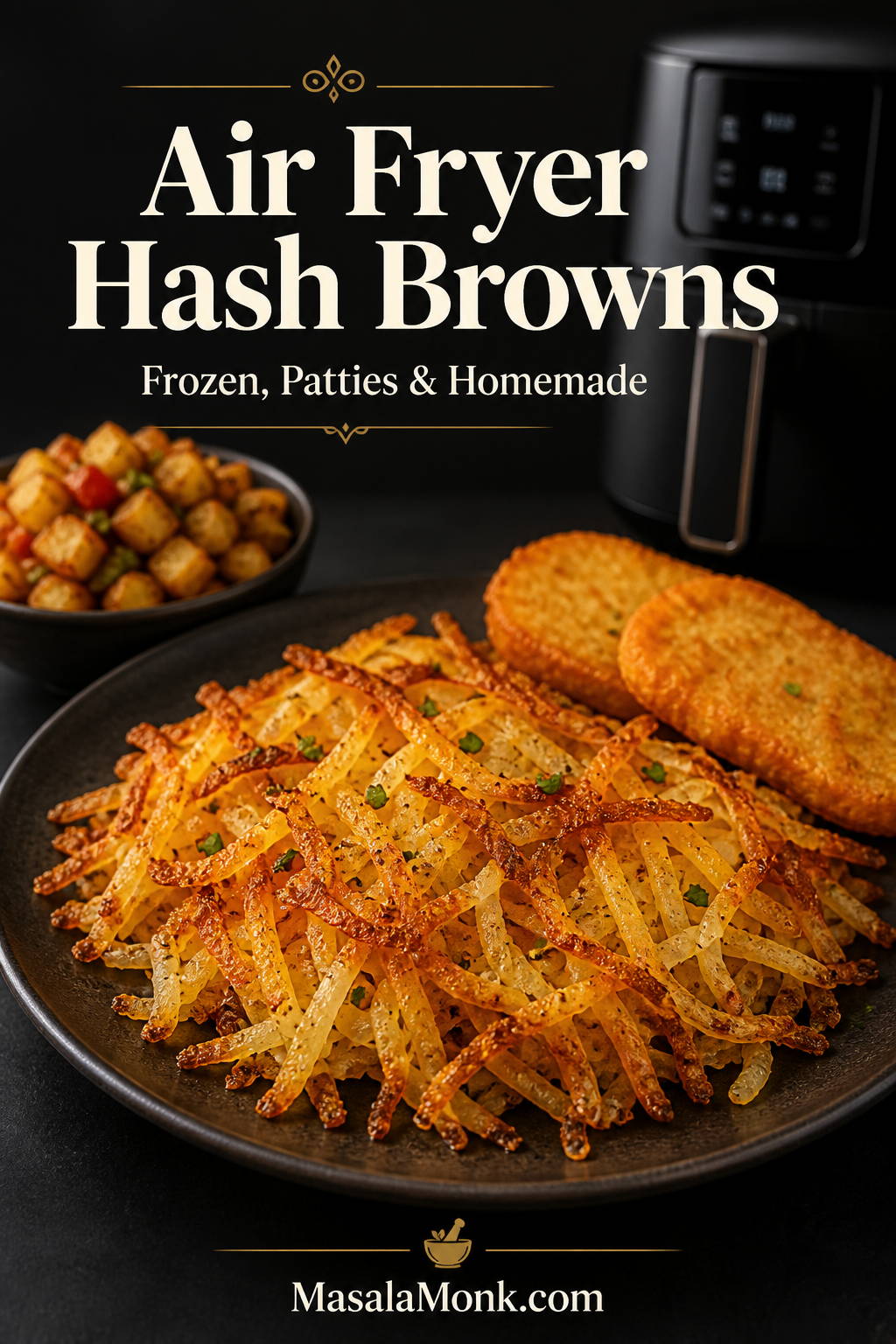
Golden crispy air fryer hash browns served on a dark plate, with loose shredded hash browns in the center and smaller supporting sections showing hash brown patties and diced breakfast potatoes against a dark editorial background.

Crispy air fryer hash browns are one of those small breakfast wins that feel much bigger than the effort: golden edges, tender potato centers, and no skillet babysitting. Once you know which temperature works for each hash brown style, the air fryer does most of the work.

Loose frozen shredded hash browns need a thin layer, a little oil, and regular shaking. Frozen hash brown patties cook faster because they are already shaped and usually contain some oil. Meanwhile, homemade hash browns need one extra step before cooking: the grated potatoes must be rinsed or soaked, then squeezed very dry so they crisp instead of steaming.

This guide gives you the right air fryer time and temperature for frozen shredded hash browns, frozen patties, homemade shredded hash browns, diced breakfast potatoes, and leftovers. You will also learn when to use oil, why thawing usually hurts crispness, how to tell when each style is done, and how to fix hash browns that turn out soggy or pale.

Quick Answer: How Long to Cook Hash Browns in the Air Fryer?

Frozen shredded hash browns take 15–20 minutes at 375°F / 190°C. Toss the potato shreds with a little oil, spread them in a thin layer, and shake or flip every 5 minutes so they crisp evenly.

Frozen hash brown patties take 8–12 minutes at 400°F / 200°C. Cook them from frozen in a single layer and flip halfway through.

Homemade shredded hash browns take about 13–18 minutes at 360–380°F / 182–193°C. Fresh potatoes need to be rinsed or soaked, then squeezed very dry before they go into the air fryer.

Frozen diced or cubed breakfast potatoes take 15–22 minutes at 380–400°F / 193–200°C. Shake every 5–7 minutes and use the lower temperature for larger cubes.

If your first batch is a little pale or a little soft, do not start over. Most air fryer hash brown problems can be fixed with a thinner layer, a few more minutes, or a quick shake halfway through cooking.

Best starting point: For classic loose, crispy air fryer hash browns, use 15–16 oz / 425–450 g frozen shredded potatoes, 1½–2 tbsp oil, and 375°F / 190°C for 15–20 minutes, shaking every 5 minutes.

Which Hash Browns Do You Have?

Start here before choosing a method. The timing changes because each style has a different shape, moisture level, and surface area.
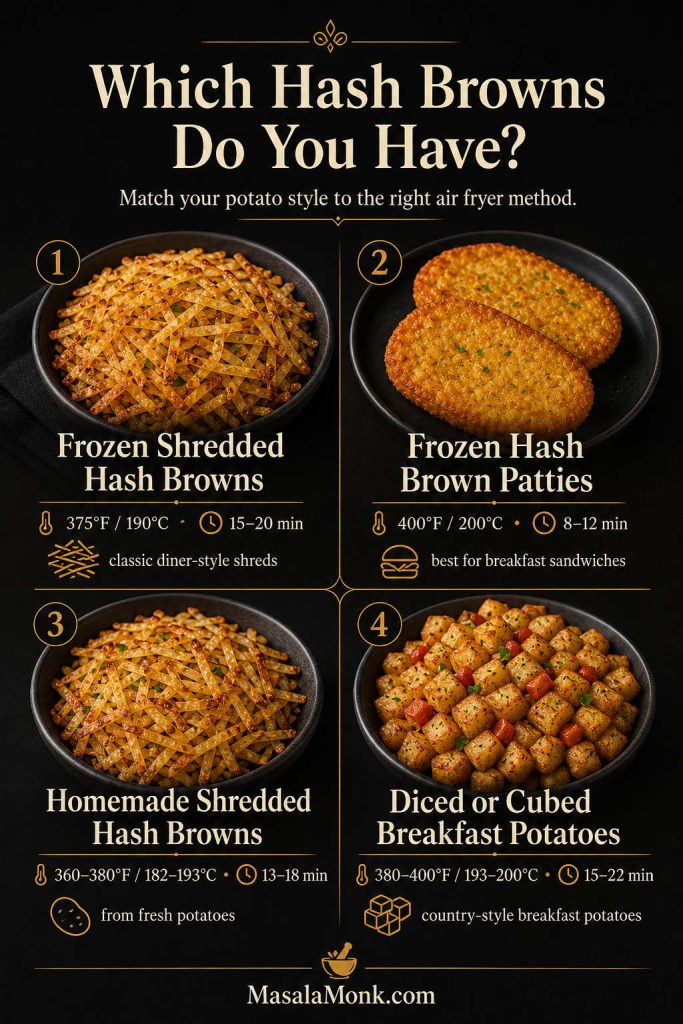
Infographic titled Which Hash Browns Do You Have showing four air fryer options: frozen shredded hash browns, frozen hash brown patties, homemade shredded hash browns, and frozen diced or cubed breakfast potatoes, each with a short time and temperature guide.
Start by identifying the hash brown style you have, because frozen shredded potatoes, patties, homemade shreds, and diced breakfast potatoes all need different air fryer timing and handling.
If you have… Use this air fryer method Best for
Loose frozen shredded hash browns 375°F / 190°C for 15–20 minutes Crispy diner-style shredded potatoes
Frozen hash brown patties 400°F / 200°C for 8–12 minutes Breakfast sandwiches or quick plate sides
Fresh grated potatoes Rinse, squeeze dry, then cook at 360–380°F / 182–193°C for 13–18 minutes Homemade hash browns from scratch
Frozen diced or cubed breakfast potatoes 380–400°F / 193–200°C for 15–22 minutes Country-style potatoes and crisp potato cubes
Leftover cooked hash browns 350–375°F / 175–190°C for 3–5 minutes Bringing back crisp edges

Best Method for Crispy Air Fryer Hash Browns

For the classic loose, crispy hash brown texture, frozen shredded hash browns are the easiest and most reliable starting point. Use 15–16 oz / 425–450 g frozen shredded potatoes, toss them with 1½–2 tbsp oil, spread them in a thin layer, and air fry at 375°F / 190°C for 15–20 minutes, shaking every 5 minutes.

The best batch should taste like classic diner hash browns with extra crisp edges: golden and frilly on the outside, tender in the center, salty enough to eat plain, and sturdy enough for eggs, ketchup, hot sauce, or a breakfast sandwich.

If you enjoy crisp potato recipes, MasalaMonk’s crispy homemade French fries guide is a useful companion because it also focuses on moisture control, hot cooking, and getting the potato surface properly browned.

Use frozen patties when you want the fastest option, homemade shredded potatoes when you want a from-scratch version, and diced or cubed potatoes when you want country-style breakfast potatoes with crisp edges.

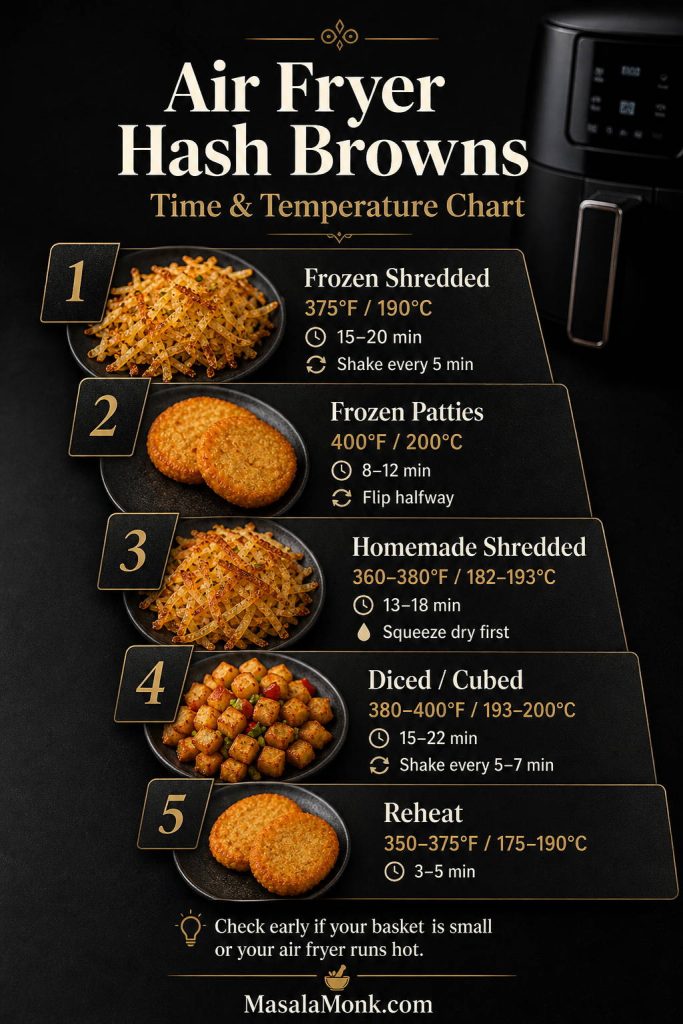
Air Fryer Hash Browns Time and Temperature Chart

Use this chart as your main guide. Air fryer models vary, so check a few minutes early the first time you cook a new bag, basket size, or potato style.

Hash brown type Amount Temperature Time Flip or shake? Oil?
Frozen shredded hash browns 15–16 oz / 425–450 g 375°F / 190°C 15–20 minutes Shake or flip every 5 minutes Yes, 1½–2 tbsp / 22–30 ml
Frozen hash brown patties 4 patties 400°F / 200°C 8–12 minutes Flip halfway Usually no
Homemade shredded hash browns 1 lb / 450 g potatoes 360–380°F / 182–193°C 13–18 minutes Optional, depending on layer thickness Yes, 1–2 tbsp / 15–30 ml
Frozen diced or cubed breakfast potatoes 16 oz / 450 g 380–400°F / 193–200°C 15–22 minutes Shake every 5–7 minutes Yes, 1–2 tbsp / 15–30 ml
Reheating cooked hash browns Any amount in one layer 350–375°F / 175–190°C 3–5 minutes Optional No
Basket size matters: In a smaller air fryer, 15–16 oz / 425–450 g shredded hash browns may need two batches. In a wider basket, the same amount can spread thinner and crisp faster.
Time and temperature chart infographic for air fryer hash browns comparing frozen shredded hash browns, frozen hash brown patties, homemade shredded hash browns, frozen diced or cubed breakfast potatoes, and reheating times.
Use this air fryer hash browns chart as your quick reference, since it helps you compare the best time and temperature for shredded potatoes, patties, homemade hash browns, diced potatoes, and leftovers in one glance.
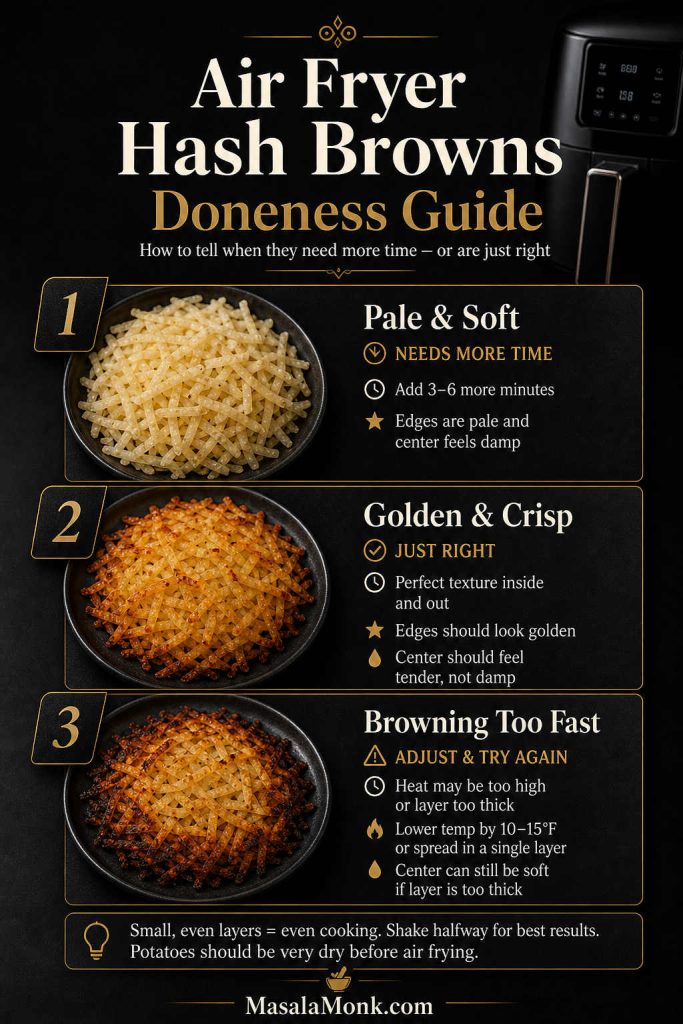
Doneness guide infographic for air fryer hash browns showing three stages: pale and soft hash browns needing more time, golden and crisp hash browns that are done, and hash browns browning too fast on the edges while the center stays soft.
Use color and texture as your doneness guide: pale potatoes need more time, golden edges usually mean the hash browns are ready, and dark edges with a soft center often mean the layer is too thick.

What Is the Best Temperature for Air Fryer Hash Browns?

The best temperature depends on the potato format. A single number does not work equally well for patties, loose shreds, diced potatoes, and homemade grated potatoes.

  • 400°F / 200°C is best for frozen hash brown patties because patties are compact and already shaped. As a result, higher heat helps crisp the outside quickly.
  • 375°F / 190°C is better for frozen shredded hash browns because loose potato shreds need enough time to dry, brown, and crisp without burning at the edges too fast.
  • 360–380°F / 182–193°C works well for homemade hash browns because fresh grated potatoes hold more moisture. Therefore, slightly gentler heat gives them time to cook through after they are squeezed dry.
  • 380–400°F / 193–200°C works best for diced or cubed potatoes because cube size matters. Smaller diced potatoes can handle 400°F / 200°C for faster browning, while larger cubes often do better at 380°F / 193°C so the centers turn tender before the edges get too dark.

If the potatoes look cooked but pale, add a few more minutes before increasing the heat. However, if the edges are browning too fast while the center stays soft, the layer is probably too thick.

Ingredients You Need

You only need potatoes, a little fat, and seasoning. However, the best ingredient list depends on the style of hash browns you are cooking. Start with the group that matches what you have, then adjust the seasoning after cooking while the potatoes are still hot.
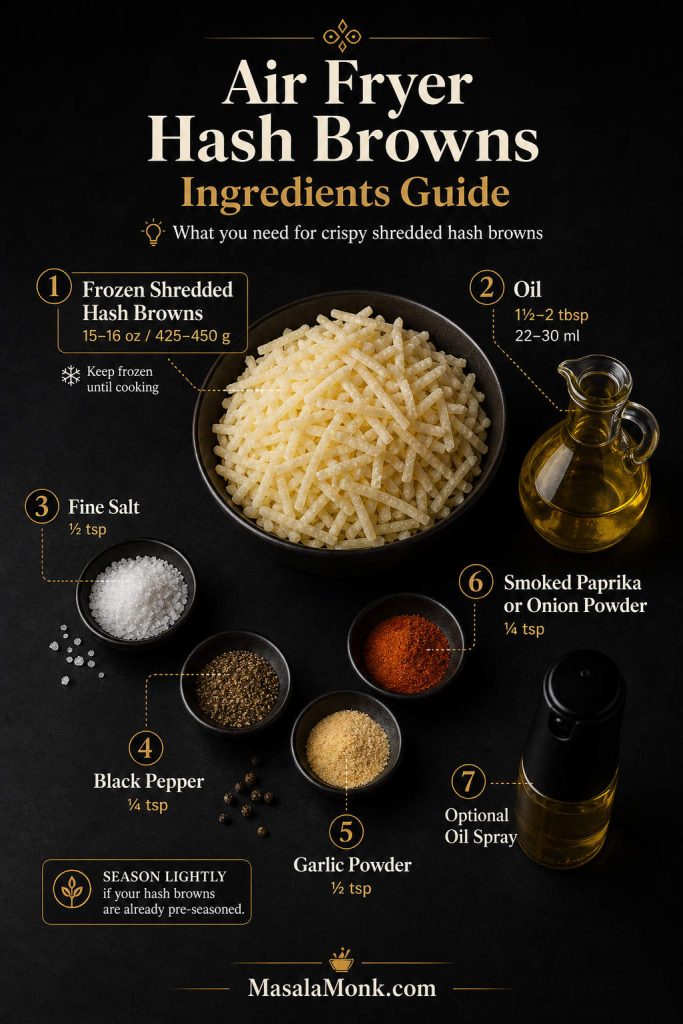
Ingredients guide infographic for air fryer hash browns showing frozen shredded hash browns, oil, fine salt, black pepper, garlic powder, smoked paprika or onion powder, and optional oil spray arranged on a dark background.
Air fryer hash browns need only a short ingredient list, yet the exact mix changes with the potato style, so shredded potatoes often need oil and seasoning while patties usually need much less.

Frozen Shredded Hash Browns

  • Frozen shredded hash browns, 15–16 oz / 425–450 g: Keep them frozen until cooking so they do not release extra moisture before they hit the hot air fryer basket.
  • Oil, 1½–2 tbsp / 22–30 ml: Olive oil, avocado oil, or a neutral cooking oil all work. Because loose potato shreds dry out as they cook, a light coating of oil helps them brown more evenly.
  • Fine salt, ½ tsp: Start lightly, especially if your frozen hash browns are already seasoned.
  • Black pepper, ¼ tsp: Add a small amount before cooking, then adjust at the end if the potatoes need more bite.
  • Garlic powder, ½ tsp: This gives the hash browns a savory breakfast flavor without adding fresh garlic, which can burn in the air fryer.
  • Smoked paprika or onion powder, ¼ tsp: Either one adds deeper flavor. For a simpler batch, skip both and stay with salt, pepper, and garlic powder.

Frozen Hash Brown Patties

  • Frozen hash brown patties, 4: Cook them straight from frozen and keep them in a single layer.
  • Oil spray, optional: Most patties already contain enough oil to crisp. Still, a light spray can help if the surface looks dry or pale halfway through cooking.
  • Salt, optional: Since many frozen patties are already salted, taste after cooking before adding more.

Homemade Shredded Hash Browns

  • Russet or Yukon potatoes, 1 lb / 450 g: Russets crisp well and give you a more classic hash brown texture. Yukon potatoes, meanwhile, have a creamier center.
  • Oil or melted butter, 1–2 tbsp / 15–30 ml: Oil gives better crispness, while butter adds richer flavor. If using butter, watch the edges because it browns faster.
  • Fine salt, ½ tsp: Season only after the grated potatoes have been rinsed and squeezed dry.
  • Black pepper, ¼ tsp: Add it with the salt, then adjust after cooking if needed.
  • Garlic powder or onion powder, ¼–½ tsp: Use either one for a more savory homemade hash brown without adding wet ingredients.

Equipment

You do not need much equipment, although a few small tools make the process easier.

  • Air fryer basket or tray: A basket-style air fryer is easiest for shaking loose shredded potatoes.
  • Mixing bowl: Use it to coat shredded or diced potatoes evenly with oil and seasoning.
  • Oil spray: This helps with sticking and browning, especially if your basket is not very nonstick.
  • Silicone spatula: Helpful for pressing, lifting, and flipping sections of shredded potatoes.
  • Box grater or food processor: Needed only for homemade hash browns from fresh potatoes.
  • Clean towel or cheesecloth: Essential for squeezing moisture from grated potatoes.
  • Perforated parchment or silicone liner: Useful if loose shreds fall through the basket holes.
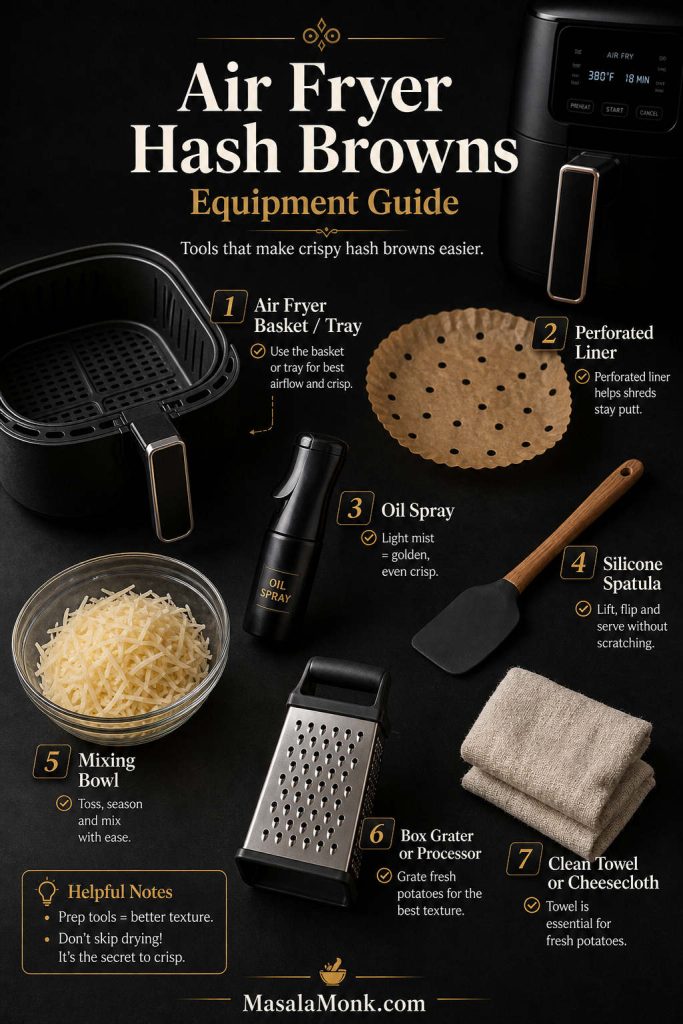
Equipment guide infographic for air fryer hash browns showing an air fryer basket, perforated parchment or liner, oil spray, silicone spatula, mixing bowl, box grater, and towel or cheesecloth used for squeezing potatoes dry.
A few simple tools make air fryer hash browns easier to handle; for example, perforated parchment helps with loose shreds, while a towel or cheesecloth is especially helpful for homemade potatoes.

Frozen Shredded Hash Browns in the Air Fryer

Loose frozen shredded hash browns are the main method in this guide because they give you the classic diner-style texture: crisp edges, soft potato centers, and a loose shredded finish. They need more attention than patties because the potato shreds can clump, steam, or fall through the basket if the layer is too thick.

How to Cook Frozen Shredded Hash Browns

  1. Keep them frozen. Do not thaw the potatoes first.
  2. Toss with oil and seasoning. Add 15–16 oz / 425–450 g frozen potato shreds to a bowl with 1½–2 tbsp / 22–30 ml oil, salt, pepper, and garlic powder.
  3. Spread in a thin layer. Aim for about ½ inch / 1.25 cm thick. If your basket is small, cook in two batches.
  4. Air fry at 375°F / 190°C for 15–20 minutes. Shake, stir, or flip sections every 5 minutes.
  5. Crisp to taste. Add 2–4 minutes at the end if the potatoes are cooked but not golden enough.
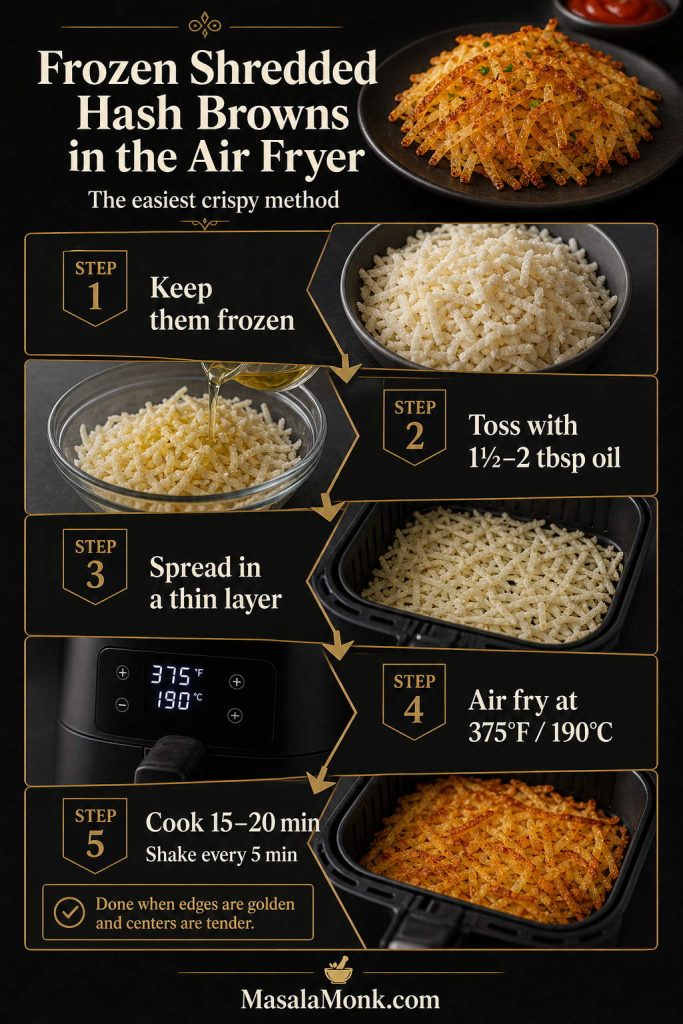
Step-by-step infographic for frozen shredded hash browns in the air fryer showing frozen potatoes tossed with oil and seasoning, spread in a thin layer, air fried at 375 degrees Fahrenheit, and shaken during cooking until golden and crisp.
Frozen shredded hash browns crisp best when they stay frozen, get a light coating of oil, and cook in a thin layer; as a result, the edges brown well while the center stays tender instead of steamy.

The biggest mistake is using too much potato in one batch. As a result, the potatoes trap steam instead of crisping. A thin layer, meanwhile, gives you better browning and a cleaner shredded texture.

When the potatoes are ready, the outer shreds should look golden and crisp, while the center should feel tender rather than wet or starchy. If the middle still looks damp after 15 minutes, spread the potatoes out again and cook a few minutes longer before serving.

Air Fryer Hash Brown Patties

Frozen hash brown patties are the easiest air fryer version because they are already shaped, compact, and usually contain enough oil to brown well. They are ideal for breakfast sandwiches, quick sides, and busy mornings.

They also work especially well inside breakfast sandwiches. For more filling ideas, sauces, and make-ahead combinations, see MasalaMonk’s breakfast sandwich recipes.

How to Cook Frozen Hash Brown Patties

  1. Set the air fryer to 400°F / 200°C. Preheat if your model works better that way.
  2. Add the patties in one layer. Do not stack or overlap them.
  3. Air fry for 8–12 minutes. Flip halfway through.
  4. Add time for extra crispness. Cook 2–3 minutes longer if you want deeper browning.
  5. Season after cooking. Many frozen patties are already salted, so taste before adding more.

Infographic for air fryer hash brown patties showing frozen patties placed in a single layer in the air fryer, cooked at 400 degrees Fahrenheit, flipped halfway, and served golden brown.
Frozen hash brown patties usually crisp faster than loose shreds, so a single layer and one halfway flip are often all you need for evenly browned, crisp-edged potatoes.

The patties should be golden on both sides and crisp around the edges. If they look pale after 8 minutes, keep cooking rather than removing them too early. Because patties are already shaped, they usually need more time, not more oil.

Patties vs shredded: Frozen patties usually need little or no added oil. Loose shredded hash browns need oil because the potato shreds dry and brown differently.

Homemade Hash Browns in the Air Fryer

Homemade air fryer hash browns taste fresher than frozen ones, but they need proper prep. Freshly grated potatoes hold water and surface starch. If that moisture stays in the potatoes, the hash browns can turn soft, gummy, or pale.

Rinsing removes excess surface starch, while squeezing removes water. Both steps matter: starch can make the potatoes gummy, and water makes them steam. The Idaho Potato Commission’s classic hash brown guide also points to the same core technique: rinse out excess starch, squeeze out as much water as possible, keep the potatoes thin, and cook hot for crisp results.

How to Make Homemade Shredded Hash Browns

  1. Grate the potatoes. Use 1 lb / 450 g russet or Yukon potatoes.
  2. Rinse or soak. Rinse the grated potatoes under cold water until the water looks clearer, or soak them for 10–20 minutes and rinse again.
  3. Squeeze very dry. Wrap the potatoes in a clean towel or cheesecloth and squeeze out as much water as possible.
  4. Season after drying. Toss with 1–2 tbsp / 15–30 ml oil or melted butter, salt, pepper, and optional garlic powder.
  5. Spread thinly. Press into an even layer in the air fryer basket.
  6. Air fry at 360–380°F / 182–193°C for 13–18 minutes. Check early and add time as needed for browning.
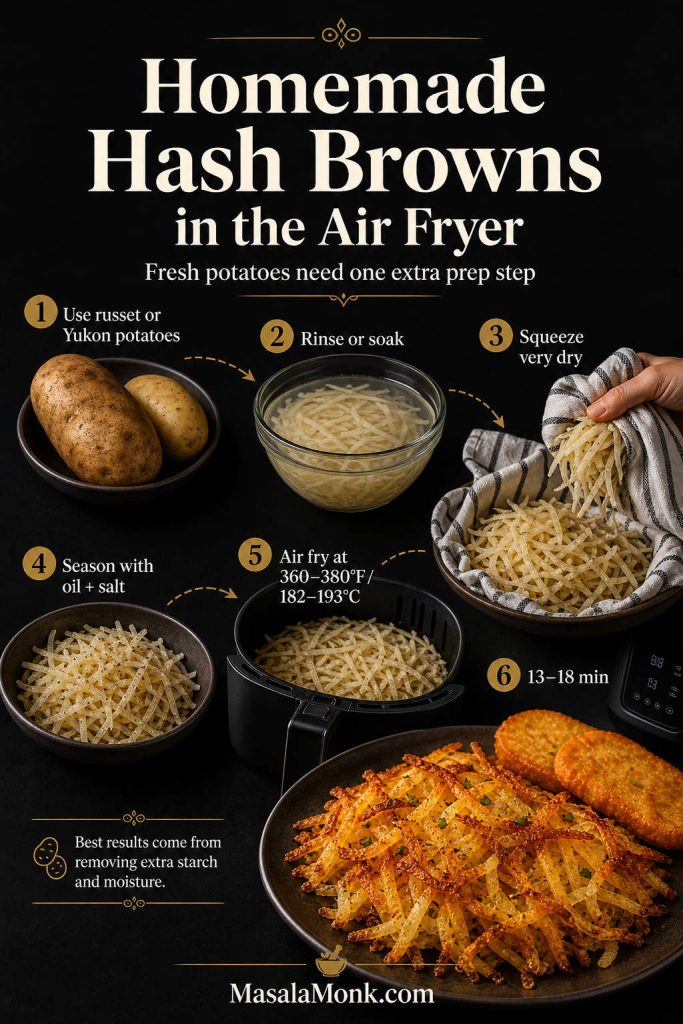
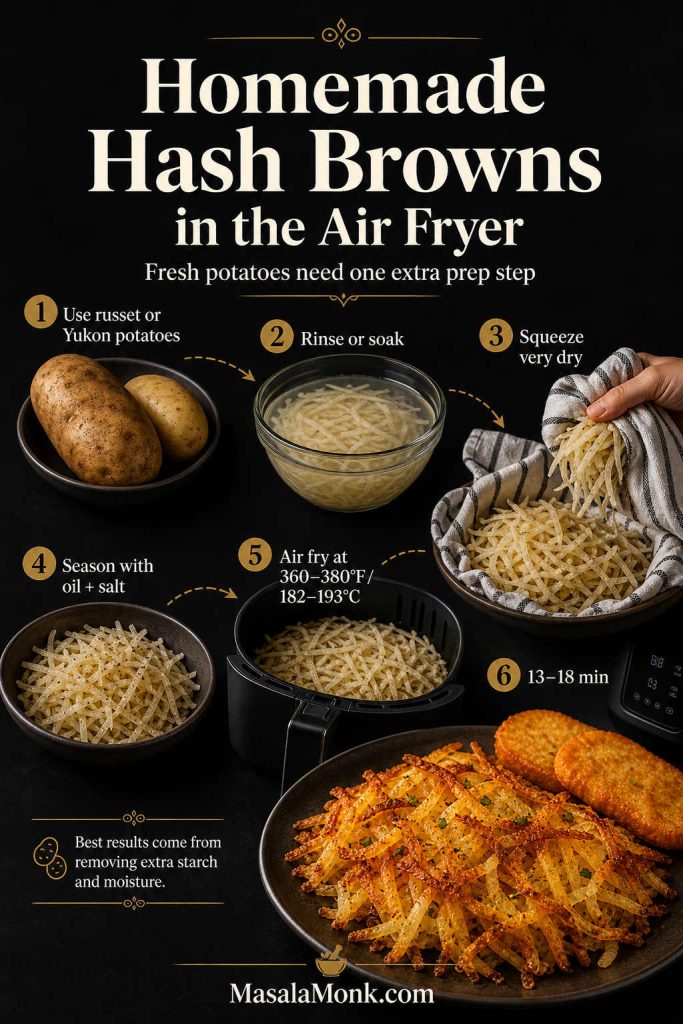
Infographic for homemade hash browns in the air fryer showing grated fresh potatoes being rinsed, squeezed dry in a towel, seasoned, spread in the basket, and cooked until crisp.
Homemade hash browns turn out much better when the grated potatoes are rinsed or soaked, then squeezed very dry, because less starch and moisture means a crisper air fryer finish.

For one large pressed layer, avoid moving the potatoes too early. However, if you want looser breakfast-style hash browns, stir or flip sections partway through cooking.

Homemade Hash Brown Patties Variation

Homemade hash brown patties are possible, although they are more of a variation than the main method here. Mix squeezed-dry shredded potatoes with a little starch, shape them into thin patties, chill or freeze until firm, then air fry until crisp.

A good starting point is 500 g / 1.1 lb grated potatoes, 1 tbsp cornstarch, 1 tbsp rice flour if you want extra crispness, 1 tbsp oil, 2–3 tbsp melted butter, salt, pepper, and garlic powder. Shape into patties about 1 cm thick, chill until firm, then cook at 400°F / 200°C for 13–15 minutes.

Diced or Cubed Hash Browns in the Air Fryer

Diced or cubed hash browns are often sold as frozen breakfast potatoes, country potatoes, or cubed potatoes. They need more time than patties because the pieces are thicker. However, they can still get crisp edges if they are tossed with oil and shaken during cooking.

  1. Use 16 oz / 450 g frozen diced or cubed potatoes. Do not thaw.
  2. Toss with 1–2 tbsp / 15–30 ml oil. Add salt, pepper, garlic powder, paprika, or your favorite breakfast potato seasoning.
  3. Spread in one layer. A little overlap is fine, but avoid a deep pile.
  4. Air fry at 380–400°F / 193–200°C for 15–22 minutes. Use 400°F / 200°C for smaller diced potatoes or faster browning. Use 380°F / 193°C for larger cubes so the centers have more time to turn tender.
  5. Shake every 5–7 minutes. Add 3–5 extra minutes if the cubes are large, crowded, or still firm in the center.
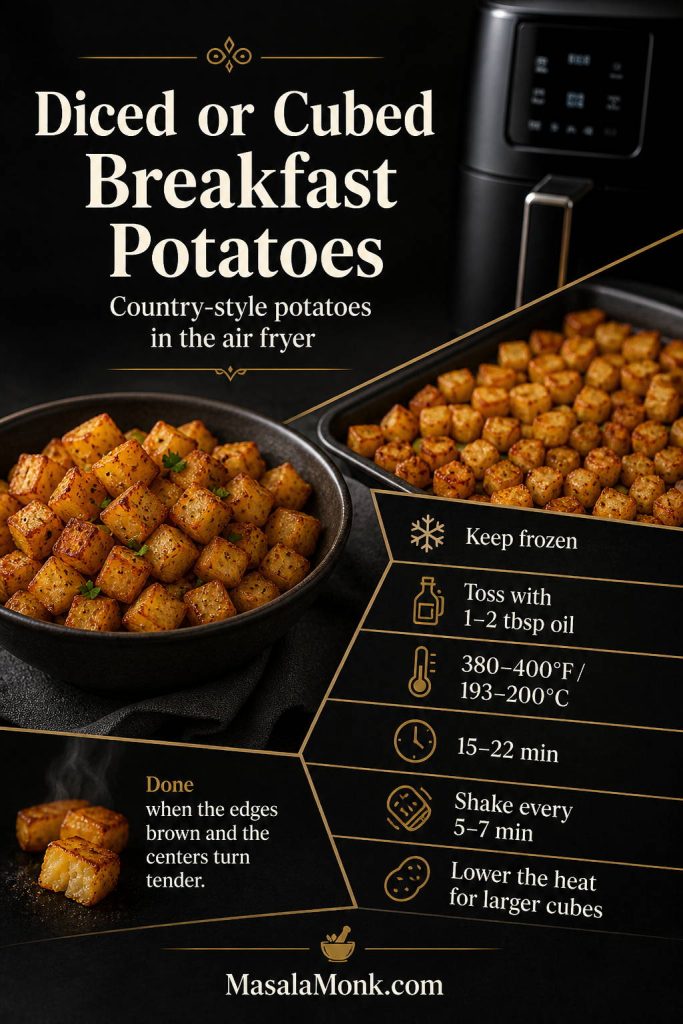
Infographic for diced or cubed breakfast potatoes in the air fryer showing seasoned potato cubes cooked in the basket with notes about 380 to 400 degrees Fahrenheit and shaking during cooking.
Diced or cubed breakfast potatoes need a little more time than patties; however, they still brown beautifully when tossed with oil, spread out well, and shaken a few times during cooking.

The cubes are done when the edges are browned and the centers are fully tender. When the outside browns before the middle softens, lower the temperature to 380°F / 193°C and cook a few minutes longer. For pale but tender potatoes, raise the heat near the end or add 2–3 more minutes.

Beyond breakfast, MasalaMonk’s air fried chilli garlic potato bites are another crisp air fryer potato idea with a snack-style, spicy finish.

Do You Need to Thaw Hash Browns First?

No. For most air fryer hash browns, frozen is better than thawed. Loose shredded potatoes, patties, and diced breakfast potatoes can all go straight into the air fryer.

Thawing often adds surface moisture, especially with shredded potatoes. That extra water can make the hash browns steam before they brown. If your frozen hash browns are stuck together in a block, break them apart as much as possible instead of fully thawing them.

Homemade hash browns are different because they start fresh, not frozen. The key is still moisture control: rinse or soak the grated potatoes, then squeeze them dry before adding oil and seasoning.
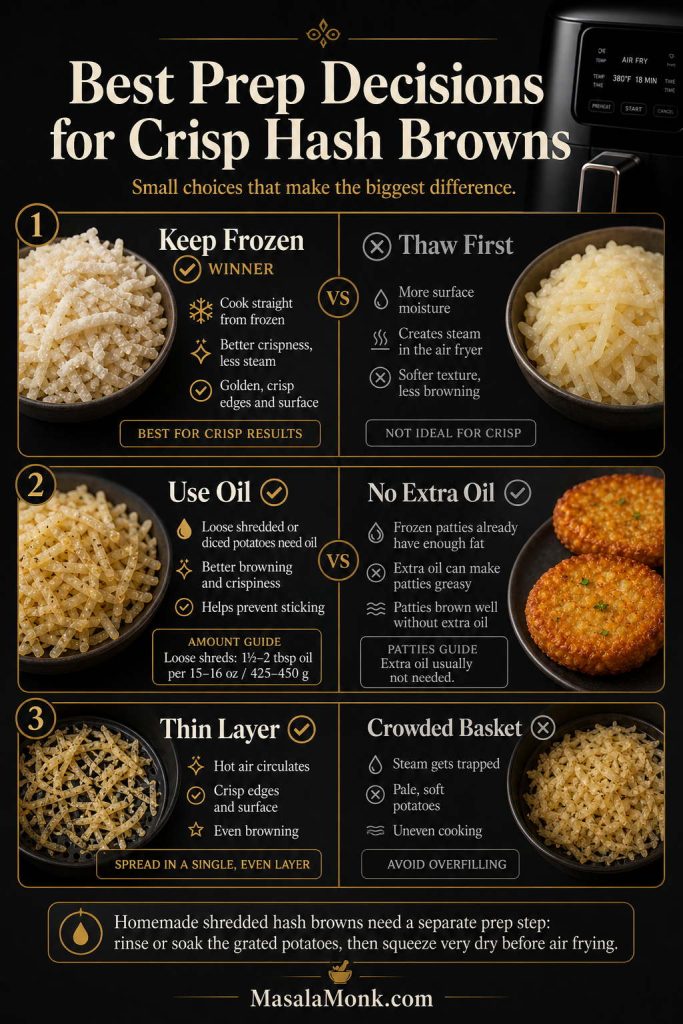
Prep decision infographic for crisp air fryer hash browns comparing keep frozen versus thaw first, use oil versus no extra oil, and thin layer versus crowded basket, with a homemade shredded potato note at the bottom.
The best prep decisions for crisp hash browns are simple but important: keep frozen potatoes frozen, use oil on loose shreds or diced potatoes, and avoid crowding so the hot air can circulate properly.

Oil or No Oil?

The oil question depends on the style. Patties and loose shredded potatoes do not cook the same way in the air fryer.

Type Oil needed? Why
Frozen hash brown patties Usually no Many frozen patties already contain oil and crisp well on their own.
Frozen shredded hash browns Yes Oil helps the loose potato shreds brown instead of drying out or staying pale.
Homemade shredded hash browns Yes Fresh potatoes need fat for crisp edges and better color.
Diced or cubed breakfast potatoes Yes Oil helps the thicker potato edges brown evenly.

You can make oil-free air fryer hash browns, but they usually turn out drier and less golden. For the best texture, use a small amount of oil on loose shredded or diced potatoes, and skip extra oil on patties unless the surface looks dry or pale.

How to Make Air Fryer Hash Browns Extra Crispy

Extra crispiness comes from airflow, surface dryness, and enough time. Therefore, focus on the layer first before adding more seasoning or turning the heat higher.

  • Use a thin layer. Loose shredded hash browns should not be piled too deep. Around ½ inch / 1.25 cm is a useful guide.
  • Do not overcrowd the basket. If the potatoes steam, they will soften before they crisp.
  • Use oil for shredded or diced potatoes. Patties can often cook without it, but loose potatoes need help browning.
  • Shake or flip regularly. Shredded hash browns should be moved every 5 minutes. Patties usually need one flip halfway through.
  • Add time at the end. If the potatoes are cooked but not crisp enough, cook 2–4 minutes longer.
  • Serve immediately. Hash browns soften as they sit, especially if they are stacked on a plate.
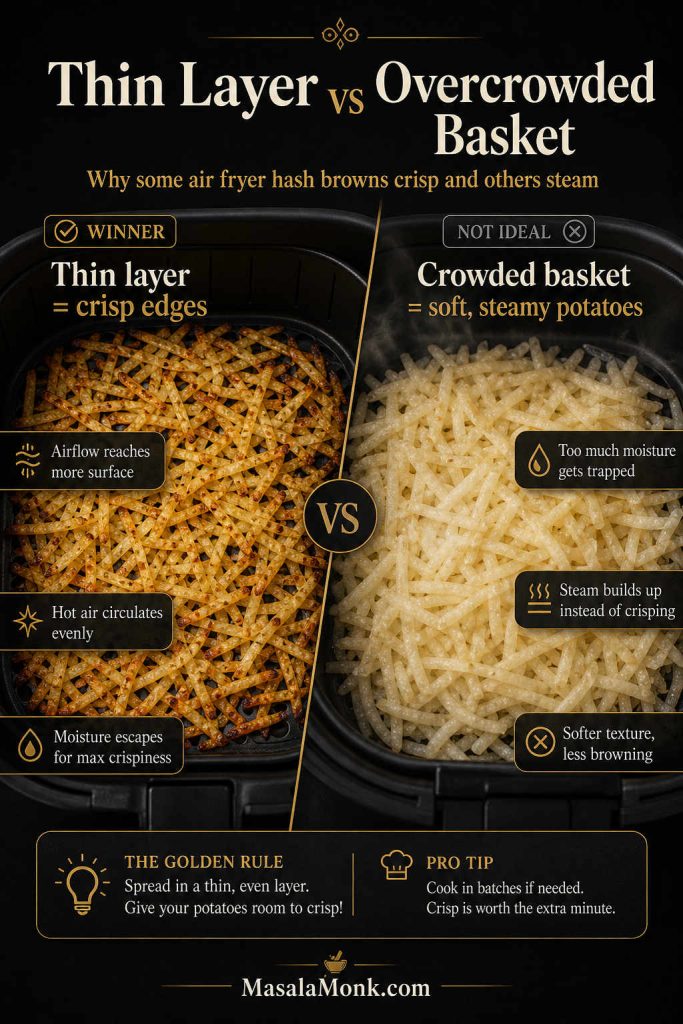
Comparison infographic showing thin-layer hash browns on one side with crisp golden edges and overcrowded hash browns on the other side looking pale and steamy, with labels explaining the difference.
A thin layer gives hash browns the airflow they need for crisp edges, whereas an overcrowded basket traps steam and leaves the potatoes softer, paler, and less evenly cooked.

For another deep dive into air fryer crisping, MasalaMonk’s air fryer chicken wings guide follows the same bigger principle: dry surfaces, enough airflow, and the right finish make the difference between soft and crisp.

Common Air Fryer Hash Brown Mistakes

If your hash browns come out soft, pale, or uneven, it usually does not mean the method failed. Most problems come from a few small air fryer habits that are easy to fix.

If your air fryer results are inconsistent across recipes, MasalaMonk’s common air fryer mistakes guide is a useful side read for crowding, airflow, temperature, and limp results.

  • Adding too many shredded potatoes to the basket: A thick pile steams instead of crisping.
  • Thawing frozen hash browns first: Thawed potato shreds often release extra moisture.
  • Skipping oil on loose shredded or diced potatoes: These styles need some fat for better browning.
  • Moving homemade hash browns too early: Let them firm up before flipping or stirring.
  • Stacking patties: Frozen patties need direct airflow on both sides.
  • Serving them too late: Hash browns lose crispness as they sit and steam on the plate.

Why Are My Air Fryer Hash Browns Soggy?

If your hash browns are soft instead of crisp, the problem is usually moisture, crowding, or not enough air circulation. Use this table to fix the most common issues.

Problem Likely reason Fix
Loose shredded hash browns are soggy The layer is too thick or the potatoes were not moved during cooking. Keep the layer thin and shake or flip every 5 minutes.
Hash browns are pale Not enough oil, not enough time, or temperature too low. Use a light coating of oil and add 2–4 minutes.
Patties are soft in the middle They were stacked, crowded, or not cooked long enough. Cook in one layer at 400°F / 200°C and flip halfway.
Homemade hash browns are gummy The fresh potatoes kept too much starch and moisture. Rinse or soak the grated potatoes, then squeeze very dry.
Edges burn but the middle is soft The potato layer is too thick. Use a thinner layer or cook in batches.
Shreds fall through the basket The air fryer basket holes are too wide. Use perforated parchment, a silicone liner, or a tray-style basket.
Hash browns stick to the basket Not enough oil or the potatoes were moved too early. Spray the basket lightly and let the potatoes firm up before flipping.
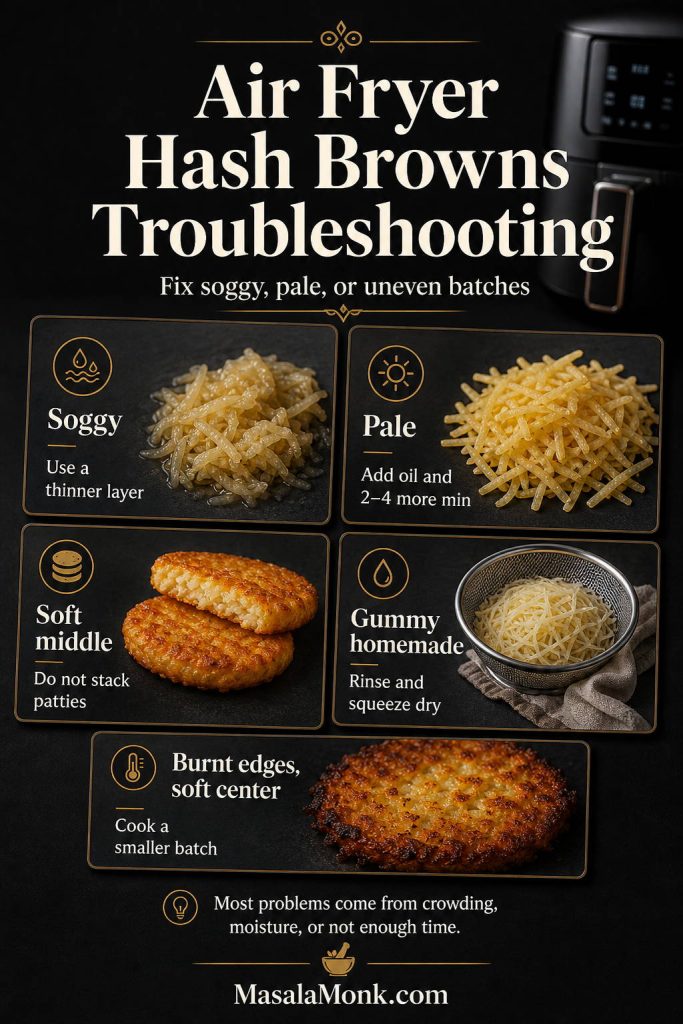
Troubleshooting infographic for air fryer hash browns showing common problems such as soggy shredded hash browns, pale potatoes, soft patties, gummy homemade hash browns, and burnt edges with soft centers, along with fixes.
If your air fryer hash browns come out soggy, pale, gummy, or uneven, the fix is usually small—less crowding, better moisture control, or a few more minutes—rather than a whole new method.

Storage and Reheating

Air fryer hash browns taste best right after cooking, but leftovers can still be reheated well. The air fryer is much better than the microwave when you want to bring back crisp edges.

  • Refrigerate: Store cooked hash browns in an airtight container for 3–4 days.
  • Reheat refrigerated hash browns: Air fry at 350–375°F / 175–190°C for 3–5 minutes.
  • Reheat frozen homemade patties: Air fry at 375–400°F / 190–200°C for 5–8 minutes.
  • Avoid stacking while cooling: Steam softens the crisp surface.

For food safety, refrigerate leftovers quickly and eat them within 3–4 days. If you are checking temperature, FoodSafety.gov lists 165°F / 74°C for reheating leftovers.

For homemade shaped patties, freeze them in a single layer first. Once firm, transfer them to a freezer bag so they do not stick together.
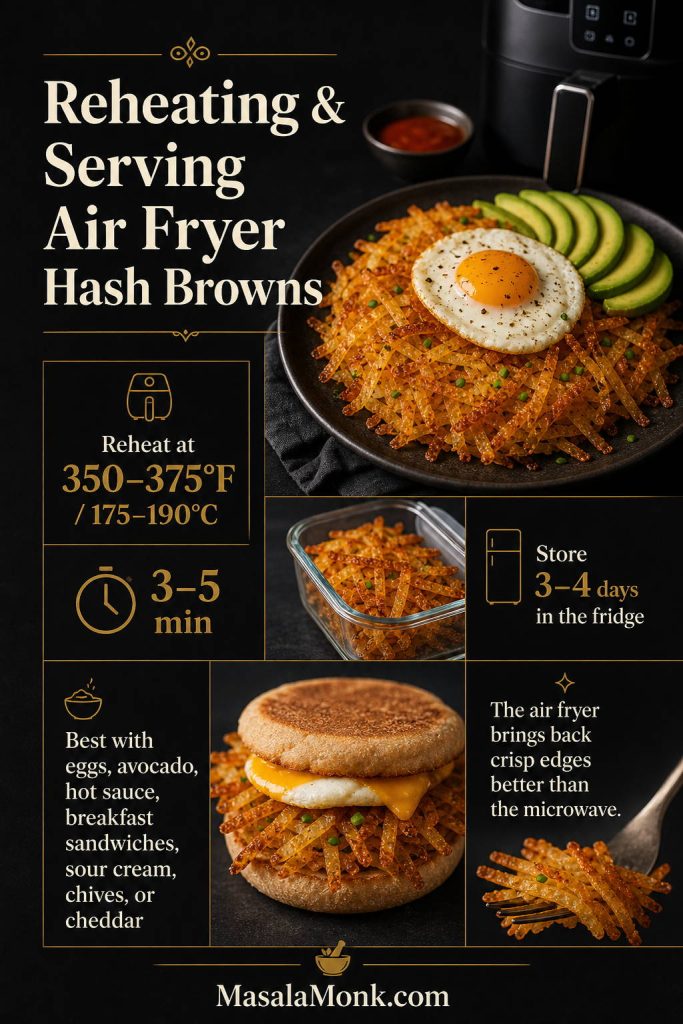
Infographic for reheating and serving crispy hash browns showing leftover hash browns being reheated in the air fryer and serving suggestions such as eggs, avocado, hot sauce, sour cream, cheddar, and breakfast bowls.
The air fryer is the easiest way to reheat hash browns because it quickly brings back crisp edges; meanwhile, toppings like eggs, cheddar, avocado, salsa, or hot sauce make them more satisfying.

What to Serve with Air Fryer Hash Browns

Air fryer hash browns work with almost any breakfast plate. Keep it simple with air fryer hard-boiled eggs, avocado, and hot sauce, or turn the hash browns into the crispy base for a bigger brunch bowl.

  • Fried, scrambled, or poached eggs
  • Breakfast sandwiches with eggs, cheese, and sauce
  • Avocado, hot sauce, and lime
  • Sausage, bacon, or vegetarian breakfast patties
  • Baked beans or grilled tomatoes
  • Sour cream, chives, and cheddar
  • Ketchup, hot sauce, or spicy mayo
  • Breakfast bowls with eggs, cheese, salsa, and greens

To make the meal more filling, use the hash browns as the crisp base and add eggs, cheese, sautéed vegetables, and a spoonful of salsa or hot sauce on top.

For a snack-style plate, top crispy patties with sour cream, chives, cheddar, hot sauce, or a little chaat masala for a sharper MasalaMonk-style finish.

More Potato Ideas

If potatoes are the main event, MasalaMonk’s potato appetizers guide has more crisp, cheesy, party-friendly potato options for brunch spreads, snacks, and sides.

Once you know your hash brown style, the method is simple: keep frozen potatoes frozen, keep loose shreds thin, give patties direct airflow, and use a few extra minutes when the color is not there yet. That is usually all it takes to move from soft potatoes to crisp, golden hash browns.

Crispy Air Fryer Hash Browns

This crispy air fryer hash browns recipe starts with frozen shredded potatoes because they give the easiest classic breakfast texture: golden edges, tender centers, and loose crispy shreds. The notes below include quick adjustments for frozen hash brown patties, homemade shredded hash browns, diced breakfast potatoes, and reheating.

Prep Time5 minutes
Cook Time15–20 minutes
Total Time20–25 minutes
Servings4

Ingredients

  • 15–16 oz / 425–450 g frozen shredded hash browns, not thawed
  • 1½–2 tbsp / 22–30 ml olive oil, avocado oil, or neutral oil
  • ½ tsp fine salt, plus more to taste
  • ¼ tsp black pepper
  • ½ tsp garlic powder
  • ¼ tsp smoked paprika or onion powder, optional
  • Oil spray, for the basket if needed

Instructions

  1. Preheat if needed. Set the air fryer to 375°F / 190°C. Some models do not need preheating, but preheating helps if your air fryer runs cool.
  2. Season the hash browns. Add the frozen shredded hash browns to a mixing bowl. Toss with oil, salt, pepper, garlic powder, and optional smoked paprika or onion powder.
  3. Spread in the basket. Lightly spray the basket if needed. Spread the potatoes in a thin, even layer, around ½ inch / 1.25 cm thick. Cook in batches if your basket is small.
  4. Air fry. Cook for 15–20 minutes, shaking, stirring, or flipping sections every 5 minutes.
  5. Crisp to taste. Once the potatoes are golden and cooked through, add 2–4 minutes if you want deeper crisp edges.
  6. Serve immediately. Taste and adjust salt while hot.

Recipe Notes

  • Frozen hash brown patties: Cook from frozen at 400°F / 200°C for 8–12 minutes, flipping halfway. No oil is usually needed.
  • Homemade shredded hash browns: Grate 1 lb / 450 g potatoes, rinse or soak, squeeze very dry, toss with oil and seasoning, then air fry at 360–380°F / 182–193°C for 13–18 minutes.
  • Diced or cubed breakfast potatoes: Toss 16 oz / 450 g frozen diced or cubed potatoes with 1–2 tbsp / 15–30 ml oil and air fry at 380–400°F / 193–200°C for 15–22 minutes, shaking every 5–7 minutes.
  • Extra crispy: Keep the layer thin, avoid overcrowding, and add a few minutes at the end.
  • Storage: Refrigerate leftovers for 3–4 days. Reheat in the air fryer at 350–375°F / 175–190°C for 3–5 minutes.
Saveable recipe card infographic for crispy air fryer hash browns showing frozen shredded hash browns, oil, seasonings, the 375 degree Fahrenheit temperature, 15 to 20 minute cooking time, and a note to shake every 5 minutes.
This crispy air fryer hash browns recipe card gives you the core shredded-potato method in one place, so you can quickly save the temperature, timing, and shaking pattern for repeatable results.

FAQs About Air Fryer Hash Browns

Do frozen hash browns work in the air fryer?

Frozen shredded hash browns, frozen hash brown patties, and frozen diced potatoes all work well in the air fryer. Cook them from frozen rather than thawing first so they crisp instead of steaming.

How long do frozen shredded hash browns take in the air fryer?

Frozen shredded hash browns usually take 15–20 minutes at 375°F / 190°C. Shake or flip them every 5 minutes so the potato shreds brown evenly.

What is the best air fryer temperature for hash brown patties?

Frozen hash brown patties usually crisp best at 400°F / 200°C for 8–12 minutes. Flip them halfway through, then add 2–3 minutes if you want deeper browning.

Should frozen hash browns be thawed before air frying?

Keep frozen hash browns frozen before air frying. Thawing can add surface moisture, especially with loose shredded potatoes, which makes them steam before they crisp.

Do you need to preheat the air fryer for hash browns?

Preheating helps hash brown patties and loose shredded hash browns start crisping faster, but it is not always required. If your air fryer runs hot or preheats automatically, check early. If your first batch turns out pale, preheat the next batch for 2–3 minutes before adding the potatoes.

Why are my air fryer hash browns not crispy?

The most common reasons are overcrowding, too much moisture, not enough oil for shredded potatoes, or not enough cooking time. Use a thinner layer, toss loose potatoes with oil, and add a few extra minutes if needed.

How do you make homemade hash browns in the air fryer?

Grate the potatoes, rinse or soak them, squeeze them very dry, then season with oil and salt. Air fry at 360–380°F / 182–193°C for 13–18 minutes, checking early for browning.

How long do diced hash browns or breakfast potatoes take?

Frozen diced or cubed hash browns usually take 15–22 minutes at 380–400°F / 193–200°C. Shake every 5–7 minutes and use the lower temperature for larger cubes.

Do hash brown patties need extra oil?

Most frozen hash brown patties already contain enough oil to crisp in the air fryer. A light spray helps only if the surface looks dry or pale during cooking.

Should hash brown patties be stacked in the air fryer?

Keep frozen hash brown patties in a single layer so hot air can reach both sides. Stacking traps steam between the patties, which leaves the middle surfaces soft instead of crisp.

Does parchment paper work for air fryer hash browns?

Perforated parchment or an air fryer-safe liner can help with loose shredded hash browns that fall through wide basket holes. Avoid solid parchment that blocks airflow, and do not preheat with loose parchment inside the basket because it can lift toward the heating element.

What is the best way to reheat hash browns?

The air fryer is the best way to bring back crisp edges. Reheat cooked hash browns at 350–375°F / 175–190°C for 3–5 minutes, depending on thickness.

Why do homemade hash browns turn gummy?

Homemade hash browns usually turn gummy when the grated potatoes hold too much starch and water. Rinse or soak the potatoes first, then squeeze them very dry before adding oil and seasoning.

Which oil works best for air fryer hash browns?

Olive oil, avocado oil, and neutral cooking oils all work. Use enough to lightly coat loose shredded or diced potatoes, but skip extra oil for frozen patties unless they look dry.

Do frozen shredded hash browns go straight into the air fryer?

Frozen shredded hash browns go straight into the air fryer without thawing. Toss them with oil and seasoning, spread them in a thin layer, and cook at 375°F / 190°C for 15–20 minutes, shaking every 5 minutes.
Posted on Leave a comment

Easy Cheese Sauce Recipe for Mac, Broccoli, Nachos and More

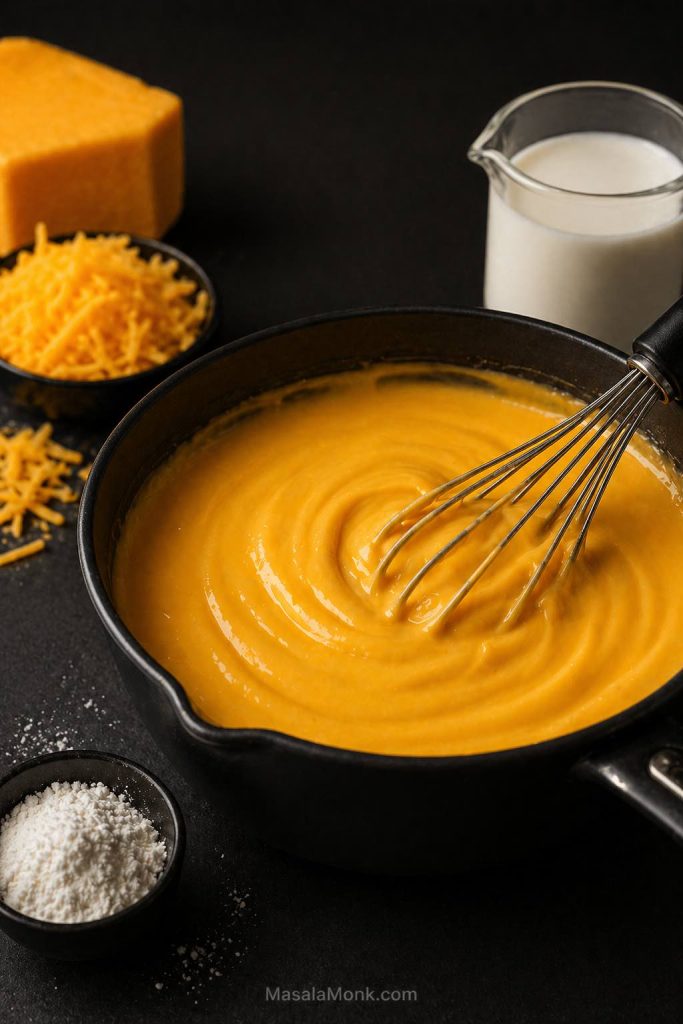
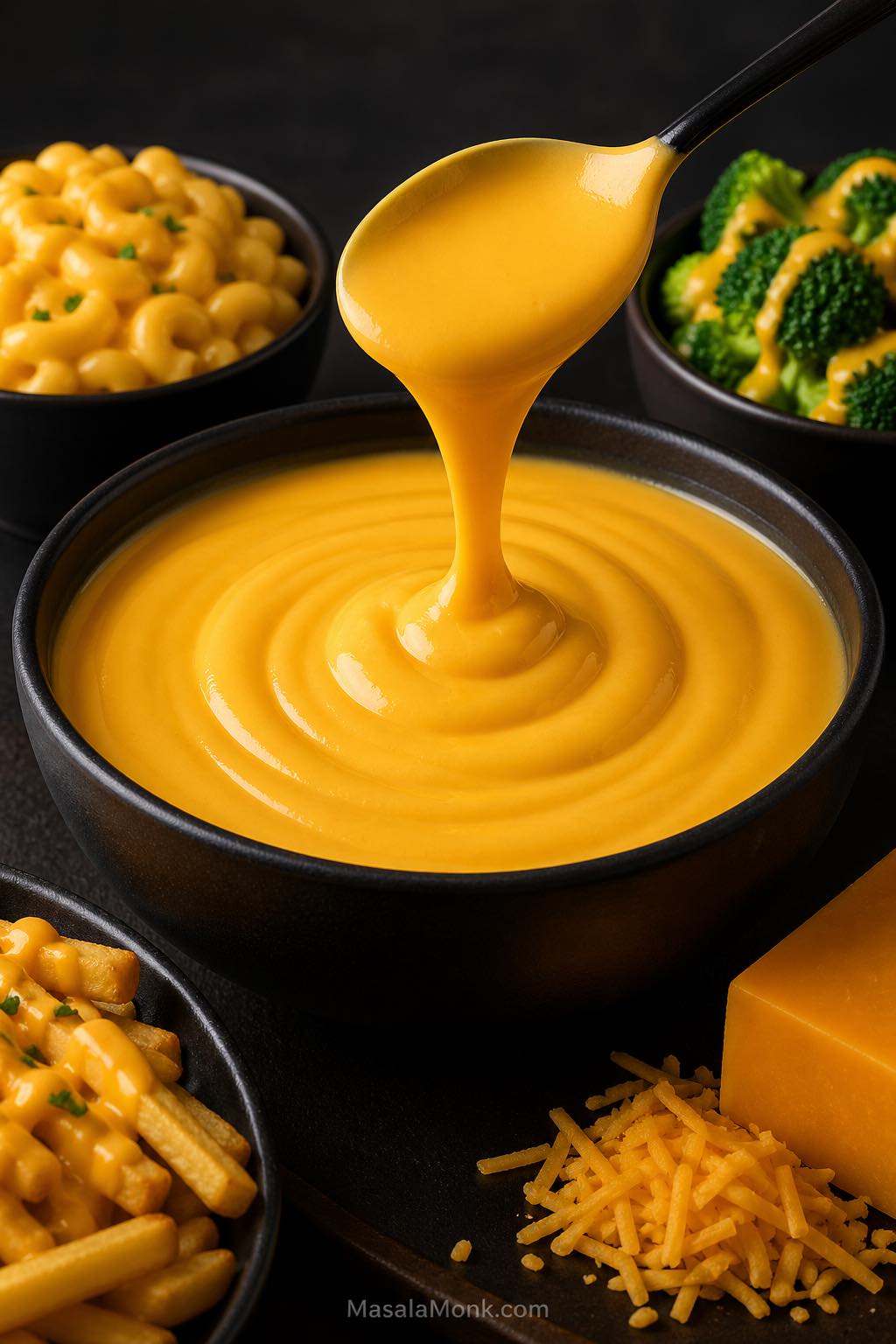
Smooth cheddar cheese sauce lifted with a spoon, served with mac and cheese, broccoli, fries and grated cheddar.

A good cheese sauce recipe should give you a smooth, creamy, cheesy sauce that is easy to control. It should work for mac and cheese, broccoli, cauliflower, fries, baked potatoes, pasta, nachos, pretzels, burgers, rice bowls, and casseroles without turning grainy, oily, lumpy, or gluey.

This easy cheese sauce recipe uses a simple butter-flour roux, milk, and freshly grated cheddar. The method is quick, but the details matter: cook the roux long enough, add the milk slowly, remove the pan from heat before adding cheese, and adjust the texture based on how you plan to serve it.

The main recipe turns cheddar cheese, milk, butter, and flour into a medium-thick sauce for vegetables, fries, potatoes, sandwiches, and pasta. It tastes fresher than a jarred sauce because it starts from scratch with real ingredients. From there, you can adapt the same base for mac and cheese, broccoli, cauliflower, pasta, nachos, no-flour sauce, gluten-free sauce, keto sauce, microwave sauce, thicker dips, thinner drizzles, and reheated leftovers.

Cheese Sauce Guide

Use this guide to make a smooth basic cheese sauce first, then adjust the texture, ingredients, and method for the way you want to serve it.

Quick Answer: How to Make Cheese Sauce

To make a smooth cheese sauce, melt butter, whisk in flour, cook the roux briefly, then slowly whisk in milk. Once the base thickens, remove the pan from heat and stir in freshly grated cheddar until melted.

The most important step is adding the cheese away from direct heat. That way, the sauce stays creamy instead of turning grainy, oily, or separated.

For a reliable all-purpose sauce, this recipe uses 2 tablespoons butter, 2 tablespoons flour, 1¼ cups milk, and 6 ounces freshly grated cheddar cheese. That gives you a medium-thick sauce for mac and cheese, broccoli, cauliflower, baked potatoes, fries, pasta, and nachos-style drizzling.

The smooth sauce rule: thicken the milk base first, then turn off the heat before adding cheese. Cheese does not need hard boiling to melt. Gentle residual heat is enough.

At a Glance

At a glance: This cheese sauce recipe makes about 2 cups / 480 ml / 0.48 L of smooth cheddar sauce in about 12 minutes. It uses 2 tbsp butter, 2 tbsp flour, 1¼ cups / 300 ml milk, and 6 oz / 170 g cheddar cheese. Keep it thick for broccoli, fries, potatoes, and sandwiches, or thin it with warm milk for pasta, mac and cheese, and rice bowls.

Practically speaking, that means you can start with one reliable base and adjust it without guessing. The same cheese sauce can stay thick for fries, loosen into a pasta coating, cover broccoli and cauliflower, or shift into a no-flour version with one small method change.

Why This Cheese Sauce Recipe Works

This recipe works because the cheese is added to a thickened milk sauce instead of being melted directly over high heat. As a result, the cheddar has a smoother base to melt into and the finished sauce is easier to control.

The butter and flour create a smooth base, the milk gives the sauce enough moisture, and the cheddar melts in gently after the pan comes off the heat. The same butter-flour-milk logic also shows up in béchamel sauce. Here, however, the base becomes richer because cheddar cheese is stirred in at the end.

That order matters. When cheese is boiled too hard, the sauce can turn grainy, oily, or separated. With a thickened milk base, though, the cheese has a smoother place to melt.

For a homemade cheese sauce, the goal is not just melting cheese. The recipe needs enough liquid, enough thickening power, and gentle heat so the sauce stays smooth after the cheddar melts.

This recipe also starts with a medium-thick texture on purpose. It is thick enough for vegetables, fries, potatoes, and sandwiches, while still being easy to loosen with warm milk or pasta water when you want a thinner sauce for noodles, mac and cheese, or rice bowls.

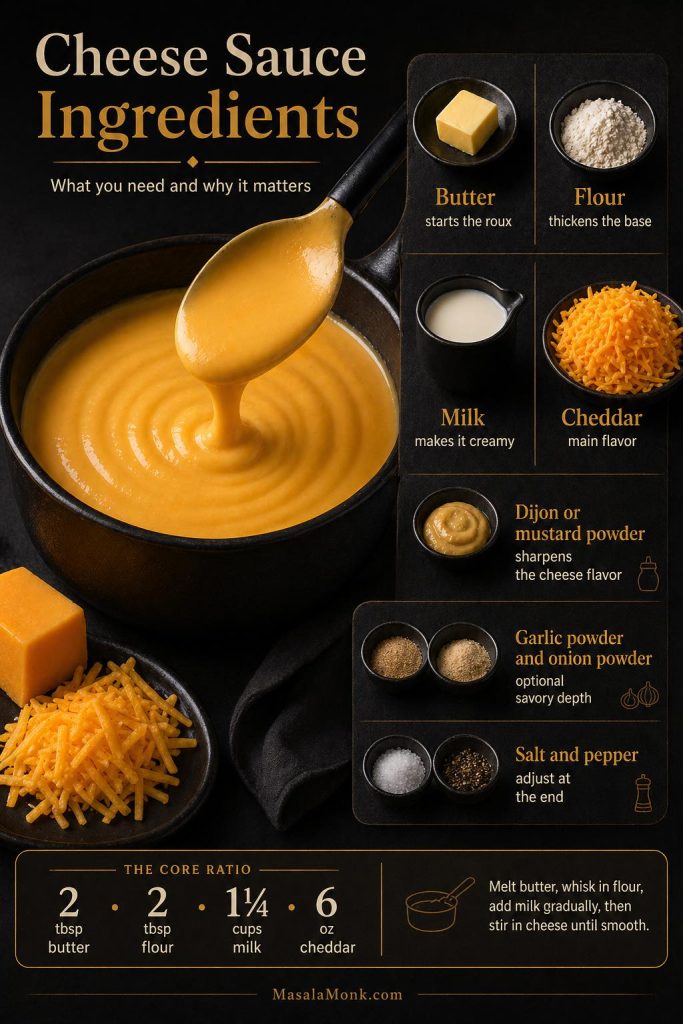
Cheese Sauce Ingredients

Although this recipe uses basic ingredients, each one has a specific job. The butter and flour create the thickened base, the milk makes it creamy, and the cheddar cheese gives the sauce its main flavor.

Cheese sauce ingredients guide showing butter, flour, milk, cheddar, mustard, garlic powder, onion powder, salt and pepper with the core ratio.
The basic cheese sauce ingredients are simple, but each one has a job: butter and flour build the roux, milk makes the sauce creamy, cheddar gives flavor, and seasonings sharpen the final taste.

Main Ingredients and What They Do

Ingredient Amount Why it matters
Unsalted butter 2 tbsp / 28 g / 1 oz Combines with flour to make the roux. Salted butter works too, but reduce added salt.
All-purpose flour / plain flour 2 tbsp / 16–18 g / 0.6 oz Thickens the milk and helps stabilize the sauce so the cheese melts smoothly. Do not use self-rising flour.
Whole milk 1¼ cups / 300 ml / 10 fl oz / 0.3 L Gives the sauce body and creaminess. Whole milk gives the smoothest everyday result.
Freshly grated cheddar cheese 6 oz / 170 g / about 1½ cups The main cheese. Medium cheddar is the easiest default; sharp cheddar gives stronger flavor.
Dijon mustard or mustard powder 1 tsp Dijon / 5 ml, or ¼ tsp mustard powder / about 1 g Optional, but it sharpens the flavor and makes the sauce taste more cheesy.
Garlic powder ¼ tsp / about 0.7 g Optional background flavor, especially good for potatoes, fries, broccoli, and pasta.
Onion powder ¼ tsp / about 0.6 g Optional savory depth without making the sauce taste onion-heavy.
White pepper or black pepper Pinch to ⅛ tsp / about 0.3 g Adds gentle warmth. White pepper keeps the sauce paler; black pepper is easier to find.
Salt ⅛–¼ tsp / about 0.75–1.5 g Add after the cheese melts because cheddar can vary a lot in saltiness.

Measurement note: cheese is best measured by weight. If using cups, lightly spoon the grated cheese into the cup instead of packing it down. For this recipe, 1 cup of liquid is treated as 240 ml.

Milk Options

The milk you choose changes the richness of the sauce. Whole milk is the best everyday choice for this cheese sauce recipe, although other dairy options can work depending on the texture you want.

  • Whole milk: best everyday choice for a smooth, creamy cheese sauce.
  • 2% milk: works, but the sauce will taste slightly lighter.
  • Skim milk: not ideal because the sauce can taste thinner and less creamy.
  • Half-and-half: richer and thicker; useful when you want a heavier sauce.
  • Heavy cream: very rich; better for keto-style sauce than the basic roux version.

Can I Use Pre-Shredded Cheese?

Freshly grated cheese melts more smoothly. Pre-shredded cheese is convenient, but many bags contain anti-caking ingredients that can make the sauce less silky. If pre-shredded cheese is all you have, use gentle heat, add it slowly, and avoid boiling after it goes in.

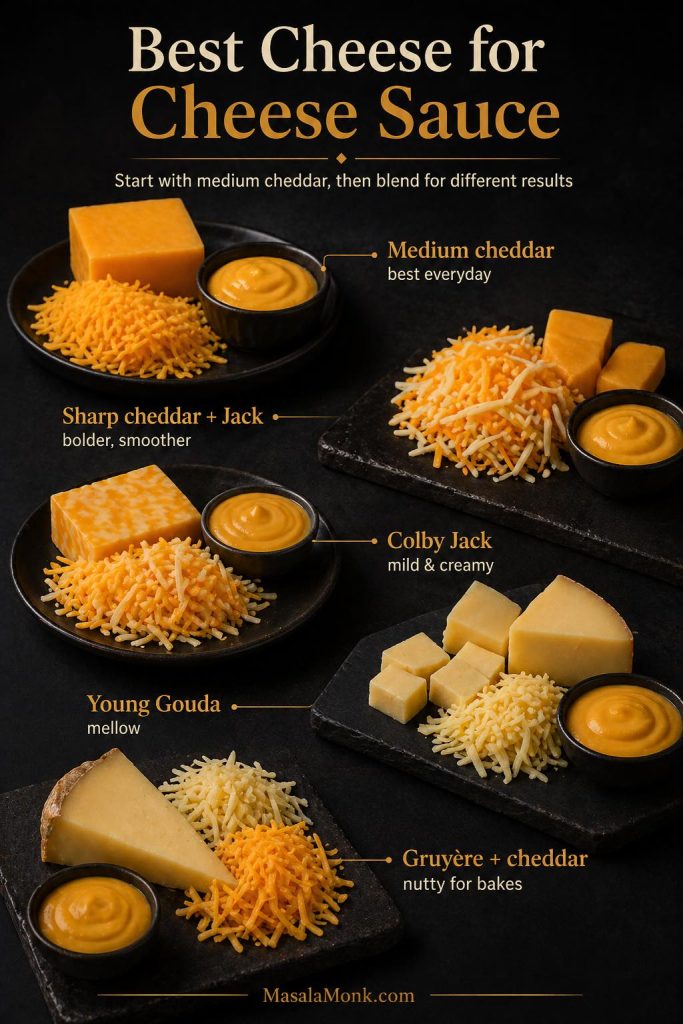
Best Cheese for Cheese Sauce

In general, the best cheese for cheese sauce is flavorful but still easy to melt. Medium cheddar is the safest default because it gives a classic cheddar taste without becoming as temperamental as very aged cheese.

Best cheeses for cheese sauce including medium cheddar, sharp cheddar with Monterey Jack, Colby Jack, young Gouda, and Gruyère with cheddar.
Medium cheddar is the easiest everyday choice for cheese sauce, while Monterey Jack, Colby Jack, young Gouda and Gruyère can help adjust the flavor, smoothness and richness.

For the smoothest everyday result, start with medium cheddar or a cheddar-Monterey Jack blend. Sharp cheddar gives stronger flavor, but it works best when blended with a smoother melting cheese.

Cheese Best use Notes
Medium cheddar Best everyday choice Balanced flavor, good melting, and classic color.
Sharp cheddar Stronger cheddar flavor Use gentle heat. Sharp cheddar tastes great but can turn grainy if overheated.
Mild cheddar Kid-friendly sauce Smooth and mellow, but less bold.
White cheddar White cheese sauce Good when you want a pale sauce for pasta, potatoes, or vegetables.
Monterey Jack Smooth melting blend Excellent mixed with cheddar when you want a softer, creamier melt.
Colby or Colby Jack Mild creamy sauce Good for kids, nachos-style drizzling, and burgers.
Young Gouda Creamy, mellow sauce Use young gouda rather than very aged gouda for smoother melting.
Gruyère Cauliflower, potatoes, gratins Nutty and excellent, but more expensive. Good blended with cheddar.
Parmesan Flavor accent Use a small amount with cheddar or Jack. Parmesan alone can make the texture gritty.
Mozzarella Stretchy accent Not ideal as the main cheese sauce cheese. It can become stringy.
Blue cheese or Gorgonzola Specialty sauces Better for dedicated blue cheese or Gorgonzola sauce, not the basic cheddar version.

Once you know the texture you like, you can experiment with sharper cheddar, smoked cheddar, white cheddar, gouda, Gruyère, or small amounts of Parmesan.

How to Make Cheese Sauce

Before you start cooking, it helps to understand that the method is simple but heat-sensitive. Timing and temperature control make the difference between a smooth cheese sauce and a grainy one. This recipe works best in a small to medium heavy-bottomed saucepan, about 1.5–2 qt / 1.5–2 L.

Step-by-step guide showing how to make cheese sauce by melting butter, whisking in flour, adding milk and stirring in cheddar.
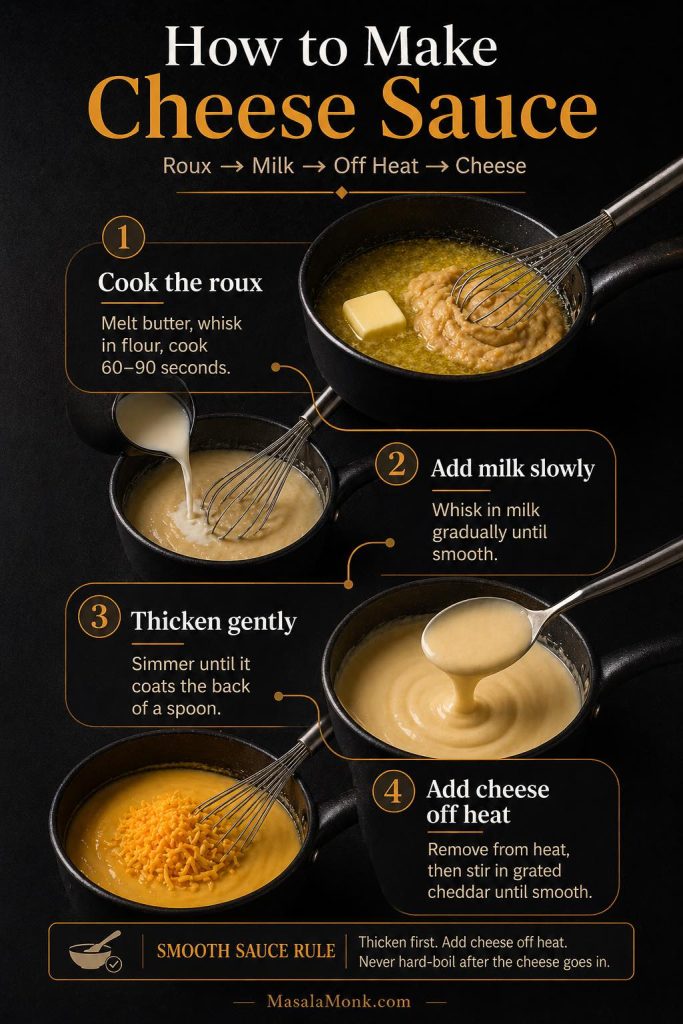
The key to smooth cheese sauce is the order of steps: make the roux, add milk slowly, thicken the base, then remove the pan from heat before stirring in cheddar.

1. Grate the Cheese First

Grate the cheddar before you start cooking. Cheese melts more evenly when it is ready to add in small handfuls. If it is very cold, let it sit at room temperature for a few minutes while you make the roux.

2. Melt the Butter Gently

Place the saucepan over medium-low to medium heat. Add the butter and let it melt without browning. If the butter starts sizzling aggressively, lower the heat.

3. Whisk in the Flour

Add the flour and whisk for 60–90 seconds. The mixture should look pale, foamy, and smooth. This step cooks out the raw flour taste. Do not brown the roux for this recipe; a pale roux keeps the sauce creamy and mild.

4. Add the Milk Slowly

Whisk in the milk in 3 additions. Add a splash first, whisk until smooth, then add more. This gradual method helps prevent lumps. Once all the milk is in, keep whisking until the sauce looks smooth.

5. Simmer Until the Base Thickens

Cook the milk base until it reaches a gentle simmer and coats the back of a spoon. This usually takes 3–5 minutes. At this stage, you want gentle bubbling around the edges, not a hard boil.

6. Remove From Heat Before Adding Cheese

Turn off the heat and move the pan away from the burner if your stove stays hot. Wait until the bubbling settles. Then stir in the grated cheese by handfuls, letting each handful melt before adding the next.

7. Season and Adjust

Once the cheese is melted, taste the sauce. Add salt only after tasting because cheddar can be mild or salty depending on the brand and age. To build more flavor, add mustard, pepper, garlic powder, onion powder, cayenne, or a small splash of hot sauce.

Cheese Sauce Temperature Guide

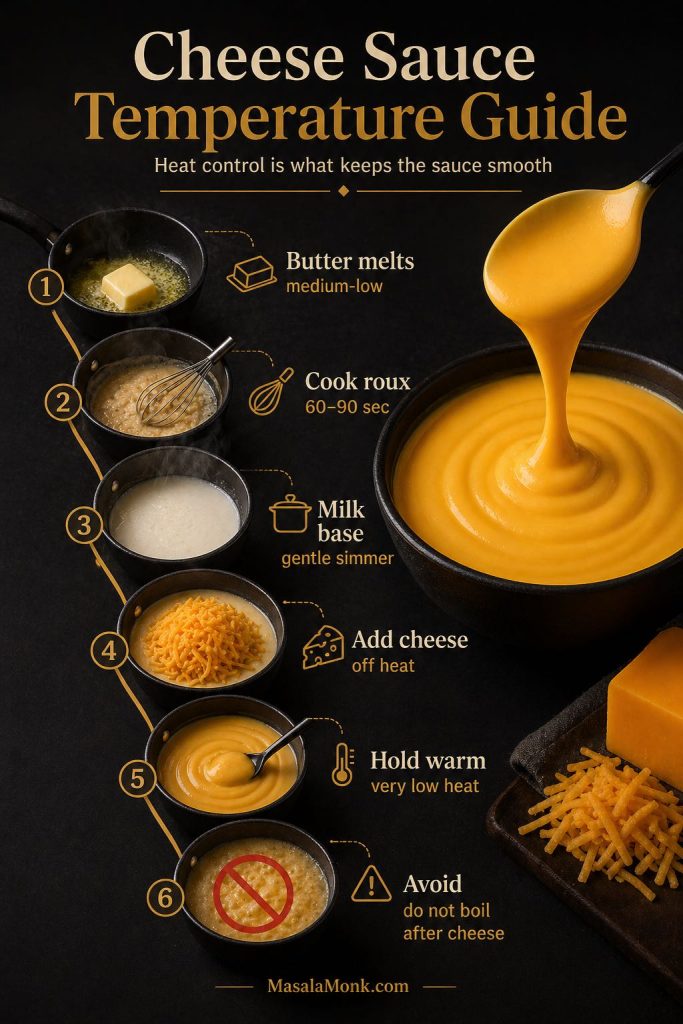
Cheese is most fragile after it melts, so temperature control is one of the easiest ways to protect the texture. You do not need to measure every stage, but the cues below help when you want the sauce to turn out the same way every time.

Cheese sauce temperature guide showing butter melting, roux cooking, milk simmering, cheese added off heat and sauce held warm.
Heat control is what keeps cheese sauce smooth. Cook the roux and milk base gently, then add the cheese off heat so the sauce does not turn grainy or oily.
Stage Best temperature / heat cue Why it matters
Melting butter Medium-low to medium heat The butter should melt gently without browning.
Cooking the roux 60–90 seconds over medium-low heat This removes the raw flour taste while keeping the sauce pale.
Thickening the milk base Gentle simmer, about 82–88°C / 180–190°F The flour fully thickens the milk before the cheese is added.
Before adding cheese Turn off heat and let bubbling stop Cheese melts best with residual heat, not aggressive boiling.
Melting cheese Ideally about 65–75°C / 150–167°F This helps the cheese melt smoothly without separating.
Holding warm Very low heat, about 55–60°C / 130–140°F if using a thermometer This keeps the sauce warm without pushing it toward splitting.
Danger zone for texture Do not hard-boil after cheese is added Hard boiling can make cheese sauce grainy, oily, or separated.

Cheese Sauce Ratio

Once you understand the base ratio, the recipe becomes easier to adjust. Instead of starting over, you can change the amount of milk or cheese depending on whether you want a dip, a topping, or a looser pasta sauce.

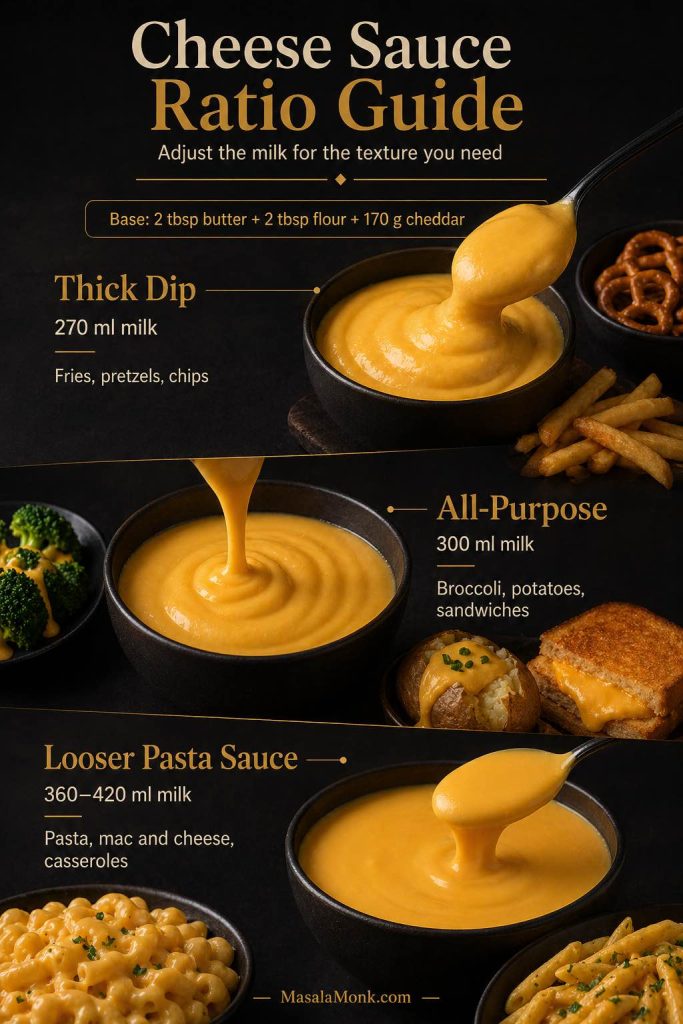
The easiest cheese sauce ratio for this recipe is 2 tbsp butter + 2 tbsp flour + 300 ml milk + 170 g cheese. That gives you a medium-thick sauce. For dipping, reduce the milk slightly; for pasta, add more liquid after the cheese melts.

Cheese sauce ratio guide showing thick dip, all-purpose cheese sauce and looser pasta sauce with different milk amounts.
Use the same butter, flour and cheddar base, then adjust the milk to make a thick dip, an all-purpose sauce, or a looser cheese sauce for pasta and casseroles.
Style Milk Cheese Best for
Thick dip 270 ml / 9 fl oz 170 g / 6 oz Fries, pretzels, chips, burgers
All-purpose sauce 300 ml / 10 fl oz 170 g / 6 oz Broccoli, cauliflower, potatoes, sandwiches
Looser pasta sauce 360–420 ml / 12–14 fl oz 170 g / 6 oz Pasta, macaroni, rice bowls, casseroles

Texture cue: when the sauce is hot, it should fall from a spoon in a thick ribbon. If it sits in a heavy blob, whisk in warm milk. If it runs like plain milk, simmer the base longer next time before adding cheese.

How to Scale This Cheese Sauce Recipe

Fortunately, this recipe scales well as long as you keep the butter, flour, milk, and cheese in balance. For the smoothest result, use a larger pan when doubling the recipe so the milk base thickens evenly.

Yield Butter Flour Milk Cheese
1 cup / 240 ml / 0.24 L 1 tbsp / 14 g 1 tbsp / 8–9 g 150 ml / 5 fl oz 85 g / 3 oz
2 cups / 480 ml / 0.48 L 2 tbsp / 28 g 2 tbsp / 16–18 g 300 ml / 10 fl oz 170 g / 6 oz
4 cups / 960 ml / 0.96 L 4 tbsp / 56 g 4 tbsp / 32–36 g 600 ml / 20 fl oz 340 g / 12 oz

Easy Homemade Cheese Sauce Recipe

This recipe makes a smooth cheddar cheese sauce that is thick enough for vegetables, fries, and baked potatoes, but easy to thin for pasta, mac and cheese, rice bowls, or drizzling.

Prep Time5 minutes
Cook Time7 minutes
Total Time12 minutes
YieldAbout 2 cups / 480 ml / 0.48 L

Equipment

  • Small to medium heavy-bottomed saucepan, about 1.5–2 qt / 1.5–2 L
  • Whisk
  • Box grater or fine grater

Ingredients

  • 2 tbsp unsalted butter / 28 g / 1 oz
  • 2 tbsp all-purpose flour or plain flour / 16–18 g / 0.6 oz
  • 1¼ cups whole milk / 300 ml / 10 fl oz / 0.3 L, warmed slightly if possible
  • 6 oz freshly grated cheddar cheese / 170 g / about 1½ cups
  • 1 tsp Dijon mustard / 5 ml, or ¼ tsp mustard powder / about 1 g
  • ¼ tsp garlic powder / about 0.7 g, optional
  • ¼ tsp onion powder / about 0.6 g, optional
  • Pinch to ⅛ tsp white pepper or black pepper / about 0.3 g
  • ⅛–¼ tsp salt / about 0.75–1.5 g, added to taste after the cheese melts
  • Warm milk, as needed, for thinning

Instructions

  1. Grate the cheese. Grate the cheddar from a block and set it aside. Freshly grated cheese melts more smoothly than most bagged shredded cheese.
  2. Make the roux. Melt the butter in a saucepan over medium-low to medium heat. Add the flour and whisk for 60–90 seconds, until pale, smooth, and lightly foamy.
  3. Add the milk. Slowly whisk in the milk in 3 additions, smoothing out the sauce before adding more. Keep whisking until no lumps remain.
  4. Thicken the base. Cook for 3–5 minutes, whisking often, until the sauce reaches a gentle simmer and coats the back of a spoon.
  5. Remove from heat. Turn off the heat and let the bubbling settle. This helps keep the cheese from overheating.
  6. Add the cheese. Stir in the grated cheddar by handfuls, letting each handful melt before adding the next.
  7. Season. Stir in Dijon, garlic powder, onion powder, pepper, and a small amount of salt. Taste and adjust.
  8. Adjust the texture. For a thinner cheese sauce, whisk in warm milk 1 tbsp / 15 ml at a time. For a thicker dip, add a little more grated cheese off heat.

Recipe Notes

  • Do not boil the sauce after the cheese is added.
  • For pasta or mac and cheese, thin this recipe with warm milk or pasta water until the cheese sauce is glossy and loose enough to coat noodles.
  • For fries, pretzels, burgers, or sandwiches, keep the sauce slightly thicker.
  • For extra smoothness, use medium cheddar or a cheddar-Monterey Jack blend.
  • Cheese is best measured by weight. Cup measurements vary depending on how finely the cheese is grated and how tightly it is packed.

How Thick Should Cheese Sauce Be?

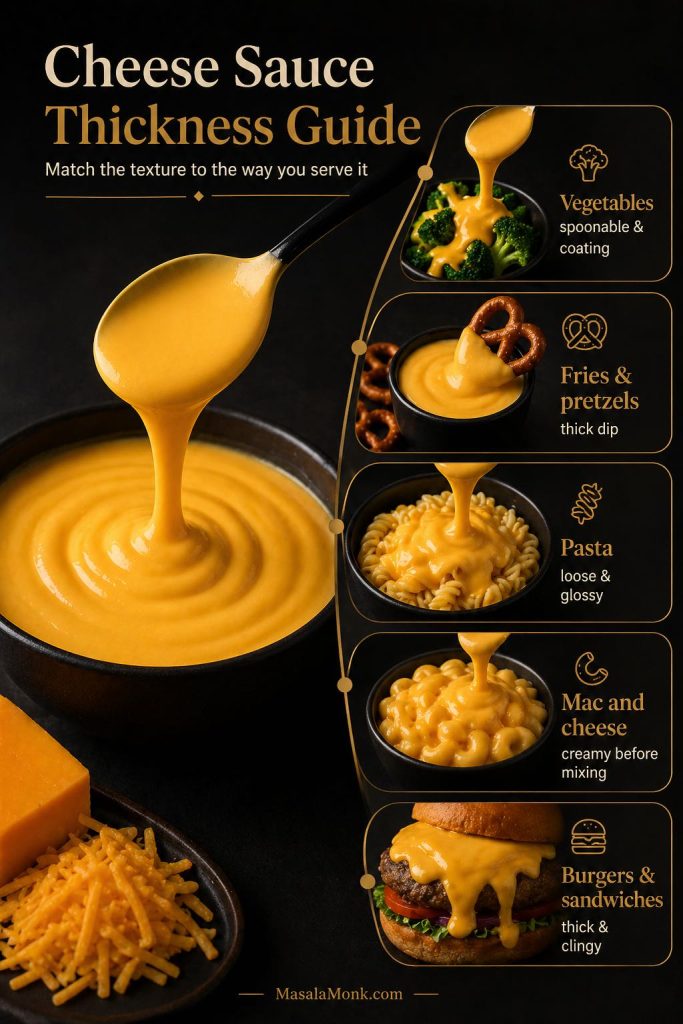
In practice, the best thickness depends on how you want to use the sauce. A cheese sauce for fries should be thicker than a cheese sauce for pasta, while a sauce for casseroles should start slightly loose because it thickens in the oven.

Cheese sauce thickness guide showing different textures for vegetables, fries, pasta, mac and cheese, burgers and sandwiches.
The best cheese sauce texture depends on how you serve it: spoonable for vegetables, thick for fries and pretzels, loose for pasta, creamy for mac and cheese, and clingy for burgers or sandwiches.
Use Best texture How to adjust the main recipe
Broccoli or cauliflower Spoonable and coating Use the main recipe as written.
Fries, pretzels, chips Thick dip Use 270–300 ml milk, or add 30 g / 1 oz extra cheese off heat.
Pasta Looser, glossy, coating Add 60–120 ml / 2–4 fl oz warm milk or pasta water after the cheese melts.
Macaroni and cheese Creamy and loose before mixing Thin slightly before adding pasta because noodles absorb sauce.
Baked potatoes Medium-thick Use the main recipe as written.
Rice bowls or grain bowls Pourable drizzle Add 30–60 ml / 1–2 fl oz warm milk.
Casseroles and bakes Slightly loose before baking Add about 60 ml / 2 fl oz extra milk because oven heat thickens it.
Burgers and sandwiches Thick and clingy Use a little less milk or add extra cheese.

If the sauce cools down, it will thicken. However, that does not mean you made the recipe wrong. Warm the cheese sauce gently and whisk in a splash of milk to bring it back to a pourable texture.

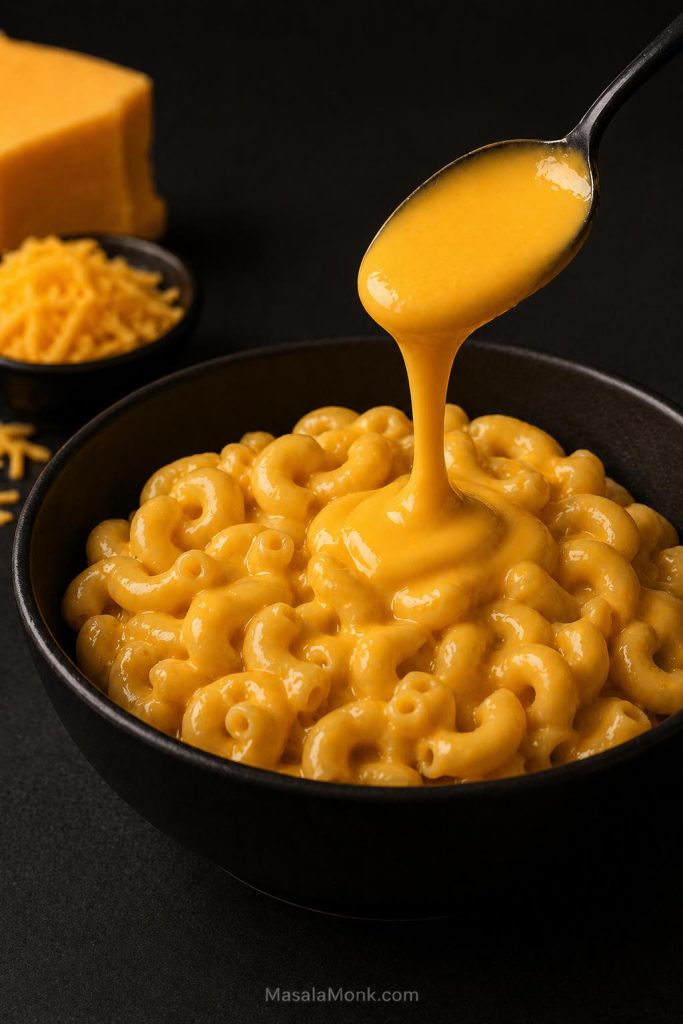
Cheese Sauce for Mac and Cheese

For mac and cheese, the sauce should be slightly looser than a dip because pasta absorbs liquid as it sits. Therefore, instead of making the sauce extra thick in the pan, keep it glossy and pourable before mixing it with the macaroni.

Creamy macaroni and cheese coated with smooth cheddar cheese sauce in a dark bowl.
For mac and cheese, keep the sauce slightly loose and glossy before mixing because pasta absorbs liquid as it sits.

One batch of this recipe is usually enough for 8 oz / 225 g pasta when making creamy stovetop mac and cheese. A larger batch with 1 lb / 450 g pasta needs a doubled sauce recipe, or about 4 cups / 960 ml sauce. If you are baking the mac and cheese, loosen the sauce with an extra 60–120 ml / 2–4 fl oz milk because the oven will thicken it.

For the smoothest mac and cheese sauce, use medium cheddar with a smoother melting cheese such as Monterey Jack, Colby Jack, or young gouda. Sharp cheddar adds flavor, but too much aged cheese can make the sauce more likely to turn gritty if it gets too hot.

If you want a full pasta build instead of only the sauce, use this macaroni and cheese recipe for stovetop, baked, and Southern-style options.

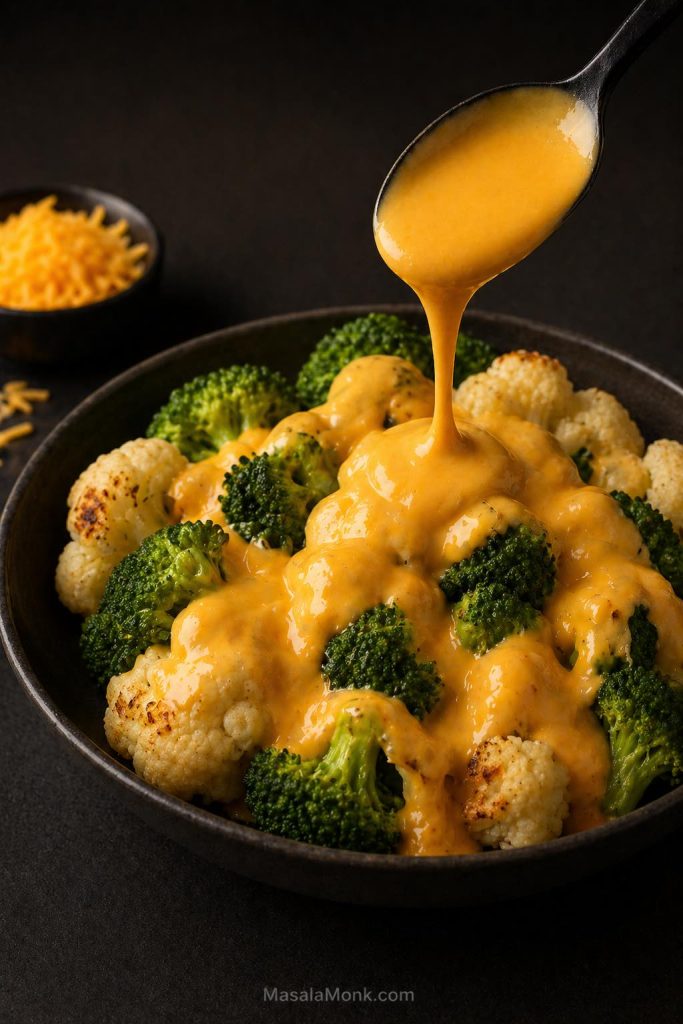
Cheese Sauce for Broccoli, Cauliflower, and Vegetables

For broccoli, cauliflower, and other vegetables, the goal is different. Instead of making a loose pasta sauce, you want a spoonable sauce that coats the florets without clumping on top.

Broccoli and cauliflower served with smooth cheddar cheese sauce spooned over the vegetables.
For broccoli and cauliflower, the cheese sauce should be spoonable and coating, thick enough to cling to the florets without clumping heavily on top.

For steamed broccoli or cauliflower, use the main recipe as written. If the vegetables are very wet, drain them well first, because extra water can thin the sauce and make it slide off. For roasted vegetables, the sauce can be slightly looser because the dry edges help it cling.

For cauliflower cheese or a vegetable bake, keep the sauce a little looser before baking. As the dish sits in the oven, the cheese sauce thickens and the vegetables release moisture, so a sauce that looks perfect in the pan can become too heavy after baking.

For a full comfort-food dinner, this cheesy chicken broccoli rice shows how broccoli and cheese can move from a side dish into a complete meal.

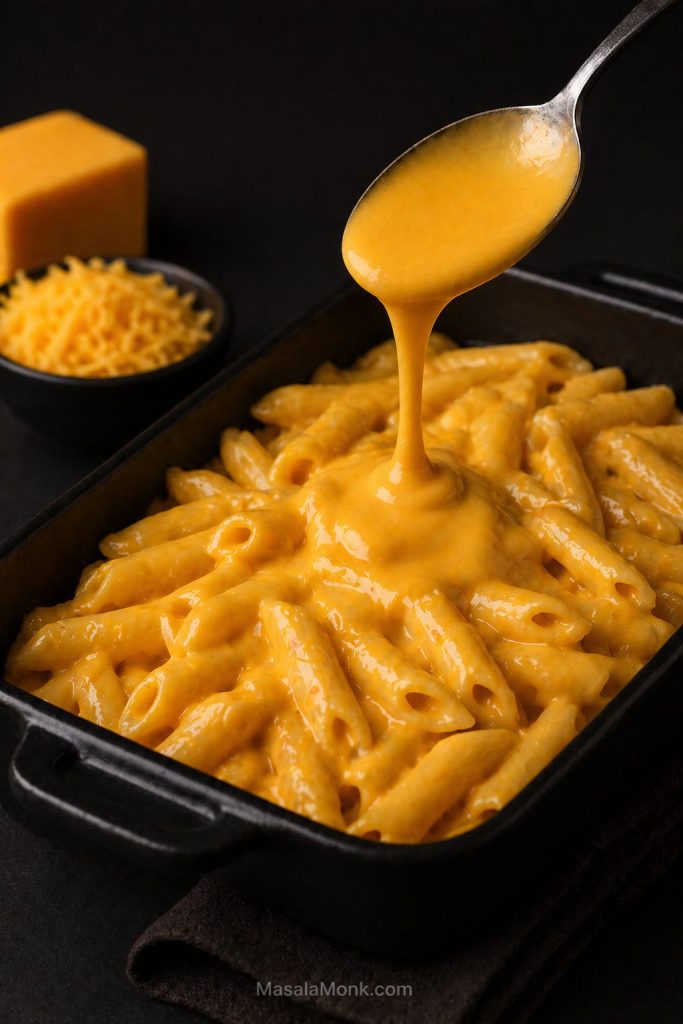
Cheese Sauce for Pasta, Lasagna, and Casseroles

When cheese sauce is used for pasta, lasagna, or casseroles, it needs extra looseness because starches and oven heat both thicken the final dish. For that reason, a sauce that looks slightly thin before baking often finishes at the right texture.

Pasta in a dark baking dish coated with looser glossy cheddar cheese sauce for casseroles and pasta bakes.
Pasta, lasagna and casseroles need a slightly looser cheese sauce because noodles, starches and oven heat all thicken the final dish.

For pasta, thin the finished sauce with 60–120 ml / 2–4 fl oz warm milk or pasta water before tossing. Pasta water adds starch and helps the sauce cling, while milk keeps the flavor creamier. If the pasta sits for more than a few minutes, loosen it again with a small splash of warm milk.

For lasagna, pasta bakes, and casseroles, use the looser pasta-sauce ratio from the table above. A thicker sauce can work for topping, but it can make layered dishes feel heavy or gluey once baked.

For another creamy pasta direction, this chicken Alfredo pasta is useful because it stays in the same creamy sauce family while using a different method. If you want a baked pasta idea, this baked ziti recipe collection gives more casserole-style inspiration.

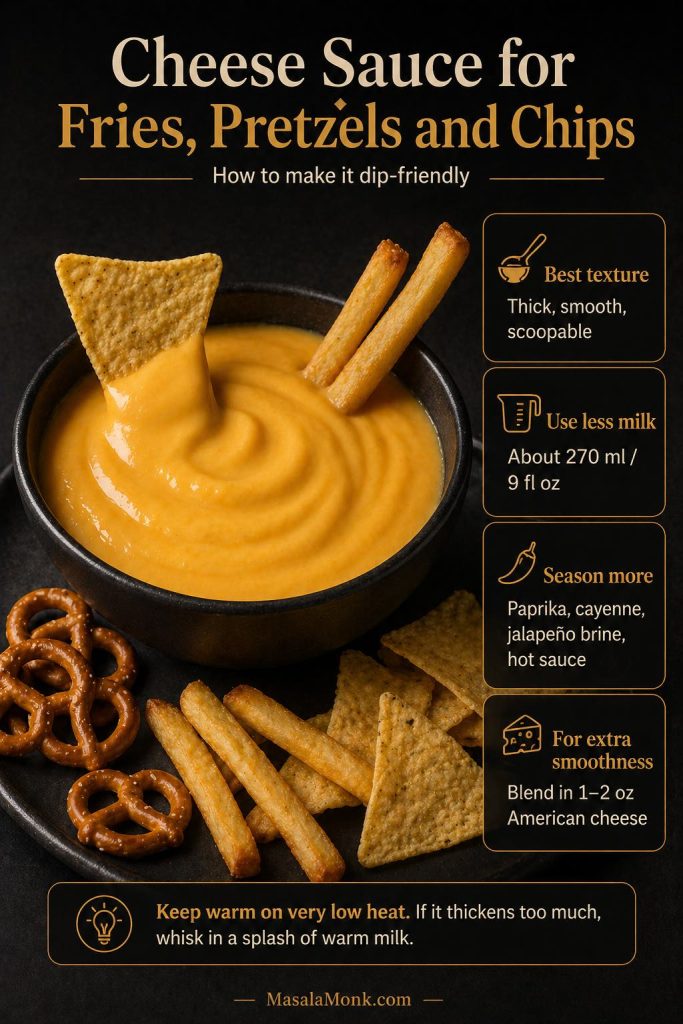
Nacho Cheese Sauce for Fries, Pretzels, Chips, and Dips

For fries, pretzels, chips, and dips, the sauce should be thicker and more seasoned than a pasta sauce. Otherwise, it can taste too mild once it is spread over salty snacks or used as a dip.

Thick cheddar cheese sauce served as a dip with fries, pretzels and tortilla chips.
For fries, pretzels and chips, make the cheese sauce thicker and more seasoned so it stays scoopable, flavorful and dip-friendly.

To make this recipe work more like a nacho cheese sauce, use the thick-dip ratio: 270 ml / 9 fl oz milk with 170 g / 6 oz cheese. Then season it with paprika, cayenne, jalapeño brine, hot sauce, garlic powder, or a little mustard. These additions make the sauce taste more like a dip instead of a plain cheddar topping.

For a smoother processed-style dip, replace 1–2 oz / 30–55 g of the cheddar with American cheese or another easy-melting processed cheese. Alternatively, a small amount of sodium citrate can make a very glossy sauce, but that is an advanced option rather than a requirement for this homemade version.

For a snack-style pairing, serve the thicker version with crispy homemade French fries. For a bigger game-day board, add pretzels, chips, roasted potatoes, or a scoopable dip on the side.

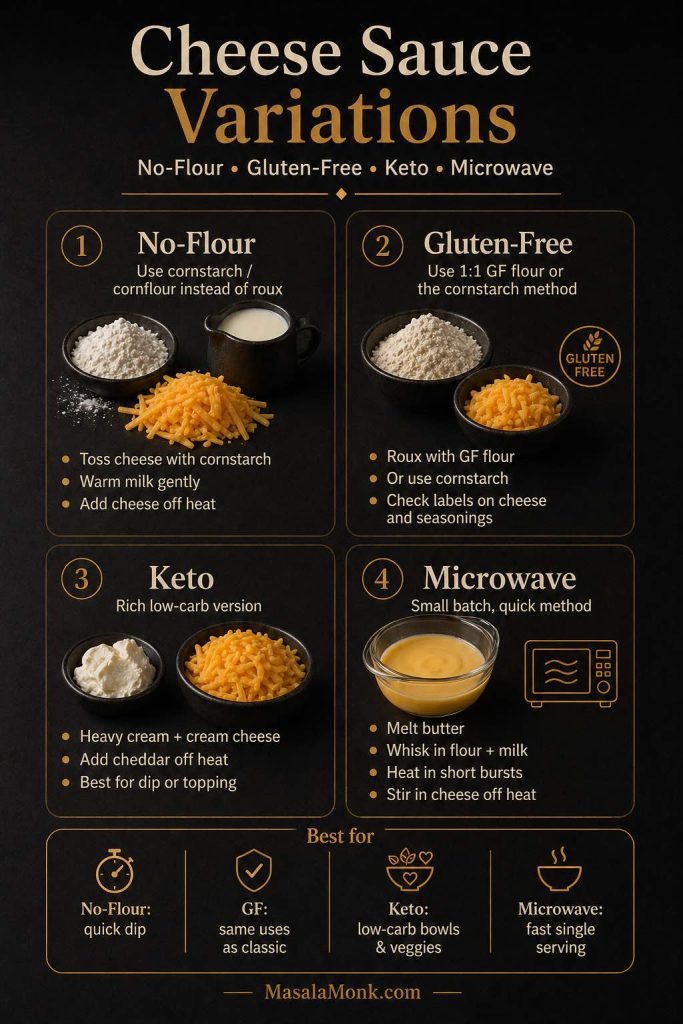
The classic roux method is the best starting point, but it is not the only option. If you need a no-flour, gluten-free, keto, or microwave cheese sauce, use the quick guide below before choosing the version that fits your kitchen.

Cheese sauce variations guide showing no-flour, gluten-free, keto and microwave cheese sauce methods.
The same cheese sauce idea can be adapted into no-flour, gluten-free, keto and microwave versions depending on how you cook and what ingredients you want to avoid.

Cheese Sauce Without Flour

Still, a roux is not the only way to make a smooth sauce. If you want to skip flour, cornstarch can help the cheese melt into the liquid without making the sauce gritty.

You can make cheese sauce without flour by using cornstarch, also called cornflour in the UK and India. This version is useful if you want a flourless cheese sauce, a gluten-free cheese sauce, or a quicker sauce that does not start with a roux.

The no-flour version of this recipe uses cornstarch to help the cheese melt into the sauce smoothly. It makes a glossy sauce that is especially useful for dipping, drizzling, and quick snacks.

No-flour cheese sauce made with cornstarch, milk and cheddar stirred into a smooth sauce.
For cheese sauce without flour, cornstarch or cornflour helps the cheddar melt smoothly into the milk without starting from a classic butter-flour roux.
Ingredient US Metric
Evaporated milk or whole milk 1 cup 240 ml / 8 fl oz / 0.24 L
Freshly grated cheddar cheese 6 oz 170 g
Cornstarch / cornflour 1½ tsp 4–5 g
Butter 1 tbsp 14 g / 0.5 oz
Dijon mustard or mustard powder 1 tsp Dijon or ¼ tsp powder 5 ml Dijon or about 1 g powder
Salt and pepper To taste To taste

How to Make No-Flour Cheese Sauce

  1. Toss the grated cheddar cheese with the cornstarch until lightly coated.
  2. Warm the milk and butter in a saucepan over medium-low heat until steaming, not boiling.
  3. Lower the heat or remove the pan from heat.
  4. Add the cheese by handfuls, stirring until smooth.
  5. Add mustard, pepper, and salt to taste.
  6. If the sauce is too thick, loosen it gradually with warm milk, about 1 tbsp / 15 ml at a time.

Important: cornflour here means white cornstarch, not yellow cornmeal, maize flour, or makki atta. Cornmeal will not make a smooth cheese sauce.

Gluten-Free Cheese Sauce

As a result, the no-flour method also becomes the easiest gluten-free path for many readers. Still, a gluten-free flour blend can work well if you prefer the classic roux technique.

There are two easy ways to make gluten-free cheese sauce. The best choice depends on whether you want the recipe to feel like a classic roux-based cheese sauce or a faster cornstarch-thickened sauce.

  • Use a 1:1 gluten-free flour blend in the main roux recipe. This keeps the method almost the same.
  • Use the cornstarch/cornflour method above. This is the cleanest option if you want to avoid wheat flour completely.

If you are cooking for someone who needs a strictly gluten-free meal, check the labels on the cheese, mustard, seasonings, and any toppings you serve with the sauce.

Keto Cheese Sauce

On the other hand, keto cheese sauce needs a different base, since the classic version relies on both flour and milk. This version skips the roux and uses cream, cream cheese, butter, and cheddar instead.

Ingredient Amount
Heavy cream ½ cup / 120 ml / 4 fl oz / 0.12 L
Cream cheese 2 oz / 55 g
Freshly grated cheddar cheese 4 oz / 115 g
Butter 1 tbsp / 14 g / 0.5 oz
Mustard powder ¼ tsp / about 1 g
Pepper, cayenne, or hot sauce To taste

Warm the cream, butter, and cream cheese over low heat until smooth. Remove from heat and stir in the cheddar gradually. Do not boil after adding cheddar. This keto version is richer and heavier than the classic sauce, so it works best as a dip, topping, or low-carb drizzle.

For low-carb dipping, pair this richer sauce with sturdy options from this keto chips guide, especially if you want something scoopable for nachos, dips, or snack plates.

Microwave Cheese Sauce

Although the stovetop method gives you the best control, the microwave works for a small batch when speed matters more than precision. For best results, heat the base in short bursts and stir often.

Ingredient Amount
Butter 1 tbsp / 14 g / 0.5 oz
Flour 1 tbsp / 8–9 g / 0.3 oz
Milk ½ cup / 120 ml / 4 fl oz / 0.12 L
Freshly grated cheddar cheese 2–3 oz / 55–85 g
Salt, pepper, mustard To taste
  1. Melt the butter in a microwave-safe bowl for 20–30 seconds.
  2. Whisk in the flour until smooth.
  3. Whisk in the milk gradually.
  4. Microwave for 45 seconds, then whisk.
  5. Microwave for another 30–45 seconds, or until thickened.
  6. Stir in the grated cheese off heat until smooth.
  7. Thin with a small splash of warm milk if needed.

Use short microwave bursts and stir often. The sauce can overheat quickly in the microwave, especially after the cheese is added.

How to Fix Grainy, Oily, Thick, Thin, or Lumpy Cheese Sauce

When cheese sauce goes wrong, the problem usually comes from heat, cheese choice, or the order of steps. Fortunately, many issues can be fixed, especially if you catch them early.

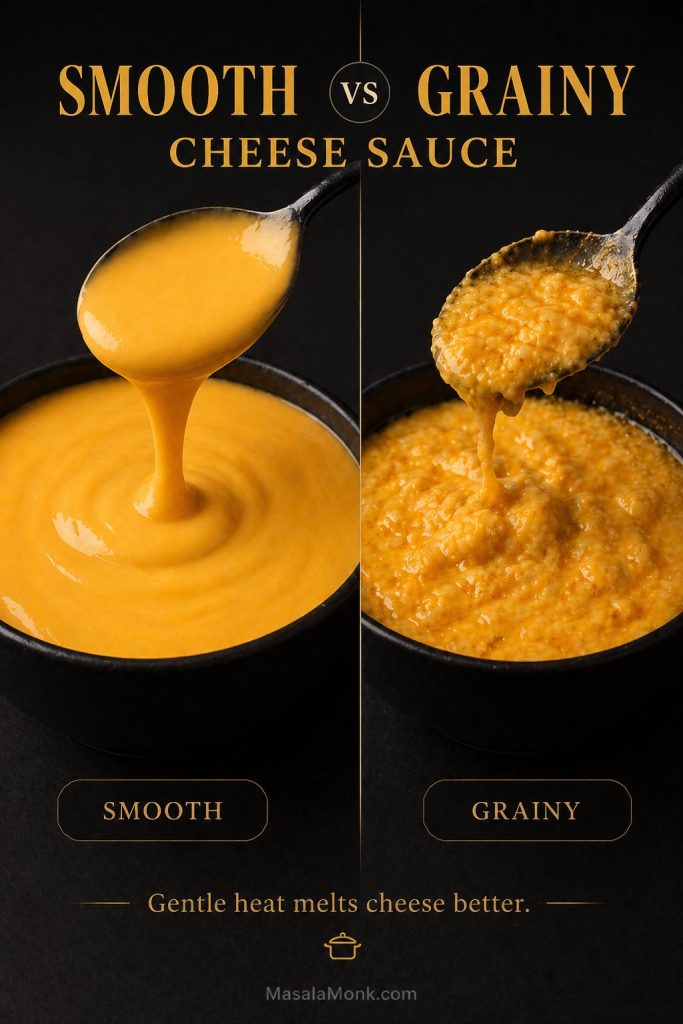
Comparison of smooth cheese sauce and grainy cheese sauce showing the difference between silky and broken texture.
Smooth cheese sauce comes from gentle heat and gradual melting. Grainy cheese sauce usually happens when the cheese overheats, separates, or is added before the base is ready.

Quick Fixes for Common Cheese Sauce Problems

Problem Likely cause How to fix it
Grainy or gritty cheese sauce The cheese overheated, the sauce boiled after cheese was added, or the cheese was very aged. Remove from heat. Whisk in warm milk 1 tbsp / 15 ml at a time. If needed, blend briefly or strain. Next time, add cheese off heat.
Oily or separated sauce The emulsion broke and fat separated from the cheese. Lower the heat immediately. Whisk in warm milk, or add a tiny cornstarch slurry made with ½ tsp cornstarch and 1 tbsp / 15 ml cold milk.
Lumpy sauce Milk was added too quickly to the roux, or the sauce was not whisked enough. Whisk firmly. If lumps remain before adding cheese, strain the sauce, then continue.
Floury taste The roux was undercooked. Cook the butter and flour for 60–90 seconds before adding milk. It should smell lightly buttery, not raw.
Too thick Too much cheese, too little milk, too much simmering, or the sauce cooled down. Whisk in warm milk 1 tbsp / 15 ml at a time until it loosens.
Too thin The milk base did not thicken enough before cheese was added. Simmer the base longer next time. To fix now, use a small cornstarch slurry and heat gently until thicker.
Stringy sauce Too much mozzarella or another stretchy cheese, or cheese was overheated. Use cheddar, Monterey Jack, Colby, or young Gouda as the base. Keep stretchy cheeses as accents.
Bland sauce Mild cheese, not enough salt, or no sharp/acidic seasoning. Add salt carefully, then mustard, pepper, garlic powder, onion powder, cayenne, or a small splash of hot sauce.
Too salty Salty cheese, salted butter, or too much added salt. Whisk in unsalted milk or cream. Serve with unsalted potatoes, pasta, rice, or vegetables.

How to Prevent Cheese Sauce Problems Next Time

To prevent most problems, grate the cheese fresh, cook the roux briefly, thicken the milk before adding cheese, and remove the pan from heat before stirring in the cheddar. Rather than using more heat to force the cheese to melt, give it time to melt gently in the hot sauce base.

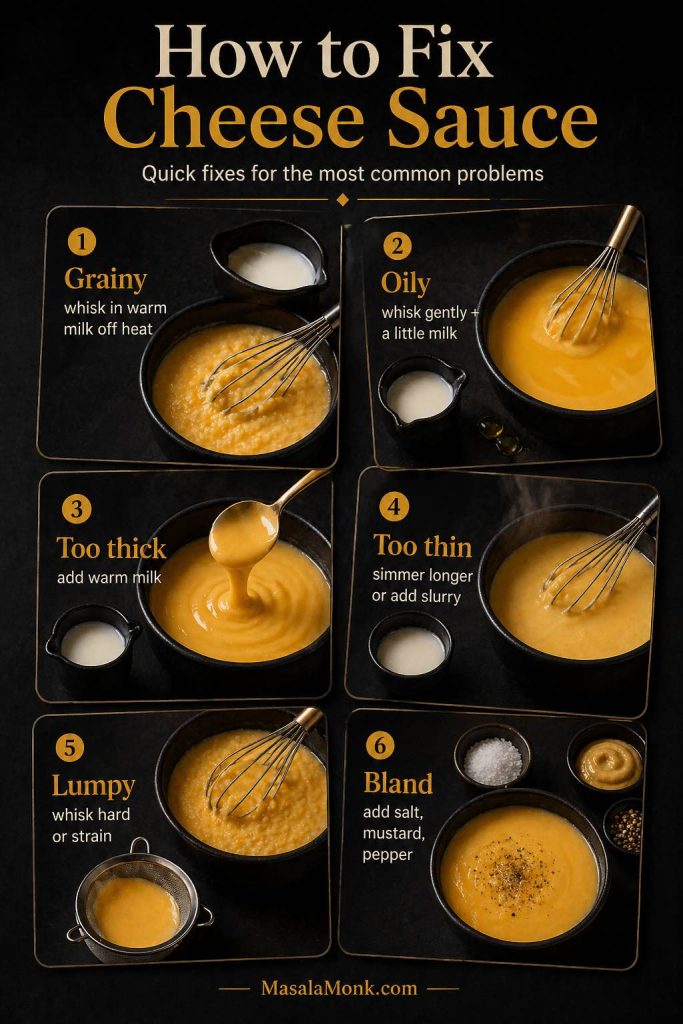
Guide showing how to fix grainy, oily, thick, thin, lumpy and bland cheese sauce.
Most cheese sauce problems can be corrected if you catch them early: lower the heat, whisk gently, add warm milk, strain lumps, or adjust seasoning once the sauce is smooth again.

Why Cheese Sauce Turns Grainy

Cheese sauce turns grainy when the cheese proteins tighten and the fat separates instead of staying evenly dispersed in the sauce. High heat makes this more likely. Very sharp, aged, or dry cheeses can also be more difficult to melt smoothly.

For that reason, the safest method is to thicken the milk first, turn off the heat, and then stir in the cheese gradually. The residual heat melts the cheese without pushing it into a hard boil.

For a deeper look at why cheese sauces break, Serious Eats explains how heat can separate cheese fat, water, and proteins, which is why gentle heat matters so much here.

Can I Use Sodium Citrate for Extra-Smooth Cheese Sauce?

Yes, but treat it as an advanced option rather than a requirement. Sodium citrate is an emulsifying salt that helps cheese melt into a very smooth, glossy sauce. It is most useful when you want a processed-style dip or nacho-style sauce that stays more fluid as it cools.

If you already use sodium citrate in your kitchen, follow the ratio on your product or use a tested sodium-citrate sauce formula. For this homemade cheese sauce recipe, though, the roux method is the easier and more familiar starting point.

How to Store and Reheat Cheese Sauce

Even though cheese sauce is best fresh, leftovers can still work well if you reheat them gently. Cool leftover sauce quickly, transfer it to a shallow airtight container, and refrigerate it within 2 hours.

For general leftover safety, FoodSafety.gov recommends keeping refrigerators at 40°F / 4°C or below and freezers at 0°F / -18°C or below.

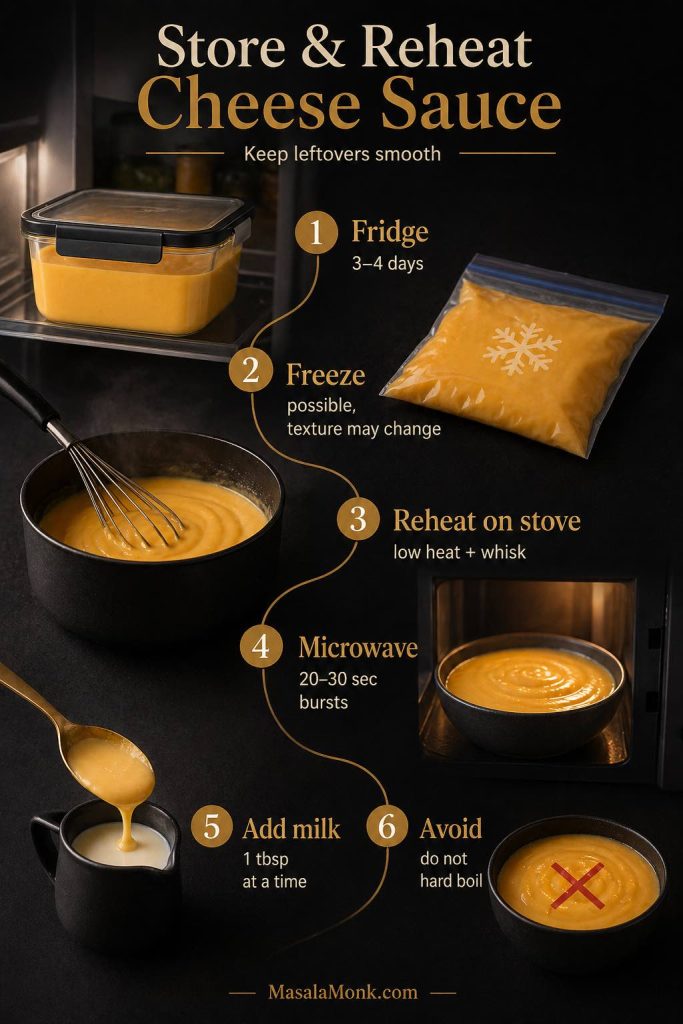
Guide showing how to store and reheat cheese sauce in the fridge, freezer, saucepan and microwave.
Leftover cheese sauce is best reheated gently. Use low heat, whisk often, and add a splash of milk to bring the sauce back to a smooth, pourable texture.

After that, reheat only the amount you need. Repeated cooling and reheating can make the sauce more likely to split, especially because this recipe contains both cheese and milk.

Storage method Best guidance
Refrigerator Store in an airtight container for 3–4 days.
Refrigerator temperature Keep at or below 4°C / 40°F.
Freezer Possible, but not ideal for texture. Freeze for up to 1–2 months for best quality.
Freezer temperature Keep at about -18°C / 0°F for longer storage.
Stovetop reheating Reheat over low heat, whisking often. Add milk 1 tbsp / 15 ml at a time.
Microwave reheating Use 20–30 second bursts and stir between each burst.
Keeping warm Use very low heat or a warm setting. Stir occasionally and add milk if it thickens.
What to avoid Do not hard-boil leftover cheese sauce. It can split or turn grainy.

If refrigerated cheese sauce looks thick or slightly set, that is normal. To bring it back, warm it gently and whisk in a splash of milk until it becomes smooth again.

What to Serve With Cheese Sauce

By this point, you can treat the sauce as a flexible base rather than a single-use recipe. It can work as a vegetable sauce, pasta sauce, potato topping, snack dip, sandwich sauce, or creamy base for simple dinners.

Vegetables

  • Broccoli
  • Cauliflower
  • Roasted carrots
  • Green beans
  • Asparagus
  • Brussels sprouts
  • Roasted potatoes

Pasta, Rice, and Potatoes

  • Macaroni
  • Shells
  • Penne
  • Rotini
  • Baked potatoes
  • Rice bowls
  • Casseroles

Snacks, Sandwiches, and Game-Day Food

  • French fries
  • Potato wedges
  • Pretzels
  • Nachos-style chips
  • Burgers
  • Chicken sandwiches
  • Grilled cheese
  • Paneer wraps
  • Tofu wraps

If you are building a game-day table, this sauce can sit next to a warmer, scoopable dip like buffalo chicken dip instead of trying to do every job on the table by itself.

Cheese Sauce FAQs

Can I Make This Cheese Sauce From Scratch?

Yes. This recipe makes cheese sauce from scratch with butter, flour, milk, and cheddar cheese. You do not need a packaged mix, jarred sauce, or processed cheese unless you want a glossier processed-style version.

Can I Make Cheese Sauce Without Flour?

Yes. Use cornstarch/cornflour instead of flour. Toss the grated cheese with cornstarch, warm the milk, then stir the cheese in gently. This is also a good gluten-free method if all your ingredients are certified gluten-free.

Is Cheese Sauce Gluten-Free?

The main recipe is not gluten-free because it uses all-purpose flour. To make it gluten-free, use a 1:1 gluten-free flour blend or use the cornstarch/cornflour method.

Is Cheese Sauce Keto?

The main recipe is not keto because it uses flour and milk. For keto cheese sauce, use heavy cream, cream cheese, butter, and cheddar instead.

Why Is My Cheese Sauce Grainy?

Cheese sauce usually turns grainy when the cheese gets too hot. Remove the sauce from heat before adding cheese, add the cheese gradually, and avoid boiling after the cheese melts.

How Do I Thin Cheese Sauce?

Whisk in warm milk 1 tablespoon / 15 ml at a time until the cheese sauce reaches the texture you want. For pasta, you can also use warm pasta water.

How Do I Thicken Cheese Sauce?

If the sauce is only slightly thin, let the milk base simmer a little longer before adding cheese. If the finished cheese sauce is thin, whisk in a small cornstarch slurry and heat gently, or add more grated cheese off heat.

Can I Make Cheese Sauce Without Milk?

Yes, but the sauce will change. Unsweetened oat milk, almond milk, or another neutral dairy-free milk can work, but the sauce may taste lighter and less creamy. Water works in an emergency, but milk gives this recipe a smoother cheese sauce with better flavor.

Can I Make Cheese Sauce With Water?

You can, but milk gives a much better texture and flavor. Water makes the sauce thinner and less creamy. If you need to avoid milk, use an unsweetened dairy-free milk that works well in savory sauces.

Can I Make Cheese Sauce With Cream?

Yes, but cream makes the cheese sauce richer and heavier. You can replace part of the milk with cream, or use cream in the keto version. For an everyday recipe, whole milk gives a better balance.

Can I Add American Cheese for a Smoother Sauce?

Yes. If you want a smoother, more processed-style cheese sauce, replace 1–2 oz / 30–55 g of the cheddar with American cheese or another easy-melting processed cheese. It makes the sauce glossier and more stable, but the flavor will be less purely cheddar.

Can I Freeze Cheese Sauce?

You can freeze cheese sauce, but the texture may change after thawing. Reheat it slowly over low heat and whisk in milk to bring it back together. For the smoothest texture, cheese sauce is best made fresh or refrigerated for a few days.

What Cheese Melts Best for Cheese Sauce?

Medium cheddar, mild cheddar, Monterey Jack, Colby Jack, young gouda, and Gruyère melt well. Very aged cheddar, Parmesan, and mozzarella can be used, but they are better as accents rather than the entire sauce base.

Is Cheese Sauce the Same as Mornay Sauce?

They are related. A classic Mornay sauce is a cheese sauce made from béchamel, usually with cheeses such as Gruyère, Parmesan, or other melting cheeses. This recipe is a practical cheddar cheese sauce for everyday cooking.

Can I Use This Cheese Sauce Recipe for Mac and Cheese?

Yes. Thin it slightly with warm milk or pasta water before tossing it with cooked macaroni because pasta absorbs sauce quickly. For baked mac and cheese, keep the sauce even looser before it goes into the oven.

Can I Use This Cheese Sauce Recipe for Nachos?

Yes, for a quick nachos-style drizzle. Keep it warm, make it slightly thicker, and season with cayenne, paprika, jalapeño, or hot sauce. For a more stadium-style nacho cheese sauce, use a smoother melting blend, a little American cheese, or an emulsifying-salt method.

Easy cheese sauce recipe graphic with smooth cheddar sauce for mac and cheese, broccoli, nachos, fries and dips.
Save this easy cheese sauce recipe for a smooth cheddar sauce you can use with mac and cheese, broccoli, nachos, fries, dips and more.

Back to top

Posted on 2 Comments

Mango Habanero Sauce Recipe: Sweet-Spicy Hot Sauce for Wings, Tacos & Chicken

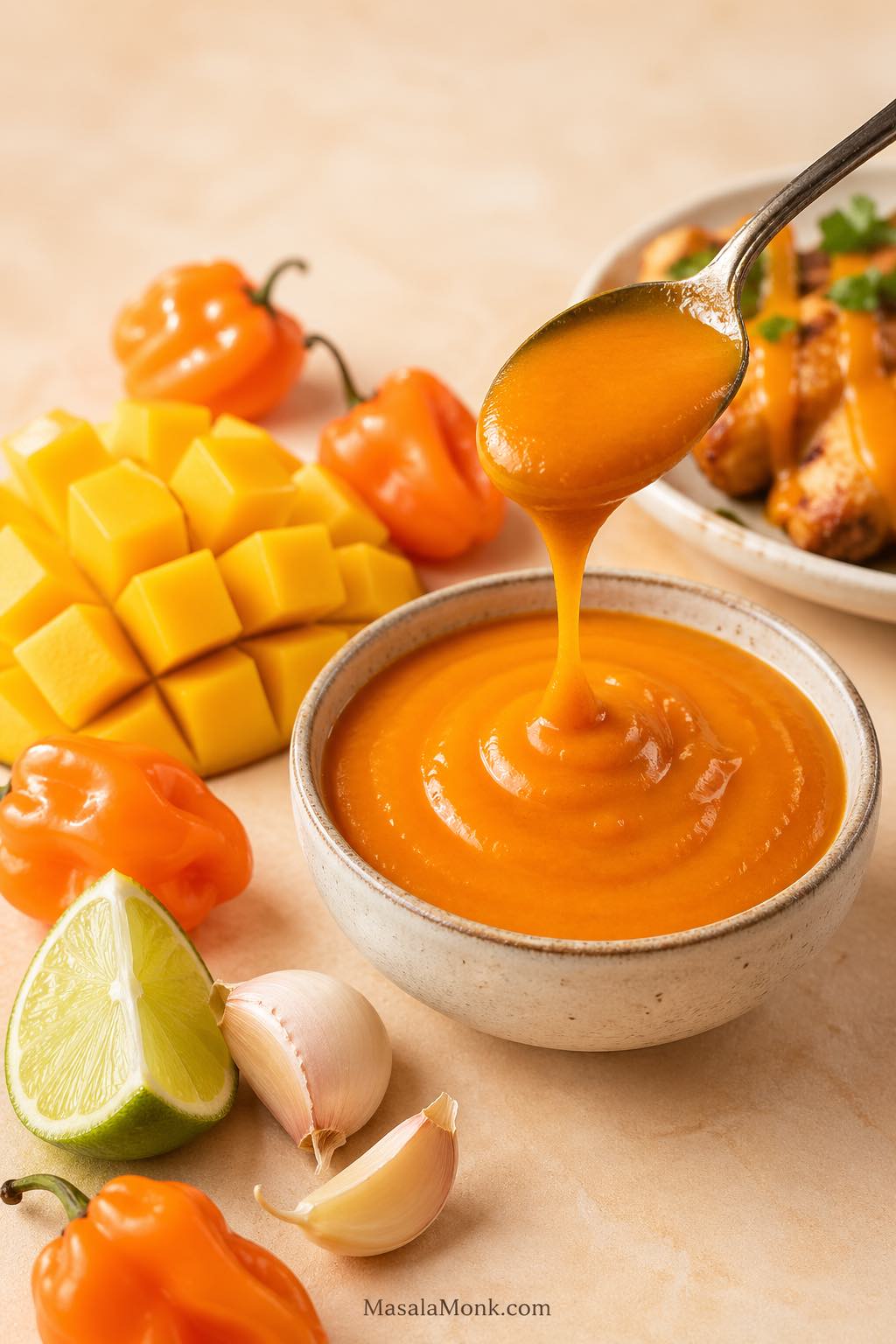
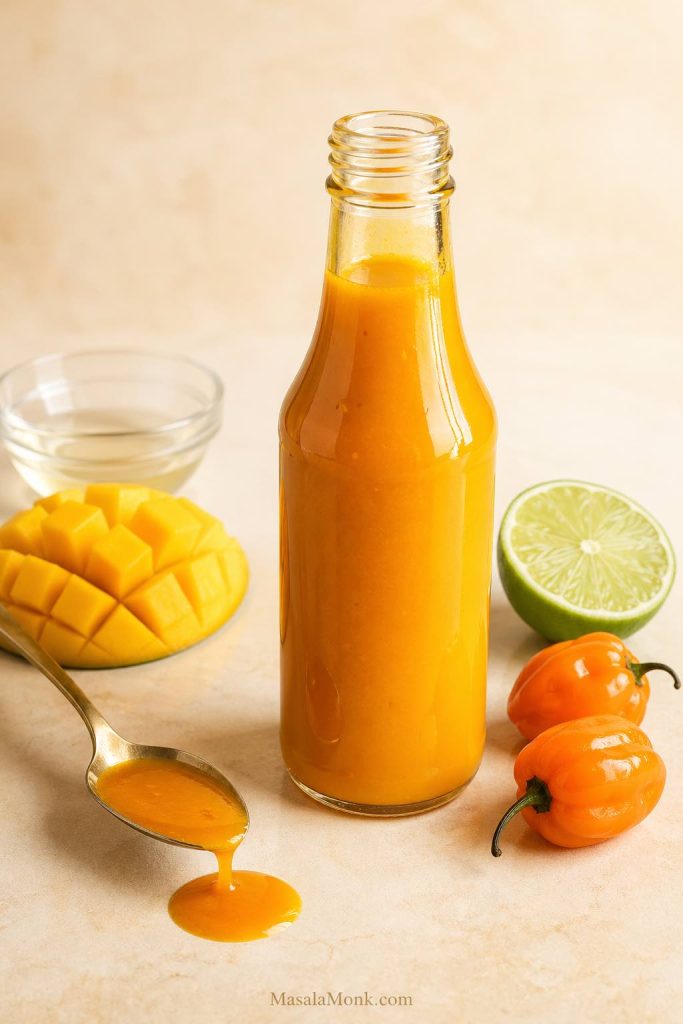
Glossy mango habanero sauce in a bowl with fresh mango, orange habanero peppers, lime, garlic and wings in the background.

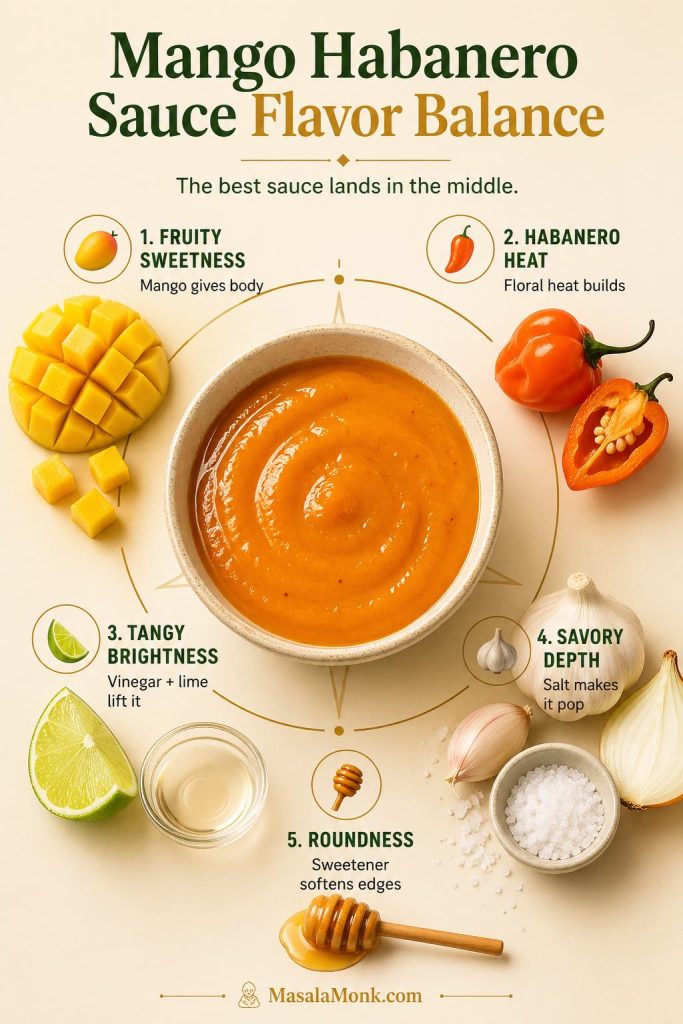
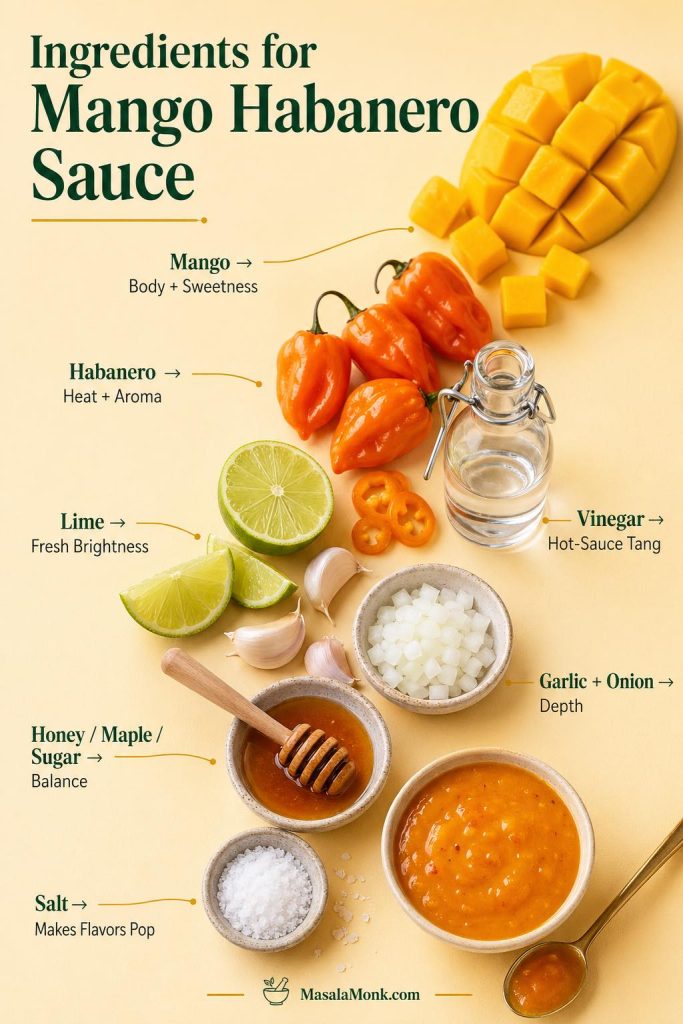
A good mango habanero sauce recipe should taste fruity, fiery, tangy, and balanced. The mango should come through clearly, the habanero should bring real heat, and the vinegar, lime, salt, garlic, and onion should keep the sauce sharp enough for wings, tacos, grilled chicken, shrimp, fish, paneer, tofu, burgers, wraps, fries, and rice bowls.

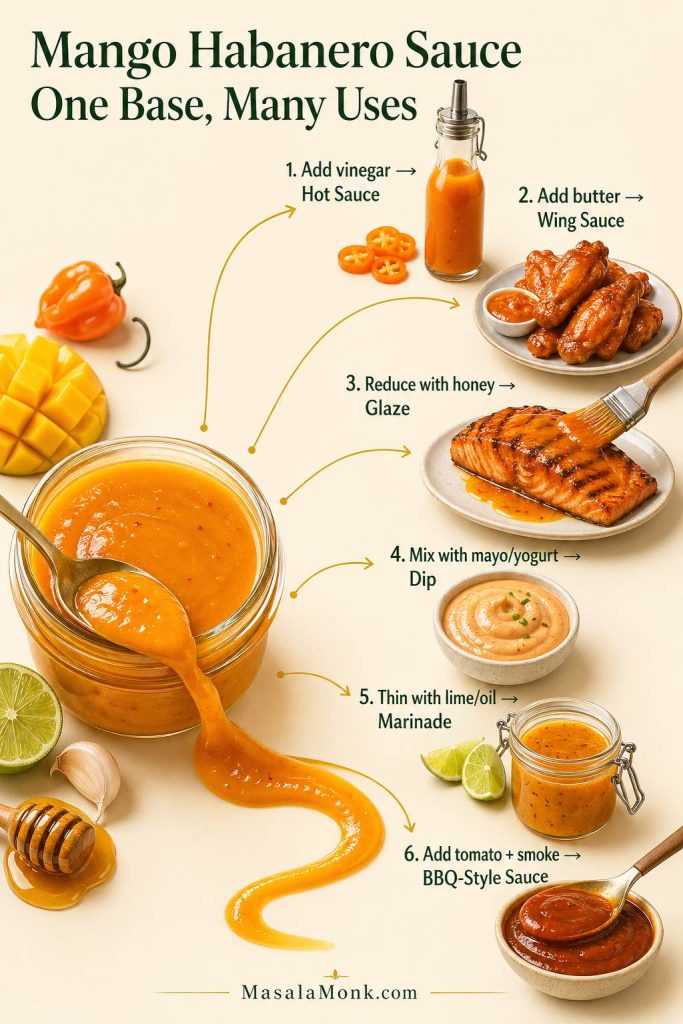
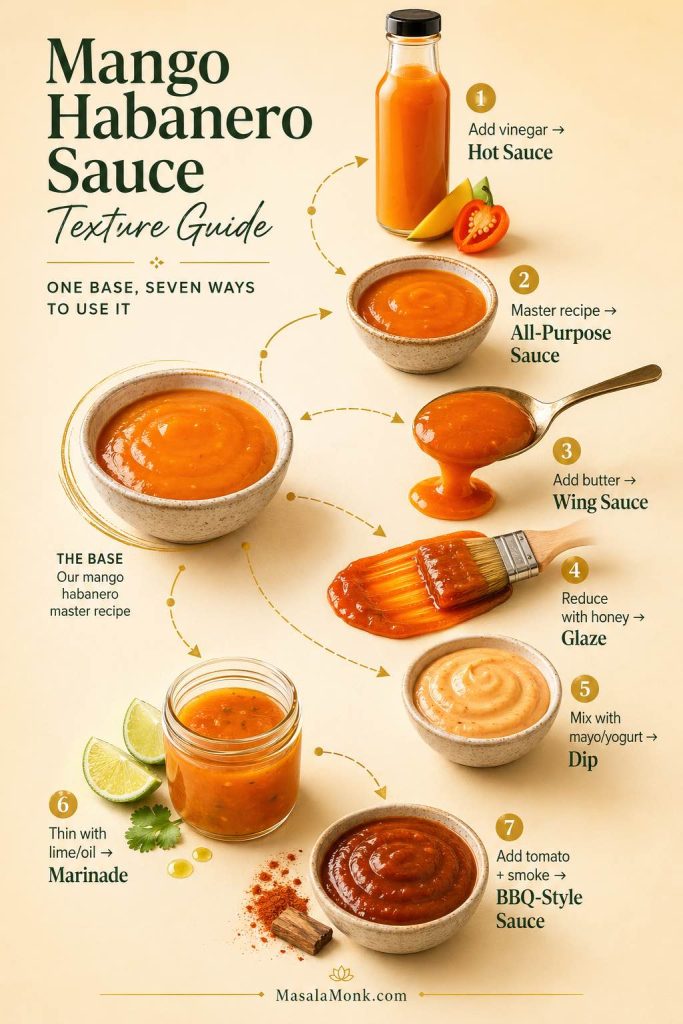
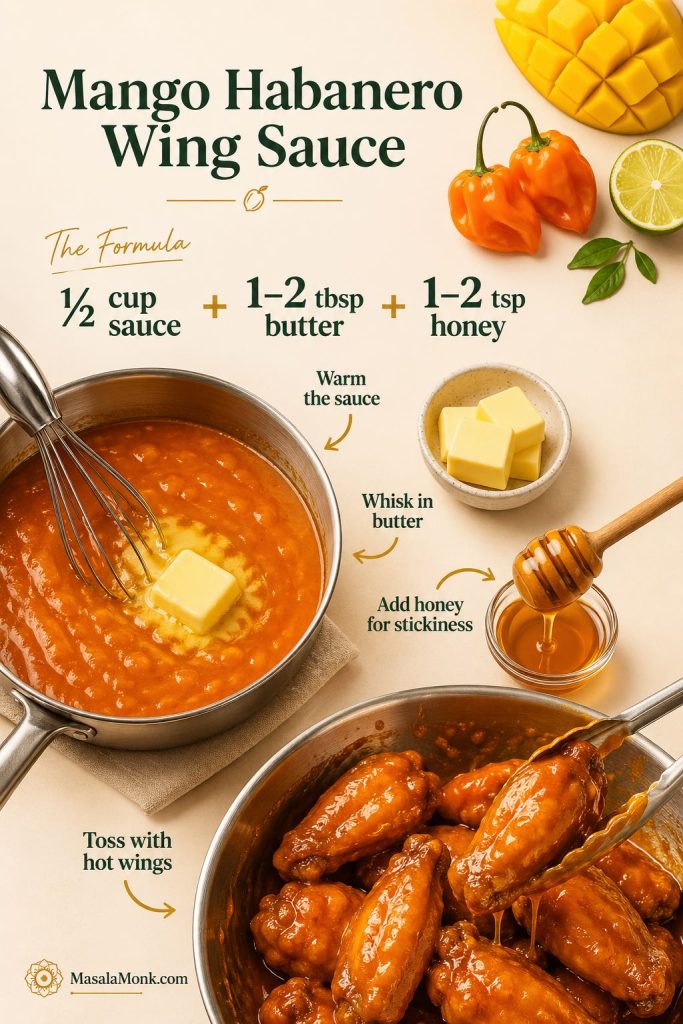
The useful part is that this homemade mango habanero sauce starts with one flexible base. From there, you can thin it into hot sauce, finish it with butter for wings, reduce it into a glaze, stir it into a creamy dip, or push it toward a BBQ-style sauce. Instead of locking you into one narrow version, it shows you how to control heat, texture, sweetness, acidity, and storage.

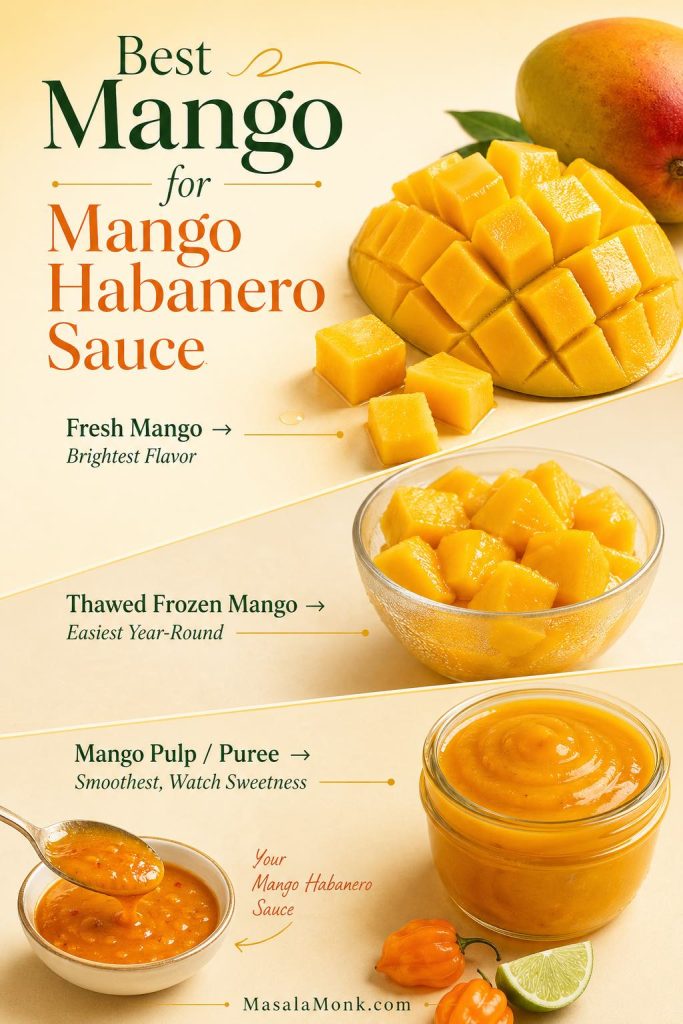
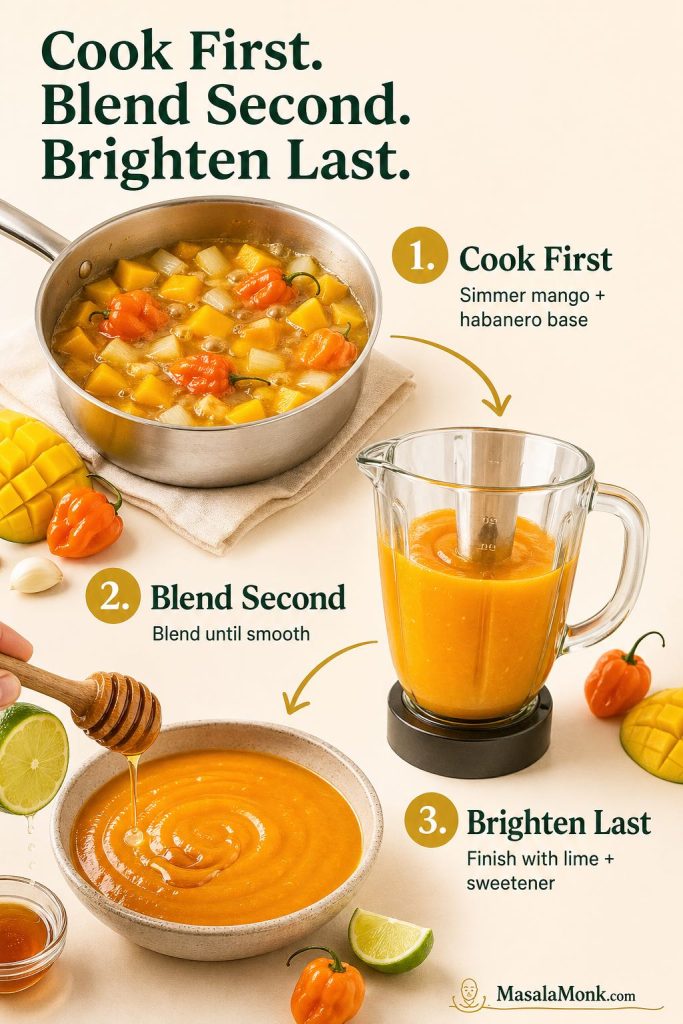
Here, the sauce starts as a cooked blender mango habanero sauce: mango, habanero, onion, garlic, vinegar, water, and salt simmer first, then everything is blended smooth and finished with lime juice and sweetener. As a result, the finished sauce tastes rounder than a raw blend, smoother than a salsa, and more useful than a plain vinegar hot sauce.

It is also easy to make. The base simmers in one pan, then blends into a smooth, pourable sauce without special hot sauce equipment. For that reason, you can make a bold homemade hot sauce at home without fermenting, canning, or buying specialty tools.

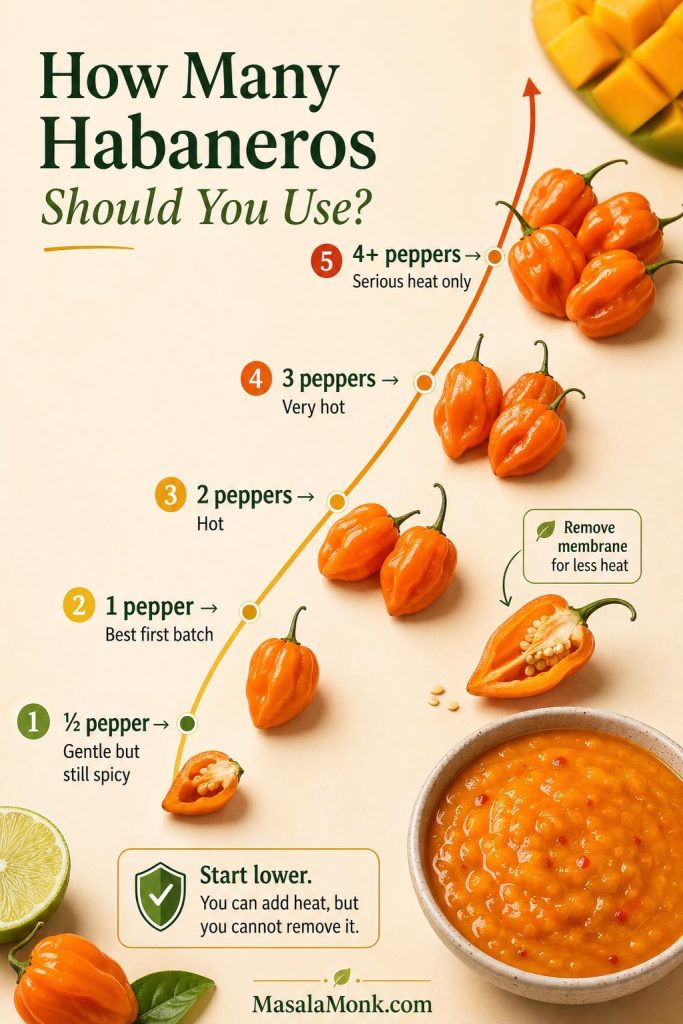
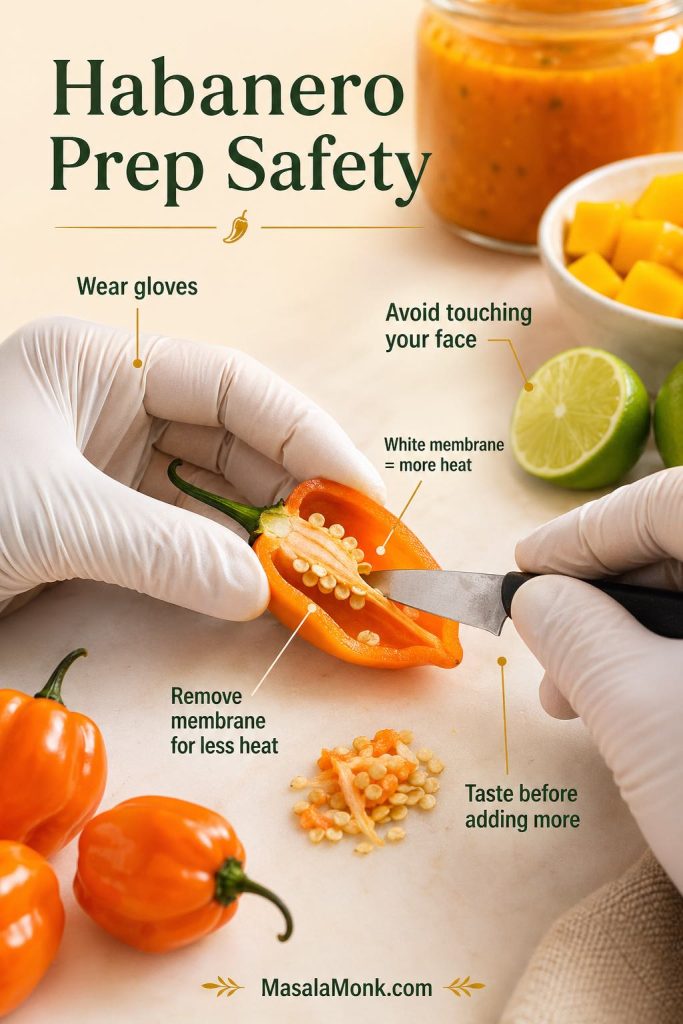
The one thing to respect is the habanero itself. It is seriously hot, so this recipe gives you a clear heat guide before you cook. Start with one pepper for a medium-hot mango habanero sauce, use two for a properly hot version, and only go beyond that if you already know you love very spicy sauces.

Quick Answer: What Is Mango Habanero Sauce?

Mango habanero sauce is a sweet-spicy homemade sauce made with ripe mango, habanero peppers, vinegar, lime juice, garlic, onion, salt, and a little sweetener. In this recipe, the sauce is cooked and blended, so it becomes smooth, bright orange, fruity, tangy, and hot.

Unlike mango mustard sauce, this mango habanero sauce recipe is hotter and more chili-forward. Where mango salsa stays chunky and fresh, this sauce is cooked, blended, and pourable. Amba sauce, by contrast, leans more sour and pickle-like, while mango habanero sauce is sweeter, fruitier, and built around habanero heat.

Its biggest advantage is flexibility. For example, you can drizzle it over tacos and eggs, toss it with wings, brush it onto grilled shrimp or salmon, serve it with fries, or spread it inside burgers and wraps.

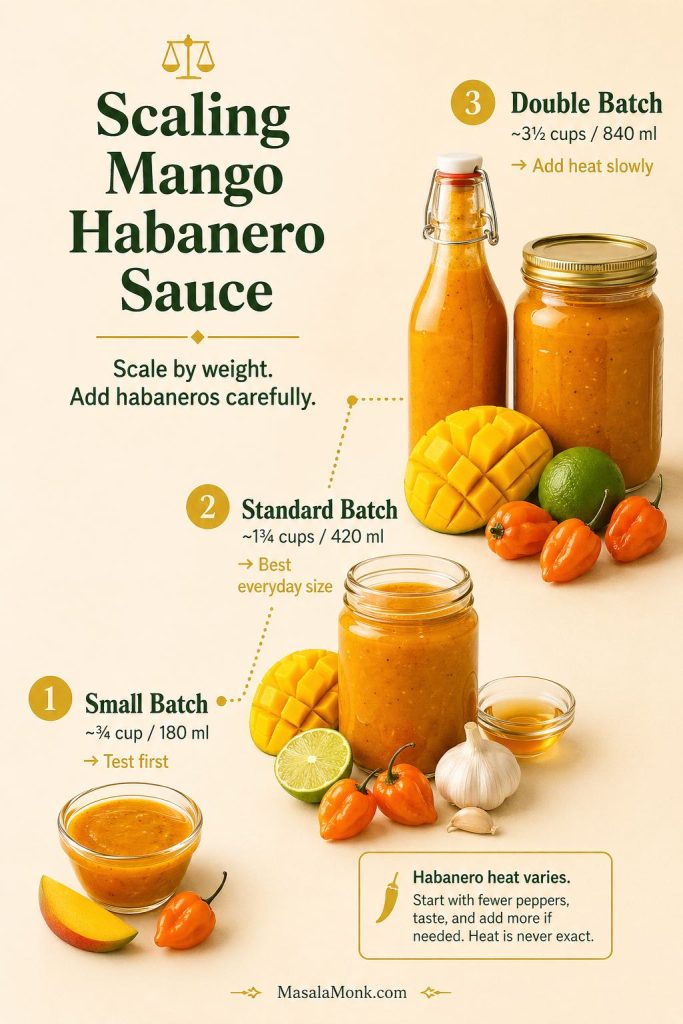
At a glance: This homemade mango habanero sauce recipe makes about 1¾ cups / 420 ml. Use 1 habanero for medium-hot, 2 for hot, and 3+ only if you love serious heat. The base sauce is cooked, smooth, fruity, tangy, and pourable. Increase the vinegar for a thinner hot sauce, or finish the sauce with butter for a glossy wing sauce.

This version is best for readers who want a homemade mango habanero sauce that is hot but still usable, not a sauce so fiery that it only works a few drops at a time.

Homemade mango habanero sauce in a jar with arrows showing how to turn one base into hot sauce, wing sauce, glaze, dip, marinade, and BBQ-style sauce.
One homemade mango habanero sauce can go several directions. Thin it with vinegar for hot sauce, finish it with butter for wings, reduce it with honey for a glaze, stir it into mayo or yogurt for a creamy dip, or loosen it with lime and oil for a quick marinade.

Why This Mango Habanero Sauce Recipe Works

The balance starts with the mango. It gives the sauce body, color, and natural sweetness. The habanero brings the heat, but it also adds a floral, fruity aroma. Meanwhile, vinegar and lime keep everything sharp, while salt makes the mango and chili taste complete.

Cooking the base first also matters. It softens the onion, garlic, mango, and habanero before blending, so the finished sauce tastes rounder instead of raw or harsh. As a result, the cooked base tastes smoother, while the lime added at the end keeps the sauce bright.

That balance makes the sauce flexible at home. For example, keep it medium-thick for dipping, thin it with extra vinegar for hot sauce, finish it with butter for wings, or reduce it into a glaze for grilled food.

What Does Mango Habanero Sauce Taste Like?

At first, mango habanero sauce should taste fruity and bright. After a few seconds, the habanero heat should build. The mango gives the recipe ripe tropical sweetness, the vinegar and lime keep the sauce tangy, and the habanero adds a floral heat that lingers.

A good batch should not taste like mango jam, and it should not taste like plain vinegar hot sauce either. Instead, the best version lands in that sweet and spicy middle ground: fruity enough for dipping, sharp enough for tacos, and bold enough for wings.

Mango habanero sauce flavor balance guide showing mango sweetness, habanero heat, vinegar and lime brightness, savory depth, and honey roundness.
A good mango habanero sauce should land in the middle: fruity from mango, hot from habanero, bright from vinegar and lime, savory from garlic, onion, and salt, and rounded with just enough sweetener.

When one flavor takes over, adjust the sauce in stages. First, fix flatness with salt. Next, use lime or vinegar when the sauce tastes too sweet. Finally, when the habanero heat is running the show, bring the sauce back into balance with more mango or a little honey.

Ingredients for This Mango Habanero Sauce Recipe

Think of the ingredients in roles, not just measurements. Mango gives body, sweetness, and color. Habanero gives heat and aroma. Vinegar gives sharpness, lime gives freshness, garlic and onion give depth, and sweetener rounds the edges.

The table below gives you a balanced starting point. Once the sauce is blended, you can adjust sweetness, heat, acid, salt, and thickness to match how you want to use it.

Ingredients for mango habanero sauce including ripe mango, habanero peppers, lime, vinegar, garlic, onion, honey, salt, and finished sauce.
Each ingredient has a job in mango habanero sauce: ripe mango gives body and sweetness, habanero brings heat, vinegar and lime keep it tangy, garlic and onion add depth, and honey or sugar rounds the edges.
Ingredient US Amount Metric Amount Why It Matters
Ripe mango, diced 1½ cups 250 g / 8.8 oz Sweetness, body, color, and fruit flavor
Fresh habanero peppers 1–2 peppers about 10–20 g / 0.35–0.7 oz Heat and floral chili aroma
Onion, chopped ¼ cup 40 g / 1.4 oz Savory body and depth
Garlic 2 cloves 6 g / 0.2 oz Sharpness and backbone
Apple cider vinegar or white vinegar ⅓ cup 80 ml / 2.7 fl oz Tang and hot-sauce character
Fresh lime juice 2 tbsp 30 ml / 1 fl oz Fresh brightness
Water ¼ cup 60 ml / 2 fl oz Helps the sauce simmer and blend
Honey, sugar, or maple syrup 1–2 tbsp 20–40 g honey/maple or 12–25 g sugar Balances heat and acid
Fine sea salt ¾ tsp 4–5 g Makes the sauce taste complete

Optional flavor additions include ½–1 teaspoon grated ginger for tropical warmth, ¼ teaspoon cumin for earthiness, ¼ teaspoon smoked paprika for a BBQ-style direction, or a tiny pinch of allspice for a Caribbean-style note. However, for a first batch, keep the sauce simple before adding too many extra spices.

Best Mango to Use: Fresh, Frozen or Mango Pulp

For the brightest fresh mango flavor, use ripe mango that smells sweet before you cut it. Since mango is the body of this sauce recipe, the fruit should taste good before it goes into the pan.

Best mango options for mango habanero sauce, showing fresh mango, thawed frozen mango, mango pulp or puree, and finished mango habanero sauce.
Fresh mango gives mango habanero sauce the brightest flavor, thawed frozen mango is the easiest year-round option, and mango pulp or puree makes the sauce extra smooth. If using sweetened pulp, start with less honey or sugar and adjust after blending.

Meanwhile, mango habanero sauce with frozen mango can also taste excellent when fresh mango is out of season. Thaw frozen mango first, then use it like fresh diced mango. It often blends smoothly and gives the sauce a consistent color and texture.

Mango pulp or mango puree can also work, especially when you want a very smooth sauce. However, the one thing to watch is sweetness. Many mango pulps are already sweetened, so start with little or no honey or sugar and adjust after blending.

On the other hand, underripe mango will make the sauce sharper and less fruity. Very fibrous mango can also make the finished sauce harder to blend smooth, so strain it through a fine mesh sieve if needed.

Can You Use Mango Pulp or Mango Puree?

Yes, mango pulp or mango puree can work well in this mango habanero sauce recipe. Use about 1 cup / 250 g mango pulp in place of the diced mango. If the pulp is sweetened, skip the honey or sugar at first and adjust only after the sauce has simmered and blended.

Heat Guide for This Mango Habanero Sauce Recipe

This is the section to read before cutting the peppers. Habaneros are much hotter than jalapeños; the Chile Pepper Institute lists orange habanero at around 250,000 Scoville Heat Units. That kind of habanero pepper heat can take over a mango sauce quickly.

For that reason, one seeded habanero is the best first batch for most people. After blending, you can always add more heat in small amounts. Once too much habanero is blended into the whole sauce, though, it is much harder to fix.

Heat guide for mango habanero sauce showing ½ pepper, 1 pepper, 2 peppers, 3 peppers, and 4+ habaneros from gentle heat to serious heat.
Start lower when making mango habanero sauce. One seeded habanero is the safest first batch for most people, while two peppers make it hot and three or more should be saved for serious heat lovers.

Use the table below to make a mild mango habanero sauce, medium-hot sauce, hot sauce, or extra hot mango habanero sauce without guessing.

Heat Level Habanero Amount Prep Method Best For
Gentle but still spicy ½ pepper Seeds and membrane removed First-time habanero users
Medium-hot 1 pepper Mostly seeded Best first batch
Hot 2 peppers Some membrane left Wings, tacos, spicy bowls
Very hot 3 peppers Some seeds and membrane included Hot sauce lovers
Extreme 4+ peppers Use with caution Serious heat lovers only
Heat tip: Start with less habanero than you think. You can always blend in more heat later, but you cannot remove it once the whole batch is too hot.
Gloved hands removing seeds and white membrane from an orange habanero pepper for mango habanero sauce.
Wear gloves when cutting habaneros, avoid touching your face, and remove some of the white membrane if you want better heat control. The membrane carries much of the pepper’s heat, so removing it makes the mango habanero sauce easier to manage.

Before cutting the peppers, wear gloves. In addition, avoid touching your eyes, nose, lips, or face after handling habaneros. The white membrane inside the pepper carries a lot of the heat, so removing it gives this sauce recipe more control.

Equipment You Need

You need a small saucepan, a blender or immersion blender, gloves for handling habaneros, a spoon or spatula, and a clean jar or bottle for storing the finished sauce. A high-speed blender gives the smoothest mango habanero sauce, but an immersion blender works if you do not mind a slightly thicker texture. For a very smooth, bottle-friendly hot sauce, keep a fine mesh sieve nearby so you can strain the sauce after blending.

How to Make This Mango Habanero Sauce Recipe

The method is simple, but the order matters: cook first, blend second, brighten last. First, simmering softens the mango, onion, garlic, and habanero. Next, blending turns them into a smooth sauce. Finally, lime juice and sweetener go in near the end so the finished sauce tastes bright instead of dull.

Three-step method for mango habanero sauce showing mango and habanero simmering, blending smooth, and finishing with lime and sweetener.
The order matters for smooth mango habanero sauce: simmer the mango, habanero, onion, garlic, vinegar, and water first, blend the softened mixture until smooth, then finish with lime juice and sweetener for brightness.

1. Prep the habaneros safely

First, put on gloves. Remove the stems from the habaneros. For less heat, cut the peppers open and scrape out most of the seeds and white membrane.

2. Simmer the mango and habanero base

Next, add the mango, habanero, onion, garlic, vinegar, water, and salt to a small saucepan. Bring the mixture to a visible boil over medium heat, then reduce it to a gentle simmer.

Simmer for 10–15 minutes, stirring often, until the mango and onion are soft. This cooking step rounds out the onion, garlic, and habanero, so the finished sauce tastes smoother and less raw.

3. Cool slightly and blend

After that, let the mixture cool for about 5 minutes. Blend until completely smooth. If using a blender, vent the lid slightly and cover it with a towel so steam does not build pressure.
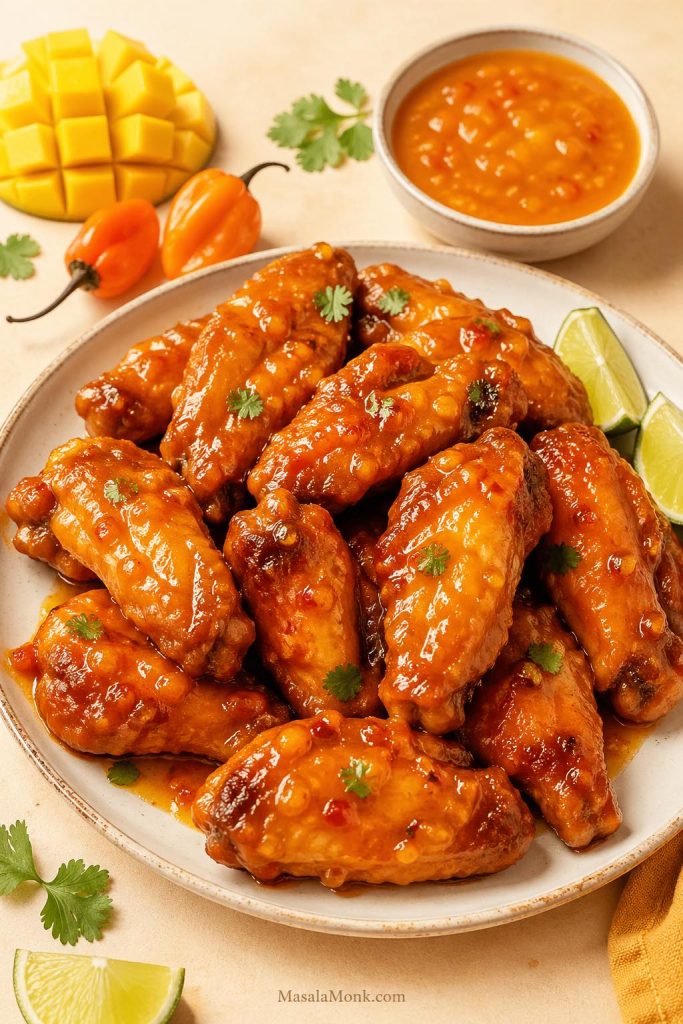
4. Finish the sauce

At this point, return the sauce to the pan. Stir in lime juice, honey or sugar, and any optional spices. Then, simmer for another 2–5 minutes, until the mango habanero sauce looks glossy and unified.

5. Taste and adjust

Finally, taste carefully, using only a tiny spoon at first. Habanero heat builds as you eat, so the sauce may feel hotter after a few seconds.

  • If the sauce tastes flat, add salt.
  • If the mango habanero sauce tastes too sweet, add lime juice or vinegar.
  • If the recipe tastes too sharp or too hot, add mango or honey.
  • If the sauce is too thick, add water a spoonful at a time.
  • If the sauce is too thin, simmer uncovered until it reduces.
Common mistakes to avoid: Do not add all the habaneros at once if you are unsure about heat. Also, do not skip the salt, because the sauce will taste flat. Do not over-thin the sauce before blending; you can always add water later. Finally, do not assume this homemade mango habanero sauce is shelf-stable just because it contains vinegar.

Use the mango habanero sauce recipe below as the master version. From there, adjust the thickness and finish depending on whether you want hot sauce, wing sauce, glaze, dip, marinade, or BBQ-style sauce.

Mango Habanero Sauce Recipe

This homemade mango habanero sauce recipe makes a cooked blender sauce that is fruity, fiery, tangy, smooth, and flexible enough for wings, tacos, chicken, shrimp, fish, paneer, tofu, fries, burgers, wraps, and bowls.

YieldAbout 1¾ cups / 420 ml / 14 fl oz
Prep Time10 minutes
Cook Time15–20 minutes
Total Time25–30 minutes

Ingredients

  • 1½ cups / 250 g ripe mango, diced
  • 1–2 habanero peppers, stemmed
  • ¼ cup / 40 g chopped onion
  • 2 garlic cloves / 6 g, roughly chopped
  • ⅓ cup / 80 ml apple cider vinegar or white vinegar, preferably 5% acidity
  • ¼ cup / 60 ml water
  • ¾ tsp / 4–5 g fine sea salt
  • 2 tbsp / 30 ml fresh lime juice
  • 1–2 tbsp honey, sugar, or maple syrup
  • Optional: ½–1 tsp grated ginger
  • Optional: ¼ tsp cumin
  • Optional: ¼ tsp smoked paprika
  • Optional: tiny pinch to ¼ tsp allspice

Instructions

  1. Wear gloves before handling the habaneros. Remove the stems. For less heat, remove seeds and most of the white membrane.
  2. Add mango, habanero, onion, garlic, vinegar, water, and salt to a small saucepan.
  3. Bring to a visible boil over medium heat, then reduce to a gentle simmer.
  4. Simmer for 10–15 minutes, stirring often, until the mango and onion are soft.
  5. Cool for 5 minutes, then blend until completely smooth.
  6. Return the sauce to the pan. Stir in lime juice, sweetener, and any optional spices.
  7. Simmer for 2–5 minutes more, until glossy and slightly thickened.
  8. Taste carefully. Adjust salt, lime/vinegar, sweetener, or water as needed.
  9. Cool the mango habanero sauce and store it in a clean jar or bottle in the refrigerator.

Recipe Notes

  • Use 1 habanero for a medium-hot sauce and 2 habaneros for a hotter version.
  • For a thinner homemade mango habanero hot sauce, increase the vinegar to ½ cup / 120 ml and strain after blending.
  • For a thicker glaze, simmer uncovered for a few extra minutes.
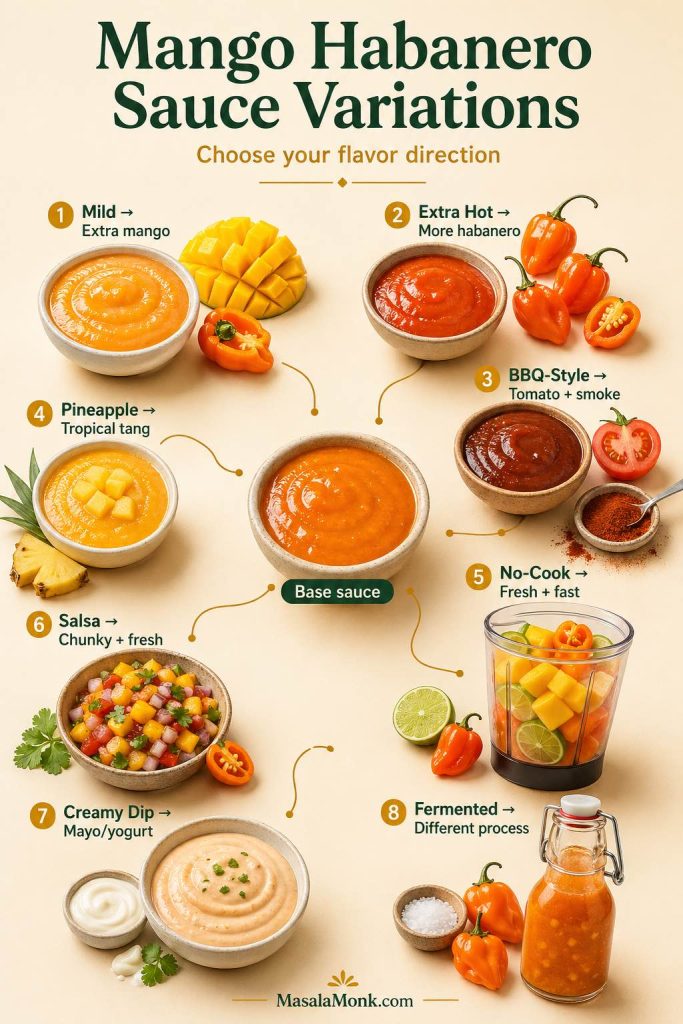
  • For wing sauce, use the butter-finished conversion below.
  • This is a refrigerator sauce recipe, not a tested shelf-stable canning recipe.
Mango habanero sauce texture guide showing how one base becomes hot sauce, all-purpose sauce, wing sauce, glaze, dip, marinade, and BBQ-style sauce.
Use the master mango habanero sauce as a base, then adjust the texture for the job: add vinegar for hot sauce, butter for wing sauce, honey for glaze, mayo or yogurt for dip, lime and oil for marinade, or tomato and smoke for a BBQ-style sauce.

Homemade Mango Habanero Hot Sauce Version

Choose this version when you want something bottle-friendly. More vinegar makes the sauce thinner, sharper, and easier to drizzle over tacos, eggs, grilled food, bowls, and roasted vegetables.

Element All-Purpose Sauce Hot Sauce Version
Vinegar ⅓ cup / 80 ml ½ cup / 120 ml
Water ¼ cup / 60 ml ¼ cup / 60 ml, plus more if needed
Sweetener 1–2 tbsp 1 tbsp to start
Final simmer 2–5 minutes 5 minutes
Texture Medium-thick Thin and pourable
Optional step Usually no strain Strain for bottle-smooth sauce

Compared with the all-purpose sauce, this hot sauce version tastes sharper, thinner, and more vinegar-forward. Therefore, use it when you want a real hot sauce texture rather than a thicker dipping sauce.

Homemade mango habanero hot sauce in a glass bottle with mango, habanero peppers, lime, vinegar, and a spoonful of orange sauce.
For a thinner mango habanero hot sauce, add extra vinegar, blend until smooth, and strain if you want a bottle-friendly texture. This version is sharper and more pourable than the thicker all-purpose sauce.

Mango Habanero Wing Sauce

For wings, the sauce needs to cling. Butter gives it gloss, honey helps it stick, and gentle heat brings everything together. In other words, this is the sweet heat version to use when you want glossy mango habanero sauce for wings.

This wing version works for chicken wings, boneless wings, tenders, cauliflower wings, paneer bites, or crispy tofu. For best results, warm the sauce first, then toss it with hot cooked wings just before serving.

Mango habanero wing sauce formula showing ½ cup sauce, butter, honey, warm sauce, whisk in butter, add honey, and toss with hot wings.
Turn the base mango habanero sauce into a glossy wing sauce by warming ½ cup sauce with butter and a little honey. The butter helps the sauce cling, while the honey gives the wings a sweet, sticky finish.

For 2 lb / 900 g Wings

Ingredient US Amount Metric Amount
Mango habanero sauce ½ cup 120 ml / 4 fl oz
Butter 1–2 tbsp 14–28 g / 0.5–1 oz
Honey or brown sugar 1–2 tsp 7–14 g honey or 4–8 g sugar
Lime juice or vinegar, optional 1 tsp 5 ml
Salt Pinch To taste

First, warm the mango habanero sauce in a small pan over low heat. Next, whisk in the butter until glossy. If you want a stickier wing sauce, add honey or brown sugar. Finally, if the sauce tastes too sweet, add lime juice or vinegar before tossing it with hot cooked wings.

Optional Baked Wings

For a simple oven version, use 2 lb / 900 g chicken wings, 1 tbsp / 10–12 g aluminum-free baking powder, ¾ tsp / 4 g kosher salt, ½ tsp garlic powder, and ½ tsp smoked paprika. First, pat the wings very dry. Then, toss them with the seasoning, arrange them on a rack, and bake at 425°F / 220°C for 45–50 minutes, flipping halfway.

After the wings are cooked, toss them with warm mango habanero wing sauce. For food safety, chicken wings should reach 165°F / 73.9°C internally, following USDA poultry temperature guidance.

Glossy mango habanero chicken wings on a plate with mango, habanero peppers, lime wedges, and a bowl of orange wing sauce.
Toss hot cooked wings with warm mango habanero wing sauce just before serving so the buttery, sweet-spicy glaze clings instead of sliding off. The sauce should look glossy, sticky, and bright orange once it coats the wings.

Mango Habanero Glaze

For a glaze, reduce the sauce instead of thinning it. A few extra minutes in the pan makes it thicker, shinier, and better for brushing onto grilled chicken, salmon, shrimp, pork, paneer, tofu, roasted vegetables, or skewers.

Ingredient Amount
Mango habanero sauce ¾ cup / 180 ml
Honey 1 tbsp / 20 g
Lime juice or vinegar 1 tsp / 5 ml
Butter or oil, optional 1 tbsp / 14 g butter or 1 tsp / 5 ml oil

Simmer for 5–8 minutes, until the glaze lightly coats the back of a spoon. Then, brush it onto food near the end of cooking so the sugars do not burn.

Mango habanero glaze and marinade guide showing sauce brushed on grilled food, thinned with lime and oil, and spooned over cooked shrimp.
Use mango habanero sauce as a glaze, marinade, or finishing sauce depending on texture. Brush sweet glazes near the end of cooking so they do not burn, thin the sauce with lime and oil for a marinade, or spoon it over cooked shrimp, chicken, paneer, tofu, or vegetables just before serving.

Mango Habanero Sauce Variations

Once the master sauce is balanced, the variations are easy. In fact, you can keep the same mango-habanero base, then change the texture, sweetness, smokiness, or cooking method depending on how you want to serve it.

For your first batch, however, keep the sauce simple. It is easier to learn your preferred heat and acid level before adding extra spices or turning the sauce into BBQ sauce, salsa, aioli, or a fermented hot sauce.

Mango habanero sauce variations guide showing mild, extra hot, BBQ-style, pineapple, no-cook, salsa, creamy dip, and fermented hot sauce options.
Once the base mango habanero sauce is balanced, you can take it in several directions. Add more mango for a milder sauce, more habanero for extra heat, pineapple for tropical tang, tomato and smoke for BBQ-style sauce, or mayo and yogurt for a creamy dip.

Mild Mango Habanero Sauce

For a milder sauce, use ½ seeded habanero and remove most of the white membrane. After blending, add extra mango if the heat still feels too sharp. You can also add a small amount of cooked orange bell pepper for body and color, but keep mango as the main flavor.

Extra Hot Mango Habanero Sauce

For an extra hot mango habanero sauce, use 3 or more habaneros only if you already enjoy very spicy sauces. Even then, add the extra pepper gradually so the sauce stays usable.

Mango Habanero BBQ Sauce

For a smoky, thicker version, simmer 1 cup / 240 ml mango habanero sauce with 2 tbsp / 30 g tomato paste, 1 tbsp / 12–14 g brown sugar, 1 tbsp / 15 ml apple cider vinegar, ½ tsp smoked paprika, ¼ tsp cumin, and 1 tsp / 5 ml Worcestershire sauce if you use it. As a result, the sauce becomes darker, thicker, and smoky-sweet after 8–10 minutes.
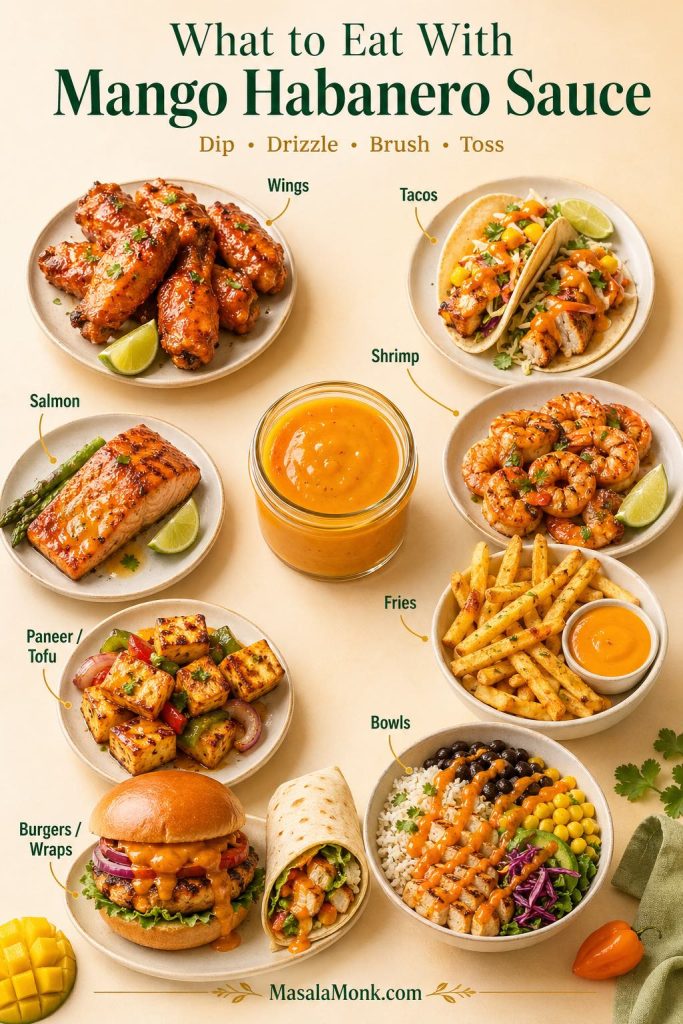
Pineapple Mango Habanero Sauce

For a brighter tropical variation, replace ½ cup / 80–90 g of the mango with pineapple. This version tastes sharper, juicier, and especially good with grilled shrimp, fish, chicken, tacos, and pork.

No-Cook Mango Habanero Sauce

For a faster, fresher version, blend the mango, habanero, vinegar, lime juice, garlic, salt, and sweetener without simmering. However, use less onion, or skip the onion, because raw onion can become sharp in a no-cook sauce.

This version tastes brighter and fruitier. However, it also tastes sharper and less rounded than the cooked sauce. Use the no-cook version within 2–3 days, and keep it refrigerated the whole time.

Mango Habanero Salsa

For a chunky salsa-style version, mix 1½ cups / 250 g diced mango with ½–1 very finely minced habanero, ¼ cup / 40 g red onion, 2 tbsp / 30 ml lime juice, 2 tbsp chopped cilantro, ½ tsp / 3 g salt, and optional tomato, cucumber, or pineapple. Then, rest the salsa for 10 minutes before serving.

For a chunkier mango topping with onion, cilantro, lime, and optional tomato or cucumber, see the full mango salsa recipe.

Mango Habanero Aioli or Creamy Dip

For a creamy dip, stir 1–2 tbsp cooled mango habanero sauce into ¼ cup mayonnaise, Greek yogurt, sour cream, or vegan mayo. Then, use it as a dip or sandwich spread for fries, burgers, wraps, tacos, nuggets, and roasted vegetables.

Fermented Mango Habanero Hot Sauce

Fermented mango habanero hot sauce is a different process from this quick cooked sauce. Instead of simmering first, the peppers, mango, onion, and garlic are usually fermented in a salt brine or mash before being blended with vinegar or lime.

Fermentation changes the safety and storage rules, so this quick cooked recipe should not be treated as a fermented sauce. If you want a fermented version, follow a dedicated fermented hot sauce method and pay attention to acidity, cleanliness, gas buildup, refrigeration, and pH if storing longer.

How to Use Mango Habanero Sauce

This is where the sauce earns its place in the fridge. For example, you can keep it medium-thick for dipping, thin it for drizzling, reduce it for glazing, or loosen it into a quick marinade.

Use this mango habanero sauce for chicken, shrimp, salmon, fish tacos, rice bowls, burgers, wraps, roasted vegetables, paneer, tofu, and fries. In other words, it works anywhere you want sweet heat with a bright mango finish.

What to eat with mango habanero sauce, including wings, tacos, shrimp, salmon, fries, paneer or tofu, burgers, wraps, and bowls.
Mango habanero sauce works as a dip, drizzle, glaze, or finishing sauce. Use it with wings, tacos, shrimp, salmon, fries, paneer, tofu, burgers, wraps, bowls, or roasted vegetables whenever you want sweet heat with a bright mango finish.

As a hot sauce

As a hot sauce, it works best when the texture is thin and pourable. Drizzle it on tacos, eggs, nachos, rice bowls, grilled vegetables, beans, burritos, wraps, and roasted potatoes. For a thinner hot sauce texture, use the extra-vinegar version above.

As a wing sauce

For wings, warm it first so it coats evenly. Toss it with chicken wings, boneless wings, tenders, nuggets, cauliflower wings, paneer bites, or crispy tofu just before serving.

As a glaze

When using it as a glaze, brush it on grilled chicken, shrimp, salmon, pork, paneer, tofu, roasted carrots, sweet potatoes, or skewers near the end of cooking. Otherwise, the sugars in the mango and honey can scorch if they cook too long.

As a marinade

For a quick mango habanero marinade, thin the sauce with a little extra lime juice, vinegar, or oil. Use it for chicken, shrimp, fish, paneer, tofu, or vegetables. However, avoid marinating delicate seafood for too long because the acid can change the texture.

As a dip

For dipping, keep the texture thicker. This works as a mango habanero dipping sauce for fries, potato wedges, onion rings, pakoras, chips, crackers, chicken tenders, nuggets, vegetable sticks, or roasted cauliflower. If the sauce feels too hot, mix a spoonful into mayo or yogurt.

As a sandwich sauce

Inside sandwiches and wraps, a little goes a long way. Use it on burgers, fried chicken sandwiches, grilled cheese, wraps, rolls, spicy mayo-style spreads, and grilled paneer sandwiches. The sweet, spicy, tangy flavor works especially well with rich or crispy fillings.

Mango Habanero Sauce vs Hot Sauce vs Wing Sauce vs Salsa

The names can get confusing because mango and habanero show up in several forms. However, the difference is mostly texture and use: hot sauce is thinner, wing sauce is buttery, glaze is reduced, salsa is chunky, marinade is looser, and BBQ sauce is smoky-sweet.

Mango habanero sauce comparison showing sauce, hot sauce, wing sauce, glaze, marinade, salsa, and BBQ-style sauce with different textures.
Mango habanero sauce can take several forms. Keep it smooth and pourable as an all-purpose sauce, thin it into hot sauce, finish it with butter for wings, reduce it into a sticky glaze, loosen it for marinade, make it chunky as salsa, or push it smoky and thick for BBQ-style sauce.
Version Texture Main Flavor Best Use
Mango habanero sauce Smooth, medium-thick, pourable Sweet, fruity, tangy, hot Wings, tacos, chicken, shrimp, dipping
Mango habanero hot sauce Thinner and more vinegar-forward Sharper, brighter, hotter Tacos, eggs, bowls, grilled food
Mango habanero wing sauce Glossy, buttery, clingy Sweet-hot and slightly sticky Chicken wings, tenders, cauliflower wings
Mango habanero marinade Loose, tangy, lightly sweet Bright, spicy, acidic Chicken, shrimp, fish, paneer, tofu
Mango habanero salsa Chunky or roasted Fresh, juicy, spicy Chips, tacos, fish, bowls
Mango habanero BBQ sauce Thicker, smoky, sticky Sweet, smoky, spicy Grilled chicken, ribs, burgers, sandwiches

Sauce Texture Guide

After blending, texture is the easiest thing to change. For example, a spoonful of vinegar can turn the base into a hot sauce, while a few extra minutes of simmering can turn it into a glaze. Use this guide to adjust the sauce for the way you want to serve it.

Version Texture Best Use How to Adjust
Mango habanero hot sauce Thin, pourable Tacos, eggs, bowls, grilled food Add more vinegar or water; strain if needed
All-purpose mango habanero sauce Medium-thick, pourable Chicken, tacos, fish, dipping Use the master recipe
Mango habanero wing sauce Glossy, clingy Wings, tenders, cauliflower wings Add butter and simmer briefly
Mango habanero glaze Thick, lacquered Grilled chicken, shrimp, salmon, paneer Add honey and reduce
Mango habanero dipping sauce Thick, spoonable Fries, tenders, pakoras, nuggets, vegetables Simmer slightly longer or stir into mayo/yogurt
Mango habanero marinade Loose, pourable Chicken, shrimp, fish, paneer, tofu Thin with lime, vinegar, or oil
Mango habanero BBQ sauce Thick, smoky-sweet Grilling, ribs, burgers Add tomato paste, brown sugar, and smoked paprika

How to Fix Mango Habanero Sauce

Sauces are adjustable, especially before serving. Because mango sweetness, vinegar sharpness, and habanero heat can vary from batch to batch, taste the sauce after blending and fix it while it is still warm.

Troubleshooting guide for mango habanero sauce showing fixes for sauce that is too hot, too sweet, too sharp, too thick, too thin, flat, or fibrous.
Mango habanero sauce is easy to adjust while it is still warm. Add mango and honey if it is too hot, lime, vinegar, and salt if it is too sweet, water or vinegar if it is too thick, and simmer uncovered if it is too thin.
Problem Likely Cause Fix
Too hot Too much habanero or membrane Add more mango first; then round it with honey, lime, or butter if making wing sauce
Too sweet Very ripe mango plus too much sweetener Add vinegar, lime, and salt
Too sharp Too much acid or not enough simmering Simmer 3–5 minutes more; add mango or honey
Too thin Too much water or juicy mango Simmer uncovered until reduced
Too thick Dense mango or over-reduction Add water, vinegar, or lime 1 tbsp / 15 ml at a time
Bitter Burned garlic/onion or too much pepper pith Add mango and sweetener; avoid browning garlic next time
Flat Not enough salt or acid Add salt first. If it still tastes dull, add lime or vinegar
Not mango-forward Mango was bland or underripe Add ripe mango, thawed frozen mango, or mango pulp
Grainy or fibrous Fibrous mango or weak blender Blend longer, strain, or use smoother mango/frozen mango

Scaling the Recipe

Scaling is easy for mango, vinegar, lime, garlic, onion, sweetener, and salt. However, habaneros are the exception. Their size and heat vary so much that they should be scaled by taste, not strict multiplication.

If you double the mango and liquid, you can usually double the garlic, onion, vinegar, lime, sweetener, and salt. With habaneros, start lower, blend, taste carefully, and increase only if the sauce needs more heat.

Scaling guide for mango habanero sauce showing small batch, standard batch, and double batch with a reminder to add habaneros carefully.
Scale mango habanero sauce by weight when possible, but add the habaneros more carefully than the mango, vinegar, lime, salt, and aromatics. Pepper heat varies, so start with fewer habaneros, taste after blending, and add more only if needed.
Ingredient Small Batch: ~¾ cup / 180 ml Standard: ~1¾ cups / 420 ml Double: ~3½ cups / 840 ml
Mango 125 g / ¾ cup 250 g / 1½ cups 500 g / 3 cups
Habanero ½–1 pepper 1–2 peppers 2–4 peppers, added carefully
Onion 20 g / 2 tbsp 40 g / ¼ cup 80 g / ½ cup
Garlic 1 clove / 3 g 2 cloves / 6 g 4 cloves / 12 g
Vinegar 40 ml / 2 tbsp + 2 tsp 80 ml / ⅓ cup 160 ml / ⅔ cup
Lime juice 15 ml / 1 tbsp 30 ml / 2 tbsp 60 ml / ¼ cup
Water 30 ml / 2 tbsp 60 ml / ¼ cup 120 ml / ½ cup
Honey 10–20 g 20–40 g 40–80 g
Salt 2–2.5 g 4–5 g 8–10 g

Storage, Freezing, and Canning Safety

Storage is the one place where homemade hot sauce should stay conservative. After the sauce cools, store it in a clean glass jar or bottle in the refrigerator. For best flavor and freshness, use it within 1–2 weeks. For longer storage, freeze small portions instead.

Mango habanero sauce storage guide showing sauce cooling, being bottled, refrigerated for 1–2 weeks, frozen in small portions, and not canned as written.
Treat this homemade mango habanero sauce as a refrigerator sauce. Cool it completely, store it in a clean jar or bottle, refrigerate for 1–2 weeks, or freeze small portions for longer storage. Do not can this recipe as written unless you are using tested canning guidance.

Even though the sauce contains vinegar and lime juice, it also contains mango, onion, garlic, and fresh peppers. Therefore, it should be treated as a refrigerator sauce, not a shelf-stable canned hot sauce, unless you are following tested preservation guidance.

For hot sauce safety, SDSU Extension explains that hot sauce should have a pH below 4.6 and include acid such as vinegar. For canning-style recipes, use vinegar labeled 5% acidity; Illinois Extension notes that tested USDA and National Center for Home Food Preservation recipes are built around that acidity level.

Canning note: Do not water-bath can this sauce as written. For shelf-stable preservation, use a tested canning recipe and proper acidity controls.

The National Center for Home Food Preservation has separate tested mango sauce canning guidance. In other words, do not treat this refrigerator mango habanero sauce recipe as a shelf-stable canning recipe.

FAQs

Is mango habanero sauce very spicy?

Yes, it can be. Because habaneros are very hot peppers, this mango habanero sauce recipe can become intense quickly. Use ½ to 1 seeded habanero for a more controlled first batch, or 2 habaneros for a properly hot sauce.

Can I make this mango habanero sauce recipe less spicy?

Yes. First, use fewer habaneros. Next, remove the seeds and membrane before cooking. If the finished sauce is still too hot, add more mango, honey, lime, or butter if you are turning it into wing sauce.

Is this mango habanero sauce easy to make?

Yes. This is an easy cooked blender sauce: simmer the mango, habanero, onion, garlic, vinegar, water, and salt, then blend and finish with lime juice and sweetener.

Can I make mango habanero sauce at home without special equipment?

Yes. You only need a saucepan, blender, gloves, spoon or spatula, and a clean jar or bottle. For a smoother homemade hot sauce, however, a high-speed blender and fine mesh sieve are helpful.

Can I use frozen mango?

Yes. Frozen mango works well in this sauce recipe. Thaw it before cooking so the mango simmers evenly and blends smoothly with the habanero, vinegar, garlic, and onion.

Can I use mango pulp or mango puree?

Yes. Use about 1 cup / 250 g mango pulp or mango puree instead of diced mango. If the pulp is sweetened, skip the honey or sugar at first, then adjust the sauce after blending.

Should mango habanero sauce be cooked?

For this style, yes. Cooking the mango, habanero, onion, and garlic before blending makes the sauce smoother, rounder, and more versatile. A raw blender version can taste fresher, but it will also taste sharper and less polished.

How do I make mango habanero hot sauce thinner?

Increase the vinegar to ½ cup / 120 ml, add water as needed, blend very smooth, and strain if you want a bottle-friendly texture. This gives the mango habanero sauce a thinner, sharper hot sauce consistency.

How do I make mango habanero wing sauce?

Warm ½ cup / 120 ml mango habanero sauce with 1–2 tbsp / 14–28 g butter, plus a little honey if you want it stickier. Then, toss hot cooked wings in the warm sauce just before serving.

Can I make mango habanero sauce without sugar?

Yes. If your mango is ripe and sweet, you can skip the honey, sugar, or maple syrup. However, the sauce will taste sharper and more hot-sauce-like, so adjust with extra mango or a little more salt if needed.

Can I make mango habanero sauce without vinegar?

You can reduce the vinegar and use more lime juice for a fresher flavor. However, the sauce will taste less like hot sauce and should still be refrigerated. For storage and hot-sauce character, vinegar is the better choice.

Is habanero mango sauce the same as mango habanero sauce?

Yes. Habanero mango sauce and mango habanero sauce usually mean the same thing: a sweet-hot sauce made with mango and habanero peppers. Mango habanero sauce is the more common way to describe it because the mango gives the sauce its body, color, and sweetness.

Is mango habanero sauce the same as mango habanero salsa?

No. Mango habanero sauce is usually smooth, cooked, and pourable. Mango habanero salsa is usually chunky, fresher, and made for chips, tacos, fish, shrimp, and bowls.

What vinegar is best for mango habanero sauce?

Apple cider vinegar gives the sauce a rounder, fruitier tang. White vinegar tastes sharper and more classic for hot sauce. Either works, but use vinegar labeled 5% acidity if you are following preservation-style guidance.

What can I use instead of habanero peppers?

Scotch bonnet peppers are the closest substitute because they have a similar fruity heat. Use the same cautious approach: start with ½ to 1 pepper, then increase only after tasting. For a milder sauce, use jalapeño, serrano, or Fresno peppers. The recipe will not have the same floral habanero punch, but it will still make a good spicy mango sauce.

Does mango habanero sauce need to be refrigerated?

Yes. This homemade mango habanero sauce should be refrigerated because it contains mango, onion, garlic, and fresh peppers. Store it in a clean jar or bottle and use it within 1–2 weeks for best flavor and freshness.

How long does mango habanero sauce last?

Store this mango habanero sauce recipe in the refrigerator and use it within 1–2 weeks for best flavor and freshness. For longer storage, freeze small portions instead of leaving the sauce at room temperature.

Can you freeze mango habanero sauce?

Yes. Freeze it in small portions, then thaw only what you need. The texture may loosen slightly after thawing, so shake, stir, or blend it again before serving.

Can I can mango habanero sauce?

Do not can this recipe as written. It is a refrigerator sauce, not a tested shelf-stable canning recipe. Use a tested canning recipe and proper pH controls if you want shelf-stable preservation.

Save this mango habanero sauce recipe for the next time you want a sweet, spicy, tangy sauce for wings, tacos, bowls, grilled food, or dipping.

Mango habanero sauce recipe pin with glossy orange sauce in a jar, spoon pour, mango, habanero peppers, lime, garlic, and honey.
This mango habanero sauce recipe makes a sweet, spicy, tangy sauce for wings, tacos, bowls, dipping, glazing, and drizzling. The mango gives body and sweetness, while habanero, lime, vinegar, and garlic keep it bright and fiery.

Back to top

Posted on Leave a comment

Salmon Bowl Recipe

Salmon bowl recipe with pan-seared salmon bites, rice, avocado, cucumber, edamame, cabbage, carrots, sesame, scallions, lime, and creamy sauce.

A good salmon bowl recipe should be easy enough for dinner tonight and flexible enough to change with whatever rice, sauce, vegetables, and toppings you already have. This version starts with tender cooked salmon, warm rice, crunchy vegetables, avocado, and a creamy sauce, then gives you simple ways to make it sweeter, spicier, lighter, or more meal-prep friendly.

This cooked salmon rice bowl is not a raw salmon poke recipe. Instead, the main version uses salmon bites seasoned with soy sauce, garlic, ginger, honey, and lime or rice vinegar, then finishes them with cucumber, avocado, edamame or cabbage, scallions, sesame, and a creamy sriracha yogurt sauce.

Make the main bowl first if you want the easiest version. After that, use the rice guide, sauce guide, topping guide, and variation ideas to turn the same base into a teriyaki salmon bowl, spicy salmon bowl, sushi-style salmon bowl, air fryer salmon bowl, Asian sesame soy salmon bowl, or healthy salmon quinoa bowl.

Quick Answer: The Best Salmon Bowl Recipe Formula

The easiest formula is simple: cooked salmon + rice or grain + sauce + crunch + something creamy + a fresh finish. Start with warm rice, add tender salmon bites, then balance the bowl with cucumber, cabbage, carrots, edamame, avocado, scallions, sesame seeds, and lime.

For the best first version of this salmon bowl recipe, make a pan-seared salmon rice bowl with jasmine rice or sushi rice, cucumber, avocado, edamame or shredded cabbage, and creamy sriracha yogurt sauce. Because the base is simple, it tastes fresh and filling without needing a long ingredient list.

Once you understand the formula, the same bowl can go in many directions. For example, choose teriyaki sauce for a sweeter weeknight bowl, spicy mayo for a sushi-style bowl, sesame soy dressing for a lighter bowl, quinoa for a higher-protein base, or air fryer salmon bites when you want the easiest cooking method.

Salmon bowl recipe formula showing salmon, rice or grain, sauce, crunch, creamy element, and fresh finish with a finished salmon rice bowl.
Use this salmon bowl recipe formula as your quick guide: start with salmon and rice, then add sauce, crunch, something creamy, and a fresh finish to build a balanced bowl every time.

Why This Salmon Bowl Recipe Works

This salmon bowl recipe works because every part balances the next. The warm rice makes it filling, while the salmon brings richness. Meanwhile, the cucumber and cabbage add crunch, avocado softens the salty sauce, and lime or rice vinegar keeps the bowl bright. Cutting the salmon into bites also helps it cook quickly and gives you more browned edges than a whole fillet.

If You Want Use This
The easiest first bowl Jasmine rice + pan-seared salmon bites + cucumber + avocado + creamy sriracha yogurt sauce
A sushi-style bowl Sushi rice + nori + cucumber + avocado + spicy mayo
A lighter bowl Quinoa or brown rice + extra vegetables + sesame-soy drizzle or Greek yogurt sauce
A sweeter bowl Teriyaki sauce + rice + edamame + cucumber + scallions
A no-cook bowl Smoked salmon + rice or greens + cucumber + avocado + lemon-yogurt sauce
Choose your salmon bowl guide with easy, sushi-style, lighter, sweeter, and no-cook salmon bowl ideas using rice, sauce, toppings, and vegetables.
Start with the bowl that matches your craving: a classic salmon rice bowl for the easiest dinner, sushi-style with nori and spicy mayo, lighter with quinoa and vegetables, sweeter with teriyaki, or no-cook with smoked salmon, cucumber, avocado, and lemon-yogurt sauce.

Salmon Bowl Recipe

This is the best salmon bowl recipe to make first because it gives you a clear base before you start changing sauces, toppings, or cooking methods. It uses cooked salmon bites, warm rice, crisp vegetables, avocado, and a creamy sriracha yogurt sauce. However, you can also pan-sear the salmon as written, use the air fryer or oven, or build the bowl with leftover cooked salmon using the notes below.

Easy Salmon Rice Bowl

Prep Time
15 minutes
Cook Time
10 minutes
Total Time
25 minutes
Servings
2 bowls

Equipment

  • Nonstick or well-seasoned skillet
  • Mixing bowl
  • Small bowl for sauce
  • Rice cooker or saucepan
  • Air fryer, optional

Ingredients

For the salmon

  • 10 to 12 oz / 285 to 340 g salmon fillet, skin removed, cut into 1-inch / 2.5 cm pieces
  • 1 tablespoon / 15 ml soy sauce or tamari
  • 1 teaspoon / 5 ml honey or maple syrup
  • 1 teaspoon / 5 ml lime juice or rice vinegar
  • 1 teaspoon grated ginger
  • 1 small garlic clove, grated or minced
  • 1 teaspoon / 5 ml sesame oil or neutral oil
  • 1/4 teaspoon black pepper
  • Pinch of salt, only if needed
  • 1 to 2 teaspoons neutral oil for the pan, if needed

For the creamy sriracha yogurt sauce

  • 1/3 cup / about 80 g Greek yogurt
  • 1 to 2 teaspoons / 5 to 10 ml sriracha, to taste
  • 1 teaspoon / 5 ml lime juice
  • 1 teaspoon / 5 ml honey or maple syrup, optional
  • Pinch of salt
  • 1 to 2 teaspoons / 5 to 10 ml water, to loosen if needed

Optional lighter sesame-soy drizzle

  • 1 tablespoon / 15 ml soy sauce or tamari
  • 1 teaspoon / 5 ml rice vinegar or lime juice
  • 1 teaspoon / 5 ml sesame oil
  • 1 teaspoon / 5 ml honey or maple syrup
  • 1 teaspoon / 5 ml water, to loosen
  • Optional: grated ginger, chili crisp, or sesame seeds

For the bowls

  • 2 cups / about 320 to 370 g cooked rice, warm
  • 1 cup / about 120 g cucumber, diced or sliced
  • 1 cup cooked shelled edamame, shredded cabbage, or carrots
  • 1 avocado, sliced or diced
  • 2 tablespoons sliced scallions
  • 1 tablespoon sesame seeds
  • Lime wedges, for serving
  • Optional: nori strips, furikake, chili crisp, pickled ginger, or cilantro

Instructions

  1. Cook the rice. Prepare your rice or grain first so it is warm when the salmon is ready. As a rough guide, about 2/3 cup dry white rice makes about 2 cups cooked rice, depending on the rice.
  2. Pat dry and season the salmon. Pat the salmon pieces dry with paper towels so they brown instead of steaming. Then, in a bowl, toss them with soy sauce, honey, lime juice or rice vinegar, ginger, garlic, oil, and black pepper.
  3. Pan-sear the salmon. Heat a nonstick or well-seasoned skillet over medium-high heat. Add a little neutral oil if the pan looks dry. After that, add the salmon in a single layer and cook for 5 to 7 minutes total, turning once or twice, until browned outside and cooked through.
  4. Mix the sauce. Stir together Greek yogurt, sriracha, lime juice, honey if using, salt, and enough water to make it drizzleable. If you prefer a lighter bowl, mix the sesame-soy drizzle instead.
  5. Assemble the bowls. Divide warm rice between two bowls. Then add salmon, cucumber, edamame or cabbage, avocado, scallions, sesame seeds, and sauce.
  6. Finish and serve. Add lime, nori, furikake, chili crisp, pickled ginger, or cilantro if you like. Before serving, taste and adjust with more lime if the bowl feels flat, more sauce if it feels dry, or more cucumber if it tastes too salty.

Recipe Notes

  • The creamy sauce makes about 1/3 cup, enough for 2 bowls.
  • Double the sauce if you like a saucier bowl or are using brown rice, quinoa, or extra vegetables.
  • Use skinless salmon if you want neat salmon bites. If your salmon has skin, cook it as a fillet and flake it over the bowl.
  • Jasmine rice is the easiest weeknight base. Sushi rice gives the bowl a sushi-style feel.
  • Use mayo instead of Greek yogurt for a richer spicy mayo sauce.
  • Use tamari instead of soy sauce for a gluten-free option.
  • For a dairy-free bowl, use dairy-free mayo for the sauce or choose the sesame-soy drizzle.
  • Use low-sodium soy sauce if you are sensitive to salt.
  • Skip sesame oil and sesame seeds if avoiding sesame.
  • If using frozen salmon, thaw it in the refrigerator and pat it very dry before seasoning.
  • To serve 4, double all ingredients and cook the salmon in batches so it browns instead of steaming.
  • For an air fryer salmon bowl, use the air fryer method later in the post.
  • Cook salmon until opaque and cooked through. For general seafood safety guidance, salmon is commonly cooked to 145°F / 63°C.

Ingredients for Salmon Bowls

This salmon bowl recipe works best when every component has a job. The salmon gives the bowl protein and richness, while the rice makes it filling. Meanwhile, the sauce ties everything together, and the toppings add crunch, freshness, creaminess, spice, or brightness.

Salmon bowl ingredients with cooked salmon bites, rice, creamy sauce, cucumber, cabbage, carrots, edamame, avocado, lime, scallions, sesame, and nori.
These are the core salmon bowl ingredients: tender cooked salmon, warm rice, a creamy or soy-based sauce, crunchy vegetables, avocado for richness, and lime, scallions, sesame, or nori for a fresh finish.

Salmon

Use fresh or fully thawed salmon. Skinless salmon is easiest if you want salmon bites, but full fillets also work. If you cook full fillets, simply flake the salmon over the rice before adding sauce and toppings.

The best salmon for salmon bowls is a fresh or fully thawed center-cut fillet that can be cut into even 1-inch / 2.5 cm pieces. Atlantic salmon, sockeye, coho, or any firm salmon fillet can work; however, the most important thing is to pat it dry and cook it just until opaque.

Best salmon for salmon bowls guide showing a firm salmon fillet, 1-inch salmon pieces, cooked salmon bites, and a pat-dry tip for better browning.
Better salmon bowl bites start with a firm fillet, even 1-inch pieces, and a quick pat-dry step before cooking so the salmon browns instead of steaming.

This recipe is designed for cooked salmon. As a result, it is easier for most home kitchens than raw salmon bowls, while still giving you the fresh, colorful rice-bowl feel.

Rice or Grain

White rice, jasmine rice, sushi rice, brown rice, quinoa, cauliflower rice, and coconut rice can all work. For example, use sushi rice for a sushi-style bowl, jasmine rice for an easy salmon and rice bowl, quinoa for a healthy salmon bowl, and coconut rice for a spicy or mango-topped version.

Sauce

The creamy sriracha yogurt sauce is the easiest first choice because it is tangy, spicy, and lighter than classic spicy mayo. For something richer, use spicy mayo. For something lighter, use the sesame-soy drizzle. If you want a sweeter bowl, use teriyaki sauce instead.

Toppings

The easiest salmon bowl toppings are cucumber, avocado, edamame, cabbage, carrots, scallions, sesame seeds, lime, nori, or furikake. For a sweet-bright topping, spoon over fresh mango salsa instead of using plain diced mango.

How to Make a Salmon Bowl

This recipe comes together best when you build the salmon bowl in layers. First, keep the rice warm. Then, cook the salmon just until tender. After that, add cold crunchy toppings for contrast and drizzle the sauce at the end so the bowl stays fresh instead of heavy.

1. Cook the Rice

Start with the rice because it can sit covered while you cook the salmon. Warm rice makes the bowl feel more complete and helps the sauce spread through the bowl. Leftover rice also works; however, reheat it before assembling so the bowl does not taste cold and dry.

2. Season and Cook the Salmon

Cut the salmon into 1-inch / 2.5 cm pieces, pat them dry, then season them with soy sauce, garlic, ginger, honey, lime juice or rice vinegar, and a little oil. Because salmon bites cook quickly, avoid crowding the pan and watch closely near the end.

3. Mix the Sauce

For the creamy sauce, stir Greek yogurt with sriracha, lime juice, a pinch of salt, and a small spoon of honey if you want a rounder flavor. Then add a splash of water until it drizzles easily. For a lighter bowl, use the sesame-soy drizzle instead.

4. Assemble the Bowl

Add warm rice to the bowl first, then salmon, crunchy vegetables, avocado, sauce, and garnishes. Finally, finish with scallions, sesame seeds, lime, nori, furikake, chili crisp, or herbs. The best bowls have a little warmth, crunch, creaminess, acidity, and spice in every bite.

Before serving, taste one bite with rice, salmon, sauce, and toppings together. Add lime if it tastes flat, more sauce if it feels dry, cucumber or rice if it tastes salty, and chili crisp or sriracha if you want more heat.

How to make a salmon bowl guide showing warm rice, browned salmon bites, creamy sauce, and an assembled salmon rice bowl with avocado, cucumber, vegetables, lime, and sauce.
Build the bowl in layers: warm rice first, browned salmon bites next, a creamy or light sauce, then crunchy vegetables, avocado, lime, and fresh toppings at the end.

Best Rice for Salmon Bowls

The rice changes the whole bowl, which is why this recipe gives you several options for pairing it with salmon. For example, soft white rice makes it feel like a quick weeknight dinner, while sushi rice makes it taste closer to a deconstructed sushi roll. Meanwhile, quinoa or brown rice makes the bowl heartier and more meal-prep friendly.

Best rice for salmon bowls guide with jasmine rice, sushi rice, brown rice, quinoa, cauliflower rice, and coconut rice options.
The base changes the whole bowl: jasmine rice keeps it easy, sushi rice gives it a sushi-style feel, brown rice or quinoa makes it heartier, cauliflower rice keeps it lighter, and coconut rice pairs well with spicy or mango-topped salmon bowls.
Rice or Base Best For Why It Works
Jasmine rice Easy weeknight salmon bowls Soft, fragrant, simple, and easy to pair with most sauces.
Sushi rice Sushi-style or poke-style salmon bowls Sticky enough to hold sauce and toppings well.
Brown rice Heartier salmon rice bowls Nuttier, chewier, and more filling than white rice.
Quinoa Healthy salmon bowls A good choice when you want a higher-protein grain base.
Cauliflower rice Lower-carb salmon bowls Lightens the bowl while keeping the sauce and toppings central.
Coconut rice Spicy or tropical salmon bowls Pairs nicely with chili, lime, mango, and herbs.
Crispy rice Texture-heavy salmon bowls Adds crunch and makes the bowl feel more restaurant-style.

Jasmine Rice

Jasmine rice is the easiest base for a weeknight bowl because it is soft, lightly fragrant, and quick to pair with creamy sauce, sesame soy dressing, teriyaki sauce, green chutney yogurt, or spicy mayo.

Sushi Rice

Sushi rice is best when you want a sushi-style or poke-style bowl. Its slightly sticky texture helps the salmon, cucumber, avocado, nori, sesame, and sauce feel connected instead of scattered.

Brown Rice

Brown rice gives the bowl a nuttier flavor and a chewier texture, so use it when you want the meal to feel more filling or meal-prep friendly.

Quinoa

Quinoa is useful for a healthy salmon bowl or high-protein salmon bowl. It also pairs nicely with Greek yogurt sauce, tzatziki, green chutney yogurt, cucumber, avocado, herbs, and lemon.

Cauliflower Rice

Cauliflower rice is useful when you want a lower-carb salmon bowl. However, keep the toppings generous and the sauce flavorful so the bowl still feels satisfying.

Coconut Rice

Coconut rice shines with spicy salmon, mango salsa, lime, cilantro, chili crisp, and cucumber. As a result, it turns a simple bowl into something warmer, sweeter, and more tropical.

Crispy Rice

Crispy rice is best when texture is the whole point. Use warm rice pressed into a pan until crisp in spots, then add salmon, cucumber, avocado, and spicy sauce on top.

How to Cook Salmon for Bowls

This salmon bowl recipe is flexible because the fish can be pan-seared, air fried, baked, grilled, or flaked from leftovers. For food safety, fish such as salmon is generally cooked to 145°F / 63°C, or until the flesh is no longer translucent and separates easily with a fork, according to FoodSafety.gov safe minimum internal temperature guidance.

How to cook salmon for bowls guide comparing pan-seared salmon bites, air fryer bites, baked salmon, grilled salmon, and leftover salmon with a cook-until-opaque note.
These Pan-seared salmon bites give the fastest browning for the main recipe, while air fryer, baked, grilled, and leftover salmon give you easier cleanup, batch cooking, smoky flavor, or a quick next-day bowl.

Pan-Seared Salmon Bites

Pan-seared salmon bites are the best first method for this recipe. Cut the salmon into 1-inch / 2.5 cm pieces, pat them dry, season them, then cook in a single layer for 5 to 7 minutes total, turning once or twice, until browned outside and opaque inside.

Air Fryer Salmon Bowl

To make an air fryer salmon bowl, season the salmon bites the same way, then arrange them in a lightly oiled air fryer basket in a single layer. Air fry at 400°F / 200°C for about 6 to 8 minutes, shaking or turning once, until the salmon is opaque and cooked through. After that, serve over rice with cucumber, avocado, edamame, and sauce.

Air fryer salmon bowl guide showing salmon bites cooked at 400°F for 6 to 8 minutes, then served over rice with avocado, cucumber, edamame, lime, and creamy sauce.
Air fryer salmon bites cook best in a single layer at 400°F / 200°C for 6–8 minutes, then turn into a quick salmon rice bowl with avocado, cucumber, edamame, lime, and sauce.

Baked Salmon Bowl

When you want less stovetop cleanup, bake seasoned salmon bites or fillets at 400°F / 200°C until cooked through. Salmon bites usually take about 8 to 12 minutes, while fillets often take about 10 to 14 minutes depending on thickness. This method is especially helpful if you are making several bowls at once.

Grilled Salmon Bowl

Grilled salmon suits fresh summer toppings like cucumber, cabbage, mango salsa, herbs, lime, avocado, and yogurt sauce. Once the salmon is cooked, flake it over the bowls and add sauce right before serving.

Leftover Cooked Salmon

Leftover cooked salmon can make a very good salmon rice bowl. Reheat it gently or serve it cool over warm rice with a bold sauce. If the salmon feels a little dry, flake it and use extra sauce, avocado, lime, and cucumber to bring the bowl back to life.

Salmon Bowl Sauce Guide

The sauce is what makes the salmon, rice, and toppings feel like one complete bowl recipe. A good sauce should bring moisture, salt, acidity, and flavor direction. Therefore, use this as a quick salmon bowl sauce recipe and dressing guide: choose one based on the bowl you want, whether creamy, spicy, sweet-savory, herb-forward, Mediterranean, or light and citrusy.

The right salmon bowl sauce changes the whole direction of the bowl: creamy sriracha yogurt keeps it balanced, spicy mayo makes it sushi-style, sesame-soy keeps it lighter, teriyaki adds sweetness, and herb sauces bring a fresher finish.
Sauce Quick Formula for 2 Bowls Best Use
Creamy sriracha yogurt 1/3 cup / 80 g Greek yogurt + 1–2 tsp sriracha + 1 tsp lime juice + pinch of salt Best default sauce
Spicy mayo 3 tbsp mayo + 1–2 tsp sriracha + 1 tsp lime juice + splash of water Sushi-style or spicy salmon bowls
Sesame-soy drizzle 1 tbsp soy sauce or tamari + 1 tsp rice vinegar + 1 tsp sesame oil + 1 tsp honey Lighter salmon rice bowls
Teriyaki sauce Use 2 to 3 tbsp teriyaki sauce, or brush it over the salmon near the end of cooking Sweet-savory weeknight bowls
Miso tahini 1 tbsp tahini + 1 tsp white miso + 1 tsp lime juice or rice vinegar + warm water to loosen Richer umami bowls
Green chutney yogurt 2 tbsp Greek yogurt + 1 tbsp green chutney + squeeze of lime Fresh MasalaMonk-style bowls
Tzatziki Use prepared tzatziki, or thin with lemon juice if needed Mediterranean salmon bowls
Pesto yogurt 2 tbsp Greek yogurt + 1 tbsp pesto + lemon juice + water to loosen Herb-forward bowls

Creamy Sriracha Yogurt Sauce

This is the best default sauce for the main recipe because it gives the bowl tang, heat, and creaminess without becoming too heavy. Stir Greek yogurt with sriracha, lime juice, salt, and a tiny bit of honey if you want balance.

Spicy Mayo

Use spicy mayo when you want a richer sushi-style bowl. Mix mayonnaise with sriracha, lime juice, and a splash of water. It suits sushi rice, cucumber, avocado, nori, sesame seeds, furikake, and chili crisp.

Teriyaki Sauce

Teriyaki sauce is the best choice when you want a sweeter, glossy bowl. Pair it with rice, cucumber, edamame, avocado, sesame, and scallions. However, if using bottled teriyaki sauce, taste before adding extra salt because some sauces are already quite salty.

Sesame Soy Drizzle

For a lighter salmon rice bowl sauce, mix soy sauce or tamari with rice vinegar or lime juice, sesame oil, ginger, and a little honey. This keeps the bowl fresh and savory without adding a creamy element.

Miso Tahini Sauce

Miso tahini sauce is a strong choice when you want a deeper, nuttier bowl. Whisk tahini with white miso, lime juice or rice vinegar, warm water, and a touch of honey. Then pair it with brown rice, cucumber, cabbage, carrots, and sesame seeds.

Green Chutney Yogurt Sauce

For a fresh MasalaMonk-style bowl, stir green chutney into Greek yogurt with a squeeze of lime. It turns the bowl herby, spicy, tangy, and bright, especially with cucumber, cabbage, rice, and avocado.

Tzatziki Sauce

Use tzatziki sauce for a Mediterranean salmon bowl. It is a good match for rice or quinoa, cucumber, tomato, herbs, lemon, olive oil, and grilled or baked salmon.

Pesto Yogurt Sauce

For an herb-forward bowl, thin pesto sauce with Greek yogurt, lemon juice, and a little water. It suits salmon, quinoa, tomatoes, cucumber, avocado, and greens.

Best Toppings for Salmon Bowls

A good salmon bowl recipe needs toppings that do more than fill space. If you are wondering what to put in a salmon bowl, think in roles instead of random extras. Instead of piling on toppings randomly, choose ingredients that add crunch, creaminess, freshness, spice, savory depth, or brightness.

Best toppings for salmon bowls guide with crunchy, creamy, fresh, savory, spicy, and sweet-bright toppings like cucumber, avocado, scallions, sesame, chili crisp, mango, and pickled onion.
A balanced salmon bowl needs toppings with a job: crunchy vegetables for texture, avocado or sauce for creaminess, herbs and lime for freshness, sesame or nori for savory depth, chili for heat, and mango or pickled onion to brighten rich salmon.

Crunchy Toppings

Cucumber, cabbage, carrots, radish, and crispy onions add the crunch that keeps the bowl from feeling soft or heavy. Cucumber is the easiest default because it suits nearly every sauce.

Creamy Toppings

Avocado is the most useful creamy topping because it softens salty sauces, balances spice, and makes the bowl feel more satisfying. Yogurt sauce, spicy mayo, tahini sauce, and pesto yogurt sauce can also add creaminess.

Fresh Toppings

Scallions, cilantro, lime, herbs, and mango salsa make the bowl taste brighter. If the salmon or sauce feels rich, add more lime, herbs, or a spoon of mango salsa to lift the whole bowl.

Savory Toppings

Sesame seeds, edamame, nori, furikake, and pickled ginger bring savory depth. These are particularly useful for sushi-style bowls, poke-style cooked salmon bowls, spicy bowls, and sesame-soy salmon rice bowls.

Spicy Toppings

Chili crisp, jalapeño, sriracha, green chutney, crushed red pepper, and spicy mayo all pair nicely with salmon. However, if you are adding a spicy topping, keep the sauce slightly creamy or acidic so the heat does not feel harsh.

Sweet-Bright Toppings

Mango, pineapple, pickled onion, and citrus are useful when the bowl needs freshness. They shine with spicy salmon, coconut rice, cucumber, avocado, and lime.

Salmon Bowl Variations

Once you know the basic formula, this recipe can become almost any style of salmon bowl. Instead of rewriting the whole recipe, keep the salmon, rice, sauce, and toppings balanced, then change one or two components to create a new version.

Salmon bowl variations guide showing teriyaki, spicy, poke-style cooked, sushi-style, Asian sesame-soy, air fryer, healthy quinoa, Mediterranean, and miso salmon bowls.
The same salmon bowl base can move in many directions: teriyaki for sweet-savory flavor, spicy mayo for heat, sushi-style with nori and avocado, sesame-soy for a lighter bowl, quinoa for a heartier healthy version, or Mediterranean with herbs, lemon, and tzatziki.

Teriyaki Salmon Bowl

Choose teriyaki sauce when you want a sweeter, glossy weeknight bowl. Then serve the salmon over rice with cucumber, avocado, edamame, sesame seeds, and scallions.

Teriyaki salmon bowl with glossy salmon bites, rice, avocado, cucumber, edamame, nori, scallions, sesame, lime, and teriyaki glaze.
For the teriyaki salmon bowl variation, the salmon bites get a darker glossy glaze while cucumber, avocado, edamame, nori, scallions, and lime keep the rice bowl fresh and balanced.

Spicy Salmon Bowl

Make it spicy by adding spicy mayo, chili crisp, cucumber, avocado, nori, sesame seeds, and lime. This version is a natural fit for sushi rice or jasmine rice.

Poke-Style Cooked Salmon Bowl

A poke-style cooked salmon bowl works best with sushi rice, cucumber, avocado, edamame, sesame seeds, nori, and a sesame-soy drizzle. If you are considering raw salmon, read the FDA seafood safety guidance first; cooked salmon is the safer default for homemade bowls.

Salmon Sushi Bowl

To make it sushi-style, use cooked salmon, sushi rice, cucumber, avocado, nori, sesame seeds, furikake, and spicy mayo. Then add pickled ginger if you want a sharper sushi-style finish.

Asian Sesame Soy Salmon Bowl

For an Asian salmon bowl, use the sesame-soy drizzle, rice, cucumber, edamame, avocado, scallions, sesame seeds, and nori. Add chili crisp or sriracha if you want more heat.

Air Fryer Salmon Bowl

Use the air fryer when you want quick salmon bites with less stovetop cleanup. After cooking, serve them over rice with crunchy toppings and either creamy sriracha yogurt sauce, spicy mayo, teriyaki sauce, or sesame soy drizzle.

Healthy Salmon Bowl

To keep the bowl lighter, start with brown rice, quinoa, or cauliflower rice. Then add extra cucumber, cabbage, carrots, edamame, herbs, avocado, and a Greek yogurt-based sauce. Keep it satisfying rather than sparse: the goal is fresh, balanced, and filling.

Mediterranean Salmon Bowl

The Mediterranean version works best with rice or quinoa, cucumber, tomato, herbs, lemon, olive oil, and tzatziki sauce. Grilled or baked salmon is especially good here.

Miso Salmon Bowl

Miso gives the bowl a deeper, more savory flavor. Glaze the salmon with miso, honey, ginger, and rice vinegar, then serve it with rice, cucumber, edamame, scallions, sesame seeds, and a little extra lime or rice vinegar for brightness.

Smoked Salmon Bowl

A no-cook version is easiest with smoked salmon over sushi rice or greens, cucumber, avocado, scallions, sesame, and a light lemon-yogurt or sesame-soy sauce. Since smoked salmon is already salty, keep the sauce lighter.

Crispy Salmon Rice Bowl

For extra texture, cook the salmon bites until the edges are deeply browned. Then serve them over warm rice or crispy rice with cucumber, avocado, spicy sauce, sesame, and nori.

How to Make a Healthy Salmon Bowl

A healthy salmon bowl recipe should still feel satisfying. Instead of removing everything rich or flavorful, build the bowl with a filling base, enough vegetables, a good sauce, and toppings that add texture.

Healthy salmon bowl guide with quinoa, salmon bites, extra vegetables, avocado, herbs, lime, lighter sauce, and satisfying toppings.
A healthy salmon bowl should still feel filling: start with quinoa, brown rice, or cauliflower rice, add plenty of vegetables, choose a lighter sauce, and keep the bowl satisfying with salmon, avocado, sesame, herbs, and lime.

Choose a Filling Base

Use brown rice for a heartier bowl, quinoa for a higher-protein grain base, or cauliflower rice if you want a lighter, lower-carb option. However, white rice is also fine when the rest of the bowl has plenty of salmon, vegetables, and sauce.

Add More Vegetables

Cucumber, cabbage, carrots, edamame, greens, radish, and herbs make the bowl more colorful and fresh. Add at least two vegetables so the bowl has crunch and contrast.

Use a Lighter Sauce

Greek yogurt sauce, sesame soy drizzle, chutney yogurt sauce, and tzatziki are all good choices when you want a lighter salmon bowl. They add flavor and moisture without making the bowl feel too heavy.

Keep the Bowl Satisfying

Do not skip all the rich ingredients. A little avocado, sesame, yogurt sauce, or olive oil can make the bowl feel complete. As a result, a good healthy salmon bowl should taste fresh and filling, not plain.

Salmon Bowl Meal Prep and Storage

This salmon bowl recipe can work for meal prep, but it is best when the warm and cold parts are stored separately. As a result, the rice, sauce, and sturdy vegetables can be prepped ahead, while delicate toppings should be added right before serving.

Salmon bowl meal prep guide showing rice, salmon, sturdy vegetables, separate sauce, avocado, herbs, nori, reheating, and fresh toppings added last.
Meal-prep salmon bowls stay fresher when the warm parts and delicate toppings are stored separately: reheat the rice and salmon first, then add sauce, avocado, herbs, nori, lime, and crunchy vegetables right before eating.

What to Prep Ahead

Cook the rice, mix the sauce, wash and chop sturdy vegetables, and portion your toppings. You can also cook the salmon ahead, although it tastes best freshly cooked or gently reheated.

Cool cooked rice promptly, refrigerate it in a covered container, and reheat it until steaming before building the bowl.

What to Keep Separate

Keep sauce, avocado, herbs, nori, furikake, and crispy toppings separate until serving, especially if packing the bowls for lunch. This keeps the bowl from becoming soggy and helps the toppings stay fresh.

How to Reheat

Reheat the rice and salmon gently, then add cold toppings and sauce after warming. If the salmon was already cooked, avoid overheating it or it can become dry.

For food safety, reheat leftovers until steaming hot. FoodSafety.gov lists leftovers at 165°F / 74°C on its safe minimum internal temperature chart.

How Long It Keeps

For best texture, eat salmon bowls within 1 to 2 days. Store cooked salmon, rice, sauce, and fresh toppings in separate airtight containers whenever possible.

Leftover Salmon Ideas

Leftover cooked salmon is perfect for quick bowls because it already has flavor and texture. Flake it over warm rice, add cucumber, avocado, herbs, and sauce, then finish with lime or sesame seeds.

You can also turn leftover salmon into a salmon salad bowl, salmon wrap, salmon fried rice-style bowl, or salmon croquettes for another meal.

Troubleshooting Salmon Bowls

If your bowl tastes almost right but not quite finished, the fix is usually sauce, acid, crunch, or balance. Therefore, use the guide below before changing the whole recipe.

How to fix a salmon bowl guide with fixes for a dry, salty, sweet, flat, or overcooked salmon bowl using sauce, avocado, lime, rice, cucumber, herbs, sesame, and nori.
Most salmon bowl problems are easy to balance before serving: add sauce, avocado, or lime for dryness, rice or cucumber for saltiness, chili or vinegar for sweetness, and herbs, sesame, or nori when the bowl tastes flat.
Problem How to Fix It
The bowl tastes dry Add more sauce, avocado, lime juice, or a small spoon of sesame soy drizzle.
The bowl is too salty Add more rice, cucumber, avocado, cabbage, or yogurt sauce.
The bowl is too sweet Add lime juice, rice vinegar, chili crisp, cucumber, or herbs.
The salmon is overcooked Flake it into the bowl and use extra sauce, avocado, cucumber, and lime.
The bowl feels flat Add acid, crunch, herbs, sesame, nori, furikake, or a stronger sauce.

What to Serve with Salmon Bowls

Salmon bowls are usually filling enough on their own, but you can serve them with a small side if you want a bigger meal. Good options include miso soup, cucumber salad, seaweed salad, roasted broccoli, pickled vegetables, simple greens, or mango salsa.

What to serve with salmon bowls guide showing miso soup, cucumber salad, seaweed salad, roasted broccoli, pickled vegetables, mango salsa, and a salmon rice bowl.
Salmon bowls are filling on their own, so the best sides are simple: miso soup or roasted broccoli for warmth, cucumber or seaweed salad for freshness, pickled vegetables for brightness, and mango salsa for a sweet contrast.

If the bowl is spicy or rich, choose a fresh side. If the bowl is light, choose something warmer like soup or roasted vegetables.

FAQs About Salmon Bowls

What is a salmon bowl made of?

A salmon bowl recipe is usually made with cooked salmon, rice or grains, sauce, vegetables, and toppings. For example, a simple version can include salmon, rice, cucumber, avocado, edamame or cabbage, scallions, sesame seeds, and a creamy or soy-based sauce.

What is the best rice for salmon bowls?

Jasmine rice is the easiest everyday choice, while sushi rice is best for sushi-style or poke-style bowls. Brown rice and quinoa are good for heartier or healthier bowls, and coconut rice is a strong match for spicy salmon, mango, lime, and herbs.

What sauce goes best with salmon and rice?

Creamy sriracha yogurt sauce is the best default because it adds tang, spice, and moisture. Spicy mayo, teriyaki sauce, sesame soy drizzle, miso tahini sauce, green chutney yogurt, tzatziki, and pesto yogurt also work depending on the flavor you want.

Can I make a salmon bowl in the air fryer?

Yes. Cut the salmon into 1-inch / 2.5 cm pieces, season it, and air fry at 400°F / 200°C for about 6 to 8 minutes, depending on the size of the pieces. Arrange the salmon in a single layer and turn or shake once so it cooks evenly.

Is a salmon bowl healthy?

A healthy salmon bowl recipe usually includes salmon, a filling base, vegetables, and a balanced sauce. Use brown rice, quinoa, or cauliflower rice if you want a lighter or higher-protein bowl, and choose Greek yogurt sauce or sesame soy drizzle instead of a heavier mayo-based sauce.

Can I make a salmon bowl without rice?

Yes. Use quinoa, cauliflower rice, greens, cabbage, or a mix of vegetables instead of rice. If you skip rice, make sure the bowl still has enough sauce, avocado, vegetables, and toppings so it feels complete.

Is a salmon poke bowl raw or cooked?

A traditional poke-style bowl is often made with raw fish, but this homemade salmon bowl uses cooked salmon by default. Therefore, you can still use sushi rice, cucumber, avocado, edamame, sesame, nori, and soy-sesame sauce to get a poke-style flavor without using raw salmon.

Can I use leftover salmon for a salmon bowl?

Yes. Leftover cooked salmon works well in salmon bowls. Reheat it gently or serve it cool over warm rice, then add sauce, cucumber, avocado, herbs, sesame, and lime.

Can I use canned salmon for a salmon bowl?

Yes. Drain canned salmon well, remove any large bones or skin if you prefer, then flake it over warm rice with cucumber, avocado, scallions, sesame, and a bold sauce. Canned salmon works best with spicy mayo, green chutney yogurt, or sesame-soy drizzle because those sauces bring back freshness.

Can I use frozen salmon?

Yes. Thaw frozen salmon in the refrigerator, pat it very dry, then cut and season it as written. Avoid cooking frozen salmon bites directly for this bowl because the outside can overcook before the center is ready.

Can I use smoked salmon?

Yes, but use it as a no-cook variation rather than cooking it again. Since smoked salmon is already salty, pair it with a lighter sauce, cucumber, avocado, lemon, herbs, and rice or greens.

Can I make a salmon avocado bowl?

Yes. Use the main salmon rice bowl recipe and make avocado one of the main toppings. Avocado adds creaminess, balances salty sauce, and pairs nicely with spicy mayo, sesame-soy drizzle, teriyaki sauce, and lime.

What vegetables go well in salmon bowls?

Cucumber, cabbage, carrots, edamame, radish, avocado, scallions, greens, and herbs all work well. Choose at least one crunchy vegetable and one fresh garnish so the bowl does not feel too soft or rich.

How long does a salmon rice bowl last in the fridge?

For best texture, eat a salmon rice bowl within 1 to 2 days. Store the salmon, rice, sauce, and toppings separately when possible, then assemble after reheating the warm components.

This salmon bowl recipe is easiest when you start with the main version first, then adjust the rice, sauce, toppings, and cooking method to fit the bowl you want. Once you have the formula, you can make it creamy, spicy, lighter, teriyaki-style, sushi-style, or meal-prep friendly without starting over.

Posted on Leave a comment

Ground Pork Recipes: 10 Easy Weeknight Dinners to Make Tonight

Ground pork recipes featured image showing stir fry, tacos, fried rice, meatballs, and a burger for easy weeknight dinners.

Ground pork recipes, or pork mince recipes in many regions, are one of the easiest ways to get a flavorful, affordable dinner on the table fast. One pound can become a quick stir fry, juicy tacos, tender meatballs, fried rice, pasta, burgers, or a comforting rice-based skillet. That range is what makes ground pork one of the most useful proteins to keep around for busy nights.

Still, not every ground pork dinner solves the same problem. Some are best when dinner needs to happen in 20 minutes, while others stretch a pound farther, reheat better the next day, or feel more comforting when you want something steadier and heartier. So, the smartest move is to start with the kind of night you are actually having.

These 10 ground pork recipes cover the weeknight dinners people reach for most: fast skillets, tacos, burgers, pasta, meatballs, fried rice, lighter bowls, and a few deeper comfort-food options. Use the quick picks below when you want the answer fast, or scroll straight to the recipe that sounds right for tonight.

If you want the fastest path, jump to the comparison table or go straight to the recipe list.

Fastest pick: Ground Pork Stir Fry. Best budget pick: Ground Pork Fried Rice. Best leftovers pick: Ground Pork Meatballs. And for best comfort pick: Ground Beef and Pork Meatloaf or Pork Giniling.

Decision guide for ground pork recipes showing the fastest, budget, leftovers, comfort, and light dinner picks.
Use this quick chooser to match your night to the right ground pork dinner, whether you need speed, budget value, leftovers, comfort, or something lighter.

Quick Answers: Best Ground Pork Recipes for Weeknights

Need the short version? Start here.

Fastest Dinner

Go with ground pork stir fry. It is the fastest all-around option, works with whatever vegetables you have, and still feels like a complete dinner instead of a backup plan.

Best for Leftovers

Ground pork meatballs and ground beef and pork meatloaf are the strongest leftover picks, with pork giniling close behind when you want a rice-based comfort meal that reheats well.

Best Budget Dinner

Ground pork fried rice is the best budget-first choice, while ground pork egg roll bowl and ground pork tacos also stretch a pound well without making dinner feel skimpy.

Best Light Pick

Ground pork lettuce wraps are the freshest light option, while ground pork egg roll bowl gives you a similar lighter feel in a warmer one-pan format.

Best Comfort Pick

Choose ground beef and pork meatloaf for the most classic comfort-food dinner, ground pork pasta for a fast tomato-led comfort meal, or pork giniling for a steadier rice-based option.

At a Glance: Easy Ground Pork Recipes by Time and Type

Use this quick comparison to find the best fit for tonight.

At-a-glance comparison chart for ground pork recipes showing cooking times and best uses for stir fry, tacos, burgers, meatballs, pasta, fried rice, meatloaf, egg roll bowl, lettuce wraps, and pork giniling.
A fast side-by-side look at cooking time, leftovers value, comfort level, and weeknight usefulness across all 10 ground pork recipes in the post.
RecipeBest forTimeBest if you haveFlavor profileServe with
Ground Pork Stir FryFastest flexible dinner20 minMixed vegetablesSavory, gingery, garlickyRice or noodles
Ground Pork TacosFamily-friendly dinner25 minTortillas and toppingsSpiced, juicy, brightSlaw, salsa, lime
Ground Pork MeatballsMeal prep and leftovers30–35 minBreadcrumbs and an eggTender, savory, versatilePasta, rice, salad
Ground Beef and Pork MeatloafHearty comfort dinner60–75 minA little more timeRich, classic, homeyMash, beans, roasted veg
Ground Pork BurgersBurger night25–30 minBuns and simple toppingsJuicy, savory, classicBuns, slaw, pickles
Ground Pork PastaFast comfort dinner25–30 minPasta and pantry tomatoesSavory, garlicky, saucyParmesan, greens, salad
Ground Pork Fried RiceBudget dinner / leftover-rice night20–25 minCooked rice and odds and endsSavory, flexible, satisfyingAs-is or with egg
Ground Pork Egg Roll BowlOne-pan lighter dinner20–25 minCabbage or slaw mixSoy-ginger, cabbage-forwardAs-is or with rice
Ground Pork Lettuce WrapsFreshest light dinner20–25 minLettuce and a punchy sauceSweet-savory, bright, punchyLettuce cups, herbs, rice
Pork GinilingRice-based comfort meal35–40 minRice and a tomato baseTomatoey, savory, comfortingSteamed rice

Best first pick: choose stir fry for pure speed, tacos for easy family appeal, meatballs for leftovers, burgers for classic comfort, fried rice for budget value, and egg roll bowl for one-pan ease.

10 Easy Ground Pork Recipes for Dinner on Busy Weeknights

Each one is here because it solves a real weeknight dinner problem. Some are built for speed, some for leftovers, some for comfort, and some for stretching a pound of pork into a fuller, more affordable meal.

1. Ground Pork Stir Fry Recipe

Ground pork stir fry with broccoli, green beans, red bell pepper, and rice in a black bowl.
Because stir fry is the fastest pick in this roundup, the real win is contrast: browned pork, bright vegetables, and just enough rice to turn fridge odds and ends into a proper dinner.

Choose this if: dinner needs to happen fast and you want the most flexible recipe on the page.

When the fridge is full of odds and ends, stir fry is usually the smartest move. The pork browns quickly, stays juicy enough to support a lot of vegetables, and carries sauce well. That makes it especially useful on nights when dinner depends on what is already in the fridge.

Time: about 20 minutes
Serves: 4
Best for: speed, flexibility, and using up vegetables

What you need

  • 1 pound ground pork
  • 1 tablespoon neutral oil, only if needed
  • 1 small onion or 3 to 4 scallions, chopped
  • 3 to 4 cloves garlic, minced
  • 1 tablespoon grated ginger
  • 4 to 5 cups mixed vegetables, cut into bite-size pieces
  • 3 tablespoons soy sauce
  • 1 to 2 teaspoons chili paste or chili flakes
  • 1 teaspoon sesame oil
  • 1 to 2 teaspoons rice vinegar or lime juice
  • 1/2 teaspoon black pepper
  • Cooked rice or noodles, for serving
Ground pork stir fry process image showing browned pork with red peppers, green beans, onions, and a wooden spoon in a hot skillet.
Proper browning is what gives this stir fry real flavor, while the vegetables should stay bright and the skillet should look glossy, not watery.

How to make ground pork stir fry

  1. Heat a large skillet or wok over medium-high to high heat. Add the pork and let it sit for 45 to 60 seconds before stirring so it browns instead of steaming.
  2. Break up the meat and cook until no longer pink and browned in spots, about 5 to 6 minutes. Add a little oil only if the pan looks dry.
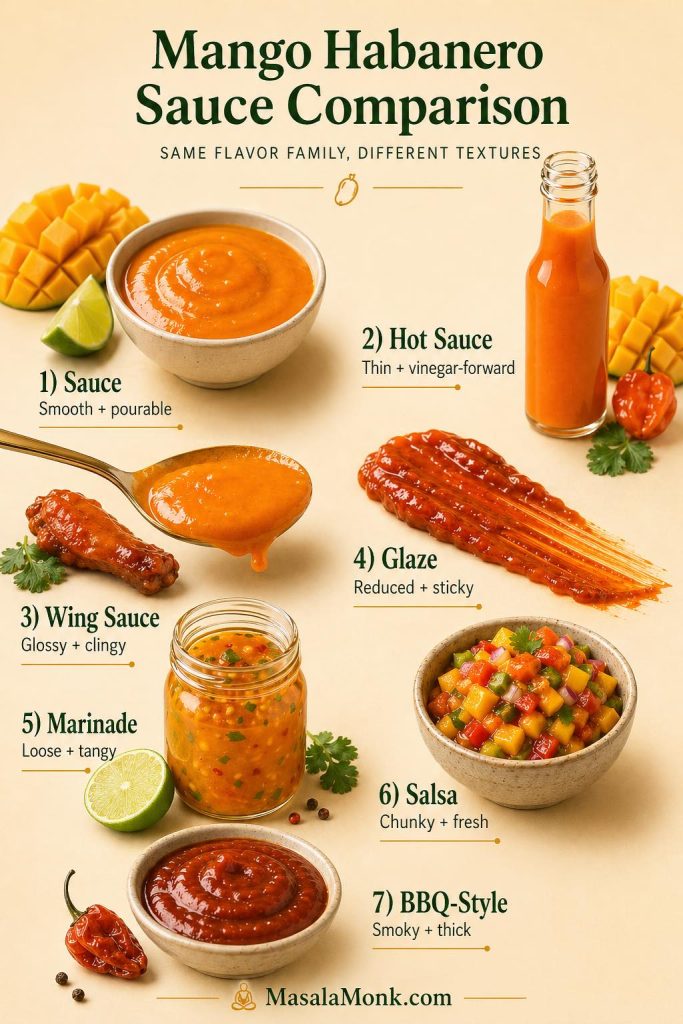
  3. If the skillet looks very greasy, spoon off some fat, but leave enough behind to carry flavor.
  4. Add the onion, garlic, and ginger. Cook for about 1 minute, stirring often, until fragrant.
  5. Add the vegetables that take longer first, such as broccoli or carrots. Follow with faster-cooking vegetables like mushrooms, peppers, cabbage, or spinach.
  6. Stir in the soy sauce, chili, sesame oil, vinegar or lime juice, and black pepper. Toss until the vegetables are just tender and the skillet looks glossy rather than watery.
  7. Taste and adjust. Add more soy for depth or more acid for brightness.

Best ways to serve it

Serve the stir fry over 3 to 4 cups cooked rice or with about 8 ounces cooked noodles. For a lighter plate, spoon it over shredded cabbage or cauliflower rice and add cucumber on the side for contrast.

Easy variations and leftovers

Add a sweeter savory finish with a quick teriyaki sauce for a glossier version. You can also lean hotter with chili crisp and extra scallions. Leftovers reheat well for lunch, especially when you keep the rice separate so the vegetables stay in better shape overnight.

Best result: do not crowd the pan. The browning is what keeps this from tasting flat.

Related next pick: want a rice-based budget dinner instead? Try Ground Pork Fried Rice.

2. Ground Pork Tacos Recipe

Ground pork tacos on a dark plate with juicy seasoned pork, soft tortillas, cilantro, red onion, lime, and salsa.
Juicy pork, soft tortillas, and just enough fresh topping make these tacos one of the easiest crowd-pleasing dinners in the whole post.

Choose this if: you want a fast, flexible family dinner that still feels generous.

Tacos are one of the easiest ways to turn one pound of pork into a dinner that feels bigger than it is. Pork stays juicy, takes spice well, and works with enough toppings, slaws, and sides that the meal feels generous without getting expensive.

Time: about 25 minutes
Serves: 4
Best for: family dinners, easy customization, and stretching one pound of pork

Ingredients for ground pork tacos

  • 1 pound ground pork
  • 1 small onion, finely chopped
  • 2 to 3 cloves garlic, minced
  • 1 tablespoon chili powder
  • 1 teaspoon cumin
  • 1 teaspoon paprika
  • 1/2 teaspoon oregano
  • 3/4 teaspoon kosher salt, or to taste
  • 1/2 teaspoon black pepper
  • 1 tablespoon tomato paste
  • 2 to 4 tablespoons water
  • 8 to 12 tortillas, flour or corn
  • Toppings such as slaw, salsa, avocado, cilantro, lime, pickled onions, or shredded lettuce

How to cook the filling

Ground pork tacos process image showing browned juicy taco filling with onions in a skillet and a wooden spoon.
A good taco filling should look deeply browned, richly seasoned, and moist enough to spoon easily into tortillas without turning greasy or dry.
  1. Cook the ground pork in a skillet over medium-high heat until browned and broken up well, about 5 to 6 minutes.
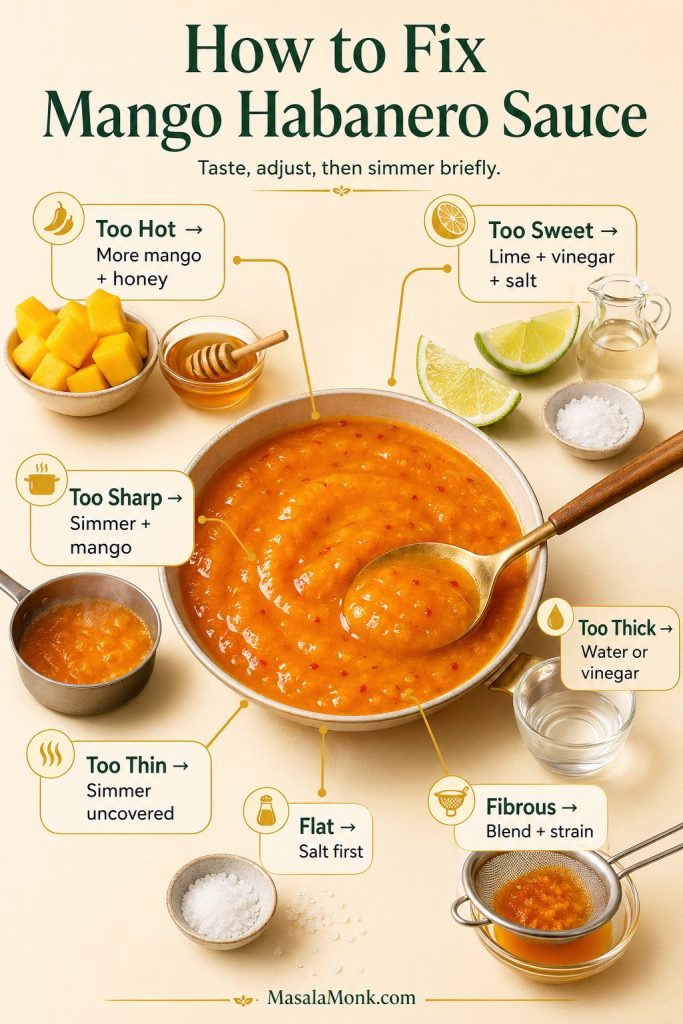
  2. Add the onion and cook until softened, about 3 minutes, then stir in the garlic.
  3. Add the chili powder, cumin, paprika, oregano, salt, and pepper. Cook for 30 seconds so the spices bloom instead of tasting dusty.
  4. Stir in the tomato paste and water. The filling should stay juicy enough to spoon into tortillas easily, not dry and crumbly.
  5. Warm the tortillas while the filling finishes.
  6. Squeeze lime over the meat just before serving for a brighter finish.

Toppings and serving ideas

Build the tacos with one crunchy element and one fresh one. Slaw, shredded lettuce, salsa, chopped onion, cilantro, avocado, and lime are enough for a strong version. For a more relaxed family dinner, set everything out taco-bar style so everyone can build their own plate.

Leftover ideas

For a creamier taco, add a quick eggless mayonnaise-based sauce or a spoonful of green chutney for something brighter. Leftover taco meat also works well in rice bowls, quesadillas, stuffed peppers, or a quick breakfast hash with eggs.

Watch out for this: the filling should stay juicy. A dry taco filling makes the whole dinner feel flatter than it needs to.

Related next pick: want the same kind of fast dinner in burger form instead? Try Ground Pork Burgers.

3. Ground Pork Meatballs Recipe

Ground pork meatballs in tomato sauce in a dark bowl, garnished lightly and styled as a comforting leftovers-friendly dinner.
Tender meatballs and a glossy, controlled sauce make this one of the easiest dinners in the post to cook once and enjoy again later.

Choose this if: you want the best all-around meal-prep and leftovers option in the guide.

Meatballs are the easiest make-ahead winner in the lineup. Pork stays tender naturally, the mixture is forgiving, and the finished meatballs can move into pasta, rice bowls, sandwiches, or freezer meals without much extra work.

Time: about 35 minutes
Serves: 4
Makes: about 16 medium meatballs
Best for: leftovers, freezer cooking, and versatile dinners

What you need

  • 1 pound ground pork
  • 1 egg
  • 1/2 cup breadcrumbs, panko or fine dried crumbs
  • 1/4 cup grated Parmesan, optional
  • 2 to 3 cloves garlic, minced
  • 2 tablespoons finely chopped parsley or onion
  • 3/4 teaspoon kosher salt
  • 1/2 teaspoon black pepper
  • 1 tablespoon milk or water if the mixture feels tight
  • Oil for the pan or a parchment-lined baking sheet
  • Sauce for serving

How to make them

  1. Heat the oven to 425°F if baking.
  2. Combine the pork, egg, breadcrumbs, Parmesan, garlic, parsley or onion, salt, pepper, and milk or water.
  3. Mix gently and stop as soon as everything holds together. Overmixing makes meatballs dense.
  4. Form into evenly sized meatballs, about 1 1/2 inches wide, so they cook at the same rate.
  5. Bake for 12 to 15 minutes, or until cooked through and lightly browned. You can also sear them in a skillet and finish in sauce.
  6. The finished meatballs should feel lightly firm and springy, not tight or dry.
  7. Simmer the cooked meatballs in sauce for a few minutes when using one, so they stay moist and pick up more flavor.
Baked ground pork meatballs on a parchment-lined sheet pan with a spatula lifting one meatball.
This is the point where ground pork meatballs prove why they are one of the smartest make-ahead dinners in the post: even sizing and light browning give you a tender batch that can head to sauce, pasta, subs, or the freezer without falling apart.

How to serve them

Serve them with marinara sauce and pasta, over rice with a gingery glaze, in sub rolls, or with roasted vegetables and salad. Because the seasoning starts fairly neutral, the same batch can move in several directions without feeling repetitive.

Make-ahead and freezer notes

Double the batch when possible. You can freeze cooked meatballs for quick dinners later, or freeze them uncooked on a tray first and then transfer them to a container once firm. Either way, they are one of the best meal-prep dinners in the whole guide.

Best result: mix gently and stop early. Tender meatballs come from restraint, not extra mixing.

Related next pick: want another leftovers-first comfort option? Try Ground Beef and Pork Meatloaf.

4. Ground Beef and Pork Meatloaf

Ground beef and pork meatloaf slices with glaze, mashed potatoes, and green beans on a black plate.
Meatloaf is the slow, hearty comfort turn in this roundup, and the beef-and-pork mix earns its place by staying juicier than all-beef while giving you the kind of leftovers that justify the longer cook time.

Choose this if: you want the most classic, hearty comfort dinner on the page with especially good leftovers.

When you want something slower, steadier, and more classic than the skillet dinners, meatloaf makes sense. The beef brings familiar meatloaf depth, while the pork keeps the slices juicy. It takes longer, but the leftovers are strong enough to make that extra time feel worth it.

Time: about 70 minutes including rest time
Serves: 6
Best for: comfort food, planned leftovers, and make-ahead dinners

Ingredients for the loaf

  • 1/2 pound ground beef
  • 1/2 pound ground pork
  • 1 egg
  • 3/4 cup breadcrumbs
  • 1 small onion, finely chopped
  • 2 cloves garlic, minced
  • 2 tablespoons ketchup or tomato paste
  • 1 tablespoon Worcestershire sauce or soy sauce
  • 1 teaspoon kosher salt
  • 1/2 teaspoon black pepper
  • For the top: 3 tablespoons ketchup, 1 teaspoon brown sugar or honey, and 1 teaspoon vinegar

How to bake it

  1. Heat the oven to 375°F.
  2. Mix the beef, pork, egg, breadcrumbs, onion, garlic, ketchup or tomato paste, Worcestershire, salt, and pepper just until combined.
  3. The mixture should feel moist enough to hold together but not wet or loose.
  4. Shape into a loaf in a loaf pan or on a lined sheet tray.
  5. Stir together the glaze ingredients and spread over the top.
  6. Bake for 45 to 55 minutes, or until the loaf is cooked through and firm but still juicy.
  7. Rest for 10 minutes before slicing so it does not crumble and lose its juices.
Ground beef and pork meatloaf process image showing glossy rested slices on a dark board with a knife.
Clean slices and a glossy set glaze are the payoff for letting meatloaf rest before cutting into it too early.

How to serve it

Serve meatloaf with mashed potatoes, roasted carrots, green beans, or a crisp salad to balance the richness. Plain steamed vegetables also work especially well here because the loaf brings enough flavor on its own.

Leftover ideas

Leftover slices make excellent sandwiches, rice bowls, or quick dinner plates. You can also pan-crisp a slice the next day so the leftovers feel more deliberate and less like repetition.
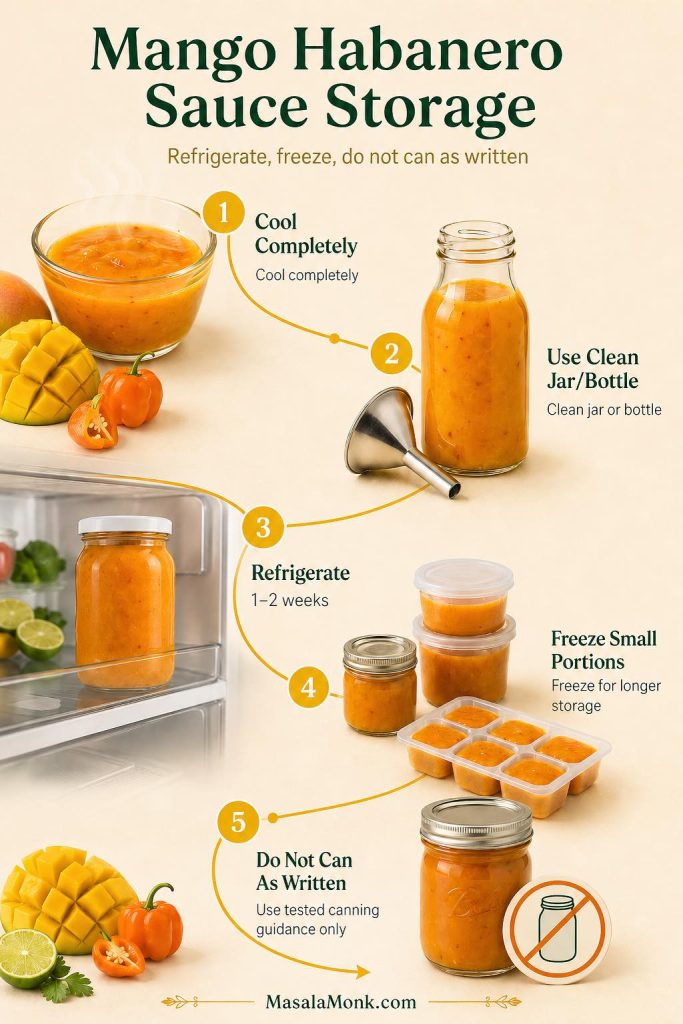
Watch out for this: let the loaf rest before slicing. Cutting too early is the easiest way to lose juices and structure.

Related next pick: want another leftovers-friendly option that cooks faster? Try Ground Pork Meatballs.

5. Ground Pork Burgers Recipe

Ground pork burger with cheese, pickles, red onion, tomato, and lettuce on a toasted bun.
A juicy ground pork burger works best with a well-browned patty, a soft toasted bun, and crisp toppings that keep the dinner rich but still balanced.

Choose this if: you want a classic burger-night dinner with a juicier, slightly richer twist than beef.

Burger night does not need to rely on beef. Ground pork makes especially juicy patties, and the flavor works best when the seasoning stays simple and the toppings bring a little crunch or brightness.

Time: about 25 to 30 minutes
Serves: 4
Best for: burger night, family dinners, and classic comfort

What you need

  • 1 pound ground pork
  • 1 teaspoon kosher salt
  • 1/2 teaspoon black pepper
  • 1/2 teaspoon garlic powder or 1 small clove garlic, finely grated
  • 1 teaspoon Worcestershire sauce or soy sauce, optional
  • 4 burger buns or sturdy lettuce leaves
  • Cheese, pickles, lettuce, onion, tomato, or slaw for serving
  • Oil for the pan, only if needed

How to make the patties

Ground pork burgers process image showing two browned pork patties in a skillet, one with melted cheese and a spatula underneath.
A good pork burger patty should look well browned, gently handled, and juicy enough to rest briefly before it ever goes into the bun.
  1. Combine the pork, salt, pepper, garlic, and Worcestershire if using. Mix just until the seasoning is distributed.
  2. Divide into 4 patties and shape them slightly wider than the buns. Keep them a little thicker in the center than you would with very lean beef.
  3. Chill the patties for 10 minutes if you have time. That helps them hold together more neatly in the pan.
  4. Cook in a hot skillet or grill pan over medium-high heat for about 4 to 5 minutes per side, or until cooked through and browned well on the outside.
  5. Add cheese during the last minute if using, then rest the patties briefly so the juices settle.

Best ways to serve them

Keep the toppings simple so the burger still tastes like pork. Pickles, slaw, onion, lettuce, tomato, and cheese all work well. A swipe of eggless mayonnaise or a spoonful of chimichurri can brighten the burger without making it fussy.

Easy variations and leftovers

Serve them in buns for a classic burger dinner or in lettuce leaves when you want something lighter. Leftover patties also work well sliced into rice bowls or chopped into a breakfast hash the next day.

Watch out for this: do not overwork the meat. The more you mix and press, the less juicy the burgers feel.

Related next pick: want a handheld dinner with more spice and less assembly? Try Ground Pork Tacos.

6. Ground Pork Pasta Recipe

Ground pork pasta with penne, tomato sauce, Parmesan, and basil in a black bowl.
When the lighter skillet dinners do not sound satisfying enough, ground pork pasta is the fast comfort turn in this roundup: tomato sauce, browned pork, and pantry pasta that still feel like a proper dinner.

Choose this if: you want a fast comfort dinner that feels fuller and more familiar than rice or stir fry.

This is the pasta option for nights when you want a quick tomato-pork sauce without spending all evening on it. The pork brings richness, garlic and onion build the base, and a modest amount of tomato turns everything into a weeknight sauce that clings to the pasta instead of pooling underneath it.

Time: about 25 to 30 minutes
Serves: 4
Best for: comfort dinners, pantry cooking, and easy leftovers

Ingredients

  • 1 pound ground pork
  • 8 ounces pasta such as spaghetti, penne, or rigatoni
  • 1 small onion, finely chopped
  • 3 to 4 cloves garlic, minced
  • 2 tablespoons tomato paste
  • 1 cup crushed tomatoes or tomato sauce
  • 1/2 teaspoon chili flakes, optional
  • 1/2 teaspoon black pepper
  • Salt, to taste
  • 1/4 to 1/2 cup pasta water, as needed
  • Parmesan and basil or parsley, optional

How to cook it

Ground pork pasta process image showing penne coated in tomato sauce with browned pork in a skillet and a wooden spoon lifting the pasta.
A good skillet finish leaves the pasta evenly coated and glossy, with the pork worked into the sauce instead of sitting loose underneath it.
  1. Cook the pasta in salted water until just shy of done. Save some pasta water before draining.
  2. Brown the ground pork in a large skillet until cooked through and lightly caramelized.
  3. Add the onion and cook until softened, then stir in the garlic and chili flakes if using.
  4. Stir in the tomato paste and cook for 30 to 60 seconds so it darkens slightly and loses its raw edge.
  5. Add the crushed tomatoes or sauce and a splash of pasta water. Simmer for a few minutes until the sauce looks savory and lightly concentrated.
  6. Add the pasta and toss until the sauce coats it well. Use more pasta water as needed so the pan looks glossy rather than dry.
  7. Finish with Parmesan and herbs if you like.

How to serve it

Serve it with Parmesan, herbs, and a simple salad when you want a fuller plate. Mushrooms, spinach, or zucchini also fit naturally here if you want more volume. For a deeper tomato route, a fuller Bolognese sauce style can pull this dinner in a richer direction.

Leftover notes

Leftovers reheat well with a splash of water so the sauce loosens instead of tightening up. That small step keeps the pasta from feeling dry the next day.

Best result: use the pasta water. It is what helps the sauce cling instead of sitting loose in the bowl.

Related next pick: want another comfort dinner with even better next-day leftovers? Try Ground Beef and Pork Meatloaf.

7. Ground Pork Fried Rice Recipe

Ground pork fried rice with egg, peas, carrots, scallions, and separate rice grains in a black bowl.
Fried rice is the best budget-first pick in the post because leftover rice stretches the pork beautifully, while separate grains, egg, and vegetables keep the bowl from feeling flat or skimpy.

Choose this if: you have leftover rice and want one of the best budget-friendly dinners in the roundup.

Fried rice is the budget-first answer when there is already rice in the fridge. The rice stretches the pork, the eggs and vegetables fill out the bowl, and the whole thing comes together quickly once the prep is done.

Time: about 20 to 25 minutes
Serves: 4
Best for: leftover rice, budget dinners, and quick one-pan meals

What you need

  • 1 pound ground pork
  • 3 to 4 cups cold cooked rice
  • 2 eggs
  • 1 small onion or several scallions
  • 2 to 3 cloves garlic
  • 1 to 2 cups mixed vegetables such as peas, carrots, mushrooms, or cabbage
  • 2 to 3 tablespoons soy sauce
  • 1 teaspoon sesame oil
  • 1/2 teaspoon black pepper
  • Chili crisp or hot sauce, optional

How to make ground pork fried rice

Ground pork fried rice process image showing separate rice grains with browned pork, peas, carrots, egg, and a wooden spoon in a skillet.
Separate grains, browned pork, and just enough gloss are what make fried rice feel properly stir-fried instead of soft, sticky, or clumped together.
  1. Heat a large skillet well and brown the ground pork first. Remove excess fat if needed, but keep enough for flavor.
  2. Push the pork aside or remove it briefly, then scramble the eggs.
  3. Add the onion, garlic, and vegetables. Cook until the vegetables soften but still keep some texture.
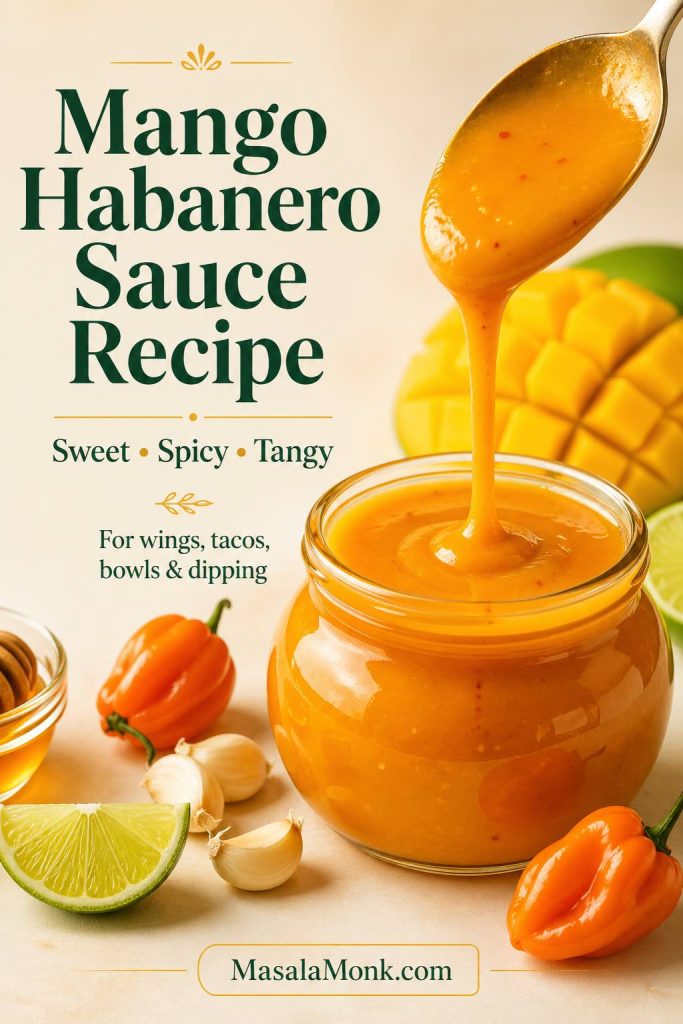
  4. Add the cold rice and break up any clumps. Let it sit in the pan for a minute or two so some grains pick up light toasty color.
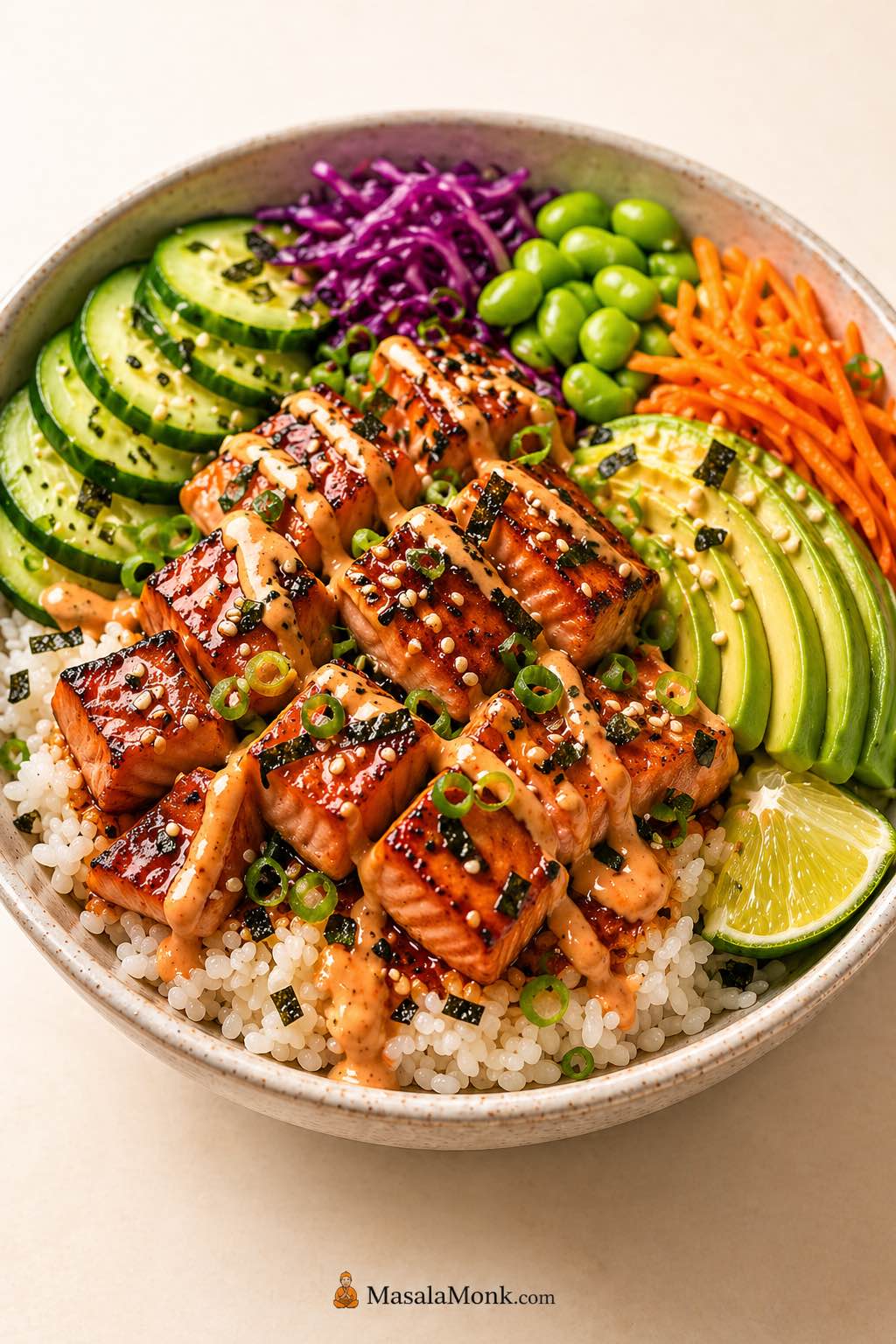
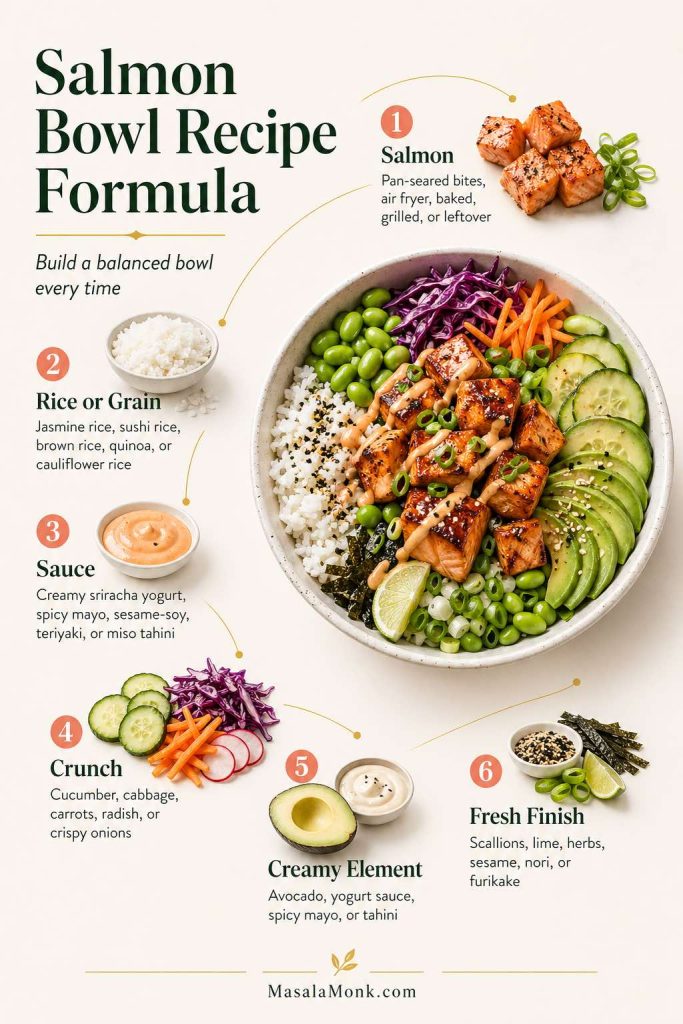
  5. Return everything together, then season with soy sauce, sesame oil, pepper, and chili if using. Seasoning near the end helps keep the rice from turning mushy.
  6. Finish with scallions for freshness.

How to serve it

Serve fried rice as a complete bowl, or top it with extra chili crisp, sliced cucumber, or a fried egg. If you need a refresher on getting the grains right before they ever hit the pan, this guide on how to cook rice is a useful starting point.

Easy variations and leftovers

Kimchi, leftover roasted vegetables, chopped greens, or mushrooms all fit naturally here. Leftovers also reheat well in a skillet, and the flavor often improves slightly the next day once everything settles together.

Watch out for this: use cold rice and let it toast a little. Fresh hot rice is much more likely to turn soft and clumpy.

Related next pick: want another rice-friendly comfort dinner? Try Pork Giniling.

8. Ground Pork Egg Roll Bowl

Ground pork egg roll bowl with cabbage, carrots, scallions, and sesame in a black bowl.
This ground pork egg roll bowl works best when the pork is well browned, the cabbage stays tender-crisp, and the whole bowl looks glossy and savory rather than wet or heavy.

Choose this if: you want the best one-pan mix of speed, value, and a lighter overall feel.

Ground pork egg roll bowl is one of the easiest one-pan dinners here. It works best when you want something fast, lighter, and practical enough to repeat often, especially if you are using a bag of slaw mix or extra cabbage that needs using.

It lands between the other lighter options: warmer and easier than lettuce wraps, but still cleaner and less heavy than the richer comfort dinners.

Time: about 20 to 25 minutes
Serves: 4
Best for: one-pan dinners, cabbage-heavy meals, and lighter weeknights

Ingredients for the skillet

  • 1 pound ground pork
  • 1 small onion, chopped
  • 3 cloves garlic, minced
  • 1 tablespoon grated ginger
  • 5 to 6 cups shredded cabbage or slaw mix
  • 2 to 3 tablespoons soy sauce
  • 1 teaspoon sesame oil
  • 1 to 2 teaspoons rice vinegar or lime juice
  • Scallions, sesame seeds, peanuts, or chili crisp for topping
  • Optional rice for serving

How to cook it

Ground pork egg roll bowl cooking in a skillet with cabbage, carrots, scallions, and a spoon.
This is the texture you want before serving: the cabbage should be softened and glossy but still distinct, so the bowl stays lighter and fresher than a heavier pork skillet or a soggy cabbage stir-fry.
  1. Brown the pork in a large skillet until cooked through.
  2. Add the onion, garlic, and ginger, then cook until fragrant.
  3. Add the cabbage in batches if needed. It will look like too much at first, but it cooks down quickly.
  4. Season with soy sauce and sesame oil. Taste before topping. The skillet should already taste savory and balanced on its own.
  5. Cook until the cabbage is tender but still slightly crisp, not limp or watery.
  6. Finish with rice vinegar or lime so the dish stays bright.

Toppings and serving

You can serve it straight from the pan, which is part of the appeal. For a fuller dinner, spoon it over rice or add a fried egg. Scallions, sesame seeds, peanuts, or chili crisp make the bowl feel more finished without adding much work.

Leftover notes

Reheat leftovers quickly over medium heat so the cabbage keeps some texture. Otherwise, slow reheating softens the vegetables too much and makes the bowl feel flatter the second time around.

Best result: stop while the cabbage still has a little bite. Once it goes limp, the whole skillet feels heavier.

Related next pick: want a fresher handheld version? Try Ground Pork Lettuce Wraps.

9. Ground Pork Lettuce Wraps

Ground pork lettuce wraps on a dark plate with crisp lettuce, glossy pork filling, peanuts, scallions, herbs, and lime.
Crisp lettuce, glossy pork filling, and a few bright toppings turn this into the freshest dinner in the lineup without making it feel skimpy.

Choose this if: you want the freshest, brightest, most hands-on dinner on the page.

Lettuce wraps work best when the filling is seasoned more assertively than usual, because the lettuce softens the impact and needs a punchier pork mixture to keep the wraps lively.

It is not only lighter. It is fresher, crisper, and more interactive at the table.

Time: about 20 to 25 minutes
Serves: 4
Best for: lighter dinners, interactive meals, and crisp fresh textures

What you need

  • 1 pound ground pork
  • 2 to 3 cloves garlic, minced
  • 1 tablespoon grated ginger, optional but useful
  • 2 to 3 tablespoons soy sauce
  • 1 teaspoon chili paste or chili flakes
  • 1 teaspoon brown sugar or honey, optional
  • 1 to 2 teaspoons lime juice or rice vinegar
  • Butter lettuce, romaine leaves, or another sturdy lettuce
  • Toppings such as herbs, peanuts, scallions, shredded carrots, or cucumber

How to make the filling

  1. Brown the pork in a skillet and cook until lightly caramelized.
  2. Add the garlic and ginger, then stir in the soy sauce, chili, and sugar or honey if using.
  3. Cook until the filling is glossy and well seasoned. It should taste slightly stronger than you think it needs to, because the lettuce will soften the impact.
  4. Brighten with lime juice or vinegar at the end so the richness stays under control.
  5. Wash and dry the lettuce well so the wraps stay crisp instead of slippery.

How to serve it

Ground pork lettuce wraps with two filled lettuce cups, extra leaves, peanuts, scallions, carrots, and lime on a black plate.
The trick with lettuce wraps is not to overfill them: a modest spoonful of pork, a little crunch, and a squeeze of lime keep this dinner feeling fresher and lighter than the warmer bowl-style recipes in the roundup.

Set out the lettuce, warm filling, and toppings separately so everyone can build their own wraps. Butter lettuce makes softer, neater wraps, while romaine gives more crunch. Extra lime, cucumber, herbs, peanuts, and scallions make the whole meal feel brighter and more complete.

Easy swaps and leftovers

When the lettuce is not great or the leftovers feel awkward the next day, turn the filling into rice bowls or noodle bowls instead. That backup plan makes this recipe even more practical on a busy night.

Best result: season the filling a little harder than usual. The lettuce mutes it more than most people expect.

Related next pick: want a warm one-pan cabbage dinner instead? Try Ground Pork Egg Roll Bowl.

10. Pork Giniling (Filipino Ground Pork)

Pork giniling served with white rice in a dark bowl, showing tomato-based ground pork with potatoes, carrots, and peas.
Tomato-based pork, tender vegetables, and white rice make this one of the steadier, more comforting dinners in the whole lineup.

Choose this if: you want a practical, tomato-based rice dinner that feels especially comforting and complete.

Pork giniling brings a different kind of comfort to the lineup. Instead of soy, cabbage, or noodles, it gives you a tomato-based, rice-first dinner that feels warm, homey, and complete in a way the faster skillet meals do not.

Time: about 35 to 40 minutes
Serves: 4
Best for: rice-based comfort food, homey dinners, and tomato-forward ground pork meals

Ingredients

  • 1 pound ground pork
  • 1 small onion, chopped
  • 3 cloves garlic, minced
  • 2 tomatoes, chopped, or 1 cup tomato sauce
  • 1 to 2 tablespoons tomato paste for deeper flavor
  • 1 potato, diced small
  • 1 carrot, diced small
  • 1/2 cup peas, optional but useful
  • 3/4 teaspoon salt, or to taste
  • 1/2 teaspoon black pepper
  • 1 to 2 teaspoons soy sauce or fish sauce, optional
  • Steamed rice, for serving

How to make it

Pork giniling cooking in a skillet with ground pork, tomato sauce, diced potatoes, carrots, peas, and a wooden spoon.
This is the stage that makes pork giniling different from taco meat or pasta sauce: the tomato base should be cooked down and spoonable, with tender potatoes and carrots turning the skillet into a true rice dinner rather than just seasoned mince.
  1. Brown the pork in a skillet or sauté pan until cooked through.
  2. Add the onion and garlic, then cook until softened and fragrant.
  3. Add the tomatoes and tomato paste, then cook until the mixture looks saucy rather than raw.
  4. Add the potato and carrot with 1/2 to 3/4 cup water so they can soften as the sauce simmers.
  5. Season with salt, pepper, and soy sauce or fish sauce if using.
  6. Add peas near the end so they stay bright, then simmer until the vegetables are tender and the sauce lightly coats the pork.

How to serve it

Serve pork giniling over steamed rice first and keep the rest of the plate simple. The rice and saucy pork do most of the work together, which is why the meal feels complete even without many side dishes.

Leftover notes

Leftovers reheat well and often taste even better the next day once the tomato and pork have had more time together. For a looser bowl, keep it slightly saucier. For a thicker finish, reduce it a little more before serving.

Best result: let the tomatoes cook down properly before adding water. That is what gives the dish a deeper, rounder base.

Related next pick: want another rice-based dinner that is faster and cheaper? Try Ground Pork Fried Rice.

How to Choose the Best Ground Pork Recipe Tonight

Use this section when you know the constraint, but not the recipe. Pick the dinner that fits the problem in front of you.

When You Need Dinner in 20 Minutes

Start with ground pork stir fry, ground pork fried rice, ground pork egg roll bowl, or ground pork lettuce wraps. These are the quickest options, they stay on the stovetop, and they do not ask for much downtime. Best first pick: choose stir fry when you need flexibility, or fried rice when the rice is already cooked.

When Tomorrow’s Lunch Matters Too

ground pork meatballs, ground beef and pork meatloaf, ground pork fried rice, and pork giniling all hold up well. None of them depend on delicate textures that disappear overnight. Best first pick: go with meatballs when you want the most flexible leftovers.

When You Want Something Lighter

Choose ground pork lettuce wraps for the freshest option, ground pork egg roll bowl for a warm one-pan dinner, or a vegetable-heavy ground pork stir fry when you still want a fuller plate.

When You Need to Stretch Leftover Rice

Go straight to ground pork fried rice if the rice is already cooked. After that, pork giniling or ground pork egg roll bowl both work well over rice when you want the meal to feel fuller and more affordable.

When You Need a Safe Family-Friendly Pick

ground pork tacos, ground pork burgers, ground pork meatballs, ground pork pasta, and ground pork fried rice are the safest broad-appeal choices. Best first pick: choose tacos when you want the most customization at the table, or burgers when you want something more classic.

How to Cook and Season Ground Pork Better

Ground pork cooks fast, but a few small mistakes can make dinner taste flat. In most cases, bland results come from weak browning, weak seasoning, or no contrast to cut through the richness. A little better browning and seasoning makes a big difference.

Build flavor in the pan, season it clearly, and finish with something bright, fresh, or sharp so the dish does not feel heavy. That balance is what makes dinner taste finished rather than flat.

Instructional guide showing how to cook and season ground pork better with five fixes for browning, fat, seasoning, moisture, and finishing.
Use this card as the fast reset: brown harder, grease less, season with intent, stop before the meat dries out, and finish with something that brings the whole dish back to life.

How to Brown the Meat for Better Flavor

Use enough heat and enough pan space. When the pan is crowded, the meat releases moisture and steams. When you let it sit before stirring too much, you get caramelized bits that deepen the flavor of the whole dish.

How Much Fat to Leave in the Pan

Leave enough fat behind to carry flavor, especially in stir fries, fried rice, and bowl dinners. However, when the pan looks greasy rather than lightly slick, spoon off some excess before adding the aromatics. That keeps the finished dish savory instead of heavy.

Best Seasoning for Tacos

Chili powder, cumin, paprika, garlic, onion, oregano, salt, pepper, lime, and a spoonful of tomato paste make a strong taco base. The tomato paste helps round out the meat so it tastes fuller and less dry.

Best Seasoning for Stir Fries and Bowls

Soy sauce, garlic, ginger, chili, sesame, scallions, and something bright like rice vinegar or lime work especially well. That combination keeps the meat savory and flavorful without letting it feel too rich.

Best Seasoning for Meatballs, Meatloaf, and Patties

Garlic, onion, black pepper, herbs, and either tomato-based or smoky-savory accents usually work best. Meatballs can go more herby, meatloaf benefits from a stronger savory base and glaze, and burgers work best when the seasoning stays fairly simple.

How to Keep It Juicy

Do not overcook it, and use ingredients that support juiciness too. Sauces, tomatoes, cabbage, rice, noodles, and fresh toppings all help keep it satisfying. For food safety, cook it to a safe internal temperature and check the USDA safe temperature chart when you need a quick reference.

How to Keep It From Tasting Bland

Brown it properly, season it with purpose, and balance the richness with something bright. Lime, vinegar, herbs, scallions, chili, pickled toppings, and crisp vegetables all help. The best dinners work because they combine savory depth with a little lift.

Ground Pork Dinner FAQs

What Are the Best Weeknight Picks?

The best weeknight options are usually ground pork stir fry, ground pork tacos, ground pork fried rice, ground pork egg roll bowl, and ground pork pasta. They cook quickly, use practical ingredients, and still feel like proper dinners rather than last-minute compromises.

What Can I Make With 1 Pound?

You can make all ten recipes on this page with about one pound, though some stretch better than others. Tacos, fried rice, egg roll bowl, lettuce wraps, and pork giniling are especially strong when you want that pound to go farther with rice, cabbage, tortillas, vegetables, or toppings.

Is It Good for Meal Prep?

Yes, many of these meals are. Meatballs, beef and pork meatloaf, fried rice, and pork giniling all hold up well and reheat well, which makes them especially useful for meal prep and next-day lunches.

Are Ground Pork and Pork Mince the Same Thing?

In most recipe contexts, yes. Ground pork is the more common label in some regions, while pork mince is the usual wording in others. For this kind of weeknight cooking, they usually refer to the same ingredient.

Can It Replace Ground Beef?

Yes, in many recipes it can. It is often juicier and a little richer, so it works especially well in meatballs, meatloaf, tacos, burgers, bowls, and sauces. The final flavor will still be different, though, so the best results usually come from choosing recipes that genuinely suit it.

What Vegetables Pair Best?

Cabbage, mushrooms, carrots, peppers, broccoli, greens, onions, and scallions all pair especially well with it. For contrast, cucumber, herbs, and crunchy slaws help brighten richer dishes.

What Seasonings Work Best?

Garlic, onion, black pepper, soy, ginger, chili, lime, herbs, paprika, cumin, and tomato all work well. The smartest approach is to match the flavor profile to the dinner you want rather than look for one universal spice blend.

How Long Do Leftovers Keep?

As a general rule, cooked leftovers keep well for a few days in the fridge and longer in the freezer. For current food-safety guidance, see the USDA leftovers and food safety guide.

↑ Back to top

Start with stir fry for speed, tacos for family-friendly flexibility, burgers for classic comfort, meatballs for leftovers, fried rice for budget value, or egg roll bowl for one-pan ease. That is the strength of ground pork, or pork mince if that is the label you usually buy: it can turn into several very different dinners without making weeknights harder. A quick marinara sauce can push meatballs or pasta in a more classic comfort-food direction, while a fresh green chutney or bright chimichurri can change tacos, burgers, bowls, and wraps completely. Pick the dinner that fits tonight, and one pound of pork can take you a long way.