Posted on Leave a comment

Homemade Ketchup Recipe

Thick glossy homemade ketchup in a bowl with a spoon, fresh tomatoes, and tomato paste nearby.

A good homemade ketchup recipe should taste bright, tangy, lightly sweet, deeply tomato-forward, and smooth enough for dipping, spreading, spooning, or squeezing. It should be thicker than tomato sauce, sharper than tomato chutney, and balanced enough for fries, burgers, sandwiches, wraps, pakoras, grilled snacks, and quick dipping sauces. You can also use it as a simple meatloaf glaze or a base for burger sauce.

This homemade tomato ketchup gives you the full fresh tomato method first: ripe tomatoes cooked down with onion, garlic, vinegar, sweetener, salt, mustard, and warm spices until glossy and thick. Then, because real kitchens are not always full of perfect summer tomatoes, you also get a quick tomato paste ketchup recipe, a sugar-free option, texture fixes, storage guidance, and clear canning notes.

In many kitchens, especially in India, this would simply be called a tomato ketchup recipe or homemade tomato sauce. Here, though, the goal is classic ketchup texture: smooth, glossy, thick, tangy-sweet, and easy to dip.

Most importantly, this is a recipe about control. Once you understand the tomato-to-vinegar-to-sweetener balance, you can make ketchup sweeter, tangier, smoother, thicker, spicier, lower in sugar, or closer to bottled ketchup without guessing. That way, the same base can work for fries, burgers, wraps, snacks, and quick sauces without needing a separate recipe every time.

For that reason, the recipe below does not force one version on every kitchen. Instead, it shows you when fresh tomatoes are worth the longer simmer and when tomato paste is the smarter shortcut.

At-a-glance guide summarizing homemade ketchup options, flavor target, texture goal, and storage guidance.
If you want the short version first, this guide shows the key homemade ketchup decisions: which method to choose, how it should taste, and how to store it safely.

Before you start: choose the version based on your tomatoes. If they are ripe and flavorful, use the fresh tomato method. However, if they are watery or bland, use the tomato paste shortcut instead. That way, you get a thick, balanced ketchup without fighting the ingredients.

Quick Answer: The Best Homemade Ketchup Recipe Ratio

Fresh Tomato Ketchup Ratio

To make homemade ketchup with fresh tomatoes, first cook ripe tomatoes with onion and garlic until soft. Next, blend them smooth and strain them for a finer texture. From there, simmer the tomato puree with vinegar, sugar or jaggery, salt, mustard powder, and warm spices until thick and glossy.

Tomato Paste Ketchup Ratio

For a faster version, whisk tomato paste with water, vinegar, sweetener, salt, onion powder, garlic powder, mustard powder, and a tiny pinch of warm spice. Then, simmer it for 5–8 minutes. Compared with the fresh tomato version, tomato paste ketchup is quicker, smoother, and more predictable, although it tastes less seasonal.

As a starting point, use the fresh tomato ratio when flavor matters most and the tomato paste ratio when speed and smoothness matter more.

Version Quick Ratio Best For
Fresh tomato ketchup 1 kg tomatoes + 75–90 ml vinegar + 50–75 g sweetener + 8–10 g salt Ripe summer tomatoes, fresh flavor, and from-scratch ketchup
Tomato paste ketchup 170 g tomato paste + 120–150 ml water + 45 ml vinegar + 20–35 g sweetener Quick ketchup, smooth texture, burgers, fries, and weeknight meals
Ratio guide comparing homemade ketchup made with fresh tomatoes and ketchup made with tomato paste.
Use the fresh tomato ratio when flavor matters most, and the tomato paste ratio when speed, smoothness, and consistency matter more.

That is why this ketchup recipe gives you two practical paths: a fresh tomato version for deeper flavor and a quick tomato paste version for speed.

Because this ketchup recipe is homemade, you can adjust the vinegar, sweetener, salt, and spices near the end instead of being locked into one fixed bottled flavor.

How the Ketchup Should Taste

Flavor target: good ketchup should taste tomato-rich first, then tangy, lightly sweet, salty enough to pop, and only gently spiced. If you can clearly taste cinnamon, clove, or allspice, the warm spice is too strong.

That flexibility is what makes a homemade ketchup recipe useful: the method gives you a starting point, but the final balance comes from tasting and adjusting.

The finished ketchup should taste tomato-rich, tangy-sweet, savory, and gently spiced in the background. When it tastes like plain tomato sauce, it needs more vinegar, sweetener, salt, mustard, or a tiny pinch of warm spice. However, when it tastes like chutney, the warm spices or sweetener are probably too strong.

Which Homemade Ketchup Version Should You Make?

Before you start cooking, decide what problem you are solving. Fresh tomatoes give the best homemade flavor when they are ripe, while tomato paste gives better control when the tomatoes are watery, pale, or out of season.

The easiest way to choose is to look at your tomatoes, your time, and how you plan to store the ketchup. When the tomatoes are ripe and red, fresh tomatoes give the best homemade flavor. On the other hand, when the tomatoes are watery, pale, or out of season, tomato paste gives the fastest, smoothest, most predictable result. If you are reducing sugar, however, the ketchup needs a little more balancing so it still tastes like ketchup instead of plain tomato sauce.

Decision guide showing when to make homemade ketchup with fresh tomatoes and when to use tomato paste.
Fresh tomatoes are best when they are ripe and flavorful, while tomato paste is the smarter shortcut when you want faster, smoother, more predictable ketchup.

In other words, the best homemade version is not always the longest ketchup recipe. It is the version that fits your tomatoes, your time, and the way you want to serve it.

Situation Best Version Why It Works
Ripe summer tomatoes Fresh tomato ketchup This gives the best flavor and the most homemade character.
Watery, pale, or bland tomatoes Tomato paste ketchup The paste gives more predictable color, body, and flavor.
Ketchup needed in about 10 minutes Quick tomato paste ketchup recipe No long reduction is needed.
Lower-sugar ketchup Sugar-free ketchup option This lets you control the sweetener while keeping the sauce balanced.
Pantry-stable jars Tested canning recipe only A flexible fridge ketchup should not be canned casually.

Why This Recipe Works

This recipe works because it treats ketchup as a balance problem, not just a tomato puree. The tomatoes soften first so their flavor turns rounded, the mixture is blended and strained for texture, and the seasoned puree reduces slowly until the vinegar, sweetener, salt, mustard, and spices taste like one glossy sauce.

The fresh tomato version gives deeper homemade flavor, while the tomato paste version gives speed and consistency. Together, they cover both real kitchen situations: good ripe tomatoes and the nights when you need a quick ketchup for fries, burgers, wraps, or snacks. Because both versions use the same sweet-acid-salt logic, you can adjust them in the same way near the end.

Homemade Ketchup Ingredients: Tomatoes, Vinegar, Sugar, Salt and Spices

Ketchup tastes simple, but it depends on balance. Tomatoes give the sauce body, while vinegar adds the sharp tang. Sweetener rounds the acidity, and salt makes the tomato flavor pop. Finally, onion, garlic, mustard, and warm spices turn cooked tomato into ketchup instead of plain tomato sauce.

Because the sauce reduces as it cooks, the balance of vinegar, salt, and sweetener becomes more concentrated near the end. Therefore, it is better to start slightly cautious and adjust after the sauce thickens.

What Is Ketchup Made Of?

Ketchup is usually made from tomatoes or tomato paste, vinegar, sugar or another sweetener, salt, onion, garlic, mustard, and warm spices. The main ingredient is tomato, but the familiar ketchup flavor comes from the balance of tomato, vinegar, sweetness, salt, and spice.

Compared with many bottled ketchup ingredients lists, homemade ketchup gives you more control. You can choose fresh tomatoes or tomato paste, adjust the sugar, use 5% acidity vinegar, control the salt, and keep the spice level gentle.

Ingredients for homemade ketchup including tomatoes, vinegar, sweetener, salt, onion, garlic, mustard powder, and warm spices.
Homemade ketchup gets its classic flavor from balance: tomatoes for body, vinegar for tang, sweetener for roundness, salt for depth, and spices for warmth.

Tomatoes and Vinegar

Tomatoes give the ketchup body, color, and fresh flavor. Meanwhile, vinegar gives the sauce its sharp ketchup tang. For this small-batch fridge version, apple cider vinegar gives a rounder flavor, while white vinegar tastes cleaner and sharper.

Sweetener, Salt and Spices

Sweetener balances tomato acidity, salt sharpens the flavor, and spices make the sauce taste like ketchup instead of plain tomato sauce. In this ketchup recipe, the homemade flavor comes from restraint: mustard powder, cinnamon, and a tiny pinch of clove or allspice are enough. Too much warm spice can push the sauce toward chutney.

Once you understand what each ingredient does, the recipe becomes easier to adjust. The table below shows the fresh tomato amounts first because that version depends most on balance and reduction.

Measurement note: metric weights are more accurate for tomatoes, onion, sweetener, and salt. The US cup and spoon measures are included for convenience, but final yield can vary because tomatoes contain different amounts of water.

Fresh Tomato Ketchup Ingredient Amounts

Ingredient Amount for Fresh Tomato Ketchup Why It Matters
Ripe red tomatoes 1 kg / 2.2 lb Tomatoes form the body, color, and main flavor. Roma, plum, San Marzano-style, or other meaty tomatoes reduce faster and taste richer.
Onion 80–100 g / 3–3.5 oz / 1 small onion Onion builds a savory base and helps the ketchup taste rounded.
Garlic 8–12 g / 2–3 cloves Garlic deepens the flavor. Use less if you want a cleaner bottled-style ketchup.
5% acidity vinegar 75–90 ml / 5–6 tbsp Vinegar gives ketchup its sharp tang. Apple cider vinegar tastes rounder; white vinegar tastes cleaner and sharper.
Sugar, jaggery, or brown sugar 50–75 g / 1.75–2.6 oz / about ¼–⅓ cup packed Sweetener balances tomato acidity and keeps the sauce from tasting like sour tomato puree.
Fine salt 8–10 g / about 1½ tsp Salt sharpens the tomato flavor. Add it carefully because reduction concentrates the sauce.
Mustard powder 1–2 g / ½–1 tsp Mustard powder brings the classic ketchup sharpness without making the sauce taste mustardy.
Cinnamon Pinch to ⅛ tsp A small amount adds warmth. Too much can push the ketchup toward chutney.
Clove or allspice Tiny pinch / 1/16 tsp or less This gives the familiar background spice, but it becomes overpowering quickly.
Cayenne or chili powder Optional, ⅛–¼ tsp Use this for mild heat without turning the ketchup into hot sauce.

How Much Sugar Is in This Homemade Ketchup?

This ketchup recipe uses 50–75 g added sugar, jaggery, or brown sugar for a homemade batch that finishes at about 2–2½ cups. That works out to roughly 1.25–2.3 g added sweetener per tablespoon, depending on your final yield and how much sweetener you use.

For a less sweet ketchup, start with 50 g sweetener and adjust only after the sauce has reduced. Because reduction concentrates flavor, the ketchup may taste sweeter and saltier near the end than it did at the start. Still, do not remove all sweetness unless you want a sharper tomato-sauce-style condiment. Instead, reduce the sweetener gradually and taste again after the ketchup cools.

It is also useful when you want a no-corn-syrup ketchup and prefer to choose the sweetener yourself. For a lighter or more controlled version, homemade ketchup lets you adjust the sugar, salt, and vinegar instead of relying on a fixed bottled formula.

Use 5% acidity vinegar for this recipe, especially when you are also reading the canning section. For regular fridge ketchup, apple cider vinegar, white vinegar, or a mix of the two all work. Apple cider vinegar gives a slightly fruitier ketchup; by contrast, white vinegar gives a cleaner, sharper ketchup.

Important: this flexible recipe is for fridge and freezer storage. If you want shelf-stable canned ketchup, use a tested canning formula and do not casually change vinegar, tomato, onion, vegetable, jar, or processing-time ratios.

Homemade Ketchup Recipe with Fresh Tomatoes

This is the main ketchup-from-scratch version to make when tomatoes are ripe, red, and flavorful. In practice, it starts with 1 kg / 2.2 lb fresh tomatoes and reduces into about 500–600 g / 17.5–21 oz / 2–2½ cups of ketchup, depending on the tomato variety and how thick you cook it.

The method is simple, even though the simmer takes time: soften the tomatoes, blend, strain if needed, season, then reduce until the sauce turns glossy and spoonable.

Step-by-step guide showing how to make homemade ketchup with fresh tomatoes by softening, blending, straining, seasoning, and reducing.
The fresh tomato method is simple: soften the tomatoes, blend them smooth, strain if needed, season, and reduce until the ketchup turns glossy and spoonable.

Best Tomatoes for Homemade Ketchup

The best tomatoes for homemade ketchup are meaty, ripe, and deeply red. For example, Roma, plum, San Marzano-style, and other paste tomatoes are ideal because they have more flesh and less water. Regular round tomatoes also work; however, they usually take longer to reduce. In addition, cherry tomatoes can make a sweet ketchup, although they are often seedier and may need straining.

Homemade ketchup may look slightly darker or softer red than bottled ketchup, especially if you use brown sugar, jaggery, apple cider vinegar, or long cooking. For the brightest color, use ripe red paste tomatoes, white vinegar, white sugar, and gentle heat.

Guide to tomato types for homemade ketchup, including Roma tomatoes, plum tomatoes, San Marzano-style tomatoes, round tomatoes, cherry tomatoes, and pale tomatoes.
Meaty, ripe, deeply red tomatoes make the best homemade ketchup because they reduce faster, taste richer, and give the sauce better color.
Tomato Type How It Works in Ketchup Adjustment
Roma / plum tomatoes Best balance of flesh, flavor, and low water Follow the main formula.
San Marzano-style tomatoes Excellent for smooth, rich ketchup Use the recipe as written.
Regular round tomatoes Good flavor but often watery Give them extra simmering time in a wide pan.
Cherry tomatoes Sweet and bright but more skins/seeds Blend thoroughly, then strain for a smoother finish.
Pale or underripe tomatoes Sharper, less sweet, less red Increase the sweetener slightly or switch to tomato paste.

Step 1: Cook the Tomatoes, Onion, and Garlic

Wash and roughly chop 1 kg / 2.2 lb ripe tomatoes. Then, add them to a wide heavy-bottomed pan with 80–100 g chopped onion and 2–3 garlic cloves. Once everything is in the pan, cover and cook over medium-low heat for 15–20 minutes, until the tomatoes collapse, release their juices, and soften completely.

At this stage, do not add the vinegar, sugar, or salt yet. Starting with just the tomatoes, onion, and garlic lets the vegetables soften evenly before the final reduction.

Step 2: Blend and Strain

After the tomatoes soften, blend the mixture until smooth. An immersion blender is easiest, but a countertop blender gives a finer texture. When using a countertop blender, work in batches and let steam escape safely.

Texture Goal What to Do
Rustic homemade ketchup Blend only, leaving a little skin and seed texture.
Smooth ketchup Pass the blended mixture through a coarse sieve.
Bottled-style ketchup Use a food mill or fine sieve, then blend again after reducing.

For a smoother finish, strain the puree before the final reduction. If you are new to reducing fresh tomatoes, MasalaMonk’s guide to tomato sauce from fresh tomatoes is useful because it explains the food mill method, the no-food-mill path, and why tomato reduction changes texture.

Step 3: Add Vinegar, Sweetener, Salt, and Spices

From there, return the blended and strained tomato puree to the pan. Add:

  • 75–90 ml / 5–6 tbsp 5% acidity vinegar
  • 50–75 g sugar, brown sugar, or jaggery
  • 8–10 g fine salt, or about 1½ tsp
  • ½–1 tsp mustard powder
  • Pinch to ⅛ tsp cinnamon
  • Tiny pinch clove or allspice
  • Optional ⅛–¼ tsp cayenne or chili powder

Start with the lower amount of sugar and vinegar when your tomatoes are already sweet and flavorful. If the tomatoes taste flat, watery, or very acidic, use the higher amount instead. Either way, taste again near the end because the flavor changes as the ketchup reduces.

Step 4: Simmer Until Thick and Glossy

Simmer the ketchup uncovered over low to medium-low heat for 45–70 minutes after blending and seasoning, stirring more often as it thickens. The total cook time is usually 60–90 minutes including the first tomato-softening stage, but watery tomatoes can take longer.

The pan should show small, steady bubbles, not an aggressive boil. Near the end of cooking, the ketchup can catch on the bottom quickly, so use a splatter screen when needed and stir more often as it thickens. Instead of rushing the heat, give the sauce time to reduce slowly; that way, it stays brighter, smoother, and less bitter.

Heat cue: keep the ketchup at a gentle simmer with small, steady bubbles, not a rolling boil. If the sauce spits aggressively, darkens quickly, or sticks to the bottom, lower the heat and stir more often. Gentle reduction gives you brighter flavor, smoother texture, and better color.

Stage Approximate Amount Visual Cue
Fresh chopped tomatoes 1 kg / 2.2 lb Chunky, raw, watery
After softening and blending About 900 ml–1.1 L Loose tomato puree
After straining About 750–950 ml Smoother but still thin
Final ketchup About 500–600 g / 2–2½ cups Glossy, thick, spoonable

Step 5: Test the Thickness

Rather than relying only on time, use the texture as your guide. Because tomatoes vary so much, the exact cook time can shift from batch to batch. Near the end of cooking, check the ketchup with one or more of these doneness tests:

Test What You Should See
Spoon mound test The ketchup should mound slightly on a spoon instead of running off like tomato juice.
Trail test Drag a spatula through the pan; the trail should close slowly, not immediately flood back.
Cold plate test Drop a little ketchup on a chilled plate. After 30 seconds, it should hold shape instead of spreading into a watery puddle.

When in doubt, stop slightly before it looks perfect because ketchup thickens as it cools.

Step 6: Taste and Adjust

Once the ketchup is thick, taste it before you store it. A flat flavor usually needs a little salt first. When the sauce tastes too sweet, add vinegar 1 teaspoon at a time. If the flavor leans too sour, balance it with sweetener in small amounts. When it tastes like plain tomato sauce instead of ketchup, add vinegar, sweetener, salt, mustard, and a very tiny pinch of clove or cinnamon until the flavor tastes rounded.

Do not worry if the ketchup tastes slightly sharp while hot. After cooling, the vinegar softens, the sweetness feels rounder, and the texture becomes thicker.

Step 7: Cool and Store

Before you store it, let the ketchup cool fully. Then, transfer it to a clean glass jar. Refrigerate and use within 2 weeks for best quality, or freeze for longer storage.

For the best flavor, chill the ketchup for at least 2 hours before serving. While it is hot, freshly cooked ketchup can taste sharper than expected. After cooling, the sweetness, acidity, salt, and spices settle into a rounder flavor.

Quick Tomato Paste Ketchup: How to Make Ketchup from Tomato Paste

When fresh tomatoes are weak or you need ketchup quickly, tomato paste is the better starting point. Because it has already been cooked down, this version thickens in minutes, needs less guesswork, and gives you a smoother, more predictable ketchup. It is not as fresh-tasting as the fresh tomato version, but it is much faster.

A standard 6 oz / 170 g can of tomato paste is the easiest starting point for this shortcut. If your paste is very thick or double-concentrated, start with the higher amount of water and adjust after simmering.

Step-by-step guide showing how to make ketchup from tomato paste with water, vinegar, sweetener, salt, onion powder, garlic powder, mustard, and warm spice.
Tomato paste ketchup is the fast route: whisk the ingredients smooth, simmer for a few minutes, cool, and adjust the thickness or tang before serving.
Detail Spec
Yield About 300–350 g / 10.5–12 oz / 1¼–1½ cups
Prep time 3 minutes
Cook time 5–8 minutes
Total time 8–12 minutes
Best for Fries, burgers, sandwiches, dips, and weeknight meals

Tomato Paste Ketchup Ingredients

Ingredient Metric US / Imperial
Tomato paste 170 g 6 oz can
Water 120–150 ml ½–⅔ cup
5% acidity vinegar 45 ml 3 tbsp
Sugar, honey, jaggery, or maple syrup 20–35 g 1½–2½ tbsp
Fine salt 4–5 g About ¾ tsp
Onion powder ½ tsp
Garlic powder ¼–½ tsp
Mustard powder ¼–½ tsp
Cinnamon, clove, or allspice Tiny pinch

How to Make Ketchup from Tomato Paste

  1. Add tomato paste, water, vinegar, sweetener, salt, onion powder, garlic powder, mustard powder, and spices to a small saucepan.
  2. Whisk until the mixture is completely smooth.
  3. Simmer over low heat for 5–8 minutes, stirring often.
  4. If it is too thick, add more water 1 tablespoon at a time.
  5. For more tang, add vinegar 1 teaspoon at a time.
  6. Cool before judging the final thickness.

Best use: tomato paste ketchup is the easiest version for burgers, fries, sandwiches, wraps, and quick mayo-ketchup sauce. It is not as fresh-tasting as the fresh tomato version, but it is smoother and faster.

Sugar-Free, No-Sugar and Keto Homemade Ketchup Option

Classic ketchup needs sweetness to balance tomato acidity. Without any sweetness, the sauce will not taste like familiar bottled ketchup. Instead, it will taste sharper, more acidic, and more like seasoned tomato sauce. However, you still have several good options depending on what “sugar-free” means for you.

This section is for readers looking for ketchup without sugar, no-sugar tomato ketchup, zero-sugar ketchup, or a lower-carb ketchup option. The key point is that ketchup still needs sweetness for balance, so the best sugar-free version uses a low-carb sweetener instead of removing sweetness completely.

Guide comparing no refined sugar, keto low-carb, and no-sweetener options for homemade ketchup.
Ketchup still needs some sweetness for balance, so the best sugar-free version replaces sweetness thoughtfully instead of removing it completely.

Once the basic ketchup tastes balanced, you can lower the sugar more safely. The important thing is to replace sweetness thoughtfully instead of removing it all at once.

Sweetener Options for Sugar-Free Ketchup

Version What to Use Flavor Result
No refined sugar Dates, raisins, apple, jaggery, honey, or maple syrup Still rounded and ketchup-like, but not strictly sugar-free
Keto / low-carb Allulose, monk fruit, or a tiny amount of stevia Closest low-carb option, especially with tomato paste ketchup
No sweetener Skip sweetener Sharper, tangier, more like tomato sauce than ketchup

How to Adjust the Sweetness

In the fresh tomato recipe, replace the 50–75 g sugar with 40–60 g chopped dates or raisins and blend very thoroughly. For keto ketchup, the tomato paste version is easier because it is already thick and consistent. Start with 1–2 tablespoons allulose or monk fruit sweetener, then adjust after simmering.

The best sugar-free ketchup still tastes slightly sweet. If you remove sweetness completely, the sauce becomes tangy tomato sauce, not classic ketchup.

If you are building low-carb burger plates or bowls, this sugar-free ketchup variation fits better than sugary bottled sauces. MasalaMonk’s keto hamburger recipes also explain why ketchup-heavy sauces can become a hidden carb trap.

Fresh Tomato Ketchup vs Tomato Paste Ketchup

Neither version is automatically better. Instead, the right choice depends on your tomatoes and your timing. When tomatoes are ripe and flavorful, fresh tomato ketchup gives the best flavor. By contrast, tomato paste ketchup works better when you want speed, smoothness, and consistency.

In short, the best homemade ketchup recipe for you depends on whether you care more about fresh tomato flavor, speed, smoothness, or consistency.

Need Fresh Tomato Ketchup Tomato Paste Ketchup
Fresh flavor Best when tomatoes are ripe and sweet Good, although less fresh
Speed Slower because it needs reduction Fastest option because paste is already concentrated
Texture Smooth only after careful straining Usually smooth and consistent
Predictability Depends on the tomatoes More predictable because the base is concentrated
Summer tomatoes Ideal choice when tomatoes are in season Useful when fresh tomatoes are weak
Beginner-friendliness Good, although slower Easiest because it skips long reduction
Canning suitability Only with a tested canning recipe Only with a tested canning recipe

How to Make Homemade Ketchup Smooth and Thick

In practice, the two biggest homemade ketchup problems are texture and thickness. Because fresh tomatoes contain a lot of water, ketchup needs reduction. If you stop too early, it tastes like thin tomato sauce. However, if you cook it too hard or too long, it can scorch, darken, or become pasty. Therefore, the goal is slow reduction, not aggressive boiling.

The texture goal is glossy and spoonable, not watery like tomato puree and not stiff like tomato paste.

Texture guide for homemade ketchup showing a spoon mound test, slow-closing trail test, and chilled plate test.
Good homemade ketchup should look glossy, mound slightly on a spoon, leave a slow-closing trail in the pan, and hold shape on a chilled plate.

Use a Wide Pan

A wide pan helps water evaporate faster. By contrast, a tall narrow pot traps steam and makes the ketchup take longer to thicken. For a 1 kg tomato batch, a 26–30 cm / 10–12 inch wide pan is ideal.

Strain for a Smoother Finish

Tomato skins and seeds can make homemade ketchup feel rough. For a smoother finish, blend the softened tomatoes, then pass them through a sieve or food mill before the final reduction.

Reduce Slowly

Keep the ketchup at a gentle simmer. As it thickens, stir more often and scrape the bottom of the pan. The sauce should look glossy, not dry or scorched.

Cool Before Judging Thickness

Hot ketchup looks thinner than cooled ketchup. Therefore, stop when it is slightly looser than your ideal final texture, then let it cool before deciding whether it needs more reduction.

Texture reminder: after cooling, ketchup becomes thicker and smoother. Because of that, stop a little early rather than reducing it until it looks perfect in the hot pan.

How to Fix Homemade Ketchup

Homemade ketchup is easy to adjust when you know what is wrong. First, decide whether the problem is texture, flavor, or color. Then, make small changes and taste again after the ketchup cools slightly on a spoon.

Troubleshooting guide for homemade ketchup showing fixes for ketchup that is too thin, too thick, too sour, too sweet, too salty, bland, spicy, or rough.
Most homemade ketchup problems are easy to fix once you know whether the issue is texture, acidity, sweetness, salt, or spice.

Texture Fixes

Problem Likely Cause Fix
Runny or thin Watery tomatoes or not enough reduction Simmer uncovered in a wide pan until the ketchup thickens and the extra water cooks off.
Stiff or pasty Over-reduced sauce or too much tomato paste Loosen it with water, tomato juice, or vinegar 1 tablespoon at a time.
Rough or seedy Skins or seeds remain Blend longer, then strain through a sieve or food mill for a smoother texture.

Flavor and Color Fixes

Problem Likely Cause Fix
Sharp or sour Too much vinegar or underripe tomatoes Add sugar, jaggery, honey, dates, or raisins in small amounts until the acidity tastes rounded.
Overly sweet Too much sweetener Add vinegar 1 teaspoon at a time. Afterward, add a small pinch of salt or mustard powder if the flavor still feels flat.
Salty or harsh Salt added early or sauce reduced too far Dilute the flavor with unsalted tomato paste, tomato puree, or a little water, then simmer briefly.
Flat or bland Not enough salt, vinegar, or spice Start with salt. Then add vinegar, mustard powder, or warm spice in small amounts.
Too spicy Too much cayenne or chili Round out the heat with tomato paste and a little sweetener.
Brown or dull Overcooking, burning, dark sugar, or dull tomatoes Next time, use ripe red tomatoes, lower the heat, stir more often, and avoid scorching.
Tomato-sauce flavor Missing ketchup’s sweet-acid-spice balance Build ketchup flavor with vinegar, sweetener, salt, mustard powder, and a tiny pinch of clove or cinnamon.

How to Store Homemade Ketchup

After the ketchup tastes right, storage matters as much as flavor. This is especially true for small-batch homemade ketchup because it does not have commercial stabilizers or a tested shelf-stable process.

Store it in a clean glass jar, use a clean spoon, and keep it refrigerated. After serving, return the jar to the fridge rather than leaving it on the counter.

Storage guide for homemade ketchup showing fridge storage, freezer storage, and tested canning safety information.
This small-batch ketchup is best treated as a fridge or freezer condiment unless you follow a tested canning recipe exactly.

Fridge, Freezer and Room Temperature Storage

Storage Method Recommendation
Fridge For best quality, use within 2 weeks.
Freezer For longer storage, freeze for 4–6 months in small portions.
Room temperature Only keep ketchup at room temperature when it has been properly canned with a tested recipe.
After thawing After thawing, stir well; if watery, simmer briefly to bring the texture back.
Jar hygiene Because homemade ketchup has no commercial stabilizers, use clean jars and clean spoons every time.

Can You Can Homemade Ketchup?

Think of this recipe as a fridge ketchup, not a pantry ketchup. You can freeze it safely, but do not treat it like a shelf-stable jarred product unless you follow a tested canning recipe.

For that reason, this flexible MasalaMonk ketchup recipe is not a shelf-stable canning formula.

For canning ketchup, use a tested canning formula from a reliable source such as the National Center for Home Food Preservation tomato ketchup recipe. Do not casually reduce vinegar, increase tomatoes, add extra onion, add extra vegetables, change jar size, change headspace, or shorten processing time.

For context, the NCHFP tomato ketchup formula is a large tested batch using 24 lb ripe tomatoes, 3 cups chopped onions, 3 cups 5% acidity cider vinegar, sugar, salt, and whole spices, with a yield of 6–7 pints. That is a different type of recipe from this flexible small-batch fridge ketchup.

Canning safety note: fridge ketchup is flexible. Canning ketchup is not. For shelf-stable jars, follow a tested recipe exactly, use vinegar with 5% acidity, and process jars according to the tested time for your altitude.

Healthy Canning’s quick ketchup guidance explains the same principle clearly: sweetness, salt, and dry spices are more flexible, but vinegar and low-acid vegetable ratios should not be casually changed in a water-bath canning recipe. If you want a pantry-stable ketchup, use tested canning instructions instead of adapting this small-batch fridge recipe.

Homemade Catsup vs Ketchup: Are They the Same?

Catsup and ketchup usually refer to the same sweet-tangy tomato condiment. “Ketchup” is the dominant modern spelling, but some readers still search for homemade catsup, homemade tomato catsup, or a recipe for tomato catsup.

If you came here looking for catsup, you are in the right place. The spelling changes, but the method is the same: tomatoes are reduced with vinegar, sweetener, salt, mustard, and spices until the sauce becomes thick, glossy, tangy, and balanced.

Close-up of thick glossy homemade ketchup in a bowl with a spoon, with fries in the background.
Homemade ketchup should look smooth, glossy, and spoonable, with enough body to coat fries and burgers without tasting heavy.

Ways to Use Homemade Ketchup

Homemade ketchup is more than a dip for fries. Once you have a jar in the fridge, it becomes a quick base for sauces, glazes, spreads, marinades, and snack plates. For everyday meals, that means one batch can cover burgers, wraps, fries, bowls, and quick dipping sauces.

Guide showing ways to use homemade ketchup with fries, burgers, mayo-ketchup sauce, meatloaf glaze, barbecue sauce, pakoras, wraps, and rice bowls.
A jar of homemade ketchup can do much more than dip fries — it also works in burger sauce, glazes, barbecue-style sauces, and snack platters.
Use How to Use the Ketchup
Fries Pair chilled ketchup with hot crispy homemade French fries.
Burgers Use it on burger buns or fold it into mayo for a creamy burger sauce.
Mayo ketchup sauce Stir 2 parts mayo with 1 part ketchup for a quick fry sauce. MasalaMonk’s homemade mayonnaise guide already covers mayo-ketchup sauce as a useful variation.
Meatloaf glaze Blend ketchup with brown sugar or honey and a splash of vinegar, then brush it over meatloaf.
BBQ sauce base Turn it into a quick barbecue-style sauce with vinegar, brown sugar, smoked paprika, black pepper, and Worcestershire-style seasoning.
Pakoras and snacks Serve it as a tangy-sweet dip when chutney feels too sharp.
Wraps and sandwiches Add a thin layer inside grilled cheese, paneer rolls, tofu wraps, or egg sandwiches.
Rice bowls Spoon it into spicy tomato rice, fried rice-style bowls, or quick sauce bases.

For a fruitier, hotter homemade sauce, try MasalaMonk’s mango habanero sauce. For a sharper fruit-and-mustard dip, try the mango mustard sauce. Both fit naturally into the same homemade sauce and condiment family.

Recipe recap board for homemade ketchup showing fresh tomato and tomato paste versions with a short method summary.
This quick visual recap summarizes both homemade ketchup routes, while the full recipe card below gives the detailed method and ingredient options.

Before you jump to the recipe card: choose the fresh tomato version when tomatoes are ripe and flavorful. However, choose the tomato paste shortcut when you want a faster, smoother, more predictable ketchup. Either way, taste again after cooling because ketchup thickens and mellows in the fridge.

Homemade Ketchup Recipe with Fresh Tomatoes or Tomato Paste

A smooth, tangy homemade ketchup made with ripe fresh tomatoes, vinegar, sweetener, salt, onion, garlic, mustard, and warm spices. This small-batch recipe includes a tomato paste shortcut, sugar-free notes, storage guidance, and texture fixes.

Prep Time15 minutes
Cook Time60–90 minutes
Total Time1 hr 15 min–1 hr 45 min
Yield500–600 g / 2–2½ cups

Equipment

  • Wide heavy-bottomed pan or Dutch oven
  • Immersion blender or countertop blender
  • Sieve or food mill, optional but recommended
  • Spatula
  • Clean glass jar

Ingredients

  • 1 kg / 2.2 lb ripe red tomatoes, roughly chopped
  • 80–100 g / 3–3.5 oz onion, chopped
  • 2–3 garlic cloves, about 8–12 g
  • 75–90 ml / 5–6 tbsp 5% acidity vinegar, apple cider or white vinegar
  • 50–75 g / about ¼–⅓ cup packed brown sugar, jaggery, or sugar
  • 8–10 g fine salt, about 1½ tsp
  • ½–1 tsp mustard powder
  • Pinch to ⅛ tsp ground cinnamon
  • Tiny pinch ground clove or allspice, 1/16 tsp or less
  • Optional: ⅛–¼ tsp cayenne or chili powder
  • Optional: ¼ tsp black pepper

Method

  1. Prep the tomatoes. Wash and roughly chop the tomatoes. Chop the onion and garlic.
  2. Soften. Place the tomatoes, onion, and garlic in a wide pot. Cover and cook over medium-low heat for 15–20 minutes, until the tomatoes collapse and release their juices.
  3. Blend. Blend the mixture until smooth with an immersion blender or countertop blender.
  4. Strain, optional. For smoother ketchup, pass the blended mixture through a sieve or food mill. For rustic ketchup, skip this step.
  5. Season. Return the tomato puree to the pot. Stir in vinegar, sweetener, salt, mustard powder, cinnamon, clove or allspice, and optional cayenne or black pepper.
  6. Reduce. Simmer uncovered over low to medium-low heat for 45–70 minutes. Stir more often as the ketchup thickens so it does not catch on the bottom.
  7. Test. Check that the ketchup mounds slightly on a spoon, leaves a slow-closing trail in the pan, and holds shape on a chilled plate.
  8. Adjust. Taste before storing. Add sweetener if sour, vinegar if sweet, salt if flat, or water if too thick.
  9. Cool and store. Cool the ketchup, transfer it to a clean jar, and refrigerate. Use within 2 weeks for best quality.

Quick Tomato Paste Option

Whisk together 170 g / 6 oz tomato paste, 120–150 ml / ½–⅔ cup water, 45 ml / 3 tbsp vinegar, 20–35 g sweetener, 4–5 g salt, ½ tsp onion powder, ¼–½ tsp garlic powder, ¼–½ tsp mustard powder, and a tiny pinch of cinnamon or clove. Simmer 5–8 minutes, then cool.

Notes

  • For faster thickening and better color, use ripe, meaty tomatoes.
  • A 26–30 cm / 10–12 inch pan works best for a 1 kg tomato batch because it evaporates water faster.
  • Ketchup thickens as it cools, so stop reducing slightly before it looks perfect.
  • For the best flavor, chill the ketchup for at least 2 hours before serving.
  • If you want a smoother bottled-style finish, strain the tomato mixture before the final reduction.
  • If using a countertop blender, blend hot tomatoes in batches and vent the lid so steam can escape safely.
  • Reduction concentrates flavor, so add salt carefully.
  • When doubling the recipe, use a wider pan or expect a longer reduction time. A double batch will not thicken in the same time.
  • For a lower-sugar or sugar-free variation, use allulose, monk fruit, dates, or raisins.
  • This homemade ketchup recipe is flexible for fridge and freezer storage, but it should not be used as a canning formula. For shelf-stable jars, follow a tested canning recipe exactly.

FAQs About Homemade Ketchup

How do I make homemade ketchup from fresh tomatoes?

Fresh tomatoes make excellent homemade ketchup when they are ripe, red, and flavorful. To make it, cook them with onion and garlic, then blend, strain if needed, and reduce with vinegar, sweetener, salt, mustard, and spices until thick.

How do I make ketchup from tomato paste?

Tomato paste ketchup is the fastest version because the tomato base is already concentrated. To make it, whisk tomato paste with water, vinegar, sweetener, salt, onion powder, garlic powder, mustard powder, and a tiny pinch of spice. Then simmer for 5–8 minutes.

Why is my homemade ketchup too thin?

Thin ketchup usually means the tomatoes were watery or the sauce has not reduced enough. To fix it, simmer the ketchup uncovered in a wide pan and stir often as it thickens. The sauce is ready when it mounds slightly on a spoon and holds shape on a chilled plate.

Why does my ketchup taste too sour?

Too much vinegar, underripe tomatoes, or not enough sweetener can make ketchup taste sour. To balance it, gradually add sugar, jaggery, honey, dates, raisins, or a low-carb sweetener until the acidity tastes rounded.

Why does my homemade ketchup taste like tomato sauce?

Your ketchup can taste like tomato sauce when it does not have enough sweet-acid-spice balance. To fix that, add a little vinegar for tang, sweetener for roundness, salt for depth, mustard powder for sharpness, and a tiny pinch of clove, cinnamon, or allspice for classic ketchup flavor. After that, chill it briefly and taste again.

Is homemade ketchup good without sugar?

You can make homemade ketchup without refined sugar, but the flavor changes. For a no-refined-sugar version, use dates, raisins, apple, honey, maple, or jaggery. Meanwhile, keto ketchup works better with allulose, monk fruit, or a very small amount of stevia. Without any sweetener, however, the sauce will taste more like tangy tomato sauce than classic ketchup.

How long does homemade ketchup last?

This small-batch fridge ketchup is best within 2 weeks. For that reason, keep it refrigerated in a clean jar and use a clean spoon. For longer storage, freeze it in small portions for 4–6 months. After thawing, stir before serving.

Does homemade ketchup freeze well?

Freezing works well for homemade ketchup. After cooling, use small containers or ice cube trays. Then, after thawing, stir well. If it separates or turns watery, simmer it briefly to bring the texture back.

Is this homemade ketchup recipe safe for canning?

Do not can this flexible recipe as written. Instead, use it for fridge and freezer storage. For shelf-stable canning, use a tested ketchup canning recipe from a reliable source and follow the vinegar, jar size, headspace, and processing-time instructions exactly.

Is catsup the same as ketchup?

Usually, yes. Catsup and ketchup are alternate names for the same sweet-tangy tomato condiment. Today, ketchup is the more common spelling; however, homemade catsup and homemade tomato catsup usually refer to the same type of recipe.

What makes this a homemade ketchup recipe instead of tomato sauce?

A homemade ketchup recipe uses tomato, vinegar, sweetener, salt, mustard, and warm spices in a tighter balance than tomato sauce. As a result, the finished ketchup tastes tangy-sweet, glossy, concentrated, and dip-friendly.

What is ketchup made of?

Ketchup is usually made from tomatoes, vinegar, sugar or another sweetener, salt, onion or onion powder, garlic or garlic powder, mustard, and warm spices. For homemade ketchup, cinnamon, clove, allspice, or celery seed should stay in the background rather than dominate the sauce. Otherwise, the ketchup can start tasting like chutney instead of a classic dip.

Back to top

Posted on Leave a comment

Easy Cheese Sauce Recipe for Mac, Broccoli, Nachos and More

Smooth cheddar cheese sauce lifted with a spoon, served with mac and cheese, broccoli, fries and grated cheddar.

A good cheese sauce recipe should give you a smooth, creamy, cheesy sauce that is easy to control. It should work for mac and cheese, broccoli, cauliflower, fries, baked potatoes, pasta, nachos, pretzels, burgers, rice bowls, and casseroles without turning grainy, oily, lumpy, or gluey.

This easy cheese sauce recipe uses a simple butter-flour roux, milk, and freshly grated cheddar. The method is quick, but the details matter: cook the roux long enough, add the milk slowly, remove the pan from heat before adding cheese, and adjust the texture based on how you plan to serve it.

The main recipe turns cheddar cheese, milk, butter, and flour into a medium-thick sauce for vegetables, fries, potatoes, sandwiches, and pasta. It tastes fresher than a jarred sauce because it starts from scratch with real ingredients. From there, you can adapt the same base for mac and cheese, broccoli, cauliflower, pasta, nachos, no-flour sauce, gluten-free sauce, keto sauce, microwave sauce, thicker dips, thinner drizzles, and reheated leftovers.

Cheese Sauce Guide

Use this guide to make a smooth basic cheese sauce first, then adjust the texture, ingredients, and method for the way you want to serve it.

Quick Answer: How to Make Cheese Sauce

To make a smooth cheese sauce, melt butter, whisk in flour, cook the roux briefly, then slowly whisk in milk. Once the base thickens, remove the pan from heat and stir in freshly grated cheddar until melted.

The most important step is adding the cheese away from direct heat. That way, the sauce stays creamy instead of turning grainy, oily, or separated.

For a reliable all-purpose sauce, this recipe uses 2 tablespoons butter, 2 tablespoons flour, 1¼ cups milk, and 6 ounces freshly grated cheddar cheese. That gives you a medium-thick sauce for mac and cheese, broccoli, cauliflower, baked potatoes, fries, pasta, and nachos-style drizzling.

The smooth sauce rule: thicken the milk base first, then turn off the heat before adding cheese. Cheese does not need hard boiling to melt. Gentle residual heat is enough.

At a Glance

At a glance: This cheese sauce recipe makes about 2 cups / 480 ml / 0.48 L of smooth cheddar sauce in about 12 minutes. It uses 2 tbsp butter, 2 tbsp flour, 1¼ cups / 300 ml milk, and 6 oz / 170 g cheddar cheese. Keep it thick for broccoli, fries, potatoes, and sandwiches, or thin it with warm milk for pasta, mac and cheese, and rice bowls.

Practically speaking, that means you can start with one reliable base and adjust it without guessing. The same cheese sauce can stay thick for fries, loosen into a pasta coating, cover broccoli and cauliflower, or shift into a no-flour version with one small method change.

Why This Cheese Sauce Recipe Works

This recipe works because the cheese is added to a thickened milk sauce instead of being melted directly over high heat. As a result, the cheddar has a smoother base to melt into and the finished sauce is easier to control.

The butter and flour create a smooth base, the milk gives the sauce enough moisture, and the cheddar melts in gently after the pan comes off the heat. The same butter-flour-milk logic also shows up in béchamel sauce. Here, however, the base becomes richer because cheddar cheese is stirred in at the end.

That order matters. When cheese is boiled too hard, the sauce can turn grainy, oily, or separated. With a thickened milk base, though, the cheese has a smoother place to melt.

For a homemade cheese sauce, the goal is not just melting cheese. The recipe needs enough liquid, enough thickening power, and gentle heat so the sauce stays smooth after the cheddar melts.

This recipe also starts with a medium-thick texture on purpose. It is thick enough for vegetables, fries, potatoes, and sandwiches, while still being easy to loosen with warm milk or pasta water when you want a thinner sauce for noodles, mac and cheese, or rice bowls.

Cheese Sauce Ingredients

Although this recipe uses basic ingredients, each one has a specific job. The butter and flour create the thickened base, the milk makes it creamy, and the cheddar cheese gives the sauce its main flavor.

Cheese sauce ingredients guide showing butter, flour, milk, cheddar, mustard, garlic powder, onion powder, salt and pepper with the core ratio.
The basic cheese sauce ingredients are simple, but each one has a job: butter and flour build the roux, milk makes the sauce creamy, cheddar gives flavor, and seasonings sharpen the final taste.

Main Ingredients and What They Do

Ingredient Amount Why it matters
Unsalted butter 2 tbsp / 28 g / 1 oz Combines with flour to make the roux. Salted butter works too, but reduce added salt.
All-purpose flour / plain flour 2 tbsp / 16–18 g / 0.6 oz Thickens the milk and helps stabilize the sauce so the cheese melts smoothly. Do not use self-rising flour.
Whole milk 1¼ cups / 300 ml / 10 fl oz / 0.3 L Gives the sauce body and creaminess. Whole milk gives the smoothest everyday result.
Freshly grated cheddar cheese 6 oz / 170 g / about 1½ cups The main cheese. Medium cheddar is the easiest default; sharp cheddar gives stronger flavor.
Dijon mustard or mustard powder 1 tsp Dijon / 5 ml, or ¼ tsp mustard powder / about 1 g Optional, but it sharpens the flavor and makes the sauce taste more cheesy.
Garlic powder ¼ tsp / about 0.7 g Optional background flavor, especially good for potatoes, fries, broccoli, and pasta.
Onion powder ¼ tsp / about 0.6 g Optional savory depth without making the sauce taste onion-heavy.
White pepper or black pepper Pinch to ⅛ tsp / about 0.3 g Adds gentle warmth. White pepper keeps the sauce paler; black pepper is easier to find.
Salt ⅛–¼ tsp / about 0.75–1.5 g Add after the cheese melts because cheddar can vary a lot in saltiness.

Measurement note: cheese is best measured by weight. If using cups, lightly spoon the grated cheese into the cup instead of packing it down. For this recipe, 1 cup of liquid is treated as 240 ml.

Milk Options

The milk you choose changes the richness of the sauce. Whole milk is the best everyday choice for this cheese sauce recipe, although other dairy options can work depending on the texture you want.

  • Whole milk: best everyday choice for a smooth, creamy cheese sauce.
  • 2% milk: works, but the sauce will taste slightly lighter.
  • Skim milk: not ideal because the sauce can taste thinner and less creamy.
  • Half-and-half: richer and thicker; useful when you want a heavier sauce.
  • Heavy cream: very rich; better for keto-style sauce than the basic roux version.

Can I Use Pre-Shredded Cheese?

Freshly grated cheese melts more smoothly. Pre-shredded cheese is convenient, but many bags contain anti-caking ingredients that can make the sauce less silky. If pre-shredded cheese is all you have, use gentle heat, add it slowly, and avoid boiling after it goes in.

Best Cheese for Cheese Sauce

In general, the best cheese for cheese sauce is flavorful but still easy to melt. Medium cheddar is the safest default because it gives a classic cheddar taste without becoming as temperamental as very aged cheese.

Best cheeses for cheese sauce including medium cheddar, sharp cheddar with Monterey Jack, Colby Jack, young Gouda, and Gruyère with cheddar.
Medium cheddar is the easiest everyday choice for cheese sauce, while Monterey Jack, Colby Jack, young Gouda and Gruyère can help adjust the flavor, smoothness and richness.

For the smoothest everyday result, start with medium cheddar or a cheddar-Monterey Jack blend. Sharp cheddar gives stronger flavor, but it works best when blended with a smoother melting cheese.

Cheese Best use Notes
Medium cheddar Best everyday choice Balanced flavor, good melting, and classic color.
Sharp cheddar Stronger cheddar flavor Use gentle heat. Sharp cheddar tastes great but can turn grainy if overheated.
Mild cheddar Kid-friendly sauce Smooth and mellow, but less bold.
White cheddar White cheese sauce Good when you want a pale sauce for pasta, potatoes, or vegetables.
Monterey Jack Smooth melting blend Excellent mixed with cheddar when you want a softer, creamier melt.
Colby or Colby Jack Mild creamy sauce Good for kids, nachos-style drizzling, and burgers.
Young Gouda Creamy, mellow sauce Use young gouda rather than very aged gouda for smoother melting.
Gruyère Cauliflower, potatoes, gratins Nutty and excellent, but more expensive. Good blended with cheddar.
Parmesan Flavor accent Use a small amount with cheddar or Jack. Parmesan alone can make the texture gritty.
Mozzarella Stretchy accent Not ideal as the main cheese sauce cheese. It can become stringy.
Blue cheese or Gorgonzola Specialty sauces Better for dedicated blue cheese or Gorgonzola sauce, not the basic cheddar version.

Once you know the texture you like, you can experiment with sharper cheddar, smoked cheddar, white cheddar, gouda, Gruyère, or small amounts of Parmesan.

How to Make Cheese Sauce

Before you start cooking, it helps to understand that the method is simple but heat-sensitive. Timing and temperature control make the difference between a smooth cheese sauce and a grainy one. This recipe works best in a small to medium heavy-bottomed saucepan, about 1.5–2 qt / 1.5–2 L.

Step-by-step guide showing how to make cheese sauce by melting butter, whisking in flour, adding milk and stirring in cheddar.
The key to smooth cheese sauce is the order of steps: make the roux, add milk slowly, thicken the base, then remove the pan from heat before stirring in cheddar.

1. Grate the Cheese First

Grate the cheddar before you start cooking. Cheese melts more evenly when it is ready to add in small handfuls. If it is very cold, let it sit at room temperature for a few minutes while you make the roux.

2. Melt the Butter Gently

Place the saucepan over medium-low to medium heat. Add the butter and let it melt without browning. If the butter starts sizzling aggressively, lower the heat.

3. Whisk in the Flour

Add the flour and whisk for 60–90 seconds. The mixture should look pale, foamy, and smooth. This step cooks out the raw flour taste. Do not brown the roux for this recipe; a pale roux keeps the sauce creamy and mild.

4. Add the Milk Slowly

Whisk in the milk in 3 additions. Add a splash first, whisk until smooth, then add more. This gradual method helps prevent lumps. Once all the milk is in, keep whisking until the sauce looks smooth.

5. Simmer Until the Base Thickens

Cook the milk base until it reaches a gentle simmer and coats the back of a spoon. This usually takes 3–5 minutes. At this stage, you want gentle bubbling around the edges, not a hard boil.

6. Remove From Heat Before Adding Cheese

Turn off the heat and move the pan away from the burner if your stove stays hot. Wait until the bubbling settles. Then stir in the grated cheese by handfuls, letting each handful melt before adding the next.

7. Season and Adjust

Once the cheese is melted, taste the sauce. Add salt only after tasting because cheddar can be mild or salty depending on the brand and age. To build more flavor, add mustard, pepper, garlic powder, onion powder, cayenne, or a small splash of hot sauce.

Cheese Sauce Temperature Guide

Cheese is most fragile after it melts, so temperature control is one of the easiest ways to protect the texture. You do not need to measure every stage, but the cues below help when you want the sauce to turn out the same way every time.

Cheese sauce temperature guide showing butter melting, roux cooking, milk simmering, cheese added off heat and sauce held warm.
Heat control is what keeps cheese sauce smooth. Cook the roux and milk base gently, then add the cheese off heat so the sauce does not turn grainy or oily.
Stage Best temperature / heat cue Why it matters
Melting butter Medium-low to medium heat The butter should melt gently without browning.
Cooking the roux 60–90 seconds over medium-low heat This removes the raw flour taste while keeping the sauce pale.
Thickening the milk base Gentle simmer, about 82–88°C / 180–190°F The flour fully thickens the milk before the cheese is added.
Before adding cheese Turn off heat and let bubbling stop Cheese melts best with residual heat, not aggressive boiling.
Melting cheese Ideally about 65–75°C / 150–167°F This helps the cheese melt smoothly without separating.
Holding warm Very low heat, about 55–60°C / 130–140°F if using a thermometer This keeps the sauce warm without pushing it toward splitting.
Danger zone for texture Do not hard-boil after cheese is added Hard boiling can make cheese sauce grainy, oily, or separated.

Cheese Sauce Ratio

Once you understand the base ratio, the recipe becomes easier to adjust. Instead of starting over, you can change the amount of milk or cheese depending on whether you want a dip, a topping, or a looser pasta sauce.

The easiest cheese sauce ratio for this recipe is 2 tbsp butter + 2 tbsp flour + 300 ml milk + 170 g cheese. That gives you a medium-thick sauce. For dipping, reduce the milk slightly; for pasta, add more liquid after the cheese melts.

Cheese sauce ratio guide showing thick dip, all-purpose cheese sauce and looser pasta sauce with different milk amounts.
Use the same butter, flour and cheddar base, then adjust the milk to make a thick dip, an all-purpose sauce, or a looser cheese sauce for pasta and casseroles.
Style Milk Cheese Best for
Thick dip 270 ml / 9 fl oz 170 g / 6 oz Fries, pretzels, chips, burgers
All-purpose sauce 300 ml / 10 fl oz 170 g / 6 oz Broccoli, cauliflower, potatoes, sandwiches
Looser pasta sauce 360–420 ml / 12–14 fl oz 170 g / 6 oz Pasta, macaroni, rice bowls, casseroles

Texture cue: when the sauce is hot, it should fall from a spoon in a thick ribbon. If it sits in a heavy blob, whisk in warm milk. If it runs like plain milk, simmer the base longer next time before adding cheese.

How to Scale This Cheese Sauce Recipe

Fortunately, this recipe scales well as long as you keep the butter, flour, milk, and cheese in balance. For the smoothest result, use a larger pan when doubling the recipe so the milk base thickens evenly.

Yield Butter Flour Milk Cheese
1 cup / 240 ml / 0.24 L 1 tbsp / 14 g 1 tbsp / 8–9 g 150 ml / 5 fl oz 85 g / 3 oz
2 cups / 480 ml / 0.48 L 2 tbsp / 28 g 2 tbsp / 16–18 g 300 ml / 10 fl oz 170 g / 6 oz
4 cups / 960 ml / 0.96 L 4 tbsp / 56 g 4 tbsp / 32–36 g 600 ml / 20 fl oz 340 g / 12 oz

Easy Homemade Cheese Sauce Recipe

This recipe makes a smooth cheddar cheese sauce that is thick enough for vegetables, fries, and baked potatoes, but easy to thin for pasta, mac and cheese, rice bowls, or drizzling.

Prep Time5 minutes
Cook Time7 minutes
Total Time12 minutes
YieldAbout 2 cups / 480 ml / 0.48 L

Equipment

  • Small to medium heavy-bottomed saucepan, about 1.5–2 qt / 1.5–2 L
  • Whisk
  • Box grater or fine grater

Ingredients

  • 2 tbsp unsalted butter / 28 g / 1 oz
  • 2 tbsp all-purpose flour or plain flour / 16–18 g / 0.6 oz
  • 1¼ cups whole milk / 300 ml / 10 fl oz / 0.3 L, warmed slightly if possible
  • 6 oz freshly grated cheddar cheese / 170 g / about 1½ cups
  • 1 tsp Dijon mustard / 5 ml, or ¼ tsp mustard powder / about 1 g
  • ¼ tsp garlic powder / about 0.7 g, optional
  • ¼ tsp onion powder / about 0.6 g, optional
  • Pinch to ⅛ tsp white pepper or black pepper / about 0.3 g
  • ⅛–¼ tsp salt / about 0.75–1.5 g, added to taste after the cheese melts
  • Warm milk, as needed, for thinning

Instructions

  1. Grate the cheese. Grate the cheddar from a block and set it aside. Freshly grated cheese melts more smoothly than most bagged shredded cheese.
  2. Make the roux. Melt the butter in a saucepan over medium-low to medium heat. Add the flour and whisk for 60–90 seconds, until pale, smooth, and lightly foamy.
  3. Add the milk. Slowly whisk in the milk in 3 additions, smoothing out the sauce before adding more. Keep whisking until no lumps remain.
  4. Thicken the base. Cook for 3–5 minutes, whisking often, until the sauce reaches a gentle simmer and coats the back of a spoon.
  5. Remove from heat. Turn off the heat and let the bubbling settle. This helps keep the cheese from overheating.
  6. Add the cheese. Stir in the grated cheddar by handfuls, letting each handful melt before adding the next.
  7. Season. Stir in Dijon, garlic powder, onion powder, pepper, and a small amount of salt. Taste and adjust.
  8. Adjust the texture. For a thinner cheese sauce, whisk in warm milk 1 tbsp / 15 ml at a time. For a thicker dip, add a little more grated cheese off heat.

Recipe Notes

  • Do not boil the sauce after the cheese is added.
  • For pasta or mac and cheese, thin this recipe with warm milk or pasta water until the cheese sauce is glossy and loose enough to coat noodles.
  • For fries, pretzels, burgers, or sandwiches, keep the sauce slightly thicker.
  • For extra smoothness, use medium cheddar or a cheddar-Monterey Jack blend.
  • Cheese is best measured by weight. Cup measurements vary depending on how finely the cheese is grated and how tightly it is packed.

How Thick Should Cheese Sauce Be?

In practice, the best thickness depends on how you want to use the sauce. A cheese sauce for fries should be thicker than a cheese sauce for pasta, while a sauce for casseroles should start slightly loose because it thickens in the oven.

Cheese sauce thickness guide showing different textures for vegetables, fries, pasta, mac and cheese, burgers and sandwiches.
The best cheese sauce texture depends on how you serve it: spoonable for vegetables, thick for fries and pretzels, loose for pasta, creamy for mac and cheese, and clingy for burgers or sandwiches.
Use Best texture How to adjust the main recipe
Broccoli or cauliflower Spoonable and coating Use the main recipe as written.
Fries, pretzels, chips Thick dip Use 270–300 ml milk, or add 30 g / 1 oz extra cheese off heat.
Pasta Looser, glossy, coating Add 60–120 ml / 2–4 fl oz warm milk or pasta water after the cheese melts.
Macaroni and cheese Creamy and loose before mixing Thin slightly before adding pasta because noodles absorb sauce.
Baked potatoes Medium-thick Use the main recipe as written.
Rice bowls or grain bowls Pourable drizzle Add 30–60 ml / 1–2 fl oz warm milk.
Casseroles and bakes Slightly loose before baking Add about 60 ml / 2 fl oz extra milk because oven heat thickens it.
Burgers and sandwiches Thick and clingy Use a little less milk or add extra cheese.

If the sauce cools down, it will thicken. However, that does not mean you made the recipe wrong. Warm the cheese sauce gently and whisk in a splash of milk to bring it back to a pourable texture.

Cheese Sauce for Mac and Cheese

For mac and cheese, the sauce should be slightly looser than a dip because pasta absorbs liquid as it sits. Therefore, instead of making the sauce extra thick in the pan, keep it glossy and pourable before mixing it with the macaroni.

Creamy macaroni and cheese coated with smooth cheddar cheese sauce in a dark bowl.
For mac and cheese, keep the sauce slightly loose and glossy before mixing because pasta absorbs liquid as it sits.

One batch of this recipe is usually enough for 8 oz / 225 g pasta when making creamy stovetop mac and cheese. A larger batch with 1 lb / 450 g pasta needs a doubled sauce recipe, or about 4 cups / 960 ml sauce. If you are baking the mac and cheese, loosen the sauce with an extra 60–120 ml / 2–4 fl oz milk because the oven will thicken it.

For the smoothest mac and cheese sauce, use medium cheddar with a smoother melting cheese such as Monterey Jack, Colby Jack, or young gouda. Sharp cheddar adds flavor, but too much aged cheese can make the sauce more likely to turn gritty if it gets too hot.

If you want a full pasta build instead of only the sauce, use this macaroni and cheese recipe for stovetop, baked, and Southern-style options.

Cheese Sauce for Broccoli, Cauliflower, and Vegetables

For broccoli, cauliflower, and other vegetables, the goal is different. Instead of making a loose pasta sauce, you want a spoonable sauce that coats the florets without clumping on top.

Broccoli and cauliflower served with smooth cheddar cheese sauce spooned over the vegetables.
For broccoli and cauliflower, the cheese sauce should be spoonable and coating, thick enough to cling to the florets without clumping heavily on top.

For steamed broccoli or cauliflower, use the main recipe as written. If the vegetables are very wet, drain them well first, because extra water can thin the sauce and make it slide off. For roasted vegetables, the sauce can be slightly looser because the dry edges help it cling.

For cauliflower cheese or a vegetable bake, keep the sauce a little looser before baking. As the dish sits in the oven, the cheese sauce thickens and the vegetables release moisture, so a sauce that looks perfect in the pan can become too heavy after baking.

For a full comfort-food dinner, this cheesy chicken broccoli rice shows how broccoli and cheese can move from a side dish into a complete meal.

Cheese Sauce for Pasta, Lasagna, and Casseroles

When cheese sauce is used for pasta, lasagna, or casseroles, it needs extra looseness because starches and oven heat both thicken the final dish. For that reason, a sauce that looks slightly thin before baking often finishes at the right texture.

Pasta in a dark baking dish coated with looser glossy cheddar cheese sauce for casseroles and pasta bakes.
Pasta, lasagna and casseroles need a slightly looser cheese sauce because noodles, starches and oven heat all thicken the final dish.

For pasta, thin the finished sauce with 60–120 ml / 2–4 fl oz warm milk or pasta water before tossing. Pasta water adds starch and helps the sauce cling, while milk keeps the flavor creamier. If the pasta sits for more than a few minutes, loosen it again with a small splash of warm milk.

For lasagna, pasta bakes, and casseroles, use the looser pasta-sauce ratio from the table above. A thicker sauce can work for topping, but it can make layered dishes feel heavy or gluey once baked.

For another creamy pasta direction, this chicken Alfredo pasta is useful because it stays in the same creamy sauce family while using a different method. If you want a baked pasta idea, this baked ziti recipe collection gives more casserole-style inspiration.

Nacho Cheese Sauce for Fries, Pretzels, Chips, and Dips

For fries, pretzels, chips, and dips, the sauce should be thicker and more seasoned than a pasta sauce. Otherwise, it can taste too mild once it is spread over salty snacks or used as a dip.

Thick cheddar cheese sauce served as a dip with fries, pretzels and tortilla chips.
For fries, pretzels and chips, make the cheese sauce thicker and more seasoned so it stays scoopable, flavorful and dip-friendly.

To make this recipe work more like a nacho cheese sauce, use the thick-dip ratio: 270 ml / 9 fl oz milk with 170 g / 6 oz cheese. Then season it with paprika, cayenne, jalapeño brine, hot sauce, garlic powder, or a little mustard. These additions make the sauce taste more like a dip instead of a plain cheddar topping.

For a smoother processed-style dip, replace 1–2 oz / 30–55 g of the cheddar with American cheese or another easy-melting processed cheese. Alternatively, a small amount of sodium citrate can make a very glossy sauce, but that is an advanced option rather than a requirement for this homemade version.

For a snack-style pairing, serve the thicker version with crispy homemade French fries. For a bigger game-day board, add pretzels, chips, roasted potatoes, or a scoopable dip on the side.

The classic roux method is the best starting point, but it is not the only option. If you need a no-flour, gluten-free, keto, or microwave cheese sauce, use the quick guide below before choosing the version that fits your kitchen.

Cheese sauce variations guide showing no-flour, gluten-free, keto and microwave cheese sauce methods.
The same cheese sauce idea can be adapted into no-flour, gluten-free, keto and microwave versions depending on how you cook and what ingredients you want to avoid.

Cheese Sauce Without Flour

Still, a roux is not the only way to make a smooth sauce. If you want to skip flour, cornstarch can help the cheese melt into the liquid without making the sauce gritty.

You can make cheese sauce without flour by using cornstarch, also called cornflour in the UK and India. This version is useful if you want a flourless cheese sauce, a gluten-free cheese sauce, or a quicker sauce that does not start with a roux.

The no-flour version of this recipe uses cornstarch to help the cheese melt into the sauce smoothly. It makes a glossy sauce that is especially useful for dipping, drizzling, and quick snacks.

No-flour cheese sauce made with cornstarch, milk and cheddar stirred into a smooth sauce.
For cheese sauce without flour, cornstarch or cornflour helps the cheddar melt smoothly into the milk without starting from a classic butter-flour roux.
Ingredient US Metric
Evaporated milk or whole milk 1 cup 240 ml / 8 fl oz / 0.24 L
Freshly grated cheddar cheese 6 oz 170 g
Cornstarch / cornflour 1½ tsp 4–5 g
Butter 1 tbsp 14 g / 0.5 oz
Dijon mustard or mustard powder 1 tsp Dijon or ¼ tsp powder 5 ml Dijon or about 1 g powder
Salt and pepper To taste To taste

How to Make No-Flour Cheese Sauce

  1. Toss the grated cheddar cheese with the cornstarch until lightly coated.
  2. Warm the milk and butter in a saucepan over medium-low heat until steaming, not boiling.
  3. Lower the heat or remove the pan from heat.
  4. Add the cheese by handfuls, stirring until smooth.
  5. Add mustard, pepper, and salt to taste.
  6. If the sauce is too thick, loosen it gradually with warm milk, about 1 tbsp / 15 ml at a time.

Important: cornflour here means white cornstarch, not yellow cornmeal, maize flour, or makki atta. Cornmeal will not make a smooth cheese sauce.

Gluten-Free Cheese Sauce

As a result, the no-flour method also becomes the easiest gluten-free path for many readers. Still, a gluten-free flour blend can work well if you prefer the classic roux technique.

There are two easy ways to make gluten-free cheese sauce. The best choice depends on whether you want the recipe to feel like a classic roux-based cheese sauce or a faster cornstarch-thickened sauce.

  • Use a 1:1 gluten-free flour blend in the main roux recipe. This keeps the method almost the same.
  • Use the cornstarch/cornflour method above. This is the cleanest option if you want to avoid wheat flour completely.

If you are cooking for someone who needs a strictly gluten-free meal, check the labels on the cheese, mustard, seasonings, and any toppings you serve with the sauce.

Keto Cheese Sauce

On the other hand, keto cheese sauce needs a different base, since the classic version relies on both flour and milk. This version skips the roux and uses cream, cream cheese, butter, and cheddar instead.

Ingredient Amount
Heavy cream ½ cup / 120 ml / 4 fl oz / 0.12 L
Cream cheese 2 oz / 55 g
Freshly grated cheddar cheese 4 oz / 115 g
Butter 1 tbsp / 14 g / 0.5 oz
Mustard powder ¼ tsp / about 1 g
Pepper, cayenne, or hot sauce To taste

Warm the cream, butter, and cream cheese over low heat until smooth. Remove from heat and stir in the cheddar gradually. Do not boil after adding cheddar. This keto version is richer and heavier than the classic sauce, so it works best as a dip, topping, or low-carb drizzle.

For low-carb dipping, pair this richer sauce with sturdy options from this keto chips guide, especially if you want something scoopable for nachos, dips, or snack plates.

Microwave Cheese Sauce

Although the stovetop method gives you the best control, the microwave works for a small batch when speed matters more than precision. For best results, heat the base in short bursts and stir often.

Ingredient Amount
Butter 1 tbsp / 14 g / 0.5 oz
Flour 1 tbsp / 8–9 g / 0.3 oz
Milk ½ cup / 120 ml / 4 fl oz / 0.12 L
Freshly grated cheddar cheese 2–3 oz / 55–85 g
Salt, pepper, mustard To taste
  1. Melt the butter in a microwave-safe bowl for 20–30 seconds.
  2. Whisk in the flour until smooth.
  3. Whisk in the milk gradually.
  4. Microwave for 45 seconds, then whisk.
  5. Microwave for another 30–45 seconds, or until thickened.
  6. Stir in the grated cheese off heat until smooth.
  7. Thin with a small splash of warm milk if needed.

Use short microwave bursts and stir often. The sauce can overheat quickly in the microwave, especially after the cheese is added.

How to Fix Grainy, Oily, Thick, Thin, or Lumpy Cheese Sauce

When cheese sauce goes wrong, the problem usually comes from heat, cheese choice, or the order of steps. Fortunately, many issues can be fixed, especially if you catch them early.

Comparison of smooth cheese sauce and grainy cheese sauce showing the difference between silky and broken texture.
Smooth cheese sauce comes from gentle heat and gradual melting. Grainy cheese sauce usually happens when the cheese overheats, separates, or is added before the base is ready.

Quick Fixes for Common Cheese Sauce Problems

Problem Likely cause How to fix it
Grainy or gritty cheese sauce The cheese overheated, the sauce boiled after cheese was added, or the cheese was very aged. Remove from heat. Whisk in warm milk 1 tbsp / 15 ml at a time. If needed, blend briefly or strain. Next time, add cheese off heat.
Oily or separated sauce The emulsion broke and fat separated from the cheese. Lower the heat immediately. Whisk in warm milk, or add a tiny cornstarch slurry made with ½ tsp cornstarch and 1 tbsp / 15 ml cold milk.
Lumpy sauce Milk was added too quickly to the roux, or the sauce was not whisked enough. Whisk firmly. If lumps remain before adding cheese, strain the sauce, then continue.
Floury taste The roux was undercooked. Cook the butter and flour for 60–90 seconds before adding milk. It should smell lightly buttery, not raw.
Too thick Too much cheese, too little milk, too much simmering, or the sauce cooled down. Whisk in warm milk 1 tbsp / 15 ml at a time until it loosens.
Too thin The milk base did not thicken enough before cheese was added. Simmer the base longer next time. To fix now, use a small cornstarch slurry and heat gently until thicker.
Stringy sauce Too much mozzarella or another stretchy cheese, or cheese was overheated. Use cheddar, Monterey Jack, Colby, or young Gouda as the base. Keep stretchy cheeses as accents.
Bland sauce Mild cheese, not enough salt, or no sharp/acidic seasoning. Add salt carefully, then mustard, pepper, garlic powder, onion powder, cayenne, or a small splash of hot sauce.
Too salty Salty cheese, salted butter, or too much added salt. Whisk in unsalted milk or cream. Serve with unsalted potatoes, pasta, rice, or vegetables.

How to Prevent Cheese Sauce Problems Next Time

To prevent most problems, grate the cheese fresh, cook the roux briefly, thicken the milk before adding cheese, and remove the pan from heat before stirring in the cheddar. Rather than using more heat to force the cheese to melt, give it time to melt gently in the hot sauce base.

Guide showing how to fix grainy, oily, thick, thin, lumpy and bland cheese sauce.
Most cheese sauce problems can be corrected if you catch them early: lower the heat, whisk gently, add warm milk, strain lumps, or adjust seasoning once the sauce is smooth again.

Why Cheese Sauce Turns Grainy

Cheese sauce turns grainy when the cheese proteins tighten and the fat separates instead of staying evenly dispersed in the sauce. High heat makes this more likely. Very sharp, aged, or dry cheeses can also be more difficult to melt smoothly.

For that reason, the safest method is to thicken the milk first, turn off the heat, and then stir in the cheese gradually. The residual heat melts the cheese without pushing it into a hard boil.

For a deeper look at why cheese sauces break, Serious Eats explains how heat can separate cheese fat, water, and proteins, which is why gentle heat matters so much here.

Can I Use Sodium Citrate for Extra-Smooth Cheese Sauce?

Yes, but treat it as an advanced option rather than a requirement. Sodium citrate is an emulsifying salt that helps cheese melt into a very smooth, glossy sauce. It is most useful when you want a processed-style dip or nacho-style sauce that stays more fluid as it cools.

If you already use sodium citrate in your kitchen, follow the ratio on your product or use a tested sodium-citrate sauce formula. For this homemade cheese sauce recipe, though, the roux method is the easier and more familiar starting point.

How to Store and Reheat Cheese Sauce

Even though cheese sauce is best fresh, leftovers can still work well if you reheat them gently. Cool leftover sauce quickly, transfer it to a shallow airtight container, and refrigerate it within 2 hours.

For general leftover safety, FoodSafety.gov recommends keeping refrigerators at 40°F / 4°C or below and freezers at 0°F / -18°C or below.

Guide showing how to store and reheat cheese sauce in the fridge, freezer, saucepan and microwave.
Leftover cheese sauce is best reheated gently. Use low heat, whisk often, and add a splash of milk to bring the sauce back to a smooth, pourable texture.

After that, reheat only the amount you need. Repeated cooling and reheating can make the sauce more likely to split, especially because this recipe contains both cheese and milk.

Storage method Best guidance
Refrigerator Store in an airtight container for 3–4 days.
Refrigerator temperature Keep at or below 4°C / 40°F.
Freezer Possible, but not ideal for texture. Freeze for up to 1–2 months for best quality.
Freezer temperature Keep at about -18°C / 0°F for longer storage.
Stovetop reheating Reheat over low heat, whisking often. Add milk 1 tbsp / 15 ml at a time.
Microwave reheating Use 20–30 second bursts and stir between each burst.
Keeping warm Use very low heat or a warm setting. Stir occasionally and add milk if it thickens.
What to avoid Do not hard-boil leftover cheese sauce. It can split or turn grainy.

If refrigerated cheese sauce looks thick or slightly set, that is normal. To bring it back, warm it gently and whisk in a splash of milk until it becomes smooth again.

What to Serve With Cheese Sauce

By this point, you can treat the sauce as a flexible base rather than a single-use recipe. It can work as a vegetable sauce, pasta sauce, potato topping, snack dip, sandwich sauce, or creamy base for simple dinners.

Vegetables

  • Broccoli
  • Cauliflower
  • Roasted carrots
  • Green beans
  • Asparagus
  • Brussels sprouts
  • Roasted potatoes

Pasta, Rice, and Potatoes

  • Macaroni
  • Shells
  • Penne
  • Rotini
  • Baked potatoes
  • Rice bowls
  • Casseroles

Snacks, Sandwiches, and Game-Day Food

  • French fries
  • Potato wedges
  • Pretzels
  • Nachos-style chips
  • Burgers
  • Chicken sandwiches
  • Grilled cheese
  • Paneer wraps
  • Tofu wraps

If you are building a game-day table, this sauce can sit next to a warmer, scoopable dip like buffalo chicken dip instead of trying to do every job on the table by itself.

Cheese Sauce FAQs

Can I Make This Cheese Sauce From Scratch?

Yes. This recipe makes cheese sauce from scratch with butter, flour, milk, and cheddar cheese. You do not need a packaged mix, jarred sauce, or processed cheese unless you want a glossier processed-style version.

Can I Make Cheese Sauce Without Flour?

Yes. Use cornstarch/cornflour instead of flour. Toss the grated cheese with cornstarch, warm the milk, then stir the cheese in gently. This is also a good gluten-free method if all your ingredients are certified gluten-free.

Is Cheese Sauce Gluten-Free?

The main recipe is not gluten-free because it uses all-purpose flour. To make it gluten-free, use a 1:1 gluten-free flour blend or use the cornstarch/cornflour method.

Is Cheese Sauce Keto?

The main recipe is not keto because it uses flour and milk. For keto cheese sauce, use heavy cream, cream cheese, butter, and cheddar instead.

Why Is My Cheese Sauce Grainy?

Cheese sauce usually turns grainy when the cheese gets too hot. Remove the sauce from heat before adding cheese, add the cheese gradually, and avoid boiling after the cheese melts.

How Do I Thin Cheese Sauce?

Whisk in warm milk 1 tablespoon / 15 ml at a time until the cheese sauce reaches the texture you want. For pasta, you can also use warm pasta water.

How Do I Thicken Cheese Sauce?

If the sauce is only slightly thin, let the milk base simmer a little longer before adding cheese. If the finished cheese sauce is thin, whisk in a small cornstarch slurry and heat gently, or add more grated cheese off heat.

Can I Make Cheese Sauce Without Milk?

Yes, but the sauce will change. Unsweetened oat milk, almond milk, or another neutral dairy-free milk can work, but the sauce may taste lighter and less creamy. Water works in an emergency, but milk gives this recipe a smoother cheese sauce with better flavor.

Can I Make Cheese Sauce With Water?

You can, but milk gives a much better texture and flavor. Water makes the sauce thinner and less creamy. If you need to avoid milk, use an unsweetened dairy-free milk that works well in savory sauces.

Can I Make Cheese Sauce With Cream?

Yes, but cream makes the cheese sauce richer and heavier. You can replace part of the milk with cream, or use cream in the keto version. For an everyday recipe, whole milk gives a better balance.

Can I Add American Cheese for a Smoother Sauce?

Yes. If you want a smoother, more processed-style cheese sauce, replace 1–2 oz / 30–55 g of the cheddar with American cheese or another easy-melting processed cheese. It makes the sauce glossier and more stable, but the flavor will be less purely cheddar.

Can I Freeze Cheese Sauce?

You can freeze cheese sauce, but the texture may change after thawing. Reheat it slowly over low heat and whisk in milk to bring it back together. For the smoothest texture, cheese sauce is best made fresh or refrigerated for a few days.

What Cheese Melts Best for Cheese Sauce?

Medium cheddar, mild cheddar, Monterey Jack, Colby Jack, young gouda, and Gruyère melt well. Very aged cheddar, Parmesan, and mozzarella can be used, but they are better as accents rather than the entire sauce base.

Is Cheese Sauce the Same as Mornay Sauce?

They are related. A classic Mornay sauce is a cheese sauce made from béchamel, usually with cheeses such as Gruyère, Parmesan, or other melting cheeses. This recipe is a practical cheddar cheese sauce for everyday cooking.

Can I Use This Cheese Sauce Recipe for Mac and Cheese?

Yes. Thin it slightly with warm milk or pasta water before tossing it with cooked macaroni because pasta absorbs sauce quickly. For baked mac and cheese, keep the sauce even looser before it goes into the oven.

Can I Use This Cheese Sauce Recipe for Nachos?

Yes, for a quick nachos-style drizzle. Keep it warm, make it slightly thicker, and season with cayenne, paprika, jalapeño, or hot sauce. For a more stadium-style nacho cheese sauce, use a smoother melting blend, a little American cheese, or an emulsifying-salt method.

Easy cheese sauce recipe graphic with smooth cheddar sauce for mac and cheese, broccoli, nachos, fries and dips.
Save this easy cheese sauce recipe for a smooth cheddar sauce you can use with mac and cheese, broccoli, nachos, fries, dips and more.

Back to top

Posted on 2 Comments

Mango Habanero Sauce Recipe: Sweet-Spicy Hot Sauce for Wings, Tacos & Chicken

Glossy mango habanero sauce in a bowl with fresh mango, orange habanero peppers, lime, garlic and wings in the background.

A good mango habanero sauce recipe should taste fruity, fiery, tangy, and balanced. The mango should come through clearly, the habanero should bring real heat, and the vinegar, lime, salt, garlic, and onion should keep the sauce sharp enough for wings, tacos, grilled chicken, shrimp, fish, paneer, tofu, burgers, wraps, fries, and rice bowls.

The useful part is that this homemade mango habanero sauce starts with one flexible base. From there, you can thin it into hot sauce, finish it with butter for wings, reduce it into a glaze, stir it into a creamy dip, or push it toward a BBQ-style sauce. Instead of locking you into one narrow version, it shows you how to control heat, texture, sweetness, acidity, and storage.

Here, the sauce starts as a cooked blender mango habanero sauce: mango, habanero, onion, garlic, vinegar, water, and salt simmer first, then everything is blended smooth and finished with lime juice and sweetener. As a result, the finished sauce tastes rounder than a raw blend, smoother than a salsa, and more useful than a plain vinegar hot sauce.

It is also easy to make. The base simmers in one pan, then blends into a smooth, pourable sauce without special hot sauce equipment. For that reason, you can make a bold homemade hot sauce at home without fermenting, canning, or buying specialty tools.

The one thing to respect is the habanero itself. It is seriously hot, so this recipe gives you a clear heat guide before you cook. Start with one pepper for a medium-hot mango habanero sauce, use two for a properly hot version, and only go beyond that if you already know you love very spicy sauces.

Quick Answer: What Is Mango Habanero Sauce?

Mango habanero sauce is a sweet-spicy homemade sauce made with ripe mango, habanero peppers, vinegar, lime juice, garlic, onion, salt, and a little sweetener. In this recipe, the sauce is cooked and blended, so it becomes smooth, bright orange, fruity, tangy, and hot.

Unlike mango mustard sauce, this mango habanero sauce recipe is hotter and more chili-forward. Where mango salsa stays chunky and fresh, this sauce is cooked, blended, and pourable. Amba sauce, by contrast, leans more sour and pickle-like, while mango habanero sauce is sweeter, fruitier, and built around habanero heat.

Its biggest advantage is flexibility. For example, you can drizzle it over tacos and eggs, toss it with wings, brush it onto grilled shrimp or salmon, serve it with fries, or spread it inside burgers and wraps.

At a glance: This homemade mango habanero sauce recipe makes about 1¾ cups / 420 ml. Use 1 habanero for medium-hot, 2 for hot, and 3+ only if you love serious heat. The base sauce is cooked, smooth, fruity, tangy, and pourable. Increase the vinegar for a thinner hot sauce, or finish the sauce with butter for a glossy wing sauce.

This version is best for readers who want a homemade mango habanero sauce that is hot but still usable, not a sauce so fiery that it only works a few drops at a time.

Homemade mango habanero sauce in a jar with arrows showing how to turn one base into hot sauce, wing sauce, glaze, dip, marinade, and BBQ-style sauce.
One homemade mango habanero sauce can go several directions. Thin it with vinegar for hot sauce, finish it with butter for wings, reduce it with honey for a glaze, stir it into mayo or yogurt for a creamy dip, or loosen it with lime and oil for a quick marinade.

Why This Mango Habanero Sauce Recipe Works

The balance starts with the mango. It gives the sauce body, color, and natural sweetness. The habanero brings the heat, but it also adds a floral, fruity aroma. Meanwhile, vinegar and lime keep everything sharp, while salt makes the mango and chili taste complete.

Cooking the base first also matters. It softens the onion, garlic, mango, and habanero before blending, so the finished sauce tastes rounder instead of raw or harsh. As a result, the cooked base tastes smoother, while the lime added at the end keeps the sauce bright.

That balance makes the sauce flexible at home. For example, keep it medium-thick for dipping, thin it with extra vinegar for hot sauce, finish it with butter for wings, or reduce it into a glaze for grilled food.

What Does Mango Habanero Sauce Taste Like?

At first, mango habanero sauce should taste fruity and bright. After a few seconds, the habanero heat should build. The mango gives the recipe ripe tropical sweetness, the vinegar and lime keep the sauce tangy, and the habanero adds a floral heat that lingers.

A good batch should not taste like mango jam, and it should not taste like plain vinegar hot sauce either. Instead, the best version lands in that sweet and spicy middle ground: fruity enough for dipping, sharp enough for tacos, and bold enough for wings.

Mango habanero sauce flavor balance guide showing mango sweetness, habanero heat, vinegar and lime brightness, savory depth, and honey roundness.
A good mango habanero sauce should land in the middle: fruity from mango, hot from habanero, bright from vinegar and lime, savory from garlic, onion, and salt, and rounded with just enough sweetener.

When one flavor takes over, adjust the sauce in stages. First, fix flatness with salt. Next, use lime or vinegar when the sauce tastes too sweet. Finally, when the habanero heat is running the show, bring the sauce back into balance with more mango or a little honey.

Ingredients for This Mango Habanero Sauce Recipe

Think of the ingredients in roles, not just measurements. Mango gives body, sweetness, and color. Habanero gives heat and aroma. Vinegar gives sharpness, lime gives freshness, garlic and onion give depth, and sweetener rounds the edges.

The table below gives you a balanced starting point. Once the sauce is blended, you can adjust sweetness, heat, acid, salt, and thickness to match how you want to use it.

Ingredients for mango habanero sauce including ripe mango, habanero peppers, lime, vinegar, garlic, onion, honey, salt, and finished sauce.
Each ingredient has a job in mango habanero sauce: ripe mango gives body and sweetness, habanero brings heat, vinegar and lime keep it tangy, garlic and onion add depth, and honey or sugar rounds the edges.
Ingredient US Amount Metric Amount Why It Matters
Ripe mango, diced 1½ cups 250 g / 8.8 oz Sweetness, body, color, and fruit flavor
Fresh habanero peppers 1–2 peppers about 10–20 g / 0.35–0.7 oz Heat and floral chili aroma
Onion, chopped ¼ cup 40 g / 1.4 oz Savory body and depth
Garlic 2 cloves 6 g / 0.2 oz Sharpness and backbone
Apple cider vinegar or white vinegar ⅓ cup 80 ml / 2.7 fl oz Tang and hot-sauce character
Fresh lime juice 2 tbsp 30 ml / 1 fl oz Fresh brightness
Water ¼ cup 60 ml / 2 fl oz Helps the sauce simmer and blend
Honey, sugar, or maple syrup 1–2 tbsp 20–40 g honey/maple or 12–25 g sugar Balances heat and acid
Fine sea salt ¾ tsp 4–5 g Makes the sauce taste complete

Optional flavor additions include ½–1 teaspoon grated ginger for tropical warmth, ¼ teaspoon cumin for earthiness, ¼ teaspoon smoked paprika for a BBQ-style direction, or a tiny pinch of allspice for a Caribbean-style note. However, for a first batch, keep the sauce simple before adding too many extra spices.

Best Mango to Use: Fresh, Frozen or Mango Pulp

For the brightest fresh mango flavor, use ripe mango that smells sweet before you cut it. Since mango is the body of this sauce recipe, the fruit should taste good before it goes into the pan.

Best mango options for mango habanero sauce, showing fresh mango, thawed frozen mango, mango pulp or puree, and finished mango habanero sauce.
Fresh mango gives mango habanero sauce the brightest flavor, thawed frozen mango is the easiest year-round option, and mango pulp or puree makes the sauce extra smooth. If using sweetened pulp, start with less honey or sugar and adjust after blending.

Meanwhile, mango habanero sauce with frozen mango can also taste excellent when fresh mango is out of season. Thaw frozen mango first, then use it like fresh diced mango. It often blends smoothly and gives the sauce a consistent color and texture.

Mango pulp or mango puree can also work, especially when you want a very smooth sauce. However, the one thing to watch is sweetness. Many mango pulps are already sweetened, so start with little or no honey or sugar and adjust after blending.

On the other hand, underripe mango will make the sauce sharper and less fruity. Very fibrous mango can also make the finished sauce harder to blend smooth, so strain it through a fine mesh sieve if needed.

Can You Use Mango Pulp or Mango Puree?

Yes, mango pulp or mango puree can work well in this mango habanero sauce recipe. Use about 1 cup / 250 g mango pulp in place of the diced mango. If the pulp is sweetened, skip the honey or sugar at first and adjust only after the sauce has simmered and blended.

Heat Guide for This Mango Habanero Sauce Recipe

This is the section to read before cutting the peppers. Habaneros are much hotter than jalapeños; the Chile Pepper Institute lists orange habanero at around 250,000 Scoville Heat Units. That kind of habanero pepper heat can take over a mango sauce quickly.

For that reason, one seeded habanero is the best first batch for most people. After blending, you can always add more heat in small amounts. Once too much habanero is blended into the whole sauce, though, it is much harder to fix.

Heat guide for mango habanero sauce showing ½ pepper, 1 pepper, 2 peppers, 3 peppers, and 4+ habaneros from gentle heat to serious heat.
Start lower when making mango habanero sauce. One seeded habanero is the safest first batch for most people, while two peppers make it hot and three or more should be saved for serious heat lovers.

Use the table below to make a mild mango habanero sauce, medium-hot sauce, hot sauce, or extra hot mango habanero sauce without guessing.

Heat Level Habanero Amount Prep Method Best For
Gentle but still spicy ½ pepper Seeds and membrane removed First-time habanero users
Medium-hot 1 pepper Mostly seeded Best first batch
Hot 2 peppers Some membrane left Wings, tacos, spicy bowls
Very hot 3 peppers Some seeds and membrane included Hot sauce lovers
Extreme 4+ peppers Use with caution Serious heat lovers only
Heat tip: Start with less habanero than you think. You can always blend in more heat later, but you cannot remove it once the whole batch is too hot.
Gloved hands removing seeds and white membrane from an orange habanero pepper for mango habanero sauce.
Wear gloves when cutting habaneros, avoid touching your face, and remove some of the white membrane if you want better heat control. The membrane carries much of the pepper’s heat, so removing it makes the mango habanero sauce easier to manage.

Before cutting the peppers, wear gloves. In addition, avoid touching your eyes, nose, lips, or face after handling habaneros. The white membrane inside the pepper carries a lot of the heat, so removing it gives this sauce recipe more control.

Equipment You Need

You need a small saucepan, a blender or immersion blender, gloves for handling habaneros, a spoon or spatula, and a clean jar or bottle for storing the finished sauce. A high-speed blender gives the smoothest mango habanero sauce, but an immersion blender works if you do not mind a slightly thicker texture. For a very smooth, bottle-friendly hot sauce, keep a fine mesh sieve nearby so you can strain the sauce after blending.

How to Make This Mango Habanero Sauce Recipe

The method is simple, but the order matters: cook first, blend second, brighten last. First, simmering softens the mango, onion, garlic, and habanero. Next, blending turns them into a smooth sauce. Finally, lime juice and sweetener go in near the end so the finished sauce tastes bright instead of dull.

Three-step method for mango habanero sauce showing mango and habanero simmering, blending smooth, and finishing with lime and sweetener.
The order matters for smooth mango habanero sauce: simmer the mango, habanero, onion, garlic, vinegar, and water first, blend the softened mixture until smooth, then finish with lime juice and sweetener for brightness.

1. Prep the habaneros safely

First, put on gloves. Remove the stems from the habaneros. For less heat, cut the peppers open and scrape out most of the seeds and white membrane.

2. Simmer the mango and habanero base

Next, add the mango, habanero, onion, garlic, vinegar, water, and salt to a small saucepan. Bring the mixture to a visible boil over medium heat, then reduce it to a gentle simmer.

Simmer for 10–15 minutes, stirring often, until the mango and onion are soft. This cooking step rounds out the onion, garlic, and habanero, so the finished sauce tastes smoother and less raw.

3. Cool slightly and blend

After that, let the mixture cool for about 5 minutes. Blend until completely smooth. If using a blender, vent the lid slightly and cover it with a towel so steam does not build pressure.

4. Finish the sauce

At this point, return the sauce to the pan. Stir in lime juice, honey or sugar, and any optional spices. Then, simmer for another 2–5 minutes, until the mango habanero sauce looks glossy and unified.

5. Taste and adjust

Finally, taste carefully, using only a tiny spoon at first. Habanero heat builds as you eat, so the sauce may feel hotter after a few seconds.

  • If the sauce tastes flat, add salt.
  • If the mango habanero sauce tastes too sweet, add lime juice or vinegar.
  • If the recipe tastes too sharp or too hot, add mango or honey.
  • If the sauce is too thick, add water a spoonful at a time.
  • If the sauce is too thin, simmer uncovered until it reduces.
Common mistakes to avoid: Do not add all the habaneros at once if you are unsure about heat. Also, do not skip the salt, because the sauce will taste flat. Do not over-thin the sauce before blending; you can always add water later. Finally, do not assume this homemade mango habanero sauce is shelf-stable just because it contains vinegar.

Use the mango habanero sauce recipe below as the master version. From there, adjust the thickness and finish depending on whether you want hot sauce, wing sauce, glaze, dip, marinade, or BBQ-style sauce.

Mango Habanero Sauce Recipe

This homemade mango habanero sauce recipe makes a cooked blender sauce that is fruity, fiery, tangy, smooth, and flexible enough for wings, tacos, chicken, shrimp, fish, paneer, tofu, fries, burgers, wraps, and bowls.

YieldAbout 1¾ cups / 420 ml / 14 fl oz
Prep Time10 minutes
Cook Time15–20 minutes
Total Time25–30 minutes

Ingredients

  • 1½ cups / 250 g ripe mango, diced
  • 1–2 habanero peppers, stemmed
  • ¼ cup / 40 g chopped onion
  • 2 garlic cloves / 6 g, roughly chopped
  • ⅓ cup / 80 ml apple cider vinegar or white vinegar, preferably 5% acidity
  • ¼ cup / 60 ml water
  • ¾ tsp / 4–5 g fine sea salt
  • 2 tbsp / 30 ml fresh lime juice
  • 1–2 tbsp honey, sugar, or maple syrup
  • Optional: ½–1 tsp grated ginger
  • Optional: ¼ tsp cumin
  • Optional: ¼ tsp smoked paprika
  • Optional: tiny pinch to ¼ tsp allspice

Instructions

  1. Wear gloves before handling the habaneros. Remove the stems. For less heat, remove seeds and most of the white membrane.
  2. Add mango, habanero, onion, garlic, vinegar, water, and salt to a small saucepan.
  3. Bring to a visible boil over medium heat, then reduce to a gentle simmer.
  4. Simmer for 10–15 minutes, stirring often, until the mango and onion are soft.
  5. Cool for 5 minutes, then blend until completely smooth.
  6. Return the sauce to the pan. Stir in lime juice, sweetener, and any optional spices.
  7. Simmer for 2–5 minutes more, until glossy and slightly thickened.
  8. Taste carefully. Adjust salt, lime/vinegar, sweetener, or water as needed.
  9. Cool the mango habanero sauce and store it in a clean jar or bottle in the refrigerator.

Recipe Notes

  • Use 1 habanero for a medium-hot sauce and 2 habaneros for a hotter version.
  • For a thinner homemade mango habanero hot sauce, increase the vinegar to ½ cup / 120 ml and strain after blending.
  • For a thicker glaze, simmer uncovered for a few extra minutes.
  • For wing sauce, use the butter-finished conversion below.
  • This is a refrigerator sauce recipe, not a tested shelf-stable canning recipe.
Mango habanero sauce texture guide showing how one base becomes hot sauce, all-purpose sauce, wing sauce, glaze, dip, marinade, and BBQ-style sauce.
Use the master mango habanero sauce as a base, then adjust the texture for the job: add vinegar for hot sauce, butter for wing sauce, honey for glaze, mayo or yogurt for dip, lime and oil for marinade, or tomato and smoke for a BBQ-style sauce.

Homemade Mango Habanero Hot Sauce Version

Choose this version when you want something bottle-friendly. More vinegar makes the sauce thinner, sharper, and easier to drizzle over tacos, eggs, grilled food, bowls, and roasted vegetables.

Element All-Purpose Sauce Hot Sauce Version
Vinegar ⅓ cup / 80 ml ½ cup / 120 ml
Water ¼ cup / 60 ml ¼ cup / 60 ml, plus more if needed
Sweetener 1–2 tbsp 1 tbsp to start
Final simmer 2–5 minutes 5 minutes
Texture Medium-thick Thin and pourable
Optional step Usually no strain Strain for bottle-smooth sauce

Compared with the all-purpose sauce, this hot sauce version tastes sharper, thinner, and more vinegar-forward. Therefore, use it when you want a real hot sauce texture rather than a thicker dipping sauce.

Homemade mango habanero hot sauce in a glass bottle with mango, habanero peppers, lime, vinegar, and a spoonful of orange sauce.
For a thinner mango habanero hot sauce, add extra vinegar, blend until smooth, and strain if you want a bottle-friendly texture. This version is sharper and more pourable than the thicker all-purpose sauce.

Mango Habanero Wing Sauce

For wings, the sauce needs to cling. Butter gives it gloss, honey helps it stick, and gentle heat brings everything together. In other words, this is the sweet heat version to use when you want glossy mango habanero sauce for wings.

This wing version works for chicken wings, boneless wings, tenders, cauliflower wings, paneer bites, or crispy tofu. For best results, warm the sauce first, then toss it with hot cooked wings just before serving.

Mango habanero wing sauce formula showing ½ cup sauce, butter, honey, warm sauce, whisk in butter, add honey, and toss with hot wings.
Turn the base mango habanero sauce into a glossy wing sauce by warming ½ cup sauce with butter and a little honey. The butter helps the sauce cling, while the honey gives the wings a sweet, sticky finish.

For 2 lb / 900 g Wings

Ingredient US Amount Metric Amount
Mango habanero sauce ½ cup 120 ml / 4 fl oz
Butter 1–2 tbsp 14–28 g / 0.5–1 oz
Honey or brown sugar 1–2 tsp 7–14 g honey or 4–8 g sugar
Lime juice or vinegar, optional 1 tsp 5 ml
Salt Pinch To taste

First, warm the mango habanero sauce in a small pan over low heat. Next, whisk in the butter until glossy. If you want a stickier wing sauce, add honey or brown sugar. Finally, if the sauce tastes too sweet, add lime juice or vinegar before tossing it with hot cooked wings.

Optional Baked Wings

For a simple oven version, use 2 lb / 900 g chicken wings, 1 tbsp / 10–12 g aluminum-free baking powder, ¾ tsp / 4 g kosher salt, ½ tsp garlic powder, and ½ tsp smoked paprika. First, pat the wings very dry. Then, toss them with the seasoning, arrange them on a rack, and bake at 425°F / 220°C for 45–50 minutes, flipping halfway.

After the wings are cooked, toss them with warm mango habanero wing sauce. For food safety, chicken wings should reach 165°F / 73.9°C internally, following USDA poultry temperature guidance.

Glossy mango habanero chicken wings on a plate with mango, habanero peppers, lime wedges, and a bowl of orange wing sauce.
Toss hot cooked wings with warm mango habanero wing sauce just before serving so the buttery, sweet-spicy glaze clings instead of sliding off. The sauce should look glossy, sticky, and bright orange once it coats the wings.

Mango Habanero Glaze

For a glaze, reduce the sauce instead of thinning it. A few extra minutes in the pan makes it thicker, shinier, and better for brushing onto grilled chicken, salmon, shrimp, pork, paneer, tofu, roasted vegetables, or skewers.

Ingredient Amount
Mango habanero sauce ¾ cup / 180 ml
Honey 1 tbsp / 20 g
Lime juice or vinegar 1 tsp / 5 ml
Butter or oil, optional 1 tbsp / 14 g butter or 1 tsp / 5 ml oil

Simmer for 5–8 minutes, until the glaze lightly coats the back of a spoon. Then, brush it onto food near the end of cooking so the sugars do not burn.

Mango habanero glaze and marinade guide showing sauce brushed on grilled food, thinned with lime and oil, and spooned over cooked shrimp.
Use mango habanero sauce as a glaze, marinade, or finishing sauce depending on texture. Brush sweet glazes near the end of cooking so they do not burn, thin the sauce with lime and oil for a marinade, or spoon it over cooked shrimp, chicken, paneer, tofu, or vegetables just before serving.

Mango Habanero Sauce Variations

Once the master sauce is balanced, the variations are easy. In fact, you can keep the same mango-habanero base, then change the texture, sweetness, smokiness, or cooking method depending on how you want to serve it.

For your first batch, however, keep the sauce simple. It is easier to learn your preferred heat and acid level before adding extra spices or turning the sauce into BBQ sauce, salsa, aioli, or a fermented hot sauce.

Mango habanero sauce variations guide showing mild, extra hot, BBQ-style, pineapple, no-cook, salsa, creamy dip, and fermented hot sauce options.
Once the base mango habanero sauce is balanced, you can take it in several directions. Add more mango for a milder sauce, more habanero for extra heat, pineapple for tropical tang, tomato and smoke for BBQ-style sauce, or mayo and yogurt for a creamy dip.

Mild Mango Habanero Sauce

For a milder sauce, use ½ seeded habanero and remove most of the white membrane. After blending, add extra mango if the heat still feels too sharp. You can also add a small amount of cooked orange bell pepper for body and color, but keep mango as the main flavor.

Extra Hot Mango Habanero Sauce

For an extra hot mango habanero sauce, use 3 or more habaneros only if you already enjoy very spicy sauces. Even then, add the extra pepper gradually so the sauce stays usable.

Mango Habanero BBQ Sauce

For a smoky, thicker version, simmer 1 cup / 240 ml mango habanero sauce with 2 tbsp / 30 g tomato paste, 1 tbsp / 12–14 g brown sugar, 1 tbsp / 15 ml apple cider vinegar, ½ tsp smoked paprika, ¼ tsp cumin, and 1 tsp / 5 ml Worcestershire sauce if you use it. As a result, the sauce becomes darker, thicker, and smoky-sweet after 8–10 minutes.

Pineapple Mango Habanero Sauce

For a brighter tropical variation, replace ½ cup / 80–90 g of the mango with pineapple. This version tastes sharper, juicier, and especially good with grilled shrimp, fish, chicken, tacos, and pork.

No-Cook Mango Habanero Sauce

For a faster, fresher version, blend the mango, habanero, vinegar, lime juice, garlic, salt, and sweetener without simmering. However, use less onion, or skip the onion, because raw onion can become sharp in a no-cook sauce.

This version tastes brighter and fruitier. However, it also tastes sharper and less rounded than the cooked sauce. Use the no-cook version within 2–3 days, and keep it refrigerated the whole time.

Mango Habanero Salsa

For a chunky salsa-style version, mix 1½ cups / 250 g diced mango with ½–1 very finely minced habanero, ¼ cup / 40 g red onion, 2 tbsp / 30 ml lime juice, 2 tbsp chopped cilantro, ½ tsp / 3 g salt, and optional tomato, cucumber, or pineapple. Then, rest the salsa for 10 minutes before serving.

For a chunkier mango topping with onion, cilantro, lime, and optional tomato or cucumber, see the full mango salsa recipe.

Mango Habanero Aioli or Creamy Dip

For a creamy dip, stir 1–2 tbsp cooled mango habanero sauce into ¼ cup mayonnaise, Greek yogurt, sour cream, or vegan mayo. Then, use it as a dip or sandwich spread for fries, burgers, wraps, tacos, nuggets, and roasted vegetables.

Fermented Mango Habanero Hot Sauce

Fermented mango habanero hot sauce is a different process from this quick cooked sauce. Instead of simmering first, the peppers, mango, onion, and garlic are usually fermented in a salt brine or mash before being blended with vinegar or lime.

Fermentation changes the safety and storage rules, so this quick cooked recipe should not be treated as a fermented sauce. If you want a fermented version, follow a dedicated fermented hot sauce method and pay attention to acidity, cleanliness, gas buildup, refrigeration, and pH if storing longer.

How to Use Mango Habanero Sauce

This is where the sauce earns its place in the fridge. For example, you can keep it medium-thick for dipping, thin it for drizzling, reduce it for glazing, or loosen it into a quick marinade.

Use this mango habanero sauce for chicken, shrimp, salmon, fish tacos, rice bowls, burgers, wraps, roasted vegetables, paneer, tofu, and fries. In other words, it works anywhere you want sweet heat with a bright mango finish.

What to eat with mango habanero sauce, including wings, tacos, shrimp, salmon, fries, paneer or tofu, burgers, wraps, and bowls.
Mango habanero sauce works as a dip, drizzle, glaze, or finishing sauce. Use it with wings, tacos, shrimp, salmon, fries, paneer, tofu, burgers, wraps, bowls, or roasted vegetables whenever you want sweet heat with a bright mango finish.

As a hot sauce

As a hot sauce, it works best when the texture is thin and pourable. Drizzle it on tacos, eggs, nachos, rice bowls, grilled vegetables, beans, burritos, wraps, and roasted potatoes. For a thinner hot sauce texture, use the extra-vinegar version above.

As a wing sauce

For wings, warm it first so it coats evenly. Toss it with chicken wings, boneless wings, tenders, nuggets, cauliflower wings, paneer bites, or crispy tofu just before serving.

As a glaze

When using it as a glaze, brush it on grilled chicken, shrimp, salmon, pork, paneer, tofu, roasted carrots, sweet potatoes, or skewers near the end of cooking. Otherwise, the sugars in the mango and honey can scorch if they cook too long.

As a marinade

For a quick mango habanero marinade, thin the sauce with a little extra lime juice, vinegar, or oil. Use it for chicken, shrimp, fish, paneer, tofu, or vegetables. However, avoid marinating delicate seafood for too long because the acid can change the texture.

As a dip

For dipping, keep the texture thicker. This works as a mango habanero dipping sauce for fries, potato wedges, onion rings, pakoras, chips, crackers, chicken tenders, nuggets, vegetable sticks, or roasted cauliflower. If the sauce feels too hot, mix a spoonful into mayo or yogurt.

As a sandwich sauce

Inside sandwiches and wraps, a little goes a long way. Use it on burgers, fried chicken sandwiches, grilled cheese, wraps, rolls, spicy mayo-style spreads, and grilled paneer sandwiches. The sweet, spicy, tangy flavor works especially well with rich or crispy fillings.

Mango Habanero Sauce vs Hot Sauce vs Wing Sauce vs Salsa

The names can get confusing because mango and habanero show up in several forms. However, the difference is mostly texture and use: hot sauce is thinner, wing sauce is buttery, glaze is reduced, salsa is chunky, marinade is looser, and BBQ sauce is smoky-sweet.

Mango habanero sauce comparison showing sauce, hot sauce, wing sauce, glaze, marinade, salsa, and BBQ-style sauce with different textures.
Mango habanero sauce can take several forms. Keep it smooth and pourable as an all-purpose sauce, thin it into hot sauce, finish it with butter for wings, reduce it into a sticky glaze, loosen it for marinade, make it chunky as salsa, or push it smoky and thick for BBQ-style sauce.
Version Texture Main Flavor Best Use
Mango habanero sauce Smooth, medium-thick, pourable Sweet, fruity, tangy, hot Wings, tacos, chicken, shrimp, dipping
Mango habanero hot sauce Thinner and more vinegar-forward Sharper, brighter, hotter Tacos, eggs, bowls, grilled food
Mango habanero wing sauce Glossy, buttery, clingy Sweet-hot and slightly sticky Chicken wings, tenders, cauliflower wings
Mango habanero marinade Loose, tangy, lightly sweet Bright, spicy, acidic Chicken, shrimp, fish, paneer, tofu
Mango habanero salsa Chunky or roasted Fresh, juicy, spicy Chips, tacos, fish, bowls
Mango habanero BBQ sauce Thicker, smoky, sticky Sweet, smoky, spicy Grilled chicken, ribs, burgers, sandwiches

Sauce Texture Guide

After blending, texture is the easiest thing to change. For example, a spoonful of vinegar can turn the base into a hot sauce, while a few extra minutes of simmering can turn it into a glaze. Use this guide to adjust the sauce for the way you want to serve it.

Version Texture Best Use How to Adjust
Mango habanero hot sauce Thin, pourable Tacos, eggs, bowls, grilled food Add more vinegar or water; strain if needed
All-purpose mango habanero sauce Medium-thick, pourable Chicken, tacos, fish, dipping Use the master recipe
Mango habanero wing sauce Glossy, clingy Wings, tenders, cauliflower wings Add butter and simmer briefly
Mango habanero glaze Thick, lacquered Grilled chicken, shrimp, salmon, paneer Add honey and reduce
Mango habanero dipping sauce Thick, spoonable Fries, tenders, pakoras, nuggets, vegetables Simmer slightly longer or stir into mayo/yogurt
Mango habanero marinade Loose, pourable Chicken, shrimp, fish, paneer, tofu Thin with lime, vinegar, or oil
Mango habanero BBQ sauce Thick, smoky-sweet Grilling, ribs, burgers Add tomato paste, brown sugar, and smoked paprika

How to Fix Mango Habanero Sauce

Sauces are adjustable, especially before serving. Because mango sweetness, vinegar sharpness, and habanero heat can vary from batch to batch, taste the sauce after blending and fix it while it is still warm.

Troubleshooting guide for mango habanero sauce showing fixes for sauce that is too hot, too sweet, too sharp, too thick, too thin, flat, or fibrous.
Mango habanero sauce is easy to adjust while it is still warm. Add mango and honey if it is too hot, lime, vinegar, and salt if it is too sweet, water or vinegar if it is too thick, and simmer uncovered if it is too thin.
Problem Likely Cause Fix
Too hot Too much habanero or membrane Add more mango first; then round it with honey, lime, or butter if making wing sauce
Too sweet Very ripe mango plus too much sweetener Add vinegar, lime, and salt
Too sharp Too much acid or not enough simmering Simmer 3–5 minutes more; add mango or honey
Too thin Too much water or juicy mango Simmer uncovered until reduced
Too thick Dense mango or over-reduction Add water, vinegar, or lime 1 tbsp / 15 ml at a time
Bitter Burned garlic/onion or too much pepper pith Add mango and sweetener; avoid browning garlic next time
Flat Not enough salt or acid Add salt first. If it still tastes dull, add lime or vinegar
Not mango-forward Mango was bland or underripe Add ripe mango, thawed frozen mango, or mango pulp
Grainy or fibrous Fibrous mango or weak blender Blend longer, strain, or use smoother mango/frozen mango

Scaling the Recipe

Scaling is easy for mango, vinegar, lime, garlic, onion, sweetener, and salt. However, habaneros are the exception. Their size and heat vary so much that they should be scaled by taste, not strict multiplication.

If you double the mango and liquid, you can usually double the garlic, onion, vinegar, lime, sweetener, and salt. With habaneros, start lower, blend, taste carefully, and increase only if the sauce needs more heat.

Scaling guide for mango habanero sauce showing small batch, standard batch, and double batch with a reminder to add habaneros carefully.
Scale mango habanero sauce by weight when possible, but add the habaneros more carefully than the mango, vinegar, lime, salt, and aromatics. Pepper heat varies, so start with fewer habaneros, taste after blending, and add more only if needed.
Ingredient Small Batch: ~¾ cup / 180 ml Standard: ~1¾ cups / 420 ml Double: ~3½ cups / 840 ml
Mango 125 g / ¾ cup 250 g / 1½ cups 500 g / 3 cups
Habanero ½–1 pepper 1–2 peppers 2–4 peppers, added carefully
Onion 20 g / 2 tbsp 40 g / ¼ cup 80 g / ½ cup
Garlic 1 clove / 3 g 2 cloves / 6 g 4 cloves / 12 g
Vinegar 40 ml / 2 tbsp + 2 tsp 80 ml / ⅓ cup 160 ml / ⅔ cup
Lime juice 15 ml / 1 tbsp 30 ml / 2 tbsp 60 ml / ¼ cup
Water 30 ml / 2 tbsp 60 ml / ¼ cup 120 ml / ½ cup
Honey 10–20 g 20–40 g 40–80 g
Salt 2–2.5 g 4–5 g 8–10 g

Storage, Freezing, and Canning Safety

Storage is the one place where homemade hot sauce should stay conservative. After the sauce cools, store it in a clean glass jar or bottle in the refrigerator. For best flavor and freshness, use it within 1–2 weeks. For longer storage, freeze small portions instead.

Mango habanero sauce storage guide showing sauce cooling, being bottled, refrigerated for 1–2 weeks, frozen in small portions, and not canned as written.
Treat this homemade mango habanero sauce as a refrigerator sauce. Cool it completely, store it in a clean jar or bottle, refrigerate for 1–2 weeks, or freeze small portions for longer storage. Do not can this recipe as written unless you are using tested canning guidance.

Even though the sauce contains vinegar and lime juice, it also contains mango, onion, garlic, and fresh peppers. Therefore, it should be treated as a refrigerator sauce, not a shelf-stable canned hot sauce, unless you are following tested preservation guidance.

For hot sauce safety, SDSU Extension explains that hot sauce should have a pH below 4.6 and include acid such as vinegar. For canning-style recipes, use vinegar labeled 5% acidity; Illinois Extension notes that tested USDA and National Center for Home Food Preservation recipes are built around that acidity level.

Canning note: Do not water-bath can this sauce as written. For shelf-stable preservation, use a tested canning recipe and proper acidity controls.

The National Center for Home Food Preservation has separate tested mango sauce canning guidance. In other words, do not treat this refrigerator mango habanero sauce recipe as a shelf-stable canning recipe.

FAQs

Is mango habanero sauce very spicy?

Yes, it can be. Because habaneros are very hot peppers, this mango habanero sauce recipe can become intense quickly. Use ½ to 1 seeded habanero for a more controlled first batch, or 2 habaneros for a properly hot sauce.

Can I make this mango habanero sauce recipe less spicy?

Yes. First, use fewer habaneros. Next, remove the seeds and membrane before cooking. If the finished sauce is still too hot, add more mango, honey, lime, or butter if you are turning it into wing sauce.

Is this mango habanero sauce easy to make?

Yes. This is an easy cooked blender sauce: simmer the mango, habanero, onion, garlic, vinegar, water, and salt, then blend and finish with lime juice and sweetener.

Can I make mango habanero sauce at home without special equipment?

Yes. You only need a saucepan, blender, gloves, spoon or spatula, and a clean jar or bottle. For a smoother homemade hot sauce, however, a high-speed blender and fine mesh sieve are helpful.

Can I use frozen mango?

Yes. Frozen mango works well in this sauce recipe. Thaw it before cooking so the mango simmers evenly and blends smoothly with the habanero, vinegar, garlic, and onion.

Can I use mango pulp or mango puree?

Yes. Use about 1 cup / 250 g mango pulp or mango puree instead of diced mango. If the pulp is sweetened, skip the honey or sugar at first, then adjust the sauce after blending.

Should mango habanero sauce be cooked?

For this style, yes. Cooking the mango, habanero, onion, and garlic before blending makes the sauce smoother, rounder, and more versatile. A raw blender version can taste fresher, but it will also taste sharper and less polished.

How do I make mango habanero hot sauce thinner?

Increase the vinegar to ½ cup / 120 ml, add water as needed, blend very smooth, and strain if you want a bottle-friendly texture. This gives the mango habanero sauce a thinner, sharper hot sauce consistency.

How do I make mango habanero wing sauce?

Warm ½ cup / 120 ml mango habanero sauce with 1–2 tbsp / 14–28 g butter, plus a little honey if you want it stickier. Then, toss hot cooked wings in the warm sauce just before serving.

Can I make mango habanero sauce without sugar?

Yes. If your mango is ripe and sweet, you can skip the honey, sugar, or maple syrup. However, the sauce will taste sharper and more hot-sauce-like, so adjust with extra mango or a little more salt if needed.

Can I make mango habanero sauce without vinegar?

You can reduce the vinegar and use more lime juice for a fresher flavor. However, the sauce will taste less like hot sauce and should still be refrigerated. For storage and hot-sauce character, vinegar is the better choice.

Is habanero mango sauce the same as mango habanero sauce?

Yes. Habanero mango sauce and mango habanero sauce usually mean the same thing: a sweet-hot sauce made with mango and habanero peppers. Mango habanero sauce is the more common way to describe it because the mango gives the sauce its body, color, and sweetness.

Is mango habanero sauce the same as mango habanero salsa?

No. Mango habanero sauce is usually smooth, cooked, and pourable. Mango habanero salsa is usually chunky, fresher, and made for chips, tacos, fish, shrimp, and bowls.

What vinegar is best for mango habanero sauce?

Apple cider vinegar gives the sauce a rounder, fruitier tang. White vinegar tastes sharper and more classic for hot sauce. Either works, but use vinegar labeled 5% acidity if you are following preservation-style guidance.

What can I use instead of habanero peppers?

Scotch bonnet peppers are the closest substitute because they have a similar fruity heat. Use the same cautious approach: start with ½ to 1 pepper, then increase only after tasting. For a milder sauce, use jalapeño, serrano, or Fresno peppers. The recipe will not have the same floral habanero punch, but it will still make a good spicy mango sauce.

Does mango habanero sauce need to be refrigerated?

Yes. This homemade mango habanero sauce should be refrigerated because it contains mango, onion, garlic, and fresh peppers. Store it in a clean jar or bottle and use it within 1–2 weeks for best flavor and freshness.

How long does mango habanero sauce last?

Store this mango habanero sauce recipe in the refrigerator and use it within 1–2 weeks for best flavor and freshness. For longer storage, freeze small portions instead of leaving the sauce at room temperature.

Can you freeze mango habanero sauce?

Yes. Freeze it in small portions, then thaw only what you need. The texture may loosen slightly after thawing, so shake, stir, or blend it again before serving.

Can I can mango habanero sauce?

Do not can this recipe as written. It is a refrigerator sauce, not a tested shelf-stable canning recipe. Use a tested canning recipe and proper pH controls if you want shelf-stable preservation.

Save this mango habanero sauce recipe for the next time you want a sweet, spicy, tangy sauce for wings, tacos, bowls, grilled food, or dipping.

Mango habanero sauce recipe pin with glossy orange sauce in a jar, spoon pour, mango, habanero peppers, lime, garlic, and honey.
This mango habanero sauce recipe makes a sweet, spicy, tangy sauce for wings, tacos, bowls, dipping, glazing, and drizzling. The mango gives body and sweetness, while habanero, lime, vinegar, and garlic keep it bright and fiery.

Back to top

Posted on 3 Comments

Mango Mustard Sauce Recipe

Creamy mango mustard sauce in a bowl with fries, fried chicken, pakoras, green mango, mustard seeds, chili and lemon for a quick dipping sauce.

A good mango mustard sauce should taste sweet, tangy, sharp, lightly spicy, and useful enough to go with more than one meal. It should work as a dipping sauce for fries, chicken tenders, wings, pakoras, and nuggets, but also as a spread for burgers, sandwiches, wraps, and rolls.

This mango mustard sauce recipe gives you the most useful version first: a fast blender sauce made with ripe mango, mustard, lemon or vinegar, chili, salt, and a creamy base such as mayonnaise, thick yogurt, coconut cream, or soaked cashews. It takes only a few minutes, yet it tastes brighter and more interesting than plain honey mustard or a regular mayo-based dip.

At the same time, there is a sharper Indian/Bengali direction to know. In Bengali cooking, aam kasundi or mango kasundi usually means a pungent raw mango mustard sauce made with green mango, mustard seeds, mustard oil, green chili, turmeric, and salt. Because the two styles serve different needs, this guide keeps the fast blender sauce as the main recipe, then shows you how to move it toward an aam kasundi-style version when you want a stronger, sharper mustard flavor.

Quick Answer

Mango mustard sauce is a sweet-tangy sauce made with mango and mustard. In its easiest form, it blends ripe mango or unsweetened mango pulp with mustard, lemon juice or vinegar, chili, salt, and a creamy base such as mayonnaise, thick yogurt, coconut cream, or soaked cashews. As a result, it works as a dip, spread, drizzle, dressing, or quick sauce for chicken, fries, wings, burgers, fish, shrimp, pakoras, paneer, and wraps.

For a softer, creamier sauce, use ripe mango and mayo, yogurt, or coconut cream. By contrast, a sharper Indian/Bengali-style version starts with raw mango, mustard seeds, mustard oil, green chili, turmeric, and salt. That second version is closer to aam kasundi or mango kasundi, which is more pungent, sour, and mustard-forward than a creamy mango mustard dip.

  • Best quick version: ripe mango, Dijon or yellow mustard, lemon, chili, salt, and mayo or yogurt.
  • Best no-mayo version: use coconut cream, thick curd, Greek yogurt, or soaked cashews.
  • Best Indian-style version: use kasundi or make the aam kasundi-style raw mango variation below.
  • Best for dipping: keep the sauce thick and creamy.
  • Best for drizzling: thin it with water, lemon juice, vinegar, or a little oil.
  • Best for chicken and wings: keep it tangy, slightly sweet, and medium-spicy.

Which Mango Mustard Sauce Should You Make?

Choose the version based on how you want to serve it. The quick creamy sauce is best for dipping and spreading, the no-mayo version is better for lighter drizzles and bowls, and the aam kasundi-style version is sharper, sourer, and more mustard-forward.

If You Want… Make This Version Best With
A creamy dipping sauce Ripe mango + Dijon or yellow mustard + mayo or yogurt Fries, chicken tenders, wings, nuggets, burgers
A no-mayo sauce Ripe mango + mustard + coconut cream, thick yogurt, or cashews Wraps, bowls, shrimp, fish, roasted vegetables
A sharper Indian-style sauce Ripe mango + kasundi, or raw mango + mustard seeds Pakoras, rolls, paneer, fish, fried snacks
A Bengali-style aam kasundi Raw mango + mustard seeds + mustard oil + green chili Rice, fish, Bengali meals, chops, pakoras
Decision guide comparing creamy mango mustard sauce, no-mayo mango mustard sauce, Indian-style mango mustard sauce, and aam kasundi-style sauce with serving ideas.
Choose the mango mustard sauce that fits your meal: creamy for fries and chicken, no-mayo for lighter bowls and seafood, Indian-style for pakoras and paneer, or aam kasundi-style when you want raw mango and mustard seed sharpness.

Quick Mango Mustard Sauce

This quick mango mustard sauce is creamy, tangy, lightly spicy, and ready in minutes. For the best first batch, use ripe mango, Dijon mustard, lemon juice, chili, salt, and mayonnaise or thick yogurt. After that, adjust it toward a no-mayo, vegan, honey mustard, or aam kasundi-style version.

Prep Time
5 minutes
Cook Time
0 minutes
Rest Time
10 minutes, optional
Total Time
5 to 15 minutes
Yield
About 1 cup

Ingredients

  • 1 cup diced ripe mango or unsweetened mango pulp, about 160–170 g / 6 oz
  • 2 tablespoons Dijon mustard, yellow mustard, or kasundi, about 30 ml
  • 2 to 3 tablespoons mayonnaise, Greek yogurt, thick curd, or coconut cream, about 30–45 g
  • Or, for a cashew version: 2 tablespoons soaked cashews, about 18–22 g, plus 1 to 2 tablespoons water
  • 1 tablespoon fresh lemon juice or apple cider vinegar, about 15 ml
  • 1/4 teaspoon chili flakes or cayenne, or 1 small green chili, finely chopped
  • 1/4 teaspoon fine salt, about 1.5 g, plus more to taste
  • 1 to 2 teaspoons honey or sugar, about 5–10 ml honey or 4–8 g sugar, optional
  • 1 to 2 tablespoons cold water, about 15–30 ml, only if needed to thin

Instructions

  1. Add everything to a blender. Add the mango, mustard, creamy base, lemon juice or vinegar, chili, and salt. Do not add all the honey or sugar yet unless your mango is very tart.
  2. Blend until smooth. Blend until the sauce looks creamy, glossy, and fully combined. Scrape down the sides if needed.
  3. Check the texture. For a dip, the sauce should coat the back of a spoon. For a drizzle, it should fall in a thin ribbon. For a dressing, thin it until pourable but still creamy.
  4. Adjust in small amounts. Add mustard 1 teaspoon at a time for more sharpness, lemon or vinegar 1 teaspoon at a time for brightness, water 1 teaspoon at a time for a thinner sauce, and salt 1 small pinch at a time if the flavor tastes flat.
  5. Rest briefly. Let the sauce sit for 10 minutes if possible. The mustard sharpness settles and the mango flavor becomes rounder.
  6. Serve or chill. Use right away, or refrigerate in a clean airtight jar.

Notes

  • This makes about 1 cup, enough for 4 to 6 servings as a dip or 6 to 8 servings as a drizzle.
  • Use ripe mango for the quick creamy version.
  • Use unsweetened mango pulp when you want the smoothest blender sauce.
  • If using sweetened mango pulp, skip the honey or sugar and add extra lemon, vinegar, or mustard to keep the sauce savory.
  • If using cashews, soak them in hot water for 20 to 30 minutes, then drain before blending.
  • Use kasundi instead of Dijon when you want a sharper Indian-style mango mustard sauce.
  • Use coconut cream or soaked cashews for a vegan no-mayo mango mustard sauce.
  • Honey or sugar is optional. Add it only if the mango is tart or the mustard tastes harsh.

For the first serving, try this mango mustard sauce with fries, chicken tenders, pakoras, grilled paneer, roasted vegetables, fish, shrimp, burgers, wraps, or sandwiches. Ideally, it should taste sweet-tangy first, mustard-sharp second, and spicy only as much as you want it to be.

Why This Mango Mustard Sauce Works

  • Ripe mango gives body and sweetness. It makes the sauce smooth, golden, and fruity without needing much added sugar.
  • Mustard keeps it savory. Dijon, yellow mustard, or kasundi stops the sauce from tasting like plain mango puree.
  • Lemon or vinegar adds lift. The acidity keeps the creamy base from feeling heavy and makes the sauce better with fried, grilled, and roasted foods.
  • The creamy base controls the texture. Mayo makes it rich, yogurt makes it tangier, coconut cream makes it vegan, and soaked cashews make it thick and neutral.
  • The aam kasundi-style option solves the raw mango question. It gives readers a sharper Bengali-style path without making the whole recipe traditional, time-heavy, or confusing.

Once blended, the finished sauce should be smooth, glossy, and spoonable. For dipping, it should cling to fries, pakoras, or chicken tenders. When used as a drizzle, it should fall from a spoon in a thin ribbon. As a spread, it should stay thicker and creamier.

What Is Mango Mustard Sauce?

Mango mustard sauce is a condiment made by combining mango with mustard, acid, salt, and heat. In its easiest form, it is a quick blender sauce made with ripe mango, prepared mustard, lemon or vinegar, chili, and something creamy. Therefore, it tastes like a brighter, fruitier mustard dip and works especially well with fried, grilled, roasted, or snacky foods.

However, mango mustard sauce can also point toward aam kasundi, a Bengali-style mango mustard condiment made with raw mango, mustard seeds, mustard oil, green chili, turmeric, salt, and sometimes garlic or ginger. That version is sharper, more pungent, sourer, and more mustard-heavy than a creamy dipping sauce.

For that reason, this recipe gives you both paths. Make the fast blender version when you need a sauce for fries, chicken, burgers, wraps, wings, fish, or pakoras. Meanwhile, use the aam kasundi-style variation when you need a bolder raw mango mustard flavor for rice, fish, rolls, fried snacks, Bengali-style meals, or kasundi mayo.

For a fresh, chunky mango topping instead of a mustard sauce, try this mango salsa recipe. Mango salsa is brighter, fresher, and diced, while mango mustard sauce is smoother, sharper, and more condiment-like.

For a tangier pickled mango sauce with turmeric, fenugreek, chili, and vinegar, use the amba sauce guide.

Mango Mustard Sauce Ingredients

The ingredient list is simple, but each ingredient has a job. First, mango brings body and sweetness. Then, mustard gives bite. Meanwhile, lemon or vinegar keeps the sauce from tasting heavy. Finally, the creamy base decides whether the sauce feels like a dip, spread, drizzle, or dressing.

Mango mustard sauce ingredients guide showing mango, mustard, lemon or vinegar, creamy base, chili, salt, and optional honey with each ingredient’s role.
Each ingredient has a job in mango mustard sauce: mango gives body and sweetness, mustard adds savory bite, lemon or vinegar brings tang, and the creamy base turns it into a dip, spread, or drizzle.

Ripe mango or mango pulp

Use ripe mango for the fast blender version because it gives the sauce sweetness, color, body, and a smooth fruit flavor. Fresh mango gives the brightest taste, while mango pulp gives the smoothest texture and the most consistent result. Whenever possible, choose unsweetened mango pulp. However, sweetened pulp can still work if you skip the honey or sugar and add extra lemon, vinegar, or mustard to keep the sauce savory.

Mustard

Mustard is what keeps the sauce savory. Dijon mustard gives the cleanest sharpness, while yellow mustard gives a familiar tangy dip flavor. By contrast, kasundi gives a deeper Indian/Bengali-style bite. When you use mustard seeds, the sauce moves closer to aam kasundi.

Lemon juice or vinegar

Acid keeps mango mustard sauce lively. Lemon juice tastes fresh and bright, while apple cider vinegar tastes rounder and slightly fruitier. White vinegar, on the other hand, tastes sharper. Start with a small amount, then adjust after blending.

Creamy base

Mayonnaise gives the richest, smoothest dipping sauce. By comparison, Greek yogurt or thick curd makes the sauce lighter and tangier. Meanwhile, coconut cream makes a vegan no-mayo version that works especially well with shrimp, fish, and snacks. For a neutral vegan base instead, soaked cashews make the sauce creamy without adding a strong coconut flavor.

Chili

Use chili flakes, cayenne, fresh green chili, jalapeño, or a little hot sauce depending on how spicy you want the sauce. For an all-purpose dip, keep the heat moderate. Then, for wings, grilled meats, or a spicy mango habanero mustard variation, increase the chili gradually.

Salt and optional honey

Salt makes the mango and mustard taste complete. Honey or sugar is optional, so use it only if the mango is tart, the mustard tastes harsh, or you prefer a softer honey mustard-style sauce.

Which Mustard Should You Use?

The mustard changes the whole personality of the sauce. For the easiest all-purpose version, start with Dijon. If you want something milder for fries, burgers, or kids, use yellow mustard instead. However, when you want the sauce to taste sharper and more Indian, kasundi is the better choice.

Mustard Best For Flavor
Dijon mustard Everyday mango mustard sauce, chicken, fish, sandwiches, wraps. Sharp, smooth, balanced, not too sweet.
Yellow mustard Fries, burgers, nuggets, chicken tenders, kid-friendly dipping sauce. Mild, tangy, familiar, less pungent.
Kasundi Indian-style dipping sauce, pakoras, rolls, paneer, fish, fried snacks. Sharper, deeper, more pungent, mustard-forward.
Mustard seeds Aam kasundi-style sauce, raw mango mustard sauce. Strongest bite, more traditional, more textured if not blended fully.
Honey mustard Softer variation for chicken, wraps, sandwiches, and fries. Sweeter, rounder, less sharp.
Mustard chooser guide for mango mustard sauce comparing Dijon mustard, yellow mustard, kasundi, mustard seeds, and honey mustard with best uses.
Dijon is the best first choice for balanced mango mustard sauce, yellow mustard makes it milder, kasundi adds Indian-style sharpness, mustard seeds move it toward aam kasundi, and honey mustard makes it sweeter and softer.

If you are unsure, use Dijon for the first batch. It gives the cleanest balance and lets the mango stay clear. After that, you can make the sauce sharper with kasundi or milder with yellow mustard.

Ripe Mango vs Raw Mango

This is the most important decision in the recipe. On one hand, ripe mango gives you a sweet, smooth, creamy dipping sauce. On the other hand, raw mango gives you a sharper, sourer, aam kasundi-style sauce. Both are useful, but they are not the same.

Mango Type Best For Flavor How to Adjust
Ripe mango Quick creamy mango mustard sauce. Sweet, fruity, mellow. Add lemon/vinegar and mustard to keep it savory.
Unsweetened mango pulp Fast blender sauce, smooth dipping sauce. Very smooth, consistent, often sweeter than fresh mango. Skip extra honey unless needed.
Raw mango / green mango Aam kasundi-style mango mustard sauce. Sour, sharp, more traditional. Balance with salt, mustard oil, chili, and a little sugar if needed.
Frozen mango Backup option for quick sauce. Convenient, softer, sometimes watery. Thaw and drain first, then blend.
Comparison guide showing ripe mango, unsweetened mango pulp, raw green mango, and frozen mango for making mango mustard sauce or aam kasundi-style sauce.
Use ripe mango or unsweetened mango pulp for a smooth, sweet-tangy mango mustard sauce. Choose raw green mango when you want a sharper, sourer, mustard-forward aam kasundi-style sauce.

For the everyday blender sauce, use ripe mango or unsweetened mango pulp. For the aam kasundi-style variation, use raw mango or firm green mango. When the two are swapped, the sauce still works, but the flavor moves in a different direction: ripe mango tastes sweeter and smoother, while raw mango tastes sharper and more mustard-forward.

How to Make Mango Mustard Sauce

The quick version is a blender sauce. Even so, the final tasting step matters because mangoes and mustards vary a lot.

Step-by-step guide showing how to make mango mustard sauce in a blender by adding mango and mustard, adding a creamy base, blending, adjusting thickness, and serving.
This quick mango mustard sauce comes together in a blender: start with mango and mustard, add your creamy base, blend until glossy, then adjust the thickness for dipping or drizzling.

1. Add the mango and mustard

Add the ripe mango or mango pulp to a blender with the mustard. For the cleanest flavor, use Dijon. For a milder dip, choose yellow mustard instead. Alternatively, use kasundi for a sharper Indian-style sauce.

2. Add the creamy base

Next, add mayonnaise, Greek yogurt, thick curd, coconut cream, or soaked cashews with a little water. Use more creamy base for a thicker dipping sauce and less for a lighter drizzle.

3. Add acid, chili, and salt

After that, add lemon juice or vinegar, chili, and salt. Because mango usually brings enough sweetness on its own, do not add too much sweetener at the beginning.

4. Blend until smooth

Blend until the sauce is smooth, glossy, and spoonable. After that, scrape down the sides if needed so no mango pieces or mustard streaks remain.

5. Adjust the sauce

After blending, taste the sauce before adding anything else. When it tastes too sweet, add mustard, lemon, vinegar, chili, or salt. If it tastes too sharp, round it out with more mango or creamy base. Finally, when the flavor seems flat, add salt first before reaching for more lemon.

6. Rest before serving

Let the sauce sit for 10 minutes if you can. During that short rest, the mustard sharpness settles, the mango flavor comes forward, and the sauce tastes more complete.

Creamy vs No-Mayo Mango Mustard Sauce

You do not have to use mayonnaise. Instead, the creamy base simply decides how rich, tangy, vegan, or pourable the sauce becomes.

Base Best For What It Does
Mayonnaise Classic dipping sauce, fries, wings, chicken tenders, burgers. Richest, smoothest, most dip-like.
Greek yogurt / thick curd Grilled chicken, wraps, bowls, sandwiches. Lighter, tangier, less rich.
Coconut cream Vegan/no-mayo sauce, shrimp, fish, fried snacks. Creamy with a mild tropical note.
Soaked cashews Vegan creamy sauce without coconut flavor. Thick, neutral, smooth.
Olive oil + lemon or vinegar Dressing-style sauce for salads, bowls, and roasted vegetables. Thinner, brighter, more pourable.
Creamy vs no-mayo mango mustard sauce guide showing mayonnaise, Greek yogurt, coconut cream, soaked cashews, and olive oil with lemon as base options.
The creamy base changes the whole texture of mango mustard sauce: use mayonnaise for the richest dip, yogurt for a lighter tangy sauce, coconut cream or cashews for a vegan version, and olive oil with lemon for a thinner drizzle.

For the most crowd-friendly sauce, use mayonnaise or thick yogurt. Meanwhile, coconut cream or soaked cashews give you a vegan mango mustard sauce without losing body. When you want a dressing instead of a dip, use less creamy base and thin the sauce with lemon juice, vinegar, water, or olive oil.

For a smoother mango-based dressing rather than a mustard sauce, this sweet and spicy mango salad dressing is a better fit for salads, bowls, and lighter drizzles.

Aam Kasundi-Style Mango Mustard Sauce

Aam kasundi, also called mango kasundi or aam kashundi, is a sharper Bengali-style mango mustard condiment. Traditionally, it is usually made with raw mango, mustard seeds, mustard oil, green chili, turmeric, and salt. Compared with the fast blender sauce above, it tastes sourer, hotter, more pungent, and more mustard-forward.

This version is an aam kasundi-style refrigerator sauce. In other words, it gives you the raw mango mustard flavor without treating the sauce as shelf-stable or canned.

Aam kasundi-style ingredient guide showing raw green mango, mustard seeds, mustard oil, green chili, turmeric, salt, and acid for a refrigerator sauce.
Aam kasundi-style mango mustard sauce gets its sharper flavor from raw green mango, mustard seeds, mustard oil, green chili, turmeric, salt, and acid. This version is a refrigerator sauce, not a shelf-stable preserve.

Aam Kasundi-Style Ingredients

  • 1 cup grated raw mango or finely chopped green mango
  • 1 1/2 tablespoons yellow mustard seeds
  • 1 to 2 teaspoons black mustard seeds, optional, for stronger bite
  • 1 to 2 green chilies
  • 1/2 teaspoon turmeric
  • 1 small garlic clove or 1/2 teaspoon grated ginger, optional
  • 1 to 2 tablespoons food-grade mustard oil
  • 1 tablespoon vinegar or lemon juice
  • 1/2 teaspoon salt, plus more to taste
  • 1/2 to 1 teaspoon sugar, optional
  • Water as needed to blend

Use food-grade mustard oil where available. Without mustard oil, replace it with neutral oil and add a little extra prepared mustard or kasundi for sharper flavor.

How to Make the Aam Kasundi-Style Version

  1. Soak the mustard seeds in water for 20 to 30 minutes, then drain.
  2. Add the drained mustard seeds, raw mango, green chili, turmeric, salt, vinegar or lemon juice, garlic or ginger if using, and a splash of water to a blender.
  3. Blend to a coarse or smooth paste, depending on the texture you like.
  4. Stir in the mustard oil.
  5. Taste and adjust with more salt, vinegar, chili, or a small amount of sugar.
  6. Transfer to a clean jar and refrigerate.

If you are new to kasundi-style sauces, start with the smaller amount of black mustard seeds. You can always make the next batch sharper, but it is harder to fix a sauce that turns too bitter or pungent.

Important: This aam kasundi-style sauce is a refrigerator condiment, not a shelf-stable preserve. Keep it refrigerated, use a clean spoon, and do not store it at room temperature. For traditionally preserved kasundi or mango pickle, follow a trusted preservation recipe and do not casually change vinegar, water, salt, oil, or food proportions.

Use this sharper version with rice, fish, pakoras, rolls, Bengali-style meals, fried snacks, grilled paneer, or as a base for kasundi mayo. However, when it tastes too strong on its own, mix a spoonful into mayonnaise, yogurt, coconut cream, or mango pulp for a milder dip.

Mango Mustard Sauce vs Aam Kasundi

Mango mustard sauce and aam kasundi overlap, but they are not exactly the same. In general, the fast blender sauce is creamy and made with ripe mango. By contrast, aam kasundi is usually sharper, more pungent, and made with raw mango and mustard seeds.

Side-by-side comparison of creamy mango mustard sauce made with ripe mango and prepared mustard versus aam kasundi made with raw mango, mustard seeds, and mustard oil.
Mango mustard sauce is usually a smooth, creamy ripe-mango dip for fries, chicken, wings, and burgers. Aam kasundi is sharper, more pungent, and built around raw mango, mustard seeds, mustard oil, and green chili.
Sauce Mango Mustard Texture Flavor Best Use
Quick mango mustard sauce Ripe mango or mango pulp Dijon, yellow mustard, or kasundi Creamy and smooth Sweet-tangy, mild to sharp Fries, chicken, wings, burgers, wraps
No-mayo mango mustard sauce Ripe mango or mango pulp Prepared mustard or kasundi Creamy or pourable Lighter, tangy, less rich Snacks, salads, bowls, shrimp, fish
Aam kasundi / mango kasundi Raw mango / green mango Mustard seeds + mustard oil Pungent, thicker, sometimes coarse Sharp, sour, spicy, mustard-heavy Rice, fish, pakoras, rolls, Bengali meals
Mango honey mustard Ripe mango Mustard + honey Smooth Sweeter, softer, rounder Chicken tenders, sandwiches, wraps
Mango habanero mustard Ripe mango Mustard + habanero Smooth or slightly seedy Hot, fruity, sharp Wings, grilled meats, burgers

How to Use Mango Mustard Sauce

Mango mustard sauce is useful because it can be thick, creamy, pourable, or sharp depending on how you adjust it. Keep it thicker for dipping and spreading. When you need a drizzle or dressing, thin it slightly with water, lemon juice, vinegar, or oil.

As a simple rule, use the creamy ripe-mango version with fries, chicken, burgers, sandwiches, and wraps. Use the thinner no-mayo version with bowls, salads, grilled fish, shrimp, and roasted vegetables. Use the aam kasundi-style version when you want a sharper, mustard-heavy sauce for rice, fish, pakoras, rolls, or Bengali-style meals.

Guide showing how to use mango mustard sauce as a dip, spread, drizzle, glaze, or sharper sauce with fries, chicken, burgers, fish, shrimp, paneer, rice, and pakoras.
Mango mustard sauce works beyond dipping: keep it thick for fries, wings, burgers, and wraps, thin it for fish, shrimp, bowls, and vegetables, or use the sharper aam kasundi-style version with rice, fish, pakoras, and Bengali-style meals.

Best foods for dipping

Use thick mango mustard sauce with chicken tenders, fries, potato wedges, wings, pakoras, nuggets, onion rings, chips, crackers, and vegetable sticks. For this use, keep the sauce creamy enough to cling instead of running off the food.

Mango Mustard Sauce for Chicken

For chicken tenders, nuggets, fried chicken sandwiches, grilled chicken, or wings, keep the sauce tangy and medium-thick. Use Dijon for a sharper sauce, yellow mustard for a softer family-style dip, or kasundi for a stronger Indian-style chicken sauce. When using it as a glaze, brush it on near the end of cooking so the mango and creamy base do not scorch.

Best places to spread it

Spread mango mustard sauce on burgers, sandwiches, wraps, rolls, grilled cheese, paneer wraps, tofu wraps, and fried chicken sandwiches. For spreading, keep it thicker than a dressing so it stays in place.

Best meals for drizzling

Thin mango mustard sauce slightly and drizzle it over grilled chicken, fish, shrimp, roasted vegetables, grain bowls, salads, grilled paneer, tofu bowls, and rice bowls. For a lighter drizzle, use yogurt, coconut cream, cashews, or olive oil instead of a heavy mayo base.

Glaze, marinade, or finishing sauce

For chicken, fish, shrimp, paneer, or tofu, use mango mustard sauce as a finishing glaze, table sauce, or short marinade. A 20 to 30 minute marinade is usually enough because the sauce is acidic and strongly flavored. When the sauce contains yogurt, mayo, or coconut cream, avoid brushing it too early over high heat because it can split or scorch. Instead, add it near the end of cooking, or spoon it over the finished dish at the table.

If the sauce has touched raw chicken, fish, shrimp, paneer, or tofu, do not reuse it as a table sauce unless it has been cooked properly. For serving, keep a clean portion separate before marinating.

For Bengali-style meals

The aam kasundi-style version is stronger and sharper. Therefore, it works especially well with rice, fish, pakoras, rolls, chops, fried snacks, or mustard-forward dishes. For a milder snack dip, mix a small spoonful into mayo, yogurt, or thick curd.

Mango Mustard Sauce Variations

Once the base sauce tastes balanced, you can move it sweeter, hotter, creamier, tangier, or more Indian-style depending on what you are serving. In other words, the same base can become a dip, glaze, dressing, or sharper kasundi-style sauce with only a few changes.

Mango mustard sauce variations guide showing mango honey mustard, mango habanero mustard, yogurt mango mustard, coconut mango mustard, kasundi mayo, and mango chili mustard.
Start with the basic mango mustard sauce, then adjust it into a sweeter honey mustard, hotter habanero sauce, lighter yogurt version, vegan coconut sauce, sharper kasundi mayo, or bright mango chili mustard.

Mango Honey Mustard

Add 1 to 2 teaspoons honey and use Dijon or yellow mustard. As a result, this version becomes softer, sweeter, and especially good with chicken tenders, sandwiches, wraps, and fries.

Mango Habanero Mustard

Add a very small amount of minced habanero or habanero hot sauce. Since habanero heat builds quickly, start with less than you think you need. This variation is best with wings, grilled meats, burgers, and spicy sandwiches.

Coconut Mango Mustard Sauce

Use coconut cream instead of mayo or yogurt. This version is vegan, creamy, slightly tropical, and especially good with shrimp, fish, roasted vegetables, and fried snacks.

Yogurt Mango Mustard Sauce

Use Greek yogurt or thick curd for a lighter, tangier sauce. Because it has more acidity and less richness than mayo, it works well with grilled chicken, wraps, bowls, paneer, and roasted vegetables.

Kasundi Mayo

Mix 1 tablespoon kasundi with 2 tablespoons mayo or yogurt and 1 to 2 tablespoons mango pulp. This gives you a fast, sharp, creamy dip for fries, pakoras, rolls, sandwiches, and snacks.

Mango Chili Mustard Sauce

Add chili flakes, fresh green chili, cayenne, or a small amount of chili sauce. However, keep the mango and mustard balanced so the sauce tastes fruity and sharp, not just hot.

How to Fix Mango Mustard Sauce

Mangoes, mustards, and creamy bases all vary. Therefore, after blending, taste the sauce and adjust it before serving.

Troubleshooting guide for mango mustard sauce showing how to fix sauce that is too sweet, too sharp, too bitter, too thick, too thin, too hot, too flat, or too heavy.
Taste mango mustard sauce after blending and adjust it before serving: sharpen sweetness with mustard and lemon, soften harshness with mango and creamy base, add salt when it tastes flat, or thin it slowly for drizzling.
Problem What Happened How to Fix It
Too sweet The mango or mango pulp is very sweet. Add lemon juice, vinegar, mustard, chili, or a pinch of salt.
Too sharp There is too much mustard or acid. Add more mango, mayo, yogurt, coconut cream, or a tiny bit of honey.
Too bitter The mustard seeds or mustard are too strong. Add mango and creamy base. Next time, use less mustard seed or a milder mustard.
Too thick There is too much mango pulp, cashew, mayo, or coconut cream. Thin with water, lemon juice, vinegar, or a little oil.
Too thin There is too much liquid or the mango is watery. Add mayo, yogurt, cashew paste, coconut cream, or more mango pulp.
Too hot The chili is stronger than expected. Add more mango and creamy base.
Too flat The sauce is under-salted or lacks acid. Add salt first, then lemon or vinegar if it still needs brightness.
Too heavy There is too much mayo or cream. Add lemon juice, vinegar, chili, mango, or mustard to lift it.

Store-Bought vs Homemade Mango Mustard Sauce

Store-bought aam kasundi, mango kasundi, or mango mustard sauce can be convenient, but the flavor varies a lot. Some versions are sharp, salty, oily, and pungent. Others, however, are sweeter, creamier, or closer to a mild mustard dip.

Store-bought vs homemade mango mustard sauce guide showing a jarred sauce, adjustment spoons with mango, lemon, chili, salt, mustard, and vinegar, and a fresh homemade sauce bowl.
Store-bought mango mustard sauce or mango kasundi can be convenient, but homemade sauce gives you more control. Use mango and a creamy base to soften sharpness, lemon, chili, and salt to brighten mild sauce, or mustard and vinegar to balance extra sweetness.

Homemade mango mustard sauce gives you more control. Instead of accepting one fixed flavor, you can make it creamy or no-mayo, sweet or sharp, mild or spicy, thick for dipping, or thin for drizzling. However, if you already have store-bought kasundi, you can still turn it into a fast sauce by whisking a spoonful with mango pulp and mayo, yogurt, coconut cream, or soaked cashews.

When store-bought kasundi tastes too sharp, soften it with mango pulp and a creamy base. If it tastes too mild, brighten it with lemon, chili, or a pinch of salt. When it leans too sweet, bring back the mustard bite with extra mustard, vinegar, or lemon juice.

Storage

Storage depends on the version you make. Because the fast blender sauce contains fresh mango and often mayo, yogurt, coconut cream, or cashews, treat it as a fresh refrigerator sauce.

Quick creamy mango mustard sauce

  • Store in a clean airtight jar or container in the refrigerator.
  • Use within 3 to 4 days.
  • Stir before serving because the sauce may thicken slightly as it sits.
  • Use a clean spoon every time.
  • Do not leave the sauce at room temperature for more than 2 hours, or more than 1 hour in very hot weather.

Aam kasundi-style refrigerator sauce

  • Store in a clean jar in the refrigerator.
  • For best flavor and freshness, use within 5 to 7 days.
  • Use a clean spoon to avoid introducing moisture or crumbs.
  • Treat it as a refrigerator condiment, not a shelf-stable preserve.
  • Discard if it smells off, grows mold, or changes texture in an unpleasant way.
Important: For shelf-stable mustard, kasundi, or mango pickle, use a tested preservation recipe. Do not casually adjust vinegar, water, salt, oil, or food proportions in preserved condiments.

For general safe pickling principles, see the National Center for Home Food Preservation’s pickling guidance.

Mango Mustard Sauce FAQs

What is mango mustard sauce made of?

Mango mustard sauce is usually made with mango, mustard, lemon juice or vinegar, chili, salt, and a creamy base such as mayonnaise, yogurt, coconut cream, or soaked cashews. A sharper aam kasundi-style version, however, uses raw mango, mustard seeds, mustard oil, green chili, turmeric, and salt.

Is mango mustard sauce the same as aam kasundi?

Not exactly. Quick mango mustard sauce is usually creamy and made with ripe mango and prepared mustard. By contrast, aam kasundi is a sharper Bengali-style mango mustard condiment made with raw mango, mustard seeds, mustard oil, and green chili.

What is mango kasundi?

Mango kasundi, also called aam kasundi or aam kashundi, is a Bengali-style raw mango mustard sauce. Because it uses raw mango and mustard seeds, it is usually sharper, sourer, and more pungent than a creamy mango mustard dipping sauce.

Can I make mango mustard sauce without mayo?

Yes. Instead of mayonnaise, use Greek yogurt, thick curd, coconut cream, or soaked cashews. For a vegan no-mayo version, coconut cream and cashews are the best options.

Can I use mango pulp?

Yes. Mango pulp works well for a smooth blender sauce. Unsweetened mango pulp is best; however, if the pulp is very sweet, skip the honey or sugar and add extra lemon juice or mustard if needed.

Which mustard is best?

Dijon mustard is the best first choice because it is sharp, smooth, and balanced. Yellow mustard makes a milder dipping sauce. Meanwhile, kasundi gives the sauce a stronger Indian/Bengali-style flavor, and mustard seeds are best for the aam kasundi-style version.

Is mango mustard sauce good with chicken?

Yes. Mango mustard sauce works well with grilled chicken, chicken tenders, chicken wings, chicken sandwiches, wraps, and rice bowls. Depending on the meal, use it as a dip, spread, drizzle, or finishing glaze.

Can I use mango mustard sauce as a marinade?

Yes, but it works best as a short marinade or finishing glaze. For a marinade, 20 to 30 minutes is usually enough. Since the sauce may contain mayo, yogurt, or coconut cream, avoid cooking it over very high heat for too long because it can split or scorch. For grilling, brush it on near the end or serve it on the side.

What do you eat with mango mustard sauce?

Serve mango mustard sauce with fries, chicken tenders, wings, pakoras, nuggets, onion rings, burgers, sandwiches, wraps, grilled chicken, fish, shrimp, paneer, tofu, roasted vegetables, grain bowls, or salads.

How long does mango mustard sauce last?

The quick creamy version usually keeps for 3 to 4 days in the refrigerator in a clean airtight container. Meanwhile, the aam kasundi-style version should also be refrigerated and used within 5 to 7 days for best flavor and freshness.

Can I make mango habanero mustard?

Yes. Add a very small amount of minced habanero or habanero hot sauce to the quick mango mustard sauce. Since habanero heat builds quickly, start with less than you think you need.

Is mango mustard sauce sweet or spicy?

It can be both, but the best version is balanced. Ripe mango gives sweetness, mustard gives sharpness, lemon or vinegar gives tang, and chili adds heat. Therefore, you can make it mild, medium, or hot depending on how much chili you use.

Final Tips for the Best Mango Mustard Sauce

Before you make your first batch, keep these final points in mind.

  • Use ripe mango for the quick creamy sauce and raw mango for the aam kasundi-style version.
  • Start with Dijon if you want the cleanest all-purpose mango mustard sauce.
  • Use kasundi when you want a sharper Indian-style flavor.
  • Keep the sauce thick for dipping and thinner for drizzling.
  • Add salt before adding more lemon or vinegar if the sauce tastes flat.
  • Use coconut cream or soaked cashews for a vegan no-mayo version.
  • Let the sauce rest for 10 minutes before final judging.
  • Keep homemade mango mustard sauce refrigerated.

↑ Back to top

Posted on 2 Comments

Amba Sauce Recipe: Tangy Mango Sauce for Falafel, Shawarma & Sabich

Golden amba sauce made with mango, turmeric, fenugreek, mustard seeds and chili, served with falafel pita.

A good amba sauce should taste bright, tangy, spicy, earthy, and unmistakably mango-forward without turning into sweet mango chutney. It should be sharp enough for falafel, shawarma, sabich, hummus bowls, eggs, grilled vegetables, and roasted potatoes, but smooth enough to drizzle from a spoon.

This amba sauce recipe gives you the most useful version first: a quick cooked mango amba sauce made with firm mango, vinegar, turmeric, chili, fenugreek, mustard seeds, garlic, and warm spices. It is ready the same day, tastes better after a few hours, and becomes even more rounded after a night in the fridge.

Traditional amba is often tied to pickled green mango, and that sour pickled character is part of what makes the condiment special. Instead of treating every version the same, this guide gives you two useful paths: a reliable quick amba you can make today, and a salted green mango option when you want deeper tang and a more traditional pickled mango flavor.

Quick Answer

Amba sauce is a tangy mango condiment made with mango, vinegar, turmeric, chili, fenugreek, mustard, garlic, and salt. It is usually sharper, more sour, and less sweet than mango chutney. The best homemade version starts with firm green or slightly underripe mango, then balances vinegar, spice, salt, and a small amount of sweetness only if the mango is very tart.

For the easiest version, cook chopped mango with toasted mustard and fenugreek, garlic, turmeric, chili, vinegar, water, and salt. Once the mango softens, blend everything into a thick golden sauce and use it on falafel, shawarma, sabich, hummus bowls, eggs, roasted vegetables, grilled chicken, paneer, fries, rice bowls, or sandwiches.

For a more traditional pickled mango flavor, salt the green mango first and let it rest before cooking it with the spices and vinegar. That extra step takes longer, but it gives the amba a deeper, sharper tang.

Amba Sauce Recipe

This quick cooked amba sauce is tangy, spicy, golden, and mango-forward. Use firm green or slightly underripe mango for the best sour pickled flavor.

Prep Time
10 minutes
Cook Time
12 minutes
Active Time
22 minutes
Total Time
52 minutes, with minimum rest
Yield
About 1 1/2 cups

Ingredients

  • 2 cups peeled firm green or slightly underripe mango, chopped
  • 1 tablespoon neutral oil
  • 1 teaspoon mustard seeds
  • 1/2 teaspoon fenugreek seeds, or 1/4 teaspoon ground fenugreek
  • 2 garlic cloves, minced
  • 1 small green or red chili, minced, or 1/2 teaspoon chili flakes
  • 3/4 teaspoon ground turmeric
  • 1/2 teaspoon ground cumin
  • 1/2 teaspoon ground coriander
  • 1/4 to 1/2 teaspoon cayenne or Kashmiri chili powder, to taste
  • 1/3 cup white vinegar or apple cider vinegar
  • 1/4 cup water, plus more as needed
  • 3/4 teaspoon salt, plus more to taste
  • 1 to 2 teaspoons sugar or jaggery, only if needed
  • 1 to 2 teaspoons lemon or lime juice, optional, for finishing

Instructions

  1. Toast the seeds. Heat the oil in a small saucepan over medium-low heat. Add the mustard seeds and fenugreek seeds. Cook for 30–60 seconds, just until fragrant. Do not burn the fenugreek.
  2. Bloom the aromatics. Add the garlic, chili, turmeric, cumin, coriander, and cayenne or Kashmiri chili powder. Stir for 30–45 seconds.
  3. Add the mango. Stir in the chopped mango, vinegar, water, and salt.
  4. Simmer. Cook for 8–12 minutes, stirring occasionally, until the mango is tender and the mixture looks glossy. Add 1–2 tablespoons more water if the pan gets dry.
  5. Blend. Cool for a few minutes, then blend until smooth. For a chunkier pickle-style sauce, pulse instead of blending fully.
  6. Adjust. Taste and adjust with more salt, vinegar, chili, sugar, or lemon/lime juice. If the sauce is too thick, add water 1 tablespoon at a time.
  7. Rest. Let the sauce rest for at least 30 minutes before serving. For best flavor, refrigerate for a few hours or overnight.

Notes

  • Use green mango for the sharpest flavor.
  • If using ripe mango, reduce or skip the sugar and add extra vinegar or lime to taste.
  • If using ground fenugreek instead of seeds, add it with the turmeric and other ground spices.
  • For mild heat, skip the cayenne. For medium heat, use 1/4 teaspoon. For a hotter sauce, use 1/2 teaspoon or add another chili.
  • This is a refrigerator condiment, not a shelf-stable preserve.

For the first serving, try it the classic way: spoon the amba over falafel, shawarma-style chicken, fried eggplant, hummus, boiled eggs, or roasted potatoes. A little tahini on the side makes the plate creamy, tangy, and balanced.

What Is Amba Sauce?

Amba sauce is a sour, spicy mango sauce made from pickled or cooked mango and warm spices. Often described as an Iraqi amba sauce or pickled mango sauce, it is closely connected to South Asian mango pickle traditions, Iraqi food, Iraqi Jewish cooking, and Middle Eastern street food.

At its core, amba usually starts with mango, vinegar, salt, turmeric, chili, and fenugreek. Depending on the cook, it may also include mustard seed, cumin, coriander, garlic, lemon, or a small amount of sugar. In some versions, the mango is salted and pickled first; in quicker versions, it is cooked directly into the sauce.

Because of those differences, amba can look slightly different from recipe to recipe. In some kitchens, it is thin and pourable enough to drizzle over falafel or shawarma. In others, it is thicker, spoonable, and closer to a soft mango pickle. Meanwhile, smooth versions work best for wraps and bowls, while lightly chunky versions are especially good with grilled food, eggs, and rice dishes.

Where Does Amba Sauce Come From?

Amba is closely linked to South Asian mango pickle traditions, Iraqi cooking, Iraqi Jewish cooking, and Middle Eastern street food. That is why it often shows up with falafel, shawarma, sabich, kebabs, hummus, eggs, grilled eggplant, and warm pita.

This history also explains why amba can vary from kitchen to kitchen. Some versions are smooth and pourable, while others are thicker, chunkier, and closer to a soft mango pickle. The common thread is the sour mango base, turmeric color, chili heat, and fenugreek-mustard pickle flavor.

What Does Amba Taste Like?

Amba tastes tangy, sour, savory, earthy, spicy, and lightly fruity. The mango gives body and fruitiness, while the vinegar gives sharpness. Turmeric adds color and warmth, chili brings heat, and fenugreek gives the sauce its distinctive bitter-earthy background note.

Instead of tasting like mango jam, good amba has a pickle-like edge that makes rich foods taste brighter. Because it cuts through fat and starch so well, it works especially nicely with fried eggplant, falafel, shawarma, eggs, roasted potatoes, grilled meats, and creamy hummus.

When it tastes too sweet, it starts leaning toward mango chutney. If the flavor feels harsh, the sauce usually needs a little more salt, a tiny bit of sweetness, or simply more resting time. When the flavor seems flat, add salt first; after that, add vinegar or lemon only if it still needs brightness.

Why This Recipe Works

  • Firm mango keeps the sauce tangy. Green or slightly underripe mango gives amba the sour, savory character that makes it different from chutney.
  • Toasted mustard and fenugreek build the pickle flavor. These two ingredients are small but important. Without them, the sauce tastes more like generic mango chili sauce.
  • Cooking the vinegar with the mango makes the sauce smoother. The acidity tastes integrated instead of raw or splashy.
  • A little sugar is optional, not the main flavor. You only need enough to round the edges if your mango is very sour.
  • The sauce improves as it rests. It is usable the same day, but the spices settle and the tang rounds out after a few hours in the fridge.
  • The recipe gives you both quick and traditional-style options. Make the cooked version today, or salt the green mango first for a sharper pickled mango flavor.

Ingredients

The ingredient list is short, but each item matters. After all, amba is not just mango blended with chili. What makes it taste right is the balance of sour mango, bloomed spices, vinegar, salt, and the fenugreek-mustard backbone.

Ingredient guide for amba sauce showing firm green mango, vinegar, turmeric, chili, fenugreek, mustard seeds, garlic and salt.
Amba sauce gets its tangy, golden, pickle-like flavor from firm mango, vinegar, turmeric, chili, fenugreek and mustard seeds, with garlic and salt rounding out the sauce.

Firm mango

Use firm green mango or slightly underripe mango if you can find it. In India, raw mango or kairi is ideal. It gives the sauce a sharper, more pickle-like flavor. If you only have ripe mango, choose one that is firm, not soft and syrupy.

Vinegar

White vinegar gives the cleanest sharpness and keeps the color bright. Apple cider vinegar also works, but it gives the sauce a rounder fruitiness. Do not skip the vinegar; it is what moves this from mango puree into pickled mango sauce territory.

Turmeric

Turmeric gives the sauce its golden color and a gentle earthy warmth. Use enough to tint the sauce clearly, but not so much that it becomes dusty or bitter.

Fenugreek

Fenugreek is one of the signature flavors in amba. It is earthy, slightly bitter, and aromatic. Use it carefully. Too much fenugreek can make the sauce taste harsh, so the recipe keeps it controlled.

Mustard seeds

Mustard seeds add a pungent pickle note. Toast them briefly in oil so they release flavor before the mango goes in.

Garlic and chili

Garlic makes the sauce savory. Chili gives heat. Use a fresh green chili, red chili, chili flakes, cayenne, or Kashmiri chili powder depending on the heat level and color you want.

Cumin and coriander

Cumin adds warmth, while coriander adds a citrusy spice note. They are not as defining as fenugreek and mustard, but they make the quick cooked version taste fuller.

Salt and optional sugar

Salt is essential because it sharpens the mango and spices. Sugar or jaggery is optional. Use it only to round out the sauce if your mango is very sour or your vinegar is especially sharp.

How Spicy Should Amba Be?

Amba is usually tangy first and spicy second. To keep it mild, use one small chili and skip the cayenne. For medium heat, add 1/4 teaspoon cayenne or Kashmiri chili powder along with the chili. If you prefer a hotter sauce, use 1/2 teaspoon cayenne or add another chili. Since tahini, hummus, eggs, falafel, and shawarma all soften the heat, medium spice is usually the most useful starting point.

Ingredient Substitutions

If You Do Not Have Use This Instead What Changes
Green mango Firm ripe mango The sauce will be sweeter, so skip the sugar and add extra vinegar or lemon.
Fenugreek seeds A small pinch of ground fenugreek Add it with the ground spices and use less because it is strong.
Mustard seeds 1/2 teaspoon Dijon, mustard powder, or crushed mustard The flavor will be less pickle-like but still useful.
White vinegar Apple cider vinegar The sauce will taste rounder and fruitier.
Fresh chili Chili flakes, cayenne, or Kashmiri chili powder Add gradually so the heat stays balanced.
Jaggery Sugar, honey, or maple syrup Use only a little. The sauce should stay tangy, not sweet.

Best Mango for Amba Sauce

The mango makes the biggest difference. Amba should be tangy before it is sweet, so choose the firmest mango you can find.
Guide comparing green mango, slightly underripe mango, firm ripe mango and frozen mango for homemade amba sauce.
Green mango gives amba sauce its sharpest pickled flavor, while slightly underripe mango is the easiest practical choice. Ripe or frozen mango can still work, but the sauce usually needs extra acid, salt, or vinegar to stay tangy instead of sweet.
Mango Type What It Does How to Adjust
Green mango / raw mango Sharp, sour, firm, closest to traditional pickled mango flavor. Best choice. Add 1–2 teaspoons sugar or jaggery only if needed.
Slightly underripe mango Tangy but still fruity, easier to find than fully green mango. Best practical supermarket option. Keep vinegar as written.
Firm ripe mango Sweeter, softer, less sharp. Reduce or skip sugar. Add extra vinegar or lemon at the end.
Frozen mango Soft, sweet, convenient, but less pickle-like. Thaw and drain first. Simmer longer and add more vinegar or lime to taste.

If your only option is ripe mango, the recipe still works. Just do not expect the same sour pickled edge. To bring the flavor back into balance, use less sugar, increase the vinegar slightly, and finish with lemon or lime juice if the sauce tastes too soft.

How to Make Amba Sauce

This method makes a quick cooked amba sauce. Because the mango simmers with the vinegar and spices, you get sour mango flavor, warm spice, and a smooth texture without waiting several days.

Before You Start

  • Use firm mango if possible. Soft ripe mango will make the sauce sweeter and less sharp.
  • Toast fenugreek gently. It turns bitter quickly if it burns.
  • Adjust at the end. Mangoes vary, so balance the final sauce with salt, vinegar, chili, or a tiny bit of sugar.
  • Let it rest. The sauce tastes better after a few hours in the fridge.
Step-by-step guide for making amba sauce by toasting mustard and fenugreek, blooming spices, adding mango and vinegar, simmering, blending and resting.
This quick cooked amba sauce builds flavor in stages: toast the mustard and fenugreek, bloom the garlic, chili and turmeric, simmer the mango with vinegar, blend, then let the sauce rest before serving.

1. Toast the mustard and fenugreek

Warm the oil in a small saucepan over medium-low heat. Add the mustard seeds and fenugreek seeds. Cook briefly until fragrant. Do not let the fenugreek darken too much because burnt fenugreek tastes bitter.

2. Bloom the garlic, chili, and spices

Add the garlic, chili, turmeric, cumin, and coriander. Stir for 30–45 seconds. This step wakes up the spices and gives the sauce a deeper flavor than simply blending everything raw.

3. Add mango, vinegar, water, and salt

Add the chopped mango, vinegar, water, and salt. Stir well, scraping the bottom of the pan so the spices dissolve into the liquid.

4. Simmer until the mango softens

Cook for 8–12 minutes, or until the mango is tender. The mixture should look glossy and golden, not dry. Add a splash more water if it catches on the bottom.

5. Blend smooth or leave slightly chunky

Cool for a few minutes, then blend until smooth. For a spoonable sauce, blend fully. For a pickle-style amba, pulse it so a few small mango pieces remain.

6. Rest before serving

Taste and adjust the salt, vinegar, chili, or sugar. Once the flavor feels balanced, let the amba rest for at least 30 minutes. It is better after 2–3 hours and best after a night in the fridge.

Quick Amba vs Pickled Amba

There are two useful ways to think about homemade amba sauce. For most home cooks, the quick cooked version is the best place to start because it is fast, balanced, and easy to adjust. The salted green mango option is better when you want a sharper, more pickle-like flavor.

Comparison guide showing quick cooked amba sauce versus salted green mango pickled amba sauce, with ready-today and deeper-tang options.
Quick cooked amba is the best first version for most home cooks because it is fast, smooth and easy to adjust. Salted green mango amba takes longer, but it gives the sauce a sharper, more traditional pickled mango flavor.
Version Best For Flavor Time
Quick cooked amba Most home cooks, same-day meals, falafel bowls, shawarma wraps, eggs, grilled food. Tangy, spicy, mango-forward, rounded. About 20 minutes, plus resting time.
Salted green mango amba Deeper pickled flavor, sharper tang, more traditional-style sauce. Sourer, funkier, saltier, more pickle-like. Overnight to 2 days, then cook and blend.

Traditional-Style Salted Mango Option

For a sharper pickled mango flavor, toss the chopped green mango with 1 1/2 teaspoons salt before you start the recipe. Cover and refrigerate it overnight. The next day, drain the mango and continue with the cooked sauce method. Since the mango is already salted, reduce the added salt in the recipe and adjust at the end.

Even with this extra step, the sauce is not shelf-stable. Think of it as a refrigerator condiment with deeper flavor, not a canned preserve. The salted mango improves the tang and texture, but the finished sauce should still be stored cold.

How to Use Amba Sauce

Amba sauce is useful because even a small spoonful can brighten an entire plate. It brings acid, heat, and fruitiness without making food heavier or sweeter.

The most classic pairings are the ones where amba has something rich, fried, creamy, smoky, or starchy to cut through: fried eggplant in sabich, falafel in pita, shawarma, hummus, boiled eggs, kebabs, grilled fish, roasted potatoes, and fries. That same logic is why it also works with modern bowls, sandwiches, tacos, grilled chicken, paneer, and roasted vegetables.

Guide showing how to use amba sauce with falafel pita, shawarma wrap, sabich, hummus, boiled eggs, grilled eggplant, roasted potatoes and grilled chicken or paneer.
Amba sauce is a tangy mango sauce for foods that need acid, heat and a little fruitiness. Use it with falafel, shawarma, sabich, hummus bowls, boiled eggs, grilled eggplant, roasted potatoes, fries, grilled chicken or paneer.

Classic uses

  • Sabich: Drizzle amba over fried eggplant, eggs, salad, tahini, and pita.
  • Falafel: Spoon it into pita or serve it as a tangy falafel sauce for dipping.
  • Shawarma: Use it as a bright shawarma sauce with tahini, pickles, salad, and warm bread.
  • Hummus bowls: Swirl it over hummus with olive oil, chickpeas, herbs, and roasted vegetables.
  • Eggs: Add a spoonful beside boiled eggs, fried eggs, omelets, or breakfast plates.
  • Grilled eggplant: The sour mango sauce balances the soft, smoky richness of eggplant.
  • Kebabs and grilled fish: Use it as a sharp condiment at the table.

Easy home uses

  • Drizzle over roasted cauliflower, carrots, sweet potatoes, or potatoes.
  • Spoon into rice bowls, chickpea bowls, lentil bowls, or grain bowls.
  • Use as a sandwich spread with grilled chicken, paneer, tofu, or roasted vegetables.
  • Mix with tahini for a creamy amba tahini sauce.
  • Thin with lemon juice and oil for a quick amba dressing.
  • Serve with fries, wedges, or roasted potatoes.
  • Brush lightly on grilled chicken or paneer near the end of cooking.

For a fresh chunky mango condiment instead of a smooth tangy sauce, try this mango salsa recipe. Mango salsa is brighter and fresher, while amba is sharper, spiced, and more pickle-like. Both start with mango, but they work in very different ways.

Amba Tahini Sauce

Amba tahini sauce is one of the easiest ways to turn amba into a creamy drizzle. It is excellent with falafel bowls, shawarma-style wraps, roasted cauliflower, grilled eggplant, chickpeas, fries, and chopped salads.

Amba Tahini Ratio

  • 1/4 cup tahini
  • 2 tablespoons amba sauce
  • 1 tablespoon lemon juice
  • 3 to 5 tablespoons cold water
  • Pinch of salt
  • Optional: 1 small grated garlic clove

Whisk the tahini, amba sauce, lemon juice, salt, and garlic if using. As the mixture thickens, add cold water slowly, 1 tablespoon at a time, until the sauce turns creamy and pourable. Finally, taste and add more amba for tang, more lemon for brightness, or more water for a thinner drizzle.

Amba Dressing

For a lighter amba dressing, thin the sauce with lemon or vinegar, olive oil, and a little water. This works well on chopped cucumber-tomato salads, chickpea salads, grilled chicken salads, roasted vegetable bowls, and falafel bowls.

Quick Amba Dressing Ratio

  • 2 tablespoons amba sauce
  • 1 tablespoon lemon juice or vinegar
  • 2 tablespoons olive oil
  • 1 to 2 tablespoons water
  • Pinch of salt
  • Optional: 1/2 teaspoon honey or jaggery syrup if the dressing is too sharp

Whisk everything together until smooth. For a thinner dressing, add more water. For stronger mango-turmeric flavor, add another spoonful of amba.

Split guide showing creamy amba tahini sauce and lighter amba dressing made with amba sauce, tahini, lemon, olive oil, water and salt.
Turn amba sauce into two useful drizzles: creamy amba tahini for bowls, wraps and roasted vegetables, or lighter amba dressing for salads, chickpeas and grilled food.

How to Fix Amba Sauce

Because mangoes vary so much, amba should always be adjusted at the end. After blending, taste the sauce and use the table below to bring it back into balance.
Troubleshooting guide for fixing amba sauce that is too sweet, too sour, too bitter, too spicy, too thin, too thick or flat.
Because mangoes vary, amba sauce should be adjusted after blending. Use vinegar, lemon, salt, sugar, water, extra mango, tahini, yogurt or hummus to fix a sauce that tastes too sweet, sour, spicy, bitter, thin, thick or flat.
Problem What Happened How to Fix It
Too sweet The mango was very ripe or too much sugar was added. Add vinegar or lemon/lime juice, then a pinch of salt.
Too sour The mango was very green or the vinegar is sharp. Add 1/2 teaspoon sugar or jaggery at a time and simmer for 1 minute.
Too bitter The fenugreek was too heavy or burned. Add more mango, water, and a tiny amount of sugar. Next time, toast fenugreek gently.
Too spicy The chili was stronger than expected. Add more mango or stir the sauce into tahini, yogurt, hummus, or oil to soften the heat.
Too thin There is too much water or the mango was very juicy. Simmer uncovered for a few minutes, or blend in more cooked mango.
Too thick The mango cooked down too much. Add water 1 tablespoon at a time until pourable.
Too flat The sauce needs balance. Add salt first, then vinegar or lemon if needed.
Too raw-tasting The spices or vinegar did not integrate. Return to the pan and simmer for 3–5 minutes.
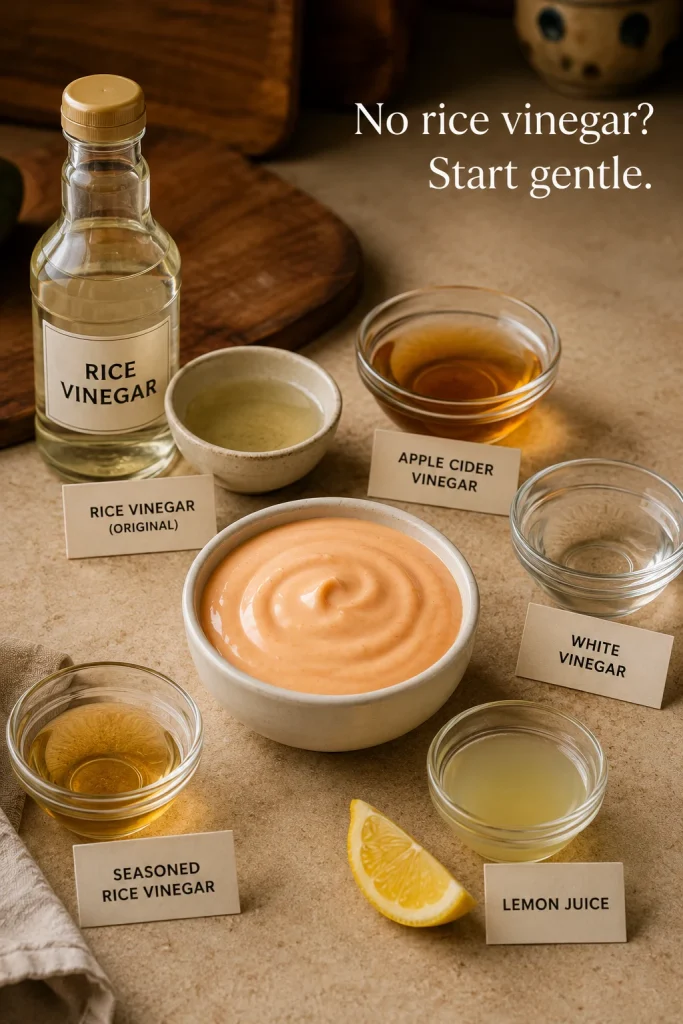
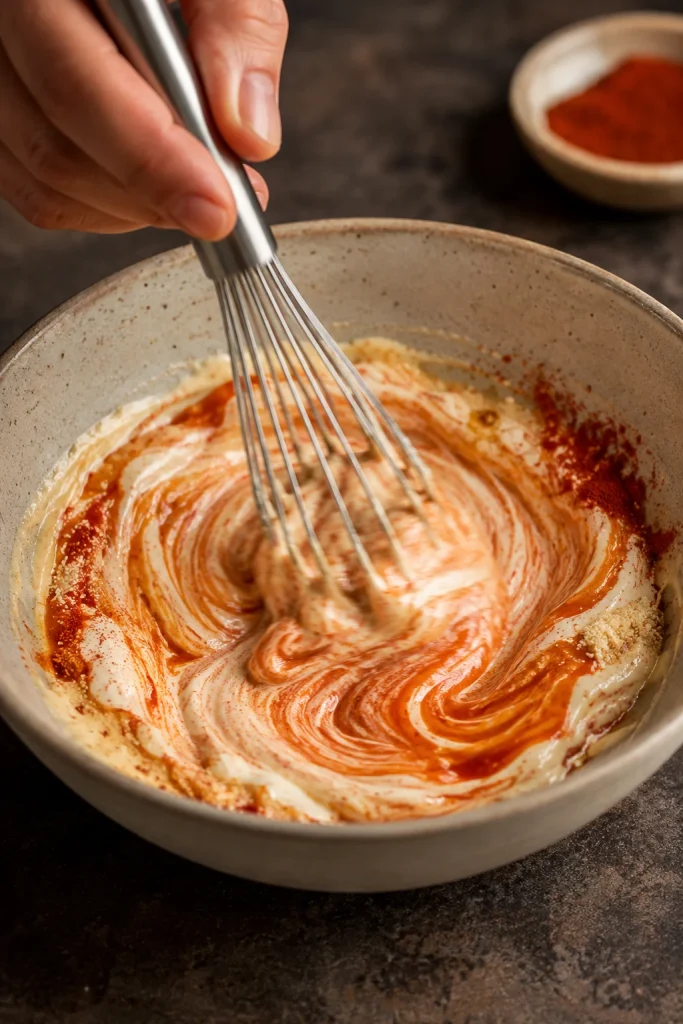
Too much like chutney The mango was too ripe or the sauce is too sweet. Add vinegar, chili, and salt. Next time, use greener mango and less sugar.

Texture Guide

The best texture depends on how you want to use the sauce. For example, wraps and bowls usually need a smooth drizzle, while rice dishes and grilled food can handle a thicker, more textured amba.

Texture guide comparing smooth drizzle, thick spoonable amba sauce and chunky pickle-style amba sauce.
Amba sauce can be blended smooth for falafel, shawarma, wraps and bowls, simmered thicker for eggs and grilled food, or left chunky for rice bowls, sandwiches and fries.
Texture Best For How to Get It
Smooth drizzle Falafel, shawarma, sabich, hummus bowls. Blend fully and add 1–2 tablespoons water if needed.
Thick spoonable sauce Eggs, grilled chicken, paneer, roasted vegetables. Blend, then simmer 2–3 minutes longer.
Chunky pickle-style amba Rice bowls, sandwiches, grilled food. Pulse briefly instead of blending smooth.
Creamy amba tahini Bowls, wraps, fries, roasted cauliflower. Whisk amba with tahini, lemon, cold water, and salt.
Thin dressing Salads and grain bowls. Whisk amba with lemon or vinegar, olive oil, and water.

Amba Sauce vs Mango Chutney, Mango Pickle, Mango Hot Sauce, and Mango Salsa

Amba sauce is easy to confuse with other mango condiments, but the flavor is different. In general, it is tangier than mango chutney, smoother than mango pickle, and more cooked and spiced than mango salsa. It can also be spicy, but it is not the same thing as mango hot sauce or mango habanero sauce.

Comparison guide showing the differences between amba sauce, mango chutney, mango pickle, mango hot sauce and mango salsa.
Amba sauce is tangier and more savory than mango chutney, smoother than mango pickle, less chili-forward than mango hot sauce, and more cooked and spiced than fresh mango salsa.
Condiment Main Flavor Texture Sweetness Best Use
Amba sauce Tangy, spicy, earthy, mango-forward. Smooth or lightly chunky. Low to medium. Falafel, shawarma, sabich, hummus, eggs, grilled food.
Mango chutney Sweet, sticky, spiced, jammy. Chunky or glossy. Medium to high. Cheese boards, sandwiches, curries, snacks.
Mango pickle / achar Salty, oily, sharp, intense. Chunky, oil-coated, spice-heavy. Low. Dal, rice, paratha, Indian meals.
Mango hot sauce / mango habanero sauce Chili-forward, fruity, sweet-hot, often very spicy. Thin to medium sauce. Medium to high. Wings, tacos, grilled meat, dipping sauces.
Mango salsa Fresh, juicy, lime-bright. Diced and fresh. Natural fruit sweetness. Tacos, chips, fish, shrimp, chicken.

For something fresh and chunky, mango salsa is the better choice. When you want a sweeter, jammy condiment, mango chutney fits better. With dal, rice, paratha, or a full Indian meal, mango pickle gives you the salty, oily intensity you want. By contrast, when you need a tangy mango sauce to drizzle over falafel, shawarma, sabich, hummus, eggs, or roasted vegetables, amba is the right one.

Storage and Freezing

Store homemade amba sauce in a clean, airtight jar in the refrigerator and use it within 1 to 2 weeks. Use a clean spoon every time, keep the jar closed between uses, and discard the sauce if it smells off, grows mold, or changes texture in an unpleasant way.

For longer storage, freeze amba sauce in small portions for up to 2 to 3 months. After thawing it in the refrigerator, stir well and adjust with a little water, vinegar, or lemon juice if the texture changes.

Important: This homemade amba sauce is a refrigerator condiment, not a shelf-stable canned preserve. Do not store it at room temperature after cooking. If you want to preserve sauces or pickles for shelf storage, use a tested canning recipe and follow safe acidity guidelines. The National Center for Home Food Preservation explains that vinegar, food, and water proportions matter for pickled food safety.

For more on safe pickling principles, see the National Center for Home Food Preservation’s pickling guidance.

Where to Buy Amba Sauce

If you do not want to make amba sauce from scratch, look for it at Middle Eastern grocery stores, Israeli or Jewish markets, international food stores, and online retailers. It may be labeled as amba sauce, mango amba sauce, pickled mango sauce, or Iraqi amba sauce.

Checklist for buying store-bought amba sauce, showing mango, vinegar, turmeric, chili, fenugreek, mustard and salt.
Good store-bought amba sauce should taste tangy, golden and pickle-like. Check the label for mango, vinegar, turmeric, chili, fenugreek, mustard and salt, and avoid sauces that taste more like sweet mango dip.

Store-bought amba varies a lot. Some versions taste sharp, sour, and pickle-like, while others are smoother, sweeter, or closer to a mild mango curry sauce. For a flavor closer to classic amba, check the ingredient list for mango, vinegar, turmeric, fenugreek, mustard, chili, and salt.

If the label says mango sauce but does not include vinegar, turmeric, chili, fenugreek, mustard, or similar pickle-style spices, it may taste more like a sweet mango dip than amba.

If a jar or pouch tastes too sweet, add lemon juice, vinegar, chili, or a pinch of salt before serving. When it tastes too sharp, stir it into tahini, yogurt, labneh, hummus, mayo, or olive oil to soften the edge.

Store-Bought Amba Sauce vs Homemade

Homemade amba gives you more control over sourness, sweetness, heat, and texture. Store-bought amba is convenient, especially for falafel, sabich, shawarma, and quick bowls, but it may taste sweeter, saltier, thinner, or more curry-like depending on the brand.

FAQs

What is amba sauce made of?

Amba sauce is usually made with mango, vinegar, turmeric, chili, fenugreek, mustard, garlic, salt, and sometimes cumin, coriander, lemon, or a small amount of sugar. The mango may be pickled first or cooked directly into a quicker sauce.

Is mango amba sauce the same as amba sauce?

Yes. Mango amba sauce usually refers to the same condiment as amba sauce, since amba is a mango-based sauce made with mango, vinegar, turmeric, chili, fenugreek, mustard, and salt. The phrase is helpful for readers who are new to the condiment, but amba sauce is the cleaner name to use throughout the recipe.

Is amba sauce spicy?

Amba sauce is usually mildly to moderately spicy. Still, you can make it hotter with more chili, cayenne, or Kashmiri chili powder, or keep it mild by using less chili and more mango.

Is amba sauce a spicy mango sauce?

Yes, amba can be described as a spicy mango sauce, but it is not the same as sweet mango hot sauce or mango habanero sauce. Amba is usually tangier, more savory, more sour, and more spice-driven, with turmeric, fenugreek, mustard, vinegar, and chili giving it a pickled mango flavor.

Is amba sauce the same as mango chutney?

No. Mango chutney is usually sweeter, stickier, and more jam-like. In contrast, amba sauce is usually tangier, more savory, more sour, and more pourable. It also has a stronger pickled mango character.

Can I use ripe mango for amba sauce?

Yes, but the sauce will be sweeter and less sharp. To bring back the tangy flavor, skip or reduce the sugar and add extra vinegar or lemon juice.

Can I use frozen mango?

Yes, frozen mango works for a quick homemade amba sauce. First, thaw and drain it. Then, simmer it with the spices and vinegar. Because frozen mango is usually sweeter and softer, you may need extra vinegar, lemon, or salt.

Is amba sauce fermented?

Some traditional-style amba recipes begin with salted green mango, and some versions are fermented. This recipe uses a safer refrigerator-condiment approach: a same-day cooked version and an optional overnight salted mango step for deeper pickled flavor.

What do you eat with amba sauce?

Amba sauce is excellent with falafel, shawarma, sabich, hummus bowls, eggs, grilled eggplant, fish, kebabs, roasted cauliflower, fries, potatoes, rice bowls, grilled chicken, paneer, tofu, and sandwiches.

Can I use amba sauce as a mango sauce for chicken?

Yes. Amba works especially well as a tangy mango sauce for grilled chicken, roasted chicken, shawarma-style chicken, kebabs, and chicken rice bowls. Use it as a finishing sauce rather than a long-cooking sauce. Brush it on near the end of cooking, spoon it over the plate, or mix it with tahini, yogurt, or olive oil for a milder drizzle.

How long does homemade amba sauce last?

Homemade amba sauce keeps for about 1 to 2 weeks in a clean jar in the refrigerator. It is not shelf-stable unless made with a tested canning recipe.

Can you freeze amba sauce?

Yes. Freeze amba sauce in small portions for up to 2 to 3 months. Thaw in the refrigerator and stir well before serving.

Can I make amba sauce without fenugreek?

You can, but the sauce will lose some of its signature flavor. If you do not have fenugreek, use the mustard seeds, cumin, coriander, turmeric, chili, and vinegar as written. The sauce will still be good, although it will taste less like classic amba.

Final Tips for the Best Amba Sauce

  • Use the firmest mango you can find.
  • Keep the sauce tangy rather than sweet; amba should not taste like mango jam.
  • Toast the mustard and fenugreek gently so they taste aromatic, not burnt.
  • After blending, let the sauce rest before judging the final flavor.
  • For a creamier drizzle, make amba tahini for bowls, wraps, and roasted vegetables.
  • Finally, keep homemade amba sauce refrigerated and use it within 1 to 2 weeks.

Back to top