Posted on 2 Comments

Mango Habanero Sauce Recipe: Sweet-Spicy Hot Sauce for Wings, Tacos & Chicken

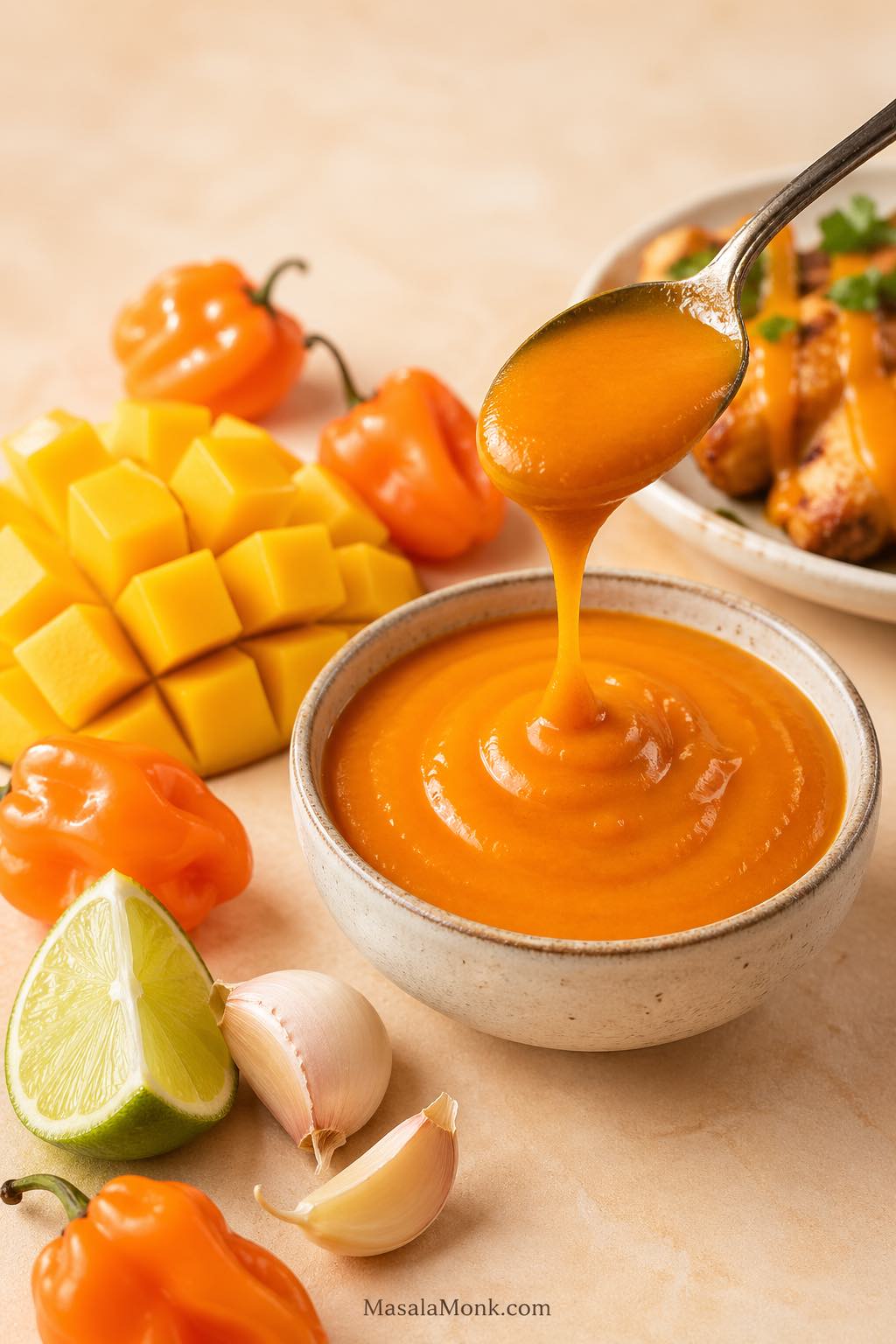
Glossy mango habanero sauce in a bowl with fresh mango, orange habanero peppers, lime, garlic and wings in the background.

A good mango habanero sauce recipe should taste fruity, fiery, tangy, and balanced. The mango should come through clearly, the habanero should bring real heat, and the vinegar, lime, salt, garlic, and onion should keep the sauce sharp enough for wings, tacos, grilled chicken, shrimp, fish, paneer, tofu, burgers, wraps, fries, and rice bowls.

The useful part is that this homemade mango habanero sauce starts with one flexible base. From there, you can thin it into hot sauce, finish it with butter for wings, reduce it into a glaze, stir it into a creamy dip, or push it toward a BBQ-style sauce. Instead of locking you into one narrow version, it shows you how to control heat, texture, sweetness, acidity, and storage.

Here, the sauce starts as a cooked blender mango habanero sauce: mango, habanero, onion, garlic, vinegar, water, and salt simmer first, then everything is blended smooth and finished with lime juice and sweetener. As a result, the finished sauce tastes rounder than a raw blend, smoother than a salsa, and more useful than a plain vinegar hot sauce.

It is also easy to make. The base simmers in one pan, then blends into a smooth, pourable sauce without special hot sauce equipment. For that reason, you can make a bold homemade hot sauce at home without fermenting, canning, or buying specialty tools.

The one thing to respect is the habanero itself. It is seriously hot, so this recipe gives you a clear heat guide before you cook. Start with one pepper for a medium-hot mango habanero sauce, use two for a properly hot version, and only go beyond that if you already know you love very spicy sauces.

Quick Answer: What Is Mango Habanero Sauce?

Mango habanero sauce is a sweet-spicy homemade sauce made with ripe mango, habanero peppers, vinegar, lime juice, garlic, onion, salt, and a little sweetener. In this recipe, the sauce is cooked and blended, so it becomes smooth, bright orange, fruity, tangy, and hot.

Unlike mango mustard sauce, this mango habanero sauce recipe is hotter and more chili-forward. Where mango salsa stays chunky and fresh, this sauce is cooked, blended, and pourable. Amba sauce, by contrast, leans more sour and pickle-like, while mango habanero sauce is sweeter, fruitier, and built around habanero heat.

Its biggest advantage is flexibility. For example, you can drizzle it over tacos and eggs, toss it with wings, brush it onto grilled shrimp or salmon, serve it with fries, or spread it inside burgers and wraps.

At a glance: This homemade mango habanero sauce recipe makes about 1¾ cups / 420 ml. Use 1 habanero for medium-hot, 2 for hot, and 3+ only if you love serious heat. The base sauce is cooked, smooth, fruity, tangy, and pourable. Increase the vinegar for a thinner hot sauce, or finish the sauce with butter for a glossy wing sauce.

This version is best for readers who want a homemade mango habanero sauce that is hot but still usable, not a sauce so fiery that it only works a few drops at a time.
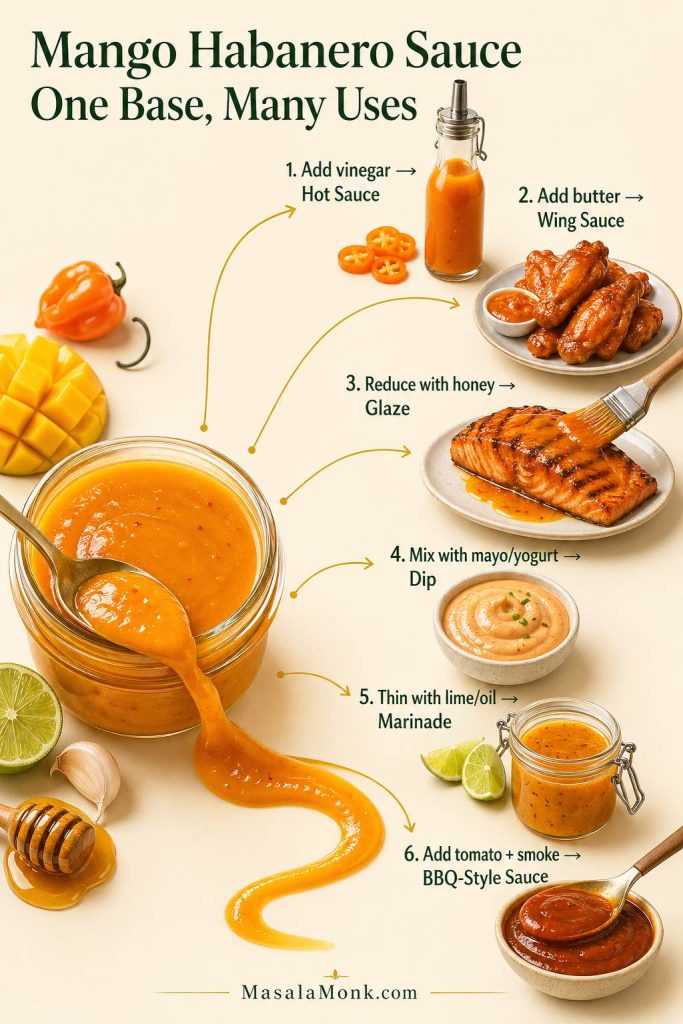
Homemade mango habanero sauce in a jar with arrows showing how to turn one base into hot sauce, wing sauce, glaze, dip, marinade, and BBQ-style sauce.
One homemade mango habanero sauce can go several directions. Thin it with vinegar for hot sauce, finish it with butter for wings, reduce it with honey for a glaze, stir it into mayo or yogurt for a creamy dip, or loosen it with lime and oil for a quick marinade.

Why This Mango Habanero Sauce Recipe Works

The balance starts with the mango. It gives the sauce body, color, and natural sweetness. The habanero brings the heat, but it also adds a floral, fruity aroma. Meanwhile, vinegar and lime keep everything sharp, while salt makes the mango and chili taste complete.

Cooking the base first also matters. It softens the onion, garlic, mango, and habanero before blending, so the finished sauce tastes rounder instead of raw or harsh. As a result, the cooked base tastes smoother, while the lime added at the end keeps the sauce bright.

That balance makes the sauce flexible at home. For example, keep it medium-thick for dipping, thin it with extra vinegar for hot sauce, finish it with butter for wings, or reduce it into a glaze for grilled food.

What Does Mango Habanero Sauce Taste Like?

At first, mango habanero sauce should taste fruity and bright. After a few seconds, the habanero heat should build. The mango gives the recipe ripe tropical sweetness, the vinegar and lime keep the sauce tangy, and the habanero adds a floral heat that lingers.

A good batch should not taste like mango jam, and it should not taste like plain vinegar hot sauce either. Instead, the best version lands in that sweet and spicy middle ground: fruity enough for dipping, sharp enough for tacos, and bold enough for wings.
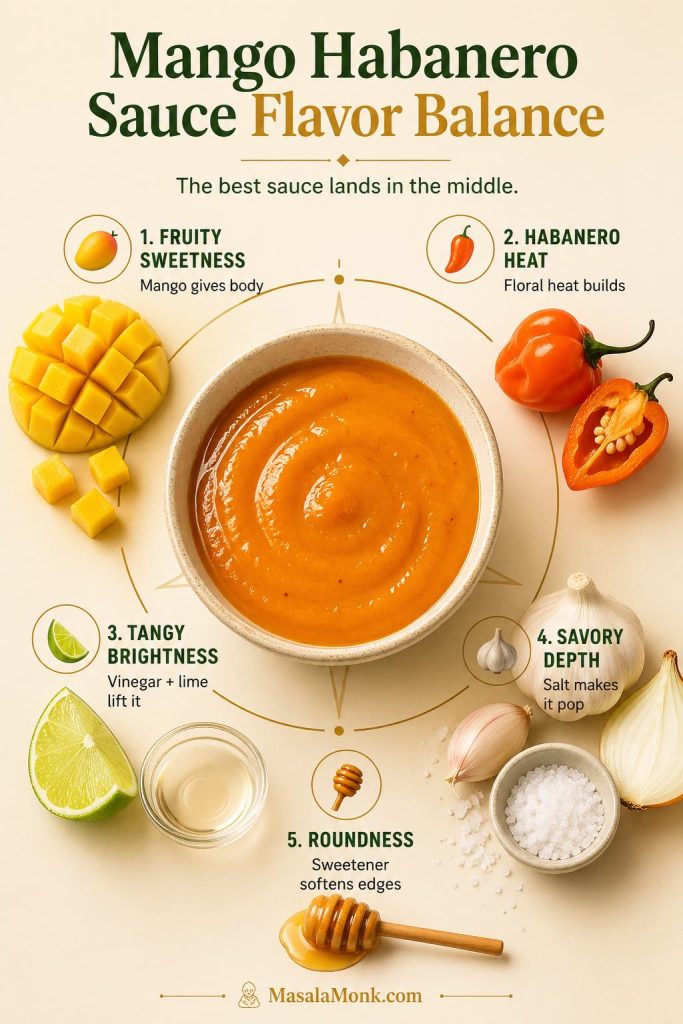
Mango habanero sauce flavor balance guide showing mango sweetness, habanero heat, vinegar and lime brightness, savory depth, and honey roundness.
A good mango habanero sauce should land in the middle: fruity from mango, hot from habanero, bright from vinegar and lime, savory from garlic, onion, and salt, and rounded with just enough sweetener.

When one flavor takes over, adjust the sauce in stages. First, fix flatness with salt. Next, use lime or vinegar when the sauce tastes too sweet. Finally, when the habanero heat is running the show, bring the sauce back into balance with more mango or a little honey.

Ingredients for This Mango Habanero Sauce Recipe

Think of the ingredients in roles, not just measurements. Mango gives body, sweetness, and color. Habanero gives heat and aroma. Vinegar gives sharpness, lime gives freshness, garlic and onion give depth, and sweetener rounds the edges.

The table below gives you a balanced starting point. Once the sauce is blended, you can adjust sweetness, heat, acid, salt, and thickness to match how you want to use it.
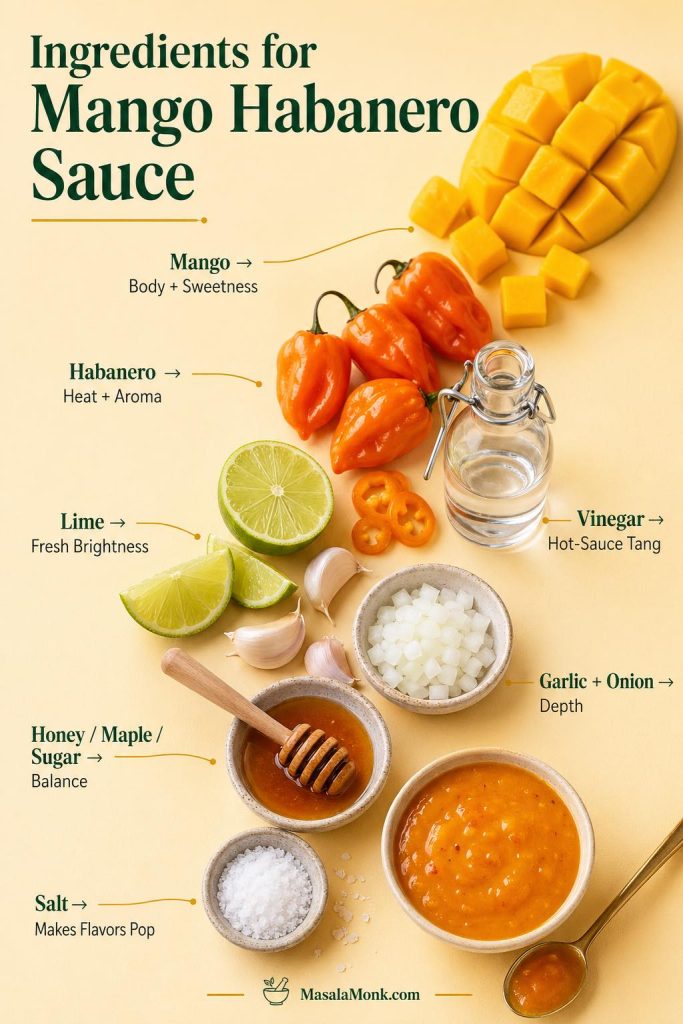
Ingredients for mango habanero sauce including ripe mango, habanero peppers, lime, vinegar, garlic, onion, honey, salt, and finished sauce.
Each ingredient has a job in mango habanero sauce: ripe mango gives body and sweetness, habanero brings heat, vinegar and lime keep it tangy, garlic and onion add depth, and honey or sugar rounds the edges.
Ingredient US Amount Metric Amount Why It Matters
Ripe mango, diced 1½ cups 250 g / 8.8 oz Sweetness, body, color, and fruit flavor
Fresh habanero peppers 1–2 peppers about 10–20 g / 0.35–0.7 oz Heat and floral chili aroma
Onion, chopped ¼ cup 40 g / 1.4 oz Savory body and depth
Garlic 2 cloves 6 g / 0.2 oz Sharpness and backbone
Apple cider vinegar or white vinegar ⅓ cup 80 ml / 2.7 fl oz Tang and hot-sauce character
Fresh lime juice 2 tbsp 30 ml / 1 fl oz Fresh brightness
Water ¼ cup 60 ml / 2 fl oz Helps the sauce simmer and blend
Honey, sugar, or maple syrup 1–2 tbsp 20–40 g honey/maple or 12–25 g sugar Balances heat and acid
Fine sea salt ¾ tsp 4–5 g Makes the sauce taste complete

Optional flavor additions include ½–1 teaspoon grated ginger for tropical warmth, ¼ teaspoon cumin for earthiness, ¼ teaspoon smoked paprika for a BBQ-style direction, or a tiny pinch of allspice for a Caribbean-style note. However, for a first batch, keep the sauce simple before adding too many extra spices.

Best Mango to Use: Fresh, Frozen or Mango Pulp

For the brightest fresh mango flavor, use ripe mango that smells sweet before you cut it. Since mango is the body of this sauce recipe, the fruit should taste good before it goes into the pan.
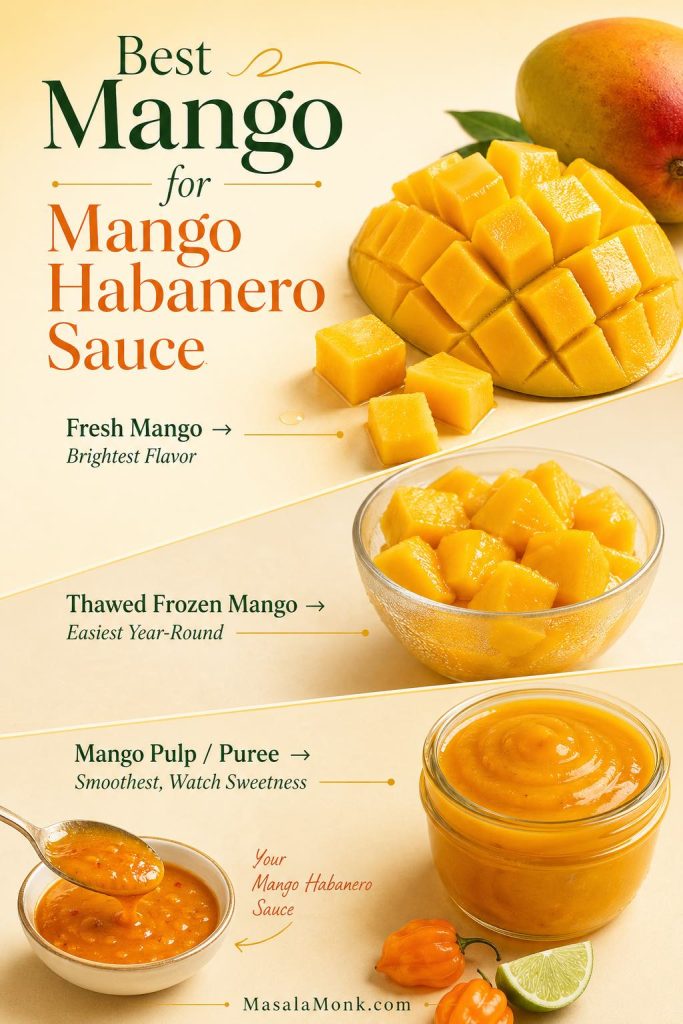
Best mango options for mango habanero sauce, showing fresh mango, thawed frozen mango, mango pulp or puree, and finished mango habanero sauce.
Fresh mango gives mango habanero sauce the brightest flavor, thawed frozen mango is the easiest year-round option, and mango pulp or puree makes the sauce extra smooth. If using sweetened pulp, start with less honey or sugar and adjust after blending.

Meanwhile, mango habanero sauce with frozen mango can also taste excellent when fresh mango is out of season. Thaw frozen mango first, then use it like fresh diced mango. It often blends smoothly and gives the sauce a consistent color and texture.

Mango pulp or mango puree can also work, especially when you want a very smooth sauce. However, the one thing to watch is sweetness. Many mango pulps are already sweetened, so start with little or no honey or sugar and adjust after blending.

On the other hand, underripe mango will make the sauce sharper and less fruity. Very fibrous mango can also make the finished sauce harder to blend smooth, so strain it through a fine mesh sieve if needed.

Can You Use Mango Pulp or Mango Puree?

Yes, mango pulp or mango puree can work well in this mango habanero sauce recipe. Use about 1 cup / 250 g mango pulp in place of the diced mango. If the pulp is sweetened, skip the honey or sugar at first and adjust only after the sauce has simmered and blended.

Heat Guide for This Mango Habanero Sauce Recipe

This is the section to read before cutting the peppers. Habaneros are much hotter than jalapeños; the Chile Pepper Institute lists orange habanero at around 250,000 Scoville Heat Units. That kind of habanero pepper heat can take over a mango sauce quickly.

For that reason, one seeded habanero is the best first batch for most people. After blending, you can always add more heat in small amounts. Once too much habanero is blended into the whole sauce, though, it is much harder to fix.
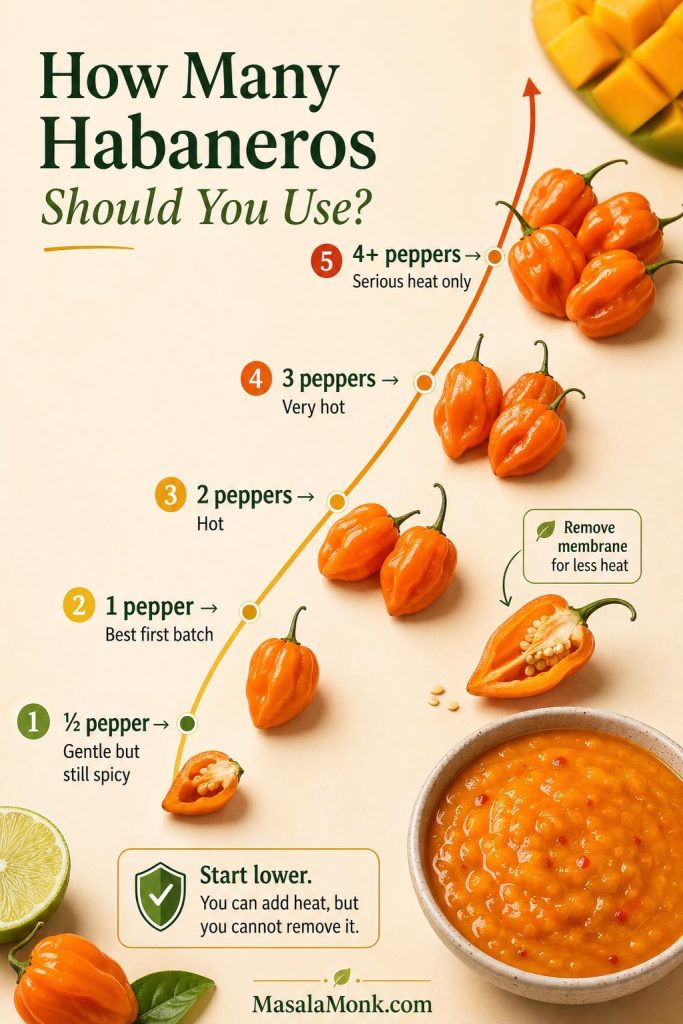
Heat guide for mango habanero sauce showing ½ pepper, 1 pepper, 2 peppers, 3 peppers, and 4+ habaneros from gentle heat to serious heat.
Start lower when making mango habanero sauce. One seeded habanero is the safest first batch for most people, while two peppers make it hot and three or more should be saved for serious heat lovers.

Use the table below to make a mild mango habanero sauce, medium-hot sauce, hot sauce, or extra hot mango habanero sauce without guessing.

Heat Level Habanero Amount Prep Method Best For
Gentle but still spicy ½ pepper Seeds and membrane removed First-time habanero users
Medium-hot 1 pepper Mostly seeded Best first batch
Hot 2 peppers Some membrane left Wings, tacos, spicy bowls
Very hot 3 peppers Some seeds and membrane included Hot sauce lovers
Extreme 4+ peppers Use with caution Serious heat lovers only
Heat tip: Start with less habanero than you think. You can always blend in more heat later, but you cannot remove it once the whole batch is too hot.
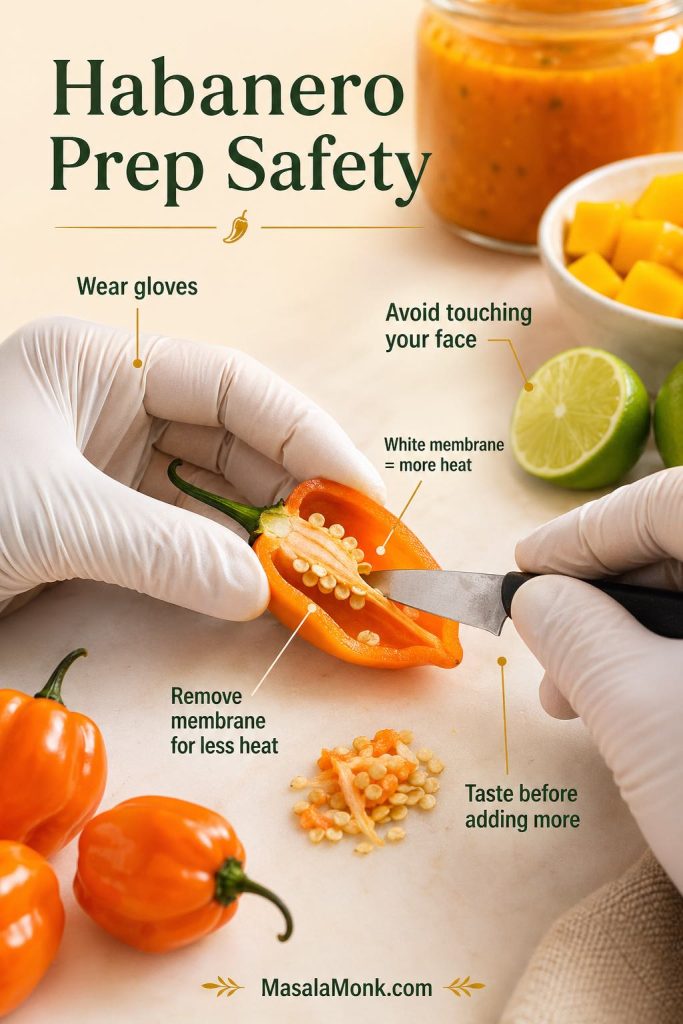
Gloved hands removing seeds and white membrane from an orange habanero pepper for mango habanero sauce.
Wear gloves when cutting habaneros, avoid touching your face, and remove some of the white membrane if you want better heat control. The membrane carries much of the pepper’s heat, so removing it makes the mango habanero sauce easier to manage.

Before cutting the peppers, wear gloves. In addition, avoid touching your eyes, nose, lips, or face after handling habaneros. The white membrane inside the pepper carries a lot of the heat, so removing it gives this sauce recipe more control.

Equipment You Need

You need a small saucepan, a blender or immersion blender, gloves for handling habaneros, a spoon or spatula, and a clean jar or bottle for storing the finished sauce. A high-speed blender gives the smoothest mango habanero sauce, but an immersion blender works if you do not mind a slightly thicker texture. For a very smooth, bottle-friendly hot sauce, keep a fine mesh sieve nearby so you can strain the sauce after blending.

How to Make This Mango Habanero Sauce Recipe

The method is simple, but the order matters: cook first, blend second, brighten last. First, simmering softens the mango, onion, garlic, and habanero. Next, blending turns them into a smooth sauce. Finally, lime juice and sweetener go in near the end so the finished sauce tastes bright instead of dull.
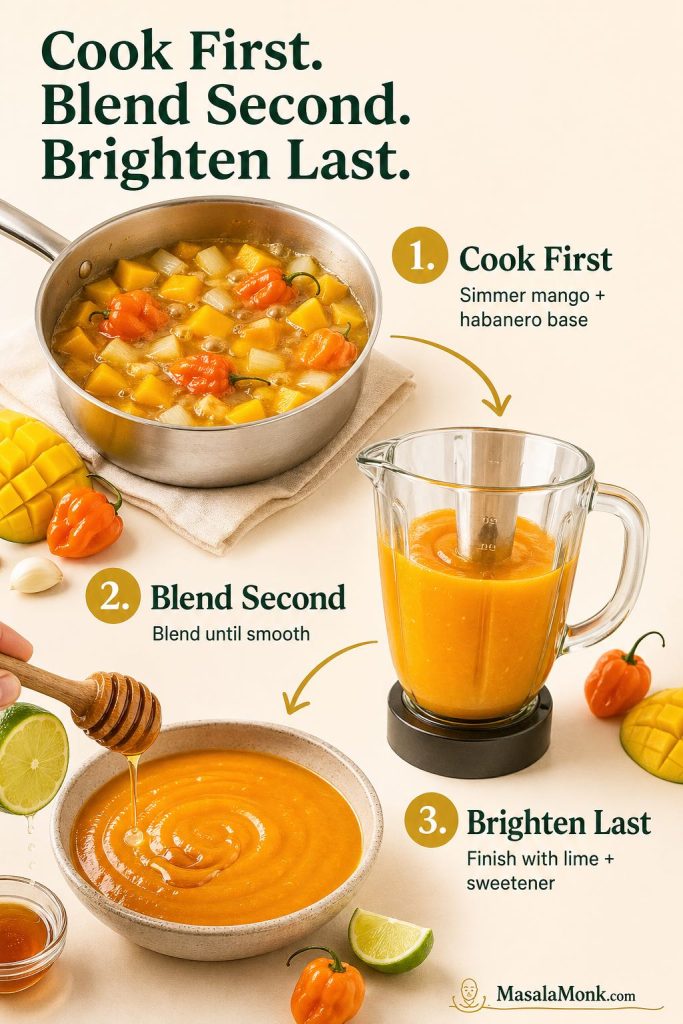
Three-step method for mango habanero sauce showing mango and habanero simmering, blending smooth, and finishing with lime and sweetener.
The order matters for smooth mango habanero sauce: simmer the mango, habanero, onion, garlic, vinegar, and water first, blend the softened mixture until smooth, then finish with lime juice and sweetener for brightness.

1. Prep the habaneros safely

First, put on gloves. Remove the stems from the habaneros. For less heat, cut the peppers open and scrape out most of the seeds and white membrane.

2. Simmer the mango and habanero base

Next, add the mango, habanero, onion, garlic, vinegar, water, and salt to a small saucepan. Bring the mixture to a visible boil over medium heat, then reduce it to a gentle simmer.

Simmer for 10–15 minutes, stirring often, until the mango and onion are soft. This cooking step rounds out the onion, garlic, and habanero, so the finished sauce tastes smoother and less raw.

3. Cool slightly and blend

After that, let the mixture cool for about 5 minutes. Blend until completely smooth. If using a blender, vent the lid slightly and cover it with a towel so steam does not build pressure.

4. Finish the sauce

At this point, return the sauce to the pan. Stir in lime juice, honey or sugar, and any optional spices. Then, simmer for another 2–5 minutes, until the mango habanero sauce looks glossy and unified.

5. Taste and adjust

Finally, taste carefully, using only a tiny spoon at first. Habanero heat builds as you eat, so the sauce may feel hotter after a few seconds.

  • If the sauce tastes flat, add salt.
  • If the mango habanero sauce tastes too sweet, add lime juice or vinegar.
  • If the recipe tastes too sharp or too hot, add mango or honey.
  • If the sauce is too thick, add water a spoonful at a time.
  • If the sauce is too thin, simmer uncovered until it reduces.
Common mistakes to avoid: Do not add all the habaneros at once if you are unsure about heat. Also, do not skip the salt, because the sauce will taste flat. Do not over-thin the sauce before blending; you can always add water later. Finally, do not assume this homemade mango habanero sauce is shelf-stable just because it contains vinegar.

Use the mango habanero sauce recipe below as the master version. From there, adjust the thickness and finish depending on whether you want hot sauce, wing sauce, glaze, dip, marinade, or BBQ-style sauce.

Mango Habanero Sauce Recipe

This homemade mango habanero sauce recipe makes a cooked blender sauce that is fruity, fiery, tangy, smooth, and flexible enough for wings, tacos, chicken, shrimp, fish, paneer, tofu, fries, burgers, wraps, and bowls.

YieldAbout 1¾ cups / 420 ml / 14 fl oz
Prep Time10 minutes
Cook Time15–20 minutes
Total Time25–30 minutes

Ingredients

  • 1½ cups / 250 g ripe mango, diced
  • 1–2 habanero peppers, stemmed
  • ¼ cup / 40 g chopped onion
  • 2 garlic cloves / 6 g, roughly chopped
  • ⅓ cup / 80 ml apple cider vinegar or white vinegar, preferably 5% acidity
  • ¼ cup / 60 ml water
  • ¾ tsp / 4–5 g fine sea salt
  • 2 tbsp / 30 ml fresh lime juice
  • 1–2 tbsp honey, sugar, or maple syrup
  • Optional: ½–1 tsp grated ginger
  • Optional: ¼ tsp cumin
  • Optional: ¼ tsp smoked paprika
  • Optional: tiny pinch to ¼ tsp allspice

Instructions

  1. Wear gloves before handling the habaneros. Remove the stems. For less heat, remove seeds and most of the white membrane.
  2. Add mango, habanero, onion, garlic, vinegar, water, and salt to a small saucepan.
  3. Bring to a visible boil over medium heat, then reduce to a gentle simmer.
  4. Simmer for 10–15 minutes, stirring often, until the mango and onion are soft.
  5. Cool for 5 minutes, then blend until completely smooth.
  6. Return the sauce to the pan. Stir in lime juice, sweetener, and any optional spices.
  7. Simmer for 2–5 minutes more, until glossy and slightly thickened.
  8. Taste carefully. Adjust salt, lime/vinegar, sweetener, or water as needed.
  9. Cool the mango habanero sauce and store it in a clean jar or bottle in the refrigerator.

Recipe Notes

  • Use 1 habanero for a medium-hot sauce and 2 habaneros for a hotter version.
  • For a thinner homemade mango habanero hot sauce, increase the vinegar to ½ cup / 120 ml and strain after blending.
  • For a thicker glaze, simmer uncovered for a few extra minutes.
  • For wing sauce, use the butter-finished conversion below.
  • This is a refrigerator sauce recipe, not a tested shelf-stable canning recipe.
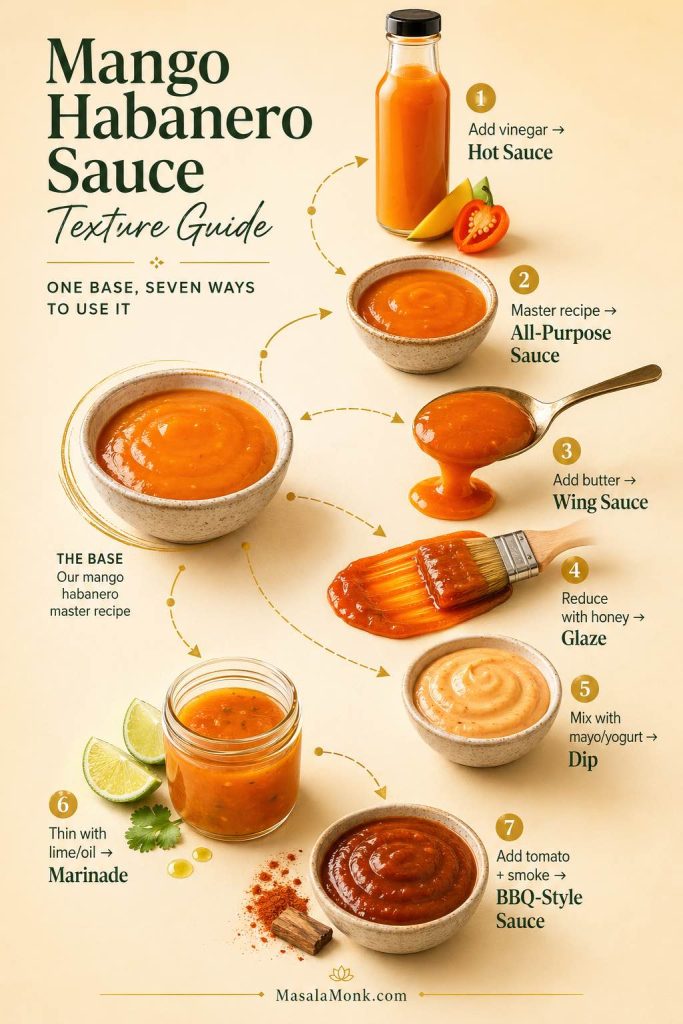
Mango habanero sauce texture guide showing how one base becomes hot sauce, all-purpose sauce, wing sauce, glaze, dip, marinade, and BBQ-style sauce.
Use the master mango habanero sauce as a base, then adjust the texture for the job: add vinegar for hot sauce, butter for wing sauce, honey for glaze, mayo or yogurt for dip, lime and oil for marinade, or tomato and smoke for a BBQ-style sauce.

Homemade Mango Habanero Hot Sauce Version

Choose this version when you want something bottle-friendly. More vinegar makes the sauce thinner, sharper, and easier to drizzle over tacos, eggs, grilled food, bowls, and roasted vegetables.

Element All-Purpose Sauce Hot Sauce Version
Vinegar ⅓ cup / 80 ml ½ cup / 120 ml
Water ¼ cup / 60 ml ¼ cup / 60 ml, plus more if needed
Sweetener 1–2 tbsp 1 tbsp to start
Final simmer 2–5 minutes 5 minutes
Texture Medium-thick Thin and pourable
Optional step Usually no strain Strain for bottle-smooth sauce

Compared with the all-purpose sauce, this hot sauce version tastes sharper, thinner, and more vinegar-forward. Therefore, use it when you want a real hot sauce texture rather than a thicker dipping sauce.
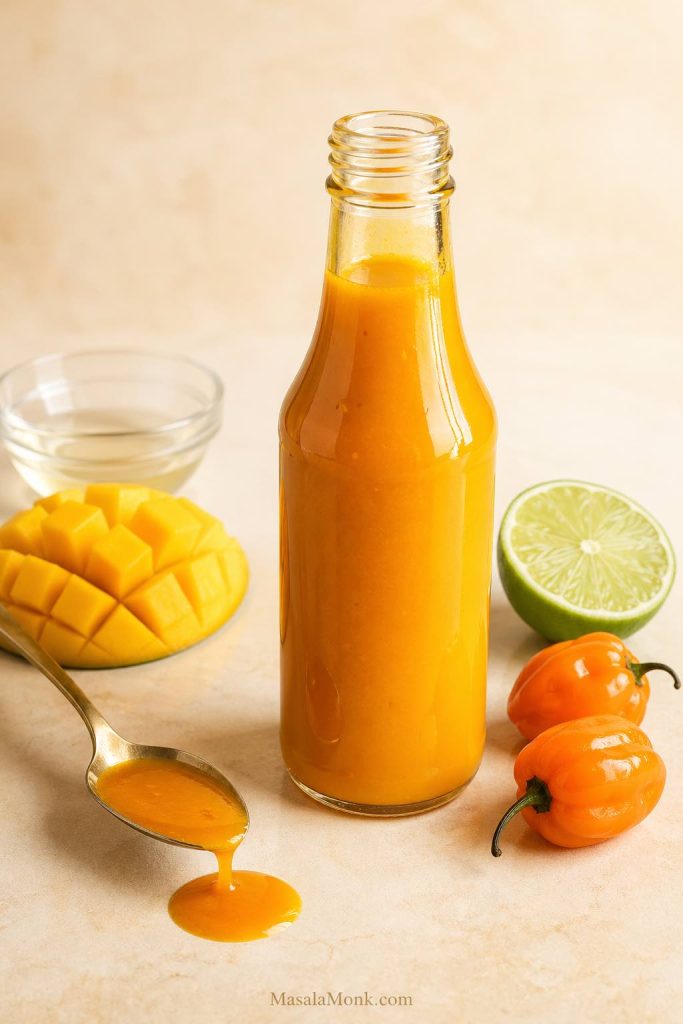
Homemade mango habanero hot sauce in a glass bottle with mango, habanero peppers, lime, vinegar, and a spoonful of orange sauce.
For a thinner mango habanero hot sauce, add extra vinegar, blend until smooth, and strain if you want a bottle-friendly texture. This version is sharper and more pourable than the thicker all-purpose sauce.

Mango Habanero Wing Sauce

For wings, the sauce needs to cling. Butter gives it gloss, honey helps it stick, and gentle heat brings everything together. In other words, this is the sweet heat version to use when you want glossy mango habanero sauce for wings.

This wing version works for chicken wings, boneless wings, tenders, cauliflower wings, paneer bites, or crispy tofu. For best results, warm the sauce first, then toss it with hot cooked wings just before serving.
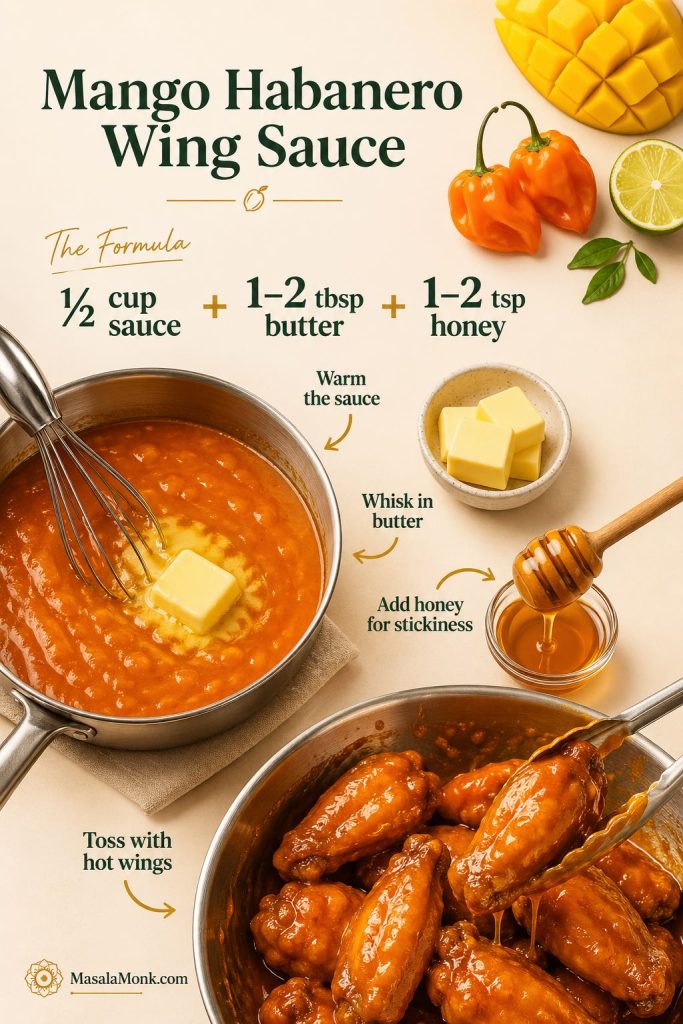
Mango habanero wing sauce formula showing ½ cup sauce, butter, honey, warm sauce, whisk in butter, add honey, and toss with hot wings.
Turn the base mango habanero sauce into a glossy wing sauce by warming ½ cup sauce with butter and a little honey. The butter helps the sauce cling, while the honey gives the wings a sweet, sticky finish.

For 2 lb / 900 g Wings

Ingredient US Amount Metric Amount
Mango habanero sauce ½ cup 120 ml / 4 fl oz
Butter 1–2 tbsp 14–28 g / 0.5–1 oz
Honey or brown sugar 1–2 tsp 7–14 g honey or 4–8 g sugar
Lime juice or vinegar, optional 1 tsp 5 ml
Salt Pinch To taste

First, warm the mango habanero sauce in a small pan over low heat. Next, whisk in the butter until glossy. If you want a stickier wing sauce, add honey or brown sugar. Finally, if the sauce tastes too sweet, add lime juice or vinegar before tossing it with hot cooked wings.

Optional Baked Wings

For a simple oven version, use 2 lb / 900 g chicken wings, 1 tbsp / 10–12 g aluminum-free baking powder, ¾ tsp / 4 g kosher salt, ½ tsp garlic powder, and ½ tsp smoked paprika. First, pat the wings very dry. Then, toss them with the seasoning, arrange them on a rack, and bake at 425°F / 220°C for 45–50 minutes, flipping halfway.

After the wings are cooked, toss them with warm mango habanero wing sauce. For food safety, chicken wings should reach 165°F / 73.9°C internally, following USDA poultry temperature guidance.
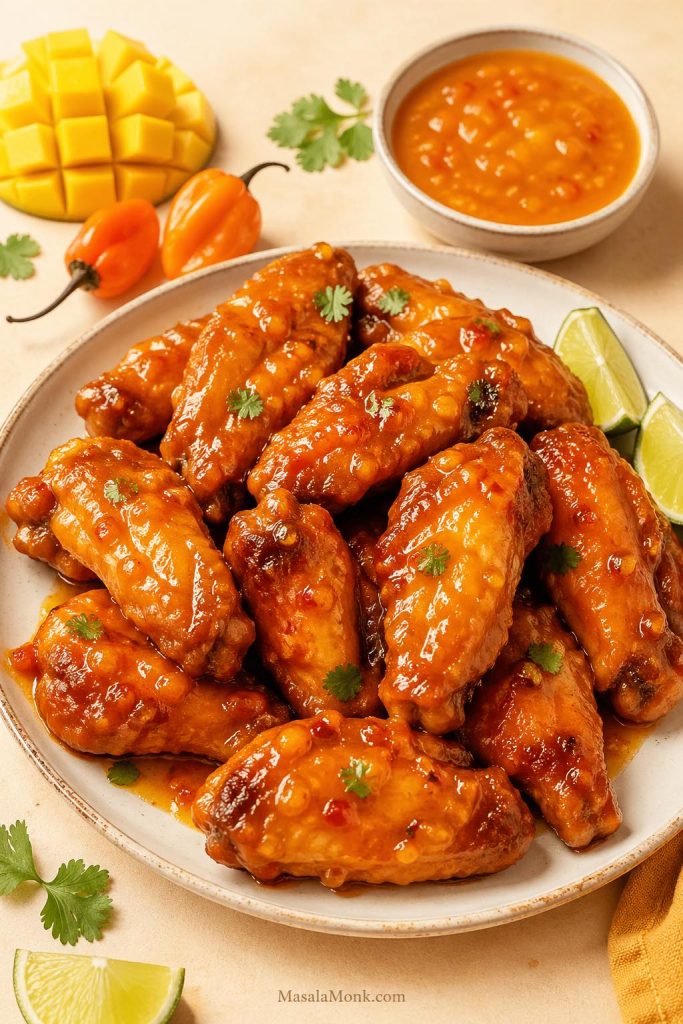
Glossy mango habanero chicken wings on a plate with mango, habanero peppers, lime wedges, and a bowl of orange wing sauce.
Toss hot cooked wings with warm mango habanero wing sauce just before serving so the buttery, sweet-spicy glaze clings instead of sliding off. The sauce should look glossy, sticky, and bright orange once it coats the wings.

Mango Habanero Glaze

For a glaze, reduce the sauce instead of thinning it. A few extra minutes in the pan makes it thicker, shinier, and better for brushing onto grilled chicken, salmon, shrimp, pork, paneer, tofu, roasted vegetables, or skewers.

Ingredient Amount
Mango habanero sauce ¾ cup / 180 ml
Honey 1 tbsp / 20 g
Lime juice or vinegar 1 tsp / 5 ml
Butter or oil, optional 1 tbsp / 14 g butter or 1 tsp / 5 ml oil

Simmer for 5–8 minutes, until the glaze lightly coats the back of a spoon. Then, brush it onto food near the end of cooking so the sugars do not burn.
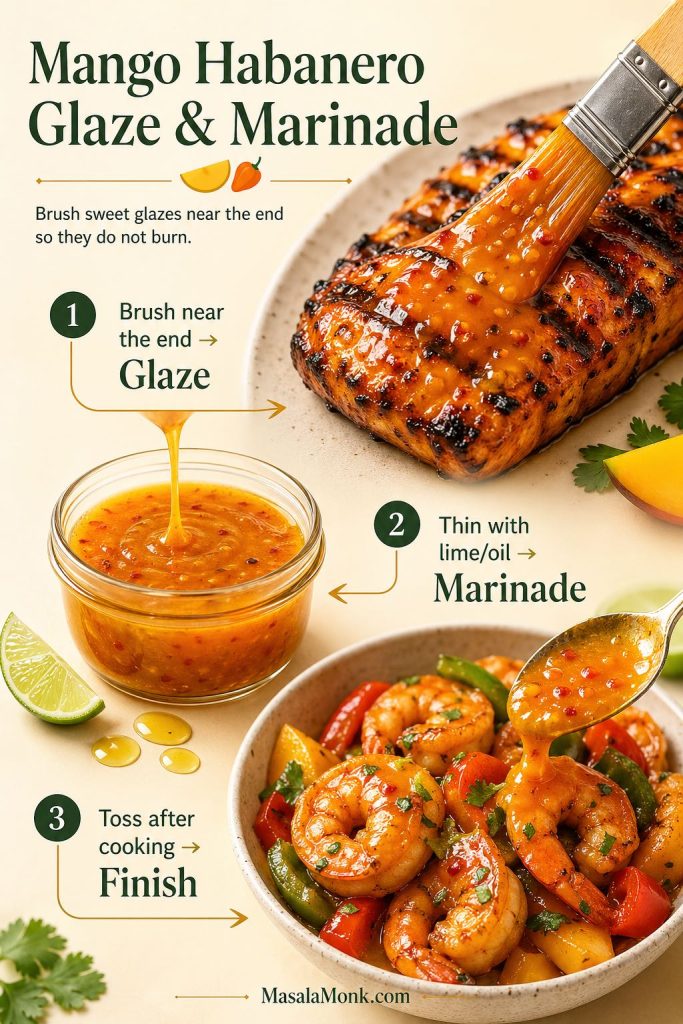
Mango habanero glaze and marinade guide showing sauce brushed on grilled food, thinned with lime and oil, and spooned over cooked shrimp.
Use mango habanero sauce as a glaze, marinade, or finishing sauce depending on texture. Brush sweet glazes near the end of cooking so they do not burn, thin the sauce with lime and oil for a marinade, or spoon it over cooked shrimp, chicken, paneer, tofu, or vegetables just before serving.

Mango Habanero Sauce Variations

Once the master sauce is balanced, the variations are easy. In fact, you can keep the same mango-habanero base, then change the texture, sweetness, smokiness, or cooking method depending on how you want to serve it.

For your first batch, however, keep the sauce simple. It is easier to learn your preferred heat and acid level before adding extra spices or turning the sauce into BBQ sauce, salsa, aioli, or a fermented hot sauce.
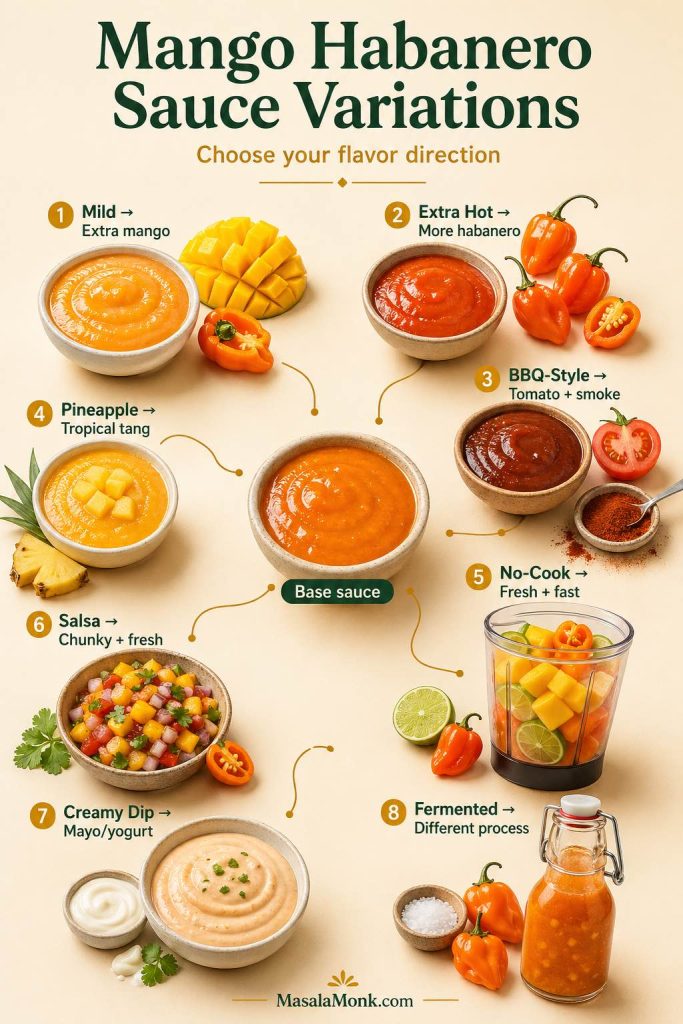
Mango habanero sauce variations guide showing mild, extra hot, BBQ-style, pineapple, no-cook, salsa, creamy dip, and fermented hot sauce options.
Once the base mango habanero sauce is balanced, you can take it in several directions. Add more mango for a milder sauce, more habanero for extra heat, pineapple for tropical tang, tomato and smoke for BBQ-style sauce, or mayo and yogurt for a creamy dip.

Mild Mango Habanero Sauce

For a milder sauce, use ½ seeded habanero and remove most of the white membrane. After blending, add extra mango if the heat still feels too sharp. You can also add a small amount of cooked orange bell pepper for body and color, but keep mango as the main flavor.

Extra Hot Mango Habanero Sauce

For an extra hot mango habanero sauce, use 3 or more habaneros only if you already enjoy very spicy sauces. Even then, add the extra pepper gradually so the sauce stays usable.

Mango Habanero BBQ Sauce

For a smoky, thicker version, simmer 1 cup / 240 ml mango habanero sauce with 2 tbsp / 30 g tomato paste, 1 tbsp / 12–14 g brown sugar, 1 tbsp / 15 ml apple cider vinegar, ½ tsp smoked paprika, ¼ tsp cumin, and 1 tsp / 5 ml Worcestershire sauce if you use it. As a result, the sauce becomes darker, thicker, and smoky-sweet after 8–10 minutes.

Pineapple Mango Habanero Sauce

For a brighter tropical variation, replace ½ cup / 80–90 g of the mango with pineapple. This version tastes sharper, juicier, and especially good with grilled shrimp, fish, chicken, tacos, and pork.

No-Cook Mango Habanero Sauce

For a faster, fresher version, blend the mango, habanero, vinegar, lime juice, garlic, salt, and sweetener without simmering. However, use less onion, or skip the onion, because raw onion can become sharp in a no-cook sauce.

This version tastes brighter and fruitier. However, it also tastes sharper and less rounded than the cooked sauce. Use the no-cook version within 2–3 days, and keep it refrigerated the whole time.

Mango Habanero Salsa

For a chunky salsa-style version, mix 1½ cups / 250 g diced mango with ½–1 very finely minced habanero, ¼ cup / 40 g red onion, 2 tbsp / 30 ml lime juice, 2 tbsp chopped cilantro, ½ tsp / 3 g salt, and optional tomato, cucumber, or pineapple. Then, rest the salsa for 10 minutes before serving.

For a chunkier mango topping with onion, cilantro, lime, and optional tomato or cucumber, see the full mango salsa recipe.

Mango Habanero Aioli or Creamy Dip

For a creamy dip, stir 1–2 tbsp cooled mango habanero sauce into ¼ cup mayonnaise, Greek yogurt, sour cream, or vegan mayo. Then, use it as a dip or sandwich spread for fries, burgers, wraps, tacos, nuggets, and roasted vegetables.

Fermented Mango Habanero Hot Sauce

Fermented mango habanero hot sauce is a different process from this quick cooked sauce. Instead of simmering first, the peppers, mango, onion, and garlic are usually fermented in a salt brine or mash before being blended with vinegar or lime.

Fermentation changes the safety and storage rules, so this quick cooked recipe should not be treated as a fermented sauce. If you want a fermented version, follow a dedicated fermented hot sauce method and pay attention to acidity, cleanliness, gas buildup, refrigeration, and pH if storing longer.

How to Use Mango Habanero Sauce

This is where the sauce earns its place in the fridge. For example, you can keep it medium-thick for dipping, thin it for drizzling, reduce it for glazing, or loosen it into a quick marinade.

Use this mango habanero sauce for chicken, shrimp, salmon, fish tacos, rice bowls, burgers, wraps, roasted vegetables, paneer, tofu, and fries. In other words, it works anywhere you want sweet heat with a bright mango finish.

What to eat with mango habanero sauce, including wings, tacos, shrimp, salmon, fries, paneer or tofu, burgers, wraps, and bowls.
Mango habanero sauce works as a dip, drizzle, glaze, or finishing sauce. Use it with wings, tacos, shrimp, salmon, fries, paneer, tofu, burgers, wraps, bowls, or roasted vegetables whenever you want sweet heat with a bright mango finish.

As a hot sauce

As a hot sauce, it works best when the texture is thin and pourable. Drizzle it on tacos, eggs, nachos, rice bowls, grilled vegetables, beans, burritos, wraps, and roasted potatoes. For a thinner hot sauce texture, use the extra-vinegar version above.

As a wing sauce

For wings, warm it first so it coats evenly. Toss it with chicken wings, boneless wings, tenders, nuggets, cauliflower wings, paneer bites, or crispy tofu just before serving.

As a glaze

When using it as a glaze, brush it on grilled chicken, shrimp, salmon, pork, paneer, tofu, roasted carrots, sweet potatoes, or skewers near the end of cooking. Otherwise, the sugars in the mango and honey can scorch if they cook too long.

As a marinade

For a quick mango habanero marinade, thin the sauce with a little extra lime juice, vinegar, or oil. Use it for chicken, shrimp, fish, paneer, tofu, or vegetables. However, avoid marinating delicate seafood for too long because the acid can change the texture.

As a dip

For dipping, keep the texture thicker. This works as a mango habanero dipping sauce for fries, potato wedges, onion rings, pakoras, chips, crackers, chicken tenders, nuggets, vegetable sticks, or roasted cauliflower. If the sauce feels too hot, mix a spoonful into mayo or yogurt.

As a sandwich sauce

Inside sandwiches and wraps, a little goes a long way. Use it on burgers, fried chicken sandwiches, grilled cheese, wraps, rolls, spicy mayo-style spreads, and grilled paneer sandwiches. The sweet, spicy, tangy flavor works especially well with rich or crispy fillings.

Mango Habanero Sauce vs Hot Sauce vs Wing Sauce vs Salsa

The names can get confusing because mango and habanero show up in several forms. However, the difference is mostly texture and use: hot sauce is thinner, wing sauce is buttery, glaze is reduced, salsa is chunky, marinade is looser, and BBQ sauce is smoky-sweet.
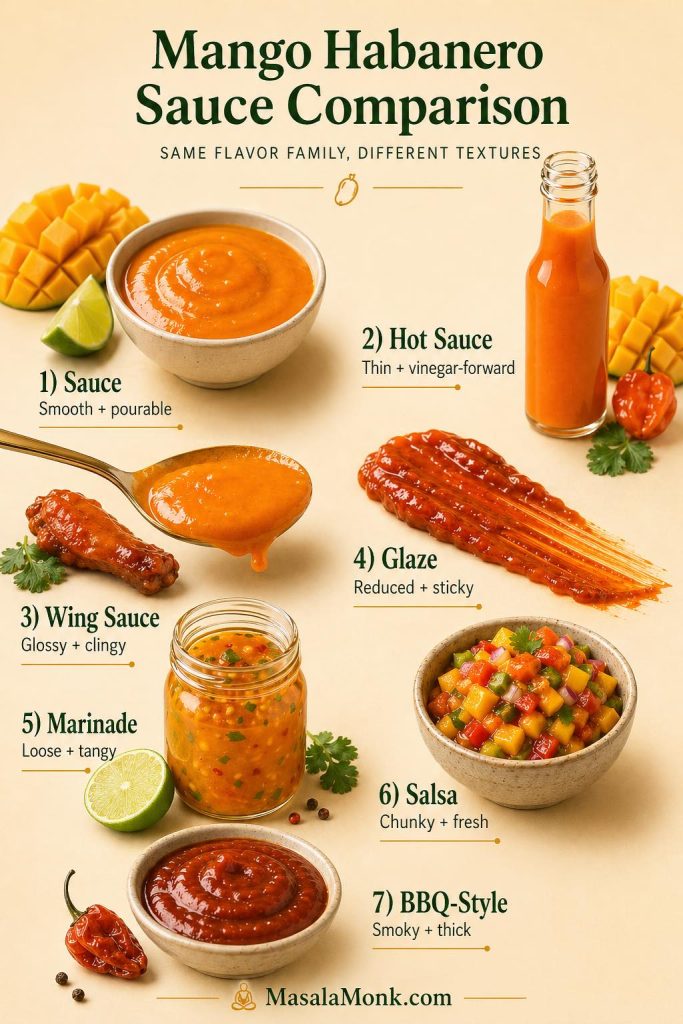
Mango habanero sauce comparison showing sauce, hot sauce, wing sauce, glaze, marinade, salsa, and BBQ-style sauce with different textures.
Mango habanero sauce can take several forms. Keep it smooth and pourable as an all-purpose sauce, thin it into hot sauce, finish it with butter for wings, reduce it into a sticky glaze, loosen it for marinade, make it chunky as salsa, or push it smoky and thick for BBQ-style sauce.
Version Texture Main Flavor Best Use
Mango habanero sauce Smooth, medium-thick, pourable Sweet, fruity, tangy, hot Wings, tacos, chicken, shrimp, dipping
Mango habanero hot sauce Thinner and more vinegar-forward Sharper, brighter, hotter Tacos, eggs, bowls, grilled food
Mango habanero wing sauce Glossy, buttery, clingy Sweet-hot and slightly sticky Chicken wings, tenders, cauliflower wings
Mango habanero marinade Loose, tangy, lightly sweet Bright, spicy, acidic Chicken, shrimp, fish, paneer, tofu
Mango habanero salsa Chunky or roasted Fresh, juicy, spicy Chips, tacos, fish, bowls
Mango habanero BBQ sauce Thicker, smoky, sticky Sweet, smoky, spicy Grilled chicken, ribs, burgers, sandwiches

Sauce Texture Guide

After blending, texture is the easiest thing to change. For example, a spoonful of vinegar can turn the base into a hot sauce, while a few extra minutes of simmering can turn it into a glaze. Use this guide to adjust the sauce for the way you want to serve it.

Version Texture Best Use How to Adjust
Mango habanero hot sauce Thin, pourable Tacos, eggs, bowls, grilled food Add more vinegar or water; strain if needed
All-purpose mango habanero sauce Medium-thick, pourable Chicken, tacos, fish, dipping Use the master recipe
Mango habanero wing sauce Glossy, clingy Wings, tenders, cauliflower wings Add butter and simmer briefly
Mango habanero glaze Thick, lacquered Grilled chicken, shrimp, salmon, paneer Add honey and reduce
Mango habanero dipping sauce Thick, spoonable Fries, tenders, pakoras, nuggets, vegetables Simmer slightly longer or stir into mayo/yogurt
Mango habanero marinade Loose, pourable Chicken, shrimp, fish, paneer, tofu Thin with lime, vinegar, or oil
Mango habanero BBQ sauce Thick, smoky-sweet Grilling, ribs, burgers Add tomato paste, brown sugar, and smoked paprika

How to Fix Mango Habanero Sauce

Sauces are adjustable, especially before serving. Because mango sweetness, vinegar sharpness, and habanero heat can vary from batch to batch, taste the sauce after blending and fix it while it is still warm.
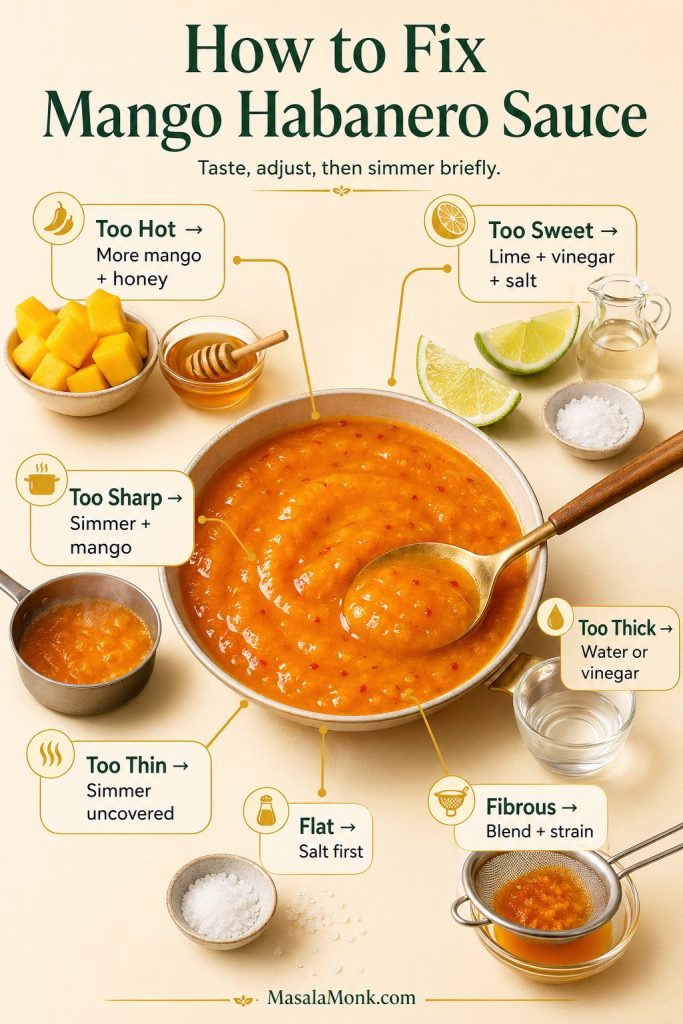
Troubleshooting guide for mango habanero sauce showing fixes for sauce that is too hot, too sweet, too sharp, too thick, too thin, flat, or fibrous.
Mango habanero sauce is easy to adjust while it is still warm. Add mango and honey if it is too hot, lime, vinegar, and salt if it is too sweet, water or vinegar if it is too thick, and simmer uncovered if it is too thin.
Problem Likely Cause Fix
Too hot Too much habanero or membrane Add more mango first; then round it with honey, lime, or butter if making wing sauce
Too sweet Very ripe mango plus too much sweetener Add vinegar, lime, and salt
Too sharp Too much acid or not enough simmering Simmer 3–5 minutes more; add mango or honey
Too thin Too much water or juicy mango Simmer uncovered until reduced
Too thick Dense mango or over-reduction Add water, vinegar, or lime 1 tbsp / 15 ml at a time
Bitter Burned garlic/onion or too much pepper pith Add mango and sweetener; avoid browning garlic next time
Flat Not enough salt or acid Add salt first. If it still tastes dull, add lime or vinegar
Not mango-forward Mango was bland or underripe Add ripe mango, thawed frozen mango, or mango pulp
Grainy or fibrous Fibrous mango or weak blender Blend longer, strain, or use smoother mango/frozen mango

Scaling the Recipe

Scaling is easy for mango, vinegar, lime, garlic, onion, sweetener, and salt. However, habaneros are the exception. Their size and heat vary so much that they should be scaled by taste, not strict multiplication.

If you double the mango and liquid, you can usually double the garlic, onion, vinegar, lime, sweetener, and salt. With habaneros, start lower, blend, taste carefully, and increase only if the sauce needs more heat.
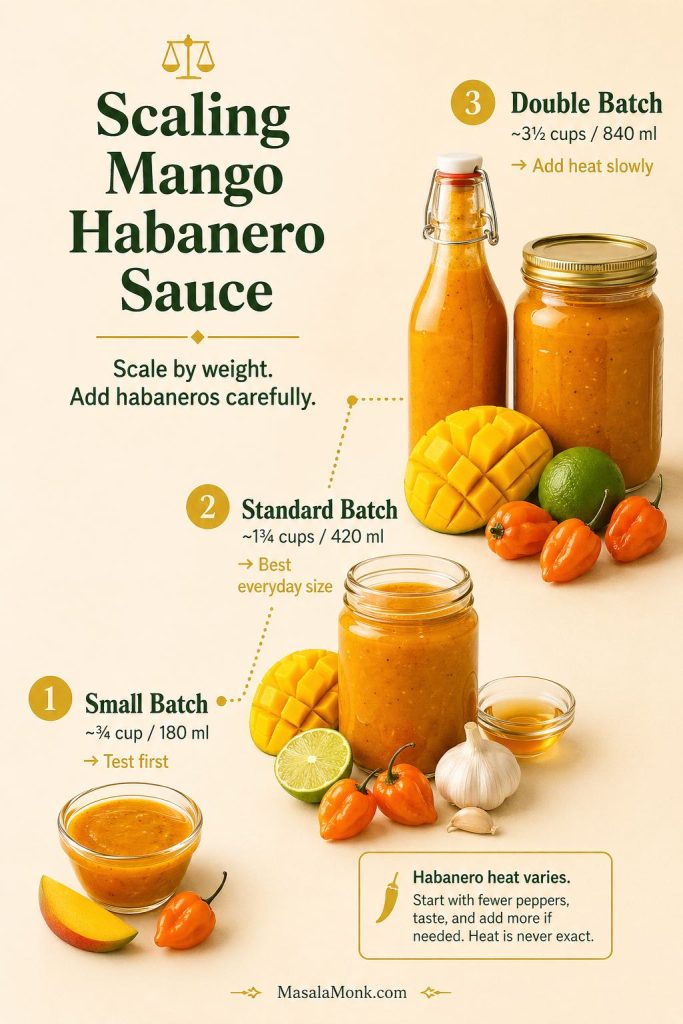
Scaling guide for mango habanero sauce showing small batch, standard batch, and double batch with a reminder to add habaneros carefully.
Scale mango habanero sauce by weight when possible, but add the habaneros more carefully than the mango, vinegar, lime, salt, and aromatics. Pepper heat varies, so start with fewer habaneros, taste after blending, and add more only if needed.
Ingredient Small Batch: ~¾ cup / 180 ml Standard: ~1¾ cups / 420 ml Double: ~3½ cups / 840 ml
Mango 125 g / ¾ cup 250 g / 1½ cups 500 g / 3 cups
Habanero ½–1 pepper 1–2 peppers 2–4 peppers, added carefully
Onion 20 g / 2 tbsp 40 g / ¼ cup 80 g / ½ cup
Garlic 1 clove / 3 g 2 cloves / 6 g 4 cloves / 12 g
Vinegar 40 ml / 2 tbsp + 2 tsp 80 ml / ⅓ cup 160 ml / ⅔ cup
Lime juice 15 ml / 1 tbsp 30 ml / 2 tbsp 60 ml / ¼ cup
Water 30 ml / 2 tbsp 60 ml / ¼ cup 120 ml / ½ cup
Honey 10–20 g 20–40 g 40–80 g
Salt 2–2.5 g 4–5 g 8–10 g

Storage, Freezing, and Canning Safety

Storage is the one place where homemade hot sauce should stay conservative. After the sauce cools, store it in a clean glass jar or bottle in the refrigerator. For best flavor and freshness, use it within 1–2 weeks. For longer storage, freeze small portions instead.
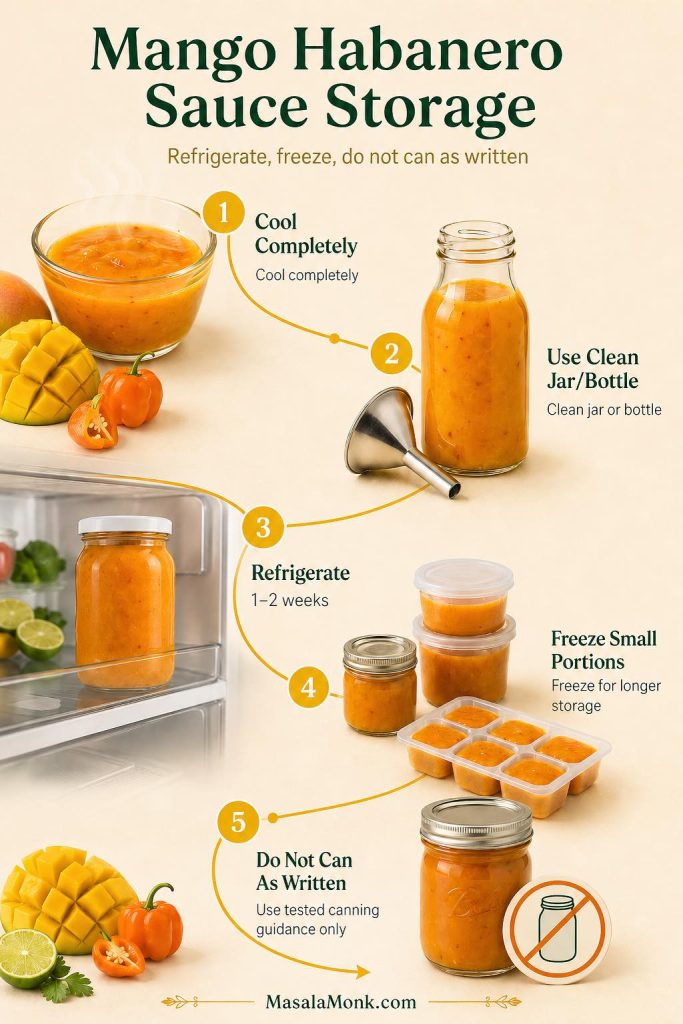
Mango habanero sauce storage guide showing sauce cooling, being bottled, refrigerated for 1–2 weeks, frozen in small portions, and not canned as written.
Treat this homemade mango habanero sauce as a refrigerator sauce. Cool it completely, store it in a clean jar or bottle, refrigerate for 1–2 weeks, or freeze small portions for longer storage. Do not can this recipe as written unless you are using tested canning guidance.

Even though the sauce contains vinegar and lime juice, it also contains mango, onion, garlic, and fresh peppers. Therefore, it should be treated as a refrigerator sauce, not a shelf-stable canned hot sauce, unless you are following tested preservation guidance.

For hot sauce safety, SDSU Extension explains that hot sauce should have a pH below 4.6 and include acid such as vinegar. For canning-style recipes, use vinegar labeled 5% acidity; Illinois Extension notes that tested USDA and National Center for Home Food Preservation recipes are built around that acidity level.

Canning note: Do not water-bath can this sauce as written. For shelf-stable preservation, use a tested canning recipe and proper acidity controls.

The National Center for Home Food Preservation has separate tested mango sauce canning guidance. In other words, do not treat this refrigerator mango habanero sauce recipe as a shelf-stable canning recipe.

FAQs

Is mango habanero sauce very spicy?

Yes, it can be. Because habaneros are very hot peppers, this mango habanero sauce recipe can become intense quickly. Use ½ to 1 seeded habanero for a more controlled first batch, or 2 habaneros for a properly hot sauce.

Can I make this mango habanero sauce recipe less spicy?

Yes. First, use fewer habaneros. Next, remove the seeds and membrane before cooking. If the finished sauce is still too hot, add more mango, honey, lime, or butter if you are turning it into wing sauce.

Is this mango habanero sauce easy to make?

Yes. This is an easy cooked blender sauce: simmer the mango, habanero, onion, garlic, vinegar, water, and salt, then blend and finish with lime juice and sweetener.

Can I make mango habanero sauce at home without special equipment?

Yes. You only need a saucepan, blender, gloves, spoon or spatula, and a clean jar or bottle. For a smoother homemade hot sauce, however, a high-speed blender and fine mesh sieve are helpful.

Can I use frozen mango?

Yes. Frozen mango works well in this sauce recipe. Thaw it before cooking so the mango simmers evenly and blends smoothly with the habanero, vinegar, garlic, and onion.

Can I use mango pulp or mango puree?

Yes. Use about 1 cup / 250 g mango pulp or mango puree instead of diced mango. If the pulp is sweetened, skip the honey or sugar at first, then adjust the sauce after blending.

Should mango habanero sauce be cooked?

For this style, yes. Cooking the mango, habanero, onion, and garlic before blending makes the sauce smoother, rounder, and more versatile. A raw blender version can taste fresher, but it will also taste sharper and less polished.

How do I make mango habanero hot sauce thinner?

Increase the vinegar to ½ cup / 120 ml, add water as needed, blend very smooth, and strain if you want a bottle-friendly texture. This gives the mango habanero sauce a thinner, sharper hot sauce consistency.

How do I make mango habanero wing sauce?

Warm ½ cup / 120 ml mango habanero sauce with 1–2 tbsp / 14–28 g butter, plus a little honey if you want it stickier. Then, toss hot cooked wings in the warm sauce just before serving.

Can I make mango habanero sauce without sugar?

Yes. If your mango is ripe and sweet, you can skip the honey, sugar, or maple syrup. However, the sauce will taste sharper and more hot-sauce-like, so adjust with extra mango or a little more salt if needed.

Can I make mango habanero sauce without vinegar?

You can reduce the vinegar and use more lime juice for a fresher flavor. However, the sauce will taste less like hot sauce and should still be refrigerated. For storage and hot-sauce character, vinegar is the better choice.

Is habanero mango sauce the same as mango habanero sauce?

Yes. Habanero mango sauce and mango habanero sauce usually mean the same thing: a sweet-hot sauce made with mango and habanero peppers. Mango habanero sauce is the more common way to describe it because the mango gives the sauce its body, color, and sweetness.

Is mango habanero sauce the same as mango habanero salsa?

No. Mango habanero sauce is usually smooth, cooked, and pourable. Mango habanero salsa is usually chunky, fresher, and made for chips, tacos, fish, shrimp, and bowls.

What vinegar is best for mango habanero sauce?

Apple cider vinegar gives the sauce a rounder, fruitier tang. White vinegar tastes sharper and more classic for hot sauce. Either works, but use vinegar labeled 5% acidity if you are following preservation-style guidance.

What can I use instead of habanero peppers?

Scotch bonnet peppers are the closest substitute because they have a similar fruity heat. Use the same cautious approach: start with ½ to 1 pepper, then increase only after tasting. For a milder sauce, use jalapeño, serrano, or Fresno peppers. The recipe will not have the same floral habanero punch, but it will still make a good spicy mango sauce.

Does mango habanero sauce need to be refrigerated?

Yes. This homemade mango habanero sauce should be refrigerated because it contains mango, onion, garlic, and fresh peppers. Store it in a clean jar or bottle and use it within 1–2 weeks for best flavor and freshness.

How long does mango habanero sauce last?

Store this mango habanero sauce recipe in the refrigerator and use it within 1–2 weeks for best flavor and freshness. For longer storage, freeze small portions instead of leaving the sauce at room temperature.

Can you freeze mango habanero sauce?

Yes. Freeze it in small portions, then thaw only what you need. The texture may loosen slightly after thawing, so shake, stir, or blend it again before serving.

Can I can mango habanero sauce?

Do not can this recipe as written. It is a refrigerator sauce, not a tested shelf-stable canning recipe. Use a tested canning recipe and proper pH controls if you want shelf-stable preservation.

Save this mango habanero sauce recipe for the next time you want a sweet, spicy, tangy sauce for wings, tacos, bowls, grilled food, or dipping.

Mango habanero sauce recipe pin with glossy orange sauce in a jar, spoon pour, mango, habanero peppers, lime, garlic, and honey.
This mango habanero sauce recipe makes a sweet, spicy, tangy sauce for wings, tacos, bowls, dipping, glazing, and drizzling. The mango gives body and sweetness, while habanero, lime, vinegar, and garlic keep it bright and fiery.

Back to top

Posted on 6 Comments

Easy Lemon Pepper Chicken Wings (Air Fryer, Oven & Fried Recipe)

Easy lemon pepper chicken wings on a plate with fries and creamy dip, glass of white wine and a woman in the background, styled like a premium magazine cover with the title Easy Lemon Pepper Chicken Wings – Crispy & Flavorful.

There’s a very particular kind of happiness that comes from a tray of lemon pepper chicken wings landing on the table. The first thing you notice is the smell: hot chicken, citrus, and black pepper all hitting your nose at once. Then you see the skin, blistered and golden, flecked with tiny bits of lemon zest and coarse pepper. And finally there’s that crunch when you bite in, followed by juicy meat and a bright, salty, lemony finish that makes your fingers impossible not to lick.

You do not need a restaurant fryer or a game-day catering budget to make wings like that at home. With a bag of wings, a couple of lemons, and a bit of patience, you can build your own version that’s just as addictive—maybe more, because you can tweak it exactly the way you like.

In this long, detailed guide, you’ll walk through:

  • A flexible base recipe for lemon pepper chicken wings
  • Three cooking methods: air fryer, oven-baked, and shallow-fried
  • A fresh homemade lemon pepper seasoning you can keep in a jar
  • A buttery “lemon pepper wet” sauce for glossy, saucy wings
  • Variations like honey lemon pepper, spicy three-pepper wings, and lemon pepper ranch
  • Side dishes, dips, and drinks that turn wings into a full spread
  • How to store and reheat leftovers safely while keeping them crisp

Grab a drink, skim once to see which method you’ll use, and then dive back in with your wings and spices ready to go.

Also Read: What to Mix with Jim Beam: Best Mixers & Easy Cocktails


Why Lemon Pepper Chicken Wings Hit So Hard

Before getting into the practical stuff, it helps to understand what we’re chasing.

Texture: Crispy Outside, Juicy Inside

The dream lemon pepper chicken wing is all about contrast:

  • Skin: tight, dry, and crisp enough that you hear it crackle
  • Meat: tender and still juicy, never stringy or overcooked
  • Coating: light enough to cling, bold enough to taste in every bite

That combination comes from a few small habits: drying the wings, seasoning them well, and cooking them with enough heat and airflow that the skin really dehydrates and browns. Certain techniques, like using a little baking powder in the dry rub, are popular because they raise the pH of the skin and help it crisp more deeply, a trick explored in depth in testing-focused cooking articles.

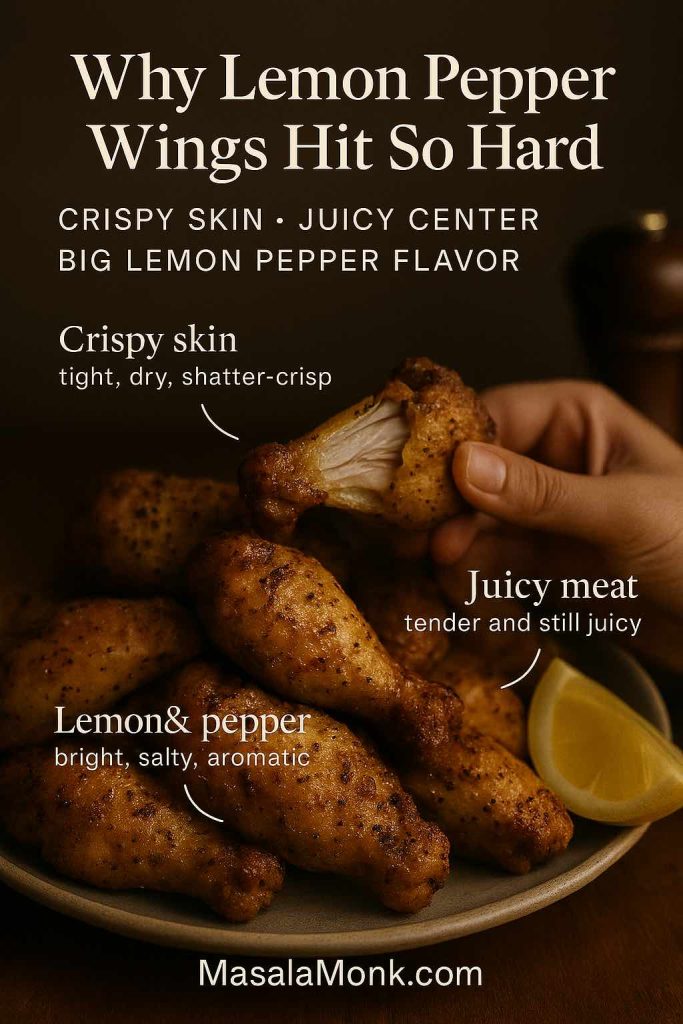
Portrait graphic showing lemon pepper chicken wings with text callouts for crispy skin, juicy meat and bright lemon and pepper seasoning, explaining why the wings are so addictive.
This is what a great lemon pepper wing should look and feel like: crackly skin that gives way with a snap, juicy meat that stays tender all the way to the bone, and a bold mix of lemon and black pepper that lingers just enough to make you reach for another. It’s the kind of balance that works whether you’re eating over the kitchen counter on a Friday night or passing a platter around on game day.

Flavor: Bright, Salty, Peppery

Then there’s the flavor profile:

  • Lemon: zesty and fresh, with just enough juice to be tangy
  • Pepper: freshly cracked and slightly floral, not just dusty heat
  • Salt: present but balanced, never harsh
  • Butter or oil: there in the background, carrying all the other flavors

A good lemon pepper seasoning hits those notes cleanly. In its traditional form, lemon pepper is made by infusing dried lemon zest into cracked black pepper and then combining it with salt and optional aromatics. When you build your own version at home, you can decide how lemony, how peppery, and how salty you want it.

Comfort: Casual but Special

Finally, wings have that special status of being both casual and celebratory. They fit into:

  • Friday-night snacks
  • Game-day spreads
  • Lazy family dinners
  • Potluck tables where everybody grabs with their fingers

Lemon pepper in particular has a kind of “grown-up” flavor profile—more sharp and aromatic than heavily sweet sauces—while still being totally approachable.

That’s what we’re aiming for: wings that feel like something you’d order from a favorite place, only made at home, exactly to your taste.

Also Read: Katsu Curry Rice (Japanese Recipe, with Chicken Cutlet)


Ingredients for Lemon Pepper Chicken Wings

To keep things painless, let’s group everything into four parts: the wings, the base seasoning, the lemon pepper blend, and the optional wet sauce.

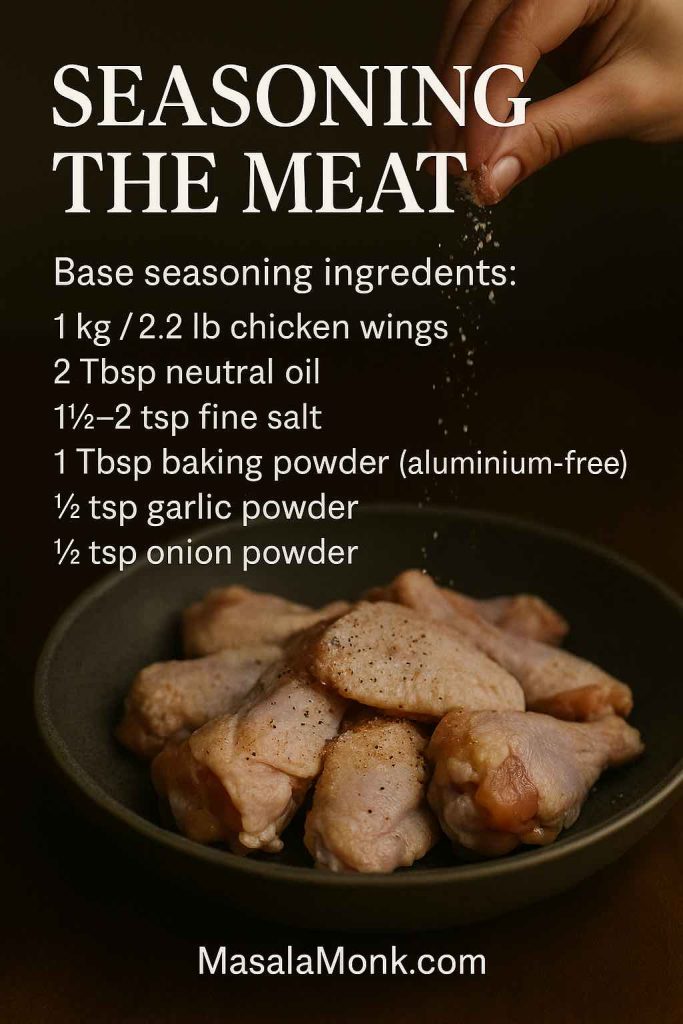
The Wings and Base Seasoning

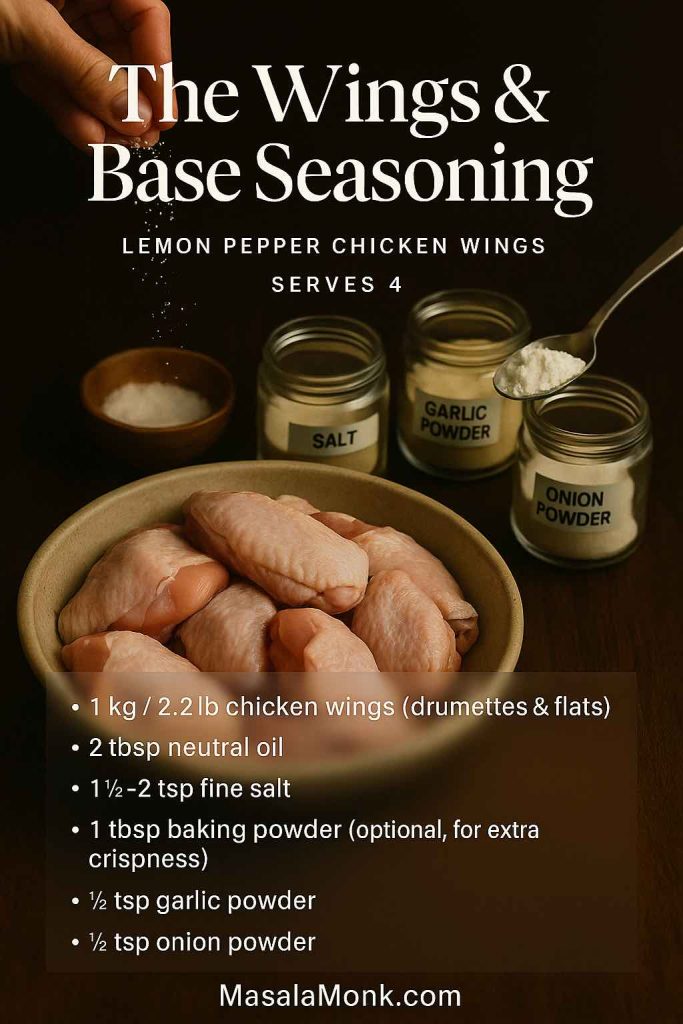
For roughly 4 servings (or fewer, if everyone is wing-obsessed), you’ll want:

  • 1 kg / 2.2 lb chicken wings, split into drumettes and flats, wing tips removed
  • 2 tablespoons neutral oil (such as avocado, sunflower, or canola)
  • 1½–2 teaspoons fine salt, adjusted according to your lemon pepper blend
  • 1 tablespoon baking powder (aluminium-free; optional but excellent for crispness)
  • ½ teaspoon garlic powder
  • ½ teaspoon onion powder

This base seasoning gives the wings a solid, savory foundation. If you’ve ever wondered why some baked or air-fried wings feel a bit flabby, it’s often because the skin never really dries out or because there isn’t enough salt on the meat itself.

Recipe card style image showing raw chicken wings in a bowl with jars of salt, garlic powder and onion powder, plus text listing the base seasoning ingredients for lemon pepper chicken wings.
Everything that goes into the base rub for these wings: chicken, neutral oil, salt, baking powder and a mix of garlic and onion powder to build that savory crunch before the lemon pepper even hits.

The baking powder is a small but powerful addition. Tests on crispy poultry have shown that an alkaline coating encourages browning and crunch, which is why this trick shows up again and again in recipes for crispy baked wings and roasted chicken skin.

If you’d rather skip it, you absolutely can; just make a point of drying the wings very thoroughly and not overcrowding them during cooking.

Also Read: Simple Bloody Mary Recipe – Classic, Bloody Maria, Virgin & More


Homemade Lemon Pepper Seasoning

There are many store-bought lemon pepper seasonings available, and some are genuinely tasty. However, they also vary hugely in saltiness and lemon intensity, and quite a few are mostly salt with a faint citrus scent.

Making your own gives you control. You can keep it bright, adjust the salt, and even decide how fine or coarse the pepper should be.

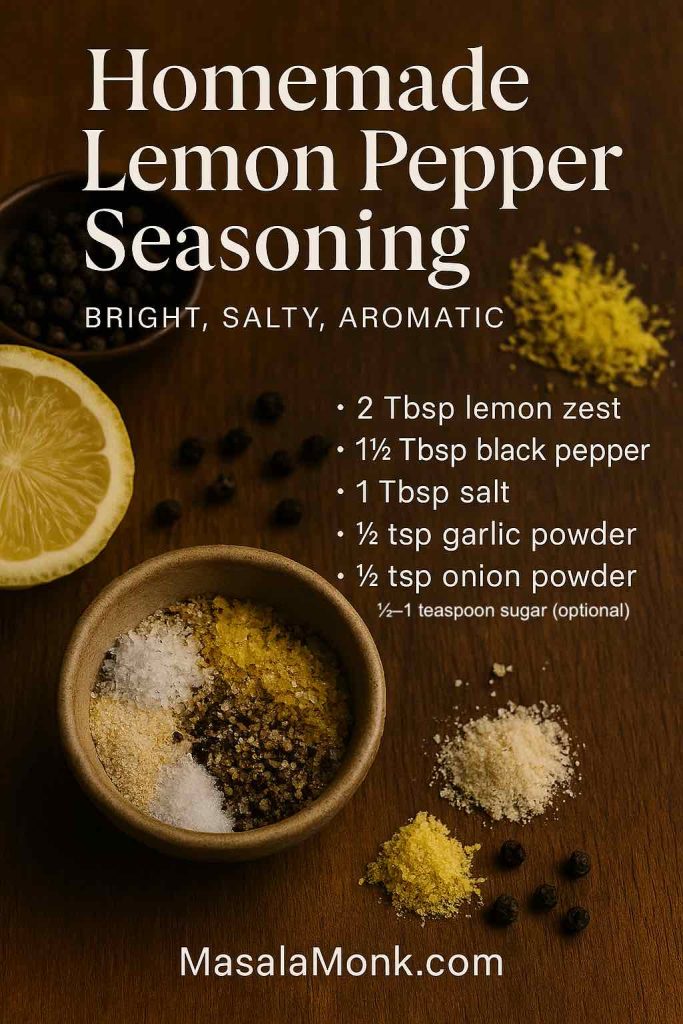
For a small jar:

  • 2 tablespoons finely grated lemon zest (preferably from unwaxed lemons)
  • 1½ tablespoons freshly cracked black pepper
  • 1 tablespoon flaky or coarse salt
  • ½ teaspoon garlic powder
  • ½ teaspoon onion powder
  • ½–1 teaspoon sugar (optional, but it rounds off any bitterness and helps browning)
Portrait recipe card showing a small bowl of homemade lemon pepper seasoning with visible lemon zest, black pepper and salt on a wooden surface, surrounded by peppercorns and lemon, plus text listing the seasoning ingredients.
A small batch of homemade lemon pepper seasoning—lemon zest, cracked black pepper, salt, garlic and onion powder—so you can control exactly how bright, salty and peppery your wings taste.

To prepare it:

  1. Spread the lemon zest in a thin layer on a plate or small tray.
  2. Let it air-dry for a few hours, or place it in a very low oven until it’s no longer wet to the touch.
  3. Combine the dried zest with the pepper, salt, and other seasonings, then stir thoroughly.
  4. Store in an airtight jar away from direct heat and light.

If you’d like reassurance on the proportions or want another perspective, you can glance at a similar homemade lemon pepper seasoning recipe that uses dried lemon zest, black pepper, and salt as its backbone.

For each kilo of wings, plan on 1½–2 tablespoons of this seasoning, plus more at the table for anyone who likes an extra sprinkle.

Also Read: Air Fryer Hard-Boiled Eggs (No Water, Easy Peel Recipe)


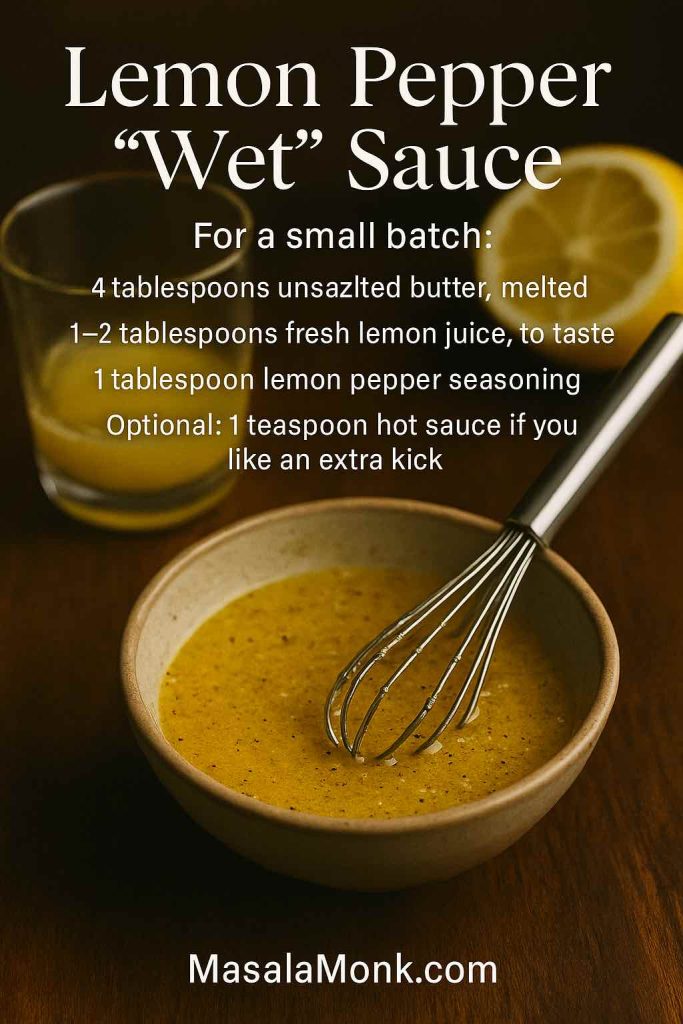
Lemon Pepper “Wet” Sauce

Some people love their lemon pepper chicken wings dry and crisp, with the seasoning clinging directly to the skin. Others adore the “wet” style: glossy, buttery, and intensely lemony.

For a small batch of wet sauce:

  • 4 tablespoons unsalted butter, melted
  • 1–2 tablespoons fresh lemon juice, to taste
  • 1 tablespoon lemon pepper seasoning
  • Optional: 1 teaspoon hot sauce if you like an extra kick
Portrait recipe card showing a bowl of lemon pepper wet sauce with a whisk, plus text listing melted butter, fresh lemon juice, lemon pepper seasoning and optional hot sauce for coating lemon pepper chicken wings.
This quick lemon pepper “wet” sauce—melted butter whisked with lemon juice, seasoning and a touch of heat—turns crisp wings into the glossy, intensely lemony style you’d usually only get from a good wing joint.

Whisk it all together until smooth. Taste and adjust the lemon, salt, and heat. If it feels too sharp, a pinch more butter or a drop of honey will smooth things out. If it tastes flat, a bit more lemon juice or seasoning will wake it up.

You’ll toss fresh-cooked wings in this sauce to make them “lemon pepper wet”.

Also Read: Tres Leches – Mexican 3 Milk Cake Recipe


Optional Extras

Depending on your mood, you can also have these on standby:

  • Extra fresh lemon wedges for squeezing
  • A little more freshly cracked black pepper at the table
  • Honey for quick honey lemon pepper wings
  • Cayenne pepper or chili flakes for a spicier batch
  • Ranch dressing or yogurt-based sauces for dipping

Now that everything’s assembled, it’s time to get the wings ready to cook.


Prepping the Wings Properly

Spending ten minutes on prep makes a huge difference later. Instead of jumping straight into cooking, take a moment to set the wings up for success.

Portrait image showing hands cutting raw chicken wings on a wooden board into drumettes, flats and tips, with text overlay titled Trimming and Splitting.
Start strong by trimming and splitting each wing into a drumette, a flat and a tip so everything cooks evenly and is easy to eat.

Trimming and Splitting

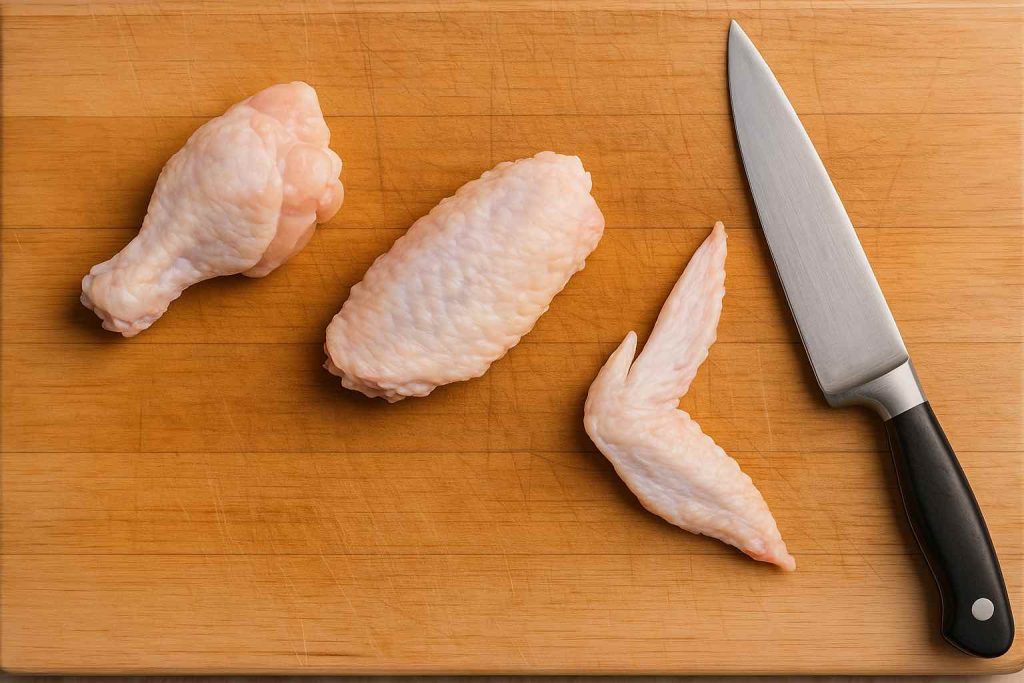
If your wings aren’t already separated, start by cutting each whole wing into:

  • The drumette (the meaty piece that looks like a tiny drumstick)
  • The flat (the two-boned middle section)
  • The tip (which you can save for stock if you like)

Sharp kitchen shears work well; a small chef’s knife is also fine. Once you’ve separated them, discard any stray feathers or bits of skin.

Picture of Chicken Wings separated into 3 parts - the drumette, the flat and the Tip.
This is how the wing would look like after proper cutting – Chicken Wings separated into 3 parts – the Drumette, the Flat and the Tip.

Drying the Skin

Next, lay the pieces out on a tray or large plate lined with paper towels. Pat every side dry. Flip them and pat again. It may feel a little tedious, but this step is one of the keys to crisp wings later, especially in the oven or air fryer.

If you’re planning ahead, you can put the tray of dried wings into the fridge, uncovered, for an hour or two. The circulating air helps dry the skin even further. Some cooks even leave them overnight.

Portrait image of chicken wings on a plate lined with paper towels while a hand pats them dry, with text overlay titled Drying the Skin.
Patting the wings bone-dry with paper towels is the small prep step that pays off later in ultra-crispy skin.

Seasoning the Meat

Once the wings are dry, slide them into a big bowl. Sprinkle over base seasoning or:

  • The oil
  • Salt
  • Baking powder
  • Garlic powder
  • Onion powder

Using your hands or a spatula, toss everything until the wings are evenly coated. Make sure the baking powder doesn’t clump; it should be completely mixed into the other seasonings.

At this stage you can cook right away, or you can let the wings sit in the fridge for about half an hour to absorb the salt and spices. That short rest is a kind of mini dry brine; it helps season the meat all the way through and encourages a beautiful, even color on the skin.

Portrait image showing a hand sprinkling seasoning over raw chicken drumettes on a plate, with text overlay titled Seasoning the Meat.
A generous, even coating of salt and spices or use the base seasoning we create earlier in the post – on the wings sets up deep flavor before the lemon pepper ever goes on.

Notice that we still haven’t added the lemon pepper seasoning. That comes later, once the wings are cooked and still hot. Adding it at the end protects the lemon zest from burning and keeps the flavor bright.

Also Read: Peanut Butter Cookies (Classic Recipe & 3 Variations)


Base Method: From Raw Wings to Golden and Ready

Although the details differ from method to method, the basic flow is always the same:

  1. Prep and season the wings
  2. Cook using air fryer, oven, or oil
  3. Toss hot wings in lemon pepper seasoning and/or wet sauce
  4. Check internal temperature
  5. Serve and enjoy

With that structure in mind, you can choose the cooking approach that fits your kitchen and mood.


Air Fryer Lemon Pepper Chicken Wings

If you own an air fryer, this is likely to become your favorite method. It’s fast, fairly clean, and makes crisp wings with very little oil.

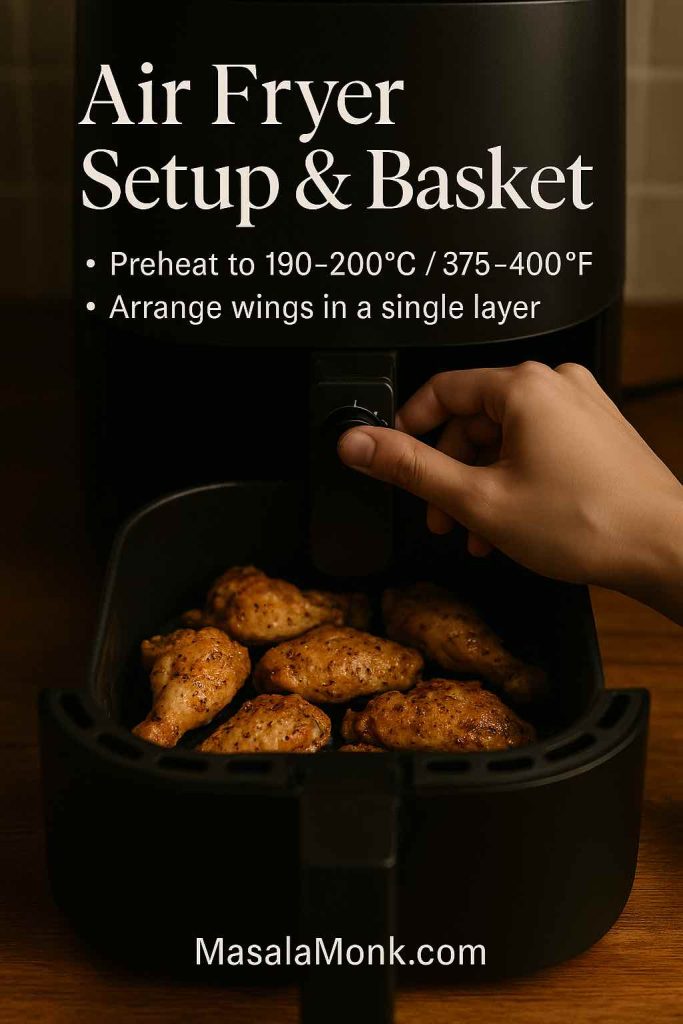
Preheating and Setup

Begin by preheating your air fryer to 190–200°C / 375–400°F. Preheating ensures the wings start crisping immediately, rather than steaming while the machine warms up.

While it heats, lightly oil the basket if things tend to stick, and double-check that the air vents are clear. Basic air fryer safety guidelines, such as keeping the unit on a heat-resistant surface and avoiding obstructed vents, help everything cook evenly and safely.

Portrait image of an air fryer with a hand adjusting the dial while seasoned chicken wings sit in the basket in a single layer, with text overlay about preheating to 190–200°C and arranging the wings properly.
Preheat the air fryer fully, then slide in the wings in a single, uncrowded layer so the hot air can crisp every side instead of steaming them.

Arranging the Wings

Place the seasoned wings into the basket in a single layer. It’s okay if they’re a little close, but try to avoid stacking them. Air fryers crisp food by blasting it with hot moving air; when air can’t circulate, you get pale, soft spots instead of even browning. Overcrowding is one of the most common reasons for disappointing results.

If you have more wings than comfortably fit in one layer, plan on cooking them in batches rather than forcing everything in at once.

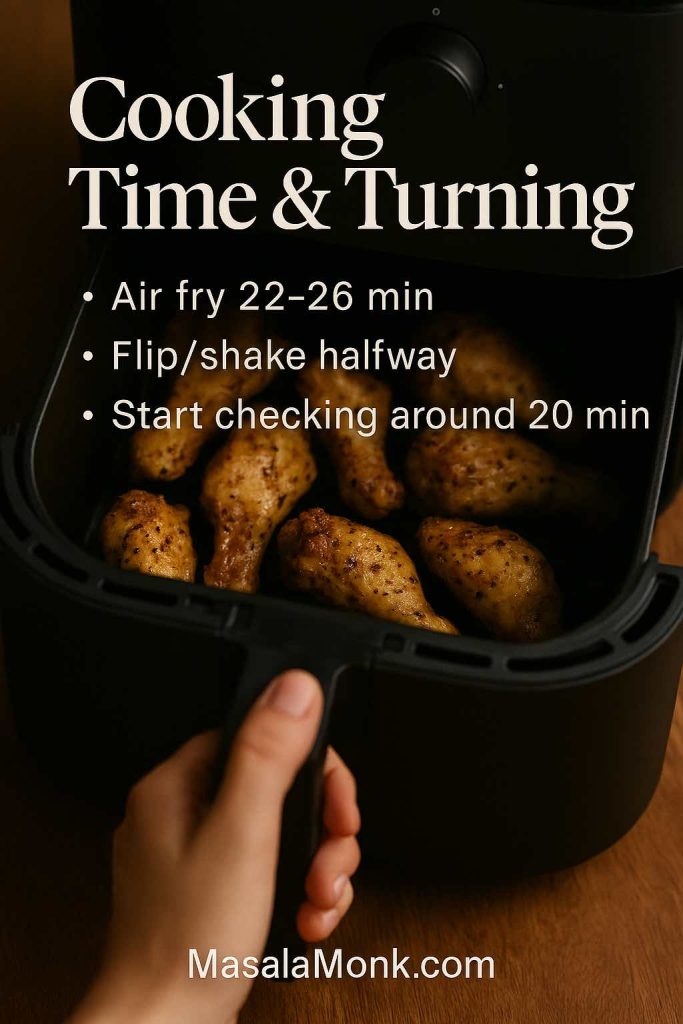
Cooking Time and Turning

Slide the basket in and air fry the wings for about 22–26 minutes, flipping or shaking them halfway through. The exact time depends on:

  • The size of your wings
  • Your specific air fryer model
  • How packed the basket is
Portrait image of an air fryer basket filled with golden lemon pepper chicken wings being pulled out by hand, with overlay text listing cooking time, flipping halfway and checking doneness around 20 minutes.
Once the basket is loaded, let the wings go for 22–26 minutes, giving them a shake halfway through so every side gets blasted with hot air instead of sitting in one spot.

Around the 20-minute mark, start checking their color and texture. The skin should look golden to deep brown and feel firm when you tap it with tongs.

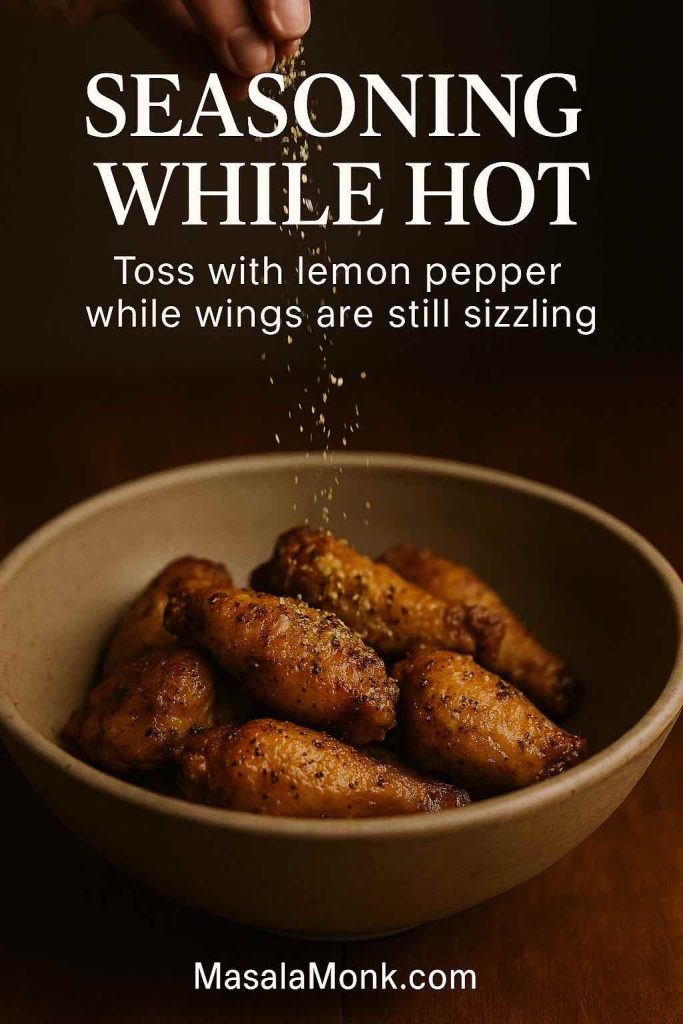
Seasoning While Hot

As soon as the wings are cooked, transfer them to a clean bowl while they’re still sizzling. Sprinkle over 1½–2 tablespoons lemon pepper seasoning and toss until every piece looks speckled with zest and pepper.

If you’re going for air-fried lemon pepper wet wings, drizzle in some of the butter–lemon sauce and toss again. The residual heat helps the flavors sink in and the butter cling without separating.

Portrait image of hot lemon pepper chicken wings in a bowl while a hand sprinkles seasoning over them, showing how to toss the wings with lemon pepper while they are still sizzling.
As soon as the wings come out of the air fryer or oven, shower them with lemon pepper and toss while they’re still sizzling so the zest, pepper and butter lock onto every piece.

Pile the wings onto a platter, garnish with fresh lemon wedges for squeezing, and bring them straight to the table.

Also Read: Homemade Hot Chocolate with Cocoa Powder Recipe


Oven-Baked Lemon Pepper Chicken Wings

When you’re feeding more than a couple of people, the oven suddenly becomes your best friend. A single large tray can handle a mountain of wings at once.

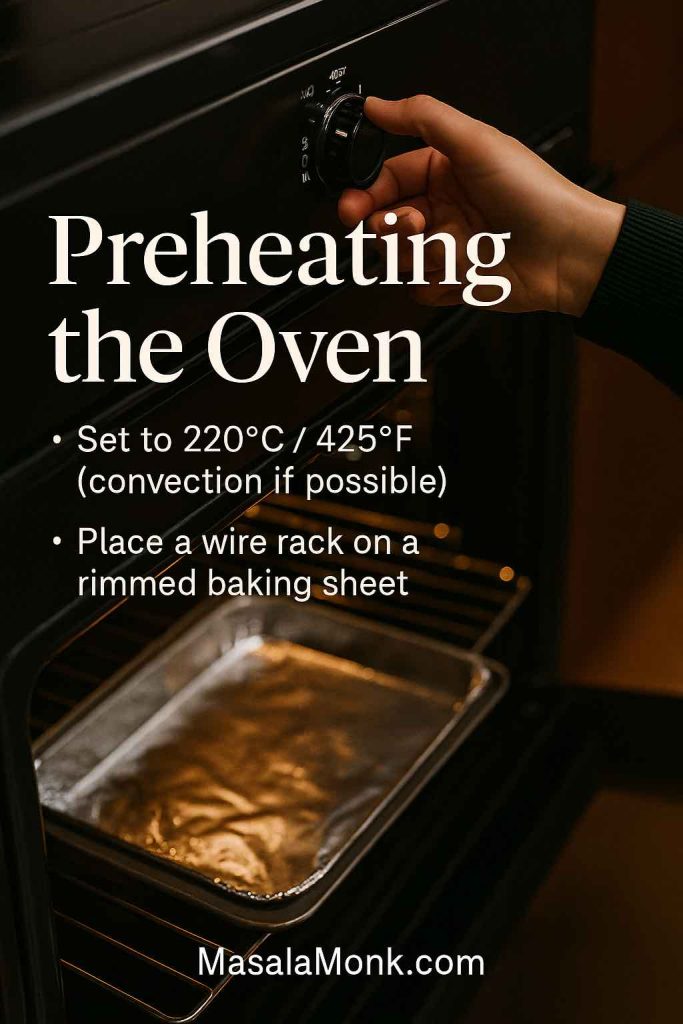
Preheating the Oven

Set your oven to 220°C / 425°F. If it has a convection (fan) option, switch it on; that extra air movement mimics the air fryer effect and encourages crisp skin.

Portrait image of a hand turning the oven dial to 220°C / 425°F with the door open, showing a foil-lined baking sheet and wire rack inside, with text overlay titled Preheating the Oven.
Crank the oven up to 220°C / 425°F and drop a rack over a lined tray before you even think about the wings—high heat and airflow are what turn seasoned chicken into proper oven-crisp lemon pepper wings.

Place a wire rack on a rimmed baking sheet and line the sheet with foil or parchment for easier cleanup. The rack keeps wings elevated, allowing hot air to circulate underneath, which is especially helpful when the sheet is crowded.

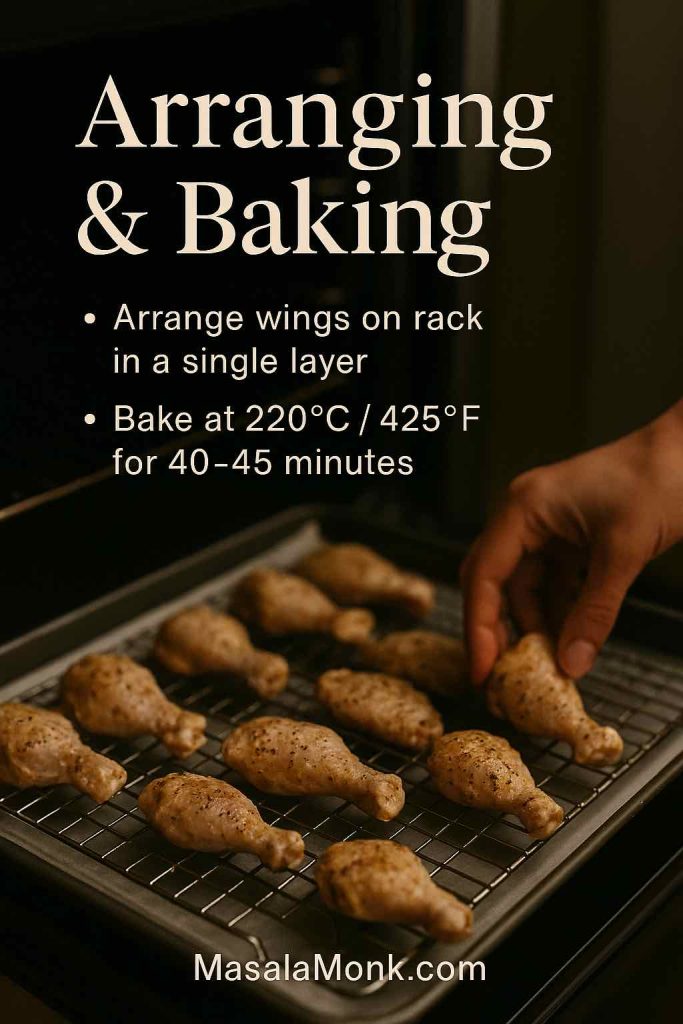
Arranging and Baking

Spread the seasoned wings out in a single layer on the rack. Avoid stacking them; if necessary, use two trays and swap their positions halfway through baking.

Slide the tray into the hot oven and bake for 40–45 minutes, turning the wings once in the middle of the cooking time. As they roast, the skin will gradually tighten and brown, and the fat will drip down onto the tray.

Portrait image of raw seasoned chicken wings laid in a single layer on a wire rack set over a baking sheet, being slid toward the oven, with text overlay titled Arranging & Baking.
Spread the wings out on a rack in one even layer and let the oven do its thing for 40–45 minutes—no stacking, no crowding, just steady heat working on every side.

If, towards the end, they look well-cooked but not quite crisp enough for your taste, you can switch on the broiler for the last 2–3 minutes. Watch carefully at this stage; the lemon and pepper can go from perfect to scorched very quickly under direct heat.

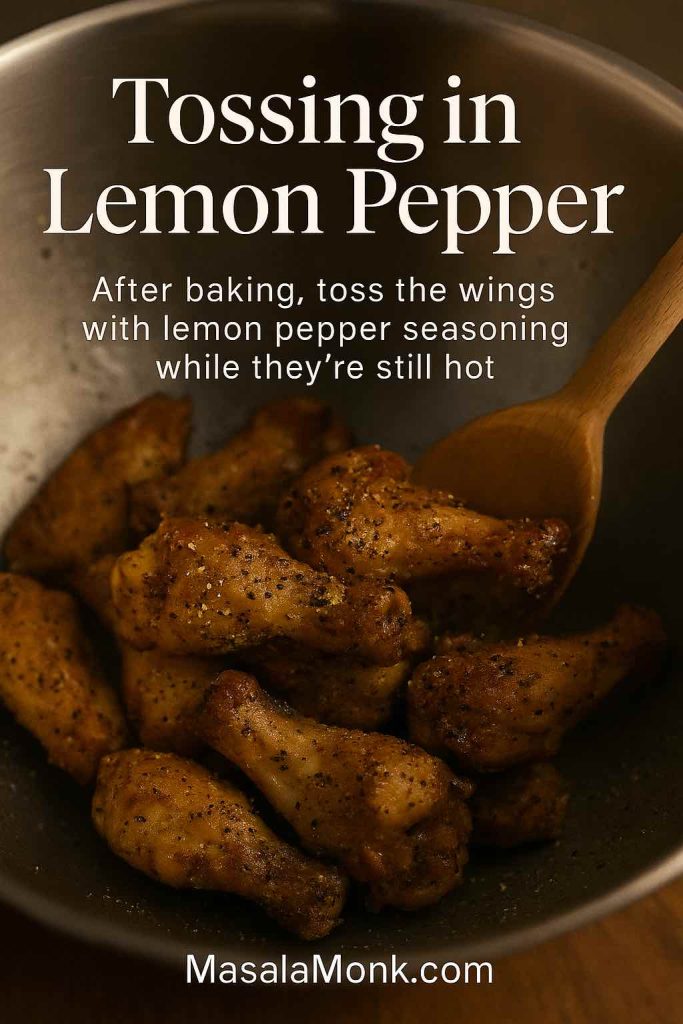
Tossing in Lemon Pepper

Once they’re sizzling and golden, transfer the wings to a mixing bowl. Immediately dust them with lemon pepper seasoning and toss gently but thoroughly. If you’d like some of them wetter, move half to another bowl and toss those in your butter–lemon sauce.

Portrait image of freshly baked chicken wings in a metal mixing bowl being tossed with lemon pepper seasoning using a wooden spoon, with text overlay titled Tossing in Lemon Pepper.
As soon as the tray comes out, scrape the hot wings into a bowl and toss them in lemon pepper so the citrus, salt and cracked pepper cling to the crust while it’s still sizzling.

The baked method gives you lemon pepper chicken wings with a little less hands-on time than frying, plenty of crunch, and the satisfaction of pulling a huge, steaming tray from the oven.

Also Read: Watermelon Daiquiri: A Refreshing Twist on a Classic Cocktail


Fried Lemon Pepper Chicken Wings

There’s something undeniably satisfying about fried wings. The oil helps create that deeply blistered, crunchy skin that many people associate with their favorite wing spots.

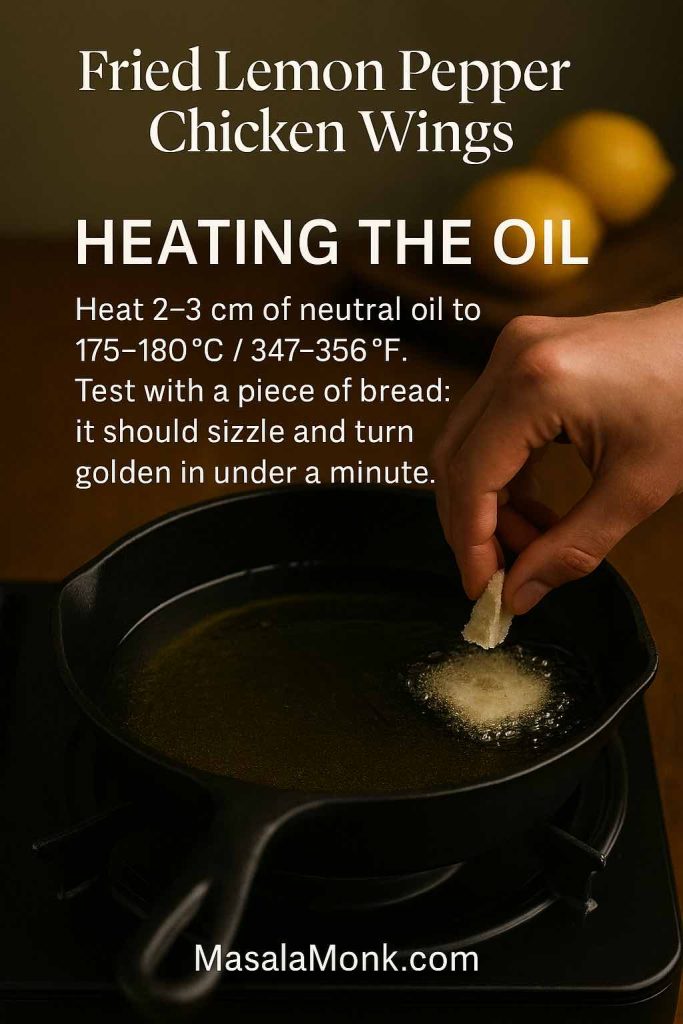
Heating the Oil

Choose a wide, heavy pan—a deep skillet or Dutch oven works well—and pour in 2–3 cm of neutral oil. Heat it to 175–180°C / 347–356°F. If you don’t have a thermometer, you can use the old bread test: a small piece of bread should sizzle and turn golden in under a minute.

Portrait image of a cast iron skillet filled with hot oil on the stove, with a hand dipping a small piece of bread in to test the temperature, and text overlay titled Heating the Oil for fried lemon pepper wings.
Heat a shallow pool of neutral oil until a scrap of bread sizzles and turns golden in under a minute—that’s the sweet spot for blistered, crunchy fried lemon pepper wings.

Keep the handle turned inward and the pan on a stable burner. Having a splatter guard or lid nearby is handy, just in case.

Frying in Batches

Lower the wings into the oil carefully, placing them away from you to minimize splashes. Fry only as many as fit comfortably in a single layer; crowding cools the oil and leads to greasy, unevenly cooked wings.

Let them sizzle for 10–12 minutes, turning occasionally so they brown on all sides. Heavier wings may need a little longer. The skin should be deeply golden and crisp, and the meat cooked through.

Portrait image of chicken wings frying in hot oil in a skillet while a pair of tongs lifts a golden drumette above the surface, with text overlay titled Frying in Batches.
Work in small batches so each wing has room to move in the oil, turning them until every side is deep golden and crisp instead of greasy and uneven.

Check the internal temperature of a few wings with an instant-read thermometer; it should read at least 165°F / 74°C, matching the recommended safe minimum temperature for chicken.

Transfer cooked wings to a wire rack set over a tray or to paper towels to drain.

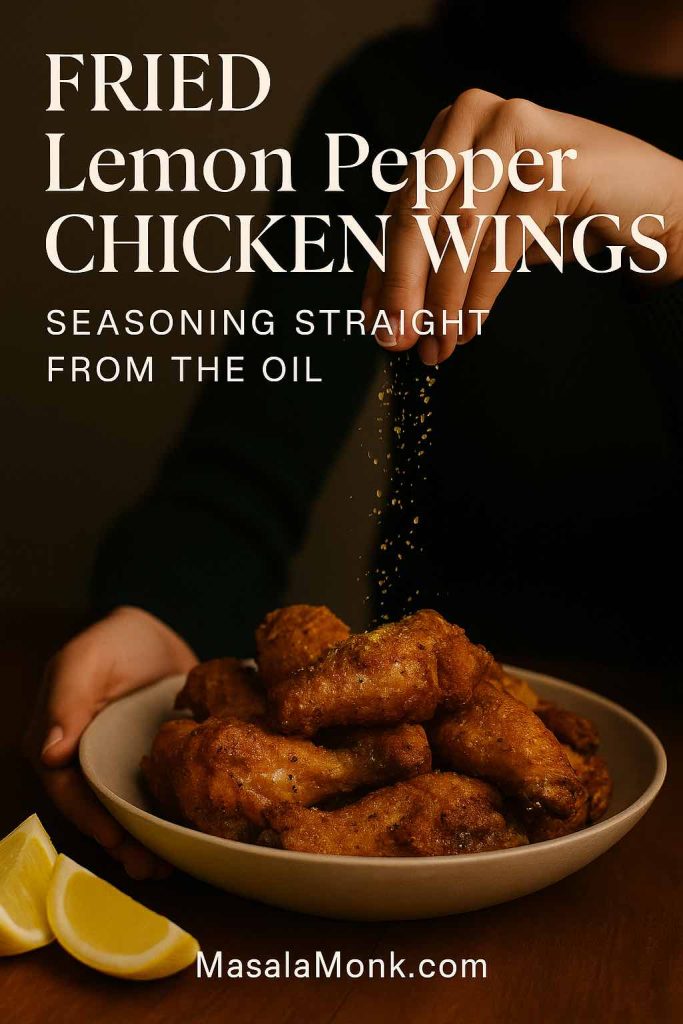
Seasoning Straight from the Oil

While the wings are still hot and glistening, move them into a bowl and shower them with lemon pepper seasoning. Any residual oil on the surface helps the spices cling and bloom. For a truly indulgent batch, pour in some of the buttery lemon mixture too and toss until everything looks shiny.

Portrait image of a plate piled with fried chicken wings while a hand sprinkles lemon pepper seasoning over them, with lemon wedges on the table and text overlay titled Fried Lemon Pepper Chicken Wings – Seasoning Straight from the Oil.
As soon as the wings leave the oil, hit them with lemon pepper so the hot, glistening crust grabs every speck of citrus, salt and black pepper.

If you’re cooking several rounds of fried wings, you can hold finished ones in a low oven (around 140°C / 285°F) for a short time. Just remember the usual game-day safety guidance: cooked foods shouldn’t sit in the “danger zone” between cold and hot for extended periods.

Also Read: Authentic Butter Chicken Recipe (Murgh Makhani) Creamy and Flavorful


Lemon Pepper Chicken Wings Variations

Once you’ve done a straightforward batch, it’s hard to resist playing. Fortunately, the base lemon pepper chicken wings recipe is like a blank canvas that welcomes small tweaks.

Honey Lemon Pepper Chicken Wings

To turn a portion into honey lemon pepper wings:

  1. Stir 2–3 tablespoons honey into your melted butter–lemon sauce.
  2. Toss a batch of hot wings in this mixture until they’re evenly coated and shining.
  3. Taste one and adjust with another splash of lemon juice or a pinch of salt if needed.
Portrait image of honey lemon pepper chicken wings piled on a plate, glistening with a sticky honey–lemon glaze, with text overlay explaining to stir honey into warm lemon-butter sauce and toss the hot wings.
Honey lemon pepper wings take the same crispy base and wrap it in a glossy honey–lemon glaze that softens the sharp edges and makes every bite a little bit sticky, sweet and impossible to stop at one.

The honey softens the sharp edges of the lemon and pepper, so this variation is especially popular with people who like a gentler, slightly sweet wing.


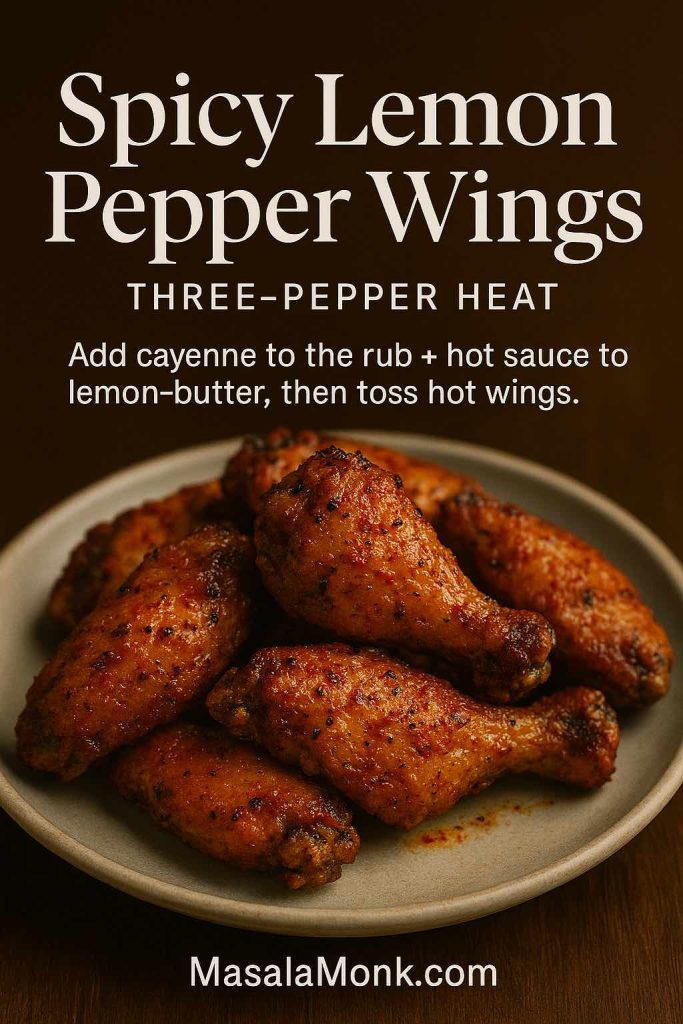
Spicy Lemon Pepper Chicken Wings

If your crowd enjoys a bit more heat, you can make spicy lemon pepper wings by layering in a few extra flavors.

For the dry rub, add:

  • ½–1 teaspoon cayenne pepper, chili powder, or a mix of your favorite hot spices

For the finishing sauce, consider:

  • A spoonful of hot sauce
  • Extra cracked black pepper on top
Portrait image of spicy lemon pepper chicken wings on a plate, coated in a fiery three-pepper glaze with visible chili flakes and black pepper, with text overlay explaining to add cayenne to the rub and hot sauce to lemon-butter before tossing the wings.
Spicy lemon pepper wings layer heat from black pepper, cayenne and hot sauce over that same bright citrus base, so you get proper three-pepper fire without losing the lemony punch.

The idea is to pull heat from three places: the black pepper, the cayenne or chili, and the hot sauce. That way, you get a “three-pepper” style intensity without losing the citrusy brightness that makes lemon pepper wings so distinctive.

Also Read: Kali Mirch Paneer | Black Pepper Paneer- Kid Friendly Recipe


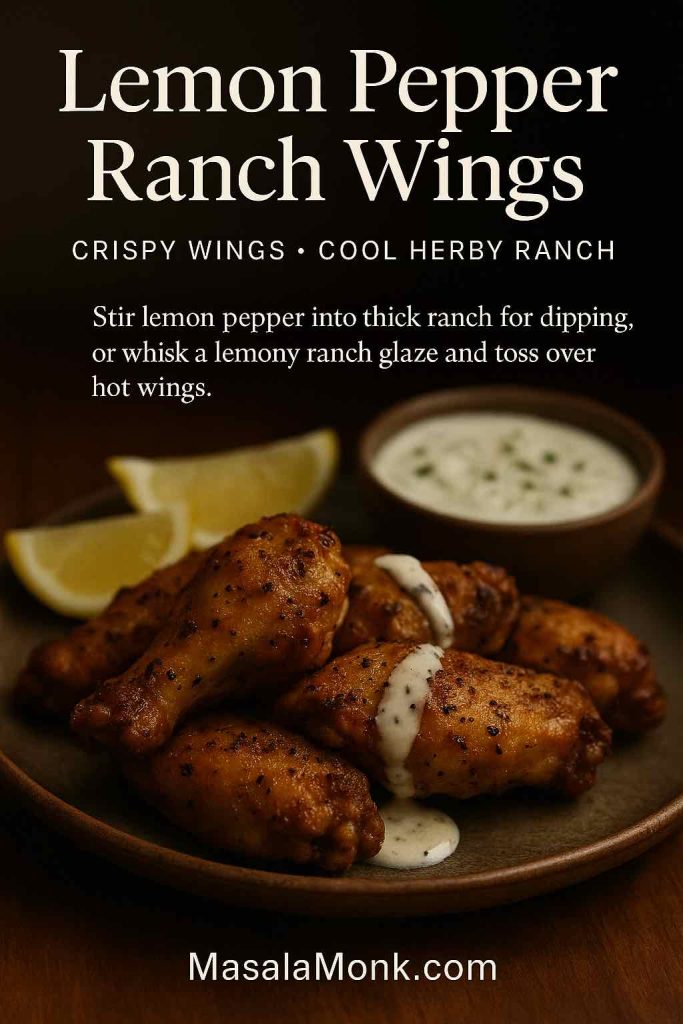
Lemon Pepper Ranch Chicken Wings

When you want to lean toward creamy, herby flavors without giving up the lemon-pepper backbone, ranch steps in.

There are a couple of simple routes:

  1. Lemon Pepper Ranch Dip
    Stir some lemon pepper seasoning into a bowl of thick ranch. Use it as a dip for classic lemon pepper wings, vegetable sticks, and maybe some potato wedges.
  2. Ranch-Coated Lemon Pepper Wings
    Thin ranch with a bit of lemon juice until it’s just pourable. Toss freshly cooked, lightly lemon-peppered wings in a small amount of this dressing so they get a light ranch glaze.
Portrait image of lemon pepper ranch chicken wings on a rustic plate, drizzled with creamy ranch, with a bowl of herby ranch dip and lemon wedges in the background, plus text overlay explaining how to make lemon pepper ranch dip or a light ranch glaze for the wings.
Lemon pepper ranch wings take the same crisp, citrusy base and finish it with cool, herby ranch—either as a thick dip on the side or a light glaze over the hot wings.

Either way, you keep the zing of lemon and the bite of black pepper, while adding the familiar tang and herbs of ranch.


Extra Twists to Try

As you get comfortable, you might experiment with:

  • Garlic Lemon Pepper Wings – Add minced garlic to the butter sauce or increase the garlic powder in the base rub.
  • Smoky Lemon Pepper Wings – Add a little smoked paprika or chipotle powder to the seasoning mix.
  • Herby Lemon Pepper Wings – Finish with chopped parsley or thyme for fresh, green notes.

Small changes can dramatically shift the personality of your wings without requiring a completely new recipe.


Dips, Sides, and Extras for Wing Night

A platter of lemon pepper chicken wings is already a good time, yet pairing them with a few well-chosen sides turns everything into a proper event. You don’t need to go overboard; two or three complementary dishes go a long way.

Portrait image of a wing night spread with lemon pepper chicken wings in the center, surrounded by fries, creamy dip, jalapeño poppers and churros on a dark wooden table, with text overlay asking what to serve with lemon pepper wings and suggesting dips, potatoes, comfort sides and something sweet.
Turn a simple tray of lemon pepper wings into a full wing night by adding a creamy dip, a hot potato side, a cheesy bite like jalapeño poppers and an easy dessert to finish.

Cool and Creamy Dips

First, let’s talk dips. Wings love anything creamy or tangy that cools the palate.

A versatile approach is to offer more than one option:

  • A selection pulled from spinach dip recipes gives you both cold and hot spinach-based dips, including a classic spinach-artichoke style that is fantastic with salty, zesty chicken.
  • When the wings are bright and peppery, a chilled bowl of yogurt, cucumber, lemon, and garlic based on a Greek tzatziki sauce recipe brings a cooling, refreshing contrast and feels lighter than a traditional ranch.

You can also keep a simple blue cheese dip or herbed mayonnaise around, especially if you’re making a spicy batch.


All the Potato Things

Next come the potatoes, because wings and potatoes are a classic duo.

For a straightforward side that always disappears, a big tray of crispy homemade French fries does the job. You can season them simply with salt or play around with variations: garlic-parmesan, chili, or even a light dusting of lemon pepper to echo the wings.

If you feel like branching out, take a look at 10 easy potato appetizers. There you’ll find ideas like smashed potatoes, loaded bites, and other crispy snacks that sit happily beside a wing platter and give people something else to nibble between drumettes.


Comfort Sides That Make It a Meal

Sometimes you want the wings to feel like the centerpiece of a hearty dinner rather than just snacks. In that case, adding one or two warm, substantial dishes helps.

A bubbling pan of macaroni and cheese brings creamy comfort to the table. Next to lemon pepper chicken wings, the rich cheese sauce and soft pasta respond beautifully to the tangy, crisp chicken.

For an additional spicy, creamy bite, baked jalapeño poppers fit right in. They have their own crunch and heat, yet they don’t duplicate the exact flavors of the wings, which keeps the spread interesting.

And if you want a sweet finish without getting too formal, you might end with churros. Using the method from how to make churros, you can fry or bake ridged sticks of dough, roll them in cinnamon sugar, and serve them with chocolate or caramel sauce. They feel playful and shareable, which matches the whole mood of wing night.


Drinks That Pair with Lemon Pepper Chicken Wings

Although you can absolutely just set out a cooler of cold drinks and call it a day, matching your beverages to lemon pepper wings is surprisingly fun.

Because lemon is already a star here, citrusy drinks are natural partners. A chilled lemon drop martini style drink echoes the lemon while bringing a sweet-tart edge that works nicely with salty, peppery chicken. You can make a non-alcoholic version using lemon juice, simple syrup, and sparkling water served in glasses with sugared rims.

During cooler months, you might also lean into autumnal flavors by offering a pumpkin-spice-flavored latte or dessert built from your own spice blend, especially if you already have the oven and stove busy with wings and sides.


Storing and Reheating Lemon Pepper Chicken Wings

With a big batch, you’ll often have a few wings left over. Stored and reheated properly, they make an easy next-day lunch or snack that’s almost as good as the original round.

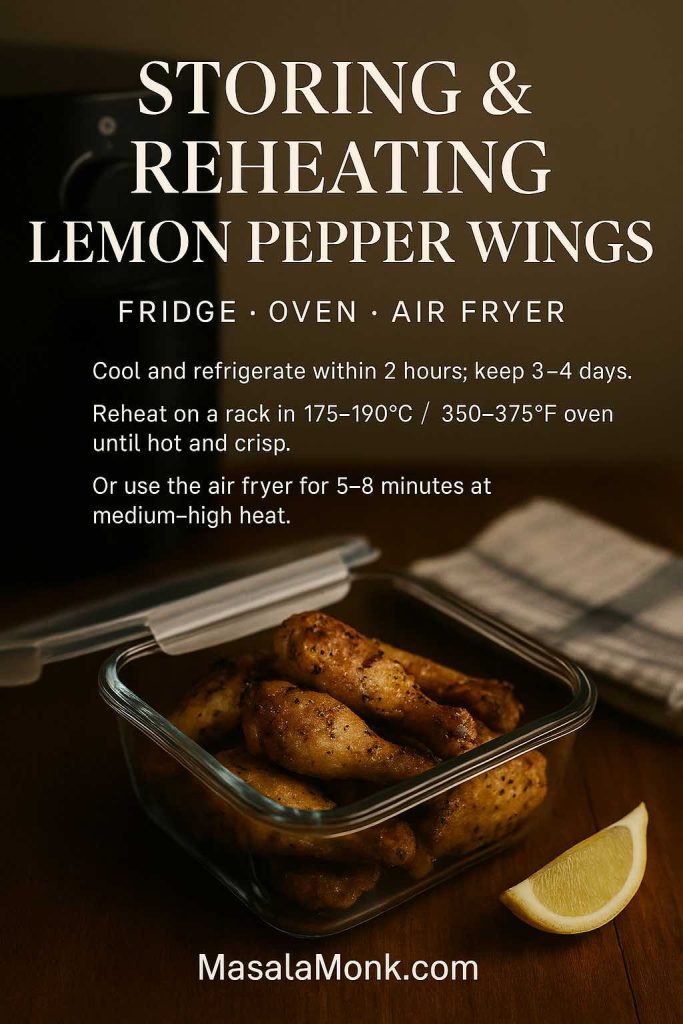
Portrait image showing cooked lemon pepper chicken wings in a glass container beside an air fryer, with text overlay explaining how to store them in the fridge and reheat in the oven or air fryer to keep the skin crispy.
Once wing night is over, cool the leftovers, tuck them into the fridge and bring them back to life in the oven or air fryer so the skin crisps up again instead of going limp.

Storing Safely

After everyone has eaten, let the wings cool down briefly, then transfer them into an airtight container. Try to get them into the refrigerator within two hours of cooking. Game-day food safety advice consistently emphasizes this 2-hour window for hot foods like wings, to avoid letting them sit in the temperature range where bacteria grow fastest.

In the fridge, cooked wings will usually keep well for 3–4 days.

Reheating in the Oven

For a fairly large batch or whenever you want the most uniform results, the oven is a good choice:

  1. Bring the wings out of the fridge while the oven preheats to 175–190°C / 350–375°F.
  2. Arrange them on a wire rack set over a baking sheet.
  3. Warm them for 8–12 minutes, turning once if necessary, until they’re hot, the skin has re-crisped, and a thermometer reads at least 165°F / 74°C in the thickest part.

Comparisons of reheating methods often find that the oven returns the best combination of juicy meat and crisp skin, while the microwave tends to make the coating soft.

Reheating in the Air Fryer

If you only have a handful of wings to reheat, the air fryer shines:

  1. Preheat to about 175–180°C / 350–360°F.
  2. Place the wings in a single layer in the basket.
  3. Heat for 5–8 minutes, shaking once, until they’re sizzling again and the skin feels crisp.

The air fryer works quickly and restores a nice crunch without needing much effort. Guides on reheating wings in an air fryer recommend similar temperatures and timings, with the same target internal temperature for safety.

Once more, the microwave is best kept as a last resort. It will heat the meat, but it tends to steam the skin, undoing all your crisping work.

Also Read: French Toast Sticks (Air Fryer + Oven Recipe) — Crispy Outside, Custardy Inside


Using Leftover Lemon Pepper Chicken Wings in New Ways

Interestingly, leftover lemon pepper chicken wings don’t have to stay wings. If you strip the meat from the bones, you suddenly have a bowl of tender, lemony chicken that’s perfect for other dishes.

For instance, you can:

  • Toss the meat with a little mayonnaise or yogurt, chopped celery, and herbs for a quick lemon pepper chicken salad.
  • Sprinkle it over greens with cherry tomatoes, cucumbers, and a light vinaigrette for an easy lunch.
  • Layer it into sandwiches or sliders, using ideas from chicken sandwich recipes—anything from Buffalo to BBQ styles can overlap nicely with the lemon pepper flavor, especially if you add cheese, lettuce, and pickles.

In this way, one batch of wings can stretch into multiple meals without feeling repetitive.


Bringing It All Together

By now you’ve seen that making excellent lemon pepper chicken wings at home isn’t complicated; it’s just a series of small, thoughtful steps:

  • Drying and seasoning the wings so they’re flavorful before they ever hit the heat
  • Choosing the cooking method that matches your gear and your crowd
  • Finishing with a fresh, lively lemon pepper seasoning and, if you’re in the mood, a buttery wet sauce
  • Adding simple variations—honey, spice, ranch—to keep things interesting
  • Surrounding the wings with dips, potatoes, and a few extras to turn them into a full occasion
  • Handling leftovers in a way that keeps them both safe and delicious

Whether you’re planning a game-night spread, a relaxed weekend dinner, or just a kitchen experiment on a random afternoon, this approach lets you take a humble pack of wings and transform it into something everyone reaches for.

Next time you see a pile of wings at the shop, you’ll know exactly what to do: grab a couple of lemons, check your pepper grinder, and give yourself permission to fill your kitchen with the smell of hot, crackling, lemon pepper chicken wings.

FAQs about Lemon Pepper Chicken Wings

1. What are the ingredients for lemon pepper chicken wings?

For classic lemon pepper chicken wings, you usually need chicken wings, oil, salt, black pepper, lemon zest or lemon pepper seasoning, and a few simple pantry spices. Typically, the ingredients for lemon pepper chicken include wings, garlic powder, onion powder, a small amount of baking powder for crispiness, and either a homemade or store-bought lemon pepper blend. For saucy versions, you simply add butter and a splash of lemon juice to turn the dry rub into a glossy coating.

2. How do I make lemon pepper chicken wings crispy?

Firstly, pat the wings very dry with paper towels before you season them. Then, toss them with a little oil, salt, and a light dusting of baking powder along with your spices. After that, cook the lemon pepper wings in a hot oven or air fryer without crowding the tray or basket, so the skin has room to dry and blister. Finally, toss them in lemon pepper once they’re cooked and still hot; this way, you get crisp skin plus a fresh coating of seasoning instead of burnt lemon.

3. Can I cook lemon pepper chicken wings in the air fryer?

Absolutely, air fryer lemon pepper wings are one of the easiest options. First, preheat your air fryer so the wings start cooking in hot air right away. Next, arrange the wings in a single layer and cook them until the skin is golden and crisp, flipping once. Afterward, toss the hot wings in lemon pepper seasoning or a butter-lemon sauce to finish. Because the air fryer circulates hot air around each piece, air fryer chicken wings lemon pepper usually turn out very crispy with minimal oil.

4. How do I bake lemon pepper wings in the oven?

To make baked lemon pepper wings, start by preheating the oven to a high temperature, usually around 220°C / 425°F. Place the seasoned wings on a rack set over a baking sheet so air can circulate underneath. Then bake until the wings are brown and crisp, turning once halfway. Right after they come out of the oven, toss them in lemon pepper seasoning or melted butter with lemon and pepper, and you’ll have oven baked lemon pepper chicken with a satisfying crunch and bright flavor.

5. Can I use frozen wings for lemon pepper chicken wings?

Yes, you can, although the process changes slightly. Ideally, you thaw frozen wings in the fridge overnight so you can dry and season them properly. If you must cook from frozen, you can start them plain in the oven or air fryer until they’re mostly cooked, then drain off any excess moisture, pat them as dry as you can, and season them before finishing. This method works, but thawed wings still give the crispiest lemon pepper chicken wings.

6. What is the best way to make lemon pepper wet wings?

For lemon pepper wet wings, you cook the wings until the skin is crisp, then toss them in a butter-based sauce. Typically, the sauce includes melted butter, lemon juice, and lemon pepper seasoning; sometimes a little garlic or hot sauce goes in as well. Once the wings are done, you immediately coat them in this mixture, creating shiny, saucy lemon pepper wings that still have a bit of crunch underneath the glaze.

7. How can I make honey lemon pepper wings?

To create honey lemon pepper wings, you start with regular lemon pepper chicken wings and simply sweeten the finishing sauce. Melt butter, stir in lemon juice, lemon pepper seasoning, and then add honey until the balance of sweet and tangy feels right. When the wings are finished cooking, toss them in this honey-lemon mixture. As a result, you get sticky, glossy honey lemon pepper wings that keep the citrus and pepper bite but add a gentle caramel sweetness.

8. Are lemon pepper chicken wings spicy?

On their own, most lemon pepper chicken wings are more tangy and peppery than truly spicy. Black pepper brings a mild heat and a floral bite, while the lemon makes everything feel bright. If you enjoy spice, you can turn them into spicy lemon pepper wings by adding cayenne, chili flakes, or hot sauce to the dry rub or finishing butter. Conversely, if you prefer a milder flavor, you can reduce the pepper and let the lemon and garlic stand out more.

9. Can I make salt and pepper chicken wings using the same method?

Yes, the same base technique works beautifully for salt and pepper chicken wings. Instead of finishing with lemon pepper, you season the wings with salt, black pepper, and sometimes garlic, spring onions, or chopped chilies after cooking. In other words, you follow the same steps for drying, seasoning, and crisping the wings, then swap the lemon for extra aromatics. This way, you can easily make both salt and pepper chicken and lemon pepper chicken in one session.

10. What are the ingredients for lemon pepper chicken breast or boneless lemon pepper wings?

The ingredients for lemon pepper chicken breast are almost identical to those for wings. You need chicken breast or boneless pieces, oil, salt, garlic powder, onion powder, and lemon pepper seasoning, plus optional butter and lemon juice for a sauce. For boneless lemon pepper wings, you cut boneless chicken into chunks or strips, coat them lightly, cook them until golden, and then toss them in lemon pepper seasoning or a lemon-butter sauce. Essentially, you’re using the same flavors, just on boneless pieces instead of whole wings.

11. How long should I marinate or season lemon pepper chicken wings?

Interestingly, you don’t have to marinate lemon pepper chicken wings for hours to get good flavor. Usually, it’s enough to season the wings with salt, spices, and oil, then let them rest in the fridge for 30–60 minutes. That short rest works like a dry brine and helps the meat absorb the salt. Later, you finish with lemon pepper seasoning or a wet sauce after cooking, which keeps the lemon taste bright. If you want to marinate longer, you can, but it’s better to keep strong acids like lemon juice for the end so they don’t toughen the meat.

12. How do I keep lemon pepper wings from drying out?

To keep lemon pepper wings juicy, start by not overcooking them. Use a thermometer and aim for an internal temperature of 165°F / 74°C, then pull them from the heat. Additionally, try not to trim away too much skin or fat, because those help keep the meat moist while it crisps. Finally, avoid long, harsh marinating in pure lemon juice; instead, add most of the acid at the end in a sauce or final seasoning so you get flavor without dryness.

13. Can lemon pepper chicken wings be made gluten-free or dairy-free?

In many cases, lemon pepper chicken wings are naturally gluten-free if you avoid flour or breadcrumb coatings and choose a gluten-free lemon pepper seasoning. If you’re sensitive, double-check that your baking powder and spices are labeled safe. For a dairy-free version, you simply skip the butter and use oil instead when you make the finishing sauce, or you stick to a dry lemon pepper rub. Consequently, you can still enjoy lemon pepper wings even with gluten-free or dairy-free needs.

14. Can I prepare lemon pepper chicken wings ahead of time?

Yes, preparing ahead is very practical. First, you can season the wings with the base spices and refrigerate them, uncovered or loosely covered, for a few hours or overnight; this helps the skin dry and the meat absorb salt. Then, you cook them close to serving time so they’re fresh and crisp. Alternatively, you can fully cook the lemon pepper chicken wings, chill them, and reheat them later in the oven or air fryer. As long as you cool and store them properly and heat them back to a safe temperature, they keep their flavor and much of their crunch.

15. How do I reheat lemon pepper wings so they stay crispy?

To reheat lemon pepper wings without losing texture, avoid the microwave whenever possible. Instead, use a hot oven or air fryer. In an oven, place the wings on a rack set over a baking sheet and warm them at a moderate temperature until they’re hot through and the skin re-crispens. When using an air fryer, reheat them in a single layer at a medium-high setting for a few minutes, shaking once. In short, dry, circulating heat restores crispiness far better than steaming or microwaving does.

16. Can I turn this recipe into black pepper chicken or black pepper chicken sauce?

You can absolutely borrow the same flavor base for black pepper chicken or a simple black pepper chicken sauce. Instead of focusing on lemon, you boost the pepper and add soy sauce, garlic, and maybe a little stock or water to create a glossy stir-fry sauce. Then you cook sliced chicken pieces and vegetables, such as onions and peppers, in that mixture. Although the result is different from lemon pepper chicken wings, it uses the same balance of savory, peppery heat and can be a nice way to enjoy similar flavors in a completely new dish.