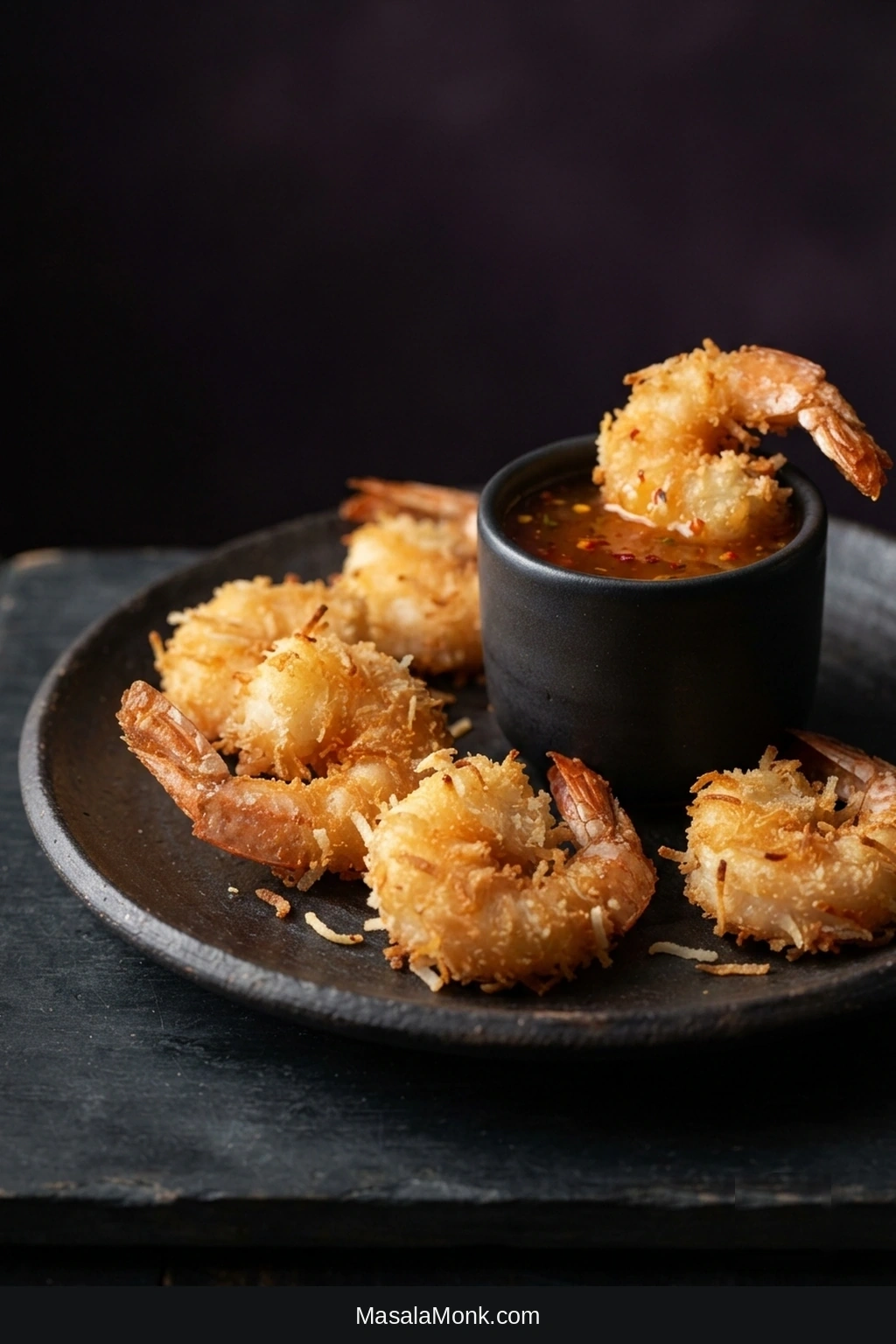
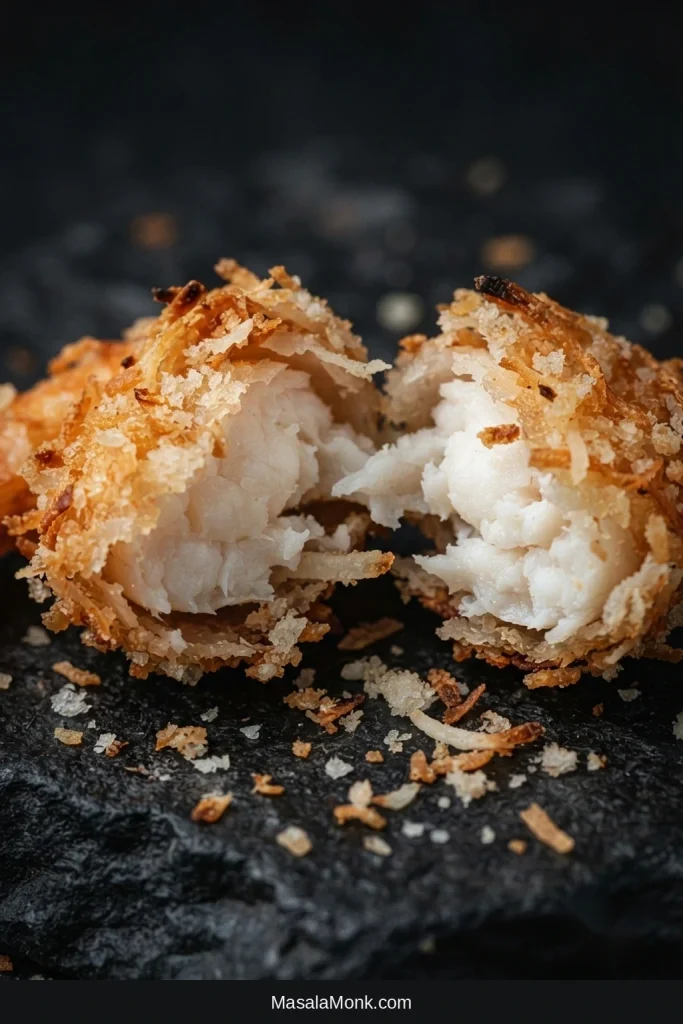
Good coconut shrimp crunches before you reach the shrimp. The coconut catches deep gold around the edges, panko keeps the coating light, and the shrimp underneath stays juicy. Dip one into something fruity, lime-bright and just spicy enough, and the sweetness of the coconut finally has something to push against.
The tricky part is timing. Shrimp cooks in minutes, and coconut can go from pale to dark just as quickly. Moisture makes the breading slip, a heavy egg layer can turn it chewy, and cool oil leaves the crust greasy.
This coconut shrimp recipe keeps the process manageable: dry the shrimp well, build a thin coating, give it a few minutes to settle, then fry at a controlled temperature. About ¼ inch / 6 mm of oil in a skillet is enough. Meanwhile, the apricot-chili dipping sauce comes together while the breaded shrimp rests.
If you remember two things: get the shrimp really dry and let the oil get properly hot before frying. Those two details prevent a surprising number of coconut-shrimp problems.
Crispy Coconut Shrimp with Dipping Sauce
Crisp coconut-panko shrimp, shallow-fried without a deep fryer, with a bright apricot-chili-lime dipping sauce.
Prep20 minutes
Rest10 minutes
Cook12–18 minutes
Total40–50 minutes
Yield4 appetizer servings or 2 generous mains
MethodShallow fry
Equipment
You need:
12-inch / 30 cm heavy skillet or sauté pan
3 wide shallow bowls or pie plates
Large plate, tray or rimmed sheet pan for the breaded shrimp
Tongs
Paper towels
Very helpful:
Instant-read or frying thermometer
Wire rack that fits over a rimmed sheet pan
Small fine-mesh strainer or slotted spoon
For the Coconut Shrimp
1 lb / 16 oz / 454 g raw 21/25-count shrimp, peeled and deveined, tails on if desired
¾ tsp fine salt, divided
⅓ cup / 42 g all-purpose flour
¼ cup / 32 g cornstarch
½ tsp garlic powder
¼ tsp freshly ground black pepper
⅛ tsp cayenne pepper, optional
2 large eggs
1 cup / about 85 g sweetened shredded coconut
1 cup / about 60 g panko breadcrumbs
Neutral frying oil (canola, vegetable, peanut or refined avocado), enough for ¼ inch / 6 mm depth—usually 1½–2 cups / 360–480 ml
Lime wedges, for serving
For the Dipping Sauce
¼ cup / about 80 g apricot preserves
¼ cup / 60 ml sweet chili sauce
1½ tbsp / 22 ml fresh lime juice, plus more to taste
1 tsp / 5 ml soy sauce
Instructions
Prepare and Bread the Shrimp
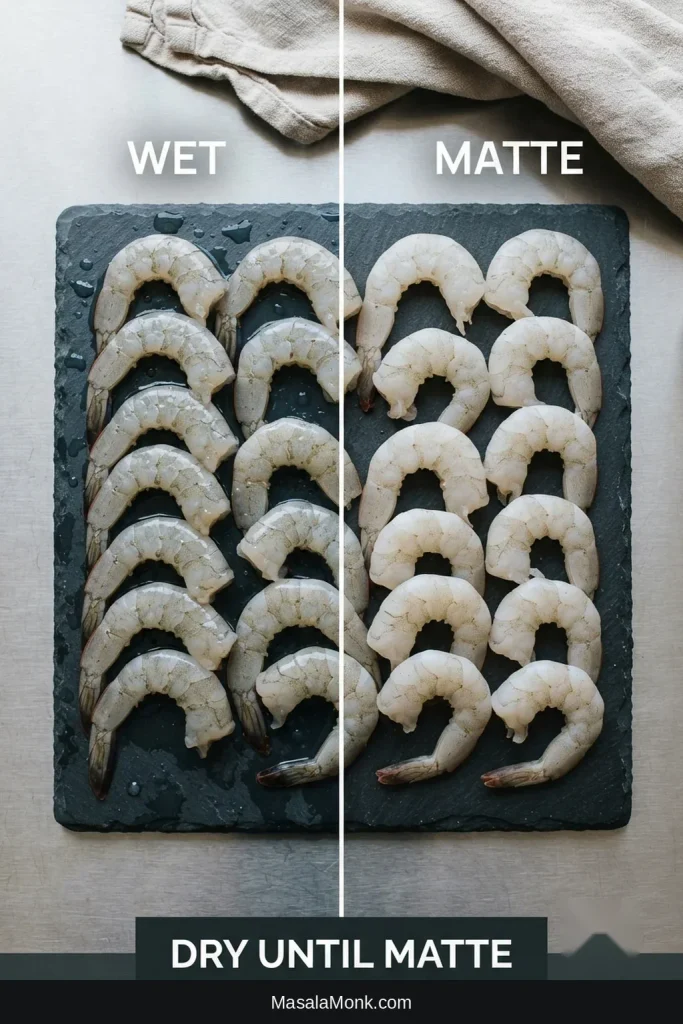
Dry and season the shrimp. If frozen, thaw completely and drain. Spread the shrimp over paper towels, cover with another layer and press firmly. Check the deveining cut and the area near the tail for trapped water. The surface should look matte, with no visible beads of moisture. Season evenly with ¼ tsp salt.
Set up the breading line. Arrange three bowls in order. In the first, combine the flour, cornstarch, remaining ½ tsp salt, garlic powder, black pepper and optional cayenne. Beat the eggs in the second.
Mix the coconut coating. Combine the coconut and panko in the third bowl. If the coconut strands are very long, give them a few quick chops. Stop while you still have small shreds; do not grind them into powder.
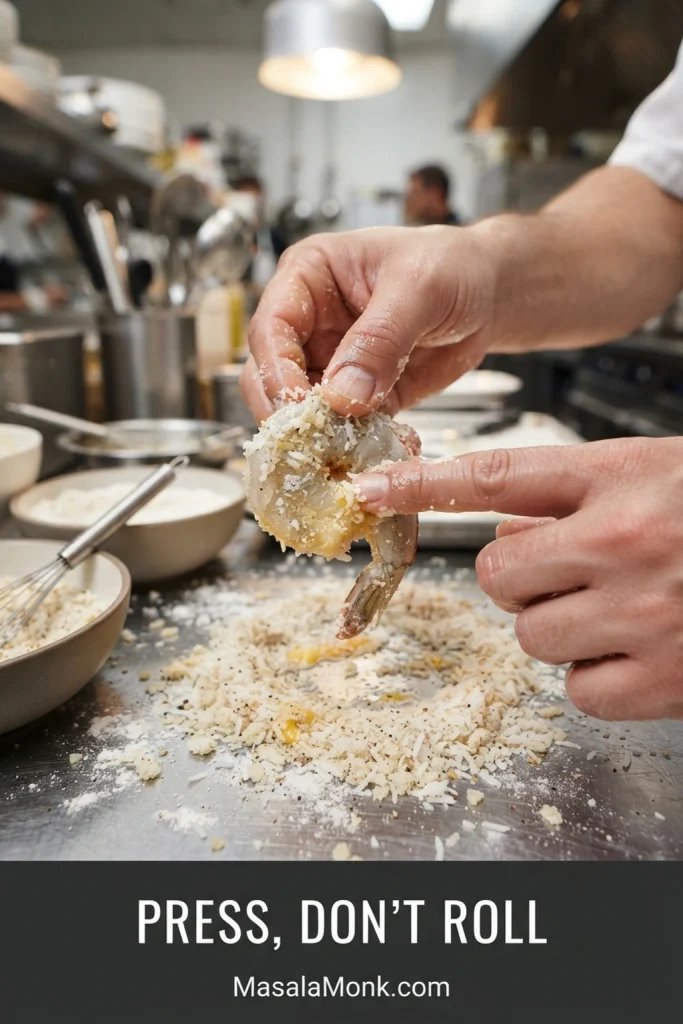
Bread the shrimp. Coat each shrimp lightly in the flour mixture and shake away the loose excess. Dip it into the egg and let the extra drip back into the bowl. Do not just roll the shrimp through the crumbs—press them on. Cover both sides and fill any obvious bare patches, then spread the shrimp across the plate or tray without overlapping.
Let the coating settle. Leave the breaded shrimp for about 10 minutes. Make the dipping sauce and start heating the oil during this time.
Mix the Sauce and Heat the Oil
Mix the sauce. Stir together the apricot preserves, sweet chili sauce, lime juice and soy sauce. Taste it. Very sweet preserves may need another squeeze of lime.
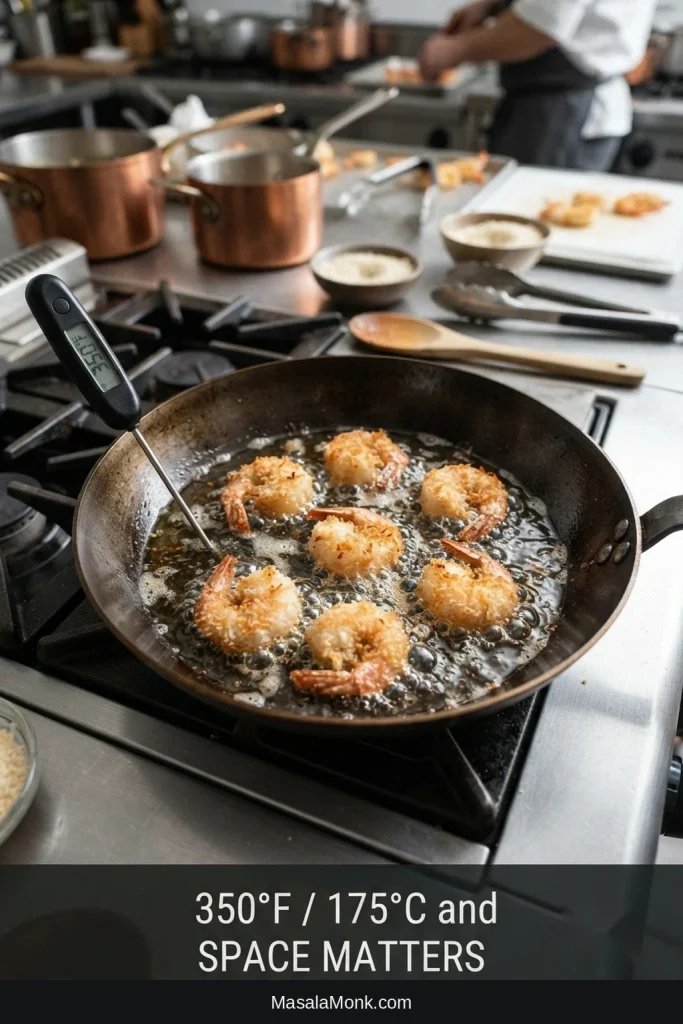
Heat the oil. Add enough neutral oil to reach about ¼ inch / 6 mm deep in the skillet. Bring it to about 350°F / 175°C.
Fry, Rack and Serve
Fry. Add about 6–8 shrimp per batch, depending on their size and your pan, leaving visible space between them. You should hear a steady sizzle as they hit the oil. Cook for roughly 1½–2 minutes on the first side, then turn gently and cook for another 1½–2 minutes. Look for a deep-golden coating and shrimp that is opaque through the thickest part and gently curled.
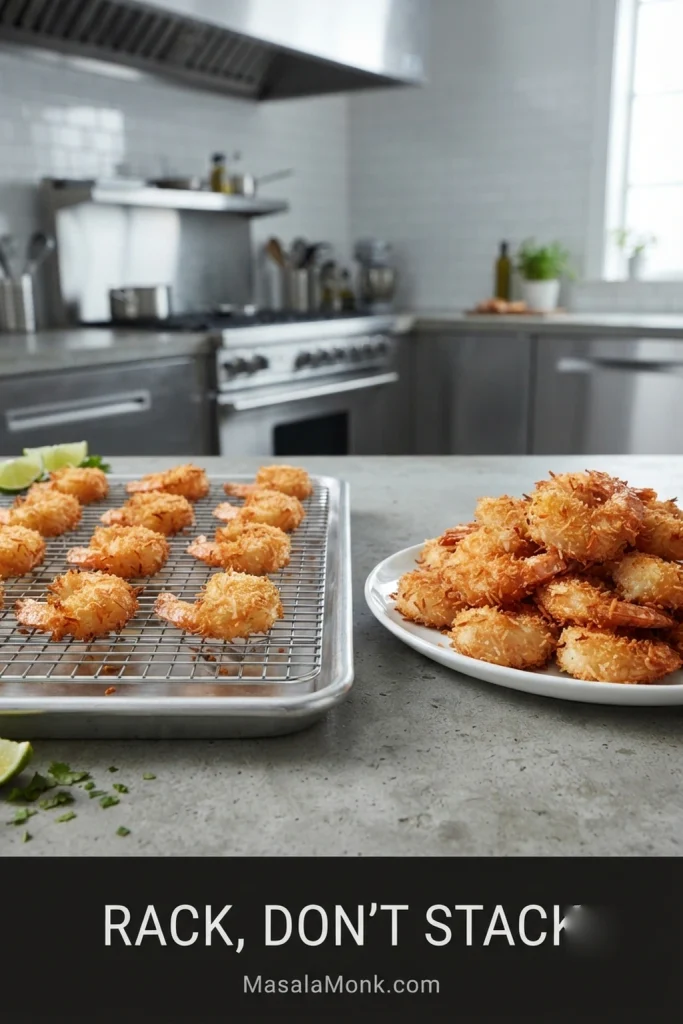
Rack and repeat. Transfer the cooked shrimp to a wire rack. No rack? Use a paper-towel-lined plate instead. Remove noticeably dark coconut crumbs from the oil, let the temperature recover, then continue with the next batch.
Serve. Bring the shrimp to the table while the crust is still hot and crisp, with dipping sauce and lime wedges alongside.
Recipe Notes
Frozen shrimp: raw frozen shrimp work very well. Thaw fully and dry especially thoroughly before breading.
Precooked shrimp: not recommended. They can become rubbery before the coconut has enough time to brown.
Less sweet: replace up to half of the sweetened coconut with unsweetened shredded coconut.
Gluten-free: replace the ⅓ cup all-purpose flour with ⅓ cup rice flour or a 1:1 gluten-free flour blend, while keeping the existing cornstarch. Use certified gluten-free panko and certified gluten-free tamari instead of soy sauce, and check the sweet chili sauce label because brands vary.
Extra breading: you may have a little flour or coconut-panko mixture left. That is intentional so the last shrimp can still be coated properly. Discard breading mixtures that have contacted raw shrimp or egg.
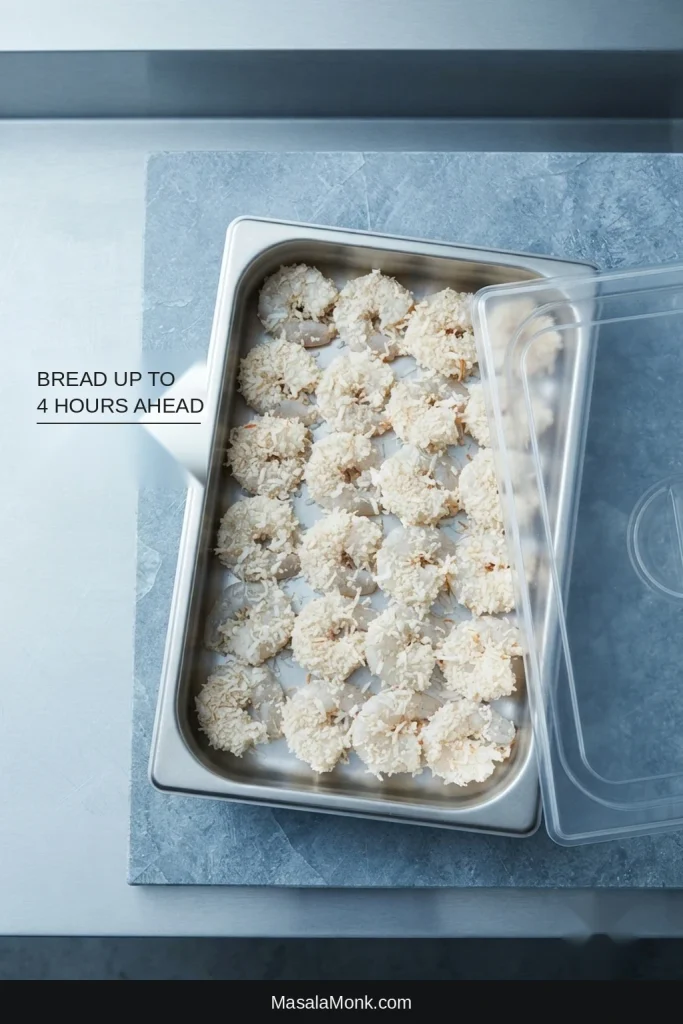
Make ahead: bread the raw shrimp up to 4 hours ahead, spread them in a single layer, cover and refrigerate. Fry close to serving.
If the coconut coating keeps falling off, start with the shrimp itself: it is usually still too wet, or the flour-cornstarch and egg layers are heavier than they need to be.
A few stray coconut crumbs in the skillet are normal. Half the breading floating around the shrimp is not.
Dry Enough Means the Shrimp Looks Matte
Thawed shrimp can look drained while still holding water along the back and near the tail. That moisture turns to steam under the breading. Press the shrimp firmly between paper towels until the surface no longer looks slick.
The shrimp on the right is ready for breading: dry-looking and matte, with no visible beads of water along the back or tail.
Keep the Layers Thin
The flour-cornstarch layer should look dusty rather than thick. Too much egg leaves a wetter layer underneath the coconut, so give the excess a moment to fall back into the bowl before pressing on the crumbs. A huge shaggy coat is not the goal; even coverage holds better and cooks more cleanly.
Pressing gives the coconut and panko firm contact with the egg-coated shrimp, which helps the crust stay attached when each piece is turned in the skillet.
Why Add Panko?
Coconut toasts beautifully, but it has a natural chew. Panko keeps the coating lighter and gives the finished crust a cleaner crunch.
Sweetened or unsweetened? Sweetened shredded coconut gives the familiar toasted restaurant-style finish; unsweetened coconut makes it less sweet and a little drier. Extra-long strands are worth chopping shorter because the exposed ends tend to darken first and break away more easily.
Give the Coating a Few Minutes to Settle
Once the last shrimp is breaded, leave the tray alone for about 10 minutes. That short pause helps the pressed coating grip before frying. Mix the sauce and bring the oil up to temperature while it rests, so your attention can stay on the skillet once frying begins.
The coconut should be deep golden just as the shrimp turns opaque. Both happen quickly, so shrimp size and oil temperature matter more than an exact number of minutes.
21/25-Count Shrimp Are Easy to Control
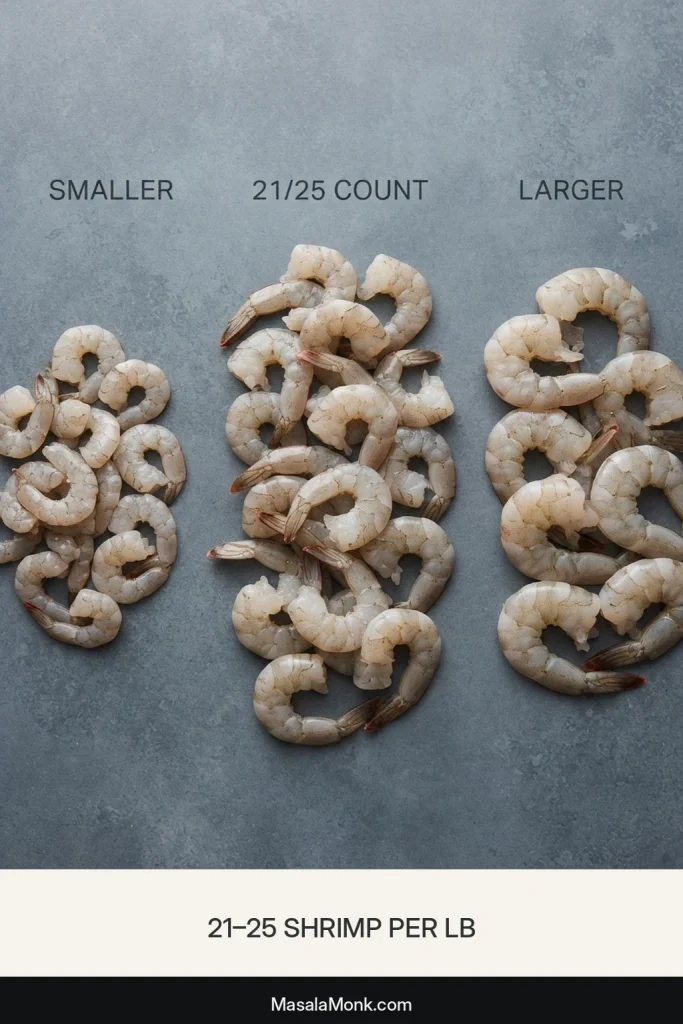
Shrimp counts are more useful than names such as “large” or “jumbo,” which vary by store. A 21/25 count means 21 to 25 shrimp per pound: large enough to stay juicy without making the coconut wait too long for the center to cook.
Very small shrimp are less forgiving because they can overcook before the coconut develops enough color. Large raw prawns in the 21/25 range work the same way. Bigger 16/20 shrimp or prawns work too; very thick pieces can be lightly butterflied along the back for a broader, more even shape.
A 21/25 count means roughly 21–25 shrimp per pound, a useful middle ground here because the pieces are substantial without making the coconut wait too long to brown.
Tails are optional: leave them on for easier breading, turning and finger-food serving, or remove them for easier eating.
Start Around 350°F
Heat the oil to about 350°F / 175°C before the first shrimp goes in. Cold shrimp will pull the temperature down, so give each piece some room and let the oil recover between batches.
Shallow frying works well for coconut shrimp when the skillet stays hot and the pieces have breathing room; crowding can turn a crisp coating into a steamy, oily one.
Read the First Batch
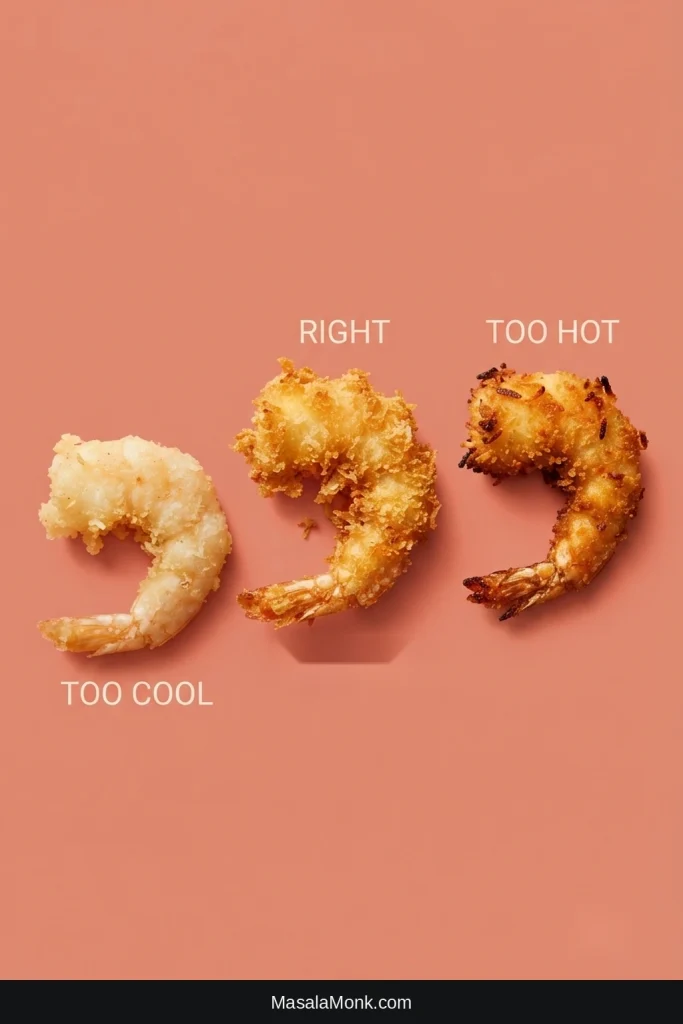
Watch that first batch closely. Coconut turning dark almost immediately means the pan is too hot; pale breading that starts looking oily means it has cooled too far. You want a lively, steady sizzle—not a quiet pan and not violently smoking oil.
Your first batch does not need to be the prettiest one. Use it to learn how quickly the pan is browning the coconut.
Aim for the center state: deep golden coconut, not pale and oil-heavy or racing toward dark brown.
Clear the Oil Between Batches
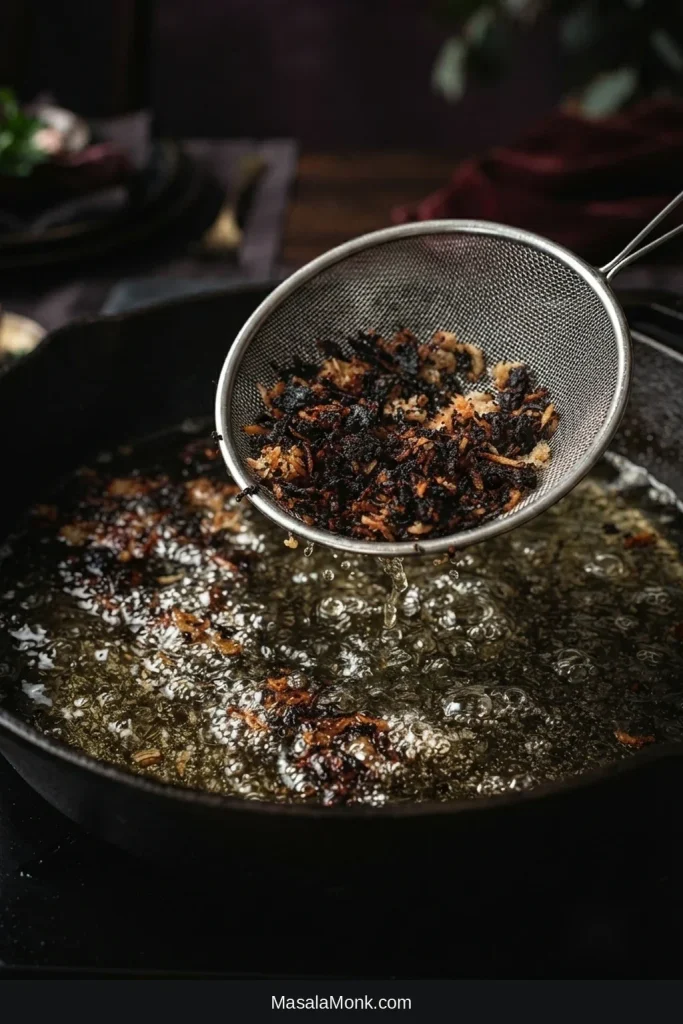
Coconut and panko crumbs that escape into the skillet keep cooking after the shrimp comes out. Skim out the dark ones before the next batch so they do not burn and turn bitter.
Dark crumbs do not stop cooking when the shrimp comes out, so clearing them between batches keeps the oil cleaner and reduces the chance of bitter burnt coconut on the next batch.
The same basics—dry food, properly hot oil and enough room in the pan—matter in fish and chips too.
How to Tell When Coconut Shrimp Is Done
About 1½–2 minutes per side is a useful starting point for 21/25 shrimp, but the shrimp itself gets the final say.
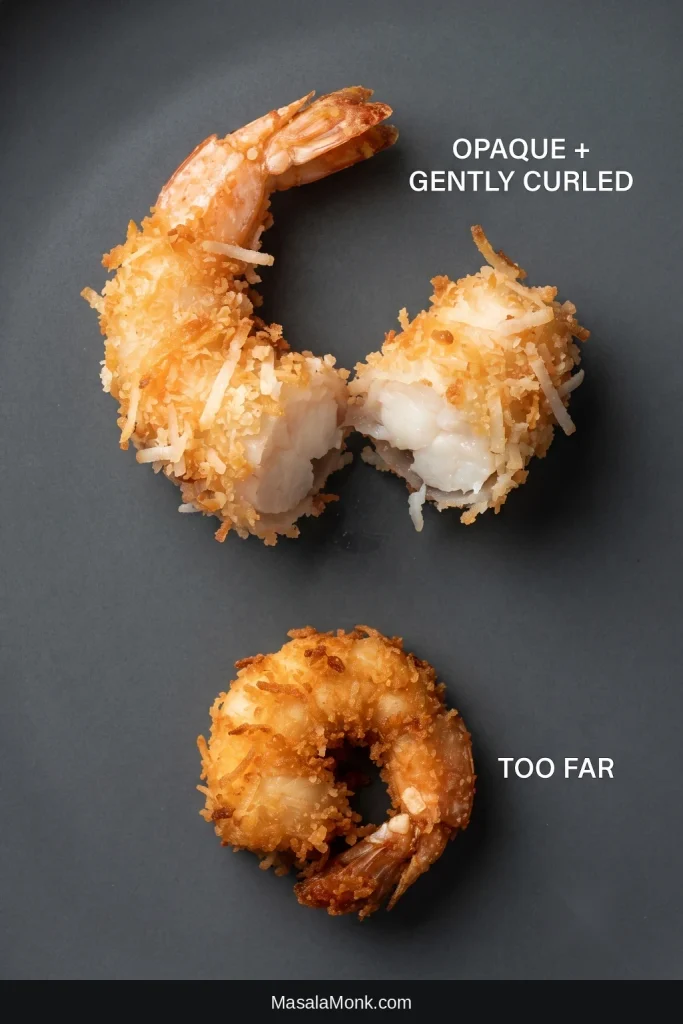
Look for a deep-golden crust and a thickest section that has turned opaque while the shrimp remains gently curled. A tight, firm little ring usually means it has gone farther than necessary. Color alone is unreliable because some raw shrimp varieties are naturally pink.
The shrimp on the left has finished in a relaxed curl; the tighter shrimp shows what happens when cooking continues after the center has turned opaque.
Taste the first shrimp. Let it cool for a minute and break into it. Its crust should feel crisp rather than leathery, while the center should still look moist. If it is right, keep going. Should the coconut be darker than you wanted, lower the heat before the next batch.
The best bite has a delicate crackle from the coating followed by tender shrimp underneath; that contrast disappears when the crust turns leathery or the shrimp is overcooked.
FoodSafety.gov uses the same cue for shrimp: the flesh should be pearly or white and opaque.
Move finished shrimp to a wire rack when you have one; air underneath helps preserve the crust. Keep the batches spaced apart and uncovered. A very low oven can hold the rack briefly, but coconut shrimp is best served soon after frying.
The wire rack creates an air gap beneath the hot shrimp, giving steam a way out instead of letting moisture collect against the crisp coating.
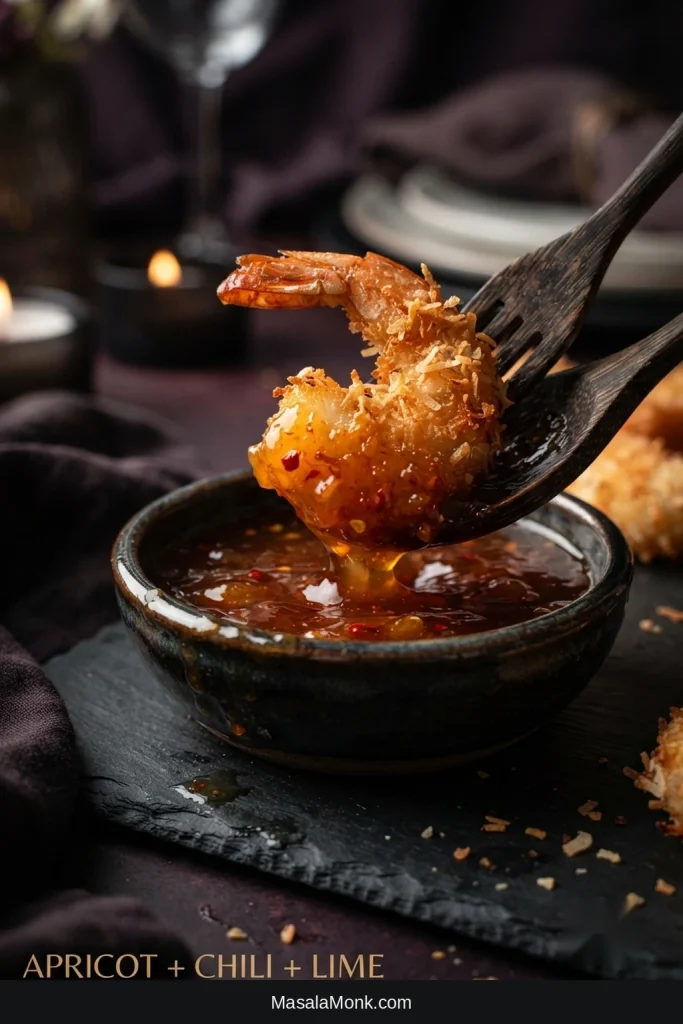
Coconut Shrimp Dipping Sauce: Bright, Fruity & Not Too Sweet
Stir together ¼ cup / about 80 g apricot preserves, ¼ cup / 60 ml sweet chili sauce, 1½ tbsp / 22 ml fresh lime juice and 1 tsp / 5 ml soy sauce. The dipping sauce should brighten the shrimp, not sweeten it twice.
The sauce should cling in a thin glossy layer rather than bury the crust; lime keeps the fruity sweetness from overwhelming the coconut.
Apricot preserves bring fruit, sweet chili sauce brings sweet heat, fresh lime cuts through the sweetness, and soy adds a salty, savory edge. Preserves vary, so taste before serving: an especially sweet jar wants more lime, while a tart one may want another spoonful of preserve or sweet chili sauce.
For something fresh and chunky, mango salsa gives you the same fruit-and-lime contrast with cool, juicy texture beside the hot coconut crust.
If a restaurant version is what you remember: Red Lobster serves its Parrot Isle Coconut Shrimp with piña colada sauce, while Outback serves Gold Coast Coconut Shrimp with Creole marmalade. This apricot-chili-lime sauce lands brighter and less creamy than either.
If Your Coconut Shrimp Isn’t Coming Out Right
The symptom usually points straight at the problem. Use this as a quick check rather than starting the recipe over in your head.
Problem
Quick fix
Coating falls off
Shrimp too wet or breading layers too heavy. Dry until matte, keep the flour-cornstarch and egg layers thin, then press the crumbs on firmly.
Pale and greasy
Oil too cool. Fry smaller batches and let the oil recover before adding more shrimp.
Coconut darkens too quickly
Oil too hot. Lower the heat and skim out already-dark crumbs before continuing.
Golden but chewy
Egg layer too heavy or the coating packed on too thick. Let excess egg drip well, then press on an even coat rather than a thick shaggy one.
Rubbery shrimp
Overcooked or started precooked. Use raw shrimp and stop once the center is opaque and tender.
Later batches taste bitter
Burnt coconut is accumulating in the oil. Skim dark crumbs between batches.
Crust softens while waiting
Steam is trapped around the shrimp. Keep them uncovered and spaced apart, preferably on a rack.
Too sweet
The coconut and sauce are stacking sweetness. Add more lime and swap up to half of the sweetened coconut for unsweetened next time.
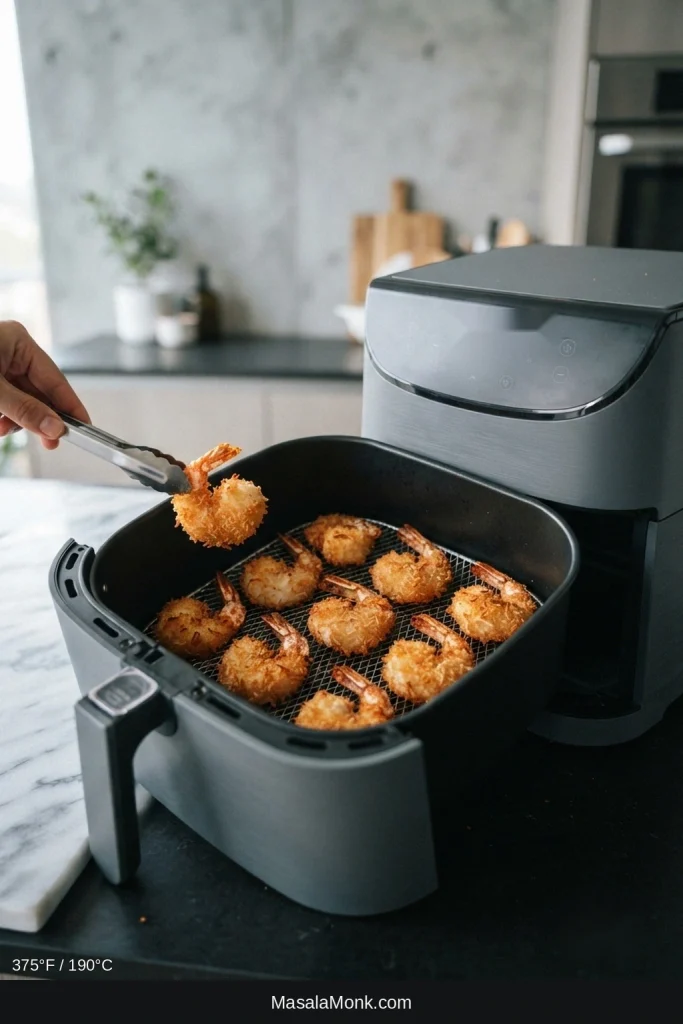
Air frying is the closest low-oil alternative to shallow frying: the coating can still turn crisp and golden, but a light mist of oil helps it brown before the shrimp overcooks.
Bread the shrimp as in the main recipe and let the coating sit for about 10 minutes.
Preheat the air fryer to 375°F / 190°C.
Lightly oil the basket and arrange the shrimp with space between them.
Mist the coconut-panko coating lightly with neutral oil.
Cook for about 3–4 minutes, turn gently, then mist any visibly dry patches on the second side.
Begin checking at about 6 minutes total. Depending on shrimp size and the air fryer, expect roughly 6–10 minutes overall. Stop when the crust is golden and the shrimp is opaque through the thickest part.
With less oil surrounding the coating, open basket space and a light mist of oil become especially important for browning before the shrimp dries out.
Starting with frozen-solid shrimp? Thaw them for this breaded recipe so the coating can stick to a dry surface. For plain shrimp cooked directly from frozen, use the size-based timings in our frozen shrimp in the air fryer guide.
Air fryers vary. If the shrimp is done before the breading has enough color, use the pre-toasting step in the baked method below next time rather than cooking the shrimp longer.
Baked Coconut Shrimp
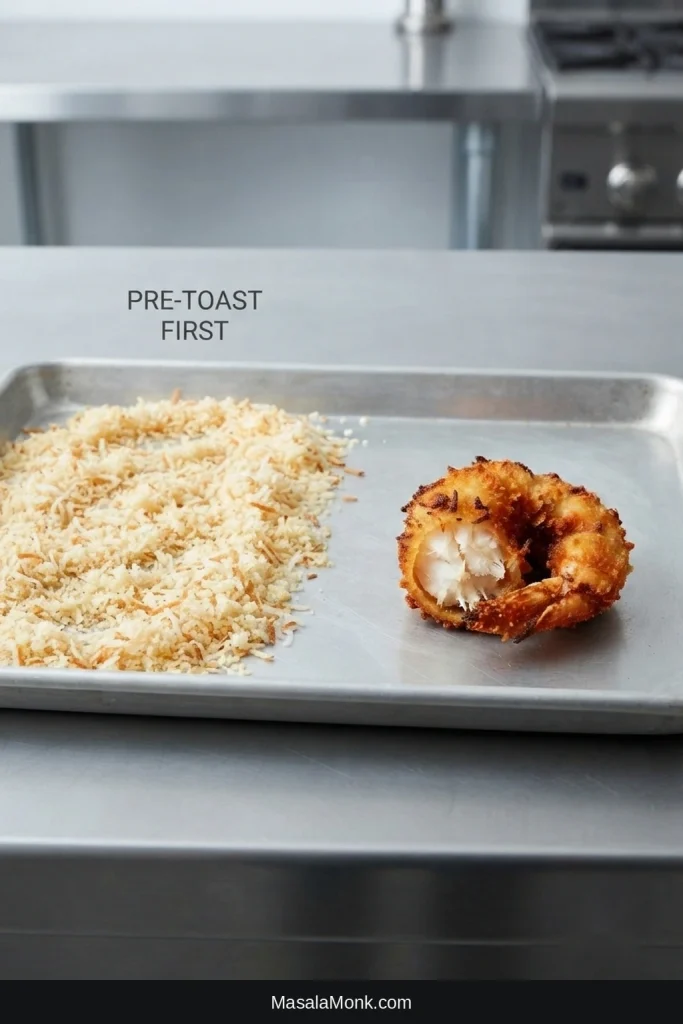
Baking works, but getting enough color before the shrimp overcooks is harder. Pre-toasting the coconut-panko mixture gives the crust a head start.
The coating can lag behind the shrimp in the oven, so pre-toasting the coconut and panko gives the crust a head start on color before the shrimp has finished cooking.
Spread the coconut and panko on a sheet pan and toast at 325°F / 165°C. Start checking at 3–4 minutes, stir once or twice, and stop when the mixture is lightly golden. Sweetened coconut can color quickly. Let it cool completely.
Once cool, bread the shrimp as in the main recipe, then let the coating sit for about 10 minutes while the oven heats to 425°F / 220°C.
Set a lightly greased wire rack over a rimmed sheet pan. No rack? Use a parchment-lined sheet pan and turn the shrimp once during baking.
Arrange the breaded shrimp without overlapping and mist the tops lightly with oil.
Bake for roughly 7–10 minutes, checking early for smaller shrimp.
If the shrimp is ready but the crust needs more color, use a very brief broiler finish and watch it closely.
Don’t keep baking cooked shrimp just for color. Pre-toast the coating or use a brief broiler finish; extra oven time only makes the shrimp firmer.
Make Ahead, Store & Reheat Coconut Shrimp
Bread Ahead, Fry Near Serving
You can bread the shrimp up to 4 hours ahead and keep them covered and refrigerated without overlapping. Make the dipping sauce—and a cold side such as coleslaw—ahead too. When it is time to eat, frying is the only real last-minute job.
Make-ahead coconut shrimp is about staging the work, not cooking it early: keep the breaded raw shrimp dry, covered, and separated so frying remains the final crisping step.
Storing and Reheating Leftovers
Refrigerate leftover coconut shrimp promptly—within 2 hours of cooking, or within 1 hour when the surrounding temperature is above 90°F / 32°C. Use refrigerated coconut shrimp within 3–4 days.
For the best texture, reheat in an air fryer at about 350°F / 175°C for 3–5 minutes, checking early because the shrimp is already cooked. A hot oven is the next-best option. USDA leftover guidance recommends reheating leftovers to 165°F / 74°C. See USDA leftover and food-safety guidance.
A microwave will heat the shrimp, but it softens the crust quickly. Use it when convenience matters more than texture.
Once chilled, pack the leftover shrimp airtight and freeze for up to 3 months for best quality. Reheat in an air fryer or hot oven; the crust will not be quite as delicate as a fresh batch, but it can regain a good amount of crunch.
What to Serve with Coconut Shrimp
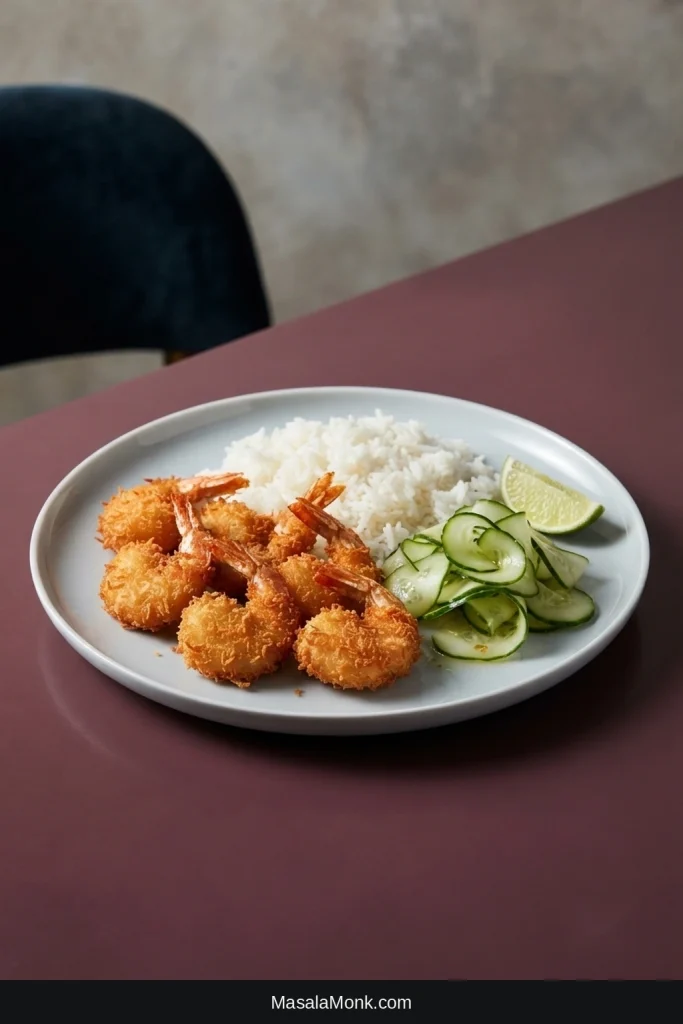
As an appetizer, coconut shrimp needs little beyond dipping sauce and lime. For dinner, the easiest plate is hot shrimp, jasmine rice and something cold and sharp on the side.
The same crisp shrimp that works as an appetizer can become a complete meal with jasmine rice and a cool, sharp side that keeps the plate from feeling too rich.
Jasmine rice works especially well here; the guide includes the ratio and method if you’re making it alongside the shrimp. Slaw, cucumber salad or simply dressed greens all work well against the sweet fried crust.
The same sweet-crisp-acidic combination works well in tortillas. Add the shrimp to warm tortillas with cabbage, avocado and plenty of lime, using the dipping sauce lightly so the crust stays crisp. For a complete slaw-and-tortilla setup, use our shrimp tacos recipe as the starting point.
Have the sauce, lime and sides ready before the first batch goes into the oil. Coconut shrimp is at its best in those first few minutes, when the coconut smells toasted, the crust still crackles and the shrimp underneath is juicy.
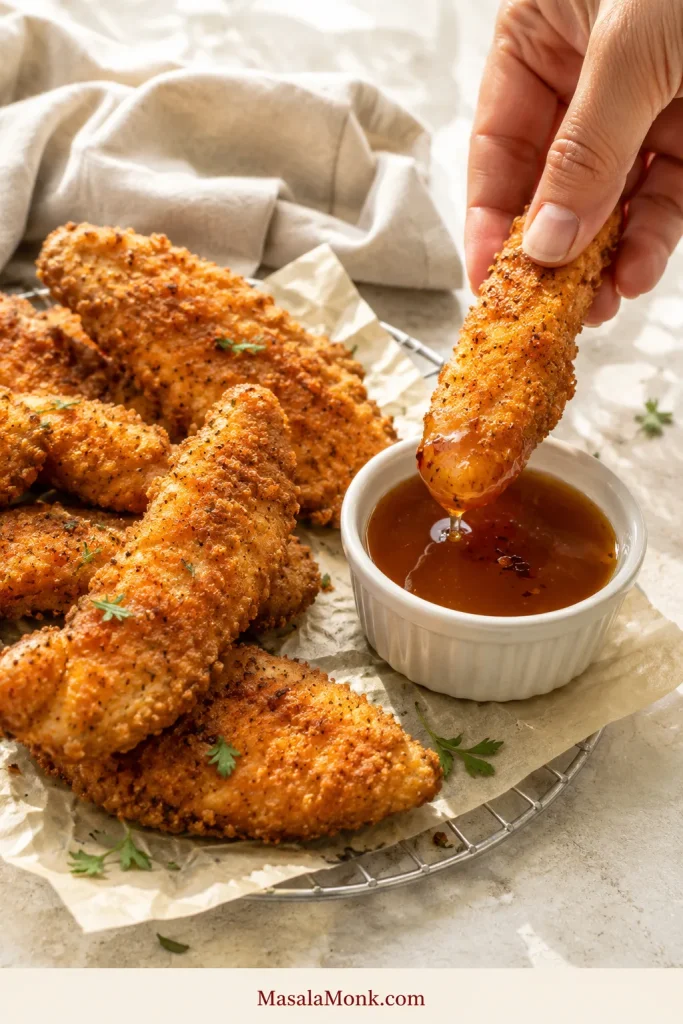
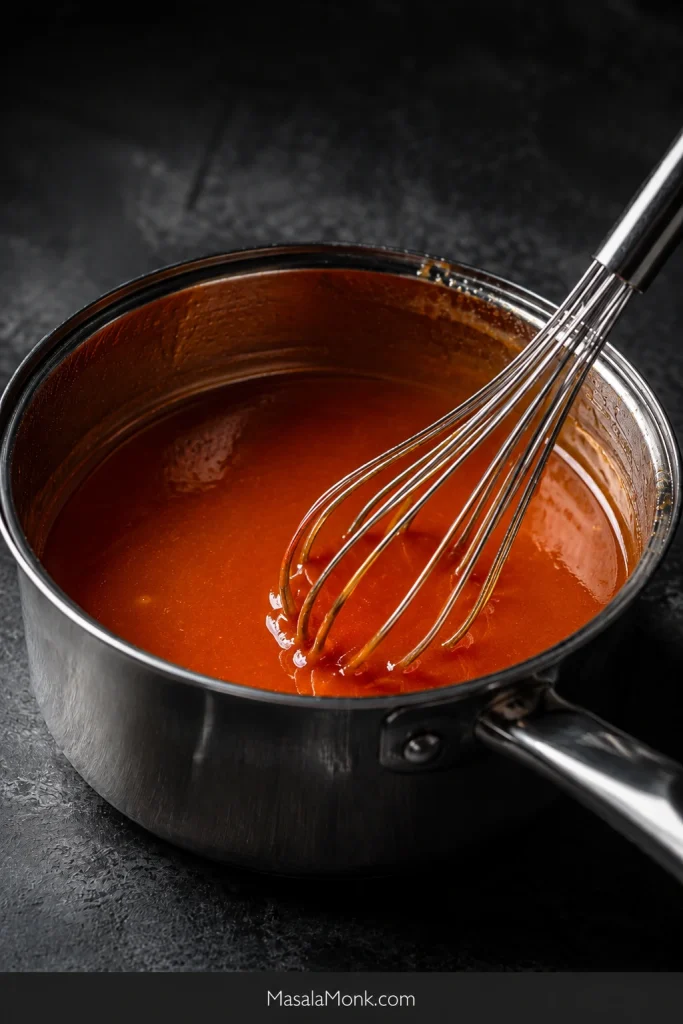
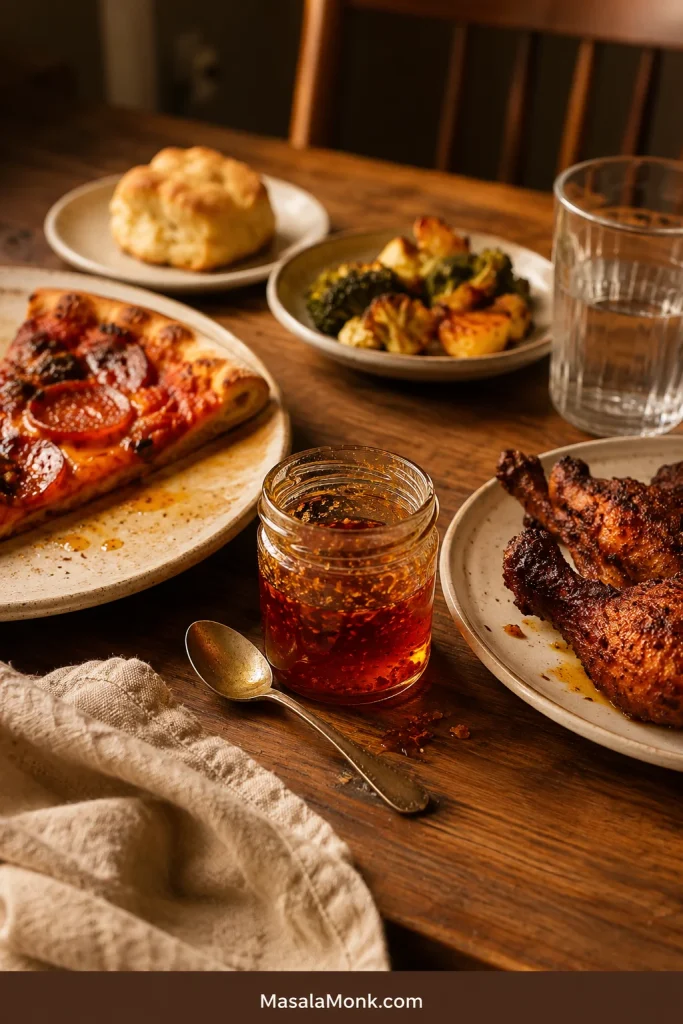
Hot honey sauce is what you make when plain honey feels too sweet, ordinary hot sauce feels too sharp and the food in front of you needs both. It gives pizza a glossy finishing drizzle, wakes up chicken tenders, clings to crisp wings and turns a warm biscuit into something worth slowing down for.
In its simplest form, hot honey is a two-ingredient, no-cook mixture of honey and hot sauce. A small pinch of salt can sharpen the balance when the sauce needs it. Whisk everything together in about two minutes and use it immediately.
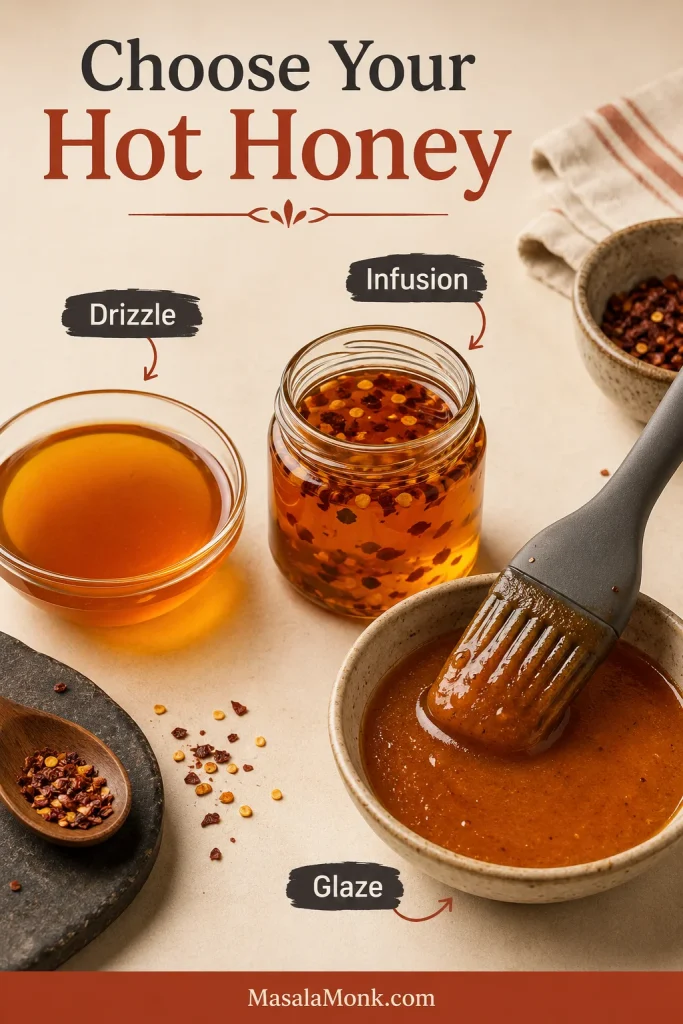
You can also infuse honey with dried chilli for a clearer pepper flavour or add butter for a richer glaze. They share the same name, but they do different jobs: one drizzles, one tastes clearly of dried chilli and one stays where it lands.
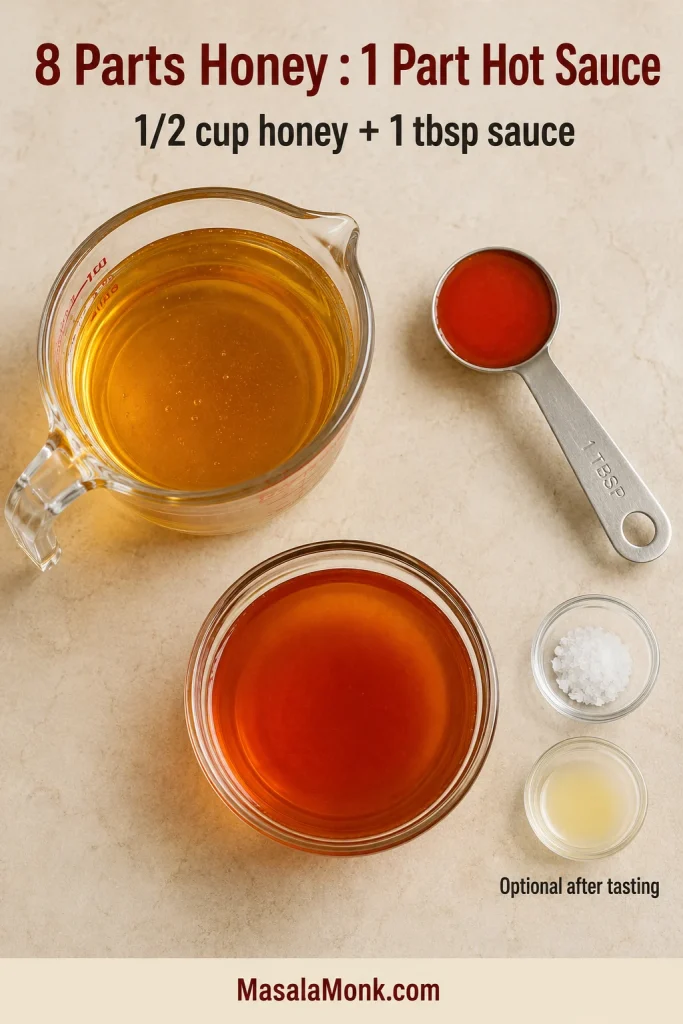
Start with an 8:1 ratio of honey to thin cayenne-style hot sauce: ½ cup / 170 g honey to 1 tablespoon / 15 ml hot sauce for the full batch. Add one small pinch of salt only if the sauce needs it.
Cayenne raises the heat without adding more liquid. If the sweetness feels heavy, stir in a little vinegar or lemon juice. Honey and hot sauce may already be enough.
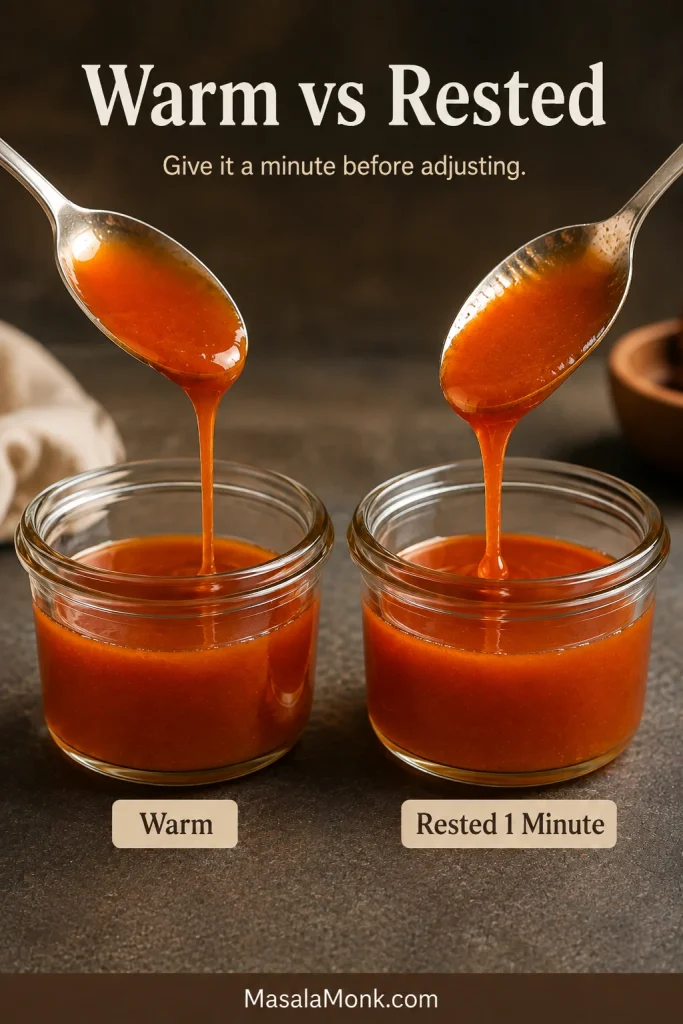
Warm hot honey always looks looser. Give it a minute before deciding that it needs more honey.
Scale the 8:1 ratio easily: 8 teaspoons honey to 1 teaspoon thin hot sauce makes a small test batch.
Choose Your Hot Honey Sauce
The no-cook sauce is the everyday choice. For a more distinct pepper flavour, use the dried-chilli infusion. Butter turns hot honey into a glaze that coats wings, chicken or salmon.
Swipe or scroll sideways to see the full table.
Method
Consistency
Hands-on
Total
Best for
Quick hot honey sauce
Smooth and pourable
2 minutes
2 minutes
Pizza, chicken, sandwiches and dipping
Chilli-infused hot honey
Clear, glossy and lightly textured
About 5 minutes
About 10–20 minutes
Pizza, biscuits, cheese and fried foods
Buttery hot honey glaze
Rich, glossy and clingy
About 5 minutes
About 5–7 minutes
Wings, tenders, salmon and vegetables
Choose by how the sauce should behave: smooth hot honey drizzles, butter glaze clings, and dried-chilli infusion leaves visible chilli in the sauce.
Make this first
Quick No-Cook Hot Honey Sauce Recipe
This is the default sauce: honey-led, clearly spicy and fluid enough to drizzle while still leaving a light coating on chicken, bread or pizza crust.
Time 2 minutes
Yield About 9 tbsp / 135 ml
Serving size 1 tbsp / 15 ml
Texture Glossy and pourable
Ingredients
Core ingredients
½ cup runny honey — 4 fl oz / 120 ml; about 6 oz / 170 g by weight
1 tablespoon thin, medium-heat cayenne-style hot sauce — ½ fl oz / 15 ml
Optional after tasting
One small pinch fine salt — useful when the hot sauce is not already salty
Up to 1 teaspoon apple cider vinegar or lemon juice — added ¼ teaspoon at a time
⅛–¼ teaspoon cayenne pepper for extra heat
Method
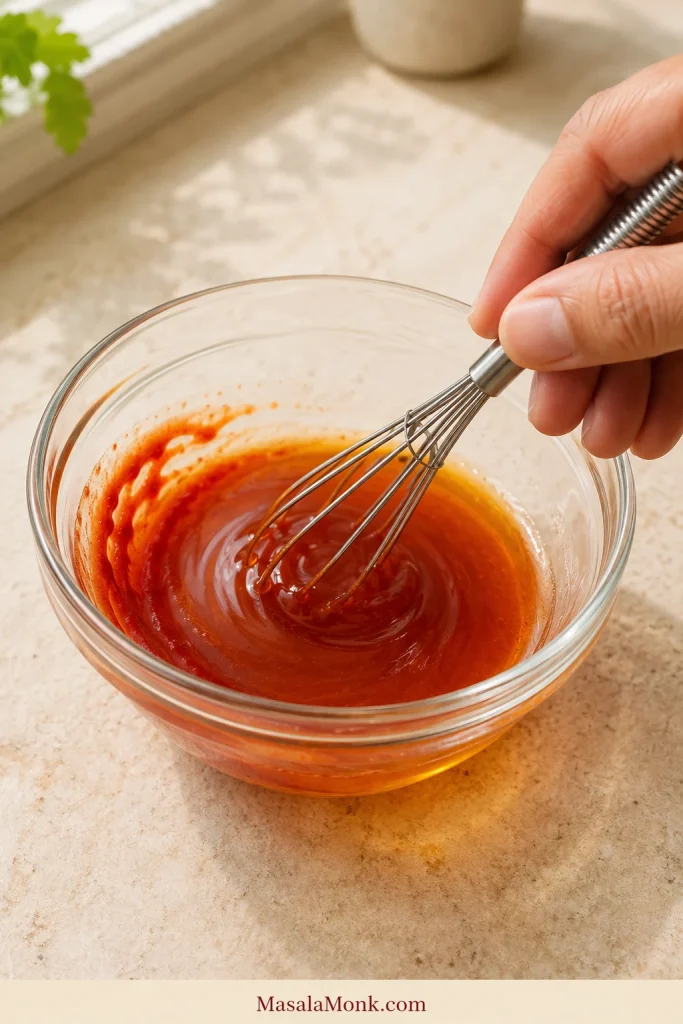
Whisk. Combine the honey and hot sauce in a small bowl until the colour is even and no red streaks remain. Stir in the salt if needed.
Taste. The honey should come through first, then give way to the hot sauce’s tang and chilli warmth.
Adjust only if needed. Cayenne makes it hotter. Vinegar or lemon juice lightens sweetness that lingers too heavily.
Sweep the whisk around the bowl edge before stopping; concentrated hot sauce can hide along the rim.
For a finer drizzle: warm the sauce over low heat for 30–60 seconds or microwave it in a microwave-safe bowl for 10 seconds at a time. Stop as soon as the honey loosens. It does not need to bubble.
That is it—no simmering, steeping or special chilli required.
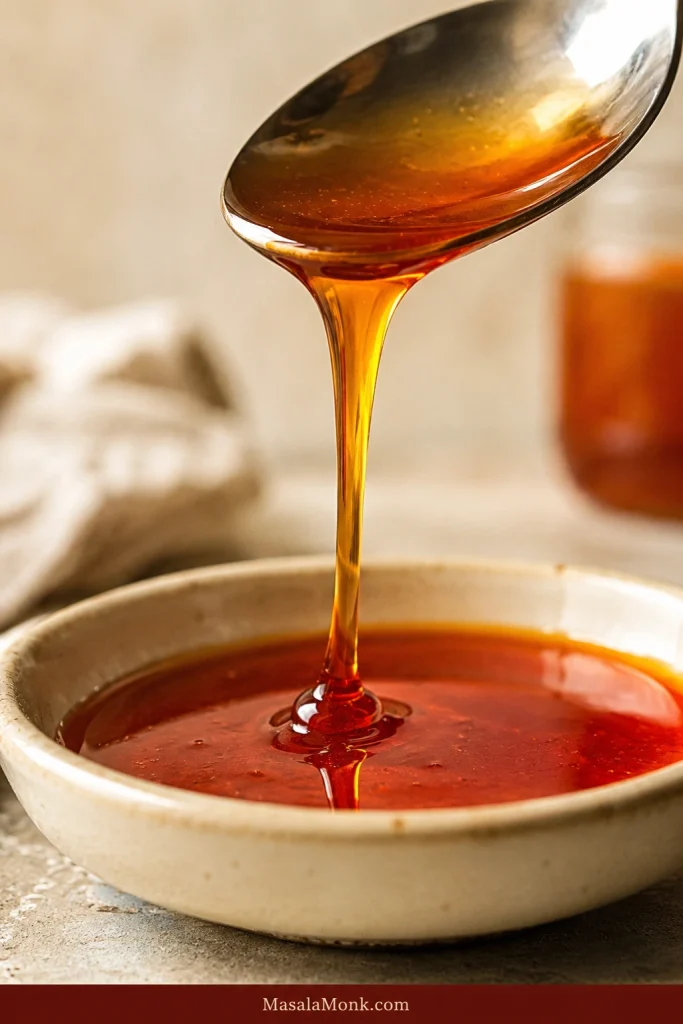
What success looks like: the sauce falls from a spoon in a smooth ribbon and leaves a light glossy film behind. Honey should arrive first and chilli should follow. If the first taste already works, leave it alone.
A good drizzle stays continuous for a moment, letting you draw thin lines instead of blobs.
Recipe Notes
Taste your hot sauce first: cayenne sauce, Sriracha and concentrated habanero sauce will not produce the same flavour or flow.
Sauce crisp food last: the longer fried food sits under honey, the softer its coating becomes.
How to Use Hot Honey Sauce
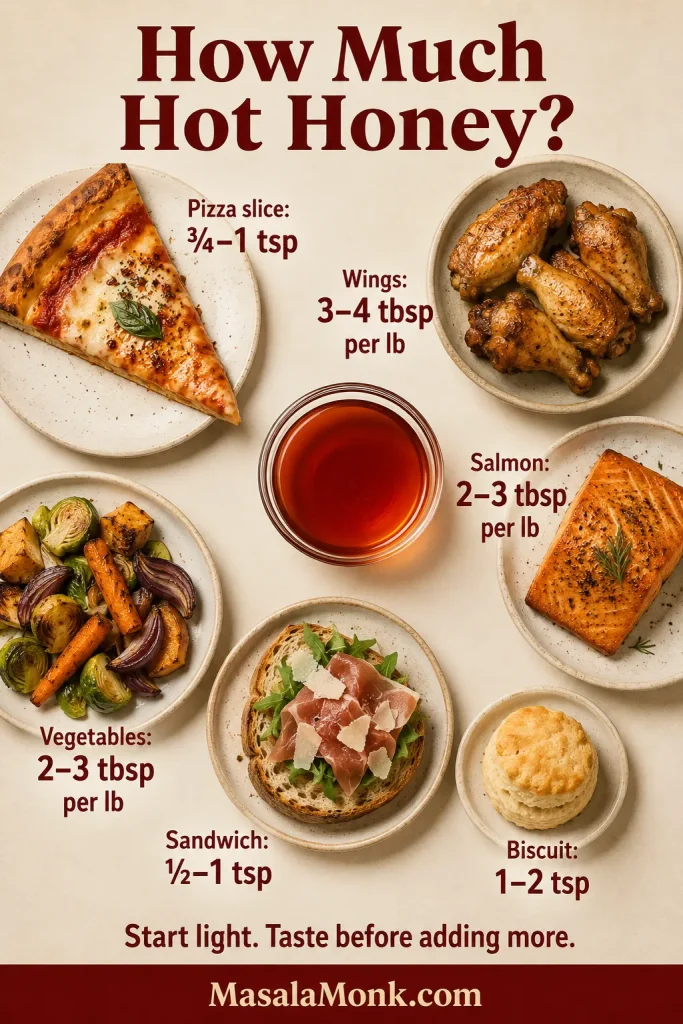
A light coating is usually enough. Taste the food before pouring on more.
Brown first; glaze late. Crisp food gets the sauce shortly before serving.
Swipe or scroll sideways to see the full table.
Food
Starting amount
When to add it
12-inch pizza
2–3 tbsp / 30–45 ml
Immediately after baking
One pizza slice
¾–1 tsp / 4–5 ml
After baking
1 lb / 450 g wings
3–4 tbsp / 45–60 ml
Toss after cooking
1 lb / 450 g tenders
3–4 tbsp / 45–60 ml
Toss or drizzle shortly before serving
1 lb / 450 g salmon
2–3 tbsp / 30–45 ml
Brush on near the end
1 lb / 450 g vegetables
2–3 tbsp / 30–45 ml
Add near the end or after roasting
Four sandwiches
2–4 tsp / 10–20 ml
Drizzle during assembly
Biscuits or cornbread
1–2 tsp per serving
Add at the table
Use the guide as a starting range; even distribution often gives enough sweet heat without more sauce.
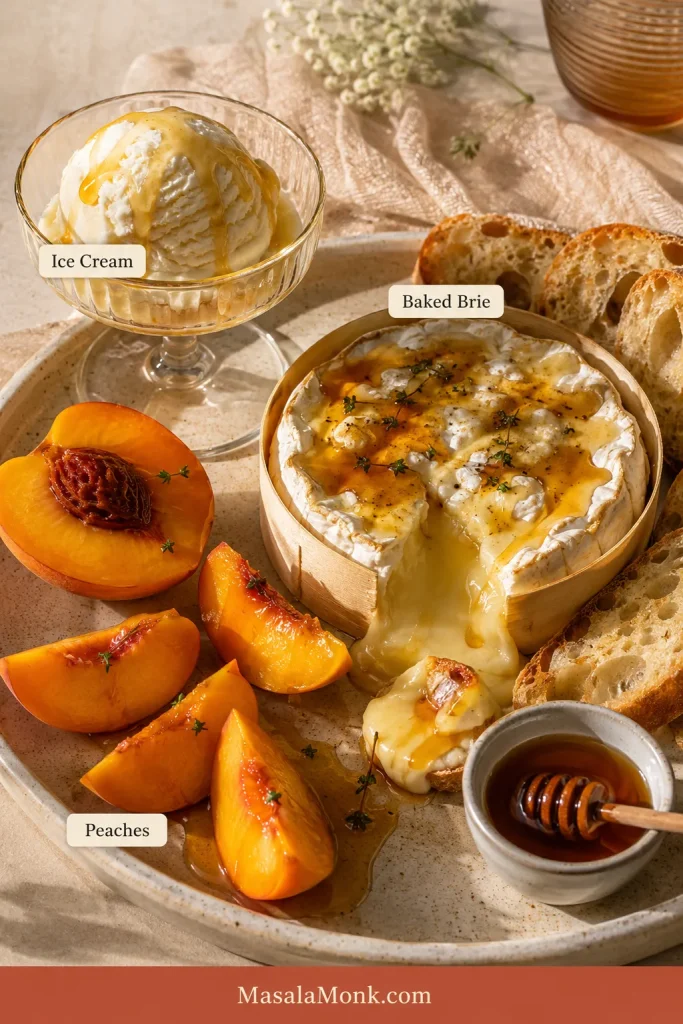
For a sweeter contrast, try a teaspoon over vanilla ice cream, baked brie or ripe peaches. Cold dairy softens the heat; warm cheese and fruit brighten the sweetness.
For desserts, drizzle at the table so the contrast stays distinct against cold dairy, warm cheese or fruit.
Hot Honey for Pizza
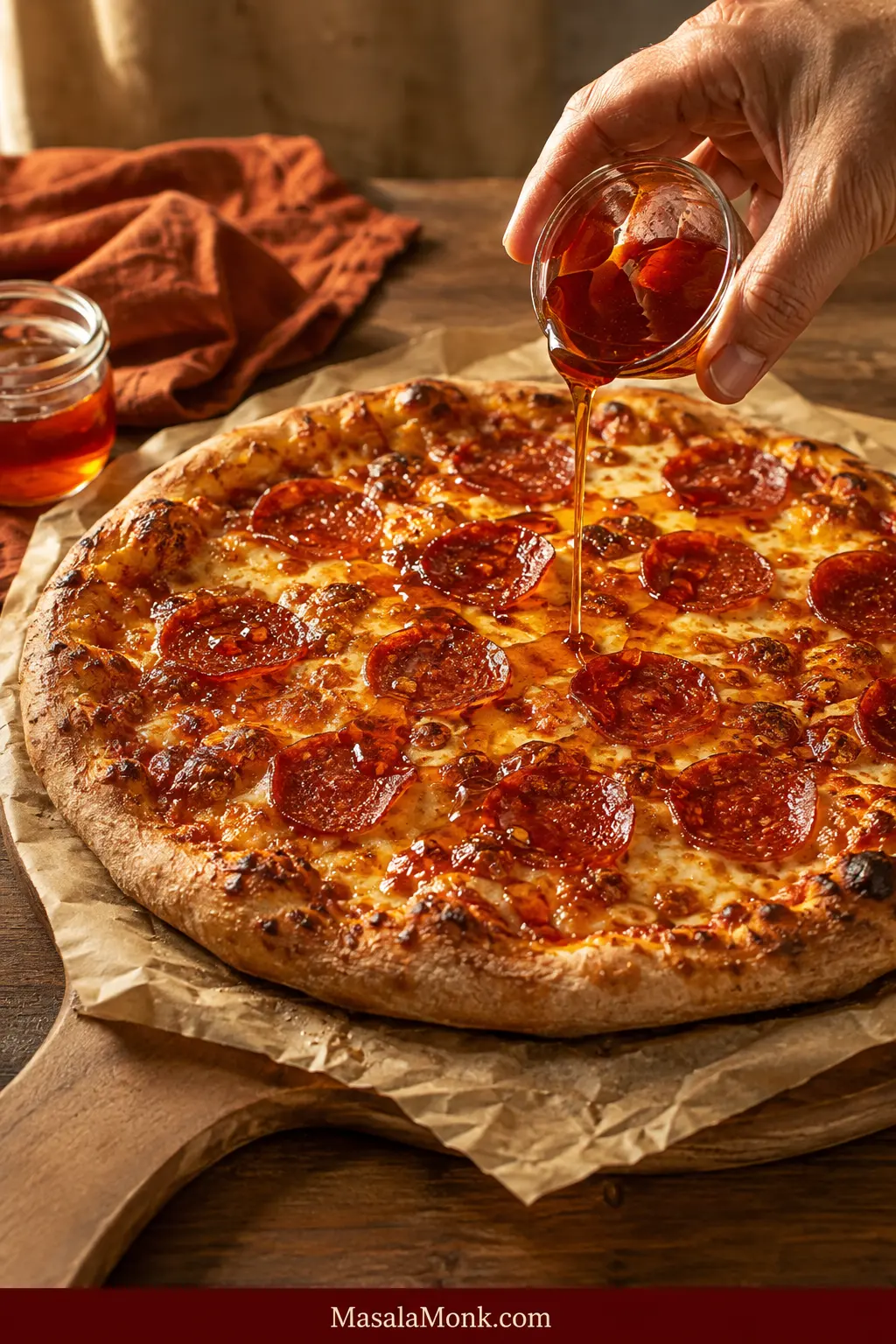
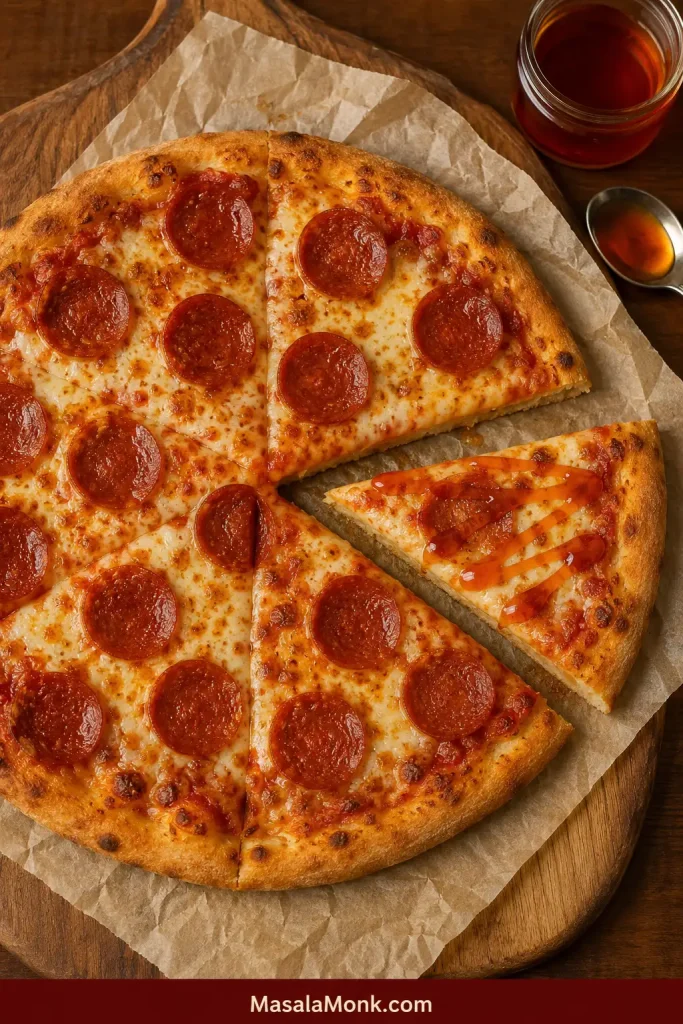
Hot honey belongs on the pizza after it leaves the oven. Residual heat loosens the drizzle without baking it into the cheese.
Not sure whether it belongs there? Drizzle one slice first. The cheese tastes richer, salty toppings become sharper and the crust suddenly feels worth dipping. Then decide whether the rest needs it.
Test a slice with representative toppings; extra cheese, cured meat or pickles can change how much heat the pizza needs.
Choose the base from these pizza sauce recipes, then finish with a light drizzle. Too much makes the centre wet and sweet.
Hot Honey for Wings and Chicken Tenders
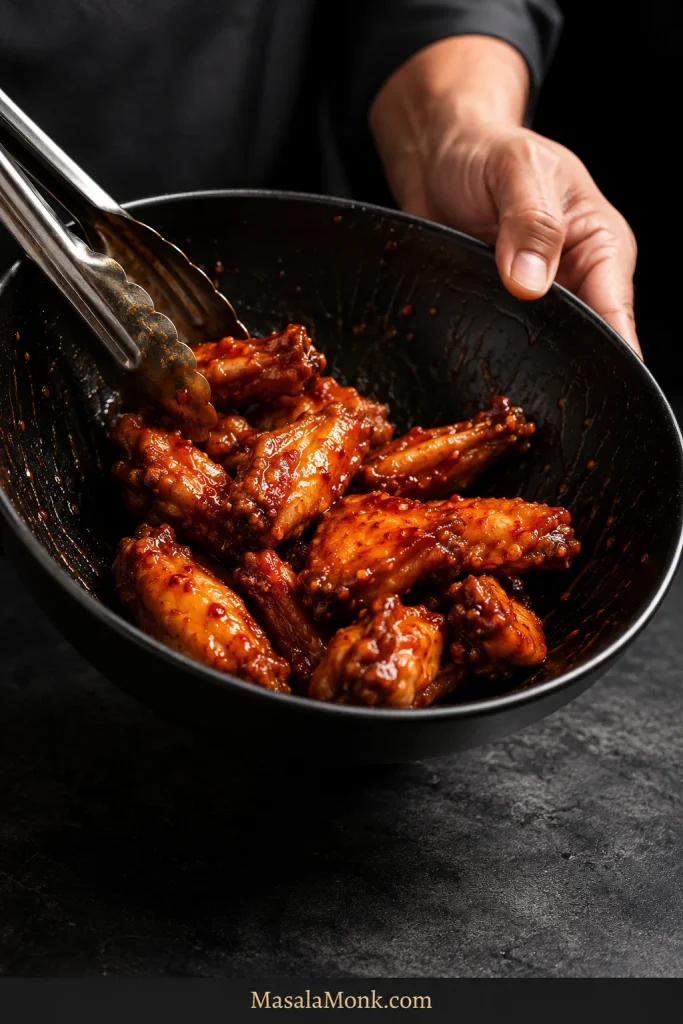
Cook the chicken until crisp, then add the sauce shortly before serving.
Use a wide bowl and toss rather than stir so a smaller amount coats the wings evenly.
Dip one edge to keep sauce and crunch in the same bite; a full dunk softens more coating.
Crisp food should not sit in sauce while everyone slowly finds their way to the table.
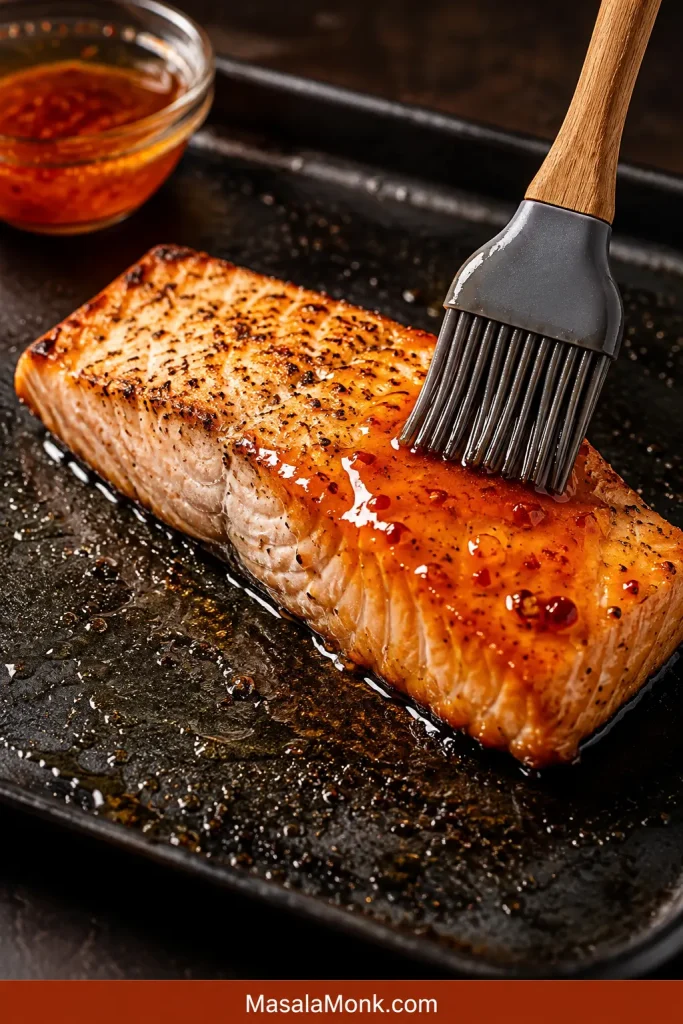
Hot Honey Glaze for Salmon
Brush the glaze on once the salmon is nearly opaque and beginning to flake. In this honey garlic salmon, the fish browns before the honey sauce enters the pan.
Brush salmon with a thin film, not a puddle; it clings evenly and is easy to build.
Hot Honey on Sandwiches
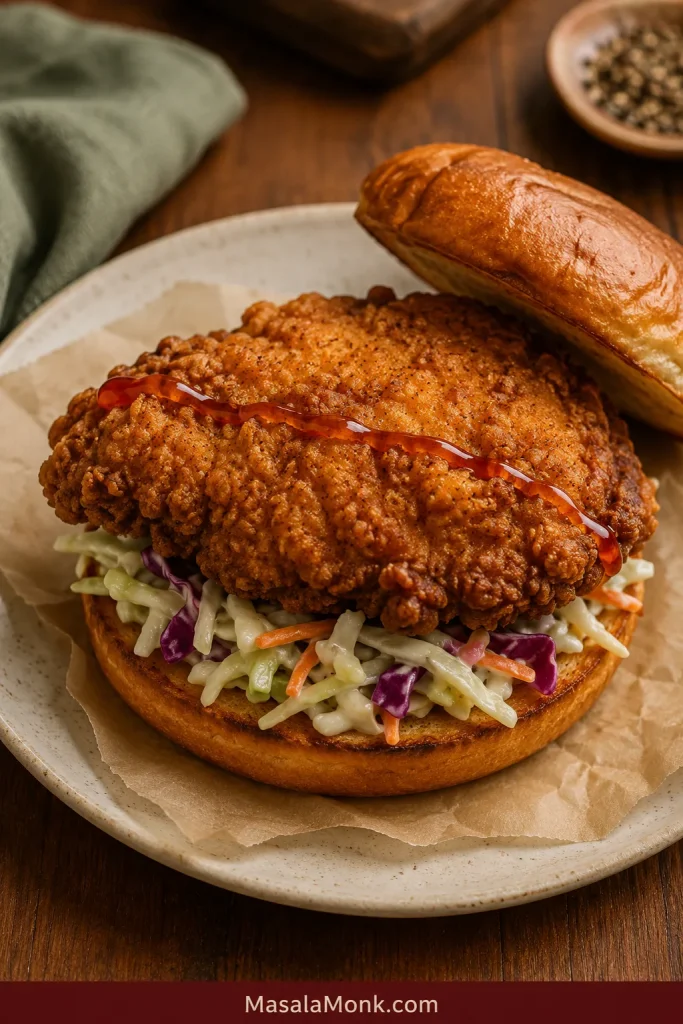
Usually, a thin line across the filling is enough. A heavier pour sinks into the bread and dulls the contrast between crisp, creamy and salty ingredients.
Put hot honey on the filling rather than the bun so the bread stays drier and the chicken stays crisp.
It works particularly well on the crispy, Buffalo and BBQ options in these chicken sandwich recipes.
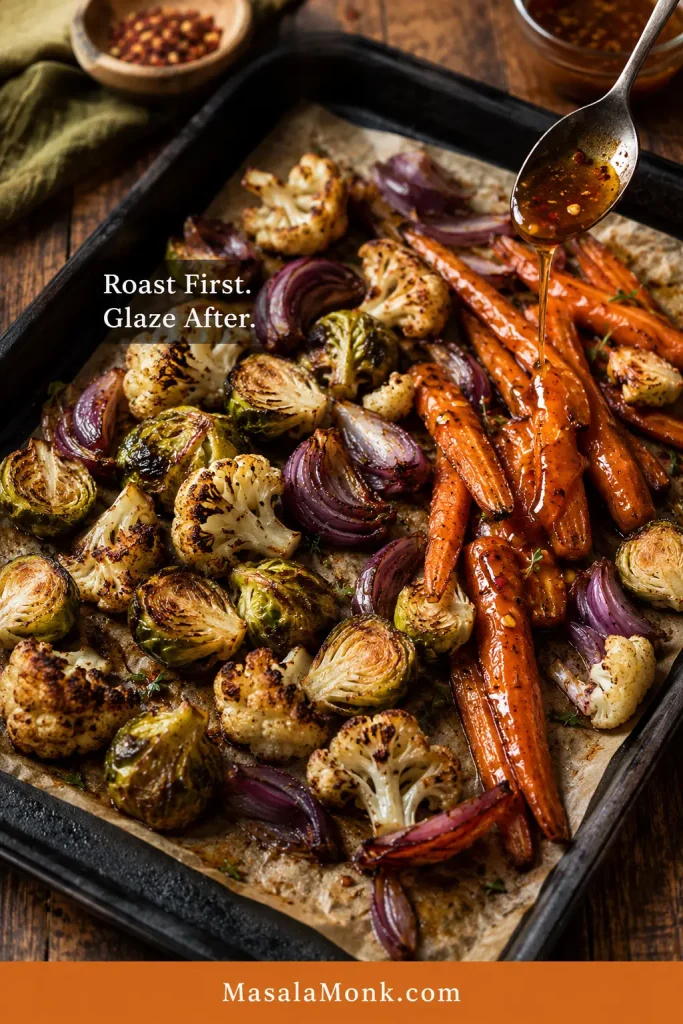
Hot Honey on Roasted Vegetables
Carrots, sweet potatoes, cauliflower, Brussels sprouts and squash all take hot honey well. Let them brown and become tender before adding it.
These oven roasted carrots show the timing clearly: the vegetables should look roasted before they look glazed.
Toss roasted vegetables while the tray is still hot; residual heat helps a little hot honey spread farther.
The bottle changes more than the heat. It can make the sauce sharper, thinner or thicker, sweeter, saltier or more garlicky before you add anything else.
Best Honey for Hot Honey
Ordinary runny honey is the easiest choice. Mild clover or a light, gently flavoured wildflower honey lets the chilli stand out. Darker honey brings more character.
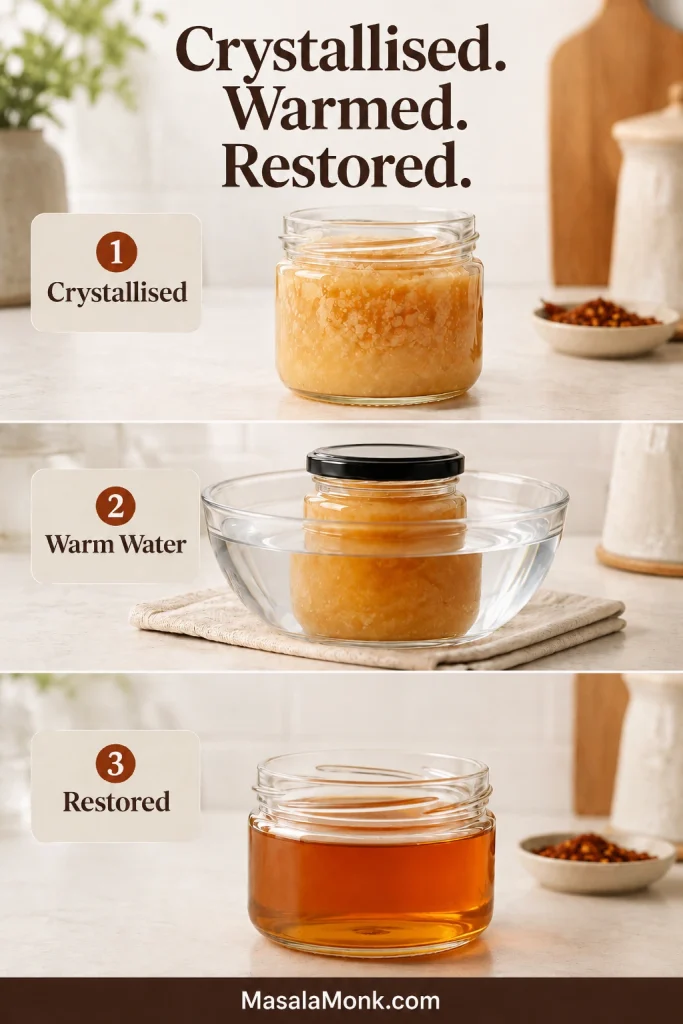
Partially crystallised honey is still fine. Set the tightly closed, heat-safe glass jar in warm—not boiling—water, or heat the measured honey briefly over low heat. Once it flows freely, use it.
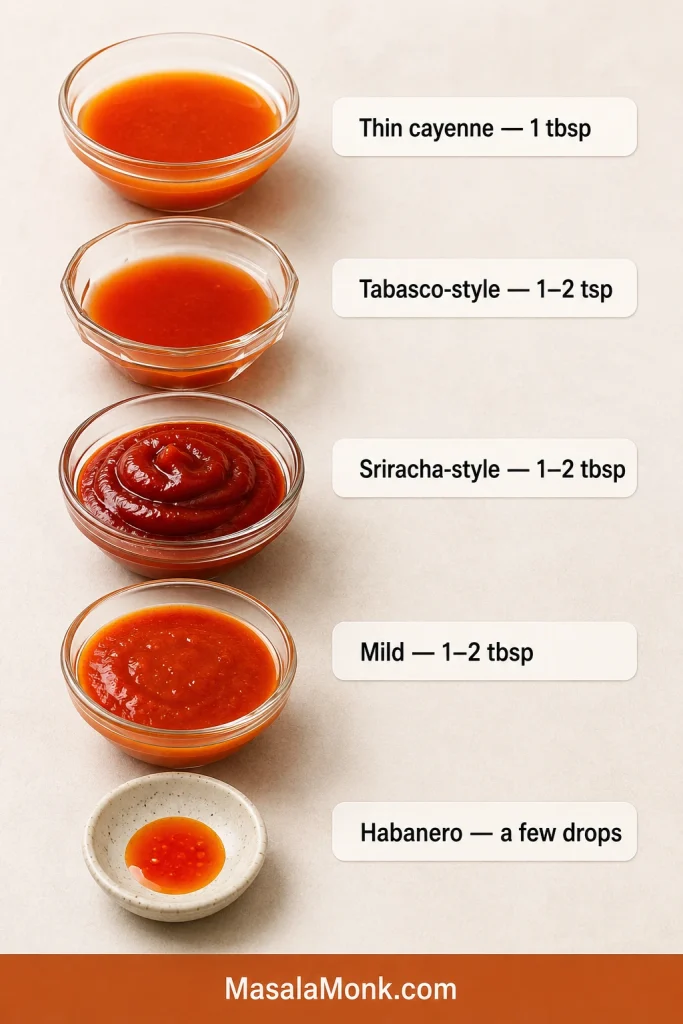
Choose the Right Hot Sauce
This recipe is written for a thin, medium-heat cayenne sauce—the familiar kind that pours easily from the bottle.
Swipe or scroll sideways to see the full table.
Hot-sauce style
Start with
Effect on the hot honey
Thin cayenne-style sauce
1 tbsp / 15 ml
Moderate acidity and easy pourability
Tabasco-style sauce
1–2 tsp / 5–10 ml
Sharper, thinner and more concentrated
Sriracha
1–2 tbsp / 15–30 ml
Thicker, sweeter and more garlicky
Mild hot sauce
1–2 tbsp / 15–30 ml
More tang before strong heat develops
Habanero or super-hot sauce
A few drops
Strong heat without noticeably thinning the honey
Watch viscosity as well as heat; a thick sauce can alter the drizzle more than a hotter sauce used by the drop.
Fruit-based sauces make the mixture sweeter and more aromatic. Habanero sauces bring sharper, faster heat. The pepper sauce guide compares those styles in more detail.
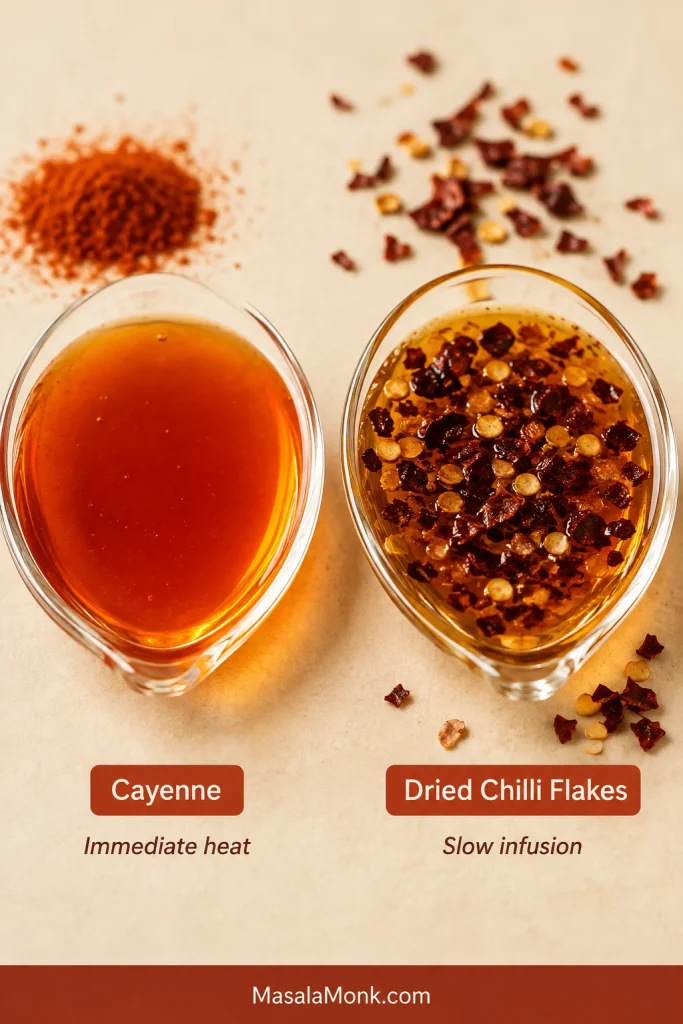
Cayenne and Dried Chilli Flakes
Cayenne gives immediate heat without adding liquid. It is useful when the flavour is right but the sauce needs more fire.
Dried chilli flakes release their warmth more slowly. Leave them in if you are serving the hot honey soon and want the heat to keep building. Strain them out before bottling or storing.
Cayenne keeps hot honey smooth; dried chilli adds visible texture and slower-building heat.
Oregon State University Extension’s infused-honey safety guidance explains handling, straining, storage and spoilage signs for honey infused with fully dried ingredients.
Acid, salt and butter: bottled hot sauce may already bring all the acidity the honey needs, so taste before adding more. A small pinch of salt clears away some of the syrupy sweetness. Butter changes the job completely, turning the drizzle into a glaze that stays on the food.
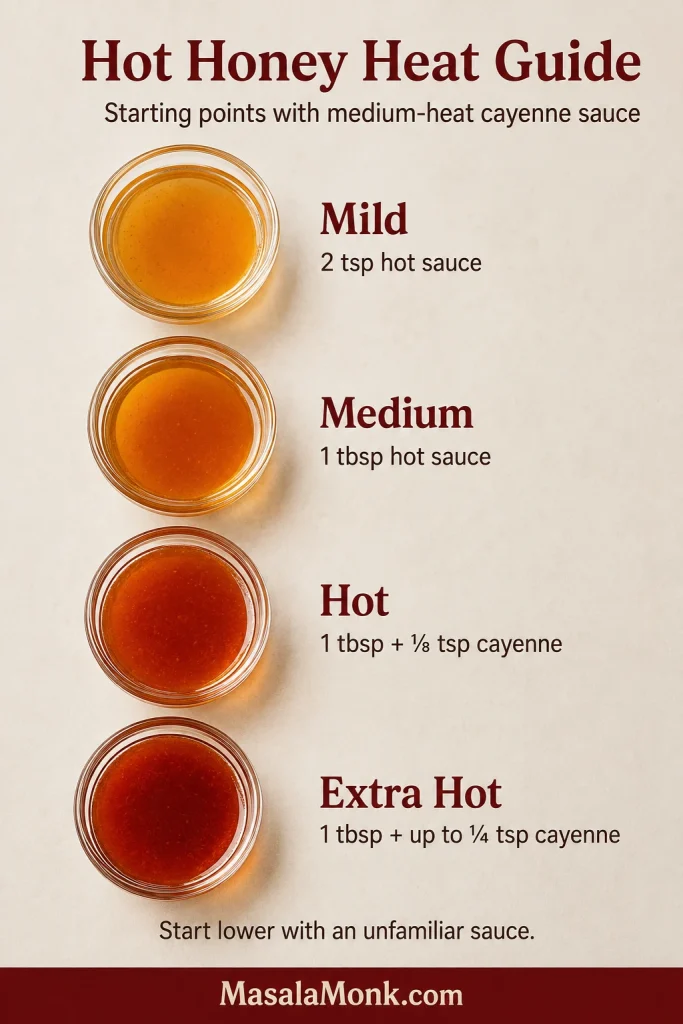
How Spicy Should Hot Honey Be?
The amounts below are starting points using a medium-heat cayenne-style hot sauce. They are not universal heat ratings; begin lower with an unfamiliar sauce or cayenne powder.
Swipe or scroll sideways to see the full table.
Heat level
Cayenne-style hot sauce
Cayenne powder
What to expect
Mild
2 tsp / 10 ml
None
Mostly honey with a warm finish
Medium
1 tbsp / 15 ml
None
Clear chilli warmth after the sweetness
Hot
1 tbsp / 15 ml
⅛ tsp
Stronger heat without changing the flow
Extra hot
1 tbsp / 15 ml
Up to ¼ tsp
Strong, lingering heat
Change one variable at a time: hot sauce affects acidity and flow, while cayenne mostly raises heat.
A spoonful tasted alone feels much hotter than the same amount spread across dinner.
For dipping, stir hot honey into Dijon or mayonnaise. When you need a coating rather than a pour, use the butter glaze.
To adjust the consistency: let a thin-looking sauce cool before changing it. More honey will thicken it. If it is too thick, warmth may be all it needs. When the flavour is already right, thin only the portion you plan to serve with a few drops of warm water.
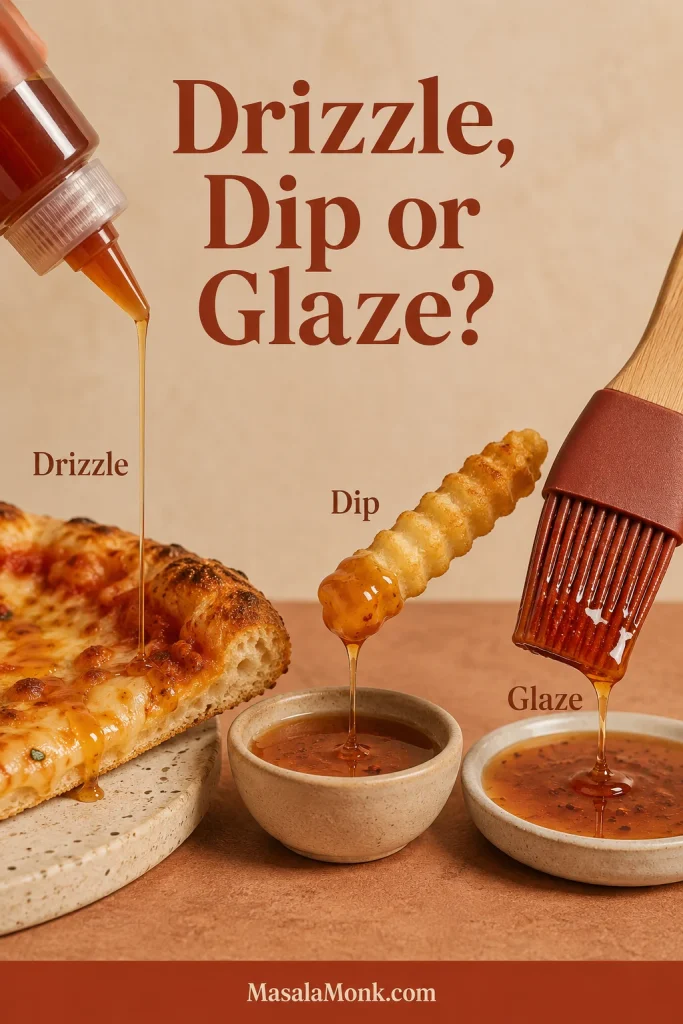
Drizzle is a last-second accent, dip stays separate until the bite, and glaze is meant to cling.
Hot Honey Dipping Sauce
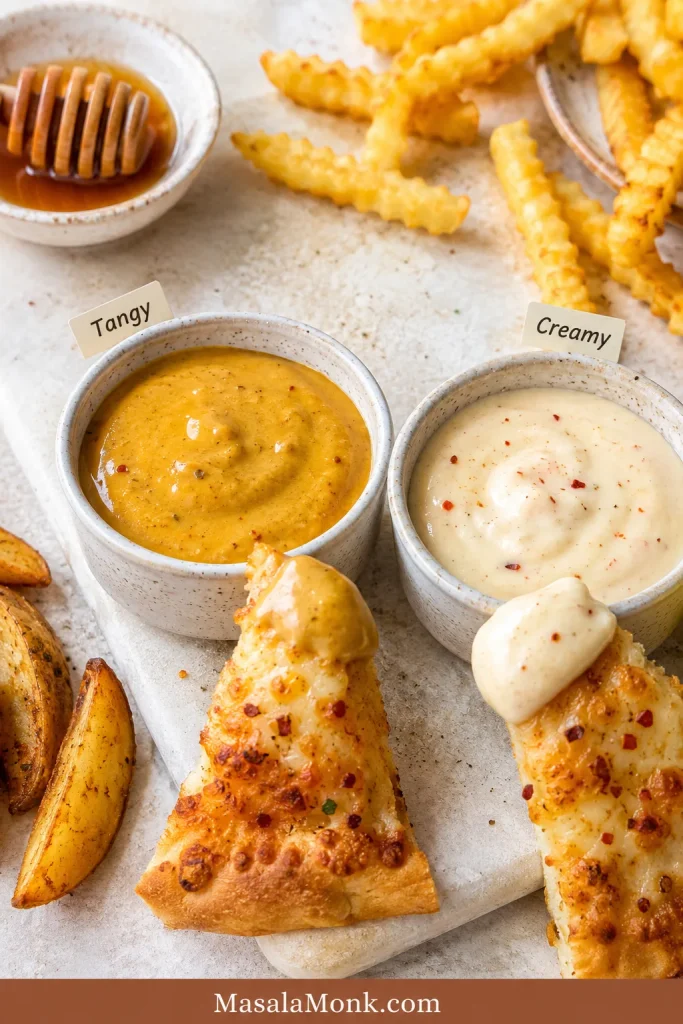
Tangy mustard dip: mix 2 tablespoons Dijon mustard with 1 tablespoon hot honey. Stir in more hot honey for a sweeter dip.
Creamy hot honey dip: mix ¼ cup / 60 g mayonnaise with 1–2 tablespoons hot honey.
Mustard adds tang; a creamy hot honey dip softens the edge of heavily seasoned fried food.
Choose the infusion when you want the dried chilli itself to come through. Butter is better when the sauce needs to stay on a wing instead of running into the bowl.
Classic Chilli-Infused Hot Honey
½ cup honey — 4 fl oz / 120 ml; about 6 oz / 170 g by weight
½–1 teaspoon fully dried red pepper flakes
One small pinch fine salt, optional
½ teaspoon apple cider vinegar, optional for immediate use
Combine the honey and dried chilli flakes in a small saucepan.
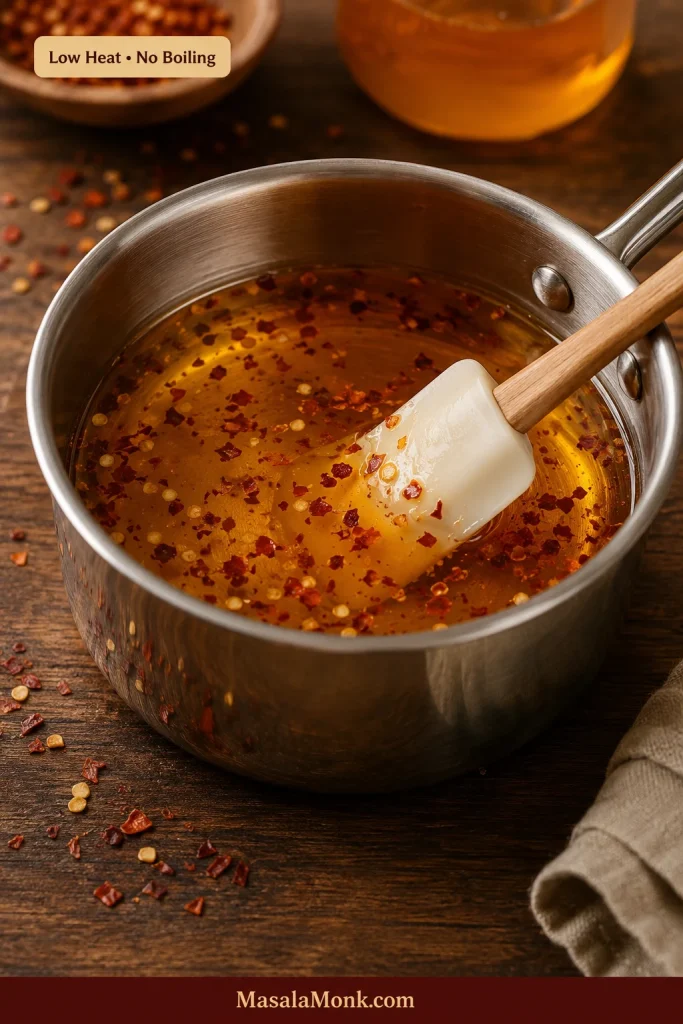
Warm over low heat for 3–4 minutes, stirring often. The honey should loosen and smell like warm chilli—not caramel.
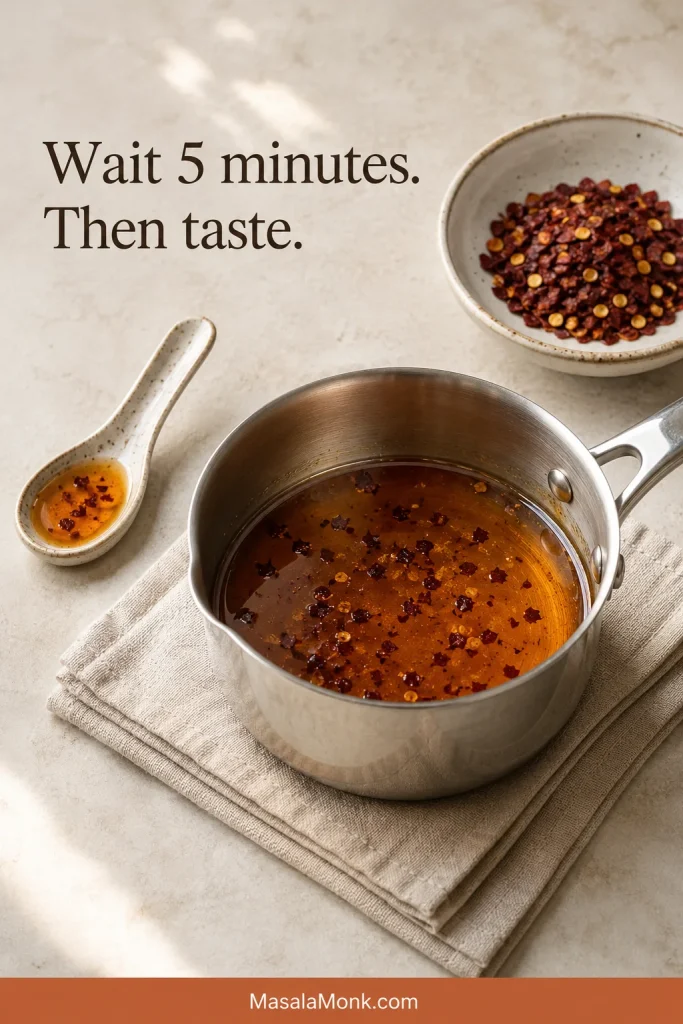
Remove it from the heat. Use it immediately for gentle warmth or leave it for 5–15 minutes for more chilli flavour.
Stir in the salt. For a sauce being served now, vinegar can lighten sweetness that still feels heavy.
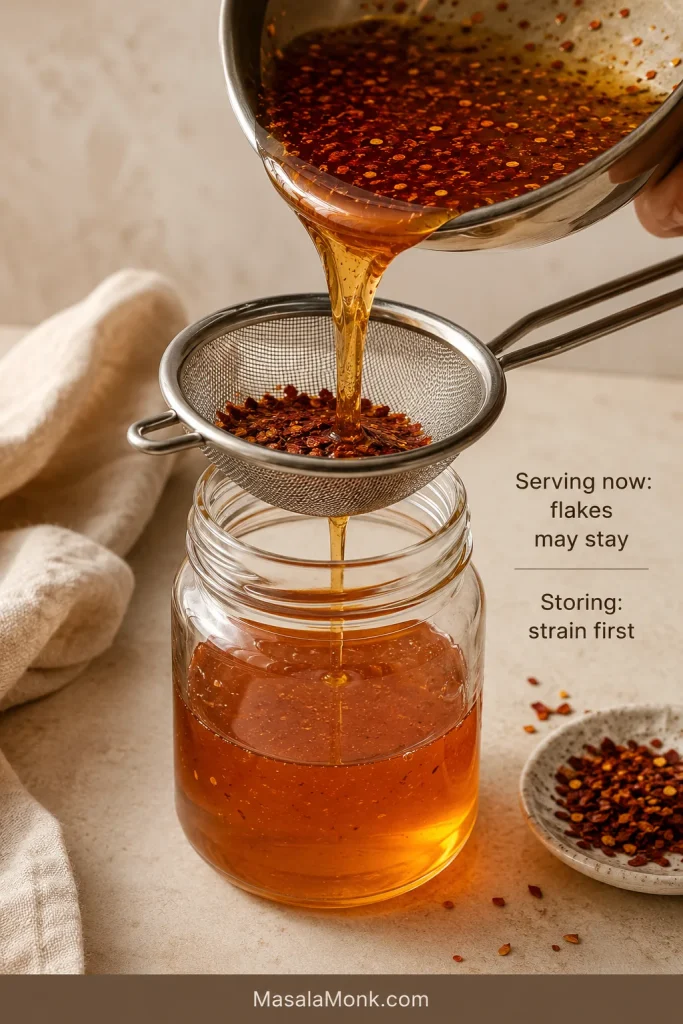
Strain for a smooth drizzle.
Watch the surface: looser honey and easy stirring are enough. Active bubbling means the infusion is too hot.
The chilli may taste quiet at first. Give it a few minutes before adding more; a gentle infusion can become fierce while it rests.
After resting, stir before tasting again; settled flakes can make one spoonful much hotter than the batch.
Serving now or storing? Flakes may remain in a batch being served immediately, but strain them out before bottling or storing.
Let the sieve drain naturally rather than pressing the flakes; fewer fine solids make a cleaner pour.
Warm glaze can look alarmingly loose. Give it a minute. Glossy streaks in the tossing bowl are fine; a pool beneath the wings means you used too much or the glaze needs another spoonful of honey.
After resting, look for cling rather than stiffness: the glaze should coat the spoon but still move when tilted.
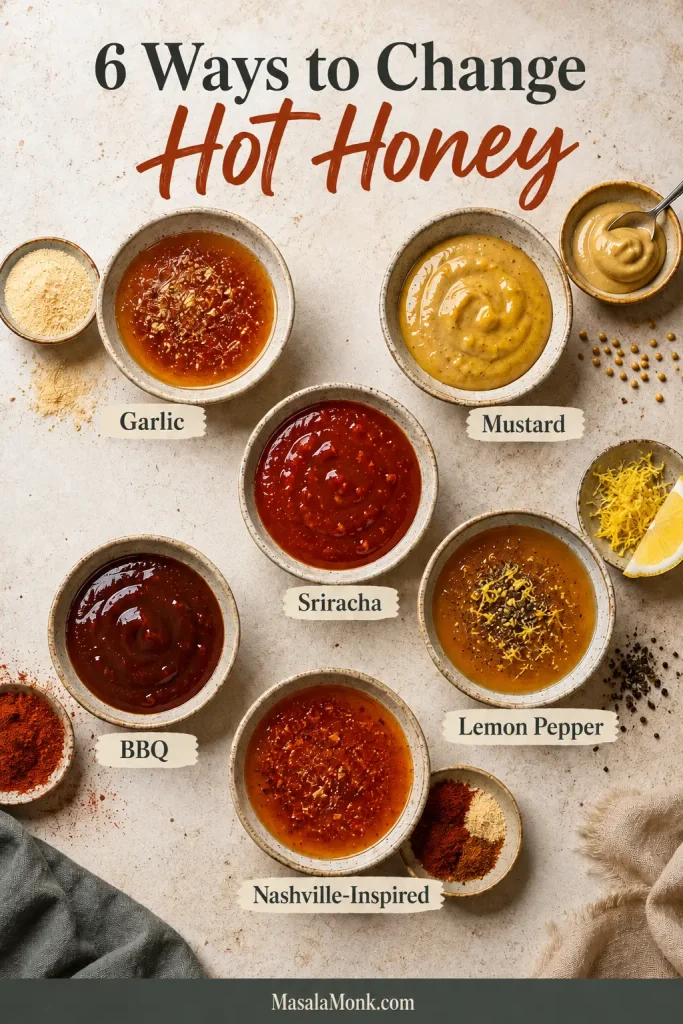
Make the plain sauce first. Change it only if the food calls for something more specific.
Try one flavour family at a time; garlic, mustard or BBQ should still taste like hot honey.
Garlic hot honey: stir in ¼ teaspoon garlic powder. It works particularly well on chicken and honey garlic pork chops.
Hot honey mustard: mix 2 tablespoons Dijon with 1–2 tablespoons hot honey.
Honey-Sriracha: replace the cayenne-style sauce with 1–2 tablespoons Sriracha for a thicker, sweeter and more garlicky sauce.
Hot honey BBQ: stir 2–3 tablespoons hot honey into ½ cup BBQ sauce. Brush it over chicken or pork near the end of cooking.
Lemon pepper: add ½ teaspoon finely grated lemon zest and ¼ teaspoon coarse black pepper. It is especially good on lemon pepper chicken wings.
Nashville-inspired: add ⅛ teaspoon each cayenne and smoked paprika, plus a small pinch of garlic powder.
How to Fix Hot Honey Sauce
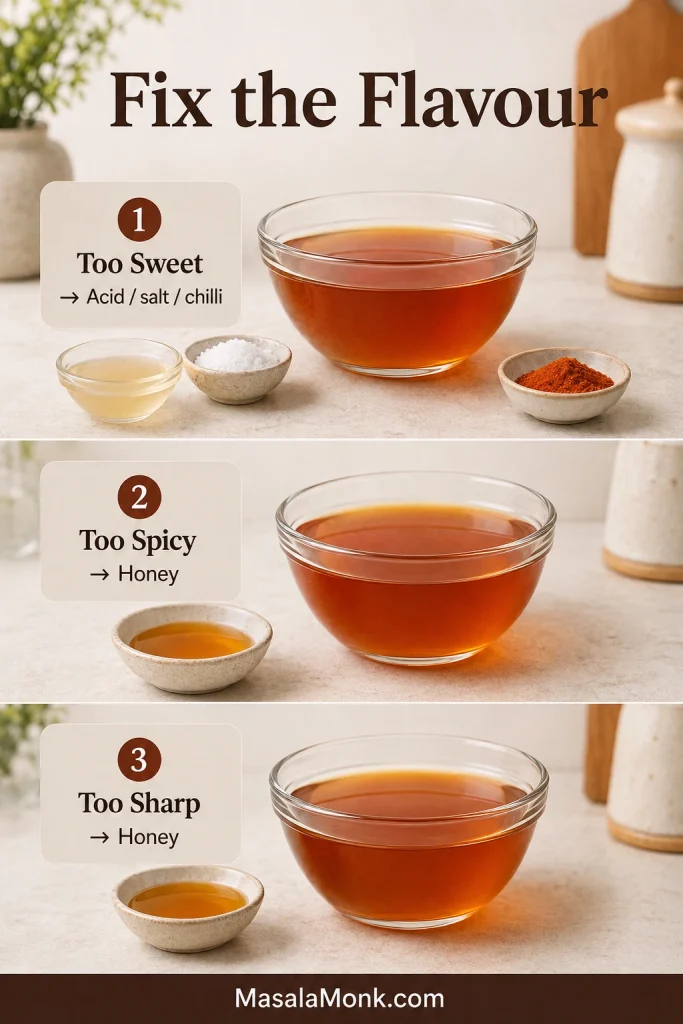
Hot honey is forgiving. Most batches are one small adjustment from balance, so judge the flavour first and the consistency second.
Fix one problem at a time: make a small correction, stir, then retaste. Multiple changes are harder to judge.
Swipe or scroll sideways to see the full table.
What happened
Why
What to do
Too sweet
It needs brightness, salt or heat
Stir in a little vinegar, salt or chilli
Too spicy
Too much chilli or a long infusion
Add honey and remove any chilli solids
Too acidic
The hot sauce or vinegar is too sharp
Add honey
Too thin
It is still warm or contains too much liquid
Cool first, then add honey if needed
Too thick while cool
The honey is cold or the ratio needs adjusting
Warm gently; thin only the serving portion if needed
Hard or chewy after cooking
It was heated too far
Rewarm and loosen the serving portion with a little liquid
Scorched or bitter
The honey overheated
Start again; burnt honey cannot be repaired
Butter separated
The glaze became too hot
Remove from the heat and whisk firmly
Wings became soggy
Too much sauce or too much waiting
Use less and toss immediately before serving
Gets hotter in storage
Chilli solids remain in the jar
Strain them out or dilute the sauce with honey
Grainy or crystallised
Natural honey crystallisation
Warm in a water bath or short microwave bursts
How to Store and Reheat Hot Honey Sauce
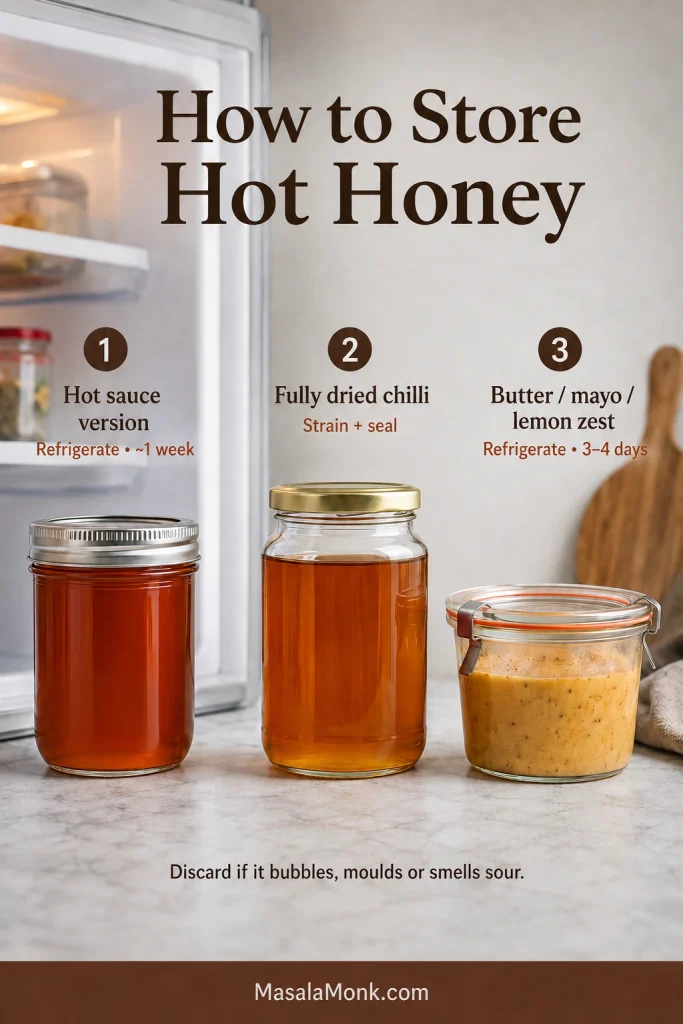
Bottled-hot-sauce version: refrigerate it and use it within about one week for the best flavour and texture. This is a cautious home-kitchen window because bottled sauces vary in acidity and moisture.
Fully dried-chilli infusion: strain it into a clean, tightly sealed food-grade container before storing. Keep moisture out. Refrigerate the batch if vinegar has been added.
Butter glaze, mayonnaise dip or lemon-zest variation: refrigerate promptly and use within 3–4 days.
Label the jar with the version you made; storage changes with butter, mayonnaise, lemon zest or dried-chilli infusion.
Discard any batch that develops bubbling, mould or an alcoholic or sour smell.
To loosen cold hot honey, microwave it in a microwave-safe container with any metal lid removed, in 10-second bursts. Set a tightly closed, heat-safe glass jar in warm—not boiling—water as another option. Butter glaze can be rewarmed over the lowest heat. Stop as soon as the sauce flows again.
The simplest version is honey and hot sauce, with a small pinch of salt only if the balance needs it.
Can You Make Hot Honey With Regular Hot Sauce?
Yes. A thin cayenne-style hot sauce is the easiest choice; use less if the bottle is unusually hot or sharp.
Do You Need to Cook Hot Honey?
No. Whisk the bottled-hot-sauce version together cold; heat only to loosen thick honey or infuse dried chilli.
Can You Make Hot Honey Without Vinegar?
Yes. Skip it when the hot sauce already gives the mixture enough brightness.
Can I Use Cayenne Instead of Chilli Flakes?
Yes. Cayenne gives immediate, even heat; chilli flakes create a slower infusion and visible texture.
Does Homemade Hot Honey Need Refrigeration?
Refrigerate the bottled-hot-sauce version in this recipe. Fully dried-chilli infusions have separate storage guidance, while butter glaze, mayonnaise dip and lemon-zest versions should remain refrigerated.
Why Did My Hot Honey Harden or Crystallise?
Honey naturally crystallises, and a cooked sauce can also stiffen if heated too long. Warm it gently until it flows again. If it smells scorched or tastes bitter, start over.
Crystals often appear at the sides or bottom first. Stop warming once the graininess has dissolved throughout.
A Small Jar That Solves Dinner
The jar looks almost too simple for how often it solves dinner. Then it lands on hot pizza or crisp chicken, the honey turns glossy and the chilli arrives a second later.
Keep the jar on the table and let everyone add their own; the right amount is personal.
Crab rangoon is the kind of appetizer that disappears before anyone admits how many they have eaten. The wrapper cracks first, the warm cream cheese filling follows, and everyone reaches past the dipping sauce for one more.
At home, though, the same little wonton can become surprisingly frustrating. One overfilled piece opens in the oil. A wet filling slips through a seam. Air-fryer corners turn dark while the middle stays pale. Or the wrapper comes out crisp but almost empty.
Here, you can match the filling to the version you remember, keep the seams closed, and choose the kind of crunch that works for your kitchen.
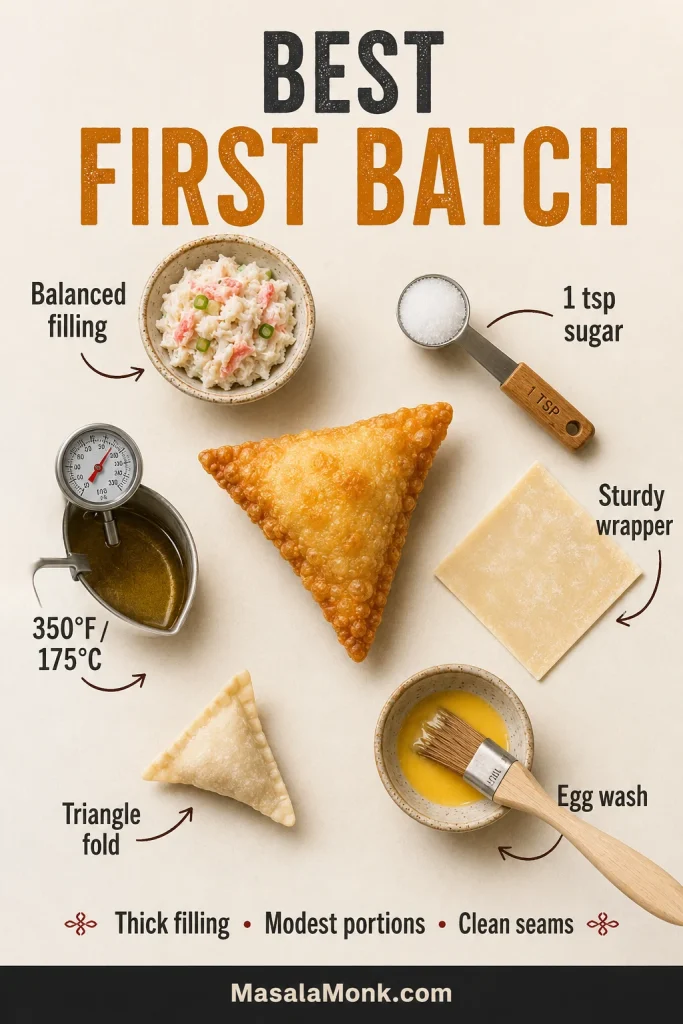
The rule that keeps everything under control is simple: thick filling, modest portions, clean seams. Drain the crab, chill the filling until it holds its shape, and leave enough bare wrapper around it to push out the air and close every edge.
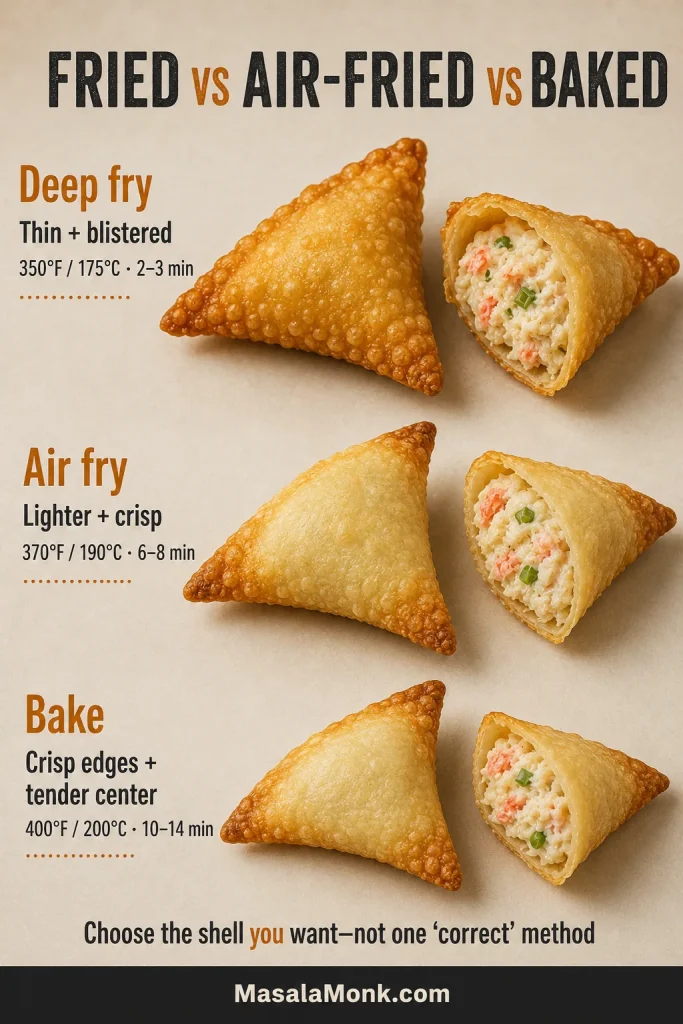
Deep frying gives you the thinnest, most blistered restaurant-style shell. The air fryer produces crisp batches with less oil. Baking lets you cook more pieces at once without standing over a pot. Each method gives you a different kind of crunch.
For a dependable restaurant-style first batch, use the balanced imitation-crab filling with 1 teaspoon sugar, sturdy square wonton wrappers, triangle folds, egg wash, and deep frying at 350°F / 175°C.
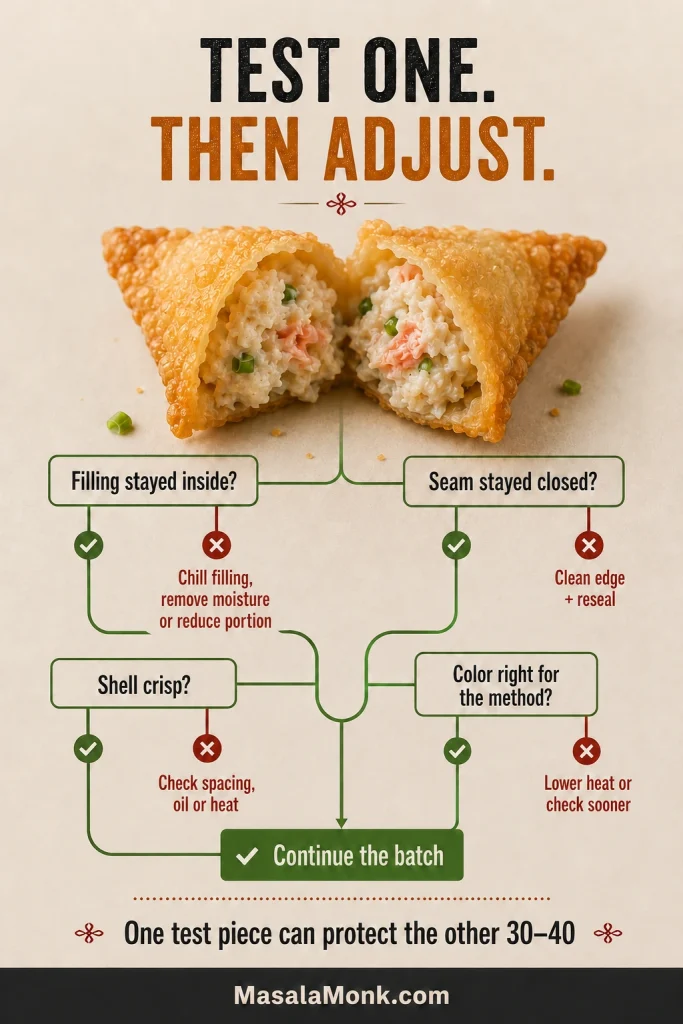
Keep each portion modest, press out the air before sealing, and cook one test rangoon before continuing. That first piece will tell you whether the remaining batch needs a little less filling, a firmer seam, or a shorter cooking time.
Keep the first batch predictable. Then adjust sweetness or crab quantity without confusing the cause of any change.
Crab Rangoon Recipe
Crispy crab and cream cheese wontons, with complete instructions for deep frying, air frying, or baking.
Mix, chill, fold, then cook. The filling and sauce come together quickly. Most of the hands-on time is folding, and the first few wrappers are the slowest.
Hands-on preparation and folding
About 50–60 minutes
Chilling
20–30 minutes, while the sauce and setup are completed
Deep-frying the full batch
About 20–30 minutes
Resting before serving
3–5 minutes
Total elapsed time
About 1 hour 25 minutes–1 hour 55 minutes
Yield
About 30–35 rangoons with 3½-inch wrappers, or 36–40 smaller rangoons with thin 3-inch wrappers
Servings
8 servings as written; roughly 8–10 with other appetizers, or 5–7 as the main hot appetizer
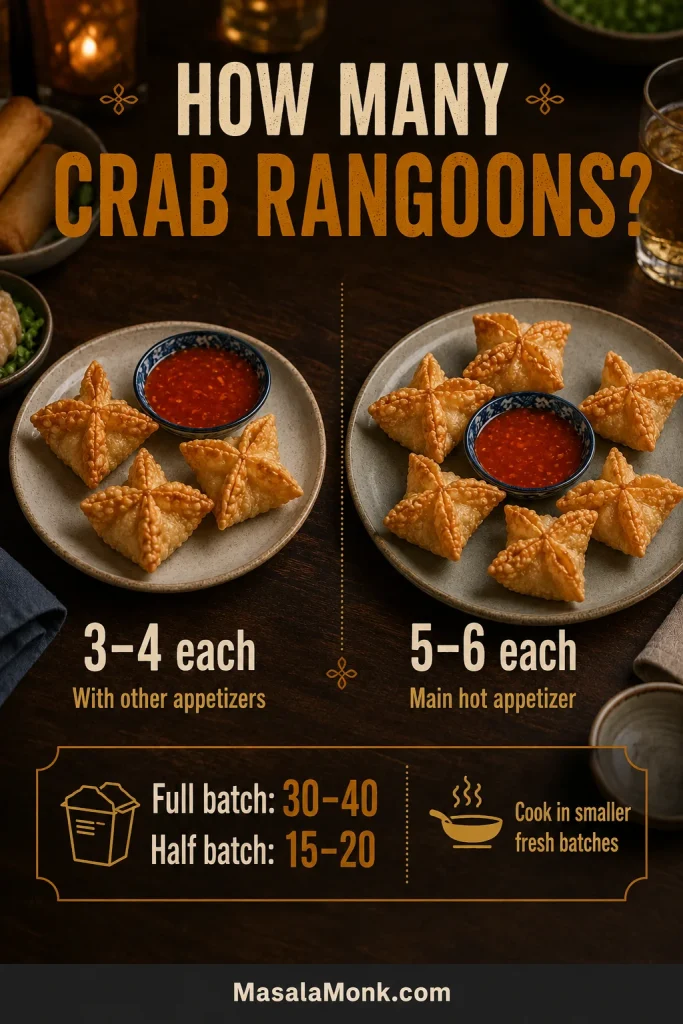
This is a party-size batch of roughly 30–40 rangoons. A half batch makes approximately 15–20 pieces—enough for about four people with other appetizers, or two to three people when these are the main hot appetizer.
For a half batch, halve the filling, sauce, and wrapper quantity, but keep the same frying-oil depth and temperature. You can still use one egg for the wash, or use plain water for simple triangle folds.
Equipment
All methods: mixing bowl, spatula, measuring teaspoons or a small scoop, lined tray, small bowl for egg wash, and a clean towel for covering the wrappers
Deep frying: heavy pot, frying thermometer, slotted spoon or spider strainer, and wire rack
Air frying: air fryer and oil mister or pastry brush
Baking: rimmed sheet pans, parchment, and oil mister or pastry brush
Ingredients
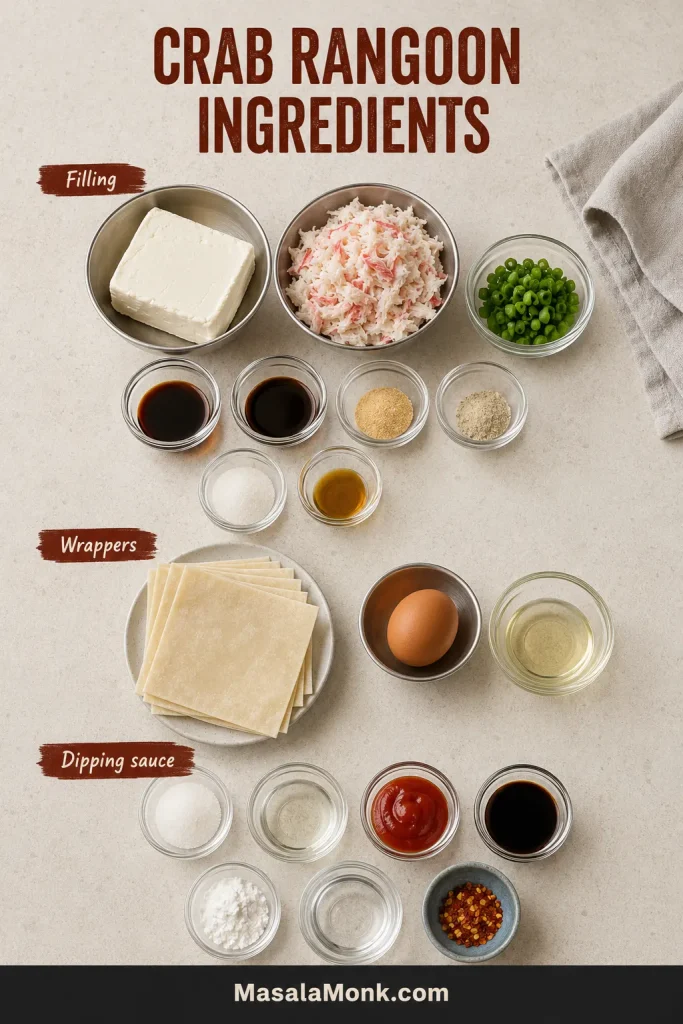
Separate filling, sealing and sauce ingredients before mixing. Meanwhile, keep unused wrappers covered so their edges stay flexible.
Crab and Cream Cheese Filling
Ingredient
US amount
Metric amount
Full-fat block cream cheese, softened but not warm
8 oz
227 g
Ready-to-eat imitation crab, recommended for the first batch; or cooked lump or well-drained canned crab
6 oz
170 g
Medium scallions, very finely chopped
2 medium
About 18–20 g
Low-sodium soy sauce
1 tsp
5 ml
Worcestershire sauce
1 tsp
5 ml
Garlic powder
½ tsp
About 1.5 g
White pepper or finely ground black pepper
¼ tsp
About 0.5 g
Granulated sugar—1 tsp for the recommended first batch; use 0–1 tsp to taste
1 tsp
4 g
Toasted sesame oil, optional
¼ tsp
1 ml
Fine salt
Small pinch, only if needed
—
For Wrapping and Cooking
One 40–50-count package square wonton wrappers, approximately 3–3½ inches / 7.5–9 cm wide
1 large egg mixed with 1 teaspoon water, or plain water for simple triangle folds; you may not need all the egg wash
For deep frying: neutral high-heat oil, approximately 1½–2 inches / 4–5 cm deep
For air frying or baking: enough neutral oil to mist or brush every exposed part of the wrapper lightly
Package counts vary, and a few extra wrappers are useful in case some tear, dry out, or stick together.
Quick Red-Orange Sweet-and-Sour Sauce
Ingredient
US amount
Metric amount
Granulated sugar
⅓ cup
67 g
Water
¼ cup
60 ml
Unseasoned rice vinegar or white vinegar
3 tbsp
45 ml
Ketchup
1 tbsp
15 g
Low-sodium soy sauce
1 tsp
5 ml
Cornstarch
2 tsp
About 5–6 g
Cold water for the slurry
1 tbsp
15 ml
Chili flakes, optional
Small pinch
—
Make and Chill the Filling
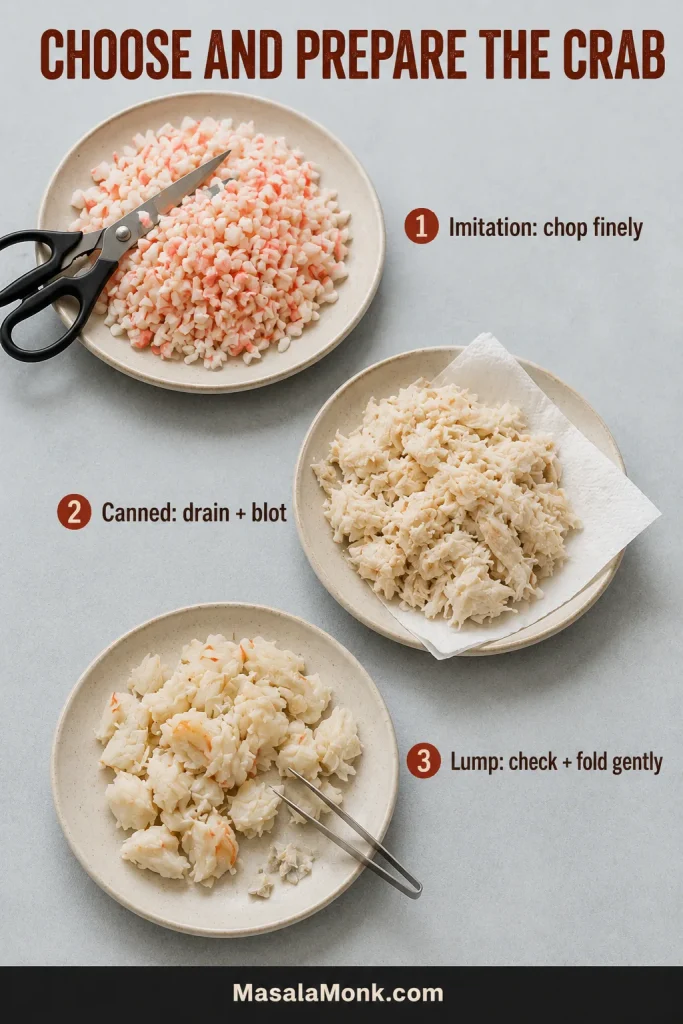
Finely chop imitation crab. For canned or lump crab, drain thoroughly, blot away visible moisture, and check carefully for shell fragments. Thaw previously frozen cooked crab completely before drying it.
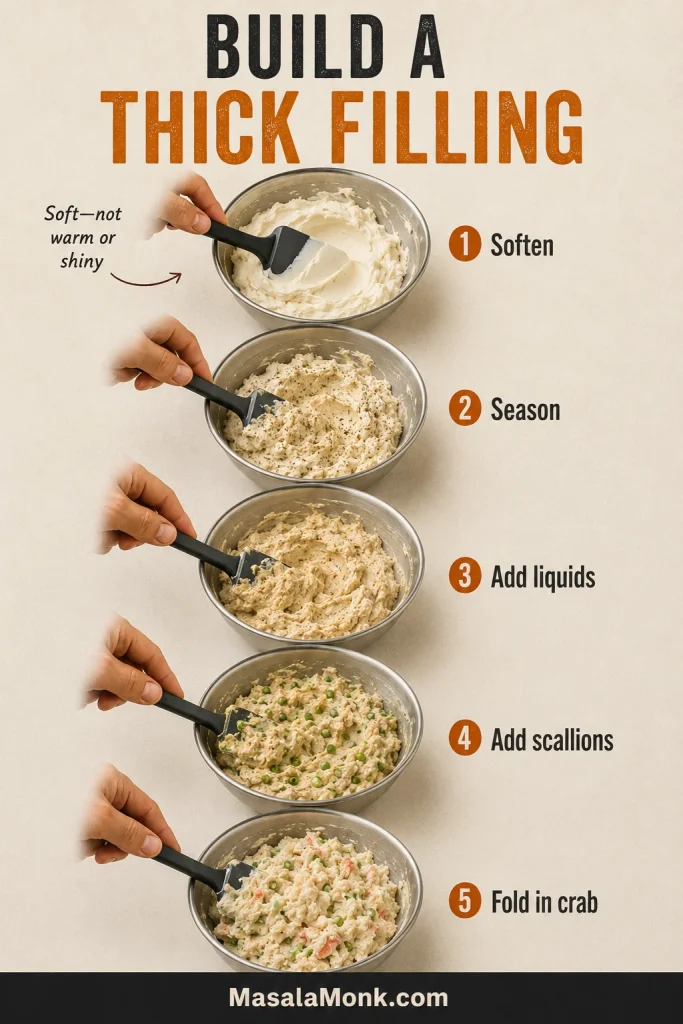
Mix the softened cream cheese, garlic powder, pepper, and the sugar, if using, until smooth.
Add the soy sauce, Worcestershire sauce, and optional sesame oil.
Stir in the scallions, then fold in the crab gently so the mixture stays thick and some crab texture remains.
Taste and add a small pinch of salt only when needed.
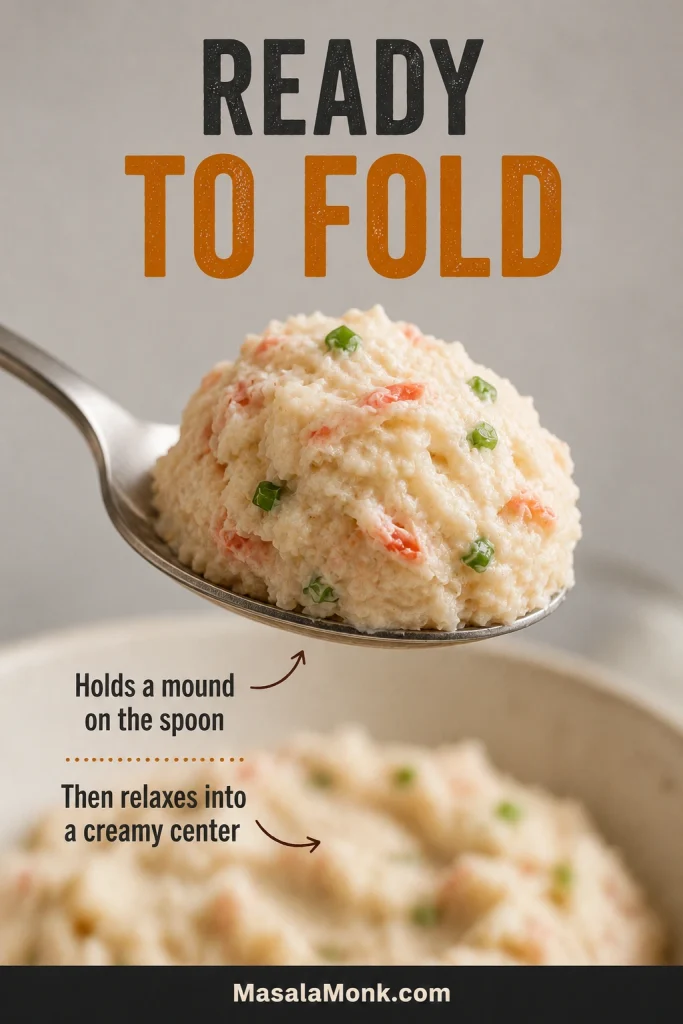
Cover and refrigerate for 20–30 minutes. Properly chilled filling holds a rounded scoop on the spoon.
Add sauces and seasonings before the crab. Once the seafood goes in, stir only enough to distribute it.
Use cooked crab or ready-to-eat imitation crab. These short cooking methods crisp the wrapper and warm the filling; they are not intended to cook raw seafood safely.
Make the Sweet-and-Sour Sauce
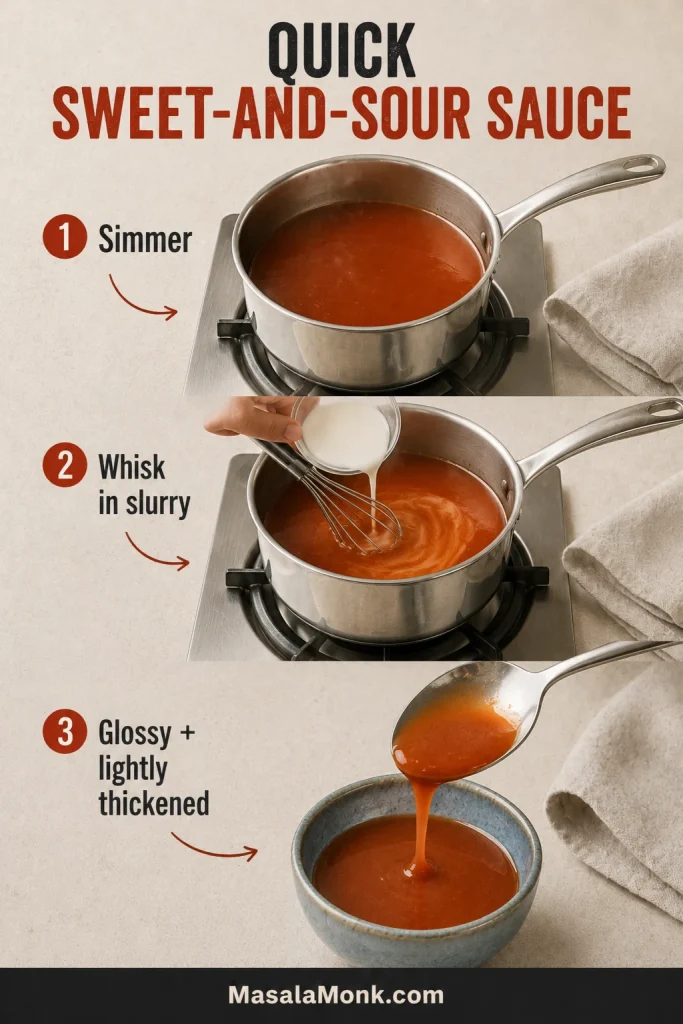
Simmer the sugar, ¼ cup water, vinegar, ketchup, soy sauce, and optional chili flakes until the sugar dissolves.
Mix the cornstarch with 1 tablespoon cold water, then whisk the slurry into the saucepan.
Cook for 30–60 seconds, until glossy and lightly thickened. Thin the cooled sauce with warm water, 1 teaspoon at a time, if needed.
Sweet-and-sour sauce thickens as it cools. If it turns gel-like, whisk in warm water one teaspoon at a time.
Fill and Fold
Line a tray with parchment. Keep the wrapper stack covered and remove only four to six at a time.
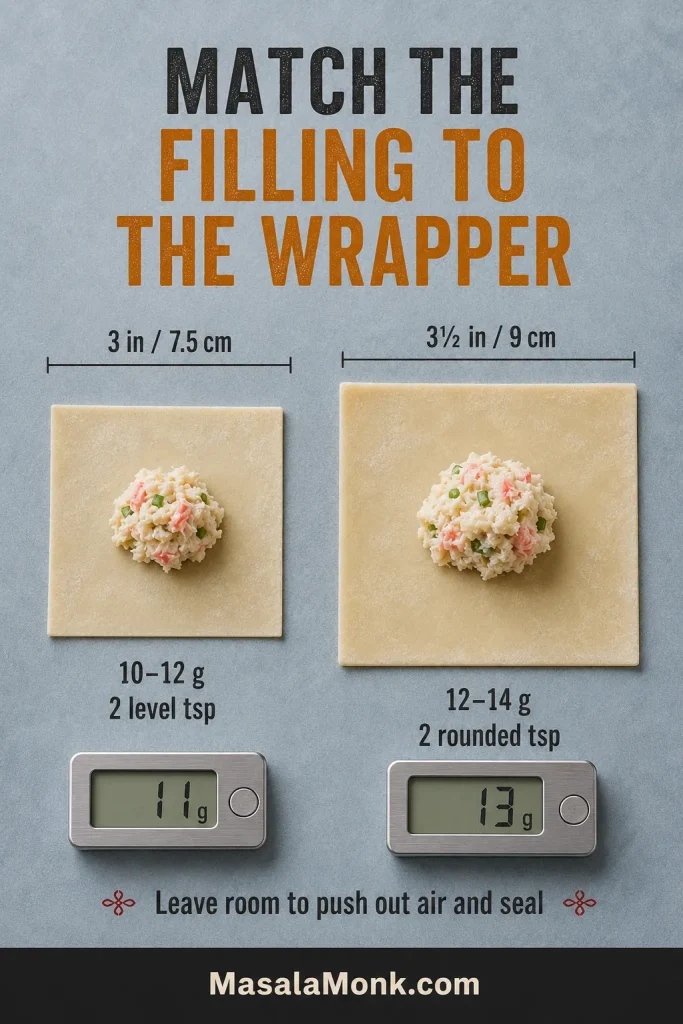
Add about 2 level teaspoons, or 10–12 g, to a thin 3-inch wrapper. Use about 2 rounded teaspoons, or 12–14 g, in a sturdy 3½-inch wrapper.
Press the wrapper close around the filling, push out trapped air, and close every seam firmly.
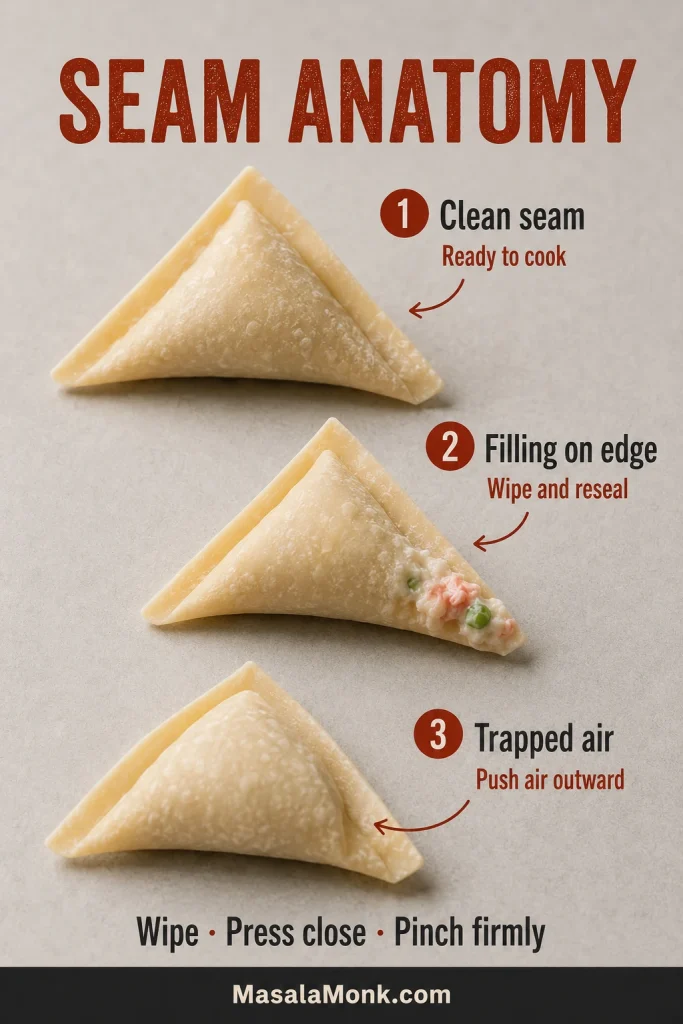
Run a fingertip along the seam. It should feel smooth and uninterrupted, with no soft air pocket beside the filling.
Return each finished rangoon to the lined tray and keep it covered while you continue folding.
Deep-Fry
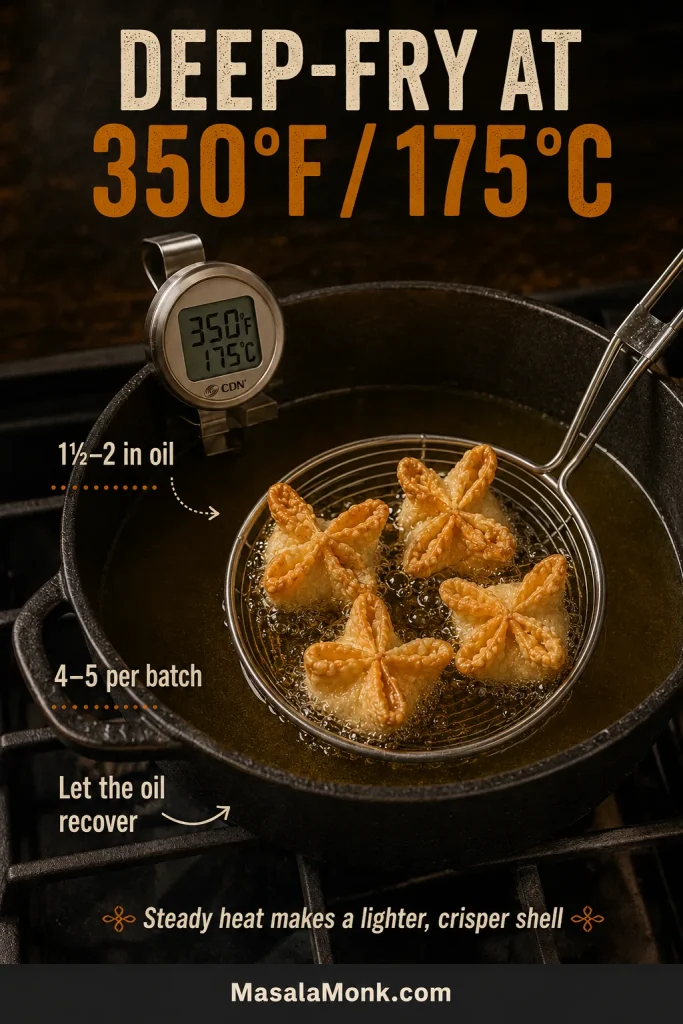
Pour enough oil into a heavy pot to reach 1½–2 inches / 4–5 cm deep. Do not fill the pot more than halfway.
Heat the oil to 350°F / 175°C.
Lower four or five rangoons gently into the oil.
Fry for approximately 2–3 minutes, turning only when needed for even color.
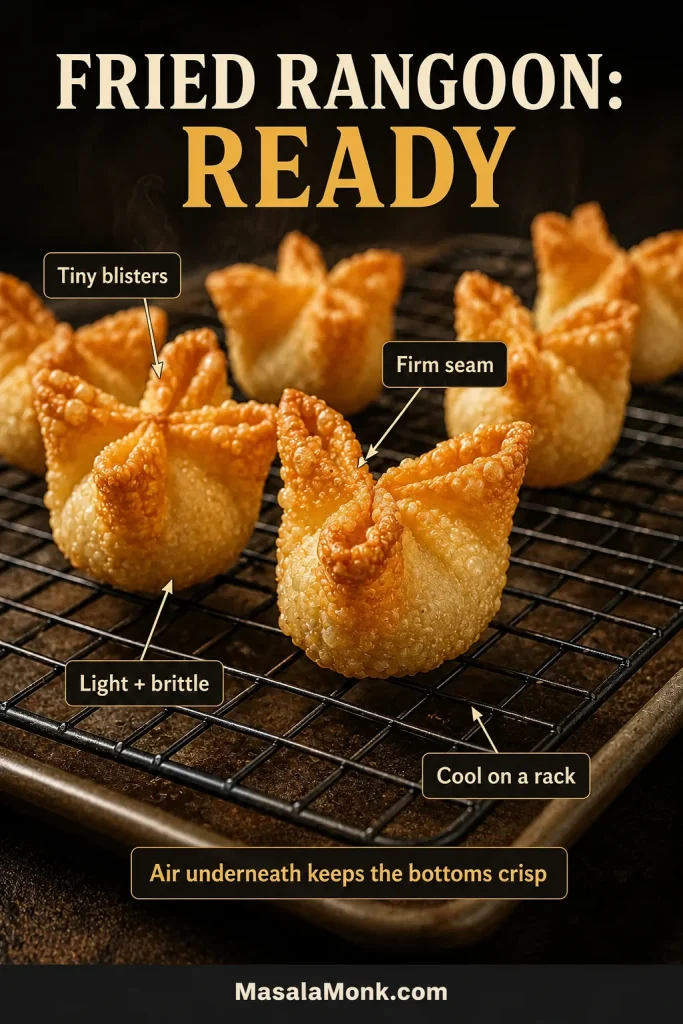
Remove them when the wrappers are evenly golden, tiny blisters cover the flat sides, and the seams feel firm.
Drain on a wire rack and let the oil return to 350°F / 175°C before the next batch.
Air Fry
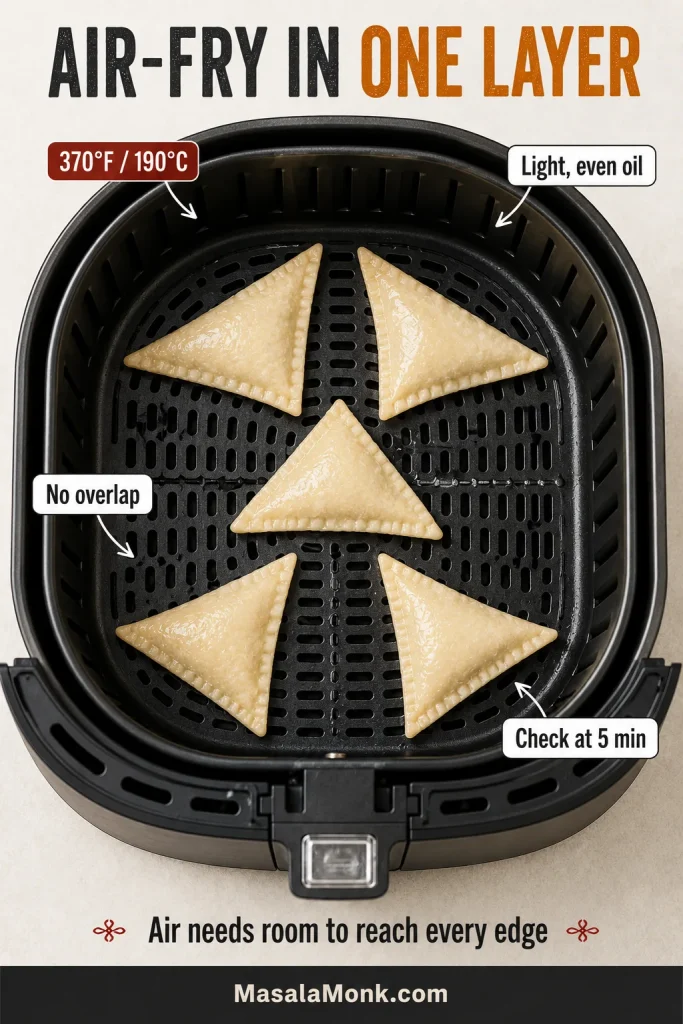
Preheat the air fryer to 370°F / 190°C for about 3 minutes, unless the manufacturer advises otherwise.
Coat every exposed part of the wrapper lightly with oil.
Arrange the rangoons in one uncrowded layer.
Air fry for 6–8 minutes, beginning to check at 5 minutes.
Tap the center panel gently with the tongs. It should feel dry and sound crisp, even when the wrapper remains lighter than a fried one.
Purse shapes usually do not need flipping. Turn flat triangles once only when their undersides remain noticeably pale.
Bake
Heat the oven to 400°F / 200°C. Line one or two rimmed baking sheets with parchment.
Spray or brush every exposed part of the wrapper lightly with oil.
Arrange the rangoons in one layer with at least 1 inch / 2.5 cm between them.
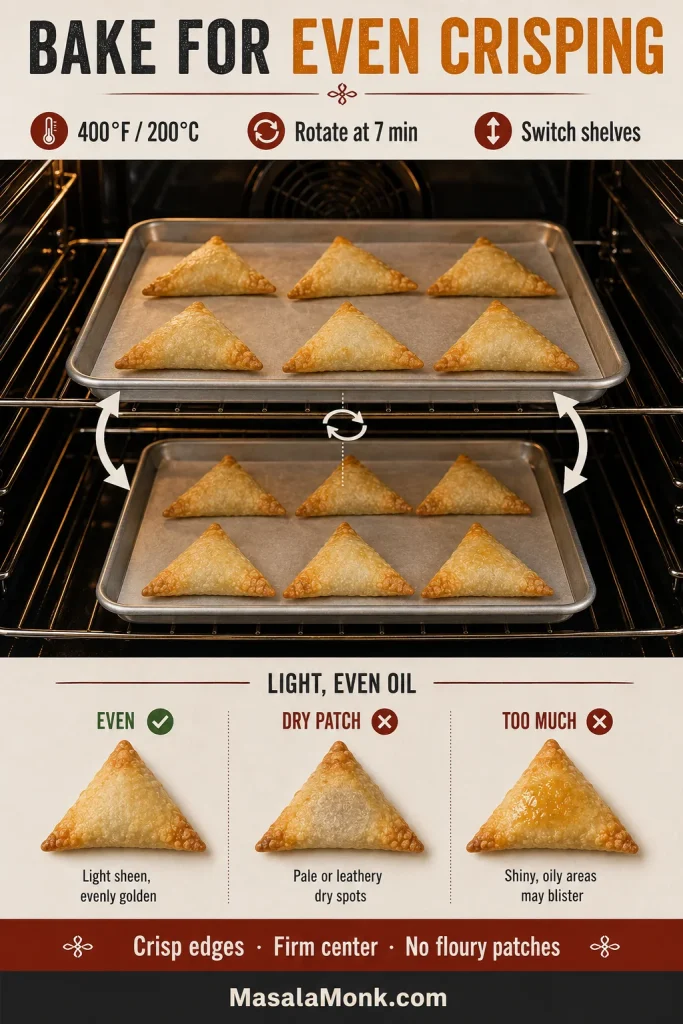
Bake for 10–14 minutes, rotating the tray after about 7 minutes.
When using two trays, switch their positions and turn them front to back.
Remove them when the edges snap, the wrapper around the center feels firm, and no floury-looking patches remain.
Before eating: Let the rangoons rest for 3–5 minutes. The crisp shell cools before the creamy center does.
Allergen note: This recipe may contain milk, wheat, egg, soy, fish, crustacean shellfish, sesame, or peanut, depending on the packaged ingredients and cooking oil used. See the detailed allergen guidance below.
Once the first rangoon cracks cleanly and stays full, the rest of the batch becomes mostly repetition rather than guesswork. The guide below helps you choose a different filling, understand the wrappers, compare methods, or solve anything the test piece revealed.
Rest the test rangoon for 3–5 minutes before opening it. Otherwise, hot filling can look looser than it will eat.
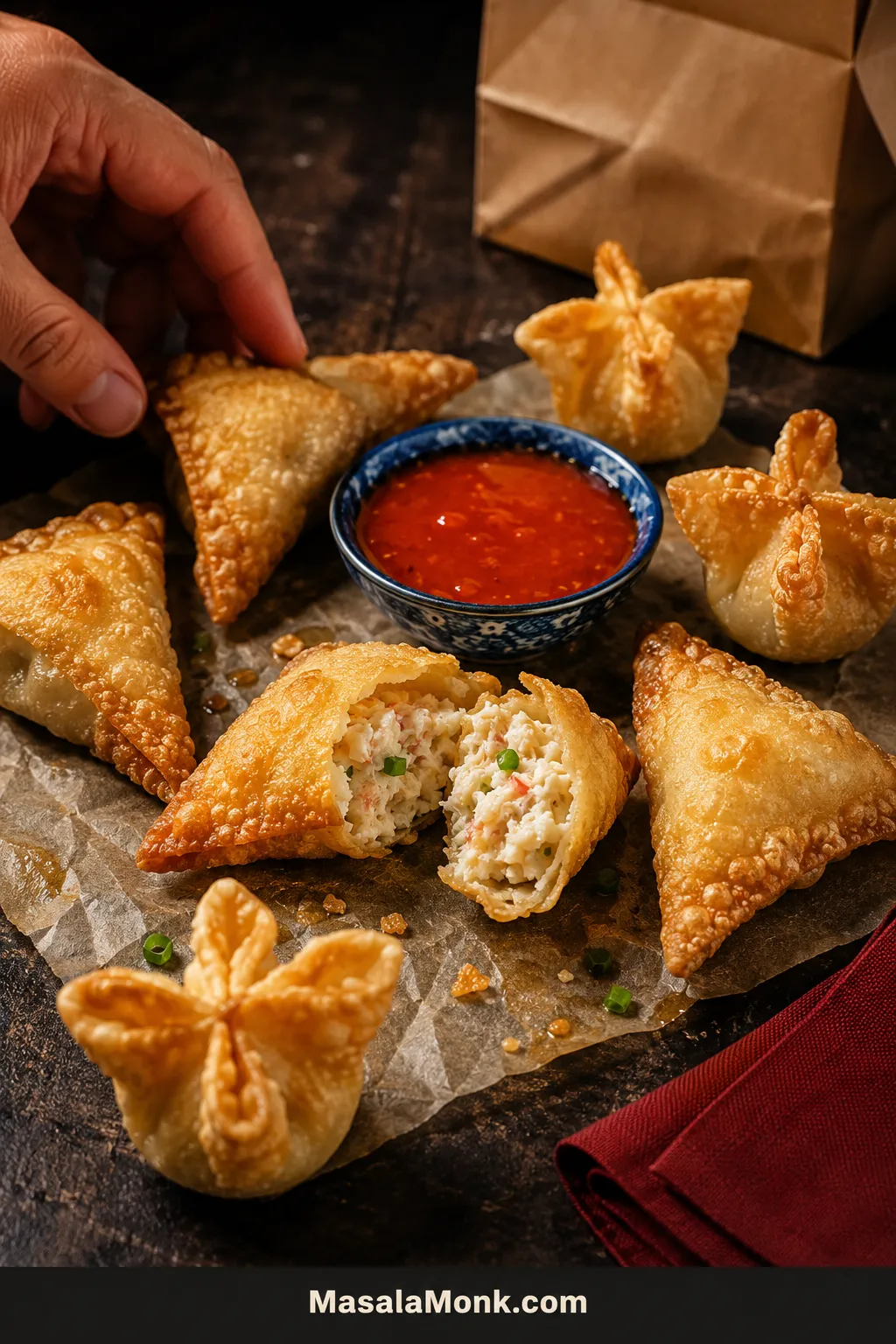
Maybe the version you remember came in a paper takeout bag beside egg rolls, with a tiny cup of bright-red sauce. Maybe the center was almost entirely creamy, or full enough that you could see the crab when you broke it open. There is no single version everyone is trying to recreate.
For many people, crab rangoon is less about one official formula than a particular balance of sweetness, creaminess, and crackle attached to a familiar meal.
Crab rangoon is a Chinese-American restaurant appetizer rather than a traditional Chinese dish, which helps explain why fillings vary so widely.
Choose Your Crab Rangoon Filling
If you want…
Use this filling
Recommended crab
Sweet takeout or buffet-style
8 oz cream cheese + 4–5 oz crab + 1–1½ tsp sugar
Imitation crab
Balanced and creamy
8 oz cream cheese + 6 oz crab + 0–1 tsp sugar
Imitation, canned, or lump crab
More distinct crab flavor
8 oz cream cheese + 8 oz crab; omit sugar
Lump or well-drained canned crab
Because the total amount of filling changes, the sweet version makes slightly fewer rangoons and the crab-forward version slightly more. Wrapper size and portioning still have the greatest effect on yield.
Treat each crab differently. Chop imitation crab, blot canned crab and fold lump crab gently to preserve texture.
Smooth takeout-style center: Finely chopped imitation crab blends into the cream cheese, while 1–1½ teaspoons of sugar recreates the gentle sweetness found at many takeout restaurants. Add ⅛–¼ teaspoon MSG (monosodium glutamate) for a slightly deeper savory note.
Balanced and creamy: The filling stays creamy while the crab remains noticeable. Omit the sugar for a savory center, or add up to 1 teaspoon for gentle sweetness.
More crab in every bite: Omit the sugar, drain the crab especially well, and fold it in at the end so some flakes remain visible.
To add a little crunch, fold in 2 tablespoons finely diced, thoroughly drained water chestnuts.
Ingredients and Why They Matter
This filling does not need a long ingredient list. Moisture and texture matter more than piling in extra seasoning.
Full-fat block cream cheese gives the filling its most stable texture. Soften it until a spatula moves through it easily, but stop before it becomes warm, shiny, or runny. Spreadable tubs and whipped cream cheese may contain more moisture or air, while reduced-fat cream cheese generally produces a softer filling.
Imitation crab gives the mild, lightly sweet flavor many people associate with takeout crab rangoon. Lump crab provides the clearest seafood flavor and more visible flakes. Canned crab is convenient and crab-forward, but it must be drained thoroughly and checked for shell fragments.
Scallions add freshness without much moisture. Garlic powder adds flavor without introducing liquid, while soy sauce and Worcestershire sauce bring salt, savoriness, and tang in small enough amounts to keep the mixture thick.
What Should the Filling Look Like?
A properly chilled filling should hold its mound on the spoon, then relax into a creamy pocket once heated. It should not run, release visible liquid, or spread across the wrapper before you begin folding.
If chilled filling slides off the spoon, chill it longer or reduce the portion. If it cracks, let it soften briefly.
Too soft but not watery: refrigerate for another 15–20 minutes.
Visibly wet: chill the filling, spoon away any liquid that gathers, and avoid adding more liquid seasoning. If it still slumps after chilling, use slightly smaller portions and choose triangle folds.
Too stiff: let it stand at room temperature for a few minutes.
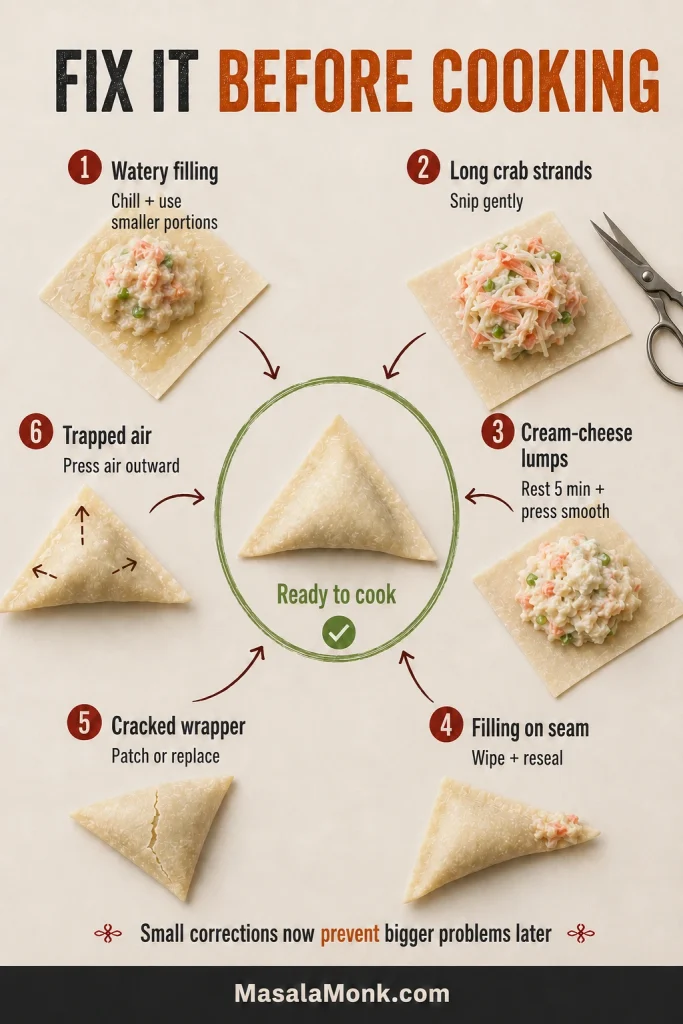
Long crab strands remain: break them up gently with kitchen scissors or the edge of a spatula.
Large cream cheese lumps remain: let the filling stand for about five minutes, then press the remaining lumps gently against the bowl with a spatula. Avoid vigorous beating once the crab has been added.
Check allergens and packaged ingredients
Wheat: standard wonton wrappers and most conventional soy sauces
Milk: cream cheese
Egg: egg wash and some imitation-crab products
Soy: soy sauce and some imitation-crab products
Fish: imitation crab and some Worcestershire sauces
Crustacean shellfish: real crab, crab extract, and some imitation-crab products
The wrapper is doing more than holding the filling. Its size determines how much you can add without asking the seam to stretch.
Wonton wrappers are usually sold refrigerated near tofu, fresh noodles, or produce, and may be stocked in the freezer section of Asian supermarkets. Frozen wrappers should thaw completely in their sealed package in the refrigerator before you separate the stack.
Standard supermarket wonton wrapper: the most manageable all-purpose choice
Thin Hong Kong-style wrapper: delicate and deeply blistered, but easier to tear or overfill
Thicker wonton wrapper: sturdier and easier to handle, with a slightly chewier shell
Egg-roll wrappers can be cut into squares, while spring-roll sheets and rice paper behave differently. MasalaMonk’s crispy vegetable spring roll guide explains those alternatives in more detail.
How Much Filling Goes in Each Wrapper?
A properly filled wrapper should feel plump but relaxed, never stretched tightly over the filling. Leave enough clean space around the mound to release trapped air and close the seam.
Thin 3-inch / 7.5 cm wrapper: about 2 level teaspoons, or 10–12 g
Sturdy 3½-inch / 9 cm wrapper: about 2 rounded teaspoons, or 12–14 g
Four-corner purse: stay near the lower end of the range
Broad triangle: a sturdy larger wrapper can usually hold the higher end
Measure the first few portions. Once your hand recognizes the volume, you can work faster without gradually overfilling wrappers.
Which Fold Works Best?
Fold
Main advantage
Works especially well for
Main risk
Triangle
Easiest and strongest seal
Beginners, air frying, and baking
Slightly flatter filling pocket
Four-corner purse
Classic shape and fuller center
Deep frying
More seams and faster-browning points
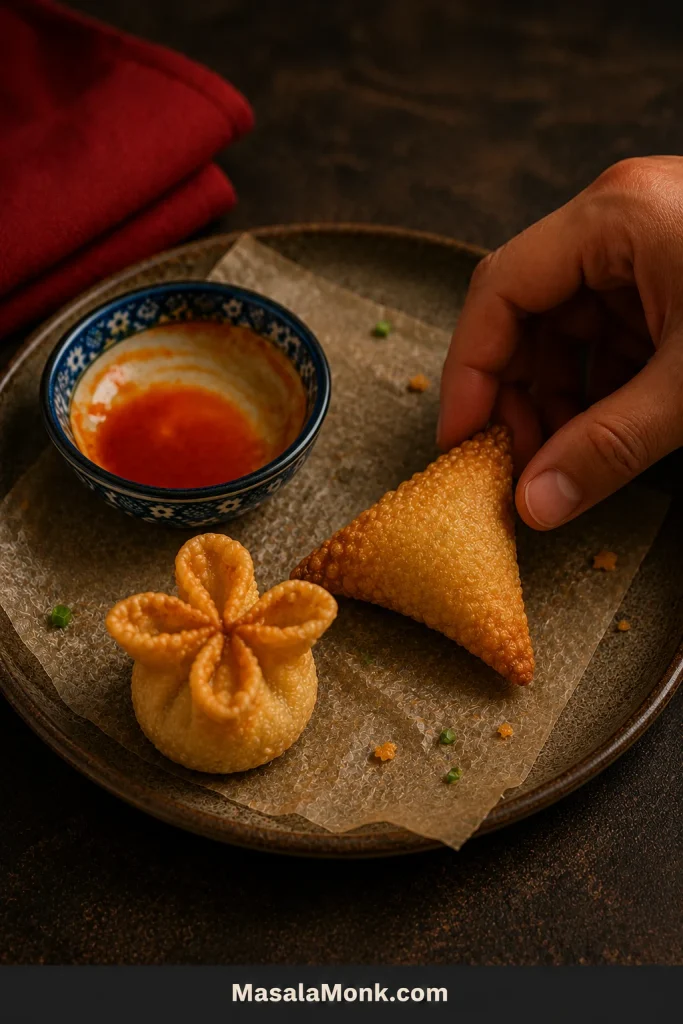
How to Fold and Seal Them
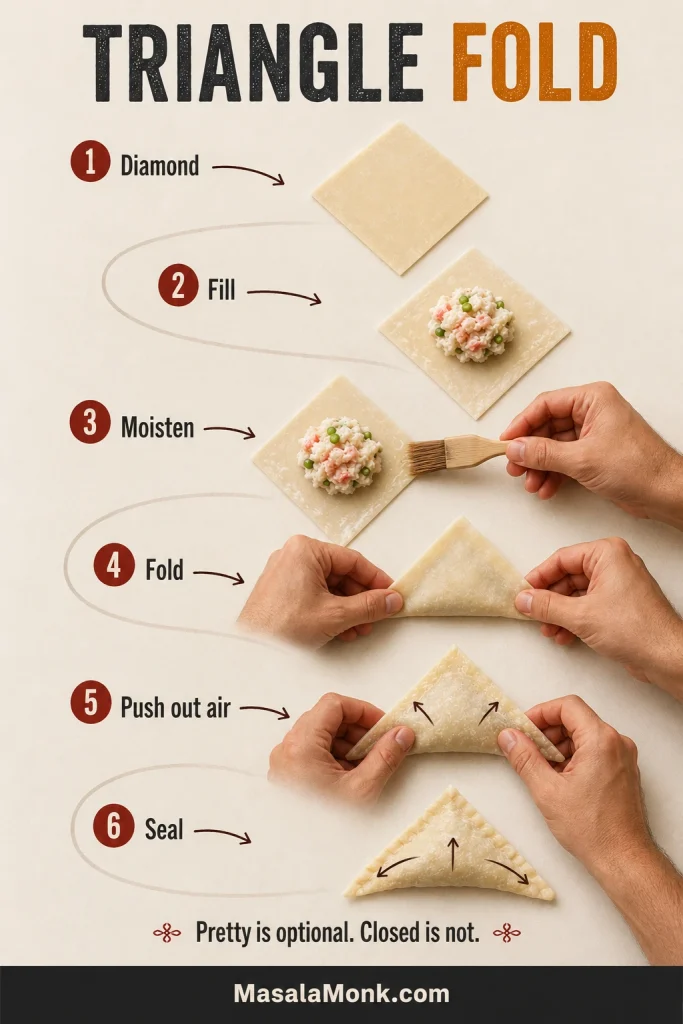
Pretty folds are optional. Closed folds are not. The first one may look awkward; it only needs to stay sealed. Once the portion and motion feel familiar, the tray usually fills much faster.
Triangle Fold
Place the wrapper like a diamond with one point facing you.
Add the measured filling to the center.
Brush a thin film of water or egg wash around the edges.
Bring the bottom point to the top point.
Press close to the filling and push air toward the open edges.
Seal from the center toward each corner.
Seal a triangle with one firm pass. Repeated pinching can thin the wrapper and create tiny cracks.
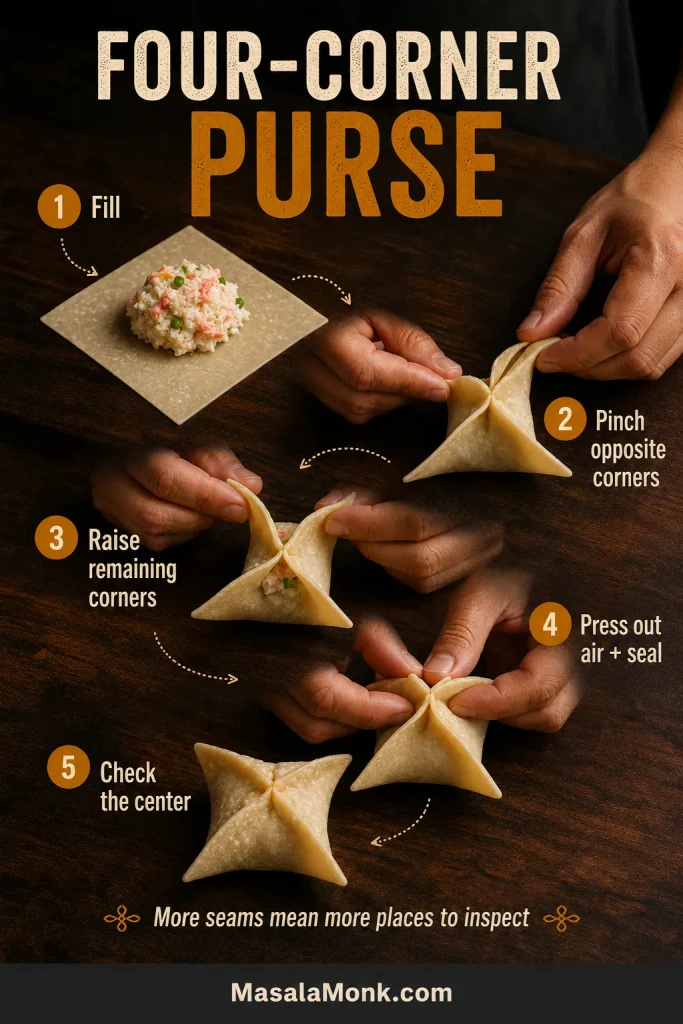
Four-Corner Purse
Add the measured filling to the center.
Brush a thin film of egg wash around the border.
Bring two opposite corners together and pinch.
Bring the remaining corners to the center.
Press the wrapper close around the filling to remove air.
Seal the four diagonal seams from the center outward.
Check the point where all four seams meet.
Lift each purse gently by its center junction before cooking a full tray. Weak joins usually separate there first.
Water is usually enough for fresh wrappers and simple triangles. Egg wash provides extra grip for purse folds and deep frying. Use only a thin film; a soaked edge becomes slippery.
A slightly damp edge becomes tacky; a soaked edge slides. Apply only a thin film of egg wash.
10–14 minutes when two trays bake together, or 20–28 minutes in two rounds
Larger batches; triangles
Keep the filling amount and fold consistent when comparing methods. Otherwise, wrapper shape can be mistaken for a cooking difference.
Deep-Fried Crab Rangoon
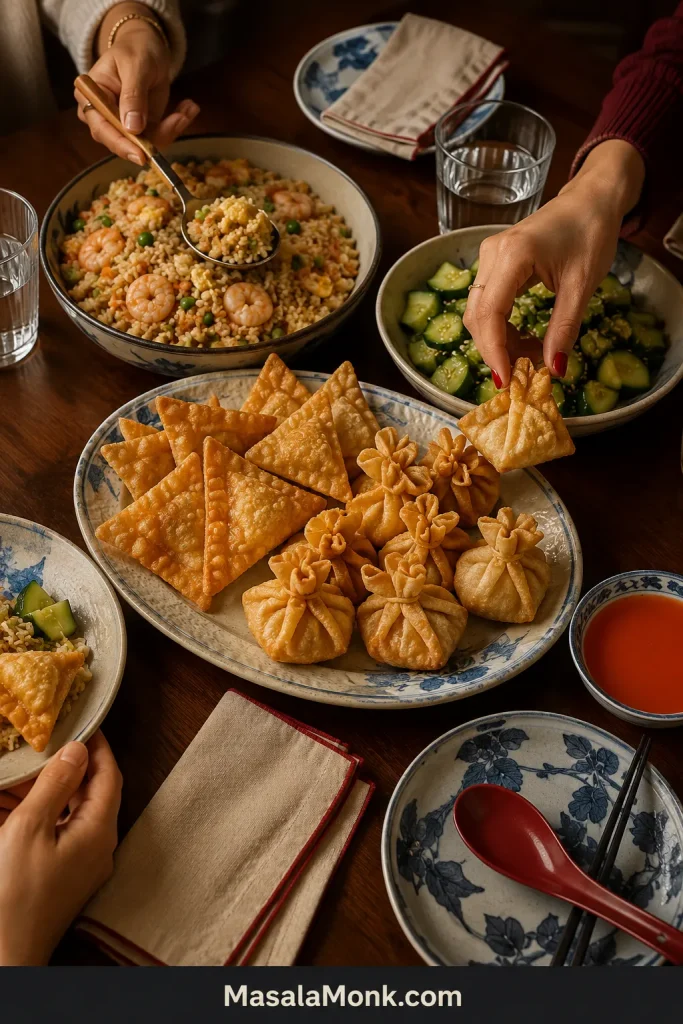
Deep frying produces the thinnest shell and the most even blistering because the hot oil reaches the seams, points, and flat sides at the same time. Triangle folds are easy to manage, while four-corner purses give the familiar restaurant shape.
The oil temperature matters more than chasing an exact shade of gold. When the oil falls too far below 350°F / 175°C, the wrappers absorb more fat before they become crisp. Let the pot recover between batches rather than adding more pieces to save a minute.
Lower each piece close to the oil surface. This reduces splashing and helps prevent the fold from striking the pot.
Properly fried wrappers should feel light and brittle rather than thick or oily. Look for tiny blisters, firm seams, and even color before the points become dark.
Freshly fried crab rangoon may feel slightly flexible. It should become brittle within a minute on the rack.
Frying Safety
Use a stable, heavy pot and do not fill it more than halfway with oil.
Keep water, damp wrappers, wet utensils, children, and pets away from the cooking area.
Lower the rangoons gently, remove any leaking piece promptly, and keep pot handles turned away from the edge of the stove.
Drain the cooked rangoons on a wire rack so steam does not soften the bottoms.
Air Fryer Crab Rangoon
For the air fryer, the triangle is the more forgiving shape. It has fewer seams and fewer exposed points competing with the hot circulating air. Purse-shaped rangoons still work, but their tips may crisp before the wrapper around the center.
Leave the basket vents exposed and space the triangles apart. Crowding blocks hot air from reaching the bottoms and center panels.
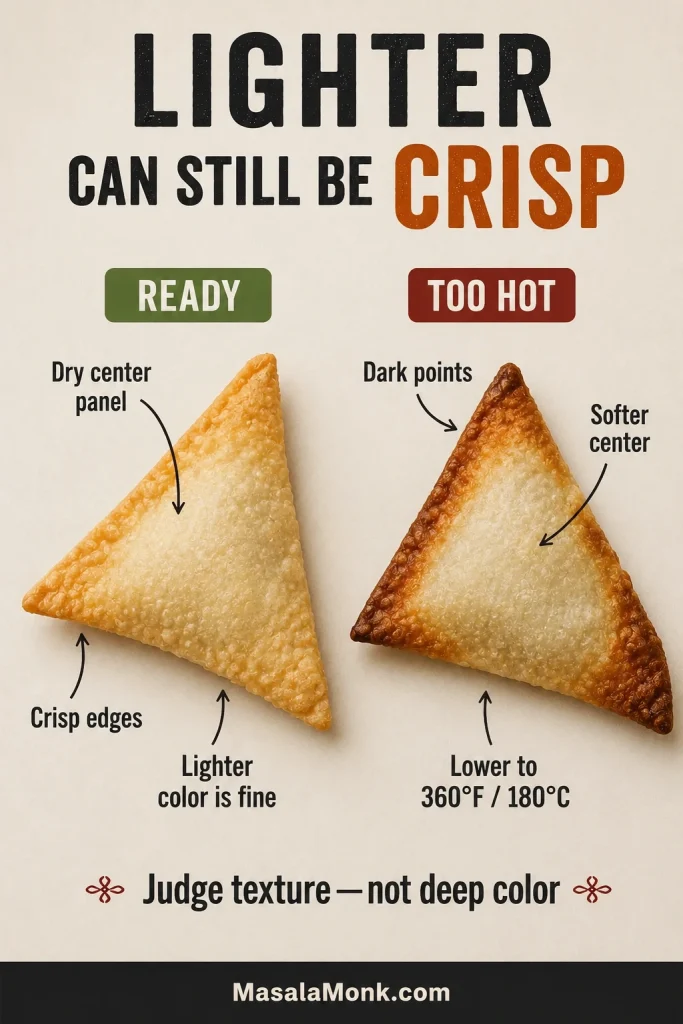
A lighter shell is not a failed shell. A pale air-fried wrapper can still crack cleanly when you bite it. Trust the dry, crisp texture rather than waiting for the deep color produced by frying.
Do not wait for deep-fried color. Instead, tap the wrapper over the filling; it should feel dry and firm.
When the tips darken too quickly, lower the setting to 360°F / 180°C. The extra minute or two gives the center panel time to crisp without hardening the points.
Baked Crab Rangoon
On a sheet pan, triangles sit steadily and expose more wrapper to the heat. Baking is also the most practical option when you want to cook a large batch without standing over oil.
The wrapper around the center stays slightly more tender than the edges. That is part of the baked texture, not a sign that the batch failed. Look for crisp points, firm seams, and no dry floury patches.
Uneven oil coverage is the usual reason baked wrappers stay pale or leathery. Mist or brush any dry-looking areas and return the tray to the oven briefly rather than continuing until the points become hard.
Remove a finished tray instead of waiting for both to match. Oven shelves rarely brown at exactly the same rate.
Which Dipping Sauce Do You Remember?
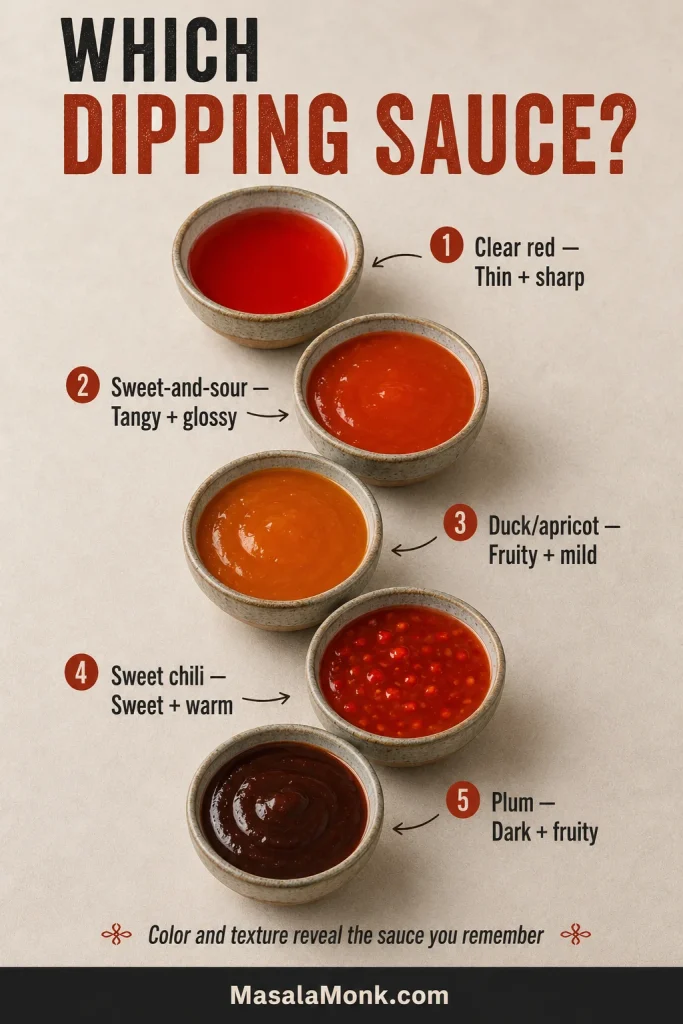
The sauce is often the part people remember most clearly and name least accurately. The red or orange dip may be sweet-and-sour, duck sauce, sweet chili, or plum sauce.
Sauce
Appearance
Flavor
Clear bright-red restaurant sauce
Thin, translucent, glossy
Simple vinegar-and-sugar sweet-and-sour
Red-orange sweet-and-sour
Glossy and slightly opaque
Tangy, sweet, lightly tomato- or fruit-based
Duck or apricot sauce
Orange and jam-like
Fruity and mild
Sweet chili sauce
Red with visible chili pieces
Sweet with gentle heat
Plum sauce
Darker and thicker
Fruitier and less sharply acidic
Identify crab rangoon dipping sauce by texture before color. Brands vary in shade, but thickness remains more revealing.
The sauce included in the recipe is glossy, red-orange, and sweet-and-sour. Its vinegar cuts through the rich cream cheese and crisp wrapper. Duck or plum sauce provides a softer fruit contrast, while sweet chili adds gentle heat.
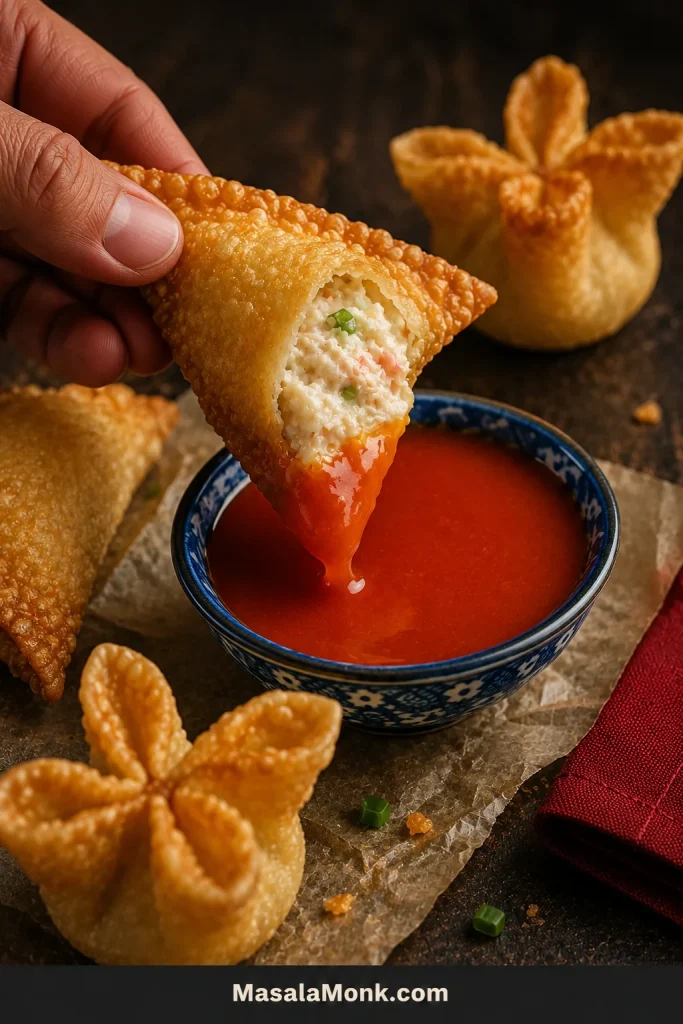
Use a shallow bowl for crab rangoon dipping sauce. It encourages a light corner dip and preserves more crunch.
For guests who prefer a less tangy dip, homemade yum yum sauce gives the platter a cool, creamy alternative.
Troubleshooting: What to Do Now
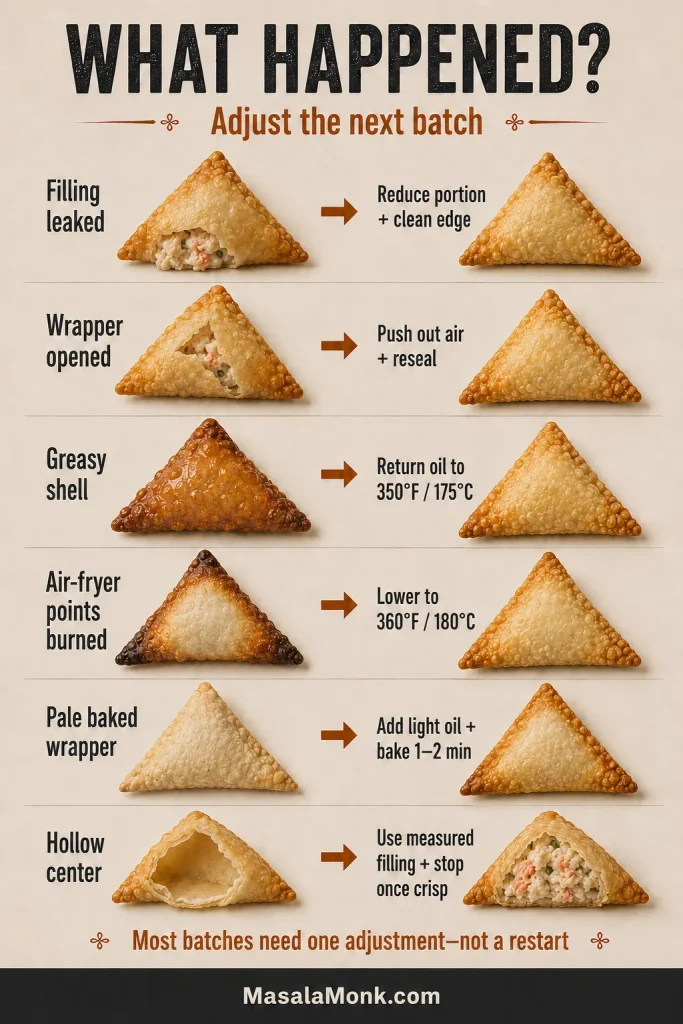
A few imperfect rangoons do not mean the batch is lost. Start with the symptom you can see. Most batches need one adjustment, not a complete restart.
Most problems lead back to thick filling, modest portions, or clean seams. The tables below separate issues you can catch before cooking from the ones that appear after the wrappers hit the heat.
Inspect the last pieces you folded first. Wrappers exposed longest are most likely to dry, crack or need resealing.
What you see
What to do now
Filling is watery
The crab may have carried too much moisture, or the filling may be warm. Chill it for 15–20 minutes, spoon away visible liquid, and avoid adding more liquid seasoning. If it still slumps, use smaller portions and triangle folds.
Long crab strands remain
Break them up gently in the mixed filling with kitchen scissors or the edge of a spatula.
Cream cheese remains lumpy
Let the filling stand for about five minutes, then press the remaining lumps gently against the bowl with a spatula. Avoid vigorous beating once the crab has been added.
Seam will not stick
Wipe the border clean, let it dry briefly, lightly moisten it again, and pinch.
Wrapper cracked
Patch a small crack with a dampened scrap of wrapper. Discard badly split pieces.
Air remains around the filling
Press the wrapper closer to the mound and push the air toward the open edge before sealing.
Most sealing problems are easier to correct before the first batch cooks. Once the rangoons hit the heat, color, texture, and leakage become the useful clues.
After Cooking
The failure location matters. A leaking seam suggests sealing trouble, while a split panel often points to overfilling.
What happened
What to do now
Filling leaked out
The portion may be too large, the filling too wet, or the border dirty. Reduce the remaining portions, clean each edge, and reseal.
Wrapper opened
Press the remaining wrappers close to the filling, push the air outward, and pinch every seam again.
Fried rangoons are greasy
Bring the oil back to 350°F / 175°C and cook smaller batches.
Outside browned too quickly
Lower the heat, let the oil or appliance temperature settle, and check the next batch sooner.
Air-fryer points burned
Reduce the setting to 360°F / 180°C and add 1–2 minutes if the center panel still needs crisping.
Baked wrappers stayed pale
Brush or mist the dry areas lightly and bake for another 1–2 minutes.
Bottom stayed soft
Return the pieces in one layer for 1–2 minutes, then cool them on a rack.
Center feels hollow
Use the measured portion, press the wrapper close around it, inspect every seam, and stop cooking once the shell is crisp.
Cooked rangoons softened
Re-crisp at 350°F / 175°C in the air fryer for 2–3 minutes or at 375°F / 190°C in the oven for 4–6 minutes.
Party Timeline and Quantities
The goal is to serve crisp rangoons—not spend the whole party trapped beside the stove. Smaller fresh batches stay crisper than one large pile slowly steaming itself soft.
To reduce last-minute cooking, let a make-ahead cheese ball cover the cold-appetizer slot while the rangoons come out in smaller fresh batches.
How Many Crab Rangoons Per Person?
Plan on 3–4 rangoons per person when several appetizers are available, or 5–6 when they are the main hot appetizer. Count the recipe as 8 servings; in practice, one balanced batch usually serves about 8–10 with other appetizers or 5–7 when these are the main hot appetizer.
Count cooking capacity as well as appetite. A small air-fryer basket may serve only a few guests at once.
For a larger group, double the filling, but open and fill the second package of wrappers only when needed so the unused stack stays supple.
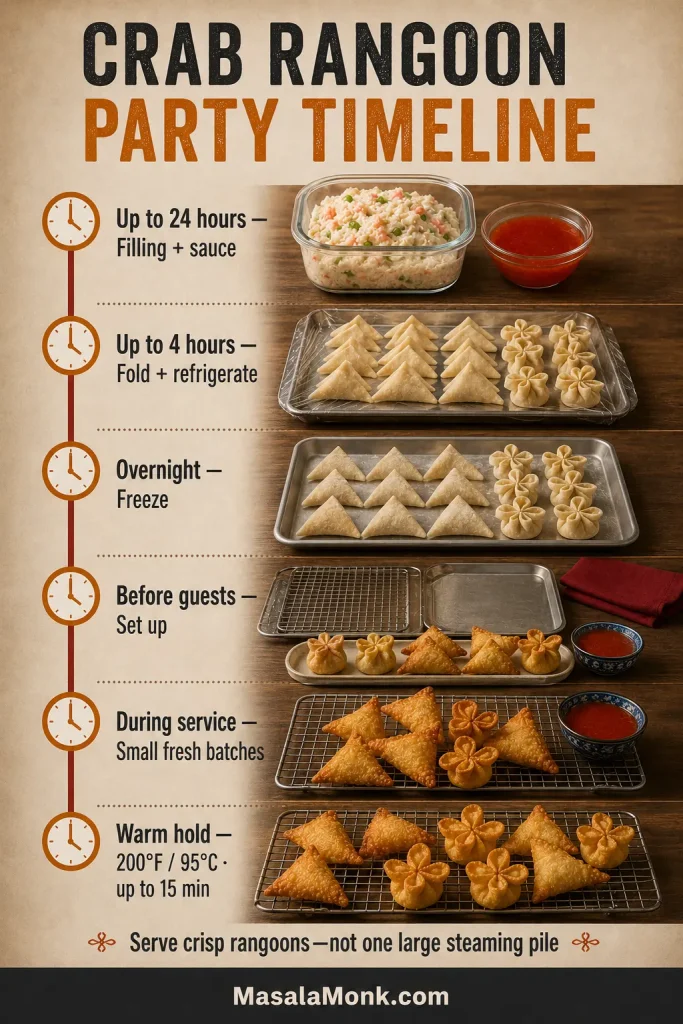
Make-Ahead Crab Rangoon Timeline
Up to 24 hours ahead: Prepare the filling and store it in an airtight container in the refrigerator. Make the dipping sauce and refrigerate it separately.
For the best wrapper texture, up to four hours ahead: Fold the rangoons, arrange them on parchment-lined trays, cover them carefully so the wrappers do not dry out, and keep them refrigerated until cooking.
Before guests arrive: Set out wire racks, sheet pans, dipping bowls, and serving platters. Take the sauce out of the refrigerator early enough to lose its deep chill, or warm it gently if preferred. Heat the oil, oven, or air fryer shortly before cooking.
During service: Cook the first batch before everyone is waiting at the platter. After that, smaller fresh batches can arrive while people are already eating. Hold finished rangoons uncovered on a wire rack in a 200°F / 95°C oven for no more than about 15 minutes.
Plan the party backward from the first serving time. Cold preparation is flexible, but crisp holding time is limited.
Freeze and Cook From Frozen
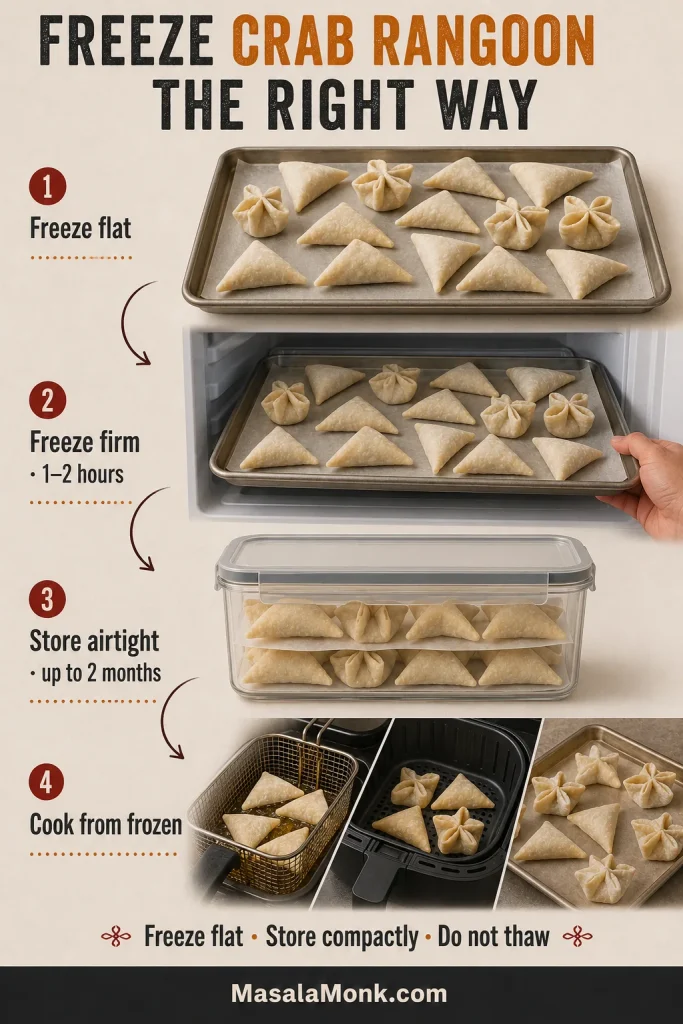
Once frozen solid, the rangoons can be stored compactly and cooked whenever needed. Keep them frozen until they go directly into the oil, air fryer, or oven.
Arrange the uncooked rangoons in one layer on a parchment-lined tray.
Freeze until firm, usually 1–2 hours.
Transfer them to an airtight freezer container or freezer bag.
Separate layers with parchment to protect the seams and points.
Use within two months for the best wrapper quality.
Do not thaw before cooking. Condensation can soften the wrappers and weaken the seams.
Label the fold and intended cooking method before freezing. Triangles and purses may finish at different times from frozen.
When deep frying frozen rangoons: Brush away visible ice crystals, lower them into the oil carefully, and cook smaller batches because frozen pieces lower the oil temperature more sharply.
Method
Timing from frozen
Look for
Deep fry at 350°F / 175°C
3–4 minutes
Evenly golden wrapper and firm seams
Air fry at 370°F / 190°C
Check at 8 minutes; usually 8–12 minutes
Dry center panel and crisp points; the shell may remain lighter than a fried rangoon
Bake at 400°F / 200°C
Check at 14 minutes; usually 14–18 minutes
Crisp edges and a firm center
Cook one frozen rangoon first because wrapper thickness, fold shape, filling amount, freezer temperature, and appliance performance all affect the timing.
Storage and Reheating
Freshly cooked rangoons have the most delicate shell, but dry heat restores enough crunch to make leftovers worth saving.
Refrigerate cooked crab rangoon within two hours. Once the heaviest steam has subsided, arrange the pieces in a shallow container and refrigerate promptly. Cover the container once the rangoons have cooled.
Use refrigerated leftovers within 3–4 days, but reheat and eat them within two days for the best wrapper texture. The USDA leftovers guide recommends reheating leftovers to 165°F / 74°C.
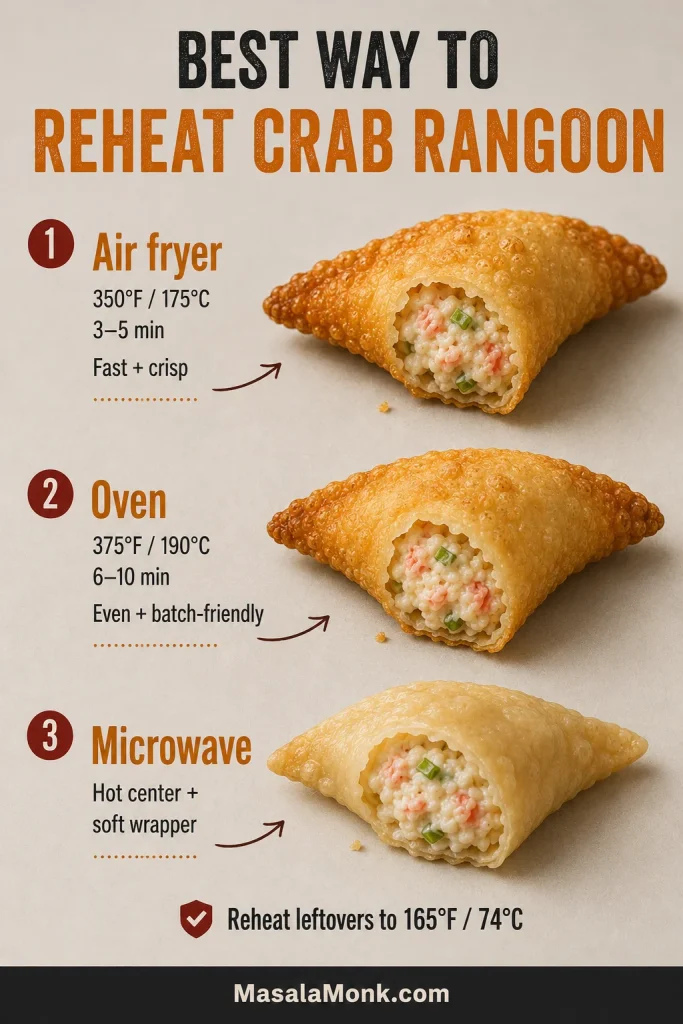
Air fryer: 350°F / 175°C for 3–5 minutes
Oven: 375°F / 190°C for 6–10 minutes
Microwave: the filling becomes hot, but the wrapper remains soft
Leave crab rangoon uncovered while reheating. Foil and lids trap steam, undoing the wrapper’s restored crunch.
Pair the rich, creamy rangoons with one substantial dish and one sharp or vegetable-led side. That gives the meal contrast without turning the table into a list of competing fried foods.
It can be made with real crab, canned crab, imitation crab, or a mixture. Imitation crab often gives the mild, lightly sweet flavor associated with takeout crab rangoon.
Is crab rangoon supposed to be sweet?
Some takeout and buffet versions are gently sweet, while others are savory. The filling guide includes exact sugar ranges for sweet, balanced, and crab-forward versions.
Can crab rangoon be made gluten-free?
It requires dedicated gluten-free wrappers and individually checked sauces, imitation crab, and seasonings. Standard wonton wrappers contain wheat, and packaged ingredients vary by brand.
Why does crab rangoon keep opening?
Too much filling, trapped air, or filling on the sealing edge are the usual causes. See the troubleshooting section for the correction that matches what happened.
What is the red sauce served with crab rangoon?
It is usually a sweet-and-sour sauce, although some restaurants serve duck sauce, plum sauce, or sweet chili sauce. The dipping-sauce guide can help identify the version you remember.
The last two pieces rarely stay on the platter for long.
By the time the last batch arrives, the first platter may already be down to crumbs and sauce streaks.
The Rule to Remember
Thick filling, modest portions, clean seams.
Drain the crab, chill the filling until it holds a mound, and push out trapped air before sealing. Those three decisions do more for the finished rangoon than an elaborate fold or a longer ingredient list.
After the short rest, the shell should crack cleanly around a warm, creamy center—and the person who said they only wanted one may already be reaching for another.
Which version are you making: sweet and creamy, balanced, or packed with real crab?
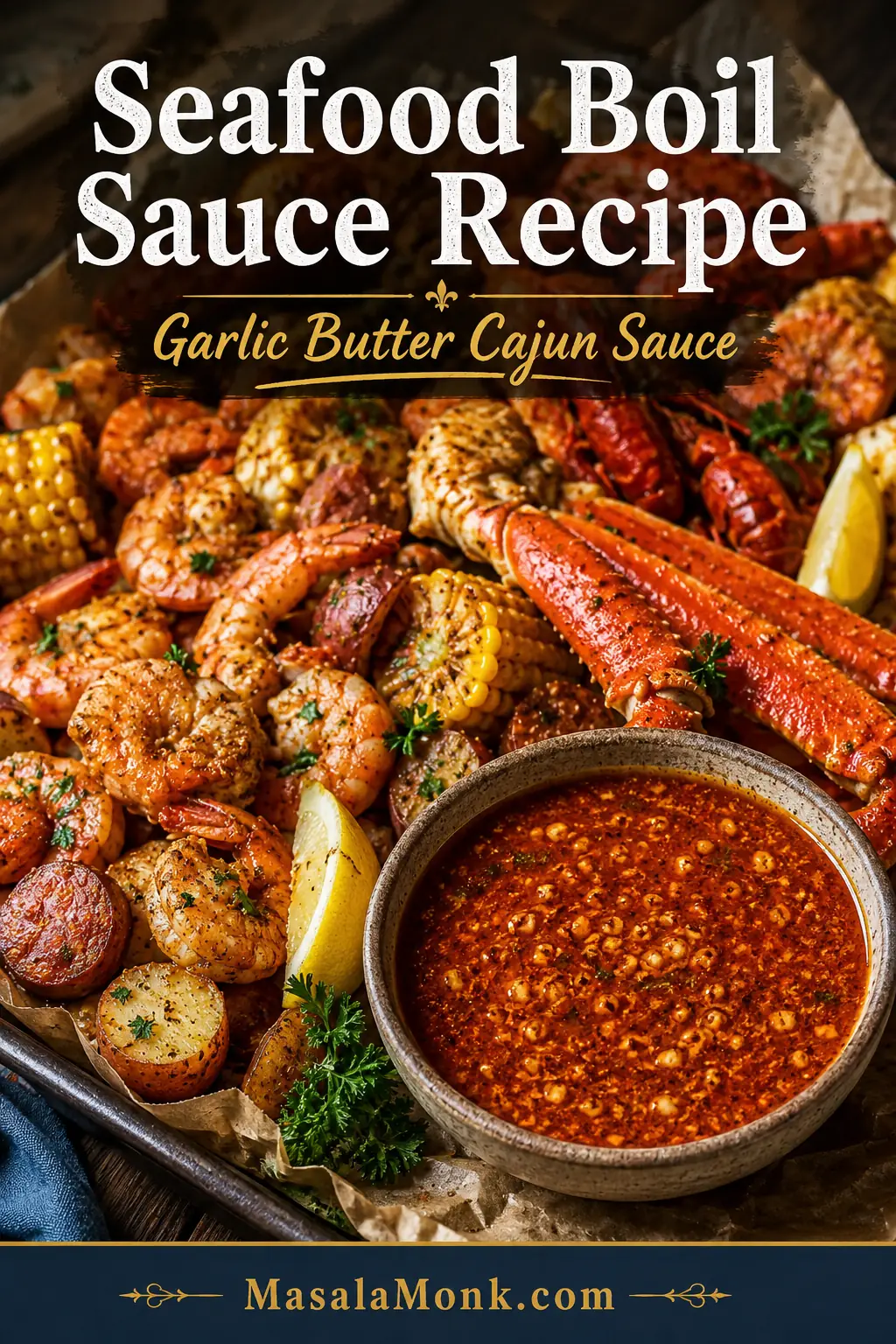
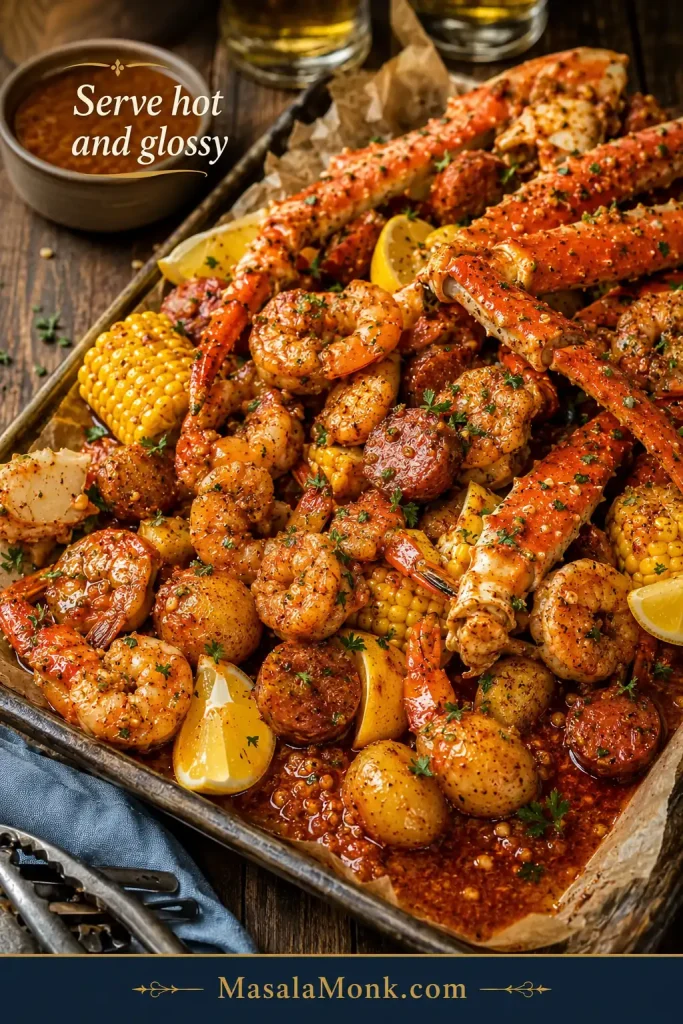
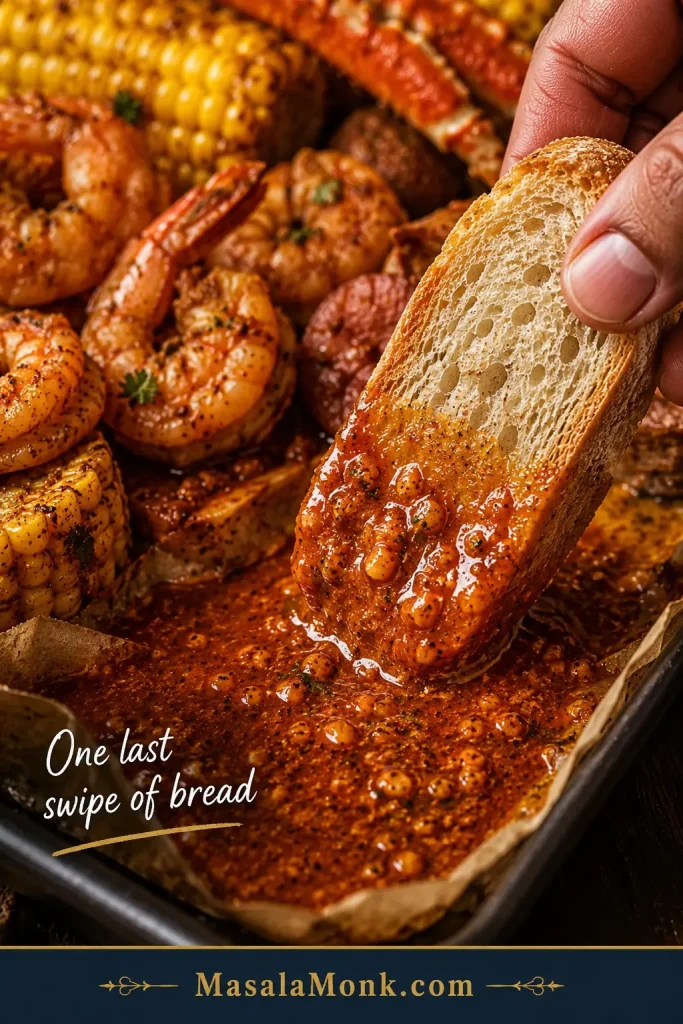
A great seafood boil sauce should do more than taste buttery. It should cling to crab legs, gloss over shrimp, soak into corn and potatoes, and leave enough garlicky Cajun butter at the bottom of the tray for one last swipe of bread.
This is the sauce that turns a pile of boiled seafood into the messy, glossy, pass-the-napkins kind of meal. It is rich, garlicky, smoky, lemony, a little spicy, and easy to adjust for dipping, pouring, tossing, or serving on the side.
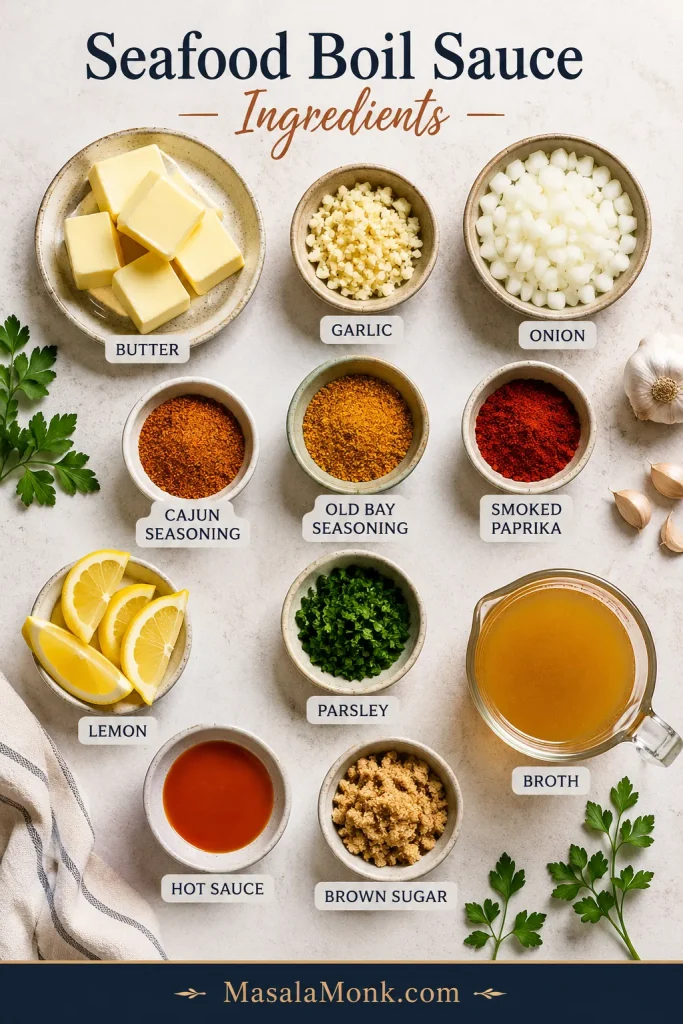
The goal is not just heat or butter. The goal is a sauce that tastes bold but still lets the seafood taste like seafood. The base is simple — butter, garlic, Cajun seasoning, Old Bay, smoked paprika, lemon, and a splash of broth or reserved seafood boil liquid — but the control is what makes it work.
Seafood boil sauce is a bold garlic butter sauce made with butter, garlic, Cajun seasoning, Old Bay seasoning, lemon juice, paprika, and a little heat. It should taste rich first, then garlicky and smoky, with enough lemon to make every bite of shrimp, crab, corn, and potatoes feel bright instead of heavy.
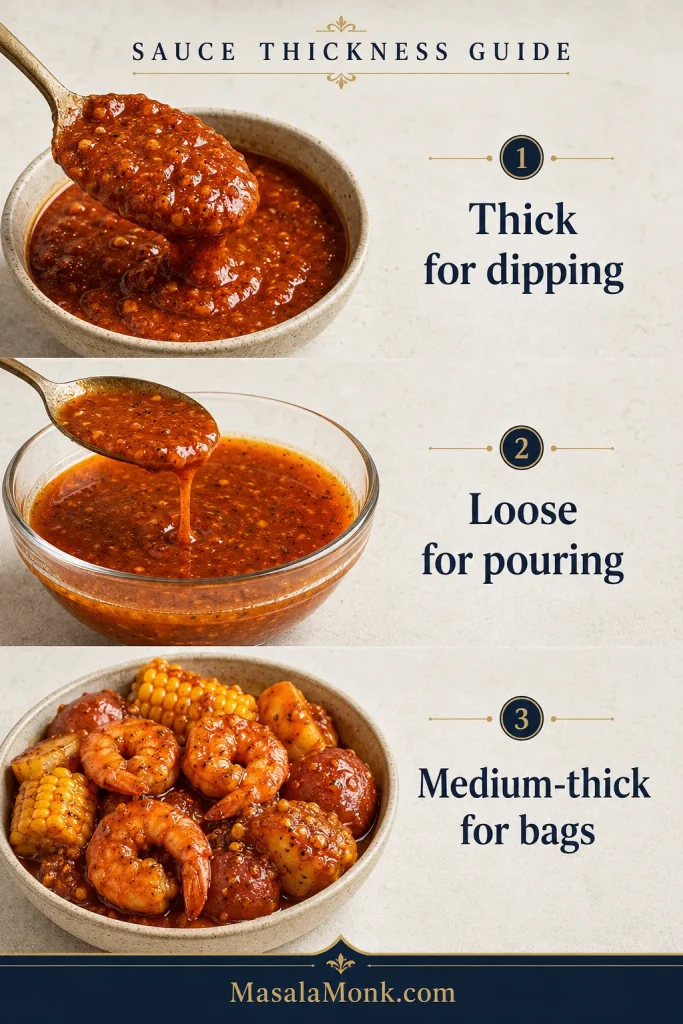
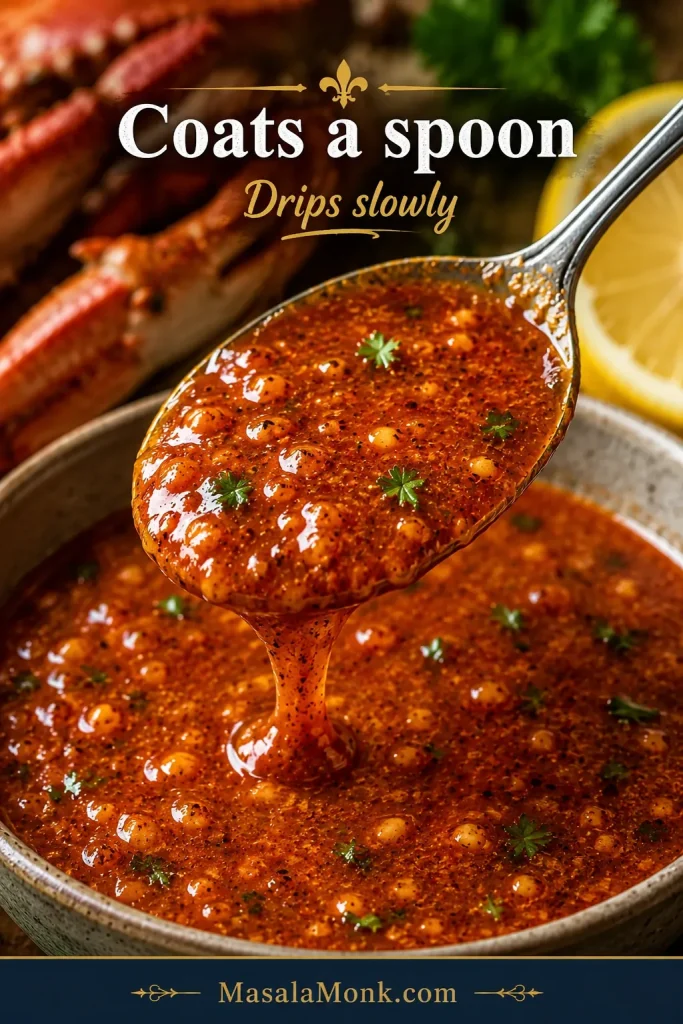
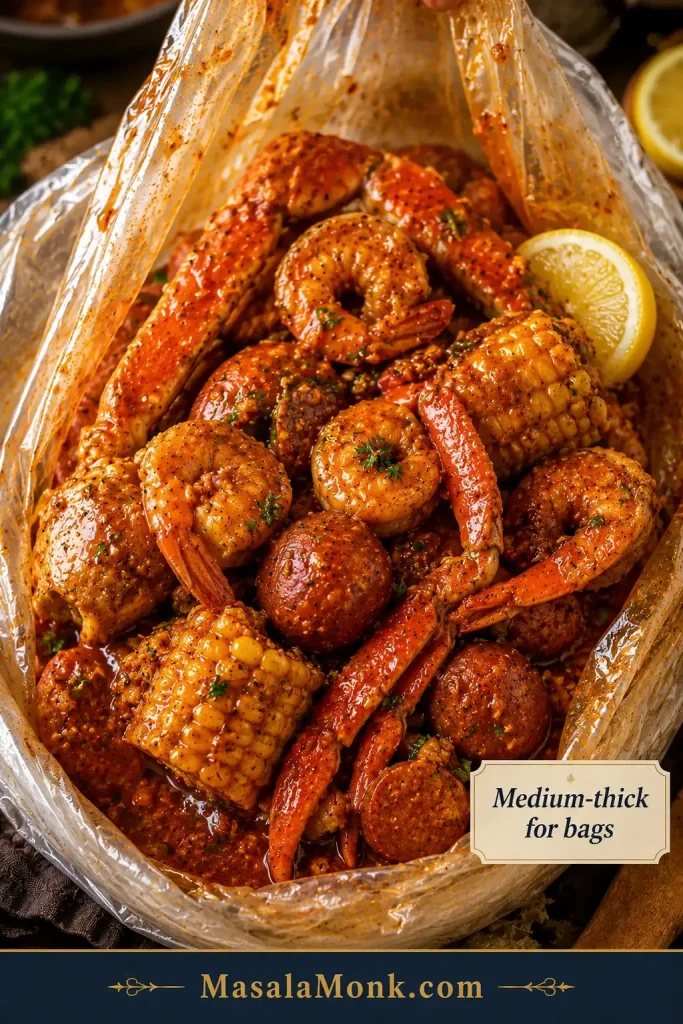
For a thick dipping sauce, use less liquid. For a pour-over sauce, add more broth, seafood stock, or reserved seafood boil liquid. For a seafood boil bag sauce, keep it medium-thick so it coats shrimp, crab, crawfish, corn, potatoes, and sausage without becoming watery.
Butter-Broth-Lemon Rule
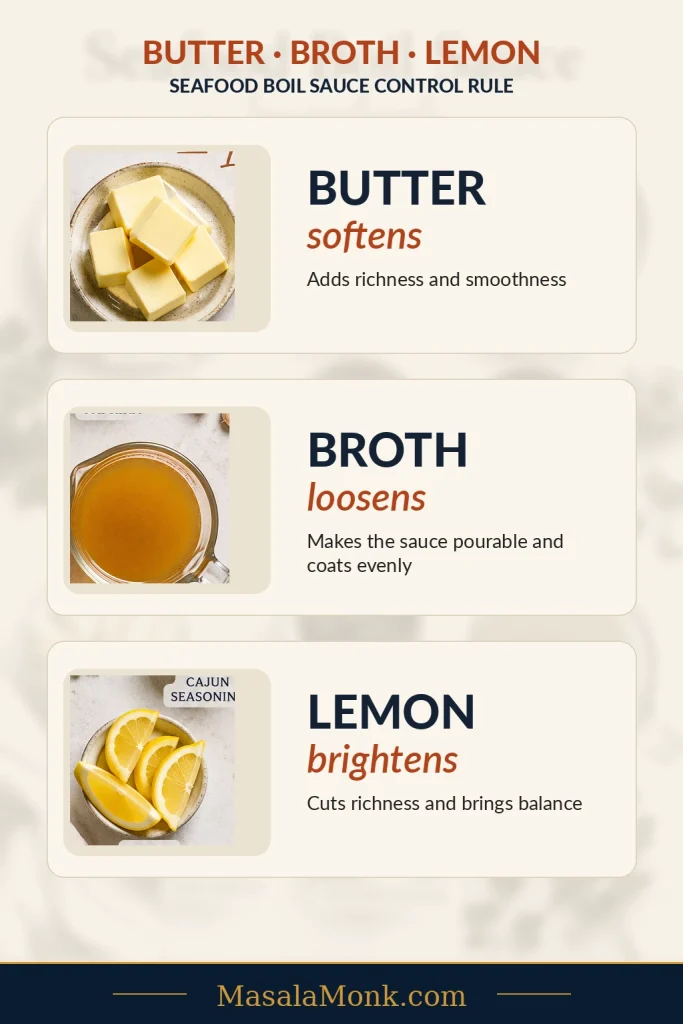
Use the butter-broth-lemon rule: butter softens, broth loosens, and lemon brightens. Choose your sauce style first — thick and buttery for crab-leg dipping, loose and glossy for shrimp and corn, or medium-thick for seafood boil bags. The recipe below starts in the middle so you can adjust either way.
When the sauce needs a fix, this is the fastest rule to remember: butter softens, broth loosens, and lemon brightens.
The best version is bold, glossy, and adjustable: rich enough for crab, bright enough for shrimp, loose enough for corn and potatoes, and balanced enough that it does not hide the seafood.
Make It Now: Seafood Boil Sauce Recipe
This is the main garlic butter Cajun seafood boil sauce. It makes about 2 cups / 480 ml, enough for about 2½–3 lb / 1.1–1.35 kg seafood as a light-to-generous pour-over sauce, depending on how much corn, potatoes, sausage, and eggs are on the tray.
You only need one pan, low heat, and about 20 minutes. Melt the butter, soften the aromatics, bloom the spices, loosen with broth, then finish with lemon.
Prep time: 10 minutes Cook time: 12 minutes Total time: 22 minutes Yield: About 2 cups / 480 ml sauce Serves: 4–6 as pour-over sauce, 8–10 as dipping sauce because dipping uses less per person Equipment: Large skillet or medium saucepan, whisk, measuring spoons, microplane or garlic press
Scaling: Double the sauce for a large tray or seafood boil bag. Keep the heat low and use a wider pan so the garlic and spices cook evenly.
Before you pour: Taste the sauce with one shrimp, potato, or piece of corn. The salt order is simple: season first, loosen second, salt last.
Optional heat: Add ¼–½ teaspoon cayenne or red pepper flakes if you want a spicier Cajun butter sauce.
Salt note: Do not add extra salt until the sauce is finished and tasted. Cajun seasoning, Old Bay, broth, and reserved boil liquid can all bring salt.
Measurement note: Gram weights for seasoning blends are approximate because Cajun seasoning and seafood seasonings vary by brand. Use the spoon measures first, then adjust after tasting.
Instructions
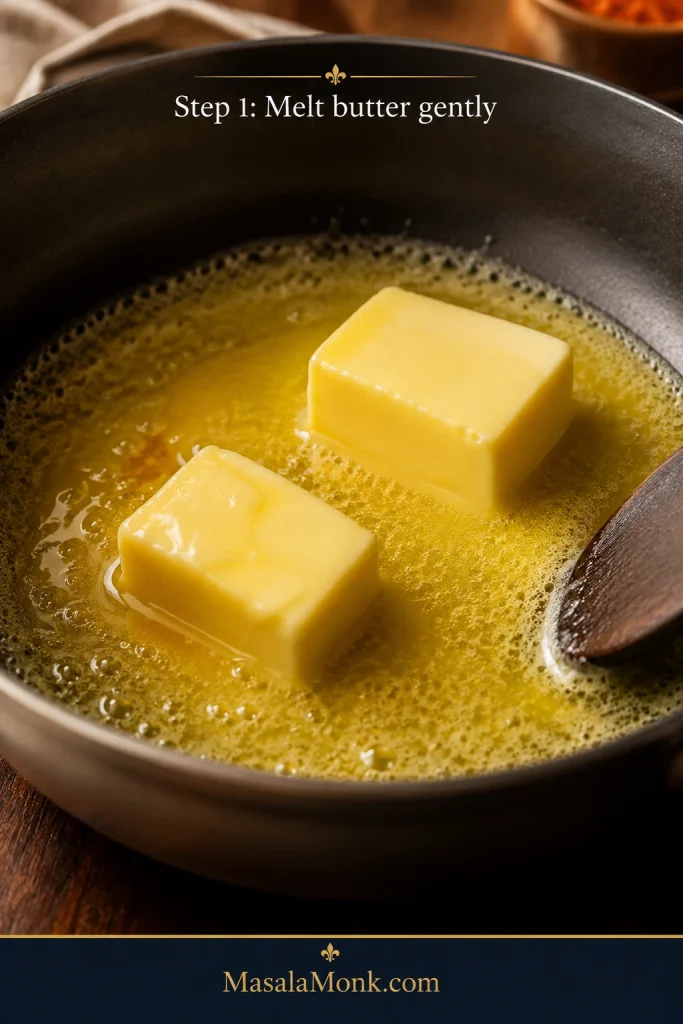
Melt the butter in a large skillet or medium saucepan over low to medium-low heat.
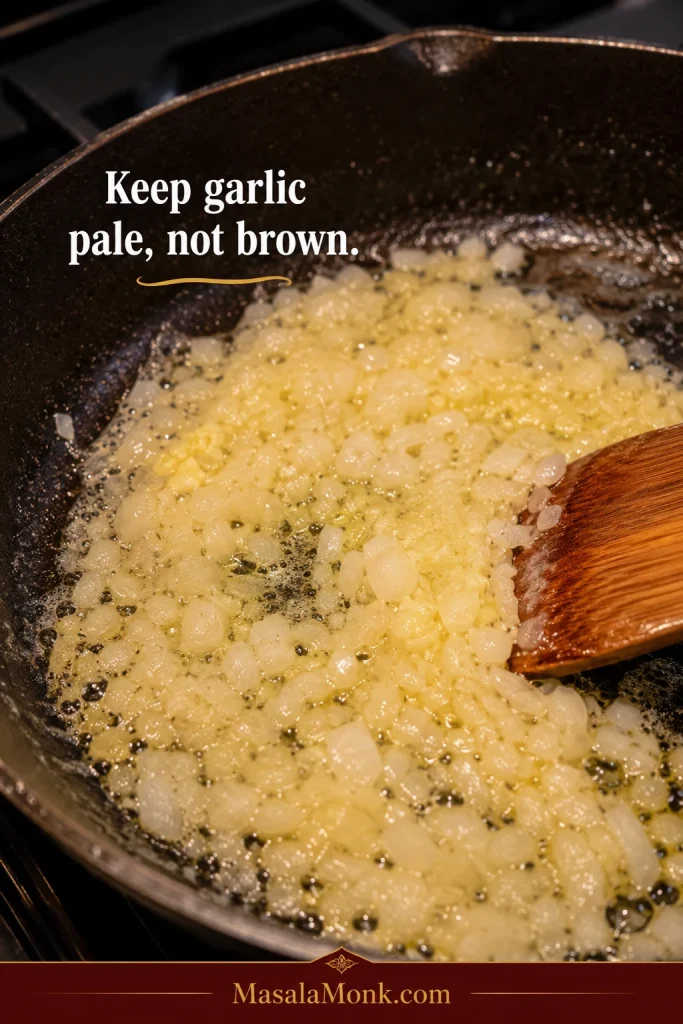
Add the finely minced onion and cook for 3–4 minutes, until softened and glossy but not browned.
Add the garlic and cook for 60–90 seconds, just until fragrant. Keep it pale, not brown.
Stir in the Cajun seasoning, Old Bay, smoked paprika, onion powder, brown sugar, and optional cayenne or red pepper flakes.
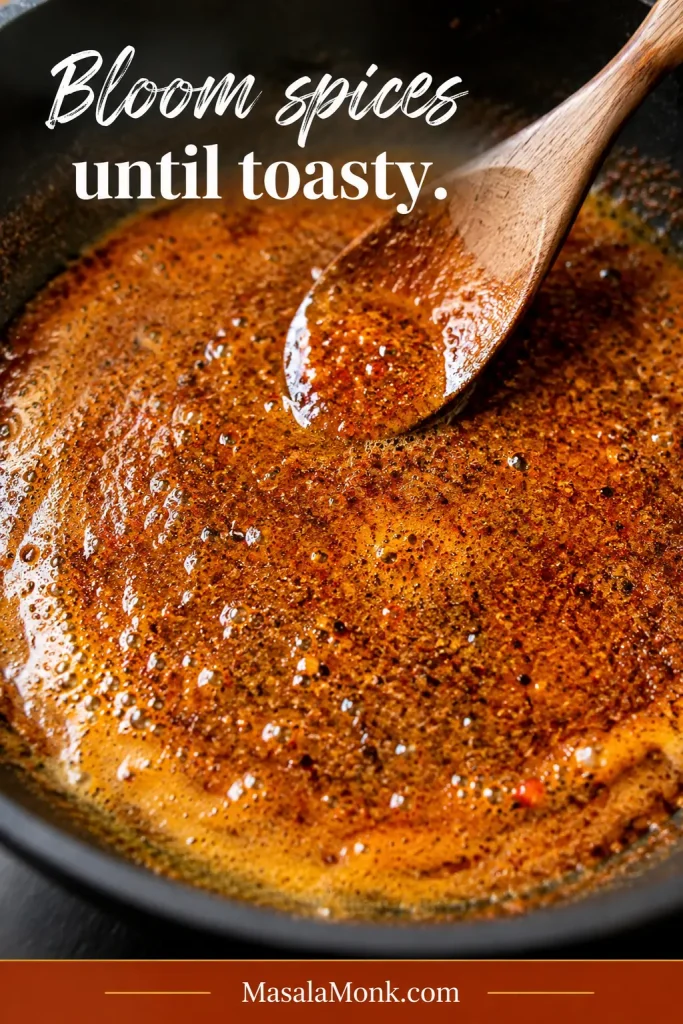
Cook the spices in the butter for 30–60 seconds, until the butter smells toasty and the spices look absorbed into the butter, not sandy on the surface.
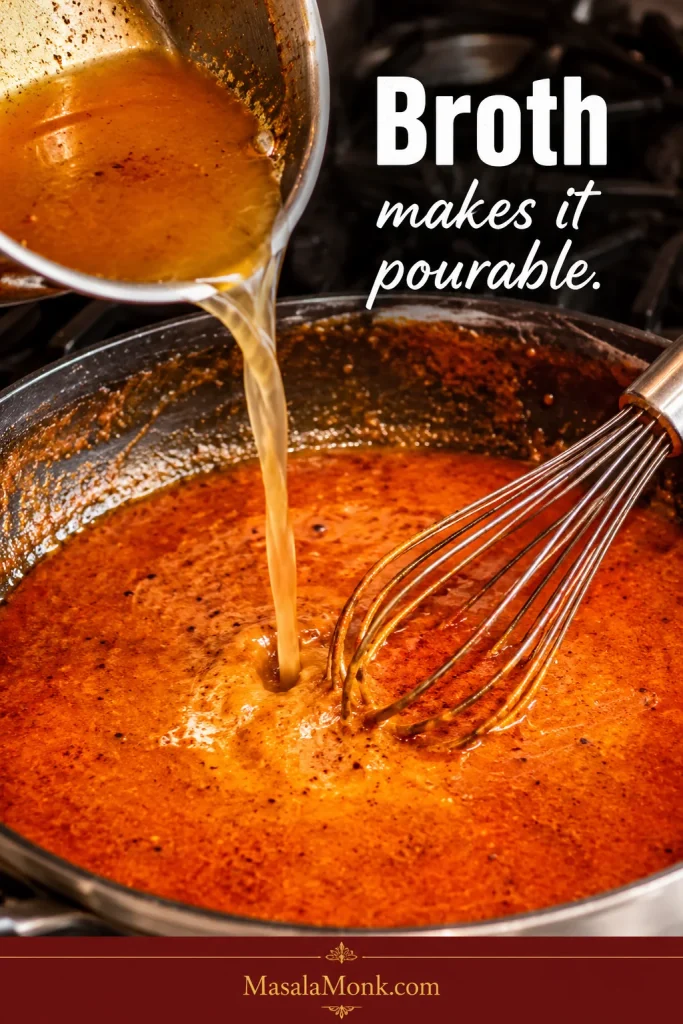
Slowly whisk in the reserved boil liquid, stock, or broth.
Let the sauce gently simmer for 3–5 minutes, stirring often, until glossy and spoonable.
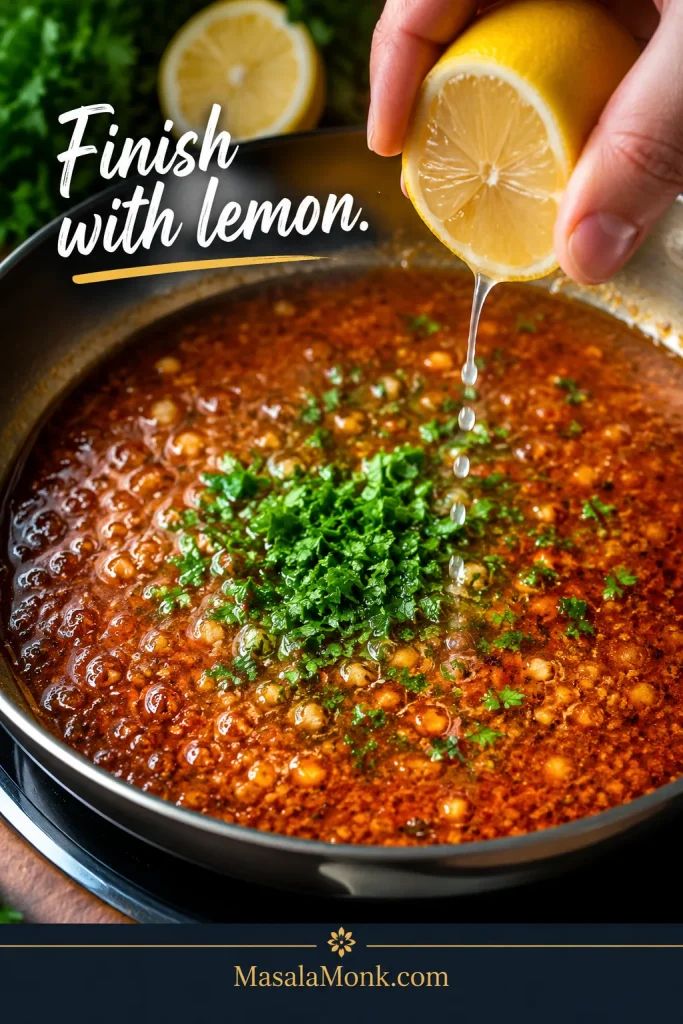
Turn off the heat. Stir in the lemon juice, lemon zest, hot sauce, and parsley.
Taste and adjust. Add more lemon for brightness, broth for a looser sauce, butter for richness, or hot sauce for more heat.
Taste with one shrimp, potato, or piece of corn before coating the full seafood tray.
Serve warm as a dipping sauce, pour-over sauce, or seafood boil bag sauce.
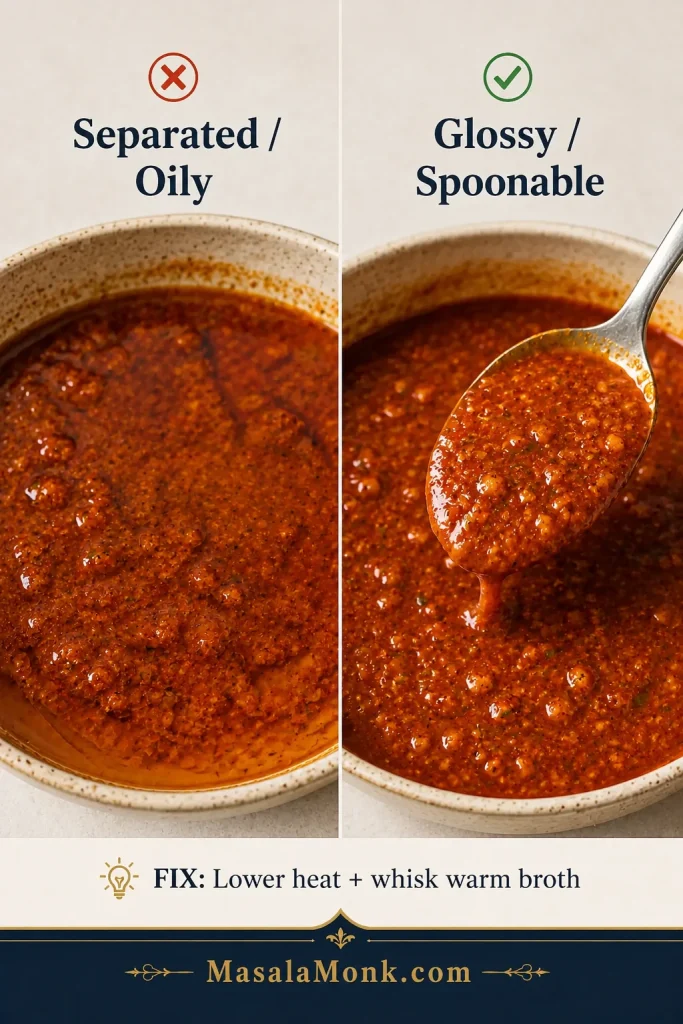
Important: Keep the sauce at a gentle simmer and it stays glossy. A hard boil can make the butter separate and the garlic taste harsh.
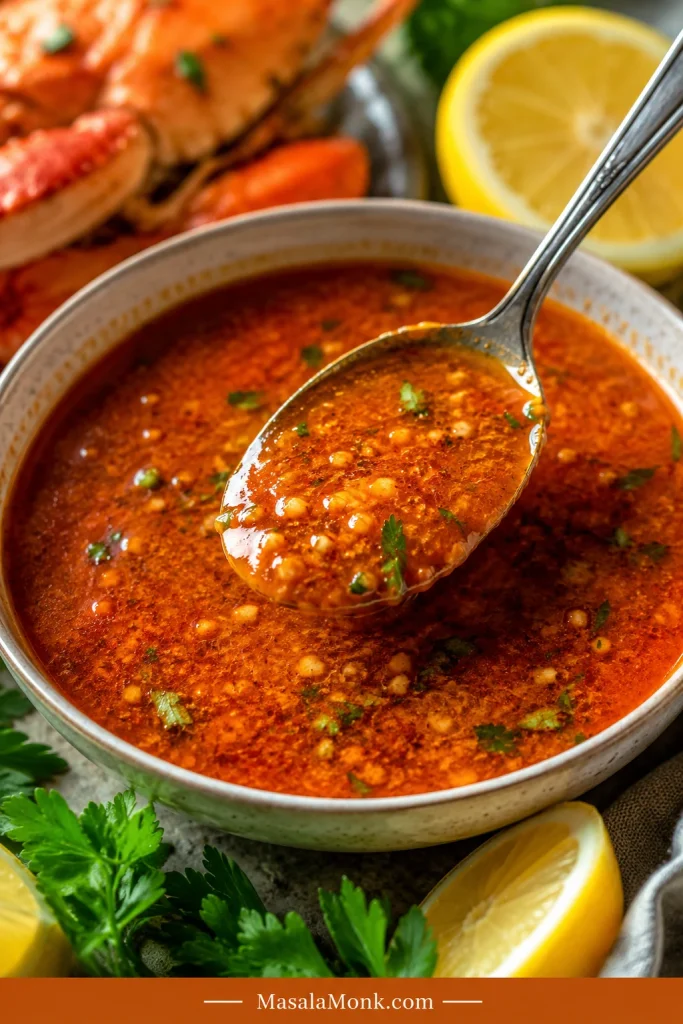
The sauce should look bold before it tastes aggressive: red-orange, glossy, garlicky, and loose enough to spoon over the tray without drowning the seafood.
Seafood Boil Sauce Success Cues
Use these cues while cooking. They matter more than the clock.
The finished sauce should look glossy and spoonable, with visible spice and garlic but no greasy separation.
Cue
What You Want
Garlic
Fragrant and pale, not brown
Onion
Soft, glossy, and slightly translucent
Spices
Toasty and buttery, not dry or sandy
Sauce texture
Glossy and spoonable, not broken or greasy
Salt
Bold and savory, not sharp or harsh
Heat
Warm Cajun spice first, extra fire only if you want it
Lemon
Bright enough to cut the butter
Finished sauce
Buttery, garlicky, smoky, lemony, and easy to drizzle
When the sauce hits these cues, it tastes big without tasting heavy — rich enough for crab, bright enough for shrimp, and loose enough to find its way into the corn and potatoes.
Adjust, Fix and Serve the Sauce
Use the rest of this guide to choose the right texture, adjust the flavor, fix common problems, and store leftovers safely.
This is where the sauce becomes yours. Some people want a thick bowl of butter for crab legs; others want a loose, glossy sauce that runs into the corn and potatoes. The same base can do both.
Thickness decides the job, so keep it thicker for dipping, looser for pouring, and medium-thick for bags.
Use
Texture
How to Adjust
Dipping sauce
Thick, buttery, clingy
Use ¼ cup / 60 ml liquid and simmer slightly longer.
Pour-over sauce
Glossy, loose, spoonable
Use ½ cup / 120 ml liquid.
Seafood boil bag sauce
Medium-thick, coating sauce
Use ½–¾ cup / 120–180 ml liquid.
Big tray sauce
Looser and more spreadable
Use ¾–1 cup / 180–240 ml liquid.
Crab leg dipping sauce
Rich and buttery
Keep it thicker and serve lemon wedges on the side.
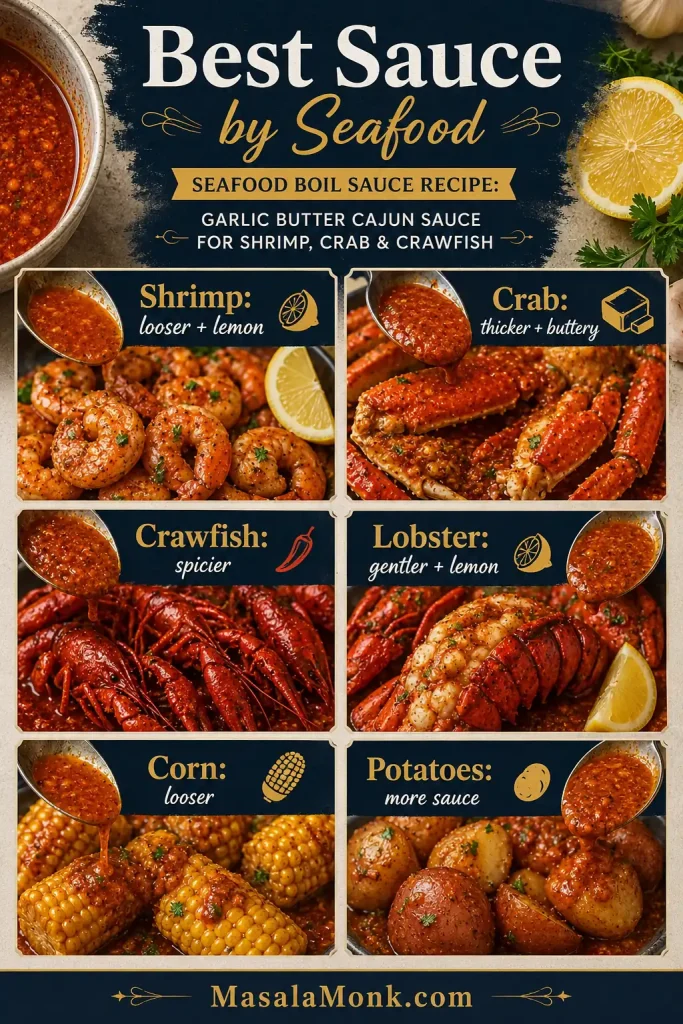
Crab people usually want the thick bowl. Shrimp, corn, and potatoes usually want the loose spoon-over version. If your table is divided, make the base sauce medium-thick, then loosen half for pouring and keep half rich for dipping.
Think of the broth or boil liquid like a volume knob. Add a little for a thick dip. Add more for a sauce that covers a whole tray.
How Much Seafood Boil Sauce Do You Need?
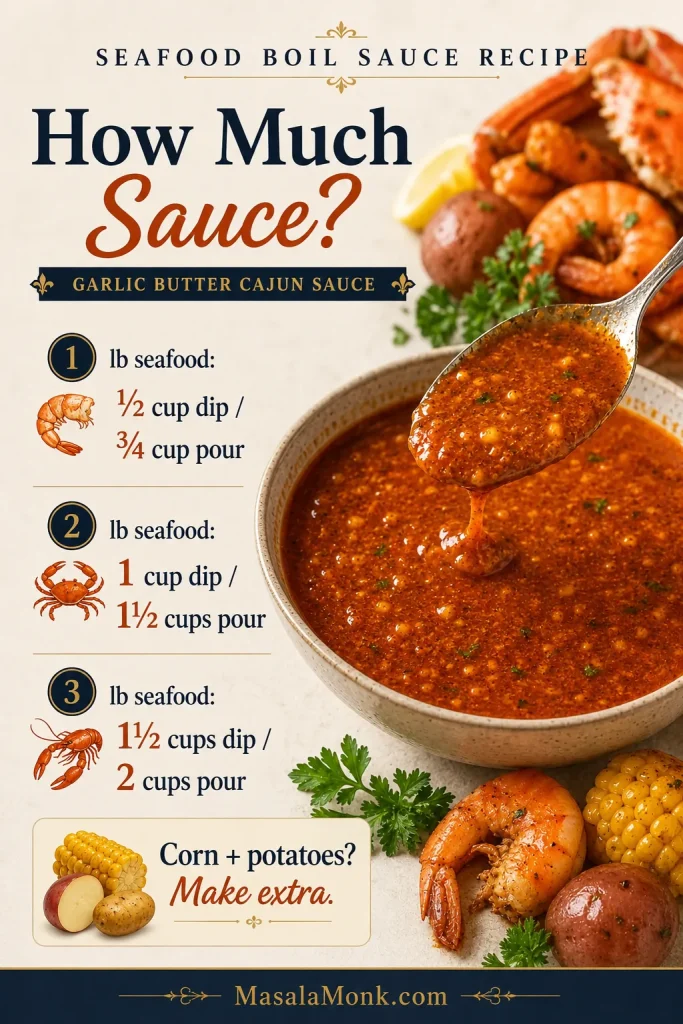
The only sad seafood boil sauce is the one that runs out too early. If the tray has corn and potatoes, make extra. They absorb sauce faster than the seafood does.
Corn and potatoes always change the math, so make extra when the tray has more than just shrimp or crab.
By Seafood Weight
Seafood Amount
Dipping Sauce
Pour-Over Sauce
1 lb / 450 g seafood
½ cup / 120 ml
¾ cup / 180 ml
2 lb / 900 g seafood
1 cup / 240 ml
1½ cups / 360 ml
3 lb / 1.35 kg seafood
1½ cups / 360 ml
2–2¼ cups / 480–540 ml
5 lb / 2.25 kg seafood
2½ cups / 600 ml
3–4 cups / 720–960 ml
Party tray
Make extra
Serve extra on the side
By Number of People
People
Sauce for Dipping
Sauce for Pouring/Tossing
2 people
½–¾ cup / 120–180 ml
1 cup / 240 ml
4 people
1–1½ cups / 240–360 ml
2 cups / 480 ml
6 people
1½–2 cups / 360–480 ml
3 cups / 720 ml
8 people
2–3 cups / 480–720 ml
4 cups / 960 ml
This recipe makes about 2 cups / 480 ml sauce. That is enough for about 2½–3 lb / 1.1–1.35 kg seafood as a pour-over sauce, or more if you are mainly serving it for dipping.
Extra sauce never feels like a mistake at a seafood boil. Running out does.
Once you know how thick the sauce should be and how much to make, the next step is understanding why the balance works.
Why This Seafood Boil Sauce Works
The flavor works because it balances richness, garlic, heat, salt, sweetness, and acidity.
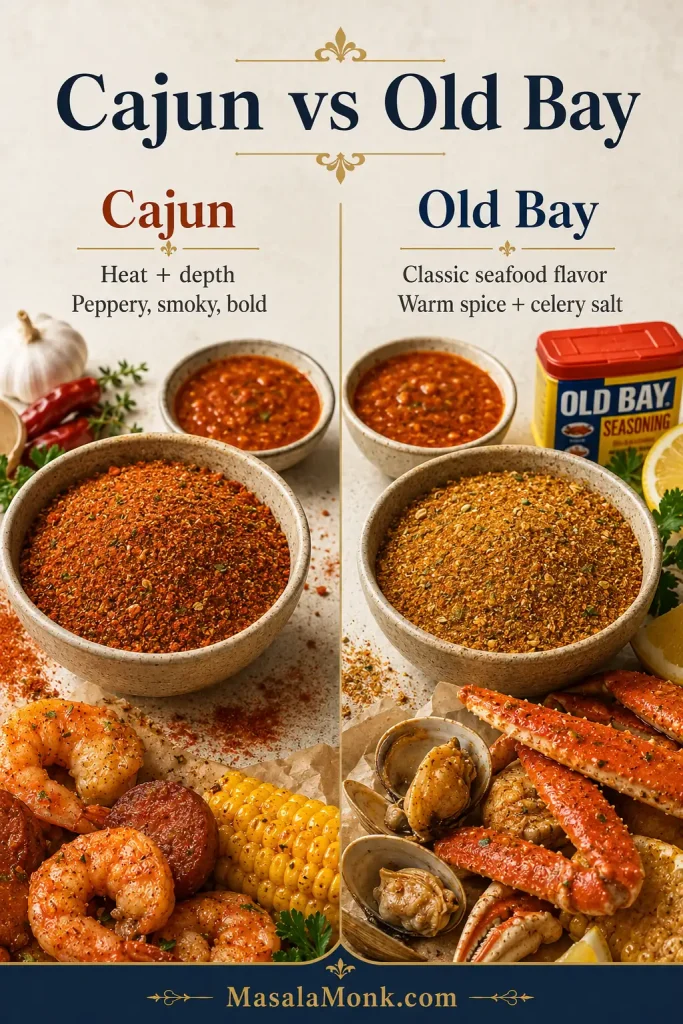
Butter gives the sauce body. Garlic makes it bold and fragrant. Cajun seasoning brings peppery heat and Southern-style depth. Old Bay adds the classic seafood-boil flavor many people expect with crab, shrimp, and crawfish. Smoked paprika gives the butter sauce its warm red-orange color. Lemon keeps it from feeling heavy.
The small amount of brown sugar is not there to make the sauce sweet. It rounds out salt and spice, especially if your seasoning blend is intense. A little broth or reserved boil liquid turns plain melted butter into something glossy, spoonable, and better connected to the seafood.
When it is right, the sauce should taste buttery first, then garlicky, smoky, salty-spicy, and finally bright from lemon.
The method matters too. Garlic needs gentle heat, spices taste better when they bloom briefly in butter, and lemon tastes brighter when added near the end.
That balance is why the sauce can be bold enough for sausage and potatoes but still bright enough for shrimp, crab, and lobster.
Ingredients You Need
The recipe card gives you the amounts. This section explains what each ingredient does and how to adjust if your seasoning blend is stronger, smokier, hotter, or saltier than expected.
Every ingredient earns its place here, because Cajun seasoning, Old Bay, garlic, lemon, and broth all help the sauce stay bold without getting heavy.
Butter
Unsalted butter gives you the best control because seafood boil seasonings can be salty. If you only have salted butter, make the sauce first, then taste before adding anything salty at the end.
For a richer party-style version, whisk in 2–4 extra tablespoons of butter after the sauce simmers.
Garlic
Fresh garlic gives this Cajun butter sauce its best flavor. Minced garlic gives a rustic texture; grated garlic or garlic paste makes the sauce smoother and more restaurant-style.
Keep the garlic pale and fragrant. Dark brown garlic can taste bitter.
Onion
Onion is optional, but it gives the sauce body and natural sweetness. Mince it very finely so it melts into the butter, or grate it for a smoother finish.
Cajun Seasoning
Cajun seasoning gives the sauce its bold, peppery, spicy base. Different brands vary a lot, so taste yours before you add extra heat or salt.
Old Bay Seasoning
Old Bay gives the sauce that classic seafood flavor. It works especially well with shrimp, crab legs, crawfish, potatoes, and corn.
No Old Bay in the pantry? You can still make a good boil sauce with Cajun seasoning, smoked paprika, garlic powder, onion powder, and a small pinch of celery salt or celery seed.
Smoked Paprika
Smoked paprika adds color, warmth, and a gentle smoky note. It helps create the deep red-orange look people associate with Cajun seafood butter.
Brown Sugar
Brown sugar is optional but useful. It rounds out salt, spice, and heat without making the sauce taste sweet, and it helps create a slightly glossy finish.
Broth, Seafood Stock, or Reserved Boil Liquid
This is what changes the sauce from a thick buttery dip into something you can spoon over a whole tray. Reserved boil liquid, stock, or broth loosens the sauce so it pours instead of sitting like straight melted butter.
Reserved boil liquid gives the strongest seafood-boil flavor because it already carries seasoning from the pot. If it tastes very salty, use half boil liquid and half low-sodium broth or water.
Lemon Juice and Lemon Zest
Lemon cuts through the butter and brightens the whole sauce. Add lemon juice near the end so it tastes fresh. Lemon zest is optional, but it makes the sauce smell brighter.
Hot Sauce, Cayenne, or Red Pepper Flakes
Hot sauce gives smoother heat. Cayenne adds stronger fire. Red pepper flakes bring visible spicy texture. Add heat slowly because it is much easier to make the sauce spicier than it is to calm it down.
Equipment
Large skillet or medium saucepan
Whisk
Measuring cups and spoons
Microplane, garlic press, or sharp knife
Heatproof spatula or spoon
Optional immersion blender for a smoother sauce
A skillet gives the spices room to bloom and lets the sauce reduce slightly; a medium saucepan works well for smaller batches or easier pouring.
How to Make It Glossy, Not Greasy
The recipe card above has the short version. These details help if you want a smoother, glossier, more controlled sauce.
Spoonable Sauce Texture
Before you pour the sauce over seafood, check the spoon. A glossy sauce should coat it lightly, then drip back slowly instead of running like water or sitting like straight melted butter.
If it coats the spoon and drips slowly, the sauce is in the right place: clingy enough for seafood, but not oily or thin.
1. Melt the Butter Gently
Melt the butter over low to medium-low heat. Starting gently keeps the butter from separating and gives the garlic time to flavor the sauce without burning.
Start low and gentle, because butter should melt slowly before the garlic and spices go in.
2. Soften the Onion and Garlic
Cook the onion until soft and glossy, then add the garlic for 60–90 seconds. The garlic should smell fragrant but stay pale.
Once the onion softens and the garlic stays pale, the base turns sweeter and the sauce stays out of bitter territory.
3. Bloom the Seasonings
Stir the Cajun seasoning, Old Bay, smoked paprika, onion powder, brown sugar, and optional heat into the butter. Cook briefly until the butter turns red-orange and the spices look absorbed, not dry or dusty.
Blooming the spices in butter is what gives seafood boil sauce its deep red-orange color and that toasty Cajun flavor.
4. Loosen and Finish
Whisk in the broth or reserved boil liquid slowly, then simmer gently until glossy. Turn off the heat before adding lemon juice, lemon zest, hot sauce, and parsley.
As soon as the broth goes in, the sauce loosens into a glossy pour-over texture that works better for shrimp, crab, and vegetables.
Finish With Lemon and Parsley
After the sauce is glossy, take it off the heat before adding lemon and parsley. That small timing choice keeps the seafood boil sauce brighter and fresher.
Lemon and parsley go in at the end, because that final bright note keeps the sauce fresh instead of flat.
5. Test Before You Pour
Dip one shrimp, one potato, or one piece of corn into the sauce before coating the full tray. Fix the sauce in the pan, not after it has already coated three pounds of seafood.
Do You Add Seafood Boil Sauce Before or After Cooking?
This is a finishing sauce, not the cooking liquid. Let the boil season and cook the seafood, then let the garlic butter sauce coat it.
Add this garlic butter Cajun sauce after the seafood is cooked and drained. The sauce is for pouring, tossing, bagging, or dipping after cooking.
If you are unsure whether the seafood itself is fully cooked, FoodSafety.gov’s safe minimum internal temperatures chart is a useful reference for fish and shellfish.
The best method is simple: cook the seafood, drain it well, taste the sauce, then spoon or toss the warm sauce over the hot seafood. Keep extra sauce on the side for dipping crab, shrimp, corn, and potatoes.
Best Sauce for Shrimp, Crab, Crawfish and More
The same base works across the tray, but each seafood and side likes a slightly different sauce texture.
Shrimp usually wants a looser, lemon-bright sauce, while crab does better with a thicker, buttery finish that stays on the meat.
Food
Best Sauce Style
Adjustment
Shrimp
Pour-over or toss
Add slightly more lemon and keep the sauce looser.
Crab legs
Dipping sauce
Keep it thicker, buttery, and rich.
Crawfish
Spicy Cajun sauce
Add extra Cajun seasoning, paprika, or hot sauce.
Lobster tails
Garlic lemon butter
Use less Cajun, more lemon and parsley.
Mussels and clams
Loose pour-over sauce
Add more broth so it reaches the shells.
Corn
Pour-over sauce
Make it looser so it soaks into the kernels.
Potatoes
Pour-over sauce
Add enough broth so the sauce coats well.
Sausage
Smoky spicy sauce
Smoked paprika and Cajun seasoning work well.
Boiled eggs
Medium-thick sauce
Spoon sauce over just before serving.
For Shrimp
Shrimp tastes best with a sauce that is garlicky, lemony, and not too heavy. Keep the texture slightly loose so the shrimp stays juicy.
For another shrimp dinner built around garlic, butter, and lemon, this shrimp scampi recipe keeps the same bright butter-sauce idea in a pasta-friendly direction.
For Crab Legs
Crab legs are perfect for a thicker dipping sauce. Keep it buttery and clingy, then serve extra lemon on the side so each bite can be brightened at the table.
For Crawfish
Crawfish can handle stronger heat. Add extra Cajun seasoning, hot sauce, cayenne, or red pepper flakes if you want a spicy crawfish boil sauce.
For Lobster
Lobster is sweeter and more delicate than crawfish or sausage, so go easier on the Cajun seasoning. More garlic, lemon, parsley, and butter usually works better than extra heat.
For a lobster meal that stays buttery but much simpler, this lobster roll recipe covers both the warm buttered Connecticut style and the cool Maine-style version.
For Corn and Potatoes
Corn and potatoes need a looser sauce. Add more broth or reserved boil liquid so the sauce can soak in instead of sitting on top.
Cajun vs Old Bay Seafood Boil Sauce
Cajun seasoning and Old Bay are both common in seafood boil sauce, but they do different jobs. Think of Cajun seasoning as the heat and depth, and Old Bay as the classic seafood-boil note. Together they make the sauce taste fuller, but together they can also make it salty fast.
Do not increase Cajun seasoning and Old Bay heavily at the same time unless you know both blends are low-salt.
Cajun seasoning brings heat and depth, while Old Bay brings that classic seafood flavor, so the two work best when the salt stays under control.
For more Cajun flavor: Increase Cajun seasoning slightly, add smoked paprika, and finish with hot sauce.
For more Old Bay flavor: Increase Old Bay, reduce Cajun, and keep the lemon bright.
For a less salty sauce: Use unsalted butter, low-sodium broth, less Old Bay, and more lemon.
If you have no Old Bay: Use Cajun seasoning, smoked paprika, garlic powder, onion powder, and a tiny pinch of celery salt or celery seed.
If you have no Cajun seasoning: Use Old Bay, smoked paprika, garlic powder, onion powder, black pepper, and cayenne.
Seafood Boil Sauce Variations
Think of the recipe as one base sauce with two kinds of choices: texture choices for how you serve it, and flavor choices for how spicy, garlicky, or Old Bay-forward you want it.
Want the Sauce…
Do This
More garlicky
Use 10–12 cloves garlic or grated garlic.
More Cajun
Add extra Cajun seasoning and smoked paprika.
More Old Bay
Increase Old Bay and reduce Cajun seasoning.
Mild
Skip cayenne, use mild Cajun seasoning, add more broth and lemon.
Spicy
Add cayenne, hot sauce, red pepper flakes, or spicy Cajun seasoning.
Thicker for dipping
Use ¼ cup / 60 ml liquid.
Looser for a tray
Use ¾–1 cup / 180–240 ml liquid.
Restaurant-style sauce
Use grated onion, extra paprika, brown sugar, less liquid, and optional blending.
Garlic Butter Seafood Boil Sauce
A stronger garlic butter version starts with 10 cloves of garlic and slightly less Cajun seasoning. Keep the lemon juice strong and add parsley at the end. This version is excellent for crab legs, lobster tails, and shrimp.
Spicy Seafood Boil Sauce
For a spicier sauce, add cayenne, red pepper flakes, hot sauce, spicy Cajun seasoning, or hot paprika. Add heat slowly and taste after simmering before adding more.
Mild Seafood Boil Sauce
The mild version uses mild Cajun seasoning, slightly less Old Bay, no cayenne, and extra broth and lemon. It is better for kids, mild eaters, lobster, and anyone who wants buttery garlic flavor without too much heat.
Old Bay Seafood Boil Sauce
An Old Bay-forward sauce works best when Old Bay increases to 1 tablespoon and Cajun seasoning drops to 1 teaspoon. Keep the butter, garlic, lemon, and parsley the same.
Lemon Pepper Seafood Boil Sauce
Add 1–2 teaspoons lemon pepper seasoning and increase the lemon zest. Reduce extra salt because lemon pepper blends can be salty. This version works beautifully with shrimp, lobster, and crab.
Creamy Seafood Boil Sauce
A creamy version needs only 2–4 tablespoons of cream at the end over low heat. This makes the sauce richer and softer, but it is less traditional than garlic butter Cajun sauce.
Restaurant-Style Sauce Adjustments
This is the part that makes the tray look like something people want to gather around. Restaurant-style seafood boils feel different because the sauce arrives hot, glossy, and clingy. It coats the shells, runs into the potatoes, stains the corn, and still leaves enough at the bottom for dipping.
For redder color, add a little more smoked paprika.
For deeper flavor, bloom the spices a little longer over low heat.
For a clingier sauce, use less broth.
For smoother texture, use grated garlic and grated onion.
For a glossy finish, add 1–2 teaspoons brown sugar.
For a smooth restaurant-style sauce, blend briefly with an immersion blender.
Taste Adjustment Ladder
This is the part where the sauce stops being a formula and starts tasting like yours. Most fixes come back to the butter-broth-lemon rule: butter softens, broth loosens, and lemon brightens.
If the Sauce Tastes…
Add This
Too salty
Unsalted butter first, then warm broth, then lemon.
Too buttery or heavy
Lemon juice first, then a splash of broth.
Too thin
Simmer a few minutes longer.
Too thick
Warm broth, seafood stock, or reserved boil liquid.
Too spicy
Butter and broth, then a tiny pinch of brown sugar if needed.
Too flat
Lemon first, then Cajun seasoning or Old Bay.
Too sharp
A small knob of butter or a tiny pinch of brown sugar.
Not garlicky enough
A small amount of garlic powder, or gently cooked grated garlic.
Not smoky enough
A little more smoked paprika.
Make one adjustment at a time, then taste again. This keeps the sauce from swinging too far in the other direction.
Quick 2-Minute Seafood Boil Sauce
When the seafood is already cooked and you just need something buttery fast, this shortcut version gets you there.
Ingredient
Amount
Melted butter
½ cup / 113 g
Old Bay or Cajun seasoning
1–2 teaspoons
Garlic powder or 1 minced garlic clove
½ teaspoon garlic powder or 1 clove
Lemon juice
1 tablespoon / 15 ml
Hot sauce
Optional, to taste
This quick version is not as deep or layered as the full sauce, but it works well as a fast seafood dipping sauce when the seafood is already cooked. For better flavor, warm everything together gently for 1–2 minutes instead of just stirring it cold.
When you want a cold, creamy seafood dip instead of warm butter, this homemade tartar sauce recipe fits that lane better.
Substitutions and Swaps
The base is forgiving. Missing one ingredient does not ruin the sauce; it just changes which direction you lean.
Missing Ingredient
Use Instead
No Old Bay
Cajun seasoning + smoked paprika + pinch of celery salt or celery seed
No Cajun seasoning
Old Bay + smoked paprika + garlic powder + onion powder + cayenne
No seafood boil liquid
Seafood stock, low-sodium chicken broth, vegetable broth, beer, or water with lemon
No fresh garlic
Garlic paste or garlic powder
No onion
Skip it, or use ½ teaspoon onion powder
Not enough butter
Use part butter and part olive oil. If using no butter, use vegan butter or olive oil, but expect a lighter sauce.
No lemon
Lime juice or a small splash of vinegar
No brown sugar
Honey, maple syrup, or skip it
No parsley
Chives, green onion, or skip it
If you are using store-bought seafood boil seasoning packets, start with less seasoning than you think you need. Packets can be very salty. Use unsalted butter, taste before adding salt, and loosen the sauce with broth or lemon juice if it tastes too intense.
How to Toss and Serve It Restaurant-Style
This is the point where the sauce becomes the meal. The crab legs get glossy, the shrimp pick up the garlic butter, the corn turns red-orange in the grooves, and the potatoes catch everything the seafood leaves behind.
A restaurant-style finish is not about making the sauce complicated. It is about timing, texture, and serving it while everything is still hot and glossy.
Restaurant-Style Seafood Boil Sauce Finish
Use the sauce while it is warm and glossy, then coat the seafood in layers so the tray looks generous without turning watery.
A great seafood boil tray looks glossy and generous, with enough sauce to coat the seafood and leave some behind for dipping.
Warm the seafood before saucing. Cold seafood makes butter firm up quickly.
Drain the seafood well so water does not dilute the sauce.
Toss or spoon in layers instead of dumping all the sauce at once.
Keep extra sauce warm on the side for dipping.
Add parsley and lemon at the end so the tray looks and tastes fresh.
Serve immediately. Garlic butter sauce is at its best while warm and glossy.
Seafood Boil Bag Sauce
For seafood boil bag sauce: use the medium-thick texture. Add cooked seafood and warm sauce to the bag, seal carefully, and toss until everything is coated. The sauce should move when tossed, coat the shells red-orange, and leave a little buttery pool at the bottom for dipping. If it is too watery, it will pool instead of clinging to shrimp, crab, corn, and potatoes.
Medium-thick is the sweet spot for seafood boil bags, because the sauce needs to move when tossed and still coat every shell.
Common Mistakes to Avoid
Most sauce problems are easier to fix in the pan than on the tray. Use this as a quick check before the sauce goes over the seafood.
Starting too salty: Use unsalted butter when you can, and taste before adding any extra salt.
Using heat that is too high: Low to medium-low heat keeps the garlic pale and the butter glossy.
Skipping the taste test: Try the sauce with one shrimp, potato, or piece of corn before coating the full tray.
Pouring sauce over watery seafood: Drain the seafood well so the sauce stays bold instead of diluted.
Using one texture for every purpose: Dipping, pouring, and seafood boil bags all need slightly different thickness.
Troubleshooting Seafood Boil Sauce
Butter sauces can go sideways quickly, but you usually do not need to start over. Catch the problem while the sauce is still in the pan, and the fix is usually simple.
When the sauce looks oily or split, lower the heat and whisk in warm broth, because glossy always wins over greasy.
Problem
Likely Cause
Fix
Too salty
Salted butter, salty Cajun seasoning, too much Old Bay
Add unsalted butter, broth, lemon juice, or a little brown sugar.
Too spicy
Too much cayenne, hot sauce, or spicy Cajun seasoning
Add butter, broth, lemon, or a little sweetness.
Too oily
Too much butter, not enough liquid
Whisk in warm broth slowly.
Too thin
Too much broth or boil liquid
Simmer uncovered for a few minutes.
Sauce separated
Heat too high or liquid added too fast
Lower the heat and whisk in warm liquid gradually.
Bitter garlic
Garlic browned or burned
Cook garlic gently for only 60–90 seconds.
Grainy spices
Spices were not bloomed or too much dry seasoning was added
Bloom spices in butter and loosen with broth.
Not flavorful enough
Too much liquid or weak seasoning
Add Cajun seasoning, Old Bay, lemon, garlic, or hot sauce slowly.
How to Fix Salty Seafood Boil Sauce
Do not add water first. Water can make the sauce thinner without fixing the flavor. Instead, add unsalted butter, warm broth, lemon juice, or a small pinch of brown sugar. If you are serving the sauce with a full seafood boil, extra potatoes and corn can also help absorb some of the salty flavor on the tray.
How to Fix Separated Seafood Boil Sauce
Lower the heat. Whisk in 1–2 tablespoons of warm broth at a time until the sauce looks glossy again. If it still looks broken, use an immersion blender for a few seconds.
How to Make It Thicker
Simmer it uncovered for a few minutes. You can also use less broth next time or add a little more butter. For a thicker dipping sauce, start with only ¼ cup / 60 ml liquid.
How to Make It Thinner
Whisk in warm broth, seafood stock, reserved boil liquid, or water with lemon juice. Add a little at a time until the sauce pours the way you want.
How to Store and Reheat the Sauce
Do not worry if the sauce turns solid in the fridge. That is just the butter doing what butter does. The texture comes back when the sauce is reheated and whisked.
Refrigerating
Store unused sauce in an airtight container in the refrigerator for 4–5 days.
If the sauce has touched seafood, shells, fingers, or a shared dipping bowl, treat it like a seafood leftover. Cool it quickly, refrigerate it promptly, and use it within 1–2 days for best quality.
For clean, unused sauce, reheat gently in a saucepan over low heat, stirring often. Add a splash of broth, water, or reserved boil liquid if the sauce is too thick.
For sauce that has touched seafood or leftovers, reheat until steaming hot, ideally to 165°F / 74°C, then whisk to bring the texture back. A food thermometer is the safest way to check.
You can also microwave clean unused sauce in short bursts, stirring every 15–20 seconds. If reheating sauce with seafood leftovers, stir well and make sure the food is steaming hot throughout before serving.
Freezing
Freeze unused seafood boil sauce for up to 2–3 months. Thaw overnight in the refrigerator, then reheat gently over low heat. If the sauce separates slightly, whisk in warm broth or blend briefly with an immersion blender.
What to Serve With Seafood Boil Sauce
The best use is still the simplest: hot seafood, warm sauce, extra napkins, and something starchy to catch the butter.
For a full crispy seafood comfort plate instead of a boil, this fish and chips recipe pairs fried fish with tartar sauce, curry sauce, vinegar, and lemon.
For a full seafood boil tray, serve some sauce poured over the seafood and extra sauce on the side for dipping. For a cleaner dinner, serve the sauce in small bowls and let everyone dip shrimp, crab, corn, potatoes, and bread as they eat.
Frequently Asked Questions
What is seafood boil sauce made of?
It is usually made with butter, garlic, Cajun seasoning, Old Bay seasoning, lemon juice, paprika, hot sauce, and broth or reserved seafood boil liquid. Some versions also include onion, brown sugar, parsley, cayenne, or lemon pepper.
Is seafood boil sauce the same as garlic butter sauce?
It is a type of garlic butter sauce, but it is usually more seasoned. Basic garlic butter may only have butter, garlic, lemon, and herbs. Seafood boil sauce usually adds Cajun seasoning, Old Bay, paprika, heat, and sometimes broth or boil liquid.
Is this a Blove’s-style seafood boil sauce?
This is not a Blove’s copycat sauce. Blove’s-style seafood boil sauces are usually heavier, sweeter, and more spice-loaded, often with extra butter, garlic, hot sauce, Worcestershire, ginger, lemon pepper, and a larger seasoning mix. This version is a balanced Cajun garlic butter seafood boil sauce made for dipping, pouring, and tossing without hiding the flavor of the seafood.
Do you put seafood boil sauce in the pot?
No. It is better to add the sauce after the seafood is cooked and drained. This is a finishing sauce, not the cooking liquid.
What sauce goes with shrimp boil?
Garlic butter Cajun sauce is one of the best sauces for shrimp boil. Use a slightly looser sauce with lemon juice so the shrimp stays bright and juicy instead of feeling too heavy.
What sauce is best for crab boil?
A thick garlic butter seafood sauce is best for crab boil because it clings well to crab meat. Keep it buttery, garlicky, and slightly lemony, with Old Bay or Cajun seasoning for classic seafood flavor.
Is this good as a dipping sauce?
It is excellent as a dipping sauce. Reduce the liquid to about ¼ cup / 60 ml and simmer the sauce a little longer. This keeps it thick, buttery, and clingy.
Does it work as a pour-over sauce?
It works well as a pour-over sauce. Use about ½ cup / 120 ml broth or reserved boil liquid, then add more if you want it loose enough to cover a big tray of shrimp, crab, crawfish, corn, potatoes, and sausage.
How do I make it thicker?
Use less liquid or simmer the sauce uncovered for a few minutes. For a thick dipping sauce, start with ¼ cup / 60 ml liquid instead of ½ cup / 120 ml.
How do I make it less salty?
Add unsalted butter, warm broth, lemon juice, or a small pinch of brown sugar. If serving with a full seafood boil, potatoes and corn can also help absorb some of the salty flavor.
Can I make seafood boil sauce without Old Bay?
You can. Use Cajun seasoning, smoked paprika, garlic powder, onion powder, black pepper, and a tiny pinch of celery salt or celery seed if you have it. The flavor will be slightly different, but still good.
Can I make seafood boil sauce without Cajun seasoning?
You can. Use Old Bay, smoked paprika, garlic powder, onion powder, black pepper, and a little cayenne or hot sauce for heat.
Why did it separate?
The heat may have been too high, or the liquid may have been added too quickly. Keep the sauce at a gentle simmer and whisk in broth gradually. If it separates, lower the heat and whisk in a little warm liquid.
How much sauce do I need for a seafood boil?
For dipping, plan on about ½ cup / 120 ml sauce per 1 lb / 450 g seafood. For pouring over a seafood boil tray, plan on about ¾ cup / 180 ml per 1 lb / 450 g seafood. Make extra if you are serving corn, potatoes, sausage, and eggs because they absorb sauce.
Did You Make This Seafood Boil Sauce?
Once you make this sauce once, it stops feeling like an add-on. It becomes the thing that pulls the whole seafood boil together: the shrimp, the crab, the corn, the potatoes, the sausage, the bread at the end, and everyone reaching back for one more dip.
The final swipe of bread is the payoff, because the best seafood boil sauce always leaves one more bite at the bottom of the tray.
Taste it while it is warm, adjust it until it feels balanced, then pour it over the tray and serve extra on the side. That is the moment the meal comes together.
Did you make it thick for dipping, loose for pouring, or extra spicy for crawfish? Leave a rating and a comment with your seafood mix, sauce thickness, and heat level so other readers can adjust their own seafood boil sauce with confidence.
If you have ever dipped hibachi shrimp, steak, or fried rice into that sharp brown ginger sauce and wished you had a jar at home, this is the one to make.
This hibachi ginger sauce is pourable, tangy, salty, lightly sweet, and full of fresh ginger-onion bite. It is the brown dipping sauce from the little Japanese steakhouse cup — not creamy yum yum sauce and not the orange ginger dressing from the salad.
The first spoonful should taste like the dip you remember: salty at the start, bright in the middle from lemon and rice vinegar, and warm with ginger at the end. Blend it in 5 minutes, chill it if you can, and serve it with shrimp, steak, chicken, fried rice, noodles, vegetables, dumplings, tofu, or rice bowls.
Before You Blend
Use fresh ginger if possible. Ginger paste works in a pinch, but fresh ginger gives the cleanest bite.
Choose low-sodium soy sauce. Regular soy sauce can make this dip too salty after it rests.
Pulse, don’t fully puree. Tiny ginger and onion flecks are part of the steakhouse-style texture.
Let it chill when you can. One hour in the fridge softens the raw onion and makes the sauce taste more rounded.
Hibachi ginger sauce is a Japanese steakhouse-style dipping sauce made with fresh ginger, onion, soy sauce, rice vinegar, lemon juice, and a little sugar. It is usually served with grilled meats, seafood, vegetables, noodles, and fried rice.
When people ask for the brown sauce from hibachi restaurants, they usually mean this ginger-soy dipping sauce. Yum yum sauce is the creamy pink-orange one. On salad, the orange or tan sauce is usually Japanese ginger dressing.
It is especially good with shrimp fried rice, steak bites, grilled chicken, sautéed mushrooms, zucchini, dumplings, spring rolls, tofu, salmon, and rice bowls.
Hibachi Ginger Sauce Recipe
A 5-minute no-cook Japanese steakhouse-style ginger sauce made with fresh ginger, onion, soy sauce, rice vinegar, and lemon juice. The flavor is salty-tangy first, then bright and gingery, with a little onion bite that mellows after chilling.
Prep Time
5 minutes
Cook Time
0 minutes
Optional Chill Time
1 hour
Total Time
5 minutes, or 1 hour 5 minutes with chilling
Yield
About 1 cup / 240 ml
Servings
8
Serving Size
2 tablespoons / 30 ml
Texture
Pourable, lightly textured
Ingredients
2 tablespoons fresh ginger, peeled and grated or finely chopped, about 15 g
½ cup chopped yellow onion, about 70–80 g
⅓ cup low-sodium soy sauce or tamari, 80 ml
3 tablespoons rice vinegar, 45 ml
2 tablespoons fresh lemon juice, 30 ml
1 teaspoon sugar or brown sugar, 4 g
½ teaspoon lemon zest, optional
1 small garlic clove, optional
Equipment
Blender, food processor, or mini chopper
Microplane, grater, or sharp knife
Cutting board
Measuring cups and spoons
Small jar or airtight container
No blender? Grate the ginger, mince the onion as finely as possible, then shake everything hard in a jar. The dip will be chunkier and more intense, but it still works for dipping.
Instructions
Peel the ginger and grate it, or chop it finely so it blends easily.
Chop the onion into small pieces. Smaller pieces help the mixture blend faster without turning foamy.
Add the ginger, onion, soy sauce, rice vinegar, lemon juice, sugar, and optional lemon zest or garlic to a blender or food processor.
Pulse until the sauce is loose and spoonable. Stop while tiny pieces of ginger and onion are still visible.
Taste before you change anything. Add more lemon juice if it tastes flat, a tiny pinch of sugar if it tastes too strong, or 1–2 tablespoons water if it tastes too salty.
Serve right away, or cover and chill for 1 hour so the flavor tastes smoother and more rounded.
Recipe Notes
Do not judge the sauce in the first minute after blending. Raw onion and ginger taste loud at first; chilling is part of the recipe if you want a smoother restaurant-style flavor.
Start with 2 tablespoons fresh ginger. Very mild ginger can take another ½ tablespoon after blending. Older, woody, or very hot ginger should rest in the sauce before you add more.
Low-sodium soy sauce keeps the sauce from becoming too salty.
Use a food processor for a slightly textured sauce and a blender for a smoother one.
The dip may separate in the fridge. Stir or shake before serving.
Yield may vary slightly depending on how finely the onion is chopped and blended.
Store in an airtight jar in the refrigerator and use within 5 days.
The main recipe is balanced for home cooking: bold enough for hibachi-style plates, but not so salty that it overwhelms rice, vegetables, or dumplings. Use this quick guide before you add more soy sauce, sugar, or lemon.
Start with the base sauce, then adjust it for the meal in front of you. Keep it loose for fried rice, make it bolder for steakhouse plates, or add garlic and sesame oil when serving it with dumplings.
Want This Result?
Do This
Closest steakhouse bite
Add extra soy sauce, rice vinegar, lemon, and ginger from the stronger restaurant-style adjustment below.
Less salty everyday sauce
Stay with the main recipe and use low-sodium soy sauce.
Best for dumplings
Add the optional garlic and a few drops of toasted sesame oil.
Best for fried rice
Keep it loose and bright. Do not thicken it.
Best texture
Pulse until tiny ginger and onion flecks remain.
No blender version
Grate the ginger, mince the onion finely, and shake everything in a jar.
Some restaurant-style ginger sauces lean hard on soy sauce and vinegar. They taste bold with grilled steak or shrimp, but they can become too salty for home dinners. This version keeps the familiar ginger-onion base and balances it with lemon, rice vinegar, and a small amount of sugar.
The finished sauce should hit salty first, then tangy, then gingery. It should not taste creamy, oily, syrupy, or thick. If the onion tastes raw right away, chill the sauce before changing the recipe.
Quick Taste Check
The dip should taste balanced, not sweet or heavy. Flat sauce needs lemon, a too-strong batch needs chill time, and salty sauce needs water 1 tablespoon at a time. When one bite of rice makes you want another, the balance is right.
Plain rice is the quickest way to test the flavor because it does not hide the sauce. When the bite tastes lightly salty, bright, and gingery, the hibachi ginger sauce is ready.
That balance is why the dip works with a whole plate, not just one bite. It cuts through butter, soy, and seared edges without covering up the shrimp, steak, rice, or vegetables. Use it as a dip, a spoon-over sauce for fried rice, or a brighter alternative when a thicker stir fry sauce would feel too heavy.
What Is Hibachi Ginger Sauce?
The easiest way to understand hibachi ginger sauce is by where it sits on the plate: beside grilled food, not on salad. It cuts through richness, wakes up rice, and adds a fresh ginger bite to shrimp, steak, chicken, vegetables, and noodles.
You may see it called Japanese steakhouse ginger sauce, Benihana-style ginger sauce, hibachi brown sauce, or simply ginger sauce. Most of those names point to the same ginger-soy dipping cup sauce.
Ingredients You’ll Need
The goal is not to make the strongest sauce possible. Aim for that familiar first dip: bright, salty, gingery, and balanced enough that you keep going back for one more bite of rice.
Fresh ginger and onion create the bite, while soy sauce, rice vinegar, lemon, and a small amount of sugar bring balance. Together, they keep the sauce savory and bright instead of flat, sour, or overly salty.
Fresh Ginger
Fresh ginger is the main flavor. It gives the sauce its clean bite, gentle heat, and bright fragrance. Peel it first, then grate or finely chop it so it blends evenly.
Two tablespoons gives the sauce a clear ginger flavor without overwhelming everything else. Use 1½ tablespoons for a milder dip or 2½ tablespoons for a stronger one.
Yellow Onion
Onion is what keeps the dip from tasting like soy sauce with ginger stirred in. Yellow onion gives the best balance; white onion tastes sharper, and red onion changes the color and flavor too much for this style.
Soy Sauce or Tamari
Soy sauce brings salt, color, and savory depth. Low-sodium soy sauce is the safest choice because this is a dipping sauce, and salt builds quickly.
Tamari works well for a deeper flavor or a gluten-free version. Coconut aminos can work for a soy-free version, but it is sweeter and less salty, so reduce or skip the sugar and brighten the sauce with extra vinegar or lemon if needed.
For a sweeter cooked soy-ginger glaze instead of a fresh dipping sauce, this teriyaki sauce recipe is the better direction.
Rice Vinegar
Rice vinegar gives the sauce a clean tang without making it harsh. Unseasoned rice vinegar gives you the most control. If using seasoned rice vinegar, blend first, then add sugar only if the sauce still needs rounding.
Lemon Juice
Fresh lemon juice lifts the ginger, keeps the soy sauce from tasting heavy, and gives the dip a clean finish. Lemon zest is optional; use only a little because too much can make the sauce bitter.
Sugar
The sugar is not there to make the sauce sweet. It just rounds off the raw onion, vinegar, lemon, and ginger so the dip tastes balanced instead of harsh. Brown sugar tastes rounder; white sugar keeps the flavor cleaner.
Garlic, Optional
Garlic pushes the dip away from the clean steakhouse flavor and toward a stronger dumpling or noodle sauce. Add one small clove for that version, or leave it out for a cleaner ginger-onion base.
Fresh Ginger vs Ginger Paste vs Ground Ginger
Fresh ginger is best here because the sauce is supposed to taste lively. Dried ginger cannot give the same clean bite.
Ginger Option
Does It Work?
How to Use It
Fresh ginger
Best choice
Use 2 tablespoons / about 15 g for the main recipe.
Ginger paste
Works in a pinch
Start with 1½ tablespoons, blend, then add more after tasting.
Ground ginger
Emergency only
Start with ¼ teaspoon. The flavor will be warmer and duller.
Check the label on ginger paste. Some brands include salt, vinegar, oil, or preservatives, and those can change the balance.
How to Make Ginger Sauce
No cooking needed here — just chop, blend, taste, and rest. A blender or food processor gives the cleanest texture, but a hand-chopped jar version still works when you want the sauce quickly.
1. Prep the ginger and onion
Peel the ginger and grate it, or chop it finely. Cut the onion into small pieces so it breaks down quickly.
Grating the ginger before blending helps its flavor spread evenly through the sauce. Likewise, chopping the onion small gives body without leaving big raw pieces in the finished dip.
2. Add the sauce ingredients
Add the ginger, onion, soy sauce, rice vinegar, lemon juice, sugar, and optional lemon zest or garlic to a blender or food processor.
This no-cook ginger sauce comes together in the food processor. Add the aromatics and liquids together, then pulse in short bursts so the sauce stays loose and lightly textured.
3. Pulse until spoonable
Pulse until the sauce is loose and easy to pour. Stop before it becomes a creamy puree. Tiny visible bits of ginger and onion are a good sign.
Stop pulsing while tiny ginger and onion flecks are still visible. That light texture is what gives Japanese steakhouse ginger sauce its fresh bite instead of a dull, over-blended finish.
4. Taste and adjust
Taste before you change anything, and do not panic if it feels loud at first. This sauce can swing from perfect to too salty quickly, so small adjustments are better than big ones. Add lemon if it tastes flat, a tiny pinch of sugar if it tastes too strong, or 1–2 tablespoons water if it tastes too salty.
5. Chill for smoother flavor
You can serve the sauce right away, but it tastes better after resting. After about an hour in the fridge, the onion relaxes, the ginger settles, and the sauce starts tasting more like the restaurant cup.
Blender vs Food Processor: What Texture Should Ginger Sauce Have?
Both tools work, but they give slightly different results.
Use a blender for a smoother ginger sauce and a food processor for a more flecked steakhouse-style dip. Either works, but the tool changes the final texture.
Tool
Best For
Texture
Blender
Smoother sauce
More even, less textured, easy to pour.
Food processor
Steakhouse-style texture
Lightly textured, with tiny ginger and onion flecks.
Mini chopper
Small batches
Works well, but scrape the sides once or twice.
No blender
Quick hand-chopped version
Chunkier and stronger, but still useful for dipping.
The ideal texture is pourable and lightly flecked. It should not look like mayonnaise, salad dressing, or a thick glaze.
If the sauce turns pale or foamy after blending, let it sit for a few minutes and stir. Air can lighten the color temporarily; after resting, the sauce usually settles into a deeper brown.
Taste and Texture Target
You’ll know the sauce is right when it smells gingery, pours easily from a spoon, tastes bright but not biting, and leaves tiny flecks behind in the cup. It should be brighter than salad dressing and lighter than teriyaki sauce.
The finished sauce should fall easily from a spoon. That pourable texture lets it brighten rice, shrimp, steak, chicken, and vegetables without feeling heavy like a glaze.
How to Adjust the Sauce After Blending
Once the dip is blended, change it slowly. A spoonful of water, lemon, sugar, or soy sauce can move the whole batch.
Goal
What to Do
More restaurant-style
Add 1–2 tablespoons soy sauce, 1 tablespoon rice vinegar, and a little extra grated ginger.
Less salty
Add 1–2 tablespoons water after blending, or use a little less soy sauce next time.
Less intense
Chill for 1 hour and add ½ teaspoon sugar if needed.
More gingery
Add ½ tablespoon more fresh grated ginger.
More textured
Use a food processor and stop while tiny pieces are visible.
Smoother
Use a blender and blend a little longer, but stop before it turns foamy.
Gluten-free
Use tamari or certified gluten-free soy sauce.
Soy-free
Use coconut aminos, reduce or skip the sugar, and add extra vinegar or lemon to balance the sweetness.
Better for dumplings
Add the optional garlic and a few drops of toasted sesame oil.
Benihana-Style Notes
Think of this as Benihana-style, not a claim that it is the restaurant’s exact formula. Benihana’s own ginger sauce notes emphasize fresh ginger, onion, rice vinegar, lemon juice, and low-sodium soy sauce, which lines up with the flavor profile people expect from the brown dipping sauce.
This version keeps that profile but adjusts the balance for a home kitchen. Use the stronger adjustment below when the sauce in your memory was sharper, saltier, and more intense. For a dip you can spoon over rice and use all week, stay with the main recipe.
For a stronger Benihana-style direction, add soy sauce, rice vinegar, lemon, and extra ginger a little at a time. Small changes matter because this dipping sauce can turn too salty quickly.
For a Stronger Restaurant-Style Sauce
After blending the main recipe, make it sharper and more soy-forward by adding:
1–2 extra tablespoons soy sauce
1 extra tablespoon rice vinegar
½ tablespoon extra lemon juice
½ tablespoon extra grated ginger
Add these slowly and taste as you go. It is easier to make the sauce stronger than to rescue a sauce that has become too salty or too sour.
Ginger Sauce vs Ginger Dressing vs Yum Yum Sauce
These sauces often get mixed up because they all show up around hibachi and Japanese steakhouse meals. The easiest way to tell them apart is to look at where they show up on the table: ginger sauce is for the dipping cup, ginger dressing is for salad, and yum yum sauce is the creamy one people spoon over shrimp and fried rice.
This side-by-side view clears up the common hibachi sauce mix-up. Brown ginger sauce is for dipping, yum yum sauce is creamy, and Japanese ginger dressing usually belongs on salad.
Sauce
Texture
Main Flavor
Best Use
Hibachi ginger sauce
Brown, pourable, lightly textured
Ginger, onion, soy, vinegar, lemon
Shrimp, steak, chicken, vegetables, fried rice
Japanese ginger dressing
Orange or tan, dressing-like
Carrot, onion, ginger, oil, vinegar
Green salad
Yum yum sauce
Creamy, pale pink or orange
Mayo, tomato or ketchup, sugar, spices
Shrimp, chicken, fried rice, vegetables
Hibachi mustard sauce
Smooth, mustard-forward
Mustard, soy, sesame, or cream depending style
Steak and chicken
Ginger scallion sauce
Oil-based and spoonable
Ginger, scallions, hot oil
Rice, noodles, poached chicken, tofu
For salad, ginger dressing is usually the better match. Beside hibachi shrimp, steak, chicken, vegetables, or fried rice, this brown ginger sauce is the right one.
What to Eat With Ginger Sauce
Use this sauce beside something rich: buttery mushrooms, seared shrimp, fried rice, grilled steak, or chicken thighs. It makes rice taste brighter, shrimp taste sweeter, and steak feel less heavy after a few bites.
For a creamier dip beside spring rolls or noodles, keep this ginger sauce as the bright option and add a bowl of peanut sauce for contrast.
This brown ginger dipping sauce also works beyond hibachi dinners. Try it with dumplings, potstickers, spring rolls, and lettuce wraps when you want a bright soy-ginger dip instead of a creamy sauce.
A flexible salmon bowl when you want the sauce with fish
Complete Your Hibachi Night
For a full hibachi-style plate, serve this ginger sauce with fried rice or steamed rice, sautéed zucchini and mushrooms, shrimp or chicken, and one creamy sauce on the side. The ginger sauce brings the bright tang; the creamy sauce brings richness.
Serve this ginger sauce beside rich hibachi foods. Its ginger, lemon, vinegar, and soy cut through fried rice, seared shrimp, steak, chicken, mushrooms, and buttery vegetables.
Cold leftover rice works especially well because the sauce cuts through the salty, savory flavor. For a fresh base, use this how to cook rice guide before adding shrimp, steak, chicken, tofu, or vegetables.
Optional Warm Drizzle for Bowls and Noodles
Classic hibachi ginger sauce is served cold or at room temperature. But if you want a warmer drizzle for noodles, bowls, or stir-fried vegetables, you can thicken a small portion.
Quick thickened version
Mix ½ teaspoon cornstarch with 1 tablespoon water.
Add ½ cup ginger sauce to a small pan.
Warm over medium-low heat.
Stir in the cornstarch slurry.
Cook for 1–2 minutes, stirring, until lightly thickened.
Heating changes the personality of the sauce. It becomes more of a warm bowl drizzle, and the fresh ginger-onion bite softens. Thicken only what you plan to use right away and keep the rest cold for dipping.
Troubleshooting Ginger Sauce
Fresh ginger and onion can taste strong before they rest. Most problems are easy to fix with a small adjustment.
Fix the sauce in small steps after blending: lemon wakes up a flat batch, chilling softens onion bite, water reduces saltiness, and sugar rounds out too much acid.
Problem
Why It Happened
How to Fix It
Too oniony
Too much raw onion or not enough resting time
Chill for 1 hour. Add a small splash of soy sauce or lemon juice. Use less onion next time.
Overly salty
Regular soy sauce or too much soy sauce
Add 1–2 tablespoons water, a little more onion, or a squeeze of lemon.
Sharp or sour
Too much vinegar or lemon juice
Add ½–1 teaspoon sugar and a small splash of soy sauce.
Flavor feels intense
Ginger, onion, vinegar, and lemon are all strong
Chill the sauce. Add a tiny bit more sugar. Dilute with 1 tablespoon water if needed.
Bitter
Too much lemon zest or old ginger
Skip zest next time. Add a little sugar to round out the bitterness.
Runny texture
Classic ginger sauce is naturally loose
Serve as-is, or use the warm drizzle variation for bowls and noodles.
Chunky texture
Not blended enough
Pulse 10–20 seconds more, or strain only if you prefer a cleaner pour.
Smooth or foamy
Over-blended
Let it settle and stir. Next time, pulse instead of blending continuously.
Store the sauce in an airtight jar in the refrigerator and use it within 5 days for the freshest flavor.
Store homemade hibachi ginger sauce in an airtight jar and shake before serving. As it rests, the fresh ginger, onion, and soy-vinegar base can naturally settle.
The flavor is loudest right after blending. After 1 hour in the fridge, the onion and ginger settle down and the soy, vinegar, and lemon taste more balanced. By the next day, the sauce feels rounder, and it is the kind of small jar you end up spooning over leftover rice, cold chicken, or roasted vegetables without planning to.
Shake or stir before serving because the sauce can separate as it sits.
Can you freeze ginger sauce?
You can freeze it in small portions, but the texture will not be as fresh after thawing. The onion and ginger can become slightly watery. For the best dipping texture, make it fresh and refrigerate it instead.
Can you use ginger sauce as a marinade?
Yes, but it is best as a dipping sauce first and a quick marinade second. Use it for shrimp, chicken, tofu, or vegetables when you want a fast ginger-soy flavor.
Because it contains vinegar and lemon juice, do not marinate delicate seafood for too long. Shrimp or fish only needs 10–15 minutes; chicken or tofu can sit for 15–30 minutes.
FAQ
What is the brown sauce at hibachi restaurants?
It is usually ginger sauce: a soy-based dipping sauce made with fresh ginger, onion, vinegar, and lemon. Restaurants commonly serve it with shrimp, steak, chicken, vegetables, noodles, and fried rice.
Is this the same as Benihana ginger sauce?
It is Benihana-style, not the restaurant’s exact formula. The recipe keeps the fresh ginger, onion, soy, vinegar, and lemon profile while using a balanced home-kitchen ratio. Benihana says its signature ginger sauce is prepared fresh and is not sold in stores or bottles. Read Benihana’s note here.
Is ginger sauce the same as yum yum sauce?
No. Ginger sauce is brown, tangy, and soy-based. Yum yum sauce is creamy, usually mayo-based, and pale pink or orange.
Is hibachi ginger sauce the same as ginger salad dressing?
No. Hibachi ginger sauce is a dipping sauce for grilled food and rice. Japanese ginger dressing is usually smoother, often made with carrot, onion, ginger, oil, vinegar, and soy sauce, and served on salad.
Do you serve ginger sauce hot or cold?
Serve it cold, chilled, or at room temperature. It can sit beside hot steak, shrimp, chicken, vegetables, or fried rice, but the sauce itself does not need to be heated.
How long does homemade ginger sauce last?
Use it within 5 days for the freshest flavor. Keep it in an airtight jar in the refrigerator and stir or shake before serving.
Fresh ginger, paste, or powder — which is best?
Fresh ginger is best. Ginger paste can work as a shortcut, but it may contain salt or vinegar. Ground ginger is not recommended because it does not give the same lively flavor.
Can I make ginger sauce without a blender?
Yes. Grate the ginger, mince the onion very finely, add the remaining ingredients to a jar, and shake hard. The sauce will be chunkier and stronger, but it still works for dipping.
Why does my ginger sauce taste too oniony?
Raw onion can taste strong right after blending. Chill the sauce for 1 hour before judging it. If it still tastes too oniony, add a little soy sauce, lemon juice, or sugar to balance it. Next time, use slightly less onion.
What can I serve with ginger sauce?
Serve it with hibachi shrimp, steak, chicken, fried rice, noodles, grilled vegetables, dumplings, spring rolls, tofu, salmon, rice bowls, or roasted vegetables.
Final Tip
The sauce should taste like the first bright bite at the hibachi table: salty, tangy, gingery, and fresh enough to make you want another spoonful of rice or another piece of shrimp. Blend it, chill it if you can, and keep the texture lightly flecked. That little bit of ginger and onion is the whole point.