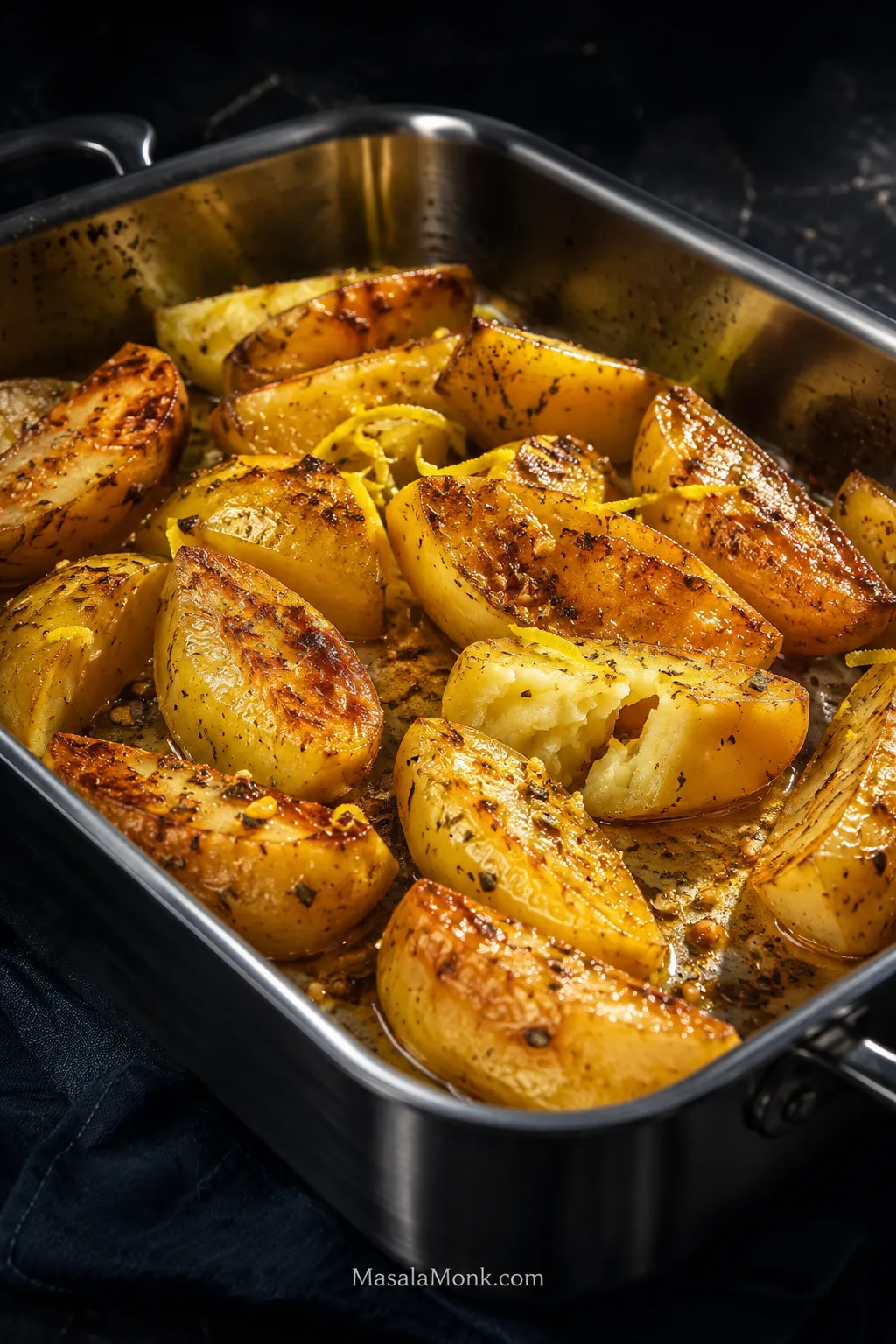
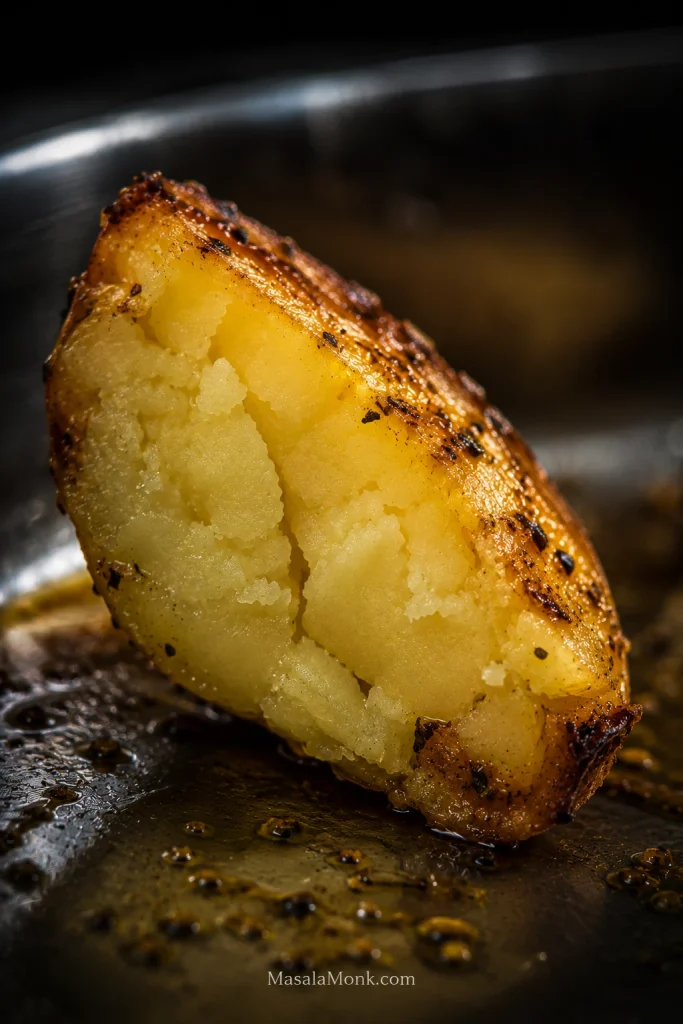
Greek lemon potatoes don’t just taste lemony on the surface. Break open a wedge and the middle is seasoned too—creamy potato carrying lemon, garlic, oregano and olive oil all the way through. A few cut faces and corners go deeply golden where the juices reduce against them.
Maybe the potatoes you remember from a Greek restaurant, taverna or a meal on a trip were crisp around the edges. Maybe they were almost spoon-soft and sitting in lemony juices. Both versions exist. What matters is getting that flavor into the potato rather than leaving it on top.
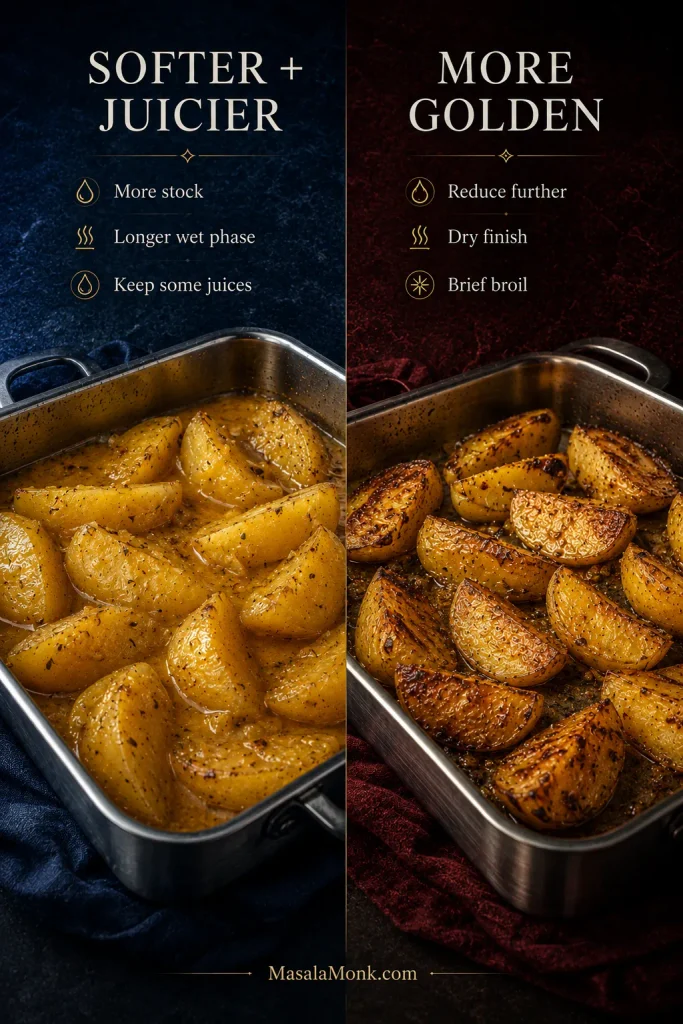
Greek lemon potatoes use a wet-to-dry roast. Thick wedges soften first with olive oil and stock; fresh lemon goes in partway through; then the tray dries enough for the exposed surfaces to brown. For 2 lb 10 oz / 1.2 kg potatoes, use ⅓ cup + 2 tablespoons / 110 ml olive oil and ¾ cup / 180 ml hot stock or water. Roast uncovered at 400°F / 205°C, add ¼ cup / 60 ml lemon juice after about 30 minutes, and finish with another 1 tablespoon / 15 ml once the centers are creamy and the remaining liquid has cooked down to lemon-garlic juices.
Check one of the thickest wedges: the center should be moist and creamy, not chalky.
Greek Lemon Potatoes Recipe
These patates lemonates roast with olive oil, garlic, oregano, stock and fresh lemon, then get one last squeeze of lemon while the tray is still hot.
Serves
6 as a side dish
Prep
About 15 minutes
Cook
About 60–75 minutes, depending on the potatoes and final browning
Large rimmed metal roasting pan; around 12×16 in / 30×40 cm is a useful guide
Cut
1–1¼ in / 2.5–3 cm thick wedges
Texture: creamy, well-seasoned centers with crisp, deeply browned patches around the edges. Because part of the roast happens in liquid, these stay softer than a completely dry-roasted potato.
Ingredients
2 lb 10 oz / 1.2 kg Yukon Gold or similar all-purpose potatoes
⅓ cup + 2 tablespoons / 110 ml extra-virgin olive oil
5 garlic cloves, very finely grated or Microplaned
About 9 g fine sea salt / 1½ teaspoons, plus more if needed
½ teaspoon freshly ground black pepper
¾ cup / 180 ml hot low-sodium chicken or vegetable stock, or water
¼ cup / 60 ml freshly squeezed lemon juice, for roasting
1 tablespoon / 15 ml freshly squeezed lemon juice, for finishing, plus up to another tablespoon to taste
Finely grated zest of ½ lemon, optional
Fresh oregano or parsley, optional, for serving
Chicken stock gives the deepest savory flavor. Use vegetable stock for a vegan version, or water when you want the lemon and olive oil to come through most clearly.
You’ll usually need 2–3 medium lemons. Use fresh juice here; lemon is one of the main flavors, and bottled juice tends to taste flatter after a long roast. The 9 g of salt assumes low-sodium stock or water, so start with less if your broth, bouillon or stock concentrate is already salty.
Method
Heat the oven. Set a rack in the middle and preheat to 400°F / 205°C conventional or 365°F / 185°C fan/convection.
Prepare the potatoes. Peel them for a softer surface, or leave thin Yukon Gold skins on. Cut into wedges about 1–1¼ inches / 2.5–3 cm thick at the widest point. No soaking or parboiling is needed when you’re cooking them straight away.
Season. Put the potatoes in the roasting pan with the olive oil, finely grated garlic, oregano, salt and pepper. Toss well, spread them into one layer and leave visible gaps between the wedges. Set one broad cut face down against the metal.
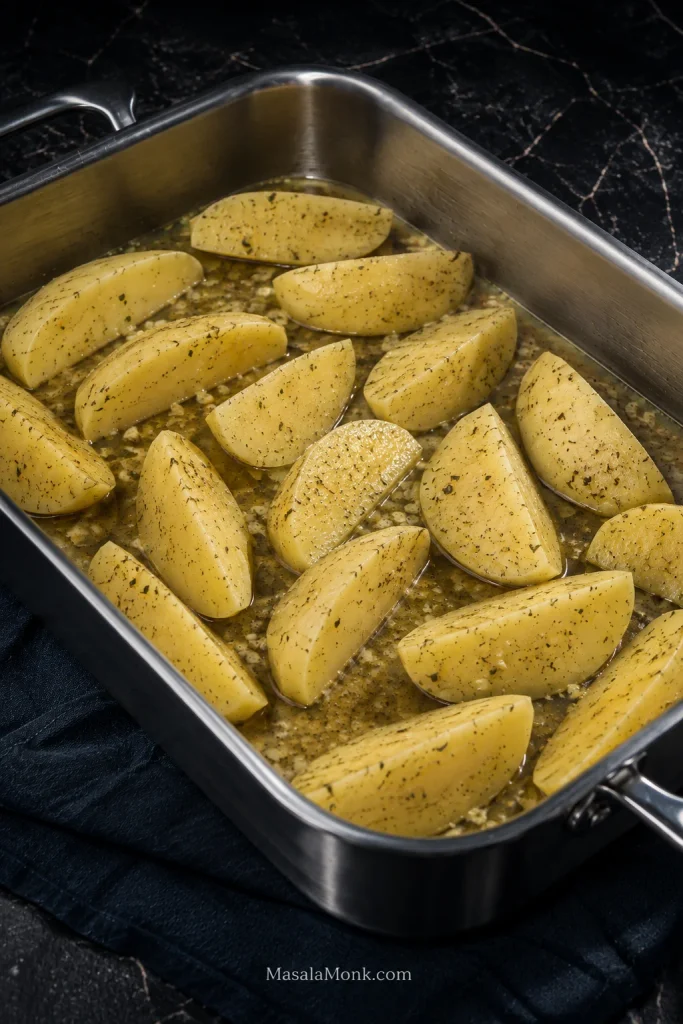
Add the stock. Pour the hot liquid into the gaps rather than washing it over the seasoned tops. It should spread across the base and come only partway up the wedges. Most of each potato stays above the liquid.
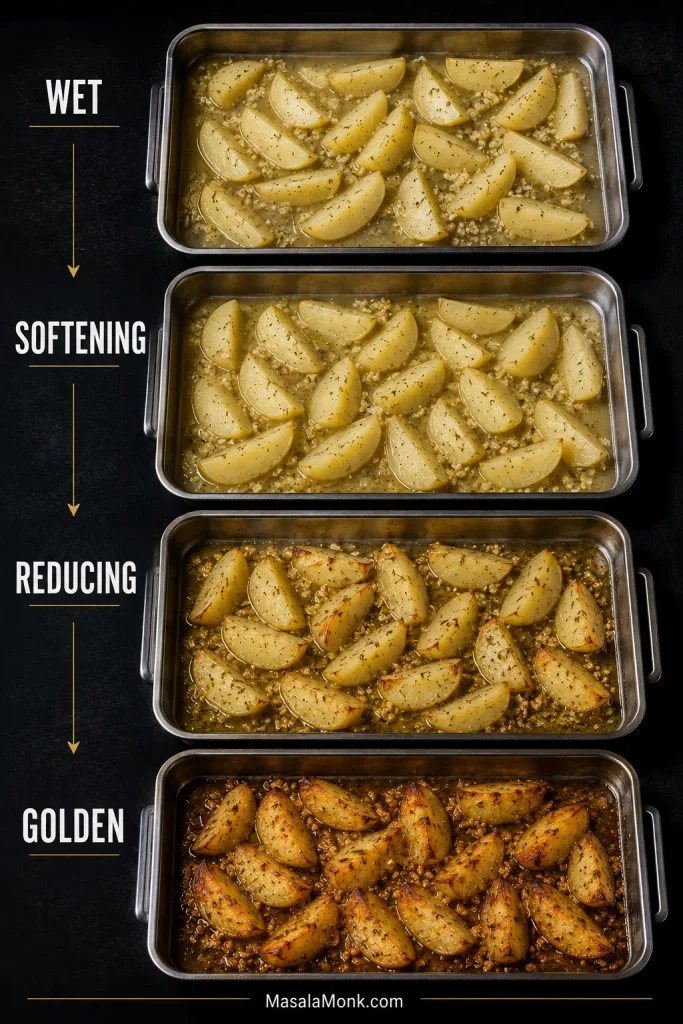
What the Pan Should Look Like After Adding Stock
Use this stage as a calibration point rather than an exact liquid line. A wider pan can make the same amount of stock look shallower; what matters is that the wedge bases meet the liquid without the potatoes being submerged.
Visible metal between the wedges is evaporation space. If the stock climbs too high or the wedges overlap, steam escapes more slowly and the wet phase lasts longer.
Roast uncovered for about 30 minutes. The tray may still look pale and wet. Some loose stock will usually remain, and one of the larger wedges should be softening around the outside while still offering some resistance in the center. If the tray is nearly dry and the largest pieces are still hard, add about ¼ cup / 60 ml hot stock or water.
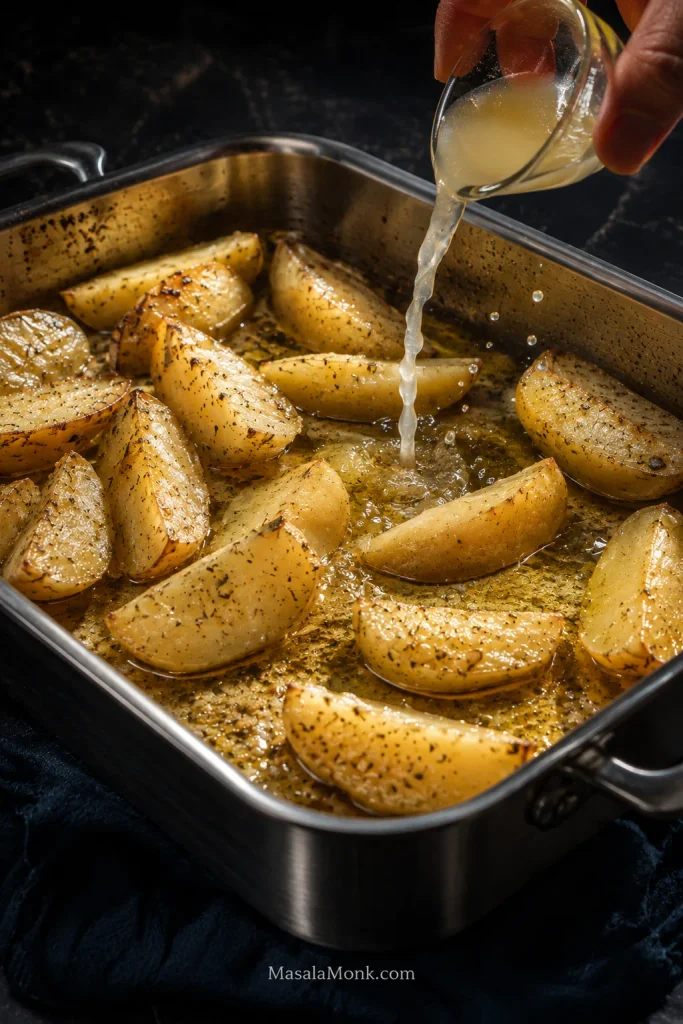
Add the lemon and turn once. Pour ¼ cup / 60 ml lemon juice around the potatoes and carefully turn the wedges. That head start in the stock lets the centers begin softening before the main lemon goes in. Then leave them alone. Repeated stirring knocks soft edges off just as those surfaces are ready to start browning.
When the Lemon Goes In
Use the potato and pan state, not the 30-minute mark alone. The wedges should be softening, still fairly pale, with cooking liquid left in the pan.
Pour lemon into the open spaces so it disperses through the hot pan liquid.
Roast uncovered for another 30–40 minutes. Start checking at 30 minutes. Push a thin knife into one of the thickest wedges, not the little corner piece. It should slide through easily. Break one open if you’re unsure: the middle should look moist and creamy, not chalky or dry.
Look at the tray. Tip it gently. Thin stock should no longer rush into the corner. Drag a spoon through the bottom; it should pick up oily, garlicky juices instead of a pool of thin cooking liquid. The smell should be more roasted garlic and oregano than steam.
Brown if needed. Already well colored? Stop there. Pale but tender wedges can stay in the dry oven for a few more minutes or go under the broiler/grill for 2–4 minutes. Don’t chase perfectly even browning. Darker corners and softer sides are part of a good tray.
Finish and taste. Squeeze over 1 tablespoon / 15 ml fresh lemon juice while the potatoes and oil are still hot. The tray should smell noticeably brighter almost immediately. Taste one for lemon and salt before adding more juice, zest or fresh herbs.
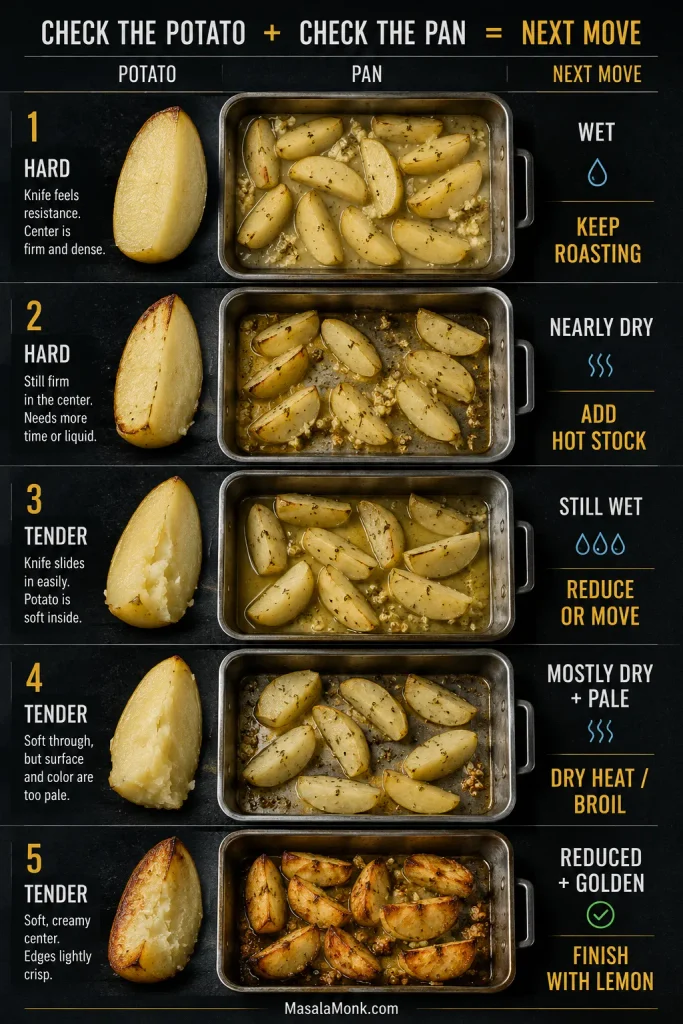
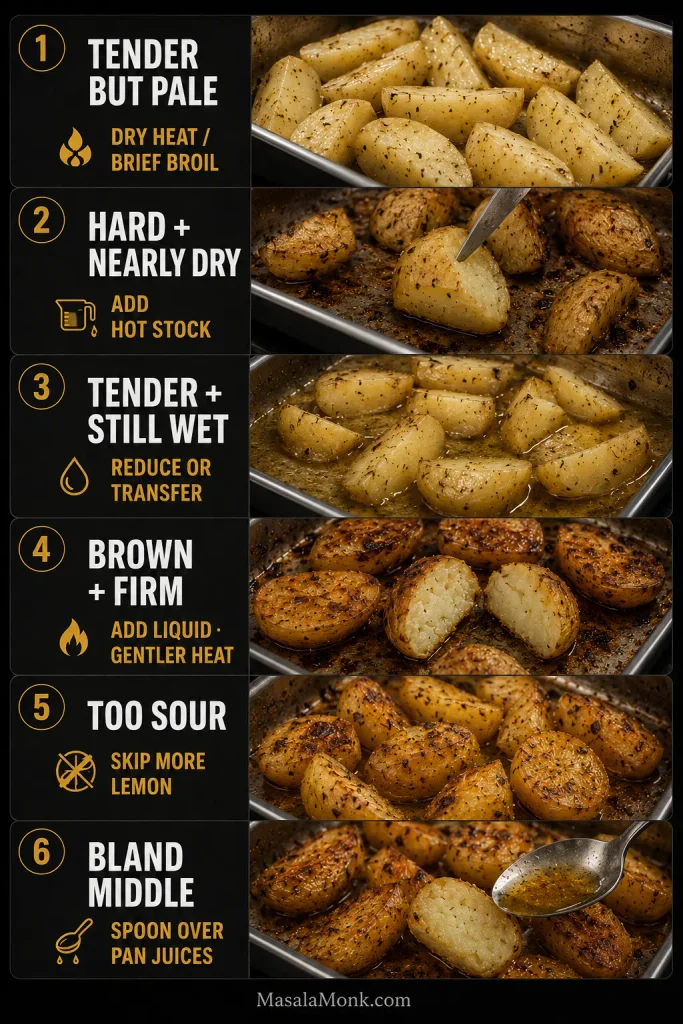
Check the Potato and the Pan
Potato
Pan
What to do next
Hard
Wet
Keep roasting. The middle needs more time.
Hard
Nearly dry
Add about ¼ cup / 60 ml hot stock or water.
Tender
Still wet
Let the excess liquid cook away, or move the wedges to a wider hot tray.
Pale but tender
Mostly dry
Give them dry heat or a quick broil.
Golden and tender
Reduced
Finish with lemon and serve.
Tenderness tells you whether the potato needs more cooking; the liquid tells you whether to add moisture or let the pan dry. Check both before simply adding more time.
Done looks like this: a knife slips easily through a thick wedge, the thin broth has cooked away, and a few cut faces and corners are deeply golden. One wedge may split when you turn it. Keep it. Those craggy broken edges often become some of the best bits in the pan.
Ordinary roast potatoes rely mainly on dry heat. Greek lemon potatoes spend part of the cook in seasoned liquid, giving the flavor time to reach farther into each wedge before the exposed surfaces brown. That’s how you can end up with a creamy, lemony middle and roasted edges on the same potato.
The turning point comes when the loose liquid has mostly cooked away and hot metal and olive oil can take over the browning.
Patates means potatoes, while lemonates roughly means lemony or lemon-flavored. Olive oil, lemon and oregano sit at the heart of the dish, usually with garlic and water, stock or roasting juices. You may also see related names such as patates fournou for oven potatoes or patates riganates when oregano is emphasized. Greek kitchens don’t all arrive at exactly the same tray.
Best Potatoes for Greek Lemon Potatoes
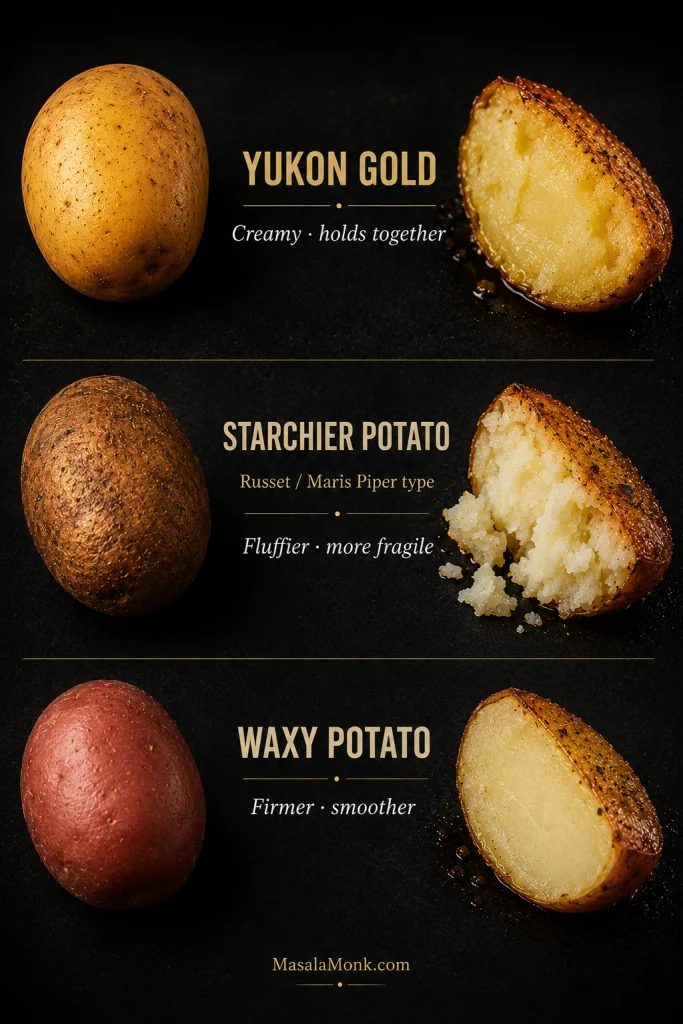
Yukon Gold is the easiest all-round choice. It holds together well, but the middle turns creamy and takes on plenty of the lemony cooking juices.
For an especially fluffy middle, try Maris Piper or Russet. Keep the wedges thick and handle them gently once tender; both become more fragile than Yukon Gold. Very waxy potatoes stay neat but hold onto a firmer, smoother interior.
Yukon Gold is the most forgiving when you turn and serve the wedges. Russet or Maris Piper turns fluffier and more fragile; waxy potatoes stay firmer.
In the US, Yukon Gold is the easy default. UK cooks can reach for Maris Piper. In Australia, Désirée or Sebago work well. Elsewhere, choose a potato sold for roasting, baking or general-purpose cooking rather than a very waxy salad potato.
Peeling is optional. Peeled wedges expose more potato to the seasoned liquid and develop a softer surface. Thin skins give the pieces a little more structure.
The Cut, the Pan and the Liquid
Cut the potatoes thick: about 1–1¼ inches / 2.5–3 cm at the widest point. Small pieces can start breaking before the juices have finished reducing. Huge wedges risk a firm or lightly seasoned middle.
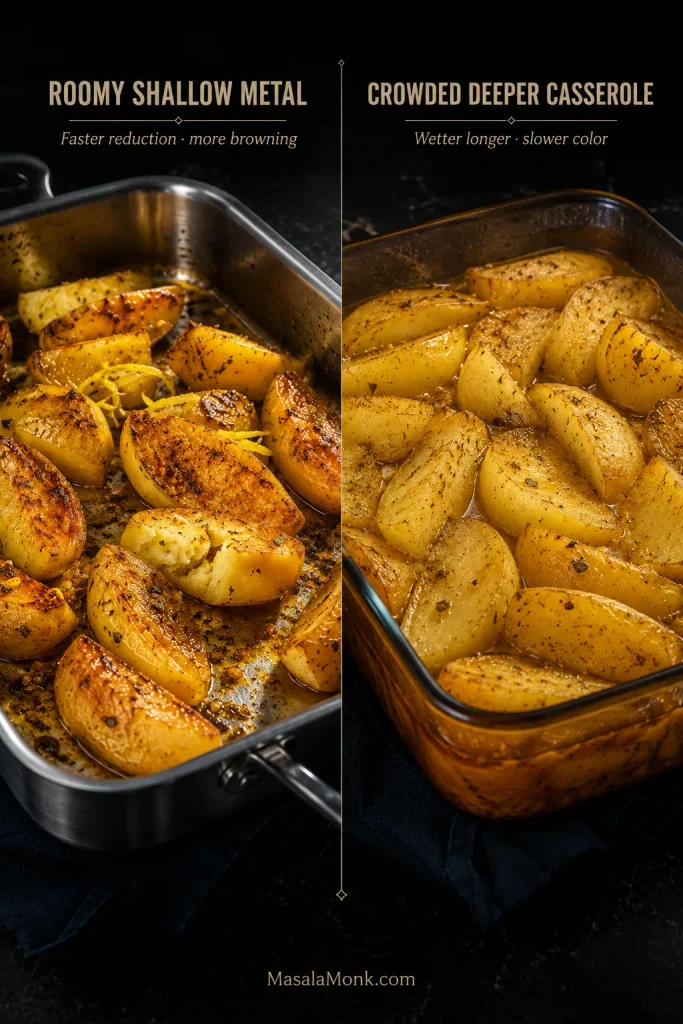
Give them room. Steam has to get out. A broad metal roasting pan exposes more potato to hot metal and gives moisture somewhere to escape. A deep glass or ceramic casserole can keep the dish wetter for longer, so browning may arrive later.
Crowded or deep pans slow evaporation. If tender potatoes are still pale and wet, give the tray more reduction time.
Pan shape matters more than chasing an exact dimension. What matters is enough surface area for the wedges to sit in one layer with visible gaps between them.
Tray not matching the timing? Jump to troubleshooting and diagnose the wedge and pan together.
Lemon, Garlic and Oregano
Use fresh lemon. The juice added during roasting mellows into the garlic, stock and olive oil. The final squeeze restores the fresh citrus aroma that long oven heat softens. If you’ve kept adding juice and still can’t find the lemon aroma you remember, fresh zest often helps more than another splash of acid.
Leave thick lemon slices and squeezed halves out of the pan during the long roast; the pith and rind can become bitter. Grate the garlic very finely so it disappears into the cooking juices instead of leaving large pieces exposed once the liquid recedes.
Dried oregano handles the long roast beautifully. Greek oregano is excellent if you have it. Save fresh oregano or parsley for the finished tray.
The generous olive oil is intentional. As the stock cooks away, the oil takes over as the roasting fat and stays behind as part of the lemon-garlic sauce you spoon over the potatoes at the end.
These potatoes are particularly good beside chicken souvlaki, where the same lemon, garlic and oregano meet juicy chicken and charred edges.
Getting More Golden, Crisp Edges
Once the thickest wedges are tender, stop protecting the moisture and start chasing color. The broad cut faces and rough corners brown first, giving you some of the darkest, best-tasting patches.
Choose the finish after the centers are tender: stop with spoonable juices for softer taverna-style potatoes, or reduce further for deeper golden edges.
Keep Them in the Same Pan
Tender potatoes in an almost-dry pan can stay exactly where they are. Give them a few more minutes of roasting or a 2–4 minute broil.
Move Them When the Pan Is Holding Them Back
A wet pan can keep already-tender potatoes from browning. Move the wedges to a clean, hot metal sheet when they’re still sitting in plenty of liquid, or when the garlic-rich juices are getting too dark. Brown the potatoes on the clean tray, reduce the juices separately, then spoon them back over.
If all-over crunch is what you’re after, use a dry-roasted method instead; these ranch roasted potatoes are built for that texture.
Trying to Recreate Softer Restaurant Potatoes?
If the potatoes you remember were almost spoon-soft, with more lemony juice than crisp crust, you may be trying to recreate a softer style.
Use stock rather than water and increase the starting liquid toward 1 cup / 240 ml. Let the wetter phase run longer. Stop while there is still a spoonable amount of concentrated juice in the pan and skip the aggressive broiler finish.
That softer style is especially good beside a roast leg of lamb, where the lemony potato juices can mingle with the richer meat juices on the plate.
When the Potatoes Go Wrong
If the tray doesn’t match the clock, forget the clock for a moment. Check one of the larger wedges and look at what’s left in the pan.
A hard potato and a wet pan are different problems. Add moisture only when the center still needs it; otherwise, let evaporation do the work.
What you see
What to do now
Tender but pale
Give them a few more minutes of dry oven heat or a quick broil.
Garlic or juices getting too dark
Stop the aggressive heat or move the potatoes to a clean tray.
Wedges falling apart
Stop turning them and finish the remaining pieces undisturbed.
Too sour
Skip the extra finishing lemon and spoon over the savory juices instead.
Tart enough but not lemony enough
Add fresh zest rather than more juice.
The Pan Is Dry but the Center Is Still Hard
That’s fixable. Add about ¼ cup / 60 ml hot stock or water around the wedges and keep roasting. Your pan or oven has lost moisture faster than the potatoes could soften. A broad pan or hot-running oven may need a little more liquid next time.
The Potatoes Are Tender but Still Swimming
The difficult part is already done. A little thin liquid can simply cook away uncovered. If the potatoes are genuinely sitting in a deep pool, move them to a broad hot tray and brown them there while the original juices reduce separately. Spoon those juices back over before serving.
They Are Brown Outside but Firm Inside
Add a little hot liquid and back away from aggressive top heat. Keep cooking until a knife slips easily through one of the thickest wedges. You can always add more color later.
The Middle Tastes Bland
A squeeze of lemon over the top can brighten a bland potato, but it can’t completely replace seasoning that never reached the middle. Very waxy potatoes, oversized wedges, under-seasoned liquid or a tray that dried too quickly can all contribute. Spoon the reduced juices over this batch; next time, focus on the potato choice, wedge size and first part of the roast.
Doubling the Recipe for a Crowd
A bigger batch needs more pan space, not twice as much time.
Use two pans and keep each tray in one layer.
If your oven browns unevenly, swap the pans between racks during cooking. Judge each tray separately by tenderness and how much liquid remains.
Broil one pan at a time unless your broiler heats the full oven evenly.
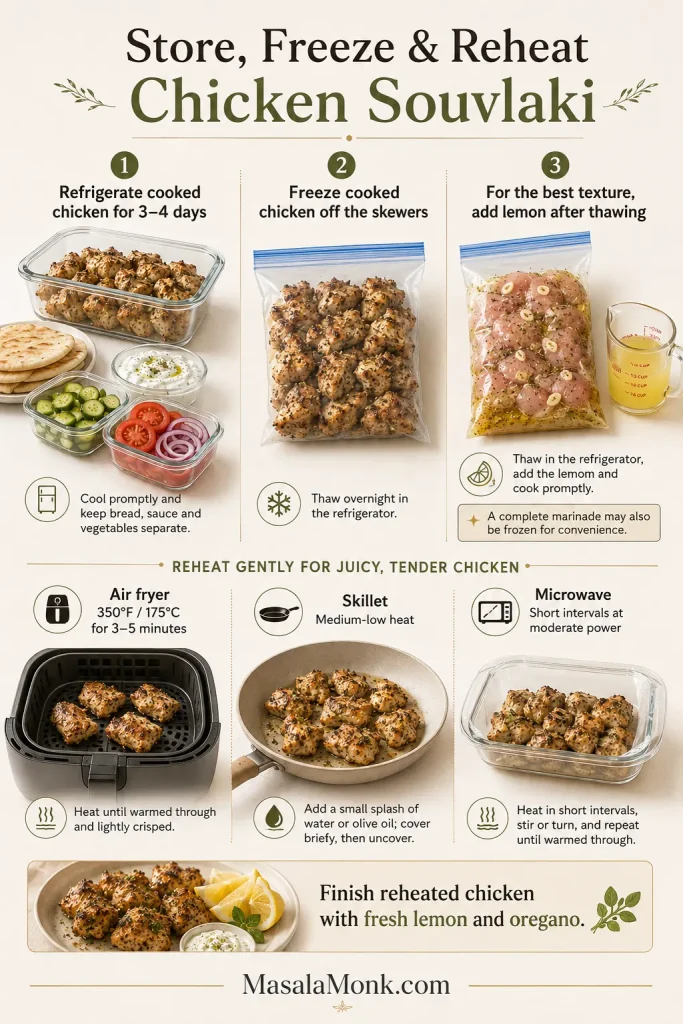
Make Ahead, Store and Reheat
To cut the potatoes ahead: prepare them several hours in advance and keep them fully submerged in cold water in the refrigerator. Drain and dry them well before seasoning.
To cook them ahead: you can roast Greek lemon potatoes in advance and reheat them. Expect softer edges. As the potatoes sit, they continue absorbing the pan juices, so cook them reasonably close to serving when crispness matters most.
Cool leftovers promptly and refrigerate them, together with any remaining juices, in a covered container for 3–4 days. USDA leftovers guidance gives the same refrigerator window.
Reheat in a 425°F / 220°C oven for about 10–15 minutes, until hot throughout. An air fryer is also useful for restoring browned edges; reheat the potatoes in a single layer until hot and crisp around the edges. The microwave works, but the browned surfaces will soften.
Freezing is possible, though the texture usually suffers. Potatoes can become grainier or more watery after thawing.
What to Serve With Greek Lemon Potatoes
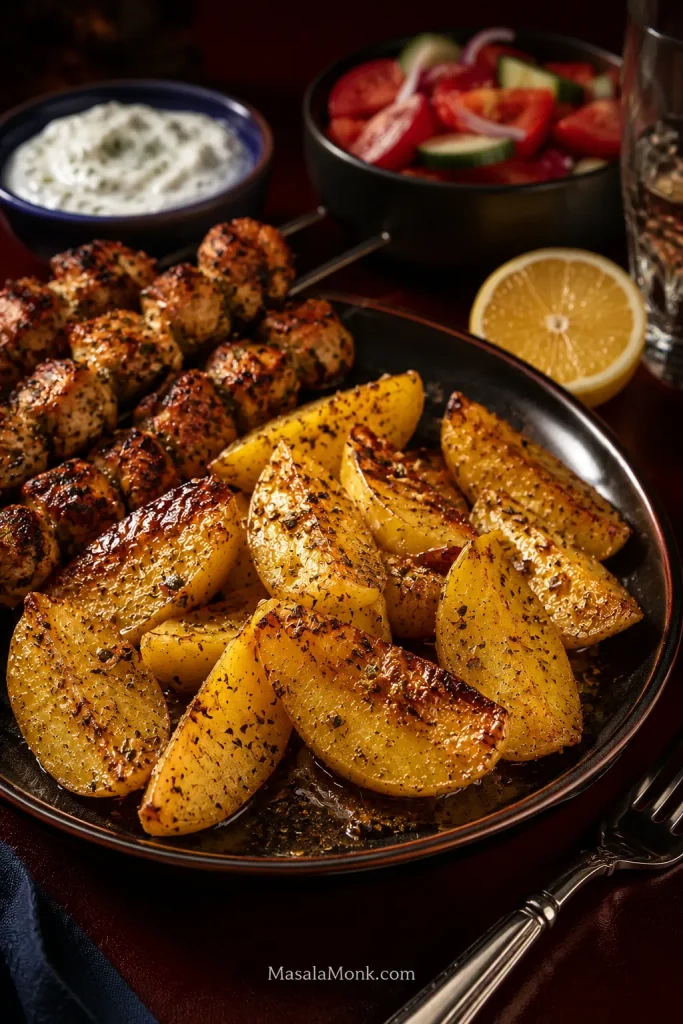
Cold Greek tzatziki is a particularly good contrast: cool cucumber and yogurt against roasted garlic, lemon and browned potato edges.
For a lighter main, try lemon-garlic baked tilapia. The potatoes also sit naturally beside roast chicken, lamb chops, souvlaki or kebabs, grilled vegetables, and a crisp tomato-cucumber salad.
Charred souvlaki, cool tzatziki and crisp tomato-cucumber salad turn the lemony potatoes into a complete Greek-inspired dinner.
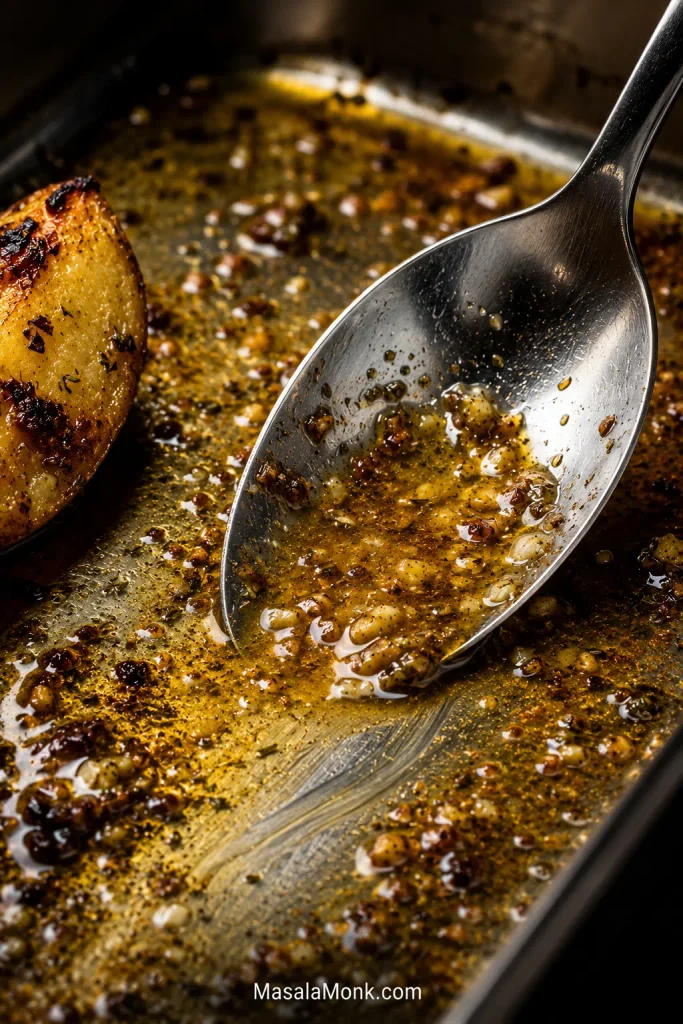
One last spoonful: the pan juices.
Drag a spoon through the pan: it should briefly reveal clean metal before the glossy juices settle back. If thin liquid floods the track, keep reducing.
Once the potatoes are creamy inside and the liquid in the tray has cooked down to salty lemon-garlic juices, you’re there. Add the last squeeze of lemon, spoon everything from the bottom of the pan over the potatoes, and get them to the table hot. Those browned edges are good; the last garlicky spoonful in the pan may be even better.
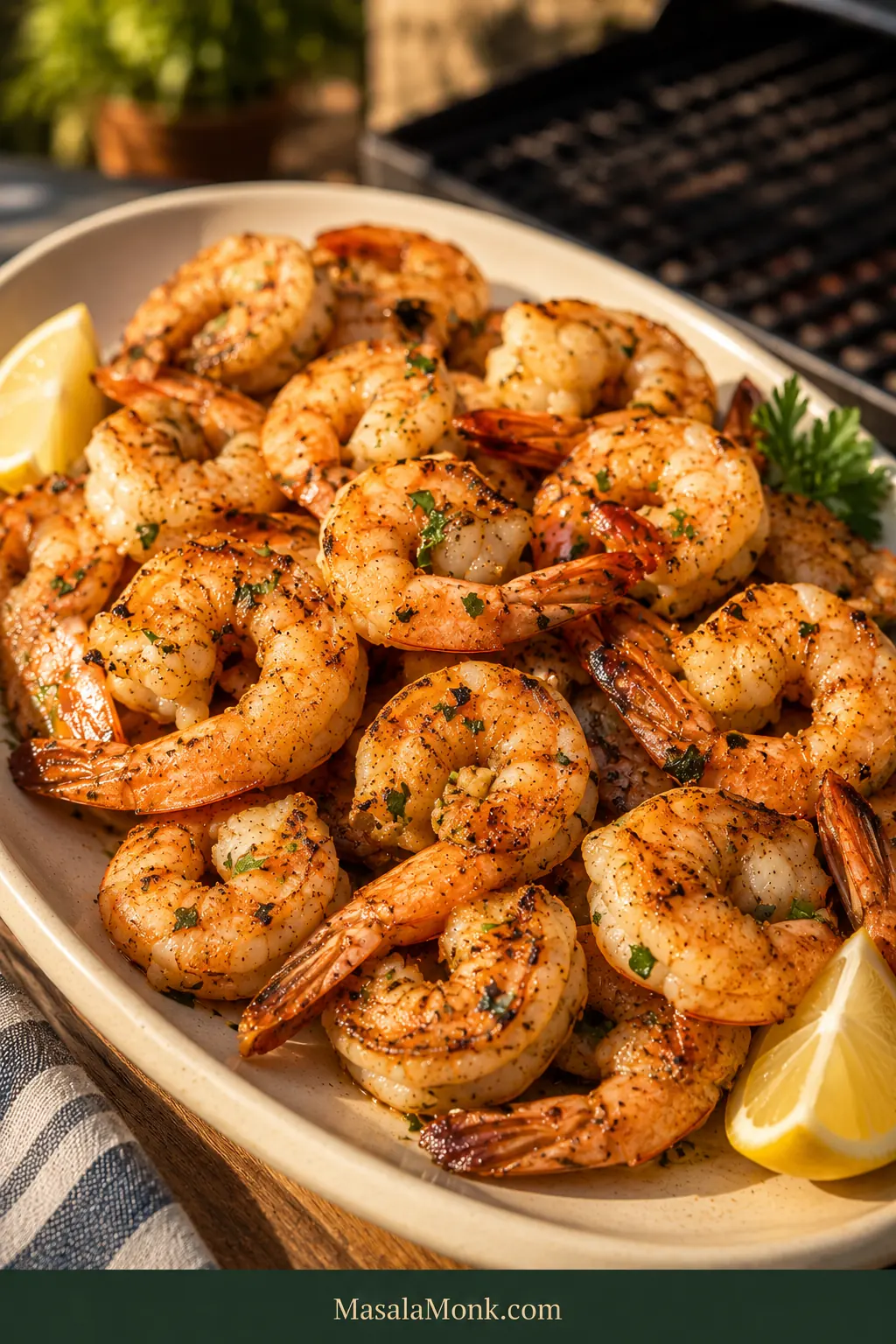
Grilled shrimp can feel a little luxurious for something that takes only minutes to cook: smoky edges, a plump juicy center, fresh lemon and garlic, all straight from a hot grill.
The only catch is speed. A pound of good shrimp is not something you want to sacrifice to two distracted minutes beside the grill. Shrimp can move from underdone to perfect to rubbery remarkably quickly.
This grilled shrimp recipe keeps that narrow window manageable. The recipe itself is easy. What matters is knowing when to start looking, what “done” actually looks like, and when to stop adding heat.
Quick Answer: How to Grill Shrimp Without Making Them Rubbery
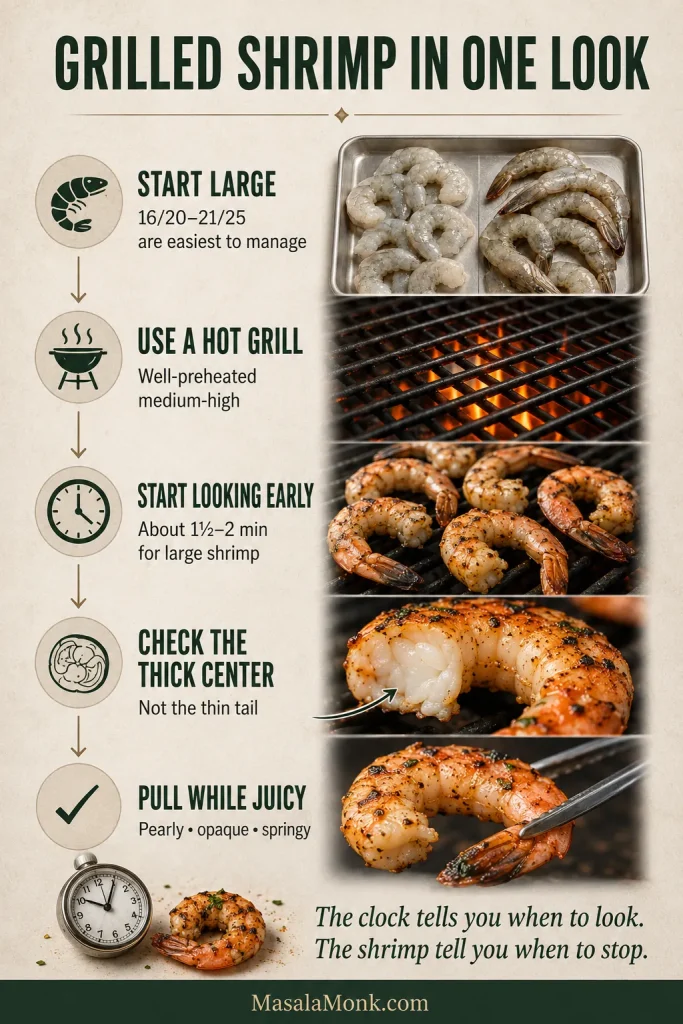
The method at a glance
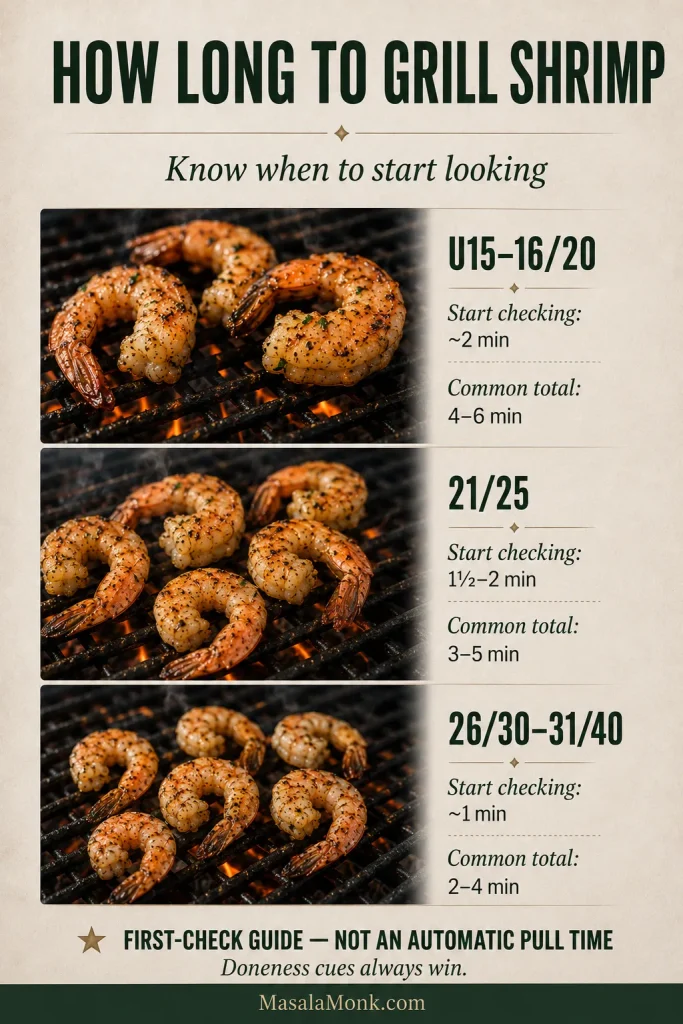
For large shrimp—about 16/20 or 21/25 count per pound—expect roughly 3–6 minutes total on a well-preheated medium-high grill. Start checking after about 1½–2 minutes on the first side.
You can season and grill immediately; marinating is optional. If the shrimp were frozen, thaw them completely and dry the surface before seasoning.
Check the thickest part of the body rather than the thin tail. When the center is firm, pearly and opaque and the shrimp still feel juicy and springy, get them off the heat.
The clock tells you when to look. The shrimp tell you when to stop.
Think of grilling shrimp as a chain of decisions: size sets the margin, heat starts the cook, and the thick center ends it.
Easy Lemon-Garlic Grilled Shrimp Recipe
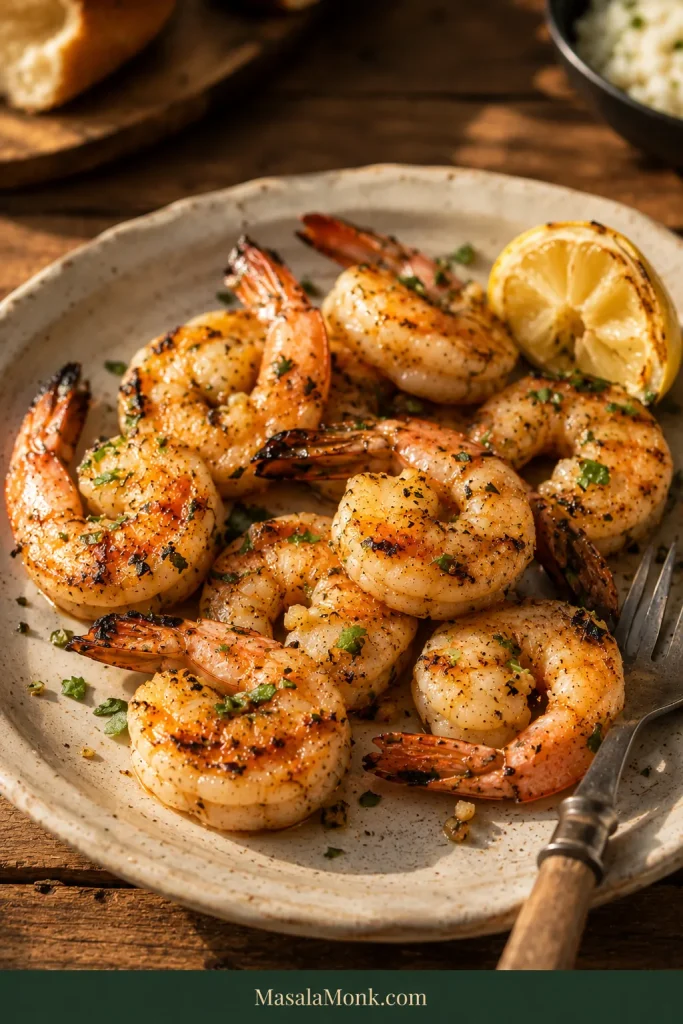
The first bite is smoky and lightly charred; then the lemon and garlic arrive fresh at the finish. The coating stays deliberately light so the grill can brown the shrimp before their juicy centers have time to overcook.
Actual grilling takes only a few minutes. Most of the clock below is prep and optional marinating.
Prep10 minutes
Marinate (optional)15–30 minutes
GrillAbout 3–6 minutes, depending on size
Yield2 generous or 3 lighter mains; 4 appetizer portions, or up to 6 lighter appetizers with generous sides
Useful Equipment
Skewers for smaller shrimp or faster batch flipping
Grill basket for small shrimp that are awkward on open grates
Instant-read thermometer, optional and most practical with jumbo shrimp
Ingredients
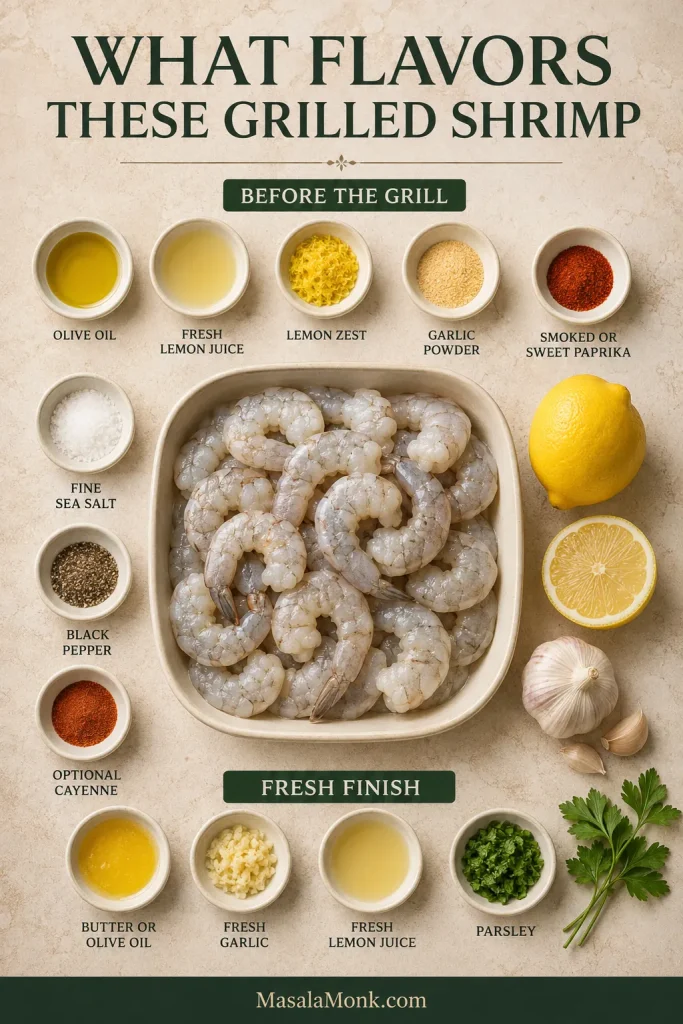
1 lb / 454 g raw shrimp, peeled and deveined, preferably 16/20 or 21/25 count
2 tablespoons / 30 ml olive oil
1 tablespoon / 15 ml fresh lemon juice
1 teaspoon finely grated lemon zest
1 teaspoon garlic powder
1 teaspoon smoked or sweet paprika
3 g fine sea salt, about ½ teaspoon
¼ teaspoon freshly ground black pepper
Pinch of cayenne or red pepper flakes, optional
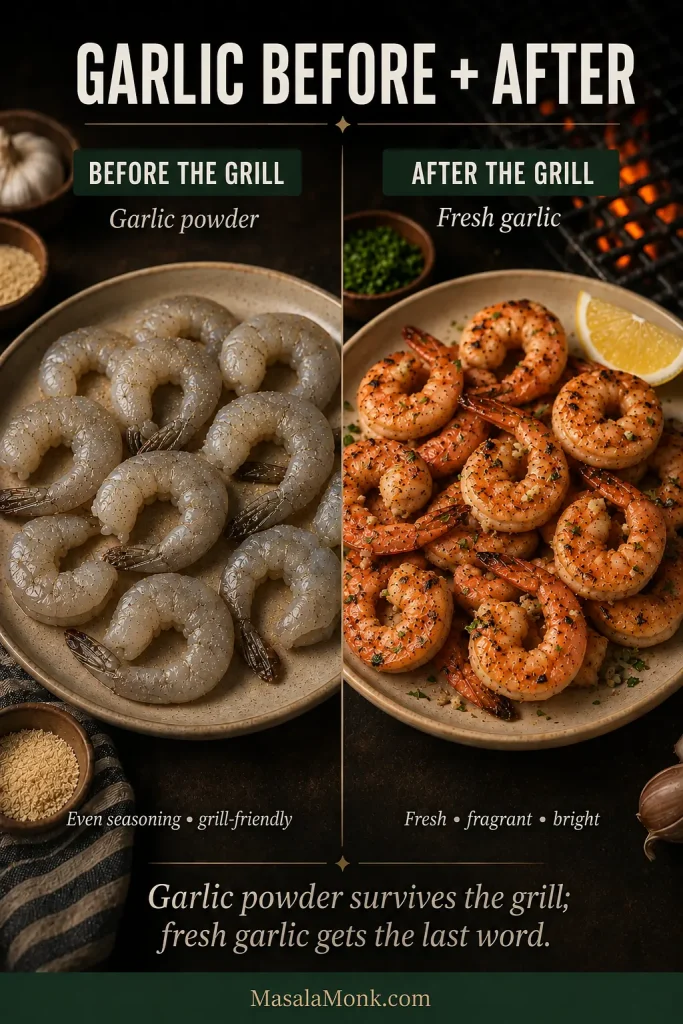
Use garlic powder, paprika and lemon zest before grilling; save the fresh garlic and final squeeze of lemon for after the heat.
Optional Fresh Garlic-Lemon Finish
1 tablespoon / 14 g unsalted butter or 1 tablespoon / 15 ml olive oil
1 small garlic clove, very finely grated or minced
2 teaspoons / 10 ml fresh lemon juice
1 tablespoon chopped parsley
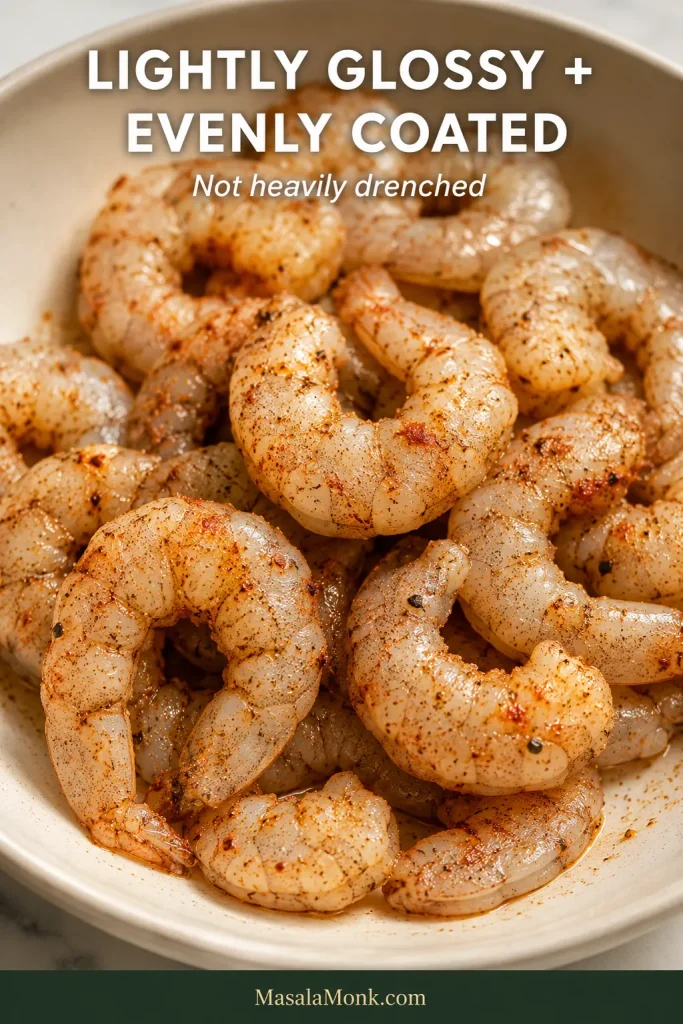
Before grilling, look for a light, even sheen rather than a wet coating. The shrimp should look glossy enough to carry the seasoning, but not sit in excess liquid.
That light sheen is enough. Less surface liquid means the grill can start browning sooner instead of spending precious time evaporating marinade.
How to Make Grilled Shrimp
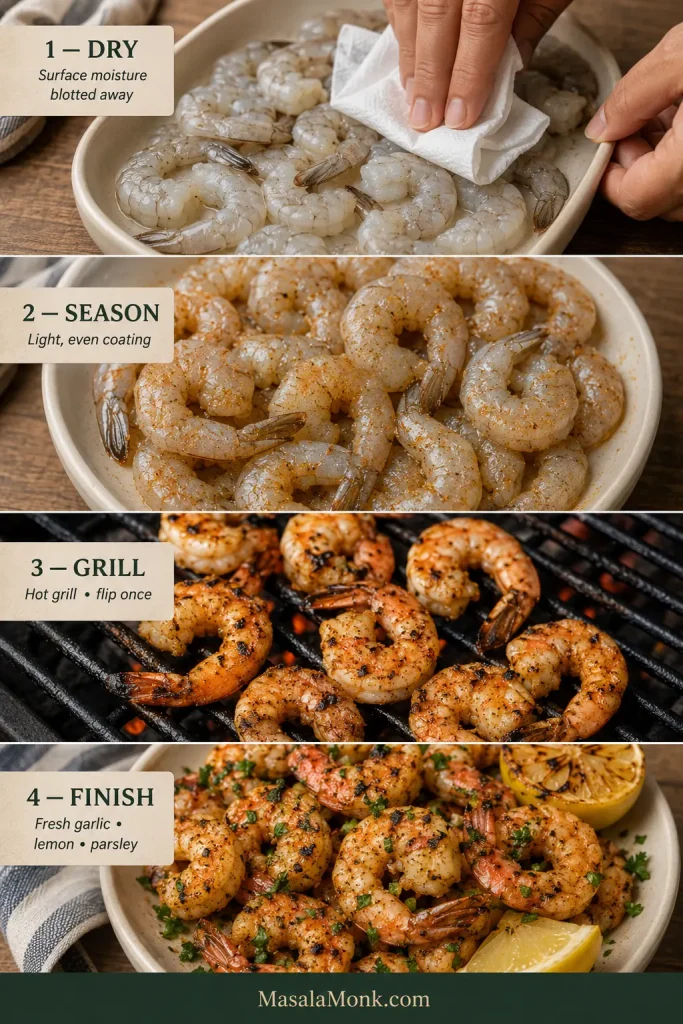
Dry the shrimp. If frozen, thaw and drain first. Pat away visible surface water.
Season. Mix the olive oil, lemon juice, zest, garlic powder, paprika, salt, pepper and optional cayenne. Toss until the shrimp look lightly glossy and evenly coated rather than heavily drenched.
Marinate briefly—or grill now. Refrigerate for 15–30 minutes, or skip the wait and cook immediately. For an even drier surface, omit the 1 tablespoon / 15 ml lemon juice before grilling and add extra fresh lemon to taste after cooking.
Preheat the grill. Use well-preheated medium-high heat. Brush the grates clean and let them heat fully.
Grill. Arrange large shrimp directly on the grates or thread them onto skewers. You should hear an immediate, lively sizzle. Let the first side brown before flipping once.
Pull them as soon as they’re done. Check the thickest part of the body and move the shrimp to a clean serving platter—not the plate or tray that held them raw.
Dry first, season lightly, grill fast, then finish off the heat—that order keeps browning and fresh flavor working together.
Finish
Melt the butter and take it off direct heat before stirring in the fresh garlic. The garlic should smell fresh and fragrant, not browned. Add the lemon juice and parsley, then spoon or toss the mixture with the hot shrimp.
Garlic powder survives the grill; fresh garlic gets the last word.
After grilling, a restrained lemon-garlic finish should sharpen the shrimp’s smoky flavor, not bury it under butter or sauce.
Recipe Notes
Using a salty seasoning blend? Reduce the separate salt.
Using wooden skewers? Soak them for about 30 minutes first.
Using commercially precooked shrimp? Warm them only briefly and let the grill add a little char; the raw-shrimp timings below do not apply.
Want marinade for serving? Reserve a clean portion before adding the raw shrimp. Otherwise discard the used marinade or boil it before using it as a sauce.
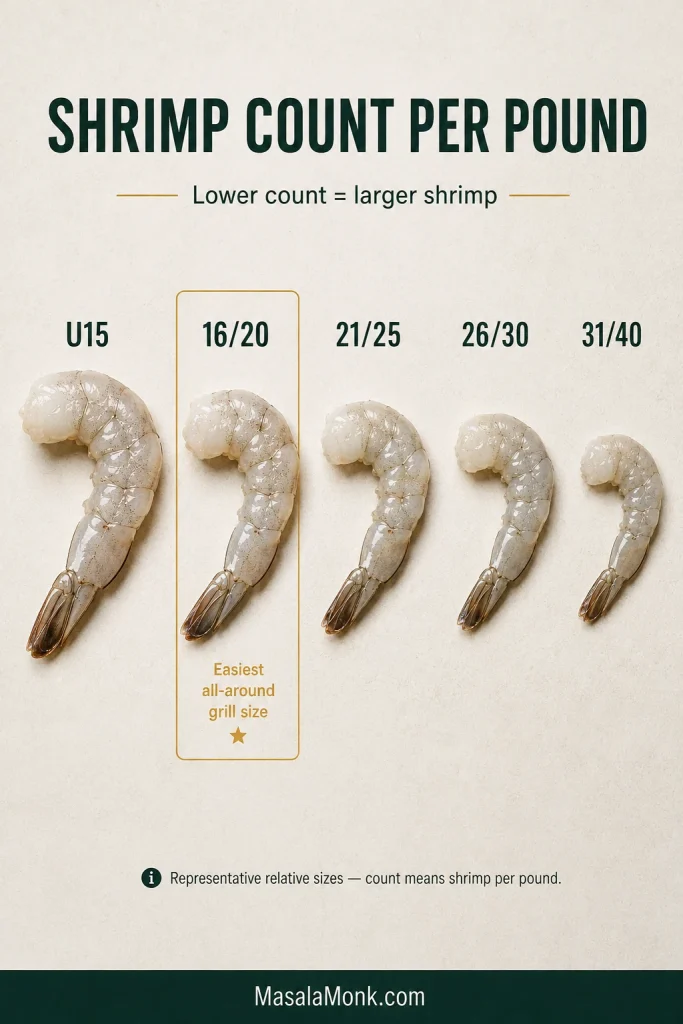
For the easiest grilling, buy raw 16/20 or 21/25 shrimp if you can. They’re large enough to handle comfortably and give you a little more breathing room before they overcook.
The useful number at the seafood counter is the count per pound. A 16/20 label means roughly 16–20 shrimp make up one pound; lower numbers mean larger shrimp.
Shrimp count
Relative size
Buying note
U15
Very large
Most forgiving timing on the grill
16/20
Large
Easiest all-around choice for grilling
21/25
Large
Excellent balance of size, price and easy handling
26/30
Medium-large
Still very grillable, but they cook more quickly
31/40
Smaller
Fast cooking, so you’ll want everything ready before they go on
If you’re buying specifically for the grill and don’t want to overthink it, 16/20 is an excellent place to start.
If the package says prawns, king prawns or tiger prawns, use the actual size and thickness as your guide. Very large prawns behave much like jumbo shrimp.
Raw Shrimp Are Best for Grilling
Raw shrimp give you the most control over browning and doneness, and all of the main timing guidance in this article is written for them.
Commercially precooked shrimp only need enough heat to warm through and pick up a little grill flavor. The same idea helps with shrimp fried rice: get the rest of the dish nearly ready before the cooked shrimp go in.
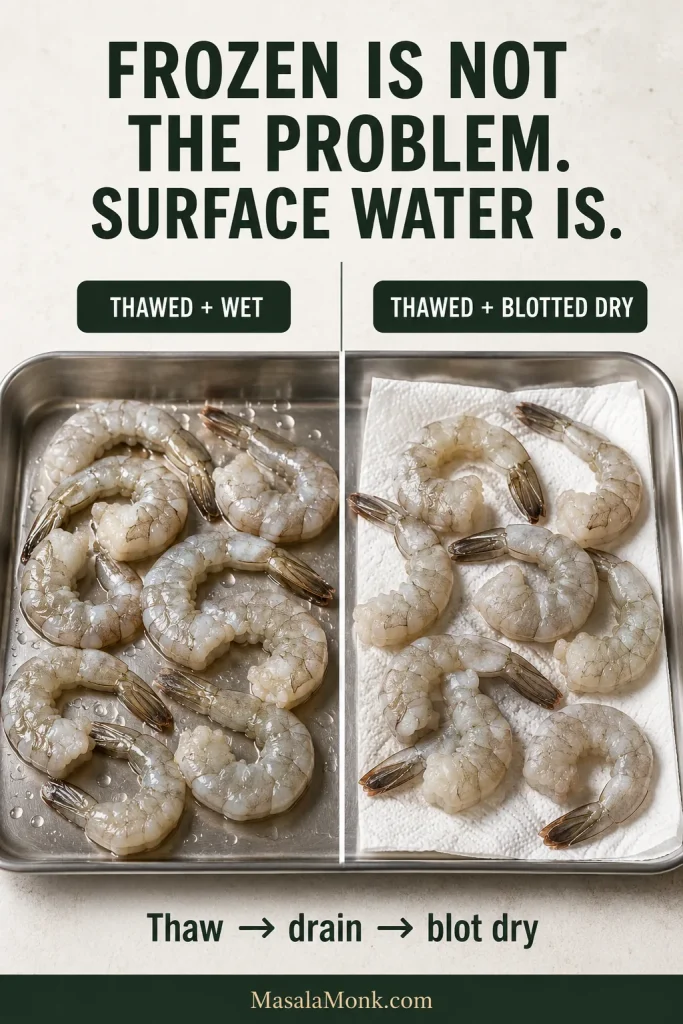
Frozen Shrimp Work Beautifully
Frozen is not the problem. Surface water is.
Fully thawed frozen shrimp grill very well once excess moisture is blotted from the surface. They can brown and taste every bit as lively as shrimp that never saw the freezer.
Thawed frozen shrimp can brown beautifully; the real advantage comes from getting their surface dry before they ever meet the hot grate.
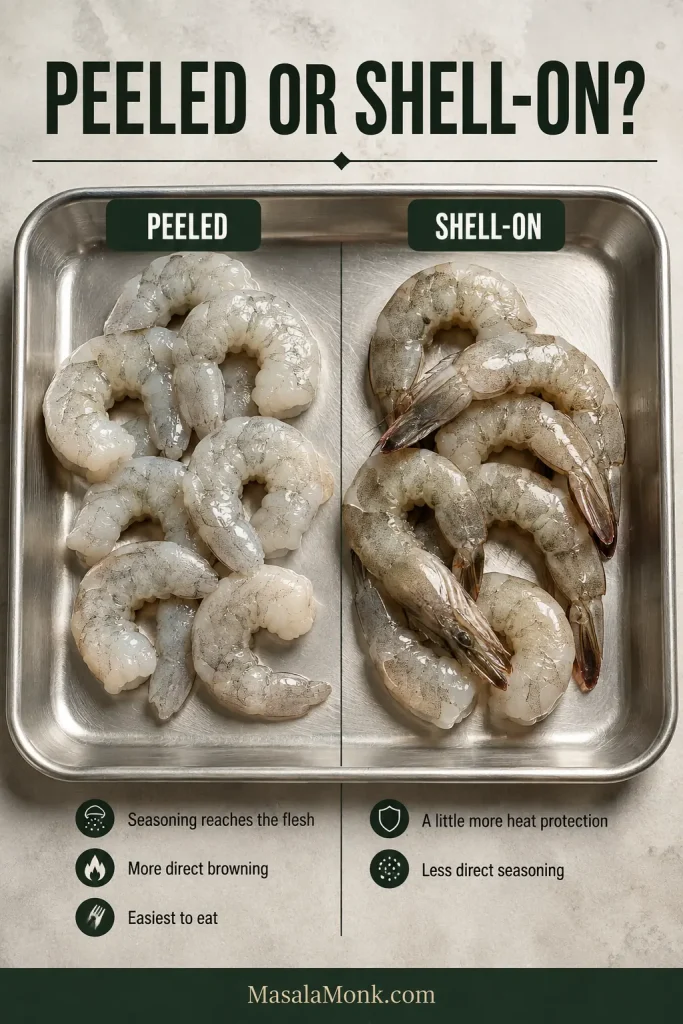
Peeled shrimp are the easiest default: seasoning reaches the flesh directly, more surface touches the grill, and they’re easier to eat.
Shell-on shrimp trade some direct seasoning and browning for a little extra protection from intense heat. With jumbo shrimp, you can slit the shell along the back and devein while leaving most of it intact.
How to Prep Shrimp for the Grill
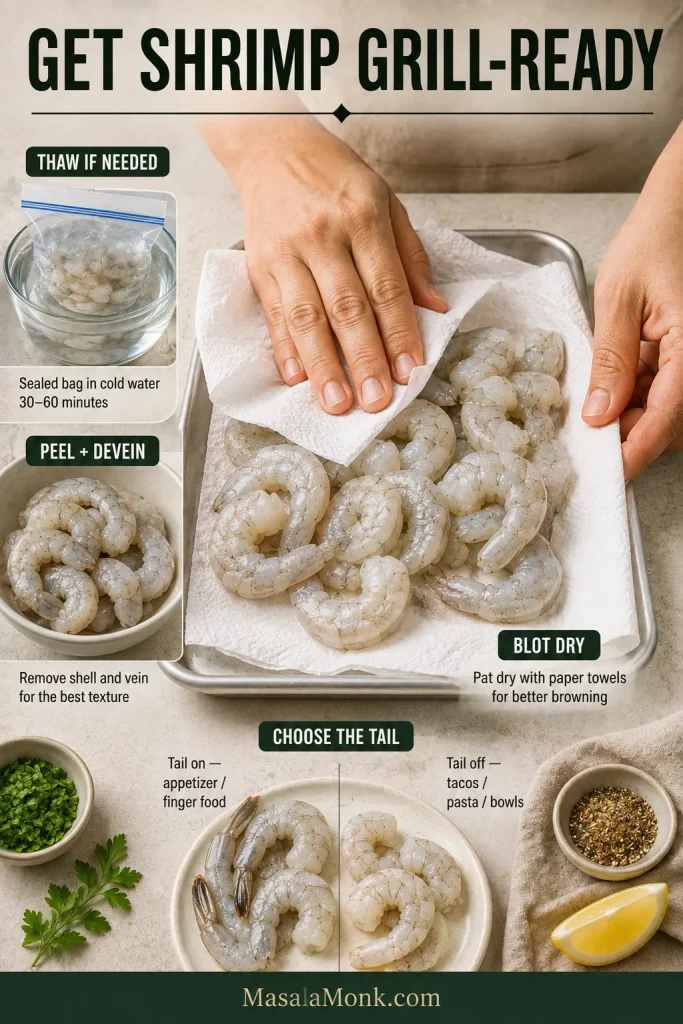
The prep itself is short:
Thaw if needed. Use the refrigerator when you have time. For a faster thaw, keep the shrimp sealed in a leakproof bag in cold water, then cook them promptly.
Peel and devein if needed. Leave the shell in place if you’re deliberately grilling shell-on.
Choose the tails. Leave them on for finger food and presentation; remove them for easier shrimp tacos, pasta or rice bowls.
Drain and dry. Blot away obvious surface moisture before seasoning.
Do the small jobs before the grill gets hot, so the few minutes of actual cooking stay calm and easy to manage.
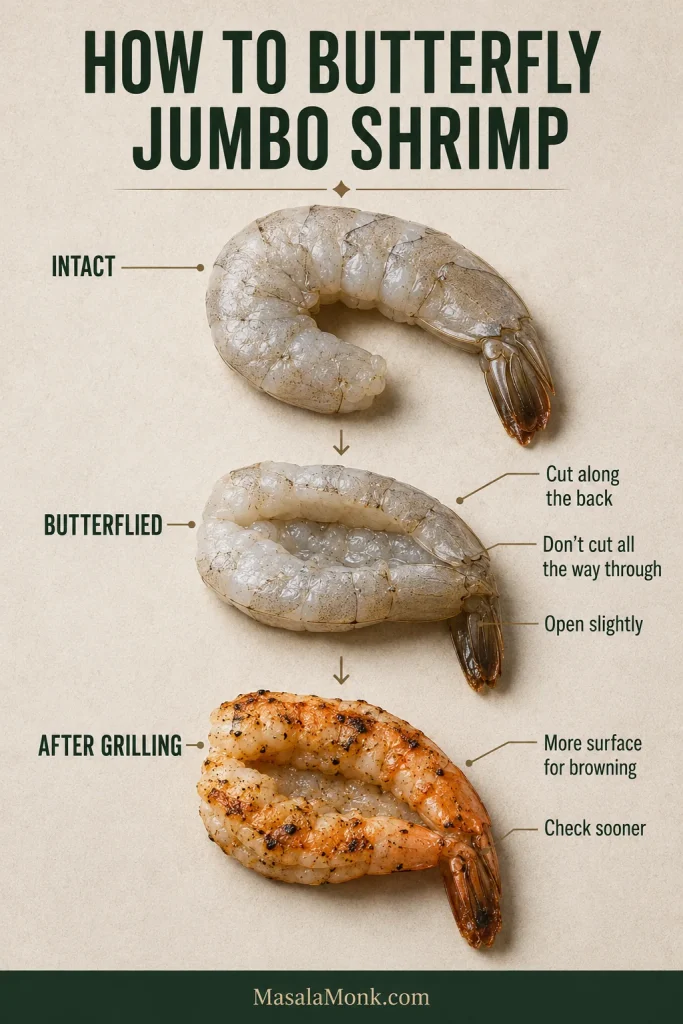
Butterflying jumbo shrimp is optional. Cut along the back without slicing all the way through, then open the flesh slightly. More surface can touch the grill, which means more browned edges—but also a shorter cooking window, so check butterflied shrimp sooner than intact shrimp of the same size.
Butterflying jumbo shrimp exposes more flesh to the grate, so you gain browning while giving up a little timing margin.
Marinade or Seasoning? Choose What Fits Dinner
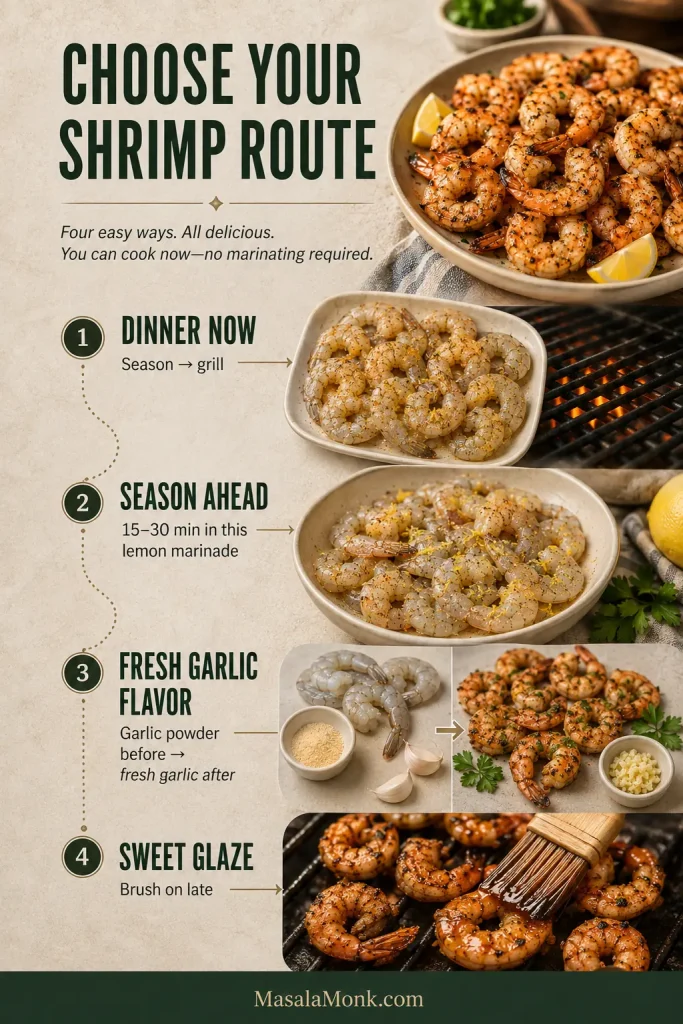
Choose your route
Need dinner now? Season and grill immediately.
Want to season the shrimp a little ahead of time? Use the short lemon-garlic marinade below.
Want stronger fresh-garlic flavor? Keep most of the fresh garlic for the finish.
Using a sweet glaze? Brush it on late in grilling so the sugar has less time to scorch.
How Long Should Shrimp Marinate?
For this lemon marinade, 15–30 minutes is ideal. Keep the shrimp refrigerated while they sit.
If dinner gets delayed, drain the shrimp instead of leaving them in a strongly acidic mixture for hours. You can mix the marinade earlier and add the shrimp closer to cooking.
Reserve any portion you want to serve later before the raw shrimp goes in. Otherwise discard the used marinade or boil it before using it as a sauce.
Garlic powder distributes through the pre-grill seasoning; meanwhile, fresh garlic added later keeps more of its aroma and bite.
Choose Your Grill Setup
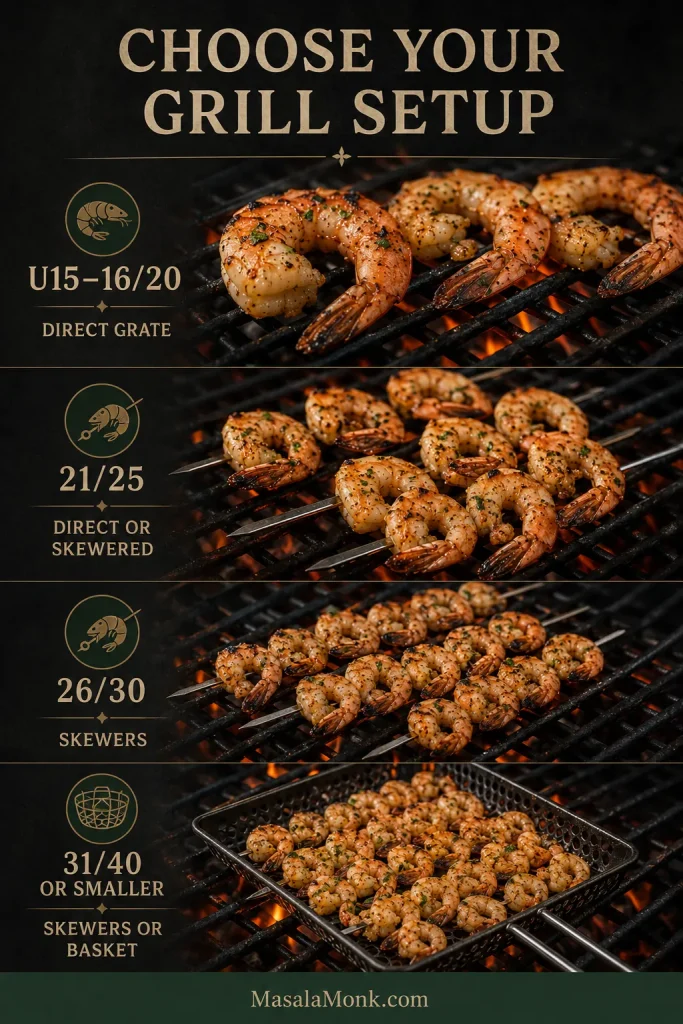
Use 16/20 shrimp directly on the grates; 21/25 can go direct or onto skewers, while smaller shrimp become easier to handle on skewers or in a grill basket.
Shrimp size
Best setup
Why
U15–16/20
Direct grate
Easy to handle individually
21/25
Direct or skewered
Either works; skewers speed up batch flipping
26/30
Skewers
Several shrimp can move at once during a short cooking window
31/40 or smaller
Skewers or basket
Much easier to contain and turn
As shrimp get smaller, skewers and baskets make them much easier to turn and remove before they overcook.
What Temperature Should You Grill Shrimp At?
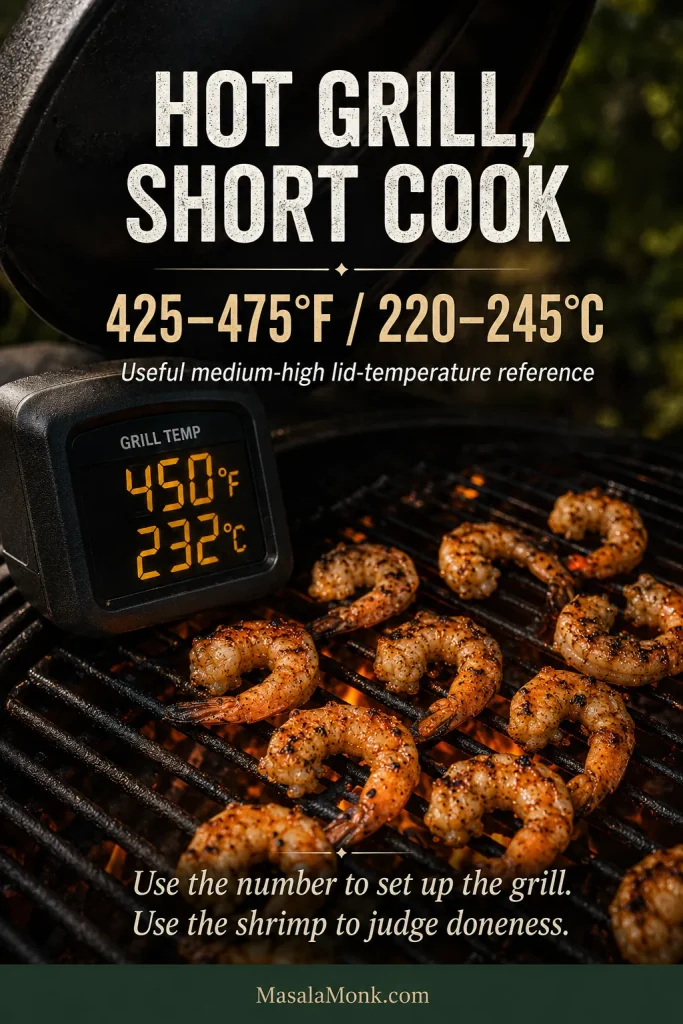
For most raw large shrimp, use a well-preheated medium-high grill. If your grill has a lid thermometer, about 425–475°F / 220–245°C is a useful reference range. That gets the grill into the right neighborhood, but actual heat at the grate still varies, so don’t treat the number as a finish signal.
A 425–475°F grill gets you into the right heat zone; however, wind, grate position and grill design still change the actual cook.
How to Skewer Shrimp for Grilling
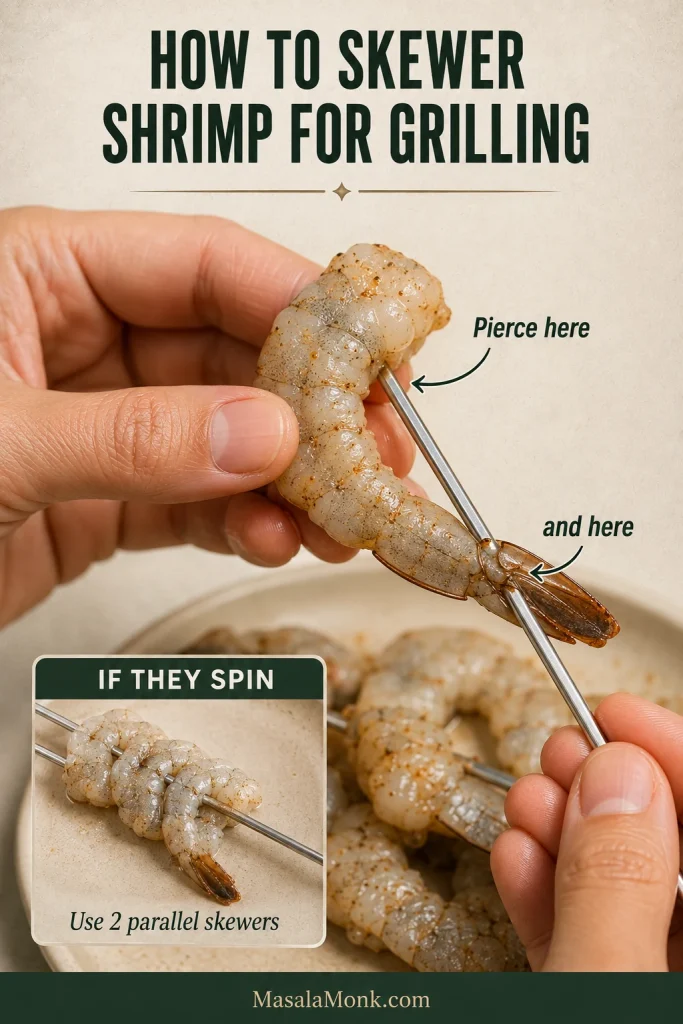
Pierce each shrimp through the thick body and again near the tail so it lies flat. If the row still wants to rotate when you turn it, use two parallel skewers.
Large shrimp on skewers usually stay in the same roughly 3–6 minute total window as loose shrimp. Skewers make the batch easier to turn; shrimp size still determines how soon you should begin checking.
Two-point threading keeps shrimp flat, while parallel skewers let several pieces turn together instead of spinning independently.
If you’re adding vegetables, pair the shrimp with ingredients that cook just as quickly. Thick peppers, onion or bacon are usually easier on their own skewers.
Other Grill Setups
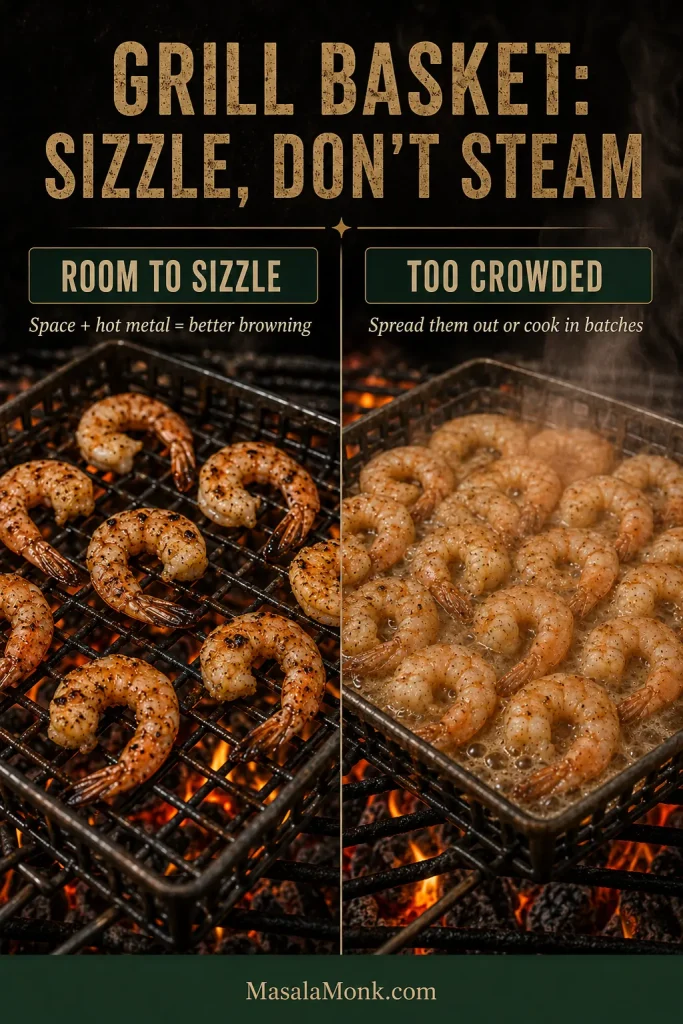
A grill basket is handy for smaller shrimp. Give them enough room to sizzle and brown; if liquid starts pooling underneath, spread them out or cook in two batches.
Steam in a grill basket is usually a spacing problem before it is a timing problem—create room first, then reassess.
Gas grills make the heat easy to control. With charcoal, keep a cooler patch available in case of flare-ups. A hot grill pan or broiler works indoors, while pellet grills vary enough that the visual cues matter more than copying gas-grill timing minute for minute.
How to Grill Shrimp: Four Cues to Watch
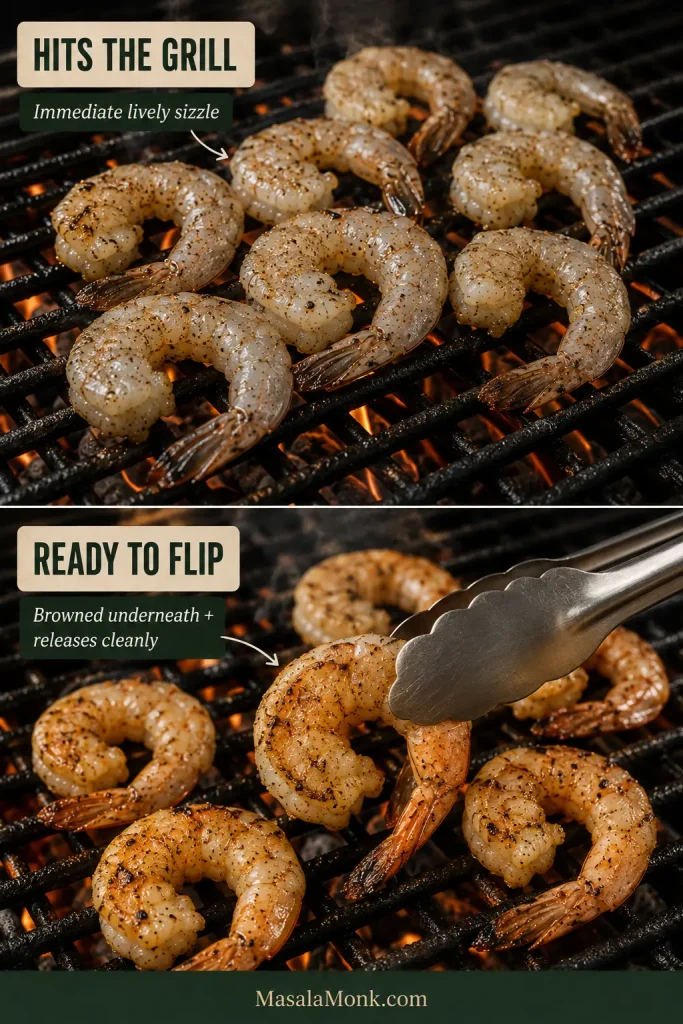
1. Listen When They Hit the Grill
You want a definite sizzle. If the shrimp sit quietly in released liquid, the surface is steaming more than browning.
2. Watch the First Side Change
The edges turn pink-orange and opaque while browned spots develop underneath. Once the first side has browned and releases cleanly from the grate, you’re right where you want to be.
Sizzle tells you the surface is hot; clean release tells you the first side has actually set and browned.
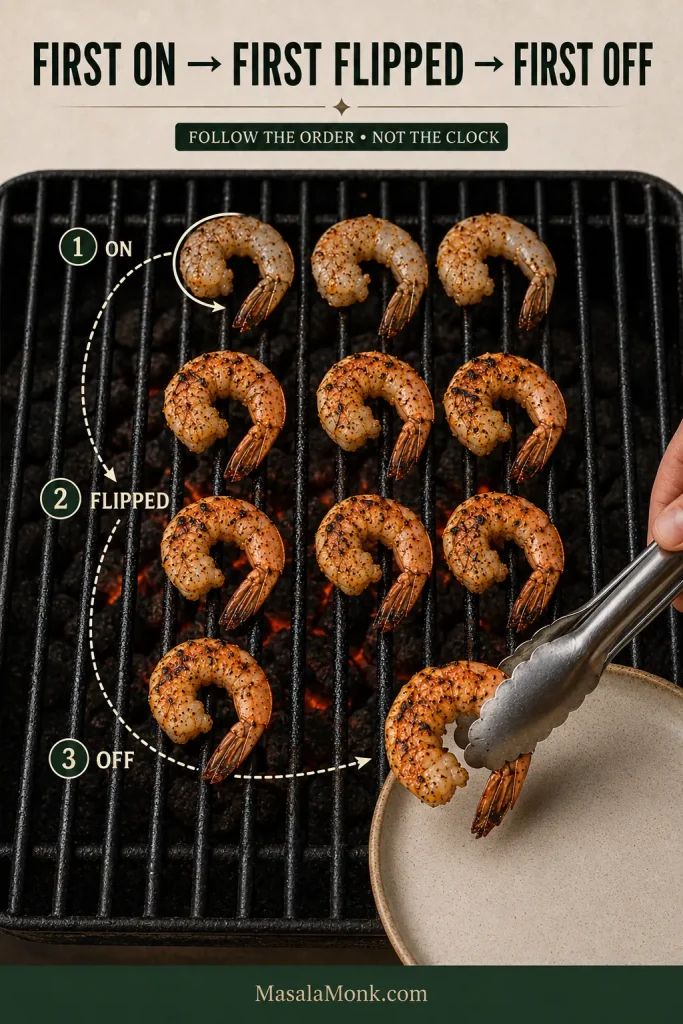
3. Flip in the Same Order You Loaded
With a full grill, lay the shrimp down in a predictable sequence and follow the same path when flipping and removing them.
First on → first flipped → first off.
Loading order becomes your batch timer: follow the same path for flipping and removal so early shrimp do not quietly overcook.
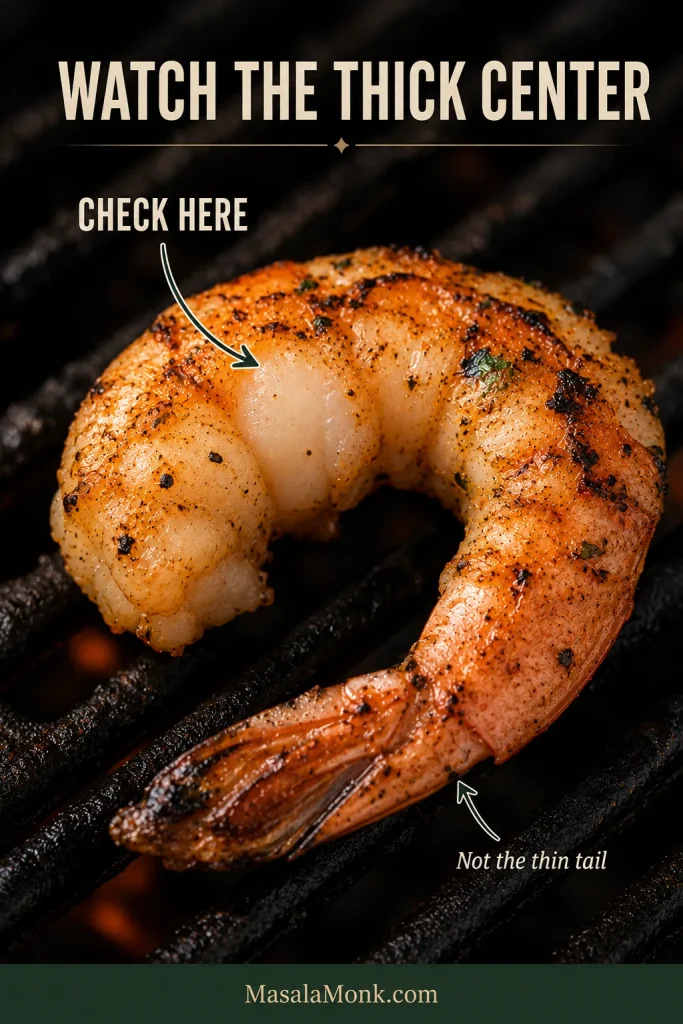
4. Watch the Thick Center
The thin tail can look cooked before the thickest part of the body is ready. As the second side finishes, watch that center and use the doneness cues below.
The tail changes color fast, but the thickest body section is the better checkpoint for what is happening inside.
How Long to Grill Shrimp: Timing by Size
Most large shrimp grill in about 3–6 minutes total. Use the chart to decide when to start checking, then judge the finish from the shrimp themselves.
Shrimp size
Start checking
Common total window
U15–16/20
Around 2 minutes
Roughly 4–6 minutes
21/25
Around 1½–2 minutes
Roughly 3–5 minutes
26/30–31/40
Around 1 minute
Roughly 2–4 minutes
These are first-check guides for raw, thawed shrimp—not automatic pull times.
The smaller the shrimp, the sooner you need to start looking; use the chart as a cue, not a countdown.
Shell-on shrimp may take a little longer; butterflied shrimp may finish sooner. Cooler grills, cold weather and crowded baskets can also stretch the window. If some shrimp are noticeably smaller than the rest, take those off as soon as they’re ready.
How to Tell When Grilled Shrimp Are Done
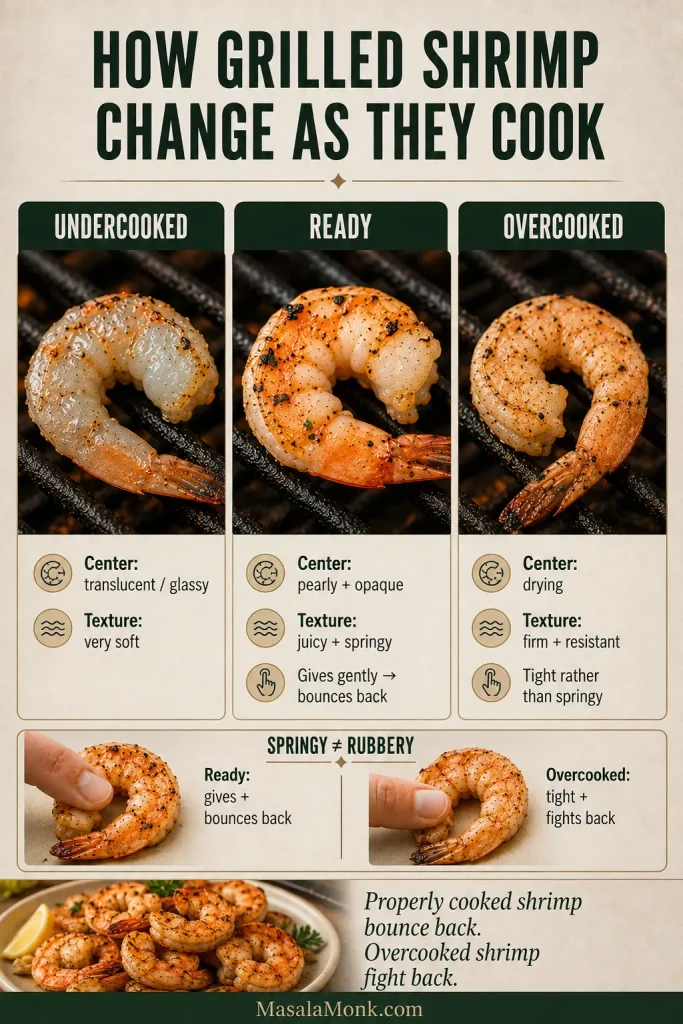
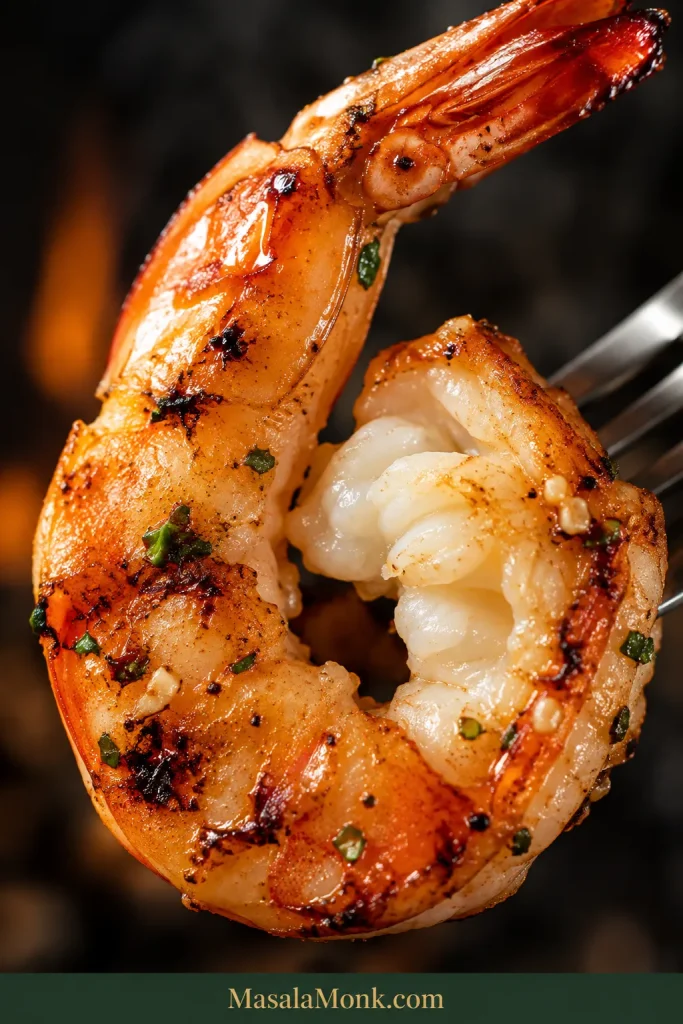
Grilled shrimp are done when the thickest part is firm, pearly and opaque while the texture is still juicy and springy.
Stage
Center
Texture
Undercooked
Translucent or glassy
Very soft
Ready
Pearly and opaque
Juicy, tender and springy with a clean snap
Overcooked
Opaque but drying
Hard, resistant or rubbery
Opacity tells you the center has cooked through; springiness tells you whether the texture still feels juicy instead of tight.
A properly cooked shrimp should feel tender and juicy when you bite into it, with a clean little snap rather than a hard chew. Springy is not the same as rubbery. Properly cooked shrimp bounce back; overcooked shrimp fight back.
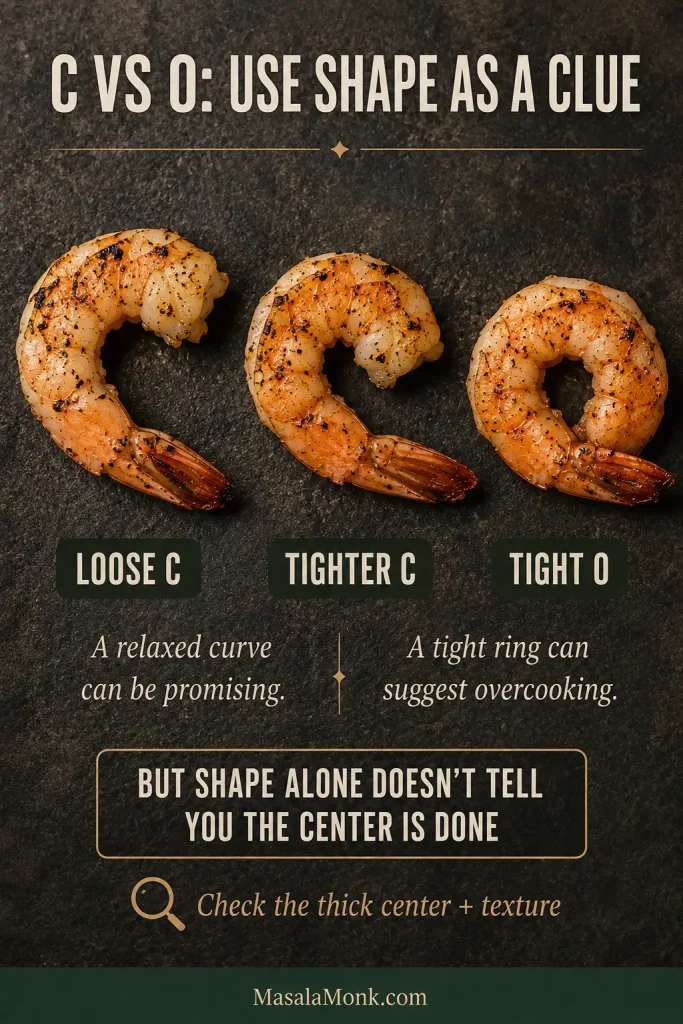
The C-vs-O Rule Is a Hint, Not a Test
A gently curved shrimp is usually more promising than one contracted into a tight ring, but shape alone cannot tell you whether the thick center is ready.
Curl shows contraction, not certainty. Use the C-vs-O clue alongside the thick center and texture, never as the final verdict.
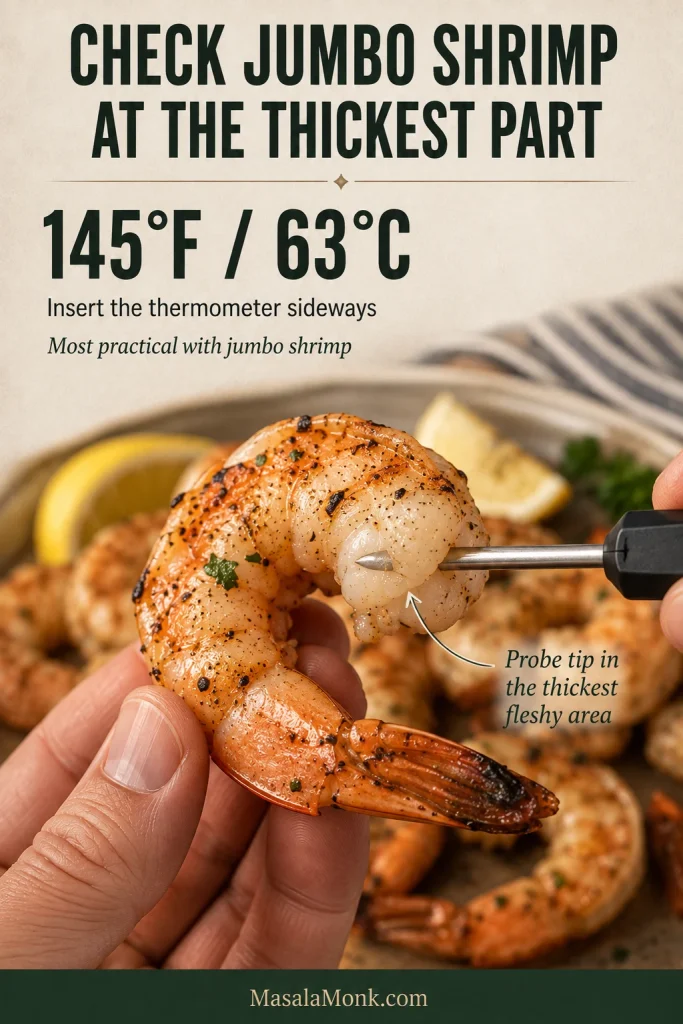
FDA guidance recommends cooking most seafood to 145°F / 63°C and describes properly cooked shrimp as firm, pearly and opaque. With jumbo shrimp, an instant-read thermometer can be inserted sideways into the thickest section. FDA seafood safety guidance.
For jumbo shrimp, an accurate internal temperature depends on probe placement as much as the number—aim sideways into the thickest flesh.
Grilled Shrimp Troubleshooting: Fix This Batch Without Making It Worse
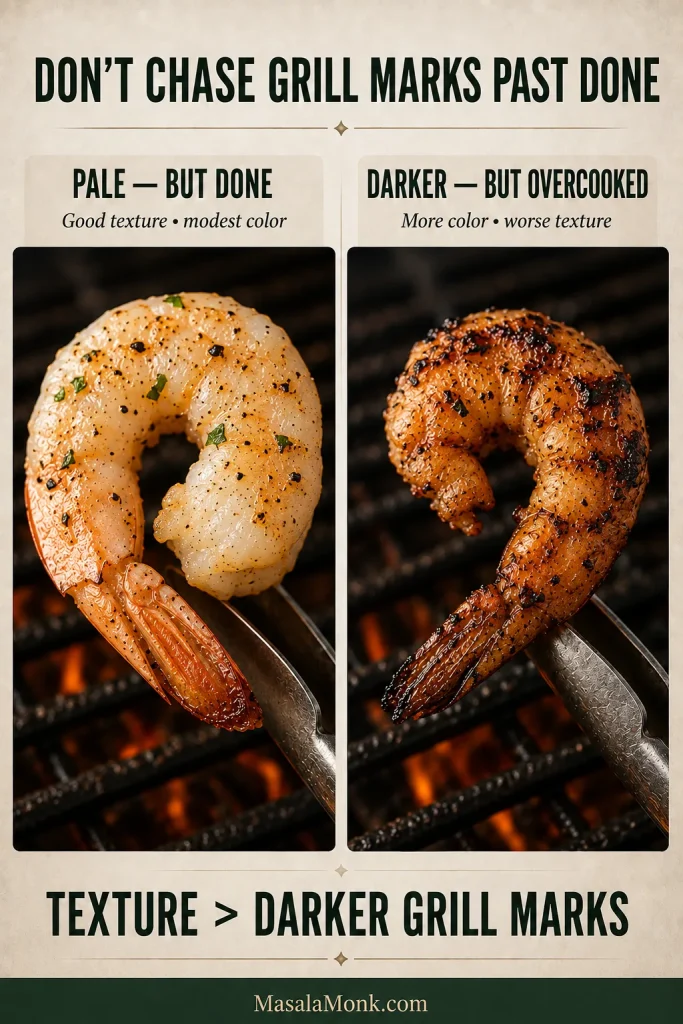
Some problems can be fixed now. Others can only be prevented next time. Most importantly, don’t keep cooking shrimp that are already done simply to improve their color.
If the center is already juicy and opaque, don’t keep grilling just to chase darker marks.
Before or While Grilling
What you see
Likely cause
What to do now
Next time
Mushy or oddly soft before grilling
Long acidic soaking, or shrimp that were already unusually soft after thawing
Drain immediately. If the shrimp are already badly mushy, grilling won’t make them firm again.
Keep citrus exposure brief and start with shrimp that feel firm.
Pale but already cooked
Wet surface or grill not hot enough
Take them off. Good texture matters more than darker grill marks.
Dry more thoroughly and preheat longer.
Still translucent in the thick center
Not done yet
Return to the heat briefly and check again after a short interval.
Use the timing chart to know when to look, then judge the center before pulling them.
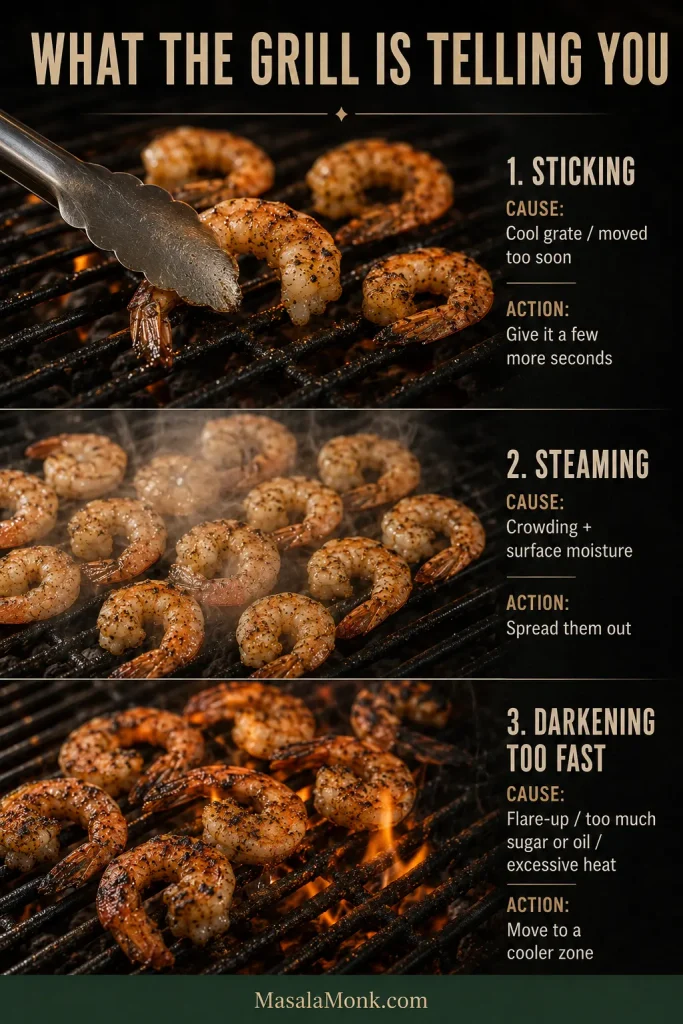
Shrimp sticking
Cool or dirty grates, or flipping before the first side has set
Give them a few more seconds before lifting again.
Preheat well, clean the grates and let the first side sear.
Shrimp steaming in a basket
Too many shrimp releasing moisture together
Spread them out or remove part of the batch.
Keep the basket closer to a single layer.
Outside darkening too fast
Flare-ups, excess oily or sugary coating, or overly aggressive heat
Move the shrimp to a cooler part of the grill.
Use a lighter coating and brush sweet glazes on during the final part of grilling.
Bitter burnt garlic
Fresh garlic spent too long over direct heat
Finish with fresh lemon or herbs instead of adding more browned garlic.
Use garlic powder before grilling and fresh garlic afterward.
Read the symptom before changing the cook: sticking needs patience, steaming needs space, and rapid darkening needs gentler heat.
After Grilling
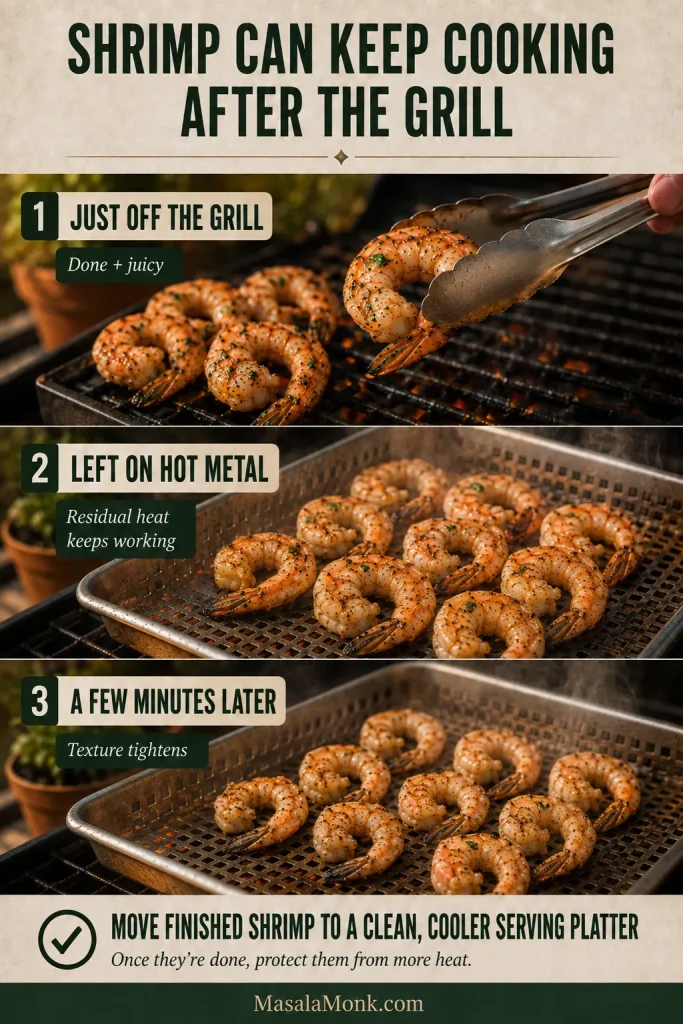
A cooler serving platter helps end the cook; hot metal keeps transferring heat even after the shrimp leave the grate.
What happened
Likely cause
What to do now
Next time
Perfect off the grill, rubbery later
Carryover heat or being held warm too long
Get them off the hot pan, basket or tray and onto a clean serving platter away from the heat.
Serve finished shrimp close to cooking instead of keeping them warm beside the grill.
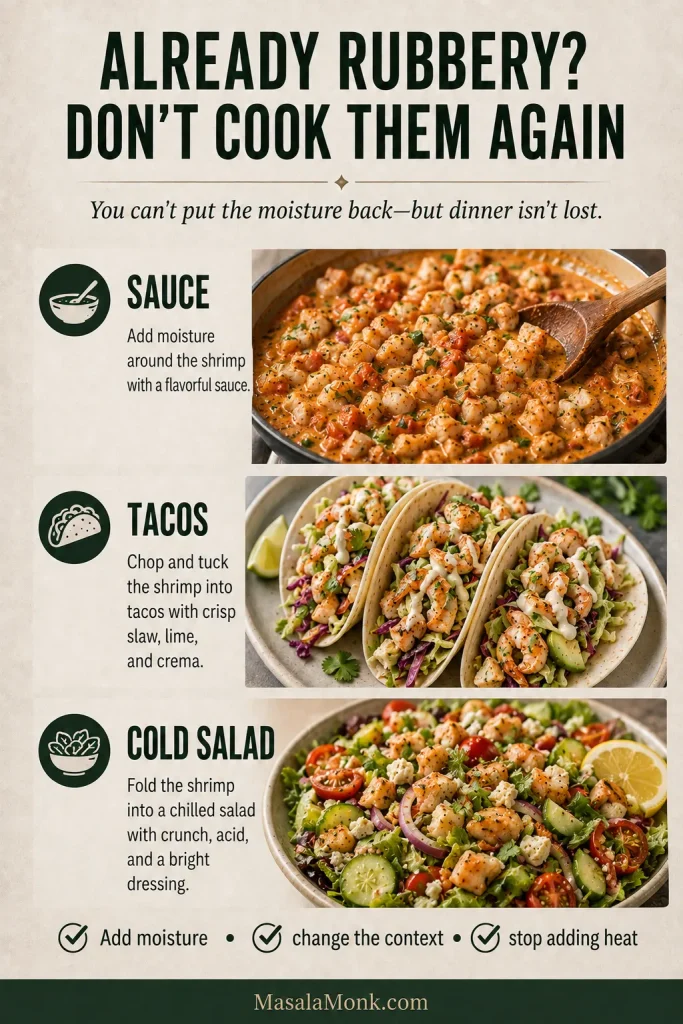
Already rubbery
Too much cooking somewhere along the way
Once they’re rubbery, you can’t put the moisture back. Add sauce, tuck them into tacos, or chill them for a salad instead of cooking them again.
Begin checking earlier and get finished shrimp away from residual heat sooner.
Too salty
Salt plus a salty seasoning blend
Serve with unsalted rice, bread, salad or extra lemon.
Use less separate salt when the seasoning blend already contains plenty.
Once the texture is right, don’t sacrifice it just to fix the color.
Sauce, tacos and chilled salad can make overcooked shrimp much more enjoyable without pretending the lost moisture can be restored.
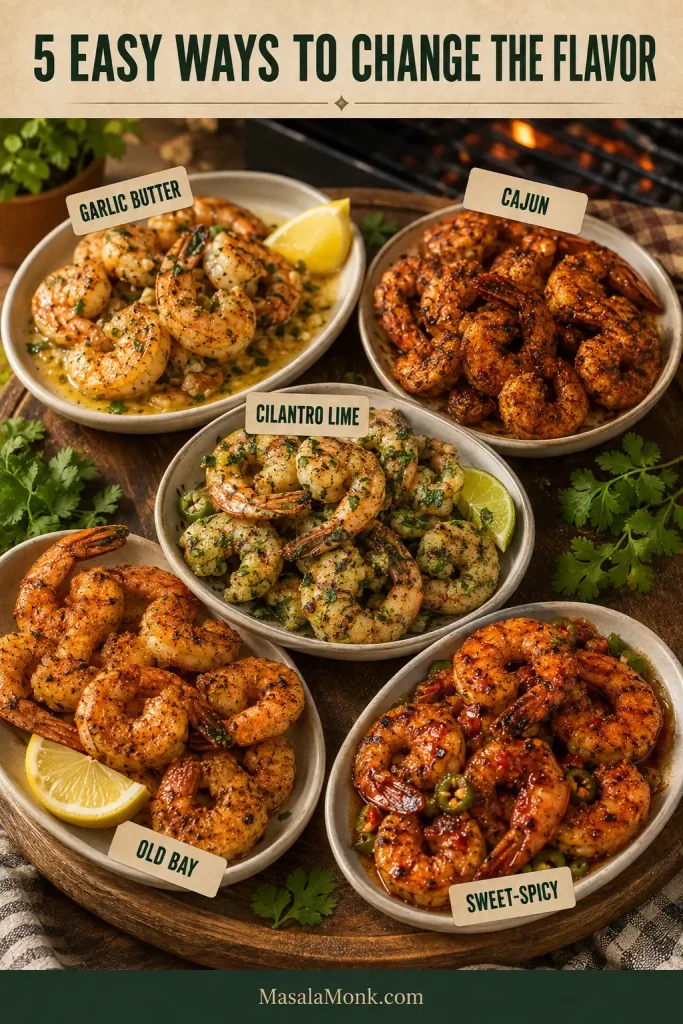
Easy Ways to Change the Flavor
Once the basic method feels comfortable, the grill can stay almost exactly the same while the flavors go in very different directions.
Garlic Butter: richer and rounder, especially good with crusty bread for catching the buttery lemon juices.
Cajun: smoky, savory heat that works especially well with rice, corn or a cookout plate. Account for any salt already in the seasoning blend.
Cilantro Lime: bright and sharp, with the kind of freshness that works beautifully in tacos or rice bowls.
Old Bay: swap it for the paprika when you want that classic savory Old Bay flavor.
Sweet-Spicy: hot honey or another sweet chile glaze gives the shrimp a glossy sweet heat; brush it on late enough to caramelize without scorching.
For something greener and sharper, spoon chimichurri over the shrimp after grilling.
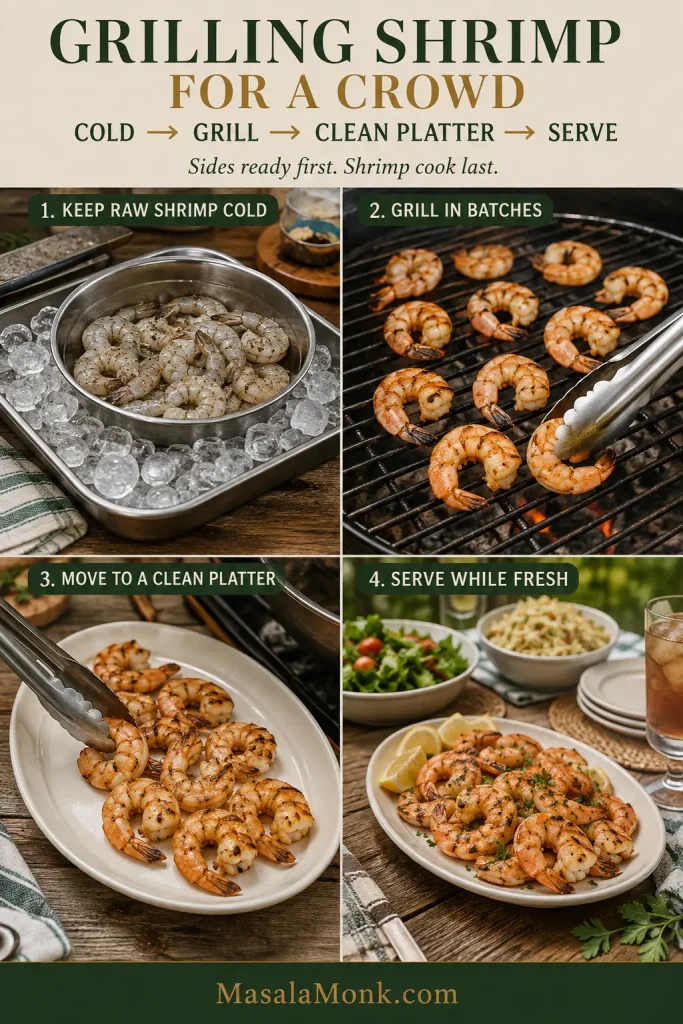
Grilling Shrimp for a Crowd
A large cookout doesn’t require longer shrimp cooking times; it requires a little organization before the first batch hits the grill.
Have the sides, sauces and serving platter ready first. Shrimp cook so quickly that they’re better as the last thing dinner is waiting for, not the first thing sitting around.
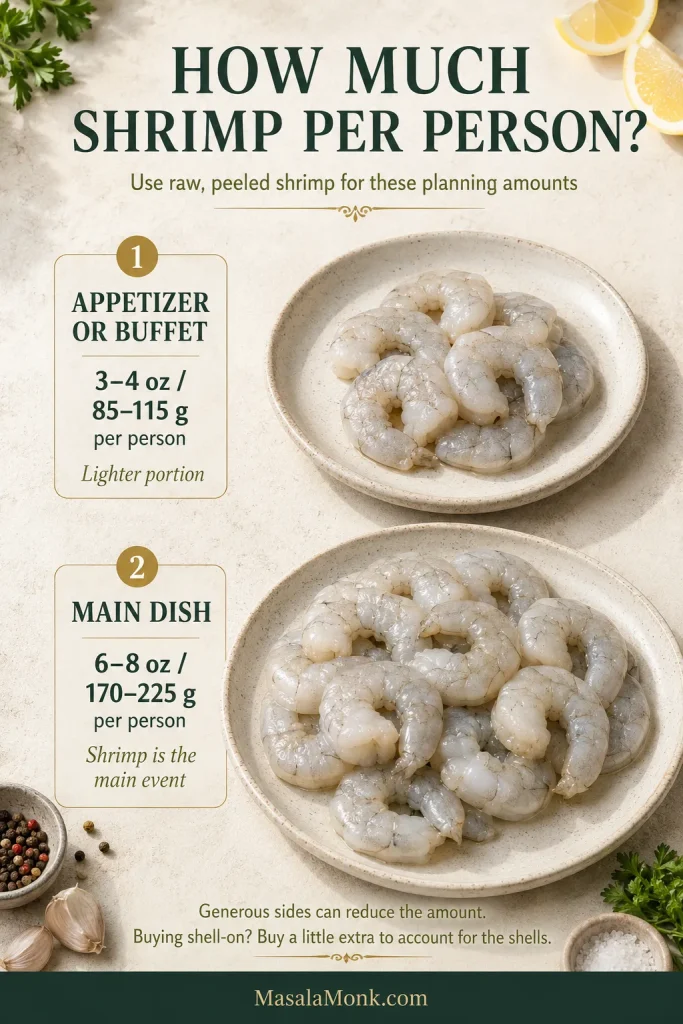
How much shrimp should you buy? As a planning range, allow about 3–4 oz / 85–115 g of raw, peeled shrimp per person for appetizers or a buffet, or roughly 6–8 oz / 170–225 g per person when shrimp are the main dish. Generous sides can pull that number down; if you’re buying shell-on shrimp, buy a little extra to account for the shells.
Do the fiddly work early. Peel, devein, portion seasoning and prepare skewers before cooking begins.
Keep raw shrimp cold. Bring out only the batch that’s about to hit the grill.
Leave breathing room. Crowding slows browning and makes the batch harder to control.
Load in a predictable order. That makes flipping and removing each batch evenly much easier.
Serve as you go when practical. Freshly grilled shrimp are at their best before residual heat has time to tighten them.
For a crowd, keep the raw shrimp cold, grill in small batches, and move each finished batch straight to a clean platter.
A cold crisp coleslaw works especially well because it can be completely ready before the shrimp go on.
What to Serve With Grilled Shrimp
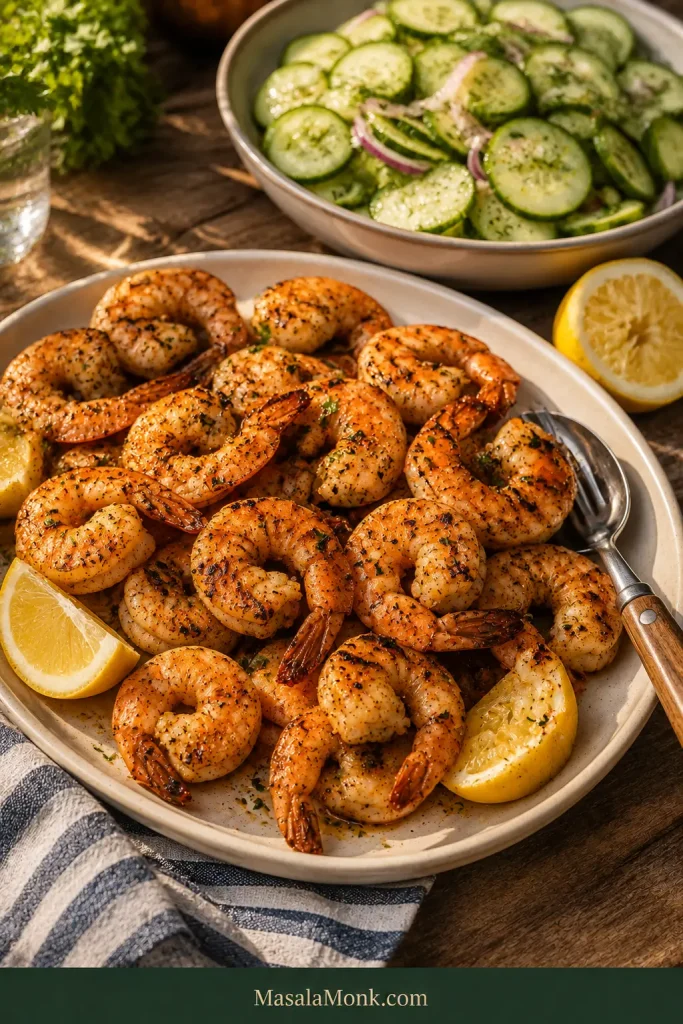
For a quick dinner, serve the shrimp over rice or orzo with grilled zucchini or asparagus. A crisp cucumber salad gives you a particularly good contrast: hot smoky shrimp, cool crunchy cucumber and bright lemon.
A make-ahead cucumber salad does double duty: it cools the plate and keeps your last-minute attention on the shrimp.
For a cookout, you hardly need to complicate things. Charred shrimp, sweet corn, ripe tomatoes, crusty bread and one cold salad make a generous summer plate.
Pasta works too—finish the pasta and sauce first, then fold the cooked shrimp through once everything else is ready. If garlic butter and noodles are the main attraction, our shrimp scampi takes that route from the beginning.
Sauces and dips. Garlic-lemon butter, cilantro-lime sauce, spicy mayo and garlic aioli all work well. Keep the sauce bright enough that you can still taste the smoky shrimp underneath.
Make Ahead, Store and Reheat Grilled Shrimp
Prep ahead. Peel and devein the shrimp, mix the seasoning or marinade, and prepare the finishing sauce earlier in the day. Keep everything refrigerated and combine a citrus-heavy marinade with the shrimp closer to grilling.
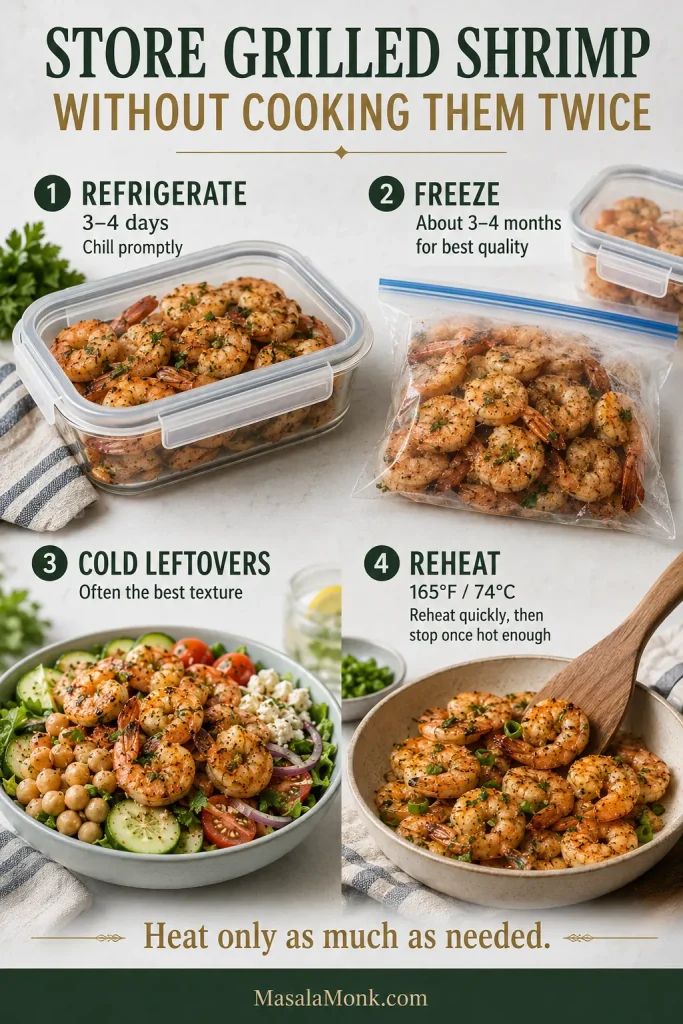
Store. Refrigerate cooked shrimp promptly in a covered container and use them within 3–4 days. Do not leave cooked seafood at room temperature for more than 2 hours, or more than 1 hour when the surrounding temperature is above 90°F / 32°C.
Can you freeze grilled shrimp? Yes. Refrigerate them promptly, then freeze the chilled shrimp in an airtight container or freezer bag. USDA lists about 3–4 months for best quality when cooked leftovers are frozen, although shrimp usually have better texture when used sooner.
For the best leftover texture, consider serving them cold. Properly stored grilled shrimp work well in salads, wraps and grain bowls without another round of cooking. They can also turn a lemony chickpea salad into a fuller lunch.
If You Reheat Leftover Shrimp
USDA recommends reheating leftovers to 165°F / 74°C. Reheat them quickly, then stop once they’re hot enough. If they’re going into another hot dish, prepare the rest first and stir the shrimp in only for the final heating.
Cold leftovers often stay juicier; if reheating, warm the rest of the dish first and add the shrimp at the very end.
How Did Your Grilled Shrimp Turn Out?
What size shrimp did you use, and did you grill them directly, on skewers or in a basket? Tell us your approximate cooking time too. Those details can help the next cook judge their own batch.
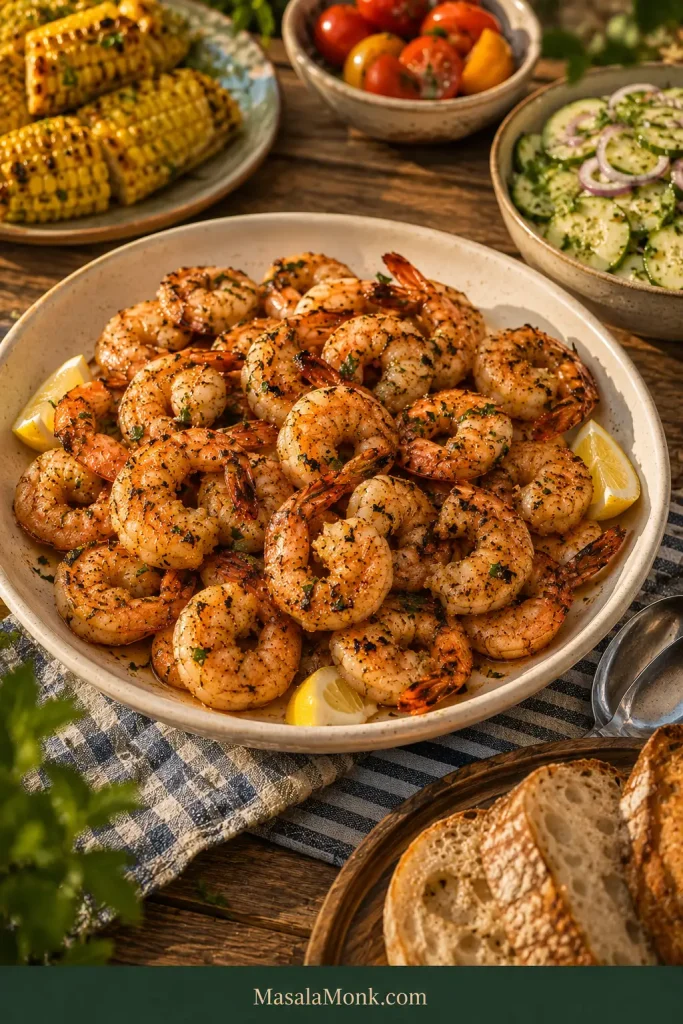
And when everything goes right, the reward is wonderfully simple: a little smoky char at the edges, a juicy pearly center, and lemon and garlic still bright enough to make the next shrimp very hard to leave alone.
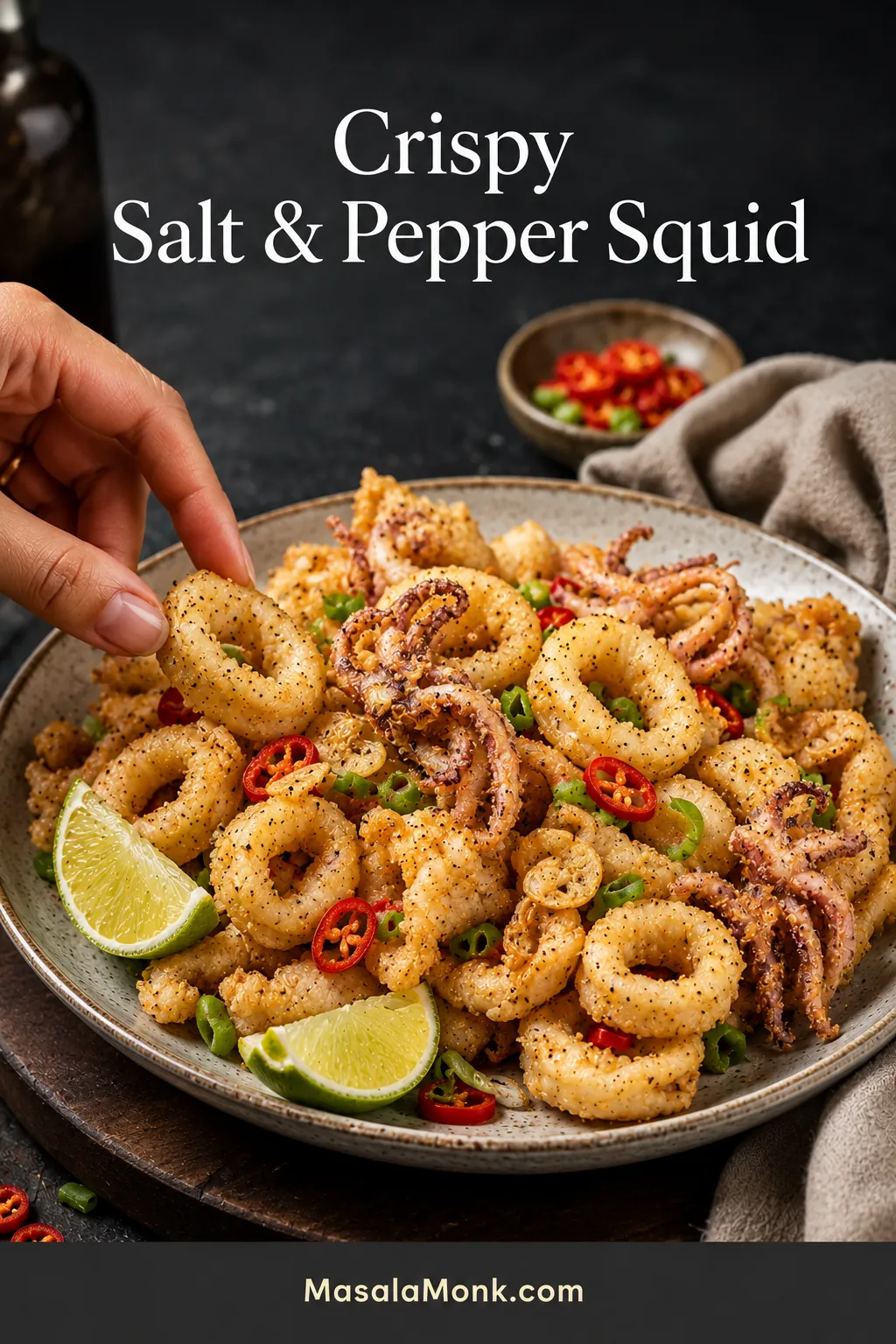
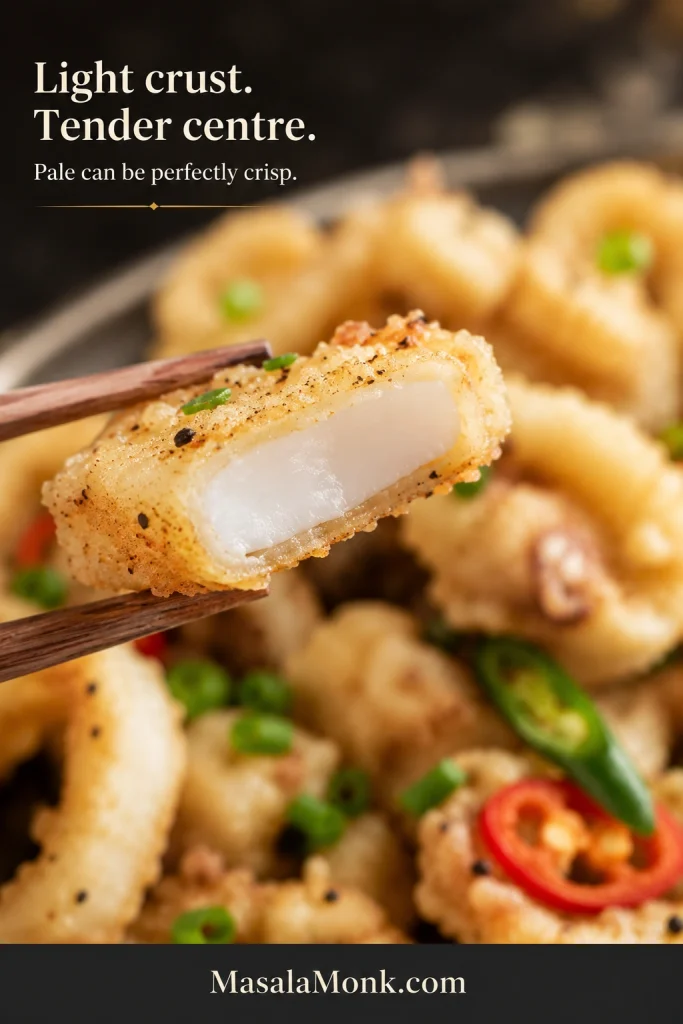
Salt and pepper squid is the plate people start picking at before it properly reaches the table. Curled calamari, a crisp peppery crust, fried garlic, fresh chilli and spring onion make the pile almost impossible to leave alone. The first bite should crack lightly, then give way to tender squid underneath.
That contrast is why the dish can feel risky at home. Squid cooks quickly, while the coating still needs enough heat to set. Wait for deep colour and the centre can turn rubbery; crowd the pot or coat damp squid and the crust can become greasy or patchy.
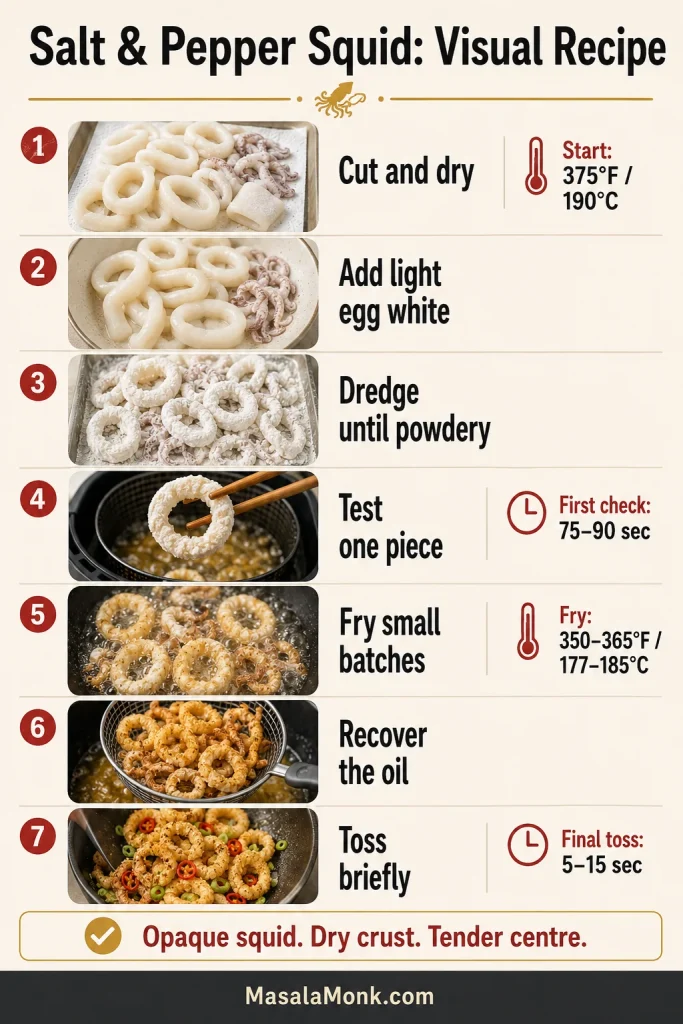
The first piece removes most of the uncertainty. From there, the method is easy to remember: dry the squid, test one piece, fry in small batches and keep the final toss brief.
This is a lighter Cantonese-style restaurant version, with a thin starch crust and a quick garlic-chilli finish rather than a heavy batter that hides the seafood. Here, calamari and squid refer to the same ingredient.
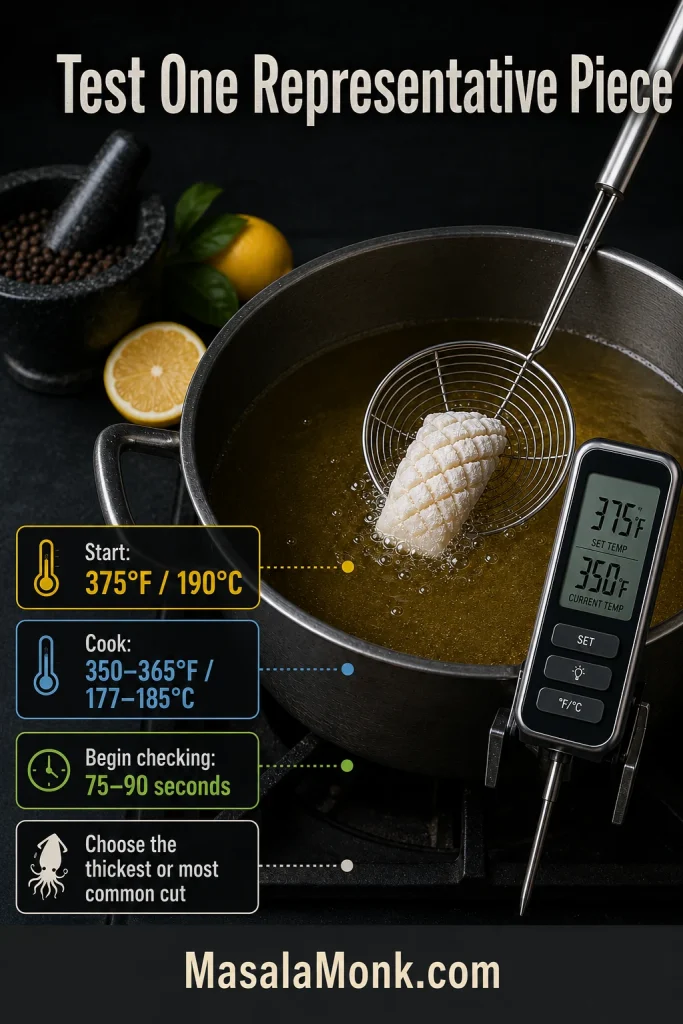
Dry 500 g / about 1 lb 2 oz cleaned squid thoroughly, add only enough egg white to make it lightly tacky, and dredge one batch at a time in a 2:1 starch-and-flour coating. Heat the oil to 375°F / 190°C, then keep it near 350–365°F / 177–185°C.
Test one representative piece and begin checking after 75–90 seconds. Remove the squid when it is opaque and the crust is dry and pale gold, drain it on a rack and let the oil recover. Toss through the cooked garlic, chilli and spring onion with the finishing seasoning for 5–15 seconds.
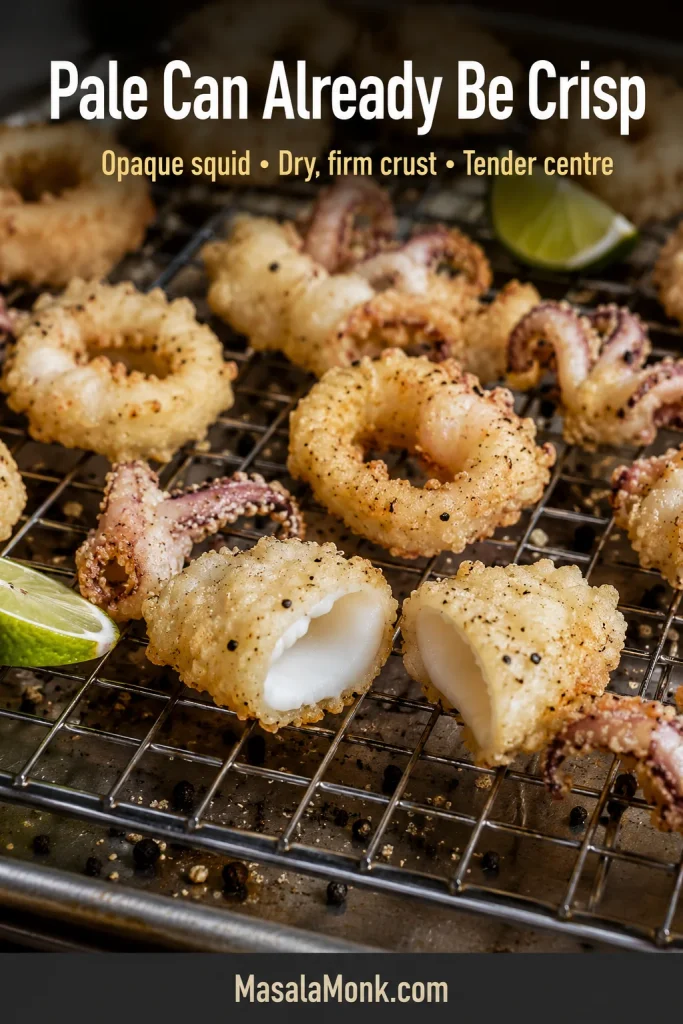
Pale can still be crisp; look for an opaque, tender centre beneath a thin shell.
Crispy Chinese-Style Salt and Pepper Squid Recipe
Fresh cleaned squid and fully thawed raw frozen squid both work in this main method; if you are starting from frozen rings or pre-breaded calamari, use the frozen squid guide before choosing the coating.
Prep time
About 20 minutes with cleaned squid; up to 30 minutes from whole squid
Cook time
About 15 minutes
Total time
About 35 minutes with cleaned squid; up to 45 minutes from whole squid
Yield
4 starter servings or 2–3 main-course servings
Best cut
1 cm / ⅜-inch rings or scored 5 × 2.5 cm / 2 × 1-inch pieces
Starting batch size
About one-quarter of the squid; use less if the oil falls below 350°F / 177°C
Oil start temperature
375°F / 190°C
Oil temperature while frying
350–365°F / 177–185°C
Equipment
Heavy deep pot or Dutch oven with generous headroom
Frying thermometer; this is the most reliable way to judge the oil
Spider strainer or long-handled slotted spoon
Wire rack set over a rimmed tray, so escaping steam does not soften the crust
Ingredients
For the squid
500 g / about 1 lb 2 oz cleaned raw squid tubes and tentacles, or roughly 700–800 g / about 1½–1¾ lb whole squid before cleaning
2 teaspoons / 10 ml Shaoxing wine, optional
1 large egg white, lightly beaten; add gradually as needed
2 tablespoons / about 16 g cornstarch
¼ teaspoon / about 1.5 g fine sea salt
¼ teaspoon ground white pepper
For the crisp coating
80 g cornstarch or potato starch; use weight for the most consistent coating
40 g / about ⅓ cup all-purpose flour
½ teaspoon baking powder
½ teaspoon / about 3 g fine sea salt
½ teaspoon ground white pepper
For frying
Enough neutral refined high-heat oil, such as canola, sunflower or rice-bran oil, to reach 5–7 cm / 2–3 inches without filling the pot more than one-third full
For the garlic, chilli and spring onion finish
1 tablespoon / 15 ml neutral oil
4 garlic cloves, finely chopped
2 small red or green chillies, thinly sliced and dried if recently washed
4 spring onions/scallions, whites and greens separated
¼ teaspoon ground white pepper
¼ teaspoon toasted and finely ground Sichuan peppercorns, optional
¼ teaspoon / about 1.5 g fine sea salt, plus more only after tasting
¼ teaspoon MSG or halal-certified chicken powder, optional; if using chicken powder, hold back the finishing salt until tasting
Lemon or lime wedges, for serving
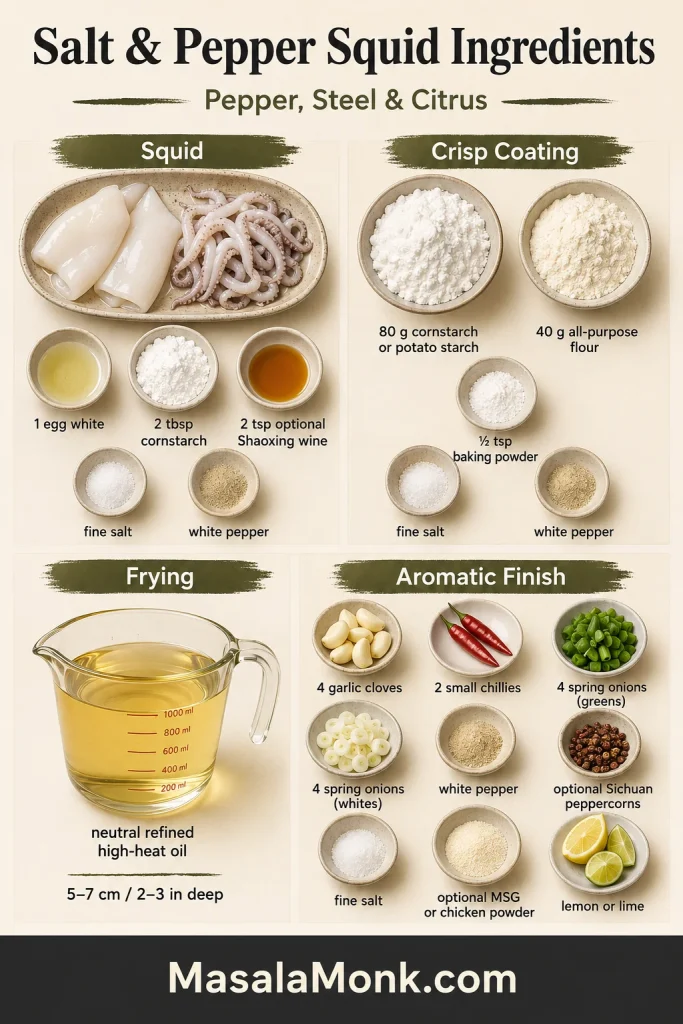
Use this board as a stage check after the ingredient list: squid, coating, oil, aromatics and citrus stay separate until needed.
Use clean, neutral-smelling oil; heavily reused oil can darken the crust and leave a stale flavour. Refined peanut oil also works, but check allergy requirements first.
Frying and Seafood Safety
Keep the pot no more than one-third full, turn handles inward and never leave frying oil unattended. If it smokes, turn off the heat and let it cool; never use water on burning oil. See the London Fire Brigade deep-frying guidance.
Wash hands and clean the knife, board, bowls and work surface before they touch cooked squid, garnishes or dips.
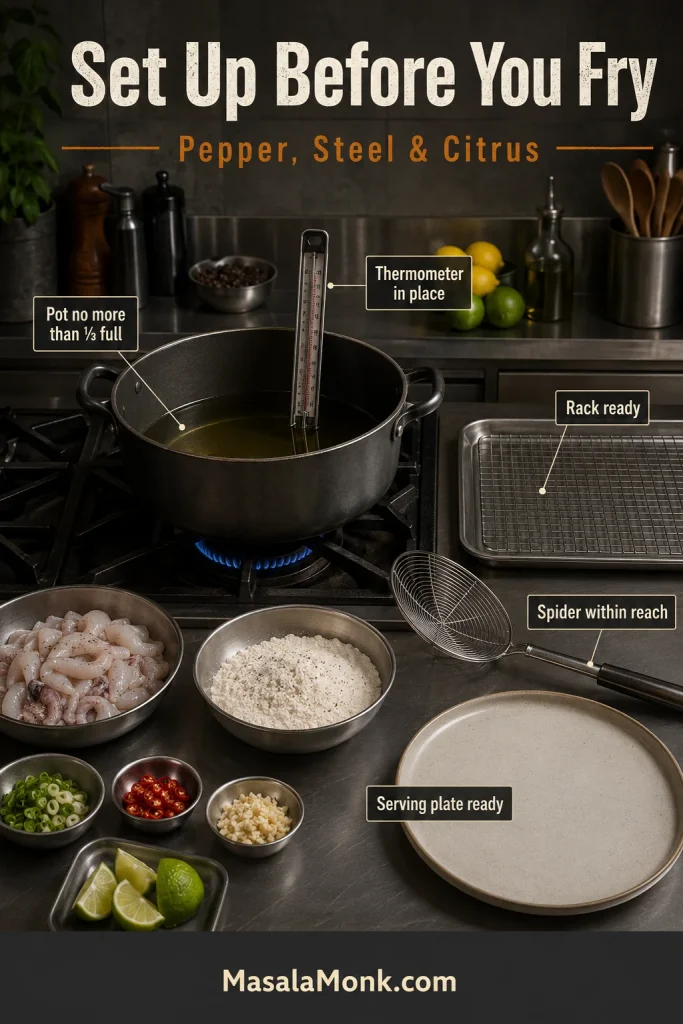
Set the pot, thermometer, spider strainer and wire rack in place before the oil heats.
Instructions
Prep, Dry and Set Up
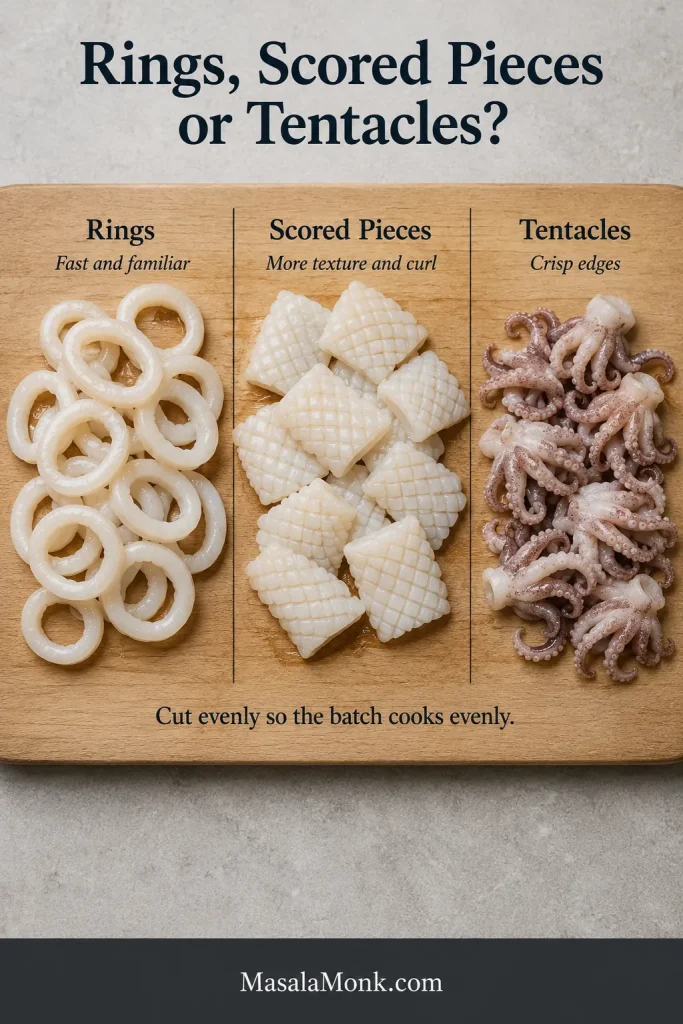
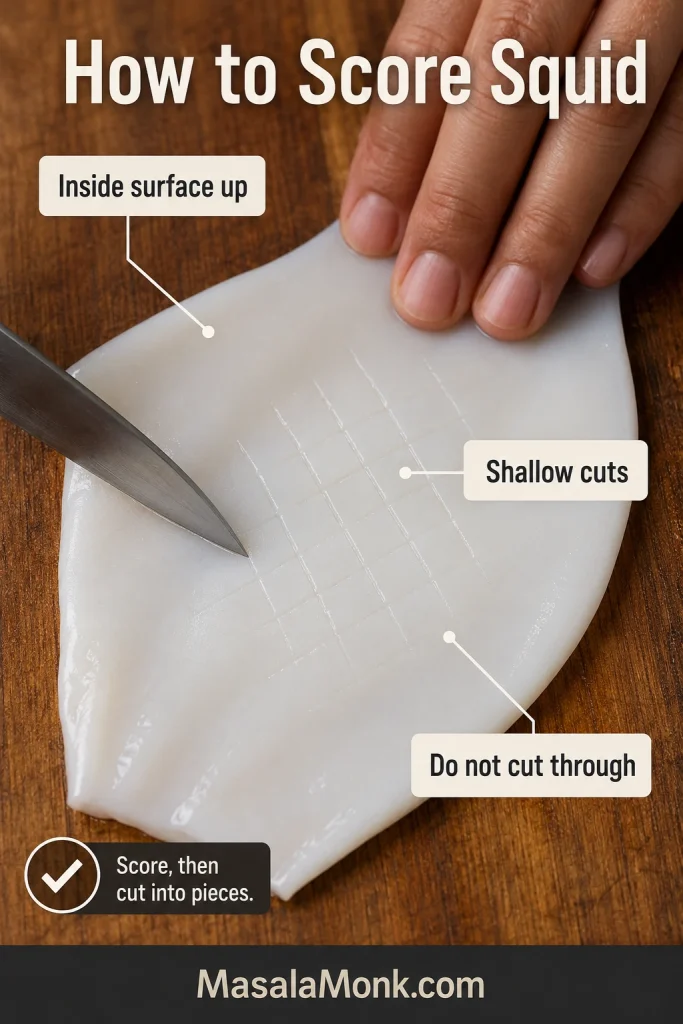
Cut the squid evenly. Slice tubes crosswise into 1 cm / ⅜-inch rings. For scored pieces, cut each tube open, lay it inside-up, score shallow diamonds without cutting through, then divide it into roughly 5 × 2.5 cm / 2 × 1-inch pieces. Leave small tentacles whole and split large clusters.
Dry every surface. Drain the squid well and pat it dry, including inside the rings and between the tentacles. There should be no water collecting in the bowl.
Prepare everything beside the stove. Chop the garlic, chillies and spring onions. Mix the finishing seasoning in a small bowl. Combine the dry-coating ingredients in another wide bowl, then set out the rack, spider and serving plate.
Heat the oil safely. Add enough oil for a depth of 5–7 cm / 2–3 inches while keeping the pot no more than one-third full. Heat to 375°F / 190°C. A thermometer is best; without one, a clean wooden chopstick should release a steady stream of small bubbles when dipped into the oil. Smoking or violent bubbling means the oil is too hot.
Coat and Test
Add the light egg-white layer. Mix the squid with the optional Shaoxing wine, cornstarch, salt and white pepper. Start with about half the beaten egg white, toss well, then add only enough for the pieces to feel lightly tacky; you may not need every drop. Drain any liquid that pools underneath.
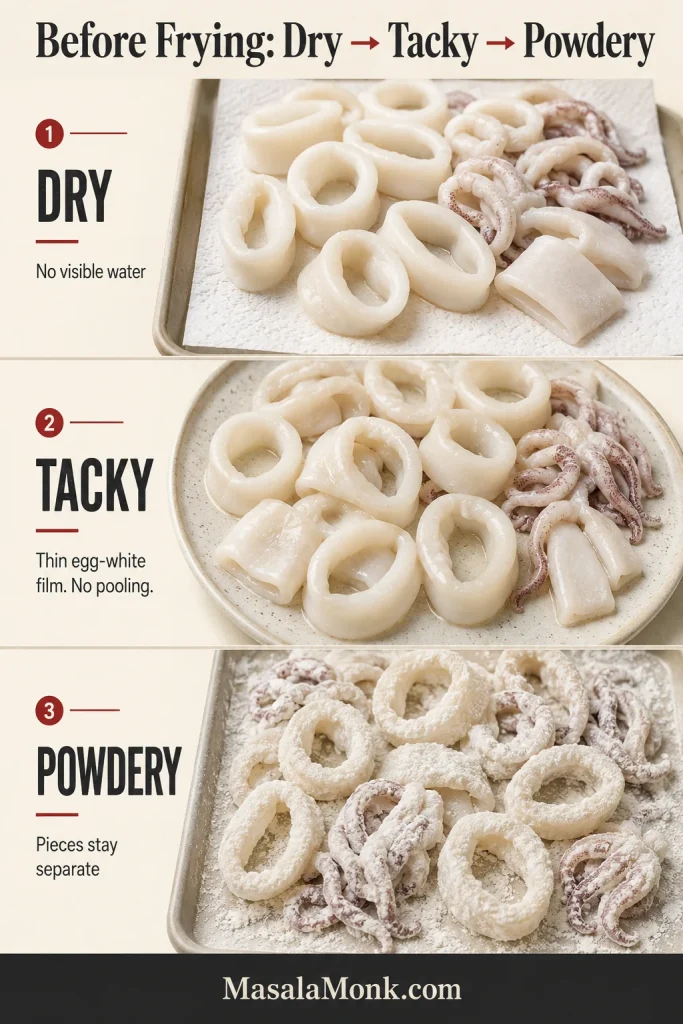
Wet squid or pooled egg white can make the crust gummy and loose; aim for dry, tacky and powdery in order.
Check one piece first. Choose a piece that represents the thickest or most common cut. Dredge it, shake off the excess and fry it, checking from about 75 seconds. Remove it when the squid is opaque and tender and the crust is dry and set. Taste it, then adjust the timing or the amount of finishing seasoning before frying the full batch. A small correction is normal—that is what this piece is for.
The first piece confirms timing, oil temperature and seasoning before the full batch goes in.
Fry in Small Batches
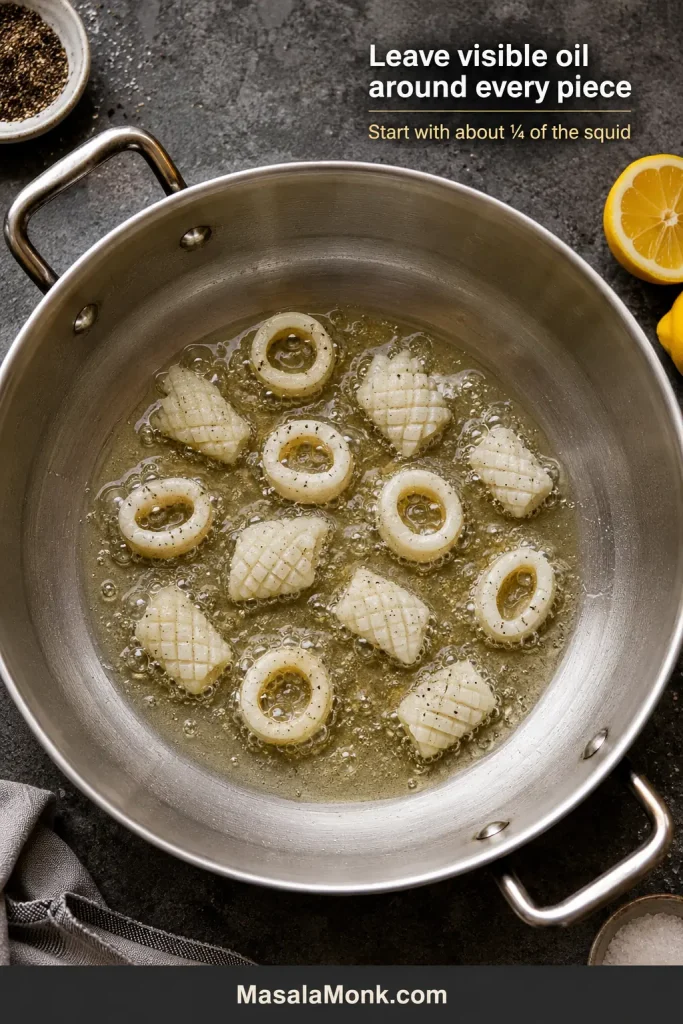
Coat one batch. Start with roughly one-quarter of the squid. Toss it in the dredge until the pieces look powdery and separate, then shake away loose excess. Coat only what is going into the oil now.
Give every piece room in the oil so the coating sets before the squid can steam.
Fry and drain. Lower the pieces separately and away from your body. Keep the oil near 350–365°F / 177–185°C and begin checking from 75 seconds; most pieces take about 90 seconds to 2½ minutes. Lift them when the squid is opaque and the crust is dry and firm, using the test-piece timing as your guide, then spread them on the rack.
Drain on a rack once the crust is dry and the squid is opaque.
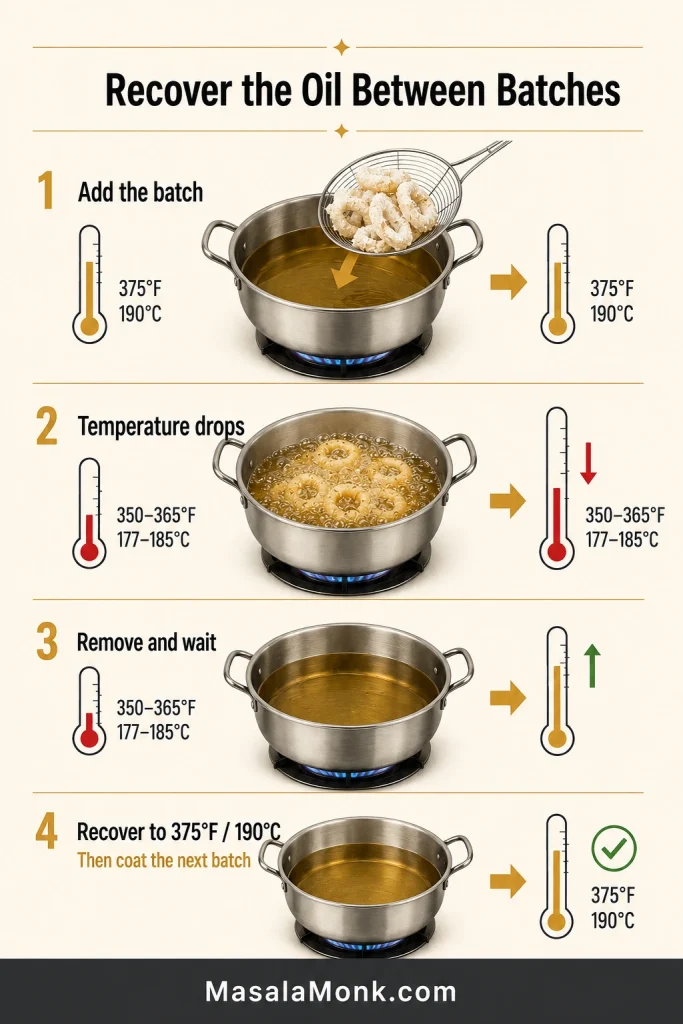
Recover between batches. Return the oil to 375°F / 190°C before coating the next batch. If it drops below the frying range or recovers slowly, make the next batch smaller.
Return the oil to 375°F / 190°C before coating the next batch.
Finish With Aromatics
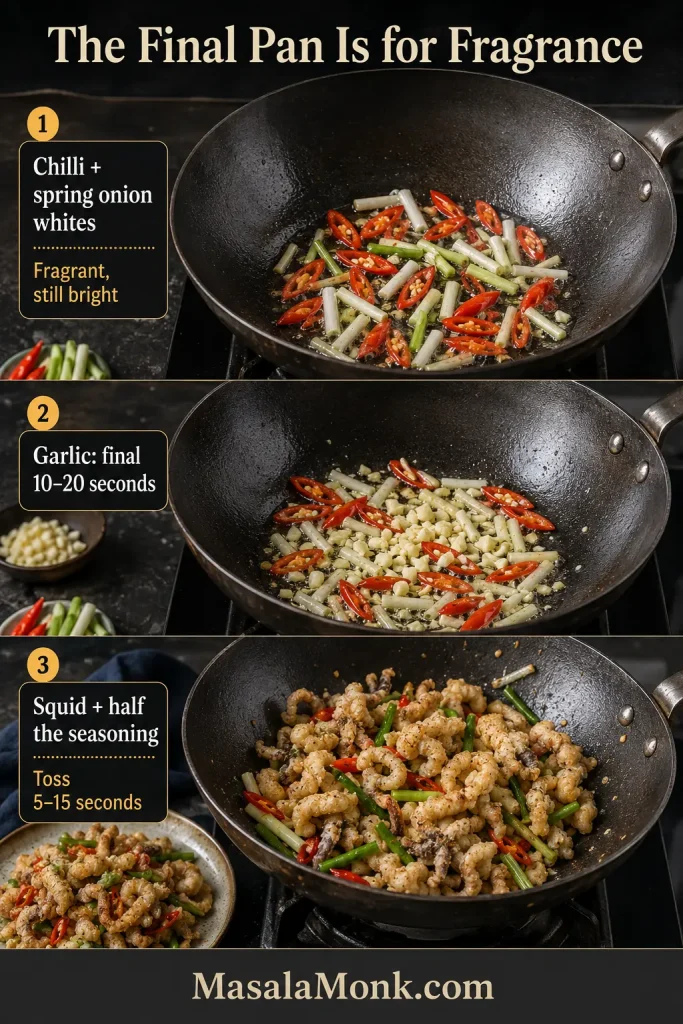
Cook the aromatics. Heat 1 tablespoon oil in a wok or wide skillet over medium heat. Stir the chilli and spring onion whites until fragrant but still brightly coloured, then add the garlic for the final 10–20 seconds. Keep the garlic pale golden and have the serving plate ready.
Finish with the aromatics. The squid is already cooked; this final pan is only for fragrance. Add the fried squid and half the finishing seasoning, toss for 5–15 seconds, then turn off the heat and add the spring onion greens. Taste before adding the rest, especially when using salty chicken powder. Serve immediately with lemon or lime and a cool dip.
The final pan adds fragrance, not another round of cooking.
Recipe Notes
A pale-golden starch crust can already be crisp. Rough or uneven edges are normal; the coating should look light rather than perfectly smooth.
Dredge each batch only when the oil is ready; resting coated squid draws moisture back to the surface.
The dredge is intentionally generous so the pieces can become evenly powdery instead of wet and clumped. Discard anything that has touched raw squid.
For an alcohol-free version, omit the Shaoxing wine without replacing it with another liquid. Halal cooks can omit the wine and check that packaged seasonings meet their requirements.
The main recipe contains squid (a mollusc), egg and wheat. Check packaged seasonings, sauces and frying oil when cooking for someone with an allergy.
The main recipe is the recommended route. The guide below explains ingredient choices, alternative methods and fixes if anything goes wrong.
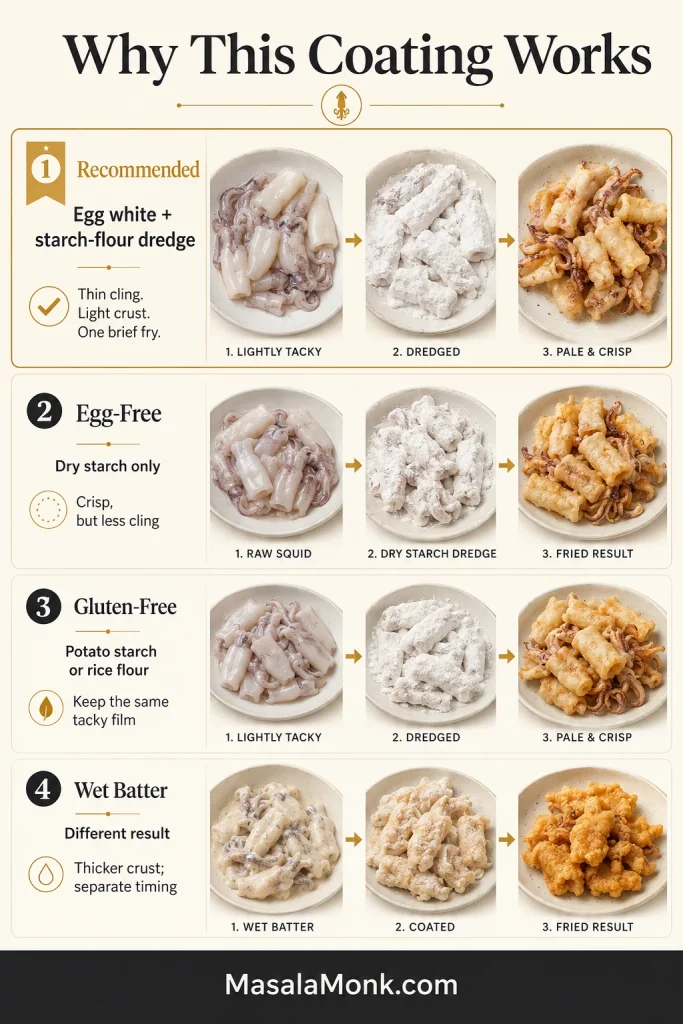
Salt and pepper squid recipes range from plain starch coatings to whole-egg dredges and chilled wet batters. This version uses only enough egg white to help a starch-dominant coating cling without the richer weight of yolk. Plain flour adds structure and colour without making the crust bready.
Brief seasoning avoids drawing extra moisture to the surface, so a long marinade is unnecessary. Double frying suits a thicker wet batter and a longer holding time; this lighter coating is designed for one brief fry and immediate serving. The short aromatic toss adds fragrance without steaming the crust.
Egg white helps the starch coating cling; dry starch, rice flour and wet batter create different crusts.
Choosing, Cleaning and Cutting Squid
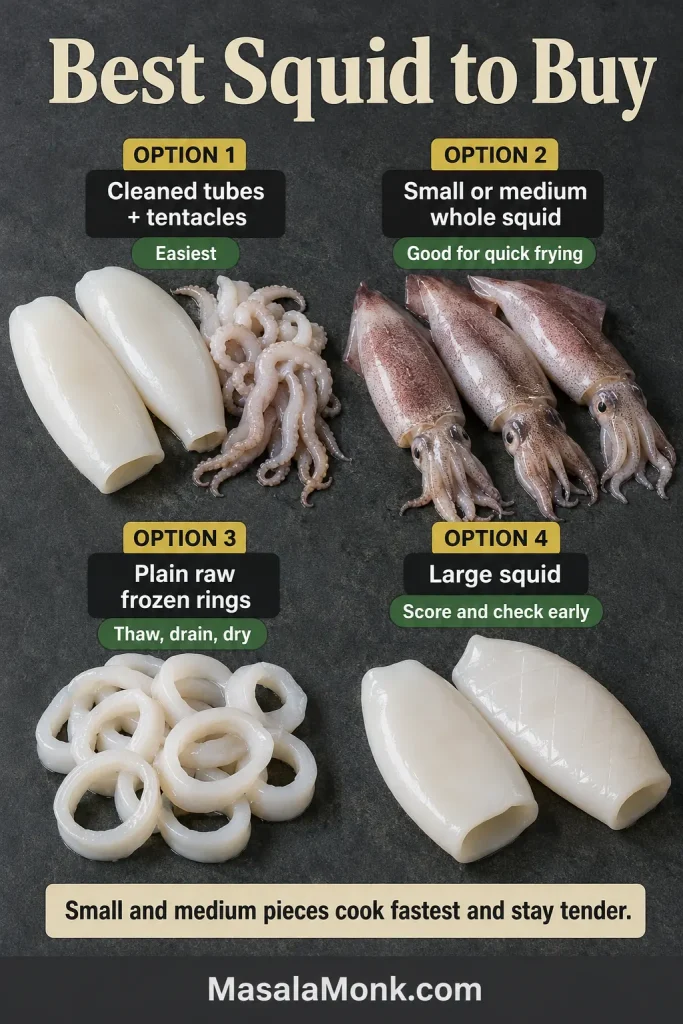
Good squid should smell mild, clean and briny—not sour, strongly fishy or ammonia-like. Good-quality raw frozen squid can be a dependable option, especially when fresh squid is unavailable. Choose another batch when the smell seems wrong; lemon and seasoning cannot restore seafood that is past its best.
Small to medium squid is the most forgiving for this quick-fry method. Cleaned tubes and tentacles offer the best balance of convenience and control; plain raw frozen rings are quick once fully thawed and dried. If the tubes are very large or thick, slice them more thinly and fry them separately from tentacles and thin rings.
Cleaned tubes and tentacles are easiest; raw frozen squid needs thawing, draining and thorough drying.
How much whole squid to buy: allow roughly 700–800 g / about 1½–1¾ lb whole squid for about 500 g / about 1 lb 2 oz cleaned seafood. Yield varies with the species, head-to-body ratio and how much of the fins and tentacles you keep.
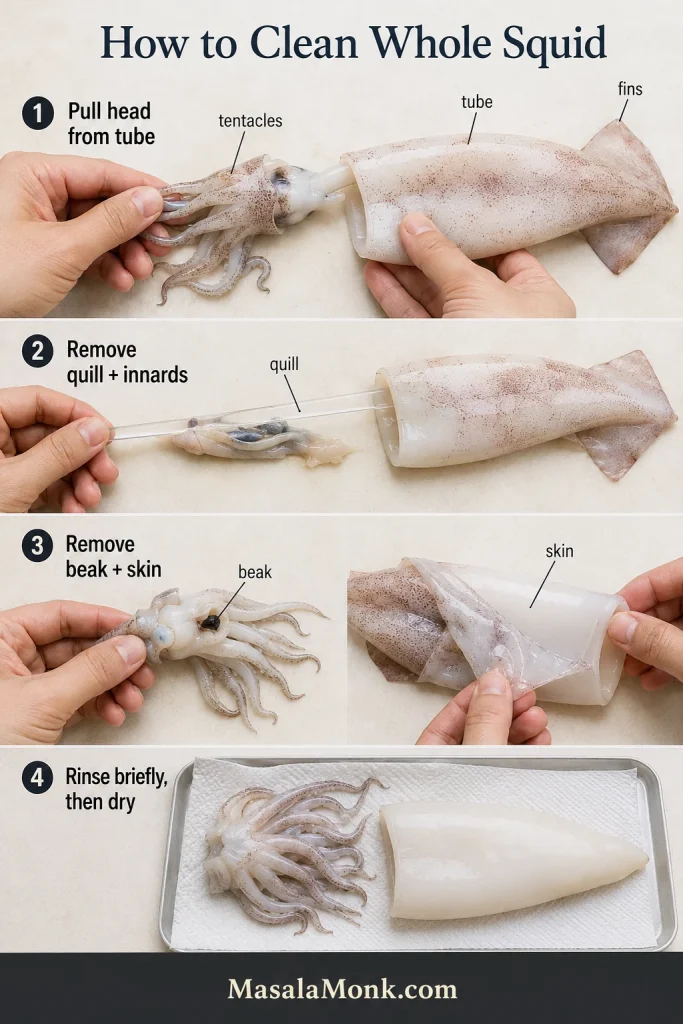
How to Clean Whole Squid
Cleaning whole squid is mostly about removing the firm inner quill, beak and excess moisture before the pieces ever meet the coating.
Remove the quill, innards and beak first; then rinse briefly and dry well.
Hold the body tube and pull the head and innards away.
Remove the clear plastic-like quill from inside the tube.
Peel off the thin skin for a more uniform appearance; leaving a little behind is harmless.
Cut below the eyes to separate the tentacles from the head.
Push out and discard the hard beak from the centre of the tentacles.
Rinse briefly, drain thoroughly and dry before cutting.
Rings or Scored Pieces?
Rings are the easiest cut, scored pieces curl, and tentacles crisp around the edges.
Use rings for the easiest cut. Slice across the tube into pieces about 1 cm / ⅜ inch thick. Keeping them even matters more than making them perfectly neat.
Scored pieces create more crisp edges. Cut the tube open, lay it inside-up and make shallow diagonal cuts in both directions without slicing through. The pattern helps the pieces curl and gives the seasoning more surface to cling to. Fry unusually thick pieces separately from thin rings and tentacles.
Score the smooth inside surface with shallow cuts so the squid curls without tearing.
Choosing a Crisp Coating
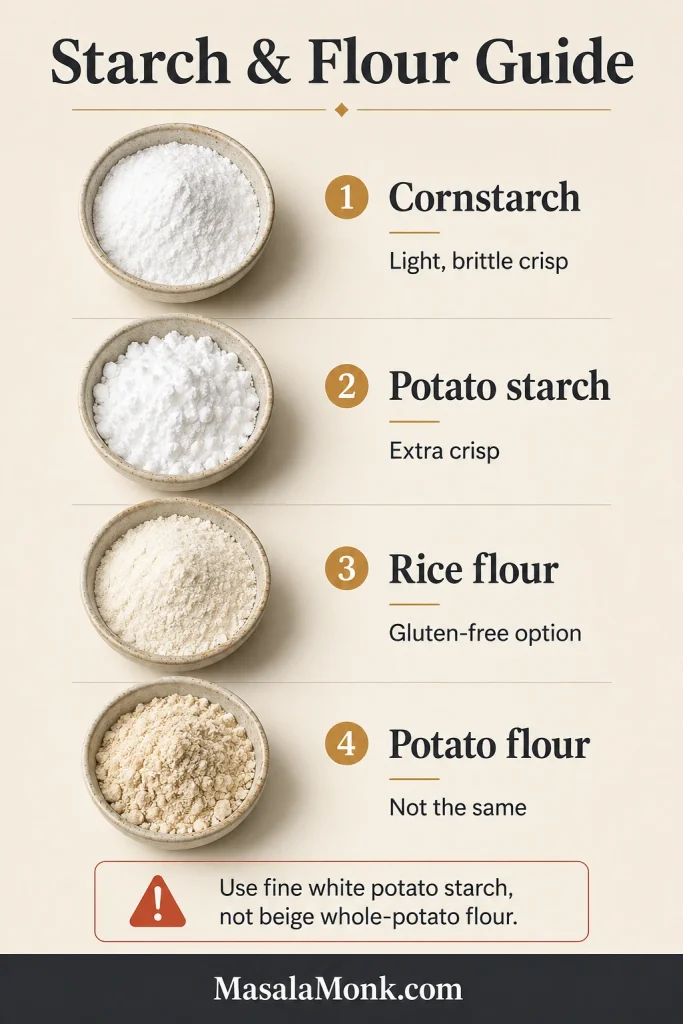
Cornstarch—the fine white powder called cornflour in the UK and Australia—creates a light, brittle crust. Potato starch can become even crisper, while a little plain flour adds colour and structure. Use fine white potato starch, not potato flour made from whole dried potatoes. Neither starch is the same as coarse cornmeal or polenta.
Cornstarch, potato starch and rice flour all crisp differently; potato flour is not the same swap.
Coating method
Result
When to use it
Dry starch only
Lightest, palest crust; egg-free but less secure adhesion
Simple alternative for very dry squid
Egg white plus starch-flour dredge
Reliable adhesion with a balanced crisp crust
Main Cantonese-style method
Egg white plus gluten-free starch blend
Pale, brittle and wheat-free
Gluten-free variation
For a thicker pub-style crust, use a wet batter such as the one in the crispy fish batter guide.
Before dredging: squid should feel lightly tacky with no loose liquid underneath. After dredging: look for pieces that are dry, powdery and separate. Thick paste or rings glued together mean there is still too much moisture; use the troubleshooting table before changing the whole recipe.
Use baking powder. Do not substitute the same amount of bicarbonate of soda/baking soda, which is much stronger and can leave an alkaline taste.
Gluten-Free Salt and Pepper Calamari
Replace the 40 g plain flour in the main dredge with 40 g potato starch or certified gluten-free rice flour. Potato starch gives the most brittle crunch; rice flour is slightly drier and more structured. Weigh the replacement for consistency, and check baking powder, stock powder, spice blends, sauces and previously used frying oil when cooking for someone with an allergy.
Time, Temperature and Doneness
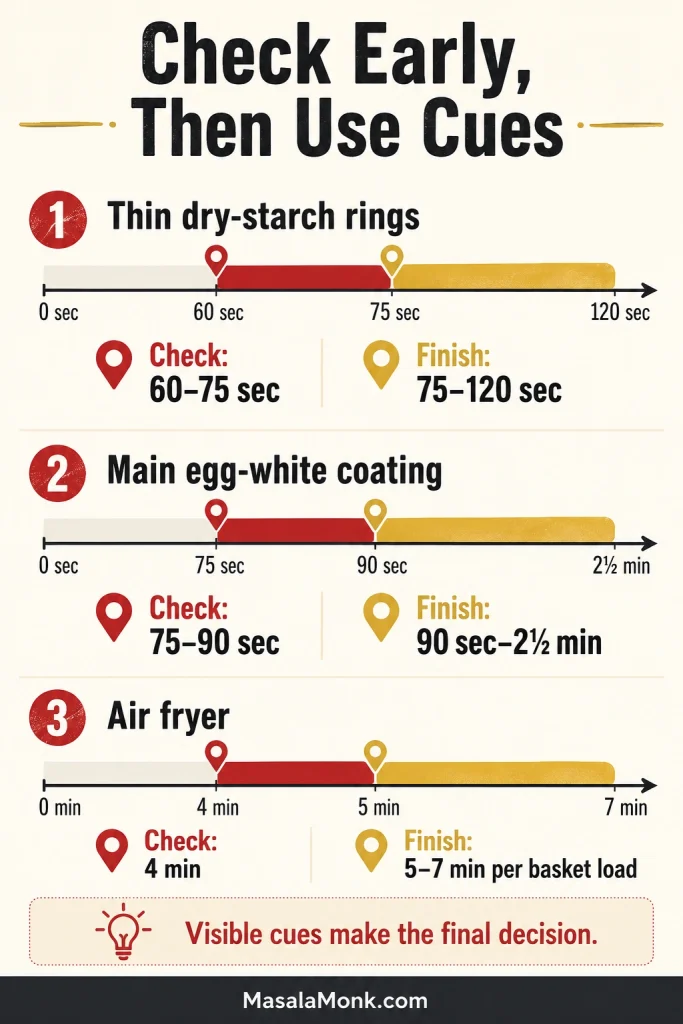
Cut and coating decide the timing together. Fry in 350–365°F / 177–185°C oil, or use 400°F / 200°C for the air fryer, then let opacity, tenderness and crust texture make the final decision.
Method
First check
Typical finish
Thin rings, dry starch
60–75 seconds
75–120 seconds
Main egg-white coating
75–90 seconds
90 seconds–2½ minutes
Air fryer
4 minutes
5–7 minutes per batch
Start with the timing window, then let opacity, dry coating and tenderness decide.
Fuller wet batters follow their own schedule and may use a second fry. Follow the packet timing for pre-breaded calamari.
Tentacle timing: Small tentacle clusters often crisp as quickly as thin rings. Watch them from the early end of the range and lift them before thicker tube pieces when necessary.
Seafood-safety guidance commonly uses an internal target of 145°F / 63°C. Small pieces are awkward to probe accurately, so pair temperature guidance with opaque flesh and the cues below. The FDA seafood-safety guide also covers safe thawing and handling.
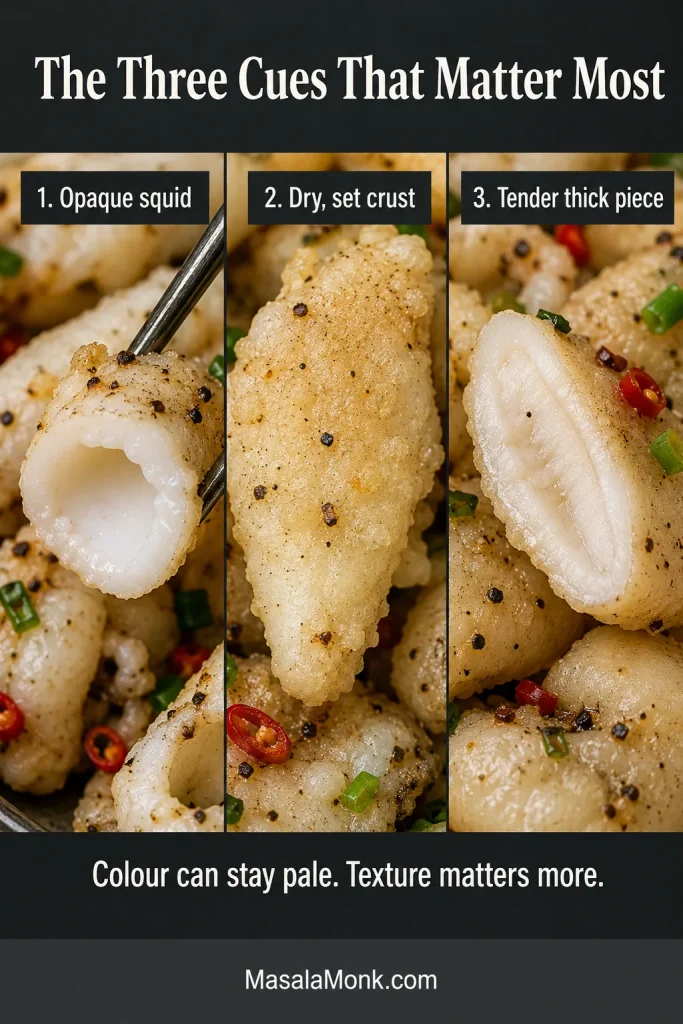
The Three Cues That Matter Most
Squid has turned opaque rather than translucent.
Coating is dry and set instead of dusty, wet or pasty.
A thick piece is cooked through but still tender.
Properly cooked squid may still look pale when the flesh is opaque and the crust is dry.
Curling and calmer bubbling are useful supporting signs, but they can happen at different speeds. Colour is the least reliable cue: a starch-heavy crust may remain pale gold even when it is fully crisp.
Building the Salt and Pepper Seasoning
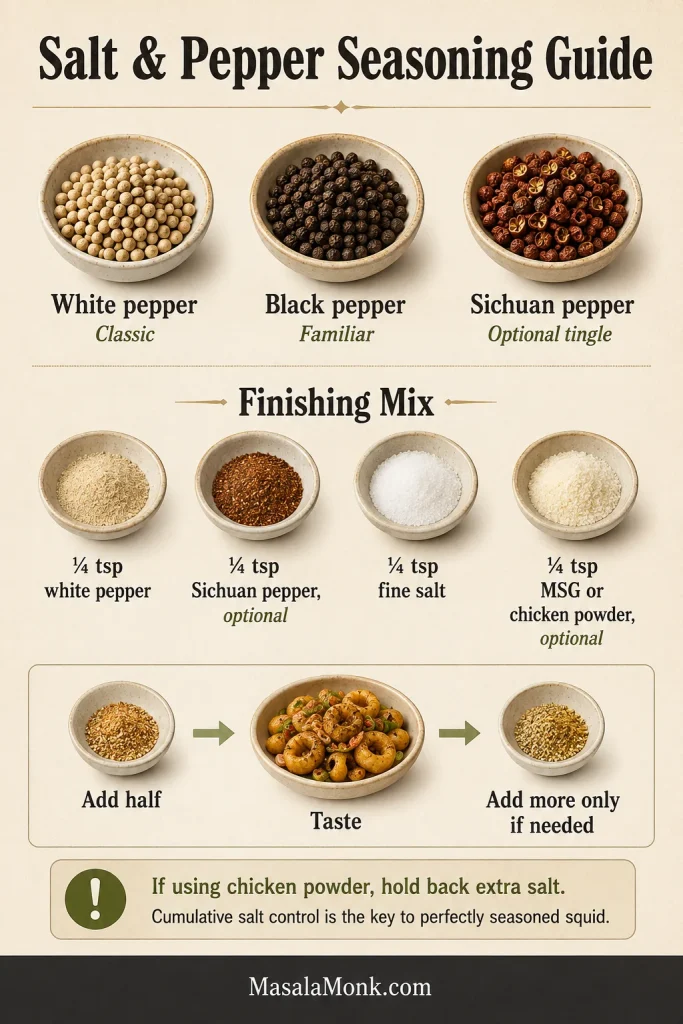
White pepper gives the dish its sharp restaurant-style warmth. Black pepper tastes rounder and more familiar, while Sichuan pepper—also written as Szechuan pepper—adds a citrusy, lightly numbing edge.
For the full batch, use the measured finishing mix from the recipe: ¼ teaspoon white pepper, up to ¼ teaspoon toasted ground Sichuan pepper, ¼ teaspoon fine salt and optional ¼ teaspoon MSG or chicken powder. Add only half after the aromatic toss, taste, then add more if needed. When using salty chicken powder, leave out the finishing salt at first.
Add half the finishing seasoning first because salt appears in the dredge and the final mix.
For a clean white-pepper profile, omit the Sichuan pepper. To make a familiar mixed-pepper finish, replace it with ¼ teaspoon freshly ground black pepper. The squid and dredge already contain salt, so add the finishing mix gradually rather than using all of it automatically. For a hotter table sauce, see the pepper sauce guide.
Air Fryer Salt and Pepper Squid
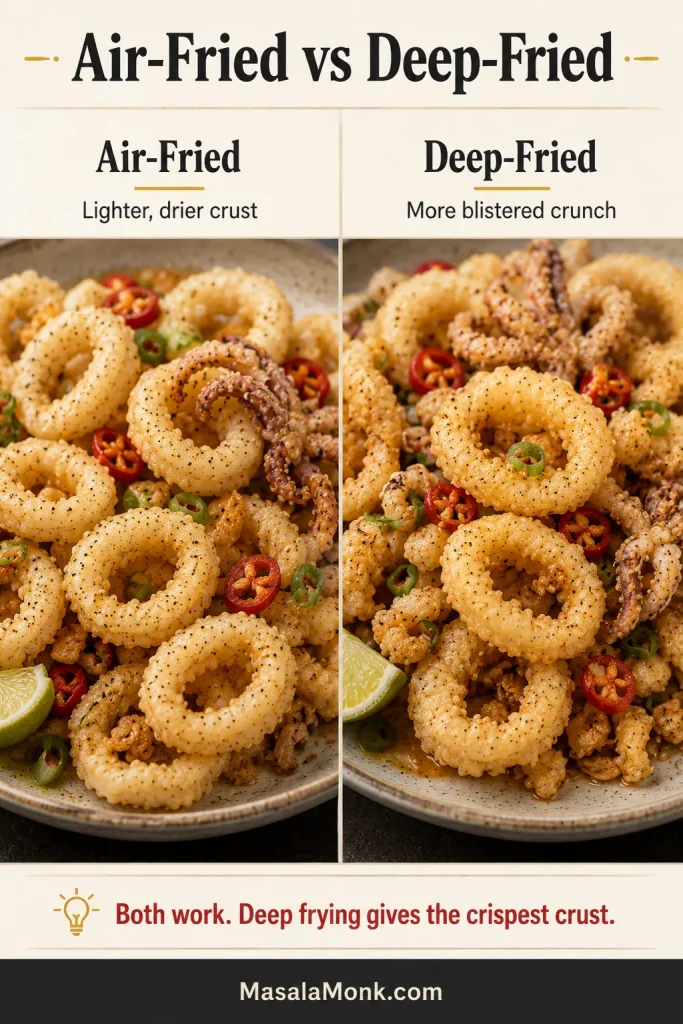
The air fryer works, but it will not mimic deep frying exactly. For the crispest crust, use the main fried method; use the air fryer when less mess and no pot of oil matter more than a deeply blistered crust. Stop when the coating is dry and the squid is just opaque; do not keep cooking merely to chase deeper colour. The 5–7-minute timing applies to each basket load, so allow additional time for multiple batches.
Air frying is lighter; deep frying creates the more blistered crust.
For the egg-white layer: mix 500 g / about 1 lb 2 oz dry squid with 16 g / 2 tablespoons cornstarch, ¼ teaspoon fine salt, ¼ teaspoon white pepper and the optional 2 teaspoons Shaoxing wine. Begin with half a beaten egg white, then add only enough for the squid to feel lightly tacky.
For the air-fryer dredge:
60 g / about ½ cup cornstarch
20 g plain flour, or 20 g certified gluten-free rice flour
½ teaspoon each baking powder, fine salt and white pepper
Use a thinner layer than in the deep-fried version so every powdery patch can be sprayed evenly.
How to Air-Fry the Squid
Preheat the air fryer to 400°F / 200°C for about 3 minutes.
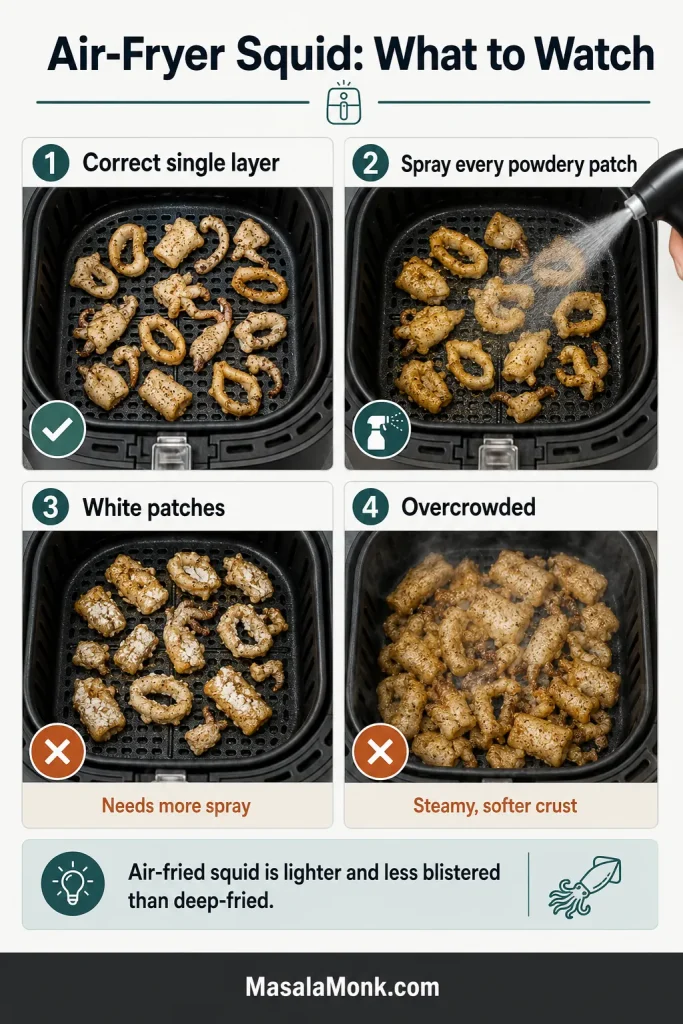
Dredge only the first batch and arrange the pieces in a true single layer.
Spray every powdery patch with neutral oil.
Air-fry for 2–3 minutes, turn, spray again where needed and continue.
Check at 4 minutes. Many small pieces finish around 5–7 minutes per batch, but thick squid, a fuller basket or a cooler-running appliance may need longer. Stop when the squid is opaque and the coating is dry and set, with no wet or floury patches.
Cook in batches without stacking, then toss with separately cooked garlic, chilli and spring onion for only a few seconds.
Space and oil spray matter most in the air fryer; dry patches stay floury and crowded pieces steam.
White dusty patches mean the coating needed more oil. Wet, steamy patches mean the squid needed more drying or more room. For a cool, slightly sweet dip, try homemade yum yum sauce.
Baking or pan-frying: an oven can cook the squid before the coating has time to become crisp, which is why the air fryer is the better low-oil option. For a skillet or griddle version, skip the dredge. Oil and season the squid lightly, then cook very quickly—roughly a minute per side depending on thickness. It will be tender and lightly charred rather than crisp.
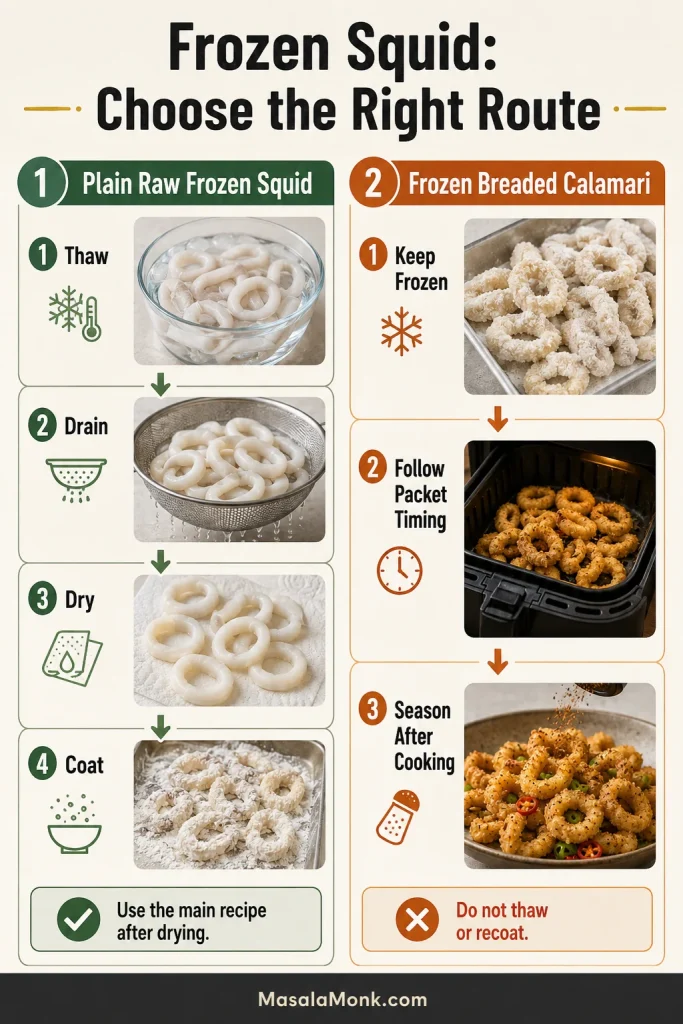
Plain raw frozen squid works well, but it needs completely different treatment from frozen breaded calamari. Check the package before choosing a method.
Thaw and dry raw squid for the homemade coating. Cook pre-breaded calamari directly from frozen.
Plain raw frozen squid or rings: thaw overnight in the refrigerator. For a faster thaw, keep the squid in a leak-proof bag, submerge it in cold water, change the water every 30 minutes and cook it promptly once thawed. Never thaw squid on the counter; once it is drained and dry, continue with the main recipe.
Drain thoroughly in a colander.
Pat every surface dry, including inside the rings.
Add the homemade egg-white layer and dredge only after the ice and surface water are gone.
Never put partially frozen raw rings into hot oil; the water can cause violent splatter and a weak crust.
Frozen breaded or battered calamari: usually cook it directly from frozen unless the package says otherwise. Do not thaw it or add the raw-squid dredge. Follow the packet timing and safety directions, then add the salt-and-pepper seasoning and separately cooked aromatics once the pieces are hot and crisp. If you want the homemade starch coating instead, start with plain raw squid and return to the main recipe.
For a pub-style frozen calamari plate, keep the Chinese seasoning light and serve the rings with lemon and homemade tartar sauce.
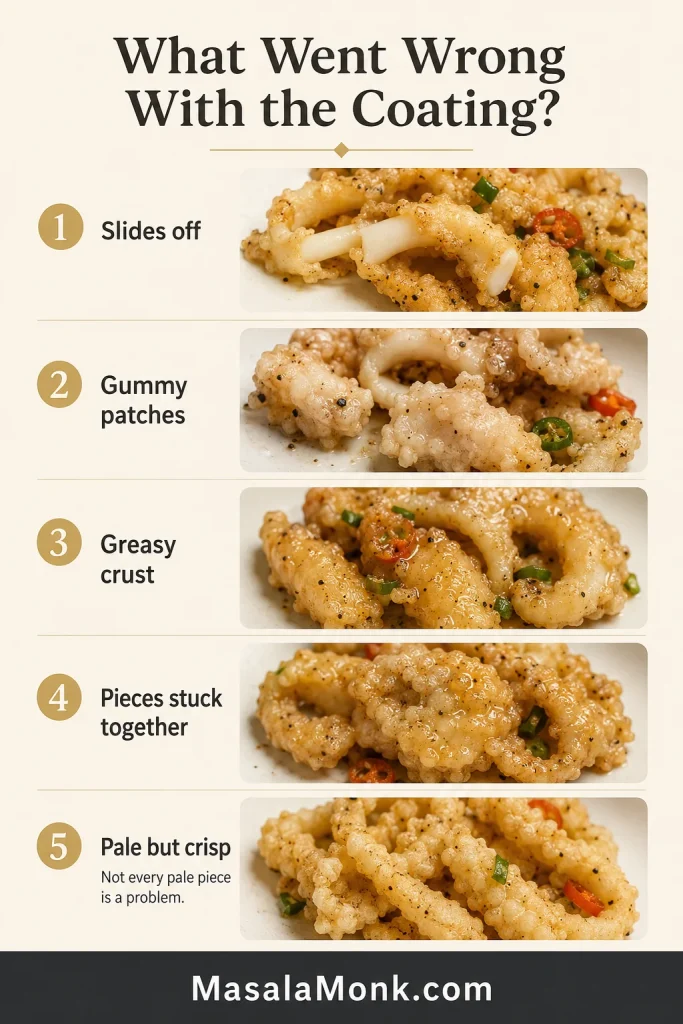
Troubleshooting the Coating and Texture
If the first piece is not quite right, match what you see below before changing several things at once. For the root causes, recheck the coating guide and the time and temperature guide before frying another batch.
Match the coating problem before changing the method: slipping, gummy, greasy, stuck or pale-but-crisp.
Texture and Coating Fixes
Problem
Likely cause
Fix
Squid is rubbery
Too long in the oil or final pan
Check sooner, lift thin pieces first and keep the final toss brief
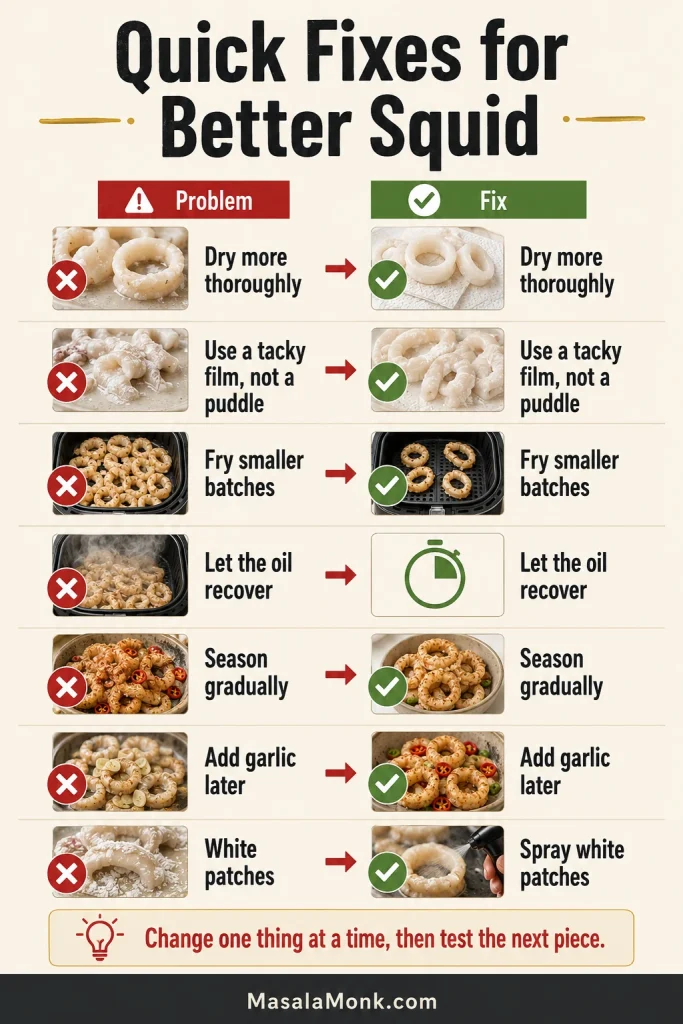
Coating falls off or turns gummy
Wet squid, pooled liquid or delayed frying
Dry thoroughly, drain pooled liquid, use only enough egg white for a tacky film and dredge immediately
Coating is soggy or greasy
Large batch or cool oil
Reduce the batch and let the oil recover
Crust is pale but crisp
Starch-heavy coating
Serve it; pale colour can be correct
Later batches become soft
Cool oil, large batches or accumulated crumbs
Recover the heat, reduce the batch and skim crumbs
Seasoning, Garlic and Air-Fryer Fixes
Problem
Likely cause
Fix
Squid tastes too salty
Salt added at several stages
Add finishing seasoning gradually; omit extra salt with chicken powder
Garlic burns
Added too early
Add it only for the final 10–20 seconds
Oil splatters aggressively
Water remained on the squid
Dry thoroughly and lower pieces away from the body
Pieces stick together
They touched before setting
Add separately and loosen gently with a spider
Air-fryer coating has white patches
Dry coating received too little oil
Spray every powdery area before and after turning
Quick Rescue Rule
Use this rescue rule: change one variable at a time, then test the next piece before adjusting anything else.
Change one variable at a time, then test the next piece.
What to Do With the Frying Oil
Once frying is finished: let the oil cool completely. If it remains clean and smells neutral, strain it into a labelled covered container for another savoury frying session. Seal unwanted cooled oil for disposal according to local guidance—never pour it down the sink.
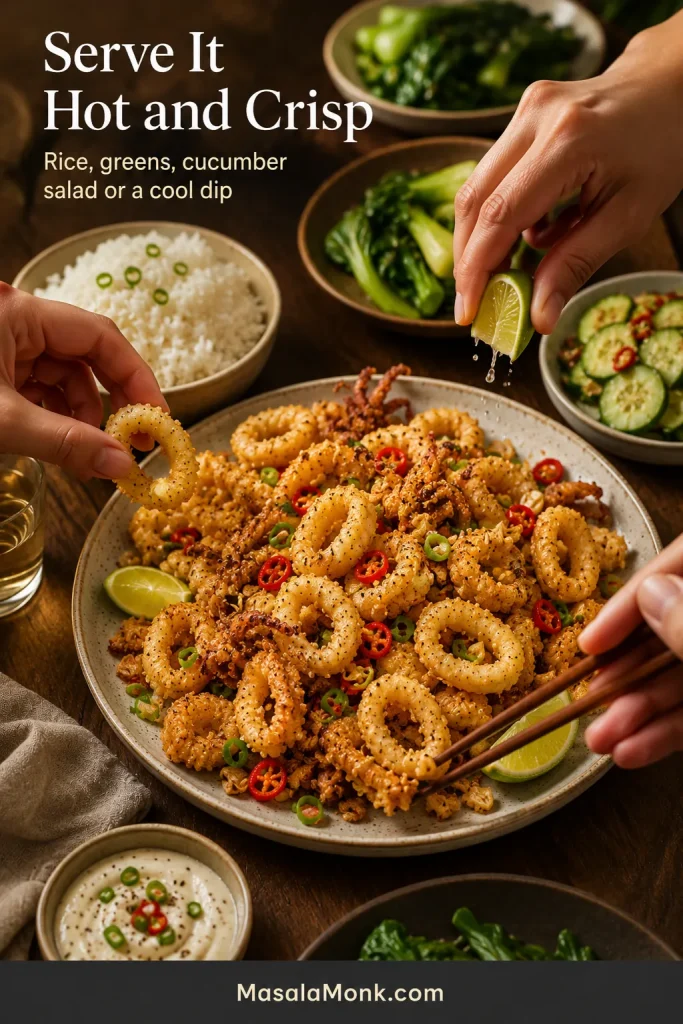
Bring the squid to the table while the crust is still crisp and the garlic and chilli are fragrant. Lemon or lime and something cool make a clean contrast with the peppery coating.
Serve immediately while the crust and aromatics are at their freshest.
For a Chinese-style meal: steamed jasmine rice or shrimp fried rice, stir-fried greens and cucumber salad.
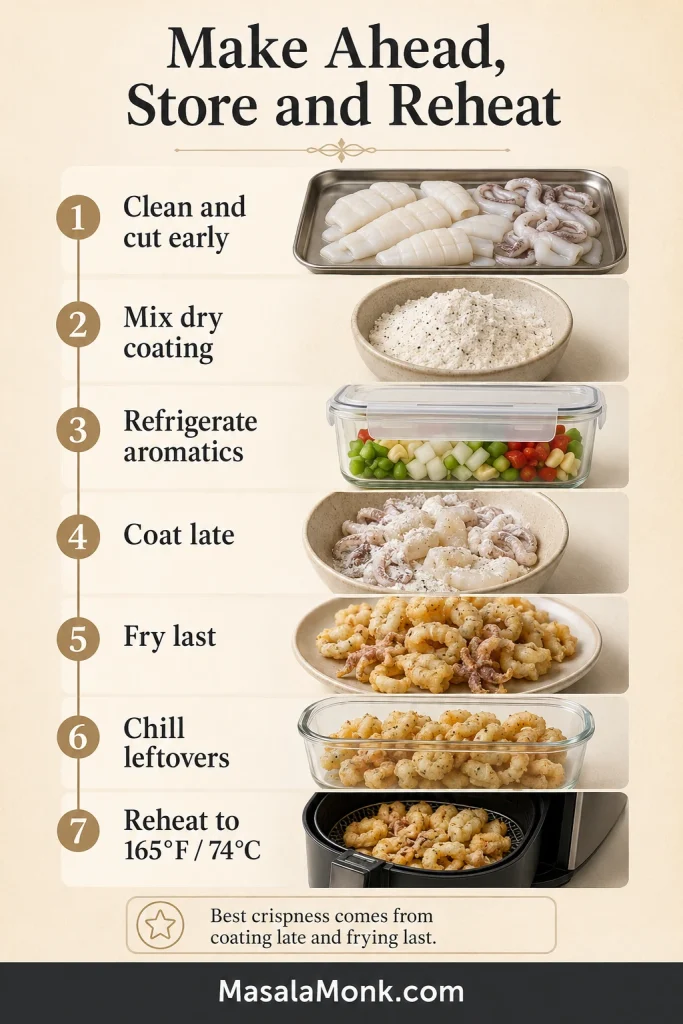
Almost everything except coating and frying can be organised before guests arrive: prepare early, coat late, fry last.
Several hours ahead: clean and cut the squid, then refrigerate it covered and cold.
Earlier the same day: mix the coating and seasoning; chop and dry the aromatics, then cover and refrigerate them until needed; make the dip and chill it separately.
Just before frying: dry and season the squid, heat the oil and dredge only the next batch.
At serving time: cook the aromatics, toss briefly and take the plate straight to the table.
For a larger group, use two racks and keep every batch in one layer. Do not cover the fried squid. A cucumber salad can be made earlier and chilled, leaving the final minutes free for frying. Turn on the extractor or open a window before the oil heats to reduce lingering frying smell.
Storing and Reheating Leftover Calamari
Freshly fried squid has the lightest crust, but leftovers can still be reheated. Refrigerate them within two hours in a shallow airtight container, keep wet dips separate and use within 1–2 days for the best quality.
Air fryer: heat at 375°F / 190°C and check after 2 minutes; most small portions need 3–4 minutes. Oven: spread the pieces on a rack at 400°F / 200°C and check after 5 minutes. Use the microwave only when speed matters more than crunch.
For food safety, reheat leftovers to 165°F / 74°C and remove them from the heat as soon as they reach that temperature. Longer reheating makes the squid firmer.
Prepare ahead, but coat late and fry last; reheat leftovers until they reach 165°F / 74°C.
Frequently Asked Questions
Do I need to soak or tenderise squid first?
Small or medium squid usually needs no soaking or tenderising when cut evenly and fried quickly. Very large or unusually thick squid may need different preparation, but milk or bicarbonate of soda/baking soda is unnecessary for this main method.
Is salt and pepper squid the same as calamari?
Calamari is another name for squid. However, “fried calamari” often describes a thicker battered or crumbed pub-style dish, while salt and pepper squid usually has a lighter starch coating and a dry pepper seasoning.
Can I make it without egg?
Yes. Press well-drained squid directly into cornstarch or potato starch and fry immediately. The crust will be lighter and may shed more easily.
Which side of the squid should I score?
Score the inside surface of the opened tube. Shallow diagonal cuts in both directions help the piece curl without slicing it through.
Can I shallow-fry it?
You can, but the crust will be less even and the squid may need turning. Use a thin coating, a generous layer of hot oil and cook only a small number of pieces at once.
Saveable Salt and Pepper Squid Method
Dry, test, batch, recover and toss briefly.
Salt and pepper squid stops feeling risky once you stop waiting for dark colour and begin trusting the dry crust and tender centre. Serve it while the garlic is fragrant, the spring onions are fresh and the pale-golden crust is still light and crisp.
What cut did you use, and how long did your first test piece take? That detail may help the next cook using similar squid.
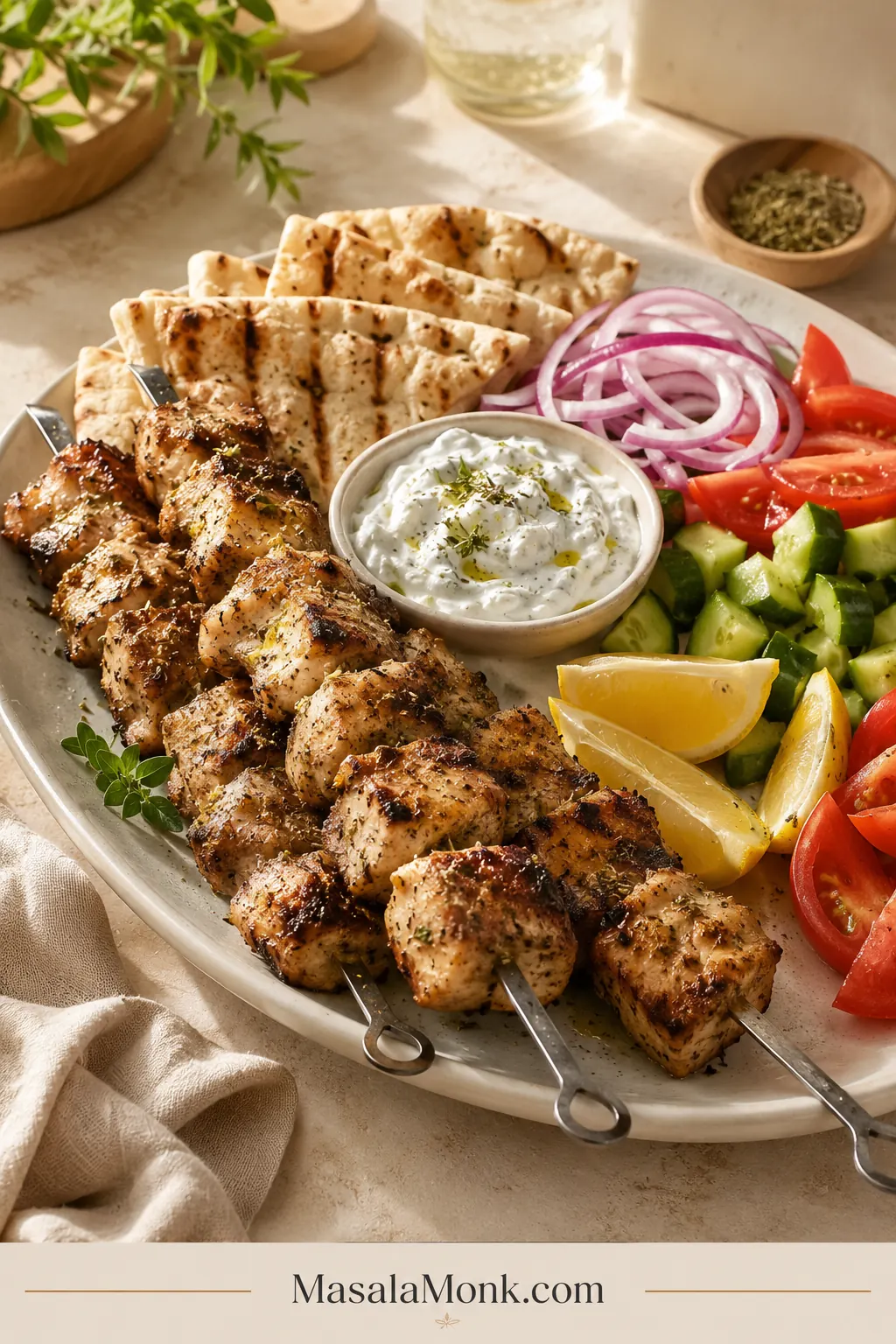
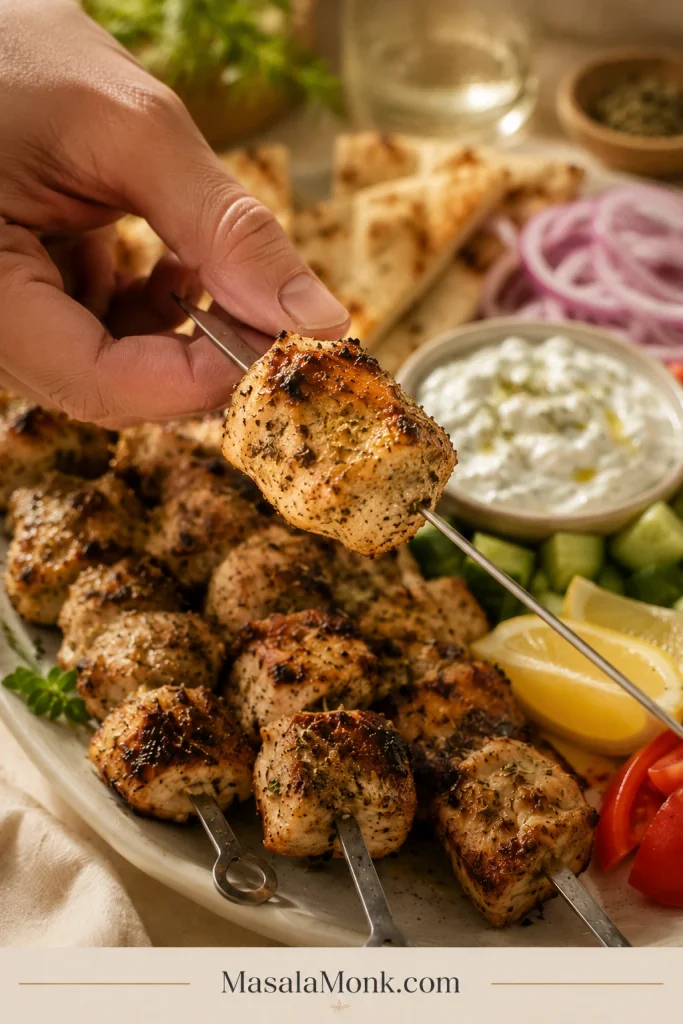
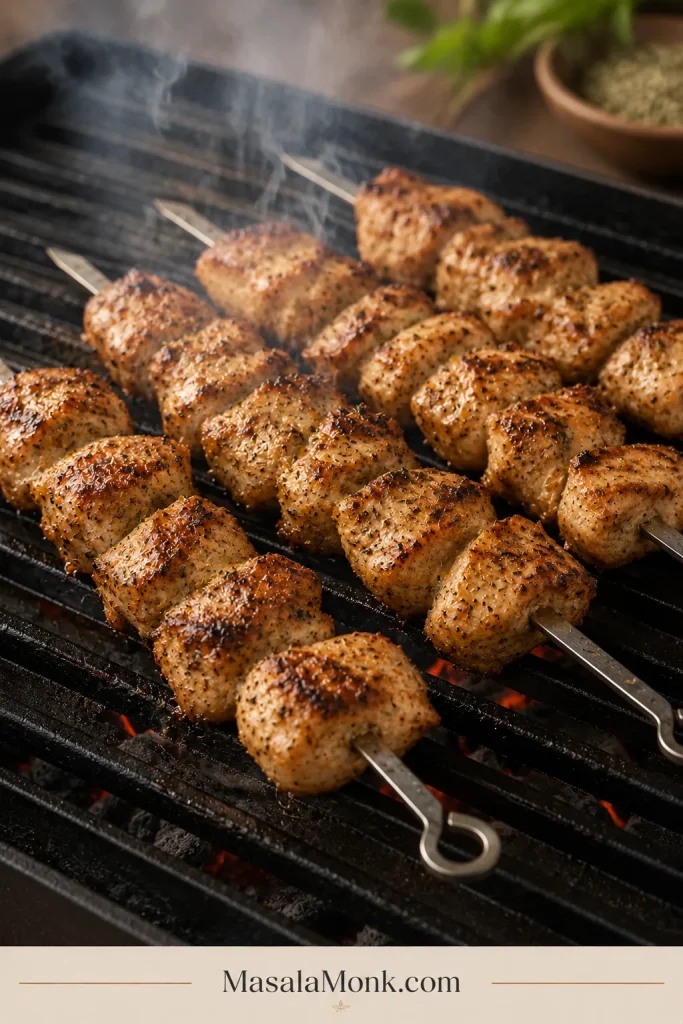
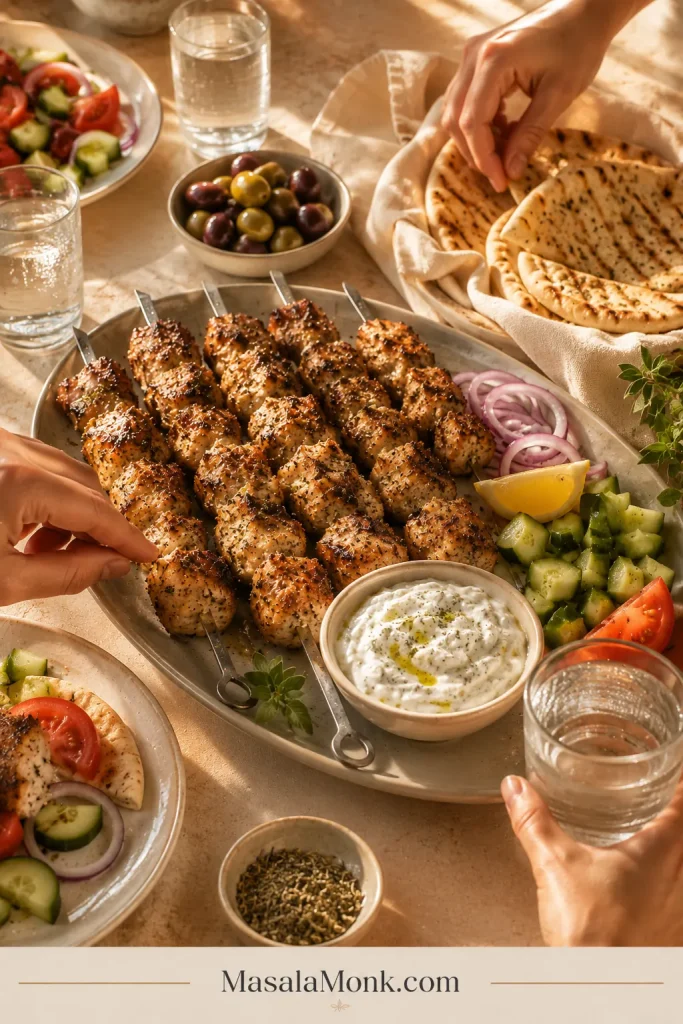
The first piece of chicken rarely makes it to the serving plate. It comes off the skewer hot, lemony and garlicky, with oregano clinging to the edges and just enough char to make waiting for the pita difficult.
That is the result this chicken souvlaki recipe is built around: juicy in the centre, browned in scattered patches, and bright without tasting sharply acidic. Boneless thighs are the most forgiving starting point. Chicken breast works too, but it needs a shorter marinade and an earlier temperature check.
Let the first piece fall back over the platter, where its juices can mingle with the lemon and vegetables instead of soaking the pita.
Start here
The version to make first
Use 750 g / 1 lb 10 oz boneless chicken thighs, cut into pieces around 3 cm / 1¼ inches thick. Marinate for 1 to 4 hours, then cook over medium-high heat until the edges are browned and the thickest piece reaches 165°F / 74°C.
The ingredient list is short. What matters is keeping the pieces even, the lemon restrained, the heat strong and taking the skewers off on time. Thighs give you more time to build colour; breast needs to leave the heat sooner.
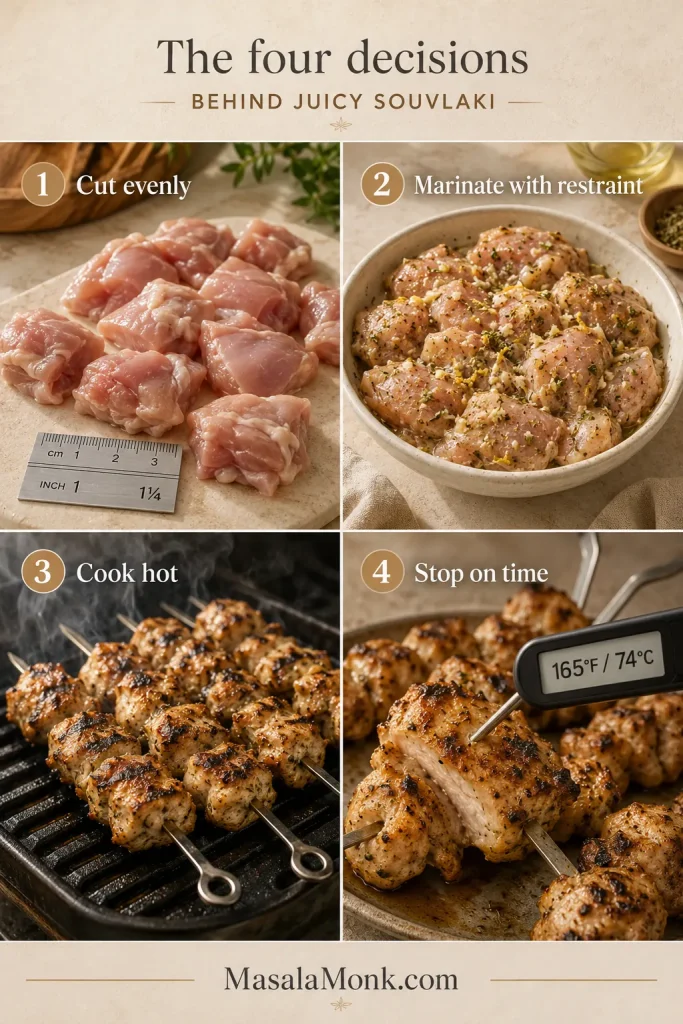
Remember: Cut evenly, marinate with restraint, cook hot and stop on time.
Even pieces, a light coating and strong heat give the chicken time to brown before the centre dries.
Make it now
Chicken Souvlaki Recipe
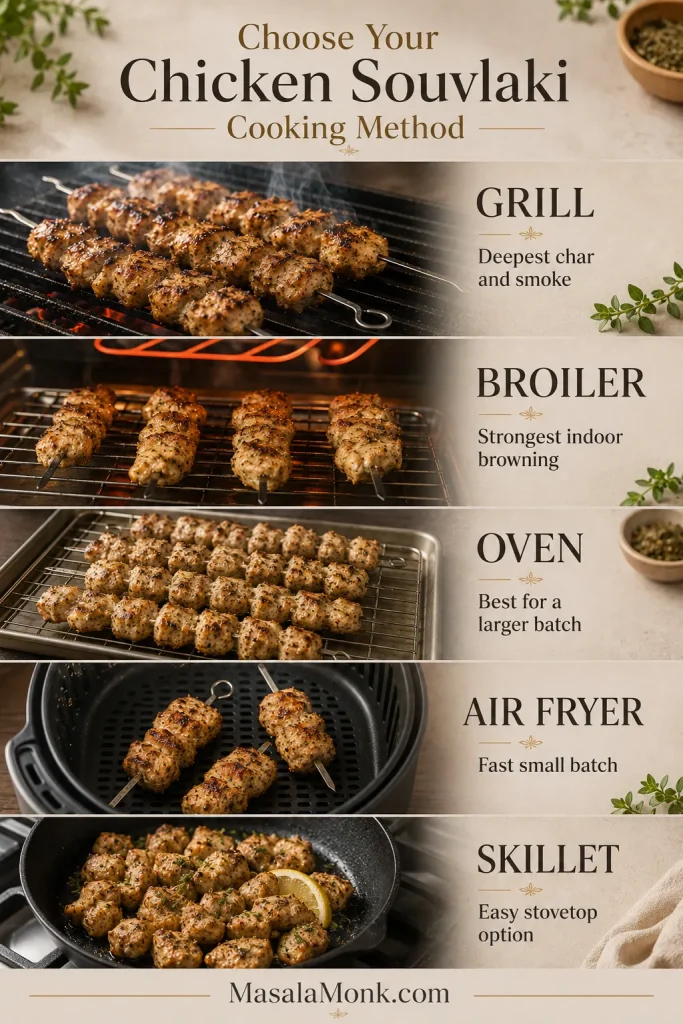
The main method uses chicken thighs and an outdoor grill. Broiler, oven, air fryer and stovetop adjustments follow the grill instructions.
Recipe at a glance
Serves: 4 as a pita or plated meal
Yield: About 6 medium skewers
Preparation: 20 minutes
Marinating: 1 to 4 hours
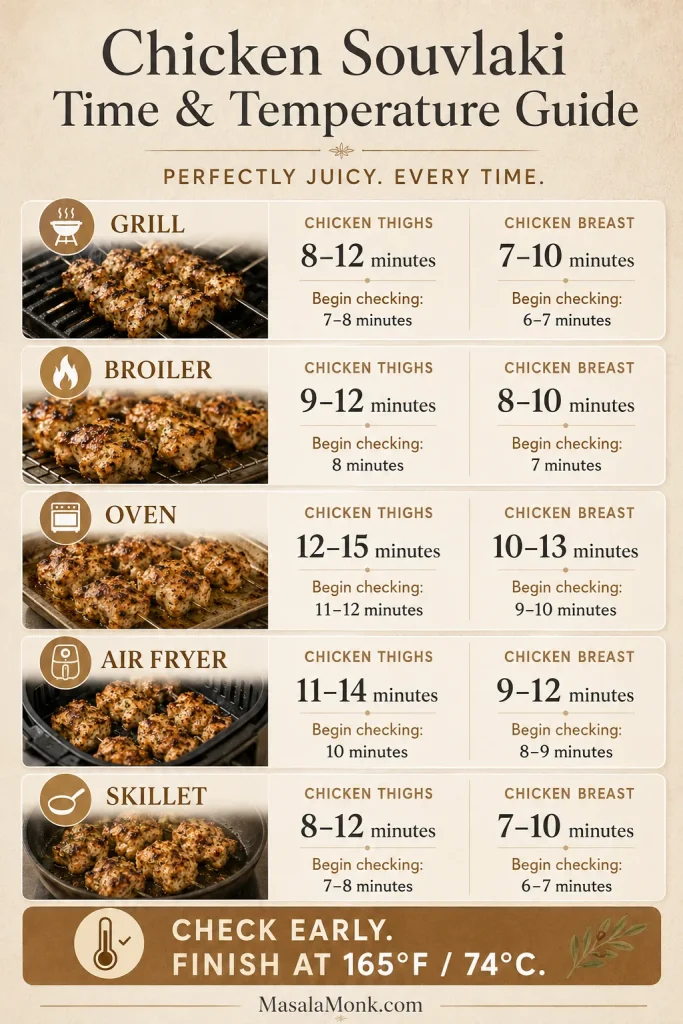
Grilling: About 8 to 12 minutes
Piece size: Around 3 cm / 1¼ inches
Doneness: 165°F / 74°C
Equipment that helps most
Six flat metal skewers, or bamboo skewers soaked for at least 30 minutes
Instant-read food thermometer
Wire rack and rimmed sheet pan for oven or broiler cooking
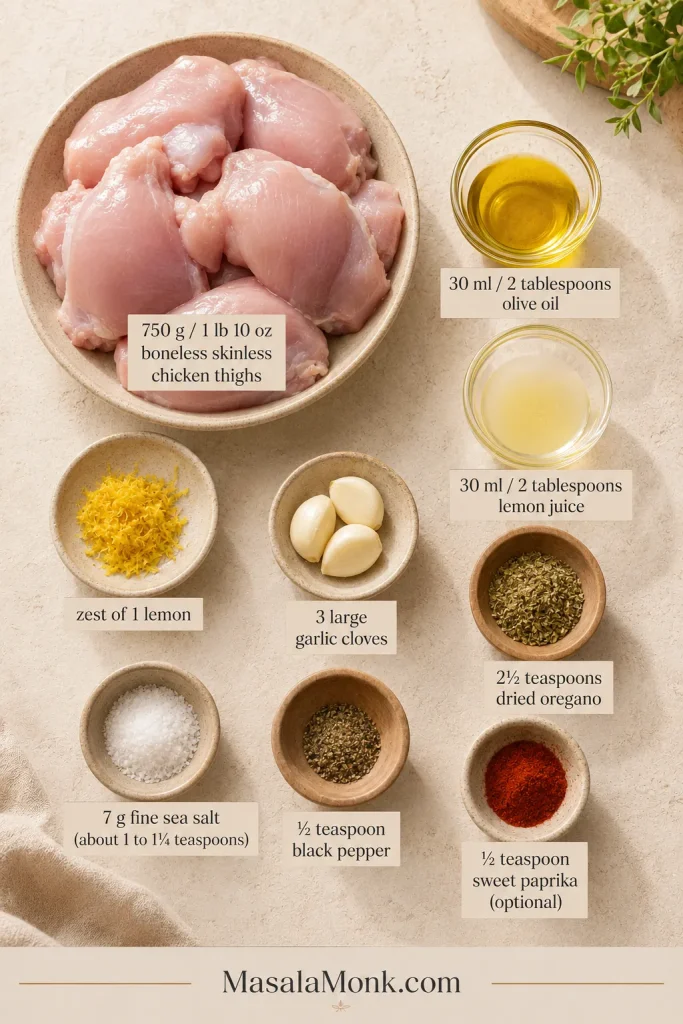
Ingredients
To make chicken souvlaki marinade, grate the lemon before juicing it; an intact lemon is easier to hold and preserves more fragrant zest.
For the chicken and marinade
750 g / 1 lb 10 oz boneless, skinless chicken thighs
30 ml / 2 tablespoons extra-virgin olive oil
30 ml / 2 tablespoons fresh lemon juice
Finely grated zest of 1 lemon
3 large garlic cloves, finely grated or minced
2½ teaspoons dried oregano
7 g fine sea salt, approximately 1 to 1¼ teaspoons depending on the salt
Cooked fries, shredded lettuce or crumbled feta, optional
Instructions
Prepare the pita, tzatziki and vegetables before cooking, because the skewers move quickly once they reach strong heat.
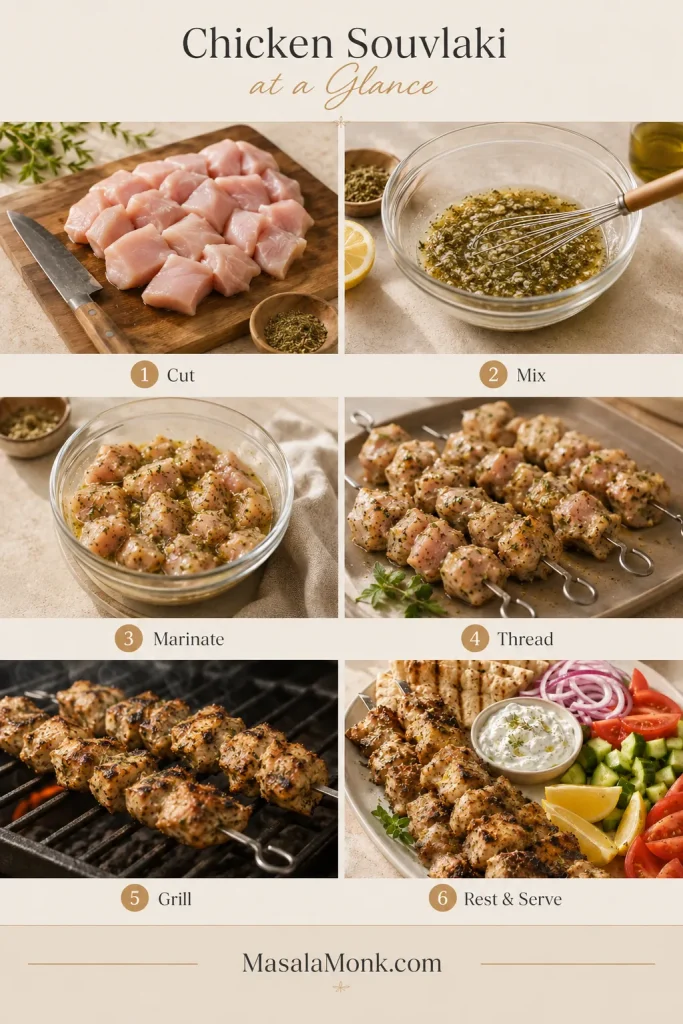
Prepare and thread
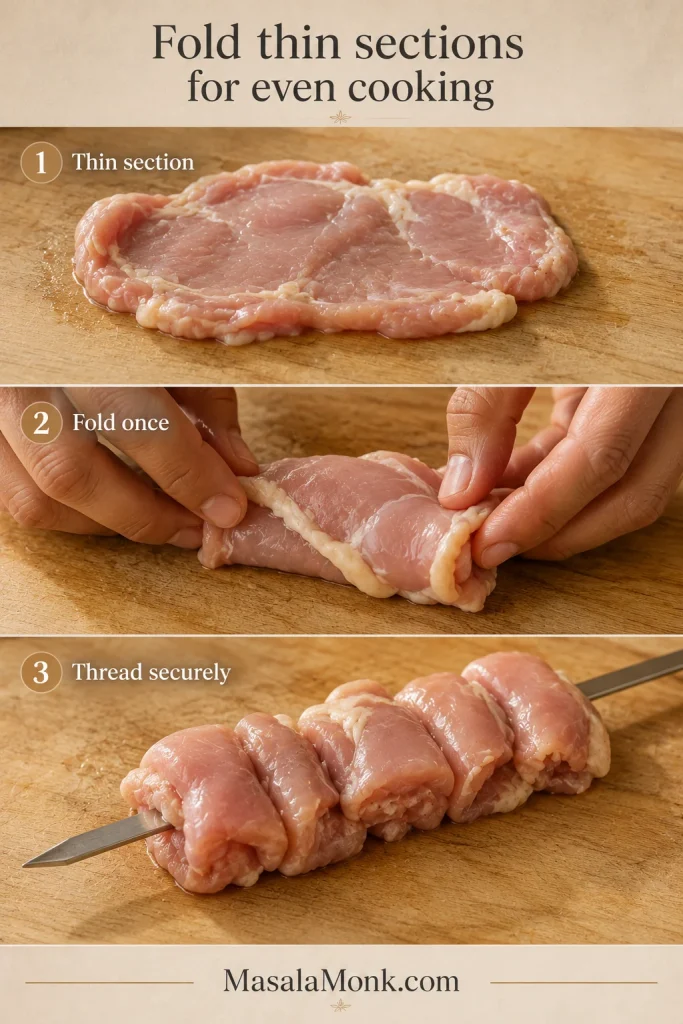
1. Cut the chicken. Trim away large pockets of fat and loose pieces. Cut the thighs into pieces around 3 cm / 1¼ inches thick. Fold thin sections over themselves so they cook at a similar rate. Similar thickness matters more than tidy cubes.
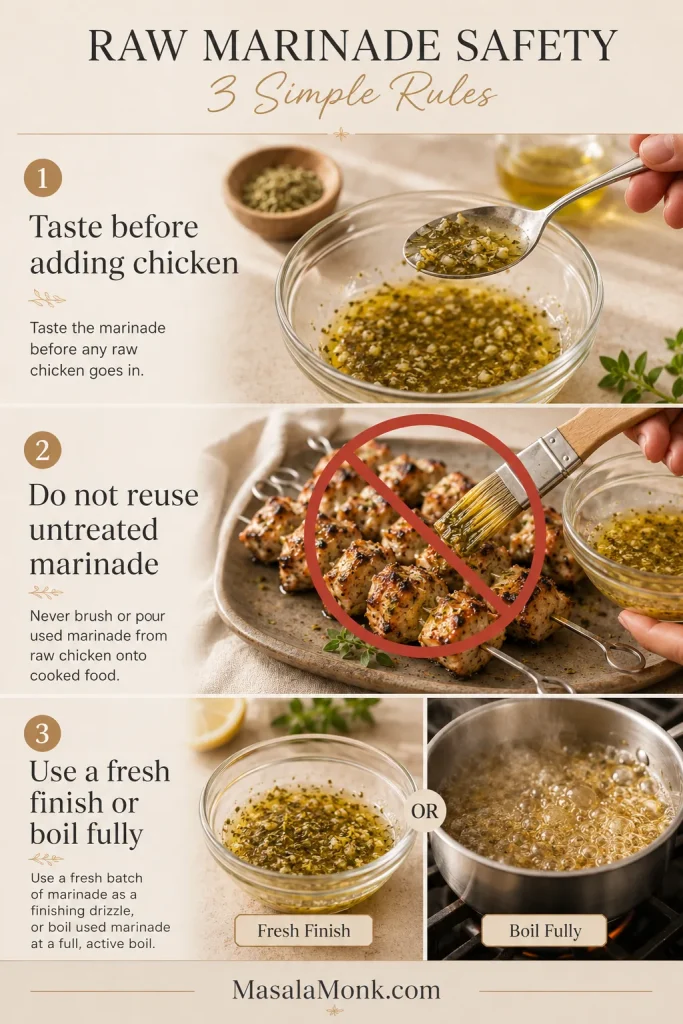
2. Mix and check the marinade. Whisk together the olive oil, lemon juice, zest, garlic, oregano, salt, pepper and optional paprika. Before adding the chicken, taste a little of the marinade. It should be well seasoned, clearly lemony and strongly herbal.
3. Marinate. Add the chicken and turn until every piece is coated. Cover and refrigerate for 1 to 4 hours.
4. Thread and preheat. Let excess marinade drip back into the bowl, then thread five or six pieces onto each skewer. Preheat the grill with the lid closed to medium-high, approximately 400–450°F / 205–230°C on its built-in thermometer. Clean and lightly oil the grate.
Cook, check and serve
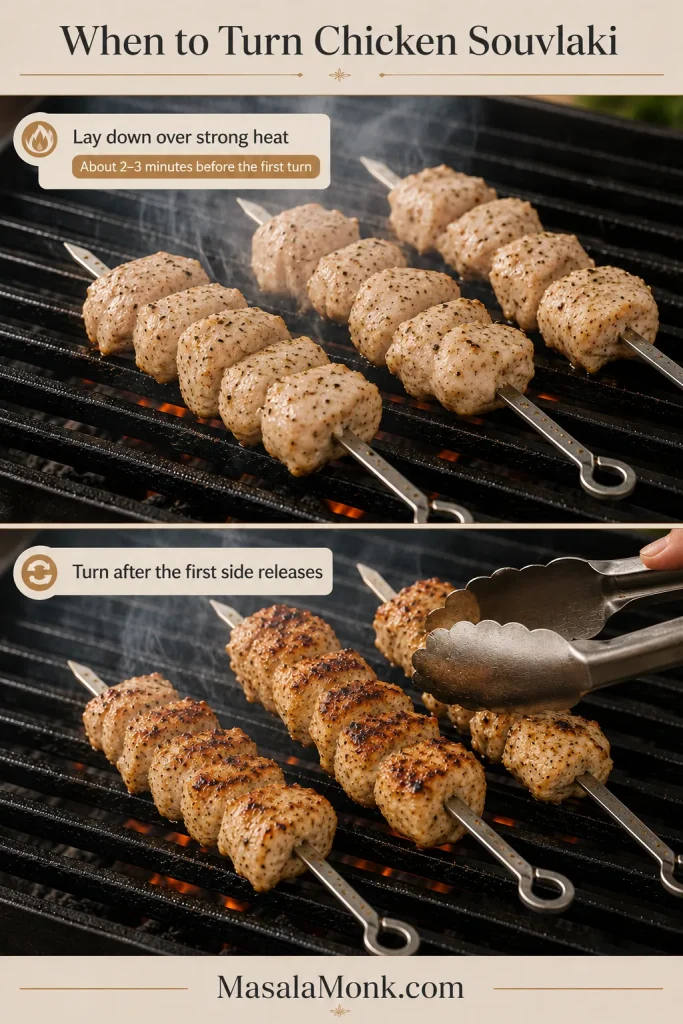
5. Begin grilling. Place the skewers over direct heat. They should sizzle immediately. Cook for 2 to 3 minutes before making the first turn.
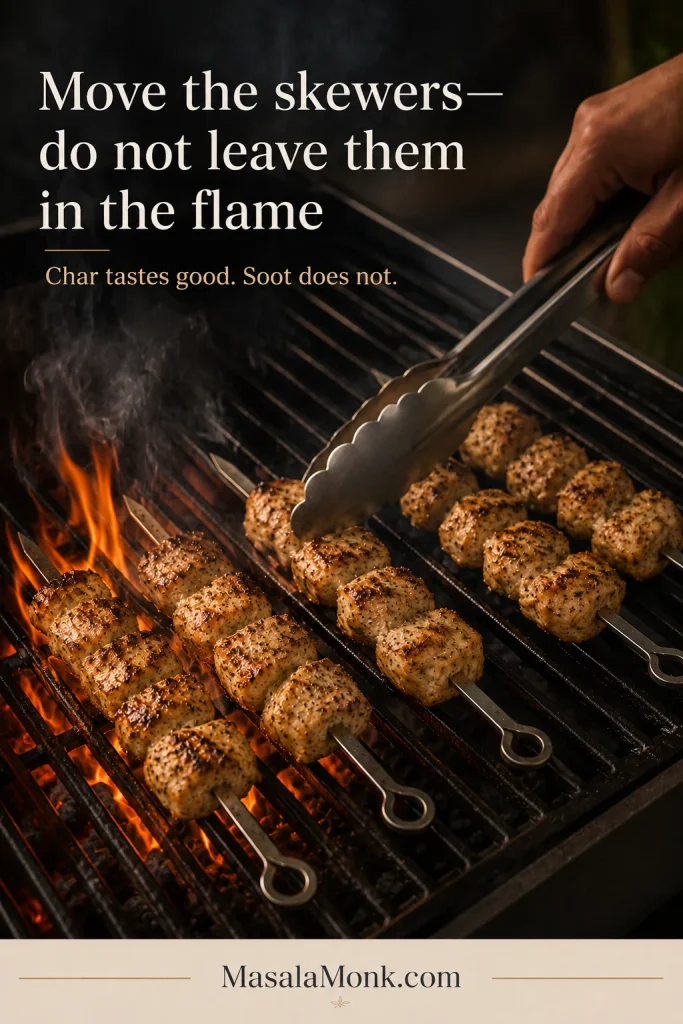
6. Turn and brown. Continue cooking for approximately 8 to 12 minutes in total, turning every 2 to 3 minutes. Move the skewers to a cooler area whenever dripping oil causes flames.
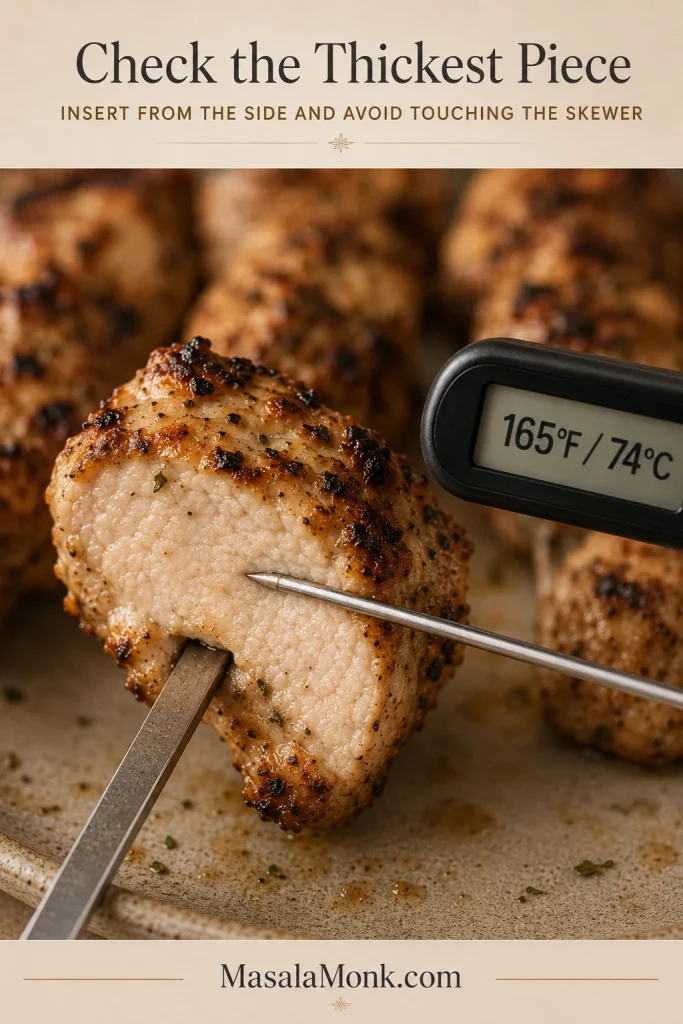
7. Check and rest. Begin checking the thickest piece after 7 to 8 minutes. Remove the skewers when the centre reaches 165°F / 74°C, then rest for 3 to 5 minutes.
8. Finish and serve. Add a squeeze of lemon, a small drizzle of olive oil and a pinch of oregano. Serve with warm pita, tzatziki, tomato and red onion.
Using chicken breast?
Replace the thighs with an equal weight of boneless, skinless breast. Keep the pieces around 3 cm / 1¼ inches thick, marinate for 30 to 60 minutes, and begin checking 2 to 3 minutes earlier. Put breast and thigh on separate skewers so each can leave the heat when ready.
Do not taste the marinade after raw chicken has entered the bowl. Do not brush used marinade over nearly cooked or finished chicken unless it has first been brought to a full boil. This follows USDA poultry-marination guidance (opens in a new tab). Fresh lemon, olive oil and oregano make a simpler finishing mixture.
Set aside any finishing mixture before raw chicken enters the bowl. Afterward, discard the used marinade unless it is brought to a full boil.
Chicken Souvlaki Guide
Use the contents below to jump to the chicken cut, marinade, cooking method, serving idea or troubleshooting help you need.
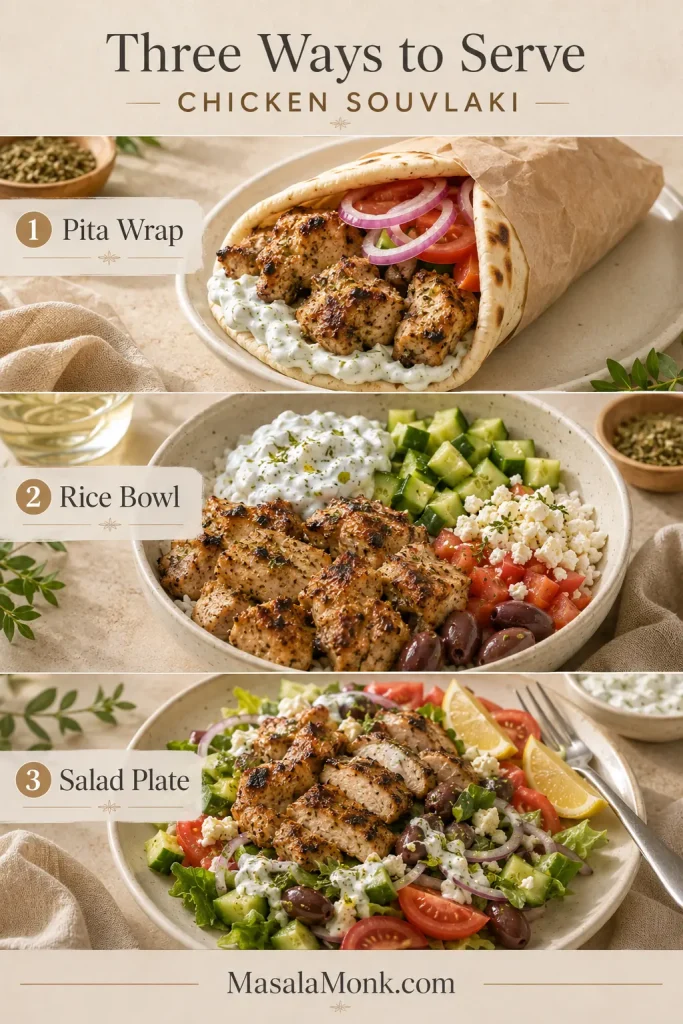
Chicken souvlaki is made from small pieces of marinated chicken threaded onto skewers and cooked quickly over strong heat. It can be eaten directly from the skewer, served on a plate, or tucked into warm pita with sauce and vegetables.
You may also see it called Greek chicken skewers or Greek chicken kebabs. Names and serving styles vary across Greece and Cyprus; here, souvlaki means lemon-oregano chicken cooked on small skewers and served directly or in pita.
Souvlaki differs from gyro, which is cooked as a larger stack on a vertical rotisserie and shaved into slices.
Chicken Thighs or Chicken Breast?
Thighs stay juicy longer, while breast cooks leaner and faster and gives you less room to miss the moment.
Chicken cut
What it does best
Marinating time
Watch for
Boneless thighs
Stay juicy and tolerate stronger heat
1 to 4 hours
Uneven fatty or folded sections
Chicken breast
Gives a leaner, cleaner-tasting skewer
30 to 60 minutes
Drying before deep colour develops
Choose thighs when you want more flexibility at the table; breast is leaner but rewards precise timing and prompt serving.
Why thighs are the easiest first choice
Chicken thighs cope well with the strong heat needed for browning. Their fuller flavour also stands up to the citrus and oregano. Trim large pockets of fat and loose flaps, but leave the smaller seams that help the meat remain succulent.
How to keep chicken breast juicy
Cut breast into pieces around 3 cm / 1¼ inches thick and marinate for only 30 to 60 minutes. Begin checking early. The centre should remain moist and opaque, with modest browning around the edges.
Keep breast and thigh on separate skewers. Breast may be ready while thicker thigh pieces still need another minute.
Chicken Souvlaki Marinade: Lemon, Oregano and Timing
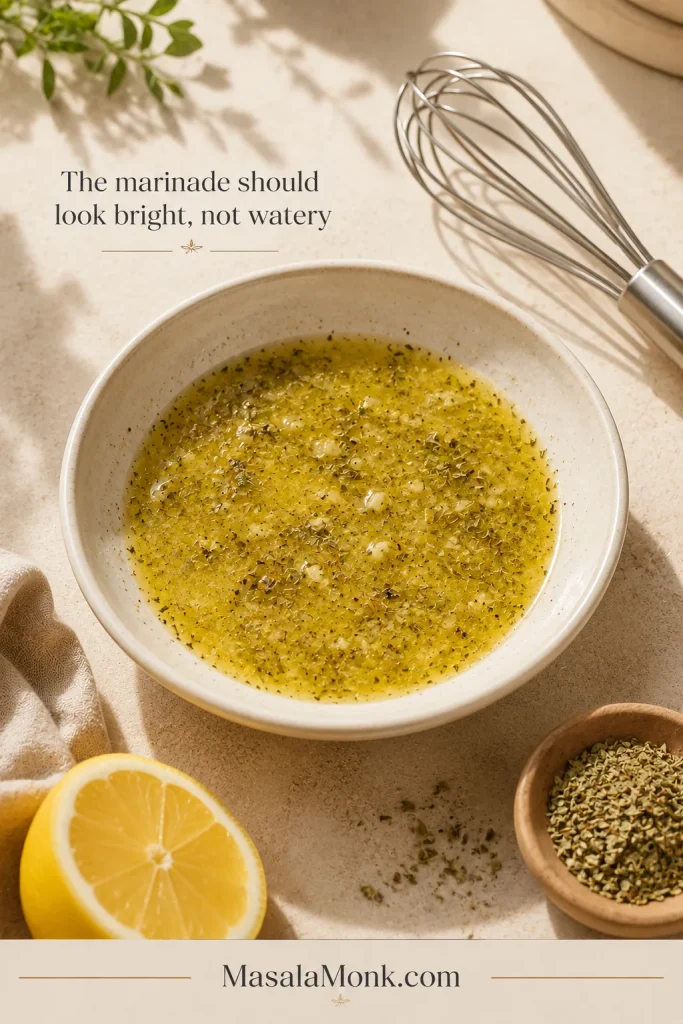
The marinade should smell strongly of oregano and garlic, with lemon brightening the mixture without taking over. Garlic, oregano, salt and black pepper form the core; zest adds fragrance, while paprika is optional.
The right coating clings as a thin film; if marinade streams from the chicken, let the excess drain before threading.
Lemon juice and zest: Juice sharpens the marinade; zest adds fragrance. Grate only the yellow outer layer because the white pith can taste bitter.
Garlic: Finely grated or minced garlic coats the chicken evenly. Brush away any large loose pieces before intense broiling if they begin darkening too quickly.
Oregano: Greek oregano is ideal, but any fragrant dried oregano works. Rub it briefly between your fingers to release more aroma.
Salt: Seven grams gives a dependable starting point because different salts occupy different amounts of space.
Paprika: Optional for gentle colour and sweetness.
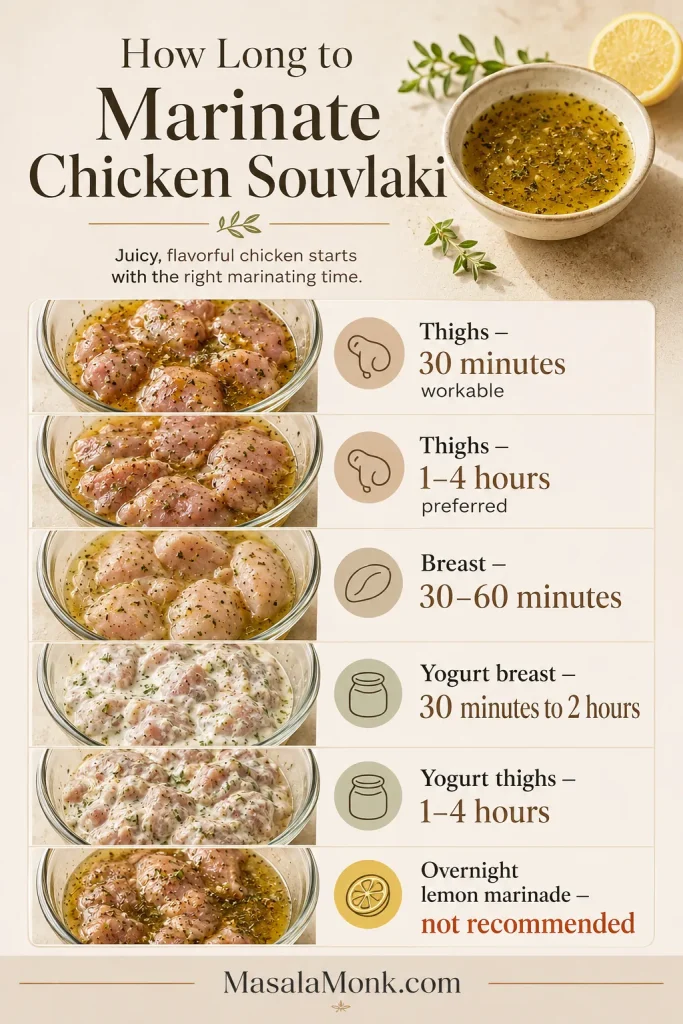
How long should the chicken marinate?
Small pieces season quickly. Thighs can remain in the lemon-oregano marinade for 1 to 4 hours, while breast needs only 30 to 60 minutes.
Short on time? Thirty minutes still gives chicken thighs useful surface flavour. One to four hours produces a fuller lemon, garlic and oregano coating.
Chicken breast needs only 30 to 60 minutes, so it can be marinated much closer to cooking time than thighs.
Version
Best for
Marinating time
Classic lemon-oregano thighs
Grilling and a forgiving texture
1 to 4 hours
Classic lemon-oregano breast
A leaner skewer
30 to 60 minutes
Yogurt-coated breast
A thicker, gently tangy coating
30 minutes to 2 hours
Yogurt-coated thighs
A softer exterior and fuller coating
1 to 4 hours
Overnight marination is unnecessary here and can affect the outside texture, particularly with breast. The lemon should brighten the chicken without making the surface feel cured or soft.
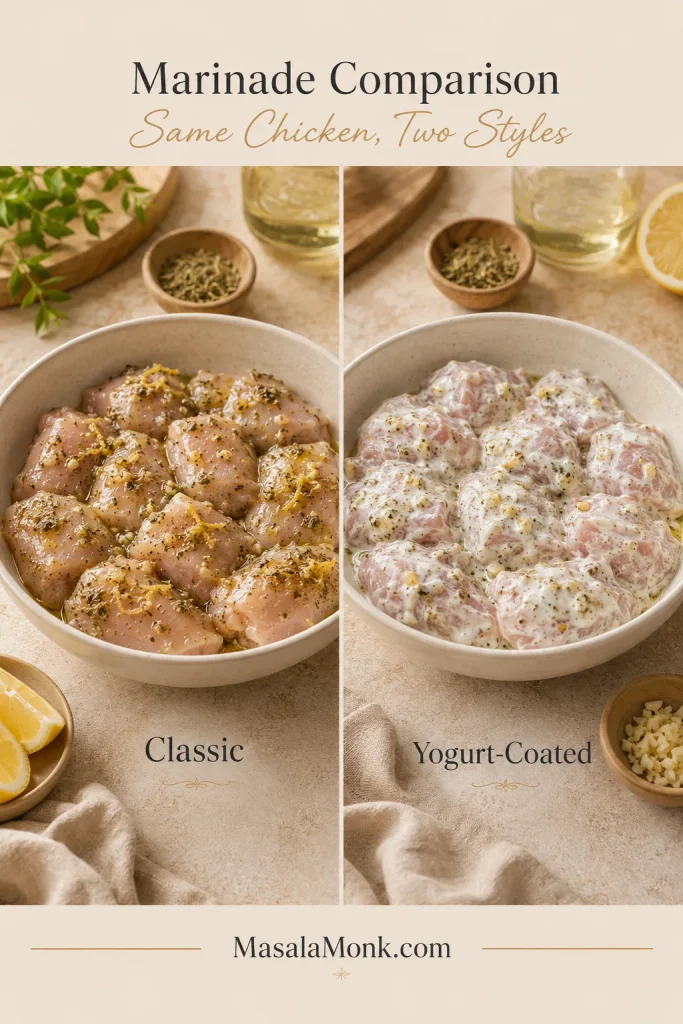
For a yogurt-coated version, add 60 g / ¼ cup thick Greek yogurt and reduce the lemon juice to 15 ml / 1 tablespoon. Keep the zest, garlic, oregano, salt and pepper unchanged.
Classic marinade handles direct high heat well. Yogurt-coated chicken colours faster, so watch closely as the dairy solids brown.
For a little heat, add ¼ to ½ teaspoon chilli flakes or a small pinch of cayenne.
Cut and Thread the Chicken for Even Cooking
Cut by thickness, not perfect shape
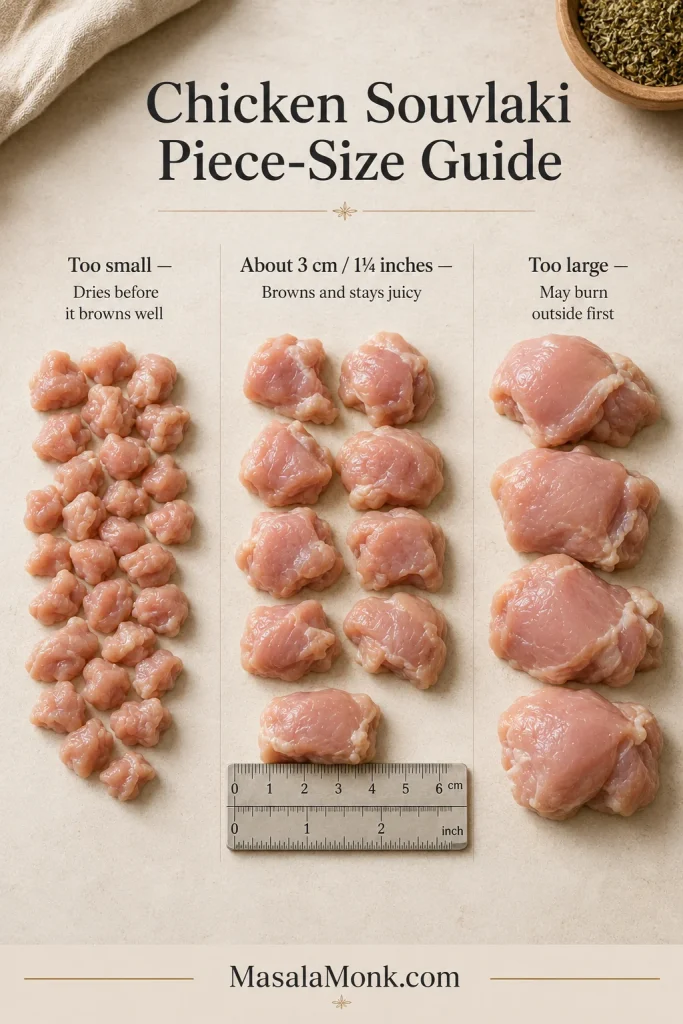
Tiny cubes cook so quickly that they can dry before they develop good colour. Very large pieces protect the centre but may blacken outside before cooking through. Pieces around 3 cm / 1¼ inches sit between those two problems.
Judge the thickest cross-section, not the footprint: irregular thigh pieces can look different yet cook together when their depth matches.
Fold thin thigh sections once
Cut by thickness and fold thin thigh sections over themselves. Even pieces finish at roughly the same time, allowing the edges to brown while the centres stay juicy.
Fold a thin flap once, not repeatedly. One fold evens the thickness; a tight bundle creates a slow-cooking centre.
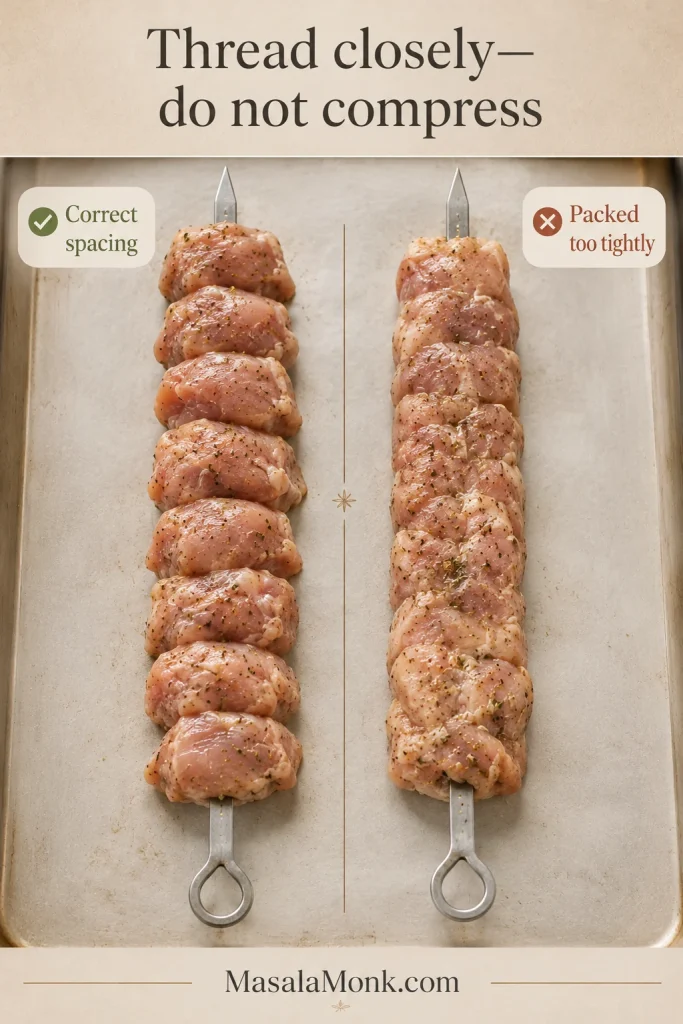
Thread closely without packing the pieces
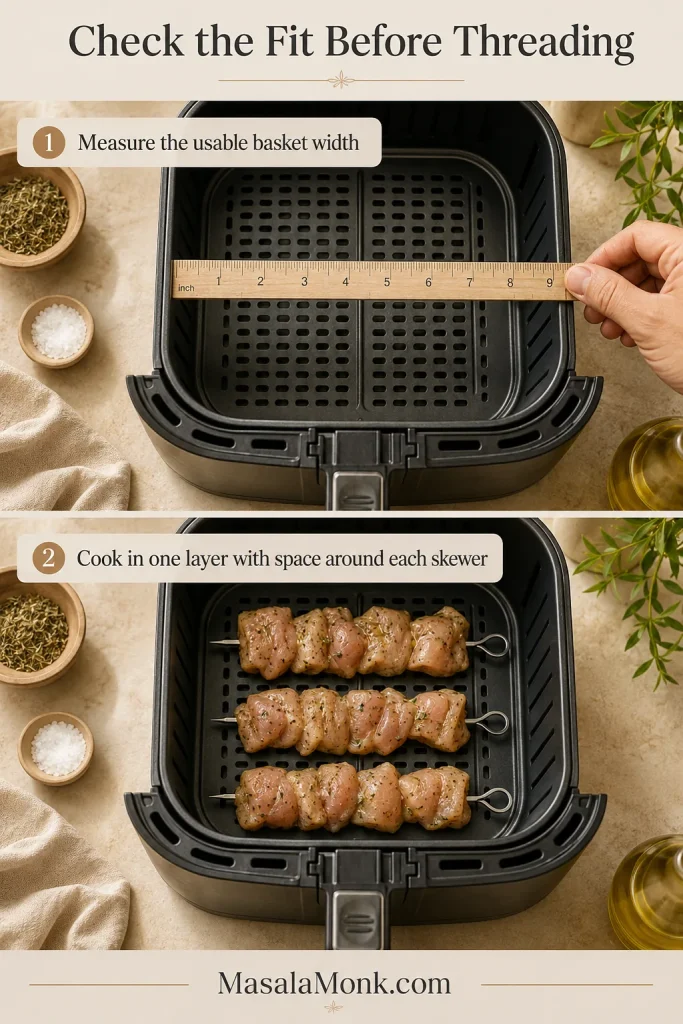
Leave a little breathing room as you thread the chicken because tightly compressed pieces cook more slowly between the folds. Flat metal skewers are easiest to turn because the meat does not spin around the stick; when using bamboo, soak the skewers for at least 30 minutes to reduce scorching.
A properly loaded skewer still shows seams between pieces; when the chicken becomes one solid cylinder, the inner surfaces steam.
Thread peppers, onions, zucchini or mushrooms separately so the vegetables can continue cooking after the chicken is ready.
No skewers? Cook the marinated pieces loose in a skillet, air fryer or on a lined sheet pan. They still brown well and work especially nicely in bowls or pita.
The skewers can also be threaded several hours ahead and kept covered in the refrigerator until the grill, broiler or oven is hot.
Choose Your Cooking Method
Grill for the deepest char and a touch of smoke. Use the broiler for the closest indoor equivalent, the oven for a larger batch, the air fryer for a fast small batch, or a heavy skillet when you want to stay on the stovetop.
Choose by food arrangement as well as appliance: full skewers suit the grill, broiler or oven, while loose pieces fit skillets and compact air fryers.
Grilled Chicken Souvlaki: Colour, Sizzle and Flare-Ups
Begin with a properly heated grate, then give each surface enough time to brown before turning.
Charcoal gives the deepest smoky flavour, while a fully heated gas grill offers easier temperature control and still produces excellent browning. On a gas grill, keep one burner lower or switched off so the skewers have somewhere to move during flare-ups.
A clean sizzle with light smoke signals useful heat. Tall yellow flames mean a flare-up, not better char.
Wait for the first side to release
The chicken should sizzle as soon as it touches the grate. Give the first surface time to sear, then turn every 2 to 3 minutes so the irregular edges can pick up small patches of colour.
Test with a gentle nudge: if the chicken resists, wait; once the browned surface sets, the skewer releases with far less tearing.
Chicken thighs give you some breathing room. Scattered char is enough; a thick black shell means the chicken has spent too long over strong heat.
Move away from flare-ups
If flames rise, move the skewers briefly to the cooler part of the grill. Char from hot metal tastes good; soot from an uncontrolled flare-up does not.
Reserve part of the grill as a landing zone before cooking begins; then a flare-up becomes a simple sideways move rather than a scramble.
Oven-Baked and Broiled Chicken Souvlaki
Broiler: the strongest indoor browning
Set a wire rack over a rimmed pan and position it about 5 to 6 inches below the upper element. Let the broiler become fully hot before adding the skewers.
Under an active broiler, use a heat-safe rack over a rimmed metal pan; parchment can scorch when positioned too close to the upper element.
Arrange the skewers with space between them.
Broil for 4 to 5 minutes.
Turn and continue for another 4 to 6 minutes.
Check the thickest piece and remove the chicken at 165°F / 74°C.
As the upper edges bronze, the garlic and oregano should smell toasted. Stay beside the oven during the final minute because garlic can move quickly from golden to bitter.
Oven: the easiest larger batch
Use 425°F / 220°C in a conventional oven or about 400°F / 200°C with fan assistance.
Arrange the skewers on a wire rack over a rimmed pan.
Bake breast for 10 to 13 minutes or thighs for 12 to 15 minutes, turning once.
Confirm doneness in the thickest piece.
Move the cooked chicken under the broiler for 1 to 2 minutes if the surface needs more colour.
Stop the broiler as soon as the highest edges bronze; the goal is surface colour, not a second round of cooking.
No wire rack? Line the pan, leave space between the skewers and turn them carefully halfway through. The underside will brown more lightly, but the brief broiler finish will colour the exposed edges.
Air Fryer Chicken Souvlaki
Measure the usable basket width before threading the chicken. Short bamboo or metal skewers should rest naturally inside without pressing against the sides.
Check that skewer tips and handles clear the basket walls; even well-spaced chicken cooks poorly when the drawer cannot close completely.
Preheat the air fryer to 390–400°F / 200–205°C if your model benefits from preheating.
Let excess marinade drip away.
Arrange two or three skewers in one layer with visible space around them.
Cook breast for 9 to 12 minutes or thighs for 11 to 14 minutes, turning halfway.
Confirm that the thickest piece has reached 165°F / 74°C.
The surface will first lose its wet shine, then small browned edges will appear as the circulating heat reaches the spaces between the pieces.
At the halfway turn, swap front and back positions when your model browns unevenly; rotation corrects hot spots without extending the entire batch.
If the skewers do not fit, cook the chicken as loose pieces. Avoid stacking or crowding. Trapped steam keeps the surface wet and leaves the chicken pale.
Stovetop Chicken Souvlaki
A heavy grill pan or cast-iron skillet works well when you have no grill and do not want to heat the oven. Open a window or use the extractor fan because the garlic and marinade can smoke in a very hot pan.
Between skillet batches, remove blackened garlic fragments before adding fresh chicken; otherwise, the next batch may taste bitter before it browns.
Heat the pan over medium-high heat and add a thin film of oil.
Cook breast for 7 to 10 minutes or thighs for 8 to 12 minutes.
Turn every 2 to 3 minutes and work in batches if necessary.
Check the thickest piece for 165°F / 74°C, then rest before serving.
The pan should answer with a clear sizzle. If the sound fades quickly and liquid begins collecting around the chicken, the batch is too crowded.
The clock brings you close, but the thermometer lets you relax. Use this chart as a starting point for your chicken cut and cooking method.
Treat chicken souvlaki cooking times as checking windows: the earliest-check column marks when to measure, not when every piece must be finished.
Chicken and method
Approximate range
Earliest check
Thighs on an outdoor grill
8 to 12 minutes
7 to 8 minutes
Breast on an outdoor grill
7 to 10 minutes
6 to 7 minutes
Thighs under the broiler
9 to 12 minutes
8 minutes
Breast under the broiler
8 to 10 minutes
7 minutes
Thighs in the oven, before optional broiling
12 to 15 minutes
11 to 12 minutes
Breast in the oven, before optional broiling
10 to 13 minutes
9 to 10 minutes
Thighs in an air fryer
11 to 14 minutes
10 minutes
Breast in an air fryer
9 to 12 minutes
8 to 9 minutes
Thighs in a skillet
8 to 12 minutes
7 to 8 minutes
Breast in a skillet
7 to 10 minutes
6 to 7 minutes
Check the thickest piece accurately
Insert an instant-read thermometer into the centre of the thickest piece without touching a metal skewer. Cook poultry to 165°F / 74°C. Official safe-minimum guidance is available from FoodSafety.gov (opens in a new tab).
Check a piece from the coolest-looking or most crowded skewer as well as the thickest one, because grill heat is rarely perfectly even.
Properly cooked chicken has a browned surface that no longer looks wet, with a moist, opaque centre. Small charred spots are welcome. Breast should not look stringy or chalky, while thigh remains softer and slightly richer.
Once the chicken is resting, the technical part is over. Now it becomes dinner.
Build a Chicken Souvlaki Pita
The pita brings all the contrasts together: hot savoury chicken, cool tzatziki, juicy tomato and just enough sharp onion to wake everything up.
Choose the right pita
Look for a soft, pocketless Greek-style pita when possible. It is thicker and more flexible than thin pocket pita, so it folds around the chicken without splitting. When only pocket pita is available, warm it gently and fill the pocket.
Greek-style pita can hold a longer strip of filling, while pocket pita works better with a smaller, compact portion.
For each pita
1 soft Greek-style pita, approximately 7 to 8 inches
100 to 120 g cooked chicken
30 to 40 g / about 2 tablespoons thick tzatziki
2 or 3 tomato slices, or a small handful of chopped tomato
A small amount of very thinly sliced red onion
A squeeze of lemon
Optional shredded lettuce, crumbled feta or cooked fries
Warm the pita briefly in a dry skillet, on the grill or in a low oven, just until it becomes soft and flexible. A microwave also works in short bursts when the bread is wrapped in a barely damp kitchen towel.
Build and wrap
Place the warm pita on parchment, foil or food-safe paper.
Spread the tzatziki through the centre, leaving the lower edge clear.
Slide 100 to 120 g chicken off the skewer and arrange it over the sauce.
Add tomato, onion and any optional fillings.
Fold the bottom upward, bring in the two sides and use the paper to hold the wrap together.
Keep tomato and lemon above the chicken rather than against the lower fold; the base of the chicken souvlaki pita stays drier and easier to hold.
The pita does not need to close perfectly. The paper wrapper will do part of the work.
Leave the top third unwrapped so steam can escape and the pita stays soft without turning wet.
A small handful of fries makes the pita more substantial without pushing the chicken into the background. For fries that stay crisp enough to hold their own, follow the cutting, soaking and frying method (opens in a new tab).
What to Serve with Chicken Souvlaki
Put the chicken in the middle of the table, still on its skewers, with warm bread wrapped in a towel, a cold bowl of tzatziki and lemon wedges within reach. That alone is enough. Everything else is optional.
Choose how to serve it
The same chicken can move from a hand-held wrap to a plated meal without changing the recipe. The base and fresh components determine how light, substantial or make-ahead-friendly it feels.
Pita is best assembled immediately; rice bowls and salads are easier to portion ahead or build from leftovers.
A bed of fluffy rice (opens in a new tab) turns the skewers into an easy bowl. Add cucumber, tomato, onion, olives, feta and tzatziki, then keep the cool vegetables and sauce separate from the warm chicken until serving.
A substantial salad
Slide the chicken off the skewers and serve it over cucumber, tomato, onion, olives and feta. Use tzatziki as a thick dressing or loosen a smaller amount with lemon and olive oil.
To keep the plate gluten-free, serve the chicken over rice or salad. A dairy-free meal works with dairy-free yogurt sauce or a simple lemon-herb dressing in place of tzatziki.
Set out the cool sauces and vegetables first, then bring the hot skewers to the table last.
Fix Dry, Pale or Uneven Chicken
A pale or dry batch is not necessarily a lost dinner. Save it first, then fix the cause before the next round of skewers.
The chicken is dry
Rescue this batch: Slice the chicken thinly and serve it immediately with extra tzatziki, chopped tomato and warm pita. A little olive oil helps the slices feel less dry, while fresh lemon zest brings back the aroma without adding more acid.
Prevent it next time: Use larger breast pieces, keep the marinade brief and begin checking sooner. Review the earliest checking times before the next batch; dry breast is usually a timing problem, not proof that the cut cannot work.
Slice dry chicken thinly across the grain before adding sauce; shorter fibres feel more tender even though the meat cannot regain lost moisture.
The chicken is pale but cooked
Rescue this batch: First confirm doneness with the thermometer guide. Then place the skewers under a fully heated broiler for 30 to 90 seconds, watching continuously; loose pieces can also be seared briefly in a hot skillet.
Prevent it next time: Let excess marinade drip away, preheat fully and leave more space between the pieces. Pale chicken usually reflects heat or surface moisture—not a bad marinade.
Blot visible surface moisture before the brief high-heat finish; otherwise, the extra heat first evaporates water and continues cooking the centre.
Quick fixes for other problems
Problem
Rescue this batch
Prevent it next time
Pieces finish unevenly
Remove finished pieces and return thicker ones to the heat
Cut by thickness and keep breast and thigh separate
Outside burns first
Move to lower heat and trim only bitter black patches
Use slightly smaller pieces and keep a cooler grill zone
Chicken sticks
Wait another 30 to 60 seconds before lifting
Preheat and clean the grate thoroughly
Flavour is weak
Finish with salt, fresh lemon zest and oregano
Taste the marinade before adding raw chicken
Surface feels soft
If safely cooked, give it a very brief high-heat finish
Use the shorter marinating window and remove excess marinade
Wooden skewers burn
Shield the exposed ends with foil
Soak them well or use metal skewers
Pita cracks or leaks
Serve it as an open pita or turn it into a bowl
Warm the bread and fill it more lightly
After rescuing dinner, change only one variable on the next batch; that makes the true cause easier to identify instead of creating another problem.
Remove cooked chicken from the skewers and refrigerate it in a covered container. Store pita, tzatziki and fresh vegetables separately. Cool the chicken promptly and use it within 3 to 4 days.
Air fryer: Heat at about 350°F / 175°C for 3 to 5 minutes.
Skillet: Warm over medium-low heat with a small splash of water or olive oil. Cover briefly, then uncover.
Microwave: Cover and heat in short intervals at moderate power.
Finish reheated chicken with fresh lemon and a pinch of oregano. That small fresh note helps leftovers taste less like leftovers.
Freezing cooked or raw chicken
Freeze cooked chicken off the skewers in a well-sealed container. Thaw it overnight in the refrigerator and reheat gently. Do not freeze assembled pita wraps.
For raw meal preparation, freeze the chicken with the olive oil, zest, garlic, oregano, salt and pepper, then add the measured lemon juice after thawing. When freezing it in the complete marinade for convenience, thaw in the refrigerator and cook promptly.
Reheat only the chicken souvlaki you plan to serve, because repeated warming dries small pieces faster than one gentle reheating.
The moment to aim for is simple: browned edges, a centre that still glistens when cut, and enough lemon to make the next bite feel fresh.
Warm the pita, spoon over the tzatziki and bring the skewers to the table while they are still hot. Then eat the first one before anyone has time to ask whether dinner is ready.
Rockfish rewards a simple approach: a dry fillet, a hot pan, a little butter, and a squeeze of lemon. In less than 20 minutes, this rockfish recipe gives you tender white fish with pale golden edges and a bright garlic lemon butter sauce you can spoon over rice, potatoes, salad, or warm tortillas.
This is the rockfish recipe to use when you want a safe first cook: lightly floured fillets, a quick skillet sear, and a lemony pan sauce that gives the fish flavor without covering it up. The best bite is soft, clean, buttery, and lifted with just enough lemon.
If you bought rockfish and now feel a little unsure what to do with it, start here. The fish is delicate, but it is not difficult. Once you know what to look for, the timing is simple.
Blot the rockfish fillets very well, season them with salt, pepper, and garlic powder, lightly dredge them in flour, then pan-sear them in a hot skillet with oil and a little butter. Medium fillets usually take 3–4 minutes on the first side and 2–3 minutes on the second side.
The fish is ready when the thickest part turns pearly and opaque, gives gently under a fork, and reaches 145°F / 63°C. Do not chase a dark crust. A light golden surface and a juicy center are better than a deeply browned fillet that turns dry.
Do not chase a hard crust: rockfish is lean and delicate. Pale gold outside and tender inside is the goal, not a deep steak-like sear.
Cooking rule: Dry well, sear briefly, and stop while the flakes stay moist.
Before cooking, remember the three-part rockfish rule: dry the fish well, sear it briefly, and stop before the flakes turn dry.
For your first time, keep the fish simple and let the timing teach you. Rockfish is not the fish to force into a hard crust. You are protecting a gentle white fish and pulling it from the heat while it is still tender.
Dry the surface. Moisture makes the fish steam and stick.
Cook hot, but briefly. The first side needs enough heat to set a light crust.
Stop before it looks dramatic. Pale gold outside and juicy inside is the win.
Use skinless fillets, a thin flour coating, and lemon butter for your first batch. Once you learn the feel of the fish in the skillet, the baked, air fryer, grilled, and taco versions become simple adjustments.
Make It Now: Pan-Seared Rockfish with Lemon Butter
Recipe shortcut: Use this card for quick timing, ingredients, and the lemon butter finish.
Save this pan-seared rockfish recipe card when you need a quick lemon butter fish dinner with clear timing and simple ingredients.
Easy Pan-Seared Rockfish with Lemon Butter
This is the skillet version to make when you want tender white fish with golden edges and a lemony butter sauce that comes together in the same pan. Keep the coating thin, the heat steady, and the cook time short.
Servings
4
Prep Time
10 minutes
Cook Time
8–10 minutes
Total Time
18–20 minutes
Method
Pan-seared
Best For
Rockfish fillets, quick seafood dinner, lemon butter fish
Equipment
Large nonstick, stainless steel, or cast iron skillet
Paper towels
Fish spatula or thin spatula
Instant-read thermometer
Ingredients
4 rockfish fillets, 5–6 oz / 140–170 g each
¾ tsp fine salt, divided
½ tsp black pepper
½ tsp garlic powder
¼ cup all-purpose flour, about 30 g, optional but helpful for a light crust
2 tbsp olive oil or neutral oil, 30 ml
3 tbsp unsalted butter, about 42 g, divided
3 garlic cloves, minced
1½ tbsp fresh lemon juice, about 22 ml
1–2 tbsp capers, drained, optional
2 tbsp chopped parsley or dill
Lemon wedges, for serving
Optional: ¼ cup white wine or chicken broth, 60 ml, for a looser sauce
Instructions
Work in three short stages: prep the fish, sear the fillets, then make the sauce.
Prep the Fish
Check the fish. Run your fingers gently over the fillets and remove any pin bones with clean tweezers if needed.
Dry the fillets. Blot the rockfish thoroughly with paper towels so the surface sears instead of steams.
Season both sides. Sprinkle the fillets with salt, black pepper, and garlic powder.
Lightly flour. Spread the flour on a shallow plate. Dredge each fillet lightly, then shake off the excess. The coating should be thin, not heavy.
Sear the Fillets
Heat the oil. Set a large skillet over medium-high heat. Add the oil and let it heat until it shimmers. Add 1 tbsp butter, let it foam lightly, then add the fish right away.
Sear the first side. Place the fillets in the pan presentation-side down. Do not crowd the skillet; cook in batches if needed. Cook for 3–4 minutes without moving the fish too early.
Flip gently. Slide a fish spatula under each fillet and turn carefully. Cook the second side for 2–3 minutes, depending on thickness. Lower the heat to medium if the coating or butter is browning too quickly.
Check doneness. The thickest part should look pearly and opaque, not translucent. For the safest check, use a thermometer and look for 145°F / 63°C.
Remove the fish. Transfer the cooked rockfish to a plate. Thin pieces keep cooking slightly from carryover heat, so do not leave them in the hot pan while making the sauce.
Make the Sauce and Serve
Make the sauce. Reduce the heat to medium-low. Add the remaining 2 tbsp butter to the skillet. Stir in the garlic for 20–30 seconds, just until fragrant. Add lemon juice, capers, and optional wine or broth. Scrape up the browned bits; the sauce should taste bright, buttery, and lightly salty.
Finish and serve. Spoon the lemon butter sauce over the rockfish while it is warm, letting it catch in the flakes and run into the rice, potatoes, or vegetables underneath. Sprinkle with parsley or dill and serve with lemon wedges.
Recipe Notes
For very thin fillets, start checking after 2 minutes per side.
For thicker pieces, reduce the heat slightly after flipping so the outside does not brown before the center cooks.
Flour is optional. Skip it for a lighter fish, or use gluten-free flour if needed.
Capers add a salty, briny finish. Leave them out for a simple garlic lemon butter sauce.
Frozen rockfish works well if thawed overnight in the fridge and blotted thoroughly before cooking.
Choose Your Rockfish Method
Once the skillet version makes sense, choose the method that fits your dinner. Thin, delicate pieces do well in the skillet or air fryer. Larger or uneven fillets are often easier in the oven. Skin-on pieces are the friendliest choice for the grill.
Method
Use When
Result
Best Tip
Pan-seared
You want the best crust and sauce
Golden edges, tender center, lemony pan sauce
Use oil first, then a little butter
Baked
You want a hands-off dinner or several fillets at once
Soft, simple, easy to serve with sides
Add butter or olive oil so the fish stays juicy
Air fryer
You want fast, lightly browned fish without heating the oven
Quick, clean, good for thinner pieces
Keep the fillets in a single layer
Grilled
You have skin-on or sturdy fillets
Lightly smoky, fresh, great with lemon
Use foil or a grill basket for fragile pieces
Tacos
You want a casual meal with slaw and sauce
Flaky fish, lime, crunch, and creamy toppings
Blackened seasoning works especially well
Once the method is clear, it helps to know what kind of rockfish you have, what it tastes like, and how the fillet’s thickness affects the cook.
Method chooser: Pick skillet, oven, air fryer, grill, or tacos based on dinner style.
Once the basic skillet method makes sense, choose your path: pan-seared for crust, baked for ease, air fryer for speed, grilled for smoke, or tacos for texture.
What Is Rockfish?
Rockfish is a mild, lean white fish with a tender texture. In U.S. markets, the name is often used for Pacific rockfish, though regional labels can vary.
For this recipe, the exact label matters less than the fillet itself. Thin pieces cook quickly, larger portions need a few extra minutes, and the visual cues matter more than the species name on the package.
What Does Rockfish Taste Like?
The flavor is mild, clean, and slightly sweet. The texture is lean and tender, so it pairs easily with lemon, butter, garlic, herbs, Old Bay, Cajun seasoning, capers, salsa, or creamy taco sauce.
If you like cod, snapper, haddock, tilapia, halibut, or sea bass, this fish will feel familiar. For another gentle white-fish dinner, this baked haddock recipe follows the same easy idea: mild fish, simple seasoning, and a tender finish.
Rockfish Names Can Be Confusing
The word “rockfish” can mean different things depending on where you shop. Do not let the label slow you down; use the fish’s thickness, freshness, and texture as your main cooking guides.
Label You May See
What It Usually Means
How to Use This Recipe
Pacific rockfish
A mild white fish from the Pacific coast
Use the recipe as written
Rock cod
Often another market name for Pacific rockfish
Use thickness as your timing guide
Striped bass / Chesapeake rockfish
A different fish sometimes called rockfish regionally
The method still works for similar fillet thickness
Mixed white fish fillets
May include similar mild fish
Cook by thickness and doneness cues
Fish counter tip: If the label is confusing, cook by thickness and doneness cues.
Rockfish may be sold under different names, but once it is in your kitchen, thickness and doneness cues matter more than the label.
How to Choose Rockfish
Good fish should smell clean and mild, not sour, sharp, or strongly fishy. The flesh should look moist and fresh, not dried out around the edges. If the fillets are frozen, choose pieces without heavy ice crystals or freezer-burned patches.
Buying cue: Choose moist, clean-looking fillets with no dry edges or strong odor.
Good fish makes everything easier; therefore, choose fillets that look moist and clean, with no dry edges or strong fishy smell.
Buying tip: rockfish names and species vary by region, so buy from a fish counter or brand you trust. If the label is unclear, ask whether it is Pacific rockfish, striped bass, or another mild white fish, then cook by thickness.
For frozen fillets, thaw overnight in the refrigerator. Before cooking, press away as much surface moisture as you can. That one small step makes the difference between a pale steamed surface and a clean skillet sear.
Frozen-fish cue: Blot thawed fillets well so the surface can brown.
Fresh and frozen rockfish can both cook well; however, thawed fillets need extra drying so they brown instead of steam.
Rockfish Fillets: Skin-On, Skinless, Fresh, or Frozen
Most home cooks will use fillets, and thickness matters more than almost anything else. A thin piece may be done before it gets deeply golden, while a larger portion may need gentler heat after the first sear.
Fillet choice: Skinless is easiest for the skillet; skin-on helps on the grill.
Use skinless fillets for the easiest skillet version, while skin-on rockfish is useful when grilling because it helps the fish hold together.
Fillet Type
Best Use
What to Know
Skinless fillets
Pan-searing, baking, air frying
Easiest for this recipe, but delicate when thin
Skin-on fillets
Grilling or crisp-skin skillet cooking
Cook skin-side down first; the skin helps hold the fish together
Fresh fillets
Any method
Should smell clean and mild, not sour or strongly fishy
Thawed frozen fillets
Pan-searing, baking, air frying
Thaw overnight in the fridge and press away surface moisture before cooking
Very thin fillets
Quick skillet or air fryer
Watch closely; they may only need 2 minutes per side
Thick fillets
Skillet-to-gentle heat, baking, grilling
Sear first, then reduce heat so the center cooks without burning the outside
If a fillet is uneven, tuck the thin tail end slightly under itself or place that end toward the cooler edge of the pan. This helps the delicate part avoid overcooking before the thicker section is done.
For skin-on fillets, cook skin-side down first for most of the time. Press gently for the first few seconds so the skin makes contact with the pan, then let it cook undisturbed before turning.
It is fast enough for a weeknight. The fish cooks in minutes once the pan is hot.
The sauce keeps the flavor bright. You get richness from butter, lift from lemon, and just enough garlic in the background.
A light coating makes flipping easier. The thin flour layer helps the surface set without turning the fish heavy.
The timing cues are flexible. Thin and thick fillets are both covered, so you are not locked into one exact size.
Leftovers can become another meal. Flake them into tacos, salads, rice bowls, or sandwiches.
Rockfish Recipe Ingredients and Why They Matter
Once you know the kind of fillets you have, the ingredient list stays simple. Each item is there to help the fish brown gently, stay tender, or taste brighter at the end.
Ingredient cue: Keep the setup simple and save the flour for a thin release layer.
The best rockfish recipe starts with a short ingredient list: fresh fillets, lemon, butter, garlic, capers, herbs, and just enough flour to help the sear.
Rockfish Fillets
Use fresh or thawed frozen fillets. Skinless pieces are easiest in the skillet, while skin-on pieces are helpful for grilling or crisp-skin cooking. Check for pin bones before seasoning.
Salt, Pepper, and Garlic Powder
This gentle white fish does not need heavy seasoning. Salt brings out the flavor, black pepper adds warmth, and garlic powder gives an even savory base without burning quickly.
Flour
A barely-there coating helps the surface brown and makes flipping less stressful. Shake off the excess so the coating stays light instead of gummy.
Oil and Butter
Oil gives you safer heat for the sear. Butter brings richness to the skillet sauce, but most of it goes in after the fish comes out so it stays glossy instead of scorched.
Lemon, Capers, and Herbs
Fresh lemon wakes up the sauce and keeps the fish from tasting heavy. Capers make the finish salty-bright and a little restaurant-style. Parsley keeps things clean, while dill leans more classic seafood.
How to Cook Rockfish Fillets Without Drying Them Out
The recipe card gives you the direct steps. This section is the coaching layer: the small choices that keep delicate fillets from sticking, breaking, or drying out.
Before the Fish Hits the Pan
Start by running your fingers gently over the fillets and removing any pin bones with clean tweezers. Then press the surface dry with paper towels, especially if the fish was frozen and thawed. Moisture blocks browning and makes sticking more likely.
Prep cue: Check for pin bones before seasoning.
Before seasoning, check for pin bones with your fingers; this quick step makes the finished rockfish easier and safer to eat.
Searing cue: Dry fillets stick less and brown better.
Dry the fillets before they hit the pan, because surface moisture is the main reason delicate fish sticks, steams, and refuses to brown.
Season the fish right before cooking. If salted fillets sit too long, they can release moisture and make the surface harder to brown. If you are using flour, keep it barely there: a light dusting that helps the surface set, not a thick breaded shell.
Coating cue: Use only a thin dusting so the fish stays delicate.
A thin flour coating helps rockfish release cleanly from the skillet; however, the fish should still show through the coating.
While the Fish Cooks
Let the oil shimmer before adding a small amount of butter. The butter should foam lightly, not smoke. Leave space around each piece so the pan does not trap steam, and give the first side time to form a pale golden crust before you try to lift it.
Pan cue: Heat oil first, then add butter just before the fish.
Heat oil first, then add butter just before the fish; that way, the pan is hot enough to sear without burning the butter.
Skillet cue: Leave space so the fillets sear instead of steam.
Leave space between the fillets as they cook, since a crowded skillet traps steam and prevents the pale golden sear you want.
Flip cue: Wait for the first side to set before turning.
Wait until the first side releases easily before flipping; otherwise, delicate rockfish can tear before the crust has set.
Use a fish spatula or the thinnest spatula you own. Slide it fully under the fillet and turn gently. If the coating or butter starts browning too fast, lower the heat slightly and let the center finish more gently.
Tool cue: Support the full fillet with a thin fish spatula.
A thin fish spatula supports the full fillet, so the rockfish turns cleanly instead of breaking into pieces.
After the Fish Comes Out
Remove the cooked rockfish before making the sauce. Thin pieces keep cooking from carryover heat, and the garlic, lemon, butter, and capers come together quickly. The garlic should smell good after 20–30 seconds, not browned or bitter.
Sauce cue: Make the lemon butter after the fish comes out.
Make the lemon butter sauce after removing the fish, so the garlic, capers, and butter stay bright while the fillets avoid extra heat.
If one fillet breaks, do not treat it like a failure. Spoon the sauce over it, serve it over rice, or turn it into tacos. It will still taste good.
Serving cue: Spoon sauce at the end so it catches in the flakes.
Spoon the sauce over the fish at the end; then the lemon butter settles into the flakes and flavors the rice or vegetables underneath.
Cooking time depends mostly on thickness. The timer gets you close, but the fish itself tells you when to stop. Thin fillets may be ready in minutes; thicker pieces need more patience and slightly gentler heat.
Timing cue: Start with the chart, then adjust by thickness.
Use the rockfish cook time chart as a guide, then adjust for thickness because thin and thick fillets finish at different speeds.
Best cue: the fish should look juicy at the thickest point and open into tender flakes when pressed gently. If it looks tight, dry, or chalky, it has gone too far.
How to Tell When Rockfish Is Done
The flesh should change from translucent to pearly and opaque. The thickest part should still look juicy, and the flakes should open softly when pressed with a fork.
Doneness cue: Look for pearly, moist flakes instead of dark crust.
Look for pearly, moist flakes rather than a dark crust; rockfish is done when it opens gently with a fork.
With a thermometer, check the thickest part of the fillet and look for 145°F / 63°C. For thin pieces, start checking before the full time is up because carryover heat can finish them quickly after they leave the pan.
Safety cue: Check the thickest part for the clearest doneness read.
For the safest doneness check, test the thickest part of the fillet and look for 145°F / 63°C before serving.
Do not wait for both sides to become dark or heavily crisp. Light gold outside, tender inside, and no raw translucence in the center is the sweet spot.
Texture cue: Compare undercooked, perfect, and overcooked fish.
Perfect rockfish sits between translucent and chalky: opaque, pearly, moist, and flaky without falling apart.
Baked, Air Fryer, Grilled, and Taco Rockfish Options
The skillet teaches you the feel of rockfish. After that, the other methods are easy to choose: bake when you want hands-off cooking, air fry when you want speed, grill when you have sturdier pieces, and use tacos when dinner wants slaw, lime, and sauce.
Baked Rockfish Fillets
When you want a hands-off dinner, baking is the easiest move. It works especially well when you are cooking several fillets at once.
Heat the oven to 400°F / 204°C.
Place the seasoned fillets in a lightly oiled baking dish.
Add lemon slices, a small pat of butter, or a drizzle of olive oil.
Bake medium fillets for 10–12 minutes.
For larger pieces, check around 13 minutes and continue until the center turns opaque and tender.
For a breadcrumb, parmesan, or panko topping, use 425°F / 218°C and watch closely. The topping should turn golden while the fish stays soft underneath.
Oven cue: Bake when you want several fillets with less hands-on work.
Baked rockfish is the hands-off option for cooking several fillets at once, while lemon, butter, and herbs keep the dish bright.
Air Fryer Rockfish Fillets
Use the air fryer when you want a quick, lightly browned fillet and do not feel like heating the oven. Keep the pieces in a single layer so the hot air can move around them.
Preheat the air fryer to 400°F / 204°C.
Blot the fillets well and season them.
Brush lightly with oil, melted butter, or a thin mayo-lemon mixture.
Air fry medium fillets for 6–8 minutes.
Check for tender flakes and a center temperature of 145°F / 63°C.
For breaded pieces meant for tacos, use smaller chunks and air fry around 350°F / 177°C for 5–6 minutes, or until the coating is golden and the fish is cooked through.
Air fryer cue: Keep pieces spaced in one layer.
For air fryer rockfish, keep the fillets in one spaced-out layer so the edges brown lightly instead of steaming.
Grilled Rockfish Fillets
On the grill, delicate fillets need a little protection. Skin-on pieces are easier to grill directly than skinless ones. For thin or fragile fillets, use foil, a grill basket, or a cast iron skillet on the grill.
Heat the grill to medium-high, about 400–450°F / 204–232°C.
Clean and oil the grates well if grilling directly.
Blot the fish dry and brush lightly with oil.
Grill thin fillets for 2–3 minutes per side.
Grill medium fillets for 3–4 minutes per side.
Use a fish spatula and flip gently.
If you are worried about sticking or breakage, foil is your friend. You will lose some direct-grill char, but the fish will be much easier to manage.
Grill cue: Use foil or a grill basket for delicate fillets.
When grilling rockfish, use foil or a grill basket to protect the delicate fillets while still adding gentle smoky flavor.
Rockfish for Tacos
For tacos, rockfish is a quiet little win: mild enough for slaw and sauce, sturdy enough to flake into warm tortillas. Use pan-seared, blackened, grilled, or air-fried fish, then add cabbage slaw, lime, crema, chipotle mayo, salsa, avocado, cilantro, or pickled onions.
You can cook the fillets whole and flake them into tacos, or cut the fish into larger chunks before cooking. For a full taco-style dinner with slaw, sauce, toppings, and method choices, use this fish tacos recipe as the next step.
Blackened seasoning is especially good here because the smoky spices balance the mild fish and creamy slaw. For a brighter topping, spoon on fresh mango salsa with lime, cilantro, and a little chile.
Taco cue: Add slaw, lime, crema, and crunch for contrast.
Rockfish tacos work because mild white fish needs contrast: crunchy slaw, lime, crema, cilantro, and pickled onions add freshness.
Whole rockfish note: this recipe is written for fillets. Whole rockfish needs a different timing approach because size, stuffing, bones, and oven temperature all change the cook time.
Because the flavor is gentle, you can take the seasoning in several directions. For the first cook, choose lemon butter. If the fish is headed for tacos, blackened seasoning brings the best contrast. When you want crunch, move toward panko.
Flavor Style
Best For
What to Use
Lemon butter
Best first cook
Butter, lemon, garlic, parsley
Lemon caper
Restaurant-style skillet fish
Butter, lemon, capers, dill or parsley
Old Bay
Baked or crispy rockfish
Old Bay, lemon, butter, parsley
Blackened
Best taco pick
Paprika, cayenne, garlic powder, thyme, oregano
Mediterranean
Baked fillets
Olive oil, tomato, oregano, capers, lemon
Garlic parmesan
Baked crusted fish
Parmesan, breadcrumbs, garlic, lemon
Asian-style
Pan-cooked or steamed fish
Soy sauce, ginger, scallions, sesame oil
The skillet sauce should taste like butter first, lemon second, and garlic in the background. For a bolder seafood plate, a small spoonful of garlic butter Cajun seafood boil sauce can also work well with simply cooked rockfish.
For crispy, panko, or fried-style fish, a cold spoonful of homemade tartar sauce is often a better match than lemon butter.
Flavor cue: Choose lemon butter, capers, Old Bay, blackened spice, or aromatics.
Because rockfish is mild, it handles many flavor directions, from lemon butter and capers to Old Bay, garlic parmesan, and Asian-style aromatics.
What to Serve with Rockfish
Because the fish is light, the best sides depend on the kind of dinner you want. Keep the plate fresh and simple, or turn it into a cozier meal with potatoes and extra sauce.
For a Light Dinner
Serve the fish with steamed rice, green beans, roasted asparagus, extra lemon, or a cool cucumber salad. This keeps the meal fresh and lets the pan sauce shine.
Serving cue: Use rice to catch lemon butter, capers, herbs, and pan juices.
Rice is a smart side for pan-seared rockfish because it absorbs the lemon butter sauce, capers, herbs, and pan juices.
For a Comfort-Food Plate
Pair the fillets with roasted potatoes, garlic bread, or creamy mashed potatoes. Spoon a little sauce around the edges so the potatoes catch the lemony butter.
For Tacos or Sandwiches
Use warm tortillas, soft rolls, lime, salsa, and crisp coleslaw. The cool crunch is especially good with blackened or panko-crusted fish.
Easy Rockfish Variations
Garlic Lemon Butter Rockfish
For the cleanest version, skip the capers. Add an extra garlic clove and a little lemon zest for a brighter garlic butter flavor.
Lemon Caper Rockfish
For a restaurant-style finish, add 1–2 tbsp drained capers to the butter sauce. The salty, briny flavor works well with parsley or dill.
Old Bay Baked Rockfish
When you want an easy oven version, season the fillets with Old Bay, lemon juice, and a little melted butter. Bake at 400°F / 204°C until the thickest part turns tender.
Blackened Rockfish
For something smoky and bolder, coat the fillets with paprika, garlic powder, onion powder, cayenne, thyme, oregano, salt, and pepper. Sear in a hot skillet and serve with lime, slaw, or tacos.
Panko Crusted Rockfish
For a crispier dinner, brush the fillets with a little mayo or beaten egg, then press on a mixture of panko, parmesan, garlic powder, and lemon zest. Bake at 425°F / 218°C until the topping is golden and the center is tender.
If you want a true fried-fish crust instead of a baked panko topping, use this crispy fish batter recipe as the better path.
Mediterranean Rockfish
For a lighter baked plate, add olive oil, cherry tomatoes, oregano, lemon, capers, and a few olives. The juices from the tomatoes make a simple sauce around the fish.
Best Substitutes for Rockfish
If you cannot find rockfish, choose another mild white fish with a similar thickness. Timing changes more with thickness than with the fish name.
Substitute
Best Method
Notes
Cod
Bake or pan-sear
Mild flavor, larger flakes, can be thicker
Haddock
Bake or pan-sear
Delicate and lean; check early
Snapper
Pan-sear or grill
Slightly sweeter, good with lemon and herbs
Tilapia
Pan-sear or air fry
Usually thinner, cooks quickly
Halibut
Pan-sear or bake
Thicker and meatier; use gentler heat after searing
Sea bass
Pan-sear or grill
Richer texture, excellent with lemon butter
Substitute cue: Choose another mild white fish by thickness first.
If rockfish is unavailable, choose another mild white fish by thickness first; then reduce or extend the cooking time as needed.
Troubleshooting Rockfish
Fix-it cue: For sticking, breaking, dryness, or fishy flavor, return to basics.
If the fish sticks, breaks, dries out, or tastes fishy, return to the basics: dry surface, hot pan, gentle flipping, early checking, and lemon.
Why Did My Rockfish Stick to the Pan?
If the fish sticks, it usually means the surface was still wet, the pan was not hot enough, there was not enough oil, or the fish was nudged before the crust had time to form. Dry the surface well, preheat the skillet, coat the bottom with enough fat, and give the first side time to release.
Why Did My Rockfish Fall Apart?
Delicate fillets can break if they are flipped too soon, handled with a thick spatula, or cooked past the point of tender flakes. A light flour coating and a thin fish spatula both help. If a piece still breaks, spoon the sauce over it and serve it anyway; it will still taste good.
Why Is My Rockfish Dry?
If the fish turns dry, it probably stayed on the heat a little too long. Rockfish is lean, so it does not give you much extra time once the center is cooked. Start checking early, lower the heat after the first sear, and remove the fillets as soon as the thickest part turns opaque and juicy.
How Do I Make Rockfish Less Fishy?
Start with fish that smells clean and fresh, not sour or strongly fishy. Thaw frozen fillets slowly in the fridge, blot them well, and cook them with lemon, garlic, herbs, and butter. Avoid overcooking, which can make the flavor stronger.
What If My Fillets Are Very Thin?
Very thin pieces cook fast. Use medium heat instead of very high heat, check after 2 minutes per side, and remove them as soon as they give gently under a fork. They are also easier to break, so flip carefully.
What If My Fillets Are Thick?
Thicker fillets need a little more time, but high heat the whole way can overbrown the outside before the center cooks. Sear the first side, flip, then lower the heat slightly so the middle can finish gently.
What If the Butter Starts Burning?
Lower the heat and add a small splash of oil if needed. Butter browns quickly, especially in a hot skillet with flour. That is why the recipe heats the oil first and adds only a little butter before the fish goes in.
Cooked rockfish is best eaten right away, when the flakes are moist and the lemon butter is fresh. If you do have leftovers, keep them gentle and use them in meals where the fish can be flaked instead of served as a whole fillet again.
Refrigerate: Store cooked rockfish in an airtight container for up to 2 days.
Reheat gently: Warm it in a covered skillet over low heat with a splash of water, broth, or lemon butter.
Avoid harsh reheating: Long microwaving can make the fish dry and rubbery.
Use leftovers smartly: Flake leftover fish into tacos, salad, pasta, a seafood sandwich, or a rice bowl built like this salmon bowl.
Freezing cooked rockfish is possible, but the texture can suffer. If you do freeze it, wrap it tightly and use it later in dishes where the fish will be flaked rather than served as whole fillets.
Rockfish Recipe FAQs
What is the best way to cook rockfish?
Pan-searing is one of the best ways to cook rockfish fillets because it is quick and gives the fish a lightly golden outside. Baking is better for hands-off cooking, and grilling works well with foil, a grill basket, or skin-on fillets.
How long does rockfish take to cook?
Most fillets take 6–10 minutes in a skillet or 10–16 minutes in the oven, depending on thickness. Start checking early; it is easier to give rockfish another minute than to undo overcooking.
What temperature should rockfish be cooked to?
Rockfish should reach 145°F / 63°C in the thickest part. Without a thermometer, look for flesh that is opaque and feels tender at the thickest point.
Does rockfish taste fishy?
The flavor is usually mild, clean, and slightly sweet. It should not taste strongly fishy if it is fresh, properly thawed, and not overcooked.
Should I remove the skin from rockfish?
Skinless fillets are easiest for this skillet version. Skin-on pieces also work, especially for grilling, because the skin helps hold the fish together. Cook them skin-side down first.
Can I cook frozen rockfish?
Yes, but thaw it first for the skillet. Frozen rockfish releases surface moisture as it thaws, and that moisture keeps it from browning. If the fish is still very cold or slightly icy, baking or air frying is more forgiving.
What seasoning is good on rockfish?
Lemon, garlic, butter, black pepper, Old Bay, paprika, Cajun seasoning, dill, parsley, capers, and thyme all work well. For the first cook, keep it simple with salt, pepper, garlic powder, lemon, and butter.
Is rockfish good for tacos?
Yes. Rockfish is mild enough for slaw and sauce but sturdy enough to flake into tortillas. Pair it with cabbage slaw, lime, crema, chipotle mayo, salsa, avocado, or blackened seasoning.
What fish can I substitute for rockfish?
Cod, haddock, snapper, tilapia, halibut, sea bass, or other mild white fish can work as substitutes. Choose fillets with similar thickness so the timing stays close.
Why is my rockfish mushy?
Mushy fish can come from poor thawing, excess moisture, or overhandling. Thaw frozen fillets in the fridge, dry the surface well, and avoid moving them around too much once they are in the pan.
The Simple Secret to Good Rockfish
Rockfish does not need a heavy hand. Dry it well, cook it briefly, and pull it while the center is still juicy. Once you get that rhythm, the same fillets can become lemon butter dinner, baked fish, tacos, or a quick air fryer meal without stress.
Start with the skillet version because it teaches you the feel of the fish. After that, you can bake it, air fry it, grill it, or tuck it into tortillas with slaw and lime. The lemon butter does the rest, catching in the flakes and making even a simple plate of rice or potatoes feel complete.