Posted on Leave a comment

Chicken and Chorizo Paella Recipe

Finished chicken and chorizo paella in a wide shallow pan with golden saffron rice, browned chicken thigh pieces, sliced Spanish chorizo, peas, lemon wedges, parsley and title text.

One-pan dinner · smoky chorizo · saffron rice

Golden rice, juicy chicken thighs, smoky Spanish-style chorizo, peas, lemon, and saffron stock all come together in one generous stovetop pan. This chicken and chorizo paella recipe gives you the drama of paella without needing an outdoor burner or restaurant setup.

The promise is simple: rice that stays the hero, chorizo that seasons without taking over, chicken that stays juicy, and a lemon-bright finish that makes the whole dish wake up at the table.

It looks like a weekend dish, but the method is straightforward: brown the chicken, let the chorizo turn the oil paprika-red, build a glossy base, add rice and hot stock, then leave the pan alone.

This is the kind of dinner that makes people go back for the rice: smoky at the edges, golden through the middle, dotted with peas, finished with lemon, and generous enough for a relaxed table.

If you want the broader classic version first, start with our full paella recipe. This page focuses on the home-stovetop chicken-and-chorizo version: which rice to use, how much stock to add, what pan works best, when to add prawns, and how to avoid the common texture problems.

Quick Answer

The best home-stovetop chicken and chorizo paella ratio is 300g paella rice to 750ml hot stock in a roomy 12–14 inch pan, with 350–450g chicken thighs and 100–140g Spanish-style chorizo.

Most important rule: stir before the stock goes in, then stop. Level the rice, let it simmer, and give the grains a covered rest before serving.

The dish takes about 50–55 minutes, including rest. Brown the chicken, render the chorizo, build the base, coat the rice, add hot saffron stock, then let the rice cook until tender, distinct, and settled. If you are scaling the recipe, use the rice-to-stock ratio guide before choosing your pan.

Chicken and chorizo paella ratio setup with 300g paella rice, 750ml hot stock, chicken thighs, Spanish chorizo and a 12–14 inch pan.
Use this ratio as your starting guardrail; it keeps the rice layer shallow enough to absorb stock without turning heavy.

Chicken and Chorizo Paella at a Glance

Serves
4 generous portions
Prep
15 minutes
Cook
35 minutes
Rest
5 minutes

Best with Bomba, Calasparra, Valencia rice, or supermarket paella rice. Use Spanish cooking chorizo or thinly sliced dry-cured Spanish chorizo. For a chicken, chorizo and prawn paella, add the prawns near the end so they stay tender.

What This Recipe Solves

This version is for the home cook who wants smoky chorizo flavor without losing the rice. The chicken stays juicy, the chorizo seasons the oil, and the rice gets enough room to cook through without turning creamy.

It is built around the things that matter most in a normal kitchen: a roomy pan, hot saffron stock, controlled chorizo, and clear visual cues. Look for glossy sofrito, shiny coated rice, liquid dropping below the surface, and a soft crackle at the end.

The rice should be the reason people go back for seconds, while the chicken and chorizo make the first spoonful feel generous.

What the Finished Paella Rice Should Look Like

The most useful texture check happens after the rest. The rice should look settled and glossy, with grains that separate on the spoon instead of collapsing into a creamy mound.

Close-up spoonful of rested chicken and chorizo paella rice with golden distinct grains, peas, chorizo oil and a small piece of chicken.
After the rice rests, the grains should look tender, separate and settled; that final texture matters more than chasing a perfect-looking pan.

Chicken and Chorizo Paella Ingredients

Ingredient Overview Before You Cook

The ingredient list is short enough for a weeknight, but each piece has a job: chicken gives the dish comfort, chorizo turns the oil smoky and red, the sofrito sweetens the base, saffron stock carries aroma into the rice, and lemon gives the final lift.

If you are choosing ingredients at the store, the most important decisions are the chorizo, the rice, and the pan size that gives the grains enough room.

Ingredients for chicken and chorizo paella arranged on a board, including chicken thighs, Spanish chorizo, paella rice, saffron, stock, red pepper, onion, garlic, smoked paprika, peas, lemon and parsley.
This ingredient setup shows the whole flavor path: smoky oil first, aromatic stock next, then lemon and herbs to finish cleanly.

Protein, Chorizo and Sofrito Base

Start with the ingredients that build the base flavor before the rice goes in.

IngredientAmountWhy it matters
Olive oil2 tbsp / 30mlStarts the browning and gives the sofrito a richer base.
Boneless skinless chicken thighs350–450g / 12–16 ozStays juicier than breast through browning and simmering.
Spanish-style chorizo100–140g / 3.5–5 ozCreates paprika-red oil and smoky depth without overpowering the rice.
Onion1 mediumSoftens into the base and brings gentle sweetness.
Red bell pepper1 mediumAdds color, sweetness, and a familiar home-paella feel.
Garlic3 clovesRounds out the paprika and chorizo.
Smoked paprika1 tspDeepens the smoky warmth already coming from the chorizo.
Tomato paste1 tbspAdds color and body without making the base watery.
Optional grated tomato150–200g / 5–7 ozAdds a softer tomato richness if you like a deeper sofrito.

Rice, Stock and Finishers

Once the base is ready, these ingredients decide the rice texture, aroma and final brightness.

IngredientAmountWhy it matters
SaffronBig pinch, about 15–20 threadsGives the rice aroma and golden color.
Paella rice300g / about 1½ cupsShort-grain rice absorbs stock while keeping structure.
Hot chicken stock750ml / about 3 cups plus 3 tbspCooks and seasons the rice from the inside out.
Frozen peas75–100g / ½–¾ cupAdds sweetness and color near the end.
Lemon1Cuts through the chorizo richness.
ParsleySmall handfulAdds a clean green finish.

Once the chorizo stains the oil red and the saffron stock hits the rice, the ingredients stop feeling separate. That is when the dish starts to smell like a full pan of dinner, not a list of parts.

Best Chorizo for Paella

The best choice is Spanish-style chorizo. Use 100g if you want the rice to stay cleaner and more saffron-forward; use 140g if you want a richer, smokier pan. Above that, the dish can start tasting more like sausage rice than paella.
Spanish cooking chorizo and dry-cured Spanish chorizo sliced on a board for choosing chorizo for paella.
Choose Spanish-style chorizo for smoky paprika depth; however, keep the amount controlled so the rice still feels like the main event.
Chorizo typeUse it?How to handle it
Spanish cooking chorizoBest first choiceSlice into half-moons or small chunks so it browns and seasons the oil.
Dry-cured Spanish chorizoGood backupSlice thinly so it softens and does not become chewy.
Fresh Mexican-style chorizoOnly if changing the dishIt is wetter, crumbly, and more strongly seasoned, so the result will be different.

How Much Chorizo to Use in Paella

Chorizo should season the rice, not crowd it. Use the lower end if your sausage is salty or very fatty, and save the richer end for a deeper, smokier pan.

Chorizo amount comparison for paella with balanced 100g chorizo, richer 140g chorizo and an overloaded greasy version.
The sweet spot is enough chorizo to stain the oil red, but not so much that the pan turns greasy or crowded.

If your chorizo is very salty, use the lower end of the amount and choose a low-salt stock. If you are choosing between Spanish and Mexican chorizo at the store, this Food & Wine guide to Spanish vs Mexican chorizo is a useful quick check.

Best Rice for Chicken and Chorizo Paella

The best bite is tender but not creamy: rice that has soaked up the saffron stock and chorizo flavor while still holding its shape.

Bowls of short-grain paella rice options labeled Bomba, Calasparra, Valencia and supermarket paella rice.
Short-grain paella rice absorbs saffron stock while holding its shape, which is why it gives a better bite than long-grain rice.
RiceUse it?What to expect
Bomba riceBest choiceAbsorbs stock well and stays distinct when cooked properly.
Calasparra riceBest choiceExcellent texture, especially in a broad pan.
Valencia riceGood choiceA proper short-grain option for this kind of cooking.
Supermarket paella riceGood practical choiceUsually the easiest option for home cooks; follow the texture cues.
Arborio riceBackup onlyWorks in a pinch, but it is starchier and can turn creamy if stirred.
Long-grain riceNot idealMakes a good chicken chorizo rice dish, but the texture moves away from paella.
Brown riceAvoid for this methodNeeds different timing and liquid.
Basmati or jasmine riceAvoid for this methodThe aroma and texture pull the dish in a different direction.

Paella Rice vs Long-Grain Rice

Long-grain rice can still make a good chicken chorizo rice dinner, but it changes the bite. For paella-style texture, short-grain rice gives the stock somewhere to go without losing shape. Already cooking? The no-stir simmer cues below will help you judge the pan.

Cooked rice texture comparison with short-grain paella rice beside softer long-grain chicken chorizo rice.
Long-grain rice can still make a good chicken chorizo rice dinner; for paella texture, though, short-grain rice gives a more settled, distinct finish.

Use dry, unrinsed rice here. Add it straight to the pan and stir it briefly through the sofrito before adding stock.

For everyday rice cooking, rinsing, soaking, and stovetop timing, MasalaMonk’s how to cook rice guide is useful. For this paella, stay with short-grain rice and the ratio below.

Chicken Thighs vs Chicken Breast

Chicken thighs are the better default. They stay juicier during browning and simmering, and they reheat better if you have leftovers.

Chicken breast can work, but it dries out faster. Cut it into slightly larger pieces, brown it briefly, and avoid cooking it hard at the beginning. If you often struggle with dry white meat, MasalaMonk’s baked chicken breast recipe goes deeper into timing and doneness cues.

Boneless skinless chicken thigh chunks browning in a skillet with tongs before being cooked with paella rice.
Brown the thigh pieces for flavor first, then let them finish gently with the rice so they stay juicy instead of drying out.

Best Pan and Rice-to-Stock Ratio

This is the section that saves the rice. Not because paella is difficult, but because pan size changes everything.

The pan is not about equipment snobbery. It is about giving the rice enough room to become the best part of the meal.

Best pan for paella at home guide with a paella pan, wide skillet, wide sauté pan and deep saucepan showing shallow and deep rice layers.
A paella pan is useful, but the real lesson is shape: wide, shallow cookware helps the rice cook more evenly than a deep pot.

Choose a Wide Pan, Not a Deep Pot

You do not need a perfect paella pan. You need enough surface area for the rice to sit shallow, not piled. A deep saucepan can still make a tasty chicken chorizo rice dinner, but it traps steam and gives a softer finish.

Wide pan and deep pot comparison for paella with a shallow rice layer in the wide pan and a thick rice layer in the saucepan.
When the rice sits too deep, it steams instead of settling; therefore, a wide pan gives better evaporation and a more paella-like texture.
PanWorks?Best use
12–14 inch / 30–35cm paella panBestGives the rice the most even spread and evaporation.
12 inch / 30cm skillet with lidExcellentBest everyday home option.
Wide sauté panGoodWorks well if the base is broad and not too deep.
Cast iron skilletGood, but watch heatGreat crust potential, but it can go from toasted to scorched quickly.
Deep saucepanNot idealBetter for chicken chorizo rice than paella-style texture.

Paella Rice-to-Stock Ratio

Best default: 300g paella rice + 750ml / about 3 cups plus 3 tbsp hot stock in a roomy 12–14 inch pan.

RiceHot stockBest panServes
200g500ml / about 2 cups plus 2 tbsp10–12 inch pan2–3
300g750ml / about 3 cups plus 3 tbsp12–14 inch pan4
400g1 litre / about 4¼ cups14–16 inch pan5–6
Paella rice-to-stock ratio guide with 200g rice and 500ml stock, 300g rice and 750ml stock, and 400g rice and 1 litre stock.
The amount of stock matters, but pan width matters too; a bigger batch needs more surface area, not just more liquid.

Warm the stock first, then bloom the saffron in that hot liquid. Cold stock slows the pan down; hot stock keeps the simmer steady and helps the rice cook predictably.

Once your pan and ratio are set, the next big texture move is to level the rice before simmering.

  • Rice nearly tender but dry? Add 2–4 tbsp hot stock around the edge and cover loosely for a few minutes.
  • Working with a smaller pan? Reduce the batch instead of piling the rice deep.
  • No lid? Use foil for the resting stage.

If you are using cast iron, watch the final heat push closely. MasalaMonk’s cast iron skillet guide is useful if you cook often with heavy pans.

How to Make Chicken and Chorizo Paella

The cooking is straightforward, but each stage has a cue. Watch what is happening rather than only the clock: paprika-red oil, glossy sofrito, shiny rice, steady bubbling, the liquid dropping below the surface, and a soft crackle at the end.

Once the chorizo and paprika hit the warm oil, the kitchen starts to smell like dinner is already halfway there.

Six-step process board for chicken and chorizo paella showing saffron stock, browned chicken and chorizo, sofrito, coated rice, simmering rice and rested paella.
Think of the method in stages: season the oil, strengthen the base, coat the grains, then let heat and time finish the rice.

1. Bloom the saffron

Warm the chicken stock and add the saffron. Let it steep while you start the pan. The stock should be hot when it goes into the rice, but it does not need to boil aggressively.

Saffron threads blooming in hot chicken stock inside a clear measuring jug for chicken and chorizo paella.
Bloom saffron in hot stock before adding it to the pan, because the color and aroma spread more evenly through the rice.

2. Brown the chicken and chorizo

Cut the chicken thighs into large bite-size pieces and season them lightly. Heat olive oil in a wide pan over medium-high heat, then brown the chicken for 4–6 minutes. You want color on the outside, not fully cooked chicken. Move it to a plate.

Boneless skinless chicken thigh pieces browning in olive oil with tongs in a wide skillet for paella.
At this stage, color matters more than doneness; the chicken should brown on the outside and finish later with the rice.

Add the chorizo to the same pan. Let it sizzle for 2–3 minutes, just until the edges brown and the oil turns paprika-red. If the chorizo releases a lot of fat, spoon off a little before moving on.

When the pan turns red-orange, pay attention: that oil will carry the chorizo flavor through the rice.

Spanish chorizo slices sizzling in a pan and turning the oil paprika red for chicken and chorizo paella.
Once the chorizo oil turns paprika-red, it becomes seasoning for the rice, not just flavor sitting on top.

3. Build the sofrito

Add the onion and red bell pepper. Cook over medium heat for 5–7 minutes, until the vegetables soften and smell sweet and smoky. Add garlic, smoked paprika, and tomato paste, then cook for 1 minute.

If using grated tomato, add it now and let it reduce until the mixture looks glossy rather than watery. The rice should meet a concentrated base, not a loose sauce.

Glossy sofrito base in a pan made with onion, red bell pepper, garlic, smoked paprika and tomato paste.
Cook the sofrito until it looks glossy and concentrated, because watery vegetables can make the rice taste flatter later.

4. Add the rice and stock

Add the dry paella rice and stir for 1–2 minutes, just until the grains look shiny and coated. Pour in the hot saffron stock, scrape the bottom gently, return the chicken, and spread everything into an even layer.

Before the stock goes in, the rice should look coated and glossy rather than wet. This short stir builds flavor without turning the dish into risotto.

Dry paella rice being stirred through red sofrito and chorizo oil before hot stock is added.
This is the last full stir: coating the dry rice first helps the grains pick up the smoky sofrito before the stock goes in.
Golden saffron stock being poured into a wide pan with paella rice, browned chicken thigh pieces and chorizo.
Add the saffron stock while it is hot so the pan keeps simmering and the rice starts cooking evenly right away.

Once the rice is level, stop moving it around. This is the moment the dish changes from “stirring dinner” to paella-style cooking.

Level the Rice, Then Stop Stirring

Spread the rice into one even shallow layer, then let the simmer take over. Next, watch for the steady simmer and liquid-level cues.

Paella rice leveled into an even shallow layer in a wide pan with chicken and chorizo before simmering without stirring.
Once the stock is added, level the rice and stop stirring; from here, steady heat does more for texture than movement.

5. Simmer without stirring

Bring the pan to a lively simmer, then reduce the heat to low or medium-low so it bubbles steadily. Early on, the surface should look active. Later, the rice will swell, the liquid will sit lower, and small gaps may open between the grains.

Chicken and chorizo paella at an early active simmer with saffron stock bubbling around rice, chicken chunks and chorizo slices.
Early in the simmer, liquid should still be visible around the grains, so let the rice swell without rushing or stirring it.

When the Liquid Drops Below the Rice

Later in the simmer, the rice will swell and the liquid will sit below the surface. If the texture starts looking wrong, use the troubleshooting guide before guessing.

Close-up of nearly cooked paella rice with small gaps between swollen golden grains and liquid below the surface.
As the stock drops below the rice, start watching closely; this is when tender grains can turn dry if the heat runs too hard.

Rotate the pan if one side cooks faster. If the rice is still firm and the pan looks dry, add a little hot stock around the edge. The grain should be cooked through with a slight bite, not chalky in the center.

6. Finish the bottom and rest

Scatter the peas over the rice during the final 5 minutes. Once the rice is just tender and the liquid is absorbed, raise the heat for 30–60 seconds. Listen for a soft crackle and smell for toasted rice.

Stop as soon as it smells nutty and warm. If you smell bitterness, stop immediately. A lighter toasted bottom is still a win if the rice tastes good.

Spoon lifting golden paella rice from the edge of the pan to show a lightly toasted brown underside that is crisp but not burnt.
A light toasted bottom is a bonus, but bitterness is not; stop when the rice smells nutty, warm and crisp.

Remove from the heat, cover with a lid or foil, and rest for 5 minutes. The chicken should be cooked through by now; if checking with a thermometer, aim for 74°C / 165°F in the thickest pieces. Finish with lemon and parsley just before serving.

Rest the Paella Before Serving

This short pause is part of the cooking, not a delay. It helps the rice settle before the first serving spoon goes in.

Finished chicken and chorizo paella resting under lifted foil with steam, golden rice, chicken, chorizo, peas and lemon nearby.
Resting gives the rice a few quiet minutes to settle, so the paella serves cleaner and tastes more balanced.

Resist the urge to keep adding extras. Steady heat, a short rest, and a bright finish do more for the dish than a crowded surface.

Chicken, Chorizo and Prawn Paella Variation

Prawns make the dish feel more festive, especially when they sit on top during the final minutes. Add 150–200g prawns or shrimp to the base recipe without changing the stock ratio.

Finished chicken, chorizo and prawn paella with prawns on top of golden rice, chicken pieces, chorizo, peas, lemon and parsley.
For the prawn version, place the prawns on top near the end; this keeps them tender while the rice finishes underneath.

When to Add Prawns to Paella

The timing changes depending on whether the prawns are raw or already cooked. Use the quick guide below before adding them to the pan.

Timing guide for adding prawns to paella, showing raw prawns for 5–7 minutes and cooked prawns for 3–5 minutes.
Raw prawns need only the final 5–7 minutes, while cooked prawns just need 3–5 minutes to warm through without tightening.
  • Raw prawns: add for the final 5–7 minutes, until pink and opaque.
  • Cooked prawns: add for the final 3–5 minutes, just to heat through.
  • Crowded pan? reduce chicken slightly to 300–350g so the rice still has room.

Keep the prawns on top where you can see them. They should turn opaque and gently curled, not tight and rubbery. Peeled prawns are easiest for weeknights; shells or tails look more dramatic for guests.

Chicken and Chorizo Paella Recipe

A home-stovetop chicken and chorizo paella with juicy thighs, Spanish-style chorizo, saffron stock, short-grain rice, peas, lemon, and a method that keeps the rice smoky, tender, and distinct, with grains that hold their shape.

Yield
4 servings
Prep Time
15 minutes
Cook Time
35 minutes
Total Time
50–55 minutes

Equipment: 12–14 inch paella pan, 12 inch skillet with lid, or wide sauté pan

Ingredients

Protein

  • 350–450g / 12–16 oz boneless skinless chicken thighs, cut into large bite-size pieces
  • 100–140g / 3.5–5 oz Spanish-style chorizo, sliced or diced
  • Salt and black pepper, to taste

Sofrito Base

  • 2 tbsp / 30ml olive oil
  • 1 medium onion, finely chopped
  • 1 red bell pepper, chopped
  • 3 garlic cloves, minced
  • 1 tsp smoked paprika
  • 1 tbsp tomato paste
  • Optional: 150–200g / 5–7 oz grated or finely chopped tomato

Rice and Liquid

  • Big pinch saffron, about 15–20 threads
  • 750ml / about 3 cups plus 3 tbsp hot chicken stock
  • 300g / about 1½ cups paella rice, such as Bomba, Calasparra, or Valencia rice

Finish

  • 75–100g / ½–¾ cup frozen peas
  • 1 lemon, cut into wedges
  • Small handful parsley, chopped

Optional Prawn Variation

  • 150–200g prawns or shrimp
  • Raw prawns: add during final 5–7 minutes
  • Cooked prawns: add during final 3–5 minutes

Instructions

Build the Base

  1. Bloom the saffron. Add saffron to the hot chicken stock and let it steep while you begin the recipe.
  2. Brown the chicken. Heat olive oil in a wide pan over medium-high heat. Season the chicken lightly, then brown for 4–6 minutes. It should be golden outside but not fully cooked. Remove to a plate.
  3. Cook the chorizo. Add chorizo to the same pan and cook for 2–3 minutes, until lightly browned and the oil turns paprika-red. Spoon off excess fat if the pan looks greasy.
  4. Build the sofrito. Add onion and red bell pepper. Cook for 5–7 minutes until softened. Add garlic, smoked paprika, and tomato paste. Cook for 1 minute. If using grated tomato, add it now and cook until reduced and glossy.
  5. Coat the rice. Add the dry paella rice and stir for 1–2 minutes so the grains look shiny. This is the last proper stir.

Cook, Rest and Serve

  1. Add stock and chicken. Pour in the hot saffron stock. Scrape the pan gently, return the chicken, and spread everything into an even layer.
  2. Simmer without stirring. Bring to a lively simmer, then reduce heat to low or medium-low. Cook for 16–20 minutes without stirring, until the rice is nearly tender and the liquid sits below the surface.
  3. Add peas and prawns. Scatter peas over the rice during the final 5 minutes. If using prawns, place raw prawns on top for the final 5–7 minutes, or cooked prawns for the final 3–5 minutes.
  4. Finish the bottom. When the rice is cooked and liquid absorbed, increase the heat for 30–60 seconds. Listen for a soft crackle and stop if it smells burnt.
  5. Rest and serve. Remove from heat, cover with a lid or foil, and rest for 5 minutes. Chicken should be cooked through; use 74°C / 165°F as the thermometer cue. Finish with parsley and lemon wedges.

Notes

  • Use dry, unrinsed paella rice.
  • After the stock is added, leave the rice level and mostly undisturbed.
  • If the rice is firm but the pan is dry, add a few tablespoons of hot stock around the edge.
  • A lighter toasted bottom is fine; stop before the rice smells bitter or burnt.
  • For 2–3 servings, use 200g rice and 500ml / about 2 cups plus 2 tbsp stock in a 10–12 inch pan.
  • For larger batches, use a larger pan or two pans so the rice stays spread out.
  • If the rice looks hard, wet, greasy or burnt, check the troubleshooting section before making a big adjustment.

By the time the pan rests, the rice should look settled and golden, with chicken tucked through the grains, chorizo at the edges, and lemon ready to cut through the smoky oil. If something looks off, use the fixes below.

Chicken and Chorizo Paella Troubleshooting

Quick Paella Fixes Before You Guess

If the rice is not behaving, do not panic. Paella usually tells you what it needs: more heat, less stirring, a splash of hot stock, or a shorter final toast.

Four-panel chicken and chorizo paella troubleshooting guide showing hard rice, wet rice, greasy rice and burnt bottom with brief fixes.
If the paella goes wrong, check heat, liquid, pan depth and chorizo fat first; most fixes start with one of those four clues.

Rice Texture Fixes

ProblemLikely causeFix
Rice is still hardHeat too high or liquid evaporated too quickly.Add 2–4 tbsp hot stock around the edge, cover loosely, and cook a few more minutes.
Rice is wet or soupyToo much liquid, heat too low, or pan too deep.Uncover and simmer gently until excess liquid evaporates. Avoid stirring hard.
Rice is mushyOver-stirring, too much liquid, or wrong rice.Use paella rice next time and leave the pan alone once the stock is added.
Rice is blandWeak stock, under-seasoned chicken, or rushed sofrito.Season chicken lightly at first, use better stock, and adjust final salt after the rice rests.

Heat, Chorizo and Prawn Fixes

ProblemLikely causeFix
Paella is too saltySalty chorizo plus salty stock.Use low-salt stock next time. Serve this batch with extra lemon and a fresh salad.
Paella is greasyToo much chorizo fat left in the pan.Spoon off excess fat after browning the chorizo, while leaving some paprika-rich oil for flavor.
Chicken is dryBreast cooked too long or chicken pieces cut too small.Use thighs, cut larger pieces, and brown only until golden before simmering.
Bottom burnedFinal heat push was too long or pan has hot spots.Stop the toasted-bottom finish sooner and rotate the pan during cooking.
No toasted bottomHeat too low at the end or too much liquid left.Once the rice is cooked and liquid absorbed, increase heat briefly for 30–60 seconds.
Prawns are rubberyAdded too early.Add raw prawns only for the final 5–7 minutes, cooked prawns for 3–5 minutes.

Wet, Just-Right and Dry Paella Rice

For a visual texture check, compare wet, just-right and dry rice before deciding whether to simmer uncovered, add a splash of hot stock or stop cooking.

Paella rice texture comparison showing wet soupy rice, just-right tender distinct rice and dry hard rice in a pan.
Use texture as your guide, not only the timer: the best paella rice is tender and distinct, with no soupy liquid or chalky center.

Uneven Burner? Use a Short Oven Finish

If your burner heats unevenly, cover the pan and transfer it to a 175°C / 350°F oven for 5–8 minutes once most of the liquid is absorbed. This helps the rice finish more evenly without stirring.

For a full oven-style version, use a hotter oven, around 220°C / 200°C fan / about 425°F, and bake with hot stock before adding prawns and peas near the end. That is a different approach from the stovetop method here, but it can be useful if your stove has strong hot spots.

Authenticity and Home-Cook Notes

Is Chicken and Chorizo Paella Authentic?

This is the chicken-and-chorizo paella many home cooks search for: smoky, generous, and made for an ordinary stovetop. Traditional Valencian paella is different, and this recipe does not need to pretend otherwise.

For comparison, Spain’s official tourism site describes Valencian paella with rice, chicken, rabbit, beans, tomato, olive oil, saffron, paprika, water and salt. That is why this chorizo version is better described as Spanish-inspired: Spain.info’s paella reference.

What it keeps from paella is the home-cook logic that matters here: short-grain rice, a broad cooking surface, saffron stock, a concentrated flavor base, minimal stirring after the stock goes in, and a rested finish.

Chicken Chorizo Rice vs Paella

If your only option is a deep pot, make the dish anyway and enjoy it honestly as chicken chorizo rice. It will be softer, but still delicious. For a result closer to paella, use the roomiest pan you have and keep the rice layer shallow.

Slow Cooker Chicken Chorizo Paella

A slow cooker can make a convenient chicken chorizo rice dish, but it will not create the same texture as paella. Paella depends on shallow evaporation, direct pan heat, and the chance of a lightly toasted bottom. Use the slow cooker only if convenience matters more than texture, and add peas or prawns near the end.

What to Serve with Chicken and Chorizo Paella

Because the rice is smoky and rich, the best sides are the ones that make the next spoonful feel lighter. Keep the plate bright, sharp, or fresh rather than heavy.

Chicken and chorizo paella served on a dinner table with lemon wedges, tomato salad, olives, crusty bread and drinks.
Serve this smoky rice with sharp, fresh sides so the meal feels generous without becoming too heavy.
  • Bright: lemon wedges, tomato salad, or a sharp green salad.
  • Snacky: marinated olives, roasted peppers, or crusty bread.
  • Simple: garlic bread or a light cucumber salad.
  • Drinks: dry rosé, Rioja-style red, sparkling water with lemon, or a crisp white wine.

A squeeze of lemon matters more than a heavy side. The paella is rich and savory, so the bright finish wakes it up. For another low-stress chicken dinner with minimal cleanup, MasalaMonk’s sheet pan chicken fajitas keeps the same easy-dinner spirit in a completely different flavor direction.

Storage, Reheating and Make-Ahead Tips

  • Best make-ahead move: chop the ingredients and cook the chicken-chorizo sofrito base ahead, but add rice and stock only when you are ready to cook.
  • Storage: cool leftovers quickly and refrigerate them in an airtight container.
  • Reheating: reheat until piping hot all the way through; if checking with a thermometer, aim for 74°C / 165°F.
  • Seafood note: if your paella includes prawns, refrigerate promptly and reheat only once.

A covered skillet with a small splash of water or stock gives the best leftover texture. The rice will soften after storage, so leftovers will taste more like chicken chorizo rice than freshly made paella.

FAQs

Best saffron substitute for chicken and chorizo paella

A tiny pinch of turmeric can help with color, but it will not give the same floral aroma. Use it lightly, or the dish starts to taste like curry rice instead of saffron rice.

Arborio rice in paella: what changes?

Arborio will get dinner on the table, but it is not ideal here. Because it releases more starch, it can turn creamy if you treat it like risotto. Stir before the stock goes in, then leave it alone.

Why long-grain rice makes it more like chicken chorizo rice

Long-grain rice can still make a good dinner, but it moves the dish away from paella texture. Use it when you want a softer, more flexible chicken chorizo rice rather than distinct paella-style grains.

Using brown rice in chicken and chorizo paella

Brown rice needs its own method. It takes longer to cook and needs a different liquid ratio, so it is better saved for a separate brown-rice version rather than swapped into this one.

Chicken breast instead of thighs

Chicken breast can work, but it needs a gentler hand than thighs. Cut it into slightly larger pieces, brown it briefly, and avoid cooking it hard at the beginning so it does not dry out before the rice is ready.

Should chorizo go in paella?

Chorizo is not part of strict Paella Valenciana, but it is common in the Spanish-inspired chicken-and-chorizo paella many home cooks are looking for. This recipe uses it honestly as a flavor base rather than claiming to be the traditional Valencian dish.

When to add prawns without making them rubbery

Add raw prawns for the final 5–7 minutes, or cooked prawns for the final 3–5 minutes. They should be opaque and gently curled, not tight and rubbery.

White wine in chicken and chorizo paella

White wine can add a little brightness to the base. Add 50–75ml dry white wine after the tomato paste and let it reduce before adding the rice. Keep the amount small, or reduce the stock slightly if you add more.

How to double paella without mushy rice

Use a larger pan or two pans. Piling double the rice into the same skillet makes the layer too thick, so the bottom can overcook while the top stays firm.

Freezing chicken and chorizo paella

You can freeze leftovers, but the rice softens after thawing. If texture matters, refrigerated leftovers usually taste better than frozen-and-reheated paella.

Is this gluten-free?

It can be gluten-free if your chorizo and stock are certified gluten-free. Check both labels carefully, because sausages and packaged stocks can include additives or thickeners.

Final Thought

A good chicken and chorizo paella is built on restraint: enough chorizo to turn the oil smoky and red, enough stock to cook the rice, and enough patience to let the grains settle.

Give the rice room, let the pan do its work, and finish with lemon while everything is still warm. That is when this becomes the kind of one-pan dinner that looks generous, smells incredible, and makes people go back for the rice.

Plated serving of chicken and chorizo paella with golden rice, chicken, chorizo, peas and lemon being squeezed over the top.
That final squeeze of lemon is small, but it lifts the chorizo, chicken and saffron rice into a brighter finished plate.

Start with the classic chicken-and-chorizo version once, then try prawns, extra lemon, or a deeper toasted bottom the next time you want the pan to feel a little more festive.

Posted on 8 Comments

Baked Ziti Recipe Collection: 15 Easy Variations

Cover image of 15 baked ziti variations with a cheesy fork-lift, labeled easy, no-boil, and vegetarian.

A good baked ziti recipe is one of those rare dinners that feels like it belongs everywhere at once. It can be a relaxed weeknight ziti meal, a “feed the whole table” Sunday ziti dish, or the dependable tray you bring to a potluck when you don’t want to overthink it. Better still, the same basic method can flex in a dozen directions—extra cheesy, no ricotta, vegetarian, sausage-studded, slow cooker, gluten-free—without losing what makes baked pasta so comforting in the first place.

So this is a reader-first collection: one reliable classic baked ziti recipe, followed by clearly labeled recipe cards for versions you might look for on different nights. Along the way, you’ll also see natural pairings (drinks and lighter sides) that make the whole spread feel complete rather than heavy.


Ziti pasta, explained (and the best swaps)

Ziti pasta is a short, smooth tube—built for sauce, built for cheese, built for baking. It’s often linked to celebrations: Barilla notes that “zita” can mean “bride,” and that ziti has traditionally been served at weddings as “the bride’s pasta.” If you enjoy those little stories that make a dish feel rooted, it’s a lovely detail to know while you cook. You can read that background directly on Barilla’s ziti page: Barilla Ziti.

On the practical side, the best part is this: you don’t need perfect ziti to make baked ziti. In fact, the wider point of a baked pasta is resilience. If the shop only has rigatoni or penne, you can still get that same saucy-cheesy structure.

De Cecco’s pasta notes are helpful for substitution thinking because they describe which shapes suit oven-baked recipes and “dense, colourful sauces.” Their Zita page even calls out baked dishes specifically: De Cecco Zita n° 18. That’s exactly the kind of sauce-and-shape compatibility you want when you’re building a pasta bake that won’t dry out.

Easy swap guide:

  • Best swap for ziti: rigatoni (sturdy, lots of surface)
  • Next best: penne (especially penne rigate)
  • If you want it smoother: zita / mezza zita
  • If you’re using gluten-free pasta: choose a thicker tube shape and undercook slightly before baking (more on that later)
Ziti pasta swaps infographic showing rigatoni, penne, and zita as the best pasta shapes for baked ziti, with a gluten-free tip to choose thicker tubes.
Can’t find ziti pasta? Use rigatoni for the sturdiest baked ziti, penne as the easy everyday swap, or zita for a smooth tube—plus a simple gluten-free baked ziti tip: choose thicker pasta shapes so they stay firm after baking.

Also Read: Manhattan Cocktail Recipe (Classic + 6 Variations)


The master baked ziti method (why it works)

Before we jump into all the fun variations, it helps to understand what makes a baked ziti recipe succeed. Baked ziti is basically three things repeated in layers:

  1. Pasta that’s slightly underdone so it finishes in the oven
  2. Sauce that’s a little looser than you’d use for stovetop pasta
  3. Cheese in two roles: creamy “binder” (ricotta, cottage cheese, béchamel, etc.) and melty “top” (mozzarella + parm)

Once you internalize that, you can make almost any baked pasta feel balanced.

Master baked ziti method infographic showing the layering order—pasta, sauce, and cheese (repeat)—with tips to undercook pasta, loosen sauce, and bake until bubbly.
Use this master baked ziti method every time: slightly undercook the pasta, keep the sauce a little looser, then layer pasta + sauce + cheese (repeat) for a baked ziti recipe that stays saucy, creamy, and bubbly—not dry.

If you prefer a brighter, fresher sauce rather than a purely jarred flavor, a homemade base can lift the entire pan. This MasalaMonk guide walks through a food-mill method and a no–food mill option: Tomato Sauce From Fresh Tomatoes. It’s an easy way to make the sauce taste “alive” without turning dinner into a project.

On nights you want a creamier, more lasagna-like vibe, a white sauce layer can do the job too. MasalaMonk’s béchamel guide covers classic and vegan versions (and helps you avoid lumps): Béchamel Sauce for Lasagna.


Classic baked ziti recipe (the base you can build on)

This is the dependable classic baked ziti recipe. Every variation below either uses this exactly or swaps a few ingredients while keeping the same structure.

Classic baked ziti recipe in a casserole dish with marinara, ricotta, and melted mozzarella, labeled serves 6–8 and 45 minutes.
Save this classic baked ziti recipe card as your base method—once you nail this tray, every variation below (easy, no-boil, vegetarian, sausage, slow cooker, gluten-free, and more) becomes a simple swap.

Ingredients (serves 6–8)

  • 450 g (1 lb) ziti pasta (or rigatoni/penne)
  • 2 tbsp olive oil
  • 4–5 cloves garlic, minced
  • 1 small onion, finely chopped (optional)
  • 700–800 g marinara sauce (about 3 cups), plus a splash of water if it’s very thick
  • 250 g ricotta (about 1 cup)
  • 200 g mozzarella, shredded (about 2 cups), divided
  • 50 g parmesan, grated (about 1/2 cup)
  • 1 tsp dried oregano (or Italian seasoning)
  • Salt and black pepper
  • Basil or parsley for serving (optional)

Method

  1. Heat the oven to 190°C / 375°F. Lightly oil a baking dish.
  2. Cook the pasta in well-salted water until just shy of al dente (1–2 minutes less than the package suggests). Drain.
  3. Make the sauce base: warm olive oil, sauté onion until soft (if using), then add garlic for 30–45 seconds. Pour in marinara, add oregano, and let it simmer 5 minutes. If the sauce looks very thick, loosen with a splash of water.
  4. Combine: toss the drained pasta with most of the sauce.
  5. Layer: spread a thin layer of sauce in the dish. Add half the pasta. Dollop ricotta across the surface. Sprinkle with some mozzarella. Add the remaining pasta, spoon the remaining sauce on top, then finish with mozzarella and parmesan.
  6. Bake 25–30 minutes until bubbling at the edges and the top looks glossy. If you want deeper browning, broil 1–2 minutes at the end.
  7. Rest 10 minutes before serving so the ziti dish slices cleanly.
Baked ziti quick timing card showing the standard baked ziti temperature (375°F/190°C), boil pasta 1–2 minutes under, bake 25–30 minutes, and rest 10 minutes.
Use this baked ziti quick timing guide every time: bake at 375°F / 190°C, boil pasta 1–2 minutes under al dente, bake until bubbly (25–30 minutes), then rest 10 minutes for cleaner slices.

From here, you can keep the base exactly as-is—or pivot to the version that matches your night.

Also Read: Double Chocolate Chip Cookies – Easy Recipe with 7 Variations


Recipe cards: 15 baked ziti variations

1) Easy baked ziti recipe (weeknight-friendly)

Sometimes you don’t want a “project,” you just want dinner to happen. This easy baked ziti recipe leans on smart shortcuts while still tasting like a real baked pasta.

Easy baked ziti recipe (weeknight-friendly) shown in a bowl with marinara and ricotta mixed in, labeled 1 bowl and 4 steps.
This easy baked ziti recipe is the weeknight shortcut: mix ricotta directly into sauced pasta, top with mozzarella and parmesan, then bake until bubbly—fewer bowls, same comfort.

What changes from classic: fewer steps, fewer bowls, more mixing.

Ingredients

  • Use the classic ingredient list, but:
    • Skip the onion
    • Use a good jarred marinara
    • Mix ricotta directly into the pasta-sauce mixture instead of dolloping and layering (faster and still creamy)

Steps

  1. Cook pasta slightly under al dente and drain.
  2. Warm marinara with a little garlic and oregano.
  3. Stir pasta + sauce together, then fold in ricotta, half the mozzarella, and a small handful of parmesan.
  4. Pour into the dish, top with remaining cheese, and bake until bubbling.

Even though it’s a shortcut ziti meal, it still hits the same comfort notes—gooey top, saucy center, that “baked pasta” smell when you pull it from the oven.

Also Read: Paper Plane Cocktail Recipe + Best Amaro Substitutes & Tips


2) No boil baked ziti recipe (dump-and-bake style)

If you’ve ever wanted baked ziti without boiling water at all, this is where the no boil baked ziti approach shines. The trick is hydration: the pasta absorbs liquid in the oven instead of in a pot.

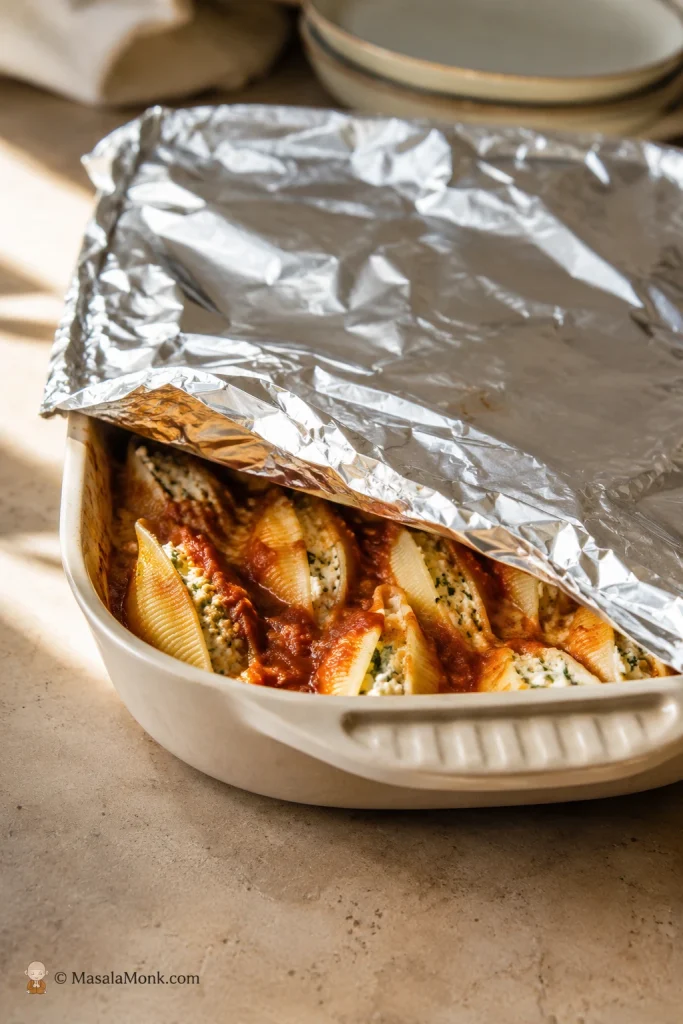
No-boil baked ziti in a baking dish with foil being lifted off, showing the dump-and-bake method using marinara and water.
No-boil baked ziti is the easiest “dump-and-bake” version: coat dry pasta in marinara + water, cover tightly with foil, then bake until the ziti turns tender and the top gets bubbly and cheesy.

Serious Eats explains the logic clearly in their no-boil method, including why soaking can deliver al dente baked pasta without an extra pot: The Food Lab’s No-Boil Baked Ziti.

Ingredients (serves 6–8)

  • 450 g ziti (or penne/rigatoni)
  • 4 cups marinara (slightly more than classic)
  • 1 cup water or light stock
  • 250 g ricotta
  • 200 g mozzarella, divided
  • 50 g parmesan
  • Oregano, salt, pepper

Steps

  1. Heat oven to 190°C / 375°F.
  2. Mix marinara and water/stock in a bowl. Taste and season.
  3. Stir in dry pasta until coated. Let it sit 10 minutes to start hydrating.
  4. Assemble like classic (sauce layer, pasta, ricotta, cheese, repeat).
  5. Cover tightly with foil and bake 40 minutes.
  6. Uncover and bake another 10–15 minutes to brown and reduce excess moisture.
  7. Rest 10 minutes before serving.

Meanwhile, if you want a quicker “less-fuss” take that still feels like baked ziti, Serious Eats also has a skillet baked ziti version: Easy Skillet Baked Ziti with Sausage and Ricotta. Even if you don’t follow it exactly, it’s useful for understanding moisture balance.

Also Read: Green Chutney Recipe (Coriander–Mint / Cilantro Chutney)


3) Baked ziti recipe with ricotta cheese (extra creamy, 3-cheese feel)

A baked ziti with ricotta cheese should feel generous, not dry. Here, the goal is a creamy layer that stays soft after baking, plus enough mozzarella to stretch without turning the whole dish into a cheese brick.

Baked ziti with ricotta cheese showing evenly spaced ricotta dollops in a baking dish, labeled extra creamy (3-cheese feel) with tips to season ricotta and rest 12 minutes.
For extra-creamy baked ziti with ricotta cheese, season the ricotta, dollop it evenly across the pasta, and let the bake rest about 12 minutes—this keeps the ricotta layer soft, creamy, and more sliceable (a true 3-cheese feel).

What changes from classic: more ricotta, more parmesan, slightly wetter mix.

Ingredients

  • Use the classic list, plus:
    • +125 g ricotta (an extra 1/2 cup)
    • +25 g parmesan (a few extra spoonfuls)
    • Optional: 1 egg (helps set the ricotta layer into a “lasagna-like” slice)

Steps

  1. Mix ricotta with parmesan, black pepper, and (optionally) an egg.
  2. Layer ricotta more evenly (smaller dollops, closer together).
  3. Add a splash of pasta water or plain water to the sauce so the bake stays moist.
  4. Bake until bubbling, then rest longer—about 12 minutes—so the ricotta settles.

After that, if you’re the kind of cook who enjoys creamy sauce techniques beyond ricotta, the white sauce approach can be a fun detour: Béchamel Sauce for Lasagna.


4) Baked ziti without ricotta (still rich, no compromise recipe)

Baked ziti without ricotta is more common than people think—sometimes it’s a preference, other times it’s just what your fridge looks like. The key is replacing ricotta’s two jobs: creaminess and structure.

Baked ziti without ricotta guide showing the best creamy swaps: cottage cheese, Greek yogurt, and cream cheese mixed with milk.
Making baked ziti without ricotta? These three creamy swaps keep the ziti dish rich and sliceable: cottage cheese (closest match), Greek yogurt (lighter and tangy), or cream cheese + milk (smooth and indulgent).

Pick one creamy substitute

  • Cottage cheese (best match; see next recipe card)
  • Cream cheese + milk (for a smooth, indulgent texture)
  • Greek yogurt (tangy and lighter; best with extra mozzarella)

Option A: Cream cheese swap

  • Replace ricotta with 150 g cream cheese + 3–4 tbsp milk, whisked smooth.
  • Add a pinch of garlic powder or oregano.

Option B: Greek yogurt swap

  • Replace ricotta with 250 g thick Greek yogurt.
  • Increase mozzarella slightly, because yogurt doesn’t melt the way cheese does.

In contrast to ricotta, these swaps blend in more smoothly, so you can either layer them or stir them directly into the pasta-sauce mixture. Either route works; your choice depends on whether you want a “layered ziti dish” or a more unified, creamy baked pasta.

Also Read: Rob Roy Drink Recipe: Classic Scotch Cocktail (Perfect + Dry + Sweet Variations)


5) Baked ziti with cottage cheese (creamy recipe + protein-forward)

Baked ziti with cottage cheese is one of those “sounds odd until you try it” upgrades. Cottage cheese bakes into a creamy layer, especially if you blend it briefly.

Baked ziti with cottage cheese recipe card showing a creamy slice with ziti pasta, marinara, melted mozzarella, and a fork, labeled creamy and protein-forward.
Baked ziti with cottage cheese is the easiest ricotta swap—blend it for a smoother “ricotta-style” layer, then bake until bubbly for a creamy, protein-forward ziti dish that tastes even better the next day.

If you want a full casserole-style cousin to this idea, MasalaMonk has a dedicated baked pasta guide that uses cottage cheese in a layered format: Cottage Cheese Lasagna Recipe. It’s a great “next recipe” pathway once you fall in love with cottage cheese in pasta bakes.

Ingredients

  • Use the classic list, but swap:
    • Ricotta → 250 g (1 cup) cottage cheese
  • Optional: blend cottage cheese 20–30 seconds for a smoother texture
  • Optional: add lemon zest + black pepper (surprisingly good)

Steps

  1. Cook pasta slightly under.
  2. Simmer sauce briefly.
  3. Mix cottage cheese with parmesan and pepper.
  4. Layer as in classic, or stir cottage cheese into the pasta for a faster bake.
  5. Bake until bubbly and golden.

Notably, cottage cheese versions often taste even better the next day, once the flavor settles and the cheese layer firms up slightly.

Also Read: Sandwich for Breakfast: Breakfast Sandwich Recipe + 10 Variations


6) Baked ziti recipe with ground beef (classic “family tray”)

Baked ziti with ground beef is the tray that disappears first at a potluck—hearty, familiar, and easy to portion. If you’re looking for baked ziti with hamburger meat, this is the version you want.

Baked ziti with ground beef (hamburger meat) in a casserole dish with melted mozzarella and marinara, served as a hearty family tray.
This baked ziti with ground beef (aka baked ziti with hamburger meat) is the classic family-tray version—brown the beef, simmer it in marinara, then bake with mozzarella for a hearty, crowd-pleasing ziti dish.

Ingredients

  • Classic ingredients, plus:
    • 450 g ground beef
    • Optional: 1/2 tsp chili flakes
    • Optional: a pinch of smoked paprika (adds depth)

Steps

  1. Brown the ground beef in a pan until fully cooked. Drain excess fat if needed.
  2. Stir beef into the marinara and simmer 5 minutes so the flavors meld.
  3. Combine with pasta and assemble like classic.
  4. Bake until bubbling and browned on top.

Alternatively, if you’re cooking for a crowd that likes a little heat, add a spoon of chili crisp or crushed red pepper between layers—small change, big payoff.

Also Read: Strawberry Smoothie Recipes (12 Easy Blends + Bowls & Protein Shakes)


7) Sausage baked ziti (deep, savory, a little bold recipe)

Sausage baked ziti has a richer, more seasoned backbone than ground beef, which makes it ideal when you want flavor without extra spices.

Sausage baked ziti in a cast-iron skillet with Italian sausage, marinara sauce, melted mozzarella, and a cheesy spoon lift.
Sausage baked ziti brings deep, savory flavor with almost no extra effort—brown Italian sausage, simmer it in marinara, then bake with mozzarella until bubbly and scoopable.

Ingredients

  • Classic ingredients, plus:
    • 450 g Italian sausage (casings removed)
    • Optional: fennel seeds if your sausage is mild
    • Optional: sautéed peppers for a sweeter balance

Steps

  1. Brown sausage, breaking it into chunks. Let it get a bit caramelized.
  2. Add marinara to the pan and simmer 5 minutes.
  3. Continue with the classic method.

If you’re already in a sausage mood, you may also enjoy the “cozy slow-cooker” lane of Italian-American comfort—MasalaMonk’s Crock Pot Lasagna Soup has the same spirit, just in bowl form.


8) Meatball baked ziti (sliceable and satisfying)

Meatball baked ziti is the “party version” of the dish: the slices look impressive, and every serving has a clear highlight.

Meatball baked ziti in a casserole dish with a slice lifted on a spatula, showing meatballs, marinara sauce, ziti pasta, and melted mozzarella.
Meatball baked ziti is the “party version” of baked ziti—nestle warmed meatballs into saucy layers, then bake until bubbling so every slice delivers a meatball, plenty of marinara, and a melty mozzarella top.

Ingredients

  • Classic ingredients, plus:
    • 12–16 cooked meatballs (homemade or store-bought)
  • Optional: extra marinara for spooning over servings

Steps

  1. If using store-bought meatballs, warm them in marinara so they’re flavorful and tender.
  2. Assemble the dish: sauce layer → pasta → ricotta/cottage cheese layer → nestle meatballs → cheese → repeat.
  3. Bake until fully hot and bubbling.

Consequently, this version often benefits from an extra 5 minutes of rest time so the meatballs don’t shift when you serve.

Also Read: Classic Rum Punch + 9 Recipes (Pitcher & Party-Friendly)


9) Vegetarian baked ziti recipe (baked ziti without meat, still hearty)

Vegetarian baked ziti should never feel like “the meatless option.” The fix is texture and umami: mushrooms, spinach, roasted veg, or a mix.

Vegetarian baked ziti with mushrooms and spinach in marinara, topped with melted mozzarella and a cheesy spoon lift, labeled hearty and no meat needed.
Vegetarian baked ziti doesn’t have to feel like the “meatless option”—browned mushrooms and wilted spinach add savory depth, while a bubbling mozzarella top keeps this baked ziti without meat just as comforting as the classic.

If you’re curious about building meat-like satisfaction from mushrooms in general, MasalaMonk has a useful plant-based guide: “Mushrooms” Instead of “Beef”. It’s not a ziti recipe, yet it’s packed with ideas for getting that savory, filling feel without meat.

Ingredients

  • Classic ingredients, plus:
    • 300–400 g mushrooms, sliced
    • 2 cups spinach
    • Optional: 1 tbsp soy sauce (tiny amount, big umami)

Steps

  1. Sauté mushrooms until they’re browned and you’ve cooked off their moisture.
  2. Stir mushrooms into the sauce and simmer 5 minutes.
  3. Stir spinach into the hot sauce just until it wilts.
  4. Assemble and bake like classic.

At the same time, a fresh, crunchy side makes the whole ziti meal feel lighter. A quick option that pairs beautifully is this garlicky skillet veg: Skillet Mushroom and Zucchini Stir Fry.


10) Veggie baked pasta (roasted vegetables, baked ziti style)

If you want veggie baked pasta, this is the version that hits that exact craving: roasted vegetables folded into marinara, then baked with pasta and cheese.

Roasted veggie add-in guide for veggie baked pasta (ziti style) showing roasted zucchini, bell pepper, and eggplant with marinara and uncooked ziti.
For veggie baked pasta (baked ziti style), roast zucchini, peppers, and eggplant until caramelized, then fold them into marinara before baking—this keeps the vegetables flavorful and prevents a watery pasta bake.

Ingredients

  • Classic ingredients, plus:
    • 1 zucchini, diced
    • 1 bell pepper, diced
    • 1 small eggplant, diced (optional but great)
    • 2 tbsp olive oil
    • Salt + pepper

Steps

  1. Roast the vegetables at 220°C / 425°F for ~20 minutes until browned at the edges.
  2. Stir roasted veg into the sauce and simmer 2–3 minutes.
  3. Assemble and bake like classic.

Because roasted vegetables can release moisture as they sit, this version tends to bake best when you roast until properly caramelized rather than “just soft.”

Also Read: 7 Pizza Sauce Recipes | Marinara, White Garlic, Alfredo, Buffalo, BBQ, Vodka & Ranch


11) Crock pot baked ziti (recipe of slow cooker baked ziti)

Crock pot baked ziti is for days when you want dinner to cook while you do literally anything else. It’s softer than oven-baked ziti and a little less browned, but it’s incredibly convenient.

Crock pot baked ziti in a slow cooker with a ladle lifting a cheesy portion, showing slow cooker baked ziti texture with marinara and melted mozzarella.
Crock pot baked ziti is the hands-off version of a baked ziti recipe—layer pasta, sauce, and cheese in the slow cooker, then scoop up a saucy, melty dinner that’s perfect for busy days.

Two ways to do it

  • Best texture: parboil pasta 4–5 minutes (still very underdone), then slow cook
  • Easiest: use a no-boil style approach with extra liquid, but keep a close eye on softness

Ingredients

  • 450 g ziti
  • 4 cups marinara
  • 1 cup water (only if you’re using the “no-boil” approach)
  • 250 g ricotta or cottage cheese
  • 2 cups mozzarella + parmesan
  • Oregano, salt, pepper

Steps

  1. Lightly oil the slow cooker insert.
  2. Mix sauce (and water if using). Season well.
  3. Layer sauce → pasta → ricotta/cottage cheese → mozzarella. Repeat until used up.
  4. Cook on LOW until pasta is tender and the center is hot (typically 2–3 hours, depending on your cooker).
  5. Let it sit with the lid off for 10 minutes before serving so it thickens slightly.

If you enjoy slow cooker comfort meals in this general lane, Crock Pot Lasagna Soup is another cozy option that uses similar flavors.


12) Vegan baked ziti (plant-based recipe, still comforting)

A vegan baked ziti recipe should feel creamy and cohesive rather than “pasta with tomato sauce.” The secret is a good ricotta-style component and enough seasoning to make it taste finished.

Vegan baked ziti that actually feels creamy: cashew “ricotta” adds richness, greens balance the marinara, and a meltable vegan cheese on top gives you that classic baked-ziti comfort—fully plant-based.

Ingredients

  • 450 g ziti (choose vegan-friendly pasta)
  • 3–4 cups marinara
  • 2–3 cups spinach or kale
  • Vegan mozzarella shreds (or a meltable vegan cheese)
  • Cashew ricotta (quick version):
    • 1 cup cashews (soaked if you can)
    • 2–3 tbsp lemon juice
    • 1 clove garlic
    • Salt + pepper
    • A splash of water to blend

Steps

  1. Blend cashew ricotta until creamy but not soupy.
  2. Cook pasta slightly under, or use a hydrated/no-boil method with extra liquid.
  3. Stir greens into sauce to wilt.
  4. Assemble: sauce → pasta → cashew ricotta → vegan cheese → repeat.
  5. Bake until hot and the top is lightly browned.

Even if you’re not fully vegan, this is a helpful “plant-based dinner” baked pasta to have in rotation—especially when cooking for mixed diets.

Also Read: Vegan Mayo Recipe Guide: 5 Plant-Based Mayonnaise


13) Gluten-free baked ziti (no mush, no sadness)

Gluten-free baked ziti is completely doable, but the timing matters. GF pasta softens faster, and oven heat can push it past “tender” into “too soft” if you’re not careful.

Gluten-free baked ziti timing guide comparing undercooked pasta vs overcooked pasta, showing firmer ziti tubes on the left and softer texture on the right, with tips to boil 2–3 minutes under and check at 20 minutes.
Gluten-free baked ziti is all about timing: boil the pasta 2–3 minutes under, then start checking the bake early (around 20 minutes) so the ziti stays firm instead of turning soft or mushy.

Ingredients

  • Same as classic, but use gluten-free ziti/penne/rigatoni

Steps

  1. Boil GF pasta until it’s more underdone than you think (often 2–3 minutes under the box time).
  2. Keep the sauce slightly looser than usual.
  3. Assemble and bake, but start checking at 20 minutes rather than 30.

If you like the idea of higher-protein pasta alternatives, you might also enjoy reading about legume-based options like lentil pasta—MasalaMonk has a guide that covers brands and recipes: Lentil Pasta for Weight Loss: Nutrition, Brands & 5 Recipes. You don’t have to make it about weight; it’s simply a useful overview of textures and cooking behavior.


14) Pizza baked ziti (pepperoni, oregano, “slice night” energy)

Pizza baked ziti is exactly what it sounds like: a baked ziti dish that leans into pizza flavors—pepperoni, extra oregano, and a cheesier top.

Pizza baked ziti with pepperoni and melted mozzarella in a skillet, showing a cheesy slice being lifted, labeled pepperoni and extra oregano.
Pizza baked ziti is the fun, crowd-pleasing twist—pepperoni, extra oregano, and a bubbly mozzarella top turn baked ziti into “slice night” comfort that’s perfect for movie night.

Ingredients

  • Classic ingredients, plus:
    • 80–120 g pepperoni (or plant-based pepperoni)
    • +1/2 tsp oregano
    • Optional: a few spoonfuls of pizza sauce mixed into the marinara

Steps

  1. Assemble like classic, but add pepperoni near the top layer and between layers for more punch.
  2. Finish with extra mozzarella and a little parmesan.
  3. Bake until the edges bubble and the top browns.

In other words, this is the baked pasta version of movie night: simple, loud flavors, very little fuss.

Also Read: Blueberry Pancakes (6 Recipes) + Homemade Pancake Mix


15) “Fresh sauce” baked ziti (lighter, brighter, still cozy)

Finally, when you want baked ziti that tastes less “heavy winter casserole” and more “fresh tomato pasta baked into comfort,” a homemade sauce base makes a noticeable difference.

Fresh sauce baked ziti card showing a skillet of fresh tomato sauce with basil, tomatoes, garlic, and olive oil, labeled brighter and tomato-forward.
Fresh sauce baked ziti tastes lighter and more tomato-forward—use fresh tomatoes, basil, and olive oil for a brighter baked ziti recipe that still bakes up cozy and bubbly.

Use the classic recipe, but swap jarred marinara for a fresh sauce. This MasalaMonk guide keeps it approachable: Tomato Sauce From Fresh Tomatoes.

To keep the overall pan balanced, pair the fresh sauce with either:

As a result, you get a baked ziti recipe that still feels comforting, but tastes brighter and more “tomato-forward.”

Also Read: Authentic Chimichurri Recipe (Argentine Steak Sauce)


How to store, freeze, and reheat baked ziti safely

Leftovers are part of the baked ziti charm, and it’s worth handling them safely so you can enjoy the second (and third) round with confidence.

For fridge storage, USDA guidance commonly points to using cooked leftovers within about 3–4 days, and reheating to 165°F (74°C). You can reference USDA’s food safety page here: Leftovers and Food Safety (USDA FSIS). Foodsafety.gov also reinforces reheating leftovers to 165°F and offers practical reheating reminders: Leftovers: The Gift that Keeps on Giving. If you like a simple chart format, Foodsafety.gov’s minimum internal temperatures include a leftovers line at 165°F: Safe Minimum Internal Temperatures.

Freeze and reheat baked ziti guide showing a labeled foil pan and storage tips: refrigerate 3–4 days and reheat leftovers to 165°F (74°C).
Freeze and reheat baked ziti the easy way: label your tray, keep leftovers in the fridge for 3–4 days, and reheat baked ziti until it reaches 165°F (74°C)—cover with foil first, then uncover to refresh the cheesy top.

Reheating baked ziti (best texture)

  • Oven method: cover with foil and warm until hot throughout; uncover for the last few minutes to re-crisp the top.
  • Microwave method: add a spoon of water or sauce, cover loosely, and reheat in bursts so it warms evenly.

If you’re freezing a full tray, Allrecipes has a practical guide on what freezes well and how to protect texture: How to Freeze Casseroles. It’s especially helpful for baked pasta because it talks through moisture, dairy, and best practices for baking from frozen.

Freezing baked ziti (simple approach)

  1. Cool fully.
  2. Wrap tightly (plastic wrap + foil, or a tight lid).
  3. Label with date.
  4. Reheat covered first, then uncover to brown.

Also Read: Double Chocolate Chip Cookies – Easy Recipe with 7 Variations


What to serve with baked ziti (drinks + lighter sides that fit naturally)

A baked ziti meal can be rich, so pairing it with something bright—or simply something crunchy—makes the whole dinner feel more complete. Instead of piling on another heavy side, aim for contrast: tang, citrus, herbs, crisp vegetables, or a cooling drink.

Drinks that work especially well

For something creamy and soothing, mango lassi is a classic partner to tomato-rich meals because it softens acidity and heat. MasalaMonk’s version includes five variations, so you can keep it simple or get playful: How to make Mango Lassi (5 versions).

If you’d rather go refreshing and zippy, jal jeera is a punchy cumin-citrus drink that feels tailor-made for richer baked pasta nights: Jal Jeera aka the Indian Lemonade.

And if you’re setting a family-friendly table (or you just want something bubbly that reads “special”), this MasalaMonk roundup has plenty of options: Apple juice mocktails for every occasion.

If you want a more tropical, hydration-forward angle, MasalaMonk also has a collection that includes both cocktails and mocktail-leaning ideas built around coconut water: Coconut water cocktails and refreshing drink ideas. Even if you skip the alcohol, the flavor pairings are useful inspiration.

Wondering what to serve with baked ziti? Pair a rich baked ziti recipe with a crisp salad, a bright green side, and a refreshing drink to balance the richness and make the meal feel lighter.

Lighter sides that balance a baked pasta

A quick vegetable side is often enough. This simple garlicky sauté is fast, bright, and surprisingly perfect next to baked ziti: Skillet Mushroom and Zucchini Stir Fry.

For crunch and protein, a peanut salad gives you that fresh bite that baked pasta lacks by design: Crunchy, tangy, spicy peanut salad.

If you want a gentle “balance the plate” mindset without turning dinner into a lecture, Harvard’s Healthy Eating Plate is a simple visual reminder to load up vegetables and choose whole grains when you can: Healthy Eating Plate (Harvard Nutrition Source). Their whole grains overview is also useful if you’re deciding between refined pasta and whole-grain options: Whole Grains (Harvard Nutrition Source).


A final word before you pick your version

The best baked ziti recipe is the one you’ll actually make again. Some nights that’s a classic tray with ricotta and mozzarella; other times it’s baked ziti without ricotta because that’s what you’ve got; and occasionally it’s a slow cooker baked ziti because you want dinner to cook while life happens.

Pick your baked ziti variations guide showing options for weeknight (easy, no-boil), creamy (ricotta, no ricotta, cottage cheese), hearty (ground beef, sausage, meatballs), diet (vegetarian, vegan, gluten-free), and pizza baked ziti.
Not sure which baked ziti recipe to make tonight? Use this quick baked ziti variations guide to choose by mood—easy or no-boil for weeknights, ricotta or cottage cheese for creamy, ground beef/sausage/meatballs for hearty, vegetarian/vegan/gluten-free for dietary needs, or pizza baked ziti for “slice night.”

Start with the classic base once. Then, the next time you’re craving a different vibe, jump straight to the recipe card that matches your pantry and your mood—easy baked ziti, sausage baked ziti, vegetarian baked ziti, veggie baked pasta, no boil baked ziti, gluten-free baked ziti, vegan baked ziti recipe, or pizza baked ziti. That’s the whole point of keeping all the variations together: one method, many dinners, no stress.

Also Read: How to Make Churros (Authentic + Easy Recipe)

FAQs

1) What is the best baked ziti recipe for beginners?

For most beginners, the best baked ziti recipe is the classic version with marinara, ricotta, mozzarella, and parmesan. It’s forgiving, it bakes evenly, and the layers help prevent dryness. If you’re nervous about timing, cook the pasta slightly under al dente so it finishes perfectly in the oven.

2) What makes an easy baked ziti recipe truly “easy”?

An easy baked ziti recipe usually means fewer steps and fewer dishes. Common shortcuts include using jarred marinara, skipping sautéed onion, and mixing the ricotta directly into the pasta and sauce instead of carefully layering. As long as you still bake it until bubbling, it will taste like a proper baked ziti dish.

3) Can I make baked ziti with ricotta cheese and still keep it creamy?

Yes. Baked ziti with ricotta cheese stays creamy when the sauce is not too thick and the pasta is slightly undercooked before baking. Additionally, seasoning the ricotta (salt, pepper, parmesan) improves flavor without changing texture. If you like a softer middle, add a small splash of water to the sauce before assembling.

4) Can you make baked ziti without ricotta?

Absolutely. Baked ziti without ricotta works well with cottage cheese, a cream cheese blend, or thick Greek yogurt. The key is choosing a substitute that adds moisture and helps the layers hold together. In many cases, you’ll want a touch more mozzarella on top since ricotta-free versions rely more on melt for that classic comfort bite.

5) Is baked ziti with cottage cheese a good substitute for ricotta?

Surprisingly, yes. Baked ziti with cottage cheese is one of the closest swaps for ricotta because it bakes into a creamy layer. For a smoother texture, blend the cottage cheese briefly before using it. On the other hand, if you prefer more texture, use it as-is.

6) Can I make baked ziti without meat and still make it filling?

Definitely. Vegetarian baked ziti (or baked ziti without meat) is satisfying when you add ingredients that bring savory depth, such as mushrooms, spinach, roasted vegetables, or a mix of the three. In particular, browning mushrooms well before adding them to sauce makes the whole ziti meal taste richer without needing meat.

7) What’s the difference between vegetarian baked ziti and veggie baked pasta?

Vegetarian baked ziti is usually a baked ziti recipe that skips meat but keeps the classic pasta-bake structure. Veggie baked pasta, meanwhile, often leans more heavily on vegetables—especially roasted vegetables—as the “main event,” with pasta and cheese supporting them. In practice, they overlap a lot; the difference is simply emphasis.

8) Can I make baked ziti with ground beef (hamburger meat)?

Yes. Baked ziti with ground beef—often sought as baked ziti with hamburger meat—starts by browning the beef, draining extra fat, then simmering it briefly in marinara. Afterward, assemble and bake like any other baked ziti recipe. For deeper flavor, let the beef brown a little more before adding sauce.

9) Is sausage baked ziti better than ground beef baked ziti?

It depends on what you want. Sausage baked ziti tends to taste more boldly seasoned because the sausage already contains spices. Ground beef baked ziti, by contrast, is milder and more “classic cafeteria comfort” in the best way. If you’re serving a crowd with mixed tastes, ground beef is often the safer pick.

10) How do I make meatball baked ziti without drying it out?

Use meatballs that are fully cooked but not overbaked, and keep them nestled within saucy layers rather than sitting exposed on top. Also, add enough marinara so the bake stays moist. If the dish looks dry before it goes into the oven, it will only get drier during baking.

11) What pasta can I use if I can’t find ziti pasta?

If ziti pasta is unavailable, use rigatoni, penne, or other short tube shapes. The main idea is choosing a pasta that holds sauce and stands up to baking. Avoid very thin pasta shapes, because they can turn soft more quickly in the oven.

12) How do I keep baked ziti from drying out?

First, don’t overcook the pasta before baking. Next, make sure the sauce is loose enough—thick sauce can bake up too tight and dry. Finally, cover with foil for part of the bake if your oven runs hot, then uncover near the end to brown the cheese.

13) What is no boil baked ziti, and does it really work?

No boil baked ziti is a method where dry pasta hydrates in the oven using extra liquid from sauce and added water or stock. It can work very well, provided the dish is covered tightly for the first stage of baking and you use enough liquid. If you prefer a firmer bite, uncover near the end so excess moisture cooks off.

14) Can I make crock pot baked ziti or baked ziti in a slow cooker?

Yes—crock pot baked ziti is popular because it’s hands-off. For better texture, parboil the pasta briefly before layering. If you use dry pasta, you’ll need extra liquid and careful timing to prevent it from getting too soft.

15) Can I make a vegan baked ziti recipe that still tastes rich?

Yes. Vegan baked ziti is richest when you include a creamy component (like cashew “ricotta”) plus enough seasoning in the sauce. Also, adding greens like spinach helps balance the richness. If you’re aiming for that classic baked ziti feel, a meltable vegan cheese on top helps deliver the familiar finish.

16) How do I make gluten-free baked ziti without mushy pasta?

Gluten-free baked ziti turns out best when the pasta is undercooked before baking and the bake time is watched more closely. In addition, keep the sauce slightly looser so the pasta finishes cooking without drying out. Since different GF pastas behave differently, checking doneness early is the easiest safeguard.

17) Can I assemble baked ziti ahead of time?

Yes. Assemble the baked ziti recipe, cover tightly, and refrigerate. When baking from cold, add extra time so the center heats through. If the top browns too quickly, cover with foil and uncover later to finish.

18) Can I freeze baked ziti, and should I freeze it baked or unbaked?

You can freeze baked ziti either way. Freezing unbaked keeps the cheese layer fresher in texture, while freezing baked is convenient for quick reheating. Either option works; the difference is simply whether you want “ready-to-reheat” convenience or “fresh-baked” texture.

19) How long does baked ziti last in the fridge?

Typically, baked ziti lasts several days in the fridge when stored in an airtight container. For best flavor and texture, eat it sooner rather than later, because baked pasta continues to absorb sauce over time.

20) How do I reheat baked ziti so it stays cheesy and moist?

For the best texture, reheat in the oven covered with foil, then uncover briefly to refresh the top. If using a microwave, add a small spoon of water or extra sauce before reheating so the pasta doesn’t dry out. Either way, heating gently is better than blasting it quickly.

21) What temperature do you bake baked ziti at?

Most baked ziti recipes bake well around 190°C / 375°F. That temperature is hot enough to bubble sauce and melt cheese without scorching the top too fast. If you want more browning, use a short broil at the end rather than raising the oven temperature.

22) What are the most popular baked ziti variations?

The most popular baked ziti variations tend to include easy baked ziti, baked ziti with ricotta, baked ziti without ricotta, baked ziti with cottage cheese, vegetarian baked ziti (baked ziti without meat), baked ziti with ground beef (hamburger meat), sausage baked ziti, crock pot baked ziti, vegan baked ziti, gluten-free baked ziti, and pizza baked ziti.

Posted on Leave a comment

Five Ingredient Casseroles | Deliciously SIMPLE Casserole Recipes

bowl of soup and two silver spoons

Hello, food lovers! 🙋‍♀️ Today, we’re going to explore a delightful video from Julia Pacheco, a YouTube channel dedicated to sharing simple, delicious, and budget-friendly recipes. This time, we’re learning how to make five different casseroles, each with only five ingredients. These recipes are perfect for those busy weeknights when you need a quick and easy dinner. 🥘🥦🍗🥚

🍲 White Chicken with Creamy Sauce 🍗

This recipe is a unique take on a chicken dish, featuring chicken wrapped in crescent rolls and smothered in a rich and creamy sauce. The chicken is seasoned with Italian seasoning, pepper, and salt, then wrapped in crescent dough and baked in a 9×13 baking dish. The result is a delicious and satisfying meal that’s sure to be a hit with the whole family. 🍗🥐🥛

🍲 Chicken and Spinach Lasagna 🥬

Next up is a chicken and spinach lasagna. This recipe combines ground chicken and spinach for a high-protein, nutrient-rich meal. The lasagna is layered with a creamy sauce and topped with cheese, then baked until golden and bubbly. This is a great way to sneak some veggies into your family’s diet. 🍗🥬🧀

🍲 Chicken Cordon Bleu Casserole 🍗

This Chicken Cordon Bleu Casserole is a simplified version of the classic dish. It features chicken, ham, and cheese, all baked together in a creamy sauce. This casserole is a great way to use up leftover chicken or ham, and it’s sure to be a hit with kids and adults alike. 🍗🍖🧀

🍲 Philly Cheese Steak Casserole 🥩

This Philly Cheese Steak Casserole is a hearty and satisfying meal that’s perfect for a cold winter’s night. It features ground beef, onions, peppers, and provolone cheese, all baked together in a delicious casserole. Serve it in hoagie rolls for a complete meal. 🥩🧅🫑🧀

🍲 French Onion Chicken Casserole 🍗

Last but not least is the French Onion Chicken Casserole. This recipe features chicken breasts, caramelized onions, and a rich French onion soup sauce, all topped with melted mozzarella cheese. Serve it over mashed potatoes for a comforting and delicious meal. 🍗🧅🧀🥔

🎥 Video and Channel Credits 📺

All these amazing recipes and tips are from the YouTube channel Julia Pacheco. Julia shares her passion for food and cooking through her easy-to-follow recipes and meal prep videos. Check out the original video for a step-by-step guide on how to prepare these meals. Also, don’t forget to visit and subscribe to the Julia Pacheco channel for more simple and delicious recipes.