Posted on Leave a comment

Stuffed Shells Recipe: Easy Baked Ricotta Pasta Shells

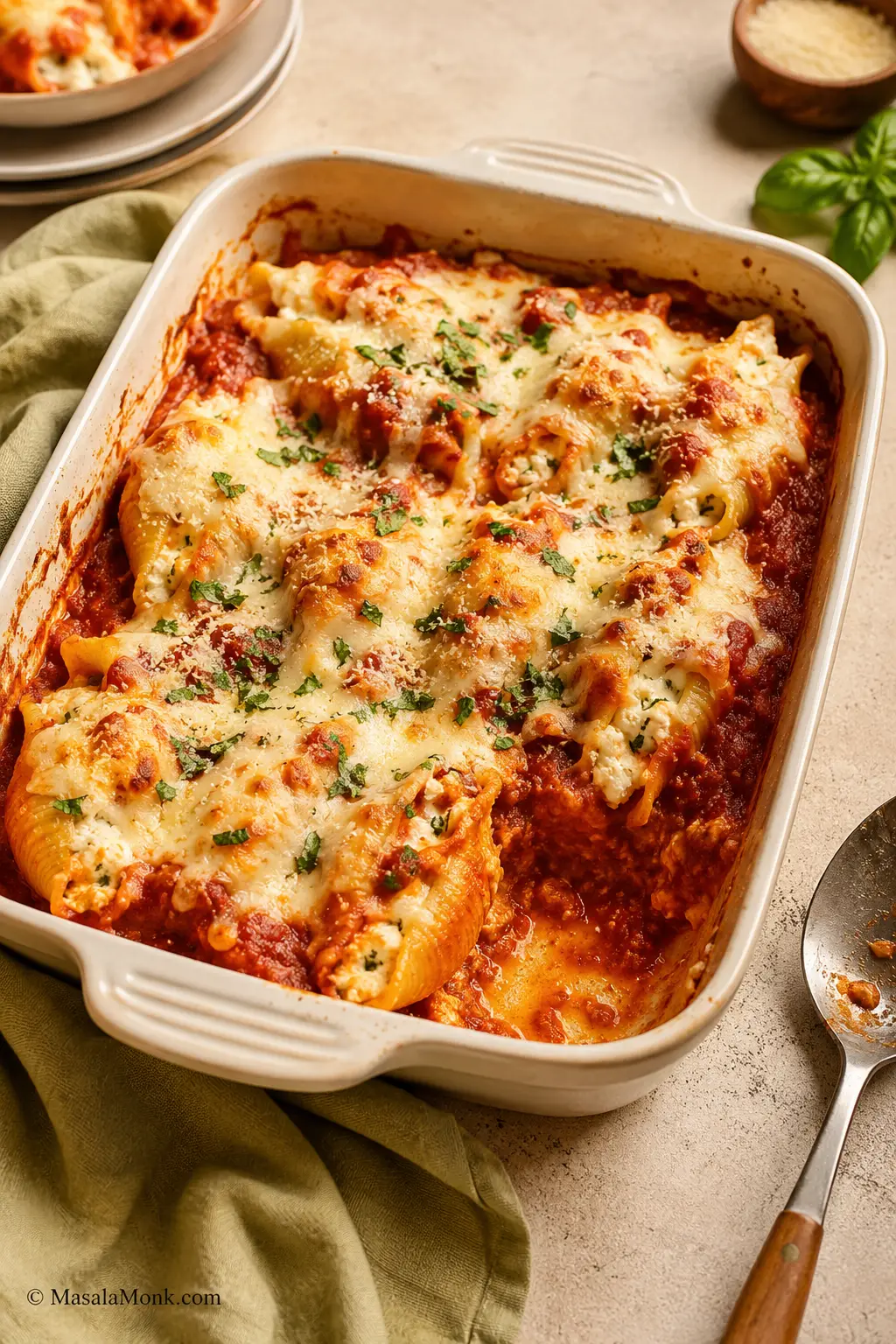
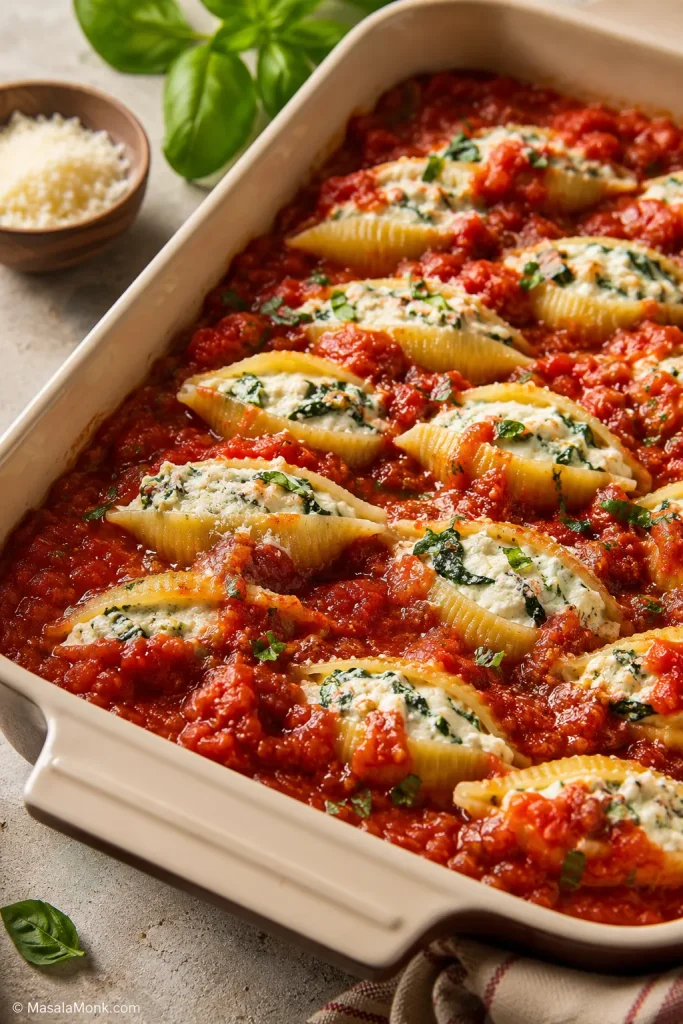
Baked ricotta stuffed shells with marinara sauce and melted mozzarella in a cream baking dish.

Stuffed shells are the kind of baked pasta that makes the table feel full before anyone even sits down: tender jumbo shells, creamy ricotta filling, tomato sauce bubbling around the edges, and mozzarella melted over the top. They give you lasagna-level comfort without all the layering, and the recipe is much more forgiving than it looks.

This version is built to avoid the usual stuffed shell problems: loose ricotta filling, dry pasta edges, shells that turn mushy after baking, and a tray that looks good on top but tastes flat in the middle. Think of it as the no-dry-shell method: thick filling, enough sauce, a covered bake first, and tender shells all the way through.

It fits one classic 9×13-inch baking dish: about 20–24 filled jumbo shells, a seasoned ricotta-mozzarella filling, marinara under and over the pasta, and mozzarella melted on top. A few shells may tear while boiling. The first few you fill may look messy. That is normal. Once everything is tucked into sauce and baked until bubbling, nobody at the table can tell which ones were imperfect.

Stuffed Shells at a Glance

No long planning needed. Here is the quick version before you start.

  • Start with a 12 oz / 340g box of jumbo pasta shells, or enough to cook 28–30 shells.
  • Aim to fill about 24 shells. If your shells are very large, you may fit closer to 20–22 in the baking dish.
  • Mix 15–16 oz / 425–454g ricotta with mozzarella, parmesan, egg, garlic, herbs, salt, and pepper.
  • Use about 3 cups / 720ml marinara sauce, with sauce under and over the shells.
  • Bake at 375°F / 190°C for 25 minutes covered, then 8–10 minutes uncovered.
  • Rest for 5–10 minutes before serving so the filling settles and the shells lift more cleanly.

Boil, fill, sauce, cover, bake, rest — that is the whole recipe. This is also a good one to save because the base method stays the same even when the filling changes.

Quick answers: Yes, you boil the shells first for this version. Use about 3 cups sauce for one 9×13-inch baking dish. Egg helps the filling set, but you can skip it if you prefer a softer filling. Stuffed shells freeze best before baking.

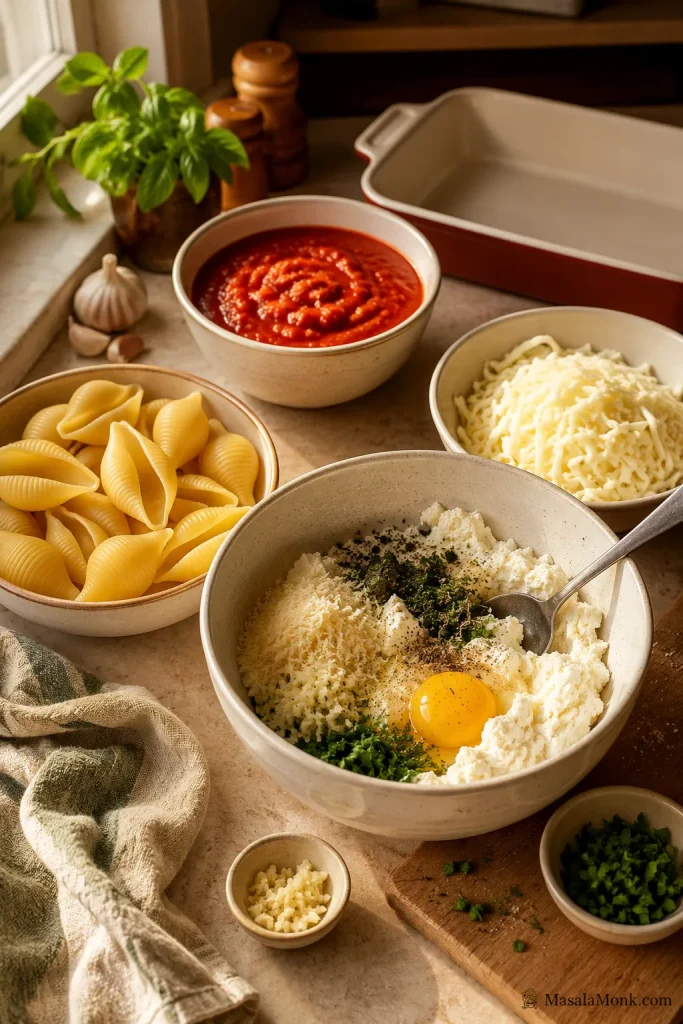
Jumbo pasta shells, ricotta, marinara sauce, mozzarella, parmesan, egg, garlic, herbs, and a baking dish on a kitchen counter.
Start with the essentials: jumbo shells, thick ricotta filling, marinara, mozzarella, parmesan, egg, garlic, and herbs.

Why This Stuffed Shells Recipe Works

This method is built around four small choices that make the biggest difference: undercook the shells slightly, keep the ricotta filling thick, use sauce under and over the pasta, and bake covered before browning the cheese.

  • Shells stay tender. Boiling them just shy of al dente keeps them flexible enough to fill, but firm enough to finish in the oven.
  • Filling stays creamy, not runny. Ricotta gives body, mozzarella gives melt, parmesan adds savory depth, and egg helps everything set.
  • Sauce protects the pasta. Marinara on the bottom keeps the shells from sticking, while sauce over and around the shells prevents dry edges.
  • A covered bake does the work. Foil traps heat and steam so the pasta finishes cooking gently before the cheese browns.
  • Flexibility is built in. Keep it classic, add spinach, stir meat into the sauce, swap in cottage cheese, or freeze a batch for later.

Best of all, the edge of the baking dish tells you dinner is almost ready: sauce bubbling up around the shells, little golden patches of mozzarella, and the smell of garlic, tomato, and browned cheese.

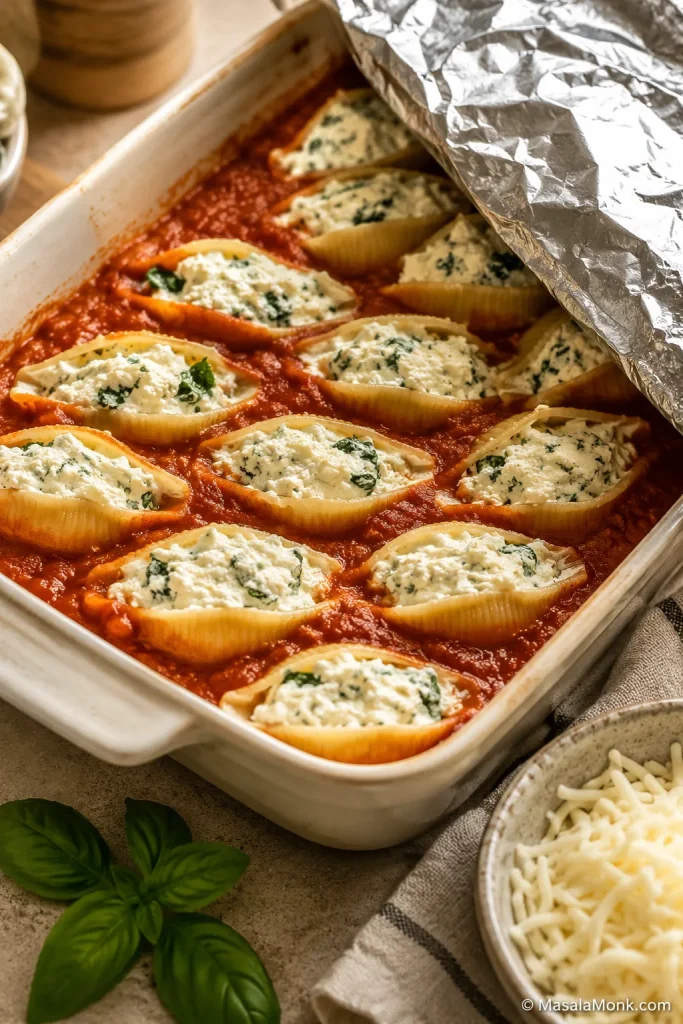
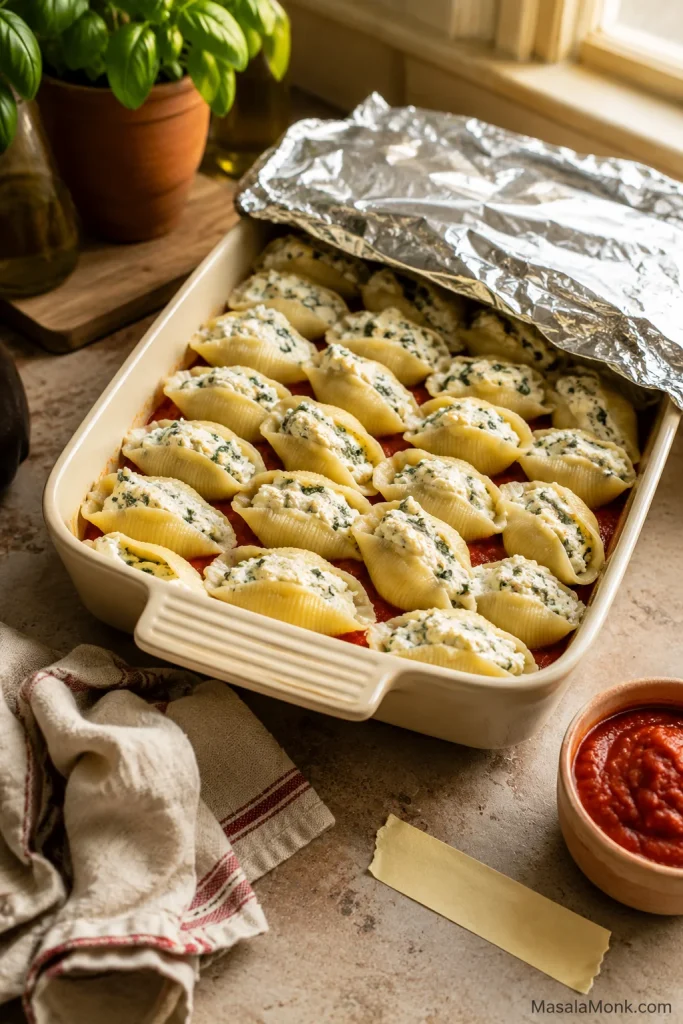
Filled jumbo shells sitting in marinara sauce with foil partly covering the baking dish before baking.
The no-dry-shell method is simple: sauce underneath, sauce around the edges, and foil on top for the first bake.

Ingredients You Need

Stuffed shells do not need complicated ingredients, but they do need the right balance: sturdy shells, thick ricotta filling, enough sauce, and mozzarella that melts without making the pasta watery.

Jumbo Pasta Shells

Choose a 12 oz / 340g box of jumbo pasta shells. These are the large shells made for stuffing, not small shell pasta or macaroni-style shells. Cook 28–30 jumbo shells for one baking dish, or cook the whole box if you like having extra backups.

Some shells will split or fold while boiling, so cook a few extras and move on. The sauce and cheese hide almost everything.

Ricotta Cheese

Use 15–16 oz / 425–454g ricotta cheese. Whole milk ricotta gives the creamiest filling. Loose or watery ricotta should be drained for 10–15 minutes in a fine-mesh strainer or on a few layers of paper towel before mixing. For the right texture, the ricotta filling section shows what the mixture should look like before stuffing.

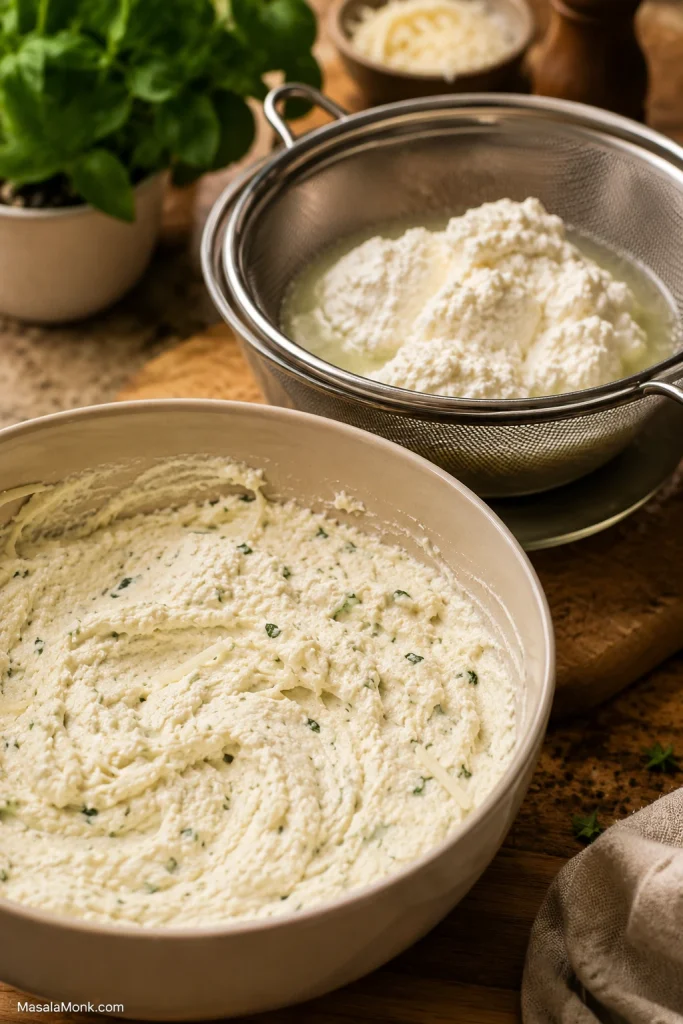
Ricotta draining in a fine-mesh strainer with thick cheese filling nearby.
Loose ricotta should be drained first; thick filling is what prevents watery stuffed shells after baking.

Mozzarella

You need 3 cups shredded low-moisture mozzarella, about 12 oz / 340g, divided between the filling and topping. Low-moisture mozzarella melts into the filling and gives the top a bubbly finish without watering down the pasta. Fresh mozzarella can be used on top in small amounts, but it is softer and wetter.

Parmesan or Pecorino

Use ½ cup / 45–55g grated parmesan or pecorino. Ricotta gives you the creamy center, but parmesan or pecorino is what makes the filling taste seasoned and savory instead of just milky.

Egg

One large egg helps bind the ricotta filling so it holds together after baking. You can skip it, but the filling will be softer. If you leave out the egg, add a little extra parmesan or mozzarella to help the filling hold.

Marinara Sauce

About 3 cups / 720ml marinara sauce gives one baking dish enough sauce for the bottom, top, and edges. A 24 oz / 680g jar is the practical shortcut and usually gives enough sauce for one batch. A good jarred marinara is not a shortcut to apologize for here; stuffed shells are mostly about enough sauce and a well-seasoned filling. If you want to make your own, this homemade marinara sauce gives you a classic base plus spicy, dipping, low-sodium, and sugar-free variations.

Very thick marinara benefits from 2–4 tablespoons of water before baking. If your jar is slightly short or extra thick, loosen it with a splash of water and save a little warm sauce for serving.

Garlic, Herbs, Salt, and Pepper

Ricotta needs seasoning. Garlic, Italian seasoning or fresh herbs, salt, pepper, and optional red pepper flakes make the filling taste like dinner instead of plain cheese. Use ½ teaspoon salt if your parmesan and sauce are already salty. Use closer to ¾ teaspoon if your ricotta is mild and your sauce is lower in salt.

Dried Italian seasoning is the easiest pantry option. Fresh parsley adds brightness, basil gives a sweeter flavor, and oregano gives the filling a stronger Italian-American note. Save fresh basil partly for the top after baking.

Optional Spinach

Either fresh or frozen spinach works; the real rule is to squeeze out as much moisture as possible. Wet spinach can turn a creamy filling loose and watery. For the full version, jump to spinach ricotta stuffed shells.

Optional Meat

The main recipe below is a classic cheese stuffed shells recipe, but cooked ground beef or Italian sausage can make the meal heartier. Brown the meat fully before adding it to the sauce or filling, then drain off excess fat so the pasta does not turn greasy. For the heartier version, see meat stuffed shells.

Tools That Help

You do not need special tools. A large pot, colander, mixing bowl, 9×13-inch / 23×33 cm baking dish, foil, and a spoon or zip-top bag are enough. A zip-top bag with one corner snipped off can make filling the shells faster and neater, but a spoon works perfectly well.

The first few shells are usually the messiest; by the fifth or sixth one, you will know exactly how much filling your shells can hold.

What Pasta Shells Should You Use?

Jumbo pasta shells are the shape you want here. They are large enough to hold ricotta filling and sturdy enough to bake in sauce. Small shells, medium shells, macaroni shells, and regular conchiglie are better for tossing with sauce, not stuffing.

Boil the shells 2–3 minutes shy of al dente. They should be flexible enough to open and fill, but not fully soft. Spread them on a tray to cool; rinse only if they are sticking badly or too hot to handle.

Depending on shell size and your baking dish, you may fit 20–24 filled shells. Aim for 24, but do not force them in. A slightly looser baking dish bakes better than crushed shells.

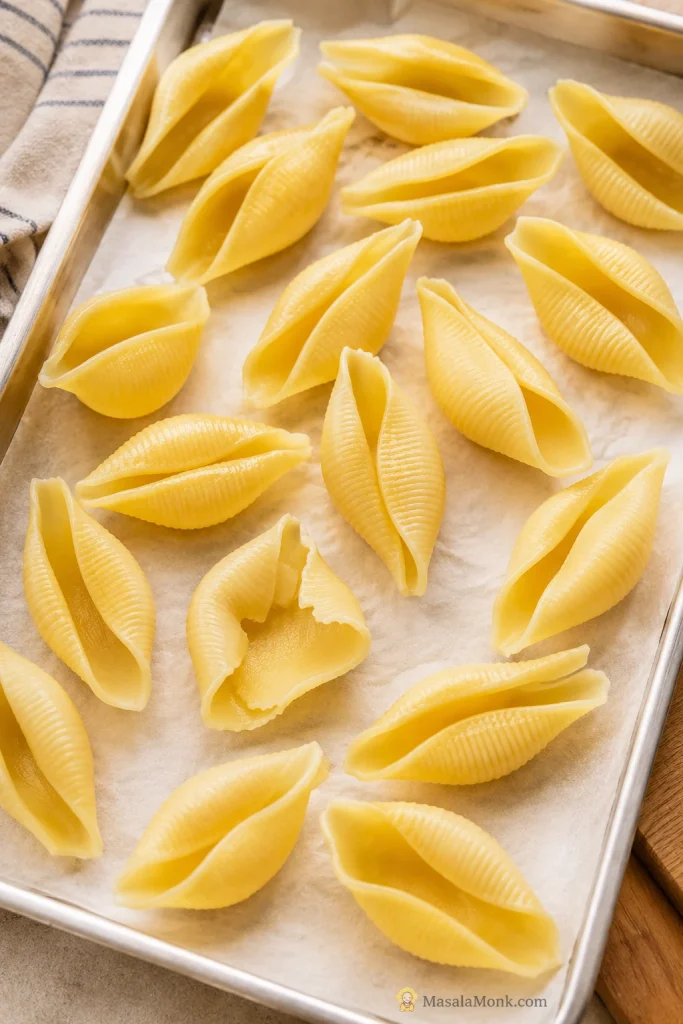
Cooked jumbo pasta shells spread on a tray with one torn shell visible.
Cook jumbo shells just shy of al dente and boil a few extras, because a torn shell or two is normal when stuffing pasta.

The Best Ricotta Filling for Stuffed Shells

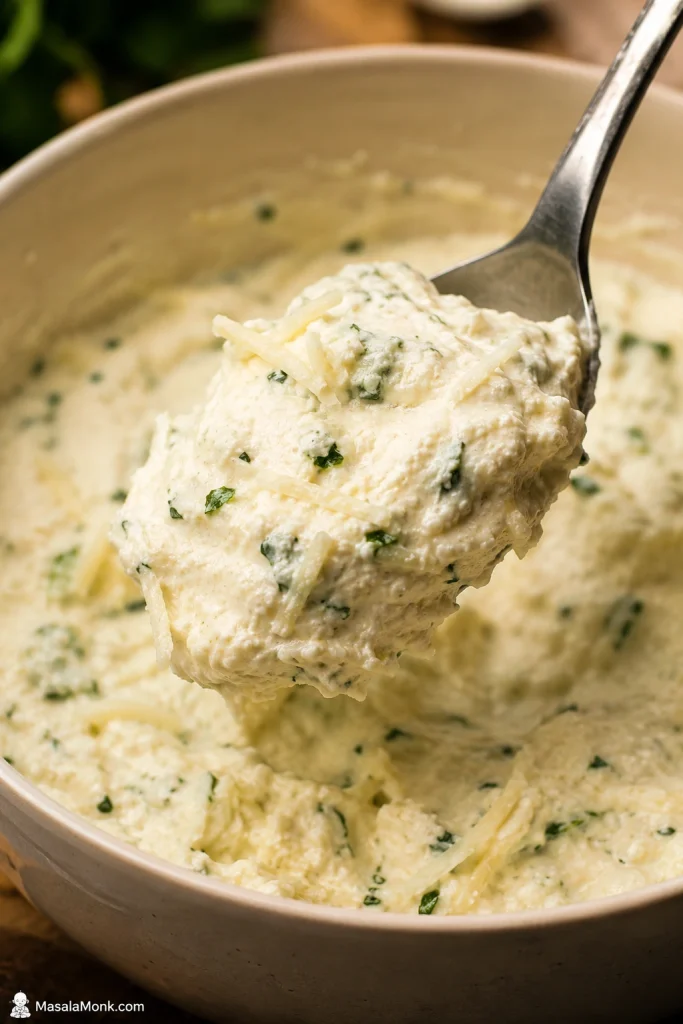
The filling should look thick and scoopable, more like a cheese spread than a sauce. It should mound on a spoon without running off. If it spreads like sauce, it is too wet; if it feels dry or crumbly, a spoonful of ricotta or sauce will loosen it.

A good stuffed shells filling uses ricotta for creaminess, mozzarella for melt, parmesan or pecorino for savory depth, egg for structure, and garlic, herbs, salt, and pepper for flavor. To check the seasoning safely, mix the cheeses, garlic, herbs, salt, and pepper first, taste, then add the egg last.

Thick ricotta cheese filling with herbs mounding on a spoon above a bowl.
A good ricotta filling should mound on a spoon, not drip, so it stays creamy inside each pasta shell.

Save This Stuffed Shells Filling Ratio

For one 9×13-inch baking dish, use:

  • 15–16 oz / 425–454g ricotta
  • 2 cups / about 225g mozzarella inside the filling
  • ½ cup / 45–55g parmesan or pecorino
  • 1 large egg
  • 1–2 garlic cloves
  • Herbs, salt, and pepper
  • 1 cup / about 115g mozzarella for the top

Once the filling looks thick and scoopable, you are in good shape.

How Much Sauce Do Stuffed Shells Need?

Use about 3 cups / 720ml marinara for one 9×13-inch baking dish. The shells should sit in sauce and have sauce spooned over and around them, but they do not need to be buried.

  • 1 cup / 240ml goes on the bottom of the baking dish
  • 1½–2 cups / 360–480ml goes over and around the filled shells
  • Extra warm sauce can be served on the side if you like a saucier plate

Before baking, you should still see the shape of each shell, but the edges should be surrounded by sauce.

Filled stuffed shells in a baking dish with marinara sauce spooned around and between them.
The shells should stay visible, but the edges need enough marinara to finish tender instead of drying out.

How to Make Stuffed Shells

With the shells, filling, and sauce sorted, assembly is simple: sauce, filled shells, more sauce, cheese, foil, and oven. While the shells boil, mix the filling and spread sauce in the baking dish. By the time the shells are cool enough to handle, the filling and baking dish are ready.

1. Boil the shells

Bring a large pot of salted water to a boil. Add the jumbo shells and cook them 2–3 minutes less than the package says for al dente. Drain and let them cool until they are easy to handle.

2. Make the ricotta filling

In a large bowl, mix ricotta, 2 cups mozzarella, parmesan, egg, garlic, herbs, salt, pepper, and optional red pepper flakes. The filling should be creamy but thick enough to hold its shape on a spoon.

3. Add sauce to the baking dish

Spread about 1 cup of marinara sauce across the bottom of a 9×13-inch / 23×33 cm baking dish. This layer keeps the shells from sticking and protects the bottom of the pasta.

4. Fill the shells

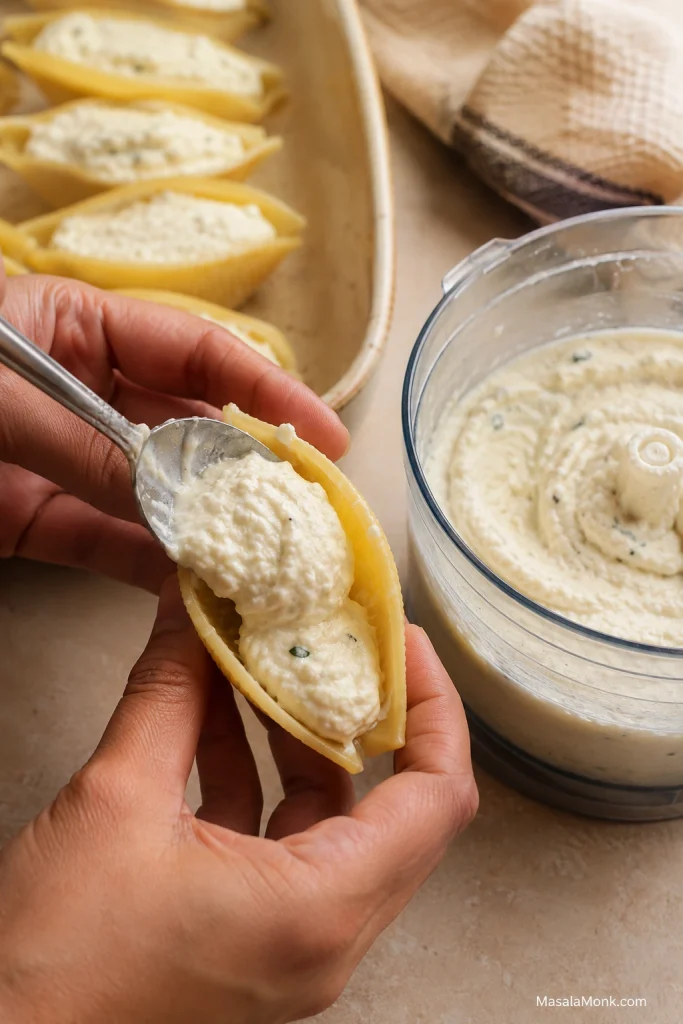
Fill each shell with about 1½–2 tablespoons / about 30g of ricotta filling, depending on shell size. Use a spoon, piping bag, or zip-top bag. Fill generously, but not so much that the shells split. Do not worry if a little filling shows or the shells sit at slightly different angles.

A hand filling a jumbo pasta shell with ricotta mixture using a spoon.
Fill each shell generously, then stop before the pasta stretches or splits around the ricotta filling.

5. Arrange and sauce

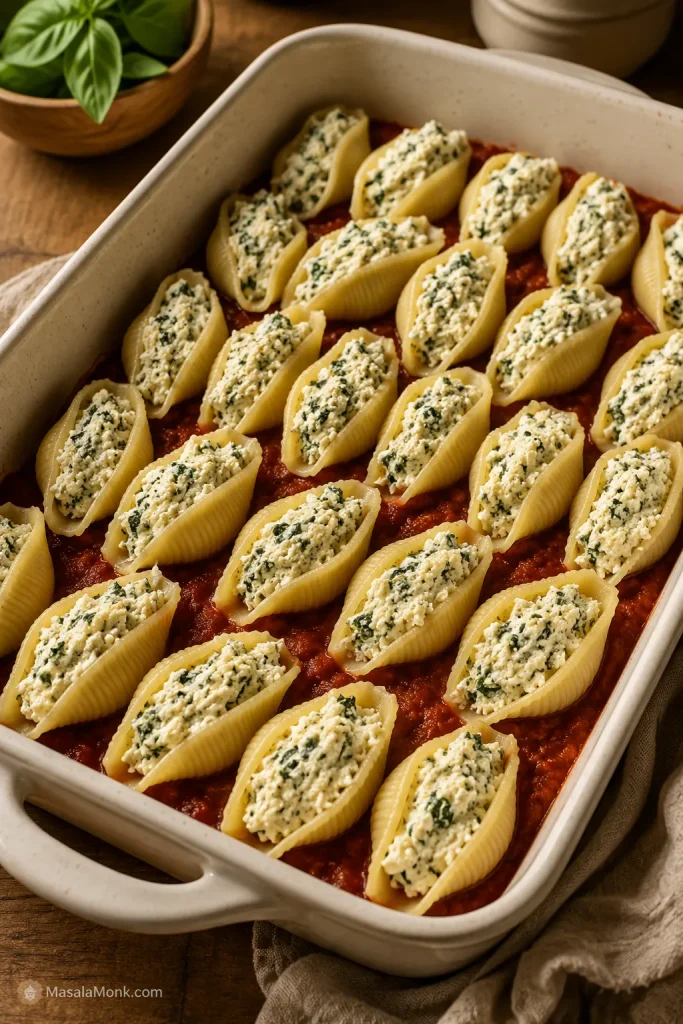
Place the filled shells in the baking dish, filling-side up. Spoon the remaining sauce over and around the shells. You want the pasta to look full and well-coated, not dry or sparse.

Ricotta-filled jumbo shells arranged in marinara sauce in a baking dish before baking.
Once the filled shells sit in sauce, cover the dish so the pasta can finish baking gently and evenly.

6. Bake covered, then uncovered

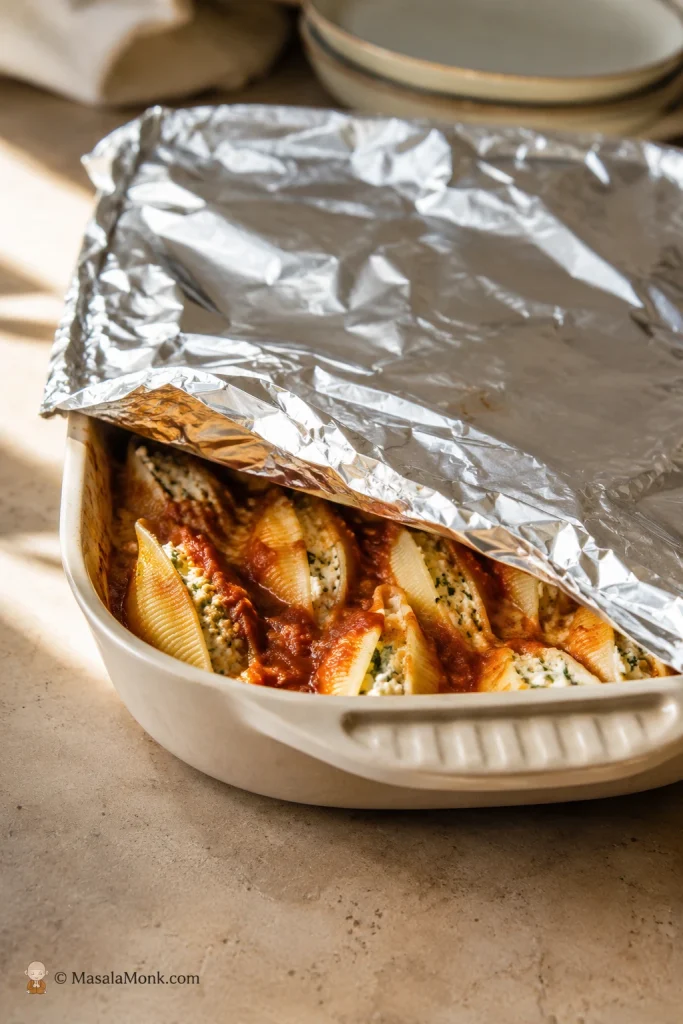
Cover the baking dish with foil without pressing it into the shells. If the foil may touch the sauce or cheese, place a sheet of parchment under the foil or tent the foil slightly. Bake at 375°F / 190°C for 25 minutes.

Stuffed shells in a baking dish loosely covered with foil before baking.
Foil traps steam during the first bake, which helps stuffed pasta shells stay soft and tender.

Remove the foil, sprinkle the remaining mozzarella over the top, and bake for another 8–10 minutes, until the cheese is melted and the sauce is bubbling. The uncovered bake is where the top gets those golden spots.

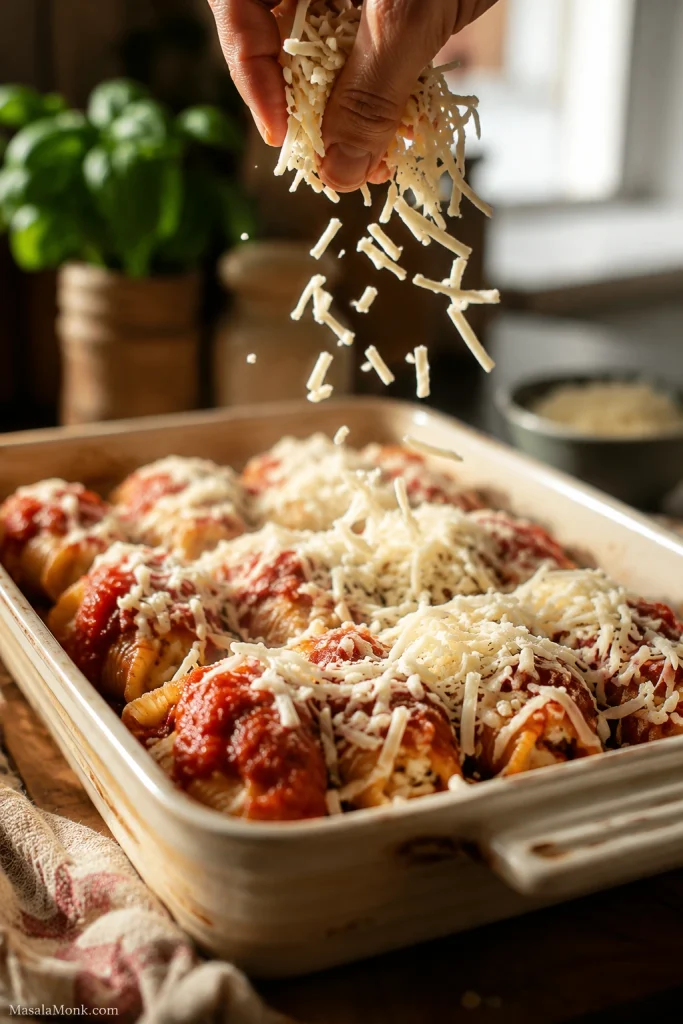
Shredded mozzarella being sprinkled over sauced stuffed shells in a baking dish.
Add mozzarella after the covered bake, then uncover the dish so the cheese melts and lightly browns.

7. Rest before serving

Let the stuffed shells rest for 5–10 minutes before serving. This is the hardest part because it smells ready, but the short rest makes serving much cleaner. After resting, the shells should lift from the baking dish without spilling all their filling.

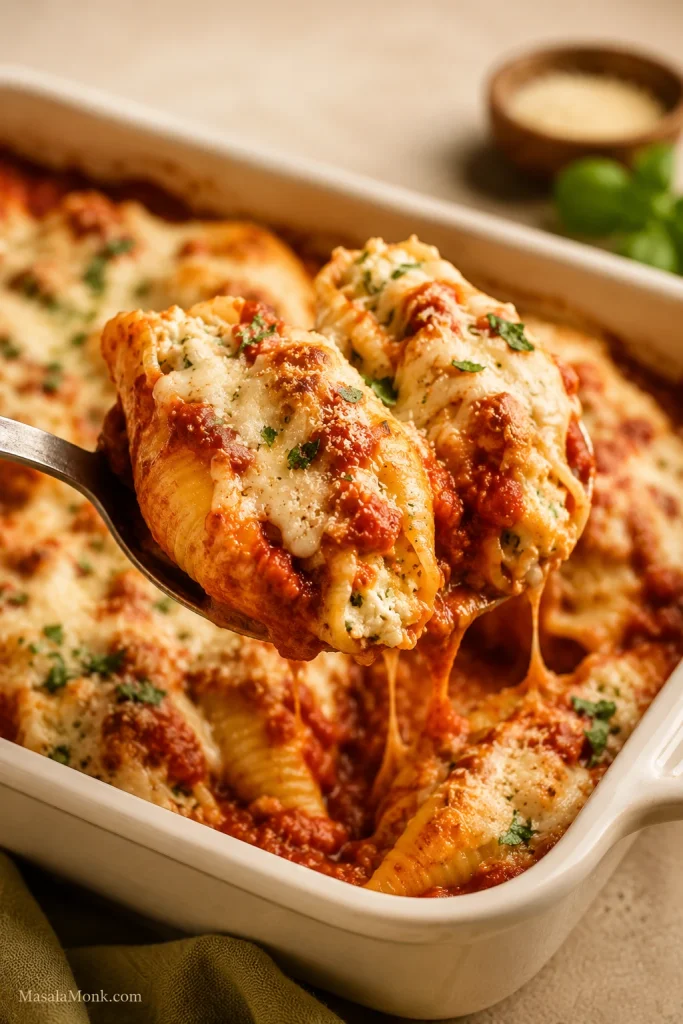
Rested stuffed shells being lifted from a baking dish with sauce and melted cheese.
Rest baked stuffed shells before serving so the filling settles and each shell lifts cleanly from the sauce.

How to Know When Stuffed Shells Are Done

The stuffed shells are done when the sauce is bubbling around the edges, the cheese is melted and lightly browned in spots, and the filling is hot in the center. The best bite is fork-tender pasta, thick ricotta filling, tangy tomato sauce, and a little golden mozzarella from the top.

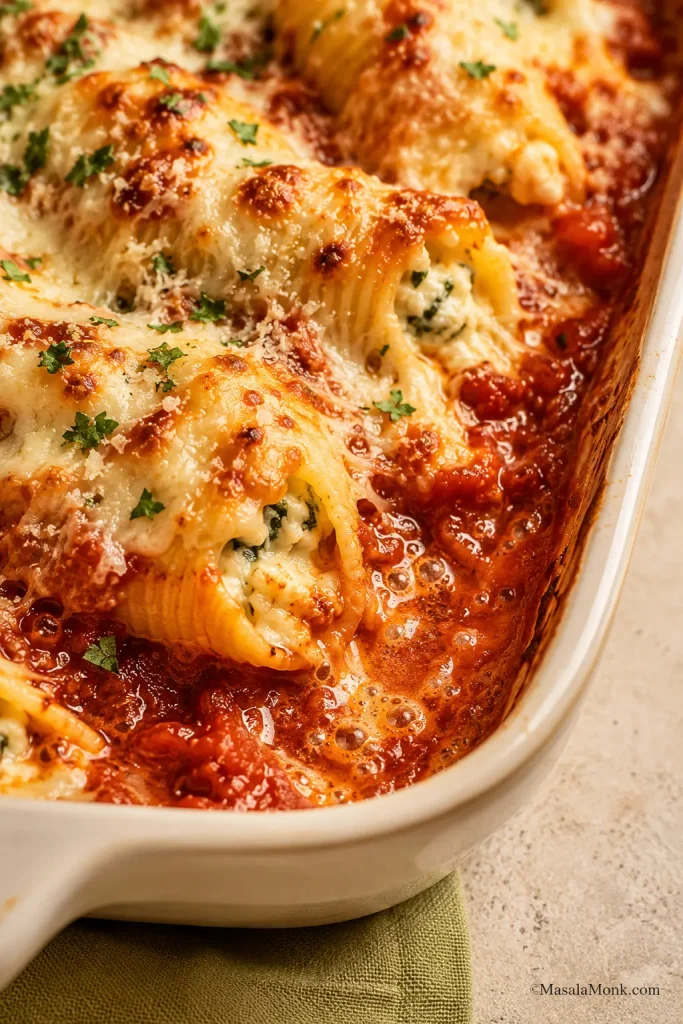
Close-up of baked stuffed shells with bubbling marinara sauce and browned mozzarella at the edge of the baking dish.
Check the edge of the baking dish: bubbling sauce and melted cheese mean the shells are hot through the center.

If the top cheese browns before the center is hot, cover the pasta loosely with foil again and keep baking until the filling is hot through the middle.

Stuffed Shells Recipe

This is the full classic version: jumbo shells filled with seasoned ricotta, tucked into marinara, covered until tender, then finished uncovered so the mozzarella melts into golden spots.

  • Yield:
    6 servings
  • Prep time:
    30 minutes
  • Cook time:
    35 minutes
  • Total time:
    1 hour 5 minutes
  • Oven temperature:
    375°F / 190°C
  • Baking dish:
    9×13-inch / 23×33 cm

Ingredients

  • 12 oz / 340g jumbo pasta shells, or enough to cook 28–30 shells
  • 3 cups / about 720ml marinara sauce, or one 24 oz / 680g jar, divided
  • 15–16 oz / 425–454g ricotta cheese
  • 3 cups shredded low-moisture mozzarella, about 12 oz / 340g, divided
  • ½ cup / 45–55g grated parmesan or pecorino
  • 1 large egg
  • 1–2 garlic cloves, minced or grated
  • 1 tsp dried Italian seasoning, or 2–3 tbsp chopped fresh parsley or basil
  • ½–¾ tsp salt, plus more for pasta water
  • ¼–½ tsp black pepper
  • Pinch of red pepper flakes, optional
  • A few drops of olive oil, only if needed to keep cooked shells from sticking

Instructions

  1. Heat the oven. Preheat the oven to 375°F / 190°C.
  2. Cook the shells. Bring a large pot of salted water to a boil. Add 28–30 jumbo shells and cook 2–3 minutes less than the package directions for al dente. Drain and let cool until easy to handle. If the shells start sticking, spread them on a tray or toss with only a few drops of olive oil.
  3. Make the filling. In a large bowl, combine ricotta, 2 cups mozzarella, parmesan, garlic, Italian seasoning or herbs, salt, pepper, and red pepper flakes if using. Taste the cheese mixture before adding the egg, then mix in the egg last.
  4. Prepare the baking dish. Spread about 1 cup of marinara sauce over the bottom of a 9×13-inch / 23×33 cm baking dish.
  5. Fill the shells. Spoon about 1½–2 tablespoons / about 30g filling into each shell. Arrange the filled shells in the dish, filling-side up. Aim for 24 filled shells; if your shells are very large, 20–22 may fit better.
  6. Add sauce. Spoon the remaining marinara sauce over and around the shells. Cover the baking dish tightly with foil, tenting it slightly so it does not press into the cheese or filling.
  7. Bake covered. Bake for 25 minutes, until the shells are hot and the sauce is bubbling around the edges.
  8. Finish uncovered. Remove the foil, sprinkle the remaining 1 cup mozzarella over the top, and bake uncovered for 8–10 minutes, until the cheese is melted and lightly browned in spots.
  9. Rest and serve. Let the stuffed shells rest for 5–10 minutes before serving. Serve with extra warm marinara if you like a saucier plate.

Recipe Notes

  • Softer top cheese: Add all the mozzarella before covering and baking if you want a fully melted top.
  • Stretchier browned top: Save the final cup of mozzarella and add it after the covered bake.
  • Spinach shells: Add 5 oz / 140g cooked fresh spinach or 8 oz / 225–250g thawed frozen spinach, squeezed very dry.
  • Meat sauce version: Add ½–1 lb / 225–450g cooked ground beef or Italian sausage to the sauce, and increase sauce by ½–1 cup if the pasta looks dry.
  • Cottage cheese swap: Blend cottage cheese briefly for a smoother filling and drain it first if it looks watery.

Small Details That Make Better Stuffed Shells

  • Cook 28–30 shells. You need backups for the ones that tear.
  • Drain watery ricotta. Loose ricotta makes the filling run instead of mound.
  • Taste before adding egg. It is easier to fix bland filling before the egg goes in.
  • Loosen very thick marinara. A few tablespoons of water help the sauce move around the shells.
  • Cover first. The pasta finishes cooking in the sauce before the cheese browns.
  • Rest before serving. The filling firms slightly as it sits.

Make-Ahead, Freezer, and Reheating Instructions

Stuffed shells are one of the best baked pasta dinners to prepare ahead. The shells, filling, sauce, and cheese all hold up well, and a freezer batch feels like a future dinner already handled. This is also a good place to make two baking dishes: bake one tonight and freeze the second before baking.

Best Make-Ahead Option

Assemble the stuffed shells up to 24 hours ahead. Fill the shells, arrange them in sauce, cover tightly, and refrigerate. Let them sit at room temperature only while the oven preheats, about 20–30 minutes. If baking straight from the fridge, add 5–10 minutes to the covered baking time.

Unbaked stuffed shells in a baking dish partly covered with foil, with sauce nearby.
Stuffed shells are ideal for make-ahead dinners because you can refrigerate or freeze them before baking.

Best Freezer Option

Freeze stuffed shells before baking. Assemble the shells in a freezer-safe baking dish, cover tightly with plastic wrap and foil or a freezer-safe lid, and freeze for up to 2–3 months for best quality.

If you froze the shells in a glass or ceramic baking dish, thaw them overnight unless the dish is labeled freezer-to-oven safe. That helps prevent sudden temperature shock. You can also freeze the filled shells separately and transfer them to an oven-safe dish with sauce before baking.

Best Small-Batch Freezer Option

Freeze filled shells on a tray until firm, then transfer them to a freezer-safe bag or container. Later, place only the number of shells you need into a baking dish with sauce and cheese. This is useful when you want 2–4 servings instead of a full batch.

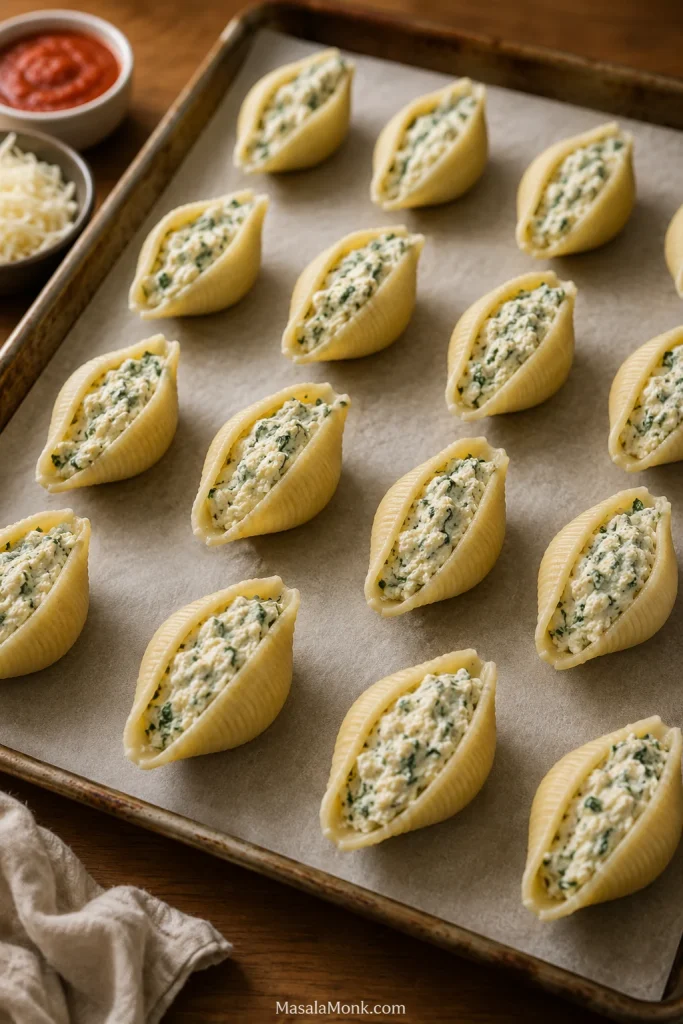
Ricotta-filled jumbo pasta shells spaced apart on a parchment-lined tray before freezing.
Freeze stuffed shells in a single layer first so they do not stick together; once firm, you can transfer them for easy small-batch freezer meals later.

Best Texture After Freezing

For the best texture, thaw frozen stuffed shells overnight in the refrigerator before baking. Before baking, remove any plastic wrap and cover the baking dish again with foil. Bake as directed, adding 5–10 extra minutes if the pasta is still cold.

How to Bake Frozen Stuffed Shells

To bake from frozen, cover the baking dish with foil and bake at 350°F / 175°C for about 60–75 minutes, or until the center is steaming hot. Uncover, add cheese if needed, and bake 10–15 minutes more until bubbling and melted.

How to Store Leftovers

Store leftover stuffed shells in an airtight container in the refrigerator for 3–4 days. A 3–4 day refrigerator window is also the general USDA guidance for cooked leftovers, so it is a good limit to use here.

How to Reheat Stuffed Shells

Reheat covered in the oven at 350°F / 175°C until hot, or microwave individual portions. Add a spoonful of extra sauce or a small splash of water before reheating so the pasta does not dry out.

Leftover Ideas

Leftover stuffed shells are best reheated with extra sauce, but you can also chop them into smaller pieces and reheat them like baked pasta. Add fresh herbs, parmesan, or a little extra marinara to wake the flavor back up. This is the sort of dinner that makes leftovers feel like a reward.

Stuffed Shells Variations

Think of the recipe card as the house version. The variations are how you adjust the pasta for the people eating it — greener for spinach lovers, meatier for Sunday dinner, lighter with cottage cheese, or richer with Alfredo.

Which Stuffed Shells Variation Should You Make?

Spinach Ricotta Stuffed Shells

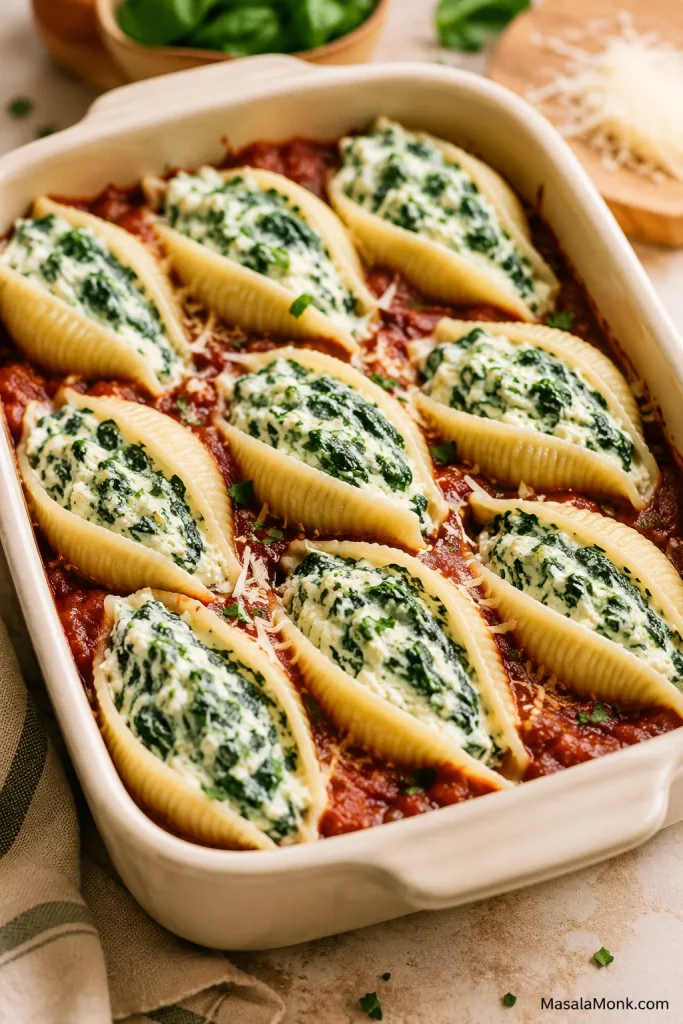
Add spinach to the ricotta filling for a classic spinach stuffed shells variation. Fresh spinach and frozen spinach both work, but the spinach needs to be cooked, chopped, and squeezed very dry before it goes into the filling. Use about 5 oz / 140g fresh spinach or 8 oz / 225–250g frozen spinach.

Spinach ricotta stuffed shells arranged in marinara sauce in a cream baking dish.
For spinach ricotta stuffed shells, squeeze the spinach dry so the filling stays creamy instead of watery.

Beef Stuffed Shells

For the cleanest shells, keep the ricotta filling mostly cheese-based and put the browned meat in the sauce. That gives every bite a hearty meat sauce without making the shells heavy or hard to close. Brown ½–1 lb / 225–450g ground beef with a little salt, pepper, garlic, and Italian seasoning, then drain excess fat before adding it to the marinara.

Sausage Stuffed Shells

Italian sausage brings more seasoning than ground beef, so it is the easiest way to make the sauce taste deeper. Remove it from the casing if needed, brown it well, and drain any excess fat. Sausage brings more salt and spice than plain ground beef, so taste before adding extra seasoning.

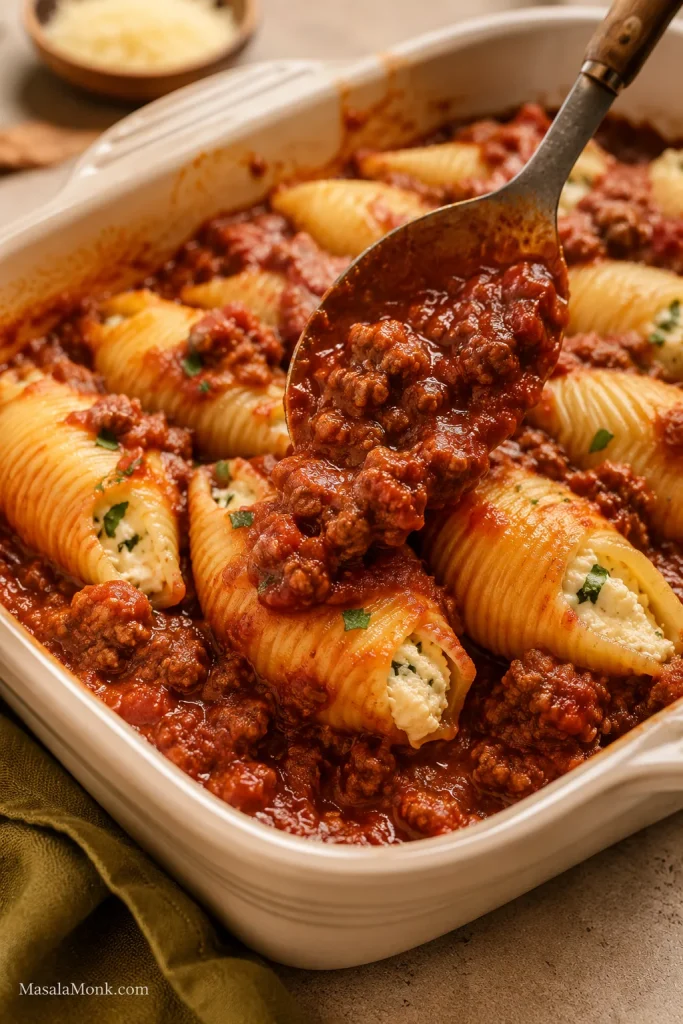
Ricotta stuffed shells with chunky beef or sausage marinara sauce spooned around them.
For meat stuffed shells, keep the cheese inside the pasta and stir browned beef or sausage into the marinara.

Cottage Cheese Stuffed Shells

Cottage cheese is the easiest ricotta swap and a good option if you want a lighter, higher-protein filling. Replace ricotta 1:1 by weight, drain it if watery, and blend it briefly for a smoother texture. The flavor is a little tangier and less classic than ricotta, but it bakes up creamy when mixed with mozzarella, parmesan, egg, garlic, and herbs.

Stuffed Shells Without Ricotta

If you do not have ricotta, use cottage cheese, a mix of cream cheese and mozzarella, a meat filling, roasted vegetables, or tofu ricotta for a dairy-free version. This helps if you dislike ricotta or simply do not have it. The recipe can still work well as long as the filling is thick and not watery.

A jumbo pasta shell being filled with smooth blended cottage cheese mixture.
For stuffed shells without ricotta, blend cottage cheese until smooth so the filling holds its shape inside the pasta.

Alfredo Stuffed Shells

For a creamy white-sauce version, use Alfredo sauce instead of marinara. Because Alfredo is rich, spinach or chicken works especially well here. For more creamy pasta dinner ideas, see this chicken Alfredo pasta guide.

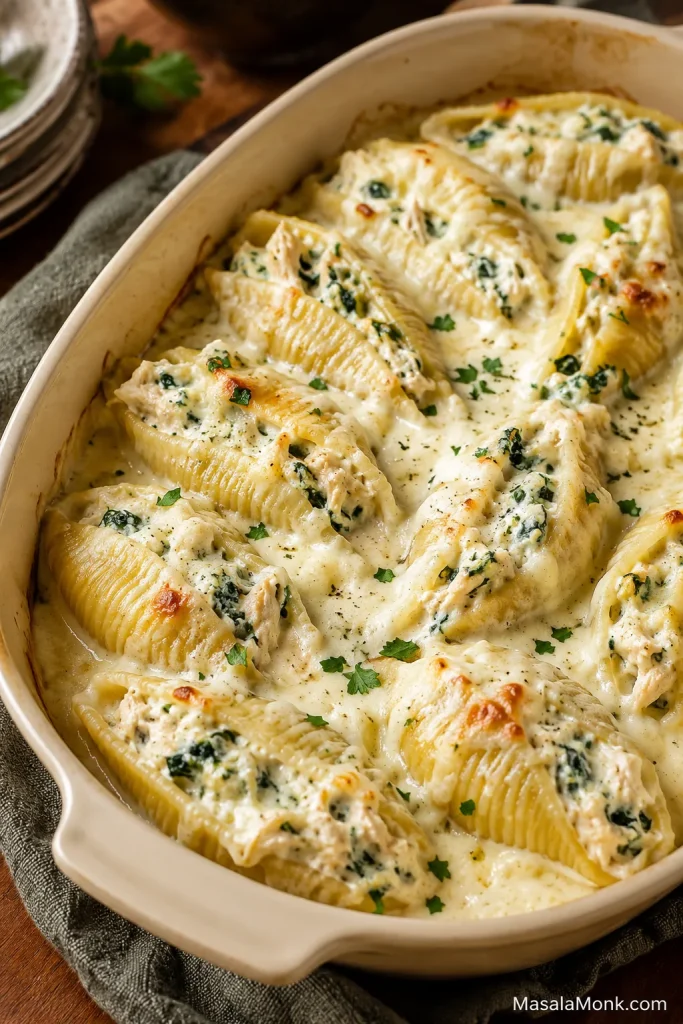
Alfredo stuffed shells with creamy white sauce, spinach, and melted mozzarella in a baking dish.
Alfredo stuffed shells are the creamy white-sauce variation to choose when you want spinach, chicken, or a richer pasta bake.

No-Boil Stuffed Shells

No-boil stuffed shells can work, but they need a different sauce ratio and a longer covered bake. This recipe is written for boiled shells because it gives the most predictable texture: shells that are flexible enough to fill, tender after baking, and less likely to stay firm in the center. If you want a true no-boil version, increase the sauce or liquid and keep the dish tightly covered until the pasta is fully tender.

Serving and Scaling

How Many Stuffed Shells Per Person?

Plan on 3–4 stuffed shells per adult if serving with salad, bread, or vegetables. Plan on 4–5 shells per person for a heartier main dish with fewer sides. A 9×13-inch baking dish with about 20–24 stuffed shells serves 6 people generously.

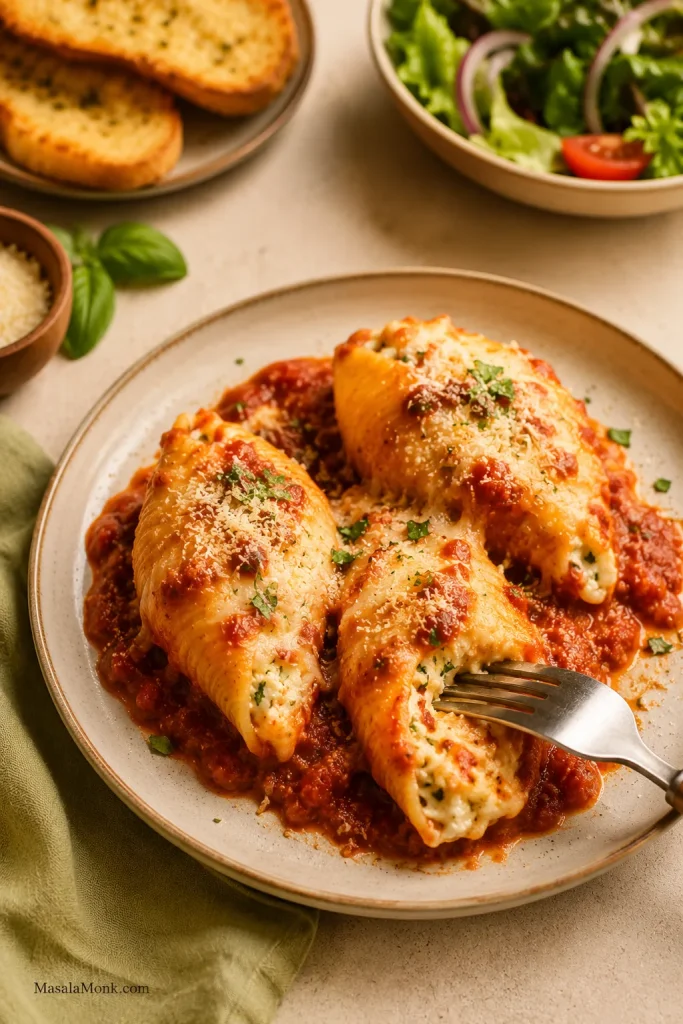
A plate of ricotta stuffed shells with marinara sauce, parmesan, herbs, and a fork.
For dinner portions, plan on three to four ricotta stuffed shells per adult with salad, garlic bread, or vegetables.

Can You Double This Recipe?

Yes. To double the recipe, use two 9×13-inch baking dishes instead of crowding everything into one deep dish. If baking both at the same time, rotate them halfway through if your oven has hot spots. If the pans are cold from the fridge, they may need a few extra minutes of covered baking time. You can also bake one now and freeze one for later.

What to Serve with Stuffed Shells

Stuffed shells are rich, cheesy, and well-sauced, so they pair best with something crisp, green, garlicky, or simple. On a weeknight, salad is enough. When serving company, add garlic bread and something fresh on the side.

Classic Comfort Sides

Light and Fresh Sides

  • Simple green salad with vinaigrette
  • Cucumber salad with vinegar, dill, and onion
  • Arugula salad with lemon

Extra Vegetable Sides

  • Roasted broccoli
  • Sautéed spinach or greens
  • Roasted zucchini or eggplant
  • Steamed green beans

Bigger Dinner Add-Ons

A fresh side can still feel filling: this chickpea salad brings lemon, herbs, cucumber, and crunch beside the cheesy shells.

Troubleshooting Stuffed Shells

Problem Cause Fix
Shells tear Overcooked or handled too hot Undercook slightly, cool, and boil extras
Shells stick Cooled in a pile Spread on a tray or use a few drops of oil
Filling is watery Wet ricotta or spinach Drain ricotta and squeeze spinach dry
Filling leaks Too much filling or loose filling Use about 30g filling per shell and keep filling thick
Shells are dry Too little sauce or uncovered too long Use sauce under and over; bake covered first
Edges dry out Not enough sauce near edges Spoon extra sauce around edges
Filling tastes bland Ricotta under-seasoned Add salt, parmesan, garlic, herbs, and pepper
Pasta is mushy Shells fully cooked before baking Boil 2–3 minutes shy of al dente
Top browns too fast Uncovered too long Cover loosely and keep baking
Frozen center is cold Covered bake too short Keep baking covered until center is hot
Cheese turns rubbery Overbaked or poor melting cheese Bake just until melted and use low-moisture mozzarella
Pasta looks watery Wet filling or vegetables Drain ingredients and rest before serving

If the shells or edges look dry after baking, spoon warm marinara around the pasta before serving. Sauce brings moisture back better than adding more cheese.

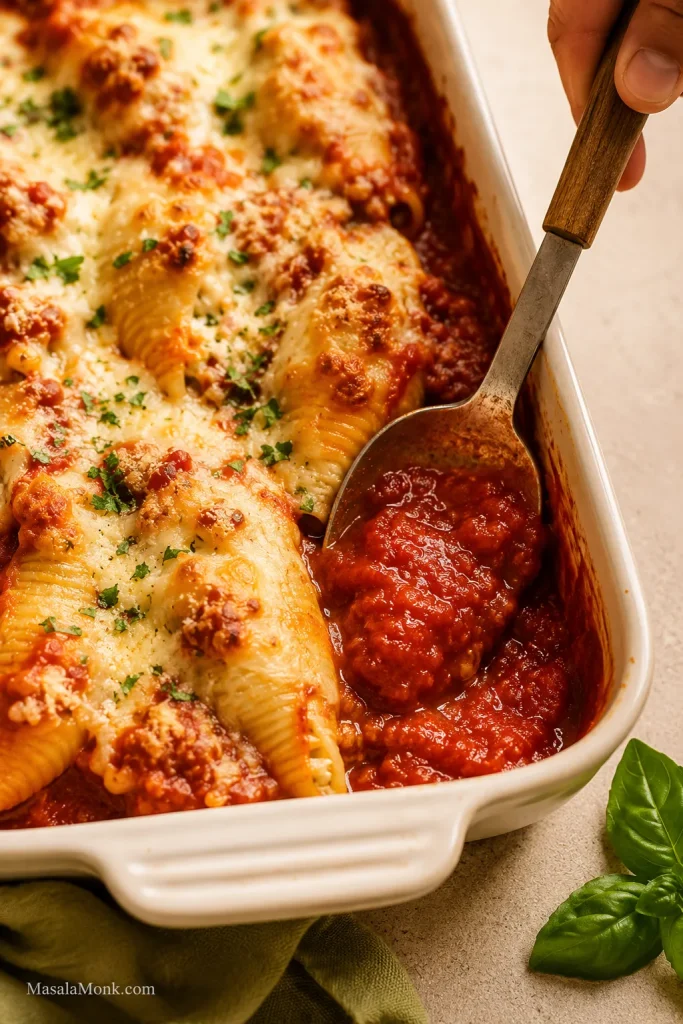
Extra marinara sauce being spooned around the edge of baked stuffed shells.
When the edges look dry, spoon warm marinara around the shells before serving to soften them again.

Frequently Asked Questions

A few common questions come up once you start adjusting the recipe. These quick answers should help you choose the right shells, filling, sauce, and make-ahead method.

What pasta shells do I use for stuffed shells?

Use jumbo pasta shells. Small shells, medium shells, and macaroni-style shells are not large enough for stuffing.

Do you have to boil shells before stuffing them?

For this version, yes. Boiling first gives you shells that are soft enough to fill but firm enough to finish in the oven. No-boil shells need more liquid and a longer covered bake.

What is the best cheese filling for stuffed shells?

The best classic filling uses ricotta, mozzarella, parmesan or pecorino, egg, garlic, herbs, salt, and pepper. Ricotta makes it creamy, mozzarella adds melt, parmesan adds depth, and egg helps it hold together.

Do I need egg in stuffed shells?

Egg helps the filling set so the shells lift more cleanly. You can skip it, but the filling will be softer. If skipping egg, add a little extra parmesan or mozzarella.

Can I use cottage cheese instead of ricotta?

You can replace ricotta 1:1 by weight, drain cottage cheese if watery, and blend it first if you want a smoother filling. The no-ricotta section gives more options.

Can I make stuffed shells without ricotta?

Yes — use cottage cheese, cream cheese mixed with mozzarella, a meat filling, roasted vegetables, or tofu ricotta. Keep the filling thick so it does not run out of the shells.

How much sauce do stuffed shells need?

For one 9×13-inch baking dish, use about 3 cups / 720ml sauce. Spread about 1 cup on the bottom and spoon the rest over and around the filled shells.

Do you bake stuffed shells covered or uncovered?

Bake them covered for most of the time so the pasta stays moist and the filling heats through. Uncover at the end to melt and lightly brown the cheese.

How do you keep stuffed shells from drying out?

Use sauce under and over the shells, cover the baking dish for the first bake, and reheat leftovers with extra sauce or a small splash of water. That is the same no-dry-shell method used in the main recipe.

Can I make stuffed shells ahead of time?

Yes. Assemble stuffed shells up to 24 hours ahead, cover, and refrigerate. The make-ahead section explains the timing and freezer options.

Can stuffed shells be frozen?

Freeze them before baking for the best texture, either as a full baking dish or as individual filled shells. Use within 2–3 months for best quality.

Can I bake stuffed shells from frozen?

You can bake them covered at 350°F / 175°C for 60–75 minutes, or until the center is hot. Then uncover and bake until the sauce bubbles and the cheese melts.

Can I add meat to stuffed shells?

Meat works best in the sauce, where it makes the dish heartier without weighing down the ricotta filling. Brown and drain the meat before adding it.

How many stuffed shells per person?

Plan on 3–4 stuffed shells per adult with sides, or 4–5 shells per person for a heartier main dish.

How long do leftover stuffed shells last?

Leftovers keep for 3–4 days and reheat best with extra sauce. Store them in an airtight container in the refrigerator and reheat until hot.

Make It Your Own

A good batch of stuffed shells should feel generous: pasta tucked into sauce, cheese bubbling around the edges, and enough filling in every shell that nobody feels shortchanged. The whole recipe comes back to the same simple method: thick filling, enough sauce, covered bake, tender shells.

This is the kind of tray that looks a little messy in the best way: sauce at the edges, cheese pulling from the spoon, and enough shells for someone to quietly go back for one more.

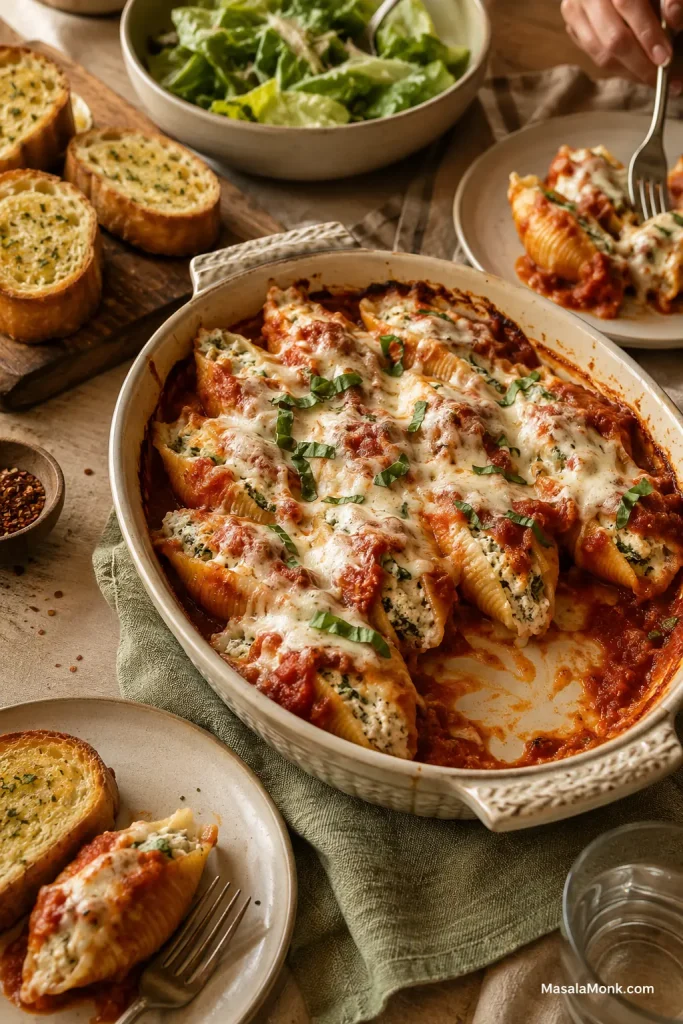
A family-style baking dish of stuffed shells served with garlic bread, salad, plates, and a fork.
Serve stuffed shells family-style with garlic bread and salad; this is the pasta bake people come back to for one more shell.

You can keep the recipe classic, add spinach, make it meaty with beef or sausage, swap in cottage cheese, use Alfredo sauce, or freeze a batch for another night. For another cozy pasta dinner after this one, save this broccoli pasta too.

If you make these stuffed shells, tell us which version landed on your table: classic ricotta, spinach, meat sauce, cottage cheese, Alfredo, or extra saucy. I especially want to know if you froze a batch for later — that is where this recipe really earns its keep.

Back to top ↑

Posted on 1 Comment

Pesto Pasta Recipe

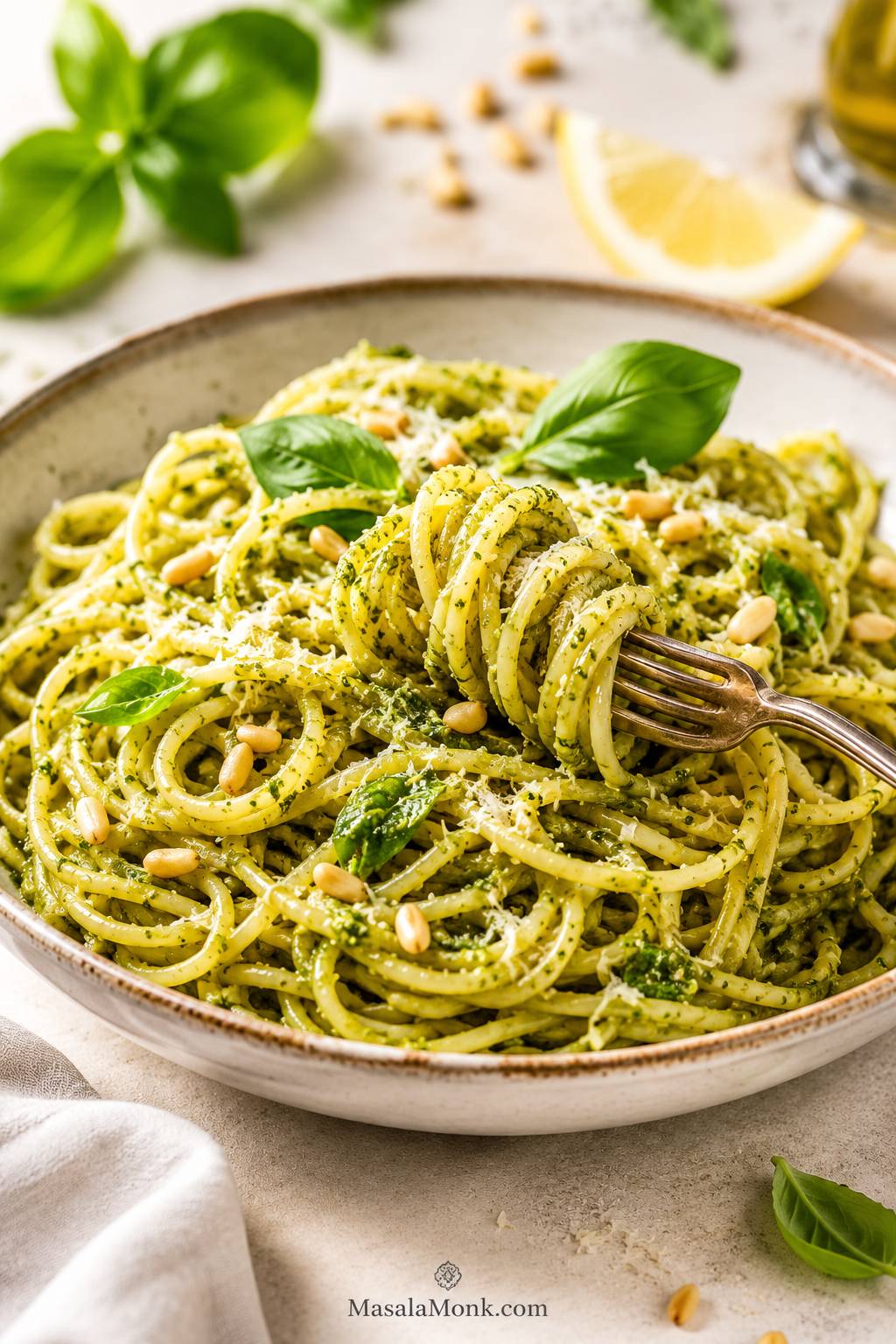
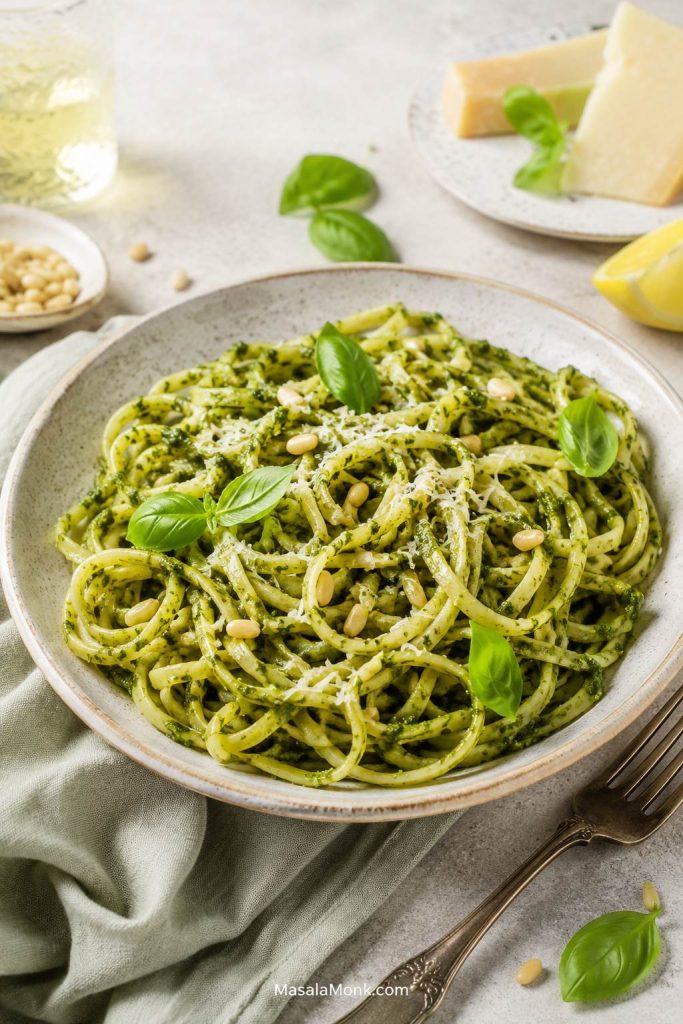
Bowl of glossy pesto pasta with basil leaves, Parmesan, pine nuts and a lightly sauced green coating

A good pesto pasta recipe should feel effortless: hot pasta, fresh basil, salty Parmesan, and a green sauce that clings lightly to every piece instead of pooling at the bottom of the bowl. The problem is that pesto is not a cooked sauce. When it gets too hot, too dry, or tossed without enough starch, it can turn dull, oily, or clumpy fast.

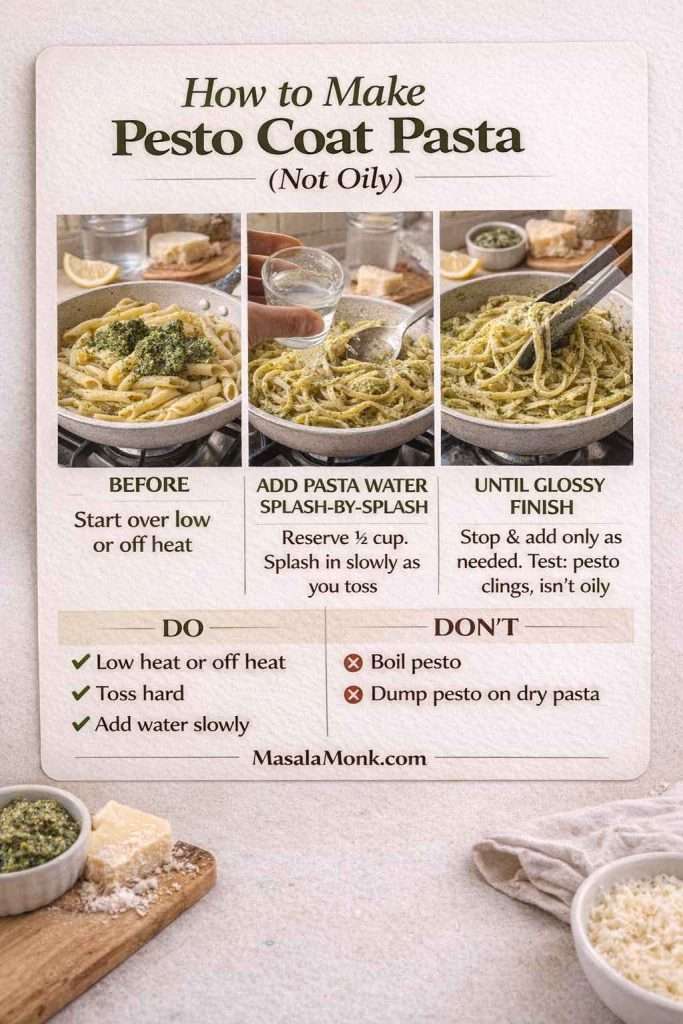
The fix is simple: toss the pesto off the heat, loosen it with a splash of starchy cooking water, and stop when the pasta looks glossy, loose, and lightly coated. You do not need extra oil, and you usually do not need more pesto.

This easy 20-minute version works with homemade basil pesto or a good store-bought pesto. Once you understand the basic ratio, you can use the same method for spaghetti, penne, quick pesto noodles, creamy pesto pasta, chicken pesto pasta, or a cold pesto pasta salad — all with a bright, basil-forward sauce that tastes alive instead of flat.

Pesto Pasta at a Glance

Time15–20 minutes
Serves4
Pasta12 oz / 340 g dried pasta
Pesto½–¾ cup / 120–180 ml, depending on pesto strength
Cooking WaterReserve 1 cup / 240 ml; start with ¼ cup / 60 ml
Heat LevelToss pesto off the heat
Best TextureGlossy, not greasy; loose, not watery
Works WithHomemade or store-bought pesto

Quick Answer: How to Make Pesto Pasta

Cook the pasta until al dente, then save about 1 cup / 240 ml of the starchy cooking water before draining. Toss the hot pasta with pesto away from direct heat. Add a few spoonfuls of the cooking water until the sauce loosens, turns glossy, and clings lightly to the pasta.

For exact amounts by serving size, use the pesto pasta ratio guide before you start adjusting the sauce.

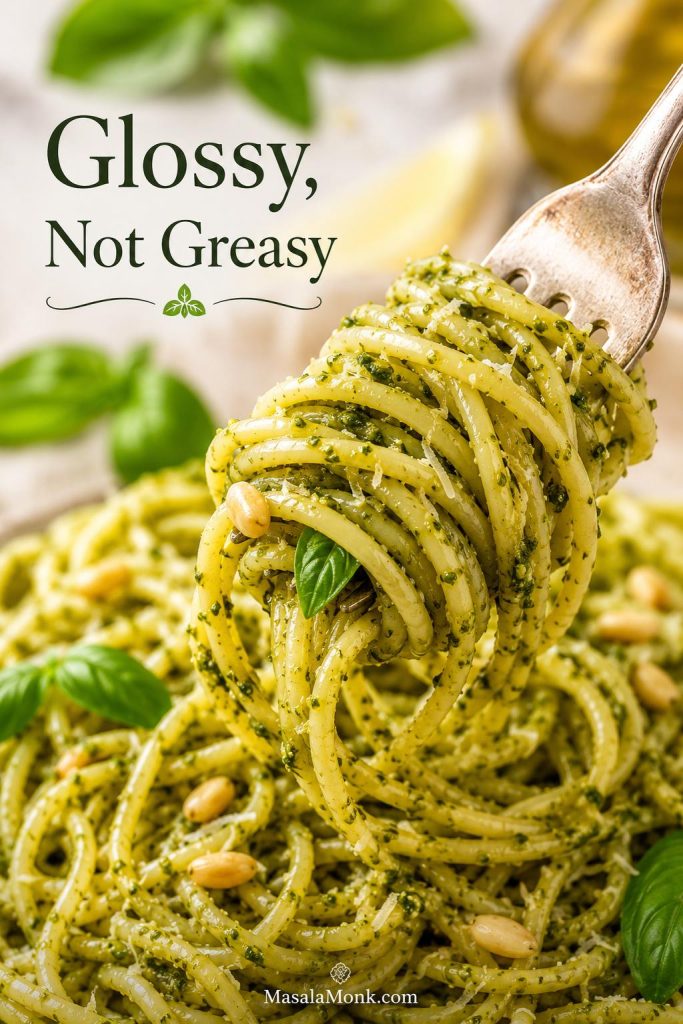
Close-up of pesto pasta lifted with tongs, showing green sauce clinging to the noodles without oil pooling
Before serving, look for shine without an oil puddle. When pesto coats the pasta in a thin, even layer, the bowl tastes fresher and feels lighter.

Basic Pesto Pasta Ratio

For 4 servings, use 12 oz / 340 g pasta, ½ to ¾ cup / 120–180 ml pesto, and ¼ to ½ cup / 60–120 ml starchy cooking water, added gradually.

Start with ½ cup / 120 ml pesto if using a salty or oily store-bought pesto. Start closer to ¾ cup / 180 ml if using a fresh homemade pesto that is softer, greener, and less concentrated.

If the bowl already looks dry, oily or too thin, check the pesto pasta troubleshooting guide before adding more pesto.

Choose Your Version

  • Classic: basil pesto, fusilli or spaghetti, Parmesan, black pepper, and lemon.
  • Store-bought: start with less pesto, loosen first, then add more after tasting.
  • Creamy: add ricotta, cream cheese, Greek yogurt, or cream off the heat.
  • Dinner bowl: fold in cooked chicken, shrimp, salmon, chickpeas, tofu, paneer, or white beans.
  • Leftovers: serve cold as pesto pasta salad with tomatoes, cucumber, mozzarella, peas, or olives.

Why This Pesto Pasta Works

Pesto is not like marinara or Alfredo. It does not need to simmer, reduce, or thicken in a pan. It is already a finished sauce, usually made with olive oil, basil or other herbs, garlic, cheese, nuts or seeds, and salt.

Because of that, too much heat can flatten the basil, sharpen the garlic, and separate the oil from the rest of the sauce. This method treats pesto gently. The hot pasta warms the sauce just enough, while the starch from the cooking water helps the oil, cheese, herbs, and pasta come together.

Gentle Tossing, Not Simmering

Pesto does not need to reduce like a tomato sauce. Once the pasta is drained, the goal is gentle tossing, not simmering. The heat from the noodles is enough to wake up the sauce without flattening the basil.

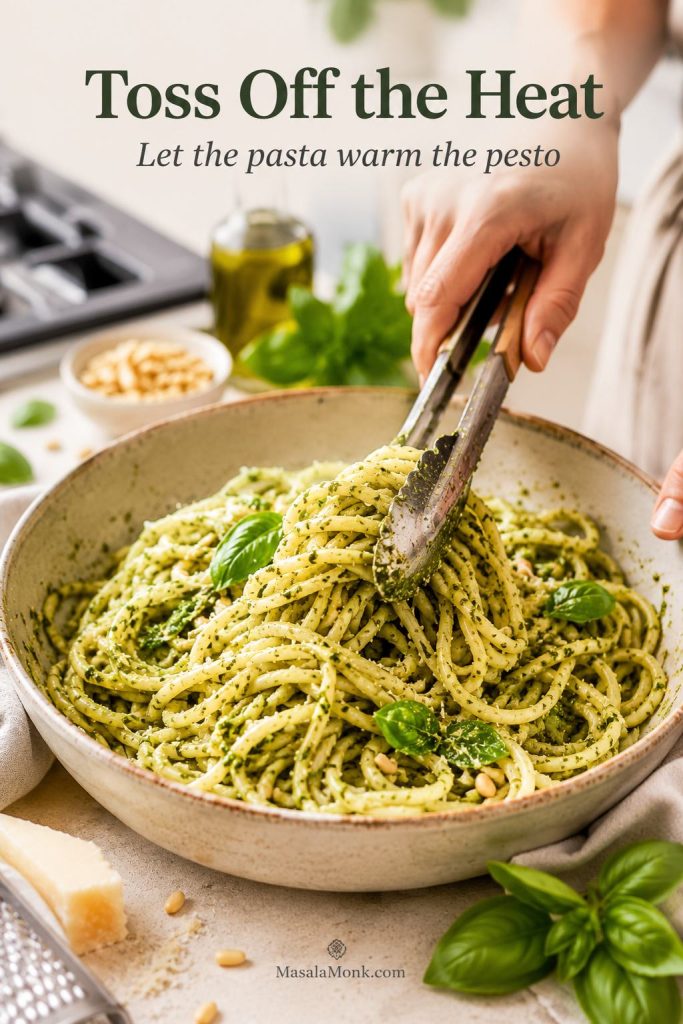
Pesto pasta being tossed in a bowl away from the stove so the sauce warms gently
Since pesto is already a finished sauce, gentle heat protects its color and flavor. Toss it away from the burner so the pasta warms the pesto without cooking it down.

Keep Pesto Pasta Bright Green

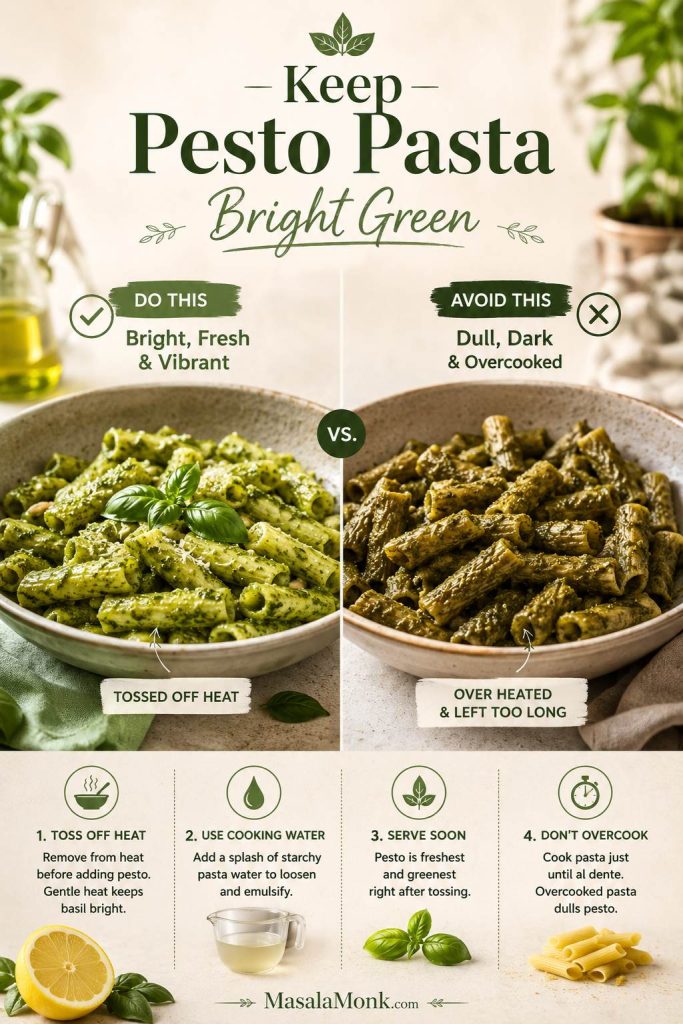
Bright green pesto pasta compared with dull dark overheated pesto pasta, with tips for gentle heat and quick serving
Bright green pesto depends on gentle handling. Instead of simmering it, let the hot pasta warm the sauce and serve soon after tossing.

The Three Things That Matter Most

When it works, the bowl should feel almost effortless: warm noodles, a green sauce that moves with the pasta, Parmesan melting into the edges, and just enough lemon or pepper to keep everything from tasting heavy.

  • Save the cooking water. It is the easiest fix for a sauce that turns tight, patchy, or greasy.
  • Avoid harsh heat after adding pesto. Let the hot pasta warm the sauce instead.
  • Add liquid gradually. Start with a splash, toss well, then add more only if the bowl needs it.

Ingredients for Pesto Pasta

You do not need many ingredients for pesto pasta, which is why each one matters. Pasta gives structure, pesto brings the flavor, the starchy water turns it into a sauce, and Parmesan or lemon balances the final bowl.

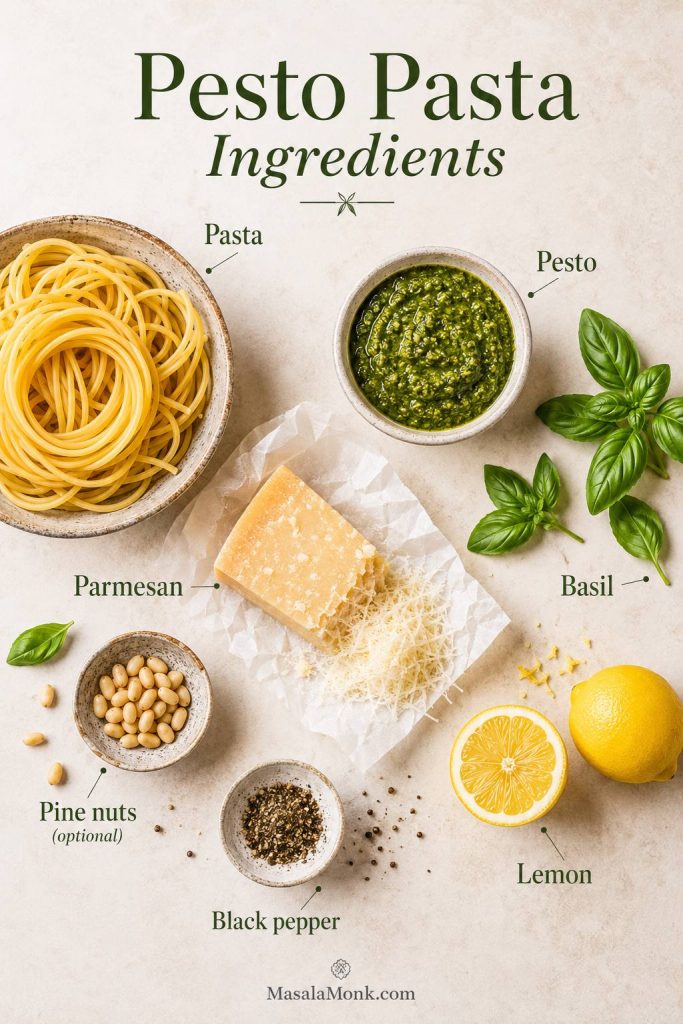
Ingredients for pesto pasta arranged on a pale surface, including pasta, basil pesto, Parmesan, lemon, black pepper and fresh basil
Because pesto pasta uses only a few ingredients, each one has a job: pesto brings the basil flavor, Parmesan adds depth, and lemon or black pepper keeps the sauce lively.

Pasta

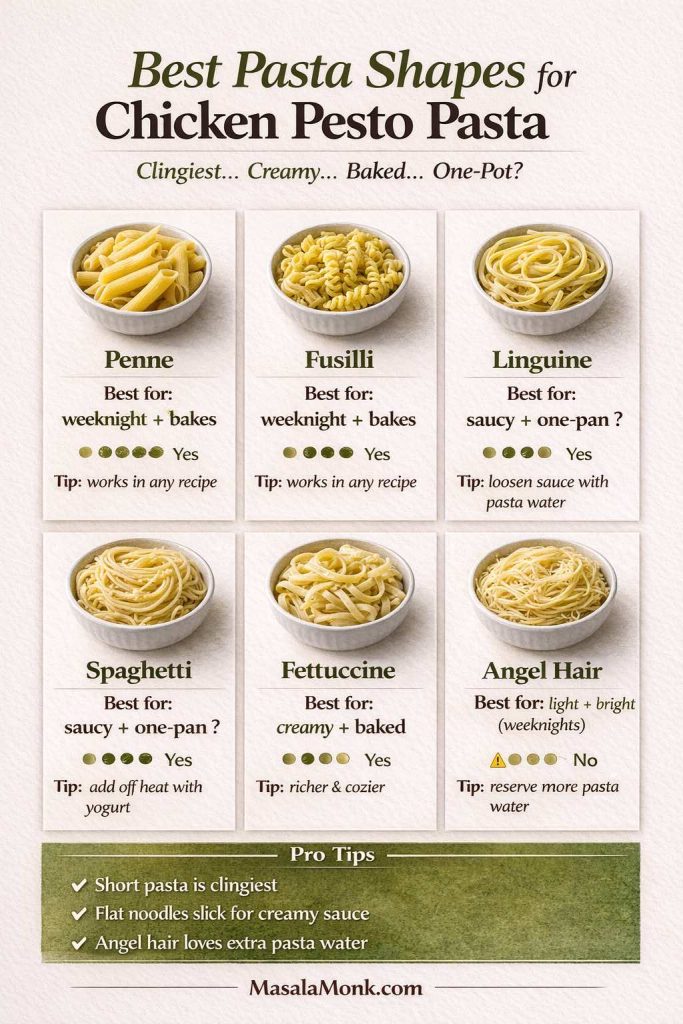
For 4 servings, 12 oz / 340 g dried pasta gives you enough room for pesto, cheese, and add-ins without overcrowding the bowl. Fusilli, rotini, penne, ziti, spaghetti, linguine, trofie, shells, and rigatoni all work, although short shapes are usually easier because they catch pesto and toss evenly.

Pesto

Use ½ to ¾ cup / 120–180 ml pesto for 12 oz / 340 g pasta. Homemade basil pesto gives the freshest flavor, but store-bought pesto works well when you start with less and adjust after tossing.

If your jarred pesto tastes great on a spoon, it will usually work well here. When it tastes very salty, oily, bitter, or garlicky straight from the jar, start small and let a small splash of the cooking water do more of the work. For more detail, see the store-bought pesto tips before adding the full amount.

If you want to make the sauce from scratch, choose a nut-free version, or move beyond classic basil pesto, use MasalaMonk’s full pesto recipe and pesto variations guide.

Reserved Cooking Water

This is the tiny step that saves the whole bowl. Before draining the pasta, scoop out at least 1 cup / 240 ml of the cooking water. You will usually use only ¼ to ½ cup / 60–120 ml, but saving extra gives you control if the pesto is thick or the pasta starts to tighten as it sits.

Parmesan, Lemon and Black Pepper

Parmesan gives salty depth and helps the sauce cling. Finely grated cheese disappears into the warm sauce more easily than large shavings, so grate it fine if you want a smoother coating. If you are choosing between Parmesan, Parmigiano Reggiano, Grana Padano, or Pecorino, MasalaMonk’s Parmesan vs Parmigiano Reggiano guide explains the differences clearly.

Lemon juice is optional, but very useful when pesto tastes heavy, oily, flat, or too garlicky. Used lightly, it does not make the pasta taste lemony; it simply wakes up the basil, cheese, and garlic. Black pepper adds a final lift without changing the character of the dish.

Optional Add-Ins

Cherry tomatoes, chicken, shrimp, salmon, broccoli, peas, spinach, zucchini, mozzarella, paneer, chickpeas, and toasted nuts can all work. Add them after the base pasta is lightly sauced. If the bowl is already dry, extra ingredients will only make that problem more obvious.

Equipment You Need

You do not need special equipment, but you do need somewhere gentle to toss the pasta after it is drained.

  • Large pot: for boiling the pasta with enough room to move.
  • Mug or heatproof measuring cup: for scooping out the water before draining.
  • Large mixing bowl or room-temperature skillet: best for tossing pesto with hot pasta off the heat.
  • Tongs, spoon, or silicone spatula: tongs for long pasta; a spoon or spatula for short shapes.
  • Microplane or fine grater: for Parmesan that melts smoothly into the sauce.

Why not toss in the hot pasta pot? The empty cooking pot can stay very hot. A large bowl or room-temperature skillet warms the pesto with the heat of the pasta without cooking the basil too aggressively.

Best Pasta for Pesto

Pesto works especially well with shapes that can hold a loose, herby sauce. Spirals, ridges, tubes, and slightly rough surfaces are especially good because pesto can cling instead of sliding off.

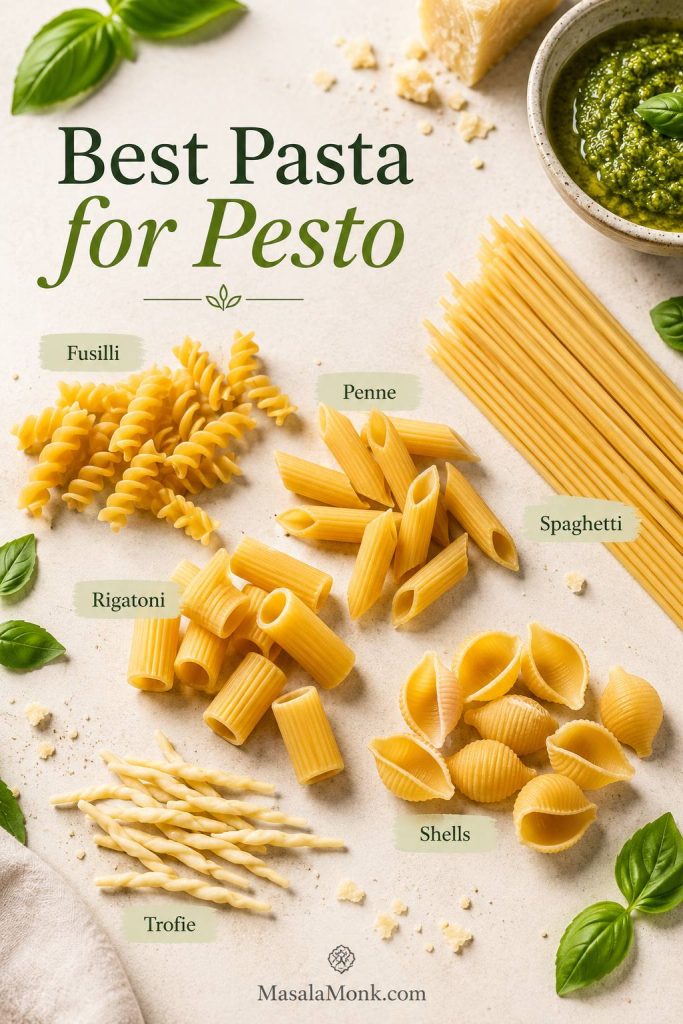
Different pasta shapes for pesto including fusilli, penne, spaghetti, rigatoni, shells and trofie
Short, ridged and spiral pasta shapes make pesto easier to manage. They hold sauce in their curves, while long pasta needs a little more tossing to coat evenly.
Pasta ShapeBest Use
Fusilli / RotiniBest all-rounder. The spirals catch pesto beautifully.
Penne / ZitiEasy weeknight choice. Tosses evenly and works with add-ins.
Spaghetti / LinguineClassic and elegant, but needs energetic tossing and enough cooking water.
TrofieTraditional Ligurian-style shape if you can find it.
RigatoniGood with tomatoes, chicken, vegetables, or mozzarella, but toss well so pesto does not sit inside the tubes.
ShellsFamily-friendly and good at holding little pockets of pesto; toss gently so the shells do not clump.
Tortellini / GnocchiRicher and heavier, best when you want a more filling meal; keep the pesto loose so it does not feel heavy.

Best first choice: fusilli, rotini, or penne. They are forgiving, easy to toss, and much less likely to leave pesto sitting at the bottom of the bowl. Save spaghetti or linguine for when you are ready to toss with a little more patience.

Once you choose the pasta shape, use the ratio guide to decide how much pesto and cooking water to start with.

Long pasta like spaghetti can be excellent, but it needs enough starchy water and proper tossing. Short pasta is more forgiving, especially if you are using a thick jarred pesto. If you want a filled-pasta version, MasalaMonk’s how to cook tortellini guide includes pesto tortellini ideas you can adapt with the same gentle tossing method.

Pesto Pasta Ratio

When this dish tastes flat, oily, or dry, the ingredient list usually is not the problem. The ratio just needs a small adjustment. A bland bowl usually needs more pesto, Parmesan, or salt. An oily or salty bowl usually means the pesto is too concentrated. Dry pasta needs more starchy water, while a thin sauce needs more tossing, a little Parmesan, or a short rest.

Use this table as a starting point, then let the bowl tell you what it needs. Tight pasta needs a splash of cooking water. Flat flavor can be fixed with pesto, Parmesan, lemon, or black pepper. Saltiness is better balanced with extra pasta, tomatoes, mozzarella, spinach, or another unsalted add-in rather than more pesto.

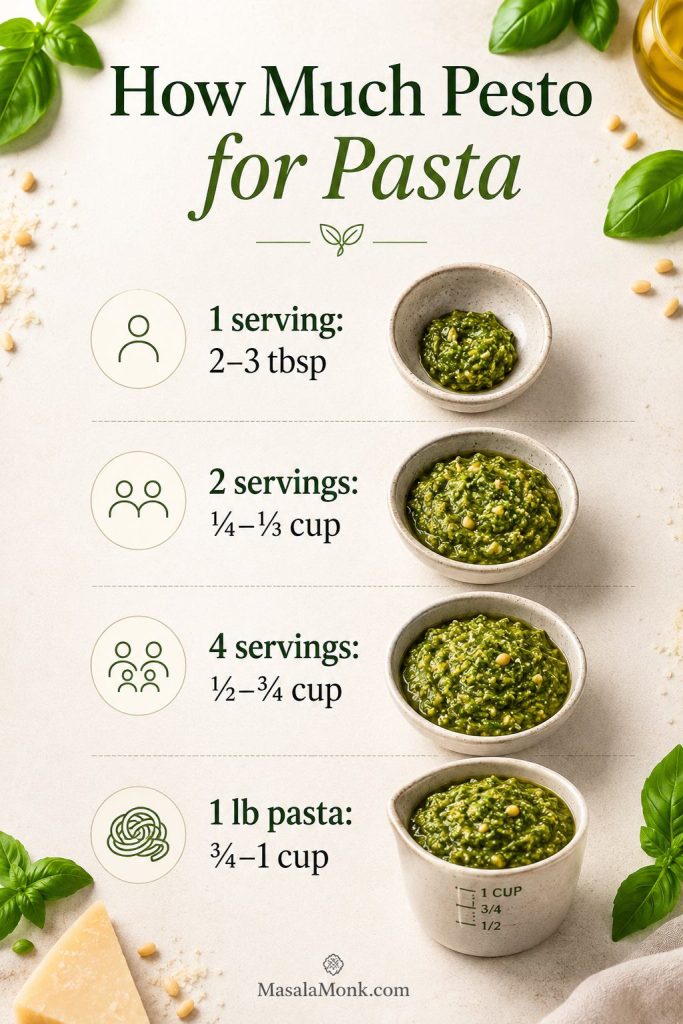
Pesto pasta ratio guide showing pesto amounts for 1 serving, 2 servings, 4 servings and 1 pound of pasta
Use this pesto pasta ratio as a starting point, not a hard rule. Once the pasta is tossed, add more pesto only if the bowl needs flavor rather than moisture.
ServingsDry PastaPestoCooking Water to StartAdd Up To
13 oz / 85 g2–3 tbsp1 tbsp3 tbsp
26 oz / 170 g¼–⅓ cup2 tbsp¼ cup
412 oz / 340 g½–¾ cup¼ cup½ cup
5–61 lb / 450 g¾–1 cup⅓ cup¾ cup

Homemade vs store-bought adjustment: homemade pesto is often fresher, looser, and less salty, so you may use the higher end of the range. Store-bought pesto can be saltier, oilier, and more concentrated, so start lower and add more only after tasting.

The numbers are a starting point, not a rule you have to obey perfectly. Some pestos are loose and mild; others are salty little flavor bombs. Taste once, loosen once, then decide.

The Pasta Water Trick That Keeps Pesto Pasta Saucy

If your bowl has ever turned dry, oily, stiff, or clumpy, this is the part that fixes it. The water you saved is not just water. It carries starch from the pasta, and that starch helps pesto loosen into a sauce that coats instead of separating.

More oil usually makes the bowl heavier. More pesto can make it too salty or intense. A starchy splash from the pot does something different: it loosens the sauce while helping it hold onto the noodles.

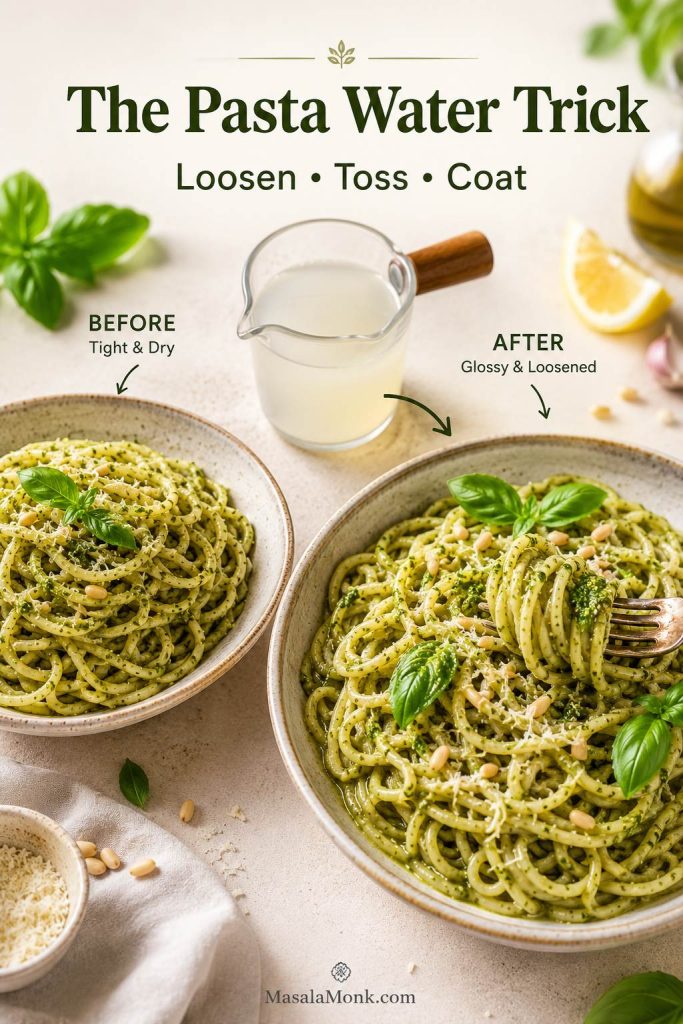
Before and after comparison of dry pesto pasta becoming glossy after starchy cooking water is added
Starchy cooking water turns thick pesto into a sauce instead of just thinning it out. That is why a small splash can make dry pasta look glossy again.

What the Sauce Should Look Like

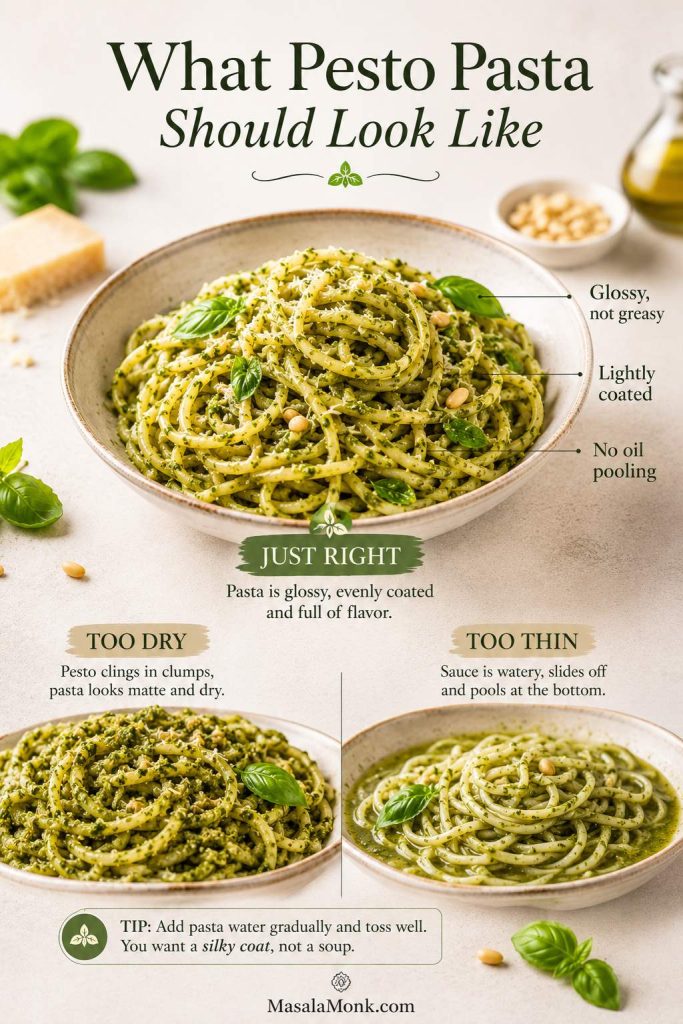
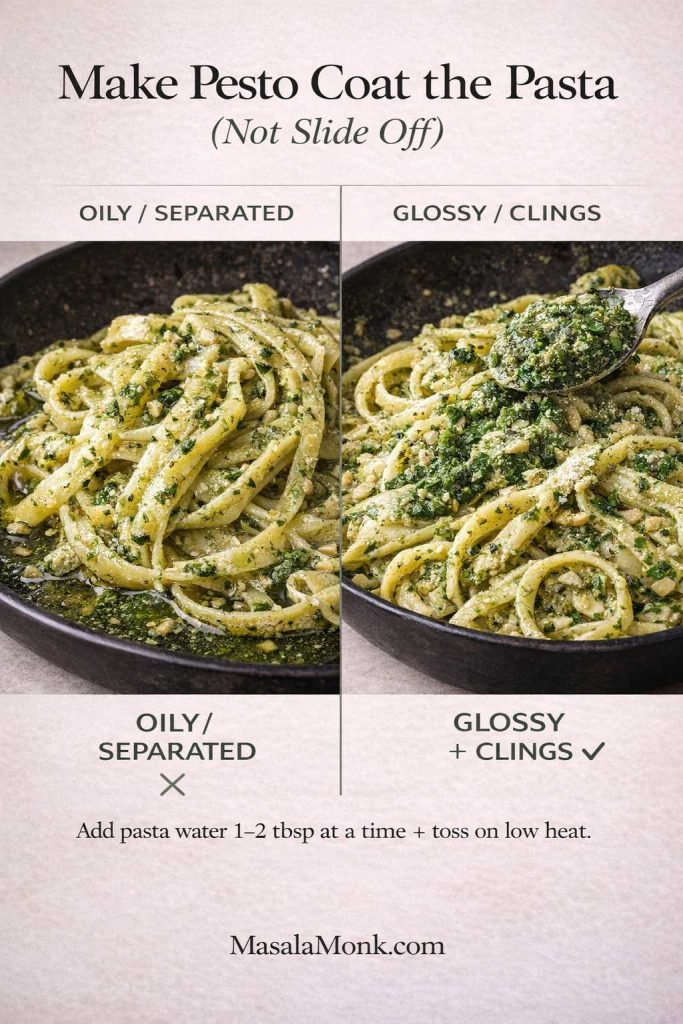
The pasta should look lightly coated and shiny, not greasy. You should not see thick green clumps or an oily puddle at the bottom. When you lift the pasta with tongs or a spoon, the sauce should move with it instead of sliding away.

Pesto pasta texture guide comparing too dry, just right and too thin sauce
Use the texture as your checkpoint. Too dry means the sauce is tight, too thin means it needs more tossing, and just right means the pasta moves easily in the bowl.

For specific dry, oily, bitter or too-salty problems, use the fixes section before changing the recipe.

Start with ¼ cup / 60 ml cooking water for 4 servings, toss well, then add more 1–2 tablespoons at a time. Do not panic if it looks a little loose for the first few seconds. Keep tossing. The starch, oil, cheese, and pesto need a moment to come together.

Also, do not add oil to the pasta water. You want the pasta’s surface starch to help the pesto cling. Oil can make the noodles more slippery and does not solve the real sauce problem. Serious Eats explains the same pasta-water principle in more detail.

How to Make Pesto Pasta

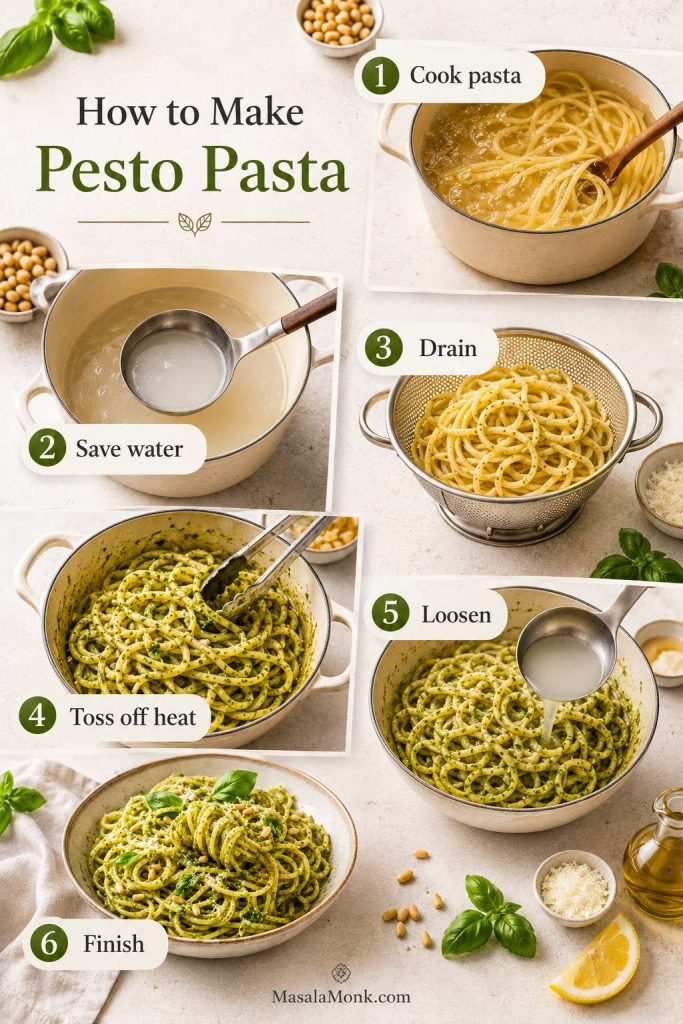
Use this same method for basil pesto pasta, pesto noodles, spaghetti with pesto, penne pesto pasta, and most simple pasta-and-pesto combinations.

Step-by-step pesto pasta guide showing cooking pasta, saving water, draining, tossing off heat, loosening and finishing
The order is what makes this easy pesto pasta reliable. Save the water before draining, then toss off heat and loosen gradually until the sauce coats well.

1. Cook the Pasta in Salted Water

Bring 3–4 quarts / 3–4 liters of water to a boil and salt it well. As a simple guide, use about 1 tablespoon kosher salt, or 2 teaspoons fine sea salt. Use a little less if your pesto or Parmesan is very salty. Add the pasta and cook until al dente according to the package timing. The pasta should still have a little bite because it will soften slightly as you toss it.

2. Save Cooking Water Before Draining

Have the pesto, bowl, Parmesan and measuring cup ready before you drain. This dish is easiest when the hot pasta goes straight from the colander into the mixing bowl.

Just before draining, scoop out at least 1 cup / 240 ml of the starchy cooking water. This is your sauce insurance. It helps loosen thick pesto, fix dry pasta, and bring oily sauce back together.

3. Drain, But Do Not Rinse

Drain the pasta, but do not rinse it. The starch on the surface helps the pesto cling. Rinsing washes away that helpful starch and cools the pasta too much.

4. Toss Pesto with Hot Pasta Off the Heat

Transfer the pasta to a large mixing bowl or a wide skillet that is not on the stove. Add the pesto and start tossing. The pasta will warm the sauce on its own, without pushing the basil into that dull, overcooked flavor.

5. Add the Water You Saved Until the Sauce Coats Well

Add ¼ cup / 60 ml of the water you saved and toss well. At first, the sauce may look a little loose. Keep tossing. The pesto, starch, oil, and cheese will start to come together. Add more 1–2 tablespoons at a time until the pasta is evenly coated.

6. Finish and Serve

Add Parmesan, black pepper, and a small squeeze of lemon if needed. Taste before adding more salt because pesto and Parmesan can already be salty. Serve immediately, while the sauce is warm and loose; pesto pasta tightens as it waits.

The first time you make it, keep the add-ins simple and learn the texture: pasta that moves easily when tossed, with no thick green clumps, no oil slick, and no dry patches underneath. Once you know that feel, the creamy, chicken, tomato, vegan, and cold pasta salad versions become much easier.

Once the method makes sense, use the recipe card for the shorter cooking version.

Recipe Card: Easy Pesto Pasta

Easy Pesto Pasta Recipe

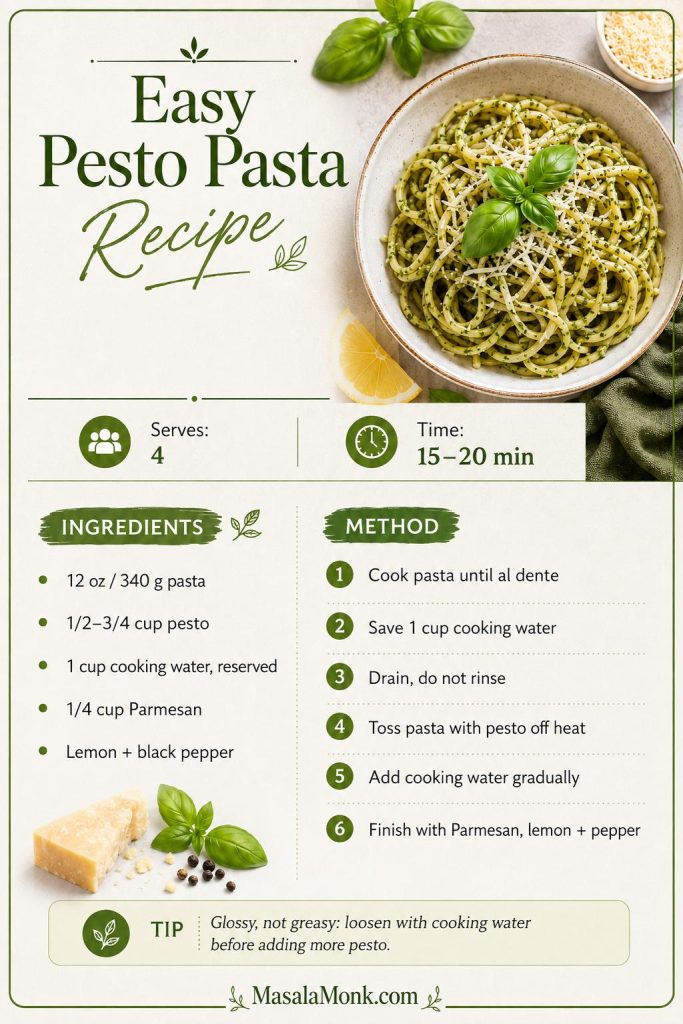
This easy pesto pasta recipe uses basil pesto, hot pasta, Parmesan and starchy cooking water for a quick dinner that tastes fresh and stays saucy instead of dry. It works with homemade or store-bought pesto and is ready in about 20 minutes.

Servings4
Prep Time5 minutes
Cook Time10–12 minutes
Total Time15–20 minutes

Ingredients

  • 12 oz / 340 g dried pasta, such as fusilli, penne, spaghetti, linguine, trofie, or shells
  • Salt, for the pasta water
  • ½ to ¾ cup / 120–180 ml basil pesto, homemade or store-bought
  • 1 cup / 240 ml starchy cooking water, using ¼ to ½ cup / 60–120 ml as needed
  • ¼ cup / about 25 g finely grated Parmesan, plus more for serving
  • 1–2 tsp / 5–10 ml fresh lemon juice, optional
  • Freshly ground black pepper, to taste
  • Fresh basil, toasted pine nuts, walnuts, or extra Parmesan, for serving

Method

  1. Bring a large pot of water to a boil. Salt it well, then add the pasta.
  2. Cook until al dente according to the package timing.
  3. Before draining, save at least 1 cup / 240 ml of the starchy cooking water.
  4. Drain the pasta, but do not rinse it.
  5. Transfer the hot pasta to a large mixing bowl or a wide skillet off the heat.
  6. Add ½ cup / 120 ml pesto if using store-bought pesto, or ¾ cup / 180 ml pesto if using a mild homemade pesto.
  7. Add ¼ cup / 60 ml of the cooking water and toss well.
  8. Add more 1–2 tablespoons at a time until the sauce clings evenly to the pasta.
  9. Add Parmesan, black pepper, and lemon juice if the pasta needs brightness.
  10. Taste and adjust. Add more pesto only if the pasta needs more flavor, not just more moisture.
  11. Serve immediately with extra Parmesan, basil, toasted nuts, or a little more black pepper.

Notes

  • Have the pesto, bowl, Parmesan and measuring cup ready before draining.
  • Do not boil pesto on the stove; let the hot pasta warm it gently.
  • If the sauce looks tight or oily, add a small splash of the cooking water and toss before adding more pesto.
  • If using very salty store-bought pesto, start with ⅓ to ½ cup and add more only after tasting.
Easy pesto pasta recipe card with ingredients, method steps, serving time and a bowl of pesto pasta
Save the basic pesto pasta ratio first: pasta, pesto, reserved cooking water, Parmesan, lemon and pepper. Once that texture works, the variations become easy.

Homemade vs Store-Bought Pesto: How Much to Use and How to Fix Each One

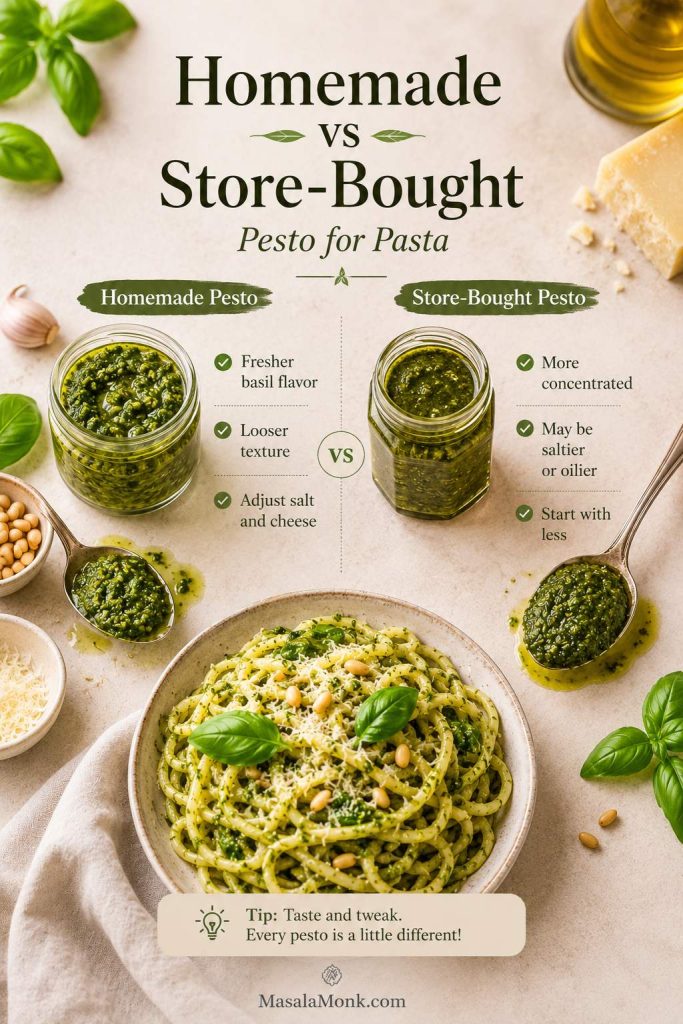
Both homemade and store-bought pesto work, but they do not behave the same way. Homemade pesto is usually fresher, greener, and looser. Store-bought pesto is often more concentrated, so taste it first and start lower in the range.

Homemade pesto and store-bought pesto compared beside pesto pasta and sauce ingredients
Homemade pesto usually tastes fresher and looser, while store-bought pesto can be more concentrated. So, start lower with jarred pesto and adjust after tasting.

How to Choose Store-Bought Pesto for Pasta

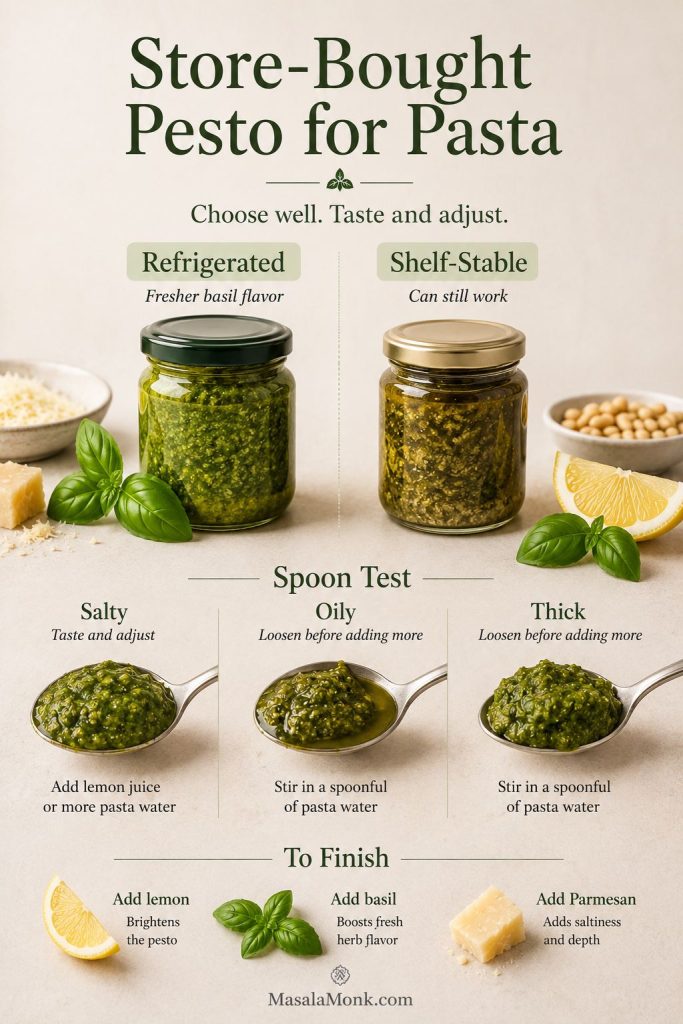
Refrigerated pesto is usually the best first choice for fresh basil flavor. Shelf-stable pesto can still work, but it often needs help from lemon, Parmesan, fresh basil, or careful loosening because the flavor can be darker, saltier, or more intense.

Store-bought pesto guide with refrigerated pesto, shelf-stable pesto, spoon tests and adjustment ingredients
A good store-bought pesto should taste balanced before it touches the pasta. If it tastes salty, oily or flat, use less and finish with lemon, Parmesan or fresh basil.
  • Salty pesto: start with less pesto and balance the bowl with tomatoes, mozzarella, spinach, or extra pasta.
  • Oily pesto: skip extra oil; use a small splash of the cooking water and finely grated Parmesan to help the sauce come together.
  • Flat pesto: wake it up with lemon, black pepper, fresh basil, or a little extra cheese.
  • Very thick pesto: let it sit at room temperature while the pasta cooks, then loosen it gradually.
  • Allergen concerns: check labels for nuts, cheese, and shared-production warnings.
Pesto TypeHow Much to Start With for 12 oz / 340 g PastaBest Adjustment
Fresh homemade pesto¾ cup / 180 mlLoosen with a small splash of the cooking water until the sauce coats well; finish with lemon if needed.
Thick store-bought pesto½ cup / 120 mlLoosen it before adding more pesto.
Very salty pesto⅓–½ cup / 80–120 mlUse less Parmesan and balance with unsalted vegetables or extra pasta.
Loose oily pesto½ cup / 120 mlAdd Parmesan and toss well with a small splash of the cooking water.

How to Make Creamy Pesto Pasta

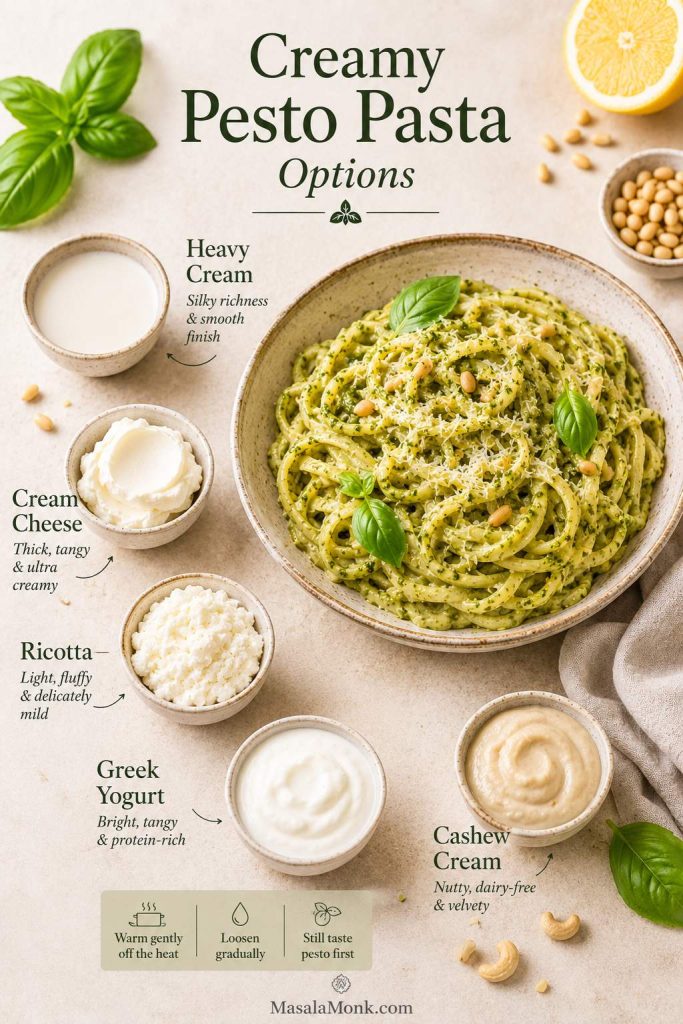
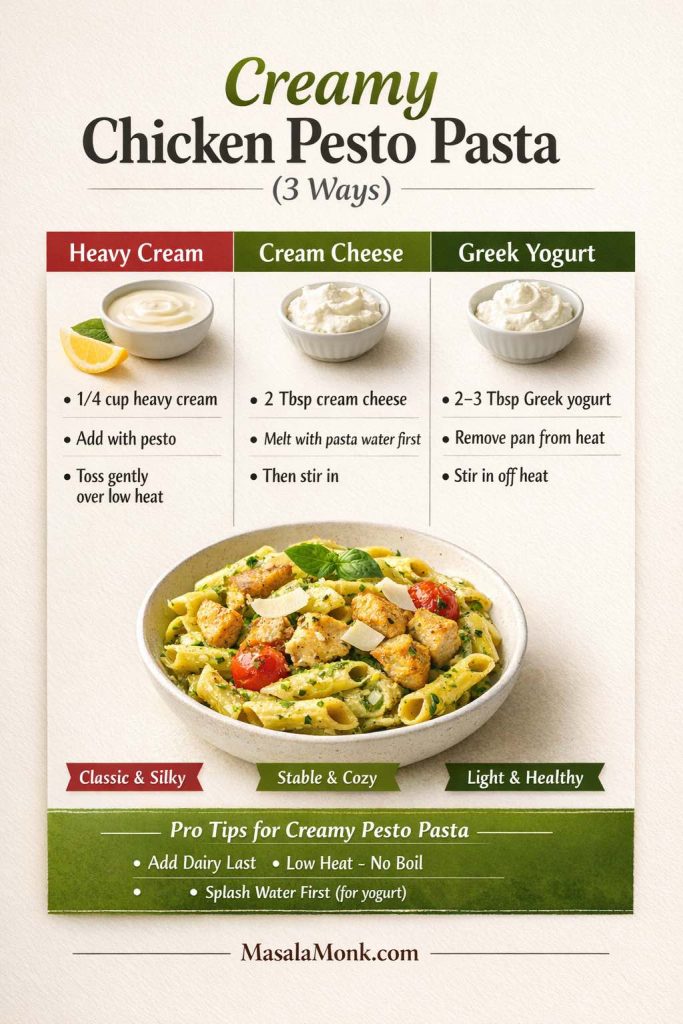
For creamy pesto pasta, use the same base method, then add a small amount of cream, cream cheese, Greek yogurt, ricotta, or cashew cream. Go gently here. A little dairy makes the sauce softer and richer, but too much turns it into a cream sauce with pesto hiding in the background.

Creamy pesto pasta should still taste like pesto first. The cream is there to round the edges, not steal the whole bowl.

Creamy pesto pasta options including heavy cream, cream cheese, Greek yogurt, ricotta and cashew cream
Creamy pesto pasta works best when the creamy ingredient supports the basil instead of hiding it. Add cream, ricotta, yogurt or cashew cream gradually so the sauce stays pesto-forward.
Creamy OptionHow to Use ItBest For
Heavy creamWarm ¼ cup / 60 ml gently, then toss with pesto and a small splash of the cooking water off the heat.Classic creamy pesto pasta.
Cream cheeseUse 2–3 tbsp and loosen gradually with the cooking water until smooth.Thicker, family-style sauce.
Greek yogurtStir in off the heat to avoid splitting.Tangier, lighter version.
RicottaWhisk with a little cooking water first, then toss with pesto.Soft and creamy without becoming too heavy.
Cashew creamUse with vegan pesto and loosen gradually.Dairy-free creamy pesto pasta.

For this base recipe, keep the creamy variation controlled. Add just enough to soften the pesto, then use the water you saved to keep the sauce light enough to coat the pasta. If you are craving a richer chicken-and-cream pasta rather than a pesto-forward bowl, MasalaMonk’s chicken alfredo pasta guide is a better match for that direction.

If you want to turn the creamy version into a full dinner, choose one protein or vegetable from the add-ins guide.

Best Add-Ins for Pesto Pasta: Chicken, Tomatoes, Shrimp, Vegetables and More

Add-ins are easiest when the base pasta already tastes good. Think of them as guests, not rescuers. Chicken, tomatoes, shrimp, peas, or paneer can make the bowl more complete, but they cannot fix a sauce that was too tight from the start.

How to Choose Add-Ins Without Making the Pasta Heavy

For a no-stress first version, make the plain pesto pasta once before adding too much. After that, the variations are easy because you know what the sauce should feel like.

As a rule, keep add-ins to one protein and one vegetable unless you are making pasta salad. Too many extras cool the pasta quickly and make the pesto harder to coat evenly.

Quick Add-In Guide

Add-ins for pesto pasta including chicken, tomatoes, shrimp, greens, beans, paneer and vegetables
Add-ins should build on a good base, not rescue a dry one. Once the pasta is glossy, chicken, tomatoes, shrimp, beans or greens can turn it into a fuller meal.
Add-InHow to Use ItBest For
Cherry tomatoesAdd fresh, blister in a pan, or roast first.Brightness and color.
ChickenAdd cooked sliced chicken after tossing the pasta.Protein-rich dinner.
ShrimpSauté separately, then fold in at the end.Fast seafood pesto pasta.
SalmonFlake cooked salmon into the finished pasta.Richer dinner bowl.
SpinachWilt with the hot pasta before adding pesto.Easy greens.
BroccoliBoil with the pasta during the last 2–3 minutes.Family-friendly vegetable version.
PeasAdd during the last minute of pasta cooking.Sweetness and color.
ZucchiniSauté first so it does not water down the pesto.Summer pesto pasta.
MozzarellaFold in after tossing so it softens but does not disappear.Tomato-basil style pasta.
Green beans and potatoesBoil small potato pieces with the pasta, then add green beans near the end.Classic Ligurian-style pesto pasta.
PaneerPan-sear cubes separately, then fold in at the end.Vegetarian protein variation.
Chickpeas or white beansWarm separately or toss in at the end.Easy vegetarian meal.

Best First Add-Ins to Try

For the easiest dinner upgrade, start with cherry tomatoes, peas, or spinach. For a more filling bowl, add chicken, shrimp, salmon, paneer, chickpeas, or white beans. Whatever you choose, get the sauce right first; add-ins should make the pasta better, not cover up a dry base.

If you are cooking extra on purpose, check the storage and reheating tips so the leftovers do not turn dry.

The base bowl should still taste like pesto pasta after the add-ins go in. When chicken, shrimp, or vegetables become the main event, add a little lemon or basil at the end to bring the pesto back forward.

If you want to take the same idea in a more Indian direction, MasalaMonk’s guide to pesto pasta with Indian twists plays with coriander, mint, curry leaf, spinach and tomato-sesame pesto variations.

Pesto Pasta with Chicken

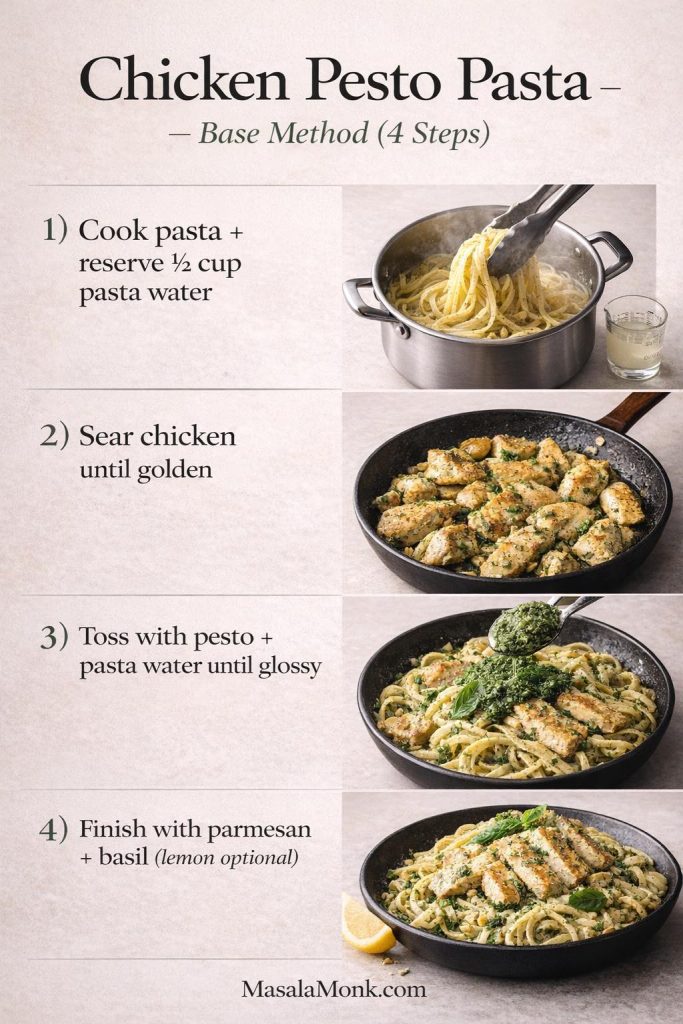
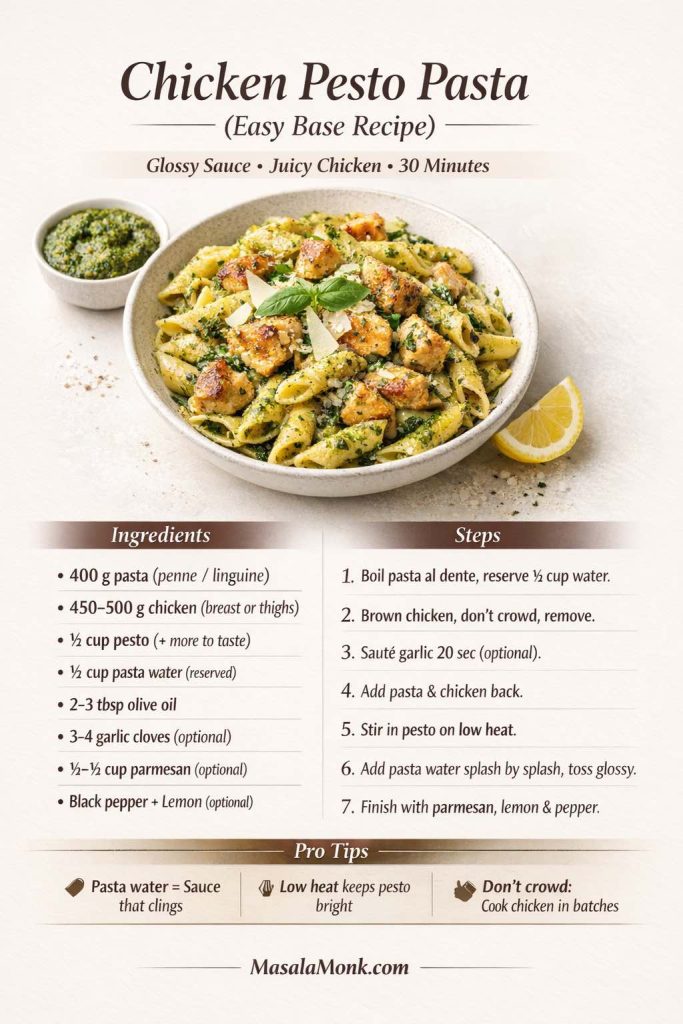
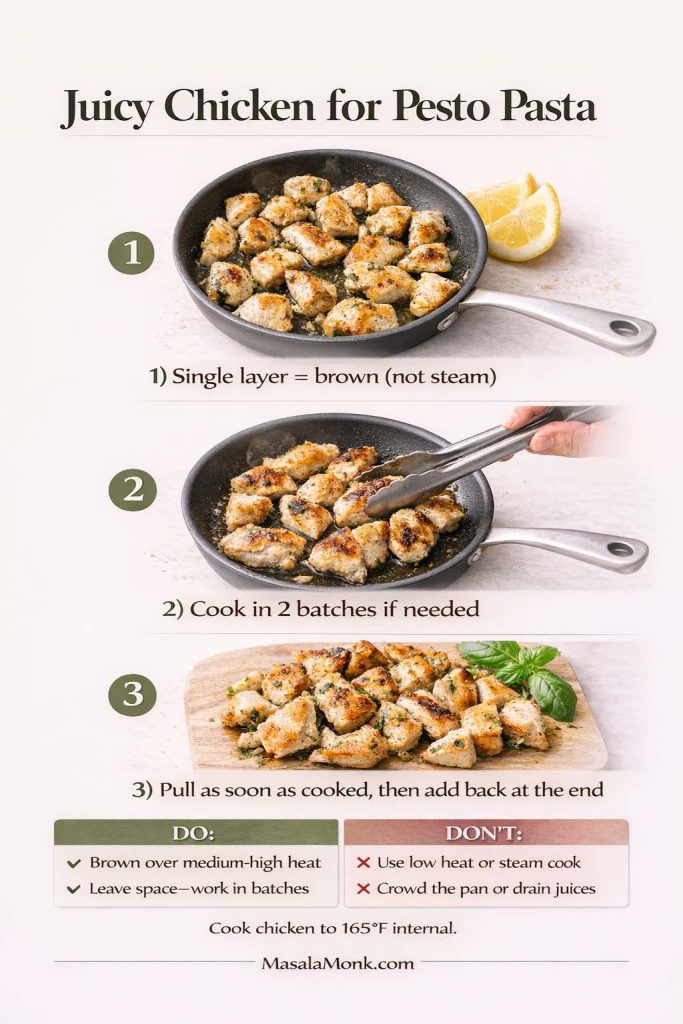
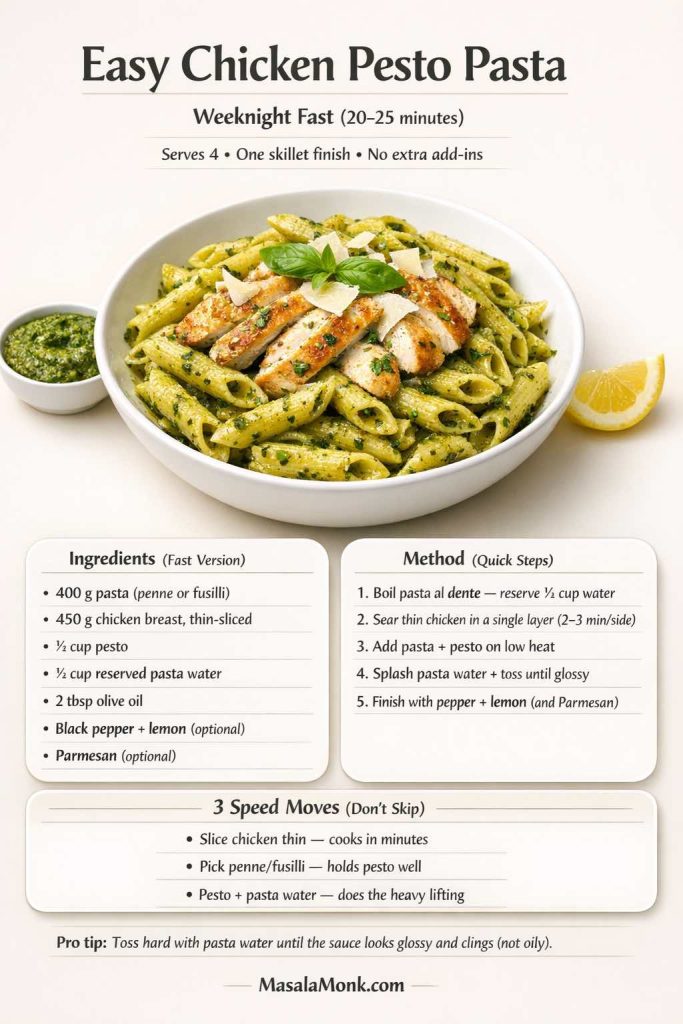
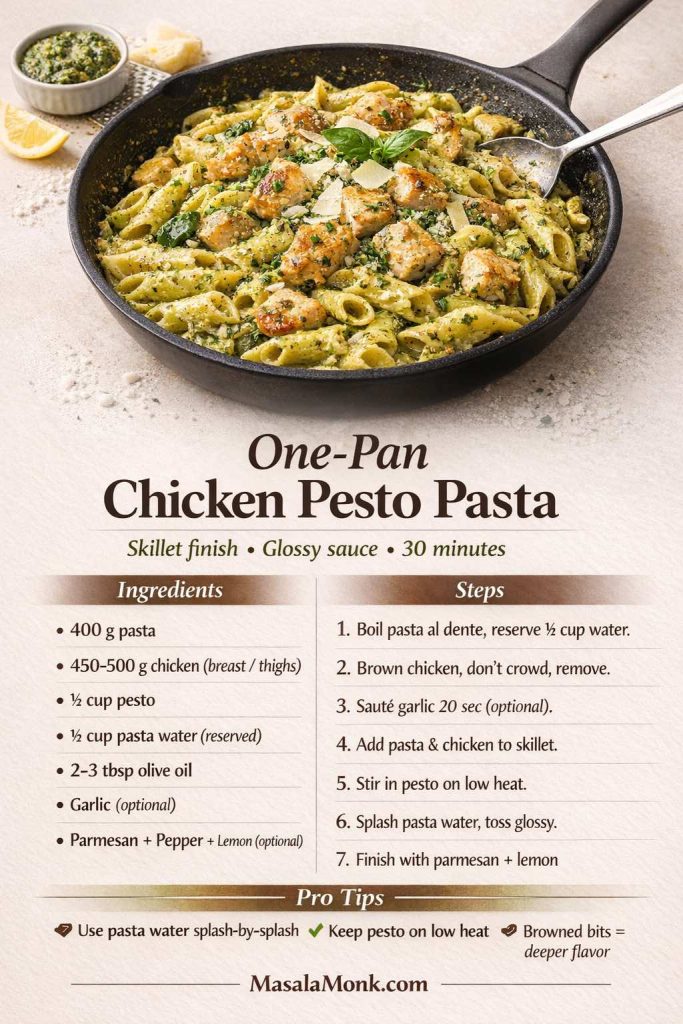
Cook the chicken separately, then slice or cube it and fold it into the finished pasta. MasalaMonk’s chicken pesto pasta recipe covers the full chicken version, including creamy, one-pot, baked, mushroom, tomato and lighter variations.

Pesto pasta served with sliced grilled chicken, basil and Parmesan
Keep the chicken separate until the end so the meat stays tender while the pesto sauce stays bright and freshly tossed.

Pesto Pasta with Tomatoes

Cherry tomatoes are one of the easiest upgrades because their acidity balances the richness of pesto. Use them fresh for a quick version, blister them in olive oil for a saucier bowl, or roast them if you want a sweeter, deeper flavor.

Pesto pasta with cherry tomatoes, basil, Parmesan and a bright green sauce
Tomatoes bring acidity, juice and color to pesto pasta. As a result, the bowl tastes brighter and less rich without needing a heavier sauce.

If you want the tomatoes to become the main sauce instead of an add-in, MasalaMonk’s tomato sauce from fresh tomatoes guide is the better direction for a bright tomato-forward pasta night.

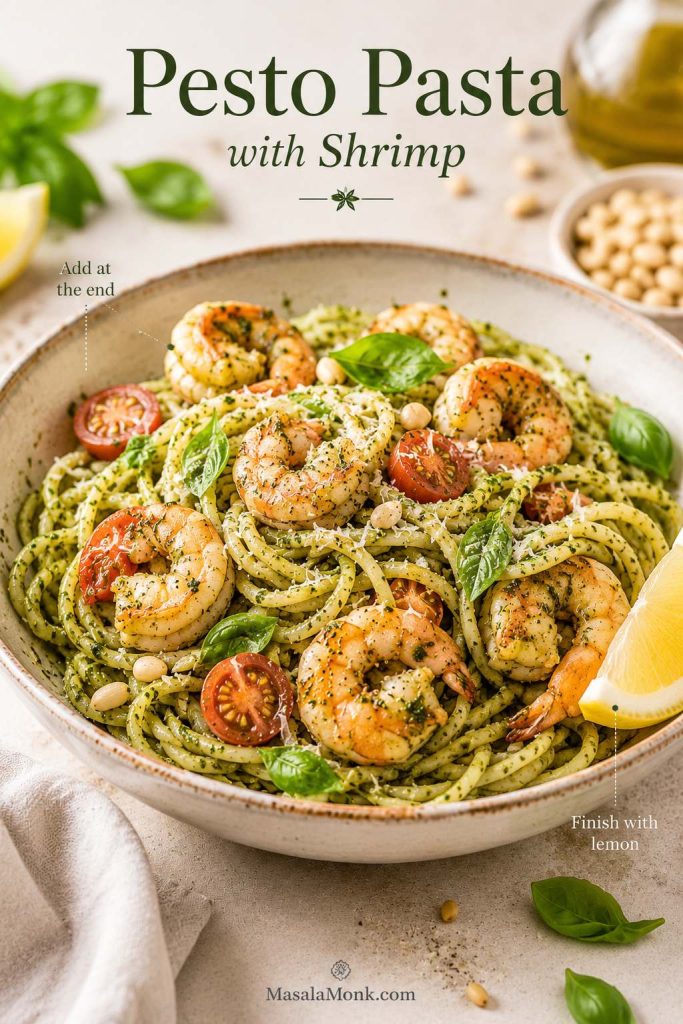
Pesto Pasta with Shrimp or Salmon

Shrimp and salmon both work well with pesto, but do not cook them in the pesto itself. Sauté shrimp separately or flake cooked salmon into the finished pasta. Add lemon at the end to keep the dish bright.

Pesto pasta with shrimp, lemon, basil and Parmesan in a shallow bowl
Shrimp is a strong pesto pasta add-in because it cooks quickly and pairs well with lemon. Fold it in after the sauce is ready so the seafood stays tender.

Vegetarian, Vegan and Nut-Free Options

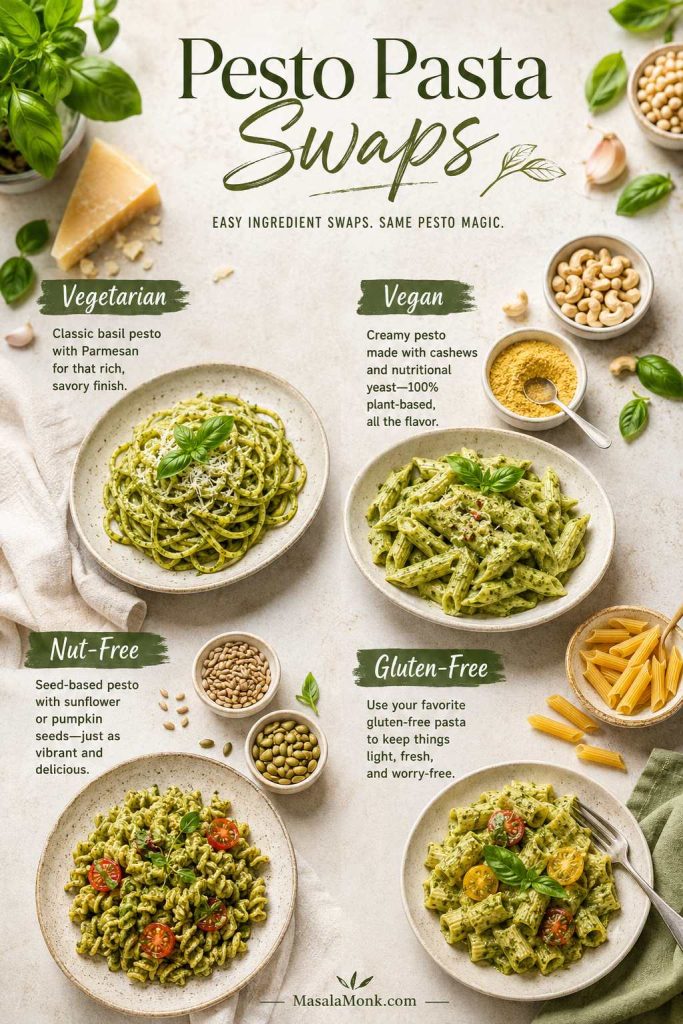
Pesto pasta is easy to adapt because the base method stays the same. Change the pesto, but keep the same gentle tossing and starchy-water finish.

Pesto pasta swap guide showing vegetarian, vegan, nut-free and gluten-free versions with different ingredients
The method stays the same even when the pesto changes. Choose vegetarian cheese, a vegan booster, seed-based pesto or gluten-free pasta, then keep the sauce loose.

Vegetarian Pesto Pasta

For a vegetarian pesto pasta, check the cheese in the pesto. Traditional Parmesan-style cheeses may use animal rennet, so choose a vegetarian hard cheese or make pesto at home with a vegetarian-friendly cheese.

Vegan Pesto Pasta

Use vegan pesto and skip the Parmesan finish. Vegan pesto pasta often needs extra savory depth because it loses Parmesan’s salty edge. Nutritional yeast, toasted seeds, lemon, black pepper, or a spoon of cashew cream can help the sauce taste fuller. MasalaMonk also has a fresh basil vegan pesto recipe that can work as a starting point.

Nut-Free Pesto Pasta

Use pesto made with sunflower seeds, pumpkin seeds, hemp seeds, or a seed-free herb sauce. For the safest nut-free version, use a clearly labeled nut-free pesto rather than simply swapping nuts at home if you are cooking for someone with an allergy. Check labels carefully and avoid shared jars, grinders, or utensils unless you know they are safe.

Gluten-Free Pesto Pasta

Use your favorite gluten-free pasta, but watch the cooking time closely. Gluten-free pasta can break or soften quickly, so drain it while it still has bite and toss gently. Add the cooking water slowly because some gluten-free pasta water can thicken the sauce faster than regular pasta water.

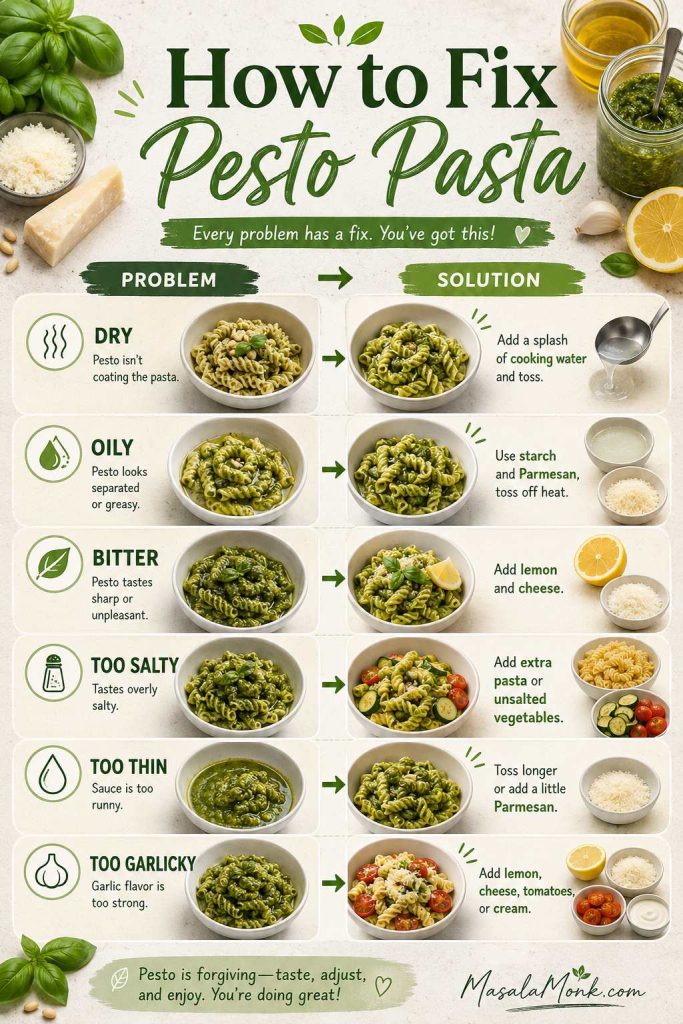
How to Fix Dry, Oily, Bitter or Too-Salty Pesto Pasta

Start with the Sauce Texture

If your pesto pasta has ever turned dry, oily, bitter, too salty, or dull, it is usually not a recipe failure. It is a ratio, heat, or tossing problem. Most of these issues can be fixed before the pasta reaches the table.

Before adding more pesto or oil, try one small splash of warm cooking water and 10 seconds of firm tossing. Most pesto pasta problems improve there first.

Troubleshooting guide for pesto pasta with fixes for dry, oily, bitter, too salty, too thin and too garlicky pasta
Most pesto pasta fixes start with reading the bowl. Dry sauce needs loosening, oily sauce needs starch and cheese, and flat flavor usually needs lemon, pepper or Parmesan.

Quick Fixes for Common Pesto Pasta Problems

ProblemWhy It HappenedHow to Fix It
Dry pesto pastaNot enough starchy water, or the pasta absorbed the sauce.Add warm cooking water 1 tbsp at a time and toss well.
Oily pesto pastaThe pesto oil did not come together with the starch.Add a splash of cooking water and a little Parmesan, then toss off the heat.
Bitter pesto pastaThe pesto was overheated, over-garlicky, or made with tired basil.Add lemon, Parmesan, tomatoes, or a small knob of butter.
Pesto turned darkToo much heat hit the basil.Add fresh basil or lemon now; next time keep the pesto away from harsh heat.
Bland pastaThe pasta water was not salted enough.Finish with salt, Parmesan, black pepper and lemon.
Sauce too thinToo much cooking water was added at once.Toss longer, add Parmesan, and let it sit for 1 minute.
Too saltyThe pesto or Parmesan was very salty.Add more pasta, tomatoes, mozzarella, spinach or unsalted vegetables.
Too garlickyThe pesto has a strong raw garlic bite.Add lemon, cheese, tomatoes, cream or extra pasta.
Leftovers are dryThe pasta absorbed the sauce in the fridge.Eat cold as pasta salad or loosen gently with a splash of water.

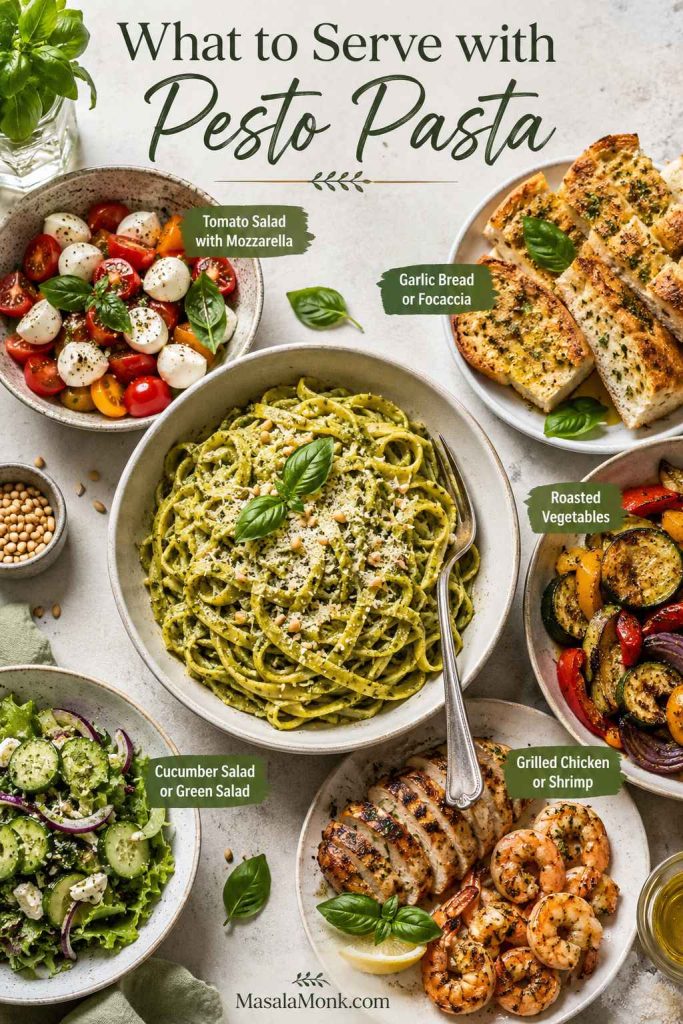
What to Serve with Pesto Pasta

Pesto pasta can be a light meal on its own, but it also plays well with simple sides. Since the sauce is rich and herby, the best pairings are fresh, crisp, acidic, or simply roasted.

Pesto pasta served with tomato mozzarella salad, garlic bread, roasted vegetables, cucumber salad, chicken and shrimp
Since pesto pasta is rich and herby, the best sides bring contrast. Fresh salads, roasted vegetables, garlic bread and simple proteins make the meal feel complete.
  • Tomato salad with basil and mozzarella
  • Garlic bread or focaccia
  • Roasted broccoli, zucchini, asparagus, or bell peppers
  • Grilled chicken, shrimp, salmon, tofu or paneer
  • Green salad with lemon vinaigrette
  • Cucumber salad for a cold, crisp, acidic side
  • Soup for a bigger dinner
  • Burrata or fresh mozzarella with tomatoes

If you are serving pesto pasta for guests, keep the base pasta simple and put add-ins on the side. That lets people choose chicken, shrimp, tomatoes, vegetables, extra cheese, paneer, or a vegan topping without changing the whole dish.

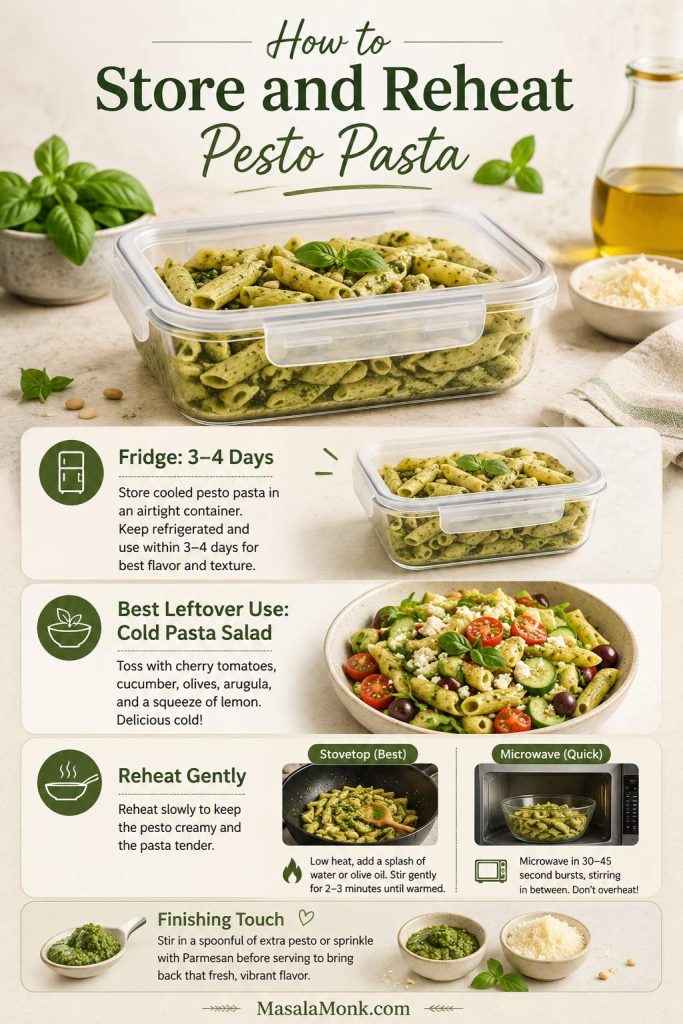
Storage and Reheating

This dish is happiest right after tossing, while the sauce is still loose and the basil tastes fresh. Leftovers still work, but the pasta will absorb some of the sauce as it sits.

If you know you are cooking ahead, keep a spoonful of pesto aside and stir it into the leftovers after reheating or just before serving cold. That fresh spoonful brings back some of the basil flavor the fridge can dull.

For the easiest leftover plan, skip reheating and use the pesto pasta salad idea instead.

Storage and reheating guide for pesto pasta with an airtight container, cold pasta salad and gentle reheating options
Leftovers need gentle treatment because basil can darken with heat. Store the pasta airtight, warm it briefly if needed, or serve it cold as pesto pasta salad.
  • Fridge: store in an airtight container for 3–4 days.
  • Best leftover use: eat cold or room temperature as pesto pasta salad.
  • Gentle reheat: warm briefly over low heat or in short microwave bursts with a splash of water. Stop as soon as it is warm; high heat can darken the basil and make the sauce oily.
  • Freezing: freezing cooked pesto pasta is not ideal because the texture changes. Freeze pesto separately when possible.

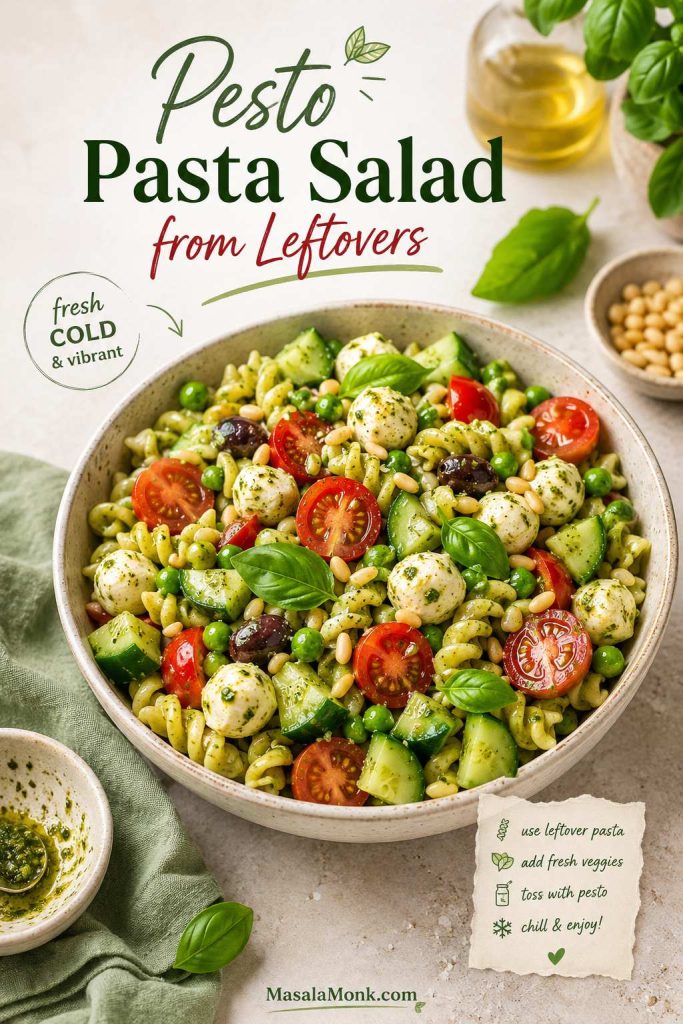
Turn Leftovers into Pesto Pasta Salad

To turn leftovers into pesto pasta salad, let the pasta cool, then add a spoonful of pesto, a little lemon juice, and a few fresh add-ins such as cherry tomatoes, cucumber, mozzarella, olives, peas, or spinach.

Cold pesto pasta salad with cherry tomatoes, cucumber, peas, mozzarella, olives, basil and pine nuts
Cold pesto pasta salad is often the best leftover plan. Add crisp vegetables, mozzarella, lemon and a little extra pesto so the pasta tastes fresh again.

For general leftover safety, the USDA FSIS recommends storing leftovers in airtight packaging or covered containers and using refrigerated leftovers within 3–4 days. You can read their leftovers and food safety guidance for more detail.

FAQs About Pesto Pasta

How much pesto should I use for pasta?

For 4 servings, start with ½ to ¾ cup / 120–180 ml pesto for 12 oz / 340 g dried pasta. Use less if the pesto is store-bought, salty, or oily. Use more if the pesto is homemade, fresh, mild, or loose.

How much pesto do I need for 1 lb of pasta?

For 1 lb / 450 g dried pasta, start with ¾ cup / 180 ml pesto and add up to 1 cup / 240 ml if the pesto is mild. Keep ¾ cup / 180 ml cooking water nearby and add it gradually until the sauce coats the pasta.

Should pesto be heated before adding to pasta?

Pesto should be warmed gently by the hot pasta, not cooked like a tomato sauce. Toss the pesto with hot pasta off the heat, then loosen it with the cooking water you saved.

How do you keep pesto pasta bright green?

Do not simmer or boil the pesto. Toss it with hot pasta away from direct heat, serve soon after mixing, and finish with fresh basil or a small squeeze of lemon if the flavor needs brightness.

Why is my pesto pasta dry?

A dry bowl usually means the sauce is too tight, not that it needs more oil. Add a small splash of warm cooking water, toss hard for a few seconds, and repeat only if the pasta still looks patchy.

Why is my pesto pasta oily?

Oily pesto pasta usually means the sauce did not come together properly. Add a small splash of the cooking water and Parmesan, then toss off the heat until the oil and starch combine.

What pasta shape is best with pesto?

Fusilli, rotini, penne, ziti, trofie, shells, spaghetti and linguine all work. Short ridged or spiral shapes are the easiest because they catch pesto well.

Does store-bought pesto work for pasta?

Store-bought pesto works well, but start with less because it can be saltier and oilier than homemade pesto. Loosen it first, then decide if you need more pesto.

How do you make pesto pasta creamy?

Add a small amount of heavy cream, cream cheese, ricotta, Greek yogurt, or cashew cream. Keep the heat gentle, and use the cooking water you saved to keep the sauce smooth.

What protein goes well with pesto pasta?

Chicken, shrimp, salmon, chickpeas, white beans, tofu and paneer all work. Cook them separately, then fold them into the finished pasta.

What vegetables go well with pesto pasta?

Cherry tomatoes, broccoli, peas, spinach, zucchini, asparagus, roasted peppers and green beans all pair well with pesto pasta.

Can pesto pasta be vegan?

Yes. Use vegan pesto and skip Parmesan, or replace it with nutritional yeast, toasted nuts, seeds, lemon, or a little cashew cream.

Can I make pesto pasta ahead of time?

You can, but it tastes freshest right after tossing. For the best make-ahead version, cook the pasta, cool it, and serve it as pesto pasta salad with extra pesto, lemon juice, and fresh add-ins before serving.

Is pesto pasta better hot or cold?

Fresh pesto pasta is best warm, right after tossing. Leftovers are often better cold or at room temperature as pesto pasta salad because reheating can dull the basil flavor. Add a little fresh pesto, lemon juice, or olive oil before serving cold if the pasta tastes dry.

Final Tip

The best pesto pasta should be glossy, not greasy. Save the starchy water, keep the pesto away from harsh heat, and toss until the sauce clings lightly to every piece. Once you understand that texture, every version becomes easier.

Finished pesto pasta in a bowl with basil, Parmesan, pine nuts, lemon and serving utensils
The final bowl should shine, not swim. When the sauce looks loose, glossy and lightly coated, the pesto pasta is ready for the table.

Back to top

Posted on 10 Comments

Sourdough Pizza Dough Recipe (Crispy Crust & Easy Pizza Base)

Sourdough pizza dough cover image showing a golden, crispy crust pizza with a cheese-pull slice lifted, plus sauce, basil, and olive oil props.

There’s a particular moment in pizza making that feels like magic: you slide a raw, slightly wobbly round of dough into a hot oven, and within minutes it turns into something alive—edges lifting, bubbles forming, the bottom taking on color, the whole kitchen smelling like toasted wheat and caramelized cheese. When that dough is sourdough pizza dough, the magic gets a little deeper. The crust tastes fuller. The aroma is richer. Even a simple topping combo feels more “finished,” as if the base itself is seasoning the pizza.

At the same time, sourdough pizza dough can feel intimidating if you’ve only made quick yeast dough before. Starter timing, fermentation windows, sticky dough, shaping fears—there are a lot of ways to overthink it. So this post is built for real life: one reliable sourdough pizza dough recipe, clear steps that don’t require fancy equipment, and enough flexibility to handle a same-day bake or a cold ferment when you have time.

Along the way, you’ll also see natural variations—thin and crisp, chewier and thicker, or even a pan-friendly version—because one good sourdough pizza base should carry you through many pizza nights. When you want extra support, you can jump to MasalaMonk’s beginner-friendly sourdough starter recipe to tighten up feeding and starter strength, or browse the broader sourdough lineup in Sourdough Bread Recipes if you’re in the mood to bake beyond pizza.

And because pizza night is never only about the crust, you’ll also find an easy way to expand your topping and sauce options using MasalaMonk’s pizza sauce recipes and pesto recipe guide, plus a few cocktail pairings that make a homemade pie feel like a proper plan.

Let’s get into it.


Why sourdough pizza dough tastes better (and how to keep it easy)

Sourdough pizza has a flavor advantage that’s hard to miss: more depth, more aroma, a little tang, and a longer finish. The reason isn’t mysterious. Fermentation changes the dough. Over time, flour and water become something else—more fragrant, more elastic, and more flavorful.

Still, flavor alone doesn’t guarantee a great crust. A sourdough pizza crust can be pale, tough, or oddly dense if the bake setup is weak or if the dough never develops enough structure. That’s why this method is built around three practical goals:

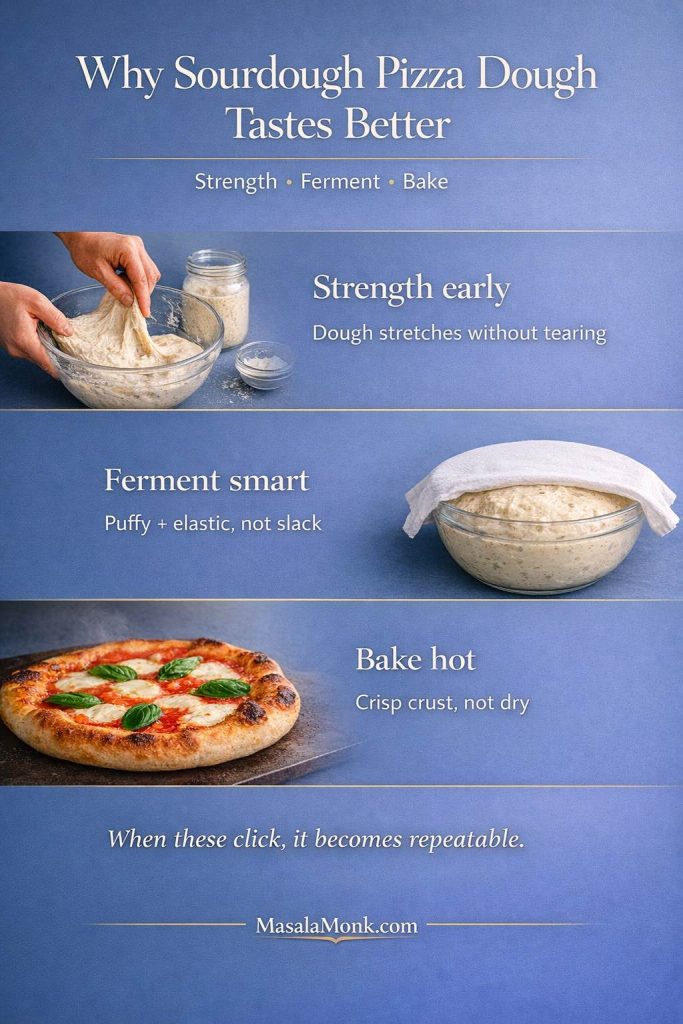
Sourdough pizza dough gets better when you nail three things: build strength early so it stretches easily, ferment until the dough is puffy (not slack), and bake hot so the crust turns crisp instead of dry.

First, develop strength early so the dough stretches into a pizza base without tearing.

Second, ferment until the dough is lively but not collapsed, so you get lift instead of flatness.

Third, bake with enough heat that the crust sets quickly, which keeps it crisp rather than dry.

Once those three pieces click, sourdough pizza dough becomes repeatable. You’re no longer gambling on vibes—you’re steering the process.

If you want your starter to feel dependable before you begin, the day-by-day routine in MasalaMonk’s sourdough starter recipe is a solid foundation. It’s especially helpful if your starter tends to be sluggish, overly sour, or inconsistent from week to week.

Also Read: Balti Paneer Gravy (Restaurant-Style, Creamy + Bold Recipe)


Ingredients for sourdough pizza dough

A reliable sourdough pizza dough recipe doesn’t need an ingredient parade. In fact, fewer ingredients usually means fewer surprises.

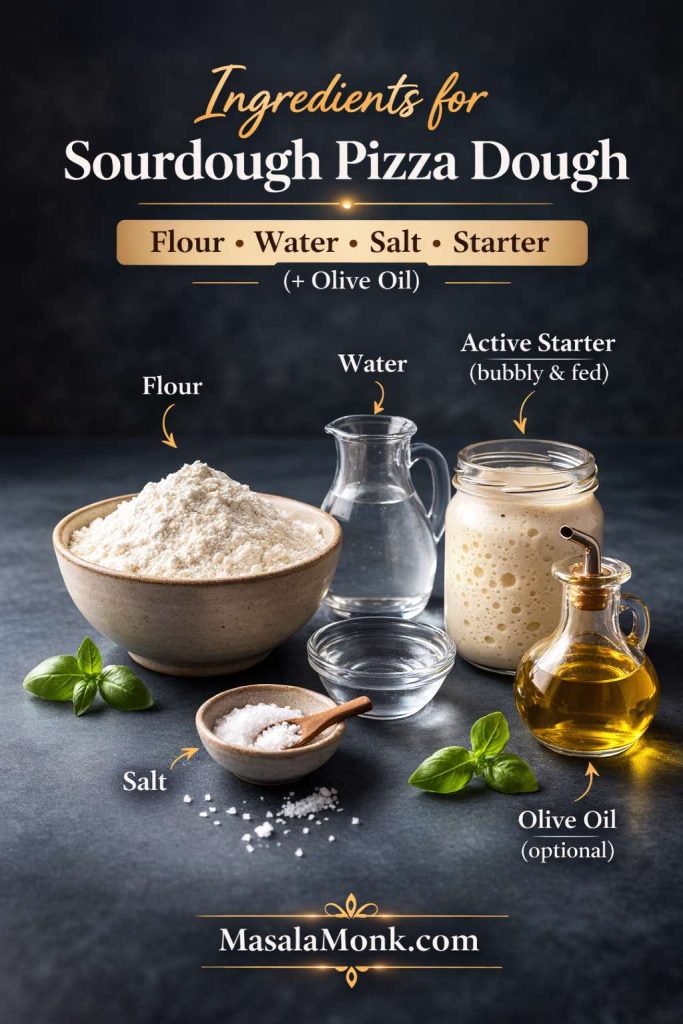
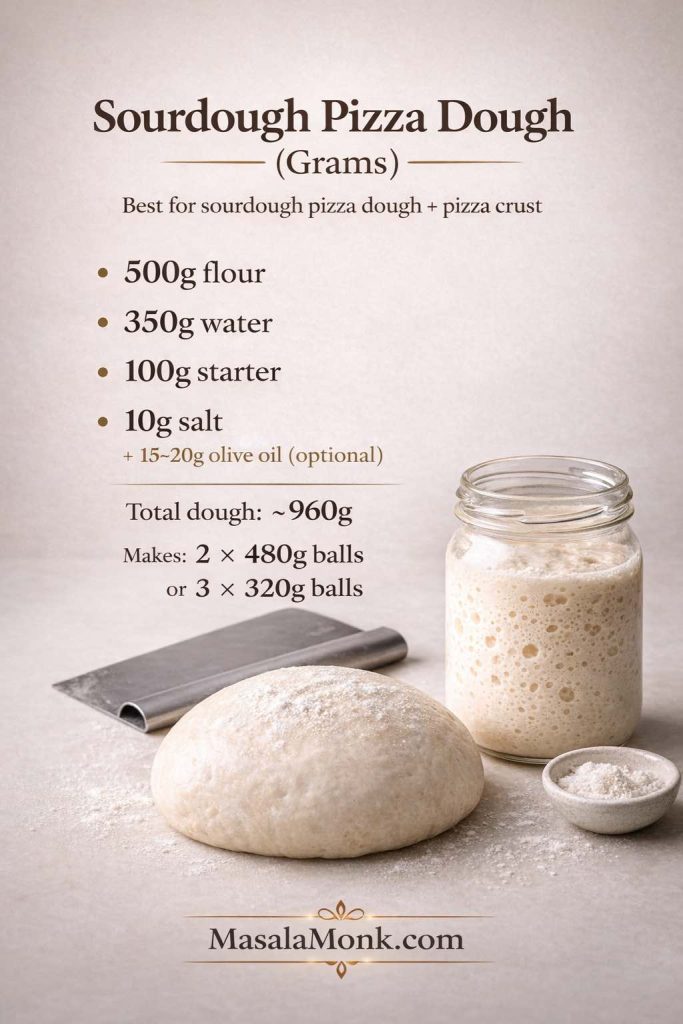
You only need flour, water, salt, and an active starter to make sourdough pizza dough—olive oil is optional, but it helps the dough handle smoothly in a home oven.

What you need

  • Flour: bread flour works beautifully; “00” flour is also excellent; a blend is ideal if you like
  • Water: room temperature for most kitchens
  • Salt: essential for flavor and dough strength
  • Active sourdough starter: bubbly and recently fed
  • Olive oil (optional): helpful for tenderness in a home oven and makes handling easier

That’s it. Everything else—sugar, honey, malt, milk—can come later if you want to experiment. For now, this base method covers the core “pizza dough with sourdough starter” approach and gives you a crust that can go thin and crisp or thicker and chewier depending on how you shape it.

About the flour choice (simple, useful guidance)

If you already have bread flour, use it. Bread flour tends to make shaping easier because it’s naturally stronger. If you have “00” flour, it can produce a beautifully tender yet crisp crust, especially in hotter bakes. If you want the best of both worlds, blend them: part bread flour for strength, part “00” for tenderness.

Meanwhile, if you only have all-purpose flour, you can still make sourdough pizza dough. You may simply need a slightly gentler hand during stretching and a little more attention to dough strength early on.

Also Read: Mojito Recipe (Classic) + Ratios, Pitcher, Mocktail & Easy Variations


Active starter vs discard for sourdough pizza

This matters, and the good news is that it’s not complicated.

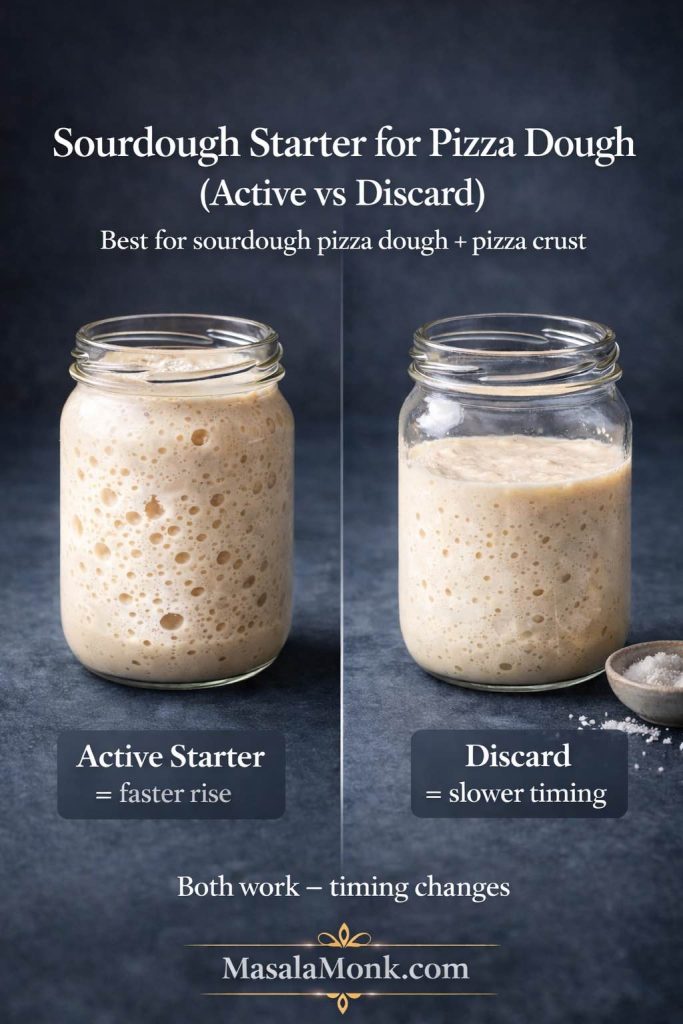
Sourdough starter for pizza dough comparison showing active starter versus discard, with active starter rising faster and discard needing longer timing.
For sourdough pizza dough, an active starter gives a quicker, more predictable rise, while discard can still work—but you’ll need a longer, more flexible fermentation window.

Active starter = predictable rise, cleaner timing

For the main sourdough pizza dough recipe below, an active starter is your best friend. A starter that has been fed and is bubbling well will ferment dough in a more predictable window and usually gives better lift.

If you’re unsure whether your starter is “ready,” the quick-read approach is simple: it should look airy, smell pleasantly tangy (not harsh), and show visible activity. If it’s been in the fridge, give it a feed or two at room temperature until it behaves consistently again. The troubleshooting steps in the sourdough starter recipe guide are especially useful for this.

Discard can work too, but it’s a different lane

Sourdough discard pizza can be fantastic, particularly for bolder toppings and deeper flavor. However, discard-based dough behaves differently and often needs adjustments. If you want a dedicated discard approach, King Arthur’s sourdough discard pizza crust recipe is a trustworthy reference and a nice option when your starter is unfed but you still want pizza tonight.

For this post, though, we’ll build the primary dough with active starter, then you can branch out once you’ve nailed the method.

Also Read: Paloma Recipe: 12 Paloma Cocktail Drinks


The sourdough pizza dough recipe (makes 2 large pizzas or 3 medium)

This recipe is designed to be flexible. You can bake the same day, or you can cold ferment for deeper flavor and easier shaping.

Dough formula (grams)

  • 500 g flour (bread flour, “00,” or a blend)
  • 350 g water (70% hydration; adjust slightly if needed)
  • 100 g active sourdough starter (100% hydration starter)
  • 10 g salt
  • 15–20 g olive oil (optional)
Sourdough pizza dough recipe in grams showing flour, water, starter, salt, optional olive oil, and dough ball yield for two large or three medium pizzas.
Save this grams formula as your go-to sourdough pizza dough base—then choose 480g balls for large pizzas or 320g balls for medium pizzas, depending on the crust thickness you want.

This yields about 960 g total dough, which is perfect for:

  • 2 x ~480 g dough balls (two large pies, roughly 12–14 inch depending on thickness)
  • or 3 x ~320 g dough balls (three medium pies)

If you want thinner crust, make smaller dough balls. If you want thicker, go larger. Your dough ball weight has a bigger impact on the final sourdough pizza crust than most people expect.

Also Read: Air Fryer Donuts Recipe (2 Ways): Glazed Homemade Donuts + Biscuit Donuts


How to make sourdough pizza dough step by step

1) Mix the dough (and make it easy on yourself)

In a large bowl, add the water and sourdough starter. Stir until the starter loosens into the water. It doesn’t have to dissolve perfectly—just break it up enough that it’s mostly distributed.

Next, add the flour and mix until you don’t see dry patches. At this stage the dough will look shaggy and uneven, which is exactly right.

Step 1: Mix until there’s no dry flour, then rest 20–30 minutes—shaggy dough is normal, and the rest makes it noticeably smoother with no kneading.

Now pause. Let the dough rest for 20–30 minutes.

That rest matters because it hydrates the flour and starts gluten development without effort. Later on, you’ll find that the dough becomes smoother and stronger with much less work.

After the rest, sprinkle in the salt. If you’re using olive oil, add it now as well. Then mix until the salt is fully incorporated.

At first, the dough may feel slippery or messy. Keep going anyway; it comes together faster than you think.

2) Build dough strength without beating it up

Sourdough pizza dough can be strong without being overworked. Instead of kneading for a long time, use a short sequence of gentle strength-building.

Step 2 of sourdough pizza dough showing stretch-and-folds to build strength, with dough turning smoother and more elastic before bulk fermenting.
Step 2: Do 3–4 gentle folds over 60–90 minutes—this builds strength so your sourdough pizza dough stretches more easily and bakes into a better crust.

Over the next 60–90 minutes, do 3–4 rounds of stretch-and-folds:

  • Wet your hand lightly.
  • Lift one side of the dough, stretch upward, fold it over the center.
  • Rotate the bowl and repeat a few times until the dough tightens into a smoother mound.

Between rounds, cover the bowl and let the dough relax.

With each round, you’ll notice the dough becoming more elastic and cohesive. That’s exactly what you want: a dough that will stretch into a sourdough pizza base without turning into a fragile sheet.

3) Bulk ferment until the dough is airy, not exhausted

After the final fold, cover the dough and let it rise at room temperature until it looks slightly puffed, smoother, and more alive—often 3–5 hours, depending on your kitchen and starter strength.

Step 3: Bulk ferment until the dough looks lightly domed and feels airy—stop before it turns overly slack, then move on to shaping sourdough pizza dough balls.

Instead of chasing a clock, watch for clues:

  • the dough looks more rounded and airy
  • the surface feels slightly domed rather than flat
  • the dough jiggles a little when you move the bowl

If your kitchen runs warm, this stage will move faster. If it’s cooler, it may take longer. Either way, your goal is fermentation that builds flavor and gas, not fermentation that collapses.

When bulk fermentation is done, the dough should feel extensible and lightly airy. If it’s already very bubbly and slack, don’t push it too far—move on to dividing.

4) Divide into sourdough pizza dough balls

Turn the dough onto a lightly floured counter. Divide into your preferred sizes.

For two larger pizzas: 2 dough balls (~480 g each).
For three medium pizzas: 3 dough balls (~320 g each).

Step 4 sourdough pizza dough card showing two dough balls labeled 320g and 480g with guidance to shape tight balls and proof until relaxed before fermenting.
Step 4: Divide and shape tight sourdough pizza dough balls—use 480g for two large pizzas or 320g for three medium, then proof until relaxed so stretching is easy.

Shape each portion into a tight ball:

  • Fold edges into the center until the surface tightens.
  • Turn seam-side down.
  • Cup your hands around the dough and rotate gently to seal.

Set the dough balls into lightly oiled containers (or a covered tray) so they don’t stick.

From here, you choose your schedule: same-day baking or cold fermentation.

Also Read: Tapas Recipe With a Twist: 5 Indian-Inspired Small Plates


Same-day sourdough pizza dough (quick schedule that still works)

Sometimes you want a quick sourdough pizza dough that’s still made with starter, not commercial yeast. While sourdough naturally benefits from time, you can absolutely make a same-day version when your starter is strong and your kitchen is reasonably warm.

Use this same-day sourdough pizza dough rhythm when you want pizza tonight: mix, rest, fold, bulk ferment, shape dough balls, then bake hot for a crisp crust.

Here’s the rhythm:

  • Mix + rest + folds as written
  • Bulk ferment until lightly airy (don’t force huge rise)
  • Divide into dough balls
  • Let the dough balls rest at room temp until relaxed and slightly puffy, usually 1–2 hours

When the dough balls feel soft, supple, and easy to stretch, you’re ready to shape.

This “sourdough pizza dough same day” approach is about practicality. It won’t taste identical to a 24-hour cold ferment, yet it still delivers a flavorful sourdough pizza crust with great texture if you bake hot enough.

If you want more depth, shift to cold fermentation.

Also Read: Air Fryer Salmon Recipe (Time, Temp, and Tips for Perfect Fillets)


Cold ferment sourdough pizza dough (for better flavor and easier shaping)

Cold fermentation is where sourdough pizza dough starts feeling effortless. The dough relaxes. The flavor deepens. Stretching becomes smoother, and the crust often bakes more evenly.

Cold fermenting sourdough pizza dough deepens flavor and makes shaping easier—chill the dough balls 12–48 hours, warm them 60–120 minutes, then stretch into your pizza base.

After you’ve shaped dough balls, cover them and refrigerate.

A common sweet spot is 12–48 hours. King Arthur’s sourdough pizza crust recipe leans into a chilled window for exactly these reasons, and it’s a great confirmation that cold time helps both schedule and results.

When you’re ready to bake:

  • remove dough balls from the fridge
  • let them sit covered at room temperature until they feel relaxed, usually 60–120 minutes

Cold dough tears easily. Warmed dough stretches willingly. So give it time to wake up.

Also Read: Masterclass in Chai: How to Make the Perfect Masala Chai (Recipe)


How to shape a sourdough pizza base without tearing

Shaping is where sourdough pizza dough goes from “maybe” to “yes.” It’s also where most frustration happens—usually because the dough is too cold, too tight, or simply handled too aggressively.

Step-by-step guide showing how to shape a sourdough pizza base: press to leave a 1-inch rim, stretch evenly, and form a 10–12 inch pizza base with the rim intact.
Press from the center outward, stretch gently and evenly, and keep a 1-inch rim—if the dough snaps back, rest it 15–20 minutes so your sourdough pizza base stretches without tearing.

Start with a relaxed dough ball

If the dough snaps back, it’s not a failure. It’s a signal.

Cover it and let it rest another 15–20 minutes. Then try again. Often, that one pause changes everything.

Press, then stretch—don’t yank

Dust the counter lightly with flour. Place the dough ball down and press from the center outward, leaving a thicker rim.

Once you’ve formed a rough disk, lift and stretch gently with your hands. Move around the edge in small steps rather than pulling hard in one spot.

If the center starts thinning too much, set the dough down and let it relax for a minute. Then continue.

Rolling pins: when they help and when they hurt

A rolling pin can be useful if you want a flatter base. However, it also pushes out gases that help the rim puff. If your dream crust includes a lively edge, skip the pin. If you’re aiming for a thinner, crisper sourdough pizza crust, a pin can be acceptable.

Either way, the dough should still feel elastic, not fragile. If it’s fragile, it’s likely under-strengthened or under-rested.

Also Read: 10 Low Carb Chia Pudding Recipes for Weight Loss (Keto, High-Protein, Dairy-Free)


How to bake sourdough pizza for a crisp crust

Your oven setup matters more than your topping choices. Even the best sourdough pizza dough recipe can bake pale and soft if the oven isn’t truly hot.

Underside view of sourdough pizza crust showing a browned, crisp bottom and airy rim on a peel, with text “Bake Hot • Preheat Long.”
Want a crisp sourdough pizza base instead of a soft bottom? Preheat your oven and baking surface longer than you think, then bake hot so the crust sets fast and stays airy at the rim.

Preheat longer than you think

Set your oven as hot as it safely goes—often 260°C / 500°F or higher if possible.

Place a pizza steel or stone inside while preheating. Then preheat for at least 45 minutes.

That long preheat isn’t extra. It’s the difference between:

  • a crust that springs and sets quickly
  • and a crust that dries out slowly while trying to color

Steel vs stone vs tray

  • Steel: strong bottom color, fast baking, excellent for crisp crust
  • Stone: great results, slightly gentler bottom heat
  • Heavy tray: workable if preheated; best for moderate thickness
Comparison guide showing pizza steel vs pizza stone vs baking tray for sourdough pizza, with notes on fast baking, balanced heat, and preheating at least 45 minutes.
A steel gives the strongest crisp bottom, a stone bakes more gently with balanced heat, and a heavy tray still works—just preheat your baking surface for at least 45 minutes.

If you’re baking with a dedicated pizza oven, timing shifts dramatically. For that environment, Ooni’s recipe page is a useful reference because it’s built for higher heat and faster bakes.

Keep toppings balanced so the base stays crisp

This is the quiet secret behind many “why is my pizza soggy?” problems. Even a great sourdough pizza base can suffer under too much sauce, too much cheese, or wet toppings.

Instead:

  • use a thin layer of sauce
  • choose low-moisture cheese when possible
  • pre-cook watery vegetables if needed
  • keep the topping load lighter for thinner crust
Comparison image showing sourdough pizza toppings balance: “too much” versus “just enough” toppings to keep the pizza base crisp, with tips for thin sauce and low-moisture cheese.
A crisp sourdough pizza crust needs breathing room—use a thin sauce layer, choose low-moisture cheese, and keep toppings balanced so the base bakes dry and golden instead of soft.

You can still make a generous pizza. You’re just aiming for balance, so the crust can crisp before the center turns heavy.

Pan-style option when you want a thicker, forgiving crust

If you want a thicker base with crisp edges, pan pizza is a beautiful direction. Even though it’s not sourdough-specific, Serious Eats’ foolproof pan pizza recipe is a great model for pan technique—how oil affects crispness, how the pan bakes the sides, and why thicker dough benefits from that environment.

Pan-style sourdough pizza baked in a cast-iron skillet with a thicker crust and crisp browned edges, labeled “Oil the pan • Bake hot.”
Want a thicker, more forgiving sourdough pizza base? Bake it pan-style—oil the skillet, use slightly thicker dough, and bake hot for crisp edges and a chewy center.

For sourdough, the idea is the same: slightly thicker dough, a well-oiled pan, and a hot bake that crisps the bottom and edges.

Also Read: Keto Hot Chocolate Recipe (Sugar-Free Hot Cocoa) + Best Homemade Mix


Sauce and topping ideas that make sourdough pizza shine

Sourdough pizza already brings flavor, so your toppings don’t need to shout. In fact, simpler combinations often taste more “complete” because the crust contributes so much.

That said, variety is what makes pizza night fun. If you want easy ways to change the mood without reinventing the whole plan, start with sauces.

Three pizza sauce options for sourdough pizza—marinara, white garlic sauce, and pesto—shown in bowls with a slice of sourdough crust.
Swap the sauce to change the whole sourdough pizza: go classic with marinara, creamy with white garlic, or bright and herby with pesto—same dough, totally different vibe.

Sauce ideas (and a way to build options fast)

A sourdough pizza recipe becomes ten recipes when you swap the sauce. That’s why MasalaMonk’s pizza sauce recipes is such a useful read: marinara, white garlic, Alfredo, buffalo, BBQ, vodka, ranch—seven directions from the same base.

Meanwhile, if you want a bright, herby route, MasalaMonk’s pesto recipe guide gives you classic basil pesto plus variations that pair beautifully with mushrooms, roasted vegetables, or even a simple mozzarella-and-tomato topping.

Topping combos that work especially well with sourdough pizza crust

Here are a few combinations that tend to harmonize with the crust rather than compete with it:

Sourdough pizza topping ideas card showing five topping combinations, including marinara and mozzarella, white garlic and mushrooms, pesto and roasted vegetables, vodka sauce with chili flakes, and BBQ chicken.
These five topping combos make sourdough pizza night easy—swap sauces, keep toppings balanced, and let the sourdough crust stay crisp while the flavors shine.
  • Marinara + mozzarella + basil
    Classic, clean, and the sourdough flavor reads clearly.
  • White garlic sauce + mushrooms + mozzarella
    Earthy toppings pair beautifully with tangy crust.
  • Pesto + mozzarella + roasted vegetables
    Bright, herby, and flavorful without heaviness.
  • Vodka sauce + mozzarella + chili flakes
    A richer sauce that still bakes cleanly if used lightly.
  • BBQ sauce + onion + chicken (light topping load)
    Best on a slightly thicker base, especially if your oven isn’t extremely hot.

If you prefer bold toppings, sourdough can take them. Just keep one thing in mind: bold topping choices often taste best when the crust is crisp enough to provide contrast.

Also Read: Dirty Martini Recipe (Classic, Extra Dirty, No Vermouth, Spicy, Blue Cheese, Tequila + Batched)


Troubleshooting sourdough pizza dough and crust (the fixes that matter)

Even with a dependable method, dough will occasionally misbehave. Instead of starting over, it’s more useful to diagnose what’s happening.

If your sourdough pizza dough feels sticky, your crust turns tough, the bottom stays pale, or the dough snaps back—use these quick fixes to get a stronger dough and a crisp, golden crust.

My sourdough pizza dough is sticky—what now?

Sticky dough often comes from one of these:

  • hydration is high for your flour
  • the dough didn’t develop enough strength early
  • the dough got too warm during fermentation
  • shaping started before the dough fully relaxed

Rather than dumping flour into the dough at the end, make two small adjustments next time:

  1. build a little more strength with one extra fold early on
  2. chill dough balls for a short cold ferment, then bring them back to room temp before shaping

In the moment, use light flour on the bench, keep your hands calm, and avoid forcing thinness too quickly.

My sourdough pizza crust is tough

A tough crust is often a bake problem, not a dough problem. It usually happens when:

  • the oven wasn’t hot enough
  • the baking surface wasn’t fully preheated
  • the pizza baked too long trying to brown

A better strategy is higher heat and faster bake. Preheat longer, use steel if you have it, and keep toppings lighter so the crust sets quickly.

The pizza base is pale and soft underneath

This almost always points to insufficient bottom heat.

Try:

  • longer preheat
  • moving the baking surface higher or lower depending on your oven’s heat pattern
  • using a steel if possible
  • par-baking the base briefly if you’re making a thicker pizza base

King Arthur also discusses how sourdough crusts can behave differently in browning and suggests practical fixes for thicker crust styles in their sourdough pizza resources, which can be reassuring when your crust looks lighter than expected but still bakes through.

The dough snaps back while stretching

Snapping back means the dough is tight. Tight dough needs time.

Cover it. Walk away for 15 minutes. Come back and stretch again.

Often, that small rest is the whole solution. If this happens frequently, a longer cold ferment usually improves extensibility dramatically.

Also Read: Fish and Chips Reimagined: 5 Indian Twists (Recipe + Method)


Pizza night pairings: cocktails that actually match sourdough pizza

When pizza is homemade, drinks become part of the atmosphere. You don’t need anything complicated—just something that plays nicely with cheese, tomato, and a toasty crust.

Pizza night pairing image with a sourdough pizza slice and four cocktail options—mule in a copper mug, punch in a tall glass, martini with olives, and an espresso cocktail.
Turn sourdough pizza night into a plan: pair your pie with a bright mule, an easy punch, a savory martini, or an espresso cocktail for dessert—pick one drink and make it feel special.

Here are a few of our blog posts that pair naturally with sourdough pizza night:

  • Fresh, fizzy, and bright: a classic Moscow Mule is hard to beat when your toppings lean spicy or rich.
  • Party-friendly pitcher option: rum punch fits perfectly when you’re feeding a crowd and want something easy to pour.
  • Savory pairing for olive-forward or salty toppings: a briny dirty martini can feel surprisingly right with mushrooms, olives, or deeply savory pizzas.
  • After-dinner move: if pizza night turns into dessert night, an espresso martini is a fun, coffee-forward finish.

You can keep it simple: pick one drink direction, make the pizza, and suddenly the whole evening feels intentional.

Also Read: Ravioli Recipe Reinvented: 5 Indian-Inspired Twists on the Italian Classic


Storing and reheating sourdough pizza (so it still tastes good tomorrow)

Leftover pizza is only disappointing when it’s handled roughly. Sourdough pizza can reheat beautifully—especially because the crust has structure—if you warm it in a way that respects the crust.

Storing leftovers safely

Let the pizza cool, then refrigerate it promptly in a covered container.

For timing and safe handling, FoodSafety.gov’s cold storage chart specifically lists pizza storage guidance, including fridge and freezer windows. It’s a helpful reference when you’re deciding whether a slice is still within a safe range. (Cold Food Storage Chart)

When reheating, the USDA recommends reheating leftovers to 165°F for safety. Their leftovers guidance is straightforward and worth keeping in mind when you’re reheating more than just a slice or two. (Leftovers and Food Safety)

Guide showing how to reheat sourdough pizza using a skillet, oven, or air fryer to restore a crisp crust, with tips for fast crisping and reheating multiple slices.
For the crispiest sourdough pizza crust, reheat in a skillet; for several slices, use the oven; for quick crunch, use an air fryer—stop as soon as it’s hot and revived.

Best ways to reheat sourdough pizza

Skillet method (best for crisp bottom):
Warm a skillet over medium heat, place the slice in, and cover loosely. The bottom crisps, while the cover helps the top warm without drying out.

Oven method (best for multiple slices):
Heat the oven and warm slices on a tray until the cheese softens and the crust crisps again.

Air fryer method (quick and crisp):
A short reheat in the air fryer works well, particularly for restoring texture.

Whichever method you use, aim for “hot and revived,” not “cooked again.” The goal is to bring the crust back to life, not to dry it out.

Guide showing how to freeze sourdough pizza slices in a container and how to freeze sourdough pizza dough balls, with tips to reheat slices crisp and thaw dough balls in the fridge overnight.
Freeze baked sourdough pizza slices for quick meals, or freeze dough balls for future pizza nights—thaw dough in the fridge overnight, then warm before stretching for the best crust.

Freezing pizza and freezing dough balls

If you want future pizza nights to be easier, freezing helps.

  • Freeze baked slices for quick lunches or fast dinners.
  • Freeze dough balls if you want fresh-baked pizza later without starting from scratch.

For dough balls, freeze after fermentation, wrap well, and thaw in the fridge overnight. Then let the dough come back toward room temperature before stretching. Cold dough is tight; warmer dough is cooperative.

Also Read: Croquettes Recipe: One Master Method + 10 Popular Variations


A calm, repeatable workflow for sourdough pizza at home

If sourdough pizza feels like a “special occasion” thing right now, here’s the shift: treat it like a rhythm, not a performance. The more familiar you get with the stages—mix, strengthen, ferment, divide, rest, bake—the less dramatic it becomes.

One week you might do a same-day sourdough pizza dough for a spontaneous dinner. Another week you might plan a cold ferment because you want deeper flavor and a smoother shaping experience. Either way, you’re building the same foundation: a sourdough pizza base that supports whatever toppings you love and bakes into a crust that tastes like you meant it.

Sourdough pizza dough gets easier when you treat it like a rhythm: mix, strengthen, ferment, divide, rest, then bake—repeat weekly and your pizza base and crust improve every time.

And when you want to expand without reinventing the wheel, here are some blog posts that keep pizza night interesting:

From there, it’s simply repetition. Each bake teaches your hands what the dough should feel like. Each pizza shows you how your oven behaves. Before long, “sourdough pizza dough recipe” stops being an intimidating phrase and becomes a reliable plan.

Also Read: How to Make a Flax Egg (Recipe & Ratio for Vegan Baking)

FAQ: Sourdough Pizza Dough, Crust, and Base

1. What is the difference between sourdough pizza dough, sourdough pizza crust, and sourdough pizza base?

They usually refer to different stages of the same thing. Sourdough pizza dough is the raw dough before shaping, sourdough pizza base is the shaped round before toppings, and sourdough pizza crust often means the baked result. Even so, many recipes use the terms interchangeably, so the method is typically the same.

2. Can I make sourdough pizza dough the same day?

Yes, you can make sourdough pizza dough the same day if your starter is active and your kitchen is warm enough. In that case, give the dough enough time to bulk ferment, then let the dough balls rest until they feel soft and easy to stretch. That said, a cold ferment usually improves flavor and handling.

3. How long should I ferment sourdough pizza dough for the best flavor?

For the best balance of flavor and texture, many home bakers ferment sourdough pizza dough overnight in the fridge after dividing it into dough balls. However, a same-day sourdough pizza recipe can still work well. If you have more time, a longer cold ferment often gives a better sourdough pizza crust with easier stretching.

4. Can I use sourdough discard for pizza dough?

Yes, sourdough discard pizza dough is possible, although it behaves differently from dough made with active starter. For example, discard may ferment more slowly and produce a slightly denser result unless the recipe is designed for it. Therefore, if you use discard, expect to adjust timing and texture a little.

5. Why is my sourdough pizza dough sticky?

Most often, sticky sourdough pizza dough comes from high hydration, weak gluten development, or warm dough. In contrast, a dough with enough strength and a short rest between steps feels much easier to shape. To fix it, build more strength early, chill the dough if needed, and use only a light dusting of flour while shaping.

6. Why does my sourdough pizza dough snap back when I stretch it?
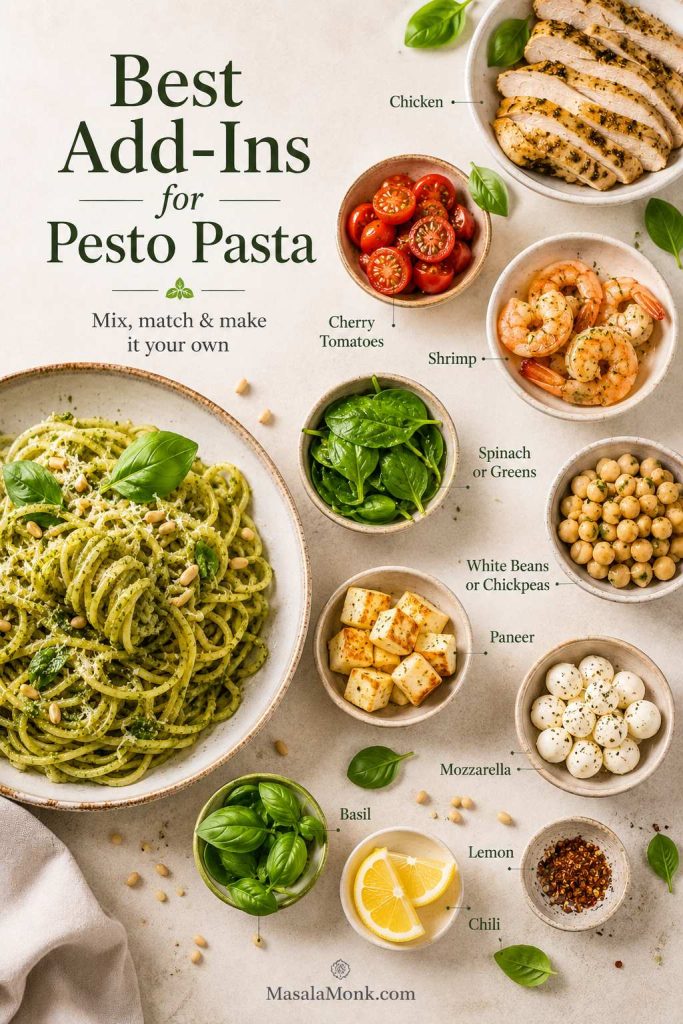
Usually, the dough is too tight or not rested enough. Instead of forcing it, let it sit covered for 10 to 20 minutes and try again. Afterward, it should stretch more easily into a sourdough pizza base without tearing.

7. What is the best flour for sourdough pizza dough?

Bread flour is a strong choice because it gives structure and makes shaping easier. Meanwhile, 00 flour can produce a tender, crisp sourdough pizza crust, especially in high-heat baking. Many bakers prefer a blend of both for a balanced result.

8. How do I get a crispy sourdough pizza crust at home?

To get a crispy sourdough pizza crust, preheat your oven longer, use a hot baking surface, and avoid overloading the pizza with sauce or toppings. In addition, a thinner stretch and a well-heated steel or stone help the base set quickly. As a result, the crust crisps before it dries out.

9. Why is my sourdough pizza base soft in the center?

A soft center usually means the dough did not get enough bottom heat or the toppings were too wet. For instance, too much sauce, fresh mozzarella, or watery vegetables can slow down browning. To improve it, preheat longer, use fewer wet toppings, and stretch the dough a little thinner.

10. What size should sourdough pizza dough balls be?

It depends on the pizza style you want. Smaller sourdough pizza dough balls make thinner, crisper pizzas, while larger dough balls create a thicker, chewier crust. As a general guide, medium dough balls work best when you want an easy-to-handle sourdough pizza recipe for a home oven.

11. Can I freeze sourdough pizza dough balls?

Yes, sourdough pizza dough balls freeze well and make future pizza nights much easier. Ideally, freeze them after fermentation, wrap them well, and thaw them in the fridge before using. Then let the dough rest at room temperature so the pizza base stretches without fighting back.

12. Can I freeze baked sourdough pizza?

Yes, baked sourdough pizza freezes well, especially if you cool the slices before storing. Later, reheat the slices in an oven, skillet, or air fryer to bring back some crispness in the crust. This way, leftover sourdough pizza still tastes good instead of turning chewy or dry.

13. Is sourdough pizza healthier than regular pizza?

Sourdough pizza can be easier for some people to digest because of the longer fermentation, and many people also prefer the flavor. Still, the overall nutrition depends on your flour, toppings, cheese, and portion size. In other words, sourdough improves the base, but the full pizza still depends on what you build on top.

14. What is the best hydration for sourdough pizza dough?

A moderate hydration is usually the easiest starting point for home bakers because it balances stretchability and control. Higher hydration can give a more open, airy crust, but it also makes shaping harder. Accordingly, if you are new to sourdough pizza dough, start in the middle and adjust after a few bakes.

15. Can I make a sourdough pizza base without a pizza stone or steel?

Absolutely. You can bake a sourdough pizza base on a preheated tray or pan and still get great results. Although a steel or stone helps with bottom heat, a hot oven and lighter toppings matter just as much. Therefore, don’t wait for perfect equipment before making your sourdough pizza recipe.

16. How do I keep the rim puffy on a sourdough pizza crust?
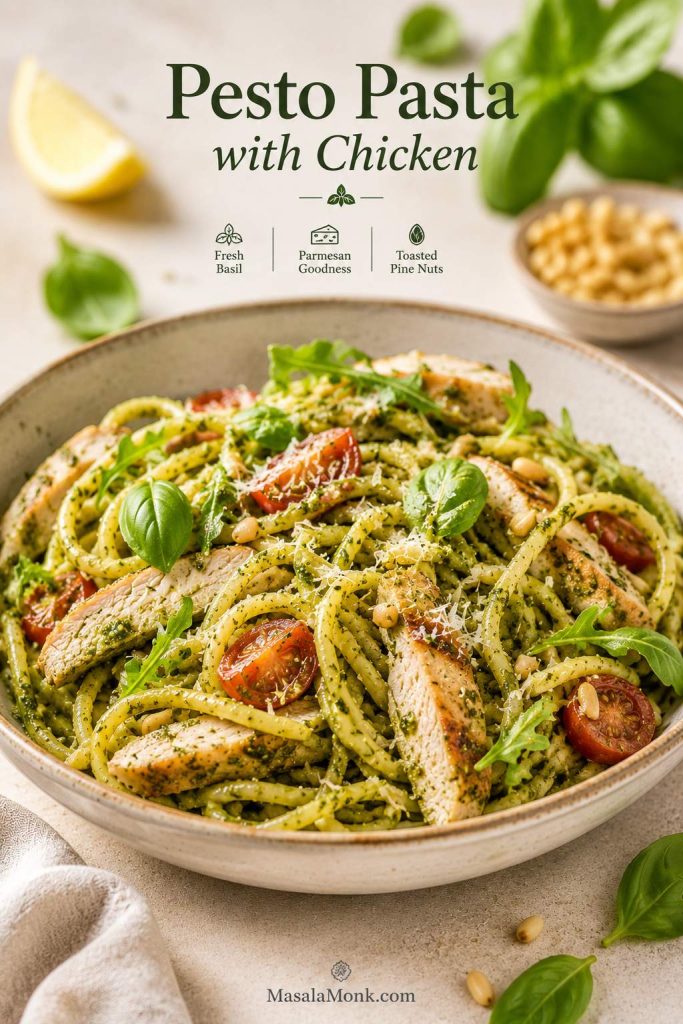
Leave a border when pressing the dough, and avoid flattening that edge with a rolling pin. Likewise, don’t overload the rim with sauce or cheese. Once baked, that untouched edge has room to puff and brown, which gives you a more attractive sourdough pizza crust.

17. Why does my sourdough pizza crust turn tough after reheating?
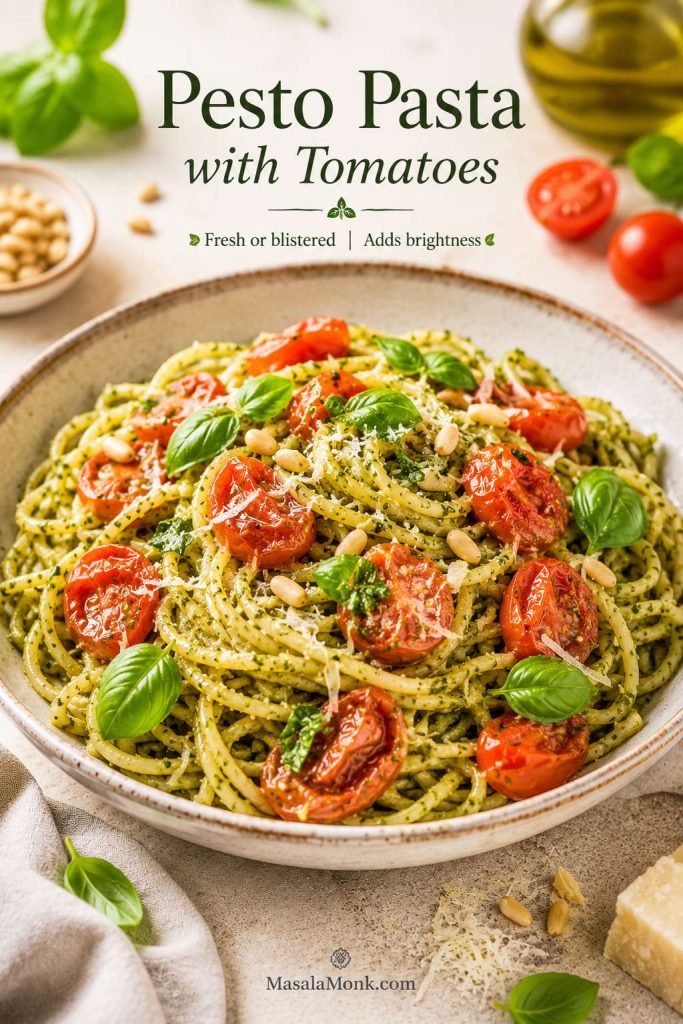
Usually, it is being reheated too long or at too high a heat without enough moisture control. Instead, warm it just until hot, then stop. A skillet method often works especially well because it re-crisps the bottom while keeping the rest of the slice from drying out.

18. Can I use this sourdough pizza dough recipe for thin crust and thick crust?

Yes, the same sourdough pizza dough recipe can produce both styles. The difference comes from dough ball size, shaping thickness, and bake method. For thin crust, stretch more and top lightly; for a thicker pizza base, use a larger dough ball and give it a little more structure during shaping.

Posted on 8 Comments

Chicken Pesto Pasta (Easy Base Recipe + Creamy, One-Pot, Baked & More)

Dark, luxe magazine-style cover showing chicken pesto pasta on a black plate with basil, parmesan, and pine nuts, with text overlay “Chicken Pesto Pasta” and “Easy base recipe + creamy, one-pot, baked & more,” plus MasalaMonk.com footer.

Some dinners earn a permanent spot in your rotation because they’re both effortless and deeply satisfying. Chicken pesto pasta is exactly that kind of meal. It’s bright without feeling “light,” comforting without being heavy, and flexible enough to match whatever’s in your fridge—mushrooms you need to use up, a handful of tomatoes getting soft, leftover grilled chicken, or a craving for something creamy and cozy.

Even better, once you understand one dependable base method, everything else becomes a variation you can steer with tiny choices. Want a weeknight sprint? Make the fast version with a quick sauté and a splash of starchy water. Prefer a richer plate? Turn it creamy with a gentle swirl of dairy (or a lighter trick that still feels lush). Need fewer dishes? A one-pan finish gives you the same restaurant-style gloss with less mess. Feeding a crowd? A baked version becomes a bubbling, golden pasta bake with almost no extra effort.

So instead of treating each version like a different recipe, this guide gives you one reliable foundation—then shows you how to pivot into the best version for the mood you’re in.


Chicken Pesto Pasta (Easy Base Recipe)

This is the anchor—the version you’ll make on repeat. Whether you’re using basil pesto from the store or pulling a jar of homemade pesto from the fridge, the method stays the same. Nail this once, and every other variation becomes a simple, confident detour rather than a whole new recipe.

If you want pesto that tastes vivid and fresh, homemade is worth it whenever you have ten minutes. MasalaMonk’s guide to classic basil pesto sauce plus easy variations is a handy starting point, especially when you want to change the personality of the sauce without changing dinner. If you’re aiming for a dairy-free approach, this fresh basil vegan pesto gives you a bold base that still feels lush.

And if you’re the kind of cook who likes understanding ingredients a little more deeply, it’s surprisingly useful to know what Parmesan brings to a dish beyond “salty cheese.” MasalaMonk’s Parmesan guide and varieties helps you pick the right style and use it well—especially when you’re finishing a sauce.

Four-step Chicken Pesto Pasta base method infographic showing: cook pasta and reserve pasta water, sear chicken until golden, toss pasta with pesto and pasta water until glossy, then finish with parmesan and basil; MasalaMonk.com footer.
Chicken pesto pasta, made simple: follow this 4-step base method (pasta water + pesto = glossy sauce) and you’ll be able to turn the same foundation into creamy, one-pot, baked, mushroom, or tomato variations without starting from scratch.

Base Recipe Card: Chicken Pesto Pasta (Serves 4)

Time: 25–35 minutes
Best for: weeknights, meal prep, “I want something comforting but not heavy” nights

Ingredients

  • 400 g pasta (penne, linguine, spaghetti, fettuccine—choose what you love)
  • 450–500 g chicken breast or chicken thighs, cut into bite-size pieces
  • 2–3 tablespoons olive oil
  • 3–4 garlic cloves, finely chopped (optional, but excellent)
  • ½ cup pesto, plus more to taste
  • ½ cup reserved pasta water, plus more as needed
  • ¼–½ cup grated Parmesan (optional, but helps everything cling)
  • Black pepper
  • Lemon wedge (optional, but often perfect)
  • Chili flakes (optional)
Chicken pesto pasta recipe card showing a bowl of pesto-coated penne with browned chicken, pesto ramekin, and lemon wedge, plus an ingredient list, step-by-step method, and pro tips for glossy sauce using reserved pasta water and low heat.
This Chicken Pesto Pasta “easy base recipe” card is your quick, no-scroll guide: ingredients, simple steps, and the three small moves that make it taste restaurant-level—brown the chicken, keep pesto on low heat, and use reserved pasta water to turn it glossy and clingy. Save it for busy nights, then scroll for creamy, one-pan, one-pot, baked, mushroom, and tomato variations.

The one move that changes everything

Keep pesto bright. It tastes best when it’s warmed gently, not cooked aggressively. In other words, pesto goes in at the end, on low heat.

How to cook chicken for pesto pasta (juicy, browned, not dry)

Start with a simple truth: if the chicken is dry, the whole bowl feels dry—no matter how good the pesto is. Fortunately, the fix is straightforward, and it’s more about timing than fancy technique.

Infographic titled “Juicy Chicken for Pesto Pasta” showing three steps to keep chicken tender: brown chicken in a single layer, cook in two batches if needed, and remove as soon as cooked before adding back at the end. Includes a do/don’t box about avoiding steaming or crowding the pan and a note to cook chicken to 165°F internal.
Dry chicken can make even great pesto pasta feel disappointing—this quick guide fixes it. Brown chicken in a single layer (so it sears instead of steaming), cook in batches if the pan feels crowded, and pull it as soon as it’s cooked through—then add it back only at the end so it stays juicy. Save this technique card for chicken pesto pasta, creamy versions, and pasta salad meal prep, and scroll the post for the full base recipe plus one-pan, one-pot, baked, mushroom, tomato, grilled, and BBQ variations.
  1. Pat the chicken dry. This sounds minor, yet it’s the difference between browning and steaming. Dry surface browns; wet surface turns pale and watery.
  2. Season lightly. Pesto is often salty, so go easy with salt at first. Add black pepper generously.
  3. Brown, don’t crowd. Heat a large skillet until it’s properly hot, then add olive oil. Spread the chicken in a single layer. If the pan looks crowded, cook in two batches. That small bit of patience pays off because you’ll get color, and color equals flavor.
  4. Pull it early rather than late. As soon as the pieces are cooked through, move them to a plate. They’ll get a gentle warm-up later, and that’s how they stay tender instead of turning tough.

For a clear safety reference, chicken should reach a safe internal temperature of 165°F / 74°C. If you like referring to an authoritative standard, the USDA’s Safe Minimum Internal Temperature Chart is the one many cooks rely on.

How to make chicken pesto pasta (base method)

  1. Cook the pasta. Bring a large pot of water to a boil and salt it well. Cook pasta until al dente. Before draining, scoop out ½ cup of pasta water and keep it nearby.
  2. Build flavor in the pan. While the pasta cooks, brown the chicken as described above. Once it’s done, remove it to a plate. If you’re using garlic, add it to the same pan for about 20–30 seconds—just until fragrant.
  3. Combine pasta + chicken. Add drained pasta to the skillet, followed by the chicken and any juices on the plate (those juices are flavor).
  4. Add pesto, then loosen with pasta water. Turn the heat low. Stir in pesto, then immediately add a splash of pasta water and toss. Keep adding small splashes as you toss until the sauce turns glossy and clings to every bite.
  5. Finish with Parmesan if using. Sprinkle in Parmesan and toss again. If it thickens too much, add another spoonful of pasta water.
  6. Taste and adjust. A squeeze of lemon can brighten everything if the pesto tastes heavy. Chili flakes wake up the bowl. Black pepper almost always helps.

That pasta-water step is not optional if you want the sauce to behave. It’s what keeps pesto chicken pasta from turning into oily noodles with green streaks. For those who enjoy technique writing, Serious Eats explains the logic beautifully in The Right Way to Sauce Pasta—and once you “get it,” you’ll use the same idea in countless dishes.

Side-by-side infographic showing pesto pasta sauce texture: left panel “oily/separated” pesto on noodles and right panel “glossy/clings” pesto coating pasta, with instruction to add pasta water 1–2 tablespoons at a time and toss on low heat; MasalaMonk.com footer.
If your chicken pesto pasta looks oily instead of silky, this is the fix: add reserved pasta water a tablespoon at a time and toss on low heat until the pesto turns glossy and clings to the noodles—no extra cream needed.
Step-by-step infographic showing how to make pesto coat pasta without turning oily: add pesto on low heat, splash in reserved pasta water while tossing, and stop when the sauce looks glossy and clings. Includes a simple do-and-don’t list, plus photos of pesto pasta in a pan and on a spoon.
If your pesto pasta ever turns into oily noodles with green streaks, this is the fix. Keep the heat low, stir pesto in gently, then add reserved pasta water splash-by-splash while you toss until the sauce turns glossy and clings to every bite. Use the quick “cling test” on a fork to know when to stop. Save this technique card—you’ll use it for chicken pesto pasta, creamy versions, and even pasta salad.

Simple swaps that keep it delicious

Even a “basic” pesto chicken pasta becomes more interesting when you know what swaps play nicely:

  • Chicken thighs stay tender and forgiving, which makes them ideal for quick pasta on busy nights.
  • A small spoon of butter added at the end can soften sharp edges if your pesto is very garlicky.
  • Extra Parmesan helps emulsify if your pesto is oily.
  • A squeeze of lemon balances rich pesto, especially when you turn it creamy.

Easy Chicken Pesto Pasta (Weeknight Fast)

There are nights when you want dinner to land quickly without losing its charm. This version is the fast route—minimal fuss, still full flavor, and it proves that “easy” doesn’t have to mean “meh.”

Recipe card for “Easy Chicken Pesto Pasta — Weeknight Fast (20–25 minutes)” showing a bowl of pesto penne topped with sliced chicken, plus a fast-version ingredients list, quick method steps (reserve pasta water, sear thin chicken, toss pesto on low heat until glossy), three speed moves, and a pro tip to toss with pasta water so the sauce clings instead of turning oily.
Need dinner fast without sacrificing flavor? This easy chicken pesto pasta recipe card is built for weeknights: thin-slice the chicken so it sears in minutes, cook penne or fusilli for reliable sauce cling, then finish everything in one skillet with pesto on low heat and a splash of reserved pasta water until glossy. The “3 speed moves” keep it effortless, but the real upgrade is the toss—so it tastes cohesive, not “assembled.” Save this for busy nights and scroll for creamy options, one-pan/one-pot methods, baked pasta, and the mushroom/tomato twists.

Recipe Card: Weeknight Fast Version (Serves 4)

Time: 20–25 minutes
Best for: busy nights, “I need dinner now,” last-minute guests

Do these three things to make it faster:

  • Slice chicken thinly so it cooks quickly.
  • Choose a pasta shape that cooks evenly and holds sauce well (penne, fusilli).
  • Skip extra add-ins and let pesto + pasta water do the heavy lifting.

Even then, don’t rush the finish. Tossing pasta and sauce together until glossy is what makes an easy bowl feel like something you’d happily serve to company—because it tastes cohesive, not “assembled.”


Creamy Chicken Pesto Pasta (Three Ways)

Some evenings are calling for something richer. The creamy version is still bright and herbal, yet it has that soft, comforting body that makes everyone go quiet after the first bite. Importantly, “creamy” doesn’t have to mean heavy—so you can choose your lane.

Creamy chicken pesto pasta infographic comparing 3 methods—heavy cream, cream cheese, and Greek yogurt—with amounts, when to add each one, and tips to prevent splitting, plus a bowl of pesto chicken pasta and “low heat, no boil” guidance.
Want creamy chicken pesto pasta without guesswork? This “3 ways” guide shows the exact amounts and timing for heavy cream (classic), cream cheese (stable), or Greek yogurt (lighter—stir in off heat). Keep the heat low, add dairy last, and use a splash of pasta water so the sauce turns silky instead of splitting. Save this for cozy nights, then scroll for one-pan, one-pot, baked, mushroom, and tomato variations.

Recipe Card: Creamy Chicken Pesto Pasta (Core Method)

Start with the base recipe. Once pasta and chicken are in the pan and pesto is added, choose one of these creamy paths:

1) Chicken pesto pasta with cream (classic)

  • Add ¼ cup heavy cream (or cooking cream).
  • Add a small splash of pasta water.
  • Toss gently over low heat for about a minute, just until silky.

Key point: Keep the heat gentle. Pesto tastes freshest when it isn’t cooked hard, and cream behaves best when it’s warmed rather than boiled.

2) Creamy without heavy cream (lighter but still lush)

If you want creamy texture without leaning hard on cream, these options work beautifully:

  • Greek yogurt (bright and light): Remove the pan from heat. Add a splash of pasta water first (so the pan cools slightly), then stir in 2–3 tablespoons yogurt until smooth.
  • Cream cheese (cozy and stable): Stir 1–2 tablespoons cream cheese into warm pasta water first, then toss it through. This is especially good with penne or “noodlier” shapes.
  • Milk + Parmesan (simple and classic): Add a small splash of milk, then use Parmesan as your thickener while you toss until glossy.

Each version still tastes unmistakably like pesto chicken pasta—just softer around the edges.

3) Chicken pesto Alfredo pasta (comfort-forward)

If you love the idea of pesto Alfredo, treat it as a direction rather than a separate universe. Use the creamy method above, then increase Parmesan slightly and finish with a tiny knob of butter. Suddenly you’re in the territory of pesto Alfredo without turning dinner into a long project.

If you want to explore creamy pasta beyond this dish, MasalaMonk’s Alfredo twists make a fun companion read—especially if you enjoy playing with flavors.


One Pan Chicken Pesto Pasta (Skillet Style)

One-pan pesto chicken pasta is the version you make when you want the “real” result with fewer steps and less cleanup. It’s not a totally different dish—it’s the same idea, just streamlined.

One-pan chicken pesto pasta recipe card showing a skillet of pesto-coated pasta with browned chicken, Parmesan, basil, pesto ramekin, and lemon wedge, plus an ingredient list, step-by-step skillet method, and pro tips to use reserved pasta water and keep pesto on low heat for a glossy sauce.
This one-pan chicken pesto pasta recipe card is the fastest way to get a glossy, restaurant-style bowl with minimal cleanup. Boil pasta al dente, brown the chicken (don’t crowd the pan), then toss everything together in the skillet with pesto on low heat and reserved pasta water splash-by-splash until it clings. Save this for busy nights—and scroll for the one-pot version, creamy options, baked pasta, and add-ins like mushrooms and tomatoes.

Recipe Card: One-Pan Finish (Serves 4)

How it works:

  • Boil pasta in a pot as usual (because it’s faster and more reliable).
  • Brown chicken in the skillet.
  • Add drained pasta directly to the chicken pan.
  • Stir in pesto on low heat, then finish with pasta water right there.

Because the skillet still holds those browned chicken bits, the flavor is deeper than you’d expect from such a simple method. Additionally, it’s the easiest way to control sauce texture because everything is already in one hot, wide surface where tossing is natural.


One Pot Chicken Pesto Pasta (Minimal Dishes, Big Reward)

One-pot pesto chicken pasta is a different style altogether. It’s not “pasta + sauce,” it’s a single-simmer approach where the cooking liquid turns into sauce. Done well, it tastes like a clever shortcut; done poorly, it can turn sticky. The good news? A few small rules keep it perfect.

One-pot chicken pesto pasta recipe card showing a wide pot of pesto-coated pasta with browned chicken, Parmesan, basil, and a pesto ramekin, plus ingredients, step-by-step one-pot simmer instructions, and pro tips to stir often, add pesto at the end on low heat, and loosen the sauce with a splash of water if needed.
This one-pot chicken pesto pasta recipe card is for nights when you want big flavor with minimal dishes. Brown the chicken, simmer pasta in just enough water or light stock until it turns saucy, then add pesto at the end on low heat so it stays bright. Stir often, stop at al dente, and loosen with a splash of water if the sauce tightens. Save this for weeknights—and scroll for creamy options, baked pesto pasta, mushroom and tomato add-ins, plus storage and reheating tips.

Recipe Card: One-Pot Method (Serves 4)

  1. Brown chicken in a wide pot or deep skillet. Remove it if you want more control, or leave it in for maximum convenience.
  2. Add garlic (optional) for 20–30 seconds.
  3. Add pasta and enough water (or light stock) to just cover.
  4. Simmer, stirring often, until pasta is al dente and the liquid is reduced.
  5. Turn heat down low, then stir pesto in at the end.
  6. Loosen with a splash of water until glossy.
  7. Add chicken back (if removed), then finish with Parmesan if you like.

Why it works: The starch that normally goes down the drain stays in the pot, which helps everything cling.

Top-down one-pot chicken pesto pasta infographic showing a pot of pesto pasta with chicken and basil, with callouts for liquid ratio (about 3 cups broth or water per 8 oz pasta), adding chicken early, stirring pesto in at the end on low heat, and finishing with pasta water plus parmesan; MasalaMonk.com footer.
One-pot chicken pesto pasta made foolproof: follow this simple ratio and timing—add chicken early, stir pesto in at the end on low heat, and finish with a splash of pasta water plus parmesan for a glossy sauce that coats every noodle.

One-pot creamy pesto chicken pasta

Once pesto is stirred in, add one of these:

  • 2–4 tablespoons cream, or
  • a spoon of cream cheese, or
  • Greek yogurt off heat (with a splash of water first)

Then toss until silky. That’s how the one-pot creamy version becomes something you’ll crave—not just a shortcut.


Chicken Pesto Pasta with Mushrooms (Deep, Savory, Balanced)

Mushrooms are the easiest way to make this pasta taste more “restaurant” without making it complicated. They add depth and make the pesto feel rounder, almost like the dish has been simmering longer than it has.

Chicken pesto pasta with mushrooms recipe card showing a skillet of pesto-coated penne with browned chicken, sautéed mushrooms, Parmesan, and basil, plus an ingredient list, step-by-step method, and pro tips to brown mushrooms in a single layer, avoid stirring early, and season after browning.
This chicken pesto pasta with mushrooms recipe card is the “restaurant-depth” upgrade—without extra work. The key is browning mushrooms in a single layer first (don’t stir early), then tossing everything with pesto on low heat and a splash of reserved pasta water so the sauce clings instead of turning oily. Save this for cozy weeknights, then scroll for the tomato version, grilled chicken option, pasta bake, creamy variations, and the one-pan/one-pot methods.

Recipe Card: Mushroom Add-In (Serves 4)

The essential rule: Don’t steam mushrooms. Brown them.

  • Heat the pan properly.
  • Add mushrooms and let them sit until they pick up color.
  • Only then stir. Once they’re browned, they taste nutty and savory rather than watery.

From there, the flow stays familiar:

  • Brown chicken (or brown it first and set aside).
  • Cook pasta.
  • Toss together with pesto and pasta water.

If you want a cozier bowl, this version transforms beautifully into a creamy mushroom pesto chicken pasta with a small splash of cream—no separate recipe required.


Chicken Tomato Pesto Pasta (Bright and Slightly Jammy)

Tomato and pesto can be magic together if you keep the balance right. Tomatoes bring sweetness and acidity, pesto brings richness and salt. When the two meet in the pan, you get a sauce that feels bright, not heavy.

Chicken tomato pesto pasta recipe card showing a bowl of pesto-coated penne with browned chicken and blistered cherry tomatoes, plus a clear ingredient list, step-by-step instructions, and pro tips to blister tomatoes until they burst, add pesto at the end on low heat, and balance the sauce with lemon or Parmesan.
This chicken tomato pesto pasta recipe card is the bright, slightly jammy twist that makes pesto feel lighter and fresher. Blister cherry tomatoes until they burst, brown the chicken, then toss everything with pesto on low heat and reserved pasta water so the sauce turns glossy and clings. If the flavor needs balance, lemon brightens while Parmesan rounds it out. Save this for weeknights—then scroll for creamy options, one-pan and one-pot methods, the baked pesto pasta version, and the mushroom variation.

Recipe Card: Tomato Options

Option 1: Blistered cherry tomatoes (best flavor, easiest)
After browning the chicken, add cherry tomatoes to the same pan. Let them blister until they burst and soften. Then add pasta, pesto (on low heat), and pasta water.

Option 2: A little canned tomato (use as an accent)
If you’re using canned, think “accent,” not “marinara.” A few spoonfuls of crushed tomato simmered briefly is enough. Then turn the heat low before adding pesto so basil stays bright.

Balancing tomato + pesto

  • If it tastes flat, lemon helps.
  • If it tastes too sharp, Parmesan rounds it out.
  • If it tastes too salty, more pasta water (and an extra handful of pasta or veg) fixes it quickly.

If you’d like another dinner idea that leans into the same flavor family, MasalaMonk’s tortellini cooking guide includes a pesto direction with tomatoes that adapts easily to this style.


Grilled Chicken Pesto Pasta (Smoky, Fast, Summery)

When grilling is already happening—or you have leftover grilled chicken—this becomes one of the best “second dinners” you can make. It tastes like you planned it, even if it was born from leftovers.

Grilled chicken pesto pasta recipe card showing a bowl of pesto-coated linguine topped with sliced grilled chicken, basil, and Parmesan, with a pesto ramekin and lemon wedges beside it. The card includes ingredients, quick steps to warm leftover grilled chicken gently, toss pesto with reserved pasta water on low heat until glossy, and pro tips to avoid overcooking the chicken.
This grilled chicken pesto pasta recipe card is the perfect “second dinner” when you already have leftover grilled chicken. Cook pasta al dente, warm the chicken gently (don’t re-grill it), then toss everything with pesto on low heat and reserved pasta water until the sauce turns glossy and clings. Finish with lemon, black pepper, and fresh Parmesan for a bright, smoky bowl that tastes like summer—even on a weeknight. Save this for busy nights, then scroll for creamy options, one-pan/one-pot methods, the baked pasta version, plus mushroom and tomato twists.

Recipe Card: Leftover Grilled Chicken Version

  • Cook pasta.
  • Make the sauce in the skillet with pesto + pasta water on low heat.
  • Add sliced grilled chicken at the end and warm it gently.

Because grilled chicken already has smoke and char, keep the rest simple: lemon, black pepper, and a glossy toss. The result tastes like summer even on a random Tuesday.


BBQ Chicken Pesto Pasta (Sweet-Smoky Twist)

BBQ chicken pesto pasta sounds unusual until you remember that pesto loves sweet tomato notes and smoky flavors. The trick is keeping barbecue as a supporting actor—more glaze than sauce—so the pesto still tastes like pesto.

BBQ chicken pesto pasta recipe card showing a bowl of pesto-coated noodles topped with BBQ-glazed chicken, basil, Parmesan, a pesto ramekin, and lemon wedges. The card lists ingredients, 4 quick steps, and pro tips to use only 1–2 tablespoons BBQ sauce, add pesto at the end on low heat, and use reserved pasta water for a glossy sauce.
This BBQ chicken pesto pasta recipe card is a sweet-smoky twist that still tastes like pesto—not barbecue pasta. The trick is restraint: coat the chicken with just 1–2 tablespoons BBQ sauce, then toss everything with pesto on low heat and reserved pasta water until glossy. Finish with lemon, black pepper, and Parmesan to keep the bowl bright and balanced. Save this for weeknights when you want something different, then scroll for the base recipe, creamy options, one-pan and one-pot methods, the baked pesto pasta version, plus mushroom, tomato, grilled, and pasta-salad variations.

Recipe Card: BBQ Twist (Serves 4)

  • Toss cooked chicken lightly with 1–2 tablespoons barbecue sauce.
  • Add it to pasta and pesto at the end.
  • Use pasta water to keep everything cohesive and glossy.

The result is a sweet-smoky bowl that’s surprisingly addictive, especially with penne or fusilli.


Baked Chicken Pesto Pasta (Pasta Bake)

When you want a dish that feels generous—something you can spoon into bowls and watch people go back for seconds—baked chicken pesto pasta delivers. It’s also one of the easiest ways to make dinner feel like an event without extra work.

Baked chicken pesto pasta recipe card showing a white baking dish of pesto pasta with browned chicken, melted cheese, Parmesan, and basil, plus ingredients, oven temperature, bake time, step-by-step instructions, and “moisture insurance” tips to keep the pasta bake juicy and saucy.
This baked chicken pesto pasta recipe card is your no-fail pasta bake guide: keep the pasta slightly underdone, mix in enough sauce so it stays juicy, then bake until bubbly and lightly golden. The “moisture insurance” tips (cover first, don’t overbake, stir in a spoon of pesto after baking) make the top taste fresh instead of dull. Save this for cozy dinners, then scroll for the base method, creamy options, one-pan and one-pot versions, plus mushroom and tomato variations.

Recipe Card: Baked Pesto Chicken Pasta (Serves 6–8)

Time: 40–55 minutes
Oven: 200°C / 400°F

  1. Make the base chicken pesto pasta, but keep it slightly saucier than usual. That means extra pasta water and, if you like, a small splash of cream.
  2. Stir in cheese: mozzarella for melt, Parmesan for flavor.
  3. Transfer to a baking dish.
  4. Bake until bubbling and lightly golden.

Because pesto can lose its brightness under high heat, reserve a tablespoon of pesto and stir it in right after baking. That simple move makes the whole dish taste fresher instantly.

If you want extra baked-pasta technique—make-ahead tricks, moisture management, and how to keep a bake from turning dry—MasalaMonk’s baked ziti variations are a surprisingly relevant reference even when you’re not making ziti.


Best Pasta Shapes for Chicken Pesto Pasta

Pasta shape isn’t just aesthetics. It changes how sauce clings, how bites feel, and whether the dish reads “light and glossy” or “thick and cozy.” Once you notice this, you start choosing shapes with intention.

Infographic titled “Best Pasta Shapes for Chicken Pesto Pasta” showing six options—penne, fusilli, linguine, spaghetti, fettuccine, and angel hair—with notes on which is best for weeknights, creamy sauce, baked pasta, or one-pot methods, plus quick tips for sauce cling and using extra pasta water.
Not all pasta shapes behave the same with pesto. This cheat sheet shows the best pasta for chicken pesto pasta—whether you want a glossy one-pan bowl, a true one-pot method, or a creamier, cozier finish. Penne and fusilli grab sauce, linguine and spaghetti feel sleek, fettuccine shines in creamy versions, and angel hair needs extra pasta water to avoid clumping. Save this for later, then scroll for the base recipe card, creamy options, one-pan and one-pot methods, baked pasta, and add-ins like mushrooms and tomatoes.

Penne (weeknight MVP)

Penne holds pesto in the tubes, which makes it ideal for pesto penne chicken pasta. It also holds up well to baking, so if you’re making a pasta bake, penne is a safe bet.

Linguine (silky and polished)

Linguine makes the sauce feel sleek. It’s especially good when you’re chasing that glossy finish and want the pesto to coat each strand evenly.

Spaghetti (simple and fast)

Spaghetti shines when you keep it clean—pesto, chicken, pasta water, Parmesan. It’s also a great “starter” shape because it shows off the base method without distractions.

Fettuccine (best for creamy)

Fettuccine is at its best when the sauce is slightly thicker. That’s why it feels so satisfying in creamy versions.

Angel hair (quick cook notes)

Angel hair cooks quickly, which makes it tempting on busy nights. However, it clumps if you don’t toss immediately with enough pasta water. Go generous with water and keep tossing until glossy.


Chicken Pesto Noodles (When You Want Comfort in a Bowl)

Sometimes you’re not craving “pasta” in the classic sense—you’re craving noodles and sauce. Chicken pesto noodles are perfect for that, especially with egg noodles or a thinner pasta shape.

Recipe card for “Chicken Pesto Noodles — Comfort Bowl (cozy, not heavy)” showing a bowl of pesto-coated egg noodles topped with sliced chicken, basil, Parmesan, and lemon wedges, plus ingredients and quick steps to warm chicken gently, add pesto on low heat, and splash hot water or reserved pasta water until the noodles turn silky, then finish with lemon and black pepper.
Craving comfort without the heaviness? This chicken pesto noodles recipe card keeps it cozy and bright: start with egg noodles (or thin pasta), use a little less pesto, and loosen everything with hot water (or reserved pasta water) until silky. Warm the chicken gently, keep the heat low once pesto goes in, then finish with lemon + black pepper (and Parmesan if you want). Save this for quick dinners and scroll the post for the weeknight-fast pasta card, creamy options, one-pan/one-pot methods, baked pasta, plus mushroom and tomato twists.

Recipe Card: Noodle-Style Bowl

To keep it from feeling heavy:

  • Use a little less pesto than usual.
  • Add extra hot water (or reserved pasta water if you’re using pasta).
  • Finish with lemon and pepper.

That combination makes the bowl feel bright again, even when the noodles are cozy.


Basil Pasta Chicken (A Fresh Finish That Changes Everything)

Even if your pesto is basil-based, an extra handful of basil at the end can make the dish smell brand-new. This isn’t a different recipe; it’s the same pasta, simply finished with fresh basil ribbons and, if you like, a tiny drizzle of olive oil.

It’s a small flourish, yet it makes the bowl feel intentional—like you planned it, even if you didn’t.


Healthy Chicken Pesto Pasta (Without Losing What Makes It Great)

“Healthy” is easiest to sustain when it still tastes indulgent. Fortunately, you can make this dish lighter and more balanced without stripping away what makes it comforting.

Healthy chicken pesto pasta bowl builder infographic showing a pesto chicken pasta bowl with zucchini and spinach, plus a “Build Your Bowl” plate formula (½ veggies, ¼ pasta, ¼ chicken), a list of best vegetable add-ins (asparagus, spinach, zucchini, broccoli, peppers), higher-protein pasta swaps (lentil, chickpea), and a flavor finish tip (lemon, black pepper, optional Parmesan) with a pasta-water pro tip.
Want healthy chicken pesto pasta that still tastes satisfying? Use this bowl-builder: fill half your bowl with veggies, then add pasta and chicken for balance. The quick add-ins (asparagus, spinach, zucchini, broccoli, peppers) boost volume without dulling pesto, while lentil or chickpea pasta adds extra protein and fiber. Finish with lemon + black pepper (and a little Parmesan if you want), then use reserved pasta water to keep the pesto glossy—not oily. Save this for meal-prep nights and scroll the post for the base recipe, creamy options, one-pan/one-pot methods, baked pasta, and mushroom/tomato twists.

Healthy upgrades that actually stick

  • Add vegetables for volume: asparagus, spinach, zucchini, peppers, broccoli.
  • Choose chicken breast if you want leaner protein, but cook it carefully so it stays tender.
  • Use pesto confidently, then stretch it with pasta water and brightness (lemon, pepper).
  • Finish with a smaller amount of Parmesan rather than removing it entirely—flavor helps you stay satisfied.

If you want a simple portion strategy that still feels generous, build the bowl like this: half vegetables, a quarter pasta, a quarter chicken—then sauce everything with pesto + pasta water so it tastes cohesive.

Asparagus (easy add-in)

Asparagus is made for pesto. Add chopped asparagus to boiling pasta water during the last 2–3 minutes. Drain, then toss into the base recipe. The asparagus stays vibrant, and the bowl feels lighter without feeling “diet.”

Higher-protein pasta swaps

If you want extra protein and fiber, lentil pasta is a strong option. MasalaMonk’s lentil pasta guide goes deeper into how it behaves and what to pair it with, which is helpful when you’re experimenting.


The Small Moves That Make This Pasta Outstanding

A great pasta dish isn’t about complicated ingredients. It’s about a few small moves that keep everything balanced, especially when pesto is involved.

Infographic titled “The Small Moves That Make Pesto Pasta Outstanding” with three technique panels: keep pesto bright by adding it at the end on low heat, make the sauce cling by using reserved pasta water splash-by-splash until glossy, and balance salt and richness by tasting late and adjusting with lemon, Parmesan, or more water and vegetables. Includes a quick fixes strip at the bottom and MasalaMonk.com.
These are the small moves that make chicken pesto pasta taste restaurant-level. Add pesto at the end and keep the heat low so it stays bright. Use reserved pasta water splash-by-splash while tossing until the sauce turns glossy and clings (not oily). Then taste late—pesto is salty—and balance fast with lemon for freshness, Parmesan for roundness, or a little more water + veg if it’s too salty. Save this technique card for every pesto pasta you make, then scroll the post for the fast, creamy, one-pan, one-pot, baked, mushroom, tomato, grilled, BBQ, and pasta-salad versions.

Keep pesto bright

Pesto tastes best when it’s warmed gently rather than cooked hard. So, whether you’re making a clean spaghetti version or a creamy bowl, stir in pesto at the end and keep the heat low.

Make the sauce cling

Pasta water isn’t a garnish—it’s structure. Add it gradually while tossing until the pesto becomes a silky coating. That’s how the sauce goes from “thin” to “glossy.”

Balance salt and richness

Because pesto can be salty, taste late and adjust carefully. If it’s too salty, loosen with water and add a handful of vegetables. If it feels heavy, lemon fixes it fast. And if it tastes sharp, Parmesan softens it.


Chicken Pesto Pasta Salad (A Cold Version That Actually Works)

Even though this post focuses on hot versions, chicken pesto pasta salad deserves a spot because it’s one of the smartest ways to turn leftovers into tomorrow’s lunch. Better still, it’s genuinely delicious when you build it the right way.

Chicken pesto pasta salad recipe card showing a bowl of cold pesto pasta with grilled chicken pieces, cucumber, cherry tomatoes, basil, Parmesan shavings, a pesto ramekin, and lemon wedges, plus ingredients, step-by-step instructions to rinse pasta and toss with pesto first, and meal-prep tips like using crunchy vegetables and adding Parmesan only when serving.
This chicken pesto pasta salad recipe card is the meal-prep version that actually stays good. Rinse and drain the pasta, toss it with pesto first, then add chicken and crunchy veg like cucumber, bell pepper, and celery so the salad stays fresh—not soggy. Chill for the best flavor, then finish with lemon, black pepper, and Parmesan right before serving (it keeps the texture better). Save this for quick lunches, and scroll the post for the hot base recipe, creamy options, one-pan and one-pot methods, the baked pasta version, plus mushroom and tomato twists.

Recipe Card: Pesto Pasta Salad with Chicken

  • Cook pasta, then rinse briefly under cool water and drain well.
  • Toss pasta with pesto first, then add chicken.
  • Add crunchy vegetables like cucumber, bell pepper, or celery.
  • Finish with lemon and pepper.
  • Add Parmesan right before serving.

Because cold pasta absorbs sauce, you’ll often want a little extra pesto or a drizzle of olive oil plus lemon to keep it lively.

If you plan to meal prep, it’s useful to keep safe storage windows in mind. FoodSafety.gov’s Cold Food Storage Charts is a strong reference, especially when you’re storing mixed dishes.


Storage and Reheating (So It Still Tastes Like Pesto)

Chicken pesto pasta tends to thicken in the fridge. The good news is the fix is easy, and you can bring back the glossy texture without turning the chicken rubbery.

Infographic titled “How to Store & Reheat Chicken Pesto Pasta (So It Stays Glossy)” showing storage steps, fridge time (3–4 days), the best skillet reheat method with added water or milk for creamy versions, quick fixes for dry or oily sauce, and do/don’t tips like avoiding boiling pesto and microwaving on high.
Leftover chicken pesto pasta doesn’t have to taste dry or clumpy. This quick guide shows how to store it properly, then reheat it in a skillet with a splash of water (or milk if creamy) until the sauce turns glossy again. Use the “fix it fast” tips if it looks oily, tastes flat, or starts to split—then finish with lemon and black pepper (or a tiny spoon of pesto) to bring everything back to life. Save this for meal prep nights, and scroll for the base recipe, creamy options, one-pan/one-pot methods, baked pasta, and mushroom/tomato variations.

How to reheat without ruining it

  • Reheat gently in a skillet (low to medium-low).
  • Add a splash of water (or milk if it’s creamy).
  • Toss until glossy again.
  • If it tastes muted, add a tiny spoon of pesto or a squeeze of lemon at the end.

For general leftovers safety guidance, the USDA’s Leftovers and Food Safety page is a trustworthy reference worth bookmarking.


Pesto Storage (If You Make It in Batches)

If you start making pesto at home, you’ll quickly realize the real joy is batch-making and freezing portions. When pesto is ready in the freezer, dinner becomes a toss-and-go situation.

Step-by-step infographic titled “Pesto Storage: Freeze in Cubes” showing pesto spooned into an ice cube tray, frozen until solid, popped into a container, and added to hot pasta. Includes a pro tip that a thin layer of olive oil on top can help protect pesto color, and the footer MasalaMonk.com.
Make pesto once, then make weeknight chicken pesto pasta in minutes. This “freeze pesto in cubes” guide shows the easiest method: spoon pesto into an ice tray, freeze until solid, then store cubes in a container so you can grab 1–2 cubes per serving anytime. It’s the simplest way to keep pesto tasting fresh without wasting basil, and the optional olive-oil tip helps protect color. Save this for meal prep—then use those cubes for the base chicken pesto pasta recipe, creamy versions, one-pan/one-pot methods, pasta salad, and more.

For specific guidance on freezing pesto safely, the National Center for Home Food Preservation’s page on freezing pesto is excellent—especially if you like freezing pesto in cubes, then transferring them to a container once solid.


A Few Delicious Next Steps (If You Want More Ideas)

If you’re in a pesto mood and want to keep the momentum going:


Closing thought

Chicken pesto pasta is the kind of recipe that rewards you every time you make it. Once you’ve cooked it a couple of ways—maybe the fast version on a rushed weeknight, the creamy version on a cozy evening, and a baked one when friends come over—you’ll notice something: it stops being “a recipe” and becomes a flexible dinner you can steer on instinct.

So start with the base. Then pick a direction. A handful of mushrooms, a few tomatoes, a splash of cream, or a one-pot shortcut can take you somewhere new—while still tasting unmistakably like pesto, chicken, and comfort in a bowl.

Closing summary infographic titled “Closing Thought: Make It Once, Then Make It Yours” showing a bowl of chicken pesto pasta and a “pick a direction” grid with six variations: Weeknight Fast, Creamy & Cozy, One-Pan Skillet, One-Pot Shortcut, Mushrooms (Savory Depth), and Tomatoes (Bright & Jammy). Includes a closing line about choosing mushrooms, tomatoes, a splash of cream, or a one-pot shortcut, with MasalaMonk.com at the bottom.
Chicken pesto pasta is the kind of dinner that gets better the more you make it—because once you learn the base, you can steer it on instinct. Use this “choose your path” guide to match the mood: go Weeknight Fast, turn it Creamy & Cozy, keep it One-Pan Skillet, simplify with a One-Pot Shortcut, or pivot into Mushrooms for savory depth or Tomatoes for a bright, jammy finish. Save this as your quick decision map, then scroll the post for the full base method and every variation in detail.

Chicken Pesto Pasta FAQs

1) How do I keep chicken juicy?

Pat it dry, cook it in a hot pan without crowding, and pull it as soon as it’s cooked through. Then add it back at the end so it warms up without overcooking.

2) What’s the best way to cook chicken breast so it doesn’t dry out?

Slice it thinner (or butterfly it), then cook quickly over medium-high heat. Because breast cooks fast, pulling it a minute early and letting carryover heat finish it prevents dryness.

3) Why does my pesto sauce look oily instead of coating the pasta?

This usually happens when there isn’t enough starchy water in the pan. Add reserved pasta water a splash at a time while tossing until the sauce turns glossy and clings. Also, keep the heat gentle once pesto goes in.

4) Which pasta shapes work best here?

Penne and fusilli grab sauce easily and hold up well to mix-ins. Linguine and spaghetti give a silkier feel. If you’re making a creamier version, fettuccine is especially satisfying.

5) How can I make this in under 25 minutes?

Use a fast-cooking pasta, cut chicken smaller, and cook both at the same time. Once the pasta drains, toss everything with pesto and a splash of reserved water right in the skillet for a quick finish.

6) Can I make a creamy version without heavy cream?

Yes. Stir in Greek yogurt off heat (with a splash of water first), add a spoon of cream cheese melted with pasta water, or use a small splash of milk plus Parmesan for body.

7) How do I keep a creamy sauce from splitting?

Lower the heat before adding dairy and avoid boiling once it’s in the pan. If using yogurt, add it off heat. If it starts to look grainy, add a little more pasta water and toss gently to bring it back together.

8) What’s the difference between one-pan and one-pot versions?

One-pan usually means pasta is boiled separately, then tossed in a skillet with chicken and pesto. One-pot means pasta simmers in the same pot as the chicken so the cooking liquid becomes part of the sauce.

9) How do I avoid gummy pasta in the one-pot method?

Stir often, keep enough liquid so the pasta can move freely, and stop cooking as soon as it reaches al dente. Then add pesto at the end and loosen with a splash of water if needed.

10) How do I cook mushrooms so they don’t turn watery?

Start with a hot pan, spread mushrooms out, and let them brown before stirring. Once they’ve released moisture and picked up color, they’ll taste deeper and won’t dilute the sauce.

11) What’s the easiest way to add tomatoes without making it too acidic?

Blister cherry tomatoes until they burst for natural sweetness. If using canned tomatoes, keep the amount small and simmer briefly before adding pesto at the end on low heat.

12) Can I turn it into a baked pasta dish?

Absolutely. Make the skillet version slightly saucier, mix in cheese, then bake until bubbling and lightly golden. For extra freshness, stir in a spoon of pesto right after baking.

13) How do I keep a pasta bake from drying out?

Add extra pasta water before baking and include enough cheese or a small splash of cream. If your oven runs hot, cover for part of the bake time, then uncover briefly to brown.

14) Can I use leftover grilled chicken?

Definitely. Slice it and warm it gently at the end. Since it’s already cooked, it only needs a brief heat-through to stay tender.

15) Does a BBQ twist work with pesto?

It can, as long as you use barbecue sauce lightly. Think of it as a glaze on the chicken, then combine with pesto and pasta water so the flavors stay balanced.

16) How do I store and reheat leftovers so it still tastes fresh?

Store in a sealed container in the fridge. Reheat gently with a splash of water (or milk for creamy versions), then finish with black pepper and a squeeze of lemon if it tastes muted.

17) Why does pesto sometimes taste bitter?

Bitterness can come from old basil, too much raw garlic, or overheating. Add pesto on low heat and avoid boiling it. If it still tastes sharp, Parmesan and a touch of lemon balance it quickly.

18) What should I serve on the side?

Go simple: a crisp salad, roasted vegetables, sautéed greens, or garlic bread. If your pasta is creamy, something bright and lemony on the side pairs especially well.

Posted on 8 Comments

Baked Ziti Recipe Collection: 15 Easy Variations

Cover image of 15 baked ziti variations with a cheesy fork-lift, labeled easy, no-boil, and vegetarian.

A good baked ziti recipe is one of those rare dinners that feels like it belongs everywhere at once. It can be a relaxed weeknight ziti meal, a “feed the whole table” Sunday ziti dish, or the dependable tray you bring to a potluck when you don’t want to overthink it. Better still, the same basic method can flex in a dozen directions—extra cheesy, no ricotta, vegetarian, sausage-studded, slow cooker, gluten-free—without losing what makes baked pasta so comforting in the first place.

So this is a reader-first collection: one reliable classic baked ziti recipe, followed by clearly labeled recipe cards for versions you might look for on different nights. Along the way, you’ll also see natural pairings (drinks and lighter sides) that make the whole spread feel complete rather than heavy.


Ziti pasta, explained (and the best swaps)

Ziti pasta is a short, smooth tube—built for sauce, built for cheese, built for baking. It’s often linked to celebrations: Barilla notes that “zita” can mean “bride,” and that ziti has traditionally been served at weddings as “the bride’s pasta.” If you enjoy those little stories that make a dish feel rooted, it’s a lovely detail to know while you cook. You can read that background directly on Barilla’s ziti page: Barilla Ziti.

On the practical side, the best part is this: you don’t need perfect ziti to make baked ziti. In fact, the wider point of a baked pasta is resilience. If the shop only has rigatoni or penne, you can still get that same saucy-cheesy structure.

De Cecco’s pasta notes are helpful for substitution thinking because they describe which shapes suit oven-baked recipes and “dense, colourful sauces.” Their Zita page even calls out baked dishes specifically: De Cecco Zita n° 18. That’s exactly the kind of sauce-and-shape compatibility you want when you’re building a pasta bake that won’t dry out.

Easy swap guide:

  • Best swap for ziti: rigatoni (sturdy, lots of surface)
  • Next best: penne (especially penne rigate)
  • If you want it smoother: zita / mezza zita
  • If you’re using gluten-free pasta: choose a thicker tube shape and undercook slightly before baking (more on that later)
Ziti pasta swaps infographic showing rigatoni, penne, and zita as the best pasta shapes for baked ziti, with a gluten-free tip to choose thicker tubes.
Can’t find ziti pasta? Use rigatoni for the sturdiest baked ziti, penne as the easy everyday swap, or zita for a smooth tube—plus a simple gluten-free baked ziti tip: choose thicker pasta shapes so they stay firm after baking.

Also Read: Manhattan Cocktail Recipe (Classic + 6 Variations)


The master baked ziti method (why it works)

Before we jump into all the fun variations, it helps to understand what makes a baked ziti recipe succeed. Baked ziti is basically three things repeated in layers:

  1. Pasta that’s slightly underdone so it finishes in the oven
  2. Sauce that’s a little looser than you’d use for stovetop pasta
  3. Cheese in two roles: creamy “binder” (ricotta, cottage cheese, béchamel, etc.) and melty “top” (mozzarella + parm)

Once you internalize that, you can make almost any baked pasta feel balanced.

Master baked ziti method infographic showing the layering order—pasta, sauce, and cheese (repeat)—with tips to undercook pasta, loosen sauce, and bake until bubbly.
Use this master baked ziti method every time: slightly undercook the pasta, keep the sauce a little looser, then layer pasta + sauce + cheese (repeat) for a baked ziti recipe that stays saucy, creamy, and bubbly—not dry.

If you prefer a brighter, fresher sauce rather than a purely jarred flavor, a homemade base can lift the entire pan. This MasalaMonk guide walks through a food-mill method and a no–food mill option: Tomato Sauce From Fresh Tomatoes. It’s an easy way to make the sauce taste “alive” without turning dinner into a project.

On nights you want a creamier, more lasagna-like vibe, a white sauce layer can do the job too. MasalaMonk’s béchamel guide covers classic and vegan versions (and helps you avoid lumps): Béchamel Sauce for Lasagna.


Classic baked ziti recipe (the base you can build on)

This is the dependable classic baked ziti recipe. Every variation below either uses this exactly or swaps a few ingredients while keeping the same structure.

Classic baked ziti recipe in a casserole dish with marinara, ricotta, and melted mozzarella, labeled serves 6–8 and 45 minutes.
Save this classic baked ziti recipe card as your base method—once you nail this tray, every variation below (easy, no-boil, vegetarian, sausage, slow cooker, gluten-free, and more) becomes a simple swap.

Ingredients (serves 6–8)

  • 450 g (1 lb) ziti pasta (or rigatoni/penne)
  • 2 tbsp olive oil
  • 4–5 cloves garlic, minced
  • 1 small onion, finely chopped (optional)
  • 700–800 g marinara sauce (about 3 cups), plus a splash of water if it’s very thick
  • 250 g ricotta (about 1 cup)
  • 200 g mozzarella, shredded (about 2 cups), divided
  • 50 g parmesan, grated (about 1/2 cup)
  • 1 tsp dried oregano (or Italian seasoning)
  • Salt and black pepper
  • Basil or parsley for serving (optional)

Method

  1. Heat the oven to 190°C / 375°F. Lightly oil a baking dish.
  2. Cook the pasta in well-salted water until just shy of al dente (1–2 minutes less than the package suggests). Drain.
  3. Make the sauce base: warm olive oil, sauté onion until soft (if using), then add garlic for 30–45 seconds. Pour in marinara, add oregano, and let it simmer 5 minutes. If the sauce looks very thick, loosen with a splash of water.
  4. Combine: toss the drained pasta with most of the sauce.
  5. Layer: spread a thin layer of sauce in the dish. Add half the pasta. Dollop ricotta across the surface. Sprinkle with some mozzarella. Add the remaining pasta, spoon the remaining sauce on top, then finish with mozzarella and parmesan.
  6. Bake 25–30 minutes until bubbling at the edges and the top looks glossy. If you want deeper browning, broil 1–2 minutes at the end.
  7. Rest 10 minutes before serving so the ziti dish slices cleanly.
Baked ziti quick timing card showing the standard baked ziti temperature (375°F/190°C), boil pasta 1–2 minutes under, bake 25–30 minutes, and rest 10 minutes.
Use this baked ziti quick timing guide every time: bake at 375°F / 190°C, boil pasta 1–2 minutes under al dente, bake until bubbly (25–30 minutes), then rest 10 minutes for cleaner slices.

From here, you can keep the base exactly as-is—or pivot to the version that matches your night.

Also Read: Double Chocolate Chip Cookies – Easy Recipe with 7 Variations


Recipe cards: 15 baked ziti variations

1) Easy baked ziti recipe (weeknight-friendly)

Sometimes you don’t want a “project,” you just want dinner to happen. This easy baked ziti recipe leans on smart shortcuts while still tasting like a real baked pasta.

Easy baked ziti recipe (weeknight-friendly) shown in a bowl with marinara and ricotta mixed in, labeled 1 bowl and 4 steps.
This easy baked ziti recipe is the weeknight shortcut: mix ricotta directly into sauced pasta, top with mozzarella and parmesan, then bake until bubbly—fewer bowls, same comfort.

What changes from classic: fewer steps, fewer bowls, more mixing.

Ingredients

  • Use the classic ingredient list, but:
    • Skip the onion
    • Use a good jarred marinara
    • Mix ricotta directly into the pasta-sauce mixture instead of dolloping and layering (faster and still creamy)

Steps

  1. Cook pasta slightly under al dente and drain.
  2. Warm marinara with a little garlic and oregano.
  3. Stir pasta + sauce together, then fold in ricotta, half the mozzarella, and a small handful of parmesan.
  4. Pour into the dish, top with remaining cheese, and bake until bubbling.

Even though it’s a shortcut ziti meal, it still hits the same comfort notes—gooey top, saucy center, that “baked pasta” smell when you pull it from the oven.

Also Read: Paper Plane Cocktail Recipe + Best Amaro Substitutes & Tips


2) No boil baked ziti recipe (dump-and-bake style)

If you’ve ever wanted baked ziti without boiling water at all, this is where the no boil baked ziti approach shines. The trick is hydration: the pasta absorbs liquid in the oven instead of in a pot.

No-boil baked ziti in a baking dish with foil being lifted off, showing the dump-and-bake method using marinara and water.
No-boil baked ziti is the easiest “dump-and-bake” version: coat dry pasta in marinara + water, cover tightly with foil, then bake until the ziti turns tender and the top gets bubbly and cheesy.

Serious Eats explains the logic clearly in their no-boil method, including why soaking can deliver al dente baked pasta without an extra pot: The Food Lab’s No-Boil Baked Ziti.

Ingredients (serves 6–8)

  • 450 g ziti (or penne/rigatoni)
  • 4 cups marinara (slightly more than classic)
  • 1 cup water or light stock
  • 250 g ricotta
  • 200 g mozzarella, divided
  • 50 g parmesan
  • Oregano, salt, pepper

Steps

  1. Heat oven to 190°C / 375°F.
  2. Mix marinara and water/stock in a bowl. Taste and season.
  3. Stir in dry pasta until coated. Let it sit 10 minutes to start hydrating.
  4. Assemble like classic (sauce layer, pasta, ricotta, cheese, repeat).
  5. Cover tightly with foil and bake 40 minutes.
  6. Uncover and bake another 10–15 minutes to brown and reduce excess moisture.
  7. Rest 10 minutes before serving.

Meanwhile, if you want a quicker “less-fuss” take that still feels like baked ziti, Serious Eats also has a skillet baked ziti version: Easy Skillet Baked Ziti with Sausage and Ricotta. Even if you don’t follow it exactly, it’s useful for understanding moisture balance.

Also Read: Green Chutney Recipe (Coriander–Mint / Cilantro Chutney)


3) Baked ziti recipe with ricotta cheese (extra creamy, 3-cheese feel)

A baked ziti with ricotta cheese should feel generous, not dry. Here, the goal is a creamy layer that stays soft after baking, plus enough mozzarella to stretch without turning the whole dish into a cheese brick.

Baked ziti with ricotta cheese showing evenly spaced ricotta dollops in a baking dish, labeled extra creamy (3-cheese feel) with tips to season ricotta and rest 12 minutes.
For extra-creamy baked ziti with ricotta cheese, season the ricotta, dollop it evenly across the pasta, and let the bake rest about 12 minutes—this keeps the ricotta layer soft, creamy, and more sliceable (a true 3-cheese feel).

What changes from classic: more ricotta, more parmesan, slightly wetter mix.

Ingredients

  • Use the classic list, plus:
    • +125 g ricotta (an extra 1/2 cup)
    • +25 g parmesan (a few extra spoonfuls)
    • Optional: 1 egg (helps set the ricotta layer into a “lasagna-like” slice)

Steps

  1. Mix ricotta with parmesan, black pepper, and (optionally) an egg.
  2. Layer ricotta more evenly (smaller dollops, closer together).
  3. Add a splash of pasta water or plain water to the sauce so the bake stays moist.
  4. Bake until bubbling, then rest longer—about 12 minutes—so the ricotta settles.

After that, if you’re the kind of cook who enjoys creamy sauce techniques beyond ricotta, the white sauce approach can be a fun detour: Béchamel Sauce for Lasagna.


4) Baked ziti without ricotta (still rich, no compromise recipe)

Baked ziti without ricotta is more common than people think—sometimes it’s a preference, other times it’s just what your fridge looks like. The key is replacing ricotta’s two jobs: creaminess and structure.

Baked ziti without ricotta guide showing the best creamy swaps: cottage cheese, Greek yogurt, and cream cheese mixed with milk.
Making baked ziti without ricotta? These three creamy swaps keep the ziti dish rich and sliceable: cottage cheese (closest match), Greek yogurt (lighter and tangy), or cream cheese + milk (smooth and indulgent).

Pick one creamy substitute

  • Cottage cheese (best match; see next recipe card)
  • Cream cheese + milk (for a smooth, indulgent texture)
  • Greek yogurt (tangy and lighter; best with extra mozzarella)

Option A: Cream cheese swap

  • Replace ricotta with 150 g cream cheese + 3–4 tbsp milk, whisked smooth.
  • Add a pinch of garlic powder or oregano.

Option B: Greek yogurt swap

  • Replace ricotta with 250 g thick Greek yogurt.
  • Increase mozzarella slightly, because yogurt doesn’t melt the way cheese does.

In contrast to ricotta, these swaps blend in more smoothly, so you can either layer them or stir them directly into the pasta-sauce mixture. Either route works; your choice depends on whether you want a “layered ziti dish” or a more unified, creamy baked pasta.

Also Read: Rob Roy Drink Recipe: Classic Scotch Cocktail (Perfect + Dry + Sweet Variations)


5) Baked ziti with cottage cheese (creamy recipe + protein-forward)

Baked ziti with cottage cheese is one of those “sounds odd until you try it” upgrades. Cottage cheese bakes into a creamy layer, especially if you blend it briefly.

Baked ziti with cottage cheese recipe card showing a creamy slice with ziti pasta, marinara, melted mozzarella, and a fork, labeled creamy and protein-forward.
Baked ziti with cottage cheese is the easiest ricotta swap—blend it for a smoother “ricotta-style” layer, then bake until bubbly for a creamy, protein-forward ziti dish that tastes even better the next day.

If you want a full casserole-style cousin to this idea, MasalaMonk has a dedicated baked pasta guide that uses cottage cheese in a layered format: Cottage Cheese Lasagna Recipe. It’s a great “next recipe” pathway once you fall in love with cottage cheese in pasta bakes.

Ingredients

  • Use the classic list, but swap:
    • Ricotta → 250 g (1 cup) cottage cheese
  • Optional: blend cottage cheese 20–30 seconds for a smoother texture
  • Optional: add lemon zest + black pepper (surprisingly good)

Steps

  1. Cook pasta slightly under.
  2. Simmer sauce briefly.
  3. Mix cottage cheese with parmesan and pepper.
  4. Layer as in classic, or stir cottage cheese into the pasta for a faster bake.
  5. Bake until bubbly and golden.

Notably, cottage cheese versions often taste even better the next day, once the flavor settles and the cheese layer firms up slightly.

Also Read: Sandwich for Breakfast: Breakfast Sandwich Recipe + 10 Variations


6) Baked ziti recipe with ground beef (classic “family tray”)

Baked ziti with ground beef is the tray that disappears first at a potluck—hearty, familiar, and easy to portion. If you’re looking for baked ziti with hamburger meat, this is the version you want.

Baked ziti with ground beef (hamburger meat) in a casserole dish with melted mozzarella and marinara, served as a hearty family tray.
This baked ziti with ground beef (aka baked ziti with hamburger meat) is the classic family-tray version—brown the beef, simmer it in marinara, then bake with mozzarella for a hearty, crowd-pleasing ziti dish.

Ingredients

  • Classic ingredients, plus:
    • 450 g ground beef
    • Optional: 1/2 tsp chili flakes
    • Optional: a pinch of smoked paprika (adds depth)

Steps

  1. Brown the ground beef in a pan until fully cooked. Drain excess fat if needed.
  2. Stir beef into the marinara and simmer 5 minutes so the flavors meld.
  3. Combine with pasta and assemble like classic.
  4. Bake until bubbling and browned on top.

Alternatively, if you’re cooking for a crowd that likes a little heat, add a spoon of chili crisp or crushed red pepper between layers—small change, big payoff.

Also Read: Strawberry Smoothie Recipes (12 Easy Blends + Bowls & Protein Shakes)


7) Sausage baked ziti (deep, savory, a little bold recipe)

Sausage baked ziti has a richer, more seasoned backbone than ground beef, which makes it ideal when you want flavor without extra spices.

Sausage baked ziti in a cast-iron skillet with Italian sausage, marinara sauce, melted mozzarella, and a cheesy spoon lift.
Sausage baked ziti brings deep, savory flavor with almost no extra effort—brown Italian sausage, simmer it in marinara, then bake with mozzarella until bubbly and scoopable.

Ingredients

  • Classic ingredients, plus:
    • 450 g Italian sausage (casings removed)
    • Optional: fennel seeds if your sausage is mild
    • Optional: sautéed peppers for a sweeter balance

Steps

  1. Brown sausage, breaking it into chunks. Let it get a bit caramelized.
  2. Add marinara to the pan and simmer 5 minutes.
  3. Continue with the classic method.

If you’re already in a sausage mood, you may also enjoy the “cozy slow-cooker” lane of Italian-American comfort—MasalaMonk’s Crock Pot Lasagna Soup has the same spirit, just in bowl form.


8) Meatball baked ziti (sliceable and satisfying)

Meatball baked ziti is the “party version” of the dish: the slices look impressive, and every serving has a clear highlight.

Meatball baked ziti in a casserole dish with a slice lifted on a spatula, showing meatballs, marinara sauce, ziti pasta, and melted mozzarella.
Meatball baked ziti is the “party version” of baked ziti—nestle warmed meatballs into saucy layers, then bake until bubbling so every slice delivers a meatball, plenty of marinara, and a melty mozzarella top.

Ingredients

  • Classic ingredients, plus:
    • 12–16 cooked meatballs (homemade or store-bought)
  • Optional: extra marinara for spooning over servings

Steps

  1. If using store-bought meatballs, warm them in marinara so they’re flavorful and tender.
  2. Assemble the dish: sauce layer → pasta → ricotta/cottage cheese layer → nestle meatballs → cheese → repeat.
  3. Bake until fully hot and bubbling.

Consequently, this version often benefits from an extra 5 minutes of rest time so the meatballs don’t shift when you serve.

Also Read: Classic Rum Punch + 9 Recipes (Pitcher & Party-Friendly)


9) Vegetarian baked ziti recipe (baked ziti without meat, still hearty)

Vegetarian baked ziti should never feel like “the meatless option.” The fix is texture and umami: mushrooms, spinach, roasted veg, or a mix.

Vegetarian baked ziti with mushrooms and spinach in marinara, topped with melted mozzarella and a cheesy spoon lift, labeled hearty and no meat needed.
Vegetarian baked ziti doesn’t have to feel like the “meatless option”—browned mushrooms and wilted spinach add savory depth, while a bubbling mozzarella top keeps this baked ziti without meat just as comforting as the classic.

If you’re curious about building meat-like satisfaction from mushrooms in general, MasalaMonk has a useful plant-based guide: “Mushrooms” Instead of “Beef”. It’s not a ziti recipe, yet it’s packed with ideas for getting that savory, filling feel without meat.

Ingredients

  • Classic ingredients, plus:
    • 300–400 g mushrooms, sliced
    • 2 cups spinach
    • Optional: 1 tbsp soy sauce (tiny amount, big umami)

Steps

  1. Sauté mushrooms until they’re browned and you’ve cooked off their moisture.
  2. Stir mushrooms into the sauce and simmer 5 minutes.
  3. Stir spinach into the hot sauce just until it wilts.
  4. Assemble and bake like classic.

At the same time, a fresh, crunchy side makes the whole ziti meal feel lighter. A quick option that pairs beautifully is this garlicky skillet veg: Skillet Mushroom and Zucchini Stir Fry.


10) Veggie baked pasta (roasted vegetables, baked ziti style)

If you want veggie baked pasta, this is the version that hits that exact craving: roasted vegetables folded into marinara, then baked with pasta and cheese.

Roasted veggie add-in guide for veggie baked pasta (ziti style) showing roasted zucchini, bell pepper, and eggplant with marinara and uncooked ziti.
For veggie baked pasta (baked ziti style), roast zucchini, peppers, and eggplant until caramelized, then fold them into marinara before baking—this keeps the vegetables flavorful and prevents a watery pasta bake.

Ingredients

  • Classic ingredients, plus:
    • 1 zucchini, diced
    • 1 bell pepper, diced
    • 1 small eggplant, diced (optional but great)
    • 2 tbsp olive oil
    • Salt + pepper

Steps

  1. Roast the vegetables at 220°C / 425°F for ~20 minutes until browned at the edges.
  2. Stir roasted veg into the sauce and simmer 2–3 minutes.
  3. Assemble and bake like classic.

Because roasted vegetables can release moisture as they sit, this version tends to bake best when you roast until properly caramelized rather than “just soft.”

Also Read: 7 Pizza Sauce Recipes | Marinara, White Garlic, Alfredo, Buffalo, BBQ, Vodka & Ranch


11) Crock pot baked ziti (recipe of slow cooker baked ziti)

Crock pot baked ziti is for days when you want dinner to cook while you do literally anything else. It’s softer than oven-baked ziti and a little less browned, but it’s incredibly convenient.

Crock pot baked ziti in a slow cooker with a ladle lifting a cheesy portion, showing slow cooker baked ziti texture with marinara and melted mozzarella.
Crock pot baked ziti is the hands-off version of a baked ziti recipe—layer pasta, sauce, and cheese in the slow cooker, then scoop up a saucy, melty dinner that’s perfect for busy days.

Two ways to do it

  • Best texture: parboil pasta 4–5 minutes (still very underdone), then slow cook
  • Easiest: use a no-boil style approach with extra liquid, but keep a close eye on softness

Ingredients

  • 450 g ziti
  • 4 cups marinara
  • 1 cup water (only if you’re using the “no-boil” approach)
  • 250 g ricotta or cottage cheese
  • 2 cups mozzarella + parmesan
  • Oregano, salt, pepper

Steps

  1. Lightly oil the slow cooker insert.
  2. Mix sauce (and water if using). Season well.
  3. Layer sauce → pasta → ricotta/cottage cheese → mozzarella. Repeat until used up.
  4. Cook on LOW until pasta is tender and the center is hot (typically 2–3 hours, depending on your cooker).
  5. Let it sit with the lid off for 10 minutes before serving so it thickens slightly.

If you enjoy slow cooker comfort meals in this general lane, Crock Pot Lasagna Soup is another cozy option that uses similar flavors.


12) Vegan baked ziti (plant-based recipe, still comforting)

A vegan baked ziti recipe should feel creamy and cohesive rather than “pasta with tomato sauce.” The secret is a good ricotta-style component and enough seasoning to make it taste finished.

Vegan baked ziti that actually feels creamy: cashew “ricotta” adds richness, greens balance the marinara, and a meltable vegan cheese on top gives you that classic baked-ziti comfort—fully plant-based.

Ingredients

  • 450 g ziti (choose vegan-friendly pasta)
  • 3–4 cups marinara
  • 2–3 cups spinach or kale
  • Vegan mozzarella shreds (or a meltable vegan cheese)
  • Cashew ricotta (quick version):
    • 1 cup cashews (soaked if you can)
    • 2–3 tbsp lemon juice
    • 1 clove garlic
    • Salt + pepper
    • A splash of water to blend

Steps

  1. Blend cashew ricotta until creamy but not soupy.
  2. Cook pasta slightly under, or use a hydrated/no-boil method with extra liquid.
  3. Stir greens into sauce to wilt.
  4. Assemble: sauce → pasta → cashew ricotta → vegan cheese → repeat.
  5. Bake until hot and the top is lightly browned.

Even if you’re not fully vegan, this is a helpful “plant-based dinner” baked pasta to have in rotation—especially when cooking for mixed diets.

Also Read: Vegan Mayo Recipe Guide: 5 Plant-Based Mayonnaise


13) Gluten-free baked ziti (no mush, no sadness)

Gluten-free baked ziti is completely doable, but the timing matters. GF pasta softens faster, and oven heat can push it past “tender” into “too soft” if you’re not careful.

Gluten-free baked ziti timing guide comparing undercooked pasta vs overcooked pasta, showing firmer ziti tubes on the left and softer texture on the right, with tips to boil 2–3 minutes under and check at 20 minutes.
Gluten-free baked ziti is all about timing: boil the pasta 2–3 minutes under, then start checking the bake early (around 20 minutes) so the ziti stays firm instead of turning soft or mushy.

Ingredients

  • Same as classic, but use gluten-free ziti/penne/rigatoni

Steps

  1. Boil GF pasta until it’s more underdone than you think (often 2–3 minutes under the box time).
  2. Keep the sauce slightly looser than usual.
  3. Assemble and bake, but start checking at 20 minutes rather than 30.

If you like the idea of higher-protein pasta alternatives, you might also enjoy reading about legume-based options like lentil pasta—MasalaMonk has a guide that covers brands and recipes: Lentil Pasta for Weight Loss: Nutrition, Brands & 5 Recipes. You don’t have to make it about weight; it’s simply a useful overview of textures and cooking behavior.


14) Pizza baked ziti (pepperoni, oregano, “slice night” energy)

Pizza baked ziti is exactly what it sounds like: a baked ziti dish that leans into pizza flavors—pepperoni, extra oregano, and a cheesier top.

Pizza baked ziti with pepperoni and melted mozzarella in a skillet, showing a cheesy slice being lifted, labeled pepperoni and extra oregano.
Pizza baked ziti is the fun, crowd-pleasing twist—pepperoni, extra oregano, and a bubbly mozzarella top turn baked ziti into “slice night” comfort that’s perfect for movie night.

Ingredients

  • Classic ingredients, plus:
    • 80–120 g pepperoni (or plant-based pepperoni)
    • +1/2 tsp oregano
    • Optional: a few spoonfuls of pizza sauce mixed into the marinara

Steps

  1. Assemble like classic, but add pepperoni near the top layer and between layers for more punch.
  2. Finish with extra mozzarella and a little parmesan.
  3. Bake until the edges bubble and the top browns.

In other words, this is the baked pasta version of movie night: simple, loud flavors, very little fuss.

Also Read: Blueberry Pancakes (6 Recipes) + Homemade Pancake Mix


15) “Fresh sauce” baked ziti (lighter, brighter, still cozy)

Finally, when you want baked ziti that tastes less “heavy winter casserole” and more “fresh tomato pasta baked into comfort,” a homemade sauce base makes a noticeable difference.

Fresh sauce baked ziti card showing a skillet of fresh tomato sauce with basil, tomatoes, garlic, and olive oil, labeled brighter and tomato-forward.
Fresh sauce baked ziti tastes lighter and more tomato-forward—use fresh tomatoes, basil, and olive oil for a brighter baked ziti recipe that still bakes up cozy and bubbly.

Use the classic recipe, but swap jarred marinara for a fresh sauce. This MasalaMonk guide keeps it approachable: Tomato Sauce From Fresh Tomatoes.

To keep the overall pan balanced, pair the fresh sauce with either:

As a result, you get a baked ziti recipe that still feels comforting, but tastes brighter and more “tomato-forward.”

Also Read: Authentic Chimichurri Recipe (Argentine Steak Sauce)


How to store, freeze, and reheat baked ziti safely

Leftovers are part of the baked ziti charm, and it’s worth handling them safely so you can enjoy the second (and third) round with confidence.

For fridge storage, USDA guidance commonly points to using cooked leftovers within about 3–4 days, and reheating to 165°F (74°C). You can reference USDA’s food safety page here: Leftovers and Food Safety (USDA FSIS). Foodsafety.gov also reinforces reheating leftovers to 165°F and offers practical reheating reminders: Leftovers: The Gift that Keeps on Giving. If you like a simple chart format, Foodsafety.gov’s minimum internal temperatures include a leftovers line at 165°F: Safe Minimum Internal Temperatures.

Freeze and reheat baked ziti guide showing a labeled foil pan and storage tips: refrigerate 3–4 days and reheat leftovers to 165°F (74°C).
Freeze and reheat baked ziti the easy way: label your tray, keep leftovers in the fridge for 3–4 days, and reheat baked ziti until it reaches 165°F (74°C)—cover with foil first, then uncover to refresh the cheesy top.

Reheating baked ziti (best texture)

  • Oven method: cover with foil and warm until hot throughout; uncover for the last few minutes to re-crisp the top.
  • Microwave method: add a spoon of water or sauce, cover loosely, and reheat in bursts so it warms evenly.

If you’re freezing a full tray, Allrecipes has a practical guide on what freezes well and how to protect texture: How to Freeze Casseroles. It’s especially helpful for baked pasta because it talks through moisture, dairy, and best practices for baking from frozen.

Freezing baked ziti (simple approach)

  1. Cool fully.
  2. Wrap tightly (plastic wrap + foil, or a tight lid).
  3. Label with date.
  4. Reheat covered first, then uncover to brown.

Also Read: Double Chocolate Chip Cookies – Easy Recipe with 7 Variations


What to serve with baked ziti (drinks + lighter sides that fit naturally)

A baked ziti meal can be rich, so pairing it with something bright—or simply something crunchy—makes the whole dinner feel more complete. Instead of piling on another heavy side, aim for contrast: tang, citrus, herbs, crisp vegetables, or a cooling drink.

Drinks that work especially well

For something creamy and soothing, mango lassi is a classic partner to tomato-rich meals because it softens acidity and heat. MasalaMonk’s version includes five variations, so you can keep it simple or get playful: How to make Mango Lassi (5 versions).

If you’d rather go refreshing and zippy, jal jeera is a punchy cumin-citrus drink that feels tailor-made for richer baked pasta nights: Jal Jeera aka the Indian Lemonade.

And if you’re setting a family-friendly table (or you just want something bubbly that reads “special”), this MasalaMonk roundup has plenty of options: Apple juice mocktails for every occasion.

If you want a more tropical, hydration-forward angle, MasalaMonk also has a collection that includes both cocktails and mocktail-leaning ideas built around coconut water: Coconut water cocktails and refreshing drink ideas. Even if you skip the alcohol, the flavor pairings are useful inspiration.

Wondering what to serve with baked ziti? Pair a rich baked ziti recipe with a crisp salad, a bright green side, and a refreshing drink to balance the richness and make the meal feel lighter.

Lighter sides that balance a baked pasta

A quick vegetable side is often enough. This simple garlicky sauté is fast, bright, and surprisingly perfect next to baked ziti: Skillet Mushroom and Zucchini Stir Fry.

For crunch and protein, a peanut salad gives you that fresh bite that baked pasta lacks by design: Crunchy, tangy, spicy peanut salad.

If you want a gentle “balance the plate” mindset without turning dinner into a lecture, Harvard’s Healthy Eating Plate is a simple visual reminder to load up vegetables and choose whole grains when you can: Healthy Eating Plate (Harvard Nutrition Source). Their whole grains overview is also useful if you’re deciding between refined pasta and whole-grain options: Whole Grains (Harvard Nutrition Source).


A final word before you pick your version

The best baked ziti recipe is the one you’ll actually make again. Some nights that’s a classic tray with ricotta and mozzarella; other times it’s baked ziti without ricotta because that’s what you’ve got; and occasionally it’s a slow cooker baked ziti because you want dinner to cook while life happens.

Pick your baked ziti variations guide showing options for weeknight (easy, no-boil), creamy (ricotta, no ricotta, cottage cheese), hearty (ground beef, sausage, meatballs), diet (vegetarian, vegan, gluten-free), and pizza baked ziti.
Not sure which baked ziti recipe to make tonight? Use this quick baked ziti variations guide to choose by mood—easy or no-boil for weeknights, ricotta or cottage cheese for creamy, ground beef/sausage/meatballs for hearty, vegetarian/vegan/gluten-free for dietary needs, or pizza baked ziti for “slice night.”

Start with the classic base once. Then, the next time you’re craving a different vibe, jump straight to the recipe card that matches your pantry and your mood—easy baked ziti, sausage baked ziti, vegetarian baked ziti, veggie baked pasta, no boil baked ziti, gluten-free baked ziti, vegan baked ziti recipe, or pizza baked ziti. That’s the whole point of keeping all the variations together: one method, many dinners, no stress.

Also Read: How to Make Churros (Authentic + Easy Recipe)

FAQs

1) What is the best baked ziti recipe for beginners?

For most beginners, the best baked ziti recipe is the classic version with marinara, ricotta, mozzarella, and parmesan. It’s forgiving, it bakes evenly, and the layers help prevent dryness. If you’re nervous about timing, cook the pasta slightly under al dente so it finishes perfectly in the oven.

2) What makes an easy baked ziti recipe truly “easy”?

An easy baked ziti recipe usually means fewer steps and fewer dishes. Common shortcuts include using jarred marinara, skipping sautéed onion, and mixing the ricotta directly into the pasta and sauce instead of carefully layering. As long as you still bake it until bubbling, it will taste like a proper baked ziti dish.

3) Can I make baked ziti with ricotta cheese and still keep it creamy?

Yes. Baked ziti with ricotta cheese stays creamy when the sauce is not too thick and the pasta is slightly undercooked before baking. Additionally, seasoning the ricotta (salt, pepper, parmesan) improves flavor without changing texture. If you like a softer middle, add a small splash of water to the sauce before assembling.

4) Can you make baked ziti without ricotta?

Absolutely. Baked ziti without ricotta works well with cottage cheese, a cream cheese blend, or thick Greek yogurt. The key is choosing a substitute that adds moisture and helps the layers hold together. In many cases, you’ll want a touch more mozzarella on top since ricotta-free versions rely more on melt for that classic comfort bite.

5) Is baked ziti with cottage cheese a good substitute for ricotta?

Surprisingly, yes. Baked ziti with cottage cheese is one of the closest swaps for ricotta because it bakes into a creamy layer. For a smoother texture, blend the cottage cheese briefly before using it. On the other hand, if you prefer more texture, use it as-is.

6) Can I make baked ziti without meat and still make it filling?

Definitely. Vegetarian baked ziti (or baked ziti without meat) is satisfying when you add ingredients that bring savory depth, such as mushrooms, spinach, roasted vegetables, or a mix of the three. In particular, browning mushrooms well before adding them to sauce makes the whole ziti meal taste richer without needing meat.

7) What’s the difference between vegetarian baked ziti and veggie baked pasta?

Vegetarian baked ziti is usually a baked ziti recipe that skips meat but keeps the classic pasta-bake structure. Veggie baked pasta, meanwhile, often leans more heavily on vegetables—especially roasted vegetables—as the “main event,” with pasta and cheese supporting them. In practice, they overlap a lot; the difference is simply emphasis.

8) Can I make baked ziti with ground beef (hamburger meat)?

Yes. Baked ziti with ground beef—often sought as baked ziti with hamburger meat—starts by browning the beef, draining extra fat, then simmering it briefly in marinara. Afterward, assemble and bake like any other baked ziti recipe. For deeper flavor, let the beef brown a little more before adding sauce.

9) Is sausage baked ziti better than ground beef baked ziti?

It depends on what you want. Sausage baked ziti tends to taste more boldly seasoned because the sausage already contains spices. Ground beef baked ziti, by contrast, is milder and more “classic cafeteria comfort” in the best way. If you’re serving a crowd with mixed tastes, ground beef is often the safer pick.

10) How do I make meatball baked ziti without drying it out?

Use meatballs that are fully cooked but not overbaked, and keep them nestled within saucy layers rather than sitting exposed on top. Also, add enough marinara so the bake stays moist. If the dish looks dry before it goes into the oven, it will only get drier during baking.

11) What pasta can I use if I can’t find ziti pasta?

If ziti pasta is unavailable, use rigatoni, penne, or other short tube shapes. The main idea is choosing a pasta that holds sauce and stands up to baking. Avoid very thin pasta shapes, because they can turn soft more quickly in the oven.

12) How do I keep baked ziti from drying out?

First, don’t overcook the pasta before baking. Next, make sure the sauce is loose enough—thick sauce can bake up too tight and dry. Finally, cover with foil for part of the bake if your oven runs hot, then uncover near the end to brown the cheese.

13) What is no boil baked ziti, and does it really work?

No boil baked ziti is a method where dry pasta hydrates in the oven using extra liquid from sauce and added water or stock. It can work very well, provided the dish is covered tightly for the first stage of baking and you use enough liquid. If you prefer a firmer bite, uncover near the end so excess moisture cooks off.

14) Can I make crock pot baked ziti or baked ziti in a slow cooker?

Yes—crock pot baked ziti is popular because it’s hands-off. For better texture, parboil the pasta briefly before layering. If you use dry pasta, you’ll need extra liquid and careful timing to prevent it from getting too soft.

15) Can I make a vegan baked ziti recipe that still tastes rich?

Yes. Vegan baked ziti is richest when you include a creamy component (like cashew “ricotta”) plus enough seasoning in the sauce. Also, adding greens like spinach helps balance the richness. If you’re aiming for that classic baked ziti feel, a meltable vegan cheese on top helps deliver the familiar finish.

16) How do I make gluten-free baked ziti without mushy pasta?

Gluten-free baked ziti turns out best when the pasta is undercooked before baking and the bake time is watched more closely. In addition, keep the sauce slightly looser so the pasta finishes cooking without drying out. Since different GF pastas behave differently, checking doneness early is the easiest safeguard.

17) Can I assemble baked ziti ahead of time?

Yes. Assemble the baked ziti recipe, cover tightly, and refrigerate. When baking from cold, add extra time so the center heats through. If the top browns too quickly, cover with foil and uncover later to finish.

18) Can I freeze baked ziti, and should I freeze it baked or unbaked?

You can freeze baked ziti either way. Freezing unbaked keeps the cheese layer fresher in texture, while freezing baked is convenient for quick reheating. Either option works; the difference is simply whether you want “ready-to-reheat” convenience or “fresh-baked” texture.

19) How long does baked ziti last in the fridge?

Typically, baked ziti lasts several days in the fridge when stored in an airtight container. For best flavor and texture, eat it sooner rather than later, because baked pasta continues to absorb sauce over time.

20) How do I reheat baked ziti so it stays cheesy and moist?

For the best texture, reheat in the oven covered with foil, then uncover briefly to refresh the top. If using a microwave, add a small spoon of water or extra sauce before reheating so the pasta doesn’t dry out. Either way, heating gently is better than blasting it quickly.

21) What temperature do you bake baked ziti at?

Most baked ziti recipes bake well around 190°C / 375°F. That temperature is hot enough to bubble sauce and melt cheese without scorching the top too fast. If you want more browning, use a short broil at the end rather than raising the oven temperature.

22) What are the most popular baked ziti variations?

The most popular baked ziti variations tend to include easy baked ziti, baked ziti with ricotta, baked ziti without ricotta, baked ziti with cottage cheese, vegetarian baked ziti (baked ziti without meat), baked ziti with ground beef (hamburger meat), sausage baked ziti, crock pot baked ziti, vegan baked ziti, gluten-free baked ziti, and pizza baked ziti.