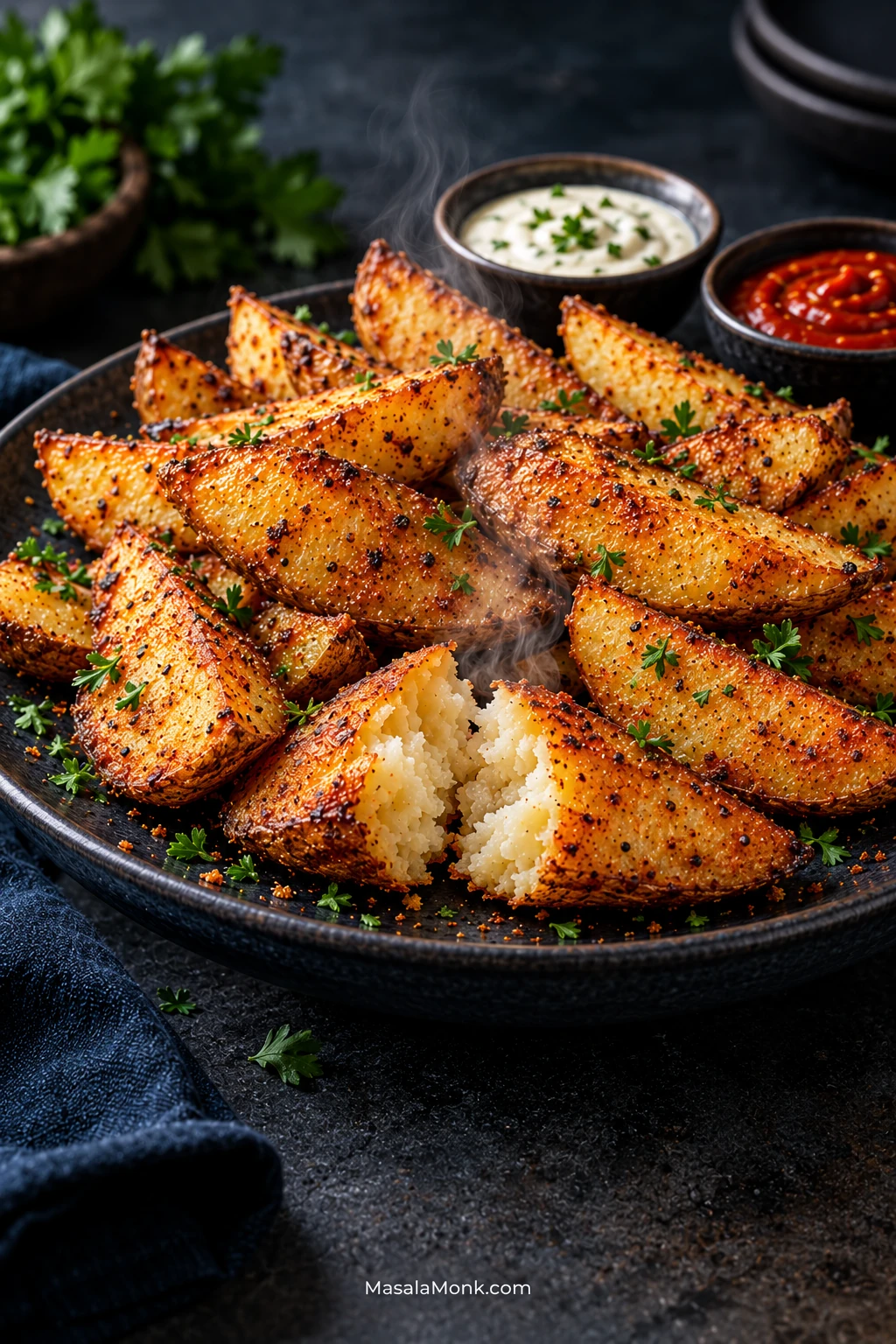
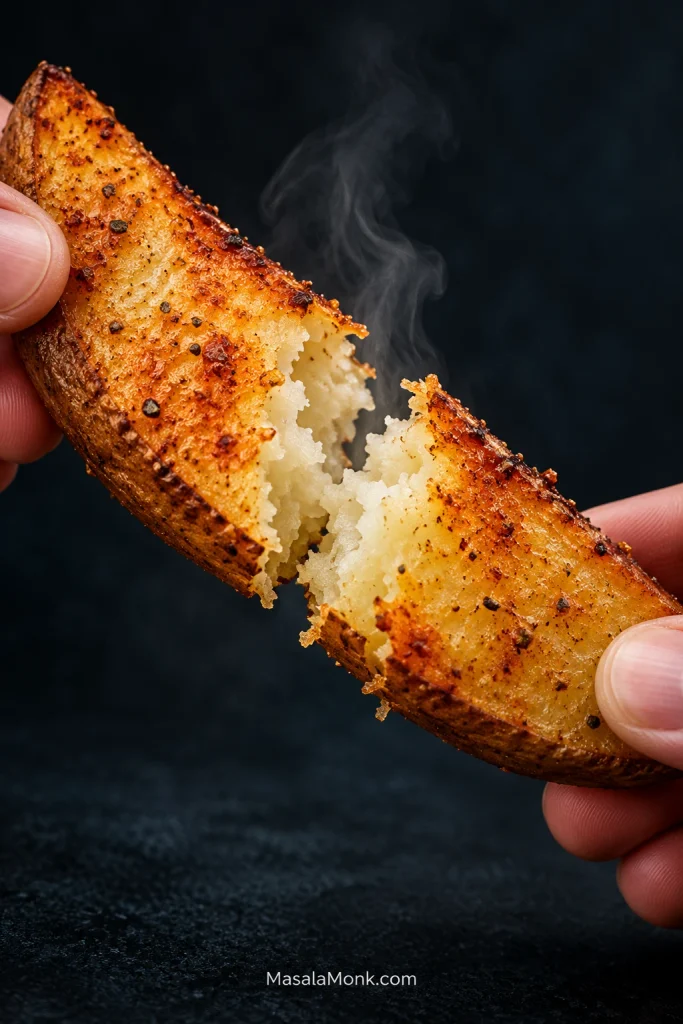
Cut one open while it is still hot. The browned shell should give way with a light crack, while the centre should break apart softly and look fluffy rather than dense or waxy.
Getting both textures in the same wedge is the tricky part. The centre needs enough cooking to soften completely, but the outside has to lose moisture before it can turn properly crisp. This potato wedges recipe uses a short salted parboil, followed by drying, gentle roughening, a light coating of oil and plenty of room on the baking sheet.
The result is a classic oven-baked potato wedge: unbreaded, well seasoned and substantial enough to stay fluffy inside. The extra saucepan earns its place by giving the thick centre a head start before the crust begins to form.
What Makes Potato Wedges Crisp Outside and Fluffy Inside?
Use a floury potato, parboil it briefly, dry the surface well, then roast the wedges with space around them at 220°C conventional / 425°F / 200°C fan.
Potato Wedges Recipe
| Hands-on time | 20–25 minutes |
|---|---|
| Roasting time | 30–45 minutes |
| Total time | Roughly 60–75 minutes |
| Yield | 4 generous side servings or 6 smaller portions |
| Oven | 220°C conventional / 425°F / 200°C fan |
Equipment
- Large saucepan or pot
- Colander
- Large mixing bowl
- Sharp knife and stable cutting board
- One or two large rimmed metal baking sheets
- Thin spatula or tongs
Ingredients
- 900 g / 2 lb floury potatoes, such as Russet (including Idaho Russets), Maris Piper or King Edward
- About 2 litres / 8 1/2 cups water, or enough to comfortably cover the wedges
- 10 g fine salt per litre of cooking water — about 1 2/3 tsp fine/table salt per litre
- 45 ml / 3 tbsp neutral cooking oil or olive oil
- 2 tsp sweet paprika (about 4–5 g)
- 1 tsp garlic powder (about 3 g)
- 1/2 tsp onion powder (about 1 g)
- 4 g fine salt — about 2/3 tsp fine/table salt, plus more only if needed after roasting
- 1/2 tsp ground black pepper (about 1 g)
- Optional: 1/4 tsp cayenne or hot chilli powder, or to taste
- Optional to finish: chopped parsley, finely grated Parmesan or a small pinch of flaky salt
Salt note: the teaspoon fallbacks above are for fine/table salt. Coarser salts vary considerably in crystal size and density, so use the gram measurements if you have a scale.
Heat, Cut and Get the Water Ready
Heat the oven to 220°C conventional / 425°F / 200°C fan. Use the middle rack for one tray. For two trays, use the upper and lower thirds and swap their positions after turning the wedges.
At the same time, put enough water to comfortably cover the potatoes into a large pot. Add 10 g fine salt per litre and bring it to a boil.
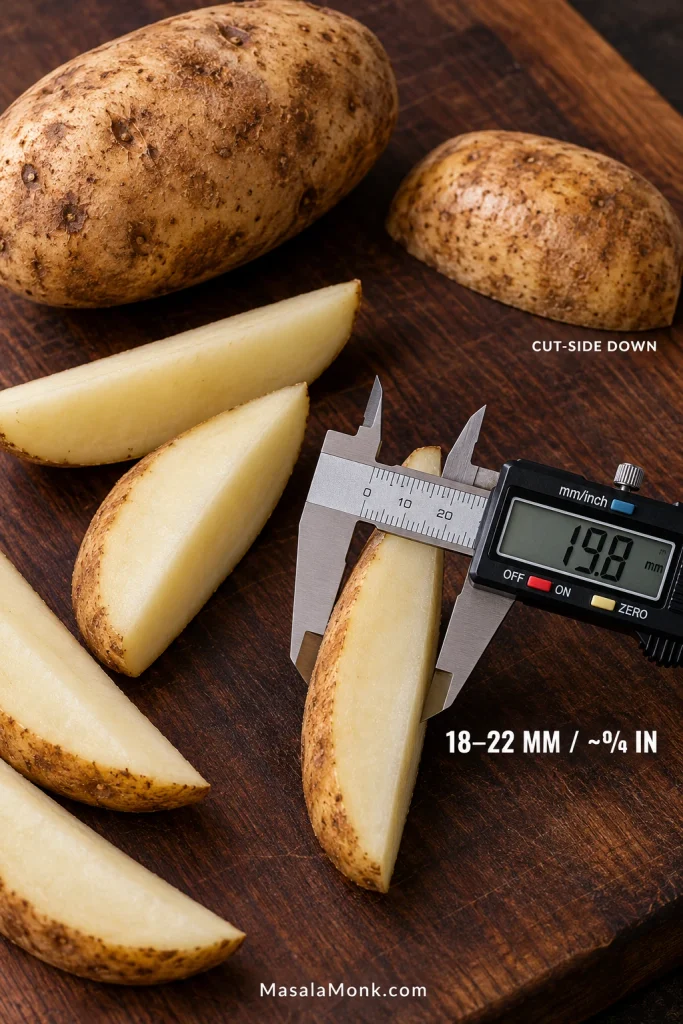
While the oven and water heat, scrub the potatoes and leave the skins on. Halve each potato lengthwise and set each half cut-side down. Slice it into wedges about 18–22 mm / roughly 3/4 inch across the widest fleshy part.
A typical large Russet often gives you six to eight wedges. The exact count matters less than getting the pieces reasonably close in thickness.
Parboil, Dry and Season
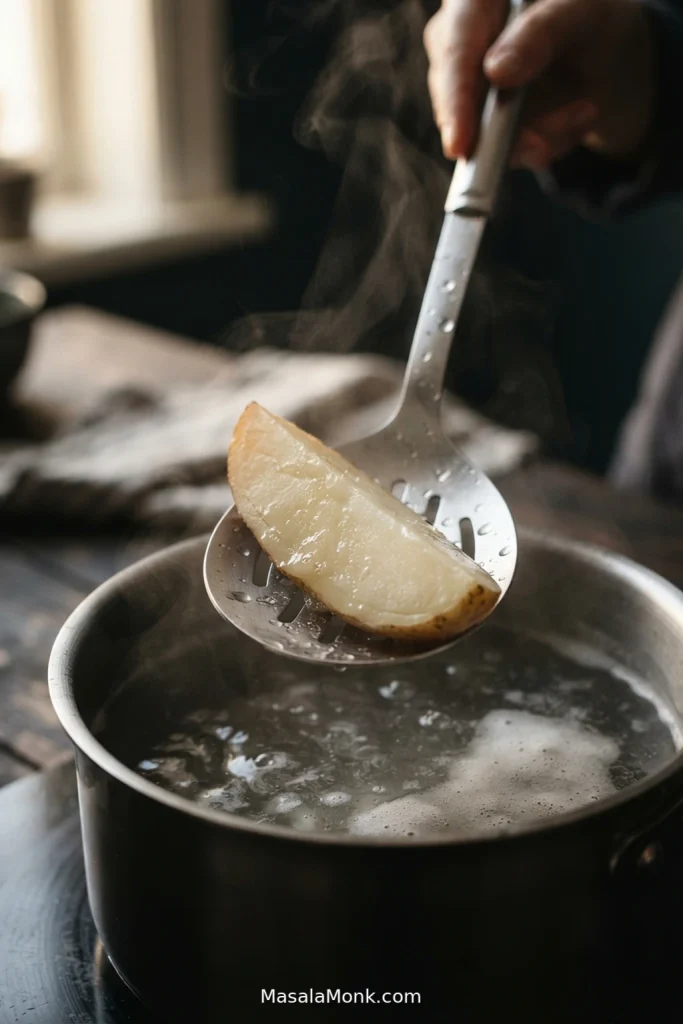
Lower the wedges into the boiling salted water and let the water work its way back toward a gentle boil. Start checking the potatoes as the boil recovers rather than relying on a single exact minute count.
Lift one wedge with tongs or a slotted spoon. The edges should look softened and dent slightly with gentle pressure, while the wedge still holds together easily. Firm edges need another minute.
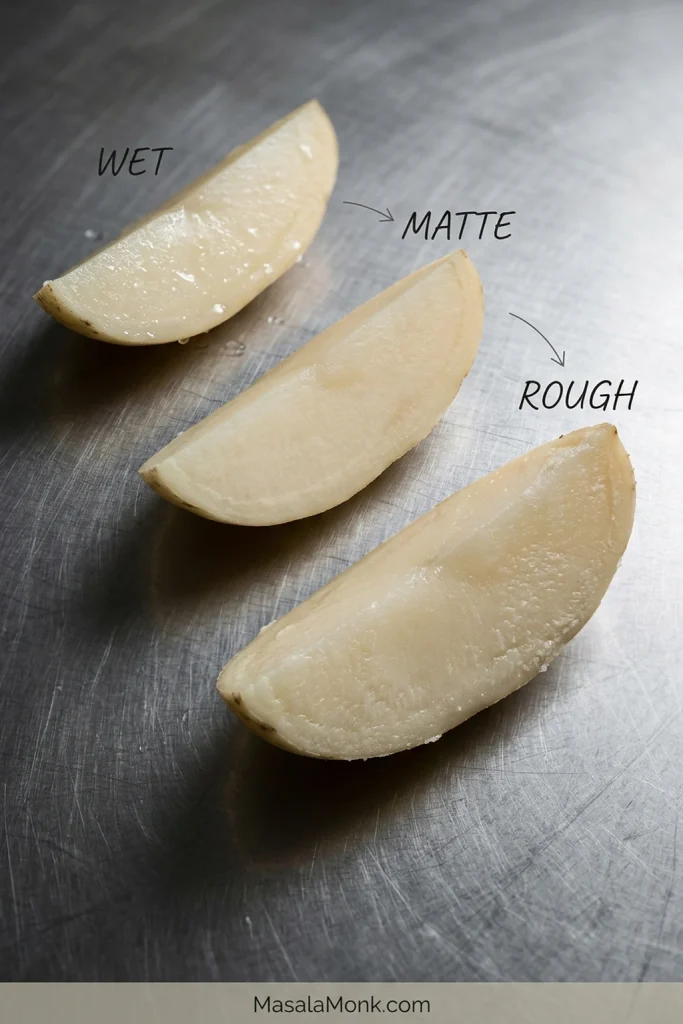
Drain well, then leave the potatoes exposed in the colander for about 5–10 minutes. Wet potato looks shiny; as the steam escapes, the cut surfaces turn noticeably more matte.
Give the colander a few gentle shakes. You want fuzzy, floury-looking edges and a few rough spots, not broken wedges. Transfer them to a bowl, add the oil and toss gently. The potatoes should look lightly glossy with no puddle of oil in the bottom of the bowl.
Mix the sweet paprika, garlic powder, onion powder, 4 g fine salt, black pepper and optional cayenne or hot chilli powder. Sprinkle over the potatoes and toss until evenly coated.
Arrange and Roast
For the strongest underside crust, roast directly on a bare metal baking sheet if your tray does not stick badly. Set each wedge on a flat cut side and leave a visible gap around it. Use two trays if the full batch will not fit without crowding.
Parchment is a useful fallback on a tray that regularly sticks, although the underside may colour a little more gently. Dark nonstick sheets often brown the bottoms faster than light aluminium, so check them earlier.
Roast for about 20–25 minutes, then lift one wedge and look underneath. The first side should be clearly golden and release without leaving its crust behind. The rough little ridges are often the darkest, crispest bits on the tray.
A pale underside is not ready to release yet. Give it longer. The timer tells you when to look. The potato tells you when to turn.
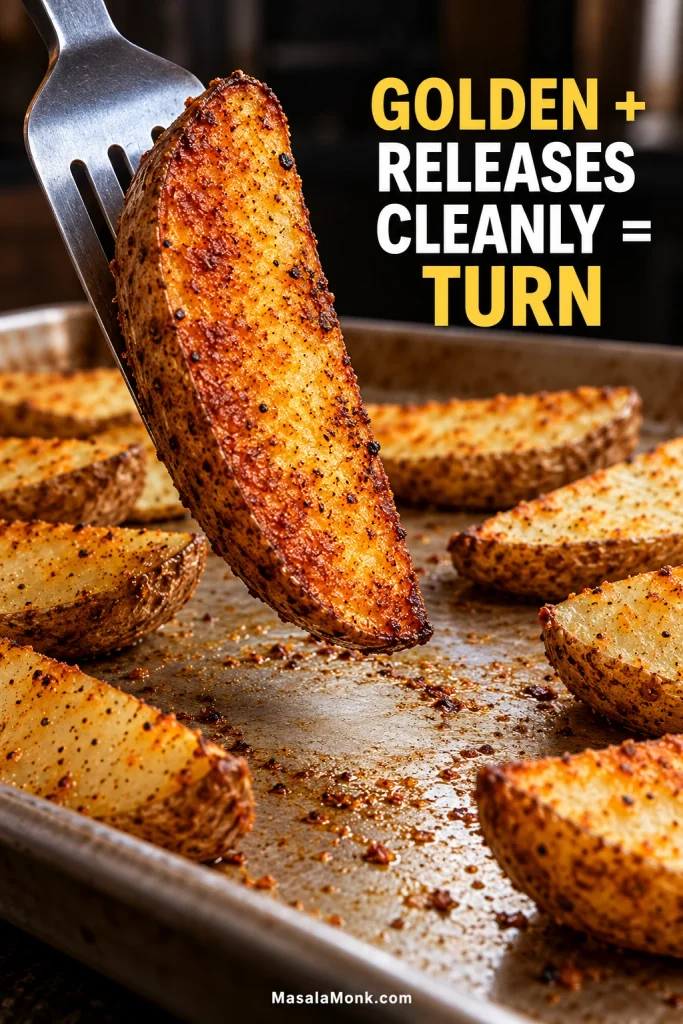
Flip the wedges onto their second flat side. With two trays, swap their upper and lower positions and rotate the pans front to back for more even browning.
Start checking again after another 10–12 minutes. Many batches finish somewhere around 30–45 minutes of total roasting, depending on the potato, thickness, pan and oven.
Look for deeply browned cut sides and a crust that feels set. A thin knife should slide through the thickest wedge without meeting a hard centre. Break one open before removing the whole batch: the centre should separate into soft, steaming, floury pieces.
Let the wedges sit briefly and uncovered while the first rush of steam escapes, then taste for salt and serve.
Getting Potato Wedges Right
Which Potatoes Make the Best Wedges?
For the fluffiest potato wedges, use a floury, high-starch potato such as Russet (including Idaho Russets), Maris Piper or King Edward. The same kind of potato works well in a fluffy baked potato because the flesh opens up and becomes light instead of staying dense.
No familiar variety names on the bag? Look for potatoes labelled for baking, roasting or frying. Very waxy new potatoes and many red potatoes stay firmer and moister inside. Yukon Gold and other medium-starch potatoes sit somewhere in between: they hold their shape well and give you a creamier centre.
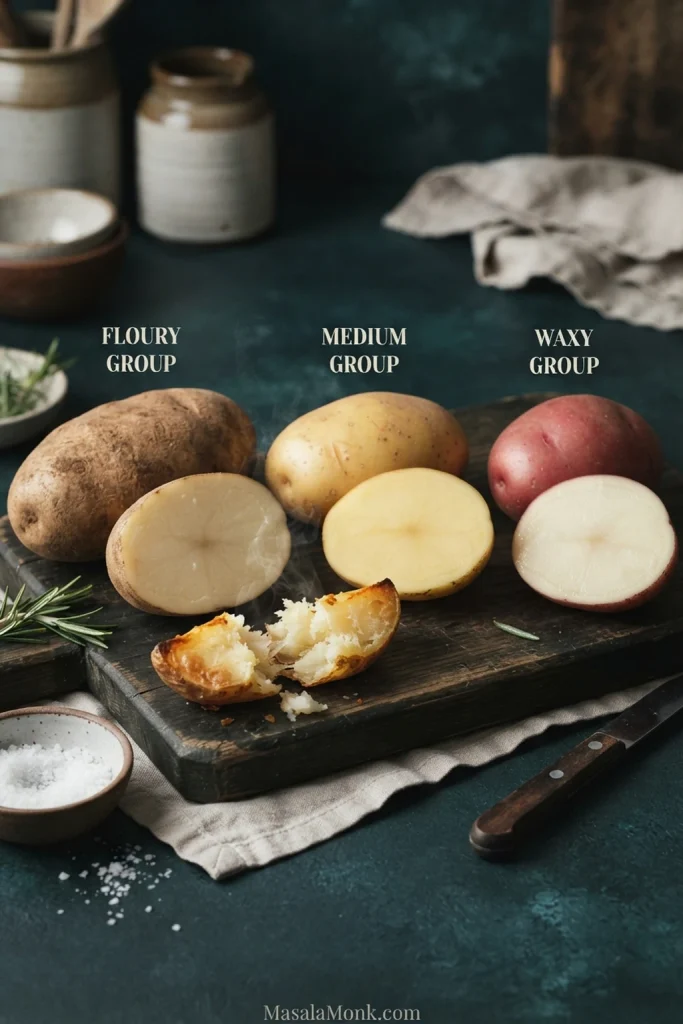
Leave the skins on if you enjoy the extra texture. Choose firm, sound potatoes and trim small damaged areas generously. Do not rely on peeling to rescue potatoes that are extensively green, heavily sprouted or noticeably bitter. The UK government’s guidance on green and sprouted potatoes has more detail on handling affected potatoes.
How Thick Should Potato Wedges Be?
Aim for wedges about 18–22 mm / roughly 3/4 inch thick across the widest fleshy part. That leaves enough potato for a fluffy centre without making the wedge so thick that the outside darkens first.
Thickness changes each bite too. Very thick wedges give you more plain potato for every mouthful of seasoned crust. Very thin ones can dry out before the centre develops the substantial texture that makes a wedge different from a fry.
If a batch is already dark outside but firm in the centre, jump to the troubleshooting guide rather than changing the whole method.
Should You Parboil, Soak or Roast Potato Wedges Raw?
You can use all three methods. For thick wedges, parboiling gives the centre useful cooking time before the outside has to brown.
| Method | What it does | Trade-off |
|---|---|---|
| Roast raw | Keeps preparation simplest | The thick centre cooks entirely in the oven |
| Cold soak | Washes away some loose surface starch | The potatoes need thorough drying afterward |
| Parboil | Partially cooks the centre and softens the surface | Uses another pot and adds a preparation step |
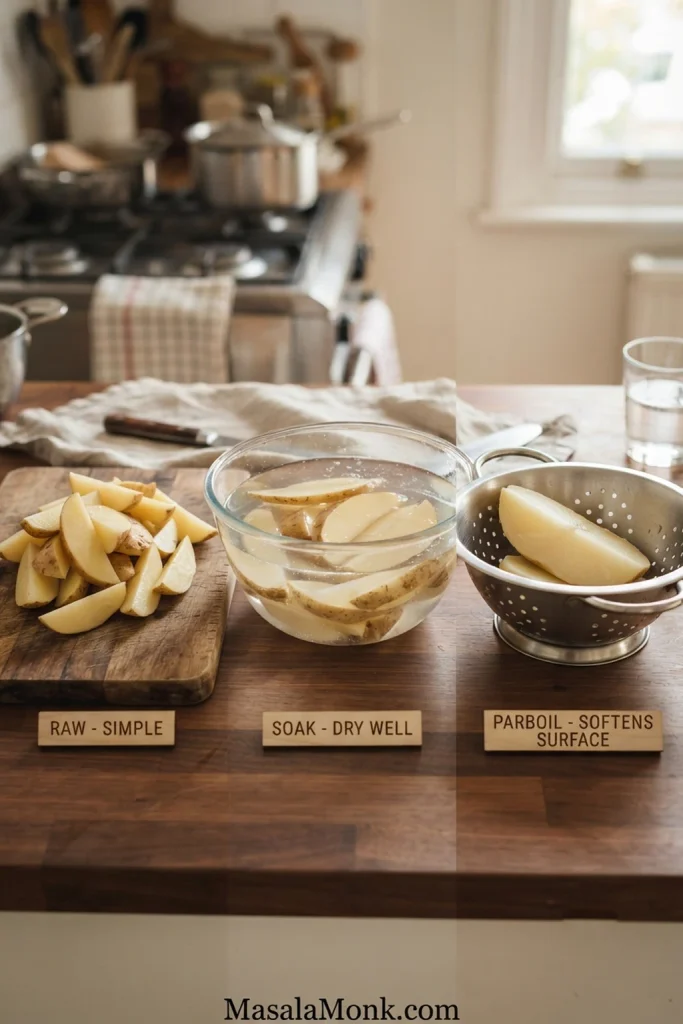
A plain salted parboil is enough here. Once the edges soften, they rough up easily on their own, so there is little reason to add flour or starch. Want thin, crisp potatoes instead of chunky wedges? Homemade French fries use a different approach to soaking and double cooking.
How the Crisp Crust Forms
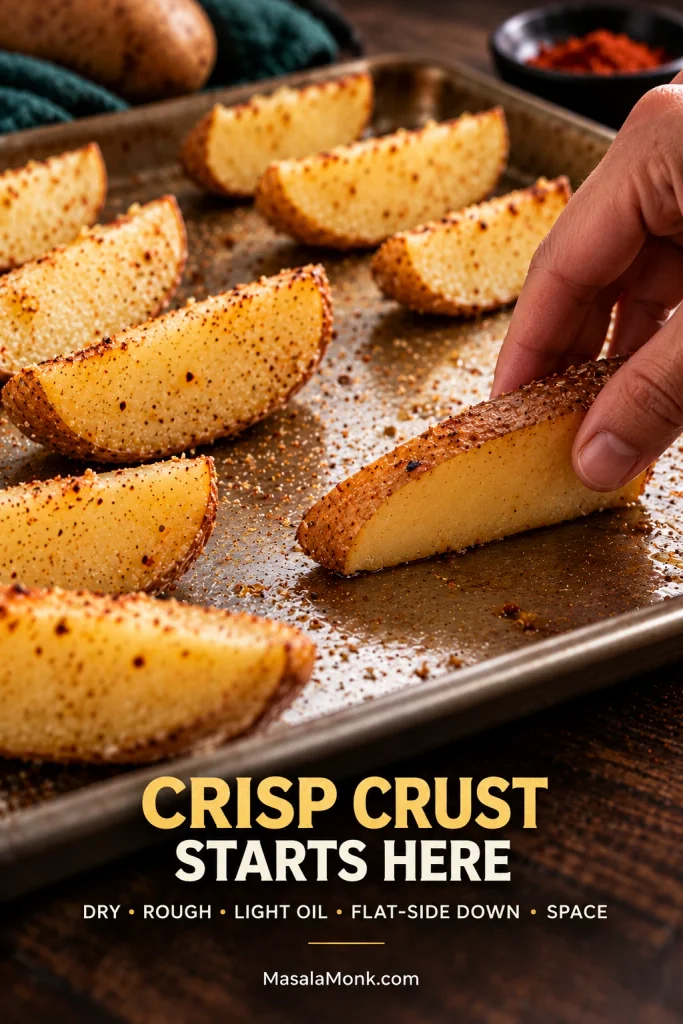
Dry the surface. Surface water has to evaporate before strong browning and crisping can begin.
Rough the softened edges. A gentle shake creates little ridges and craggy bits with plenty of exposed surface to brown. Those rough edges also give our crispy roasted potatoes their craggy crust.
Use enough oil to coat, not drown. With 900 g / 2 lb potatoes, 45 ml / 3 tbsp should leave the wedges lightly glossy without oil collecting in the bowl.
Put a flat cut side against the pan. The metal transfers heat directly into the cut potato and builds a firmer underside crust.
Leave gaps. Crowded potatoes hold steam around one another. More potatoes need more tray space.
Do Potato Wedges Need Cornstarch or Flour?
No—not with this method. The softened potato supplies plenty of surface starch once the parboiled edges are roughed up. A light coating can help some raw-roasted or waxier potatoes, but too much powder on a wet surface can turn gummy or chalky.
For sweet potatoes, our baked sweet potato fries use a different method with a light starch coating.
Potato Wedge Seasoning
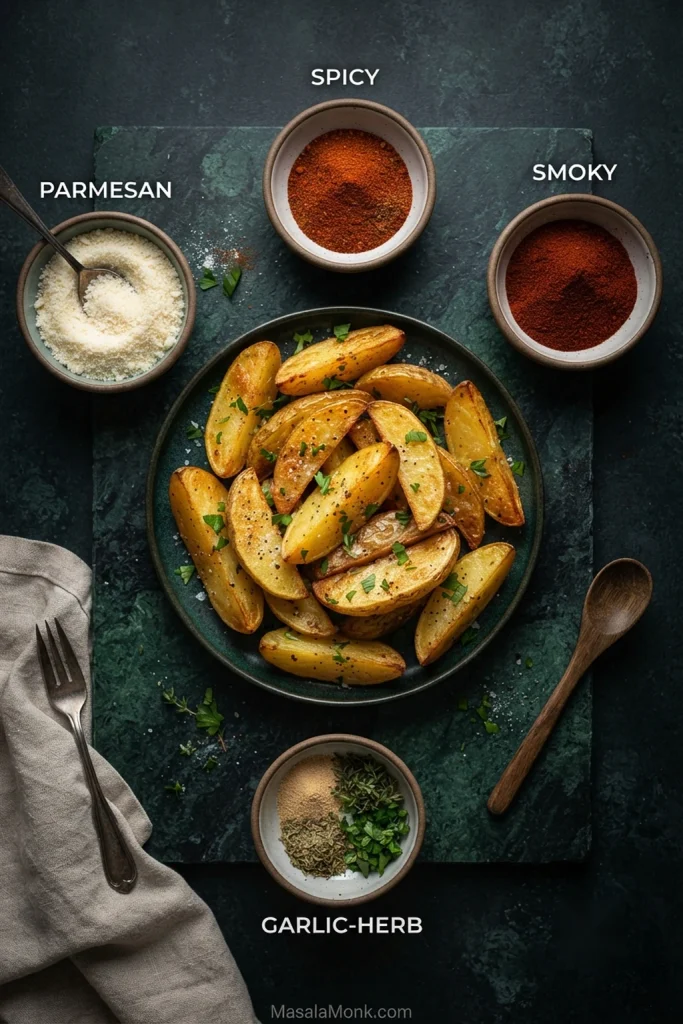
Classic potato-wedge seasoning needs very little: sweet paprika, garlic powder, onion powder, black pepper and salt. Paprika adds warmth and colour; the powdered garlic and onion bring savoury depth without scorching as easily as little pieces of fresh garlic.
- Spicy: start with 1/4 tsp cayenne or hot chilli powder and increase to taste.
- Smoky: replace some or all of the sweet paprika with smoked paprika.
- Garlic-herb: add dried oregano, thyme or rosemary, then finish with fresh herbs.
- Parmesan: toss finely grated Parmesan through the wedges as soon as they leave the oven.
Oven Temperature, Timing and Doneness
Bake these parboiled wedges at 220°C conventional / 425°F / 200°C fan for about 30–45 minutes, turning once.
Start checking the second side once the total roasting time reaches about 30–35 minutes. Potato variety, thickness, pan colour and the oven itself can shift the finish time.
Colour alone is not enough. The cut sides should be deeply browned, the crust should feel set, and a thin knife should pass through the centre without resistance.
What Went Wrong With Your Potato Wedges?
Soft, stuck or dark-on-the-outside wedges do not all need the same fix. The failure usually tells you what happened—and several batches can still be rescued.
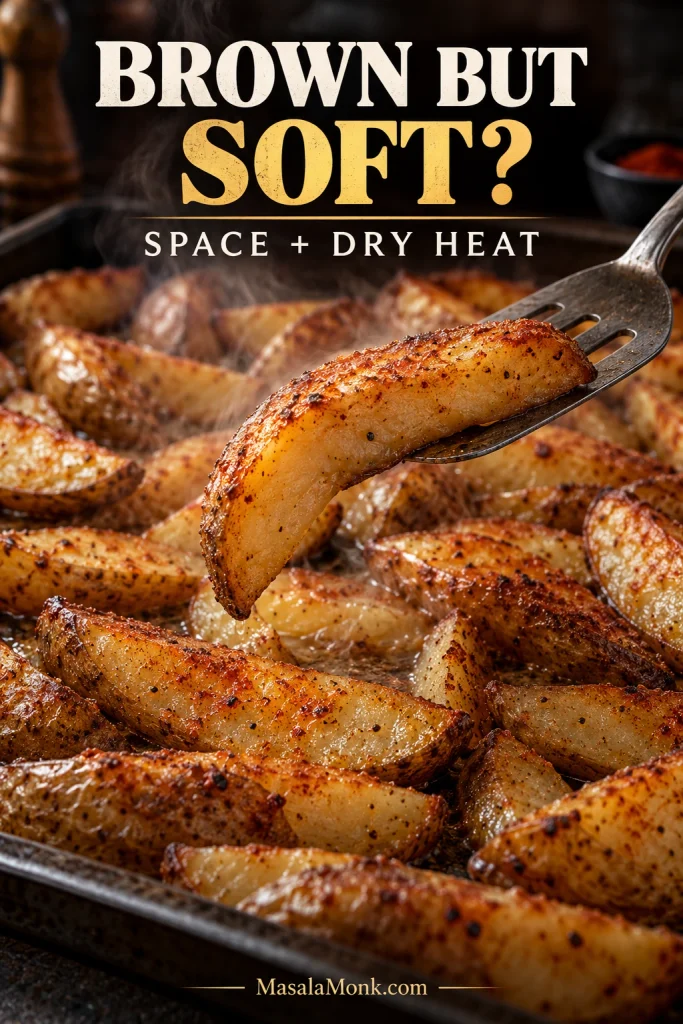
Why Are My Potato Wedges Brown but Soft?
When wedges are brown but still soft, the surface has coloured before enough moisture has escaped. Wet surfaces, a waxier potato, oversized pieces or crowding can all contribute. Spread them out and keep roasting in dry heat; next time, dry them more thoroughly or cut them a little more evenly.
Other Colour and Texture Problems
| Problem | Cause and what to do |
|---|---|
| Pale and soft | They need more heat, more space or both. Spread them out and continue roasting. An oven that repeatedly leaves potatoes pale is worth checking with a thermometer. |
| Dark outside, hard centre | The wedges are probably too thick or under-parboiled. Reduce the oven temperature slightly and continue cooking while watching the crust. Cut closer to the target thickness next time. |
| Tender inside but pale outside | The centre finished before enough colour developed. Move the tray higher for the final minutes. On an unlined broiler-safe metal tray, a very brief grill/broil can help; watch continuously. |
| Dry or hollow | They were cut too thin or cooked too long. There is little to rescue once the centre is dry, so serve them with a dip and cut thicker next time. |
| Greasy and soft | Too much oil or coating can soften the surface. Spread them out for a few more minutes of dry heat. Already deeply browned? Serve them rather than continuing to darken them. |
Sticking, Seasoning and Tray Problems
| Problem | Cause and what to do |
|---|---|
| Seasoning falls off | A wet surface or too little oil makes seasoning slide away. Finish this batch to taste after roasting. Next time, dry well and oil before seasoning. |
| Wedges stick or the crust tears | The first side has not browned and released yet, or the pan itself is sticky. Do not force them loose. Give the underside more time; use parchment next time if the tray consistently causes problems. |
| Wedges fall apart | They were over-parboiled or shaken too hard. Handle the remaining pieces gently and roast what is intact. Drain sooner next time. |
| Seasoning burns | Fresh garlic, delicate herbs or strong top heat are common causes. Move the tray lower if the tops are darkening too quickly. Use powdered garlic during roasting and add delicate herbs at the end. |
| Crust tastes good, centre tastes bland | Very large wedges or lightly salted cooking water can leave the inside under-seasoned. Finish with fine salt or a good dip; salt the parboiling water properly next time. |
| Bottom burns first | A dark or thin tray, low rack or uneven oven can over-brown the base. Move the tray higher and check earlier. A heavier or lighter-coloured pan may behave better. |
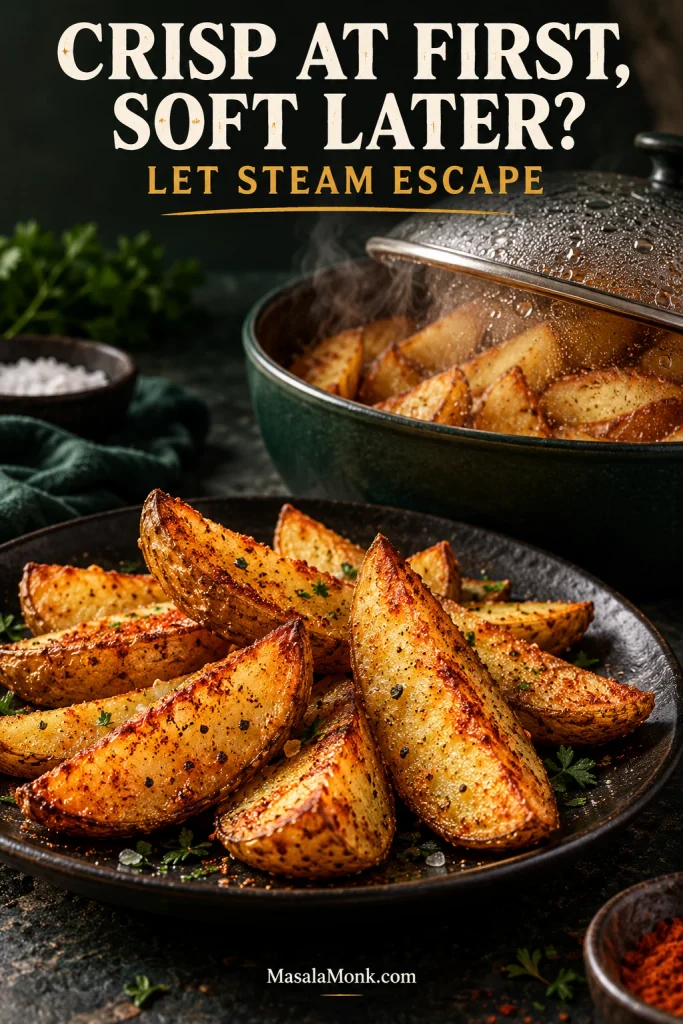
Why Do Potato Wedges Turn Soft After Roasting?
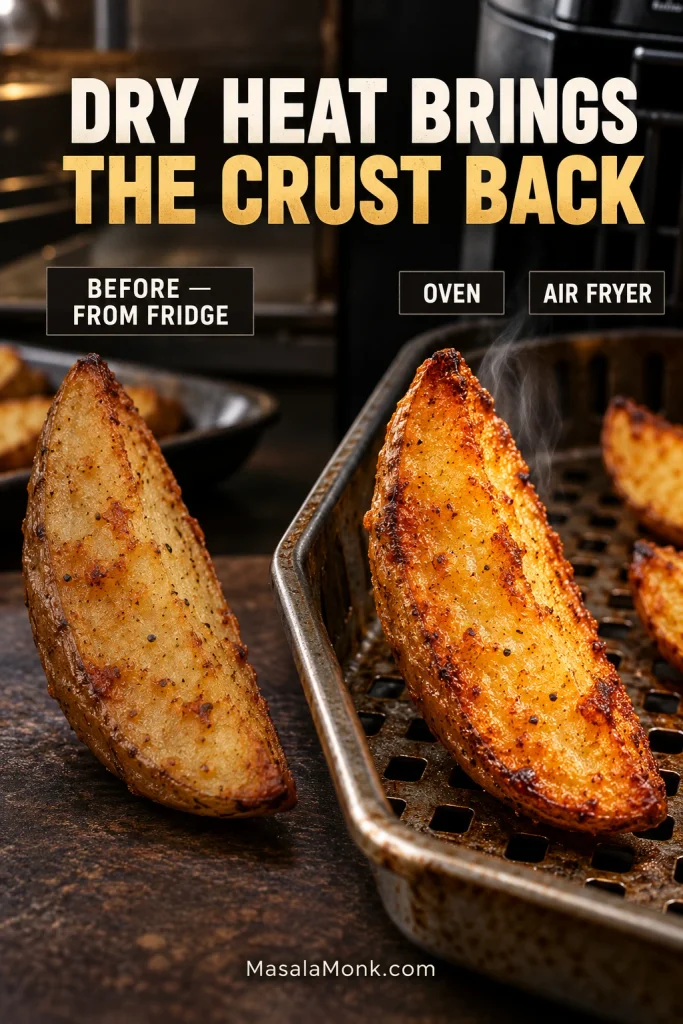
If the wedges were crisp at first and soften later, steam is moving back into the crust. Reheat them briefly in a hot oven or air fryer if needed, and serve them uncovered.
A shallow dish helps the first rush of steam escape. By contrast, a deep covered bowl holds moisture around the crust and softens it quickly.
Make-Ahead Potato Wedges
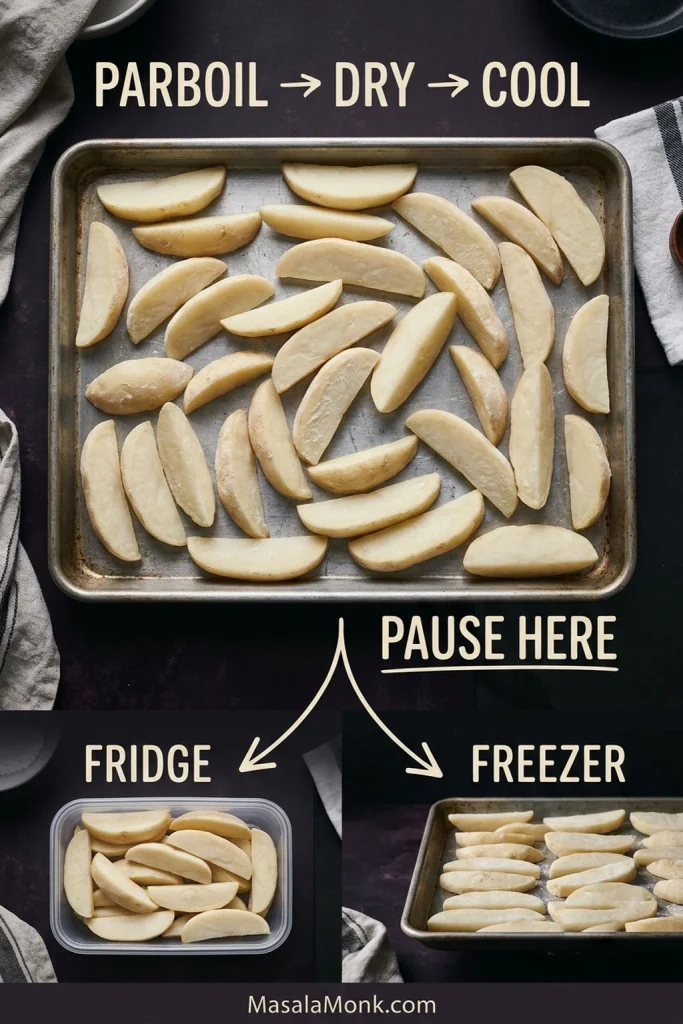
Yes—you can parboil potato wedges ahead of time, refrigerate them, then oil, season and roast them later.
For later the same day, parboil, drain and steam-dry the potatoes. Spread them out so they cool quickly, then refrigerate promptly; do not leave them at room temperature for more than 2 hours.
For the next day, leave the chilled wedges unseasoned until you are ready to roast. A cold batch may need a little longer, so judge it from the browned underside and tender centre.
For a potato side that is genuinely happy being made ahead and served cold, potato salad is naturally more forgiving.
How to Freeze Homemade Potato Wedges
A useful point to freeze homemade wedges is after parboiling and cooling, before the final roast. That gets most of the preparation out of the way while leaving the crisping for the day you eat them.
- Parboil, drain and steam-dry the wedges.
- Spread them out and cool them promptly.
- Arrange them on a tray in one layer without the pieces touching.
- Freeze until firm.
- Transfer to freezer-safe bags or containers in portions you are likely to cook at one time. Remove excess air and label the package with the date.
To cook the wedges from frozen, avoid thawing them into a wet pile. Heat the oven to 220°C conventional / 425°F / 200°C fan. Lightly oil and season the frozen wedges, spread them out and roast until browned, crisp and tender through the centre.
Start checking around the normal roasting window, then use the browning and tenderness of the potato to decide when they are done.
Already-roasted wedges can be frozen too, although the reheated crust will not be quite the same as a fresh batch. Cool them promptly, freeze in one layer if convenient, then pack them once firm. High, dry heat gives the crust its best chance of crisping again.
How to Store and Reheat Leftover Potato Wedges
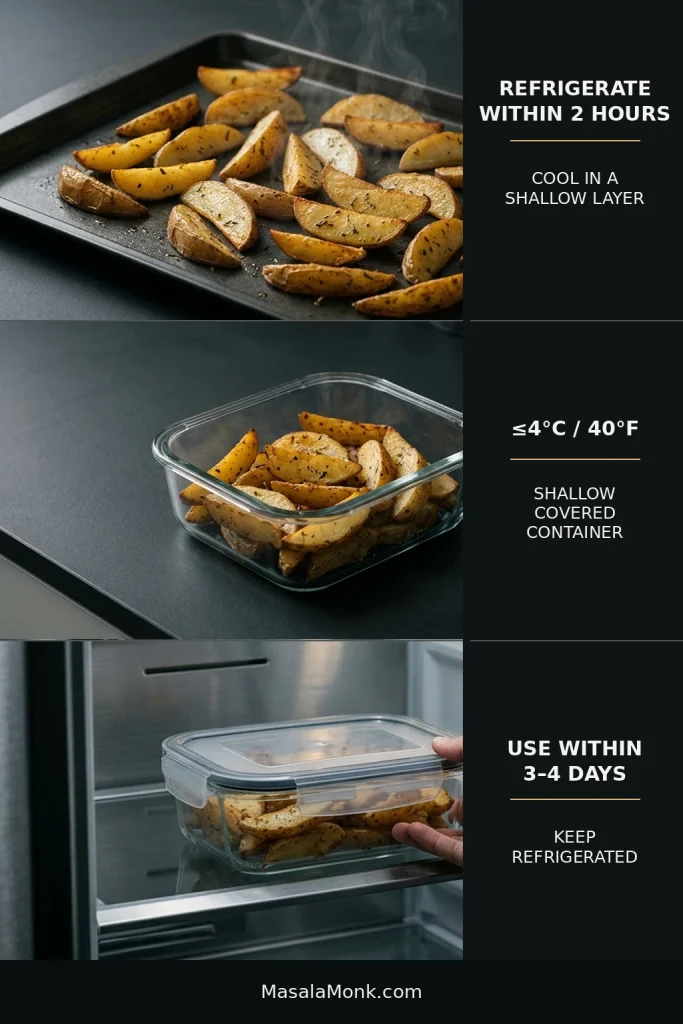
Refrigerate cooked wedges within 2 hours and keep the refrigerator at 4°C / 40°F or below. Use refrigerated leftovers within 3–4 days. FoodSafety.gov’s food-safety guidance covers the wider time and temperature rules for cooked leftovers.
Heat stored leftovers thoroughly when reheating; the standard food-safety target is 74°C / 165°F.
For the best chance of restoring the crust, use hot, dry heat when possible. The oven suits a larger batch; an air fryer is convenient for a smaller one.
Oven
Heat the oven to about 200°C / 400°F. Spread the wedges in one layer on a metal tray and reheat for roughly 8–12 minutes, until hot through and crisp again at the edges.
Air Fryer
For a small batch, start around 190–200°C / 375–390°F for 5–8 minutes, turning or shaking once.
Microwave
The microwave heats wedges quickly but softens the crust. Use it when speed matters more than texture.
Other Potato Wedge Questions
Do you need to peel potatoes for wedges?
No. Scrub the potatoes well and leave the skins on for extra texture. Peel them only if you prefer skinless wedges.
Can I use baby or new potatoes for wedges?
You can, although many new potatoes are waxier and produce a firmer, creamier centre. Very small potatoes may also be better halved or quartered than forced into traditional wedge shapes.
Are potato wedges the same as jo-jos or potato logs?
Not always. The terms overlap in some places, but jo-jos and deli-style potato logs often mean larger wedges with a seasoned coating or breading that are deep-fried or pressure-fried. These wedges are unbreaded and oven-baked.
What to Serve With Potato Wedges
A homemade burger patty and hot potato wedges make an obvious pair, but they are just as comfortable beside steak, fish, sandwiches and BBQ food. Baked chicken breast can share the same oven, although it will usually finish sooner.
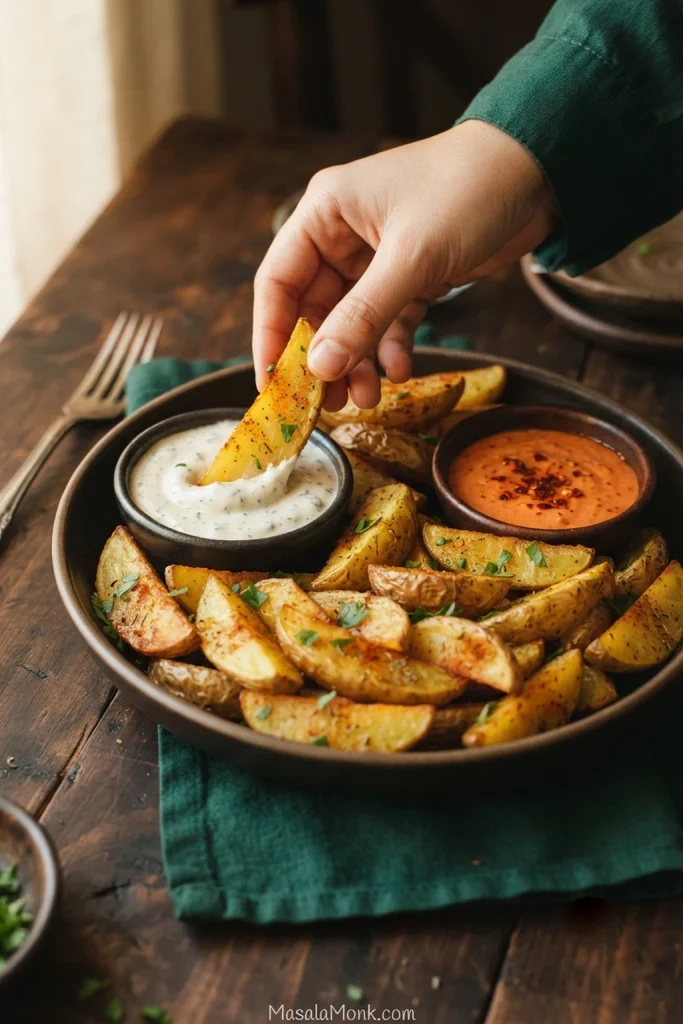
For a snack rather than a side, pile the wedges into a shallow platter while they are still hot and put out two contrasting dips. Something cool and creamy—garlic mayo, sour cream or ranch—works especially well beside spicy mayo or sweet chilli sauce.
The garlic mayo and spicy mayo guide has both versions if you want to make the dips yourself.
If you cook these with a local potato variety rather than Russet, Maris Piper or the other familiar names above, tell us what you used and whether the centre came out fluffy, creamy or waxy. That detail can help someone else buying the same potatoes.
Get the wedges to the table while the crust still has that light crack and the centre is steaming and fluffy. That is the moment they are at their best.