
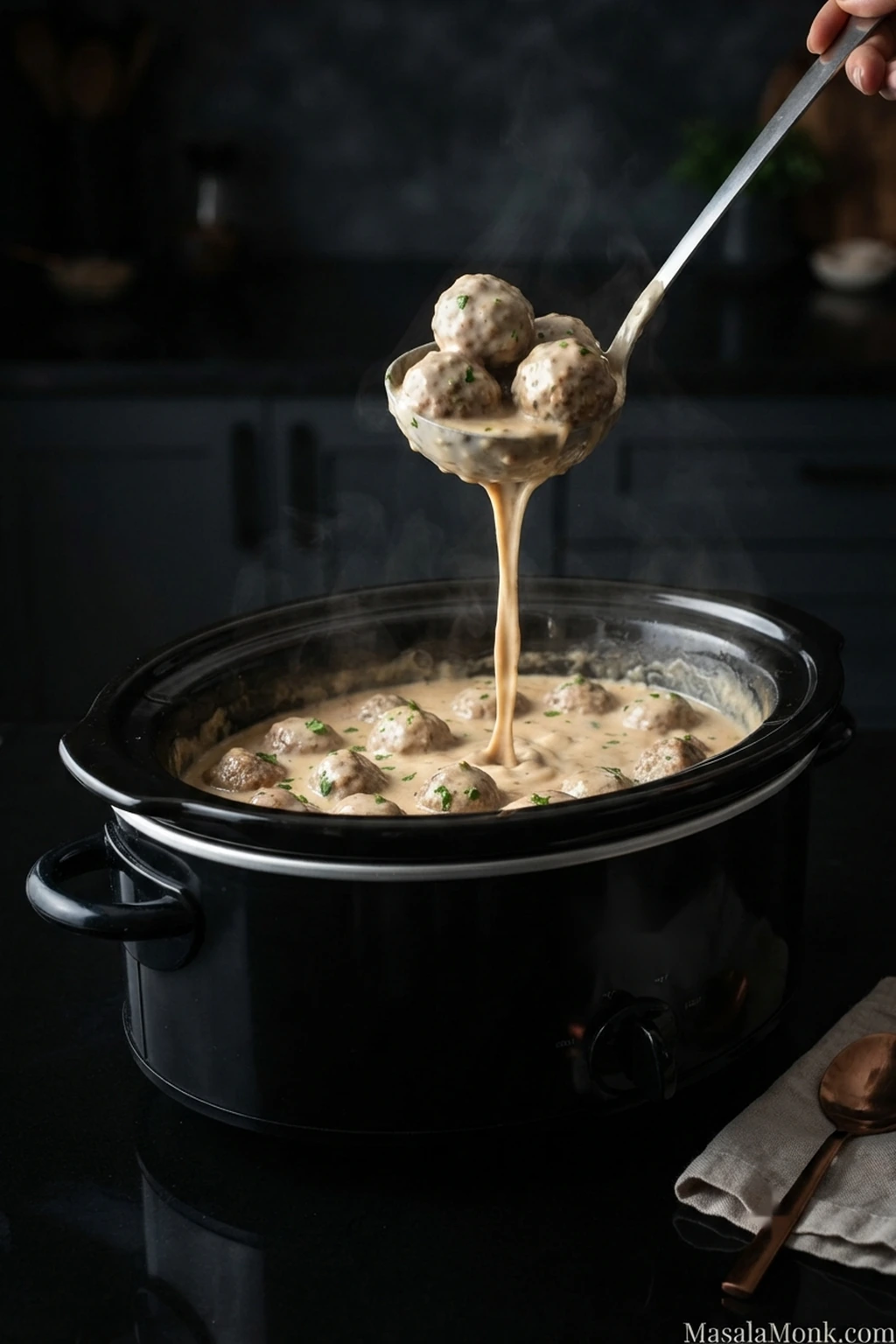
Frozen meatballs make dinner easy. Aim for a creamy, savory gravy that’s generous enough for the meatballs and whatever you put underneath them.
The gravy is where things usually go sideways. Too much broth makes it soupy. Salty shortcuts can overwhelm it. Sour cream added too early can lose its smooth, creamy finish.
The meatballs are already cooked; the gravy is the job. Start with restrained liquid, let the sauce come together, fix the consistency if it needs fixing, then add the sour cream at the end.
Before You Start
There are only four things worth deciding before the lid goes on.
- Use fully cooked meatballs. Go by weight rather than count: about 2 lb / 907 g.
- Check the bag. Some brands can go straight from freezer to slow cooker. Others need thawing or a different heating method.
- Start with restrained broth. Loosening a thick gravy is easy. Turning meatball soup back into gravy takes more work.
- Keep the sour cream out until the end. It gives you a smoother finish and is much easier to work with once the main cooking is done.
Crock Pot Swedish Meatballs Recipe
Condensed mushroom soup gives the gravy body without needing a gravy packet or onion-soup mix. Worcestershire adds depth, a little Dijon keeps the richness from tasting flat, and nutmeg and allspice stay quietly in the background.
The mushroom shouldn’t dominate. Dijon shouldn’t announce itself. You should mostly taste a rich, savory gravy with a little tang from the sour cream at the end.
This is the easy American Crock Pot version. Traditional Swedish meatball sauces vary and often lean on cream rather than condensed soup and sour cream.
| Hands-on prep | About 10 minutes |
|---|---|
| Meatballs | 32 oz / 907 g fully cooked |
| Typical slow-cooker range | About 2–3 hours on HIGH or 4–6 hours on LOW when your meatball brand supports slow-cooker heating |
| Yield | About 6 dinner servings |
| Slow cooker | 5–6 qt / about 4.7–5.7 L |
Meatballs and Gravy
The ingredient list is short, but the ingredients do not all belong in the pot at once. Build the savory base first; hold the finishing ingredients back until the cooked sauce can be judged.
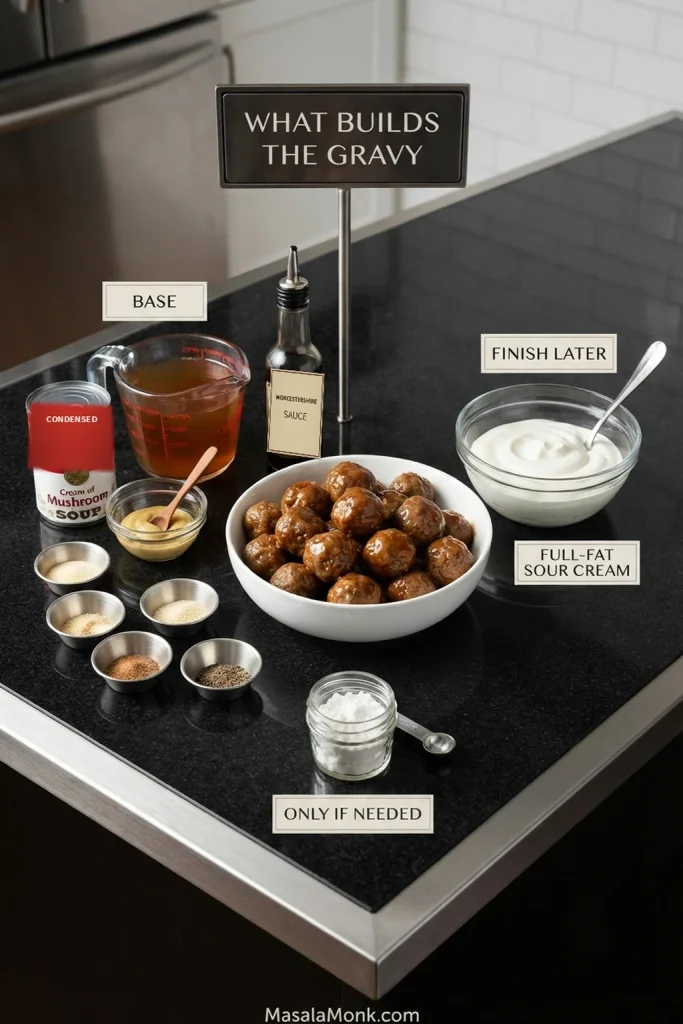
- 32 oz / 2 lb / 907 g fully cooked frozen homestyle meatballs
- 1 can condensed cream of mushroom soup, 10.5 oz / about 300 g
- 1¼ cups / 300 ml low-sodium beef broth, plus more only if needed
- 1 tablespoon / 15 ml Worcestershire sauce
- 1 teaspoon / 5 ml Dijon mustard
- 1 teaspoon onion powder
- ½ teaspoon garlic powder
- ¼ teaspoon ground nutmeg
- ¼ teaspoon ground allspice
- ½ teaspoon black pepper, or ¼ teaspoon each black and white pepper
- 1 tablespoon cornstarch, for thickening if needed
- Cold water, 1 teaspoon per 1 teaspoon cornstarch used, if needed for the slurry
If you like nutmeg and allspice barely noticeable, start with ⅛ teaspoon of each. Frozen meatballs vary quite a bit in seasoning, so a lighter hand is perfectly reasonable.
For Finishing — Do Not Add Yet
- ¾ cup / about 180 g full-fat sour cream
- Salt, only if the finished gravy needs it
For Serving, Optional
- 12 oz / 340 g wide egg noodles
- Mashed or boiled potatoes
- Chopped parsley or dill
- Lingonberry jam
Method
Order matters: gravy base, meatballs, consistency check, dairy finish.
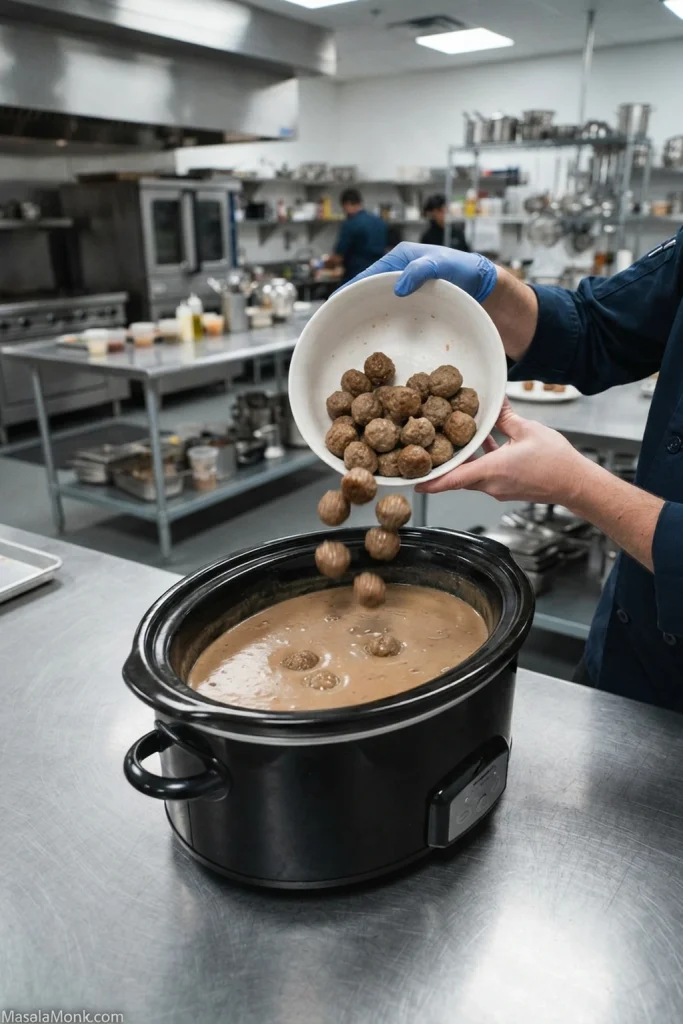
- Mix the gravy. Whisk the soup, broth, Worcestershire, Dijon, onion powder, garlic powder, nutmeg, allspice and pepper. Keep sour cream and cornstarch aside.
- Add the meatballs and cook. If the package gives slow-cooker directions, follow them. For fully cooked meatballs, a common range is 2–3 hours on HIGH or 4–6 hours on LOW.
- Read the gravy. Before sour cream, check the sauce. It should coat a meatball, fall slowly from a spoon and leave enough free gravy for noodles or potatoes. If it looks right, leave it alone.
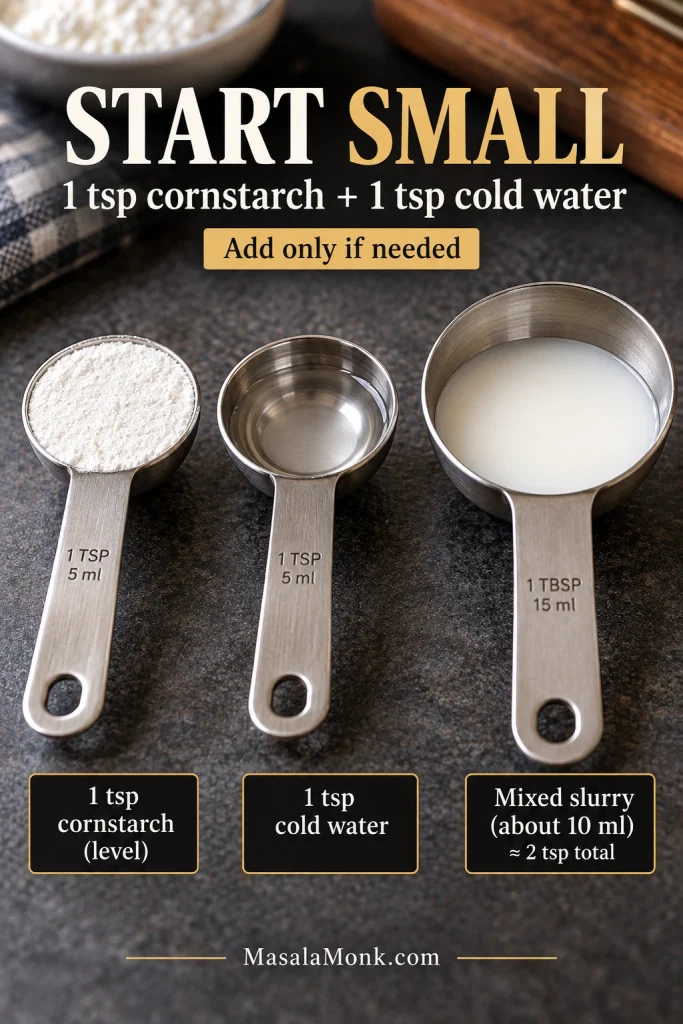
- Thicken only if necessary. Mix 1 teaspoon cornstarch with 1 teaspoon cold water until smooth. Stir it into the gravy and cook on HIGH until the sauce is visibly thicker, usually about 15–20 minutes. If it still needs help, repeat in 1-teaspoon increments, using up to the tablespoon listed in the ingredients.
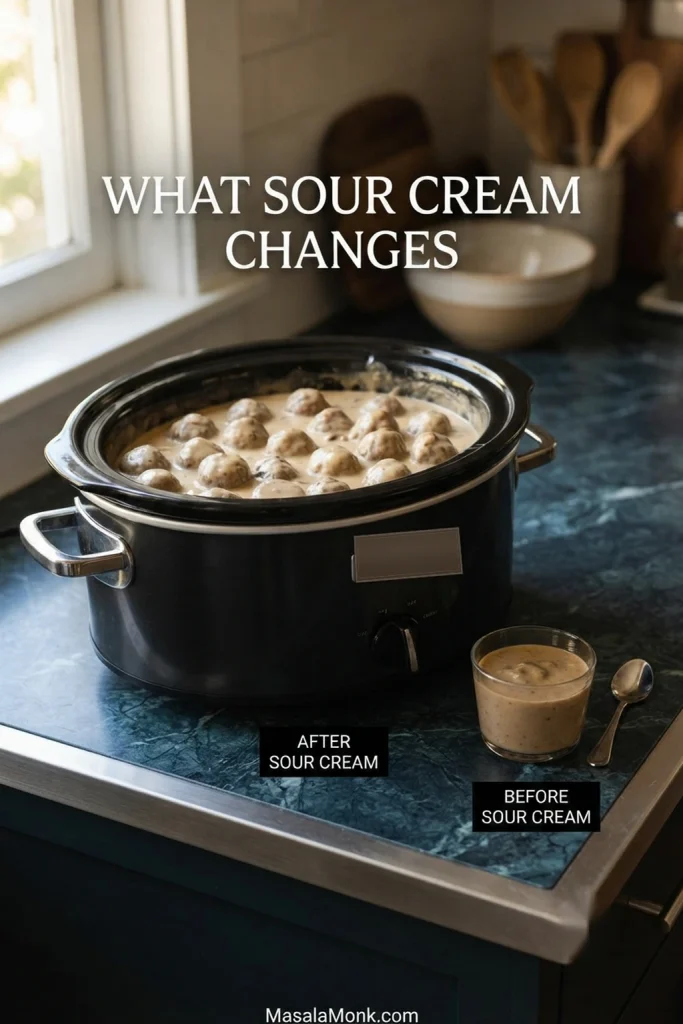
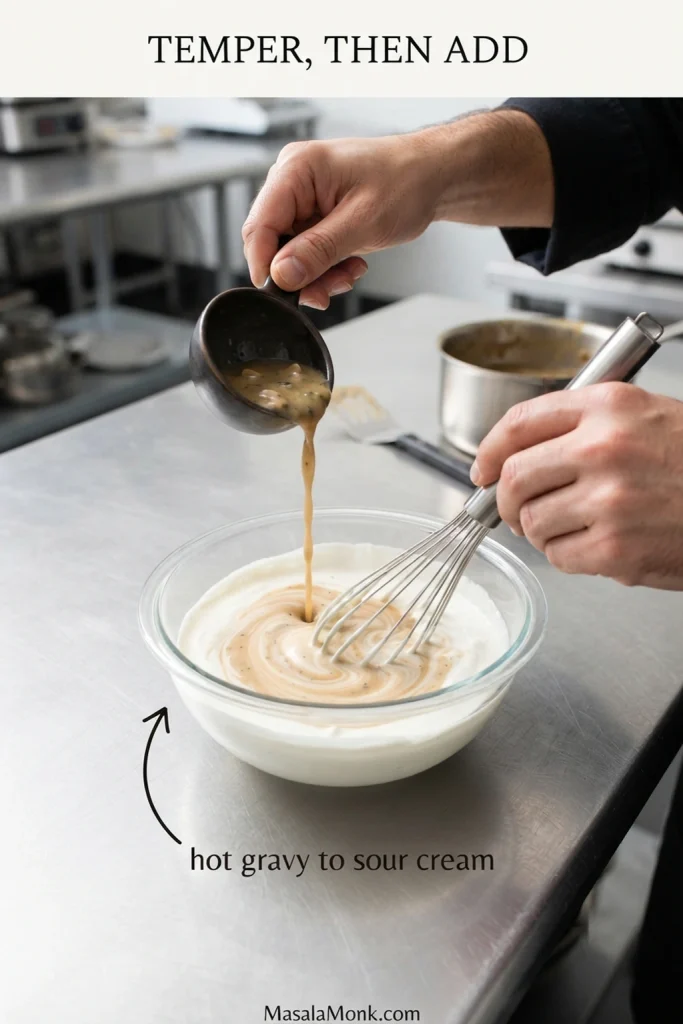
- Temper in the sour cream. Whisk about ½ cup / 120 ml hot gravy gradually into the sour cream. Turn the slow cooker to WARM or OFF and stir the warmed sour cream back into the pot. The gravy should turn paler, silkier and a little tangy. Taste before adding any salt.
- Serve generously. Spoon the meatballs over separately cooked noodles or potatoes and make sure every serving gets plenty of gravy. Add parsley or dill if you like, with lingonberry alongside for something sweet and tart against the creamy sauce.
Cooking now? You have everything you need above.
Need something specific? Jump to gravy fixes, slow-cooker guidance, substitutions, serving ideas, crowd sizing or storage and reheating.
Read the Gravy Before Adding the Sour Cream
If the gravy doesn’t look right when you lift the lid, hold the sour cream for a minute. Most sauce problems are much easier to fix before the dairy goes in.
Don’t worry about whether your slow cooker behaved exactly like somebody else’s. Look at the gravy in front of you.

- Too loose: it slides straight off the spoon and pools beneath the meatballs like broth.
- About right: it coats a meatball, clings lightly to the spoon, then settles slowly into a creamy pool.
- Too thick: it moves as a heavy mass and leaves almost no free gravy for the rest of dinner.

Why the Sour Cream Goes in Last
Sour cream is acidic, and prolonged high heat can make a dairy sauce look grainy or separated. Adding it after the main cooking preserves more of its tang and gives the gravy a smoother finish. Full-fat sour cream is usually more forgiving in a hot sauce than reduced-fat versions.
Tempering warms the sour cream gradually before it meets the full pot of hot gravy, reducing the shock of the temperature change. The same late-dairy idea works well in this slow cooker beef stroganoff.
Texture Problems
Gravy thin? Hold the sour cream. Stir in a small cornstarch slurry and cook on HIGH until the sauce visibly thickens, then reassess before adding more.
Too thick? Add low-sodium beef broth 1–2 tablespoons at a time. Stir first, then decide whether it needs more.
Grainy or split? Turn the heat down or off and stir gently. A splash of warm cream can sometimes help bring the sauce back together. Boiling it harder will not.
Sour cream went in too early? Keep going. Avoid a hard boil from this point forward. The sauce may be a little less silky, but dinner can still work.
Grease sitting on top? Skim it off. This is more common with homemade raw meatballs, which is one reason browning or baking them first is useful.

Flavor Problems
Too salty? Dilution is the real fix. Add a little unsalted broth or cream, taste, and repeat only if necessary. If that leaves the gravy too loose, correct the texture afterward with a small cornstarch slurry.
Too mushroomy or mustard-forward? Don’t try to bury one strong flavor under another. Give the gravy a little more unsalted or low-sodium broth or cream, then taste again.
Flat but already salty enough? Think about what’s actually missing. Black pepper can add bite, a small spoonful of sour cream can add tang, and a little Dijon can sharpen a gravy that tastes rich but dull.
Need More Gravy?
Don’t stretch the existing sauce with broth alone; that gives you more liquid but weaker gravy. For a larger batch, increase the sauce ingredients together rather than simply pouring in more stock.

Gravy sorted? Return to the method and finish dinner.
With the sauce under control, one variable remains: fully cooked frozen brands do not all give the same slow-cooker directions.
Using Fully Cooked Meatballs in a Slow Cooker
You’re not tenderizing a tough roast here. The slow cooker is heating already-cooked meatballs, bringing the gravy together and keeping everything hot for dinner.
Can Frozen Meatballs Go Straight Into the Crock Pot?
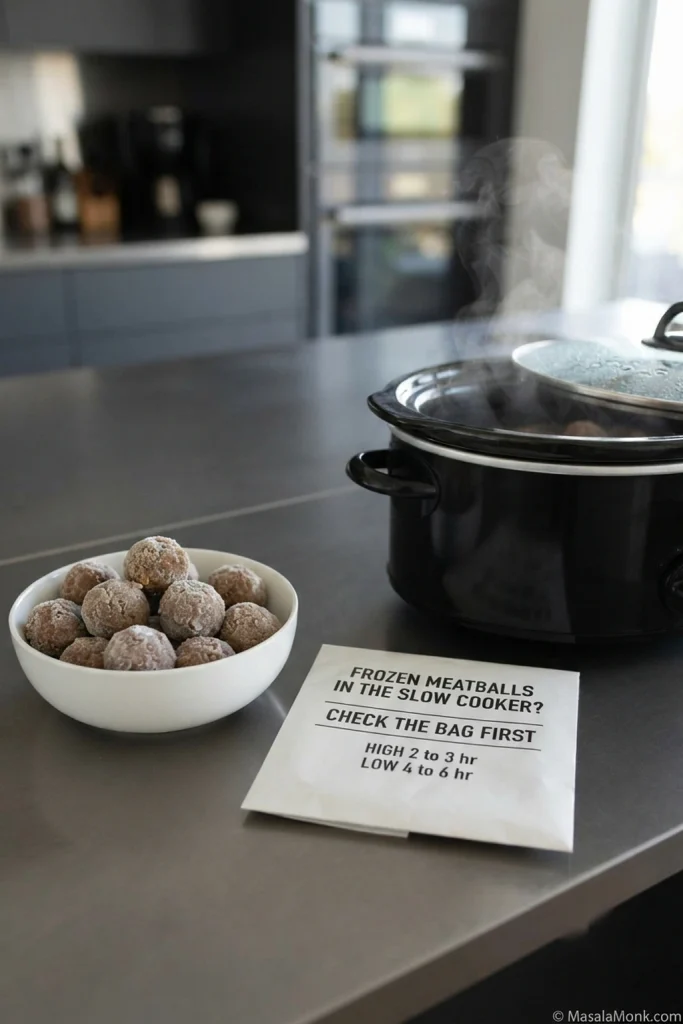
Sometimes—when the product itself gives slow-cooker-from-frozen directions. USDA’s general slow-cooker guidance recommends thawing meat and poultry first because frozen food warms more slowly. Some brands of fully cooked frozen meatballs, however, provide their own slow-cooker-from-frozen heating instructions. Follow the label on the product you actually bought.
How long? For fully cooked meatballs designed for slow-cooker heating, a typical range is about 2–3 hours on HIGH or 4–6 hours on LOW. Use the time on your bag if it says something different.
No Crock Pot directions on the bag? Use the oven, stovetop or microwave method it does provide. Heat the gravy separately, combine everything while hot, finish with the sour cream, then use WARM if you want the slow cooker to hold dinner for serving. If the stove is easiest tonight, jump to the stovetop fallback.
Which Meatballs Work Best?
Homestyle is the easiest fit. Its seasoning usually stays quiet enough for the creamy gravy, nutmeg and allspice to lead.
Only have Italian meatballs? Use them. Strong oregano, basil or garlic may show through in the sauce, so they are not the ideal match—but they are also not a dinner emergency.
Fully cooked turkey and chicken meatballs work too. Whatever style you buy, go by package weight rather than meatball count; sizes vary enormously.

Starting with raw ground beef instead? These oven-baked homemade meatballs are a better starting point than trying to adapt frozen-meatball timing.
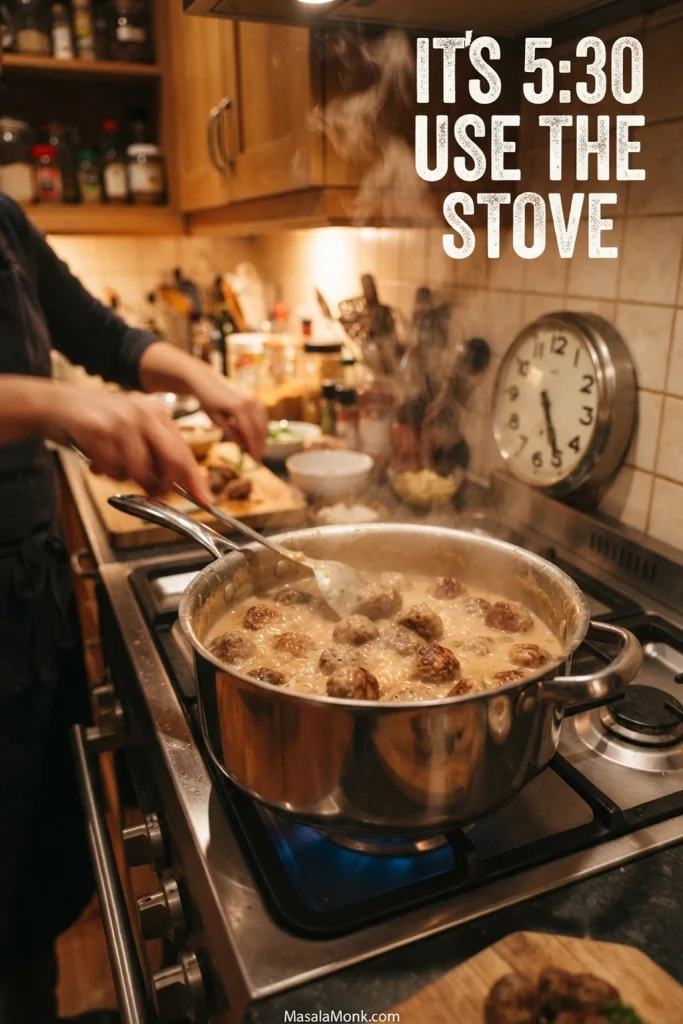
Found This Recipe at 5:30?
Use the stove.
Make the gravy in a large saucepan or Dutch oven and heat the meatballs according to their package directions. Bring them together once both are hot, fix the gravy if necessary, then lower the heat and add the tempered sour cream.
Still frozen at 5:30? Use the frozen-heating directions on the bag while you make the gravy on the stove. With many fully cooked meatballs, dinner can still come together in roughly 20–30 minutes.
Need the ingredient amounts again? Back to the recipe.
Substitutions That Work
Some swaps keep this essentially the same easy Crock Pot dinner. Others change the gravy enough that you’re really making a different version.
No Cream of Mushroom Soup?
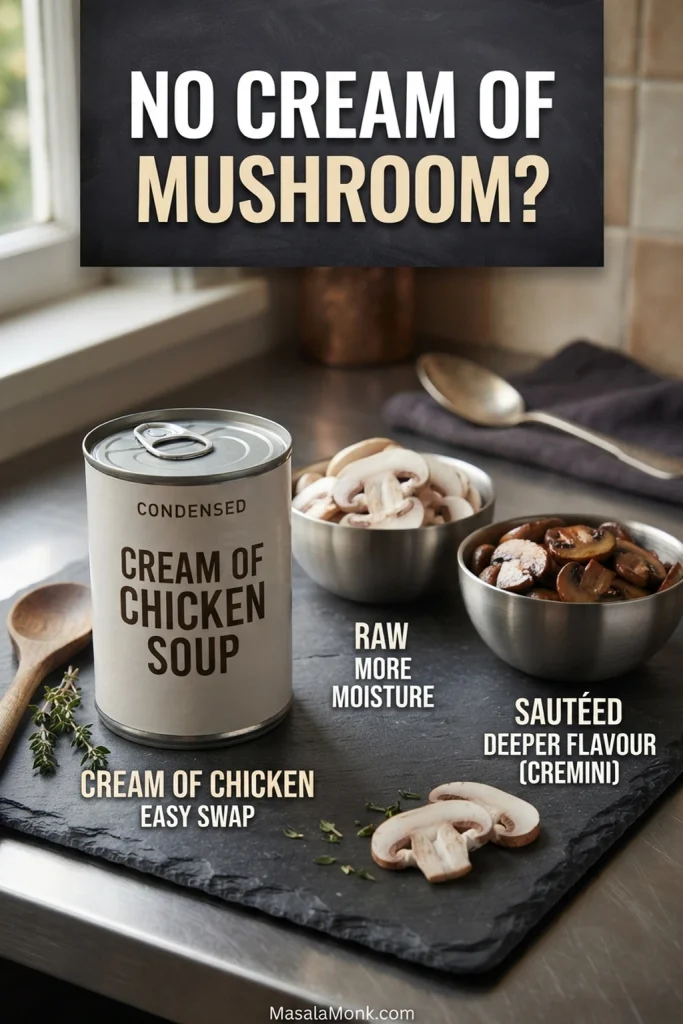
Condensed cream of chicken is the easiest straight swap. Use the same amount. You’ll lose some mushroom flavor, but the gravy keeps a similar creamy body.
Using cream of chicken but still want mushroom flavor? Add up to 8 oz / 225 g sliced mushrooms with the meatballs. Sautéing them first wins on flavor; adding them raw wins on convenience. Raw mushrooms release moisture as they cook, so hold back a little of the broth at first and loosen the gravy later if it needs it.
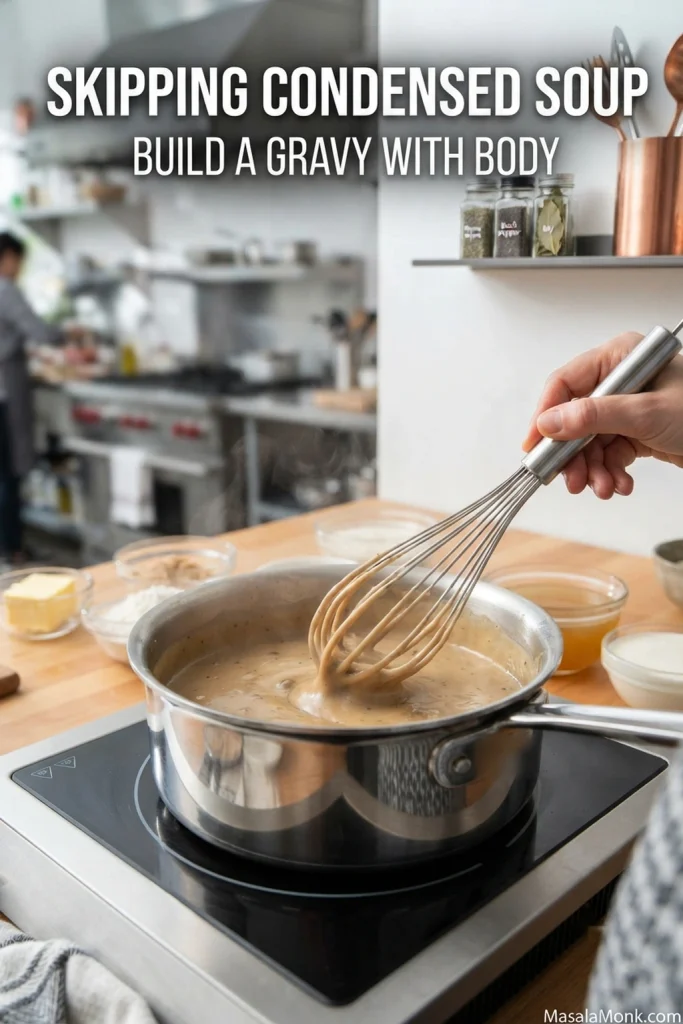
Avoiding condensed soup altogether? Don’t simply leave the can out; you would lose much of the gravy’s body as well as flavor. Replace it with a homemade gravy that has enough body to take the condensed soup’s place. The browned mushrooms and sauce in this creamy mushroom sauce are a useful starting point.
Other Ways to Adapt It
Greek yogurt instead of sour cream? Full-fat plain Greek yogurt is the closest easy substitute. Temper it with hot gravy and add it after the main cooking, just as you would sour cream.
Making the meatballs from scratch? The from-scratch Swedish meatballs recipe starts with beef and pork, skillet browning, pan fond and a roux-based cream gravy. Use that version when you want homemade meatballs and gravy rather than the frozen-meatball shortcut.
What to Serve with Swedish Meatballs
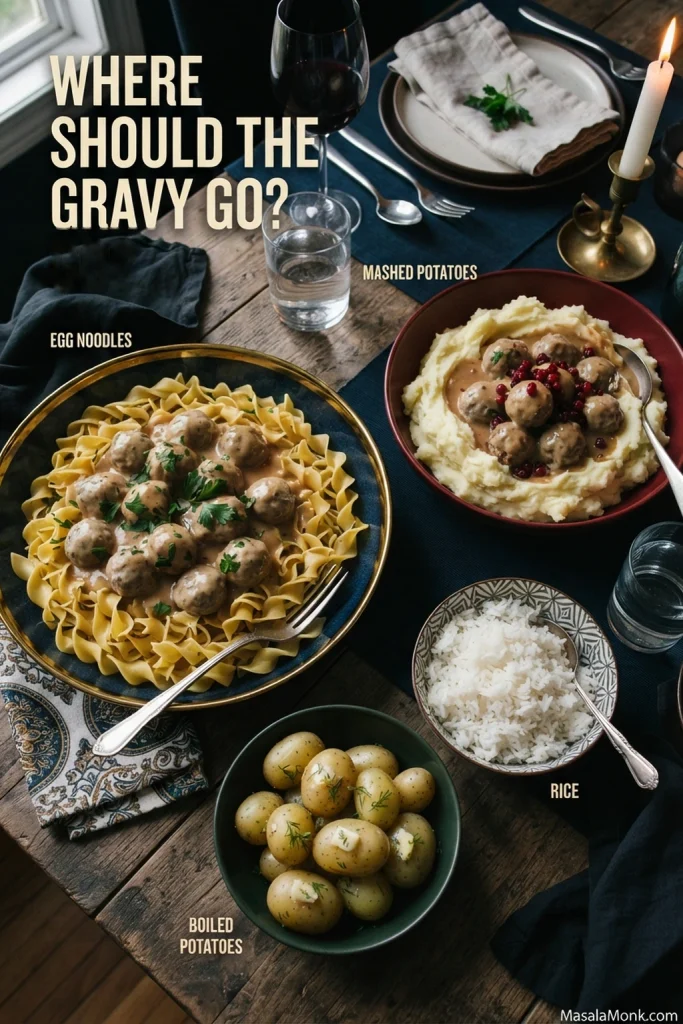
The best sides are the ones that give the gravy somewhere to go. A good plate should give you hot meatballs, plenty of rich, savory gravy and something underneath that catches every spoonful.
Wide Egg Noodles
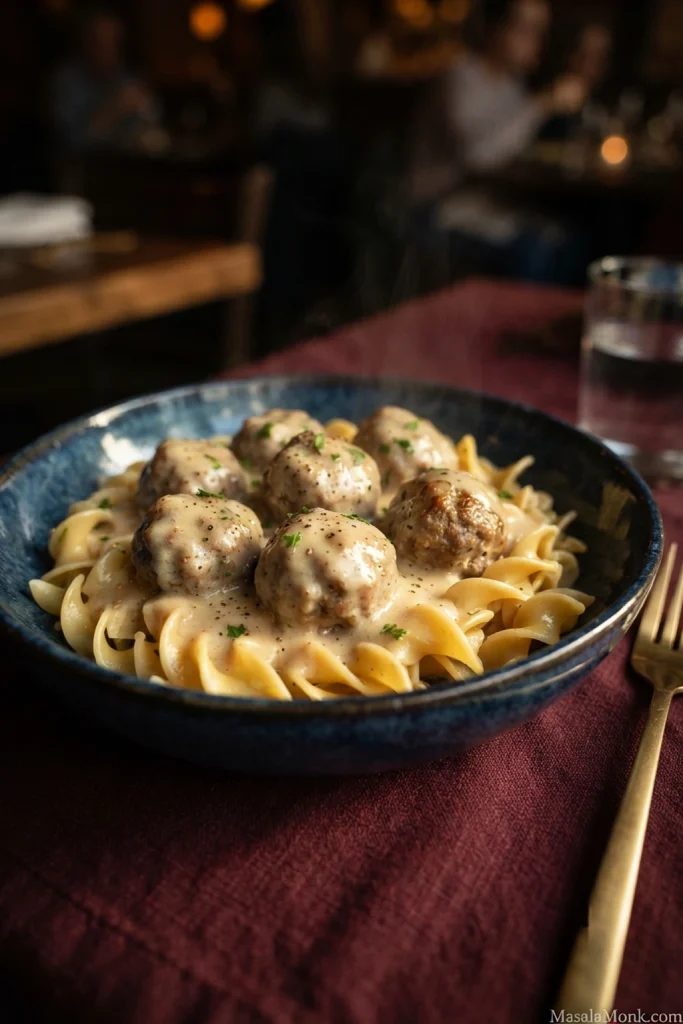
Wide egg noodles give you the familiar American Crock Pot dinner. About 12 oz / 340 g dry noodles is a sensible amount for one batch.
Do not add the dry noodles to the slow cooker. Cook them separately and spoon the meatballs and gravy over the top. They stay firmer, the gravy stays plentiful, and tomorrow’s leftovers are much better.
Potatoes and Rice
If gravy is the best part of dinner, mashed potatoes may beat the noodles. The sauce settles into every scoop instead of disappearing into pasta. This creamy mashed-potato method keeps them fluffy enough for a good ladle of gravy without turning heavy or gluey.

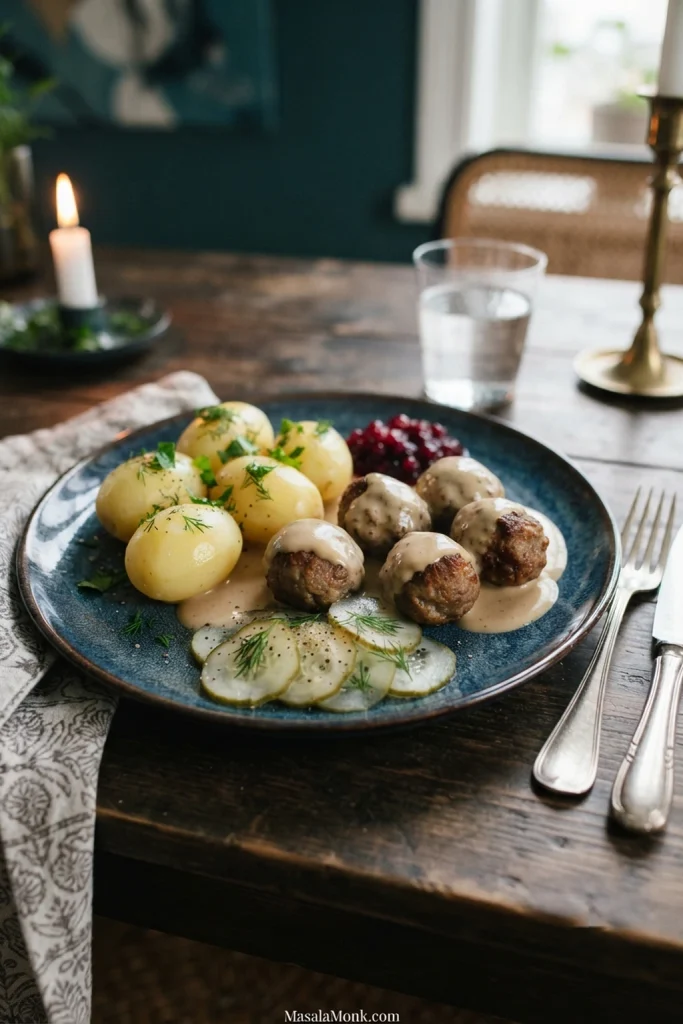
Boiled potatoes take the plate in a more Swedish direction and give the rich sauce a simpler backdrop. They’re especially good with lingonberry and something sharp or pickled alongside.
Rice works too. It isn’t the classic pairing, but it catches the sauce well and may already be in the pantry. This guide to cooking rice on the stovetop covers white, jasmine, basmati and brown rice if you need the ratios.
Lingonberry and Pickled Cucumber
A spoonful of lingonberry jam brings sweetness, tartness and a break from the creamy gravy. Red-currant preserves or tart cranberry sauce can fill the same role when lingonberry is hard to find.
Sweet-sour pickled cucumber cuts through the richness too.
Scaling Swedish Meatballs for a Crowd
Feeding a crowd works as long as the cooker has room and you don’t expect every ingredient—or minute—to scale neatly.
A two-pound batch gives you about 6 dinner servings or roughly 8–12 smaller appetizer portions, depending on meatball size and what else is being served.
- Do not overcrowd the base cooker. A true double batch may be too much for the 5–6 qt slow cooker used for this recipe. Use a larger cooker or split the batch between two rather than filling one to the brim.
- Scale the sauce carefully. Don’t automatically double the broth. Increase the soup, seasonings and finishing dairy too, then add only as much extra broth as the larger batch actually needs.
- Expect the timing to change. A larger amount of food can heat differently, so don’t assume the base recipe’s clock will be identical. Follow the directions for your meatballs and make sure everything is fully hot before serving.
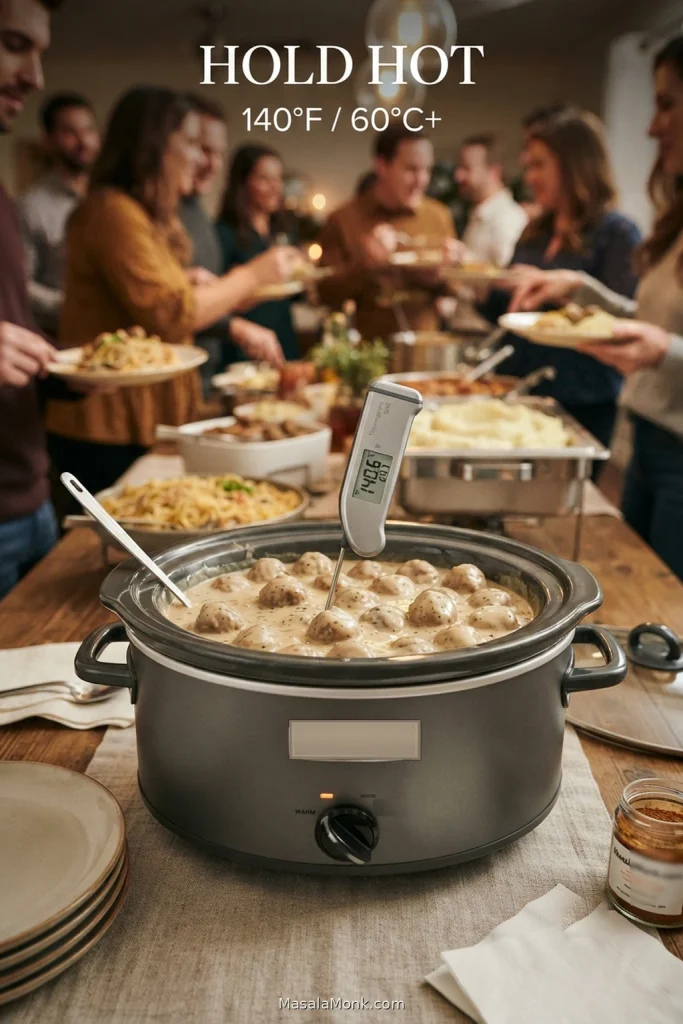
- Use WARM only after everything is fully hot. Keep the meatballs at 140°F / 60°C or above while serving and check with a food thermometer. Stir occasionally and add a little broth if the gravy thickens while it stands.
Making them the day before? Mix the gravy base and refrigerate it separately. The next day, follow your meatball package’s heating directions and allow for the gravy starting cold. Add the sour cream only at the end.
If the party really calls for sticky toothpick meatballs rather than creamy gravy, these Crock Pot grape jelly meatballs are a better fit for the job.
Storage, Freezing and Reheating
Refrigerate leftovers within 2 hours and use them within 3–4 days.
Keep egg noodles separate from the meatballs. Pasta keeps soaking up gravy in the refrigerator, which leaves you with softer noodles and less sauce tomorrow.
Freezing
For the smoothest sauce after thawing, freeze the meatballs and gravy before adding sour cream. Reheat the base first, then temper in fresh sour cream before serving.
Freeze the meatballs and gravy without cooked egg noodles too. Make fresh noodles after thawing rather than freezing them in the sauce.
A finished sour-cream gravy can still be frozen. It may look slightly grainier after thawing, but it’ll still taste good.

Reheating
For one or two portions, the microwave is easiest. Larger batches are better warmed gently in a saucepan. Add a splash of low-sodium broth if the cold gravy has become too thick.
Reheat leftovers to 165°F / 74°C. USDA reheating guidance does not recommend using a slow cooker to bring refrigerator-cold leftovers back up to temperature. Once the food is hot again, the Crock Pot can take over for holding.
Back to the recipe · Back to top
If you make them, tell us where the gravy ended up at your table: egg noodles, mashed potatoes, boiled potatoes—or something else entirely.








