
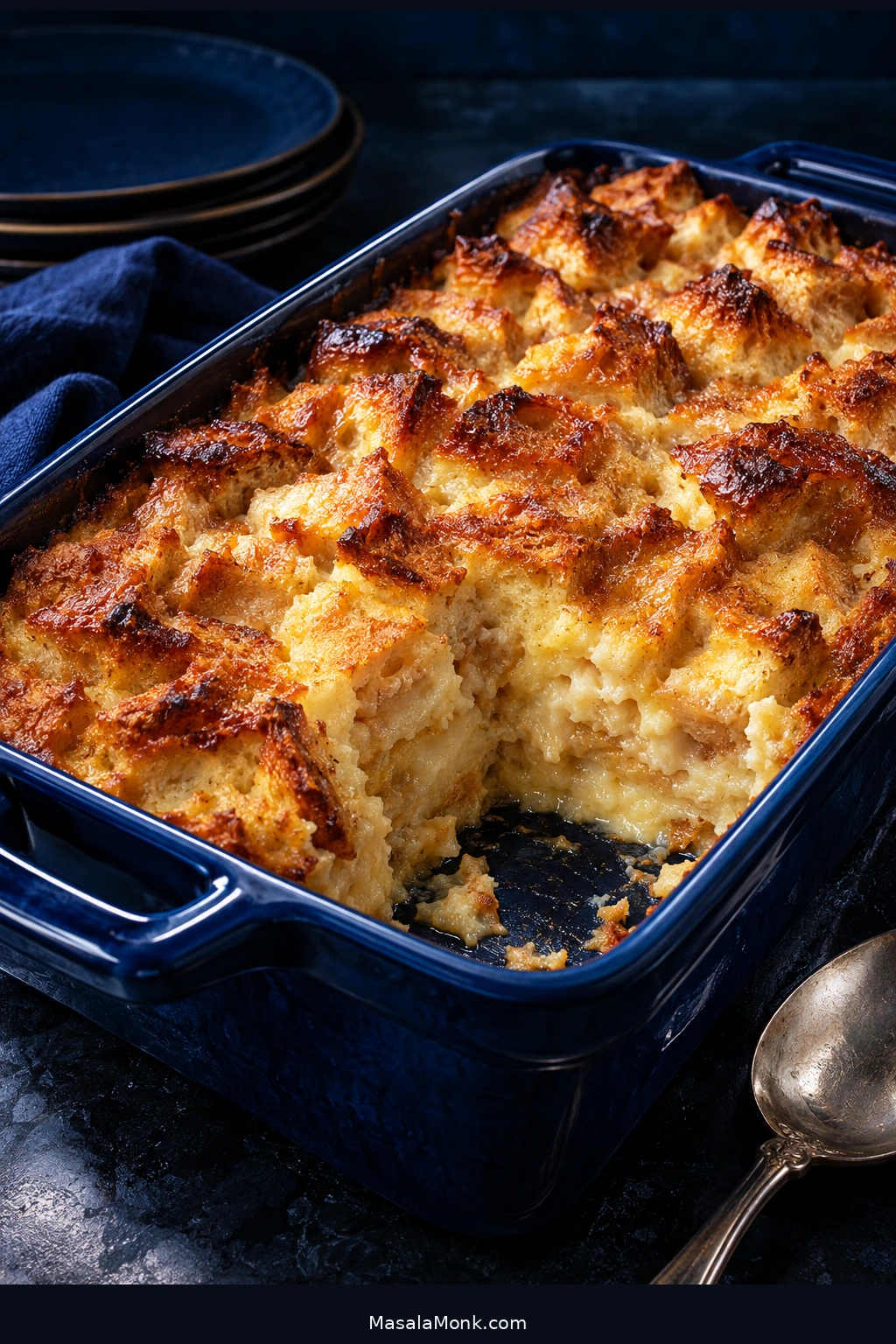
That loaf getting too dry for sandwiches is exactly where good bread pudding begins.
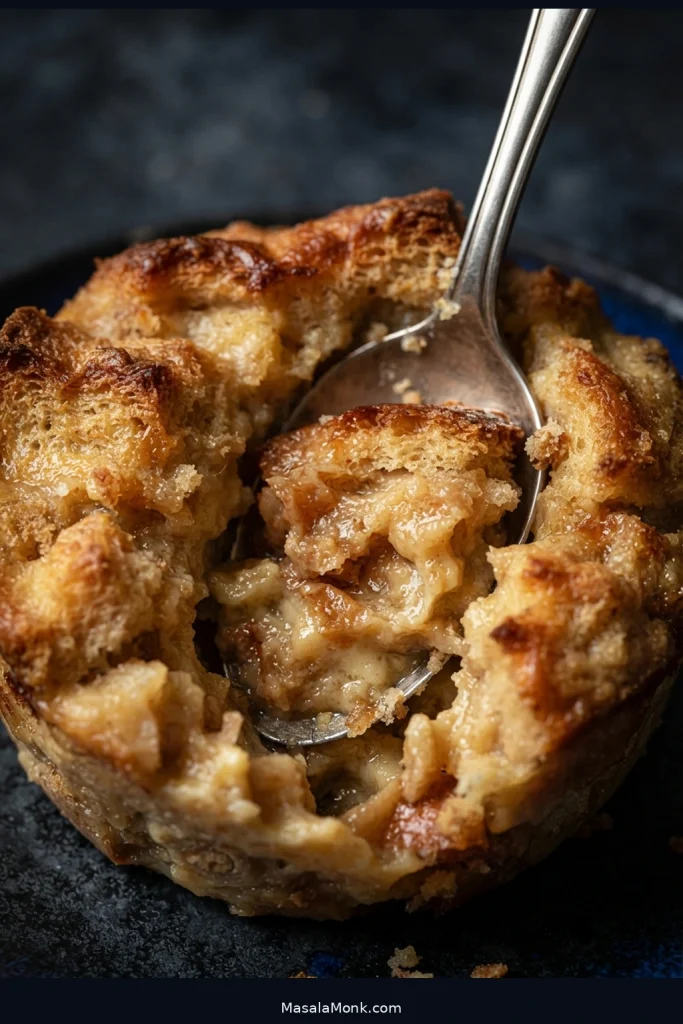
After a soak in vanilla-and-cinnamon custard and some time in the oven, the pieces underneath turn soft and spoon-tender while the bread left poking through the top picks up browned, lightly crisp edges.
At its simplest, American-style bread pudding is a baked custard dessert made by soaking stale or dried bread in milk, eggs, sugar and spices, then baking until the middle is softly set.
The center should stay custardy, with recognizable pieces of bread and some contrast from those toasted ridges on top—not a pan of wet mush.
Brioche is lovely here, but it certainly is not required. French bread, challah, ordinary white bread and even a mild sourdough can all make very good bread pudding. What matters is starting with bread that can take in plenty of custard without collapsing.
A useful way to picture it: the bread should drink in the custard without disappearing into it.
Go straight to: Make the bread pudding · Choose your bread · Fix a problem
Bread Pudding Recipe
The base version keeps things simple: whole milk, whole eggs, no water bath, and a broad baking dish that gives you plenty of browned surface. There is only about 15 minutes of hands-on work; most of the time is soaking, baking and resting.
| Yield | 10–12 servings |
|---|---|
| Hands-on time | About 15 minutes |
| Soak | About 20–30 minutes |
| Bake | About 45–55 minutes |
| Rest | 15 minutes |
| Total time | About 1 hour 35 minutes–1 hour 55 minutes |
| Oven | 350°F / 175°C conventional / about 160°C fan |
| Pan | 9 × 13-inch / 23 × 33 cm, about 3 qt / 2.8 L |
Add another 10–15 minutes if you need to dry fresh bread first.
Testing note: This MasalaMonk recipe is research-derived rather than independently kitchen-tested. Use the visual cues, texture checks and thermometer readings alongside the approximate timings.
Equipment
- 9 × 13-inch / 23 × 33 cm baking dish, roughly 3 qt / 2.8 L
- Large mixing bowl
- Whisk
- Kitchen scale, strongly recommended for the bread
- Baking sheet if your bread needs drying
- Instant-read thermometer, optional
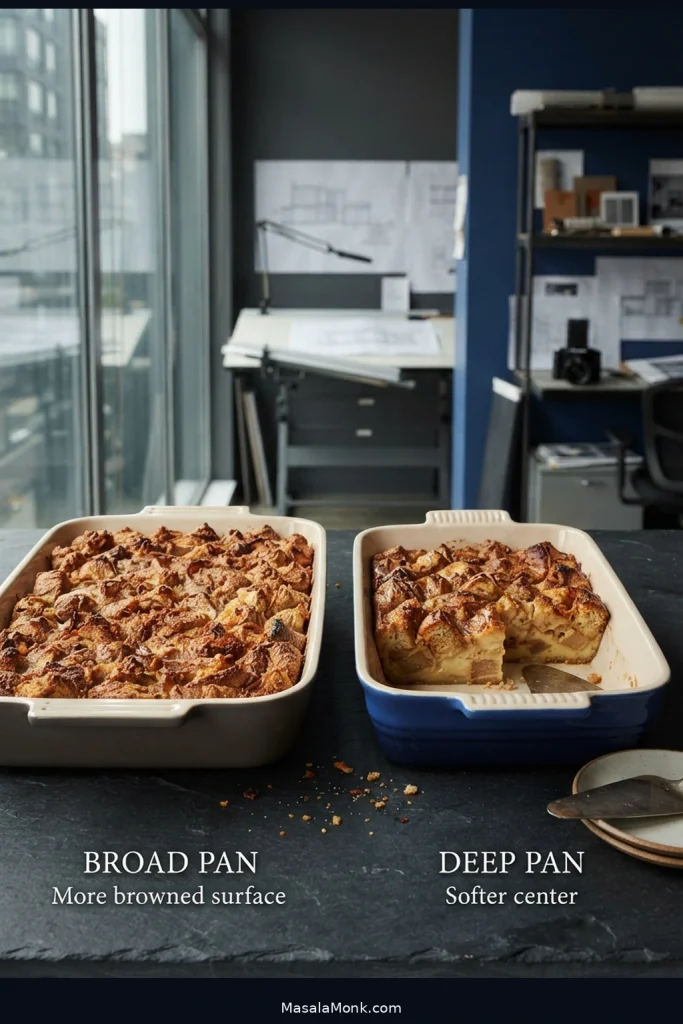
A broad 9 × 13-inch pan gives you proportionally more browned surface. A smaller, deeper dish gives you more soft center and fewer crisp edges, and it will generally take longer to bake through.
Ingredients
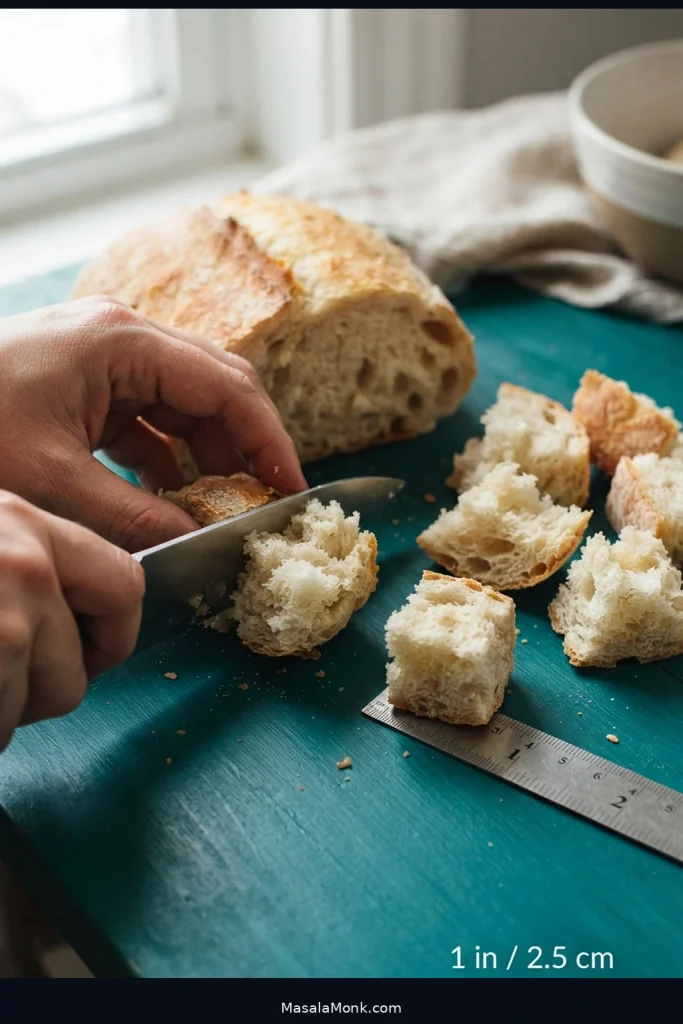
- 16 oz / 450 g stale or dried bread, usually around 10–12 loosely filled cups once cut into roughly 1-inch / 2.5 cm pieces
- 3½ cups / 830 ml whole milk
- 5 large eggs
- ¾ cup / 150 g granulated sugar
- 3 tablespoons / 42 g unsalted butter, melted, plus more for greasing the dish
- 2 teaspoons / 10 ml vanilla extract
- 1 teaspoon ground cinnamon
- Ground nutmeg: ¼ teaspoon
- ½ teaspoon fine salt
- ½ cup / about 75 g raisins, optional
Ingredient Notes and Substitutions
Use the bread weight if you can. Ten cups of fluffy sandwich bread can contain much less actual bread than 10 cups of dense baguette. The cup measurement is a practical backup; 450 g / 16 oz is the measurement to trust.
If the bread is already sweet—panettone, stollen or cinnamon-raisin bread, for example—start with around ½ cup / 100 g sugar. A heavily glazed or frosted bread may need even less.
For a richer pudding, replace up to 1 cup / 240 ml of the whole milk with half-and-half or heavy cream.
2% milk also works; the finished pudding will be slightly less rich.
Unsweetened, unflavored oat or almond milk can take the place of the whole milk, although richness and flavor vary by brand. Sweetened or vanilla-flavored versions will change the sweetness too.
Evaporated milk can replace part of the whole milk for a richer custard. For a full swap, use a recipe formulated around evaporated milk rather than treating it like ordinary milk.
Method
Prepare the Bread and Custard
- Prepare the bread. Slightly stale bread can go straight into the recipe. Fresh, soft bread benefits from a quick drying step: spread the pieces on a baking sheet and dry them at 300°F / 150°C for about 10–15 minutes. They should feel dry on the surface and a little firmer, without becoming deeply toasted or brittle.
- Heat the oven and prepare the pan. Set the oven to 350°F / 175°C conventional / about 160°C fan. After drying bread at 300°F / 150°C, raise the oven to the baking temperature. Butter a 9 × 13-inch / 23 × 33 cm baking dish and add the bread. Scatter the raisins through the cubes, if using, and tuck most between or underneath the pieces so they do not scorch on top.
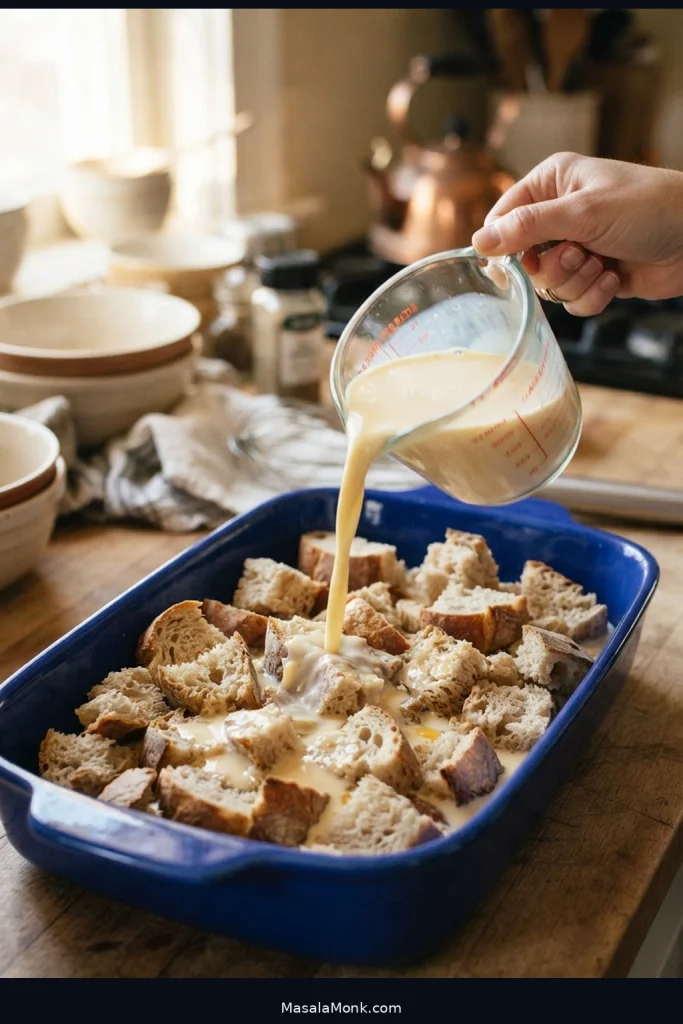
- Whisk and pour. Beat the eggs until the whites and yolks are well combined. Add the milk, sugar, vanilla, cinnamon, nutmeg and salt and whisk again. Pour slowly over the bread, then press and turn the pieces so the liquid reaches the whole dish.
Soak and Adjust
- Soak for about 20–30 minutes. Soft brioche or sandwich bread may be ready sooner; a very dry baguette may need longer. Press one of the larger pieces. It should feel moist through the middle while still holding together.
- Check the soak. A small amount of liquid between the pieces is fine. Dry bread sitting above a deeper pool needs to be pressed and turned, then given a few more minutes. When very dry bread has absorbed everything but still feels dry inside, add another 2–4 tablespoons / 30–60 ml milk and wait 5 minutes. Leave some bread exposed on top for crisp browned edges.
Bake, Check and Rest
- Add the butter and bake. Drizzle the melted butter over the soaked bread, especially the exposed pieces. Bake uncovered for about 45–55 minutes, beginning to check around 40 minutes. Once the top is deeply golden, tent it loosely with foil if the middle still needs time.
- Check the middle. It can still have a gentle wobble, but it should not move like liquid. An instant-read thermometer should register at least 160°F / 71°C in the center.
- Leave it alone for 15 minutes. The pudding settles as it rests. By the time you spoon into it, the bread underneath should be soft and custardy while the exposed ridges stay browned.
Bread varies too much for the clock to be the only judge. A dry French loaf and a soft supermarket white loaf can behave quite differently even when both weigh 450 g. Treat the times as a starting point and watch what is actually happening in the dish.
The Bread: Dry Enough to Absorb, Strong Enough to Stay Bread
Bread pudding did not become a useful leftover dessert because everyone happened to have brioche going stale.
Different breads mostly change two things: how quickly they absorb the custard and how much structure remains afterward.
What Is the Best Bread for Bread Pudding?
Day-old French bread and challah give you a sturdy, classic pudding. Brioche makes a richer, softer one, while ordinary white bread does well once it has been dried first.

| Bread | How It Behaves |
|---|---|
| French bread / baguette | Sturdy pieces and plenty of browned edges. Very dry baguette may need a longer soak or a small splash of extra milk. |
| Brioche | Rich, soft and buttery. Fresh brioche absorbs quickly, so do not soak it by the clock alone. |
| Challah | Rich but sturdy enough to keep recognizable pieces. Dry a very fresh loaf first. |
| White / sandwich bread | Soft, inexpensive and familiar. It can lose structure if used very fresh or soaked too long. |
| Mild sourdough | A firmer crumb and more character. A strongly sour loaf will make its acidity noticeable in the finished pudding. |
| Croissants | Exceptionally rich and tender. Handle them lightly because they are already soft and high in butter. |
| Panettone, stollen or cinnamon-raisin bread | Fruit, spice and sweetness are already built in, so reduce the sugar in the custard. |
You can mix compatible leftovers too. A few slices of white bread, some baguette and a little brioche will soften at different speeds, but they can still share the same dish.
Garlic bread, onion bread and strongly cheesy loaves are better saved for a savory version.
Fresh, Day-Old or Very Dry Bread
Day-old bread is the easiest starting point. Fresh bread needs the brief drying step in the recipe. Very dry bread needs more time to absorb the custard, so check the middle of a piece rather than judging by its wet surface.
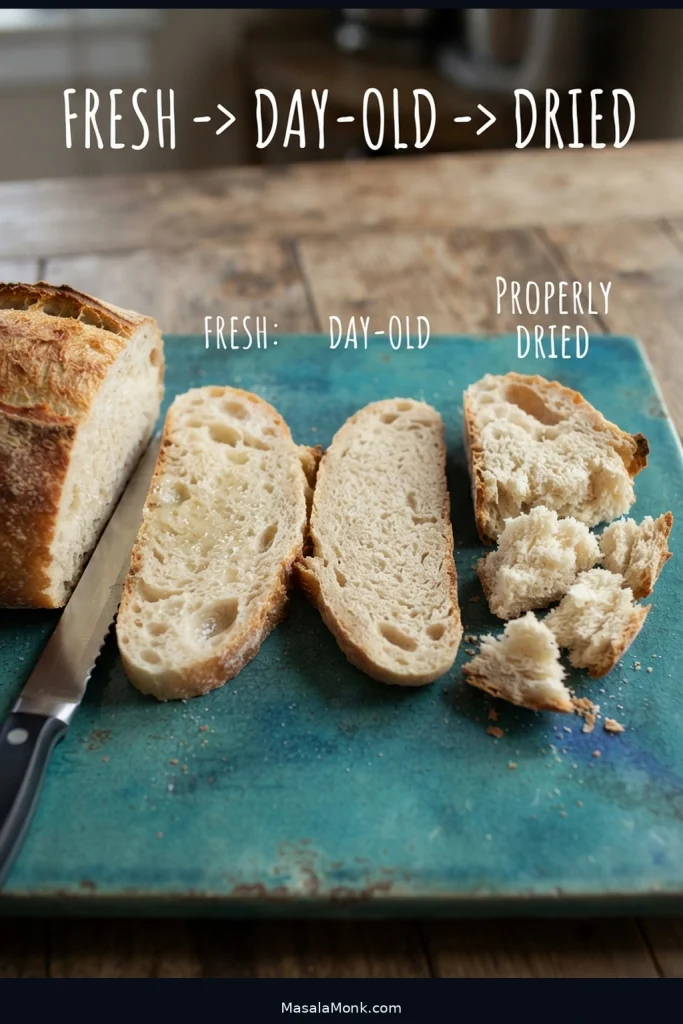
Frozen bread should be thawed first. A soft, moist crumb still needs drying; a loaf that thawed firm and dry can be treated like other stale bread.
Use bread that still smells and tastes good. Moldy or rancid bread belongs in the bin, not under custard.
How Long Should Bread Pudding Soak?
Most bread needs about 20–30 minutes to soak, although very dry bread may need longer and soft bread may need less.
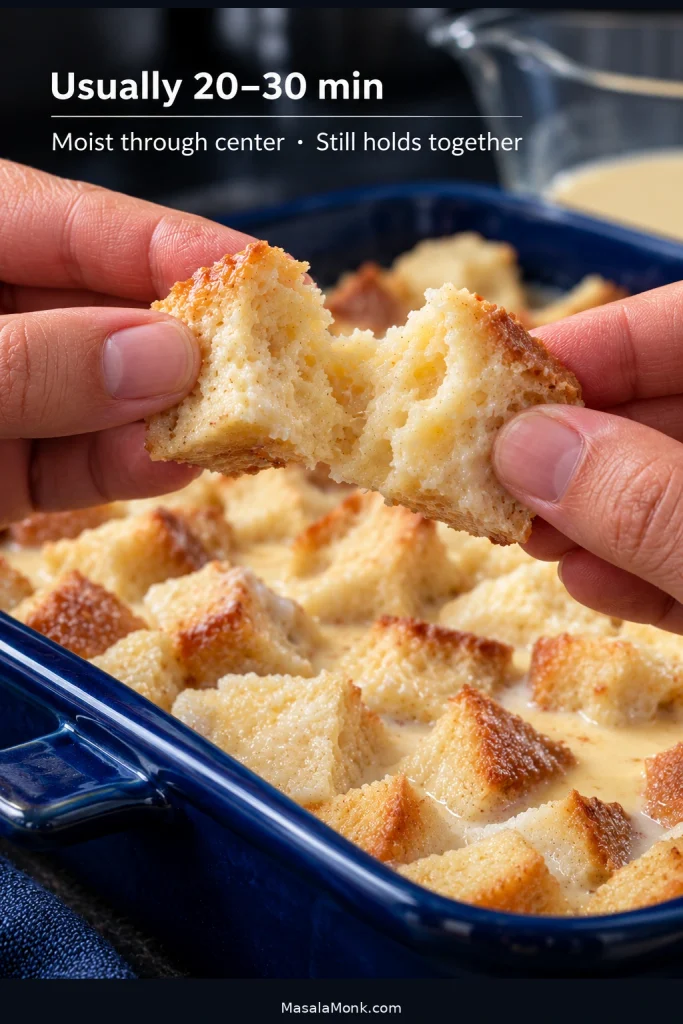
A firm baguette may still have a dry core after 20 minutes. Very soft sandwich bread may already be saturated. Press or tear into one of the larger pieces if you are unsure.
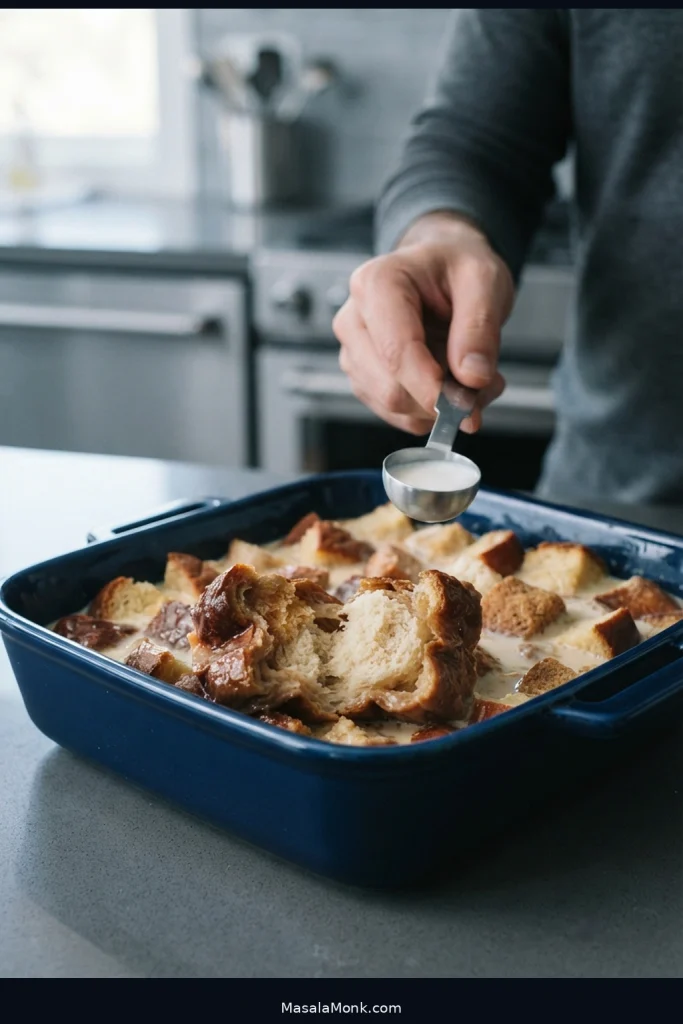
You can also assemble the pudding and refrigerate it overnight. The longer soak creates a more uniform, cohesive texture than the shorter version.
Ready to continue? Return to the recipe method.
What the Custard Should Look Like Before and After Baking
Once the bread is properly saturated, the rest is mostly about preserving the contrast: soft underneath, browned where the bread is exposed to the oven.
How Wet Should Bread Pudding Look Before Baking?
After the soak, press one of the pieces. It should feel heavy with custard, and you may see some liquid rise around it.
Bread sticking up above the surface is a good thing. Those exposed peaks lose moisture in the oven and become the crispest bites in the dish.
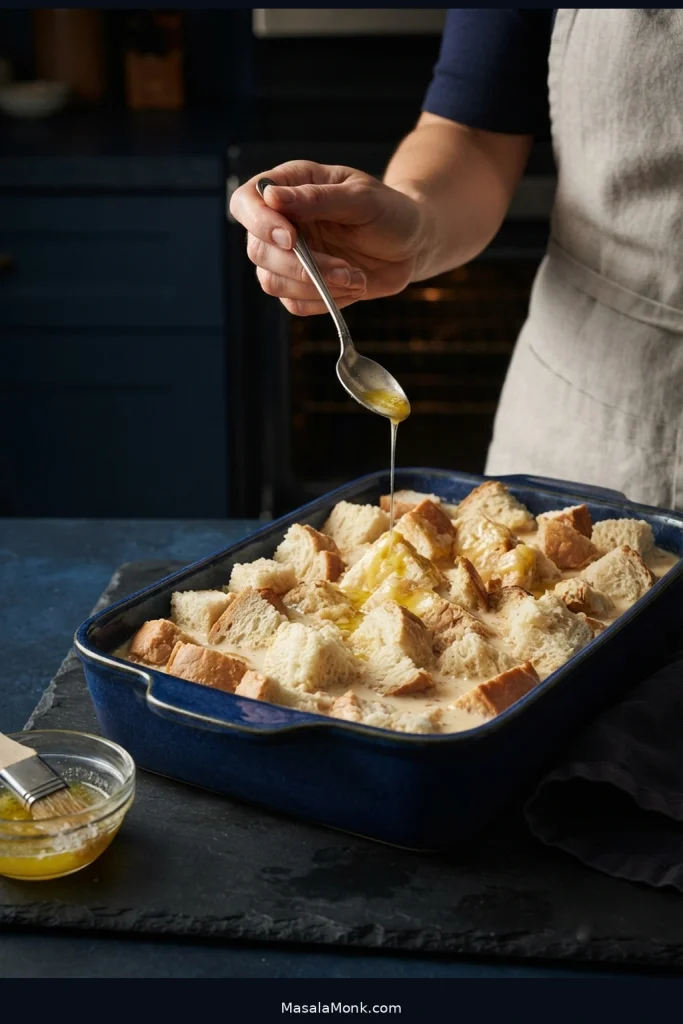
A shallow amount of liquid between the cubes is fine. A large pool underneath mostly dry bread means the dish needs another turn, another press and a few more minutes before baking.
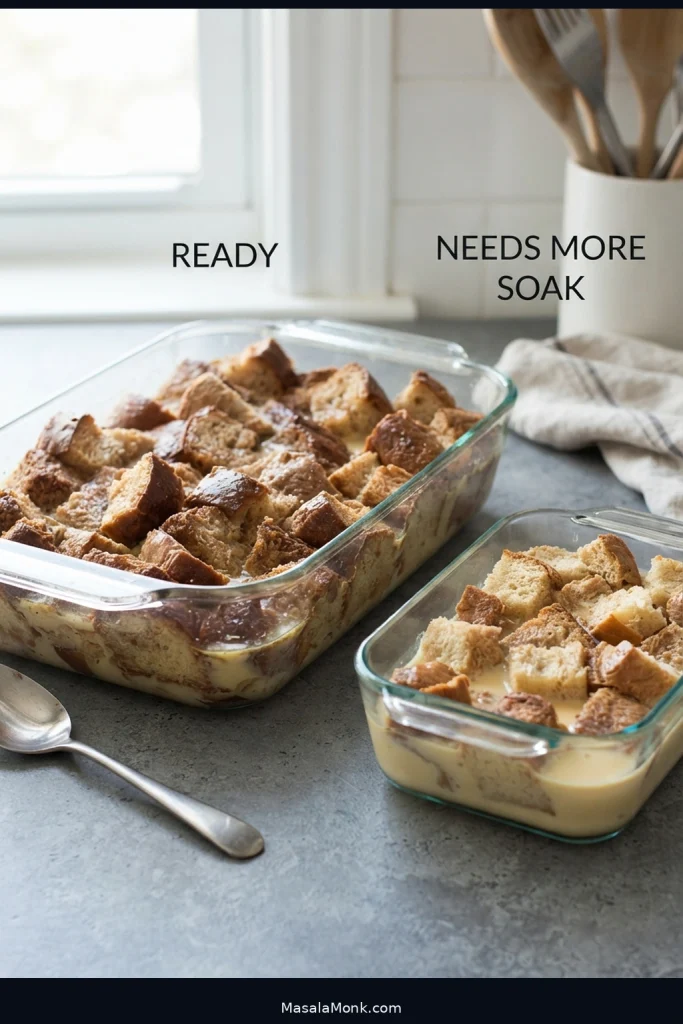
How Do You Know When Bread Pudding Is Done?
- Look: golden top, set edges.
- Move: wobble, not slosh.
- Measure: at least 160°F / 71°C in the center.

Use the clock to tell you when to start looking. Let the center decide when it comes out.
A toothpick is not especially useful here. Depending on where it lands, you may be testing a soaked bread cube rather than whether the custard around it has set.
That minimum temperature is consistent with USDA guidance for cooked egg dishes. A few degrees above that minimum can still leave the center softly set; there is no need to keep baking until it feels firm like cake.
Juicy fruit can stretch the bake. The pudding may also puff quite dramatically in the oven. That’s fine; it settles again as it cools.

Give it about 15 minutes before serving. Fresh from the oven, the middle can look softer than you expect. After the rest, spoon into the center: you want soft custard around the bread, browned ridges on top, and no thin liquid running back into the space you just made.
Why Bread Pudding Turns Soggy, Dry or Eggy
If yours does not look like that, sogginess usually comes from very soft fresh bread breaking down, too much liquid for the amount of bread, or an underbaked center.
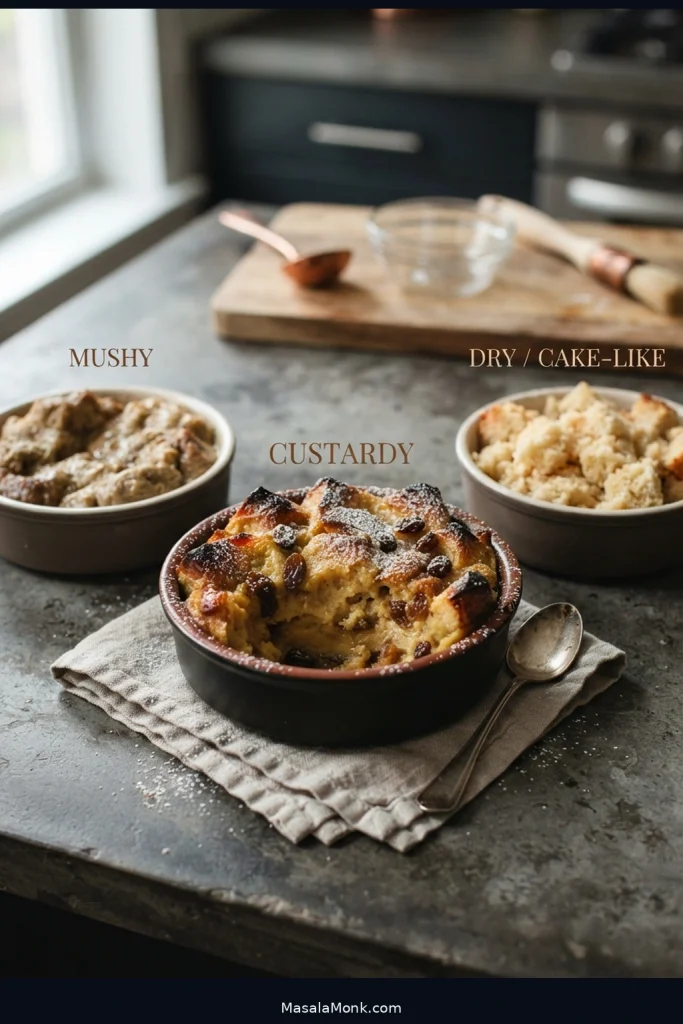
The Top Is Brown but the Middle Is Still Wet
Liquid that sloshes when you move the dish means the center needs more time. A deep pan, a refrigerator-cold pudding or a lot of juicy fruit can all slow the middle down. Once the top has enough color, cover it loosely with foil and keep baking until the center wobbles rather than sloshes.

The Whole Pudding Turned Mushy
Very fresh, very soft bread is the usual suspect, especially after a long soak. The individual pieces disappear into one soft mass instead of remaining distinct. Dry fresh bread first, weigh it rather than relying only on cups, and shorten the soak for fragile loaves.
It Came Out Dry or Cake-Like
It probably stayed in the oven too long, or there was too much bread for the amount of custard. Once the creamy center disappears and the bread starts eating more like cake, it has gone too far.
It Tastes Eggy or Feels Rubbery
Whisk the eggs thoroughly before adding the milk. Little streaks of poorly mixed egg can cook separately. A generally rubbery pudding is more often a sign that the custard stayed in the oven too long.
It Is Too Sweet—or Somehow Still Bland
Sweet bread plus the full amount of sugar plus a sweet sauce can become cloying quickly. Use the lower sugar amount when the bread already contains plenty of sugar, fruit or icing.
When the pudding tastes flat rather than insufficiently sweet, check the salt, vanilla and spice before reaching for more sugar.
Problem solved? Back to the bread pudding recipe · See the sauce options.
Bread Pudding Sauce: Does It Need One?
No. The pudding should taste good by itself.
Warm vanilla sauce is a different kind of pleasure, though. Spoon it over while the pudding is still warm and it runs into the softer bread while catching around those crisp edges on top.

Quick Vanilla Sauce
Makes about 1½ cups.
- 1½ cups / 360 ml whole milk
- ⅓ cup / 65 g granulated sugar
- 1½ tablespoons / about 12 g cornstarch
- Pinch of salt
- 1 tablespoon / 14 g unsalted butter
- 2 teaspoons / 10 ml vanilla extract
Whisk the cold milk, sugar, cornstarch and salt together in a small saucepan until smooth. Cook over medium heat, whisking regularly, until it reaches a gentle simmer and lightly coats the back of a spoon. It should still pour easily.

Take the pan off the heat and whisk in the butter and vanilla. If the sauce thickens as it stands, loosen it with a splash of milk.
Keep leftover sauce refrigerated separately from the pudding. Reheat it gently and loosen it with a little milk if needed.
Caramel sauce is richer and sweeter. Rum, bourbon or whiskey sauce adds a warm, boozy note. Vanilla ice cream needs no explanation, and softly whipped cream works especially well when you want something rich without another very sweet topping.
Add-Ins and Sweet Breads
Dried cranberries, chopped dates, chocolate chips and toasted nuts are easy additions because they contribute very little extra liquid.
Fresh fruit brings extra moisture into the pudding. Berries and juicy apples release liquid as they bake, while bananas soften into the surrounding bread. A fruit-heavy pudding can therefore take longer to set.

Sweet breads such as panettone, stollen and leftover cinnamon rolls behave much like other enriched breads but bring extra sugar, fruit or icing of their own. Use the lower sugar amount in the ingredient notes.
Hard, dry raisins benefit from about 10 minutes in hot water. Drain and pat them dry before adding them to the bread.
Make Ahead, Store and Reheat
Assemble It the Night Before
You can assemble bread pudding up to about 24 hours ahead, cover it and keep it refrigerated until you are ready to bake.
Before baking, press the bread back into any liquid that has collected at the bottom. Because the dish starts refrigerator-cold, expect it to need longer in the oven.

If what you really want is an overnight bread-and-custard breakfast, French toast casserole is built for that.
Refrigerating Leftovers
Bread pudding reheats well, which is useful when a large pan leaves you with a few portions for later. Cool leftovers promptly, cover and refrigerate for 3–4 days. Keep sauce separate when practical so the pudding is not sitting in extra liquid.
Reheating Without Drying It Out
For one serving, cover loosely and microwave until hot through. For several portions, cover the dish and warm it at about 325°F / 165°C. Uncover for the last few minutes if you want some texture back on top. Reheat leftovers to 165°F / 74°C in the center.
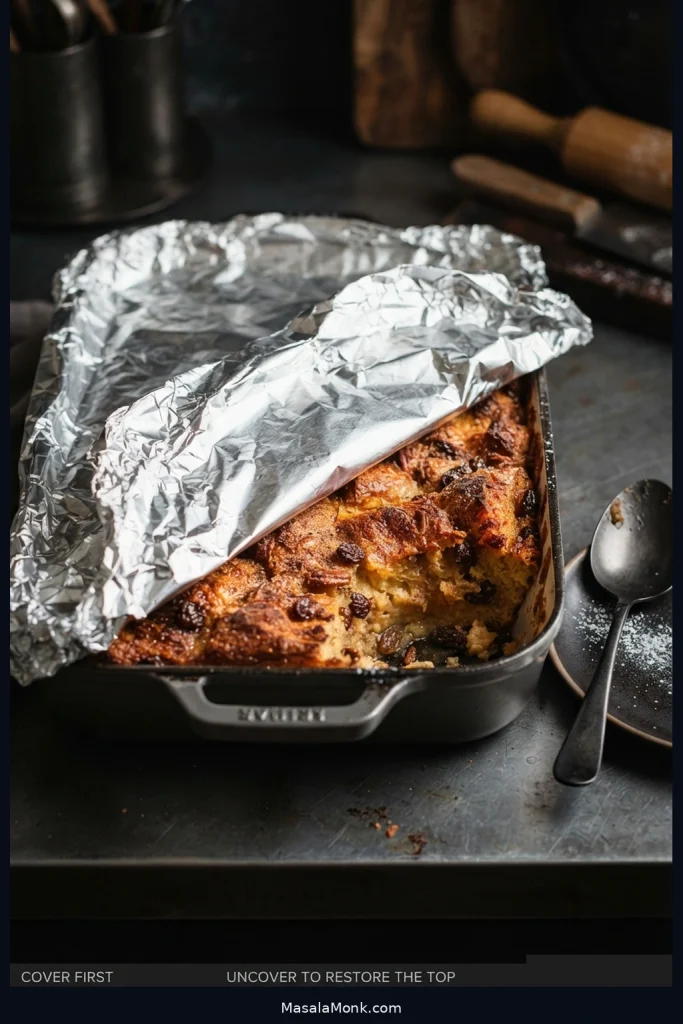
Freezing: for the best texture, eat bread pudding fresh or refrigerated. To freeze it, wrap individual portions well and keep them for up to about 2 months, preferably without sauce. Thaw in the refrigerator before reheating.
Bread Pudding FAQ
Can I Use Sweetened Condensed Milk?
Not as a direct cup-for-cup replacement. Sweetened condensed milk is far sweeter and more concentrated than ordinary milk, so it changes both the sweetness and liquid balance of the custard.
Can I Just Leave Out the Eggs?
Not in this formula. The eggs are what set the milk into custard. An eggless bread pudding needs another thickening system; omitting all five eggs will not give you the same dessert.
Is American Bread Pudding the Same as British Bread Pudding?
Not quite. This recipe is the soft, custardy American-style dish. Traditional British bread pudding is generally denser and sliceable, while bread and butter pudding usually uses layered buttered bread with custard. They are related, but the finished textures are quite different.
Back to what you need: Bread pudding recipe · Troubleshooting · Reheating.
There is something satisfying about turning the loaf nobody was reaching for into a dessert everyone wants warm from the oven.
If you make it, tell us which bread you used and roughly how long yours needed to soak. Those two details are genuinely useful to someone making the same pudding with a different loaf.








