Posted on Leave a comment

Cream of Mushroom Pork Chops Recipe

Cream of mushroom pork chops with glossy mushroom gravy, browned pork edges, sliced mushrooms, parsley, and mashed potatoes on a warm plate.

You are not here for a complicated pork chop dinner. You have pork chops, a can of cream of mushroom soup, and the hope that the gravy turns creamy while the pork stays juicy. This recipe keeps that old-school shortcut, then gives it better timing, better gravy, and fewer dry-pork surprises.

These cream of mushroom pork chops are built for a real weeknight: brown the pork, loosen condensed soup into mushroom gravy, simmer gently, and stop before the chops turn tough. It is cozy pantry cooking, handled with just enough care.

The simple formula is 4 pork chops, 1 can of condensed cream of mushroom soup, and ⅓ to ½ cup broth, milk, or water. Use ⅓ cup liquid for thicker gravy, ½ cup for a looser sauce, and chicken broth when you want fuller flavor without making the recipe harder.

The fast skillet version comes first because it is the easiest dinner for most nights. If you meant baked pork chops, crock pot pork chops, pork chops and rice, potatoes, stuffing, Campbell’s-style pork chops, or extra-smothered gravy, those notes are included too — because each version cooks differently.

Quick Answer: Cream of Mushroom Pork Chops with Mushroom Soup Gravy

To make cream of mushroom pork chops, brown 4 seasoned pork chops in a skillet, whisk 1 can of condensed cream of mushroom soup with ⅓ to ½ cup chicken broth, milk, or water, then simmer gently until the thickest chop reaches 145°F / 63°C. Rest for 3 minutes and spoon the creamy mushroom gravy over the top.

Good default: use ¾–1 inch pork chops, ⅓ cup chicken broth, a 12-inch skillet, and low heat once the soup goes in. That combination gives you golden-edged pork and gravy thick enough to settle into mashed potatoes, rice, or egg noodles.

Bare pantry version: pork chops, condensed cream of mushroom soup, ½ cup water, and black pepper. It tastes simpler and more nostalgic, but it still works when dinner just needs to happen.

Gravy can wait. Pork cannot. Let the gravy be flexible, but treat the pork like it has a deadline. If the chops are done before the sauce is perfect, move them out and fix the gravy by itself.

This is the kind of dinner where the gravy matters as much as the pork: thick enough for mashed potatoes, loose enough to spoon, and savory enough to make a plain side feel finished.

If you are not making the skillet version, jump to the baked version, crock pot version, or pork chops and rice version.

Skillet Recipe Snapshot

Use4 pork chops, preferably ¾–1 inch thick
Soup1 can condensed cream of mushroom soup, 10.5 oz / 298 g
Liquid⅓ cup broth for thick gravy; up to ½ cup milk, broth, or water for looser sauce
Optional upgrade8 oz mushrooms, ½ onion, garlic, Worcestershire, Dijon
MethodBrown chops, make mushroom gravy, simmer gently, rest before serving
TimeAbout 30 minutes for the skillet version
Doneness145°F / 63°C plus a 3-minute rest
Skillet recipe snapshot showing raw pork chops, cream of mushroom soup, broth, mushrooms, onion, herbs, and the formula four chops plus one can plus one-third to one-half cup liquid.
Keep the skillet formula simple: pork chops, one can of cream of mushroom soup, and just enough liquid to turn condensed soup into spoonable gravy.

Many old canned-soup pork chop recipes simmer everything by time. This version uses the same pantry shortcut but changes the control point: the gravy can be adjusted by texture, while the pork is cooked by temperature.

Cooking with chicken instead tonight? Our cream of mushroom chicken recipe uses the same cozy canned-soup idea, but the timing and doneness are built around chicken instead of pork.

At a Glance: Gear, Sides, and Watchouts

QuestionQuick answer
SkilletUse a 12-inch skillet if adding mushrooms and onions; a 10-inch skillet works for the simplest pantry version.
Helpful equipmentTongs, whisk or sturdy spoon, instant-read thermometer, and a plate for resting pork.
Method choiceUse the skillet for speed, the oven for covered bakes, and a casserole method for raw rice, potatoes, or stuffing.
Easy sidesMashed potatoes, rice, egg noodles, green beans, peas, broccoli, biscuits, or a sharp salad.
Biggest mistakes to avoidOvercooking thin chops, hard-boiling the sauce, adding too much liquid, and salting too early.

Skillet, Baked, Crock Pot, or Rice: Which Cream of Mushroom Pork Chops Version Should You Make?

The same can of soup can become several different dinners. A quick skillet meal, an oven bake, a slow cooker dinner, and pork chops with rice all sound similar, but they do not need the same amount of liquid or time. Pick the path first, then the recipe gets much easier.

If you want…Use this methodWatch out for
Fast creamy pork chopsMain skillet methodThin chops overcook quickly once they go back into the sauce.
The old-school canned-soup shortcutCampbell’s-style pork chopsWater is classic, but broth gives a more savory gravy.
Oven-baked pork chopsCovered baked versionDo not bake lean chops by the clock; check early.
Crock pot pork chopsSlow cooker versionVery thin boneless chops can dry out before they taste tender.
Rice versionCooked rice side or baked rice casseroleUncooked rice needs more liquid and longer covered heat than skillet pork.
Potato versionMashed potatoes side or covered potato bakeRaw potatoes must be sliced thin and cooked like a casserole.
Stuffing versionCovered stuffing bakeDry stuffing steals moisture unless it is hydrated first.
Extra gravy / smothered pork chopsSmothered variationLet the pork rest while you make the extra gravy rich.
Visual chooser showing skillet, baked, crock pot, rice, potato, stuffing, and smothered cream of mushroom pork chop versions.
Start by choosing the dinner path: skillet stays quick, baked and crock pot need longer heat, and rice, potatoes, or stuffing need their moisture planned from the beginning.

Easy distinction: the skillet recipe cooks pork chops in a creamy sauce. Rice, potatoes, stuffing, and slow-cooker versions also have to manage starch or long heat, so the moisture and timing change.

Why This Recipe Works

This recipe keeps the part people love — pork chops in creamy mushroom soup gravy — while fixing the parts that usually go wrong.

  • Browning gives the pork a savory edge. The mushroom gravy softens everything later, but the first sear keeps the chops from tasting flat.
  • The soup-to-liquid ratio stays controlled. Condensed soup needs a little help becoming gravy, not a whole pan of liquid.
  • Mushrooms and onion make the shortcut taste more like dinner. They are optional, but they add sweetness, texture, and deeper mushroom flavor.
  • A gentle simmer protects lean pork. Once the sauce goes in, slow bubbles are your friend. A hard boil is how creamy dinners turn tough.
  • A thermometer separates the pork from the gravy problem. Once the chops are done, the sauce can keep thickening without them.

The result is still the creamy canned-soup dinner people remember, but with browned edges, a spoonable sauce, and pork that does not need to hide under the gravy.

This is not a recipe that asks you to pretend a can of soup is fancy. It simply helps that can do its job better: make creamy gravy, keep dinner simple, and give the pork chops something comforting to sit in.

Ingredients for Pork Chops with Cream of Mushroom Soup

The ingredient list is short, which is exactly why the small choices matter. The soup brings the creamy base, the liquid sets the gravy texture, and the chop thickness decides how much breathing room you have before dinner goes from juicy to dry.

Ingredients for cream of mushroom pork chops, including pork chops, cream of mushroom soup, broth, mushrooms, onion, garlic, Worcestershire sauce, parsley, and black pepper.
Even with condensed soup, the flavor improves when mushrooms, onion, broth, and black pepper turn the shortcut into a real mushroom gravy.

Bare pantry version: pork chops + condensed cream of mushroom soup + water + black pepper. Better weeknight version: add chicken broth, mushrooms, onion, garlic, Worcestershire, and thermometer timing. Both are valid; one is just more layered.

Core Ingredients and Optional Upgrades

Split image comparing bare pantry pork chops with cream of mushroom soup, water, and pepper against an upgraded version with mushrooms, onion, garlic, broth, Worcestershire sauce, and parsley.
The bare pantry version works when dinner just needs to happen. Mushrooms, onion, broth, and a savory booster make the same shortcut taste fuller.
IngredientAmountWhy it matters
Pork chops4 chops, about 1½–2¼ lb / 680 g–1 kg totalBoneless or bone-in both work. Chops around ¾–1 inch thick are easiest to keep juicy.
Condensed cream of mushroom soup1 can, 10.5 oz / 298 gThe shortcut base for the creamy mushroom gravy. Low-sodium soup gives you more control if using broth or seasoning mix.
Chicken broth, milk, or water⅓–½ cup / 80–120 mlTurns condensed soup into sauce. Broth is savory, milk is creamy, water is classic.
Fresh mushrooms8 oz / 225 g, slicedOptional but recommended for deeper mushroom flavor and a more homemade texture.
Onion½ medium / 75–100 g, thinly sliced or dicedAdds sweetness and helps the sauce taste less like it came straight from the can.
Garlic2–3 cloves, mincedAdds savory depth; use garlic powder if that is what you have.
Oil + butter1 tablespoon eachOil helps sear the pork; butter helps sauté mushrooms and onion.
Black pepper½ teaspoon, plus more to tasteBalances the creamy sauce and keeps the flavor from tasting sleepy.
Worcestershire sauce1–2 teaspoons / 5–10 ml, optionalAdds a savory edge that makes the gravy taste fuller.
Dijon mustard1 teaspoon / 5 g, optionalAdds a small sharp note without making the sauce taste mustardy.
Parsley1–2 tablespoons, chopped, optionalFreshens the finished plate.

Salt note: start light. Condensed soup already brings salt, and the final gravy can get too salty if you also add regular broth, bouillon, onion soup mix, gravy mix, ranch seasoning, or seasoned salt. Taste the sauce before adding more.

Can You Skip the Fresh Mushrooms and Onion?

Pork chops, condensed soup, a little liquid, and black pepper will still get dinner on the table. Fresh mushrooms and onion make the gravy taste more layered, but the simple canned-soup version is the classic route. If you skip them, add garlic powder, Worcestershire sauce, or extra black pepper so the sauce does not taste flat.

How to Make It Taste Less Canned

The goal is not to hide the shortcut. It is to make the shortcut taste more like dinner.

  • Fastest fix: add black pepper and a splash of Worcestershire so the gravy tastes savory instead of flat.
  • Better fix: cook fresh mushrooms and onion until the mushroom water cooks off and the edges color.
  • Most flavorful fix: use chicken broth, properly browned mushrooms, and a tiny spoon of Dijon or a tablespoon or two of dry white wine for a less canned finish.
Three-level guide for making cream of mushroom pork chops taste less canned, with fastest fix, better fix, and most flavorful fix.
To make the shortcut taste less canned, layer flavor in stages: pepper first, then browned mushrooms and onion, then broth or a small savory booster.

Choosing Pork Chops That Stay Juicy

The pork chop you choose decides how forgiving this dinner will be. A thick chop gives you a little breathing room. A thin cutlet needs a short leash.

Pork chop selection guide showing thin cut, center cut, ribeye cut, bone-in center cut, and bone-in ribeye chops with thickness tips.
Chop thickness decides how forgiving this recipe feels; thin chops need a short simmer, while ¾–1 inch chops give the gravy time to come together.

Boneless Pork Chops

Boneless pork chops are the easiest choice when you want dinner fast. They brown neatly, sit nicely under the mushroom gravy, and slice cleanly on the plate. Just watch the timing, because thin boneless chops do not forgive a long simmer.

For a reliable result, use boneless chops that are about ¾ to 1 inch thick. They are thick enough to brown well and stay juicy, but not so thick that the sauce is finished long before the pork is cooked.

Bone-In Pork Chops

Bone-in pork chops are often more forgiving. The bone and surrounding fat help protect the meat, so these are a good choice if you are nervous about dry pork chops. They may need a few extra minutes near the bone, so check the temperature in the thickest meaty part without touching the bone.

If the gravy thickens before the meat near the bone is done, add a splash of broth and keep the simmer gentle. The sauce is more forgiving than the pork; you can loosen it, thicken it, or adjust it later.

Boneless vs Bone-In Pork Chops

Use this comparison when you are choosing between speed and forgiveness: boneless chops cook faster, while bone-in chops give the gravy a little more time before the meat dries out.

Boneless and bone-in pork chops shown side by side with creamy mushroom soup gravy and labels explaining that boneless is faster while bone-in is more forgiving.
Boneless pork chops are fast and convenient, while bone-in chops give you a little more forgiveness once the mushroom soup gravy starts simmering.

Pork Loin Chops with Cream of Mushroom Soup

Pork loin chops work well in this recipe when they are sliced into chops and are about ¾ to 1 inch thick. They are lean, so cook them by temperature rather than by a long simmer time.

A whole pork loin roast does not use this skillet timing, and pork tenderloin is a different cut entirely. If you have a roast instead of chops, use a roast-specific method like our slow cooker pork loin recipe.

Three-panel guide comparing pork loin chops, pork tenderloin, and pork loin roast, with notes that pork loin chops work for this recipe while tenderloin and loin roast cook differently.
Pork loin chops work when they are sliced as chops, but pork tenderloin and a whole pork loin roast need different cooking methods.

Thin Pork Chops and Pork Cutlets

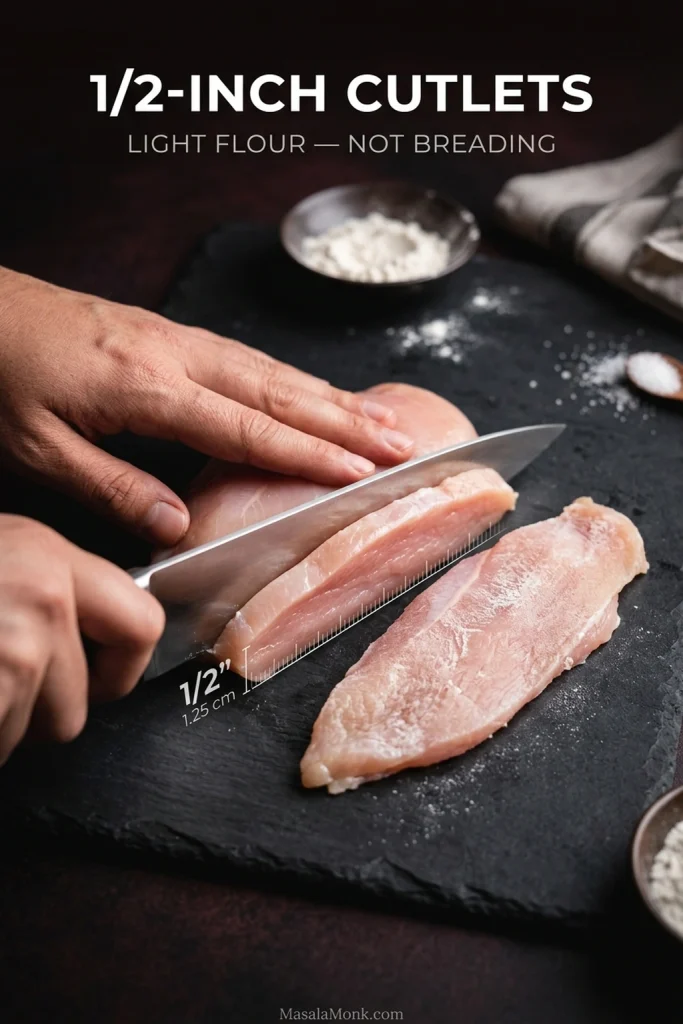
Thin pork chops and pork cutlets need a very different rhythm. They brown quickly, cook quickly, and can go from tender to tough while you are still stirring the sauce.

For thin chops, sear briefly, make the sauce, then return them to the skillet only long enough to warm through and finish. Do not simmer thin pork chops for 20–30 minutes in cream of mushroom soup.

Side-by-side guide showing a thin pork chop and a thick pork chop with ruler cues and text explaining that thin chops cook fast while thick chops give more room.
Thin pork chops can finish before the gravy looks done, so check them early; thicker chops give you more room for browning, simmering, and sauce-building.

Frozen Pork Chops

Thaw frozen pork chops before making this skillet recipe. Thawed pork browns better, cooks more evenly, and does not release as much water into the pan. Frozen or half-thawed chops can make the sauce watery before the pork is cooked through.

Before simmering, check the pork chop timing guide so thin chops do not get thick-chop timing.

How to Make Pork Chops with Cream of Mushroom Soup in a Skillet

A 12-inch skillet is best if you are using mushrooms and onions. It gives the chops room to brown and the mushrooms space to release moisture, then brown instead of steam.

Step-by-step image showing pork chops being seared, mushrooms browning, gravy being built, pork chops simmering gently, resting, and serving.
Follow the skillet in stages: first build browning, then turn the soup into gravy, and finally let the pork rest before the sauce goes over the plate.

1. Pat the Pork Chops Dry and Season Lightly

Pat the pork chops dry with paper towels. Season both sides with black pepper, garlic powder or paprika if using, and only a small pinch of salt. Dry surfaces brown; wet surfaces steam.

2. Brown the Pork Chops

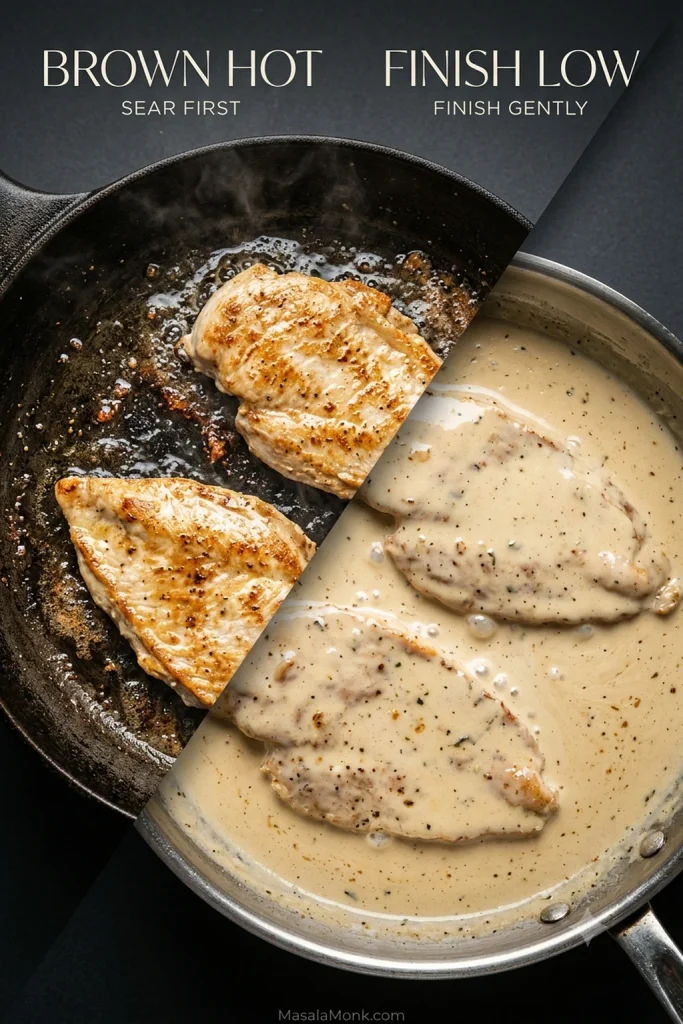
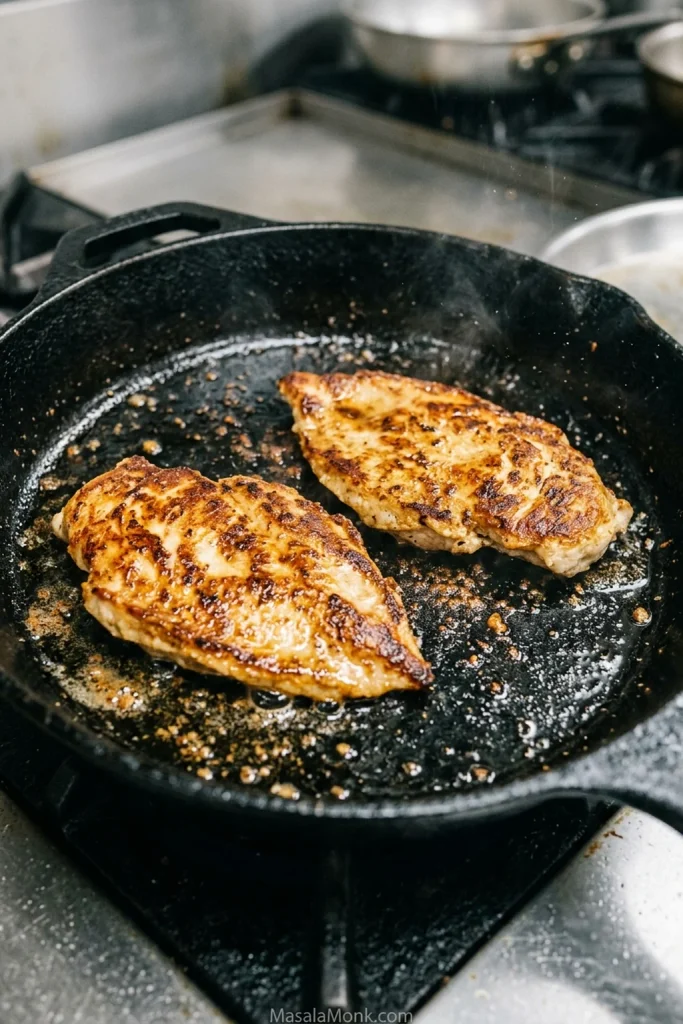
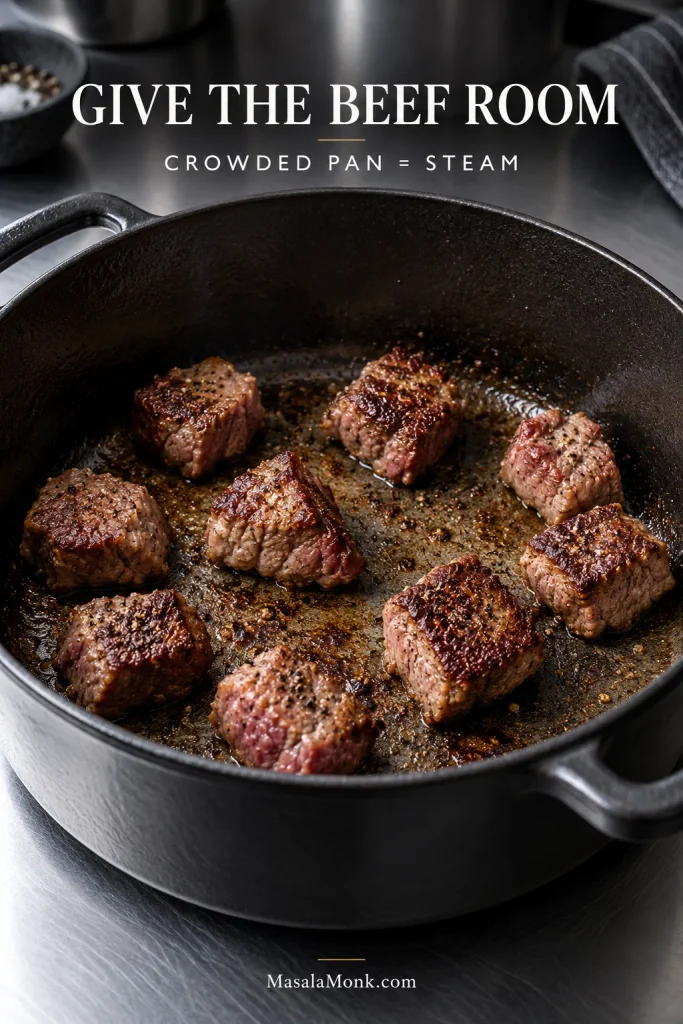
Heat the oil over medium-high heat. Add the pork chops in a single layer, working in batches if needed. Sear until the chops have golden edges instead of a gray steamed surface, about 3–5 minutes per side for ¾–1 inch chops.

Transfer the browned chops to a plate. They do not need to be fully cooked yet. You are building flavor before the creamy mushroom gravy goes in.

Pork chops searing in a skillet with golden-brown edges, pepper specks, and the text golden edges not gray steam.
A real sear gives mushroom gravy something savory to build on; pale steamed pork cannot add the same depth.

3. Cook the Mushrooms and Onion

Reduce the heat to medium. Add the butter, mushrooms, and onion. Mushrooms usually go through three stages: first they look dry, then they release water, then that water cooks off and the edges begin to brown. Do not rush this stage if you added fresh mushrooms; the moment their water cooks off and the edges start to brown is the moment the sauce stops tasting like plain condensed soup.

Sliced mushrooms and onions browned in a skillet with caramelized edges and the text wait for this stage.
Once mushrooms stop steaming and start browning, they bring the savory flavor that keeps cream of mushroom gravy from tasting flat.

4. Add Garlic and Make the Mushroom Gravy

Add the garlic and cook for about 30 seconds. Whisk in the condensed soup and ⅓ cup chicken broth, milk, or water. Add Worcestershire and Dijon if using. The sauce should be loose enough to spoon, but thick enough to coat the pork. Add more liquid a tablespoon at a time.

Cream of mushroom soup being stirred into browned mushrooms and pan drippings to make creamy mushroom gravy.
The soup becomes gravy when it loosens into browned mushrooms, pan juices, and just enough liquid to coat the pork.

5. Simmer the Pork Chops Gently

Return the pork chops and any plate juices to the skillet. Spoon gravy over the top, reduce the heat to medium-low, cover loosely, and simmer with slow, lazy bubbles. A rolling boil is too hard for lean pork and can make the gravy feel heavy.

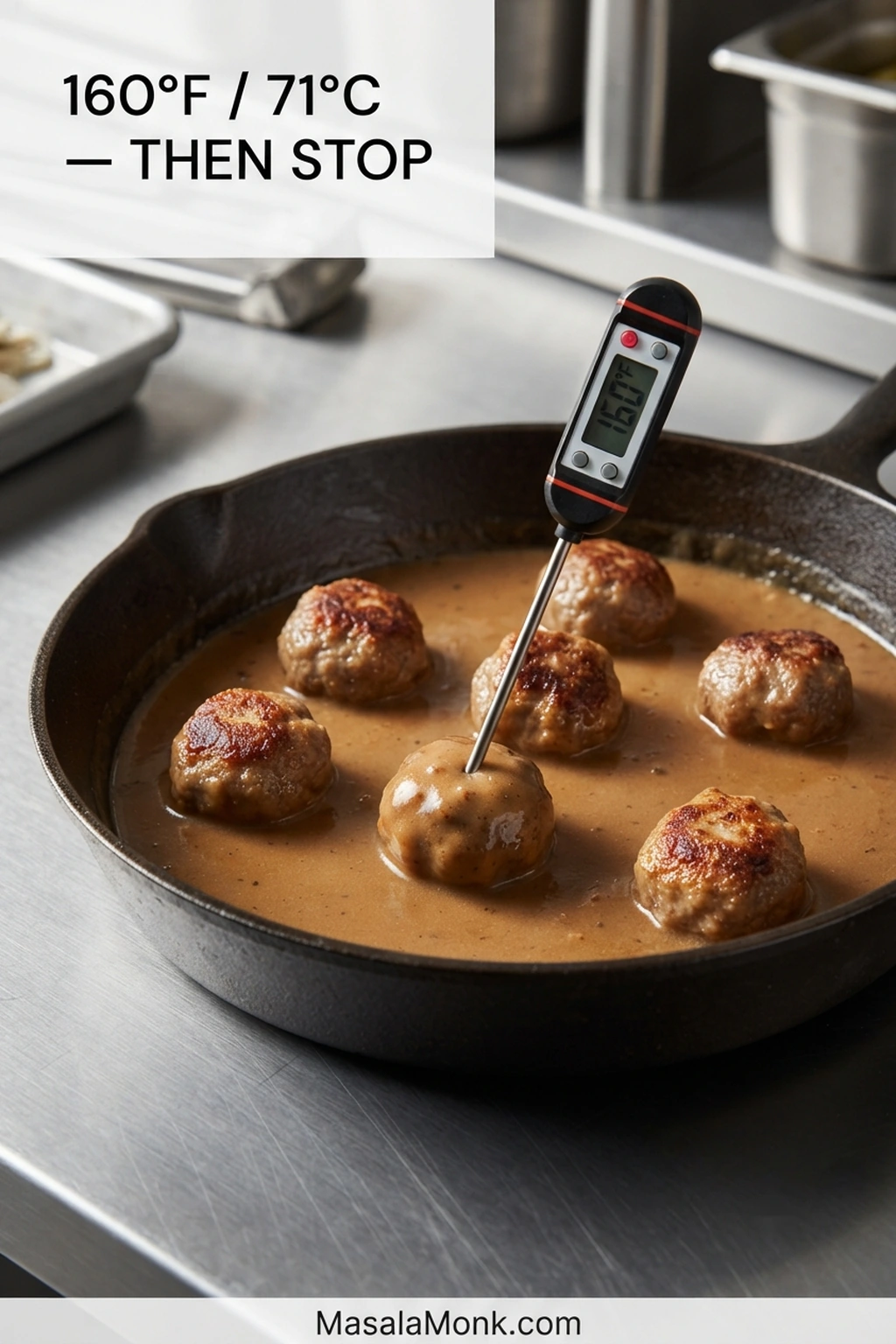
Check the thickest part; when it reaches 145°F / 63°C, move the chops to a plate. If the gravy still needs work, fix the sauce without the pork in the pan.

Pork chops simmering gently in creamy mushroom gravy with small bubbles around the edges and text reading slow lazy bubbles.
At this stage, slow bubbles are enough; a hard boil can tighten the pork and make creamy mushroom gravy feel heavy instead of silky.

6. Rest, Taste, and Serve

Rest the pork chops for 3 minutes. While they rest, taste the mushroom gravy. Add black pepper, a splash of broth or milk, parsley, or a tiny squeeze of lemon if the sauce tastes too heavy.

Spoon the creamy gravy over the pork and give it somewhere to land: mashed potatoes, rice, egg noodles, biscuits, or green beans all make the plate feel complete. The sauce should settle over the chop and drift into the side, not run across the plate like soup.

Cream of Mushroom Pork Chops Recipe Card

Classic skillet cream of mushroom pork chops with tender pork, creamy mushroom gravy, optional mushrooms and onions, and enough sauce for potatoes, rice, noodles, or green beans.

Recipe note: once the chops are done, move them out of the skillet and finish the gravy separately if needed.

Prep Time
10 minutes
Cook Time
20 minutes
Total Time
30 minutes
Servings
4

Equipment

  • 12-inch skillet, preferably heavy-bottomed
  • Tongs
  • Whisk or sturdy spoon
  • Instant-read thermometer
  • Plate for resting the pork chops

Ingredients

  • 4 pork chops, about 1½–2¼ lb / 680 g–1 kg total, preferably ¾–1 inch thick
  • ½ teaspoon black pepper, plus more to taste
  • ½ teaspoon garlic powder or paprika, optional
  • Small pinch of salt, optional
  • 1 tablespoon oil / 15 ml
  • 1 tablespoon butter / 14 g
  • 8 oz / 225 g fresh mushrooms, sliced, optional but recommended
  • ½ medium onion / 75–100 g, thinly sliced or diced, optional but recommended
  • 2–3 garlic cloves, minced
  • 1 can condensed cream of mushroom soup, 10.5 oz / 298 g, regular or low-sodium
  • ⅓–½ cup / 80–120 ml chicken broth, milk, or water
  • 1–2 teaspoons Worcestershire sauce / 5–10 ml, optional
  • 1 teaspoon Dijon mustard / 5 g, optional
  • 1–2 tablespoons chopped parsley, optional

Instructions

  1. Pat the pork chops dry. Season both sides with black pepper, garlic powder or paprika if using, and only a small pinch of salt.
  2. Heat the oil in a 12-inch skillet over medium-high heat. Add pork chops in a single layer, browning in batches if needed.
  3. Sear until golden, about 3–5 minutes per side for ¾–1 inch chops. Transfer to a plate. The pork does not need to be fully cooked yet.
  4. Reduce heat to medium. Add butter, mushrooms, and onion. Cook 5–7 minutes, until the mushrooms release moisture and begin to brown.
  5. Add garlic and cook for 30 seconds.
  6. Whisk in condensed cream of mushroom soup and ⅓ cup broth, milk, or water. Add Worcestershire and Dijon if using. Add more liquid a splash at a time if you want looser gravy.
  7. Return pork chops and plate juices to the skillet. Spoon gravy over the chops. Reduce heat to medium-low, cover loosely, and simmer gently until the thickest part reaches 145°F.
  8. If the pork is done before the gravy is thick enough, move the chops to a plate and simmer the sauce uncovered by itself.
  9. Rest pork chops for 3 minutes. Taste gravy and adjust with pepper, parsley, or a splash of liquid if needed.
  10. Serve hot with mushroom gravy spooned over the top.

Notes

  • Use ⅓ cup liquid for thicker gravy and ½ cup for a looser sauce.
  • Chicken broth is a good default liquid; milk is creamier; water is the classic canned-soup version.
  • Thin pork chops cook fast. Check them early and do not simmer them like thick chops.
  • Bone-in chops may need a few extra minutes near the bone.
  • Once the soup is in the skillet, keep the heat low enough for slow bubbles.
  • For baked, crock pot, rice, potato, or stuffing versions, the method and timing change.

Need to adjust the sauce? Use the mushroom gravy fixes for watery, thick, or salty gravy.

Creamy Mushroom Gravy Success Cues: Not Watery, Not Pasty

A strong version should feel like gravy dinner, not soup poured over meat. When you cut into the chop, the inside should still look moist, and the sauce should drag slowly from the spoon into potatoes, rice, or noodles.

Sliced pork chop with creamy mushroom gravy, visible mushrooms, parsley, and mashed potatoes on a warm plate.
Look for juicy slices and gravy that settles into the side, so the plate feels creamy and complete instead of soupy.
Success cueWhat you wantWhat to fix
Gravy textureCoats a spoon and moves slowlyWatery ring around the pan or paste-like sauce
Pork textureSlices easily and looks moist insideDry, gray, tight meat from overcooking
FlavorSavory, creamy, mushroom-forwardToo salty, bland, or flat
Core fixAdjust the sauce after the chops are doneLeaving done pork in the pan while fixing gravy

How Long to Cook Pork Chops in Cream of Mushroom Soup

This is where most pork chop dinners are won or lost. The gravy can look perfect while a thin chop quietly overcooks, so timing has to follow thickness, not habit.

Timing by Pork Chop Thickness

Pork chop typeSear timeSauce simmer timeTiming note
Thin pork cutlets, about ¼ inch1–2 minutes per side1–3 minutesMost of the cooking happens during the sear. Check early.
½-inch boneless pork chops2–3 minutes per side3–5 minutesFast, but easy to overcook.
¾-inch boneless pork chops3–4 minutes per side4–7 minutesOne of the easiest sizes for this recipe.
1-inch boneless pork chops4–5 minutes per side6–10 minutesJuicier than thin chops; use a thermometer.
1-inch bone-in pork chops4–5 minutes per side8–12 minutesMay need a little longer near the bone.

Most forgiving range: ¾–1 inch chops are the easiest size for this recipe. They brown well, stay juicier than thin cutlets, and give the gravy enough time to come together. Thin ½-inch chops still work, but they need a short simmer. Bone-in chops are forgiving, but check the meat near the bone.

Pork chop timing guide showing thin, medium, and thick pork chops with cues to check the center and avoid relying only on time.
Timing depends on thickness, so use chop size as your guide and check the center instead of trusting the clock alone.

Temperature and Resting Note

Treat the table as a starting point, not a contract. Thin chops may finish during the sear; thicker bone-in chops may need more time near the bone. The thermometer gets the final vote: 145°F / 63°C plus a 3-minute rest, which matches FoodSafety.gov’s safe minimum internal temperature guidance for pork chops.

A slightly pink center is not automatically a problem when pork has reached temperature and rested. Dry, gray pork usually comes from chasing old timing habits instead of stopping at the right doneness.

The same temperature-first idea matters with other lean pork cuts; our pork tenderloin in oven guide uses that same rest-before-slicing approach.

5 Ways This Dinner Goes Wrong — and How to Avoid Them

Most cream of mushroom pork chop problems come from one of five small choices. Fix these before they happen and the whole dinner feels easier.

  • Do not cook thin chops like thick chops. They can turn tough before the gravy is done, so sear them briefly and return them only long enough to finish.
  • Do not boil the sauce hard. Once the soup goes in, keep slow bubbles so the pork stays tender and the gravy stays creamy.
  • Do not add all the liquid at once. Start with ⅓ cup and loosen gradually so the gravy does not turn soupy.
  • Do not salt heavily before tasting the soup. Condensed soup and seasoning mixes can make the final gravy too salty.
  • Do not fix gravy while finished pork keeps cooking. Move done chops out first, then thin, thicken, or reduce the sauce.
Common mistakes guide for cream of mushroom pork chops showing thin chops cooked too long, hard-boiled sauce, too much liquid, too much salt early, and fixing gravy while pork keeps cooking.
Most cream of mushroom pork chop problems start small: thin chops stay on too long, sauce boils too hard, liquid gets added too fast, or seasoning happens before tasting.

How to Make the Mushroom Gravy Creamy, Not Watery

The gravy should act like a blanket, not soup. It should coat the pork, slide slowly into mashed potatoes or rice, and taste savory instead of simply salty. Think of it as a mushroom cream sauce for pork chops: creamy enough to coat, but loose enough to spoon.

Mushroom Gravy Spoon Test

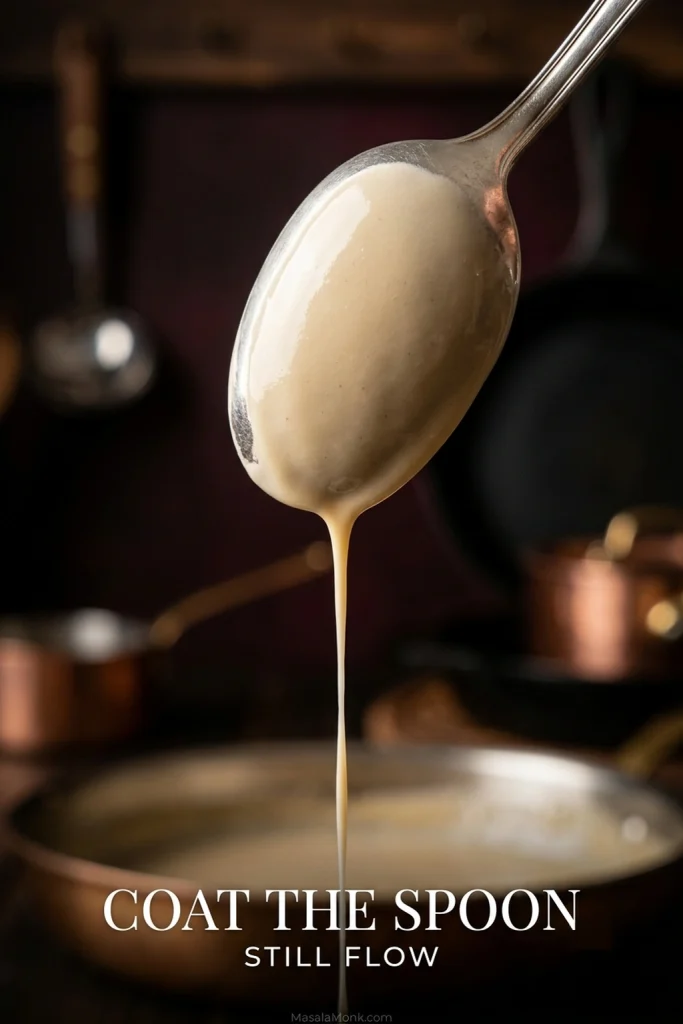
The easiest visual cue is the spoon: the gravy should cling lightly, then slide off slowly instead of running like broth or sitting like paste.

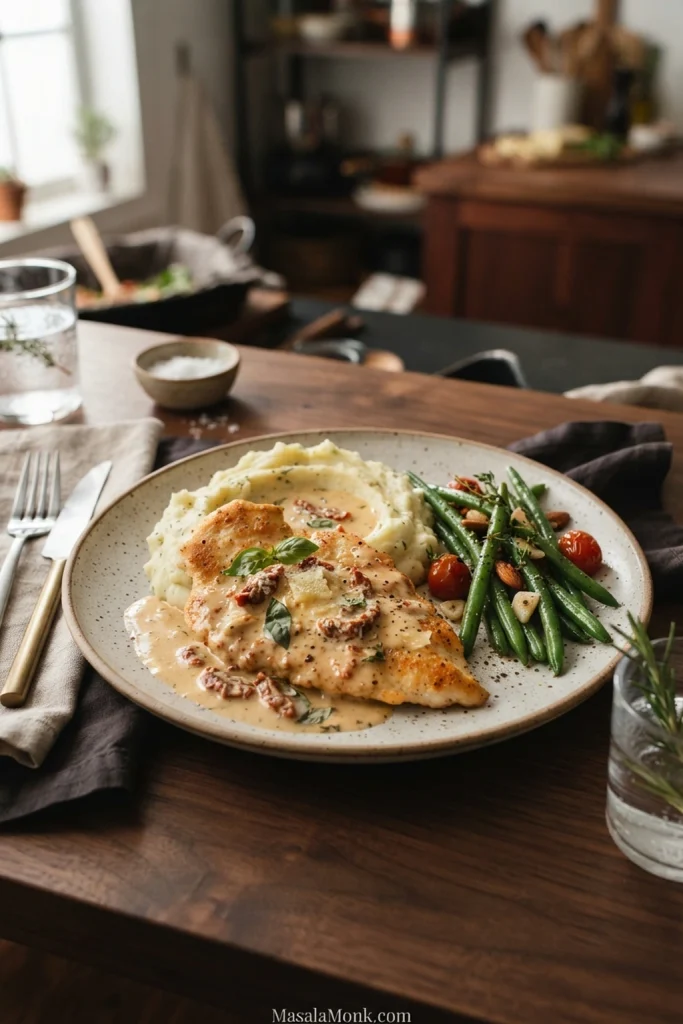
Spoon lifting creamy mushroom gravy with mushroom pieces and black pepper over a skillet of pork chops.
A good mushroom gravy coats the spoon, but still slides easily over pork chops and into whatever side you serve underneath.
  • Chicken broth gives the most savory, balanced mushroom gravy and is a reliable everyday default.
  • Milk makes the sauce softer and creamier, with a milder comfort-food flavor.
  • Water keeps the classic canned-soup taste and works well for the pantry version.
  • A small splash of white wine brightens the gravy when you are using fresh mushrooms and onion.

For one 10.5-ounce can of condensed cream of mushroom soup, start with ⅓ cup liquid if you want thick gravy. Use up to ½ cup when you want more sauce for rice, noodles, or potatoes. Add extra liquid in tablespoons, not big pours.

Too Thin, Just Right, or Too Thick Mushroom Gravy

Use the texture as your guide before serving. Thin gravy needs reducing, thick gravy needs a splash of liquid, and just-right gravy should look glossy and spoonable.

Three-part gravy texture guide showing too thin, just right, and too thick mushroom gravy on spoons and in bowls.
If the gravy looks watery, simmer it down; if it turns too thick, loosen it slowly until the sauce becomes glossy and spoonable again.

How to Thicken Mushroom Gravy

If the gravy is too thin, remove the pork chops and simmer the sauce uncovered until it coats a spoon. For a faster fix, whisk 1 teaspoon cornstarch with 1 tablespoon cold water, stir that slurry into the simmering gravy, and cook for a minute or two.

How to Thin Mushroom Gravy

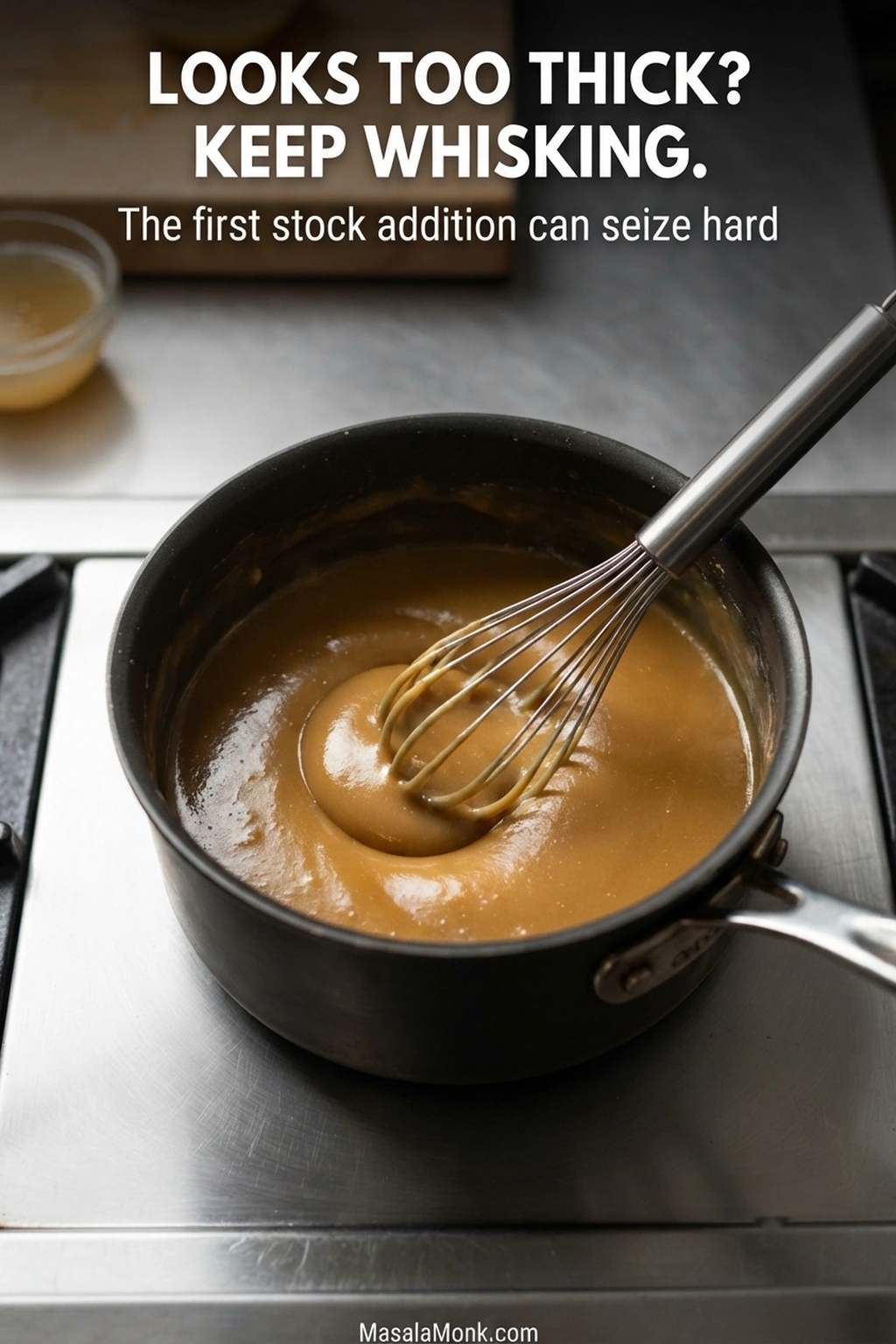
If the gravy turns pasty, lower the heat and add broth, milk, or water a splash at a time. Stir until the sauce loosens and looks glossy again. A thick sauce is easy to fix as long as the pork is not still sitting in it over heat.

How to Keep the Gravy from Tasting Too Salty

Use low-sodium broth if your soup is salty, and be careful with onion soup mix, bouillon, gravy packets, ranch seasoning, or seasoned salt. If the finished sauce tastes too salty, soften it with milk, cream, unsalted broth, or sour cream, then serve it with plain potatoes, rice, noodles, or vegetables.

If the pork is already cooked and the sauce still needs help, use the troubleshooting guide instead of simmering the chops longer.

Campbell’s-Style Cream of Mushroom Pork Chops

This is the version many people remember: pork chops, condensed cream of mushroom soup, water, black pepper, and a short simmer. It is not fancy, and it does not need to be. The one upgrade worth keeping is temperature control instead of simmering by habit.

Campbell’s-style cream of mushroom pork chops in a skillet with browned pork chops, creamy mushroom gravy, mushrooms, parsley, and a generic soup bowl.
Campbell’s-style pork chops are the nostalgic shortcut version, but browning the meat and simmering gently make the gravy taste more like dinner.

Campbell’s-style shortcut: brown 4 pork chops, stir 1 can condensed cream of mushroom soup with ½ cup water, return the chops to the pan, cover, and simmer gently until the pork reaches 145°F. Rest 3 minutes before serving.

That simple brown-soup-simmer idea is also the classic pattern behind Campbell’s Tasty 2-Step Pork Chops.

Use the classic version when you want the childhood shortcut. Use the upgraded version when you want the same comfort with deeper flavor and better gravy texture.

Water, Broth, or Milk for Campbell’s-Style Pork Chops

VersionLiquid / add-insFlavor
Campbell’s-style classic½ cup waterNostalgic, simple, most like the old shortcut
Better weeknight version⅓–½ cup chicken brothSavory, fuller, still easy
Creamier version⅓–½ cup milkSofter, richer, milder
Less canned versionBroth + mushrooms + onion + WorcestershireMore homemade without losing the shortcut
Four-way comparison of cream of mushroom gravy made classic, with broth upgrade, creamier milk version, and less-canned upgrade.
Water gives the classic canned-soup flavor, broth adds savory depth, milk softens the sauce, and browned mushrooms make the shortcut taste more complete.

The thermometer is the reliability upgrade. The classic recipe tells you to simmer until done; this version gives the pork a clear stopping point.

Baked, Crock Pot, Rice, Potatoes, and Stuffing Versions

These versions are popular because they solve different dinner problems. The baked version is hands-off, the crock pot version waits for you, and rice, potatoes, or stuffing can turn pork chops into a full casserole. The tradeoff is that each version needs its own moisture and timing.

Baked Pork Chops with Cream of Mushroom Soup

Oven answer: brown the pork chops first, cover them with cream of mushroom soup gravy, bake covered at 350°F, and stop when the chops are just done. Keep the dish covered for a creamy bake; uncover only briefly if the gravy needs to reduce.

For many ¾–1 inch chops, start checking around 25 minutes after browning; thicker covered versions may take longer, but doneness decides.

  • Thin or ½-inch boneless chops need a short covered bake after a brief sear. Check early; they should not get thick-chop timing.
  • ¾–1 inch boneless chops are the most reliable baked version because they brown well and give the sauce time to heat through.
  • 1-inch bone-in chops make a cozier, more forgiving oven dinner, but check the meat near the bone.

Check early; baked chops can dry out if they sit too long after they are done. The oven should not become a holding place for already-finished lean pork.

Baked pork chops with cream of mushroom soup gravy in a casserole dish with mushrooms, onions, parsley, and foil partly lifted.
In a baked version, the covered dish protects the gravy. The main job is checking the pork before the oven turns it dry.

Crock Pot Cream of Mushroom Pork Chops

Slow cooker answer: use thawed thicker pork chops, condensed cream of mushroom soup, a little broth, and optional onion soup mix or mushrooms. For sliceable chops, start checking earlier; for fall-apart-style chops, many slow-cooker recipes run 6–8 hours on low. Very thin boneless chops are the riskiest choice, and the sauce can be thickened at the end if it looks loose.

A crock pot version is best treated as its own recipe, not as the skillet method stretched over several hours. Slow cookers trap liquid, so the gravy will usually be thinner than skillet gravy. Very thin boneless chops are convenient, but they can dry out before they become truly tender.

For a tangier slow-cooker pork chop dinner, our crock pot pork chops and sauerkraut goes in a different comfort-food direction.

  • Thin boneless chops: use the skillet method if possible because they dry out easily under long heat.
  • Thicker boneless chops: a better slow-cooker option because they give you more room before overcooking.
  • Bone-in chops: good if they fit in one layer; the bone helps protect the meat a little.
  • Loose sauce at the end: thicken it after the chops are cooked rather than cooking the pork longer.
Crock pot cream of mushroom pork chops with creamy gravy, mushrooms, onions, parsley, and a spoon lifting sauce from the slow cooker.
For crock pot cream of mushroom pork chops, thicker cuts and enough sauce matter because slow heat rewards moisture but can punish very thin chops.

Pork Chops and Rice with Cream of Mushroom Soup

Rice is where this recipe stops being a simple skillet dinner and starts behaving like a casserole. That is why the liquid changes so much.

For the quickest dinner, make the skillet pork chops first, then spoon the mushroom gravy over cooked rice.

Pork chops and rice casserole with creamy mushroom sauce, browned pork chops, visible rice, mushrooms, parsley, and a plated serving.
For pork chops and rice with cream of mushroom soup, decide early: serve skillet pork over cooked rice, or build a covered rice casserole from the start.

Cooked Rice Side vs Baked Rice Casserole

If you want…Do thisWhy
Skillet pork chops with riceCook rice separately and spoon mushroom gravy over itThe pork timing stays short and controlled.
One-pan pork chops and riceUse a covered baked casserole methodUncooked rice needs more liquid, tight coverage, and longer cooking.
Uncooked riceAdd enough broth/water and bake until rice is tenderA skillet sauce for pork chops does not contain enough liquid for raw rice.
Leftover cooked riceWarm separately or fold into the sauce after the pork is doneIt should heat through, not keep the pork cooking.
Split comparison showing cream of mushroom pork chops served over cooked rice on one side and baked rice casserole with pork chops on the other.
Cooked rice is the easiest side for skillet pork chops, while a baked rice casserole needs its liquid, cover, and timing planned from the beginning.

For the safest weeknight version, make the skillet pork chops and serve them over cooked rice. For a true pork chops and rice casserole, build that dish around the rice from the beginning.

Simple Baked Rice Starting Point

Simple baked rice direction: as a starting point for a casserole-style version, use 1 cup long-grain rice, 1 can condensed cream of mushroom soup, and about 1½ cups broth in a tightly covered dish, then bake at 350°F until the rice is tender and the pork is just done. If the pork finishes before the rice, lift the chops out and let the rice continue covered.

If adding rice to a slow cooker version, do not add it at the very beginning unless you are following a dedicated slow-cooker rice recipe. Rice can absorb too much liquid and turn mushy; add it later or serve the pork over separately cooked rice.

Pork Chops with Cream of Mushroom Soup and Potatoes

Easiest potato shortcut: serve the skillet version over mashed potatoes so the gravy has somewhere soft to land. For raw sliced potatoes, cut them thin, add enough liquid, cover tightly, and treat the dish like a casserole rather than a skillet pork chop recipe.

Pork chops with cream of mushroom gravy and a potato version with sliced golden potatoes in a casserole dish and on a plate.
Potatoes make the meal heartier; however, sliced potatoes need covered moisture and enough time, so they behave more like a casserole than a skillet add-in.

Pork Chops, Stuffing, and Cream of Mushroom Soup

Easiest stuffing shortcut: hydrate the stuffing first, then bake it covered with the pork and mushroom sauce. Dry stuffing should not be scattered into the pan because it will pull moisture from the gravy and make the whole dish feel dry.

Pork chops with stuffing and cream of mushroom gravy in a casserole dish with moist golden stuffing, mushrooms, onions, and parsley.
Stuffing needs moisture to stay soft, so treat this as a covered bake rather than a quick skillet add-in.

Easy Variations

Use these variations to change the flavor while keeping the same easy skillet rhythm.

Soup Swaps

  • Golden mushroom soup pork chops: use golden mushroom soup when you want a darker, tangier, more brown-gravy style sauce. It is less creamy than classic cream of mushroom.
  • Cream of chicken soup substitute: use cream of chicken when you want a milder sauce or do not have mushroom soup. Add sautéed mushrooms if you still want mushroom flavor.

Flavor Boosters

  • Onion soup mix: adds strong savory flavor, but use low-sodium soup or broth if possible because the gravy can get salty quickly.
  • Ranch seasoning: gives a tangy, family-style flavor. Start with less than a full packet and taste before adding more.
  • Worcestershire and Dijon: make the sauce taste fuller without changing the comfort-food feel.

Smothered Pork Chops with Cream of Mushroom Soup

For a smothered version, make extra gravy and use mushrooms, onions, and a little more liquid. Brown the chops, build the sauce, simmer gently, then remove the pork as soon as it is done. Reduce or thicken the gravy separately so the chops stay juicy while the sauce gets rich.

Smothered cream of mushroom pork chops with extra mushroom gravy, onions, sliced mushrooms, parsley, and mashed potatoes in the background.
Smothered cream of mushroom pork chops should feel extra saucy, with mushrooms and onions making the gravy rich enough to carry the whole plate.

Richer Finishes

  • Sour cream finish: take the skillet off the heat and stir in a spoonful of sour cream at the end for a tangier, creamier sauce.
  • Extra mushrooms and onions: double the mushrooms if you want the gravy to feel more homemade and less like a plain soup sauce.
  • Small splash of cream: useful if the sauce tastes sharp or salty and needs softening.

Double Batch for a Family Dinner

For 8 pork chops, use 2 cans of condensed cream of mushroom soup and about ⅔ to 1 cup liquid. Brown the pork in batches so it does not steam, then finish in a large skillet, braiser, or baking dish. Check chops individually because crowded pans do not cook evenly.

What to Serve with Cream of Mushroom Pork Chops

This is a gravy dinner, so give the gravy somewhere to land. The easiest sides are simple enough to carry the gravy or fresh enough to balance it.

  • Mashed potatoes: the classic choice when you want a cozy plate with plenty of mushroom gravy.
  • White rice or brown rice: easy, filling, and ideal when the rice is cooked separately from the skillet pork chops.
  • Egg noodles: a stroganoff-style direction without changing the recipe.
  • Green beans: crisp and fresh enough to balance the richness.
  • Peas: sweet, simple, and very good with salty-creamy mushroom gravy.
  • Broccoli: roasted or steamed, especially with extra black pepper on the sauce.
  • Biscuits: useful when you want a very cozy, gravy-heavy plate.
  • Simple salad: useful when the meal needs something bright and clean beside it.
Serving plate of cream of mushroom pork chops with mashed potatoes, rice, egg noodles, green beans, peas, and broccoli as side options.
Creamy mushroom pork chops pair best with sides that catch gravy or add freshness, such as mashed potatoes, rice, egg noodles, green beans, peas, or broccoli.

If the gravy tastes rich or salty, choose a plain side like rice, potatoes, noodles, or steamed vegetables. If the plate feels a little too beige, add green beans, peas, broccoli, or a sharp salad. Let the mushroom sauce be the comfort; let the side bring the lift.

Storage and Reheating

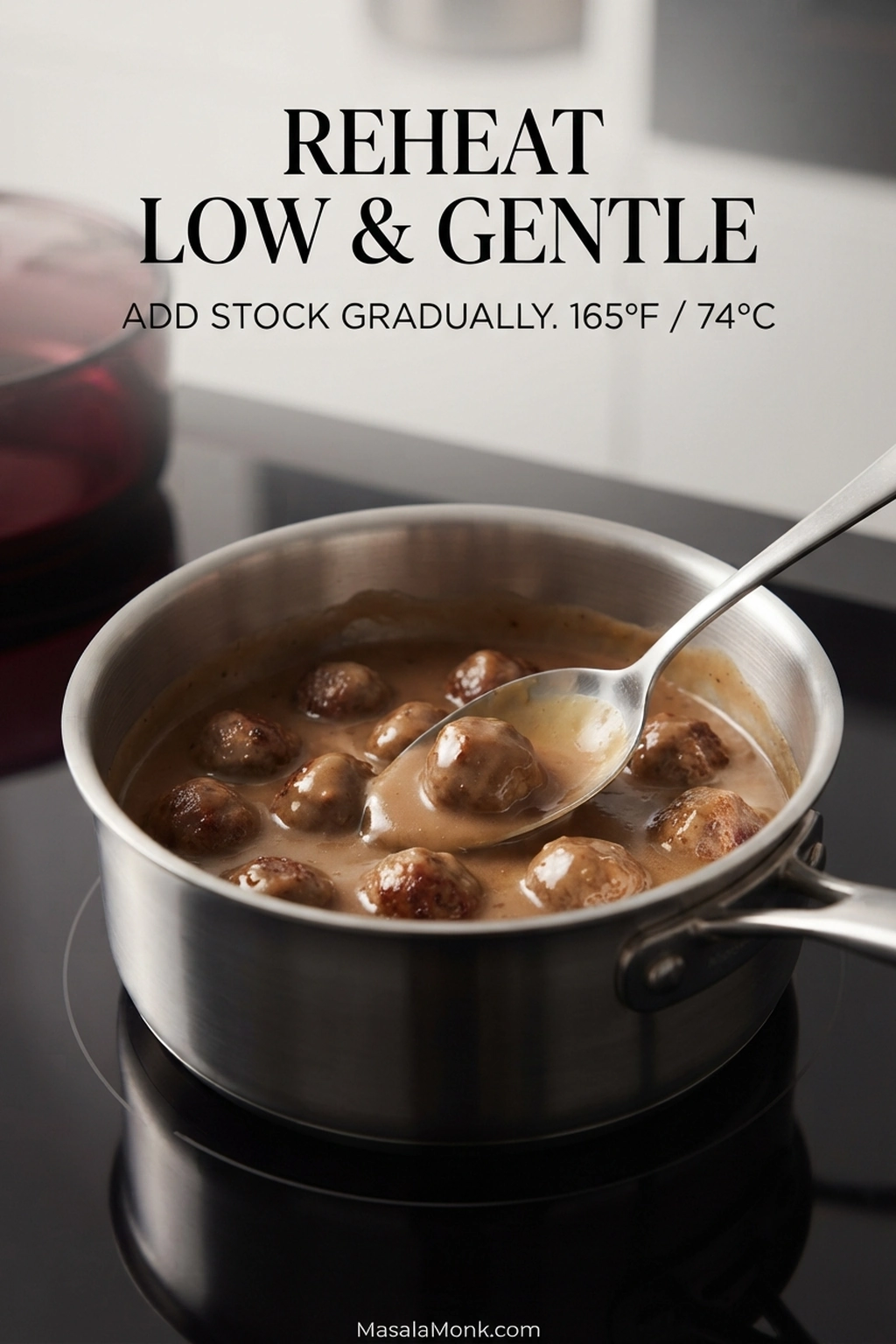
Store leftover pork chops with the mushroom gravy when possible. The sauce helps protect the meat from drying out in the fridge and makes reheating easier.

Storage questionQuick answer
FridgeStore in an airtight container for 3–4 days.
FreezerFreeze up to 2–3 months, though creamy gravy may look slightly separated after thawing.
Gentlest reheating methodWarm gently in a covered skillet over low heat with a splash of broth or milk.
MicrowaveUse lower power, cover loosely, and heat in short bursts.
What to avoidDo not boil leftovers hard; it tightens the pork and can make the sauce split.
Storage and reheating guide showing cream of mushroom pork chops in a glass container and a skillet with broth or milk being added to loosen the gravy.
Store the pork with its mushroom gravy when possible; later, a small splash of broth or milk helps the sauce loosen without boiling the meat again.

If the pork chops are thick, slicing them before reheating can help them warm faster and more evenly. Add a spoonful of extra gravy over the slices before serving. Reheat gently; boiling leftover pork in the sauce can make it tighter.

Troubleshooting the Pork Chops and Mushroom Gravy

The mistake section prevents problems. This section is for the moment when dinner is already in the pan and you need a fix. When the chops are already done, move them out first, then repair the gravy.

ProblemFix nowFix next time
Pork chops turned toughSlice thinly across the grain and spoon hot gravy over the slices.Use thicker chops, simmer gently, and check temperature earlier.
Sauce is too thickAdd broth, milk, or water a splash at a time over low heat.Start with ⅓ cup liquid, then adjust gradually.
Gravy looks wateryRemove pork and simmer the sauce uncovered until it coats a spoon.Thaw pork fully, pat dry, and avoid adding too much liquid at the start.
Gravy tastes too saltyStir in milk, cream, unsalted broth, or sour cream; serve with plain sides.Use low-sodium soup or broth and go easy on seasoning mixes.
Pork tastes blandAdd black pepper, Worcestershire, Dijon, parsley, or extra sautéed mushrooms to the gravy.Brown the pork harder and build more flavor before the soup goes in.
Troubleshooting guide showing fixes for watery gravy, thick sauce, salty gravy, dry pork, and bland flavor with mushroom gravy bowls, pork slices, liquid, browned mushrooms, and seasonings.
When dinner is already in the pan, protect the pork first; then simmer watery gravy, loosen thick sauce, dilute salty gravy, or spoon extra sauce over dry slices.

Ready to cook? Return to the recipe card or review the common mistakes before you start.

FAQs

How long do pork chops cook in cream of mushroom soup?

After browning, thin pork chops may need only 1–3 minutes in the sauce. Chops around ¾ to 1 inch thick usually need about 4–10 minutes, depending on whether they are boneless or bone-in. The thickest part should reach 145°F, followed by a 3-minute rest.

What temperature keeps pork chops juicy and safe?

Pork chops should reach 145°F / 63°C, followed by a 3-minute rest. That keeps the pork juicier than old-school overcooked chops while still giving you a safe finished dinner.

How much water do you add to cream of mushroom soup for pork chops?

For one 10.5-ounce can of condensed cream of mushroom soup, use ⅓ to ½ cup liquid. Use ⅓ cup for thicker gravy and ½ cup for a looser sauce. Water is classic, broth is more savory, and milk makes the sauce creamier.

Is milk, broth, or water best for the gravy?

Chicken broth is a good default because it makes the gravy taste more savory without much effort. Milk gives a softer, creamier sauce. Water gives the most classic Campbell’s-style flavor and is useful when the soup or seasoning mix is already salty.

Boneless or bone-in pork chops: which is better?

Boneless chops cook faster and are easiest for a quick skillet dinner. Bone-in chops are often more forgiving and can stay juicier, but they may need a little more time near the bone.

Thin pork chops keep drying out. What should I do?

Sear them briefly, make the sauce, then return them only long enough to warm through and finish. Very thin chops should not simmer like thick chops.

Skillet or oven: which method is easier?

The skillet is faster and gives you better control over the gravy. The oven is easier when you want a covered baked version or when you are adding rice, potatoes, or stuffing. Either way, brown the pork first when possible and cook by temperature.

Crock pot pork chops with cream of mushroom soup: what should I know?

Use thawed, thicker chops rather than very thin boneless chops. Slow cookers trap moisture, so the sauce may look loose at the end; thicken it after cooking if needed. For fall-apart-style chops, many slow-cooker recipes run longer, often 6–8 hours on low.

Can I cook rice in the same pan?

Not for the quick skillet method. Uncooked rice needs extra liquid, covered heat, and more time than skillet pork chops should spend cooking. Use cooked rice as a side, or make a covered baked casserole built around the rice.

Why did the pork chops turn tough?

They were probably too thin for the timing, simmered too hard, or cooked past the right doneness point. Creamy gravy helps the plate, but it cannot fully undo overcooked lean pork.

Final Thoughts

Cream of mushroom pork chops are not trying to be fancy. They earn their place because they ask so little and give back so much: browned pork, creamy mushroom gravy, and a plate that feels complete with rice, potatoes, noodles, or whatever simple side you already have.

Keep the gravy spoonable, keep the heat gentle, and stop while the chops are still juicy. That is the whole promise of this dinner: one can of soup, one skillet, and a plate of creamy mushroom pork chops that tastes like you gave it more effort than you did.

Back to top

Posted on Leave a comment

Chicken and Chorizo Paella Recipe

Finished chicken and chorizo paella in a wide shallow pan with golden saffron rice, browned chicken thigh pieces, sliced Spanish chorizo, peas, lemon wedges, parsley and title text.

One-pan dinner · smoky chorizo · saffron rice

Golden rice, juicy chicken thighs, smoky Spanish-style chorizo, peas, lemon, and saffron stock all come together in one generous stovetop pan. This chicken and chorizo paella recipe gives you the drama of paella without needing an outdoor burner or restaurant setup.

The promise is simple: rice that stays the hero, chorizo that seasons without taking over, chicken that stays juicy, and a lemon-bright finish that makes the whole dish wake up at the table.

It looks like a weekend dish, but the method is straightforward: brown the chicken, let the chorizo turn the oil paprika-red, build a glossy base, add rice and hot stock, then leave the pan alone.

This is the kind of dinner that makes people go back for the rice: smoky at the edges, golden through the middle, dotted with peas, finished with lemon, and generous enough for a relaxed table.

If you want the broader classic version first, start with our full paella recipe. This page focuses on the home-stovetop chicken-and-chorizo version: which rice to use, how much stock to add, what pan works best, when to add prawns, and how to avoid the common texture problems.

Quick Answer

The best home-stovetop chicken and chorizo paella ratio is 300g paella rice to 750ml hot stock in a roomy 12–14 inch pan, with 350–450g chicken thighs and 100–140g Spanish-style chorizo.

Most important rule: stir before the stock goes in, then stop. Level the rice, let it simmer, and give the grains a covered rest before serving.

The dish takes about 50–55 minutes, including rest. Brown the chicken, render the chorizo, build the base, coat the rice, add hot saffron stock, then let the rice cook until tender, distinct, and settled. If you are scaling the recipe, use the rice-to-stock ratio guide before choosing your pan.

Chicken and chorizo paella ratio setup with 300g paella rice, 750ml hot stock, chicken thighs, Spanish chorizo and a 12–14 inch pan.
Use this ratio as your starting guardrail; it keeps the rice layer shallow enough to absorb stock without turning heavy.

Chicken and Chorizo Paella at a Glance

Serves
4 generous portions
Prep
15 minutes
Cook
35 minutes
Rest
5 minutes

Best with Bomba, Calasparra, Valencia rice, or supermarket paella rice. Use Spanish cooking chorizo or thinly sliced dry-cured Spanish chorizo. For a chicken, chorizo and prawn paella, add the prawns near the end so they stay tender.

What This Recipe Solves

This version is for the home cook who wants smoky chorizo flavor without losing the rice. The chicken stays juicy, the chorizo seasons the oil, and the rice gets enough room to cook through without turning creamy.

It is built around the things that matter most in a normal kitchen: a roomy pan, hot saffron stock, controlled chorizo, and clear visual cues. Look for glossy sofrito, shiny coated rice, liquid dropping below the surface, and a soft crackle at the end.

The rice should be the reason people go back for seconds, while the chicken and chorizo make the first spoonful feel generous.

What the Finished Paella Rice Should Look Like

The most useful texture check happens after the rest. The rice should look settled and glossy, with grains that separate on the spoon instead of collapsing into a creamy mound.

Close-up spoonful of rested chicken and chorizo paella rice with golden distinct grains, peas, chorizo oil and a small piece of chicken.
After the rice rests, the grains should look tender, separate and settled; that final texture matters more than chasing a perfect-looking pan.

Chicken and Chorizo Paella Ingredients

Ingredient Overview Before You Cook

The ingredient list is short enough for a weeknight, but each piece has a job: chicken gives the dish comfort, chorizo turns the oil smoky and red, the sofrito sweetens the base, saffron stock carries aroma into the rice, and lemon gives the final lift.

If you are choosing ingredients at the store, the most important decisions are the chorizo, the rice, and the pan size that gives the grains enough room.

Ingredients for chicken and chorizo paella arranged on a board, including chicken thighs, Spanish chorizo, paella rice, saffron, stock, red pepper, onion, garlic, smoked paprika, peas, lemon and parsley.
This ingredient setup shows the whole flavor path: smoky oil first, aromatic stock next, then lemon and herbs to finish cleanly.

Protein, Chorizo and Sofrito Base

Start with the ingredients that build the base flavor before the rice goes in.

IngredientAmountWhy it matters
Olive oil2 tbsp / 30mlStarts the browning and gives the sofrito a richer base.
Boneless skinless chicken thighs350–450g / 12–16 ozStays juicier than breast through browning and simmering.
Spanish-style chorizo100–140g / 3.5–5 ozCreates paprika-red oil and smoky depth without overpowering the rice.
Onion1 mediumSoftens into the base and brings gentle sweetness.
Red bell pepper1 mediumAdds color, sweetness, and a familiar home-paella feel.
Garlic3 clovesRounds out the paprika and chorizo.
Smoked paprika1 tspDeepens the smoky warmth already coming from the chorizo.
Tomato paste1 tbspAdds color and body without making the base watery.
Optional grated tomato150–200g / 5–7 ozAdds a softer tomato richness if you like a deeper sofrito.

Rice, Stock and Finishers

Once the base is ready, these ingredients decide the rice texture, aroma and final brightness.

IngredientAmountWhy it matters
SaffronBig pinch, about 15–20 threadsGives the rice aroma and golden color.
Paella rice300g / about 1½ cupsShort-grain rice absorbs stock while keeping structure.
Hot chicken stock750ml / about 3 cups plus 3 tbspCooks and seasons the rice from the inside out.
Frozen peas75–100g / ½–¾ cupAdds sweetness and color near the end.
Lemon1Cuts through the chorizo richness.
ParsleySmall handfulAdds a clean green finish.

Once the chorizo stains the oil red and the saffron stock hits the rice, the ingredients stop feeling separate. That is when the dish starts to smell like a full pan of dinner, not a list of parts.

Best Chorizo for Paella

The best choice is Spanish-style chorizo. Use 100g if you want the rice to stay cleaner and more saffron-forward; use 140g if you want a richer, smokier pan. Above that, the dish can start tasting more like sausage rice than paella.

Spanish cooking chorizo and dry-cured Spanish chorizo sliced on a board for choosing chorizo for paella.
Choose Spanish-style chorizo for smoky paprika depth; however, keep the amount controlled so the rice still feels like the main event.
Chorizo typeUse it?How to handle it
Spanish cooking chorizoBest first choiceSlice into half-moons or small chunks so it browns and seasons the oil.
Dry-cured Spanish chorizoGood backupSlice thinly so it softens and does not become chewy.
Fresh Mexican-style chorizoOnly if changing the dishIt is wetter, crumbly, and more strongly seasoned, so the result will be different.

How Much Chorizo to Use in Paella

Chorizo should season the rice, not crowd it. Use the lower end if your sausage is salty or very fatty, and save the richer end for a deeper, smokier pan.

Chorizo amount comparison for paella with balanced 100g chorizo, richer 140g chorizo and an overloaded greasy version.
The sweet spot is enough chorizo to stain the oil red, but not so much that the pan turns greasy or crowded.

If your chorizo is very salty, use the lower end of the amount and choose a low-salt stock. If you are choosing between Spanish and Mexican chorizo at the store, this Food & Wine guide to Spanish vs Mexican chorizo is a useful quick check.

Best Rice for Chicken and Chorizo Paella

The best bite is tender but not creamy: rice that has soaked up the saffron stock and chorizo flavor while still holding its shape.

Bowls of short-grain paella rice options labeled Bomba, Calasparra, Valencia and supermarket paella rice.
Short-grain paella rice absorbs saffron stock while holding its shape, which is why it gives a better bite than long-grain rice.
RiceUse it?What to expect
Bomba riceBest choiceAbsorbs stock well and stays distinct when cooked properly.
Calasparra riceBest choiceExcellent texture, especially in a broad pan.
Valencia riceGood choiceA proper short-grain option for this kind of cooking.
Supermarket paella riceGood practical choiceUsually the easiest option for home cooks; follow the texture cues.
Arborio riceBackup onlyWorks in a pinch, but it is starchier and can turn creamy if stirred.
Long-grain riceNot idealMakes a good chicken chorizo rice dish, but the texture moves away from paella.
Brown riceAvoid for this methodNeeds different timing and liquid.
Basmati or jasmine riceAvoid for this methodThe aroma and texture pull the dish in a different direction.

Paella Rice vs Long-Grain Rice

Long-grain rice can still make a good chicken chorizo rice dinner, but it changes the bite. For paella-style texture, short-grain rice gives the stock somewhere to go without losing shape. Already cooking? The no-stir simmer cues below will help you judge the pan.

Cooked rice texture comparison with short-grain paella rice beside softer long-grain chicken chorizo rice.
Long-grain rice can still make a good chicken chorizo rice dinner; for paella texture, though, short-grain rice gives a more settled, distinct finish.

Use dry, unrinsed rice here. Add it straight to the pan and stir it briefly through the sofrito before adding stock.

For everyday rice cooking, rinsing, soaking, and stovetop timing, MasalaMonk’s how to cook rice guide is useful. For this paella, stay with short-grain rice and the ratio below.

Chicken Thighs vs Chicken Breast

Chicken thighs are the better default. They stay juicier during browning and simmering, and they reheat better if you have leftovers.

Chicken breast can work, but it dries out faster. Cut it into slightly larger pieces, brown it briefly, and avoid cooking it hard at the beginning. If you often struggle with dry white meat, MasalaMonk’s baked chicken breast recipe goes deeper into timing and doneness cues.

Boneless skinless chicken thigh chunks browning in a skillet with tongs before being cooked with paella rice.
Brown the thigh pieces for flavor first, then let them finish gently with the rice so they stay juicy instead of drying out.

Best Pan and Rice-to-Stock Ratio

This is the section that saves the rice. Not because paella is difficult, but because pan size changes everything.

The pan is not about equipment snobbery. It is about giving the rice enough room to become the best part of the meal.

Best pan for paella at home guide with a paella pan, wide skillet, wide sauté pan and deep saucepan showing shallow and deep rice layers.
A paella pan is useful, but the real lesson is shape: wide, shallow cookware helps the rice cook more evenly than a deep pot.

Choose a Wide Pan, Not a Deep Pot

You do not need a perfect paella pan. You need enough surface area for the rice to sit shallow, not piled. A deep saucepan can still make a tasty chicken chorizo rice dinner, but it traps steam and gives a softer finish.

Wide pan and deep pot comparison for paella with a shallow rice layer in the wide pan and a thick rice layer in the saucepan.
When the rice sits too deep, it steams instead of settling; therefore, a wide pan gives better evaporation and a more paella-like texture.
PanWorks?Best use
12–14 inch / 30–35cm paella panBestGives the rice the most even spread and evaporation.
12 inch / 30cm skillet with lidExcellentBest everyday home option.
Wide sauté panGoodWorks well if the base is broad and not too deep.
Cast iron skilletGood, but watch heatGreat crust potential, but it can go from toasted to scorched quickly.
Deep saucepanNot idealBetter for chicken chorizo rice than paella-style texture.

Paella Rice-to-Stock Ratio

Best default: 300g paella rice + 750ml / about 3 cups plus 3 tbsp hot stock in a roomy 12–14 inch pan.

RiceHot stockBest panServes
200g500ml / about 2 cups plus 2 tbsp10–12 inch pan2–3
300g750ml / about 3 cups plus 3 tbsp12–14 inch pan4
400g1 litre / about 4¼ cups14–16 inch pan5–6
Paella rice-to-stock ratio guide with 200g rice and 500ml stock, 300g rice and 750ml stock, and 400g rice and 1 litre stock.
The amount of stock matters, but pan width matters too; a bigger batch needs more surface area, not just more liquid.

Warm the stock first, then bloom the saffron in that hot liquid. Cold stock slows the pan down; hot stock keeps the simmer steady and helps the rice cook predictably.

Once your pan and ratio are set, the next big texture move is to level the rice before simmering.

  • Rice nearly tender but dry? Add 2–4 tbsp hot stock around the edge and cover loosely for a few minutes.
  • Working with a smaller pan? Reduce the batch instead of piling the rice deep.
  • No lid? Use foil for the resting stage.

If you are using cast iron, watch the final heat push closely. MasalaMonk’s cast iron skillet guide is useful if you cook often with heavy pans.

How to Make Chicken and Chorizo Paella

The cooking is straightforward, but each stage has a cue. Watch what is happening rather than only the clock: paprika-red oil, glossy sofrito, shiny rice, steady bubbling, the liquid dropping below the surface, and a soft crackle at the end.

Once the chorizo and paprika hit the warm oil, the kitchen starts to smell like dinner is already halfway there.

Six-step process board for chicken and chorizo paella showing saffron stock, browned chicken and chorizo, sofrito, coated rice, simmering rice and rested paella.
Think of the method in stages: season the oil, strengthen the base, coat the grains, then let heat and time finish the rice.

1. Bloom the saffron

Warm the chicken stock and add the saffron. Let it steep while you start the pan. The stock should be hot when it goes into the rice, but it does not need to boil aggressively.

Saffron threads blooming in hot chicken stock inside a clear measuring jug for chicken and chorizo paella.
Bloom saffron in hot stock before adding it to the pan, because the color and aroma spread more evenly through the rice.

2. Brown the chicken and chorizo

Cut the chicken thighs into large bite-size pieces and season them lightly. Heat olive oil in a wide pan over medium-high heat, then brown the chicken for 4–6 minutes. You want color on the outside, not fully cooked chicken. Move it to a plate.

Boneless skinless chicken thigh pieces browning in olive oil with tongs in a wide skillet for paella.
At this stage, color matters more than doneness; the chicken should brown on the outside and finish later with the rice.

Add the chorizo to the same pan. Let it sizzle for 2–3 minutes, just until the edges brown and the oil turns paprika-red. If the chorizo releases a lot of fat, spoon off a little before moving on.

When the pan turns red-orange, pay attention: that oil will carry the chorizo flavor through the rice.

Spanish chorizo slices sizzling in a pan and turning the oil paprika red for chicken and chorizo paella.
Once the chorizo oil turns paprika-red, it becomes seasoning for the rice, not just flavor sitting on top.

3. Build the sofrito

Add the onion and red bell pepper. Cook over medium heat for 5–7 minutes, until the vegetables soften and smell sweet and smoky. Add garlic, smoked paprika, and tomato paste, then cook for 1 minute.

If using grated tomato, add it now and let it reduce until the mixture looks glossy rather than watery. The rice should meet a concentrated base, not a loose sauce.

Glossy sofrito base in a pan made with onion, red bell pepper, garlic, smoked paprika and tomato paste.
Cook the sofrito until it looks glossy and concentrated, because watery vegetables can make the rice taste flatter later.

4. Add the rice and stock

Add the dry paella rice and stir for 1–2 minutes, just until the grains look shiny and coated. Pour in the hot saffron stock, scrape the bottom gently, return the chicken, and spread everything into an even layer.

Before the stock goes in, the rice should look coated and glossy rather than wet. This short stir builds flavor without turning the dish into risotto.

Dry paella rice being stirred through red sofrito and chorizo oil before hot stock is added.
This is the last full stir: coating the dry rice first helps the grains pick up the smoky sofrito before the stock goes in.
Golden saffron stock being poured into a wide pan with paella rice, browned chicken thigh pieces and chorizo.
Add the saffron stock while it is hot so the pan keeps simmering and the rice starts cooking evenly right away.

Once the rice is level, stop moving it around. This is the moment the dish changes from “stirring dinner” to paella-style cooking.

Level the Rice, Then Stop Stirring

Spread the rice into one even shallow layer, then let the simmer take over. Next, watch for the steady simmer and liquid-level cues.

Paella rice leveled into an even shallow layer in a wide pan with chicken and chorizo before simmering without stirring.
Once the stock is added, level the rice and stop stirring; from here, steady heat does more for texture than movement.

5. Simmer without stirring

Bring the pan to a lively simmer, then reduce the heat to low or medium-low so it bubbles steadily. Early on, the surface should look active. Later, the rice will swell, the liquid will sit lower, and small gaps may open between the grains.

Chicken and chorizo paella at an early active simmer with saffron stock bubbling around rice, chicken chunks and chorizo slices.
Early in the simmer, liquid should still be visible around the grains, so let the rice swell without rushing or stirring it.

When the Liquid Drops Below the Rice

Later in the simmer, the rice will swell and the liquid will sit below the surface. If the texture starts looking wrong, use the troubleshooting guide before guessing.

Close-up of nearly cooked paella rice with small gaps between swollen golden grains and liquid below the surface.
As the stock drops below the rice, start watching closely; this is when tender grains can turn dry if the heat runs too hard.

Rotate the pan if one side cooks faster. If the rice is still firm and the pan looks dry, add a little hot stock around the edge. The grain should be cooked through with a slight bite, not chalky in the center.

6. Finish the bottom and rest

Scatter the peas over the rice during the final 5 minutes. Once the rice is just tender and the liquid is absorbed, raise the heat for 30–60 seconds. Listen for a soft crackle and smell for toasted rice.

Stop as soon as it smells nutty and warm. If you smell bitterness, stop immediately. A lighter toasted bottom is still a win if the rice tastes good.

Spoon lifting golden paella rice from the edge of the pan to show a lightly toasted brown underside that is crisp but not burnt.
A light toasted bottom is a bonus, but bitterness is not; stop when the rice smells nutty, warm and crisp.

Remove from the heat, cover with a lid or foil, and rest for 5 minutes. The chicken should be cooked through by now; if checking with a thermometer, aim for 74°C / 165°F in the thickest pieces. Finish with lemon and parsley just before serving.

Rest the Paella Before Serving

This short pause is part of the cooking, not a delay. It helps the rice settle before the first serving spoon goes in.

Finished chicken and chorizo paella resting under lifted foil with steam, golden rice, chicken, chorizo, peas and lemon nearby.
Resting gives the rice a few quiet minutes to settle, so the paella serves cleaner and tastes more balanced.

Resist the urge to keep adding extras. Steady heat, a short rest, and a bright finish do more for the dish than a crowded surface.

Chicken, Chorizo and Prawn Paella Variation

Prawns make the dish feel more festive, especially when they sit on top during the final minutes. Add 150–200g prawns or shrimp to the base recipe without changing the stock ratio.

Finished chicken, chorizo and prawn paella with prawns on top of golden rice, chicken pieces, chorizo, peas, lemon and parsley.
For the prawn version, place the prawns on top near the end; this keeps them tender while the rice finishes underneath.
When to Add Prawns to Paella

The timing changes depending on whether the prawns are raw or already cooked. Use the quick guide below before adding them to the pan.

Timing guide for adding prawns to paella, showing raw prawns for 5–7 minutes and cooked prawns for 3–5 minutes.
Raw prawns need only the final 5–7 minutes, while cooked prawns just need 3–5 minutes to warm through without tightening.
  • Raw prawns: add for the final 5–7 minutes, until pink and opaque.
  • Cooked prawns: add for the final 3–5 minutes, just to heat through.
  • Crowded pan? reduce chicken slightly to 300–350g so the rice still has room.

Keep the prawns on top where you can see them. They should turn opaque and gently curled, not tight and rubbery. Peeled prawns are easiest for weeknights; shells or tails look more dramatic for guests.

Chicken and Chorizo Paella Recipe

A home-stovetop chicken and chorizo paella with juicy thighs, Spanish-style chorizo, saffron stock, short-grain rice, peas, lemon, and a method that keeps the rice smoky, tender, and distinct, with grains that hold their shape.

Yield
4 servings
Prep Time
15 minutes
Cook Time
35 minutes
Total Time
50–55 minutes

Equipment: 12–14 inch paella pan, 12 inch skillet with lid, or wide sauté pan

Ingredients

Protein

  • 350–450g / 12–16 oz boneless skinless chicken thighs, cut into large bite-size pieces
  • 100–140g / 3.5–5 oz Spanish-style chorizo, sliced or diced
  • Salt and black pepper, to taste

Sofrito Base

  • 2 tbsp / 30ml olive oil
  • 1 medium onion, finely chopped
  • 1 red bell pepper, chopped
  • 3 garlic cloves, minced
  • 1 tsp smoked paprika
  • 1 tbsp tomato paste
  • Optional: 150–200g / 5–7 oz grated or finely chopped tomato

Rice and Liquid

  • Big pinch saffron, about 15–20 threads
  • 750ml / about 3 cups plus 3 tbsp hot chicken stock
  • 300g / about 1½ cups paella rice, such as Bomba, Calasparra, or Valencia rice

Finish

  • 75–100g / ½–¾ cup frozen peas
  • 1 lemon, cut into wedges
  • Small handful parsley, chopped

Optional Prawn Variation

  • 150–200g prawns or shrimp
  • Raw prawns: add during final 5–7 minutes
  • Cooked prawns: add during final 3–5 minutes

Instructions

Build the Base

  1. Bloom the saffron. Add saffron to the hot chicken stock and let it steep while you begin the recipe.
  2. Brown the chicken. Heat olive oil in a wide pan over medium-high heat. Season the chicken lightly, then brown for 4–6 minutes. It should be golden outside but not fully cooked. Remove to a plate.
  3. Cook the chorizo. Add chorizo to the same pan and cook for 2–3 minutes, until lightly browned and the oil turns paprika-red. Spoon off excess fat if the pan looks greasy.
  4. Build the sofrito. Add onion and red bell pepper. Cook for 5–7 minutes until softened. Add garlic, smoked paprika, and tomato paste. Cook for 1 minute. If using grated tomato, add it now and cook until reduced and glossy.
  5. Coat the rice. Add the dry paella rice and stir for 1–2 minutes so the grains look shiny. This is the last proper stir.

Cook, Rest and Serve

  1. Add stock and chicken. Pour in the hot saffron stock. Scrape the pan gently, return the chicken, and spread everything into an even layer.
  2. Simmer without stirring. Bring to a lively simmer, then reduce heat to low or medium-low. Cook for 16–20 minutes without stirring, until the rice is nearly tender and the liquid sits below the surface.
  3. Add peas and prawns. Scatter peas over the rice during the final 5 minutes. If using prawns, place raw prawns on top for the final 5–7 minutes, or cooked prawns for the final 3–5 minutes.
  4. Finish the bottom. When the rice is cooked and liquid absorbed, increase the heat for 30–60 seconds. Listen for a soft crackle and stop if it smells burnt.
  5. Rest and serve. Remove from heat, cover with a lid or foil, and rest for 5 minutes. Chicken should be cooked through; use 74°C / 165°F as the thermometer cue. Finish with parsley and lemon wedges.

Notes

  • Use dry, unrinsed paella rice.
  • After the stock is added, leave the rice level and mostly undisturbed.
  • If the rice is firm but the pan is dry, add a few tablespoons of hot stock around the edge.
  • A lighter toasted bottom is fine; stop before the rice smells bitter or burnt.
  • For 2–3 servings, use 200g rice and 500ml / about 2 cups plus 2 tbsp stock in a 10–12 inch pan.
  • For larger batches, use a larger pan or two pans so the rice stays spread out.
  • If the rice looks hard, wet, greasy or burnt, check the troubleshooting section before making a big adjustment.

By the time the pan rests, the rice should look settled and golden, with chicken tucked through the grains, chorizo at the edges, and lemon ready to cut through the smoky oil. If something looks off, use the fixes below.

Chicken and Chorizo Paella Troubleshooting

Quick Paella Fixes Before You Guess

If the rice is not behaving, do not panic. Paella usually tells you what it needs: more heat, less stirring, a splash of hot stock, or a shorter final toast.

Four-panel chicken and chorizo paella troubleshooting guide showing hard rice, wet rice, greasy rice and burnt bottom with brief fixes.
If the paella goes wrong, check heat, liquid, pan depth and chorizo fat first; most fixes start with one of those four clues.

Rice Texture Fixes

ProblemLikely causeFix
Rice is still hardHeat too high or liquid evaporated too quickly.Add 2–4 tbsp hot stock around the edge, cover loosely, and cook a few more minutes.
Rice is wet or soupyToo much liquid, heat too low, or pan too deep.Uncover and simmer gently until excess liquid evaporates. Avoid stirring hard.
Rice is mushyOver-stirring, too much liquid, or wrong rice.Use paella rice next time and leave the pan alone once the stock is added.
Rice is blandWeak stock, under-seasoned chicken, or rushed sofrito.Season chicken lightly at first, use better stock, and adjust final salt after the rice rests.

Heat, Chorizo and Prawn Fixes

ProblemLikely causeFix
Paella is too saltySalty chorizo plus salty stock.Use low-salt stock next time. Serve this batch with extra lemon and a fresh salad.
Paella is greasyToo much chorizo fat left in the pan.Spoon off excess fat after browning the chorizo, while leaving some paprika-rich oil for flavor.
Chicken is dryBreast cooked too long or chicken pieces cut too small.Use thighs, cut larger pieces, and brown only until golden before simmering.
Bottom burnedFinal heat push was too long or pan has hot spots.Stop the toasted-bottom finish sooner and rotate the pan during cooking.
No toasted bottomHeat too low at the end or too much liquid left.Once the rice is cooked and liquid absorbed, increase heat briefly for 30–60 seconds.
Prawns are rubberyAdded too early.Add raw prawns only for the final 5–7 minutes, cooked prawns for 3–5 minutes.

Wet, Just-Right and Dry Paella Rice

For a visual texture check, compare wet, just-right and dry rice before deciding whether to simmer uncovered, add a splash of hot stock or stop cooking.

Paella rice texture comparison showing wet soupy rice, just-right tender distinct rice and dry hard rice in a pan.
Use texture as your guide, not only the timer: the best paella rice is tender and distinct, with no soupy liquid or chalky center.

Uneven Burner? Use a Short Oven Finish

If your burner heats unevenly, cover the pan and transfer it to a 175°C / 350°F oven for 5–8 minutes once most of the liquid is absorbed. This helps the rice finish more evenly without stirring.

For a full oven-style version, use a hotter oven, around 220°C / 200°C fan / about 425°F, and bake with hot stock before adding prawns and peas near the end. That is a different approach from the stovetop method here, but it can be useful if your stove has strong hot spots.

Authenticity and Home-Cook Notes

Is Chicken and Chorizo Paella Authentic?

This is the chicken-and-chorizo paella many home cooks search for: smoky, generous, and made for an ordinary stovetop. Traditional Valencian paella is different, and this recipe does not need to pretend otherwise.

For comparison, Spain’s official tourism site describes Valencian paella with rice, chicken, rabbit, beans, tomato, olive oil, saffron, paprika, water and salt. That is why this chorizo version is better described as Spanish-inspired: Spain.info’s paella reference.

What it keeps from paella is the home-cook logic that matters here: short-grain rice, a broad cooking surface, saffron stock, a concentrated flavor base, minimal stirring after the stock goes in, and a rested finish.

Chicken Chorizo Rice vs Paella

If your only option is a deep pot, make the dish anyway and enjoy it honestly as chicken chorizo rice. It will be softer, but still delicious. For a result closer to paella, use the roomiest pan you have and keep the rice layer shallow.

Slow Cooker Chicken Chorizo Paella

A slow cooker can make a convenient chicken chorizo rice dish, but it will not create the same texture as paella. Paella depends on shallow evaporation, direct pan heat, and the chance of a lightly toasted bottom. Use the slow cooker only if convenience matters more than texture, and add peas or prawns near the end.

What to Serve with Chicken and Chorizo Paella

Because the rice is smoky and rich, the best sides are the ones that make the next spoonful feel lighter. Keep the plate bright, sharp, or fresh rather than heavy.

Chicken and chorizo paella served on a dinner table with lemon wedges, tomato salad, olives, crusty bread and drinks.
Serve this smoky rice with sharp, fresh sides so the meal feels generous without becoming too heavy.
  • Bright: lemon wedges, tomato salad, or a sharp green salad.
  • Snacky: marinated olives, roasted peppers, or crusty bread.
  • Simple: garlic bread or a light cucumber salad.
  • Drinks: dry rosé, Rioja-style red, sparkling water with lemon, or a crisp white wine.

A squeeze of lemon matters more than a heavy side. The paella is rich and savory, so the bright finish wakes it up. For another low-stress chicken dinner with minimal cleanup, MasalaMonk’s sheet pan chicken fajitas keeps the same easy-dinner spirit in a completely different flavor direction.

Storage, Reheating and Make-Ahead Tips

  • Best make-ahead move: chop the ingredients and cook the chicken-chorizo sofrito base ahead, but add rice and stock only when you are ready to cook.
  • Storage: cool leftovers quickly and refrigerate them in an airtight container.
  • Reheating: reheat until piping hot all the way through; if checking with a thermometer, aim for 74°C / 165°F.
  • Seafood note: if your paella includes prawns, refrigerate promptly and reheat only once.

A covered skillet with a small splash of water or stock gives the best leftover texture. The rice will soften after storage, so leftovers will taste more like chicken chorizo rice than freshly made paella.

FAQs

Best saffron substitute for chicken and chorizo paella

A tiny pinch of turmeric can help with color, but it will not give the same floral aroma. Use it lightly, or the dish starts to taste like curry rice instead of saffron rice.

Arborio rice in paella: what changes?

Arborio will get dinner on the table, but it is not ideal here. Because it releases more starch, it can turn creamy if you treat it like risotto. Stir before the stock goes in, then leave it alone.

Why long-grain rice makes it more like chicken chorizo rice

Long-grain rice can still make a good dinner, but it moves the dish away from paella texture. Use it when you want a softer, more flexible chicken chorizo rice rather than distinct paella-style grains.

Using brown rice in chicken and chorizo paella

Brown rice needs its own method. It takes longer to cook and needs a different liquid ratio, so it is better saved for a separate brown-rice version rather than swapped into this one.

Chicken breast instead of thighs

Chicken breast can work, but it needs a gentler hand than thighs. Cut it into slightly larger pieces, brown it briefly, and avoid cooking it hard at the beginning so it does not dry out before the rice is ready.

Should chorizo go in paella?

Chorizo is not part of strict Paella Valenciana, but it is common in the Spanish-inspired chicken-and-chorizo paella many home cooks are looking for. This recipe uses it honestly as a flavor base rather than claiming to be the traditional Valencian dish.

When to add prawns without making them rubbery

Add raw prawns for the final 5–7 minutes, or cooked prawns for the final 3–5 minutes. They should be opaque and gently curled, not tight and rubbery.

White wine in chicken and chorizo paella

White wine can add a little brightness to the base. Add 50–75ml dry white wine after the tomato paste and let it reduce before adding the rice. Keep the amount small, or reduce the stock slightly if you add more.

How to double paella without mushy rice

Use a larger pan or two pans. Piling double the rice into the same skillet makes the layer too thick, so the bottom can overcook while the top stays firm.

Freezing chicken and chorizo paella

You can freeze leftovers, but the rice softens after thawing. If texture matters, refrigerated leftovers usually taste better than frozen-and-reheated paella.

Is this gluten-free?

It can be gluten-free if your chorizo and stock are certified gluten-free. Check both labels carefully, because sausages and packaged stocks can include additives or thickeners.

Final Thought

A good chicken and chorizo paella is built on restraint: enough chorizo to turn the oil smoky and red, enough stock to cook the rice, and enough patience to let the grains settle.

Give the rice room, let the pan do its work, and finish with lemon while everything is still warm. That is when this becomes the kind of one-pan dinner that looks generous, smells incredible, and makes people go back for the rice.

Plated serving of chicken and chorizo paella with golden rice, chicken, chorizo, peas and lemon being squeezed over the top.
That final squeeze of lemon is small, but it lifts the chorizo, chicken and saffron rice into a brighter finished plate.

Start with the classic chicken-and-chorizo version once, then try prawns, extra lemon, or a deeper toasted bottom the next time you want the pan to feel a little more festive.

Posted on Leave a comment

Pinakbet Tagalog Recipe

Bowl of Pinakbet Tagalog with pork, squash, okra, eggplant, ampalaya, long beans, and tomato-bagoong sauce, served with rice nearby.

Pinakbet Tagalog is the kind of vegetable dish that makes rice feel necessary. The best spoonful has salty bagoong-rich juices, sweet squash, silky eggplant, tender okra, a little bitter ampalaya, and enough porky depth to make the vegetables feel like the meal.

It is generous, home-style Filipino cooking: vegetables cooked until they soften into each other, but not so far that everything turns muddy. The squash should become creamy at the edges, the eggplant should turn soft and shiny, and the bitter melon should balance the sweetness instead of taking over.

If your pinakbet has ever turned watery, too salty, too bitter, or too soft, the problem usually is not the ingredient list. It is the order. Squash needs a head start, okra needs restraint, and bagoong needs to be cooked with the tomatoes instead of dumped in heavily at the end.

This is a Pinakbet Tagalog-style home recipe: squash-forward, shrimp-paste seasoned, saucy enough for rice, and built to keep the vegetables tender but distinct. It also includes notes for a sharper Ilocano direction, no-bagoong substitutions, and the small timing cues that keep pakbet from becoming mushy.

Quick Answer: What Is Pinakbet?

Pinakbet is a Filipino vegetable stew made with bagoong, tomatoes, and vegetables such as squash, okra, eggplant, bitter melon, and long beans. This version is Pinakbet Tagalog, made with bagoong alamang, pork, squash, and mixed vegetables in a salty, savory sauce that is meant for rice.

For the easiest balanced version, cook pork with onion, garlic, tomatoes, and shrimp paste. Add squash first, long beans next, and eggplant, ampalaya, and okra near the end. That order keeps the vegetables tender without turning everything into one soft mixed stew; the full vegetable cooking order is below.

  • Main seasoning: bagoong alamang, or shrimp paste
  • Protein: pork belly or pork shoulder, cut into 1-inch pieces
  • Vegetables: squash, long beans, okra, eggplant, and ampalaya
  • Liquid: 1 cup / 240 ml water or light stock, plus more only if needed
  • Texture goal: glossy and saucy, not soupy or mushy

Start here: Use 1 tablespoon bagoong first, then adjust with 1–3 teaspoons more near the end. Bagoong brands vary a lot, and starting low gives you room to correct the seasoning.

Pinakbet at a Glance

Yield4 generous servings with rice, or 5–6 smaller side servings
Prep time20 minutes
Cook timeAbout 40 minutes
Total timeAbout 1 hour
Best pan12-inch wide pan, wok, deep skillet, or wide Dutch oven
Main flavorSalty, savory, lightly sweet, earthy, and a little bitter
Main fixGive squash a head start and add delicate vegetables near the end
Pinakbet at a glance guide showing yield, prep time, cook time, best pan, flavor profile, and texture goal.
Use this Pinakbet Tagalog snapshot to set the cooking target early: tender vegetables, modest sauce, and a spoonable finish that stays clear of watery or mushy.

Why these amounts work: This recipe starts with 1 tablespoon bagoong and 1 cup / 240 ml water because both salt and liquid build as the vegetables cook. Bagoong tastes sharper before it softens into the tomatoes and squash, and the vegetables release liquid as they simmer. If you are unsure how saucy the finished dish should look, use the texture guide below before adding more water.

Pinakbet Tagalog vs Ilocano: What This Recipe Is

This is a Pinakbet Tagalog-style recipe: squash-forward, seasoned with bagoong alamang, and saucy enough to spoon over rice. It is the style many home cooks expect when they want pakbet with pork, shrimp paste, kalabasa, eggplant, okra, ampalaya, and long beans.

A stricter Ilocano-style pinakbet is often more closely tied to bagoong isda or fermented fish seasoning, and the finish can be drier and more vegetable-forward. To move this recipe in that direction, use bagoong isda, reduce the liquid slightly, stir less, and let the vegetables cook down more quietly.

Side-by-side comparison of Pinakbet Tagalog and Ilocano-style pinakbet with notes about bagoong and texture differences.
Pinakbet Tagalog usually leans rounder, saucier, and squash-forward. By contrast, Ilocano-style pinakbet often tastes sharper and drier, so the bagoong choice changes the whole direction of the dish.

Cook’s clarity: Follow the recipe as written for a rounder, shrimp-paste Tagalog-style pakbet. Use the Ilocano notes if you want a sharper, drier, more fermented-fish direction. The bagoong guide below explains when to use bagoong alamang, bagoong isda, or a lighter substitute.

Why This Pinakbet Recipe Works

Good pinakbet is not about throwing every vegetable into the pan and hoping for the best. Squash, okra, eggplant, long beans, and bitter melon do not cook at the same speed, and shrimp paste is strong enough that small choices matter.

The goal is a pan of vegetables that has softened into itself without losing every shape and texture. Squash should yield but still stay visible. Eggplant should look silky and soft. Okra should be tender, not slippery across the whole dish. Ampalaya should bring enough bitterness to balance the squash and tomato, not dominate every bite.

Brown the pork first

Pork belly or pork shoulder gives the tomato and seasoning mixture more depth. Let a little fat render before the aromatics go in.

Bloom the bagoong with tomatoes

Cooking the shrimp paste with softened tomatoes rounds out the sharp saltiness and helps the flavor spread through the pan.

Stage the vegetables

Squash needs a head start. Eggplant, okra, and ampalaya go in later so they soften without collapsing.

Tested texture target: In a wide pan, 1 cup / 240 ml water is usually enough to soften the pork and start the vegetables. Add up to 1/2 cup / 120 ml more only if the pork or squash needs extra time. The finished dish should have shallow glossy juices that cling lightly to the vegetables, not a soup-like broth.

Pinakbet Ingredients

The amounts below make 4 generous servings with rice, or 5–6 smaller servings as part of a larger meal. You get enough pork for richness, enough fermented seasoning for depth, enough tomato for body, and enough vegetable contrast to make the dish feel generous.

If you are cooking outside the Philippines, check Filipino or broader Asian groceries for long beans, bitter melon, Filipino eggplant, kalabasa, and bagoong alamang. Green beans, kabocha, butternut squash, and slender eggplant can still make a good home version if you keep the same balance of sweet, bitter, tender, and firm. If your market does not carry every Filipino vegetable, the substitution guide shows which swaps keep the dish closest to the original balance.

If you cannot find every traditional ingredient, do not let that stop you. The dish still works when the pan has the same basic shape: something sweet, something bitter if possible, something tender, something green, and enough savory depth to make it feel complete.

Ingredient board for Pinakbet Tagalog with pork, bagoong alamang, tomatoes, onion, garlic, squash, long beans, okra, eggplant, and ampalaya.
These ingredients show why Pinakbet Tagalog works before the pan even heats up: pork adds richness, bagoong brings depth, tomatoes give body, and the vegetables create the sweet, bitter, tender, and crisp-tender contrast that defines the dish.

Ingredient Amounts and Why They Matter

IngredientUS measureMetricWhy it matters
Pork belly or pork shoulder1/2 lb225 gPork belly gives richness; shoulder is leaner and may need a little more time.
Cooking oil1 tbsp15 mlUse less if the pork is very fatty.
Onion1 medium110–150 gBuilds sweetness in the savory foundation.
Garlic3–4 cloves12–16 gAdd after the onion so it does not burn.
Tomatoes2 mediumAbout 225 gCook down into the savory juices.
Bagoong alamang1 tbsp to start, plus 1–3 tsp more to taste15 g to start, plus more to tasteStarting low helps prevent the dish from becoming too salty.
Water or light stock1 cup, plus up to 1/2 cup more as needed240 ml, plus up to 120 ml more as neededLoosens the tomato-bagoong mixture without making the dish soupy.
Kalabasa / squash2 cups cubed250–300 gAdds sweetness and body.
Sitaw / long beans1–1 1/2 cups cut100–150 gAdds green bite and structure.
Okra6–8 pieces100–150 gAdd late so it keeps its shape.
Ampalaya / bitter melon1/2 medium, or up to 1 medium if you enjoy bitternessAbout 100–225 gGives the signature bitter edge.
Eggplant1 large or 2 small170–250 gAdd late so it softens without dissolving.
Black pepper1/4 tspAbout 0.5 gOptional, but rounds the flavor.

Best Vegetables for Pinakbet

The best bites have contrast: sweet squash, bitter ampalaya, silky eggplant, tender okra, and salty tomato-bagoong juices that pull everything together.

Guide showing squash, okra, eggplant, ampalaya, long beans, and tomatoes used in pinakbet, with short role labels.
Each vegetable does something different in pakbet, so the mix matters as much as the seasoning. Kalabasa brings sweetness, long beans keep the dish structured, eggplant turns silky, okra adds body, and ampalaya brings the bitter edge that keeps the dish from tasting flat.

Kalabasa / Squash

This sweet squash makes the salty seasoning feel round. Cut it into sturdy chunks so the edges turn creamy without the pieces disappearing.

Okra

Okra is there for softness and body, but it needs a light hand. Trim only the ends, add it late, and let it turn tender without stirring it into the whole pan.

Eggplant

Eggplant is at its best when it turns silky and soaks up the tomato-bagoong juices. Keep the pieces thick so they soften without vanishing.

Ampalaya

Ampalaya is the edge of the dish. Use less if you want a milder pan, but do not erase all the bitterness; that little bite is what keeps the squash and tomato from tasting too sweet.

Sitaw / Long Beans

Long beans keep the dish from feeling too soft, especially beside squash and eggplant. Cut them into 2- to 3-inch pieces so they cook evenly and keep a little bite.

Tomatoes

Once tomatoes soften into the pan, they make the fermented seasoning taste fuller and less sharp. Give them time to collapse before adding water.

Best Cut Sizes for Pinakbet

Pinakbet is forgiving, but the knife work quietly decides a lot. Small squash collapses too early, thin eggplant disappears, and overcut okra can make the texture slippery.

Cut size guide showing pork pieces, squash chunks, long beans, eggplant pieces, ampalaya half-moons, okra pods, and chopped tomatoes for pinakbet.
Good knife work quietly improves Pinakbet Tagalog. Larger squash chunks hold shape better, thick eggplant pieces soften without disappearing, and lightly trimmed okra stays cleaner in texture, so the finished dish feels tender rather than collapsed.
IngredientBest cut sizeWhat to watch
Pork belly or shoulderAbout 1-inch piecesSmall enough to tenderize, large enough to stay juicy.
Squash / kalabasa1 to 1 1/2-inch chunksHolds shape while becoming tender.
Long beans / sitaw2 to 3-inch piecesCooks evenly and stays easy to serve.
EggplantThick diagonal pieces or large chunksSoftens without dissolving into the dish.
AmpalayaThin half-moonsDistributes bitterness without taking over every bite.
OkraWhole small pods or halved large podsLess cutting means a cleaner texture.
TomatoesRough choppedBreaks down into the tomato-bagoong mixture without needing perfect dice.

How to Reduce Ampalaya Bitterness

Optional ampalaya tip: For milder bitter melon, soak the sliced ampalaya in water with a big pinch of salt for 20–30 minutes, then drain before cooking. Skip this if you enjoy the stronger bitter edge.

Ampalaya bitterness guide showing sliced bitter melon, soaking in salted water for 20 to 30 minutes, draining, and keeping some bitterness.
Ampalaya should soften its bitterness, not lose it completely. A short salted-water soak helps mellow the sharpness; however, keeping a little bitterness in the final dish is exactly what makes Pinakbet Tagalog taste balanced instead of one-note.

Ingredient Substitutes If You Cannot Find Everything

Pinakbet is best with traditional vegetables, but a home pot can still work when the market does not give you everything. Think about what each ingredient brings to the pan: sweetness from squash, bitterness from ampalaya, body from okra, and salty depth from the fermented seasoning.

Ingredient substitutes guide for pinakbet showing alternatives for long beans, squash, bitter melon, eggplant, and pork.
Traditional ingredients are ideal, yet pinakbet can still work when the pot keeps the same shape: something sweet, something green, something tender, a little bitterness if possible, and enough savory depth to make the vegetables feel complete.
Traditional ingredientGood substituteWhat to watch
Sitaw / long beansGreen beansGreen beans cook faster, so add them a little later.
KalabasaKabocha, pumpkin, or butternut squashSweetness and cooking time vary by squash type.
AmpalayaUse less, or skip if unavailableThe dish becomes less bitter and milder.
Filipino eggplantAny slender eggplantSimilar texture; avoid tiny pieces because they collapse.
Pork bellyPork shoulder, shrimp, chicken thighs, or tofuChanges richness and cooking time.

From here, the seasoning does the heavy lifting. This is where pinakbet can become deep and rounded, or too salty too quickly, so taste slowly and let the tomatoes do their work.

Bagoong Alamang vs Bagoong Isda

Bagoong is the ingredient that makes pinakbet taste like pinakbet. In this Tagalog-style version, bagoong alamang gives a round shrimp-paste flavor. To move the dish in a sharper Ilocano direction, use bagoong isda or bagoong monamon instead. For more background on Filipino pantry staples like bagoong and patis, this Filipino pantry guide is helpful.

Comparison guide showing bagoong alamang and bagoong isda for Pinakbet Tagalog and Ilocano-style pinakbet.
Bagoong does more than add salt; it gives pinakbet its fermented depth and unmistakable savory backbone. For a rounder Tagalog-style flavor, bagoong alamang fits naturally, while bagoong isda pushes the dish toward a sharper Ilocano direction.

Raw vs Ginisang Bagoong

Raw bagoong alamang tends to taste sharper and saltier, so it benefits from being cooked briefly with tomatoes before the water goes in. Ginisang bagoong is already sautéed and often tastes rounder, but many jars are also sweeter. Taste before adding more, especially if the jar is meant to be eaten as a condiment.

If your ginisang bagoong tastes sweet straight from the jar, be slower with extra squash and do not add more seasoning until the vegetables are cooked. Sweet jarred shrimp paste can taste pleasantly round at first, then too sweet once the squash softens.

Taste Before Adding More

Bagoong is powerful, so use it with patience. Let it bloom with the tomatoes, then taste again later when the vegetables have softened around it. A spoonful of cooking liquid may taste strong by itself; taste with squash or rice before deciding whether the dish needs more. If you cannot use shrimp paste at all, skip ahead to the without-bagoong options.

Bagoong typeStart withAdd more when
Very salty bagoong alamang1 tbspThe vegetables are cooked but the dish tastes flat.
Sweeter ginisang bagoong1 tbsp, then adjustThe dish needs more savory depth, not more sweetness.
Bagoong isda1 tbspYou want a sharper Ilocano-style flavor.
Fish sauce substitute1 tbspOnly after tasting near the end.

Bloom the bagoong: Cook it briefly with the tomatoes before adding water. Raw-stirred bagoong can taste sharp; cooked shrimp paste tastes rounder and spreads better through the dish.

Equipment You Need

A 12-inch wide pan, wok, deep skillet, or wide Dutch oven works best. Pinakbet has bulky vegetables, so a narrow pot forces you to stir more aggressively, which can break the squash and eggplant. Use a lid for gentle steaming and a wooden spoon or silicone spatula for turning.

How to Cook Pinakbet

Once everything is cut, the cooking is mostly patience. Brown the pork, soften the aromatics, let the tomatoes collapse, then cook the bagoong long enough for the smell to turn round and savory instead of sharply salty.

Do not rush the beginning. The tomato and shrimp paste mixture is what makes the vegetables taste complete, not like plain vegetables wearing salt. Once the squash and beans are in, give the pan enough time before you decide it needs more water. If your past batches turned watery, salty, bitter, or mushy, the troubleshooting table after the method will help you fix the problem.

A wide cooking surface helps everything cook in a shallow layer instead of being crushed. Do not stir just because the pan is quiet. You are looking for pieces that have softened into each other without losing themselves.

Best Vegetable Cooking Order

Slow-cooking vegetables and fast-cooking vegetables should not be treated the same way. This is the order that keeps pinakbet tender without making it mushy.

Three-stage guide showing the cooking order for pinakbet: base ingredients, squash and long beans, then eggplant, ampalaya, and okra.
The cooking order keeps Pinakbet Tagalog from turning into one soft pile. Build the savory base first, let the sturdier vegetables get started, then finish with the delicate ones so every bite still has contrast.
Add firstAdd in the middleAdd last
Pork, onion, garlic, tomatoes, bagoongSquash, kamote if using, long beansEggplant, ampalaya, okra
Builds the savory foundationNeeds time but should hold shapeOvercooks faster and can turn too soft

Step-by-Step Method

Build the Pork, Tomato, and Bagoong Base

  1. Brown the pork. Heat oil in a wide pan over medium heat. Add pork in one layer and cook for 5–8 minutes, until lightly browned and some fat has rendered. Spread the pork out so it browns instead of steaming.

Visual Cue: Brown the Pork

Pork pieces browning in a wide pan at the beginning of making Pinakbet Tagalog.
Browning the pork first builds flavor before the vegetables ever hit the pan. As the fat renders and the edges deepen in color, the base becomes richer, which means the later tomato-bagoong mixture tastes fuller without needing extra seasoning.
  1. Cook the aromatics. Add onion and cook for about 2 minutes, until softened. Add garlic and cook for 30 seconds to 1 minute, just until fragrant.
  2. Soften the tomatoes. Add tomatoes and cook for 3–5 minutes, pressing them gently with the spoon. They should lose their raw shape and look juicy around the edges.
  3. Bloom the bagoong. Stir in 1 tablespoon bagoong and cook for 1–2 minutes. The smell should become rounder and more savory.

Visual Cue: Build the Tomato-Bagoong Base

Pork, onion, garlic, softened tomatoes, and bagoong being stirred together in a wide pan for Pinakbet Tagalog.
This step is where Pinakbet Tagalog starts tasting like itself. Once the tomatoes soften and the bagoong cooks into them, the flavor turns rounder and less harsh, so the vegetables later absorb something savory rather than just salty.
  1. Simmer the pork. Add 1 cup water or light stock. Cover and simmer for 15–20 minutes, or until the pork starts to become tender. If using pork shoulder and it still feels firm, simmer 5–10 minutes longer before adding squash. If the liquid already looks high before the squash goes in, do not add more yet; the vegetables will release more as they cook.

Visual Cue: Simmer the Pork

Pork simmering in shallow tomato-bagoong liquid in a wide pan with steam rising.
Simmer the pork before adding the vegetables, especially if you are using pork shoulder instead of belly. That little bit of patience lets the meat start tenderizing early, while the squash and softer vegetables can still cook on their own schedule later.

Add the Vegetables and Finish the Dish

  1. Add the squash. Add kalabasa and cook for 5–7 minutes. It should begin to soften, but it should not be falling apart. Add up to 1/2 cup / 120 ml more water only if the pan looks dry or the squash needs more time.

Visual Cue: Add Squash First

Orange squash chunks being added to pork and tomato-bagoong sauce in a wide pan for pinakbet.
Squash goes in first because it is the vegetable that changes the dish’s body. As the edges soften, it thickens the pan slightly and rounds out the stronger bagoong flavor without making the pakbet taste sweet.
  1. Add the long beans. Add sitaw and cook for 2–3 minutes. The beans should brighten and begin to soften while still keeping some bite.

Visual Cue: Add Long Beans Next

Long beans being added to partially cooked squash and pork in a wide pan of Pinakbet Tagalog.
Long beans belong in the middle of the cooking process rather than at the beginning or the very end. This timing helps them stay green and tender, so the final pakbet still has a little structure instead of turning uniformly soft.
  1. Finish with eggplant, ampalaya, and okra. Cover and cook for 4–6 minutes, turning gently once or twice. The eggplant should look silky, the okra should still hold shape, and the ampalaya should soften without taking over the whole pan.

Visual Cue: Finish with Eggplant, Ampalaya, and Okra

Eggplant, ampalaya, and okra being added last to a pan of Pinakbet Tagalog with squash and long beans already cooking.
Eggplant, ampalaya, and okra cook quickly, so they should finish the dish instead of starting it. Added late, they keep their character: the eggplant turns silky, the okra stays tender, and the ampalaya gives bitterness without taking over the whole pot.
  1. Taste and adjust. Add 1–3 teaspoons more bagoong, pepper, or a small splash of water only if needed. The cooking liquid should cling lightly to the vegetables, with no large pool of broth at the bottom. Serve hot with rice.

Visual Cue: Taste, Adjust, and Finish

Finished Pinakbet Tagalog in a wide pan with a spoon lifting vegetables and glossy sauce.
The final texture should look moist and glossy, not brothy. Before adding more bagoong, taste with squash or rice, because the seasoning settles once the vegetables soften into the sauce.

How Long to Cook Pinakbet

Pinakbet is a stovetop dish, so the “temperature” is really about heat control. Medium heat is enough for most of the recipe. If the pan gets too hot, the juices can stick and the vegetables can break before they cook through.

StageHeatTimeVisual cue
Brown porkMedium to medium-high5–8 minutesEdges lightly browned, fat beginning to render
AromaticsMedium2–3 minutesOnion softened, garlic fragrant
Tomato and bagoongMedium3–5 minutesTomatoes juicy, bagoong darker and aromatic
Pork simmerMedium-low15–20 minutes, longer if needed for pork shoulderPork starting to tenderize
SquashMedium5–7 minutesFork enters but squash holds shape
Long beansMedium2–3 minutesBrighter, tender-crisp
Eggplant, ampalaya, okraMedium4–6 minutesTender, silky, and not collapsed

How Pinakbet Should Look When It Is Done

The best pinakbet does not look perfect. It looks generous, saucy, and ready for rice. The squash should be creamy at the edges but still in chunks. The long beans should keep a little bite. The eggplant should turn silky, not disappear. The okra should be tender without making the whole dish slippery.

If there is a lot of loose liquid, simmer uncovered for a few minutes. If the pan is dry before everything is tender, add a small splash of water, cover again, and continue gently. The final texture should feel saucy and spoonable, with shallow coated juices rather than loose broth. For a quick visual check, compare your pan with the watery vs right vs mushy guide.

You are done when the squash is fork-tender, the eggplant is silky, the long beans still have bite, and the cooking liquid lightly clings to the vegetables.

Finished Pinakbet Tagalog with notes showing tender squash, silky eggplant, long beans with slight bite, and glossy sauce that is not soupy.
Good pinakbet should look soft, but not sloppy. The vegetables ought to be tender and comfortable in the sauce, yet still easy to recognize, while the liquid should lightly coat them instead of drifting around like a separate broth.

Too Watery, Just Right, or Too Mushy

Three-panel comparison showing pinakbet that is too watery, just right, and too mushy.
This is one of the easiest ways to judge your Pinakbet Tagalog at a glance. If it looks watery, simmer uncovered; if it looks mushy, the vegetables likely stayed in too long, while the ideal version holds shape and still looks glossy.

Pinakbet Recipe Card

Pinakbet Tagalog Recipe

This Filipino Pinakbet Tagalog recipe builds a savory pork, tomato, and bagoong mixture first, then adds the vegetables in stages. The squash softens, the eggplant turns silky, and the okra and long beans keep their shape.

Yield
4 generous servings

Prep Time
20 minutes

Cook Time
40 minutes

Total Time
1 hour

Ingredients

  • 1/2 lb / 225 g pork belly or pork shoulder, cut into 1-inch pieces
  • 1 tbsp / 15 ml cooking oil
  • 1 medium onion, chopped
  • 3–4 garlic cloves, minced
  • 2 medium tomatoes, chopped
  • 1 tbsp / 15 g bagoong alamang, plus 1–3 tsp more to taste
  • 1 cup / 240 ml water or light stock, plus up to 1/2 cup / 120 ml more as needed
  • 2 cups / 250–300 g kalabasa or squash, cut into 1 to 1 1/2-inch chunks
  • 1 to 1 1/2 cups / 100–150 g sitaw or long beans, cut into 2- to 3-inch pieces
  • 6–8 okra, trimmed
  • 1/2 medium ampalaya, or up to 1 medium if you enjoy bitterness, seeded and sliced into thin half-moons
  • 1 large eggplant or 2 small eggplants, cut into thick pieces
  • 1/4 tsp black pepper, optional

Instructions

  1. Heat oil in a wide pan over medium heat. Add pork in one layer and cook for 5–8 minutes, until lightly browned and some fat has rendered.
  2. Add onion and cook for about 2 minutes, until softened. Add garlic and cook for 30 seconds to 1 minute, just until fragrant.
  3. Add tomatoes and cook for 3–5 minutes, pressing them gently, until softened and juicy around the edges.
  4. Stir in 1 tablespoon bagoong and cook for 1–2 minutes, until the smell becomes rounder and more savory.
  5. Add 1 cup water or light stock. Cover and simmer for 15–20 minutes, until the pork starts to become tender. If using pork shoulder and it still feels firm, simmer 5–10 minutes longer before adding the squash. Add up to 1/2 cup more water only if needed.
  6. Add squash and cook for 5–7 minutes, until a fork starts to enter but the pieces still hold shape.
  7. Add long beans and cook for 2–3 minutes, until brighter and beginning to soften.
  8. Finish with eggplant, ampalaya, and okra. Cover and cook for 4–6 minutes, turning gently once or twice, until the vegetables are tender but still distinct.
  9. Taste and adjust with 1–3 teaspoons more bagoong or pepper if needed. The finished dish should be moist and spoonable, with no large pool of broth at the bottom of the pan. Serve hot with rice.

Notes

  • Use a wide 12-inch pan so the vegetables cook evenly without being crushed.
  • Start with 1 tablespoon bagoong, especially if your brand is very salty.
  • For milder ampalaya, soak the slices in salted water for 20–30 minutes, then drain.
  • Add extra water only if the pork or squash needs more time.
  • Add crispy pork, bagnet, or lechon kawali just before serving so it does not become soggy.

A good batch should make rice feel like part of the recipe, not just a side. The juices should be salty enough to carry the vegetables, but not so strong that the squash, eggplant, okra, and ampalaya disappear.

Cook’s confidence: Flexible: exact vegetable mix, protein, and bitterness level. Not flexible: cooking the seasoning with the tomatoes, keeping the liquid modest, and giving slower vegetables more time than delicate ones.

What Pinakbet Should Feel Like

Pinakbet is not meant to eat like a smooth stew. It is a dish of contrast: squash softening at the edges, bitter melon cutting through sweetness, eggplant soaking up salty juices, and rice pulling everything together.

Some homes make it drier and sharper; others prefer it saucier and sweeter from squash. This version stays in the Pinakbet Tagalog lane while giving you room to adjust the bitterness, protein, and finish toward your own table.

Pakbet is simply the everyday shorter name many people use for pinakbet. The more useful difference is style: Pinakbet Tagalog is often shrimp-paste and squash-forward, while Ilocano pinakbet often leans more toward fermented fish seasoning and a drier finish.

Can You Make Pinakbet Without Bagoong?

You can make pinakbet without bagoong, but it becomes a pinakbet-inspired vegetable stew. Bagoong does three jobs at once: it adds salt, fermentation, and deep umami. Replacing it means rebuilding all three, not just adding something salty.

If seafood is fine, fish sauce is the closest simple substitute. For seafood-free versions, use soy sauce or tamari for salt, mushroom powder for umami, and a little miso or extra cooked tomato for depth. Add these slowly and taste with a piece of squash or rice, because substitutes can become too salty fast.

  • No bagoong available: start with 1 tablespoon fish sauce, then adjust once the vegetables are tender.
  • Seafood-free version: use soy sauce or tamari plus mushroom powder and extra tomato.
  • Vegetarian or vegan direction: use miso, tamari, mushroom powder, and tomato to rebuild depth.
  • Lower-sodium attempt: use less bagoong rather than removing it completely, if possible.
Guide to making pinakbet without bagoong using fish sauce, soy sauce or tamari, mushroom powder, miso, and extra tomato.
Without bagoong, the dish changes, but it does not have to become bland. Instead of replacing only the salt, rebuild the missing layers with umami, depth, and a little extra tomato so the vegetables still taste grounded and complete.

Pinakbet Variations

You can change the protein, but do not rush the vegetables; they are still the heart of the dish.

Pinakbet with Pork Belly

This is the richest everyday version. Brown the pork first so the rendered fat flavors the tomatoes and shrimp paste.

Pinakbet with Bagnet

Stir some bagnet or lechon kawali in near the end, then reserve a few crisp pieces for topping. If all of it simmers too long, it will soften.

Pinakbet with crispy bagnet pieces on top, mixed vegetables, glossy sauce, and rice nearby.
Bagnet gives pinakbet a completely different texture, especially when the crisp pieces are added close to serving time. That way, you get crunchy pork against soft vegetables and savory sauce instead of letting everything turn uniformly tender.

Pinakbet with Shrimp

Add shrimp in the final 2–3 minutes, after the vegetables are almost tender. Shrimp cooks quickly and turns rubbery if simmered too long.

Pinakbet with shrimp, squash, long beans, okra, eggplant, ampalaya, tomatoes, and glossy sauce served with rice.
Shrimp pinakbet needs a lighter hand than the pork version because shrimp cooks quickly and can toughen fast. Add it when the vegetables are almost done, and the dish stays sweet, seafood-forward, and still recognizably pakbet.

Chicken Pinakbet

Use boneless chicken thighs rather than chicken breast. Brown them first, then simmer until nearly tender before adding the squash.

Ginataang Pinakbet

Add coconut milk after the pork has softened and the squash has started cooking. Simmer gently; hard boiling can make coconut milk split.

Ginataang pinakbet with creamy coconut milk sauce, squash, long beans, eggplant, okra, and ampalaya in a shallow serving pan.
Ginataang pinakbet is richer, although it should still feel like a vegetable dish rather than a coconut stew. Simmer gently once the coconut milk goes in, because that softer cooking keeps the sauce smooth and the vegetables clear and distinct.

Meatless Pinakbet

Skip the pork but build depth with extra tomato, mushroom powder, and careful seasoning. If using tofu, add it near the end so it does not break apart.

Meatless pinakbet with squash, long beans, okra, eggplant, ampalaya, tomatoes, and glossy savory sauce in a bowl.
A meatless pinakbet can still taste full when the vegetables are cooked carefully and the seasoning is layered thoughtfully. Mushrooms, miso, soy, or extra tomato can help, yet the real success still comes from keeping the vegetables varied in texture and flavor.

Timing is what keeps each vegetable from disappearing into the next. Pork and chicken need time early, shrimp goes in late, crispy pork is best partly reserved for the top, and coconut milk needs gentle heat.

How to Fix Common Pinakbet Problems

Pinakbet is forgiving, but it tells on you quickly. Too much water pools under the vegetables, too much bagoong shows up in the first bite, and too much stirring shows up in the squash.

Start With the Problem You See

Troubleshooting guide for pinakbet showing fixes for watery texture, too much salt, too much bitterness, mushy vegetables, slimy okra, and flat flavor.
Most pinakbet problems come from the same few places: too much liquid, too much bagoong, bitter melon used too heavily, or vegetables added all at once. Fix what you can in the pan, then use the next batch to correct the timing.

Problem-by-Problem Fixes

ProblemFix nowNext time
Too waterySimmer uncovered for 3–5 minutes.Use less water and add extra only if pork or squash needs more time. Remember that the vegetables release liquid too.
Too saltyAdd more squash, eggplant, or tomato. Serve with plain rice.Start with less bagoong and adjust after vegetables cook.
Too bitterAdd a little more squash or tomato.Use less ampalaya, slice it thinner, or soak it briefly.
Vegetables are mushyYou cannot fully reverse this, but you can simmer uncovered if watery.Add vegetables in stages and turn gently.
Squash collapsedLet it thicken the dish and avoid more stirring.Use larger chunks and do not add squash too early.
Okra made it slimySimmer uncovered briefly and avoid stirring hard.Trim only the ends and add okra near the end.
Tastes flatAdd a little more bagoong, fish sauce, or tomato, then simmer briefly.Bloom the seasoning with the tomatoes before adding water.
Bagoong tastes too strongAdd tomato or squash, simmer gently, and serve with plain rice.Use less at the start and adjust later.
Dish tastes too sweetAdd a little fish sauce or bagoong.Watch sweet ginisang bagoong and very sweet squash.
Too oilySpoon off excess fat before serving.Render pork first and remove extra fat before adding vegetables.
Pork is toughSimmer the pork pieces longer before serving if vegetables can handle it.Give pork more time before adding squash and delicate vegetables.

What to Serve With Pinakbet

Filipino meal spread with Pinakbet Tagalog, steamed rice, adobo, fried fish, grilled pork, dipping sauce, and calamansi.
Pinakbet shines beside plain steamed rice because the sauce is bold enough to carry the plate. For a fuller Filipino-style meal, add adobo, fried fish, or grilled pork while keeping pinakbet at the center.

Pinakbet is best with hot steamed rice. Because the tomato-bagoong mixture is bold, plain rice is not an afterthought here; it is part of how the dish works. If you want a dependable pot of rice, MasalaMonk’s guide on how to cook rice covers stovetop, cooker, and Instant Pot methods.

For a fuller Filipino-style meal, pinakbet sits naturally beside a savory protein dish like chicken adobo. Fried fish, grilled pork, simple chicken, or crispy pork also work well. If the pinakbet itself already has pork belly or bagnet, keep the rest of the meal simple.

Pinakbet is at its best when it tastes like more than the sum of its vegetables: salty enough for rice, sweet from squash, bitter enough to stay interesting, and saucy without becoming soup.

How to Store, Reheat, and Freeze Pinakbet

Cool leftovers quickly and store them in a shallow airtight container in the refrigerator. Pinakbet is best eaten within 3–4 days because it contains cooked vegetables and often pork or seafood-based seasoning. Store rice separately so the vegetables do not continue softening in the rice.

To reheat, warm it gently in a pan over low to medium-low heat. Add a splash of water only if the vegetables look dry. Avoid aggressive stirring because the squash and eggplant can break apart.

Microwaving is fine for a quick lunch, but the vegetables will soften more than they do in a pan. Freezing is possible, but not ideal; squash, eggplant, and okra soften further after thawing.

For general leftover safety, follow the USDA FSIS guidance on leftovers and food safety.

Some families prefer pinakbet drier and sharper; others like it saucier and sweeter from squash. Once you understand the timing, you can move the dish toward your table without losing its shape.

Back to top

FAQs About Pinakbet

What is pinakbet made of?

Most pinakbet starts with bagoong, tomatoes, and mixed vegetables such as squash, okra, eggplant, ampalaya, and long beans. Pork, shrimp, fish, bagnet, or crispy pork may be added depending on the household version.

Is pinakbet the same as pakbet?

Yes. Pakbet is the everyday shorter name many people use for pinakbet, though the exact style can change by region and household.

What does pinakbet taste like?

Pinakbet is savory, salty, earthy, lightly sweet, and a little bitter. The squash and tomatoes bring sweetness, while bagoong gives deep umami. A good version should taste balanced, not simply salty.

What is the difference between Pinakbet Tagalog and Ilocano pinakbet?

Pinakbet Tagalog usually uses bagoong alamang and squash, while Ilocano pinakbet is more closely tied to bagoong isda and a drier, more vegetable-forward finish. This recipe is Tagalog-style, with notes for adjusting it in a sharper Ilocano direction.

What is the best bagoong for pinakbet?

For Pinakbet Tagalog, bagoong alamang is the easiest fit because it gives a rounded shrimp-paste flavor. For a sharper Ilocano-style direction, use bagoong isda or bagoong monamon.

How do you keep pinakbet from getting mushy?

Add vegetables in stages and stir gently. Squash needs a head start, long beans need only a few minutes, and eggplant, ampalaya, and okra should go in near the end. A wide pan also helps because the vegetables steam and simmer instead of being crushed together.

Is pinakbet supposed to be soupy?

No. Pinakbet should be moist and saucy, not soupy. The vegetables should soften and shrink slightly, with cooking liquid clinging to them rather than floating in broth. If there is too much liquid, simmer uncovered for a few minutes.

Why is my pinakbet watery?

Pinakbet can turn watery if too much water was added or if the vegetables released more liquid than expected. Simmer uncovered until the liquid reduces and clings lightly to the vegetables. Next time, start with less water and add extra only if the pork or squash needs more time.

How do you reduce ampalaya bitterness in pinakbet?

Use less ampalaya, slice it evenly, and avoid overcooking it. For a milder flavor, soak the sliced bitter melon in lightly salted water for 20–30 minutes, then drain before cooking. A little bitterness should remain because it keeps the dish balanced.

What can I use instead of bagoong alamang?

Fish sauce is the easiest substitute if seafood is not a problem. For seafood-free versions, use soy sauce or tamari with mushroom powder and extra tomato. The flavor will not be the same, but it will have more depth than plain salt.

What is the difference between pinakbet and dinengdeng?

Both are Filipino vegetable dishes, but they eat differently. Pinakbet is usually a sautéed or simmered vegetable stew with bagoong, tomatoes, and often pork or seafood, while dinengdeng is generally lighter and more broth-like.

How long does pinakbet last in the fridge?

Pinakbet is best eaten within 3–4 days when stored in a shallow airtight container in the refrigerator. Reheat gently so the squash, eggplant, and okra do not break apart.

Posted on Leave a comment

Chicken Enchilada Casserole Recipe

A 9x13 dish of chicken enchilada casserole with one portion removed and a layered serving on a plate.

This chicken enchilada casserole recipe is for the night you want enchiladas, but not the whole enchilada project. No warming every tortilla one by one. No filling, rolling, tearing, and trying to fit everything neatly in the pan while dinner waits. You get the same saucy, cheesy comfort by layering tortillas, shredded chicken, enchilada sauce, and cheese in a 9×13 dish and baking it until bubbling.

It comes out bubbling at the edges, soft through the middle, and melted on top — the kind of dinner that feels generous without asking you to roll a dozen enchiladas first. The goal is simple: saucy layers, weeknight shortcuts, and clean-enough slices without a loose, watery pan.

This no-roll casserole is weeknight-friendly, rotisserie-chicken friendly, and flexible enough for red sauce, green sauce, beans, corn, or a creamy white variation.

Quick Answer: Chicken Enchilada Casserole

Chicken enchilada casserole is a no-roll version of chicken enchiladas made by layering tortillas, cooked shredded chicken, enchilada sauce, and cheese in a baking dish. Instead of filling and rolling each tortilla, you build the casserole in a 9×13 pan and bake it until the sauce bubbles and the cheese melts.

For the most dependable texture, use corn tortillas, about 3 cups of enchilada sauce, 3½ cups of cooked shredded chicken, and 3 cups of shredded cheese. Bake the casserole covered first so the center heats through, then uncover it so the top can bubble and some moisture can escape. Let it rest before slicing so the layers settle instead of sliding apart.

If you are deciding on tortillas first, jump to the corn vs flour tortilla guide. If your main worry is texture, go straight to how to keep enchilada casserole from getting soggy.

Reliable basic formula: 3½ cups cooked shredded chicken + 3 cups enchilada sauce + 12 small corn tortillas + 3 cups shredded cheese in a 9×13-inch pan.

Chicken Enchilada Casserole at a Glance

Use this as the quick decision guide before you start cooking.

Pan9×13-inch / 23×33 cm
Oven375°F / 190°C
Bake20 min covered + 10–12 min uncovered
Rest10–15 minutes before slicing
Chicken3½ cups cooked shredded chicken
Sauce3 cups red or green enchilada sauce
Most forgiving tortillaCorn tortillas for better structure
ShortcutRotisserie chicken works beautifully
At-a-glance chicken enchilada casserole guide showing pan size, oven temperature, bake time, chicken, sauce, tortillas, and rest time.
Before you start, use the basic formula to check the pan size, sauce amount, bake time, and tortilla choice.

Already know you are making it? Jump straight to the recipe card. Still deciding between corn and flour tortillas, red and green sauce, or make-ahead timing? The guide below answers those questions before you start layering.

Why This No-Roll Chicken Enchilada Casserole Works

Regular enchiladas are delicious, but they can feel like a lot on a weeknight. Tortillas tear. Filling falls out. The pan gets crowded. This oven method keeps the comfort and skips the fussy part.

The trick is that the casserole does not try to be fancy. It keeps the parts people crave — tortillas, sauce, chicken, and cheese — and makes them easier to build in layers.

This is the kind of casserole that works for rotisserie-chicken nights, casual family dinners, meal-prep Sundays, and evenings when you want something cozy but do not want to stand at the counter rolling tortillas.

  • No rolling: The tortillas are layered, so there is less handling and less tearing.
  • Good use for cooked chicken: Rotisserie chicken, leftover roasted chicken, poached chicken, or shredded chicken breasts all work.
  • Classic red or tangy green: Red enchilada sauce gives deeper flavor; green sauce makes a brighter chicken casserole.
  • 9×13 family-dinner size: It serves about 8 and reheats well.
  • Built-in texture control: Corn tortillas, measured sauce, an uncovered finish, and a short rest help prevent sogginess.

What You Need for Chicken Enchilada Casserole

The ingredient list is simple, but the choices matter. Cooked chicken makes the recipe fast, corn tortillas give the casserole better structure, and the sauce needs enough flavor to carry the whole dish.

Ingredients for chicken enchilada casserole, including shredded chicken, enchilada sauce, corn tortillas, cheese, green chiles, beans, corn, lime, and toppings.
The ingredient list stays simple, but draining wet add-ins and using flavorful sauce make a big difference in the final texture.

For the two biggest texture decisions, check the enchilada sauce amount and the corn vs flour tortilla guidance before assembling the pan.

Cooked Shredded Chicken

You need 3½ cups cooked shredded chicken, or about 525 g. One average rotisserie chicken usually gives about 3 to 4 cups shredded meat, depending on size, so it is a practical shortcut.

Shredded chicken blends into the layers better than large chunks. If you prefer more bite, you can use small diced cooked chicken, but avoid large pieces because they make the casserole harder to slice neatly. If you are starting with raw chicken breasts, MasalaMonk’s baked chicken breast recipe is a useful prep method before shredding.

Shredded rotisserie chicken measured for chicken enchilada casserole with tortillas, sauce, and cheese nearby.
Rotisserie chicken is the fastest shortcut here; however, shredding it finely helps the filling spread evenly between the tortilla layers.

Enchilada Sauce

Use 3 cups / 710 ml enchilada sauce total. Red enchilada sauce gives the casserole a classic chili-forward flavor. Green enchilada sauce tastes brighter, tangier, and especially good with chicken.

Store-bought sauce is fine for a weeknight dinner. Homemade sauce works too. For a fresher green variation, salsa verde is excellent; MasalaMonk’s salsa verde recipe is a natural fit if you want a brighter tomatillo-style direction.

Enchilada sauce amount guide showing 3 cups or 710 ml total sauce for a saucy but not flooded casserole.
Measuring the enchilada sauce keeps the casserole moist without flooding the layers, so the finished pan is saucy instead of watery.

If you are worried about using too much sauce, the layering guide shows exactly where the 3 cups go.

Corn Tortillas

Use 12 small 6-inch corn tortillas, about 300–330 g total. Cut them in half so they fit the baking dish more evenly. Corn tortillas give the most classic enchilada flavor and hold their structure better under sauce.

Corn tortillas cut in half and ready to layer in a sauced 9x13 baking dish.
Corn tortillas are the best default because they bring classic enchilada flavor and hold their shape better under sauce.

Cheese

Use 3 cups / 12 oz / 340 g shredded cheese. Monterey Jack melts the smoothest, cheddar-Jack brings a little more flavor, and a Mexican-style cheese blend is convenient. Freshly shredded cheese usually melts better, but pre-shredded cheese is fine for a practical casserole.

Add-Ins and Heat Level

A small can of diced green chiles adds easy enchilada flavor without making the dish aggressively spicy. Black beans and corn are optional, but they make the casserole heartier and more colorful.

Drain beans, corn, and chiles well. Extra liquid is one of the fastest ways to turn an enchilada casserole watery. If you use both beans and corn and the skillet looks very full, save a little filling for tacos, bowls, or nachos instead of forcing every last spoonful into the baking dish.

As written, this casserole is usually mild to medium, depending on the enchilada sauce you use. For more heat, add jalapeño, a hotter sauce, or hot sauce at the table. For a family-friendly pan, keep the bake mild and let people add heat to their own plates.

Toppings

Add toppings after baking. Sour cream, chopped cilantro, avocado, sliced jalapeños, diced red onion, pico de gallo, salsa verde, and lime wedges all work well. Fresh toppings are especially helpful because the casserole itself is rich and saucy. If you want a creamy avocado topping, MasalaMonk’s easy guacamole recipe fits naturally here.

Pan, Oven Temperature, and Bake Time

The most forgiving pan for this recipe is a 9×13-inch baking dish, about 23×33 cm. That size gives you enough room for three balanced layers without making the center too thick.

DetailUse ThisWhy It Matters
Pan size9×13-inch / 23×33 cmCreates even layers and reliable baking.
Oven temperature375°F / 190°CHot enough to bubble the sauce and melt the cheese without drying the casserole.
Covered bake20 minutesLets the center heat through before the top browns.
Uncovered bake10–12 minutesLets the cheese bubble and excess moisture escape.
Rest time10–15 minutesLets the layers settle so the casserole slices better.

If you prefer baking at 350°F / 175°C, bake covered for 25–30 minutes, then uncover and bake for another 10–15 minutes. The lower temperature works; it simply needs a little more time.

How to Tell When It Is Done

The casserole is done when the sauce is bubbling around the edges, the cheese is fully melted, the center is hot, and the tortillas have softened. At that point, it should smell like warm chili, toasted corn, and melted cheese. If the top still looks wet or loose, give it a few more uncovered minutes. If the cheese is browning too fast, loosely tent the dish with foil.

Baked chicken enchilada casserole with bubbling red sauce around the edges and melted cheese on top.
Bubbling edges and melted cheese are the clearest signs that the center is hot and the casserole is ready to rest.

Corn vs Flour Tortillas for Chicken Enchilada Casserole

The tortilla choice changes the casserole. It affects flavor, structure, softness, and whether the final dish slices cleanly or collapses into a saucy scoop.

Corn versus flour tortilla comparison for chicken enchilada casserole, showing cleaner corn tortilla layers and softer flour tortilla texture.
Corn tortillas give cleaner pieces, while flour tortillas create a softer comfort-bake texture; therefore, the best choice depends on how sliceable you want the casserole.

Why Corn Tortillas Work Best

Corn tortillas are the most forgiving choice for a classic chicken enchilada casserole because they taste more like enchiladas and hold up better under sauce. They soften as the casserole bakes, but they usually do not become as gummy as flour tortillas.

Corn tortillas also make the dish easier to keep gluten-free, as long as the enchilada sauce and other packaged ingredients are certified gluten-free.

When Flour Tortillas Are Okay

Flour tortillas work if you want a softer, more comfort-food-style casserole. They are common in creamy white chicken enchilada casserole versions, where the goal is soft and rich rather than sliceable and structured.

If flour tortillas are what you have, the casserole will still taste good. It will simply be more tender and spoonable, so think comfort bake rather than neat enchilada squares. Because flour tortillas absorb sauce differently, the soggy-fix section is worth reading before you assemble.

Should You Toast or Fry the Tortillas First?

You do not have to fry tortillas for this no-roll casserole. However, if you want firmer layers, you can lightly toast corn tortillas in a dry skillet or warm them quickly with a small amount of oil before layering.

This extra step is optional, but useful if your enchilada sauce is thin, if you plan to make the casserole ahead, or if you want neater pieces.

Corn tortillas shown before and after light toasting, with a casserole layer cue for firmer texture.
Toasting corn tortillas is optional, but it is useful when you want firmer layers or plan to assemble the casserole ahead.

This step matters most when you are making the casserole ahead; the make-ahead and freezer notes explain how the tortilla texture changes as it sits.

Red Sauce vs Green Sauce

This recipe works with either red or green enchilada sauce. The right choice depends on the flavor mood you want: red is deeper, cozier, and more classic, while green is brighter, tangier, and especially lively with chicken.

Red sauce versus green sauce comparison for chicken enchilada casserole with red enchilada sauce and green salsa verde cues.
Red enchilada sauce gives a deeper, cozier flavor, while green sauce makes the chicken casserole brighter and tangier.
SauceFlavorBest For
Red enchilada sauceDeeper, chili-forward, classicTraditional chicken enchilada casserole
Green enchilada sauceBrighter, tangier, slightly sharperGreen chicken enchilada casserole
Salsa verdeFresh, tomatillo-forward, livelyA fresher green variation with cilantro and lime
Creamy green sauceRich, tangy, softWhite or creamy chicken enchilada casserole

Use red enchilada sauce for a classic, cozy pan or green enchilada sauce for a brighter chicken casserole. If using salsa verde, taste it first because some jars are saltier or more acidic than others. For extra heat at the table, a few drops from MasalaMonk’s pepper sauce guide can add sharp chili flavor without changing the whole casserole.

Close-up of red chicken enchilada casserole with melted cheese, red sauce, cilantro, jalapeños, and visible layers.
Red enchilada sauce gives the layers a deeper chili flavor, especially when it is measured instead of poured freely.

For a full green-sauce direction, see the green chicken enchilada casserole variation. For a softer creamy bake, jump to the white or sour cream version.

Choose your version: Go red sauce + corn tortillas for classic enchilada flavor, green sauce or salsa verde + Monterey Jack for a brighter chicken casserole, sour cream or white sauce for a creamier comfort-food bake, and rotisserie chicken + jarred sauce for the fastest dinner.

How to Make Chicken Enchilada Casserole

Once the filling is mixed, the rest is simple layering: build the pan, bake it covered, finish it uncovered, and give it a short pause before serving. This does not need to look perfect in the dish. Even coverage matters more than pretty rows, and the oven will pull everything together.

Step-by-step board showing how to make chicken enchilada casserole by making filling, saucing the pan, layering, baking, and resting.
Once the filling is mixed, the rest is relaxed layering: sauce the pan, build the stack, bake, and let it settle.

No-Roll Assembly Setup

Before you start building layers, set the sauced pan, tortilla halves, chicken filling, cheese, and remaining sauce within reach. That keeps the assembly relaxed and prevents overthinking each layer.

No-roll chicken enchilada casserole setup with a sauced baking dish, tortillas, shredded chicken filling, cheese, and sauce.
Instead of filling and rolling each tortilla, keep the assembly relaxed: layer the ingredients directly in the dish and let the oven pull them together.

1. Make the Chicken Filling

Warm oil in a skillet, then cook the onion until softened. Add garlic, cumin, chili powder, paprika, oregano, salt, and diced green chiles. Stir in the shredded chicken, optional black beans, optional corn, a little enchilada sauce, and lime juice.

The filling should be moist and flavorful, but not soupy. If it looks watery, cook it for another minute or two so extra liquid can evaporate.

Chicken enchilada casserole filling in a skillet with shredded chicken, sauce, beans, corn, and a spoon showing moist but not soupy texture.
The filling should taste seasoned and saucy on its own, but it should not be so wet that it loosens the whole baking dish.

2. Sauce the Bottom of the Pan

Spread ½ cup / 120 ml enchilada sauce across the bottom of the baking dish. This prevents the first tortilla layer from drying out and gives the casserole a saucy base.

Red enchilada sauce spread in a thin layer on the bottom of a 9x13 baking dish before adding tortillas.
Starting with a thin sauce layer protects the first tortillas from drying out without adding too much liquid to the bottom of the pan.

3. Layer the Tortillas, Chicken, Sauce, and Cheese

Add a layer of tortilla halves, overlapping slightly. Spread one-third of the chicken filling over the tortillas, spoon on some sauce, and sprinkle with cheese. Repeat until you have three layers.

4. Bake Covered, Then Uncovered

Cover the dish with foil and bake for 20 minutes. Remove the foil and bake for another 10–12 minutes, until the sauce bubbles around the edges and the cheese is melted on top.

5. Rest Before Slicing

Let the casserole rest for 10–15 minutes before cutting. This is what turns the bubbling pan into something sliceable. If you scoop it immediately, it will taste good, but it will not hold together as well.

No-roll layered chicken enchilada casserole resting on a cooling rack with a timer and spatula nearby.
A short rest gives the cheese and sauce time to settle, so the casserole serves in cleaner, more stable pieces.

How to Layer Chicken Enchilada Casserole So It Holds Together

The casserole needs enough sauce to soften the tortillas, but not so much that every layer swims. This part is where many cooks worry about making the pan messy, but it does not need to look perfect.

Use the Sauce as Your Layering Guide

The goal is saucy, not flooded. If your enchilada sauce is very thin, hold back a few tablespoons and add more only if the top looks dry before baking.

Sauce UseAmountWhere It Goes
Chicken filling½ cup / 120 mlStir into the seasoned chicken mixture.
Bottom of pan½ cup / 120 mlSpread before the first tortilla layer.
After first filling layer½ cup / 120 mlSpoon lightly over the chicken before cheese.
After second filling layer½ cup / 120 mlAdd just enough to moisten, not flood.
Top layer1 cup / 240 mlSpread over the final tortilla layer before the last cheese.
Total3 cups / 710 mlEnough sauce for soft layers without a watery casserole.
Layering diagram for chicken enchilada casserole showing corn tortillas, chicken filling, cheese, and a 3-cup sauce allocation.
The measured sauce allocation keeps every layer moist without letting the bottom of the pan turn loose or watery.

If the pan looks too wet at any point, check the soggy casserole fixes before adding more sauce.

Build the Layers Without Overthinking It

After the sauce is measured, the layers are simple: spread a thin sauce layer on the bottom, add tortilla halves, scatter one-third of the filling, spoon on the measured sauce, and add about 1 cup / 113 g cheese. Repeat until the pan is full, finishing with sauce and cheese on top.

  • Overlap tortilla halves slightly so there are no large gaps.
  • Spread the chicken filling evenly, but do not pack it down hard.
  • Keep the middle layers saucy, not flooded.
  • Finish with enough sauce and cheese on top to keep the casserole moist as it bakes.

If your tortillas are small, use enough pieces to cover each layer. If they are larger, trim or tear them to fit. The goal is even coverage, not a perfect pattern.

Patchwork Tortilla Layers Are Fine

Do not worry if the tortilla pieces look a little patchwork in the pan. Once the sauce and cheese melt into the layers, neat coverage matters more than a perfect arrangement. The pan may look imperfect before baking, but the finished casserole settles into soft, saucy layers.

Halved corn tortillas arranged in a patchwork layer over red sauce in a 9x13 baking dish.
The tortilla layer does not need to look perfect; even coverage matters more than neat rows once the sauce and cheese melt.

What Clean-Enough Slices Look Like

The best version is still generous and saucy, not dry or stiff. A slice should lift cleanly enough to serve while still showing soft tortilla, chicken, cheese, and sauce layers.

A spatula lifting a saucy layered slice of chicken enchilada casserole from a baking dish.
The goal is not a dry, perfect square; instead, aim for saucy layers that hold together enough to serve.

How to Keep Enchilada Casserole From Getting Soggy

Sogginess is the main thing that can ruin chicken enchilada casserole. Fortunately, most soggy casseroles are not ruined by one big mistake. Usually, it is a few small things adding up: wet add-ins, too much sauce, soft tortillas, and serving the casserole before it has had a chance to settle.

To prevent the problem before it starts, focus on the sauce allocation and the corn vs flour tortilla choice first.

ProblemLikely CauseFix
Watery casseroleToo much liquid from sauce, beans, corn, or chilesDrain add-ins well and use about 3 cups sauce total.
Gummy tortillasFlour tortillas or too much sauceUse corn tortillas, or reduce sauce slightly if using flour.
Casserole falls apartCut too soon after bakingRest 10–15 minutes before slicing.
Wet topBaked covered the whole timeUncover for the final 10–12 minutes.
Too soft after make-aheadTortillas absorbed sauce while refrigeratedUse corn tortillas and avoid assembling too far ahead if you want firmer layers.
Bland fillingChicken was not seasoned before layeringSeason the filling with spices, chiles, sauce, and lime before assembling.
Troubleshooting board for preventing soggy enchilada casserole, with fixes for watery sauce, gummy tortillas, falling apart, wet top, make-ahead softness, and bland filling.
If the pan usually turns soft or watery, start with moisture control: drain add-ins, measure sauce, and give the bake time to settle.

Most fixes come down to controlling moisture before the pan goes into the oven. If the first scoop looks softer than you expected, give the pan another few minutes before serving the rest. Enchilada casserole firms up as it cools, especially when the cheese and sauce have time to settle.

Mistakes to Avoid

Keep these three guardrails in mind: use cooked chicken, not raw chicken; use cooked rice only if you add rice; and do not pack the baking dish so full that the layers cannot settle.
Three mistakes to avoid when making chicken enchilada casserole: use cooked chicken, use cooked rice, and do not overfill the pan.
These three guardrails keep the recipe safe, evenly baked, and easier to serve without changing the basic method.
  • Raw chicken changes the recipe. This casserole is built around cooked shredded chicken, so raw chicken would change the bake time, moisture level, and food-safety timing.
  • Raw rice needs its own recipe. It needs more liquid and a longer bake, so use cooked rice only if you want a rice variation.
  • An overfilled pan gets messy fast. If the filling is more than your dish can comfortably hold, save the extra for tacos, bowls, or nachos.

Chicken Enchilada Casserole Variations

These are adaptation notes for the main casserole, not all separate full recipes. Red or green sauce swaps stay closest to the original 9×13 bake. Rice, slow cooker, keto, and tortilla-free versions change the texture or timing more, so use those as direction rather than simple one-for-one swaps. If you plan to make a variation ahead, check the make-ahead notes because creamy, rice, and slow cooker versions soften differently.

Green Chicken Enchilada Casserole

Green sauce gives the casserole a brighter, tangier feel, especially with chicken. Use green enchilada sauce or salsa verde, add diced green chiles to the filling, choose Monterey Jack or cheddar-Jack, and finish with cilantro and lime.

Green chicken enchilada casserole with salsa verde, Monterey Jack cheese, cilantro, lime, jalapeños, and visible chicken layers.
Green enchilada sauce or salsa verde gives the casserole a fresher finish, especially with Monterey Jack, cilantro, and lime.

White, Sour Cream, or Creamy Chicken Enchilada Casserole

For a creamier comfort-food pan, use a sour cream, cream cheese, or simple white sauce direction with green chiles and Monterey Jack. Flour tortillas are common in white enchilada casseroles because they make the texture softer, but corn tortillas still hold better if you want neater pieces.

White sour cream chicken enchilada casserole with creamy sauce, melted cheese, green chiles, cilantro, jalapeños, and lime.
A white or sour cream version leans creamier and softer, so think comfort bake rather than sharply sliced layers.

No Cream of Chicken Soup Needed — But Here’s How to Adapt It

This recipe does not need cream of chicken soup because enchilada sauce already gives the pan moisture and flavor. However, if the casserole you grew up with was creamier, softer, and made with condensed soup, you can still take this recipe in that direction.

Replace ½ to 1 cup of the enchilada sauce with a sour cream and cream-of-chicken mixture, then keep the remaining sauce measured. Condensed soup plus sour cream makes the casserole richer and softer, so this route works best when you want an old-school creamy bake rather than the cleanest layered pieces.

Cream of chicken soup adaptation board with condensed soup, sour cream, enchilada sauce, green chiles, creamy sauce, and a no-roll layered casserole.
The main recipe does not need condensed soup, but this adaptation shows how to take it toward an old-school creamy casserole without losing control of the sauce.

Chicken Enchilada Rice Casserole

Cooked rice can make the casserole heartier. Stir in 1½ to 2 cups cooked rice with the chicken filling and reduce the tortillas slightly if the pan feels too full. Do not use raw rice here; it needs a different liquid ratio and longer bake time.

Chicken enchilada rice casserole variation with cooked rice, shredded chicken, red enchilada sauce, black beans, corn, cheese, and sour cream.
Cooked rice makes the casserole heartier; however, raw rice needs a different liquid ratio and should not be added to this version.

Slow Cooker Chicken Enchilada Casserole

The slow cooker version is convenient, but it will be more spoonable than the oven-baked casserole. Cook chicken with enchilada sauce first, shred it, then stir in tortilla strips and cheese near the end so the tortillas do not become mushy. For more shredded-chicken dinner ideas, MasalaMonk’s crock pot chicken breast recipes are useful.

Slow cooker chicken enchilada casserole with saucy shredded chicken, tortilla pieces, melted cheese, cilantro, and a spoonful being served.
The slow cooker version is convenient and spoonable, but adding the tortillas near the end helps keep them from turning mushy.

Healthy, Keto, or Tortilla-Free Notes

A lighter pan can use more chicken, black beans, extra vegetables, slightly less cheese, and corn tortillas. For a low-carb version, use low-carb tortillas or skip the tortillas and make a saucy chicken enchilada bake with peppers, cauliflower rice, or zucchini. MasalaMonk’s sheet pan chicken fajitas recipe is a good lighter companion if you want a quick Tex-Mex-style chicken dinner with more peppers and less cheese.

Lighter keto chicken enchilada casserole notes with shredded chicken, peppers, zucchini, cauliflower rice, avocado, lime, and less cheese.
For a lighter or lower-carb direction, keep the enchilada flavor and shift the base toward chicken, vegetables, and low-carb swaps.

Make Ahead, Freezer, and Reheating Tips

Chicken enchilada casserole is a good make-ahead dinner, but tortilla texture changes the longer the casserole sits with sauce. If you want the neatest layers, assemble it the same day you plan to bake it. If convenience matters more, assemble it ahead and expect a more tender texture.

To keep the make-ahead texture firmer, use the corn tortilla guidance and avoid over-saucing the layers.

When serving company, bake it fresh if you can. On a busy weeknight, assembling it ahead is still worth it. The make-ahead version is not about perfect slices; it is about having dinner mostly handled before the evening gets busy.

NeedWhat to DoTexture Note
Make ahead same dayAssemble, cover, and refrigerate until ready to bake.Very good texture.
Make ahead overnightRefrigerate up to 24 hours.Tortillas soften more, especially flour tortillas.
Bake from fridgeAdd 10–15 minutes to the covered bake time.Keep covered until hot in the center.
Freeze unbakedWrap tightly and freeze for 2–3 months.Corn tortillas freeze better than flour.
Bake after thawingThaw overnight in the fridge, then bake covered and finish uncovered.Best freezer texture.
Bake from frozenBake at 350°F / 175°C covered for 60–90 minutes, then uncovered for 10–20 minutes.Time depends on pan depth and how solidly frozen it is.
Store leftoversRefrigerate in an airtight container for 3–4 days.Good for lunches.
ReheatWarm covered at 350°F / 175°C or microwave individual portions.Add a spoonful of sauce if it seems dry.
Make-ahead, freezer, and reheating workflow board for chicken enchilada casserole with fridge, freezer, oven, leftovers, and reheat steps.
Make-ahead prep is practical, although the layers soften slightly; careful chilling, wrapping, and reheating keep the pan worth serving.

Freeze Unbaked Chicken Enchilada Casserole

Freezing the unbaked pan is useful when you want dinner ready for a future busy night. Wrap the dish tightly, label it clearly, and thaw overnight for the best texture before baking.

Unbaked chicken enchilada casserole wrapped tightly in foil with a freezer label, marker, and freezer-prep notes.
Wrapping and labeling the unbaked casserole protects it in the freezer, while thawing overnight gives the best baked texture later.

For general leftover safety, the USDA’s food-safety guidance is a helpful reference for cooked dishes and refrigerated leftovers: USDA leftovers and food safety. For poultry safety specifically, the USDA’s safe minimum internal temperature chart is useful if you are cooking chicken before shredding it.

What to Serve With Chicken Enchilada Casserole

This casserole is filling on its own, but the right sides make it feel like a complete dinner. Since the casserole is saucy and cheesy, fresh, crunchy, or bright sides work especially well. Think of toppings as balance: lime, cilantro, and pico de gallo add brightness; sour cream, avocado, and guacamole add creaminess; jalapeños and pepper sauce add heat; lettuce, onion, or slaw add crunch.

  • Mexican rice or cilantro lime rice
  • Black beans or refried beans
  • Guacamole or sliced avocado
  • Pico de gallo or MasalaMonk’s mango salsa recipe for a sweet-bright topping
  • Salsa verde
  • Shredded lettuce with lime
  • Corn salad
  • Pickled onions
  • Jalapeños
  • Lime wedges

If serving this for guests, put toppings in small bowls and let everyone finish their own plate. It turns a hot, cheesy casserole into an easy toppings-bar dinner, and the cool, fresh extras make every serving feel a little brighter.

Serving ideas for chicken enchilada casserole with a plated slice, lettuce, pico de gallo, sour cream, guacamole, jalapeños, beans, rice, corn salad, pickled onions, lime, and salsa verde.
Bright toppings, crunchy sides, beans, rice, and salsa make the saucy baked pan feel fresh enough for a full dinner.

Chicken Enchilada Casserole Recipe

This easy chicken enchilada casserole is a no-roll 9×13 dinner with soft tortilla layers, saucy shredded chicken, and melted cheese on top. Use red sauce for a classic chili-forward bake or green sauce for a brighter, tangier chicken casserole.

Prep Time20 minutes
Cook Time30–32 minutes
Rest Time10–15 minutes
Servings8

Equipment

  • 9×13-inch / 23×33 cm baking dish
  • Large skillet
  • Mixing spoon or spatula
  • Foil
  • Knife and cutting board
  • Measuring cups and spoons

Ingredients

  • 1 tablespoon neutral oil / 15 ml
  • 1 small onion, diced / about 120 g
  • 2–3 garlic cloves, minced
  • 1 teaspoon ground cumin
  • 1 teaspoon chili powder
  • ½ teaspoon smoked paprika or regular paprika
  • ½ teaspoon dried oregano
  • ½ teaspoon kosher salt, plus more to taste
  • 1 can diced green chiles / 4 oz / 113 g, drained if watery
  • 3½ cups cooked shredded chicken / about 525 g
  • 1 can black beans, drained and rinsed / 15 oz / 425 g, optional
  • 1 cup corn / about 150–165 g, optional
  • 3 cups enchilada sauce, red or green / 710 ml, divided
  • 1 tablespoon lime juice / 15 ml
  • 12 small corn tortillas, 6-inch, halved / about 300–330 g total
  • 3 cups shredded Monterey Jack, cheddar-Jack, or Mexican blend cheese / 12 oz / 340 g

Optional Toppings

  • Sour cream
  • Chopped cilantro
  • Avocado or guacamole
  • Sliced jalapeños
  • Diced red onion
  • Lime wedges
  • Pico de gallo or salsa verde

Instructions

  1. Heat the oven. Preheat the oven to 375°F / 190°C. Lightly grease a 9×13-inch / 23×33 cm baking dish.
  2. Make the filling. Heat the oil in a large skillet over medium heat. Add the onion and cook for 3–4 minutes, until softened.
  3. Add the seasoning. Stir in the garlic, cumin, chili powder, paprika, oregano, salt, and diced green chiles. Cook for about 30 seconds, just until fragrant.
  4. Add chicken and extras. Stir in the shredded chicken, black beans if using, corn if using, ½ cup / 120 ml enchilada sauce, and lime juice. Cook for 1–2 minutes, just until everything is combined and lightly saucy. Taste and adjust salt if needed.
  5. Start the layers. Spread ½ cup / 120 ml enchilada sauce across the bottom of the baking dish. Add a layer of tortilla halves, overlapping slightly.
  6. Add filling and cheese. Spread one-third of the chicken filling over the tortillas. Spoon over about ½ cup / 120 ml sauce, then sprinkle with about 1 cup / 113 g cheese.
  7. Repeat. Add another tortilla layer, another third of the filling, another ½ cup / 120 ml sauce, and another cup of cheese. Add the final tortilla layer, the remaining filling, the remaining sauce, and the last cheese.
  8. Bake covered. Cover the dish with foil and bake for 20 minutes. If the dish is very full, tent the foil slightly so it does not stick to the cheese.
  9. Finish uncovered. Remove the foil and bake for another 10–12 minutes, until the casserole is bubbling around the edges and the cheese is melted.
  10. Rest before serving. Let the casserole rest for 10–15 minutes before slicing. Add toppings just before serving.

Recipe Notes

  • Baking at 350°F / 175°C: Bake covered for 25–30 minutes, then uncovered for 10–15 minutes.
  • Green chicken enchilada casserole: Use green enchilada sauce or salsa verde, Monterey Jack cheese, and extra cilantro/lime to finish.
  • Creamier casserole: Stir ½ cup / 120 g sour cream into the filling after it cools slightly, or use it as a topping.
  • Neater slices: Use corn tortillas and let the casserole rest before cutting.
  • Softer casserole: Flour tortillas can be used, but they may become more tender or gummy.

FAQs

Do I have to roll the tortillas?

No. That is the beauty of the casserole. The tortillas are layered in the pan instead of filled and rolled, so you get enchilada flavor without the assembly line.

How much chicken do I need?

Use about 3½ cups cooked shredded chicken. One average rotisserie chicken usually gives about 3 to 4 cups shredded meat, depending on size.

Are corn or flour tortillas better?

Corn tortillas give more classic enchilada flavor and better structure. Flour tortillas work, but they create a softer, more spoonable casserole and can turn gummy if the dish is too saucy.

Is red or green enchilada sauce better for this casserole?

Both work. Red sauce gives a deeper, more classic flavor, while green enchilada sauce tastes brighter and tangier with chicken, Monterey Jack, cilantro, and lime.

How do I keep chicken enchilada casserole from getting soggy?

Use corn tortillas, drain wet add-ins, measure the sauce, bake uncovered at the end, and give the casserole time to settle before serving. If you want firmer layers, lightly toast the tortillas before assembling.

How far ahead can I assemble it?

You can assemble it up to 24 hours ahead and refrigerate it covered. When baking from the fridge, add 10–15 minutes to the covered bake time so the center heats through.

What is the best way to freeze it?

Freeze it unbaked or baked, tightly wrapped, for 2–3 months. For the best texture, thaw it overnight in the refrigerator before baking or reheating. Corn tortillas usually freeze better than flour tortillas.

Is the slow cooker version as good as the oven version?

The slow cooker version is convenient, but it will be softer than the oven method. Cook the chicken with enchilada sauce first, shred it, then add tortilla strips and cheese near the end so the tortillas do not become too mushy.

Should rice go in this casserole or on the side?

Cooked rice can go in the casserole if you want it heartier. Stir in 1½ to 2 cups cooked rice with the chicken filling. Raw rice needs different liquid ratios and a longer bake time, so it is better handled as its own chicken enchilada rice casserole.

How long does chicken enchilada casserole last in the fridge?

Leftover chicken enchilada casserole keeps well in the refrigerator for 3–4 days in an airtight container. Reheat individual portions in the microwave or warm larger portions covered in a 350°F / 175°C oven.

Once you know the sauce amount, tortilla choice, and the value of a short pause before serving, this becomes the kind of forgiving dinner you can make without overthinking it. Keep it classic with red sauce, brighten it with green sauce, or set out sour cream, lime, avocado, salsa, and jalapeños so the whole pan feels easy, generous, and personal.

Back to top

Posted on Leave a comment

Sausage Pasta Recipe

Creamy tomato sausage pasta with rigatoni, browned Italian sausage crumbles, parmesan, and parsley in a warm bowl.

This sausage pasta recipe is the skillet dinner you make when you want something comforting, saucy, and deeply satisfying without turning dinner into a project. Browned Italian sausage gives the pan its savory base, short pasta catches the little crumbles, and a tomato-parmesan cream sauce pulls everything together into a cozy bowl in about 30 minutes.

As the sausage browns, the pan starts doing the work for you: the fat turns flavorful, the browned bits cling to the bottom, and the tomato paste picks up all of that depth before the cream and parmesan smooth everything out.

The promise is simple: one base skillet, the pasta shape you have, and a creamy finish that does not turn dry. Make it mild, spicy, smoky, baked, one-pot, or packed with greens, but keep the same rule in mind — brown the sausage well and finish the pasta loose enough to toss.

It is the kind of pasta where the last few bites in the bowl are mostly sausage crumbles, parmesan, and creamy red sauce — which is exactly why it works.

Table of Contents

Start with the quick answer and recipe card, then use the sausage, pasta-shape, variation, storage, and troubleshooting sections as needed.

Quick Answer: The Best Way to Make Sausage Pasta

The best sausage pasta is made with browned Italian sausage, short pasta, and a tomato-parmesan cream sauce loosened with reserved pasta water. It should taste rich but not heavy, saucy but not soupy, and flexible enough to work with mild, hot, smoked, or chicken sausage.

Finish the pasta in the skillet instead of spooning the creamy tomato base over it at the end. Add the pasta to the pan with a splash of the water you saved before draining, then toss until everything looks coated, glossy, and still loose enough to move.

For a balanced skillet, use 1 pound / 450 g Italian sausage, 12 ounces / 340 g short pasta, 2 tablespoons tomato paste, 14 to 15 ounces / 400 to 425 g crushed tomatoes or passata, 3/4 cup / 180 ml cream, and 1/2 cup / 50 g parmesan.

Start here: mild Italian sausage, rigatoni, crushed tomatoes, heavy cream, parmesan, and a handful of spinach. It is creamy, flexible, and easy to adjust before serving.

Choosing ingredients now? Jump to Best Sausage or Best Pasta Shapes before you start cooking.

Sausage Pasta at a Glance

DetailRecommended
SausageMild or hot Italian sausage
PastaRigatoni if choosing one; penne, shells, fusilli, and cavatappi also work well
StyleTomato-parmesan cream sauce
Total timeAbout 30 minutes
Main panLarge 12-inch / 30 cm deep skillet or sauté pan
Add-insSpinach, mushrooms, peppers, broccoli, peas, kale, or sun-dried tomatoes
Texture cueCreamy, glossy, and loose enough to toss in the skillet
LeftoversReheat gently with a splash of milk, cream, broth, or water

If texture is your main worry, go straight to How to Keep Sausage Pasta Creamy, Not Dry. For leftovers, see Storage and Reheating.

Sausage Pasta Recipe Card

The full recipe is below with the amounts, timing, and texture cues in one place. Use it as the base skillet, then come back to the sausage, pasta shape, add-in, and troubleshooting sections when you want to change the mood of the bowl.

Recipe card for creamy tomato-parmesan sausage pasta with timing, servings, ingredients, method steps, and storage cue.
This visual card is the quick-save version; the written card below gives the full method, measurements, and texture cues.

Sausage Pasta Recipe with Creamy Tomato-Parmesan Sauce

This easy sausage pasta is made with browned Italian sausage, short pasta, garlic, tomato paste, crushed tomatoes, cream, parmesan, and pasta water for a glossy tomato-parmesan finish. It is rich, cozy, and ready in about 30 minutes.

Prep Time10 minutes

Cook Time20 minutes

Total Time30 minutes

Servings4 generous servings

Equipment

  • Large pot for pasta
  • Large 12-inch / 30 cm deep skillet or sauté pan
  • Wooden spoon or spatula
  • Measuring cup for pasta water
  • Grater for parmesan

Ingredients

  • 12 oz / 340 g rigatoni, penne, shells, fusilli, or another short pasta
  • 1 lb / 450 g Italian sausage, mild or hot, casings removed if using links
  • 1 tbsp / 15 ml olive oil, only if needed
  • 1 small yellow onion, finely chopped
  • 3 to 4 garlic cloves, minced
  • 2 tbsp / 30 g tomato paste
  • 1 tsp Italian seasoning
  • 1/4 to 1/2 tsp red pepper flakes, optional
  • 14 to 15 oz / 400 to 425 g crushed tomatoes or passata
  • 3/4 cup / 180 ml heavy cream
  • 1 cup / 240 ml reserved pasta water, divided and used as needed
  • 1/2 cup / 50 g freshly grated parmesan, plus more for serving
  • 2 packed cups / about 60 g baby spinach, optional
  • Salt and black pepper, to taste
  • Fresh basil or parsley, for serving

Instructions

Cook the Pasta and Brown the Sausage
  1. Cook the pasta. Bring a large pot of salted water to a boil. Add the pasta and cook 1 to 2 minutes shy of al dente. Reserve 1 cup / 240 ml pasta water, then drain.
  2. Brown the sausage. While the pasta cooks, heat a large deep skillet over medium-high heat. Add the sausage and break it into small crumbles. Cook for 6 to 8 minutes, stirring only as needed, until the sausage has browned edges and no longer looks gray. If the sausage is lean and the pan looks dry, add 1 tablespoon olive oil.
  3. Drain excess fat if needed. If there is more than about 1 tablespoon fat in the pan, spoon off the excess. Leave a little behind for flavor.
Build the Sauce and Finish the Pasta
  1. Add onion and garlic. Add the chopped onion and cook for 2 to 3 minutes, until softened. Stir in the garlic and cook for about 30 seconds, just until fragrant.
  2. Cook the tomato paste. Add tomato paste, Italian seasoning, and red pepper flakes. Stir for 1 to 2 minutes, until the tomato paste darkens slightly and coats the sausage. It should smell richer and less raw.
  3. Simmer the tomato base. Add crushed tomatoes or passata. Stir well, scraping up any browned bits from the pan. Simmer for 4 to 5 minutes, until slightly thickened.
  4. Add cream gently. Lower the heat to medium-low and stir in the heavy cream. Do not boil the pan hard after adding cream.
  5. Toss with pasta. Add the drained pasta and 1/4 cup / 60 ml reserved pasta water. Toss well until the pasta is coated and finishes cooking in the pan.
  6. Adjust the texture. The pasta should look coated and still move when tossed. If it starts tightening quickly, add more pasta water 1 to 2 tablespoons at a time and toss again.
  7. Finish with parmesan and spinach. Add parmesan on low heat or off heat and stir until melted. Add spinach, if using, and toss until just wilted.
  8. Taste and serve. Season with salt and black pepper to taste. Serve right away while the sauce is still glossy, with more parmesan and fresh basil or parsley.

Notes

  • Use mild Italian sausage for the most balanced version and hot Italian sausage for a spicier pasta.
  • Use 1/4 teaspoon red pepper flakes for gentle warmth and 1/2 teaspoon for a more noticeable kick.
  • Salt the pasta water well, but go easy on added salt until the sausage and parmesan are in the pan.
  • If using sausage links, remove the casings before browning so the sausage can crumble into the sauce.
  • For a smoother finish, use passata. For more texture, use crushed tomatoes.
  • When the skillet gets too thick, add pasta water 1 to 2 tablespoons at a time.
  • Chicken or turkey sausage usually needs a little olive oil because it is leaner than pork sausage.
  • Fully cooked smoked sausage or kielbasa should be sliced and browned instead of crumbled.
  • For a sausage pasta bake, keep the skillet mixture looser, top with mozzarella and parmesan, and bake until bubbling.

Storage

Store leftovers in an airtight container in the refrigerator for 3 to 4 days. Reheat gently with a splash of milk, cream, broth, or water to loosen the sauce.

Why This Sausage Pasta Recipe Works

A good sausage pasta should taste like the sausage, tomato, cream, and pasta were built together in the same pan. This recipe does that by browning the sausage first, cooking the tomato paste until it smells richer, and finishing the pasta directly in the skillet.

Browning creates the first layer of sauce

Italian sausage brings salt, fat, fennel, garlic, herbs, and sometimes chile. When it browns, those seasoned drippings flavor the whole pan. The browned bits are not leftovers from cooking the sausage; they are the first layer of the sauce.

Tomato paste makes it taste slow-cooked

Tomato paste gives the creamy red base a deeper, slightly sweeter tomato flavor without needing a long simmer. A minute or two in the hot pan takes away the raw edge and makes the whole skillet taste more rounded.

Cream and parmesan make it rich, not heavy

Cream softens the acidity of the tomatoes, while parmesan adds saltiness and body. Added gently, the cheese melts into the sauce instead of clumping in salty patches.

A loose skillet gives you a better bowl

The pasta should slide when you spoon it, not sit in one stiff mound. A little reserved pasta water keeps the skillet glossy, movable, and saucy enough to survive the trip from pan to plate.

Ingredients You Need

The ingredient list is short, which is why the little choices matter: sausage with enough seasoning, tomatoes that do not taste flat, and parmesan that melts into the sauce instead of sitting on top.

Ingredients for sausage pasta including Italian sausage, rigatoni, tomato paste, cream, parmesan, spinach, garlic, onion, and seasonings.
Build the flavor from simple ingredients: sausage for seasoning, tomato paste for depth, cream for roundness, and parmesan for a savory finish.

Pasta

Use 12 ounces / 340 g short pasta. Rigatoni is the easiest win, but penne, shells, fusilli, rotini, and cavatappi all work because they catch sausage crumbles and creamy tomato sauce. Long pasta can work in a pinch, but chunky sausage mixtures usually cling better to short shapes.

Salt the pasta water well, but go easy on added salt later until the sausage and parmesan are in the pan. Some sausage brands are much saltier than others, and parmesan brings its own salt too.

Italian sausage

Use 1 pound / 450 g Italian sausage, either mild or hot. Mild sausage gives you the cozy, family-friendly version; hot Italian sausage turns the same skillet into something deeper and spicier.

You do not need fancy sausage for this. You need sausage that browns well, tastes good on its own, and has enough seasoning to carry the dish.

Tomato paste and crushed tomatoes

Choose passata if you want a smoother finish and crushed tomatoes if you like a little texture. Tomato paste gives concentrated flavor, while the tomatoes give the skillet body. If the tomatoes taste sharp, soften the edge with a little extra cream, parmesan, or a tiny pinch of sugar.

Cream and parmesan

Heavy cream gives the tomato base a velvety finish without turning this into a cream-only pasta. Freshly grated parmesan melts more smoothly than pre-shredded cheese, seasons the bowl, and adds a savory finish without making the pasta feel heavy.

Half-and-half can work for a lighter finish, but it needs gentler heat. Milk is more likely to split in a tomato sauce, so use it only if you are comfortable with a thinner, less creamy result.

Spinach and other add-ins

Spinach is optional, but it earns its place: it wilts into the hot sauce in seconds and gives the bowl a fresh green break from all the sausage, cream, and parmesan. Mushrooms, peppers, peas, broccoli, kale, and sun-dried tomatoes also work well.

Best Sausage for Sausage Pasta

The sausage decides whether this becomes a cozy Italian-style skillet, a spicy red-sauce pasta, or a smoky weeknight shortcut. When you are staring at mild, hot, sweet, smoked, and chicken sausage, the choice is less about right or wrong and more about what kind of dinner you want.

Sausage chooser board showing mild Italian sausage, hot Italian sausage, sweet Italian sausage, smoked sausage, kielbasa, and chicken sausage.
Use this board as the buying shortcut: crumbled Italian sausage for the classic version, smoked coins for depth, and chicken sausage for a lighter skillet.

Still deciding at the store? Compare mild vs hot Italian sausage, or see how smoked sausage differs from Italian sausage.

SausageHow to Use It
Mild Italian sausageSafest first choice. Savory, balanced, and family-friendly.
Hot Italian sausageGreat for a spicier pasta with deeper flavor.
Sweet Italian sausageSofter, often fennel-forward, and good with tomato sauces.
Ground sausage meatEasiest to brown evenly and crumble into the sauce.
Sausage linksRemove the casings before browning so the meat can crumble into the pan.
Smoked sausageSlice and sear it, especially for cheesy, Cajun, or one-pot variations.
KielbasaExcellent for a smoky variation. It behaves more like smoked sausage than raw Italian sausage.
Chicken or turkey sausageLeaner option. Add a little oil and extra seasoning if the pan seems dry.
Breakfast sausagePossible, but not ideal for a classic Italian-style pasta because it can taste sweeter and more sage-forward.

For this exact recipe, mild or hot Italian sausage is the best choice because it crumbles through the pan and seasons everything as it browns. Smoked sausage and kielbasa are delicious, but they make a different kind of pasta because they are sliced and seared instead of broken into the tomato-cream base.

Mild vs Hot Italian Sausage

Use this comparison when you are choosing between a balanced family-style skillet and a spicier version with the same creamy tomato base.

Comparison of mild Italian sausage pasta and hot Italian sausage pasta with creamy tomato sauce and browned sausage.
Choose mild Italian sausage when you want a cozy, balanced dinner; choose hot Italian sausage when the same creamy tomato pasta needs a deeper kick.

Crumbled Italian Sausage vs Sliced Smoked Sausage

These two sausage styles behave differently in the pan, so the image below shows why crumbles and coins lead to different pasta textures.

Comparison of crumbled Italian sausage and sliced smoked sausage coins for creamy tomato sausage pasta.
As Italian sausage browns, it crumbles into the pan and seasons the base; smoked sausage, meanwhile, works best when the sliced coins get a proper sear.
Food safety note: if you are cooking raw pork, beef, or mixed-meat sausage, cook it through before finishing the sauce. Ground meat and sausage should reach 160°F / 71°C, while poultry sausage should reach 165°F / 74°C according to FoodSafety.gov.

Best Pasta Shapes for Sausage Pasta

Short pasta shapes are best for this kind of sauce because they hold chunky bits better than long strands. Think tubes, cups, ridges, and curls — anything that gives the sausage and creamy tomato base somewhere to land.

Pasta shape guide for sausage pasta with rigatoni, penne, shells, fusilli, cavatappi, and orecchiette.
Look for shapes with pockets, ridges, or curves; they hold the sausage pieces better than smooth strands and make the bowl feel more generous.

If you only want one answer, choose rigatoni. It is big enough to feel generous, ridged enough to hold the creamy tomato base, and hollow enough to catch little pieces of sausage.

Pasta ShapeWhy It Works
RigatoniMost reliable all-rounder. The tubes and ridges catch sausage and sauce beautifully.
PenneEasy, reliable, and common. A safe weeknight choice for a tomato-parmesan finish.
ShellsLittle bowls for sausage crumbles, parmesan, and creamy red sauce.
Fusilli or rotiniThe twists catch thicker sauces well.
CavatappiGreat for cheesy, smoked sausage, or baked variations.
OrecchietteSmall cups that hold sausage crumbles and greens especially well.
Spaghetti or linguineWorks in a pinch, but chunky sausage crumbles are harder to distribute evenly.

Rigatoni vs Shells vs Penne

These three shapes are the easiest choices for most home cooks: rigatoni for structure, shells for catching crumbles, and penne for a reliable pantry option.

Rigatoni, shells, and penne compared as pasta shapes for creamy sausage pasta with tomato-parmesan sauce.
Rigatoni is the safest all-rounder, shells catch crumbles beautifully, and penne is the pantry shape that still gives you a reliable weeknight bowl.

Short Pasta vs Long Pasta

Long pasta can still taste good, but short shapes distribute chunky sausage sauce more evenly from the first bite to the bottom of the bowl.

Short pasta and long pasta compared with chunky sausage sauce, showing short pasta holding sausage and sauce more evenly.
Chunky sausage sauce behaves better with short pasta because the crumbles stay in the bite instead of slipping away from long strands.

Whatever shape you choose, cook it slightly under al dente before it goes into the sauce. The pasta finishes in the skillet, absorbs flavor, and stays firmer on the plate.

You do not need a special pasta shape to make this work, but a ridged short shape makes the whole dish feel more generous because every bite carries sauce and sausage.

Step-by-Step Tips That Make Sausage Pasta Better

The recipe card gives you the full method, so this section focuses on the cues that make the difference between a decent pasta and a skillet you want to make again.

Step-by-step sausage pasta process showing boiling pasta, browning sausage, cooking tomato paste, adding tomatoes and cream, and tossing pasta.
The method works in layers: brown the sausage, cook the tomato paste, then finish the pasta in the skillet so everything tastes connected.

Pull the pasta before it is fully done

Cook the pasta 1 to 2 minutes shy of al dente so it can finish in the skillet. If it is already soft before it reaches the sauce, it can turn heavy by the time everything is tossed together.

Brown the sausage until it has edges

You want browned edges and little savory bits in the pan, not pale sausage that simply looks cooked. Brown, then sauce. If the sausage only turns gray, the pasta will taste flatter.

Close-up of browned Italian sausage crumbles in a dark skillet with golden edges and browned bits on the pan.
Browning is where the flavor starts. Once the sausage has golden edges and the pan has browned bits, the sauce already has a deeper base.

A little sausage fat is flavor; too much can make the finished pasta feel greasy. If there is more than about 1 tablespoon fat in the pan after browning, spoon off the excess before adding the onion.

Cook the tomato paste until it smells richer

Tomato paste tastes better when it gets a minute in the hot pan with the sausage, onion, garlic, and seasoning. It should darken slightly and smell deeper before the crushed tomatoes or passata go in.

Tomato paste being stirred into browned sausage, onion, and garlic in a skillet until dark red and glossy.
Cooking tomato paste before adding liquid removes the raw edge and makes the tomato flavor taste richer without needing a long simmer.

Toss until the pasta looks coated, not buried

Once the pasta goes into the skillet, the goal is coating, not drowning. Start with 1/4 cup / 60 ml reserved pasta water, toss, and add more only as needed. Different pasta shapes and brands absorb liquid differently.

Rigatoni being tossed in a skillet with creamy tomato sauce and crumbled Italian sausage until coated and glossy.
Finish the pasta in the skillet so the sauce can cling to the ridges and the sausage crumbles can settle into every bite.

Finish gently with parmesan and herbs

Parmesan melts best on low heat or off heat. Stir it in gently, then loosen the pan if needed. Creamy pasta is at its best right after tossing; if it tightens while everyone is getting to the table, add a small splash of warm water, milk, or cream and toss again.

Freshly grated parmesan being added gently to glossy creamy tomato sausage pasta in a skillet.
Add parmesan on low heat or off heat so it melts into the creamy tomato finish instead of clumping into salty patches.

How to Keep Sausage Pasta Creamy, Not Dry

Creamy sausage pasta should not feel stiff or heavy. The pasta should look coated, not buried, and the pan should still move when you toss it.

Guide showing how to keep sausage pasta creamy with lower heat, fresh parmesan, pasta water, fluid sauce, and loosening before serving.
Creamy pasta stays smoother when the heat is gentle, the parmesan melts slowly, and the skillet stays slightly looser than the plated bowl needs.

Already fixing a problem? Jump to Troubleshooting. Working with leftovers? Go to Reheating Creamy Sausage Pasta.

  • Lower the heat before adding cream. Tomato is acidic, and high heat can make cream sauces split or look oily.
  • Use freshly grated parmesan. It melts more smoothly and tastes better than pre-shredded cheese.
  • Save pasta water. It loosens the pan without making the dish watery.
  • Keep the skillet a little fluid. Pasta keeps absorbing liquid after you turn off the heat.
  • Taste before serving. Sausage and parmesan are salty, so the final salt level depends on the brands you use.
  • Add liquid before the pasta looks dry. A small splash at the right moment keeps the sauce creamy instead of rescuing it after it has already tightened.

Save Pasta Water for a Glossy Finish

Keep a cup of cloudy pasta water nearby before draining. It helps the creamy tomato sauce loosen while keeping enough body to cling to the pasta.

Cloudy reserved pasta water being poured near a skillet of creamy tomato sausage pasta.
Reserved pasta water is the easiest way to loosen creamy sausage pasta without thinning the flavor or turning the pan watery.

Sausage Pasta Texture Guide

Use this texture guide when the skillet looks too tight or too loose. The goal is a glossy coating that moves when tossed, not a stiff mound or a watery pool.

Sausage pasta texture guide comparing too dry, just right, and too loose pasta with creamy tomato sauce.
Use texture, not just timing, as the final cue. The best sausage pasta looks glossy and coated, with enough movement to toss but no watery pooling.
Texture cue: the skillet should look a little saucier than you think. If it looks perfect in the pan, it may feel tight by the time it reaches the plate. Add reserved cooking water 1 to 2 tablespoons at a time and toss until the pasta looks silky.

If you like the tomato-cream balance here, this Vodka Pasta Recipe uses the same family of tomato paste, cream, parmesan, and pasta water in a smoother red sauce.

Easy Variations

Once you understand the base skillet, the variations stop feeling like separate recipes. You are just deciding what mood the pasta should have: creamier, smokier, spicier, baked, brighter, or lighter.

Want vegetables instead of a full variation? Jump to Add-Ins. Want the oven version? Go to Sausage Pasta Bake. Want fewer dishes? See One-Pot Sausage Pasta.

If You Want It…Do This
CreamierUse less crushed tomato and increase the cream to 1 cup / 240 ml.
More tomato-forwardUse a full 28-ounce / 800 g can of crushed tomatoes or passata and reduce or skip the cream.
SmokyUse browned smoked sausage or kielbasa coins instead of crumbled raw Italian sausage.
BakedKeep the sauce looser, transfer to a 9×13-inch / 23×33 cm dish, and top with cheese.
One-potUse controlled liquid, simmer gently, and add cream and parmesan near the end.
LighterUse chicken or turkey sausage, a little olive oil, and plenty of herbs.

Creamier Sausage Pasta

For a richer, softer version, reduce the crushed tomatoes to about 1 cup / 240 ml and increase the cream to 1 cup / 240 ml. Add a little extra parmesan at the end. This version feels fuller, so spinach, peas, or broccoli help balance the bowl.

Creamier sausage pasta variation with short pasta, browned sausage, parmesan, herbs, and a pale tomato-cream sauce.
For a creamier sausage pasta, use enough cream to soften the tomato base while keeping browned sausage and parmesan in charge of the flavor.

Tomato-Forward Sausage Pasta

For a brighter, redder pasta, use a full 28-ounce / 800 g can of crushed tomatoes or passata and reduce the cream to 1/4 cup / 60 ml, or skip it entirely. Add basil at the end for freshness.

Tomato-forward sausage pasta with browned sausage, short pasta, basil, parmesan, and a brighter red tomato sauce.
A tomato-forward sausage pasta tastes brighter and lighter, especially when basil, parmesan, and browned sausage keep the bowl balanced.

Fresh tomatoes can work here too, but they need more reduction than canned tomatoes or passata. This Tomato Sauce From Fresh Tomatoes guide shows how to cook them down until the flavor is concentrated enough for pasta.

Sausage Pasta Bake

To turn this into a sausage pasta bake, cook the pasta 2 minutes under al dente and keep the sauce looser than usual. For the full recipe, use a 9×13-inch / 23×33 cm baking dish. Transfer everything to the dish, top with 1 to 1 1/2 cups shredded mozzarella and extra parmesan, then bake at 375°F / 190°C for 15 to 20 minutes, or until bubbling around the edges.

Baked sausage pasta in a ceramic dish with golden melted cheese, visible pasta, sausage pieces, and bubbling edges.
The baked version should go into the oven slightly wetter than skillet pasta, so the cheese can brown while the pasta stays scoopable.

For a golden top, broil for 1 to 3 minutes at the end, watching closely. Let the pasta bake rest for 5 to 10 minutes before serving so the sauce settles instead of running straight out of the dish.

The key with baked pasta is moisture. Loose sauce is not a mistake; it is insurance. If the pasta and sauce look perfect before baking, the final bake may turn dry.

This is the version to make when you want scoopable, cheesy comfort rather than a glossy skillet pasta.

How to Turn Sausage Pasta Into a Bake

Use the visual steps below as a quick bake-conversion check before the dish goes into the oven.

Step-by-step guide for turning sausage pasta into a bake by undercooking pasta, keeping it loose, topping with cheese, and baking.
For the bake conversion, think insurance first: short-cooked pasta, a loose pan, and cheese on top before the oven does its work.

When baked pasta is the goal, this Baked Ziti Recipe goes deeper into cheese layers, make-ahead timing, and the saucier texture baked pasta needs.

Smoked Sausage or Kielbasa Pasta

Smoked sausage and kielbasa turn this into a shortcut smoky dinner. Slice them into coins, brown both sides, and then fold them into the creamy tomato base. They are especially good with cavatappi, penne, cheddar, parmesan, spinach, peppers, or Cajun seasoning.

Smoked sausage pasta with browned sausage coins, short pasta, creamy tomato-parmesan sauce, herbs, and a glossy finish.
Smoked sausage pasta is the shortcut version: the sausage is already seasoned, so browning the coins first gives the sauce a deeper, smokier edge.

Smoky Kielbasa Pasta Variation

For this kielbasa pasta variation, thicker coins, cupped pasta shapes, and greens or peppers help it feel different from regular smoked sausage pasta.

Kielbasa pasta variation with thick browned kielbasa coins, pasta shells, creamy tomato sauce, spinach, peppers, and herbs.
Cupped shapes like shells work especially well with kielbasa because they catch the creamy sauce and balance its round smoky flavor.

For a full smoky version, use the method in this Kielbasa Pasta Recipe and treat this recipe as the Italian sausage version.

Cajun Sausage Pasta

For a bolder, peppery version, use andouille or smoked sausage, add Cajun seasoning, and cook diced bell peppers and onions with the sausage. Keep the creamy red sauce, then finish with extra black pepper, parsley, and parmesan. If you like creamy Cajun-style dinners, this also pairs naturally with Cajun Chicken Pasta.

Cajun sausage pasta with sliced sausage coins, bell peppers, creamy red-orange sauce, parmesan, parsley, and seasoning flecks.
Cajun sausage pasta gets its personality from peppers, seasoning, and browned sausage coins, while the creamy red finish keeps the heat rounded.

Chicken Sausage Pasta

Chicken sausage works well when you want a lighter skillet, but it usually needs a little help. Fully cooked chicken sausage should be sliced and browned. Raw chicken sausage should be removed from the casings and cooked like Italian sausage. Because it is leaner, add a little olive oil and do not skip the tomato paste, parmesan, or herbs.

Chicken sausage pasta with penne, browned chicken sausage pieces, peas, zucchini, greens, parmesan, and a light creamy sauce.
Chicken sausage makes the dish feel lighter, but it still needs browning, parmesan, and a glossy finish to keep the pasta satisfying.

One-Pot Sausage Pasta

You can make a one-pot version, and the key is controlled liquid. For a smaller one-pot batch with 8 oz / 225 g short pasta, brown 8 to 12 oz / 225 to 340 g sausage, then add 2 cups / 480 ml broth or water and 14 to 15 oz / 400 to 425 g crushed tomatoes or passata. Keep it at a steady simmer, not a hard boil, and use a wide deep pan so the pasta cooks evenly.

One-pot sausage pasta cooked in a deep skillet with short pasta, sausage pieces, tomato sauce, herbs, and a wooden spoon.
For one-pot sausage pasta, watch the pan more than the timer; when the pasta drinks up liquid quickly, add small splashes and keep stirring.

When the pasta is still firm but the pan is drying out, add more broth or water in 1/4 cup / 60 ml splashes. Stir in 1/2 cup / 120 ml cream and 1/3 cup / about 35 g parmesan near the end, not at the beginning. Cream and cheese are easier to keep smooth once the pasta is almost cooked.

The separate-boil method in the recipe card is still more reliable, especially for a creamy sauce. One-pot pasta is convenient, but pasta shape, pan width, and heat level can change how much liquid you need.

For another creamy one-pot dinner, this One-Pot Chicken Bacon Ranch Pasta shows how much liquid no-drain pasta needs as it cooks.

Jarred Marinara Shortcut

For a shortcut, use about 1 1/2 cups / 360 ml jarred marinara instead of crushed tomatoes. Reduce the tomato paste to 1 tablespoon if the sauce is already intense. Still add cream, parmesan, and a little pasta water so the pasta tastes freshly finished instead of simply poured from a jar.

For a homemade version of that shortcut, use this Marinara Sauce Recipe in place of jarred marinara.

Add-Ins That Work Well

The recipe is flexible, but the timing matters. Add sturdy vegetables early so they soften, and delicate greens near the end so they stay fresh. You do not need to turn this into a vegetable drawer clean-out. One good add-in is usually better than five competing ones.

Add-in guide for sausage pasta with spinach, kale, mushrooms, bell peppers, broccoli, peas, zucchini, sun-dried tomatoes, and roasted red peppers.
The best add-ins bring a clear benefit: greens add freshness, mushrooms and peppers build depth, and broccoli or peas make the skillet feel like a fuller dinner.

Already know what you want to add? Use the vegetable timing guide so sturdy vegetables soften and delicate greens stay fresh.

Best Everyday Add-Ins: Spinach, Mushrooms, or Broccoli

For the simplest choice, use spinach; for deeper flavor, use mushrooms; and for a fuller dinner, add broccoli without changing the basic sauce.

Three sausage pasta variations comparing spinach, mushrooms, and broccoli as add-ins with separate bowls and labels.
Choose one add-in with a clear job: spinach freshens the bowl, mushrooms deepen the sauce, and broccoli makes creamy sausage pasta feel more complete.
Add-InWhen to Add It
SpinachStir in at the end until just wilted.
MushroomsCook after browning the sausage, before adding tomato paste.
Bell peppersCook with the onion until softened.
BroccoliBlanch with the pasta for the last 2 minutes, or steam separately.
PeasAdd near the end; frozen peas only need a minute or two.
KaleAdd before spinach would go in; it needs a little more time to soften.
Sun-dried tomatoesStir in with the garlic and tomato paste for a deeper flavor.
Roasted red peppersAdd with the crushed tomatoes or at the end for a sweeter pepper flavor.
ZucchiniSauté after the sausage; avoid overcooking or it can turn watery.

When to Add Vegetables to Sausage Pasta

Use this timing guide when you are adding more than one vegetable. It keeps hearty pieces from staying raw and delicate greens from overcooking.

Vegetable timing guide showing early, middle, and end additions for sausage pasta, including mushrooms, peppers, zucchini, broccoli, kale, spinach, peas, and herbs.
Add sturdy vegetables early so they can soften and release moisture; add delicate greens at the end so they stay fresh and bright.

For a cozy sausage dinner with a different texture, this Slow Cooker Sausage Casserole Recipe is one to keep for colder evenings or hands-off cooking days.

What to Serve with Sausage Pasta

Because the pasta is already rich and saucy, the best sides either cut through it, scoop it up, or add something green. Keep the side simple so the sausage pasta still feels like the main event.

Serving guide for sausage pasta with garlic bread, green salad, roasted broccoli, green beans, and crusty bread around the main pasta bowl.
Pair sausage pasta with sides that cut, scoop, or freshen: salad for brightness, vegetables for balance, and bread for the tomato-parmesan finish.
If You Want…Serve This
A simple dinnerGarlic bread, crusty bread, or a green salad
More vegetablesRoasted broccoli, green beans, zucchini, or peppers
More comfortGarlic bread, Caesar-style salad, or a cheesy baked version
A lighter plateSimple salad, steamed greens, or roasted vegetables

For most nights, a green salad or garlic bread is enough. The pasta already brings the richness; the side just needs to bring crunch, freshness, or something to swipe through the sauce.

How to Store and Reheat Sausage Pasta

Sausage pasta is best when freshly tossed, but leftovers can still be very good. Creamy pasta often tightens in the fridge because the pasta keeps absorbing the sauce. That is normal. A splash of liquid and gentle heat bring it back.

Storage and reheating guide for sausage pasta with an airtight container, fridge cue, reheating skillet, and splash of liquid.
Store leftovers with reheating in mind: airtight container first, then gentle heat and a splash of liquid when it is time to serve again.
  • Refrigerate: store in an airtight container for 3 to 4 days.
  • Freeze: freeze only if needed. The flavor will hold, but the cream sauce may look slightly grainy or separated after thawing. Warm it gently with a splash of liquid and stir well.
  • Stovetop: add a splash of milk, cream, broth, or water and warm gently over low heat.
  • Microwave: add a small splash of liquid, cover loosely, and stir halfway through.
  • Avoid overheating: high heat can make the cream and cheese separate.

How to Reheat Creamy Sausage Pasta

If the pasta looks tight after chilling, add moisture before more heat. A small splash loosens the sauce so it can coat the pasta again.

Creamy sausage pasta reheating in a skillet while milk or cream is poured in from a measuring cup.
A small splash of milk, cream, broth, or water brings leftovers back to a spoonable texture without pushing the sauce too hard.

If reheating does not fix the texture, jump to Troubleshooting for the quickest sauce adjustments.

Leftovers will not look as silky cold from the fridge, and that is completely normal. If the pasta still looks tight after reheating, add another small splash of liquid and stir again. Liquid is the fix; heat alone will only make creamy pasta tighter.

Troubleshooting Sausage Pasta

Most sausage pasta problems are easy to fix. If the sauce tightens, splits, looks greasy, or tastes a little flat, do not panic. Start with the smallest fix first. Creamy pasta usually needs adjustment, not rescue.

Troubleshooting guide for sausage pasta with fixes for thick, thin, greasy, split, bland, dry, clumped, and mushy pasta.
Most sausage pasta problems need a small adjustment: lower the heat, add liquid, season carefully, or toss a little longer until the sauce comes back together.
ProblemFix
Sauce is too thickAdd reserved pasta water 1 to 2 tablespoons at a time and toss until the sauce loosens.
Sauce is too thinSimmer briefly before adding the pasta, or toss the pasta in the sauce for another minute.
Sauce looks greasyLower the heat, add a splash of pasta water, and toss well. Drain excess sausage fat next time if needed.
Sauce splitTurn the heat down, add pasta water, and stir gently. Do not boil cream sauce hard.
Pasta tastes blandAdd salt, parmesan, black pepper, red pepper flakes, fresh herbs, or a little more browned sausage flavor.
Pasta is dry after sittingReheat with a splash of milk, cream, broth, or water.
Tomato tastes too sharpAdd a little more cream, parmesan, or a tiny pinch of sugar.
Pasta is mushyCook it 1 to 2 minutes under al dente next time, especially if baking or reheating.
Cheese clumpedUse freshly grated parmesan and add it off heat or on very low heat.
Sausage tastes flatBrown it longer next time. For the current batch, add red pepper flakes, parmesan, black pepper, or fresh herbs.

Most fixes are small. A splash of water, lower heat, or another minute of tossing usually does more than starting over.

Final Glossy Finish Cue

Before serving, look for the texture in this final cue: pasta that is coated, movable, and glossy, with sausage crumbles still visible in the ridges and folds.

Close-up spoon lift of glossy rigatoni with creamy tomato sauce, crumbled Italian sausage, parmesan, and herbs.
Before serving, the pasta should still slide from the spoon, with crumbles tucked into the ridges and no thin liquid collecting underneath.
FAQs

What kind of sausage is best for sausage pasta?

Mild or hot Italian sausage is the best choice for classic sausage pasta. Mild sausage keeps it cozy and balanced, while hot Italian sausage makes the same creamy tomato skillet deeper and spicier.

How does smoked sausage change the recipe?

Smoked sausage is usually already cooked, so slice it into coins and brown the cut sides before building the sauce. It gives the dish a smokier flavor and works especially well in cheesy, one-pot, Cajun, or kielbasa-style versions.

Is jarred marinara okay here?

Yes. Use about 1 1/2 cups / 360 ml jarred marinara instead of crushed tomatoes. Reduce the tomato paste to 1 tablespoon if the marinara is already intense, then finish with cream, parmesan, and a splash of pasta water.

What if I do not want to use cream?

For a no-cream version, lean on crushed tomatoes or passata, then finish with pasta water and parmesan so the pasta still has body. It will taste brighter and more tomato-forward, but still satisfying if the sausage is browned well.

Is milk a good substitute for cream?

Milk can work, but the sauce will be thinner and less stable. Half-and-half is a better substitute, and evaporated milk can work if you want creaminess without heavy cream.

Why is my sausage pasta sauce too thick?

It usually means the pasta kept drinking the sauce after it left the heat. Add reserved pasta water 1 to 2 tablespoons at a time and toss until the skillet loosens again.

How do I turn this into a sausage pasta bake?

Cook the pasta 2 minutes under al dente, keep the sauce looser than you would for skillet pasta, transfer everything to a 9×13-inch / 23×33 cm baking dish, top with mozzarella and parmesan, and bake at 375°F / 190°C for 15 to 20 minutes.

What pasta shape works best with sausage sauce?

Rigatoni is the easiest all-rounder because the ridges and hollow center catch sausage crumbles and sauce. Penne, shells, fusilli, cavatappi, and orecchiette also work well.

How do I reheat creamy sausage pasta without drying it out?

Add a splash of milk, cream, broth, or water before reheating. Warm gently and stir halfway through. The pasta needs moisture more than it needs more heat.
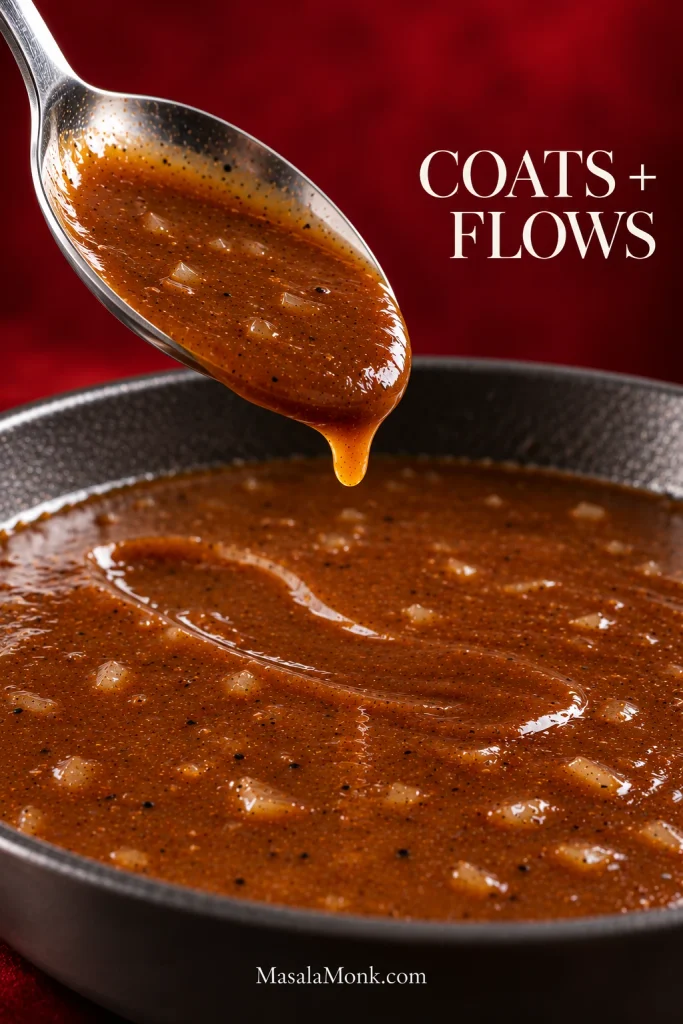
What changes if I double the recipe?

Use a very large skillet, sauté pan, or Dutch oven. Brown the sausage in batches so it sears instead of steaming, then add pasta water gradually at the end so the skillet stays glossy without becoming watery.

If you make this with hot Italian sausage, smoked sausage, kielbasa, spinach, rigatoni, shells, or another swap, leave a comment with what you used. Those small changes are often what make this recipe your own.

Back to top