Posted on Leave a comment

Cajun Étouffée Recipe

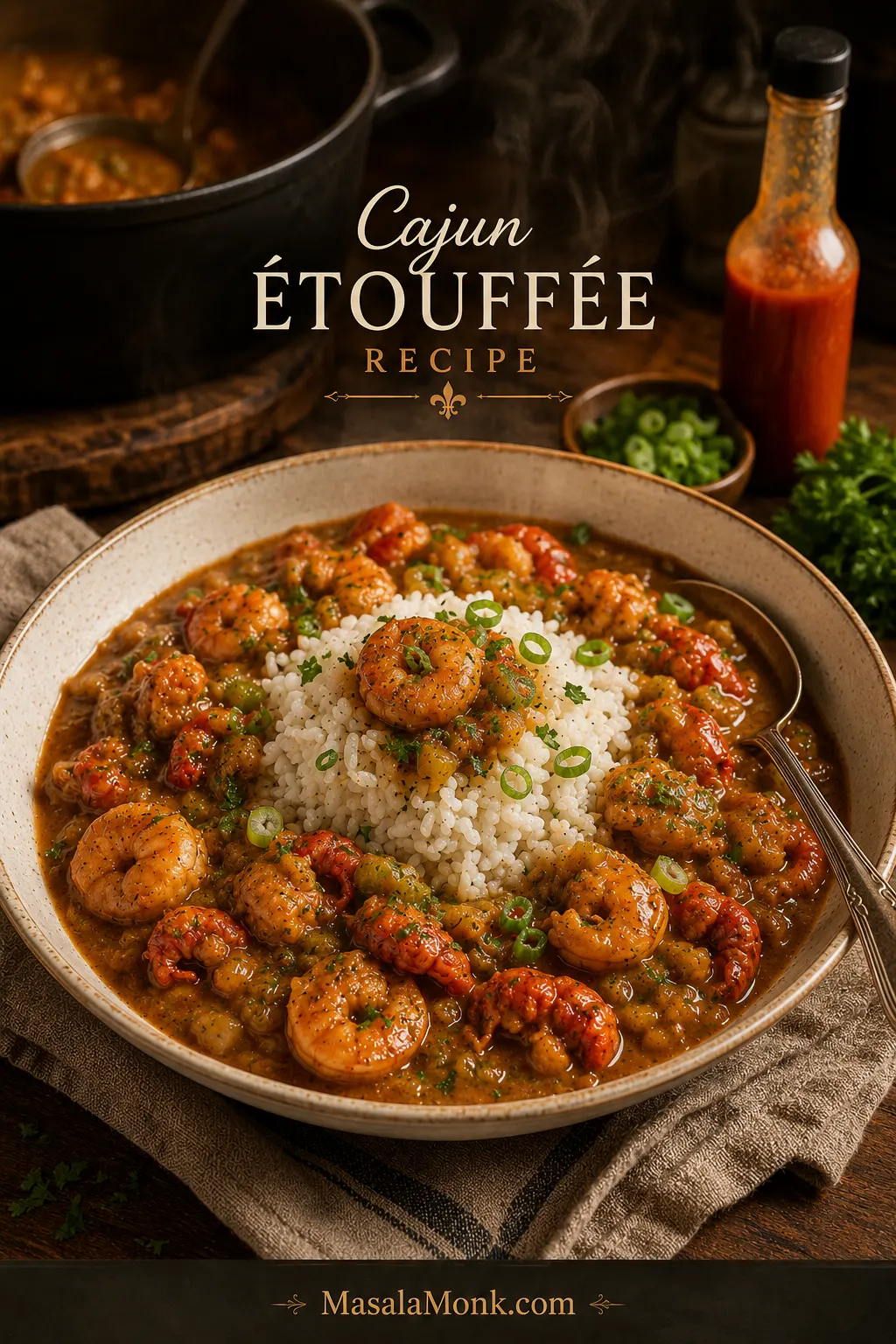
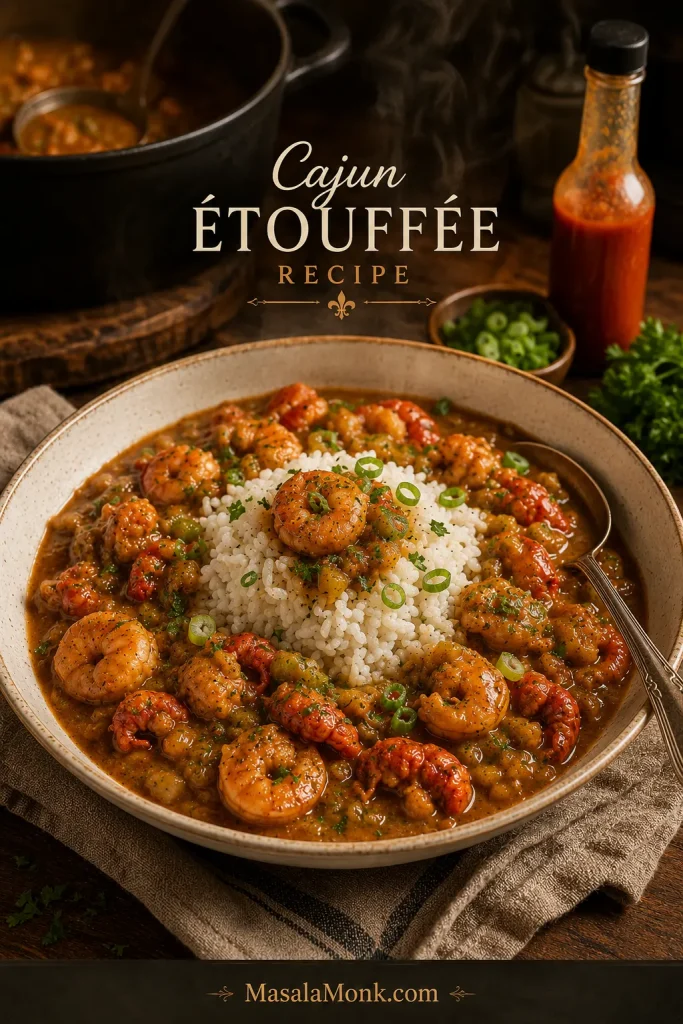
Cajun étouffée with shrimp and crawfish served over white rice in a shallow cream bowl

A great Cajun étouffée recipe lands on the table as hot rice, tender shrimp or crawfish, and glossy sauce that settles into every grain. It should smell like toasted roux, sweet bell pepper, garlic, seafood, and a little vinegar heat before the first spoonful even reaches the bowl.

You can make this with shrimp, crawfish, or a mix of both without changing the base method. Once the vegetables are chopped and the rice is started, the rest is one steady stovetop pot: roux, holy trinity, sauce, seafood, herbs, and hot rice waiting.

The rhythm is simple: trust the roux, taste the sauce, then add the seafood. That order gives you deep flavor without rubbery shrimp, tough crawfish, or a thin sauce that disappears into the rice.

You do not need to guess your way through the roux, the sauce texture, or the seafood timing. This guide also covers frozen crawfish tails, salty Cajun seasoning, prepared roux, boxed étouffée base, cream soup shortcuts, tomato options, and the common fixes that save the pot before dinner gets stressful.

Quick Answer: What Is Cajun Étouffée?

Cajun étouffée is a thick, seasoned Louisiana-style dish made with a roux, onion, celery, green bell pepper, stock, Cajun seasoning, and seafood such as crawfish or shrimp. It is served over white rice and eats more like a rich seafood gravy than a soup.

The word étouffée means “smothered,” and that is exactly how the dish should land on the plate: shrimp or crawfish smothered in a savory sauce that clings to every spoonful of rice. This version keeps the main pot roux-forward and no-tomato, with an easy tomato option if you prefer a brighter Creole-style sauce.

The final bowl should look rich and spoonable, with seafood and rice held together by a sauce that is thicker than broth.

Cajun étouffée with shrimp and crawfish served over white rice in a shallow cream bowl
A strong Cajun étouffée looks glossy and spoonable; as it settles, the sauce should hug the rice instead of flooding the bowl.

Make It Now

Ready to cook? Use this as the quick roadmap, then follow the recipe card for exact amounts. Nothing here needs to be rushed; once your prep is done, the recipe is mostly steady stirring, simmering, tasting, and finishing.

  1. Chop the onion, celery, bell pepper, garlic, green onions, and parsley.
  2. Start the rice early so it is hot when the étouffée is ready.
  3. Warm the stock and cook the roux until it turns copper to peanut-butter brown.
  4. Stir in the holy trinity, garlic, seasoning, stock, Worcestershire sauce, and a splash of hot sauce.
  5. Simmer until the base tastes rounded and thick enough to spoon over rice.
  6. Finish with your chosen seafood, add the final herbs, rest briefly, and serve.

The checkpoint that saves the pot: the sauce should taste good before the seafood goes in.

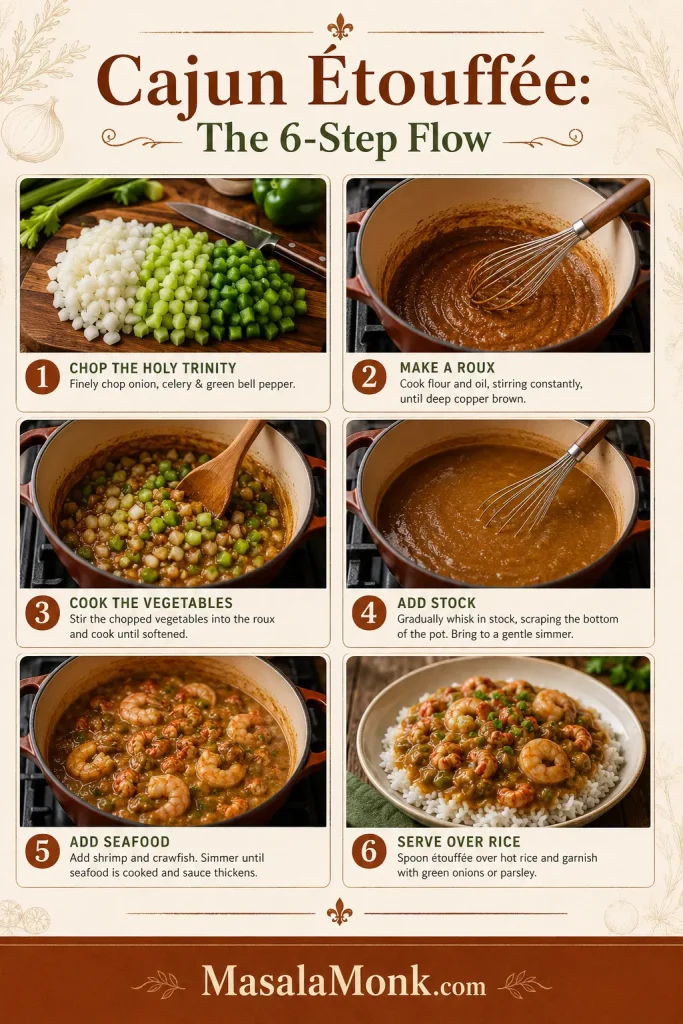
Use the quick flow to keep the method calm: roux, trinity, sauce, seafood, herbs, and rice.

Six-step visual guide showing trinity, roux, sauce, seafood, herbs, and rice for Cajun étouffée
Start with roux, build flavor with trinity, loosen the sauce with stock, then finish seafood gently before serving over rice.

Cajun Étouffée at a Glance

Main styleRoux-based Cajun-style étouffée, no tomato by default
Best seafoodShrimp, crawfish tails, or a mix of both
Servings6
Total timeAbout 1 hour 5 minutes
Roux targetCopper to peanut-butter brown
Sauce textureGlossy, spoonable, thick enough to hug rice
Serve withLong-grain white rice, fresh herbs, and table hot sauce
Best quick pathMake a light roux instead of relying only on canned soup or boxed mix
Biggest success cueLet the base taste complete, then finish with seafood

Cajun Étouffée Recipe Card

This stovetop recipe makes a roux-based Cajun étouffée with shrimp, crawfish tails, or both. The method stays the same; the main change is when each type of seafood goes into the finished sauce.

Keep the rice hot and the seafood cold until the sauce is ready. That little bit of timing is what makes the bowl feel generous instead of rushed.

Recipe Snapshot

Prep time20 minutes
Cook time45 minutes
Total time1 hour 5 minutes
Servings6
MethodStovetop
CuisineCajun / Louisiana-style
Main equipmentDutch oven, heavy-bottomed pot, or deep heavy skillet

Ingredients

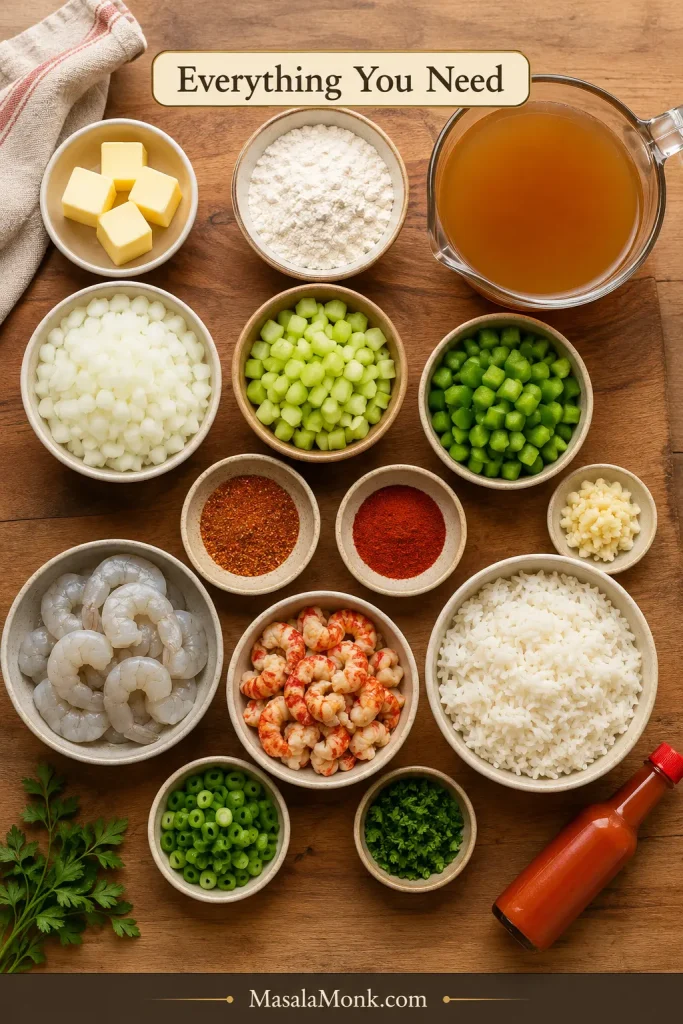
Before cooking, notice how each ingredient has a job: roux for body, trinity for sweetness, stock for sauce, and seafood for the finish.

Cajun étouffée ingredients arranged with seafood, rice, vegetables, stock, herbs, seasoning, flour, and fat
Even with a full ingredient board, the real flavor builders are roux, holy trinity, stock, seafood, and a fresh finish.
  • ½ cup unsalted butter, 113 g, or 120 ml neutral oil
  • All-purpose flour, ½ cup, about 60–65 g
  • 1½ cups finely chopped yellow onion, about 225 g
  • 1 cup finely chopped green bell pepper, about 150 g
  • ¾ cup finely chopped celery, about 100 g
  • 4–6 garlic cloves, minced, about 15–25 g
  • 2½–3 cups warm seafood stock, shrimp stock, crawfish stock, or chicken stock, plus more as needed, 600–720 ml
  • 2–3 teaspoons salted Cajun seasoning, or 1½–2 tablespoons salt-free Cajun seasoning
  • 1 teaspoon paprika or smoked paprika
  • ½ teaspoon dried thyme
  • 2 bay leaves
  • ¼–½ teaspoon cayenne pepper, optional
  • 1 tablespoon Worcestershire sauce, 15 ml
  • Hot sauce, 1–2 tablespoons, 15–30 ml, plus more for serving
  • 2 lb total peeled shrimp, crawfish tails, or a mix, about 900 g
  • ½ cup sliced green onions
  • ¼ cup chopped parsley
  • Salt and black pepper, to taste
  • 4–6 cups cooked long-grain white rice, for serving

Ingredient Notes for Salt, Seafood, and Rice

Salt note: If your Cajun seasoning already contains salt, do not add extra salt until the sauce has simmered and you have tasted it. Stock, hot sauce, boxed bases, and cream soup can all add salt too. Salt-free Cajun blends can usually be used more generously because they bring spice without adding as much sodium.

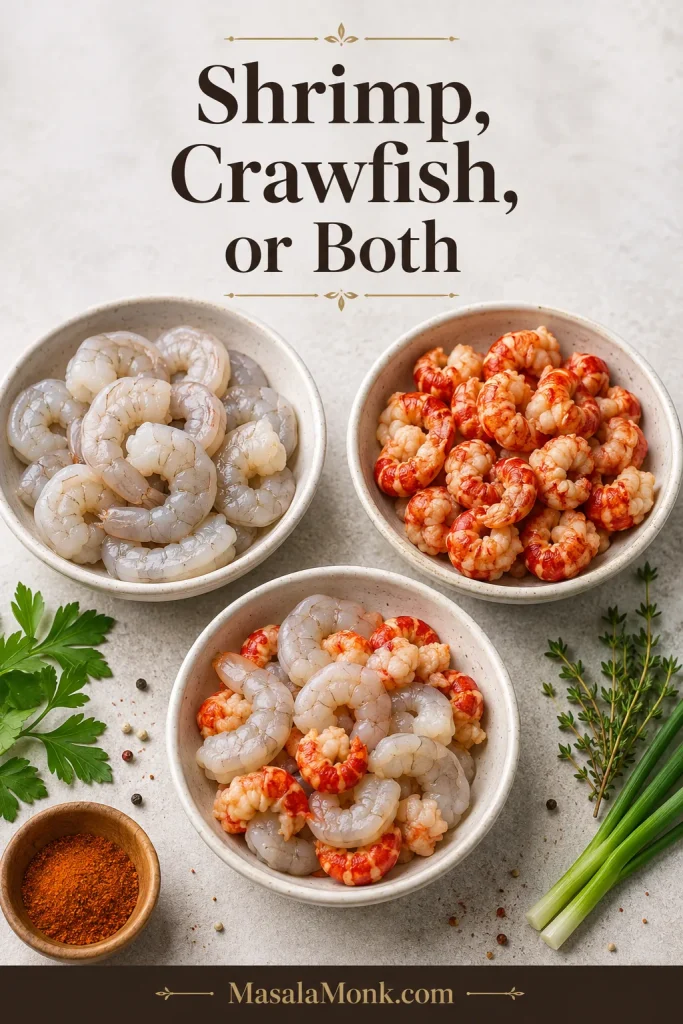
Seafood note: Use 2 lb total seafood, not 2 lb shrimp plus 2 lb crawfish. If using a mix, combine the shrimp and crawfish together to reach about 2 lb / 900 g total.

Pick the seafood before you start, because shrimp and crawfish can share the same sauce but need different finishing care.

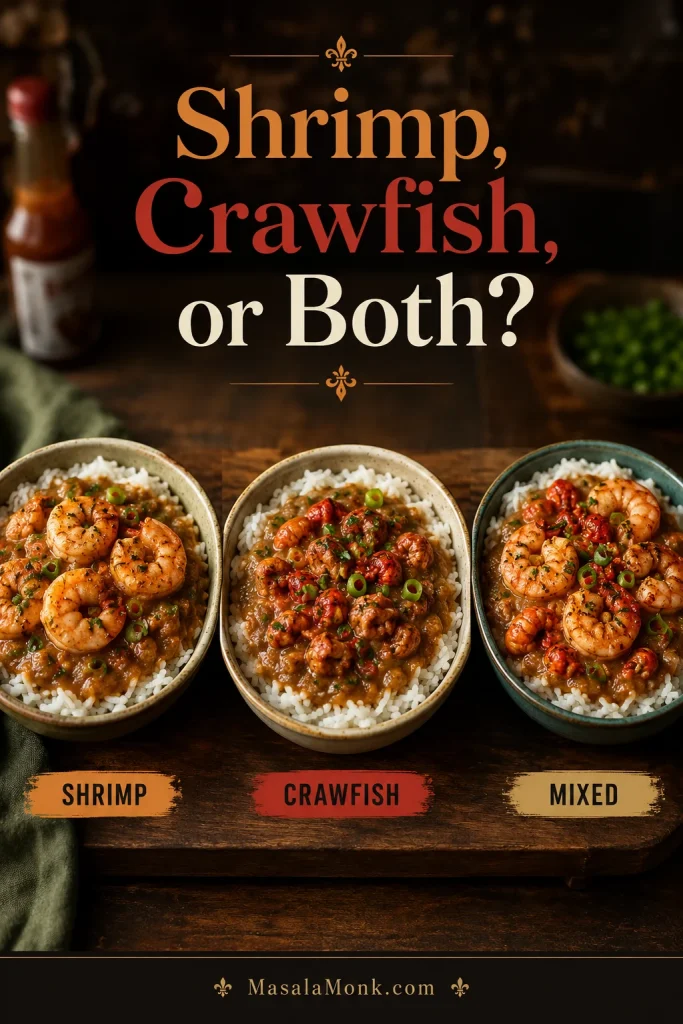
Three bowls showing shrimp, crawfish tails, and mixed seafood for Cajun étouffée
Whether you use shrimp, crawfish tails, or both, keep the seafood amount steady so the étouffée stays balanced.

Rice note: Use 6 cups cooked rice for generous bowls, or 4 cups for lighter servings. Start the rice before the seafood goes in so everything reaches the table hot.

Equipment

  • Dutch oven or heavy-bottomed pot, important for steady roux heat
  • Deep heavy skillet, if it gives you enough room to stir safely
  • Wooden spoon or heat-safe spatula
  • Whisk
  • Small saucepan for warming stock
  • Cutting board and sharp knife
  • Measuring cups and spoons
  • Rice cooker or rice pot

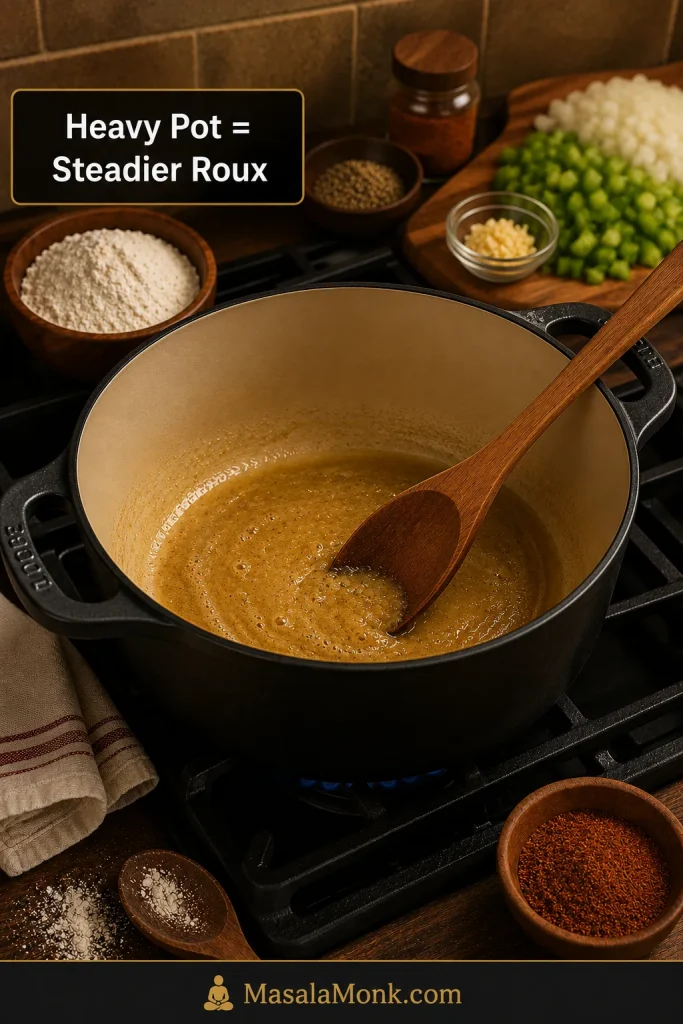
Roux can scorch quickly in thin cookware. A heavy pot gives you more control as the flour moves from pale to nutty brown. Patience beats speed here; burnt roux is not worth saving.

Steady cookware protects the roux, giving flour time to brown evenly instead of scorching in one hot spot.

Heavy Dutch oven with flour, fat, and wooden spoon set up for making Cajun étouffée roux
A heavy pot spreads heat more evenly, which gives the roux time to brown slowly instead of scorching in hot spots.

Instructions

Prep and Roux

  1. Prep first. Chop the onion, bell pepper, celery, garlic, green onions, and parsley before you start. Cook the rice or set it going. Thaw and drain frozen shrimp or crawfish. Pat shrimp dry if it is very wet.
  2. Warm the stock. Keep the stock warm in a small saucepan over low heat. It should be warm, not boiling.
  3. Make the roux. Melt the butter, warm the oil, or heat a butter-oil mix in a Dutch oven or heavy-bottomed pot over medium heat. Add the flour and stir constantly for 8–15 minutes, lowering the heat if needed, until the roux turns copper to peanut-butter brown and smells nutty. If the roux starts darkening faster than you can comfortably stir, lower the heat before you panic; roux forgives patience better than speed.

Build the Sauce

  1. Add the holy trinity. Stir in the onion, green bell pepper, and celery. Cook for 6–8 minutes, stirring often, until the vegetables soften and the roux clings to them.
  2. Add garlic and seasoning. Stir in the garlic, Cajun seasoning, paprika, thyme, bay leaves, and cayenne if using. Cook for 30–60 seconds, just until fragrant.
  3. Build the sauce. Slowly whisk in 2½ cups warm stock, adding it gradually so the sauce stays smooth. The first splash may make the roux seize and thicken; keep whisking and it will loosen as the rest of the stock goes in. Stir in Worcestershire sauce and hot sauce. Bring to a gentle simmer.
  4. Simmer until rounded. Reduce the heat to medium-low and simmer for 15–20 minutes, stirring occasionally, until the sauce thickens and tastes complete. Add more warm stock if it becomes too thick.

Add Seafood and Serve

  1. Finish with seafood. Raw shrimp cooks gently in 3–5 minutes, just until opaque and lightly curled. Cooked crawfish tails should be stirred in and heated gently for 3–5 minutes. If using both, add shrimp first, then stir in crawfish during the final 2–3 minutes. Already-cooked shrimp only needs the final 1–2 minutes to warm through.
  2. Season and brighten. Remove the bay leaves. Stir in most of the green onions and parsley. Taste and adjust with salt, black pepper, Cajun seasoning, a splash of acidity, or a little more stock.
  3. Rest and serve. Turn off the heat and let the étouffée rest for 5 minutes. Spoon over hot white rice so the sauce pools around the grains, then finish with fresh herbs and extra hot sauce at the table.

Recipe Notes

Seasoning, Stock, and Roux Notes

  • Seasoning: If your Cajun seasoning is salty, start with less and add more only after the sauce has simmered.
  • Stock: Low-sodium stock is safest if your Cajun seasoning, hot sauce, or boxed base is already salty. Chicken stock works when seafood stock is unavailable; a small splash of bottled clam juice adds deeper seafood flavor if you like that taste.
  • Flour and roux: Spoon and level the flour if measuring by cup; a packed ½ cup can make the sauce thicker. A peanut-butter roux gives the best balance of flavor and thickening for this recipe.

Seafood, Heat, and Make-Ahead Notes

  • Shrimp: Medium, large, or medium-large shrimp work best. Peeled shrimp are easiest for spooning over rice. Shrimp is done when opaque and lightly curled, not tightly coiled into hard rings.
  • Cooked shrimp: Add cooked shrimp only in the final 1–2 minutes so it warms without turning rubbery.
  • Food safety: Shrimp, lobster, crab, and scallops should cook until the flesh is pearly or white and opaque, as noted by FoodSafety.gov.
  • Crawfish: Crawfish tails are often already cooked, so they only need gentle heating. For frozen crawfish tails, thaw and drain excess liquid. Do not rinse away flavorful crawfish fat or juices unless they smell muddy, overly fishy, or unpleasant.

  • Heat: Use a vinegar-forward Louisiana-style hot sauce if you want brightness, or keep the pot mild and let people add heat at the table. For more spice, add cayenne near the end so you can control it.
  • Resting and make-ahead: The sauce thickens as it sits. Loosen with warm stock or water if needed. Best make-ahead results come from preparing the sauce first and adding the seafood during reheating.

Half-Batch Note

To make a smaller pot, use 1 lb / 450 g total seafood, ¼ cup butter or oil, ¼ cup flour, and about 1½–2 cups stock. Keep the same method, but start checking the sauce thickness sooner because a smaller batch reduces faster. Begin with the lower amount of Cajun seasoning, especially if your blend contains salt.

Need help while cooking? Jump to Success Cues, Roux Guide, Troubleshooting, or Serving Tips.

Success Cues

The recipe card gives you the steps. These cues help you know when each stage is actually working. Once the pot is on the stove, smell, color, texture, and the way the sauce moves matter more than the exact minute on the clock.

Roux smells nutty, not raw

Smell is the first real sign. The roux stops smelling like raw flour and starts smelling warm, buttery, and nutty. Its color should move from pale flour to copper or peanut-butter brown. A sharp, scorched, or bitter smell means it is better to restart before adding the vegetables.

Vegetables soften into the base

When the onion, celery, and bell pepper hit the roux, the pot should start smelling like dinner. The vegetables cool the roux slightly, then soften into it until the base tastes sweet, savory, and rounded instead of sharp or raw.

The base tastes complete

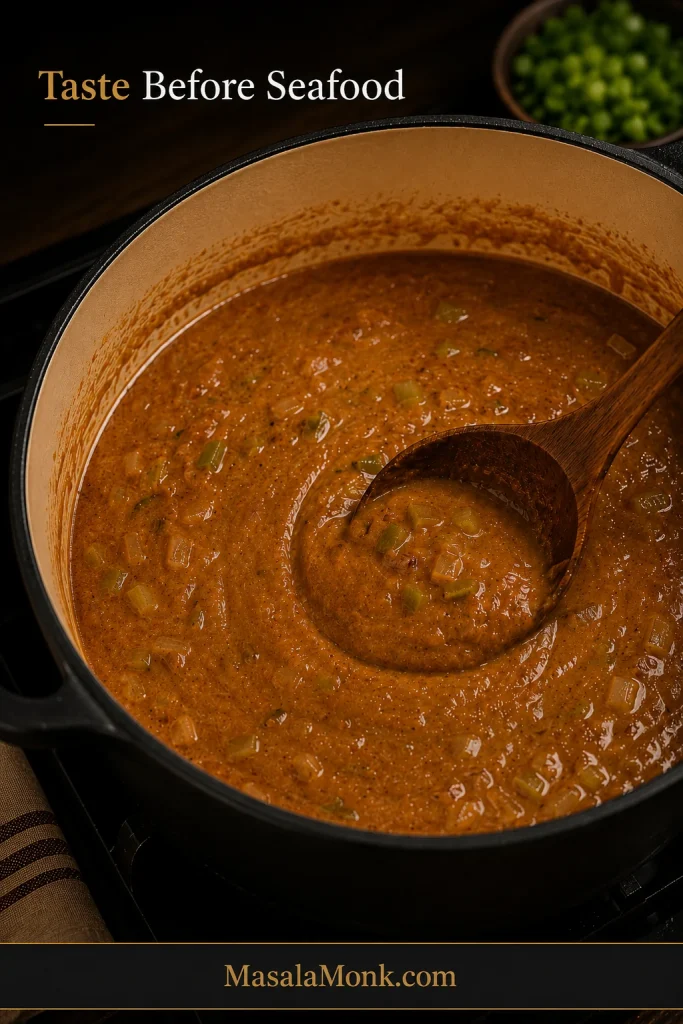
This is the biggest checkpoint. Once the base tastes like dinner, the seafood only has to show up. It should already taste seasoned, rounded, and spoonable before shrimp or crawfish is added.

At this point, the base should carry the flavor on its own; seafood is only the final gentle finish.

Glossy Cajun étouffée sauce in a pot before shrimp or crawfish is added
Taste the sauce at this stage; once it feels rounded and spoonable, the seafood can cook quickly at the end.

Shrimp stays tender, crawfish warms gently

Shrimp should turn opaque and curl softly. Crawfish tails should be warmed through, not boiled hard. The pot should bubble softly after the seafood is added, not roll like a hard boil.

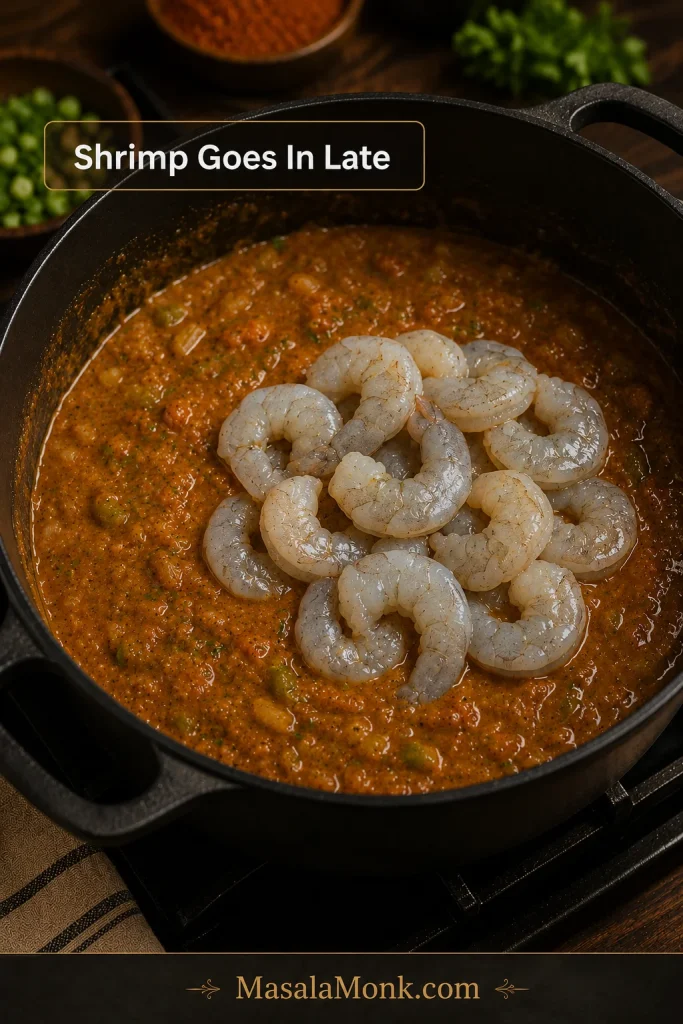
Raw shrimp belongs in the finished sauce, not in a long simmer, so the timing stays short and gentle.

Raw peeled shrimp added to finished Cajun étouffée sauce in a dark pot
Add raw shrimp only after the sauce is ready, so it cooks gently instead of turning rubbery.

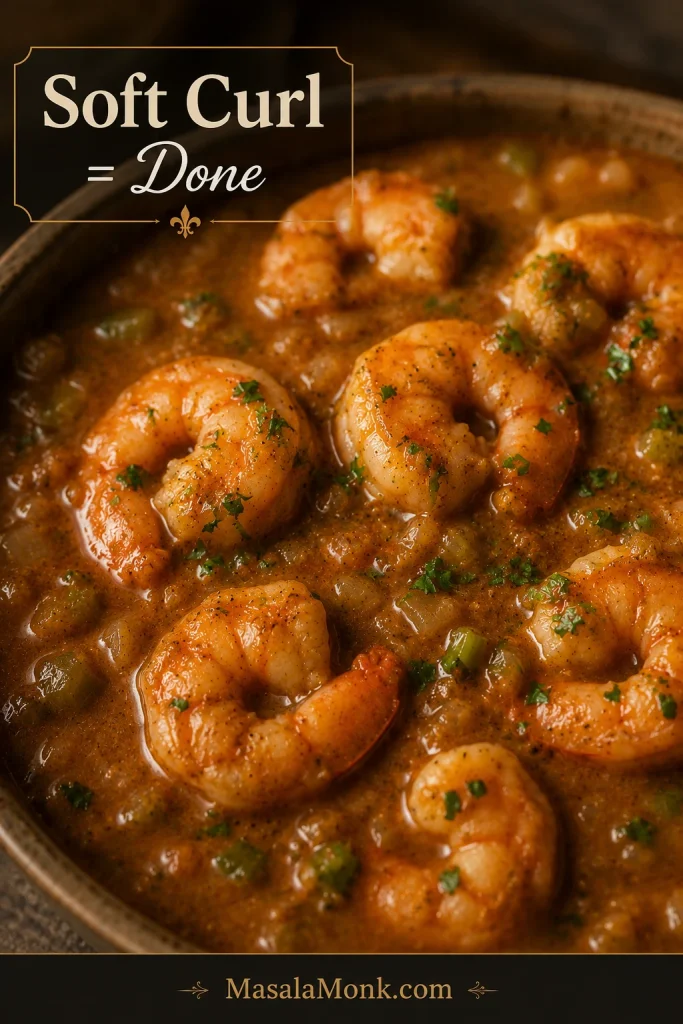
Soft curl is the shrimp signal; take the pot off hard heat before tender shrimp turns into tight rings.

Opaque shrimp softly curled in Cajun étouffée sauce with herbs
Shrimp is done when it turns opaque and curls softly; tight rings usually mean it cooked too long.

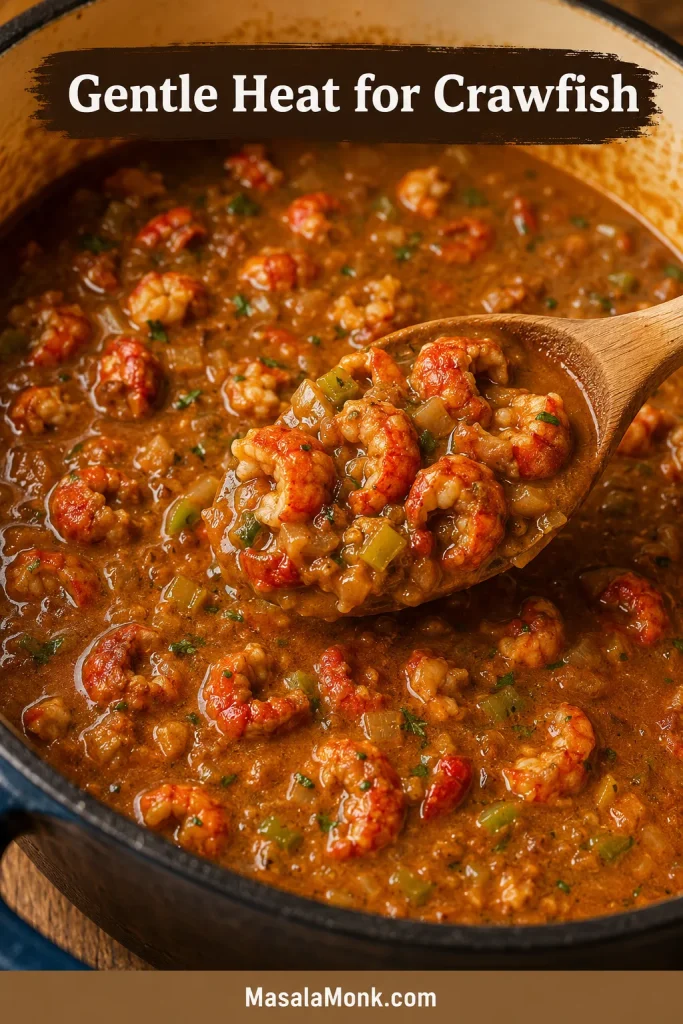
Gentle warming protects crawfish tails, especially when they are already cooked before they reach the sauce.

Crawfish tails warmed in Cajun étouffée sauce on a wooden spoon
Crawfish tails are often already cooked, so warm them gently in the sauce instead of boiling them hard.

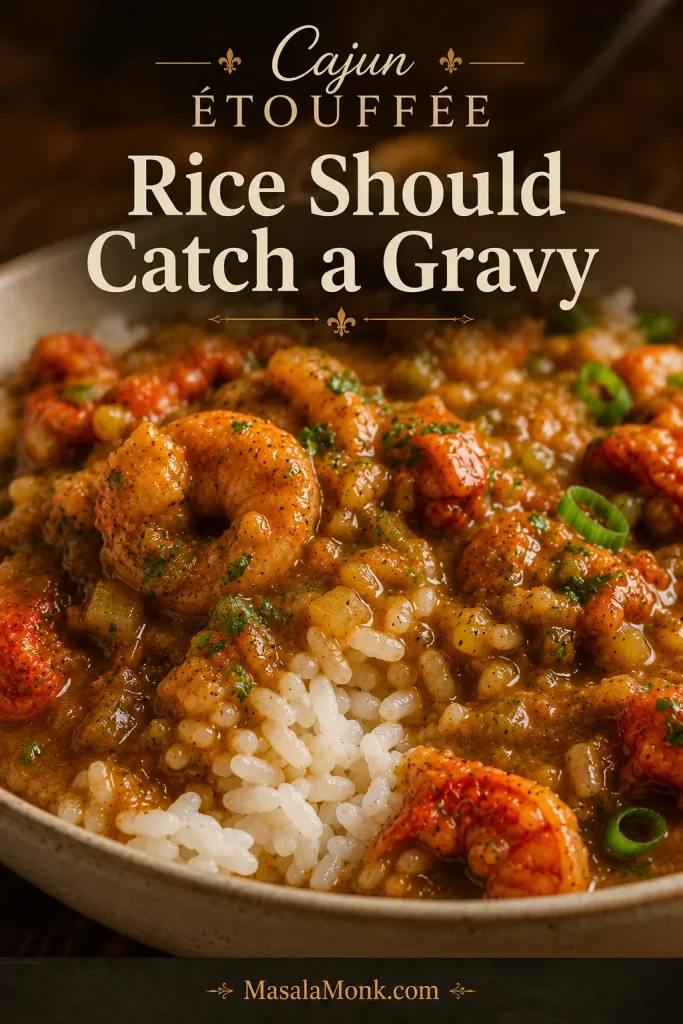
The rice catches a gravy, not a broth

When you spoon étouffée over rice, the sauce should settle into the grains instead of sliding away like broth or sitting on top like paste. The rice should catch a gravy, not chase a broth.

This is the bowl test: rice should hold sauce between the grains, not sit under a watery layer.

Close-up of Cajun étouffée sauce settling into white rice with seafood
Good étouffée gravy settles between the rice grains, which keeps each spoonful saucy without turning the bowl watery.

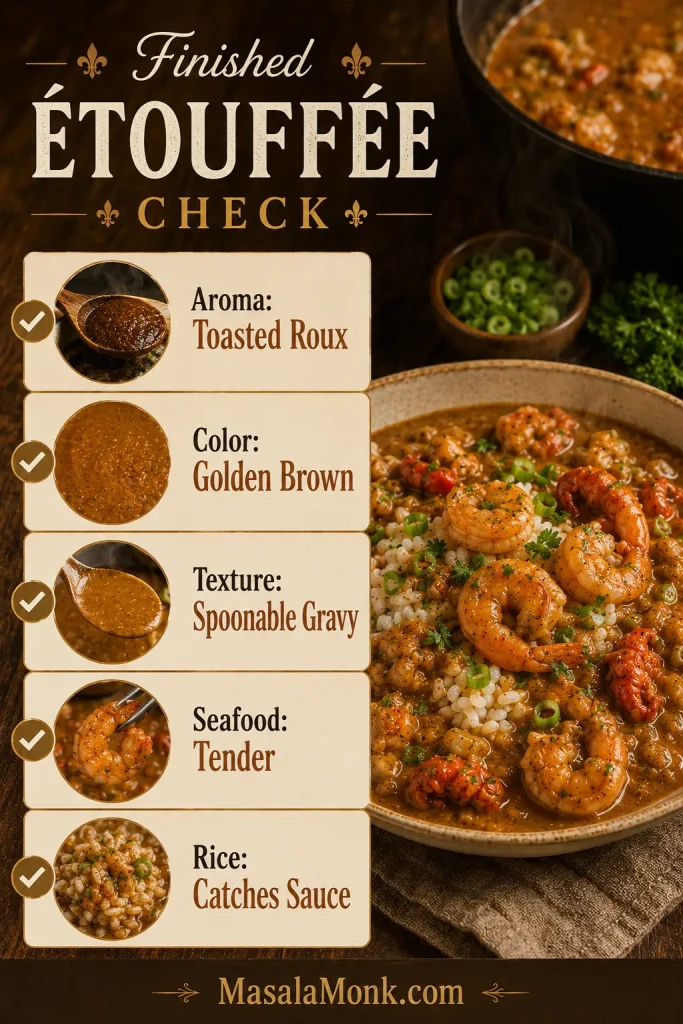
What the Finished Étouffée Should Look Like

CueWhat to look for
AromaToasted roux, softened onion, bell pepper, garlic, seafood, and a little vinegar heat
ColorGolden brown to light brown, not pale beige and not burnt dark
TextureThick gravy that moves slowly from the spoon and spreads gently over rice
SeafoodShrimp softly curled and opaque; crawfish warmed through, not boiled hard
RiceSauce settling around the grains, not watery puddles at the bottom of the bowl

Use the checklist as the final pass before serving, especially if the sauce looked uncertain earlier.

Finished étouffée checklist showing toasted roux aroma, golden color, spoonable texture, tender seafood, and rice
Check the pot from several angles: aroma, color, sauce body, seafood tenderness, and how well the rice holds the gravy.

Still checking the pot? Use the Roux Guide if the base looks too light or too dark, or go to Troubleshooting if the sauce feels thin, thick, salty, or floury.

Why This Cajun Étouffée Works

This pot works because the flavor is built before the seafood goes in. The roux turns nutty, the trinity softens, the seasoning settles into the stock, and the seafood only needs a short, gentle finish.

  • Roux builds body and flavor. It thickens the sauce and gives the dish that warm, toasted smell that makes the whole pot feel deeper.
  • The holy trinity makes the base taste complete. Onion, celery, and green bell pepper soften into the roux before the liquid is added.
  • Warm stock keeps the sauce smooth. Adding it slowly helps prevent lumps and gives you control over the final texture.
  • Seafood is treated gently. Shrimp and crawfish stay tender because they only need a short finish.
  • Tomato stays optional. The main recipe stays roux-forward, while a small tomato option gives you a brighter Creole-style variation.
  • Shortcuts have a place. Cream soup, boxed mix, prepared roux, and étouffée base can help on busy nights, but the from-scratch roux method gives the best flavor and control.

Choose Your Version: Shrimp, Crawfish, or Both

Before you worry about spice level, choose the seafood that makes sense for your kitchen. Crawfish gives étouffée its classic Louisiana feel, shrimp makes the recipe easier to shop for, and using both turns the pot into a fuller seafood dinner.

VersionUse it whenHow to cook it
Crawfish étoufféeYou have crawfish tails and want the most classic seafood flavorAdd thawed crawfish tails at the end and heat gently for 3–5 minutes
Shrimp étoufféeYou want the easiest seafood version with ingredients that are easier to findAdd raw peeled shrimp at the end and cook 3–5 minutes until opaque
Shrimp and crawfish étoufféeYou want a bigger seafood dinner with more texture and flavorAdd shrimp first, then stir in crawfish during the final 2–3 minutes
Chicken étoufféeYou want the same sauce structure without seafoodUse cooked chicken or simmer small pieces until fully cooked and tender

Compare the versions before cooking so the pot matches your seafood, shopping, and serving plan.

Three finished bowls comparing shrimp étouffée, crawfish étouffée, and mixed seafood étouffée
The roux-based sauce stays the same, but shrimp cooks quickly while crawfish tails only need gentle warming.

Seafood Timing Notes

Good crawfish tails are worth using when you can get them. Otherwise, shrimp is not a compromise; it is a strong version of the dish on its own. Thaw frozen shrimp fully and pat it dry so extra water does not thin the pot. For another shrimp dinner where timing matters, this shrimp scampi also keeps the shrimp tender by cooking it quickly in a finished sauce.

Chosen your seafood? Return to the Recipe Card, or review Success Cues for shrimp and crawfish timing.

Ingredients You Need for Cajun Étouffée

Once the roux is under control, the rest of the ingredient list is simple. Each piece has a job, and the timing matters more than using a long list of extras.

Roux: butter or oil plus flour

The roux gives the sauce its body and toasted depth. Butter tastes richer; oil is more forgiving. Nervous about scorching? Use half butter and half oil so you get flavor with a little more stability.

The holy trinity

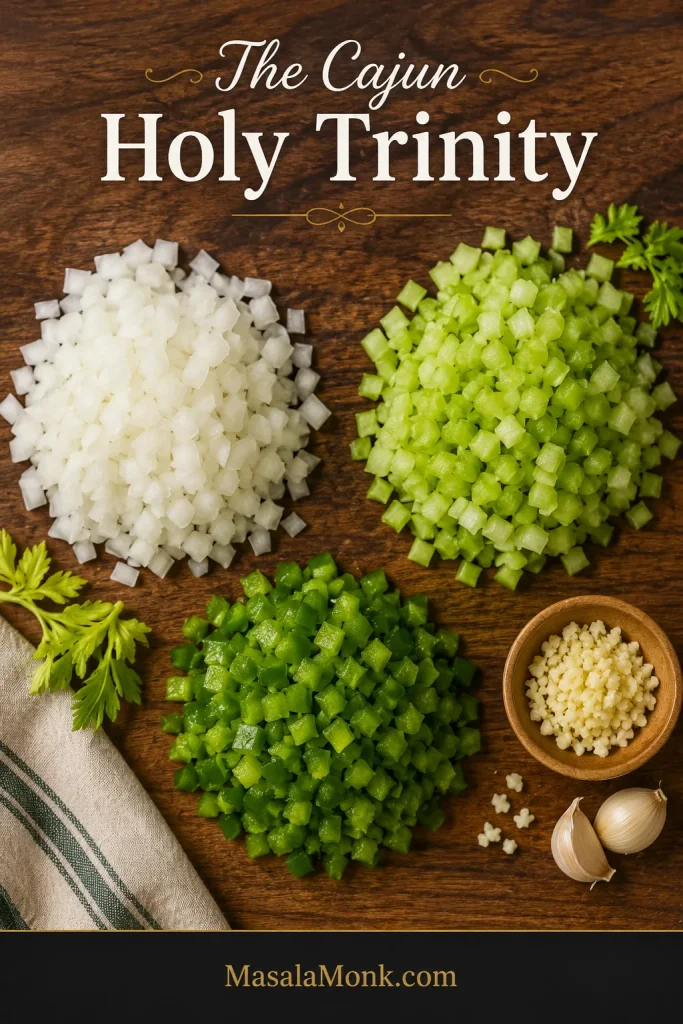
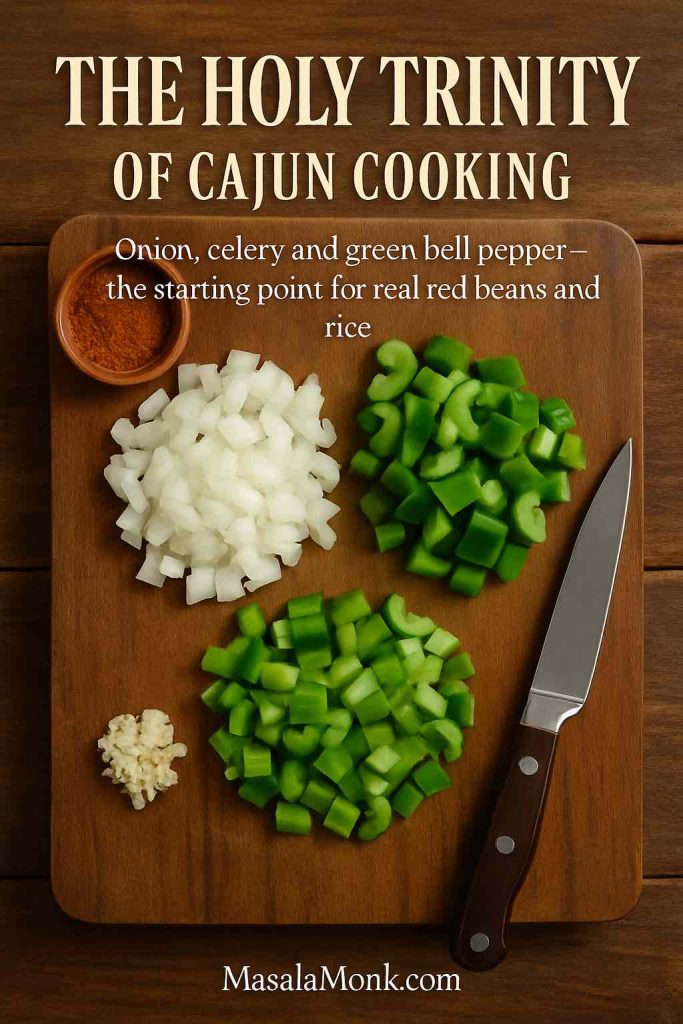
Onion, celery, and green bell pepper form the Cajun holy trinity. Green bell pepper gives the most classic flavor, but red or yellow bell pepper works when that is what you have. Chop the vegetables finely so the finished dish feels smooth and spoonable instead of chunky.

The Cajun holy trinity belongs in the ingredient notes because it shapes the sweetness and depth of the sauce.

Chopped onion, celery, green bell pepper, and garlic arranged on a wooden board
Onion, celery, and green bell pepper form the Cajun holy trinity; garlic joins later so it does not burn.

Garlic and Cajun seasoning

Garlic adds depth, but it burns quickly, so add it after the onion, celery, and bell pepper have softened. Cajun seasoning varies a lot by brand. Some blends are mostly spice; others are very salty. Start with less if your seasoning contains salt, then adjust after the sauce simmers.

Salted seasoning, salted stock, hot sauce, and boxed bases can stack quickly. Wait until the sauce has simmered, then taste and adjust. Rice will soften saltiness on the plate, but it is much easier to add salt than remove it.

Stock

Seafood stock or shrimp stock gives the deepest flavor, but chicken stock works well for a home version. Choose low-sodium stock when your Cajun seasoning is salted. Warm stock blends into the roux more smoothly. For another seafood recipe where the base makes or breaks the final flavor, this lobster bisque uses the same idea: build the base first so the seafood tastes richer without overcooking.

Shrimp or crawfish

Use peeled raw shrimp, thawed crawfish tails, or a mix. Shrimp cooks quickly, crawfish tails are often already cooked, and both do best with gentle heat.

Green onions, parsley, and hot sauce

Green onions and parsley cut through the richness right at the end, so the bowl tastes bright instead of heavy. Hot sauce brings acidity as well as heat. Add some to the pot, then keep more on the table for anyone who wants a brighter final kick.

What Is Étouffée Sauce Made Of?

Think of étouffée sauce as a roux-thickened seafood gravy: not soup, not paste, and not a loose pan sauce. It should move slowly from the spoon, coat the seafood, and settle into hot rice.

The roux gives body, the trinity gives sweetness and depth, stock loosens everything into a spoonable base, and Cajun seasoning, Worcestershire sauce, hot sauce, green onions, and parsley finish the flavor. Crawfish tail juices, when they smell clean and sweet, can add extra seafood depth near the end.

Stiff sauce needs warm stock. Watery sauce needs a few uncovered minutes before the seafood is added. The goal is simple: thick enough to coat the back of a spoon, soft enough to flow around rice.

Texture matters most here: étouffée sauce should behave like seafood gravy, not broth or paste.

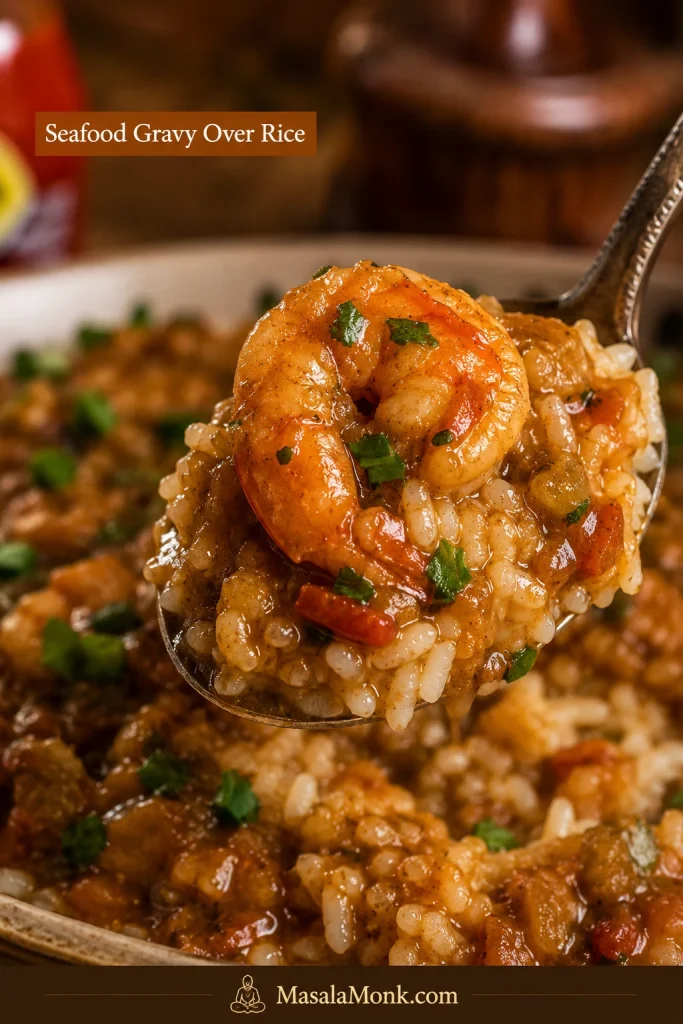
Spoonful of Cajun étouffée with thick sauce, white rice, shrimp, and crawfish
This is the texture to aim for: thick seafood gravy that clings to rice, yet still feels loose enough to spoon.

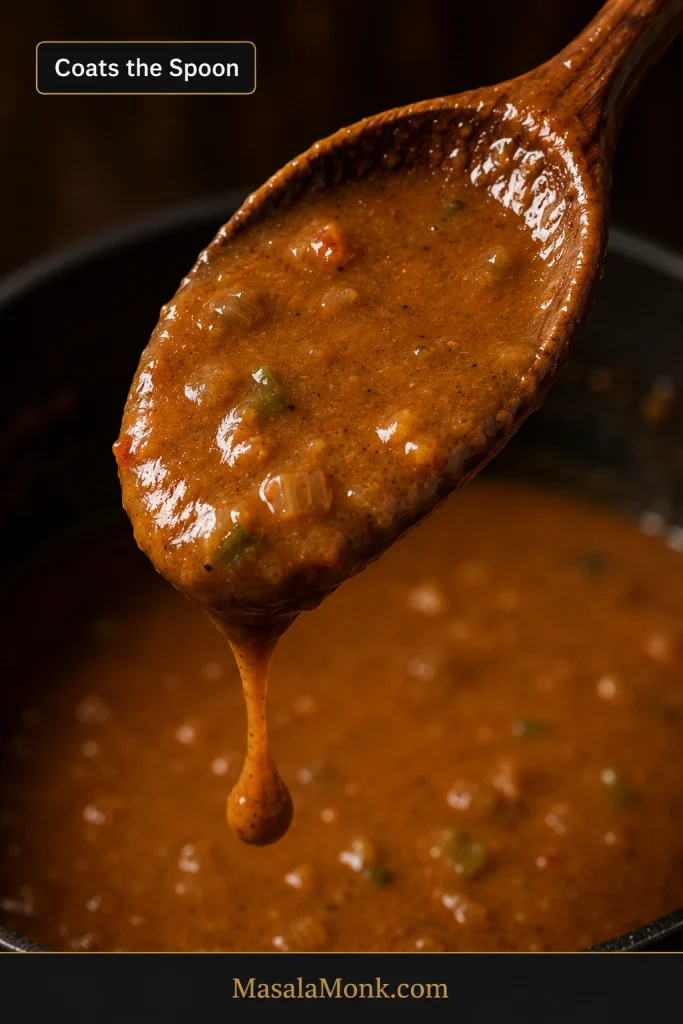
Check the spoon before serving; a slow coating means the sauce has enough body without turning pasty.

Thick Cajun étouffée sauce coating a wooden spoon with a slow drip
Use the spoon test before serving: the sauce should coat the spoon, then move slowly back into the pot.

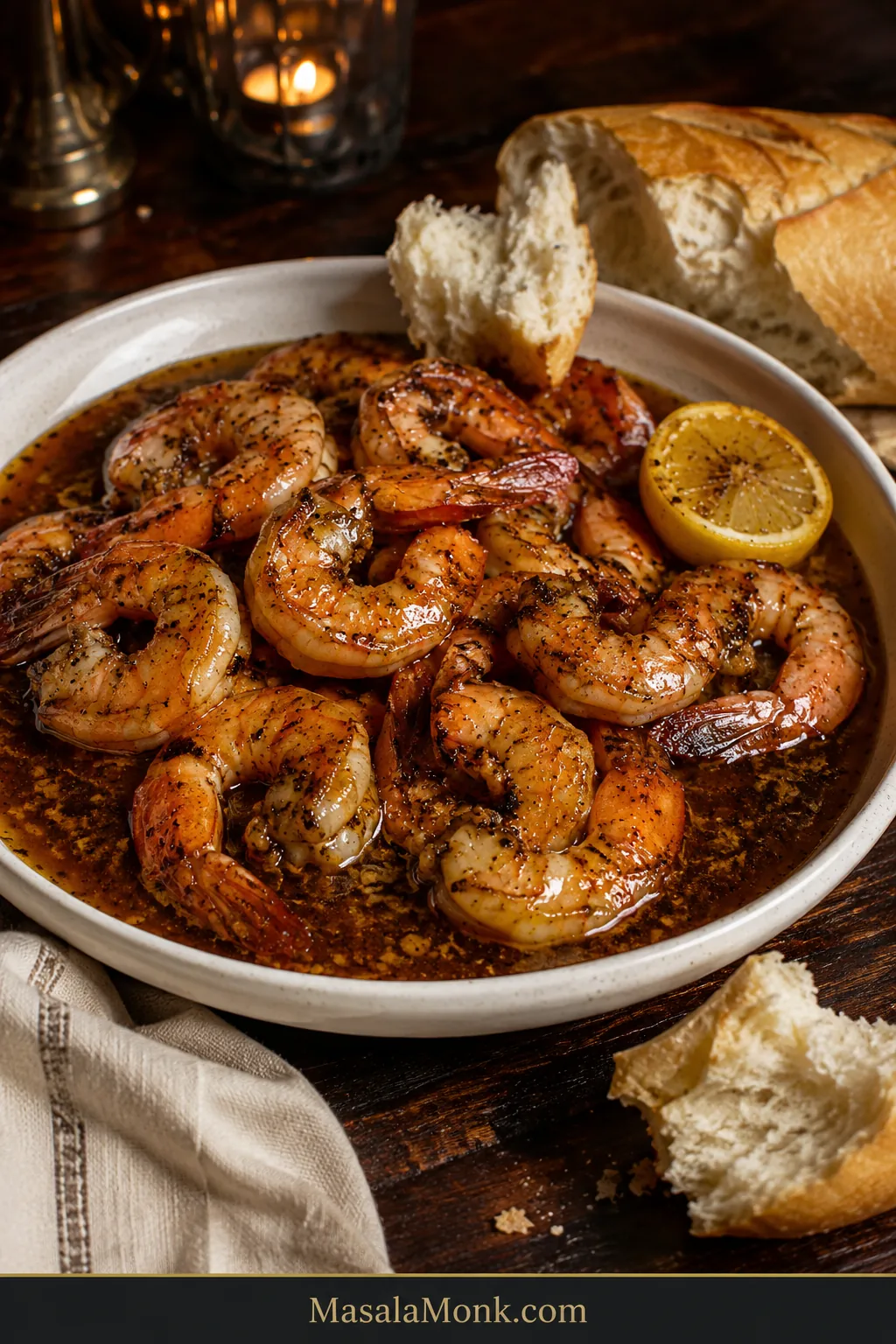
If you love Cajun-style seafood sauces in general, this seafood boil sauce is useful for a different kind of seafood dinner. It is more buttery and pourable than étouffée, but it works with many of the same shrimp, crab, crawfish, garlic, and Cajun seasoning flavors.

Roux Color Guide for Étouffée

The roux is the only part of this recipe that asks for your full attention, but it does not ask you to rush. You do not need a restaurant-speed roux here. A steady, slower roux is easier to control and still gives you the nutty flavor this dish needs.

Watch Color Before Time

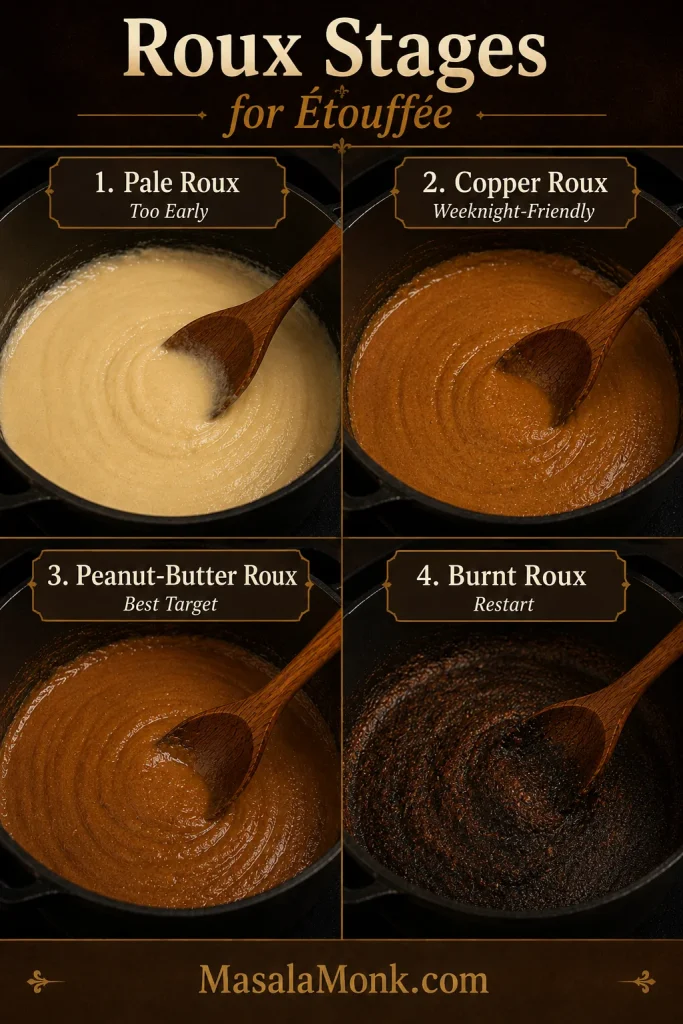
Stir steadily, control the heat, and watch the color more than the clock. Do not judge the pot too early; the roux changes slowly at first, then deepens faster as it gets darker.

Start the roux guide with color, because the stages tell you more than the clock on the stove.

Roux stage guide showing pale, copper, peanut-butter, and burnt roux for Cajun étouffée
Roux moves from pale to nutty to deep brown quickly, so watch the color closely and restart if black specks appear.

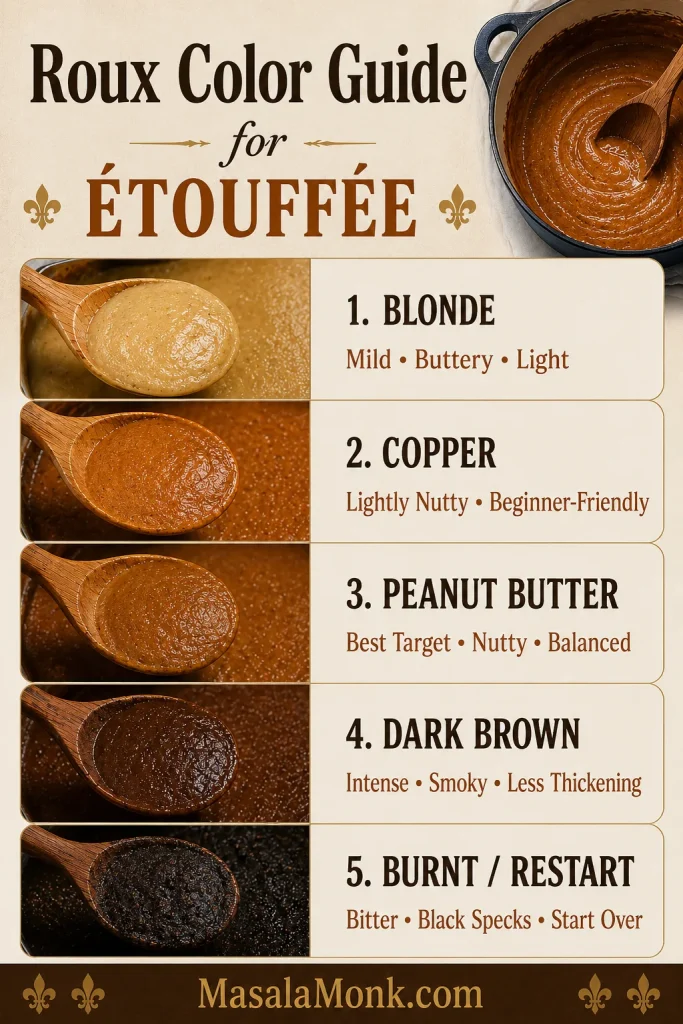
The times below are estimates. Color and smell matter more than minutes, especially if your pot runs hot or your stove is uneven. For this Cajun étouffée recipe, aim for a peanut-butter-colored roux. It gives the sauce a nutty flavor without taking as long as a very dark gumbo-style roux.

Roux Colors at a Glance

Roux colorApproximate timeFlavorBest use
Blonde3–5 minutesMild, buttery, lightly cookedFastest version, but less Cajun depth
Copper6–8 minutesLightly nutty and beginner-friendlyGood weeknight étouffée
Peanut butter8–15 minutesNutty, rounded, deeper flavorBest balance for this recipe
Dark brown18–25+ minutesMore intense, slightly smokyAdvanced version; thickens less and burns more easily
Burnt with black specksAny time if heat is too highBitterDiscard and restart

The color guide turns roux judgment into a visual check instead of a guessing game.

Roux color guide for étouffée showing blonde, copper, peanut butter, dark brown, and burnt stages
Use this roux color guide to judge whether your base is still mild, ready for étouffée, or too far gone.

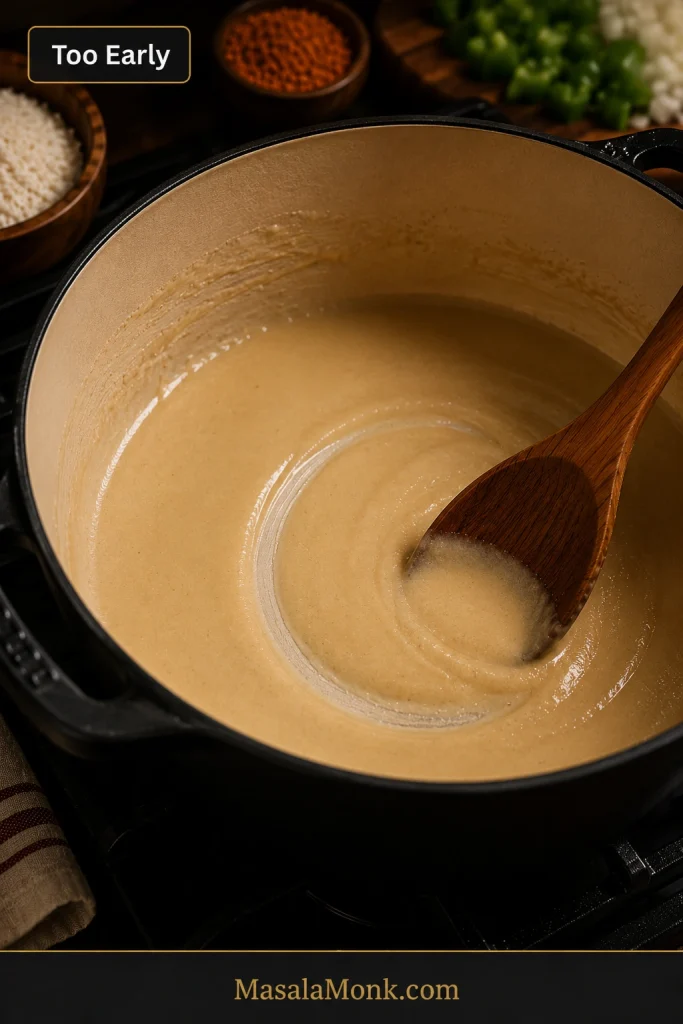
This early roux stage explains why color matters before the sauce gets its deeper Cajun flavor.

Pale roux in a Dutch oven with a wooden spoon showing an early cooking stage
Pale roux can thicken the sauce, but it has not developed the nutty flavor Cajun étouffée needs.

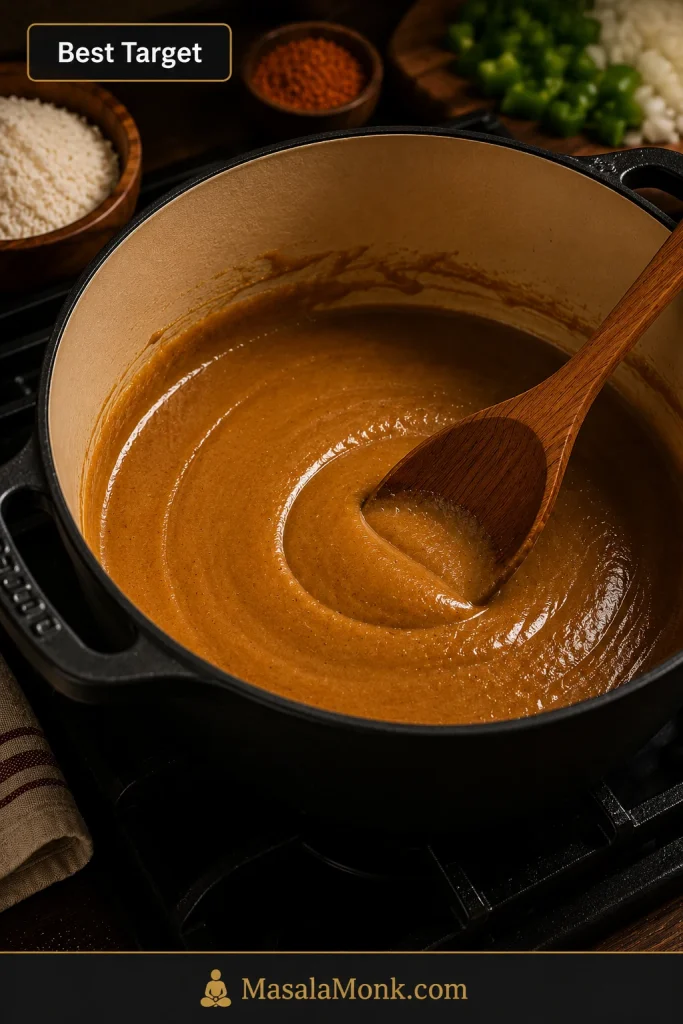
Aim for this peanut-butter shade when you want toasted flavor without losing too much thickening power.

Peanut-butter-colored roux in a heavy pot with a wooden spoon trail
Peanut-butter roux gives Cajun étouffée its best middle ground: warm color, toasted flavor, and enough body for the sauce.

When to Restart the Roux

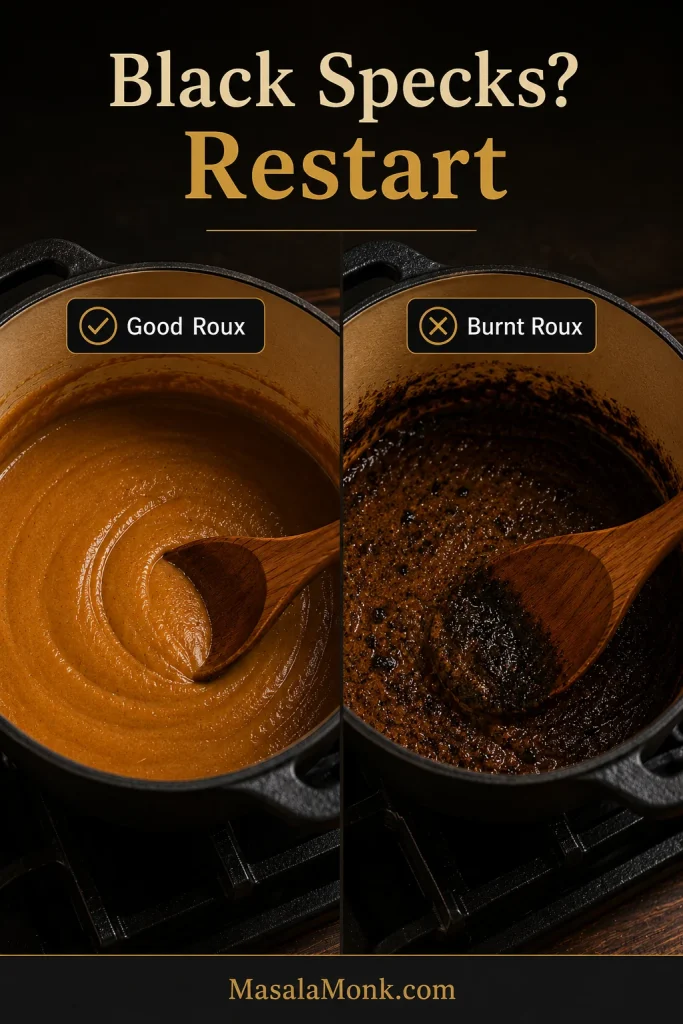
As the roux darkens, lower the heat if it starts moving too fast. Black specks or a sharp burnt aroma mean it is time to restart. Burnt roux will make the whole pot taste bitter.

Restarting is better than saving burnt roux, because scorched flavor will travel through the whole sauce.

Comparison of good roux and burnt roux with black specks
Burnt roux will turn the whole pot bitter, so restart when you see black specks or smell scorching.

Roux ready? Continue to How to Make Cajun Étouffée, or use Troubleshooting if the pot smells burnt, tastes floury, or feels too thick.

How to Make Cajun Étouffée

The recipe card gives the exact steps. This walkthrough is here for the cooking cues: what should be ready, what should smell right, and when the pot is safe for seafood.

1. Prep everything before the roux

Once the roux starts cooking, your attention belongs to the pot. Chop the vegetables, mince the garlic, slice the herbs, warm the stock, cook the rice, and thaw the seafood before you turn on the stove.

2. Cook the roux slowly

Melt the butter, warm the oil, or heat a butter-oil mix, then add the flour and stir constantly over medium heat. The roux will move from pale to blonde, then copper, then peanut-butter brown. Darkening too quickly is your cue to lower the heat and keep stirring.

3. Add onion, celery, and bell pepper

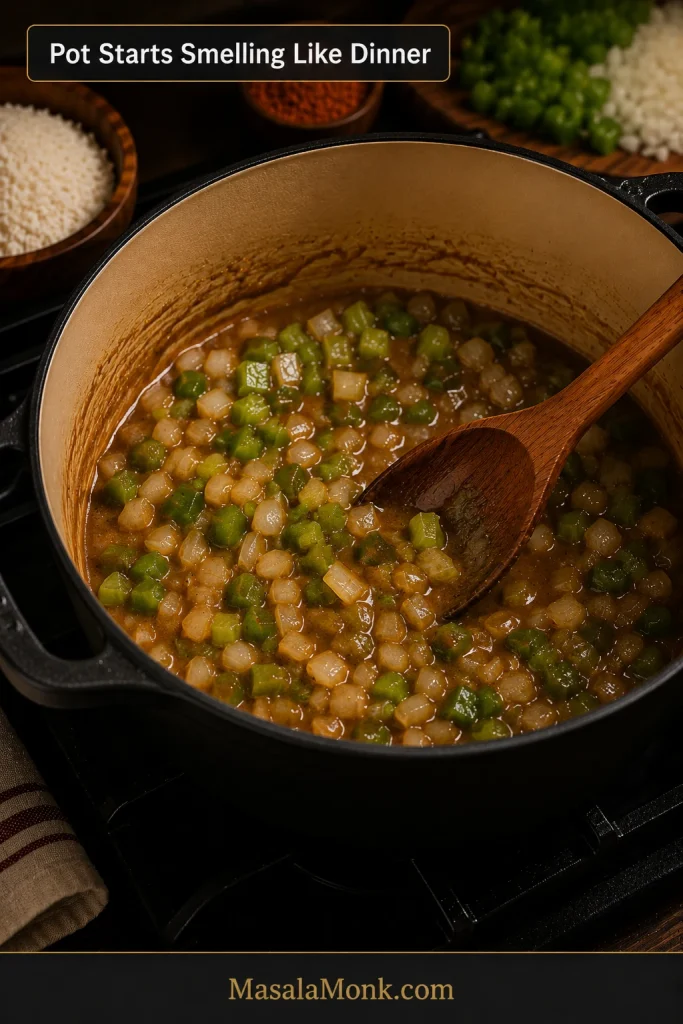
When the roux reaches the color you want, stir in the holy trinity. The vegetables cool the roux slightly, then turn sweet and savory as they soften into the base. This is the moment the pot starts smelling like dinner.

Once the trinity hits the roux, the pot shifts from toasted flour to a sweet, savory Cajun base.

Chopped onion, celery, and green bell pepper stirred into brown roux in a Dutch oven
When the trinity hits the roux, it cools the pot slightly while building a sweet, savory Cajun base.

4. Build the sauce with warm stock

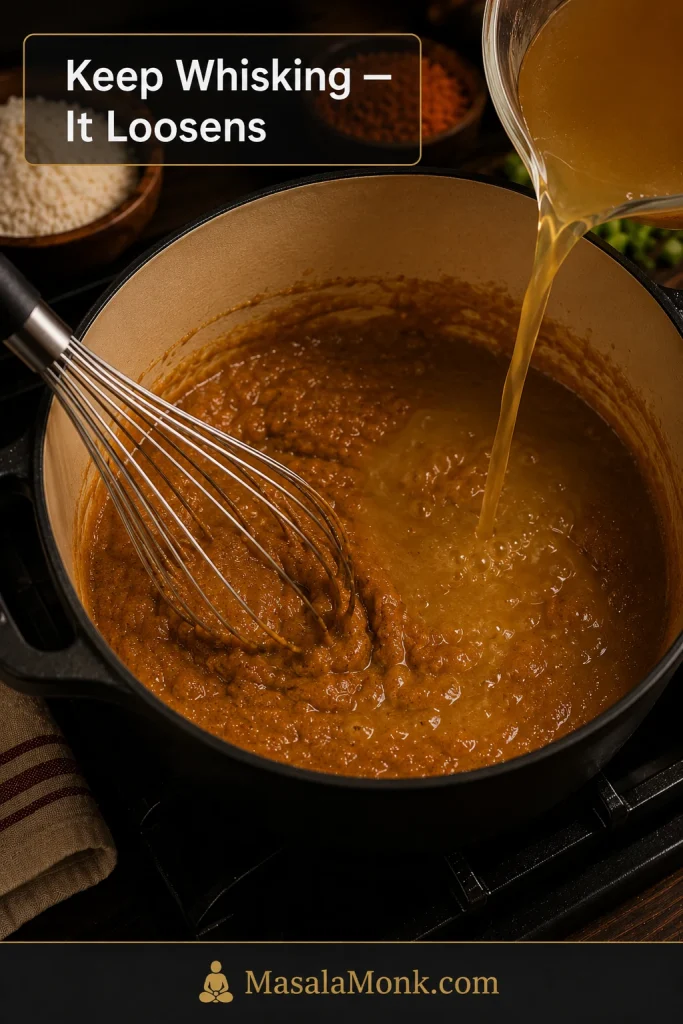
After the garlic blooms, the first splash of stock will make the roux seize and thicken. Keep whisking. It loosens as the rest of the stock goes in and turns into a smooth, spoonable base.

Warm stock and steady whisking turn the roux from tight and thick into a smooth sauce.

Warm stock being whisked into a roux base for Cajun étouffée sauce
The first splash of stock may tighten the roux, but steady whisking turns it into a smooth étouffée sauce.

5. Simmer until the base tastes complete

Let the sauce simmer until the floury edge has cooked away and the seasoning tastes balanced. The pot should already taste like dinner before the seafood arrives.

6. Finish with shrimp or crawfish

Raw shrimp only needs a few minutes. Crawfish tails are often already cooked and only need to be heated through. Treat the seafood like the finish, not the simmer.

7. Rest, garnish, and serve

Let the pot rest for a few minutes so the sauce settles and thickens slightly. Spoon it over hot white rice so the gravy pools around the grains, then serve with fresh herbs and extra hot sauce at the table.

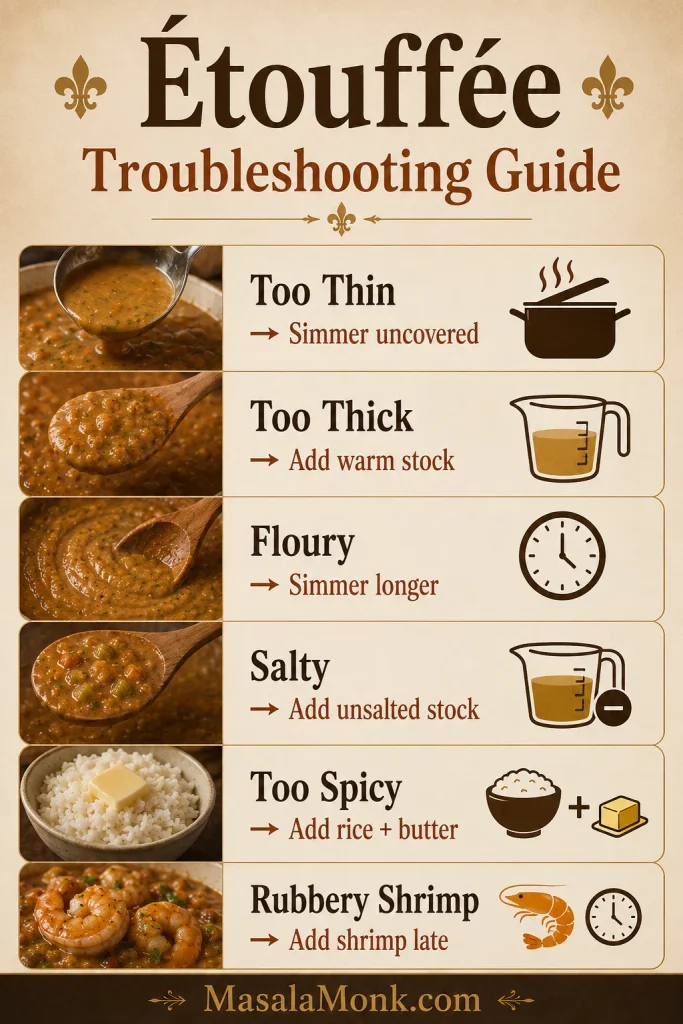
Troubleshooting: Fix Thin, Thick, Salty, Bland, Spicy, or Floury Étouffée

Do not panic if the sauce looks wrong at first. Étouffée can look too thick, too thin, or too dark for a minute before it comes together. Most problems are easier to fix before the seafood goes in, so taste and adjust while the shrimp or crawfish is still safely waiting.

Check Texture Before Seafood

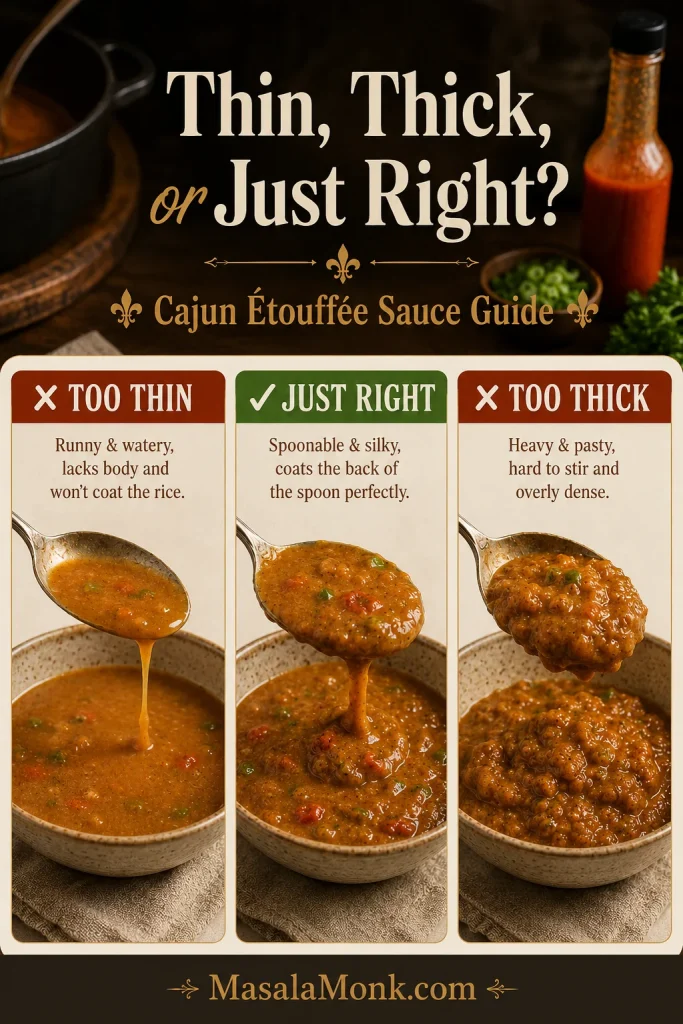
Étouffée should be thicker than soup but softer than paste. It should spoon easily over rice, coat the seafood, and settle into the grains without disappearing completely.

Diagnose the sauce before adding seafood by comparing thin, spoonable, and overly thick textures.

Three-panel guide comparing thin, just-right, and too-thick Cajun étouffée sauce textures
The ideal étouffée sauce sits between watery and pasty: spoonable, glossy, and thick enough to coat rice.

Common Étouffée Fixes

ProblemWhat it meansHow to fix it
Too thinUsually too much liquid or not enough simmeringSimmer uncovered for a few more minutes before adding seafood
Too thickThe roux absorbed more liquid than expectedAdd warm stock a splash at a time
Floury tasteRoux was undercooked or sauce needs more timeSimmer the sauce longer before adding seafood
Too saltySeasoning blend, stock, hot sauce, or boxed base was saltyAdd unsalted stock, a little butter, and serve with plain rice
Too spicyOften too much cayenne, hot sauce, or spicy Cajun seasoningAdd unsalted stock, a little butter, and serve with extra plain rice
BlandNeeds more spice, acid, or finishing flavorAdd Cajun seasoning, hot sauce, Worcestershire, green onion, or cayenne
Burnt rouxRoux scorched before vegetables were addedRestart the roux; burnt flavor will not cook out
Rubbery shrimpShrimp cooked too long or boiled too hardAdd shrimp only at the end and cook just until opaque
Watery seafood flavorFrozen seafood released too much liquidThaw, drain, and pat dry before adding; simmer the sauce first so it has body

After the detailed fixes, this guide works as a quick save-the-pot reminder for common étouffée problems.

Troubleshooting guide for Cajun étouffée with fixes for thin, thick, floury, salty, spicy, and rubbery shrimp issues
Fix sauce problems early; once shrimp or crawfish goes in, there is less time to correct thickness, salt, or floury flavor.

Pot fixed? Return to the Recipe Card, check Serving Ideas, or use Shortcut Options if you are adjusting a faster version.

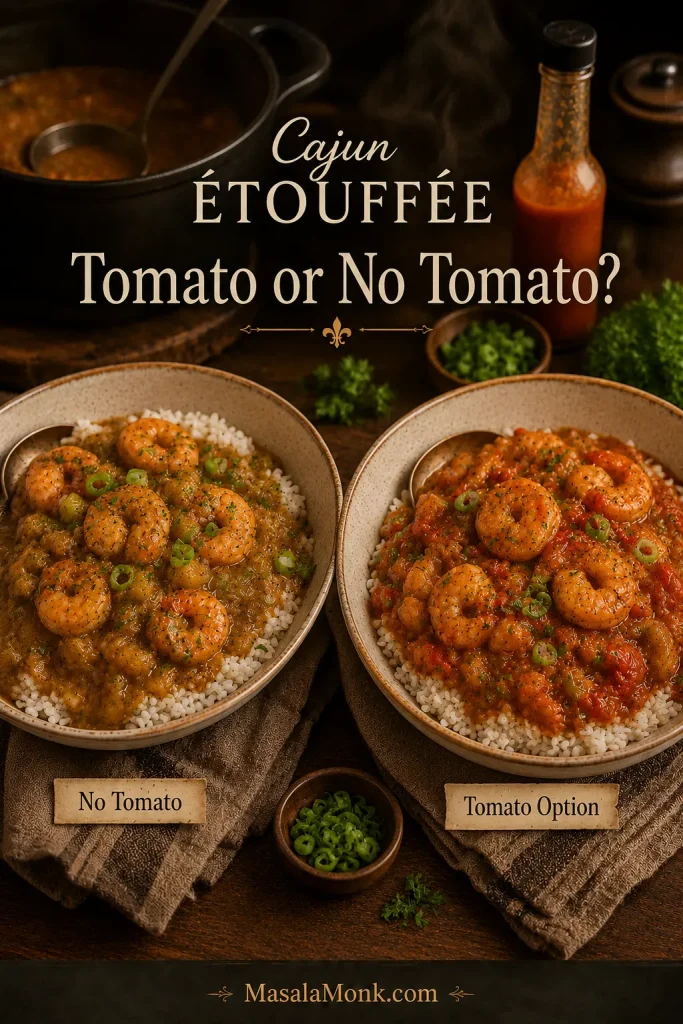
Cajun vs Creole Étouffée: Tomato or No Tomato?

Tomato is where étouffée opinions can get loud, so this recipe keeps the choice simple. This version keeps tomato out of the main pot for a roux-forward Cajun-style flavor. Some home cooks add tomato, especially in Creole-leaning or family-style versions, so the option is included below.

For a brighter sauce, add 1 tablespoon tomato paste with the garlic and spices, or stir in ½ cup diced tomato when you add the stock. Tomato changes the flavor, but it can still make a delicious pot.

The tomato choice belongs here because roux-forward Cajun-style and brighter Creole-leaning bowls can both be delicious.

Side-by-side étouffée bowls showing a no-tomato version and a tomato-option version
No tomato keeps the étouffée roux-forward, while a small tomato option adds a brighter Creole-style note.

Skip the tomato if you came here for a roux-forward bowl. Add a little if you like a softer, brighter sauce. Like many Louisiana-style dishes, every kitchen has its own opinion.

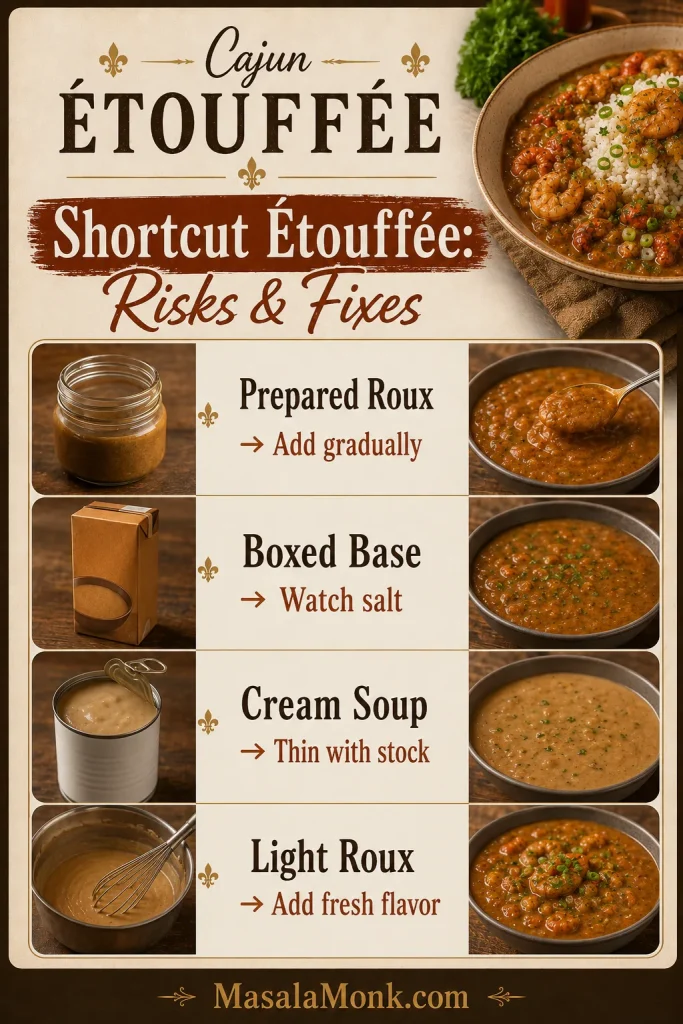
Étouffée Sauce, Base, Mix, and Cream Soup Shortcuts

Some nights, you want the roux. On other nights, you want dinner faster. Both are real kitchens. Shortcut étouffée works best when you add freshness back: sautéed trinity, garlic, herbs, a splash of hot sauce, and gentle seafood timing.

The goal is not to pretend a shortcut tastes exactly the same as a from-scratch roux. Instead, make it balanced, creamy or saucy in the right way, and worth spooning over rice.

ShortcutMain riskBest fix
Prepared or jarred rouxToo intense or too darkAdd gradually and taste before adding more seasoning
Boxed étouffée mix or baseToo salty or flatUse less seasoning and add sautéed trinity, garlic, herbs, and hot sauce
Cream soupToo heavy, thick, or saltyThin with stock and finish with fresh herbs and gentle seafood timing
Light rouxLess depthUse good stock, Cajun seasoning, Worcestershire sauce, and a little acidity

For shortcut methods, keep the focus on salt control, sauce thickness, fresh trinity, and gentle seafood timing.

Shortcut étouffée guide showing prepared roux, boxed base, cream soup, and light roux fixes
Shortcut étouffée tastes more homemade when you control salt, loosen heavy bases with stock, and add fresh trinity.

Using prepared or jarred roux

Prepared roux can save time if you want roux flavor without standing over the pot as long. Follow the jar’s or package’s guidance as your baseline, then add gradually rather than all at once. Build the sauce with sautéed onion, celery, bell pepper, garlic, warm stock, and seasoning. Taste before adding more Cajun seasoning because prepared roux can vary in intensity.

Using étouffée mix or base

Boxed étouffée mix or jarred base can be useful when you want dinner fast. Most mixes already contain seasoning, thickener, and salt, so taste before adding more Cajun seasoning. Add shrimp or crawfish near the end instead of boiling it hard for the whole cooking time.

To make a mix taste more homemade, sauté onion, celery, bell pepper, and garlic in a little butter before adding the mix and liquid. Finish with fresh herbs, a splash of hot sauce, and a small knob of butter.

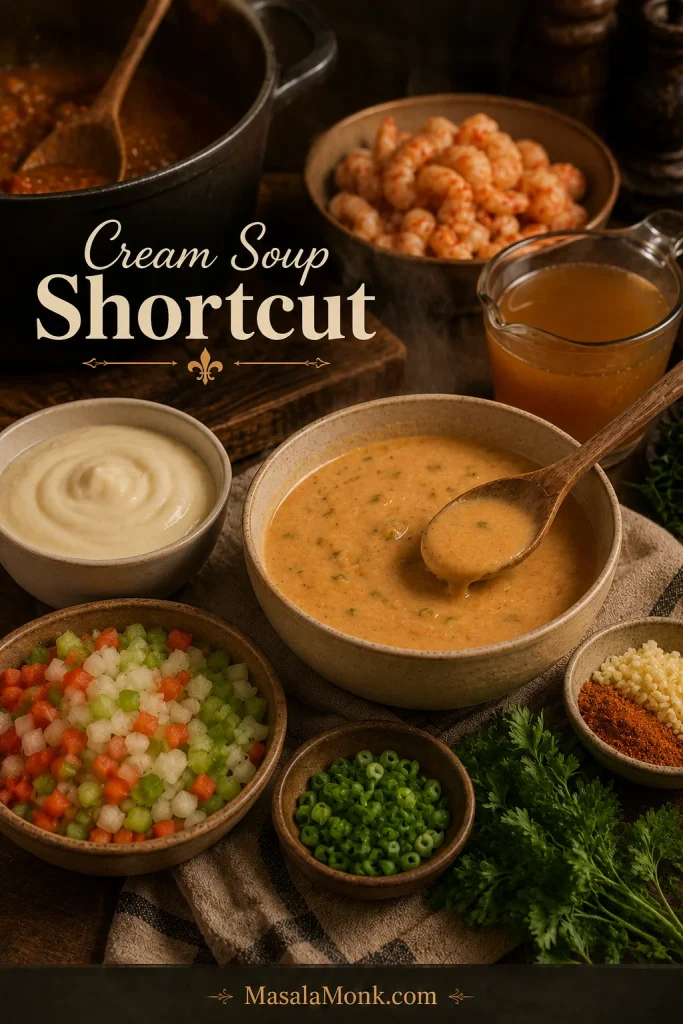
Using cream of mushroom, cream of shrimp, or cream of celery soup

Many home cooks make a creamy shortcut étouffée with condensed soup. If this is the version you grew up with, it deserves a place too. Cream of mushroom, cream of shrimp, cream of celery, and golden mushroom soup all create an easy, comforting sauce. It will not taste exactly like a roux-based Cajun étouffée, but it can still be a cozy family-style dinner.

Cream soup shortcuts work best when stock loosens the base and seafood stays gently cooked.

Cream soup shortcut setup for étouffée with stock, trinity, seafood, herbs, and creamy sauce
When using cream soup, loosen the base with stock first, then finish with seafood gently so the sauce stays spoonable.

Condensed soup needs a lighter hand with salt and seasoning. Start with about ½ can of water or stock per can of condensed soup, then loosen the sauce more only if needed. Cream soup versions can become salty quickly, especially when combined with Cajun seasoning and table hot sauce.

For a full dinner built around the same condensed-soup comfort idea, this cream of mushroom chicken shows how much the soup-to-liquid ratio matters when you want the sauce creamy instead of watery.

The fastest from-scratch shortcut

If you have 5–8 minutes, make a light roux instead of relying only on soup or mix. Even a copper-colored roux gives the sauce more flavor and better texture than a fully instant version.

Using a shortcut tonight? Keep Troubleshooting nearby, then return to the Recipe Card for seafood timing.

What to Serve With Cajun Étouffée

Cajun étouffée is usually served over white rice, and for good reason. The rice catches the sauce, softens the heat, and turns the dish into a full meal. If rice is the part that usually lets you down, this guide on how to cook perfect rice will help you get fluffy grains before the étouffée is ready.

A shallow bowl works best here: rice in the center, sauce ladled around it, herbs on top, and table hot sauce close by. It feels generous without needing many sides.

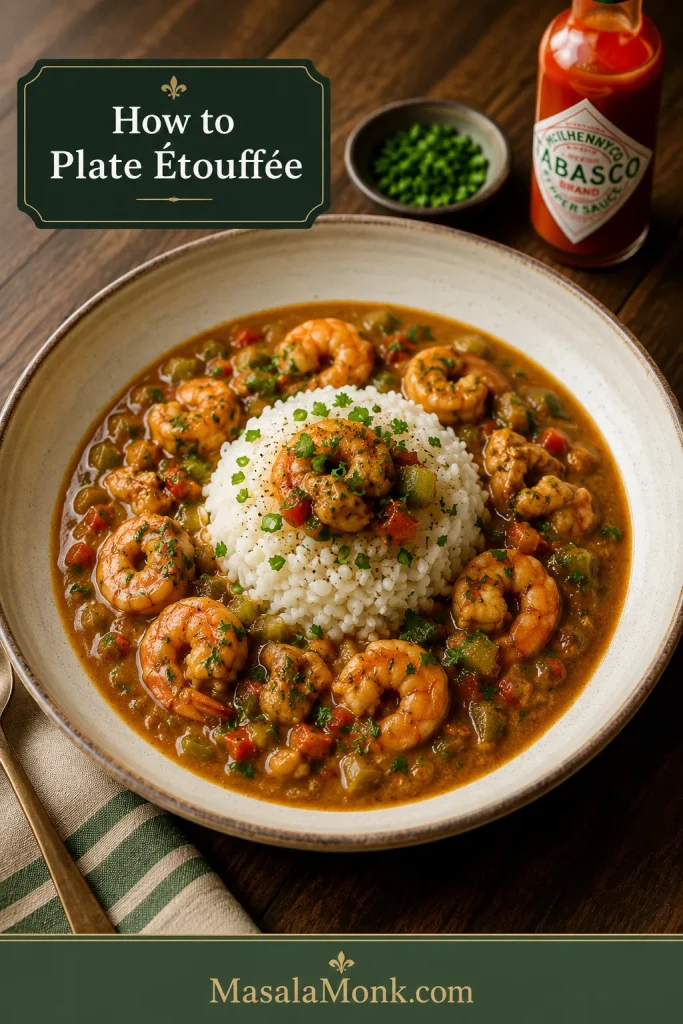
Serving gets easier when rice is mounded first and the étouffée is ladled around it.

Cajun étouffée plated with rice in the center and sauce spooned around it
For a cleaner bowl, mound the rice first, then ladle the étouffée around it so the gravy pools neatly.
  • Long-grain white rice: the classic, clean choice.
  • Green onions and parsley: a fresh finish for a rich sauce.
  • Hot sauce: serve on the side so everyone controls the heat.
  • Cornbread: good for soaking up extra sauce.
  • Simple green salad: balances the richness.
  • Roasted okra or sautéed greens: adds a Southern-style vegetable side.
  • Red beans and rice: better as a separate meal or part of a larger Cajun/Creole spread rather than something you need on the same plate.
  • Cajun seafood boil: a natural next recipe if you are building a bigger seafood spread around shrimp, crawfish, crab, or potatoes.

Finish with herbs and a sharp splash of hot sauce.

Make-Ahead, Storage, Freezing, and Reheating

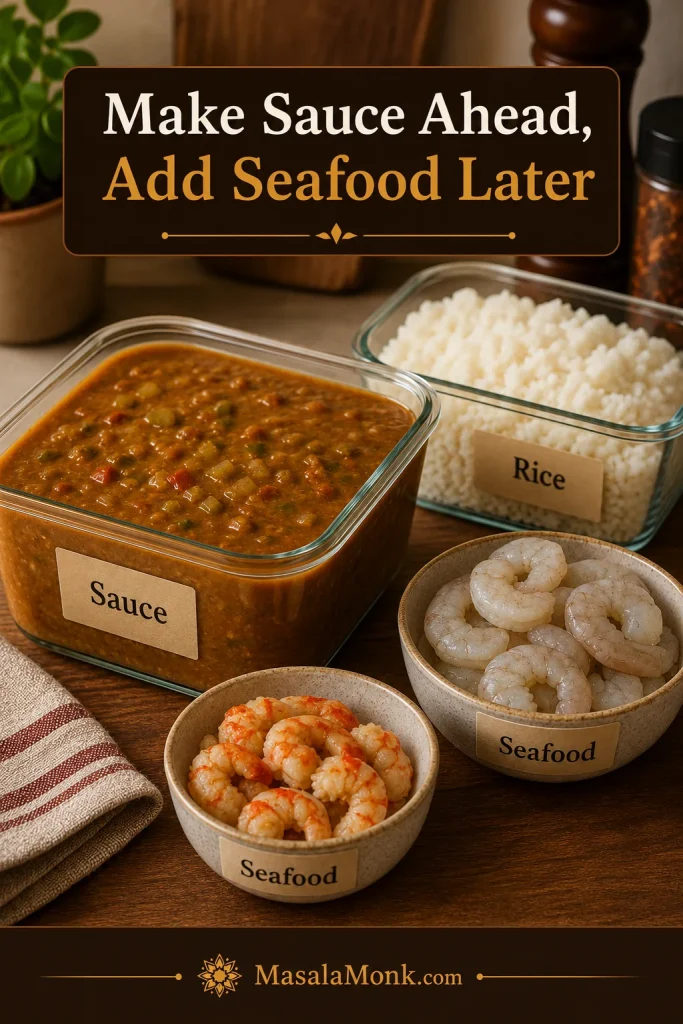
Étouffée is a good make-ahead dish when the sauce and seafood are handled separately. Prepare the sauce ahead, then add the seafood when you reheat and serve.

Make ahead

Make the sauce through the simmering step, then cool and refrigerate it. When ready to serve, warm it gently, add a splash of stock if needed, and finish with shrimp, crawfish tails, or both.

Storage works best when the sauce is made ahead and seafood is saved for reheating.

Make-ahead étouffée sauce stored separately from seafood and rice
For better make-ahead texture, store the sauce separately; then add seafood during reheating so it stays tender.

Refrigerating leftovers

Store leftovers in an airtight container in the refrigerator for up to 3 days. Keep rice separate if possible so the sauce does not become too thick and starchy.

If you have extra cooked rice but not enough étouffée for another full bowl, turn the rice into a separate dinner like this shrimp fried rice instead of stretching the sauce too thin.

Freezing

You can freeze étouffée, but seafood texture may change after thawing. The best method is to freeze the sauce without seafood, then add fresh shrimp or crawfish when reheating. Leftovers with seafood already in the sauce should be cooled quickly, frozen in a sealed container, and reheated gently.

Reheating

Reheat on low heat, stirring often. Add a splash of stock or water to loosen the sauce. Avoid boiling leftovers hard because shrimp and crawfish can toughen.

Variations

Shrimp étouffée

Use 2 lb total peeled and deveined raw shrimp. Add it near the end and cook gently until opaque and softly curled.

Crawfish étouffée

Use 2 lb total thawed crawfish tails. Already cooked crawfish should be warmed gently instead of boiled hard.

Seafood étouffée

Use a mix of shrimp and crawfish, or add a little crabmeat at the end. Delicate seafood stays best when it is added late.

Chicken étouffée

Use bite-size cooked chicken or small pieces of boneless chicken thighs. Simmer until the chicken is fully cooked and tender, then finish with fresh herbs.

Gluten-free étouffée

Use a gluten-free all-purpose flour blend or rice flour for the roux. The texture may be slightly different, so add stock gradually and adjust the sauce as it thickens.

Vegetarian mushroom étouffée

Use mushrooms instead of seafood and vegetable stock instead of seafood or chicken stock. Brown the mushrooms first so they bring depth to the sauce instead of watering it down.

Extra spicy Cajun étouffée

Add more cayenne, diced jalapeño, or extra hot sauce at the table. Build spice gradually because Cajun seasoning and hot sauce can also add salt.

Creamy shortcut étouffée

Use condensed cream of mushroom, cream of shrimp, or cream of celery soup as part of the sauce base. Keep the seasoning lighter, thin with stock, and add seafood at the end.

Cajun Étouffée FAQs

How do you pronounce étouffée?

Étouffée is usually pronounced ay-too-FAY or eh-too-FAY. The word comes from French and means “smothered.”

Is shrimp okay instead of crawfish?

Yes. Use raw peeled shrimp and add it during the final 3–5 minutes so it stays tender. Shrimp is easier to find than crawfish and works very well in Cajun étouffée.

Are crawfish tails already cooked?

Many packaged crawfish tails are already cooked. Check the package, but in most cases they only need to be warmed through in the sauce for a few minutes.

How should frozen crawfish tails be handled?

Thaw frozen crawfish tails first, then drain excess liquid. Do not automatically rinse them, especially if the package has flavorful crawfish fat or juices. Muddy or overly fishy liquid should be drained more aggressively, with stock doing more of the flavor work.

What roux color is best for étouffée?

Peanut-butter brown is the best balance for this recipe. It gives the sauce nutty flavor without requiring a very dark roux. A lighter copper roux also works for an easier weeknight version.

Does Cajun étouffée need tomatoes?

No. This version does not use tomato by default. A little tomato paste or diced tomato gives the sauce a brighter Creole-style feel. Tomato changes the flavor, but it can still make a delicious pot.

Should étouffée be thick?

Yes, but not pasty. Étouffée should be thicker than soup and thin enough to spoon over rice. A thick sauce needs warm stock; a thin one needs a few more uncovered minutes.

Why does my étouffée taste floury?

The roux may not have cooked long enough, or the sauce may need more simmering time. Cook the roux until it smells nutty, then simmer the sauce until the floury taste disappears.

How do I keep shrimp from overcooking?

Build and simmer the sauce first, then add shrimp at the end. Shrimp usually needs only 3–5 minutes in a gentle simmer. Remove the pot from heat as soon as the shrimp is opaque and tender.

Cream of mushroom soup in étouffée: yes or no?

Yes, if you want a creamy home-style shortcut. Cream of mushroom soup is not the same as a roux-based Cajun étouffée, but it can be useful for a fast, comforting version. Use less salt because condensed soup and Cajun seasoning can become salty together.

Gumbo vs étouffée: what is the difference?

Gumbo is usually more soup-like and often served as a stew with rice, while étouffée is thicker and more sauce-like. Étouffée should cling to the seafood and rice rather than feel like broth. For a deeper comparison, Southern Living has a helpful étouffée vs gumbo explainer.

Make-ahead étouffée: what works best?

Best texture comes from making the sauce ahead and adding the seafood when reheating. This keeps shrimp and crawfish from becoming tough.

Need the essentials again? Jump back to the Recipe Card, Roux Guide, Troubleshooting, or Top.

Final Spoonful

Once you know what the roux should smell like, how the sauce should move, and when the seafood should go in, Cajun étouffée stops feeling intimidating. It becomes what it should be: glossy, spicy, seafood-rich comfort poured over hot rice, finished with herbs and one more sharp splash of hot sauce.

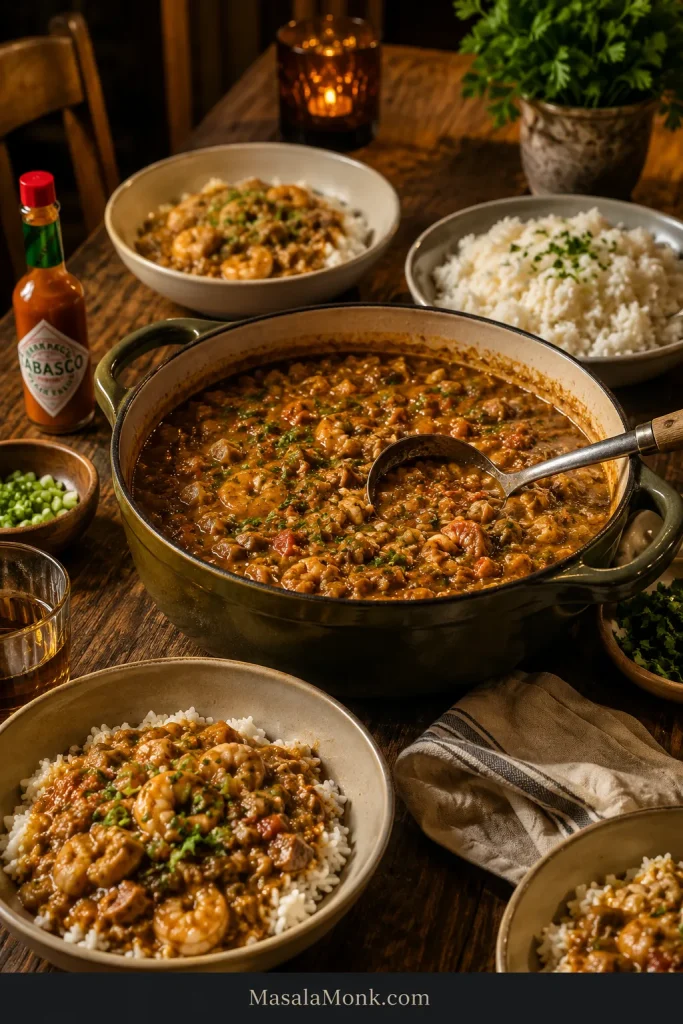
The finished-pot target is simple: glossy sauce, hot rice, fresh herbs, and enough Cajun étouffée for the table.

Dutch oven of Cajun étouffée served at a table with rice, bowls, herbs, ladle, and hot sauce
Once the sauce is glossy and the rice is hot, étouffée becomes the kind of pot people gather around.

Every kitchen has an opinion on tomato, cream soup, crawfish, shrimp, or how dark the roux should be — and that is part of why étouffée is so fun to cook. If your family has a version, it probably has a reason behind it. Learn the base method, adjust the pot to your table, keep the rice hot, and serve it while the sauce is still glossy.

Posted on Leave a comment

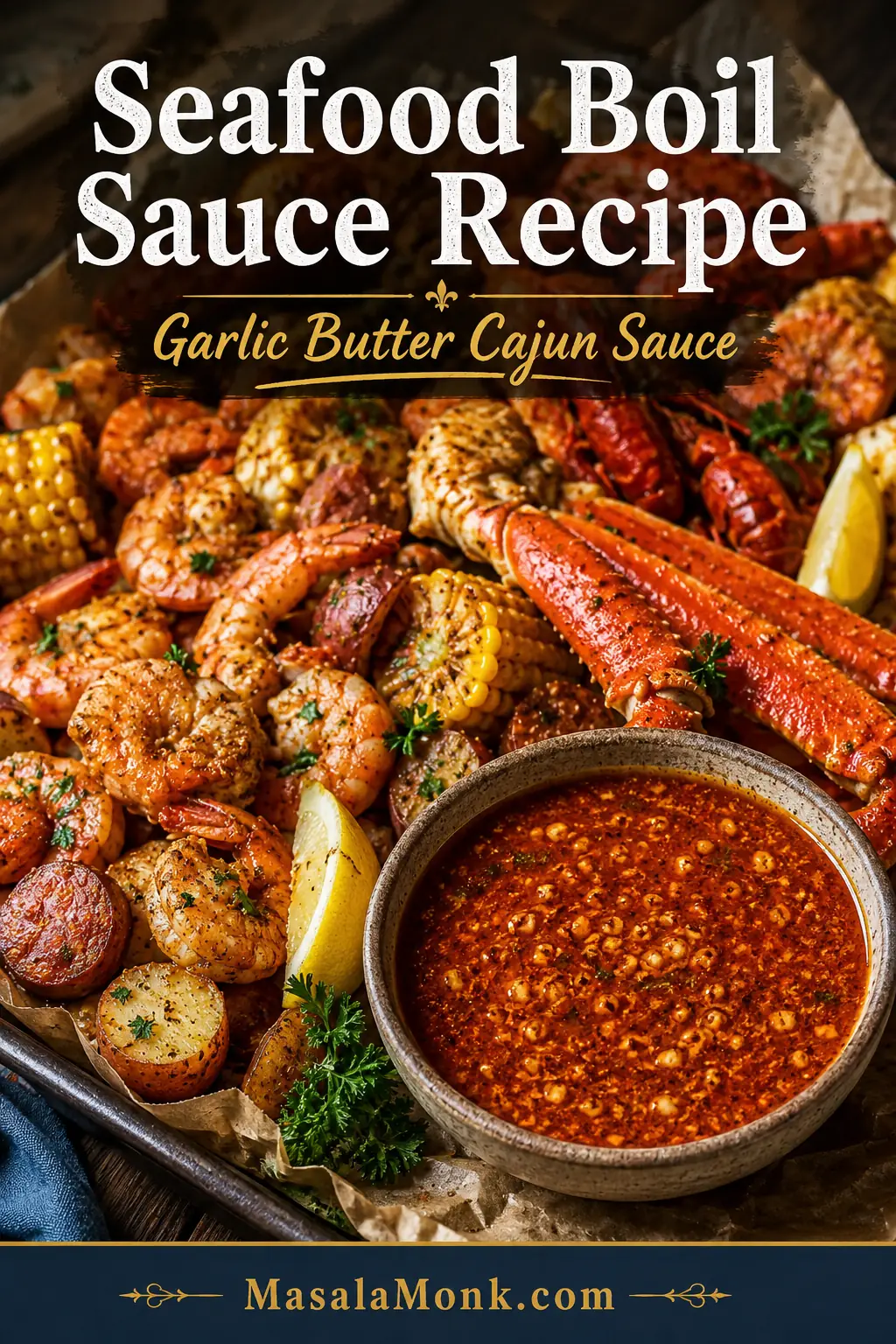
Seafood Boil Sauce Recipe: Garlic Butter Cajun Sauce for Shrimp, Crab & Crawfish

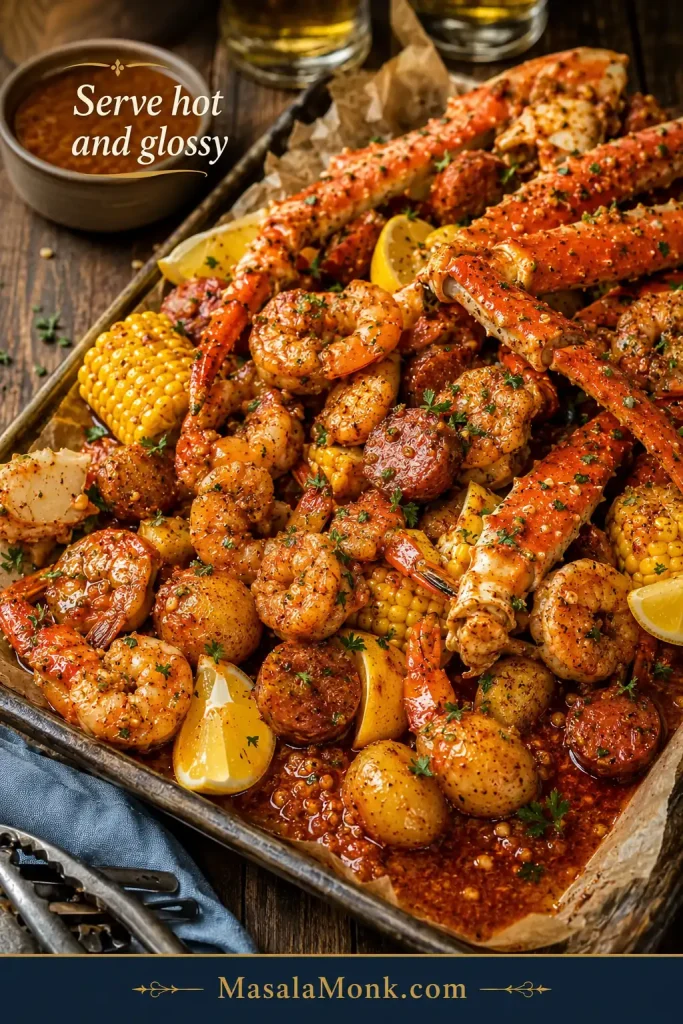
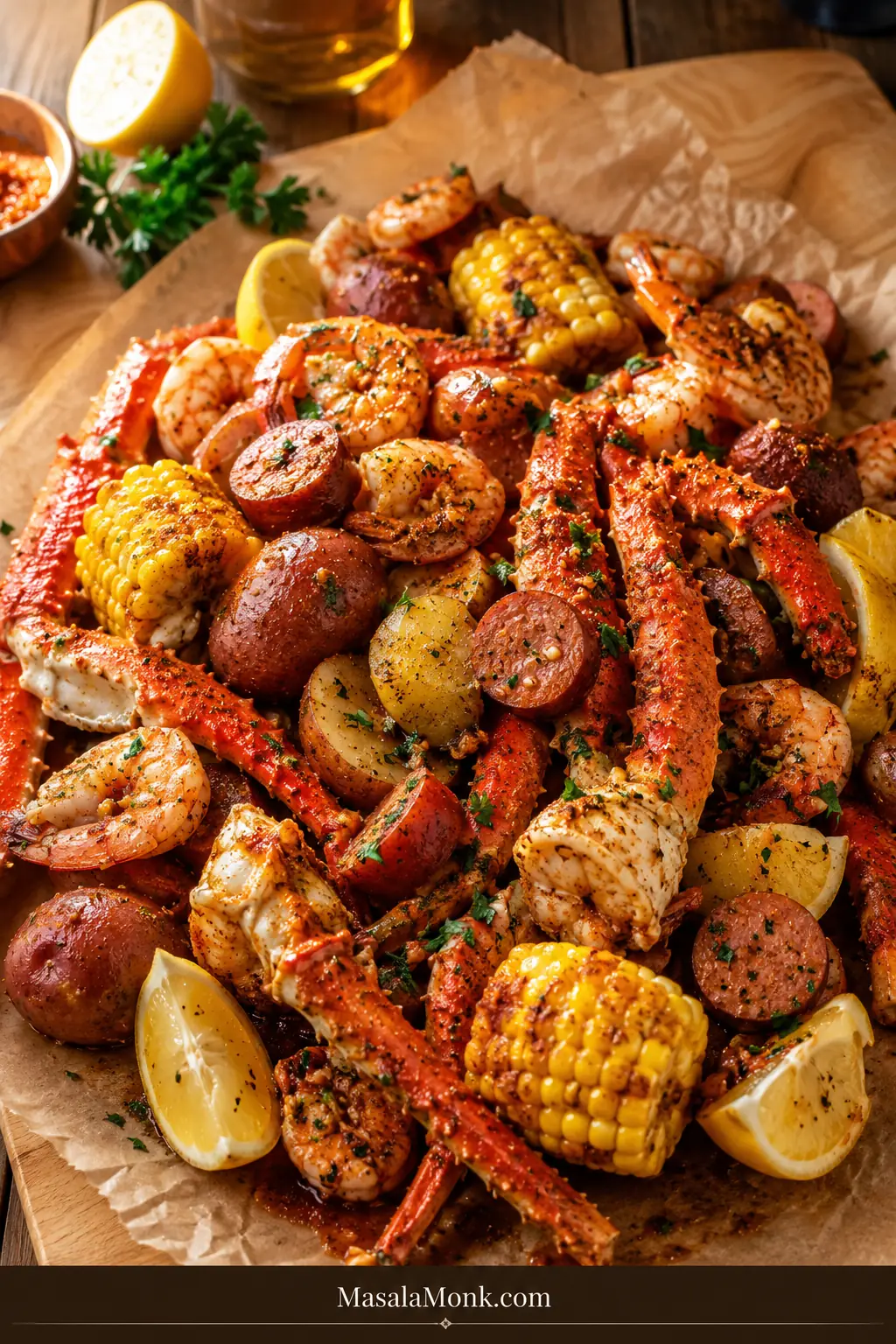
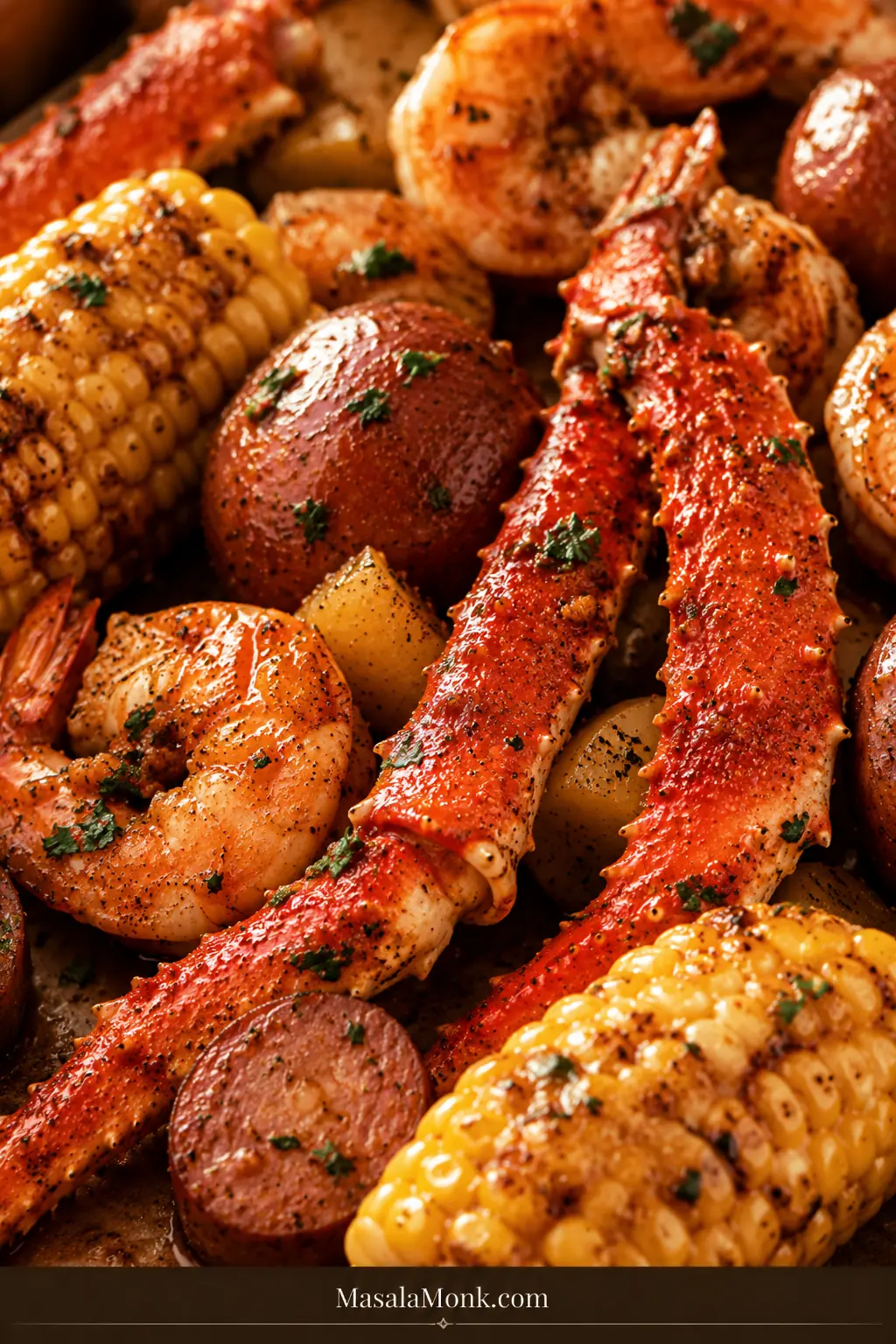
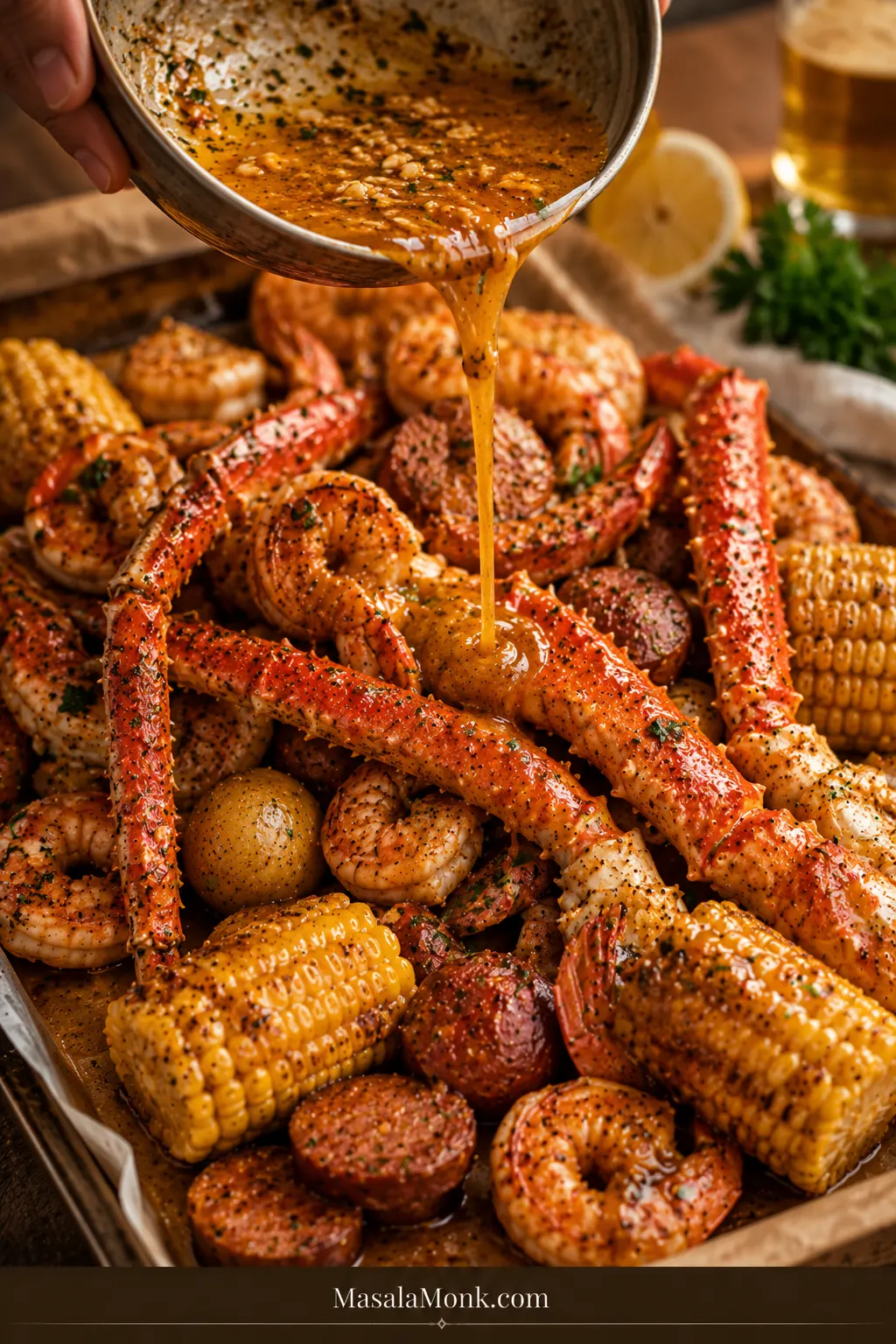
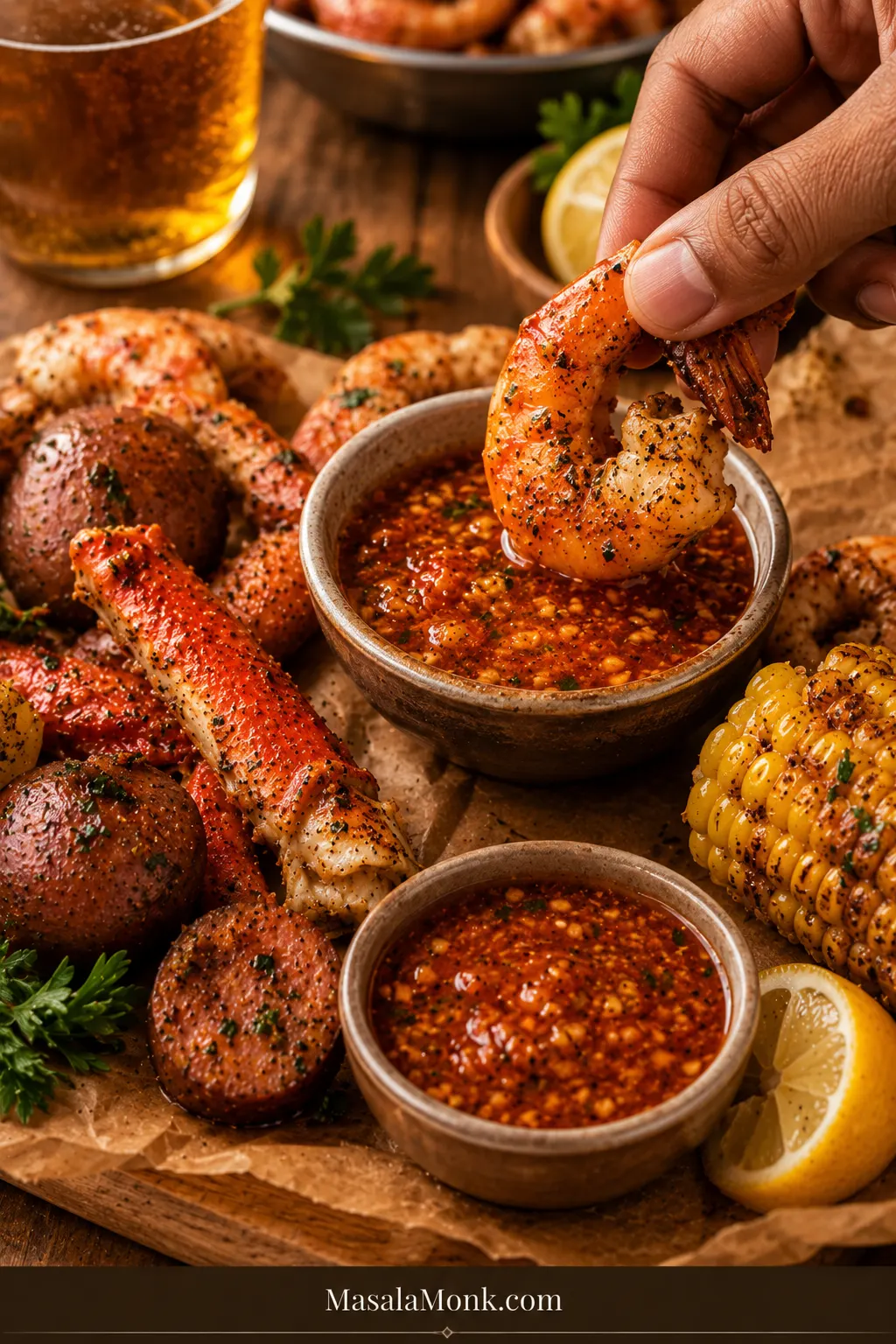
A tray of shrimp, crab legs, corn, baby potatoes, sausage, lemon wedges, parsley, and red-orange garlic butter Cajun seafood boil sauce.

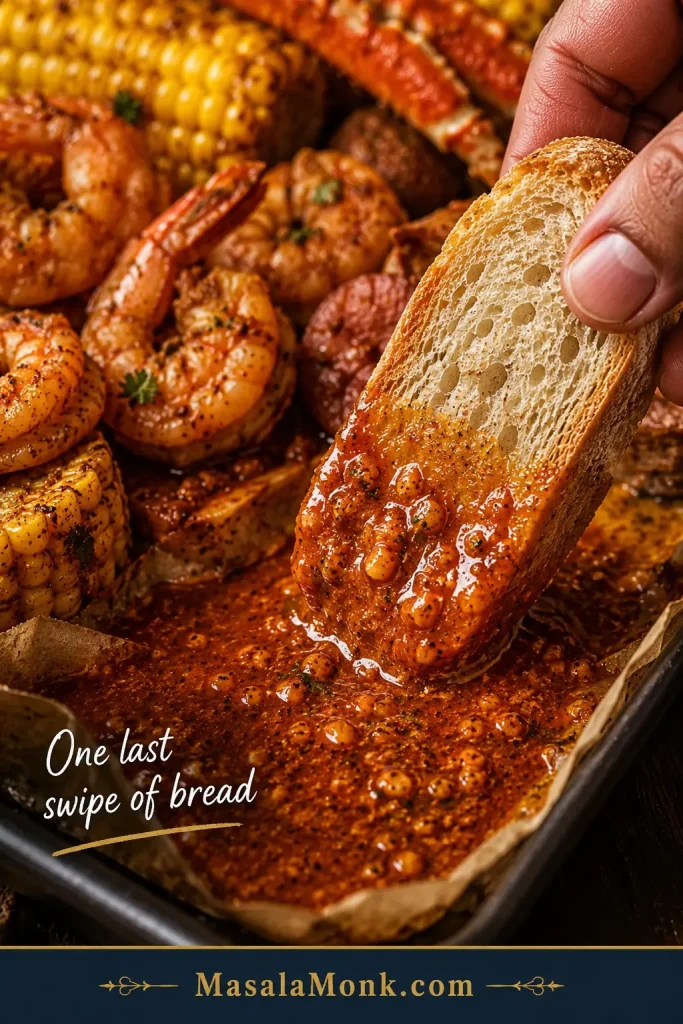
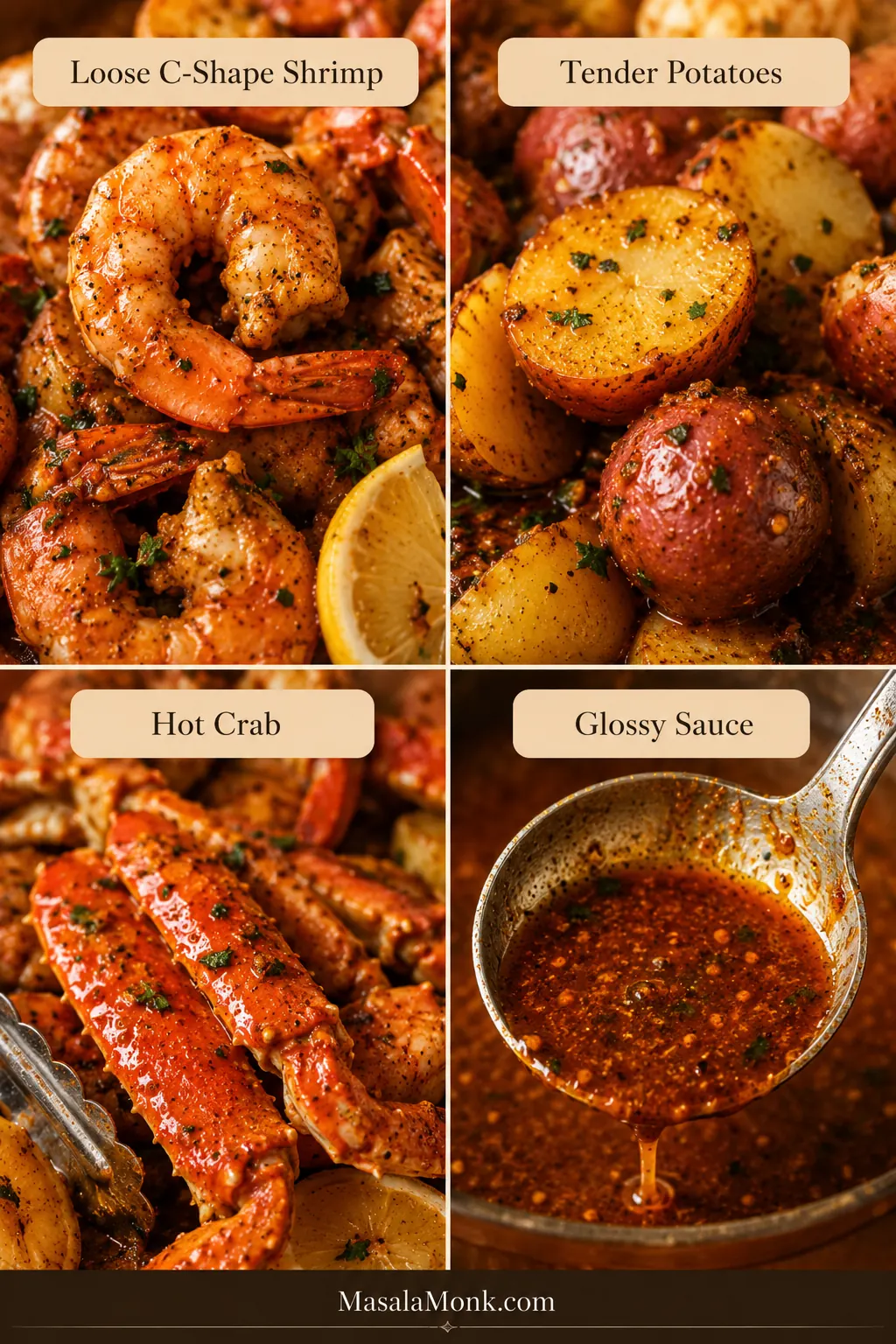
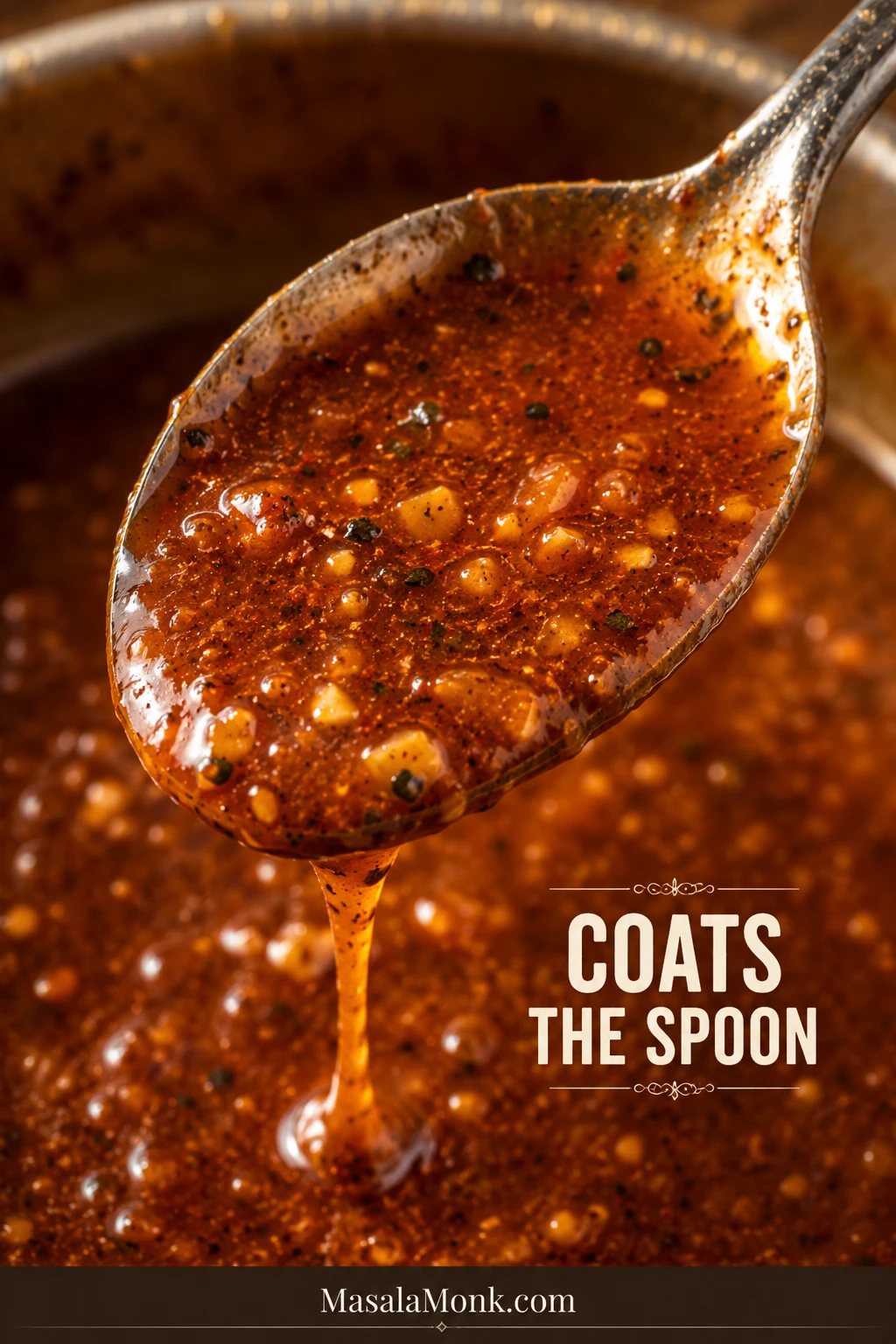
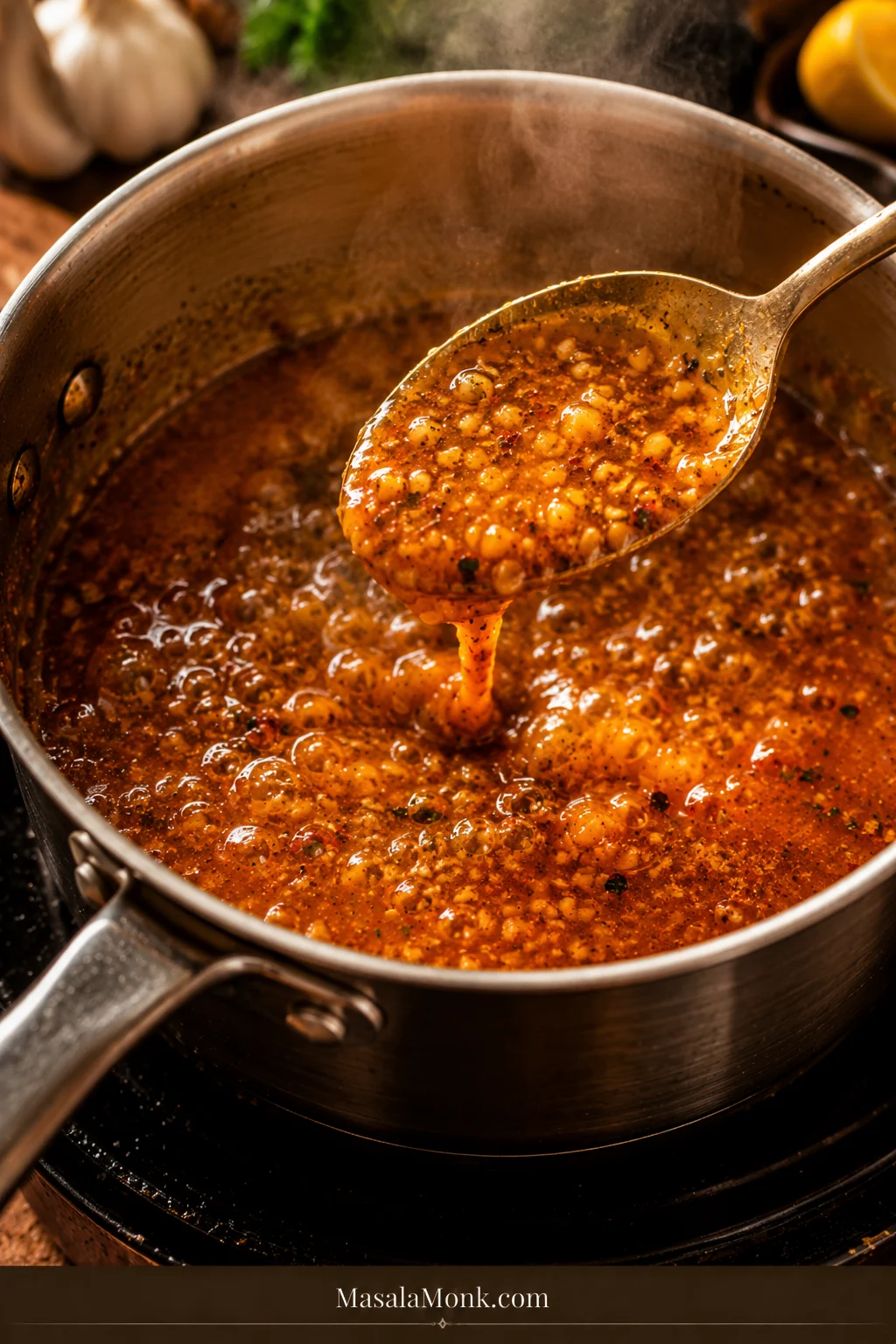
A great seafood boil sauce should do more than taste buttery. It should cling to crab legs, gloss over shrimp, soak into corn and potatoes, and leave enough garlicky Cajun butter at the bottom of the tray for one last swipe of bread.

This is the sauce that turns a pile of boiled seafood into the messy, glossy, pass-the-napkins kind of meal. It is rich, garlicky, smoky, lemony, a little spicy, and easy to adjust for dipping, pouring, tossing, or serving on the side.

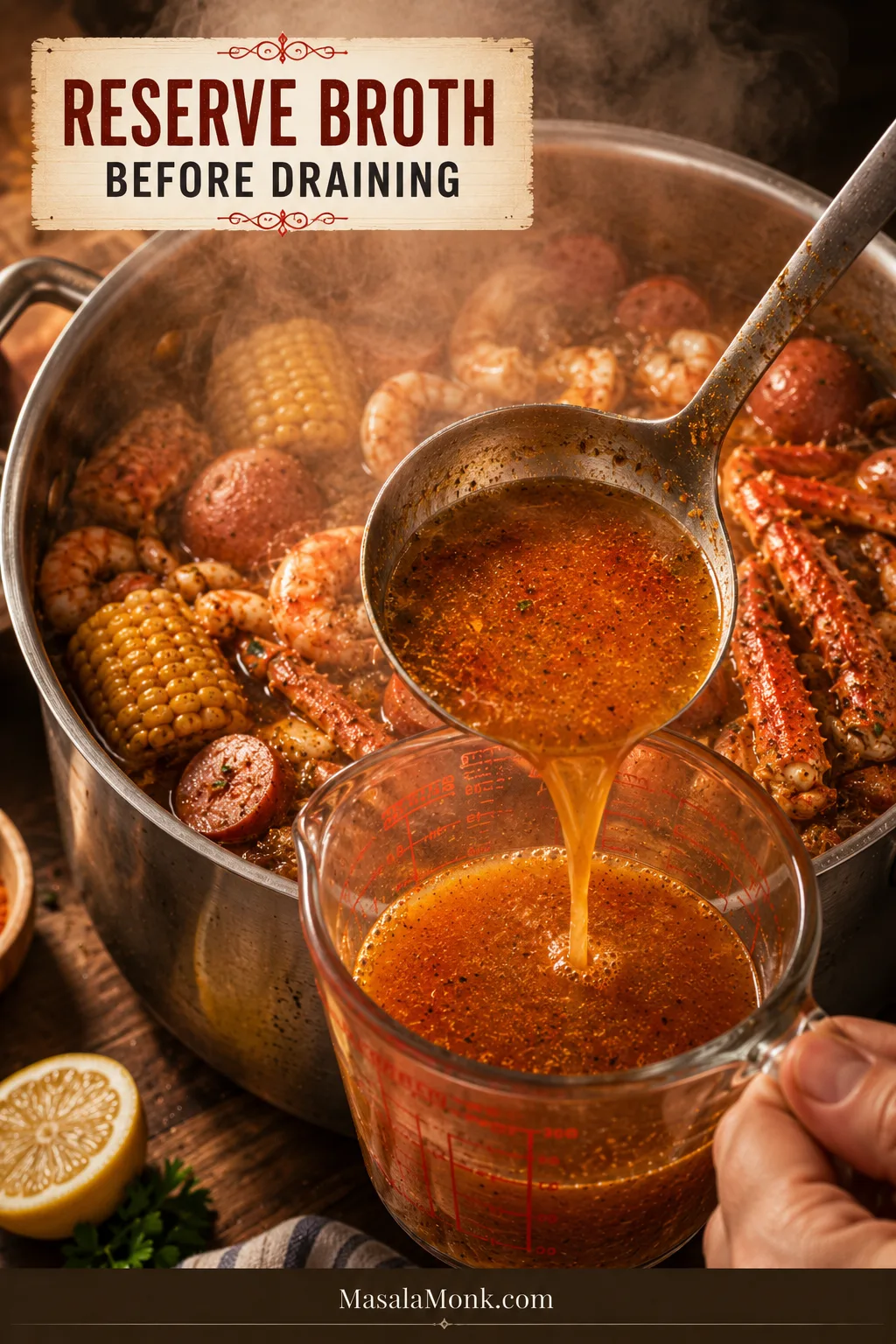
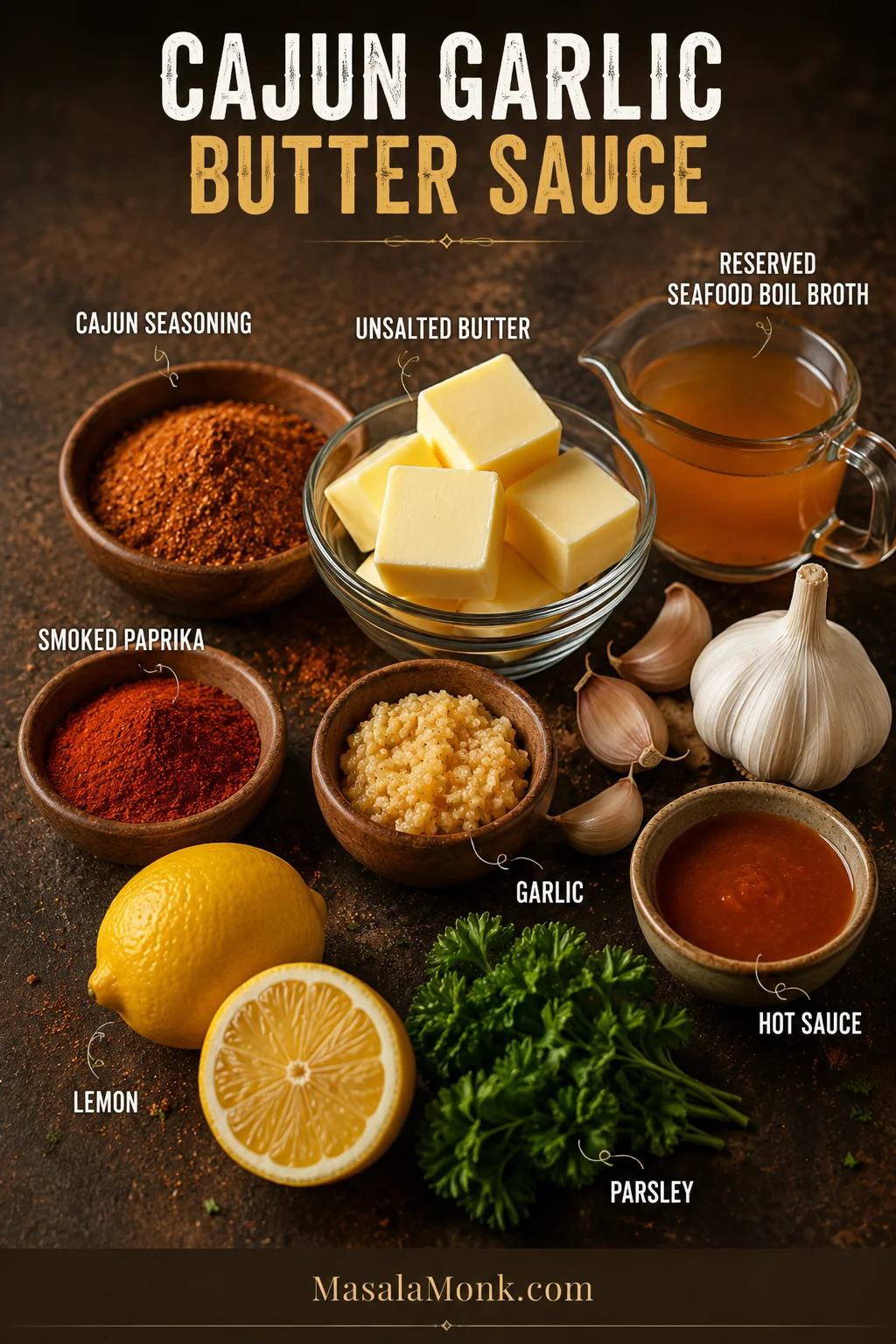
The goal is not just heat or butter. The goal is a sauce that tastes bold but still lets the seafood taste like seafood. The base is simple — butter, garlic, Cajun seasoning, Old Bay, smoked paprika, lemon, and a splash of broth or reserved seafood boil liquid — but the control is what makes it work.

Quick Answer: What Is Seafood Boil Sauce?

Seafood boil sauce is a bold garlic butter sauce made with butter, garlic, Cajun seasoning, Old Bay seasoning, lemon juice, paprika, and a little heat. It should taste rich first, then garlicky and smoky, with enough lemon to make every bite of shrimp, crab, corn, and potatoes feel bright instead of heavy.

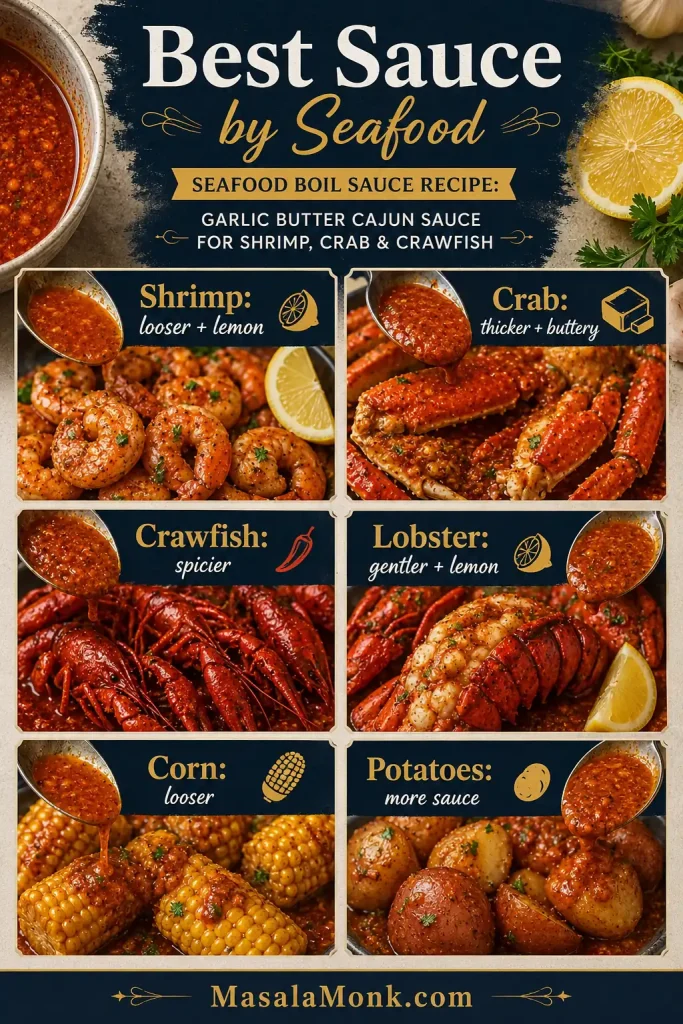
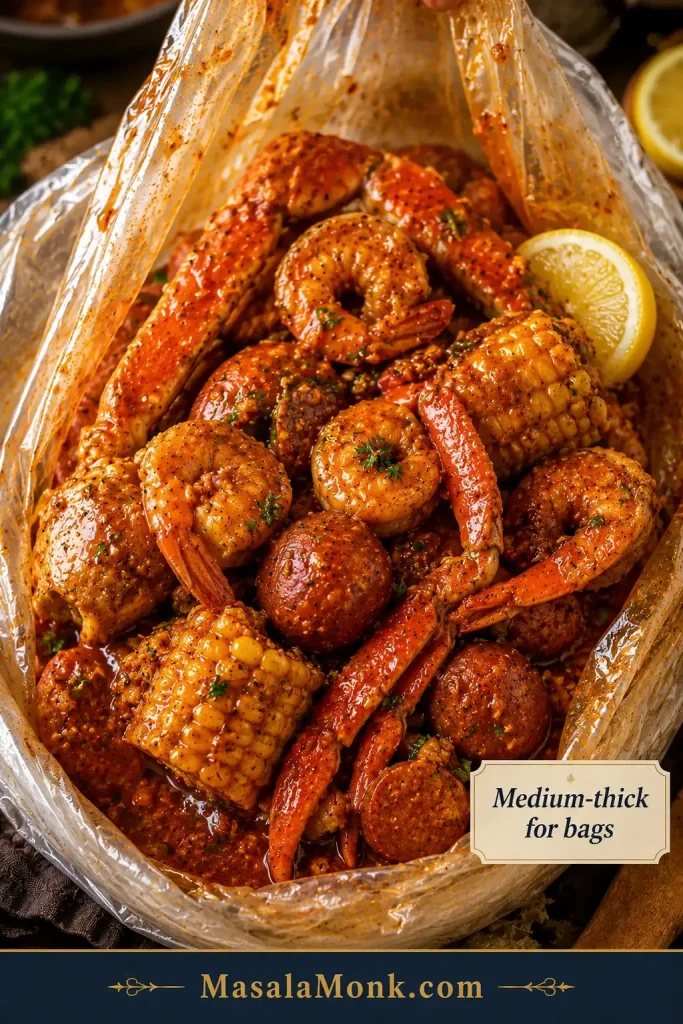
For a thick dipping sauce, use less liquid. For a pour-over sauce, add more broth, seafood stock, or reserved seafood boil liquid. For a seafood boil bag sauce, keep it medium-thick so it coats shrimp, crab, crawfish, corn, potatoes, and sausage without becoming watery.

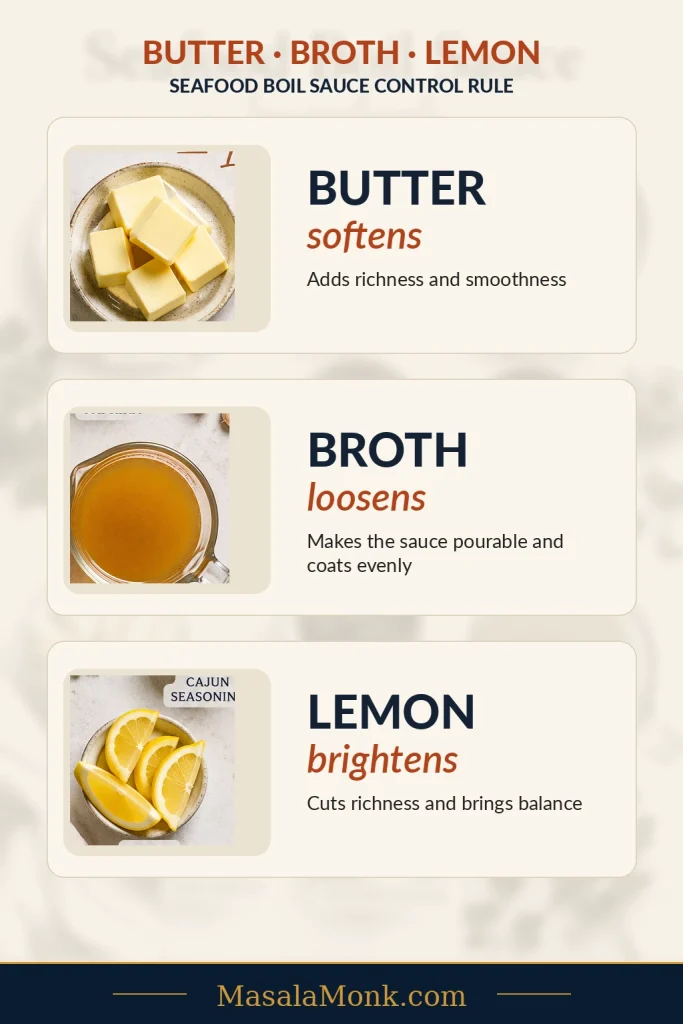
Butter-Broth-Lemon Rule

Use the butter-broth-lemon rule: butter softens, broth loosens, and lemon brightens. Choose your sauce style first — thick and buttery for crab-leg dipping, loose and glossy for shrimp and corn, or medium-thick for seafood boil bags. The recipe below starts in the middle so you can adjust either way.

Butter, broth, and lemon showing the butter-broth-lemon rule for seafood boil sauce.
When the sauce needs a fix, this is the fastest rule to remember: butter softens, broth loosens, and lemon brightens.

The best version is bold, glossy, and adjustable: rich enough for crab, bright enough for shrimp, loose enough for corn and potatoes, and balanced enough that it does not hide the seafood.

Make It Now: Seafood Boil Sauce Recipe

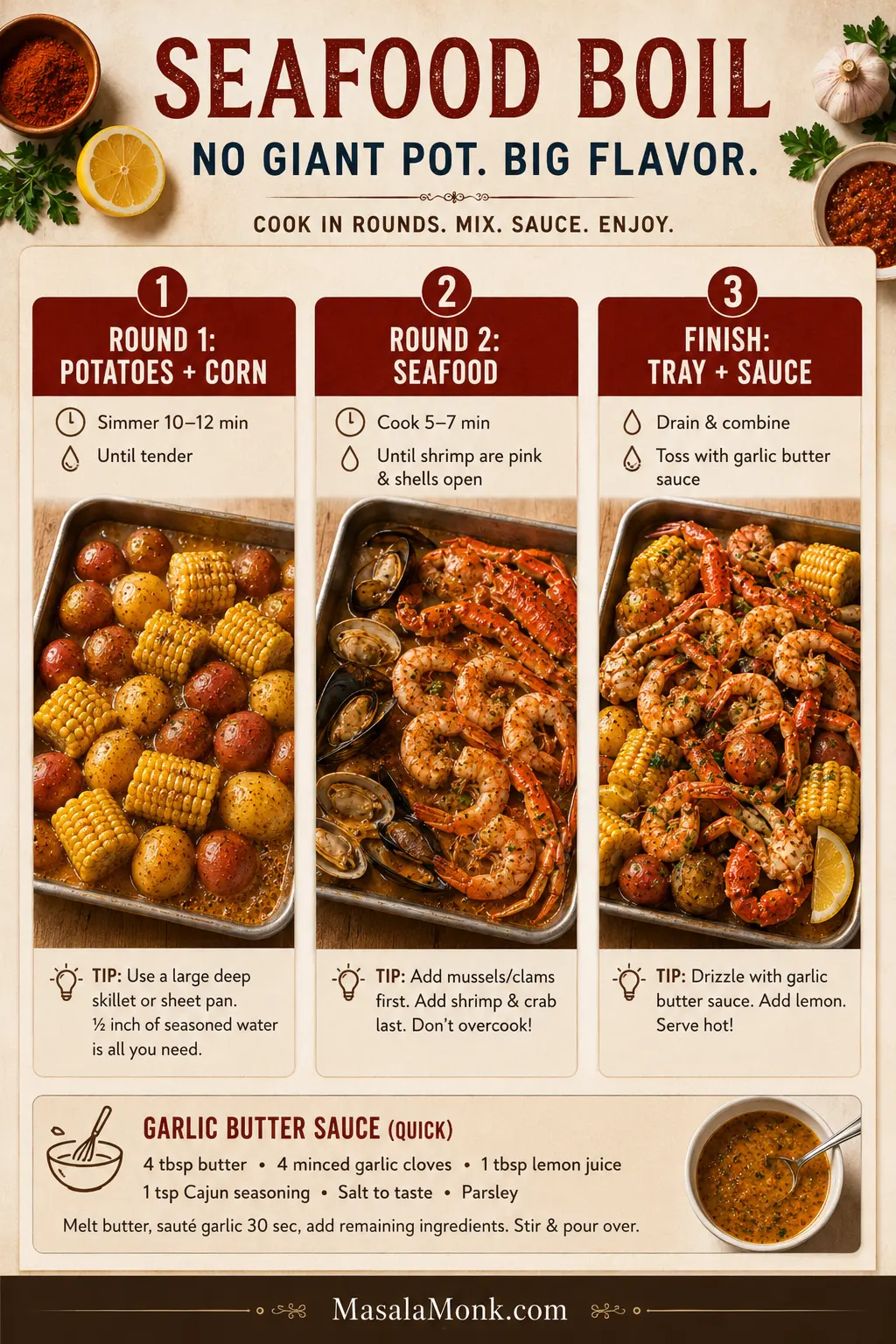
This is the main garlic butter Cajun seafood boil sauce. It makes about 2 cups / 480 ml, enough for about 2½–3 lb / 1.1–1.35 kg seafood as a light-to-generous pour-over sauce, depending on how much corn, potatoes, sausage, and eggs are on the tray.

You only need one pan, low heat, and about 20 minutes. Melt the butter, soften the aromatics, bloom the spices, loosen with broth, then finish with lemon.

Prep time: 10 minutes
Cook time: 12 minutes
Total time: 22 minutes
Yield: About 2 cups / 480 ml sauce
Serves: 4–6 as pour-over sauce, 8–10 as dipping sauce because dipping uses less per person
Equipment: Large skillet or medium saucepan, whisk, measuring spoons, microplane or garlic press

Scaling: Double the sauce for a large tray or seafood boil bag. Keep the heat low and use a wider pan so the garlic and spices cook evenly.

Before you pour: Taste the sauce with one shrimp, potato, or piece of corn. The salt order is simple: season first, loosen second, salt last.

Ingredients

IngredientUS MeasureMetric
Unsalted butter1 cup / 2 sticks / 8 oz226 g
Garlic, minced or grated8–10 cloves30–40 g
Yellow onion, very finely minced½ small onion / about ⅓ cup50–60 g
Cajun seasoning1½ tablespoons12–15 g
Old Bay seasoning2 teaspoons5–6 g
Smoked paprika1 tablespoon6–7 g
Onion powder1 teaspoon2–3 g
Brown sugar1–2 teaspoons4–8 g
Hot sauce1–2 teaspoons5–10 ml
Reserved seafood boil liquid, seafood stock, low-sodium chicken broth, or vegetable broth½ cup120 ml
Lemon juice2 tablespoons30 ml
Lemon zest1 teaspoonOptional
Fresh parsley, chopped2 tablespoons6–8 g

Optional heat: Add ¼–½ teaspoon cayenne or red pepper flakes if you want a spicier Cajun butter sauce.

Salt note: Do not add extra salt until the sauce is finished and tasted. Cajun seasoning, Old Bay, broth, and reserved boil liquid can all bring salt.

Measurement note: Gram weights for seasoning blends are approximate because Cajun seasoning and seafood seasonings vary by brand. Use the spoon measures first, then adjust after tasting.

Instructions

  1. Melt the butter in a large skillet or medium saucepan over low to medium-low heat.
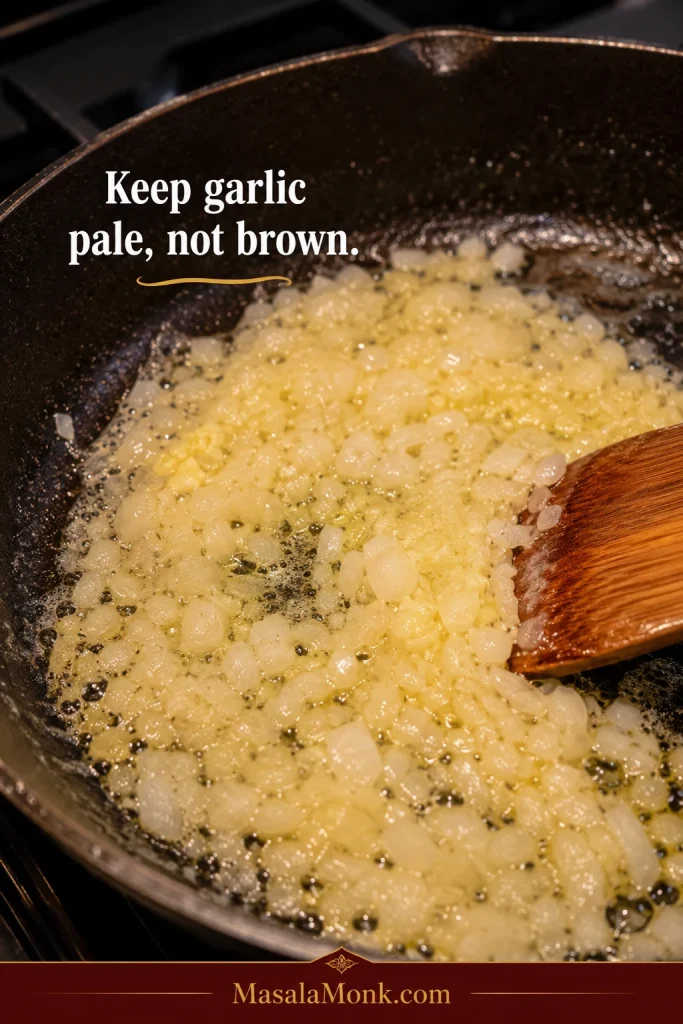
  2. Add the finely minced onion and cook for 3–4 minutes, until softened and glossy but not browned.
  3. Add the garlic and cook for 60–90 seconds, just until fragrant. Keep it pale, not brown.
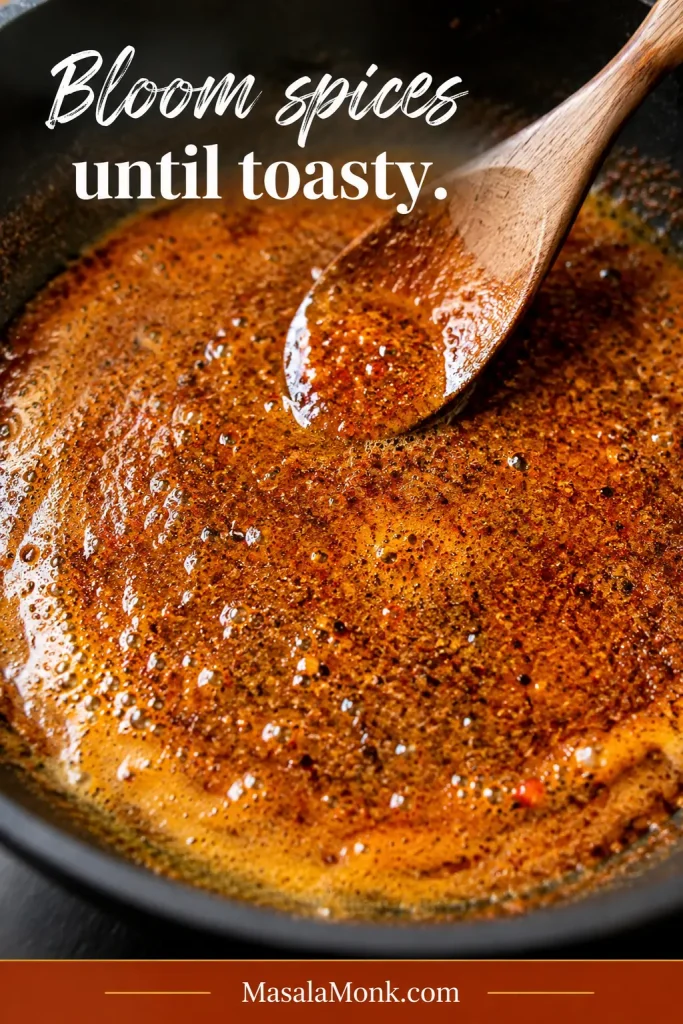
  4. Stir in the Cajun seasoning, Old Bay, smoked paprika, onion powder, brown sugar, and optional cayenne or red pepper flakes.
  5. Cook the spices in the butter for 30–60 seconds, until the butter smells toasty and the spices look absorbed into the butter, not sandy on the surface.
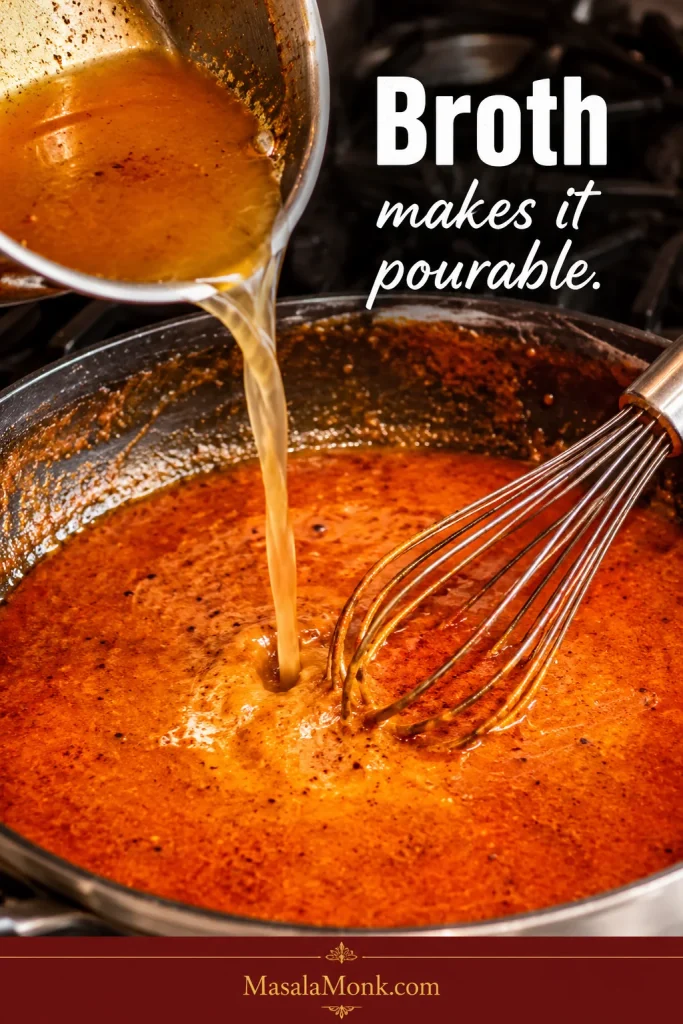
  6. Slowly whisk in the reserved boil liquid, stock, or broth.
  7. Let the sauce gently simmer for 3–5 minutes, stirring often, until glossy and spoonable.
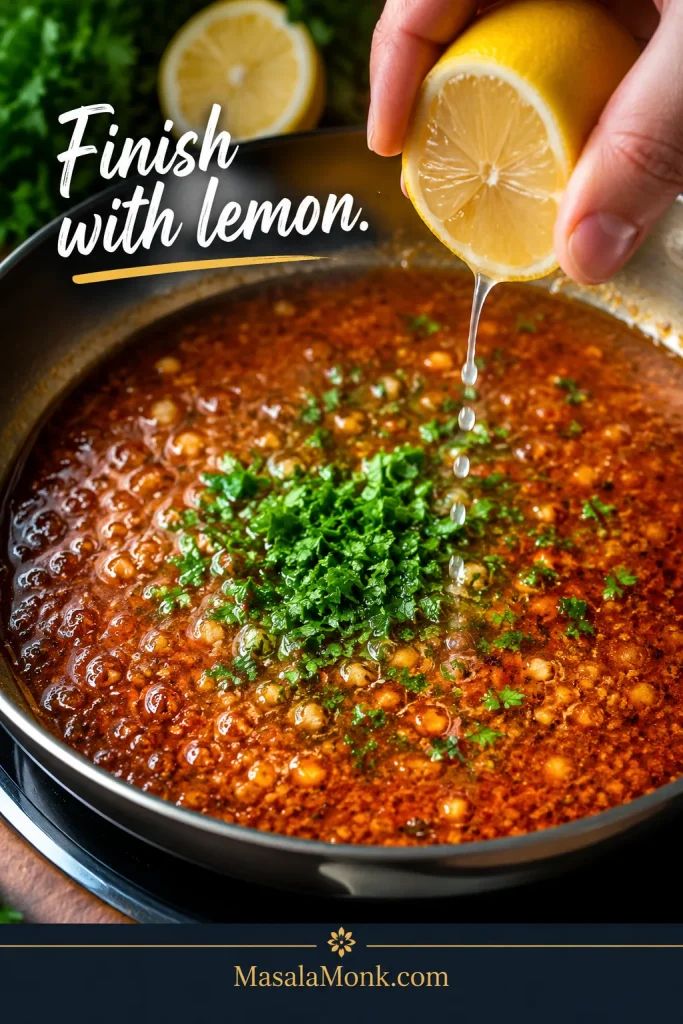
  8. Turn off the heat. Stir in the lemon juice, lemon zest, hot sauce, and parsley.
  9. Taste and adjust. Add more lemon for brightness, broth for a looser sauce, butter for richness, or hot sauce for more heat.
  10. Taste with one shrimp, potato, or piece of corn before coating the full seafood tray.
  11. Serve warm as a dipping sauce, pour-over sauce, or seafood boil bag sauce.

Important: Keep the sauce at a gentle simmer and it stays glossy. A hard boil can make the butter separate and the garlic taste harsh.

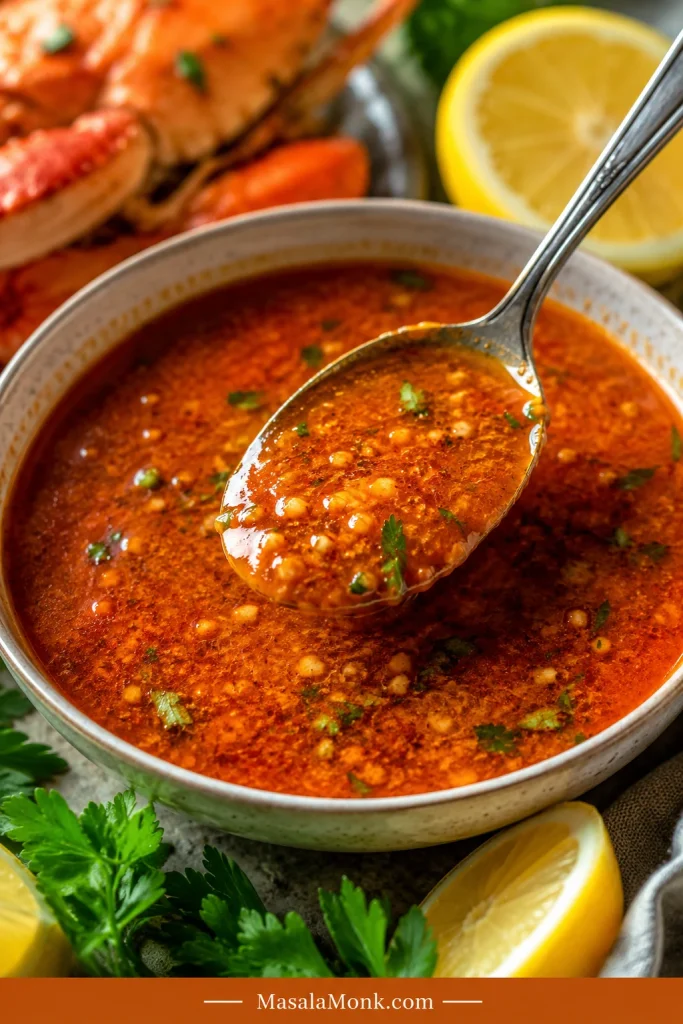
The sauce should look bold before it tastes aggressive: red-orange, glossy, garlicky, and loose enough to spoon over the tray without drowning the seafood.

Seafood Boil Sauce Success Cues

Use these cues while cooking. They matter more than the clock.

A close-up bowl of red-orange garlic butter Cajun seafood boil sauce with parsley, garlic, and lemon.
The finished sauce should look glossy and spoonable, with visible spice and garlic but no greasy separation.
CueWhat You Want
GarlicFragrant and pale, not brown
OnionSoft, glossy, and slightly translucent
SpicesToasty and buttery, not dry or sandy
Sauce textureGlossy and spoonable, not broken or greasy
SaltBold and savory, not sharp or harsh
HeatWarm Cajun spice first, extra fire only if you want it
LemonBright enough to cut the butter
Finished sauceButtery, garlicky, smoky, lemony, and easy to drizzle

When the sauce hits these cues, it tastes big without tasting heavy — rich enough for crab, bright enough for shrimp, and loose enough to find its way into the corn and potatoes.

Adjust, Fix and Serve the Sauce

Use the rest of this guide to choose the right texture, adjust the flavor, fix common problems, and store leftovers safely.

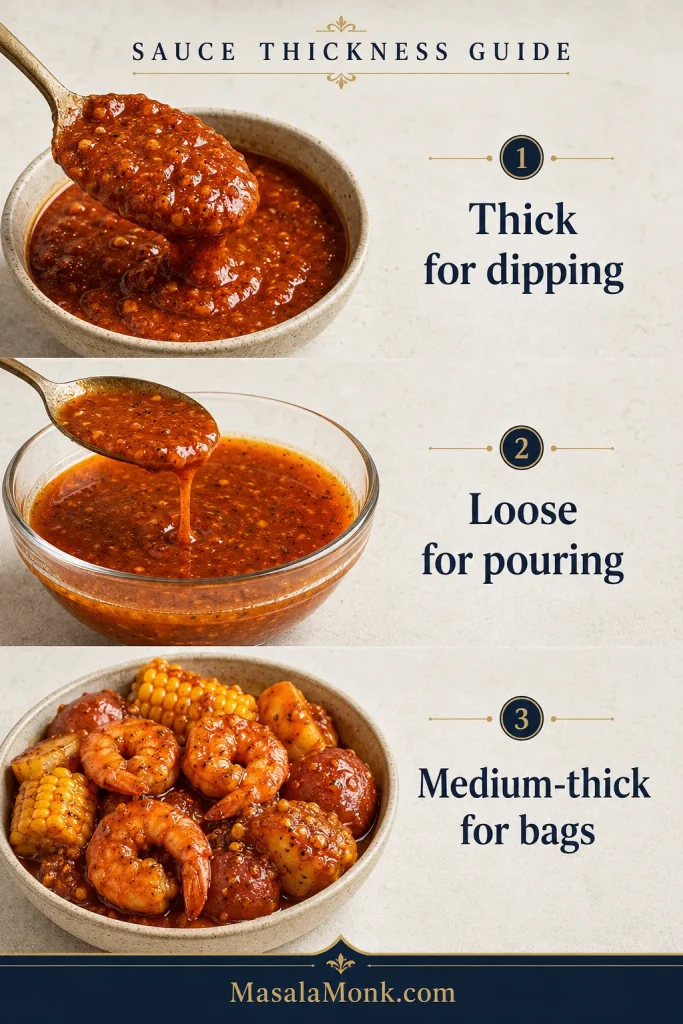
Dipping Sauce vs Pour-Over Sauce

This is where the sauce becomes yours. Some people want a thick bowl of butter for crab legs; others want a loose, glossy sauce that runs into the corn and potatoes. The same base can do both.

Seafood boil sauce thickness guide showing thick dipping sauce, loose pour-over sauce, and medium-thick bag sauce.
Thickness decides the job, so keep it thicker for dipping, looser for pouring, and medium-thick for bags.
UseTextureHow to Adjust
Dipping sauceThick, buttery, clingyUse ¼ cup / 60 ml liquid and simmer slightly longer.
Pour-over sauceGlossy, loose, spoonableUse ½ cup / 120 ml liquid.
Seafood boil bag sauceMedium-thick, coating sauceUse ½–¾ cup / 120–180 ml liquid.
Big tray sauceLooser and more spreadableUse ¾–1 cup / 180–240 ml liquid.
Crab leg dipping sauceRich and butteryKeep it thicker and serve lemon wedges on the side.

Crab people usually want the thick bowl. Shrimp, corn, and potatoes usually want the loose spoon-over version. If your table is divided, make the base sauce medium-thick, then loosen half for pouring and keep half rich for dipping.

Think of the broth or boil liquid like a volume knob. Add a little for a thick dip. Add more for a sauce that covers a whole tray.

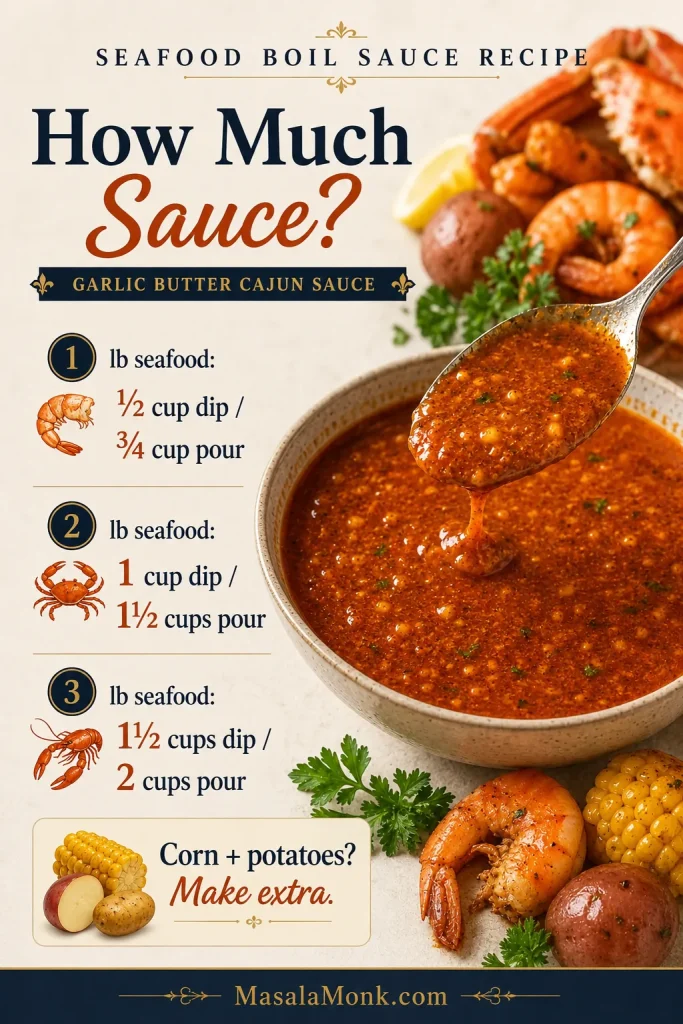
How Much Seafood Boil Sauce Do You Need?

The only sad seafood boil sauce is the one that runs out too early. If the tray has corn and potatoes, make extra. They absorb sauce faster than the seafood does.

Guide showing how much seafood boil sauce to make by pounds of seafood.
Corn and potatoes always change the math, so make extra when the tray has more than just shrimp or crab.

By Seafood Weight

Seafood AmountDipping SaucePour-Over Sauce
1 lb / 450 g seafood½ cup / 120 ml¾ cup / 180 ml
2 lb / 900 g seafood1 cup / 240 ml1½ cups / 360 ml
3 lb / 1.35 kg seafood1½ cups / 360 ml2–2¼ cups / 480–540 ml
5 lb / 2.25 kg seafood2½ cups / 600 ml3–4 cups / 720–960 ml
Party trayMake extraServe extra on the side

By Number of People

PeopleSauce for DippingSauce for Pouring/Tossing
2 people½–¾ cup / 120–180 ml1 cup / 240 ml
4 people1–1½ cups / 240–360 ml2 cups / 480 ml
6 people1½–2 cups / 360–480 ml3 cups / 720 ml
8 people2–3 cups / 480–720 ml4 cups / 960 ml

This recipe makes about 2 cups / 480 ml sauce. That is enough for about 2½–3 lb / 1.1–1.35 kg seafood as a pour-over sauce, or more if you are mainly serving it for dipping.

Extra sauce never feels like a mistake at a seafood boil. Running out does.

Once you know how thick the sauce should be and how much to make, the next step is understanding why the balance works.

Why This Seafood Boil Sauce Works

The flavor works because it balances richness, garlic, heat, salt, sweetness, and acidity.

Butter gives the sauce body. Garlic makes it bold and fragrant. Cajun seasoning brings peppery heat and Southern-style depth. Old Bay adds the classic seafood-boil flavor many people expect with crab, shrimp, and crawfish. Smoked paprika gives the butter sauce its warm red-orange color. Lemon keeps it from feeling heavy.

The small amount of brown sugar is not there to make the sauce sweet. It rounds out salt and spice, especially if your seasoning blend is intense. A little broth or reserved boil liquid turns plain melted butter into something glossy, spoonable, and better connected to the seafood.

When it is right, the sauce should taste buttery first, then garlicky, smoky, salty-spicy, and finally bright from lemon.

The method matters too. Garlic needs gentle heat, spices taste better when they bloom briefly in butter, and lemon tastes brighter when added near the end.

That balance is why the sauce can be bold enough for sausage and potatoes but still bright enough for shrimp, crab, and lobster.

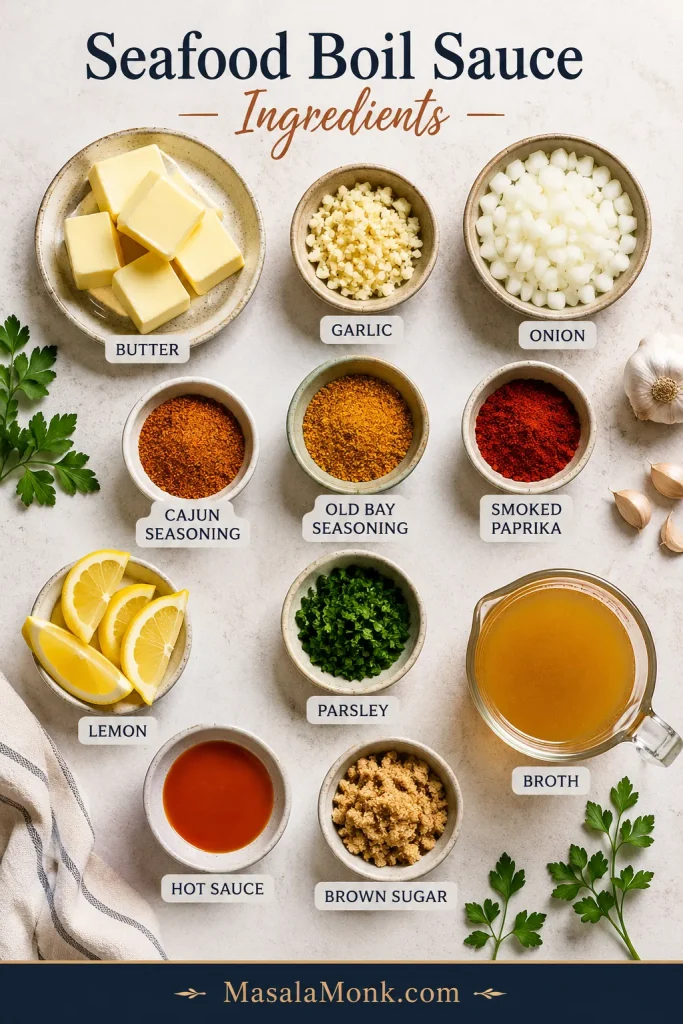
Ingredients You Need

The recipe card gives you the amounts. This section explains what each ingredient does and how to adjust if your seasoning blend is stronger, smokier, hotter, or saltier than expected.

Ingredients for seafood boil sauce including butter, garlic, Cajun seasoning, Old Bay, lemon, parsley, and broth.
Every ingredient earns its place here, because Cajun seasoning, Old Bay, garlic, lemon, and broth all help the sauce stay bold without getting heavy.

Butter

Unsalted butter gives you the best control because seafood boil seasonings can be salty. If you only have salted butter, make the sauce first, then taste before adding anything salty at the end.

For a richer party-style version, whisk in 2–4 extra tablespoons of butter after the sauce simmers.

Garlic

Fresh garlic gives this Cajun butter sauce its best flavor. Minced garlic gives a rustic texture; grated garlic or garlic paste makes the sauce smoother and more restaurant-style.

Keep the garlic pale and fragrant. Dark brown garlic can taste bitter.

Onion

Onion is optional, but it gives the sauce body and natural sweetness. Mince it very finely so it melts into the butter, or grate it for a smoother finish.

Cajun Seasoning

Cajun seasoning gives the sauce its bold, peppery, spicy base. Different brands vary a lot, so taste yours before you add extra heat or salt.

Old Bay Seasoning

Old Bay gives the sauce that classic seafood flavor. It works especially well with shrimp, crab legs, crawfish, potatoes, and corn.

No Old Bay in the pantry? You can still make a good boil sauce with Cajun seasoning, smoked paprika, garlic powder, onion powder, and a small pinch of celery salt or celery seed.

Smoked Paprika

Smoked paprika adds color, warmth, and a gentle smoky note. It helps create the deep red-orange look people associate with Cajun seafood butter.

Brown Sugar

Brown sugar is optional but useful. It rounds out salt, spice, and heat without making the sauce taste sweet, and it helps create a slightly glossy finish.

Broth, Seafood Stock, or Reserved Boil Liquid

This is what changes the sauce from a thick buttery dip into something you can spoon over a whole tray. Reserved boil liquid, stock, or broth loosens the sauce so it pours instead of sitting like straight melted butter.

Reserved boil liquid gives the strongest seafood-boil flavor because it already carries seasoning from the pot. If it tastes very salty, use half boil liquid and half low-sodium broth or water.

Lemon Juice and Lemon Zest

Lemon cuts through the butter and brightens the whole sauce. Add lemon juice near the end so it tastes fresh. Lemon zest is optional, but it makes the sauce smell brighter.

Hot Sauce, Cayenne, or Red Pepper Flakes

Hot sauce gives smoother heat. Cayenne adds stronger fire. Red pepper flakes bring visible spicy texture. Add heat slowly because it is much easier to make the sauce spicier than it is to calm it down.

Equipment

  • Large skillet or medium saucepan
  • Whisk
  • Measuring cups and spoons
  • Microplane, garlic press, or sharp knife
  • Heatproof spatula or spoon
  • Optional immersion blender for a smoother sauce

A skillet gives the spices room to bloom and lets the sauce reduce slightly; a medium saucepan works well for smaller batches or easier pouring.

How to Make It Glossy, Not Greasy

The recipe card above has the short version. These details help if you want a smoother, glossier, more controlled sauce.

Spoonable Sauce Texture

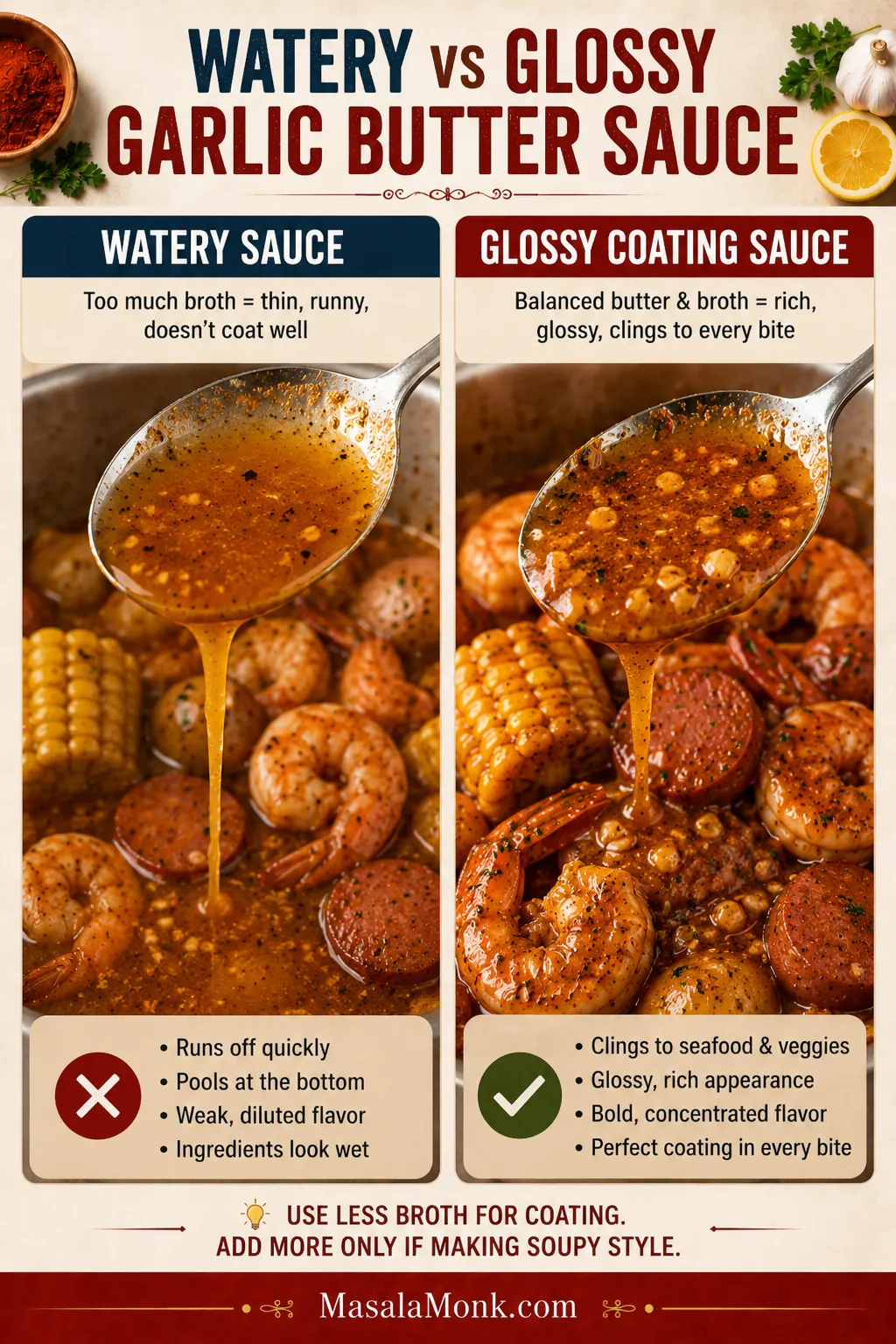
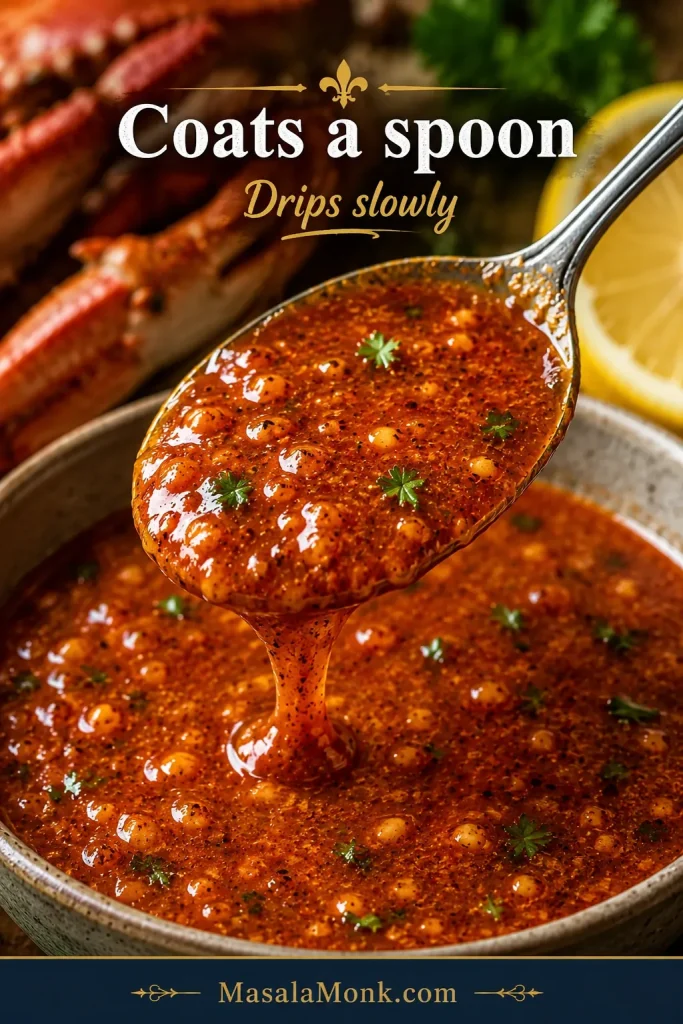
Before you pour the sauce over seafood, check the spoon. A glossy sauce should coat it lightly, then drip back slowly instead of running like water or sitting like straight melted butter.

Seafood boil sauce coating a spoon and dripping slowly back into the bowl.
If it coats the spoon and drips slowly, the sauce is in the right place: clingy enough for seafood, but not oily or thin.

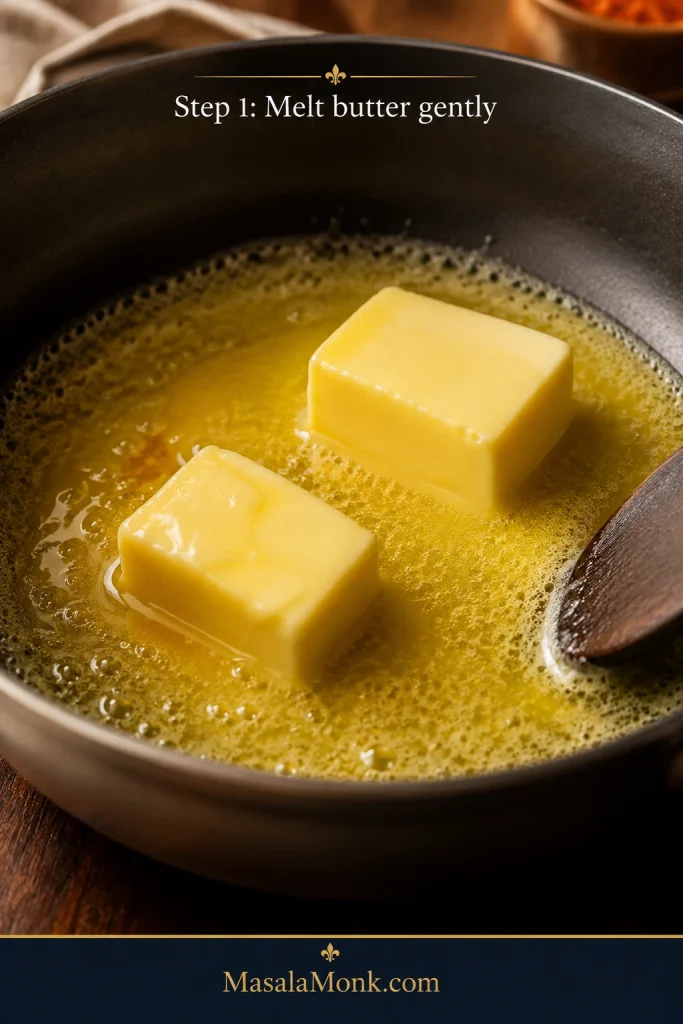
1. Melt the Butter Gently

Melt the butter over low to medium-low heat. Starting gently keeps the butter from separating and gives the garlic time to flavor the sauce without burning.

Butter melting in a skillet for seafood boil sauce.
Start low and gentle, because butter should melt slowly before the garlic and spices go in.

2. Soften the Onion and Garlic

Cook the onion until soft and glossy, then add the garlic for 60–90 seconds. The garlic should smell fragrant but stay pale.

Garlic and onion cooking gently in melted butter for seafood boil sauce.
Once the onion softens and the garlic stays pale, the base turns sweeter and the sauce stays out of bitter territory.

3. Bloom the Seasonings

Stir the Cajun seasoning, Old Bay, smoked paprika, onion powder, brown sugar, and optional heat into the butter. Cook briefly until the butter turns red-orange and the spices look absorbed, not dry or dusty.

Cajun seasoning, Old Bay, and smoked paprika blooming in melted butter.
Blooming the spices in butter is what gives seafood boil sauce its deep red-orange color and that toasty Cajun flavor.

4. Loosen and Finish

Whisk in the broth or reserved boil liquid slowly, then simmer gently until glossy. Turn off the heat before adding lemon juice, lemon zest, hot sauce, and parsley.

Broth being whisked into Cajun garlic butter seafood boil sauce.
As soon as the broth goes in, the sauce loosens into a glossy pour-over texture that works better for shrimp, crab, and vegetables.

Finish With Lemon and Parsley

After the sauce is glossy, take it off the heat before adding lemon and parsley. That small timing choice keeps the seafood boil sauce brighter and fresher.

Lemon juice and parsley being added to seafood boil sauce.
Lemon and parsley go in at the end, because that final bright note keeps the sauce fresh instead of flat.

5. Test Before You Pour

Dip one shrimp, one potato, or one piece of corn into the sauce before coating the full tray. Fix the sauce in the pan, not after it has already coated three pounds of seafood.

Do You Add Seafood Boil Sauce Before or After Cooking?

This is a finishing sauce, not the cooking liquid. Let the boil season and cook the seafood, then let the garlic butter sauce coat it.

Add this garlic butter Cajun sauce after the seafood is cooked and drained. The sauce is for pouring, tossing, bagging, or dipping after cooking.

If you are unsure whether the seafood itself is fully cooked, FoodSafety.gov’s safe minimum internal temperatures chart is a useful reference for fish and shellfish.

The best method is simple: cook the seafood, drain it well, taste the sauce, then spoon or toss the warm sauce over the hot seafood. Keep extra sauce on the side for dipping crab, shrimp, corn, and potatoes.

Best Sauce for Shrimp, Crab, Crawfish and More

The same base works across the tray, but each seafood and side likes a slightly different sauce texture.

Guide showing the best seafood boil sauce texture for shrimp, crab, crawfish, lobster, corn, and potatoes.
Shrimp usually wants a looser, lemon-bright sauce, while crab does better with a thicker, buttery finish that stays on the meat.
FoodBest Sauce StyleAdjustment
ShrimpPour-over or tossAdd slightly more lemon and keep the sauce looser.
Crab legsDipping sauceKeep it thicker, buttery, and rich.
CrawfishSpicy Cajun sauceAdd extra Cajun seasoning, paprika, or hot sauce.
Lobster tailsGarlic lemon butterUse less Cajun, more lemon and parsley.
Mussels and clamsLoose pour-over sauceAdd more broth so it reaches the shells.
CornPour-over sauceMake it looser so it soaks into the kernels.
PotatoesPour-over sauceAdd enough broth so the sauce coats well.
SausageSmoky spicy sauceSmoked paprika and Cajun seasoning work well.
Boiled eggsMedium-thick sauceSpoon sauce over just before serving.

For Shrimp

Shrimp tastes best with a sauce that is garlicky, lemony, and not too heavy. Keep the texture slightly loose so the shrimp stays juicy.

For another shrimp dinner built around garlic, butter, and lemon, this shrimp scampi recipe keeps the same bright butter-sauce idea in a pasta-friendly direction.

For Crab Legs

Crab legs are perfect for a thicker dipping sauce. Keep it buttery and clingy, then serve extra lemon on the side so each bite can be brightened at the table.

For Crawfish

Crawfish can handle stronger heat. Add extra Cajun seasoning, hot sauce, cayenne, or red pepper flakes if you want a spicy crawfish boil sauce.

For Lobster

Lobster is sweeter and more delicate than crawfish or sausage, so go easier on the Cajun seasoning. More garlic, lemon, parsley, and butter usually works better than extra heat.

For a lobster meal that stays buttery but much simpler, this lobster roll recipe covers both the warm buttered Connecticut style and the cool Maine-style version.

For Corn and Potatoes

Corn and potatoes need a looser sauce. Add more broth or reserved boil liquid so the sauce can soak in instead of sitting on top.

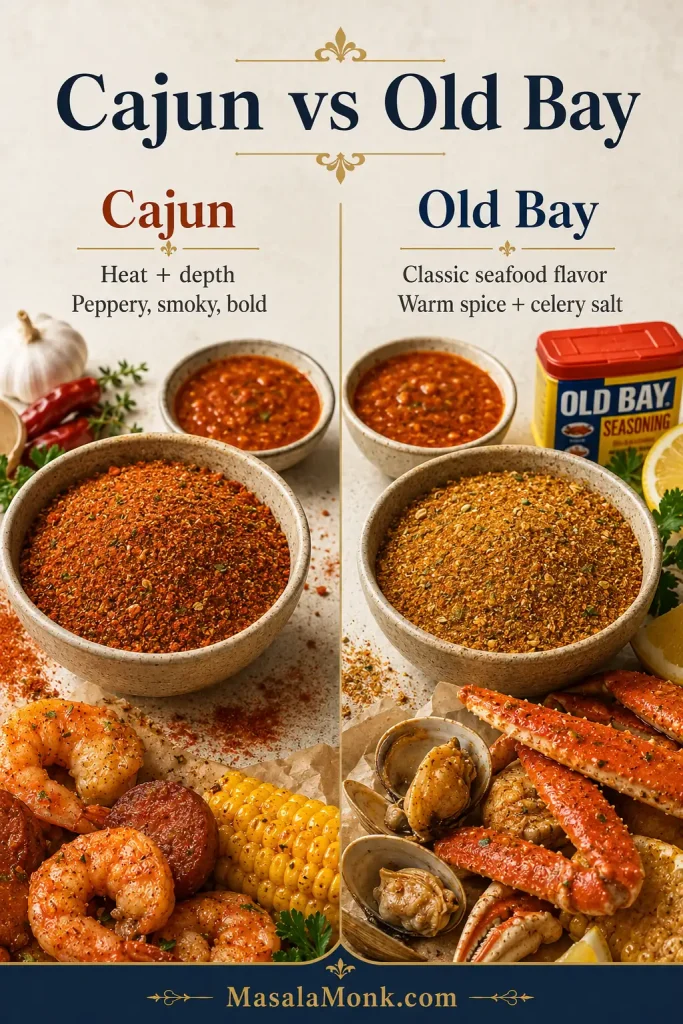
Cajun vs Old Bay Seafood Boil Sauce

Cajun seasoning and Old Bay are both common in seafood boil sauce, but they do different jobs. Think of Cajun seasoning as the heat and depth, and Old Bay as the classic seafood-boil note. Together they make the sauce taste fuller, but together they can also make it salty fast.

Do not increase Cajun seasoning and Old Bay heavily at the same time unless you know both blends are low-salt.

Cajun versus Old Bay seafood boil sauce guide.
Cajun seasoning brings heat and depth, while Old Bay brings that classic seafood flavor, so the two work best when the salt stays under control.
  • For more Cajun flavor: Increase Cajun seasoning slightly, add smoked paprika, and finish with hot sauce.
  • For more Old Bay flavor: Increase Old Bay, reduce Cajun, and keep the lemon bright.
  • For a less salty sauce: Use unsalted butter, low-sodium broth, less Old Bay, and more lemon.
  • If you have no Old Bay: Use Cajun seasoning, smoked paprika, garlic powder, onion powder, and a tiny pinch of celery salt or celery seed.
  • If you have no Cajun seasoning: Use Old Bay, smoked paprika, garlic powder, onion powder, black pepper, and cayenne.

Seafood Boil Sauce Variations

Think of the recipe as one base sauce with two kinds of choices: texture choices for how you serve it, and flavor choices for how spicy, garlicky, or Old Bay-forward you want it.

Want the Sauce…Do This
More garlickyUse 10–12 cloves garlic or grated garlic.
More CajunAdd extra Cajun seasoning and smoked paprika.
More Old BayIncrease Old Bay and reduce Cajun seasoning.
MildSkip cayenne, use mild Cajun seasoning, add more broth and lemon.
SpicyAdd cayenne, hot sauce, red pepper flakes, or spicy Cajun seasoning.
Thicker for dippingUse ¼ cup / 60 ml liquid.
Looser for a trayUse ¾–1 cup / 180–240 ml liquid.
Restaurant-style sauceUse grated onion, extra paprika, brown sugar, less liquid, and optional blending.

Garlic Butter Seafood Boil Sauce

A stronger garlic butter version starts with 10 cloves of garlic and slightly less Cajun seasoning. Keep the lemon juice strong and add parsley at the end. This version is excellent for crab legs, lobster tails, and shrimp.

Spicy Seafood Boil Sauce

For a spicier sauce, add cayenne, red pepper flakes, hot sauce, spicy Cajun seasoning, or hot paprika. Add heat slowly and taste after simmering before adding more.

Mild Seafood Boil Sauce

The mild version uses mild Cajun seasoning, slightly less Old Bay, no cayenne, and extra broth and lemon. It is better for kids, mild eaters, lobster, and anyone who wants buttery garlic flavor without too much heat.

Old Bay Seafood Boil Sauce

An Old Bay-forward sauce works best when Old Bay increases to 1 tablespoon and Cajun seasoning drops to 1 teaspoon. Keep the butter, garlic, lemon, and parsley the same.

Lemon Pepper Seafood Boil Sauce

Add 1–2 teaspoons lemon pepper seasoning and increase the lemon zest. Reduce extra salt because lemon pepper blends can be salty. This version works beautifully with shrimp, lobster, and crab.

Creamy Seafood Boil Sauce

A creamy version needs only 2–4 tablespoons of cream at the end over low heat. This makes the sauce richer and softer, but it is less traditional than garlic butter Cajun sauce.

Restaurant-Style Sauce Adjustments

This is the part that makes the tray look like something people want to gather around. Restaurant-style seafood boils feel different because the sauce arrives hot, glossy, and clingy. It coats the shells, runs into the potatoes, stains the corn, and still leaves enough at the bottom for dipping.

  • For redder color, add a little more smoked paprika.
  • For deeper flavor, bloom the spices a little longer over low heat.
  • For a clingier sauce, use less broth.
  • For smoother texture, use grated garlic and grated onion.
  • For a glossy finish, add 1–2 teaspoons brown sugar.
  • For a smooth restaurant-style sauce, blend briefly with an immersion blender.

Taste Adjustment Ladder

This is the part where the sauce stops being a formula and starts tasting like yours. Most fixes come back to the butter-broth-lemon rule: butter softens, broth loosens, and lemon brightens.

If the Sauce Tastes…Add This
Too saltyUnsalted butter first, then warm broth, then lemon.
Too buttery or heavyLemon juice first, then a splash of broth.
Too thinSimmer a few minutes longer.
Too thickWarm broth, seafood stock, or reserved boil liquid.
Too spicyButter and broth, then a tiny pinch of brown sugar if needed.
Too flatLemon first, then Cajun seasoning or Old Bay.
Too sharpA small knob of butter or a tiny pinch of brown sugar.
Not garlicky enoughA small amount of garlic powder, or gently cooked grated garlic.
Not smoky enoughA little more smoked paprika.

Make one adjustment at a time, then taste again. This keeps the sauce from swinging too far in the other direction.

Quick 2-Minute Seafood Boil Sauce

When the seafood is already cooked and you just need something buttery fast, this shortcut version gets you there.

IngredientAmount
Melted butter½ cup / 113 g
Old Bay or Cajun seasoning1–2 teaspoons
Garlic powder or 1 minced garlic clove½ teaspoon garlic powder or 1 clove
Lemon juice1 tablespoon / 15 ml
Hot sauceOptional, to taste

This quick version is not as deep or layered as the full sauce, but it works well as a fast seafood dipping sauce when the seafood is already cooked. For better flavor, warm everything together gently for 1–2 minutes instead of just stirring it cold.

When you want a cold, creamy seafood dip instead of warm butter, this homemade tartar sauce recipe fits that lane better.

Substitutions and Swaps

The base is forgiving. Missing one ingredient does not ruin the sauce; it just changes which direction you lean.

Missing IngredientUse Instead
No Old BayCajun seasoning + smoked paprika + pinch of celery salt or celery seed
No Cajun seasoningOld Bay + smoked paprika + garlic powder + onion powder + cayenne
No seafood boil liquidSeafood stock, low-sodium chicken broth, vegetable broth, beer, or water with lemon
No fresh garlicGarlic paste or garlic powder
No onionSkip it, or use ½ teaspoon onion powder
Not enough butterUse part butter and part olive oil. If using no butter, use vegan butter or olive oil, but expect a lighter sauce.
No lemonLime juice or a small splash of vinegar
No brown sugarHoney, maple syrup, or skip it
No parsleyChives, green onion, or skip it

If you are using store-bought seafood boil seasoning packets, start with less seasoning than you think you need. Packets can be very salty. Use unsalted butter, taste before adding salt, and loosen the sauce with broth or lemon juice if it tastes too intense.

How to Toss and Serve It Restaurant-Style

This is the point where the sauce becomes the meal. The crab legs get glossy, the shrimp pick up the garlic butter, the corn turns red-orange in the grooves, and the potatoes catch everything the seafood leaves behind.

A restaurant-style finish is not about making the sauce complicated. It is about timing, texture, and serving it while everything is still hot and glossy.

Restaurant-Style Seafood Boil Sauce Finish

Use the sauce while it is warm and glossy, then coat the seafood in layers so the tray looks generous without turning watery.

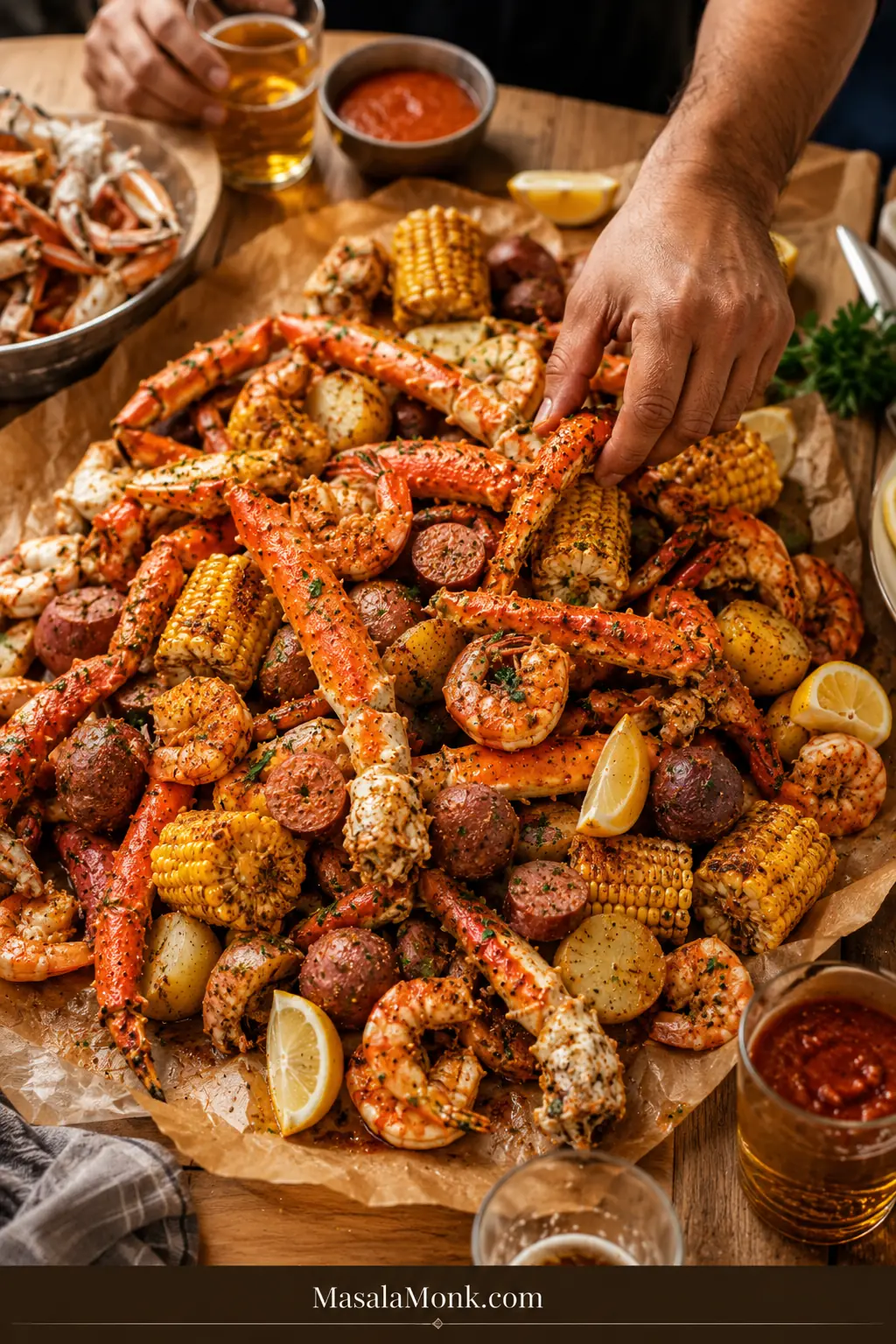
Restaurant-style seafood boil tray with shrimp, crab, corn, potatoes, sausage, and glossy garlic butter sauce.
A great seafood boil tray looks glossy and generous, with enough sauce to coat the seafood and leave some behind for dipping.
  • Warm the seafood before saucing. Cold seafood makes butter firm up quickly.
  • Drain the seafood well so water does not dilute the sauce.
  • Toss or spoon in layers instead of dumping all the sauce at once.
  • Keep extra sauce warm on the side for dipping.
  • Add parsley and lemon at the end so the tray looks and tastes fresh.
  • Serve immediately. Garlic butter sauce is at its best while warm and glossy.

Seafood Boil Bag Sauce

For seafood boil bag sauce: use the medium-thick texture. Add cooked seafood and warm sauce to the bag, seal carefully, and toss until everything is coated. The sauce should move when tossed, coat the shells red-orange, and leave a little buttery pool at the bottom for dipping. If it is too watery, it will pool instead of clinging to shrimp, crab, corn, and potatoes.

Seafood boil bag with shrimp, crab, corn, and potatoes coated in red-orange garlic butter sauce.
Medium-thick is the sweet spot for seafood boil bags, because the sauce needs to move when tossed and still coat every shell.

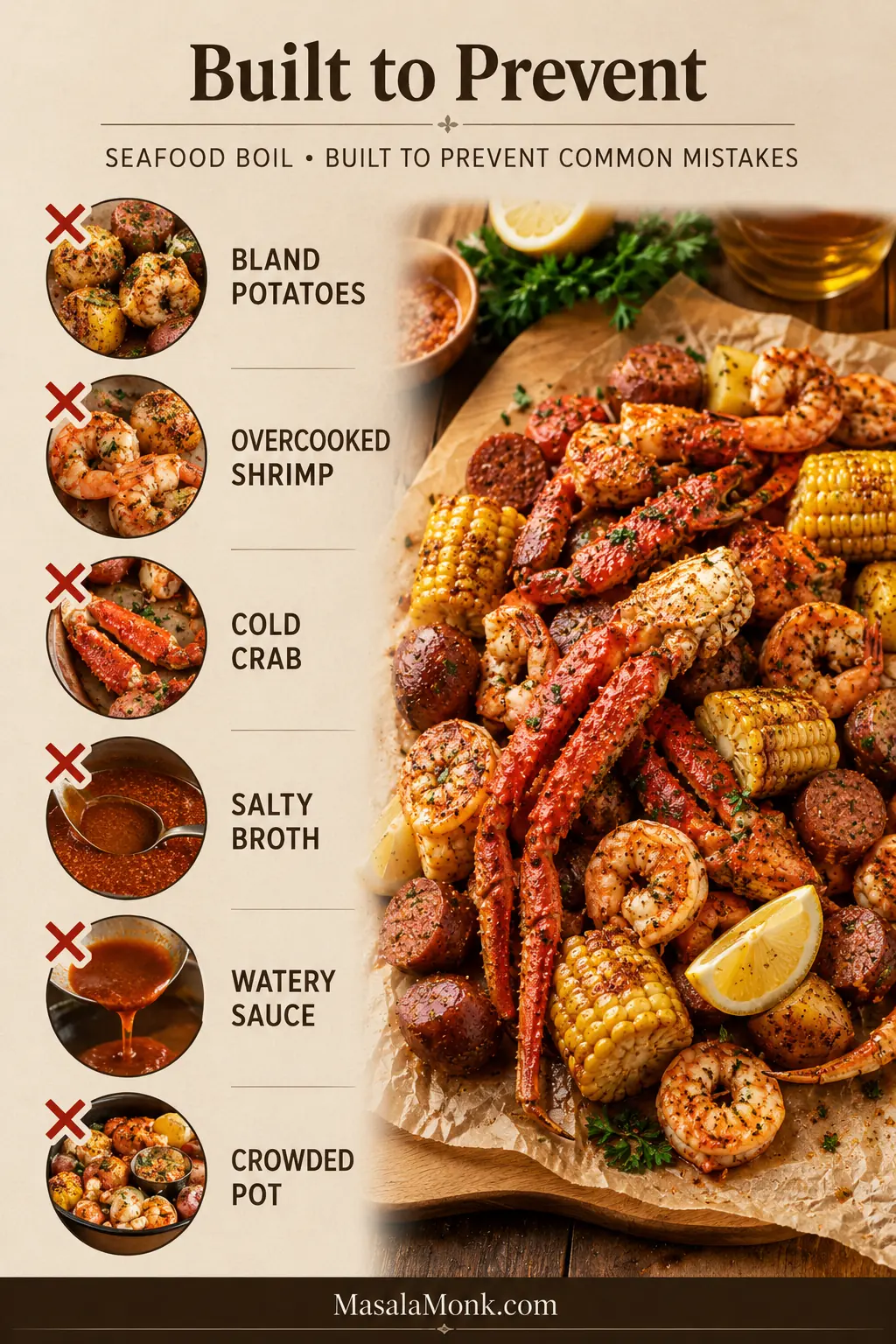
Common Mistakes to Avoid

Most sauce problems are easier to fix in the pan than on the tray. Use this as a quick check before the sauce goes over the seafood.

  • Starting too salty: Use unsalted butter when you can, and taste before adding any extra salt.
  • Using heat that is too high: Low to medium-low heat keeps the garlic pale and the butter glossy.
  • Skipping the taste test: Try the sauce with one shrimp, potato, or piece of corn before coating the full tray.
  • Pouring sauce over watery seafood: Drain the seafood well so the sauce stays bold instead of diluted.
  • Using one texture for every purpose: Dipping, pouring, and seafood boil bags all need slightly different thickness.

Troubleshooting Seafood Boil Sauce

Butter sauces can go sideways quickly, but you usually do not need to start over. Catch the problem while the sauce is still in the pan, and the fix is usually simple.

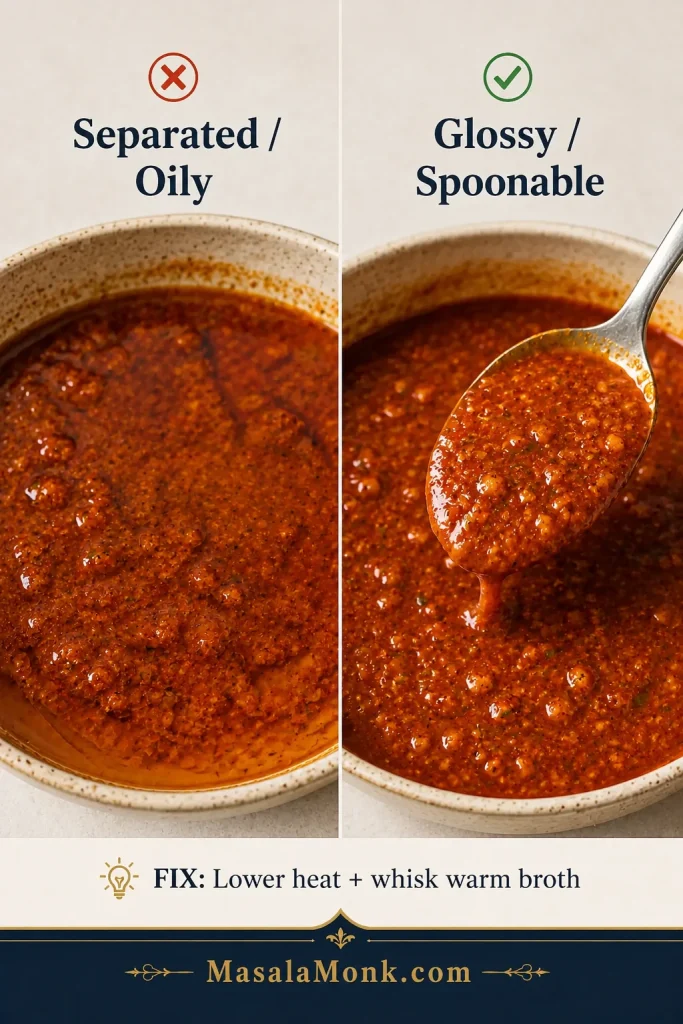
Comparison of separated oily seafood boil sauce and glossy spoonable seafood boil sauce.
When the sauce looks oily or split, lower the heat and whisk in warm broth, because glossy always wins over greasy.
ProblemLikely CauseFix
Too saltySalted butter, salty Cajun seasoning, too much Old BayAdd unsalted butter, broth, lemon juice, or a little brown sugar.
Too spicyToo much cayenne, hot sauce, or spicy Cajun seasoningAdd butter, broth, lemon, or a little sweetness.
Too oilyToo much butter, not enough liquidWhisk in warm broth slowly.
Too thinToo much broth or boil liquidSimmer uncovered for a few minutes.
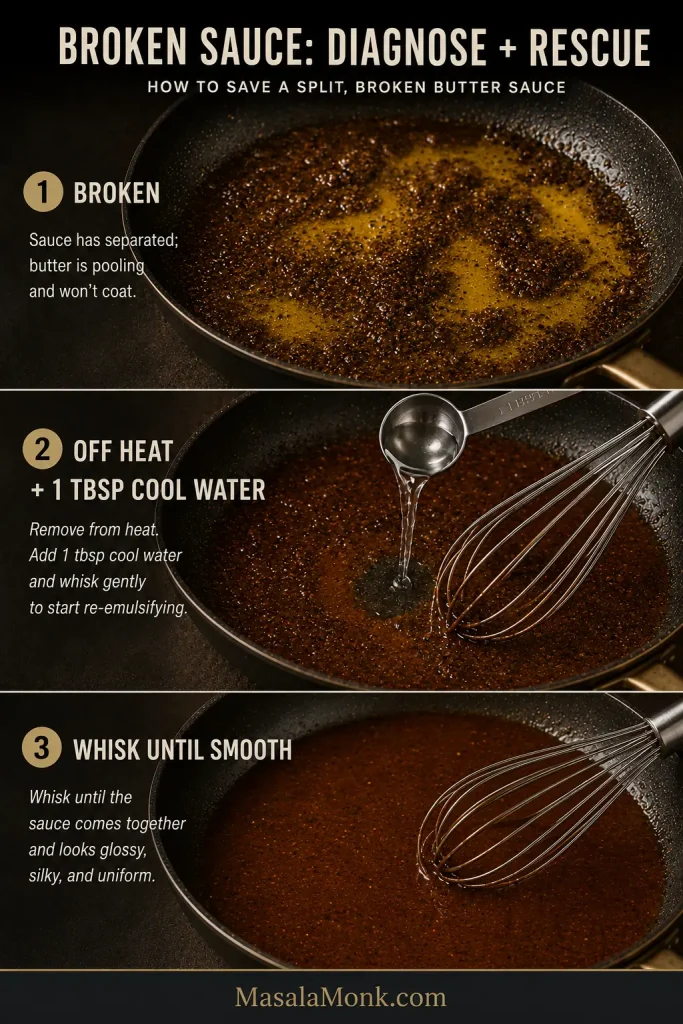
Sauce separatedHeat too high or liquid added too fastLower the heat and whisk in warm liquid gradually.
Bitter garlicGarlic browned or burnedCook garlic gently for only 60–90 seconds.
Grainy spicesSpices were not bloomed or too much dry seasoning was addedBloom spices in butter and loosen with broth.
Not flavorful enoughToo much liquid or weak seasoningAdd Cajun seasoning, Old Bay, lemon, garlic, or hot sauce slowly.

How to Fix Salty Seafood Boil Sauce

Do not add water first. Water can make the sauce thinner without fixing the flavor. Instead, add unsalted butter, warm broth, lemon juice, or a small pinch of brown sugar. If you are serving the sauce with a full seafood boil, extra potatoes and corn can also help absorb some of the salty flavor on the tray.

How to Fix Separated Seafood Boil Sauce

Lower the heat. Whisk in 1–2 tablespoons of warm broth at a time until the sauce looks glossy again. If it still looks broken, use an immersion blender for a few seconds.

How to Make It Thicker

Simmer it uncovered for a few minutes. You can also use less broth next time or add a little more butter. For a thicker dipping sauce, start with only ¼ cup / 60 ml liquid.

How to Make It Thinner

Whisk in warm broth, seafood stock, reserved boil liquid, or water with lemon juice. Add a little at a time until the sauce pours the way you want.

How to Store and Reheat the Sauce

Do not worry if the sauce turns solid in the fridge. That is just the butter doing what butter does. The texture comes back when the sauce is reheated and whisked.

Refrigerating

Store unused sauce in an airtight container in the refrigerator for 4–5 days.

If the sauce has touched seafood, shells, fingers, or a shared dipping bowl, treat it like a seafood leftover. Cool it quickly, refrigerate it promptly, and use it within 1–2 days for best quality.

For broader leftover safety, the USDA’s leftovers and food safety guide is a useful reference.

Reheating

For clean, unused sauce, reheat gently in a saucepan over low heat, stirring often. Add a splash of broth, water, or reserved boil liquid if the sauce is too thick.

For sauce that has touched seafood or leftovers, reheat until steaming hot, ideally to 165°F / 74°C, then whisk to bring the texture back. A food thermometer is the safest way to check.

You can also microwave clean unused sauce in short bursts, stirring every 15–20 seconds. If reheating sauce with seafood leftovers, stir well and make sure the food is steaming hot throughout before serving.

Freezing

Freeze unused seafood boil sauce for up to 2–3 months. Thaw overnight in the refrigerator, then reheat gently over low heat. If the sauce separates slightly, whisk in warm broth or blend briefly with an immersion blender.

What to Serve With Seafood Boil Sauce

The best use is still the simplest: hot seafood, warm sauce, extra napkins, and something starchy to catch the butter.

Classic Seafood Boil Uses

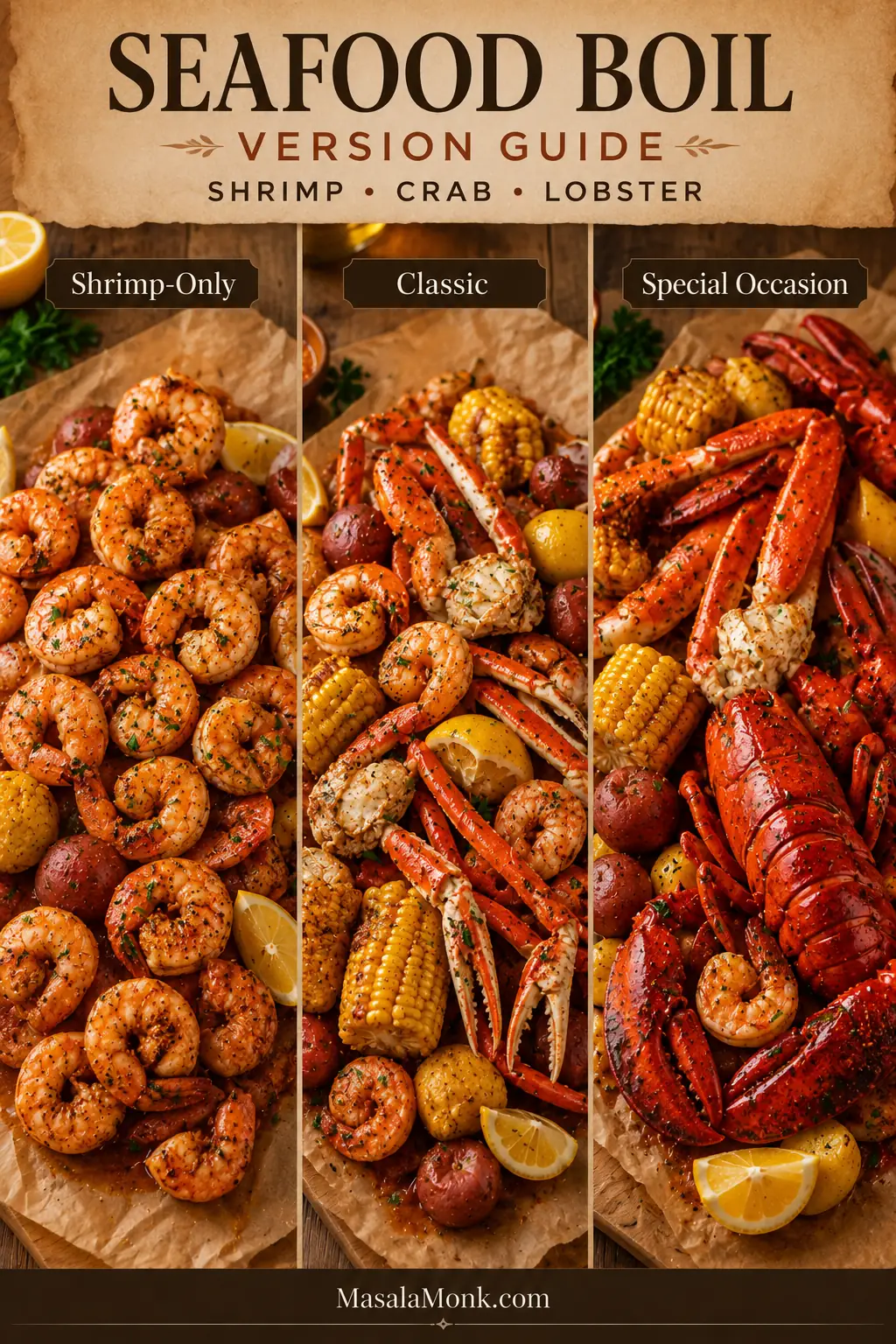
  • Shrimp
  • Crab legs
  • Crawfish
  • Lobster tails
  • Mussels
  • Clams
  • Corn on the cob
  • Baby potatoes
  • Smoked sausage
  • Boiled eggs

Other Good Uses

  • Garlic bread
  • Rice
  • Roasted potatoes
  • Grilled corn
  • Roasted vegetables
  • Grilled fish
  • Pan-seared scallops
  • Salmon
  • Lemon wedges on the side

For other seafood dinners, this baked haddock recipe keeps the butter-and-lemon idea gentler, while this honey garlic salmon recipe goes sticky, sweet, and skillet-style.

For a full crispy seafood comfort plate instead of a boil, this fish and chips recipe pairs fried fish with tartar sauce, curry sauce, vinegar, and lemon.

For a full seafood boil tray, serve some sauce poured over the seafood and extra sauce on the side for dipping. For a cleaner dinner, serve the sauce in small bowls and let everyone dip shrimp, crab, corn, potatoes, and bread as they eat.

Frequently Asked Questions

What is seafood boil sauce made of?

It is usually made with butter, garlic, Cajun seasoning, Old Bay seasoning, lemon juice, paprika, hot sauce, and broth or reserved seafood boil liquid. Some versions also include onion, brown sugar, parsley, cayenne, or lemon pepper.

Is seafood boil sauce the same as garlic butter sauce?

It is a type of garlic butter sauce, but it is usually more seasoned. Basic garlic butter may only have butter, garlic, lemon, and herbs. Seafood boil sauce usually adds Cajun seasoning, Old Bay, paprika, heat, and sometimes broth or boil liquid.

Is this a Blove’s-style seafood boil sauce?

This is not a Blove’s copycat sauce. Blove’s-style seafood boil sauces are usually heavier, sweeter, and more spice-loaded, often with extra butter, garlic, hot sauce, Worcestershire, ginger, lemon pepper, and a larger seasoning mix. This version is a balanced Cajun garlic butter seafood boil sauce made for dipping, pouring, and tossing without hiding the flavor of the seafood.

Do you put seafood boil sauce in the pot?

No. It is better to add the sauce after the seafood is cooked and drained. This is a finishing sauce, not the cooking liquid.

What sauce goes with shrimp boil?

Garlic butter Cajun sauce is one of the best sauces for shrimp boil. Use a slightly looser sauce with lemon juice so the shrimp stays bright and juicy instead of feeling too heavy.

What sauce is best for crab boil?

A thick garlic butter seafood sauce is best for crab boil because it clings well to crab meat. Keep it buttery, garlicky, and slightly lemony, with Old Bay or Cajun seasoning for classic seafood flavor.

Is this good as a dipping sauce?

It is excellent as a dipping sauce. Reduce the liquid to about ¼ cup / 60 ml and simmer the sauce a little longer. This keeps it thick, buttery, and clingy.

Does it work as a pour-over sauce?

It works well as a pour-over sauce. Use about ½ cup / 120 ml broth or reserved boil liquid, then add more if you want it loose enough to cover a big tray of shrimp, crab, crawfish, corn, potatoes, and sausage.

How do I make it thicker?

Use less liquid or simmer the sauce uncovered for a few minutes. For a thick dipping sauce, start with ¼ cup / 60 ml liquid instead of ½ cup / 120 ml.

How do I make it less salty?

Add unsalted butter, warm broth, lemon juice, or a small pinch of brown sugar. If serving with a full seafood boil, potatoes and corn can also help absorb some of the salty flavor.

Can I make seafood boil sauce without Old Bay?

You can. Use Cajun seasoning, smoked paprika, garlic powder, onion powder, black pepper, and a tiny pinch of celery salt or celery seed if you have it. The flavor will be slightly different, but still good.

Can I make seafood boil sauce without Cajun seasoning?

You can. Use Old Bay, smoked paprika, garlic powder, onion powder, black pepper, and a little cayenne or hot sauce for heat.

Why did it separate?

The heat may have been too high, or the liquid may have been added too quickly. Keep the sauce at a gentle simmer and whisk in broth gradually. If it separates, lower the heat and whisk in a little warm liquid.

How much sauce do I need for a seafood boil?

For dipping, plan on about ½ cup / 120 ml sauce per 1 lb / 450 g seafood. For pouring over a seafood boil tray, plan on about ¾ cup / 180 ml per 1 lb / 450 g seafood. Make extra if you are serving corn, potatoes, sausage, and eggs because they absorb sauce.

Did You Make This Seafood Boil Sauce?

Once you make this sauce once, it stops feeling like an add-on. It becomes the thing that pulls the whole seafood boil together: the shrimp, the crab, the corn, the potatoes, the sausage, the bread at the end, and everyone reaching back for one more dip.

A piece of bread dipped into leftover garlic butter seafood boil sauce.
The final swipe of bread is the payoff, because the best seafood boil sauce always leaves one more bite at the bottom of the tray.

Taste it while it is warm, adjust it until it feels balanced, then pour it over the tray and serve extra on the side. That is the moment the meal comes together.

Did you make it thick for dipping, loose for pouring, or extra spicy for crawfish? Leave a rating and a comment with your seafood mix, sauce thickness, and heat level so other readers can adjust their own seafood boil sauce with confidence.

Posted on Leave a comment

Cajun Seafood Boil Recipe with Garlic Butter Sauce

Cajun seafood boil with shrimp, crab legs, corn, potatoes, smoked sausage, lemon wedges, parsley, and garlic butter on a tray.

A Cajun seafood boil is the kind of dinner that turns the table into the event: sweet shrimp, juicy crab legs, smoky sausage, corn, potatoes, lemon, garlic, Cajun seasoning, and a glossy garlic butter sauce that gets into every shell, every potato, and every bite of corn.

Timing is the part that makes people nervous. Seafood is expensive, shrimp overcooks fast, crab legs are often already cooked, and potatoes need a head start if you want them seasoned all the way through. This recipe keeps the feast feeling big, but the method stays calm: build a bold broth, add everything in the right order, save a little broth for the sauce, then finish the whole tray with Cajun garlic butter.

This recipe works as your main home-kitchen seafood boil: shrimp or prawns, crab legs, smoked sausage, corn, potatoes, Cajun seasoning, and garlic butter sauce. Crawfish, lobster tails, mussels, and clams can join the pot, but they are not required for a saucy, satisfying boil.

Quick Answer: How Do You Make a Cajun Seafood Boil?

A Cajun seafood boil is made by simmering potatoes, sausage, corn, crab legs, and shrimp in a seasoned Cajun broth, then finishing everything with garlic butter sauce. Cook the ingredients in stages: potatoes first, sausage next, corn and crab after that, and shrimp last. Reserve some broth for the butter sauce before draining.

A 6-serving home version uses a 10 to 12 quart / 9.5 to 11.4 L pot, about 4 quarts / 3.8 L total liquid, 2 lb / 900 g crab legs, 1.5 to 2 lb / 680 to 900 g shrimp, 12 to 14 oz / 340 to 400 g sausage, 1.5 lb / 680 g baby potatoes, and 4 to 6 ears of corn.

Simple rule: potatoes early, shrimp last, sauce at the end. That one order keeps the potatoes flavorful, the crab sweet, and the shrimp tender instead of rubbery.

Even if this is your first seafood boil, you do not have to manage everything at once. Prep first, cook in stages, and keep the shrimp for the very end. The pot builds flavor; the sauce delivers it.

Best first-time path: make the classic shrimp-and-crab version, use the normal coating sauce, keep the heat medium, and skip a long soak. This gives you a full, saucy tray without overcomplicating the pot.

Communal seafood boil table with shrimp, crab, corn, potatoes, sausage, sauce bowls, lemon wedges, and serving tools on parchment paper.
Meanwhile, this is where seafood boil turns into a meal people gather around, because the tray, the sauce bowls, and the shells all belong at the table.

Cajun Seafood Boil Recipe Card

Cajun Seafood Boil With Garlic Butter Sauce

A bold home-kitchen Cajun seafood boil with shrimp, crab legs, smoked sausage, corn, potatoes, lemon, garlic, Cajun seasoning, and buttery garlic sauce. The ingredients move in stages so the potatoes absorb the broth, the crab heats gently, and the shrimp stays tender.

Close-up of sauced shrimp, crab, corn, and potatoes coated in glossy Cajun garlic butter.
Notice how the butter clings to the shells and corn instead of pooling away; that glossy coat is what makes each bite feel richer.
Prep Time20 minutes
Cook Time35 minutes
Total Time55 minutes, plus 5 to 10 minutes if soaking
Servings6
MethodStovetop
Pot Size10 to 12 quart / 9.5 to 11.4 L stockpot
Best CueShrimp just cooked; potatoes tender; crab heated through

Seafood Boil Ingredients

  • 4 quarts / 3.8 L total liquid: water, or mostly water plus 12 oz / 355 ml beer
  • 1 large onion, quartered
  • 1 to 2 heads garlic, halved crosswise
  • 2 lemons, halved, plus extra wedges for serving
  • 2 to 3 bay leaves
  • 1/4 cup Cajun seasoning to start, up to 1/2 cup only if your blend is low-salt or salt-free
  • 1 to 2 tablespoons Old Bay or seafood seasoning, optional
  • 1.5 lb / 680 g baby potatoes
  • 12 to 14 oz / 340 to 400 g andouille or smoked sausage, sliced into thick rounds
  • 4 to 6 ears corn, cut into halves or thirds
  • 2 lb / 900 g snow crab legs or crab clusters, usually precooked
  • 1.5 to 2 lb / 680 to 900 g jumbo raw shrimp or prawns, easy-peel or deveined shell-on if possible
  • Salt, only if needed after tasting the broth
  • Fresh parsley, for serving

Why the seasoning amount looks large: this seasons the water, potatoes, corn, shells, and seafood, not just the surface of the shrimp. Start with 1/4 cup if your blend contains salt.

Optional Add-Ins

  • 1 to 2 lb / 450 to 900 g cooked or properly prepared crawfish; for live crawfish, use crawfish-specific cleaning and cooking guidance
  • 2 to 3 lobster tails
  • 1 lb / 450 g mussels or clams, cleaned
  • 4 to 6 peeled hard-boiled eggs, warm or room-temperature, added after draining

Cajun Garlic Butter Sauce

  • 1 cup / 227 g unsalted butter
  • 6 to 8 garlic cloves, finely minced
  • 1 tablespoon Cajun seasoning
  • 1 teaspoon smoked paprika
  • 1 to 2 tablespoons lemon juice
  • 1/4 to 1/2 cup / 60 to 120 ml reserved seafood boil broth
  • 1 to 2 teaspoons hot sauce, optional
  • 2 tablespoons chopped parsley

Method

  1. Prep everything first. Cut the corn, slice the sausage, halve the lemons and garlic, rinse the seafood, and thaw frozen seafood if needed.
  2. Build the broth. Add the liquid, onion, garlic, lemons, bay leaves, 1/4 cup Cajun seasoning, and optional Old Bay to a large stockpot. Bring to a rolling boil and simmer for 5 to 10 minutes, until it smells garlicky, lemony, and spicy.
  3. Taste the broth. It should be bold, but not harsh or unpleasantly salty. Add more seasoning only if needed.
  4. Add the potatoes and cook for 8 to 12 minutes, then add the sausage and cook for 5 minutes.
  5. Reduce the heat slightly if the pot is violently boiling. Add corn and crab legs; cook for 4 to 7 minutes, just until the corn is tender and the crab is heated through.
  6. Add lobster tails, mussels, or clams if using. Cook for 4 to 6 minutes, until lobster is opaque and mussels or clams have opened.
  7. Add shrimp last. Cook for 3 to 5 minutes, just until pink, opaque, and curled into a loose C-shape. For smaller shrimp, turn off the heat and let the covered pot finish them gently.
  8. Reserve 1 cup / 240 ml seasoned broth, then drain the boil carefully.
  9. Make the sauce. Melt butter, cook garlic briefly, then stir in Cajun seasoning, paprika, lemon juice, reserved broth, hot sauce if using, and parsley.
  10. Transfer everything to a large tray or serving platter. Add boiled eggs now if using. Spoon the Cajun garlic butter over the crab joints, corn, potatoes, shrimp, sausage, and eggs, or serve extra on the side for dipping.

Salt note: Cajun seasoning, Old Bay, seafood boil seasoning, and crab boil blends can all contain salt. Start lower if your blend is salty, taste the broth before adding seafood, and adjust slowly.

Success cues:

  • Potatoes: tender, but not splitting apart.
  • Corn: bright, juicy, and tender when pierced.
  • Crab: steaming hot and fragrant.
  • Lobster: opaque and firm, not tight.
  • Mussels/clams: opened after cooking; discard closed ones.
  • Shrimp: pink and curled into a loose C-shape.
  • Sauce: shiny, spoonable, and coating instead of watery.
Premium guide showing loose C-shape shrimp, tender potatoes, hot crab, and glossy sauce doneness cues.
After the cook, this is the quickest way to check your timing: loose shrimp, tender potatoes, hot crab, and sauce that still looks rich.

What this recipe is built to prevent: bland potatoes, overcooked shrimp, cold crab, salty broth, watery sauce, and a crowded pot. The timing is staged so the sturdy ingredients get flavor first and the delicate seafood stays tender.

Checklist-style graphic showing problems this seafood boil recipe helps prevent, including bland potatoes, overcooked shrimp, cold crab, salty broth, watery sauce, and a crowded pot.
Just as important as the method itself, this recipe is built to help you avoid the mistakes that make a boil feel flat or overdone.

Do not aim for a perfect-looking tray. Aim for hot crab, tender shrimp, juicy corn, potatoes that taste seasoned inside, and enough finishing butter that people start passing bowls around.

Why This Seafood Boil Works

  • The broth builds flavor first. Garlic, lemon, onion, bay leaves, and Cajun seasoning get time to season the water before the potatoes go in.
  • The pot moves in waves. Potatoes and sausage can handle time; shrimp cannot, so the delicate seafood waits.
  • The heat stays steady. A strong boil builds the broth and cooks the potatoes, but seafood does better with a lively simmer or controlled boil.
  • The sauce finishes the feast. Reserved broth ties the garlic butter back to the pot, so it tastes like the boil instead of a separate topping.

Make this when you need a messy weekend seafood dinner, a casual birthday tray, a game-day spread, or a restaurant-style boil at home without a giant pot. This is a hands-on dinner, not a quiet plated one: shells cracking, corn turning glossy, potatoes disappearing first, and sauce bowls being passed around the table.

Choose Your Seafood Boil Version

Before you shop, decide what kind of tray you are making. The method stays the same, but this helps you choose the right seafood, sauce level, and pot plan.

VersionBest forHow to adjust
Classic shrimp and crabThe all-purpose family-style trayUse the recipe as written
Shrimp-onlyFastest, easiest, most budget-friendly versionSkip crab and use 2.5 to 3 lb / 1.1 to 1.4 kg shrimp
Crab-heavyA special-occasion platterUse more crab legs and slightly less shrimp
Extra saucyRestaurant-style garlic butter loversUse the larger butter sauce option
No giant potApartment kitchens or smaller stockpotsMake a half batch or cook in rounds

Quick Decision Guide

If this is your situationDo this
First seafood boilShrimp + precooked crab, normal sauce, no long soak
Small kitchenHalf batch or cook in rounds
Mixed spice crowdMedium broth, hotter sauce on the side
Budget versionShrimp-only with sausage, corn, and potatoes
Special occasionCrab-heavy or add lobster tails
Nervous about shrimpAdd shrimp off heat and cover

Once you choose the version, the rest becomes easier: buy the right seafood, give the pot enough room, and let the sauce make the whole platter feel generous.

Comparison graphic showing shrimp-only, classic shrimp and crab, and special-occasion seafood boil versions.
Once you choose the version you want, shopping gets easier too: shrimp-only is fastest, classic shrimp-and-crab is the all-purpose move, and lobster is the upgrade.

Before you shop: for the easiest version, buy raw jumbo shrimp, precooked snow crab legs, smoked sausage, baby potatoes, corn, lemons, garlic, unsalted butter, and one Cajun seasoning you like. Avoid precooked shrimp for the main boil when possible; when that is all you have, add it off heat at the very end just to warm through. Large crab clusters may need a little less total seafood or a two-pot plan.

More help below: ingredients, pot size, seafood per person, seasoning guide, cook order, setup checklist, sauce, no-giant-pot options, storage, troubleshooting, and FAQs.

How This Home Seafood Boil Works

This version is built for a normal home kitchen, not a huge outdoor crawfish pot. Shrimp and crab legs are the default because they are easy to find, quick to cook, and generous on the tray. Crawfish, lobster, mussels, clams, and eggs are optional add-ins, not requirements.

The promise is a bold, saucy seafood platter without special equipment. You season the broth, cook in stages, keep the seafood gentle, and finish everything with Cajun butter.

Ingredients You Need

Ingredients break naturally into four groups: seafood, vegetables, sausage, and sauce. For the lowest-stress first boil, buy raw shell-on shrimp and precooked crab legs. That combination gives you the seafood boil feeling without making the timing complicated.

Ingredient spread for Cajun seafood boil with shrimp, crab legs, sausage, corn, baby potatoes, lemons, garlic, butter, Cajun seasoning, and parsley.
Before the pot starts, gather everything first so the boil can move in stages and the seafood never has to wait too long at the end.

Shrimp or Prawns

Jumbo shrimp or large prawns work best. Easy-peel or deveined shell-on shrimp are ideal because they hold their texture better, bring more flavor to the broth, and are easier to eat at the table. Peeled shrimp work too, but they cook faster, so add them right at the end.

The best cue is color and shape. Shrimp should be pink, opaque, and curled into a loose C-shape. A tight curl and bouncy texture usually mean they have gone too far. Since shrimp keeps cooking from carryover heat while you drain, sauce, and serve, it waits until the end.

If your shrimp are still frozen and you need a separate no-thaw method for another night, this frozen shrimp in air fryer guide is useful for timing, size cues, and checking whether the shrimp is raw or already cooked.

Split shopping guide showing raw shell-on shrimp and precooked crab legs with labels for each.
If this is your first boil, raw shrimp and precooked crab are the easiest pairing because they keep the timing simple and predictable.

Crab Legs or Crab Clusters

Snow crab legs are the easiest way to make the tray feel generous without making the cooking harder. They are sweet, easy to crack open at the table, and usually sold already cooked, which means you are mostly warming them through.

King crab legs work too, but they are larger, pricier, and need more room in the pot. Very large clusters are easier to manage in a 12-quart pot or in two rounds.

Still-icy crab legs need a head start. Add them before the corn or give them a few extra minutes before the shrimp goes in, so you do not end up choosing between cold crab and overcooked shrimp.

Raw crab needs proper cooking time. Precooked crab needs gentle reheating so the meat stays sweet instead of dry.

Crawfish, Lobster, Mussels, or Clams

Crawfish is classic in many Louisiana-style boils, but this recipe is written mainly around shrimp and crab. Add crawfish, lobster tails, mussels, or clams only when you know whether they are fresh, frozen, raw, or precooked.

For mussels and clams, discard any that stay open after a firm tap before cooking, and discard any that stay closed after cooking.

Smoked Sausage or Andouille

Andouille gives the most classic smoky Cajun-style flavor, but any good smoked sausage can work. Cut it into thick rounds so it stays juicy. As it simmers, the sausage releases smoky flavor into the broth, and the potatoes and corn pick that up.

Corn and Potatoes

Baby potatoes are ideal because they hold their shape and soak up the Cajun broth. If your potatoes are larger, cut them in half. They are ready when a knife slides in with light resistance, not when they are breaking apart.

Corn adds sweetness and gives you those buttery, spicy bites that make the tray feel complete. The potatoes are often the sleeper hit; give them enough time in the broth and they taste seasoned all the way through.

Onion, Garlic, Lemon, and Bay Leaves

These aromatics turn seasoned water into a proper boil broth. Garlic gives depth, lemon brightens the seafood, onion adds sweetness, and bay leaves bring a gentle savory background note.

When the steam smells like lemon, garlic, bay, and pepper, the pot is ready for the potatoes.

What Size Pot Do You Need for a Cajun Seafood Boil?

A 10 to 12 quart / 9.5 to 11.4 L stockpot is the best home-kitchen size for this recipe. You need enough space for liquid, potatoes, corn, sausage, crab legs, shrimp, and bubbling room.

Keep the pot no more than about two-thirds full once everything is inside. A crowded pot makes the cook nervous; a roomy pot makes the tray better.

Batch sizeSuggested pot sizeBest for
2 to 3 people6 to 7 qt / 5.7 to 6.6 LShrimp, sausage, corn, potatoes
4 to 6 people10 to 12 qt / 9.5 to 11.4 LShrimp and crab legs
6 to 8 people16 qt / about 15 LA fuller boil with extra shellfish
8+ people20 to 30 qt / 19 to 28 LParty-size seafood boil or crawfish boil

A smaller pot does not mean a smaller dinner. Cook in smarter rounds and let the finishing sauce make everything feel like one big tray. You do not need outdoor equipment for this version. The tray is what makes it feel abundant, not the size of the pot.

Pot size infographic showing 6–7 quart, 10–12 quart, 16 quart, and 20+ quart pots with batch-size guidance.
In practice, a roomy pot is easier to manage, so match the pot to the batch instead of forcing everything into one tight space.
Split comparison of a crowded seafood boil pot versus a roomy pot with better spacing and bubbling room.
The difference is simple: a crowded pot fights the cook, while a roomy pot keeps the boil moving and the ingredients easier to handle.

How Much Seafood Per Person?

Shell-on seafood looks generous on the tray, but the shells also count toward the weight. A pound of crab legs or shell-on shrimp does not mean a pound of edible meat.

AppetiteSeafood per personGood for
Light meal1/2 lb / 225 g shell-on seafoodSmaller servings with plenty of sides
Normal seafood boil3/4 lb / 340 g shell-on seafoodMost home boils
Big feast1 lb / 450 g shell-on seafoodHungry guests or seafood-heavy meals

A good 6-person mix is about 2 lb / 900 g crab legs plus 1.5 to 2 lb / 680 to 900 g shrimp. Add crawfish, lobster, mussels, or clams by reducing the shrimp or crab slightly, not by overfilling the pot.

Seafood-per-person chart showing light, normal, and feast portions for shell-on seafood.
Since shell-on seafood includes shell weight, this quick guide helps you plan portions with enough room for a proper feast.

Cajun Seasoning vs Seafood Boil Seasoning vs Old Bay

Seasoning can turn too salty here. Cajun seasoning, seafood boil seasoning, Old Bay, crab boil packets, and liquid crab boil are not always interchangeable in equal amounts.

SeasoningWhat it usually tastes likeHow to use it here
Cajun seasoningPaprika, garlic, onion, pepper, herbs, cayenne; salt level variesMain seasoning base
Seafood boil seasoningOften stronger and saltier; made for large pots of waterUse carefully and taste the broth
Old BayCelery salt-forward seafood seasoning with warm spicesGood as a supporting seasoning
Creole seasoningSimilar to Cajun seasoning, often herbier and sometimes milderCan replace Cajun seasoning if needed
Liquid crab boilVery concentrated, spicy, and aromaticUse only a small amount if you know the product

Seasoning the water should smell exciting; it should not make you wince. Choose one main seasoning base, then build slowly. A salt-free Cajun blend may need more salt. A salted Cajun blend plus Old Bay or seafood boil seasoning may not need any extra salt.

Seasoning comparison graphic with Cajun seasoning, seafood boil seasoning, Old Bay, and Creole seasoning.
Because seasoning blends do not all carry the same salt level, it helps to compare them before the seafood ever touches the pot.

Before adding the seafood: taste a spoonful of the broth. It should taste stronger than soup because it has to season potatoes, corn, shells, and seafood, but it should not taste harsh or unpleasantly salty.

Quick Homemade Cajun Seafood Boil Seasoning

For a quick salt-aware blend, keep the seasoning unsalted at first when using Old Bay, seafood boil seasoning, or salted stock.

Homemade Cajun seafood boil seasoning ingredients shown in small bowls and spice piles.
If you prefer to mix your own, this blend keeps the Cajun flavor bold while still letting you control the salt and heat.
  • 2 tablespoons paprika
  • 1 tablespoon smoked paprika
  • 1 tablespoon garlic powder
  • 1 tablespoon onion powder
  • 2 teaspoons black pepper
  • 1 teaspoon dried oregano
  • 1 teaspoon dried thyme
  • 1/2 to 2 teaspoons cayenne pepper, to taste
  • Optional salt, only if you are not using salty seasoning elsewhere

This homemade blend works well as the Cajun seasoning base. Start with 1/4 cup in the boil broth, taste, then add more if needed. For the butter sauce, use 1 tablespoon of the blend, then adjust heat with hot sauce or cayenne.

Big Seafood Boil Mistakes to Avoid

Most seafood boil problems start before the tray ever reaches the table. Keep these habits in mind and the whole recipe becomes easier.

  • Add in stages, not all at once. Potatoes need time, but shrimp does not.
  • Build seasoning slowly. Cajun seasoning, Old Bay, crab boil, and seafood boil blends can all bring salt.
  • Give the pot room. Crowding drops the temperature, slows cooking, and makes stirring difficult.
  • Steady the boil. Use a strong boil for the broth and potatoes, then a gentler boil once seafood goes in.
  • Keep shrimp gentle. Add it last and stop when it is no longer translucent and has curled loosely.
  • Save some broth. A little seasoned broth makes the butter taste connected to the boil.
  • Reheat gently later. Reboiling cooked seafood usually makes it tough.

Think of the pot in waves. The sturdy things go first, the delicate things wait, and the spicy butter brings everyone together at the end.

Cajun Seafood Boil Cook Order Chart

This is the part that saves the seafood. The pot should feel organized, not rushed: potatoes first, shrimp last, and everything else in between.

Step-by-step seafood boil cook order guide showing broth, potatoes, sausage, corn and crab, optional shellfish, shrimp last, and sauce.
The cook order is what protects the seafood: broth first, potatoes next, then sausage, corn, crab, and shrimp only at the end.

Use the chart, then trust the cues. The minutes help you plan, but the best seafood boil is still cooked by watching the pot.

StepAddTimeWhat to watch for
1Water or water-beer mix, onion, garlic, lemon, bay leaves, seasoningBoil 5 to 10 minBroth smells bold, garlicky, lemony, and fragrant
2Baby potatoes8 to 12 minKnife slides in with light resistance
3Sausage5 minSmoky aroma begins seasoning the broth
4Corn and precooked crab legs4 to 7 minCorn bright and juicy; crab steaming hot
5Lobster tails, mussels, or clams, if using4 to 6 minLobster opaque; mussels/clams opened
6Shrimp or prawns3 to 5 minPink, opaque, and curled into a loose C-shape
7Drain, reserve broth, toss with sauce5 minEverything glossy, hot, and coated

Small or peeled shrimp are easier to overcook. Turn off the heat before adding them, cover the pot, and let them cook gently in the residual heat for more control.

Should You Soak Seafood Boil Before Draining?

A short soak can help seafood, potatoes, corn, and sausage absorb more flavor from the broth. The risk is shrimp sitting too long in very hot liquid.

For this home version, the safest default is to cook the shrimp until just done, reserve broth, drain, and finish with garlic butter sauce.

For deeper boil flavor, use a controlled short soak. Turn off the heat once the shrimp is nearly done and let the bubbling settle for a minute. If the broth is still very hot and active, add a handful of ice or a splash of cold water, cover the pot, and let everything sit for 5 to 10 minutes. Then reserve broth, drain, and sauce.

Best soak rule: short soak for shrimp-heavy boils, longer soak only if the pot is mostly crab, crawfish, potatoes, corn, and sausage. Avoid hot-soaking small peeled shrimp for a long time.

Set Up Before You Drain

Seafood boils move fast at the end. Set the table before you drain the pot so the tray can go out hot, glossy, and ready to eat.

Seafood boil serving setup with a tray, parchment paper, crab crackers, tongs, shell bowl, napkins, lemon wedges, and sauce bowls.
Before the drain-and-toss moment, set out the tray, tools, napkins, and lemon wedges so the finish feels calm instead of rushed.
You needWhy it helps
Large tray, sheet pan, or paper-lined tableGives the boil room to spread out
Spider strainer or tongsHelps lift seafood without breaking it
Crab crackers or kitchen shearsMakes crab easier to eat
Shell bowlKeeps the table usable
Napkins or wet towelsSeafood boils are messy
Extra lemon and warm butterLets people finish their own bites

How to Make Cajun Seafood Boil

1. Prep Everything Before You Start

Once the pot is hot, things move quickly. Cut the corn into halves or thirds, slice the sausage, halve the lemons, cut the garlic heads across the middle, rinse the seafood, and thaw frozen seafood if needed.

Check your seafood before it goes near the pot. Precooked crab legs need gentle heating. Raw lobster needs enough time to turn opaque. Peeled shrimp cook faster than shell-on shrimp. Mussels and clams should be cleaned and checked carefully.

Seafood is simple to cook, but it is still worth handling carefully. For general buying, thawing, and handling guidance, the FDA has a helpful guide to selecting and serving fresh and frozen seafood safely.

2. Build the Cajun Boil Broth

Add the water or water-beer mix, onion, garlic, lemons, bay leaves, Cajun seasoning, and optional Old Bay to your stockpot. Bring it to a rolling boil, then let it boil for 5 to 10 minutes before adding the main ingredients.

Stockpot of seafood boil broth with lemons, garlic, onion, bay leaves, Cajun seasoning, and steam.
Start with the broth, because garlic, lemon, onion, and Cajun seasoning do the real flavor-building before anything else goes in.

This short simmer wakes up the garlic, lemon, onion, bay leaves, and spices. The broth should smell garlicky, lemony, and spicy before the potatoes go in.

3. Add the Potatoes First

Add the baby potatoes and cook for 8 to 12 minutes. They should be starting to soften but not falling apart. Larger potatoes should be halved so they cook more evenly.

Baby potatoes simmering in Cajun seafood boil broth with steam, garlic, lemon, and bay leaves.
Potatoes need the earliest start, and that extra simmer time is what lets them taste seasoned all the way through.

Give this step its time. A knife should slide in with light resistance. When the potatoes get enough time in the broth, they become the bites people keep stealing from the tray.

4. Add the Sausage

Add the sliced sausage and cook for about 5 minutes. The broth should start smelling smoky and savory. Taste again here and adjust carefully if needed.

Smoked sausage rounds and corn being added to a seafood boil pot with potatoes already simmering.
Next, the sausage adds smoke while the corn brings sweetness, and the broth keeps building flavor at every stage.

5. Add the Corn and Crab Legs

Add the corn and crab legs. Cook for 4 to 7 minutes, depending on size. Most frozen crab legs are already cooked, so you are heating them through rather than cooking them aggressively.

Crab legs being added to a steaming seafood boil pot with corn, potatoes, and sausage visible.
Once the crab goes in, the boil starts to feel like a feast, but the pot still needs space so everything stays tender.

Large crab clusters may need a little extra time. Smaller clusters should stay on the shorter side so they remain sweet and tender. If the pot looks angry instead of lively, lower the heat slightly before the delicate seafood goes in.

6. Add Optional Lobster, Mussels, or Clams

Lobster tails, mussels, and clams should go in after the crab has started heating. Lobster tails usually need about 4 to 6 minutes, depending on size. Mussels and clams are done when they open.

Discard any mussels or clams that do not open after cooking. Do not force them open and eat them.

7. Add the Shrimp Last

Shrimp should be the final ingredient. Add it to the hot broth and cook for 3 to 5 minutes, just until pink, opaque, and gently curled. Large shell-on shrimp can handle a few minutes of simmering. Smaller peeled shrimp should be cooked more gently.

Shrimp being added last to a hot seafood boil pot after crab, corn, potatoes, and sausage.
Shrimp only needs a few minutes, so it should always go in last if you want it tender instead of tight and rubbery.

For extra control, turn off the heat, add the shrimp, cover the pot, and let the residual heat cook them. This is especially helpful for small shrimp or nervous first-time boils.

8. Reserve Broth, Drain, and Sauce

Scoop out 1 cup / 240 ml of the seasoned broth before draining. Use some of it in the garlic butter sauce. Drain the boil carefully, then transfer everything to a large tray, sheet pan, or paper-lined table.

Ladle scooping seasoned seafood boil broth into a measuring cup before draining the pot.
Save the broth before draining, because that seasoned liquid is what makes the sauce taste like part of the boil.

Pour the Cajun butter over the tray and toss gently, or serve the dip on the side. Spoon extra over the crab joints, corn, potatoes, shrimp, sausage, and boiled eggs if using.

Cajun Garlic Butter Sauce

The broth gives the boil its backbone, but the butter sauce is what people remember. It catches in the crab shells, glosses the shrimp, and turns the potatoes and corn into the bites people keep reaching for.

The sauce is not just decoration here. It is the final seasoning layer, the dip, and the thing that makes the potatoes and corn disappear first.

Ingredient spread for Cajun garlic butter sauce with butter, garlic, seasoning, lemon, parsley, hot sauce, and reserved broth.
This sauce starts simple—butter, garlic, Cajun seasoning, paprika, lemon, parsley, hot sauce, and reserved broth—and still finishes the whole dish.

A good sauce should run off a spoon in a smooth stream and leave a buttery coating behind.

If it looks thin and watery, simmer briefly or add more butter. If it feels heavy or salty, loosen it with unsalted broth or water and brighten it with lemon.

Close-up spoon lifted from Cajun garlic butter sauce with a glossy coating and slow drip.
A proper Cajun butter sauce should coat the spoon first; if it runs off too quickly, it still needs a little more body.

For a coated tray, use the normal sauce. For sauce bowls and extra dipping, double it.

Normal Coating Sauce

This amount is enough to coat a 6-serving seafood tray without drowning it.

IngredientAmount
Unsalted butter1 cup / 227 g
Garlic6 to 8 cloves, minced
Cajun seasoning1 tablespoon
Smoked paprika1 teaspoon
Lemon juice1 to 2 tablespoons
Reserved boil broth1/4 to 1/2 cup / 60 to 120 ml
Hot sauceOptional, to taste
Parsley2 tablespoons, chopped

Extra Saucy Restaurant-Style Version

Use this version for a very buttery platter with plenty of dipping sauce.

IngredientAmount
Unsalted butter2 cups / 454 g
Garlic8 to 10 cloves, minced
Cajun seasoning2 tablespoons
Old Bay or seafood seasoning1 tablespoon, optional
Reserved boil broth1/2 to 1 cup / 120 to 240 ml
Lemon juice2 tablespoons
Hot sauceOptional, to taste
Brown sugarOptional pinch, for balance
Parsley1/4 cup, chopped

How to Make the Sauce

Melt the butter in a saucepan over medium-low heat. Add the garlic and cook for 30 to 60 seconds, just until fragrant. Keep the garlic pale; deeply browned garlic can make the sauce bitter.

Cajun garlic butter sauce simmering in a saucepan with garlic, spices, and a glossy reddish-gold finish.
As the sauce simmers, keep the heat gentle so the butter stays rich and the garlic turns fragrant without burning.

Stir in Cajun seasoning, smoked paprika, lemon juice, and a little reserved broth. Add hot sauce for more heat. Simmer gently for 1 to 2 minutes, then stir in parsley. The sauce should coat the spoon before it coats the tray.

Taste the reserved broth before adding it to the sauce. If the broth is very salty, use water or unsalted stock instead. A flat sauce needs lemon; an intense sauce needs more butter or broth.

Coating Sauce vs Dipping Sauce

A coating sauce uses less broth so the butter clings to the seafood, corn, and potatoes. For a dipping sauce, add a little more broth so it stays loose and spoonable. You can also split it: toss half with the boil and serve the rest in small bowls at the table.

For the saucy restaurant-style finish, do not pour all the butter in one spot. Pour slowly, toss gently, and let it run into the crab joints, between the corn pieces, across the potatoes, and around the shrimp.

Cajun garlic butter being poured over a seafood boil tray with crab legs, shrimp, corn, potatoes, and sausage.
When the sauce goes over the tray, pour slowly so it reaches the crab joints, potatoes, corn, and shrimp instead of sitting in one spot.

If garlic butter shrimp is the part of the tray you love most, this shrimp scampi recipe gives you the same lemon-garlic-butter comfort in a quicker pasta-friendly format.

Make-Ahead and Leftover Sauce

You can make the butter sauce 2 to 3 days ahead. Store it in the refrigerator, then rewarm it gently over low heat. Add a splash of reserved broth, stock, or water if it thickens too much.

Leftover sauce is worth saving. Spoon it over shrimp, crab legs, lobster tails, corn, potatoes, garlic bread, roasted vegetables, rice, or pasta. Freeze extra sauce in small portions for an easy Cajun butter finish another day.

That extra bowl is also excellent with torn pieces of homemade garlic bread, especially when you need something simple to catch the spicy, lemony butter.

No Giant Pot? Here Are Your Options

The classic version can be huge, but a normal kitchen can still make a satisfying batch. The tray does not care whether everything cooked in one pot. The sauce makes it feel united.

Option 1: Split the Recipe Between Two Pots

If you have two medium stockpots, divide the broth, potatoes, corn, sausage, and seafood between them. Keep the timing the same, but watch each pot separately. This is the easiest way to make the full recipe without overcrowding one pot.

Option 2: Make a Half Batch

For 2 to 3 people, cut the recipe in half and use a 6 to 7 quart / 5.7 to 6.6 L Dutch oven or stockpot. A shrimp-and-crab version works especially well for a smaller batch.

For a quieter seafood dinner with no big pot at all, this baked haddock recipe follows the same gentle-cooking idea: season well, avoid overcooking, and let the fish stay tender.

Option 3: Boil First, Sauce Later

If your pot is too small for everything at once, cook the potatoes and corn first, remove them, then cook the seafood separately. Combine everything on a tray and pour the hot Cajun garlic butter sauce over the top. You still get the same messy, saucy feeling without needing a massive pot.

Three-panel guide showing round 1 potatoes and corn, round 2 seafood, and finishing the seafood boil on a tray with sauce.
If you are cooking in a smaller kitchen, this is the easiest workaround: boil in rounds, then combine everything on the tray and finish with sauce.

What About a Seafood Boil Bag?

For a seafood boil bag, use this same seasoning and sauce logic, but treat it as a separate oven-bag method: cooked potatoes and corn, raw shrimp added late, and sauce sealed in or tossed after cooking. This stovetop version gives more classic broth flavor because everything cooks in seasoned liquid.

Seafood Swaps and Variations

Use the seafood that is fresh, available, and reasonably priced where you live. The pot does not need to look exactly like anyone else’s; it just needs to be timed well and sauced generously.

If you do not haveUse this instead
CrawfishShrimp, prawns, crab legs, or lobster tails
Snow crabKing crab, blue crab, local crab, or extra shrimp
AndouilleSmoked sausage, chicken sausage, or chorizo-style sausage
Old BayA little extra Cajun seasoning, celery salt, paprika, garlic powder, and black pepper
Mussels or clamsSkip them or add more shrimp and crab
LemonLime in a pinch
BeerMore water, seafood stock, chicken stock, or vegetable stock
Boiled eggsSkip them or add peeled hard-boiled eggs after draining

Shrimp-Only Cajun Seafood Boil

For an easier version, skip the crab and use 2.5 to 3 lb / 1.1 to 1.4 kg large shell-on shrimp. Keep the potatoes, corn, sausage, and garlic butter sauce. Add the shrimp at the very end so it does not overcook.

For another quick shrimp dinner where timing matters just as much, these shrimp tacos use the same idea: cook the shrimp hot and fast, then build the fresh parts around it.

Crab-Lovers Seafood Boil

Use 3 to 4 lb / 1.4 to 1.8 kg crab legs and reduce the shrimp slightly. Since crab legs are usually precooked, focus on heating them gently and coating them well with Cajun butter.

Crawfish-Style Boil

If crawfish is available, add it with or shortly before the shrimp, depending on whether it is fresh, frozen, raw, or precooked. Crawfish boils often use stronger seafood boil seasoning, so be extra careful with salt and spice levels.

If crawfish is already cooked, treat it more like crab and warm it gently. If it is raw or live, use crawfish-specific cleaning and cooking guidance rather than relying on the shrimp timing in this recipe. This recipe can borrow crawfish-boil flavors, but it is not a full live-crawfish boil tutorial.

Lobster Tail Upgrade

Add 2 to 3 lobster tails for a more special-occasion boil. Cut the shells slightly so the seasoning and butter can reach the meat. Lobster tails usually need only a few minutes and should be opaque, not tough.

If you end up with extra cooked lobster meat, save it for a buttery lobster roll instead of reheating it hard in the pot again.

Boiled Egg Add-In

Boiled eggs are optional, but they are great on a restaurant-style seafood tray. Add peeled hard-boiled eggs after draining and spoon Cajun butter over them. They do not need to boil with the seafood; they just need the sauce.

How Spicy Should Cajun Seafood Boil Be?

The boil should be bold, but it does not have to be painfully hot. Keep the broth flavorful and serve extra heat in the butter sauce or hot sauce on the side.

  • Mild: use less cayenne, skip hot sauce, and rely on paprika, garlic, lemon, and herbs.
  • Medium: use regular Cajun seasoning and a small amount of hot sauce in the butter.
  • Spicy: add cayenne, hot sauce, or crushed red pepper to the sauce.
  • Extra spicy: add more cayenne or a very small amount of liquid crab boil if you know its strength.
  • Family-style: keep the pot medium and serve spicy garlic butter separately.

For a mixed group, keep the pot medium and let people add heat at the table. It is easier to make one bowl of sauce hotter than to rescue potatoes, corn, and shrimp that are too spicy for some people to enjoy.

What to Serve With Cajun Seafood Boil

The tray already has protein, potatoes, corn, and sauce, so sides can stay simple. Think fresh, crisp, buttery, or bread-based sides that balance the spice and soak up the sauce.

A cold, crunchy side helps balance the butter and spice. This coleslaw recipe is the cleanest fit when you need something creamy, tangy, and crisp beside the seafood tray.

  • Garlic bread or crusty bread for soaking up sauce
  • Coleslaw or a crisp cabbage salad
  • Green salad with lemony dressing
  • Extra lemon wedges
  • Pickles or quick-pickled onions
  • Steamed rice, if you need to stretch the meal
  • Cold drinks, iced tea, lemonade, or beer

To make the meal feel heartier and more Louisiana-style, red beans and rice makes more sense than adding another heavy seafood dish beside it.

For serving, spread the drained boil on a large tray, sheet pan, or paper-lined table. Spoon the garlic butter sauce over everything while it is hot. Keep extra sauce in bowls for dipping crab, shrimp, corn, and potatoes.

Small bowls of Cajun garlic butter sauce with shrimp, crab, corn, lemon, and parsley nearby.
Some people like the tray coated, while others prefer extra sauce for dipping; either way, the butter should stay warm and glossy.
Shell bowl, napkins, lemon wedges, crab crackers, and a bowl of garlic butter sauce on a warm table.
A good seafood boil table needs a shell bowl, a few napkins, and lemon nearby, because the best trays are delicious and a little messy.

Bring the tray to the table while it is hot, saucy, and just cooked. The first crack of crab, the lemon squeezed over the shrimp, and the butter running into the corn are the whole point.

The best part is that everyone has to slow down a little: crack crab, peel shrimp, pass lemon, steal another potato, and reach for the sauce again.

Storage and Reheating

This meal is best served fresh, but leftovers can still be good if you reheat them gently. The main rule is simple: do not reboil cooked seafood. Reboiling usually makes shrimp tough and crab dry.

How to Store Leftovers

  • Let leftovers cool, then transfer them to airtight containers.
  • Refrigerate for up to 2 days.
  • Store extra garlic butter sauce separately if possible.
  • Remove seafood from shells before storing if you want easier reheating.
  • Do not leave cooked seafood sitting out for long.

Leftovers are where texture and safety both matter. For general leftover safety, the USDA’s leftovers and food safety guide is a useful reference. For this seafood boil, the shorter 2-day window is best for quality and texture.

Best Way to Reheat Seafood Boil

For the best texture, reheat leftovers in a covered skillet over low heat with a spoonful of butter, broth, or sauce. Warm just until heated through. A covered oven-safe dish at low heat also works for larger portions.

The microwave works in a pinch, but use short bursts and low or medium power if possible. Shrimp can go from warm to rubbery quickly.

If you shell extra shrimp before storing, turn it into shrimp fried rice the next day instead of reheating the whole tray again.

Can You Freeze Seafood Boil?

You can freeze cooked seafood, but the texture may change, especially for shrimp and potatoes. Extra sauce freezes better than the full boil, so save that separately when possible.

Troubleshooting Cajun Seafood Boil

If something feels off, do not panic. Most seafood boil problems come down to timing, salt, or heat, and all three are easier to fix when you catch them early.

Why Is My Shrimp Rubbery?

The shrimp was probably added too early, boiled too hard, or cooked too long. Add shrimp last and stop when it is pink, opaque, and gently curled. Smaller shrimp are safer with residual heat than a rolling boil.

Split comparison of perfect loose C-shape shrimp versus overcooked tight-curl shrimp in a seafood boil.
If the shrimp looks too tight, it likely stayed in the pot too long; the better cue is a loose C-shape with a pink, opaque finish.

Why Are My Potatoes Bland?

The broth may not have been seasoned enough before the potatoes went in, or the potatoes did not spend enough time in the seasoned liquid. Potatoes need a head start so they can absorb flavor from the Cajun broth.

Why Is My Seafood Boil Too Salty?

Salt usually builds up when salted Cajun seasoning, Old Bay, seafood boil seasoning, and extra salt are all used together. Stop adding seasoning.

If the seafood is already cooked, lift it out before fixing the broth. Dilute with unsalted water or stock, taste again, and use unsalted butter and lemon in the sauce to soften the salt.

Why Is My Garlic Butter Sauce Watery?

Too much reserved broth was added. Simmer the sauce gently for a minute or add more butter to bring back richness. For a thicker coating, use less broth and spoon it over the seafood while hot.

Split comparison of watery garlic butter sauce versus glossy coating sauce with spoon texture.
A good coating sauce should look rich and spoonable, while a watery version usually means the broth went a little too far.

Why Did My Garlic Butter Sauce Break?

The heat was probably too high, or too much broth was added too quickly. Keep the butter over medium-low heat and stir in broth gradually. Even if the sauce separates slightly, it will still taste good spooned over the seafood.

Can I Use Frozen Seafood?

Yes. Thaw shrimp and lobster tails before cooking when possible so they cook evenly. Precooked frozen crab legs usually only need to be heated through. Frozen seafood added straight to the pot will drop the broth temperature and may change the timing.

Can I Make Seafood Boil Ahead?

You can prep the vegetables, cut the sausage, clean the seafood, and make the butter sauce ahead. For the best texture, cook the seafood close to serving time. The tray is much better freshly cooked than reheated for a crowd.

FAQs About Cajun Seafood Boil

What seafood is best for a Cajun seafood boil?

Shrimp and crab legs are the easiest home combination. Crawfish, lobster tails, mussels, and clams also work if you know whether they are raw, frozen, fresh, or precooked.

What seasoning do you use for Cajun seafood boil?

Use Cajun seasoning as the main flavor base. A little Old Bay or seafood boil seasoning can help, but check salt levels first. The broth should taste bold, not sharp or salty.

Is Cajun seasoning the same as seafood boil seasoning?

Not exactly. Cajun seasoning is usually a spice blend with paprika, garlic, onion, herbs, pepper, and cayenne. Seafood boil seasoning is often stronger and saltier because it seasons a large pot of water.

How much Cajun seasoning should I use?

For this 6-serving recipe, start with 1/4 cup. Use up to 1/2 cup only if your blend is low-salt or salt-free. Taste the broth before adding seafood.

Should I use salted or unsalted butter?

Use unsalted butter if possible. The broth and seasonings already bring salt, so unsalted butter gives you room to adjust the final sauce.

Do I need beer in a seafood boil?

No. Beer adds depth, but water works. Seafood stock, chicken stock, or vegetable stock can make the broth taste fuller.

What order do you add seafood boil ingredients?

Start with seasoned broth, then add potatoes, sausage, corn and crab, optional lobster or shellfish, and shrimp last. Think sturdy to delicate.

How long should shrimp cook in a seafood boil?

Large shrimp usually need 3 to 5 minutes. They are done when pink, opaque, and gently curled. Smaller shrimp can finish off heat in the covered pot.

Do crab legs need to be cooked or just reheated?

Most frozen crab legs sold at grocery stores are already cooked, so they only need reheating. Raw crab needs proper cooking time.

Should I thaw frozen shrimp before seafood boil?

Yes, thaw shrimp when possible. Thawed shrimp cook more evenly and are easier to time. Frozen shrimp drops the broth temperature and may cook unevenly.

Can I use precooked shrimp?

Yes, but raw shrimp is better for the main boil. Add precooked shrimp off heat at the very end and let the covered pot warm it gently.

What sausage works best?

Andouille is classic, but any smoky sausage that holds its shape can work.

How do you make Cajun garlic butter sauce?

Melt unsalted butter over medium-low heat, cook minced garlic briefly, then stir in Cajun seasoning, smoked paprika, lemon juice, a little reserved broth, hot sauce, and parsley.

How do I make seafood boil less spicy?

Use less cayenne, skip hot sauce, and choose a mild Cajun seasoning. Keep the broth medium and serve hotter butter on the side.

What can I use instead of crawfish?

Shrimp and crab legs are the easiest substitute. Lobster tails, mussels, or clams can make the tray feel fuller.

Can I add boiled eggs to seafood boil?

Yes. Add peeled hard-boiled eggs after draining and spoon Cajun garlic butter over them. They do not need to boil with the seafood.

Can I make seafood boil in a bag?

Yes, but treat it as a different method. Use cooked potatoes and corn, add raw shrimp late, and use Cajun butter as the finishing sauce. The stovetop version gives more broth flavor.

How do you keep seafood boil warm for serving?

Keep the drained seafood, potatoes, corn, and sausage on a warm tray loosely covered with foil. Hold extra butter warm separately and spoon it over right before serving.

How do you make seafood boil without a large pot?

Make a half batch, split the recipe between two pots, or cook in rounds and combine everything on a tray with hot Cajun butter.

How do you reheat seafood boil leftovers?

Reheat gently in a covered skillet with a little butter, broth, or sauce. Warm just until hot so the seafood does not cook a second time.

Final Tips for the Best Cajun Seafood Boil

The secret to a good Cajun seafood boil is calm control: bold broth, patient potatoes, gentle seafood, and butter sauce at the end. Keep extra lemon nearby, adapt the seafood based on what is available, and avoid overcrowding the pot just to make the tray look bigger.

Do not worry about making it look perfect. A seafood boil is supposed to look abundant, saucy, and a little chaotic. That is part of the fun.

When everything comes together, you get the kind of meal people lean into: crab shells cracking, shrimp dipped in spicy butter, corn dripping with sauce, potatoes soaked with Cajun broth, and a table that feels full before anyone even takes the first bite.

If you make it, tell me what went into your tray and what you changed: shrimp and crab, lobster tails, extra sausage, more spice, less spice, no giant pot, boiled eggs, or the full feast. Those details help the next reader plan their own boil.

Posted on 10 Comments

Authentic Louisiana Red Beans and Rice Recipe (Best Ever)

Hand stirring creamy Louisiana red beans and sausage in a black Dutch oven with rice in the background, cover image for authentic red beans and rice recipe.

Red beans and rice is one of those meals that feels like it’s been simmering forever in the background of life. It’s the pot your grandmother had bubbling on the back burner, the dish that shows up quietly at big family gatherings, the weeknight saver when you want something cheap, filling and full of flavour without fuss. In Louisiana, red beans and rice isn’t just another beans and rice recipe; it’s a weekly ritual with roots in Monday laundry day and leftover Sunday ham bones, when a pot could sit and cook itself while the rest of the work got done.

This version leans into that history but still fits modern kitchens. You’ll get an authentic Louisiana red beans and rice recipe you can make on the stovetop, adapt for a crock pot or slow cooker, or convert into an Instant Pot red beans and rice shortcut when you’re short on time. Along the way, there are options for using canned red beans, adding andouille sausage, keeping things vegetarian or vegan, and even nudging the dish towards other beans and rice traditions from Puerto Rico, Jamaica and India.


What Makes Red Beans and Rice So Special?

At first glance, red beans and rice looks simple: a pot of creamy red beans and a bowl of plain rice. Yet once you dive in, you realise there are layers of story and technique sitting underneath.

In Louisiana Creole cooking, red beans and rice is considered an emblematic dish. Classic versions combine small red beans with the “trinity” of onion, celery and bell pepper, plus thyme, bay leaves, a little cayenne and some kind of pork bone or sausage, all simmered low and slow until the beans are soft and the liquid turns velvety. That bean mixture is then ladled over rice rather than cooked together like a pilaf.

Dutch oven of creamy Louisiana red beans with rice, holy trinity vegetables and ham bone, with a blurred laundry basket in the background showing the Monday red beans and rice tradition.
Red beans and rice grew from Sunday ham bones and Monday washday into Louisiana’s most comforting classic.

Historically, ham was often served on Sunday, and the leftover ham bone was too valuable to waste. On Monday, which was usually washday, beans went on the stove with that bone and the trinity, and the pot gently simmered while laundry was scrubbed and dried. The result was a hands-off, deeply flavoured red beans and rice dish that became a comforting start to the week.

As Louisiana tourism boards love to point out, the Monday tradition grew from Sunday ham bones and long laundry days, and you can read a concise version of that story in this brief history of red beans and rice from Louisiana.

Today, people mix things up with smoked sausage instead of ham bones, turkey instead of pork, or even entirely meatless red beans and rice meals. The idea remains the same, though: inexpensive ingredients, long cooking, big flavour.

Also Read: Sheet Pan Chicken Fajitas Recipe (Easy One-Pan Oven Fajitas)


Choosing the Right Beans

Because beans sit right at the heart of any good red beans and rice recipe, choosing the right ones matters.

Small Red Beans vs Kidney Beans

Traditional New Orleans red beans and rice uses small red beans, which keep their shape yet turn wonderfully creamy inside. If you can’t find them, red kidney beans are a great substitute and often easier to source globally. They’re the same beans you might already be using in rajma, chilli or salads, so they slide neatly into your existing pantry habits.

Two wooden bowls filled with small red beans and red kidney beans on a wooden table, showing the best beans for red beans and rice.
Small red beans give you the classic New Orleans texture, while red kidney beans are a handy stand-in most home cooks already have in the pantry.

If you enjoy trying regional varieties, something like the Himalayan Rajma – Red Kidney Beans gives you that creamy texture with a slightly earthier flavour. It also lets you use the same bag for both rajma chawal and Louisiana-style red beans and rice, which keeps meal planning simple.

Dried Beans vs Canned Beans

From there, you have a choice between dried and canned:

  • Dried beans are cheaper, have better texture and soak up flavour over a long simmer.
  • Canned red beans let you throw together an easy red beans and rice supper in under an hour, with no soaking or long boiling.
Burlap sack spilling dried red beans next to a bowl and an open can of cooked red beans on a wooden table, comparing dried and canned beans for red beans and rice.
Dried red beans are perfect for slow weekend simmering, while canned beans make red beans and rice possible even on the busiest weeknights.

Nutritionally, both are excellent. Beans provide protein, fibre, folate, iron, potassium and magnesium while remaining low in fat and naturally free of cholesterol, which is why organisations like the American Heart Association recommend them as part of a heart-healthy eating pattern.

If you’re mostly cooking on weekends or enjoy slow kitchen days, dried beans are worth the time. If you’re juggling work, kids and life, keeping a few cans of red beans in the cupboard means a fast red beans and rice meal is never far away.

Also Read: Katsu Curry Rice (Japanese Recipe, with Chicken Cutlet)


The Rice Question: What to Serve Underneath

Red beans without rice is basically a bean stew. Add rice and suddenly the whole thing turns into a complete beans and rice dish: protein, carbs, fibre and flavour in each bite.

Best Rice for Red Beans and Rice

Louisiana cooks often reach for long-grain white rice because it stays fluffy, absorbs sauce, and doesn’t clump. Basmati works very well if that’s your everyday rice, especially because its glycemic index tends to run lower than some other white rice varieties.

Three bowls filled with white rice, brown rice and quinoa on a wooden table, showing the best grains to serve with red beans and rice.
White rice keeps things classic, brown rice adds extra fibre, and quinoa gives your red beans and rice a lower-GI, higher-protein twist.

However, you can absolutely adapt:

  • Brown rice brings extra fibre and a nuttier taste; it usually has a lower or medium GI compared with many white rices.
  • Quinoa offers more protein and fibre and generally sits in the low-GI range, which can benefit blood sugar control.

If you’re curious about swapping some or all of the rice for quinoa, the breakdown in the MasalaMonk article “Quinoa vs Rice: Calories, Carbs, GI & Healthier Choice” explains exactly how each behaves in terms of glycemic index, macros and satiety.

Meanwhile, if you’d rather keep classic white rice but blunt the blood sugar spike a bit, there’s also a detailed guide on how to reduce the glycemic impact of rice using cooking, cooling and reheating tricks instead of relying only on rice type.


Building the Flavour: Trinity, Sausage and Seasoning

Once you’ve chosen your beans and rice, the next step in this red beans recipe is to build a base that tastes like Louisiana on a rainy day.

The Holy Trinity

Cajun and Creole cooking often start with what locals call the “trinity”:

  • Onion
  • Celery
  • Green bell pepper
Chopped onion, celery and green bell pepper arranged on a wooden cutting board with a knife, showing the Cajun holy trinity for red beans and rice.
Onion, celery and green bell pepper – the simple “holy trinity” that gives every pot of red beans and rice its unmistakable Louisiana flavour.

These three are diced and slowly sautéed until they soften and begin to turn sweet and golden. Garlic usually joins them shortly afterwards, adding another layer of fragrance. This combination forms the backbone of Cajun red beans and rice, much like onion, ginger and garlic form the base of many North Indian bean curries.

Andouille, Ham and Other Meats

After the trinity has cooked down, you usually add:

  • Andouille sausage or another smoked sausage
  • Sometimes a ham hock, pork bones or smoked turkey neck
  • Occasionally bacon at the very beginning for extra depth
Andouille sausage, ham hock and bacon arranged on a wooden board with a small skillet of drippings, showing the smoky meats used to flavour red beans and rice.
Andouille, ham hock and a little bacon turn a simple pot of beans into the rich, smoky red beans and rice everyone remembers.

The sausage browns in the pan, leaving behind browned bits that will dissolve into the beans later. The bones or hocks infuse the pot during the long simmer, creating a savoury backbone that makes the dish feel complete even with a relatively small amount of meat.

If you want a sausage-heavy beans and rice dinner, you can easily double the sausage and turn it into a beans and rice with sausage special, perfect for game day or big family gatherings.

Homemade Red Beans and Rice Seasoning Mix

While store-bought Cajun blends are handy, making your own red beans and rice seasoning mix gives you full control over salt and spice. A basic mix might include:

  • Paprika and a little smoked paprika
  • Garlic powder and onion powder
  • Dried thyme and oregano
  • Black pepper
  • Cayenne for heat
  • Bay leaves (added whole during cooking)
  • Salt to bring everything together
Small bowls of paprika, herbs and spices around a jar of homemade red beans and rice seasoning with bay leaves on a wooden table.
Mixing your own red beans and rice seasoning lets you control the heat, smokiness and salt in every pot.

This simple combination is enough to transform plain beans into a richly seasoned Cajun red beans dish without feeling complicated. Once you’re comfortable with it, you can experiment further, drawing inspiration from other blend-heavy cuisines—much like a carefully balanced garam masala or chaat masala elevates otherwise simple ingredients.

Also Read: Easy Lemon Pepper Chicken Wings (Air Fryer, Oven & Fried Recipe)


Authentic Louisiana Red Beans and Rice: Stovetop Method

Now that the pieces are in place, it’s time to pull them together into a red beans and rice recipe you can rely on.

Step 1: Soak and Prep the Beans

For stovetop cooking, soaking helps beans cook more evenly and reduces overall time:

  1. Rinse about 1 cup (200 g) dried small red beans or kidney beans and pick out any stones.
  2. Place them in a large bowl, cover with plenty of water and soak overnight.
  3. Before cooking, drain and rinse the beans.
Overhead view of a glass bowl of dried red beans soaking in water on a wooden table with scattered beans, measuring cup and colander, labeled Step 1 Soak and Prep the Beans.
Step 1 – Rinse, pick through and cover dried red beans with plenty of water so they can soak and cook evenly later.

If you forget to soak, don’t panic; you can still make a traditional red beans and rice dish. You’ll just need to simmer a bit longer and keep an eye on the liquid level.

Step 2: Sauté the Trinity and Sausage

Next, start building texture and flavour:

  1. Warm a spoonful of oil or bacon fat in a heavy pot over medium heat.
  2. Add chopped onion, celery and green bell pepper with a pinch of salt. Cook, stirring occasionally, until softened and lightly golden.
  3. Stir in minced garlic and cook a minute or so, just until fragrant.
  4. Add sliced andouille or other smoked sausage. Let it brown lightly so the edges crisp and browned bits form on the bottom of the pot.
Dutch oven with diced onion, celery and green bell pepper sautéing with sliced sausage, labeled Step 2 Sauté the Trinity and Sausage.
Step 2 – Gently sauté the onion, celery, green bell pepper and sausage until everything is soft, golden and smelling like real Louisiana red beans and rice.

At this point, your kitchen already smells like a proper beans and rice dinner, even before the beans go in.

Step 3: Add Seasoning and Beans

Once the sausage has taken on some colour:

  1. Sprinkle in your red beans and rice seasoning mix and stir well so the spices coat the vegetables and sausage.
  2. Toast the spices for 30–60 seconds; they should smell vivid but not burn.
  3. Add the soaked beans, bay leaves, and any ham hock or smoked turkey you’re using.
  4. Pour in enough water or stock to cover everything generously.
Hand pouring soaked red kidney beans and liquid from a glass bowl into a Dutch oven with sausage, vegetables and bay leaves, labeled Step 3 Add Seasoning, Beans and Liquid.
Step 3 – Stir in your seasoning mix, add the soaked beans with bay leaves and cover everything with stock for a slow, gentle simmer.

Bring the pot up to a gentle boil, then immediately lower to a soft simmer. Too vigorous a boil can split the beans before they’ve had a chance to soften inside.

Step 4: Simmer Low and Slow

Now the red beans recipe becomes a waiting game in the best possible way:

  • Let the pot simmer slowly, partially covered, for 1½–2 hours.
  • Stir occasionally so nothing sticks; top up with a splash of water or stock if the level drops too much.
  • As the beans soften, mash a spoonful against the side of the pot and stir back in. This gradually thickens the cooking liquid into a creamy sauce.
Cream Dutch oven of red beans simmering on the stove with bay leaves and steam rising, labeled Step 4 Simmer Low and Slow.
Step 4 – Let the pot bubble gently with the lid slightly ajar until the red beans turn soft and the cooking liquid becomes rich and creamy.

By the time the beans are fully tender, you’ll have a glossy, rich pot of Cajun red beans that clings just right to a spoon. Adjust salt, black pepper and cayenne at the very end so you can taste exactly what’s happening. If you enjoy comparing methods, this authentic Louisiana red beans and rice recipe on Allrecipes follows a very similar path with slightly different timing and spice levels.

Step 5: Cook the Rice and Serve

While the beans are simmering, cook your rice (How to Cook Perfect Rice Every Time (Recipe):

  1. Rinse long-grain rice until the water runs mostly clear.
  2. Combine rice, water and a pinch of salt in a pot.
  3. Bring to a boil, then cover and cook on low until the water is absorbed and the rice is tender.
  4. Let it rest off the heat for about 10 minutes, then fluff with a fork.
Bowl of red beans and rice with sausage and green onions, with a hand holding a spoon and the pot of beans and pan of rice in the background, labeled Step 5 Cook the Rice and Serve.
Step 5 – Spoon the creamy red beans over fluffy white rice, add a little green onion on top, and take the first bite while everything is still hot and steamy.

To serve, spoon rice into bowls, ladle the red beans over the top, and finish with sliced green onions and hot sauce at the table. For many people, this simple bowl is the best red beans and rice recipe they’ll ever need; yet it’s also the perfect base for countless variations.

Also Read: How to Make Churros (Authentic + Easy Recipe)


Slow Cooker / Crock Pot Red Beans and Rice

On days when you want the house to do the cooking while you’re out, a crock pot red beans and rice version is incredibly handy.

To adapt the stovetop method for a slow cooker:

  • Sauté the onion, celery, bell pepper, garlic and sausage in a pan first. This step adds depth that you won’t get from throwing everything in raw.
  • Move the sautéed mixture to the slow cooker.
  • Add soaked beans, seasoning mix, bay leaves and enough liquid to cover by several centimetres.
  • Cook on LOW for 7–9 hours or HIGH for 4–5 hours, until the beans are soft and starting to break down.
  • Near the end, mash some beans against the side of the crock pot and stir to thicken.
Slow cooker filled with creamy red beans and sausage on a wooden table with green onions and a wooden spoon, with step-by-step slow cooker red beans and rice instructions overlaid on the image.
Slow Cooker Red Beans & Rice – sauté the trinity and sausage, then let the crock pot handle the long, gentle simmer while you get on with your day.

Meanwhile, you can cook rice separately on the stove or in a rice cooker. This approach also plays well with other slow cooker recipes; for example, you might use a second crock pot to make a whole chicken with vegetables so guests can choose between beans and rice or tender shredded chicken over the same bowl of rice.

Because this style of cooking is so forgiving, it readily supports other beans and rice crockpot combinations: black beans with Cajun seasoning, mixed beans with extra vegetables, or even a sausage-heavy red beans and rice crock pot dish for a crowd.

Also Read: French 75 Cocktail Recipe: 7 Easy Variations


Instant Pot Red Beans and Rice

When you’re pressed for time, pressure-cooking red beans and rice makes a lot of sense. An Instant Pot or similar pressure cooker can turn dried beans into creamy, tender red beans in under an hour of active cooking, which is especially useful for weeknights.

To make an Instant Pot red beans and rice recipe:

  1. Use the Sauté mode to cook the onion, celery, bell pepper, garlic and sausage just as you would on the stove.
  2. Once fragrant and lightly browned, add your seasoning mix and toast briefly.
  3. Add rinsed, unsoaked red beans, bay leaves and enough water or stock to just cover the beans.
  4. Seal the lid and cook on HIGH pressure. Many cooks find 35–45 minutes with a natural release works well, though the exact timing depends on bean type and age.
  5. Allow the pressure to drop naturally for at least 15–20 minutes, then open the pot.
  6. Mash some beans and simmer briefly on Sauté mode if you’d like the sauce thicker.
Instant Pot red beans and rice recipe card showing an Instant Pot, a bowl of red beans and rice with sausage and green onions, and step-by-step pressure cooker instructions with MasalaMonk.com
Instant Pot Red Beans & Rice – sauté, pressure-cook and finish on Sauté for a creamy, weeknight-friendly version of this Louisiana classic.

Cook the rice separately either in another pot or in a second round in the Instant Pot, because red beans and rice cook at slightly different rates and you want the beans to get extra time to turn creamy. For a more technical walkthrough (including exact water ratios and timing for a 1-pound bag of beans), the Instant Pot New Orleans-style red beans and rice from Camellia is a great reference.

If you enjoy this approach, you’ll probably also appreciate how other one-pot meals such as Cheesy Chicken Broccoli Rice – 4 Ways seamlessly move between Instant Pot, casserole and crock pot formats without losing comfort factor. That way, the same appliance that delivers your red beans can later produce a cheesy rice bake with almost no extra learning curve.


Quick and Easy Red Beans and Rice with Canned Beans

Of course, some evenings you don’t have the bandwidth for soaking beans or monitoring a long simmer. In those moments, canned red beans are a gift.

Here’s a straightforward easy red beans and rice recipe using canned beans:

  1. Sauté onion, celery and green bell pepper in a little oil until soft and fragrant.
  2. Add garlic and sliced sausage, browning the sausage lightly.
  3. Stir in your red bean seasoning mix and bay leaves.
  4. Add canned red beans (drained and rinsed) along with enough water or stock to make a loose stew.
  5. Simmer for 20–30 minutes, mashing some beans as they soften to create body.
Recipe card showing a skillet of quick and easy red beans and rice with canned beans, step-by-step instructions, and MasalaMonk.com at the bottom.
Quick & Easy Red Beans & Rice – canned beans, a single pan and 20–30 minutes are all you need for a comforting weeknight bowl.

Because canned beans are already cooked, you’re mainly letting flavours blend and the sauce thicken. Serve over freshly cooked rice, and you’ve got a homely red beans and rice meal with very little effort. This trick also works nicely when you’ve bought a boxed red beans and rice mix but want to boost it with real vegetables, extra sausage and fresh seasoning.

Also Read: 10 Best Chicken Sandwich Recipes (BBQ, Parm, Buffalo & More)


Sausage-Heavy Red Beans and Rice

Sometimes, the craving is very specific: beans and rice and sausage, all in one bowl. In that case, you simply tilt the ratios.

To make a beans and rice with sausage feast:

  • Double the amount of andouille or smoked sausage in the base recipe.
  • Brown the sausage deeply at the beginning to build extra flavour.
  • Consider adding small chunks of ham or leftover roasted meat.
  • Keep the beans slightly firmer so you have a mix of creamy sauce and distinct beans and sausage pieces.
Recipe card showing a bowl of red beans and rice loaded with browned sausage slices and simple instructions for making sausage-heavy red beans and rice.
Sausage-Heavy Red Beans & Rice – double the andouille, brown it deeply, and serve over rice for the meatiest version of this Louisiana classic.

This style feels right at home at backyard barbecues, football watch parties or potlucks. It also pairs beautifully with starters like wings or dips; for example, you could set out platters of vegetables around one of MasalaMonk’s spinach dip recipes and let the red beans and rice act as the anchor of the table.


Vegetarian and Vegan Red Beans and Rice

Despite its reputation as a sausage-and-ham dish, red beans and rice adapts beautifully to vegetarian and vegan cooking.

To make a meatless red beans and rice recipe:

  • Replace animal fat with olive oil or another neutral plant oil.
  • Skip the sausage and ham hock altogether, or use a plant-based sausage if you enjoy that texture.
  • Use vegetable stock or water as the cooking liquid.
  • Emphasise smoked paprika and perhaps a drop of liquid smoke to bring in the depth you’d usually get from pork.
Recipe card showing a bowl of vegetarian red beans and rice with olive oil and vegetable stock in the background and step-by-step meatless red beans and rice instructions.
Vegetarian & Vegan Red Beans & Rice – all the smoky, creamy comfort of the classic dish made entirely with olive oil, vegetable stock and plant-based ingredients.

Because beans themselves are rich in protein, fibre and a suite of vitamins and minerals, they’re a cornerstone of many plant-based diets and are associated with improved heart health, lower cholesterol, and better blood sugar regulation.

If you love vegetarian bean dishes, you might also enjoy the contrast between Louisiana red beans and rice and North Indian rajma. An authentic Punjabi style rajma curry served over rice gives a tomato-forward, spiced counterpart to the smoky, thyme-and-bay-leaf notes of this Creole classic.


Beans and Rice Around the World

Once you get comfortable with this authentic red beans and rice recipe, it quickly becomes part of a wider beans and rice family.

In Puerto Rico, for instance, beans and rice often show up as habichuelas guisadas con arroz—stewed beans with sofrito, sazón, olives and sometimes potatoes, ladled alongside or over rice. While in Jamaica, you’ll meet rice and peas, a coconut-infused rice cooked with red kidney beans (the “peas”), thyme and Scotch bonnet pepper, typically served with jerk chicken or fish.

Three plates of beans and rice inspired by Puerto Rico, Jamaica and India on a wooden table with the title Beans and Rice Around the World.
From Puerto Rican stewed beans to Jamaican rice and peas and Indian rajma chawal, nearly every cuisine has its own comforting version of beans and rice.

Where as in India, rajma chawal mirrors the same comforting beans-plus-rice logic in a completely different spice language. Even within the US, beans and rice show up as black beans with rice in Cuban cooking, hoppin’ John in the South made with black-eyed peas and rice, or Tex-Mex rice and beans baked under cheese.

When you view your pot of red beans this way, it stops being a single, isolated recipe and becomes a template you can tweak: more coconut here, extra tomato there, different spices everywhere.

Also Read: Whiskey Sour Recipe: Classic Cocktail, Best Whiskey & Easy Twists


Beans, Rice and Your Body

Beyond comfort, there’s another reason red beans and rice keeps showing up in so many cultures: it’s nutritionally smart when you balance portions and ingredients.

Why Beans Are Such a Good Idea

Beans and other legumes are one of the most nutrient-dense, budget-friendly foods you can buy. They bring together:

  • Plant protein
  • Soluble and insoluble fibre
  • B-vitamins like folate
  • Minerals such as iron, potassium and magnesium
Wooden bowls filled with kidney beans, chickpeas, black beans and lentils on a dark wooden table with the words Beans: Protein, Fibre & More highlighting their health benefits.
Beans pack protein, fibre, vitamins and minerals into every scoop, making your red beans and rice as smart for blood sugar and heart health as it is comforting.

Regular bean intake is associated with improved heart health, better cholesterol profiles, more stable blood sugar and even easier weight management thanks to the combination of protein and fibre increasing satiety.

If you’d like to lean into beans more broadly in your diet, MasalaMonk has a helpful overview of using beans for diabetes and blood sugar management, as well as a piece on how beans can act as a superfood for weight loss without expensive supplements or products.

Choosing and Cooking Rice Wisely

Rice, meanwhile, is neither angel nor villain. It’s a familiar, soothing carbohydrate that fits many cultures; however, its effect on blood sugar depends on type and preparation.

Wooden table with small piles of white rice, brown rice and quinoa in front of a bowl of mixed beans and a wooden spoon, with text explaining smarter carb choices for beans and rice and blood sugar.
White rice keeps things classic, while brown rice and quinoa make your bowl of red beans and rice gentler on blood sugar and even more satisfying.
  • White rice often has a higher glycemic index, meaning it raises blood sugar more quickly.
  • Brown rice tends to sit in the medium-GI range, providing a slower release of glucose.
  • Quinoa and some other whole grains boast lower GIs and additional fibre, making them helpful options for people managing diabetes or insulin resistance.

You can also reduce the glycemic impact of rice by adjusting how you cook and cool it, which is exactly what the MasalaMonk guide on lowering rice GI explores in depth. Combined with the fibre and protein from beans, a bowl of red beans and rice can absolutely fit into a thoughtful eating pattern rather than feeling like a “cheat” meal.


Serving Ideas and Full Meal Inspiration

Once your pot of red beans and rice is ready, you can keep things as simple or as elaborate as you like.

On a busy Monday, a scoop of beans over rice with a drizzle of hot sauce might be all you need. On weekends, though, you might want to build a bigger table around it:

  • Starters and sides: A fresh board of crunchy vegetables, bread and one or two spinach dip variations gives guests something to snack on while the rice finishes steaming.
  • Additional mains: A crock pot whole chicken or a pot of lasagna soup lets meat lovers or pasta fans join in without you cooking multiple complex meals.
  • More rice-centric meals: Later in the week, you can switch gears completely with cheesy chicken broccoli rice or even turn leftover plain rice into gourmet arancini balls, giving your beans and rice habit a playful Italian twist.
  • Dessert: If you want to keep a gentle theme of rice running through the meal, you might follow this savoury Louisiana dish with an authentic mango sticky rice, which brings a sweet, tropical finish without feeling heavy.

For drinks, you can keep things easy with cold beer or iced tea, yet red beans and rice also sits nicely alongside a tray of cocktails. A classic Bloody Mary or Bloody Maria echoes the savoury, spicy notes of the dish, while a bright mimosa or lemon drop martini offers something sparkling and citrusy on the side.

Large bowl of red beans and rice surrounded by vegetables with spinach dip, roasted chicken, lasagna soup, arancini and mango sticky rice on a wooden table with the title Serving Ideas and Full Meal Inspiration.
Turn one pot of red beans and rice into a full feast with fresh veggies and dip, slow-cooked chicken, cozy soup, crispy arancini and a light mango sticky rice dessert.

Making Red Beans and Rice Your Own

The beauty of an authentic red beans and rice recipe is that once you’ve made it a couple of times, it becomes second nature—and then, slowly, it becomes yours.

Maybe you discover you like your red beans extra creamy, so you mash more of them and thin the pot with stock. Perhaps you fall for a meatless red beans and rice version loaded with vegetables and served over quinoa. Or you might decide your signature beans and rice meal will always include sausage, hot sauce, and a big salad on the side.

However you tweak it, the fundamental idea holds steady: a pot of beans, a bowl of rice, a little attention to seasoning, and enough time for everything to come together. When you ladle that first spoonful over steaming rice and breathe in the smell of smoky beans and bay leaves, you’ll understand why Monday red beans and rice became a tradition—and why, once you’ve cooked it for yourself, it tends to stay in the rotation for years.

Three bowls of red beans and rice showing different variations: classic with hot sauce, vegetarian over grains with vegetables, and sausage-loaded, with hands adding sauce and stirring.
Whether you like your red beans and rice extra creamy, meatless over grains or piled high with sausage and hot sauce, the real magic is finding the version that feels like yours.

FAQs

1. What beans work best for a classic red beans and rice recipe?

Small red beans are the classic choice because they get creamy inside while holding their shape. Red kidney beans also work very well and are easier to find, so they’re perfect if you already use them in other bean dishes.


2. Can I use kidney beans instead of red beans?

Yes, kidney beans can absolutely replace small red beans in a red beans and rice recipe. They give a slightly meatier bite, yet still turn tender and creamy when cooked long and slow.


3. Do I really need to soak the beans first?

Soaking isn’t strictly required, but it helps the beans cook more evenly and a bit faster. If you plan a long stovetop simmer or a crock pot red beans and rice, soaking is very helpful, especially with older beans.


4. How long should I soak red beans?

Aim for 6–12 hours in plenty of water. If you forget, you can do a “quick soak” by boiling the beans for a couple of minutes, turning off the heat, and letting them sit covered for about an hour before draining.


5. Can I make red beans and rice with canned beans?

Definitely. Canned beans are ideal for an easy red beans and rice recipe when you’re short on time. Just rinse them, then simmer with sautéed aromatics, seasoning, and a bit of water or stock until the sauce thickens.


6. What kind of rice should I serve with red beans and rice?

Long-grain white rice is traditional because it stays fluffy and soaks up the sauce beautifully. Brown rice or a mix of white and brown is also great if you prefer more fibre and a nuttier flavour.


7. Can I cook the beans and rice together in one pot?

It’s possible, but not ideal for an authentic red beans and rice dish. The beans need much longer to soften and get creamy, so cooking the rice separately keeps it from turning mushy.


8. How do I make the sauce thicker and creamier?

Once the beans are tender, mash a portion of them against the side of the pot and stir them back in. Let the mixture simmer uncovered until the liquid reduces to a rich, gravy-like consistency.


9. Is red beans and rice supposed to be spicy?

It’s usually gently spicy rather than fiery. You can start with a small amount of cayenne or hot seasoning and add extra at the end, letting everyone adjust heat with hot sauce at the table.


10. What’s the difference between Cajun and Creole red beans and rice?

Cajun red beans and rice tends to be more rustic, smoky and robust, often relying heavily on sausage and simple spices. Creole versions may include more herbs or a touch of tomato, giving a slightly more layered, city-style flavour.


11. Can I make red beans and rice in a slow cooker?

Yes, red beans and rice crock pot style is very popular. Sauté the vegetables and sausage first, then transfer everything to the slow cooker with soaked beans and liquid, and let it cook on low until the beans are soft and creamy.


12. How do I adapt red beans and rice for the Instant Pot?

Use the sauté function for the trinity and sausage, then add beans, seasoning and liquid. After that, pressure cook on high until the beans are tender, allow a natural release, and finish by mashing some beans to thicken.


13. How can I make a vegetarian or vegan red beans and rice recipe?

Skip the sausage and ham hock and use oil instead of animal fat. Rely on a bold red beans and rice seasoning mix, vegetable broth and smoked paprika (or a little liquid smoke) to build deep flavour without meat.


14. Is red beans and rice a healthy meal?

Red beans and rice can be very nourishing, especially when you use plenty of beans and a moderate amount of sausage and fat. The beans provide fibre and protein, and you can boost the balance further by serving a salad or vegetables on the side.


15. Why are my red beans still hard after a long cook?

Very old beans, hard water, or adding acidic ingredients too early can keep beans from softening. Next time, use fresher beans, cook them in plain water or stock first, and wait to add vinegar or lots of tomato until the beans are nearly tender.


16. Can I freeze leftover red beans and rice?

Yes, the bean portion freezes very well. It’s best to freeze the red beans separately, then cook fresh rice when you reheat, so the texture stays light and fluffy.


17. How much sausage should I add to red beans and rice?

For a balanced pot, one medium sausage (about 225–300 grams) is usually enough for four to six servings. If you’re aiming for a beans and rice with sausage focus, you can add more to make it extra hearty.


18. How do I make a very simple 3-ingredient red beans and rice?

For the bare minimum, combine cooked red beans, cooked rice, and a flavourful seasoning blend or spiced oil. Warm everything together until the beans are hot and slightly saucy, then adjust salt and chilli to taste.


19. Can I turn this into a meal prep dish for the week?

Yes, red beans and rice is excellent for meal prep. Store the beans and rice in separate containers, then mix them only when reheating so the rice doesn’t absorb too much sauce and lose its texture.


20. What should I serve with red beans and rice?

A simple green salad, coleslaw or roasted vegetables are all good companions for a red beans and rice dinner. For a more indulgent spread, you can add cornbread, garlic bread, or a light dessert to round out the meal.