

Lobster bisque feels intimidating for one honest reason: lobster is expensive, and the soup shows every shortcut. Weak stock tastes flat. Boiled cream can turn grainy. Lobster meat that sits in the pot too long becomes rubbery instead of sweet and tender.
This version is built to avoid those problems. It gives you a creamy, silky, restaurant-style bowl using lobster tails, seafood stock, aromatics, tomato paste, dry sherry or white wine, and cream. You can keep it simple with clean-tasting seafood stock, or take the fuller route and simmer the lobster shells into that same stock for a sweeter, more layered base.
It is still an easy lobster bisque built around lobster tails, but when you have an extra 25 minutes, the shells give the stock that deeper restaurant-style flavor.
The goal is simple: make the bowl taste like you used the expensive, old-school method, while giving you a calmer lobster-tail path that is much harder to ruin.
You do not need live lobster. There is no chef-only technique hiding in the fine print. You just need to treat the lobster with care, let the shells do some of the flavor work, and keep the cream stage low and steady instead of boiling hard.
It is the kind of soup that makes dinner feel planned and generous, whether you serve it as a holiday starter, a date-night bowl, or a quiet weekend dinner with bread on the side.
In This Guide
Start Here
- Quick Answer: How to Make Lobster Bisque
- Lobster Bisque at a Glance
- Lobster Bisque Recipe Card
- Shortcuts, Swaps, and Special Cases
- Why This Lobster Bisque Works
- What Is Lobster Bisque?
Make the Bisque
- Equipment You Need
- Ingredients for Lobster Bisque
- Best Lobster to Use
- Choose Your Lobster Bisque Method
- How to Make Quick Lobster Stock From Shells
- Success Checkpoints
- How Long to Cook Lobster Tails for Bisque
- Step-by-Step Instructions
Fix, Serve, Store
- How to Make Lobster Bisque Smooth and Silky
- How to Thicken Lobster Bisque
- Sherry, Wine, Brandy, and No-Alcohol Options
- Troubleshooting Lobster Bisque
- How to Make Lobster Bisque Pasta or Use Bisque as Pasta Sauce
- How to Upgrade Store-Bought Lobster Bisque
- Lobster Bisque Variations
- What to Serve With Lobster Bisque
- Lobster Bisque vs Lobster Soup vs Lobster Chowder
- Make-Ahead, Storage, Freezing, and Reheating
- FAQ
Quick Answer: How to Make Lobster Bisque
To make lobster bisque, briefly poach lobster tails in seafood stock just until the meat turns opaque. Remove the meat, save the shells, and use that same stock as the flavor base. For deeper flavor, simmer the shells with aromatics, tomato paste, herbs, and wine if using, then strain and measure the stock.
In a heavy pot, cook onion, celery, carrot, garlic, and tomato paste in butter, add flour, deglaze with dry sherry or white wine, pour in the prepared stock, and simmer until the vegetables are tender. Blend, strain if you want a polished finish, stir in cream over low heat, adjust the base, and add the lobster meat right before serving.
The whole method is about restraint: build flavor from the shells, then protect the cream and lobster at the finish.
For most home cooks, the best balance is the middle path: lobster tails poached in seafood stock, shells simmered back into that same stock, then cream and lobster added only once the base is ready.
Ready to cook? Go straight to the recipe card, or compare the easy, better, and best lobster bisque methods before you start.
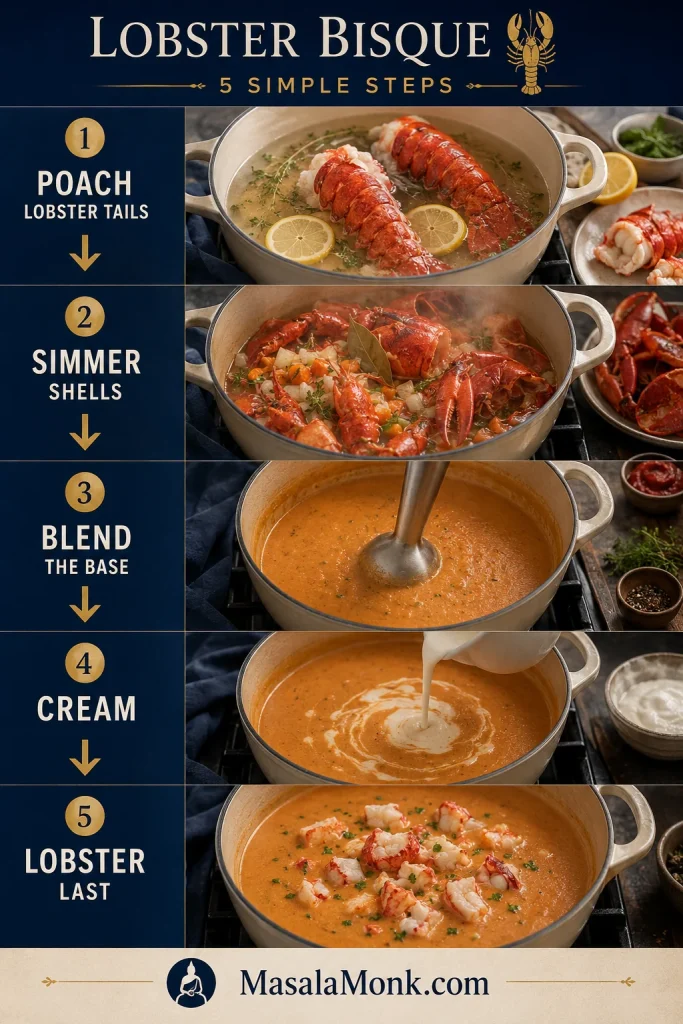
This visual keeps the lobster bisque order simple: cook the tails briefly, use the shells for flavor, smooth the base, and protect the cream and lobster at the finish.
Lobster Bisque at a Glance
| Main lobster choice | Lobster tails |
| Servings | 4 generous bowls or 6 appetizer servings |
| Finished amount | About 5½ to 6 cups / 1.3 to 1.4 liters |
| Total time | About 1 hour 20 minutes to 1 hour 30 minutes |
| Texture goal | Smooth, creamy, silky, lightly spoon-coating |
| Recommended path | Poach tails, simmer shells into the same stock, then finish with cream and lobster |
| Fullest stock option | Seafood stock simmered with lobster shells |
| Shortcut stock option | Clean-tasting seafood or lobster stock |
| Main thickener | Flour roux, with gluten-free options below |
| Classic alcohol option | Dry sherry, dry white wine, or a little brandy |
| No-alcohol option | Extra seafood stock plus lemon juice or sherry vinegar |
| Make-ahead tip | Make the base ahead; add cream and lobster before serving |
| Freezer tip | Freeze the base before adding cream and lobster |
As a serving guide, a generous bowl is about 1⅓ to 1½ cups. An appetizer serving is closer to 1 cup.
Lobster Bisque Recipe Card
Creamy Lobster Bisque With Lobster Tails
This creamy lobster bisque is made with lobster tails, seafood stock, aromatics, tomato paste, dry sherry or white wine, and cream. The recommended path is simple: poach the lobster tails in stock, simmer the shells into that same stock for deeper flavor, build the bisque base, blend, strain, add cream, adjust the base, and warm the lobster only right before serving.
| Prep Time | 20 minutes |
| Cook Time | 1 hour to 1 hour 10 minutes |
| Total Time | 1 hour 20 minutes to 1 hour 30 minutes |
| Servings | 4 generous bowls or 6 appetizer servings |
| Yield | About 5½ to 6 cups / 1.3 to 1.4 liters |
Main path: this card uses the shell-enhanced method because it gives the richest flavor without requiring whole live lobsters. For shortcuts, cooked lobster, no-alcohol swaps, and gluten-free thickening, see the quick notes after the card.
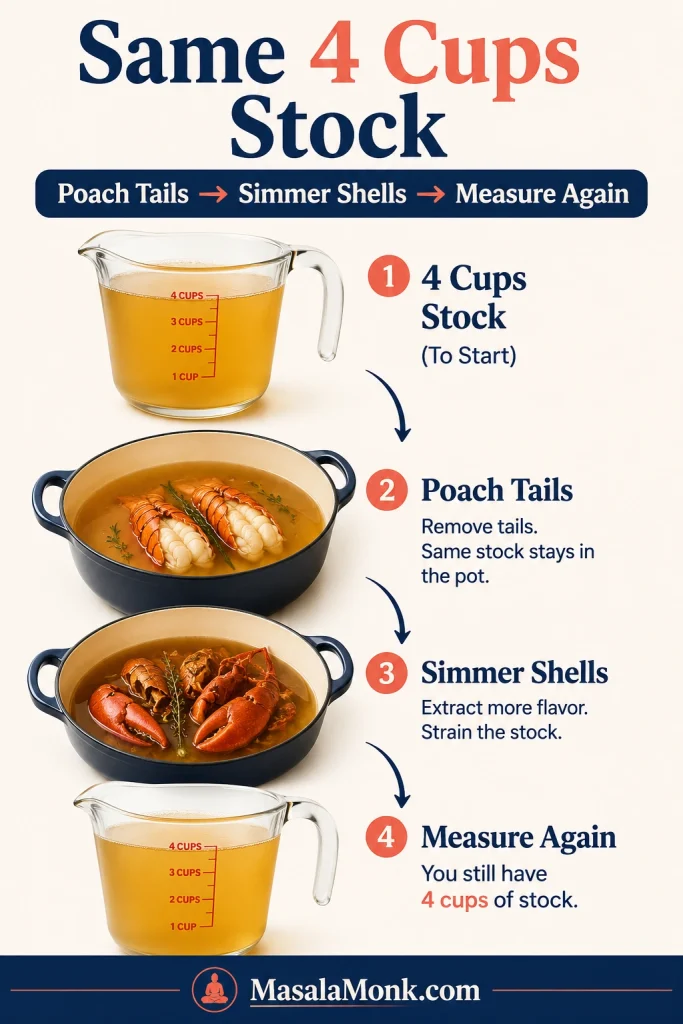
Read this before starting: the same 4 cups of stock are used first to poach the lobster, then simmered with the shells, then measured again for the bisque. You are not starting with 8 cups of stock.
Ingredients
For the lobster and shell-enhanced stock
- 4 lobster tails, 4 to 5 oz each / 115 to 140 g each
- 4 cups clean-tasting seafood stock or lobster stock / 960 ml, preferably low-sodium
- 1 tablespoon olive oil or butter
- ½ small onion, roughly chopped
- 1 celery rib, roughly chopped
- 1 small carrot, roughly chopped
- 2 garlic cloves, smashed
- 1 tablespoon tomato paste
- ½ cup dry white wine / 120 ml, optional for the shell stock
- Up to 1 cup water or extra seafood stock / 240 ml, only if needed to top up after simmering
- 1 bay leaf
- 2 sprigs thyme, or ½ teaspoon dried thyme
For the bisque base
- 4 tablespoons unsalted butter / 56 g
- 1 medium onion, finely chopped / about 150 g
- 2 celery ribs, finely chopped / about 100 g
- 1 medium carrot, finely chopped / about 75 g
- 3 garlic cloves, minced
- 2 tablespoons tomato paste / about 32 g, or 3 tablespoons for deeper color
- 3 tablespoons all-purpose flour / about 24 g
- ½ cup dry white wine / 120 ml
- ¼ cup dry sherry / 60 ml
- 4 cups prepared lobster-shell stock from above / 960 ml
- ½ teaspoon sweet paprika
- Pinch of cayenne pepper, optional
- ½ teaspoon dried thyme, or 1 teaspoon fresh thyme leaves
- ¾ to 1 cup heavy cream / 180 to 240 ml
- 1 teaspoon lemon juice or sherry vinegar, plus more to taste
- Salt and black pepper, to taste
- 1 tablespoon chopped chives, parsley, or tarragon, for finishing
Stock note: after simmering and straining, measure the liquid again. You need 4 cups / 960 ml for the bisque. If you are short, top it up with water or more seafood stock.
Instructions
Lobster and shell stock
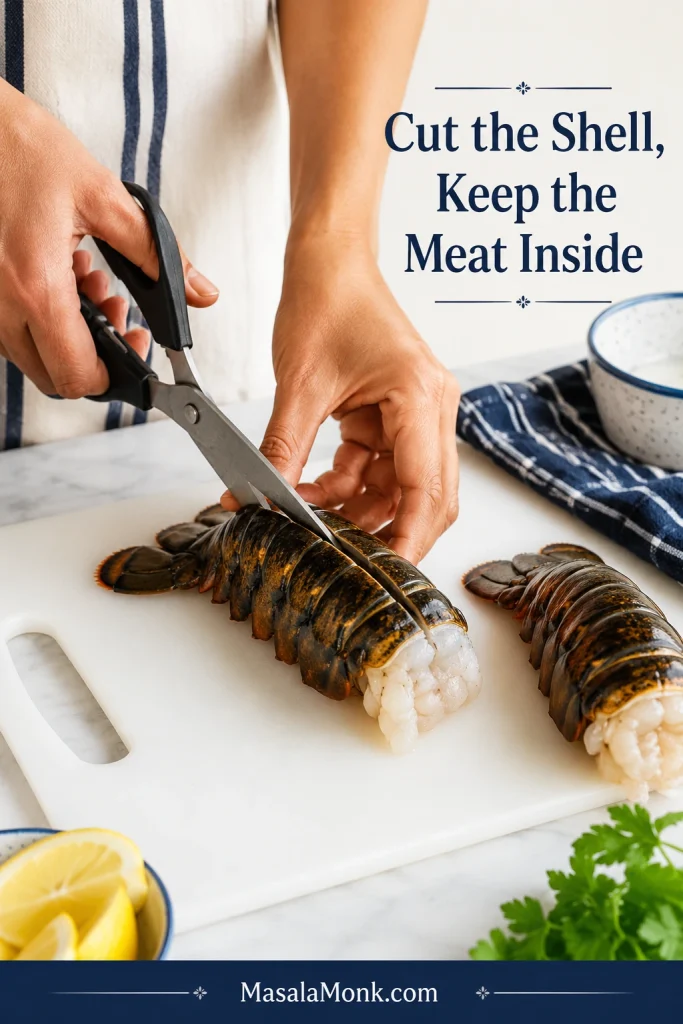
- Prepare the lobster tails. Use kitchen shears to cut along the top of each shell. Leave the meat inside for the brief poach; you will remove it after cooking.
- Poach the lobster in the stock. Bring the 4 cups seafood or lobster stock to a low simmer. Add the lobster tails and cook for 3 to 5 minutes, depending on size, just until the meat turns opaque. Remove the tails from the stock. When cool enough to handle, pull out the meat, chop it into bite-size pieces, and set it aside. Save the shells and keep the stock.
- Build the shell stock. In a pot, heat 1 tablespoon olive oil or butter. Add the lobster shells, rough-chopped onion, celery, carrot, garlic, and tomato paste. Cook for 5 to 7 minutes, stirring often, until the shells smell fragrant and the tomato paste darkens slightly. Add wine if using, then pour in the lobster-poaching stock. Then add bay leaf and thyme. Simmer for 25 to 35 minutes.
- Strain and measure the stock. Pass the shell stock through a fine mesh strainer. Measure the liquid. You need 4 cups / 960 ml for the bisque. If you have less, top it up with water or seafood stock. Extra stock can be saved for thinning the soup or reheating leftovers.
Build and smooth the bisque base
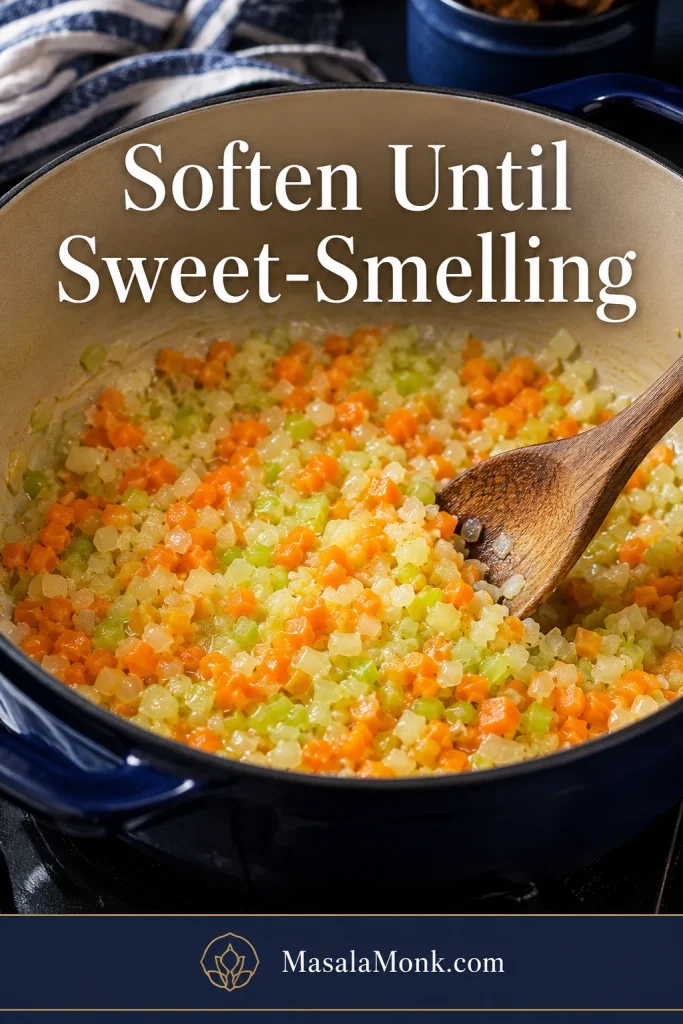
- Start the bisque base. In a heavy Dutch oven or soup pot, melt the butter over medium heat. Add finely chopped onion, celery, and carrot. Cook for 6 to 8 minutes, until softened and sweet-smelling but not browned.
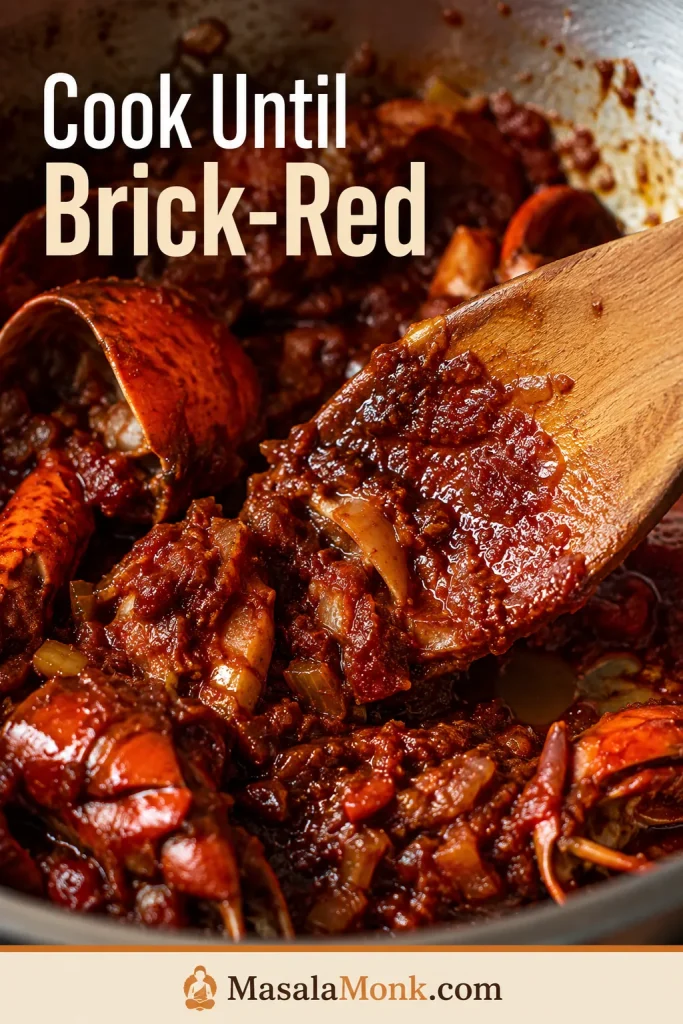
- Build the garlic and tomato paste base. Stir in the garlic and cook for 30 seconds. Add tomato paste and cook for 2 to 3 minutes, stirring often, until it deepens from bright red to brick-red and smells savory.
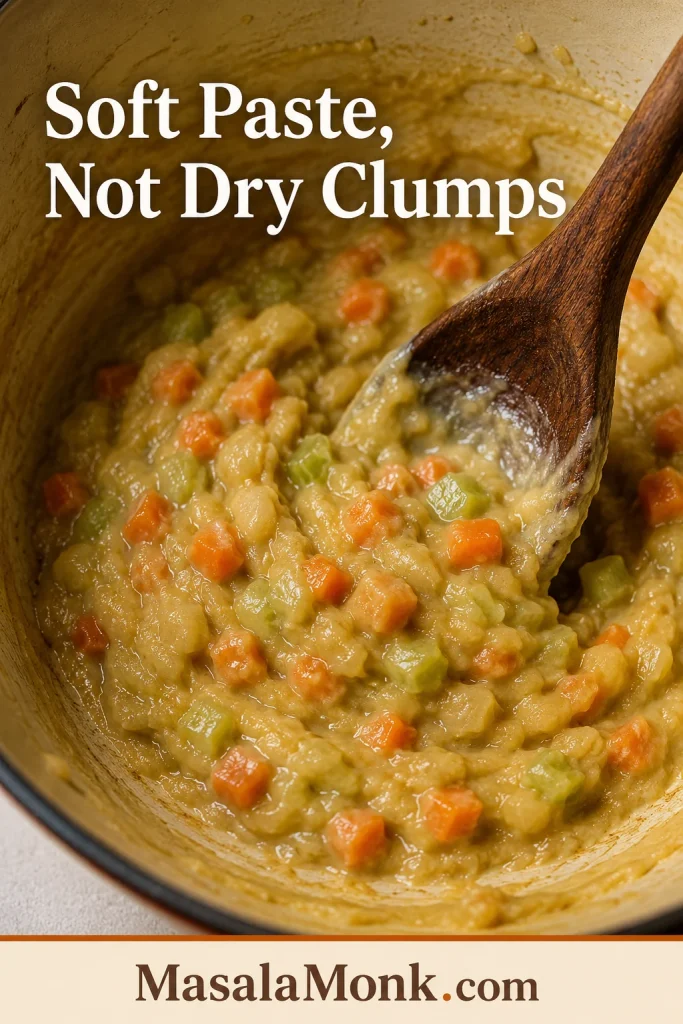
- Make the roux. Sprinkle in the flour and stir for 1 to 2 minutes. The mixture should look thick and pasty, like the vegetables are coated in a soft roux. If it looks dry, lower the heat and keep stirring.
- Deglaze. Slowly pour in the white wine and sherry, scraping the bottom of the pot. Let it bubble for 2 to 3 minutes so the sharp alcohol smell softens.
- Pour in stock and simmer. Add 4 cups prepared stock, paprika, cayenne if using, thyme, and a small pinch of salt and pepper. Bring to a steady simmer and cook for 18 to 22 minutes, until the vegetables are very tender and the broth tastes full. Salt gradually because seafood stock, clam juice, and lobster base can be salty.
- Blend. Carefully blend the soup until smooth using an immersion blender or countertop blender. If using a countertop blender, work in batches and vent the lid slightly so steam can escape.
- Strain for a silkier texture. For the most polished finish, pass the blended soup through a fine mesh strainer into a clean pot. Press with a ladle for liquid, then leave the gritty bits behind.
Finish with cream and lobster
- Add cream over low heat. Set the pot over low heat. Stir in ¾ cup cream. Add more cream if you want a richer bowl. The soup should look smooth and shiny, with steam rising but no hard bubbling.
- Finish the bisque base. Taste and adjust salt, pepper, lemon juice, or sherry vinegar. The finished base should lightly coat a spoon, smell sweet and buttery, and taste balanced. If it tastes heavy, add lemon juice or sherry vinegar. A thin base needs a little more simmering before the lobster goes in. Flat flavor usually means salt should be checked first.
- Add the lobster and serve. Stir in the chopped lobster meat and warm it for 1 to 2 minutes. For the safest texture, divide the lobster among bowls and ladle the hot bisque over it. Garnish with chives, parsley, or tarragon and serve hot, not boiling.
Shortcuts, Swaps, and Special Cases
Use these notes when real life does not match the main path exactly: no shells, cooked lobster, no wine, gluten-free needs, or making the base ahead. The recipe is forgiving as long as you protect the stock, cream, and lobster texture.
- Easy version: poach the lobster in seafood stock, skip the shell-simmering step, and use that stock directly in the bisque.
- Flavor upgrade: poach the lobster in stock, then simmer the shells in that same stock before making the soup.
- Cooked lobster meat: skip poaching, use 4 cups seafood stock, and add the cooked lobster only right before serving.
- Without lobster shells: use lobster stock if possible, or strengthen seafood stock with ¼ to ½ cup clam juice or a small spoonful of lobster base. Add salty bases carefully and taste before adding more salt.
- No alcohol: replace the ½ cup wine and ¼ cup sherry in the bisque base with ¾ cup extra seafood stock. If you are also skipping the optional wine in the shell stock, use another ½ cup stock there too. Finish with lemon juice or sherry vinegar for brightness.
- Gluten-free: skip the flour. After blending, whisk 1½ tablespoons cornstarch with 2 tablespoons cold water, stir it into the warm soup, and simmer for 1 to 2 minutes. You can also simmer 2 tablespoons uncooked white rice in the stock until tender, then blend it into the base.
- Dairy-free: use cashew cream for the most neutral finish. Add it near the end over low heat, just as you would heavy cream.
- Freezing: freeze the base before adding cream and lobster for the smoothest texture.
Why This Lobster Bisque Works
The whole recipe is built around one idea: poach the lobster carefully, use the shells to deepen the stock if you can, blend the base smooth, add cream over low heat, and warm the lobster only right before serving. That path gives you a rich, polished bowl without buying whole live lobsters or guessing through the most expensive part of the process.

The tails give you tender meat for the finished bowl, while the shells turn ordinary seafood stock into something sweeter and more seafood-rich. The aromatics soften in butter until sweet. Tomato paste cooks until it turns brick-red, which gives the soup color and savory depth. Wine and sherry brighten the base so the cream does not make everything taste heavy.
The shell step is the one shortcut I would not skip when I have the shells in front of me. It adds more flavor than extra cream ever will.
The final texture comes from three small choices: simmering the vegetables until tender, blending the base thoroughly, and straining if you want a smoother finish. Cream goes in after blending, and the lobster goes in right before serving. That is the quiet trick: the lobster is the prize, so do not make it do extra work in the pot.
What Is Lobster Bisque?
Lobster bisque is the smooth, creamy side of seafood soup: less chunky than chowder, more polished than stew, and built around shellfish stock, aromatics, tomato paste, wine or sherry, and cream. When it is done well, it tastes rich but not heavy, sweet with lobster but not fishy, and smooth enough to feel special.
Thickness is not the real goal. Balance is: a full seafood base, a little sweetness from the aromatics and tomato paste, enough acidity to wake everything up, and cream that makes the soup plush without muting the lobster.
Equipment You Need
You do not need a restaurant kitchen here. A heavy pot builds flavor, a blender smooths the base, and a fine mesh strainer gives the soup its polished finish.
- Heavy Dutch oven or soup pot: for sautéing, simmering, and finishing the soup.
- Kitchen shears: for cutting open lobster shells cleanly.
- Cutting board and sharp knife: for chopping aromatics and lobster meat.
- Blender or immersion blender: for smoothing the base.
- Fine mesh strainer: for a silkier, more polished texture.
- Whisk: for working flour into the base without clumps.
- Ladle and measuring cup: for straining, measuring, and adjusting stock.
The fine mesh strainer is not mandatory, but it is the difference between a rustic homemade soup and a smooth bisque. Use it if you have one. If you use a countertop blender, blend hot soup in batches and vent the lid slightly so steam can escape.
Ingredients for Lobster Bisque
Once the method makes sense, the ingredient list feels much less fancy. Each item is there to build sweetness, body, brightness, or shellfish depth.

Lobster Tails
For homemade bisque, lobster tails are the most practical choice. They are easier to find than whole live lobsters, simpler to cook, and still give you shells for stock. Four tails, about 4 to 5 oz each, give enough lobster for 4 generous bowls or 6 appetizer portions.
Frozen lobster tails work well. Thaw them overnight in the refrigerator, or place them in a sealed bag in cold water if you need a faster thaw. Pat them dry before cooking so they do not water down the base.
If you bought extra lobster meat and want a colder, buttery seafood-shack style meal later, save some for these lobster rolls with extra lobster meat.
Lobster Shells or Seafood Stock
The shells are where much of the deep lobster flavor lives. You can make a solid soup with store-bought seafood stock, but simmering the tail shells in that stock makes the base taste fuller and more special.
Taste the stock before using it. If it tastes harsh, stale, metallic, or aggressively salty, it will show up in the finished soup. Lobster bisque does not hide bad stock well.
Without shells, use the cleanest seafood or lobster stock you can find. Clam juice can help in a pinch, but it can be salty, so use it carefully. Chicken stock is an emergency backup, not the ideal choice, because it does not give the same seafood depth.
Onion, Celery, Carrot, and Garlic
These aromatics create the savory foundation. Chop them finely for the bisque itself so they soften quickly and blend smoothly. For the shell stock, rough chopping is fine because everything gets strained.
Tomato Paste
This paste is not there to make the bisque taste like tomato soup. Once it cooks to a brick-red color, it gives the soup warmth, sweetness, color, and a savory base note.
Flour or Thickener
You only need a small amount of flour. It gives the soup body without turning it into gravy. For a gluten-free version, cornstarch slurry is the quickest fix, while rice gives a softer, old-school texture once blended.
Sherry, Wine, or Brandy
Dry sherry is classic here. A dry white wine is easier to find and works beautifully. Brandy or cognac can add a deeper special-occasion note. Use dry alcohol, not sweet dessert-style wine.
Heavy Cream
Cream should make the bisque feel plush, not dull. Add it after blending so the lobster and stock still stay in front.
Herbs and Seasoning
Thyme, tarragon, chives, parsley, paprika, and a tiny pinch of cayenne all work well with lobster. Keep the seasoning warm and supportive. The lobster should still be the main flavor.
Best Lobster to Use
You have more options than you might think. The right choice depends on how much work you want to do, how much shellfish depth you want in the stock, and whether you are starting with raw or cooked meat.
| Lobster option | Works? | Use it for |
|---|---|---|
| Raw lobster tails | Yes | Most practical default for homemade bisque |
| Frozen lobster tails | Yes | Thaw first, then cook briefly |
| Cooked lobster meat | Yes | Add near serving so it does not overcook |
| Whole lobster | Yes | Deepest flavor, but more work |
| Lobster shells only | Yes | Use for stock; add separate cooked lobster if serving |
| Langostino | Yes | Budget-friendly variation or pasta add-in |
| Shrimp or crab | Yes | Useful variation, but not classic lobster bisque |
If you are buying lobster tails specifically for this recipe, look for tails that smell clean and mild, not fishy. Avoid tails with gray patches, strong odor, or freezer burn. For more buying context before shopping, NOAA’s American lobster guide is a helpful reference on flavor, texture, and seafood basics. Read NOAA’s American lobster seafood guide.
Choose Your Lobster Bisque Method
Use this table when you are deciding how much time, lobster flavor, and shortcut help you want. The middle path is the sweet spot for most kitchens: easy enough to manage, but deep enough to taste special.
| Method | What you do | Flavor level | Use it for |
|---|---|---|---|
| Easy | Poach lobster tails in seafood stock and use that stock directly | Clean and simple | Weekends, first-time bisque, simpler cooking |
| Better | Poach the tails, then simmer the shells in that same stock | Fuller and sweeter | Most home cooks who want deeper flavor |
| Best | Make a fuller lobster stock from shells, bodies, aromatics, and wine | Deepest and most layered | Special occasions, dinner parties, holiday starters |
| Shortcut | Use lobster base or clam juice with seafood stock | Strong but salt-sensitive | When you need flavor fast |
Most balanced path: poach the lobster tails in seafood stock, then simmer the shells in that same stock for 25 to 35 minutes. It is not much harder than the easy version, but the broth tastes much fuller.

How to Make Quick Lobster Stock From Shells
If you have lobster shells, do not throw them away. A quick shell stock turns a simple base into a much better one. This is the step where the soup starts to smell expensive.

After poaching the lobster tails in seafood stock, save that stock. Heat a tablespoon of butter or olive oil in a pot. Add the shells and cook them for a few minutes until they smell fragrant. Then add onion, celery, carrot, garlic, and a spoonful of tomato paste. Once the paste darkens slightly, deglaze with dry white wine if using. Add the lobster-poaching stock, a bay leaf, and thyme. Simmer for 25 to 35 minutes, then strain well.

Next, measure the liquid. Use 4 cups / 960 ml for the bisque. Short on stock? Top it up with water or seafood stock. Extra stock is a bonus — save it for thinning the soup, reheating leftovers, or making a small seafood sauce.

The simmer should be steady but not rough. A lazy bubble is enough. Press on the shells and vegetables while straining to extract the liquid, then leave the gritty bits behind.
If your stock smells sweet, buttery, and seafood-rich here, you have already done the most important flavor work. That is when the recipe starts to feel less like a gamble and more like a plan.
Success Checkpoints for Lobster Bisque
Use these checkpoints as you cook. They turn the recipe from a list of steps into something you can read with your eyes, nose, and spoon.
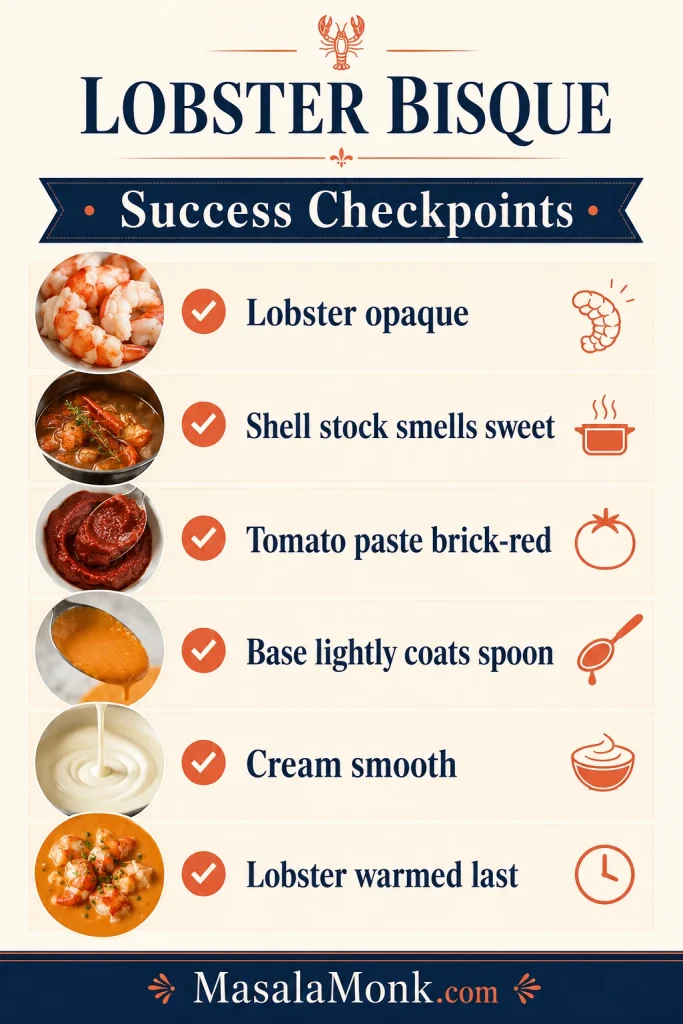
| Stage | Correct sign | Problem sign |
|---|---|---|
| Lobster poach | Meat turns opaque but still looks tender | Tight curl, rubbery texture, or long simmering |
| Shell stock | Sweet, buttery, seafood-rich aroma | Harsh, stale, or aggressively salty smell |
| Tomato paste | Brick-red and savory-smelling | Bright red and raw-smelling |
| Simmered base | Vegetables are very soft | Carrot or celery still feels firm |
| Blended soup | Smooth and lightly spoon-coating | Pasty, gritty, watery, or fibrous |
| Cream stage | Smooth, shiny, and not boiling hard | Grainy, split, or aggressively bubbling |
| Final lobster | Warmed through for 1 to 2 minutes | Left to simmer in the finished soup |
If the soup lightly coats a spoon before the lobster goes in, the texture is already close. The lobster only needs to warm through at the finish; that restraint is what keeps it tender.
Once those signs are there, the hard part is behind you. From here, the bisque is less about effort and more about finishing it with restraint.
Before you start the detailed method, use the cook-time table below with the success checkpoints. The lobster should turn opaque and tender before it ever reaches the final bisque.
How Long to Cook Lobster Tails for Bisque
Lobster tails for bisque should be cooked briefly. The meat should turn opaque and firm up slightly, but it should not become tight or chewy.
| Lobster tail size | Approximate cook time | What to look for |
|---|---|---|
| 4 oz / 115 g | 3 to 4 minutes | Opaque meat, still tender |
| 5 oz / 140 g | 4 to 5 minutes | Opaque and just firm |
| 6 oz / 170 g | 5 to 6 minutes | Cooked through but not tight |
| Cooked lobster meat | Warm only 1 to 2 minutes | Do not simmer for long |
When in doubt, slightly undercook the lobster during the first step. It will warm again in the finished soup. Overcooked lobster is the main reason homemade bisque feels disappointing.

For food safety, the FDA says shrimp, lobster, and crab should be cooked until the flesh is pearly and opaque. In this recipe, that means cooking the tails briefly, then warming the chopped meat near serving instead of letting it simmer in the pot. See the FDA safe food handling guidance.
Now that the timing and doneness cues are clear, follow the step-by-step method and keep the lobster out of long simmering.
Step-by-Step Instructions
1. Prep the Lobster Tails
Cut along the top of each shell with kitchen shears. Leave the meat inside for the brief poach. The cut helps heat reach the meat and makes the meat easier to remove after cooking.
2. Poach the Lobster Briefly
Bring the seafood stock to a low simmer, then add the tails. For most 4 to 5 oz tails, 3 to 5 minutes is enough. The meat should turn opaque, but it should not tighten into a rubbery curl. Remove the tails right away, cool them slightly, then pull out and chop the meat.
This is the moment to be conservative. The lobster does not need to be fully pampered yet; it only needs to be protected.

3. Separate Meat, Shells, and Stock
Save both the shells and the poaching stock. The stock already has a little lobster flavor now, and the shells can make it taste even more layered.

4. Make the Shell-Enhanced Stock
Cook the shells with rough-chopped aromatics and tomato paste until the pot smells sweet, buttery, and seafood-rich. Add wine if using, then pour in the lobster-poaching stock. Simmer, strain, measure, and use 4 cups for the bisque.
5. Sauté the Aromatics
Melt butter in a heavy pot and add onion, celery, and carrot. Cook until the vegetables soften and smell sweet, about 6 to 8 minutes. Soft vegetables blend more smoothly and create a better base.
6. Build Brick-Red Tomato Paste Flavor
Add garlic and tomato paste. Stir until the paste darkens from bright red to a deeper brick-red color. That little bit of cooking improves the color and removes raw tomato sharpness.
7. Add Flour
Sprinkle flour over the vegetables and stir until everything looks thick and coated. It should look like a soft paste, not a dry clump. This gives the soup body without making it heavy.
8. Deglaze With Wine and Sherry
Pour in the wine and sherry slowly, scraping up the bottom of the pot. Let it bubble briefly so the sharp alcohol smell softens. This is where the base starts to smell like classic bisque instead of simple vegetable soup.
9. Build the Simmering Base
Pour in the prepared stock, then season with paprika, thyme, cayenne if using, and a little salt and pepper. Simmer until the vegetables are very soft and the broth tastes full. Add salt gradually; stock and seafood bases can sneak up on you.

10. Smooth the Bisque Base
Use an immersion blender or countertop blender to smooth the base. An immersion blender is convenient, but a countertop blender usually gives the smoothest result. Work in batches if needed and be careful with steam.

11. Strain for a Polished Finish
For the silkiest finish, strain the blended soup through a fine mesh strainer. If you want the bowl to feel like restaurant bisque, this is the extra minute that pays you back.

12. Add Cream Over Low Heat
Return the strained soup to the pot and lower the heat. Stir in the cream slowly. The soup should look smooth and shiny, not bubbling like it is still cooking hard.

13. Finish the Bisque Base
Taste the base before the lobster goes in. It should lightly coat a spoon, smell sweet and buttery, and taste balanced. If it tastes heavy, add lemon juice or sherry vinegar. A thin base needs a little more simmering. Flat flavor usually means salt should be checked first.

14. Warm Lobster Right Before Serving
Stir in the chopped lobster meat during the final minute or two, just long enough to warm it. You can also place it directly in bowls and ladle the hot bisque over it. The soup should arrive at the table hot, smooth, and composed — not bubbling like it is still cooking.

The three texture rules: save the lobster-poaching stock, keep the cream below a hard boil, and keep the lobster out of the long simmer so it stays tender.
If the bisque tastes flat, looks thin, feels too thick, or the cream seems grainy, go to troubleshooting lobster bisque before adding more cream.
How to Make Lobster Bisque Smooth and Silky
A well-made bisque should feel creamy and smooth, not grainy or chunky. The easiest way to get that texture is to cook the vegetables until fully tender, blend thoroughly, and strain the soup after blending.
- Cook the vegetables long enough. Hard carrot or celery pieces will not blend smoothly.
- Use enough liquid. A very thick base can turn pasty in the blender.
- Blend in batches if needed. Do not overfill a countertop blender with hot soup.
- Strain for a smoother finish. This is optional, but it makes the bowl feel more polished.
- Add cream after blending. Cream finishes the texture instead of getting cooked hard from the beginning.
If the soup looks a little plain before the cream, do not worry; the final richness comes later. When it is thicker than you like after blending, loosen it with warm stock before adding more cream. More cream makes it richer, but stock keeps the lobster flavor cleaner.
How to Thicken Lobster Bisque
The soup should have body, but it should not feel like gravy. The goal is a light spoon-coating texture, not a heavy sauce.
| Thickener | Use it for | How it affects texture |
|---|---|---|
| Flour roux | Classic creamy bisque | Smooth, reliable, familiar |
| Cornstarch slurry | Gluten-free quick fix | Glossy and fast-thickening |
| Cooked rice | Old-school silky texture | Velvety once blended |
| Reduction | Stronger flavor | Deepens taste but takes longer |
| Blended vegetables | Lighter body | Natural thickness, less rich |
If the bisque is too thin, simmer it uncovered for a few minutes, or whisk 1 teaspoon cornstarch with 1 tablespoon cold water and stir it into the warm soup. For a fully gluten-free version from the start, skip the flour and use 1½ tablespoons cornstarch mixed with 2 tablespoons cold water after blending. Simmer for 1 to 2 minutes so it thickens.
If it is too thick, loosen it with warm seafood stock. Adding dry flour directly to finished soup can clump and leave a raw flour taste, so use a slurry or reduction instead.
Sherry, Wine, Brandy, and No-Alcohol Options
Lobster bisque often uses alcohol because it adds aroma and balances the richness of cream and shellfish. You have several reliable options.
| Option | Flavor | Use it for |
|---|---|---|
| Dry sherry | Classic, nutty, mellow | Traditional lobster bisque flavor |
| Dry white wine | Bright and clean | Everyday version |
| Brandy or cognac | Deep and special-occasion | A more luxurious bowl |
| No alcohol | Milder, still balanced | Use extra stock plus lemon or sherry vinegar |
For the most balanced version, use white wine and a little dry sherry. To make it without alcohol, replace the ½ cup wine and ¼ cup sherry in the bisque base with ¾ cup extra seafood stock. If you are also skipping the optional wine in the shell stock, use another ½ cup stock there too. Finish with lemon juice or sherry vinegar so the soup still tastes bright.
No-alcohol does not mean flat. The stock gives body, while lemon juice or sherry vinegar gives the lift that wine would normally bring.
The same no-wine idea works beautifully in seafood pasta too. This shrimp scampi without wine uses garlic, lemon, butter, and stock when you want a brighter seafood dinner without opening wine.
Skip sweet sherry unless you intentionally want a sweeter soup. Dry sherry is the safer choice for classic flavor.
Troubleshooting Lobster Bisque
If the soup is not where you want it yet, do not assume it is ruined. Bisque usually needs one clear adjustment: salt, acid, stock, cream, or lower heat.
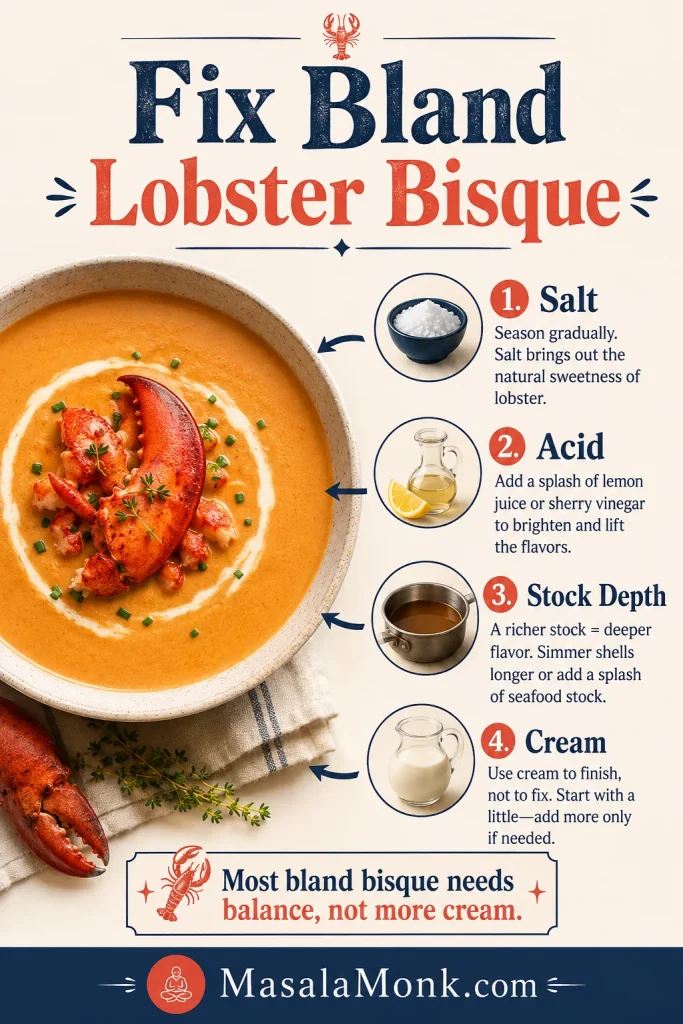
Before you fix the soup, taste it in this order: salt first, then acid, then stock depth, then cream. Most bland bisque is not missing more cream; it is missing balance.
Bland Lobster Bisque
If the bisque tastes bland, do not panic. Check salt first, then add a little lemon juice or sherry vinegar. If it still tastes thin or hollow, the stock may need more shell flavor, reduction, or a small amount of lobster base. Add more cream only after the soup already tastes balanced.
Fishy-Tasting Bisque
A fishy taste usually comes from old seafood, poor-quality stock, or over-reduced briny liquid. Use fresh-smelling lobster, simmer the shells steadily but not aggressively, and balance the finished soup with lemon, herbs, cream, and enough aromatics.
Rubbery Lobster
Chewy lobster almost always means the meat spent too much time in heat. The soup can still taste good, but next time, treat lobster like the finishing touch, not an ingredient that needs to cook in the pot. If you already have cooked lobster, put it in the bowls and ladle hot bisque over it.
Bisque That Is Too Thin
Simmer it uncovered for a few minutes to reduce, or add a small cornstarch slurry. You can also blend in more of the cooked vegetables if you have not strained the soup yet.
Bisque That Is Too Thick
Add warm seafood stock a little at a time until the texture feels right. Use more cream only if you also want it richer.
Split or Grainy Cream
The heat was probably too high after the cream was added. Keep the soup low enough that it steams rather than bubbles hard. If it looks slightly separated, blending can help, but prevention is better.
How to Make Lobster Bisque Pasta or Use Bisque as Pasta Sauce
Lobster bisque pasta is a smart way to use leftover homemade bisque or upgrade a container of store-bought bisque. Think of the soup as a creamy seafood sauce first: reduce it slightly, loosen it with pasta water, and add seafood only near the finish.
Quick lobster bisque pasta formula for 2 servings: use 1½ to 2 cups lobster bisque, 6 to 8 oz pasta / 170 to 225 g, ¼ cup reserved pasta water / 60 ml, and 4 to 6 oz cooked lobster, shrimp, crab, scallops, or langostino.

To make it, simmer the bisque for 3 to 5 minutes so it thickens slightly. Add cooked pasta and toss with a splash of pasta water until the sauce coats the noodles. Then fold in lobster, shrimp, crab, scallops, or langostino near the end, and finish with lemon juice, black pepper, and herbs.
Pasta shapes that work well include linguine, fettuccine, rigatoni, fusilli, farfalle, and lobster ravioli. Use Parmesan lightly if you like, but do not overdo it. The sauce is already rich, and too much cheese can hide the seafood flavor.
For another creamy seafood pasta that uses pasta water to keep the sauce silky instead of heavy, this creamy salmon pasta with lemon and garlic follows the same gentle-sauce logic with tender fish.
- Thick sauce: add pasta water.
- Thin sauce: reduce it before adding pasta.
- Overly rich: add lemon juice or a little chili.
- Flat flavor: add herbs, black pepper, or a splash of sherry vinegar.
How to Upgrade Store-Bought Lobster Bisque
Homemade gives you the cleanest lobster flavor, but store-bought bisque can still be useful as a shortcut for soup, lobster bisque pasta, seafood sauce, or a quick starter. Most store-bought lobster bisque needs one of two things: more body or more brightness.
| Store-bought problem | Quick rescue |
|---|---|
| Watery | Simmer to reduce before serving or tossing with pasta |
| Bland | Add lemon juice, sherry vinegar, herbs, or a small splash of dry sherry |
| Lacks lobster | Add cooked lobster, shrimp, crab, scallops, or langostino |
| Too salty | Loosen with unsalted stock or cream, not more seafood base |
| Heavy and flat | Add lemon, herbs, black pepper, or a small splash of acid |
If it tastes salty and heavy at the same time, do not add more seafood base. Loosen it with unsalted stock or a little cream, then add lemon or herbs to make it taste cleaner.

For ravioli, reduce the bisque until it lightly coats a spoon, then use it as a sauce instead of a full bowl of soup. If the store-bought bisque already contains cream, warm it over low heat so the texture stays smooth.
Lobster Bisque Variations
These variations all work best when the core bisque base is balanced first. After that, shrimp, crab, spice, gluten-free thickeners, or dairy-free cream can change the bowl without changing the method.

Shrimp and Lobster Bisque
When you want the bowl to feel fuller without buying extra lobster, shrimp is the easiest helper. Add shrimp shells to the stock for extra seafood flavor, then add peeled shrimp during the final few minutes of cooking.
Crab and Lobster Bisque
For a softer, sweeter bowl, crab works especially well when you want delicate pieces of seafood in each spoonful. Stir lump crab meat into the finished soup after the cream and fold carefully so the crab stays in pieces.
Langostino Lobster Bisque
Use langostino when the bisque is heading toward pasta, ravioli, or a budget-friendly seafood dinner. Add it near serving, just long enough to warm through.
Spicy Lobster Bisque
A little heat can make the bisque feel even cozier, especially when you are serving it with bread, rice, or pasta. Add cayenne, smoked paprika, chili flakes, or a small amount of Cajun seasoning, but keep the spice supportive rather than overpowering.
Gluten-Free Lobster Bisque
Skip the flour and thicken after blending with cornstarch slurry, rice, or gluten-free flour. Cornstarch is the quickest route, while rice gives a softer, more old-school texture and a classic blended body.
Dairy-Free Lobster Bisque
Use cashew cream for the most neutral dairy-free option. Coconut milk can work, but it will change the flavor and make the soup taste sweeter. Add dairy-free cream near the end over low heat, just as you would heavy cream.
Lighter Lobster Bisque
Use less cream, rely more on blended vegetables, and finish with lemon juice for brightness. The soup will be lighter, though less rich than the classic version.
Lobster Bisque vs Lobster Soup vs Lobster Chowder
These names are often used loosely, but they are not exactly the same.
| Dish | Texture | Typical style |
|---|---|---|
| Lobster bisque | Smooth, blended, creamy | Silky soup made with shellfish stock and cream |
| Lobster soup | Varies | Broad term for any lobster-based soup |
| Lobster chowder | Chunky | Often includes potatoes, cream, and larger pieces |
| Lobster stew | Rustic | Usually lobster-forward and less blended |
If you want a classic bisque, keep it smooth and strain it if possible. For a chowder-style lobster soup, add potatoes and skip the final fine straining.
Another creamy seafood soup that stays chunkier and simpler than bisque is this salmon soup recipe: potatoes, dill, lemon, cream, and tender salmon added near the end.
What to Serve With Lobster Bisque
This is the kind of soup that does not need a crowded plate around it. A small bowl, good bread, and something crisp on the side are enough to make it feel like a planned meal, whether you serve it as a starter, a light dinner, or part of a special seafood spread.

Crusty bread is the easiest pairing, but a warm garlic bread loaf from scratch makes the bowl feel more like a full dinner.
- Good crusty bread or garlic bread
- Simple green salad with lemony dressing
- Roasted asparagus or green beans
- Baked potatoes or twice-baked potatoes
- Steak for a surf-and-turf dinner
- Lobster rolls if you have extra lobster meat
- Shrimp scampi for a seafood dinner spread
- Light pasta or lobster ravioli
For another cozy starter with a restaurant-style feel, this French onion soup for a cozy starter gives you the same slow, savory comfort in a non-seafood direction.
Make-Ahead, Storage, Freezing, and Reheating
Plan Ahead
The strongest make-ahead method is to prepare the base through the blending and straining step, then refrigerate it before adding cream and lobster. When ready to serve, warm the base, add cream, and finish with lobster.
For dinner-party timing, make the base up to 1 day ahead. Reheat it over low heat, add cream shortly before serving, and warm the lobster in the bowls or in the soup for only the final minute. That approach keeps the soup smooth and lets you serve it like it was finished fresh, even if most of the work happened yesterday.
Refrigerate
Store leftovers in an airtight container in the refrigerator for up to 2 to 3 days. Reheat over low heat.
Freeze
For the smoothest texture, freeze the base before adding cream and lobster. Cream-based soups can separate after freezing, and lobster meat can become less tender after repeated heating. Freeze the base for up to 2 to 3 months, thaw overnight in the refrigerator, then reheat and add cream and lobster just before serving.
Reheat
Warm the soup over low heat, stirring often. Keep the heat low enough that the soup steams rather than bubbles hard. If it thickens in the refrigerator, loosen it with a splash of seafood stock or cream.
Use Leftovers
Leftover bisque is excellent as a pasta sauce, seafood sauce, or base for lobster ravioli. Reduce it, add pasta water if needed, and finish with lemon or herbs.
Have extra bisque? Turn it into lobster bisque pasta, use it as a seafood sauce, or see how to upgrade store-bought lobster bisque with the same balancing tricks.
That is the quiet bonus of a good bisque base: even a small amount can turn pasta, ravioli, or seafood into another special meal.
FAQ
These are the quick answers for the questions that usually come up once you start adapting the recipe.
Can I make lobster bisque with lobster tails?
Yes. Lobster tails are the most practical choice for homemade lobster bisque because they give you tender meat and shells for stock. You get the ease of tails while still building deeper flavor from the shells.
Are lobster shells required?
No, but lobster shells are the easiest way to make homemade bisque taste fuller and sweeter. If you do not have shells, use the cleanest lobster or seafood stock you can find, then balance the finished soup with lemon juice or sherry vinegar.
What if I already have cooked lobster meat?
Add cooked lobster only right before serving, just long enough to warm it. Since cooked meat gives you no shells for stock, use lobster stock if possible or strengthen seafood stock carefully with clam juice or lobster base.
Which stock works best?
Lobster stock or shell-enhanced seafood stock gives the fullest flavor. Clean seafood stock is the next best option, clam juice can help in small amounts, and chicken stock should be treated as an emergency backup because it lacks seafood depth.
How do I make it without wine or sherry?
Replace the ½ cup wine and ¼ cup sherry in the base with ¾ cup seafood stock. Finish with lemon juice or sherry vinegar so the soup still has brightness and does not taste flat.
What thickens lobster bisque best?
A flour roux is the classic choice. For gluten-free bisque, use cornstarch slurry or blended rice. To make a thinner finished soup, reduce it instead of adding more cream.
Why does my lobster bisque taste bland?
Start with salt, then add acid, then check stock depth. A little lemon juice or sherry vinegar often wakes up the soup, but if the stock itself is weak, shells, reduction, or a small amount of lobster base may be needed.
Why does lobster turn rubbery in bisque?
Lobster turns rubbery when it spends too long in heat. Treat it like the finishing touch, not an ingredient that needs to simmer: cook it briefly, remove it, and warm it only right before serving.
Is lobster bisque gluten-free?
It can be. Skip the flour and thicken after blending with cornstarch slurry, rice, or gluten-free flour. Cornstarch is fastest, while rice gives a softer blended texture and a more classic old-school body.
Can lobster bisque be dairy-free?
Yes, but it will taste less classic. Cashew cream is the most neutral option; coconut milk works, but it can make the soup sweeter. Add dairy-free cream near the end over low heat, just as you would heavy cream.
Does lobster bisque freeze well?
The base freezes better than the finished soup. Freeze before adding cream and lobster, then use within 2 to 3 months. Add cream and lobster only after reheating so the texture stays smoother and the seafood stays tender.
Can lobster bisque be used as pasta sauce?
Yes. Lobster bisque pasta works best when the bisque is reduced slightly, tossed with pasta, loosened with pasta water, and finished with seafood, lemon, and herbs.
What is the difference between lobster bisque and lobster chowder?
Lobster bisque is smooth, blended, and creamy. By contrast, lobster chowder is chunkier and often includes potatoes, cream, and larger pieces of seafood or vegetables.
What should I serve with lobster bisque?
Serve lobster bisque with crusty bread, garlic bread, a lemony salad, roasted vegetables, baked potatoes, or steak for a surf-and-turf meal. The best pairings are simple, crisp, or bread-like because the soup is already rich.
Lobster bisque should feel special, but it does not need to feel stressful. Start with lobster tails, use a stock you would happily taste on its own, save the shells if you can, and keep the lobster meat out of the long simmer. The best lobster bisque is not the one with the most complicated method. It is the one where the stock tastes clean, the cream stays silky, and the lobster is still tender when the spoon reaches the bowl.








