
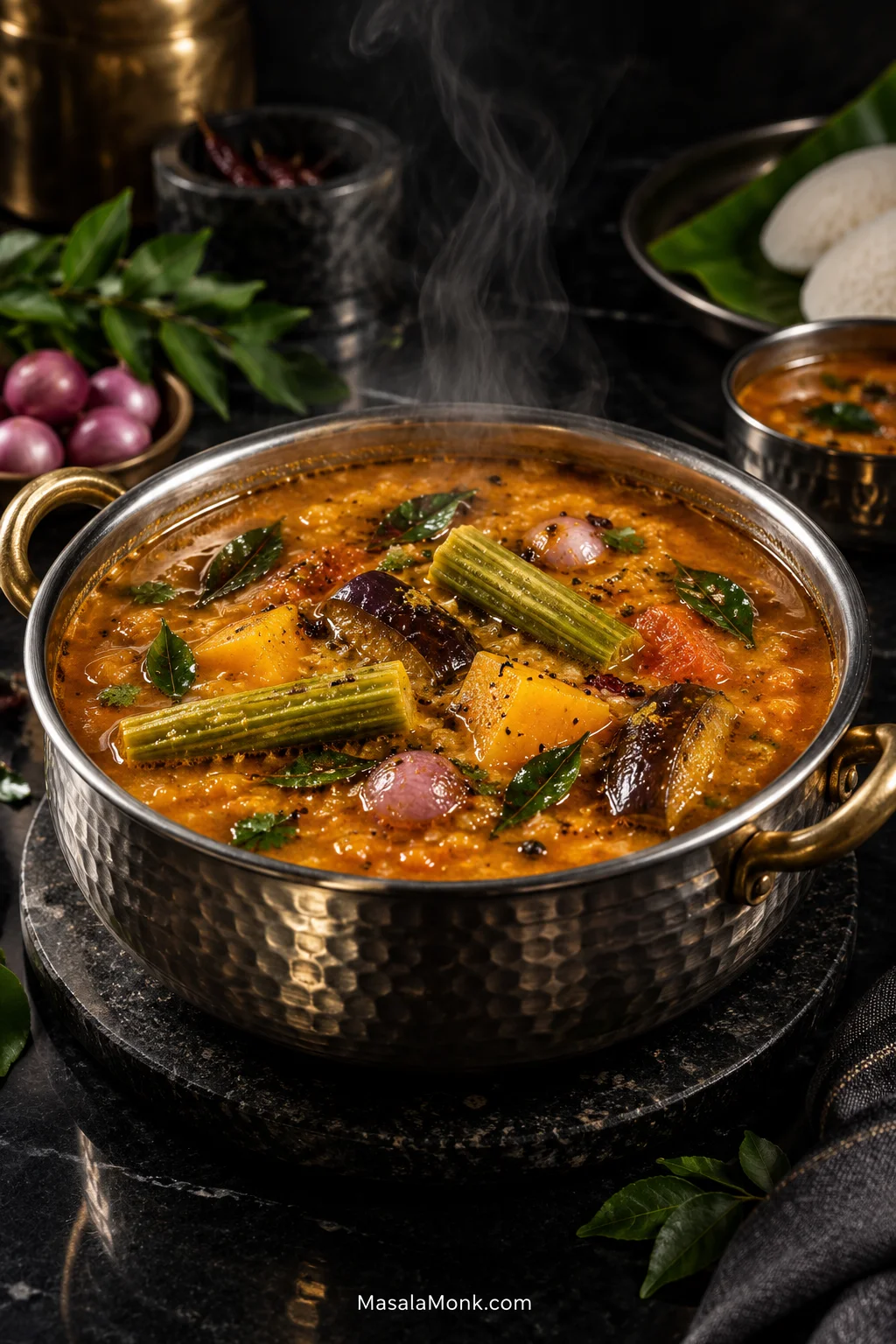
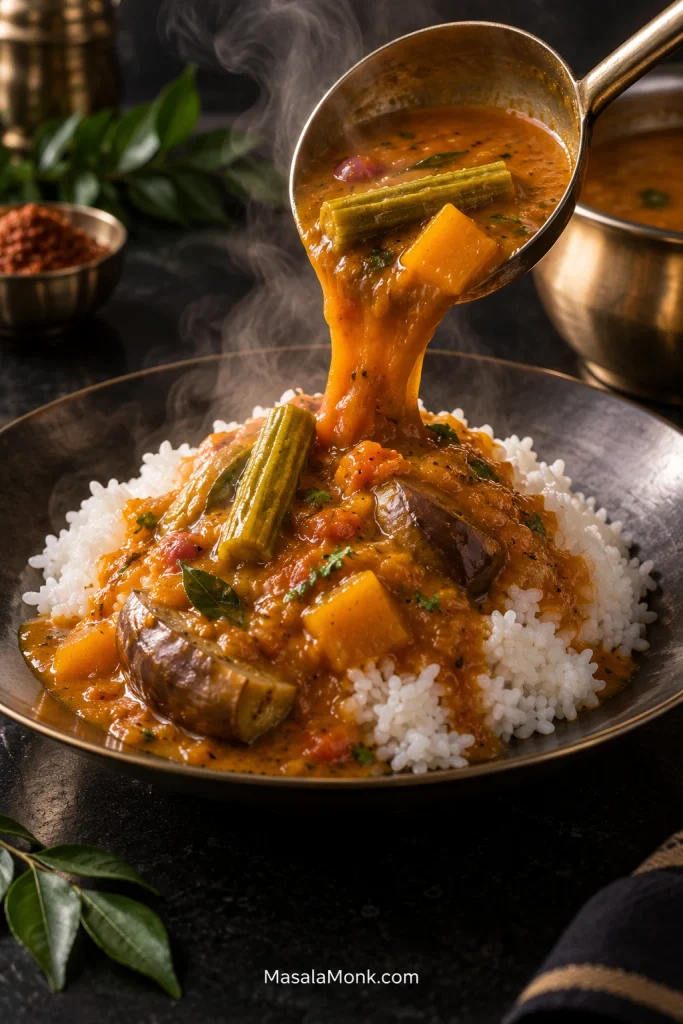
This sambar recipe makes a South Indian lentil-and-vegetable stew with soft toor dal, vegetables, tamarind, sambar powder and a fragrant final tadka (tempering). A good sambar tastes savoury and lentil-rich, then tangy from tamarind, with curry leaves and toasted spices rising above the broth. The chilli heat can be mild or quite assertive depending on the sambar powder.
Keep it a little fuller and it can sit at the centre of a rice meal. Loosen the same sambar for idli or medu vada and the broth sinks into every porous bite. That ability to move with the meal is part of what makes sambar so useful in a home kitchen.
The frustrating version is the one that contains all the “right” ingredients and still tastes mostly like dal. Or it comes out chilli-hot but flat, sharply sour, watery, or full of pumpkin and brinjal that disappeared while the carrots were still catching up. The method below focuses on the few things that actually decide whether the sambar comes together.
Sambar is more vegetable-heavy and tangy than a simple dal, while rasam is usually much thinner and more pepper-forward. There is no single formula that represents every South Indian region or household, so this version is a dependable mixed-vegetable method rather than a claim to represent every style. You may also see the name written as sambhar.
Everyday South Indian Sambar Recipe
| Serves | 4 |
|---|---|
| Difficulty | Easy; vegetable timing is the main trick |
| Hands-on | About 25–30 minutes |
| Total | About 60 minutes; typically 50–65 minutes depending on the dal and vegetables |
| Consistency | Medium-thick for rice; loosen for idli, dosa or vada |
With rice, count on four generous servings. Beside idli, dosa or vada, the same amount naturally feeds more.
Equipment
- Stovetop pressure cooker or Instant Pot
- 3–4-litre (3–4-quart) saucepan or kadai with a lid
- Small tadka pan
- Knife and cutting board
- Ladle or wooden spoon
- Whisk, dal masher or potato masher
- Small strainer for tamarind, optional
Ingredients
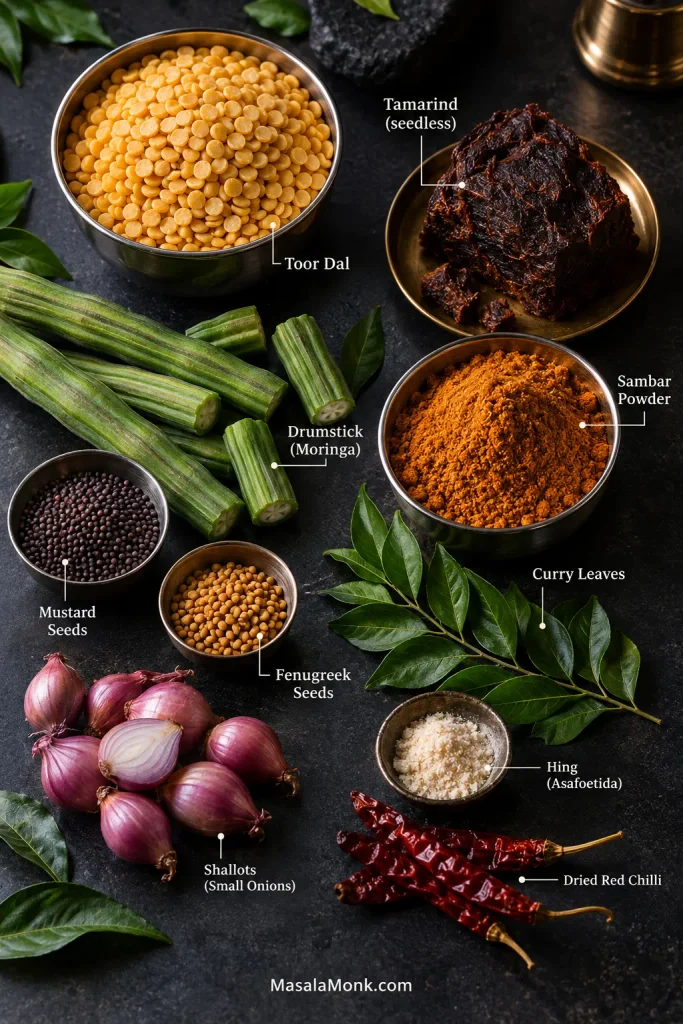
Dal
- 100 g toor dal (tur, tuvar or arhar dal; split pigeon peas), about ½ US cup
- 420 ml water (1¾ cups)
- ¼ teaspoon ground turmeric
Vegetables and Sambar Base
Use about 350 g (12 oz) vegetables in total, including the shallots, plus the tomato.
- 100 g drumstick (moringa pod), roughly 1–2 medium pods, cut into 5 cm (2-inch) pieces; lightly scrape very tough mature fresh pods if needed
- 70 g carrot, about 1 small carrot, cut into small chunks
- 70 g pumpkin, cut into larger chunks
- 50 g brinjal (eggplant/aubergine), cut into chunks
- 60 g small onions or shallots, roughly 6–8 small shallots, peeled
- 100 g tomato, about 1 small to medium tomato, chopped
- 240 ml water (1 cup) to start the vegetables, plus a splash more if needed
- 15 g (½ oz) seedless tamarind block
- 120 ml hot water (½ cup) for soaking the tamarind
- 1–1½ tablespoons sambar powder
- 1 teaspoon jaggery, optional
- 1 teaspoon fine salt to start, divided, plus more to taste
- 120–300 ml hot water (½–1¼ cups) for the final consistency
- 2 tablespoons chopped coriander leaves (cilantro), optional
Bottled tamarind paste and concentrate can be far stronger than block tamarind. There is no dependable spoon-for-spoon conversion, so use less to begin with.
Tempering
- 1 tablespoon gingelly (Indian sesame) oil, neutral oil or ghee; not toasted sesame oil
- ½ teaspoon black or brown mustard seeds
- Small pinch fenugreek seeds, roughly 6–10 seeds
- 1 dried red chilli, broken in half
- 10–12 curry leaves
- ⅛ teaspoon hing (asafoetida)
How to Make Sambar
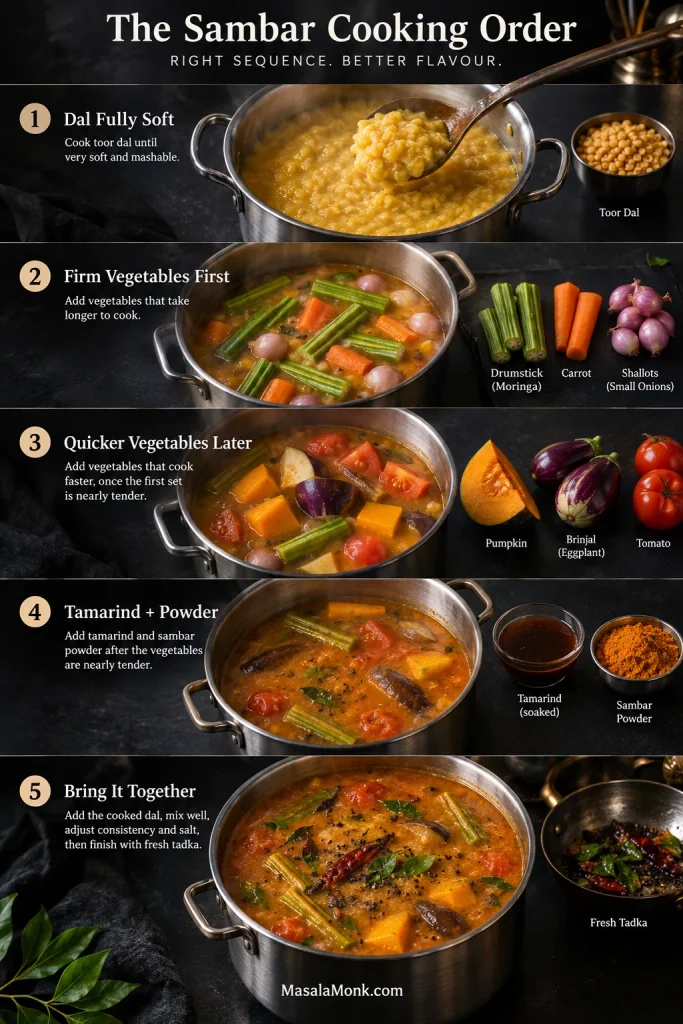
Cook the Dal and Build the Vegetable Base
- Cook the dal until completely soft. Rinse the toor dal well. Combine it with 420 ml (1¾ cups) water and turmeric. Bring a stovetop cooker to pressure, reduce the heat as needed to maintain pressure and cook for about 8–10 minutes. Let the pressure settle naturally. Press a grain against the side of the cooker; it should smear into a paste with no chalky centre.
- Start the firm vegetables. Put the shallots, carrot and drumstick in a saucepan or kadai with 240 ml (1 cup) water and a pinch taken from the measured salt. Cover and simmer for about 6–8 minutes. Check once and add a small splash of water if the pan begins to dry. The carrot should be getting close to tender.
- Meanwhile, make the tamarind extract. Soak the tamarind in 120 ml (½ cup) hot water for 10–15 minutes. Squeeze well and strain. Keep some extract aside rather than assuming it all belongs in the sambar.
- Add pumpkin, brinjal and tomato. Stir them into the firm vegetables and simmer for about 3–4 minutes. The tomato should begin to slump into the broth, while the pumpkin and brinjal become almost tender without collapsing.
- Add tamarind and sambar powder. Stir in about two-thirds of the tamarind extract and 1 tablespoon sambar powder. Simmer gently for 4–6 minutes. Pay more attention to the pan than the clock: the tomato should no longer taste raw, the sharp smell of fresh tamarind should have faded and the powder should no longer taste dusty.
Balance, Finish and Rest the Sambar
- Stir in the mashed dal. Give everything another 1–2 minutes together. Press a piece of pumpkin with the side of the ladle; it should yield without disappearing into the broth.
- Taste for salt, sourness and spice. Add the rest of the measured salt, then taste. Use more reserved tamarind when the sambar needs extra tang. A mild powder may need up to another ½ tablespoon. Add jaggery only if you want a faint sweet-sour note.
- Loosen it only at the end. Add hot water in 60 ml (¼ cup) increments. Keep the sambar fuller for rice and more flowing for idli, dosa or vada. Pour a ladleful back into the pan: the mashed dal and broth should fall together instead of separating into thick lentils and thin water.
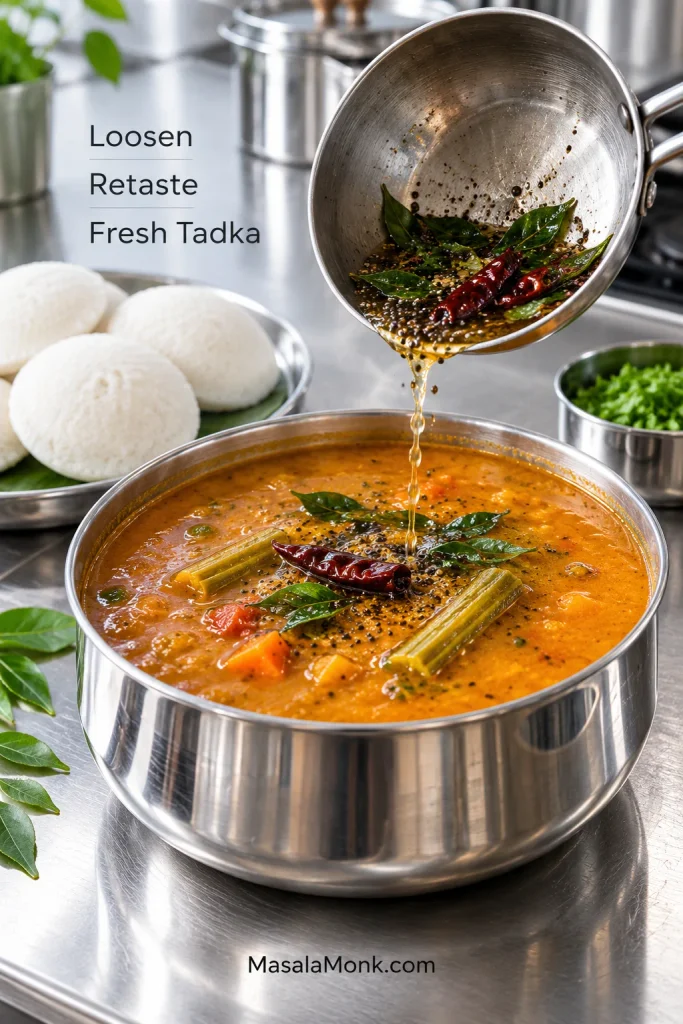
- Finish with the tadka. Heat the oil or ghee in a small pan and add the mustard seeds. Once they crackle, add the fenugreek and dried chilli. Add the curry leaves; when they hiss and begin to crisp at the edges, stir in the hing and immediately pour the tadka over the sambar. Burnt tadka is worth remaking; thirty seconds of fresh tempering is better than a bitter pot.
- Rest for 5–10 minutes. Stir and taste once more. The sambar may need a splash of hot water or another pinch of salt after resting. Finish with coriander if using.
Instant Pot: cook the rinsed dal, 420 ml water and turmeric on High Pressure for 9 minutes. Allow 10–15 minutes of natural pressure release before venting any remaining pressure.
How to Know When Sambar Is Ready
Ladle some up. The mashed dal should seem part of the broth rather than settling separately underneath it. By now, the sharp raw edge of the tamarind has mellowed. A carrot piece gives when pressed with a spoon, while pumpkin and brinjal remain visible instead of dissolving into the pan.
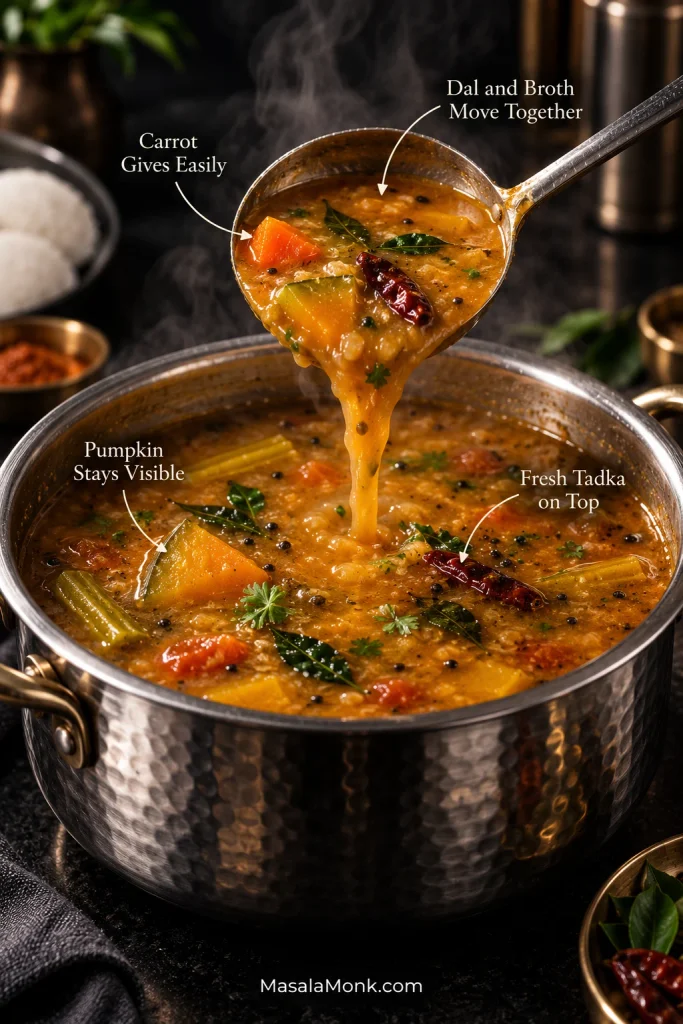
Pour the ladleful back. The broth and dal should move together. Then smell the sambar: fresh mustard, curry leaves and hing should reach you before the spoon does.
At that point, all it really needs is hot rice.
Dal, Tamarind and Sambar Powder
Toor dal is the standard base here. The same lentil may be sold as tur dal, tuvar dal, arhar dal or split pigeon peas. Cook it until the grains practically disappear when mashed. Older dal may simply need more time. Moong dal makes a lighter sambar; masoor changes both the flavour and texture more noticeably.
Tamarind is less predictable. A pale seedless block may be mild, while a darker aged block can push the sambar sour much sooner. Bottled concentrates vary even more. Fresh tamarind changes as it simmers too: its sharp raw acidity settles into the broth instead of sitting on top of the other flavours.
Sambar powder varies just as much. Some blends lean towards coriander and roasted spices; others announce themselves mostly through chilli. Old powder can remain hot after much of its fragrance has faded.
Homemade sambar powder gives you more control over both the roast and the chilli level.
Jaggery is optional; the final tadka matters much more to this version. Some Karnataka and Udupi sambars lean sweeter, while many other styles use little or no jaggery.
Best Vegetables for Sambar
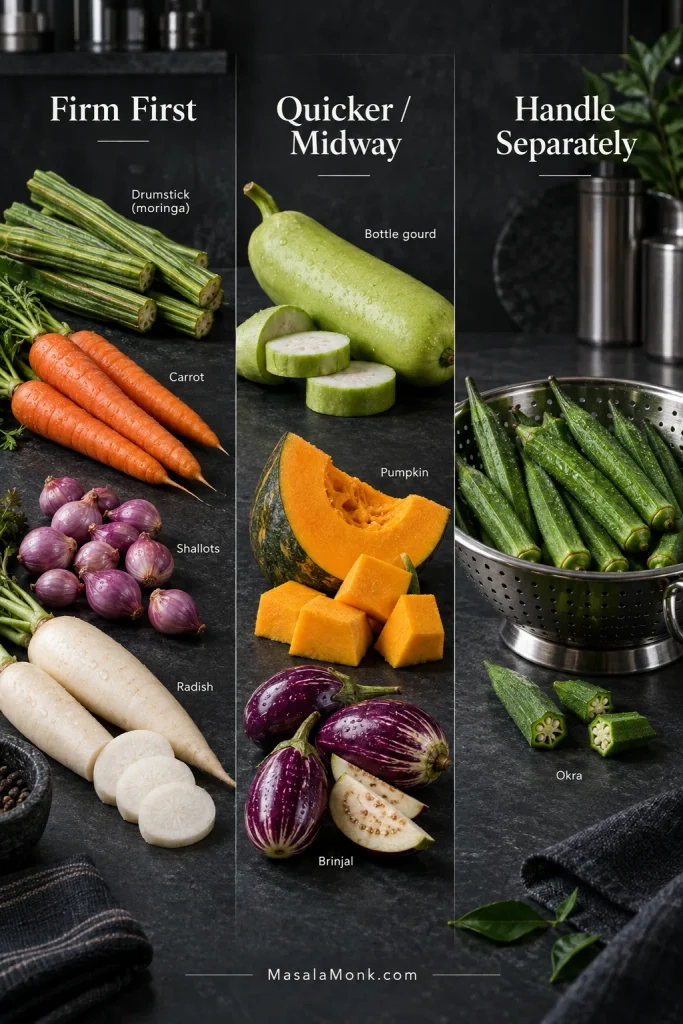
Good sambar vegetables include drumstick, shallots, carrot, pumpkin, brinjal, green beans, radish, okra and bottle gourd. Three or four are plenty. There is no prize for emptying the whole vegetable drawer into one pan.
Drumstick gives the broth a distinctive green, gently earthy flavour. Pumpkin brings sweetness and can melt slightly into the liquid at the edges. Brinjal absorbs the seasoned broth and turns silky, while carrot and beans give the spoon something firmer to find.
When to Add Vegetables to Sambar
| Vegetable | What it brings | When to add it |
|---|---|---|
| Drumstick (moringa) | Earthy-green flavour; scents the broth | Firm-vegetable stage |
| Carrot | Mild sweetness with a firmer bite | Firm-vegetable stage |
| Small onions or shallots | Sweet-savoury onion flavour | Firm-vegetable stage |
| Green beans | Fresh green flavour and bite | Firm-vegetable stage |
| Radish (mullangi) | Peppery bite | Firm-vegetable stage |
| Potato | Mild starchiness; makes the bowl heartier | Firm-vegetable stage |
| Bottle gourd | Mild flavour with juicy, tender pieces | After the firm vegetables have started |
| Pumpkin | Gentle sweetness; can soften into the broth at the edges | Quick-vegetable stage |
| Brinjal (eggplant) | Silky pieces that absorb the broth | Quick-vegetable stage |
| Okra (bhindi) | Earthy-green flavour; turns silky | Sauté separately; add near the end |
A good mixed combination might use drumstick, pumpkin, brinjal and small onions. Carrot, beans, eggplant and onion are easier to find in many supermarkets. Even onion, tomato and one substantial vegetable can make a satisfying sambar.
Cut for cooking time instead of symmetry. Smaller carrot pieces and larger pumpkin chunks have a much better chance of becoming tender together.
Frozen drumstick can go straight into the simmer. No drumstick at all? Use the other vegetables and carry on.
Outside India, remember that drumstick means moringa pod, brinjal means eggplant or aubergine, hing means asafoetida, and toor/tur/tuvar/arhar are names for split pigeon peas. If drumstick is new to you, scrape or suck the soft flesh and seeds from the cooked pod and leave the fibrous outer shell behind.
Cooking with these vegetables now? Return to the step-by-step method.
Pressure Cooker, Instant Pot or Stovetop?
Choose the method according to what matters tonight: distinct vegetables, fewer dishes or speed.
| Method | Best when… | Trade-off |
|---|---|---|
| Dal and vegetables separate | You want the clearest vegetable textures | Two vessels |
| Instant Pot, dal only | You want hands-off, repeatable dal cooking | Vegetables still simmer separately |
| Same cooker, used in stages | You want fewer dishes without pressure-cooking tender vegetables | Dal waits briefly in a bowl |
| True one-pot pressure method | Speed and cleanup matter most | Softer vegetables |
| Stovetop | You do not have a pressure cooker | Longest dal cooking time |
On the stovetop, soaking the dal for 1–2 hours can shorten the wait, although it is not essential. Simmer until the lentils mash without resistance; depending on their age, that may take 35–50 minutes or longer.
Sambar for Rice, Idli, Dosa and Vada
Keep sambar medium to medium-thick for rice and more flowing for idli, dosa or vada. Thin is fine; watery is not. Even when loosened, the mashed dal should travel with the broth.
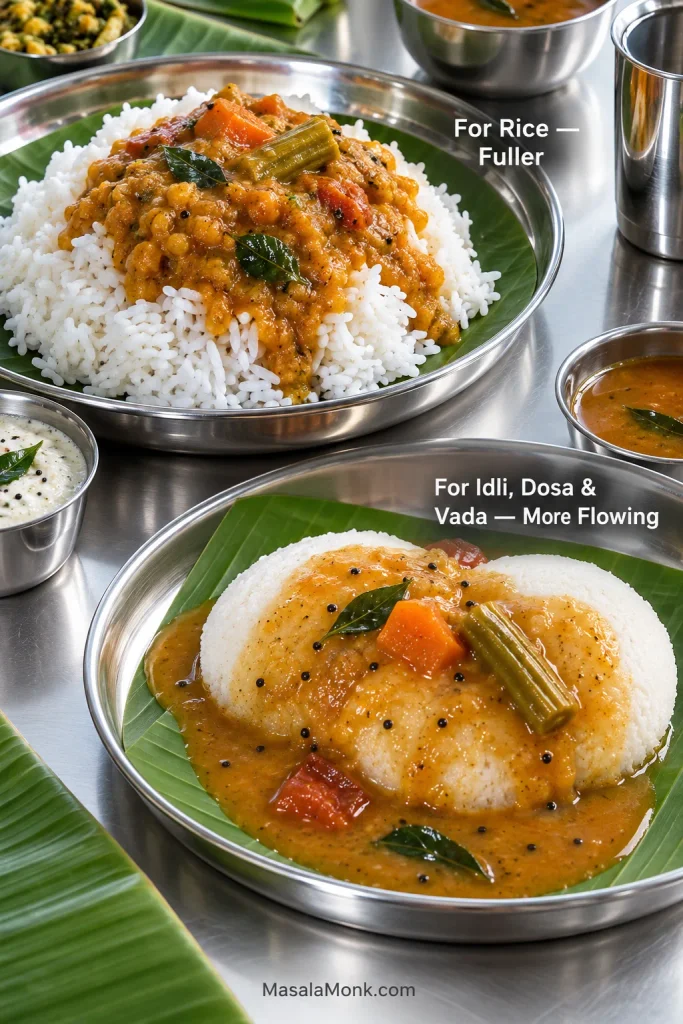
With rice, spoon enough sambar over the top that the grains are coated instead of sitting dry underneath the vegetables. A dry poriyal or thoran on the side is often all the contrast the plate needs; papad, pickle and curd can round things out. This guide covers fluffy steamed rice if you need the base sorted too.
With idli, don’t be stingy. Pour the sambar over, leave the idli for a moment so the broth can soak in, then add more at the table. The separate soft idli recipe covers batter, fermentation and steaming.
Dosa wants a flowing sambar that’s easy to scoop or dip. Medu vada is even better when the outside begins to absorb the broth while the centre keeps a little of its texture. A cool South Indian coconut chutney works naturally alongside all three.
Pongal and upma are comfortable companions too. Change the pour according to the plate, not the basic balance of the sambar.
A true tiffin sambar can differ in much more than water. Some versions use moong dal or a dal blend, potato and shallots, fresh-ground masala, coconut, fried gram or a more obvious sweet note. It is its own recipe family, not diluted rice sambar.
What You Can Substitute—and What Changes
Leaving out drumstick changes one note. Replacing tamarind changes the direction of the whole sambar. No drumstick? Carrot, beans, pumpkin, brinjal and shallots can carry it perfectly well; you simply lose the characteristic moringa note.
Tomato, raw mango and other sour ingredients appear in regional sambars, but they bring their own flavour instead of imitating tamarind spoon for spoon. Treat them as a different direction for the dish, not an exact conversion.
No sambar powder? A simple emergency blend for this four-serving sambar recipe is about 2 teaspoons ground coriander, ½ teaspoon ground cumin, ¼–½ teaspoon chilli powder and a very small pinch of ground fenugreek. It moves the broth in the right direction; it does not reproduce a full roasted sambar podi. For the fuller version, use the homemade sambar powder recipe. Fresh-ground arachuvitta sambar follows another route entirely.
Curry leaves and hing shape the top notes of the finished sambar. Missing either changes the smell, but extra chilli or masala will not replace them. A simple version with few substantial vegetables also works; start with less water because the vegetables would normally contribute moisture of their own.
Why Sambar Recipes Can Look Completely Different
One recipe contains coconut. Another has no onion. One is noticeably sweet; another uses no jaggery. A third does not use packaged powder at all. Regional sambar styles vary across South India in sweetness, tang, vegetables, spice blends and serving context.
These labels point towards recipe families, not rigid formulas.
- Everyday or rice sambar: broadly the family this recipe belongs to—dal, vegetables, tamarind and a familiar sambar-spice base.
- Idli or tiffin sambar: usually more flowing and sometimes built with different dal, vegetables or fresh masala.
- Arachuvitta sambar: uses freshly roasted and ground spices, often with coconut.
- Udupi sambars: often use freshly ground spice-and-coconut mixtures; sweetness varies by recipe.
- Kerala sambars: some styles, including varutharacha preparations, use roasted coconut and a different spice structure.
- Sambar sadam: cooks rice and the sambar base together into a distinct one-pot dish.
Vegetable-led branches go further from there, including vengaya sambar built around small onions and mullangi sambar with radish. Authenticity makes more sense when it is attached to a place, household or particular style.
Fix My Sambar
Tastes like plain dal? Check salt and tamarind. Hot but flat? Stop adding powder. Watery? Reduce it or add mashed dal. Bitter? Suspect the tadka.
Change one thing at a time. Throwing salt, tamarind, powder and water into the pan together only hides which adjustment actually worked.
Flavour Problems
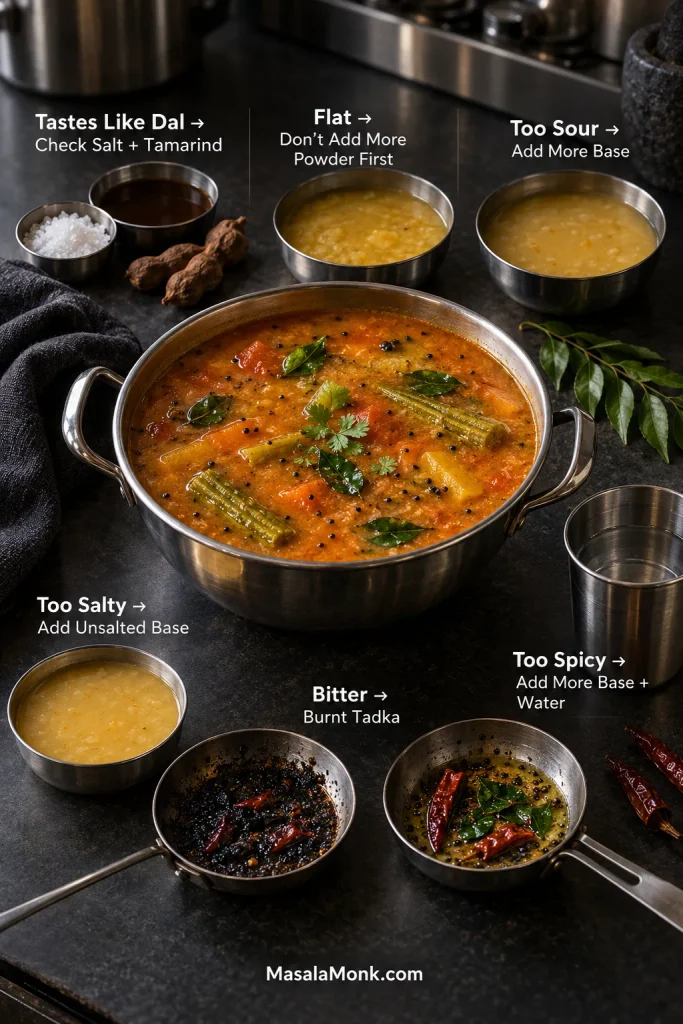
| Problem | Likely cause | What to do |
|---|---|---|
| Tastes like dal, not sambar | Weak sourness, too little salt or the sambar has not simmered together long enough | Check salt and tamarind, then give it a brief simmer before changing anything else |
| Bland or flat | Too much water, too little salt, stale powder or weak tadka | Correct the salt first; reduce an over-diluted sambar; refresh the tadka when its fragrance is weak |
| Very hot but flavourless | Chilli-heavy powder is bringing heat without much flavour | Leave the powder alone and check tamarind, salt, concentration and tadka |
| Too sour | Too much tamarind or a particularly strong product | Add unsoured cooked dal or sambar base, then rebalance the seasoning |
| Too salty | Too much salt or too much reduction | Add unsalted cooked dal/base and a little hot water. Sugar or extra tamarind will not remove excess salt |
| Too sweet | Too much jaggery | Add unsweetened base and cautiously restore sourness and spice |
| Too spicy | Strong powder, extra chilli or both | Add more dal/base and a little hot water, then taste again |
| Bitter | Burnt fenugreek, chilli or tadka | Discard burnt tempering before it reaches the sambar; severe burnt bitterness is difficult to hide |
| Raw tamarind taste | Tamarind has not simmered enough | Give it a few more gentle minutes until the sharp raw smell fades |
| Dusty spice taste | Sambar powder needs more cooking or has gone stale | Simmer a little longer; replace very dull old powder next time |
Texture and Cooking Problems
| Problem | Likely cause | What to do |
|---|---|---|
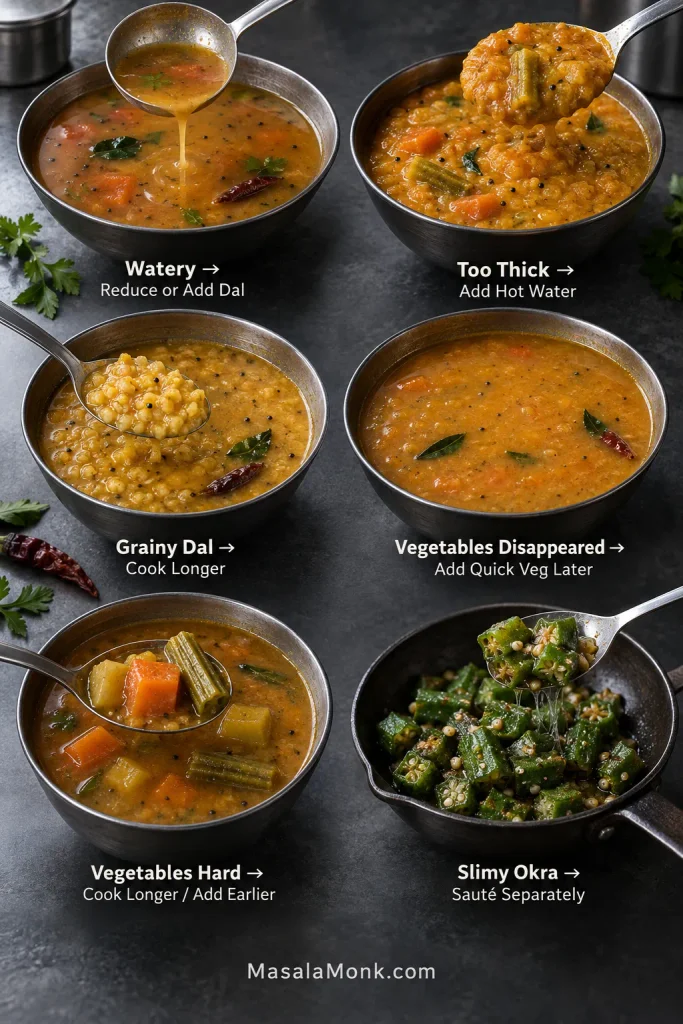
| Watery | Too much liquid or too little mashed dal | Simmer uncovered or add more cooked dal |
| Too thick | High dal concentration or normal thickening as it cools | Add hot water in 60 ml (¼ cup) increments |
| Dal stays grainy | Older lentils or insufficient cooking | Cook longer; soaking can help older dal |
| Vegetables disappear | Firm and quick-cooking vegetables spent the same amount of time in the pan | Add pumpkin and eggplant later next time |
| Vegetables stay hard | Pieces are too large, firm vegetables started late or tamarind went in too soon | Keep simmering; start the firm vegetables earlier next time |
| Okra is very slimy | Too much mucilage entered the broth | Sauté the okra separately before adding it |
| Tadka smells weak | Oil was not hot enough, spices were stale or the tempering sat too long | Make a small fresh tadka and pour it over hot sambar |
Don’t chase the colour either. Tamarind, chilli, vegetables and sambar powder all shift the final shade. If the sambar tastes balanced, don’t fix it just because another photograph looks redder or darker.
Storing, Reheating and Freezing Sambar
Sambar thickens in the refrigerator as the dal keeps absorbing liquid. The flavours often settle nicely overnight too.
Cool leftovers promptly and refrigerate them in a covered container. The USDA leftovers guidance recommends using refrigerated leftovers within 3–4 days.
How to Reheat Sambar for Idli or Rice
A little hot water brings cold, thickened sambar back quickly. Taste after loosening it because the water softens the salt and tang too. A small fresh tadka can make yesterday’s sambar smell newly made again.
Freeze finished sambar in meal-sized portions for roughly 2–3 months for best quality. Thaw overnight in the refrigerator when practical. Eggplant and other tender vegetables become softer after freezing. Freeze the cooked dal on its own when you’d rather add fresh vegetables to a future sambar.
Dietary and Ingredient Notes
- Vegan: use oil instead of ghee for the tadka.
- Gluten-free: the basic dish can be gluten-free, but check packaged sambar powder and commercial hing when strict avoidance matters. Some compounded asafoetida products contain wheat flour or another carrier.
- No onion or garlic: entirely possible; many household, temple and regional versions omit one or both. This no-onion, no-garlic peanut chutney also works well beside idli and dosa.
Your vegetables will change, one packet of sambar powder will be hotter than another, and one block of tamarind will be sharper than the next. That’s normal.
Keep the sambar a little fuller and spoon it over hot rice tonight. Loosen the leftovers tomorrow morning and let them soak into soft idli.








