
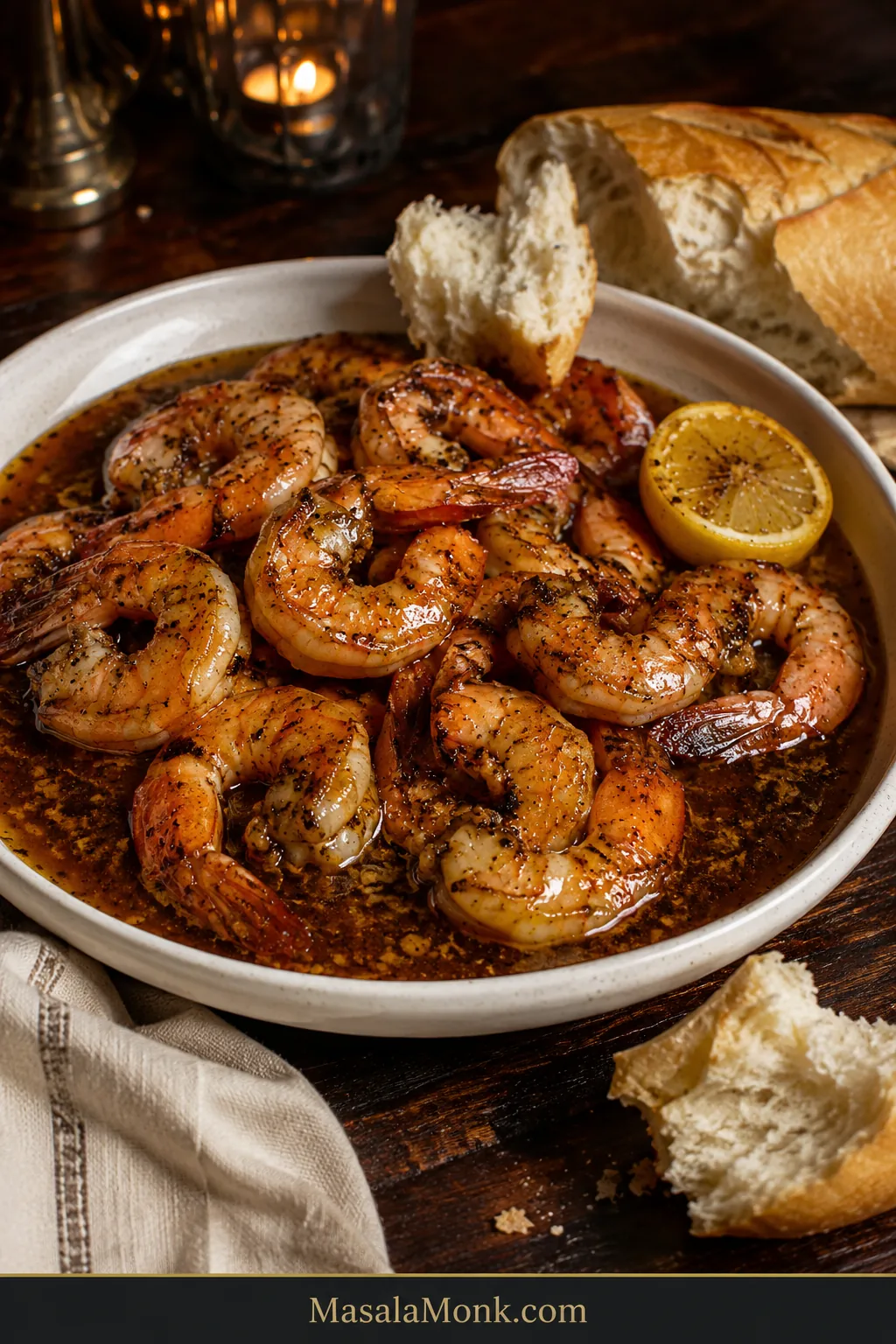
New Orleans BBQ shrimp arrives at the table with its own plan for the evening: plump shrimp, cracked black pepper, lemon, garlic and enough silky butter sauce to make warm French bread feel less like a side and more like essential equipment.
Worcestershire, garlic, rosemary, lemon and black pepper simmer down around the shrimp before cold butter finishes the concentrated pan juices. The result is savory, bright, deeply peppered and richly buttery.
The cooking moves quickly, but it isn’t difficult. Salt intensifies as the liquid reduces, shrimp toughen if they linger too long, and the butter finish needs gentle heat. Get those moments right and you have juicy shrimp, bold black pepper and a sauce worth reaching across the table for.
Quick Answer
New Orleans BBQ shrimp is jumbo shrimp cooked in a buttery Worcestershire sauce with black pepper, lemon and garlic—no grill or bottled barbecue sauce involved. For this version, use 1½ lb / 680 g raw 16/20 shrimp. Reduce the seasoned liquid first, cook the shrimp until almost done, move them to a bowl, then finish the pan with cold unsalted butter before returning the shrimp briefly.
- Hold the salt. Worcestershire, hot sauce and seasoning may already provide enough.
- Pull the shrimp slightly early. The thickest part finishes during the final toss.
- Use gentle heat for the butter. Add it gradually so the sauce turns smooth and unified.
The sauce can wait; the shrimp can’t.
New Orleans BBQ Shrimp Recipe
Juicy jumbo shrimp in a buttery, garlicky, boldly peppery Worcestershire sauce made for warm French bread.
Ingredients
- 1½ lb / 680 g raw 16/20 shrimp, preferably headless easy-peel shell-on; thawed if frozen
- 8 oz / 225 g cold unsalted butter, cut into small pieces
- 5 tbsp / 75 ml Worcestershire sauce
- ¼ cup / 60 ml amber lager or mild amber ale, dry white wine, or unsalted/low-sodium shrimp or chicken stock
- 1–2 lemons, for 2 tbsp / 30 ml fresh juice plus wedges for serving
- 4 medium garlic cloves, finely minced or grated
- 2 tsp coarsely cracked black pepper
- 2 tsp finely ground black pepper; use 1 tsp for a gentler pepper bite
- 1 tsp sweet paprika
- ½ tsp dried thyme
- ¼ tsp dried oregano
- ¼ tsp cayenne pepper, or less for mild heat
- 1 tsp finely chopped fresh rosemary
- 1–2 tsp Louisiana-style hot sauce, to taste
- Kosher salt, only if needed after tasting the finished sauce
- 1 small French loaf or baguette, warmed and torn or sliced for serving
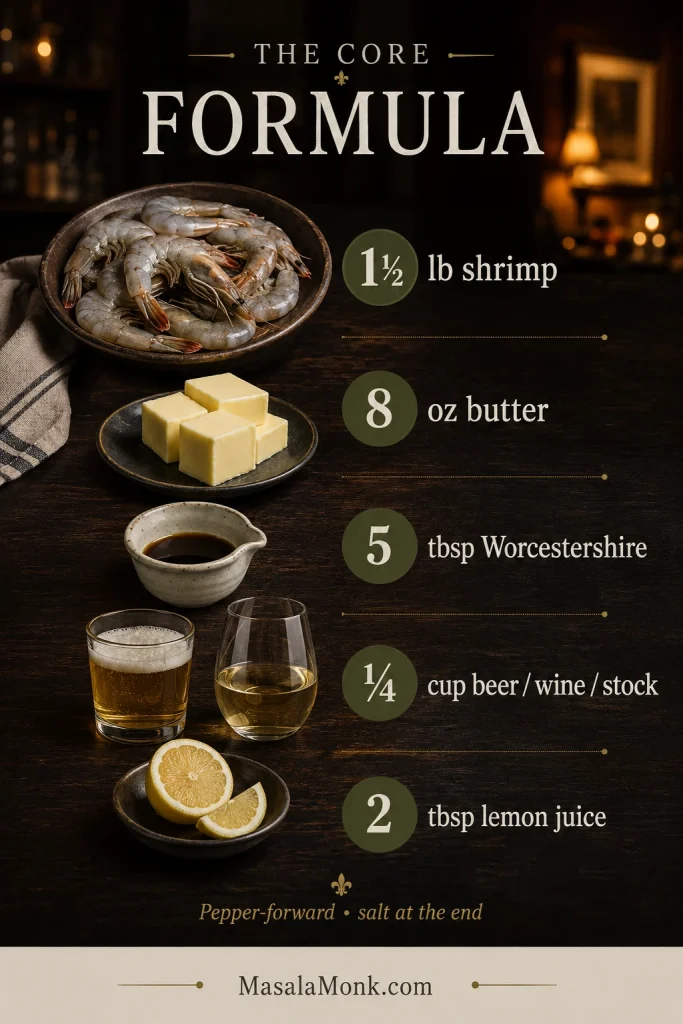
About the butter: the amount is intentional. Halving only the butter leaves the Worcestershire much sharper and can make the finished sauce taste noticeably saltier, so keep the ratio as written on your first batch.
Before the Pan Gets Hot
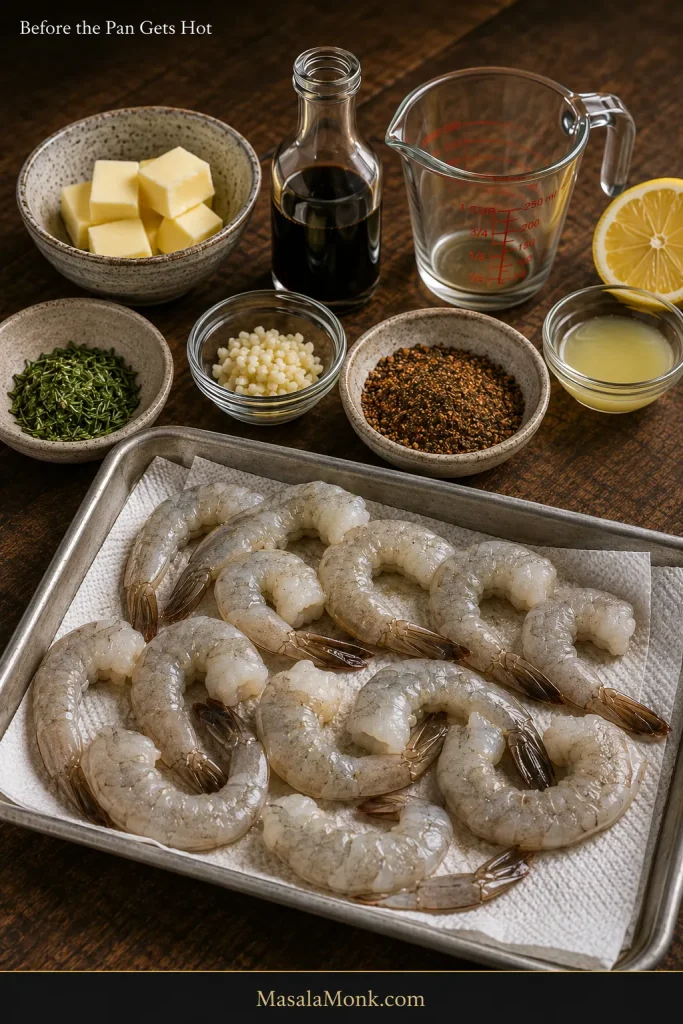
Measure the Worcestershire and cooking liquid, juice the lemon, chop the garlic and rosemary, measure the dry spices, and cut the butter into small pieces. Keep the butter cold.
Frozen shrimp should be completely thawed, drained and patted dry. Once the Worcestershire mixture starts reducing, the rest moves quickly.
1. Mix the Seasoning
Combine the cracked black pepper, ground black pepper, paprika, thyme, oregano and cayenne. Set the mixture beside the stove.
Leave the separate salt for later. Taste the finished sauce before deciding whether it needs any.
2. Build the Sauce Base
Set the skillet over medium heat and add 1 tbsp / 14 g of the butter.
When it foams, add the garlic and rosemary. Cook for 20–30 seconds, just until fragrant.
Add the Worcestershire, beer, wine or stock, lemon juice, hot sauce and dry seasoning mixture. Stir and bring the liquid to a lively simmer.
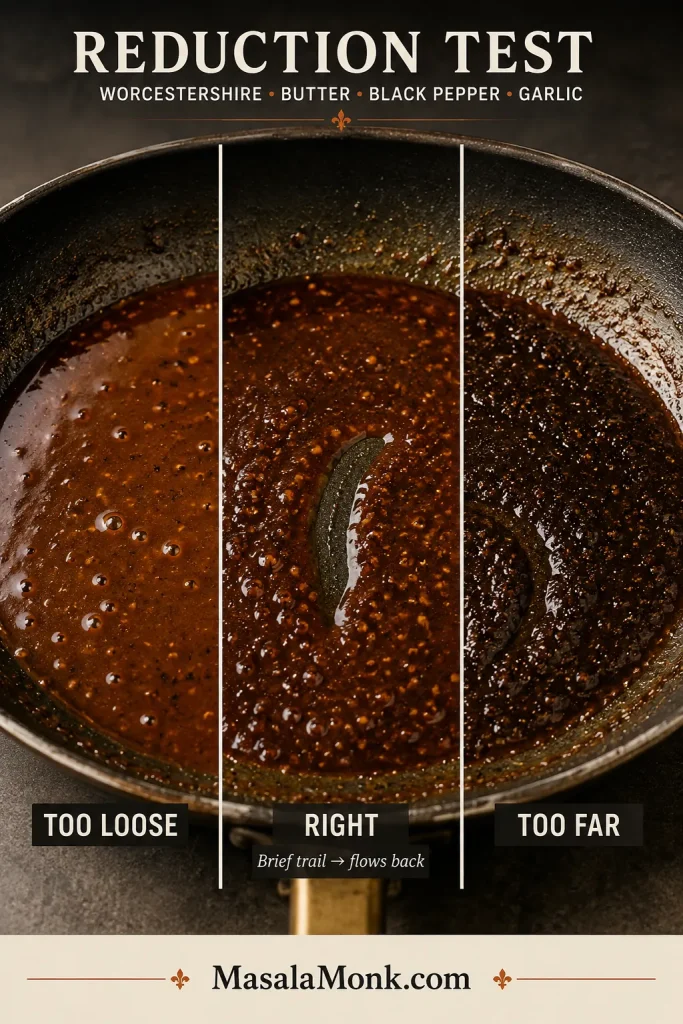
Reduce for roughly 3–5 minutes. About one-quarter to one-third of the initial liquid should evaporate. Draw a spoon or spatula through the pan: the liquid should leave a brief trail, then flow back into place. Stop before it turns thick or sticky.
3. Cook the Shrimp
Add the shrimp in one mostly even layer. If a 12-inch skillet feels crowded, cook half at a time.
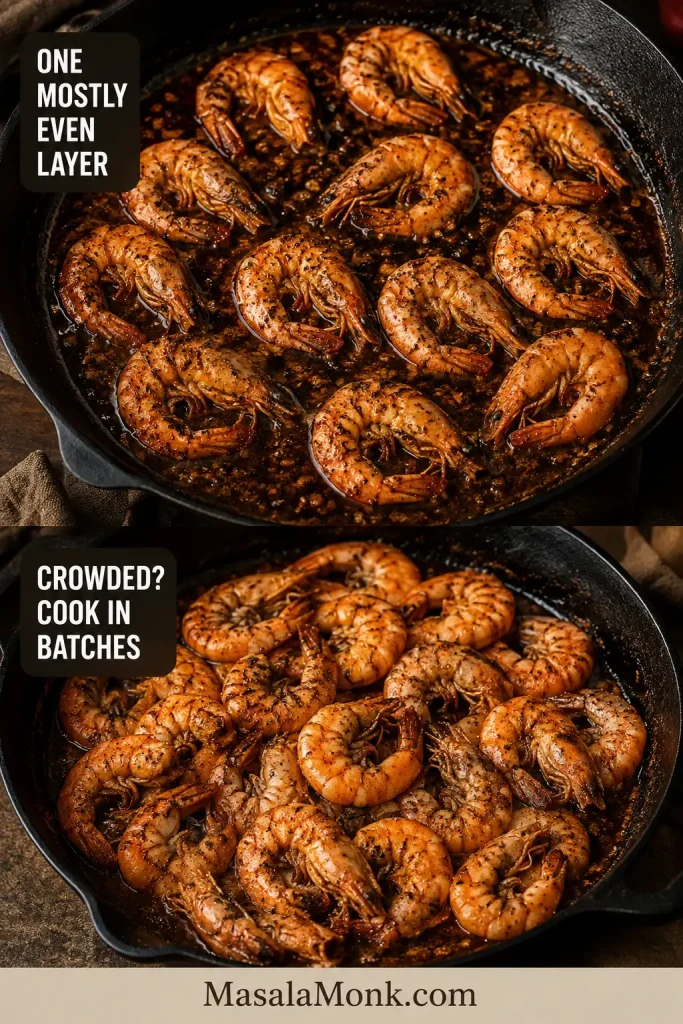
Cook for about 1–2 minutes on the first side, then turn. Continue until the shrimp are mostly pearly and opaque, with the thickest part just shy of done. They should be starting to feel springy.
Transfer them to a bowl. Smaller shrimp may reach that point sooner, so pull those first.
Cooking two batches? Check the liquid before the second batch. If it has tightened noticeably, stir in 1–2 tbsp / 15–30 ml unsalted stock or water so it moves freely again.
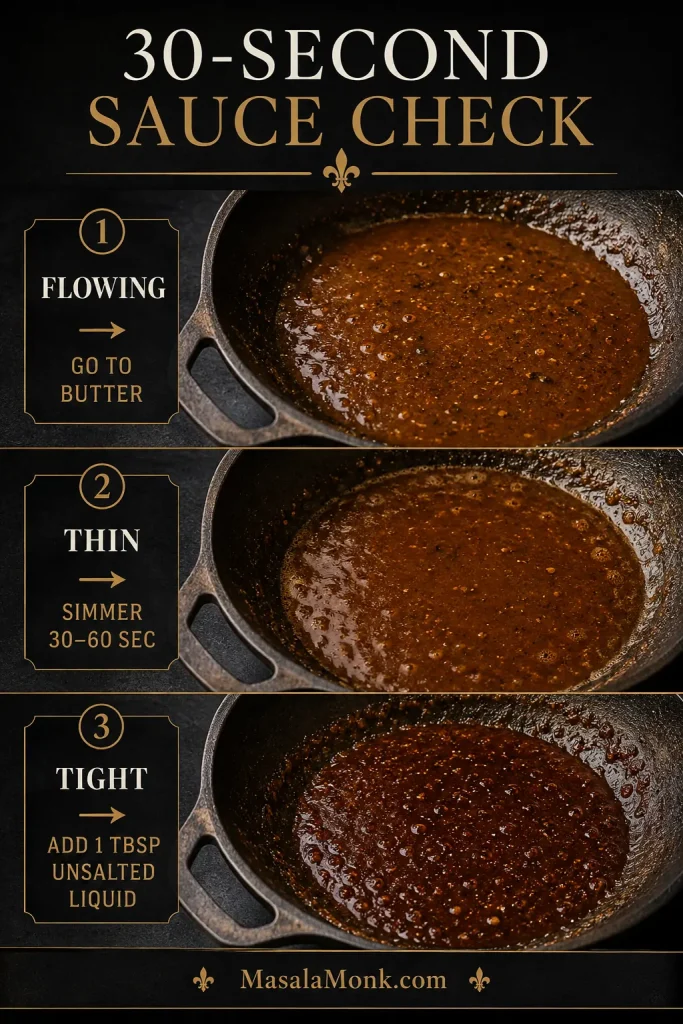
4. Take a 30-Second Sauce Check
With the shrimp resting in the bowl, look at what remains in the skillet.
- Concentrated and flowing: move on to the butter.
- Thin from shrimp juices: simmer for another 30–60 seconds.
- Very dark or tight: stir in 1 tbsp / 15 ml unsalted stock or water.
5. Finish With Cold Butter
Turn the heat low. If the liquid is still boiling hard, slide the skillet off the burner for 20–30 seconds.
Add the remaining cold butter a few pieces at a time, stirring or whisking steadily. Let each addition disappear before adding more.
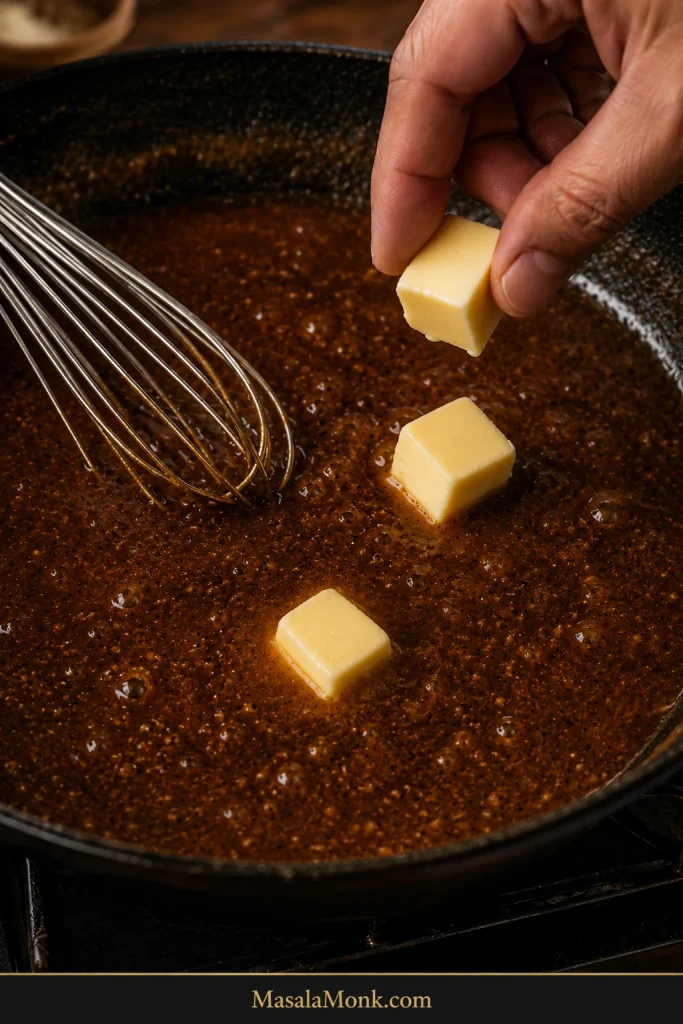
The reduced liquid will briefly look streaky, then become smooth and unified. It should lightly coat a spoon and flow back into the skillet.
“Emulsion” sounds fussier than it is here. Cold butter, gentle heat and steady stirring do most of the work.
6. Finish the Shrimp and Taste
Return the shrimp and any juices from the bowl. Toss over very low heat just until the thickest pieces finish cooking and everything is coated—usually about 20–30 seconds. Turn off the heat immediately.
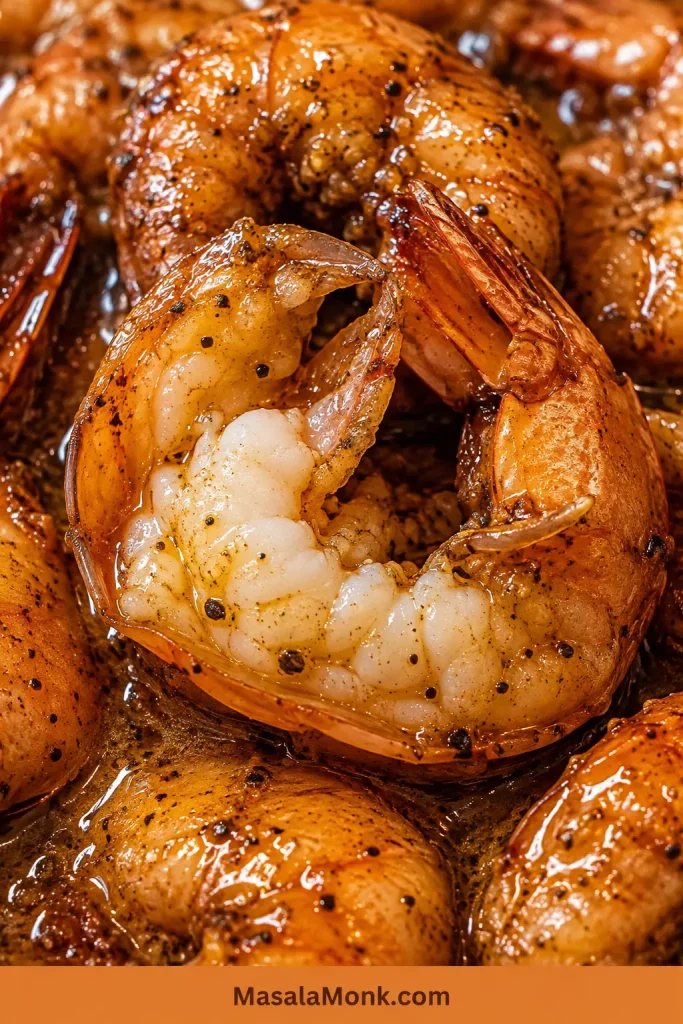
Press one gently. It should give a little and spring back, with tender flesh beneath the surface. A hard, tight texture means the shrimp have gone too far.
Taste the sauce. Add salt only if it genuinely needs it. A squeeze of lemon brings brightness; another dash of hot sauce raises the chile heat without muting the black pepper.
Serve immediately in shallow bowls with warm French bread, lemon wedges and plenty of napkins.
Scaling to 3 lb / 1.36 kg: two complete batches are easier to control than one crowded pan. A genuinely wide sauté pan can handle a larger batch, but evaporation changes with pan size, so watch how the sauce moves instead of simply doubling the cooking time.
In This Guide
What Is New Orleans BBQ Shrimp?
New Orleans BBQ shrimp is a richly sauced shrimp dish built around butter, black pepper, Worcestershire and lemon. Garlic, herbs, hot sauce and beer, wine or stock may join the skillet depending on the cook and the version.
Why Is It Called BBQ Shrimp If It Isn’t Barbecued?
No one explanation for the name is definitive. A common theory is that “barbecue” refers to the dish’s reddish-brown color and intensely seasoned sauce, not to grilling. Whatever the original reasoning, BBQ shrimp became the New Orleans name for this buttery, pepper-forward preparation.
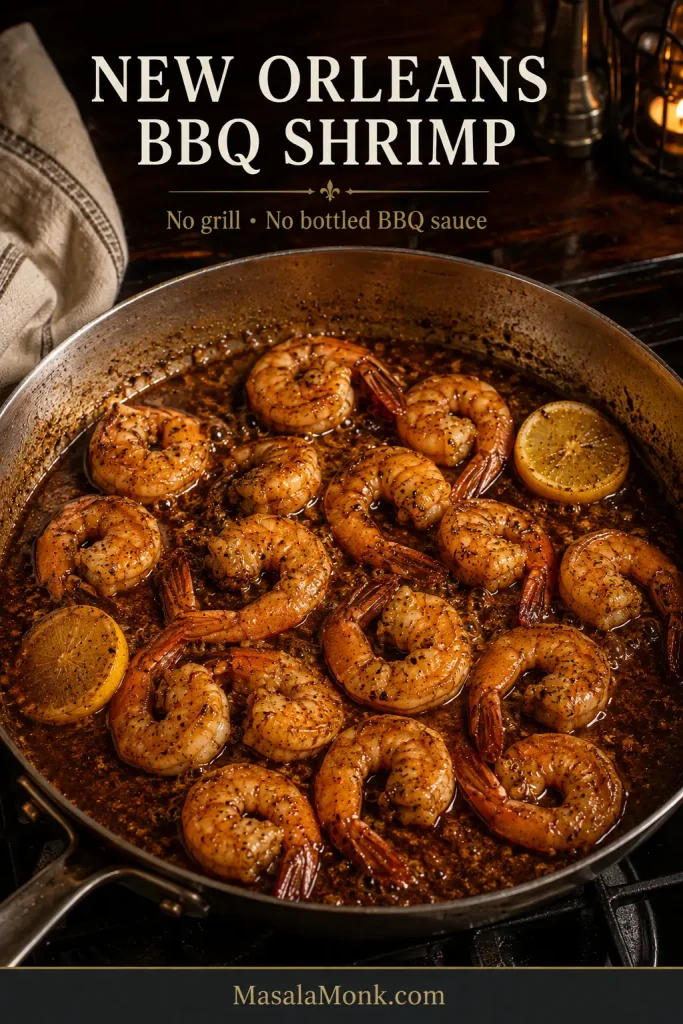
Pascal’s Manale is closely associated with the dish’s origin. From there, restaurant and home versions moved in many directions, changing the balance of butter, Worcestershire, pepper, beer, stock and herbs.
Whatever the version, there’s usually plenty of sauce. You want enough left in the bowl for bread after the last shrimp is gone. If direct heat over a grill is what you were looking for, grilled shrimp follows a different cooking path.
Why the Famous New Orleans Versions Taste Different
Sometimes what you’re chasing is not New Orleans BBQ shrimp in general. It is the bowl you remember from one restaurant, one trip or one table.
Maybe that sauce stained the bread with Worcestershire and black pepper. Maybe your favorite was so buttery it almost seemed creamy. Another version may have tasted noticeably malty from beer or brighter from lemon.
Well-known versions show just how wide the style can be.
| Version or Reference Point | What Stands Out |
|---|---|
| Pascal’s Manale tradition | The restaurant most closely associated with the dish’s origin; recreations of the style vary considerably. |
| Mr. B’s Bistro | Exceptionally rich in butter and Worcestershire, with plenty of black pepper and a cold-butter finish. |
| Paul Prudhomme | Published versions use much more seasoning, stock and beer, with far less Worcestershire than Mr. B’s style. |
| Emeril Lagasse versions | Some published versions build a more elaborate concentrated shrimp base and may include cream along with butter. |
The published Mr. B’s Bistro BBQ shrimp recipe, for example, uses substantially more butter and Worcestershire than the skillet here. That doesn’t make one version the correction of another; it helps explain why two bowls carrying the same name can taste surprisingly different.
What to Expect From This Version
This one leads with black pepper, followed by Worcestershire, butter and lemon. The sauce has enough body to cling to the shrimp but stays fluid for bread, without the cream used in some other versions.
The sauce-first method lets you get the liquid where you want it before the shrimp and butter change what you’re seeing in the pan.
Is New Orleans BBQ Shrimp Cajun or Creole?
New Orleans BBQ shrimp belongs first to New Orleans. It is commonly associated with the city’s Creole cooking tradition, while modern recipes may use products labelled either Cajun or Creole seasoning.
The two Louisiana traditions have different histories and geographic roots, even though they influence one another. For this skillet, the useful question is what the seasoning actually contains—especially how much salt it brings.
Which Shrimp Should You Buy?
The count printed on the package tells you more than loose labels such as “large” or “jumbo.” Look for 16/20 shrimp, meaning there are approximately 16 to 20 shrimp per pound.
For 1½ lb / 680 g, that works out to roughly 24 to 30 substantial shrimp. They are large enough to give you some breathing room during the fast cook while remaining easy to find in many supermarkets.
| What You Buy | Why Choose It? | What Changes? |
|---|---|---|
| Head-on, shell-on | Most flavor from the heads and shells; classic peel-at-the-table experience | Messier and harder to source outside Gulf regions |
| Headless, easy-peel, shell-on | Best practical choice for most home cooks | Very good flavor and moisture protection with easier cleaning and peeling |
| Peeled | Easiest at the table, especially over grits or rice | Cooks faster and contributes less shell flavor |
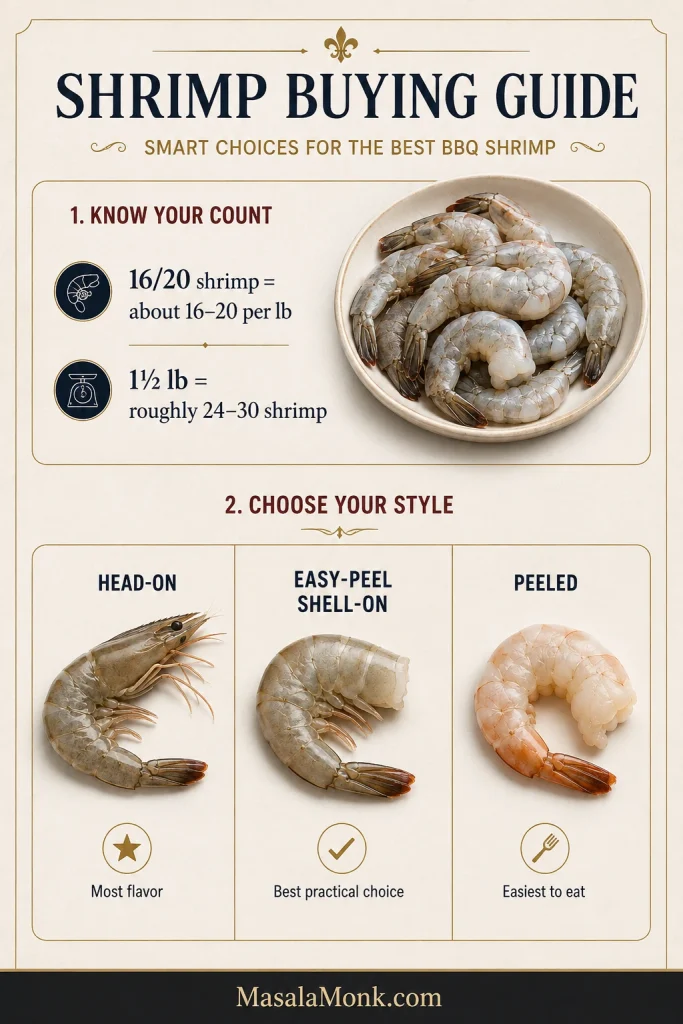
Head-On Shrimp Are an Upgrade, Not an Entrance Exam
Good head-on shrimp are worth using when they’re readily available. Their heads and shells add another layer of seafood richness as they cook.
They aren’t required. Headless shell-on shrimp make an excellent skillet, and raw easy-peel shrimp are often the sweet spot for cooks shopping far from Louisiana or the Gulf Coast.
If peeling buttery shrimp at the table sounds fun, choose shell-on. If it sounds annoying, use peeled shrimp and enjoy your dinner. Start checking peeled shrimp earlier because they cook faster.
Deveining and Frozen Shrimp
Easy-peel shrimp already have a slit along the back, so you can open it gently and lift out the vein with the tip of a small knife, skewer or toothpick. For intact shells, make a shallow cut along the back first and leave the rest of the shell in place.
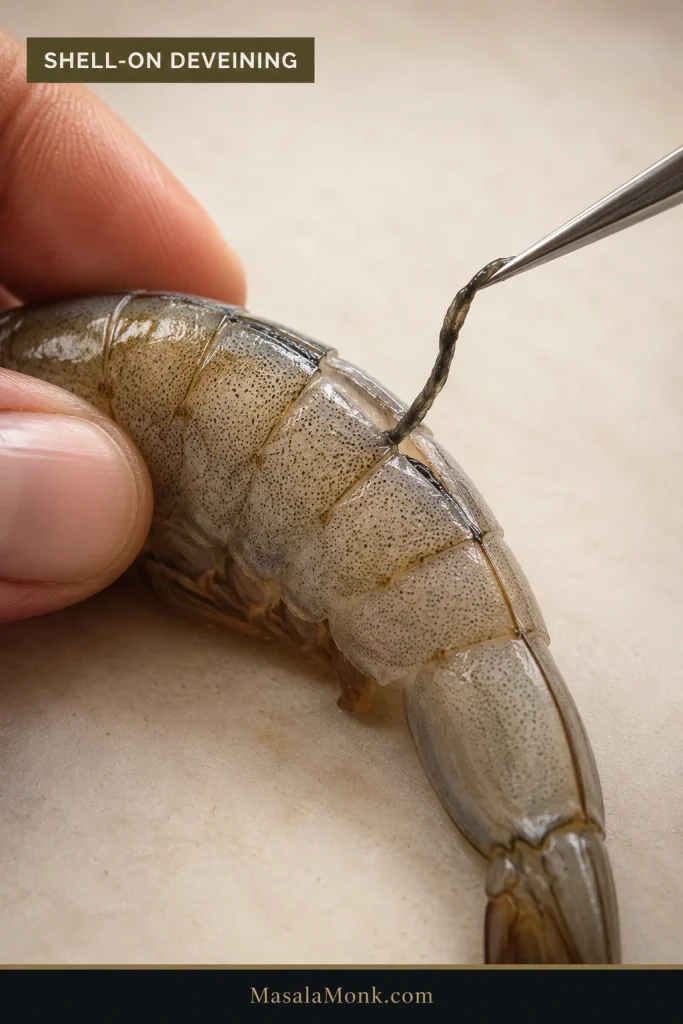
Raw frozen shrimp are also a perfectly practical choice. Frozen doesn’t automatically mean soggy; excess surface water is the problem. Thaw them fully, drain well and pat them dry so they don’t flood and cool the skillet.
Shrimp prepped and ready? Jump back to the recipe.
What Makes the Sauce Work
New Orleans BBQ shrimp sauce starts with butter, Worcestershire, lemon, black pepper and garlic, often with herbs, hot sauce and beer, wine or stock. Once it reaches the skillet, the balance shifts as water cooks away and every savory, salty and acidic note becomes more concentrated.
Butter, Worcestershire + Salt
Worcestershire gives the sauce its deep savory tang. Butter softens its sharper edges and gives the pan enough richness to coat both shrimp and bread. That Worcestershire backbone is also what separates this dish from a simpler garlic-lemon butter skillet such as shrimp scampi.
Butter is part of the seasoning balance, not just extra richness. Cutting the butter aggressively while keeping all 5 tablespoons / 75 ml Worcestershire leaves the finished sauce much sharper.
Salt deserves the same attention. Worcestershire, hot sauce and packaged seasoning may already contain plenty, and every minute of reduction concentrates what’s there. Unsalted butter and a final taste check leave room to adjust at the end.
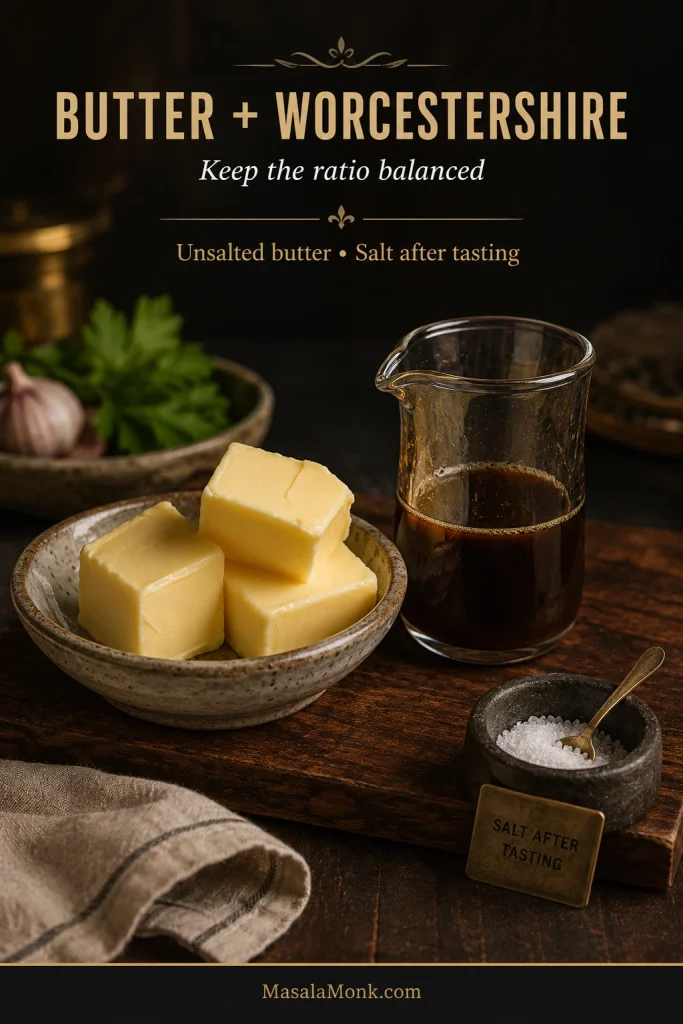
That balance matters once dinner starts. The sauce should be bold enough to season every shrimp while still leaving you eager to drag another piece of bread through the bowl.
Can you make New Orleans BBQ shrimp without Worcestershire? You can make excellent buttered shrimp, but the flavor moves away from this particular style. Worcestershire brings salt, acidity, sweetness and fermented savoriness all at once, so there isn’t a simple equal-volume substitute that behaves exactly the same way.
Black Pepper + Seasoning
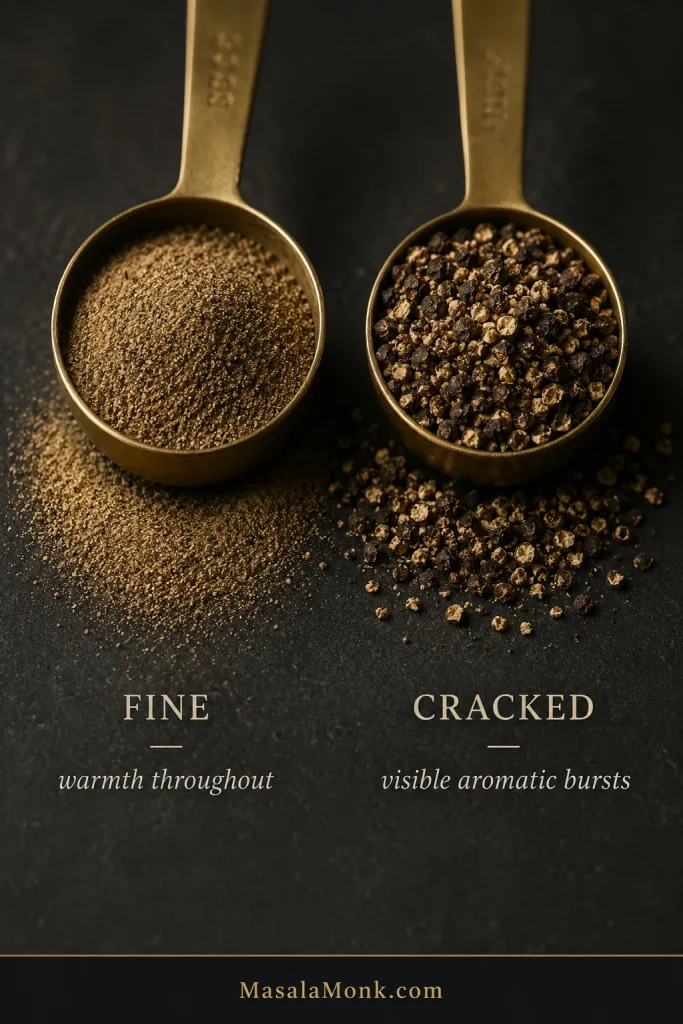
Black pepper is one of the flavors that makes this dish recognizable. Fine pepper disappears into the liquid and spreads its warmth throughout. Coarsely cracked pepper stays visible and delivers aromatic bursts as you eat.
Cayenne and Louisiana hot sauce control most of the chile heat, so a strongly black-peppered skillet doesn’t have to be painfully hot.
Commercial Cajun and Creole blends vary widely, especially in sodium. Here, paprika, thyme, oregano and cayenne are measured separately for predictable seasoning. If you prefer a packaged blend, use about 2 teaspoons in place of those four spices and check the label before adding salt.
Lemon, Garlic, Rosemary + Hot Sauce
Lemon keeps the richness lively, garlic deepens the savory side, and rosemary adds a restrained herbal note. Louisiana-style hot sauce is easiest to adjust at the end, once you know how much heat the cayenne and black pepper have already brought.
Rosemary belongs in the background. You want to notice that something herbal is there, not feel as though the shrimp landed under a rosemary bush.
Beer, Wine or Stock?
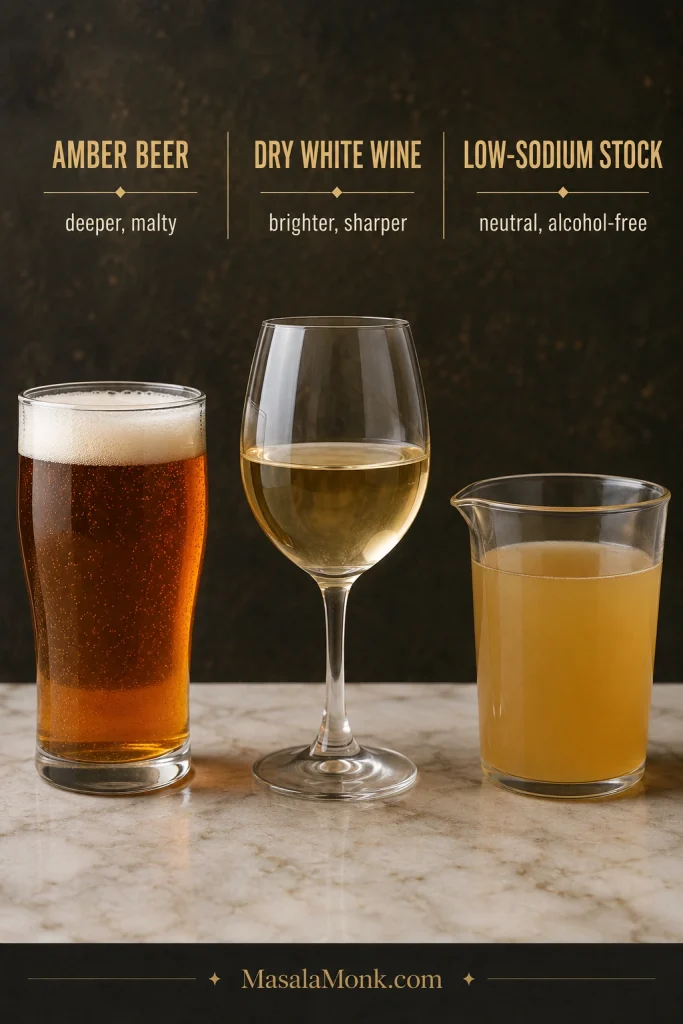
Use ¼ cup / 60 ml and choose the direction you want the sauce to take.
- Amber lager or mild amber ale: deeper and lightly malty.
- Dry white wine: brighter, with a sharper edge.
- Unsalted or low-sodium stock: more neutral, alcohol-free and especially easy to control for salt.
Skip very bitter IPAs, which can dominate after reduction. For wine, use a dry bottle such as Sauvignon Blanc or Pinot Grigio and avoid salted “cooking wine.”
Want the pan cues instead? See what the sauce should look like at each stage.
The Shrimp and Sauce Are on Two Separate Clocks
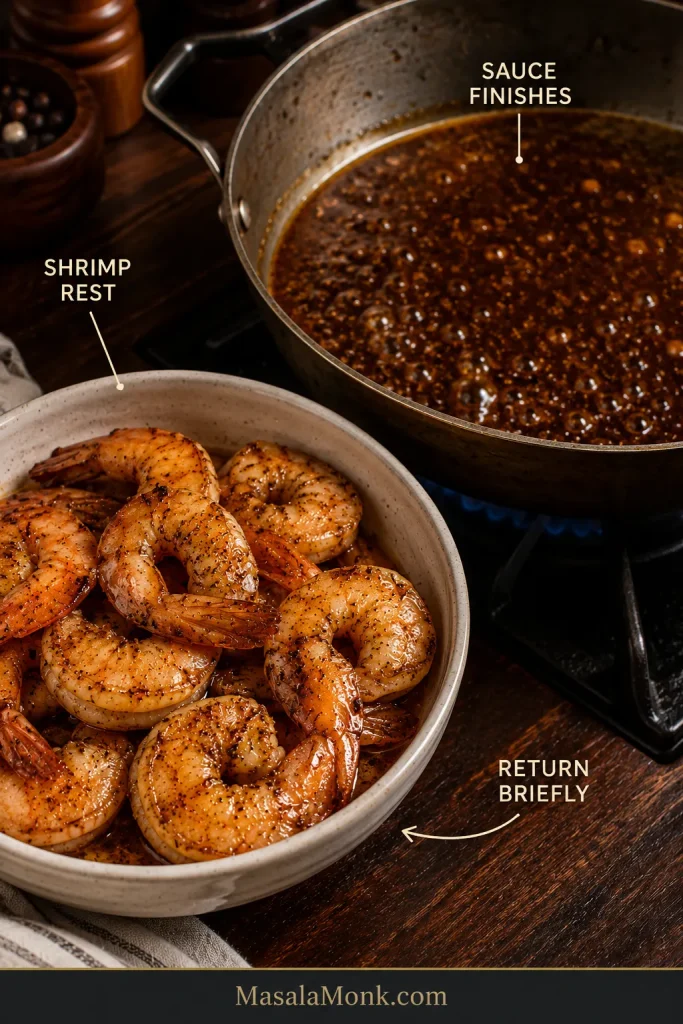
Shrimp often reach their pull point before the sauce is ready. That’s why they leave the skillet while their centers still have a final touch of cooking left.
Let the sauce reduce to the right point, build the butter finish, then bring the shrimp back briefly. That short rest is how they reach the table juicy and tender even though the sauce gets a few extra minutes to come together.
Unsure exactly when to pull them? See the shrimp doneness guide.
What the Sauce Should Look Like at Each Stage
The numbered recipe gives you the timing; these visual cues show what the sauce should actually look like.
- Before the shrimp: the liquid has darkened and leaves a brief trail behind the spatula, but still flows easily across the pan.
- After the shrimp: check again. Shrimp juices may have thinned it; extra pan time may have tightened it. Adjust it before the butter goes in.
- During the butter: brief streakiness is normal at first. Keep stirring gently until the sauce becomes smooth and cohesive.
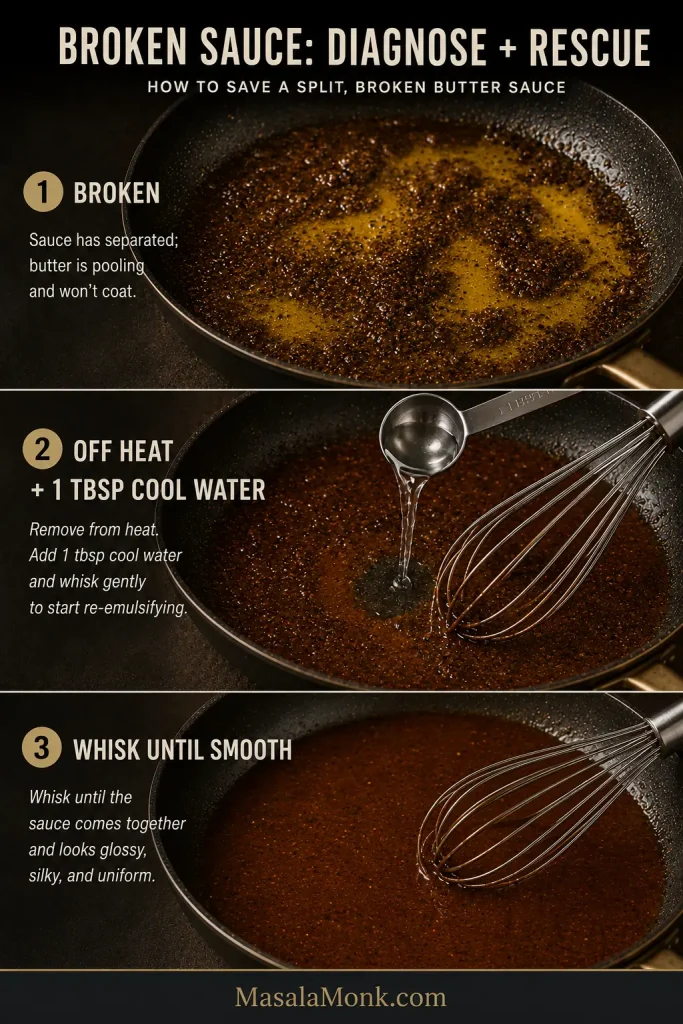
- If it breaks: clear yellow butter begins pooling separately from the darker liquid. Stop the heat and use the rescue below.
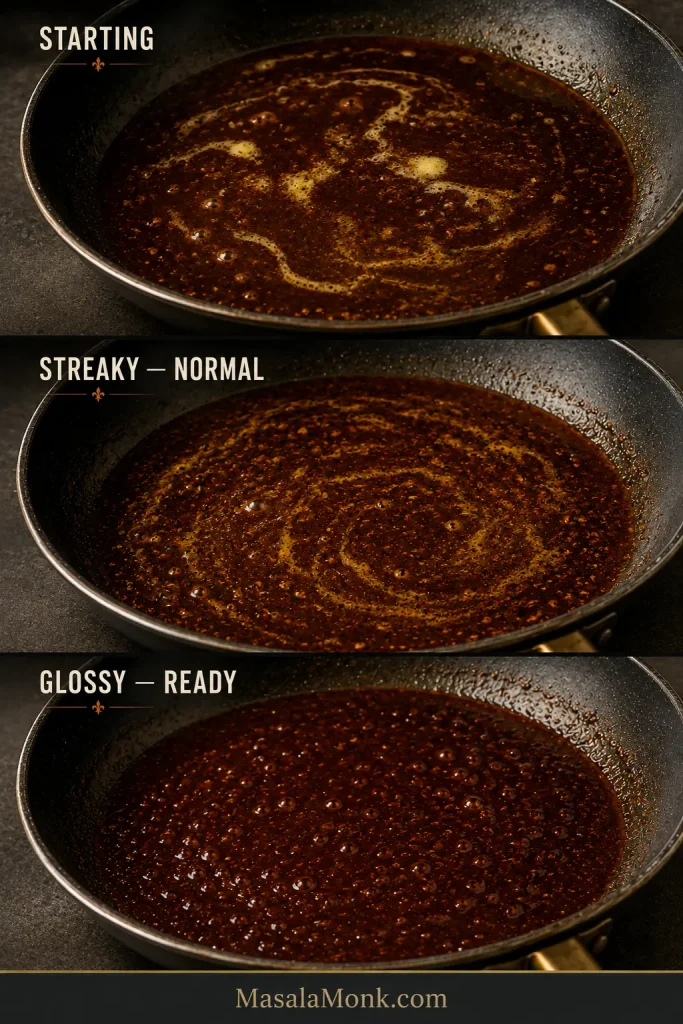
When it comes together properly, the sauce coats the shrimp and then slips back into the bottom of the bowl instead of sitting heavily on top.
The clock gets you close; the pan tells you when to stop.
Something in the pan looks wrong? Jump to troubleshooting.
How to Know When the Shrimp Are Done
- Pull: mostly pearly and opaque; the thickest center still needs its final touch of cooking.
- Finished: pearly and opaque through the thickest part, with a gentle spring when pressed.
- Overdone: hard or rubbery, often with a much tighter curl.
Still unsure? Take one of the largest shrimp out and peel it or cut through the thickest part. The center should be almost opaque at the pull point and completely opaque after the final toss.
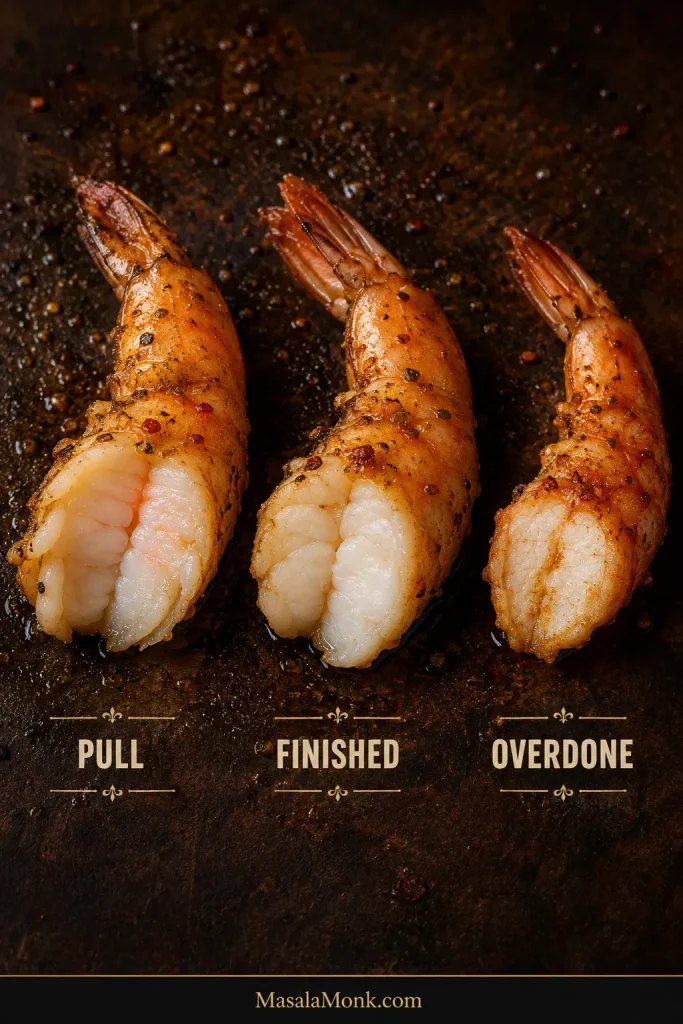
That physical check is more useful here than repeatedly poking shell-on shrimp with a thermometer.
Ready to cook? Back to the recipe.
What About the Oven?
Oven versions are common, but the stovetop suits this recipe better. A skillet lets you watch the sauce reduce, pull the shrimp at the right moment and lower the heat immediately for the cold-butter finish.
Pan depth, oven temperature, shell status and sauce volume all change the timing. That’s why this particular version is better kept on the stovetop than given one catch-all baking time.
Troubleshooting: Fix the Sauce or Shrimp
Most problems show themselves before the skillet reaches the table. Match the symptom below, make the best correction you can, and use the cause to improve the next batch.
Sauce Balance Problems
The sauce is a little too salty
What probably happened: a salty seasoning blend brought in too much salt, or the sauce reduced farther than intended.
Fix it now: take the pan off the heat and add unsalted stock or water 1 tbsp / 15 ml at a time, tasting between additions.
If it is aggressively salty: there is no perfect tablespoon-sized rescue. More unsalted liquid and butter can dilute the salt, but you’ll also create more sauce and may need to rebalance the other flavors.
Next time: leave separate salt until the butter is in and you’ve tasted the finished sauce.
The sauce tastes harsh or overwhelmingly of Worcestershire
What probably happened: the cooking liquid reduced too far.
Fix it now: add unsalted stock or water gradually until the Worcestershire no longer tastes so harsh. Taste again before deciding whether the sauce needs more butter.
Next time: stop the first reduction while the liquid still runs easily across the skillet.
Sauce Texture Problems
The sauce is watery
What probably happened: the base needed more reduction, or wet shrimp released additional water.
Fix it now: keep the shrimp in their bowl and simmer the liquid briefly before finishing with butter.
Next time: dry thawed shrimp thoroughly and judge the reduction by how it moves in the pan.
The butter sauce looks oily or split
What probably happened: the pan was too hot or the butter went in too quickly.
Fix it now: remove the skillet from the heat and whisk in 1 tbsp / 15 ml cool water. Add another teaspoon or two only if needed.
Next time: keep the heat gentle and add the cold butter gradually.
Shrimp Timing Problems
The shrimp are ready before the sauce
Nothing’s gone wrong. Move the shrimp to the bowl and finish the sauce without them.
The final return to the skillet is enough to finish their centers and coat them.
The shrimp are rubbery
What probably happened: they cooked too long.
Fix it now: overcooked shrimp can’t be made tender again.
Next time: remove them slightly earlier and let the short final toss finish the center.
Heat and Final Flavor Problems
The dish is hotter than you wanted
What probably happened: too much cayenne, hot sauce or a particularly hot seasoning blend.
Fix it now: if the sauce isn’t already loose, a splash of unsalted liquid and a little more butter can soften the chile heat.
Next time: keep the black pepper bold and reduce the cayenne or hot sauce.
It tastes flat even though it is salty enough
What probably happened: the pan needs acidity or fresh pepper.
Fix it now: try a small squeeze of lemon or freshly cracked black pepper before reaching for more salt.
Next time: taste salt, acidity and pepper as separate parts of the final balance.
Once the pan is back in balance, stop tinkering and get it to the table. This dish is at its best while the shrimp are still juicy and the butter sauce is warm enough to run into the bread.
Back to the recipe · Back to top
What to Serve With New Orleans BBQ Shrimp
French Bread
Warm French bread is the first choice because the sauce is intentionally plentiful.
Look for a loaf with a thin crust and light, airy interior. A true New Orleans-style French loaf is ideal when available. Vietnamese bánh mì-style loaves are excellent substitutes because their relatively delicate crust and fluffy crumb soak up sauce more easily than a dense artisan baguette.
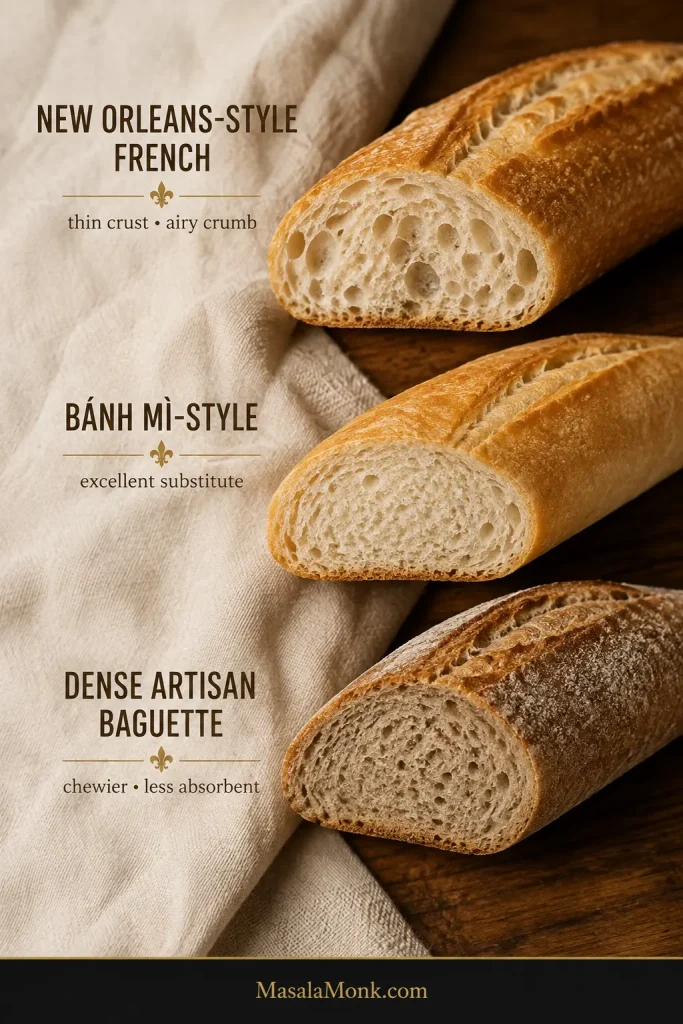
A light supermarket baguette works too. For a richer homemade option—not a traditional substitute for New Orleans French bread—homemade garlic bread is very good at making sure little sauce survives the meal.
Grits or Rice
Creamy grits turn the shrimp into a substantial Southern main course. Peeled shrimp are much easier to manage over a bowl of grits; shell-on shrimp suit a meal built around peeling and dipping.
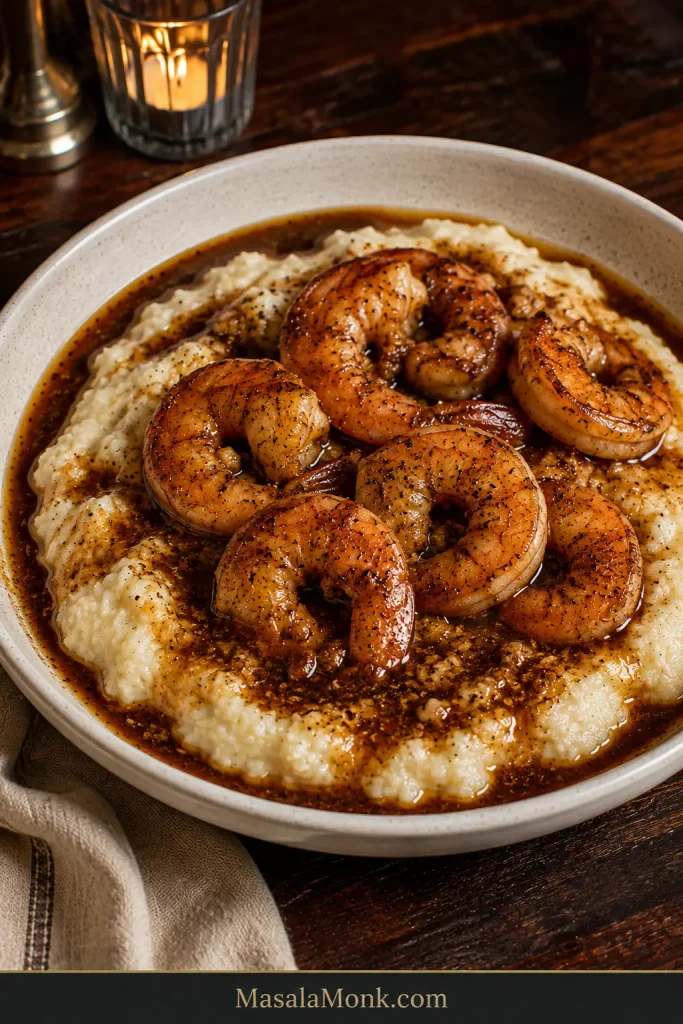
Plain white rice gives the buttery cooking juices somewhere else to land and makes the whole meal easier to eat with a fork.
Something Cool and Crisp
A fresh, acidic side gives the butter and pepper some contrast. A cucumber salad with vinegar, dill and onion can chill while you cook and is especially useful when the shrimp are the rich centerpiece of the meal.
Yes, It’s Supposed to Be a Little Messy
Shell-on shrimp call for napkins before the skillet reaches the table. Serve them in shallow bowls, put another bowl nearby for discarded shells and let everyone peel with their hands.
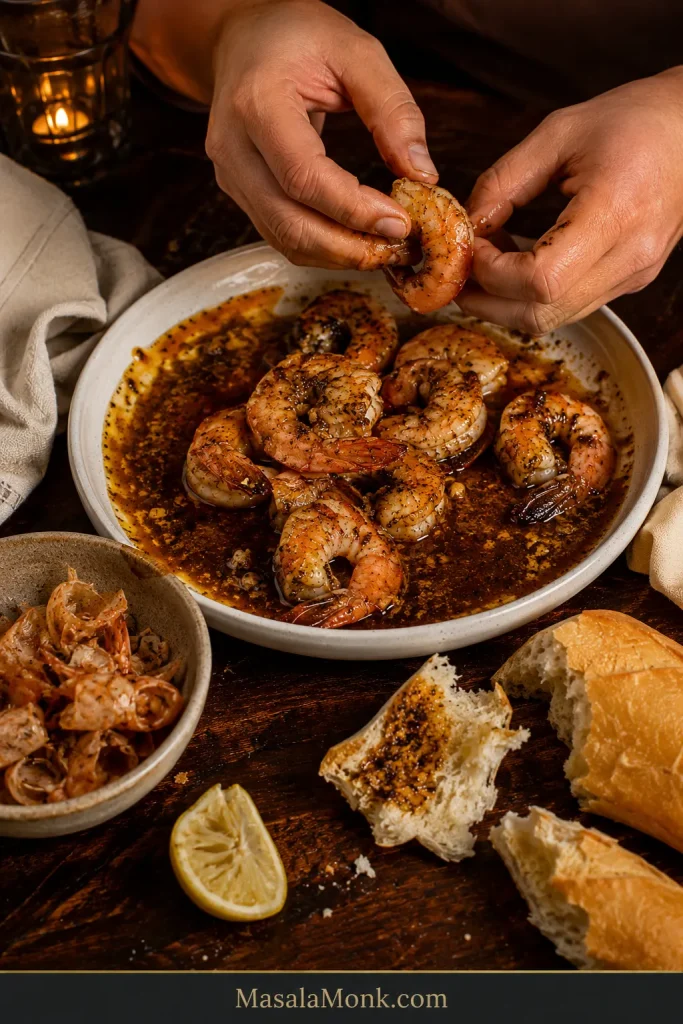
The sauce on your fingers, bread dragged through the bottom of the bowl and that final lemony, peppery mouthful are part of the experience. If that hands-on peel-and-dip style of dinner is what you enjoy, a Cajun seafood boil takes the same communal instinct to a much bigger scale.
Storage and Reheating
Refrigerate leftovers promptly—within 2 hours of cooking, or within 1 hour if they’ve been sitting in temperatures above 90°F / 32°C.
For the best texture, eat the shrimp within a day or two. Properly refrigerated leftovers can be kept for 3–4 days.
For reheating, separate the cold shrimp from the sauce when practical. Warm the sauce gently over low heat, adding a teaspoon or two of water if it has tightened in the refrigerator. Return the shrimp only long enough to heat the leftovers through to 165°F / 74°C.
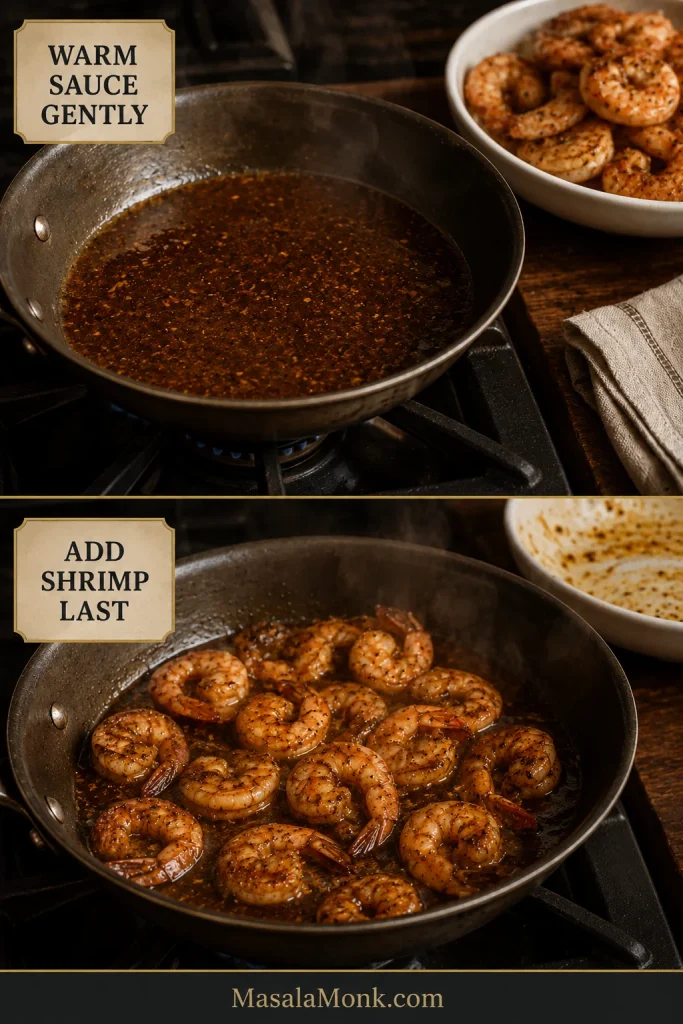
A hard simmer or long microwave blast is far more likely to give you rubbery shrimp and a broken butter sauce. Refrigeration also treats the dish better than freezing, which works against both the shrimp texture and the emulsion.
Back to the recipe · Back to top
When the Skillet Is Right
You can see the difference before the first bite. The shrimp are plump and tender, with an easy spring when pressed. Cracked pepper is still visible across the shells. The sauce moves freely around them with a slight sheen. The lemon still comes through clearly against all that butter and black pepper.
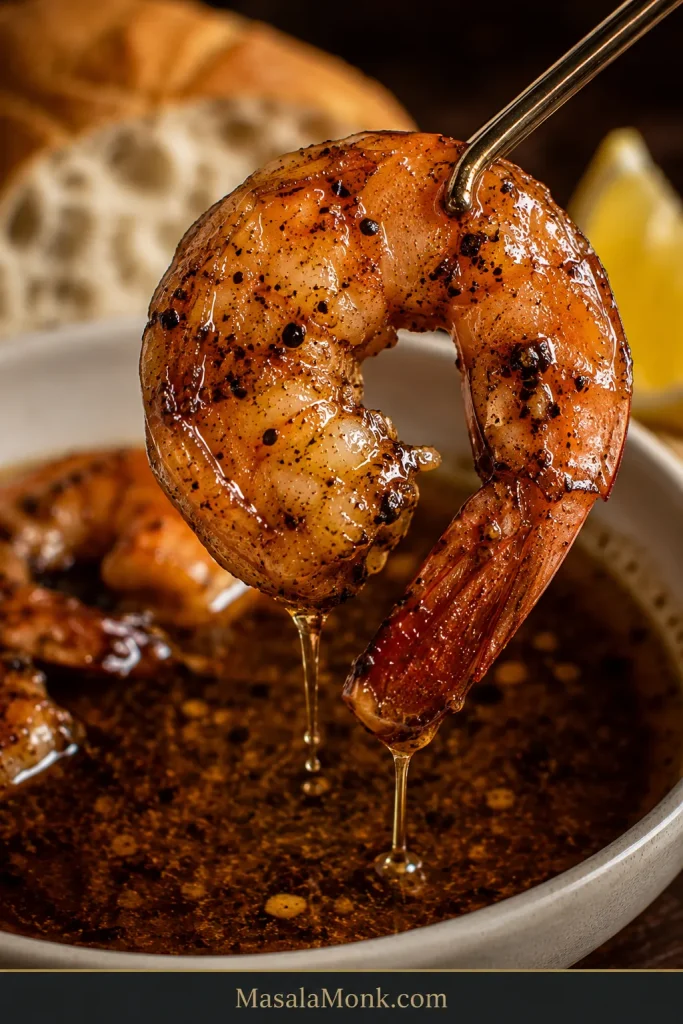
Then the bread goes in.
All the careful reduction, timing and butter work leads to something very simple: juicy shrimp and enough garlicky, peppery sauce that nobody wants to leave the last spoonful behind.
If you make it, tell us which shrimp you used—head-on, easy-peel or peeled—and whether you chose beer, wine or stock. If something behaved differently in your skillet, mention that too. Those little details are often the ones that help the next cook most.








