Posted on Leave a comment

Yum Yum Sauce Recipe

A small white cup of pale pink-orange yum yum sauce served with shrimp fried rice, grilled shrimp, broccoli, zucchini, and hibachi-style vegetables.

This yum yum sauce is the cool, creamy, pale pink-orange sauce people remember from the hibachi plate before anything else. It is a little sweet, a little tangy, rich enough for dipping, and somehow good on almost everything at the table.

Yum yum sauce is a mayo-based hibachi-style sauce made with ketchup or tomato paste, rice vinegar, sugar, garlic powder, onion powder, paprika, and water. It takes about 5 minutes to whisk together, then the fridge does the final work.

Make the simple ketchup version first. Once it chills, you can tune it sweeter, tangier, richer, thinner, or spicier without guessing. Ketchup gives you the friendly first batch; tomato paste gives you the deeper, less sweet version you try once you know what you like.

The goal is not just copying one restaurant bottle. It is to give you the sauce people keep reaching for: creamy but not heavy, sweet but not sugary, thin enough to drizzle, and bold enough to make rice, shrimp, chicken, and vegetables taste finished.

Keep it nearby when dinner is moving toward shrimp, vegetables, or a quick shrimp fried rice plate.

Quick Answer: How to Make Yum Yum Sauce

To make yum yum sauce, whisk mayonnaise with ketchup, rice vinegar, sugar, garlic powder, onion powder, paprika, a pinch of salt, and enough water to make it smooth. Ketchup gives the easiest sweet, pale pink-orange version. Tomato paste can replace ketchup when you want a deeper, less sweet sauce.

You can use it immediately if dinner is ready, but it tastes more like steakhouse-style yum yum sauce after chilling. Thirty minutes helps, 2 hours is better, and overnight gives the smoothest flavor. Stir before serving and thin with a little water if you want it pourable enough for fried rice, shrimp, chicken, vegetables, or bowls.

This sauce is often called hibachi white sauce, Japanese white sauce, shrimp sauce, pink sauce, or Japanese steakhouse sauce. It is best understood as an American hibachi-style restaurant sauce, not a traditional Japanese condiment.

Already cooking? Go straight to the recipe card, or use the texture guide if you need dip, drizzle, or dressing consistency.

Best first batch: Use 1 cup mayo, 2 tablespoons ketchup, 2 teaspoons rice vinegar, 1 teaspoon sugar, 1 teaspoon garlic powder, ½ teaspoon onion powder, ½ teaspoon paprika, a pinch of salt, and 1 to 2 tablespoons water. Chill for 30 minutes. This gives you the classic sweet, creamy hibachi-style version before you start adjusting.

Ingredients for yum yum sauce arranged on a kitchen counter, including mayonnaise, ketchup, rice vinegar, sugar, garlic powder, onion powder, paprika, salt, water, a whisk, and a mixing bowl.
Start with the ketchup version when making your first batch because it gives the easiest sweet baseline before you adjust tang, heat, or richness.

Yum Yum Sauce at a Glance

Best default versionRegular mayo, ketchup, rice vinegar, sugar, garlic powder, onion powder, paprika, salt, and water
Active time5 minutes
Minimum total time35 minutes, including a 30-minute chill
Best flavorAfter 2 hours or overnight
YieldAbout 1¼ to 1½ cups / 300 to 360 ml, depending on thinning
Texture goalThick enough to dip, smooth enough to drizzle after thinning
Best withShrimp, fried rice, chicken, steak bites, vegetables, fries, spring rolls, rice bowls, wraps, and burgers
StorageUp to 1 week in an airtight container in the refrigerator

Yum Yum Sauce Recipe

This easy yum yum sauce starts thick and creamy, then thins into the pale pink-orange drizzle people love with fried rice, shrimp, chicken, vegetables, steak bites, fries, spring rolls, and hibachi-style bowls. The main recipe uses ketchup for the easiest first batch. Tomato paste, Kewpie mayo, butter, and heat are included as optional upgrades when you want a richer steakhouse-style sauce.

Active Time5 minutes
Cook Time0 minutes
Chill Time30 minutes minimum, 2 hours recommended
Minimum Total Time35 minutes
Best FlavorAfter 2 hours or overnight
YieldAbout 1¼ to 1½ cups / 300 to 360 ml
Serving Size2 tablespoons / 30 ml
Servings10 to 12
EquipmentMixing bowl, whisk, measuring spoons, airtight jar, optional squeeze bottle

Ingredients

  • 1 cup mayonnaise / about 230 g
  • 2 tablespoons ketchup / about 30 g
  • 2 teaspoons rice vinegar / 10 ml
  • 1 teaspoon sugar / 4 g
  • 1 teaspoon garlic powder / about 3 g
  • ½ teaspoon onion powder / about 1 g
  • ½ teaspoon paprika or smoked paprika / about 1 g
  • 1 to 2 tablespoons water / 15 to 30 ml, plus more as needed
  • Pinch of salt, to taste

Optional Restaurant-Style Add-Ins

  • Use 1 tablespoon tomato paste / 15 to 16 g instead of ketchup for a deeper, less sweet sauce.
  • Add 1 tablespoon melted cooled butter / 14 g for a silkier, richer finish.
  • Use Kewpie mayo instead of regular mayo for a fuller, more savory base.
  • Add a pinch of cayenne or ½ teaspoon sriracha for gentle heat.
  • If using tomato paste instead of ketchup, increase sugar to 2 teaspoons / 8 g.

Instructions

  1. Add the mayonnaise, ketchup, rice vinegar, sugar, garlic powder, onion powder, paprika, and a pinch of salt to a mixing bowl.
  2. Whisk until the sauce is smooth and evenly colored, with no streaks of tomato or spice.
  3. Add water 1 tablespoon at a time until the sauce reaches your preferred thickness.
  4. If using butter, let the melted butter cool slightly, then whisk it into the sauce. Do not add hot butter directly to the mayo.
  5. Taste lightly, but do not over-adjust yet. The flavor becomes smoother after chilling.
  6. Cover and refrigerate for at least 30 minutes. For better flavor, chill for 2 hours or overnight.
  7. Stir again before serving. Thin with another teaspoon or two of water if needed.

Recipe Notes

  • The ketchup version is sweeter, easier, and the best place to start.
  • The tomato paste version is deeper, less sweet, and better when you want the richer steakhouse-style finish.
  • Thick dip texture needs about 1 tablespoon water. Drizzle texture usually needs 2 to 3 tablespoons water. A looser dressing-style sauce can take up to 4 tablespoons.
  • To double the recipe, double everything except the water. Add water slowly at the end until the texture looks right.
  • Store in an airtight jar in the refrigerator for up to 1 week.
  • Freezing is not recommended because mayo-based sauces can separate after thawing.

Closest restaurant-style version: Use Kewpie mayo, 1 tablespoon tomato paste instead of ketchup, 2 teaspoons sugar, 1 tablespoon cooled melted butter, 2 tablespoons water, and a tiny pinch of cayenne. Chill for at least 2 hours before serving.

Rich pale pink-orange yum yum sauce with a squeeze bottle, tomato paste, melted butter, cayenne, and fried rice with shrimp in the background.
For a richer steakhouse-style sauce, tomato paste, cooled melted butter, and a tiny pinch of heat make the flavor rounder.

Before You Start

Start with the ketchup version if this is your first batch. It tastes familiar right away: sweet, creamy, lightly tangy, and close to the sauce-cup flavor people remember from hibachi dinners. Try tomato paste next time if you want deeper color, stronger tomato flavor, and less sweetness.

If it tastes like plain mayo after the first whisk, do not panic. That is normal before the sauce rests. A freshly mixed batch can taste sharper than expected, so give it 30 minutes before you start fixing things that may not be broken.

Yum yum sauce is a finishing sauce, not a pan sauce. Add it after cooking, not while the food is simmering or frying. For a sauce that cooks with the food, use this stir fry sauce recipe instead.

Choose Your Version: Classic, Richer, Spicy, or Lighter

The best version depends on what you want from the sauce tonight. Ketchup gives you the familiar sweet hibachi-night flavor. Tomato paste makes it deeper and less sweet. Kewpie and butter push it richer. Yogurt makes it lighter for bowls, even though it moves away from the classic copycat feel.

VersionUse ThisWhat It Tastes Like
Classic easy sauceMayo + ketchup + rice vinegar + sugar + garlic powder + paprikaFamiliar, gently sweet, family-friendly
Deeper sauceMayo + tomato paste + a little extra sugarLess sweet, deeper in color, more concentrated
Richer steakhouse-style sauceKewpie mayo + tomato paste + cooled melted butterSmoother, fuller, more savory
Spicy versionAdd cayenne, sriracha, sambal, or chili garlic sauceCreamy with gentle to medium heat
Keto or lower-sugar sauceTomato paste instead of ketchup + keto sweetenerTangier, less sweet, still creamy
Lighter bowl sauceHalf mayo + half Greek yogurtBrighter, lighter, better for bowls than copycat flavor

For a completely different quick dip in the same weeknight-sauce family, this peanut sauce recipe is better when you want something nutty, salty-sweet, and built for noodles or spring rolls.

Ketchup vs Tomato Paste

Stuck between ketchup and tomato paste? Use this as the simple rule: use ketchup for the easy sweet version and tomato paste for the deeper, less-sweet version.

Two bowls of yum yum sauce comparing a lighter ketchup version with a deeper tomato paste version, with ketchup and tomato paste nearby.
Choose ketchup for a sweeter yum yum sauce, or tomato paste for a deeper, less-sweet restaurant-style flavor.
Use Ketchup WhenUse Tomato Paste When
You want the easiest versionYou want a deeper flavor
You prefer a sweeter sauceYou want less sweetness
You want a brighter pale pink-orange colorYou want a more concentrated tomato taste
You are making it for kids or family mealsYou are making a keto or lower-sugar version
You want a softer, familiar flavorYou want a richer steakhouse-style base

Ketchup usually needs less sugar. Tomato paste usually needs a little more. Taste after chilling.

Ingredients You Need

The core yum yum sauce ingredients are mayonnaise, ketchup or tomato paste, rice vinegar, sugar, garlic powder, onion powder, paprika, water, and salt. Butter and heat are optional.

Mayonnaise

Mayonnaise is the body of the sauce. Use one you already like, because its flavor comes through. Regular mayo works well. Kewpie tastes richer and slightly more savory. Light mayo or avocado oil mayo can work if you like the flavor, but the sauce may taste sharper or thinner. If using Miracle Whip, reduce the sugar and vinegar because it is already sweeter and tangier.

Ketchup or Tomato Paste

Ketchup gives the sauce that familiar hibachi-night sweetness. Tomato paste is the version you try when you want it to taste a little less sweet and a little more grown-up.

Rice Vinegar

Rice vinegar cuts through the richness of the mayo and keeps the sauce from tasting flat. It is mild enough to brighten the sauce without making it harsh.

Sugar

A little sugar gives the sauce its familiar sweet finish. Ketchup already contains sweetness, so the ketchup version needs less. Tomato paste is less sweet, so it usually needs a little more.

Garlic Powder, Onion Powder, and Paprika

Garlic powder and onion powder give savory depth without raw garlic bite. Paprika gives the sauce its warm color and keeps the flavor from feeling plain. Smoked paprika adds a deeper note that works well with grilled chicken, fried rice, shrimp, or steak bites.

Butter and Water

Butter is optional. Add it when you want the sauce to feel fuller and more like the little cup from a steakhouse; skip it when you want a brighter drizzle for rice or vegetables. Water decides whether the sauce behaves like a dip, drizzle, or dressing. Add it slowly because a small amount changes the consistency quickly.

Why This Recipe Works

This sauce works because every small ingredient fixes one common problem. Vinegar keeps the mayo from tasting heavy. Tomato gives color and tang. Sugar rounds the edges. Garlic powder, onion powder, and paprika make it taste like more than seasoned mayo. Water turns it from a thick dip into the soft ribbon people want over fried rice, shrimp, chicken, and vegetables.

The rest time matters too. After chilling, the garlic powder softens, the paprika settles into the mayo, and the vinegar stops tasting sharp. After 30 minutes it tastes more blended; after 2 hours it tastes closer to the steakhouse-style sauce people remember.

No Rice Vinegar? Use These Instead

Rice vinegar is mild and slightly sweet, which is why it works well here. Rice vinegar is usually milder than sharp white vinegar; for example, Kikkoman lists its rice vinegar at 4.2% acidity. If you need a swap, use another gentle acid and adjust slowly.

A bowl of yum yum sauce surrounded by rice vinegar, apple cider vinegar, white vinegar, lemon juice, seasoned rice vinegar, lemon wedges, and small labeled cards.
When replacing rice vinegar, start small; apple cider vinegar, white vinegar, lemon juice, and seasoned rice vinegar all sharpen the sauce differently.
SubstituteHow to Use It
Apple cider vinegarUse the same amount. It is slightly fruitier and a little sharper.
White vinegarUse a little less at first because it can taste sharper.
Lemon juiceUse the same amount for a fresher, brighter sauce.
Seasoned rice vinegarUse the same amount, but reduce the sugar slightly because it may already be sweetened.
MirinUse a small splash for sweetness and depth, but do not rely on it as the only acid.

Avoid strong vinegars like balsamic or malt vinegar. They can overpower the mayo and tomato. Whichever swap you use, start small, let the sauce rest, and adjust after the flavor settles.

Butter or No Butter?

No, yum yum sauce does not need butter. A good sauce can be made with mayo, ketchup or tomato paste, vinegar, sugar, seasonings, and water. Butter is optional; it makes the sauce richer and silkier, but the sauce still works without it.

Add butter if you want a fuller, sauce-cup style finish. Skip it if you want a brighter sauce for fried rice, spring rolls, or vegetables. If you use butter, melt it gently and let it cool until warm, not hot, before whisking it into the mayo.

How to Make Yum Yum Sauce

Add the mayo, ketchup, vinegar, sugar, garlic powder, onion powder, paprika, and salt to a bowl. Whisk until the sauce is completely smooth and there are no streaks of tomato or spice left in the mayo.

A hand whisking mayonnaise, ketchup, vinegar, sugar, garlic powder, onion powder, paprika, and salt in a ceramic bowl to make yum yum sauce.
Once the mayo, ketchup, vinegar, sugar, and spices turn evenly colored, the sauce is ready to chill and settle.

Thin the sauce with water. Start with 1 tablespoon for a thick dip. Add more water 1 teaspoon to 1 tablespoon at a time until it reaches the texture you want. If you are adding butter, make sure it is warm, not hot, before whisking it in.

Finished Sauce Texture

Once the sauce is fully whisked, check the spoon trail before you start changing the flavor. The texture should look glossy and smooth, not stiff or grainy.

A close-up of smooth pale pink-orange yum yum sauce in a bowl, with a spoon dragging through the glossy surface.
A good finished sauce should leave a glossy spoon trail; if it looks stiff or heavy, loosen it slowly with water.

Taste the sauce, but do not make aggressive adjustments right away. Freshly mixed sauce often tastes more mayo-forward than the finished version. Cover and refrigerate it for at least 30 minutes, then stir and taste again.

A Few Things Not to Rush

  • Do not add all the water at once. The sauce can go from thick dip to thin dressing quickly.
  • Do not add hot butter directly to mayo. Let it cool first so the sauce stays smooth.
  • Do not cook the finished sauce in fried rice or stir-fry. Add it after cooking.
  • Do not use strong vinegars like balsamic or malt vinegar. They take the sauce in a completely different direction.

Best Texture: Dip, Drizzle, or Dressing

The right texture depends on the plate. Fries need a thick dip. Fried rice needs a loose ribbon. Shrimp can go either way.

A three-part texture guide showing yum yum sauce as a thick dip with shrimp, a drizzle over fried rice, and a dressing over a slaw-style bowl.
Instead of using one texture for everything, keep it thick for dipping, looser for rice, and lightest for bowls or slaw.
TextureWater AmountBest For
Thick dip1 tablespoon / 15 mlShrimp, fries, nuggets, spring rolls, dumplings, roasted potatoes
Drizzle sauce2 to 3 tablespoons / 30 to 45 mlFried rice, chicken bowls, hibachi shrimp, steak bites, vegetables
Dressing-style sauce3 to 4 tablespoons / 45 to 60 ml, plus a little extra vinegarSalads, slaws, grain bowls, cold noodle bowls

The sauce should fall softly from a spoon for rice, but cling after one dip for shrimp, fries, and spring rolls. If you are serving it with hot fried rice, make it slightly thinner than you think; the rice will make a thick sauce feel heavier. If the sauce is for fries or spring rolls, stop thinning early so it clings to crispy edges.

Serving ideas: jump to fried rice, shrimp, bowls, or crispy snacks.

Why Yum Yum Sauce Tastes Better After Chilling

You can use the sauce immediately, but it tastes better after chilling. Right after mixing, the mayo, vinegar, tomato, sugar, and spices can taste separate. The sauce may also taste more mayo-forward than expected.

After 30 minutes in the fridge, the garlic powder and onion powder soften into the sauce. The paprika and tomato blend into the fat. The vinegar becomes less sharp, and the sweetness tastes less raw. After 2 hours, the flavor usually lands much closer to the hibachi-style sauce people remember from restaurants.

If you have time, make it the night before. Overnight chilling gives the smoothest flavor. If the sauce has been in the fridge overnight, let it sit for 5 to 10 minutes and stir before serving. It should be cool, not icy-thick.

Jump to recipe · Texture guide · Back to top

Hibachi White Sauce, Japanese White Sauce, and Shrimp Sauce

If you have ever searched for “that white sauce from hibachi,” this is probably the sauce you meant. In many American hibachi and Japanese steakhouse-style restaurants, this creamy sauce is called yum yum sauce, hibachi white sauce, Japanese white sauce, shrimp sauce, pink sauce, or Japanese steakhouse sauce.

The names come from how people use it. Some remember it with shrimp, some with fried rice, and some from the little sauce cups at a steakhouse. Even though it is often called white sauce, most homemade versions are pale peach or pink-orange because of ketchup, tomato paste, and paprika.

There is no single official formula. The goal is the familiar balance: cool mayo base, gentle sweetness, mild tang, pale tomato color, and enough water to make it dip-friendly or drizzle-friendly.

Homemade vs Store-Bought Yum Yum Sauce

Store-bought yum yum sauce is useful when you just want a squeeze bottle in the fridge. The problem is that bottled versions can swing too sweet, too salty, too thin, or too much like a generic mayo dressing.

Homemade is better when you want the sauce to match the plate: thicker for fries, looser for fried rice, sweeter for kids, tangier for shrimp, richer for steakhouse-style bowls. You can also make gluten-free, vegan, keto, or lighter versions more easily when you control the ingredients.

What to Eat with Yum Yum Sauce

Think of this as a cool finishing sauce. It works anywhere you want something creamy enough to soften heat, bright enough to wake up rice, and rich enough to cling to crispy snacks. This is the drizzle that makes plain rice, shrimp, and vegetables feel like hibachi night at home.

UseBest Texture
Fried riceLoose drizzle
ShrimpThick dip or light drizzle
Chicken bowlsDrizzle
Fries and nuggetsThick dip
Spring rolls and dumplingsThick dip
Burgers, wraps, and tacosSpread texture
Salads and slawsDressing-style

Fried Rice and Hibachi Plates

On fried rice and hibachi-style plates, keep it loose enough to fall from a spoon. You want pale, creamy streaks across hot rice, not a heavy scoop sitting on top. Add the sauce after cooking so the rice stays fluffy and the sauce stays smooth.

Yum yum sauce being spooned in ribbons over shrimp fried rice with egg, peas, carrots, scallions, and visible rice grains.
Drizzle the sauce after cooking fried rice so the grains stay fluffy and the cool sauce does not turn oily.

Shrimp, Seafood, and Chicken

Shrimp can go either way: thick as a dip or slightly loosened as a drizzle. For shrimp, the sauce should be thick enough to cling after one dip. If the protein is already rich or fried, add a little extra vinegar to the sauce for balance.

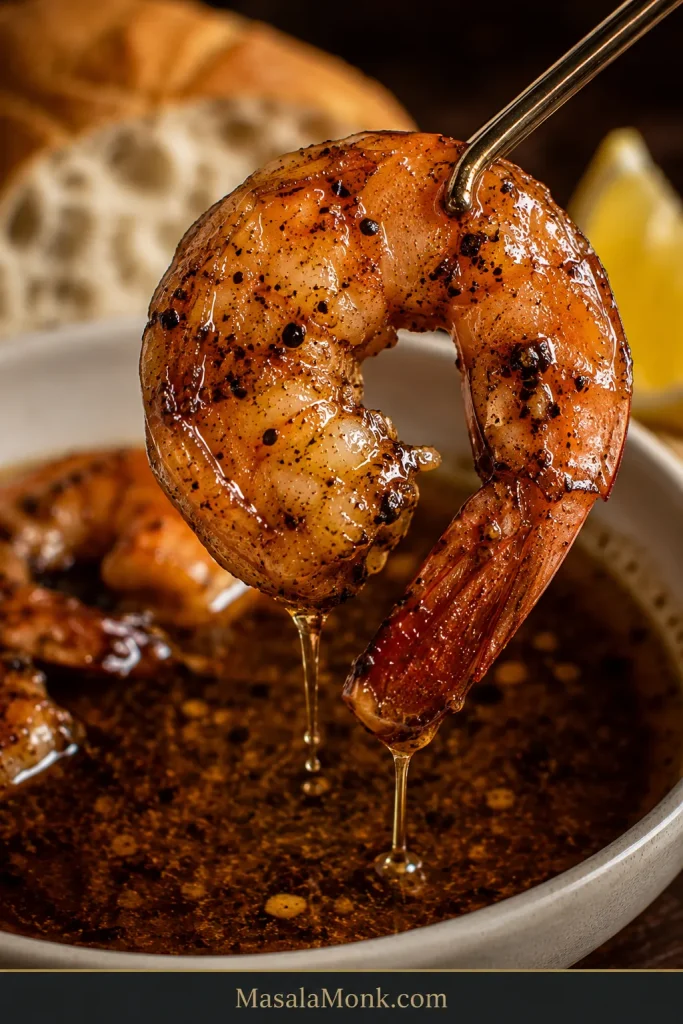
A grilled shrimp held by fingers and dipped into thick pale pink-orange yum yum sauce in a ceramic bowl.
Hibachi shrimp sauce works best as a thicker dip that clings after one swipe instead of sliding off the shrimp.

For another quick shrimp dinner with a brighter lemon-garlic direction, keep this shrimp scampi recipe nearby. If the meal is more fried fish than hibachi shrimp, this homemade tartar sauce is the better match.

Chicken, Steak Bites, and Hibachi Vegetables

Chicken and steak bites are best with a cool, smooth sauce that softens charred edges without hiding the grilled flavor.

A plate of grilled chicken pieces, steak bites, hibachi-style vegetables, and a bowl of pale pink-orange yum yum sauce, with sauce on one piece of steak.
Beyond shrimp, a cool hibachi-style sauce helps balance grilled chicken, steak bites, onions, zucchini, and peppers.

Bowls, Wraps, and Rice Meals

Bowls need a smoother drizzle. A spoonful can make a simple bowl feel finished, especially when there is warm rice, crunchy cucumber, cabbage, lettuce, carrots, grilled chicken, shrimp, beef, tofu, or crispy vegetables.

A rice bowl with grilled chicken, white rice, cucumber, purple cabbage, carrots, scallions, sesame seeds, and yum yum sauce drizzled across the top.
In rice bowls, a light drizzle adds flavor without covering the crunch of cucumber, cabbage, and carrots.

A seafood rice bowl can borrow the build from this salmon bowl recipe. With beef and rice, use it as a cool creamy contrast beside a saucy Korean beef bowl.

Fries, Spring Rolls, Dumplings, and Snacks

Crispy snacks are where the thicker version wins. Start with only 1 tablespoon water so the sauce clings to fries, nuggets, spring rolls, dumplings, potstickers, onion rings, roasted potatoes, and other crunchy bites instead of sliding back into the bowl.

A snack board with a bowl of thick yum yum sauce surrounded by fries, spring rolls, dumplings, nuggets, roasted potatoes, and onion rings.
Crispy snacks need a thicker sauce, so fries, spring rolls, dumplings, nuggets, and onion rings can catch it on their edges.

With spring rolls and fries, keep it spoonable and thick so every crispy edge catches some sauce. A crisp snack plate works well beside crispy veg spring rolls, fries, dumplings, or roasted potatoes.

Sandwiches, Burgers, and Tacos

As a burger, taco, or sandwich spread, keep it thicker than drizzle texture so it stays where you put it. It pairs especially well with crunchy lettuce, cucumber, cabbage, grilled chicken, shrimp, or crispy tofu.

Yum Yum Sauce Variations

Make the main version first if you can. Once you know the baseline, these variations help you make it spicier, richer, lighter, vegan, gluten-free, or lower in sugar.

Spicy Yum Yum Sauce

Add cayenne, sriracha, sambal, chili garlic sauce, or your favorite hot sauce. A pinch of cayenne gives gentle heat. About ½ to 1 teaspoon sriracha makes the sauce noticeably spicy. If it becomes too hot, add more mayo and a small pinch of sugar.

For a hotter fruit-and-chili direction that goes further than yum yum sauce, save this mango habanero sauce recipe for tacos, wings, shrimp, grilled chicken, paneer, tofu, or vegetables.

Kewpie Mayo Version

Kewpie mayo makes the sauce richer, smoother, and slightly more savory. It is a good choice if you want a fuller steakhouse-style flavor. Regular mayo still works well, especially when balanced with vinegar, tomato, garlic powder, paprika, and rest time.

Gluten-Free Version

This sauce can be made gluten-free if every packaged ingredient you use is labeled gluten-free. Check the mayo, ketchup, tomato paste, vinegar, hot sauce, and spice blends. If you add soy sauce, chili garlic sauce, or another condiment, choose a gluten-free version.

Vegan Version

Use vegan mayo in place of regular mayo. Skip the butter or use vegan butter. Sugar, maple syrup, or another sweetener can round out the flavor. Vegan mayo gives a more classic result than yogurt-style bases because it keeps the sauce creamy and rich.

Keto or Lower-Sugar Version

Tomato paste is usually the cleaner low-sugar base because ketchup brings sweetness before you even add a sweetener. Replace the sugar with a keto-friendly sweetener, then taste after chilling because some sweeteners can feel sharper before the sauce rests.

Low-Calorie or Greek Yogurt Version

The half-mayo, half-yogurt version is the sweet spot. It still tastes like a creamy sauce, while a full-yogurt version tastes more like a tangy bowl dressing. Use it for bowls, salads, slaws, or lighter chicken-and-rice plates rather than a strict hibachi copycat.

No-Mayo Version

You can make a no-mayo version with Greek yogurt, sour cream, vegan sour cream, or blended cashew cream, but it becomes a different sauce. To keep it balanced, add tomato, vinegar, sweetener, and seasoning in small amounts, then let it rest before adjusting again.

Troubleshooting Yum Yum Sauce

Most “failed” yum yum sauce is not actually failed. It usually just needs a short rest, a tiny splash of acid, or a spoonful of mayo to bring it back. If the flavor still feels off after chilling, the fix is usually small.

Yum yum sauce texture comparison showing a too-thick mound-like sauce beside a smoother drizzle texture, with water and a spoon nearby.
If the sauce is too thick, add water one teaspoon at a time until it changes from a mound to a smooth drizzle.
ProblemHow to Fix It
It tastes too much like mayoChill first. Then add a little more vinegar, paprika, garlic powder, ketchup or tomato paste, and a small pinch of sugar.
Too sweetAdd rice vinegar, lemon juice, or a pinch of salt.
Sharp or tangyAdd more mayo and a tiny pinch of sugar.
Thick and heavyAdd water 1 teaspoon at a time until it loosens.
Thin or runnyAdd mayo 1 tablespoon at a time until it thickens.
Looks too paleAdd a little more tomato paste, ketchup, or paprika.
Looks too orangeAdd more mayo.
Not steakhouse-style enoughUse Kewpie mayo, add the optional cooled butter, and chill the sauce longer.
Too spicyAdd mayo and a small pinch of sugar.
Tastes flatAdd salt, onion powder, garlic powder, or a tiny splash of rice vinegar.

When It Tastes Too Much Like Mayo

A mayo-heavy sauce usually needs rest and small balancing moves, not a full restart.

A bowl of yum yum sauce with rice vinegar, paprika, garlic powder, ketchup, sugar, and two spoons comparing a mayo-forward sauce with a more balanced sauce.
When the sauce tastes mayo-heavy, rest it first; then balance it with rice vinegar, ketchup or tomato paste, paprika, garlic, and sweetness.

Storage and Make-Ahead

Store yum yum sauce in an airtight jar or covered container in the refrigerator for up to 1 week. Stir it before serving because the sauce may thicken slightly as it chills.

A glass jar and squeeze bottle filled with pale pink-orange yum yum sauce on a kitchen counter beside an open refrigerator, with date labels.
Refrigerate homemade yum yum sauce in a jar or squeeze bottle, then stir before serving because it thickens as it chills.

This is a good make-ahead sauce. The flavor is better after at least 30 minutes and usually best after 2 hours or overnight. If you are serving it for a hibachi-style dinner, make the sauce first and let it chill while you prepare the rice, shrimp, chicken, or vegetables.

A squeeze bottle is helpful when you want the restaurant-style drizzle over rice and shrimp. For storage, a jar is easier to clean.

Keep the sauce refrigerated and do not leave it sitting out for long periods. This is not a shelf-stable sauce and it is not meant for canning. For general food safety, FoodSafety.gov recommends refrigerating perishable foods within 2 hours and keeping the refrigerator at 40°F / 4°C or below.

If you use Greek yogurt, vegan mayo, homemade mayo, or any ingredient with a shorter use-by date, follow the shortest storage time. Freezing is not recommended because mayo-based sauces can separate and turn grainy after thawing.

Make-ahead tip: Make the sauce first when you start dinner. By the time the rice, shrimp, chicken, or vegetables are ready, the flavor will already be smoother. It is one of those small prep steps that makes tomorrow’s rice bowl easier before tomorrow even starts.

Jump to recipe · Troubleshooting · Back to top

FAQs

What is yum yum sauce made of?

Yum yum sauce is usually made with mayonnaise, ketchup or tomato paste, vinegar, sugar, garlic powder, paprika, and water. Some versions also include butter, onion powder, cayenne, sriracha, mirin, or hot sauce.

Is yum yum sauce actually Japanese?

Not traditionally. It is best known as an American hibachi-style sauce served at many Japanese steakhouse-style restaurants.

Is yum yum sauce the same as hibachi white sauce?

Usually, yes. Many restaurants and home cooks use those names for the same creamy mayo-based sauce.

Is yum yum sauce the same as spicy mayo?

No. Spicy mayo is usually mayo mixed with sriracha or another hot sauce. Yum yum sauce has more rounded flavor from tomato, vinegar, sugar, garlic powder, paprika, and water.

Can I make yum yum sauce without tomato paste?

Yes. Use ketchup instead. For this recipe, 2 tablespoons ketchup gives the easiest sweet, pale pink-orange sauce. Because ketchup is already sweet, start with only 1 teaspoon sugar and adjust after chilling.

Is this Benihana-style yum yum sauce?

It is a homemade hibachi-style sauce in the same creamy, sweet-tangy family, but restaurant formulas vary. For the closest restaurant-style version, use Kewpie mayo, tomato paste, cooled melted butter, a tiny pinch of heat, and a 2-hour chill.

What can I use instead of rice vinegar?

Use apple cider vinegar, white vinegar, lemon juice, or seasoned rice vinegar. White vinegar is sharper, so start with a little less. Seasoned rice vinegar may already contain sugar, so reduce the sugar slightly.

Does yum yum sauce need butter?

No. Butter is optional. It adds richness and a silkier texture, but the sauce still works without it. If using butter, cool it before whisking it into the mayo.

Why does my yum yum sauce taste like mayo?

Freshly mixed sauce often tastes mayo-forward before it rests. Chill it for at least 30 minutes, then add a little more vinegar, paprika, garlic powder, tomato, and sugar if needed.

Is yum yum sauce good on fried rice?

Yes. Thin it to drizzle texture and add it after cooking, not in the pan. It gives hot fried rice a creamy, tangy finish without making the rice soggy.

What does yum yum sauce go with?

It goes well with shrimp, fried rice, chicken, steak, vegetables, rice bowls, fries, spring rolls, dumplings, nuggets, burgers, wraps, and roasted potatoes.

Is yum yum sauce gluten-free?

It can be gluten-free if every packaged ingredient you use is labeled gluten-free. Check mayo, ketchup, vinegar, hot sauce, spice blends, and any add-ins.

How long does homemade yum yum sauce last?

It keeps for up to 1 week in an airtight container in the refrigerator. Stir before serving and discard it if it smells off, changes texture, or has been left out too long.

Can you freeze yum yum sauce?

Freezing is not recommended. Mayo-based sauces can separate, turn watery, or become grainy after thawing. Make a fresh batch and store it in the refrigerator instead.

How do I make yum yum sauce spicy?

Add cayenne, sriracha, sambal, chili garlic sauce, or hot sauce. Start small, chill the sauce, and taste again before adding more.

Jump to recipe · Storage · Back to top

Posted on Leave a comment

Frozen Shrimp in Air Fryer: No-Thaw Time & Temp Guide

Cooked shrimp on a white plate with lemon wedges, garlic butter, parsley, and a blurred air fryer in the background.

This is the kind of recipe for the night when dinner was not really planned, the shrimp are still frozen, and you need the air fryer to save the meal. A bag of frozen shrimp can turn into shrimp tacos, rice bowls, pasta, salads, wraps, or garlic-butter shrimp in minutes — but only if you use the right timing for the shrimp you actually have.

Do not start with the timer. Start with the bag: raw or precooked, small or jumbo, peeled or shell-on, plain or breaded/coated. The rule is simple: cook raw shrimp, reheat precooked shrimp, and crisp coated shrimp. No thawing bowl, no guessing, no rubbery shrimp if you start with that bag check.

Quick Answer

Most plain frozen raw shrimp takes 8 to 10 minutes at 400°F / 205°C in the air fryer, with a shake or flip halfway. Frozen cooked or precooked shrimp takes 4 to 6 minutes at 375°F to 400°F / 190°C to 205°C because it only needs reheating.

Icy, glazed, or stuck-together pieces need a short head start. Air fry them plain for 2 to 3 minutes first, then separate them, drain off extra moisture if needed, add oil and seasoning, and finish cooking. Some frozen shrimp has a thin ice glaze, and that is normal. The short head start helps the flavor stick to the seafood, not the ice.

That tiny pause is the difference between seasoning the shrimp and seasoning the basket.

Timing graphic showing raw frozen shrimp at 400°F for 8 to 10 minutes, cooked frozen shrimp for 4 to 6 minutes, and icy shrimp loosened before seasoning.
Start with the timing split: raw frozen shrimp needs full cooking time, while precooked shrimp only needs a quick reheat.

Jump to What You Need

Bag Check: What Do You Have?

Use this quick check before you set the timer. It is the fastest way to avoid rubbery precooked shrimp, bland icy shrimp, or coated shrimp that browns outside before it heats through.

What the bag says or looks likeWhat to do
Grey or translucent shrimpCook as raw shrimp
Pink, orange, or white shrimpReheat only; do not use raw-shrimp timing
Icy, glazed, or clumped piecesAir fry briefly, separate, then season
Jumbo shrimp, prawns, or shell-on shrimpUse size-based timing and check doneness
Breaded, popcorn, coconut, or scampi shrimpFollow package timing and crisping cues
Bag check guide showing raw, cooked, icy, jumbo, shell-on, prawn, breaded, and coated frozen shrimp categories for air fryer timing.
Before the shrimp goes into the air fryer, check the bag. Raw, cooked, icy, jumbo, shell-on, and coated shrimp need different timing.

Air Fryer Frozen Shrimp Recipe

The recipe below is the simple cook-now path for plain frozen raw shrimp — the bag most people grab when dinner needs to happen fast. If yours is cooked, jumbo, shell-on, thawed, prawn-style, or coated, use the chart right after the card to adjust.

Recipe at a Glance

Cooking methodAir fryer
Shrimp typePlain frozen raw shrimp
ThawingNo thawing needed
Prep time3 minutes
Cook time8 to 10 minutes
Total time11 to 13 minutes
Serves3 to 4
Temperature400°F / 205°C
Using precooked shrimp?Reduce time to 4 to 6 minutes

Ingredients

  • 1 lb / 454 g frozen raw shrimp, peeled and deveined
  • 1 tbsp / 15 ml olive oil or avocado oil
  • ½ tsp garlic powder
  • ½ to 1 tsp paprika, Cajun seasoning, or Old Bay-style seafood seasoning
  • Salt: ¼ to ½ tsp, depending on how salty your seasoning blend is
  • ¼ tsp black pepper
  • Lemon wedges, to serve
  • Optional: 1 tbsp / 14 g melted butter, for finishing
  • Fresh herbs, optional: 1 to 2 tbsp chopped parsley or cilantro

For a smaller 8 oz / 225 g batch, use half the shrimp and roughly half the seasoning. Smaller batches are especially useful in 3 to 4 quart air fryers.

Frozen shrimp, oil, garlic powder, paprika, salt, pepper, lemon, melted butter, herbs, and an unbranded freezer bag arranged on a light counter.
Keep the base simple: oil helps seasoning cling, dry spices add quick flavor, and lemon or butter finishes the shrimp cleanly.

Method

  1. Preheat the air fryer to 400°F / 205°C for 3 to 5 minutes.
  2. Add the frozen shrimp in a mostly single layer.
  3. If the pieces are icy, glazed, or clumped, air fry them plain for 2 to 3 minutes first.
  4. Shake, separate, and drain excess liquid if needed.
  5. Toss with oil, garlic powder, seasoning, salt, and pepper.
  6. Air fry for 8 to 10 minutes total, shaking or flipping halfway, until opaque and tender.
  7. Finish with lemon, melted butter, herbs, or your favorite sauce. For a full garlic-butter pasta route, use the shrimp in a shrimp scampi-style dinner.

The batch is ready when the center is opaque, not grey or glassy. For jumbo, precooked, shell-on, thawed, or prawn-style bags, use the timing chart below.

Frozen Shrimp Air Fryer Time and Temperature Chart

Use this chart when your bag is not plain frozen raw shrimp. Size, raw or cooked status, surface ice, and crowding can all change the timing.

ShrimpTempTimeCue
Frozen raw small or medium400°F / 205°C6 to 8 minOpaque, gently curled
Frozen raw large400°F / 205°C8 to 10 minOpaque through center
Frozen raw jumbo400°F / 205°C9 to 12 minCheck thickest piece
Frozen cooked or precooked shrimp375°F to 400°F / 190°C to 205°C4 to 6 minHot through, not tight
Thawed raw shrimp350°F to 375°F / 175°C to 190°C5 to 7 minPat dry first
Thawed cooked shrimp350°F / 175°C2 to 4 minWarm gently
Shell-on frozen shrimp400°F / 205°C8 to 12 minShells pink, flesh opaque
Frozen prawns400°F / 205°C8 to 12 minTime by size

Treat the chart as a starting point, then let doneness get the final vote. In most baskets, large raw shrimp land in the 8 to 10 minute range, but crowding or a heavy glaze can push the batch toward the longer end. If the basket looks watery, it usually means surface ice is melting, so drain if needed instead of cooking the shrimp longer.

Got your timing? Go to the step-by-step method.

How to Air Fry Frozen Shrimp

The method below gives you tender shrimp without thawing first. That small head start for icy pieces is worth it because it keeps the seasoning from washing away. Frozen shrimp is fast, but it asks for one favor: stop early and check.

1. Preheat the air fryer

Preheat to 400°F / 205°C for raw frozen shrimp. A hot basket helps the pieces start cooking quickly instead of slowly thawing and releasing too much liquid.

2. Add the shrimp in one layer

Place the frozen shrimp in the basket in a mostly single layer. A little overlap is fine, but avoid a thick pile. You are not trying to fill the basket; you are trying to give the hot air room to work.

Grey frozen raw shrimp with visible frost spread in a mostly single layer inside a black air fryer basket.
A mostly single layer gives frozen raw shrimp space to cook evenly instead of trapping steam in a crowded basket.

3. Loosen icy or clumped shrimp first

When the pieces are stuck together or covered in a thin ice glaze, air fry them plain for 2 to 3 minutes. Then shake the basket and separate them with tongs. After that short head start, the icy glaze should look wet instead of frosty, and the pieces should separate easily. That is the moment to season.

Side-by-side comparison of icy clumped frozen shrimp before cooking and loosened shrimp after a short air fryer head start.
When shrimp is clumped or heavily glazed, loosen it first; then seasoning sticks to the shrimp instead of melting away.

4. Add oil and seasoning

Move the shrimp to a bowl if needed, then toss with oil, garlic powder, seasoning, salt, and pepper. Drain any liquid in the basket before adding the shrimp back.

Shrimp being tossed in a bowl with oil, garlic powder, paprika, salt, and pepper after the frost has loosened.
Season once the surface frost softens. At that point, oil and spices can coat the shrimp instead of pooling below.

5. Finish cooking

Air fry until the pieces are opaque and tender, shaking or flipping halfway. Use the timing chart for small, jumbo, precooked, shell-on, thawed, or prawn-style bags.

Partly cooked shrimp in an air fryer basket with tongs turning the pieces halfway through cooking.
Halfway through cooking, shake or flip the shrimp so pale centers, pink edges, and released moisture even out.

6. Finish with lemon or butter

Squeeze lemon over the hot shrimp. For a richer finish, toss with melted butter, chopped herbs, garlic butter, or a quick sauce after cooking. When it works, the shrimp tastes bright and clean, with lemon, butter, and seasoning clinging to the surface instead of sliding into the basket.

Close-up of finished air fryer shrimp with lemon butter, herbs, and light seasoning on the surface.
Finished shrimp should look moist, pearly, and lightly curled, with the seasoning clinging to the surface instead of the basket.

How Shrimp Type Changes the Timing

This is where the label on the bag matters most. The same air fryer can give you tender shrimp or rubbery shrimp depending on whether the pieces started raw, cooked, icy, jumbo, or shell-on.

Raw vs cooked frozen shrimp

Raw shrimp usually looks grey or translucent and needs to cook through. Cooked or precooked shrimp usually already looks pink, orange, or white and only needs to get hot. For precooked shrimp, look for heat, not a deeper curl.

Split comparison showing grey frozen raw shrimp on one side and pink cooked frozen shrimp on the other side.
This is the biggest timing mistake to avoid: grey raw shrimp must cook through, while pink cooked shrimp only needs heat.

Shrimp size guide: what 16/20, 21/25, and 31/40 mean

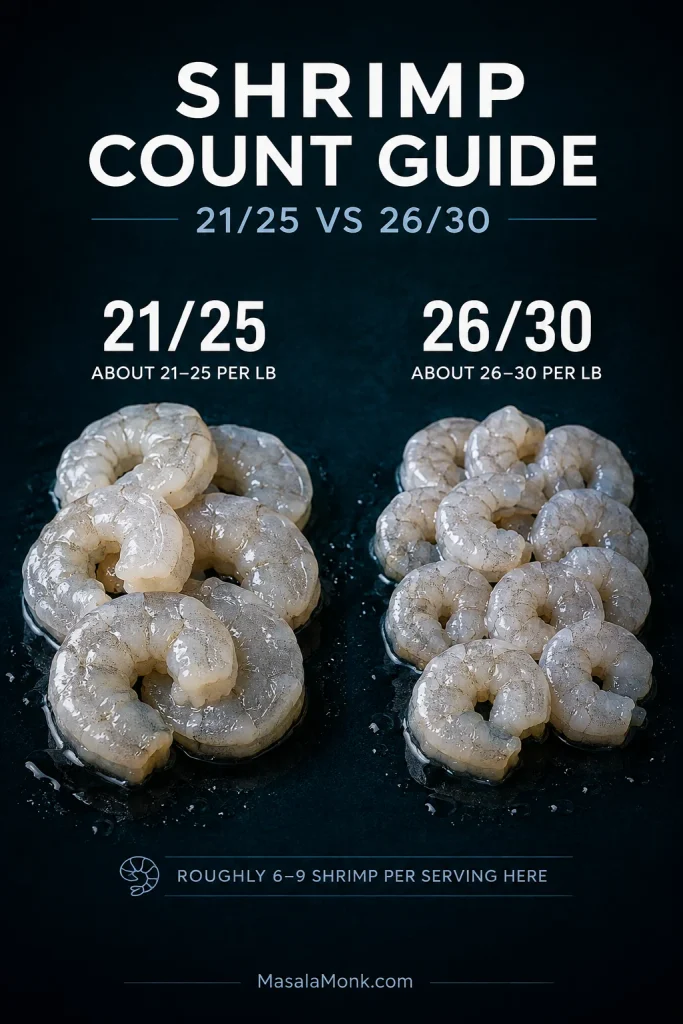
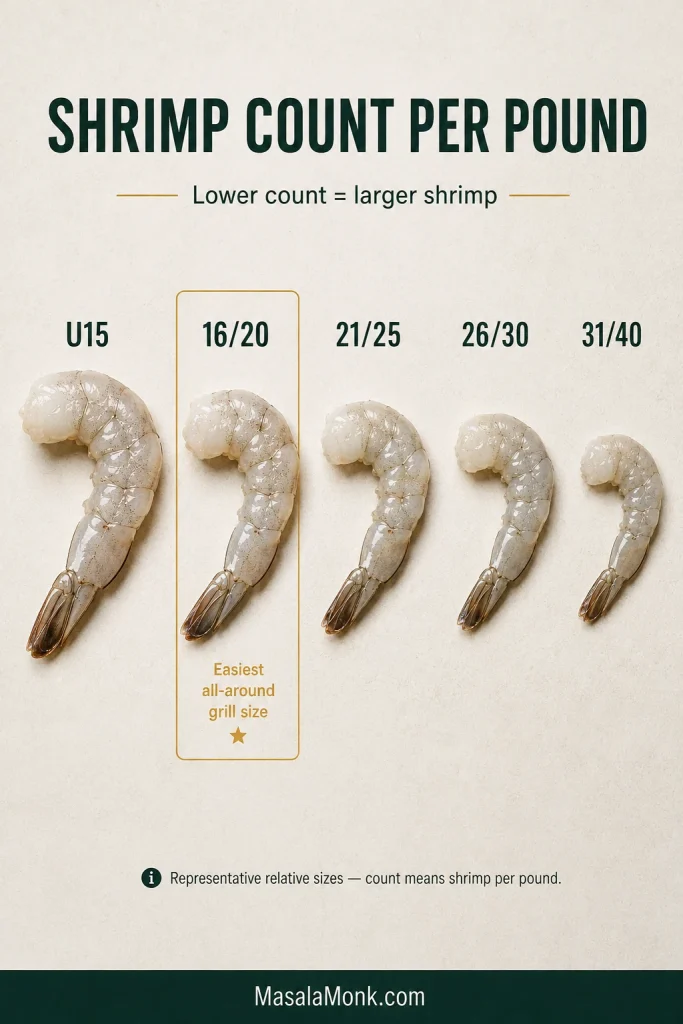
Many frozen shrimp bags use a count-per-pound number instead of words like medium or jumbo. A lower number means larger shrimp because there are fewer pieces in a pound. Higher numbers mean smaller shrimp, which cook faster.

Shrimp size guide showing 16/20 jumbo, 21/25 large, 31/40 medium, and 41/50 small shrimp arranged from largest to smallest.
Shrimp count tells you size. Lower numbers mean larger pieces, so jumbo shrimp usually needs more air fryer time than small shrimp.
Package countCommon sizeAir fryer note
16/20JumboUse the longer range, often 9 to 12 minutes from frozen
21/25Extra large or largeMain 8 to 10 minute timing usually works
26/30LargeMain 8 to 10 minute timing usually works
31/40MediumStart checking around 6 to 8 minutes
41/50 and smallerSmallCheck early; small shrimp can overcook fast

Once you know the count, the timing starts making much more sense. When the bag gives both a size word and a count, trust the count more. “Large” can vary by brand, but 16/20 will almost always need more time than 31/40.

Thin ice glaze or freezer burn?

A thin ice glaze is normal on many frozen shrimp bags. Heavy frost, dry white patches, freezer-burned edges, or a stale smell are different. If the seafood smells off after opening, do not use it.

Comparison of frozen shrimp with a normal thin ice glaze beside shrimp with heavy frost, dry white patches, and freezer burn signs.
A light ice glaze is normal. However, heavy frost, dry patches, rough edges, or an off smell are signs to pause and check quality.

Shell-on shrimp, prawns, and thawed shrimp

These need small adjustments, not a new recipe. Shell-on frozen shrimp usually needs 8 to 12 minutes at 400°F / 205°C, depending on size. Frozen prawns cook like shrimp; let size decide. Thawed raw shrimp cooks faster, usually about 5 to 7 minutes at 350°F to 375°F / 175°C to 190°C.

Shell-on shrimp or prawns cooked in a black air fryer basket with pink-orange shells and a lemon wedge.
Shell-on shrimp and prawns can air fry from frozen, but larger pieces need a center check instead of timer-only cooking.

Tail-on and tail-off shrimp cook almost the same way. Leaving the tail on looks a little more dramatic for serving, while tail-off is easier for bowls, tacos, fried rice, and pasta.

Ready to cook now? Return to the recipe card or follow the full method.

Why This Method Works

Frozen shrimp needs quick heat, enough space, and a moment for surface ice to loosen. Once the frost turns wet and the pieces separate, the seasoning can land on the shrimp instead of sliding into the basket. That is why the short head start matters more than adding extra seasoning at the beginning.

Ingredient Notes

Oil helps the spices cling. Garlic powder adds quick flavor without burning. Paprika, Cajun seasoning, or Old Bay-style seafood seasoning adds color and depth. If your bag is already seasoned, marinated, or salty, start with less salt and adjust after cooking.

Equipment and Batch Size

You do not need special equipment beyond an air fryer, but basket size matters. A hot basket helps. Crowding does not. In a smaller air fryer, a smaller batch works better than a longer struggle.

  • For a 3 to 4 quart air fryer, cook smaller 8 oz / 225 g batches.
  • A 5 to 6 quart air fryer can handle 12 to 16 oz / 340 to 454 g if the shrimp are mostly in one layer.
  • Keep tongs nearby to separate clumped pieces and a slotted spoon or quick drain ready if liquid collects.
  • Pat thawed shrimp dry with a paper towel before cooking.
  • Ninja Foodi, Cosori, Instant Vortex, basket-style, and oven-style air fryers can all work, but timing may vary slightly.

If your air fryer is small, cook less shrimp rather than forcing the whole bag in. That one choice fixes more problems than extra minutes ever will.

Season Before or After Air Frying?

Separate, lightly frosty shrimp can be seasoned before air frying. Icy, glazed, or clumped pieces do better with a short head start in the basket first, then seasoning.

  • Lightly frosty shrimp: toss with oil and seasoning before cooking.
  • Icy or clumped shrimp: loosen first, then season.
  • Thawed shrimp: pat dry, then season before air frying.
  • Precooked frozen shrimp: season lightly and reheat briefly.
  • Coated shrimp: skip wet seasoning before air frying; use dips or sauces after cooking.

For slightly crisp edges on plain shrimp, add 1 teaspoon cornstarch or cornflour after the surface frost has loosened. This is optional. Do not use this trick for shrimp that are already breaded, battered, popcorn-style, or coconut-coated.

Once the seasoning actually lands on the shrimp, even a simple garlic-lemon finish tastes cleaner and brighter.

How to Know Shrimp Is Done

The goal is not hard browning. You want tender shrimp with no grey center. For plain shrimp, the flesh should be pearly, opaque, and no longer grey or glassy in the middle. The pieces should feel springy, not tight.

Check the center

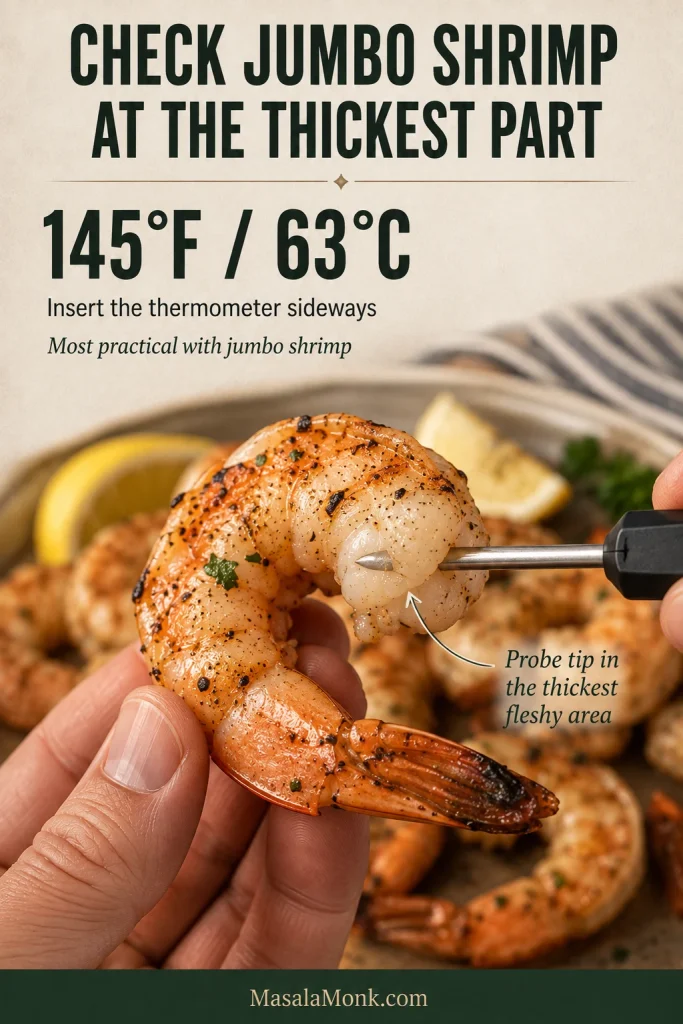
For a thermometer check, seafood is generally cooked to 145°F / 63°C. Visually, shrimp should be firm, pearly, and opaque. When you cut into the thickest piece, the center should look opaque and moist, not grey, glassy, or dry. For more detail, see the FDA seafood safety guide.

Cut shrimp comparison showing a grey glassy center labelled needs more time and an opaque white center labelled done.
When you are unsure, cut the thickest shrimp. The center should be opaque and moist, not grey, glassy, or translucent.

Use the curl as a texture clue

Shrimp moves from perfect to rubbery quickly, so checking early is not fussy. It is the shortcut.

  • Undercooked shrimp: grey, glassy, or translucent in the center
  • Done shrimp: opaque, pearly, springy, and loosely curled
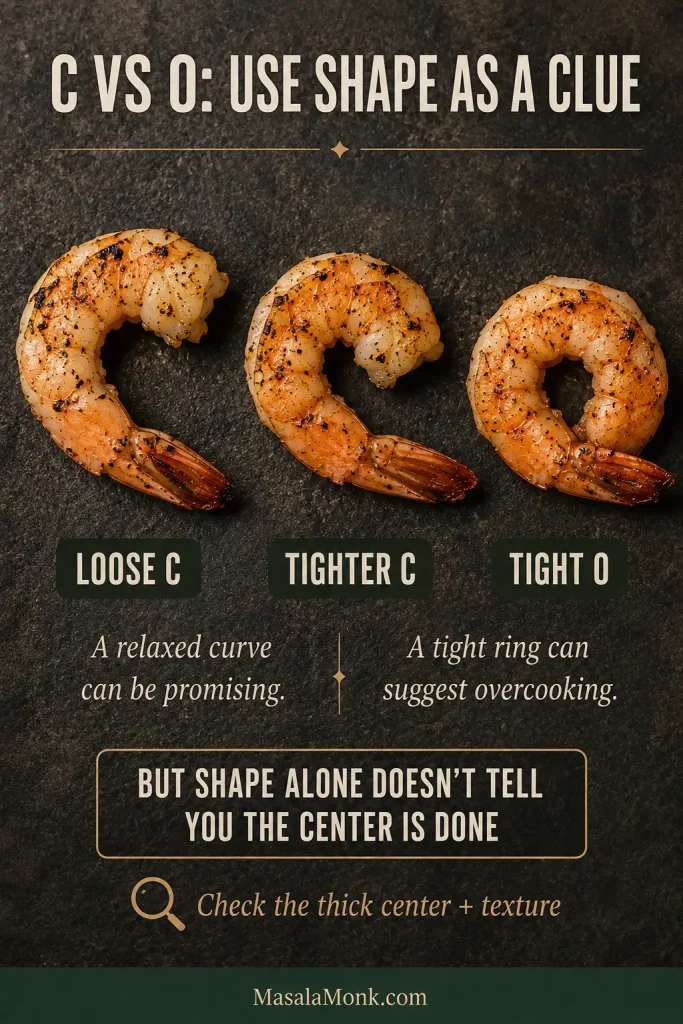
  • Overcooked shrimp: tight, dry, rubbery, or curled into a very tight O
Cooked shrimp comparison showing a loose C-shaped tender shrimp and a tightly curled overcooked shrimp.
Shrimp shape gives a fast texture clue: a loose curl usually means tender, while a tight O-shape often means overcooked.

For coated or sauced frozen shrimp, follow the package directions because the outside can brown before the inside is fully heated.

Avoid These Mistakes

Most mistakes come from treating every frozen shrimp bag the same. A few small changes make the difference between tender shrimp and a tough batch.

  • Precooked shrimp should not cook like raw shrimp. It only needs reheating.
  • Do not season a block of icy shrimp. Loosen it first so the flavor can stick.
  • Give the pieces room instead of piling them high. Shrimp cook faster and more evenly with space.
  • If the basket gets watery, drain it instead of trying to cook the water away.
  • Do not use plain-shrimp timing for coated frozen shrimp. Breaded, popcorn, and coconut shrimp need package and crisping cues.

Already dealing with a watery, bland, or rubbery batch? Jump to troubleshooting or rescue it for dinner.

Troubleshooting Air Fryer Frozen Shrimp

A first batch that goes sideways is usually easy to fix. Watery baskets, bland seasoning, or a slightly rubbery bite do not mean the recipe failed. Usually, the shrimp just needed a different timing path.

If your first batch looks watery, do not panic. That is usually ice, not failure. The next batch is easier once you know what happened.

Why did my shrimp turn rubbery?

Rubbery shrimp usually means overcooking. This is common with frozen cooked or precooked shrimp because it only needs reheating. Use the shorter timing range, and check even earlier if the pieces are already thawed.

A batch that is already a little rubbery should not keep air frying. Toss it with garlic butter, lemon, sauce, pasta, fried rice, or a rice bowl where moisture can help soften the bite.

Why is there water in the air fryer basket?

That water in the basket is usually just surface ice melting. The goal is not to panic-cook the water away; drain it, season the shrimp itself, and finish gently.

Air fryer basket tilted over a bowl while liquid drains from cooked shrimp inside the basket.
If the basket turns watery, drain the moisture instead of adding more minutes. Extra time can make shrimp tough.
  • Loosen icy pieces before seasoning.
  • Shake halfway through cooking.
  • Separate clumped pieces as soon as they loosen.
  • Drain excess liquid instead of cooking it away.

Why is the shrimp bland?

Seasoning ice is frustrating because the flavor ends up in the basket. Let frosty pieces loosen first, then add oil and seasoning so the flavor sticks.

To rescue a bland batch, toss it immediately with melted butter, lemon juice, garlic powder, black pepper, and a pinch of seasoning while it is still hot. For rice bowls or noodles, a spoonful of stir-fry sauce can turn plain shrimp into dinner quickly.

Why did some pieces cook faster than others?

The pieces were probably clumped, crowded, or mixed in size. Separate stuck pieces early and shake the basket halfway. A mixed bag of small and jumbo shrimp will not finish all at once; the small ones will cook first.

ProblemLikely causeFix nowNext time
Rubbery shrimpPrecooked shrimp got too much timeStop cooking; toss with sauce, butter, pasta, or riceReheat only 4 to 6 minutes
Dry shrimpToo much heat or too much timeFinish with lemon, butter, or sauceCheck earlier and stop at opaque
Bland shrimpSeasoning slid off iceToss hot shrimp with butter, lemon, and seasoningSeason after frost loosens
Watery basketSurface ice meltedDrain the basket and finish gentlyUse one layer and shake halfway
Uneven cookingClumped, crowded, or mixed-size shrimpSeparate pieces and add 1 minute if neededSpread into a mostly single layer
Slightly underdoneJumbo pieces or cold centerAdd 1 minute and check the thickest pieceUse the longer range for jumbo shrimp

Best Uses for an Imperfect Batch

Not every batch has to become a perfect shrimp plate. If the texture or seasoning is not exactly where you wanted it, turn the shrimp into the kind of meal that helps it shine anyway.

Four-panel collage showing air fryer shrimp used in fried rice, garlic butter shrimp, wraps, and tacos.
An imperfect batch still has uses: watery shrimp suits fried rice, bland shrimp likes garlic butter, and firm shrimp works better chopped.
If the shrimp turned out…Use it for…
Tender and juicyTacos, bowls, salads, pasta, or peel-and-eat plates
A little wateryFried rice, noodles, saucy bowls, or garlic butter pasta
Slightly rubberyChopped wraps, rice bowls, pasta, or saucy stir-fries
Mild or blandStir-fry sauce, peanut sauce, Cajun butter, lemon butter, or chutney
Shell-onPeel-and-eat plates, seafood bowls, or simple lemon-and-salt platters

This is one of those freezer shortcuts that gets easier every time you make it. The first batch teaches you the bag; the next one feels simple.

Batch fixed? Turn it into tacos, rice bowls, pasta, or fried rice.

Flavor Variations

This is where the plain batch becomes dinner. Once you know the timing, keep the base method the same and change the seasoning or finish.

  • Garlic butter shrimp: finish with melted butter, garlic, lemon, and parsley so the hot shrimp turns glossy and bright. Best with pasta, rice bowls, bread, or vegetables.
  • Old Bay-style shrimp: use seafood seasoning, lemon, and black pepper for a simple peel-and-eat feel. Good for salads, tacos, and quick plates.
  • Cajun shrimp: use Cajun seasoning, paprika, and a little cayenne for smoky heat. Serve in tacos, wraps, or grain bowls.
  • Lemon pepper shrimp: use lemon zest, black pepper, and garlic powder for a bright, sharp finish. Good for salads, pasta, and quick lunches.
  • Taco shrimp: use chili powder, cumin, and lime. Serve in tacos, burrito bowls, lettuce cups, or with mango habanero sauce.
  • Light masala shrimp: use garlic, chili, black pepper, and a tiny pinch of turmeric or garam masala. Finish with green chutney.

Add fresh garlic or butter near the end or after cooking. Garlic can burn if it sits in the hot basket too long, and butter can brown quickly if it drips under the shrimp.

What to Serve With Air Fryer Frozen Shrimp

Think of this as a fast protein you can drop into whatever meal is already halfway planned. The shrimp cook quickly, so they work especially well with rice, pasta, noodles, salads, and wraps.

Three-panel collage showing cooked shrimp served as tacos, a garlic butter rice bowl, and shrimp fried rice.
Use cooked shrimp as a flexible protein: pile it into tacos, spoon it over rice, or fold it into fried rice when dinner needs to move fast.
  • Shrimp tacos with slaw, lime, and mango salsa
  • Rice bowls with vegetables, garlic butter, lemon, and herbs
  • Pasta with lemon butter, garlic, tomato sauce, or a quick scampi-style finish
  • Salads with avocado, cucumber, corn, herbs, or greens
  • Wraps with lettuce, onion, spicy mayo, and a squeeze of lime
  • Noodle bowls with chili oil, peanut sauce, or soy-lime dressing
  • Quick shrimp fried rice
  • Shrimp cocktail-style plates with lemon and dipping sauce

For pasta, fried rice, or saucy dishes, stop cooking as soon as the shrimp are just done. They will keep warming when tossed with the rest of the meal.

Storage and Reheating

Air fryer shrimp is best right after cooking, but leftovers can still be useful. Cool the shrimp, store it in an airtight container, and refrigerate for up to 3 days. Reheat gently at 300°F to 350°F / 150°C to 175°C for 1 to 3 minutes, just until warm.

Shrimp is not very patient the second time around, so reheat gently and avoid warming it again and again. Cold leftover shrimp is often kinder than reheated shrimp, especially in salads, wraps, shrimp cocktail-style plates, or quick lunch bowls.

Breaded, Popcorn, Coconut, or Scampi Shrimp

These are not plain uncoated shrimp, so let the bag’s directions lead. Coated shrimp plays by slightly different rules: the outside needs to crisp while the inside heats through.

  • Frozen breaded shrimp: use a single layer, shake or flip, and follow package timing so the coating crisps.
  • Popcorn shrimp: shake often because the pieces are small and can brown quickly.
  • Frozen coconut shrimp: watch the coating closely because coconut can brown faster than the inside heats.
  • Scampi-style frozen shrimp: use scampi-specific package directions because butter, sauce, and coating can change the method.

As a loose starting point, many frozen breaded, popcorn, and coconut shrimp products cook around 390°F to 400°F / 200°C to 205°C for 7 to 12 minutes, but the package should lead. Product size, coating, brand, and raw or precooked status can change the timing quickly.

Plain shrimp is about tenderness; coated shrimp is about crispness.

FAQs

Do you need to thaw shrimp before air frying?

No. Plain frozen shrimp can go straight into the air fryer. If the pieces are icy or clumped, loosen them briefly first, then season and finish cooking.

How long does frozen shrimp take in the air fryer?

Most frozen raw shrimp takes 8 to 10 minutes at 400°F / 205°C. Small shrimp can finish closer to 6 minutes, while jumbo shrimp may need 9 to 12.

What temperature works best for frozen shrimp?

For raw frozen shrimp, 400°F / 205°C is the best starting point. With precooked shrimp, use 375°F to 400°F / 190°C to 205°C and stop once hot.

Raw or cooked frozen shrimp: what changes?

Raw shrimp needs to cook through. Precooked shrimp only needs to get hot. That one difference changes the timing completely.

How do you air fry precooked frozen shrimp?

Air fry precooked frozen shrimp at 375°F to 400°F / 190°C to 205°C for 4 to 6 minutes, shaking halfway. Stop once the pieces are hot.

Can you air fry frozen shrimp with vegetables?

Yes, but vegetables often need more time and frozen vegetables can release water. Start firmer vegetables first, then add shrimp near the end.

Can you air fry frozen shrimp without oil?

Yes, but a little oil helps seasoning stick and improves texture. For oil-free shrimp, cook in one layer and finish with lemon or sauce.

What do shrimp size numbers like 16/20 or 31/40 mean?

The number tells you roughly how many shrimp are in one pound. Lower numbers mean larger shrimp, so 16/20 needs more time than 31/40 or 41/50.

Are frozen prawns cooked the same way as shrimp?

Yes. Frozen prawns can be air fried like frozen shrimp. Let size guide the timing.

Should shell-on frozen shrimp be peeled before cooking?

No. You can air fry shell-on frozen shrimp, then peel after cooking. Cook until the shells turn pink and the flesh is opaque.

Why did my air fryer shrimp turn rubbery?

Rubbery shrimp almost always means it went too long, especially if it was precooked. Use a shorter time and stop once hot.

Why is there water in the air fryer basket?

Frozen shrimp releases moisture as surface ice melts. Use one layer, shake halfway, separate clumps early, and drain excess liquid if needed.

What about frozen breaded shrimp or popcorn shrimp?

Treat breaded, popcorn, and coconut shrimp as coated products. Start with package directions, then watch for a crisp outside and a fully heated center.

Back to Quick Answer · Back to Recipe Card

Final Tender Shrimp Check

Before you serve, the shrimp should be opaque through the center, loosely curled, and hot without feeling tight or dry. Raw shrimp should have no grey or glassy center. Precooked shrimp should be hot, not curled tighter and tighter.

Once you learn to read the bag, frozen shrimp becomes one of the easiest freezer proteins to trust. Loosen icy pieces if needed, season the shrimp instead of the frost, and stop as soon as the center is opaque. That is how a forgotten bag of shrimp turns into dinner instead of a guessing game.

Posted on Leave a comment

Shrimp Fried Rice Recipe: Easy, Fluffy & Better Than Takeout

Bowl of shrimp fried rice with plump shrimp, scrambled egg, peas, carrots, scallions, and chopsticks lifting a bite of rice.

This shrimp fried rice recipe is for the night you open the fridge, see cooked rice, and realize dinner is almost already halfway done. A hot skillet turns yesterday’s rice into glossy, savory grains with juicy shrimp, soft egg, garlic, scallions, and vegetables — faster than takeout and fresher from the pan.

The goal is fluffy rice, tender shrimp, and a dinner that tastes planned, even when it started with leftovers. No restaurant burner needed. Just remember the four things that matter most: cold rice, dry shrimp, hot pan, light sauce.

What makes it better than takeout is control: more shrimp, less grease, tender egg, bright scallions, and rice that tastes soy-sesame savory without turning heavy.

Quick Answer: How to Make Shrimp Fried Rice

To make shrimp fried rice, start with cold cooked rice and break up the clumps. Pat raw shrimp dry, season lightly, then cook it quickly in a hot wok or large skillet until just opaque. Remove the shrimp, scramble the eggs, and cook the vegetables until the skillet looks dry again.

Stir-fry garlic, scallions, and rice, then add a small amount of soy-sesame sauce. Fold the shrimp and egg back in and serve while the rice is hot, loose, and glossy.

What is shrimp fried rice? It is a quick stir-fried rice dish made with cooked rice, shrimp, egg, vegetables, aromatics, and a savory soy-sesame sauce. In the best versions, cold rice and a hot pan keep the grains separate instead of soft or sticky.

Order matters because each ingredient behaves differently. Shrimp cooks fast, frozen vegetables can release water, and rice needs direct contact with heat before it gets sauced. When those pieces happen in the right order, the dish tastes fresh instead of heavy.

Already have cold rice and thawed shrimp? Jump straight to the recipe card. Need rice help first? See the best rice guide.

The 4 Rules for Fluffy Shrimp Fried Rice

Use this quick visual guide as the recipe’s safety net before you start cooking. Each rule protects the final texture in a different way.

Four-part guide showing cold rice, dry shrimp, a hot wok, and light sauce as the key rules for shrimp fried rice.
Use this four-rule system as your fried rice safety net: cold rice protects texture, dry shrimp sears cleanly, high heat adds flavor, and light sauce keeps the grains separate.

Shrimp Fried Rice Recipe

This version is built for real weeknights: cooked rice from yesterday, shrimp from the fridge or freezer, a few vegetables, and a hot pan that makes it all feel deliberate. Leftover rice makes it easiest, but the fresh-rice workaround below gives you a path when you are starting from scratch.

Prep Time10 minutes
Cook Time15 minutes
Total Time25 minutes
Yield4 servings
CourseMain dish, quick dinner
StyleTakeout-style shrimp fried rice

Timing note: The 25-minute total assumes you already have cooked and chilled rice. Cooking rice from scratch adds cooling time before frying. Starting with fresh rice today? Use the fresh-rice workaround before heating the pan.

Before you turn on the stove: Have the rice loosened, shrimp dried, eggs beaten, vegetables ready, and sauce mixed. Fried rice is easy, but it does not wait once the pan is hot.

Equipment

  • Wok or large 12-inch non-stick/heavy skillet
  • Wide spatula
  • Mixing bowl for shrimp
  • Small bowl for sauce
  • Sheet pan or wide plate if cooling fresh rice

Ingredients

Overhead view of cooked rice, raw shrimp, three eggs, peas, carrots, garlic, scallions, soy sauce, oyster sauce, sesame oil, cornstarch, white pepper, and salt.
Fried rice moves quickly once the pan gets hot, so prep the shrimp, eggs, vegetables, aromatics, rice, and sauce before you start cooking.
IngredientUS MeasureMetric
Cold cooked rice4 cupsabout 600–650 g
Raw peeled and deveined shrimp1 lb450 g
Large eggs, beaten33
Frozen peas and carrots1 to 1 1/2 cups140–200 g
Garlic, minced3 cloves10–12 g
Scallions / green onions, sliced3–425–35 g
Neutral oil2 tbsp30 ml
Light soy sauce2 tbsp30 ml
Oyster sauce, optional1 tbsp15 ml
Toasted sesame oil1 tsp5 ml
White pepper1/4 tspabout 0.5 g
Sugar1/4 tspabout 1 g
Cornstarch1 tspabout 3 g
Salt1/4 tsp for shrimp, then only more after tastingabout 1.5 g, then only more after tasting

Ingredient note: This main method is written for raw shrimp. If you are using cooked shrimp, skip the searing step and add it at the very end just to warm through.

Frozen shrimp note: Frozen shrimp works well once fully thawed and patted dry. To quick-thaw, keep the shrimp sealed in a bag and place it in cold water until thawed, then drain and pat very dry before cooking. The skillet should sear the shrimp, not hiss with extra water. If you are unsure when to pull it from the pan, use the shrimp doneness cues.

Instructions

Prep the Rice and Sauce

  1. Break up the rice. Use your fingers or a fork to loosen cold cooked rice before it goes into the skillet. Clumps are easier to fix now than once the heat is on.
  2. Mix the sauce. In a small bowl, stir together soy sauce, oyster sauce if using, sesame oil, white pepper, and sugar. Keep it beside the stove so you are not measuring while the rice is cooking.

Season the Shrimp and Heat the Pan

  1. Season the shrimp. Pat shrimp very dry. Toss with salt, cornstarch, and a small pinch of white pepper. A dry surface helps the shrimp cook quickly instead of steaming.
  2. Heat the pan. Place a wok or large skillet over medium-high to high heat. Add 1 tablespoon oil and let the pan get properly hot.

Cook Shrimp Separately So It Stays Tender

  1. Cook the shrimp. Add shrimp in a single layer. Cook for about 60–90 seconds per side, just until pearly, opaque, and lightly curled. Move it to a plate before it turns tight and firm.
  2. Scramble the eggs. Add 1 teaspoon oil if the pan is dry. Pour in the beaten eggs and scramble until just set. Move them to the plate with the shrimp; they will finish warming when they return to the rice.
Shrimp searing in a black wok with a spatula and an empty plate nearby for removing the shrimp.
Shrimp needs less time than rice, so cook it separately. Pull it while it is still plump, then return it near the end for tender shrimp in every bite.

Cook the Vegetables Until the Pan Looks Dry

  1. Cook the vegetables. If needed, add the remaining oil, then stir in the peas and carrots. Cook until the skillet looks dry again so their sweetness and color stay bright without softening the rice.
Peas and diced carrots cooking in a black wok with a wooden spatula while a bowl of cooked rice waits nearby.
Once peas and carrots stop releasing moisture, the pan should look dry again. That is when the rice can fry instead of steam.

Garlic and Scallions Build the First Flavor Layer

  1. Add aromatics. Stir in garlic and the white/light parts of the scallions. Cook for 15–30 seconds, just until the pan smells garlicky and sharp. You want the garlic lively, not browned.
Minced garlic and sliced scallions sizzling in oil inside a black wok with a wooden spatula.
Garlic and scallion whites flavor the oil almost instantly. Stir just until fragrant, because browned garlic can make the whole pan taste bitter.

Fry the Rice Before Adding Sauce

  1. Fry the rice. Add the cold rice, spread it out, and let it sizzle before stirring. The rice should look separate before it looks glossy; sauce comes after the grains are hot, not before.
Cooked rice frying in a wok with a spatula while a small bowl of dark sauce waits beside the pan.
Let the rice spend a little time in the pan before the sauce joins in. That early contact with heat keeps the grains loose instead of heavy.

Add Sauce, Return Shrimp and Egg, Then Finish

  1. Add the sauce. Drizzle in the sauce and toss quickly. The rice should look glossy, separate, and evenly seasoned. Puddles mean keep tossing over heat until the grains absorb the seasoning.
  2. Return shrimp and egg. Add the seared shrimp and scrambled egg back to the pan. Toss for 30–60 seconds, just until everything is hot, the shrimp stays springy, and the egg is tucked through the rice.
  3. Finish and serve. Add the green parts of the scallions so the final pan tastes fresh, sharp, and a little sweet. Taste before adding more soy sauce. If it needs lift, try white pepper, scallion greens, or a tiny pinch of salt before adding more liquid.

Cook’s cue: The pan should sound lively. Quiet, steamy rice usually means the skillet is crowded or something brought in too much moisture. If the rice steamed, clumped, or turned salty, jump to troubleshooting before trying again.

This is the kind of dinner that feels bigger than the effort it asks from you: one hot pan, a bowl of leftover rice, a handful of shrimp, and a few minutes where garlic, scallions, soy, and sesame make the kitchen smell like you planned ahead.

Shrimp Fried Rice Success Formula

Once you know the basic order, the recipe becomes easy to adapt. This quick table helps you adjust for the rice, shrimp, vegetables, or pan you actually have, while still landing in the same place: loose rice, tender shrimp, soft egg, bright scallions, and sauce that clings instead of pools.

If you have…Do this
Day-old riceBreak it up and fry it cold.
Fresh riceSpread, cool, and chill it until the surface feels dry.
Frozen shrimpThaw fully, pat dry, and cook briefly.
Cooked shrimpAdd it at the end just to warm through.
Frozen vegetablesCook them until the skillet looks dry before adding rice.
A small skilletCook in batches instead of crowding the pan.
Flat flavorAdd white pepper, scallions, heat, or a tiny pinch of salt before adding more soy sauce.

Why This Recipe Works

This recipe treats leftovers like an advantage. Cold rice is already drier and firmer, so the hot pan only has to wake it up.

The rest is order: shrimp cooks briefly and comes out, vegetables lose moisture before rice goes in, rice fries before sauce, and egg returns at the end for softness. That is how you get fried rice that tastes fresh instead of heavy.

If you like this leftover-rice style of cooking, MasalaMonk’s Spam fried rice recipe uses the same cold-rice logic with crispy Spam, egg, vegetables, and a quick savory sauce.

Ingredient Notes That Matter

The ingredient list is simple, which is part of the charm. A few ordinary things — cold rice, shrimp, egg, vegetables, garlic, scallions, and soy sauce — turn into a full dinner when the pan is hot and the moisture is under control.

Eggs

Egg makes the rice feel fuller and softer. Scramble it separately for the easiest method. Once you are comfortable, you can drizzle beaten egg over hot rice and stir quickly for a more golden restaurant-style effect. Try that only when the rice is already hot and loose; otherwise the egg can disappear into wet rice.

Soft egg gives the rice richness without needing extra sauce, which helps the whole pan stay savory instead of wet.

Vegetables

Frozen peas and carrots are classic because they are easy, colorful, and already cut small. Loose frozen vegetables can go straight into the hot skillet; just cook them until the pan looks dry again before adding rice. If they are icy or clumped together, thaw briefly and pat dry first.

No peas and carrots? Use corn, cabbage, bell pepper, mushrooms, green beans, or skip vegetables and add extra egg or shrimp. Small, quick-cooking add-ins give you color and texture without stealing heat from the rice.

Aromatics

Garlic and scallions are enough for a clean takeout-style flavor. For a deeper base, add 1/4 cup finely diced onion or 1 teaspoon minced ginger with the garlic. Keep the pieces small so they cook quickly and do not weigh down the rice.

Sauce and Seasoning

Light soy sauce gives salt and color. Oyster sauce adds a deeper takeout-style flavor, but it is optional. Low-sodium soy sauce gives you more control when your oyster sauce is already salty. Toasted sesame oil is strong, so use it sparingly. White pepper gives the rice a familiar restaurant-style warmth.

The goal is not dark, salty rice. Instead, aim for grains that taste seasoned all the way through — soy at the edges, sesame in the background, white pepper for warmth, and scallions keeping each bite fresh.

Want a warmer restaurant-style color? A tiny pinch of turmeric can add a light golden tint without needing food coloring. Use very little so it supports the rice instead of making it taste like turmeric.

For a broader sauce base you can use across vegetables, noodles, chicken, shrimp, tofu, and rice bowls, see this stir fry sauce recipe.

Best Rice for Shrimp Fried Rice

The rice matters, but the texture matters more. Choose a grain that can cool, separate, and move cleanly through a hot pan.

How Cold Rice Should Look Before Frying

Cold rice should feel firm enough to break apart easily. If the grains loosen before cooking, they have a better chance of frying evenly in the pan.

Hand using a fork to break up cold cooked rice in a metal bowl before adding it to the pan.
Break up chilled rice before cooking, not inside a crowded pan, so every grain can touch the heat instead of clumping together.

For the easiest fluffy texture, start with cold cooked rice that separates easily. Freshly cooked rice is usually too soft and steamy for direct frying, while chilled rice has enough structure to move cleanly through the skillet.

Choose jasmine rice for a takeout-style aroma, long-grain white rice for reliability, basmati rice if that is what you already cook, and brown rice if you want a firmer, nuttier version.

Not every rice behaves the same once it hits high heat, so use this as a quick guide.

Best Rice Types for Shrimp Fried Rice

Rice TypeGood for Shrimp Fried Rice?Notes
Jasmine riceYesAromatic and excellent for takeout-style fried rice.
Long-grain white riceYesReliable, fluffy, and easy to separate.
Basmati riceYes, if dryWorks well when cooked firm, cooled fully, and broken up before frying.
Brown riceYesFirmer and nuttier; taste and adjust seasoning carefully.
Short-grain or sticky riceNot idealCan clump and turn heavy unless you are making a different style intentionally.
Comparison board with bowls labeled jasmine rice, long-grain rice, basmati rice, brown rice, and sticky rice for fried rice.
Jasmine and long-grain rice are the easiest choices for fluffy shrimp fried rice, while basmati and brown rice can also work when cooked firm and cooled well.

Best make-ahead move: Cook the rice the day before, spread it out so steam escapes, then refrigerate it once cool. The next day, break up the grains before frying. This gives you the easiest fluffy texture.

Do not rinse cooked rice before frying. If the grains are clumped, loosen them with your fingers or a fork; adding water brings back the moisture you are trying to avoid.

No Day-Old Rice? Fresh Rice Workaround

You can make shrimp fried rice with fresh rice, but not while it is hot and steamy. Cook it slightly firm, spread it on a sheet pan so steam escapes, then chill it until the surface feels cool and dry. Once the grains separate easily, it can fry like day-old rice.

  1. Cook the rice with slightly less water than usual so it finishes a little firmer.
  2. Spread the hot rice on a sheet pan or large plate.
  3. Let the steam escape for 10 minutes.
  4. Refrigerate the rice for 30–60 minutes, or freeze it for about 15 minutes if you are rushing.
  5. Break up the cooled rice before frying.
Three-step guide showing fresh rice spread on a sheet pan, cooled, and chilled before being used for fried rice.
No day-old rice? Spread fresh rice thinly, let the steam escape, and chill it until the surface dries so it behaves more like leftover rice.

Fresh rice will not be quite as effortless as day-old rice, but it can still make good fried rice when you cool it properly. You are just trying to give it the same dry surface that leftovers already have.

Shrimp, Prawns, Frozen Shrimp, and Cooked Shrimp

Whether your market sells them as shrimp or prawns, cook them the same way here. Start with seafood that is dry on the surface, cook it briefly, and bring it back only after the rice has had time in the pan.

Size changes the way the fried rice eats, not just how it looks. Choose 26–30 count shrimp for a juicy home-style pan. For smaller restaurant-style pieces through every bite, use 51–60 count shrimp. Very large shrimp are best chopped into bite-size pieces so the rice eats evenly.

Shrimp SizeBest Use
51–60 count / small shrimpBest for restaurant-style fried rice because shrimp pieces mix through every bite.
26–30 count / medium shrimpBest balance for home cooks; juicy but still easy to mix into rice.
16–20 count / large shrimpLooks generous, but may need chopping so the rice eats evenly.
Cooked shrimpUse only in a pinch. Add at the end just to warm through.

How to Thaw and Dry Frozen Shrimp

Frozen shrimp can work as well as fresh shrimp when it is thawed safely and dried thoroughly. The goal is to remove surface moisture before the shrimp hits the hot pan.

Frozen shrimp sealed in a bag thawing in cold water, with drained shrimp and paper towel-dried shrimp beside it.
After a cold-water thaw, dry shrimp well before it hits the pan. A dry surface sears better and keeps the rice from steaming later.

Shrimp Doneness: Loose C, Not Tight Curl

The best doneness cue is visual: shrimp should turn opaque and curl gently. When it tightens into a firm ring, it has usually cooked too long.

Shrimp doneness guide showing raw grey shrimp, just-cooked coral shrimp in a loose C shape, and overcooked tightly curled shrimp.
Watch the shape, not only the color. A loose C-shape usually means tender shrimp, while a tight curl means it has stayed on the heat too long.

If you are using pre-cooked shrimp, do not sear it again. Add it near the end and toss only until warm. For shrimp that starts raw, a loose C-shape is usually a good cue; tight, firm curls usually mean it stayed on the heat too long.

When the shrimp is right, it should feel juicy and springy against the rice, not tight or chewy. That contrast is what makes the bowl feel generous.

The Sauce Ratio That Keeps Fried Rice Glossy, Not Wet

If your fried rice tastes salty but still flat, more soy sauce is usually not the answer. Try aroma, pepper, scallions, chili, or a tiny bit of sweetness before adding more liquid.

A balanced pan should taste savory all the way through, not sit in a puddle of sauce. For 4 cups cooked rice, this is enough to coat the grains without making them heavy:

  • 2 tbsp / 30 ml light soy sauce
  • 1 tbsp / 15 ml oyster sauce, optional
  • 1 tsp / 5 ml toasted sesame oil
  • 1/4 tsp white pepper
  • 1/4 tsp sugar
Sauce ratio board showing four cups of rice with soy sauce, oyster sauce, sesame oil, white pepper, and sugar.
A good sauce ratio should season the rice, not drown it. Measure first, then add just enough soy, oyster sauce, sesame oil, and white pepper for balance.

Mix the sauce before you start cooking. Fried rice moves quickly, and stopping to measure sauces while the pan is hot can lead to overcooked shrimp or wet rice.

A small splash of dark soy sauce can add color, while light soy sauce stays the main seasoning. Too much dark soy can make the rice look heavy and taste overly salty.

Sauce Ratio by Rice Amount

Sauce is where fried rice can go from balanced to salty fast. Start with these amounts, then taste at the end.

Cooked RiceSoy SauceOyster SauceSesame Oil
2 cups1 tbsp / 15 ml1 1/2 tsp / 7 ml1/2 tsp / 2.5 ml
3 cups1 1/2 tbsp / 22 ml2 tsp / 10 ml3/4 tsp / 4 ml
4 cups2 tbsp / 30 ml1 tbsp / 15 ml1 tsp / 5 ml

If you skip oyster sauce, keep the soy sauce measured and build flavor with white pepper, scallions, heat, or a tiny pinch of sugar after tasting. If the rice tastes flat or salty, check the pan cues before adding more soy sauce.

Sauce Swaps

  • No oyster sauce: Skip it, then taste for white pepper, scallions, heat, or a tiny pinch of sugar.
  • Gluten-free: Use tamari instead of soy sauce and check the oyster sauce label.
  • No soy sauce: Use coconut aminos, or season lightly with salt and a tiny splash of broth.
  • No sesame oil: Skip it and finish with extra scallions for freshness.
  • Spicy: Add chili crisp, sriracha, sambal, chopped green chili, or red pepper flakes.

Wok vs Skillet: Best Pan for Home Stoves

If you have ever made fried rice in a small pan and wondered why it steamed instead of fried, the pan size is probably the reason — not your cooking skill.

A wok is excellent for fried rice because it gives you room to toss and move ingredients quickly. But a large skillet is often better for home cooks than a small wok on a weak burner.

You do not need restaurant heat; you need restaurant order. A wide hot skillet, dry rice, and a little patience between stirs will get you much closer than a crowded wok on weak heat.

Comparison image showing shrimp fried rice being tossed in a wok and spread across a wide skillet.
On a home stove, a wide skillet often beats a small wok. More surface area lets more rice touch direct heat at once.

With less crowding, the rice has room to sizzle, which is where the better texture comes from. When the pan is too full, the vegetables leak water, the rice steams, and the sauce sits underneath instead of clinging to the grains.

  • Use a wok if your stove gives strong heat and you can toss quickly.
  • Choose a large non-stick skillet for the easiest beginner-friendly option.
  • Try a heavy stainless or cast-iron skillet if it holds heat well and you are comfortable managing sticking.
  • Cook in batches if your pan is small. A small pan can still make good fried rice — it just needs batches.

The Pan Cues That Matter Most

Use this while the rice is still in the pan. The troubleshooting table later is for fixing or understanding what went wrong; this section helps you catch problems before they become permanent.

Good fried rice gives you clear signs while it cooks. The pan tells you when to move forward and when to pause: steam, puddles, tight shrimp, or rice that sits in clumps instead of moving freely.

Think of it as the fried rice pan test: sizzle means go, steam means pause, puddles mean keep tossing, and tight shrimp means it cooked too long.

Fried rice pan test infographic showing four cues: sizzle means go, steam means pause, puddles mean toss, and tight shrimp means too long.
Let the pan guide you: sizzle means keep frying, steam means slow down, puddles need tossing, and tight shrimp should come off sooner.
CueWhat It MeansWhat to Do
Rice sizzlesThe pan is hot enough and the grains are frying.Let the rice get contact with the pan before adding sauce.
Rice steams heavilyThe pan is crowded or there is too much moisture.Spread the rice out or cook in batches.
Sauce pools underneathToo much liquid was added or the rice was not hot enough.Keep tossing over heat until the sauce clings to the grains.
Shrimp is tight and firmIt stayed on the heat too long.Cook shrimp briefly next time and return it only at the end.
Flavor tastes flatThe rice may need lift, not more liquid.Add white pepper, scallions, chili, or a tiny pinch of salt before more soy sauce.

When it is ready, you should see loose grains, springy shrimp, soft egg, fresh scallions, and no sauce puddles.

Shrimp Fried Rice Variations

Once the base method works, you can take the same pan in a few different directions: brighter with pineapple and lime, hotter with chili crisp, fuller with chicken, lighter with cauliflower rice, or simpler without egg. Keep the rice dry and the sauce measured, and the texture stays in your control.

Looking for a specific version? Jump to restaurant-style, pineapple, or chicken and shrimp fried rice.

Prawn Fried Rice

Use prawns exactly the same way as shrimp. Medium prawns stay juicy and still mix well with the rice. Very large prawns are easier to eat when cut into bite-size pieces before cooking or after searing.

Restaurant-Style Shrimp Fried Rice

Use jasmine rice, white pepper, scallions, a little oyster sauce, and small shrimp pieces that mix through the rice. Drizzle the sauce around the edge of the hot skillet so it sizzles before coating the grains. Keep the sauce light so the rice tastes restaurant-style without turning dark, salty, or heavy.

Restaurant-style shrimp fried rice in a bowl with small shrimp, egg, peas, carrots, scallions, and lightly glossy rice.
Restaurant-style shrimp fried rice should taste savory, not heavy. Keep the sauce light, finish with scallions and white pepper, and let the rice stay golden.

Pineapple Shrimp Fried Rice

Add 1/2 to 3/4 cup pineapple chunks, diced bell pepper, and a squeeze of lime at the end. Use less sugar in the sauce because pineapple brings sweetness. For a Thai-style direction, add a small splash of fish sauce, chopped chili, and extra scallions. Drain the pineapple well so the rice stays glossy instead of wet.

Pineapple shrimp fried rice with shrimp, pineapple chunks, egg, peas, carrots, red pepper, scallions, and a lime wedge.
Pineapple shrimp fried rice works best when the fruit is bright but not juicy. Drain it well and add it near the end so the rice stays fluffy.

Chicken and Shrimp Fried Rice

Use small pieces of boneless chicken along with the shrimp. Cook the chicken first until done, remove it, then cook the shrimp briefly. Return both proteins near the end so neither overcooks.

Chicken and shrimp fried rice with plump shrimp, browned chicken pieces, egg, peas, carrots, scallions, and glossy rice.
Chicken and shrimp need different timing. Cook the chicken first for browning, then add shrimp briefly so both proteins stay juicy.

Shrimp Fried Rice Without Egg

Skip the eggs and add more vegetables, tofu, or extra shrimp. Since egg adds richness, finish with scallions, white pepper, and a small amount of sesame oil to keep the rice flavorful.

Shrimp Fried Rice Without Soy Sauce

Use coconut aminos for a sweeter soy-free version, or season with salt, white pepper, sesame oil, and a tiny splash of broth. Add less liquid than you think you need, then taste after tossing.

Spicy Shrimp Fried Rice

Add chili crisp, sambal, sriracha, chopped green chili, or red pepper flakes. For the best texture, add chili oil or chili crisp near the end instead of flooding the rice early.

Cauliflower Shrimp Fried Rice

Use cauliflower rice instead of cooked rice for a lighter version. Frozen cauliflower rice should be thawed and squeezed dry first. Fry it in a wide skillet and leave it uncovered so it does not turn watery.

Why Fried Rice Turns Mushy — and How to Fix It

A difficult pan of fried rice is usually not a disaster. It is feedback: too much moisture, not enough heat, too much sauce, or shrimp that stayed in the pan too long.

Most fried rice problems are easy to diagnose once you know what to look for. Steam means moisture, puddles mean liquid, clumps mean the rice needed breaking up earlier, and tight shrimp means it stayed in the heat too long.

Troubleshooting board with fixes for mushy rice, rubbery shrimp, watery pan, salty rice, and rice clumps.
Mushy shrimp fried rice usually starts with excess moisture. Dry rice, dry add-ins, measured sauce, and enough pan space fix most texture issues.
ProblemWhy It HappenedFix
Rice is mushyRice was warm or wet, sauce was too heavy, or the pan was crowded.Use cold rice, reduce sauce, use a wider pan, and cook in batches.
Shrimp is rubberyShrimp cooked too long or stayed in the pan while the rice finished.Cook shrimp briefly, remove it, and return it at the end.
Rice tastes blandSauce was uneven or the rice was not seasoned enough.Mix sauce before cooking and taste for salt, white pepper, scallions, and heat before adding more sauce.
Rice is too saltyToo much soy sauce, oyster sauce, or dark soy sauce was added.Add plain rice, egg, or extra vegetables to balance it.
Rice is clumpyCold rice was added in large chunks.Break rice apart before it goes into the pan.
Fried rice is wateryFrozen shrimp, frozen vegetables, or pineapple added too much moisture.Dry shrimp well, cook off vegetable moisture, and drain pineapple before adding.
Egg disappeared into the riceEgg was mixed into wet rice or over-stirred.Scramble egg separately, then return it near the end.

What to Serve with Shrimp Fried Rice

This can be dinner on its own, especially with egg and vegetables. Because the rice is savory and glossy, the best sides bring crunch, acidity, freshness, or heat.

Shrimp fried rice served with cucumber salad, broccolini, chili crisp, scallions, and small side dishes.
Because shrimp fried rice is savory and rich, pair it with something crisp, green, acidic, or spicy. That contrast makes the meal feel fresher.
  • Cucumber salad or quick pickled cucumbers
  • Steamed or stir-fried greens
  • Spring rolls or lettuce wraps
  • Clear soup or hot and sour soup
  • Chili oil, chili crisp, or extra scallions on top

For a cold, crisp contrast, MasalaMonk’s cucumber salad recipe works especially well beside salty, glossy rice. For another quick shrimp dinner in a different direction, the shrimp scampi recipe gives you garlic butter, lemon, and tender shrimp instead of soy-sesame rice.

Storage and Reheating

This dish tastes best fresh from the pan, but leftovers can still be good when they are cooled, stored, and reheated properly.

  • Refrigerate: Store cooled shrimp fried rice in an airtight container for up to 3 days.
  • Reheat in a skillet: Warm over medium heat with a few drops of oil or water. Stir gently until hot.
  • Microwave carefully: Use short bursts and stop as soon as the rice is hot. Shrimp can get rubbery if overheated.
  • Freezing: Freezing is possible, but the shrimp and egg texture may not be as good after reheating.

Leftover rice note: Because this recipe often starts with leftover rice, cooling and reheating matter. If you cook rice ahead for fried rice, cool it quickly in a shallow container and refrigerate it within 2 hours. Do not leave cooked rice sitting out for hours before chilling. Reheat shrimp fried rice until hot all the way through, and reheat only the portion you plan to eat. For more detail, see the USDA leftover food safety guidance.

FAQs About Shrimp Fried Rice

What is the best rice for shrimp fried rice?

Cold cooked jasmine or long-grain white rice is the easiest choice because the grains stay separate in a hot skillet. Dry basmati can also work well when it has been cooked firm and cooled fully.

Do you need cold rice for shrimp fried rice?

Cold rice is easiest because the grains are firmer and drier on the surface. Fresh rice can work too, but it needs cooling time first so it stops steaming.

Can you use freshly cooked rice for shrimp fried rice?

Yes, but not straight from the cooker. Cook it slightly firm, spread it out so steam escapes, then chill it until the surface feels dry. Break up the grains before adding them to the pan.

How do you make shrimp fried rice not mushy?

Use cold rice, a hot wide pan, and a measured amount of sauce. Pat shrimp dry, cook off moisture from frozen vegetables, and avoid crowding the pan.

What shrimp works best for fried rice?

Raw peeled and deveined medium shrimp is the easiest choice. Smaller shrimp give a more restaurant-style bite, while very large shrimp are better chopped.

Should shrimp be cooked before adding rice?

Yes. Cook shrimp briefly first, remove it from the pan, then return it after the rice is fried. This keeps the shrimp tender while the rice gets enough time on the heat.

How much sauce should you add to shrimp fried rice?

For 4 cups cooked rice, start with 2 tablespoons soy sauce, 1 tablespoon oyster sauce, 1 teaspoon sesame oil, white pepper, and a small pinch of sugar. Add more only after tasting.

Is oyster sauce necessary?

No. Oyster sauce gives a deeper takeout-style flavor, but the rice still works without it. Keep the soy sauce measured, then use white pepper and scallions for extra flavor.

How do you make shrimp fried rice with frozen shrimp?

Thaw frozen shrimp fully and pat it dry. Season it, cook it briefly in a hot pan, then remove it before frying the rice so it stays juicy and the skillet stays dry.

Do prawns work instead of shrimp?

Yes. Prawns work the same way in this recipe. Use raw peeled and deveined prawns, dry them well, cook them briefly, and return them at the end.

How do you make shrimp fried rice without egg?

Skip the egg and add more shrimp, vegetables, or tofu. Since egg adds richness, finish with scallions, white pepper, and a small amount of sesame oil.

How long does shrimp fried rice keep?

Shrimp fried rice keeps for up to 3 days in the refrigerator when stored in an airtight container. Cool it before storing and reheat only the portion you plan to eat.

What is the best way to reheat shrimp fried rice?

A skillet over medium heat gives the best texture. Add a few drops of oil or water and stir gently until hot. Use short microwave bursts if reheating quickly.

Back to recipe card · Back to quick answer

The Takeaway

Good shrimp fried rice is not about a long ingredient list. It is about giving the rice enough heat, keeping the shrimp tender, and using just enough sauce to season every grain.

Once you hear the rice sizzling instead of steaming, you are on the right track. Keep the shrimp brief, the sauce measured, and the pan wide, and this becomes the kind of fried rice you can repeat with whatever is already in the fridge.

The best version does not taste like leftovers. It tastes like a hot pan gave yesterday’s rice a second life.

Posted on Leave a comment

Egg Foo Young Recipe with Takeout-Style Gravy

Golden Egg Foo Young patties served with brown gravy, sliced scallions, steamed rice, chopsticks, and a spoon on a ceramic plate.

The best Egg Foo Young recipe tastes like old-school Chinese-American takeout rebuilt for a home skillet: soft egg in the center, browned edges outside, little snaps of vegetable crunch, and brown gravy that turns plain rice into dinner. It should not taste like a flat breakfast omelet wearing sauce. It should feel sturdier, saucier, and more generous than that.

Homemade Egg Foo Young usually goes wrong in predictable ways: the filling is too wet, the patties tear when flipped, the eggs turn rubbery, or the gravy thickens into paste. This version keeps the mixture balanced, uses a clear 6-egg to 2–2½ cup filling ratio, and treats the first patty as a test round so you can adjust the heat, oil, or scoop size before the whole batch is cooked. If your first patty misbehaves, jump to troubleshooting before cooking the next one.

The method starts in a skillet and ends with hot gravy over rice. You can pan-fry for an easy weeknight dinner, shallow-fry for better browned edges, or use the restaurant-style method when you want puffier patties. Either way, the goal is the same: tender egg patties that hold together, a sauce that moves instead of sitting like paste, and a plate that finally feels like Egg Foo Young rather than an omelet with toppings.

Why the gravy should move: the sauce should coat the patty while still flowing into the rice. If it sits like paste, the dish starts feeling heavy before the eggs have a chance to shine.

Glossy brown gravy being poured from a small pitcher over a golden Egg Foo Young patty with rice blurred in the background.
The sauce should move as it pours. If it sits heavily on the patty, thin the gravy before serving so the eggs stay tender instead of buried.

Quick Answer: What Is Egg Foo Young?

Egg Foo Young is a Chinese-style egg patty made with beaten eggs, vegetables, and often shrimp, chicken, pork, beef, tofu, or extra vegetables. In Chinese-American takeout, it is usually served as separate patties with brown gravy and rice.

You may also see it written as Egg Foo Yung, Egg Fu Yung, or Egg Foo Yong. The spelling changes, but the idea stays the same: vegetables and protein are mixed directly into beaten eggs, cooked into patties, and finished with a savory brown sauce.

This recipe is built for the gravy-over-rice version people usually mean when they crave Egg Foo Young: browned edges, a tender center, crisp little vegetables, and enough sauce to make rice feel like part of the dish. It is not a folded breakfast omelet, a baked egg casserole, or a dry scramble. The patty should be sturdy enough for sauce, soft enough to cut cleanly, and generous enough that every bite tastes like more than plain egg. If the sauce is the part you came for, go straight to the brown gravy method.

Cut-open Chinese-American Egg Foo Young patty served with rice, brown gravy, scallions, a spoon, and a takeout box in the background.
This is the old-school Chinese-American version many people mean when they crave Egg Foo Young: separate patties, rice, scallions, and a savory brown sauce.

What this recipe prevents: wet filling that tears the patties, flat omelet-like rounds with no browned edges, bland eggs that depend completely on sauce, and gravy that turns gluey before it reaches the plate.

Recipe snapshot

Egg Foo Young at a Glance

Yield4 servings / 6 medium patties
Prep Time15 minutes
Cook Time20 minutes
Total Time35 minutes

Main method: pan-fried or shallow-fried patties in a skillet.

Restaurant-style option: deeper oil for puffier, crisp-edged patties.

Sauce: brown cornstarch gravy with stock, soy sauce, oyster sauce, sesame oil, and white pepper.

Best served with: steamed rice, fried rice, noodles, stir-fried vegetables, or a crisp cucumber salad.

Fastest weeknight version: use cooked shrimp, leftover chicken, roast pork, pressed tofu, or quick-cooking vegetables. Make the gravy first, cook smaller ⅓- to ½-cup patties, and adjust after the first one instead of forcing the whole batch through the same heat.

Cooked shrimp, chopped chicken, pressed tofu, scallions, eggs, and a skillet arranged for a quick Egg Foo Young dinner.
For a faster weeknight Egg Foo Young, start with cooked protein or pressed tofu; then keep the patties smaller so they set quickly and flip cleanly.

Why This Egg Foo Young Recipe Works

The egg has to stay in charge. That is the whole recipe. You want enough vegetables and protein to make the patties taste generous, but enough beaten egg to set around everything and hold the shape when you lift it from the pan.

  • The ratio keeps the patties stable. Six large eggs comfortably hold about 2 to 2½ cups total filling.
  • Small, controlled add-ins cook cleanly. Drained sprouts, thin cabbage, diced onion, and chopped protein stay tucked inside the egg instead of leaking water into the pan.
  • A tiny cornstarch slurry helps structure. One teaspoon in the egg mixture helps the patty hold without making it bouncy.
  • The sauce stays adjustable. Making the gravy separately means you can thin, thicken, or season it without overcooking the eggs.
  • The oil level controls texture. Pan-fry for weeknight ease, shallow-fry for better edges, or use deeper oil for restaurant-style puff.

The main rule: think of the mixture as eggs carrying filling, not vegetables barely glued together with egg. If the bowl looks like a dry pile or a loose soup, fix that before the first patty hits the pan.

Spoon lifting scoopable Egg Foo Young batter with beaten egg coating bean sprouts, scallions, onion, and chopped protein.
Before the mixture reaches the skillet, it should look scoopable and egg-forward. In other words, the eggs should carry the filling, not barely glue it together.

Ingredients for Fluffy Egg Foo Young

This is the kind of recipe that turns a few eggs, a handful of vegetables, and a little gravy into a proper meal. The ingredient list is simple; the important part is cutting the filling small enough to cook quickly and keeping it steady enough to stay inside the patty.

Small pieces are your friend here. They cook quickly, stay tucked into the egg, and give every bite crunch, sweetness, and little pockets of savoriness.

Egg Foo Young ingredients including eggs, bean sprouts, scallions, cabbage, chopped protein, soy sauce, stock, oyster sauce, and cornstarch on a prep counter.
Good Egg Foo Young starts before the pan: dry sprouts, small vegetables, measured filling, and a ready gravy base make the cooking much easier to control.

To make the Egg Patties

Eggs, Vegetables, and Protein

  • Eggs: Six large eggs make 6 medium patties, enough for 4 servings with rice and gravy.
  • Bean sprouts: One cup / about 70–85 g gives the patties classic crunch without crowding the eggs. Drain them well so the mixture stays scoopable. No sprouts? See the bean sprout substitutes.
  • Protein or tofu: Keep this to 115–140 g / 4–5 oz for the 6-egg version. Cooked shrimp, chicken, roast pork, or firm tofu all work as long as they are chopped small.
  • Vegetable-only version: Choose thin vegetables and keep the total filling within the ratio below. A quick sauté helps mushrooms, zucchini, or bell pepper settle into the eggs instead of loosening the mixture.
  • Onion: A small ¼ cup / about 35 g is enough once it is finely diced.
  • Cabbage or mushrooms: Use ⅓ to ½ cup / about 35–50 g finely shredded cabbage or thinly sliced mushrooms. Mushrooms should be pre-cooked if they seem watery.
  • Scallions / spring onions: Two scallions / about 15–20 g add freshness without making the mixture heavy.

Drain Bean Sprouts Before Mixing

Bean sprouts add the classic crunch, but they also carry water. Drain them before mixing so the egg can set cleanly around the filling.

Fresh bean sprouts draining in a fine mesh strainer over a bowl on a kitchen counter.
Wet sprouts can loosen the egg mixture quickly, so draining them well gives the first patty a much better chance of holding together.

Seasoning, Structure, and Frying Oil

  • Cornstarch: Mix 1 teaspoon / about 3 g cornstarch with 1 tablespoon / 15 ml cold water before whisking it into the eggs.
  • Sesame oil: A small ½ teaspoon / 2.5 ml adds aroma. More can overpower the patties.
  • White pepper: A little white pepper gives the eggs and gravy that warm Chinese-restaurant note without making the dish spicy.
  • Neutral oil: Use just enough to coat the pan for tender patties, or about ¼ inch / 6 mm for puffier shallow-fried edges.

Egg-to-filling ratio: for 6 large eggs, keep the total filling around 2 to 2½ cups. That includes bean sprouts, onion, cabbage or mushrooms, scallions, and protein. Use the numbers as a guide, but trust the bowl too: the egg should still visibly surround the filling.

Egg Foo Young ratio guide showing bowls for 4 eggs, 6 eggs, and 8 eggs with measured amounts of vegetables and protein.
The egg-to-filling ratio is the reason the patties hold together. Too much filling makes them tear, while enough beaten egg helps everything set into a stable round.
EggsTotal FillingBest Yield
4 large eggsAbout 1½ cups4 small patties
6 large eggs2 to 2½ cups6 medium patties
8 large eggs3 to 3½ cups8 medium patties or 6 large patties

Ingredient Prep Matters

If you remember only one prep rule, make it this: the add-ins should help the egg set, not fight it. When vegetables are drained and cut small, the patties cook calmly instead of sputtering, tearing, or leaking in the pan.

Hand slicing cabbage, scallions, onion, and mushrooms into small pieces on a cutting board for Egg Foo Young.
Small, thin vegetables cook more evenly inside the patties, so the egg can set around them instead of tearing around bulky pieces.

Cook Watery Vegetables First

Mushrooms, zucchini, bell pepper, and similar vegetables can release liquid as they cook. If you use more than ⅓ to ½ cup, sauté them briefly first, then let them cool before adding them to the eggs. Cooked shrimp, chicken, pork, or tofu should also be chopped small enough to stay tucked into the patty when you flip it.

Mushrooms and zucchini being sautéed in a skillet before being added to Egg Foo Young batter.
A quick sauté lets mushrooms, zucchini, and other watery add-ins release steam before they weaken the Egg Foo Young batter.

What Goes Into Egg Foo Young Gravy

Some people call it Egg Foo Young sauce, but the takeout version eats more like a light brown gravy. It should taste rounded, not just salty: savory from stock and soy sauce, slightly rich from oyster sauce, and smooth enough to coat the eggs without weighing them down.

Saucepan with Egg Foo Young gravy ingredients including stock, soy sauce, oyster sauce, cornstarch, white pepper, sesame oil, and dark soy sauce.
Egg Foo Young gravy gets its flavor before it thickens, so build the base with stock, soy sauce, oyster sauce, white pepper, and sesame oil first.
  • Stock: Chicken stock gives the most familiar flavor; 2 cups / 480 ml is enough sauce for the patties and rice. Vegetable stock works for a meatless version.
  • Light soy sauce: 1½ tablespoons / about 22 ml seasons the gravy and adds umami.
  • Oyster sauce: 1 tablespoon / 15 ml gives the sauce body and a deeper restaurant-style flavor.
  • Dark soy sauce: ½ teaspoon / 2.5 ml is optional, but it gives the gravy a deeper brown color.
  • Sugar: 1–2 teaspoons / 4–8 g rounds out the salty sauces without making the gravy sweet.
  • White pepper: ¼ teaspoon adds gentle warmth.
  • Cornstarch slurry: 2 tablespoons / about 16 g cornstarch mixed with 3 tablespoons / 45 ml cold water thickens the gravy.
  • Sesame oil: ½ teaspoon / 2.5 ml goes in at the end so the aroma stays fresh.

Easy swaps: use vegetable stock for a meatless gravy, vegetarian oyster sauce or mushroom sauce instead of oyster sauce, and tamari only if every other ingredient is also gluten-free. Dark soy sauce is optional; the gravy will be lighter without it but still good.

Pan-Fried vs Restaurant-Style Egg Foo Young

There are two common versions of Egg Foo Young in people’s minds. One is an easy skillet patty with gravy. The other is the puffier, crisp-edged Chinese restaurant version cooked in more oil. Both can be delicious, but the oil level changes the texture.

Pan-fried Egg Foo Young patty compared with a puffier restaurant-style patty near a wok and wire rack.
Pan-fried Egg Foo Young is easier at home; however, more oil creates puffier restaurant-style edges and a richer takeout texture.
MethodBest ForTextureNotes
Pan-friedEasy home cookingTender, lightly goldenUses the least oil and is easiest for beginners.
Shallow-friedBest home balanceGolden edges, slightly fuller centerUse about ¼ inch / 6 mm oil in a skillet or wok.
Deep-friedRestaurant-style puffPuffy, crisp-edged, richerUses more oil and needs temperature control.

Best setup for most home cooks: use a 10-inch nonstick skillet, a ½-cup measure, and a thin flexible spatula. Shallow-frying with about ¼ inch / 6 mm oil gives better browning than a barely oiled pan without the mess of deep-frying. Want the puffier version? Skip to the restaurant-style method.

How to Make Egg Foo Young

Once the filling is chopped, the gravy ingredients are measured, and your pan is ready, the recipe moves quickly. Keep the bowl close to the stove, cook in small batches, and adjust the heat after the first patty if you need to.

1. Prep the Filling

Drain the bean sprouts very well. Finely dice the onion, slice the scallions, and shred the cabbage or slice the mushrooms thinly. Chop your shrimp, chicken, pork, tofu, or vegetables into small pieces.

Cook chicken or pork first so the eggs can stay tender instead of waiting in the pan for meat to finish. Cooked shrimp, cooked chicken, roast pork, or tofu can go straight into the filling.

2. Make the Gravy Before Frying

Once the eggs hit the pan, things move quickly. Having the gravy ready means the patties can go straight from skillet to plate while they are still soft in the center and browned at the edges. If the sauce thickens while the patties cook, a splash of stock or water will bring it back.

3. Mix the Eggs

In a large bowl, whisk the eggs until the whites and yolks are fully combined. In a small bowl, mix 1 teaspoon cornstarch with 1 tablespoon cold water, then whisk that slurry into the eggs with sesame oil and white pepper.

Fold in the bean sprouts, onion, cabbage or mushrooms, scallions, and protein. The mixture should scoop easily: glossy egg around the filling, not soup and not a dry vegetable pile. Mix right before cooking so the vegetables keep their snap and the batter stays light.

4. Cook the Patties

Heat the Pan and Scoop the Batter

Heat a nonstick skillet, wok, or well-seasoned pan over medium to medium-high heat. Add enough neutral oil to coat the bottom for pan-frying, or about ¼ inch / 6 mm oil for a more shallow-fried texture.

Egg Foo Young patty frying in shallow oil with bubbles around the golden edge and a spatula near the pan.
A shallow layer of oil helps the edge set before the center dries out, which makes the patty sturdier when it is time to flip.

Use a ½-cup measure for standard patties. Scoop the egg mixture into the pan, nudging the filling into a round shape. Cook until the edges are set and the bottom is golden, about 2 to 3 minutes. Flip carefully and cook the second side until the middle has no liquid egg, about 1½ to 2 minutes more.

Let It Set Before Flipping

Egg Foo Young patty being lifted and flipped on a thin spatula in a skillet with shallow oil.
Wait until the first side feels stable on the spatula. Then flip once, gently, instead of moving the patty while the center is still loose.

Use the First Patty as Your Test

The first patty is often the test patty. If it browns too fast, lower the heat before the next batch; if it sticks or looks dry around the edges, add a little more oil. Look for a center that springs lightly and no loose egg running from the middle. After that first patty, the recipe usually relaxes: you know whether the pan wants less heat, more oil, or a smaller scoop. If the first one tears, browns too fast, or stays runny, do not guess; check the troubleshooting table before cooking the next batch.

Slightly uneven first Egg Foo Young patty on a spatula beside a skillet and a bowl of batter.
One imperfect first patty can save the whole batch, because it shows whether the pan needs less heat, more oil, or a smaller scoop.

Scoop size guide: use ⅓-cup scoops for small beginner-friendly patties, ½-cup scoops for standard home patties, and ¾-cup scoops only if you are using more oil and feel confident flipping larger rounds.

How to Know the Patties Are Right

Cut-open Egg Foo Young patty with golden edges, a set center, bean sprouts, scallions, and visible filling.
The best doneness cue is texture: the center should be set, the edge should be browned, and the inside should still look tender rather than dry.

You nailed the patties when:

  • The edges are golden but not hard.
  • The center springs lightly when pressed.
  • No loose egg runs from the middle.
  • The patty lifts without tearing.
  • The sprouts still have a little snap.

Doneness cue: the egg should be set in the center, not wet or liquid. Shrimp should look opaque. Chicken and pork are safest and easiest when cooked before they go into the egg mixture. For exact food-safe temperatures for egg dishes and poultry, the USDA safe temperature chart is a useful reference.

5. Rest Briefly, Then Serve

Transfer the cooked patties to a wire rack or a plate lined with paper towel. Let them rest in a single layer so the edges stay better. Spoon hot gravy over the top right before serving so the eggs stay tender and the sauce softens the edges without making the plate soupy.

How to Make the Brown Gravy

Bad Egg Foo Young gravy usually goes watery or gluey. The sweet spot is smooth, savory, and spoon-coating, with enough body to cling to the patties but enough movement to sink into the rice. That is the difference between plain egg patties and the takeout-style plate people remember.

Once the slurry is smooth, the sauce is simple. Cornstarch must be mixed with cold water before it touches hot liquid; otherwise, it can clump almost instantly.

Cornstarch slurry being stirred with cold water in a small glass bowl for Egg Foo Young gravy.
A smooth slurry is the shortcut to smooth Egg Foo Young gravy; mix it cold first, then whisk it into the hot sauce gradually.
  1. Combine the base. In a small saucepan, combine stock, light soy sauce, oyster sauce, optional dark soy sauce, sugar, and white pepper.
  2. Bring to a simmer. Heat gently until the mixture is steaming and lightly bubbling.
  3. Make the slurry. In a small bowl, stir cornstarch with cold water until smooth.
  4. Thicken slowly. Whisk the slurry into the simmering gravy a little at a time.
  5. Simmer until shiny. Cook for 30 to 60 seconds, until the gravy coats the back of a spoon.
  6. Finish with sesame oil. Add sesame oil at the end so the aroma stays fresh.

Gravy texture cue: the gravy should look shiny, coat the back of a spoon, and still pour easily. If it sits heavily on the patty, thin it before serving. If it disappears through the rice like broth, give it a little more time or a little more slurry.

Glossy brown Egg Foo Young gravy coating the back of a spoon with a visible drip over a saucepan.
Once the gravy coats the spoon and drips slowly, it is ready: thick enough for the patties, but still loose enough to flow into the rice.

Cornstarch Gravy vs Roux Gravy

The main recipe uses cornstarch because it is fast, glossy, and easy to control. If you want a richer old-school body, start with a light roux and finish with a smaller amount of slurry.

Two bowls of brown gravy showing a glossy cornstarch gravy and a thicker roux-style gravy with spoon trails.
Cornstarch gives Egg Foo Young gravy a glossy, lighter finish, while a roux adds a rounder restaurant-style body. Choose based on the texture you want.
StyleBest ForTexture
Cornstarch-only gravyFast weeknight Egg Foo YoungGlossy, light, pourable
Roux + cornstarch gravyMore old-school restaurant bodyRounder, richer, more gravy-like
Arrowroot gravyCorn-free adjustmentClearer and slightly slicker; avoid long boiling

For a roux version, cook 1 tablespoon neutral oil with 1 tablespoon flour for 1 to 2 minutes, then whisk in the stock and seasonings before finishing with a smaller amount of cornstarch slurry. Making the gravy gluten-free means checking every ingredient, not just swapping the soy sauce. Use tamari only if the stock, oyster sauce or vegetarian oyster sauce, and thickener are also gluten-free.

Restaurant-Style Egg Foo Young: How to Get Puffier Patties

Restaurant-style Egg Foo Young is not just “more oil.” Hotter oil sets the outside quickly, which helps the patty puff and brown before the center overcooks. That is why shallow-frying gives you a better home version than a barely oiled pan, and deeper oil gives you the most dramatic restaurant-style texture.

Oil Temperature for Restaurant-Style Puff

For puffier patties, use a wok or deep pot with 2–3 inches of neutral oil. Heat the oil to about 350°F / 175°C. When the egg mixture goes in, the oil temperature will drop. Letting the patties cook closer to 325°F / 160°C helps them puff and set without scorching.

Restaurant-style Egg Foo Young patty puffing in hot oil with a thermometer clipped to a wok and a wire rack nearby.
For restaurant-style Egg Foo Young, hot oil sets the outside quickly. Meanwhile, the center stays tender because the patty puffs before it overcooks.
  • Use a ladle instead of pouring from the bowl.
  • Lower the egg mixture gently into the oil so it forms a round patty.
  • Let the first side set before moving it.
  • Flip once the edges look golden and the patty feels stable.
  • Drain on a wire rack, not a flat plate, so the edges stay crisp.
  • Give each patty room so the oil stays hot and the edges set quickly.

Egg Foo Young Variations

Choose the variation by what you want from the plate. Shrimp gives the most classic takeout feel, chicken is the easiest leftover dinner, pork or char siu brings deeper flavor, and tofu or vegetables make the lightest version. The rule stays the same for all of them: keep the pieces small, control watery add-ins, and let the egg remain the binder.

How to Prep Add-Ins

Before you choose shrimp, chicken, pork, tofu, or vegetables, check how much moisture and cooking time that add-in brings to the eggs.

Prep bowls of shrimp, cooked chicken, pork or char siu, tofu, mushrooms, and cabbage for Egg Foo Young variations.
Different add-ins need different prep. Cooked meats are easiest, while mushrooms, tofu, and cabbage need the right size and moisture control.
Add-InCooked or Raw?Prep CueWatch-Out
ShrimpCooked easiest; raw okay if smallChop large shrimpRaw shrimp must turn opaque
ChickenCooked bestDice or shred smallRaw chicken can overcook the eggs
Pork / char siuCooked bestDice smallCan make the filling salty
Firm tofuUse pressed tofuPat dry and dice smallSoft tofu breaks down
MushroomsPre-cook if using more than a littleSlice thinReleases water
CabbageRaw okay if thinShred fineToo much makes patties loose

Shrimp Egg Foo Young

Shrimp is the most takeout-feeling version: sweet, quick-cooking, and easy to pair with brown gravy. Cooked small shrimp are easiest. If using raw shrimp, chop them small enough to turn opaque by the time the egg sets.

Shrimp Egg Foo Young patty cut open to show shrimp inside, served with brown gravy, scallions, and rice.
Shrimp Egg Foo Young gives the most classic takeout feel; for best results, chop large shrimp so the pieces stay tucked inside the patty.

Chicken Egg Foo Young

Chicken is the best leftover version. Use cooked chicken, chopped or shredded small, so the eggs can stay tender instead of waiting in the pan for raw meat to finish.

Cooked chopped chicken being folded into Egg Foo Young batter with bean sprouts, scallions, and vegetables in a glass bowl.
Chicken Egg Foo Young works best with cooked, chopped chicken because the eggs can set quickly instead of waiting for raw meat to cook through.

Pork Egg Foo Young

Pork, roast pork, or char siu gives the deepest old-school flavor. Dice it small and season the egg mixture lightly because cooked pork can bring plenty of salt on its own.

Pork Egg Foo Young patty cut open with diced char siu inside, scallions on top, and brown gravy in a bowl nearby.
Pork or char siu adds deeper flavor, but the pieces still need to be small enough for the egg to bind into a clean patty.

Vegetable Egg Foo Young

Vegetable Egg Foo Young works best when the vegetables are chosen for texture, not just volume. Thin cabbage, sprouts, scallions, and shredded carrot can usually go in raw; mushrooms, zucchini, bell pepper, and watery greens should be cooked briefly first.

Firm tofu works well if you want a meatless version with more body. Press it, pat it dry, and dice it small before adding it to the bowl. For vegetarian gravy, use vegetable stock and vegetarian oyster sauce or mushroom sauce.

Vegetable and tofu Egg Foo Young patty cut open with tofu cubes, bean sprouts, cabbage, carrot, scallions, and brown gravy.
Vegetable Egg Foo Young works best when the filling is chosen for texture, not volume. Firm tofu, cabbage, sprouts, and scallions keep it light but satisfying.

No Bean Sprouts? Use These Instead

Bean sprouts give Egg Foo Young its classic crunch, but you can still make good patties without them. Choose the substitute by what the mixture needs.

Bean sprout substitutes for Egg Foo Young including Napa cabbage, water chestnuts, snow peas, shredded cabbage, carrot, scallions, mushrooms, zucchini, and greens.
No bean sprouts? Use crisp substitutes like Napa cabbage, water chestnuts, or snow peas. Cook watery vegetables first so they do not loosen the batter.
  • For crunch: thin Napa cabbage, diced water chestnuts, or julienned snow peas.
  • For easy volume: finely shredded cabbage, shredded carrot, or extra scallions.
  • Use carefully: mushrooms, zucchini, and watery greens. Cook them briefly first, then cool before adding them to the eggs.

The substitute should support the egg, not take over the bowl. If the mixture starts looking like vegetables barely coated in egg, add another beaten egg or hold some filling back for the next batch.

Troubleshooting Egg Foo Young

Start with the First Patty

If your first patty is messy, do not panic. Egg Foo Young is easy to adjust batch by batch because you can change the scoop size, heat, oil, or mixture before the next patty goes in.

Most Egg Foo Young problems are batch-by-batch problems, not recipe-ending problems. Even restaurant-style Egg Foo Young is not about perfect circles; it is about tender eggs, enough filling, and a sauce that brings the plate together.

Egg Foo Young troubleshooting guide showing patties that fall apart, stay too runny, have burnt edges, and turn out just right.
One messy patty does not ruin Egg Foo Young; instead, use it to fix the mixture, heat, oil, or scoop size before the next round.

Common Problems and Quick Fixes

ProblemFix NowFix Next Time
Patties fall apartMake smaller patties and add 1 beaten egg to the remaining mixture if needed.Keep total filling to 2–2½ cups per 6 eggs.
Mixture looks waterySpoon off excess liquid before frying.Drain sprouts well and pre-cook vegetables that release liquid.
Center stays runnyLower heat slightly and cover the pan briefly.Use ½-cup scoops instead of oversized patties.
Edges burn before center setsReduce heat and add a little more oil if the pan is dry.Cook over medium to medium-high heat, not high heat.
Patties taste blandServe with hot gravy and garnish with scallions or white pepper.Use flavorful stock, white pepper, sesame oil, and a well-seasoned gravy.
Patties turn rubberyReheat gently and avoid cooking them further.Pull patties once the egg is set; do not cook until dry.
Gravy is too thinAdd a little more cornstarch slurry and simmer briefly.Bring the sauce to a simmer before adding slurry.
Gravy is too thickWhisk in stock or water, a splash at a time.Add slurry gradually instead of all at once.
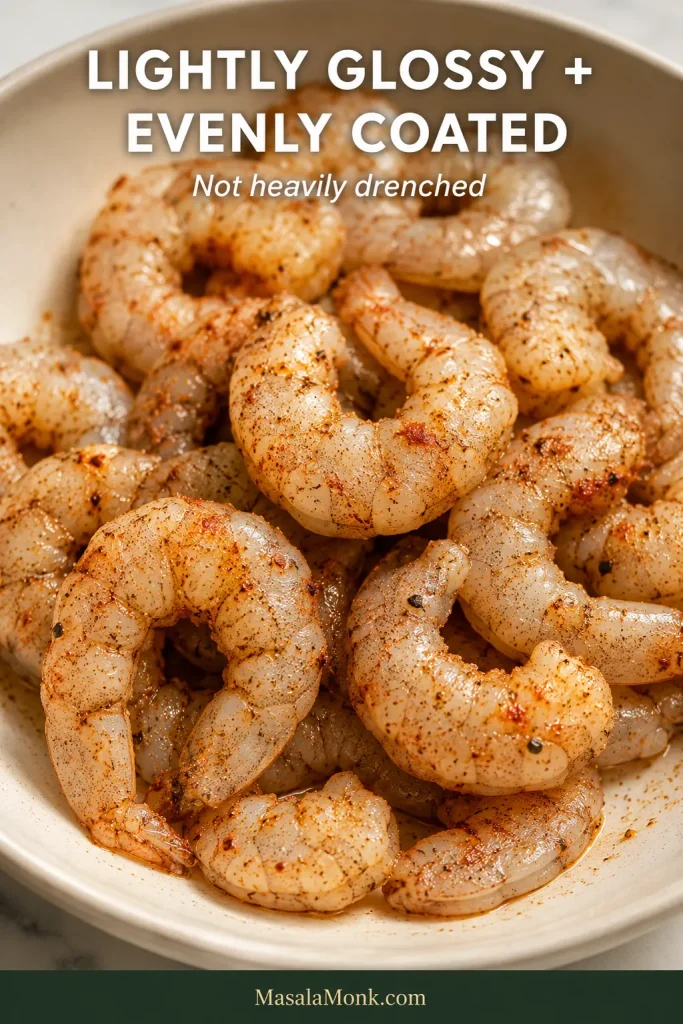
Gravy is lumpyStrain it if needed, then whisk smooth.Mix cornstarch with cold water first and stream it in while whisking.
Leftovers become soggyReheat patties separately from the gravy.Store patties and gravy in separate containers.

What to Serve with Egg Foo Young

Plain steamed rice is the classic base because it catches the salty-silky finish and keeps the plate from feeling too rich. The rice is not just filler here; it is part of why the dish feels like dinner.

If you are making Egg Foo Young for brunch, keep the sides lighter with something crisp like this cucumber salad recipe. If you are building a Chinese restaurant-style dinner, pair it with fried rice, noodles, or stir-fried greens.

  • Steamed jasmine rice: the easiest and most classic base.
  • Spam fried rice: ideal when you want a full restaurant-style plate. You can also use the same cold-rice method with simpler add-ins.
  • Garlic noodles: richer, cozier, and good with extra gravy.
  • Stir-fried greens: bok choy, cabbage, green beans, broccoli, or snow peas all work well.
  • Cucumber salad: a cool, crisp contrast to the hot gravy.
  • Chili oil: add at the table if you want heat.
  • Extra scallions: a fresh finish that keeps the dish from feeling heavy.

Storage, Make-Ahead Tips, and Reheating

Egg Foo Young is at its best when the patties are hot and the gravy is freshly spooned over the top, but leftovers can still be very good if the sauce and eggs are stored separately. This keeps the patties from absorbing too much gravy and turning soft. For general leftover timing and storage safety, the USDA’s leftovers and food safety guidance is a useful reference.

  • Make the gravy ahead: prepare it up to 2 days ahead and refrigerate it separately. Reheat gently and thin with stock or water if needed.
  • Prep the vegetables ahead: chop them earlier in the day and keep them dry in the fridge. Mix them with the eggs only right before cooking.
  • Refrigerate: store cooked patties and gravy in separate airtight containers for up to 3–4 days.
  • Reheat patties: warm gently in a skillet over low to medium heat, or use an air fryer briefly if you want firmer edges.
  • Reheat gravy: warm in a saucepan, whisking in a splash of stock or water if it has thickened.
  • Microwave carefully: use short bursts because eggs can turn rubbery when overheated.
  • Freeze only if needed: freeze patties without gravy. The texture is better refrigerated than frozen.

FAQs

Is Egg Foo Young the same as an omelet?

It is omelet-like, but not exactly the same as a Western folded omelet. Egg Foo Young has the vegetables and protein mixed directly into the eggs, is usually cooked as separate patties, and is served with brown gravy.

What is Egg Foo Young gravy made of?

Most Egg Foo Young gravy is made with stock, soy sauce, oyster sauce, white pepper, sesame oil, and a cornstarch slurry. A roux can be added for a rounder, more old-school restaurant-style body.

Why does my Egg Foo Young fall apart?

Usually, the filling is too wet, too heavy, or the patties are too large. Keep the filling around 2 to 2½ cups for 6 eggs, drain vegetables well, and use ½-cup scoops.

Why is my Egg Foo Young not fluffy?

Flat Egg Foo Young usually comes from a dry pan, oversized patties, or watery filling. A barely oiled skillet makes the mixture behave like a flat omelet. A little more oil, smaller scoops, and controlled add-ins help the edges puff before the center dries out.

What meat is best for Egg Foo Young?

Shrimp gives the most classic takeout feel, chicken is easiest for leftovers, and roast pork or char siu gives deeper flavor. Whatever protein you choose, keep it small so the egg can hold it.

Can Egg Foo Young be made without bean sprouts?

Yes. Use thin Napa cabbage, shredded cabbage, water chestnuts, snow peas, shredded carrot, or extra scallions. Choose small, controlled substitutes so the egg patties still hold together.

Is Egg Foo Young Chinese or Chinese-American?

Egg Foo Young has roots in Chinese egg dishes, but the gravy-covered version many people order from takeout menus is strongly Chinese-American. This recipe is built around that restaurant-style plate: separate egg patties, vegetables, optional protein, rice, and brown gravy.

Can the gravy be vegetarian?

Yes. Use vegetable stock and vegetarian oyster sauce or mushroom sauce. Check the soy sauce and other condiments too if you need the whole dish to meet a specific dietary requirement.

How do I make Egg Foo Young taste like takeout?

The takeout flavor comes from three things working together: enough oil to brown the edges, small amounts of white pepper and sesame oil, and a brown gravy that tastes savory before it thickens. If the patties are dry and the gravy is flat, it will taste like an omelet with sauce, not Egg Foo Young.

Should the gravy go on before or after serving?

Spoon the gravy over the patties just before serving. If the patties sit in gravy too long, they soften and lose their best texture.

Can you bake or air-fry Egg Foo Young?

You can bake or air-fry the egg mixture in a small greased pan, but it will eat more like a baked omelet or mini frittata than classic Egg Foo Young. For browned edges and takeout-style texture, a skillet with enough oil is still the better method. For a baked egg texture, these egg muffin cups are a better fit.

Once the ratio clicks, Egg Foo Young stops feeling fussy. The first patty teaches you the heat, the sauce goes on at the end, and the rest becomes a flexible dinner you can make with shrimp, chicken, pork, tofu, or the vegetables already in the fridge.

Egg Foo Young Step by Step

Use this quick visual recap before the recipe card if you want the whole cooking flow in one place: prep the filling, mix the eggs, cook the patties, thicken the gravy, and serve hot.

Step-by-step Egg Foo Young process showing filling prep, egg mixing, patty cooking, gravy thickening, and serving with rice.
This visual roadmap shows the whole flow: prep the filling, mix the eggs, cook the patties, thicken the gravy, then serve hot.

Recipe card

Egg Foo Young Recipe with Takeout-Style Gravy

Fluffy Chinese-American egg patties with crisp vegetables, your choice of shrimp, chicken, pork, tofu, or extra vegetables, and smooth brown gravy to spoon over rice.

Prep Time15 minutes
Cook Time20 minutes
Total Time35 minutes
Servings4

Yield: 6 medium patties

Method: Pan-fried / shallow-fried

Cuisine: Chinese-American

Course: Dinner, main dish, brunch

Ingredients

For the Egg Patties

  • 6 large eggs
  • 1 teaspoon / about 3 g cornstarch mixed with 1 tablespoon / 15 ml cold water
  • ½ teaspoon / 2.5 ml toasted sesame oil
  • ¼ teaspoon white pepper
  • 1 cup / about 70–85 g bean sprouts, rinsed and very well drained
  • 115–140 g / 4–5 oz chopped cooked shrimp, cooked chicken, roast pork, or firm tofu
  • ¼ cup / about 35 g finely diced onion
  • ⅓ to ½ cup / about 35–50 g finely shredded cabbage or thinly sliced mushrooms
  • 2 scallions / spring onions, thinly sliced
  • 2–4 tablespoons / 30–60 ml neutral oil for pan-frying, or more as needed for shallow-frying

For the Gravy

  • 2 cups / 480 ml chicken stock or vegetable stock
  • 1½ tablespoons / about 22 ml light soy sauce
  • 1 tablespoon / 15 ml oyster sauce or vegetarian oyster sauce
  • ½ teaspoon / 2.5 ml dark soy sauce, optional
  • 1–2 teaspoons / 4–8 g sugar, to taste
  • ¼ teaspoon white pepper
  • 2 tablespoons / about 16 g cornstarch
  • 3 tablespoons / 45 ml cold water
  • ½ teaspoon / 2.5 ml toasted sesame oil

For Serving

  • Steamed rice or fried rice
  • Extra sliced scallions
  • Chili oil, optional

Instructions

Make the Gravy

  1. Prep the filling. Drain the bean sprouts well. Dice the onion, slice the scallions, shred the cabbage or mushrooms, and chop the protein small. Pre-cook raw chicken, raw pork, mushrooms, or vegetables that release a lot of moisture.
  2. Start the gravy. In a small saucepan, combine the stock, soy sauce, oyster sauce, optional dark soy sauce, sugar, and white pepper. Bring to a gentle simmer.
  3. Thicken the gravy. Stir 2 tablespoons cornstarch with 3 tablespoons cold water until smooth. Whisk the slurry into the simmering gravy a little at a time. Simmer for 30 to 60 seconds, until smooth and spoon-coating. Stir in sesame oil and keep warm.

Mix and Cook the Patties

  1. Mix the eggs. In a large bowl, whisk the eggs. Stir 1 teaspoon cornstarch with 1 tablespoon cold water, then whisk it into the eggs with sesame oil and white pepper.
  2. Add the filling. Fold in the bean sprouts, protein, onion, cabbage or mushrooms, and scallions. The mixture should scoop easily: glossy egg around the filling, not soup and not a dry vegetable pile.
  3. Heat the pan. Heat a nonstick skillet or wok over medium to medium-high heat. Add enough oil to coat the bottom, or about ¼ inch / 6 mm oil for a shallow-fried texture.
  4. Cook the patties. Scoop about ½ cup egg mixture into the pan for each patty. Cook for 2 to 3 minutes, until the edges set and the bottom is golden. Flip carefully and cook for 1½ to 2 minutes more, until the middle has no liquid egg.
  5. Adjust after the first patty. If it browns too quickly, lower the heat. If it sticks or looks dry around the edges, add a little more oil before the next batch.

Rest and Serve

  1. Repeat and serve. Cook the remaining patties in batches. Transfer to a wire rack or paper towel-lined plate, let them rest in a single layer, and spoon hot gravy over the patties just before serving.

Notes

  • Keep total filling around 2 to 2½ cups for 6 eggs.
  • The mixture should look egg-forward: glossy egg around the filling, not vegetables barely coated in egg.
  • The first patty is your test patty. Adjust heat, oil, or scoop size before continuing.
  • Use ⅓-cup scoops for easier flipping or ½-cup scoops for standard patties.
  • Cook chicken or pork before adding it. Cooked shrimp is easiest; raw shrimp should be chopped small and cooked until opaque.
  • For puffier edges, shallow-fry with about ¼ inch / 6 mm oil.
  • For roux-style gravy, cook 1 tablespoon oil with 1 tablespoon flour for 1 to 2 minutes, whisk in the stock and seasonings, then finish with less slurry.
  • Spoon gravy over the patties just before serving, not far ahead.
  • Store patties and gravy separately.

Back to top

Posted on Leave a comment

Shrimp Tacos Recipe with Slaw and Creamy Cilantro-Lime Sauce

Shrimp tacos filled with cabbage slaw, creamy cilantro lime sauce, avocado, cilantro, and lime wedges

This shrimp tacos recipe is what you make when dinner needs to be quick, but you still want it to feel like taco night instead of just another weeknight meal. The shrimp hit the hot skillet with smoky seasoning, the cabbage stays cold and crunchy, the creamy cilantro-lime sauce gets drizzled over everything, and that last squeeze of lime makes the whole taco taste awake.

Think of this as the no-soggy, no-rubbery shrimp tacos recipe: smoky skillet shrimp, cold lime slaw, drizzleable sauce, and tortillas warm enough to fold around everything. Shrimp tacos go wrong quickly because every part is delicate, so this version keeps the shrimp dry, the pan hot, the slaw crisp, and the lime at the end where it belongs.

Shrimp taco with juicy seared shrimp, crisp cabbage slaw, warm tortillas, and preparation cues for avoiding soggy tacos
Shrimp tacos usually fail from moisture, timing, or texture; therefore, this version starts with dry shrimp, warm tortillas, lightly dressed slaw, and lime added at the end.

The whole thing comes together in about 25 minutes, but it does not taste rushed. You get juicy skillet shrimp, crisp cabbage slaw, warm tortillas, avocado, cilantro, and a sauce that can work as both a drizzle and a quick creamy slaw binder. Use fresh or frozen shrimp, corn or flour tortillas, and keep the heat mild or spicy depending on your table.

Quick Answer: How to Make Shrimp Tacos at Home

For this easy shrimp tacos recipe, use 1 lb / 454 g peeled and deveined shrimp, pat the shrimp very dry, season with chili powder, cumin, smoked paprika, garlic, onion powder, salt, and pepper, then cook in a hot skillet for 1–2 minutes per side. Serve the shrimp in warm tortillas with cabbage slaw, creamy cilantro-lime sauce, avocado, cilantro, and fresh lime.

The most important details are simple: avoid excess moisture, do not crowd the pan, and stop cooking once the shrimp are opaque and curled into a loose C shape. When shrimp tighten into a firm O shape, they are usually overcooked.

If shrimp tacos have ever turned out watery, bland, or a little rubbery, this version fixes the usual problems before they happen. The shrimp are dried before they hit the pan, the lime goes in after cooking, the sauce is thinned until it drizzles, and the slaw is kept crisp instead of drowned.

If you already make tacos often, this recipe will feel familiar. However, shrimp move fast in the pan, so small details matter. A hot skillet, a light slaw, a sauce that actually drizzles, and tortillas that bend without cracking can make the whole meal feel livelier and more complete.

Ingredients for easy shrimp tacos arranged with shrimp, tortillas, cabbage slaw, sauce, avocado, cilantro, and lime
Once the shrimp, slaw, sauce, tortillas, and toppings are ready, dinner moves quickly; prep the cool parts first so the shrimp can be served hot.

If your biggest worry is overcooking, jump to the shrimp doneness cue. If your tacos usually turn watery, the watery vs seared shrimp guide will show what to fix.

Shrimp Tacos at a Glance

Before you start, keep the plan simple: one pound of shrimp, eight small tortillas, a quick slaw, a creamy lime sauce, and a hot pan. Once the sauce and slaw are ready, the shrimp cook fast.

Shrimp Medium or large peeled, deveined shrimp, tails removed
Amount 1 lb / 454 g shrimp for 8 small tacos
Servings 4 servings, usually 2 tacos per person
Best first version Skillet shrimp, lime cabbage slaw, creamy cilantro-lime sauce, avocado, cilantro, warm tortillas, and fresh lime
Method Hot skillet, 1–2 minutes per side
Sauce Creamy cilantro-lime sauce, with chipotle and avocado options
Slaw Cabbage lime slaw, lightly dressed
Total time About 25 minutes
Biggest mistakes Watery shrimp, cold tortillas, overcooked shrimp, or too much sauce too early
One finished shrimp taco with skillet shrimp, cabbage slaw, avocado, cilantro lime sauce, and fresh lime
Make this simple version first; then, once the shrimp timing feels right, adjust the next batch with mango, chipotle, crispier shrimp, or extra lime.

Why This Shrimp Tacos Recipe Works

This recipe works because it protects the two things shrimp tacos lose fastest: texture and brightness. The shrimp stay dry before cooking, the pan stays hot, the cabbage stays lightly dressed, and the lime goes in at the end instead of sitting on the shrimp too long.

  • Moisture control matters: shrimp brown and taste more seasoned when excess surface water is removed first.
  • Lime goes in at the end: finishing with lime keeps the shrimp zesty without turning the texture mushy.
  • Sauce does double duty: use it as a drizzle and as a creamy slaw binder.
  • Slaw protects the taco: putting slaw under the shrimp catches juices and keeps the tortilla from softening too quickly.
  • Let the shrimp lead: the toppings should support the smoky shrimp, not hide it under a heavy pile of sauce, cheese, and salsa.

Simple rule: Cook the shrimp last, dress the slaw lightly, and finish with lime after the heat. Those three choices prevent most shrimp taco problems.

The best bite is a little messy in the right way: warm tortilla, smoky shrimp, cold cabbage, sauce running into the slaw, and lime cutting through before the next bite.

The goal is not to load every tortilla with everything in the kitchen. Instead, the shrimp should still be the reason you want the next taco; the slaw, sauce, avocado, and lime simply make the bite cooler, sharper, and more satisfying.

Ingredients for Shrimp Tacos

The ingredient list for this shrimp tacos recipe is simple: raw shrimp, quick seasoning, cabbage slaw, creamy cilantro-lime sauce, warm tortillas, and a few fresh toppings. The details below show where each ingredient matters most.

Shrimp taco ingredients including raw shrimp, cabbage, tortillas, limes, cilantro, avocado, spices, yogurt, and mayonnaise
These shrimp taco ingredients are simple on purpose: raw shrimp for texture, cabbage for crunch, sauce for creaminess, tortillas for structure, and lime for lift.

Ingredient Amounts at a Glance

Part Amount What it does
Shrimp 1 lb / 454 g Makes 8 small tacos / 4 servings
Shredded cabbage 3 cups / about 210 g Adds crunch and freshness
Yogurt or sour cream ½ cup / 120 g Creates the creamy sauce base
Mayonnaise 2 tbsp / 30 g Rounds out the sauce
Lime juice About 3½ tbsp / 52 ml total, plus lime wedges for serving Brightens the shrimp, sauce, and slaw
Tortillas 8 small tortillas Use corn for flavor or flour for softness

If you are still choosing shrimp, the shrimp size guide will help you decide between medium, large, and jumbo shrimp before you start cooking.

Shrimp

Use raw shrimp, not pre-cooked shrimp, for the juiciest result. Peeled and deveined shrimp save time, and tails-off shrimp are much easier to eat in tacos. Frozen shrimp work well too, as long as they are thawed and dried before seasoning.

  • Shrimp: 1 lb / 454 g raw shrimp, peeled, deveined, tails removed.
  • Oil: olive oil or avocado oil helps the spices coat the shrimp and prevents sticking.
  • Seasoning: chili powder, cumin, smoked paprika, garlic powder, onion powder, salt, pepper, and optional cayenne or chipotle.
  • Lime: fresh lime juice goes on after cooking for brightness without softening the shrimp too much.

Creamy Cilantro-Lime Sauce

The sauce should be tangy, creamy, herby, and thin enough to drizzle. Greek yogurt or sour cream gives it brightness, mayonnaise rounds out the sharpness, lime lifts it up, and cilantro makes it taste fresh. Use 2 tablespoons cilantro for a mild, creamy lime sauce, or 4 tablespoons if you want the cilantro-lime flavor to lead. Add hot sauce, chipotle, or sriracha if you want a spicier shrimp taco sauce.

If cilantro is not your thing, make it a creamy lime sauce instead. Use scallions, parsley, extra lime zest, or a little chipotle for flavor without the cilantro.

Cabbage Slaw

Cabbage slaw keeps the tacos from feeling soft and one-note. Use green cabbage, red cabbage, or a bagged slaw mix. Lime, cilantro, onion, and salt are enough for a crisp version, but a few spoonfuls of the sauce can turn it creamy.

Tortillas and Toppings

Use small corn or flour tortillas, then finish the tacos with avocado, radishes, pickled onions, cilantro, cotija or queso fresco, and lime wedges. Keep the toppings light enough that the shrimp still feels like the main event.

Equipment You’ll Need

You do not need special equipment for these tacos, although a few simple tools make the process easier and cleaner.

  • Large skillet: stainless steel, cast iron, or nonstick all work.
  • Mixing bowls: one for the shrimp, one for the slaw, and one for the sauce.
  • Paper towels: useful for drying thawed shrimp before seasoning.
  • Tongs or spatula: helpful for turning shrimp quickly.
  • Small whisk or spoon: for making the sauce smooth.
  • Knife and cutting board: for cabbage, cilantro, onion, avocado, and lime.
  • Optional blender or food processor: use this if you want a smoother cilantro-lime sauce.

How to Make Shrimp Tacos

The recipe moves quickly once the shrimp hit the pan, so make the sauce, toss the slaw, slice the avocado, cut the lime wedges, and warm the tortillas first. Cook the shrimp last, then assemble while they are still hot.

Step-by-step shrimp taco process showing drying shrimp, making sauce, tossing slaw, cooking shrimp, and assembling tacos
The smartest order is sauce, slaw, tortillas, shrimp, then assembly; that way the shrimp land in the taco while still hot and juicy.

1. Thaw and Dry the Shrimp

If your shrimp are frozen, thaw them fully before cooking. Drain off any liquid, then pat the shrimp dry with paper towels. This small step helps the seasoning cling and keeps the shrimp from releasing too much water in the skillet.

Raw peeled shrimp being patted dry on paper towels before seasoning for shrimp tacos
Patting shrimp dry is one of the easiest ways to avoid watery shrimp tacos, because the seasoning clings better and the skillet can sear instead of steam.

2. Make the Sauce

Stir together the yogurt or sour cream, mayonnaise, lime juice, lime zest, garlic, cilantro, cumin, salt, and optional hot sauce. Add water 1 teaspoon at a time until the sauce is creamy but easy to drizzle.

If your sauce feels too thick or too runny, use the sauce consistency guide before drizzling it over the tacos.

Before you drizzle the sauce, taste it like a dip. If it tastes flat, add salt first. When it feels heavy, add lime. For a sauce that tastes too sharp, add a spoon of mayo or yogurt. When it tastes creamy but quiet, add hot sauce, chipotle, or more cilantro. A good shrimp taco sauce should taste bright enough to cut through the shrimp, not just creamy. Ideally, it should make you want one more spoonful.

3. Toss the Slaw

In a bowl, toss the cabbage with lime juice, cilantro, onion or scallions, jalapeño if using, salt, and a tiny bit of honey or sugar if you want to soften the sharpness. Add a few spoonfuls of sauce if you want creamy slaw, but keep it light.

4. Season the Shrimp

Toss the shrimp with oil, chili powder, smoked paprika, cumin, garlic powder, onion powder, salt, pepper, and optional cayenne or chipotle. The shrimp should look evenly coated, not dusty or clumped with spice.

Raw shrimp evenly coated with taco seasoning in a bowl before cooking in a skillet
The shrimp are ready for the pan when the spices cling with a light sheen, not when dry seasoning sits in dusty patches.

5. Cook the Shrimp

Heat a large skillet over medium-high heat. The pan is ready when the shrimp sizzle as soon as they touch it. Add the shrimp in a single layer and cook for 1–2 minutes per side, depending on size. Work in batches if needed. The shrimp are ready when they are pink, opaque, and curled into a loose C shape. Squeeze lime juice over the hot shrimp after cooking.

Seasoned shrimp cooking in a single layer in a hot skillet with tongs
Cook shrimp in a single layer so they sear instead of steam; if the skillet looks crowded, work in two quick batches.

If the shrimp release a lot of liquid right away, the pan may be too cool or the shrimp may still be too wet. Let the pan heat properly and avoid crowding the next batch.

Comparison of watery shrimp in a crowded pan and seared shrimp cooked in a hot pan
Watery shrimp usually come from excess moisture, low heat, or crowding; instead, dry them well and give them space in a hot pan.

6. Warm the Tortillas

Warm tortillas in a dry skillet, over a gas flame, in foil in a low oven, or wrapped in a damp towel in the microwave. Keep them covered so they stay soft and flexible. If your corn tortillas are fragile, double-stack them or warm them a little longer before filling.

Warm tortillas folded in a towel with shrimp taco fillings nearby
Warm tortillas before filling so they bend without cracking and taste like part of the taco, not just a wrapper around it.

If you are deciding between tortilla styles, jump to corn vs flour tortillas before assembling the batch.

7. Assemble the Tacos

For clean, balanced tacos, layer slaw first, shrimp second, sauce third, toppings fourth, and lime at the end. Slaw underneath the shrimp helps catch the juices and keeps the tortilla from getting too wet too quickly.

Shrimp taco assembly guide showing slaw, shrimp, sauce, toppings, and lime added in order
Layer slaw first, shrimp second, sauce third, toppings fourth, and lime last so each taco stays structured, juicy, and bright.

Before serving the full batch, taste one taco or one bite of shrimp with slaw and sauce. If it tastes dull, add lime and salt. When it feels heavy, bring in more cabbage. For a bite that tastes too sharp, add avocado or a little more sauce.

The first taco is the test taco. Take one bite before you build the whole batch, then adjust like you would at the table: more lime if it tastes flat, more cabbage if it feels heavy, more sauce if the shrimp need softness, or more heat if the taco tastes too polite.

Hand holding a shrimp taco with lime, slaw, sauce, jalapeños, and hot sauce nearby for adjusting flavor
The first taco is the test taco: one bite tells you whether the batch needs more lime, more crunch, more sauce, salt, or heat.

How Long to Cook Shrimp for Tacos

Shrimp tacos are forgiving in flavor, but not in timing. Because shrimp cook fast, a minute too long in the pan can take them from juicy to rubbery. In a hot skillet, most medium or large shrimp need only 1–2 minutes per side.

Use the Loose C Doneness Cue

The shrimp are done when they turn pink, opaque, and curl into a loose C shape. If they curl into a tight O shape and feel firm or rubbery, they are probably overcooked. Official seafood guidance uses 145°F / 63°C as the food-safety benchmark, but shrimp are often easier to judge visually because they are small and fast-cooking. The FDA’s seafood guidance describes cooked shrimp as firm, pearly, and opaque.

Shrimp doneness guide showing raw shrimp, done shrimp in a loose C shape, and overcooked shrimp in a tight O shape
The loose C shape is the easiest shrimp doneness cue: once shrimp curl into a tight O, they are usually moving from juicy to rubbery.
Shrimp look What it means
Gray and translucent Raw
Pink, pearly, opaque, loose C shape Done
Tight O shape, firm, rubbery Overcooked

If you are nervous about timing, pull the shrimp from the pan as soon as the thickest part turns opaque. The residual heat will finish the last few seconds of cooking while you warm or assemble the tortillas.

Optional extra-juicy shrimp trick: For a slightly snappier, more restaurant-style texture, toss 1 lb shrimp with ½ tsp kosher salt and 1/16 tsp baking soda for 15 minutes before seasoning. If you do this, reduce the salt in the main seasoning so the tacos do not taste too salty.

Skillet, Air Fryer, or Grill?

The skillet gives you the most control, which is why it is the default method here. However, the same seasoned shrimp can also go into an air fryer or onto the grill.

Method When to use it Timing
Skillet Everyday tacos with the most control 1–2 minutes per side over medium-high heat
Air fryer Hands-off cooking and easy cleanup About 5–6 minutes at 360°F / 182°C, shaking halfway
Grill Smokier summer shrimp tacos About 1–2 minutes per side over medium-high heat

For the air fryer or grill, keep the shrimp in a single layer and check early. Shrimp size varies, so the visual cue matters more than the clock.

Sauce and Slaw for Shrimp Tacos

In this shrimp tacos recipe, sauce and slaw are what make the tacos feel finished. The sauce should not sit on top like plain sour cream; it should loosen enough to run into the cabbage and season the whole bite.

Creamy Cilantro-Lime Shrimp Taco Sauce

For the easiest sauce, stir together Greek yogurt or sour cream, a little mayonnaise, lime juice, garlic, cilantro, cumin, salt, and a splash of hot sauce if you want heat. The yogurt or sour cream keeps it tangy, while the mayonnaise rounds it out so the sauce tastes creamy instead of sharp.

If you like a smoother sauce, blend it. If you like a more casual taco-night sauce, stir it by hand and let the chopped cilantro stay visible. Either way, thin it until it drizzles easily from a spoon.

Spoon lifting creamy cilantro lime sauce from a bowl with lime, cilantro, and garlic nearby
This creamy cilantro-lime sauce should taste bright before it reaches the taco, because it has to season the shrimp, cabbage, and tortilla in one drizzle.

Check the Sauce Consistency Before You Drizzle

The sauce should be loose enough to drizzle into the cabbage and shrimp, not sit on top like a heavy dollop. If it holds its shape, thin it slowly with lime juice or water.

Sauce consistency guide showing thick, drizzleable, and thin cilantro lime sauce for shrimp tacos
If the sauce falls in a slow ribbon from the spoon, it is ready for tacos; if it sits in a lump, thin it one teaspoon at a time.

Shrimp Taco Sauce Options

Sauce Use it when you want How to make it
Creamy cilantro-lime sauce A zesty, balanced taco Yogurt or sour cream, mayo, lime, garlic, cilantro, cumin, salt
Extra-herby cilantro lime sauce A fresher, greener finish Add extra cilantro and blend until mostly smooth
Chipotle sauce Smoky heat Add chipotle in adobo or chipotle powder
Avocado crema A richer, softer taco Blend avocado with lime, yogurt or sour cream, salt, and water
Spicy mayo Crispy or bang bang-style tacos Mix mayo with lime and hot sauce or sriracha

For a fruitier heat, a small drizzle of mango habanero sauce works especially well with grilled shrimp tacos, mango shrimp tacos, or any version where you want sweetness and heat in the same bite.

Cabbage Slaw for Shrimp Tacos

Use shredded cabbage, lime juice, cilantro, salt, and thinly sliced onion or scallions. Keep the slaw lightly dressed so it stays crisp. For creamy slaw, toss in 2–3 tablespoons of the sauce right before serving.

Cabbage slaw for shrimp tacos being tossed with lime, cilantro, onion, and herbs
Toss cabbage lightly and close to serving, because crisp slaw helps protect the tortilla while wet slaw makes shrimp tacos soften fast.

Do not drown the slaw early. Cabbage releases water as it sits, and too much dressing can make the tacos soggy. If you want to prep ahead, shred the cabbage and mix the sauce in advance, but combine them closer to serving.

Slaw Options for Shrimp Tacos

Slaw Use it when you want Tip
Lime cabbage slaw A fresh, all-purpose taco Use cabbage, lime, cilantro, onion, and salt
Creamy slaw A richer, restaurant-style taco Toss cabbage with 2–3 tbsp creamy sauce right before serving
Red cabbage slaw More color and crunch Slice thinly so it does not feel tough
Bagged slaw shortcut A faster weeknight dinner Skip heavy bottled dressing and use lime plus a little sauce
Mango slaw A sweet-spicy version Add diced mango and jalapeño close to serving

Choosing Shrimp for Tacos

Medium shrimp are easiest for neat tacos, while large shrimp look fuller and stay especially juicy. Avoid very small shrimp if you are nervous about overcooking, and chop jumbo shrimp after cooking if they feel too large for the tortilla.

Shrimp size guide for tacos showing small, medium, large, and jumbo shrimp with count ranges
Medium shrimp fit small tortillas neatly, while large shrimp give a fuller bite and stay a little more forgiving in a hot pan.
Shrimp size Typical count How it works in tacos
Small 51/60 Budget-friendly, but easy to overcook
Medium 41/50 Great fit for small tortillas
Large 31/40 or 26/30 Juicier, fuller-looking tacos
Jumbo 21/25 or larger Use 2–3 per taco or chop after cooking

If you are using frozen shrimp, thaw them in the refrigerator overnight or place the sealed bag in cold water until thawed. After thawing, drain well and press the shrimp dry with paper towels.

Shrimp Taco Seasoning

A good shrimp taco seasoning should be smoky, savory, lightly spicy, and salty enough to stand up to the slaw and sauce. Chili powder gives the base, cumin adds warmth, smoked paprika adds depth, and garlic and onion powder make the shrimp taste fuller.

Shrimp being coated with taco seasoning made from chili powder, cumin, smoked paprika, garlic, onion, salt, and pepper
Even seasoning matters because shrimp cook too quickly for bland spots to fix themselves later under sauce, slaw, and toppings.
  • Mild tacos: skip the cayenne and use sweet paprika instead of extra chili.
  • Smokier tacos: add chipotle powder or extra smoked paprika.
  • More heat: add cayenne, hot sauce, or sliced jalapeño at assembly.
  • Extra zest: finish the cooked shrimp with lime juice instead of marinating them too long.

Shrimp are delicate, so avoid soaking them in lime-heavy marinades for a long time. A short 10–15 minute rest with oil and dry spices is fine, but the cleanest texture comes from seasoning the shrimp first and squeezing lime over them after cooking. Also, do not skip the salt; under-seasoned shrimp are one of the fastest ways to make tacos taste flat.

Shrimp Taco Toppings That Balance Each Bite

Shrimp are soft and juicy, so the toppings should bring crunch, acidity, creaminess, heat, and freshness rather than simply piling on more ingredients.

Topping job Good choices
Crunch Cabbage slaw, radishes, pickled onions
Creaminess Avocado, crema, sour cream, the cilantro-lime sauce
Freshness Cilantro, lime, scallions, pico de gallo
Sweetness Mango salsa, pineapple salsa, corn salsa
Saltiness Cotija, queso fresco, feta
Heat Jalapeño, chipotle sauce, hot sauce, chili crisp
Shrimp taco toppings including avocado, radishes, pickled onions, cotija, mango salsa, cilantro, jalapeños, and lime
Good shrimp taco toppings add contrast without hiding the shrimp; think crunch, creaminess, freshness, salt, sweetness, or heat, not everything at once.
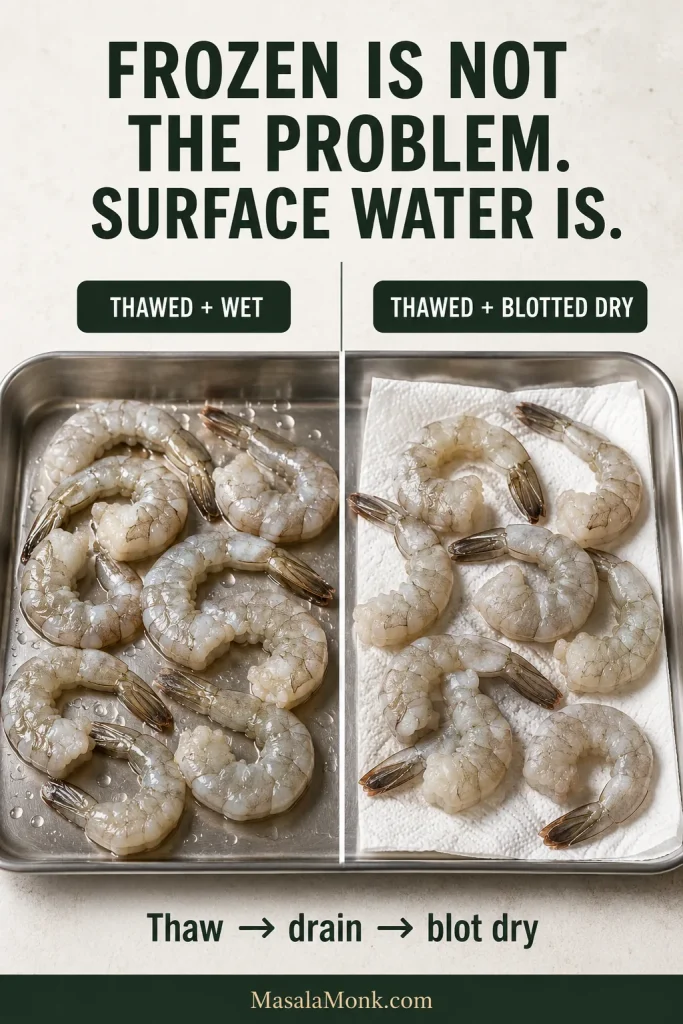
For a clean first version, use cabbage slaw, the creamy sauce, avocado, cilantro, and lime. If you want a richer taco, add avocado or a spoonful of guacamole. To make the taco sharper, use pickled onions and radishes. Meanwhile, for a warmer-weather version, save the mango salsa idea for the variation below.

This is where shrimp tacos become personal: some tables want mango and avocado, some want chipotle and jalapeño, and some want nothing but extra cabbage, cotija, and lime. If you are serving a group, set out the toppings in small bowls and let people build their own version instead of trying to make every taco identical.

Build-your-own shrimp taco table with cooked shrimp, tortillas, slaw, sauce, avocado, lime, cheese, radishes, and pickled onions
For a group, topping bowls beat prebuilt tacos because every person can choose extra lime, avocado, mango, pickled onions, or heat.

Corn or Flour Tortillas for Shrimp Tacos?

Corn tortillas give shrimp tacos a more classic taco flavor, while flour tortillas are softer and easier to fold. If your corn tortillas crack, warm them first in a dry skillet or wrap them in a damp towel and microwave briefly.

Corn tortilla shrimp taco and flour tortilla shrimp taco shown side by side with cabbage slaw and sauce
Corn tortillas bring deeper taco flavor, while flour tortillas fold more softly; therefore, choose based on flavor, flexibility, or your table’s preference.
If you are serving a group, warm the tortillas in batches and keep them wrapped in a clean towel. For small street-taco-style tortillas, plan on 2 tacos per person. For larger tortillas with more filling, one very full taco may be enough for lighter eaters, but 2 per person is still the safer dinner estimate.

Substitutions and Shortcuts

These tacos are flexible, so use what makes dinner easier. Just protect the important parts: dry shrimp, warm tortillas, fresh crunch, and enough lime or sauce to keep the filling lively.

  • No Greek yogurt? Use sour cream.
  • No mayonnaise? Use more yogurt or sour cream, but add a small drizzle of olive oil for roundness.
  • No cilantro? Use scallions, parsley, extra lime zest, or a little chipotle.
  • No cotija? Use queso fresco, feta, or skip the cheese.
  • Need it faster? Use peeled and deveined shrimp, bagged slaw mix, and store-bought tortillas.
  • Want it dairy-free? Use dairy-free yogurt, all-mayo sauce, or avocado crema.
  • Want it less spicy? Skip cayenne and hot sauce, then serve hot sauce on the side.

Shrimp Taco Variations

Once the base version works, the recipe becomes a taco-night template. Keep the shrimp quick-cooked and the slaw fresh, then change the mood: sweet with mango, smoky with chipotle, crisp with fried shrimp, or summery on the grill.

If your table is split, make the base shrimp once and set out two sauces: cilantro-lime for the mild side and chipotle or spicy mayo for the heat lovers.

Shrimp taco variations board showing mango, crispy, bang bang, grilled, bowl, and Baja-style options
Once the base method works, the same shrimp taco formula can turn sweet with mango, crisp with fried shrimp, smoky on the grill, or bowl-style over rice.
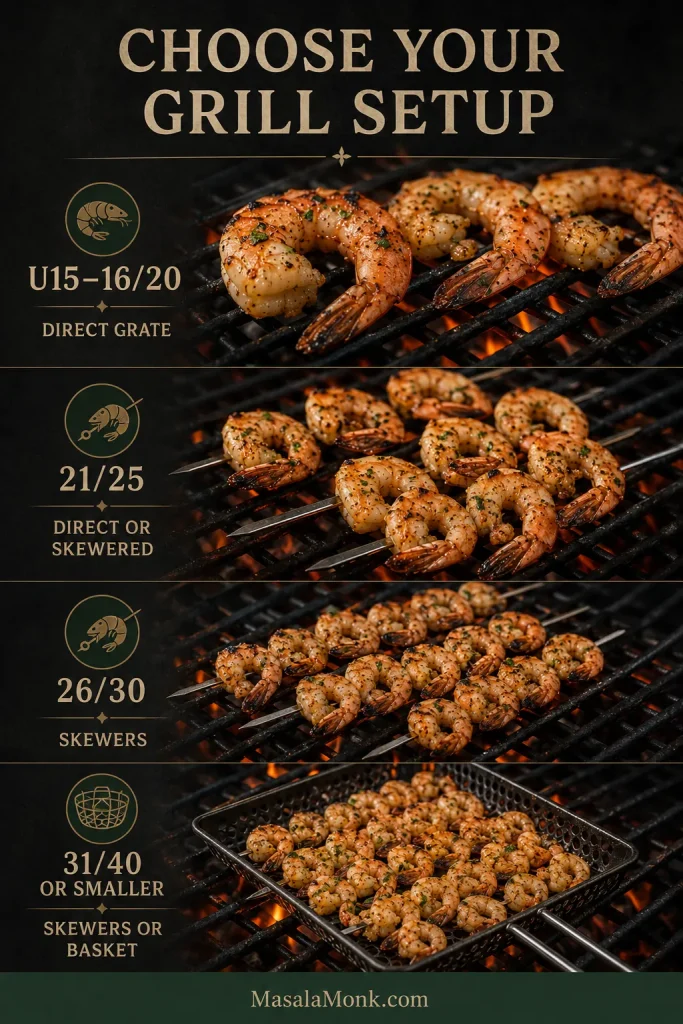
If you want a crunchier version, start with crispy shrimp tacos. If you want the base recipe first, use the recipe card and change the toppings later.

Mango Shrimp Tacos

Add mango salsa, avocado, cilantro, and extra lime. The sweetness of mango works especially well with smoky shrimp seasoning and creamy sauce. This is one of the easiest warm-weather versions of the recipe.
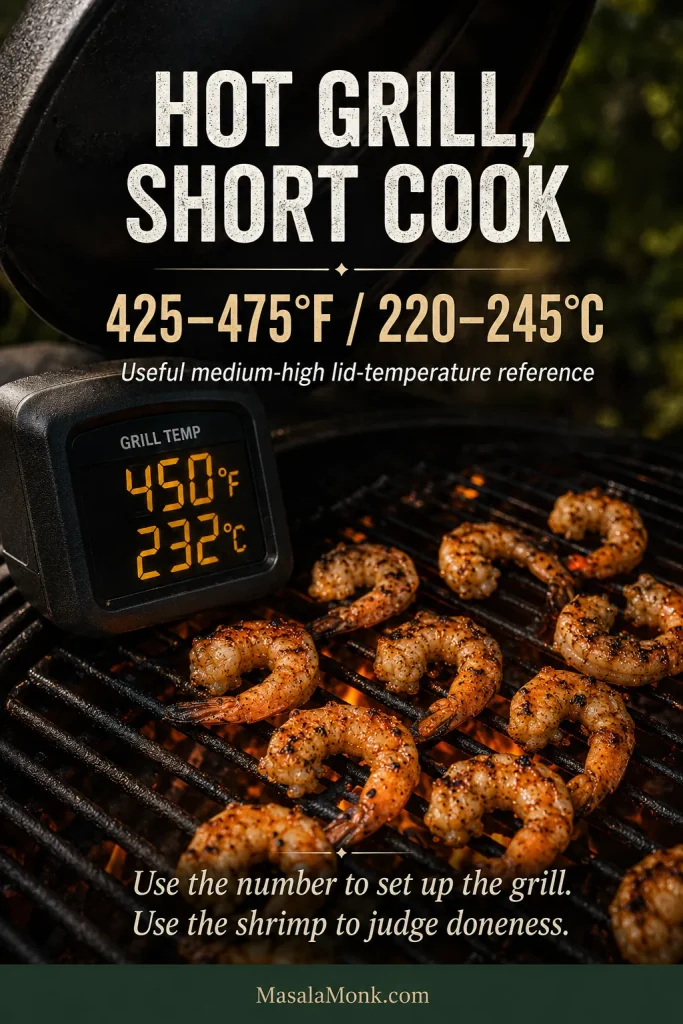
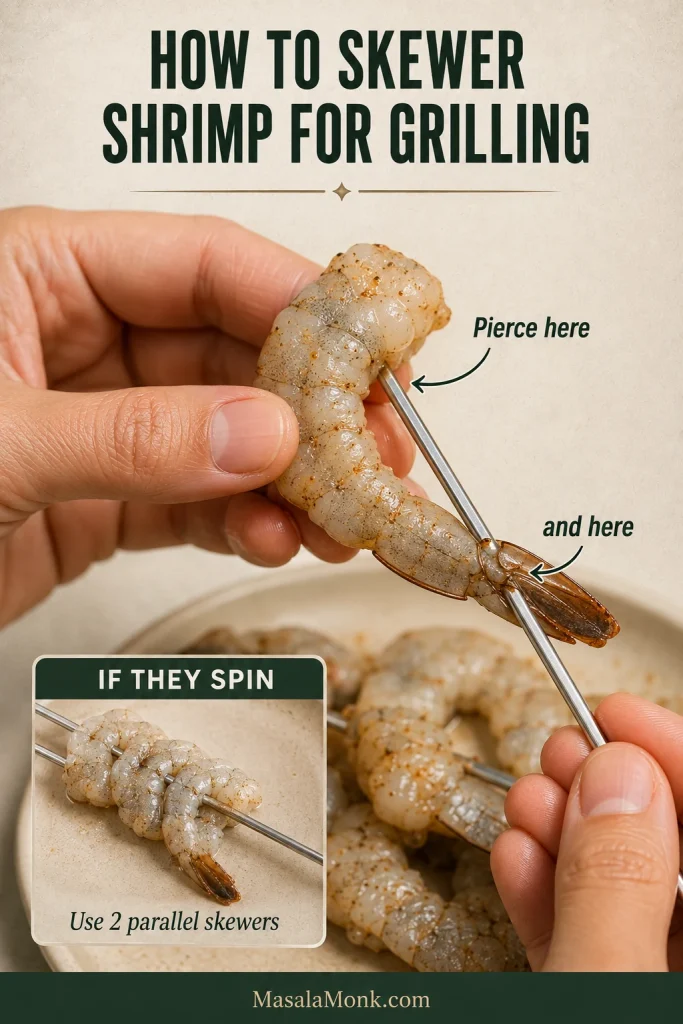
Crispy Shrimp Tacos

For crispy shrimp tacos, toss dry shrimp with a light coating of cornstarch, flour, or panko depending on how crisp you want them, then pan-fry or air-fry until just cooked. Keep the toppings sharp and fresh: cabbage, lime, pickled onions, and a thinner sauce work better than heavy toppings.

Crispy shrimp tacos with cabbage slaw, creamy sauce, cilantro, scallions, pickled onions, and lime
Crispy shrimp tacos need sharp toppings and a thinner sauce, because too much creaminess can soften the coating before the first bite.

Bang Bang Shrimp Tacos

For bang bang shrimp tacos, use crispy shrimp and a creamy sweet-spicy sauce made with mayonnaise, sweet chili sauce, sriracha or hot sauce, and lime. Add cabbage underneath so the taco does not turn too rich, then finish with scallions, cilantro, and extra lime.

Grilled Shrimp Tacos

For grilled shrimp tacos, thread shrimp onto skewers or use a grill basket so they do not fall through the grates. Keep the seasoning smoky, grill quickly, and serve with lime slaw, avocado, and chipotle sauce.

Shrimp Taco Bowls

Turn the same components into bowls by serving the shrimp, slaw, sauce, avocado, and toppings over rice, greens, or beans. If rice is your base, this guide to cooking perfect rice can help keep the bowl fluffy instead of heavy. This is also the easiest way to use leftover shrimp without trying to store assembled tacos.

Baja-Style Shrimp Tacos

For a Baja-inspired version, use crispy shrimp, cabbage, creamy chipotle or lime sauce, pico de gallo, and warm corn tortillas. Keep the slaw crunchy and the sauce bold.

What to Serve with Shrimp Tacos

Shrimp tacos are already full of flavor, so the best sides are fresh, lively, and easy. For a simple table, serve them with chips and salsa, cucumber salad, or extra slaw. For a fuller dinner, add black beans, Mexican rice, or grilled corn.

If you are building a bigger taco-night spread, pair these shrimp tacos with fish tacos so guests can choose between two seafood styles. Set out mango salsa, extra sauce, lime wedges, and sliced avocado so each person can build the taco they want without doubling the prep.

Troubleshooting Shrimp Tacos

If the tacos taste fine but not exciting, do not add five more toppings. Fix the missing piece. Flat shrimp need salt. Heavy tacos need lime. Soft tacos need cabbage or radishes. A sauce that tastes dull needs heat, garlic, or more citrus.

Shrimp taco troubleshooting guide with fixes for watery shrimp, rubbery shrimp, bland shrimp, soggy slaw, thick sauce, and cracked tortillas
Most shrimp taco problems have a clear fix: dry wet shrimp, cook rubbery shrimp less, add salt or lime to bland shrimp, and warm tortillas before filling.
Problem What to do
Shrimp taste bland Add salt, lime, and a little extra seasoning after cooking.
Shrimp are rubbery Cook less next time and remove them as soon as they turn opaque.
Shrimp are watery Dry them well and use a hotter pan.
Spices burn in the pan Lower the heat slightly and make sure the shrimp are coated with oil.
Slaw is soggy Dress it lightly and close to serving.
Sauce is too thick Thin it with lime juice or water, 1 teaspoon at a time.
Sauce is too sharp Add a spoon of mayo, yogurt, or sour cream.
Tortillas crack Warm them before filling. If needed, double-stack small corn tortillas.
Tacos feel heavy Use more slaw, less sauce, and extra lime.

Make-Ahead, Storage, and Reheating

Shrimp tacos are a little like salad: the parts can be prepped ahead, but the final assembly is best fresh. Store the shrimp, sauce, slaw, tortillas, and toppings separately so the tortillas do not soften before serving.

Shrimp taco storage guide with cooked shrimp, sauce, slaw, tortillas, toppings, cilantro, jalapeños, onions, tomatoes, and lime stored separately
Store the shrimp taco components separately, then rebuild fresh; assembled leftover tacos lose the crisp, warm, creamy contrast that makes the recipe work.
Component Make-ahead/storage advice
Sauce Make 2–3 days ahead and refrigerate in an airtight container.
Slaw vegetables Shred 1 day ahead, but dress close to serving.
Dressed slaw Best the same day; it softens as it sits.
Cooked shrimp Refrigerate for 2–3 days and reheat gently.
Tortillas Warm right before serving.
Assembled tacos Not ideal for storage because the slaw and sauce soften the tortillas.

To reheat shrimp, use low to medium-low heat with a tiny splash of water or oil. Warm only until heated through. Avoid blasting leftover shrimp over high heat, because they can turn rubbery fast.

For leftovers, treat the shrimp gently and rebuild the taco with fresh cold toppings. Reheated shrimp can still be good, but leftover assembled tacos almost always lose the texture that makes this recipe work.

Shrimp Tacos Recipe Card

Shrimp Tacos with Slaw and Creamy Cilantro-Lime Sauce

Juicy skillet shrimp tacos with cabbage slaw, creamy cilantro-lime sauce, avocado, cilantro, and fresh lime. This easy shrimp tacos recipe is ready in about 25 minutes and built to avoid watery, rubbery, or bland shrimp.

Prep Time 15 minutes
Cook Time 8–10 minutes
Total Time About 25 minutes
Yield 8 small tacos / 4 servings

Best result: Cook the shrimp last, warm the tortillas before filling, and toss creamy slaw only right before serving.

Quick notes: Plan on about 2 tacos per person. Medium or large peeled shrimp work well, and small 6-inch corn or flour tortillas are easiest to fill. The heat level is mild-medium as written; however, the sauce can be made hotter, smokier, or more herby. The sauce can be made ahead, but assembled tacos are best fresh.

Ingredients

For the Shrimp

  • Raw shrimp: 1 lb / 454 g, peeled, deveined, tails removed
  • Olive oil or avocado oil: 1 tbsp / 15 ml
  • Chili powder: 1 tsp
  • Smoked paprika: 1 tsp
  • Ground cumin: ¾ tsp
  • Garlic powder: ½ tsp
  • Onion powder: ½ tsp
  • Kosher salt: ¾ tsp, or ½ tsp fine sea salt
  • Black pepper: ¼ tsp
  • Cayenne or chipotle powder: ⅛–¼ tsp, optional
  • Fresh lime juice: 1 tbsp / 15 ml, added after cooking

For the Creamy Cilantro-Lime Sauce

  • Greek yogurt or sour cream: ½ cup / 120 g
  • Mayonnaise: 2 tbsp / 30 g
  • Fresh lime juice: 1 tbsp / 15 ml
  • Lime zest: 1 tsp, optional
  • Garlic: 1 small clove, grated, or ¼ tsp garlic powder
  • Chopped cilantro: 2–4 tbsp, depending on how herby you want the sauce
  • Ground cumin: ½ tsp
  • Kosher salt: ¼ tsp
  • Hot sauce, chipotle in adobo, or sriracha: 1–2 tsp, optional
  • Water: 1–2 tsp to thin, if needed

For the Slaw

  • Shredded cabbage: 3 cups / about 210 g, green, red, or mixed
  • Red onion or scallions: ¼ cup / 25 g, thinly sliced
  • Chopped cilantro: ¼ cup
  • Jalapeño: 1 small, thinly sliced, optional
  • Fresh lime juice: 1½ tbsp / 22 ml
  • Kosher salt: ½ tsp
  • Honey or sugar: 1 tsp, optional
  • Creamy cilantro-lime sauce: 2–3 tbsp, optional for creamy slaw

For Assembly

  • Corn or flour tortillas: 8 small tortillas
  • Avocado: 1, sliced or diced
  • Cheese: cotija, queso fresco, feta, or no cheese
  • Crunchy toppings: radishes or pickled onions
  • Fresh herbs: extra cilantro
  • Lime wedges: for serving

Instructions

  1. Dry the shrimp: If using frozen shrimp, thaw completely. Drain well and pat dry with paper towels.
  2. Make the sauce: Stir together yogurt or sour cream, mayonnaise, lime juice, lime zest, garlic, cilantro, cumin, salt, and optional hot sauce. Thin with water 1 teaspoon at a time until drizzleable. Taste and adjust with more salt, lime, cilantro, or heat as needed.
  3. Make the slaw: Toss cabbage, onion or scallions, cilantro, jalapeño if using, lime juice, salt, and optional honey or sugar. For creamy slaw, add 2–3 tablespoons of the sauce just before serving.
  4. Season the shrimp: Toss shrimp with oil, chili powder, smoked paprika, cumin, garlic powder, onion powder, salt, pepper, and optional cayenne or chipotle.
  5. Cook the shrimp: Heat a large skillet over medium-high heat. Add shrimp in a single layer and cook for 1–2 minutes per side, until pink, opaque, and curled into a loose C shape. Cook in batches if needed.
  6. Finish with lime: Remove the shrimp from the heat and squeeze fresh lime juice over the top.
  7. Warm the tortillas: Warm tortillas in a dry skillet, over a gas flame, in a low oven, or in the microwave wrapped in a damp towel.
  8. Assemble: Fill each tortilla with slaw, shrimp, creamy cilantro-lime sauce, avocado, cheese if using, extra cilantro, and lime.

Notes

Texture tip: cook the shrimp in a hot skillet in a single layer. Wet or crowded shrimp steam instead of searing.

Mild version: skip the cayenne or chipotle and use a mild hot sauce on the side.

Want more heat? Add chipotle powder to the shrimp seasoning and hot sauce or chipotle in adobo to the sauce.

Creamy slaw note: toss the cabbage with a few spoonfuls of sauce right before serving, not far in advance.
Storage: store shrimp, sauce, slaw, tortillas, and toppings separately. Cooked shrimp keep for 2–3 days in the refrigerator.

FAQs About Shrimp Tacos

What shrimp is best for shrimp tacos?

Medium or large peeled, deveined shrimp are the easiest choice. Medium shrimp fit small tortillas neatly, while large shrimp stay juicy and look generous. Tails-off shrimp are easiest to eat.
Is frozen shrimp okay for shrimp tacos?

Frozen shrimp are completely fine here. The important step is drying them well after thawing so they sear instead of steaming.
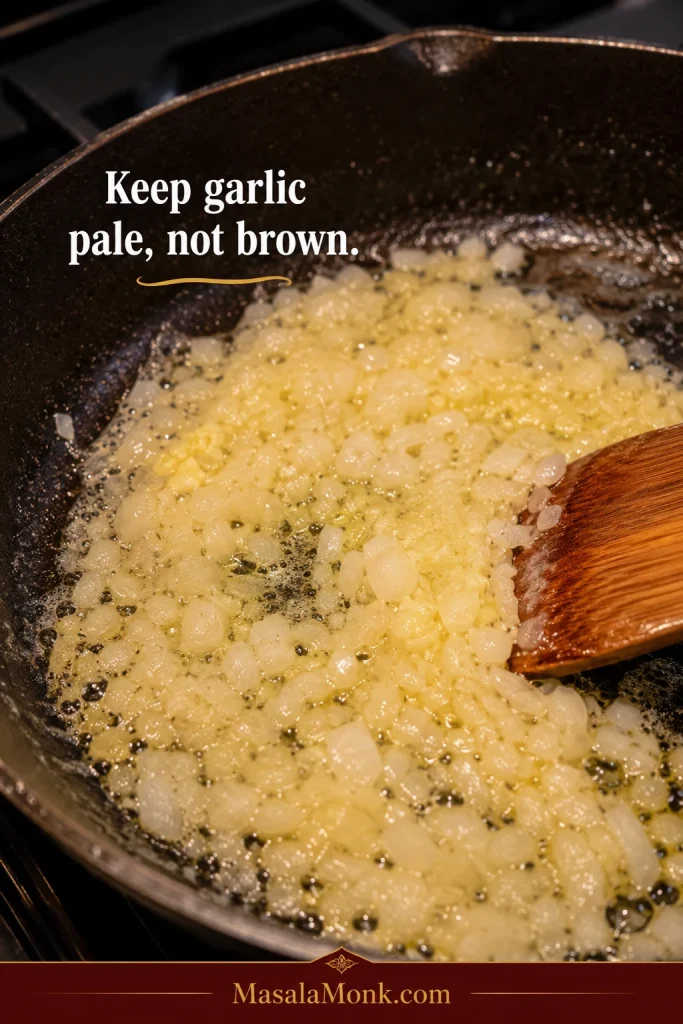
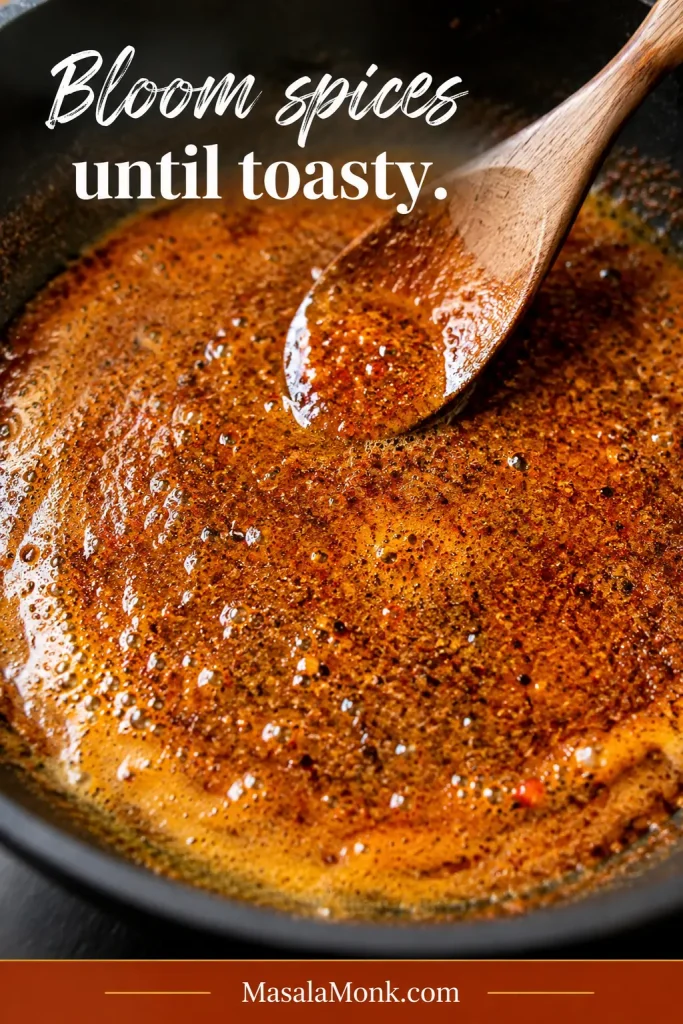
Can I use cooked shrimp for shrimp tacos?

You can use cooked shrimp, but raw shrimp gives better texture and flavor because it cooks with the seasoning. If using cooked shrimp, warm it gently with a little oil and seasoning just until hot, then stop before it turns rubbery.

How many shrimp do I need per taco?

For small tortillas, plan on about 3–5 shrimp per taco, depending on shrimp size. Jumbo shrimp may need only 2–3 per taco, while medium shrimp usually need a few more.

How do you keep shrimp from getting rubbery?

Cook shrimp quickly over medium-high heat and remove them as soon as they turn opaque and curl into a loose C shape. A tight O shape usually means the shrimp stayed in the pan too long.

Which sauce works best with shrimp tacos?

For most taco nights, creamy cilantro-lime sauce is the easiest choice because it cools the seasoning and gives the slaw something to cling to. Chipotle sauce, avocado crema, and spicy mayo also work well.

Which slaw should I use?

Cabbage lime slaw is the easiest default because it is crunchy, fresh, and sturdy. For a richer taco, toss the cabbage with a few spoonfuls of creamy sauce right before serving.

Are corn or flour tortillas better for shrimp tacos?

Corn tortillas give a more classic taco flavor, while flour tortillas are softer and easier to fold. Both work. The main thing is to warm them before filling.

What toppings go with shrimp tacos?

Good shrimp taco toppings include cabbage slaw, avocado, cilantro, lime, radishes, pickled onions, cotija, queso fresco, jalapeño, mango salsa, and creamy cilantro-lime sauce.

Can I make shrimp tacos ahead of time?

You can make the sauce ahead and prep the slaw vegetables ahead, but shrimp tacos are best assembled fresh. Keep each component separate until serving.

How should I reheat shrimp for tacos?

Reheat shrimp gently in a skillet over low to medium-low heat with a tiny splash of water or oil. Stop as soon as they are warm. High heat can overcook leftover shrimp quickly.

Start with the base version once, then let the second batch become your house version: chipotle sauce for heat, mango salsa for sweetness, crispy shrimp for crunch, or grilled shrimp for a smokier taco-night feel. Once you know whether your table wants extra lime, extra sauce, or extra heat, this recipe gets easier every time.

What makes a shrimp taco perfect for you: extra crunch, lots of sauce, more lime, mango salsa, avocado, crispy shrimp, or serious heat? I’d love to know which version your table would choose first — and whether you’re team corn tortilla or team flour tortilla.