
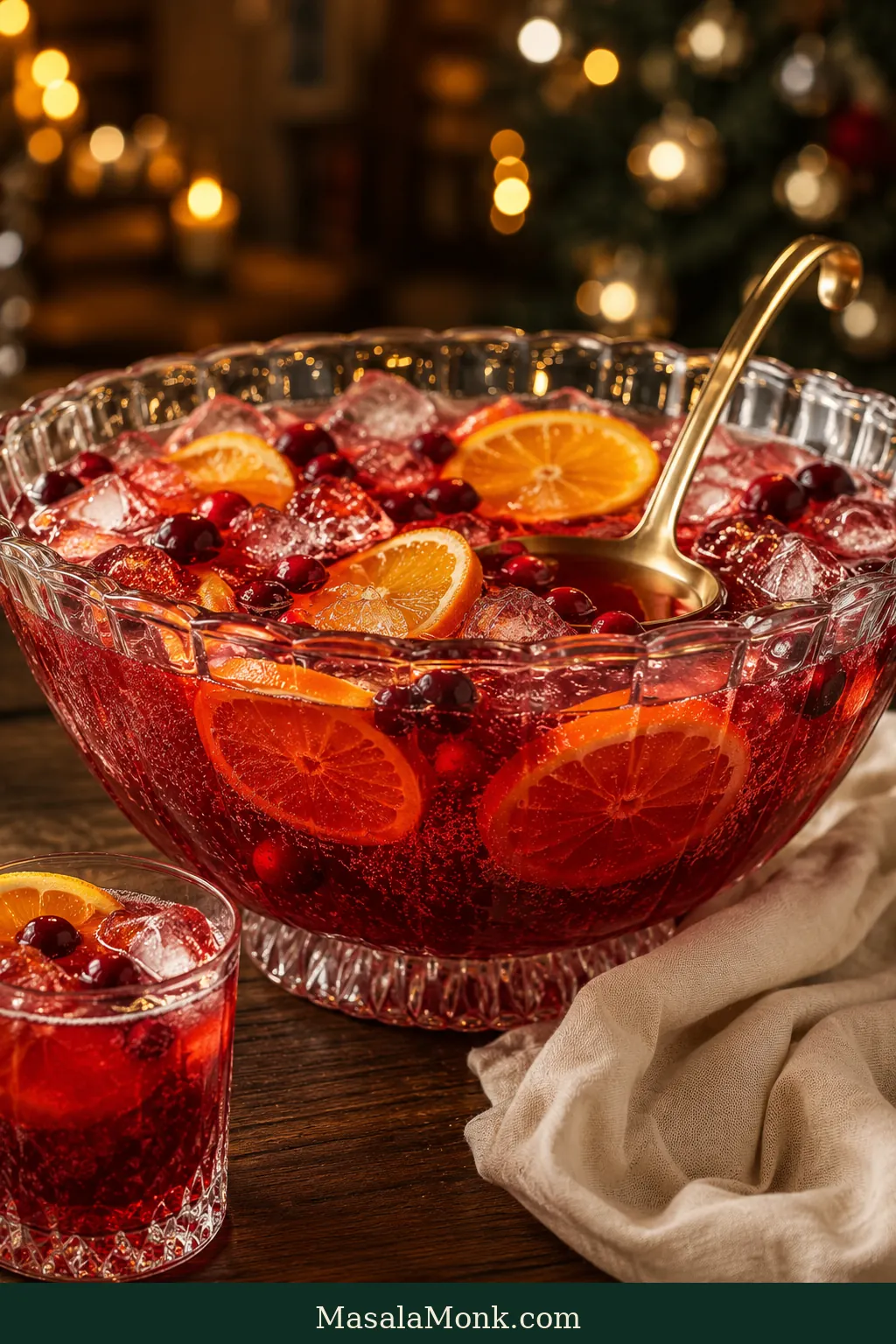
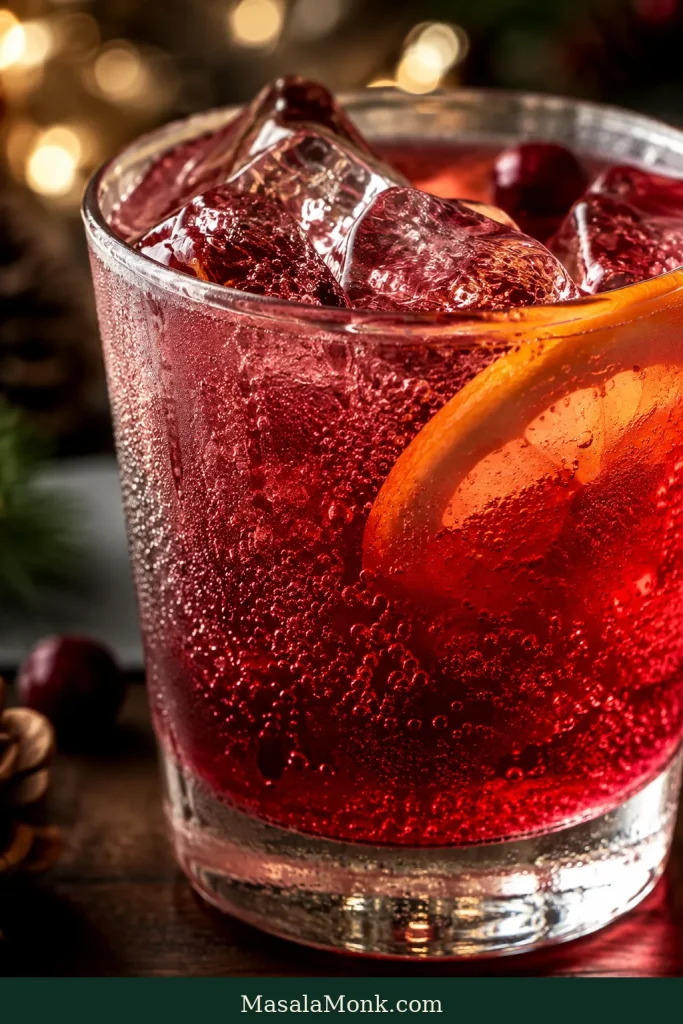
Cold bubbles climbing around orange slices and ruby-red cranberries. Tart enough to cut through a rich Christmas dinner, fruity enough that people come back carrying an empty glass. That is the kind of Christmas punch worth putting in the middle of the table.
The trouble is that Christmas punch can go wrong surprisingly easily. Too sweet and the first glass feels like dessert. Too flat and it tastes like mixed fruit juice. Add alcohol carelessly and a drink that tastes gentle can become much stronger than anyone expected.
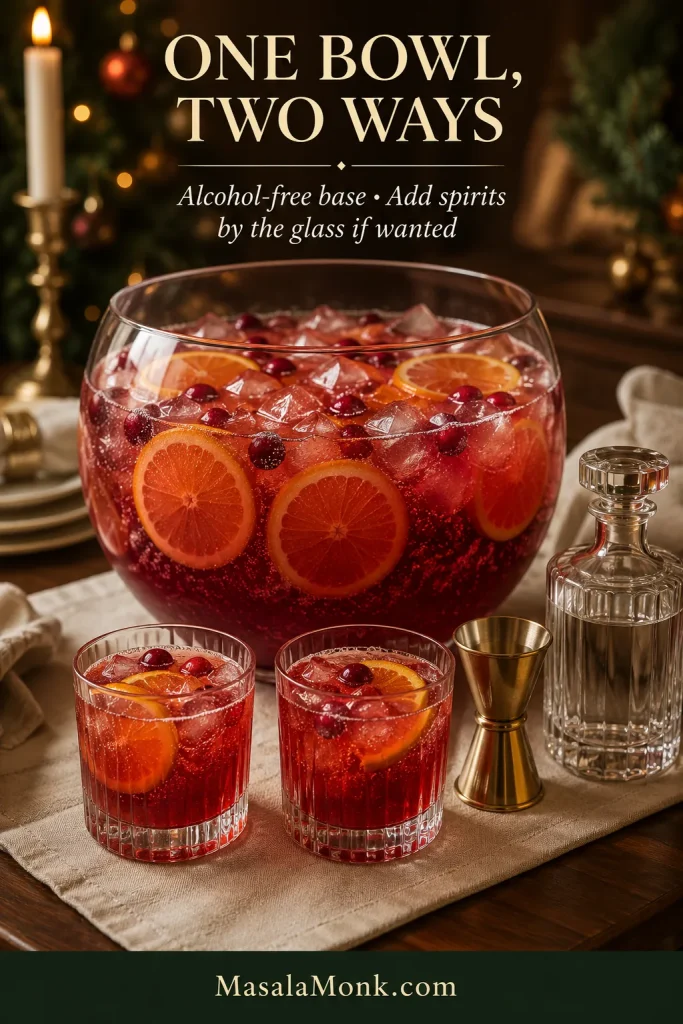
The idea here is simple: the recipe starts as a non-alcoholic Christmas punch, with ginger ale plus sparkling water so not all the fizz comes from sweet soda. Vodka or rum can be added where you want them, while brut Prosecco or Champagne can replace the ginger ale for a drier version.
Everyone gets the festive glass. Once the bowl is on the table, the host should be able to leave it there and get on with Christmas.
Quick Answer
This easy Christmas punch combines cranberry, pineapple and orange juice with ginger ale and sparkling water. It takes about five minutes to mix once everything is cold, makes about 1 US gallon / 128 US fl oz / 3.8 L, and can be served alcohol-free or spiked by the glass with vodka or rum.
The rule worth remembering is shorter than the ingredient list:
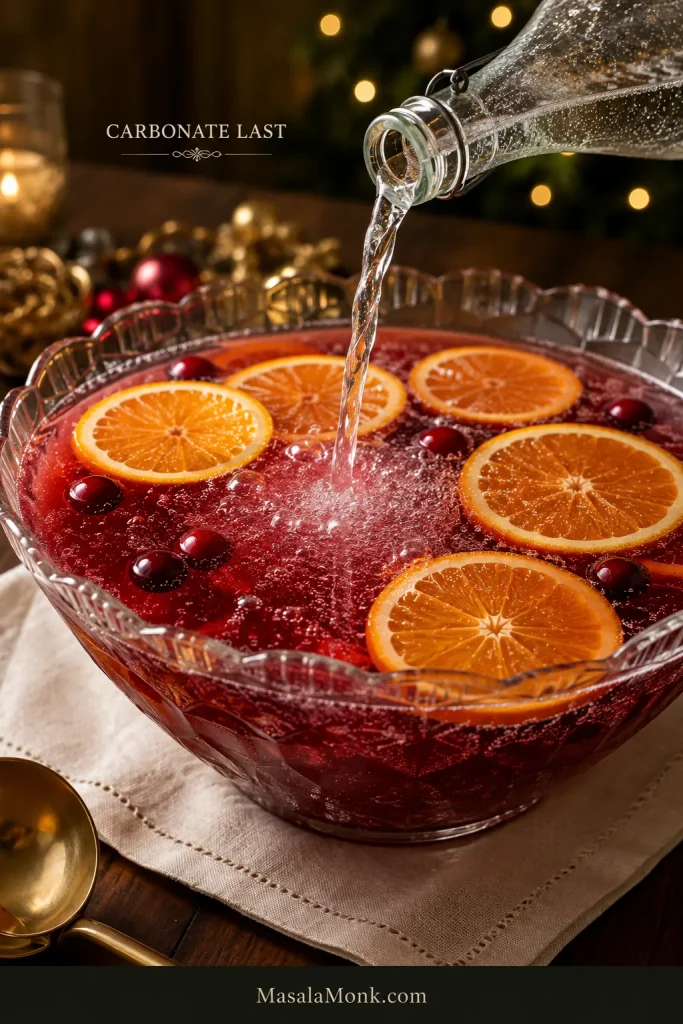
Chill first. Balance before bubbles. Carbonate last.
Choose Your Version
Mixed family gathering? Keep the bowl alcohol-free so children and adults can share the same festive punch. Adults who want vodka or rum can add it to their own glasses.
Adults only? Add a measured amount of vodka, light rum or gold rum to the whole bowl. The whole-bowl amounts below let you choose the strength without relying on guesswork.
Want a drier sparkling-wine version? Replace the ginger ale with brut Prosecco or Champagne.
Making your first batch? Keep the bowl alcohol-free and spike individual glasses. It gives you the most control without committing the whole gallon to one choice.
Christmas Punch Recipe
The full batch makes about one gallon before optional lemon or alcohol. The scaling section below includes ready-made amounts for a single glass, pitcher and half batch.
Recipe at a Glance
| Prep | About 5 minutes |
|---|---|
| Yield | About 1 US gallon / 128 US fl oz / 3.8 L |
| Small party pours | About 21 × 6 fl oz / 180 ml |
| Generous servings | About 16 × 8 fl oz / 240 ml |
| Best bowl size | 6 qt / 5.7 L for most full batches |
| Flavor | Cranberry-forward, lightly sweet and sparkling |
| Alcohol | Optional |
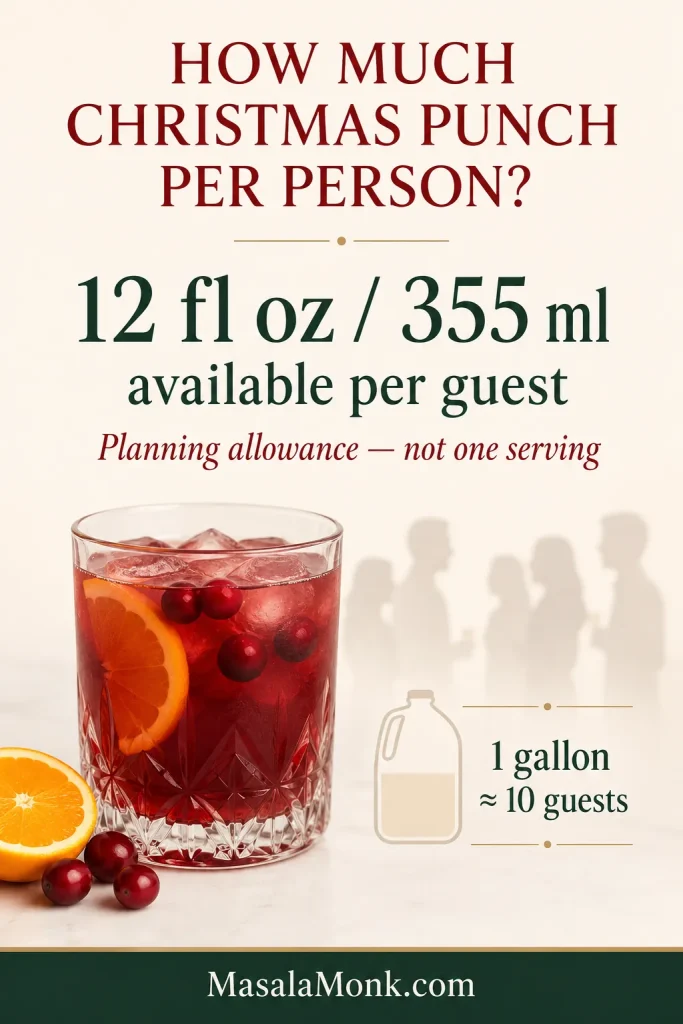
Serving sizes: 6 fl oz / 180 ml is a small party pour; 8 fl oz / 240 ml is a generous serving. The 12 fl oz / 355 ml figure used later is a shopping allowance per guest, including refills—not one glass.
Ingredients
The punch itself uses five main liquids. Optional lemon juice, sliced fruit and ice are finishing touches.
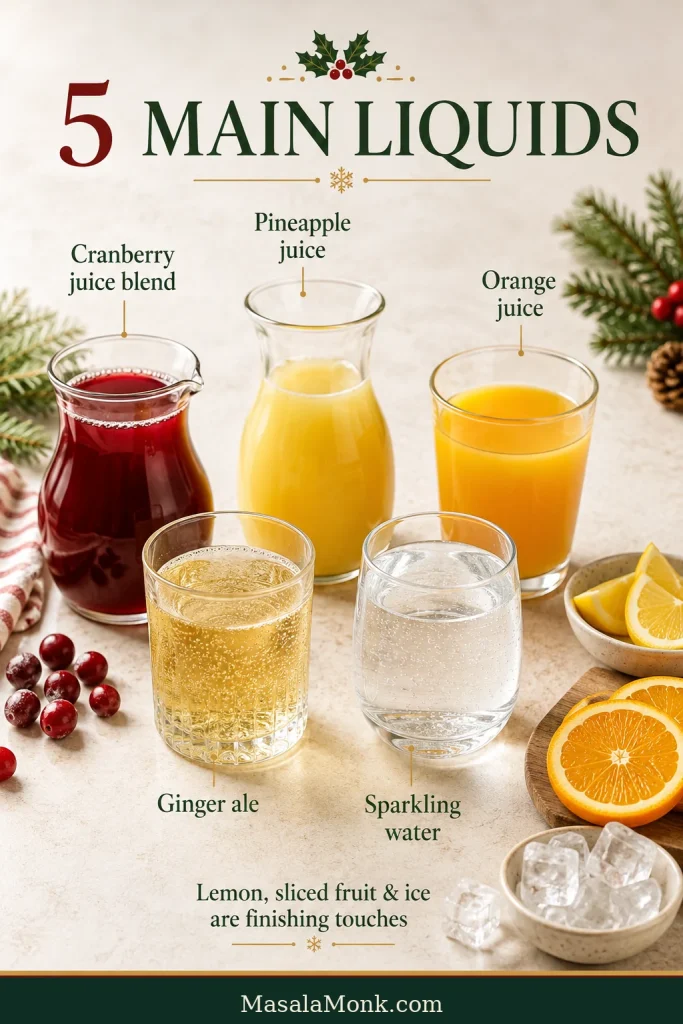
- 8 cups / 64 fl oz / 1.9 L 100% cranberry juice blend, well chilled — not pure unsweetened cranberry juice
- 3 cups / 24 fl oz / 710 ml 100% pineapple juice, well chilled
- 1 cup / 8 fl oz / 240 ml 100% pulp-free orange juice, well chilled
- 3 cups / 24 fl oz / 710 ml ginger ale, very cold
- 1 cup / 8 fl oz / 240 ml plain sparkling water, very cold; club soda also works
- Fresh lemon juice: 1–2 tbsp / 15–30 ml, only if the juice mixture needs more brightness after tasting
- Orange: 1, thinly sliced
- Up to 1 cup fresh or frozen cranberries, optional garnish
- Large punch ice, an ice ring or ice for individual glasses, as needed
If you bought pure cranberry juice or cranberry juice cocktail instead, don’t swap it cup-for-cup. The cranberry guide below shows where to start.
How to Make Christmas Punch
Once everything is cold, the actual mixing takes about five minutes.
- Chill everything first. Start with refrigerator-cold juices and mixers so the ice is not doing all the chilling.
- Mix the juices. Pour the cranberry, pineapple and orange juice into the bowl and stir gently.
- Taste before the bubbles. Look for cranberry up front with enough fruit sweetness behind it that the mixture does not feel aggressively tart. If it feels heavy or sweeter than you want, try 1 tablespoon / 15 ml lemon juice. If it is unusually sharp, check the cranberry label first.
- Add whole-bowl alcohol now, if using. Choose one of the measured amounts below instead of free-pouring.
- Add the ginger ale and sparkling water last. Pour them in immediately before serving and give the punch one gentle stir.
- Finish and serve. Add ice and orange slices, plus a few cranberries, if using. Serve while everything is cold and fizzy.
Juice and ginger ale brands vary in sweetness. Make the smallest adjustment that solves the problem, then stop.
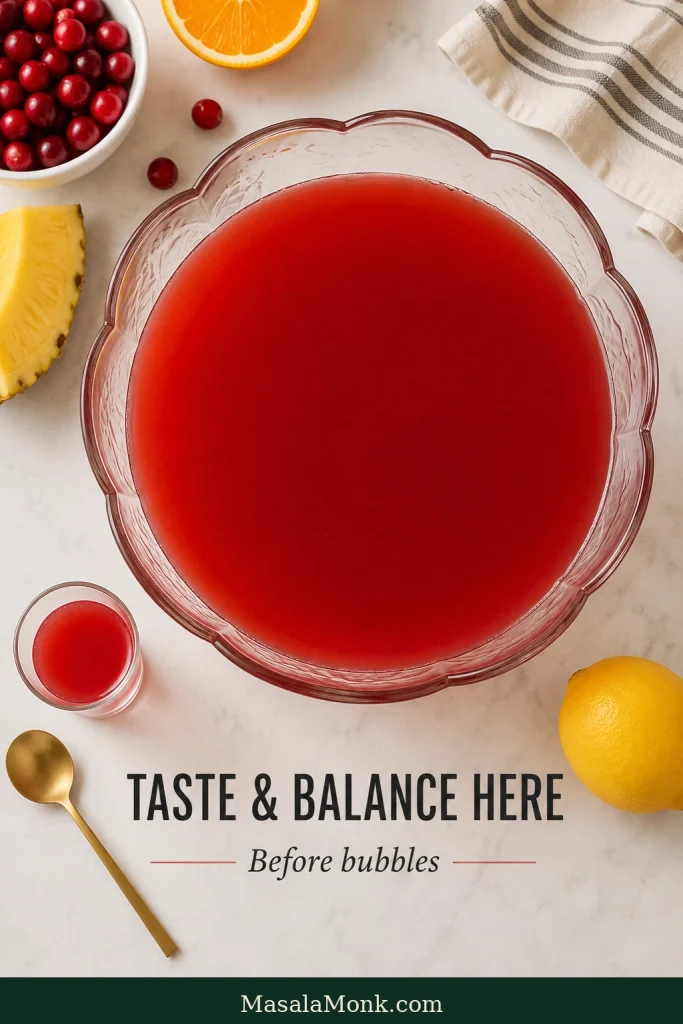
The next ingredient is bubbles. Keep both fizzy mixers cold and add them only when the bowl is ready to serve.
Make One Serving, a Pitcher or a Full Bowl
You should not need a calculator simply because fewer people are coming. Here are the amounts already worked out.
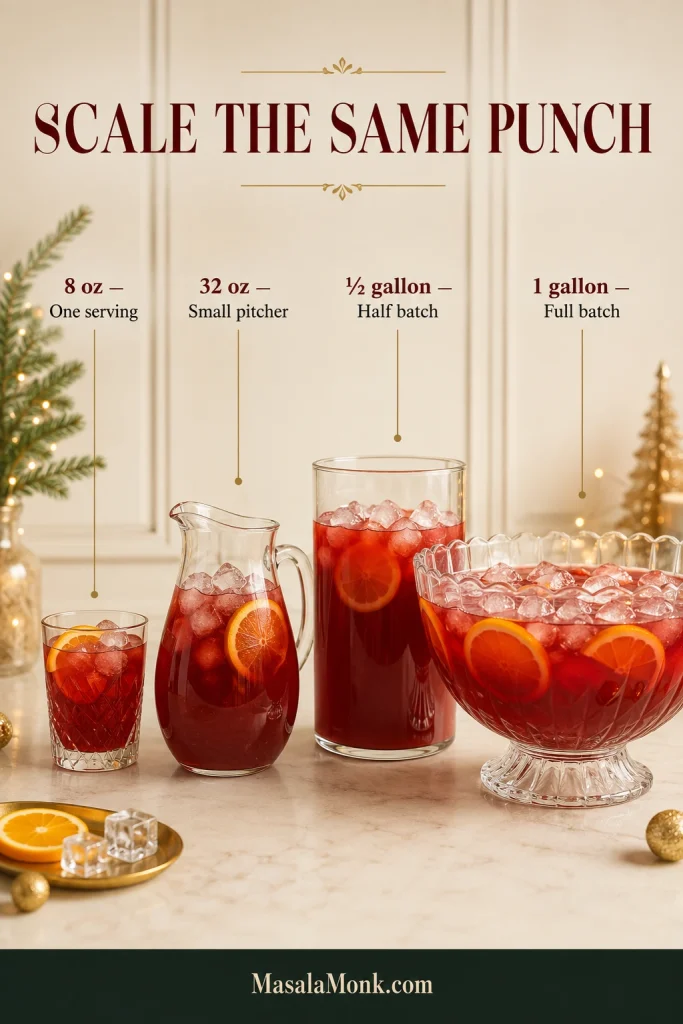
| Size | Amounts |
|---|---|
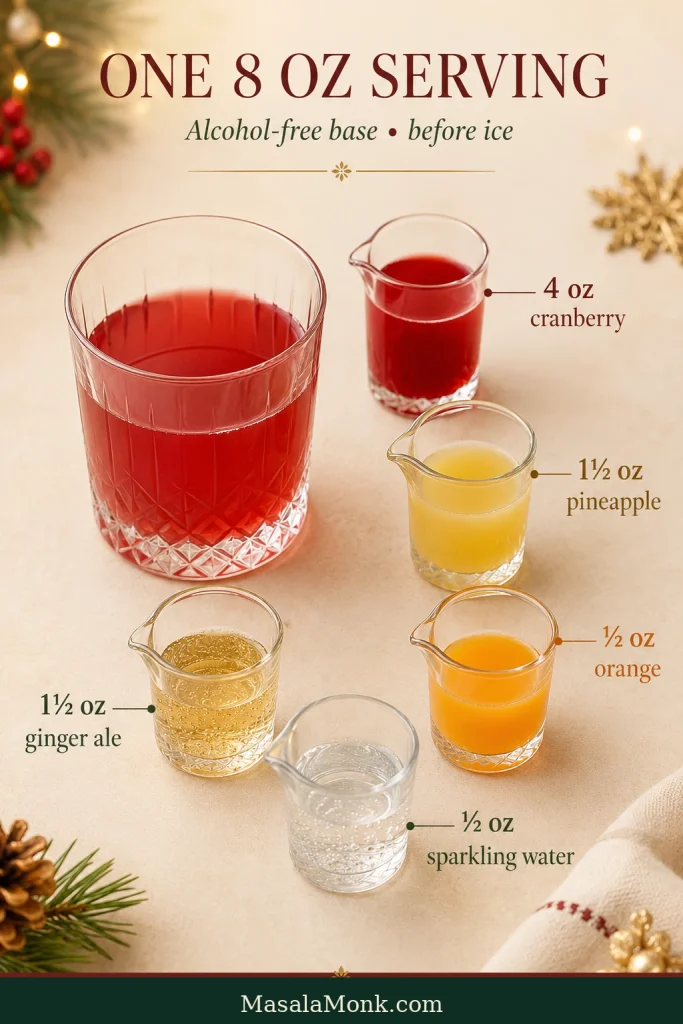
| One 8-fl-oz / 240-ml serving | 4 fl oz / 120 ml cranberry + 1½ fl oz / 45 ml pineapple + ½ fl oz / 15 ml orange + 1½ fl oz / 45 ml ginger ale + ½ fl oz / 15 ml sparkling water |
| Small pitcher — about 32 fl oz / 950 ml | 2 cups / 475 ml cranberry + ¾ cup / 180 ml pineapple + ¼ cup / 60 ml orange + ¾ cup / 180 ml ginger ale + ¼ cup / 60 ml sparkling water |
| Half batch — about ½ US gallon / 1.9 L | 4 cups / 950 ml cranberry + 1½ cups / 355 ml pineapple + ½ cup / 120 ml orange + 1½ cups / 355 ml ginger ale + ½ cup / 120 ml sparkling water |
| Full batch — about 1 US gallon / 3.8 L | Use the complete recipe above |
For a single serving with ice or alcohol, use a 10–12 fl oz / 300–355 ml glass. For the small batch, choose a pitcher larger than 1 L. Don’t fill it to its advertised capacity when fruit or ice is going inside.
Use the Ratio for Odd-Sized Batches
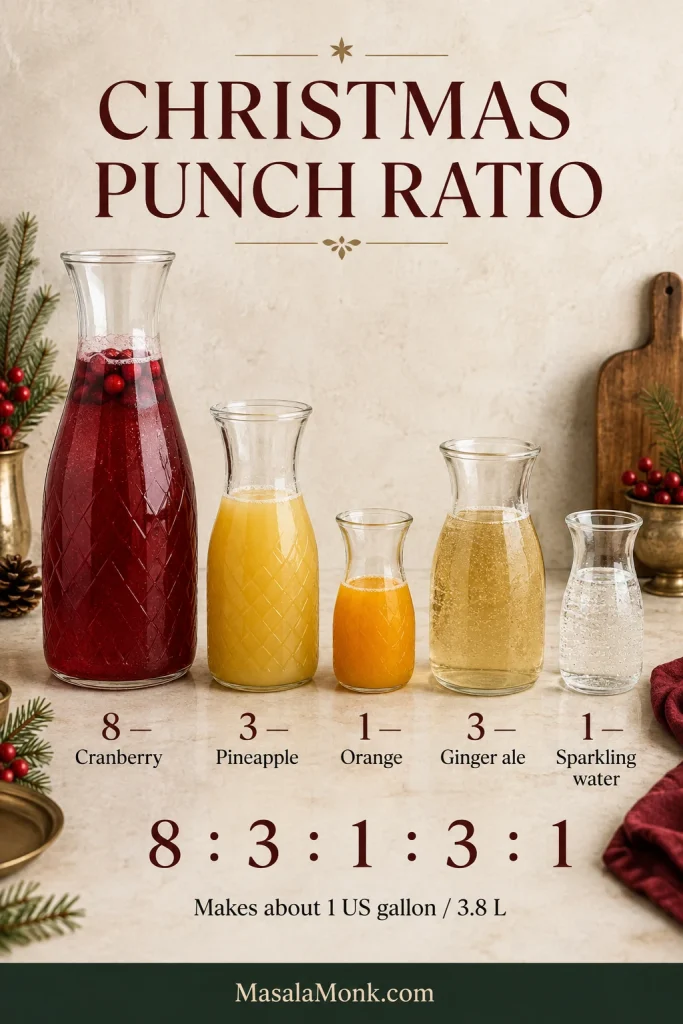
If your pitcher or dispenser does not match one of the sizes above, use 8 parts cranberry : 3 pineapple : 1 orange : 3 ginger ale : 1 sparkling water. Keep the same measure for every part.
Jump to What You Need
For a small gathering, everything you need is already above. The rest is here when you need help with cranberry labels, ingredient swaps, alcohol, crowd quantities, serving, ice or troubleshooting.
- What each ingredient is doing
- Which cranberry juice to use
- Ingredient swaps and what changes
- Vodka, rum and sparkling wine
- How much punch to make
- Pitcher, bowl or dispenser
- Make-ahead and ice
- Troubleshooting
What Each Ingredient Is Doing
Cranberry leads. It gives the punch its tart backbone, deep red color and unmistakable holiday character. Because it makes up half the alcohol-free drink, choosing the right cranberry product matters far more than adding another handful of decorative fruit.
Pineapple brings body and fruit sweetness into the middle of the drink. Three cups are enough to soften cranberry without pulling everything too far into tropical-punch territory.
A smaller amount of orange connects cranberry’s tart edge with pineapple’s sweetness without taking over the color or flavor.
Ginger ale brings fizz, sweetness and a gentle ginger note. Sparkling water adds more bubbles without another full measure of sweet soda.
Together, those ingredients are meant to keep cranberry in front, soften its tartness with pineapple and citrus, and leave enough fizz that the punch feels refreshing rather than syrupy. Once the main ingredients are doing their jobs, adding more things rarely makes it better.
Cranberry Juice: Read the Label Before You Pour
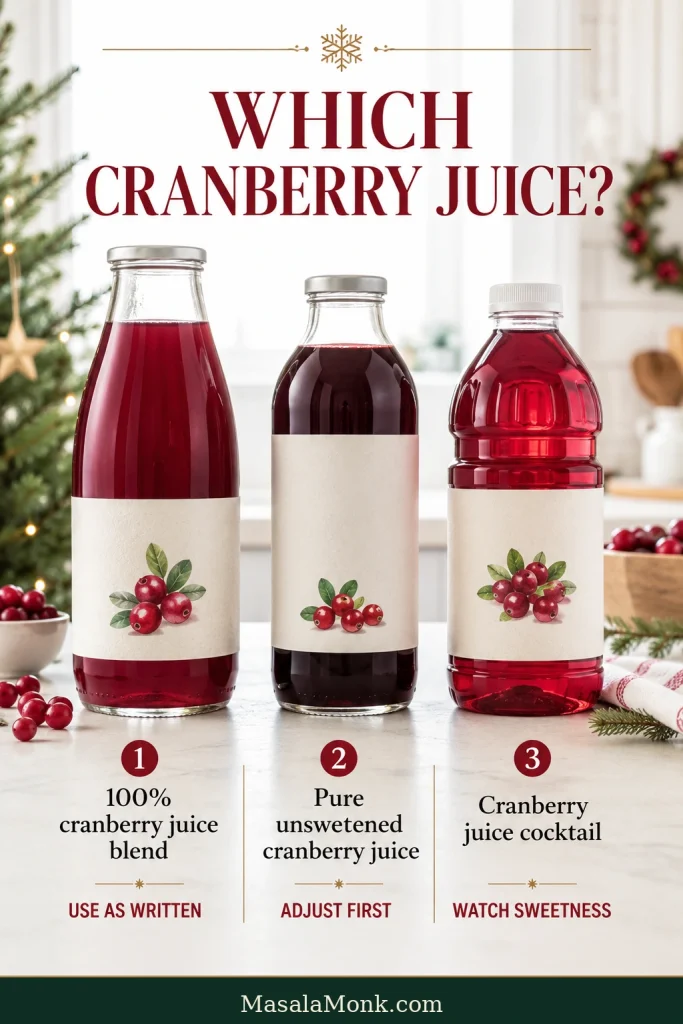
For the recipe as written, use 100% cranberry juice blend—not pure unsweetened cranberry juice and not automatically cranberry juice cocktail.
“Cranberry juice” sounds like one ingredient. At punch-bowl scale, the label can change the entire drink.
| What you bought | What to do |
|---|---|
| 100% cranberry juice blend Cranberry blended with naturally sweeter apple, grape or pear juice | Use 8 cups / 1.9 L as written. This is the intended version. |
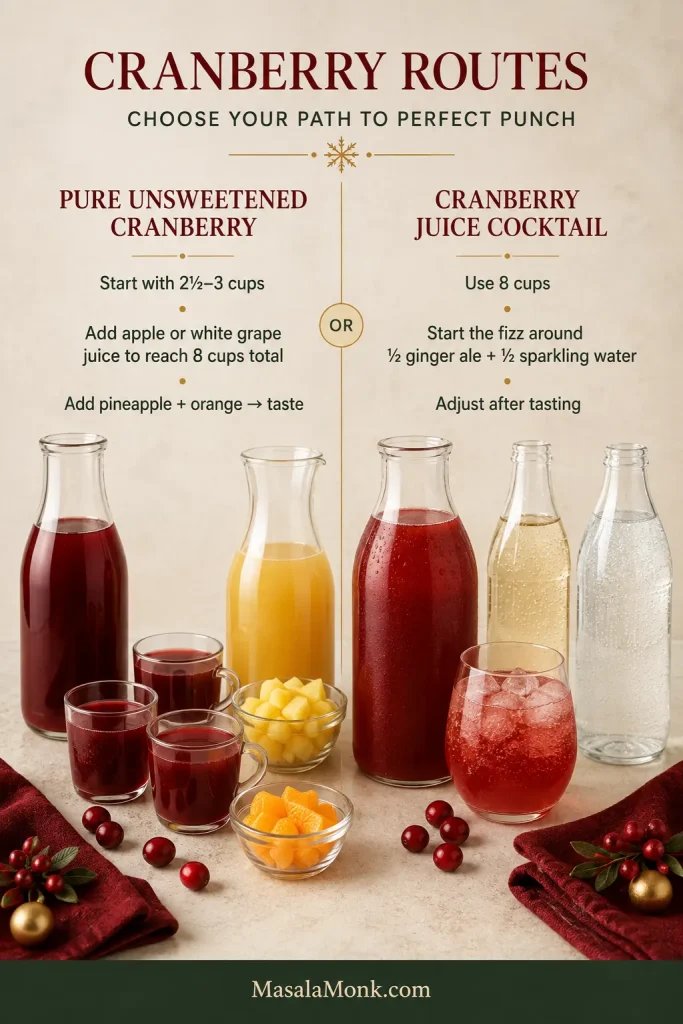
| Pure unsweetened cranberry juice | Do not use it cup-for-cup. For the 8-cup cranberry portion, begin cautiously with about 2½–3 cups pure cranberry and enough apple or white grape juice to bring the total to 8 cups. Mix in the pineapple and orange, then taste. |
| Cranberry juice cocktail | Use 8 cups / 1.9 L, but begin the fizzy portion with roughly equal parts ginger ale and sparkling water. Add more ginger ale only if the punch needs more sweetness. |
If You Bought Pure Cranberry or Cranberry Cocktail
Start there, then taste. The difference between brands is large enough that one fixed number will not suit every bottle.
If the pure-cranberry version is still too sharp after the pineapple and orange are in, add a little more apple or white grape juice. If it only needs a small sweetness correction, cold simple syrup gives you finer control; add it 1 tablespoon / 15 ml at a time.
Cranberry cocktail can create the opposite problem. When the juice mixture is already sweet enough, plain sparkling water is more useful than another sweet mixer.
Before the Bubbles
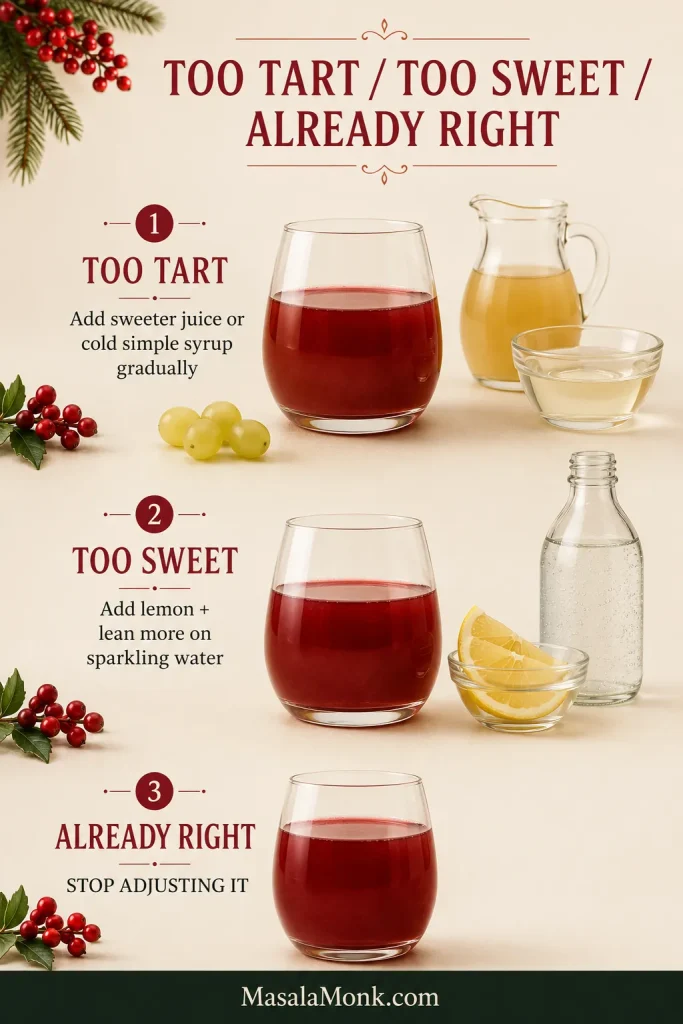
Too tart? Add a sweeter complementary juice or cold simple syrup in small measured amounts.
Too sweet? Add fresh lemon a tablespoon at a time and lean more heavily on sparkling water when you finish the bowl.
Already good? Stop adjusting it.
Keep dry granulated sugar out of an already fizzy bowl. If the finished punch genuinely needs sweetness, cold simple syrup dissolves more easily and is much less likely to produce a sudden cap of foam.
Once the juice tastes right, you can stop thinking about cranberry labels. From there, the variations are mostly about the kind of punch you want.
Ingredient Swaps: What Changes
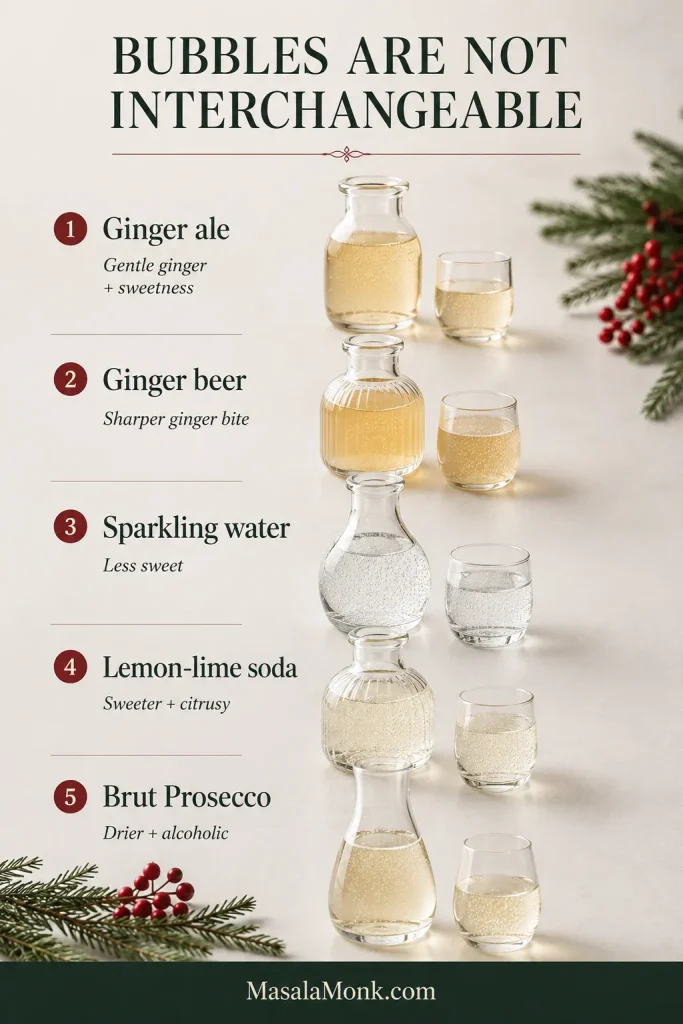
Ginger beer, Sprite, sparkling water and Prosecco all add bubbles, but they do very different things to the punch.
| Change | What happens |
|---|---|
| Replace some ginger ale with ginger beer | More ginger bite and a sharper finish |
| Use Sprite or 7Up instead of ginger ale | Sweeter and more lemon-lime forward, without the ginger character |
| Replace some ginger ale with sparkling water | Less sweetness while keeping the punch fizzy |
| Replace part of the cranberry with pomegranate | Deeper fruit flavor and a more red-purple color |
| Replace some pineapple with orange or apple juice | Less pineapple body and a different kind of fruit sweetness |
| Replace ginger ale with brut Prosecco | Drier, alcoholic and more wine-like; use the measured sparkling-wine version below |
If the stronger ginger version is what appeals to you, a Cranberry Moscow Mule takes cranberry, lime, vodka and ginger beer into an individual cocktail rather than a punch-bowl variation.
Make It Alcoholic: Vodka, Rum or Sparkling Wine?
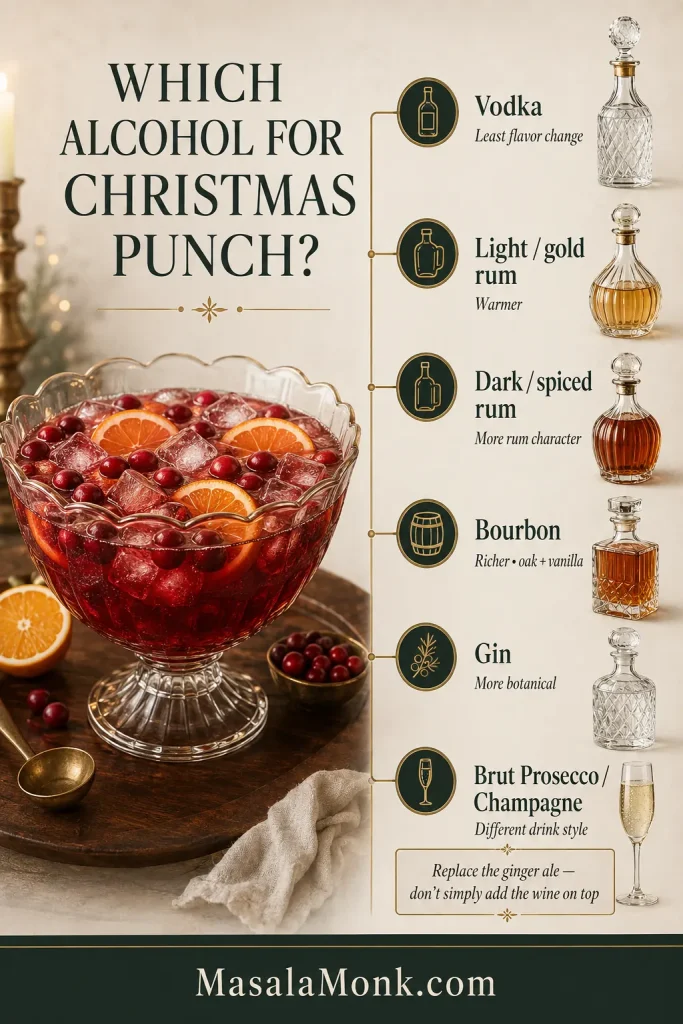
If the alcohol-free glass already tastes good, you can stop there. What matters is how much you want the alcohol to change the punch. Vodka stays mostly out of the fruit’s way; rum becomes more noticeable; sparkling wine changes the style of the drink altogether.
| Alcohol | What changes |
|---|---|
| Vodka | Clean and neutral; the fruit remains in front |
| Light or gold rum | Rounder and warmer without a heavy molasses flavor |
| Dark or spiced rum | More obvious rum, vanilla and spice; easier to overpower the fruit |
| Brut Prosecco or Champagne | Drier, lighter and more sparkling |
| Bourbon | Oak, vanilla and a richer cranberry-orange profile |
| Gin | Sharper and botanical; changes the character much more noticeably than vodka |
Vodka is the easiest choice when you want the punch to keep tasting primarily of fruit. Light or gold rum adds more warmth, while coconut rum only makes sense when coconut is genuinely part of the flavor you want.
If cranberry and vodka are your favorite part of the punch, a classic Cosmopolitan takes that combination into a sharper lime-and-orange cocktail.
Spike Individual Glasses
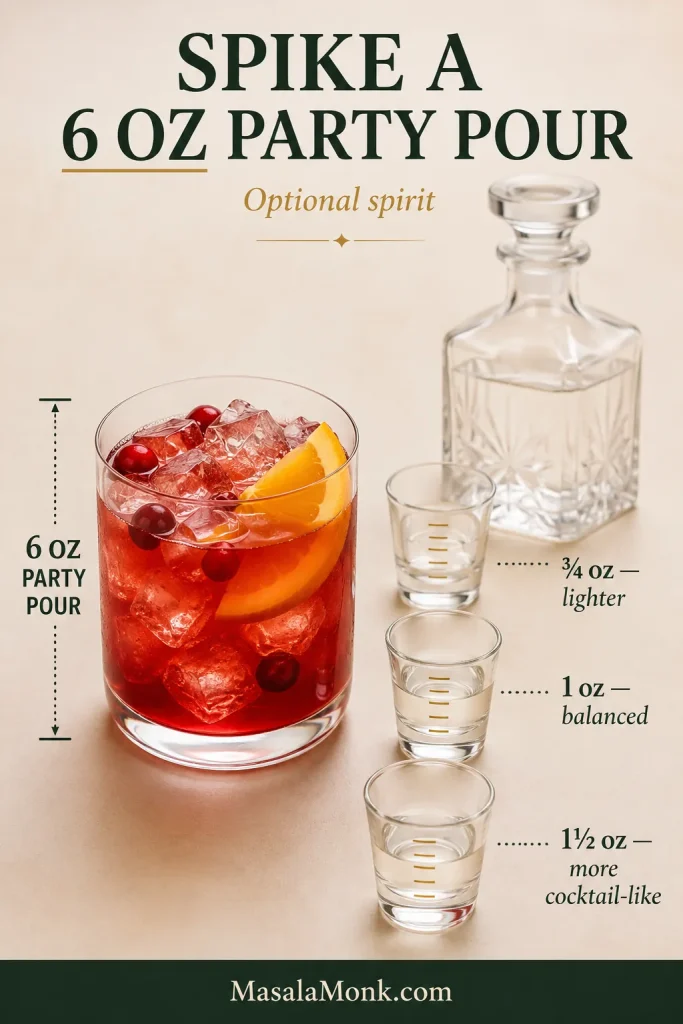
For a 6 fl oz / 180 ml pour, start with 1 fl oz / 30 ml spirit. From there, move lighter or stronger depending on the glass you want.
- Lighter: ¾ fl oz / 22 ml
- Balanced: 1 fl oz / 30 ml
- More cocktail-like: 1½ fl oz / 45 ml
With a typical 40% ABV spirit, the 1-fl-oz version is roughly 5.7% ABV before ice dilution; the 1½-fl-oz version is around 8%. Use a 10–12 fl oz glass so there is room for the spirit and ice.
Spike the Whole Bowl
| 40% spirit added to one full batch | Approx. ABV* |
|---|---|
| 375 ml | About 3.6% |
| 500 ml | About 4.7% |
| 750 ml | About 6.6% |
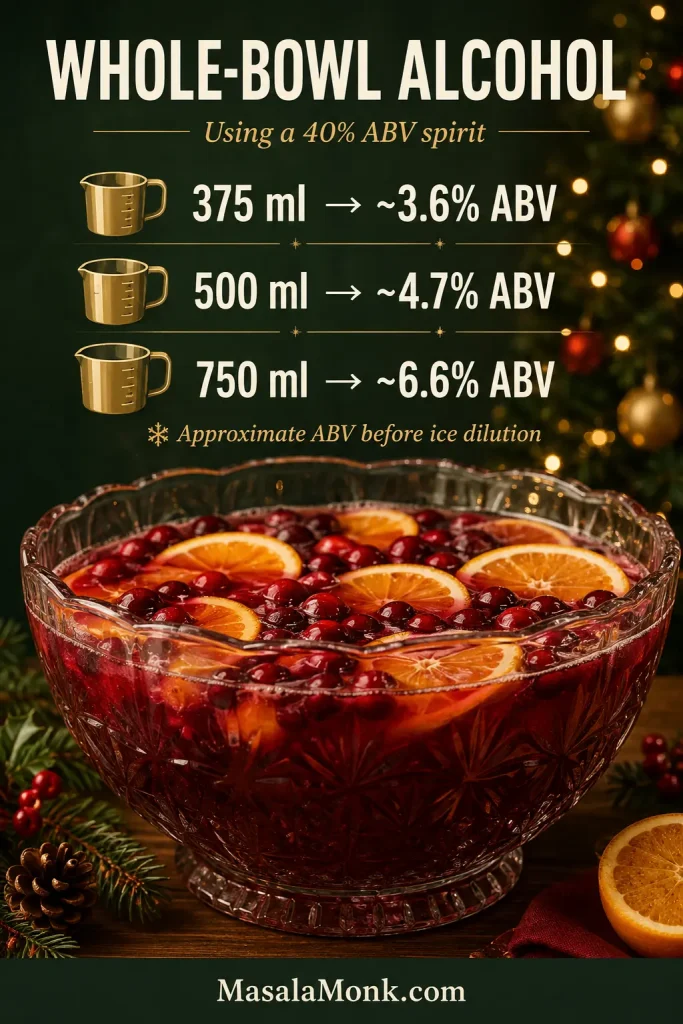
Cold fruit and carbonation can make alcohol seem gentler than it is. Measure how much went into the bowl instead of judging strength only by taste. The NIAAA guide to standard drinks is useful for comparing those pours with familiar servings of spirits and wine.
Adding the full 750 ml of spirit brings the total liquid to roughly 4.5 L before ice and garnish. Do not use a 5-quart bowl for that version; the bowl-size guide below shows the practical headroom for larger batches.
Prosecco or Champagne Version
Replace the 3 cups / 710 ml ginger ale with one chilled 750 ml bottle of brut Prosecco or Champagne. Keep the sparkling water. With a typical 12% sparkling wine, the finished bowl is roughly 2.4% ABV before ice dilution.
For a stronger sparkling version, about 375 ml vodka brings the bowl into roughly the mid-5% ABV range, depending on the bottles used.
If sparkling wine is really the main event, the Mimosa guide includes a cranberry version for individual Christmas-brunch glasses.
Christmas Punch for a Crowd: How Much Per Person?
For a party, recipe yield and shopping quantity are not quite the same thing. Nobody is thinking about the yield printed on the recipe once people start coming back for refills.
As a generous planning rule, allow about 12 fl oz / 355 ml of punch available per guest when punch is an important drink option. For planning, one gallon therefore covers roughly 10 people. Make less when beer, wine, cocktails, soft drinks and other beverages are also being served.
This is a shopping allowance, not a serving size. The extra volume simply gives people room to come back for another glass.
How Many Batches for 10–80 Guests?
For a quick planning rule, think roughly one gallon for every ten guests. That turns a large guest count into repeatable batches before you start shopping.
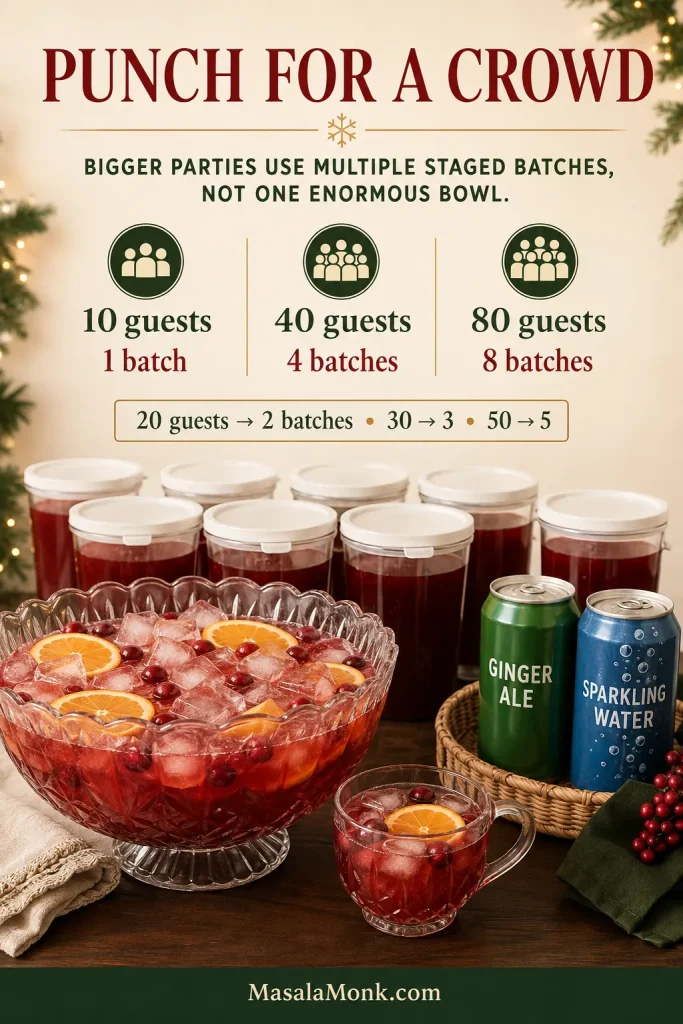
| Guests | Punch to have available* | 1-gallon batches |
|---|---|---|
| 10 | About 1 gallon | 1 |
| 20 | About 2 gallons | 2 |
| 30 | About 3 gallons | 3 |
| 40 | About 4 gallons | 4 |
| 50 | About 5 gallons | 5 |
| 80 | About 8 gallons | 8 |
Shopping Math for 40 Guests
Every full batch needs roughly 2 qt / 1.9 L cranberry juice, 3 cups / 710 ml pineapple juice, 1 cup / 240 ml orange juice, 3 cups / 710 ml ginger ale and 1 cup / 240 ml sparkling water.
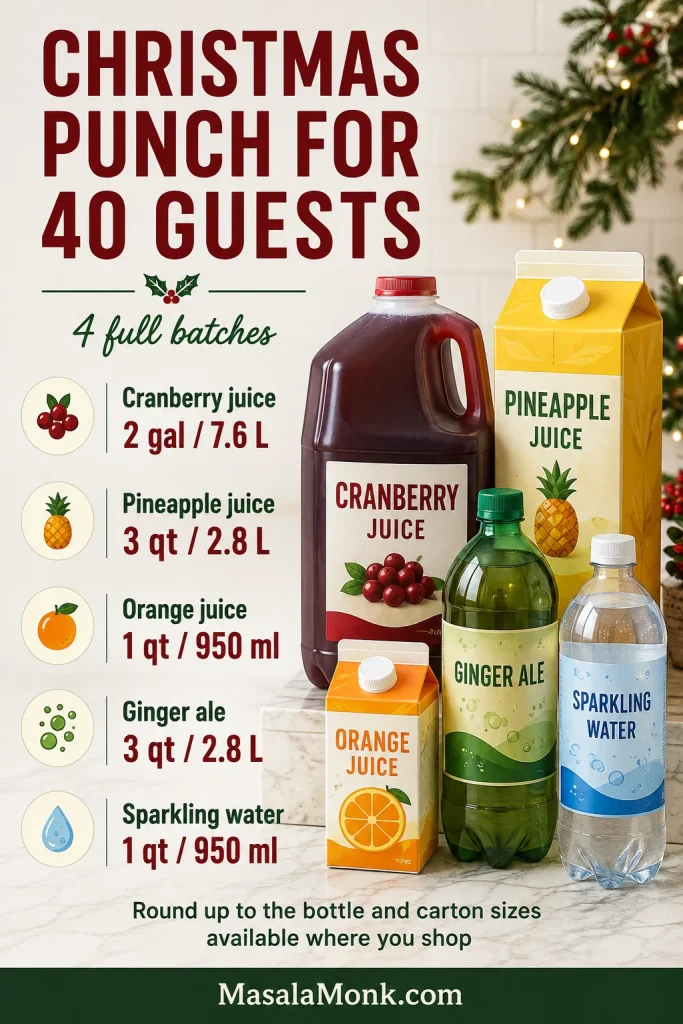
For 40 guests / four batches, shop for approximately:
- Cranberry juice: 2 gal / 7.6 L
- Pineapple juice: 3 qt / 2.8 L
- Orange juice: 1 qt / 950 ml
- Ginger ale: 3 qt / 2.8 L
- Sparkling water: 1 qt / 950 ml
Round up to the carton and bottle sizes actually available where you shop.
Don’t Carbonate Everything at Once
The shopping is handled. Now the job is making gallon four taste as lively as gallon one.
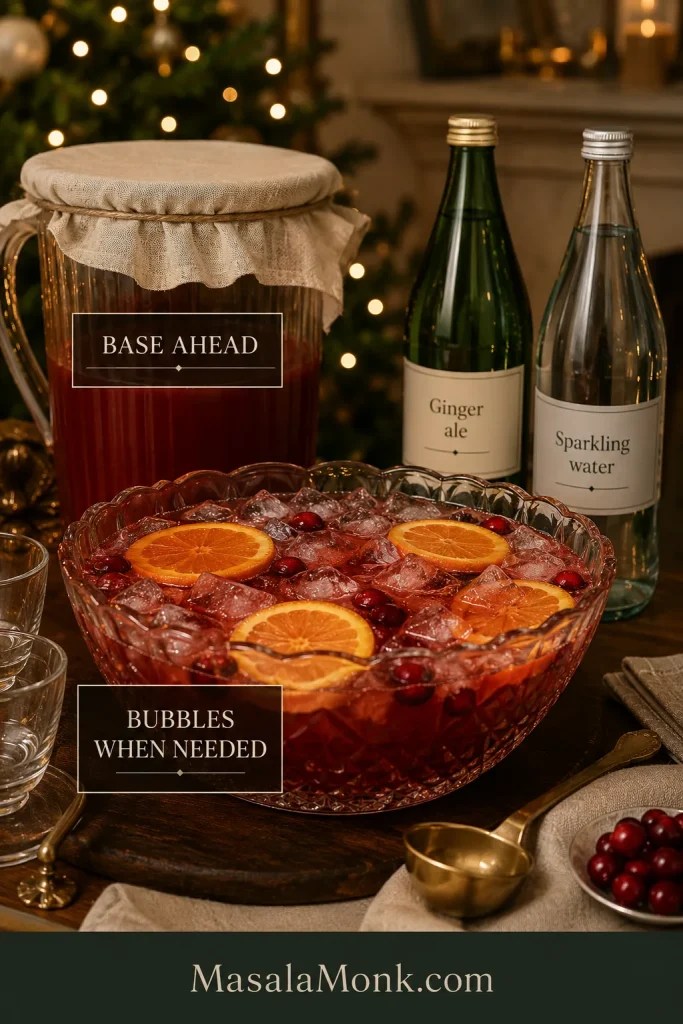
Prepare the cranberry-pineapple-orange mixture ahead and keep most of it covered in the refrigerator. Finish the first bowl with ginger ale and sparkling water when guests arrive; carbonate the next batch only when you need it.
The second half of the party gets fresh punch instead of whatever bubbles survived from the first half.
Recipe ↑ · Guide ↑ · Back to top ↑
Choose Your Serving Setup
The best vessel depends on how people are drinking. A pitcher suits a smaller seated dinner—especially beside something rich such as honey glazed ham—while a bowl or dispenser makes more sense when guests are serving themselves.
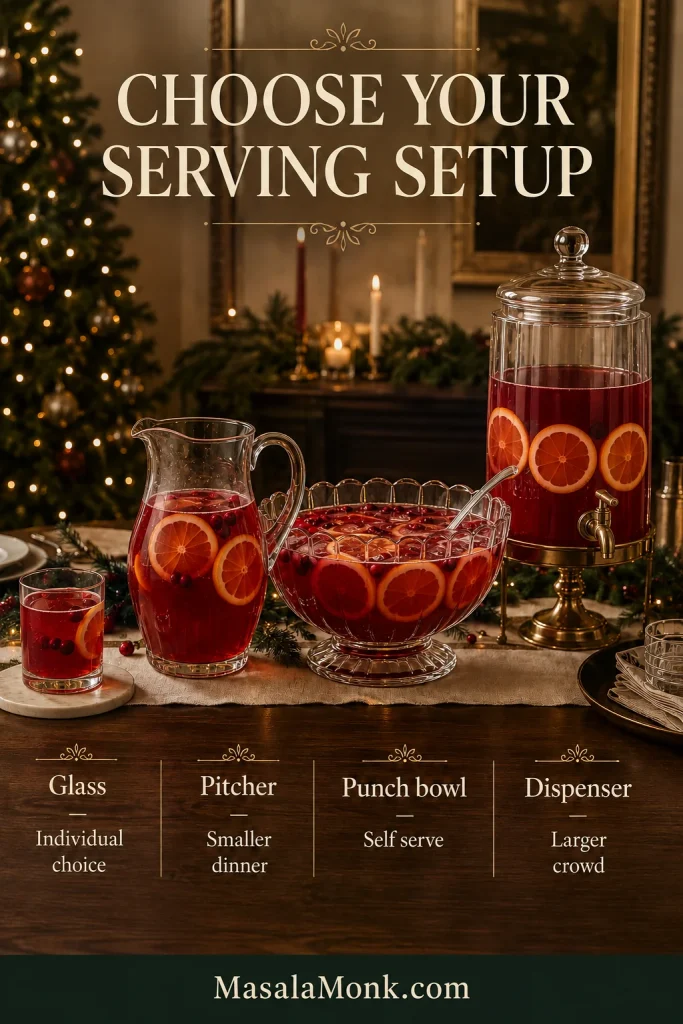
By the Glass
This is easiest for a small group or when everyone is choosing their own alcohol. Use the 8-fl-oz / 240-ml single-serving formula from the scaling section, then add spirit and ice separately.
Pitcher
A pitcher makes more sense than a punch bowl for a smaller dinner. Don’t fill it to its advertised capacity, especially when fruit or ice is going inside.
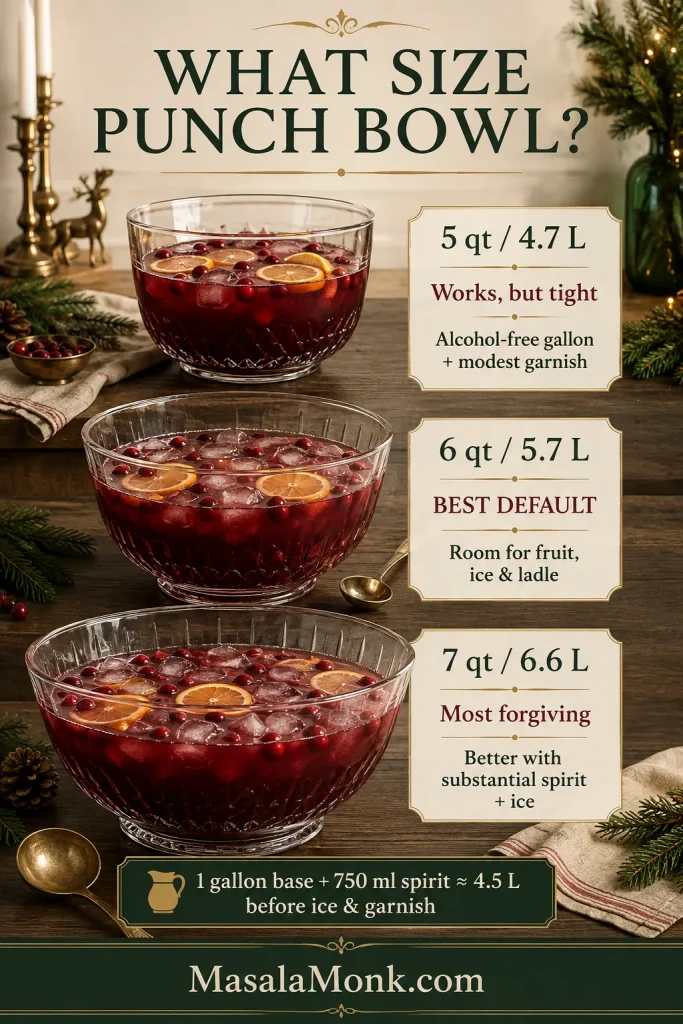
What Size Punch Bowl Do You Need?
A 6-quart / 5.7-L bowl is the best default for one full batch. It leaves useful room for fruit, ice and the ladle instead of filling the bowl almost to the rim.
- Tight fit — 5 qt / 4.7 L: workable for the alcohol-free gallon with modest garnish and no large ice ring, but fairly full.
- Best default — 6 qt / 5.7 L: the better choice for most full batches, especially with fruit or large ice.
- Most forgiving — 7 qt / 6.6 L: preferable when adding a substantial amount of spirit plus an ice ring or generous punch ice.
A one-gallon bowl is not a sensible home for exactly one gallon of liquid plus an ice ring.
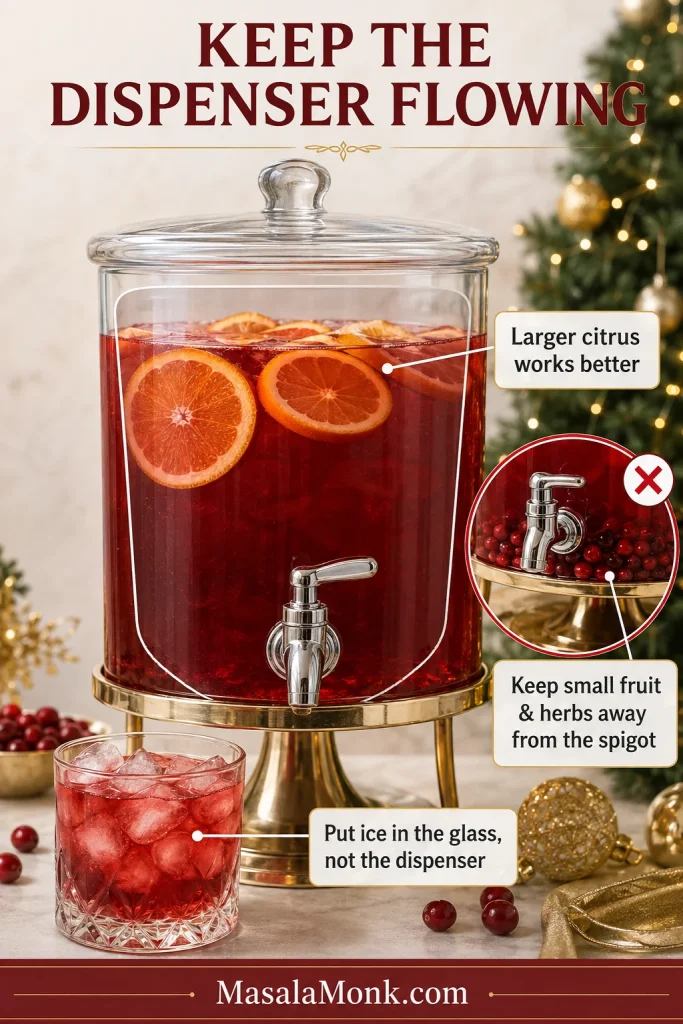
Beverage Dispenser
A dispenser is excellent for a larger group because guests can serve themselves without a ladle. Leave a little space at the top rather than filling it to the brim.
If the dispenser will be out for much of the party, let guests add ice to their own glasses instead of filling it with cubes that slowly weaken every remaining serving.
Can You Make Christmas Punch Ahead of Time?
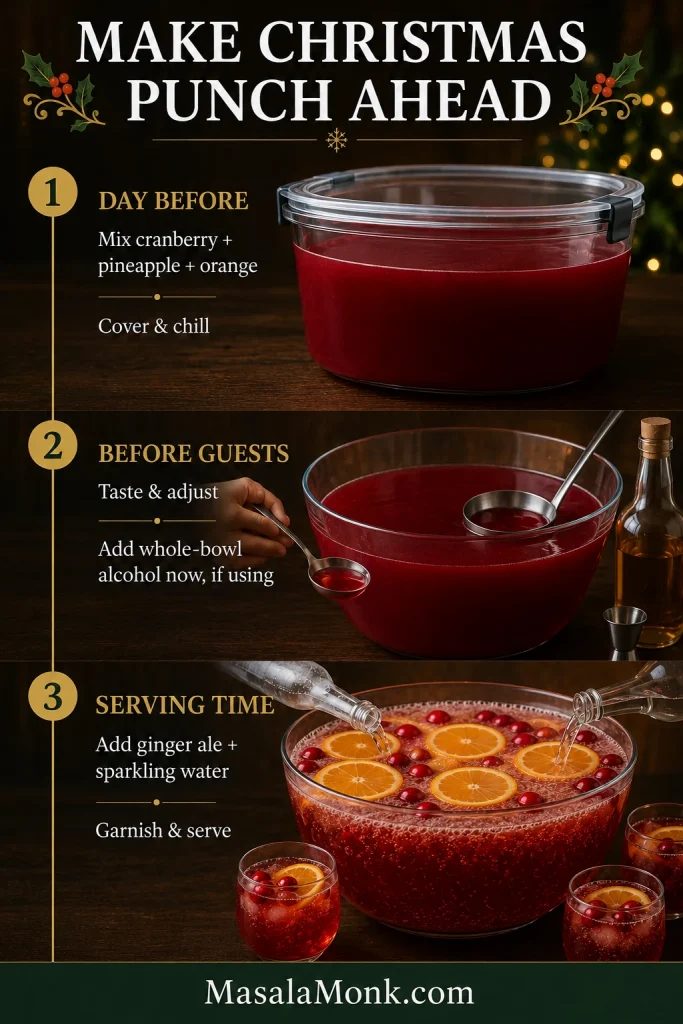
Yes. Mix and chill the cranberry, pineapple and orange juices the day before, but keep the ginger ale and sparkling water separate until serving time.
Before guests arrive, taste the cold juice mixture and make any final sweetness or acidity adjustment. Add whole-bowl alcohol now if you’re using it.
Then, just before serving, add the ginger ale and sparkling water.
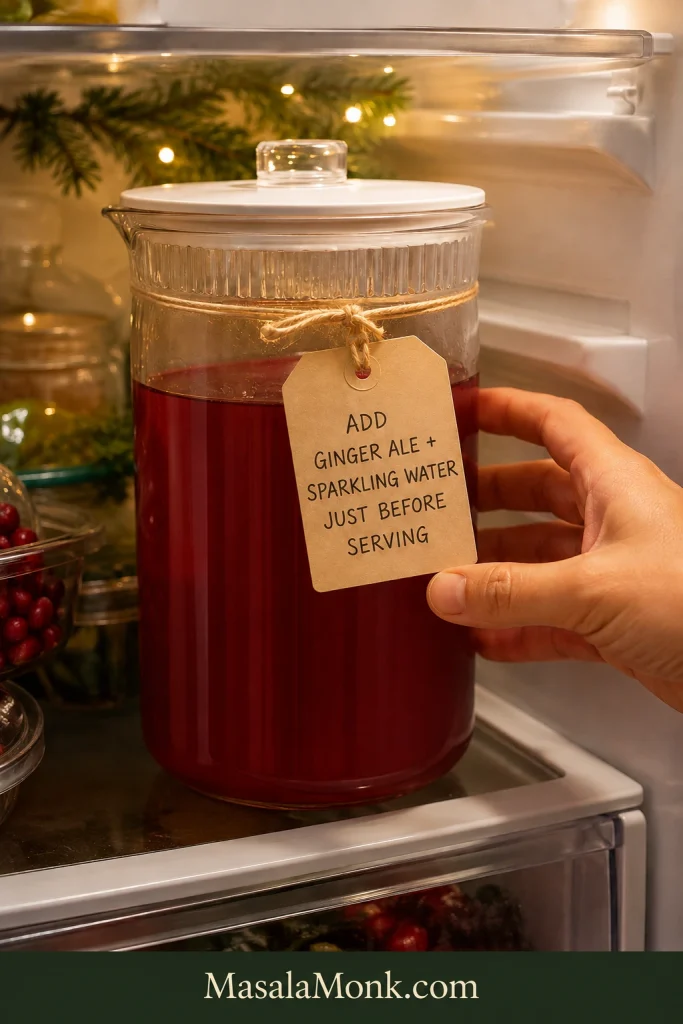
If someone else may finish the punch while you’re dealing with dinner, stick a note on the chilled juice mixture: “Add ginger ale + sparkling water just before serving.” That note is easier than trying to explain the punch from across the kitchen.
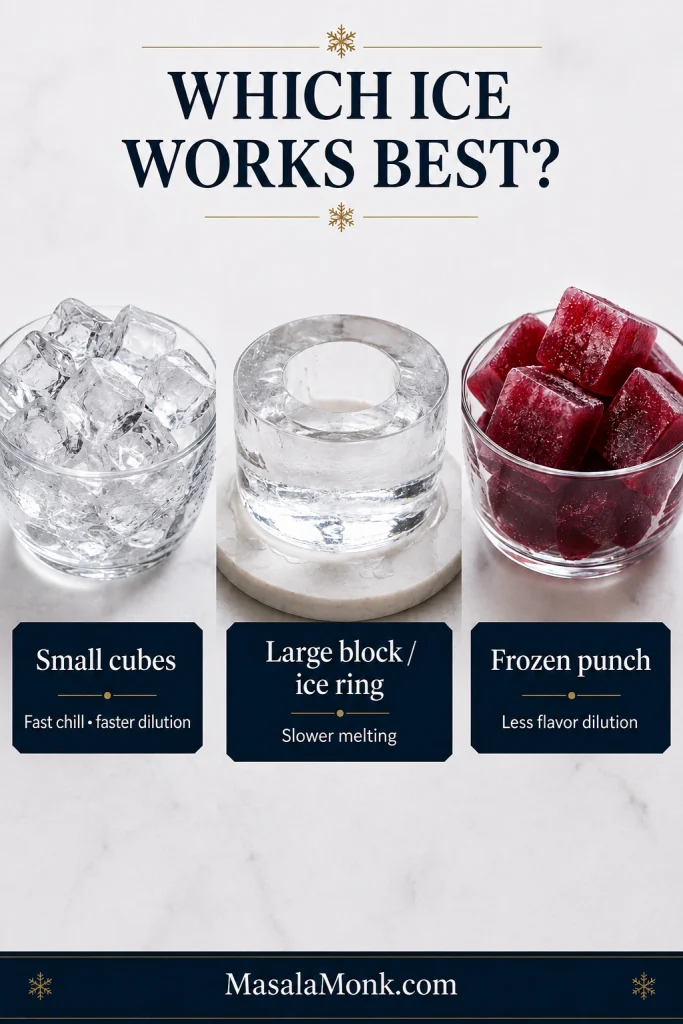
Use the Right Ice
Small cubes chill quickly and melt quickly. A large block or ice ring is better suited to a bowl that will sit out for a while.
For less flavor dilution, freeze cranberry juice or diluted punch mixture instead of plain water.
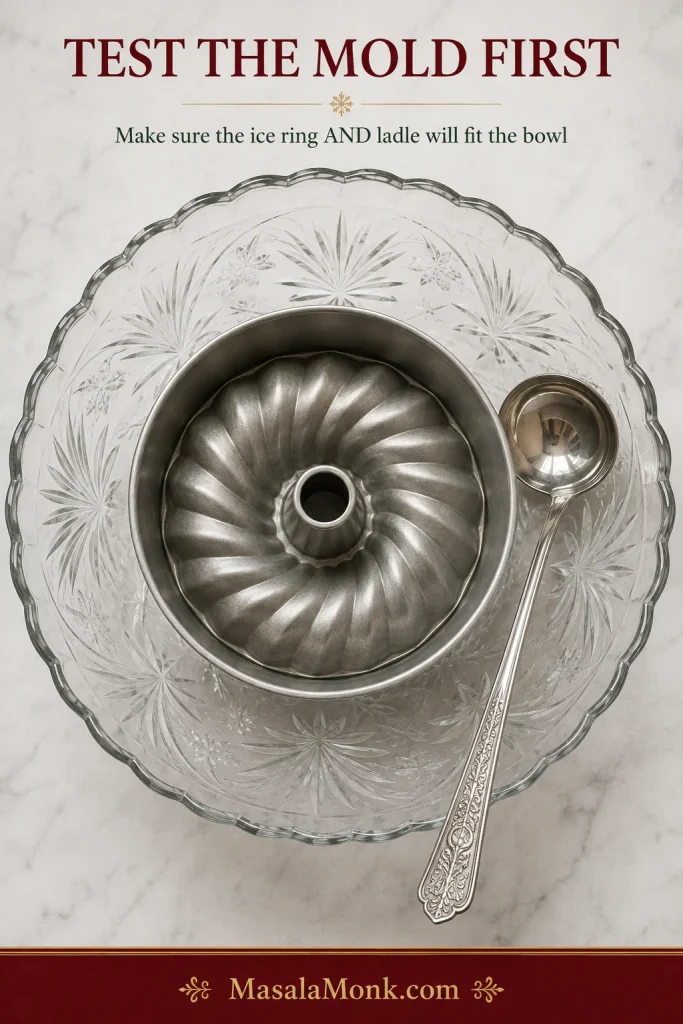
One tiny check can save a ridiculous problem later: put the empty Bundt pan or ring mold inside the actual punch bowl before freezing anything. Make sure the finished ring will fit and that the ladle still has room beside it.
Set It Up So You Don’t Have to Babysit It
The real luxury of party punch is not that it takes five minutes to mix. It is that you can stop making drinks once the guests arrive.
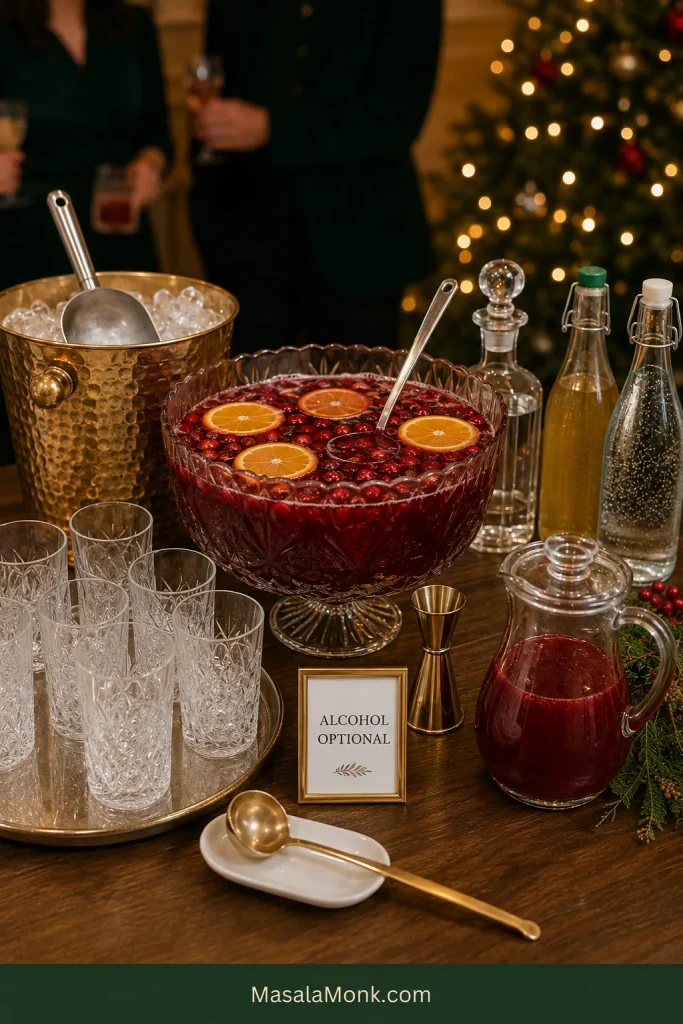
Put everything people will need within reach before the first glass is poured:
- Punch bowl, pitcher or dispenser
- Ladle and a small plate or spoon rest
- Glasses or cups
- Ice and an ice scoop if guests add their own
- Vodka or rum plus a small measure when alcohol is optional
- A cold reserve of juice mixture and fizzy mixers for refills
If you’re serving two bowls, label the alcoholic one clearly. “The adult punch is on the left” stops being useful the moment somebody rearranges the table.
A self-serve snack can work on the same principle as the drinks station. An easy cheese ball can sit beside crackers and vegetables without needing somebody to manage it.
Garnish for the Vessel, Not Just the Photograph
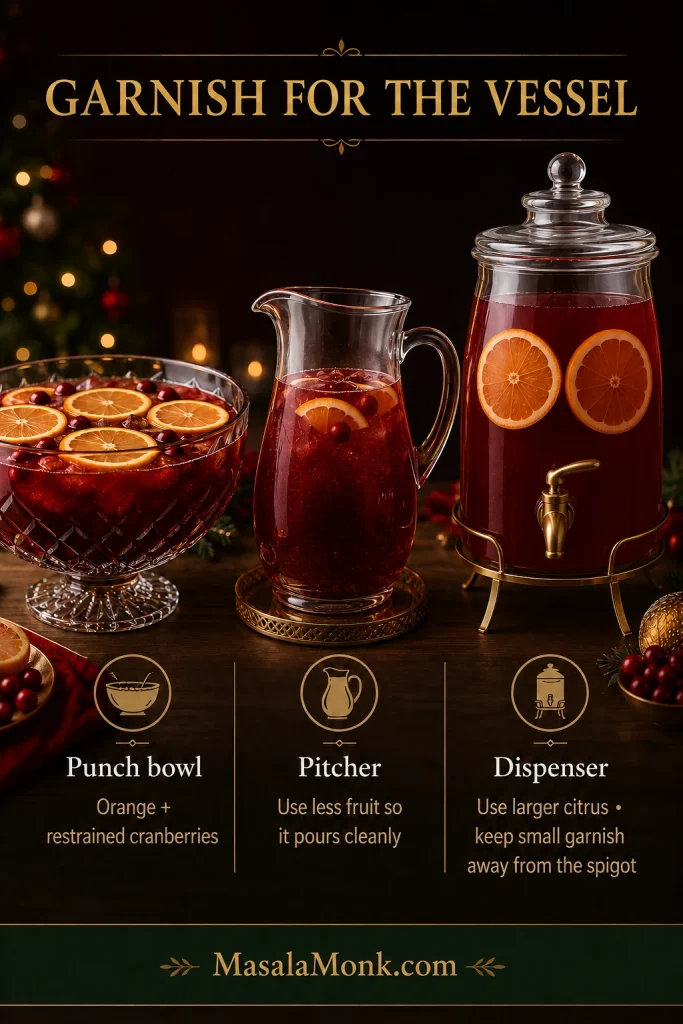
Red cranberries and thin orange wheels are enough to make the bowl look unmistakably festive. You do not need to turn the punch into a floating fruit basket.
A punch bowl can comfortably carry orange wheels and a restrained scattering of cranberries. A pitcher needs less fruit so it still pours cleanly. In a beverage dispenser, larger citrus slices are safer than tiny fruit pieces, loose herbs or clusters of berries that can drift toward the spigot.
For cups going to young children, leave the whole cranberries in the bowl rather than ladling them into the drink.
Christmas Punch Troubleshooting
Punch is forgiving. The quickest rescue usually comes from figuring out what actually changed instead of adding a little of everything.
Flavor, Sweetness & Fizz Problems
| Problem | Likely cause | Fix now |
|---|---|---|
| Way too tart | Pure unsweetened cranberry or very dry ingredients | Check the cranberry label, then add a sweeter complementary juice or cold simple syrup gradually. |
| Too sweet | Sweetened cranberry, sweet soda and sweet fruit stacked together | Add fresh lemon and/or plain sparkling water. |
| Tastes like ordinary juice | Not cold enough, bright enough or freshly carbonated | Chill it, add a little lemon if needed and finish with fresh bubbles. |
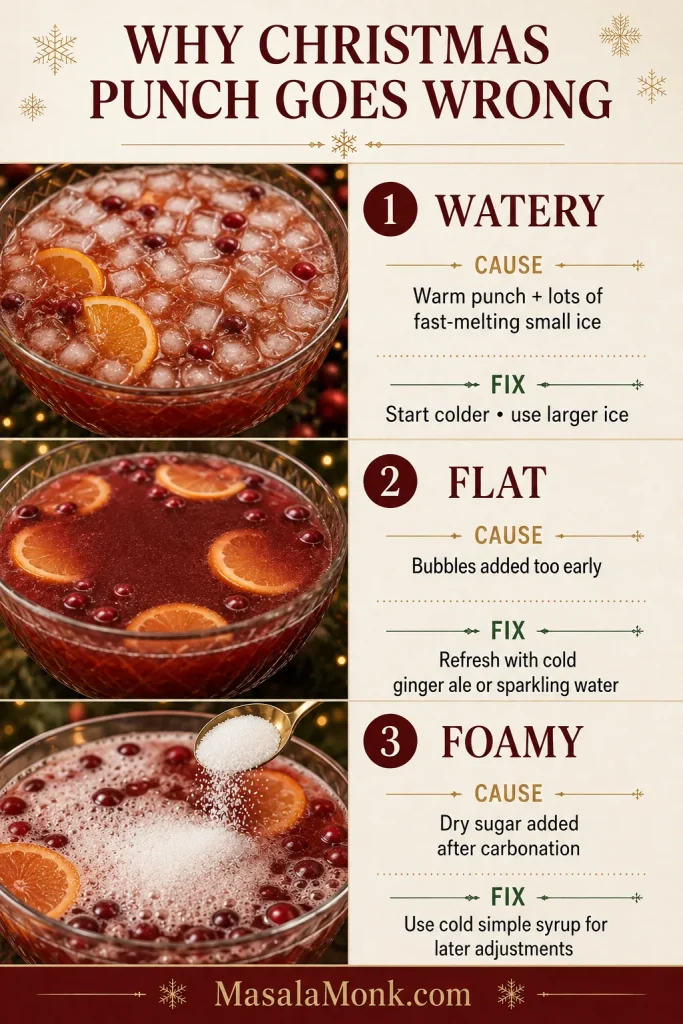
| Watery | Warm punch plus lots of fast-melting small ice | Stop adding plain ice. Chill the vessel externally if practical. |
| Flat | Carbonation went in too early | Refresh one pitcherful at a time with a little very cold ginger ale or sparkling water, tasting as you go. |
| Rum dominates | Too much spirit or a very assertive dark/spiced rum | Dilute with reserved alcohol-free juice mixture. |
| Doesn’t taste alcoholic | Cold fruit and fizz are masking the alcohol | Do not keep adding spirit based on taste. Check how much actually went into the bowl. |
| Foamed while sweetening | Dry sugar went directly into carbonated punch | Let it settle and use cold simple syrup for any further adjustment. |
| Cloudier than expected | Pulp-heavy orange juice or cloudy citrus | Harmless. Use pulp-free orange next time for a clearer ruby color. |
Serving & Setup Problems
| Problem | Likely cause | Fix now |
|---|---|---|
| Ice ring blocks the ladle | The mold was too wide for the bowl | Use a smaller ring next time and test the empty mold first. |
| Dispenser stops flowing | Small fruit or herbs collected around the spigot | Clear the outlet and keep small garnish out of the dispenser. |
| Running out too quickly | Recipe servings were mistaken for total party consumption | Finish the next cold batch and allow for refills when shopping next time. |
Storage & Leftovers
For best quality, drink finished Christmas punch the day it is made or the next day. Refrigerate leftovers promptly and remove old citrus and floating garnish before storing.
The flavor may still be pleasant after refrigeration, but carbonation fades steadily. A little fresh ginger ale or sparkling water can brighten an individual leftover glass; it will not completely recreate a newly mixed batch.
If leftovers are likely, hold back some of the cranberry-pineapple-orange mixture before adding the fizzy ingredients, then carbonate only what you need.
If the night moves from cold drinks to something warm, a Hot Toddy takes Christmas in the opposite direction with whiskey, honey and lemon in one warm glass.
The Final Pour
There is a nice moment when punch stops being a recipe and becomes part of the party: the bowl is glowing red on the table, the ice is still solid, orange slices are moving slowly between the bubbles, and somebody comes back carrying an empty glass.
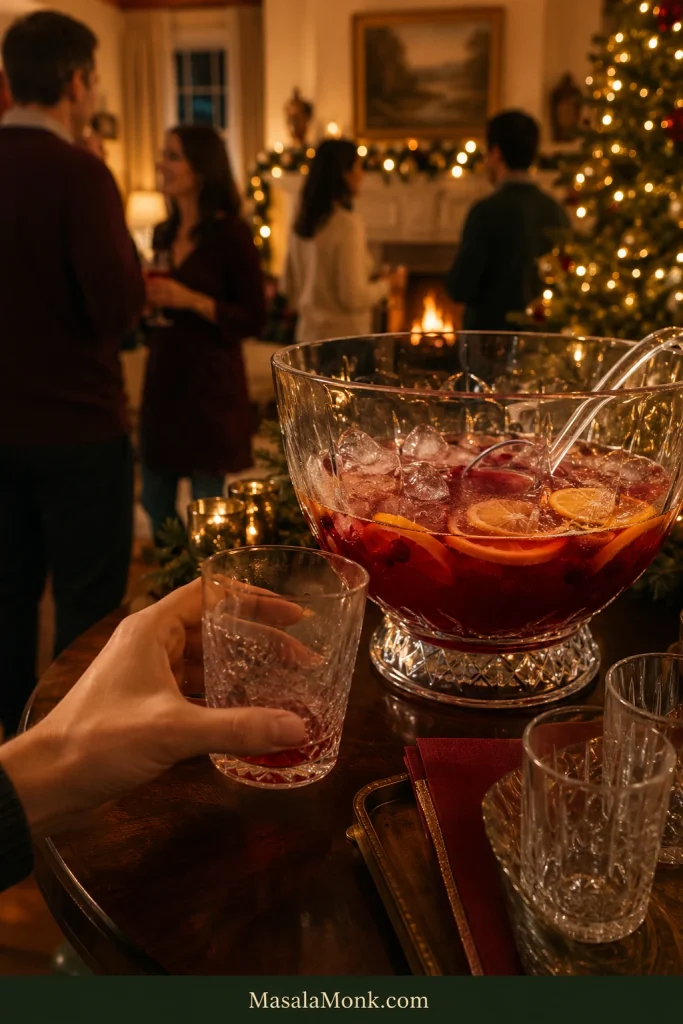
You should not have to leave the conversation to start mixing another drink.
Make enough, keep the next batch cold, then leave the punch bowl to do its job. Christmas is happening somewhere other than the drinks table.








