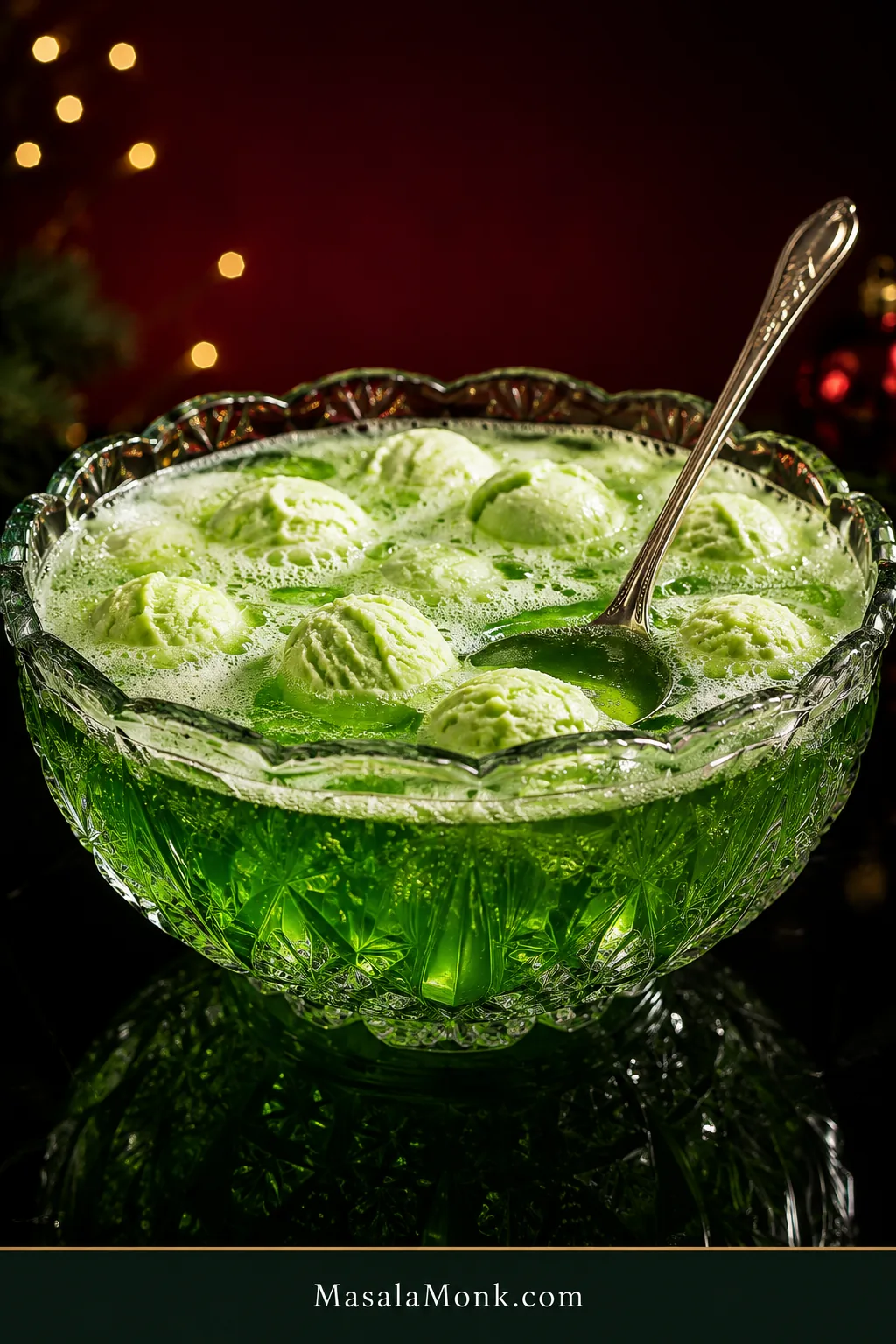
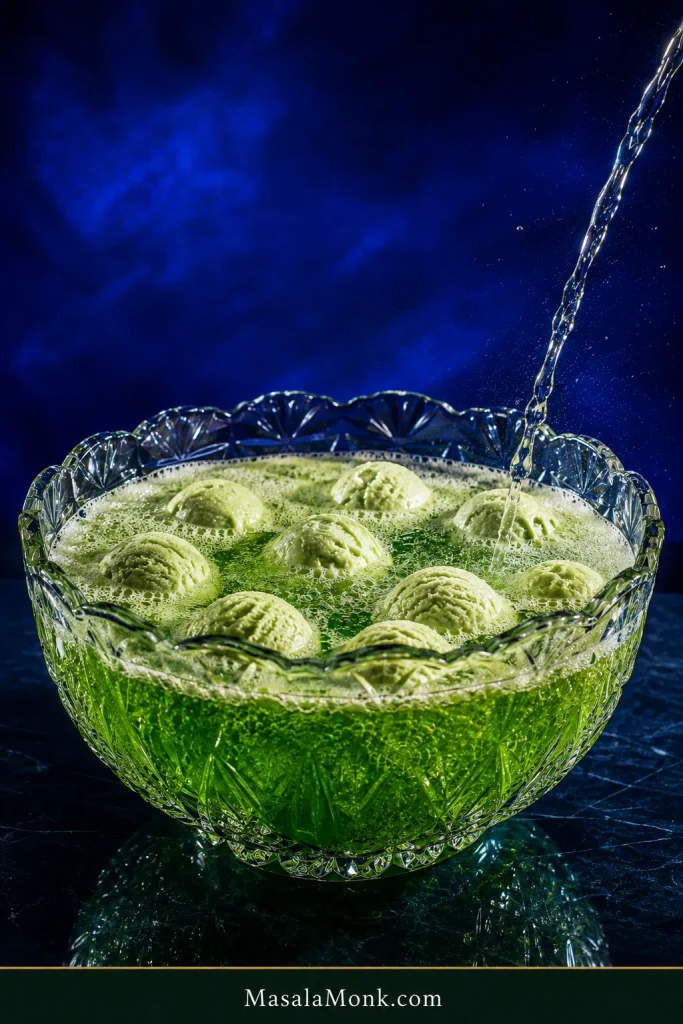
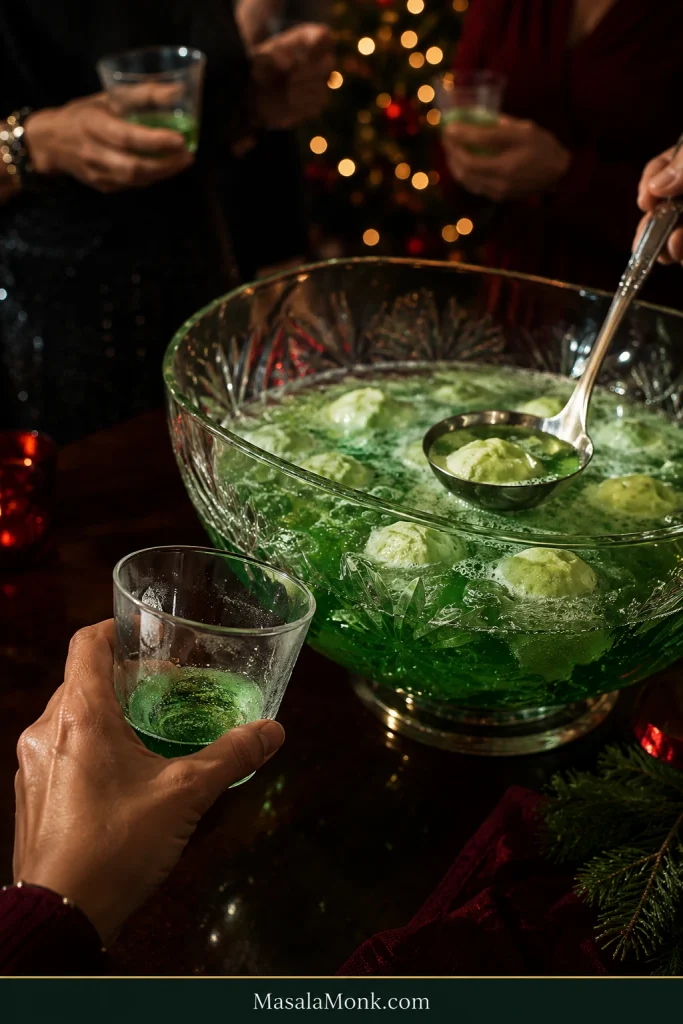
Set a bowl of bright green, frothy punch on a Christmas table and it rarely goes unnoticed for long. Lime sherbet floats across the top, bubbles gather around the scoops, and the kids are often lining up with cups before anyone has even asked what is in the bowl.
This non-alcoholic Grinch Punch is the family-friendly version: lime sherbet, green fruit punch, pineapple juice and lemon-lime soda. Four main ingredients, one punch bowl and about five minutes to put it together.
Combine 4 cups green fruit punch with 1 cup pineapple juice, add 1 quart lime sherbet, then slowly pour in 4 cups very cold Sprite or 7Up. Give the punch one or two gentle folds and serve while the soda is fizzy and the sherbet is floating on top.
Active prep: about 5 minutes
Alcohol: none
Best vessel: a roomy open punch bowl
Best timing: assemble shortly before serving
You may also see this same style of kid-friendly green Christmas drink called Grinch Juice.
Make this for: Christmas parties, Grinch movie nights, classroom celebrations, holiday buffets and family gatherings where one playful drink needs to work for both children and adults.
Grinch Punch Recipe
This recipe makes one standard party-bowl batch. Halve the quantities for movie night or repeat the standard batch when you need more.
Ingredients
1 quart (32 fl oz / 946 mL) lime sherbet, cold and scoopable
4 cups (32 fl oz / 946 mL) green fruit punch, preferably Hawaiian Punch Green Berry Rush
1 cup (8 fl oz / 237 mL) 100% pineapple juice, chilled
4 cups (32 fl oz / 946 mL) Sprite or 7Up, very cold
Red sanding sugar, as needed, optional
Lime wedges or maraschino cherries, as needed, optional
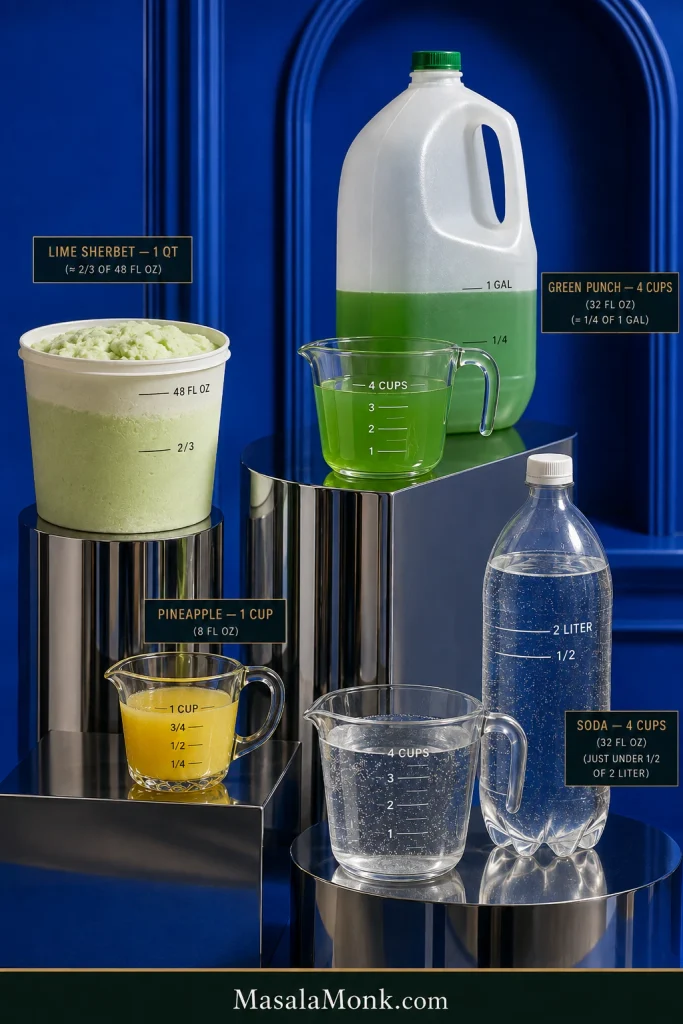
Shopping shortcut:
Lime sherbet: 1 quart, or about two-thirds of a 48-fl-oz tub.
Green punch: 32 fl oz, or one-quarter of a gallon jug.
Soda: 32 fl oz, just under half of a 2-liter bottle.
One 48-fl-oz sherbet tub covers a standard batch, but two full batches need another 16 fl oz of lime sherbet.
You’ll need: a large punch bowl, ladle, ice cream scoop and long spoon.
Instructions
Chill the liquids. Keep the green punch, pineapple juice and soda refrigerated until needed. Leave the sherbet frozen until shortly before assembly.
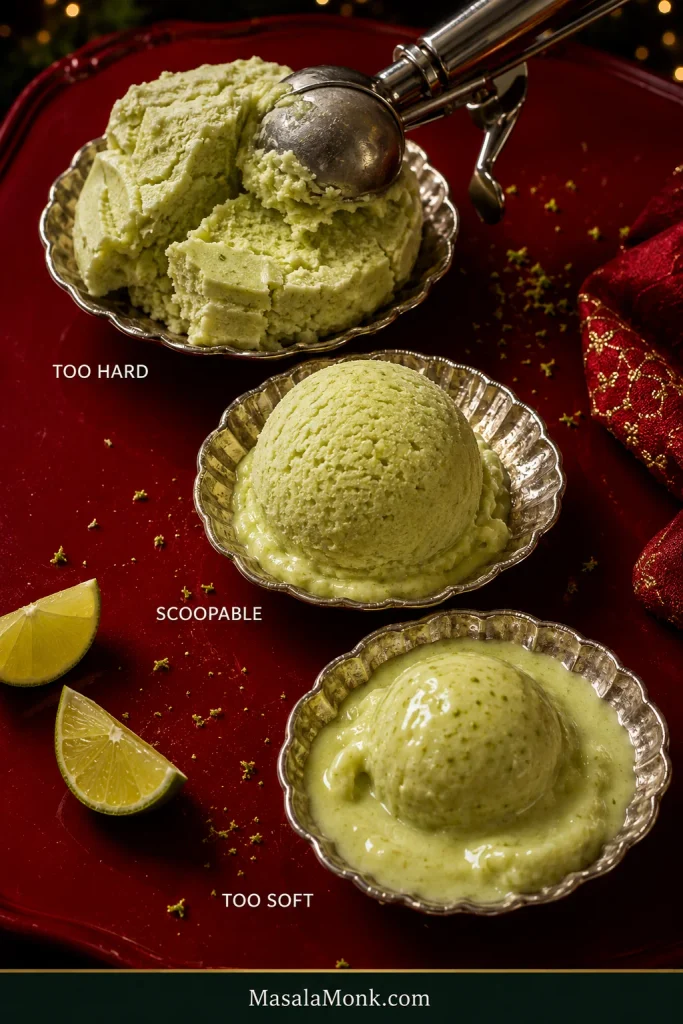
Get the sherbet scoopable. If it is rock-hard, leave it at room temperature for about 5 minutes—just long enough to scoop cleanly without becoming soft or slushy.
If the sherbet is still too hard after a few minutes, warm the scoop under hot water, dry it, then scoop.
Build the base. Pour the green fruit punch and pineapple juice into the punch bowl.
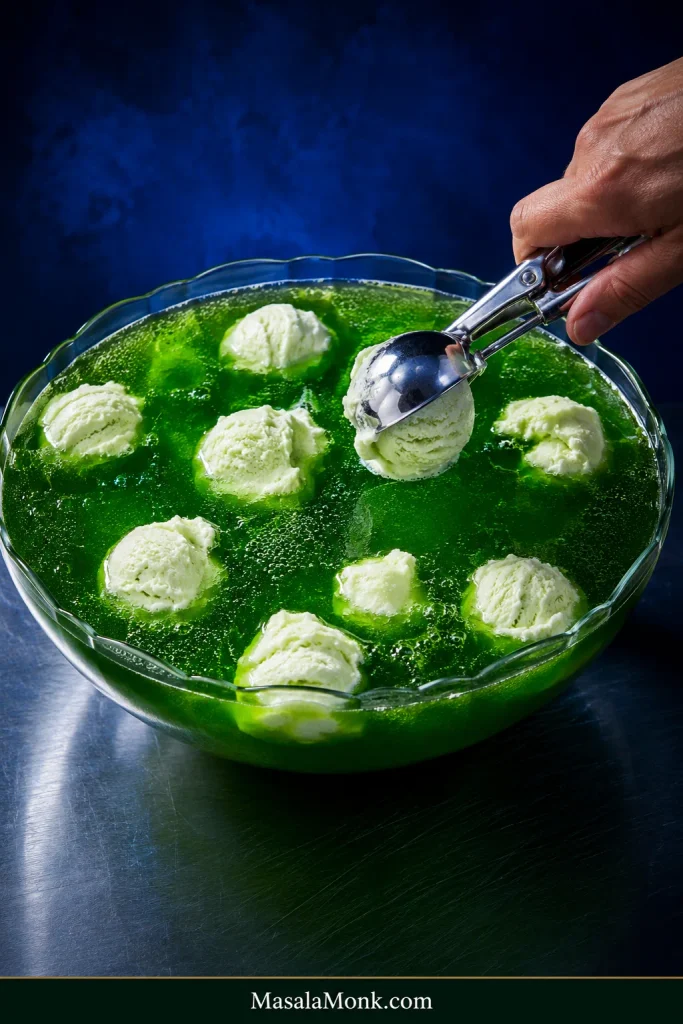
Add the sherbet. Scoop it across the surface rather than dropping one solid block into the middle.
Spread smaller sherbet scoops across the surface so they soften gradually instead of melting from one large block.
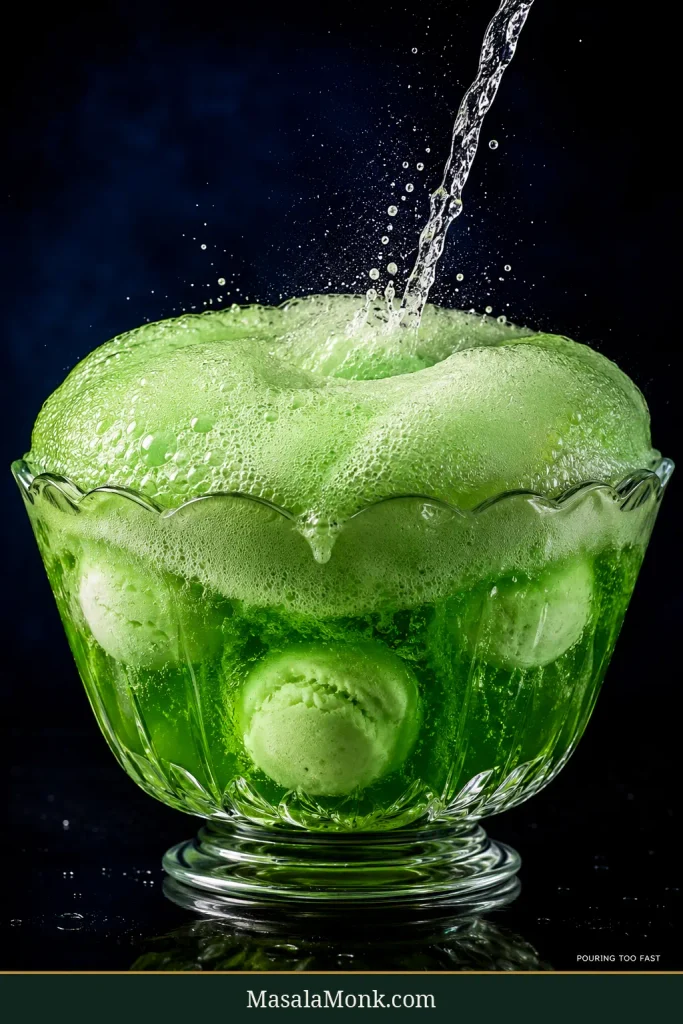
Add the fizz. Slowly pour the Sprite or 7Up around the bowl, letting some run over the sherbet for froth. If the foam climbs quickly, pause and let it settle before continuing.
Move the soda stream around the bowl; spreading the first burst of froth helps prevent one tall foam mound.
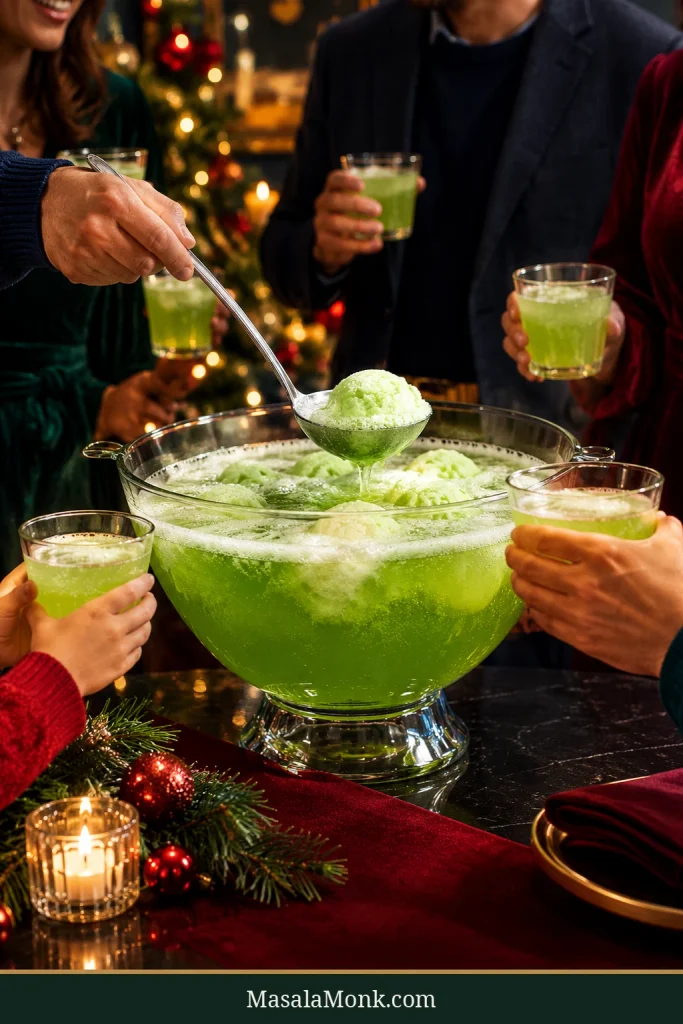
Finish gently. Give the punch one or two slow folds with a long spoon, then ladle it into cups and serve.
Check the Finished Punch
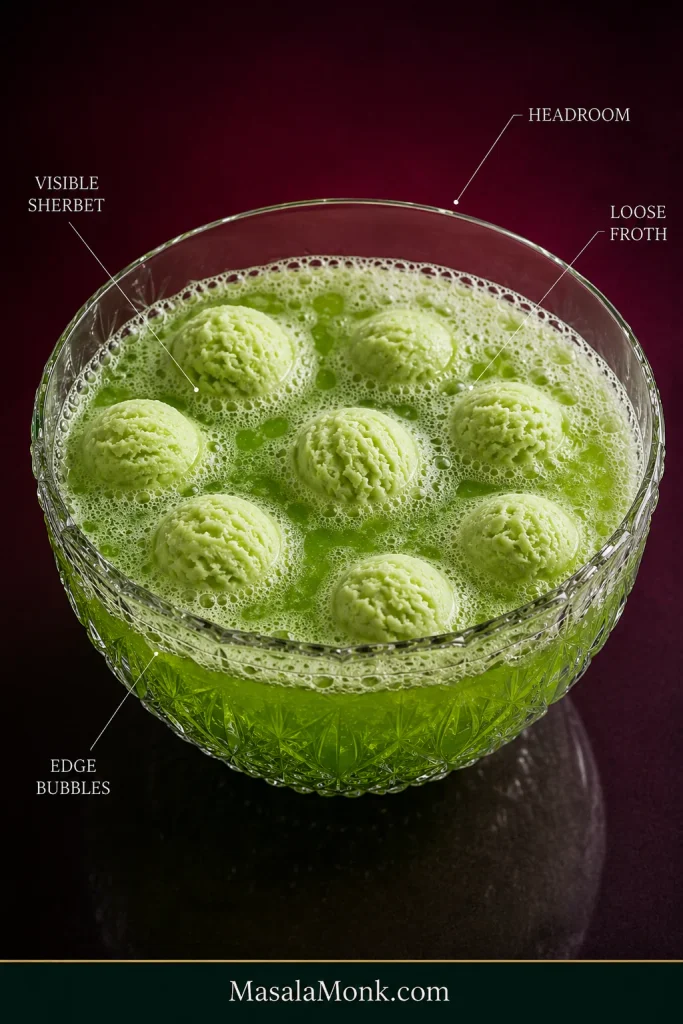
What should it look like? A bright green bowl with a loose frothy top, visible sherbet scoops and lively bubbles gathering around the edges.
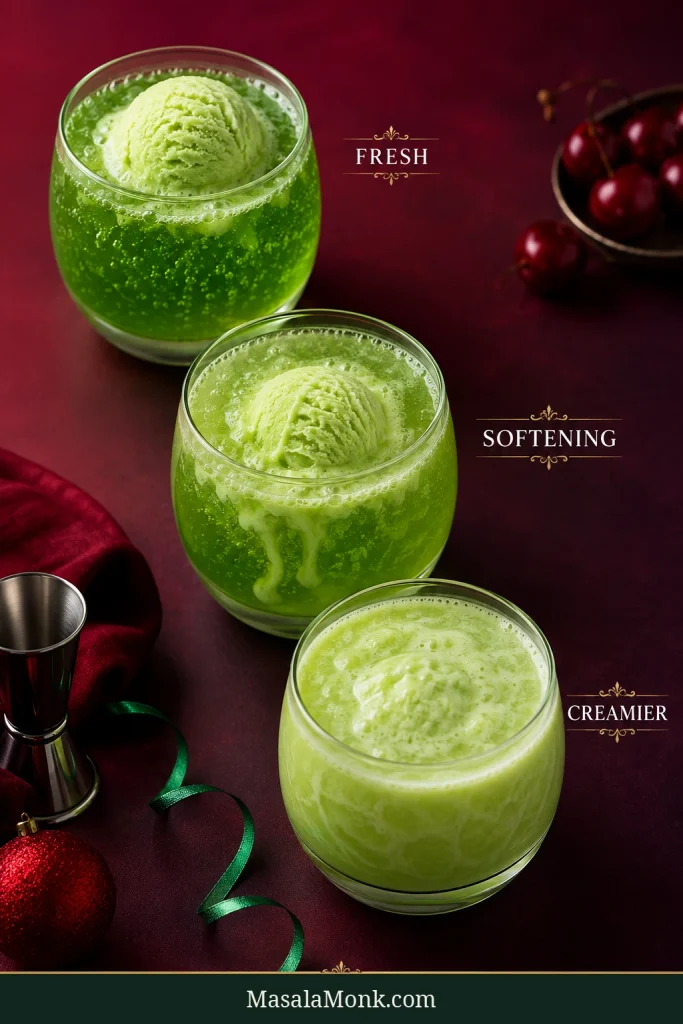
Serve while green punch, pale sherbet and loose froth still look distinct instead of blending into one creamy layer.
In the cup, the first sip is fizzy and citrusy. As the sherbet softens, the drink becomes creamier, while the pineapple rounds out the fruitiness without taking over.
Sherbet-heavy pours drink creamier, while mostly liquid servings stay lighter and fizzier—so cups naturally vary a little.
Optional Grinch Garnish
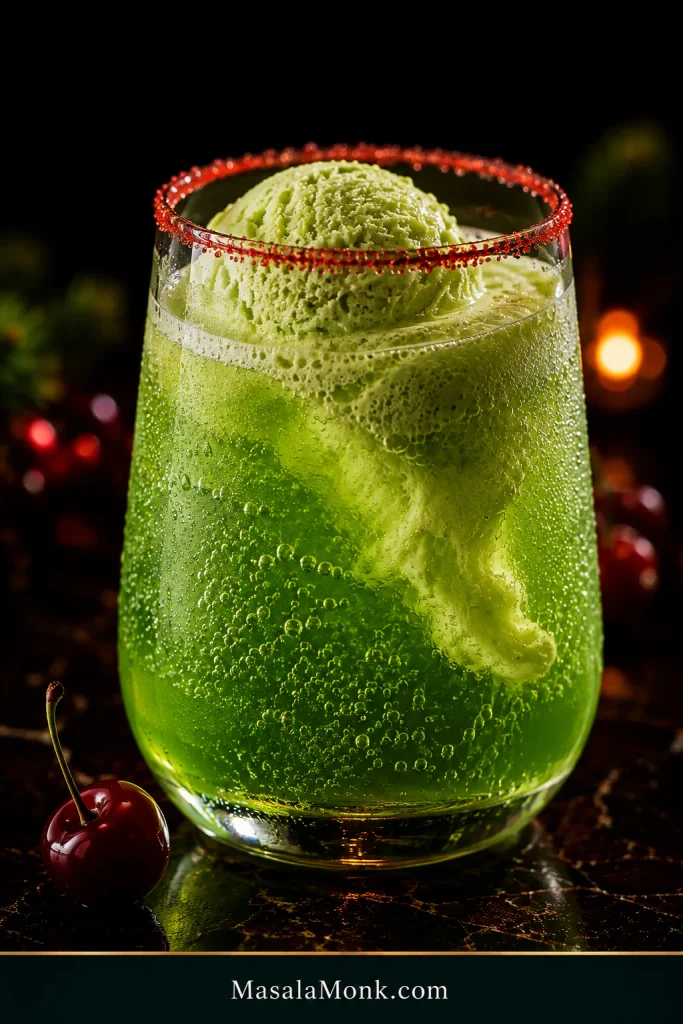
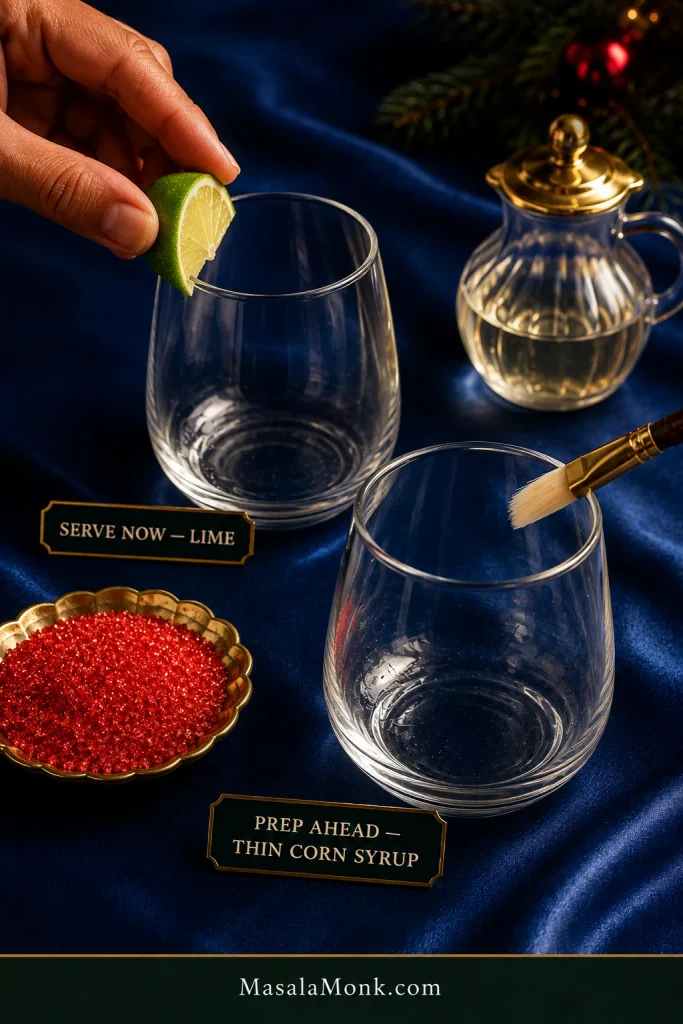
For cups you are serving right away, rub a lime wedge lightly around the rim and dip it into red sanding sugar. Preparing the cups a few hours ahead? A very thin coat of corn syrup holds the sugar more securely. Test one disposable cup first, because some plastic rims are stubborn.
Coat only the cup’s outer edge; red sanding sugar stays decorative instead of dissolving into the first sip.
A maraschino cherry adds a simple red accent if you want a touch of Grinch-heart contrast without turning every glass into a craft project.
Lime sherbet. This gives the punch its citrus flavor, creamy body and floating green scoops. Very soft sherbet disappears into the drink quickly; very hard sherbet is awkward to portion.
Sherbet contains some dairy, which is part of what makes it creamier than sorbet. If the freezer-case labels blur together, our guide to sherbet vs sorbet explains the difference. For school parties, check the sherbet label and your school’s allergy rules before serving.
Lime sherbet can be surprisingly hard to find around Christmas, so buy it when you see it rather than leaving it to the day of the party.
Green fruit punch. When recipes call for “green Hawaiian Punch,” Hawaiian Punch Green Berry Rush is the bright-green drink to look for. It supplies much of the color, fruit flavor and sweetness. Another green fruit punch works when Green Berry Rush is unavailable.
Sprite or 7Up. Lemon-lime soda brings the fizz. Use it straight from the refrigerator and open it close to serving so those bubbles end up in the bowl.
Pineapple juice. One cup adds fruitiness and some tartness without taking over the lime. Use ordinary 100% pineapple juice from a bottle or can, not frozen concentrate. If pineapple is a flavor you particularly enjoy, these punch recipes with pineapple juice explore it more fully.
For a three-ingredient version, replace the pineapple juice with another cup of green fruit punch. The result is sweeter and more straightforward.
Sherbet punch has an unmistakably old-school feel: a bright, bubbling bowl that somehow looks familiar before anyone has taken a sip. Turning it Grinch green simply gives that familiar party drink a Christmas twist.
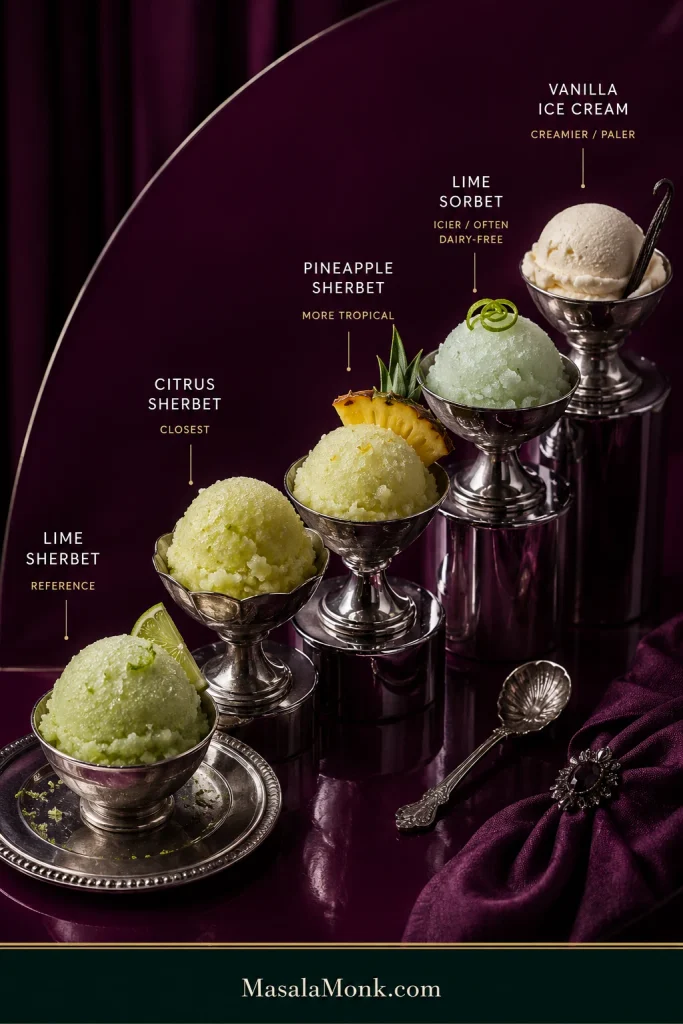
Can’t Find Lime Sherbet or Green Berry Rush?
These are the two ingredients most likely to send you back around the supermarket. Both have workable substitutes.
If you can’t find…
Try…
What changes
Lime sherbet
Another citrus sherbet
Closest overall style; color may change
Lime sherbet
Pineapple sherbet
More tropical but still bright and fruity
Lime sherbet
Lime sorbet
Usually dairy-free; icier, lighter and less creamy or frothy. Check the label if dairy must be avoided
Lime sherbet
Vanilla ice cream
Creamier and sweeter, with much less lime flavor and a paler top
Green Berry Rush
Same amount of another green fruit punch
Usually the simplest swap; sweetness varies
Green Berry Rush
Prepared green lemon-lime Kool-Aid or a similar drink mix
More citrus-forward; mix it as directed for drinking before using
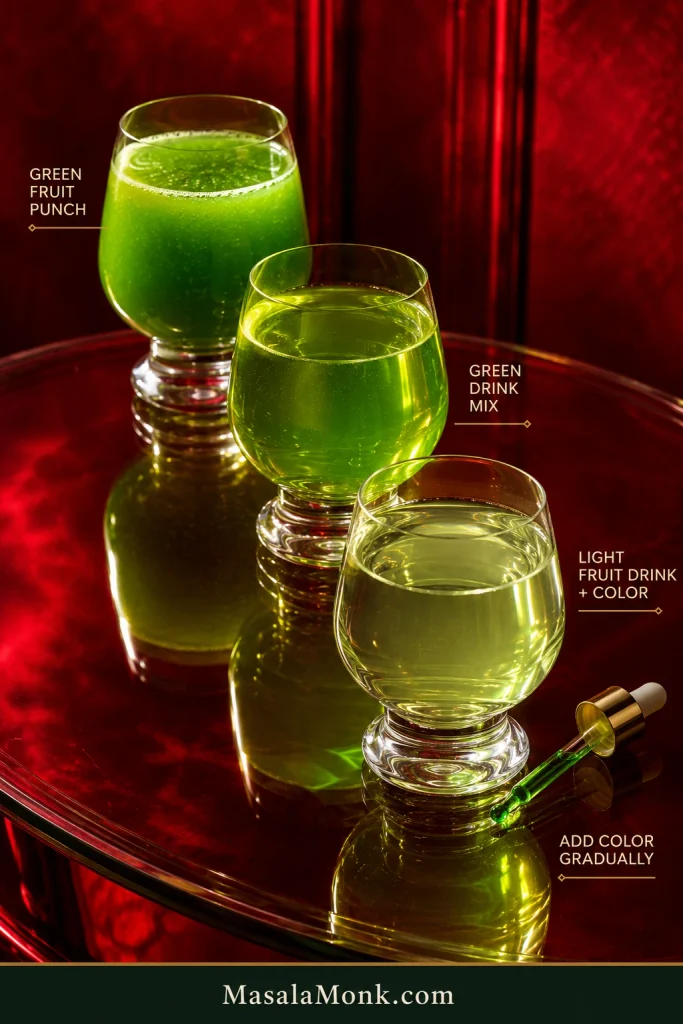
Any green drink
Light-colored fruit drink plus green food coloring
Gets you the color; taste before adjusting sweetness
Another sherbet keeps the familiar body; sorbet turns icier, while vanilla ice cream pushes Grinch Punch toward a float.
When you change the green punch, taste the cold fruit-punch and pineapple mixture before adding the sherbet and soda. Some replacements are much sweeter than others.
Start with one drop of green food coloring, stir, and add more only if the bowl needs it.
Compare green drink bases before adding sherbet; melting sherbet lightens the color and makes opacity differences harder to judge.
Want Grinch Punch with no sherbet at all? That works better as a different punch formula because removing the sherbet also removes much of the body, citrus flavor and volume. This easy Christmas Punch uses cranberry, pineapple, orange, ginger ale and sparkling water instead.
Sprite, 7Up or Ginger Ale?
Sprite or 7Up: the familiar sweet lemon-lime version used in the main recipe.
Ginger ale: still fizzy, with a gentle ginger note in the background.
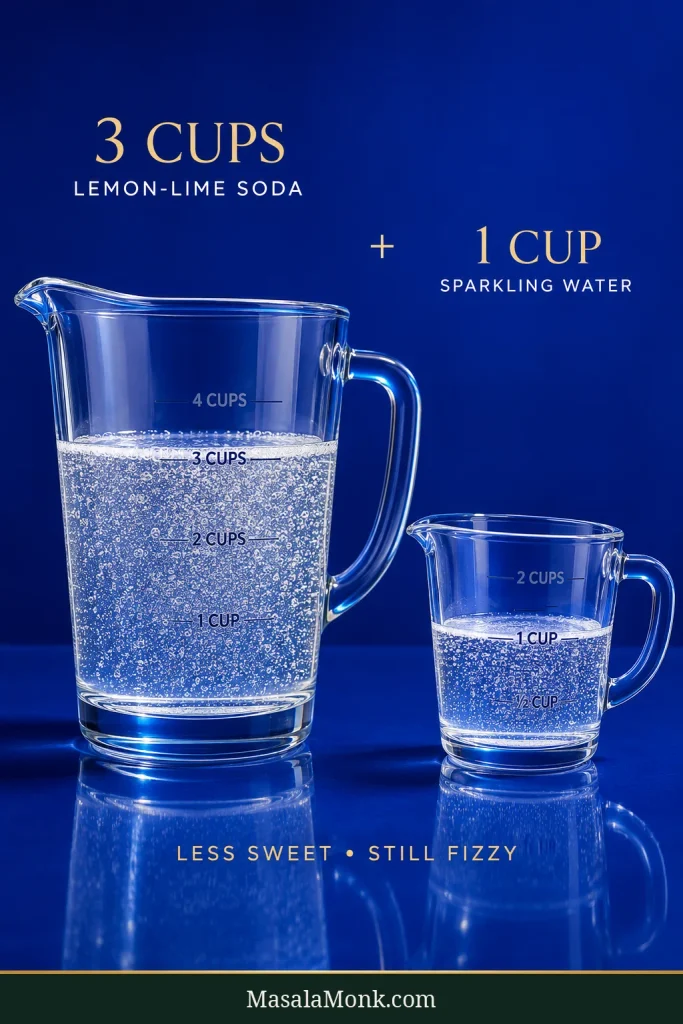
Sparkling water: useful for dialing back the sweetness.
Zero-sugar lemon-lime soda: reduces the sugar coming from the soda, although the sweetener flavor will be different.
For a less-sweet bowl, use 3 cups Sprite or 7Up plus 1 cup plain sparkling water. You keep most of the fizz while bringing the sweetness down a notch.
Sparkling water reduces sweetness without changing the fruit-base or lime-sherbet ratio, so the punch keeps its balance.
Another kid-friendly fizzy option is a classic Shirley Temple, which uses grenadine and cherries with Sprite, 7Up or ginger ale.
How to Control the Foam
The froth is part of the fun. The foam climbing over the rim is not.
What separates a bubbly Grinch bowl from a green foam eruption mostly comes down to how the soda goes in. Start with well-chilled fruit punch and pineapple juice, add the sherbet, then pour the soda slowly around the bowl.
Foam steals headroom quickly, so a comfortably underfilled punch bowl can become crowded as soon as soda hits sherbet.
If the foam begins climbing too quickly, stop pouring and give it a moment to settle. There is no prize for emptying the whole bottle into the bowl in one go.
For more froth at the end, save a small splash of soda and pour it gently over a few sherbet scoops. A loose bubbly layer is plenty; the sherbet should still be visible underneath.
The scoops naturally soften as the punch sits and gradually make the drink creamier. That is normal. The distinct floating scoops are simply the freshest-looking stage.
As the sherbet softens, the punch becomes creamier and more even in color while the floating scoops gradually disappear.
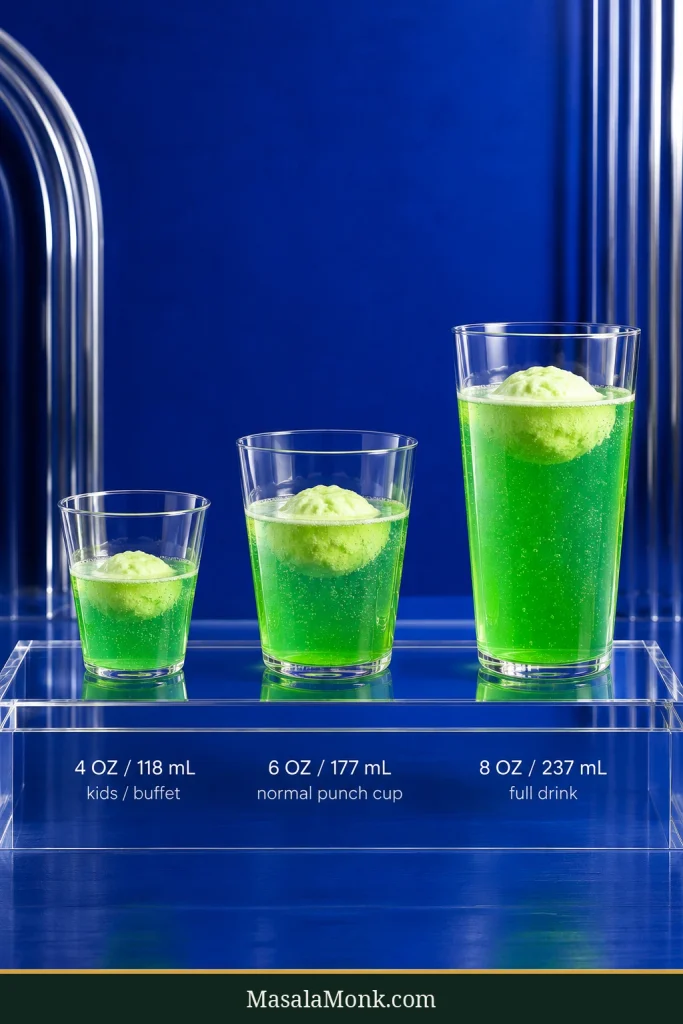
“Serves 12” does not tell you much when one person is picturing a small punch cup and another is filling an eight-ounce glass.
Sherbet contains air, so the amount you can ladle into cups varies by brand and by how much sherbet lands in each serving. Use these as party-planning ranges.
How Many Cups Will One Batch Pour?
Pour size
Best for
Planning range
4 oz / 118 mL
Kids’ party, classroom, large buffet
Roughly 22–26 small pours
6 oz / 177 mL
Normal punch cup
Roughly 15–17 pours
8 oz / 237 mL
Full drink
Roughly 11–13 pours
Moving from a 6-ounce to 8-ounce cup costs roughly four servings from a standard batch, so cup size matters.
Pours are not the same as guests. At a kids’ party, four-ounce first pours often make more sense. Anyone who wants more can come back, and you are less likely to collect half-full cups from every table afterward.
Planning for 20 people? One standard batch can cover one small first pour per guest. Keep ingredients ready for another batch when this is the main drink or you expect plenty of refills.
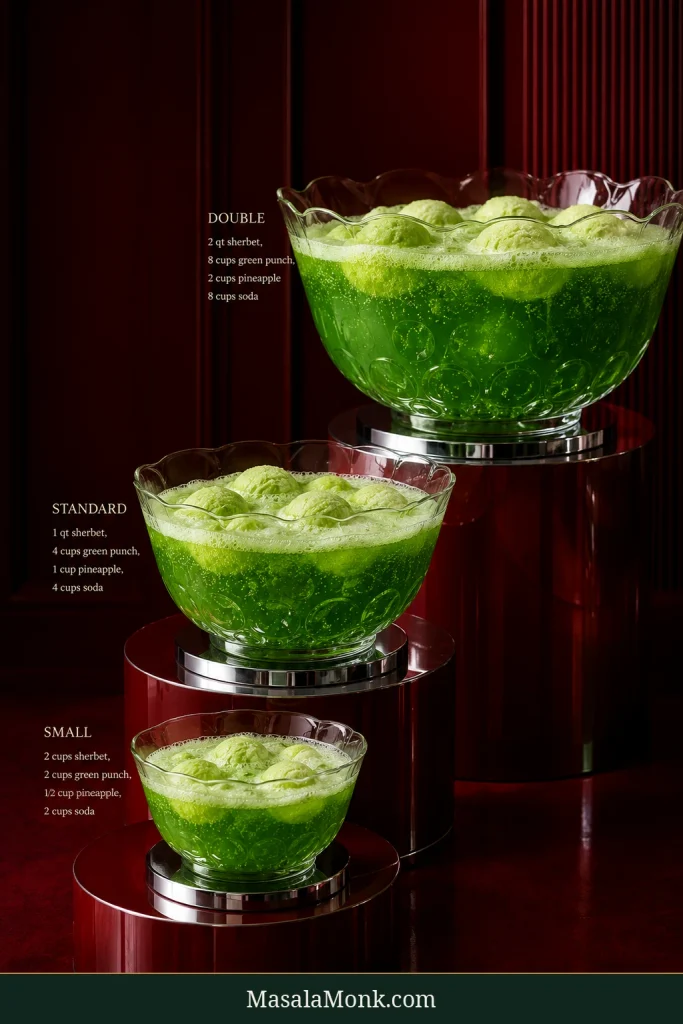
Small, Standard and Double Batches
Ingredient
Small Batch
Standard Batch
Double Batch
Lime sherbet (volume)
2 cups / 473 mL
1 qt / 946 mL
2 qt / 1.89 L
Green fruit punch
2 cups / 473 mL
4 cups / 946 mL
8 cups / 1.89 L
Pineapple juice
½ cup / 118 mL
1 cup / 237 mL
2 cups / 473 mL
Sprite or 7Up
2 cups / 473 mL
4 cups / 946 mL
8 cups / 1.89 L
Remember 4:4:1:4 by cups—sherbet, green punch, pineapple juice and soda—to keep scaled batches balanced.
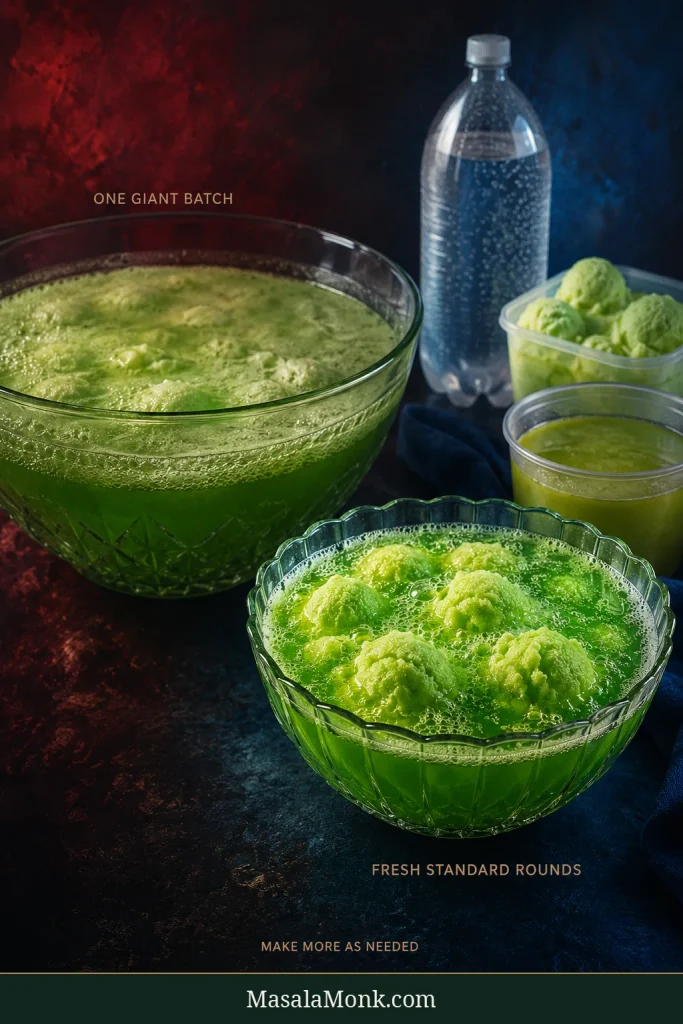
The small batch is plenty for movie night or a few people when the punch is part of the fun rather than the whole event. At most home parties, two standard batches made at different times are easier to manage than one enormous double batch.
For a very large crowd, buy enough ingredients for several standard batches and make them in rounds. Later batches stay fizzier, and you avoid committing everything to one bowl at the start.
Keep extra soda cold and unopened until the next round so every fresh batch starts with maximum fizz.
What Size Punch Bowl?
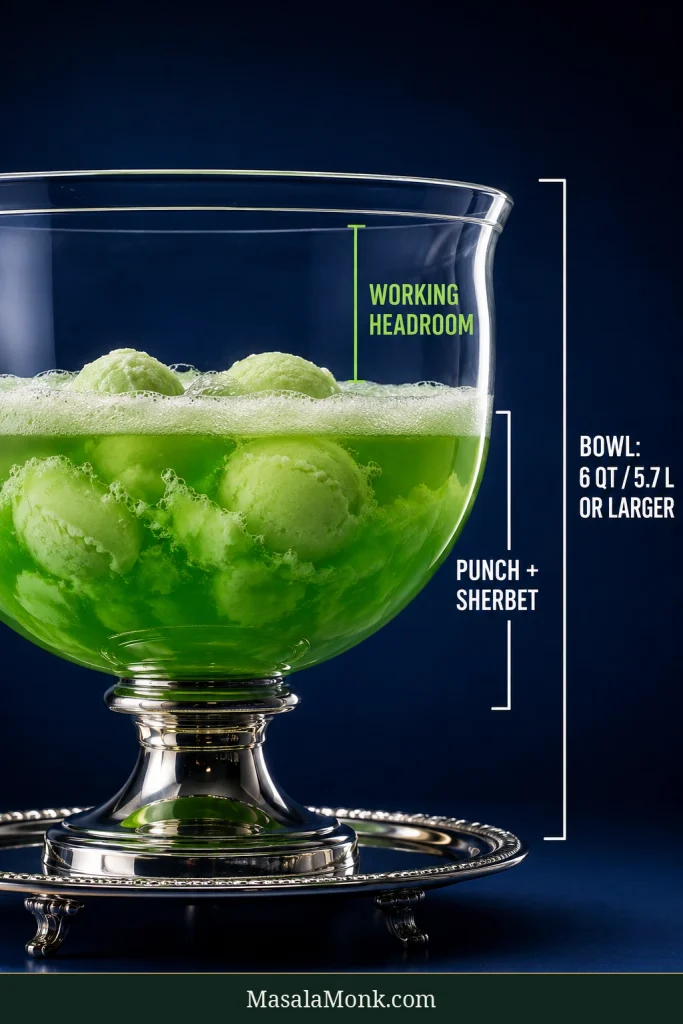
A bowl around 6 quarts / 5.7 liters or larger gives the standard batch useful headroom. Sherbet floats above the liquid and soda can build a temporary layer of foam, so the empty space matters.
With a smaller bowl, make the half batch or serve the punch in two rounds.
A wide bowl adds surface area, making floating sherbet and rising foam easier to manage than in a narrow vessel.
Keep It Cold and Fizzy
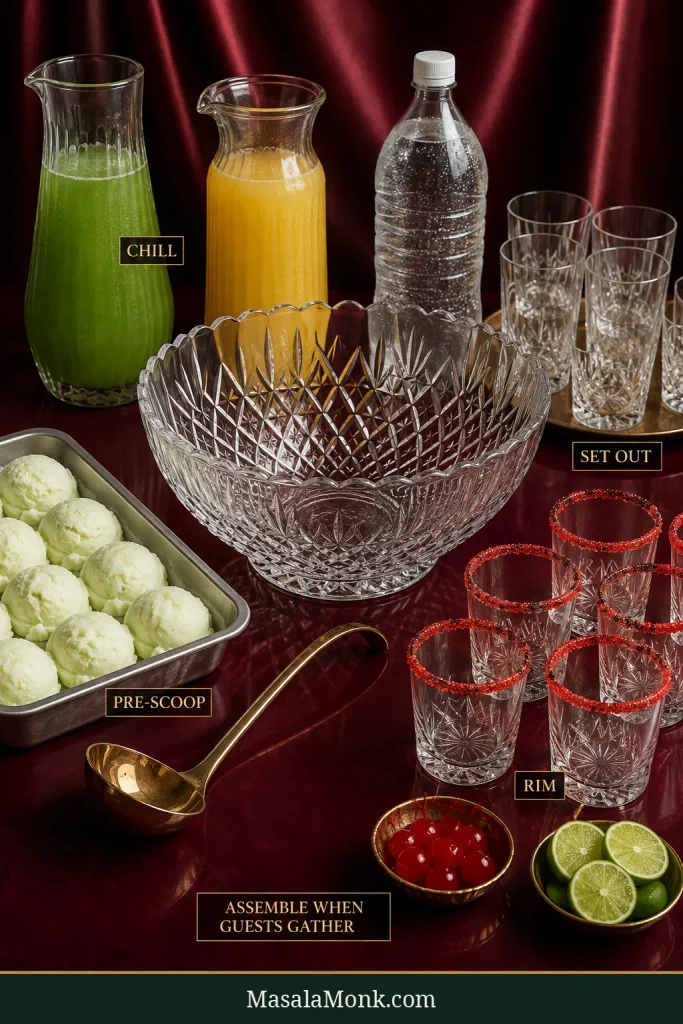
You can do nearly everything before the doorbell starts ringing. The only jobs worth saving for the end are putting the bowl together and opening the soda.
Prepare ahead, assemble late.
What to Prep Ahead
Earlier in the day, refrigerate the green punch, pineapple juice and soda, prepare the garnishes or sugar-rimmed cups, and put the bowl, ladle and glasses where you can find them. For a crowd, you can also pre-scoop the sherbet onto a lined tray or into a chilled muffin pan and return it to the freezer.
Leave space between pre-scooped portions; separate lime-sherbet scoops refreeze cleanly instead of joining into one awkward slab.
Once that is done, you are not wrestling with a frozen tub or hunting for the ladle while guests are walking through the door.
When to Assemble a Fresh Round
Put the punch together when people are beginning to gather around the drinks. That is a better cue than the clock—and certainly better than assembling it when you start setting up the buffet an hour earlier.
For a longer party, put out only part of the punch at first. Keep the remaining fruit base refrigerated, the sherbet frozen and the extra soda cold and unopened. When the first bowl runs low, make another. The bubbles are fresher, and there is usually less punch left sitting around at the end of the party.
Keep It Cold and Easy to Serve
Properly chilled ingredients usually make loose ice unnecessary, and melting ice dilutes the drink. For longer service, set the punch bowl inside a larger bowl or tray of ice. You can also freeze some green fruit punch into cubes if you want ice inside the bowl without adding plain water.
Because sherbet contains dairy, do not leave the finished punch at room temperature for more than 2 hours, or more than 1 hour when the temperature is above 90°F / 32°C. The USDA food-safety guidance has more detail.
A punch bowl is the easiest vessel because the sherbet and froth have room to float. For a small batch, a wide pitcher works. With a spigot dispenser, run only the chilled fruit base through the dispenser; add sherbet and soda to the cups or serving bowl so pieces do not interfere with the spout.
At a mixed-age party, keep the shared bowl alcohol-free so everyone can reach for the same festive drink. A fully alcoholic Grinch Punch is better treated as its own recipe instead of adding spirits to the family batch.
Fix a Problem
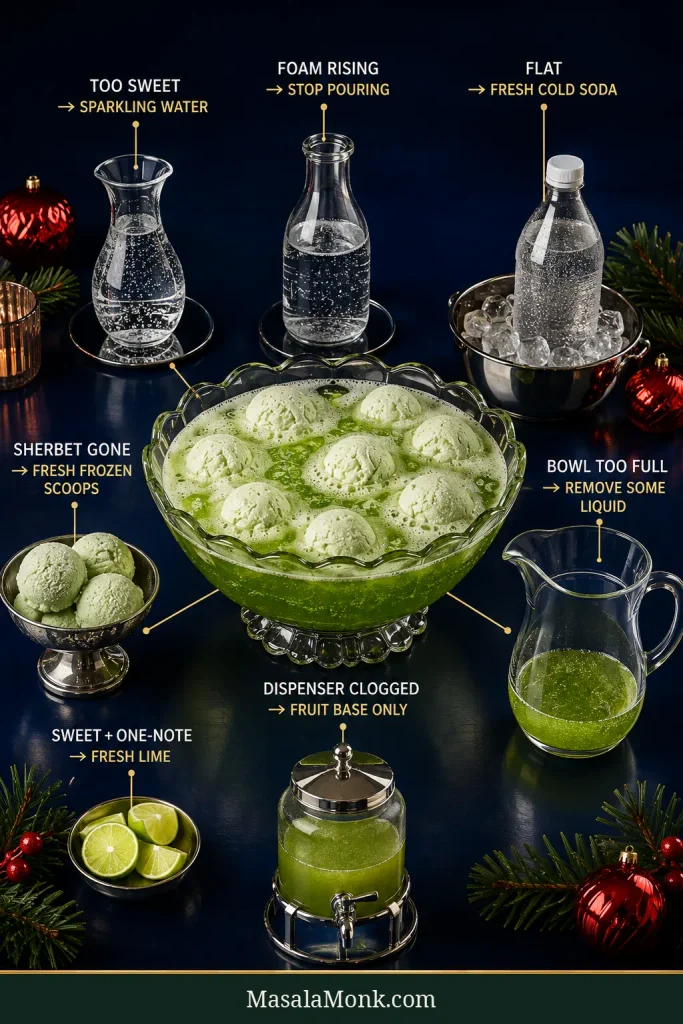
Sherbet punch is forgiving, but it can still become too sweet, too foamy, too flat or simply too large for the bowl you grabbed. Most problems can be fixed without dumping the bowl and starting over.
Problem
Fix Now
Next Time
Too sweet
Add cold sparkling water
Use 3 cups soda plus 1 cup sparkling water
Foam is overflowing
Stop pouring and let the foam settle
Chill the liquids well, pour the soda more slowly and leave more bowl headroom
Hardly any froth
Pour a small final splash of soda over a few scoops
Let some soda run directly over the sherbet during assembly
Punch went flat
Refresh it with newly opened cold soda
Open the soda close to serving and stir gently
Sherbet disappeared quickly
Add a few fresh frozen scoops if you have them
Keep the sherbet frozen until shortly before assembly
Punch is separating
Give the bowl one slow sweep with the ladle
Avoid vigorous stirring that knocks out carbonation
Bowl is too full
Remove some liquid before adding the rest of the soda
Use a larger bowl or serve two rounds
Dispenser is clogging
Move the punch to an open bowl if possible
Run only the fruit base through a dispenser
Tastes sweet and one-note
Add a small squeeze of fresh lime
Use the lighter soda mix or taste the fruit base before finishing the bowl
Change one variable at a time—sweetness, fizz, sherbet or volume—so a quick rescue does not create another problem.
Leftovers
Grinch Punch does not store especially well once assembled.
Refrigerate leftovers promptly if you want to keep them. By the next day, the bubbles are gone and the frothy top has disappeared, so expect a creamy fruit drink rather than freshly made punch.
The Final Ladle
Grinch Punch does not need a complicated ingredient list to make a Christmas table feel more fun. A vivid green bowl, a few lime-sherbet scoops and that first rush of bubbles already do most of the work—especially once someone comes back carrying an empty cup and asks for another.
That is the charm of this punch: it looks like a celebration without becoming another hosting job. It gives the table color, gives the kids something to get excited about, and still leaves the person who made it free to enjoy the party.
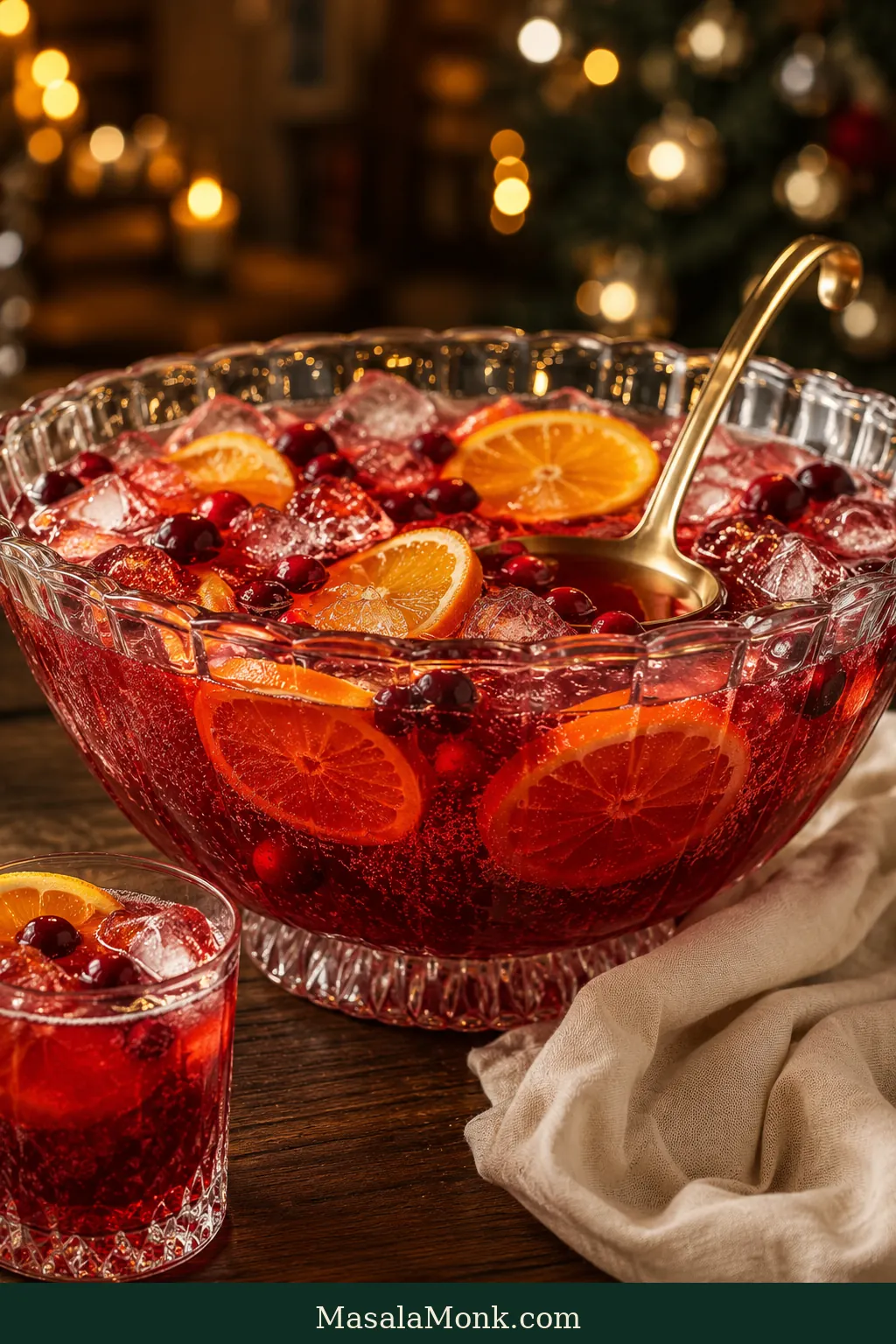
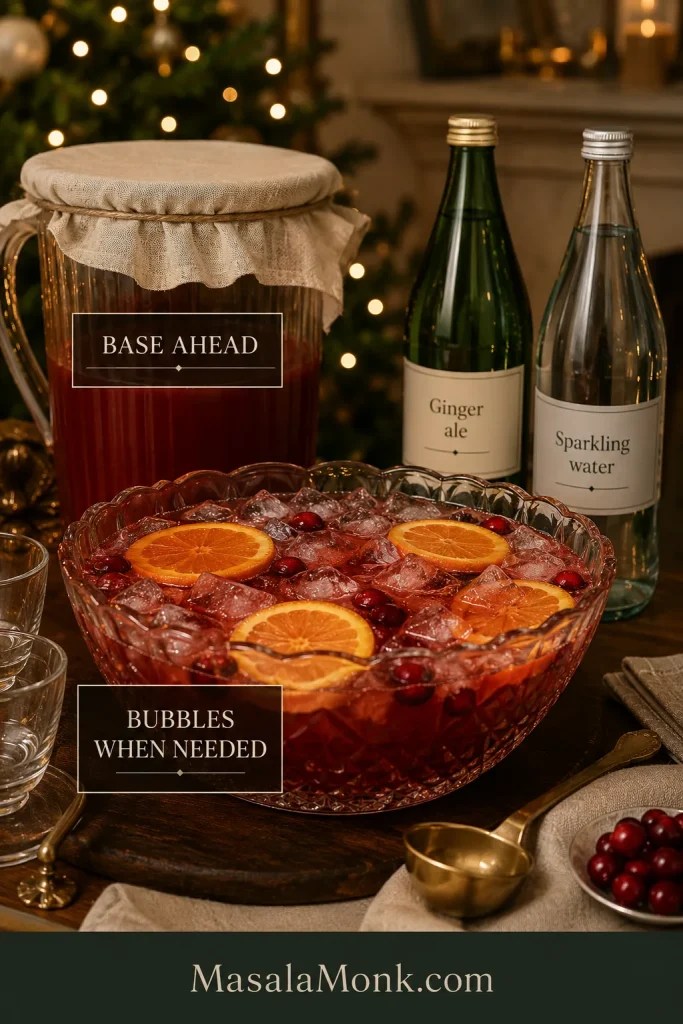
Cold bubbles climbing around orange slices and ruby-red cranberries. Tart enough to cut through a rich Christmas dinner, fruity enough that people come back carrying an empty glass. That is the kind of Christmas punch worth putting in the middle of the table.
The trouble is that Christmas punch can go wrong surprisingly easily. Too sweet and the first glass feels like dessert. Too flat and it tastes like mixed fruit juice. Add alcohol carelessly and a drink that tastes gentle can become much stronger than anyone expected.
The idea here is simple: the recipe starts as a non-alcoholic Christmas punch, with ginger ale plus sparkling water so not all the fizz comes from sweet soda. Vodka or rum can be added where you want them, while brut Prosecco or Champagne can replace the ginger ale for a drier version.
Everyone gets the festive glass. Once the bowl is on the table, the host should be able to leave it there and get on with Christmas.
This easy Christmas punch combines cranberry, pineapple and orange juice with ginger ale and sparkling water. It takes about five minutes to mix once everything is cold, makes about 1 US gallon / 128 US fl oz / 3.8 L, and can be served alcohol-free or spiked by the glass with vodka or rum.
The rule worth remembering is shorter than the ingredient list:
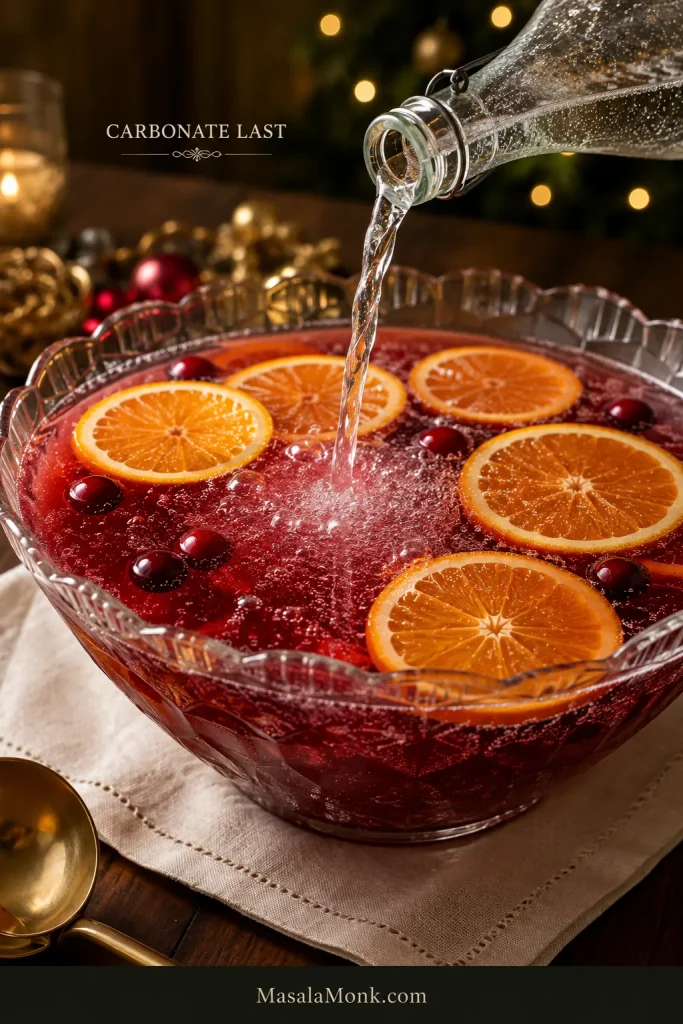
Chill first. Balance before bubbles. Carbonate last.
Choose Your Version
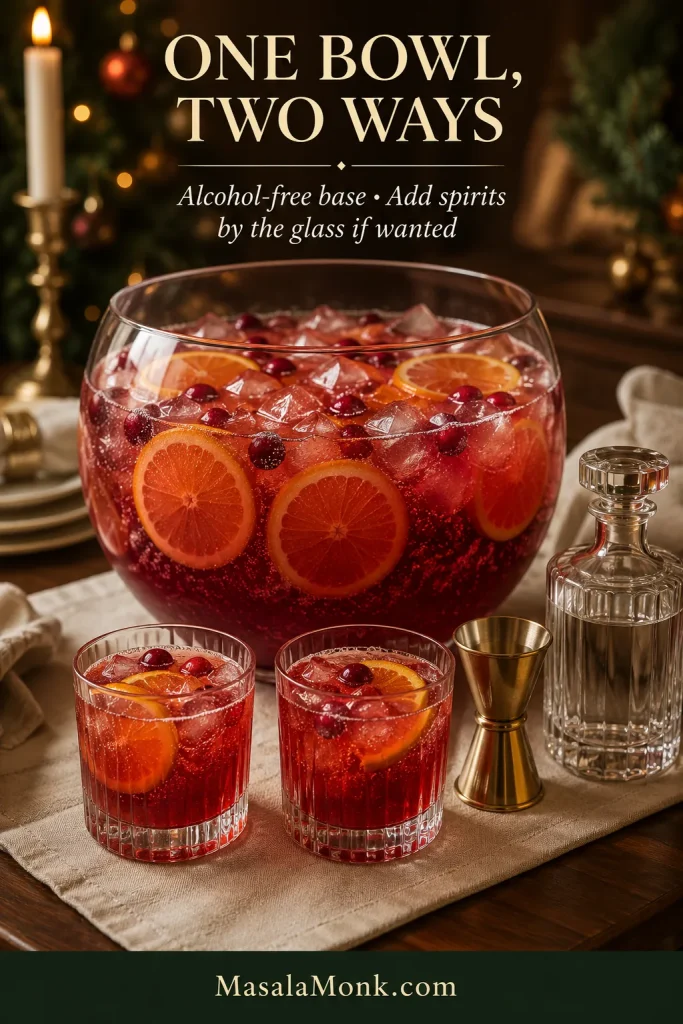
Mixed family gathering? Keep the bowl alcohol-free so children and adults can share the same festive punch. Adults who want vodka or rum can add it to their own glasses.
Adults only? Add a measured amount of vodka, light rum or gold rum to the whole bowl. The whole-bowl amounts below let you choose the strength without relying on guesswork.
Want a drier sparkling-wine version? Replace the ginger ale with brut Prosecco or Champagne.
Making your first batch? Keep the bowl alcohol-free and spike individual glasses. It gives you the most control without committing the whole gallon to one choice.
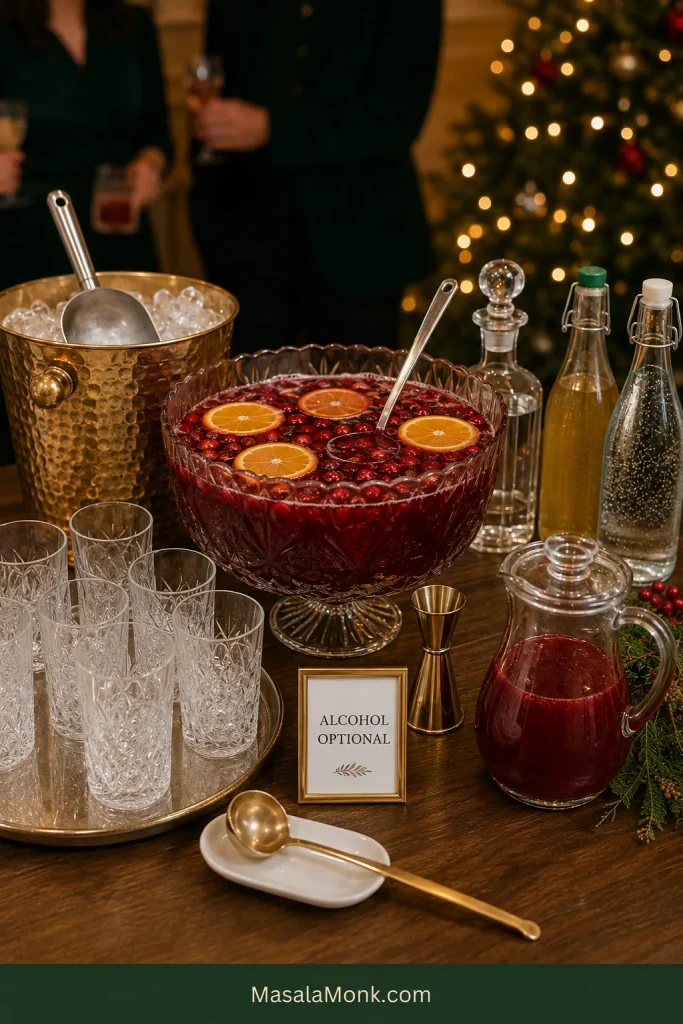
Keep the main bowl alcohol-free for mixed gatherings; place a spirit and jigger beside it for adults who want to spike their own glass.
Christmas Punch Recipe
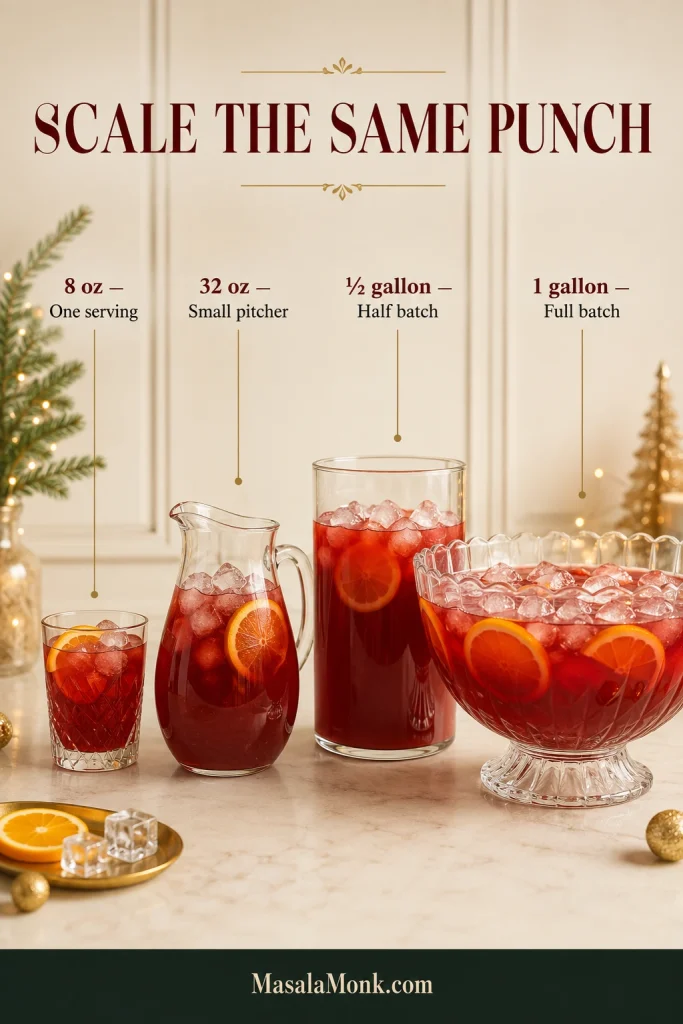
The full batch makes about one gallon before optional lemon or alcohol. The scaling section below includes ready-made amounts for a single glass, pitcher and half batch.
Recipe at a Glance
Prep
About 5 minutes
Yield
About 1 US gallon / 128 US fl oz / 3.8 L
Small party pours
About 21 × 6 fl oz / 180 ml
Generous servings
About 16 × 8 fl oz / 240 ml
Best bowl size
6 qt / 5.7 L for most full batches
Flavor
Cranberry-forward, lightly sweet and sparkling
Alcohol
Optional
Serving sizes: 6 fl oz / 180 ml is a small party pour; 8 fl oz / 240 ml is a generous serving. The 12 fl oz / 355 ml figure used later is a shopping allowance per guest, including refills—not one glass.
Ingredients
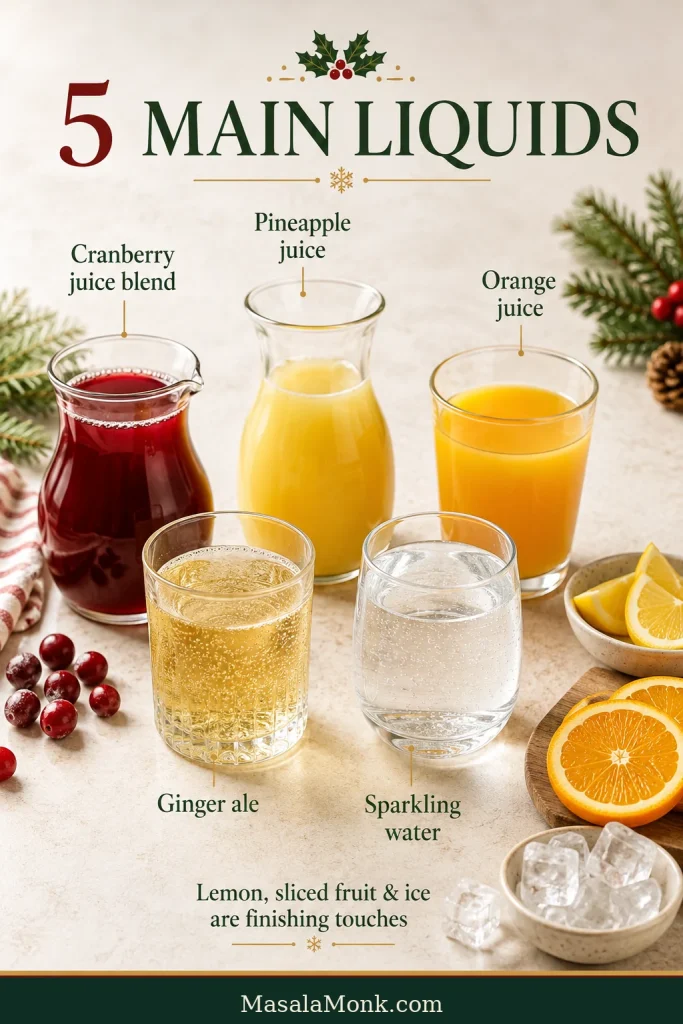
The punch itself uses five main liquids. Optional lemon juice, sliced fruit and ice are finishing touches.
Three juices build the flavor; ginger ale and sparkling water supply the lift. Chill all five before mixing.
8 cups / 64 fl oz / 1.9 L 100% cranberry juice blend, well chilled — not pure unsweetened cranberry juice
3 cups / 24 fl oz / 710 ml 100% pineapple juice, well chilled
1 cup / 8 fl oz / 240 ml 100% pulp-free orange juice, well chilled
3 cups / 24 fl oz / 710 ml ginger ale, very cold
1 cup / 8 fl oz / 240 ml plain sparkling water, very cold; club soda also works
Fresh lemon juice: 1–2 tbsp / 15–30 ml, only if the juice mixture needs more brightness after tasting
Orange: 1, thinly sliced
Up to 1 cup fresh or frozen cranberries, optional garnish
Large punch ice, an ice ring or ice for individual glasses, as needed
If you bought pure cranberry juice or cranberry juice cocktail instead, don’t swap it cup-for-cup. The cranberry guide below shows where to start.
How to Make Christmas Punch
Once everything is cold, the actual mixing takes about five minutes.
Chill everything first. Start with refrigerator-cold juices and mixers so the ice is not doing all the chilling.
Mix the juices. Pour the cranberry, pineapple and orange juice into the bowl and stir gently.
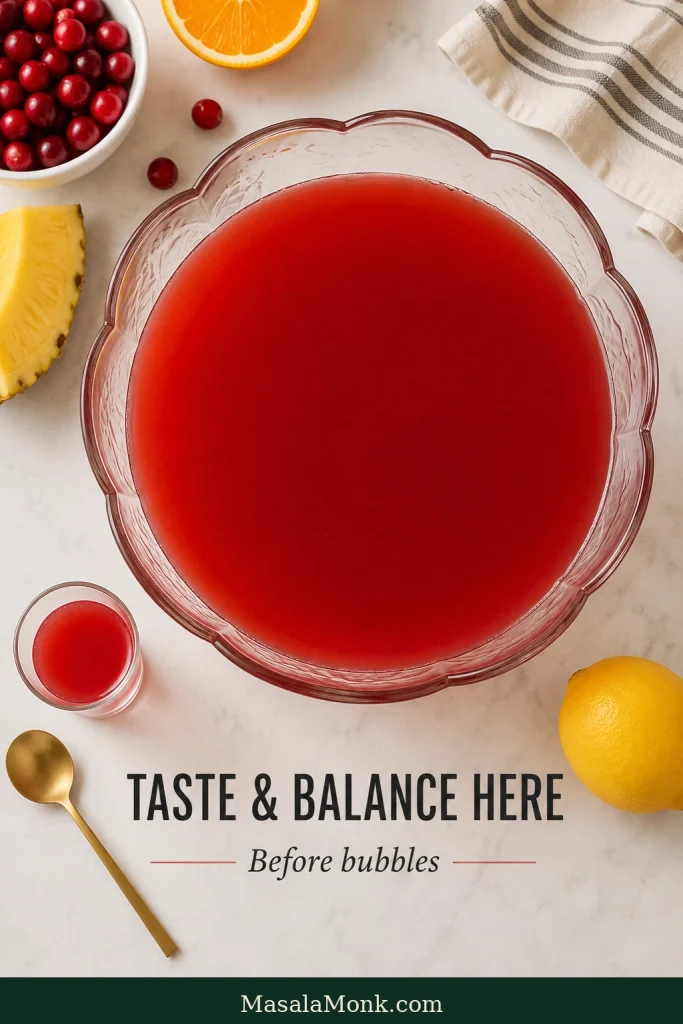
Taste before the bubbles. Look for cranberry up front with enough fruit sweetness behind it that the mixture does not feel aggressively tart. If it feels heavy or sweeter than you want, try 1 tablespoon / 15 ml lemon juice. If it is unusually sharp, check the cranberry label first.
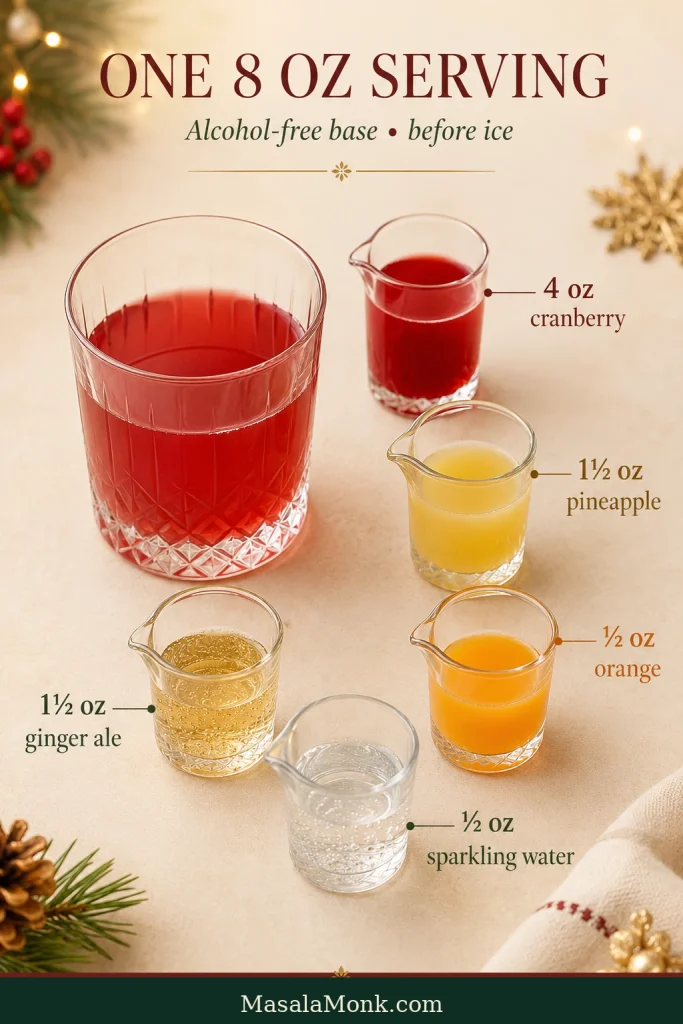
For a single serving with ice or alcohol, use a 10–12 fl oz / 300–355 ml glass. For the small batch, choose a pitcher larger than 1 L. Don’t fill it to its advertised capacity when fruit or ice is going inside.
An 8-ounce serving is the cheapest place to test a new cranberry juice, mixer or substitution before a party.
Use the Ratio for Odd-Sized Batches
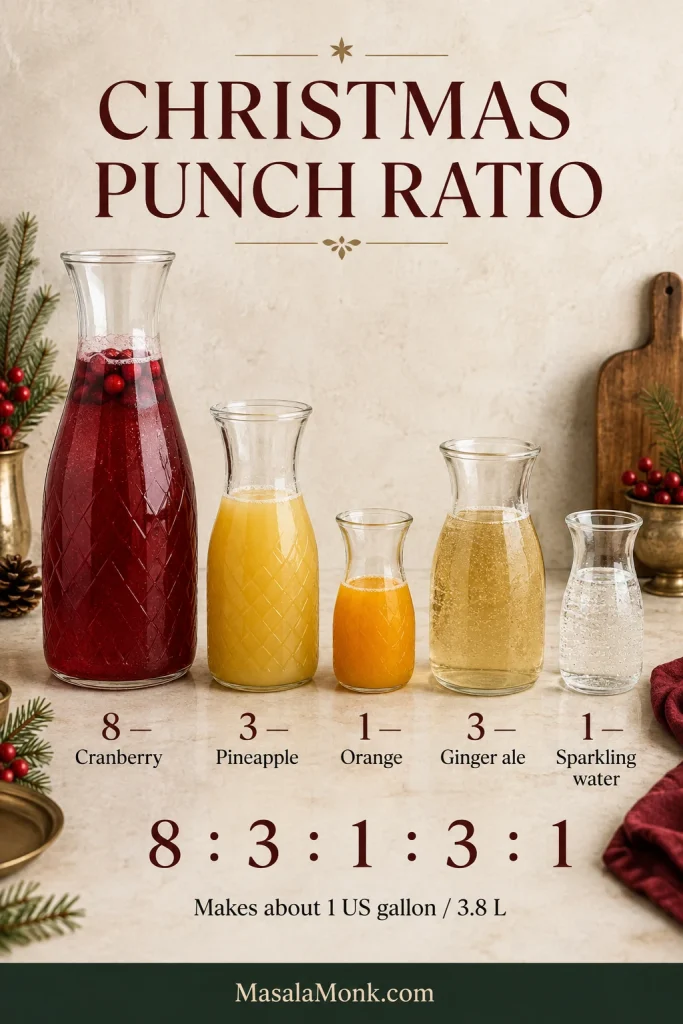
If your pitcher or dispenser does not match one of the sizes above, use 8 parts cranberry : 3 pineapple : 1 orange : 3 ginger ale : 1 sparkling water. Keep the same measure for every part.
For odd-sized vessels, 8:3:1:3:1 works with any consistent measure—ounces, milliliters, cups or a small jug.
Jump to What You Need
For a small gathering, everything you need is already above. The rest is here when you need help with cranberry labels, ingredient swaps, alcohol, crowd quantities, serving, ice or troubleshooting.
Cranberry leads. It gives the punch its tart backbone, deep red color and unmistakable holiday character. Because it makes up half the alcohol-free drink, choosing the right cranberry product matters far more than adding another handful of decorative fruit.
Pineapple brings body and fruit sweetness into the middle of the drink. Three cups are enough to soften cranberry without pulling everything too far into tropical-punch territory.
A smaller amount of orange connects cranberry’s tart edge with pineapple’s sweetness without taking over the color or flavor.
Ginger ale brings fizz, sweetness and a gentle ginger note. Sparkling water adds more bubbles without another full measure of sweet soda.
Together, those ingredients are meant to keep cranberry in front, soften its tartness with pineapple and citrus, and leave enough fizz that the punch feels refreshing rather than syrupy. Once the main ingredients are doing their jobs, adding more things rarely makes it better.
The target is cranberry-forward, bright and fizzy—not simply sweet.
Cranberry Juice: Read the Label Before You Pour
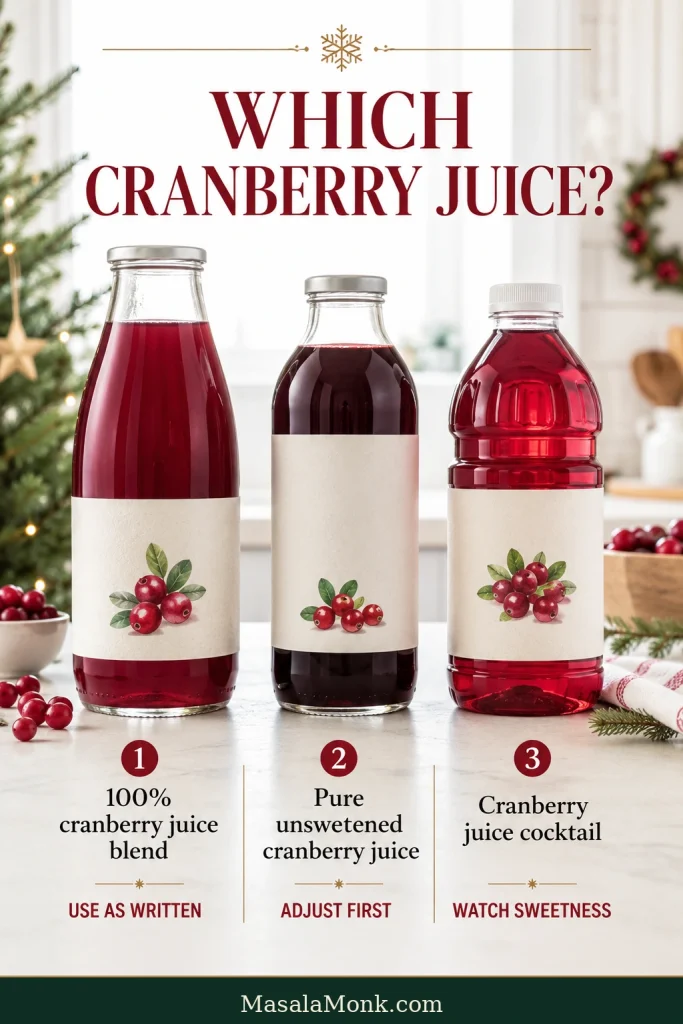
For the recipe as written, use 100% cranberry juice blend—not pure unsweetened cranberry juice and not automatically cranberry juice cocktail.
“Cranberry juice” sounds like one ingredient. At punch-bowl scale, the label can change the entire drink.
If the label says 100% juice but lists apple, grape or pear too, you are likely looking at a cranberry juice blend.
What you bought
What to do
100% cranberry juice blend Cranberry blended with naturally sweeter apple, grape or pear juice
Use 8 cups / 1.9 L as written. This is the intended version.
Pure unsweetened cranberry juice
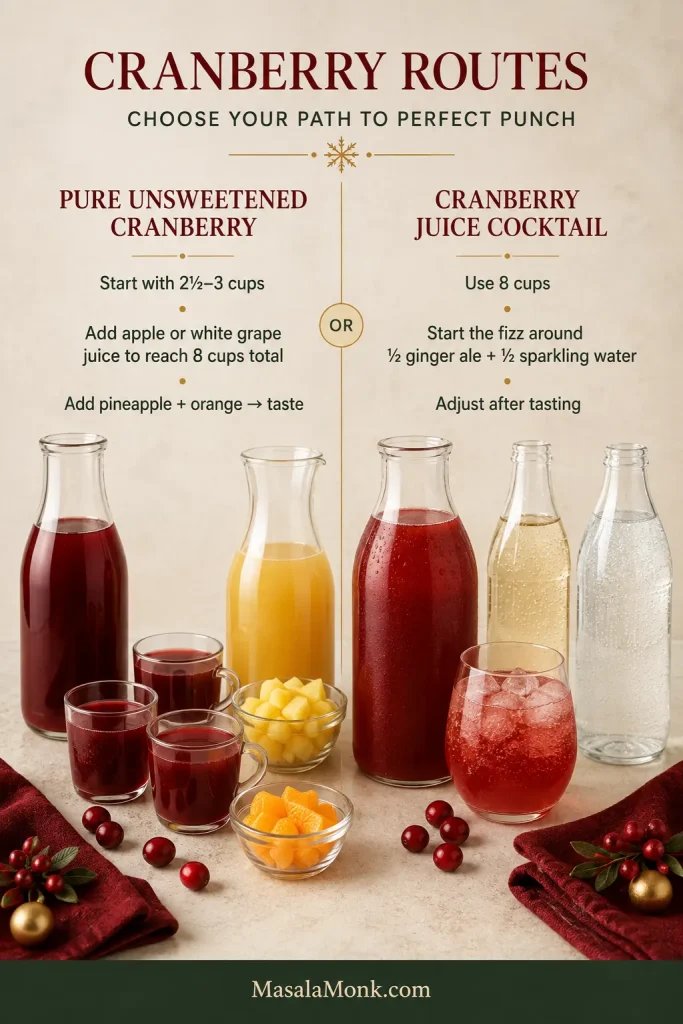
Do not use it cup-for-cup. For the 8-cup cranberry portion, begin cautiously with about 2½–3 cups pure cranberry and enough apple or white grape juice to bring the total to 8 cups. Mix in the pineapple and orange, then taste.
Cranberry juice cocktail
Use 8 cups / 1.9 L, but begin the fizzy portion with roughly equal parts ginger ale and sparkling water. Add more ginger ale only if the punch needs more sweetness.
If You Bought Pure Cranberry or Cranberry Cocktail
Start there, then taste. The difference between brands is large enough that one fixed number will not suit every bottle.
If the pure-cranberry version is still too sharp after the pineapple and orange are in, add a little more apple or white grape juice. If it only needs a small sweetness correction, cold simple syrup gives you finer control; add it 1 tablespoon / 15 ml at a time.
Cranberry cocktail can create the opposite problem. When the juice mixture is already sweet enough, plain sparkling water is more useful than another sweet mixer.
Fix the 8-cup cranberry portion first; once it tastes balanced, let pineapple, orange and fizz return to their normal jobs.
Before the Bubbles
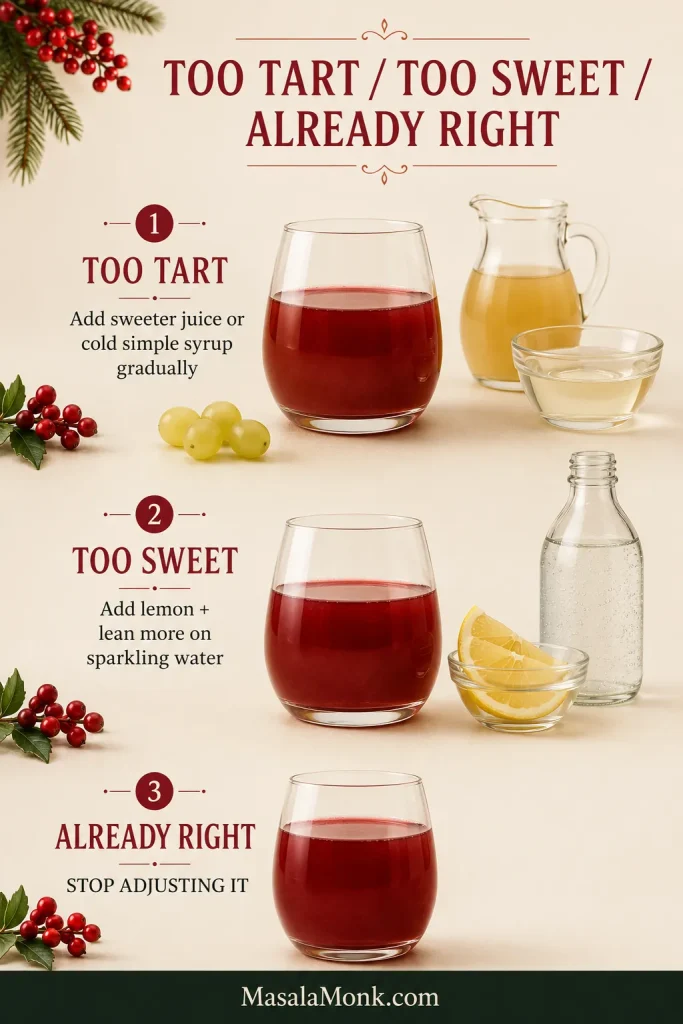
Too tart? Add a sweeter complementary juice or cold simple syrup in small measured amounts.
Too sweet? Add fresh lemon a tablespoon at a time and lean more heavily on sparkling water when you finish the bowl.
Already good? Stop adjusting it.
Make one correction, taste again, then decide whether the punch needs anything else.
Keep dry granulated sugar out of an already fizzy bowl. If the finished punch genuinely needs sweetness, cold simple syrup dissolves more easily and is much less likely to produce a sudden cap of foam.
Once the juice tastes right, you can stop thinking about cranberry labels. From there, the variations are mostly about the kind of punch you want.
Ingredient Swaps: What Changes
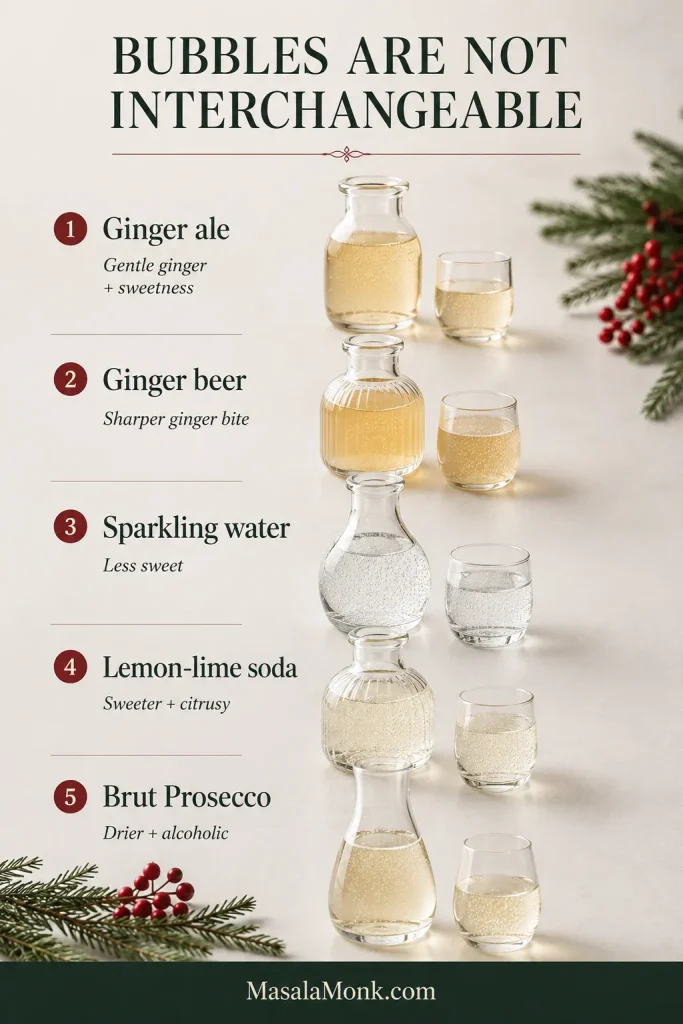
Ginger beer, Sprite, sparkling water and Prosecco all add bubbles, but they do very different things to the punch.
Use sparkling water to pull sweetness back, ginger ale for sweetness plus lift, and ginger beer for a sharper ginger edge.
Change
What happens
Replace some ginger ale with ginger beer
More ginger bite and a sharper finish
Use Sprite or 7Up instead of ginger ale
Sweeter and more lemon-lime forward, without the ginger character
Replace some ginger ale with sparkling water
Less sweetness while keeping the punch fizzy
Replace part of the cranberry with pomegranate
Deeper fruit flavor and a more red-purple color
Replace some pineapple with orange or apple juice
Less pineapple body and a different kind of fruit sweetness
If the stronger ginger version is what appeals to you, a Cranberry Moscow Mule takes cranberry, lime, vodka and ginger beer into an individual cocktail rather than a punch-bowl variation.
Make It Alcoholic: Vodka, Rum or Sparkling Wine?
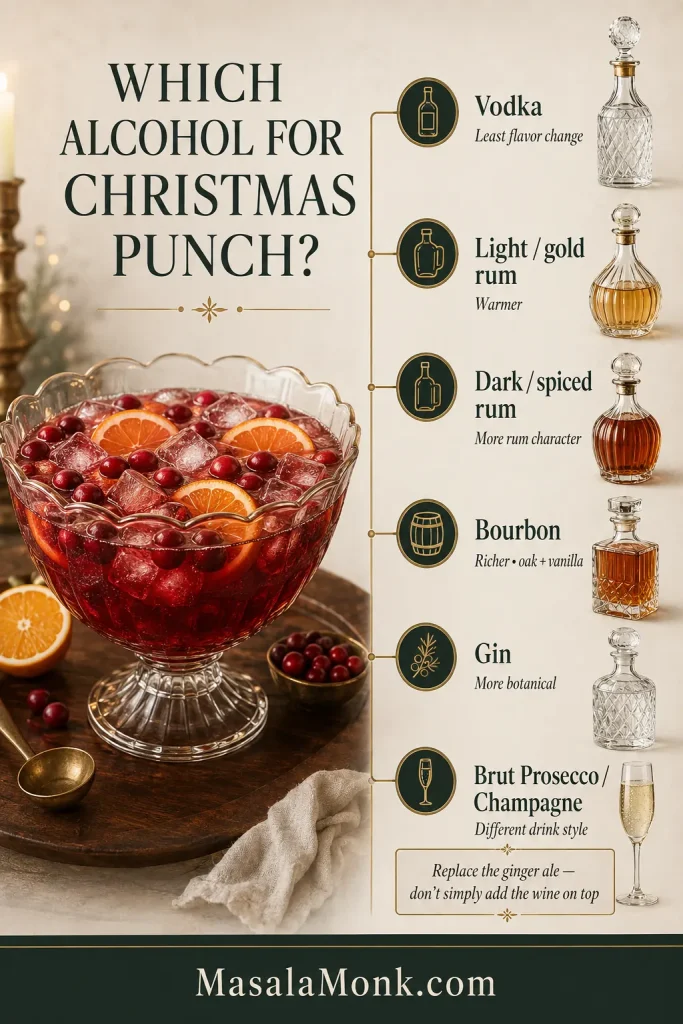
If the alcohol-free glass already tastes good, you can stop there. What matters is how much you want the alcohol to change the punch. Vodka stays mostly out of the fruit’s way; rum becomes more noticeable; sparkling wine changes the style of the drink altogether.
Test a spirit in one measured glass before committing it to the whole bowl.
Alcohol
What changes
Vodka
Clean and neutral; the fruit remains in front
Light or gold rum
Rounder and warmer without a heavy molasses flavor
Dark or spiced rum
More obvious rum, vanilla and spice; easier to overpower the fruit
Brut Prosecco or Champagne
Drier, lighter and more sparkling
Bourbon
Oak, vanilla and a richer cranberry-orange profile
Gin
Sharper and botanical; changes the character much more noticeably than vodka
Vodka is the easiest choice when you want the punch to keep tasting primarily of fruit. Light or gold rum adds more warmth, while coconut rum only makes sense when coconut is genuinely part of the flavor you want.
If cranberry and vodka are your favorite part of the punch, a classic Cosmopolitan takes that combination into a sharper lime-and-orange cocktail.
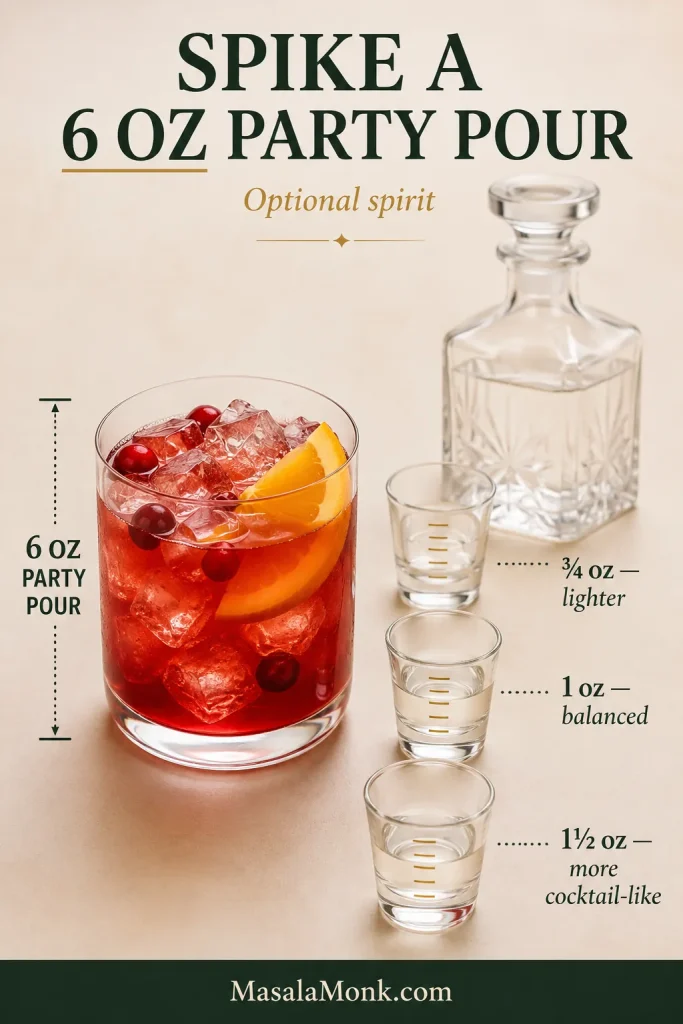
Spike Individual Glasses
For a 6 fl oz / 180 ml pour, start with 1 fl oz / 30 ml spirit. From there, move lighter or stronger depending on the glass you want.
Lighter: ¾ fl oz / 22 ml
Balanced: 1 fl oz / 30 ml
More cocktail-like: 1½ fl oz / 45 ml
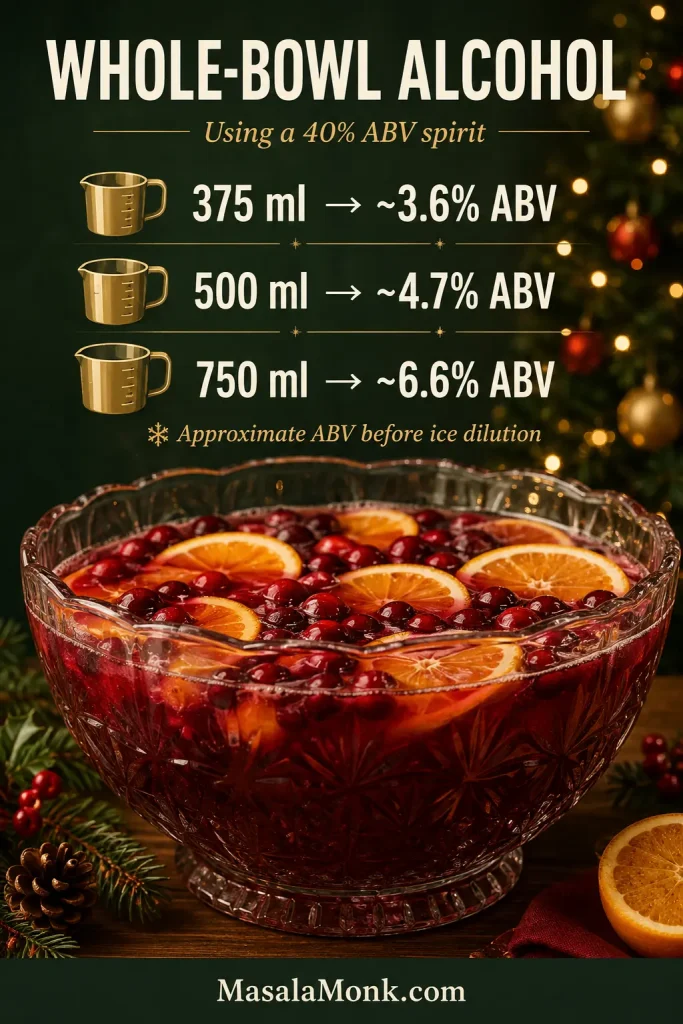
With a typical 40% ABV spirit, the 1-fl-oz version is roughly 5.7% ABV before ice dilution; the 1½-fl-oz version is around 8%. Use a 10–12 fl oz glass so there is room for the spirit and ice.
Measure punch and spirit separately. A jigger keeps one party pour from quietly becoming a different drink.
Spike the Whole Bowl
40% spirit added to one full batch
Approx. ABV*
375 ml
About 3.6%
500 ml
About 4.7%
750 ml
About 6.6%
*Calculated before ice dilution.
Serving several alcoholic batches? Record the first measured spirit amount and repeat it instead of matching later bowls by taste.
Cold fruit and carbonation can make alcohol seem gentler than it is. Measure how much went into the bowl instead of judging strength only by taste. The NIAAA guide to standard drinks is useful for comparing those pours with familiar servings of spirits and wine.
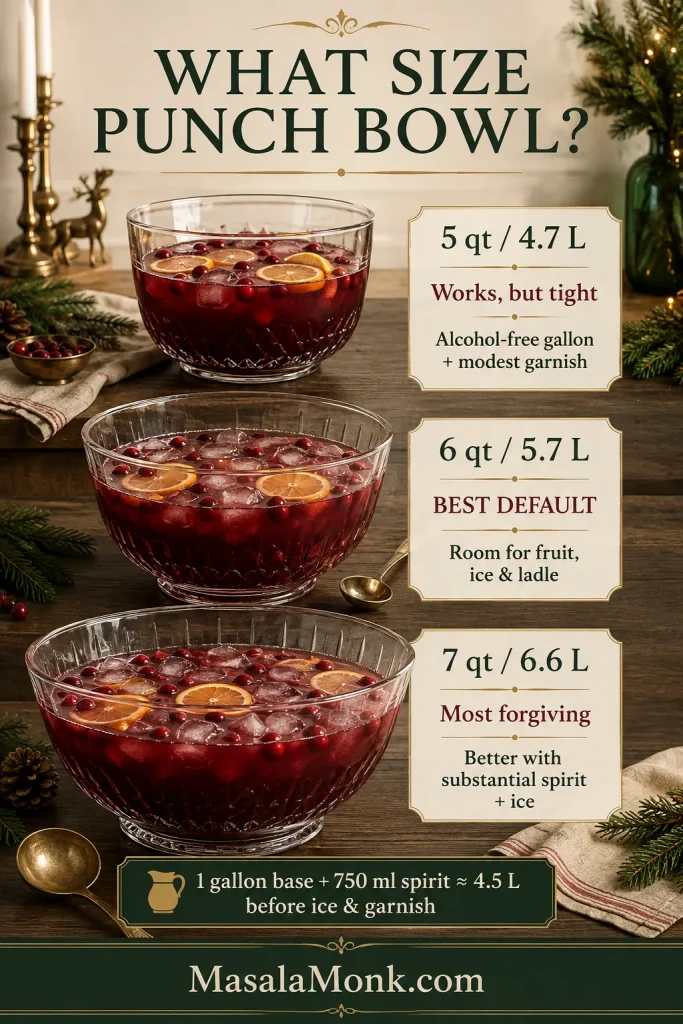
Adding the full 750 ml of spirit brings the total liquid to roughly 4.5 L before ice and garnish. Do not use a 5-quart bowl for that version; the bowl-size guide below shows the practical headroom for larger batches.
Prosecco or Champagne Version
Replace the 3 cups / 710 ml ginger ale with one chilled 750 ml bottle of brut Prosecco or Champagne. Keep the sparkling water. With a typical 12% sparkling wine, the finished bowl is roughly 2.4% ABV before ice dilution.
For a stronger sparkling version, about 375 ml vodka brings the bowl into roughly the mid-5% ABV range, depending on the bottles used.
If sparkling wine is really the main event, the Mimosa guide includes a cranberry version for individual Christmas-brunch glasses.
Christmas Punch for a Crowd: How Much Per Person?
For a party, recipe yield and shopping quantity are not quite the same thing. Nobody is thinking about the yield printed on the recipe once people start coming back for refills.
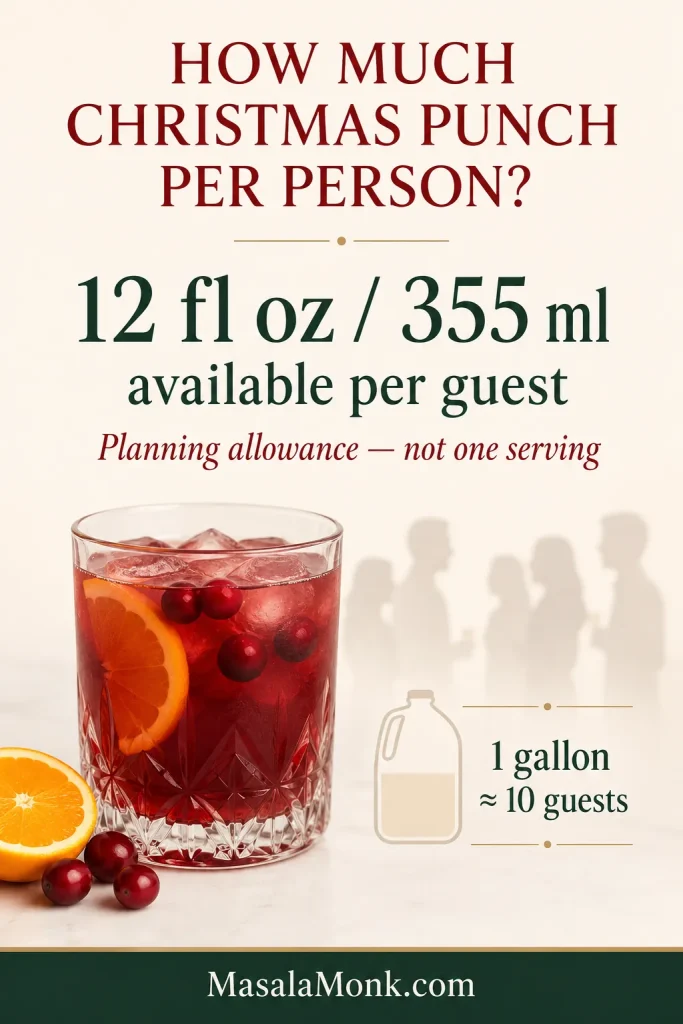
As a generous planning rule, allow about 12 fl oz / 355 ml of punch available per guest when punch is an important drink option. For planning, one gallon therefore covers roughly 10 people. Make less when beer, wine, cocktails, soft drinks and other beverages are also being served.
This is a shopping allowance, not a serving size. The extra volume simply gives people room to come back for another glass.
Round the total up by whole batches. A little cold reserve is easier to manage than running out mid-party.
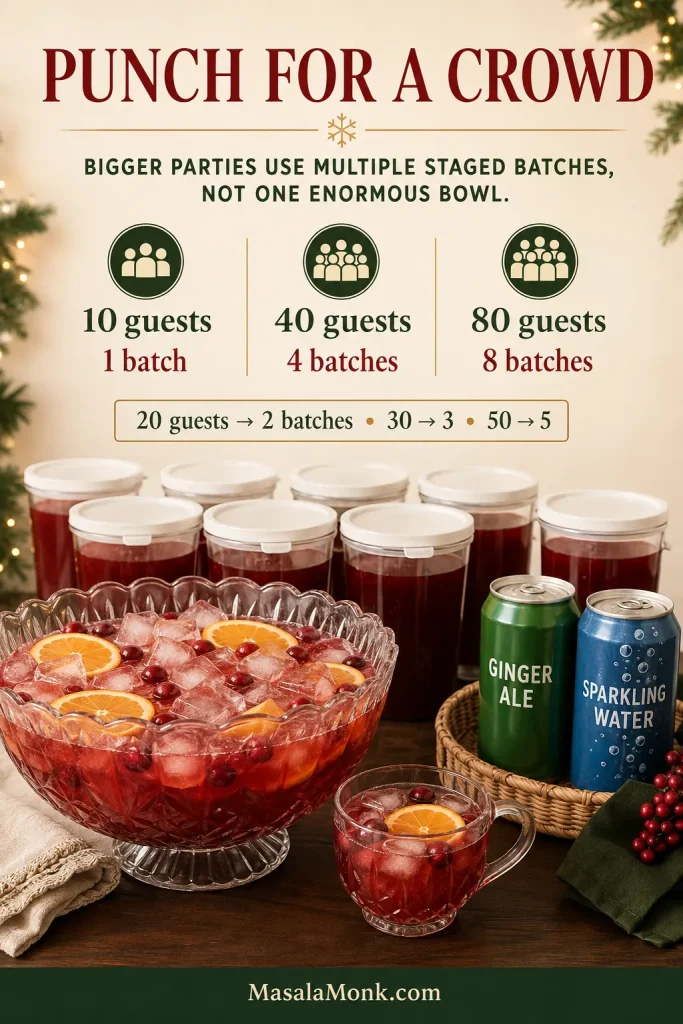
How Many Batches for 10–80 Guests?
For a quick planning rule, think roughly one gallon for every ten guests. That turns a large guest count into repeatable batches before you start shopping.
Treat these as planning milestones, not fixed drinking quotas; some guests will refill and others will barely touch a glass.
Guests
Punch to have available*
1-gallon batches
10
About 1 gallon
1
20
About 2 gallons
2
30
About 3 gallons
3
40
About 4 gallons
4
50
About 5 gallons
5
80
About 8 gallons
8
*A generous planning amount. Reduce it when plenty of other beverages are available.
Shopping Math for 40 Guests
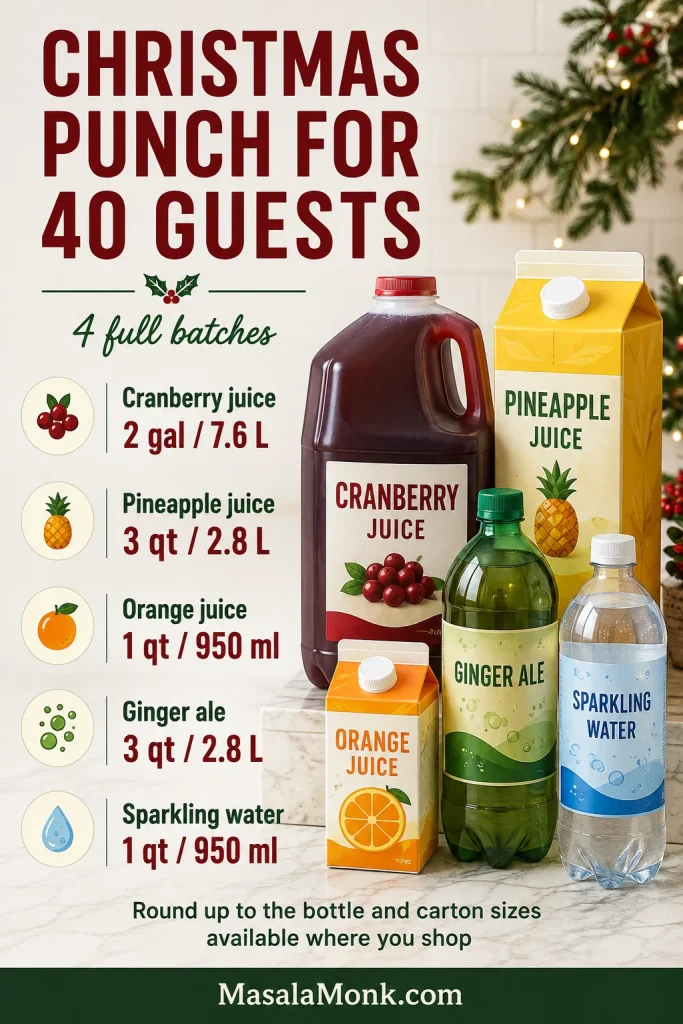
Every full batch needs roughly 2 qt / 1.9 L cranberry juice, 3 cups / 710 ml pineapple juice, 1 cup / 240 ml orange juice, 3 cups / 710 ml ginger ale and 1 cup / 240 ml sparkling water.
For 40 guests / four batches, shop for approximately:
Cranberry juice: 2 gal / 7.6 L
Pineapple juice: 3 qt / 2.8 L
Orange juice: 1 qt / 950 ml
Ginger ale: 3 qt / 2.8 L
Sparkling water: 1 qt / 950 ml
Round up to the carton and bottle sizes actually available where you shop.
For multiple batches, smaller bottles of fizzy mixers can keep later refills sealed, cold and lively until needed.
Don’t Carbonate Everything at Once
The shopping is handled. Now the job is making gallon four taste as lively as gallon one.
Prepare the cranberry-pineapple-orange mixture ahead and keep most of it covered in the refrigerator. Finish the first bowl with ginger ale and sparkling water when guests arrive; carbonate the next batch only when you need it.
The second half of the party gets fresh punch instead of whatever bubbles survived from the first half.
Label each chilled reserve base with the exact ginger ale and sparkling water it still needs.
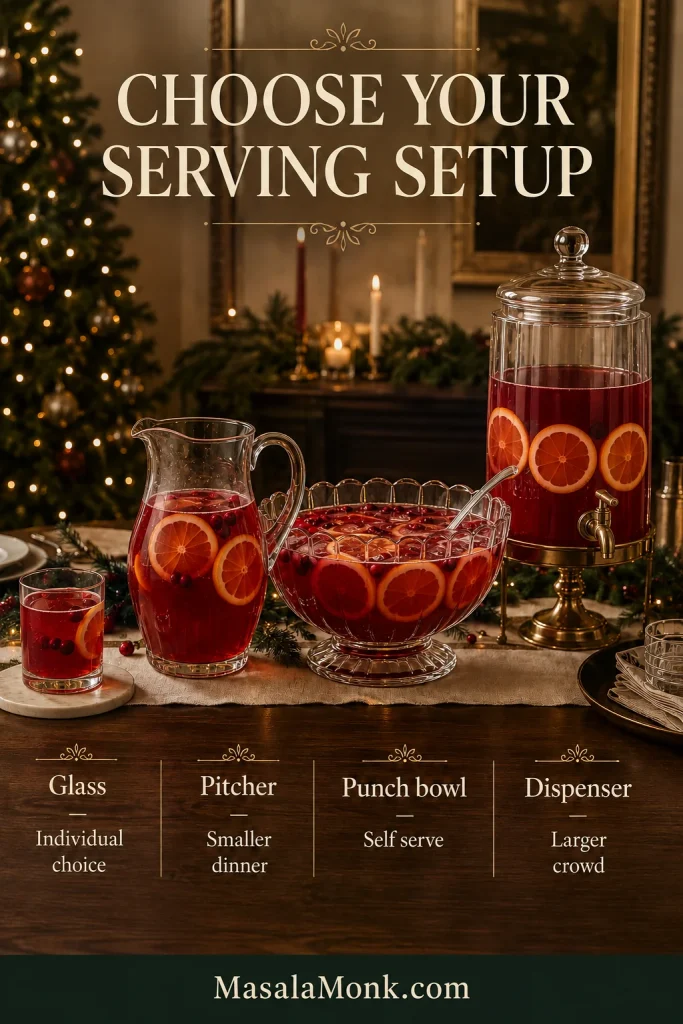
The best vessel depends on how people are drinking. A pitcher suits a smaller seated dinner—especially beside something rich such as honey glazed ham—while a bowl or dispenser makes more sense when guests are serving themselves.
Pitchers suit smaller seated meals; bowls and dispensers make self-service easier when guests are circulating.
By the Glass
This is easiest for a small group or when everyone is choosing their own alcohol. Use the 8-fl-oz / 240-ml single-serving formula from the scaling section, then add spirit and ice separately.
Pitcher
A pitcher makes more sense than a punch bowl for a smaller dinner. Don’t fill it to its advertised capacity, especially when fruit or ice is going inside.
What Size Punch Bowl Do You Need?
A 6-quart / 5.7-L bowl is the best default for one full batch. It leaves useful room for fruit, ice and the ladle instead of filling the bowl almost to the rim.
Tight fit — 5 qt / 4.7 L: workable for the alcohol-free gallon with modest garnish and no large ice ring, but fairly full.
Best default — 6 qt / 5.7 L: the better choice for most full batches, especially with fruit or large ice.
Most forgiving — 7 qt / 6.6 L: preferable when adding a substantial amount of spirit plus an ice ring or generous punch ice.
A one-gallon bowl is not a sensible home for exactly one gallon of liquid plus an ice ring.
Six quarts is the practical default for a one-gallon batch; substantial ice or spirit may justify more headroom.
Beverage Dispenser
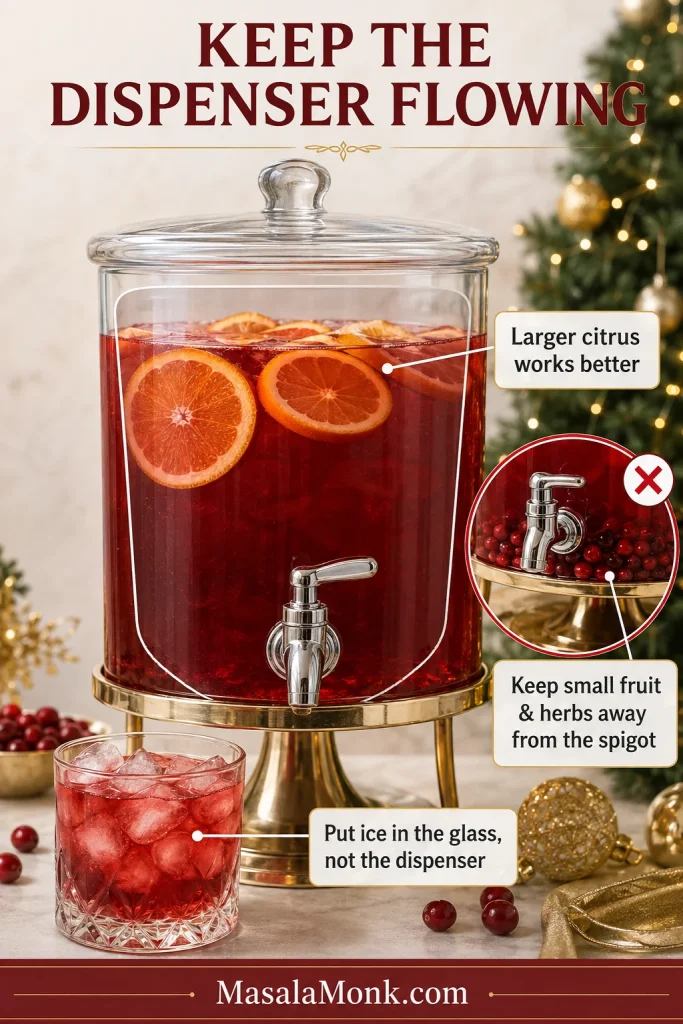
A dispenser is excellent for a larger group because guests can serve themselves without a ladle. Leave a little space at the top rather than filling it to the brim.
If the dispenser will be out for much of the party, let guests add ice to their own glasses instead of filling it with cubes that slowly weaken every remaining serving.
Test the empty dispenser with water and an actual serving glass before filling it with punch.
Can You Make Christmas Punch Ahead of Time?
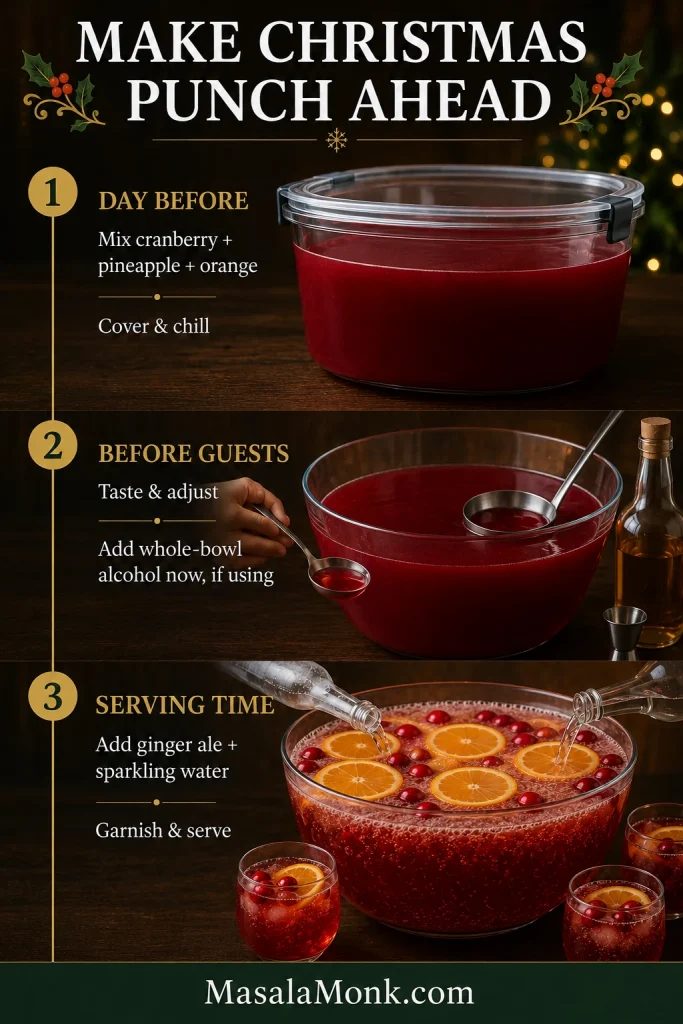
Yes. Mix and chill the cranberry, pineapple and orange juices the day before, but keep the ginger ale and sparkling water separate until serving time.
Before guests arrive, taste the cold juice mixture and make any final sweetness or acidity adjustment. Add whole-bowl alcohol now if you’re using it.
Then, just before serving, add the ginger ale and sparkling water.
Juices can wait overnight. Bubbles and garnish are serving-time jobs.
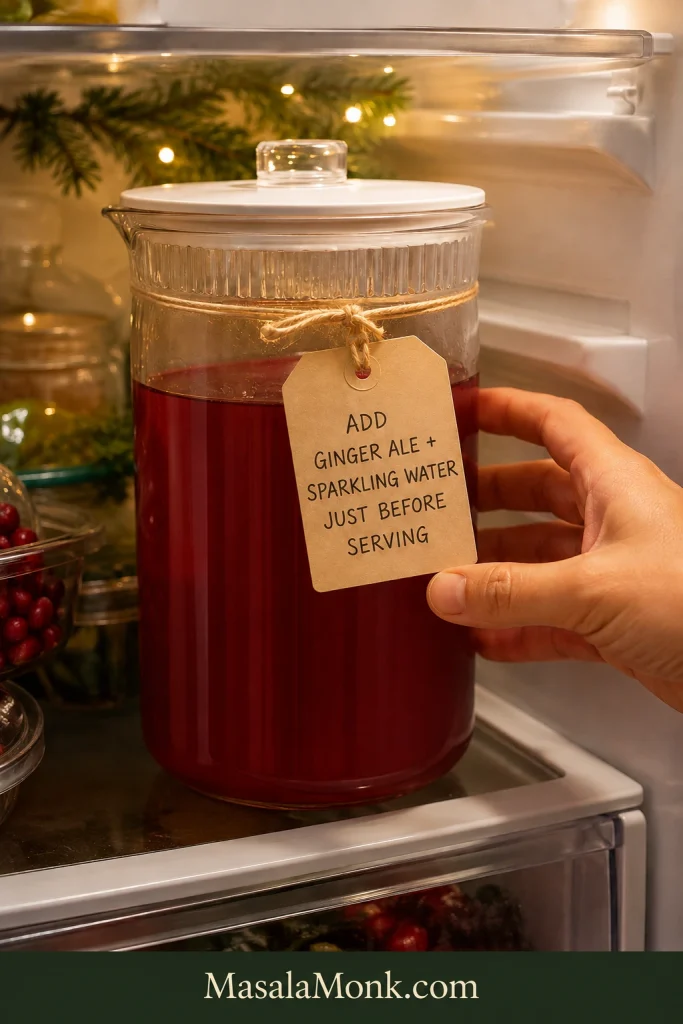
If someone else may finish the punch while you’re dealing with dinner, stick a note on the chilled juice mixture: “Add ginger ale + sparkling water just before serving.” That note is easier than trying to explain the punch from across the kitchen.
If someone else may finish the punch, leave only one decision: add the chilled fizzy mixers just before serving.
Use the Right Ice
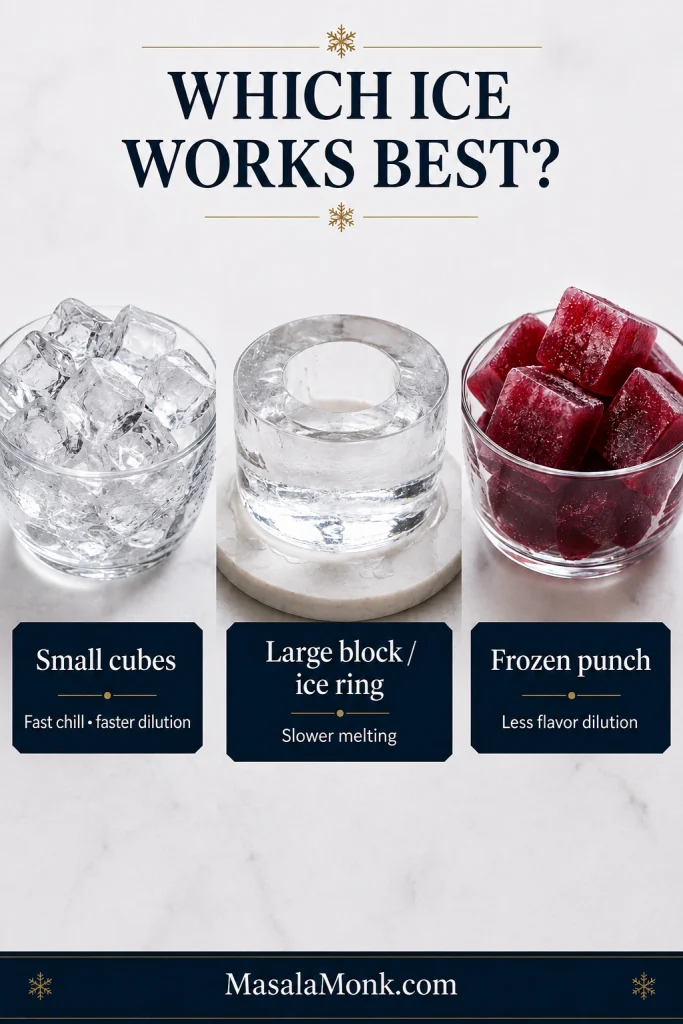
Small cubes chill quickly and melt quickly. A large block or ice ring is better suited to a bowl that will sit out for a while.
For less flavor dilution, freeze cranberry juice or diluted punch mixture instead of plain water.
Small cubes chill fast; a ring melts slower; frozen punch protects flavor as it melts.
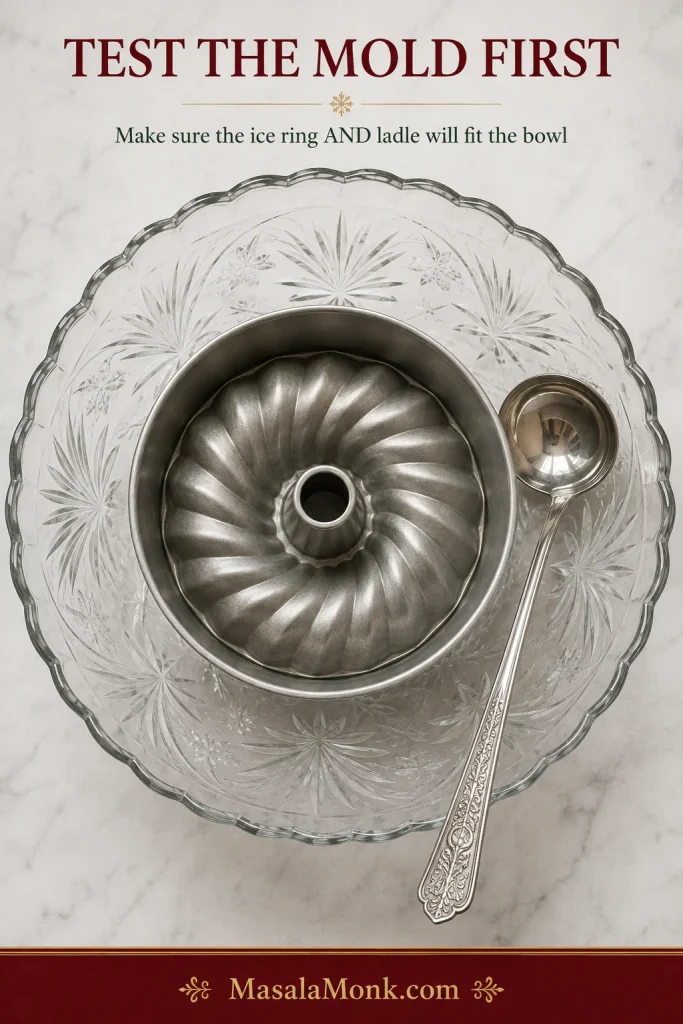
One tiny check can save a ridiculous problem later: put the empty Bundt pan or ring mold inside the actual punch bowl before freezing anything. Make sure the finished ring will fit and that the ladle still has room beside it.
A slightly smaller ice ring leaves room for the ladle to dip, turn and actually collect punch.
Set It Up So You Don’t Have to Babysit It
The real luxury of party punch is not that it takes five minutes to mix. It is that you can stop making drinks once the guests arrive.
Put everything people will need within reach before the first glass is poured:
Punch bowl, pitcher or dispenser
Ladle and a small plate or spoon rest
Glasses or cups
Ice and an ice scoop if guests add their own
Vodka or rum plus a small measure when alcohol is optional
A cold reserve of juice mixture and fizzy mixers for refills
Arrange the station in use order: glasses, ice, punch, then optional spirit and measure.
If you’re serving two bowls, label the alcoholic one clearly. “The adult punch is on the left” stops being useful the moment somebody rearranges the table.
A self-serve snack can work on the same principle as the drinks station. An easy cheese ball can sit beside crackers and vegetables without needing somebody to manage it.
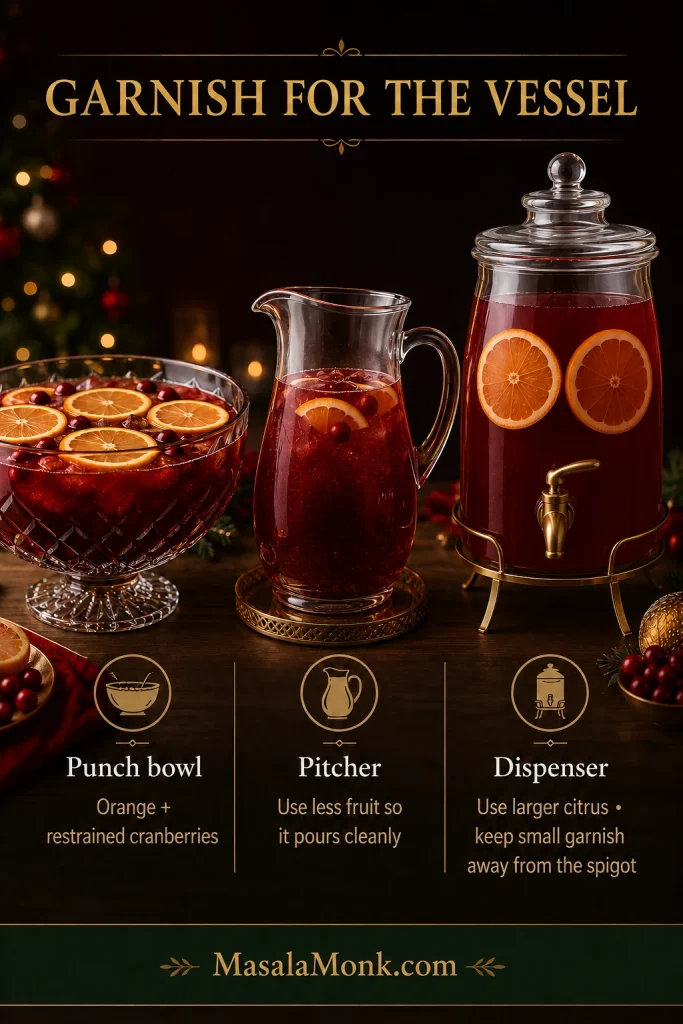
Garnish for the Vessel, Not Just the Photograph
Red cranberries and thin orange wheels are enough to make the bowl look unmistakably festive. You do not need to turn the punch into a floating fruit basket.
A punch bowl can comfortably carry orange wheels and a restrained scattering of cranberries. A pitcher needs less fruit so it still pours cleanly. In a beverage dispenser, larger citrus slices are safer than tiny fruit pieces, loose herbs or clusters of berries that can drift toward the spigot.
Save a little fresh orange and cranberry garnish for refills so later bowls still look newly made.
For cups going to young children, leave the whole cranberries in the bowl rather than ladling them into the drink.
Christmas Punch Troubleshooting
Punch is forgiving. The quickest rescue usually comes from figuring out what actually changed instead of adding a little of everything.
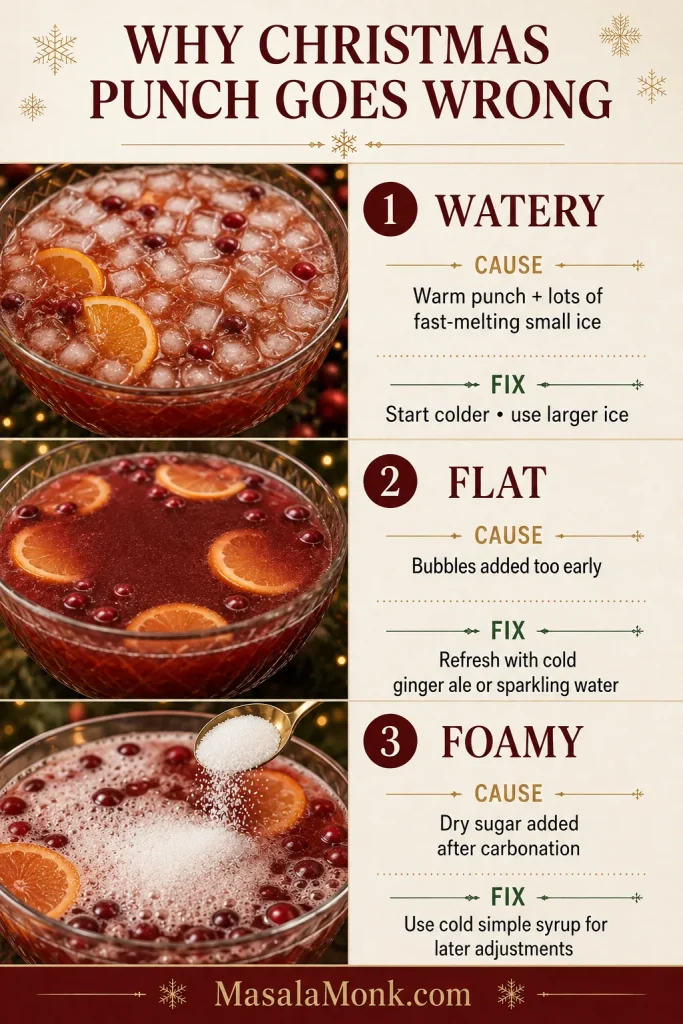
Watery is usually dilution, flat is carbonation timing, and foaming during adjustment is a mixing problem.
Flavor, Sweetness & Fizz Problems
Problem
Likely cause
Fix now
Way too tart
Pure unsweetened cranberry or very dry ingredients
Check the cranberry label, then add a sweeter complementary juice or cold simple syrup gradually.
Too sweet
Sweetened cranberry, sweet soda and sweet fruit stacked together
Add fresh lemon and/or plain sparkling water.
Tastes like ordinary juice
Not cold enough, bright enough or freshly carbonated
Chill it, add a little lemon if needed and finish with fresh bubbles.
Watery
Warm punch plus lots of fast-melting small ice
Stop adding plain ice. Chill the vessel externally if practical.
Flat
Carbonation went in too early
Refresh one pitcherful at a time with a little very cold ginger ale or sparkling water, tasting as you go.
Rum dominates
Too much spirit or a very assertive dark/spiced rum
Dilute with reserved alcohol-free juice mixture.
Doesn’t taste alcoholic
Cold fruit and fizz are masking the alcohol
Do not keep adding spirit based on taste. Check how much actually went into the bowl.
Foamed while sweetening
Dry sugar went directly into carbonated punch
Let it settle and use cold simple syrup for any further adjustment.
Cloudier than expected
Pulp-heavy orange juice or cloudy citrus
Harmless. Use pulp-free orange next time for a clearer ruby color.
Serving & Setup Problems
Problem
Likely cause
Fix now
Ice ring blocks the ladle
The mold was too wide for the bowl
Use a smaller ring next time and test the empty mold first.
Dispenser stops flowing
Small fruit or herbs collected around the spigot
Clear the outlet and keep small garnish out of the dispenser.
Running out too quickly
Recipe servings were mistaken for total party consumption
Finish the next cold batch and allow for refills when shopping next time.
Storage & Leftovers
For best quality, drink finished Christmas punch the day it is made or the next day. Refrigerate leftovers promptly and remove old citrus and floating garnish before storing.
The flavor may still be pleasant after refrigeration, but carbonation fades steadily. A little fresh ginger ale or sparkling water can brighten an individual leftover glass; it will not completely recreate a newly mixed batch.
If leftovers are likely, hold back some of the cranberry-pineapple-orange mixture before adding the fizzy ingredients, then carbonate only what you need.
If the night moves from cold drinks to something warm, a Hot Toddy takes Christmas in the opposite direction with whiskey, honey and lemon in one warm glass.
The Final Pour
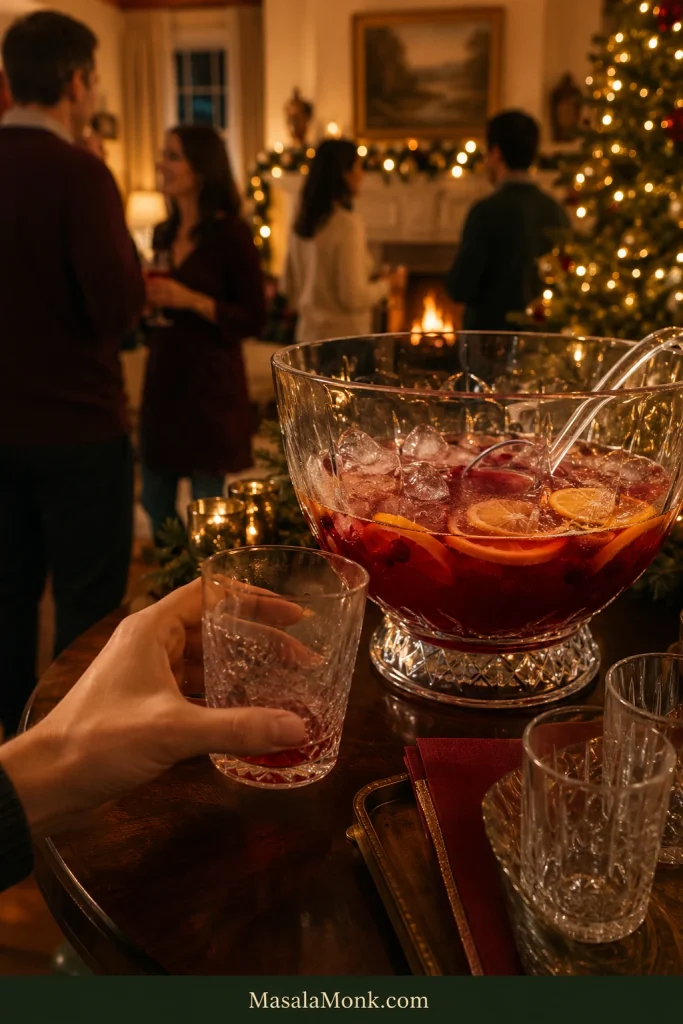
There is a nice moment when punch stops being a recipe and becomes part of the party: the bowl is glowing red on the table, the ice is still solid, orange slices are moving slowly between the bubbles, and somebody comes back carrying an empty glass.
An empty glass is useful feedback: the punch looked inviting, tasted refreshing and earned another pour.
You should not have to leave the conversation to start mixing another drink.
Make enough, keep the next batch cold, then leave the punch bowl to do its job. Christmas is happening somewhere other than the drinks table.
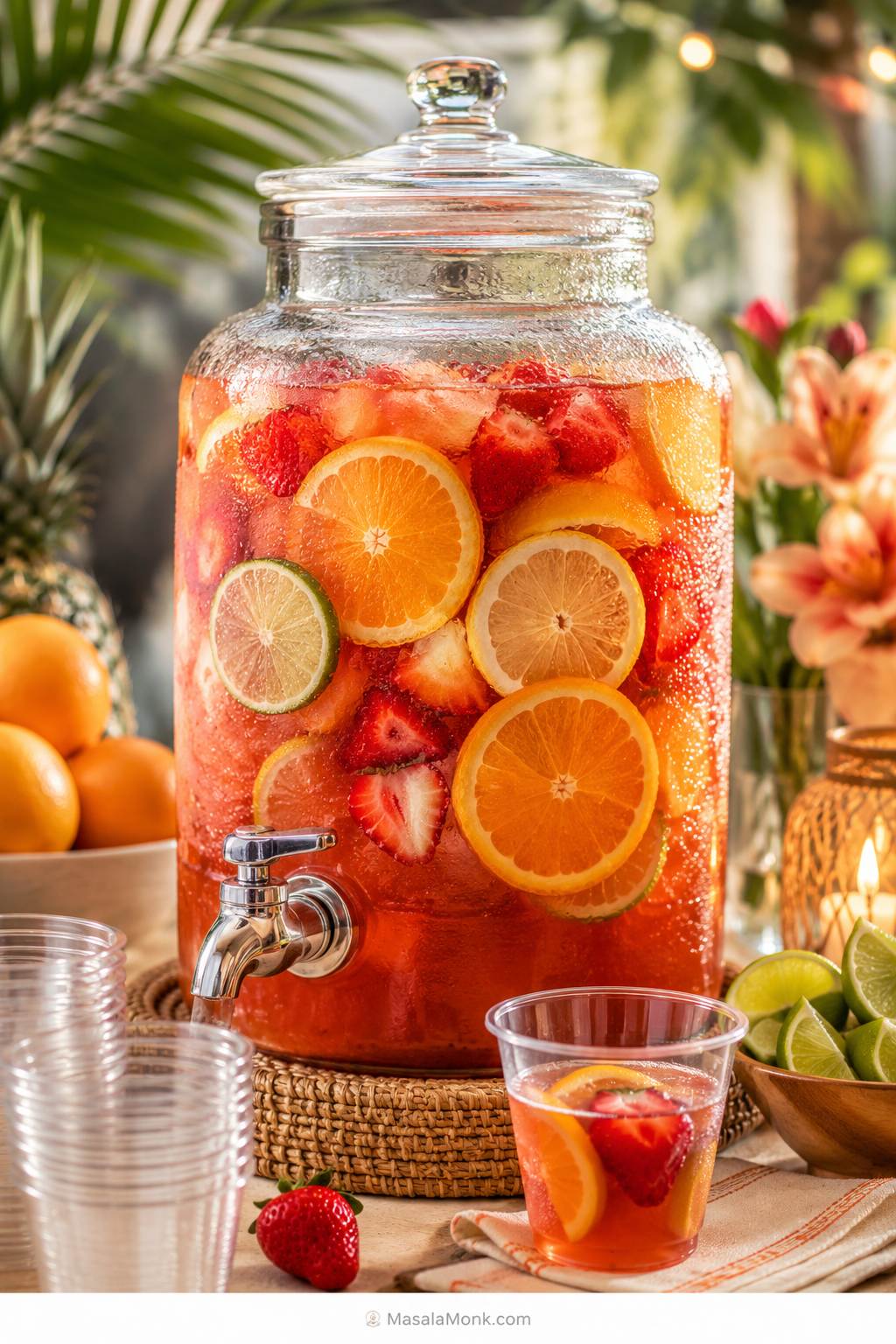
A good jungle juice recipe should make hosting easier, not leave you guessing how many bottles, gallons, or cups you need while guests are walking in. This version is built as a measured party punch: fruity, cold, colorful, easy to pour, and scaled for 1-gallon, 2-gallon, and 5-gallon batches.
It is strong enough to feel like an adult party drink, but not built around the “dump every bottle in” approach that makes the punch taste harsh and unpredictable. Below, you’ll find the 2-gallon base recipe, shopping help, guest-count planning, alcohol math, lighter and more spirit-forward adjustments, plus alcohol-free, Halloween, color, and holiday-style variations.
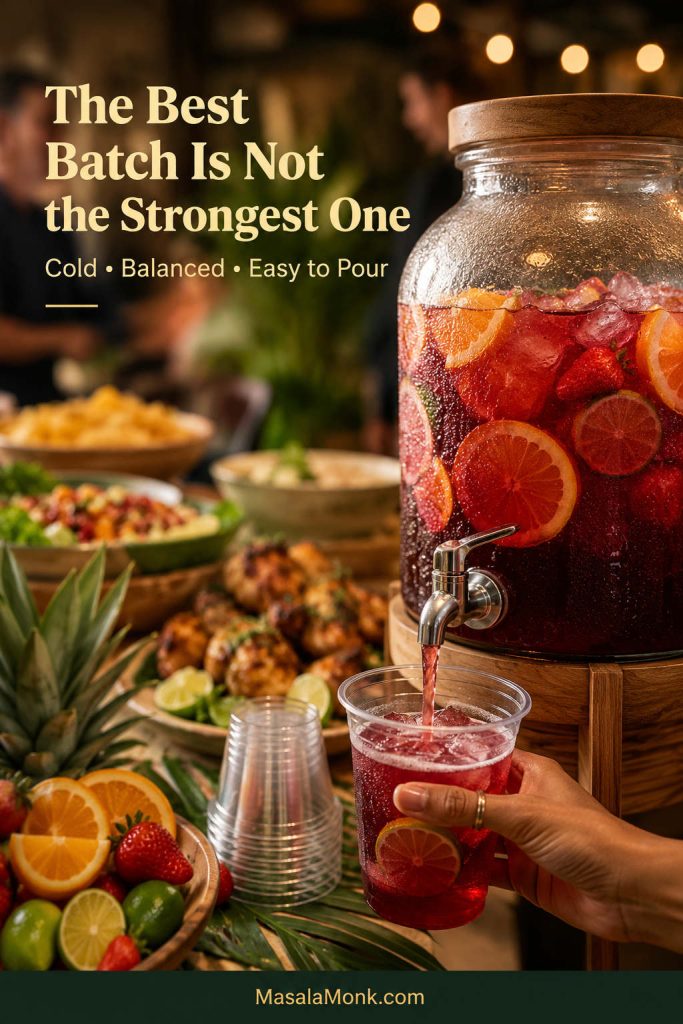
The best batch is the one you can set out cold, point guests toward the cups, and stop worrying about mixing individual drinks all night.
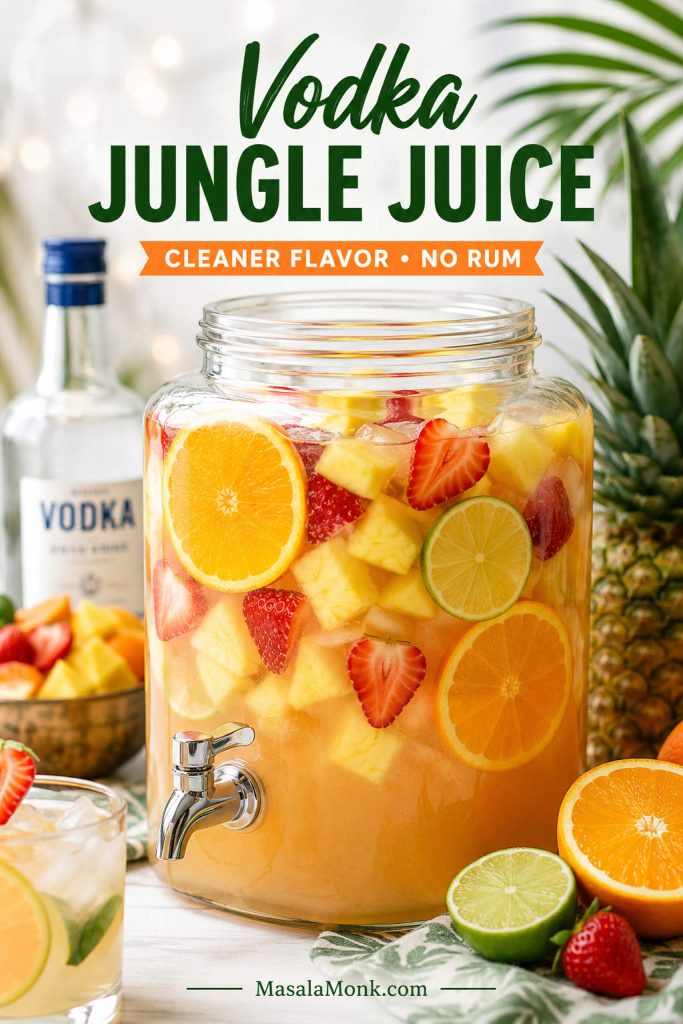
Jungle juice is a large-batch fruit punch for adult parties, usually made with liquor, fruit juice, sliced fruit, and a fizzy mixer. It is the kind of drink you make in a dispenser, punch bowl, or food-safe cooler when you want something colorful, easy to pour, and simple enough for guests to serve themselves.
The best version should taste fruity and refreshing first. It should not taste like straight alcohol, and it should not be so sweet that one cup feels heavy. That is why this recipe uses fruit punch, citrus, pineapple, cranberry, fresh fruit, and a bubbly finish for balance.
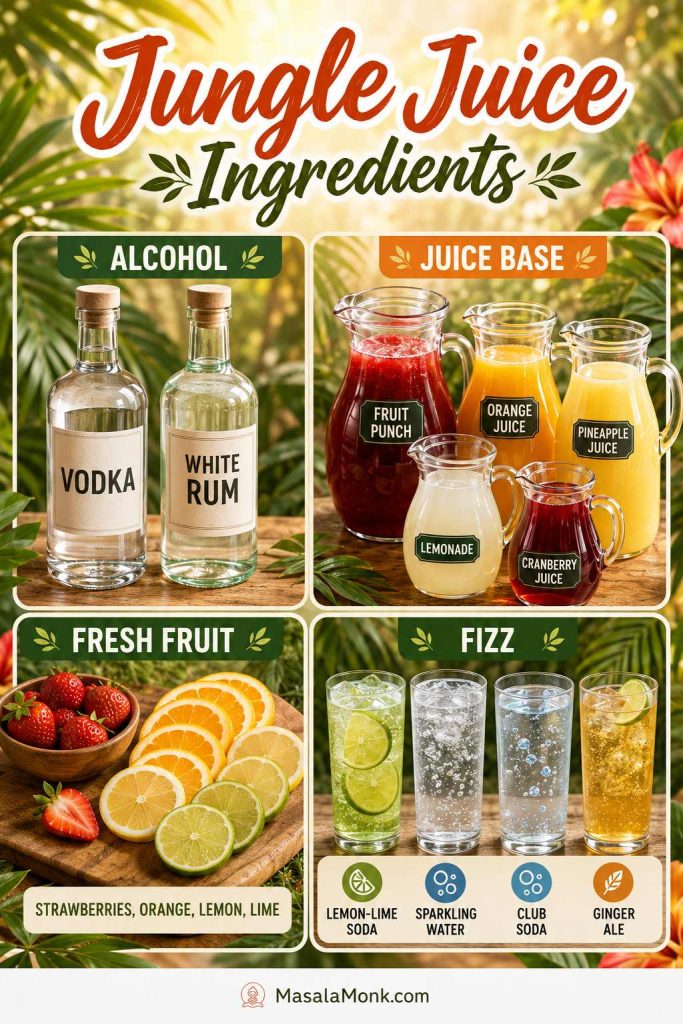
Jungle juice at a glance: Good starting batch: 2 gallons for most parties Serves: about 25–32 pours, or fewer people if guests have more than one Alcohol: 1 bottle vodka + 1 bottle white rum for the 2-gallon batch Main flavor: fruit punch, orange juice, pineapple juice, lemonade, cranberry, citrus, and strawberries Container: 2.5- to 3-gallon drink dispenser, punch bowl, stockpot, or food-safe cooler Make-ahead: mix juice, alcohol, and fruit 2–12 hours ahead Add last: lemon-lime soda, ginger ale, club soda, or sparkling water
If you only remember one thing, start with the 2-gallon batch, chill it well, and add the carbonated mixer at the end. That gives you the easiest balance of flavor, serving size, and party convenience.
Once you understand the basic jungle juice formula, it becomes much easier to scale the recipe without guessing bottle math, juice volume, or fizz.
Easy Jungle Juice Recipe
Start with this 2-gallon batch for most parties. It fills a dispenser, but it is still easy to taste, chill, and adjust before guests arrive. Most importantly, it avoids the common mistake of making the punch too strong first and trying to fix it later.
Active Time10 minutes
Chill Time2 hours recommended
Total Time2 hours 10 minutes
YieldAbout 2 gallons
Servings: about 25 to 32 pours, depending on cup size
Yield note: The liquid amount lands around 2 gallons depending on how much fizz you add. Fresh fruit takes up extra room in the container, so use a larger dispenser than the final liquid yield.
Labeling tip: If you are serving alcoholic and non-alcoholic versions, label both dispensers clearly before guests arrive.
Ingredients
1 bottle vodka, 750 ml / about 25.4 fl oz / about 3.2 cups
1 bottle white rum, 750 ml / about 25.4 fl oz / about 3.2 cups
8 cups fruit punch / 64 fl oz / 1.9 L
4 cups orange juice / 32 fl oz / 950 ml
4 cups pineapple juice / 32 fl oz / 950 ml
4 cups lemonade or pink lemonade / 32 fl oz / 950 ml
2 cups cranberry juice / 16 fl oz / 475 ml
2 to 4 cups lemon-lime soda, club soda, sparkling water, or ginger ale, added last
1 lb / 450 g strawberries, sliced
2 oranges, sliced
1 lemon or lime, sliced
Ice, for serving
Instructions
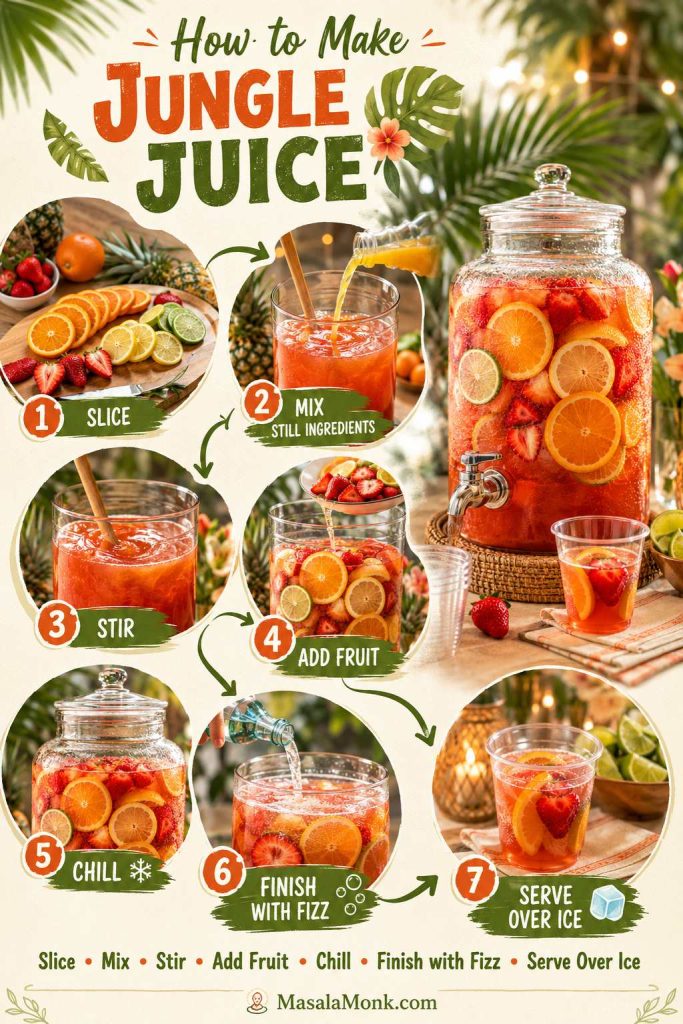
Wash and slice the strawberries, oranges, and lemon or lime.
Add the fruit punch, orange juice, pineapple juice, lemonade, cranberry juice, vodka, and rum to a large food-safe drink dispenser, punch bowl, stockpot, or beverage cooler.
Stir well with a long-handled spoon.
Add the sliced fruit.
Cover and chill for at least 2 hours. For better fruit flavor, chill for 3 to 12 hours.
At serving time, stir in the lemon-lime soda, club soda, sparkling water, or ginger ale.
Serve cold over ice.
Container tip: Do not fill the container to the rim. Use a 2.5- to 3-gallon dispenser for the 2-gallon batch so there is room for fruit, stirring, fizz, and easy serving.
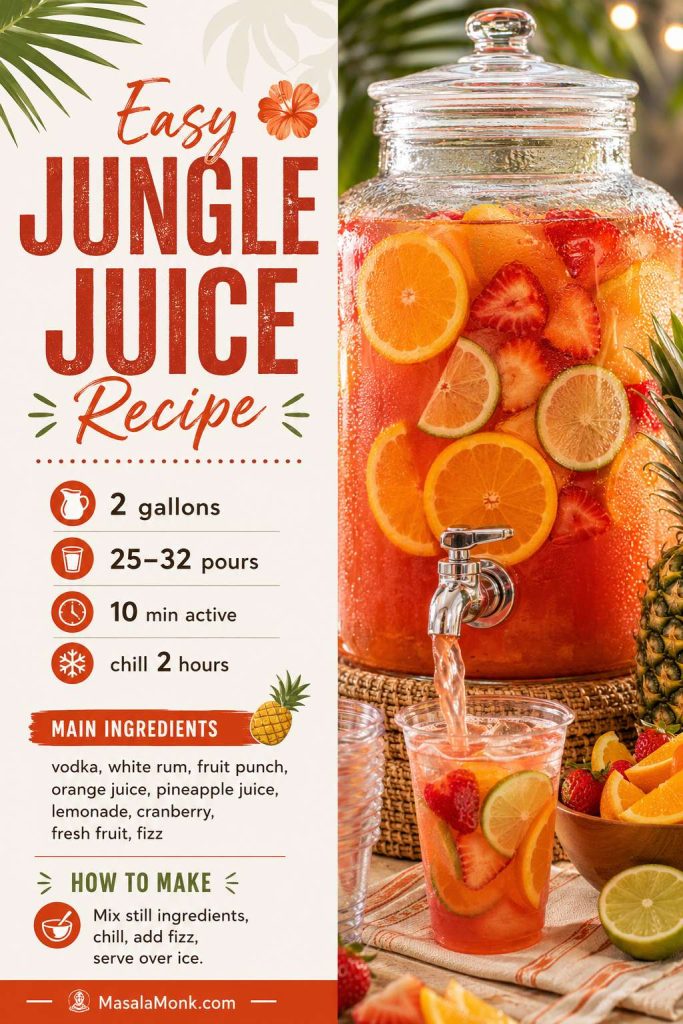
This quick jungle juice recipe card keeps the 2-gallon yield, serving range, timing, and core ingredients easy to check while you prep.
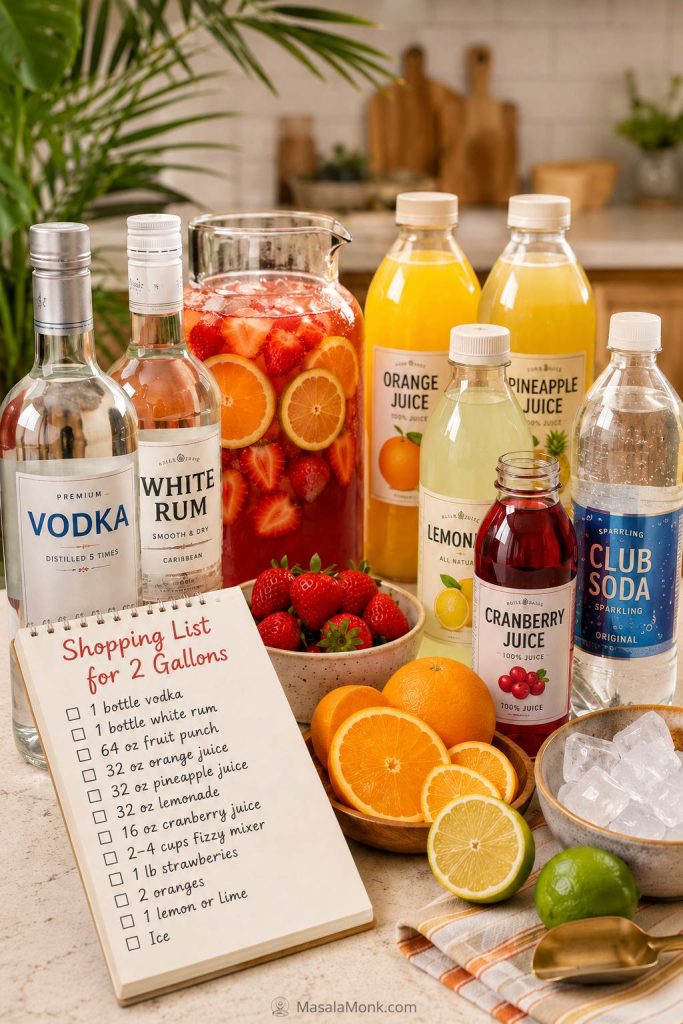
Here is the simple shopping list for the main 2-gallon batch, so you can shop once, chill everything, and set up the dispenser before guests start arriving.
1 bottle vodka, 750 ml
1 bottle white rum, 750 ml
1 large bottle fruit punch, at least 64 fl oz
1 carton orange juice, at least 32 fl oz
1 bottle or can pineapple juice, at least 32 fl oz
1 bottle lemonade or pink lemonade, at least 32 fl oz
1 small bottle cranberry juice, at least 16 fl oz
1 bottle lemon-lime soda, ginger ale, club soda, or sparkling water
1 lb strawberries
2 oranges
1 lemon or lime
Ice for serving
Before you shop, this 2-gallon jungle juice checklist helps you buy the right bottles, juices, fruit, fizz, and ice without doing recipe math in the store.
Why This Jungle Juice Recipe Works
Many party-punch recipes are vague: a bottle of this, a jug of that, some fruit, and maybe soda if you have it. That can work for a casual punch bowl, but it gets stressful when you are trying to shop for 20, 40, or 80 people.
This version is built around clean party math. The main recipe makes about 2 gallons, then the same formula is scaled into 1-gallon and 5-gallon amounts. You also get serving estimates, alcohol-strength notes, and a clear reminder to save the bubbly finish for the end so the punch tastes lively when guests start pouring.
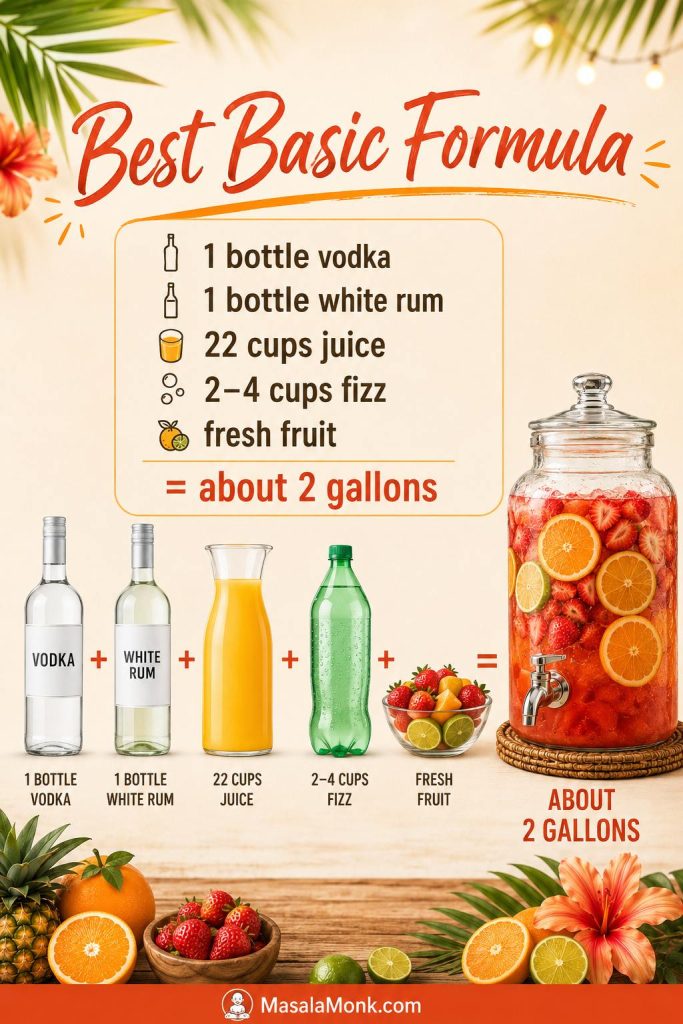
Best basic formula: 1 bottle vodka + 1 bottle white rum + about 22 cups juice + 2–4 cups fizz + fresh fruit = about 2 gallons of jungle juice. Keep that formula in mind, then adjust sweetness, strength, and fizz after the punch has chilled.
It also keeps the flavor flexible. You can make it cheaper with fruit punch and lemonade, brighter with pineapple and citrus, lighter with sparkling water, or alcohol-free for a family party, baby shower, cookout, or mixed gathering.
What Does Jungle Juice Taste Like?
A good batch should taste like cold fruit punch with pineapple brightness, citrus lift, and a light bubbly finish. It should be fruity first, gently boozy second, and refreshing enough that one cup does not feel syrupy or heavy.
If the first sip tastes like straight liquor, add juice, citrus, or a bubbly mixer before serving. If it tastes flat, it probably needs fresh bubbles, colder bottles, or more ice in the cups. The best batch should look generous in the dispenser, pour easily over ice, and stay lively from the first glass to the last.
Jungle Juice Ingredients
Think of the ingredients in layers: a fruity base for volume, citrus for lift, fresh fruit for the party look, and bubbles at the end so the dispenser still feels fresh when guests start pouring. You do not need cocktail-bar precision, but you do need balance.
Each ingredient group has a job: the alcohol carries the punch, the juices build body, the citrus brightens it, and the fizz keeps it lively.
Alcohol
Vodka and white rum are the easiest base for classic jungle juice. Vodka keeps the drink clean and neutral, while rum gives it a rounder, fruitier party-punch flavor. Triple sec or orange liqueur can be added if you want more citrus, but it is optional.
Fruit punch gives the drink its classic party flavor. Orange juice, pineapple juice, lemonade, and cranberry juice make it taste brighter and less one-note. You do not need every juice in the store; you just need a good balance of sweet, tart, and tropical.
If you like pineapple-forward party drinks, this punch with pineapple juice guide has more ideas for pineapple, cranberry, ginger ale, lemon-lime soda, and make-ahead party punch combinations.
Fresh Fruit
Use fruit that can sit in punch without falling apart immediately. Strawberries, oranges, lemons, limes, and pineapple are the easiest choices. Apples, grapes, blueberries, raspberries, peaches, kiwi, and cranberries can also work, depending on the season and the look you want.
Slice citrus into wheels or half-moons, halve or slice strawberries, and cut pineapple into small chunks. The fruit should look generous in the dispenser, but it should not crowd out so much liquid that serving becomes difficult.
Fizz
Lemon-lime soda gives the sweetest, most familiar party-punch taste. Club soda or sparkling water keeps the punch lighter and less sugary. Ginger ale adds a softer spice and works especially well with pineapple and cranberry.
Save the carbonated mixer for the end so the punch tastes lively when guests start pouring.
How to Choose the Alcohol
Most batches work best with simple alcohol choices. Vodka gives the punch a clean base, while white rum adds a softer tropical note. Orange liqueur, tequila, or sparkling wine can work in variations, but they change the flavor quickly.
Alcohol
Use It For
Flavor Effect
Vodka
Clean base
Neutral, easy to mix, lets the fruit and juice lead
White rum
Classic partner for vodka
Rounder, fruitier, slightly tropical
Triple sec or orange liqueur
Optional citrus boost
Adds orange flavor and sweetness
Tequila
Small variation
Sharper and more noticeable; use carefully
Sparkling wine
Better for jingle juice than jungle juice
Festive and lighter, but changes the drink style
Hosting note: This recipe is framed as a balanced adult party punch, not a drinking-game drink. Label the punch clearly, serve moderate pours, and keep water or a non-alcoholic option nearby.
How to Make Jungle Juice
Jungle juice is easy to make, but the order matters if you want the fruit to taste fresh and the punch to stay lively.
Prepare the fruit. Wash everything well, then slice strawberries, citrus, and pineapple if using.
Mix the still ingredients first. Add the vodka, rum, fruit punch, orange juice, pineapple juice, lemonade, and cranberry juice to your container.
Stir before adding fruit. This helps the juices and alcohol blend evenly.
Add fruit and chill. Two hours is enough, but 3 to 12 hours gives the fruit more time to flavor the punch.
Finish with fizz. Lemon-lime soda, sparkling water, club soda, or ginger ale should go in once the punch has chilled.
Serve over ice. Put ice in glasses instead of dumping a large amount directly into the punch, unless you are using an ice ring.
The order matters: build the still punch first, give the fruit time to flavor it, then add bubbles at the end for a fresher pour.
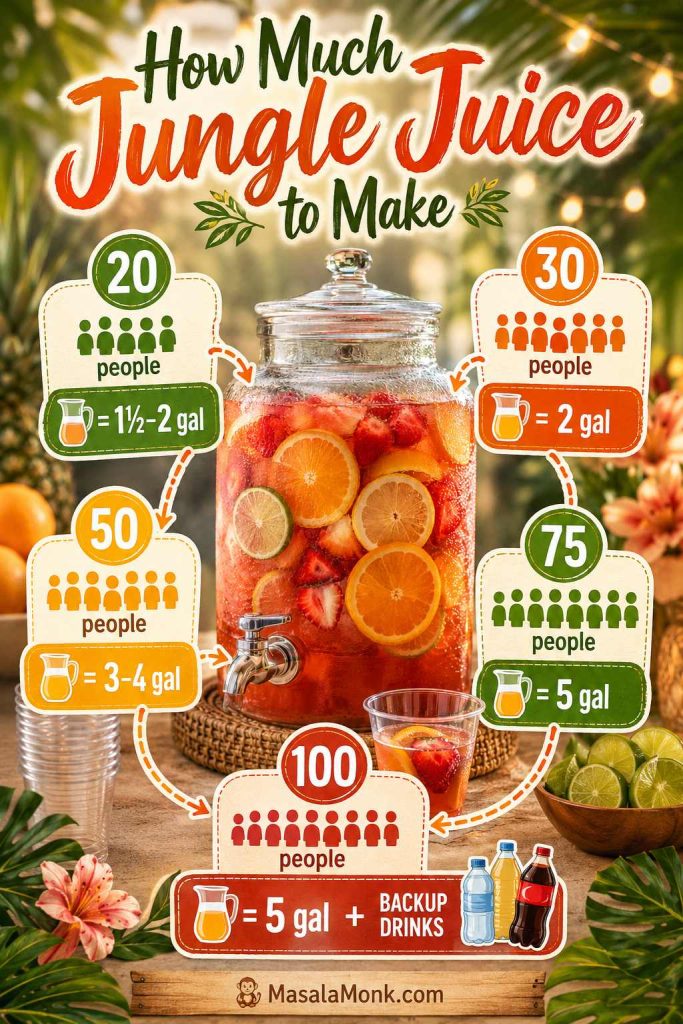
How Much Jungle Juice to Make for 20, 30, 50, or 100 People
This is the table to check before you shop. A 30-person backyard party, a 50-person birthday, and a long 100-person event do not need the same batch. Use these amounts as a practical starting point, then keep extra juice, fizz, water, and ice chilled nearby.
Guest Count
Suggested Batch
Planning Notes
20 people
1½ to 2 gallons
Best if other drinks are available
30 people
2 gallons
Good starting point for most parties
50 people
3 to 4 gallons
Keep extra fizz chilled for topping up
75 people
5 gallons
Use a lighter batch for longer events
100 people
5 gallons plus backup drinks
Better with water and a non-alcoholic punch nearby
Instead of choosing a batch size by container alone, match the jungle juice amount to your guest count, party length, and backup drink options.
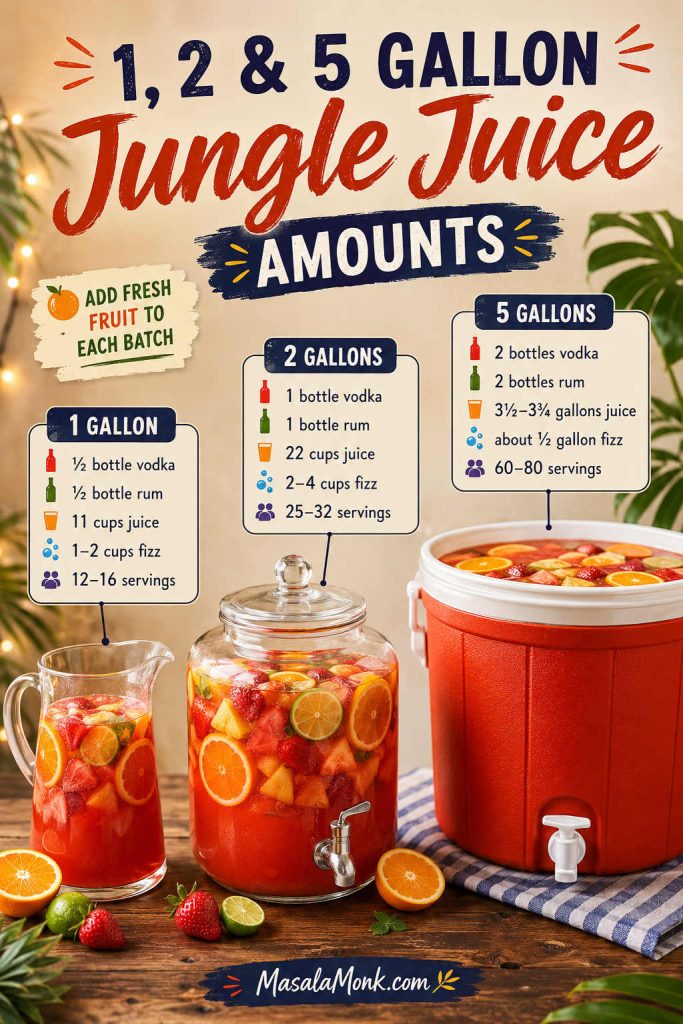
1-Gallon, 2-Gallon, and 5-Gallon Jungle Juice Amounts
This is the part that keeps you from overbuying, underbuying, or trying to scale a punch recipe in your head at the store. Use the table as a practical party guide, then adjust the final sweetness and strength before guests arrive.
One gallon equals 128 fl oz, or about 3.8 L. One standard 750 ml bottle is about 25.4 fl oz, or about 3.2 cups.
Batch Size
Vodka
Rum
Juice Base
Fizz, Added Last
Fruit
Approx. Servings
1 gallon
375 ml / ½ bottle
375 ml / ½ bottle
11 cups total juice
1 to 2 cups
½ lb strawberries + citrus
12 to 16
2 gallons
750 ml / 1 bottle
750 ml / 1 bottle
22 cups total juice
2 to 4 cups
1 lb strawberries + citrus
25 to 32
5 gallons, lighter large-party batch
2 bottles
2 bottles
3½ to 3¾ gallons total juice
About ½ gallon
2 to 3 lb fruit
60 to 80
Use this 1, 2, and 5-gallon jungle juice guide when you need to scale the recipe without guessing bottle amounts, juice volume, or final servings.
5-Gallon Jungle Juice: Lighter vs Exact-Scale Batch
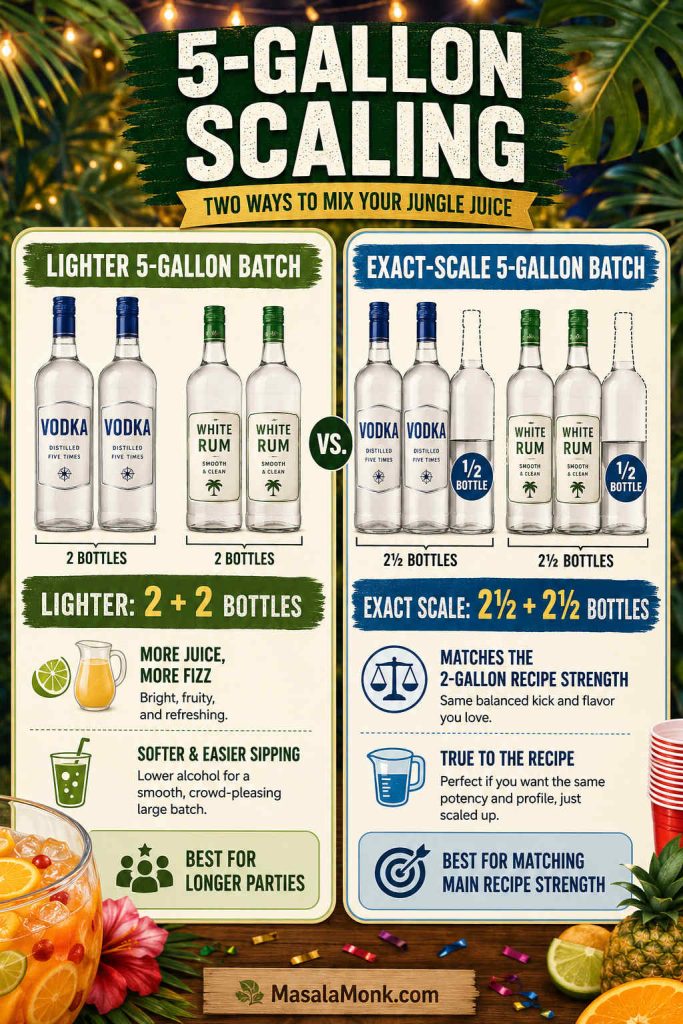
A 5-gallon batch is 2.5 times the 2-gallon recipe. Matching the main recipe’s strength means using 2½ bottles of vodka and 2½ bottles of white rum. A lighter large-party batch uses 2 bottles of each with more juice, soda, or sparkling water.
That 2½-bottle amount means 2 full 750 ml bottles plus 375 ml from a third bottle. If you do not want a half bottle left over, the lighter 5-gallon version is the simpler choice.
5-Gallon Style
Vodka
Rum
Best For
Lighter large-party batch
2 bottles
2 bottles
Longer parties, mixed groups, easier sipping
Exact-scale batch
2½ bottles
2½ bottles
Matching the main 2-gallon recipe strength
If you are making a 5-gallon jungle juice batch, decide first whether you want an easier-sipping party punch or the same strength as the main recipe.
If you prefer a more spirit-forward punch, adjust gradually and keep the servings smaller rather than turning the whole batch into a harsh drink.
Important: fruit takes up space in the container, and ice melts if added directly to the punch. For the cleanest flavor and most accurate yield, chill the punch first, add fizz at serving time, and put ice in the glasses instead of the main dispenser.
How Much Jungle Juice Per Person?
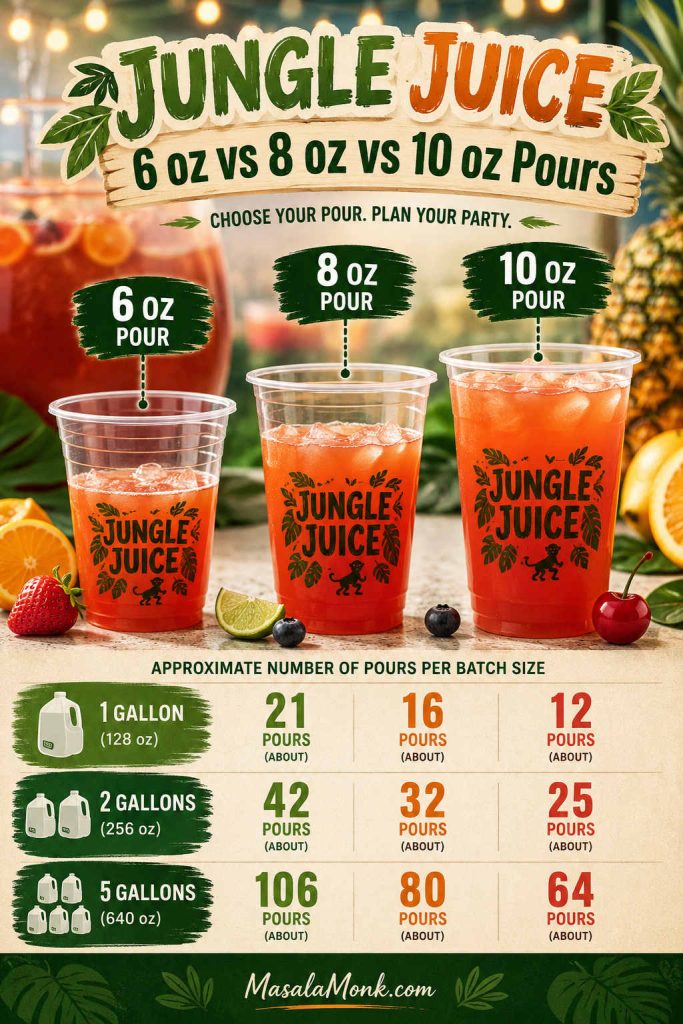
Plan by pour size, not just by gallons. A small party cup may hold 6 oz, while a larger cup can easily hold 10 oz or more.
Batch
6 oz Pours
8 oz Pours
10 oz Pours
1 gallon
About 21
About 16
About 12
2 gallons
About 42
About 32
About 25
5 gallons
About 106
About 80
About 64
Serving count changes quickly once cup size changes, so plan jungle juice by pour size instead of relying only on total gallons.
For a party with other drinks available, estimate one or two smaller pours per adult guest. Longer events usually work better with a lighter batch, plenty of water, and at least one non-alcoholic option nearby.
How Strong Is Jungle Juice?
Because this punch is fruity and served cold, guests may drink it faster than they realize. The simplest host-friendly approach is to label the punch clearly, serve moderate pours, and keep water or a non-alcoholic drink nearby.
Standard Drink Math for This Batch
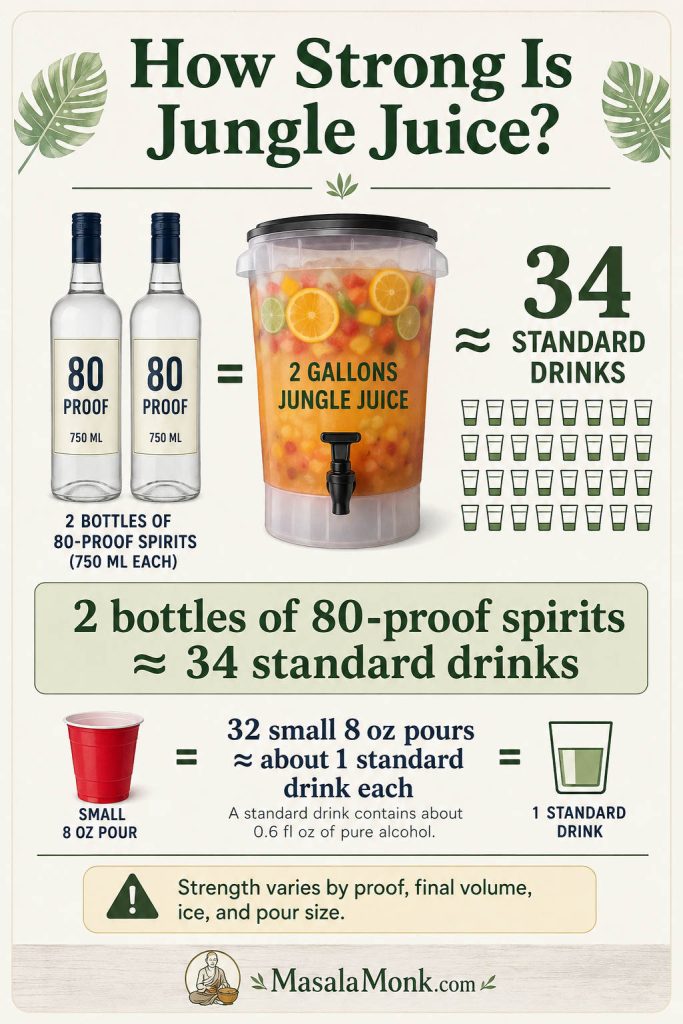
A 750 ml bottle of 80-proof vodka or rum contains about 17 standard U.S. drinks. The National Institute on Alcohol Abuse and Alcoholism defines one U.S. standard drink as about 0.6 fl oz / 14 g of pure alcohol.
The 2-gallon recipe above uses one 750 ml bottle of vodka and one 750 ml bottle of rum. That means the full batch contains roughly 34 standard drinks before it is divided into servings. At about 32 small 8 oz pours, each pour is roughly around one standard drink, though the exact strength depends on your spirits, final volume, pour size, and how much soda or ice you use.
Since jungle juice is fruity and easy to sip, standard-drink math helps you understand how proof, pour size, ice, and final volume change the strength.
This recipe intentionally skips grain alcohol or “dump every bottle in” formulas because the final strength becomes harder to estimate and easier to over-serve. A measured vodka-and-rum base is easier to balance, label, and adjust for a real party.
Lighter, Balanced, and Stronger Batches
Note: homemade punch strength is always approximate because bottle proof, final volume, ice melt, fruit displacement, and pour size all change the actual drink. Use the math as a planning guide, not a precise serving guarantee.
Style
How to Adjust
Best For
Lighter jungle juice
Use less alcohol and more juice or a lighter carbonated mixer.
Longer parties, outdoor cookouts, mixed groups
Balanced jungle juice
Use the recipe as written: vodka, rum, juice, fruit, and fizz.
Most adult parties
More spirit-forward jungle juice
Increase alcohol gradually and keep the fruit/juice base generous.
Cheap Jungle Juice for a Party That Still Tastes Good
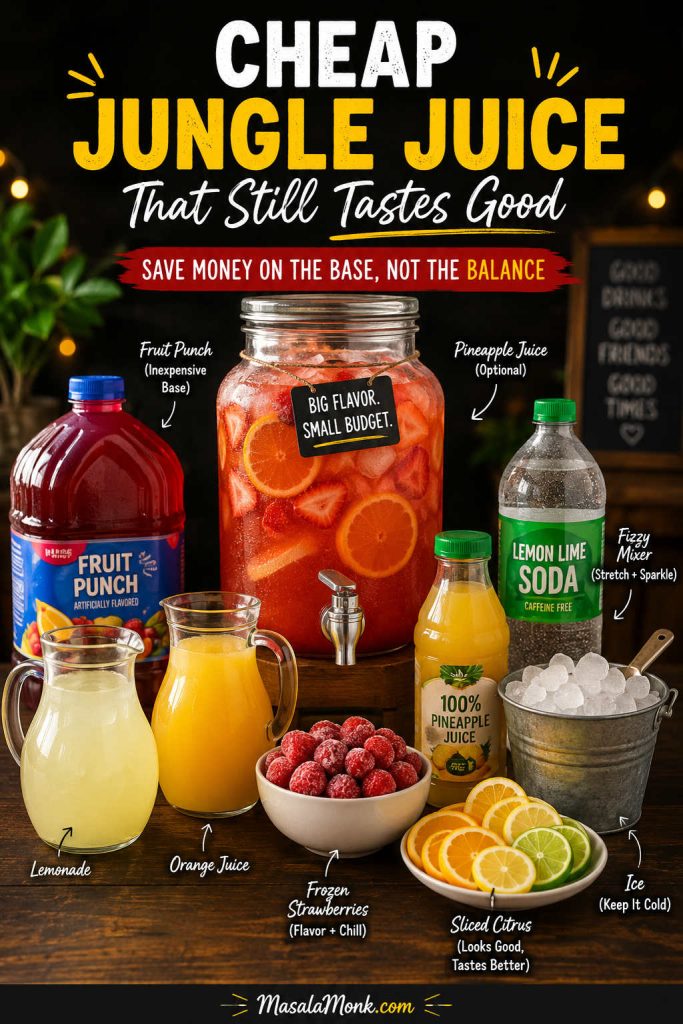
Budget jungle juice should still feel like a real party drink, not a random mix of whatever was cheapest. Save money on the base, not on the balance: fruit punch gives volume, lemonade adds tartness, pineapple makes it taste more tropical, and fresh citrus makes the whole batch feel intentional.
The upgrade is not expensive ingredients; it is cold bottles, citrus, enough fruit to look generous, and a bubbly finish that makes the batch feel fresh.
A cheaper version can use:
Fruit punch as the main base
Lemonade or pink lemonade for tartness
Orange juice for body
Pineapple juice for tropical flavor, if budget allows
Store-brand lemon-lime soda, ginger ale, club soda, or sparkling water
Frozen strawberries and sliced citrus
Even on a budget, the batch should taste intentional, not like alcohol hiding under sugary drink mix. Cold bottles, fresh citrus, and the final fizzy splash make a big difference.
Cheap jungle juice tastes better when you save money on the base, then use cold bottles, citrus, fruit, and fizz to make the punch feel fresh instead of careless.
Jungle Juice Variations
Once you understand the basic formula, this party punch is easy to adjust for the season, color theme, and crowd.
Vodka Jungle Juice
Vodka jungle juice is a good option if you want a cleaner flavor and do not want rum in the batch. It tastes lighter and lets the fruit punch, pineapple, orange, and lemonade stand out more.
Vodka jungle juice is a cleaner-tasting variation because the fruit punch, pineapple, orange, lemonade, and citrus can stand out without rum in the background.
A 1-gallon vodka-only batch can use:
750 ml vodka
6 cups fruit punch
2 cups pineapple juice
2 cups orange juice
1 cup lemonade or cranberry juice
1 to 2 cups lemon-lime soda or sparkling water, added last
Sliced strawberries, oranges, lemons, or pineapple
If you like vodka-citrus drinks, this vodka with lemon guide has more bright, simple vodka drink ideas.
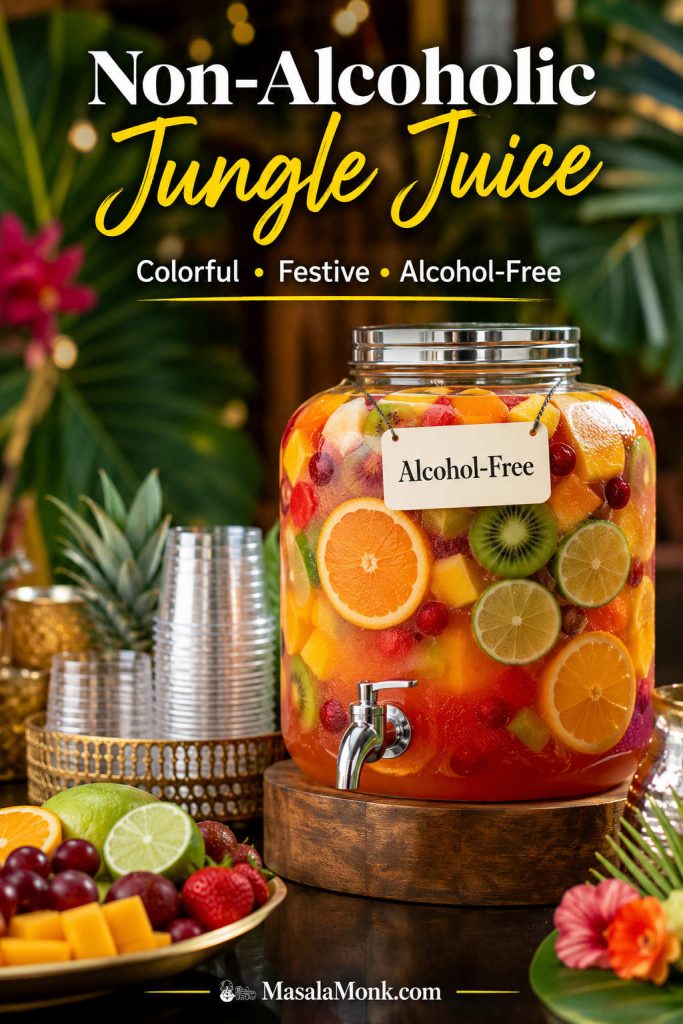
Non-Alcoholic Jungle Juice
A non-alcoholic jungle juice is worth making even when you are serving the regular version too. It gives kids, non-drinkers, designated drivers, and anyone taking a break something that still feels colorful, festive, and part of the party.
To make it alcohol-free, replace the vodka and rum with extra juice and a chilled fizzy mixer. Add the bubbles once the drink is cold so it stays lively.
A simple 2-gallon non-alcoholic batch can use:
8 cups fruit punch
4 cups pineapple juice
4 cups orange juice
4 cups lemonade
2 cups cranberry juice
8 to 10 cups ginger ale, lemon-lime soda, club soda, or sparkling water, added last
Strawberries, oranges, lemons, limes, and pineapple
If you are serving both versions, keep the non-alcoholic batch in a separate labeled dispenser so guests do not have to ask which one is which.
A non-alcoholic jungle juice dispenser keeps the party table welcoming for kids, non-drinkers, designated drivers, and anyone who wants a colorful alcohol-free pour.
For a lower-sugar alcohol-free option, these keto mocktails can sit alongside the fruit punch at a mixed party.
Cleaner, Less-Sweet Jungle Juice
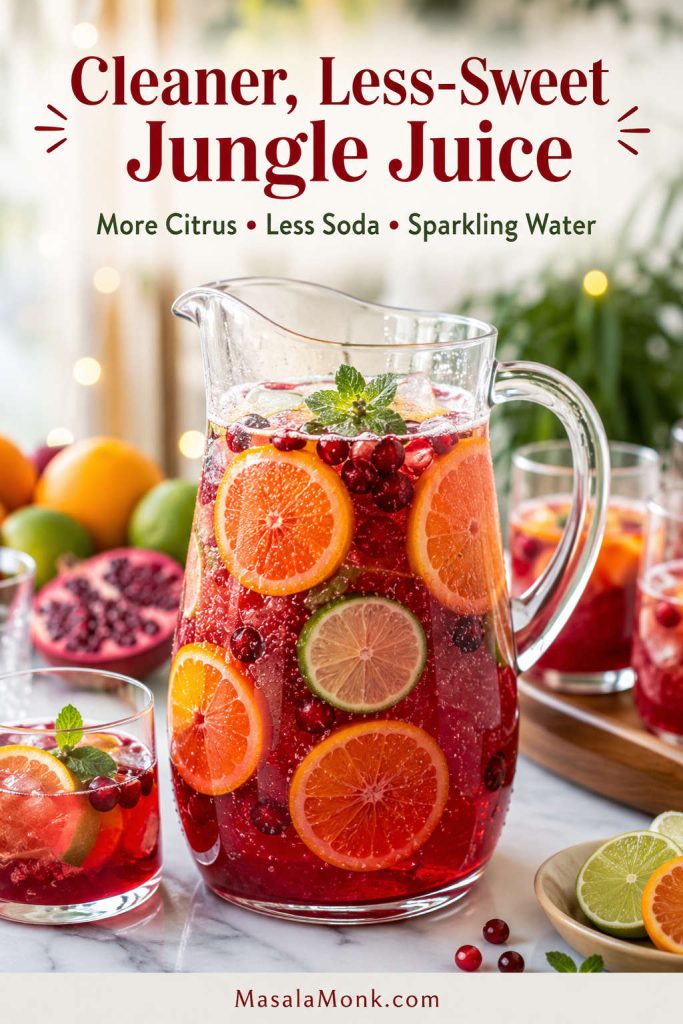
For a cleaner, less sugary version, use 100% juices where possible and replace part of the fruit punch with cranberry juice, pomegranate juice, pineapple juice, or fresh citrus. Keep the fruit visible and use sparkling water instead of lemon-lime soda if you want it less sweet.
This version is still easy, but it tastes more like a proper party punch and less like a sugary last-minute mix.
For a cleaner, less-sweet jungle juice, use citrus and sparkling water to lighten the punch instead of relying on extra soda for balance.
Another lighter tropical direction is this collection of coconut water cocktails, especially if you want refreshing rum, vodka, tequila, or mocktail ideas that feel less heavy than a full punch bowl.
Color Variations: Blue, Green, and Bright Party Punch
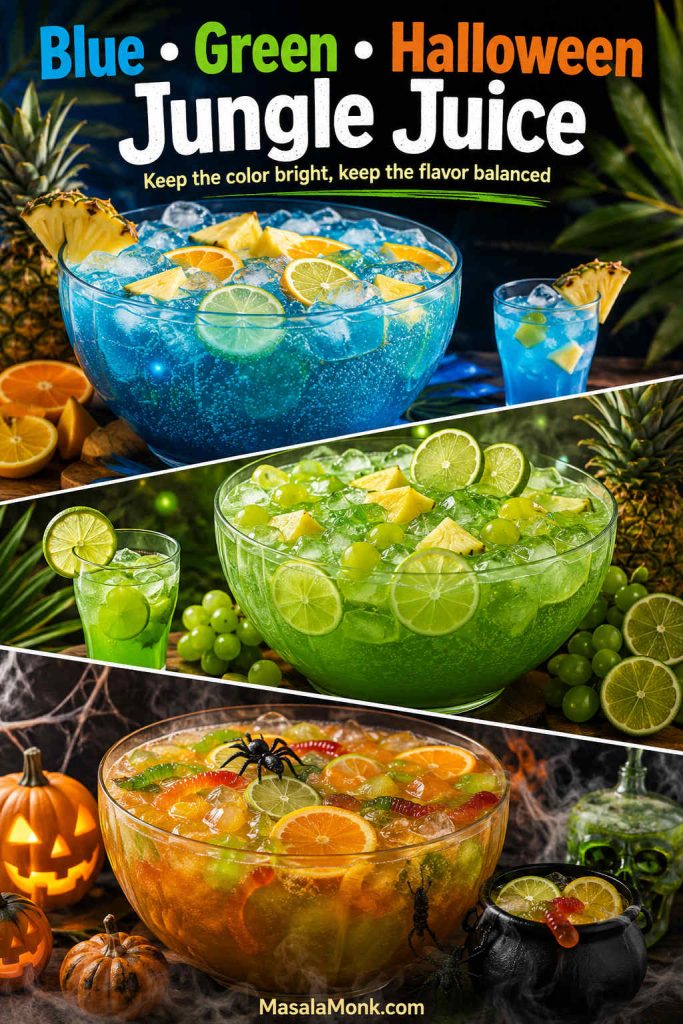
Color variations are useful for parties because they make the dispenser feel more intentional. For blue jungle juice, use blue fruit punch or a blue sports drink with pineapple juice, lemonade, vodka or white rum, citrus slices, and a clear fizzy mixer. Keep darker juices like cranberry low so the color stays bright.
A green version works best with lemonade, pineapple juice, limeade, lemon-lime soda, and a small amount of blue curaçao or green-colored punch. Lime wheels, green grapes, and pineapple chunks help the drink look festive without relying only on food coloring.
Blue, green, and Halloween jungle juice variations work best when the color stays bright but the flavor still makes sense with citrus, pineapple, fruit, and fizz.
Halloween Jungle Juice
Halloween jungle juice is the version to make when you want the punch bowl to become part of the table. Keep the flavor fruity, then use color, citrus slices, and a little drama to make it feel spooky without making the recipe harder.
A Halloween version can use:
Vodka and white rum as the base
Pineapple juice and orange juice for color
Lemon-lime soda added at serving time
Blue curaçao for color and orange flavor
Lime slices, orange slices, and gummy candy garnish for serving cups
Dry ice safety: Dry ice should be handled only with proper tongs or insulated gloves. Never touch it bare-handed, never put solid pieces into individual cups, and do not drink punch while pieces of dry ice remain in the serving bowl. Use dry ice only in a well-ventilated area, never seal it inside an airtight container, and avoid using it in a closed drink dispenser.
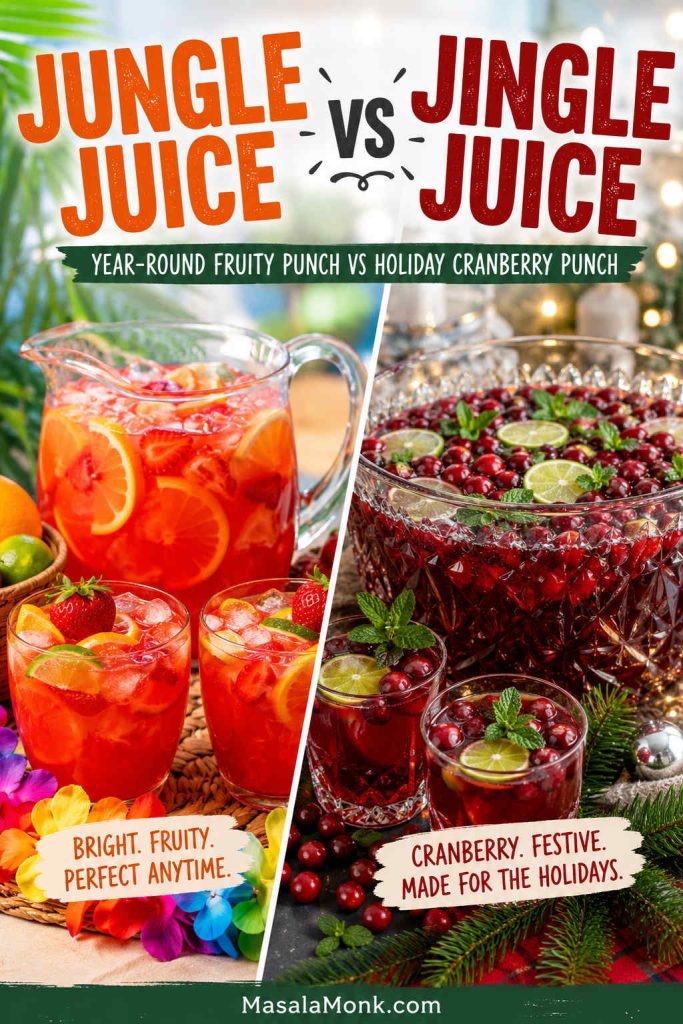
Jungle Juice vs Jingle Juice
Jungle juice is a flexible fruity party punch made with liquor, juice, soda, and fresh fruit. Jingle juice is usually a Christmas punch built around cranberry, sparkling wine or Moscato, vodka, citrus, and holiday garnishes such as cranberries, mint, and lime.
Make jungle juice when you want a flexible year-round party punch. Make jingle juice when the party is specifically holiday-themed and cranberry, sparkling wine, mint, and citrus fit the table better.
Jungle juice works as a flexible year-round party punch, while jingle juice leans more holiday-focused with cranberry, citrus, mint, and festive sparkle.
Make-Ahead, Storage, and Serving Tips
You can make jungle juice ahead, but the timing matters. The best version tastes cold and settled, while the final fizz still feels fresh.
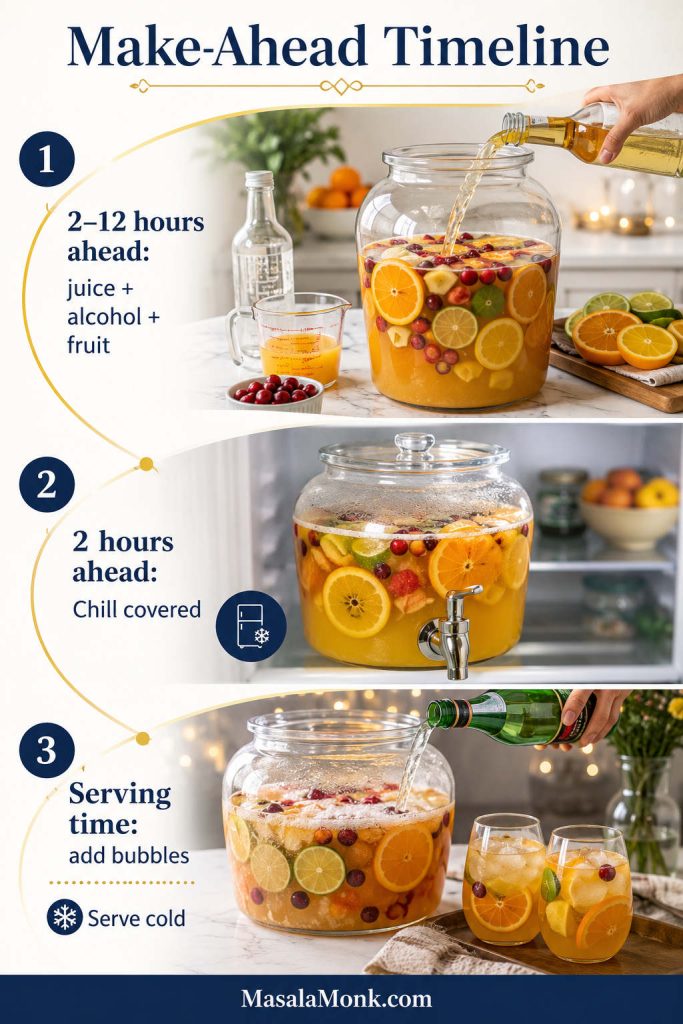
Best make-ahead window: mix the juice, alcohol, and fruit 2 to 12 hours ahead.
Save the bubbles: soda, sparkling water, club soda, or ginger ale should be added after chilling.
Keep it cold: refrigerate the punch or keep the dispenser chilled.
Use ice carefully: add ice to glasses, or use an ice ring, so the whole batch does not become watery.
Use a food-safe container: a drink dispenser, punch bowl, stockpot, or beverage cooler is better than any container not designed for food.
To make jungle juice ahead without losing freshness, chill the fruit and still liquids early, then add the carbonated mixer when guests are ready to pour.
Already mixed the punch and need a fix? Jump to troubleshooting for quick adjustments.
To keep the punch cold without watering it down, chill every bottle before mixing, keep the main batch refrigerated as long as possible, and serve over ice in cups. For a punch bowl, an ice ring melts more slowly than loose ice and looks better on the table.
Because this punch contains cut fruit, keep it cold. The FDA produce safety guidance recommends refrigerating fresh produce at 40°F / 4°C or below. As a practical party rule, keep the main batch chilled and refill serving containers as needed.
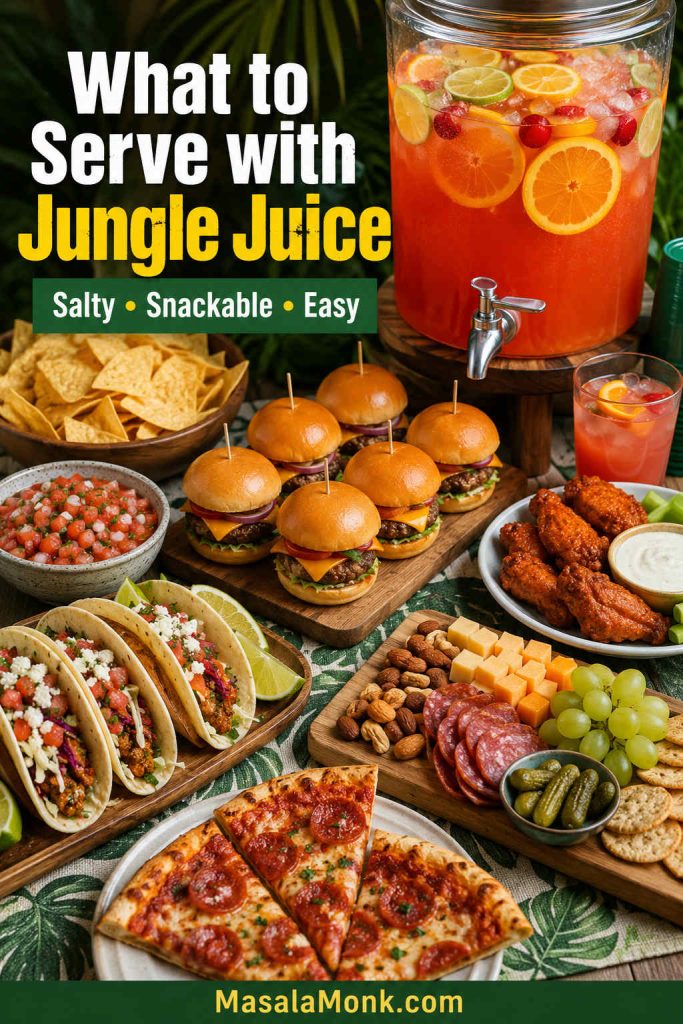
What to Serve with Jungle Juice
Because jungle juice is fruity and sweet, the best food pairings are salty, easy, and snackable. Think chips and salsa, sliders, wings, nachos, pizza, tacos, grilled skewers, or a big snack board.
During a longer party, simple and sturdy food works best. Salty snacks and easy finger foods balance the sweetness of the punch and help guests pace themselves without needing a formal meal.
Because jungle juice is fruity and sweet, salty snacks, sliders, wings, tacos, pizza, and easy finger foods help balance the table and keep guests satisfied.
Equipment You’ll Need for Jungle Juice
You do not need bar tools, but you do need a clean container large enough for the batch. Leave yourself more room than you think you need; fruit, fizz, stirring, and ladling all take space.
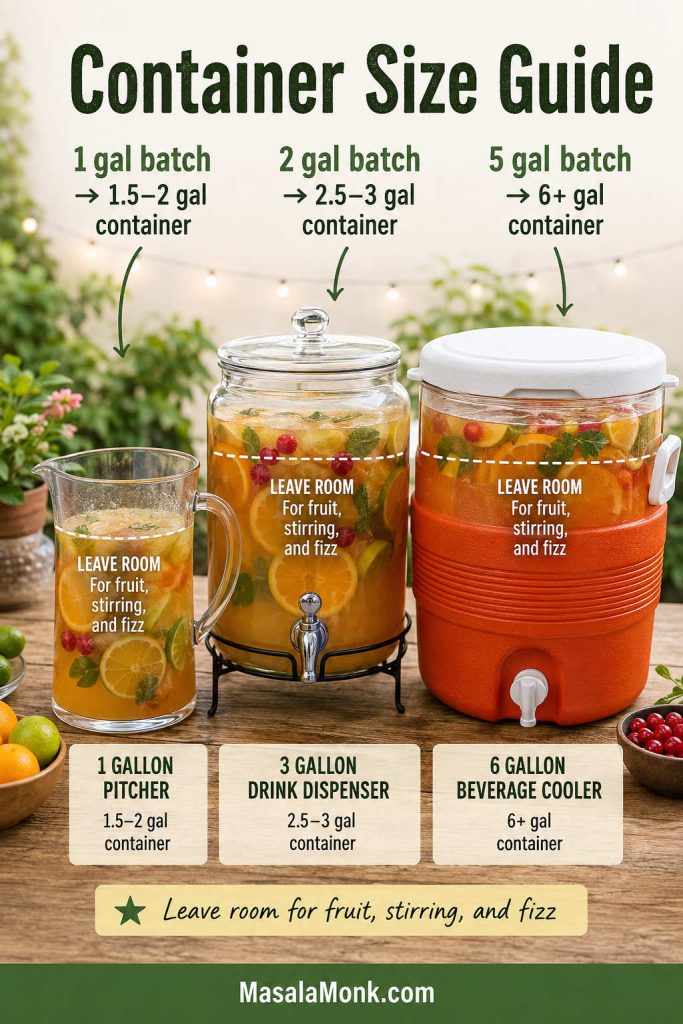
Container Size Guide
Batch Size
Minimum Container
More Comfortable Size
1 gallon
1.5 gallons
2 gallons
2 gallons
2.5 gallons
3 gallons
5 gallons
6 gallons
6+ gallons if using lots of fruit
A larger container gives the punch enough headspace for fruit, stirring, fizz, and serving without spills.
Large drink dispenser, punch bowl, stockpot, or food-safe beverage cooler
Long-handled spoon or spatula
Liquid measuring cup or jug
Knife and cutting board
Ladle, if using a punch bowl
Serving cups or glasses
Ice for glasses
Optional ice ring for the punch bowl
Avoid mixing jungle juice in a household trash can or any container that is not clearly food-safe. A clean beverage cooler, stockpot, punch bowl, or drink dispenser is a better choice.
Troubleshooting Jungle Juice
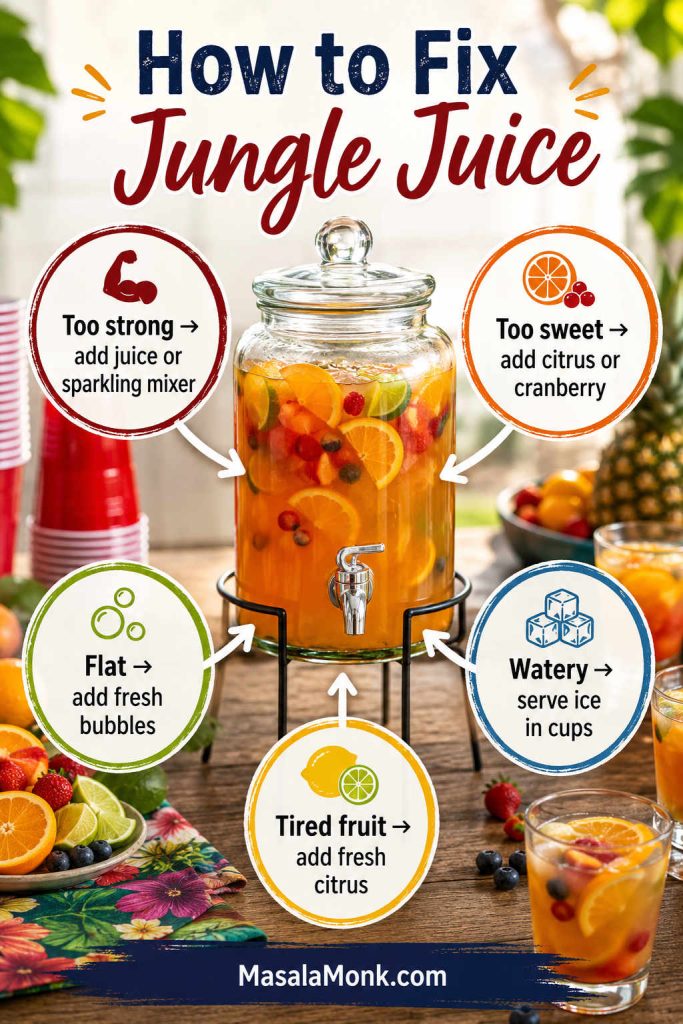
If the punch tastes a little off after mixing, do not panic. Jungle juice is one of the easiest party drinks to fix because you can adjust it by the cup: more citrus for sweetness, more juice for strength, more fizz for flatness, and more ice in the glass for serving.
Problem
Likely Cause
How to Fix It
Too strong
Too much alcohol for the amount of juice
Add fruit punch, pineapple juice, lemonade, club soda, or sparkling water.
Too sweet
Too much fruit punch or lemon-lime soda
Add cranberry juice, fresh lemon or lime juice, club soda, or sparkling water.
Too tart
Too much citrus, cranberry, or unsweetened juice
Add fruit punch, pineapple juice, lemonade, or a little simple syrup.
Flat
Fizz was added too early
Add fresh lemon-lime soda, sparkling water, club soda, or ginger ale just before serving.
Watery
Too much ice melted into the punch
Chill the punch first and serve over ice in individual glasses.
Fruit looks tired
Fruit sat too long or was sliced too thin
Add a fresh handful of citrus slices, strawberries, or pineapple before serving.
Most jungle juice problems are easy to fix one step at a time: juice for strength, citrus for sweetness, bubbles for flatness, and fresh fruit for presentation.
FAQs
What is jungle juice made of?
Jungle juice is usually made with liquor, fruit juice, fresh fruit, and a fizzy mixer. Vodka, white rum, fruit punch, orange juice, pineapple juice, lemonade, cranberry, strawberries, and citrus are common ingredients.
What alcohol works best in jungle juice?
Vodka and white rum are the easiest choices. Vodka keeps the flavor clean, while rum gives the punch a rounder, fruitier taste. Orange liqueur can be added for a citrus boost.
How much alcohol goes in jungle juice?
A balanced 2-gallon batch uses one 750 ml bottle of vodka and one 750 ml bottle of white rum. For a lighter batch, reduce the alcohol and add more juice, club soda, or sparkling water.
Do you pour the whole 750 ml bottle into jungle juice?
For the 2-gallon recipe, yes: use one full 750 ml bottle of vodka and one full 750 ml bottle of white rum. For a 1-gallon batch, use about half a bottle of each.
How many people does 1 gallon of jungle juice serve?
One gallon gives about 16 servings at 8 oz each, about 21 smaller 6 oz servings, or about 12 larger 10 oz servings.
How many people does 2 gallons serve?
Two gallons gives about 32 servings at 8 oz each, about 42 smaller 6 oz servings, or about 25 larger 10 oz servings.
How many people does 5 gallons serve?
Five gallons gives about 80 servings at 8 oz each. For smaller 6 oz pours, it can serve about 100. For larger cups, plan closer to 60 to 65 servings.
How much should I make for 30 people?
For 30 people, the 2-gallon recipe is a good starting point if other drinks are available. For a longer party, keep extra juice and fizz chilled for topping up.
How much do I need for 50 people?
For 50 people, plan around 3 to 4 gallons if other drinks are available, or a lighter 5-gallon batch for a longer event.
How far ahead should you make it?
Make the juice, alcohol, and fruit mixture 2 to 12 hours ahead. Add soda, sparkling water, club soda, or ginger ale when the punch is cold and ready to serve.
How long does jungle juice last in the fridge?
It is best the day it is made or the next day. Store leftovers covered in the refrigerator, and strain out tired fruit before serving again.
Can you freeze jungle juice?
You can freeze strained leftover punch without the fizzy mixer. It works better as a slushy-style leftover than a fresh party batch. Add fresh citrus or bubbles after thawing.
Should it be served over ice or mixed with ice?
Serve it over ice in individual cups. Loose ice in the main dispenser melts quickly and can make the whole batch watery.
What fruit is best?
Strawberries, oranges, lemons, limes, and pineapple are the easiest choices. They look good in the dispenser and add fresh flavor without falling apart too quickly.
Why does it taste too strong?
It usually has too much alcohol for the final amount of juice, fruit, fizz, and ice. Add juice or a sparkling mixer gradually, then serve smaller pours over ice.
How do you make it less sweet?
Use club soda or sparkling water instead of lemon-lime soda. Cranberry juice, fresh lime, lemon juice, or extra citrus slices also help balance sweetness.
Is jungle juice the same as trash can punch?
It is sometimes called trash can punch, but you should not mix it in a household trash can. Use a clean drink dispenser, punch bowl, stockpot, or food-safe beverage cooler.
Is jungle juice the same as jingle juice?
No. Jungle juice is a broad fruity party punch. Jingle juice is usually a Christmas punch with cranberry, sparkling wine or Moscato, vodka, citrus, and holiday garnishes.
Can jungle juice be made without alcohol?
Yes. Replace the vodka and rum with extra fruit punch, pineapple juice, orange juice, lemonade, ginger ale, club soda, or sparkling water. Keep the fresh fruit and serve it cold so it still feels like a real party punch.
Final Hosting Tips
Start with the 2-gallon recipe if you are making jungle juice for the first time. It is large enough for a party, easy to scale, and easier to control than a huge 5- or 6-gallon batch.
The best flavor comes from chilling the juice, alcohol, and fruit together, then adding the final fizz when the dispenser goes out. Keep the punch cold, serve it in moderate pours, and leave enough room for fruit and stirring.
When the dispenser is cold, the fruit looks bright, and guests can help themselves without asking you to play bartender, the whole party feels easier.
The best jungle juice is not the strongest one. It is the batch people can pour easily, sip comfortably, and come back to without you having to remix drinks all night. Keep it cold, leave room for fruit and stirring, add the fizz at the end, and the party punch takes care of itself.
When the punch is cold, balanced, and easy to pour, guests can keep serving themselves while you enjoy the party too.
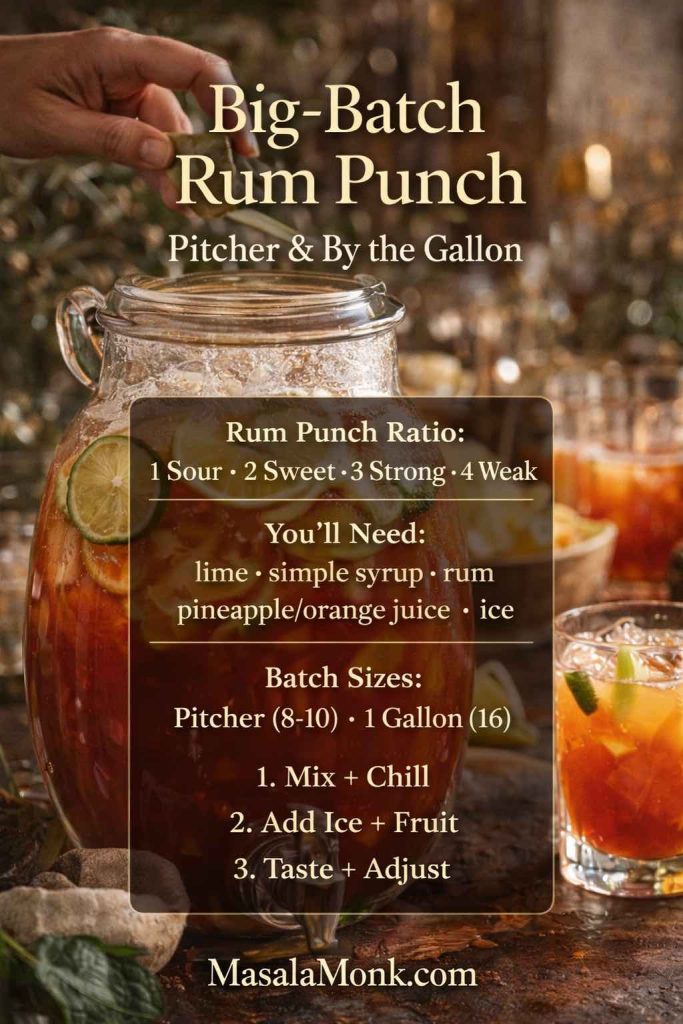
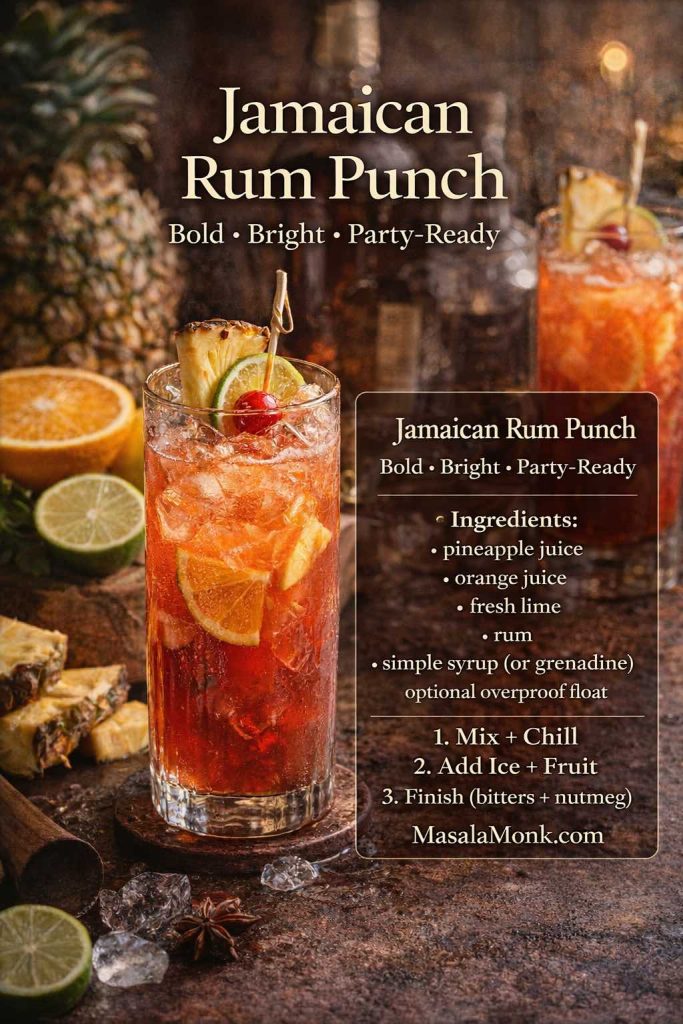
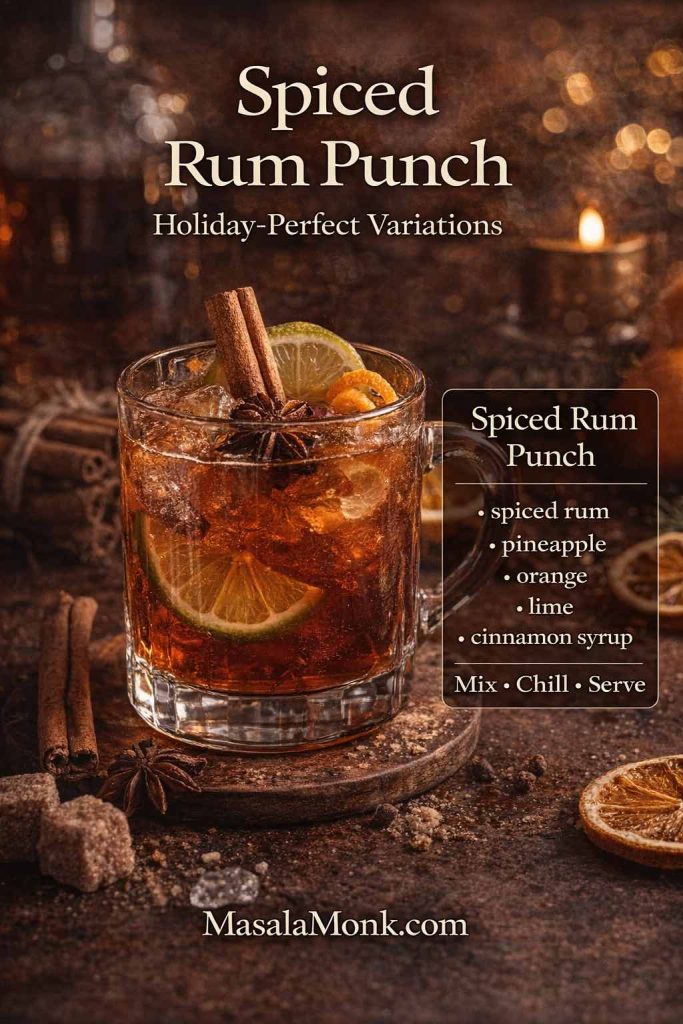
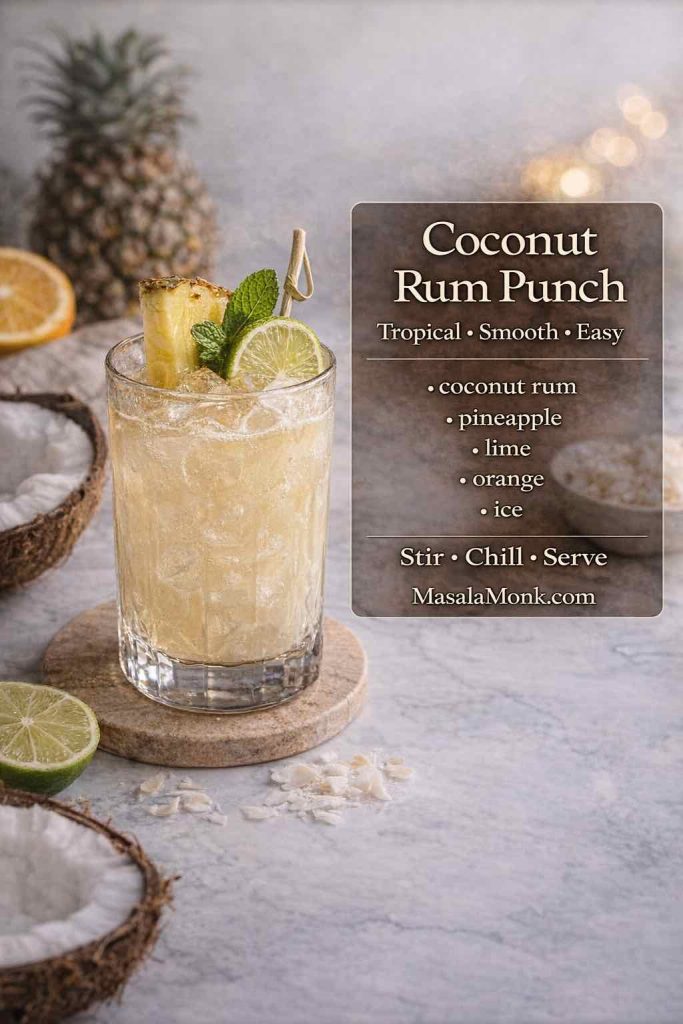
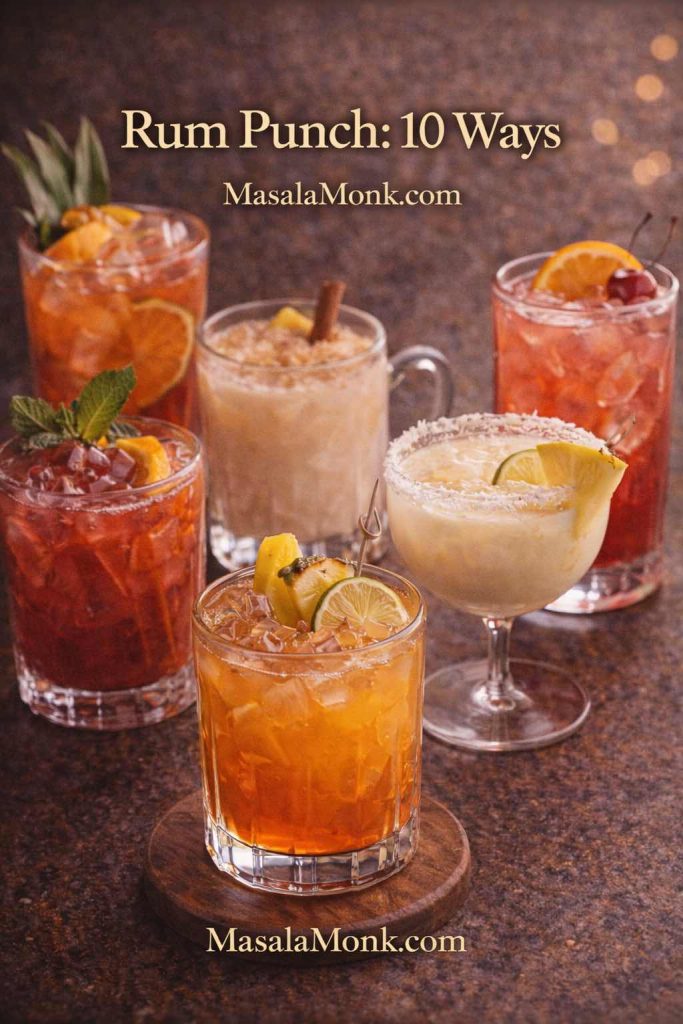
A good rum punch should feel sunny even when it’s poured in the middle of winter. It’s bright without being sour, sweet without being syrupy, and strong without tasting like straight liquor. Most of all, it’s the kind of drink that makes people wander back for a second glass, then ask, almost inevitably, “Wait—what’s in this?” That question is exactly why this post exists. You’ll start with a classic Caribbean-style rum punch recipe that’s built on a simple, time-tested balance: sour, sweet, strong, and weak. From there, you’ll get nine complete spin-offs—each one a full recipe card—so you can make anything from a breezy rum punch drink for a casual get-together to a dramatic, party-sized rum punch bowl for a celebration.
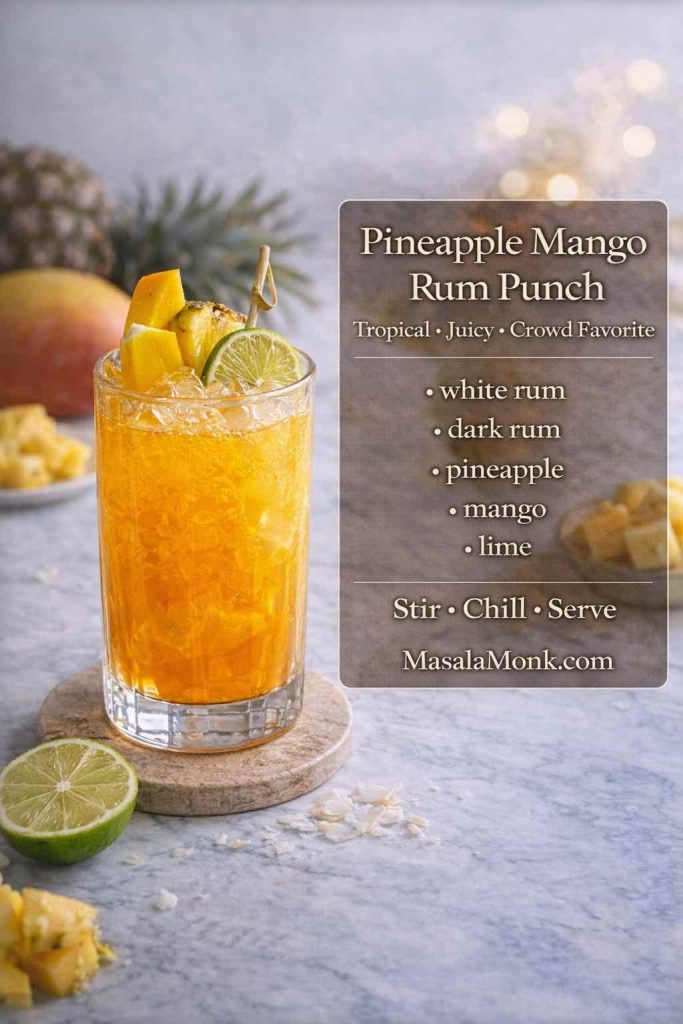
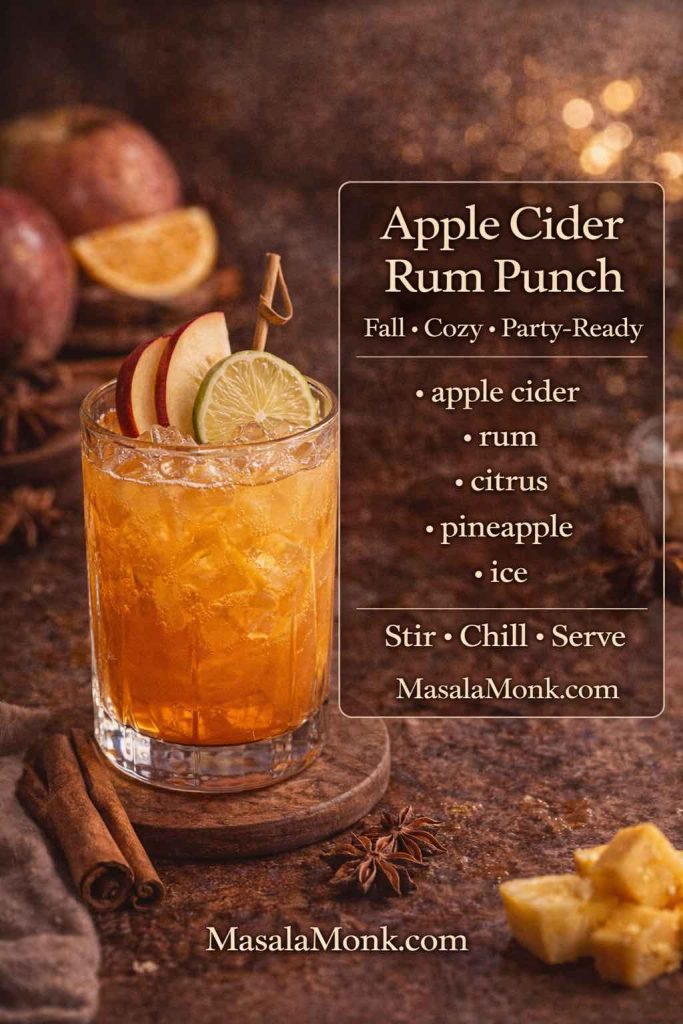
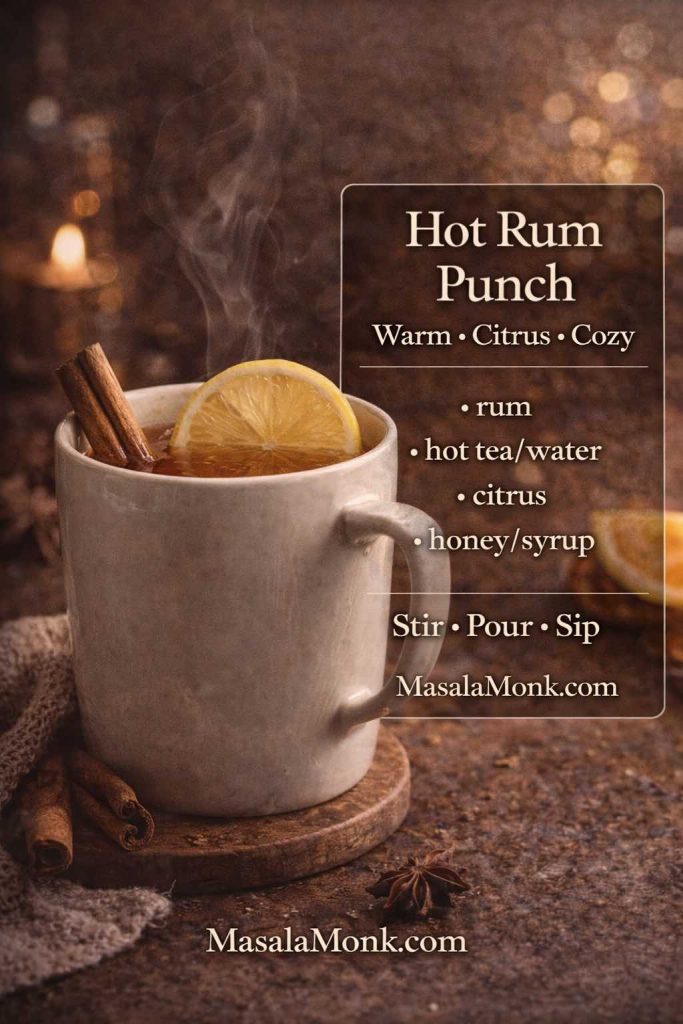
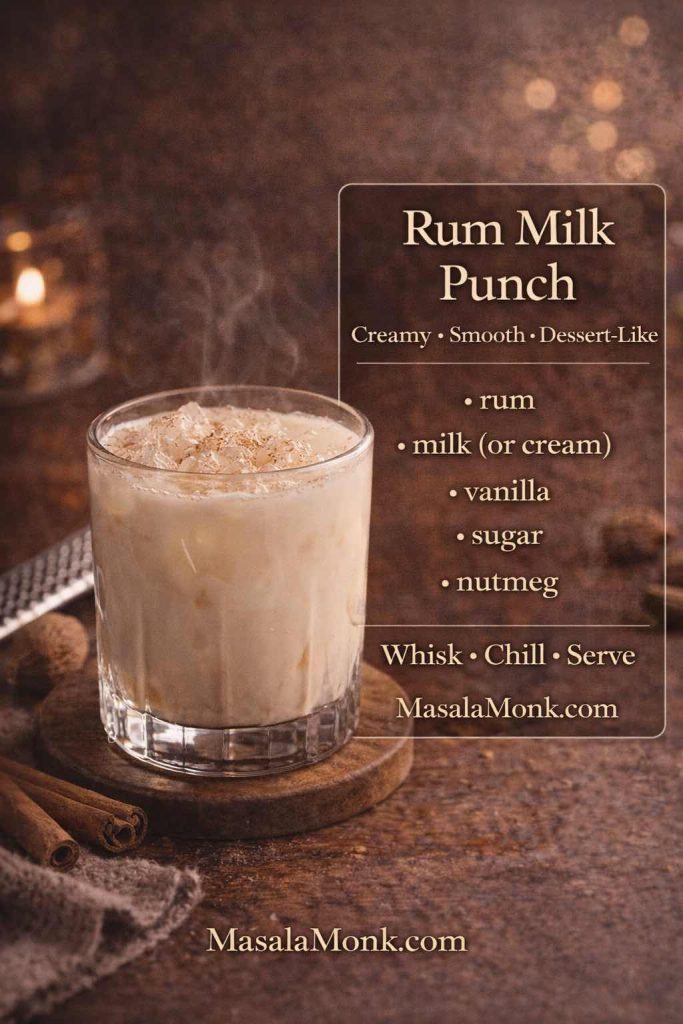
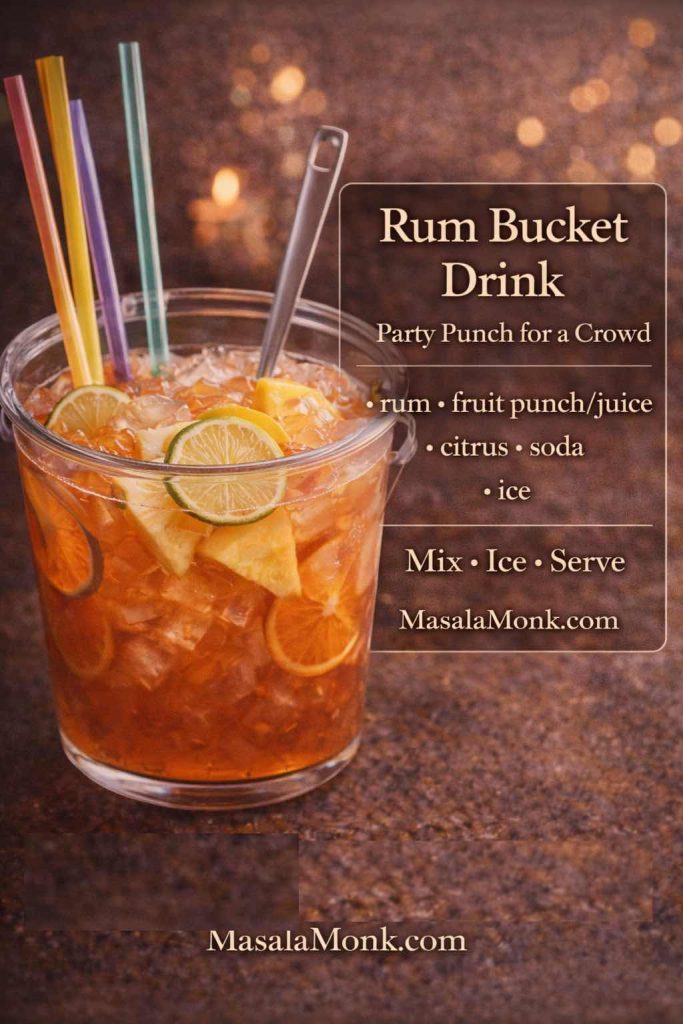
Along the way, you’ll naturally bump into the flavors and formats people look for the most: easy rum punch, traditional rum punch recipe, classic rum punch recipe, rum punch ingredients, rum punch pitcher recipe, rum punch recipe by the gallon, jamaican rum punch, planters punch recipe, spiced rum punch, coconut rum punch, pineapple mango rum punch, apple cider rum punch, hot rum punch, rum milk punch, and even a fun rum bucket drink recipe for peak party energy.
If you’ve ever heard the old Caribbean guide—“one of sour, two of sweet, three of strong, four of weak”—you’ve already met the philosophy behind the best rum and punch combinations. You can read more about that classic framework in this Epicurious piece on the rum punch rhyme: the Caribbean punch recipe rhyme.
And when you’re batching drinks for a crowd, a smart approach to timing and dilution makes all the difference—especially for citrus—so this Serious Eats guide is a handy companion: how to batch cocktails.
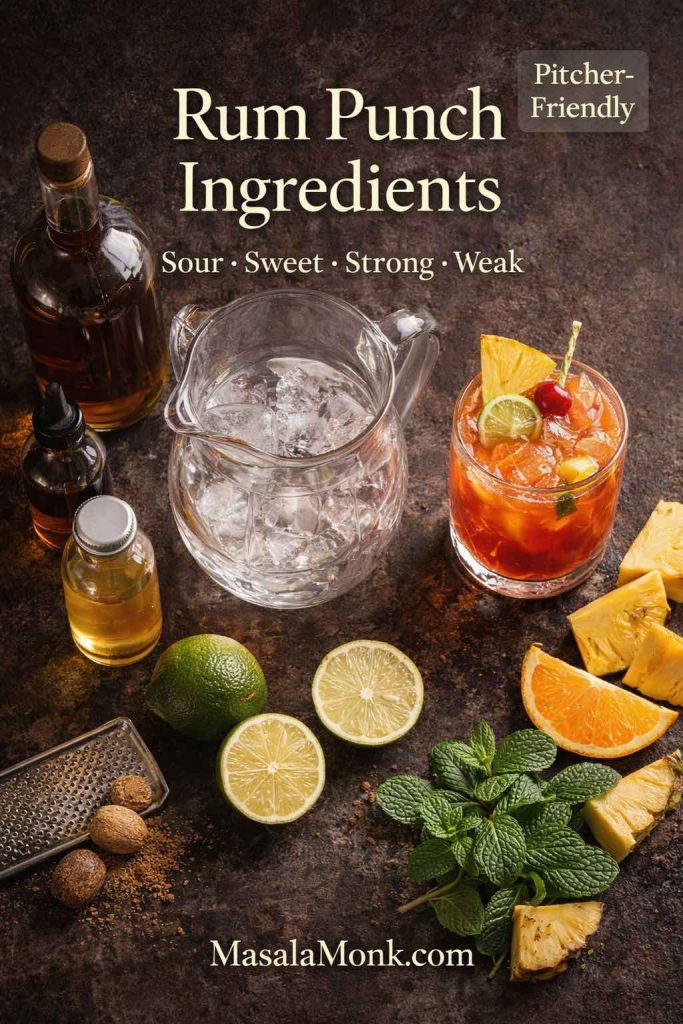
Before ingredients hit the pitcher, it helps to know what you’re aiming for—because rum punch is less about a rigid formula and more about a feel.
The balance you’re chasing
Sour keeps the drink lively (usually lime).
Sweet rounds out the edges (simple syrup, grenadine, or a fruit syrup).
Strong is your rum (sometimes one rum, often a blend).
Weak is everything that lengthens the drink (juice, water, tea, soda, or even coconut water).
That’s why rum punch is so forgiving. The same “sour/sweet/strong/weak” backbone can turn into a beachy tropical rum punch, a deeper dark rum punch, a fragrant holiday pitcher, or a warm mug of hot rum punch—without losing the punch “identity.”
Choosing rum for rum punch
If you are looking for “best rum for rum punch,” you already know this part can spiral. The good news: you don’t need a rare bottle. You need a rum that tastes good to you and plays nicely with fruit.
White rum brings lift and crispness. It’s a clean base for white rum punch and fruit-forward punches.
Dark rum adds caramel and spice. Even a small portion makes the drink taste more “grown-up,” which is why a classic dark rum punch can feel so satisfying.
Spiced rum is basically a shortcut to cozy. It’s perfect for spiced rum punch and fall-forward versions like cider punch.
Coconut rum leans sweet and tropical. It’s the heart of a creamy coconut rum punch and a natural fit for pineapple.
Overproof rum (optional) gives Jamaican-style punch a bold edge. Use it as a float or a small percentage, not the whole base.
You’ll see these options pop up throughout the variations—because the rum you pick is often the fastest way to change the mood of the drink.
Juice choices: the “weak” that matters
Pineapple juice is a rum punch superstar for a reason: it’s tropical, aromatic, and naturally smooths alcohol. Orange juice adds brightness. Mango brings body. Meanwhile, a splash of soda makes the punch feel lighter.
If you love pineapple-based punch, you’ll also enjoy this internal guide with multiple directions and flavors: punch recipes with pineapple juice.
Ice and dilution: the secret ingredient
There’s a reason batched cocktail guides talk about dilution so much. The first glass might taste perfect; the last glass might taste aggressively sweet or too strong if you ignore water and ice.
A reliable approach is to chill the punch base well, then let ice do the final shaping. If you’re serving for hours, a big block of ice melts slower than cubes, keeping the flavor steadier. That’s why party versions and “by the gallon” versions benefit from planning the ice.
This is your foundation: a classic rum punch drink recipe that works in a pitcher, scales for a party, and tastes like the kind of traditional rum punch recipe people imagine when they picture a vacation.
Everything you need for a classic rum punch drink recipe—lime for the sour, syrup for the sweet, rum for the strong, and pineapple/orange for the weak—ready for an easy pitcher of rum punch.
Classic Rum Punch (Serves 6–8)
Ingredients
¾ cup (180 ml) fresh lime juice
½ cup (120 ml) simple syrup (adjust to taste)
2 cups (480 ml) rum (see rum notes below)
3 cups (720 ml) pineapple juice
1 cup (240 ml) orange juice (optional but lovely)
1 cup (240 ml) cold water or sparkling water (optional, to lighten)
This classic Caribbean rum punch recipe is built on the 1–2–3–4 ratio—lime, syrup, rum, and pineapple/orange—so you can mix an easy pitcher of rum punch and tweak it to taste.
Instructions
In a large pitcher, stir lime juice and simple syrup until fully combined.
Add rum, pineapple juice, and orange juice (if using). Stir again.
Pour in cold water or sparkling water if you want a more refreshing, “easy-sipping” style.
Add bitters if you like a more classic, aromatic finish.
Chill for at least 1–2 hours.
Serve over plenty of ice with fruit garnish. If you’re using nutmeg, grate it lightly over each glass.
Rum notes
For an effortless “classic” flavor, use a blend: mostly white rum with a smaller portion of dark rum.
If you only have one rum, use it. A basic rum punch recipe is still delicious with just white rum or just dark rum.
This is the core rum punch mixture. From this point on, each variation is a deliberate shift—sometimes in rum, sometimes in the “weak,” sometimes in the sweetener—yet every one still feels like punch.
Variation 1: Big Batch Rum Punch (Pitcher, Bowl, and By the Gallon)
When people look for rum punch recipe large batch or rum punch recipe by the gallon, what they really want is confidence: a recipe that won’t taste watered down, overly boozy, or strangely flat after an hour on the table.
This version is designed for that.
Big batch rum punch made easy: a pitcher-friendly rum punch recipe by the gallon, built on the classic 1–2–3–4 rum punch ratio for parties and punch bowls.
Big Batch Rum Punch (About 1 gallon, ~16 servings)
Ingredients
2½ cups (600 ml) fresh lime juice
2 cups (480 ml) simple syrup
6 cups (1.4 L) rum (a mix of white + dark is ideal)
8 cups (1.9 L) pineapple juice
2 cups (480 ml) orange juice (optional but recommended)
2–3 cups (480–720 ml) cold water (start smaller; adjust after chilling)
Optional: aromatic bitters, grated nutmeg
Garnish: citrus wheels, pineapple, mint
Ice: a large block if possible (or lots of cubes)
Instructions
In a very large dispenser, clean bucket-style beverage tub, or two pitchers, combine lime juice and simple syrup.
Add rum, juices, and 2 cups cold water. Stir thoroughly.
Chill several hours (overnight is even better).
Taste cold. If it feels intense, add more cold water in small additions until it tastes balanced.
Add a large ice block right before serving, then garnish with fruit.
This is the heart of a true rum punch pitcher recipe—and it translates just as well into a rum punch bowl. For more punch formats and pineapple-forward directions, this internal post is a fun rabbit hole: punch with pineapple juice.
If you like to nerd out on batching, the timing advice in how to batch cocktails is genuinely useful for any big-batch drink, not just rum.
Variation 2: Jamaican Rum Punch (Vivid, Fruity, and Bold)
A good jamaican rum punch often tastes louder than the classic base: more fruit, more citrus pop, and—if you choose—an optional overproof edge. It’s still rum punch, yet it feels like it has its own voice.
Jamaican rum punch—bold, bright, and fruit-forward—made with pineapple juice, orange juice, fresh lime, rum, and syrup for an easy party-ready rum punch drink.
Jamaican Rum Punch Recipe (Serves 6–8)
Ingredients
2 cups (480 ml) pineapple juice
2 cups (480 ml) orange juice
½ cup (120 ml) lime juice
½ cup (120 ml) simple syrup (or strawberry syrup if you want a fruitier sweet note)
2 cups (480 ml) rum (white rum recommended)
Optional: 2–4 oz (60–120 ml) overproof rum for a small float or boost
Optional: aromatic bitters
Garnish: orange slices, lime wheels, nutmeg
Instructions
In a pitcher, stir pineapple juice, orange juice, lime juice, and syrup until blended.
Add the rum and stir again.
Chill, then serve over ice.
If you’re using overproof rum, add a tiny float to each glass (or stir a small amount into the pitcher).
Finish with citrus and a light nutmeg grate.
If you want a second reference for Jamaican-style proportions and ingredient choices, this external recipe is a useful comparison: Jamaican rum punch recipe.
If rum punch is a vibe, Planter’s Punch is a character. It’s a more defined rum punch cocktail, typically deeper, often more aromatic, and built to taste like a “proper” cocktail rather than a purely fruity party punch.
Planter’s Punch—the classic rum punch cocktail—mixes dark rum, lime, syrup, and bitters for a deeper, more aromatic take on traditional rum punch.
Planter’s Punch Recipe (Serves 2–3, easy to scale)
Ingredients
6 oz (180 ml) dark rum
2 oz (60 ml) lime juice
2 oz (60 ml) simple syrup
1 oz (30 ml) grenadine (optional, for color + fruit sweetness)
6–10 dashes aromatic bitters
Optional: splash of club soda
Garnish: mint, orange slice, grated nutmeg
Instructions
In a small pitcher, stir rum, lime juice, syrup, bitters, and grenadine (if using).
Add ice and stir well.
Pour into glasses over fresh ice.
Add a splash of soda if you want a longer drink.
Garnish generously with mint and a dusting of nutmeg.
For a classic external reference on the style, this is a great one: Planter’s Punch.
Variation 4: Spiced Rum Punch (Holiday and Christmas-Party Ready)
A spiced rum punch is what happens when rum punch grows a cozy sweater. It keeps the tropical base, then adds warmth through spice and citrus aroma. As a christmas rum punch, it’s especially good with orange and cinnamon.
Spiced rum punch brings holiday flavor to a classic rum punch recipe—spiced rum, pineapple, orange, lime, and cinnamon syrup for an easy festive pitcher.
Spiced Rum Punch Recipe (Serves 6–8)
Ingredients
2 cups (480 ml) spiced rum
1 cup (240 ml) dark rum
2½ cups (600 ml) pineapple juice
2½ cups (600 ml) orange juice
½ cup (120 ml) lime juice
½ cup (120 ml) cinnamon simple syrup (or regular simple syrup + cinnamon to taste)
Optional: aromatic bitters
Garnish: orange slices, cinnamon sticks
Instructions
Stir pineapple juice, orange juice, lime juice, and syrup in a large pitcher.
Add both rums and stir until fully combined.
Chill well.
Serve over ice with orange slices and cinnamon.
When you want a dessert pairing that echoes the rum without feeling heavy, these are a natural match: Irish rum truffles.
Variation 5: Coconut Rum Punch (Soft, Tropical, Crowd-Friendly)
Coconut rum has a way of turning “rum and fruit juice” into something instantly vacation-like. This coconut rum punch stays refreshing, not creamy, yet it still tastes lush.
Coconut rum punch is a tropical twist on a classic rum punch recipe—coconut rum with pineapple, lime, orange, and ice for a smooth, easy rum punch drink.
Coconut Rum Punch Recipe (Serves 6–8)
Ingredients
2 cups (480 ml) coconut rum
1 cup (240 ml) white rum
3 cups (720 ml) pineapple juice
1 cup (240 ml) orange juice
½ cup (120 ml) lime juice
⅓–½ cup (80–120 ml) simple syrup
Optional: ½–1 cup (120–240 ml) coconut water (for a lighter finish)
Garnish: pineapple wedges, lime wheels
Instructions
In a pitcher, stir pineapple juice, orange juice, lime juice, and simple syrup.
Add coconut rum and white rum, then stir again.
Chill until very cold.
Serve over ice with pineapple and lime.
If you like the idea of using coconut water to keep tropical drinks refreshing, this internal collection is worth browsing: coconut water cocktails.
Variation 6: Pineapple Mango Rum Punch (Tropical, Smooth, and Juicy)
If your goal is “summer in a glass,” this is it. A pineapple mango rum punch tends to taste rounder than citrus-forward versions because mango juice or nectar brings body.
Pineapple mango rum punch is a tropical rum drink with big fruit flavor—pineapple, mango, lime, and a mix of white and dark rum for an easy crowd-favorite punch.
Pineapple Mango Rum Punch (Serves 6–8)
Ingredients
2 cups (480 ml) white rum
1 cup (240 ml) dark rum
2½ cups (600 ml) pineapple juice
2 cups (480 ml) mango nectar or mango juice
½ cup (120 ml) lime juice
¼–⅓ cup (60–80 ml) simple syrup (to taste)
Garnish: mango slices, lime wheels
Instructions
In a pitcher, combine pineapple juice, mango nectar, lime juice, and simple syrup.
Add the rums and stir until smooth.
Chill thoroughly.
Serve over ice with mango and lime.
If you’re building a party menu around pineapple, you’ll find more directions here: punch with pineapple juice.
Variation 7: Apple Cider Rum Punch (Fall Party Punch)
As soon as apple cider shows up, rum punch can pivot from beach to bonfire. Rum punch with apple cider still tastes like punch, yet it carries that unmistakable fall aroma.
Apple cider rum punch is a fall party twist on rum punch—apple cider with rum, citrus, pineapple, and ice for a cozy, crowd-ready pitcher drink.
Apple Cider and Rum Punch (Serves 6–8)
Ingredients
3 cups (720 ml) apple cider
2 cups (480 ml) pineapple juice
½ cup (120 ml) lemon juice (or lime juice for a sharper edge)
2–3 cups (480–720 ml) rum (spiced rum is especially good here)
¼ cup (60 ml) simple syrup (optional; depends on cider sweetness)
Garnish: apple slices, cinnamon sticks
Instructions
In a pitcher, stir apple cider, pineapple juice, and lemon juice.
Add rum and stir well.
Taste. If it needs sweetness, add a small amount of syrup.
Chill and serve over ice with apple slices.
Because cider versions can feel sweeter, it’s often nice to balance your menu with lighter fruit choices. This internal guide is helpful if you want ideas that don’t pile on sugar: fruits low in sugar.
Variation 8: Hot Rum Punch (A Warm Winter Mug)
Rum punch doesn’t have to be cold. A hot rum punch recipe leans cozy, citrusy, and gently spiced. In contrast to a holiday pitcher, this is intimate—perfect for a quiet evening or a small gathering.
Hot rum punch is the warm winter version of rum punch—rum with hot tea or water, citrus, and honey for a cozy mug you can sip slowly.
Hot Rum Punch Recipe (Serves 4)
Ingredients
2 cups (480 ml) hot water or hot black tea
½ cup (120 ml) rum
¼ cup (60 ml) honey or simple syrup
¼ cup (60 ml) lemon juice (or lime juice)
Optional: aromatic bitters
Optional: cinnamon, cloves, orange peel
Instructions
In a heatproof jug, stir honey (or syrup) into the hot water or tea.
Add citrus juice and stir again.
Add rum last, so the aroma stays bright.
Pour into mugs and garnish with a cinnamon stick or citrus peel.
Variation 9: Rum Milk Punch (Velvety and Dessert-Like)
A rum milk punch is the softer, richer cousin of fruit punch. It’s smooth, faintly spiced, and perfect when you want a drink that feels like dessert without being overly heavy.
Rum milk punch is the creamy, dessert-like side of rum punch—rum with milk (or cream), vanilla, sugar, and nutmeg for a smooth, chilled sip.
Rum Milk Punch Recipe (Serves 4)
Ingredients
1½ cups (360 ml) milk
½ cup (120 ml) rum
3 tbsp sugar (or 2–3 tbsp simple syrup)
½ tsp vanilla extract
Pinch of salt
Fresh nutmeg (or a small pinch of ground nutmeg)
Instructions
In a jug, whisk milk, sugar (or syrup), vanilla, and salt until fully dissolved.
Variation 10: Rum Bucket Drink (Party Format, Big Fun)
A rum bucket drink is exactly what it sounds like: a shareable, dramatic, party-friendly version of punch that’s made for long straws, loud laughter, and easy refills. While it’s playful, it still tastes best when you keep the classic rum punch balance in mind.
Rum bucket drink recipe: a fun party punch for a crowd—rum mixed with fruit punch or juice, citrus, soda, and plenty of ice for an easy big-batch rum punch vibe.
Rum Bucket Drink Recipe (Serves 6–8)
Ingredients
2 cups (480 ml) rum (white, spiced, or a blend)
3 cups (720 ml) pineapple juice
2 cups (480 ml) orange juice
½ cup (120 ml) lime juice
½ cup (120 ml) simple syrup
2 cups (480 ml) lemon-lime soda or ginger ale
Optional: a splash of grenadine for color
Ice + citrus wheels + pineapple
Instructions
In a large vessel (bucket, beverage tub, or oversized pitcher), stir pineapple juice, orange juice, lime juice, and simple syrup.
Add rum and stir well.
Chill until very cold.
Right before serving, add soda (so it stays lively), then add plenty of ice and fruit.
If you want to explore a few more “party punch” directions without losing the pineapple backbone, this internal guide has plenty of inspiration: punch with pineapple juice.
How to Serve Rum Punch Without Stress
Once you’ve chosen your version—classic, Jamaican, Planter’s, spiced, coconut, cider, hot, milk, or bucket—the final experience comes down to serving. A rum punch can taste extraordinary at the start and just okay later if the table setup fights the drink.
Keep it cold from the beginning
Chilling the punch before adding ice preserves flavor. Cold punch also means you can use less ice in each glass, which helps keep the balance of your rum punch cocktail consistent.
Build a garnish that people actually eat
Fruit garnish isn’t decoration; it’s part of the experience. Orange slices, pineapple wedges, and lime wheels are classic because they smell as good as they look. Mint adds freshness, while nutmeg adds warmth.
What to serve with rum punch: salty snacks, bite-size appetizers, and easy desserts that balance a classic rum punch drink—perfect for parties, punch bowls, and big-batch pitchers.
Pairings that make rum punch shine
Because rum punch is fruity and often a little sweet, it loves salty, crunchy bites. A snack board is the easiest route—especially if you follow a simple structure like this internal guide: charcuterie boards and the 3-3-3-3 rule.
For dessert, you can lean tropical or creamy. On the tropical side, Dole Whip feels almost made for pineapple and coconut versions. On the creamy side, no-bake desserts keep the hosting vibe effortless, like no-bake blueberry cheesecake.
A Quick Word on “Lighter” Rum Punch Styles
Rum punch doesn’t need to be overly sweet to be fun. If you want something brighter and less sugary, start with a base that uses more citrus and more “weak” (water, sparkling water, or coconut water), then let fruit garnish do some of the sweetness work.
If you’re curious about fruit choices and how sweetness plays out in real life, this internal guide is a helpful read: 8 fruits low in sugar.
Whether you came here for a simple rum punch recipe, a traditional rum punch recipe, or a party-sized rum punch recipe by the gallon, the heart of it stays the same: balance the sour, sweet, strong, and weak until it tastes like something you’d want to pour again.
Start with the classic base, then let your occasion decide the rest. A casual hang? Make the classic pitcher. A holiday gathering? Go spiced. A fall party? Cider. A tropical theme night? Coconut or pineapple mango. Want the boldest fruit-forward version? Jamaican. Want something with old-school cocktail swagger? Planter’s Punch.
And if you want maximum party theatrics, well… the rum bucket is waiting.
Rum punch, 10 ways—start with the classic Caribbean rum punch recipe, then mix it up with Jamaican rum punch, Planter’s Punch, spiced, coconut, and other party-ready variations.
FAQs
1) What is the best rum punch recipe for beginners?
If you’re new to making rum punch, start with a classic rum punch recipe that uses lime juice, simple syrup, rum, and pineapple juice. That combination is forgiving, quick to mix, and easy to adjust after tasting. Once you like the balance, you can branch into Jamaican rum punch, spiced rum punch, or coconut rum punch without relearning the basics.
2) What are the essential rum punch ingredients?
Most rum punch ingredients fall into four parts: a sour (usually lime), a sweet (simple syrup or grenadine), a strong (rum), and a weak (juice like pineapple or orange, sometimes topped with water or soda). From there, optional add-ins like bitters, nutmeg, and fresh fruit garnish help the rum punch drink taste more “finished.”
3) What is the rum punch ratio?
A traditional rum punch ratio is often described as “one of sour, two of sweet, three of strong, four of weak.” In practice, that means lime juice, sweetener, rum, and juice/water scaled in a consistent pattern. Since juices vary in sweetness, the best approach is to use the ratio as a starting point, then tweak to taste.
4) What is the difference between rum punch and Planter’s Punch?
Rum punch is a broad category and can be fruity, light, and easygoing. Planter’s Punch is a specific rum punch cocktail with a more defined profile, typically using darker rum, lime, sweetener, and bitters, sometimes with grenadine. In other words, Planter’s Punch tends to drink more like a structured cocktail, whereas rum and punch can range from simple to elaborate.
5) What is the best rum for rum punch?
The best rum for rum punch depends on the style you want. White rum creates a crisp white rum punch, while dark rum adds depth for a dark rum punch. Spiced rum works well in spiced rum punch recipes, and coconut rum is ideal for coconut rum punch. When in doubt, blending white and dark rum usually produces the most balanced classic rum punch recipe.
6) Can I use just one type of rum for rum punch?
Yes—using one rum is totally fine, especially for easy rum punch. The flavor will simply lean more toward that rum’s character. For example, using only dark rum can make a richer rum punch cocktail, while using only white rum keeps the drink brighter and more tropical.
7) How do I make an easy rum punch that still tastes “classic”?
To keep an easy rum punch tasting like a traditional rum punch recipe, focus on fresh lime juice and a measured sweetener. Then pick pineapple juice as your main “weak,” because it smooths the drink and brings the classic tropical vibe. Finally, chill it well before serving so you’re not relying on melting ice for dilution.
8) How do I make rum punch less sweet?
To reduce sweetness, add more lime juice in small amounts and lengthen the drink with cold water, sparkling water, or extra ice. Additionally, choose an unsweetened juice where possible and scale back the syrup. If the drink starts tasting too sharp, a small splash of orange juice often rounds it out without making it sugary.
9) How do I make rum punch stronger without ruining the flavor?
Increase the rum gradually and keep the balance by also increasing the “weak” component (juice or water) and the ice. Another option is to float a small amount of stronger rum on top of each glass. That approach is especially common in Jamaican rum punch variations.
10) How do I make rum punch for a party?
For a party, a rum punch pitcher recipe is the easiest format. Mix the base in advance, chill it, and add ice right before serving. If you’re serving for a long time, use a punch bowl with a large ice block so the flavor stays steady.
11) What is the best big batch rum punch recipe?
A big batch rum punch recipe uses the same base as classic rum punch, simply multiplied, with extra attention to dilution. Add a little cold water up front so it doesn’t taste harsh, then adjust after chilling. Big batch rum punch also benefits from bold juices like pineapple, which hold up well as the ice melts.
12) How do I make rum punch by the gallon?
To make rum punch recipe by the gallon, scale up the sour, sweet, strong, and weak proportions evenly. After chilling, taste and adjust with water or juice if it feels too intense. Because gallon batches sit longer, they’re also a great place to use fruit slices and bitters for extra aroma.
13) Can I make rum punch the night before?
Absolutely. Rum punch recipe large batch and rum punch recipe pitcher versions are often better after a few hours of chilling. Still, it’s best to do a final taste the next day before serving, since flavors can mellow overnight.
14) What juices go best in rum punch?
Pineapple juice is the classic choice for rum punch mix because it’s tropical and smooth. Orange juice adds brightness, mango creates a thicker tropical rum punch feel, and passion fruit brings a tangy edge. Meanwhile, cranberry juice is popular in holiday rum punch and spiced rum punch variations.
15) Can I make rum punch without pineapple juice?
Yes. If you want rum punch without pineapple juice, use orange juice as the base “weak,” then add something flavorful like mango, guava, or even a mix of citrus and water. The key is keeping lime juice present so the drink stays punchy rather than flat.
16) What is Jamaican rum punch made of?
Jamaican rum punch typically uses pineapple juice, orange juice, lime juice, sweetener, and rum—often white rum, sometimes with an overproof component. It’s usually fruit-forward and bold, and it can be served as a rum punch drink or a stronger rum punch cocktail depending on the rum choice.
17) What is the easiest Jamaican rum punch recipe to follow?
The easiest Jamaican rum punch recipe uses equal parts pineapple and orange juice, then adds lime juice, simple syrup, and rum. From there, you can tweak sweetness, tartness, and strength until it tastes right. If you like extra punchiness, bitters and nutmeg are common finishing touches.
18) What is coconut rum punch, and does it need cream?
Coconut rum punch is a tropical rum punch variation made with coconut rum and fruit juices like pineapple and lime. It does not require cream—many coconut rum punch recipes are clear, bright, and served over ice. If you want it richer, you can add coconut milk, but that shifts it toward a dessert-style drink.
19) What is spiced rum punch best for?
Spiced rum punch is ideal for cooler weather, holidays, and cozy gatherings. The warming notes from spiced rum pair well with orange, pineapple, cranberry, and apple cider. If you’re making christmas rum punch, spiced rum punch recipes are often the most crowd-pleasing.
20) What is apple cider rum punch?
Apple cider rum punch combines rum with cider, citrus, and often a tropical juice like pineapple to keep it “punch-like.” It’s a popular fall rum punch option and can be served in a pitcher, a punch bowl, or scaled up as a large batch rum punch recipe.
21) What is hot rum punch?
Hot rum punch is a warm version made with hot water or tea, rum, citrus, and a sweetener like honey or syrup. It’s sometimes seasoned with spices, which makes it a natural winter rum punch choice when cold drinks aren’t appealing.
22) What is rum milk punch?
Rum milk punch is a creamy drink made with rum, milk (or cream), sweetener, and spices like nutmeg. It tastes dessert-like and smooth, making it a popular alternative to fruit-based rum punch ideas when you want something richer.
23) What is a rum bucket drink?
A rum bucket drink is essentially rum fruit punch served in a large bucket-style vessel—often with soda and lots of ice. Because it’s built for sharing, it overlaps with rum punch for party formats and big batch rum punch. The key is balancing the sweetness and adding enough “weak” so it stays drinkable.
24) How long does rum punch last in the fridge?
Rum punch typically keeps well for 2–3 days in the fridge, though the freshest flavor is usually within the first 24 hours. Citrus can soften over time, so a quick stir and taste before serving helps restore balance.
25) How do I keep rum punch from getting watered down?
Use very cold ingredients, add ice at the last minute, and consider a large ice block for punch bowls. Another approach is to chill the punch thoroughly so you don’t need as much ice in each glass. For big batch rum punch, accounting for some dilution with water can also keep the taste consistent over time.