Posted on Leave a comment

Easy Cheese Ball Recipe

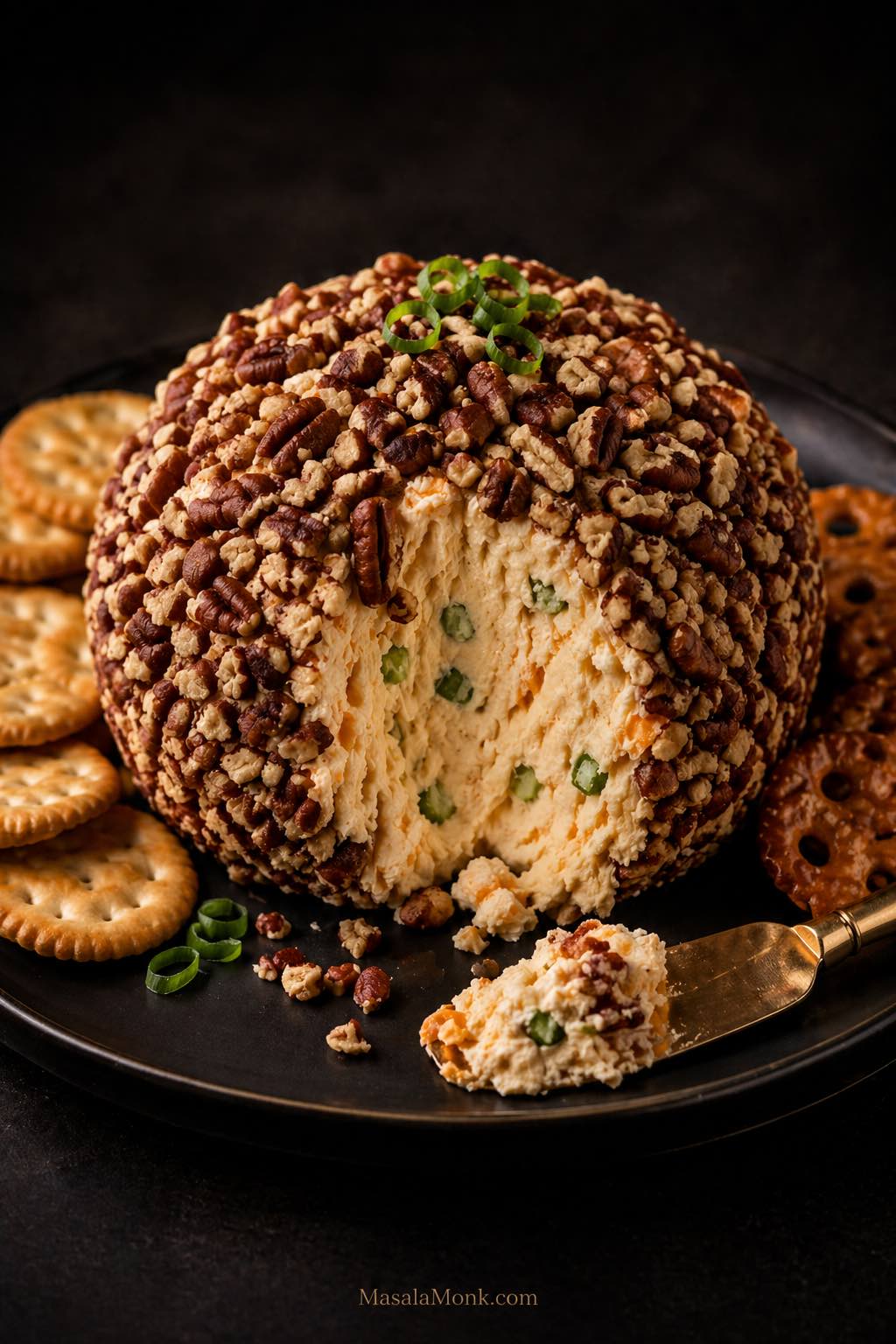
Close-up of a pecan-coated cheese ball on a dark plate with round crackers and a spreader, with a scoop taken out to show the creamy cheddar and green onion filling inside.

This easy cheese ball recipe is the classic no-cook party appetizer you want when you need something creamy, savory, make-ahead friendly, and reliable. It starts with cream cheese, sharp cheddar, green onion, simple seasonings, and a crunchy pecan coating, then chills into a firm but spreadable ball that works with crackers, pretzels, vegetables, holiday boards, game day snacks, and party platters.

A good cheese ball should not taste like plain cream cheese with nuts stuck to the outside. Instead, the filling should be creamy, savory, a little sharp from the cheddar, fresh from the green onion, and easy to scoop once it softens slightly on the platter. Since the base recipe is simple, you can also turn the same cheese mixture into a bacon ranch cheese ball, dried beef cheese ball, pineapple cheese ball, cranberry pecan cheese ball, mini cheese ball bites, cheese ball dip, or a no-nut version without starting over.

This is the chilled cream cheese appetizer, not the crispy fried snack. If you are looking for hot, fried cheese balls with an Indian-inspired flavor profile, MasalaMonk already has a guide to crispy Indian-inspired cheese balls. Here, we are making the classic cheese ball served with crackers, vegetables, and party boards.

Active prep is only about 15 minutes. The rest of the time is chilling, which makes this an easy make-ahead appetizer rather than a last-minute kitchen project.

Quick Answer: What Is a Cheese Ball?

A cheese ball is a chilled, spreadable appetizer made with cream cheese, shredded cheese, seasonings, and an outer coating such as chopped pecans, walnuts, herbs, bacon, crushed pretzels, or dried cranberries. Once the filling is mixed, it is shaped into a ball, chilled until firm, rolled in the coating, and served with crackers, vegetables, pretzels, crostini, or a party board.

Unlike fried cheese balls, this version is creamy, cold, and spreadable rather than hot, breaded, or crisp. First, the cream cheese makes it smooth. Then, the cheddar gives it sharper flavor, the seasonings keep it from tasting flat, and the coating adds crunch and color. After chilling, the ball should hold its shape on the platter; however, this recipe should still soften enough to spread after 15 to 20 minutes at room temperature.

Quick answer: Mix 16 oz / 450 g softened cream cheese with 1½ to 2 cups / 170 to 225 g shredded cheddar, green onion, Worcestershire sauce, garlic powder, onion powder, and black pepper. Then shape, chill for 1 to 2 hours, and roll in chopped pecans, herbs, bacon, pretzels, or another coating.
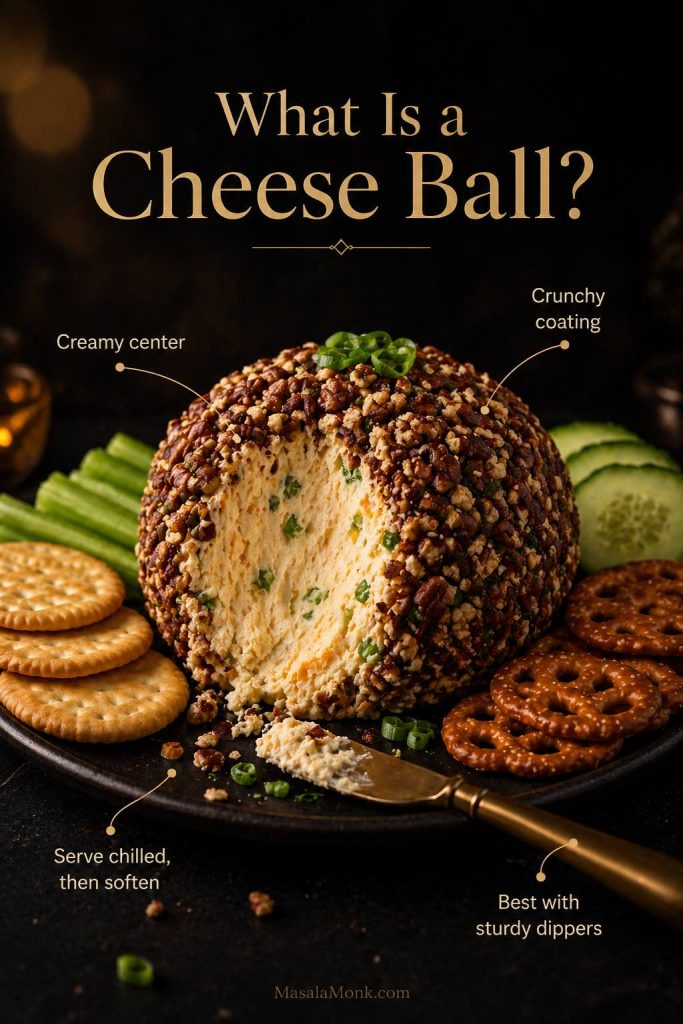
Annotated guide showing a finished cheese ball with crackers, celery, cucumber, pretzel crisps, and a spreader, with labels noting the creamy center, crunchy coating, chilled serving style, and sturdy dippers.
A cheese ball is a chilled, spreadable appetizer with a creamy center and a textured outer coating. Because it is easier to serve once slightly softened, sturdy dippers like crackers, pretzel crisps, and crisp vegetables work especially well.

Cheese Ball Ingredients at a Glance

If you only remember one thing, remember this: cream cheese gives the ball body, cheddar gives this recipe sharper flavor, seasonings make it taste complete, and the coating makes it party-ready. Once those jobs are clear, it becomes much easier to adjust the recipe without making the filling too soft, salty, or bland.

Ingredient What It Does Best Tip
Cream cheese Creamy base and structure Use softened block-style cream cheese, not melted cream cheese
Sharp cheddar Real cheese flavor Freshly shredded cheddar blends best, although pre-shredded works in a pinch
Green onion Freshness and mild onion bite Slice it finely so every bite gets a little
Worcestershire sauce Savory depth Start with 1 teaspoon / 5 ml, then taste before adding more
Garlic and onion powder Even seasoning Use powders because they spread smoothly through the cream cheese
Pecans, herbs, bacon, or pretzels Crunch, color, and finish Roll the cheese ball in crunchy coatings close to serving
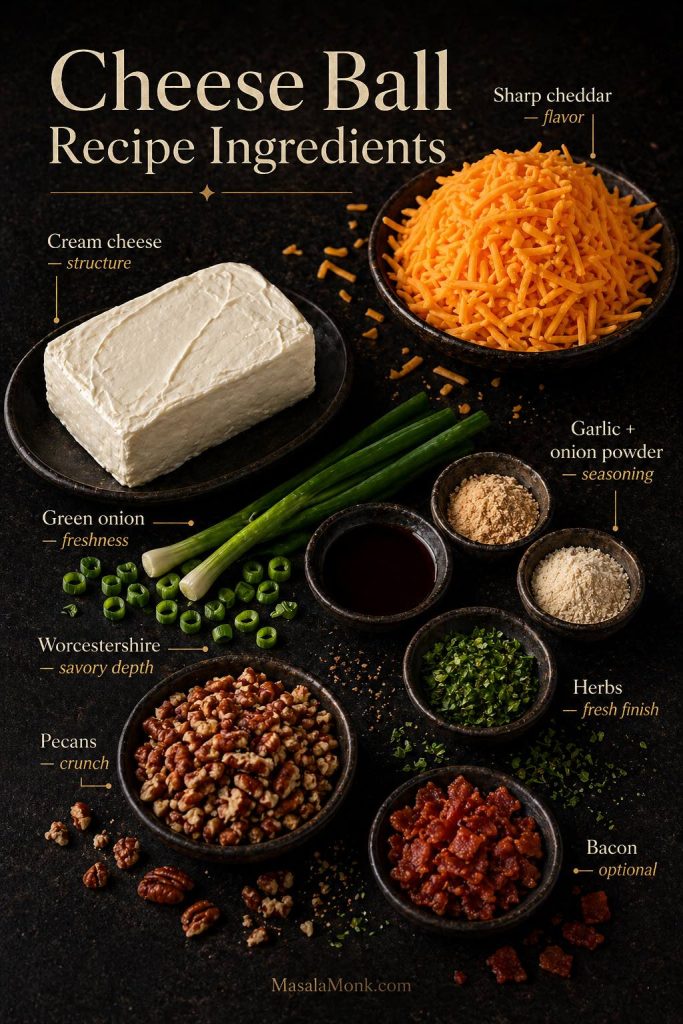
Ingredient guide for a cheese ball recipe showing cream cheese, shredded sharp cheddar, green onions, Worcestershire sauce, garlic powder, onion powder, black pepper, chopped pecans, herbs, and optional bacon arranged on a dark background.
The base of a classic cheese ball recipe is simple, but each ingredient has a job. Cream cheese gives structure, sharp cheddar adds flavor, Worcestershire brings savory depth, and pecans or herbs finish the outside with crunch and contrast.

How to Make a Cheese Ball

The method is easy, but the order matters. First, beat the cream cheese until smooth. Next, mix in the flavorings, shape the filling before it gets too warm, chill until firm, and add the coating close enough to serving that it stays fresh. That way, the cheese ball recipe stays simple without turning soft, lumpy, or messy.

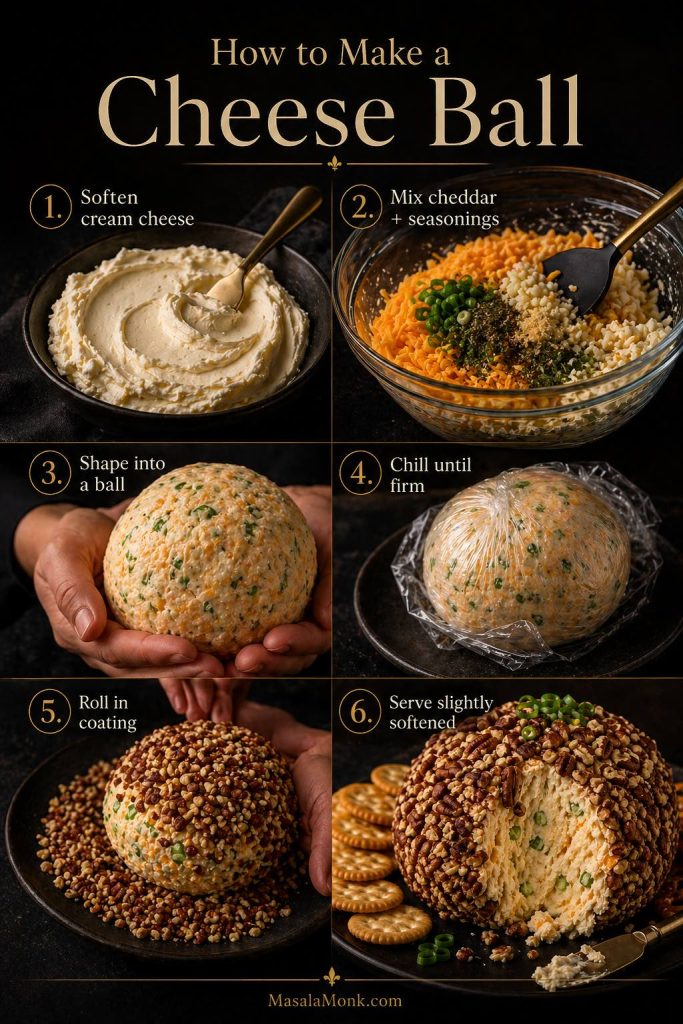
Six-step visual guide showing how to make a cheese ball: soften cream cheese, mix in cheddar and seasonings, shape into a ball, chill until firm, roll in coating, and serve with crackers.
How to make a cheese ball is easier than it looks: soften, mix, shape, chill, coat, and serve. Most important, do not skip the chilling step, because that is what helps the cheese ball hold its shape and coat cleanly.

Step 1: Soften the Cream Cheese

Start with softened cream cheese. Leave it at room temperature until it is easy to press with a spoon. If the cream cheese is too cold, it will not mix smoothly. If it is melted, the filling may become loose and harder to shape. For that reason, softened but still-cool cream cheese gives you the best balance.

Step 2: Mix the Filling

Beat the cream cheese until smooth. Then mix in shredded cheddar, green onion, Worcestershire sauce, garlic powder, onion powder, black pepper, and any add-ins. Scrape the bowl well so the seasoning is evenly spread through the filling.

Before shaping, taste the mixture. It should taste slightly bold because crackers and vegetables will soften the flavor. If it tastes flat, add a little more green onion, black pepper, garlic powder, onion powder, or Worcestershire sauce. At this stage, the recipe is easier to fix because the cheese has not yet been shaped into a ball.

Step 3: Shape and Chill

Spoon the filling onto a large piece of plastic wrap or parchment. Then, gather the wrap around the mixture and shape it into a ball. It does not need to be perfect yet because chilling will make it easier to smooth and coat. After the first chill, you can gently reshape it if needed.

Refrigerate for at least 1 hour. For a cleaner shape, chill for 2 hours. If you are making the cheese ball ahead, stop here and keep it wrapped until the day you plan to serve it.

Step 4: Roll in the Coating

Spread chopped pecans, herbs, bacon, pretzels, or your chosen coating on a plate. After that, unwrap the chilled cheese ball, then roll and press it gently into the coating until the outside is covered.

Nuts hold up better than most coatings. However, bacon, pretzels, crackers, and fresh herbs are best added closer to serving. That keeps the outside crisp, fresh, and more appetizing. The cheese ball also looks cleaner when the final coating is added after the recipe has had time to chill.

Step 5: Serve Slightly Softened

A cheese ball is usually too firm right from the refrigerator. So, let it sit for 15 to 20 minutes before serving so it becomes easier to spread. It should soften slightly, but it should not sit out for the entire party. Instead, serve it in a planned window and keep extra portions chilled if the gathering will last longer.

Texture target: Before chilling, the mixture should look thick, creamy, and scoopable. It should not be runny, greasy, or crumbly. After chilling, it should be firm enough to roll in coating, but it should still soften enough to spread after 15 to 20 minutes at room temperature. If it feels loose before chilling, add a little more cheddar; if it feels dry, let it rest briefly and mix again.

Easy Cheese Ball Recipe

Easy Cheese Ball Recipe with Cream Cheese

This classic cheese ball recipe is creamy, savory, make-ahead friendly, and perfect with crackers, vegetables, pretzels, and party boards.

YieldAbout 3 to 3½ cups
Servings16 to 20 appetizer servings
Prep Time15 minutes
Chill Time1 to 2 hours
Total Time1 hour 15 minutes to 2 hours 15 minutes
Cook Time0 minutes

Ingredients

  • 16 oz / 450 g cream cheese, softened
  • 1½ to 2 cups / about 170 to 225 g shredded sharp cheddar cheese
  • 2 to 3 green onions, finely sliced, about 20 to 30 g
  • 1 teaspoon / 5 ml Worcestershire sauce
  • ½ teaspoon garlic powder
  • ½ teaspoon onion powder
  • ¼ teaspoon black pepper
  • Pinch of salt, only if needed

For the Coating

  • ¾ to 1 cup / about 85 to 115 g finely chopped pecans or walnuts
  • 2 tablespoons chopped parsley, chives, or green onion
  • Optional: ¼ to ½ cup / about 25 to 50 g cooked crumbled bacon

Instructions

  1. Add softened cream cheese to a mixing bowl and beat until smooth
  2. Add shredded cheddar, green onion, Worcestershire sauce, garlic powder, onion powder, black pepper, and a small pinch of salt if needed
  3. Mix until evenly combined, then taste and adjust the seasoning before shaping
  4. Spoon the mixture onto plastic wrap or parchment and shape it into a ball
  5. Wrap tightly and refrigerate for at least 1 hour, or 2 hours for a firmer, cleaner shape
  6. Spread chopped pecans, herbs, and optional bacon on a plate
  7. Unwrap the chilled cheese ball and roll it in the coating, pressing gently so the outside is covered
  8. Let it sit for 15 to 20 minutes before serving with crackers, pretzels, vegetables, or crostini

Recipe Notes

  • Taste the filling before shaping. It should taste slightly bold because crackers, vegetables, and pretzels soften the flavor once served
  • For a softer spread, use 1½ cups / 170 g cheddar instead of 2 cups / 225 g
  • For a firmer cheese ball, chill longer or mix in a little more shredded cheddar
  • For a no-nut cheese ball, coat it with herbs, bacon, crushed pretzels, crushed crackers, everything seasoning, or toasted breadcrumbs
  • For mini cheese ball bites, chill the mixture, scoop into 1-tablespoon portions, roll each one in coating, and add pretzel sticks right before serving
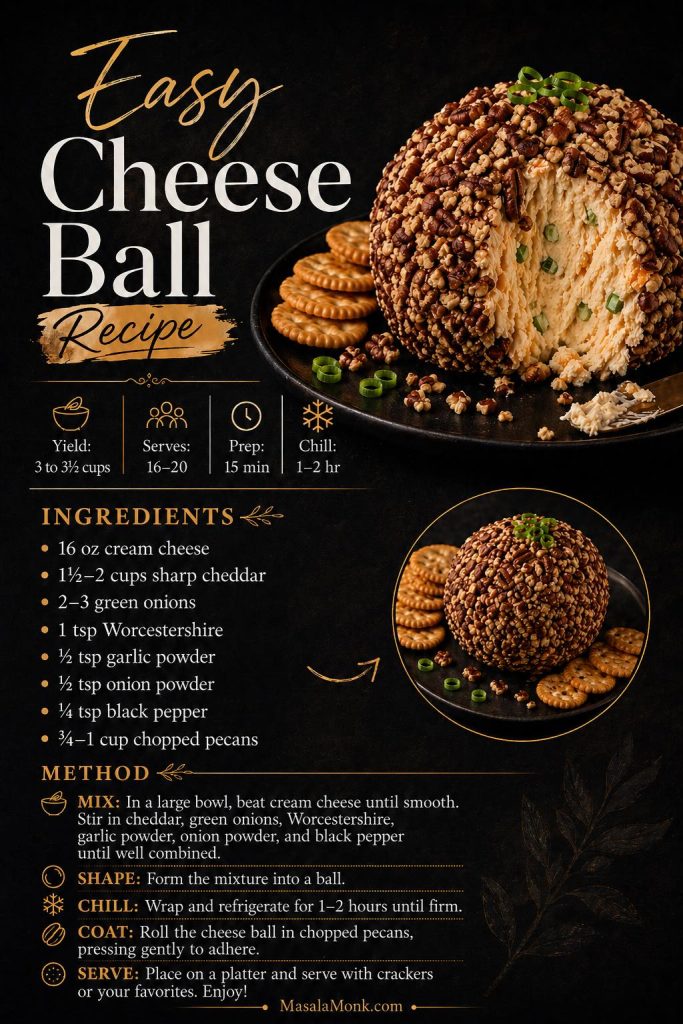
Recipe card graphic for an easy cheese ball recipe with a photo of the finished cheese ball, yield and timing details, an ingredient list including cream cheese, sharp cheddar, green onions, Worcestershire, seasonings, and pecans, plus a short method.
This easy cheese ball recipe uses a classic formula: cream cheese, sharp cheddar, green onions, Worcestershire, simple seasonings, and chopped pecans. Since it is make-ahead friendly, it is a strong choice for holidays, parties, and snack boards.

Why This Cheese Ball Recipe Works

This cheese ball recipe works because it keeps the base firm, flavorful, and easy to spread. Instead of adding too many wet ingredients, it uses full-fat block cream cheese for structure, sharp cheddar for stronger cheese flavor, and dry seasonings that blend smoothly through the filling.

Also, the coating goes on after the ball has chilled. That timing matters because the outside stays cleaner, the nuts or herbs stick better, and the finished appetizer looks fresher on the platter. That way, the cheese ball stays make-ahead friendly without tasting flat or turning messy.

Recipe Choice Why It Helps
Full-fat block cream cheese Firms up enough to shape into a ball
Sharp cheddar Adds enough flavor to stand up to crackers and vegetables
Garlic powder and onion powder Season evenly without harsh raw pieces
Worcestershire sauce Adds savory depth so the filling does not taste one-note
Coating after chilling Keeps the outside fresher, cleaner, and crunchier
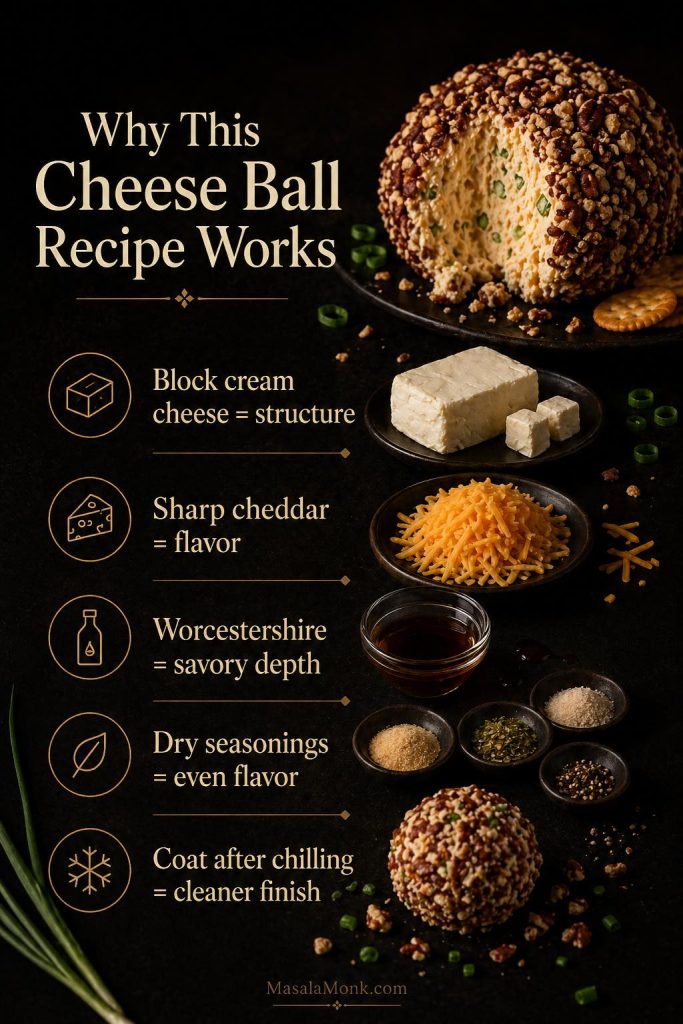
Explainer board showing why a cheese ball recipe works, with callouts for block cream cheese for structure, sharp cheddar for flavor, Worcestershire for savory depth, dry seasonings for even flavor, and coating after chilling for a cleaner finish.
A good cheese ball recipe works because the structure and flavor stay balanced. Block cream cheese keeps it firm, sharp cheddar keeps it from tasting flat, and coating the ball after chilling helps the outside stay cleaner and more defined.

That is what keeps the recipe flexible without making it vague. You can change the coating, the add-ins, or the serving style, while the cream cheese and cheddar base still keeps the ball structured enough to slice, scoop, and spread.

Cheese Ball Ingredient Notes

The base is simple, but each ingredient matters. Because the recipe is no-cook, the flavor comes from good cheese, proper seasoning, and the contrast between the creamy inside and the textured coating. That is why bland cheese, cold cream cheese, and watery add-ins can make the whole appetizer fall flat.

Cream Cheese

Use full-fat block-style cream cheese for the best structure. Because this is a chilled recipe, the cheese needs to firm up around the ball without turning stiff or crumbly. Block-style cream cheese softens smoothly, firms up well in the refrigerator, and gives the finished cheese ball a rich but spreadable texture. By contrast, whipped cream cheese can make the mixture looser, while cold cream cheese can leave small lumps in the filling.

Let the cream cheese soften at room temperature until it presses easily with a spoon. It should be soft enough to beat, but not melted or greasy. If it melts, the cheese mixture can become loose, and the ball may take much longer to firm up in the refrigerator. On the other hand, if it is too cold, the filling can stay lumpy even after mixing.

If your kitchen is cool, cream cheese may need 45 to 60 minutes to soften. If your kitchen is warm, check it sooner so it softens without turning greasy.

Sharp Cheddar

Sharp cheddar is the easiest choice because it brings more flavor than mild cheddar. Also, it balances the cream cheese, so the finished appetizer tastes like a proper cheddar cheese ball instead of a plain cream cheese spread. For this recipe, the cheese should be bold enough that the ball still tastes savory after it is spread onto crackers.

Whenever possible, shred the cheddar fresh because it blends more smoothly into the cream cheese base. Still, pre-shredded cheddar can work when convenience matters. If the mixture feels dry after using packaged shredded cheese, let it sit for a few minutes and mix again before shaping. In practice, the recipe is forgiving as long as the cheese tastes bold and the ball still holds together after chilling.

Best Cheese for a Cheese Ball

For most versions, sharp cheddar is the best first choice because it has enough flavor to balance the cream cheese. However, this recipe can move in different directions depending on the cheese you choose. If you want the ball to taste milder, sharper, smokier, or spicier, start with the guide below.

Cheese Best For How to Use It
Sharp cheddar Classic cheese ball recipe Main shredded cheese for the strongest everyday version
White cheddar Holiday boards Use like yellow cheddar for a sharper but cleaner-looking ball
Colby Jack Milder family-style cheese ball Use when you want a softer flavor
Pepper Jack Spicy cheese ball Use half pepper Jack and half cheddar
Smoked gouda Smoky party flavor Use a small amount with cheddar rather than replacing all the cheese
Blue cheese Bold retro appetizer Use a little because the flavor is strong
Goat cheese Tangier variation Use as a partial swap, but expect a softer ball
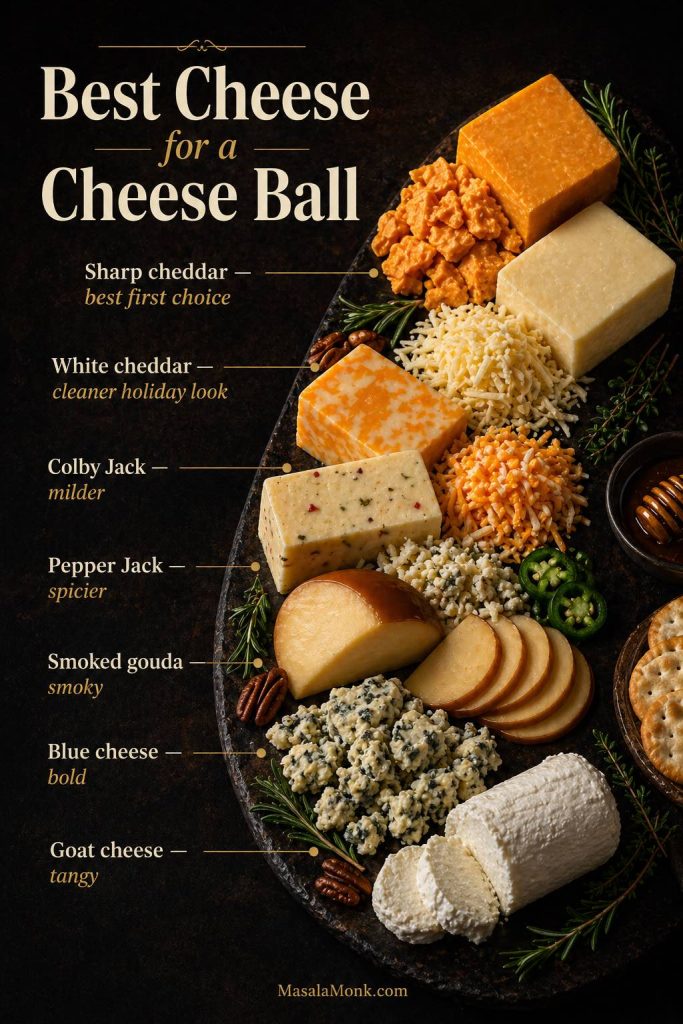
Chooser guide comparing cheeses for a cheese ball recipe, including sharp cheddar, white cheddar, Colby Jack, Pepper Jack, smoked gouda, blue cheese, and goat cheese, each labeled with its flavor style.
Sharp cheddar is the best first choice for a cheese ball because it gives strong flavor without making the filling complicated. However, white cheddar, Pepper Jack, smoked gouda, or even a little blue cheese can shift the recipe in a different direction.

When in doubt, start with sharp cheddar. After that, use the table as a flavor guide rather than a strict rule. For example, pepper Jack makes sense for a spicy cheese ball, while white cheddar looks cleaner on a holiday board.

Green Onion, Garlic, Onion, and Worcestershire

Green onion adds freshness, while garlic powder and onion powder season the filling evenly. Meanwhile, Worcestershire sauce adds a savory note that makes the cheese ball taste fuller and less one-dimensional. Together, they make the recipe taste seasoned without adding extra moisture.

Because crackers, pretzels, bacon, dried beef, and seasoning blends can all be salty, add salt carefully. Before shaping the ball, taste the cheese filling; then decide if the recipe needs even a small pinch.

Pecans, Walnuts, Herbs, Bacon, or Pretzels

Although chopped pecans are the classic coating, walnuts, herbs, bacon, and crushed pretzels can all work depending on the flavor you want. Pecans add crunch and a slightly sweet nuttiness, while herbs such as parsley, chives, and green onion make the outside fresher and brighter.

For a game-day cheese ball, add cooked crumbled bacon to the coating. For a no-nut cheese ball, use herbs, bacon, crushed pretzels, crushed crackers, everything seasoning, or toasted breadcrumbs instead.

Do You Need Sour Cream, Mayo, or Butter?

You do not need sour cream, mayo, or butter for this classic shaped cheese ball recipe. In fact, keeping them out makes the ball easier to shape because the filling stays thicker and cleaner. Full-fat cream cheese already gives the recipe enough richness, while cheddar and seasonings bring the flavor.

That said, sour cream or mayo can be useful if you are making cheese ball dip instead of a shaped appetizer. In that case, add only 1 to 2 tablespoons at first, then check the texture before adding more. Otherwise, the dip can move from creamy to loose very quickly.

Warm cheese option: If you want a pourable cheese dip instead of a chilled cream cheese appetizer, try MasalaMonk’s easy cheese sauce recipe for nachos, fries, broccoli, pasta, and dipping.

Equipment You Need

You do not need special equipment for this recipe, but a few basic tools make the cheese mixture smoother and the final ball easier to shape. If the cream cheese is properly softened, even a sturdy spatula can work. However, a hand mixer makes the filling smoother faster, especially when you are doubling the recipe.
Tool Why It Helps
Mixing bowl For beating the cream cheese and folding in cheddar
Hand mixer or sturdy spatula For a smoother filling
Box grater For freshly shredded cheddar
Plastic wrap or parchment For shaping the filling into a clean ball
Plate or shallow tray For rolling the chilled cheese ball in coating
Serving knife or spreader For easier spreading without breaking crackers

Common Mistakes to Avoid

Before you start mixing, it helps to know what can go wrong. Most cheese ball problems come from cream cheese that is too cold, add-ins that are too wet, or coatings that are added too early. Fortunately, each problem is easy to avoid if you build the recipe in the right order. More importantly, fixing the filling before shaping is much easier than fixing a finished ball after the coating is already on.

Mistake What Happens Better Move
Melting the cream cheese Loose or greasy filling Soften at room temperature instead
Using cold cream cheese Lumpy cheese ball mixture Let it soften until it presses easily
Adding wet pineapple, pickles, or jalapeños Soft or watery filling Drain and blot before mixing
Coating with pretzels or bacon too early Soft outside layer Add crunchy coatings closer to serving
Adding salt too soon Overly salty cheese ball Taste first, then salt only if needed
Serving straight from the fridge Firm texture and broken crackers Rest 15 to 20 minutes before serving
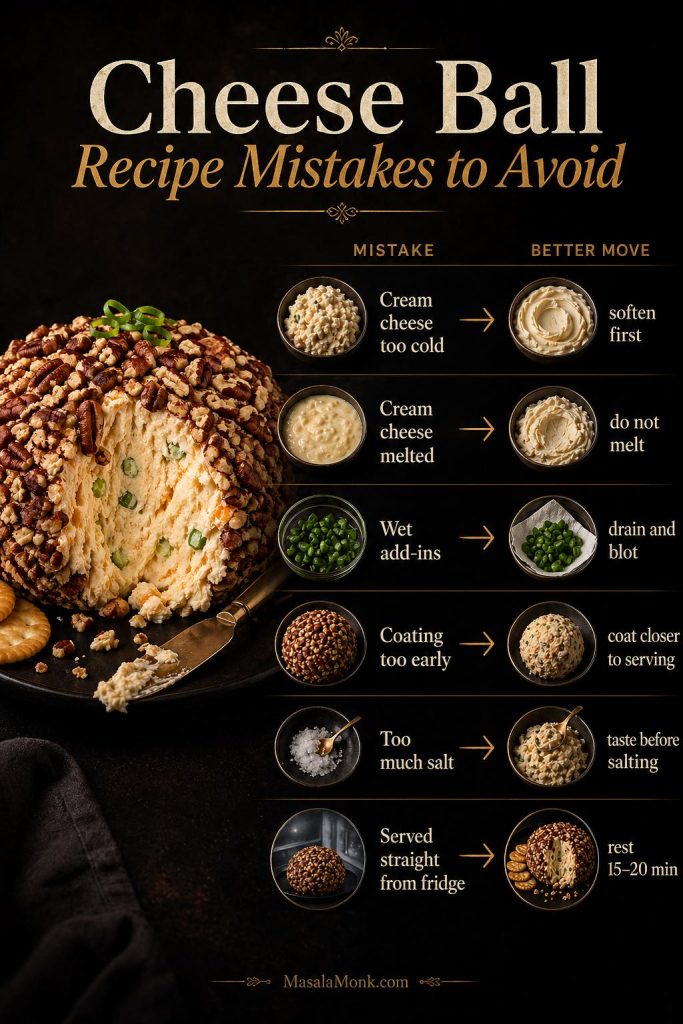
Mistake-and-fix guide for a cheese ball recipe showing six common problems: cream cheese too cold, cream cheese melted, wet add-ins, coating too early, too much salt, and serving straight from the fridge.
Most cheese ball recipe problems are easy to avoid once you know what to watch for. For example, cold cream cheese causes lumps, wet add-ins can loosen the mixture, and serving the ball straight from the fridge makes it harder to spread.

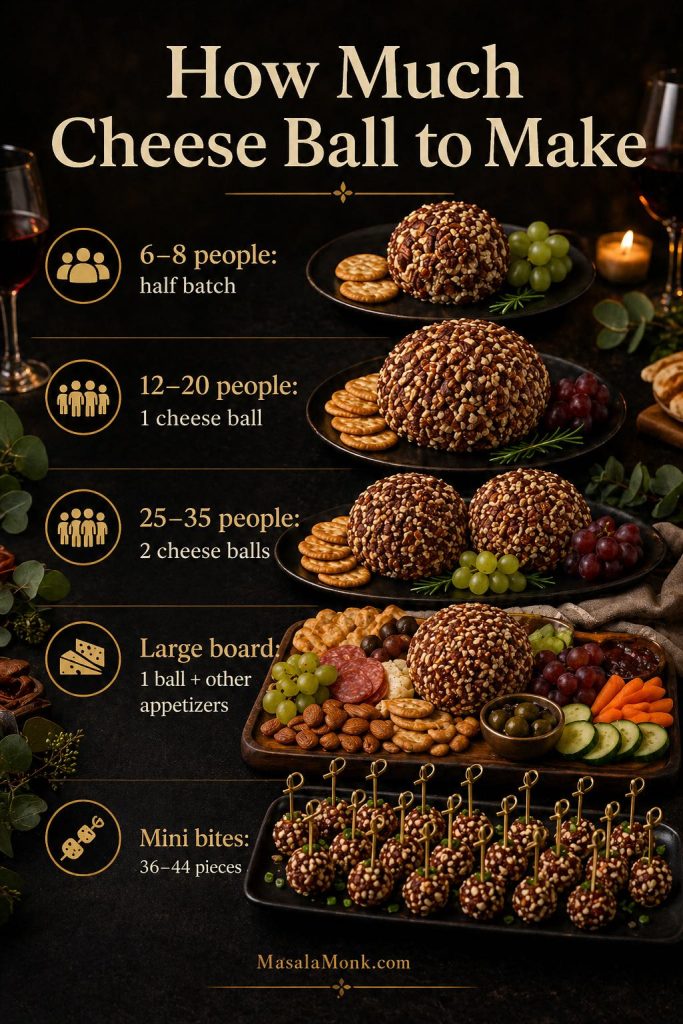
How Much Cheese Ball to Make

Because this cheese ball recipe is usually served as part of a snack table, the right amount depends on what else you are serving. If the ball is the main appetizer, plan more. However, if it sits on a board with dips, crackers, vegetables, fruit, and hot snacks, one batch can stretch further. In that case, variety matters more than making one oversized cheese ball.

Crowd Size Amount to Make Best Plan
6 to 8 people Half batch Smaller ball or full recipe as dip with leftovers planned
12 to 20 people 1 full cheese ball Crackers, vegetables, pretzels, and at least one fresh side
25 to 35 people 2 cheese balls Two flavors, such as classic pecan and bacon ranch
Large party board 1 cheese ball plus other appetizers Warm dip, crunchy snack, fruit, pickles, olives, and sturdy crackers
Individual portions 36 to 48 mini cheese ball bites 1-tablespoon portions with pretzel sticks added right before serving
Serving guide showing how much cheese ball to make for different group sizes, including half a batch for 6 to 8 people, one cheese ball for 12 to 20, two cheese balls for 25 to 35, one ball plus other appetizers for a large board, and mini bites as another option.
How much cheese ball to make depends on how you are serving it. If it is one appetizer among several, one batch goes further; however, for larger gatherings, two cheese balls or a tray of mini bites makes hosting much easier.

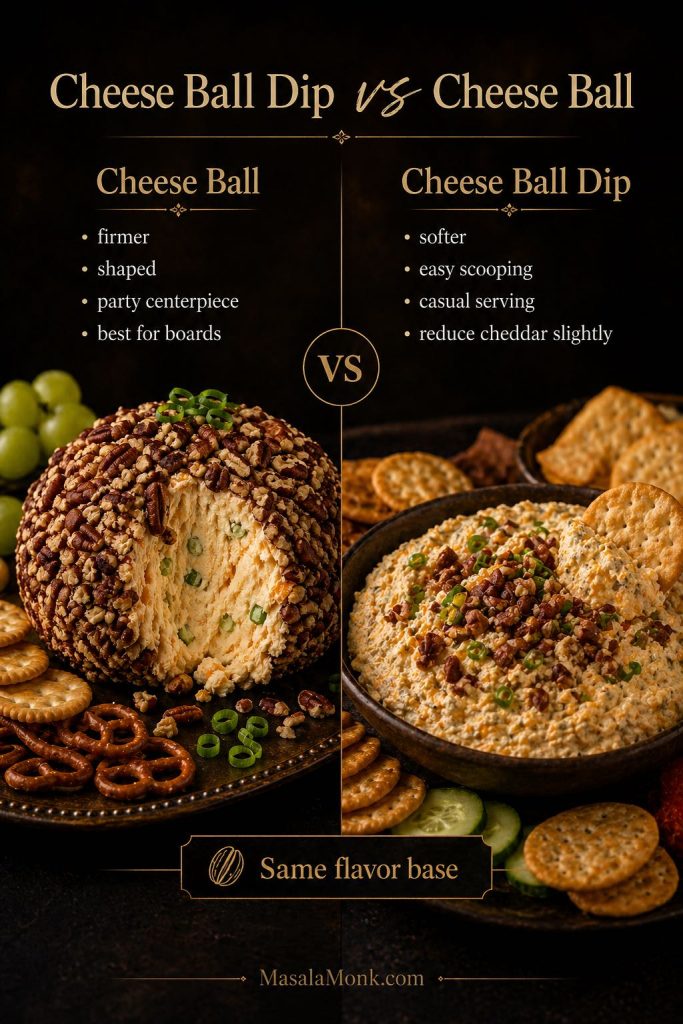
Cheese Ball Dip: How to Serve This Without Shaping It

If you want the flavor of a cheese ball without shaping it, turn the mixture into cheese ball dip. This is useful for casual parties, snack boards, and smaller gatherings where a bowl of spread is easier than a shaped appetizer. Instead of changing the whole recipe, you only need to adjust the cheese slightly so the ball mixture becomes softer and more scoopable.

To make cheese ball dip, use the same base recipe but reduce the cheddar to 1½ cups / about 170 g so the texture stays softer. Then, mix the filling, spoon it into a shallow serving bowl, smooth the top, and sprinkle the coating over the surface. Chill for 30 to 60 minutes if making it ahead; afterward, let it soften slightly before serving so you get the same flavor with less shaping and easier scooping.

For Cheese Ball Dip Use This Adjustment
Softer texture Use 1½ cups / 170 g cheddar instead of 2 cups / 225 g
Easy serving Spoon into a shallow bowl instead of shaping into a ball
Better topping Add pecans, herbs, bacon, or pretzels right before serving
Best dippers Crackers, pretzel crisps, celery, cucumber, bell pepper, crostini, or pita chips
Side-by-side comparison showing a shaped cheese ball on a platter and a bowl of cheese ball dip, with notes that the cheese ball is firmer and better for boards while the dip is softer and easier to scoop.
Cheese ball dip vs cheese ball comes down to texture and serving style. Both use a similar flavor base, yet the dip is softer and easier to scoop, while the shaped cheese ball feels more polished for a party platter or snack board.

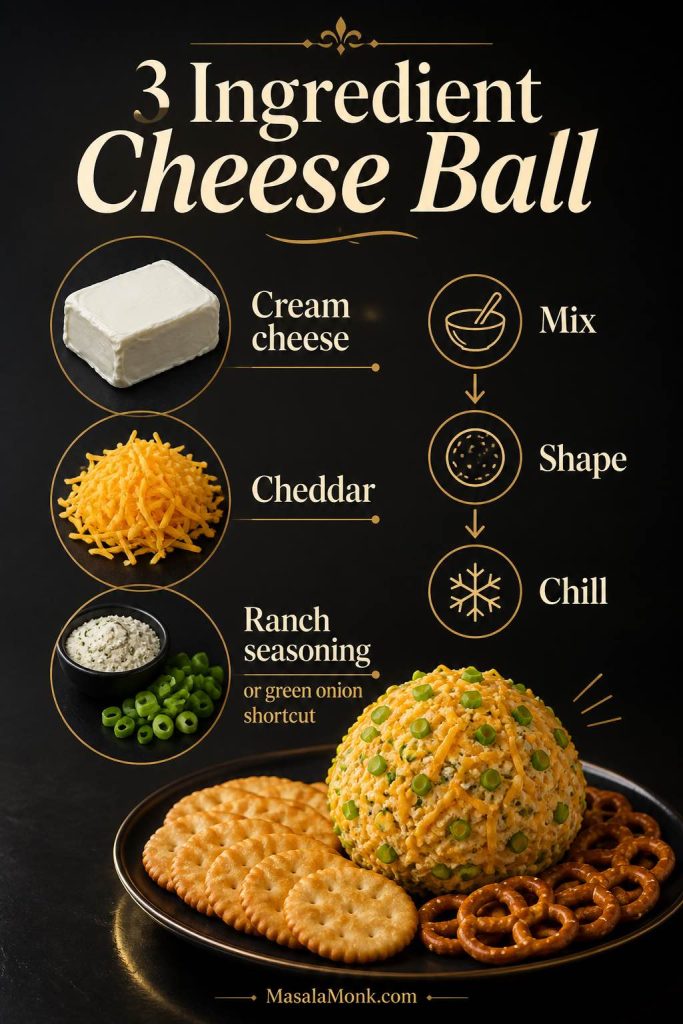
3 Ingredient Cheese Ball

A 3 ingredient cheese ball is useful when you need the fastest possible appetizer. However, it will not have the same depth as the full recipe because garlic, onion, pepper, and Worcestershire add much of the savory background flavor. Still, when time is short, cream cheese, cheddar, and one strong seasoning can form a simple ball that works with crackers and pretzels.

Version Ingredients Best Use
Classic shortcut 16 oz / 450 g cream cheese + 1½ cups / 170 g cheddar + 1 packet / about 28 g ranch seasoning Fast game-day cheese ball
No-ranch shortcut 16 oz / 450 g cream cheese + 1½ cups / 170 g cheddar + 3 sliced green onions Milder cheese ball for simple crackers
Coated shortcut 16 oz / 450 g cream cheese + 1½ cups / 170 g cheddar + ¾ cup / 85 g chopped pecans Basic party cheese ball with crunch
Guide image for a 3 ingredient cheese ball showing cream cheese, shredded cheddar, ranch seasoning or green onion, plus a finished cheese ball served with crackers and pretzels, with the steps mix, shape, and chill.
A 3 ingredient cheese ball is the fastest shortcut version when you need a party appetizer quickly. However, the full cheese ball recipe gives you better depth because Worcestershire, garlic powder, onion powder, pepper, and green onion round out the flavor.

For the best flavor, though, use the full recipe. Worcestershire sauce, garlic powder, onion powder, black pepper, and green onion make the cheese ball taste more complete without making the method harder. Still, the shortcut version is useful when speed matters more than building the most layered flavor.

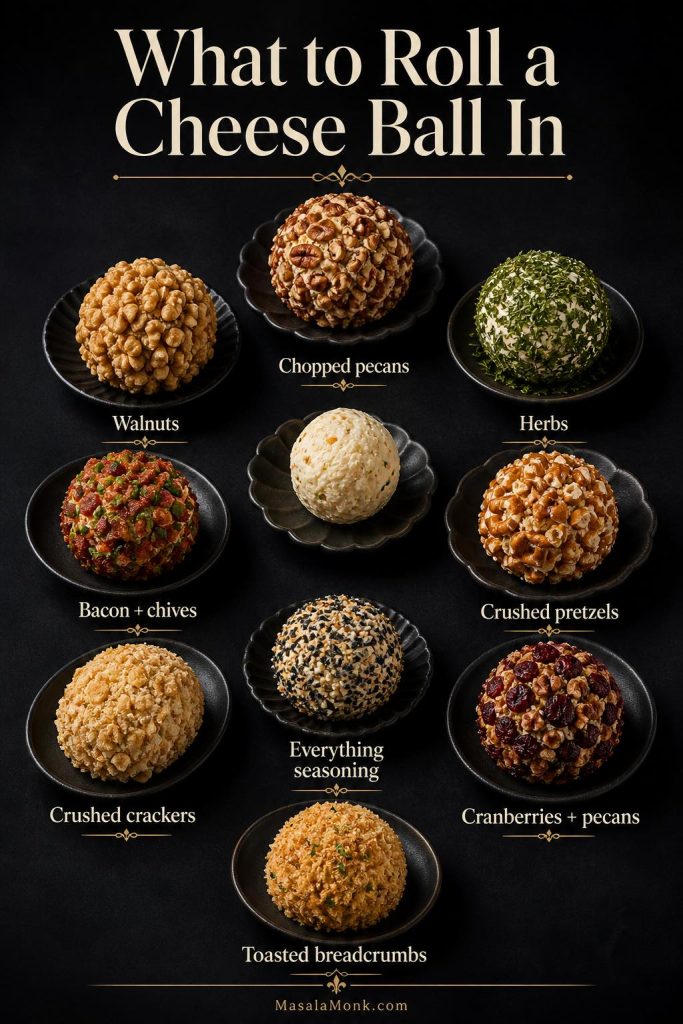
What to Roll a Cheese Ball In

The coating does more than make the cheese ball look finished. It adds texture, controls richness, and tells people what kind of flavor to expect. Although pecans are classic, there are plenty of good nut-free and holiday-friendly options. For example, this recipe can move from a classic cheese ball to a game-day ball or holiday cheese board centerpiece just by changing the outside layer.

Coating Best For Notes
Chopped pecans Classic cheese ball Toast lightly, then cool before using
Chopped walnuts Earthier flavor Chop finely so the pieces stick well
Parsley, chives, or green onion Fresh green finish Good for a lighter-looking or no-nut version
Bacon and chives Game day Add close to serving so the bacon stays crisp
Crushed pretzels No-nut crunch Add shortly before serving because pretzels soften
Crushed crackers Simple no-nut coating Use sturdy crackers and crush finely
Everything seasoning Bagel-style flavor Use lightly because it can be salty
Dried cranberries and pecans Holiday cheese ball Sweet, salty, colorful, and festive
Toasted breadcrumbs Nut-free coating Use dry crumbs and add close to serving
Coating guide showing cheese balls rolled in chopped pecans, walnuts, herbs, bacon and chives, crushed pretzels, crushed crackers, everything seasoning, cranberries and pecans, and toasted breadcrumbs.
What you roll a cheese ball in changes both texture and flavor. For example, pecans give the classic crunch, bacon and chives make it more savory, while crushed pretzels or crackers work well when you want a no-fuss party coating.

No-Nut Cheese Ball Coatings

For a cheese ball without nuts, use chopped herbs, cooked bacon, crushed pretzels, crushed crackers, everything seasoning, toasted breadcrumbs, sesame seeds, or a mix of herbs and shredded cheddar. If allergies are a concern, avoid using nut coatings anywhere near the same platter, utensils, or serving board. In that case, keep the whole platter nut-free rather than relying on separate corners of the same board.

No-nut cheese ball coating guide showing a finished no-nut cheese ball with coating options including fresh herbs, bacon, crushed pretzels, crushed crackers, everything seasoning, sesame seeds, toasted breadcrumbs, and shredded cheddar.
A no-nut cheese ball can still look colorful and taste crunchy. Instead of pecans or walnuts, use fresh herbs, bacon, crushed pretzels, cracker crumbs, sesame seeds, toasted breadcrumbs, or shredded cheddar for a safer party-board option.

What to Serve With a Cheese Ball

A cheese ball works best with dippers that can handle a creamy spread. So, put out a mix of crackers, vegetables, pretzels, and a few fresh or tangy sides so the platter does not feel too heavy. Since this recipe is rich, the best cheese board pairings usually include something crisp, something salty, and something fresh. That balance keeps guests coming back without making every bite feel the same.

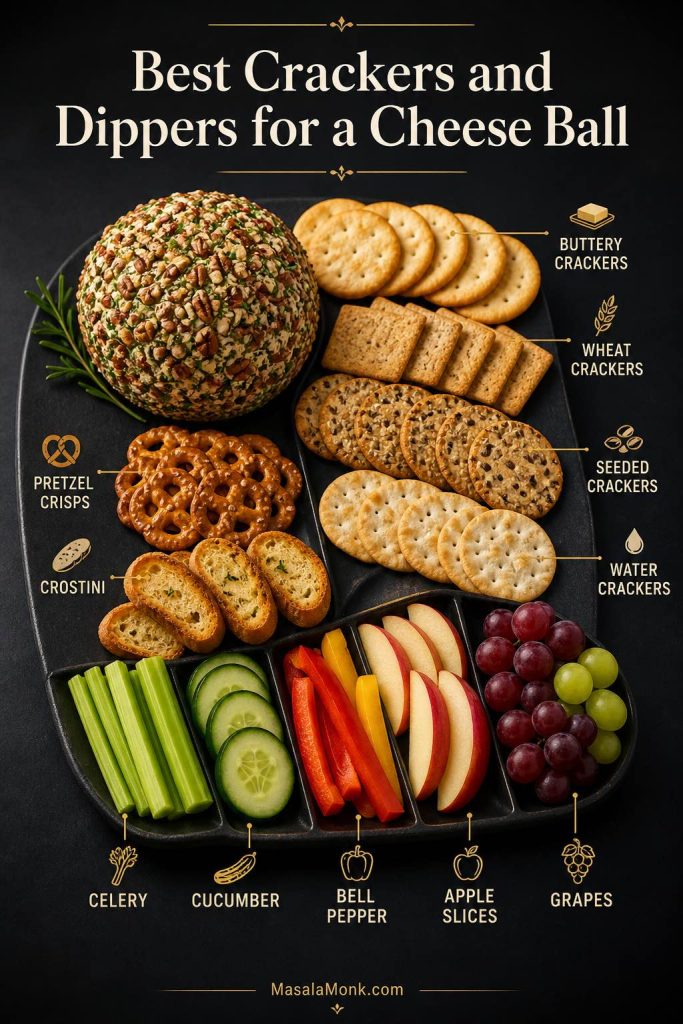
Best Crackers for a Cheese Ball

Cracker or Dipper Why It Works Best Pairing
Buttery crackers Classic party flavor and easy crunch Classic pecan or cranberry pecan
Wheat crackers Sturdy, nutty, and less fragile Dried beef or bacon ranch
Seeded crackers More texture and grown-up flavor Herb or no-nut cheese ball
Water crackers Clean flavor that lets the cheese stand out Classic cheddar once slightly softened
Pretzel crisps Salty, crunchy, and strong enough for scooping Bacon ranch, jalapeño, or dill pickle
Crostini or baguette slices Strongest option for a firmer cheese ball Party boards and holiday platters
Celery, cucumber, and bell pepper Fresh, lighter, and crisp Rich cheese balls and game-day spreads
Apple slices and grapes Sweet and fresh against savory cheese Cranberry pecan, pineapple, or classic pecan
Serving guide showing a cheese ball with buttery crackers, wheat crackers, seeded crackers, water crackers, pretzel crisps, crostini, celery, cucumber, bell pepper, apple slices, and grapes.
The best crackers and dippers for a cheese ball are sturdy enough to scoop without breaking. Since the filling is rich, a mix of crackers, pretzel crisps, fresh vegetables, apple slices, and grapes keeps the platter balanced.

Because the cheese ball can be firm when it first comes out of the fridge, sturdy crackers work better than very thin ones. So let it soften for 15 to 20 minutes before serving, or include a small spreading knife on the platter.

For a low-carb platter, serve the cheese ball with celery, cucumber rounds, bell pepper strips, cheese crisps, pork rinds, or other sturdy options from MasalaMonk’s guide to keto chips for dips. This works especially well when the cheese ball is part of a heavier game-day table and you want a few lighter, crunchier options.

Turn It Into a Party Board

For a fuller spread, place the cheese ball on a board with crackers, pretzels, fruit, nuts, pickles, olives, cured meats, and a small bowl of jam or chutney. If you want a simple layout formula, MasalaMonk’s guide to charcuterie board ideas gives you an easy structure for building a balanced board. From there, add one crunchy item, one fresh item, and one sweet or tangy item around the cheese ball.

For a game-day table, pair this cheese ball with buffalo chicken dip, crispy mozzarella sticks, or a tray of potato appetizers. That gives guests a mix of cold, creamy, hot, crispy, salty, and fresh bites.

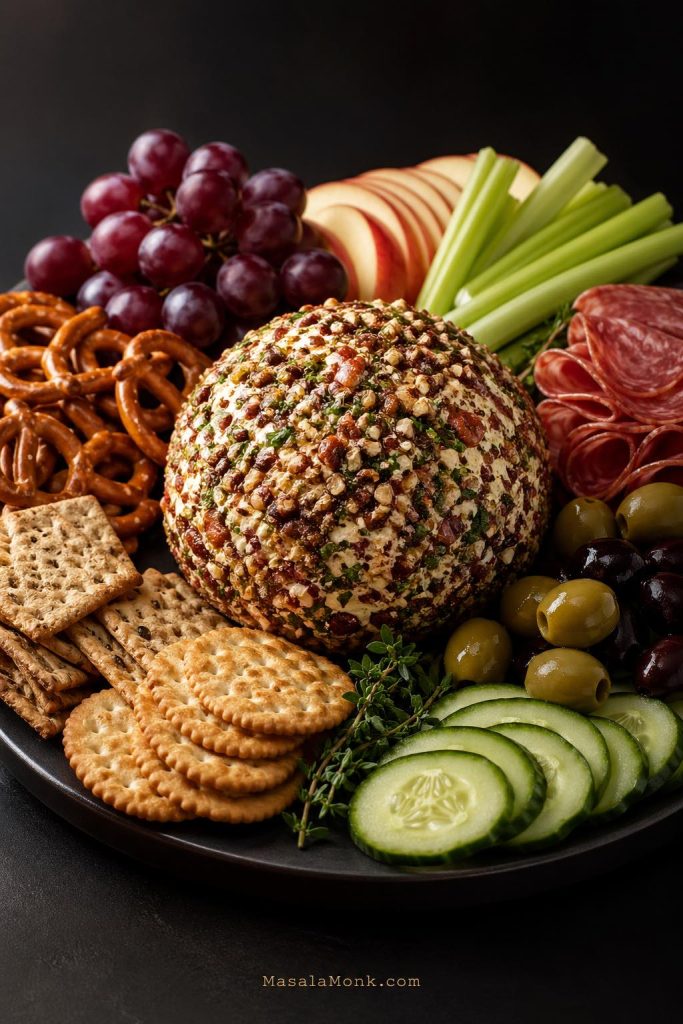
Close-up of a cheese ball party board with a nut-coated cheese ball surrounded by crackers, pretzels, grapes, apple slices, celery, cucumber slices, olives, and folded cured meat on a dark platter.
A cheese ball party board works best when it has contrast. Add salty crackers, crisp vegetables, fresh fruit, and a few briny sides so the creamy cheese ball feels like the centerpiece instead of the only thing on the platter.

Make Ahead, Storage, and Freezing

A cheese ball is one of the easiest make-ahead appetizers because chilling helps it firm up. In fact, the recipe often tastes better after a few hours because the cheese, onion, and seasonings have time to settle. The best approach is to make and shape the filling ahead, then add the coating closer to serving. That way, the inside gets time to develop flavor while the outside still tastes fresh.

Best make-ahead method: Mix and shape the cheese ball 1 day ahead, wrap tightly, and refrigerate. Then roll it in pecans, herbs, bacon, pretzels, or crumbs closer to serving so the outside stays fresh and crisp.

Make-Ahead Timeline

When You Are Serving What to Do Best Coating Timing
Same day Mix, shape, chill for 1 to 2 hours Coat after chilling
1 day ahead Mix, shape, wrap tightly, and refrigerate Coat the day you serve
2 to 3 days ahead Shape uncoated and keep tightly wrapped Coat shortly before serving
Freezer prep Freeze the shaped, uncoated cheese ball Thaw overnight, then coat fresh
Make-ahead storage and freezing guide for a cheese ball showing steps for same-day prep, making it 1 day ahead, keeping it uncoated for 2 to 3 days, freezing it uncoated, thawing overnight in the fridge, and coating fresh before serving.
For the cleanest make-ahead cheese ball, shape and chill the filling first, then add the coating close to serving. That way, the inside has time to firm up while the outside stays fresh, crisp, and party-ready.

How to Store a Cheese Ball

After shaping, wrap the cheese ball tightly in plastic wrap or store it in an airtight container in the refrigerator. If it has already been coated, use a container large enough that the outside does not get crushed.

For best texture, keep a shaped, uncoated cheese ball refrigerated for up to 3 days before serving. Once the cheese ball has been coated or served, store leftovers tightly covered in the refrigerator and use them within 3 to 4 days. For freezing, freeze the shaped, uncoated cheese ball for up to 1 month, then thaw it overnight in the refrigerator and coat it fresh before serving.

Keep the cheese ball refrigerated at 40°F / 4°C or colder. For the cleanest presentation, store the shaped cheese ball uncoated, then roll it in pecans, herbs, bacon, or crumbs shortly before serving.

Can You Freeze a Cheese Ball?

If you need to make it further ahead, freeze the cheese ball before adding the coating so the outside stays fresher after thawing. Wrap the shaped cheese ball tightly, place it in a freezer-safe bag or container, and freeze at 0°F / -18°C. Then thaw it overnight in the refrigerator and roll it in a fresh coating before serving.

Freezing works best with the plain cream cheese, cheddar, green onion, and seasoning base. Wet add-ins such as pineapple, pickles, or jalapeños can release moisture after thawing, so those versions are better made fresh or only 1 to 2 days ahead. After thawing, always add a fresh coating so the outside tastes crisp instead of stale or soft.

How Long Can a Cheese Ball Sit Out?

Because a cheese ball is made with cream cheese and shredded cheese, treat it like a perishable appetizer. According to USDA food safety guidance, perishable food should not be left out for more than 2 hours at room temperature, or more than 1 hour when the temperature is above 90°F / 32°C.

For a long party, serve a smaller cheese ball first and keep the backup chilled. Then, if the platter runs low, bring out a fresh one instead of letting the same ball sit for hours. If the cheese ball has been sitting out too long, do not wrap it back up for later. Instead, refrigerate safe leftovers promptly and discard anything that has been left out beyond the safe window.

Food safety guide showing a cheese ball platter with a clock and chilled backup container, explaining that a cheese ball can sit out up to 2 hours at room temperature or 1 hour above 90°F or 32°C.
A cheese ball should not sit out all day just because it is served chilled. For safer entertaining, serve a smaller portion first, keep the backup refrigerated, and replace the platter when needed instead of leaving one ball out for hours.

Cheese Ball Variations

Once the base recipe works, the variations are easy. Instead of rebuilding the appetizer from scratch, keep the cream cheese structure, then change the cheese, seasonings, add-ins, and coating. The formulas below are designed as practical starting points, so you do not have to guess how much bacon, dried beef, pineapple, jalapeño, or cranberry to add to each ball. After that, you can adjust salt, heat, sweetness, or crunch to match the occasion.

Which Cheese Ball Variation Should You Make?

Choose This Version Best For Flavor Direction
Classic pecan Safest party version Creamy, savory, nutty, familiar
Bacon ranch Game day Salty, herby, bold, snacky
Dried beef or chipped beef Old-school party flavor Salty, savory, retro
Cranberry pecan Thanksgiving or Christmas Sweet-salty, colorful, festive
Pineapple Retro sweet-savory spread Creamy, tangy, slightly sweet
Jalapeño Spicy snack table Cheesy, peppery, fresh heat
Mini bites Easy individual serving Party-friendly and mess-light
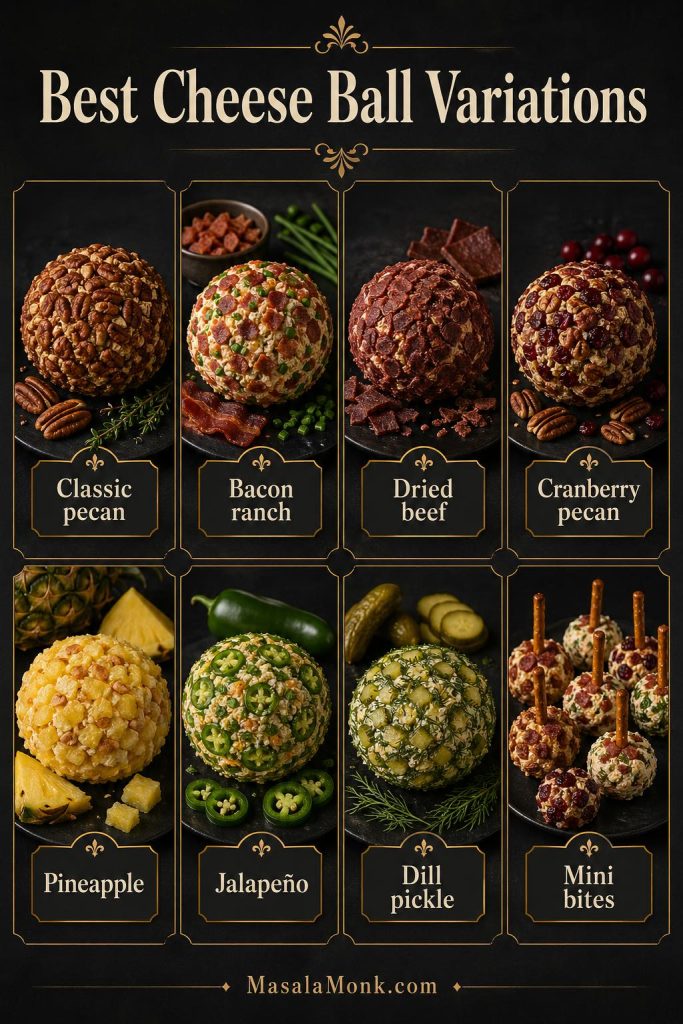
Variation guide showing eight cheese ball ideas: classic pecan, bacon ranch, dried beef, cranberry pecan, pineapple, jalapeño, dill pickle, and mini cheese ball bites with pretzel sticks.
Once the base cheese ball recipe is right, the variations are easy. Keep the cream cheese structure, then change the coating and add-ins for bacon ranch, dried beef, cranberry pecan, pineapple, jalapeño, dill pickle, or mini cheese ball bites.

Bacon Ranch Cheese Ball

For a bacon ranch cheese ball, use 16 oz / 450 g cream cheese, 1½ cups / 170 g shredded cheddar, 1 packet / about 28 g ranch seasoning, ½ cup / about 50 g cooked crumbled bacon, and 2 sliced green onions. Then roll the outside in more bacon, chopped chives, and pecans or crushed pretzels.

Because ranch seasoning and bacon are both salty, do not add extra salt until you taste the filling. If the cheese ball tastes strong on its own, serve it with celery, bell pepper strips, or unsalted crackers for balance. Otherwise, pretzel crisps, wheat crackers, and sturdy buttery crackers all work well.

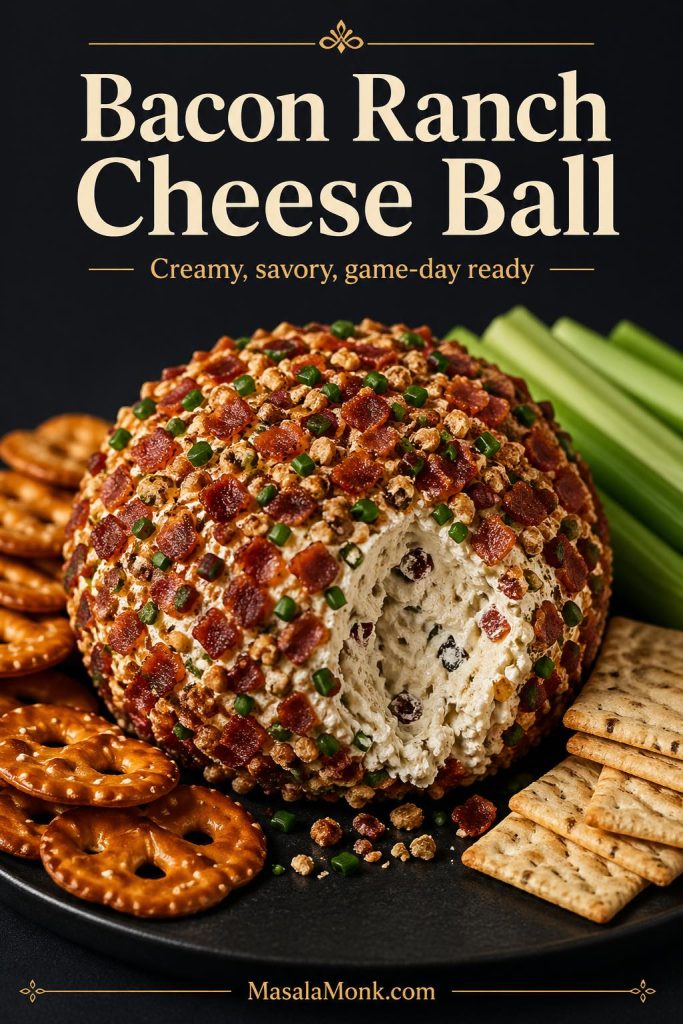
Close-up of a bacon ranch cheese ball coated with chopped bacon, chives, and crunchy bits, served with pretzels, celery sticks, and crackers on a dark platter.
A bacon ranch cheese ball is ideal for game day because it is salty, creamy, and easy to serve with pretzels, celery, and sturdy crackers. Since bacon and ranch seasoning are already flavorful, taste before adding extra salt.

Dried Beef Cheese Ball or Chipped Beef Cheese Ball

For a dried beef cheese ball, use 16 oz / 450 g cream cheese, 1½ cups / 170 g shredded cheddar, 4 to 5 oz / 115 to 140 g finely chopped dried beef or chipped beef, 2 sliced green onions, 1 teaspoon / 5 ml Worcestershire sauce, ½ teaspoon onion powder, and ½ teaspoon garlic powder.

Because dried beef is already salty, skip the added salt. Then roll the outside in chopped pecans, herbs, more finely chopped dried beef, or a mix of all three. If you like a sharper old-school flavor, add 1 to 2 teaspoons prepared horseradish, but blot any extra moisture first.

Old-school party version: Since dried beef is salty, chop it very finely and reserve a little for the outside coating. That way, the cheese ball recipe gets flavor inside and a clear visual cue outside.
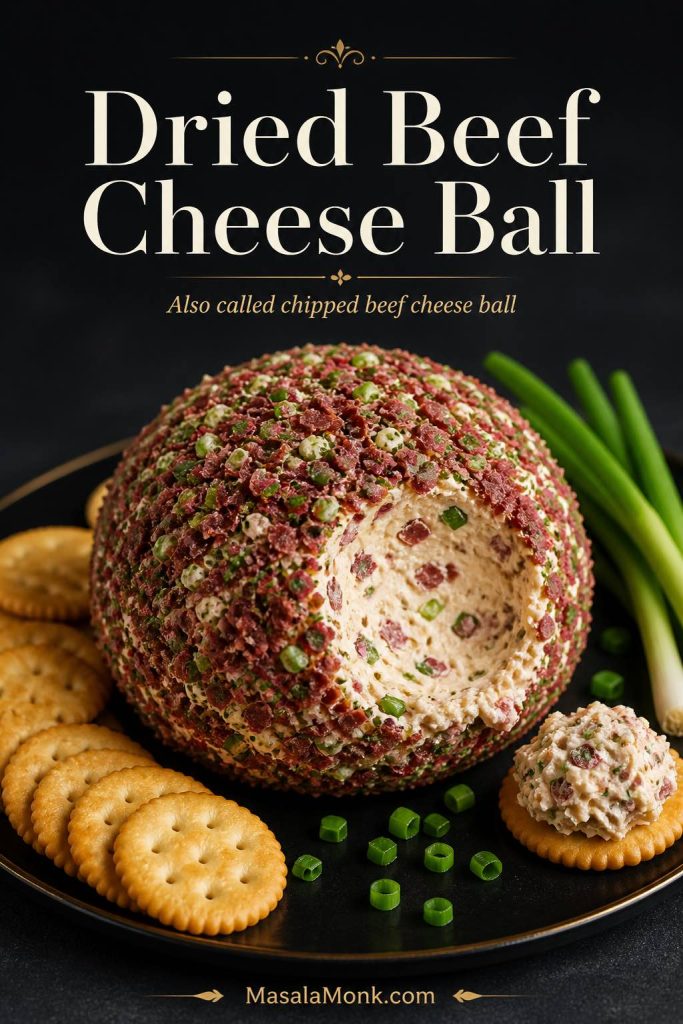
Close-up of a dried beef cheese ball, also called a chipped beef cheese ball, coated with finely chopped dried beef and green onion, with crackers and a scoop of the creamy filling visible.
A dried beef cheese ball brings an old-school party flavor into a modern appetizer board. Because dried beef is naturally salty, chop it finely, skip extra salt at first, and balance the cheese ball with crackers, green onion, and fresh dippers.

Cranberry Pecan Cheese Ball

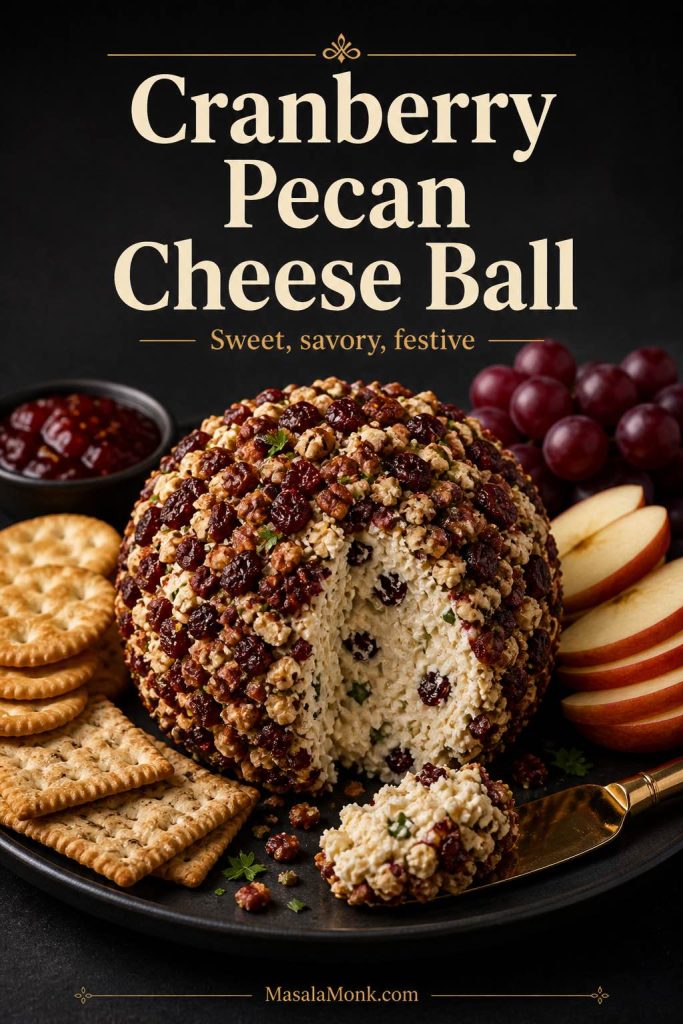
For a cranberry pecan cheese ball, use the base recipe and mix in ½ cup / about 60 g chopped dried cranberries. Then roll the outside in ½ cup / 55 g chopped pecans, ¼ cup / 30 g chopped dried cranberries, and 2 tablespoons chopped parsley or chives.

A little orange zest makes this version brighter, especially for Thanksgiving or Christmas. Because this version already has sweetness from the cranberries, salty or buttery crackers usually work better than sweet dippers. For that reason, it is especially good with apple slices, grapes, and a small bowl of pepper jelly or chutney.

Cranberry pecan cheese ball with a creamy center, coated in chopped pecans, dried cranberries, and herbs, served with crackers, apple slices, grapes, and a small bowl of red chutney.
A cranberry pecan cheese ball is the best holiday-style variation when you want sweet, savory, creamy, and crunchy in one appetizer. Because the cranberries add sweetness, serve it with salty crackers, apple slices, grapes, or a tangy chutney for balance.

Jalapeño Cheese Ball

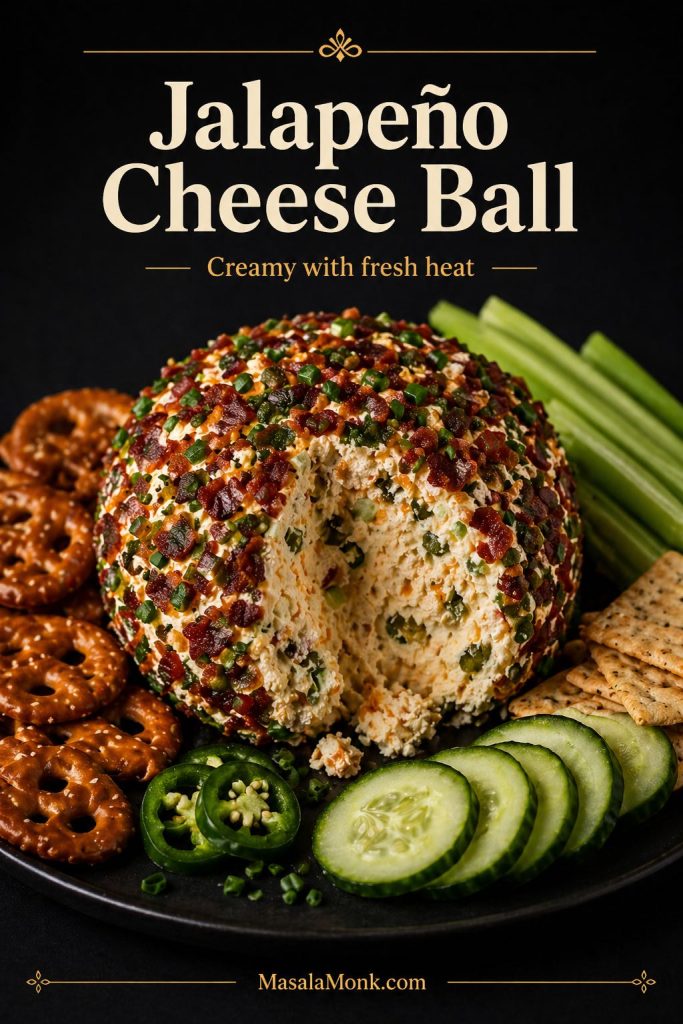
For a jalapeño cheese ball, add 1 to 2 finely chopped jalapeños to the base recipe. Fresh jalapeño tastes brighter, while pickled jalapeño adds tang. Either way, blot the pieces dry before mixing so the filling does not become watery.

Cheddar, bacon, smoked paprika, and chives all work well here. For more heat, add a pinch of cayenne instead of adding too much hot sauce, which can loosen the texture. If your crowd likes creamy heat, this jalapeño version also pairs well with baked jalapeño poppers on the same snack table. Meanwhile, celery and cucumber help cool the heat without making the platter boring.

Jalapeño cheese ball with a creamy filling, chopped jalapeños, green herbs, and cheddar flecks, served with pretzels, cucumber slices, celery sticks, and crackers.
A jalapeño cheese ball should taste creamy first and spicy second. Since fresh jalapeños can vary in heat, start with a modest amount, then add more only after tasting the filling so the cheese ball stays balanced.

Pineapple Cheese Ball

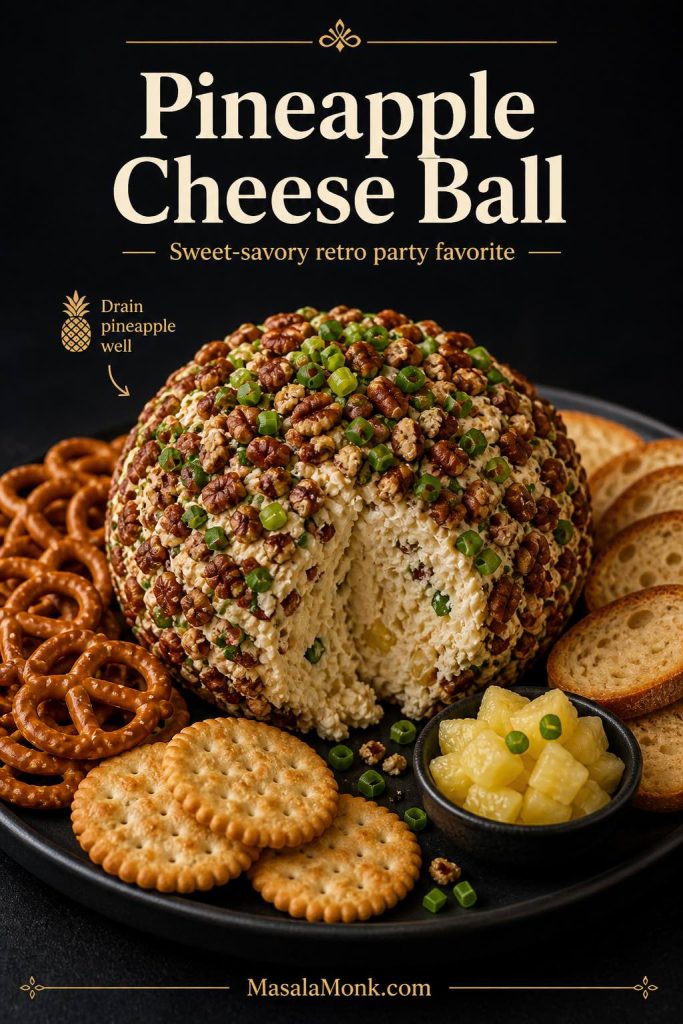
For a pineapple cheese ball, use 16 oz / 450 g cream cheese, 1 to 1½ cups / 115 to 170 g shredded cheddar, ¾ cup / about 180 g crushed pineapple that has been drained and blotted very well, 2 sliced green onions, and ½ cup / about 55 g chopped pecans.

The pineapple must be very dry before it goes into the filling. If it is watery, the cheese ball will turn soft and loose. Therefore, drain it well, press out extra juice, and blot it before mixing. Since this version is sweet-savory, it works especially well with salty crackers, pretzels, and toasted baguette slices.

Pineapple cheese ball coated with chopped pecans and green onion, with a creamy filling and pineapple pieces inside, served with crackers, pretzels, toasted bread slices, and a small bowl of pineapple.
A pineapple cheese ball works best when the pineapple is drained very well before mixing. Otherwise, the filling can turn loose; however, when the pineapple is dry, it adds a sweet-savory flavor that pairs beautifully with salty crackers and pretzels.

Dill Pickle Cheese Ball

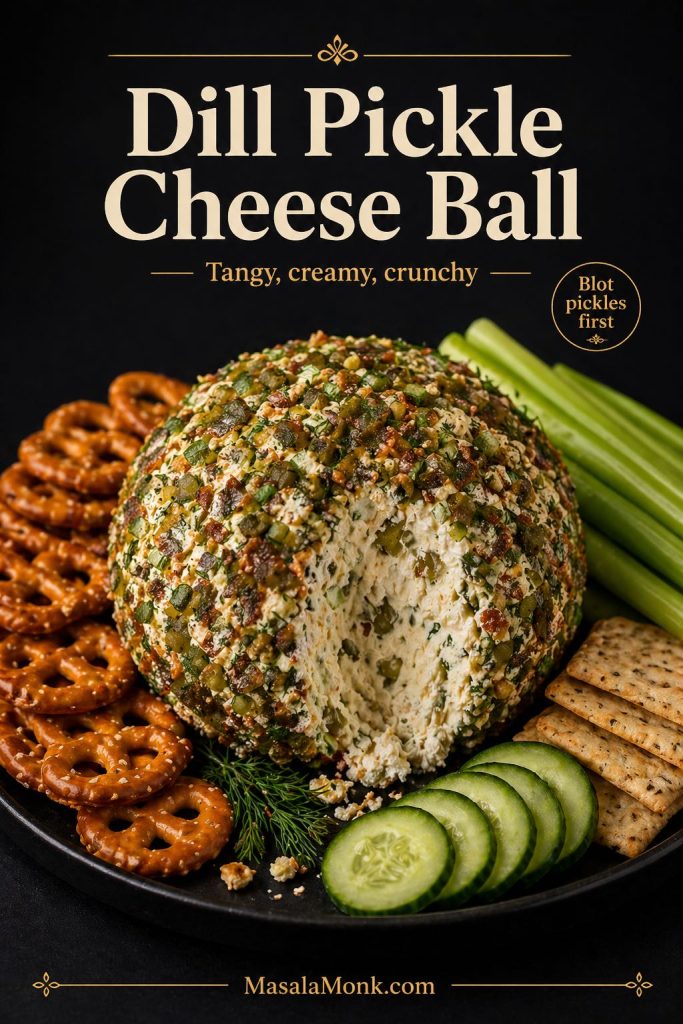
For a dill pickle cheese ball, add ½ cup / about 75 g finely chopped pickles, 1 to 2 teaspoons dill, 1½ cups / 170 g cheddar, garlic powder, and green onion to the cream cheese base. Before mixing, blot the chopped pickles very well so the filling stays thick.

After chilling, roll the outside in chopped herbs, crushed pretzels, or a mix of herbs and shredded cheddar. Since pickles add both salt and moisture, taste before adding extra salt and serve this version with pretzel crisps, celery, cucumber rounds, and sturdy crackers.

Dill pickle cheese ball with chopped pickles, dill, herbs, and a creamy center, served with pretzels, cucumber slices, celery sticks, and seeded crackers.
A dill pickle cheese ball should taste tangy and fresh without becoming watery. For that reason, blot chopped pickles before mixing them into the cream cheese base, then serve the finished ball with pretzels, celery, cucumber, or sturdy crackers.

Mini Cheese Ball Bites

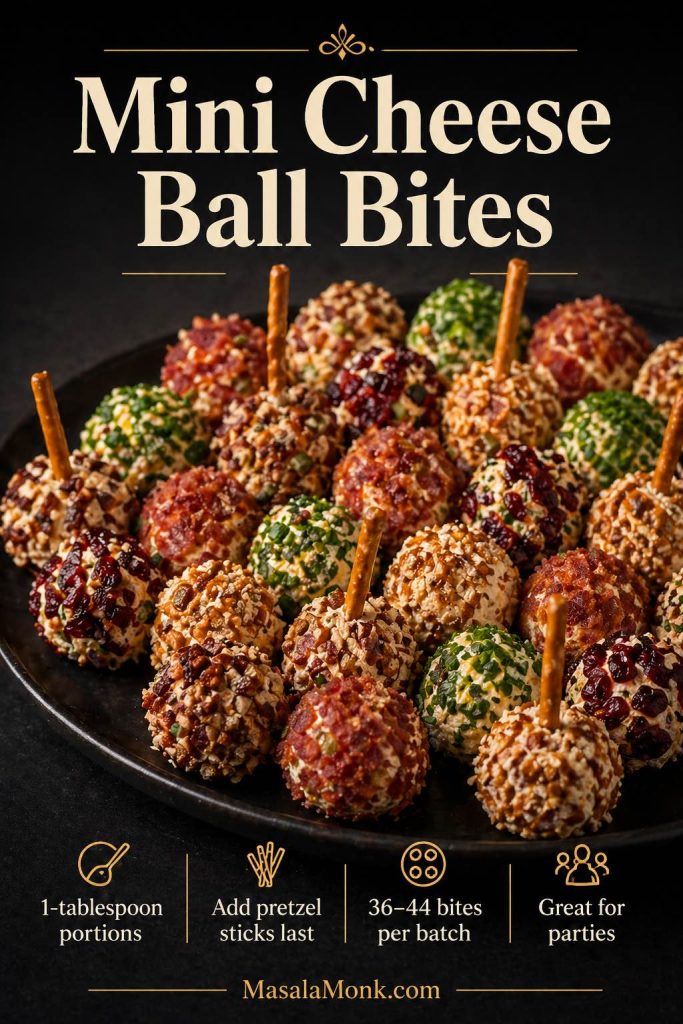
Mini cheese ball bites are ideal when you want individual party portions instead of one large cheese ball. After the filling chills until firm, scoop it into generous 1-tablespoon portions. A full batch usually makes about 36 to 48 mini cheese ball bites, depending on how generously you scoop and how much coating you use.

From there, roll each mini cheese ball in chopped pecans, herbs, bacon, crushed pretzels, or dried cranberries. Then add pretzel sticks right before serving so they stay crisp and do not soften in the cheese mixture. If you are making this recipe ahead, chill the coated bites without the sticks and add the pretzels only when the platter is ready.

Tray of mini cheese ball bites in different coatings, including herbs, bacon, pecans, crushed pretzels, and dried cranberries, with some bites topped with pretzel sticks.
Mini cheese ball bites are ideal when guests need an easy one-bite appetizer. Once the mixture is chilled, scoop it into 1-tablespoon portions, roll each bite in coating, and add pretzel sticks last so they stay crisp.

Christmas Cheese Ball

For a Christmas cheese ball, use the cranberry pecan version or roll the outside in a red-and-green mix of dried cranberries, pecans, parsley, and chives. You can keep it round, shape it into a wreath, or make a simple ornament-style cheese ball for a holiday board.

Still, flavor should come first. A simple round cheese ball with cranberries, pecans, herbs, crackers, grapes, and apple slices usually looks festive without needing a complicated shape. Plus, it is easier to chill, coat, transport, and serve.

Pumpkin Cheese Ball

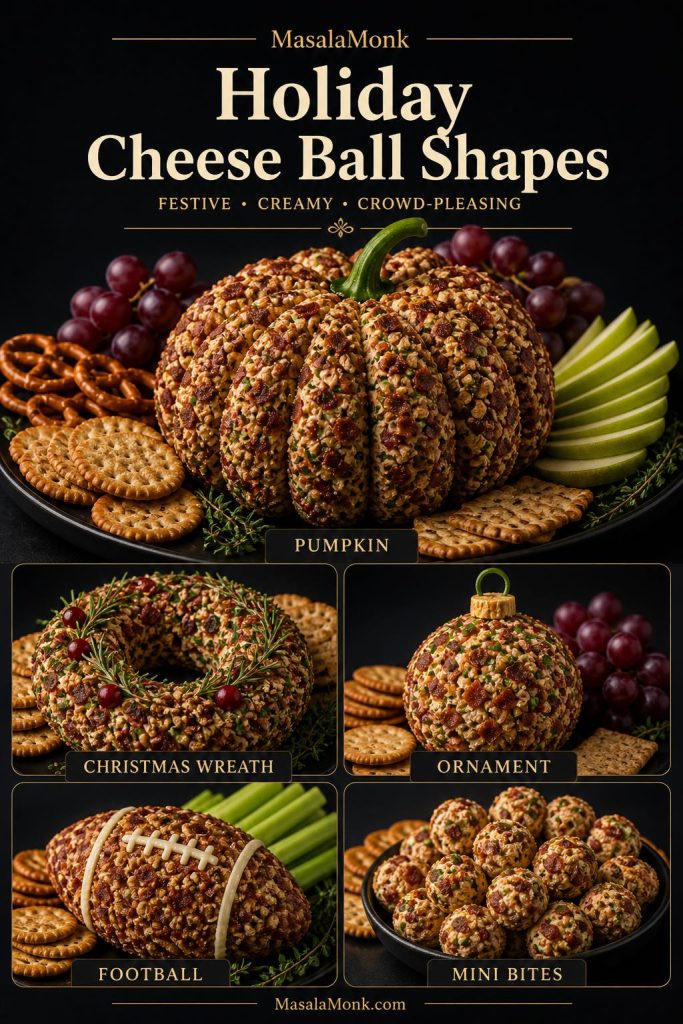
For Halloween or Thanksgiving, shape the cheese ball into a pumpkin. After wrapping the cheese ball, use rubber bands or kitchen twine around the outside to create pumpkin-like ridges while it chills. Once firm, remove the wrap and add a bell pepper stem or pretzel rod on top.

For a more orange look, use a cheddar-heavy filling or press finely shredded cheddar onto the outside. Since this is mostly a shaping idea, keep the flavor familiar and serve it with crackers, pretzels, and vegetables for a seasonal appetizer board.

Holiday Cheese Ball Shapes

If you want the cheese ball to match a holiday or party theme, change the shape without changing the whole recipe. The easiest approach is to keep the same cream cheese base, chill it well, and shape the ball before adding the final coating. That way, the design changes but the flavor stays reliable.

Shape Best Season How to Do It
Pumpkin Halloween or Thanksgiving Wrap, tie with twine or rubber bands, chill, then add a pepper stem or pretzel rod
Christmas wreath Christmas Shape into a ring, chill, then coat with herbs, pecans, and dried cranberries
Ornament Christmas Keep round and use a cranberry-herb coating
Football Game day Shape into an oval, coat with bacon or nuts, then add thin cheese strips as laces
Mini bites Any party Scoop into 1-tablespoon balls and serve with pretzel sticks
Holiday cheese ball shapes guide showing a pumpkin-shaped cheese ball, Christmas wreath cheese ball, ornament cheese ball, football cheese ball, and mini cheese ball bites.
Holiday cheese ball shapes let you use the same base recipe in different party styles. For example, shape it into a pumpkin for fall, a wreath or ornament for Christmas, a football for game day, or mini cheese ball bites for easy serving.

How to Fix a Cheese Ball

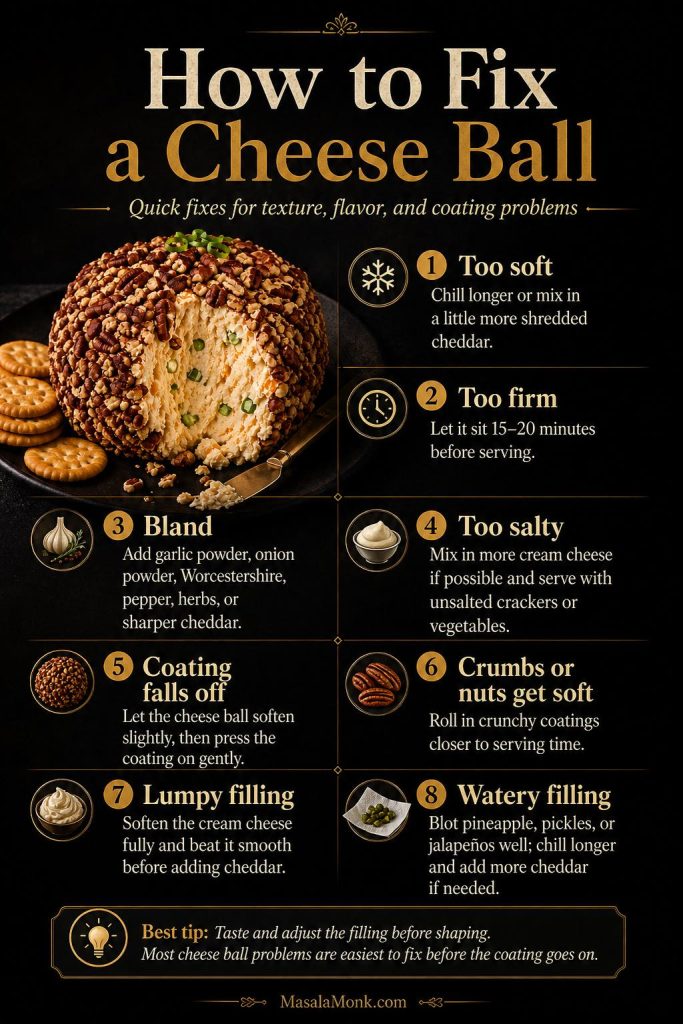
Most cheese ball problems are easy to fix before the coating goes on. So, taste and adjust the filling first, then shape, chill, and roll it once the texture is right. If the recipe feels off after the ball is coated, the fix usually gets messier. Use the troubleshooting table as a quick check before the cheese ball goes on the platter.

Problem Why It Happened How to Fix It
Too soft Warm cream cheese, short chill, or wet add-ins Chill longer; if needed, mix in more shredded cheddar
Too firm Too much shredded cheese or very cold serving temperature Let it sit for 15 to 20 minutes before serving
Bland Not enough seasoning Add garlic powder, onion powder, Worcestershire, pepper, herbs, or sharper cheddar
Too salty Bacon, dried beef, ranch seasoning, or everything seasoning Add more cream cheese if possible and serve with unsalted crackers or vegetables
Coating falls off Outside too cold, dry, or loosely pressed Let the cheese ball soften slightly, then press the coating on gently
Nuts, pretzels, or crumbs get soft Coated too far ahead Roll in crunchy coatings closer to serving time
Lumpy filling Cream cheese was too cold Soften fully and beat smooth before adding cheddar
Watery filling Pineapple, pickles, or jalapeños were not drained enough Blot wet add-ins well, chill longer, and mix in more cheddar if needed
Troubleshooting guide for how to fix a cheese ball, showing a cut pecan-coated cheese ball with crackers and tips for fixing a cheese ball that is too soft, too firm, bland, too salty, lumpy, watery, or has coating that falls off.
Most cheese ball problems are easiest to fix before the coating goes on. Taste and adjust the filling first, then chill, shape, and roll it once the texture is right.

More Cheese Appetizers and Party Snacks

If you are building a larger party table, this chilled cheese ball can anchor the cold, creamy side while hot appetizers bring crunch. For more cheese-forward snacks, try MasalaMonk’s mozzarella sticks or Indian-inspired cheese balls. For a broader small-plates spread, add croquettes or build an Indian-inspired tapas night. Together, those options give the table contrast instead of making everything soft, cold, or cheese-heavy.

FAQs

What is a cheese ball made of?

A classic cheese ball is usually made with cream cheese, shredded cheese, seasonings, and an outer coating. In this recipe, cream cheese gives the ball structure, while sharp cheddar, green onion, Worcestershire sauce, garlic powder, onion powder, black pepper, and pecans add flavor and texture.

What cheese is best for a cheese ball?

Because sharp cheddar has strong flavor without making the recipe complicated, it is the best first choice. However, white cheddar, Colby Jack, pepper Jack, smoked gouda, blue cheese, or goat cheese can work if you want the cheese ball to taste milder, smokier, spicier, or tangier.

How long should a cheese ball chill?

At minimum, chill a cheese ball for 1 hour. However, 2 hours is better if you want a cleaner shape and easier coating. If you make it the night before, let it soften for 15 to 20 minutes before serving so crackers do not break as easily.

Can I make a cheese ball the night before?

Yes. For the freshest texture, shape and wrap the cheese ball the night before, then refrigerate it. After that, roll it in the coating closer to serving, especially if the coating includes bacon, pretzels, crackers, or herbs.

Can you freeze a cheese ball?

Yes, but freeze it before adding the coating. That way, the outside tastes fresher after thawing. Wrap the shaped cheese ball tightly, freeze it in a freezer-safe container, thaw it overnight in the refrigerator, and then roll it in a fresh coating before serving.

How long can a cheese ball sit out?

Because it is made with cream cheese and shredded cheese, a cheese ball should not sit out for more than 2 hours at room temperature. If the temperature is above 90°F / 32°C, keep that window to 1 hour. After that, refrigerate safe leftovers promptly or discard anything that has been sitting out too long.

What crackers are best for a cheese ball?

Because the cheese ball firms up in the fridge, sturdy crackers work better than very thin ones. Buttery crackers, wheat crackers, seeded crackers, pretzel crisps, pita chips, crostini, and baguette slices all work well. If the ball is still very firm, let it soften briefly or add a small spreading knife.

Can I make a cheese ball without nuts?

Yes. Instead of pecans or walnuts, use chopped herbs, bacon, crushed pretzels, crushed crackers, everything seasoning, sesame seeds, or toasted breadcrumbs. If allergies are a concern, keep the whole platter nut-free rather than using separate sections of the same board.

Do I need sour cream or mayo in a cheese ball?

No, not for a classic shaped cheese ball recipe. Sour cream and mayo can loosen the mixture, which makes the ball harder to shape. If you are making cheese ball dip, though, a small spoonful can help make the texture softer.

Why is my cheese ball too soft?

A cheese ball is usually too soft because the cream cheese was too warm, the mixture did not chill long enough, or there were too many wet add-ins. First, chill it longer. If it is still too loose, mix in more shredded cheddar before adding the coating.

Can I serve this as cheese ball dip?

Yes. If you want cheese ball dip, use slightly less cheddar for a softer texture, spoon the mixture into a shallow bowl, and add the coating on top instead of shaping it into a ball. This works especially well for casual parties where easy scooping matters more than presentation.

Is this the same as fried cheese balls?

No. This is a chilled cream cheese appetizer served with crackers and vegetables. Fried cheese balls are a different snack style, often made with potato, cheese, breadcrumbs, and frying or baking. So, if you want a hot crispy snack, use a fried cheese ball recipe instead.

Can I make mini cheese ball bites?

Yes. After the cheese mixture chills until firm, scoop it into 1-tablespoon portions, roll each one in coating, and add pretzel sticks right before serving. A full batch usually makes about 36 to 48 mini cheese ball bites.

A classic cheese ball recipe is simple, but the small details make it better. First, soften the cream cheese properly. Then, season the filling before shaping, chill it until firm, and add the coating at the right time. Once the base is right, you can keep it classic with pecans, make it festive with cranberries, turn it bold with bacon ranch, add old-school flavor with dried beef, or serve it as mini cheese ball bites for an easy party platter. In the end, the best version is the one that tastes good, spreads easily, and fits the way you are serving it.

Posted on 10 Comments

Mojito Recipe (Classic) + Ratios, Pitcher, Mocktail & Easy Variations

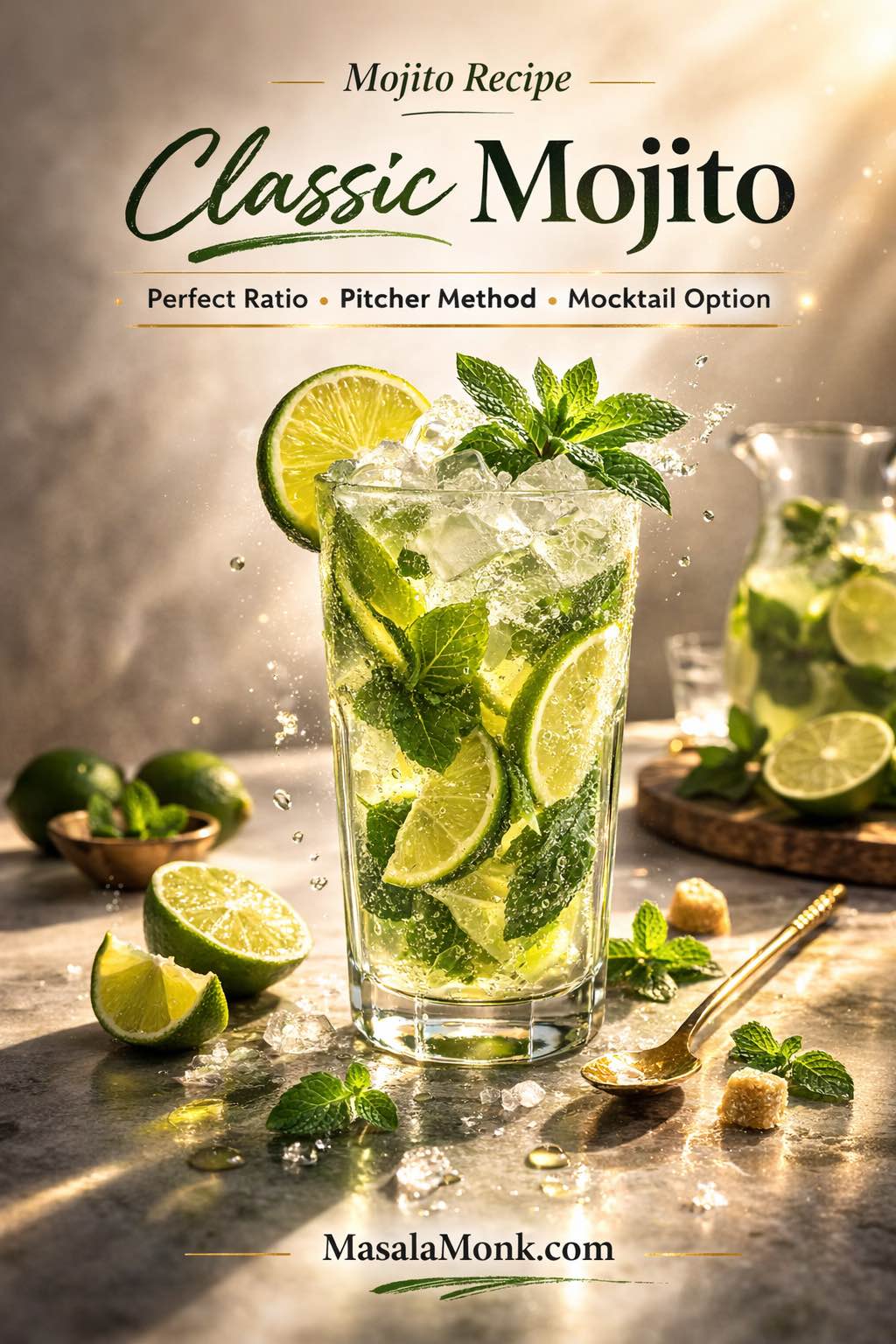
Magazine-style cover image of a classic mojito recipe in a tall highball glass with crushed ice, fresh mint, and lime slices on a warm ivory background, with text overlay “Mojito Recipe: Classic Mojito” and “Perfect Ratio • Pitcher Method • Mocktail Option” plus MasalaMonk.com in the footer.

A great mojito recipe has a particular kind of clarity. The lime feels bright rather than sharp, the mint smells fresh instead of tasting bitter, and the fizz lifts everything so the drink stays light on its feet. When a mojito is made well, it doesn’t just taste “refreshing.” It tastes clean, cold, and intentional—like you meant to make it that way all along.

And yet, plenty of home mojitos miss the mark for reasons that have nothing to do with skill. Often, the sweetener wasn’t dissolved fully. Sometimes the mint was crushed like it was being punished. Other times, soda got stirred until the drink went flat. In contrast, once you understand how a classic mojito is built—order, pressure, and timing—you can make a mojito drink that tastes consistently good in any kitchen, with any glass, and with minimal tools.

Designed to be “learn it once, reuse it forever”, this guide will share:

  • A proper classic mojito recipe with exact measurements
  • A dependable mojito ratio you can memorize and scale
  • A party-ready mojito pitcher recipe that stays fizzy
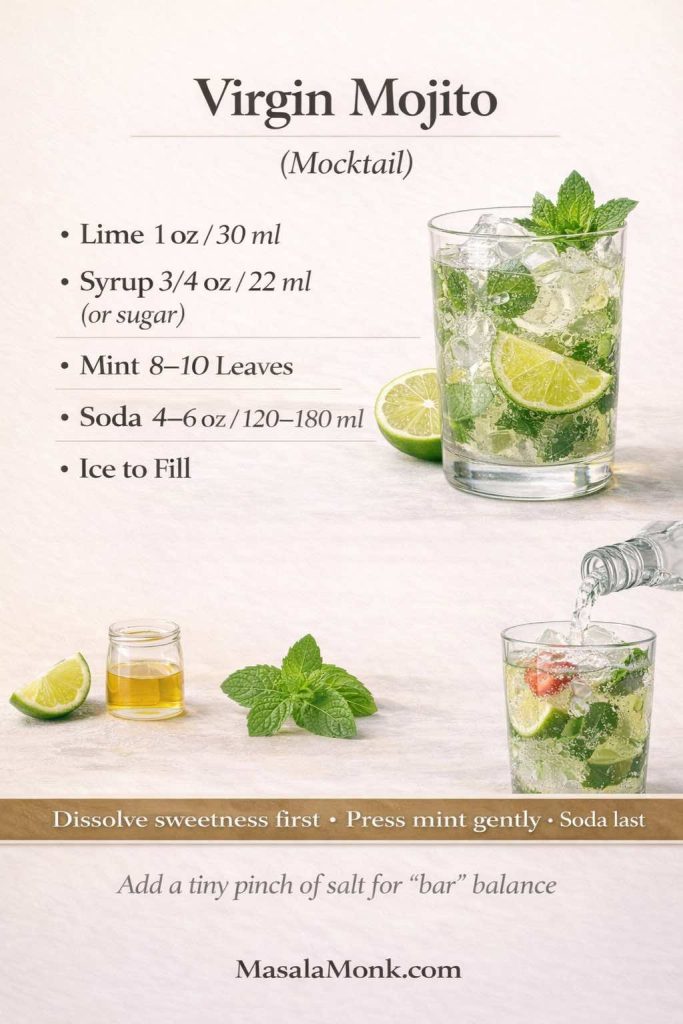
  • A satisfying mojito mocktail and virgin mojito recipe that still tastes like a mojito
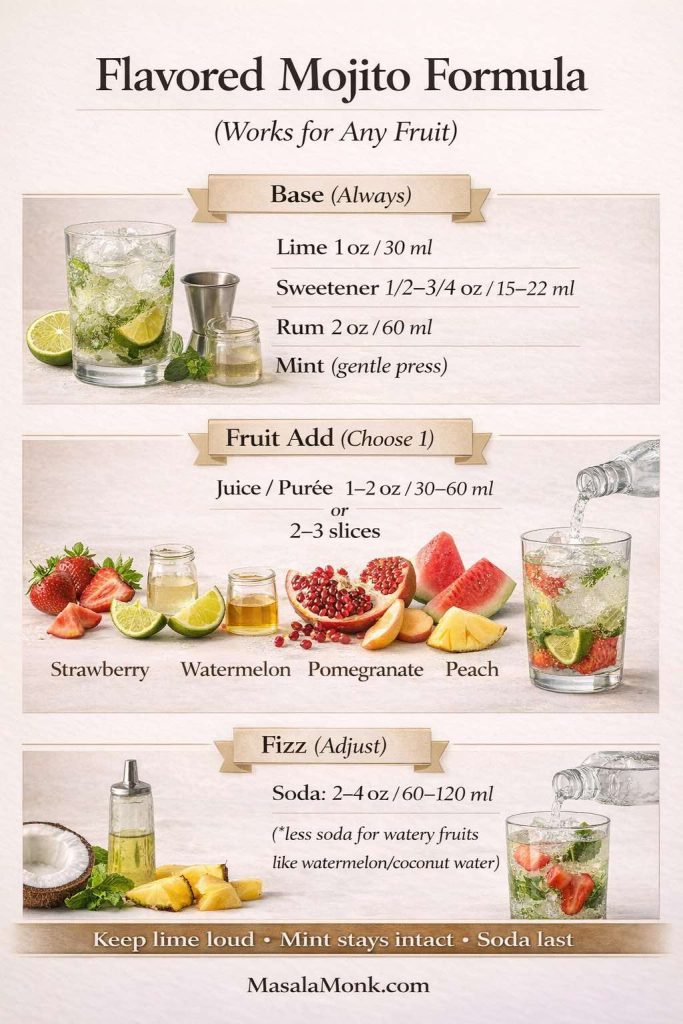
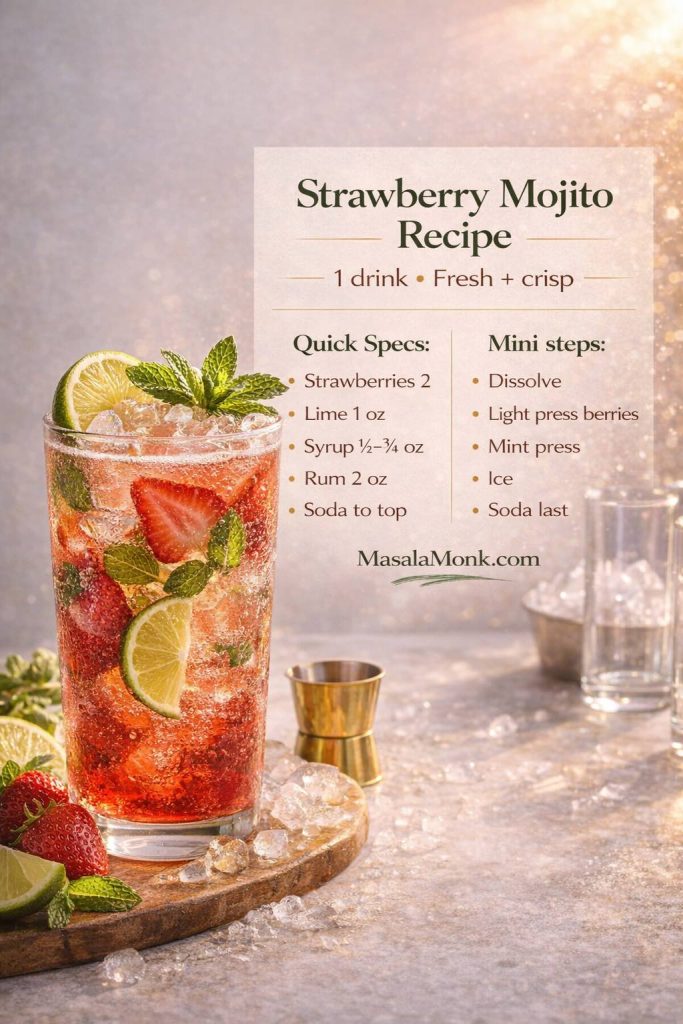
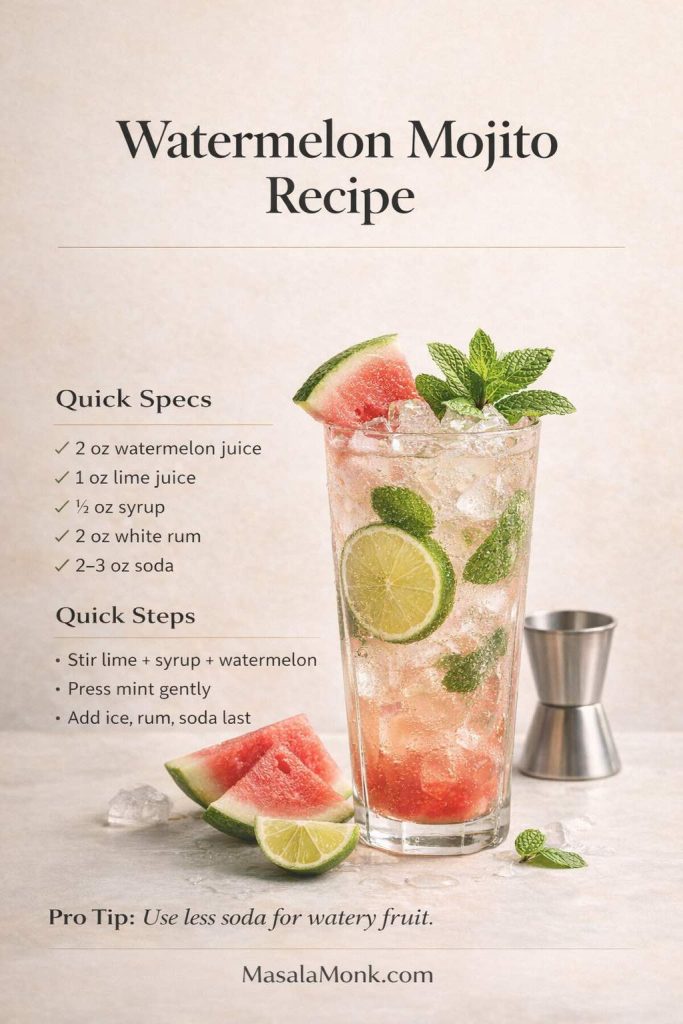
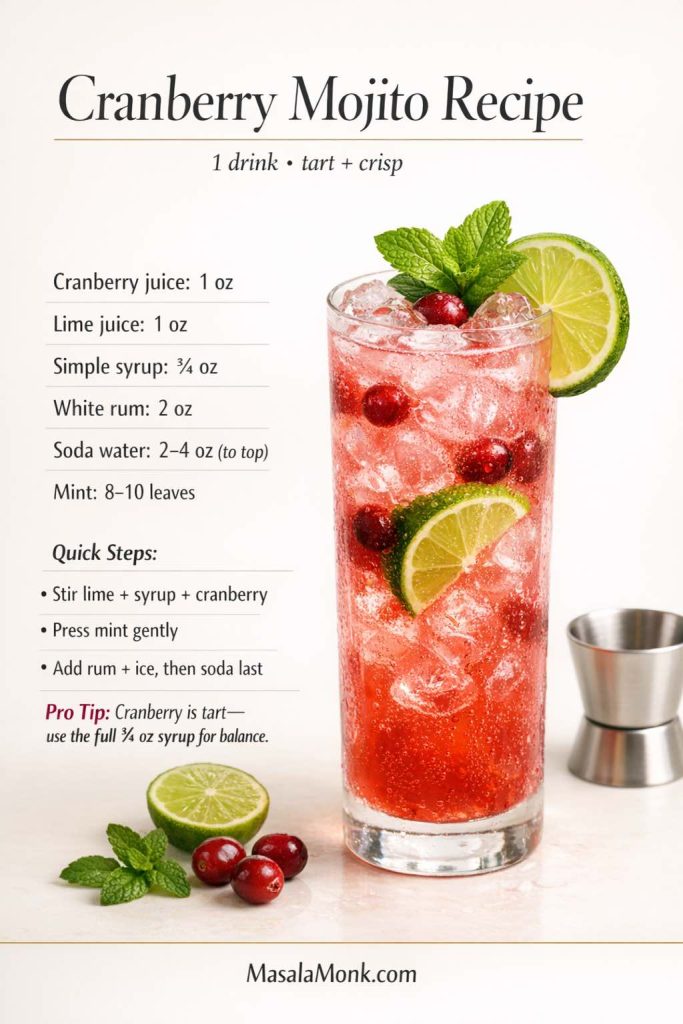
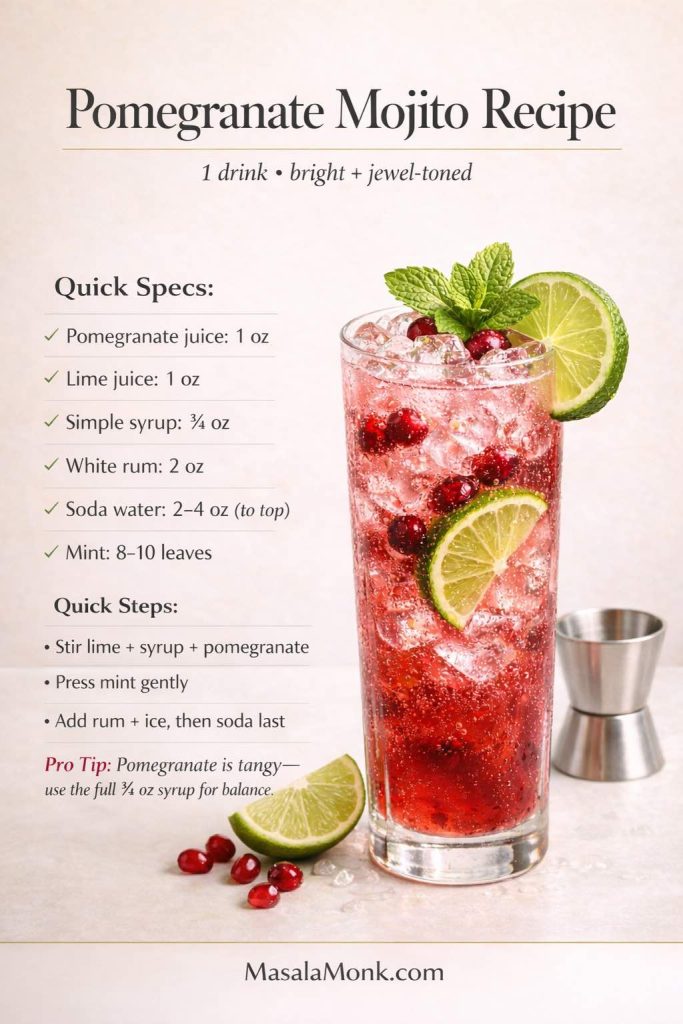
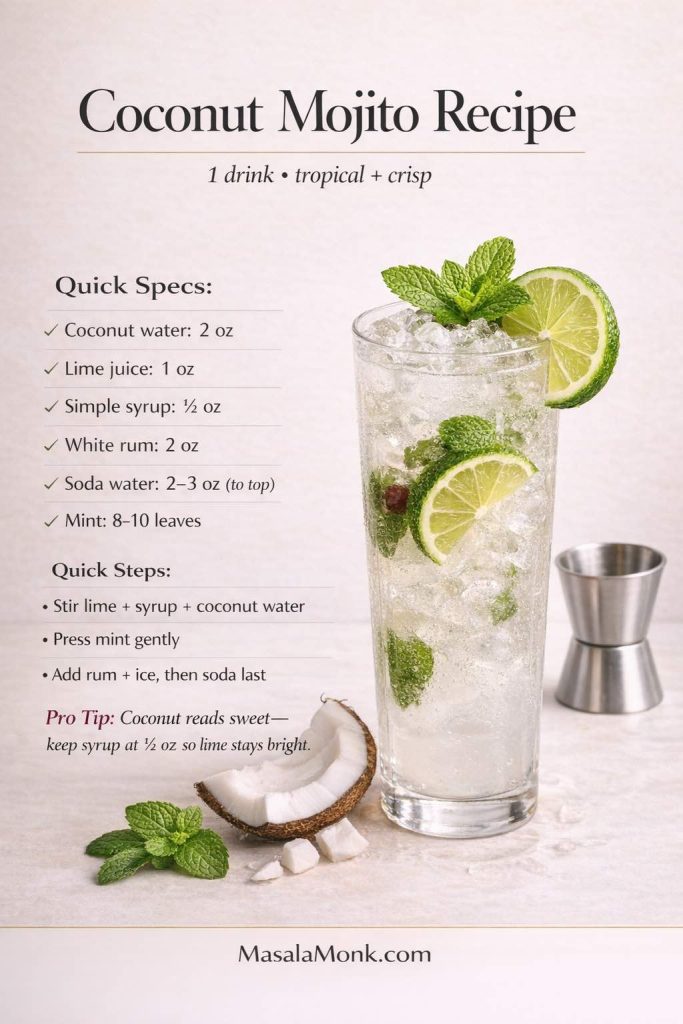
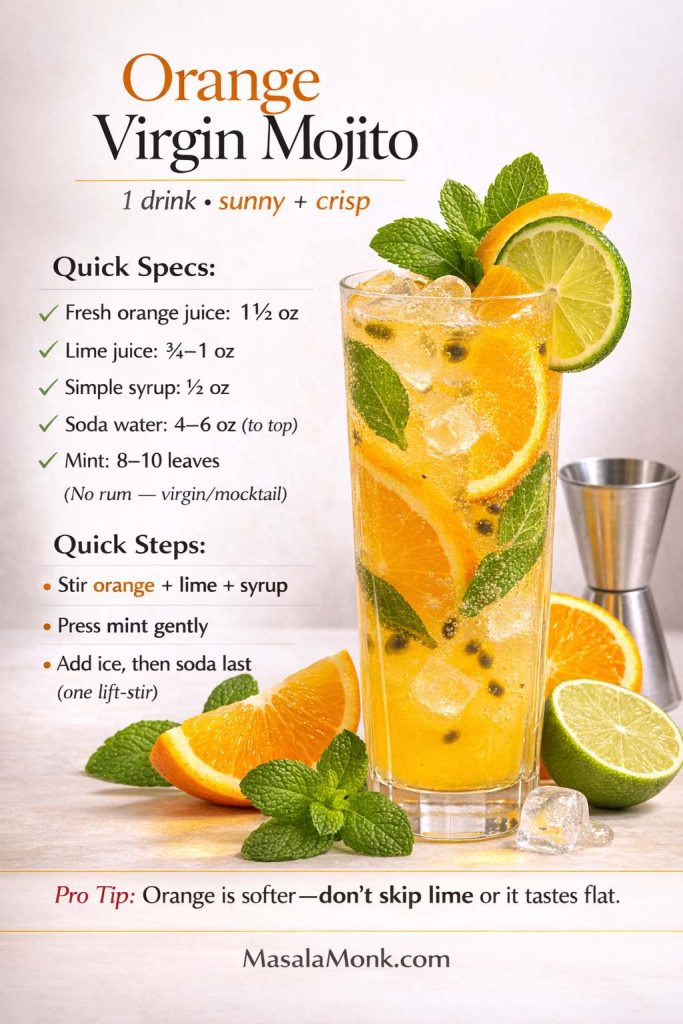
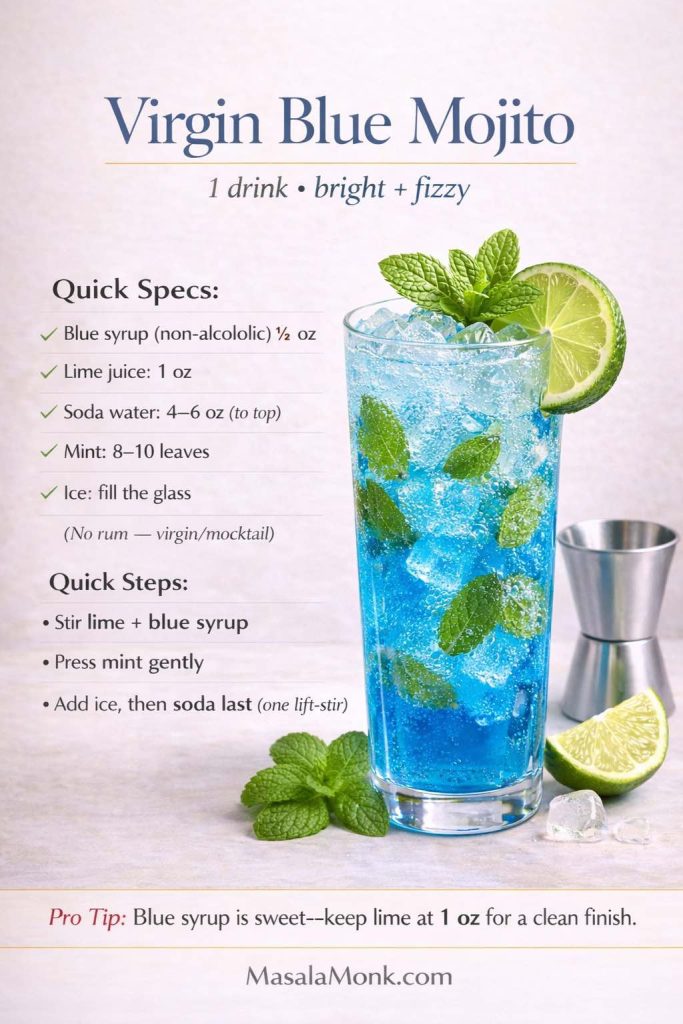
  • Fully measured variations: strawberry mojito recipe, watermelon mojito recipe, cranberry mojito, pomegranate mojito recipe, coconut mojito recipe, pineapple mojito, peach mojito recipe, plus a few more from the flavor universe that shows up again and again (cucumber mint, blueberry, passion fruit, orange, and a fun “blue” virgin option)

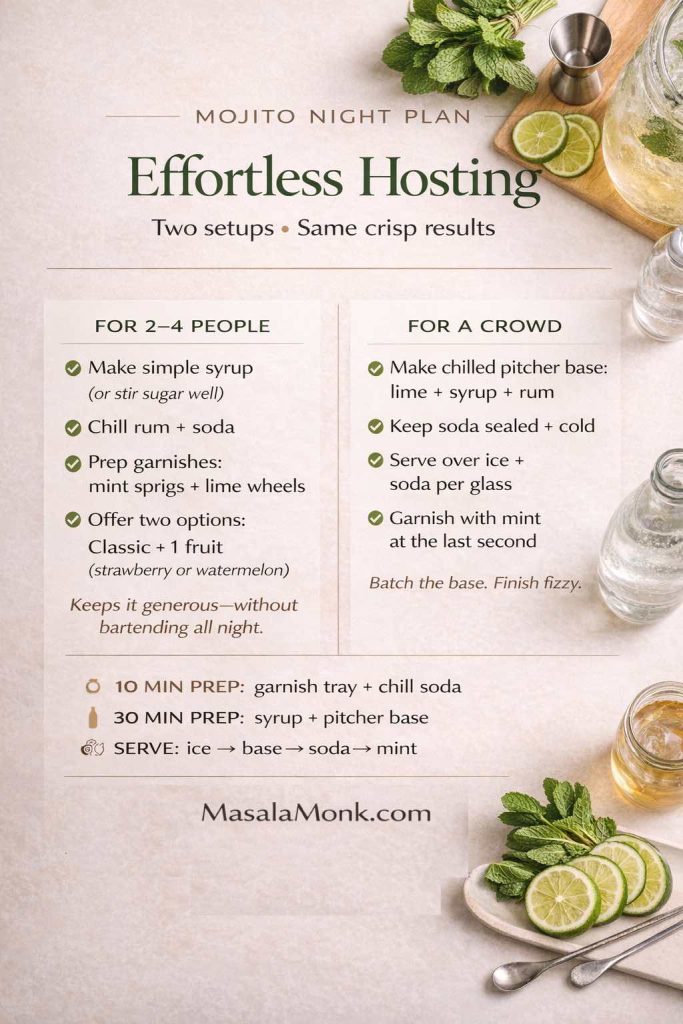
Along the way, you’ll also see how to troubleshoot watery drinks, harsh lime, and bitter mint without throwing the whole glass away. Finally, you’ll get easy food pairings and a simple hosting plan, because a mojito night feels better when the table feels complete.

If you enjoy the idea of building one reliable base and then changing the finish, you’ll recognize the same logic in other crowd-friendly drinks—build the flavor core first, then finish fresh for the best texture. That’s exactly why a make-ahead drink like Rum Punch Recipe can be such a natural companion when you’re hosting: it’s a different profile, yet it rewards the same “core first, finish last” approach.


Mojito Recipe: Classic Mojito Drink (Exact Measurements, No Guessing)

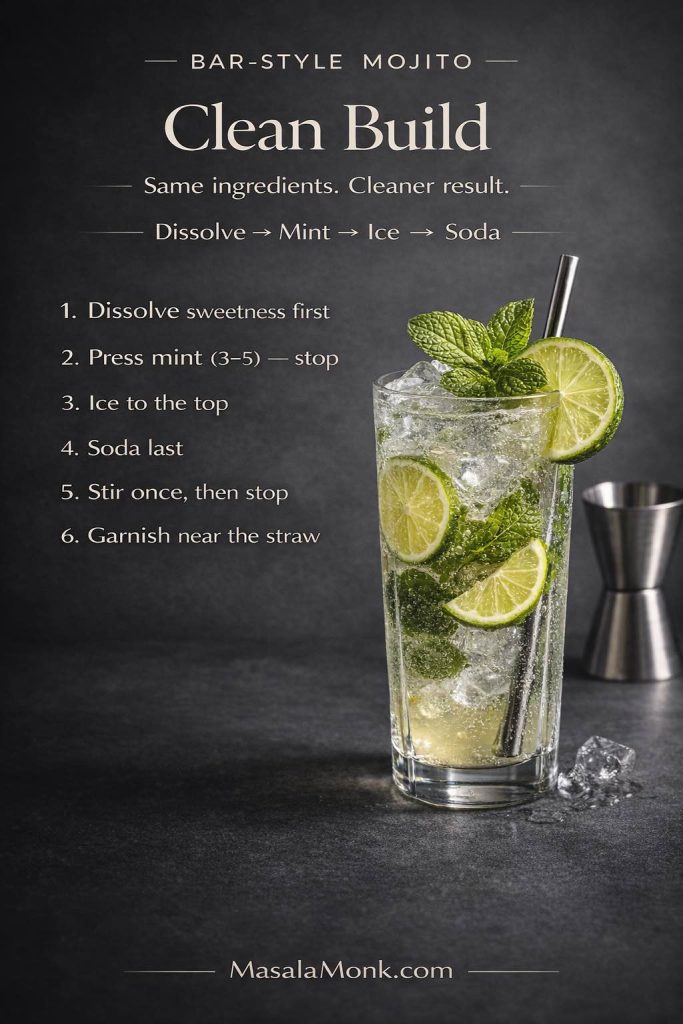
The best mojito cocktail recipe is mostly technique disguised as simplicity. To begin with, you dissolve sweetness before ice. Next, you treat mint gently so it stays fragrant instead of bitter. Then you add soda at the end to protect the fizz. Finally, you stir less than you think, because over-stirring turns sparkle into flatness. Taken together, those four habits solve almost everything.

As a helpful baseline, the International Bartenders Association lists the mojito as a Contemporary Classic with a core structure of mint, lime, sugar, white rum, and soda water. You can treat that as your “north star” for what classic means, and then adjust within that framework to match your taste and your glass size. (IBA Mojito)

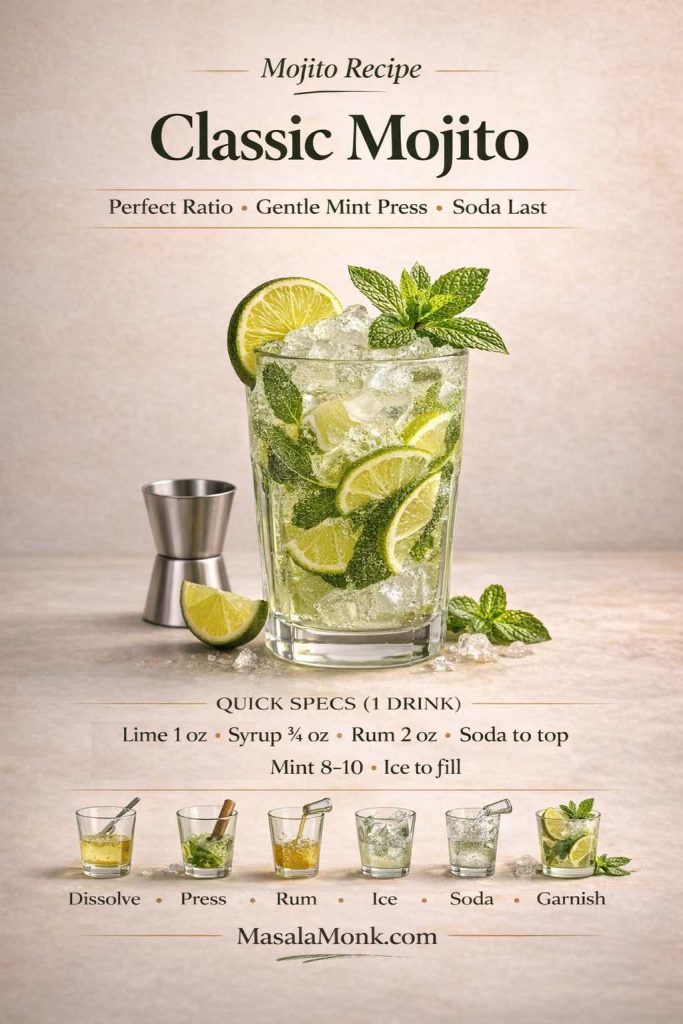
Premium recipe card image for a classic mojito recipe showing a photoreal mojito in a highball glass with mint and lime, plus quick specs (lime 1 oz, syrup ¾ oz, rum 2 oz, soda to top) and a 6-step method: dissolve, press, rum, ice, soda, garnish. MasalaMonk.com appears in the footer.
Classic Mojito Recipe at a glance: use the perfect ratio (1 oz lime, ¾ oz syrup, 2 oz rum), press mint gently, pack the glass with ice, and add soda last—then garnish. This quick card is the easiest way to make a crisp, not-watery mojito every time.

Classic Mojito Recipe Ingredients (1 Drink)

Makes: 1 mojito
Glass: Highball or Collins (12–14 oz / 350–415 ml is ideal)
Ice: Enough to fill the glass completely (this matters)

  • Mint leaves: 8–10 leaves, plus 1 large mint sprig for garnish
  • Fresh lime juice: 1 oz (30 ml)
  • Simple syrup (1:1): ¾ oz (22 ml)
    • or substitute 2 tsp granulated sugar (about 10 g)
  • White rum: 2 oz (60 ml)
  • Soda water / club soda: 2–4 oz (60–120 ml), to top
  • Garnish: lime wheel or wedge + mint sprig

Why these measurements work: the lime stays bright without turning harsh, sweetness rounds the edges without becoming syrupy, rum feels present without getting sharp, and soda provides lift without washing out flavor.

How to Make a Mojito (Classic Method)

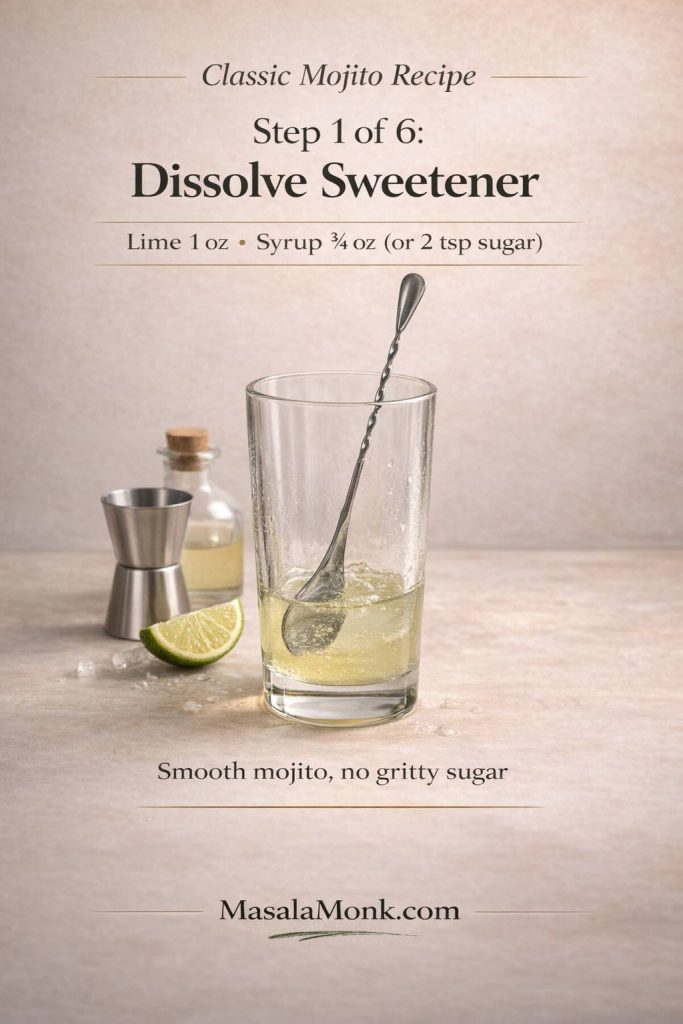
Step 1: Start by dissolving the sweetener

Add 1 oz (30 ml) lime juice and ¾ oz (22 ml) simple syrup to your glass. Stir for 10–15 seconds until the base looks uniform.
If you’re using granulated sugar instead, stir a little longer. You don’t need it to vanish completely; however, you do want most of it melted before ice goes in.

Classic Mojito Recipe — Step 1: dissolve lime and syrup (or sugar) first. This small step keeps your mojito smooth from the first sip and prevents gritty sugar later—so you can add ice and soda without over-stirring.

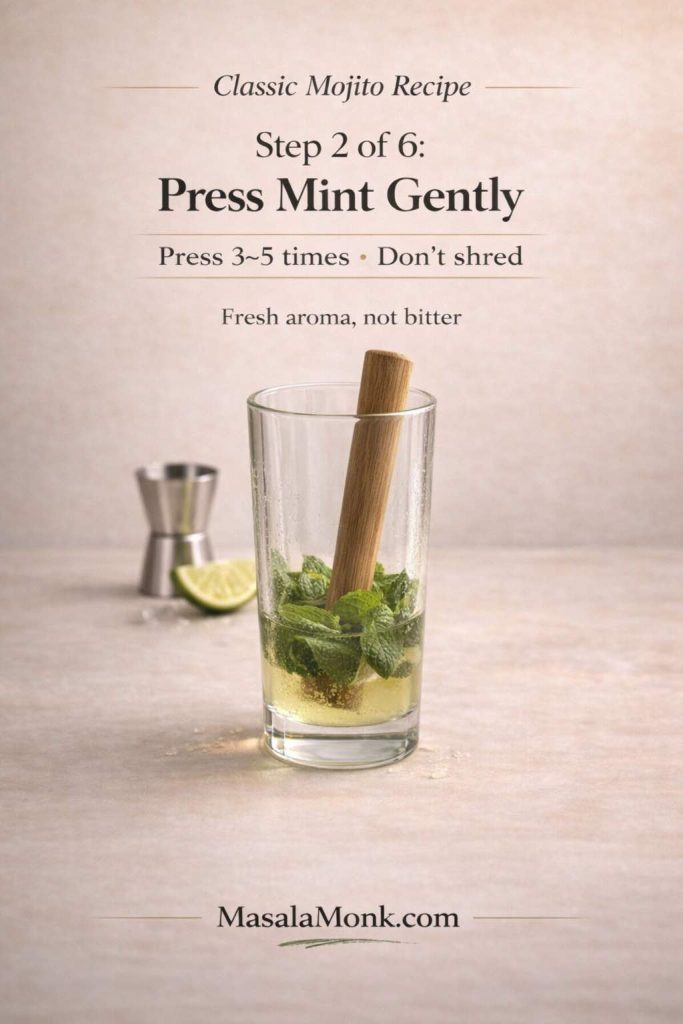
Step 2: Add mint gently—press, don’t pulverize

Add 8–10 mint leaves. Press them lightly 3–5 times with a muddler or the back of a wooden spoon. Then stop while the leaves still look intact. In other words, you’re releasing aroma—not making green debris.

Classic Mojito Recipe — Step 2: press mint gently (3–5 light presses) to release aroma without turning the drink bitter. This is the key difference between a clean, bar-style mojito and a grassy one.

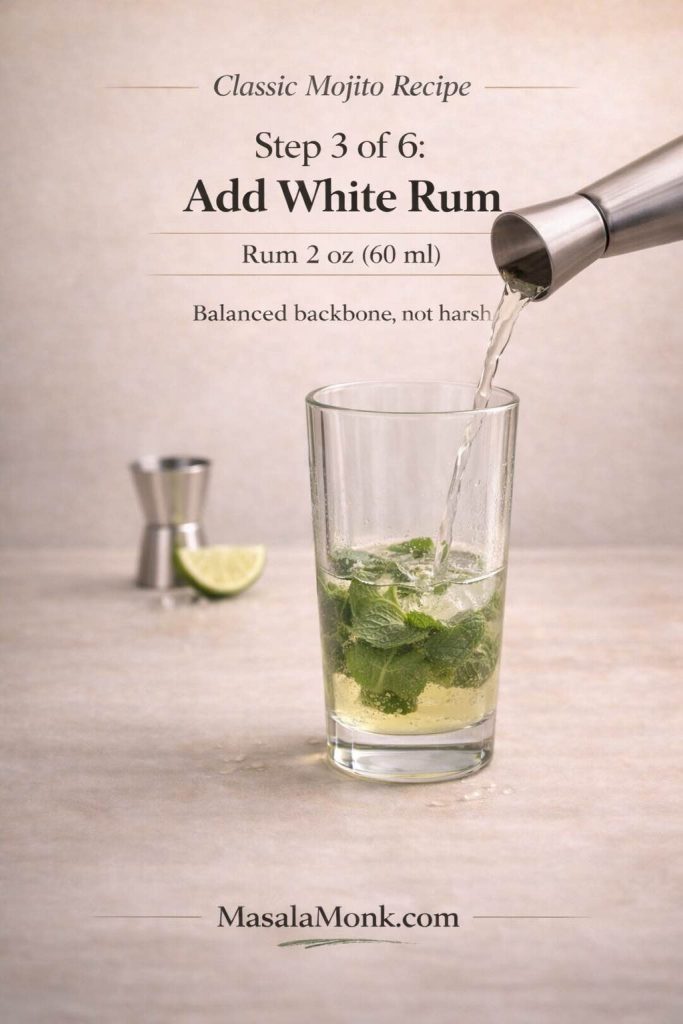
Step 3: Add the rum and blend quickly

Pour in 2 oz (60 ml) white rum, then stir once or twice so it merges with the lime-sweet base. At this point, the drink should smell bright and minty already.

Step 3 of the classic mojito recipe showing white rum being poured from a jigger into a glass with lime, syrup, and mint, with on-image measurement “Rum 2 oz (60 ml)” and the note “Balanced backbone, not harsh,” plus MasalaMonk.com in the footer.
Classic Mojito Recipe — Step 3: add 2 oz (60 ml) white rum for a clean, balanced backbone. This keeps the mojito bright and crisp while letting lime and mint stay in the spotlight.

Step 4: Pack the glass with ice

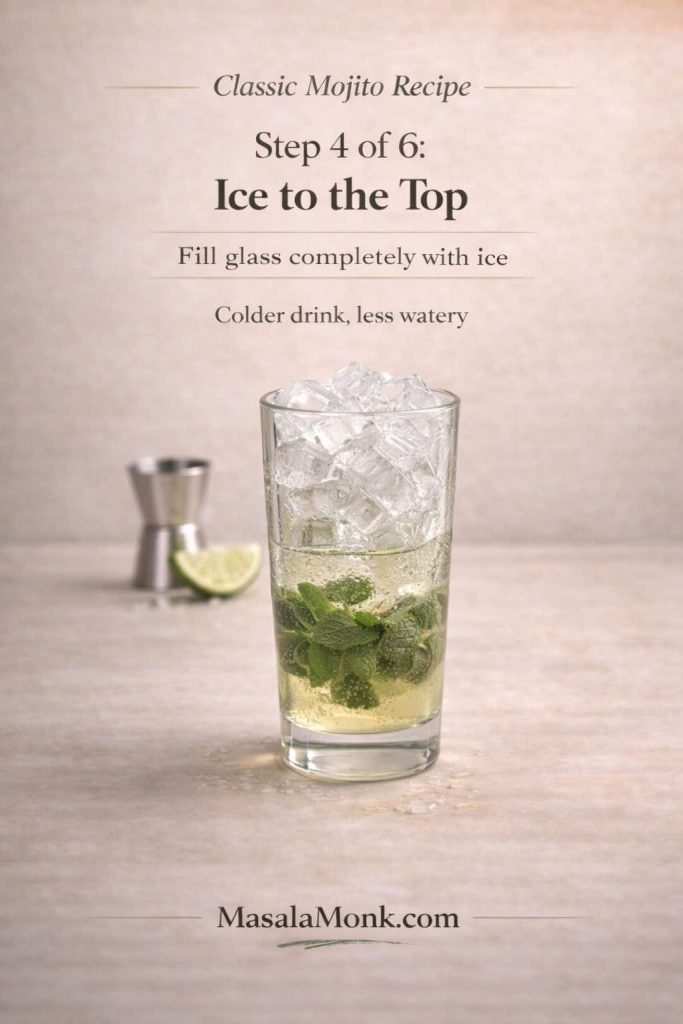
Fill the glass all the way to the top. It feels backwards, yet more ice usually keeps the drink colder longer, which means it dilutes more slowly over the time you’re drinking it.

Classic Mojito Recipe — Step 4: fill the glass completely with ice. A full ice column keeps your mojito colder for longer, slows dilution, and helps prevent that watery, flat finish.

Step 5: Top with soda water and barely stir

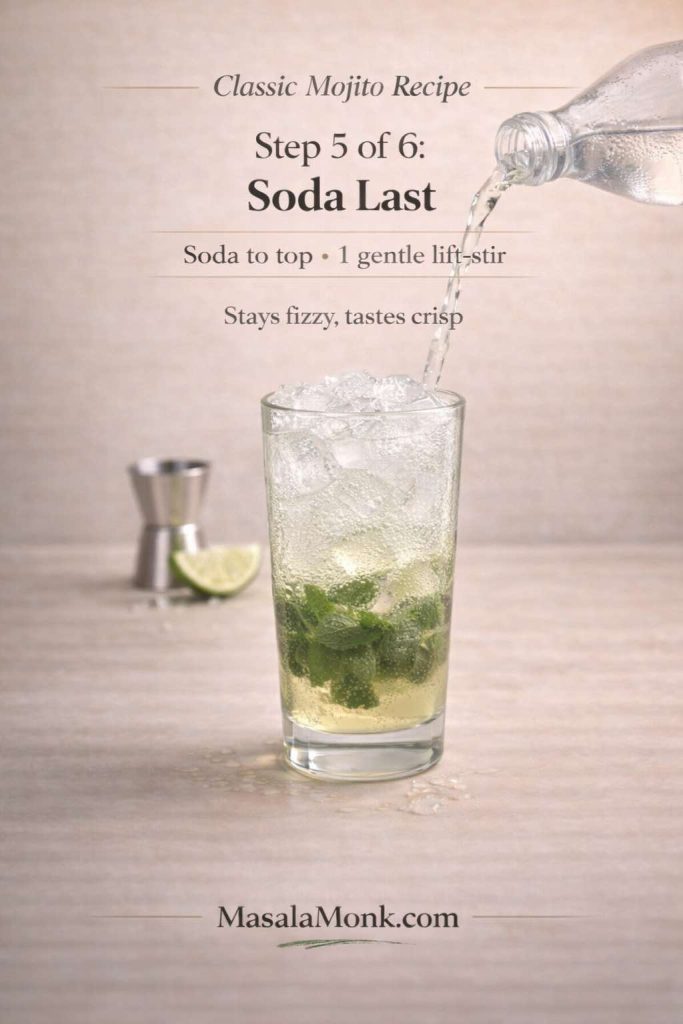
Add 2–4 oz (60–120 ml) soda water. Then do one gentle lift-stir from the bottom to the top—just enough to pull that lime base upward. After that, leave it alone so the fizz stays lively.

Classic Mojito Recipe — Step 5: add soda last and do just one gentle lift-stir. This keeps the mojito crisp and fizzy instead of flat and watery—especially when you’re making more than one drink.

Step 6: Garnish for aroma, not decoration

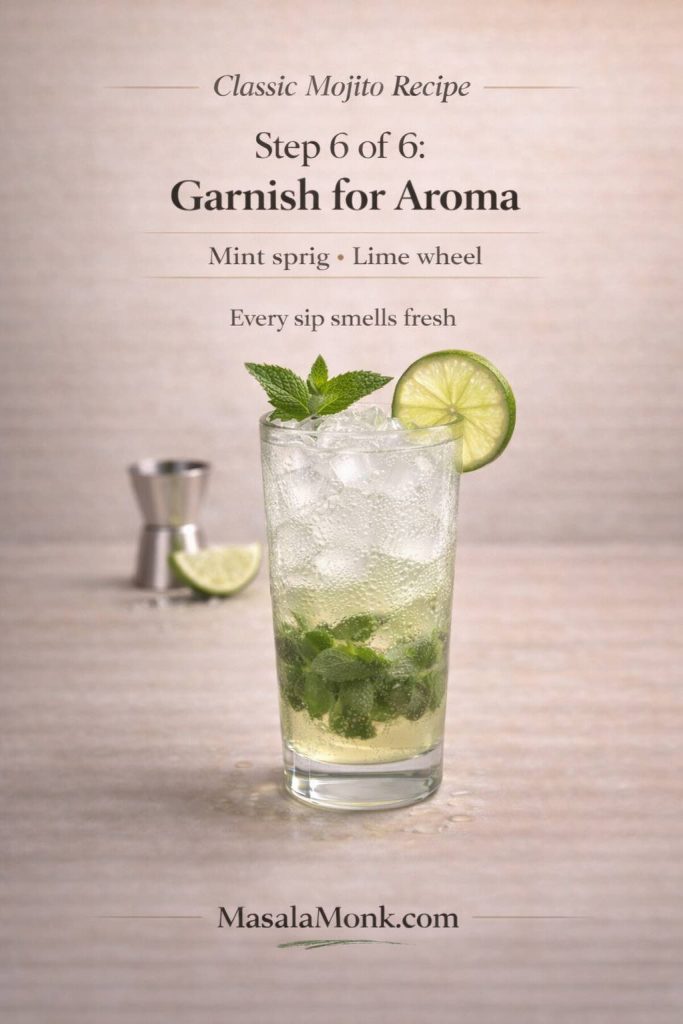
Clap your mint sprig between your palms (one firm clap is enough), then tuck it near the straw. Add a lime wheel or wedge. Now the drink smells like mint before it tastes like lime, which makes the whole thing feel fresher and more “complete.”

Classic Mojito Recipe — Step 6: garnish with a fresh mint sprig and a lime wheel. The mint aroma hits before the first sip, making the mojito taste brighter and more refreshing without needing to crush extra mint into the drink.

That’s the classic mojito drink. Make it once, then make it again. Before long, the method stops feeling like steps and starts feeling like a rhythm.

Also Read: Air Fryer Donuts Recipe (2 Ways): Glazed Homemade Donuts + Biscuit Donuts


Mojito Ratio: The Classic Mojito Formula You Can Remember

A lot of people know the ingredient list and still wonder how do you make a mojito that tastes balanced every time. The answer is a ratio you can trust.

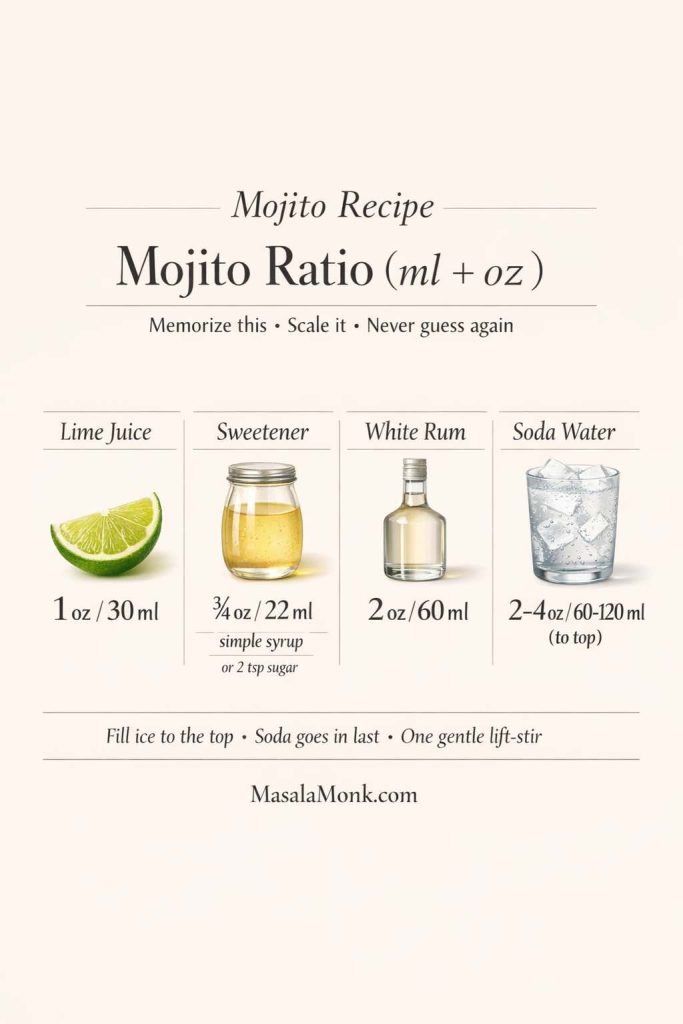
Elegant mojito ratio infographic showing classic mojito measurements: lime juice 1 oz/30 ml, sweetener 3/4 oz/22 ml simple syrup (or 2 tsp sugar), white rum 2 oz/60 ml, and soda water 2–4 oz/60–120 ml to top. Includes tips: fill ice to the top, add soda last, and do one gentle lift-stir. MasalaMonk.com in footer.
Classic Mojito Ratio (ml + oz): Use 30 ml lime, 22 ml syrup (or 2 tsp sugar), 60 ml white rum, then top with 60–120 ml soda. For the cleanest mojito, fill the glass with ice, add soda last, and do one gentle lift-stir.

A practical mojito ratio (lime : sweet : rum : soda)

  • Lime: 1 oz (30 ml)
  • Sweetener: ¾ oz (22 ml) simple syrup or 2 tsp sugar
  • Rum: 2 oz (60 ml)
  • Soda: top to taste (usually 2–4 oz / 60–120 ml)

In “parts,” you can think:

1 part lime : ¾ part sweet : 2 parts rum : top with soda

Once you internalize that relationship, you can make a home mojito in any glass and keep it balanced. Just as importantly, you can scale it into a mojito pitcher recipe without guessing, because you’re multiplying a pattern rather than reinventing the drink.

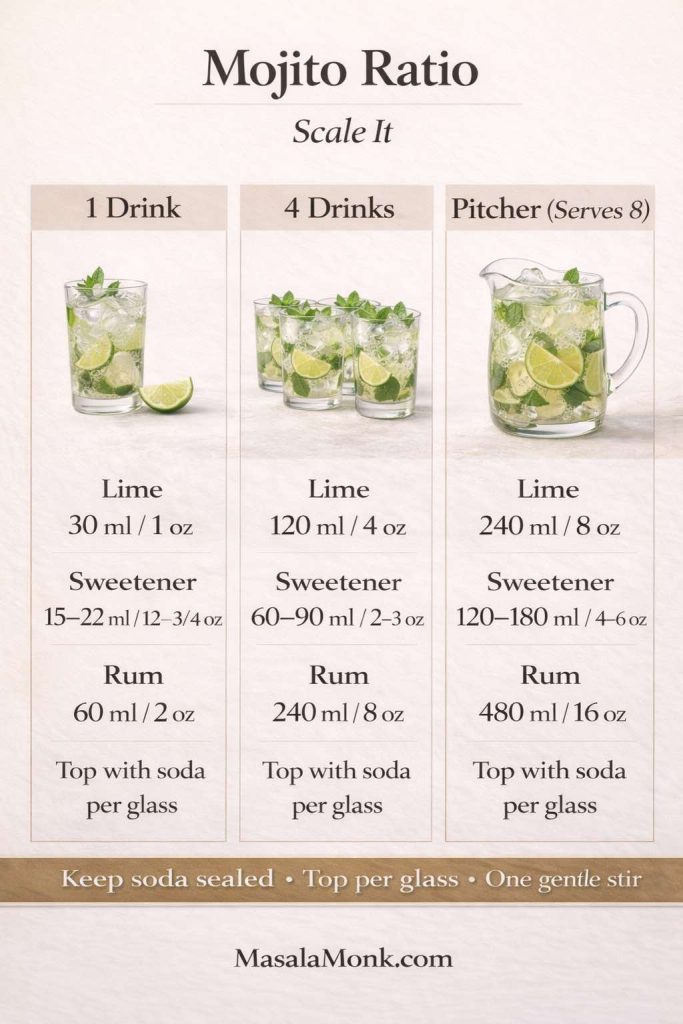
Infographic titled “Mojito Ratio — Scale It” showing mojito measurements for 1 drink, 4 drinks, and a pitcher serving 8. It lists lime, sweetener, and rum in ml and oz for each batch size, with a note to top with soda per glass. A tip strip says keep soda sealed, top per glass, and do one gentle stir. MasalaMonk.com appears in the footer.
Mojito ratio, scaled: Use this cheat sheet to make one mojito, a small round, or a full mojito pitcher (serves 8) with consistent balance. Mix lime + sweetener + rum ahead, then top with soda per glass so batched mojitos stay fizzy.

Why this formula works

Lime is the brightness. Sweetener is the smoothing force. Rum is the backbone. Soda is the lift. Mint, meanwhile, is the aroma that makes the drink feel like a mojito rather than a generic lime highball. If one element gets loud—too much soda, over-muddled mint, excessive syrup—the drink stops tasting crisp.

So even though the mojito is simple, it’s still a system. Treat it like a system and it becomes easy.

Also Read: Tapas Recipe With a Twist: 5 Indian-Inspired Small Plates


Mojito Ingredients (and Why Technique Matters More Than Fancy Tools)

Because mojitos use very few ingredients, each one carries more responsibility. Still, you don’t need a full bar setup. You need freshness, restraint, and timing.

Mint for mojito drink: keeping it fragrant, not bitter

Mint bitterness usually comes from over-muddling. When mint gets shredded, you extract more of the bitter, planty notes. On the other hand, gentle pressing releases aroma without turning the drink green.

Mint rule: Press lightly and stop early. Then let a strong mint sprig garnish provide aroma through every sip.

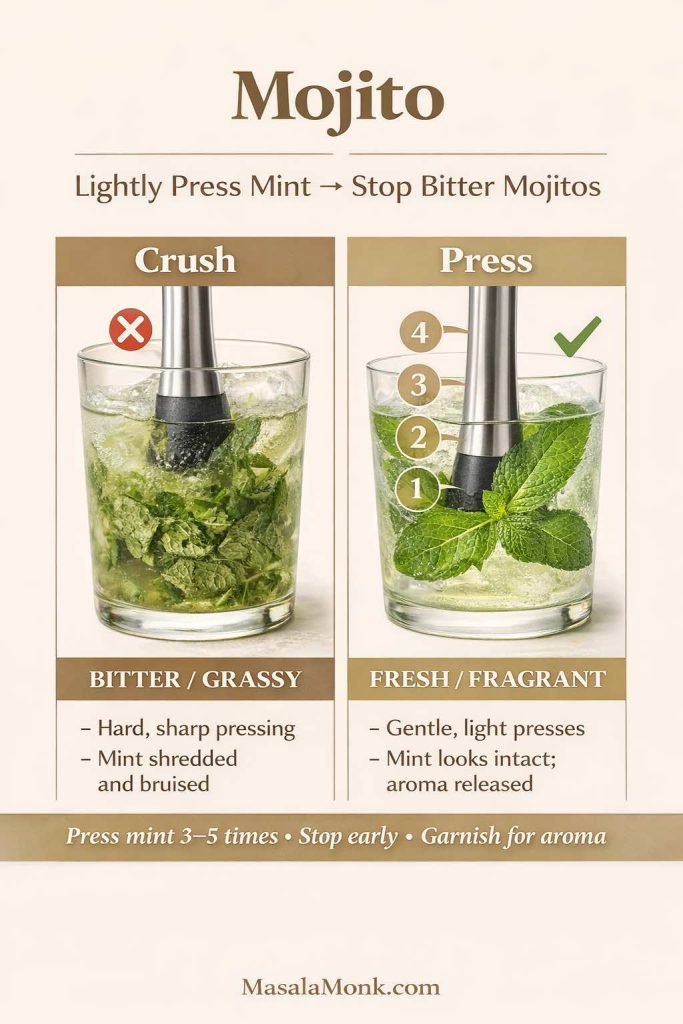
Comparison graphic for mojito mint technique showing two panels: “Crush” with shredded bruised mint in a cloudy drink labeled bitter/grassy, and “Press” with intact mint and gentle light presses labeled fresh/fragrant. Includes tip to press mint 3–5 times, stop early, and garnish for aroma. MasalaMonk.com appears in the footer.
Mojito mint tip: For a fresh mojito (not bitter), press mint gently 3–5 times—don’t crush or shred it. Intact mint releases aroma, keeps the drink clear, and makes your classic mojito taste clean and “bar-style.”

If you want the drink to smell more minty, don’t muddle harder—garnish smarter. Clap the sprig before adding it. That tiny move can make your mojito feel “bar-like” without increasing bitterness.

Lime juice: fresh vs bottled

Fresh lime juice is the cleanest way to get a bright mojito. Bottled lime can work in a pinch, especially for a party base, but it often tastes slightly muted. If you use bottled, compensate by keeping everything colder and leaning on fresh lime garnish and strong mint aroma.

White rum for mojitos: what “white” really means

White rum isn’t one flavor. It’s a style. For a classic mojito recipe, you want rum that reads clean rather than oaky, so lime and mint stay in the spotlight. Lightly aged rum can be delicious too, but it shifts the drink warmer and richer.

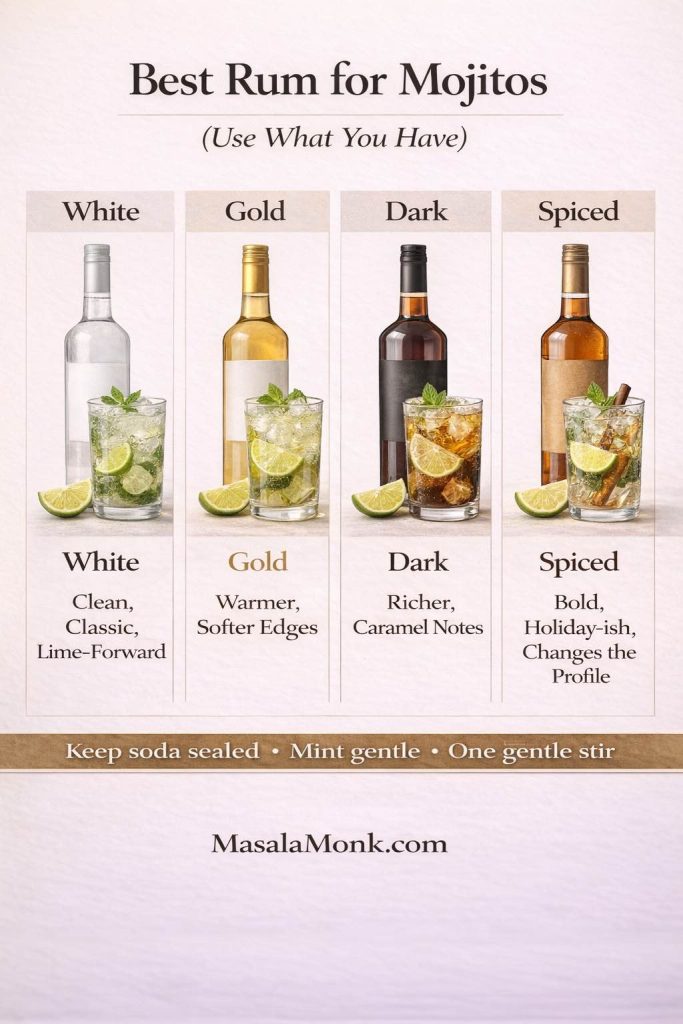
Infographic titled “Best Rum for Mojitos (Use What You Have)” comparing four rum styles for a mojito: white, gold, dark, and spiced. Each column shows a bottle and mojito with lime and mint, plus a short flavor note: white is clean and classic, gold is warmer with softer edges, dark is richer with caramel notes, and spiced is bold and changes the profile. A tip strip reminds to keep soda sealed, keep mint gentle, and stir once. MasalaMonk.com appears in the footer.
Best rum for mojitos: White rum gives the clean, classic lime-forward mojito, while gold rum makes it warmer, dark rum makes it richer, and spiced rum turns it bold and more “holiday-ish.” Use what you have—just keep lime bright, mint gentle, and add soda at the end.

If you’ve ever thought, “white rum for mojitos—what should I use?” the most practical answer is: use a clean white rum you enjoy in simple drinks. The mojito doesn’t hide rum; it frames it.

Soda water: protecting the fizz

Soda is fragile. Warm soda goes flat faster. Aggressive stirring knocks out bubbles. Accordingly, keep soda cold, add it last, and stir gently once. That’s the fizz insurance policy.

Also Read: Air Fryer Salmon Recipe (Time, Temp, and Tips for Perfect Fillets)


How to Make a Mojito Cocktail That Stays Crisp (Not Watery)

Watery mojitos don’t happen because someone lacks talent. They happen because the drink warms quickly and melts quickly.

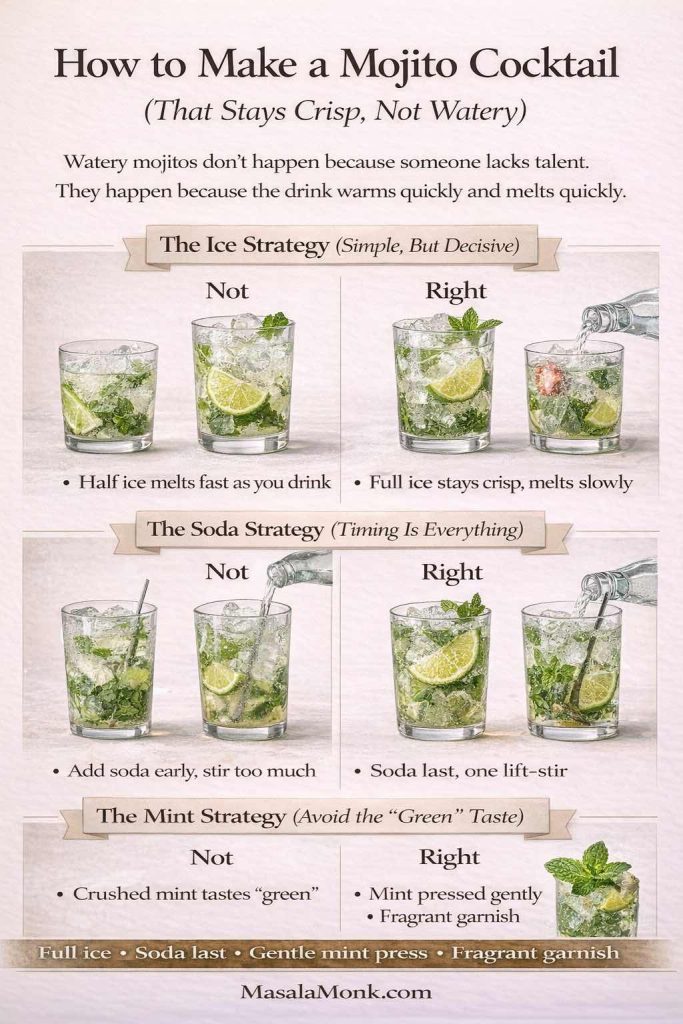
Infographic titled “How to Make a Mojito Cocktail (That Stays Crisp, Not Watery)” showing three technique sections with side-by-side “Not” vs “Right” examples: the ice strategy (half ice vs full ice), the soda strategy (adding soda early and stirring too much vs soda last with one lift-stir), and the mint strategy (crushed mint causing a green taste vs gentle mint pressing with a fragrant garnish). A bottom reminder reads full ice, soda last, gentle mint press, fragrant garnish. MasalaMonk.com is in the footer.
How to make a mojito that stays crisp: Fill the glass with ice (more ice melts slower), add soda last and stir only once, and keep mint gentle so the drink stays fresh instead of “green.” These three small moves prevent watery mojitos and keep the fizz lively.

The ice strategy (simple, but decisive)

A glass that’s half ice warms faster. A glass that’s full of ice stays cold. As a result, it melts more slowly over the time you’re drinking. Counterintuitively, more ice often means less dilution over time.

The soda strategy (timing is everything)

If you add soda and then stir a lot, you flatten the drink and accelerate dilution. Instead, add soda at the end and stir minimally. One lift-stir is usually enough.

The mint strategy (avoid the “green” taste)

Mint should smell like mint. It shouldn’t taste like bruised salad. Gentle pressing keeps the flavor clean. A fragrant garnish does the rest.

Also Read: Masterclass in Chai: How to Make the Perfect Masala Chai (Recipe)


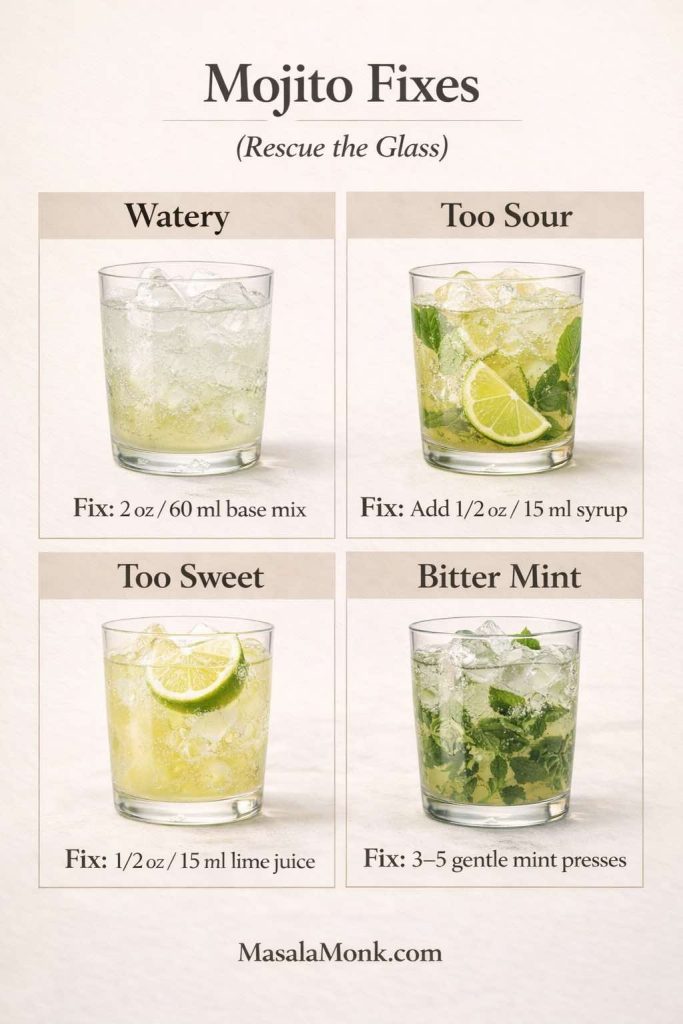
Mojito Mistakes + Fixes (So You Can Rescue the Glass)

Even with a good mojito recipe, a drink can drift. Fortunately, mojitos are forgiving if you know which lever to pull.

Infographic titled “Mojito Fixes (Rescue the Glass)” with four panels showing common mojito problems and quick fixes: Watery (add more base mix), Too Sour (add 1/2 oz / 15 ml syrup), Too Sweet (add 1/2 oz / 15 ml lime juice), and Bitter Mint (use 3–5 gentle mint presses). Each panel shows a mojito in a rocks glass with ice. MasalaMonk.com appears in the footer.
Mojito mistakes + fixes: If your mojito tastes watery, too sour, too sweet, or bitter from mint, you can rebalance it fast—add a little base, syrup, or lime as needed, and keep mint gentle. This quick guide helps you rescue the glass without starting over.

Watery mojito: what happened and how to fix it

Common causes: not enough ice, too much soda, soda stirred too much, or the drink sat warm.

Fix in the glass:
Add more ice. Then add ½ oz (15 ml) rum and a small splash of soda. Stir once. If it still tastes thin, add a quick squeeze of lime (start with about ¼ oz / 7 ml).

Prevent next time:
Fill the glass with ice and keep soda as the final step.

Mojito too sour: how to rebalance

Some limes are sharper than others.

Fix: add ¼ oz (7 ml) simple syrup, stir gently, taste again. Repeat once if needed. Sweetness rounds acidity faster than adding more rum.

Mojito too sweet: how to rebalance

Too sweet often comes from heavy syrup or fruit additions.

Fix: add ½ oz (15 ml) lime juice (or a generous squeeze), then refresh fizz with soda water.

Bitter mint: how to prevent it completely

If mint tastes bitter, it’s usually overworked.

Fix now: stretch the drink with more ice and a small splash more soda to soften bitterness.
Fix next time: fewer muddle presses, gentler pressure, stronger garnish sprig.

Also Read: Crock Pot Pork Chops and Sauerkraut (No Dry Chops Recipe)


Simple Syrup for Mojitos (and Why It Makes Everything Easier)

If you make mojitos even semi-regularly, simple syrup is the upgrade that makes the whole process smoother. It dissolves instantly, which means you don’t have to over-stir and destroy fizz just to avoid gritty sugar.

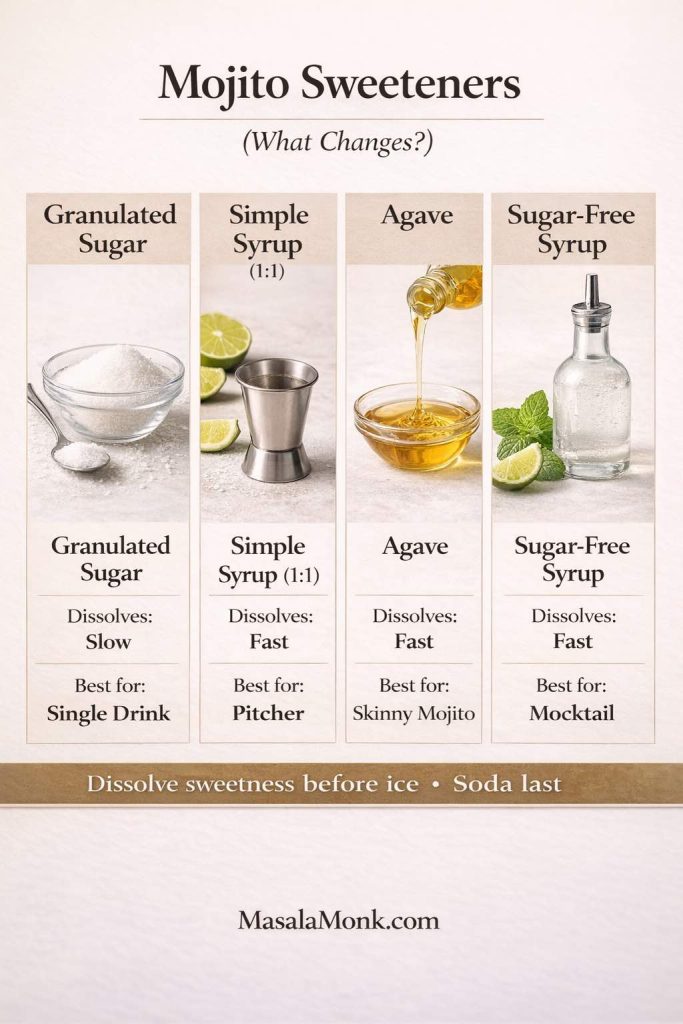
Infographic titled “Mojito Sweeteners (What Changes?)” comparing four options for a mojito recipe: granulated sugar, simple syrup (1:1), agave, and sugar-free syrup. Each column shows a photo of the sweetener and notes how quickly it dissolves and what it’s best for (single drink, pitcher, skinny mojito, or mocktail). Bottom tip reads “Dissolve sweetness before ice • Soda last.” MasalaMonk.com in footer.
Mojito sweeteners, simplified: Sugar can stay gritty unless you stir longer, while simple syrup (1:1) dissolves fast and keeps mojitos crisp. Agave adds a slightly warmer sweetness, and sugar-free syrup helps make a lighter mojito mocktail or low-sugar mojito—just keep lime bright and add soda last.

1:1 simple syrup recipe (makes about 1 cup / 240 ml)

  • 1 cup (200 g) granulated sugar
  • 1 cup (240 ml) water

Stovetop method: Warm gently in a small saucepan, stirring until fully dissolved. Cool completely, then refrigerate.

No-stove method: Combine sugar and warm water in a jar and shake until dissolved.

Once you have syrup, a mojito recipe easy version becomes genuinely easy: lime + syrup, gentle mint press, rum, ice, soda, garnish.

Also Read: Keto Mocktails: 10 Low Carb, Sugar Free Recipes


Mojito Mix: A Shortcut That Still Tastes Fresh (Homemade, Not Bottled)

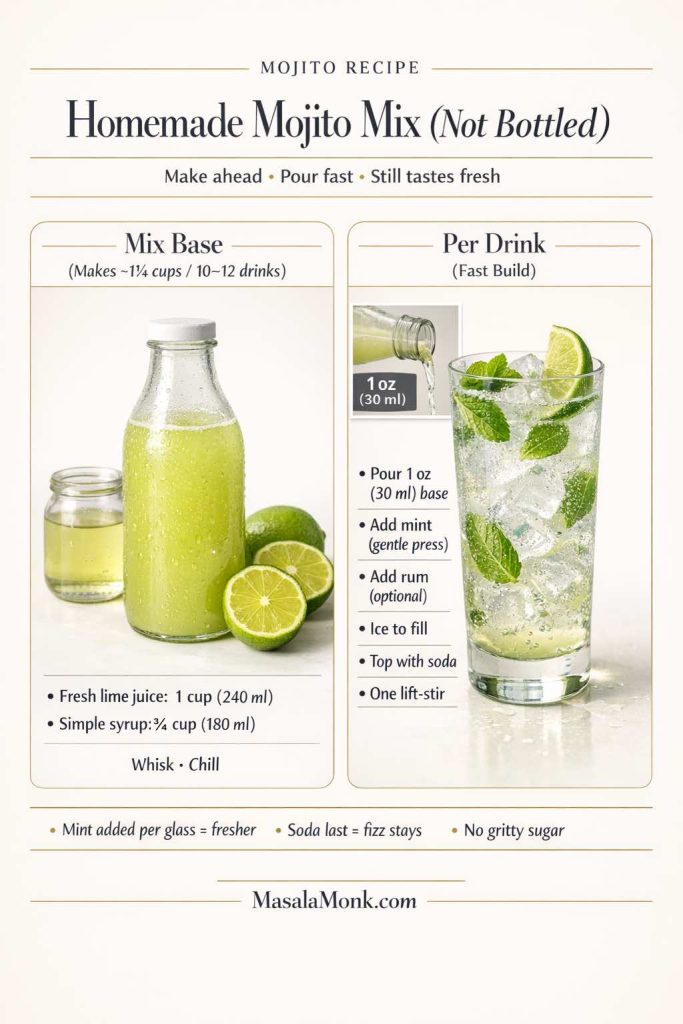
Mojito mix” often means a store-bought bottle that’s sweet-heavy and mint-light. It can be convenient, but it rarely tastes as crisp as fresh lime and mint. However, you can make a homemade mix-style base that’s actually useful for hosting.

Infographic titled “Homemade Mojito Mix (Not Bottled)” showing a make-ahead mojito mix base and a fast per-drink build. Mix base: fresh lime juice 1 cup (240 ml) plus simple syrup 3/4 cup (180 ml), whisk and chill (makes about 10–12 drinks). Per drink: pour 1 oz (30 ml) base, add mint (gentle press), add rum optional, fill with ice, top with soda, and do one lift-stir. Notes say mint added per glass tastes fresher, soda last keeps fizz, and no gritty sugar. MasalaMonk.com in footer.
Homemade mojito mix (lime + syrup base): Whisk 240 ml fresh lime juice with 180 ml simple syrup, chill, then pour 30 ml per drink and finish like a real mojito—mint gently, ice to the top, soda last. It’s the fastest way to serve mojitos that still taste bright and fresh (without bottled mix flavor).

Mojito mix recipe (homemade lime-syrup base)

Makes: about 1¾ cups (enough for 10–12 drinks)

  • Fresh lime juice: 1 cup (240 ml)
  • Simple syrup: ¾ cup (180 ml)

Whisk together and chill. Then, for each mojito:

  • Use 1 oz (30 ml) of this base
  • Add mint, rum (or omit for mocktail), ice, soda, garnish

This doesn’t replace the mojito method—it simply speeds up the measuring so you can pour drinks faster without sacrificing brightness.

Also Read: Slow Cooker Pork Tenderloin (Crock Pot Recipe) — 3 Easy Ways


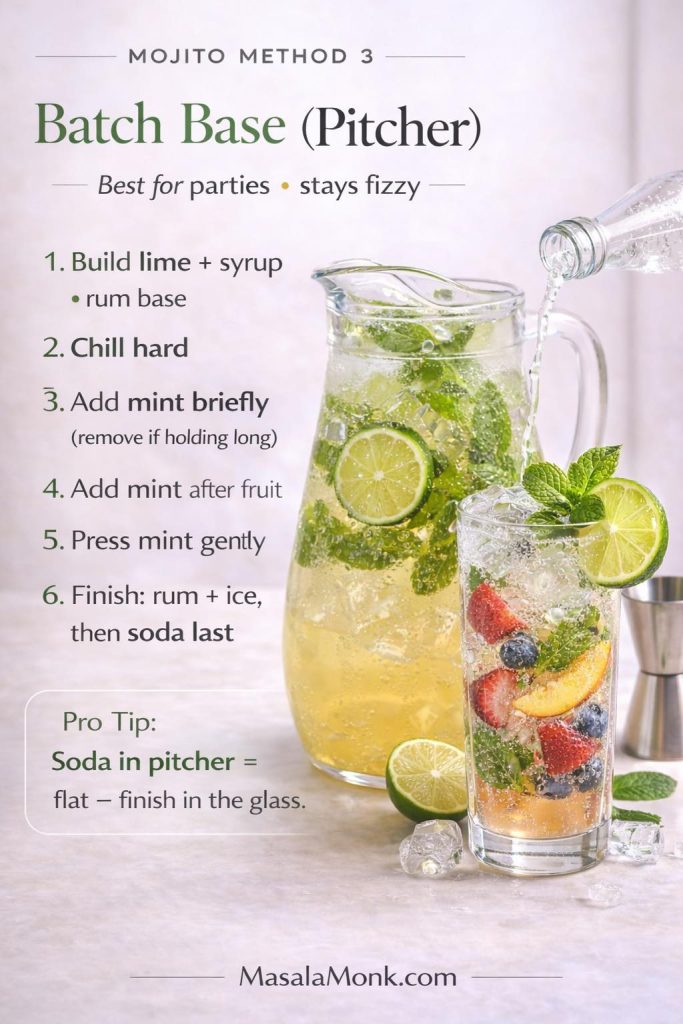
Mojito Pitcher Recipe (Batch Mojitos Without Flat Drinks)

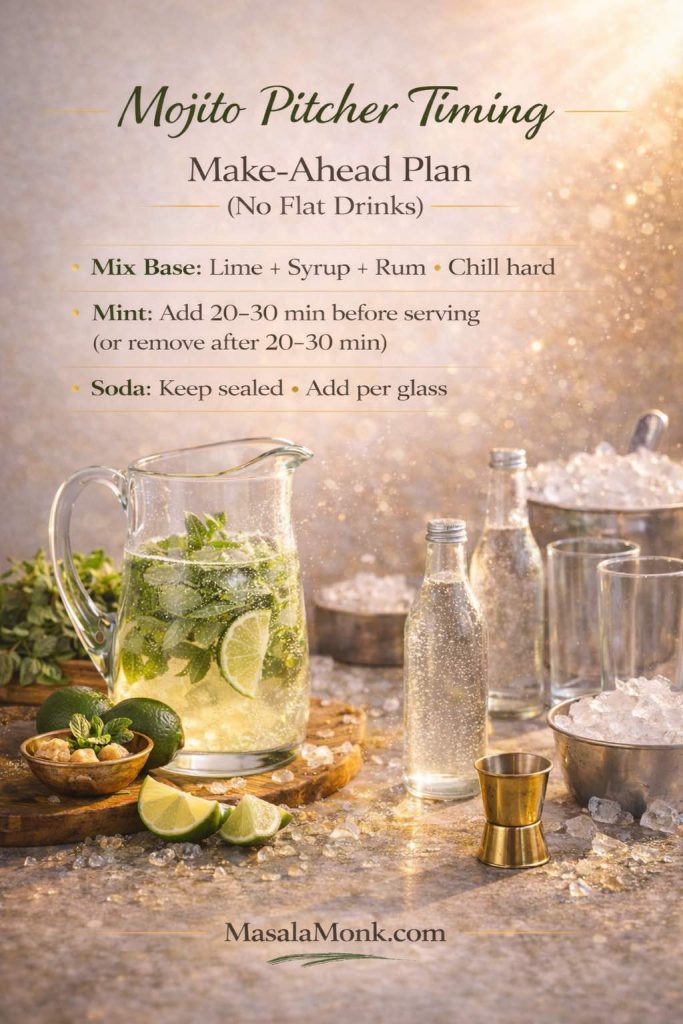
A pitcher of mojitos sounds like the ultimate party move—right up until you remember the fizz problem: soda in a pitcher goes flat quickly. Meanwhile, mint left to sit too long can drift from fresh and fragrant into grassy and dull. Because of that, the best pitcher plan comes down to one simple rule:

Make a chilled base. Top each glass with soda at serving time.

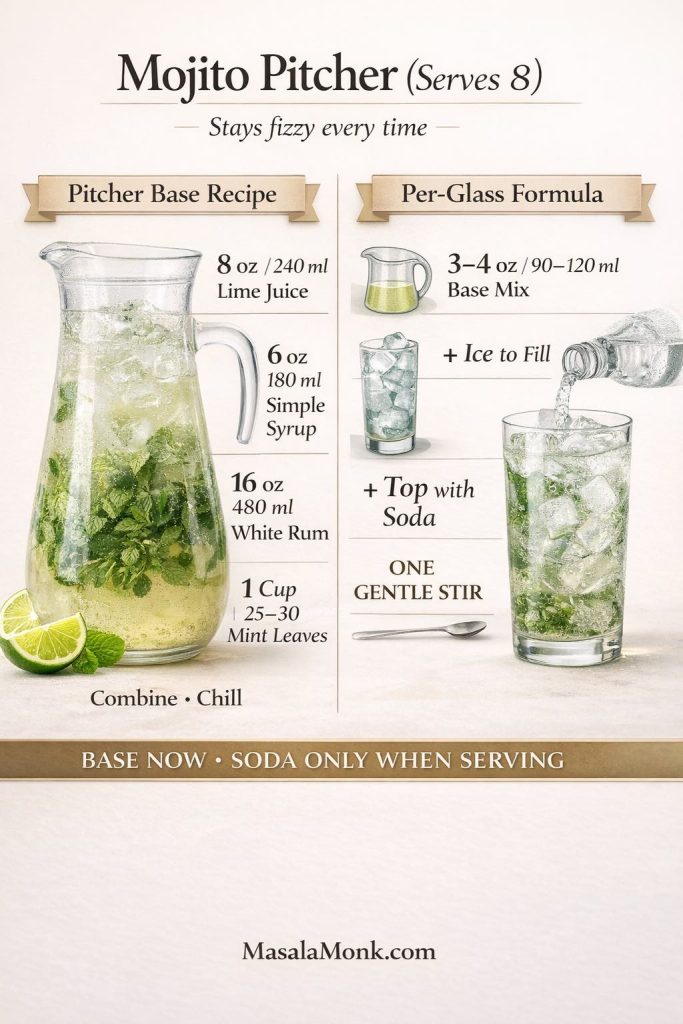
Photoreal mojito pitcher infographic for serving 8, showing a make-ahead pitcher base and per-glass formula. Pitcher base: 8 oz/240 ml lime juice, 6 oz/180 ml simple syrup, 16 oz/480 ml white rum, and 1 cup mint leaves. Per-glass: pour 3–4 oz/90–120 ml base mix over ice, top with soda, and do one gentle stir. Note: “Base now, soda only when serving.” MasalaMonk.com in footer.
Mojito pitcher recipe (serves 8): Make a chilled base with lime, simple syrup, white rum, and mint—then top each glass with soda only when serving. This keeps batched mojitos bright and fizzy instead of turning into flat mint lemonade.

In other words, you build flavor ahead, then you finish with sparkle at the last moment. That single switch is the difference between bright and lively and flat mint lemonade.

Best Mojito Pitcher Recipe (Serves 8)

Pitcher base (make ahead):

  • Fresh lime juice: 8 oz (240 ml)
  • Simple syrup (1:1): 6 oz (180 ml)
  • White rum: 16 oz (480 ml)
  • Mint leaves: 30–40 leaves (about 1 packed cup, loosely)

To serve (finish fresh):

  • Soda water: 24–32 oz (720–960 ml), kept cold and unopened
  • Ice: plenty
  • Garnish: mint sprigs + lime wheels

How to Make a Pitcher of Mojitos (Step-by-Step Recipe)

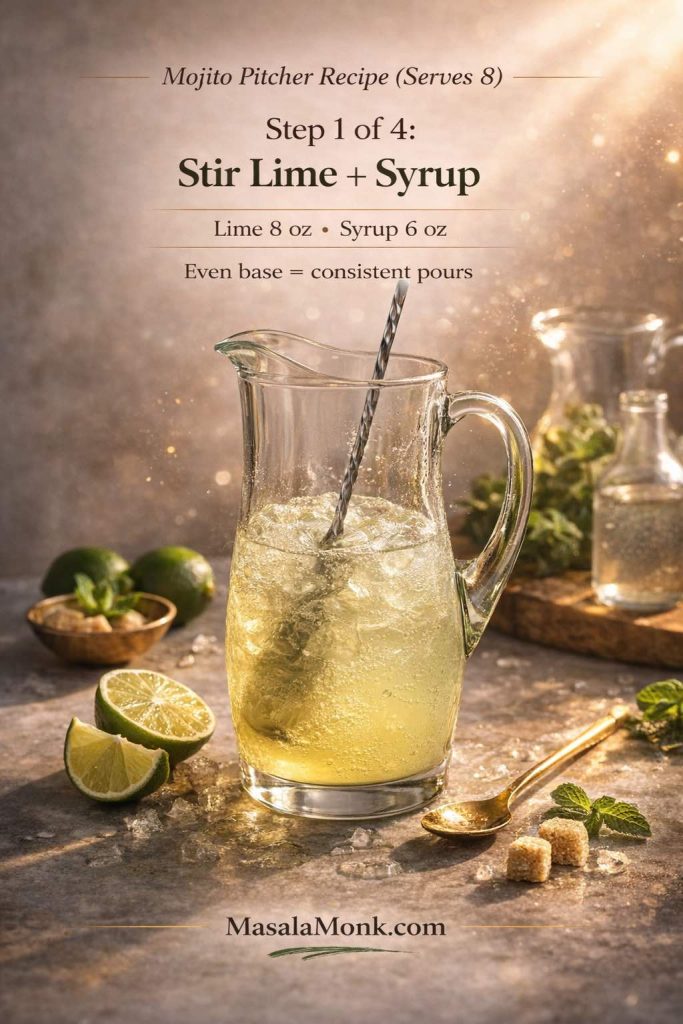
Step 1: Stir lime and syrup first

In a pitcher, combine 8 oz (240 ml) lime juice and 6 oz (180 ml) simple syrup. Then stir until the mixture looks completely blended. This matters because an evenly mixed base pours consistently into every glass—so your first mojito and your last mojito taste the same.

Mojito Pitcher Recipe — Step 1: stir 8 oz lime juice with 6 oz simple syrup until fully blended. A smooth, even base is what makes every glass taste the same—from the first pour to the last.

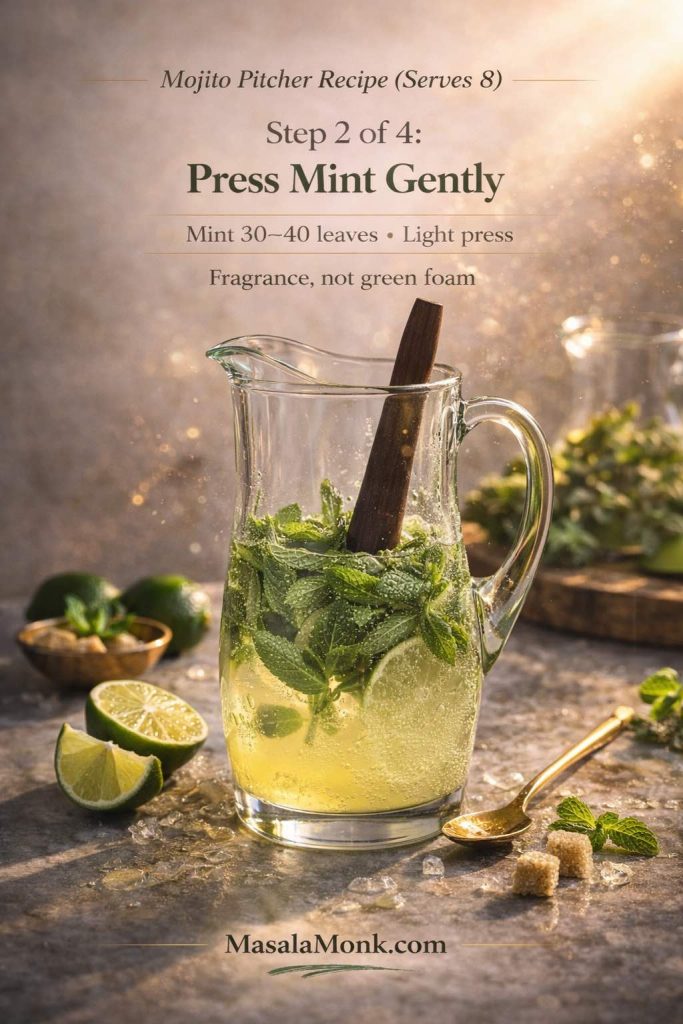
Step 2: Add mint and press gently

Next, add 30–40 mint leaves. Using a spoon (or muddler), press the leaves lightly a few times—just enough to release aroma. Then stop while the mint still looks intact. You’re aiming for fragrance, not green foam, and you want the base to stay bright rather than turning “leafy.”

Step 2 of 4 for a mojito pitcher recipe (serves 8) showing fresh mint leaves in a glass pitcher being gently pressed in the lime-syrup base, with text overlay “Press Mint Gently” and “Mint 30–40 leaves • Light press,” plus MasalaMonk.com in the footer.
Mojito Pitcher Recipe — Step 2: add 30–40 mint leaves and press lightly just to release aroma. Keeping mint intact prevents grassy “green foam” flavors and makes your batched mojitos taste fresh instead of muddled.

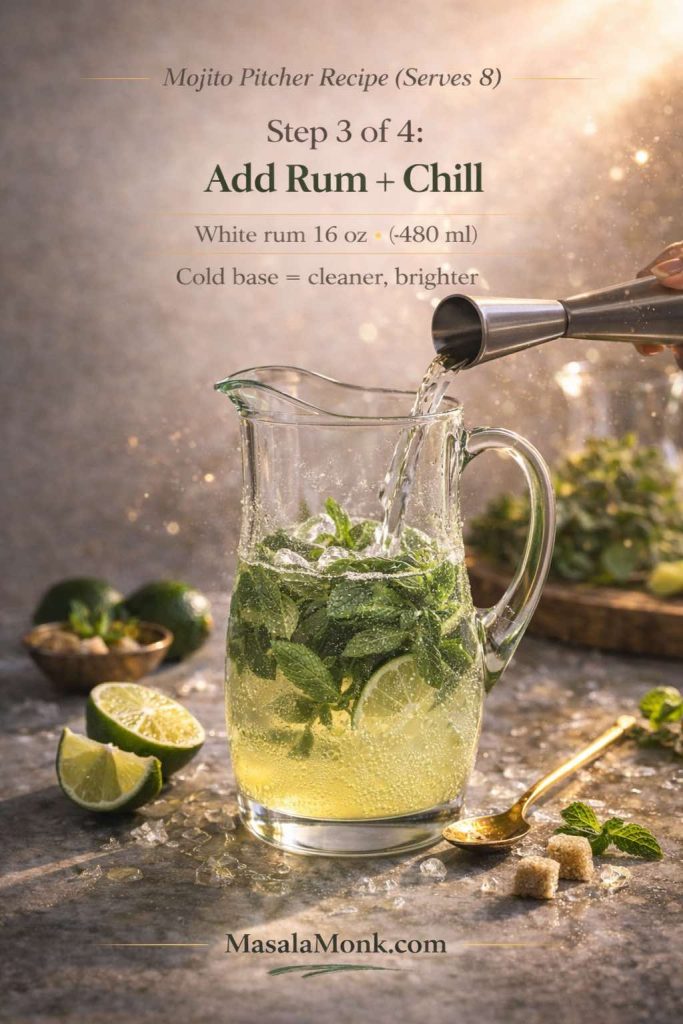
Step 3: Add rum and chill hard

Now pour in 16 oz (480 ml) white rum. Give the pitcher one quick stir, then refrigerate until very cold. The colder the base, the better it behaves at serving time—less melt, better balance, and a cleaner finish.

Step 3 of 4 for a mojito pitcher recipe (serves 8) showing white rum being poured from a jigger into a chilled pitcher with lime-syrup base and mint, with text overlay “Add Rum + Chill” and “White rum 16 oz (480 ml)” plus MasalaMonk.com in the footer.
Mojito Pitcher Recipe — Step 3: add 16 oz (480 ml) white rum, stir once, then chill hard. A cold mojito base pours cleaner, tastes brighter, and stays balanced when you serve it over ice.

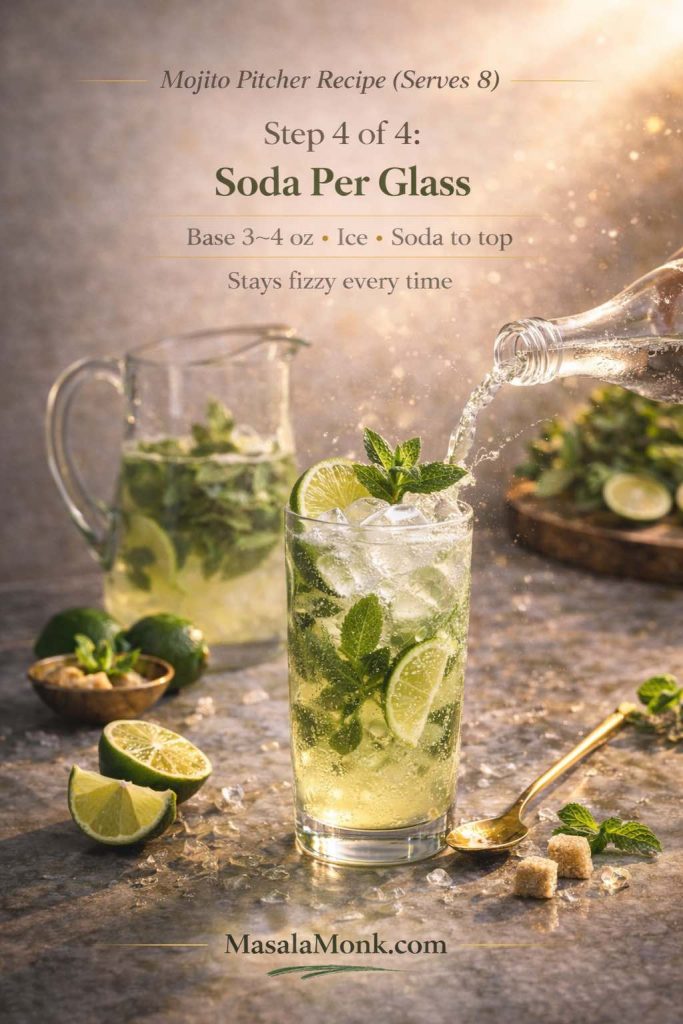
Step 4: Serve over ice and top with soda per glass

When you’re ready to serve, fill each glass with ice. Pour 3–4 oz (90–120 ml) of the chilled mojito base into the glass. After that, top with cold soda water, then give it one gentle stir—just enough to combine without flattening the drink. Finally, garnish with a mint sprig and a lime wheel so each glass smells fresh as soon as it’s picked up.

Step 4 of 4 for a mojito pitcher recipe (serves 8) showing chilled mojito base poured over ice in a highball glass and topped with soda water, with text overlay “Soda Per Glass” and “Base 3–4 oz • Ice • Soda to top,” plus MasalaMonk.com in the footer.
Mojito Pitcher Recipe — Step 4: pour 3–4 oz of the chilled base over ice, then top with soda in each glass. This “base now, fizz later” method keeps batch mojitos sparkling and fresh instead of flat.

This “base now, fizz later” approach is the same logic that makes make-ahead party drinks work so well. If you’re building a bigger drink table and want a second crowd drink you can prep in advance, Rum Punch Recipe fits perfectly alongside pitcher mojitos because it follows that same “core first” philosophy.

Make-ahead timing (to keep it fresh)

  • Mix lime + syrup + rum earlier in the day and refrigerate.
  • Add mint closer to serving, or add it earlier but remove leaves after 20–30 minutes if you’re holding a long time.
  • Keep soda sealed until the last moment.
Mojito Pitcher Timing (Make-Ahead Plan): mix the lime–syrup–rum base and chill hard, add mint only 20–30 minutes before serving (or remove it after 20–30 minutes), and keep soda sealed until you top each glass. This is the easiest way to batch mojitos that stay fizzy.

That way, your pitcher tastes bright rather than dull, and each glass gets real fizz.

Also Read: Chicken Pesto Pasta (Easy Base Recipe + Creamy, One-Pot, Baked & More)


Mojito Mocktail and Virgin Mojito Recipe (Alcohol-Free, Still Satisfying)

A virgin mojito recipe works best when it doesn’t try to replace rum with extra sugar. Instead, it leans into what makes mojitos great in the first place: lime brightness, mint aroma, and sparkling lift.

Recipe infographic titled “Virgin Mojito (Mocktail)” showing alcohol-free mojito measurements: lime 1 oz/30 ml, syrup 3/4 oz/22 ml (or sugar), mint 8–10 leaves, soda 4–6 oz/120–180 ml, and ice to fill. Includes technique cues: dissolve sweetness first, press mint gently, and add soda last, plus a note to add a tiny pinch of salt for bar-style balance. MasalaMonk.com appears in the footer.
Virgin mojito recipe (mocktail): Build it like a real mojito—lime + sweetener first, gentle mint press, ice to the top, then soda last. A tiny pinch of salt can make a mojito mocktail taste more “bar-balanced” without making it salty.

Virgin mojito recipe (1 drink)

  • Mint leaves: 8–10 leaves + garnish sprig
  • Fresh lime juice: 1 oz (30 ml)
  • Simple syrup: ¾ oz (22 ml) or 2 tsp sugar
  • Soda water: 4–6 oz (120–180 ml)
  • Ice: fill the glass
  • Garnish: mint sprig + lime

Method: Stir lime + syrup, press mint gently, add ice, top with soda, stir once, garnish.

If you’re putting together a drinks table where not everyone wants alcohol, it’s useful to have more than one alcohol-free option so nobody feels stuck with “the one mocktail.” That’s why Keto Mocktails is such a natural companion for a mojito night: it gives you a whole set of alternatives while keeping the same “fresh and festive” feeling.

Virgin mojito pitcher (serves 8)

  • Fresh lime juice: 8 oz (240 ml)
  • Simple syrup: 6 oz (180 ml)
  • Mint leaves: 30–40 leaves
  • Soda water: 40–48 oz (1.2–1.4 L), topped per glass
  • Ice + garnish: plenty

Build and chill the base, then top each glass with soda right before serving.

A few mocktail-friendly flavor directions

If you want your mojito mocktail to feel more “crafted,” introduce one flavor note while keeping lime and mint obvious:

  • Cucumber mint mojito mocktail (cool and crisp)
  • Blueberry mojito mocktail (soft berry with bright lime)
  • Passion fruit mojito mocktail (tropical tang)
  • Elderflower mojito mocktail (floral lift)

You’ll find measured versions below, so you can make them without turning your drink into syrupy fruit soda.

Also Read: Mozzarella Sticks Recipe (Air Fryer, Oven, or Fried): String Cheese, Shredded Cheese, and Every Crunchy Variation


Mojito Variations (Measured, Balanced, Still a Mojito)

Fruit mojitos are where people get excited and where drinks sometimes become sugar bombs. The key is simple: fruit should complement the base, not replace it. Lime and mint should still read clearly. Soda should still provide lift. Rum should still feel present but not harsh.

Below are measured variations built on the classic framework. Each one starts with the same base logic: dissolve sweetness, treat mint gently, pack ice high, add soda last, stir minimally.
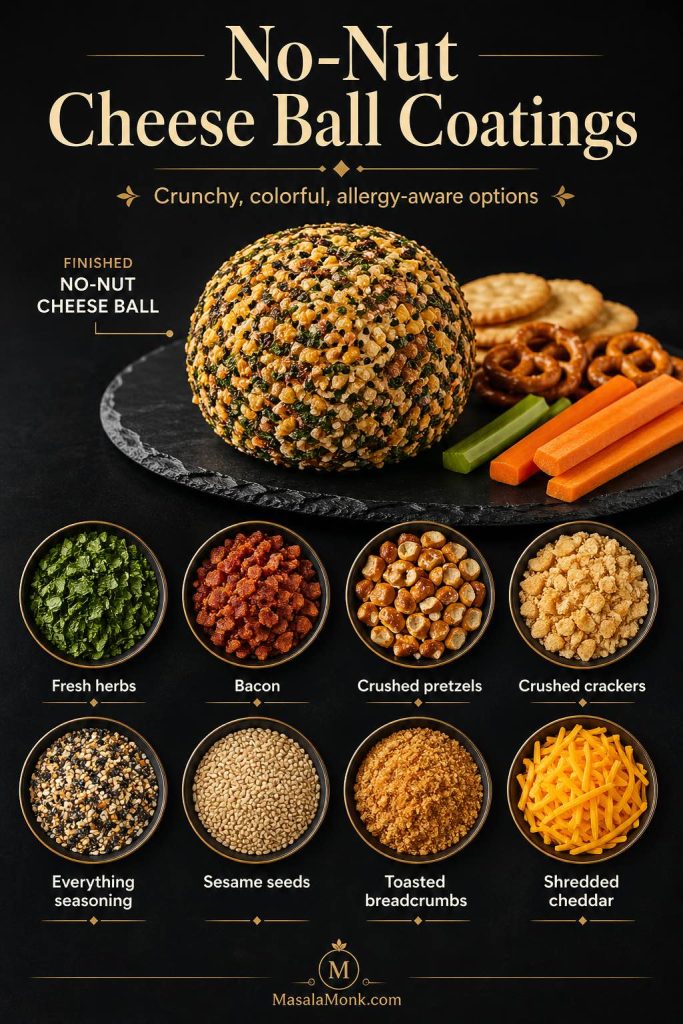
Infographic titled “Flavored Mojito Formula (Works for Any Fruit)” showing a three-part template for fruit mojitos: Base (lime 1 oz/30 ml, sweetener 1/2–3/4 oz/15–22 ml, rum 2 oz/60 ml, mint gentle press), Fruit Add (choose 1: juice/purée 1–2 oz/30–60 ml or 2–3 slices; examples shown: strawberry, watermelon, pomegranate, peach), and Fizz (adjust soda 2–4 oz/60–120 ml, use less soda for watery fruits like watermelon or coconut water). Tip strip says keep lime loud, mint intact, soda last. MasalaMonk.com in footer.
Flavored mojito formula: Keep the classic mojito base the same (lime + sweetener + rum + gentle mint), then add 1–2 oz fruit juice/purée or a few slices, and adjust soda to stay crisp. Use less soda for watery fruits like watermelon or coconut water so your fruit mojito still tastes like a mojito—not fruit soda.

Strawberry mojito recipe (1 drink)

  • Strawberries: 2 medium strawberries, sliced (or 1 oz / 30 ml puree)
  • Mint leaves: 8–10
  • Fresh lime juice: 1 oz (30 ml)
  • Simple syrup: ½–¾ oz (15–22 ml)
  • White rum: 2 oz (60 ml)
  • Soda water: 2–4 oz (60–120 ml)
  • Ice + garnish: mint sprig + strawberry slice (optional)
Strawberry Mojito Recipe (1 drink): a fresh, crisp twist on the classic mojito—lightly press the berries, keep mint gentle, and add soda last so the drink stays bright and fizzy instead of turning watery.

Method:
Stir lime + syrup first. Add strawberries and press lightly once or twice. Then add mint and press gently (3–4 light presses). Add rum, fill with ice, top with soda, stir once.

This approach keeps the strawberry flavor fresh rather than jammy, while the drink still tastes like a mojito first.

Watermelon mojito recipe (1 drink)

  • Watermelon juice/puree: 2 oz (60 ml)
  • Mint leaves: 8–10
  • Lime juice: 1 oz (30 ml)
  • Simple syrup: ½ oz (15 ml)
  • White rum: 2 oz (60 ml)
  • Soda water: 2–3 oz (60–90 ml)
  • Ice + garnish: mint sprig + lime wheel
Watermelon Mojito Recipe (1 drink): keep it crisp by stirring lime, syrup, and watermelon first, pressing mint gently, then adding rum, ice, and soda last—plus the key pro tip: use less soda for watery fruit so your mojito stays bright, not thin.

Method:
Stir lime + syrup + watermelon. Add mint gently. Add rum. Pack with ice. Top with soda. Stir once.

Watermelon is mostly water, so it dilutes easily. That’s why the soda range is slightly smaller here: you want sparkle without turning the drink thin.

If you’re offering a second summer drink that feels different without leaving the “bright and fun” lane, Watermelon Margarita Variations can be a natural addition to the table.

Cranberry mojito recipe (1 drink)

  • Cranberry juice: 1 oz (30 ml)
  • Mint leaves: 8–10
  • Lime juice: 1 oz (30 ml)
  • Simple syrup: ¾ oz (22 ml)
  • White rum: 2 oz (60 ml)
  • Soda water: 2–4 oz (60–120 ml)
  • Ice + garnish: mint sprig + lime wheel
Photoreal cranberry mojito recipe card showing a tall highball glass with a pale ruby cranberry mojito, ice, mint, lime wheel, and cranberries, with text overlay listing measurements (cranberry juice, lime juice, simple syrup, white rum, soda water, mint) plus quick steps and a pro tip to use the full ¾ oz syrup for balance, and MasalaMonk.com in the footer.
Cranberry Mojito Recipe (1 drink): tart, crisp, and bright—stir lime, syrup, and cranberry first, press mint gently, then add rum, ice, and soda last. The pro move is using the full ¾ oz syrup so cranberry stays refreshing instead of puckering.

Method:
Stir lime + syrup + cranberry first. Add mint gently. Add rum. Ice. Soda. Minimal stir.

Cranberry is tart, so it benefits from the full syrup amount. If you like that sharp, fizzy direction, Cranberry Moscow Mule Recipe is another internal drink that keeps the “cold and crisp” feel while switching flavor families.

Pomegranate mojito recipe (1 drink)

  • Pomegranate juice: 1 oz (30 ml)
  • Mint leaves: 8–10
  • Lime juice: 1 oz (30 ml)
  • Simple syrup: ¾ oz (22 ml)
  • White rum: 2 oz (60 ml)
  • Soda water: 2–4 oz (60–120 ml)
  • Ice + garnish: mint sprig + lime wheel
Pomegranate Mojito Recipe (1 drink): bright, jewel-toned, and crisp—stir lime, syrup, and pomegranate first, press mint gently, then add rum, ice, and soda last. Using the full ¾ oz syrup keeps the tang balanced so every sip stays refreshing.

Method:
Stir lime + syrup + pomegranate. Add mint gently. Add rum. Ice. Soda. One lift-stir.

Pomegranate adds a deeper fruit tang, so the drink feels a little more “evening” than “afternoon.” For a virgin pomegranate mojito, simply omit rum and top with extra soda.

Coconut mojito recipe (1 drink)

  • Coconut water: 2 oz (60 ml) (or coconut-flavored sparkling water)
  • Mint leaves: 8–10
  • Lime juice: 1 oz (30 ml)
  • Simple syrup: ½ oz (15 ml)
  • White rum: 2 oz (60 ml)
  • Soda water: 2–3 oz (60–90 ml)
  • Ice + garnish: mint sprig + lime wheel
Coconut Mojito Recipe (1 drink): tropical but still crisp—stir lime, syrup, and coconut water first, press mint gently, then add rum, ice, and soda last. Keeping syrup at ½ oz prevents coconut from tasting too sweet and keeps the mojito bright.

Method:
Stir lime + syrup + coconut water. Add mint gently. Add rum. Ice. Soda. Minimal stir.

Coconut can feel creamy or sweet quickly. Keeping lime loud and syrup restrained keeps the drink crisp rather than dessert-like. If you want more tropical hosting ideas beyond mojitos, Coconut Water Cocktails fits naturally as a “next read.”

Pineapple mojito (1 drink)

  • Pineapple juice: 1½ oz (45 ml)
  • Mint leaves: 8–10
  • Lime juice: 1 oz (30 ml)
  • Simple syrup: ½ oz (15 ml)
  • White rum: 2 oz (60 ml)
  • Soda water: 2–3 oz (60–90 ml)
  • Ice + garnish: mint sprig + pineapple wedge (optional)
Photoreal pineapple mojito recipe card showing a tall highball glass with pineapple juice mojito, lime wheel, mint garnish, and ice with visible bubbles on a smooth ivory background, with text overlay listing measurements (pineapple juice, lime juice, simple syrup, white rum, soda water, mint), quick steps including “soda last,” a pro tip to keep syrup at ½ oz, and MasalaMonk.com in the footer.
Pineapple Mojito (1 drink): sunny, crisp, and not too sweet—stir lime, syrup, and pineapple first, press mint gently, then add rum, ice, and soda last. Keeping syrup at ½ oz lets pineapple shine while the mojito stays bright and fizzy.

Method:
Stir lime + syrup + pineapple. Add mint gently. Add rum. Ice. Soda. One lift-stir.

Because pineapple is naturally sweet, the syrup is intentionally lighter. If you’re serving non-alcoholic guests too, Pineapple Mojito Mocktail Recipes makes a great internal companion.

Peach mojito recipe (1 drink)

  • Peach slices: 2–3 slices (or peach puree 1 oz / 30 ml)
  • Mint leaves: 8–10
  • Lime juice: 1 oz (30 ml)
  • Simple syrup: ¾ oz (22 ml)
  • White rum: 2 oz (60 ml)
  • Soda water: 2–4 oz (60–120 ml)
  • Ice + garnish: mint sprig + peach slice (optional)
Peach Mojito Recipe (1 drink): soft fruit, bright finish—stir lime and syrup first, lightly press peach, press mint gently, then add rum, ice, and soda last. Keeping lime at 1 oz makes the peach taste fresh and crisp instead of flat.

Method:
Stir lime + syrup first. Add peach and press lightly once or twice. Add mint gently. And then add rum. Ice. Soda. Minimal stir.

Peach is gentle, so lime brightness is what keeps it refreshing rather than perfumey. If you want a “frozen peach mojito,” blend peach slices with ice first, then build a lighter version with a small splash of soda at the end.

Also Read: Crock Pot Chicken Breast Recipes: 10 Easy Slow Cooker Dinners (Juicy Every Time)


More Mojito Methods (So Variations Stay Clean)

At this point, you have multiple recipes. Now let’s make sure they all taste sharp and fresh.

Method 1: The “gentle press” mint method (best for clean flavor)

  • Stir lime + syrup first
  • Add mint
  • Press lightly 3–5 times
  • Stop early
  • Garnish strongly

This method keeps the drink crisp and prevents bitterness.

Gentle Press Mint Method for a classic mojito: stir lime + syrup first, press mint lightly 3–5 times, then stop early and garnish strongly. This simple technique keeps your mojito recipe crisp, aromatic, and free of bitter, grassy mint.

Method 2: The “fruit-first” method (best for strawberry, peach, blueberry)

  • Stir lime + syrup
  • Add fruit
  • Press fruit lightly just to release juice
  • Add mint after fruit
  • Press mint gently (less than you think)
  • Continue with rum, ice, soda

Putting fruit before mint reduces the temptation to smash everything together, which keeps mint cleaner.

Mojito Method 2 (Fruit-First Build): the clean way to make strawberry, peach, or blueberry mojitos—stir lime + syrup, lightly press fruit for juice, add mint after fruit, then finish with rum + ice and soda last so the drink stays bright and the mint stays fresh.

Method 3: The “batch base” method (best for a pitcher of mojitos)

  • Build lime + syrup + rum base
  • Chill hard
  • Add mint briefly, then remove if holding long
  • Top with soda per glass
Photoreal instructional card titled “Mojito Method 3: Batch Base (Pitcher)” showing a chilled mojito pitcher with lime and mint and a finished mojito glass, with text overlay explaining the batch base method (build lime + syrup + rum, chill hard, add mint briefly, soda per glass) plus a pro tip that soda in the pitcher goes flat and MasalaMonk.com in the footer.

This protects fizz and keeps mint tasting fresh.

Also Read: Eggless Yorkshire Pudding (No Milk) Recipe


Cucumber Mint Mojito (and Cucumber Mojito Mocktail)

Cucumber is a quiet ingredient, which makes it perfect for drinks that should feel crisp rather than sweet. It also pairs beautifully with mint and lime.

Cucumber mint mojito recipe (1 drink)

  • Cucumber: 3–4 thin slices
  • Mint leaves: 8–10
  • Lime juice: 1 oz (30 ml)
  • Simple syrup: ¾ oz (22 ml)
  • White rum: 2 oz (60 ml)
  • Soda water: 2–4 oz (60–120 ml)
  • Ice + garnish (mint sprig + cucumber ribbon if you want)
Photoreal cucumber mint mojito recipe card showing a tall highball glass with cucumber slices, mint, lime wheel, crushed ice, and visible bubbles on a smooth ivory background, with text overlay listing quick specs (cucumber, lime juice, simple syrup, white rum, soda water, mint), quick steps including “soda last,” a pro tip to press cucumber lightly, and MasalaMonk.com in the footer.
Cucumber Mint Mojito (1 drink): ultra crisp and refreshing—stir lime + syrup first, lightly press cucumber, press mint gently, then add rum, ice, and soda last. The pro tip matters here: too much cucumber press can turn the drink vegetal, so keep it light.

Method:
Stir lime + syrup. Add cucumber and press lightly once or twice to release freshness. Add mint and press gently. And then add rum, ice, soda, giveit minimal stir.

Cucumber mojito mocktail (1 drink)

Use the same recipe, but omit rum and increase soda to 4–6 oz (120–180 ml). The result is a cucumber mint mojito mocktail that tastes clean and grown-up, especially when served very cold.

Also Read: Garlic & Paprika Cabbage Rolls (Keto-Friendly Recipes) – 5 Bold Savory Twists


Blueberry Mojito Mocktail (and a Light Blueberry Mojito)

Blueberries bring a soft fruit sweetness that can become heavy if you overdo it. For that reason, the best blueberry mojito direction is measured and bright, with lime leading.

Blueberry mojito mocktail recipe (1 drink)

  • Blueberries: 10–12 berries
  • Mint leaves: 8–10
  • Lime juice: 1 oz (30 ml)
  • Simple syrup: ½–¾ oz (15–22 ml)
  • Soda water: 4–6 oz (120–180 ml)
  • Ice + garnish
Blueberry Mojito Mocktail (1 drink): bright berry + fizz—stir lime and syrup first, crack only a few blueberries, press mint gently, then add ice and soda last for a clean, sparkling finish that doesn’t turn jammy.

Method:
Stir lime + syrup. Add blueberries and press lightly (just enough to crack a few berries). Add mint and press gently. Ice. Soda. Minimal stir.

Blueberry mojito (with rum)

Add 2 oz (60 ml) white rum and reduce soda to 2–4 oz (60–120 ml). Keep it bright, not jammy.

Also Read: 10 Low Carb Chia Pudding Recipes for Weight Loss (Keto, High-Protein, Dairy-Free)


Passion Fruit Virgin Mojito (and Passion Fruit Mojito Mocktail)

Passion fruit tastes bold and tangy, so it plays beautifully with lime. Nevertheless, it can overpower mint if you use too much. The fix is easy: keep passion fruit measured and let mint be the aroma rather than the main flavor.

Passion fruit virgin mojito recipe (1 drink)

  • Passion fruit puree: 1 oz (30 ml)
  • Mint leaves: 8–10
  • Lime juice: ¾–1 oz (22–30 ml)
  • Simple syrup: ½ oz (15 ml)
  • Soda water: 4–6 oz (120–180 ml)
  • Ice + garnish
Photoreal passion fruit virgin mojito recipe card showing a tall highball glass with golden passion fruit mocktail, mint, lime wheels, crushed ice, and visible bubbles, with text overlay listing quick specs (passion fruit purée 1 oz, lime juice ¾–1 oz, simple syrup ½ oz, soda 4–6 oz, mint 8–10) and quick steps including “soda last,” plus MasalaMonk.com in the footer.
Passion Fruit Virgin Mojito (1 drink): tropical tang + fizz—stir lime, syrup, and passion fruit first, press mint gently, then add ice and soda last for a bright, sparkling mocktail that tastes clean (not sugary).

Method:
Stir lime + syrup + passion fruit first. Then add mint gently. Ice. Soda. Minimal stir.

If you prefer it boozier, add 2 oz rum and reduce soda to 2–3 oz.

Also Read: Keto Hot Chocolate Recipe (Sugar-Free Hot Cocoa) + Best Homemade Mix


Orange Virgin Mojito (Bright, Simple, Crowd-Friendly)

Orange is softer than lime, so an orange virgin mojito should still include lime for structure. Otherwise, it tastes like orange soda with mint.

Orange virgin mojito (Recipe for 1 drink)

  • Fresh orange juice: 1½ oz (45 ml)
  • Lime juice: ¾ oz (22 ml)
  • Mint leaves: 8–10
  • Simple syrup: ½ oz (15 ml)
  • Soda water: 4–6 oz (120–180 ml)
  • Ice + garnish
Orange Virgin Mojito (1 drink): sunny + crisp—stir orange, lime, and syrup first, press mint gently, then add ice and soda last for a bright mocktail that tastes fresh (not flat). The lime is the secret: don’t skip it.

Method:
Stir juices + syrup. Then add mint gently. Ice. Soda. Minimal stir.

This one is especially good for daytime gatherings because it feels sunny without being sugary.

Also Read: Dirty Martini Recipe (Classic, Extra Dirty, No Vermouth, Spicy, Blue Cheese, Tequila + Batched)


Virgin Blue Mojito Recipe (Fun Color, Same Mojito Logic)

A “blue mojito” is usually about color, not tradition. Even so, it can still be built like a proper mojito so it tastes clean rather than artificial.

Virgin blue mojito (Recipe for 1 drink)

  • Blue syrup (non-alcoholic): ½ oz (15 ml)
  • Lime juice: 1 oz (30 ml)
  • Mint leaves: 8–10
  • Soda water: 4–6 oz (120–180 ml)
  • Ice + garnish
Photoreal Virgin Blue Mojito recipe card showing a tall highball glass with a bright blue sparkling mocktail, mint leaves, lime wheel, and ice on a smooth ivory background, with text overlay listing quick specs (blue syrup ½ oz, lime juice 1 oz, soda 4–6 oz, mint 8–10, ice to fill), quick steps including “soda last,” a pro tip to keep lime at 1 oz, and MasalaMonk.com in the footer.
Virgin Blue Mojito (1 drink): bright + fizzy—stir lime and blue syrup first, press mint gently, then add ice and soda last for a clean, sparkling finish. The key balance is lime: keeping it at 1 oz stops the drink from tasting overly sweet.

Method:
Stir lime + blue syrup first. Add mint gently. Ice. Soda. Minimal stir.

If the syrup is very sweet, reduce it slightly and keep lime full-strength. That keeps the drink crisp.

Also Read: Fish and Chips Reimagined: 5 Indian Twists (Recipe + Method)


Classic Mojito Cocktail, Bar-Style (Same Ingredients, Cleaner Recipe)

Sometimes you want a classic mojito cocktail that feels tighter—less casual, more “this tastes like it came from a bar.” The ingredients don’t change. The technique does.

Bar-Style Classic Mojito (Clean Build): same ingredients, cleaner result—dissolve sweetness first, press mint lightly (3–5) and stop, pack ice high, add soda last, then stir once and quit. Finish with mint near the straw so every sip tastes fresh and “bar-level.”

Here’s the bar-clean approach:

  • dissolve sweetness thoroughly before mint
  • press mint lightly and briefly
  • pack ice high
  • add soda last
  • stir once, then stop
  • garnish aggressively for aroma

It’s not complicated; it’s controlled. And once you do it this way a few times, it becomes your default method because it’s hard to go back to muddled chaos.

Also Read: Ravioli Recipe Reinvented: 5 Indian-Inspired Twists on the Italian Classic


Cuban Mojito Recipe Notes (Mojito Cubano, Traditional Cuban Mojito)

You’ll see terms like cuban mojito recipe, mojito cubano recipe, and authentic cuban mojito recipe. In practice, the “traditional” vibe is mostly about keeping things straightforward—mint, lime, sugar, rum, soda—with a simple build.

If you want a Cuban-leaning feel, the easiest change is using granulated sugar rather than syrup:

  • Swap ¾ oz (22 ml) syrup for 2 tsp sugar
  • Stir longer at the beginning to dissolve
  • Keep everything else the same

That yields a drink that feels classic without adding fuss.

Also Read: Croquettes Recipe: One Master Method + 10 Popular Variations


What to Serve With Mojitos (Food Pairings That Make the Drink Pop)

A mojito shines next to salty, crispy, spicy food because that lime-mint sip resets your palate between bites. Meanwhile, very heavy creamy dishes can sometimes make the drink feel sharper than you want. So, when in doubt, go for snacks and finger foods.

Crispy party pairings

If you want one pairing that almost always works, it’s wings—especially when you want a drink that cuts through salty, saucy bites.

Cheesy crowd-pleasers

Lime cuts richness. Mint keeps the finish light. That’s why cheesy finger foods pair surprisingly well with mojitos.

Bite-size appetizer spreads

Croquettes give you that “party platter” feeling with minimal fuss, and they pair beautifully with bright drinks.

Quick “pick one” appetizer ideas

If you want options rather than a plan, a roundup makes the snack table easy.


A Brief, Clear Note on Strength (Comfortable Pacing)

Servings can vary because pours vary. Still, it can be helpful to understand what a “standard drink” means when you’re measuring spirits. In the U.S., a standard drink contains 0.6 ounces (14 grams) of pure alcohol, and the actual serving size depends on ABV. (CDC)

That’s not here to interrupt the fun. Rather, it’s simply useful context when you’re hosting or when you want to keep servings consistent.

Also Read: How to Make a Flax Egg (Recipe & Ratio for Vegan Baking)


A Mojito Night Plan That Feels Effortless (Not Like You’re Bartending All Night)

If you’re making one drink, the classic method is quick. If you’re serving a group, a small setup makes everything smoother.
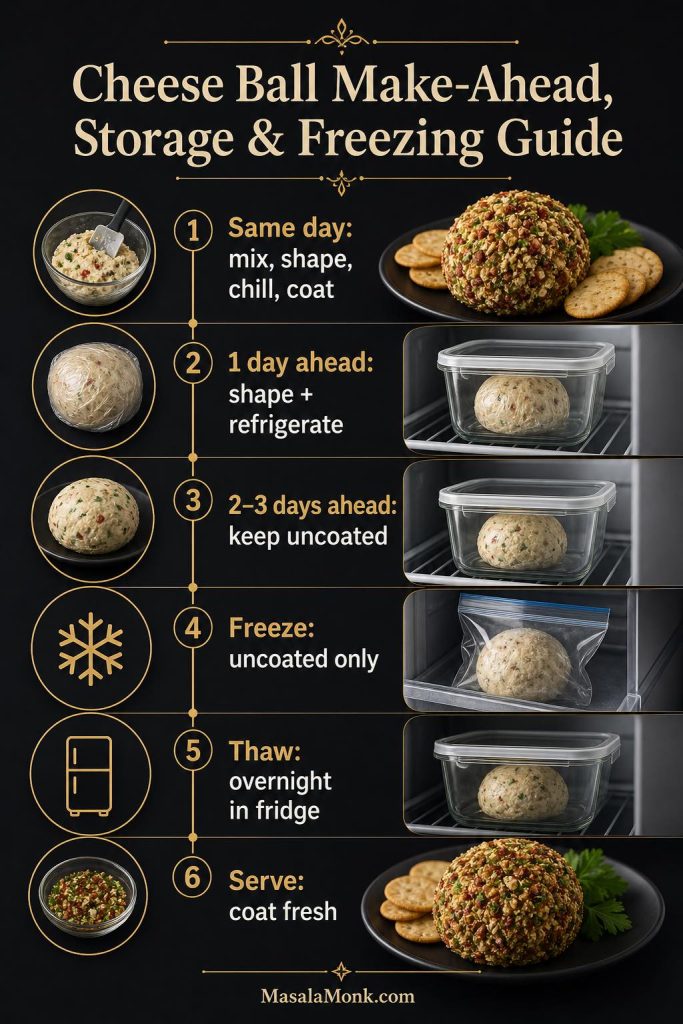
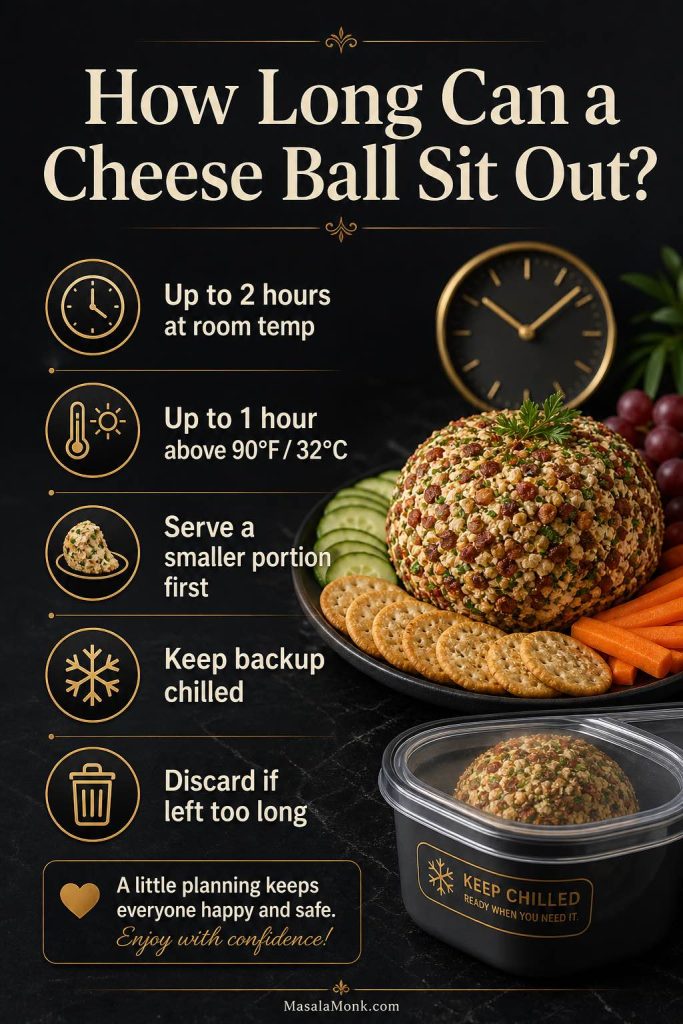
Mojito Night Plan (Effortless Hosting): a simple setup for 2–4 people or a crowd—prep syrup and garnishes, keep soda cold, and remember the big trick for parties: batch the base, then add soda per glass so every mojito stays crisp and fizzy.

For 2–4 people

  • Make simple syrup (or use sugar and stir well)
  • Chill rum and soda
  • Prep garnishes: mint sprigs + lime wheels
  • Offer two options: classic mojito + one fruit variation (strawberry or watermelon)

This keeps the vibe generous without turning you into a full-time bartender.

For a crowd

  • Make the chilled pitcher base (lime + syrup + rum)
  • Keep soda sealed and cold
  • Serve over ice and top with soda per glass
  • Garnish each glass with mint at the last second

If you want a second crowd drink that feels completely different yet still party-friendly, Rum Punch Recipe is a natural companion because it’s easy to prep ahead and serve smoothly.

Also Read: Pork Tenderloin in Oven (Juicy, Easy, 350°F or 400°F) Recipe


More Drinks to Keep the Table Interesting (Same Refreshing Energy)

Once someone likes mojitos, they often enjoy other bright, fizzy drinks too. So if you want a few natural “next drinks” on your site that fit the same hosting mood, these are easy internal hops:

They each bring a different personality—gingery, sparkling, citrusy, sharp—while still feeling like they belong at the same table as a mojito.

Also Read: 19 Essential Kitchen Tools That Make Cooking Easier


Bringing It All Together

A mojito doesn’t need to be complicated to be excellent. It just needs a few decisions made with care: dissolve sweetness early, treat mint gently, use plenty of ice, add soda last, and stir lightly. Once you do that, your mojito recipe becomes reliable—whether you’re making one classic mojito drink for yourself, scaling a mojito pitcher recipe for guests, building a virgin mojito recipe for an alcohol-free option, or rotating through variations like strawberry, watermelon, cranberry, pomegranate, coconut, pineapple, peach, cucumber mint, blueberry, passion fruit, orange, and a fun “blue” virgin version.

After a few rounds, the mojito stops being “a recipe you follow” and starts becoming something you can make on instinct. And when that happens, mojitos stop being occasional. They start becoming a favorite you can pull off anytime—quiet evening, hot afternoon, or crowded table.

Also Read: How to Cook Tortellini (Fresh, Frozen, Dried) + Easy Dinner Ideas


FAQs about Mojito Recipe

1) What is the best mojito recipe for beginners?

If you’re starting out, the best mojito recipe is the classic build: dissolve lime and sweetener first, press mint gently (don’t crush it), add rum, pack the glass with ice, then finish with soda water. That order keeps the drink crisp, prevents bitter mint, and protects the fizz.

2) How do you make a mojito that doesn’t taste watery?

Most watery mojitos come from too little ice or too much soda. Instead, fill the glass completely with ice, add soda last, and stir only once. If the drink still tastes thin, reduce soda slightly and keep the lime and rum at full strength.

3) What is the classic mojito ratio?

A reliable classic mojito ratio is: 1 oz lime juice, 3/4 oz simple syrup (or 2 tsp sugar), 2 oz white rum, then top with soda water. After that, adjust soda to taste rather than changing the core ratio.

4) How much mint should I use for a mojito drink?

Typically, 8–10 mint leaves are enough for a minty aroma without bitterness, especially when you garnish with a fresh mint sprig. If you want more mint impact, add more garnish rather than muddling harder.

5) Why does my mint mojito recipe taste bitter?

Usually, the mint was over-muddled or stirred too aggressively after bruising. To avoid that, press mint lightly a few times, then stop. Also, add soda at the end and stir minimally so the mint doesn’t get churned through the drink.
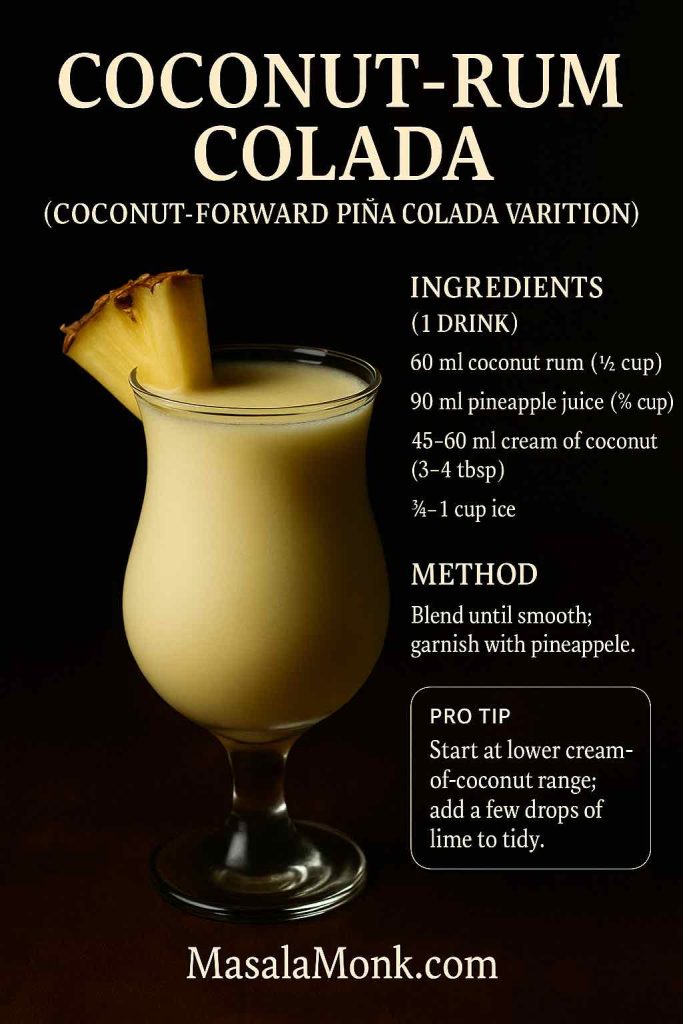
6) Can I make a mojito without a muddler?

Yes. You can use the back of a wooden spoon or the handle end of a rolling pin. The key is gentle pressure—think “press to release aroma,” not “smash to extract juice.”
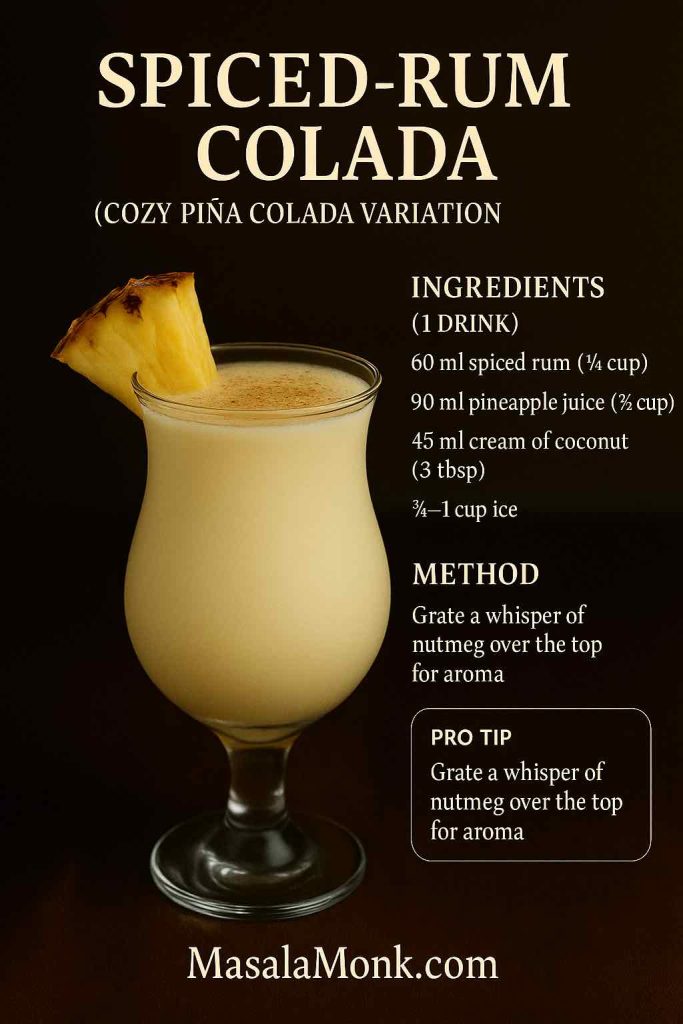
7) Can I use bottled lime juice in a mojito recipe at home?

You can, particularly for batching a pitcher base, although fresh lime tastes brighter. If you use bottled lime juice, keep the drink extra cold and use a fresh lime garnish so the aroma stays lively.

8) What’s the best white rum for mojitos?

For a classic mojito drink, choose a clean, light white rum that doesn’t taste overly oaky or spiced. Since the mojito is a delicate cocktail, smoother rums tend to let the lime and mint shine.

9) How strong is a mojito cocktail?

A standard mojito is typically built with around 2 oz rum, then diluted with ice melt and topped with soda. As a result, the strength depends on how much soda you add and how long the drink sits, but it usually drinks lighter than straight spirits.

10) How do I make a mojito pitcher recipe that stays fizzy?

Instead of adding soda to the pitcher, make a chilled base (lime + syrup + rum + mint briefly), then top each glass with soda at serving time. That way, every mojito stays sparkling and doesn’t go flat in the pitcher.

11) Can I make mojitos ahead of time?

Yes—partially. You can prep the mojito base (lime juice, sweetener, rum) and chill it. However, for the best taste, add mint shortly before serving and add soda only when pouring each glass.

12) What is a mojito mocktail and how do you make it taste like the real thing?

A mojito mocktail (or virgin mojito) uses the same structure—lime, sweetener, mint, ice, soda—just without rum. To keep it “cocktail-like,” focus on balance and aroma: dissolve the sweetener fully, press mint gently, and garnish generously.

13) How do you make a virgin mojito recipe for a crowd?

Make a chilled pitcher base using lime juice and simple syrup, add mint briefly for aroma, then pour over ice and top each glass with soda water. This approach keeps the mocktail fresh and fizzy for guests.

14) What’s the difference between a Cuban mojito recipe and a regular mojito?

A Cuban mojito recipe is usually very close to the classic build, often using granulated sugar rather than syrup and keeping the method simple. Even so, the same principles apply: gentle mint, bright lime, and soda added at the end.

15) How do I make a strawberry mojito recipe without it tasting like fruit soda?

Use a small amount of fresh strawberry (or puree), keep lime prominent, and don’t over-sweeten. Then build the drink like a classic mojito—mint gently pressed, ice packed, soda added last—so it still tastes like a mojito first.

16) What’s the best method for a watermelon mojito recipe?

Because watermelon is mostly water, use measured watermelon juice/puree, keep lime at full strength, and use slightly less soda than usual. That prevents the drink from turning thin while still staying sparkling.

17) Can I make a cranberry mojito or pomegranate mojito that isn’t too tart?

Yes. Start with the classic mojito ratio, then add cranberry or pomegranate juice in a controlled amount. Afterward, adjust with a small splash of syrup if needed, and finish with soda to keep it light.

18) What should I serve with mojitos?

Mojitos pair well with salty, crispy, and spicy foods because lime and mint refresh your palate. For example, wings, fries, croquettes, or cheesy finger foods all work well alongside a classic mojito cocktail.

Posted on 8 Comments

Piña Colada: Classic Recipe + 10 Variations (Virgin & On the Rocks)

Moody piña colada in a hurricane glass with pineapple and cherry—classic recipe and variations by MasalaMonk.

Some drinks whisper “holiday,” yet the piña colada practically sings it. If you love that beach-in-a-glass feeling, you’re in the right place. First, we’ll lock in the frozen classic that tastes like sunshine. Next, we’ll switch to an easy piña colada on the rocks for no-blender nights. Then, because it’s fun to play, we’ll explore practical pina colada variations you can master in minutes—strawberry, mango, blue curaçao, coconut-rum, spiced-rum, vodka, tequila, skinny, keto-leaning, and frozen pineapple. Finally, since not every occasion calls for alcohol, we’ll craft a zero-proof version that’s indulgent without spirits.

Before we blend, a tiny language detour helps. In Spanish, piña colada literally means “strained pineapple,” a nod to the pressed juice at the drink’s core — see Etymonline’s word history and the concise entry at Merriam-Webster. Meanwhile, let’s keep the focus on flavor and technique.

What does piña colada mean?
Piña colada means “strained pineapple.” Traditionally, it pairs pineapple with coconut and rum; however, you can easily make a virgin piña colada by skipping the rum and balancing sweetness with a little lime or a splash of coconut water.

Because stories matter almost as much as flavor, here’s the short origin postcard. Puerto Rico celebrates the piña colada as its national cocktail, and San Juan still debates where it was first poured. Many point to Ramón “Monchito” Marrero at the Caribe Hilton in the 1950s, while others mention competing claims across town. For a friendly primer, read Discover Puerto Rico’s guide, and for the hotel’s version of events, browse the Caribe Hilton history page.


Frozen vs. On the Rocks: choose your texture before you start

First, decide your vibe. Frozen is creamy, slushy, and a touch dessert-leaning—perfect for lingering afternoons or sunny patios. On the rocks, by contrast, is shaken hard with ice and served over fresh cubes; it’s quicker, brighter, and lets rum aromas peek through. As a result, many people pick frozen for weekends and rocks for weeknights.

If you often serve a crowd, prep a thick frozen base and, meanwhile, keep extra pineapple juice chilled. Then, when someone wants a lighter drink, shake a single serving with a splash of juice and strain it over ice for an instant piña colada on the rocks. If you prefer a visual of the shaken style, this walkthrough for a Piña Colada on the Rocks (Shaken) mirrors the method below.


Classic Piña Colada (Frozen)

Why it works. Pineapple brings tang and perfume; cream of coconut adds velvety body and gentle sweetness; white rum lifts aromatics so the finish feels sunny rather than heavy. For proportions, the classic split of rum + pineapple + cream of coconut gives a balanced canvas; from there, adjust to your blender and your preferred sweetness.

Classic frozen piña colada recipe card in a hurricane glass with pineapple and cherry—MasalaMonk footer
Creamy, sunny, timeless. Use pre-chilled juice for thicker, longer-lasting foam and that luxe, dessert-leaning texture.

Ingredients (1 drink)

  • 60 ml white rum (¼ cup)
  • 90 ml pineapple juice (⅜ cup)
  • 60–90 ml cream of coconut (¼–⅜ cup), to taste
  • 1–1½ cups ice
  • Pineapple wedge and cherry, to garnish

Method

  1. Chill a tall glass; meanwhile, add rum, pineapple juice, and cream of coconut to the blender.
  2. Add ice and blend until smooth and pourable. If the blades stall, loosen with a small splash of juice.
  3. Taste and adjust—if it’s too thick, a little more juice helps; if sweetness lingers, a few drops of lime tidy the finish.
  4. Pour, garnish, and serve immediately for maximum frostiness.

Coconut note. Cream of coconut isn’t the same as coconut milk or unsweetened coconut cream. Because cream of coconut is sweetened and thicker, it creates that signature silky texture. If you choose coconut milk for a “skinny” profile, add a touch of simple syrup and expect a lighter body.

Quick upgrades. Keep pineapple juice cold; colder inputs blend better and hold foam longer. Use frozen pineapple in place of some ice for louder fruit with less dilution. If your blender hesitates, pulse first, then blend continuously; layering liquids before ice prevents cavitation.


Piña Colada on the Rocks (Quick Method)

If you want the flavor without the thickness, the shaken version is a weeknight hero. It preserves the tropical profile, trims the richness, and—because it’s fast—fits Tuesday just as well as Saturday.

Piña Colada on the Rocks recipe card in moody portrait—rocks glass with pineapple wedge, MasalaMonk footer.
On-the-rocks keeps the colada bright: hard shake, fresh ice, compact glass. Perfect for quick weeknights without the blender.

Ingredients (1 drink)

  • 60 ml white rum (¼ cup)
  • 90 ml pineapple juice (⅜ cup)
  • 30–45 ml cream of coconut (2–3 tbsp), to taste
  • 10 ml fresh lime juice (2 tsp, optional)
  • Ice
  • Pineapple wedge or citrus peel, to garnish

Method

  1. Add everything to a shaker with ice.
  2. Shake hard for 10–12 seconds; then strain over fresh ice in a rocks glass.
  3. Garnish; taste and brighten with a drop more lime if you like.

Why you’ll love it. Shaking gently aerates and adds just enough dilution to feel refreshing, not heavy. Smaller glasses (180–240 ml / 6–8 oz) keep the drink cold and focused. Moreover, when you’re making rounds, you can pre-mix pineapple juice + cream of coconut in a bottle; then just add rum and shake to order.


Virgin Piña Colada (and Virgin Piña Colada on the Rocks)

Virgin piña colada meaning: a non-alcoholic piña colada that keeps pineapple and coconut while skipping rum. For a lighter texture, shake on the rocks and finish with lime.

Virgin piña colada recipe card—non-alcoholic, moody portrait with MasalaMonk footer
Zero-proof, 100% tropical; balance sweetness with lime or a splash of chilled coconut water.

Ingredients (1 drink)

  • 120 ml pineapple juice (½ cup)
  • 45–60 ml cream of coconut (3–4 tbsp), to taste
  • ½–1 cup ice (for frozen) or a shaker of ice (for rocks)
  • Optional: 10–15 ml fresh lime (2–3 tsp) or 30–60 ml coconut water (2–4 tbsp)

Method

  • Frozen: add juice and cream of coconut to a blender; add ice; blend until smooth. Adjust with a splash of juice or coconut water if needed.
  • On the rocks: shake juice and cream of coconut with ice; strain over fresh ice. Add lime to taste.

Keep exploring (internal). For lighter, long drinks that echo these flavors, see Coconut Water Cocktails. If you enjoy mint and tang, try Pineapple Mojito Mocktails. For low-sugar days, browse Keto Mocktails.


How to build pina colada variations without a recipe

Because once you nail the base, it’s easy to improvise. First, keep the triangle of pineapple–coconut–spirit intact. Next, add an accent (fruit, spice, citrus, or liqueur). Then, adjust sweetness and texture in small steps. Finally, decide on frozen or rocks, and garnish with intention. With that in mind, here are ten reliable pina colada variations you can pour anytime.


Top 10 Pina Colada Variations

1) Strawberry Piña Colada (Lava-Flow: Fruity Pina Colada Variation)

When you want playful drama, strawberry is the simplest path. First, blend a thick strawberry base; next, blend your colada until silky; then, slowly pour it over the red layer so the “lava” rises in ribbons. As a result, you get classic coconut-pineapple comfort lifted by bright berry zip. Finally, keep both layers fairly thick so they ripple instead of mixing.

Strawberry Lava-Flow piña colada layered recipe card—red strawberry base and creamy colada, MasalaMonk footer.
Playful drama, classic comfort: keep both layers thick so the red “lava” ribbons instead of mixing—instant showstopper.

Strawberry layer (1 drink)

  • 60 g strawberries (⅓–½ cup)
  • 10–15 ml fresh lime (2–3 tsp)
  • 5–10 ml simple syrup (1–2 tsp)
  • A few ice cubes
    Blend smooth; pour into a chilled tall glass.

Colada layer

  • 60 ml white rum (¼ cup)
  • 90 ml pineapple juice (⅜ cup)
  • 45–60 ml cream of coconut (3–4 tbsp)
  • ¾–1 cup ice
    Blend until just pourable; slowly cascade over the strawberry base.

Pro tip. If berries are peak-sweet, reduce or skip syrup; conversely, if they’re tart, add an extra teaspoon.


2) Mango Colada (Tropical Pina Colada Variation)

Mango slides in silkily and, meanwhile, softens acidity. Next, use ripe fruit or a quality purée; if the texture feels dense, loosen with a splash of pineapple juice. Finally, a tiny pinch of salt heightens the mango’s aroma without reading “salty,” and a teaspoon of lime adds sparkle.

Mango Colada recipe card—golden cocktail with mango and pineapple garnish, moody portrait, MasalaMonk footer
Mango slides in silkily and softens acidity; loosen with pineapple juice if dense, add a pinch of salt and 1 tsp lime to make aromas pop.

For 1 drink

  • 60 ml white rum (¼ cup)
  • 75 ml pineapple juice (5 tbsp)
  • 45 ml cream of coconut (3 tbsp)
  • 60–90 g mango (½–¾ cup) or 60 ml purée (¼ cup)
  • ¾–1 cup ice
    Blend smooth; serve thick for a dessert vibe, or shake and strain over ice for a lighter finish.

Love mango + vodka? Try these riffs: Mango Vodka Cocktail Drinks (Base + 7 Variations).


3) Blue Curaçao Colada (Blue Pina Colada Variation)

Sometimes you want familiar comfort and a little showmanship. Blue curaçao adds gentle citrus notes and that ocean-blue hue. Importantly, this isn’t a Blue Hawaii (a sharper, vodka-leaning sour); instead, it lands closer to a Blue Hawaiian, where coconut and pineapple still lead — compare Blue Hawaiian vs. Blue Hawaii.

Blue curaçao piña colada recipe card—ocean-blue hue, premium moody lighting
Coconut-pineapple comfort with coastal color—keep dilution low so the blue stays vivid.

For 1 drink

  • 45 ml white rum (3 tbsp)
  • 15 ml blue curaçao (1 tbsp)
  • 90 ml pineapple juice (⅜ cup)
  • 45–60 ml cream of coconut (3–4 tbsp)
  • ¾–1 cup ice
    Blend or shake; add a few drops of lime only if sweetness lingers.

Color tip. Add ice gradually. Over-dilution can dull the blue.


4) Coconut-Rum Colada (Coconut-Forward Pina Colada Variation)

If you’re craving even more coconut, this is your lane. First, switch to coconut rum; then, because it’s sweeter than white rum, start at the lower end of the cream-of-coconut range. Afterward, taste and—if needed—counter with a few drops of lime so the finish stays tidy. Consequently, the drink reads lush and aromatic rather than sugary.

Coconut-Rum Colada recipe card—coconut-forward piña colada in a hurricane glass, moody portrait, MasalaMonk footer
Coconut-forward and lush: start at the lower cream-of-coconut range (coconut rum is sweeter); tidy the finish with a few drops of lime.

For 1 drink

  • 60 ml coconut rum (¼ cup)
  • 90 ml pineapple juice (⅜ cup)
  • 45–60 ml cream of coconut (3–4 tbsp)
  • ¾–1 cup ice
    Blend until smooth; garnish with pineapple.

5) Spiced-Rum Colada (Cozy Pina Colada Variation)

When you want warmth and depth, spiced rum brings vanilla and baking-spice notes that cozy up to pineapple and coconut. Next, keep the cream of coconut moderate so the spices shine; then, grate a whisper of nutmeg over the top for aroma. Overall, you get a beachy drink with sweater-weather soul.

Spiced-Rum Colada recipe card—creamy cocktail with nutmeg and pineapple garnish, moody portrait, MasalaMonk footer
Vanilla and baking-spice notes meet pineapple-coconut; keep cream of coconut moderate and finish with a whisper of nutmeg.

For 1 drink

  • 60 ml spiced rum (¼ cup)
  • 90 ml pineapple juice (⅜ cup)
  • 45 ml cream of coconut (3 tbsp)
  • ¾–1 cup ice
    Blend, taste, and add 1 tsp lime if you want extra lift; serve frozen or shake and strain over ice.

6) Vodka Colada (Chi-Chi: Clean Pina Colada Variation)

Prefer a cleaner finish? In that case, swap rum for vodka. Because vodka is neutral, balance depends on your pineapple and coconut; therefore, taste before you pour. Meanwhile, serving tall over fresh ice emphasizes that breezy, easy-drinking feel, and a small pinch of salt can quietly boost pineapple.

For 1 drink

  • 60 ml vodka (¼ cup)
  • 90 ml pineapple juice (⅜ cup)
  • 45–60 ml cream of coconut (3–4 tbsp)
  • ¾–1 cup ice
    Blend or shake; adjust with a few drops of lime if it tastes flat.

7) Tequila Colada (Crisp Pina Colada Variation)

When you’re in the mood for tropical with a little edge, tequila adds bright minerality that pairs beautifully with pineapple and coconut. Generally, blanco keeps it crisp; meanwhile, a tiny pinch of salt makes the fruit sing. Finally, a lime wheel garnish sets the tone.

For 1 drink

  • 60 ml blanco tequila (¼ cup)
  • 90 ml pineapple juice (⅜ cup)
  • 45–60 ml cream of coconut (3–4 tbsp)
  • Small pinch of salt (optional)
  • ¾–1 cup ice
    Blend until silky; garnish and serve.

Variation. For a Margarita-leaning twist, add 10–15 ml triple sec and shake on the rocks.


8) Skinny Colada (Light Pina Colada Variation)

Sometimes you want the flavor without the heft. So, swap in coconut milk and use just enough syrup to keep things balanced. Additionally, a squeeze of lime adds lift without extra calories; furthermore, shaking and serving on the rocks keeps it especially light and bright. Because coconut milk is thinner than cream of coconut, expect a silkier, less dessert-like body.

Nutrition-curious? See Coconut Milk Nutrition Facts & Glycemic Index.

For 1 drink

  • 60 ml white rum (¼ cup)
  • 90 ml pineapple juice (⅜ cup)
  • 45 ml coconut milk (3 tbsp)
  • 5–15 ml simple syrup (1–3 tsp), to taste
  • ¾–1 cup ice
    Blend or shake; sweeten a teaspoon at a time until it lands just right.

9) Keto-Leaning Colada (Lower-Sugar Pina Colada Variation)

If you’re watching sugar, this is the smart pivot. First, keep pineapple modest. Next, use unsweetened coconut cream. Then, sweeten with your preferred keto option. Finally, swap some ice for frozen pineapple so body improves without a big sugar bump. For more low-carb ideas, browse Keto Mocktails.

For 1 drink

  • 60 ml white rum (¼ cup)
  • 60–75 ml pineapple juice (¼–⅓ cup) or a mix of juice + water
  • 45 ml unsweetened coconut cream (3 tbsp)
  • Keto sweetener, to taste
  • ¾–1 cup ice
    Blend smooth; finish with a squeeze of lime to sharpen the edges.

Optional. A drop or two of coconut extract boosts aroma without adding carbs.


10) Frozen Pineapple Colada (Maximum-Fruit Pina Colada Variation)

For maximum fruit and minimal dilution, frozen pineapple replaces much of the ice. Consequently, the texture stays lush, the flavor gets louder, and the chill lasts to the final sip. If your blender struggles, pulse a few times before running continuously; then, loosen with a splash of juice only if necessary.

For 1 drink

  • 60 ml white rum (¼ cup)
  • 60 ml pineapple juice (¼ cup)
  • 45–60 ml cream of coconut (3–4 tbsp)
  • 1 heaping cup frozen pineapple chunks
    Blend thick and silky; pour into a tall, well-chilled glass.

Types of Coladas (Piña Colada Type Drinks)

Although the piña colada is the icon, there’s a whole colada family. For example, try:

  • Piña Verde: herbal green notes over the pineapple-coconut base.
  • Banana Colada: thicker, softer mouthfeel from ripe banana.
  • Champagne Colada: topped with sparkling wine for a celebratory finish.
  • Mango Colada: silkier fruit body and perfume.
  • Blue Colada: blue curaçao for citrus notes and a vivid hue.

Consequently, you can match mood—lush and frozen for weekends, or bright and shaken on busy nights. Moreover, these quick pivots turn the classic into a set of pina colada variations that never feel repetitive.


Drinks Similar to a Piña Colada

If you enjoy the piña colada, you’ll likely love drinks similar to a piña colada. First, try the Miami Vice—half strawberry daiquiri, half piña colada, fully festive; the recipe on Liquor.com is reliable. Next, mix a Painkiller—rum, pineapple, orange, and cream of coconut with a nutmeg finish—using the official spec on Pusser’s Rum.

Finally, for fast color gradients and sweet-tart layers, explore Mocktails with Grenadine for non-alcoholic ideas you can adapt.


Ingredient buying guide (quick but useful)

Pineapple juice. Fresh-pressed tastes bright and aromatic; however, high-quality canned juice blends smoothly and is wonderfully consistent. Keep it chilled and use it within a few days for the best foam and flavor.

Cream of coconut vs. coconut milk. Coconut milk is unsweetened and lighter; cream of coconut is sweetened and thicker, designed for cocktails. If you substitute, rebalance sweetness and expect a different mouthfeel. For clarity, this guide to cream of coconut vs. coconut milk explains the swap smartly.

Rum. A clean white rum is the classic choice. If you prefer deeper flavor, aged or spiced rum works beautifully—just reduce cream of coconut slightly or add a little lime so sweetness doesn’t dominate.

Citrus. Fresh lime is your editor. Even a teaspoon or two can transform a heavy finish into a bright one.

Salt. A literal pinch can make fruit taste “riper.” Use sparingly and always taste.


Technique tips that instantly upgrade your glass

  • Chill everything. Cold inputs blend smoother and hold foam longer.
  • Liquids first, ice last. In blenders, layering liquids before ice helps avoid cavitation.
  • Pulse, then finish. Short pulses break big pieces; a brief continuous blend polishes texture.
  • Shake like you mean it. For rocks versions, firm shaking (10–12 seconds) delivers perfect chill and dilution.
  • Mind your glassware. Tall glasses flatter frozen drinks; compact rocks glasses keep shaken versions bright and cold.
  • Garnish with intent. Pineapple fronds, a fresh wedge, or even a citrus peel add aroma where your nose meets the glass.

Make-ahead, batching, and easy swaps

No cream of coconut? Substitute coconut milk plus simple syrup, adjusting in tiny steps. The texture will be lighter but still silky.

No blender? Shake the on-the-rocks version hard with cracked ice. If you want extra body, add a small spoon of coconut milk before shaking.

Dairy-free needs? These recipes are naturally dairy-free; if you add ice cream for a dessert riff, reduce sweetener and add a pinch of salt.

Batching for parties. Blend a quadruple-size base without ice; chill deeply. Just before serving, either blend portions with ice for frozen service or shake portions with ice for rocks service. Because melted ice thins sweetness, taste after chilling and bump cream of coconut or lime by a teaspoon if needed.

Make-ahead shortcut. Pre-blend a “colada mix” by stirring equal parts cream of coconut and pineapple juice; keep it cold. During service, add spirit and ice, then blend or shake. This saves time and keeps ratios consistent across a long evening.

Prefer lighter long pours? Skim ideas in Tropic Like It’s Hot: Coconut Water Cocktails for Summer.


Pina colada flavored drinks: quick pivots you can do in 60 seconds

Sometimes you don’t want a whole new recipe—just a shift in mood. Therefore, try these tiny changes: add a teaspoon of lime for snap; swap in coconut milk for a lighter feel; drop in 15 ml blue curaçao for color; stir in 30 ml mango purée for silk; or finish with grated nutmeg for warmth. In short, these micro-moves turn the base into pina colada variations that stay familiar yet fresh.


A friendly close

You now have a complete island toolkit: a dependable classic, a quick piña colada on the rocks, a zero-proof path, and ten flexible pina colada variations that keep things interesting. Start with the frozen original; then try the lighter rocks version on a weeknight. Once you know which texture feels most like you, branch into strawberry, mango, or blue curaçao and see what sticks.

When you land on a new favorite—or discover a clever garnish—share it so others can try it too. Tropical, relaxed, and simple—that’s the piña colada at its best.

FAQs

1) What does “piña colada” mean?

Simply put, it means “strained pineapple.” In other words, the name points to fresh or pressed pineapple juice at the drink’s heart. From there, coconut and rum complete the classic trio; however, you can skip the rum for a virgin version and still keep the sunny flavor.

2) Is the piña colada Puerto Rican?

Yes. Most stories trace the cocktail to San Juan, Puerto Rico. Consequently, you’ll often see it called the island’s national drink. While the inventor is debated, the flavor profile—pineapple, coconut, and rum—clearly began there and then traveled the world.

3) Frozen vs. on the rocks: which piña colada should I choose?

It depends on mood. Frozen is lush, creamy, and a little dessert-like; meanwhile, piña colada on the rocks feels lighter and brighter because hard shaking adds chill and subtle dilution. So, choose frozen for lazy afternoons and rocks for quick weeknights.

4) How do I make a virgin piña colada (including on the rocks)?

It’s easy. First, combine pineapple juice with cream of coconut; then, either blend with ice for a frosty treat or shake hard and serve over fresh ice for a lighter sip. Finally, a squeeze of lime balances sweetness, and a splash of coconut water lengthens the drink without extra sugar.

5) What are the most popular pina colada variations?

Start with simple winners: Strawberry (lava-flow), Mango, Blue Curaçao (Blue Colada), Coconut-Rum, Spiced-Rum, Vodka (Chi-Chi), Tequila, Skinny, Keto-leaning, and Frozen Pineapple. Because each keeps the pineapple-coconut core, you can swap spirits or fruit and still taste “piña colada.”

6) Which rum is best—white, coconut, or spiced?

As a rule, white rum is clean and versatile. Coconut rum adds extra coconut sweetness; therefore, reduce cream of coconut slightly or add a few drops of lime. Spiced rum brings vanilla and baking-spice notes; consequently, the drink feels cozier, especially with a pinch of nutmeg.

7) Can I make a piña colada with vodka or tequila?

Absolutely. Vodka creates a silky, neutral canvas where pineapple shines; meanwhile, tequila (especially blanco) adds crisp minerality that many love. Accordingly, both are recognized pina colada variations—great for guests who don’t usually choose rum.

8) Cream of coconut vs. coconut milk: what’s the difference?

Cream of coconut is sweetened and thick, which yields that classic, velvety texture. Coconut milk is unsweetened and lighter. Therefore, if you substitute coconut milk, add a little simple syrup and expect a silkier, less dessert-like body—perfect for skinny riffs.

9) How can I make a skinny or keto piña colada?

For skinny, use coconut milk and sweeten lightly, then brighten with lime. For keto-leaning, use unsweetened coconut cream, keep pineapple juice modest (or cut with water), and sweeten with your preferred keto option. Finally, blending a few frozen pineapple chunks boosts body without a big sugar hit.

10) Can I make a piña colada without a blender?

Yes—shake it. First, combine pineapple juice, cream of coconut, and spirit in a shaker with plenty of ice; next, shake hard for 10–12 seconds; then, strain over fresh ice. As a result, you’ll get a piña colada on the rocks that’s fast, cold, and refreshingly light.

11) What drinks are similar to a piña colada?

If you like the style, try a Miami Vice (half strawberry daiquiri, half colada) or a Painkiller (rum, pineapple, orange, cream of coconut, nutmeg). Likewise, explore the broader family of coladas and easy pina colada variations like Blue Colada or Banana Colada when you want something familiar yet new.

12) What are the main “types of coladas” (piña colada type drinks)?

Think of “colada” as a creamy coconut family. For example, there’s Piña Verde (herbal), Banana Colada (thicker and softer), Champagne Colada (bubbly and celebratory), Mango Colada (silky and perfumed), and Blue Colada (citrusy and vivid). Accordingly, you can match the drink to the moment.

13) How do I fix a piña colada that’s too sweet, too thin, or too thick?

If it’s too sweet, add a few drops of lime or a splash of pineapple juice for acidity, if it’s too thin, blend in frozen pineapple or a bit more ice and if it’s too thick, loosen with a small splash of juice. Meanwhile, a tiny pinch of salt can quietly make fruit taste “riper.”

14) What garnish works best—and does it change the flavor?

A pineapple wedge, fronds, or a lime wheel adds aroma right where you sip. Additionally, a gentle nutmeg grate complements spiced-rum coladas. Because your nose leads the experience, even simple garnishes make each of your pina colada variations feel more polished.

15) Can I batch piña coladas for a party?

Definitely. First, blend a big base of pineapple juice and cream of coconut (without ice) and chill it well. Next, add rum to individual portions and either blend with ice for frozen drinks or shake on the rocks to order. Finally, taste after chilling; you may need a touch more lime or cream of coconut to keep balance.

16) What’s the easiest way to try multiple pina colada variations in one night?

Start with a classic base and pour it into two small blenders or shakers. Then, split accents: add strawberry to one and mango to the other; or try blue curaçao in one and tequila in the next. Consequently, you’ll compare flavors side by side without remaking the whole recipe.

17) Are “pina colada flavored drinks” different from full coladas?

Sometimes, yes. Think of them as quick pivots: add mango purée, a dash of blue curaçao, a squeeze of lime, or even coconut milk instead of cream of coconut. In short, these small tweaks turn the base into pina colada flavored drinks that stay familiar yet feel brand new.

18) What glass should I use—tall or rocks?

Use a tall, chilled glass for frozen coladas to keep the slush cold and lively. Conversely, choose a compact rocks glass (about 180–240 ml) for piña colada on the rocks so the flavors stay focused while the ice chills, not waters down, the drink.

19) How do I keep my piña colada cold outdoors without watering it down?

First, chill your glassware. Next, use pre-chilled juice and spirit. Then, for frozen versions, swap part of the ice for frozen pineapple so flavor stays loud as the drink warms. Finally, enjoy promptly—because even the best slush softens in the sun.

20) What single tip improves every pina colada variation?

Taste, then tweak in tiny steps. Add sweetness in teaspoons, lime in ½-teaspoon splashes, and ice in small handfuls. As a result, mouthfeel, balance, and aroma land exactly where you want—no matter which pina colada variations you’re trying tonight.

Posted on 1 Comment

Indulging in Exquisite Excitement: Cinnamon Dreams for Your Sensational Saturday Night

SIGNATURE CINNAMON COCKTAILS

If you want to turn your Saturday night into a memory-making experience, there’s no better way than to gather your favorite people, warm up the room, and shake (or stir) a round of signature cinnamon cocktails. This post will show you how cinnamon—one humble spice—can bring your cocktails, your party, and your palate to a whole new level of excitement.


Why Cinnamon? The Allure Behind the Spice

Cinnamon is more than a kitchen staple. It’s a mood-setter, an aroma that sparks nostalgia and comfort, and—when mixed into cocktails—a game changer. While it’s often associated with holiday baking, the latest mixology trends are giving cinnamon a starring role in both classic and cutting-edge drinks. This spice offers warmth, complexity, and a subtle sweetness that plays beautifully with spirits, fruits, and even savory elements.

In 2025, cinnamon is trending for its versatility:

  • It’s used in minimalist, ingredient-forward cocktails.
  • Bartenders are embracing it for both alcoholic and zero-proof creations.
  • It elevates presentation—think cinnamon stick swizzlers and golden sugar rims.

Setting the Scene: The Cinnamon Dreams Vibe

Before we get to the drinks, set the mood! Here’s how to create a Cinnamon Dreams atmosphere:

  • Scentscape: Simmer water with cinnamon sticks, orange peels, and cloves on your stove.
  • Warm Lighting: Use candles and fairy lights to bathe your space in a cozy golden glow.
  • Inviting Table: Lay out wooden trays, gold-toned barware, and bowls of whole spices for guests to see and touch.
  • Playlist: Queue up some mellow jazz, soul, or lo-fi beats to match the dreamy, sensual vibe.

The Foundation: Homemade Cinnamon Syrup

Cinnamon syrup is the magic elixir behind many signature drinks. Make it ahead for best results.

Recipe:

  • 1 cup water
  • 1 cup sugar (white or a blend with brown for depth)
  • 3–4 cinnamon sticks

Simmer all ingredients for 10 minutes, cool, strain into a jar, and keep refrigerated (lasts up to 2 weeks).

Pro Tip: Add a few cloves or a strip of orange peel for extra dimension!


Five Signature Cinnamon Cocktails (and How to Make Them Shine)

1. Cinnamon Spiced Old Fashioned

Flavor Profile: Warm, classic, just sweet enough.

Ingredients:

  • 2 oz bourbon or rye whiskey
  • 0.5 oz cinnamon syrup
  • 2 dashes Angostura bitters
  • Orange peel
  • Cinnamon stick (garnish)

Instructions:

  1. In a mixing glass, combine bourbon, syrup, and bitters with ice.
  2. Stir until chilled.
  3. Strain into a rocks glass over a large ice cube.
  4. Express an orange peel over the drink, then drop it in. Garnish with a cinnamon stick.

Hosting Hack: Set up a DIY Old Fashioned bar with various bitters and citrus peels for guests to customize.


2. Dreamy Apple Cinnamon Spritz

Flavor Profile: Light, fizzy, fruity, and spiced.

Ingredients:

  • 1.5 oz cinnamon vodka (or regular vodka + pinch ground cinnamon)
  • 2 oz cloudy apple juice or cider
  • 1 oz fresh lemon juice
  • Top with prosecco or sparkling water

Instructions:

  1. Shake vodka, apple juice, and lemon juice with ice.
  2. Strain into a wine glass over fresh ice.
  3. Top with prosecco or sparkling water.
  4. Garnish with a thin apple slice and a cinnamon-sugar rim.

Pro Touch: Chill your glasses and prep cinnamon sugar for rimming in advance.


3. Spiced Pear Old Fashioned (2025 Trend!)

Flavor Profile: Subtle sweetness, layered spice, seasonal sophistication.

Ingredients:

  • 2 oz bourbon
  • 0.75 oz spiced pear syrup (substitute: 0.5 oz cinnamon syrup + 0.25 oz pear nectar)
  • 2 dashes aromatic bitters
  • Pear slice and cinnamon stick (garnish)

Instructions:

  1. Mix bourbon, syrup, and bitters over ice.
  2. Stir and strain into a rocks glass with a big cube.
  3. Garnish with a fresh pear slice and cinnamon stick.

Serving Suggestion: Pair with a cheeseboard featuring blue or goat cheese—pears and cinnamon love creamy, tangy flavors.


4. Vanilla-Chai Bourbon Sour

Flavor Profile: Creamy, spiced, gently tart.

Ingredients:

  • 2 oz bourbon
  • 1 oz lemon juice
  • 0.75 oz cinnamon syrup
  • 0.5 oz chai concentrate (or strong chai tea, cooled)
  • Egg white (optional, for foam)

Instructions:

  1. Dry shake all ingredients (no ice) to froth.
  2. Add ice, shake again, strain into a coupe glass.
  3. Garnish with a dusting of cinnamon and star anise.

Presentation Hack: Use a drop of food-safe vanilla extract in the foam for aromatic flair.


5. Cinnamon-Apple Mule (Zero-Proof Option Included)

Flavor Profile: Crisp, gingery, lively, inclusive.

Alcoholic Version:

  • 1.5 oz vodka or cinnamon-infused rum
  • 2 oz apple cider
  • 0.5 oz cinnamon syrup
  • Top with ginger beer

Mocktail Version:

  • 3 oz apple cider
  • 0.5 oz cinnamon syrup
  • Top with ginger beer

Instructions:

  1. Build in a copper mug with ice.
  2. Stir gently.
  3. Garnish with a thin apple slice and cinnamon stick.

Mocktail Tip: Make a big batch for guests who want to skip the spirits but not the flavor.


Batch Cocktail Ideas & Bar Prep

  • Pre-Batching: Make large batches of the base (spirit, syrup, citrus) ahead of time and keep chilled. Add fizzy elements (soda, prosecco) just before serving.
  • Prep Garnishes: Slice apples/pears, set out cinnamon sticks, and pre-rim glasses with cinnamon sugar.
  • Themed Signs: Label each drink with a fun description (e.g., “The Velvet Ember: Cinnamon Old Fashioned”).
  • Engage Your Guests: Let guests try different cinnamon varieties (Ceylon vs. Cassia) or sample a cinnamon syrup flight!

Zero-Proof & Wellness-Driven

With wellness and inclusivity in mind, modern parties always offer delicious non-alcoholic options. Cinnamon’s warm, comforting notes make it a favorite for spirit-free cocktails. Try using kombucha, infused teas, or fresh juices as your base, and get creative with fruit and spice combinations.


The Final Touch: Presentation & Ambiance

  • Glassware: Rocks glasses for Old Fashioneds, coupes for sours, copper mugs for mules, and wine glasses for spritzes.
  • Garnishes: Whole cinnamon sticks, star anise, citrus wheels, dried apples/pears, edible flowers.
  • Bar Decor: Sprinkle cinnamon sticks, cloves, and dried orange slices across your bar or table. Use wooden boards for rustic-chic vibes.

Ready for Your Sensational Saturday Night?

Signature cinnamon cocktails bring warmth, surprise, and sophistication to any gathering. Whether you’re crafting classics with a twist, exploring trendy seasonal flavors, or keeping it spirit-free, cinnamon is your key to memorable, crowd-pleasing drinks. With the right prep and a little creativity, your Saturday night will become a night to savor—and your guests will be talking about your Cinnamon Dreams long after the last glass is empty.

Cheers to exquisite excitement and cinnamon dreams!


Share Your Creations!

Tag your cocktails and party moments with #CinnamonDreamsNight or share your favorite cinnamon cocktail recipes in the comments below.

FAQs: Signature Cinnamon Cocktails for Your Sensational Saturday Night

1. What’s the best type of cinnamon to use in cocktails?
Ceylon cinnamon is lighter and more delicate, ideal for infusions and syrups. Cassia (common supermarket cinnamon) is bolder and spicier. Both work, but Ceylon is preferred for subtle, nuanced drinks.

2. How do I make cinnamon syrup, and how long does it last?
Simmer equal parts sugar and water with 3–4 cinnamon sticks for 10 minutes, cool, strain, and refrigerate. It lasts up to 2 weeks in a sealed jar.

3. Can I batch cocktails with cinnamon for a party?
Yes! Pre-mix the spirit, syrup, and citrus components. Add sparkling ingredients (like soda or prosecco) right before serving for best fizz.

4. What’s a good non-alcoholic (mocktail) cinnamon drink for adults?
Try a Cinnamon-Apple Mule with apple cider, cinnamon syrup, and ginger beer, garnished with apple slices and a cinnamon stick.

5. How do I create a cinnamon-sugar rim for glasses?
Mix equal parts ground cinnamon and sugar. Rub a citrus wedge on the rim of the glass, then dip the rim into the mixture for a sweet, spiced edge.

6. Can I use ground cinnamon instead of cinnamon sticks?
Whole sticks are best for infusions and syrups, as ground cinnamon can make drinks gritty. If using ground, strain well and use sparingly.

7. What spirits pair best with cinnamon in cocktails?
Bourbon, rye, spiced rum, vodka, and even gin work well. Cinnamon’s warmth also complements apple brandy and some liqueurs like Cointreau or amaro.

8. How do I infuse spirits with cinnamon?
Place 2–3 cinnamon sticks in a bottle of your chosen spirit for 1–3 days. Taste daily and remove the sticks when the flavor is right to avoid bitterness.

9. What garnishes go well with cinnamon cocktails?
Cinnamon sticks, citrus wheels, star anise, apple or pear slices, and dried orange rounds are all beautiful and aromatic options.

10. Can I make cinnamon cocktails ahead of time?
You can pre-mix non-fizzy drinks and store them in the fridge. Add ice and garnishes just before serving to keep them fresh and vibrant.

Posted on 6 Comments

Watermelon Daiquiri: A Refreshing Twist on a Classic Cocktail

WATERMELON DAIQUIRI

If summer had a flavor, it would be watermelon. If summer had a spirit, it would be rum. Bring them together, and you get the Watermelon Daiquiri: a cocktail that’s both a throwback to Cuban classics and a bright, modern favorite. Whether you’re a cocktail geek, a party host, or just someone with a blender and a ripe watermelon, this is your go-to summer sip.


🍉 Why Watermelon? The Story Behind the Sip

Watermelon daiquiris aren’t just a fleeting TikTok trend—they’re a sign of how the cocktail world is embracing freshness, color, and creative twists on the classics. The original daiquiri—a simple blend of rum, lime, and sugar—traces its roots back to 1900s Cuba, a thirst-quencher for sweltering evenings and balmy breezes. The watermelon version keeps the same structure but adds juiciness, vibrant color, and a crowd-pleasing twist.

Did you know? According to the latest 2025 bar trends, watermelon is now the most popular summer cocktail ingredient, especially among 20-somethings. Even the biggest cocktail festivals and rooftop bars are showcasing watermelon daiquiris in frozen, spicy, and even savory formats.


🛒 The Ingredients: Choosing the Best for Flavor & Texture

The Watermelon Daiquiri is only as good as what goes into it. Here’s how to pick and prep:

1. Watermelon

  • Choose seedless for ease. Ripe, sweet watermelons yield the best flavor.
  • Cut into cubes and freeze in a single layer. This is the secret to a perfect frozen daiquiri texture—no watering down with excess ice.

2. Rum

  • Light/white rum is classic, allowing the watermelon to shine.
  • For a twist: Try coconut rum or even a splash of overproof for an extra kick.

3. Fresh Lime Juice

  • Don’t skip the fresh-squeezed! Bottled juice can’t compete in terms of brightness.

4. Simple Syrup or Agave

  • Use simple syrup (1:1 sugar:water) or agave nectar for easy mixing and balanced sweetness.
  • Adjust to taste—watermelon sweetness can vary.

5. Optional Upgrades

  • Herbs: Fresh mint or basil.
  • Spice: Muddle jalapeño or add a few dashes of chili syrup.
  • Liqueur: Try a splash of Cointreau or orange liqueur for complexity.
  • Coconut: Add coconut water or a spoon of coconut cream for tropical vibes.

🍹 The Practical Recipe: Classic Frozen Watermelon Daiquiri

Ingredients (serves 2)

  • 4 cups frozen watermelon cubes
  • ½ cup white rum
  • ¼ cup fresh lime juice
  • 1 tablespoon simple syrup or agave (more or less to taste)
  • Handful of ice (optional, for extra slush)
  • Garnish: lime wheel, fresh mint, watermelon wedge, or a fun sugar/salt rim

Instructions

  1. Prep the Watermelon: Cube and freeze watermelon at least 4 hours ahead. Overnight is best.
  2. Blend: In a blender, combine frozen watermelon, rum, lime juice, sweetener, and a little ice if you want extra thickness.
  3. Taste & Adjust: Blend until smooth. Taste, and adjust sweetness or lime as needed.
  4. Serve: Pour into chilled glasses. Garnish with your favorites—lime, mint, or a tiny watermelon triangle.
  5. Optional Rim: Run a lime wedge around the glass and dip in sugar, salt, or Tajín for an Instagram-ready touch.

🔥 Trending Variations for 2025

Why settle for the ordinary when you can make your Watermelon Daiquiri stand out? Here’s how bartenders are riffing on the classic:

Spicy Watermelon Daiquiri

  • Add muddled jalapeño or a dash of chili-lime syrup for an unexpected zing.
  • Garnish with a chili-salt rim for extra flair.

Coconut Watermelon Daiquiri

  • Substitute part of the rum with coconut rum or a splash of coconut milk.
  • The result: a creamy, almost Piña-Colada-like twist that’s still light and refreshing.

Herbaceous Infusion

  • Muddle basil or mint in the blender with the watermelon for a green, garden-fresh flavor.

On the Rocks Version

  • Skip the freezing step and use fresh watermelon juice, rum, lime, and simple syrup. Shake with ice and strain into a rocks glass.

Virgin (Non-Alcoholic) Watermelon Daiquiri

  • Omit the rum, use more watermelon, and splash in some sparkling water for fizz.

🎉 Hosting Tips: Make Watermelon Daiquiris the Life of the Party

  • Batch Ahead: Blend the daiquiri mix without ice and store in the fridge. Blend with ice or frozen watermelon just before serving.
  • DIY Garnish Bar: Set out lime wheels, mint sprigs, edible flowers, chili salt, and mini watermelon wedges so guests can personalize.
  • Keep It Cold: If serving outdoors, use insulated cups or serve in a pitcher placed in a bucket of ice.

🌈 Pro Presentation: Instagram-Ready Watermelon Daiquiri

  • Use geometric ice cubes or clear spheres for wow factor (especially for on-the-rocks versions).
  • Layer with edible glitter or a floral garnish—this trend is huge at summer events.
  • Create a two-tone effect: Blend part of the mix with strawberries or another fruit, then pour in layers for a sunset-in-a-glass look.

🧑‍🔬 Troubleshooting & Expert Tips

  • Too watery? Add more frozen watermelon or ice.
  • Not sweet enough? Watermelon ripeness can vary—don’t be afraid to add an extra splash of syrup.
  • No blender? Use fresh watermelon juice, shake with rum and lime, and serve over ice.
  • Want to lower ABV? Mix in coconut water or sparkling water for a lighter, “sessionable” drink.

🌟 The Final Sip: Why Watermelon Daiquiri Is Here to Stay

With its bright, juicy flavor and endless customization, the Watermelon Daiquiri is more than a trend—it’s the taste of summer in a glass. Whether you keep it classic, make it spicy, or invent your own signature riff, it’s the perfect cocktail for poolside afternoons, rooftop parties, or any moment that needs a splash of fun.

Ready to shake (or blend) things up? Tag your creations, share your twists, and let the watermelon daiquiri be your summer signature.


Thirsty for more? Drop a comment with your favorite variation or questions on technique—let’s make this summer the most delicious one yet!

Watermelon Daiquiri: Frequently Asked Questions

1. Can I make a watermelon daiquiri without a blender?
Yes! Use fresh watermelon juice instead of frozen cubes. Shake it with rum, lime juice, and sweetener, then strain over ice.

2. What’s the best type of rum for a watermelon daiquiri?
Light (white) rum is classic—it’s mild and lets the watermelon shine. Coconut rum or even spiced rum works for creative twists.

3. Can I use bottled lime juice instead of fresh?
Fresh lime juice is strongly recommended for the brightest, cleanest flavor, but bottled can work in a pinch.

4. My watermelon isn’t very sweet. How do I fix the flavor?
Add a little extra simple syrup or agave nectar. Always taste and adjust before serving.

5. Is there a way to make it non-alcoholic?
Absolutely! Skip the rum and add more watermelon, or use sparkling water for a fun, fizzy mocktail.

6. How can I make a spicy watermelon daiquiri?
Muddle a few slices of jalapeño in the blender, or add chili-lime syrup or a dash of hot sauce for heat.

7. What’s the secret to a thick, slushy texture?
Freeze your watermelon cubes solid before blending, and add only a little ice if needed. Don’t use too much liquid.

8. Can I make a big batch for a party?
Yes—multiply the recipe as needed. Blend and freeze in advance, then re-blend with a splash of rum or water before serving for the perfect texture.

9. How do I rim the glass for extra flair?
Run a lime wedge around the glass edge and dip into sugar, salt, or chili-lime seasoning (like Tajín).

10. What other fruits go well with watermelon in this daiquiri?
Strawberries, pineapple, or mango pair beautifully. Try blending in a handful for a fruity twist.