Posted on Leave a comment

Ranch Water Recipe

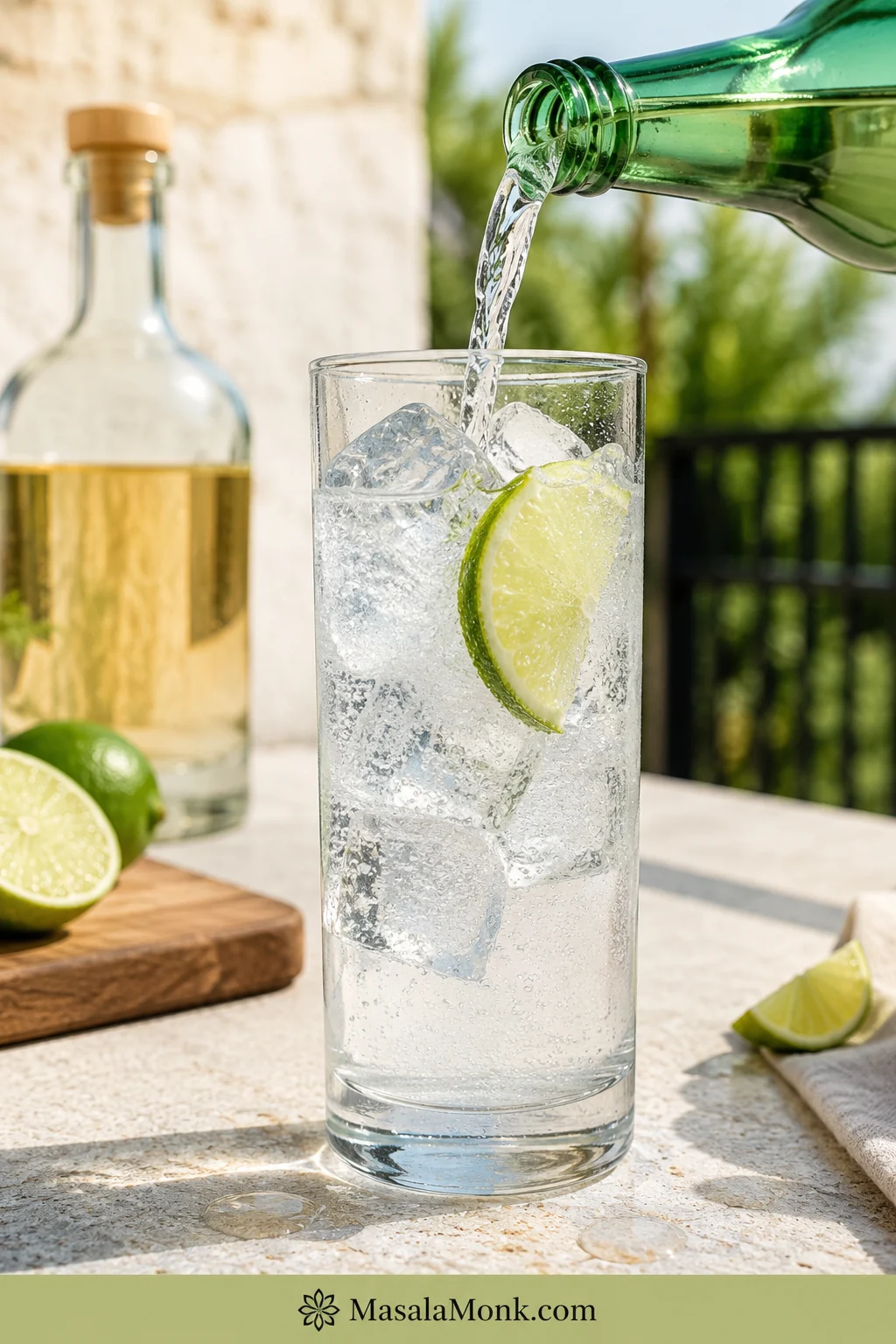
Start with plenty of ice, then finish with cold sparkling mineral water so this Ranch Water recipe stays crisp, bright, and bubbly from the first sip.

Ranch Water is what you make when you want tequila, lime, chilled fizz, and nothing heavy getting in the way. It is bright, mineral, refreshing, and built right in the glass with blanco tequila, fresh lime juice, and Topo Chico or sparkling mineral water.

The best version tastes clean before it tastes strong. Fresh lime should wake it up, the tequila should stay smooth, and the bubbles should make the whole drink feel sharp and cold instead of sweet or syrupy.

It is the drink for the moment when a margarita feels too sweet, a tequila soda feels too plain, and you want something cold enough to make every sip feel fresh again.

This Ranch Water recipe starts with the most useful ratio: 2 oz tequila, 1 oz fresh lime juice, and 4–6 oz chilled Topo Chico. From there, you can make it lighter, stronger, spicy, Tajín-rimmed, grapefruit-bright, vodka-based, Cointreau-touched, frozen, or pitcher-friendly without losing the simple point of the drink.

For adults of legal drinking age. Please drink responsibly.

Quick Answer: Best Ranch Water Ratio

For one balanced Ranch Water, use 2 oz / 60 ml blanco tequila, 1 oz / 30 ml fresh lime juice, and 4–6 oz / 120–180 ml chilled Topo Chico or sparkling mineral water. Fill the glass with ice, add tequila and lime, stir briefly, top with chilled bubbles, stir once gently, and serve right away.

Topo Chico is the traditional choice, but any cold, strongly carbonated, unsweetened sparkling water can work. The fizz belongs at the finish; that is what keeps the drink lively.

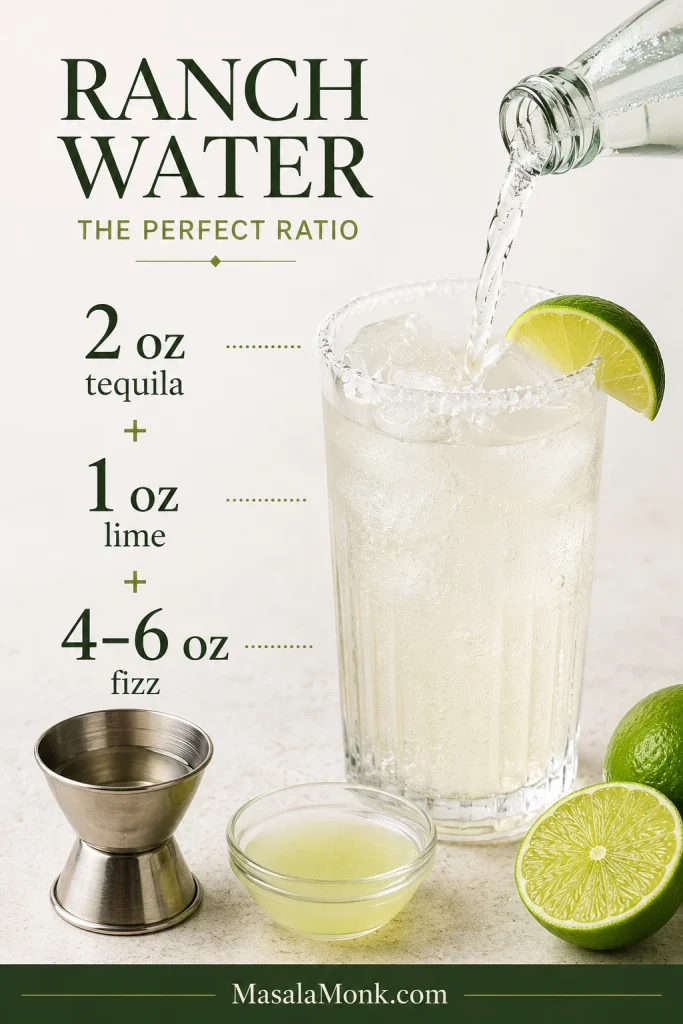
Ranch Water ratio guide showing 2 oz tequila, 1 oz lime juice, and 4 to 6 oz sparkling water beside a drink glass.
Use this balanced Ranch Water ratio first: 2 oz tequila, 1 oz fresh lime juice, and 4–6 oz chilled fizz; afterward, adjust only one part at a time.

Make This Ranch Water Tonight

  • Start here: 2 oz tequila, 1 oz lime juice, and 4–6 oz cold Topo Chico.
  • Fill the glass with ice: Ranch Water should be cold from the first sip.
  • Top at the end: add the bubbles last and stir once.
  • No Topo Chico? use sparkling mineral water, club soda, or plain seltzer.
  • Serving tacos? add a Tajín rim or a few jalapeño slices.
  • Making it for friends? batch tequila and lime, then let everyone top their own glass.

Ranch Water Recipe

A bright tequila, lime, and Topo Chico cocktail built over ice in the glass. This balanced version is crisp, bubbly, and easy to adjust lighter or stronger.

Prep Time3 minutes
Cook Time0 minutes
Total Time3 minutes
Servings1 cocktail
MethodBuilt in glass
GlassHighball, Collins, rocks glass, or tumbler
EquipmentJigger, citrus juicer, bar spoon or stirrer

Ingredients

IngredientAmount
Blanco tequila2 oz / 60 ml
Fresh lime juice1 oz / 30 ml
Chilled Topo Chico or sparkling mineral water4–6 oz / 120–180 ml
IceEnough to fill the glass
Lime wedge or wheelFor garnish
Fine salt or TajínOptional, for the rim

Instructions

  1. Fill a highball, Collins, rocks glass, or tumbler with ice.
  2. Add the blanco tequila and fresh lime juice.
  3. Stir briefly to chill the tequila and lime.
  4. Top with chilled Topo Chico or sparkling mineral water.
  5. Stir once gently, garnish with lime, and serve immediately.

Recipe note: Remember the glass ratio: 2:1:4–6 — 2 oz tequila, 1 oz lime, and 4–6 oz chilled fizz.

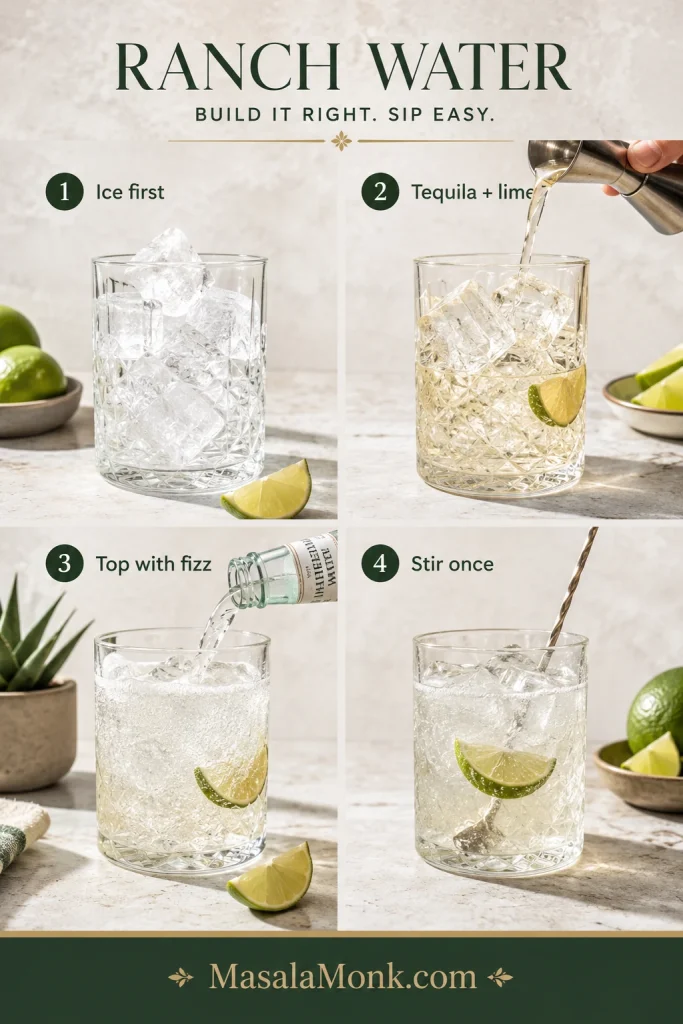
Step-by-step Ranch Water process showing ice, tequila, lime juice, sparkling water, and a final gentle stir in a glass.
Instead of shaking, build Ranch Water directly in the glass; that way, the lime stays fresh and the sparkling water keeps its bubbles.

Drink strength note: This recipe uses 2 oz tequila, which is a full cocktail pour. For something lighter, use the 1.5 oz patio version in the ratio table below. The NIAAA has a helpful guide to what counts as a standard drink. Read the standard drink guide.

Before You Mix

Ranch Water goes wrong in simple ways: warm glass, dull lime, flat bubbles, too little ice, or too much stirring. Fix those and the drink almost takes care of itself.

  • Skip the shaker: build it directly in the glass.
  • Measuring without a jigger? 2 oz is 4 tablespoons, 1 oz is 2 tablespoons, and 4–6 oz is ½–¾ cup.
  • Use fresh lime when possible: bottled lime works in a pinch, but fresh lime is what makes the drink snap.
  • Any sturdy glass works: use a rocks glass, tumbler, or highball glass that can hold ice and fizz.
  • Serving later? mix tequila and lime ahead, but add the bubbles only when serving.

This is the kind of drink that works when the chips are salty, the limes are already cut, and nobody wants to shake cocktails all night.

What Should Ranch Water Taste Like?

Ranch Water should taste dry, cold, lime-forward, and lightly mineral. It should not taste sweet like a margarita, flat like watered-down tequila, or harsh like straight tequila with soda.

When the balance is right, the first sip is bright from lime, clean from tequila, and lifted by the fizz. The drink should feel light, but not empty.

If your glass tastes like plain tequila soda, it needs more fresh lime. A dull glass usually means the sparkling water was not cold or fizzy enough. Harshness means the tequila is doing too much work.

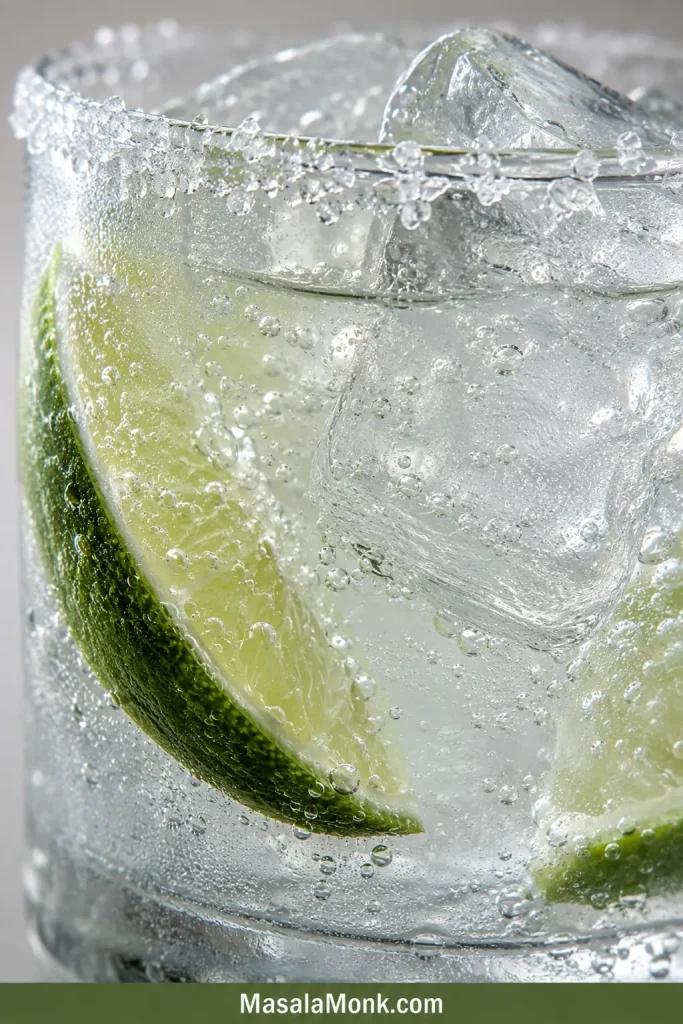
Close-up of a cold Ranch Water cocktail with clear ice, lime slices, bubbles, and condensation on the glass.
The best glass tastes cold, dry, and lime-forward, while the mineral bubbles keep it refreshing instead of heavy or sweet.

Jump to taste fixes · Check the ratio

Ranch Water at a Glance

  • Drink type: Texas-style tequila highball.
  • Main flavor: clean tequila, fresh lime, and chilled mineral fizz.
  • Sweetness: not sweet in the traditional version.
  • Traditional sparkling water: Topo Chico.
  • Tequila to choose: blanco or silver tequila.
  • Glass to use: highball, Collins, rocks glass, or tumbler.
  • Serve it: immediately, over plenty of ice.

What Is Ranch Water?

Ranch Water is a simple tequila cocktail made with fresh lime juice, sparkling mineral water, and ice. Topo Chico is the most famous choice, but the drink is really about clean tequila, bright lime, and bubbles with real bite.

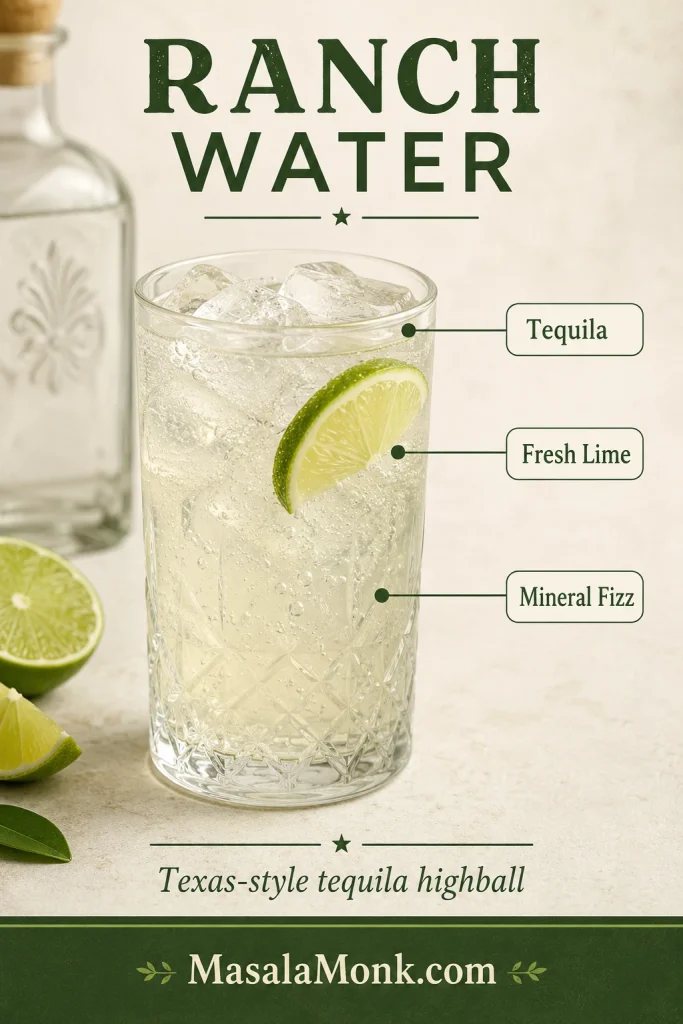
Ranch Water explainer graphic showing a clear lime cocktail with callouts for tequila, fresh lime, and mineral fizz.
In this Texas-style tequila highball, restraint is the point: fresh lime, crisp fizz, and no sweet mixer.

The drink is strongly associated with Texas, especially West Texas and Austin bar culture. Like many simple regional drinks, its exact origin is debated, but its Texas identity is not: West Texas claims the spirit of the drink, while Ranch 616 in Austin helped make the named cocktail famous.

Some bar-style versions include orange liqueur, Tajín, jalapeño, fruit, or a bigger pour. The simplest version is still tequila, lime, Topo Chico, and ice.

And no, despite the name, it has nothing to do with ranch dressing.

Choose Your Ranch Water Version

Start with the balanced glass once. Then decide whether you are a light patio person, a stronger Texas-style person, or a Tajín-and-jalapeño person.

If You WantMake This VersionWhat to Change
The clean original-style drinkSimple Ranch WaterTequila, lime, Topo Chico, ice
A lighter patio drinkLight Ranch WaterUse 1.5 oz tequila and more sparkling water
A stronger Texas-style drinkStrong Ranch WaterUse 3 oz tequila and 1.5 oz lime
HeatSpicy Ranch WaterAdd jalapeño and optional Tajín
A chile-lime rimTajín Ranch WaterRim the glass before adding ice
No tequila flavorVodka Ranch WaterSwap tequila for vodka
A margarita-style edgeCointreau Ranch WaterAdd a small splash of Cointreau
Fruit brightnessGrapefruit or Pineapple Ranch WaterAdd 1 oz fruit juice or flavored sparkling water
Serving several peoplePitcher Ranch WaterBatch tequila and lime only; add bubbles per glass

See exact ratios · Go to variations · Make a pitcher

Ranch Water Ingredients

The whole drink is tequila, lime, mineral fizz, and ice — which is why each ingredient has to pull its weight.

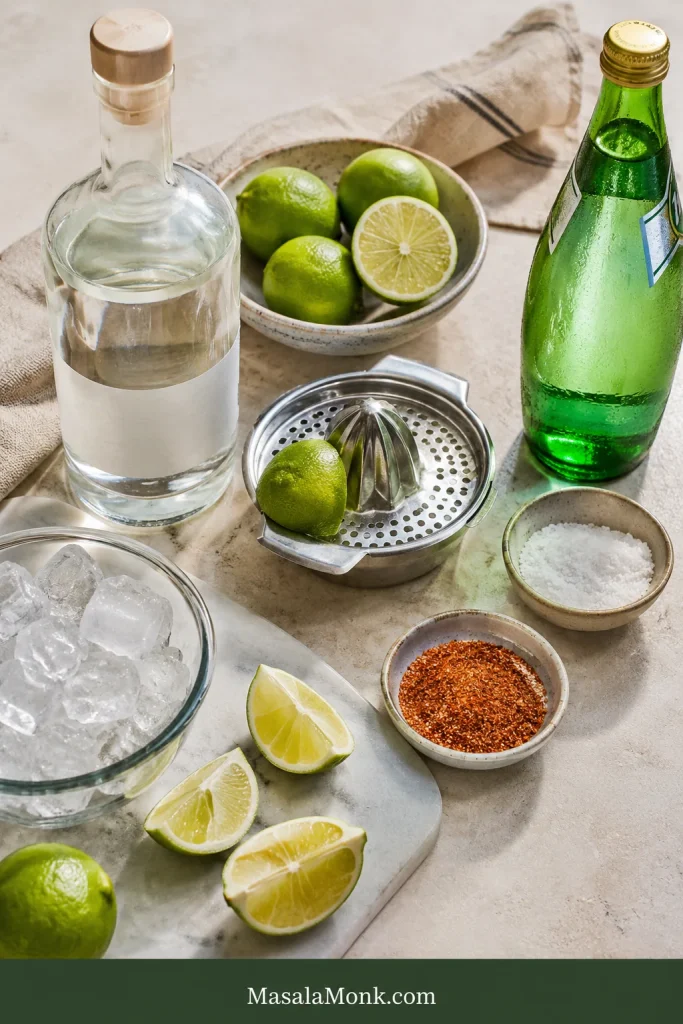
Ranch Water ingredients arranged on a light counter, including tequila, limes, sparkling mineral water, ice, salt, Tajín, and a citrus juicer.
With a simple Ranch Water, temperature and freshness matter most: cold bubbles, fresh lime, clean tequila, and enough ice carry the whole glass.

Blanco Tequila

Also called silver tequila, blanco keeps the standard version clean and bright. Reposado works if you like a rounder flavor, and mezcal can replace part of the tequila for a smoky variation.

Choose a tequila you would enjoy in a simple tequila soda. Ranch Water has no syrup or juice blend to hide a rough bottle.

Fresh Lime Juice

This is the sharp, refreshing edge that makes Ranch Water taste awake rather than thin. Bottled lime works in a pinch, but in a drink this bare, dull lime has nowhere to hide.

For one balanced drink, use about 1 oz / 30 ml fresh lime juice, usually close to the juice from one medium lime.

Topo Chico or Sparkling Mineral Water

What Topo Chico brings is bite: strong bubbles, a mineral edge, and enough lift to keep tequila and lime from tasting thin. No Topo Chico? Choose the coldest, strongest, least sweet sparkling water you have.

When choosing a substitute, prioritize strong carbonation over brand name. A very cold glass-bottle mineral water usually feels closer than a lightly fizzy seltzer.

Ice, Salt, and Tajín

Use plenty of ice. A warm glass, warm sparkling water, or too little ice can make the drink taste flat and watery. For the simplest version, a plain lime wedge is enough, but fine salt or Tajín works well on the rim.

Optional flavor booster: add a tiny pinch of fine salt to the tequila and lime before topping. It should not make the drink salty; it should make the lime and tequila taste brighter.

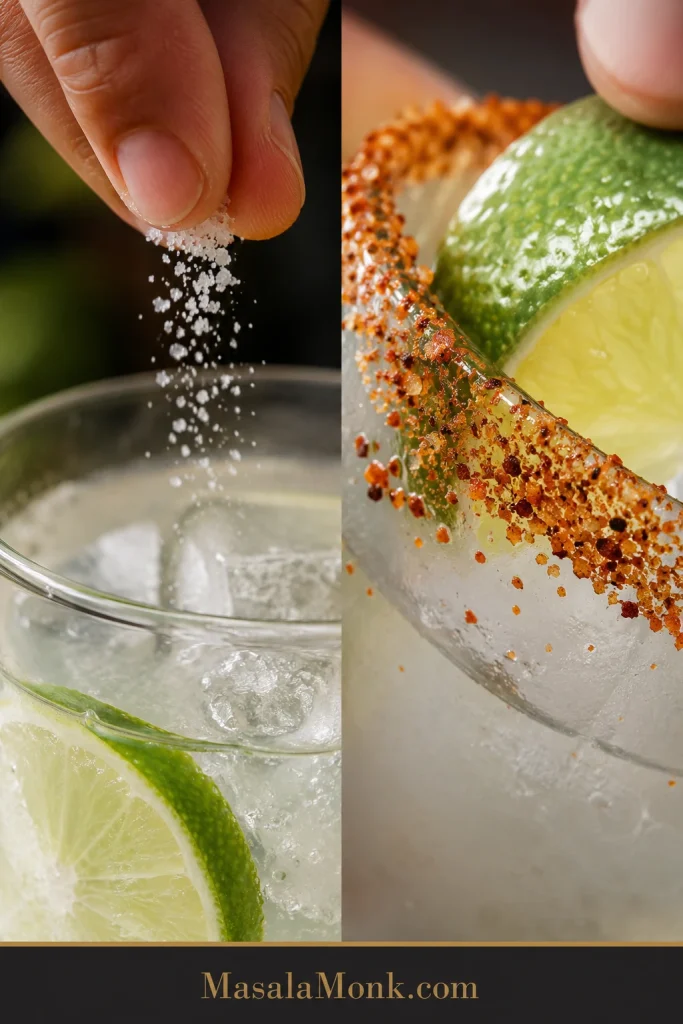
Split close-up of salt being added to a lime drink and a Tajín-rimmed Ranch Water glass with a lime wedge.
For more brightness, use a tiny pinch of salt; for a spicier Ranch Water, add Tajín to the rim instead of changing the whole drink.

Best Ranch Water Ratio

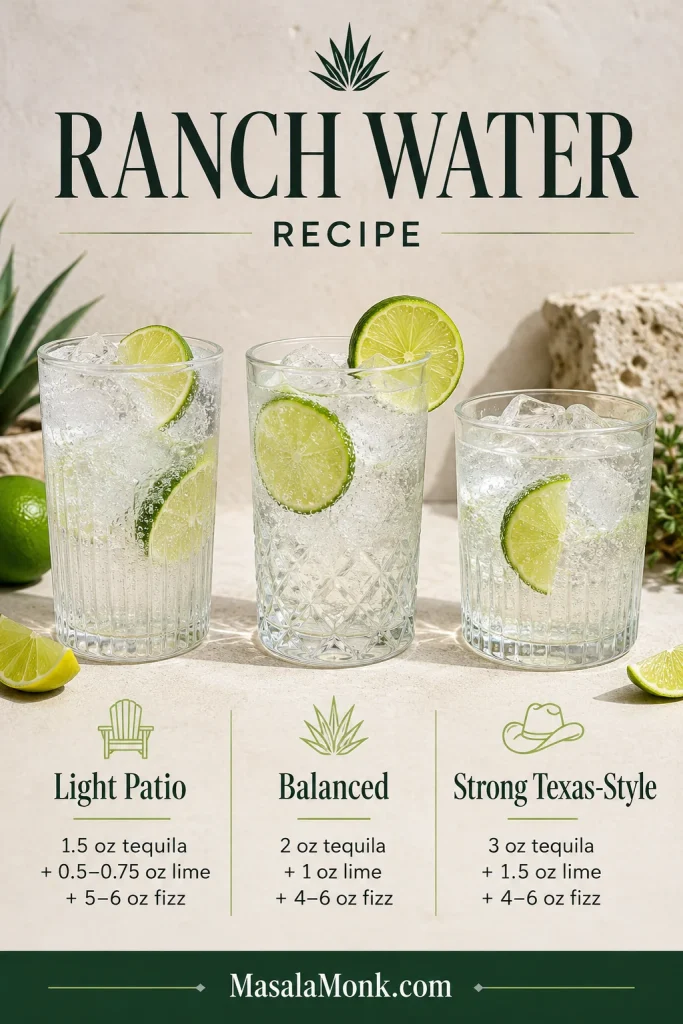
The best starting point is 2 oz tequila, 1 oz lime juice, and 4–6 oz Topo Chico. Many recipes run lighter with 1.5 oz tequila and less lime, while stronger Texas-style versions often use 3 oz tequila and 1.5 oz lime. That range is why a ratio table helps.

Try the balanced version first, then adjust only one thing at a time. More lime makes it sharper, more bubbles make it lighter, and more tequila gives it a stronger cocktail feel.

Three Ranch Water glasses labeled Light Patio, Balanced, and Strong Texas-Style with different tequila, lime, and fizz ratios.
Since Ranch Water recipes range from light to strong, start balanced first; then change the tequila, lime, or fizz based on how bold you want it.
VersionTequilaLime JuiceTopo Chico / Sparkling WaterBest For
Light patio version1.5 oz / 45 ml0.5–0.75 oz / 15–22 ml5–6 oz / 150–180 mlLong, easy sipping
Balanced version2 oz / 60 ml1 oz / 30 ml4–6 oz / 120–180 mlBest first glass
Strong Texas-style3 oz / 90 ml1.5 oz / 45 ml4–6 oz / 120–180 mlStronger cocktail feel
Less tart2 oz / 60 ml0.5 oz / 15 ml5–6 oz / 150–180 mlPeople who dislike sharp lime

Once you find your version, keep that ratio; Ranch Water gets easier every time you make it.

Too sour? Use less lime or more fizz. Too watery? Use more lime, colder Topo Chico, and enough ice. Too strong? Move to the light patio ratio.

Back to recipe card · Fix the taste · Scale for a pitcher

Do You Need Topo Chico for Ranch Water?

No, you do not need Topo Chico to make Ranch Water, but it is the traditional choice. Its sharp bubbles and mineral snap give the drink its familiar Texas-style feel.

If you do not have it, use a cold, strongly carbonated, unsweetened sparkling water. The closer it is to crisp mineral fizz, the better the drink will taste.

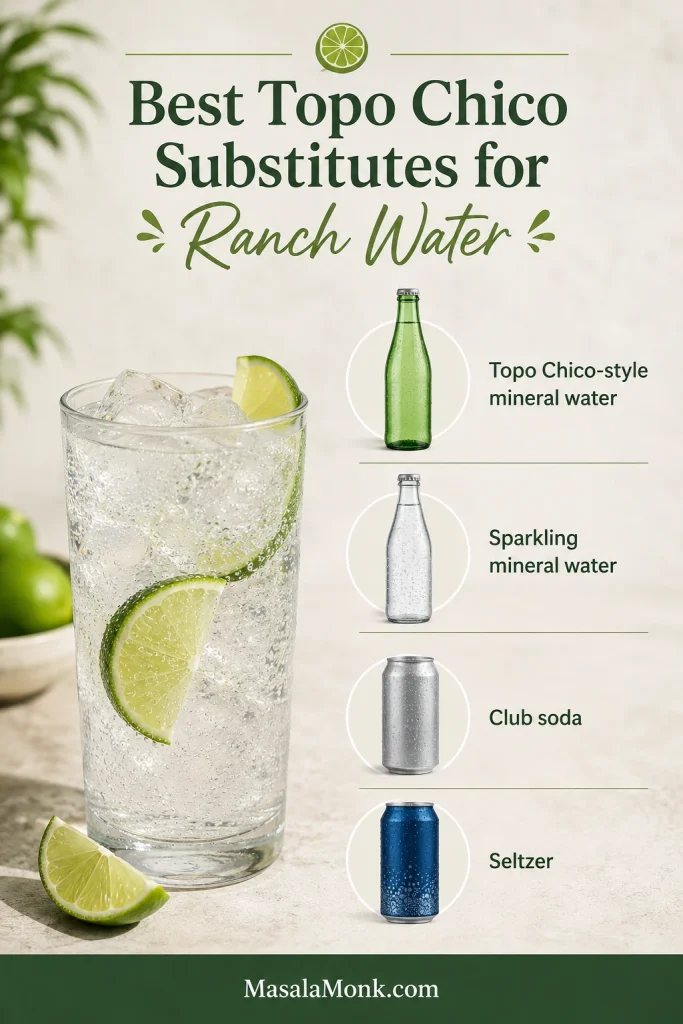
Ranch Water glass beside labeled options for Topo Chico-style mineral water, sparkling mineral water, club soda, and seltzer.
Topo Chico gives Ranch Water its classic mineral bite, although sparkling mineral water, club soda, or seltzer can still work if the bubbles are cold and strong.
SubstituteVerdictWhat to Expect
Topo ChicoBest traditional choiceSharp bubbles, mineral finish
Sparkling mineral waterVery goodClosest general substitute
Club sodaGoodClean and easy, less mineral flavor
SeltzerWorksLighter body and softer flavor
Flavored sparkling waterWorks for variationsGood for grapefruit, lime, tangerine, or pineapple-style versions
Tonic waterNot idealAdds sweetness and bitterness, so it no longer tastes like a dry Ranch Water

Ranch Water with Club Soda or Seltzer

Yes, club soda works in Ranch Water. It gives clean, firm bubbles, though it tastes less mineral than Topo Chico. Plain seltzer makes a lighter, softer drink.

Use the same ratio: 2 oz tequila, 1 oz lime juice, and 4–6 oz club soda or seltzer. Keep it cold and unsweetened for the cleanest flavor.

The same “soda last” rule matters in a classic mojito too: citrus and base go in first, cold bubbles go in at the end.

Best Tequila for Ranch Water

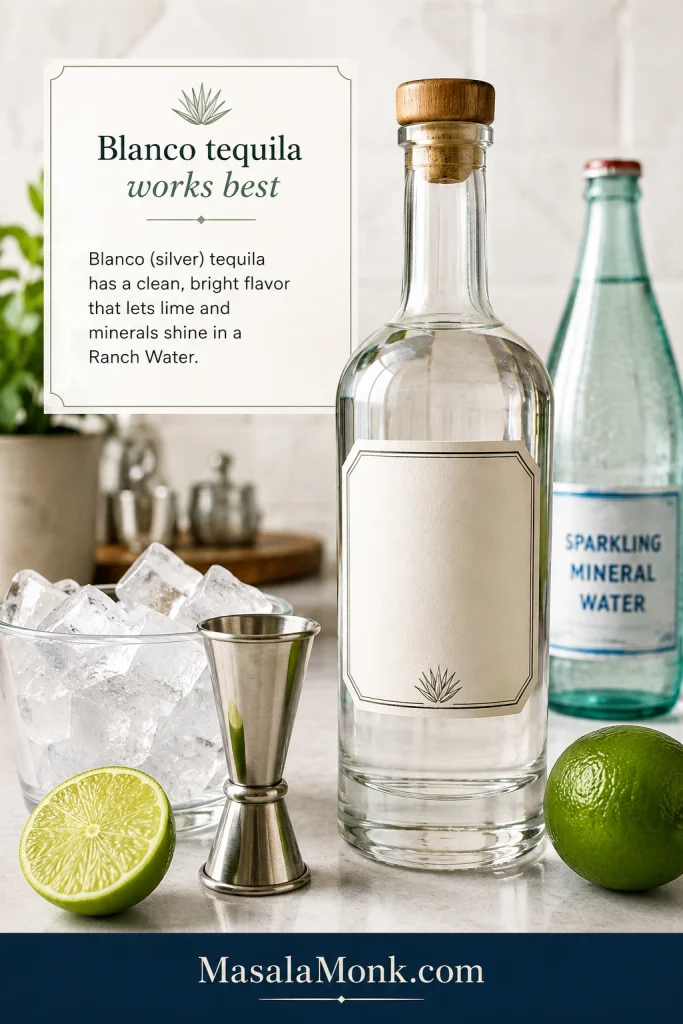
Blanco tequila is the cleanest choice for Ranch Water because it stays bright with lime. Since there is no sweet mixer, the bottle does not have to be expensive, but it should be smooth enough to enjoy with soda and citrus.

Blanco tequila bottle with lime, ice, jigger, and sparkling mineral water arranged on a clean bar counter.
Blanco tequila is usually best for Ranch Water because the spirit stays clear, crisp, and easy to balance with lime and fizz.
  • Silver or blanco tequila: best for the cleanest version.
  • 100% agave tequila: smart here because the drink has no sweet mixer to smooth rough edges.
  • Reposado tequila: warmer and rounder, but less crisp.
  • Mezcal: good for a smoky variation, especially if you replace only part of the tequila.
  • Flavored tequila: not needed and can make the drink taste artificial.

How to Make Ranch Water

The recipe card gives the exact steps, but the technique is simple: ice first, tequila and lime next, bubbles at the finish.

  1. Pack the glass with ice so the drink chills immediately.
  2. Add tequila and lime and stir just enough to chill the base.
  3. Top with cold sparkling water and stir once gently.
  4. Serve right away while the drink still has life.

If the first glass tastes like plain tequila soda with lime, it needs either brighter lime, colder bubbles, or a slightly stronger ratio.

Why This Recipe Works

The balance works because lime gives the drink shape, while the fizz keeps it cold, long, and refreshing. Tequila still comes through, but the drink stays dry, bright, and easy.

  • Fresh lime keeps it from tasting thin.
  • Cold carbonation keeps it lively.
  • Building in the glass avoids extra dilution and lost fizz.

Classic Ranch Water vs Bar-Style Ranch Water

One reason Ranch Water can feel confusing is that different bars make it differently. The simplest version is very lean, while bar-style versions may add orange liqueur, agave, Tajín, jalapeño, fruit, or a stronger tequila pour.

Think of the simple version as the dry, clean highball. The bar-style version brings a little theater: chile-lime rim, jalapeño, orange liqueur, fruit, or a heavier pour.

VersionWhat It Usually MeansBest For
Simple Ranch WaterBlanco tequila, fresh lime, Topo Chico, iceClean, dry, not sweet
Light Ranch WaterLess tequila, more sparkling waterLong, easy sipping
Strong Texas-style Ranch WaterMore tequila and more limeA stronger cocktail feel
Bar-style Ranch WaterMay add Tajín, jalapeño, Cointreau, agave, or fruitMore flavor and garnish
Margarita-adjacent Ranch WaterAdds Cointreau or orange liqueurA rounder, slightly sweeter drink

Keep the original-style idea simple. For a restaurant-style glass, add a Tajín rim, jalapeño, or a small splash of Cointreau.

Ranch Water Variations

Once the basic glass tastes right, Ranch Water becomes easy to play with. For taco night, use the Tajín rim. On a hot afternoon, use the lighter patio ratio. When you want a stronger first round, use the balanced version and keep the Topo Chico very cold.

Use the table for the quick version, then read the notes below for the variations that need a little more care.

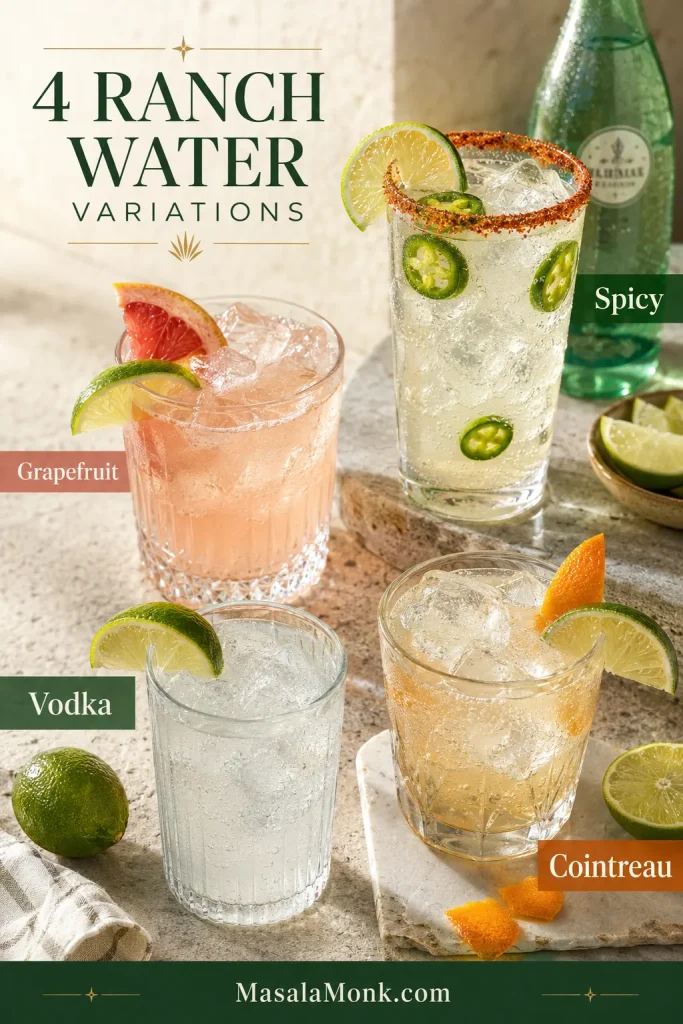
Four Ranch Water variations labeled Spicy, Grapefruit, Vodka, and Cointreau, with jalapeño, grapefruit, lime, orange, and ice garnishes.
Keep the base crisp, then use jalapeño, grapefruit, vodka, or Cointreau as controlled flavor changes rather than a whole new drink.
VariationHow to Make It
Spicy Ranch WaterAdd 1–3 thin jalapeño slices, or muddle 1 slice gently with the lime
Tajín Ranch WaterRim the glass with lime and Tajín before building the drink
Vodka Ranch WaterReplace tequila with 2 oz / 60 ml vodka; not traditional, but popular
Cointreau Ranch WaterAdd 0.25–0.5 oz / 7–15 ml Cointreau for a rounder, margarita-like version
Grapefruit Ranch WaterAdd 1 oz / 30 ml grapefruit juice or use grapefruit sparkling water
Pineapple Ranch WaterAdd 1 oz / 30 ml pineapple juice and optional Tajín
Mezcal Ranch WaterReplace 0.5–1 oz of the tequila with mezcal
Frozen Ranch WaterBlend tequila, lime, and ice, then stir in sparkling water after blending
Pitcher Ranch WaterMix tequila and lime ahead; add sparkling water to each glass

Go to spicy version · Tajín rim · Grapefruit version · Pitcher version

Spicy Ranch Water

For mild heat, add one thin jalapeño slice to the glass. To build more heat, use two or three slices, or muddle one slice gently with the lime before adding ice and tequila.

Heat LevelJalapeño AmountMethod
Mild1 thin sliceAdd to the glass, do not muddle
Medium2 thin slicesAdd to the glass and stir gently
Hot3 thin slicesAdd to the glass or muddle 1 slice
Very hot1 muddled slice with seedsUse carefully; heat builds as it sits

Do not crush the jalapeño too aggressively unless you want the drink very hot. If it becomes too spicy, add more sparkling water and a little extra lime.

For a deeper jalapeño-and-Tajín breakdown, use the spicy margarita guide next; it goes further into mild, medium, hot, and restaurant-style heat.

Ranch Water with Tajín

Rub a lime wedge around the rim, dip the glass into Tajín or chile-lime salt, then fill with ice and build the drink. Tajín works especially well with spicy, grapefruit, and pineapple Ranch Water.

Ranch Water with Vodka

Although the standard drink uses tequila, vodka works if you want the same bright lime-and-bubbles style without tequila flavor. Use 2 oz / 60 ml vodka, 0.5–1 oz / 15–30 ml fresh lime juice, and 4–6 oz / 120–180 ml Topo Chico.

For another cold vodka-and-citrus drink, try the Lemon Drop Martini; it is sharper, sweeter, and more cocktail-bar style than vodka Ranch Water.

Ranch Water with Cointreau

Cointreau is not required for a dry Ranch Water. Add 0.25–0.5 oz / 7–15 ml only when you want the drink rounder, slightly sweeter, and more margarita-like.

Grapefruit or Flavored Ranch Water

Flavored versions work best when you keep the tequila-lime base and add a small amount of fruit flavor. Add 1 oz / 30 ml fruit juice or use flavored sparkling water.

  • Grapefruit Ranch Water: grapefruit juice or grapefruit sparkling water.
  • Pineapple Ranch Water: pineapple juice and a Tajín rim.
  • Watermelon Ranch Water: fresh watermelon juice and extra lime.
  • Cucumber Mint Ranch Water: cucumber slices and fresh mint.
  • Tangerine or lime Ranch Water: flavored sparkling water instead of plain.

If grapefruit is the flavor you want most, make the Paloma recipe next; it is another tequila-lime drink, but grapefruit takes the lead.

For a fuller fruit-forward tequila drink, the mango margarita is a better direction than loading Ranch Water with too much juice.

Frozen Ranch Water

Blend tequila, lime juice, and ice until slushy, then stir in a small splash of sparkling water at the end. Do not blend a lot of carbonated water; it will lose fizz and can foam up.

Pitcher Ranch Water

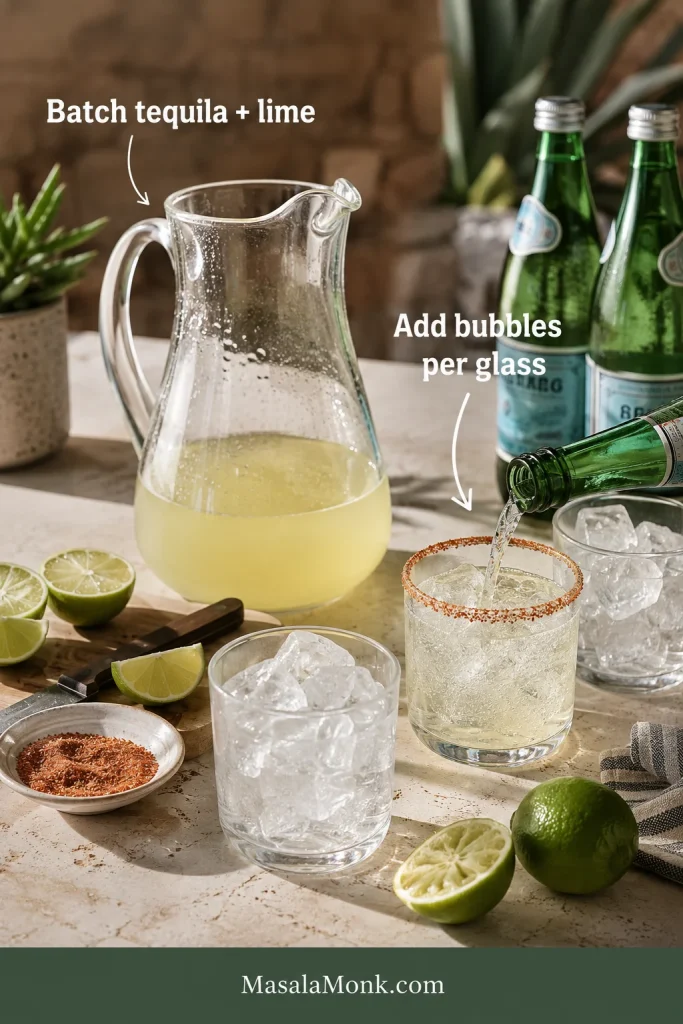
It scales easily, but the bubbles do not belong in the pitcher. Mix the tequila and lime ahead, chill that base, then top each glass with cold Topo Chico right before serving.

Pitcher of tequila-lime base with ice-filled glasses, limes, Tajín, and sparkling mineral water being poured into one glass.
For pitcher Ranch Water, keep the tequila-lime base separate from the fizz until serving so every glass still has fresh bubbles.

Pitcher Ranch Water for 8 Drinks

IngredientAmount
Blanco tequila16 oz / 480 ml / 2 cups
Fresh lime juice8 oz / 240 ml / 1 cup
Chilled Topo Chico or sparkling mineral water32–48 oz / 950–1,400 ml, added per glass
IceAs needed
Lime wedges8
  1. Stir the tequila and lime juice together in a pitcher.
  2. Cover and refrigerate until cold.
  3. Fill glasses with ice.
  4. Pour about 3 oz / 90 ml of the tequila-lime base into each glass.
  5. Top each glass with 4–6 oz / 120–180 ml chilled Topo Chico.
  6. Garnish with lime and serve immediately.

Pitcher rule: batch the tequila and lime, not the bubbles. The bubbles belong in the glass, or they will be gone before the drink gets to the first sip.

Back to single drink recipe · Make-ahead notes · Fix a flat pitcher

Can You Make Ranch Water Ahead?

You can mix tequila and lime juice a few hours ahead and keep it chilled. Add ice and sparkling water only when serving. A fully mixed Ranch Water will go flat in the fridge.

Topo Chico Bottle Method

For an outdoor-style Ranch Water, sip or pour a little sparkling water out of a cold Topo Chico bottle, then add tequila and lime. Swirl gently and pour over ice.

Do not shake a carbonated bottle. Use a small funnel if the bottle mouth is narrow, and pour slowly. The goal is a quick Ranch Water, not a foamy bottle.

Is Canned Ranch Water the Same?

Not always. Homemade Ranch Water is tequila, fresh lime juice, and sparkling mineral water. Canned versions vary: some are made with tequila or tequila-based spirits, while others are hard-seltzer-style drinks inspired by Ranch Water.

That is why the label matters if you expect the taste of fresh tequila, lime, and mineral fizz. If canned drinks brought you here, MasalaMonk’s guide to what hard seltzer is and what alcohol goes into it can help explain the difference.

Cans are convenient, but homemade lets you control the lime, bubbles, strength, and spice.

Ranch Water vs Margarita vs Tequila Soda

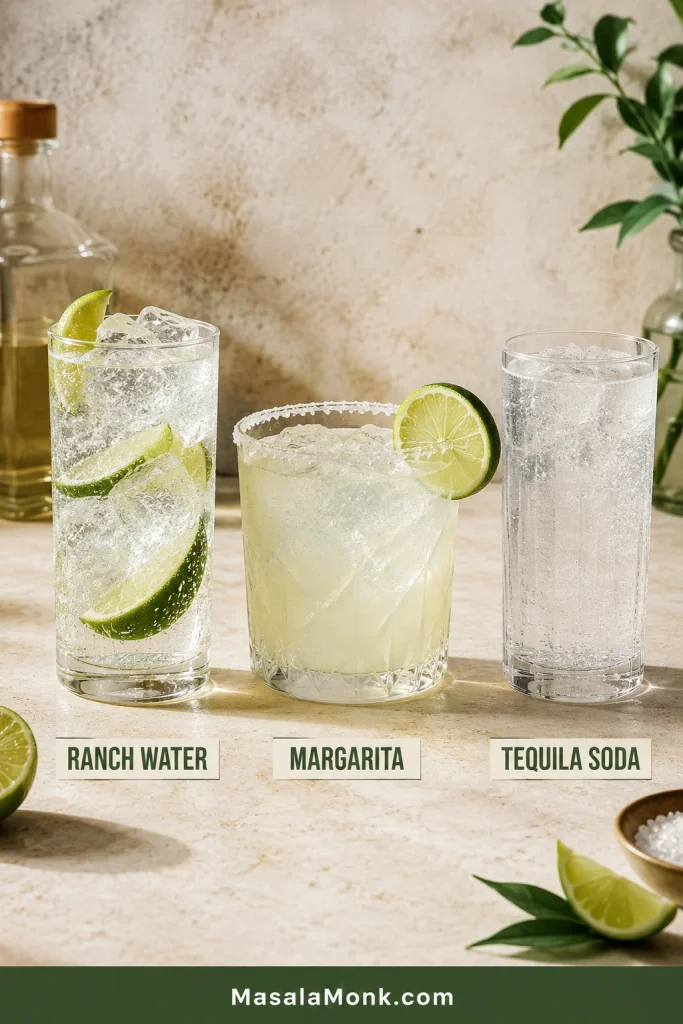
These three tequila drinks overlap, but they do not drink the same way.

Three drinks labeled Ranch Water, Margarita, and Tequila Soda, showing a fizzy lime highball, salted-rim margarita, and clear soda drink.
Compared with a margarita, Ranch Water is drier and bubblier; compared with tequila soda, it brings more fresh lime and mineral character.
DrinkMain Difference
Ranch WaterTequila, fresh lime juice, and sparkling mineral water, usually Topo Chico
Tequila sodaTequila and soda water, usually less lime-forward
MargaritaTequila, lime, orange liqueur or sweetener; usually not fizzy
Skinny margaritaCloser to Ranch Water, but usually still more margarita-like and less bubbly

Classic Ranch Water has no orange liqueur, syrup, or added sugar, which is why it drinks drier and lighter than a margarita. It is less sweet than a margarita but more flavorful than a plain tequila soda.

How to Fix the Taste

Because Ranch Water is so simple, small fixes work quickly. Taste before you finish the glass and adjust with lime, bubbles, ice, or a different ratio next time.

ProblemFix
Too sourAdd more sparkling water, or use less lime next time
Too wateryUse more lime, colder Topo Chico, and plenty of ice
Too flatAdd bubbles last and stir only once
Too strongUse the light patio ratio with 1.5 oz tequila
Too weakUse the balanced or strong Texas-style ratio
Tastes harshUse fresh lime and a cleaner blanco tequila
Too bitterAvoid tonic water for the dry version
Not cold enoughChill the glass, tequila, and Topo Chico before building the drink
Too spicyAdd more sparkling water and lime, and use fewer jalapeño slices next time
Too sweetSkip Cointreau, agave, sweetened sparkling water, or fruit juice in the simple version
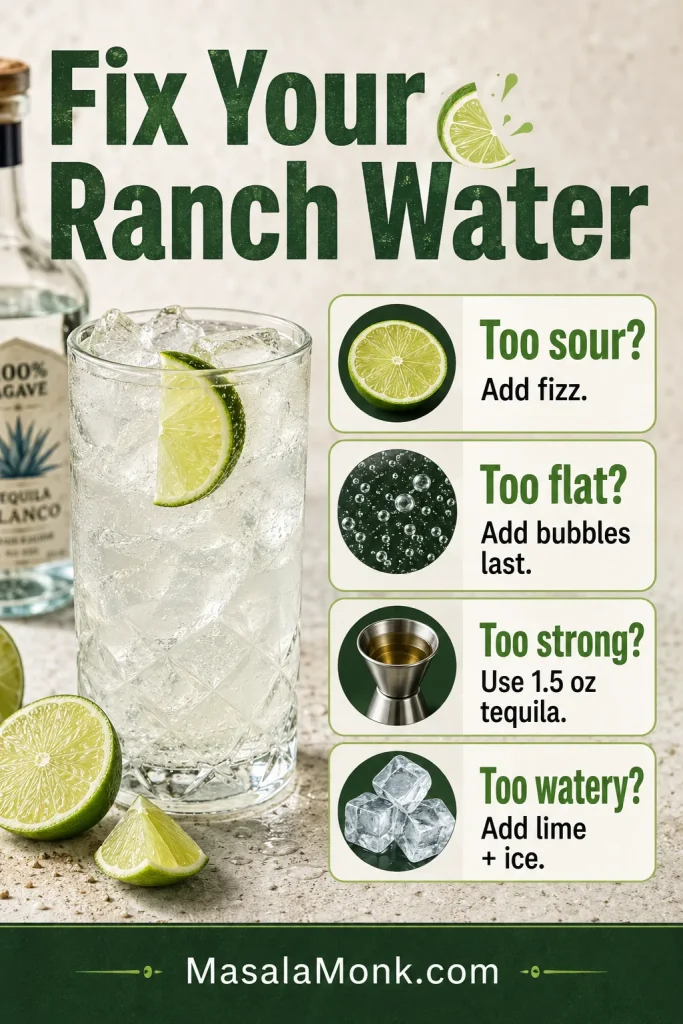
Troubleshooting guide titled Fix Your Ranch Water with four fixes for drinks that are too sour, too flat, too strong, or too watery.
If your Ranch Water tastes off, fix one issue at a time: add fizz for sourness, add bubbles last for flatness, or use lime and ice for balance.

Return to ratios · Check sparkling water swaps · Back to recipe card

What to Serve with Ranch Water

Ranch Water works best with salty, spicy, citrusy, and grilled food. Think lime, salt, chile, char, and creamy dips. It is especially good with Tex-Mex and summer dishes because the lime and fizz cut through richness.

For snacks, start with fresh guacamole or salsa verde. They give you the salty, creamy, tangy contrast that makes a cold tequila-lime drink taste brighter.

At dinner, Ranch Water is especially good with shrimp tacos or sheet pan chicken fajitas. If you want extra heat for tacos, wings, or grilled chicken, add a spoon of mango habanero sauce.

Ranch Water FAQs

Still choosing your version? These quick answers cover the most common Ranch Water questions.

What is Ranch Water made of?

Tequila, fresh lime juice, sparkling mineral water, and ice. Topo Chico is traditional, but club soda or seltzer can work.

Why is it called Ranch Water?

The name is tied to Texas ranch and West Texas drinking culture. Despite the joke everyone makes, the drink itself is tequila, lime, and mineral water — not ranch dressing.

Does Ranch Water contain alcohol?

Yes. The standard version contains tequila.

Is Ranch Water the same as tequila soda?

Not exactly. Tequila soda is usually less lime-forward; Ranch Water traditionally uses fresh lime and sparkling mineral water.

How is Ranch Water different from a margarita?

A margarita usually includes orange liqueur or sweetener and is usually not fizzy. Ranch Water is lighter, drier, bubblier, and built with tequila, fresh lime, and sparkling mineral water.

Do you need Topo Chico for Ranch Water?

Topo Chico is traditional, not mandatory. Any cold, strongly carbonated, unsweetened sparkling water can make a good Ranch Water.

Does club soda work in Ranch Water?

Club soda works. It gives clean bubbles, though the drink will taste less mineral than it does with Topo Chico.

Can you use seltzer for Ranch Water?

Yes. Plain seltzer makes a lighter, softer Ranch Water; flavored seltzer is useful for grapefruit, lime, or tangerine versions.

What tequila is best for Ranch Water?

Blanco or silver tequila is best for the cleanest version. Reposado is warmer, and mezcal works for a smoky variation.

What is the best Ranch Water ratio?

A balanced glass uses 2 oz tequila, 1 oz lime juice, and 4–6 oz Topo Chico or sparkling mineral water.

Can you make Ranch Water with vodka?

Yes, but it becomes a vodka variation rather than the standard tequila drink.

Should Ranch Water have Cointreau?

Not for the dry version. Use a small splash only if you want a sweeter, more margarita-like drink.

How do you make spicy Ranch Water?

Start with 1–3 thin jalapeño slices, or muddle one slice gently with the lime. A Tajín rim works well too.

Can you make Ranch Water in a pitcher?

Yes. Batch tequila and lime, chill it, then add sparkling water to each glass right before serving.

How far ahead can you make Ranch Water?

Mix tequila and lime a few hours ahead. Add ice and bubbles only when serving.

Can you make Ranch Water without fresh lime?

Yes, but fresh lime tastes best. Bottled lime works in a pinch, but it will taste less bright.

What is the difference between classic and bar-style Ranch Water?

The simple version is tequila, fresh lime, Topo Chico, and ice. Bar-style versions may add Tajín, jalapeño, Cointreau, agave, fruit, or a stronger pour.

What does Dirty Ranch Water mean?

The term is not standardized. Some bars use the name loosely for riffs with beer, Tajín, brine, bourbon, or other additions.

Is canned Ranch Water the same as homemade?

It depends on the can. Some versions use tequila or tequila-based spirits; others are hard-seltzer-style drinks inspired by Ranch Water.

Back to top · Jump to recipe card · Fix the taste

Final Tips

The best Ranch Water is cold, fizzy, and balanced. Start with blanco tequila, fresh lime juice, plenty of ice, and chilled Topo Chico or sparkling mineral water. Add the bubbles last, stir gently, and taste before adjusting.

Once the first glass tastes right, the variations are easy. Add jalapeño for heat, Tajín for a salty chile-lime rim, grapefruit for brightness, Cointreau for a margarita-style twist, or mix tequila and lime ahead for a pitcher. Keep the bubbles fresh, keep the lime bright, and Ranch Water does what it is supposed to do: make tequila feel clean, cold, and easy to drink.

Posted on Leave a comment

Tom Collins Recipe: Classic Gin Collins Cocktail

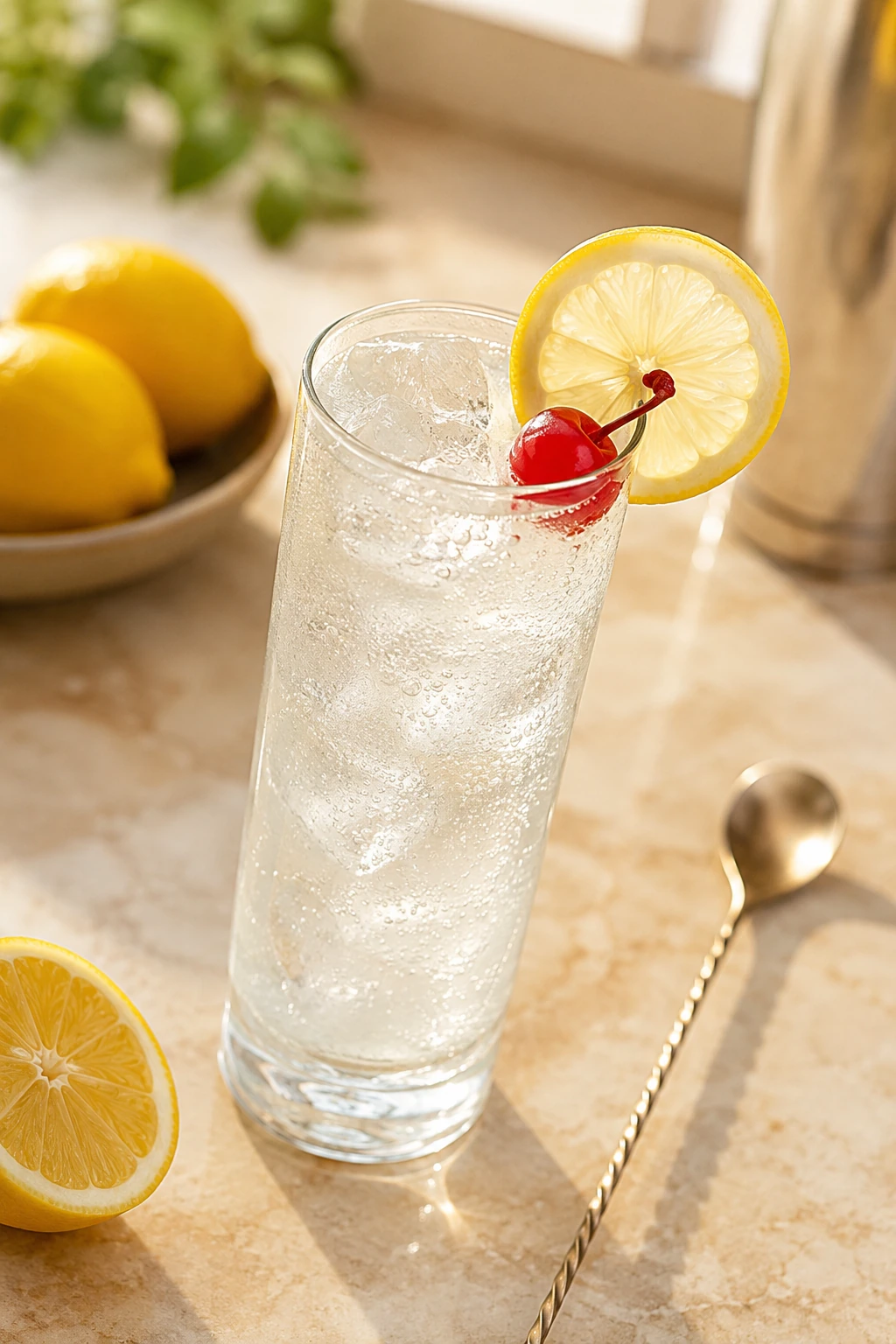
Tall Tom Collins cocktail in a Collins glass with ice, bubbles, lemon wheel, red cherry, fresh lemons, and a bar spoon on a bright stone surface.

A good Tom Collins feels cold before you even finish the first sip: lemon on the nose, bubbles lifting the glass, just enough sweetness to soften the gin, and no heavy aftertaste.

The drink is simple — gin, lemon juice, simple syrup, club soda, and ice — but the balance matters. Lemon sharpens it, syrup softens it, soda lifts it, and ice keeps it honest. Get those four things right and the glass tastes bright instead of sticky, flat, or watery.

This Tom Collins recipe is built for home bartenders. You get the classic ratio first, then ounce, milliliter, and tablespoon measurements, a no-shaker method, an optional shaken method, mix guidance, pitcher amounts, easy variations, and fixes for drinks that turn too sour, too sweet, too weak, or too flat.

You do not need a full bar setup. If you can measure, stir, taste, and top with soda, you can make this drink well.

Tom Collins at a Glance

Prep
5 minutes

Yield
1 cocktail

Method
Build in glass

Glass
Collins or highball

  • Taste: lemon-first, lightly sweet, sparkling, and dry on the finish.
  • Best first gin: London dry gin for a crisp modern glass.
  • Classic-style gin: Old Tom gin for a softer, slightly sweeter version.
  • Sweetness level: crisp at ½ oz syrup, softer at ¾ oz.

Quick Definition

A Tom Collins is a tall gin cocktail made with gin, fresh lemon juice, simple syrup, club soda, and ice. Think sparkling lemonade with a dry gin finish: citrusy, lightly sweet, crisp, and gently botanical.

Gin makes it a Tom Collins. Vodka gives you a Vodka Collins. Whiskey or bourbon gives you the version many home bartenders call a John Collins.

Quick Answer: Best Tom Collins Ratio

For one classic Tom Collins, use 2 oz gin, 1 oz fresh lemon juice, ½ oz simple syrup, and 2–4 oz cold club soda. Build it over plenty of ice in a Collins or highball glass, then garnish with lemon and a cherry.

Tom Collins Ratio at a Glance

This visual gives you the baseline before you adjust sweetness, lemon, or soda for your own glass.

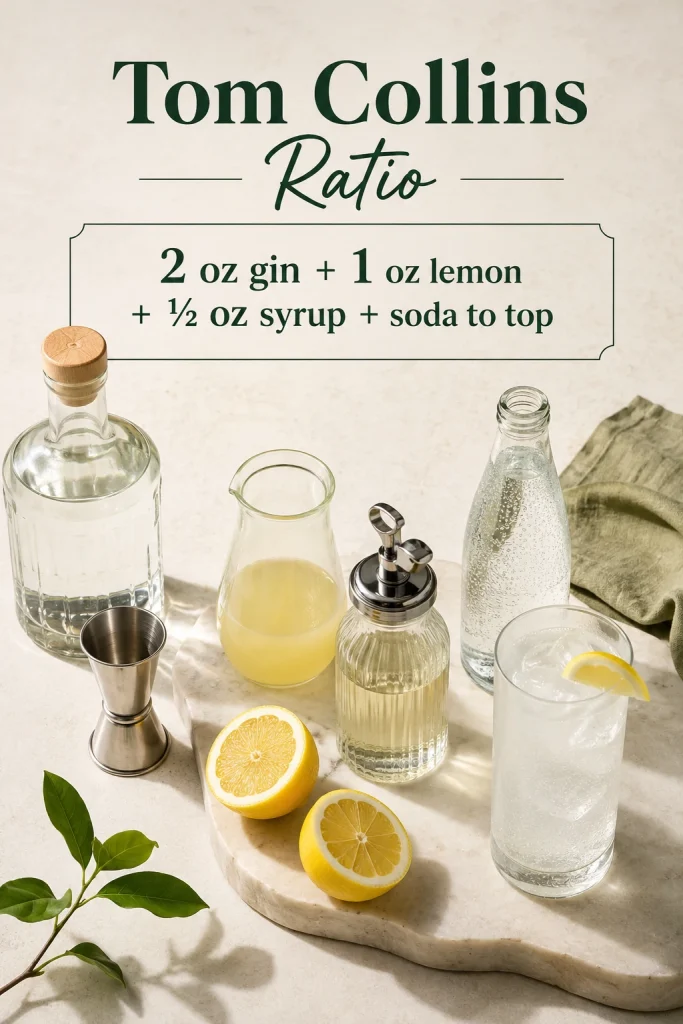
Tom Collins ratio board showing gin, lemon juice, simple syrup, club soda, a jigger, lemon halves, a syrup jar, and a finished cocktail.
Use the 2:1:½ Tom Collins ratio as your starting point: gin for structure, lemon for snap, simple syrup for balance, and club soda for lift.
IngredientAmount for 1 drinkWhat it does
Gin2 oz / 60 mlGives the cocktail its botanical base.
Fresh lemon juice1 oz / 30 mlSharpens the drink and gives it citrus snap.
Simple syrup½ oz / 15 mlSoftens the sour edge without making it sticky.
Cold club soda2–4 oz / 60–120 mlAdds bubbles, length, and lift.
IceEnough to fill the glassKeeps the drink cold and slows dilution.
GarnishLemon wheel and cherryAdds classic aroma and presentation.

This version starts crisp on purpose. Many Tom Collins drinks drift sweeter, but ½ oz syrup keeps the first glass bright and gives you room to adjust. Move to ¾ oz if you want a softer lemonade-style Collins. Use 1 oz only if your lemons are especially sharp or you already know you like a sweeter drink.

Make the first glass exactly this way. Then adjust the second one if you want it sweeter, sharper, stronger, or longer.

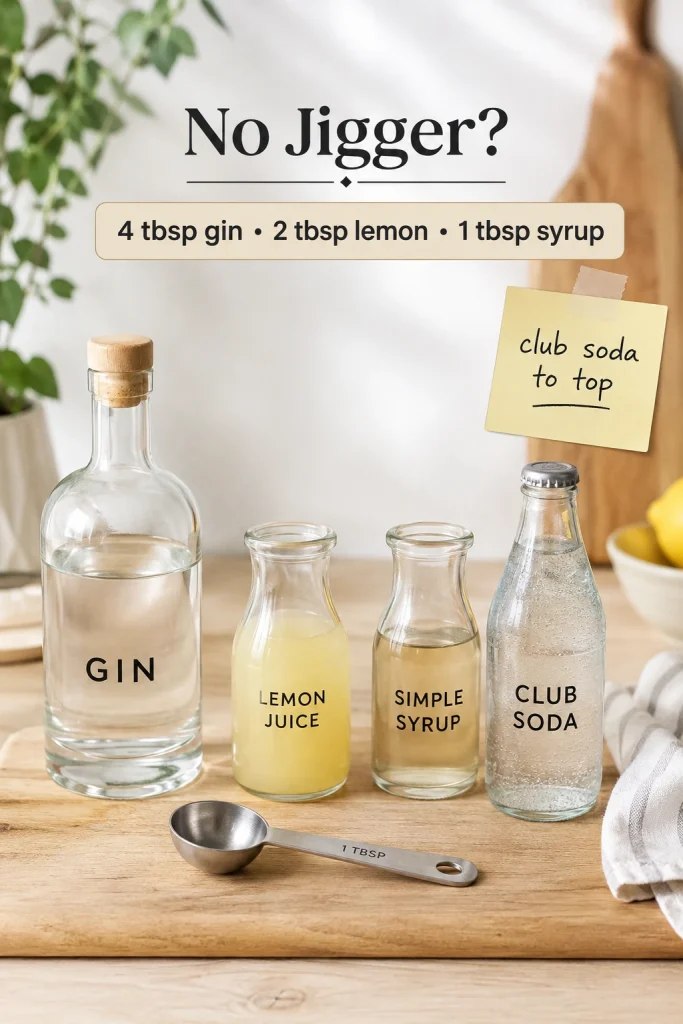
No jigger? Use tablespoons: 2 oz gin = 4 tablespoons, 1 oz lemon juice = 2 tablespoons, and ½ oz simple syrup = 1 tablespoon.

No-Jigger Tom Collins Measurements

Use this when you are making the cocktail with kitchen spoons instead of bar tools.

No-jigger Tom Collins measurement guide with gin, lemon juice, simple syrup, club soda, and a tablespoon measure on a wooden countertop.
No jigger? Tablespoons still work well: 4 tablespoons gin, 2 tablespoons lemon juice, and 1 tablespoon simple syrup keep the drink balanced at home.

Classic Tom Collins Recipe

Make this version first. It gives you the clean baseline: gin, fresh lemon, simple syrup, chilled soda water, and enough ice to keep the drink crisp from the first sip to the last.

Prep Time
5 minutes

Total Time
5 minutes

Servings
1 drink

Difficulty
Easy

Equipment

  • Collins glass or highball glass
  • Jigger or tablespoon measure
  • Bar spoon or long spoon
  • Citrus juicer
  • Cocktail shaker and strainer, optional

Ingredients

  • 2 oz / 60 ml gin
  • 1 oz / 30 ml fresh lemon juice
  • ½ oz / 15 ml simple syrup
  • Ice, enough to fill the glass
  • 2–4 oz / 60–120 ml cold club soda, to top
  • Lemon wheel, for garnish
  • Maraschino cherry or cocktail cherry, optional but classic

Lemon note: one medium lemon often gives enough juice for one Tom Collins, with a little extra for adjusting if the glass needs more citrus.

Method

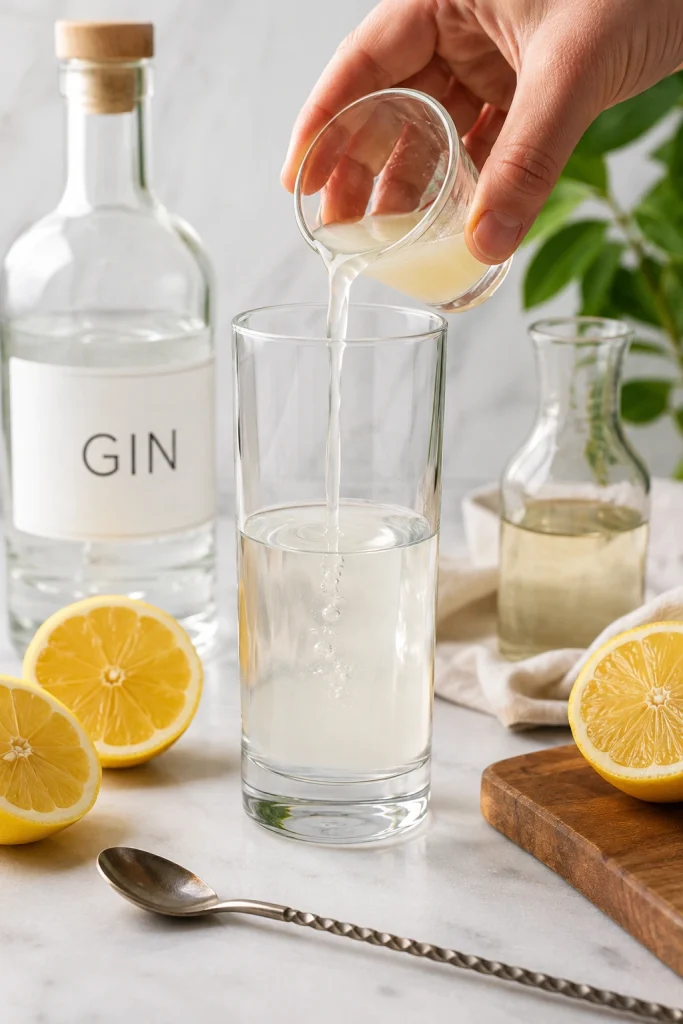
  1. Add the gin, lemon juice, and simple syrup to a Collins or highball glass.
  2. Stir briefly so the lemon and syrup combine.
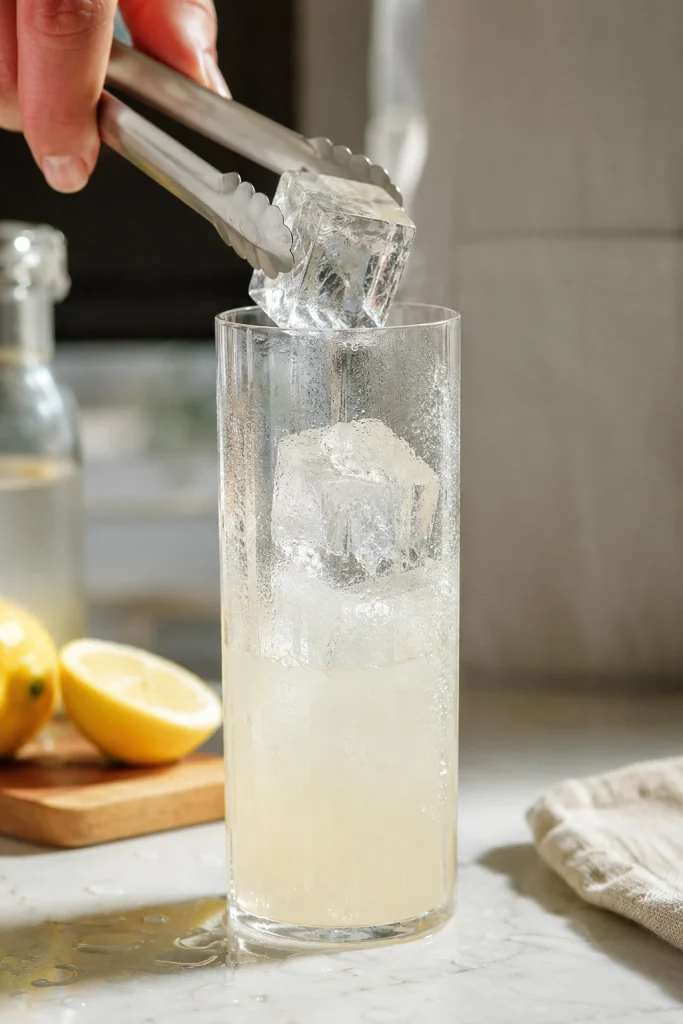
  3. Fill the glass with ice.
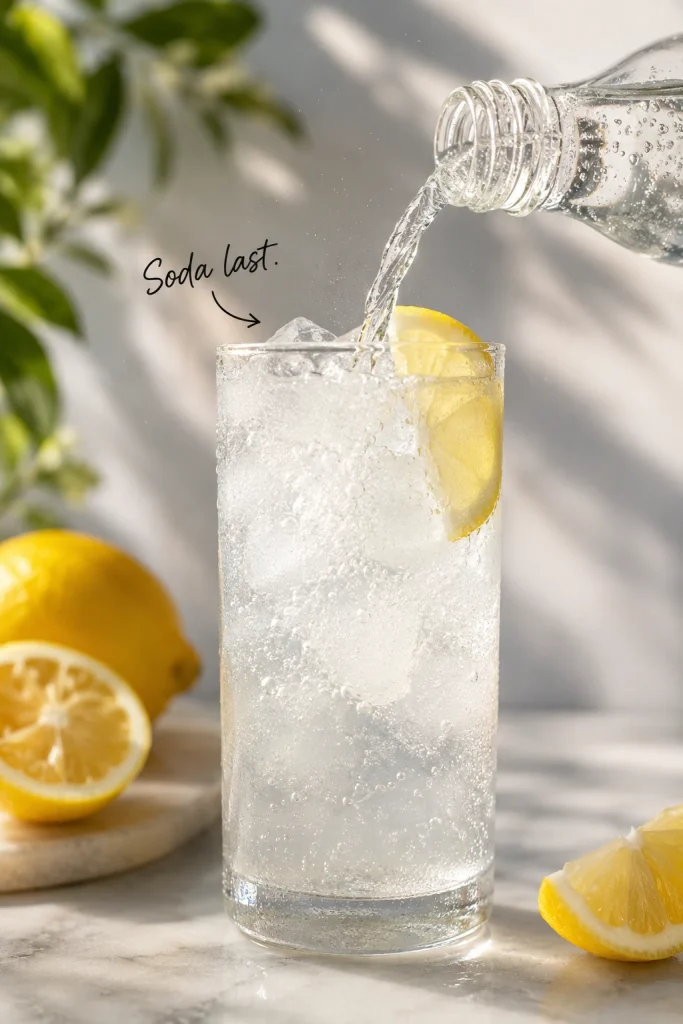
  4. Top with cold club soda.
  5. Stir gently once or twice. Do not over-stir or the drink will lose fizz.
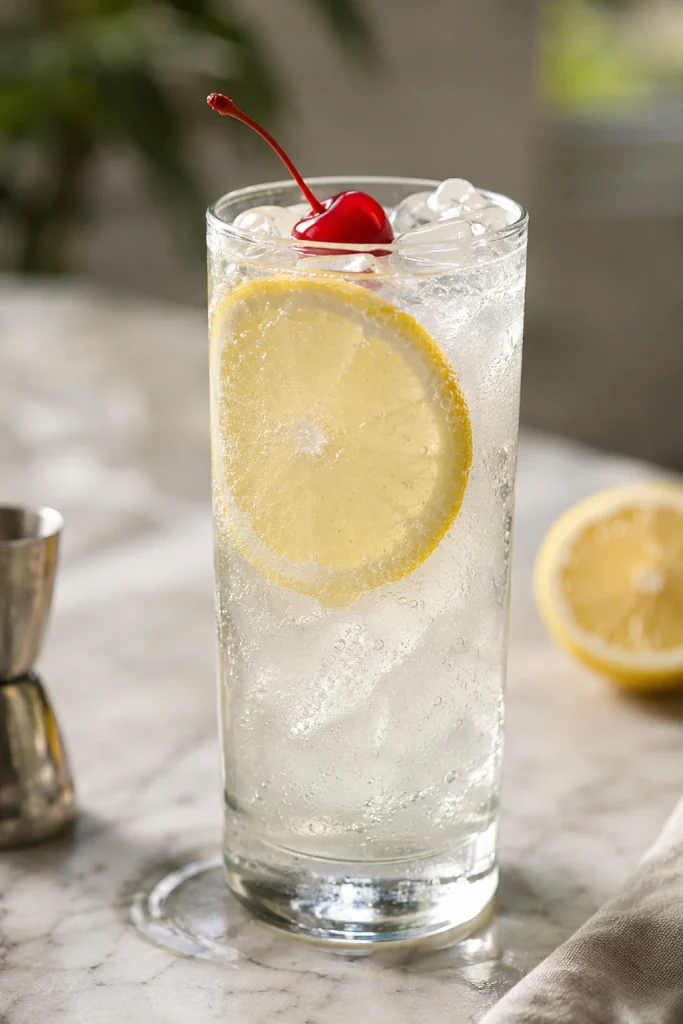
  6. Garnish with a lemon wheel and cherry. Serve right away.

Mix the Gin, Lemon, and Syrup First

The lemon and syrup need a moment with the gin before ice and bubbles enter the glass.

Hand pouring lemon juice into a Collins glass with gin, with simple syrup, fresh lemons, a bar spoon, and a cutting board nearby.
Combine the gin, lemon juice, and simple syrup before adding ice, because the base blends more evenly when the sour and sweet parts meet first.

Fill the Glass with Ice

A full ice fill is part of the method, not just presentation.

Ice tongs placing a large clear ice cube into a Collins glass with pale lemon cocktail base and condensation on the glass.
Next, fill the glass generously. More ice chills the drink faster and, just as importantly, slows dilution while the lemon and gin stay clear.

Add Club Soda Last

This is the step that protects the fizz, so keep the soda cold and add it at the end.

Club soda being poured into an ice-filled Tom Collins glass with bubbles, condensation, lemon garnish, and fresh lemons nearby.
Club soda should go in last, because lively bubbles disappear quickly once over-stirred. After that, one or two gentle turns are enough.

Optional Shaken Method

Shake only the gin, lemon juice, and simple syrup with ice for 5–10 seconds. Strain into an ice-filled Collins glass, top with cold club soda, stir gently, and garnish. Never shake the soda.

Taste cue: before adding soda, the gin-lemon-syrup mix should taste a little stronger and sharper than the final drink. Ice and bubbles will soften it.

Finished glass cue: the final drink should taste lemon-first, lightly sweet, and sparkling, with gin in the background rather than alcohol heat up front.

Fix the taste · Make a pitcher · Back to top

The goal is not the sweetest Collins or the strongest Collins. It is the one that still tastes alive after a few minutes on the table: lemon first, gin behind it, bubbles still moving, and no syrupy finish at the bottom of the glass.

Finished Glass Cue

Use the finished drink as a quick quality check before serving or adjusting the next glass.

Finished Tom Collins cocktail in a tall glass with ice, bubbles, lemon slice, cherry, condensation, and a small wet ring on marble.
A good finished Tom Collins should look pale, clear, fizzy, and packed with ice. If it looks flat or cloudy, check the soda, ice, and lemon balance.

Choose Your Style

Make the classic version once. After that, the drink is easy to steer. Change one thing at a time: syrup for softness, soda for length, lemon for sharpness, or the spirit for a different Collins.

  • Crisp classic: 2 oz gin, 1 oz lemon, ½ oz syrup, and 2–3 oz soda.
  • Softer lemonade-style: increase the syrup to ¾ oz.
  • Lighter highball: use 3–4 oz soda for a longer, easier sip.
  • Stronger and sharper: use only 2 oz soda so the gin and lemon stay more present.
  • Shortcut mix version: use Tom Collins mix instead of the lemon juice and syrup.

Most people land between crisp classic and softer lemonade-style. For guests, start crisp and leave extra syrup nearby so each glass can be adjusted without remaking the drink.

From here, the small details do the work: the gin you choose, how fresh the soda is, how much syrup you like, and whether you are making one glass or a pitcher.

Why This Recipe Works

A Tom Collins works because nothing has to shout. The lemon wakes it up, the syrup rounds the edge, the soda gives it lift, and the ice keeps that balance cold while you sip.

  • Fresh lemon gives the snap. Bottled lemon can taste dull or harsh in a cocktail this simple.
  • Start with ½ oz syrup. It keeps the drink crisp while leaving room to sweeten the next glass.
  • Use cold, freshly opened soda. That is what gives the drink real lift.
  • Fill the glass with ice. More ice keeps the drink colder and helps it stay bright instead of watery.

Start here: make the crisp version once before changing the syrup, soda, or gin. Once that baseline tastes right, every variation becomes easier to judge.

Tom Collins Ingredients

With a drink this simple, there is nowhere for dull lemon, flat soda, or gritty sugar to hide. Choose a clean gin, squeeze fresh lemon if you can, dissolve the sugar first, and treat the soda like the final lift rather than a filler.

Tom Collins Ingredients, Laid Out

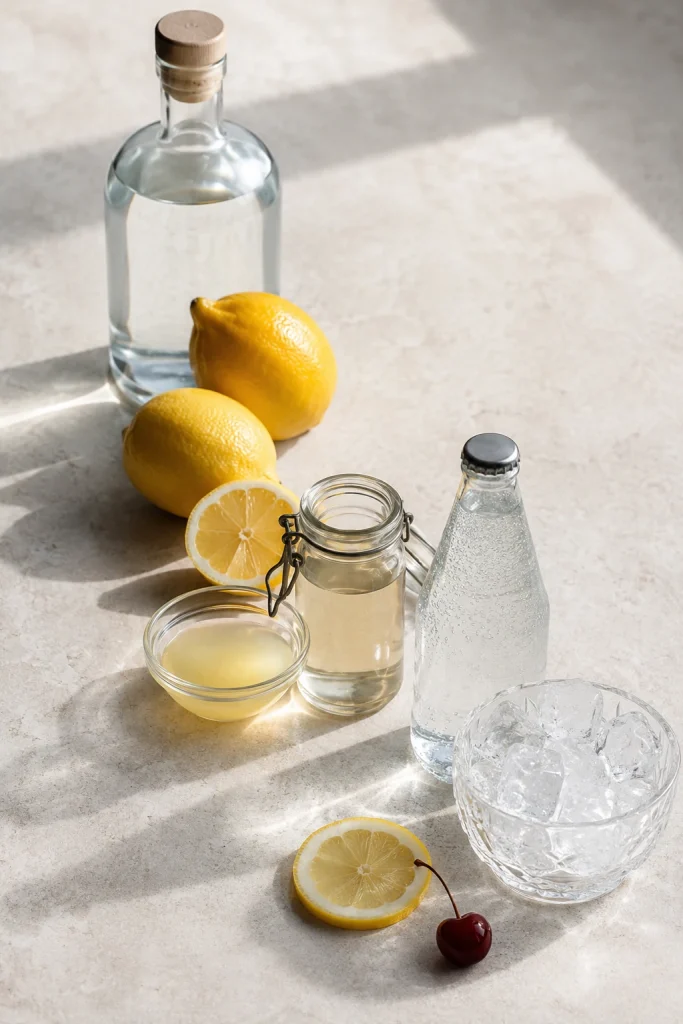
Tom Collins ingredients arranged on a light stone surface, including gin, lemons, lemon juice, simple syrup, club soda, ice, a lemon wheel, and a cherry.
Since this gin cocktail uses only a few ingredients, freshness matters: clean gin, real lemon juice, smooth syrup, cold soda, and plenty of ice do most of the work.

Gin

A Tom Collins does not need rare or expensive gin. It needs a gin that stays clean with lemon, syrup, soda, and ice. London dry gin is the easiest modern choice because it stays crisp without adding sweetness. Old Tom gin gives the drink a rounder, slightly sweeter old-school feel.

Classic gin note: if you use Old Tom gin, start with a little less syrup because the gin already brings softness. If your gin tastes very dry or sharp, the full ½ oz syrup will help round out the lemon.

London Dry vs Old Tom Gin

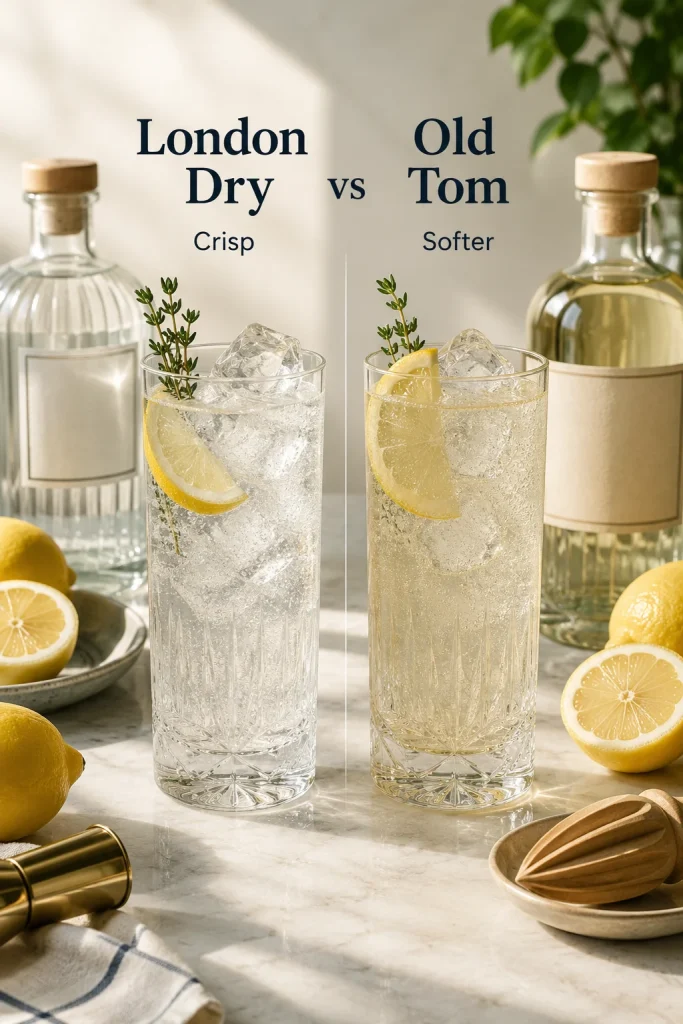
Two Tom Collins cocktails side by side comparing London dry gin and Old Tom gin, with generic gin bottles, lemons, ice, and labels.
London dry gin gives a sharper, cleaner Collins, while Old Tom gin creates a softer, rounder version with a slightly sweeter classic-cocktail feel.

Fresh Lemon Juice

Lemon is where the drink wakes up. Fresh juice gives you that clean citrus snap; bottled lemon can make the whole glass taste flat or harsh.

One medium lemon often gives around 2–3 tablespoons of juice, so one lemon is usually enough for one drink. Keep a wedge nearby if you like to adjust the first sip.

Fresh Lemon vs Bottled Lemon

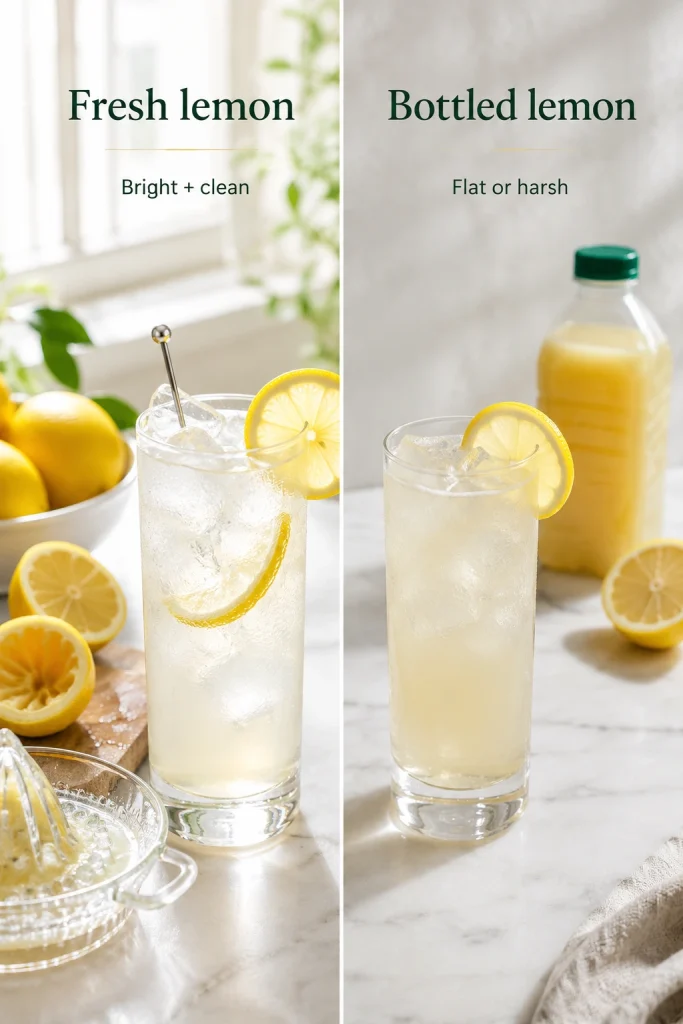
Split comparison of fresh lemon juice and bottled lemon juice for a Tom Collins, with fresh lemons, a juicer, bottled lemon juice, and two cocktails.
Bottled lemon juice works in a pinch, but fresh lemon gives this gin highball cleaner aroma, brighter tartness, and a less harsh finish.

Simple Syrup

This is the quiet fixer in the drink. It smooths the lemon without leaving sugar at the bottom of the glass. Loose sugar can make the first sip sharp and the last sip too sweet.

No simple syrup made? Dissolve sugar in warm water first. Do not add dry sugar straight to the cold glass unless you are willing to stir longer and accept some grit.

Club Soda

The soda is where many Tom Collins drinks lose their lift. Chilled, freshly opened club soda or soda water keeps the glass bright; warm or half-flat soda makes even a good ratio taste dull.

For this recipe, club soda and soda water work the same practical way: plain carbonated water for fizz. Do not use tonic water unless you want a different drink; tonic is bitter and sweet, while club soda is plain and sparkling.

Club Soda vs Tonic Water

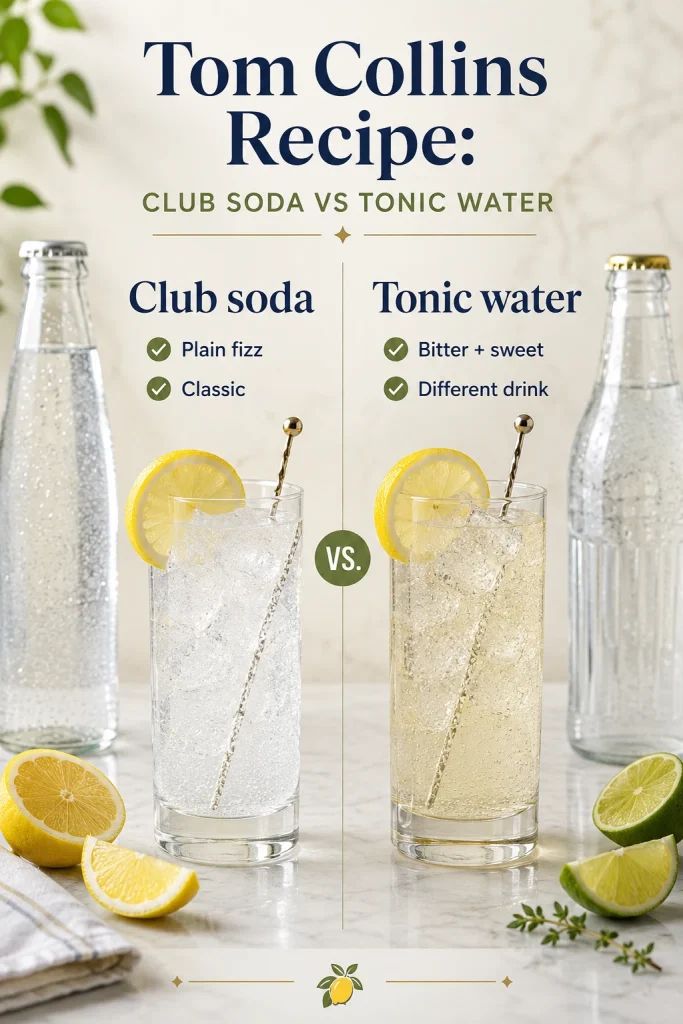
Club soda and tonic water comparison with two fizzy highball cocktails, lemon garnishes, generic bottles, checklist labels, lemons, and lime.
Club soda keeps the drink clean, dry, and fizzy. Tonic water adds bitter sweetness and moves it away from the classic Collins profile.

Ice and Garnish

Fill the glass with ice. A full glass stays colder and usually dilutes more slowly than a glass with only a few cubes. A lemon wheel and cherry are classic; a lemon wedge is fine if that is what you have.

How to Make Simple Syrup

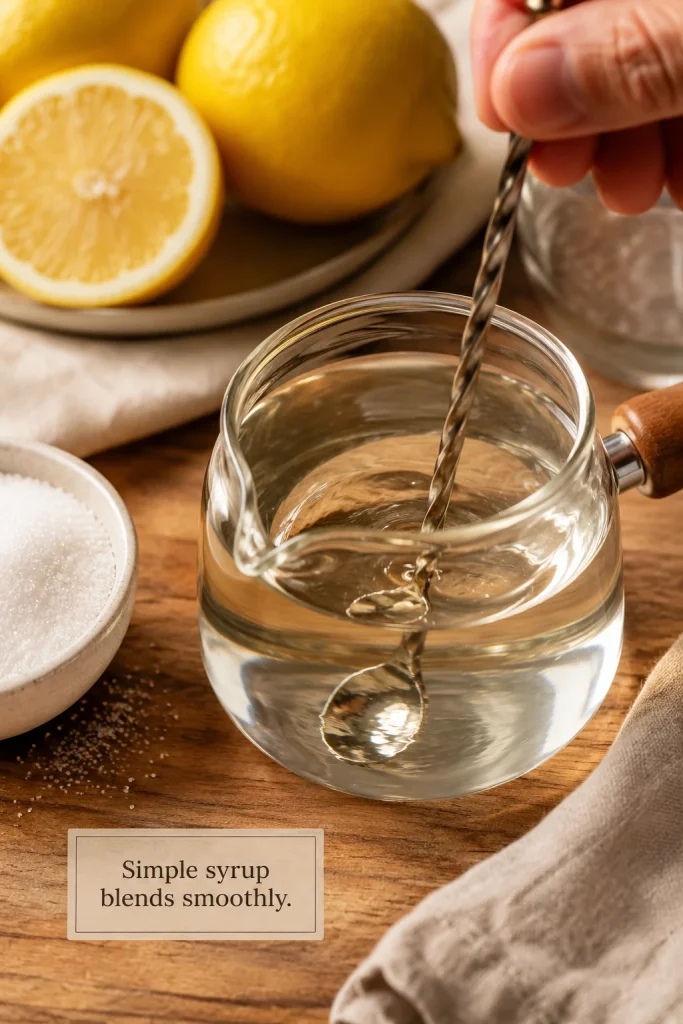
Simple syrup is just sugar dissolved in water. It blends smoothly into a cold cocktail, which is why it works better here than loose sugar.

Why Simple Syrup Works Better

Clear simple syrup being stirred in a glass pot with sugar, lemons, and a linen cloth on a warm wooden surface.
Because it dissolves fully in a cold cocktail, simple syrup gives every sip the same smooth sweet-tart balance.
  1. Add ½ cup sugar and ½ cup water to a small saucepan.
  2. Warm gently and stir until the sugar dissolves.
  3. Cool completely before using.
  4. Store covered in the refrigerator.

For a one-drink shortcut, stir 1 tablespoon sugar with 1 tablespoon warm water until dissolved, cool briefly, then measure 1 tablespoon / 15 ml of that syrup for the drink. Save any extra for adjusting.

Measurements: Ounces, ML, Tablespoons, and Grams

Bar tools are nice, but they are not the point here. A tablespoon measure and a clear ratio will get you much farther than fancy gear and flat soda.

Measure styleGinLemon juiceSimple syrupClub soda
Ounces2 oz1 oz½ oz2–4 oz
Milliliters60 ml30 ml15 ml60–120 ml
Tablespoons4 tbsp2 tbsp1 tbsp4–8 tbsp
Approx. grams where usefulUse volumeAbout 30 gAbout 18–20 gUse volume

The soda amount is a range because glass size, ice size, and personal taste all matter. Start with 2 oz / 60 ml for a stronger, more lemon-forward drink. Use 3–4 oz / 90–120 ml for a lighter highball.

Built vs Shaken

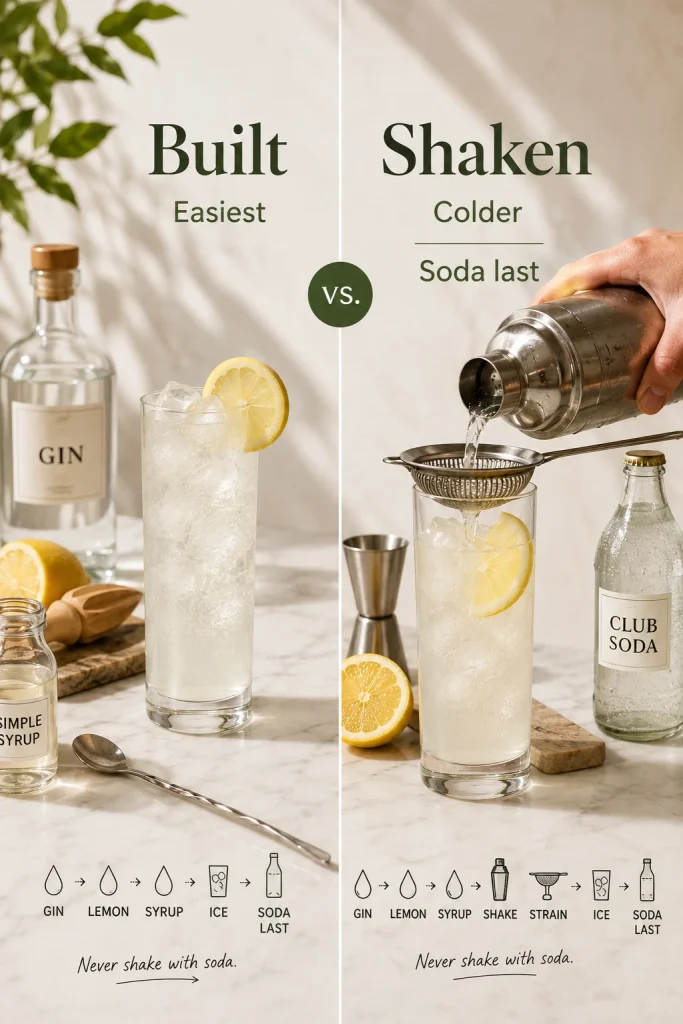
Both methods work. Build it in the glass when you want the easiest version. Shake the gin, lemon juice, and syrup first when you want the drink extra cold and slightly more blended.

Built vs Shaken Tom Collins

Built versus shaken Tom Collins comparison with a glass-built drink, cocktail shaker, strainer, gin, simple syrup, club soda, lemons, and step icons.
Build it directly in the glass for speed, or shake only the gin, lemon, and syrup for extra chill. Either way, soda stays last.

The fizz rule: mix the gin, lemon, and syrup first; add ice after the base is blended; pour cold soda last; stir once or twice. Extra stirring after soda makes the drink go flat faster.

  • Built in the glass: stir gin, lemon, and syrup in the glass, add ice, then top with soda. This is fast, simple, and does not need a shaker.
  • Shaken first: shake gin, lemon, and syrup with ice, strain over fresh ice, then top with soda. This gives a colder, more polished drink.

One rule does not change: never shake the soda. It should always go in after stirring or shaking, right before serving.

For another sharper lemon-and-sugar cocktail, the Lemon Drop Martini uses a similar citrus balance in a colder, served-up drink.

Back to recipe card · Glass, ice, and soda tips · Back to top

Glass, Ice, Soda, and Garnish

A Tom Collins should still feel alive ten minutes into sitting on the table: cold glass, lemon scent, bubbles still moving, not a sweet yellow drink melting into weak lemonade.

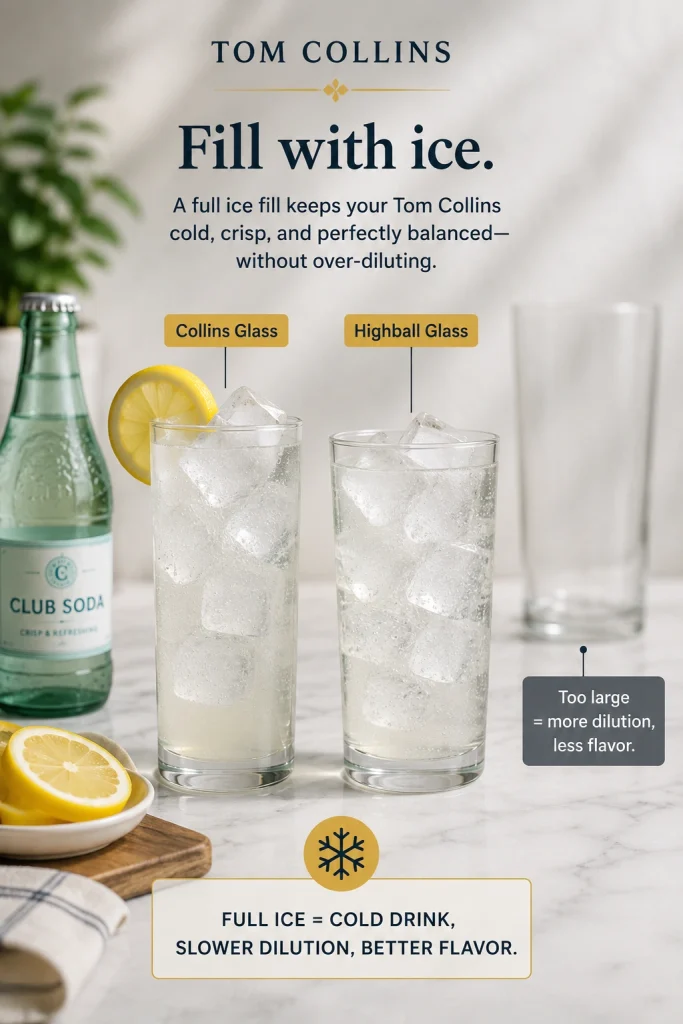
Collins Glass vs Highball

The glass and ice choice controls how much soda you need and how quickly the drink dilutes.

Collins glass and highball glass filled with ice for a Tom Collins, with club soda, lemon slices, and a larger empty glass in the background.
A Collins or highball glass packed with ice keeps the drink tall without drowning it in soda, so the flavor stays brighter and less watery.

Soda: use a cold, freshly opened bottle or can if you can. Pour slowly down the side of the glass or over the back of a spoon if you want a gentler top-up.

Glass: a 12–14 oz Collins or highball glass works well. A very large glass can trick you into adding too much soda, which weakens the lemon and gin flavor.

Ice: do not be stingy. Plenty of ice keeps the drink cold and helps it stay crisp instead of watery.

Garnish: a lemon wheel and cherry are classic. A lemon wedge also works if that is what you have. Choose an orange slice only when you want a softer citrus aroma.

The same ice-first, soda-last habit also matters in a Mojito, where lime, mint, rum, and bubbles need the same fresh lift.

Fix a flat or watery drink · Back to recipe

Can You Use Tom Collins Mix or Sour Mix?

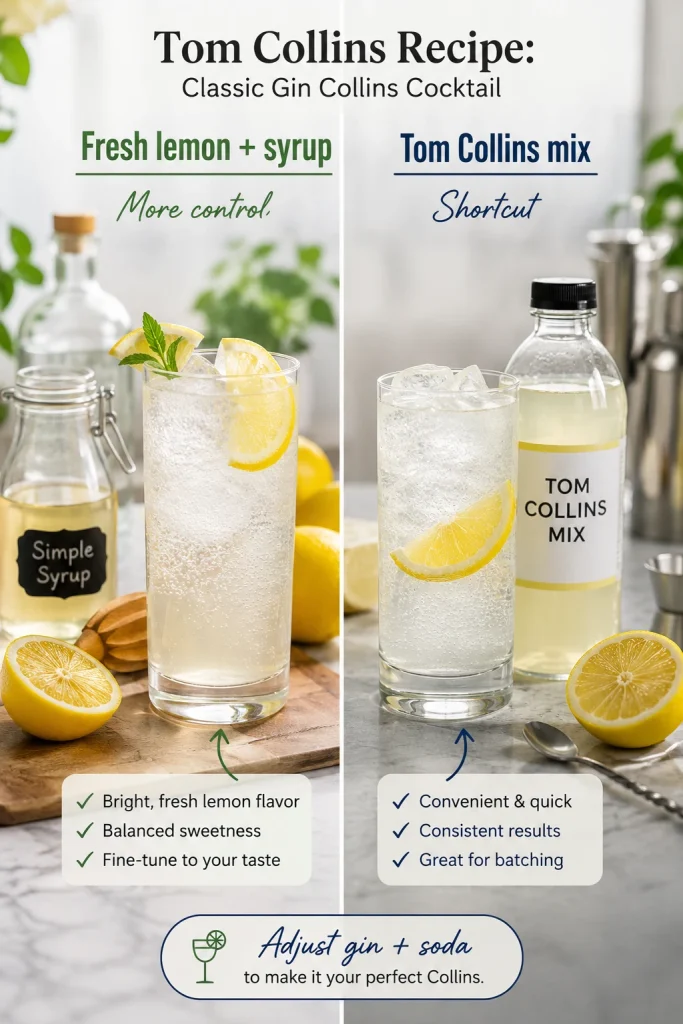
Yes, but fresh lemon juice and simple syrup give you more control. Mix is convenient, but it locks the sour and sweet parts together. Using separate lemon and syrup lets you fix the drink one direction at a time.

Fresh Ingredients vs Tom Collins Mix

Fresh lemon and simple syrup compared with Tom Collins mix, showing two tall cocktails, lemons, a syrup jar, a generic mix bottle, and comparison notes.
Fresh lemon and simple syrup give you more control over tartness and sweetness. Still, a Tom Collins mix can work if you adjust the gin and soda carefully.

With mix, treat the bottle as both the sour and sweet part of the drink. Do not add extra syrup until you taste the glass.

For a shortcut version with mix, use:

  • 2 oz gin
  • 2–3 oz Tom Collins mix or sour mix
  • Ice
  • 2–3 oz cold club soda
  • Lemon and cherry for garnish

Start with 2 oz mix if the bottle tastes sweet. Use closer to 3 oz if it tastes tart, but skip extra syrup until the glass is mixed and tasted. Add soda last, then adjust gently.

Fresh vs mix: fresh lemon and syrup make the drink taste more alive. Mix is useful for speed, but it can make the cocktail sweeter and flatter if you pour too much.

Pitcher Version for a Crowd

This is where the drink becomes especially useful for hosting: the gin-lemon-syrup base can wait in the fridge, but the bubbles should not. Mix the base ahead, keep the soda cold and unopened, then top each glass right before serving so every drink tastes freshly made.

Pitcher Base First, Soda Last

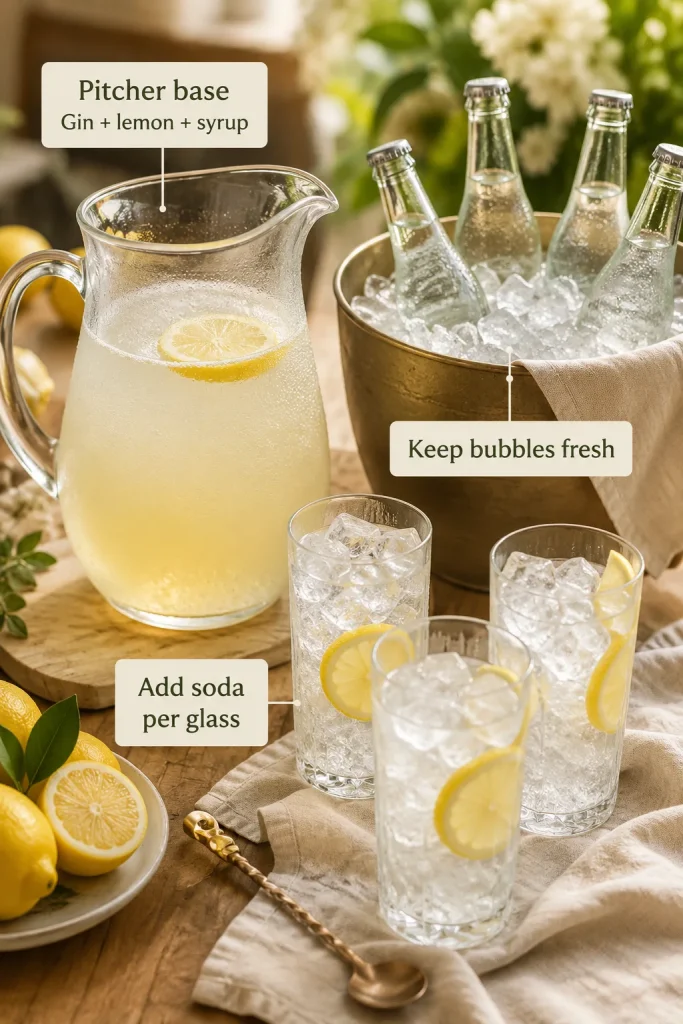
Tom Collins pitcher base with lemon slices, separate club soda bottles in an ice bucket, ice-filled glasses, lemons, linen, and serving labels.
For a pitcher, mix gin, lemon, and syrup ahead; add cold club soda to each glass just before serving so the fizz stays fresh.
ServingsGinLemon juiceSimple syrupClub soda
4 drinks8 oz / 240 ml4 oz / 120 ml2 oz / 60 ml8–16 oz / 240–480 ml
6 drinks12 oz / 360 ml6 oz / 180 ml3 oz / 90 ml12–24 oz / 360–720 ml
8 drinks16 oz / 480 ml8 oz / 240 ml4 oz / 120 ml16–32 oz / 480–960 ml

For each drink, use 3½ oz / 105 ml of the chilled base. Pour that over ice, top with club soda, stir gently, and garnish. Let guests add soda themselves if you want every glass to taste freshly made.

What to serve with it · Make-ahead tips · Back to top

Variations

Start with Vodka Collins or John Collins if you want a spirit swap. Try elderflower, cucumber, berry, lavender, or limoncello when you want a flavor twist. To make lighter or playful versions, adjust the syrup, skip the gin, or blend the drink with ice.

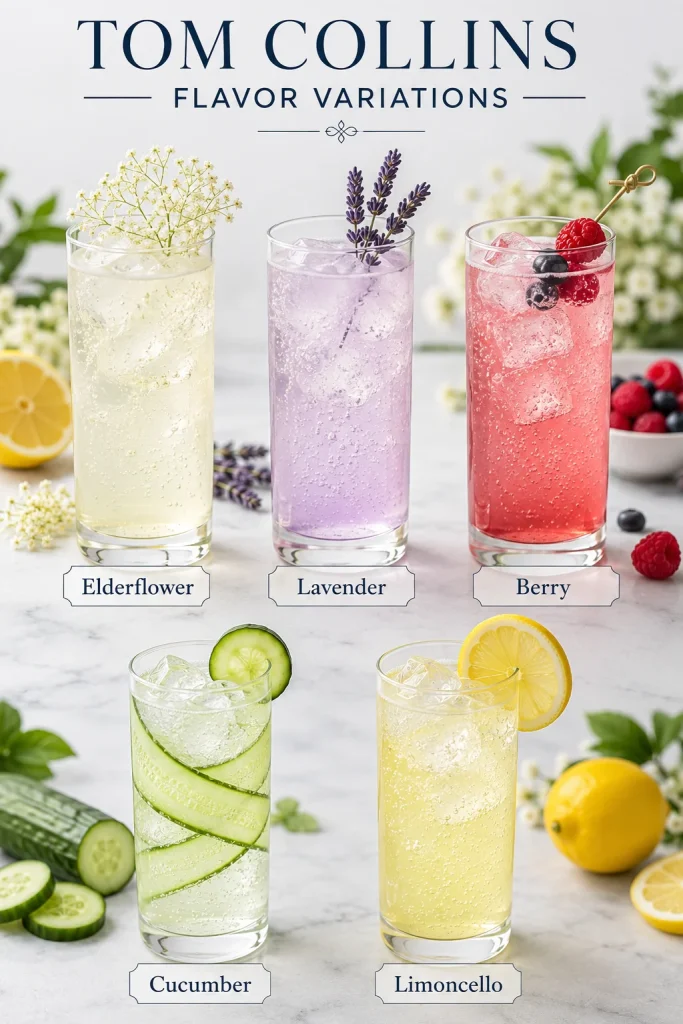
Tom Collins Flavor Variations

Five Tom Collins flavor variations labeled elderflower, lavender, berry, cucumber, and limoncello, each in a tall glass with a distinct garnish.
After the classic ratio tastes balanced, small flavor changes work best: elderflower, lavender, berry, cucumber, or limoncello should enhance the drink, not bury the lemon.

Spirit Swaps

  • Vodka Collins: use 2 oz vodka, 1 oz lemon juice, ½ oz simple syrup, and club soda to top. The glass tastes cleaner and less botanical, closer to sparkling lemon vodka than a gin highball.
  • John Collins: use 2 oz whiskey or bourbon, 1 oz lemon juice, ½ oz simple syrup, and club soda to top. Whiskey takes the Collins in a warmer, deeper direction.

MasalaMonk’s vodka with lemon cocktails guide stays in the same crisp, easy-mixing direction.

Flavor Twists

  • Elderflower Collins: use 2 oz gin, 1 oz lemon juice, ½ oz elderflower liqueur or cordial, ¼ oz simple syrup, and soda to top. Skip the extra syrup at first if the elderflower ingredient is very sweet.
  • Lavender Collins: replace plain simple syrup with ½ oz lavender syrup. Go light; lavender should whisper, not take over.
  • Berry Collins: muddle 2–3 strawberries or raspberries with the lemon juice and syrup before adding gin, ice, and soda. If using berry syrup, reduce or skip the plain syrup.
  • Cucumber Collins: add 3–4 thin cucumber slices before the gin, lemon, and syrup. Stir gently, add ice, then top with soda.
  • Limoncello Collins: use 2 oz gin, ¾ oz lemon juice, ½ oz limoncello, ¼ oz simple syrup, and soda to top.

Lighter and Fun Versions

  • Low-sugar Collins: use ¼ oz simple syrup instead of ½ oz, then add a little more soda. Taste before cutting the syrup too aggressively.
  • Frozen Collins: blend 2 oz gin, 1 oz lemon juice, ½ oz simple syrup, and 1 cup ice until slushy. Finish with a small splash of club soda. Fun, but not the version to judge the classic by.
  • Non-alcoholic Collins-style lemon soda: skip the gin and use 1 oz lemon juice, ½–¾ oz simple syrup, lots of ice, and cold club soda. Add a few drops of non-alcoholic bitters or strong brewed tea if you want more depth.

Think of a Tom Collins as a gin sour made tall: gin, lemon, sugar, ice, and soda. Change the spirit and you get another Collins. Shake it shorter and serve it differently, and you move closer to a fizz. Swap club soda for sparkling wine, and you move toward a French 75.

Tom Collins and Related Drinks

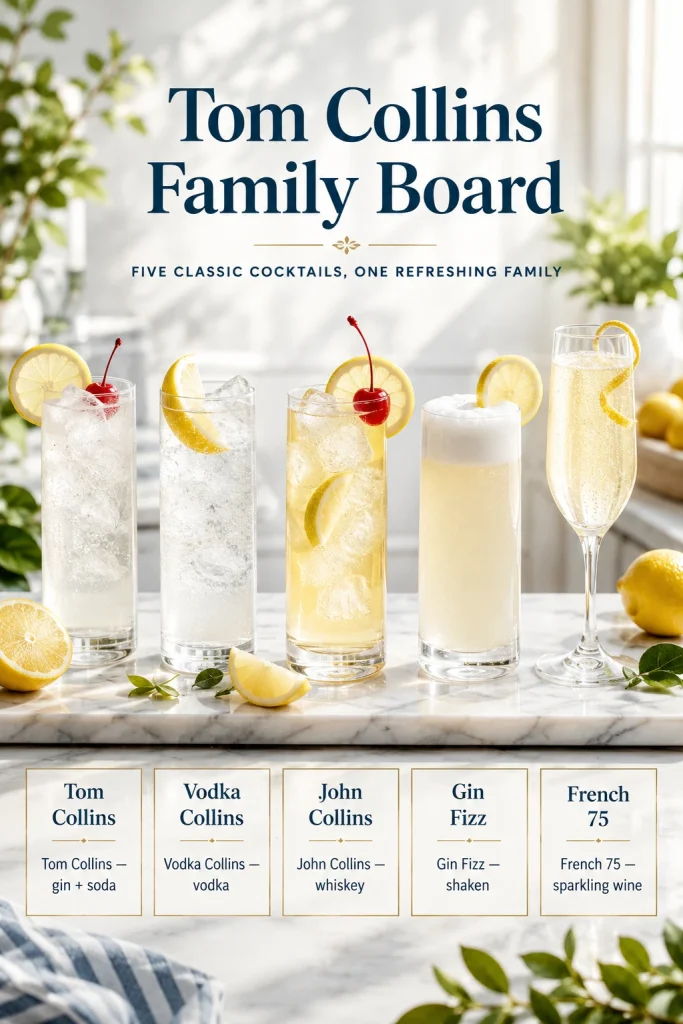
Tom Collins family board with five labeled drinks: Tom Collins, Vodka Collins, John Collins, Gin Fizz, and French 75 on a bright marble counter.
Once you understand the Collins family, the differences are simple: change the spirit, the bubbles, or the method, and you move into another classic cocktail.

If you like the wider cocktail-family side of things, Difford’s has a helpful overview of Collins cocktails.

DrinkBaseMain difference
Tom CollinsGinClassic gin, lemon, syrup, and club soda drink served tall over ice.
Vodka CollinsVodkaCleaner and less botanical than a Tom Collins.
John CollinsOften whiskey or bourbon in modern home-bar usageWarmer and deeper, with the same Collins structure.
Gin FizzGinUsually shaken and often served shorter, sometimes without ice.
French 75Gin and sparkling wineUses Champagne or sparkling wine instead of club soda.

Older cocktail references do not always use the Tom Collins and John Collins names the same way. The International Bartenders Association’s John Collins listing notes Old Tom gin for Tom Collins, so for everyday mixing, the simple gin-versus-whiskey distinction is the easiest way to choose your glass.

Love the gin, lemon, and bubbles combination? The French 75 takes that same bright idea in a sparkling-wine direction.

How to Fix a Drink That Tastes Off

When the drink tastes wrong, do not dump it immediately. A Tom Collins is forgiving because most problems have a small correction: sweetness with syrup, strength with soda, freshness with lemon, and lift with fresh bubbles.

Troubleshooting at a Glance

Use the smallest correction first, then taste again before changing the drink in another direction.

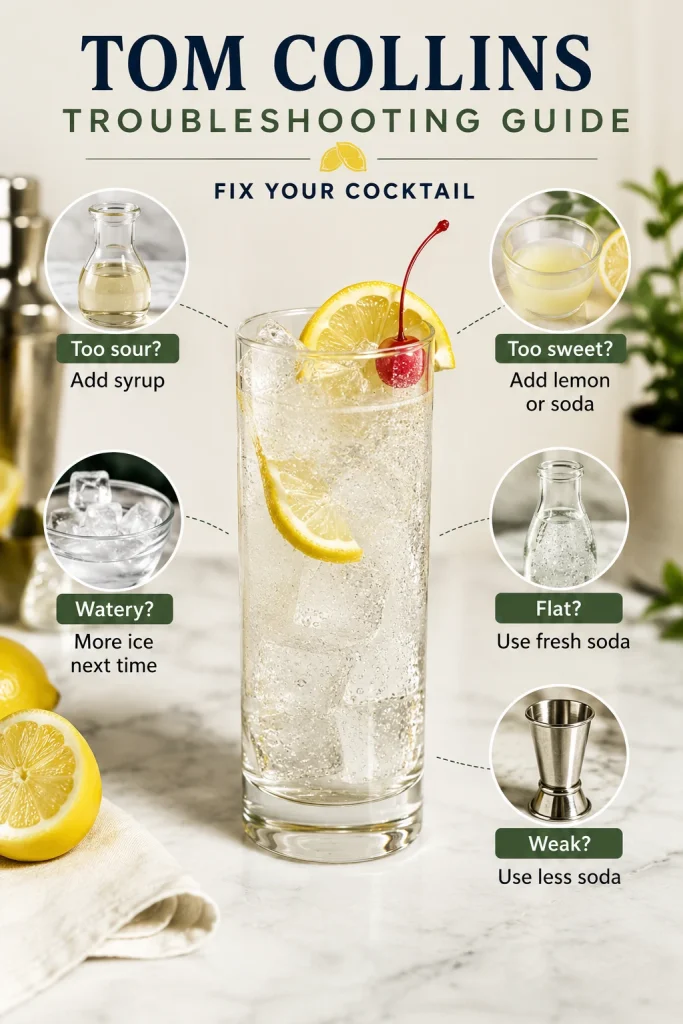
Tom Collins troubleshooting guide with a central cocktail and fix cues for drinks that are too sour, too sweet, flat, watery, or weak.
Small fixes usually save a Tom Collins that tastes too sour, sweet, flat, watery, or weak: syrup, lemon, fresh soda, or more ice.
ProblemFix nowPrevent next time
Too sourAdd ¼ oz simple syrup or 1–2 teaspoons, then stir gently.Start with ½ oz syrup and adjust by teaspoons.
Too sweetAdd a small squeeze of lemon or a splash of club soda.Do not add more syrup before tasting.
FlatAdd a splash of fresh cold club soda.Use freshly opened soda and add it last.
WateryAdd a small splash of gin and lemon if needed.Use more ice and avoid over-stirring.
Too weakAdd less soda next time.Start with 2 oz soda, then lengthen only if needed.
Too harshAdd a little more soda or a tiny touch of syrup.Use a softer gin or reduce lemon slightly.
GrainyStir longer, though it may not fully fix.Use simple syrup instead of undissolved sugar.

Common mistakes to avoid: warm soda, too much soda, too little ice, dry sugar in the glass, bottled lemon juice, and shaking the soda. Each one can make an otherwise good Tom Collins taste flat, harsh, weak, or messy.

The easiest balance test: taste the gin, lemon, and syrup before adding soda. It should taste slightly too bright and strong because the ice and soda will soften it.

Make the recipe again · Check ice and soda tips · Back to top

What to Serve with a Tom Collins

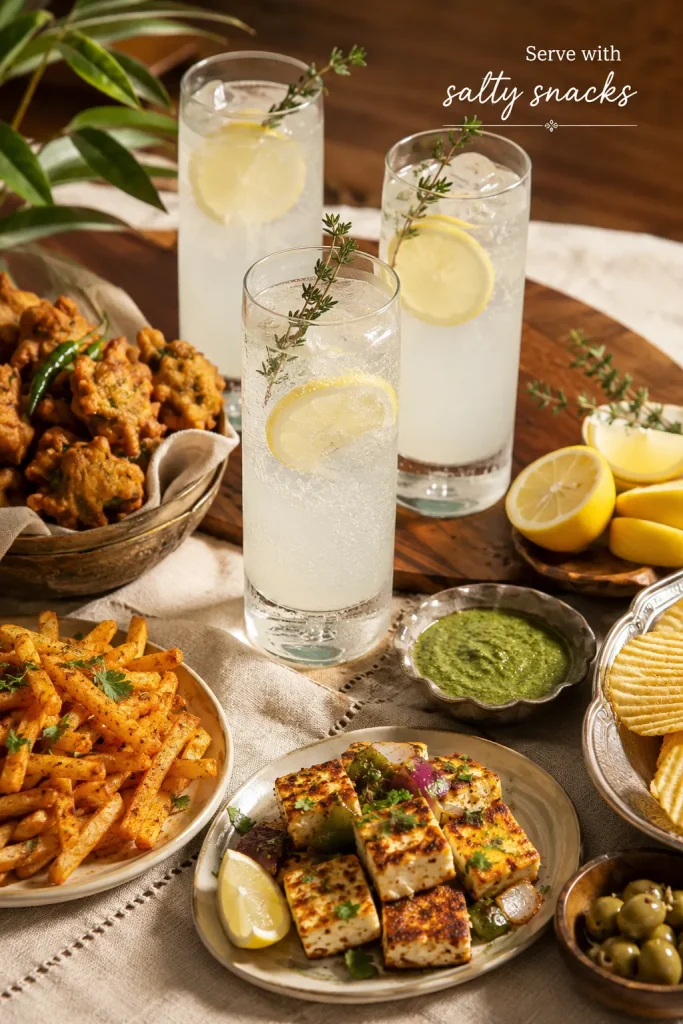
A Tom Collins is made for salty, lemon-friendly snacks: pakoras, masala fries, grilled paneer, olives, chips, fried chicken bites, shrimp, and anything with herbs or chutney on the side. The bubbles refresh the palate, the citrus cuts richness, and the light sweetness softens salty or spicy bites.

Snack Table Pairing Ideas

Salty snacks make the citrus and bubbles feel brighter, especially with fried or spiced food.

Tom Collins glasses served with pakoras, masala fries, grilled paneer, green chutney, olives, chips, lemon wedges, herbs, and cream linen.
A Tom Collins is at its best with salty, lemon-friendly snacks: pakoras, masala fries, grilled paneer, green chutney, olives, and chips.
  • Salty snacks: spiced nuts, olives, chips, crackers, and popcorn work because the drink is cold and citrusy.
  • Fried appetizers: fries, fritters, pakoras, tempura, and fried chicken bites work because lemon and soda cut through richness.
  • Seafood and chicken: grilled shrimp, crab cakes, lemony fish, grilled chicken, and lightly spiced chicken skewers pair well without overpowering the drink.
  • Cheese boards and fresh salads: mild cheeses, salty crackers, nuts, fruit, cucumber, herbs, and citrus dressing keep the table easy and party-friendly.

MasalaMonk’s Green Chutney keeps a snack table fresh, herby, and citrusy. For a hot, crunchy pairing, MasalaMonk’s Mozzarella Sticks recipe also works well with the lemon-and-bubbles profile.

Very sweet desserts are not the best first pairing because the cocktail already has lemon and syrup. If serving dessert, keep it light: lemon cookies, shortbread, fruit, or a not-too-sweet citrus cake.

Make-Ahead Tips

Do not fully make a Tom Collins ahead with soda. The bubbles fade and the drink loses its lift.

For make-ahead prep, mix the gin, lemon juice, and simple syrup together and chill that base. When ready to serve, pour it over ice and top with cold club soda. Fresh lemon juice tastes best the same day, so avoid making the base too far ahead.

At party time, place the chilled base, cold soda, ice, lemon wheels, and cherries next to each other so each drink can be topped fresh. That keeps every glass lively instead of serving a flat pitcher.

Tom Collins FAQ

These quick answers cover the most common questions about the drink, the ingredients, and the Collins family.

What is in a Tom Collins?

A Tom Collins is made with gin, fresh lemon juice, simple syrup, club soda, ice, and usually a lemon wheel and cherry for garnish.

What alcohol is in a Tom Collins?

The classic alcohol is gin, which gives the drink its dry, botanical edge.

Is it made with gin or vodka?

Gin makes it a Tom Collins. Vodka gives you a Vodka Collins: same lemon-soda structure, cleaner flavor, less botanical edge.

What does it taste like?

A Tom Collins tastes like sparkling lemonade with a dry gin finish: lemony, lightly sweet, crisp, and not heavy.

Is a Tom Collins a strong cocktail?

It uses a standard 2 oz pour of gin, but the tall glass, ice, lemon, and soda make it feel lighter and more refreshing than a spirit-forward cocktail. Use 2 oz soda for a stronger glass or 3–4 oz for a longer, lighter highball.

What gin is best for a Tom Collins?

London dry gin is the easiest choice for a crisp modern Tom Collins. Old Tom gin gives a softer, slightly sweeter classic-style drink; if you use it, reduce the syrup slightly and taste before adding more.

Should it be shaken or stirred?

Either method works. The easiest method is to build it in the glass. For a colder drink, shake only the gin, lemon juice, and syrup, then strain over ice and top with soda. Never shake the soda.

Do you need a shaker?

No shaker is needed. You can build a Tom Collins directly in the glass by stirring gin, lemon juice, and simple syrup, adding ice, topping with club soda, and garnishing.

Does sour mix work?

Yes, but fresh lemon juice and simple syrup usually taste better. If using sour mix, treat it as a replacement for the lemon juice and syrup, then add gin, ice, and club soda.

Can you use tonic water instead of club soda?

You can use tonic water, but it will not taste like a classic Tom Collins. Tonic water is bitter and sweet, while club soda is plain and fizzy.

What is the difference between Tom Collins and Vodka Collins?

A Tom Collins uses gin. A Vodka Collins uses vodka. The lemon, sweetener, soda, and ice structure stays similar, but the vodka version tastes cleaner and less botanical.

How is John Collins different?

In many modern home-bar recipes, a John Collins is made with whiskey or bourbon instead of gin. It has a warmer, deeper flavor, though the naming history is more complicated in older cocktail references.

Can you make a pitcher?

Yes. Mix gin, lemon juice, and simple syrup ahead, then chill. Add club soda only when serving so the pitcher does not go flat.

Can you make it non-alcoholic?

You can make a Collins-style lemon soda by skipping the gin and using lemon juice, simple syrup, ice, and cold club soda. It will not be a classic Tom Collins, but it gives you the same cold, fizzy lemon feel.

Final Tips

Make the classic version once, then use the first sip as your guide. If it tastes too sharp, soften it with syrup. When it feels weak, use less soda next time. Dull flavor usually means the glass needs fresh lemon, fresh bubbles, or more ice.

Did you make it crisp and classic, softer like sparkling lemonade, or sharper with extra lemon? Tell us your Collins style in the comments — your note may help the next reader choose their first glass.

Enjoy responsibly. The recipe is written for one cocktail; for a group, batch only the gin-lemon-syrup base and let each glass get fresh soda.

Back to top

Posted on Leave a comment

Orange Crush Recipe: Fresh Orange Vodka Cocktail, Pitcher & Mocktail

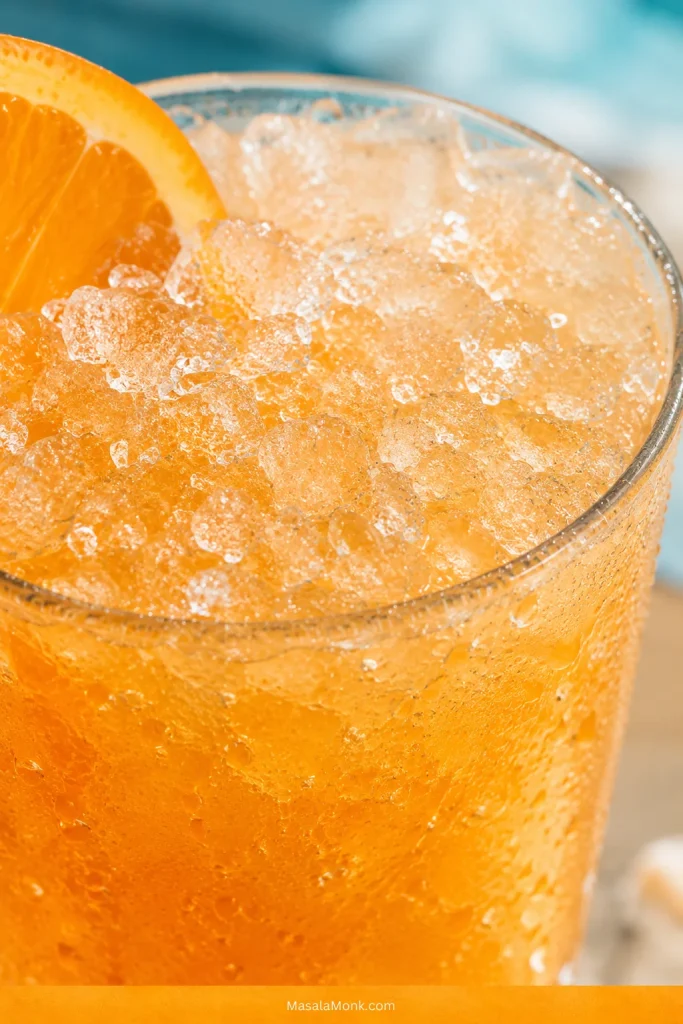
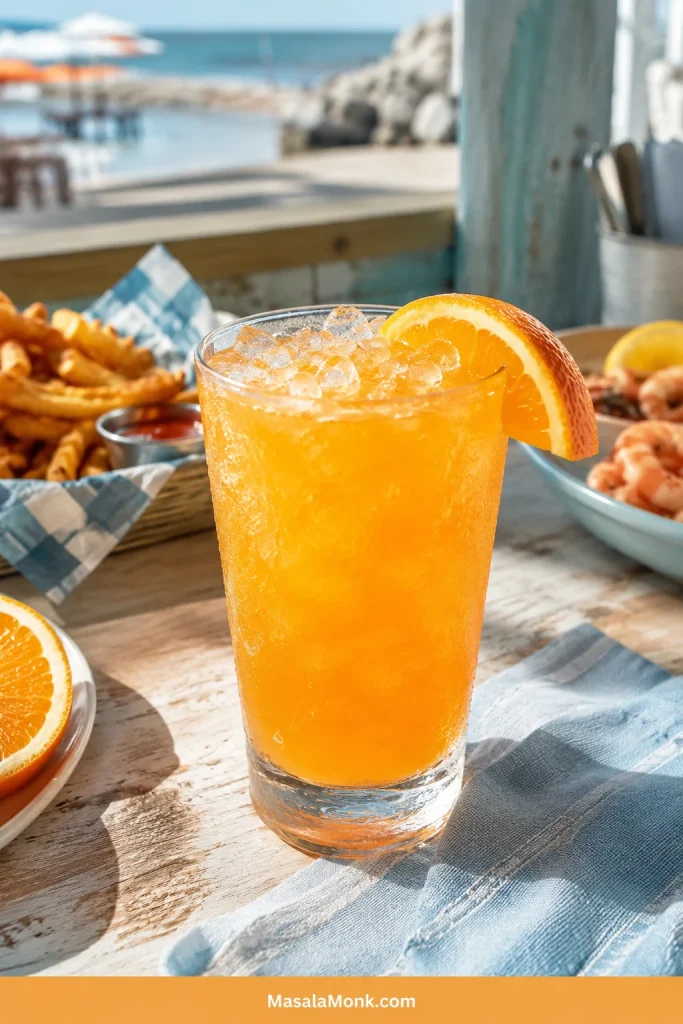
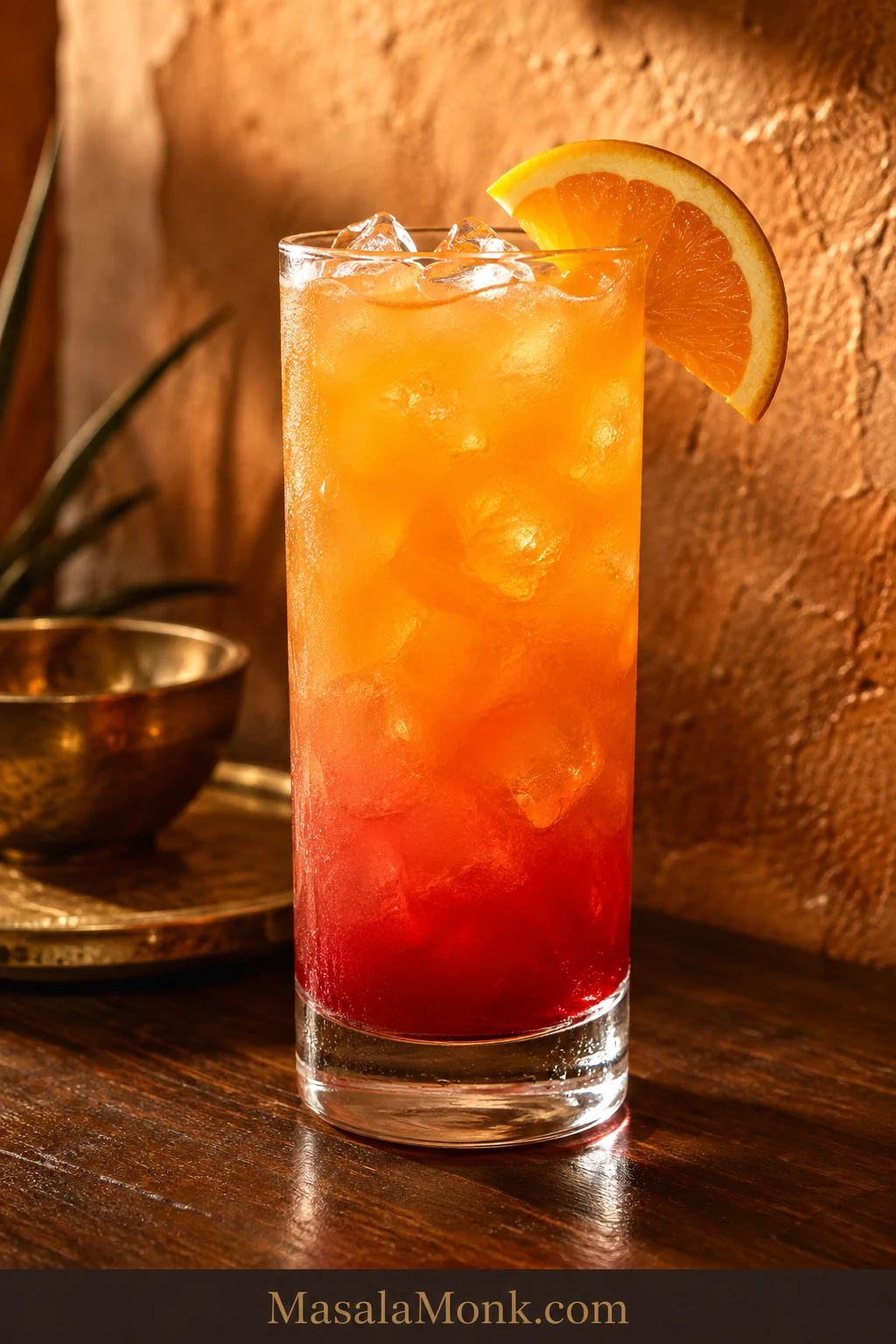
Tall Orange Crush cocktail in a clear glass with crushed ice, orange slice garnish, condensation, fresh oranges, and a coastal table setting.

An Orange Crush should smell like a just-cut orange before you taste the vodka. It should be cold, juicy, sparkling, and bright enough to feel like a beach-bar drink instead of plain vodka with orange soda. This version uses fresh-squeezed orange juice, vodka or orange vodka, triple sec, crushed ice, and just enough bubbles to keep every sip lively.

It is the kind of drink that works because it feels simple: squeeze, pour, fizz, sip. The same build is easy enough for one glass after work and bright enough for a whole tray of summer drinks.

If a Screwdriver is vodka and orange juice, an Orange Crush is the fresher, louder cousin. It adds orange liqueur, crushed ice, and soda, so the glass lands citrusy, cold, and easy to sip without feeling heavy.

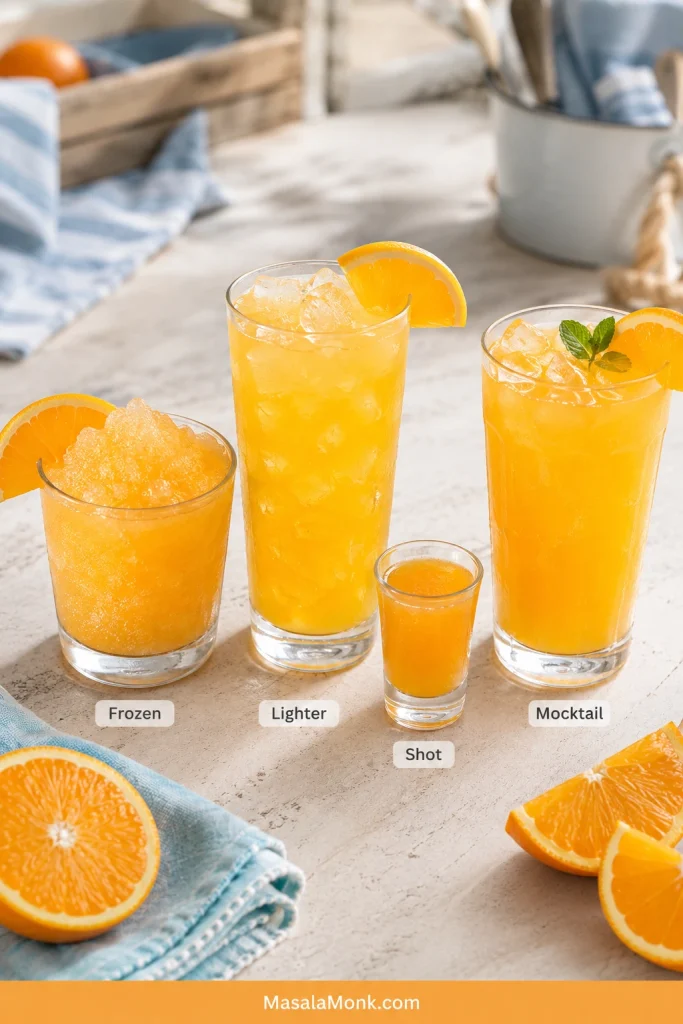
This is the cocktail version, not the soda cake. You will get the classic drink first, then the choices that matter: regular vodka or orange vodka, triple sec or Cointreau, lemon-lime soda or club soda, one glass or a pitcher, plus frozen, lighter, shot, and mocktail versions.

Jump to Recipe · Make One Now · Pitcher · Variations · Fixes · FAQs

Quick Answer: What Is an Orange Crush?

An Orange Crush is a fresh orange vodka cocktail made with fresh-squeezed orange juice, vodka or orange vodka, triple sec or another orange liqueur, lemon-lime soda or club soda, and crushed ice.

The best starting ratio is 2 oz / 60 ml vodka, 1 oz / 30 ml triple sec, 3–4 oz / 90–120 ml fresh orange juice, and 2–3 oz / 60–90 ml lemon-lime soda or club soda. Build it over crushed ice, add the soda last, and serve it while the glass is still cold and bubbly.

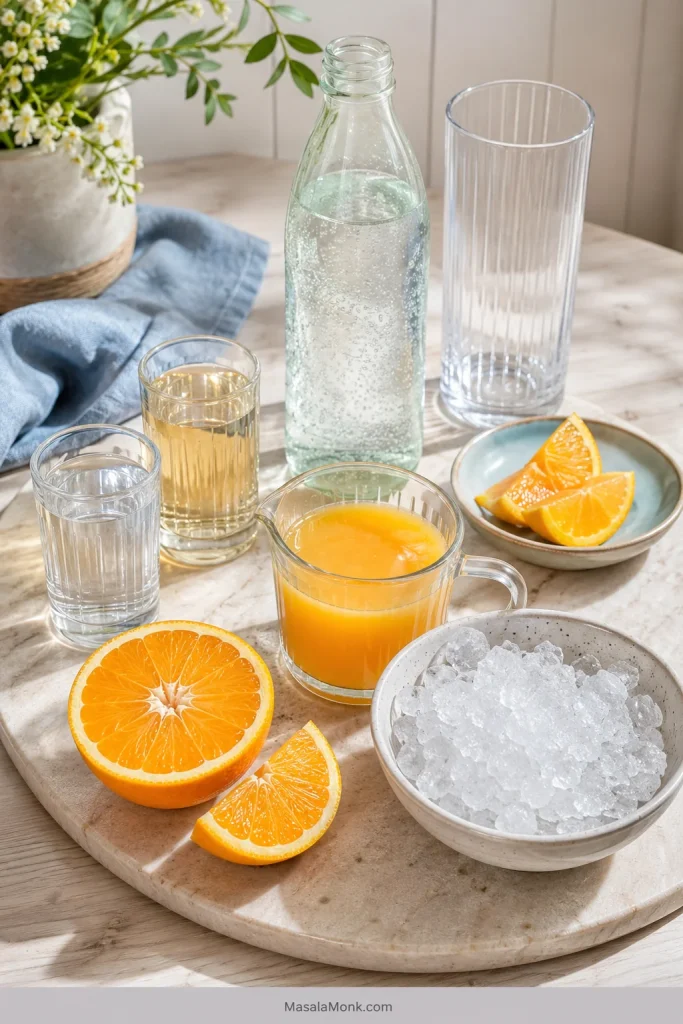
Orange Crush ingredients on a light tabletop, including fresh orange juice, vodka, orange liqueur, soda, crushed ice, orange wedges, and a tall glass.
The one-glass Orange Crush formula works because every ingredient has a clear role: juice brings brightness, vodka gives structure, orange liqueur adds depth, and soda lifts the finish.

Make One Now

Fill a highball, Collins, or pint glass with crushed ice. Add 2 oz / 60 ml vodka, 1 oz / 30 ml triple sec, and 3–4 oz / 90–120 ml fresh orange juice. Stir briefly, top with 2–3 oz / 60–90 ml lemon-lime soda or club soda, stir once more, garnish with orange, and drink while the ice is still crisp.

If the first sip tastes like orange first and alcohol second, you are in the right place. From there, adjust the next glass sweeter, drier, stronger, or more orange-forward.

Start here before you customize: vodka or orange vodka, triple sec, fresh-squeezed orange juice, lemon-lime soda, and a full glass of crushed ice.

Three things ruin the drink fast: warm juice, soda added too early, and finished cocktails sitting in a pitcher with ice.

Want this?Use this
Classic beach-bar Orange CrushOrange vodka + lemon-lime soda
Cleaner, less sweet drinkPlain vodka + club soda
Stronger orange flavorOrange vodka + Cointreau
Lighter party pourClub soda + extra fresh orange
MocktailFresh orange juice + lemon or lime + soda

You are not chasing a syrupy orange soda drink here. You want fresh citrus, cold ice, clean vodka, orange depth, and a bubbly finish.

Recipe Card: Orange Crush Cocktail

This is the balanced house version: cocktail-strength, orange-forward, bubbly, but not sticky. It is built to taste like fresh orange first, not lemon-lime soda first.

Prep time5 minutes
Cook time0 minutes
Total time5 minutes
Servings1
Yield1 cocktail
MethodBuilt in the glass
GlassHighball, Collins, or pint glass
EquipmentCitrus juicer, jigger or measuring cup, bar spoon

Ingredients

  • 3–4 oz / 90–120 ml fresh orange juice
  • 2 oz / 60 ml vodka or orange vodka
  • 1 oz / 30 ml triple sec or Cointreau
  • 2–3 oz / 60–90 ml lemon-lime soda, club soda, or orange sparkling water
  • Crushed ice, enough to fill the glass
  • Orange wheel or wedge, for garnish

Instructions

  1. Juice the oranges and measure 3–4 oz / 90–120 ml fresh orange juice.
  2. Fill a highball, Collins, or pint glass with crushed ice.
  3. Add vodka, triple sec, and fresh orange juice.
  4. Stir for 5–10 seconds, just enough to chill and combine.
  5. Top with lemon-lime soda, club soda, or orange sparkling water.
  6. Stir gently once or twice, garnish with orange, and serve immediately.

Notes

  • Orange vodka gives a stronger coastal bar-style orange flavor.
  • Plain vodka keeps the drink cleaner and less sweet.
  • Lemon-lime soda gives the classic finish.
  • Club soda or orange sparkling water makes it drier.
  • Add the soda last and serve right away.

What You Need

You only really need a citrus juicer, a jigger or small measuring cup, a tall glass, and crushed ice. A bar spoon helps, but a regular spoon is fine. Shakers are optional; use one only for the vodka, orange liqueur, and juice, never the soda.

A hand press makes the drink feel especially beach-bar style, but any citrus juicer works. What matters most is measuring the alcohol, filling the glass with enough ice, and adding the bubbles at the end.

Why This Ratio Works

A good Orange Crush is not vodka hidden under orange soda. It is fresh orange juice sharpened with vodka, deepened with orange liqueur, and lifted with bubbles.

Remember the Orange Crush rule: fresh orange carries the drink, orange liqueur deepens it, and soda only lifts it.

Infographic showing Orange Crush measurements for vodka, triple sec, fresh orange juice, soda, crushed ice, and a scalable parts formula.
The ounce ratio works for one cocktail, while the parts formula works for batching. That way, the Orange Crush stays balanced even when you scale it for guests.

This house ratio starts a little less sweet on purpose. You can always add more soda, but you cannot rescue a sticky glass once it is built.

The 2 oz / 60 ml vodka pour keeps it cocktail-strength, while 3–4 oz / 90–120 ml orange juice gives enough citrus to make the glass taste juicy instead of sharp. For a sweeter crush, add a little more orange liqueur or lemon-lime soda. To make a drier one, reduce the liqueur to ½ oz / 15 ml and use club soda.

Ingredients That Make the Drink Work

Because the cocktail is so simple, there is nowhere for dull juice or flat bubbles to hide. Good oranges and the right topper matter more than expensive bar tools.

Fresh orange juice

Fresh juice gives you that little burst of orange oil and perfume before the glass even reaches your mouth. That is the difference between a bright Orange Crush and a flat vodka-orange drink, and it is what bottled juice never quite gives you. Pulp is fine if you like a fuller texture.

Fresh orange being squeezed in a metal citrus press, with juice dripping into a clear measuring cup and orange halves on a bright countertop.
The citrus press does more than save time. It pulls bright juice and aromatic orange oils into the drink, which is why fresh-squeezed orange juice tastes livelier in an Orange Crush.

One juicy orange may be enough for one drink, but plan on 1–2 oranges per cocktail so you are not short. Measure the juice and aim for 3–4 oz / 90–120 ml per glass. If one orange gives you less than 3 oz, squeeze another half.

Navel oranges are easy to find and usually sweet. Valencia oranges are especially juicy. Cara Cara oranges make a softer, sweeter pink-orange drink. Blood oranges also work, but they change the color and add a deeper berry-like edge.

If you bought a bag of oranges and have more citrus than you need for drinks, save a few for this orange marmalade recipe; it uses the same bright flavor in a slower, spoonable way.

Vodka or orange vodka

You do not need to buy a special bottle for one drink, but the vodka choice does change the mood of the glass. Plain vodka keeps the cocktail clean and citrus-led; orange vodka makes it taste more like the beach drink people remember.

Sweet, fragrant oranges are enough for plain vodka to work beautifully. When the fruit is mild, orange vodka helps the flavor along.

Vodka choiceBest forWhat it does
Plain vodkaA cleaner Orange CrushLets fresh orange juice stay in front
Orange vodkaBeach drink flavorAdds stronger orange aroma
Neutral vodkaEasy home mixingKeeps the drink simple and crowd-friendly
Vanilla or whipped vodkaDessert-style drinkCan taste creamsicle-like, but turns sweet quickly

Start with plain vodka and good oranges if you are unsure. The second glass can always get louder with orange vodka.

Side-by-side comparison of plain vodka and orange vodka with small pour glasses, orange slices, and labels on a coastal tabletop.
Plain vodka keeps the cocktail cleaner and more citrus-led. However, orange vodka helps when the fruit is mild or when you want a stronger beach-bar orange flavor.

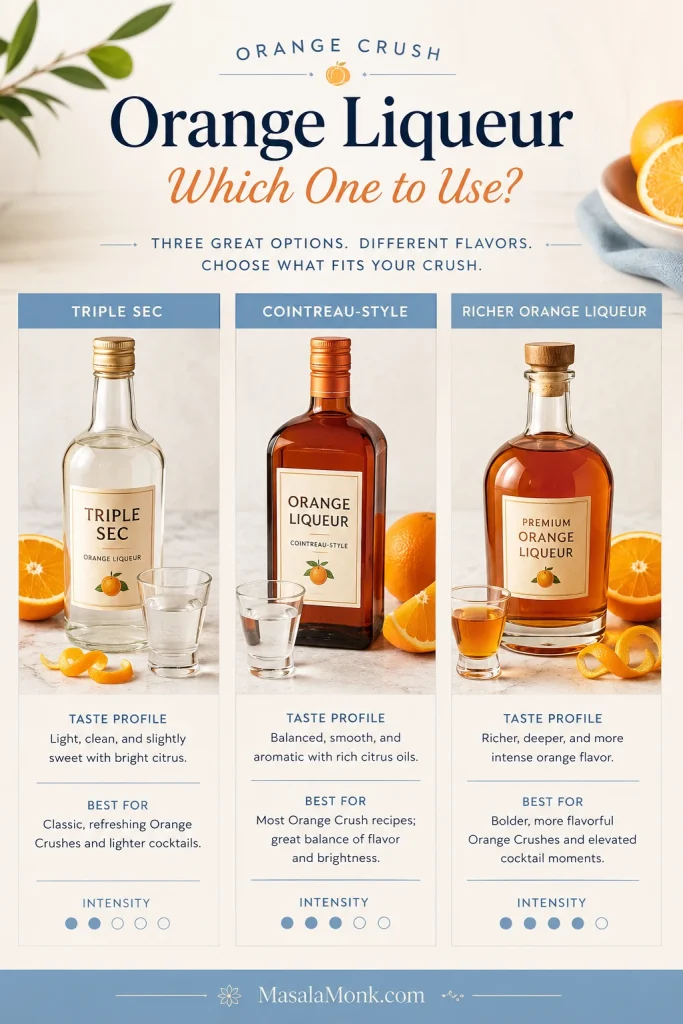
Triple sec or orange liqueur

Orange liqueur is helpful, but it can take over fast. Measure it once, taste the drink, then adjust the next glass.

Triple sec adds sweetness and orange depth. Cointreau gives a cleaner orange flavor. Grand Marnier is richer and heavier, so use it when you want a rounder cocktail rather than the lightest possible glass.

Orange liqueurFlavorBest use
Triple secSweet, simple, classicStandard Orange Crush
CointreauCleaner, stronger orangePremium but still bright drink
Grand MarnierRicher, deeper, slightly brandy-likeRounder cocktail; use lightly

The safest first pour is still 1 oz / 30 ml. Once the drink is in your hand, you will know whether it needs more orange depth or less sweetness.

Orange liqueur comparison showing triple sec, Cointreau-style liqueur, and richer orange liqueur with bottles, small glasses, and orange props.
Orange liqueur should deepen the citrus, not turn the drink sticky. Start with a measured pour, then adjust only if the glass needs more orange flavor after tasting.

If you want another drink where orange liqueur has to stay balanced instead of taking over, this spicy margarita recipe uses that same sweet-citrus logic with lime, tequila, and heat.

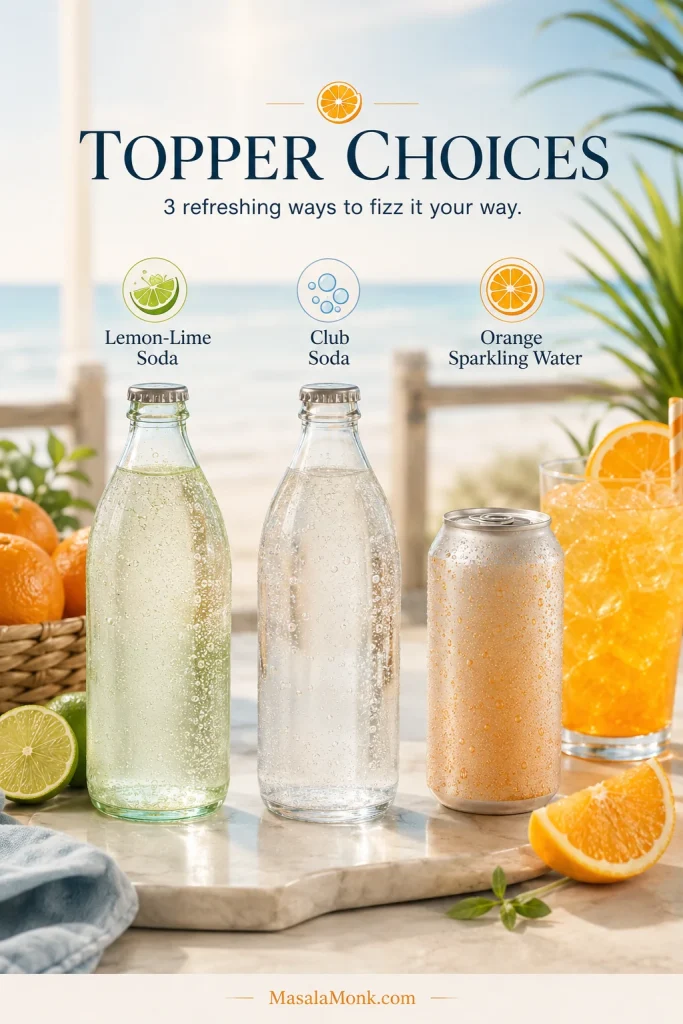
Soda or sparkling water

The topper decides the mood of the glass: classic and sweet, clean and dry, or full-on orange soda. This is where many homemade versions go wrong. Too much sweet fizz, and the fresh orange disappears.

TopperResultUse it when
Sprite, 7UP, or lemon-lime sodaSweet, sparkling, classicYou want the beach-bar drink
Club sodaDryer and lighterYou want less sugar
Orange sparkling waterCitrusy but not syrupyYou want orange flavor without extra sweetness
Orange sodaVery sweet and candy-likeUse only for a soda-style twist

Start with less topper than you think. You can always add a splash more, but you cannot take sweetness back out.

Topper comparison showing lemon-lime soda, club soda, and orange sparkling water with an Orange Crush cocktail in the background.
The topper controls sweetness more than most people expect. Choose lemon-lime soda for a classic Orange Crush, club soda for a drier drink, or orange sparkling water for lighter citrus fizz.

Crushed ice

Crushed ice is part of the drink’s personality. It chills fast, softens the vodka, and gives the glass that loose, beach-bar feel you do not get from a few hard cubes.

Close-up of crushed ice and condensation in a glass of orange cocktail with an orange slice garnish near the rim.
Crushed ice gives the cocktail its classic beach-bar texture. It chills the glass quickly, slightly softens the vodka, catches the bubbles, and makes each sip feel lighter.

Ready to mix? jump to the method · recipe card · back to top

How to Make It

The easiest home method is also the best one: build the drink right in the glass. It is fast, clean, and keeps the soda lively.

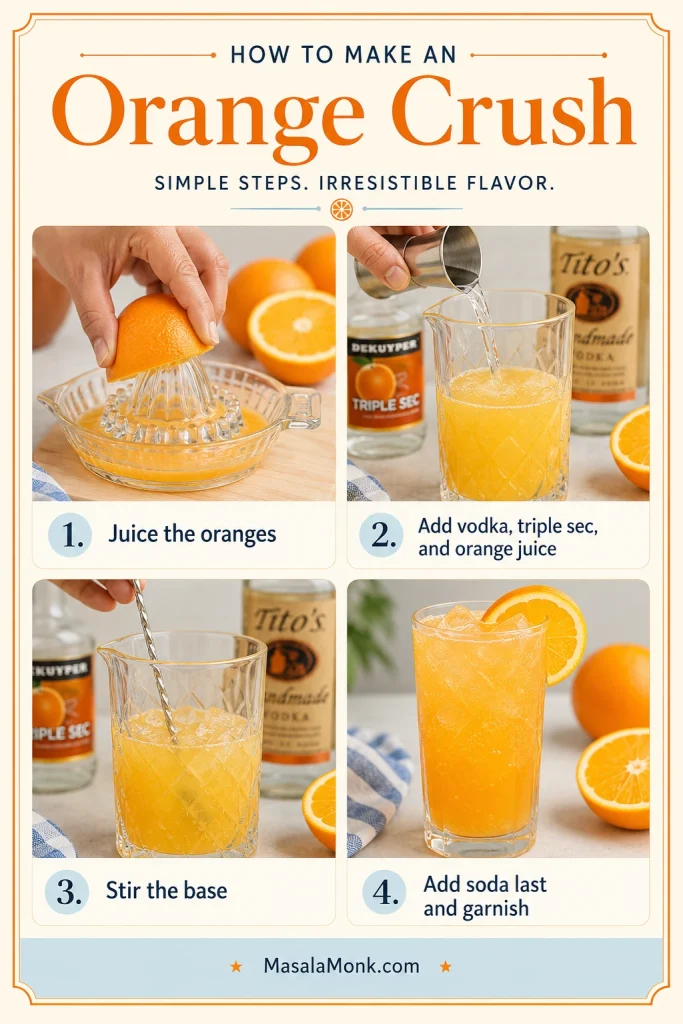
Step-by-step Orange Crush guide with panels showing oranges juiced, vodka and triple sec added, the base stirred, and soda added last with garnish.
The best method is simple: juice, build, stir, fizz, garnish. Most importantly, stir the base before adding soda so the final Orange Crush stays cold and lively.
  1. Juice first. Squeeze the oranges right before mixing if you can.
  2. Ice the glass. Fill the glass with crushed ice, not just a few cubes.
  3. Add the base. Pour in vodka, triple sec, and orange juice.
  4. Stir briefly. You want the base cold and even, not overworked.
  5. Add fizz last. Top with soda or sparkling water.
  6. Serve immediately. The drink is best before the bubbles fade and the ice melts.

Once the soda goes in, the drink is alive for a short window. The best sip is the first one: cold glass, sharp ice, orange aroma, and bubbles still lifting the citrus.

Add Soda Last for Better Fizz

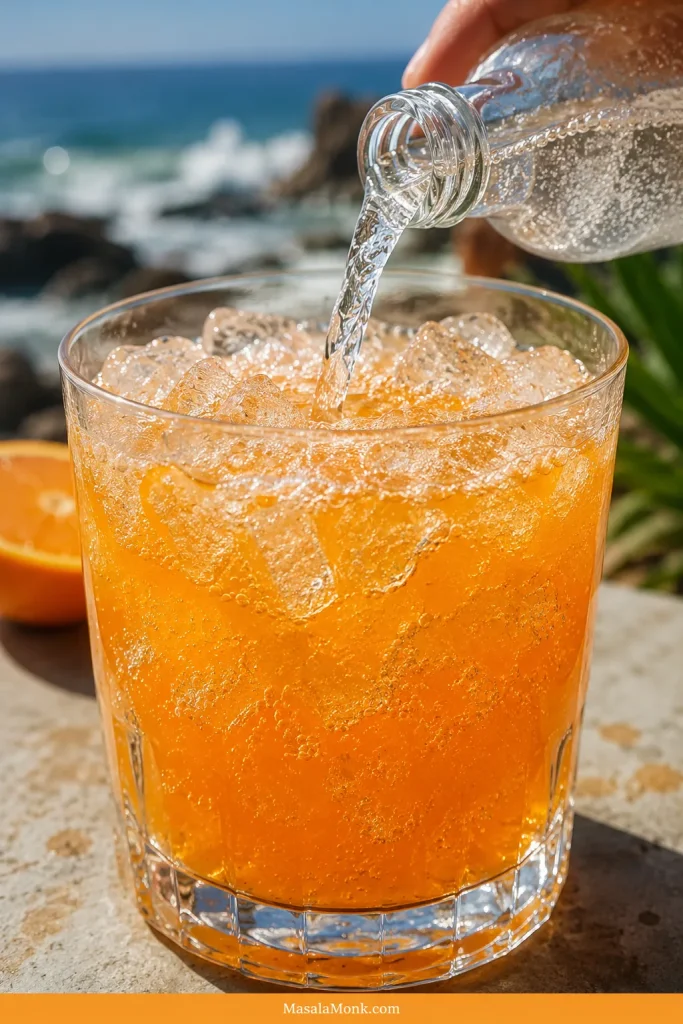
Clear soda being poured into a golden orange cocktail over crushed ice, with bubbles rising around the ice in the glass.
Pour the soda after the orange-vodka base is mixed and chilled. That small delay protects the bubbles, so the Orange Crush tastes freshly built instead of dull by the time it reaches the table.

If you prefer a colder, slightly frothier drink, shake only the vodka, orange liqueur, and orange juice with ice for 10–15 seconds. Pour over crushed ice, then add the soda. Do not shake carbonated soda.

Fresh Orange Juice vs Bottled Orange Juice

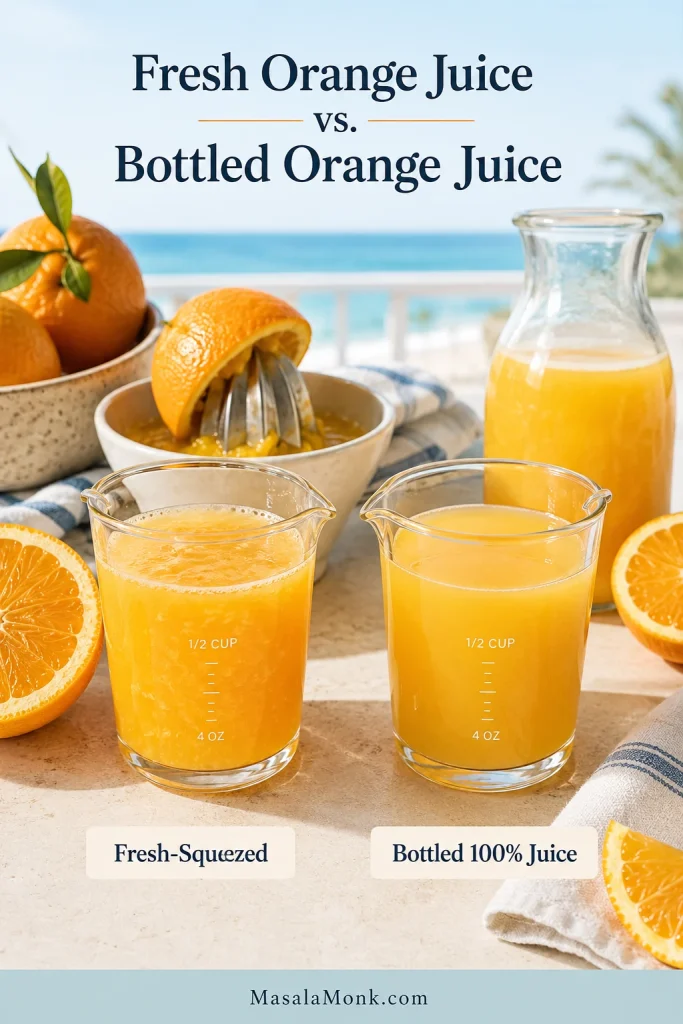
Fresh orange juice gives the drink its best aroma. You smell the orange before the first sip, and the cocktail tastes juicy instead of flat. Bottled juice can make a decent quick drink, but it will not give the same just-cut orange aroma.

Choose chilled 100% orange juice with no added sugar if you use bottled juice. Club soda is usually the better topper there, because it keeps the glass from turning too sweet.

Fresh-squeezed orange juice and bottled 100% orange juice compared in measuring glasses with oranges, a citrus press, and a juice bottle nearby.
Fresh juice is best for one or two glasses because it brings brighter aroma and texture. For a larger pitcher, bottled 100% orange juice can help, but keep it well chilled.

When making one or two drinks, squeeze the oranges. In a large party pitcher, bottled juice can be practical, but just-squeezed citrus still gives the best flavor.

Beach-Bar Style Orange Crush

For an Ocean City-style Orange Crush, use orange vodka, fresh-squeezed orange juice, triple sec, lemon-lime soda, and a full glass of crushed ice. Build it fast, keep it cold, and serve it while the fizz is still lively.

Orange Crush cocktail on a rustic coastal table with crushed ice, orange garnish, fries, seafood snacks, blue napkin, and a beach-bar background.
A Mid-Atlantic-style Orange Crush should feel cold, casual, and fast-built. Look for fresh orange aroma, a full glass of crushed ice, and just enough fizz to keep it refreshing.

Beach-bar style is about cues, not fussy technique: orange scent first, crushed ice to the top, fizz added last, and enough soda to lift the drink without turning it into candy.

  • Orange smell first: fresh juice is doing its job.
  • Crushed ice to the top: the texture should feel cold, casual, and fast-melting.
  • Bubbles added last: the drink stays lively.
  • Orange vodka optional: use it for stronger coastal-bar flavor.
  • Not too much soda: the glass should still taste like orange, not candy.

The Easy Parts Formula

Once that ratio makes sense, you can scale the drink without doing bar math every time.

2 parts vodka + 1 part orange liqueur + 3–4 parts fresh orange juice + 2–3 parts soda.

For one drink, 1 part can be 1 oz. When batching, 1 part can be 1 cup. Use a smaller “part” for one drink and a larger “part” for a pitcher, but keep the soda separate until serving so the drink stays fizzy.

Pitcher Recipe

A pitcher should make hosting easier, not give everyone a flat drink. Mix the vodka, orange liqueur, and orange juice ahead. The pitcher should sit cold in the fridge; the fizz should happen in the glass.

Orange Crush Pitcher Amounts

ServingsVodkaTriple secFresh orange juiceSoda to add at serving
12 oz / 60 ml1 oz / 30 ml3–4 oz / 90–120 ml2–3 oz / 60–90 ml
48 oz / 240 ml4 oz / 120 ml12–16 oz / 360–480 ml8–12 oz / 240–360 ml
612 oz / 360 ml6 oz / 180 ml18–24 oz / 540–720 ml12–18 oz / 360–540 ml
816 oz / 480 ml8 oz / 240 ml24–32 oz / 720–960 ml16–24 oz / 480–720 ml

Keep the Pitcher Fizzy

Best party setup: Chill the orange-vodka base in a pitcher, then set out crushed ice, orange wedges, lemon-lime soda, and club soda so guests can finish each glass sweeter or drier.

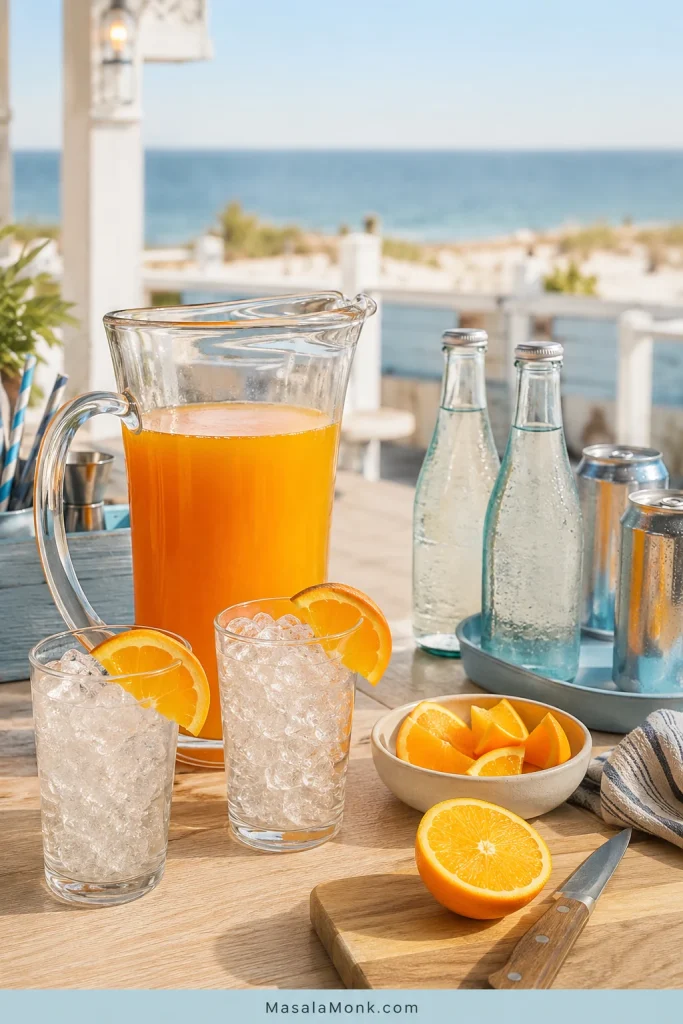
Orange Crush pitcher setup with orange base in a clear pitcher, crushed-ice glasses, orange wedges, a jigger, and separate bottles of soda.
A pitcher works best when only the orange-vodka base is made ahead. Then the soda and crushed ice stay fresh for each glass instead of fading in the pitcher.

Keep the base cold and let guests finish their own glasses; that way every pour still has fresh fizz instead of tasting like it waited around. For bigger party math, this jungle juice recipe has 1, 2, and 5 gallon guidance, including the same useful rule: add fizzy mixers near serving time.

Just-squeezed juice is still best for pitchers. Bottled juice can help when you need volume, but choose a good chilled 100% orange juice and use club soda or a lighter hand with the lemon-lime soda.

For a lighter pitcher, use the lower end of the vodka range or let guests top each glass with extra club soda. Serve pitcher drinks responsibly, especially because orange juice and soda can make the cocktail taste lighter than it is.

Variations: Frozen, Lighter, Shot, and Mocktail

Once the classic glass tastes right, the variations are just small turns of the same dial: colder, lighter, stronger, or alcohol-free.

Four Orange Crush variations labeled Frozen, Lighter, Shot, and Mocktail, served in different glasses with orange garnishes on a tabletop.
Once the classic version tastes right, the same fresh-orange base can become frozen, lighter, stronger, or alcohol-free. Still, each version should keep the citrus flavor in front.

Frozen Orange Crush

Blend 4 oz / 120 ml fresh orange juice, 2 oz / 60 ml vodka, 1 oz / 30 ml triple sec, and 1 to 1¼ cups crushed ice, about 120–150 g, until slushy. If your oranges are tart, add ½ oz / 15 ml simple syrup. Pour into a cold glass and finish with a small splash of soda.

Add soda after blending, not before. Too much soda in the blender loses its fizz and can foam up.

If you like frozen cocktails but hate icy, watery texture, this frozen strawberry daiquiri recipe goes deeper into blender balance, fruit body, and slushy texture.

Lighter Orange Crush

For a lighter, skinny-style drink, use plain vodka, reduce triple sec to ½ oz / 15 ml if needed, and top with club soda or orange sparkling water instead of lemon-lime soda. Keep the orange juice at 3–4 oz / 90–120 ml so the drink still tastes full.

Orange Crush Shot

Shake 1 oz vodka or orange vodka, ¼ oz triple sec, and ¾ oz fresh orange juice with ice. Strain into one large shot glass, or split between two smaller shot glasses. Add only a tiny splash of soda if you want fizz.

This keeps the shot in the same fresh-orange family as the cocktail instead of turning it into a candy-style party drink.

Orange Crush Mocktail

Combine 4 oz / 120 ml fresh orange juice, ½ oz / 15 ml lemon or lime juice, crushed ice, and 2–3 oz / 60–90 ml lemon-lime soda, club soda, or orange sparkling water. For a sweeter mocktail, add a little orange simple syrup. To keep it cleaner, use club soda and a little orange zest.

The mocktail should still taste like fresh orange with bubbles, not just a glass of orange soda.

For more light, refreshing drinks that do not feel heavy, this guide to coconut water cocktails has easy ideas that sit closer to the clean, cooling side of the drinks table.

Maryland, Ocean City, and Delaware

The Orange Crush belongs to Mid-Atlantic beach culture: Ocean City bars, crushed ice, fresh-squeezed juice, seafood tables, and a friendly Maryland-Delaware argument over who gets to claim it.

It has beach-bar DNA. This is not meant to be slow or precious. The drink is a fast-built glass: fresh orange squeezed in, vodka or orange vodka, orange liqueur, crushed ice, and lemon-lime fizz.

That regional pride is part of why the drink has stayed so specific. Fresh-squeezed orange, orange liqueur, cold ice, and a quick build are the identity.

Maryland’s official state-symbol page lists the Original Maryland Orange Crush as its state cocktail, and Delaware’s General Assembly page records HB 444 designating the Orange Crush as Delaware’s state cocktail. You can read those official notes from the Maryland State Archives and the Delaware General Assembly.

Orange Crush vs Screwdriver vs Mimosa

These three drinks all use orange juice, but they serve different moments.

DrinkWhat it isMain difference
Orange CrushVodka, orange liqueur, fresh orange juice, soda, crushed iceSparkling, fresh, summer-bar style
ScrewdriverVodka and orange juiceSimpler, no fizz, no orange liqueur
MimosaSparkling wine and orange juiceBrunch drink, lighter, wine-based

A Screwdriver is the simplest vodka-orange drink. Make a Mimosa when you want a wine-based brunch drink. Choose an Orange Crush when you want fresh orange juice, vodka, orange liqueur, fizz, and crushed ice in one bright summer glass.

Fixes for a Drink That’s Too Sweet, Flat, or Watery

If the drink misses, it usually misses in one of a few predictable ways: too sweet, too flat, too watery, or not orange enough. Fix the glass before you start over.

Orange Crush troubleshooting chart listing problems such as too sweet, too flat, too watery, not orange enough, and too boozy, with simple fixes.
When an Orange Crush tastes off, adjust the cause instead of adding more of everything. Sweetness, flatness, watery texture, weak orange flavor, and harsh booze each need a different fix.
ProblemWhat happenedFix
Too sweetToo much lemon-lime soda or orange liqueurUse club soda and reduce triple sec to ½ oz / 15 ml
Too weakToo much soda or juiceUse less soda or add ½ oz / 15 ml more vodka
Too boozyAlcohol is louder than the orangeAdd more fresh orange juice and a little more soda
Too flatSoda was added early or stirred too hardAdd soda last and stir gently
Too wateryThe drink sat too long over crushed iceServe immediately and do not make finished drinks ahead
Not orange enoughMild oranges or plain vodkaUse orange vodka, better oranges, or Cointreau
Too bitterPith got into the juiceJuice gently and avoid crushing the white pith

The fastest rescue: add more orange juice if it tastes too boozy, club soda if it tastes too sweet, or a small splash of orange liqueur if it tastes thin.

Still tuning the glass? check the topper · check the ratio · recipe card

What to Serve With It

Think salty, spicy, grilled, and creamy. Orange Crush cocktails have enough sweetness to soften heat, enough citrus to cut through richness, and enough bubbles to keep snack food from feeling heavy. For a full summer-style plate, shrimp tacos with slaw and creamy cilantro-lime sauce are an easy pairing because the citrusy drink cuts through the creamy sauce and warm spices.

Orange Crush cocktail served on a bright coastal table with shrimp tacos, tortilla chips, mango salsa, guacamole, oranges, and a pitcher behind it.
This cocktail works well with salty, spicy, grilled, and creamy foods because citrus and bubbles cut through richness. Pair it with shrimp tacos, chips, salsa, guacamole, or seafood snacks.
  • Grilled shrimp, fish, or chicken
  • Tacos, nachos, or quesadillas
  • Crab cakes or seafood snacks
  • Salty chips, pretzels, and party mixes
  • Spicy appetizers
  • Fruit, cheese, and brunch boards
  • Guacamole or creamy dips for a rich contrast

If you are keeping the food snackier, a bowl of fresh mango salsa works with chips, tacos, fish, shrimp, and grilled chicken. For a sharper citrus cocktail at the same table, the Lemon Drop Martini brings more tartness, while the Orange Crush stays tall, juicy, and easygoing.

Make-Ahead Tips for Parties

An Orange Crush is best made right before serving, but you can prepare the parts ahead.

Make-ahead Orange Crush party setup with orange-vodka base in a pitcher, orange wedges, crushed ice bowl, empty glasses, and soda bottles kept separate.
Party prep is easier when the parts are ready but unfinished. Keep the base, ice, soda, glasses, and garnish separate, then build each Orange Crush to order.
  • Fresh orange juice: Juice a few hours ahead and keep chilled.
  • Pitcher base: Mix vodka, triple sec, and orange juice ahead, then refrigerate.
  • Soda: Add only when serving.
  • Crushed ice: Add to glasses, not the pitcher.
  • Finished cocktail: Do not store it. The soda goes flat and the ice waters it down.

If serving a group, keep the chilled base in a pitcher and let guests top their own glasses. That keeps every drink cold, sparkling, and adjustable.

FAQs

What alcohol is in an Orange Crush?

An Orange Crush usually contains vodka or orange vodka plus triple sec or another orange liqueur. It also includes fresh orange juice, soda, and crushed ice.

Is an Orange Crush the same as a Screwdriver?

No. A Screwdriver is vodka and orange juice. An Orange Crush adds orange liqueur, soda, and crushed ice, which makes it more sparkling and layered.

Is an Orange Crush made with Orange Crush soda?

The classic cocktail is usually made with fresh orange juice, vodka or orange vodka, orange liqueur, and lemon-lime soda or club soda. Orange Crush soda can make a sweeter twist, but it tastes more like candy orange and less like the fresh beach drink.

Fresh orange juice or bottled orange juice — which is better?

For one or two drinks, fresh-squeezed juice is best because you can taste the difference: brighter aroma, cleaner citrus, and less boxed sweetness. Bottled 100% orange juice can work for speed or pitchers, especially if it is well chilled.

Can you make it with regular vodka?

Yes. Regular vodka works well, especially with fresh orange juice. Orange vodka gives a stronger beach-bar orange flavor, but it is not required.

Do you need triple sec?

Triple sec is strongly recommended because it gives the drink orange depth, not just sweetness. Cointreau makes the flavor cleaner, while Grand Marnier makes it richer.

Sprite or club soda — which should you use?

Lemon-lime soda such as Sprite or 7UP gives the classic sweet finish. Club soda makes the drink drier, cleaner, and less sugary. Orange sparkling water sits between the two.

How do you make an Orange Crush less sweet?

Use club soda or orange sparkling water instead of lemon-lime soda, and reduce the triple sec to ½ oz / 15 ml. Keep enough fresh orange juice so the drink still tastes full.

How strong is an Orange Crush?

With 2 oz vodka and 1 oz orange liqueur, an Orange Crush is a real cocktail, not a low-alcohol spritz. The fresh juice and bubbles make it easy to sip, so use 1½ oz vodka or extra club soda if you want a lighter glass.

How many oranges do you need for one drink?

One juicy orange may be enough, but plan on 1–2 oranges per drink so you are not short. Measure the juice and aim for 3–4 oz / 90–120 ml per cocktail.

What makes it a Maryland or Ocean City Orange Crush?

The Ocean City-style identity comes from fresh-squeezed orange juice, vodka or orange vodka, triple sec, lemon-lime soda, and crushed ice. Maryland beach bars helped make it famous, and Delaware beach towns keep the same drink close to their own summer culture.

Is this the same as Orange Crush soda cake?

No. This recipe is for the fresh orange vodka cocktail. Orange Crush soda cake is a separate dessert usually made with orange soda and cake mix or cake batter.

Recipe card · Back to top

Final Sip

Make the first glass classic. Use fresh orange juice, vodka, triple sec, lemon-lime soda, and enough crushed ice to make the glass properly cold. Then taste and adjust from there.

A sweeter Orange Crush, a drier one, a pitcher, frozen drink, or mocktail all come from the same simple rule: let the orange lead, keep the bubbles lively, and serve it before the ice wins.

Try the classic glass first, then tell us which version became yours: sweeter, drier, stronger, or alcohol-free.

Posted on Leave a comment

Screwdriver Recipe: Vodka & Orange Juice Cocktail

Tall highball glass of Screwdriver cocktail with vodka, orange juice, clear ice, orange wheel garnish, jigger, and bar spoon on a light counter.

A screwdriver is only vodka and orange juice, which is exactly why the ratio matters. Too little juice and the vodka takes over. Too much juice, and it stops feeling like a cocktail at all. This screwdriver recipe keeps that simple balance clear: cold juice, enough ice, and the right pour, so the same two ingredients taste fresh, smooth, and properly mixed.

This screwdriver recipe gives you the classic vodka and orange juice cocktail first, then shows you how to adjust it for a stronger glass, a lighter brunch pour, or a pitcher for guests. You do not need syrup, liqueur, or a full home bar. You just need clean vodka, chilled orange juice, plenty of ice, and a ratio that fits the moment.

It is the kind of drink people make when they want something familiar, cold, and easy without turning the kitchen into a bar.

Vodka and orange juice is called a Screwdriver. Start with 2 oz / 60 ml vodka and 5 oz / 150 ml orange juice. The finished glass should smell like orange first, feel properly cold, and leave the vodka in the background rather than in charge.

Quick Answer: What Is Vodka and Orange Juice Called?

Vodka and orange juice is called a Screwdriver. The simple version is vodka and orange juice over ice, usually served in a highball or Collins glass with an optional orange slice, wedge, or wheel.

The easiest screwdriver ratio to start with is 1 part vodka to 2–3 parts orange juice. For one balanced drink, use 2 oz / 60 ml vodka and 5 oz / 150 ml orange juice. Build it directly in the glass and give it a brief stir.

Vodka and orange juice being poured into an ice-filled highball glass to make a Screwdriver cocktail.
Vodka and orange juice becomes a Screwdriver when it is poured over ice, which is why the drink works best as a simple cold highball.

Make One Now

Fill a tall glass with ice. Add 2 oz / 60 ml vodka and 5 oz / 150 ml chilled orange juice. Stir just until combined, garnish with orange if you like, and serve right away.

Three-step Screwdriver recipe visual showing ice in a glass, vodka being measured, and orange juice being poured.
When you want one drink quickly, 2 oz vodka and 5 oz chilled orange juice gives you a reliable starting point before you fine-tune the strength.

Want it stronger or lighter? Use the ratio guide before your next pour.

Screwdriver Recipe

This is the balanced version: cold vodka, chilled orange juice, plenty of ice, and a simple orange garnish.

Prep time5 minutes
Cook time0 minutes
Total time5 minutes
Servings1
Yield1 cocktail
MethodBuilt in glass

Glass: highball or Collins glass
Ratio: 2 oz / 60 ml vodka to 5 oz / 150 ml orange juice
Method: build over ice and stir briefly

Saveable Screwdriver recipe card beside a finished orange cocktail with vodka, orange juice, ice, and brief stirring instructions.
Think of this as the base pour: once it tastes right in one glass, it becomes much easier to scale, lighten, or serve for guests.

Ingredients

  • 2 oz / 60 ml vodka
  • 5 oz / 150 ml orange juice, chilled
  • Ice, enough to fill the glass
  • Orange wedge, wheel, or slice, optional

Instructions

  1. Fill a highball or Collins glass with ice.
  2. Pour in the vodka.
  3. Add the chilled orange juice.
  4. Stir for 5–10 seconds, just enough to chill and combine. Do not churn it aggressively.
  5. Garnish with orange and serve immediately.

Notes

  • For a stronger screwdriver, use 4 oz / 120 ml orange juice.
  • For a lighter screwdriver, use 6 oz / 180 ml orange juice.
  • If the first sip tastes sharp, add another ounce or two of orange juice.
  • Fresh orange juice tastes brightest, but chilled 100% bottled orange juice works well when you need speed or consistency.
  • For pitchers, mix vodka and orange juice ahead, but add ice to individual glasses. Making more than one? Use the pitcher amounts.

If your glass already tastes right, you can stop there. But if the first sip is too sharp, too flat, too sweet, or too much like plain orange juice, the rest of this guide shows you how to adjust the pour, choose better juice, batch it for guests, or turn it into a variation.

Keep Reading For

Serve It Well

From here, the best version depends on the glass you want: stronger, lighter, fresher, easier to batch, or more playful.

What Is a Screwdriver Drink?

A screwdriver works because orange juice does most of the flavor work while vodka gives the drink structure. That is why temperature, ice, and ratio matter more than complicated technique.

In the UK, many people simply call the same drink “vodka and orange.”

That simplicity is the charm. A good one should taste orange first, with the vodka supporting it. A weak one tastes watery; a badly balanced one tastes like orange juice with a rough spirit edge. The ratio fixes both problems.

If you like simple vodka cocktails, this sits in the same easy-mixing world as a crisp Moscow Mule or a citrusy vodka with lemon. The screwdriver is even simpler because the orange juice does most of the work.

Screwdriver Ingredients

You only need a few ingredients, so keep them cold and choose them well. This is not a drink that rewards overthinking, but it does reward balance.

Screwdriver ingredients arranged on a light counter, including vodka, orange juice, oranges, ice, highball glass, jigger, and bar spoon.
Because a Screwdriver has only a few ingredients, vodka, orange juice, and ice each matter more than they would in a more complicated cocktail.

Vodka

Because orange juice is the only real mixer here, choose a vodka that tastes clean rather than one you need to hide. You do not need an expensive bottle, but avoid anything very harsh.

Plain vodka keeps the drink simple. Citrus vodka can push the orange flavor forward, while vanilla or whipped cream vodka turns the drink toward orange cream.

Orange Juice

Fresh orange juice gives you that lifted orange smell before the first sip; bottled juice gives you consistency and speed. Chilled 100% bottled orange juice is especially useful for pitchers. Pulp or no pulp is personal: pulp feels fuller, while no-pulp juice makes a smoother glass. Choosing juice for a bigger batch? See the fresh vs bottled guide.

Orange drink can work in a pinch, but it pushes the cocktail toward sweet punch instead of fresh orange. For the cleanest flavor, use orange juice that tastes good cold on its own.

Ice and Garnish

Do not be shy with the ice. A tall glass filled with ice keeps the drink colder for longer and helps avoid that thin, warm-orange-juice taste. An orange wedge, wheel, slice, or peel twist is optional, but it adds aroma and makes the glass feel finished.

Side-by-side comparison of an under-iced Screwdriver and a properly iced Screwdriver with clear ice and condensation.
Enough ice keeps a Screwdriver colder and cleaner; otherwise, the orange juice warms quickly and the drink starts to taste thin.

An 8–12 oz highball or Collins glass works best for the balanced pour. If your glass is smaller, use the stronger 2 oz vodka + 4 oz orange juice version or pour a slightly shorter drink.

Glass size comparison for a Screwdriver cocktail showing a small glass, an 8 to 12 ounce highball glass, and a larger glass.
An 8–12 oz highball or Collins glass leaves room for the vodka-orange mix, ice, and garnish without making the drink feel cramped.

What counts as the simple drink? Vodka, orange juice, ice, and optional orange garnish. Add-ins like Sprite, club soda, cranberry juice, pineapple juice, peach schnapps, Galliano, triple sec, grenadine, or bitters turn it into a twist.

Best Screwdriver Ratio

This is where screwdrivers usually go wrong: people pour by instinct, then wonder why the drink tastes either sharp or flat. The ratio decides whether the glass feels like a cocktail or just cold orange juice with a little vodka hiding in it.

Classic Screwdriver recipes vary because the drink can be built as a stronger cocktail or a lighter brunch highball. A 1:2 pour tastes more cocktail-forward; 1:3 or 1:4 tastes lighter and more orange-led. This recipe uses 2 oz vodka to 5 oz orange juice because it sits in the middle: clearly a cocktail, but still fresh, cold, and orange-first.

Three highball glasses labeled strong, balanced, and light to show different vodka-to-orange-juice ratios for a Screwdriver.
The best Screwdriver ratio depends on the glass you want: stronger and cocktail-forward, balanced and orange-led, or lighter for brunch.

Choose your pour: Use 2 oz / 60 ml vodka + 4 oz / 120 ml orange juice for a stronger cocktail, 2 oz / 60 ml + 5 oz / 150 ml for the balanced house version, 1.5 oz / 45 ml + 5–6 oz / 150–180 ml for a lighter brunch glass, or mix the pitcher ahead and pour over ice in individual glasses.

Screwdriver Ratio Chart

A useful starting range is 1 part vodka to 2–3 parts orange juice; go closer to 1:4 when you want a very light, mostly-orange glass. Use 1:2 for a stronger pour, 1:2.5 for the most balanced glass, and 1:3 for a lighter drink. The easiest formula to remember is 2 oz / 60 ml vodka + 5 oz / 150 ml orange juice.

StyleVodkaOrange juiceRatioBest for
Strong2 oz / 60 ml4 oz / 120 ml1:2A stronger glass
Balanced2 oz / 60 ml5 oz / 150 ml1:2.5Start here
Light brunch1.5 oz / 45 ml5–6 oz / 150–180 mlAbout 1:3 to 1:4A lighter glass
Metric classic50 ml100 ml1:2A simple measured version
Very light1 oz / 30 ml4 oz / 120 ml1:4Mostly orange juice

How strong is it? Even when it tastes orange-forward, a balanced Screwdriver with 2 oz vodka is still a full cocktail. Use the lighter version for brunch, slow sipping, or a longer glass.

Treat the table as a starting point, not a rule. Orange juice changes from carton to carton and orange to orange. Very sweet juice may need a squeeze of lemon or lime. Sharper vodka may need more juice and ice. The right ratio is the one that tastes smooth in your glass. For a group, use the pitcher table instead of multiplying by eye.

Screwdriver Measurements in ml

For metric measurements, start with the balanced version unless you already know you want a stronger or lighter glass.

Metric Screwdriver measurement setup with a jigger, measuring cup, orange juice, and a highball glass labeled 60 ml vodka and 150 ml orange juice.
For metric readers, 60 ml vodka and 150 ml orange juice gives the same balanced pour as the 2 oz / 5 oz version.
VersionVodkaOrange juice
Balanced60 ml150 ml
Stronger60 ml120 ml
Lighter45 ml150–180 ml
Classic 1:2 formula50 ml100 ml

Method Details

The standard order is ice first, vodka second, orange juice third, then a brief stir. Shaking is fine when you want it extra cold and slightly frothy, but the glass-built version is faster and cleaner.

Bar spoon stirring an orange Screwdriver cocktail in a tall highball glass with a cocktail shaker blurred in the background.
Stirring is the classic move because it keeps the Screwdriver smooth, while shaking is better reserved for extra chill and a slightly frothier texture.
  1. Fill the glass with ice. Use a highball or Collins glass if you have one.
  2. Add the vodka. Pour in 2 oz / 60 ml vodka for the balanced version.
  3. Add orange juice. Pour in 5 oz / 150 ml chilled orange juice.
  4. Stir briefly. Stir for 5–10 seconds, just enough to chill and combine. Do not churn it aggressively.
  5. Garnish and serve. Add an orange wedge, wheel, slice, or peel twist if you like.
Step-by-step Screwdriver cocktail guide showing ice, vodka, orange juice, and stirring in a highball glass.
The method stays simple for a reason: building in the glass keeps the drink fast, cold, and easy to adjust after the first sip.

You are not trying to whip or aerate the drink; you are just making the first sip taste even from top to bottom.

After stirring, the drink should smell like orange, feel cold against the glass, and taste citrusy first with the spirit supporting the orange, not dominating it. If the drink tastes too sharp, add more orange juice. For a flat glass, add a tiny squeeze of lemon or lime. If it tastes watery, use more ice next time and serve it right after mixing.

Hand holding a cold highball glass of Screwdriver cocktail with ice, orange garnish, and taste target text.
After mixing, the drink should smell like orange first, feel properly cold, and let the vodka sit in the background rather than take over.

If the first sip still tastes off, jump to the fixes instead of starting over.

Fresh Orange Juice vs Bottled Orange Juice

Fresh juice is worth it when you are making one or two drinks and want that first sip to smell like real orange, not just cold sweetness. But for a pitcher, bottled 100% orange juice is usually the smarter move: consistent, already strained, and easy to chill.

Fresh oranges with a juicer compared with bottled orange juice and a pitcher setup for making Screwdriver cocktails.
Fresh orange juice gives the brightest aroma for one or two cocktails; meanwhile, bottled 100% orange juice keeps pitcher prep easier and more consistent.
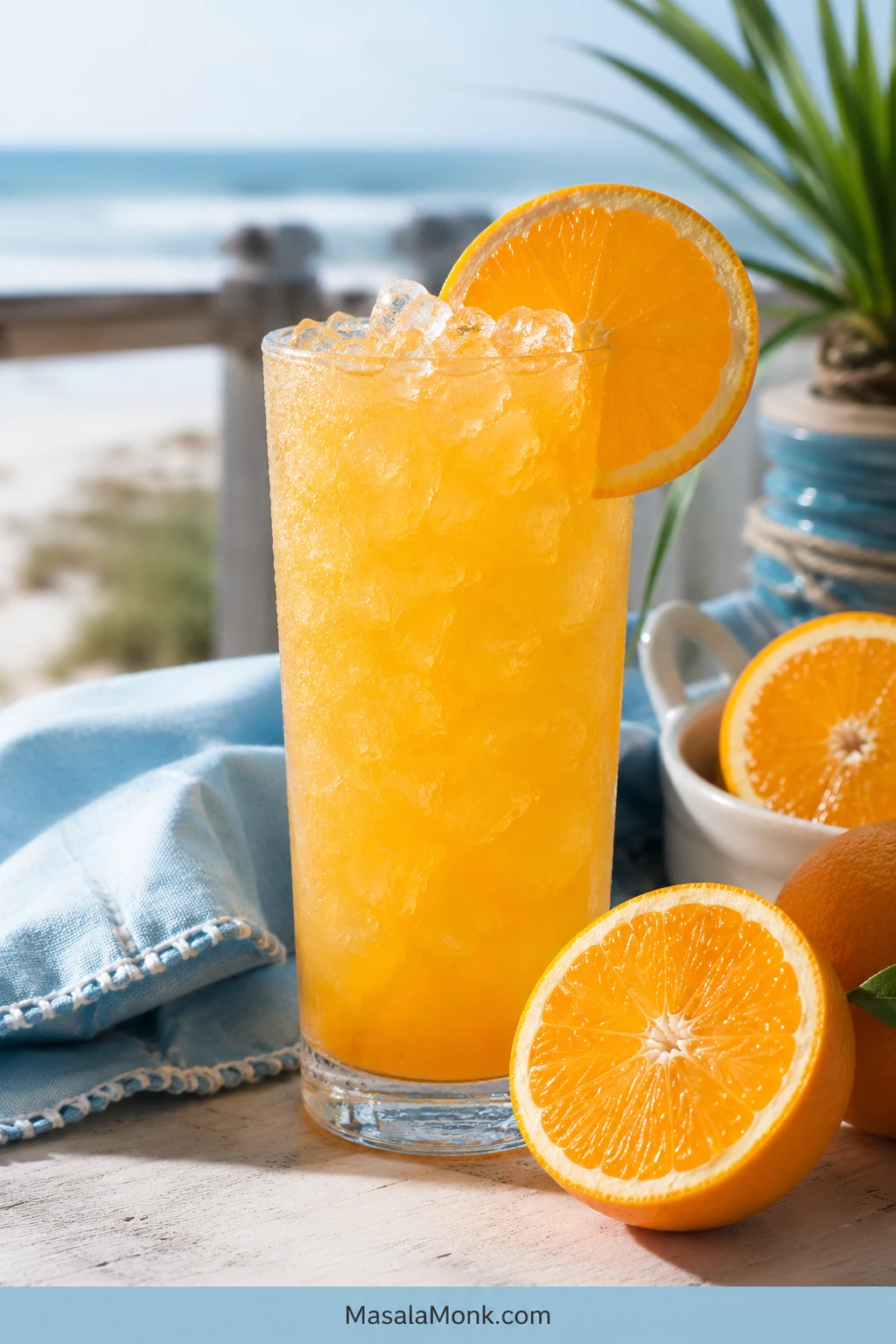
One balanced glass needs about 5 oz / 150 ml orange juice, which usually takes 2–3 medium oranges depending on size and juiciness.

Two to three oranges beside a measuring cup filled with 5 ounces or 150 milliliters of orange juice for one Screwdriver.
One balanced Screwdriver needs about 5 oz / 150 ml orange juice, so two to three medium oranges are usually enough for a single glass.

If you are already using orange juice for brunch, the same bottle can work for a simple mimosa beside the screwdriver pitcher. Whatever you use, keep it well chilled. Warm orange juice makes the whole drink feel dull, even when the ratio is right.

  • Freshly squeezed orange juice: brightest aroma and freshest finish for one or two drinks.
  • Chilled 100% bottled orange juice: practical, consistent, and easy to scale for pitchers.
  • No-pulp orange juice: smoother and cleaner in the glass.
  • Pulp orange juice: fuller texture and a more natural orange feel.
  • Blood orange juice: deeper color and a slightly tart twist.
  • Warm or overly sweet orange drink: avoid it when you want a cleaner, fresher screwdriver.

Flat bottled juice wakes up with a tiny squeeze of lemon or lime. Tart juice works better with the lighter 1:3 ratio or a little more orange juice. Very sweet juice is best kept simple, without grenadine or lemon-lime soda.

Best Vodka for a Screwdriver

You do not need a luxury vodka here, but you do need one that smells clean. If the vodka smells harsh before it reaches the glass, the orange juice will soften it, not erase it. Use a bottle you would not feel the need to bury.

Plain vodka keeps the drink classic. Citrus vodka makes the orange flavor more direct. Vanilla or whipped cream vodka turns it toward an orange-cream flavor. Chill the bottle if you can, then let the orange juice do most of the work.

Screwdriver Pitcher Recipe

To make a pitcher, mix the vodka and orange juice ahead, but add ice to the glasses. That one choice keeps the batch fresher for longer and prevents a watered-down jug after ten minutes.

Clear pitcher of vodka and orange juice being poured into ice-filled highball glasses with orange slices nearby.
A Screwdriver pitcher works best when the batch is mixed ahead and poured over fresh ice, so the drink stays bright instead of watered down.

That is the version you want when people are arriving at different times, helping themselves, or choosing between a stronger and lighter pour. Keep a little extra orange juice nearby so guests can lighten their glass without remaking the batch.

For exact batches, use these pitcher amounts as your starting point instead of multiplying by eye.

Three glass pitchers of orange Screwdriver mixture with text showing pitcher amounts for 4, 8, and 12 drinks.
These pitcher amounts scale the vodka-orange mix for 4, 8, or 12 drinks, so batching for guests stays consistent from the first pour to the last.
Servings / styleVodkaOrange juiceUse when
4 drinks, balanced1 cup / 240 ml2½ cups / 600 mlYou want a small pitcher
8 drinks, stronger2 cups / 480 ml4 cups / 960 mlYou want a bolder pitcher
8 drinks, balanced2 cups / 480 ml5 cups / 1.2 LStart here for a group
8 drinks, lighter1½ cups / 360 ml5–6 cups / 1.2–1.4 LYou want a lighter brunch pitcher
12 drinks, balanced3 cups / 720 ml7½ cups / 1.8 LYou are serving more guests

These cup amounts use U.S. cups; the ml measurements are included for precision.

How to Make a Screwdriver Pitcher

  1. Chill the vodka and orange juice first if possible.
  2. Stir the vodka and orange juice together in a pitcher.
  3. Add a few orange slices to the pitcher when serving soon.
  4. Keep the pitcher refrigerated until ready to serve.
  5. Pour into ice-filled glasses and garnish each glass separately.

Pitcher tip: Do not add ice directly to the pitcher unless you are serving the entire batch immediately. Instead, keep the pitcher cold and add ice to individual glasses.

For brunch, a screwdriver pitcher works well beside Bloody Marys when you want one savory option. If the table needs a fruitier batch drink too, add something like jungle juice and let the screwdriver stay the clean orange option.

Brunch table with a Screwdriver pitcher, ice-filled glasses, orange slices, snacks, and a water glass.
A brunch pitcher works well because guests can refill their own glasses while the main batch stays cold and the ice melts only where it should.

Screwdriver Variations

Once you know the base drink, variations are easy. But do not turn it into mystery punch. Instead, add one change at a time so the drink still tastes like orange first.

Think about what you want from the glass before you add anything. Bubbles make it lighter. Pineapple makes it tropical. Cranberry makes it tart. Galliano or peach schnapps moves it toward a known cocktail variation. Colorful add-ins are best when you are intentionally making something playful. Not sure what a twist becomes? Check the drink-name guide.

Keep the first batch simple, then let the second glass become the playful one. That way, you still know what made the drink better instead of turning every add-in into one loud glass.

Six Screwdriver cocktail variations in tall glasses, including classic, fizzy, tropical, cranberry, blood orange, and orange-cream versions.
Once the classic glass tastes right, variations become easier to control, whether you want fizz, cranberry tartness, tropical fruit, or a creamier finish.
What you wantAdd thisHow to use it
Fizzy and lighterClub soda, Sprite, 7UP, or sparkling waterAdd after stirring the vodka and orange juice.
TropicalPineapple juiceReplace part of the orange juice with pineapple juice.
Tart and colorfulCranberry juiceUse about 3 oz orange juice and 2 oz cranberry juice with 2 oz vodka.
Sunrise-style colorGrenadineAdd a small splash for sweetness and red-orange color.
Harvey Wallbanger-styleGallianoAdd a small float to the finished drink.
Fuzzy / peachyPeach schnappsAdd a small pour and keep the orange juice cold.
FrozenIce and optional frozen orangeBlend vodka, orange juice, and ice until slushy.
Blood orangeBlood orange juiceUse it instead of regular orange juice or split the two.
Orange-creamVanilla or whipped cream vodkaUse in place of plain vodka for a dessert-like glass.
No alcoholOrange juice, soda water, citrus, and garnishNot a true screwdriver, but still a bright orange drink.

Fizzy, Pineapple, and Cranberry Versions

For fizz, make the drink first, then top with Sprite, 7UP, club soda, or sparkling water. Sprite and 7UP make it sweeter; club soda keeps it lighter and drier.

For a pineapple version, use 2 oz / 60 ml vodka, 3 oz / 90 ml orange juice, and 2 oz / 60 ml pineapple juice. If pineapple is the direction you like, a punch for a pitcher with pineapple juice gives you a fruitier batch option for guests.

For a cranberry version, use 2 oz / 60 ml vodka, 3 oz / 90 ml orange juice, and 2 oz / 60 ml cranberry juice. This moves the drink close to a Madras. If cranberry is your favorite part, a cranberry Moscow Mule gives you the same tart-vodka direction with ginger beer instead of orange juice.

Cranberry juice being poured into an orange Screwdriver cocktail, creating a red-orange swirl in a tall glass with ice.
Cranberry juice adds tartness and color to vodka and orange juice, moving the drink close to a Madras-style cocktail without losing the citrus base.

Frozen, Creamy, and Blood Orange Versions

For a frozen glass, blend vodka, orange juice, and ice until slushy. To make the orange flavor stronger, add frozen orange segments or a little frozen orange juice concentrate, then serve it immediately so it stays thick and cold.

For an orange-cream direction, use vanilla vodka or whipped cream vodka in place of plain vodka. Blood orange juice gives deeper color and a slightly tart edge, whether you use it alone or split it with regular orange juice.

Colorful and Non-Alcoholic Versions

Colorful versions are playful rather than standard. Pink can come from cranberry juice, blood orange juice, or grenadine. Blue or green versions usually depend on colored liqueurs or flavored mixers, so treat them as party-style riffs rather than classic Screwdrivers. For a no-alcohol orange drink, use orange juice, soda water, citrus, and a fresh garnish.

Vodka and Orange Juice Drink Names

Orange juice shows up in several familiar cocktails, so the names can blur together. Here is the quick way to keep the nearby drinks straight.

Circular drink-name map showing Screwdriver, Madras, Harvey Wallbanger, Fuzzy Navel, Hairy Navel, Tequila Sunrise, and Mimosa around an orange drink.
Since orange juice appears in several classic drinks, this map helps separate a Screwdriver from Madras, Harvey Wallbanger, Fuzzy Navel, and other close cousins.
If you mix…It is usually called…
Vodka + orange juiceScrewdriver
Vodka + orange juice + cranberry juiceMadras-style drink
Vodka + orange juice + GallianoHarvey Wallbanger
Peach schnapps + orange juiceFuzzy Navel
Vodka + peach schnapps + orange juiceHairy Navel / Fuzzy Screwdriver-style
Tequila + orange juice + grenadineTequila Sunrise
Sparkling wine + orange juiceMimosa

Names can vary by bar, region, and recipe style, but the screwdriver itself stays the straightforward vodka-orange drink.

Common Screwdriver Mistakes and Fixes

Most bad screwdrivers fail in obvious ways: the first sip burns, tastes dull, or feels like watered-down juice. The good news is that most fixes happen right in the glass.

Four-panel Screwdriver troubleshooting guide showing fixes for harsh, flat, watery, and too-sweet drinks.
If a Screwdriver tastes off, fix the cause instead of starting over: more juice for harshness, citrus for flatness, more ice for dilution, or less sweetness.
ProblemWhat to do
Tastes harshAdd more orange juice and stir briefly. Next time, use the 1:3 ratio.
Tastes flatAdd a tiny squeeze of lemon or lime, or use an orange peel twist.
Tastes wateryUse more ice and serve right after mixing.
Too sweetUse less sweet orange juice and skip soda or grenadine.
Too warmChill the vodka and orange juice before mixing.
Pulp settlesStir briefly before serving.
Pitcher is dilutingAdd ice to glasses, not the pitcher.
Garnish tastes bitterAvoid too much white pith on orange peel.

Screwdriver Recipe FAQs

These quick answers cover the questions that usually come up after you know the basic vodka-orange ratio.

What is vodka and orange juice called?

Vodka and orange juice is called a Screwdriver when it is served simply over ice. The name usually refers to the vodka-orange drink, not a bottled ready-to-drink product.

What is the best screwdriver ratio?

For this screwdriver recipe, start with 2 oz vodka and 5 oz orange juice for a balanced glass. Move to 4 oz juice if you want it stronger, 6 oz if you want it lighter, and adjust after one sip because orange juice varies.

What are screwdriver measurements in ml?

Use 60 ml vodka + 150 ml orange juice for the balanced version. Go to 60 ml + 120 ml for stronger, or 45 ml + 150–180 ml for lighter.

How many oranges do I need for one screwdriver?

For one balanced screwdriver, you need about 5 oz / 150 ml orange juice, which usually takes 2–3 medium oranges depending on size and juiciness.

Do you shake or stir a screwdriver?

Stir it in the glass for the easiest version. Shake only if you want it extra cold and slightly frothy.

Can I make a screwdriver ahead of time?

Yes, for a pitcher. Mix the vodka and orange juice the same day, keep it chilled, and add ice only to the glasses.

How do I make a screwdriver pitcher?

For 8 balanced drinks, mix 2 cups / 480 ml vodka with 5 cups / 1.2 L orange juice. Keep the pitcher chilled, then pour into ice-filled glasses. For exact 4, 8, and 12 drink batches, use the pitcher amounts table.

Can I use Sprite in a screwdriver?

Yes, but treat it as a twist. Sprite makes the drink sweeter and fizzy; club soda or sparkling water keeps it lighter and drier. Add bubbles right before serving.

What is a screwdriver with cranberry juice called?

A screwdriver-style drink with cranberry juice often moves toward a Madras, which is made with vodka, orange juice, and cranberry juice. A small splash of cranberry can also simply be treated as a cranberry version.

Is a Harvey Wallbanger the same as a screwdriver?

Think of a Harvey Wallbanger as the screwdriver’s liqueur-finished cousin: vodka, orange juice, and a float of Galliano. It is closely related, but not the same as the plain drink.

Is a Fuzzy Navel the same as a screwdriver?

Not quite. A Fuzzy Navel skips the vodka and uses peach schnapps with orange juice. Add vodka as well, and you move closer to a Hairy Navel or fuzzy screwdriver-style drink.

Is Smirnoff Ice Screwdriver the same as a homemade screwdriver?

Not quite. A homemade screwdriver is freshly mixed in the glass, while ready-to-drink screwdriver-style products may be carbonated, sweetened, flavored, or made with a different alcohol base.

Final Tips for a Better Screwdriver

Use this screwdriver recipe as your starting point, taste once, then adjust. More orange juice makes the drink lighter; less orange juice makes it stronger. Keep everything cold, garnish simply, and add extras only after the vodka and orange juice taste right together.

Two finished Screwdriver cocktails with ice and orange garnish, a pitcher behind them, orange peel, orange slices, and a water glass nearby.
When the ratio is right, a Screwdriver should feel easy to serve and easy to drink: fresh orange aroma, cold glass, and a pour people are happy to come back to.

The goal is not to make the fanciest cocktail in the room. It is to make the simple one people are happy to refill.

Good hosting is simple too: label the pitcher, keep food and water nearby, and offer a non-alcoholic option. For readers who want a reference point, the National Institute on Alcohol Abuse and Alcoholism U.S. standard-drink guide is useful.

Once the ratio is right, the drink should feel almost effortless: cold glass, fresh orange aroma, and a pour that tastes like a cocktail without asking much from you.

Back to top

Posted on 1 Comment

Irish Mule Recipe

Irish mule recipe in a chilled copper mug with ice and lime on a dark background

An Irish mule recipe gives you the cold ginger-and-lime snap of a Moscow mule with the rounder character of Irish whiskey. The classic build is simple: Irish whiskey, fresh lime juice, ginger beer, and ice. Even so, the ratio matters. Too much lime can make the drink feel sharp, while too much ginger beer can soften it and pull it away from the crisp mule profile that makes an Irish mule work.

Start with the balanced classic first. From there, it is easy to make the drink a little softer, a little drier, or a little bolder without losing the bright ginger-and-lime shape that makes an Irish mule feel finished. Below, you’ll find the classic ratio in ounces and milliliters, Irish whiskey and ginger beer guidance, a clear Jameson explanation, a crowd version, troubleshooting tips, and a clean recipe section you can use right away.

Irish Mule Quick Answer

A balanced Irish mule uses 2 ounces Irish whiskey, 1/2 to 3/4 ounce fresh lime juice, and 4 ounces chilled ginger beer over plenty of ice. In metric terms, that is 60 ml Irish whiskey, 15 to 22 ml fresh lime juice, and 120 ml ginger beer. For most readers, this is the most useful starting range because the whiskey still comes through, the lime stays bright, and the ginger beer keeps the finish lively and clearly mule-like.

Start at 1/2 ounce lime if you want a slightly softer first glass. Move up to 3/4 ounce if you want a brighter, sharper version with more citrus snap. That small change matters more than many people expect.

This is one of the easiest Irish whiskey cocktails to balance at home because the structure is simple and the ratio is easy to adjust. If you are comparing it with a Moscow mule, the build stays familiar, but the spirit changes the feel of the drink. Vodka stays neutral, whereas Irish whiskey adds a rounder, warmer note underneath the ginger and lime. As a result, it feels a little softer at the center while still staying bright and refreshing from the first sip to the last.

Irish mule recipe card showing a finished drink in a copper mug with Irish whiskey and ginger beer bottles in the background, plus ingredients, quick method, yield, time, and glassware.
This is the fast-reference version to save or screenshot: use 1/2 oz lime for a softer Irish mule or 3/4 oz for a brighter one, then add the ginger beer last so the drink stays crisp and fizzy.

Jameson is an easy bottle to start with, and although a copper mug is traditional, a highball glass works perfectly well too. In other words, you do not need special barware to make a very good Irish mule at home.

Best First Setup

  • Best first bottle: Jameson
  • Best first mixer: a balanced ginger beer with real ginger bite
  • Best first glass: a copper mug or highball glass
  • Best first garnish: a lime wedge

This setup gives you the clearest classic Irish mule. Jameson keeps the base smooth and easygoing, the ginger beer supplies the bite a mule needs, and the lime wedge finishes the drink without complicating it. Once you know that version, it becomes much easier to decide whether you want more ginger spice, a drier finish, or a slightly softer variation next time.

Why This Irish Mule Recipe Works

This version works because the ratio gives each part enough room to do its job. The Irish whiskey stays present, the lime keeps the drink bright without turning it sharp too quickly, and the ginger beer still finishes with enough bite to taste clearly mule-like. Nothing gets buried, and nothing runs too far ahead.

  • The whiskey stays noticeable: 2 ounces gives the drink real Irish whiskey character.
  • The lime stays adjustable: 1/2 ounce gives you a softer version, while 3/4 ounce gives you a brighter, sharper one.
  • The ginger beer still leads the finish: 4 ounces gives the drink the lift and ginger bite a mule needs.
  • It is easy to adjust: once you taste the classic version, small changes in lime or ginger beer let you fine-tune the cocktail without losing its shape.

If you want the most reliable first glass, use Jameson, a balanced ginger beer, plenty of ice, and fresh lime. That combination gives you a clean baseline before you start pushing the drink softer, drier, or bolder.

Irish Mule Ingredients

The ingredient list is short, so each part has a clear job. Irish whiskey gives it its base, lime adds brightness, ginger beer brings the signature mule bite, and ice keeps everything crisp. Because there are so few moving parts, ingredient quality shows up quickly in the glass. Fresh lime juice and well-chilled ginger beer are worth using here.

Irish mule ingredients guide showing Irish whiskey, ginger beer, fresh lime, ice, and a copper mug for the classic build at a glance.
A classic Irish mule stays simple on purpose: once the whiskey, lime, ginger beer, and ice are right, the drink already feels balanced before you start adjusting the ratio.
  • Irish whiskey: Jameson is a reliable starting choice because it is smooth, approachable, and widely available.
  • Fresh lime juice: freshly squeezed tastes cleaner and brighter than bottled juice.
  • Ginger beer: choose one with enough ginger character to stand up to the whiskey.
  • Ice: fill the mug or glass generously so the drink stays cold and lively.
  • Garnish: a lime wedge or wheel is enough.

Since the build is so simple, this is not the place to overcomplicate things. A good bottle of Irish whiskey, a lime, chilled ginger beer, and enough ice will take you most of the way there. Once those basics are right, the drink already feels finished.

How to Make an Irish Mule

This drink is built directly in the glass, which is part of what makes it so useful. There is no shaker, no straining, and no fussy setup. Start with ice, add the whiskey and lime, then finish with the ginger beer and stir gently. Adding the ginger beer last helps the cocktail stay brighter and keeps more fizz in the glass than pouring everything together and stirring hard.

Step-by-step Irish mule method guide showing five steps: fill with ice, add Irish whiskey and lime, top with ginger beer, stir gently, and garnish and serve.
An Irish mule stays easy as long as you keep the build simple: use plenty of ice, add the ginger beer last, and stir gently so the drink stays bright instead of going flat.
  1. Fill a copper mug or highball glass with ice.
  2. Pour in 2 oz Irish whiskey and 1/2 to 3/4 oz fresh lime juice.
  3. Top with 4 oz chilled ginger beer.
  4. Stir gently just until combined.
  5. Garnish with a lime wedge or wheel and serve immediately.

The gentle stir matters. Overmixing can flatten the drink faster than many people expect, especially if the ginger beer is not very cold to begin with. For that reason, it helps to chill the mixer well before you build the cocktail rather than trying to make up for warm ginger beer with extra stirring later.

Best Ratio for an Irish Mule

The easiest way to adjust an Irish mule is to keep the whiskey steady and change the lime or ginger beer in small steps. In most cases, those two ingredients do more to change the feel of the final glass than the whiskey does. Lime controls the edge. Ginger beer controls the length, sweetness, and overall mule character.

Irish mule ratio guide showing four versions: softer classic, balanced classic, lighter, and stronger, with Irish whiskey, lime juice, and ginger beer measurements plus short tasting notes.
Start with the balanced classic for the clearest Irish mule profile, then adjust the lime and ginger beer in small steps to make the drink softer, lighter, or more whiskey-forward without losing its shape.
StyleIrish whiskeyLime juiceGinger beerHow it drinks
Softer classic2 oz / 60 ml1/2 oz / 15 ml4 oz / 120 mlRounder, easier first glass
Balanced classic2 oz / 60 ml3/4 oz / 22 ml4 oz / 120 mlBright, gingery, and best for most readers
Lighter2 oz / 60 ml1/2 to 3/4 oz / 15 to 22 ml5 oz / 150 mlLonger, colder, easier sipping
Stronger2 oz / 60 ml3/4 oz / 22 ml3 to 3 1/2 oz / 90 to 105 mlBolder whiskey, drier finish

Keep the whiskey at 2 ounces and adjust the other parts in small steps. A little less lime softens the edge. A little less ginger beer makes the drink drier and more whiskey-forward. A small extra splash of ginger beer lightens a strong pour without flattening the whole glass. Small changes work better than big ones here.

Which Irish Whiskey to Use

Jameson is the easiest place to start because it is smooth, approachable, and light enough to work cleanly with lime and ginger beer. It gives the drink a clear Irish whiskey base without making it feel heavy. For most home readers, that is the best first balance.

Guide showing three Irish whiskey styles for an Irish mule: a balanced approachable style for the easiest first bottle, a lighter smoother style for a crisper mule, and a fuller rounder style for more whiskey presence..
Start with a balanced bottle such as Jameson to learn the drink clearly, then move lighter for a crisper mule or fuller for more whiskey presence once you know what you want to change.

After that, choose your bottle based on the direction you want the drink to go. A lighter Irish whiskey keeps the mule crisp and easygoing, while a fuller one brings a rounder finish and a little more whiskey presence underneath the ginger beer. Still, the smartest first move is learning the drink with Jameson or another similarly balanced bottle before chasing a bigger style.

Which Ginger Beer to Use

The ginger beer shapes the finish of the whole drink. A spicier bottle gives the mule more snap and a drier edge, while a softer or sweeter one makes it rounder and easier to sip. If you want a quick refresher on the mixer difference, this guide to ginger ale vs ginger beer is helpful.

Guide showing three ginger beer styles for an Irish mule: drier and spicier for a classic mule feel, balanced for the clearest first bottle, and smoother and rounder for easier sipping.
Start with a balanced ginger beer if you want the clearest first version, then move drier for more bite or rounder for a softer finish depending on how sharply you want the mule to drink.
  • For the most classic mule feel: choose a ginger beer with real ginger bite and a fairly dry finish.
  • For easier sipping: choose one that is smoother and a little rounder.
  • For better whiskey balance: avoid overly sweet ginger beers that cover the base spirit.
  • For the best texture: use it very cold and add it last so the drink keeps its fizz.

If you are unsure where to begin, use a balanced ginger beer rather than the sweetest bottle on the shelf. That gives you the clearest baseline, and from there you can decide whether you want more spice, more softness, or a drier finish next time.

Irish Mule vs Jameson Ginger & Lime vs Irish Buck

Most of the time, Irish mule, Irish whiskey mule, and Jameson mule all point to the same basic idea: Irish whiskey, lime, ginger beer, and ice. In everyday use, the Jameson version is usually just the same drink made with Jameson.

Where the confusion starts is the mixer. A classic mule uses ginger beer, which gives the drink more bite, more snap, and a drier finish. Many Jameson-style serves, however, use ginger ale instead. That creates a softer, sweeter drink with less mule-like bite, which pushes it closer to a whiskey-and-ginger highball.

Online, these names often get blurred together. For this page, an Irish mule means the ginger beer version. A Jameson Ginger & Lime style drink means the ginger ale version. Some sites also use the term Irish Buck for the ginger-ale direction, although naming is not perfectly consistent across the web.

Comparison guide showing the difference between an Irish mule, Jameson Ginger & Lime, and an Irish Buck. The Irish mule uses Irish whiskey, lime, and ginger beer for a drier, spicier mule-style drink. Jameson Ginger & Lime uses ginger ale for a softer, sweeter drink. Irish Buck usually uses Irish whiskey, citrus, and ginger ale, with naming that varies online.
This side-by-side guide clears up the biggest naming confusion around the drink: for this post, an Irish mule means the ginger beer version, while Jameson Ginger & Lime and many Irish Buck builds lean ginger ale and drink softer.

That distinction matters because it helps you choose the version you actually want. Start with the ginger beer version first if your goal is the clearest classic Irish mule. Then, if you want something softer and easier, test the ginger ale route after that. Jameson’s own Ginger & Lime serve is a good example of that gentler direction.
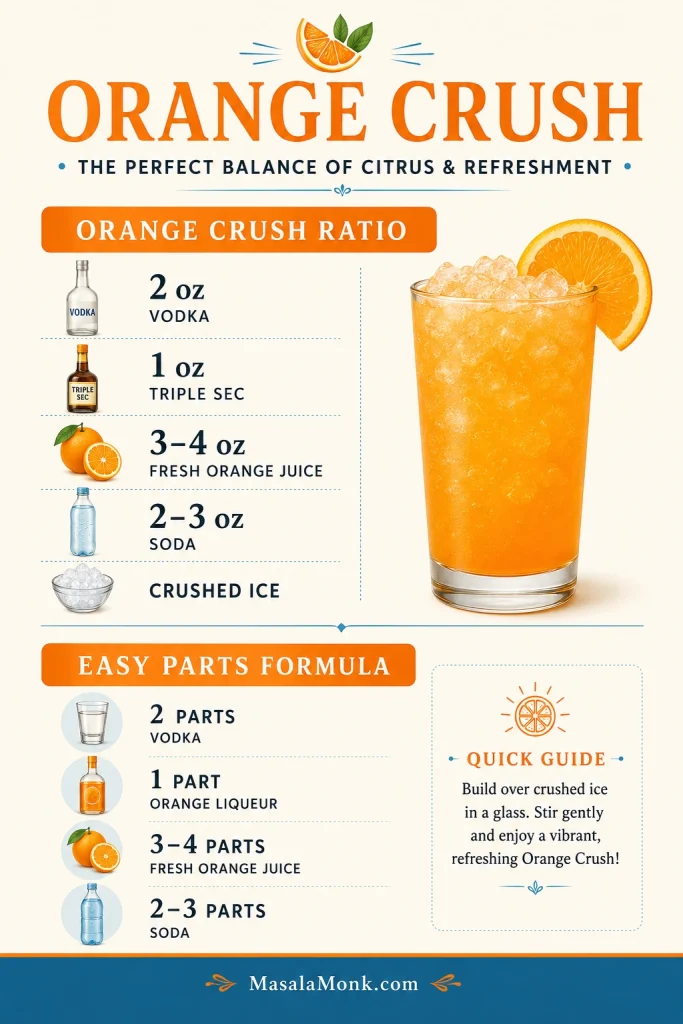
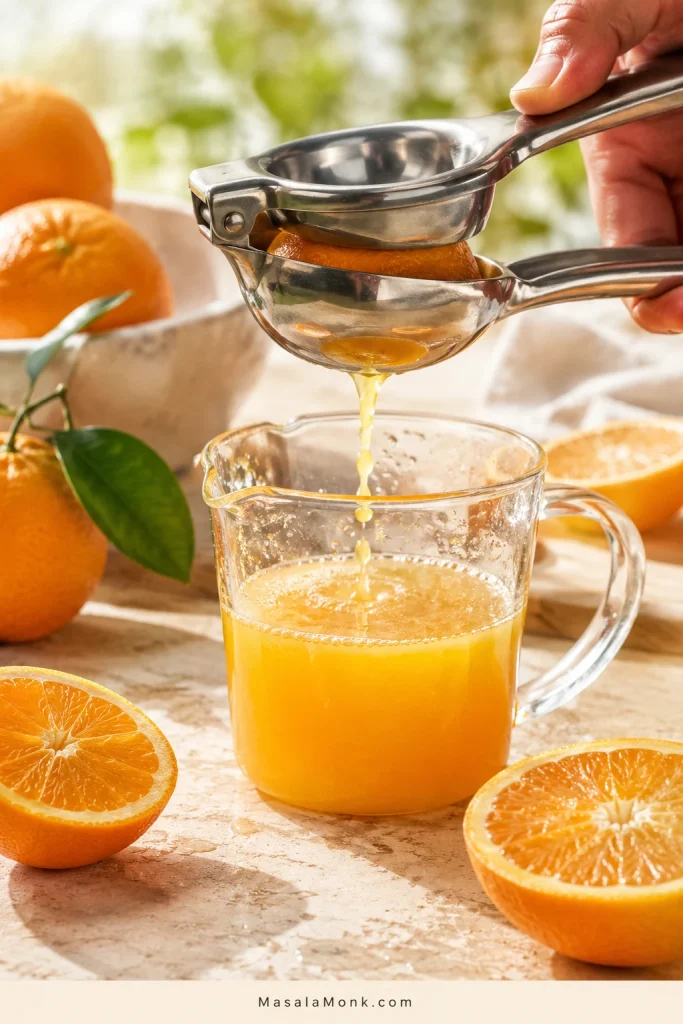
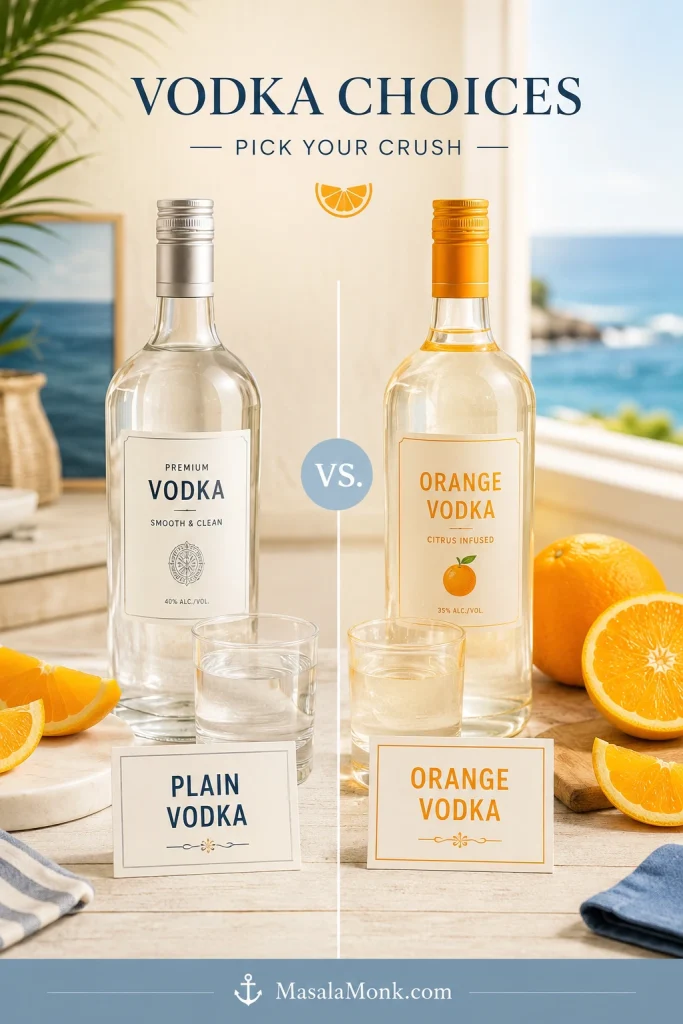
Irish Mule vs Moscow Mule vs Kentucky Mule

If you are choosing between mule-style cocktails, the fastest way to separate them is by the spirit. An Irish mule uses Irish whiskey, a Moscow mule uses vodka, and a Kentucky mule uses bourbon. The ginger beer, lime, and ice stay close to the same template, but the base spirit changes the personality of the drink quite a bit.

Comparison guide showing the differences between an Irish mule, Moscow mule, and Kentucky mule, including base spirit, how each one drinks, and when to choose each version.
The build stays familiar across all three drinks, but the base spirit shifts the feel: Irish whiskey gives a rounder center, vodka keeps the mule cleaner, and bourbon makes it fuller and warmer.

Choose an Irish mule when you want a smoother, rounder mule than vodka gives, but a brighter, lighter one than bourbon usually does. If you want the vodka original, see our Moscow Mule recipe. If you want the fuller bourbon version, see our Kentucky Mule recipe.

Irish Mule Recipe for a Crowd

This recipe is easy to scale for guests, but the ginger beer tastes fresher if you add it close to serving time. Mix the whiskey and lime ahead, chill that base well, and then pour in the ginger beer just before serving. That way, each glass keeps its sparkle instead of tasting flat halfway through the gathering.

Irish mule for a crowd guide showing an 8-serving batch with Irish whiskey, lime juice, and ginger beer amounts, plus advice to batch the base, choose the lime level, and add ginger beer close to serving time.
For a group, keep the whiskey-and-lime base and the ginger beer as separate jobs: chill the base ahead, then top each glass at the last minute so the batch stays lively instead of going flat in the pitcher.
  • 8 servings: 16 oz / 480 ml Irish whiskey + 4 to 6 oz / 120 to 180 ml fresh lime juice + 32 oz / 960 ml ginger beer
  • How to choose the lime amount: use 4 oz / 120 ml for a softer crowd-pleasing batch, or 6 oz / 180 ml for a brighter, sharper one
  • Best serving method: pour the whiskey-and-lime base over ice in individual mugs or glasses, then top with ginger beer
  • Best garnish: lime wedges on the side

For parties, this setup works especially well because you can chill the base in advance and let guests top their own glass with ginger beer. In contrast, a fully mixed pitcher can lose some lift if it sits too long before serving.

Irish Mule Troubleshooting

Even a very simple drink can drift off balance if one part runs too far ahead of the others. Fortunately, this one is easy to correct once you know which direction the flavor has moved.

Irish mule troubleshooting guide with quick fixes for a drink that is too sweet, too sharp, too strong, too flat, or not gingery enough.
If the first sip feels off, fix the lime, ginger beer, temperature, or stirring before you start changing the whiskey, because that is usually where the balance slips.

Too sweet

Use a less sweet ginger beer next time, or reduce the ginger beer slightly while keeping the whiskey at 2 ounces. That way, the drink stays mule-like instead of turning soft and soda-heavy.

Too sharp

Pull the lime back a little before adding more ginger beer. Too much lime can make the drink feel thinner and harsher than it should, especially once the ice starts to melt.

Too strong

Add a small splash of extra ginger beer rather than watering it down with heavy stirring. Usually, that is enough to soften the drink without flattening it.

Too flat

Use colder ginger beer, more ice, and less stirring. Mule-style drinks lose their snap quickly when they sit warm or get overmixed, so temperature and handling matter more than many people think.

Not gingery enough

Switch to a spicier ginger beer rather than adding more lime. More lime makes the drink brighter, but it does not replace the missing ginger bite that gives a mule its identity.

Irish Mule Recipe

This Irish mule recipe is bright, gingery, and easy to balance at home. It uses Irish whiskey, fresh lime juice, ginger beer, and ice for a crisp mule-style drink that works especially well with Jameson. Start with 1/2 ounce lime for a softer first glass, or 3/4 ounce if you want a brighter, sharper finish.

  • Yield: 1 drink
  • Prep time: 5 minutes
  • Total time: 5 minutes
  • Glassware: copper mug or highball glass
  • Serve: very cold, right after building

Ingredients

  • 2 oz (60 ml) Irish whiskey
  • 1/2 to 3/4 oz (15 to 22 ml) fresh lime juice
  • 4 oz (120 ml) chilled ginger beer
  • Ice, for filling the mug or glass
  • Lime wedge or wheel, for garnish
Promotional Irish mule recipe image showing a finished copper mug cocktail with lime wedges, an Irish whiskey bottle, a ginger beer bottle, and text overlay reading Irish Mule Recipe, bright, gingery, and easy to balance, and 5-minute cocktail.
Save this as the quick visual version: an Irish mule is just Irish whiskey, lime, and ginger beer built over ice, with enough citrus and fizz to stay bright from the first sip to the last.

Method

  1. Fill a copper mug or highball glass with ice.
  2. Add the Irish whiskey and fresh lime juice.
  3. Top with chilled ginger beer.
  4. Stir gently just until combined.
  5. Garnish with lime and serve right away.

Notes

  • Jameson is a reliable first bottle here.
  • Use 1/2 oz lime for a softer version or 3/4 oz for a brighter, sharper one.
  • Use very cold ginger beer and add it last for the liveliest finish.
  • For a lighter version, increase the ginger beer slightly.
  • For a drier, bolder finish, reduce the ginger beer slightly rather than increasing the whiskey first.
  • Ginger ale makes a softer Jameson Ginger & Lime style drink rather than a classic mule.
  • A lime wedge is the cleanest classic garnish.

Irish Mule FAQs

What is an Irish mule?

An Irish mule is the Irish whiskey version of a Moscow mule. It is usually made with Irish whiskey, fresh lime juice, ginger beer, and ice.

What is the difference between an Irish mule and a Moscow mule?

The difference is the base spirit. A Moscow mule uses vodka, while an Irish mule uses Irish whiskey.

Can you make an Irish mule with Jameson?

Yes. Jameson is a very good choice because its lighter style works especially well with lime and ginger beer in this cocktail.

Is a Jameson mule the same as an Irish mule?

Usually, yes. In most cases, a Jameson mule is simply the drink made with Jameson Irish whiskey.

Do you use ginger beer or ginger ale in an Irish mule?

The classic version uses ginger beer. Ginger ale makes a softer, sweeter variation that drinks differently.

Is an Irish Buck the same as an Irish mule?

Not always. Online, the names often overlap, but an Irish mule usually points to the ginger beer version, while Irish Buck more often points to the ginger ale direction. In practice, the mixer is the detail that changes the drink most.

Do you need a copper mug for an Irish mule?

No. A copper mug is traditional for mule-style drinks, but a highball glass works perfectly well.

Can you make Irish mules for a crowd?

Yes. Mix the whiskey and lime first, chill that base, and add the ginger beer close to serving time so the drink stays bright and fizzy.

↑ Back to top