A Sidecar is a classic shaken cocktail made with Cognac, orange liqueur—usually Cointreau—and fresh lemon juice. A good one tastes like Cognac sharpened by lemon and lifted by orange, not lemon juice with brandy hiding somewhere underneath it.
With so little in the shaker, a few milliliters can be obvious in the glass. Push the lemon too far and it takes over. Add more orange liqueur and the drink grows sweeter and more orange-led. Under-shake it and even good Cognac can taste hot and disconnected.
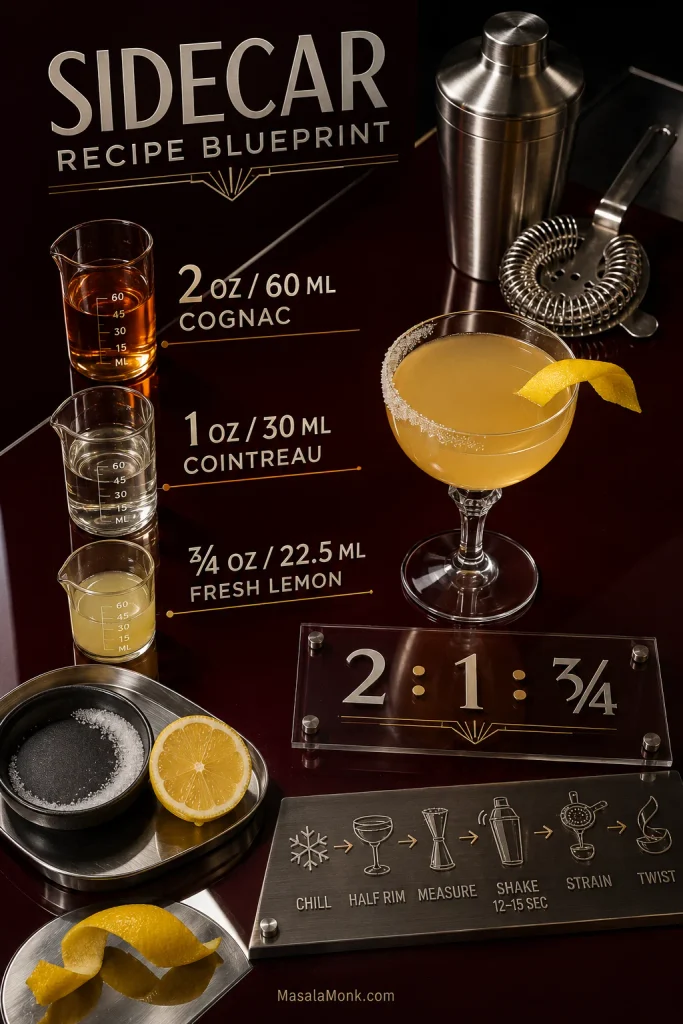
This recipe starts with 2 oz (60 ml) Cognac, 1 oz (30 ml) Cointreau and ¾ oz (22.5 ml) fresh lemon juice. It leaves the Cognac easy to taste while keeping the finish lively and citrusy. A sugar rim is optional; half-rimming the glass gives you both a sweetened and a bare edge.
Keep the Cognac visible. Let the lemon sharpen it, not bury it.
Classic Sidecar Cocktail Recipe
One cold, Cognac-first cocktail, shaken hard and served up. The starting ratio is 2 : 1 : ¾.
Ingredients
- 2 oz (60 ml) Cognac
- 1 oz (30 ml) Cointreau
- ¾ oz (22.5 ml) freshly squeezed lemon juice
- Superfine or caster sugar, for an optional half rim
- Ice, for shaking
- Lemon or orange twist, for garnish
Equipment
- Cocktail shaker
- Jigger or small liquid measure
- Cocktail strainer
- Coupe, Nick & Nora or other small cocktail glass
- Fine-mesh strainer, optional
No shaker? A tightly sealed jar works in a pinch. Shake it with plenty of ice, then strain through a small kitchen sieve.
Method
- Chill the glass. Put it in the freezer while you gather the ingredients, or fill it with ice and cold water.
- Prepare the rim, if using one. Run a cut piece of lemon around half of the outside edge. Dip that half lightly into superfine sugar, then tap away the excess.
- Measure. Pour the Cognac, Cointreau and fresh lemon juice into the shaker.
- Shake. Fill generously with cold, solid ice and shake hard for about 12–15 seconds, until the outside of the shaker feels thoroughly cold.
- Strain and finish. Empty the chilled glass if necessary, strain in the cocktail, then twist a strip of citrus peel over the surface so its oils mist across the drink. Add the peel as garnish. Fine-strain too if you want to catch little ice chips and citrus pulp.
What Should a Sidecar Taste Like?
Cognac first, orange close behind, then fresh lemon pulling the drink into focus. Shaken properly, it arrives icy cold and fragrant with citrus oil, with enough Cognac warmth beneath the lemon-orange snap to keep it from feeling merely sour.
If your first glass tastes almost entirely of lemon, don’t assume you’ve done something terribly wrong. A particularly sharp piece of fruit can move this drink a surprising distance.
Why Do Sidecar Recipes Use Different Ratios?
If you’ve looked up two Sidecar recipes and wondered how both can be called “classic” when the measurements barely agree, you’re not imagining it.
The International Bartenders Association currently specifies 50 ml Cognac, 20 ml triple sec and 20 ml fresh lemon. Elsewhere you’ll find equal-parts recipes, the familiar 2:1:1 build, lower-lemon 3:2:1 versions, and formulas that move some sweetness into syrup.
Ratios below are Cognac : orange liqueur : lemon.
| Common approach | Approx. formula | What it does in the glass |
|---|---|---|
| Equal parts | 1 : 1 : 1 | Citrus and orange become very prominent |
| 2:1:1 | 2 : 1 : 1 | Bright and familiar; sharp lemon can push it quite tart |
| IBA-style | 2.5 : 1 : 1 | Leaves more room for the Cognac |
| 3:2:1 | 3 : 2 : 1 | Uses less lemon while giving orange more room |
| Split the sweetness | About 2 : ¾ : ¾ + syrup | Softens the finish without adding as much orange liqueur |
| This recipe | 2 : 1 : ¾ | Citrusy, with the Cognac still easy to taste |
In PUNCH’s blind tasting of 10 bartender Sidecars, small syrup additions appeared repeatedly, and the winning version used Cognac, Cointreau, lemon and a teaspoon of rich Demerara syrup. Syrup isn’t a cheat. It lets sweetness move without bringing another pour of orange liqueur with it.
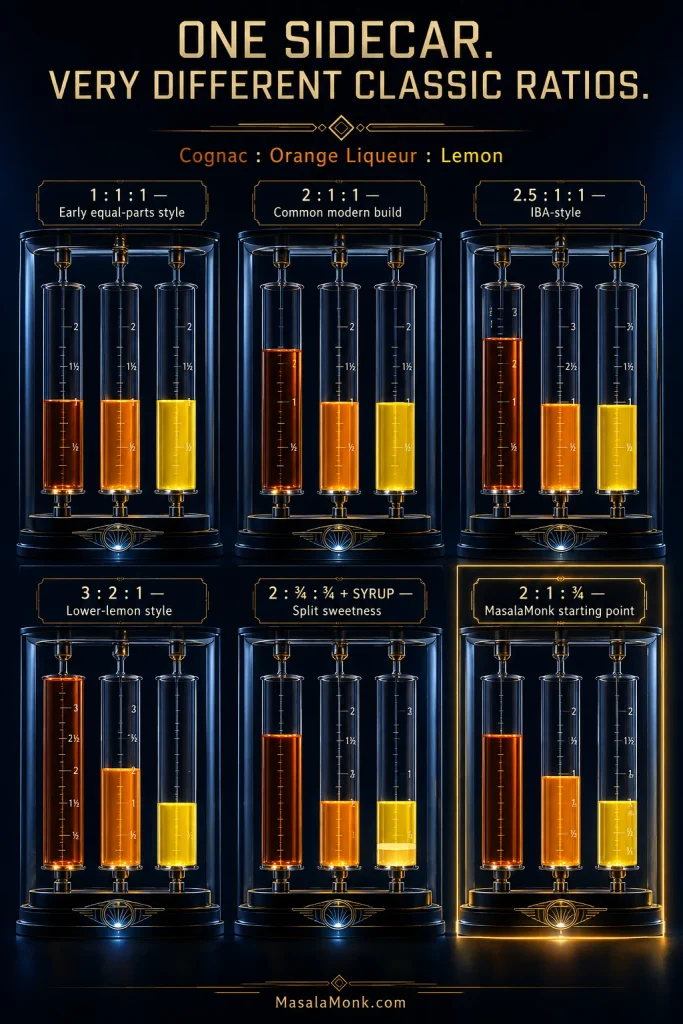
For the recipe here, we keep the familiar amount of Cointreau and use slightly less lemon. That’s only the starting point: lemons vary in acidity, Cognacs in fruit and weight, and orange liqueurs in sweetness and strength. A stripped-back Daiquiri exposes the same problem—unusually sharp fruit has nowhere to hide when there are only a few ingredients.
There isn’t one secret ratio waiting to be uncovered. What matters is knowing what each choice changes once the drink reaches the glass.
Want to tune the starting point? Go to the Sidecar Balance Dial.
How Cognac, Orange Liqueur and Lemon Change a Sidecar
Best Cognac for a Sidecar: Spend Enough, Not the Most
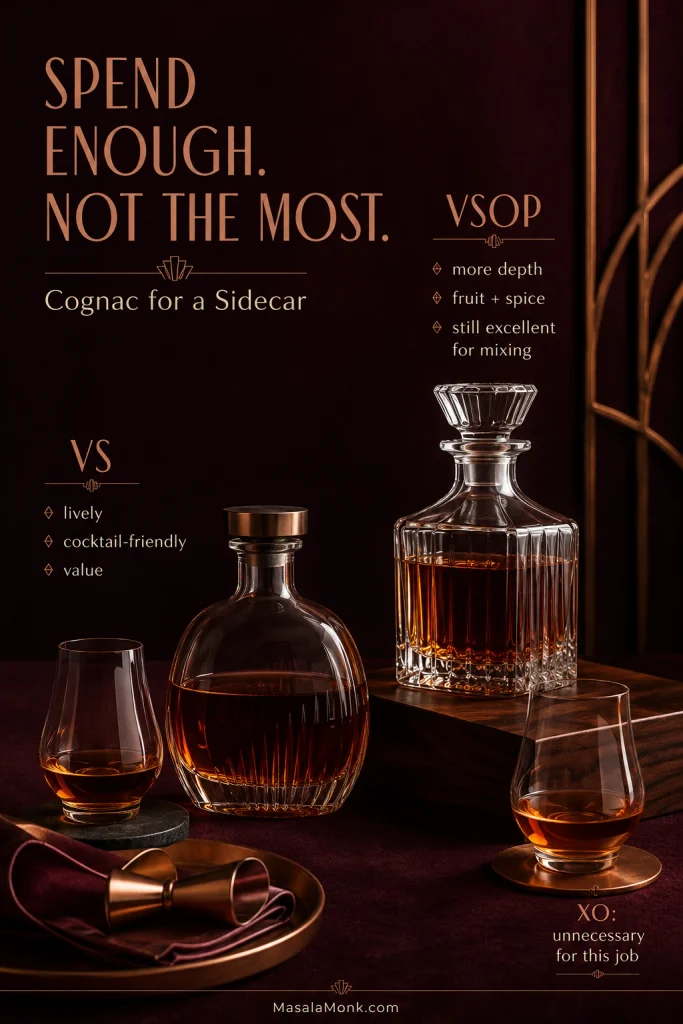
Cognac is grape brandy from the Cognac region of France. XO is unnecessary here; a lively VS or VSOP usually gives better value in a drink with lemon and orange liqueur.
Official Cognac guidance defines VS by a youngest wine spirit of at least two years and VSOP by a youngest wine spirit of at least four years. VS tends to feel younger and more energetic, while VSOP often brings more fruit, spice and depth.
Need actual bottle names? Hennessy VS is an easy mixing reference; Rémy Martin 1738 Accord Royal is a fuller step-up. If another decent VS or VSOP costs less where you live, buy that instead. The label matters less than choosing a Cognac with enough character to remain recognizable after lemon and dilution.
You don’t need to build a home bar around this drink. One good Cognac, one orange liqueur and fresh lemons are enough.
Cointreau, Grand Marnier or Dry Curaçao?
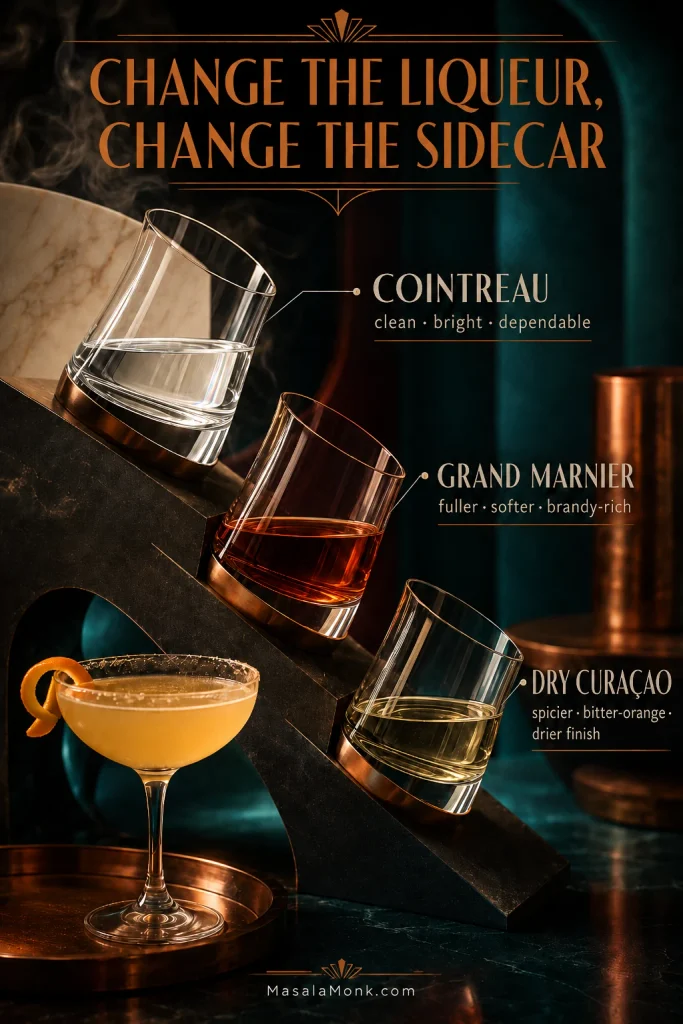
Cointreau is the easiest reference point: clear orange aroma, predictable sweetness and enough strength to remain noticeable after shaking.
Grand Marnier makes the orange feel softer and fuller against the lemon, with extra brandy richness underneath. Dry curaçao lets more spice and bitter orange show through and may leave the finish noticeably drier.
Other triple secs vary widely in sweetness and strength, so an identical measure won’t necessarily behave like Cointreau.
Fresh Lemon Can Move the Whole Drink
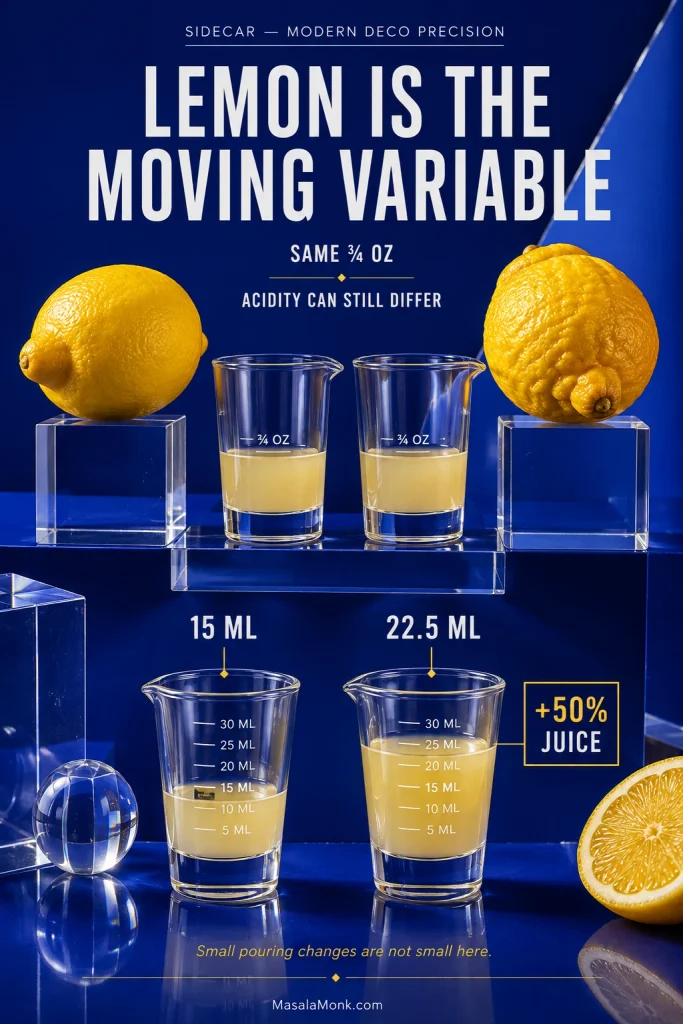
Fresh juice matters here, but fresh doesn’t mean identical. ¾ oz is a fixed volume. It isn’t a fixed amount of acidity. One lemon may make the recipe beautifully lively; another can be noticeably fiercer at exactly the same measurement. Taste the fruit itself if it seems unusually sharp.
Once the bottles and lemon are right, the remaining variables are mostly in your hands: measuring, temperature and dilution.
Measure, Shake and Chill: Where Sidecars Go Off Course
1. Measure the First Few
Citrus gets unforgiving quickly. A pour that grows from 15 ml to 22.5 ml is 50% more lemon. Measure the first few Sidecars; once you know the baseline, you’ll recognize what an extra splash actually changed.
2. Shake Hard, Not Forever
About 12–15 seconds of vigorous shaking with plenty of cold, solid ice is a sensible home target. The exact second matters less than the result: a thoroughly cold shaker and a drink that tastes joined-up rather than like alcohol and lemon taking turns.
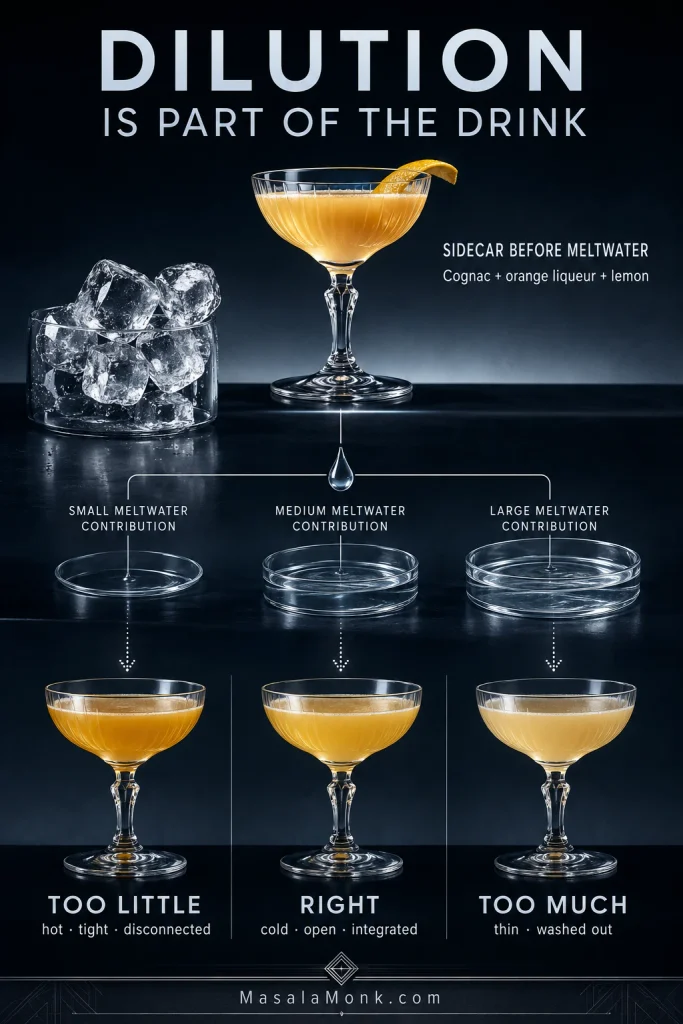
3. Dilution Is Part of the Drink
The water melting from the ice ends up in your glass. Too little and the Sidecar tastes hot, tight and unfinished. Too much and the Cognac turns thin. At the useful point between them, the spirit opens up, the lemon loses its hard edge and the orange aroma becomes easier to notice.
Use plenty of good ice instead of counting cubes. Home ice varies too much in size and melt rate for “five cubes” to mean much.
4. Chill, Strain and Serve
Pre-chill the glass because the finished cocktail contains no serving ice. A freezer is easiest; ice water while you shake gets you there too. For straining, a normal cocktail strainer is enough; fine-straining catches little shards of ice and citrus pulp if you prefer a cleaner texture.
Choose a 5–6 oz (roughly 150–180 ml) coupe, Nick & Nora or other small cocktail glass for this amount. An oversized modern coupe can make a perfectly normal Sidecar look as though someone forgot half your drink.
Served up means shaken with ice and then strained into the glass without that ice.
Lemon or orange twist? Both are legitimate. Lemon smells sharper over the first sip; orange makes the drink seem softer and more orange-led before you’ve even tasted it. Whichever peel you choose, twist it over the glass first so the oils land on the surface.
If the technique looks right but the drink still tastes wrong, go straight to Fix My Sidecar · back to the recipe.
Do You Need a Sugar Rim?
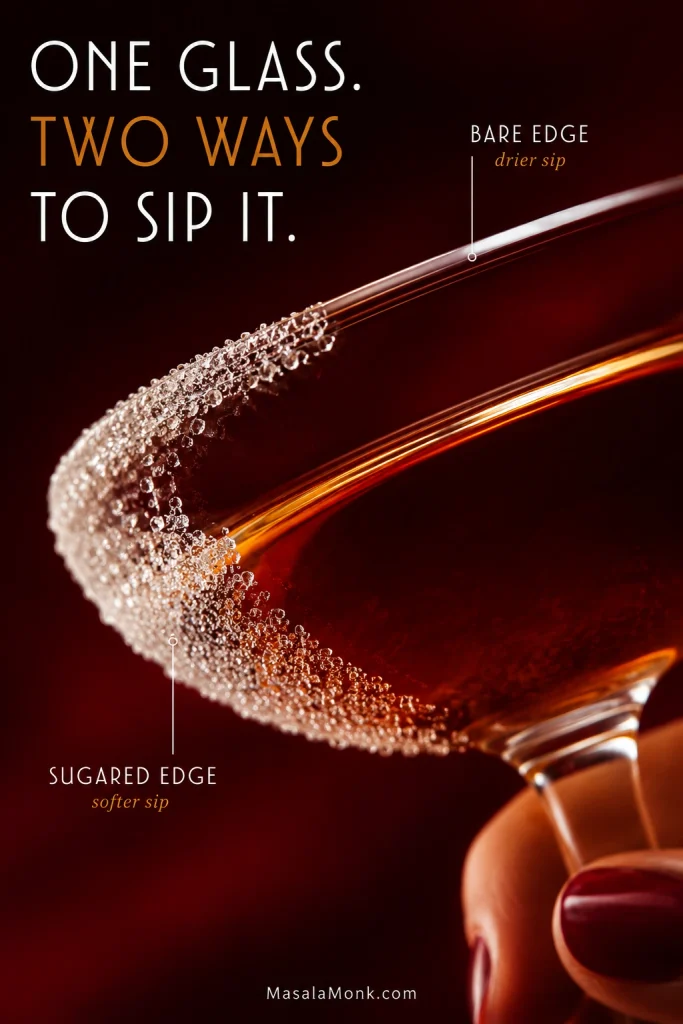
Bartenders disagree about the sugar rim too. A Sidecar is perfectly happy without one.
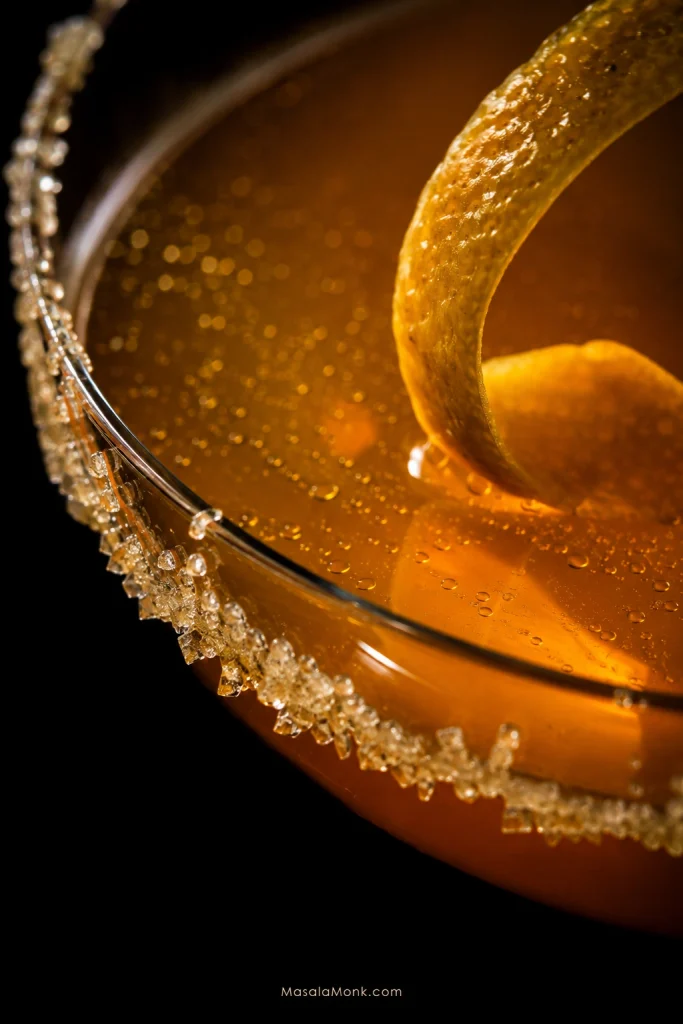
If you enjoy the sugar, a half rim is more interesting than coating the whole glass. One side softens the sip; turn the glass and the cocktail tastes drier from the bare edge. Use superfine or caster sugar and moisten mainly the outside edge so loose sugar doesn’t slowly dissolve into the drink.
The Sidecar Balance Dial: Fine-Tune a Good Drink
If your Sidecar already tastes good, stop troubleshooting. This is the fun part.
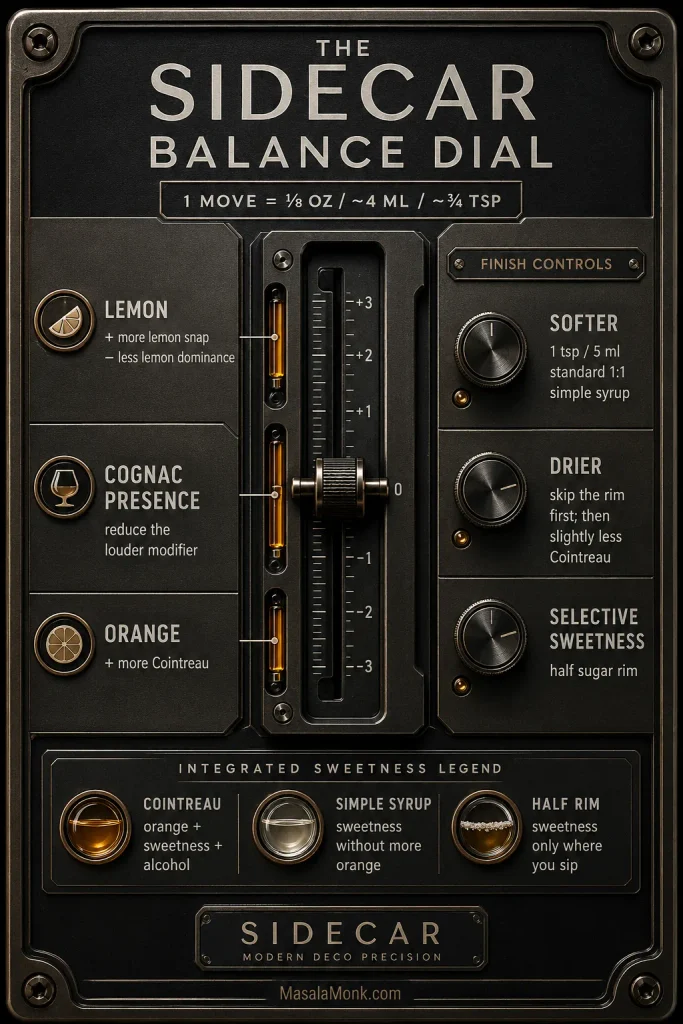
Think in ⅛-oz moves—about 4 ml, roughly ¾ teaspoon. That’s enough to learn something in a three-ingredient cocktail without turning your kitchen into a bar lab. In the table below, one “step” means that amount.
| You want… | Move | What you’ll notice |
|---|---|---|
| More lemon snap | Add one step of lemon | The Cognac becomes less prominent |
| Less lemon dominance | Take one step of lemon away | The spirit becomes easier to taste without adding sweetness |
| More Cognac presence | Reduce whichever is masking it—lemon or Cointreau—by one step | The Cognac moves forward without making the drink larger |
| More orange | Add one step of Cointreau | Orange, sweetness and alcohol all rise together |
| A softer finish without more orange | Add 1 tsp (5 ml) standard 1:1 simple syrup | Using rich 2:1 syrup? Start with roughly three-quarters as much |
| Sweetness only on selected sips | Use a half sugar rim | The liquid itself stays unchanged |
| A drier finish | Skip the rim first; then consider one step less Cointreau | Less Cointreau also means less orange flavor |
Cointreau, Syrup and Sugar Do Different Jobs
More Cointreau brings sweetness, orange flavor and alcohol together. Standard 1:1 simple syrup softens the drink without adding more orange. Sugar on the rim changes only the sips that touch it.
A lemon-heavy Sidecar isn’t automatically asking for sugar. Use less citrus when lemon is the problem; reach for syrup when Cognac and lemon already taste right together but the finish is still too dry. A Lemon Drop Martini makes those different kinds of sweetness especially easy to taste because all three appear in the same drink.
Fix My Sidecar
A drink that’s simply not your preferred ratio belongs in the Balance Dial above. This section is for the Sidecar that’s plainly unpleasant: puckering, hot, washed out, gritty or mysteriously flat.
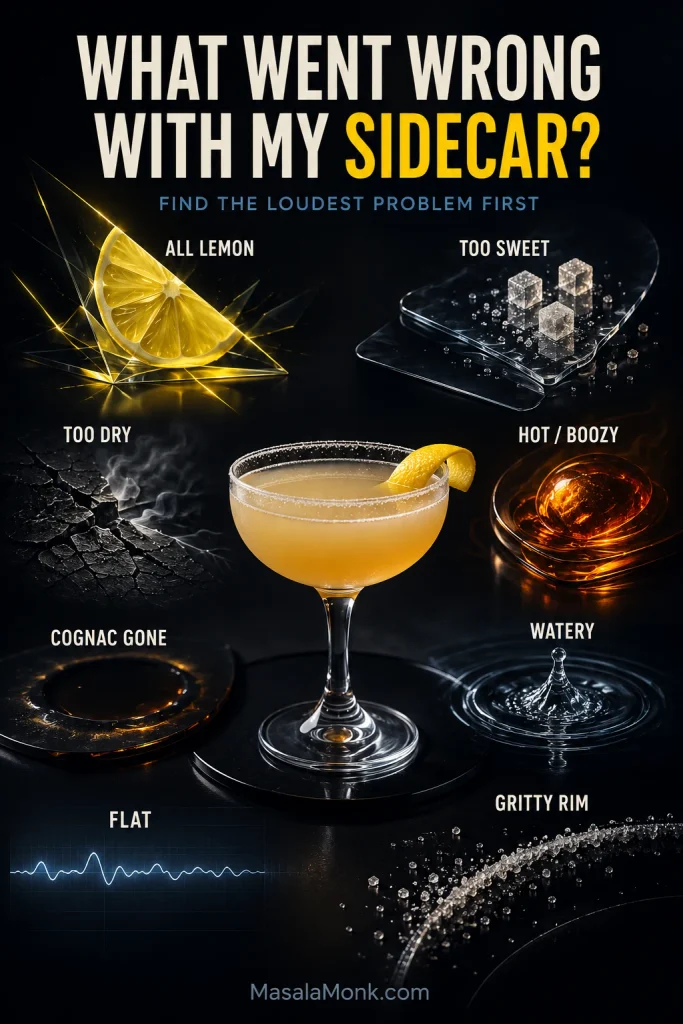
| What happened? | Likely reason | Try this first |
|---|---|---|
| All lemon / too sour | The citrus is drowning the Cognac and orange | Reduce the lemon by the small increment described above |
| Too sweet | Syrup, rim sugar or Cointreau is pushing sweetness too far | Remove syrup or the rim first. Added neither? Use slightly less Cointreau |
| Too dry | The drink needs sweetness, not more citrus | Try the half rim or about 1 tsp (5 ml) 1:1 simple syrup |
| Hot or boozy | Often under-dilution | Look at the ice and shake before rewriting the ratio |
| Can’t taste the Cognac | Lemon or orange liqueur is masking it | Ease back whichever ingredient you notice first |
| Watery / washed out | Too much dilution or fast-melting ice | You can’t take water back out; use colder, sturdier ice and stop sooner next time |
| Flat aroma | Tired citrus or no fresh peel oils | Use fresh lemon and express the garnish over the surface |
| Gritty or unevenly sweet | A heavy sugar rim | Use finer sugar on only half the outside edge |
| Different every time | Fruit, pouring and dilution are all moving | Measure the next one and write down the ratio that lands |
Something stranger? Bitterness can come from citrus pith, an aggressively squeezed peel or the orange liqueur itself. If the drink tastes oddly soapy or perfumed, check the glass for detergent residue and wash and dry the citrus before blaming the recipe.
What Can You Substitute—and When Is It a Different Drink?
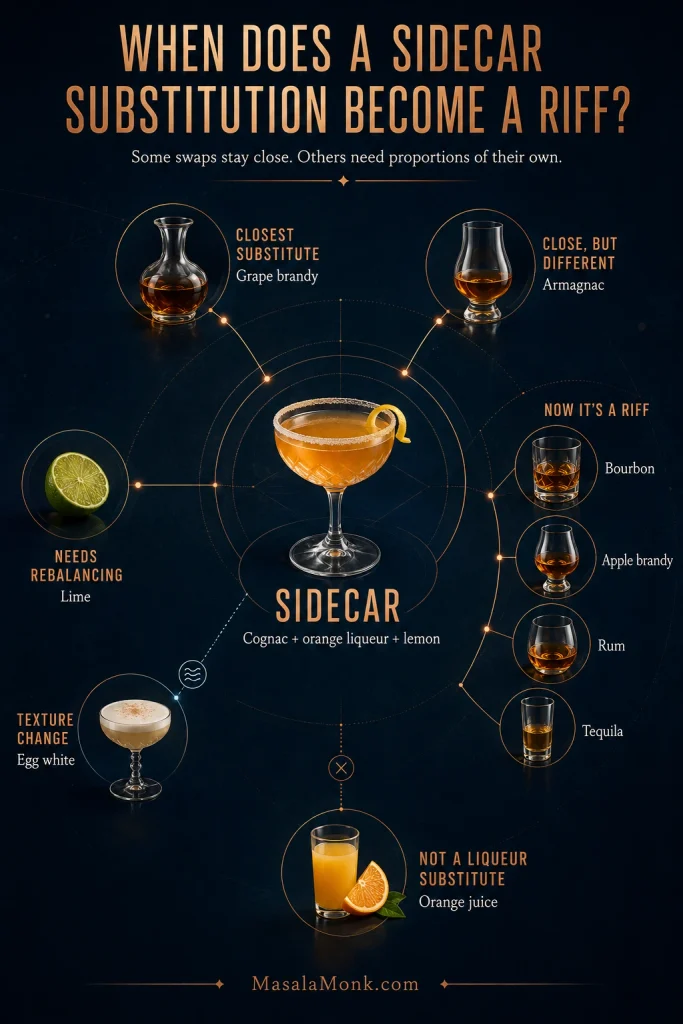
Some swaps keep you close to a Sidecar. Others move far enough away that you’re better off treating the result as a riff with proportions of its own.
Good grape brandy is the closest Cognac substitute. Armagnac takes the drink somewhere darker and more rustic, with earthier fruit and spice.
Lime can replace lemon, but its different acidity and aroma may need a new balance. Egg white changes the texture, giving you a softer, foamy sour-style drink.
Bourbon, apple brandy, rum or tequila take you firmly into riff territory. And orange juice is not a substitute for orange liqueur: juice adds water and acidity while removing much of the alcohol and concentrated orange character the liqueur contributes.
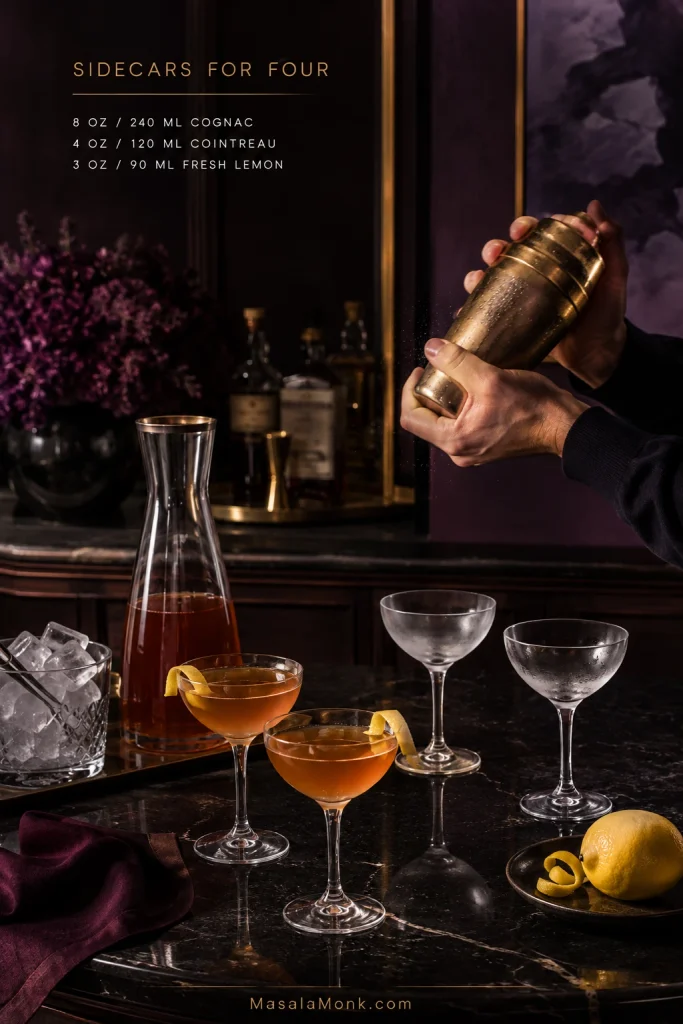
How to Batch Sidecars for Four
- 8 oz (240 ml) Cognac
- 4 oz (120 ml) Cointreau
- 3 oz (90 ml) fresh lemon juice
Combine the Cognac and Cointreau ahead of time and refrigerate. Add the fresh lemon shortly before serving. Once everything is mixed, measure 3¾ oz (about 112 ml) per drink into the shaker and shake with ice as usual.
Chill the glasses before people arrive. If your shaker comfortably holds two drinks, shaking two at a time is practical; don’t crowd all four into a standard shaker.
If all four will be served within a short window, mix the full batch shortly beforehand and keep it cold until you’re ready to shake.
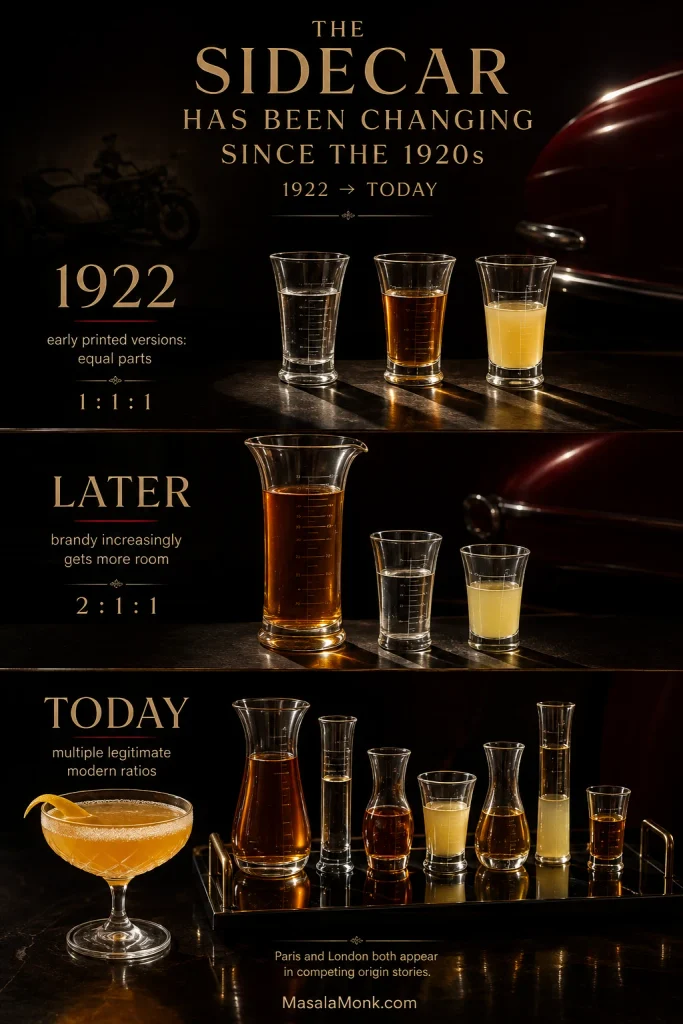
The Sidecar Has Been Changing Since the 1920s
The modern argument over ratios isn’t particularly modern. Sidecar recipes were appearing in cocktail books by 1922, and their proportions have been shifting for almost as long as the drink has been in print.
Its exact birthplace is difficult to pin down. Both Paris and London appear in competing accounts, while the familiar tale of a customer arriving at a bar in a motorcycle sidecar is better treated as cocktail lore than settled history.
Early printed versions used equal quantities of brandy, orange liqueur and lemon. Later recipes increasingly gave the brandy more room. Today’s “classic” Sidecars disagree because variation has been part of the drink for a very long time.
The Sidecar also belongs to the broader Daisy tradition: base spirit, citrus and sweetness supplied partly or entirely by a liqueur. That’s why a White Lady or Margarita can feel distantly familiar without being interchangeable with it.
Sidecar Cocktail FAQ
Is a Sidecar a Martini?
No. A Sidecar isn’t part of the Martini family. The confusion mostly comes from the stemmed glass, which is often casually called a martini glass.
Can you serve a Sidecar on the rocks?
Yes, although the classic presentation is served up without ice in the finished glass. Over fresh ice, the cocktail keeps diluting as you drink it.
How strong is a Sidecar?
It’s a strong cocktail because most of the liquid comes from spirits. With 40% ABV Cognac and 40% ABV Cointreau, this recipe contains roughly two U.S. standard drinks. Shaking adds water and lowers the percentage of alcohol in the finished cocktail, but it doesn’t remove alcohol. The exact finished ABV depends heavily on how much dilution your ice and shaking contribute.
A good Sidecar should make all the argument about ratios disappear once you take a sip: cold, orange-scented and still unmistakably like Cognac. When you hit the version that makes you want another sip, write the ratio down. That’s the one worth repeating.