Posted on 16 Comments

Lemon Drop Martini Recipe (Classic, 3-Ingredient & More)

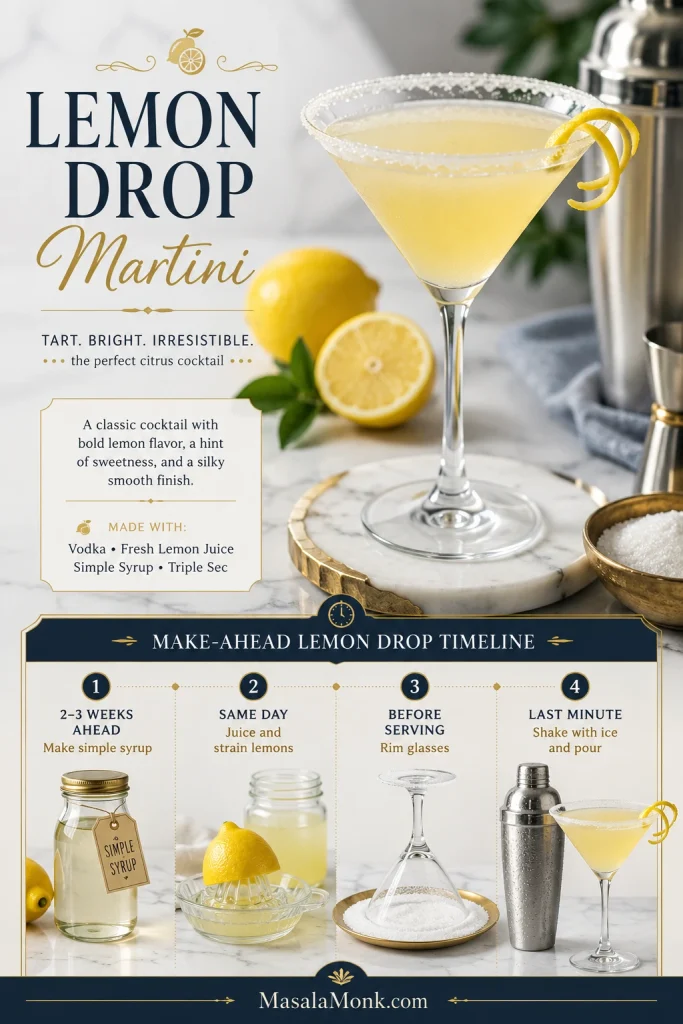
Chilled lemon drop martini in a sugar-rimmed glass with a lemon twist, fresh lemons, and cocktail tools on a styled bar surface.

A good lemon drop martini should taste lively before it tastes sweet. The glass is deeply chilled, the rim sparkles lightly, and the first sip lands with just-squeezed lemon, clean vodka, a soft orange note, and enough sweetness to smooth the sharp edge. It should feel polished, not syrupy; refreshing, not harsh; easy, but still pretty enough to make the glass feel special.

This easy lemon drop martini starts with a balanced classic ratio: vodka, Cointreau or triple sec, fresh lemon juice, and simple syrup, shaken hard and poured into a lightly sugared glass. Once that baseline tastes right, you can make it without triple sec, soften it with limoncello, turn it into shots, batch it for guests, or add fruit without losing the crisp citrus snap.

Quick Answer: How to Make a Lemon Drop Martini

To make a classic lemon drop martini, shake 2 oz (60 ml) vodka, ¾ oz (22 ml) Cointreau or triple sec, 1 oz (30 ml) fresh lemon juice, and ½ oz (15 ml) simple syrup with firm ice for 15–20 seconds. Fine-strain into a chilled, lightly sugar-rimmed 5–6 oz coupe or martini glass, then garnish with a lemon twist.

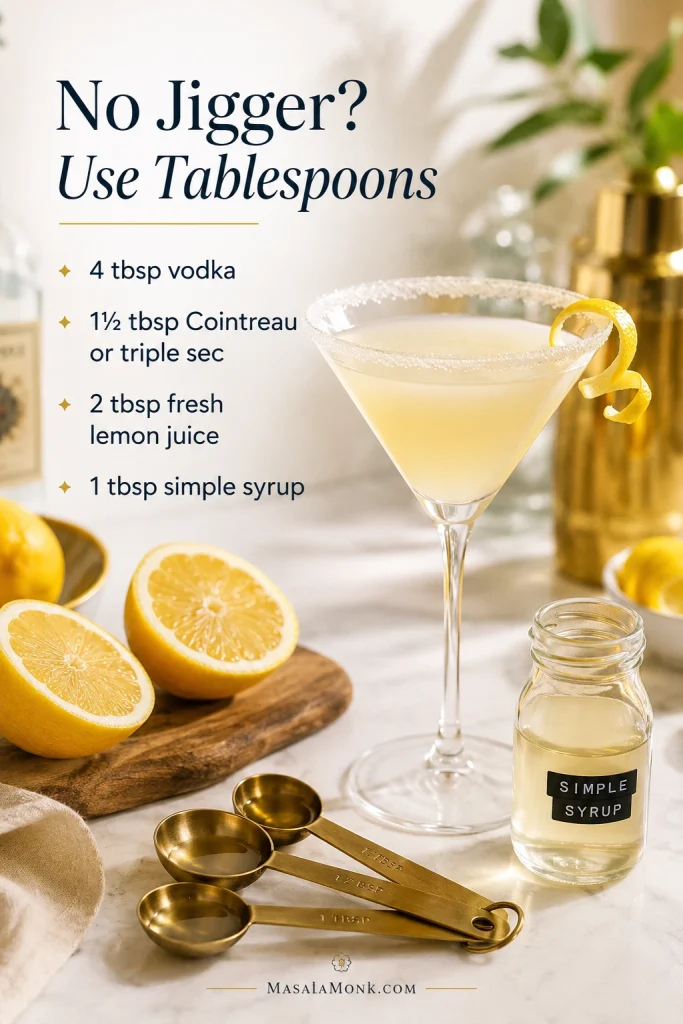
No jigger? Use 4 tablespoons vodka, 1½ tablespoons Cointreau or triple sec, 2 tablespoons fresh lemon juice, and 1 tablespoon simple syrup.

Before you shake, remember this: chill the glass, sugar only the outside rim, and adjust by teaspoons instead of guessing. Add syrup if the drink is too sour; add lemon if it tastes too sweet.

This is the drink to pour when you want something dressed up but not fussy: before dinner, for a small party, beside a dessert table, or as the first round when people want something bright and familiar.

Jump to What You Need

Classic Lemon Drop Martini Recipe

Make this version first. It is the classic baseline: lemon-forward, deeply chilled, gently sweet, and easy to adjust. A well-made Lemon Drop should hit in this order: cold lemon, smooth vodka, a soft orange note, then a small sparkle from the rim — not sour lemonade, melted candy, or a glass full of sugar.

Yield1 cocktail
Prep time5 minutes
Glass5–6 oz coupe or martini glass
FlavorLemon-forward, crisp, gently sweet
Shake time15–20 seconds
ServeImmediately

Ingredients

IngredientAmount
Vodka2 oz / 60 ml
Cointreau or quality triple sec¾ oz / 22 ml
Fresh lemon juice, fine-strained1 oz / 30 ml / 2 tbsp
Simple syrup, 1:1½ oz / 15 ml / 1 tbsp
Superfine sugar, for rim1–2 tbsp / about 12–25 g
Lemon twist or thin lemon wheel1

Method

  1. Chill a 5–6 oz coupe or martini glass for 5–10 minutes, or fill it with ice water while you work.
  2. Place superfine sugar on a shallow plate, moisten only the outside rim with lemon, and dip lightly.
  3. Add vodka, Cointreau or triple sec, fresh lemon juice, and simple syrup to a shaker.
  4. Fill the shaker with firm ice.
  5. Shake for 15–20 seconds, until the outside feels very cold.
  6. Fine-strain into the prepared glass.
  7. Express a lemon peel over the surface, then garnish with the twist or a thin lemon wheel.

You will know it is right when the drink feels cold and sharp at first, then softens almost immediately. The rim should add sparkle, not a mouthful of sugar.

Taste before changing the recipe. Too sharp? Add 1 teaspoon simple syrup and shake briefly with fresh ice. Too sweet? Add 1 teaspoon lemon juice and re-shake. A Lemon Drop loses its edge as it warms, so pour it last-minute rather than letting filled glasses sit on a tray.

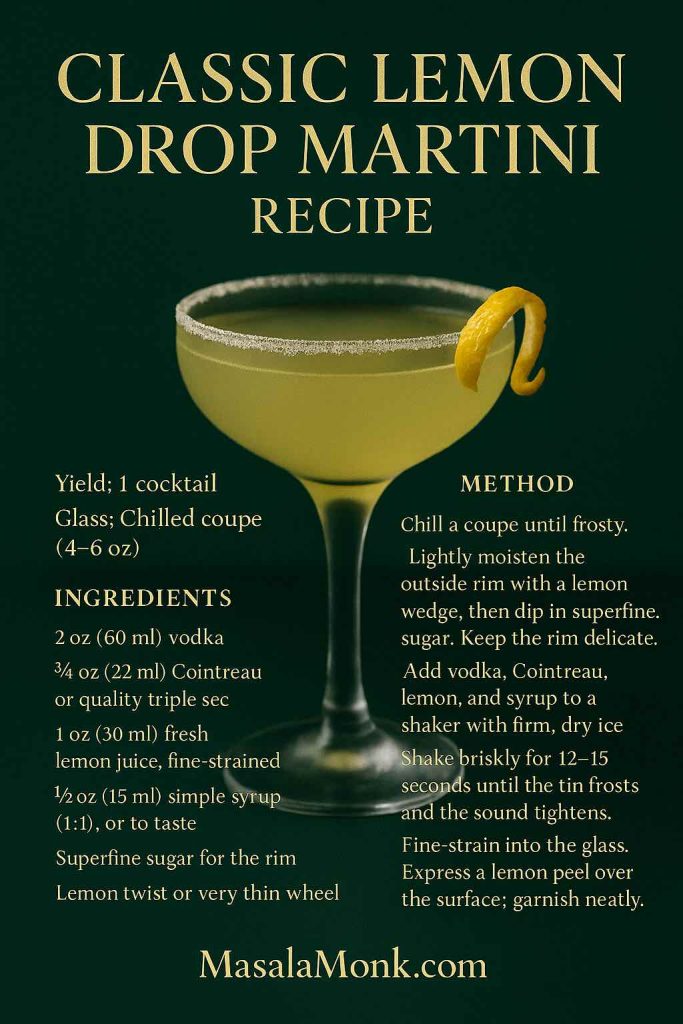
Classic lemon drop martini recipe card with a pale yellow cocktail, sugar rim, lemon garnish, and recipe measurements.
Use the classic recipe card as your baseline before changing the drink. Once the vodka, lemon, orange liqueur, and syrup work together, every variation becomes easier to adjust.

No-Jigger Lemon Drop Measurements

Use this quick conversion when measuring at home. Tablespoons keep the drink accurate, and teaspoon-sized adjustments keep the final sip from swinging too sour or too sweet.

Tablespoon measurement guide for a lemon drop martini with measuring spoons, lemons, simple syrup, and a finished cocktail.
Tablespoons are accurate enough for a home Lemon Drop when the ratio is clear. Measure first, then adjust in teaspoons so the drink stays lively without turning too sour or too sweet.

Before You Mix: 3 Details That Make It Taste Better

The recipe is simple, but the small details matter. Small technique choices make the drink feel bar-clean instead of last-minute.

1. Use fresh, strained lemon juice

A lemon drop is only as good as its lemon. Fresh juice tastes vivid and fragrant, while bottled juice often tastes flat or stale. Strain out pulp before shaking so the drink stays smooth.

2. Keep the sugar rim thin

The rim should frame the first sip, not turn the cocktail into dessert. Moisten only the outside edge of the glass so sugar does not fall into the drink.

3. Shake hard with firm ice

Shaking does more than chill the drink. It adds a small amount of water, softens the lemon, and gives the cocktail a smoother finish. If the shaker frosts or feels painfully cold, you are there.

Shake and Fine-Strain for a Cleaner Pour

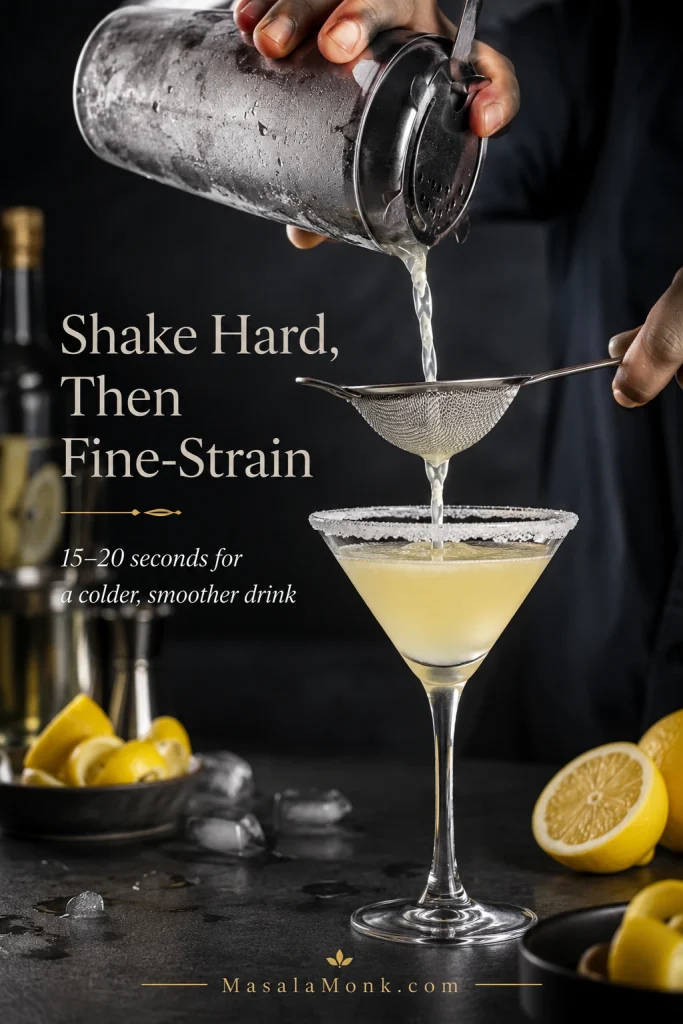
Once the drink is measured, the shake controls texture as much as temperature. Cold ice, firm shaking, and fine-straining help the cocktail pour clean, bright, and smooth.

Cocktail shaker and fine strainer pouring a lemon drop martini into a prepared sugar-rimmed glass.
A firm shake chills, aerates, and lightly dilutes the drink. Fine-straining then gives the Lemon Drop Martini a cleaner texture with fewer ice shards or pulp flecks in the glass.

Need to rescue a drink that tastes off?

Choose Your Lemon Drop

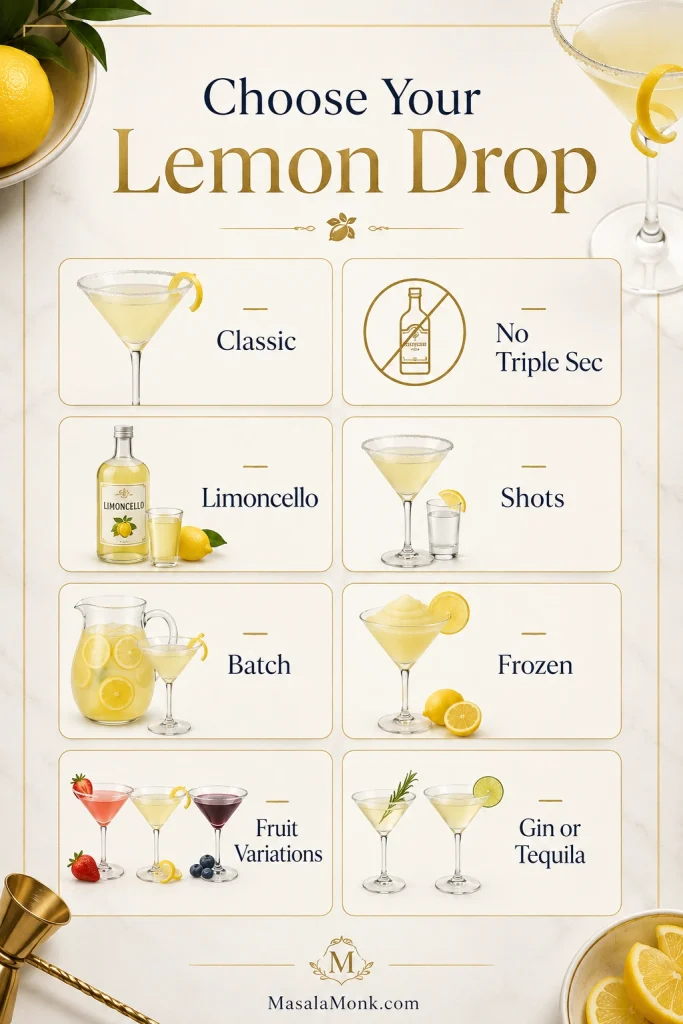
Start with the classic, then change one thing at a time. That keeps the drink recognizable while letting you make it drier, sweeter, fruitier, stronger, softer, or easier to serve.

Decision guide showing lemon drop martini options including classic, no triple sec, limoncello, shots, batch, frozen, fruit variations, and gin or tequila.
Match the Lemon Drop to the moment: no triple sec for a simple pour, limoncello for softness, shots for a tray, and batch or frozen versions for guests.
Mood or needMake thisWhy it works
Clean and classicClassic Lemon Drop MartiniBest balance of vodka, orange, lemon, and syrup
No orange liqueur3-Ingredient Lemon DropVodka, lemon, syrup; rim optional
Softer and more lemonyLimoncello Lemon DropLimoncello adds round lemon perfume
Party trayLemon Drop ShotsSmaller, brighter, faster to serve
Hosting dinnerPitcher Lemon DropBatch ahead, then shake or dilute properly
Hot afternoonFrozen Lemon DropBlended, cold, citrusy
Pretty brunch drinkStrawberry or Lavender Lemon DropColor, aroma, and a softer mood
Drier twistGin Lemon DropMore botanical and less candy-like

Not sure where to start? Make the classic once, then decide whether you want it softer with limoncello, quicker as shots, or fruitier for a party glass.

Lemon Drop Martini Ingredients

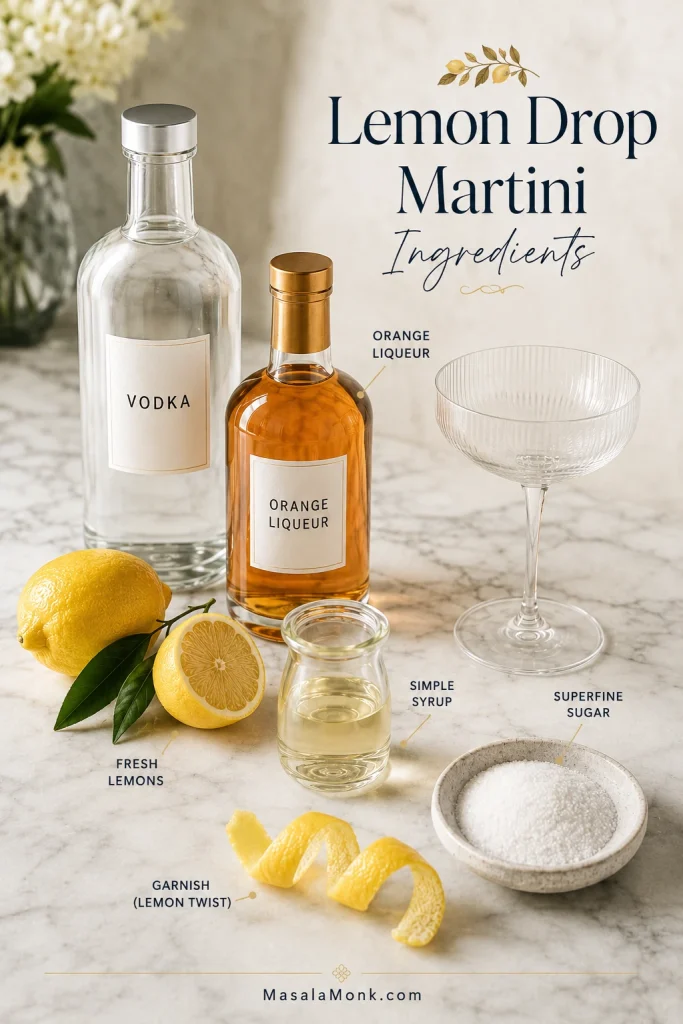
With only a few ingredients in the shaker, every choice shows up in the glass. Fresh lemon smells brighter, measured syrup keeps the drink crisp, and a neutral vodka lets the citrus lead.

Lemon drop martini ingredients on a marble surface, including vodka, orange liqueur, fresh lemons, simple syrup, superfine sugar, lemon twist, and glassware.
With so few ingredients, every shortcut shows quickly. Fresh lemon juice, measured syrup, orange liqueur, and neutral vodka create the polished Lemon Drop flavor.

Vodka

Plain vodka is the safest choice for the cleanest classic Lemon Drop. It does not need to be expensive; it just needs to stay out of the lemon’s way. Lemon vodka works if you want a louder citrus aroma, but reduce the syrup slightly so the drink does not turn candy-like.

Cointreau, Triple Sec, or Grand Marnier

Cointreau gives the clearest orange note. A good triple sec keeps the drink accessible and works well in the classic ratio. Grand Marnier tastes richer and rounder, so use a little less syrup if the cocktail feels too sweet.

Fresh Lemon Juice

Choose lemons that feel heavy for their size, then roll them before juicing. One medium lemon usually gives about 2 tablespoons juice, though dry lemons may give less. Plan on one lemon per cocktail, plus an extra lemon nearby.

Simple Syrup

For syrup, begin with a basic 1:1 mix made from equal parts sugar and water. Half an ounce is the best starting point for one drink. To make a small batch, stir ½ cup sugar with ½ cup hot water until clear, cool, then refrigerate in a clean jar and use within 2–3 weeks.

Superfine Sugar

Superfine sugar gives the smoothest rim because it dissolves quickly on the lips. Granulated sugar works, but it feels crunchier. Avoid powdered sugar; it can clump, turn pasty, and taste dusty.

No bar tools?

No shaker? A jar with a tight lid works. Use tablespoons instead of a jigger and a tea strainer instead of a cocktail strainer. One ounce equals 2 tablespoons. If using a jar, wrap it in a towel and make sure the lid seals tightly before shaking.

The Best Lemon Drop Ratio for a Balanced Drink

The Lemon Drop Ratio at a Glance

Use this ratio as the starting point before you change the syrup, rim, or liqueur. It keeps the lemon bright while giving the vodka sour enough softness to feel polished.

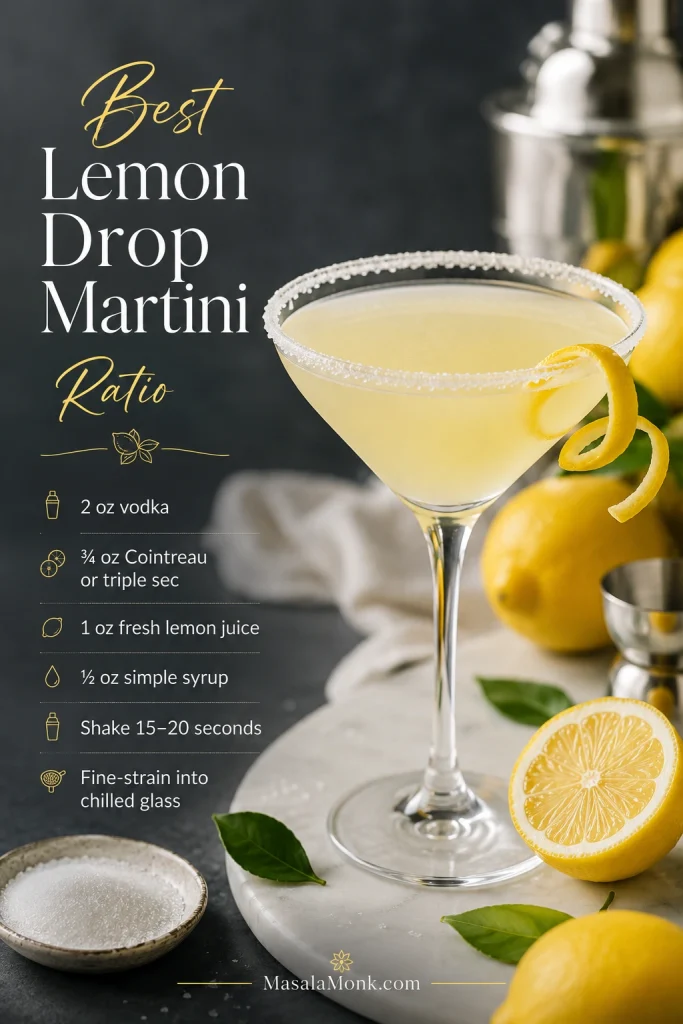
Lemon drop martini ratio card showing vodka, Cointreau or triple sec, fresh lemon juice, simple syrup, shake time, and a sugar-rimmed cocktail.
Use this Lemon Drop Martini ratio as the drink’s control panel: vodka gives structure, lemon brings sharpness, orange liqueur adds aroma, and syrup rounds the edge.

Think of the drink as a vodka sour served up: the vodka keeps it clear, the lemon gives it lift, the orange liqueur adds perfume, and the syrup softens the edge so the drink feels bright instead of sharp. Shaking supplies the cold dilution that makes it rounded instead of harsh. The sugar rim should stay outside the glass so the first taste sparkles while the cocktail underneath stays crisp. If you like this spirit-citrus-sugar balance, the Daiquiri recipe follows the same sour-cocktail logic with rum and lime.

If you want it…Adjust this way
Sharper and more citrus-forwardKeep syrup at ½ oz / 15 ml
Softer and sweeterIncrease syrup to ¾ oz / 22 ml
Drier and more bar-styleUse ½ oz / 15 ml orange liqueur and ½ oz / 15 ml syrup
More party-styleUse up to 1 oz / 30 ml syrup
Less sweet overallRim only half the glass
More aromaticExpress a fresh lemon peel over the drink

How to Balance a Lemon Drop That Tastes Off

Small corrections work better than big guesses. Taste once, adjust by the teaspoon, and shake briefly again so the fix blends into the drink.

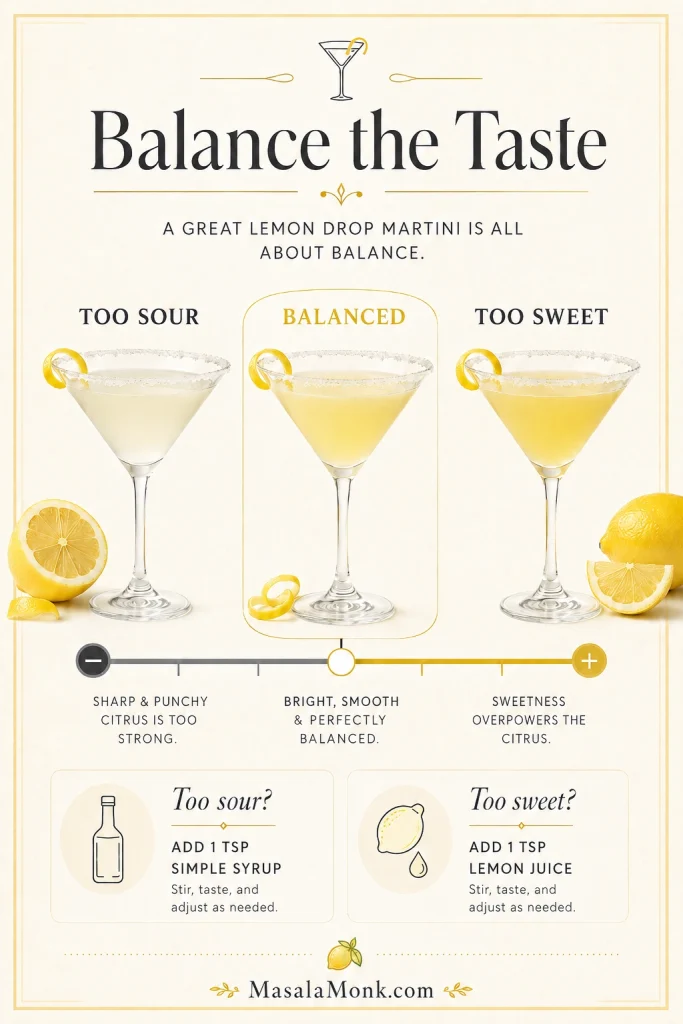
Lemon drop martini balance guide showing too sour, balanced, and too sweet drinks with syrup and lemon juice adjustments.
Taste first, then fix the drink in teaspoons. Syrup softens a too-sharp Lemon Drop, while fresh lemon cuts a too-sweet one before a brief re-shake.

How to Make a Lemon Sugar Rim

The rim should sparkle, not clump. A heavy sugar crust makes the first sip awkward and can drop sugar into the cocktail. The best lemon sugar rim is thin, even, and only on the outside edge of the glass.

  1. Add superfine sugar to a small shallow plate.
  2. Rub in 1 teaspoon finely grated lemon zest if you want a brighter rim.
  3. Run a lemon wedge around the outside edge of the glass only.
  4. Dip the moistened outside rim into the sugar.
  5. Let the glass sit for 2–3 minutes while you make the cocktail.
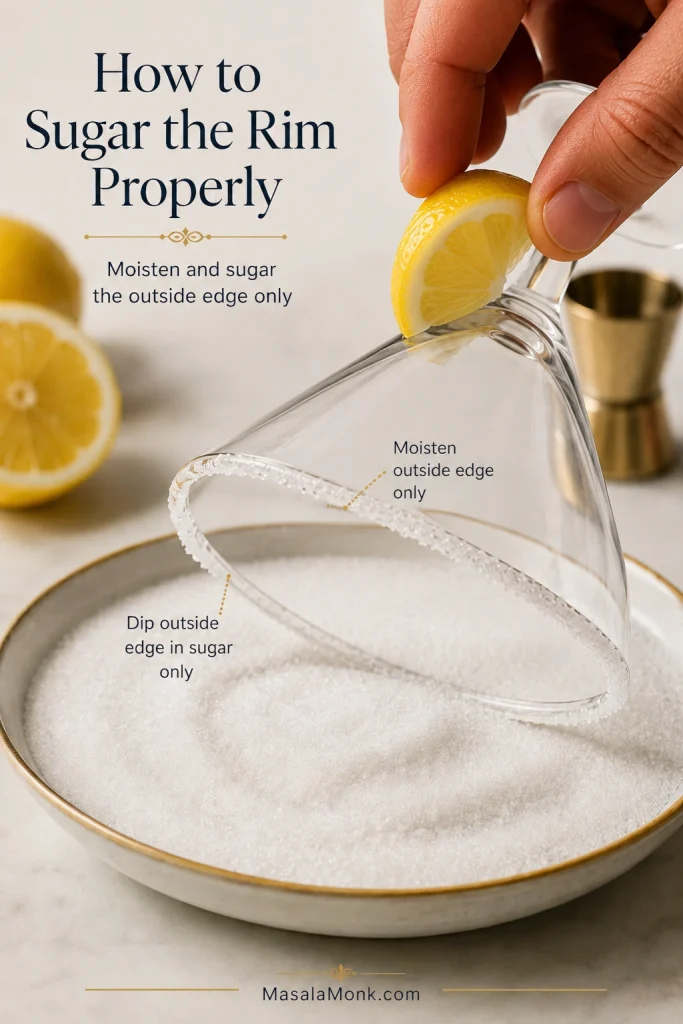
Close-up of a lemon drop martini glass being moistened and sugared only on the outside edge with superfine sugar.
Rim only the outside edge of the glass so sugar sweetens each sip, not the whole cocktail. The drink stays cleaner, brighter, and less likely to turn syrupy.

Prefer it less sweet? Rim only half the glass. Guests can choose the sugared side or the clean side, and the drink still looks polished without turning the first sip into candy.

That little sugared edge is part of the charm: the glass looks ready before the drink is even poured.

3-Ingredient Lemon Drop Martini, No Triple Sec or Cointreau

You can make a clean lemon drop martini without Cointreau or triple sec: vodka, lemon juice, and simple syrup. The sugar rim and lemon twist are optional, but they make even the simplest version feel complete.

IngredientAmount
Vodka2 oz / 60 ml
Fresh lemon juice1 oz / 30 ml
Simple syrup½–¾ oz / 15–22 ml
Optional superfine sugar for rim1–2 tbsp / about 12–25 g
Optional lemon twist1
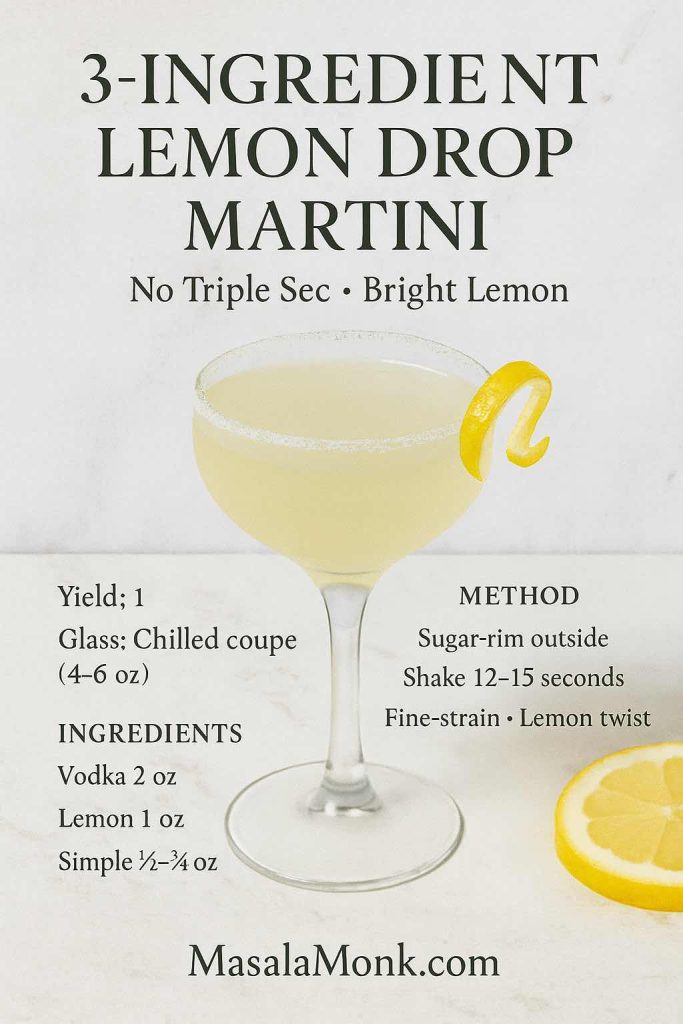
Three-ingredient lemon drop martini card showing vodka, fresh lemon juice, simple syrup, and a sugar-rimmed cocktail.
Vodka, fresh lemon juice, and syrup keep this 3-ingredient Lemon Drop simple. A light sugar rim and lemon twist make the shortcut feel complete.

Shake the vodka, lemon juice, and syrup with firm ice for 15–20 seconds, then fine-strain into a chilled glass. Use ½ oz syrup for a sharper drink, or ¾ oz if you want it softer. Missing the orange aroma? Add 1–2 dashes of orange bitters.

Back to the classic recipe · Try the limoncello version

Limoncello Lemon Drop Martini

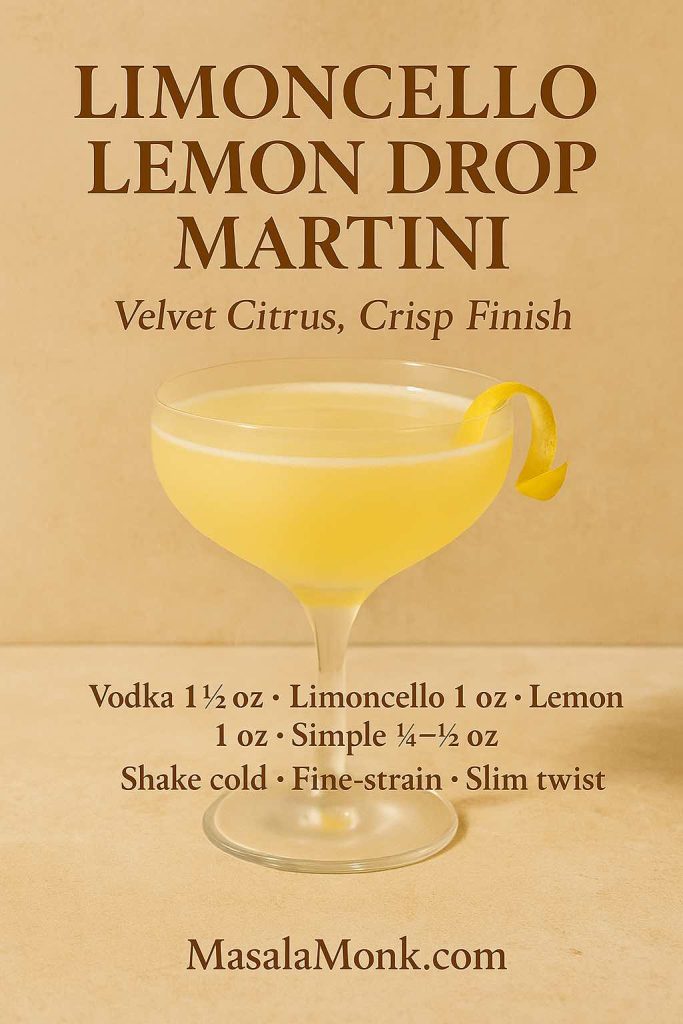
Limoncello makes a lemon drop softer, rounder, and more perfumed — the version to pour when you want the drink to feel sunnier and a little more generous. Since limoncello is already sweet, use less simple syrup than you would in the classic drink.

IngredientAmount
Vodka1½ oz / 45 ml
Limoncello1 oz / 30 ml
Fresh lemon juice1 oz / 30 ml
Simple syrup¼–½ oz / 7–15 ml, to taste
Superfine sugar for rimoptional, or half rim
Lemon twist1
Limoncello lemon drop martini card with a golden lemon cocktail, limoncello bottle, lemons, and a sugar-rimmed glass.
Since limoncello already brings sweetness, reduce the syrup before you shake. That keeps the variation sunny and lemony instead of drifting into dessert-drink territory.

Shake with ice until very cold, then fine-strain into a chilled glass. Start with ¼ oz syrup and increase only if the lemon feels too sharp.

  • Too sweet? Skip the simple syrup and use a half rim.
  • Too heavy? Add ¼ oz / 7 ml more lemon juice.
  • Too flat? Add the tiniest pinch of fine salt before shaking; it should not taste salty, just more awake.

More ways to fix the taste · Back to the classic recipe

Lemon Drop Shot Ratio

This is the version for the tray: quick to shake, easy to pass around, and brighter than a plain vodka shot. Lemon drop shots for a party should taste like smaller, punchier versions of the cocktail, not plain vodka chased with sugar.

VersionVodkaLemon juiceSimple syrup
Bright shot1 oz / 30 ml½ oz / 15 ml¼ oz / 7 ml
Sweeter party shot1 oz / 30 ml½ oz / 15 ml½ oz / 15 ml
6 shots6 oz / 180 ml3 oz / 90 ml1½–3 oz / 45–90 ml
Tray of sugar-rimmed lemon drop shots with lemon garnish and a small shot-ratio overlay.
Small, cold batches make better Lemon Drop shots. Pour right before serving so each glass tastes lively instead of warm, flat, or overly sweet.

Shake shots with ice for 8–10 seconds, then strain into lightly sugared shot glasses. Work in small batches so every round tastes lively instead of warm and syrupy.

Serving more than shots? Jump to pitcher and batch Lemon Drops.

Batch Lemon Drop Martini: Pitcher, Party Batch, and Freezer-Door Lemon Drops

Serving more than two people? The only trick is dilution. A shaken Lemon Drop gets a little water from the ice, and that water is part of the drink. For guests, the goal is simple: keep the first round cold and the second round just as good.

Pitcher Lemon Drops for a Party

A pitcher setup works best when the base is cold, the glasses are ready, and the dilution plan is settled before guests arrive.

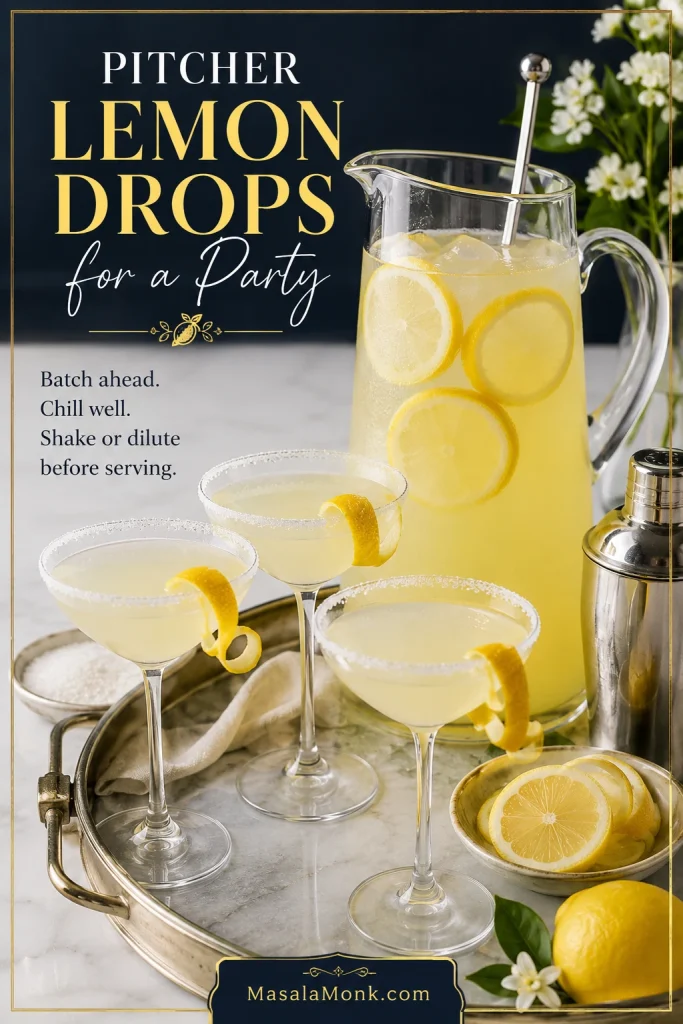
Clear pitcher of pale yellow lemon drop martinis with lemon slices, sugar-rimmed coupe glasses, lemons, and cocktail tools.
Chill the base and prepare the glasses before guests arrive. For a pitcher Lemon Drop, the dilution plan matters more than the garnish pile.
Serving styleBest choiceAdd water?
Best qualityBatch ingredients, shake each drinkNo
Easiest pitcherAdd water and chillYes
Freezer-door bottleUse smaller batch, shake each servingNo
Ready-pour bottleAdd measured water before chillingYes

Batch Dilution: Shake-to-Order vs Ready-Pour

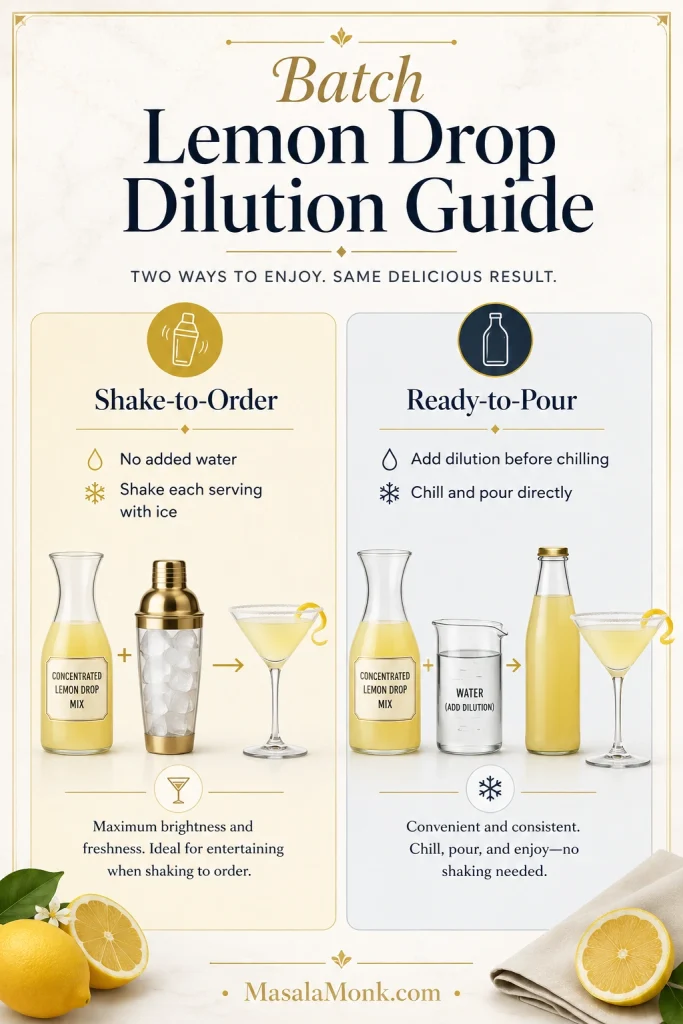
Use this choice before you bottle the drink. If the batch will not be shaken with ice later, it needs measured water now.

Infographic comparing shake-to-order lemon drop batches with ready-to-pour batches that include water for dilution.
Decide the serving style before batching. Shake-to-order Lemon Drops stay undiluted until the final shake, while ready-pour batches need measured water ahead of time.

If a batched Lemon Drop tastes strong, sharp, or oddly flat, it usually does not need more sugar first; it needs the water that shaking would have added.

After dilution, one shaken cocktail usually pours around 5 oz, sometimes closer to 5½ oz. Because Lemon Drops taste bright and smooth, they can feel lighter than they are. Serve them small, cold, and freshly poured.

Shake-to-order batches

BatchVodkaOrange liqueurLemon juiceSyrupWater
4 cocktails8 oz / 240 ml3 oz / 90 ml4 oz / 120 ml2–3 oz / 60–90 mlnone
8 cocktails16 oz / 480 ml6 oz / 180 ml8 oz / 240 ml4–6 oz / 120–180 mlnone

Ready-pour and freezer batches

BatchVodkaOrange liqueurLemon juiceSyrupWater / dilution
8 ready-pour cocktails16 oz / 480 ml6 oz / 180 ml8 oz / 240 ml4–6 oz / 120–180 ml8–10 oz / 240–300 ml
750 ml freezer bottle, shake-to-serve, about 5 cocktails10 oz / 300 ml3¾ oz / 110 ml5 oz / 150 ml2½ oz / 75 mlnone; shake each serving with ice
1 liter ready-pour bottle, about 6 cocktails12 oz / 360 ml4½ oz / 135 ml6 oz / 180 ml3–4 oz / 90–120 ml6–7 oz / 180–210 ml

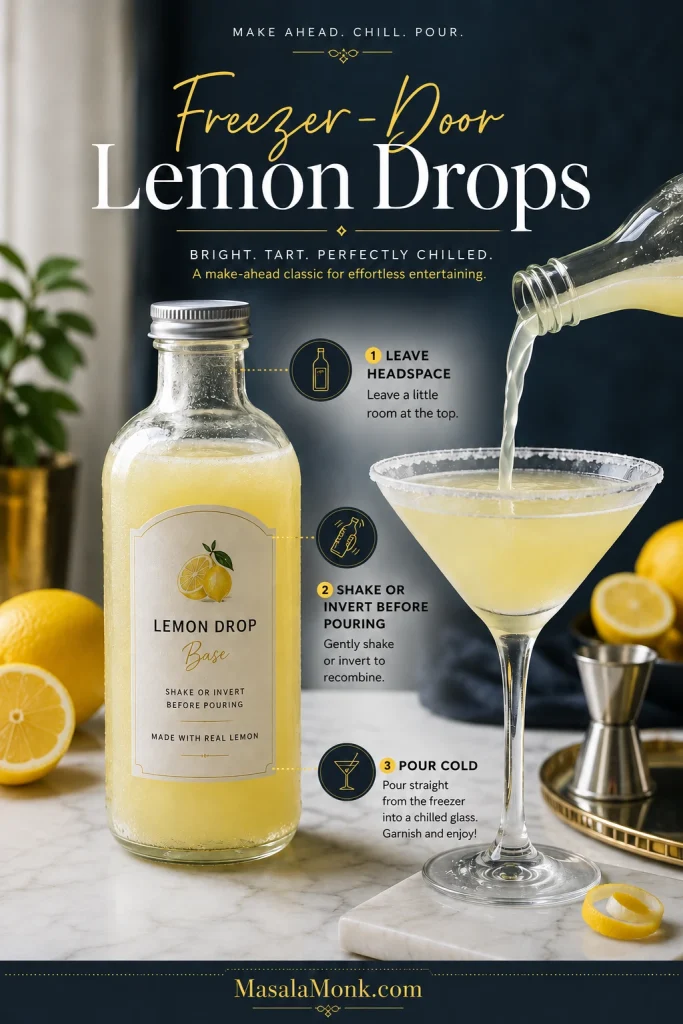
Use a large pitcher or a 1.5 liter bottle for the 8-drink ready-pour batch; it will not fit in a standard 750 ml bottle. Do not fill a freezer bottle to the top. Leave headspace, cap tightly, and shake or invert before pouring.

Freezer-Door Lemon Drop Bottle

A freezer-door bottle is convenient, but it still needs room at the top and a quick shake before serving so the citrus and syrup stay even.

Frosted freezer-door lemon drop bottle with headspace, pouring pale cocktail into a sugar-rimmed martini glass with lemon garnish.
A freezer-door Lemon Drop batch needs headspace and a quick shake or invert before pouring. That recombines citrus and syrup so every glass tastes consistent.

Batches with fresh lemon juice taste best the same day. To prep further ahead, mix the vodka, orange liqueur, and syrup first, then add fresh lemon juice closer to serving. For a built-over-ice vodka drink that is easy to serve by the round, the Moscow Mule recipe is another good party option.

Back to Jump Menu

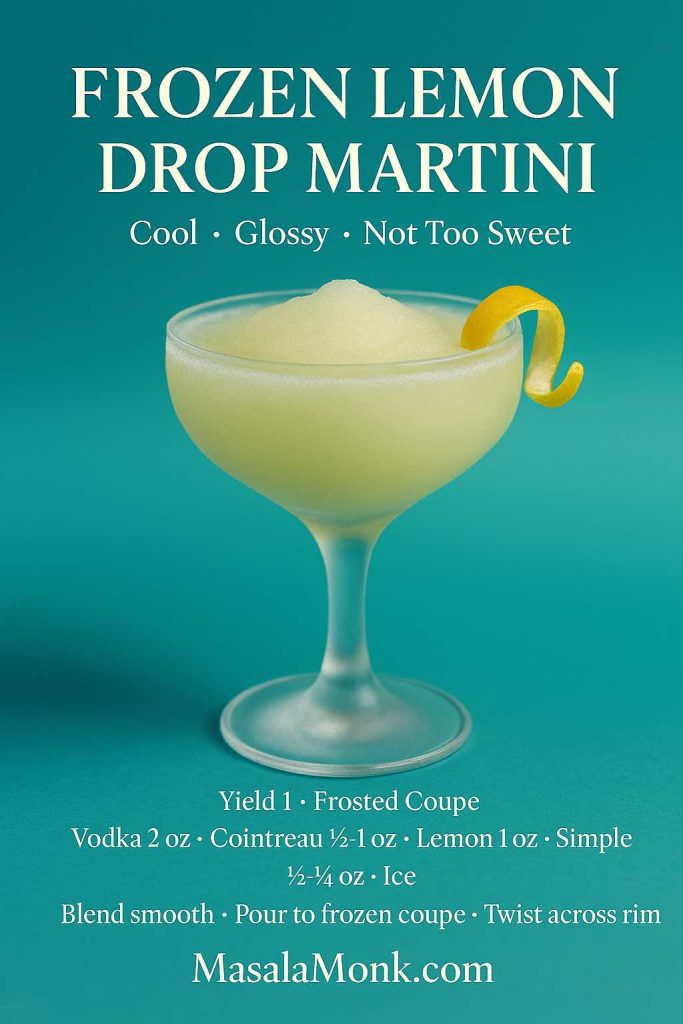
Frozen Lemon Drop Martini

A frozen lemon drop should still taste like a cocktail, not a syrupy lemon slush with vodka hiding underneath. Start with ½ oz syrup. Frozen drinks taste muted at first, then sweeter as they soften, so it is easier to add syrup than fix a slushy that turns cloying.

IngredientAmount
Vodka2 oz / 60 ml
Cointreau or triple sec½–1 oz / 15–30 ml
Fresh lemon juice1 oz / 30 ml
Simple syrup½–¾ oz / 15–22 ml
Iceabout 1 heaping cup
Frozen lemon drop martini recipe card showing an icy pale yellow cocktail with lemon garnish.
Frozen Lemon Drops should still taste like cocktails, not lemon slush. Start with restrained syrup because the drink can taste sweeter as it softens.

Blend until smooth, then pour into a chilled glass. If the drink feels too sharp, blend in a small spoonful of syrup. If it feels too sweet, add a squeeze of lemon and pulse once more. For another frozen party drink with a creamier tropical mood, try this Piña Colada recipe.

Fruit and Floral Lemon Drop Variations

Variations are where the drink gets playful, but the rule stays the same: let the lemon lead and use fruit as the accent, not the whole personality. Fruit should dress the lemon, not take over the whole glass.

Fruit and floral lemon drop martini guide with strawberry, blueberry, raspberry, blackberry, lavender, ginger, basil, and a lemon cocktail.
Let fruit and herbs frame the lemon instead of hiding it. Berries, lavender, ginger, or basil work best as accents, with fine-straining for a smoother finish.

For most fruit lemon drops, start with the classic recipe and replace the simple syrup with ½–¾ oz fruit syrup, or muddle fresh fruit before shaking. Fine-strain well and keep the total sweetness steady.

VariationUseBest cue
Strawberry Lemon Drop½–¾ oz strawberry syrup or 2 muddled berriesBest party color
Blueberry Lemon Drop½–¾ oz syrup or 8–10 berriesStrain well for a cleaner look
Raspberry Lemon Drop½ oz raspberry syrupTart and vivid; strain seeds
Blackberry Lemon Drop½–¾ oz syrup or 2–3 berriesDarker, silkier mood
Lavender Lemon Drop¼–½ oz lavender syrupKeep it subtle
Ginger Lemon Drop¼–½ oz ginger syrupSpicy-bright
Basil Lemon Drop3–4 leaves, gently muddledFresh and herbal

Use syrup when you want a clearer, prettier party drink. Muddled fruit tastes fresher but can add pulp, skins, or seeds.

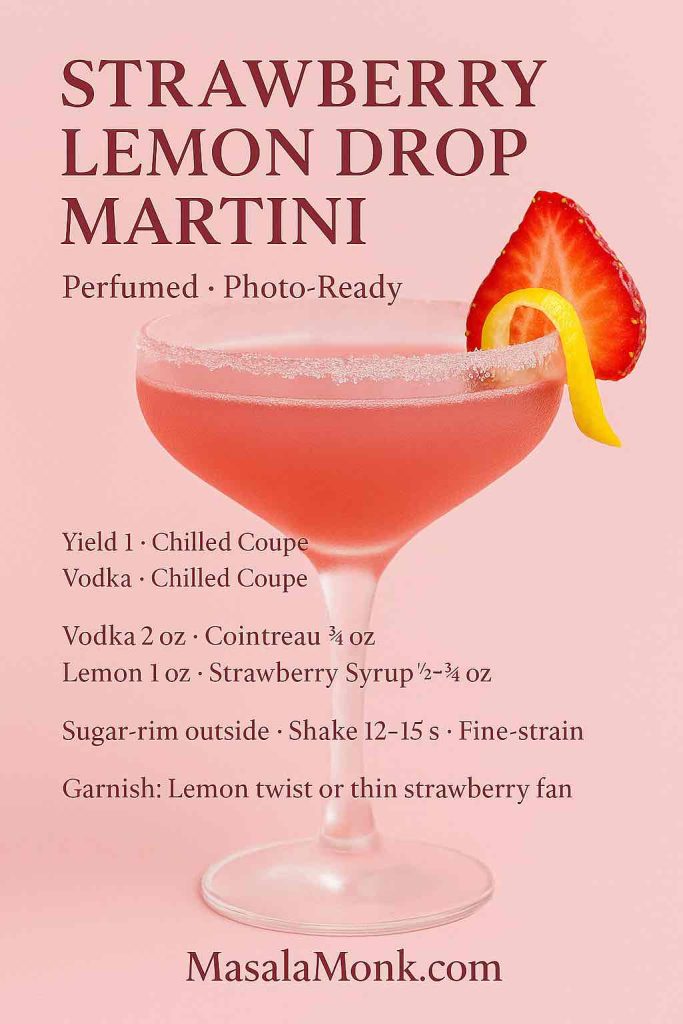
Strawberry Lemon Drop Martini

Strawberry is the easiest fruit variation to make feel party-ready. Keep the sweetness measured, then fine-strain so the pink color stays clean.

Strawberry lemon drop martini card with a pink cocktail, fresh strawberries, lemon garnish, and a sugar-rimmed glass.
A few strawberries add color and softness without turning the drink jammy. Use a small amount, then fine-strain so the cocktail stays clean.

Other spirit swaps: gin or tequila

A gin lemon drop tastes more botanical and a little drier. Try 2 oz London Dry gin, ¾ oz Cointreau, 1 oz lemon juice, and ¼–½ oz syrup. Keep the rim delicate so the botanicals do not feel heavy. For another gin-and-lemon classic, the French 75 cocktail recipe is also worth saving.

A tequila lemon drop leans toward a lemony margarita. Try 2 oz blanco tequila, ¾ oz Cointreau, 1 oz lemon juice, and ½ oz syrup. A half-sugar, half-salt rim works especially well here. If that version catches your eye, the Spicy Margarita recipe goes deeper into citrus, tequila, and a bold rim.

Back to the classic recipe · Fix the taste · Back to Jump Menu

Best Vodka for a Lemon Drop Martini

Vodka does not need to be expensive here, but it does need to disappear cleanly behind the lemon. A harsh bottle becomes more obvious once fresh citrus sharpens everything around it. Chilling helps, but it cannot turn a rough vodka smooth.

Vodka choiceUse it whenAdjustment
Plain neutral vodkaYou want the classicUse the main ratio
Smoother premium vodkaYou want a cleaner finishDo not over-sweeten
Budget vodkaCasual party drinksShake colder; use fresh lemon
Lemon vodkaYou want louder citrus aromaReduce syrup
Sweet citron vodkaOnly for party-style drinksHalf rim; less syrup
Vodka decision guide for a lemon drop martini comparing plain vodka, premium vodka, lemon vodka, and sweet citron vodka.
Plain vodka is the safest choice for a crisp Lemon Drop Martini. Lemon vodka or sweet citron vodka can also work, but start with less syrup.

For another chilled vodka drink with a sweet-tart edge, the Appletini is a natural next pour. It uses the same basic lesson: keep the fruit sharp, the glass cold, and the sweetness controlled.

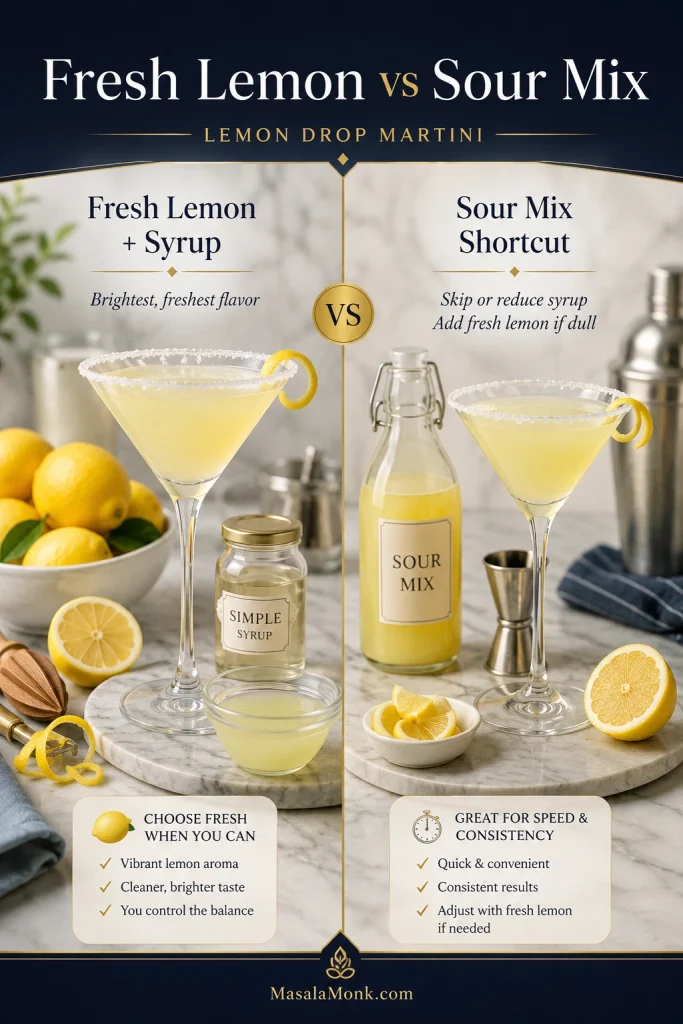
Fresh Lemon Juice vs Sour Mix or Lemon Drop Mix

Fresh lemon juice and simple syrup give the freshest, clearest lemon drop. Mixes and sour mix can work when convenience matters, but they usually taste sweeter, flatter, or less fresh.

Using a mix? Treat it as both citrus and sweetener. Do not add the full simple syrup from the classic recipe. Add vodka first, taste, then brighten with a small squeeze of fresh lemon if the drink feels dull.

Side-by-side comparison of fresh lemon with simple syrup and a generic sour mix shortcut for making a lemon drop martini.
Fresh lemon juice and simple syrup give you the most control. Sour mix is faster, but skip extra syrup at first and add fresh lemon if the drink tastes flat.
OptionResultAdjustment
Fresh lemon + syrupBrightest and bestUse the main recipe
Bottled lemon juiceFlatter and sharperAdd a fresh twist; reduce syrup slightly
Sour mixSweeter and less freshSkip or reduce simple syrup
Lemon drop mixEasiestAdd vodka and a squeeze of fresh lemon if possible
Premixed bottleLeast flexibleChill hard and garnish with fresh lemon

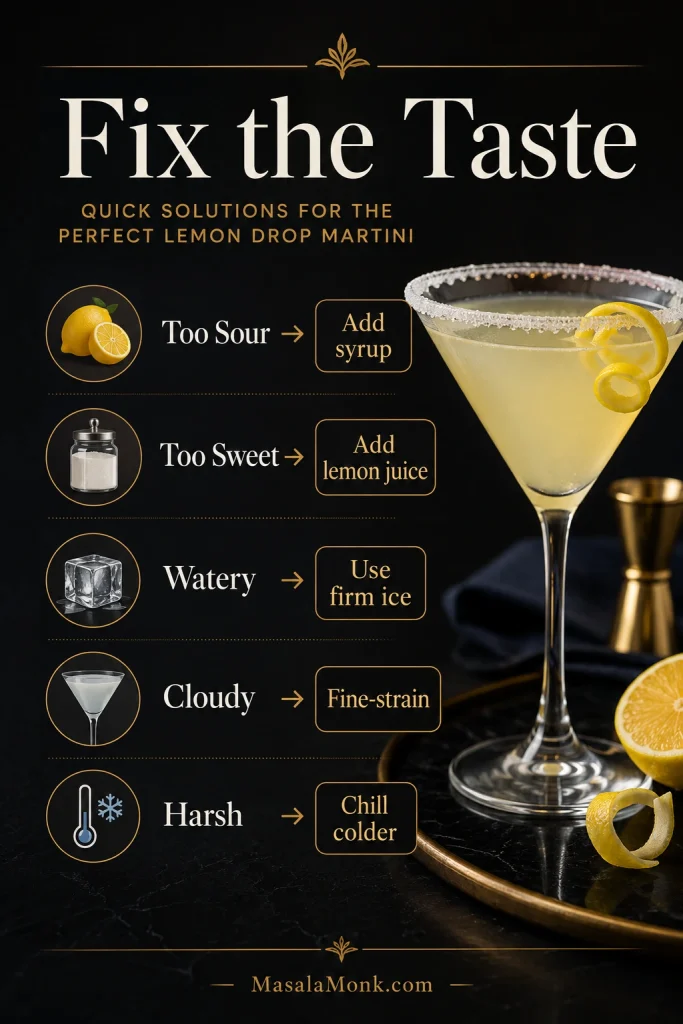
Fix the Taste

Do not dump the drink if the first sip is off. Lemon drops are forgiving when you adjust slowly. Taste, adjust by teaspoons, and shake briefly again with fresh ice.

Lemon drop martini troubleshooting guide showing fixes for too sour, too sweet, watery, cloudy, and harsh drinks.
Small adjustments fix most Lemon Drop Martini problems. Syrup softens sharp lemon, fresh juice cuts sweetness, firm ice controls dilution, and fine-straining clears the pour.
ProblemWhat probably happenedHow to fix it
Too sourThe lemons are sharp or syrup is too lowAdd 1 tsp simple syrup and shake briefly
Too sweetToo much syrup, sweet liqueur, or heavy rimAdd 1 tsp lemon juice and re-shake
WateryWet ice or too much shakingUse firm ice and shake 15–20 seconds
CloudyPulp, ice shards, or sugar fell inFine-strain and rim outside only
HarshDrink is warm or vodka is roughChill the glass and shake colder
Rim too crunchySugar is too coarse or too thickUse superfine sugar and a lighter dip
Limoncello version too sweetLimoncello plus syrup overloadReduce syrup or use a half rim
Fruit version tastes jammyToo much syrup or pureeAdd lemon juice and strain well

Back to the classic recipe · Back to Jump Menu

Make-Ahead and Storage Notes

You can prepare parts of a lemon drop ahead, but the best texture comes from shaking close to serving. A Lemon Drop feels most alive when the glass is cold, the rim is neat, and the citrus still smells fresh.

  • Lemon juice: Juice lemons the same day if possible. Strain and refrigerate until needed.
  • Simple syrup: Store in a clean jar in the fridge and use within 2–3 weeks.
  • Rimmed glasses: Rim glasses shortly before serving so the sugar stays neat.
  • Pitcher batch: Mix and chill up to a few hours ahead.
  • Best service: Shake each serving with ice and pour immediately.
Make-ahead lemon drop martini timeline showing simple syrup, juiced lemons, rimmed glasses, shaker, and finished cocktail.
Prepare the parts instead of the finished cocktail. Make syrup ahead, juice lemons the same day, rim glasses close to serving, and shake with ice at the last minute.

Serve alongside: mango lemonade for a non-alcoholic citrus option.

Bartender-Style Reference: Drier Classic vs Softer Home Version

Despite the martini glass, the Lemon Drop was born as a bright 1970s bar drink, closer in spirit to a vodka sour than a true martini.

The International Bartenders Association’s Lemon Drop Martini shows the drier classic skeleton of vodka, triple sec, and fresh lemon juice. Liquor.com’s Lemon Drop recipe also centers vodka, triple sec, fresh lemon juice, simple syrup, and a sugar rim.

This version sits between those worlds: it keeps the classic vodka-orange-lemon structure, then uses measured syrup and a delicate rim so the drink lands bright without turning harsh.

If you enjoy martini-style drinks with a different mood, try an Espresso Martini.

FAQs

These quick answers cover the swaps and shortcuts people usually ask about once the shaker is already out.

What is a Lemon Drop Martini?

A Lemon Drop Martini is a chilled vodka cocktail with fresh lemon juice, balanced sweetness, orange liqueur, and usually a sugar rim.

Is a Lemon Drop Martini the same as a Lemon Martini?

The names overlap, but a Lemon Drop Martini usually means vodka, lemon, sweetener, and a sugar rim. “Lemon Martini” can refer more broadly to lemon-flavored martini-style drinks, so recipes vary.

Which vodka works best?

A clean neutral vodka is the safest choice for the classic version. Lemon vodka works when you want stronger citrus aroma, but reduce the syrup slightly.

Fresh lemon juice or bottled?

Fresh lemon juice is best because the aroma is part of the drink. Bottled lemon juice works only as a shortcut and may taste flatter.

How sweet should a Lemon Drop be?

It should be balanced, not dessert-sweet. Start with ½ oz / 15 ml simple syrup for one cocktail, then add more only if the lemon tastes too sharp.

No triple sec — what should I use?

Use vodka, fresh lemon juice, and simple syrup for a three-ingredient lemon drop. Add 1–2 dashes of orange bitters if you want a little orange aroma without liqueur.

Cointreau, triple sec, or Grand Marnier?

Cointreau tastes crisp and clear. Triple sec is more budget-friendly and varies by brand. Grand Marnier tastes richer and rounder, so use a little less syrup if the drink feels too sweet.

How long should you shake a Lemon Drop Martini?

Shake for 15–20 seconds, or until the shaker feels very cold. For shots, 8–10 seconds is usually enough because the serving is smaller.

Lemon Drop Martini vs Lemon Drop Shot — what is the difference?

A Lemon Drop Martini is a full cocktail served up in a coupe or martini glass. A Lemon Drop Shot is smaller, stronger, and served in a shot glass with less dilution.

How do you make Lemon Drop shots?

For one bright shot, shake 1 oz / 30 ml vodka, ½ oz / 15 ml lemon juice, and ¼ oz / 7 ml simple syrup with ice for 8–10 seconds. Strain into a lightly sugared shot glass.

Can you make a Lemon Drop Martini with sour mix?

Yes. Use vodka and sour mix, then skip or reduce the simple syrup because most sour mixes already contain sugar. A squeeze of fresh lemon helps brighten the drink.

What is the best way to batch Lemon Drops for a party?

Mix the vodka, orange liqueur, lemon juice, and syrup ahead, then chill. For the best texture, shake each serving with ice. For ready-pour service, add cold water to replace shake dilution.

Does limoncello work in a Lemon Drop Martini?

Yes. Limoncello makes the cocktail softer and more lemon-perfumed. Since it is sweet, reduce the simple syrup and consider using only a half sugar rim.

Back to Jump Menu

Closing Pour

The Lemon Drop lasts because it gives a simple promise and delivers it quickly: cold vodka, just-squeezed lemon, a soft edge of sweetness, and a glass that looks festive before anyone takes the first sip. Make the classic first, keep the rim delicate, and shake until the tin feels icy.

After that, the variations are easy: limoncello for softness, shots for the party tray, frozen for hot afternoons, strawberry when the room needs color. The goal stays the same every time: citrus first, smooth second, sweet only enough.

If you make it, start with the classic first. Then come back and tell us what your table chose next: limoncello, frozen, strawberry, or shots.

Posted on Leave a comment

Appletini Recipe: Crisp, Cold Apple Martini with Vodka

Pale green Appletini in a chilled coupe glass with a thin green apple slice garnish on a dark bar surface.

The Appletini is better than its reputation. When it is made badly, it can taste like melted green candy. Done well, it is icy, sharp, apple-bright, and genuinely fun to sip.

This version keeps the green apple snap people expect, but balances it with real apple juice and fresh lemon, so the drink tastes crisp instead of syrupy. It still feels like the classic apple martini, just cleaner, colder, and more grown-up.

The mood should feel playful, not childish — bright enough for a retro cocktail night and sharp enough to serve before dinner with salty snacks.

Quick answer: an Appletini, also called an apple martini, is a chilled vodka cocktail usually made with vodka, sour apple schnapps or sour apple liqueur, apple juice, fresh lemon juice, and ice. Shake it hard, strain it into a chilled martini glass or coupe, and garnish with a thin green apple slice.

Make this tonight:

  • Use the ratio: 1 1/2 oz vodka, 1 oz sour apple liqueur, 1 oz apple juice, and 1/2 oz fresh lemon juice.
  • Start tart: add simple syrup only after tasting.
  • Serve it ice-cold: shake hard with plenty of ice and pour into a chilled glass.

Appletini Recipe

Make this version first. It gives you the green apple flavor people expect from an Appletini without the heavy sweet finish. Once you taste this balance, every variation becomes easier.

The best version smells lightly of green apple before you even sip it. On the first taste, it should land cold and sharp, turn apple-sweet in the middle, and finish clean with lemon.

Prep time: 5 minutes
Total time: 5 minutes
Yield: 1 cocktail
Glass: Chilled martini glass or coupe
Equipment: Cocktail shaker, jigger or small measuring cup, strainer

Ingredients

  • 1 1/2 oz / 45 ml vodka
  • 1 oz / 30 ml sour apple schnapps, sour apple liqueur, or apple pucker
  • 1 oz / 30 ml apple juice, preferably cloudy or unfiltered
  • 1/2 oz / 15 ml fresh lemon juice
  • 1/4 oz / 7.5 ml simple syrup, optional
  • Ice
  • Thin green apple slice, for garnish

Instructions

  1. Chill a martini glass or coupe while you measure the ingredients.
  2. Add the vodka, sour apple liqueur, apple juice, lemon juice, and optional simple syrup to a cocktail shaker.
  3. Fill the shaker with plenty of fresh ice.
  4. Shake hard for 15 to 20 seconds, until the outside of the shaker feels very cold.
  5. Strain into the chilled glass.
  6. Garnish with a thin green apple slice. Brush or dip the apple slice in lemon juice first so it stays fresh-looking.

Recipe note: start without simple syrup when your sour apple liqueur is already sweet. If the balance still feels off, use the taste-fixing guide below.

Before You Mix

A good Appletini should look playful but taste clean. Apple should show up before sugar.

You do not need a full bar setup. A jar, a tablespoon, fresh lemon, and enough ice will get you most of the way there.

  • No jigger? Use tablespoons: 1 oz = 2 tablespoons, 1/2 oz = 1 tablespoon, and 1/4 oz = 1 1/2 teaspoons.
  • No shaker? Use a clean mason jar, protein shaker, or sturdy jar with a tight lid. Shake carefully, then strain through a small sieve when needed.
  • Greener drink? Use a brighter sour apple liqueur or apple pucker, but keep the pour controlled.
  • Fresher drink? Use cloudy or unfiltered apple juice and keep the syrup optional.
  • Glassware note: A coupe is a shallow stemmed cocktail glass. Either a coupe or martini glass works; chilling it matters more than the shape.

What Is an Appletini, Exactly?

An Appletini, or apple martini, is a vodka cocktail flavored with apple. It is not a classic martini in the dry gin-and-vermouth sense; it is a modern vodka cocktail with a martini-glass attitude.

The old-school green version is usually shaken with sour apple schnapps or sour apple liqueur and served cold in a stemmed glass. “Apple martini” can also describe fresher versions made with apple juice, apple cider, or apple brandy. This recipe sits in the middle: bright green apple flavor, real apple body, and enough fresh lemon to keep the drink balanced.

Which Appletini Do You Want?

Not every Appletini uses the same apple ingredient. Maybe you want the neon-green bar drink, a cleaner apple martini, or simply a way to use the bottle already on your shelf.

You Want Use This Result
Old-school green Appletini Sour apple schnapps or apple pucker Bright, sweet-tart, nostalgic
Less sweet apple martini Less liqueur, no syrup, more lemon Cleaner and sharper
Fresh apple martini Cloudy or unfiltered apple juice Less neon, more real apple
Fall apple martini Apple cider and maple syrup Warmer and deeper
Sour apple martini Apple pucker plus extra lemon or lime Sharper and more bar-style
Non-alcoholic Appletini Apple juice, lemon, optional syrup, sparkling water Fresh apple mocktail

For a first try, stay with the main recipe. It gives you the expected green apple flavor without going too sweet.

Why This Appletini Works

The liqueur gives the snap, the juice gives the apple body, and the lemon keeps the drink balanced. That is the whole trick.

One ounce of sour apple liqueur is enough to give the Appletini its identity without letting the bottle take over. Apple juice makes the cocktail taste more like actual apple. Fresh lemon keeps the finish bright. Vodka gives the drink structure without covering the fruit.

The 1/2 oz lemon pour is deliberate: less can leave the drink flat, while more pushes it toward a sharper sour apple martini. Cold matters too. The drink should hit like a frosted Granny Smith slice, not a melted sour candy.

I would rather start with a tart Appletini and sweeten it later than try to rescue one that already tastes heavy. Fresh lemon is the easiest way to make the apple taste brighter, the same way citrus keeps a Lemon Drop Martini from tasting flat.

Appletini Ingredients and Smart Swaps

You do not need the perfect bottle to make a good Appletini. You need a clear balance: apple, citrus, cold, and restraint.

Quick chooser: use apple pucker or sour apple schnapps for the nostalgic green Appletini, cloudy apple juice for a fresher less-sweet version, and non-alcoholic apple cider for a deeper fall-style apple martini.

Vodka, sour apple liqueur, apple juice, lemons, simple syrup, ice, and green apples arranged for an Appletini recipe.
A balanced Appletini starts before you shake: vodka for structure, sour apple liqueur for snap, apple juice for body, lemon for lift, and syrup only if needed.

Vodka

The base spirit is here to stay out of the way. Apple and lemon should be the parts you notice first. Use a smooth vodka you enjoy in cocktails; it does not need to be expensive, but it should not taste harsh.

A flavored vodka also works, but it can push the drink sweeter and more perfumed. For the adjusted balance, use the apple vodka Appletini version below. Gin can be used for a botanical variation, but vodka gives the expected Appletini flavor.

Sour Apple Schnapps, Sour Apple Liqueur, or Apple Pucker

This is the ingredient that gives the Appletini its green apple snap. Sour apple schnapps, sour apple liqueur, and apple pucker all work, but they can taste very different from bottle to bottle.

The most old-school green Appletini comes from sour apple schnapps or apple pucker. A slightly cleaner version starts with a sour apple liqueur that is not aggressively sweet. Begin with 1 oz / 30 ml, then adjust with lemon juice or apple juice rather than adding more liqueur immediately.

Small bottles and pour glasses of green apple cocktail ingredients with green apple and lemon nearby.
Apple pucker, sour apple schnapps, and sour apple liqueur can all work, but they do not taste equally sweet. Taste your bottle first, then adjust lemon and syrup from there.

Use whatever sour apple bottle you have. The only rule is to taste before adding syrup, because some bottles are already sweet enough.

Apple Juice

This is what makes the drink taste like apple, not just apple-flavored alcohol. Cloudy apple juice, also sold as unfiltered apple juice, gives the fullest flavor. Clear apple juice is lighter and often sweeter, so unsweetened juice gives you the most control. The drink should taste like apple before it tastes like sugar.

Apple Cider

For this recipe, apple cider means non-alcoholic apple cider: unfiltered apple juice with a deeper, rounder flavor. In some countries, “cider” means alcoholic cider; that is not what this Appletini variation needs unless a recipe specifically says so.

Use apple juice or sour apple liqueur for the bright green look. For a deeper fall version, cider gives the drink a softer color and warmer apple flavor; the apple cider martini variation shows how to make that swap.

Two small glasses of cloudy apple juice and darker apple cider with an Appletini glass blurred in the background.
Apple juice keeps the drink closer to a bright classic Appletini. Meanwhile, non-alcoholic apple cider makes a warmer apple cider martini variation with deeper fruit flavor.

Fresh Lemon Juice

Lemon is the difference between a drink that tastes bracing and one that tastes like green syrup. Without enough citrus, an Appletini can taste flat, even when the measurements are technically correct.

Fresh lemon juice is best because this cocktail has only a few ingredients, so the citrus flavor stands out. Lime juice also works for a sharper sour apple edge. For more easy ways to use lemon with vodka, this vodka with lemon guide has simple citrus-forward ideas.

Simple Syrup

This is the ingredient to add last, not first. Shake the drink without syrup when your sour apple liqueur is sweet. Taste, then add a small splash only when the cocktail feels too sharp.

For a cider variation, maple syrup can replace simple syrup, but use it lightly because it moves the drink into fall-cocktail territory.

Green Apple Garnish

A thin green apple slice makes the drink look intentional, not just green. Granny Smith works especially well because it is tart, bright, and crisp. Brush or dip the slice in lemon juice before garnishing so it does not brown.

Thin green apple slices being brushed with lemon juice beside a lemon half and a small bowl.
Thin green apple slices look beautiful, but they brown quickly. A little lemon juice keeps the Appletini garnish fresh-looking while you finish the drinks.

For cider or caramel apple variations, a cinnamon-sugar rim can be delicious. For the main Appletini, keep the garnish simple so the drink stays sharp rather than dessert-like.

How to Make an Appletini Cold, Crisp, and Balanced

The recipe card gives the quick version; this section shows the small technique choices that make the drink taste colder, cleaner, and less sweet.

Pour the Sour Apple Liqueur

Measure the sour apple liqueur instead of guessing. A controlled pour keeps the apple flavor bright without letting sweetness take over the drink.
Green sour apple liqueur being poured into a cocktail shaker with apple juice, lemon, ice, and green apple nearby.
Sour apple liqueur gives the Appletini its color and snap, but the pour needs control. Lemon juice keeps that green apple flavor tart instead of candy-sweet.

Shake the Appletini With Plenty of Ice

Fill the shaker with fresh ice and shake until the outside feels very cold. This is where the cocktail gets its clean texture, quick chill, and just enough dilution.

Cocktail shaker being shaken with ice on a dark bar surface with green apple slices and lemon nearby.
A hard shake makes a real difference here. It chills the Appletini quickly, lightly dilutes the alcohol, and helps the apple and lemon taste brighter together.

Strain Into a Chilled Glass

Empty the ice water from the glass if you used it, then strain the Appletini immediately. A chilled coupe or martini glass keeps the first sip sharp instead of soft.

Pale green Appletini being strained from a metal cocktail shaker into a chilled coupe glass.
Strain the Appletini into a chilled glass so the texture stays smooth and the first sip lands cold. This small step gives the cocktail its clean martini-style finish.

Step-by-Step Method

  1. Chill the glass. Put your martini glass or coupe in the freezer for a few minutes, or fill it with ice water while you make the drink.
  2. Measure the ingredients. Add vodka, sour apple liqueur, apple juice, lemon juice, and optional syrup to a cocktail shaker.
  3. Add plenty of ice. Fill the shaker with fresh, clean-tasting ice so the drink chills quickly. Old freezer ice can dull a simple cocktail.
  4. Shake hard. Shake for 15 to 20 seconds, until the shaker feels icy cold on the outside.
  5. Taste if needed. If it tastes sweet, add a squeeze of lemon. If it tastes sharp, add a small splash of syrup.
  6. Strain. Pour the cocktail into the chilled glass.
  7. Garnish. Add a lemon-dipped green apple slice, lemon twist, or cocktail cherry.

The finished drink should be smooth, frosty, and clean — not thick or slushy.

The Best Appletini Ratio for a Crisp, Less-Sweet Drink

Save this Appletini ratio:

1 1/2 : 1 : 1 : 1/2

Vodka : sour apple liqueur : apple juice : lemon juice

Four measured Appletini ingredients in small glasses with green apple, lemon, and bar tools nearby.
Use the Appletini ratio as a starting point. Shake, taste, then sweeten only if the apple and lemon feel too sharp.

This is the ratio to remember. It keeps the Appletini recognizable, but stops it from becoming heavy.

  • Vodka gives the cocktail structure.
  • Sour apple liqueur gives the Appletini flavor.
  • Apple juice gives real apple body.
  • Lemon juice balances the sweetness.
  • Simple syrup is optional, not automatic.

The ratio is flexible, but the order of adjustment matters: fix sweetness with citrus first, then syrup only if needed. A pale green Appletini that tastes snappy and fresh is better than a neon one that tastes heavy. More color usually means more liqueur and more sweetness.

That is the sweet spot: enough green apple to feel like an Appletini, enough lemon to make you want the next sip.

How to Fix the Taste: Less Sweet, More Tart, or Stronger

Use this after the first shake, not before. Cocktail balance depends on the bottle of liqueur, the sweetness of the juice, and how cold the drink is.

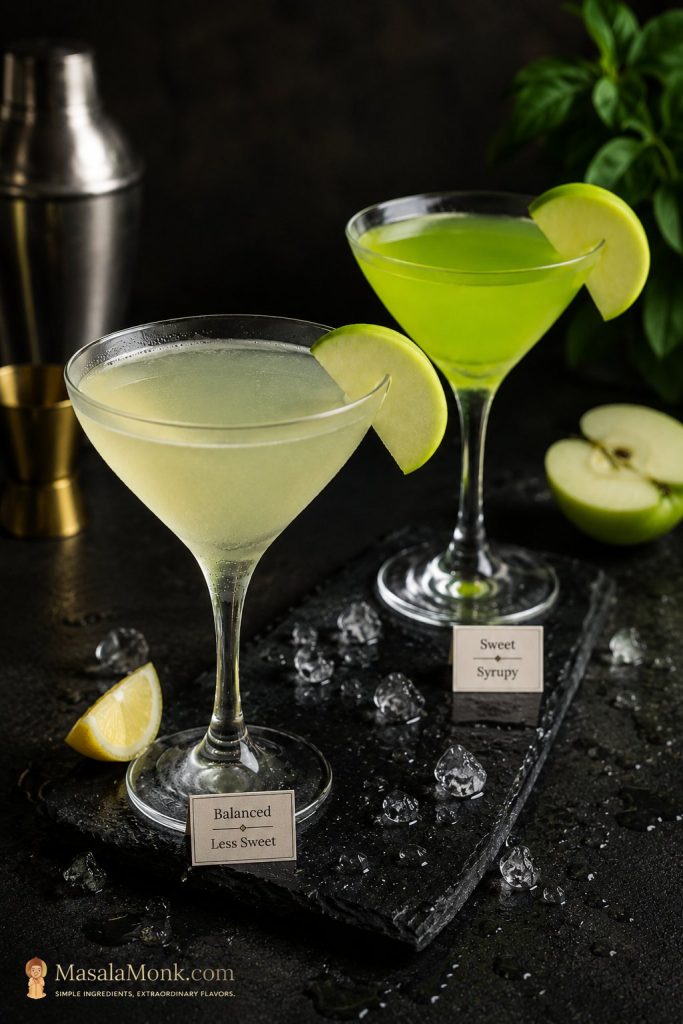
Two Appletini cocktails compared on a dark surface, one pale and balanced and one brighter green and sweeter-looking.
A less-sweet Appletini should taste brighter, not weaker. Real apple juice and enough lemon pull the green apple flavor into focus.
Problem How to Fix It
Overly sweet Add a little more lemon or lime juice, reduce the sour apple liqueur next time, and skip the syrup.
Too tart Add 1/4 oz / 7.5 ml simple syrup or use a slightly sweeter apple juice.
Weak or thin Add a little more vodka, not more liqueur.
Strong alcohol bite Add more apple juice and shake again with plenty of ice.
Heavy finish Use less sour apple liqueur and more cloudy or unfiltered apple juice.
Flat flavor Add a touch more fresh citrus and make sure the drink is very cold.
Needs more green color Use a brighter sour apple liqueur, but avoid extra syrup. A green apple garnish also helps the look.

Most bad Appletinis are not mysterious. They are too warm, too sweet, or both. Fix the cold and citrus, and the whole cocktail suddenly makes sense.

Appletini Variations

Think of the variations as moods: sour and sharp, fresh and quiet, fall and rounded, or dessert-like and playful. Start with the main recipe, then jump to the version that matches the bottle, season, or crowd you are mixing for.

None of these versions need to feel serious. The Appletini’s charm is that it gets to be fun — it just does not have to be cloying.

Sour Apple Martini

Use 1 1/2 oz vodka, 1 oz sour apple liqueur or apple pucker, 1/2 oz lemon or lime juice, and only 1/2 oz apple juice. Skip the syrup unless the drink tastes too sharp.

Bright green sour apple martini in a coupe glass with a green apple garnish, ice, lemon, and bar tools nearby.
For a sharper sour apple martini, let apple pucker or sour apple liqueur bring the punch, then balance it with lemon or lime. The contrast keeps the drink snappy.

Green Apple Martini

Use a bright sour apple liqueur and garnish with a thin Granny Smith slice. To make the drink greener without making it much sweeter, keep the liqueur to 1 oz / 30 ml and let the garnish help with the color.

Green apple martini in a coupe glass with a fan of thin Granny Smith apple slices on the rim.
A Granny Smith garnish instantly says green apple martini. Keep the slices thin and the fan proportional so the glass looks polished instead of overloaded.

Fresh Apple Martini

Reduce the sour apple liqueur to 1/2 oz / 15 ml and use 1 1/2 oz / 45 ml cloudy or unfiltered apple juice. Add 1/2 oz / 15 ml lemon juice and a small amount of simple syrup only when needed. This version will not look as green, and that is the point.

Pale apple martini in a coupe glass with cloudy apple juice, lemon peel, green apple, ice, and bar tools on a light surface.
Cloudy apple juice gives a fresh apple martini more body and a softer color. Use it when you want real apple flavor without leaning on a neon-green bar look.

Apple Cider Martini

Replace the apple juice with apple cider and use maple syrup instead of simple syrup. This is no longer the bright green bar-style Appletini; it is a deeper apple martini with a rounder cider flavor.

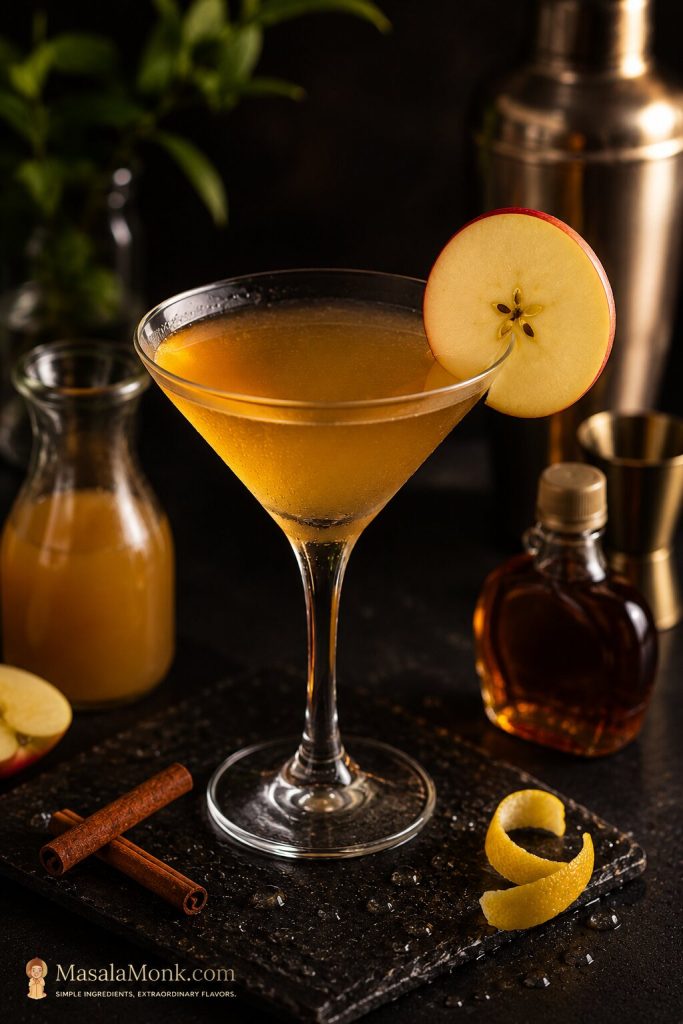
Amber apple cider martini in a coupe glass with an apple slice garnish, cinnamon sticks, lemon peel, apple cider, and a small syrup bottle.
For a fall-style Appletini, swap in non-alcoholic apple cider and keep the garnish simple. Cinnamon, lemon peel, and a small maple cue make it seasonal without turning it heavy.

Caramel Apple Martini

Add a small splash of butterscotch schnapps or use caramel vodka. Keep the lemon juice in the drink so the caramel does not make it heavy. A caramel drizzle or cinnamon-sugar rim works, but use it lightly.

Pale green-gold caramel apple martini in a coupe glass with a light caramel rim, apple slice garnish, cinnamon sticks, and bar tools.
Caramel belongs in an apple martini as an accent, not the base. A light rim or small drizzle gives dessert flavor, while lemon keeps the cocktail from becoming sticky.

Appletini With Apple Vodka

Use 1 1/2 oz / 45 ml apple vodka, 3/4 oz / 22.5 ml sour apple liqueur, 1 oz / 30 ml apple juice, and 1/2 oz / 15 ml lemon juice. Skip the simple syrup unless needed. With apple vodka, keep the liqueur and syrup lighter so the drink stays bright instead of turning into apple candy.

Apple vodka, sour apple liqueur, lemon juice, sliced green apples, and a pale green Appletini arranged on a dark bar surface.
Apple vodka can make an Appletini smell more aromatic, but it may also push the drink sweeter. Start by reducing syrup, then use lemon to keep the finish clean.

Non-Alcoholic Appletini or Virgin Appletini

Shake 2 oz / 60 ml apple juice, 1/2 oz / 15 ml lemon juice, and 1/4 oz / 7.5 ml simple syrup only when needed with ice. Strain into a chilled glass and top with sparkling water. Use ginger ale for a sweeter mocktail.

Non-alcoholic green apple mocktail in a coupe glass with bubbles, green apple garnish, lemon, ice, and apple slices.
A virgin Appletini should still feel like a cocktail, not plain apple juice in a fancy glass. Lemon brings brightness, sparkling water adds lift, and green apple keeps the look classic.

For something apple-forward without the vodka, MasalaMonk’s apple juice mocktails are a natural next step.

Can You Use Appletini Mix or Sour Mix?

Yes, but start small. Appletini mix, sour apple mix, and sweet-and-sour mix are usually already sweetened, so they can push the drink heavy fast.

With sweet-and-sour mix, shake 1 1/2 oz vodka, 1 oz sour apple liqueur, 1/2 oz apple juice, and 1/2 oz sour mix with ice. Taste before adding more sour mix or any syrup. Fresh lemon and apple juice simply make the drink taste more alive.

Appletini sour mix setup with measured glasses of vodka, sour apple liqueur, apple juice, and sour mix beside a shaker and green apples.
Sour mix is useful when you need speed, but it is often already sweetened. Measure it carefully, shake the drink, and taste before adding any extra simple syrup.

Common Appletini Mistakes

Check this when the drink tastes almost right but not quite. Most Appletini problems come from the same few places.

  • Using too much sour apple liqueur: keep it around 1 oz / 30 ml so the drink tastes like apple, not syrup.
  • Adding syrup automatically: many apple liqueurs are already sweet, so taste first.
  • Skipping fresh lemon: citrus is what keeps the cocktail bright.
  • Shaking too lightly: the drink needs enough cold and dilution to taste clean.
  • Batching without dilution: add a little cold water when serving straight from a pitcher.
  • Cutting garnish too early: brush or dip apple slices in lemon juice so they do not brown.

Make-Ahead, 2-Drink, and Pitcher Appletinis

You can scale this recipe, but a pitcher Appletini needs help from cold and dilution because it misses the shake. Whenever possible, batch the ingredients, chill them, then shake individual portions with ice before serving.

A pitcher Appletini should still feel like a cocktail, not a bowl of green punch.

For 2 Appletinis

  • 3 oz / 90 ml vodka
  • 2 oz / 60 ml sour apple liqueur
  • 2 oz / 60 ml apple juice
  • 1 oz / 30 ml fresh lemon juice
  • 1/2 oz / 15 ml simple syrup, optional
  • Ice, for shaking

Shake with ice and strain into two chilled glasses.

Pitcher Appletini for 8 Cocktails

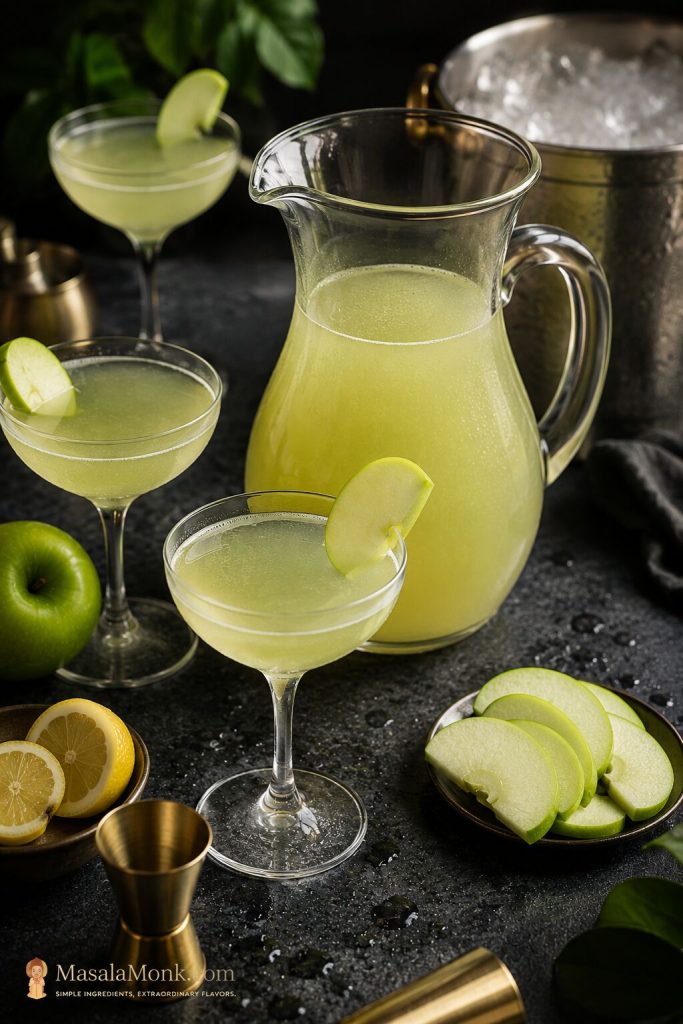
Glass pitcher of pale green Appletinis with chilled coupe glasses, green apple slices, lemon, an ice bucket, and bar tools.
For pitcher Appletinis, chill the mixture before guests arrive and keep ice out of the pitcher. That way, each pour stays cold and crisp instead of watered down.
  • 12 oz / 360 ml vodka
  • 8 oz / 240 ml sour apple liqueur
  • 8 oz / 240 ml apple juice
  • 4 oz / 120 ml fresh lemon juice
  • 2 oz / 60 ml simple syrup, optional
  • 4 to 6 oz / 120 to 180 ml cold water, when serving straight from the pitcher without shaking

Stir everything except ice in a pitcher and refrigerate until very cold. When ready to serve, shake individual portions with ice when possible, then strain into chilled glasses. This gives the best texture and balance.

Serving straight from the pitcher? Start with 4 oz / 120 ml cold water. Taste after chilling and add up to 2 oz / 60 ml more water when the batch tastes too sharp or strong.

Keep ice out of the pitcher unless you are serving immediately. Ice will melt and water down the whole batch. Garnish each glass just before serving so the apple slices look fresh. This is still a cocktail batch, not a light punch, so pour modest servings and keep it chilled.

Can You Make Appletinis Ahead?

Yes. Mix the vodka, sour apple liqueur, apple juice, and lemon juice up to 4 hours ahead and refrigerate. Add ice only when shaking or serving.

For the freshest flavor, shake with ice right before pouring. Citrus can taste dull when it sits too long, so this drink is best mixed ahead only for same-day serving. Slice the apple garnish right before serving, or hold slices briefly in lemon water and pat dry before using.

Serve It Up or On the Rocks

An Appletini is usually served “up,” meaning shaken with ice and strained into a stemmed glass without ice. That gives it the clean martini-style feel.

You can also serve it over fresh ice in a rocks glass for a colder, slower-sipping drink. On the rocks, the cocktail becomes more diluted as the ice melts. That can make sweeter versions easier to drink, but it will soften the sharp apple flavor over time.

For vodka cocktails served tall or over ice, a Moscow Mule may be more your style than a strained martini glass drink.

Is an Appletini Strong?

An Appletini can be stronger than it tastes because the main recipe has 1 1/2 oz vodka plus 1 oz sour apple liqueur. The apple juice and citrus make it taste smooth and fruity, so serve it in small martini portions rather than oversized pours.

For general drink-size context, the NIAAA standard drink guide explains how distilled spirits are counted in standard servings. Sip slowly and serve responsibly.

What to Serve With an Appletini

The tart apple edge cuts through creamy cheese beautifully, and the lemony finish wakes up salty snacks. Think sharp cheddar, brie, salted nuts, olives, prosciutto, fried cheese bites, pork sliders, or spicy chicken bites.

Appletini served beside a snack board with cheese, olives, nuts, crackers, cured meat, fried bites, and green apple garnish.
Salty snacks make a tart Appletini taste even brighter. Cheese, olives, nuts, crackers, cured meat, and fried bites all work because they balance the green apple finish.

For a simple snack table, pair Appletinis with a charcuterie board and something creamy like an easy cheese ball. The salty, creamy bites make the apple and lemon feel even brighter.

For caramel apple or apple cider martini variations, serve light desserts, apple tart, cinnamon cookies, or vanilla-forward sweets. Keep the food less sweet when the cocktail itself is on the sweeter side.

Why the Appletini Deserves a Better Reputation

The Appletini is one of those cocktails people either remember fondly or dismiss too quickly. Its retro reputation came from very sweet, very green versions, but the idea itself is solid: cold vodka, apple, citrus, and enough tartness to make the fruit taste brighter.

The Appletini does not need to apologize for being retro. It just needs enough citrus and cold to be worth drinking now.

Retro Green Appletini Party

This is where the drink earns its comeback: not as a novelty shot, but as a cold, bright cocktail that still feels fun with friends.

Three pale green Appletini cocktails in coupe glasses with green apple garnishes, olives, nuts, crackers, cheese, and bar tools on a dark table.
The Appletini should still feel fun and retro — just colder, cleaner, and better balanced. Serve it with salty snacks when you want a playful cocktail-night drink that does not taste syrupy.

For a little cocktail history, the Appletini is widely associated with the 1990s apple martini wave and the Lola’s West Hollywood origin story.

This recipe keeps the fun part of the drink — the green apple snap — and fixes the part that usually goes wrong: too much sweetness.

FAQs

What is in an Appletini?

An Appletini usually contains vodka, sour apple schnapps or sour apple liqueur, apple juice, lemon juice, and ice. The best versions taste cold and tart, not just sweet and green.

How do you make an Appletini?

Shake vodka, sour apple liqueur, apple juice, and fresh lemon juice with ice for 15 to 20 seconds. Strain into a chilled martini glass and garnish with a thin green apple slice.

Is an Appletini the same as an apple martini?

Appletini is the common nickname for an apple martini. The name often suggests the bright green sour apple version, while “apple martini” can also describe fresher apple juice or cider versions.

Is an Appletini made with vodka or gin?

Vodka is the usual base for an Appletini. Gin can be used for a botanical variation, but it will taste less like the expected apple martini.

What does an Appletini taste like?

An Appletini should taste cold, sweet-tart, and apple-forward, with a sharp green apple finish. If it tastes like syrup first and apple second, it needs more citrus or less liqueur.

Why is my Appletini too sweet?

An Appletini tastes too sweet when the sour apple liqueur, sour mix, apple juice, or syrup adds too much sugar. Fix it with fresh lemon or lime juice, skip the syrup, and reduce the apple liqueur next time.

How do I make an Appletini less sweet?

Use the same vodka, but reduce the sour apple liqueur, skip the syrup, choose unsweetened apple juice, and add fresh lemon or lime a little at a time.

Can I make an Appletini without sour apple schnapps?

You can make an Appletini without sour apple schnapps by using apple juice or apple cider with vodka, fresh lemon juice, and a little simple syrup or maple syrup when needed. It will taste more like a fresh apple martini than the bright green bar-style version, but still crisp and apple-flavored.

Can I use apple juice instead of apple pucker?

Apple juice works well when you want a softer, fresher apple flavor. For a bolder sour green apple flavor, apple pucker is the stronger choice, and using both gives classic Appletini flavor with more real apple body.

Can I use apple cider instead of apple juice?

Use non-alcoholic apple cider or unfiltered apple juice when you want a deeper, more fall-flavored version. It will not look as bright green as a classic Appletini, but it works well with lemon, maple syrup, and a cinnamon garnish.

What is the best garnish for an Appletini?

A thin green apple slice is the classic garnish. Brush it with lemon juice to slow browning. A lemon twist or cocktail cherry also works.

Can I make a pitcher of Appletinis?

Batch the vodka, sour apple liqueur, apple juice, and lemon juice in a pitcher and chill well. Keep ice out of the pitcher, and add a little cold water when serving without shaking individual drinks.

Can I make a non-alcoholic Appletini?

Shake apple juice, lemon juice, and a little simple syrup only when needed with ice, then strain into a chilled glass. Top with sparkling water for a lighter non-alcoholic Appletini, or use ginger ale for a sweeter version.

More Cocktail Recipes

For crisp vodka cocktails, try a Screwdriver or Moscow Mule. For another martini-style drink, try an Espresso Martini.

Serve only to adults of legal drinking age and enjoy responsibly.

The best Appletini keeps the fun — the green glass, the retro wink, the first icy sip — and loses the syrupy finish. Make it cold, keep the lemon fresh, and let the apple taste like apple.