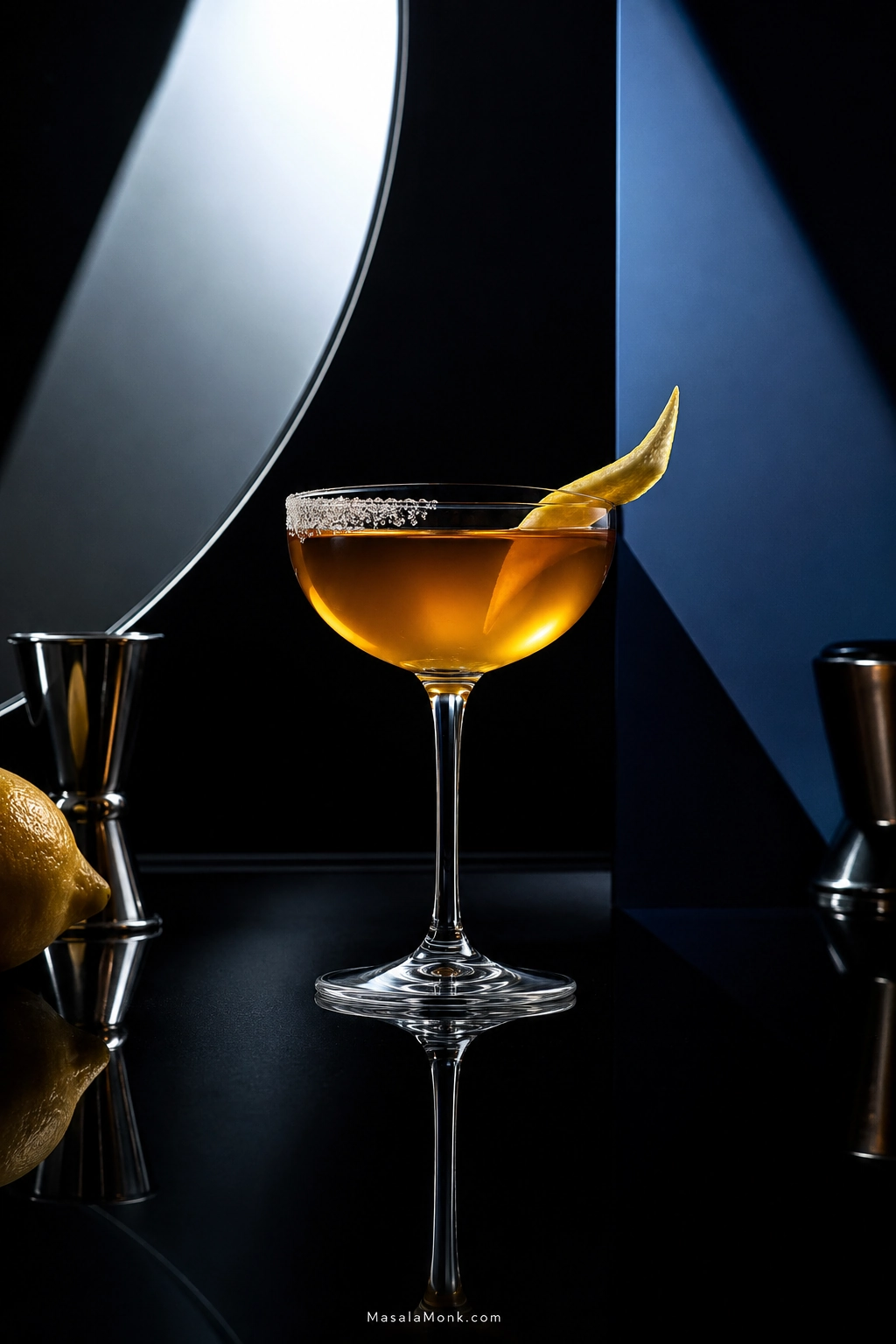
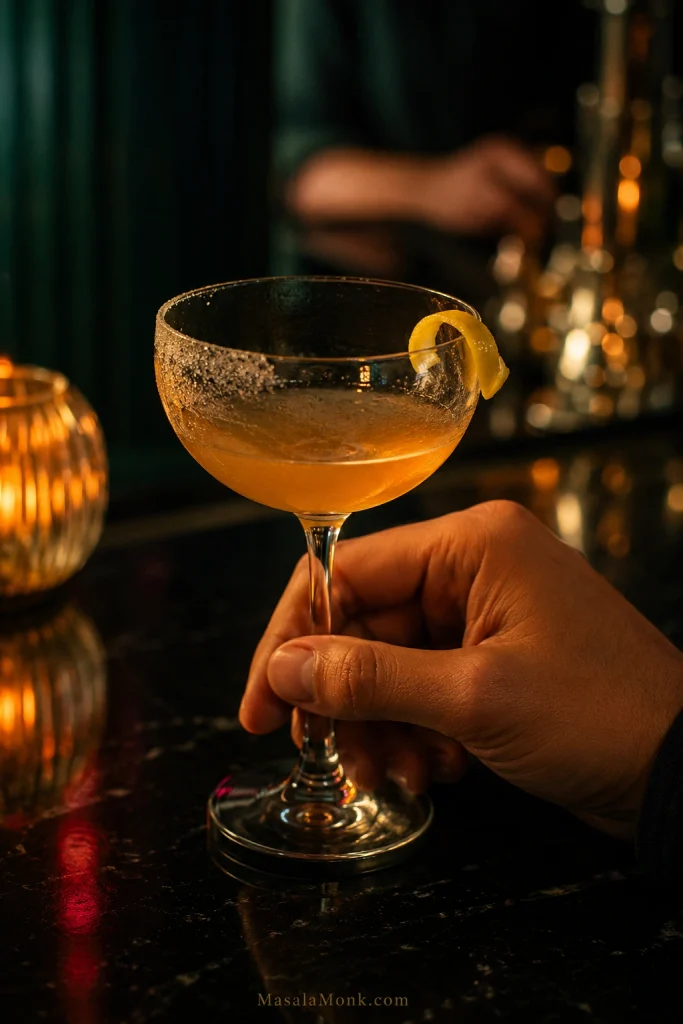
A Sidecar is a classic shaken cocktail made with Cognac, orange liqueur—usually Cointreau—and fresh lemon juice. A good one tastes like Cognac sharpened by lemon and lifted by orange, not lemon juice with brandy hiding somewhere underneath it.
With so little in the shaker, a few milliliters can be obvious in the glass. Push the lemon too far and it takes over. Add more orange liqueur and the drink grows sweeter and more orange-led. Under-shake it and even good Cognac can taste hot and disconnected.
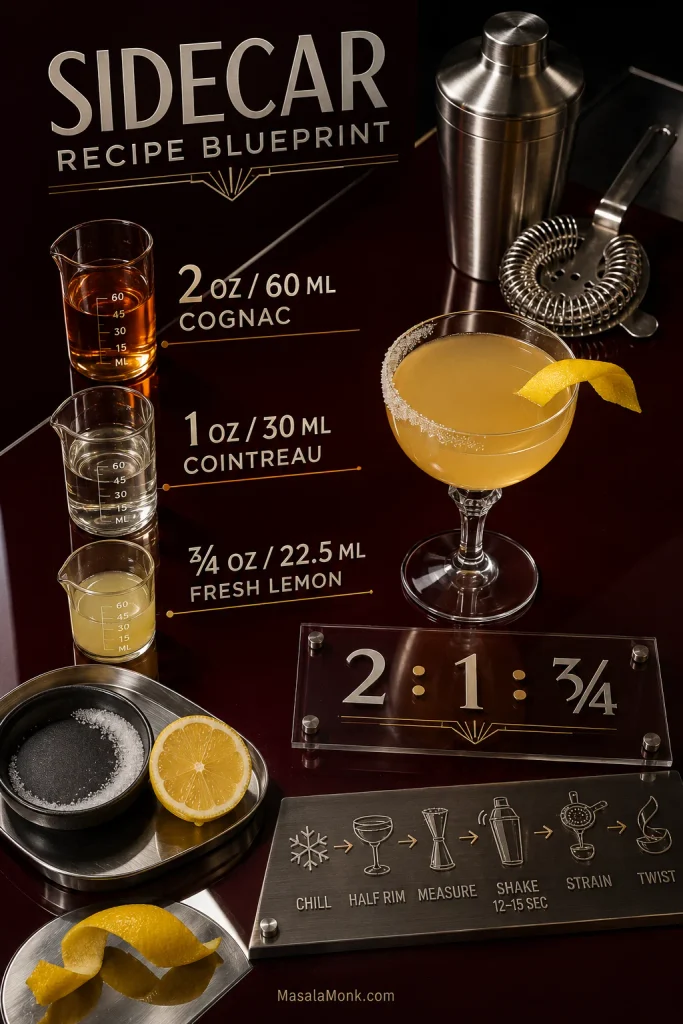
This recipe starts with 2 oz (60 ml) Cognac, 1 oz (30 ml) Cointreau and ¾ oz (22.5 ml) fresh lemon juice. It leaves the Cognac easy to taste while keeping the finish lively and citrusy. A sugar rim is optional; half-rimming the glass gives you both a sweetened and a bare edge.
Keep the Cognac visible. Let the lemon sharpen it, not bury it.
One cold, Cognac-first cocktail, shaken hard and served up. The starting ratio is 2 : 1 : ¾.
Makes 1 cocktail
Prep About 5 minutes
Ratio 2 : 1 : ¾
Shake 12–15 seconds
Serve Up, no ice in glass
Glass 5–6 oz coupe or Nick & Nora
Ingredients
2 oz (60 ml) Cognac
1 oz (30 ml) Cointreau
¾ oz (22.5 ml) freshly squeezed lemon juice
Superfine or caster sugar, for an optional half rim
Ice, for shaking
Lemon or orange twist, for garnish
Equipment
Cocktail shaker
Jigger or small liquid measure
Cocktail strainer
Coupe, Nick & Nora or other small cocktail glass
Fine-mesh strainer, optional
No shaker? A tightly sealed jar works in a pinch. Shake it with plenty of ice, then strain through a small kitchen sieve.
Method
Chill the glass. Put it in the freezer while you gather the ingredients, or fill it with ice and cold water.
Prepare the rim, if using one. Run a cut piece of lemon around half of the outside edge. Dip that half lightly into superfine sugar, then tap away the excess.
Measure. Pour the Cognac, Cointreau and fresh lemon juice into the shaker.
Shake. Fill generously with cold, solid ice and shake hard for about 12–15 seconds, until the outside of the shaker feels thoroughly cold.
Strain and finish. Empty the chilled glass if necessary, strain in the cocktail, then twist a strip of citrus peel over the surface so its oils mist across the drink. Add the peel as garnish. Fine-strain too if you want to catch little ice chips and citrus pulp.
Keep the sequence; tune the ratios later.
What Should a Sidecar Taste Like?
Cognac first, orange close behind, then fresh lemon pulling the drink into focus. Shaken properly, it arrives icy cold and fragrant with citrus oil, with enough Cognac warmth beneath the lemon-orange snap to keep it from feeling merely sour.
If your first glass tastes almost entirely of lemon, don’t assume you’ve done something terribly wrong. A particularly sharp piece of fruit can move this drink a surprising distance.
The aroma should reach you before the sourness does.
Why Do Sidecar Recipes Use Different Ratios?
If you’ve looked up two Sidecar recipes and wondered how both can be called “classic” when the measurements barely agree, you’re not imagining it.
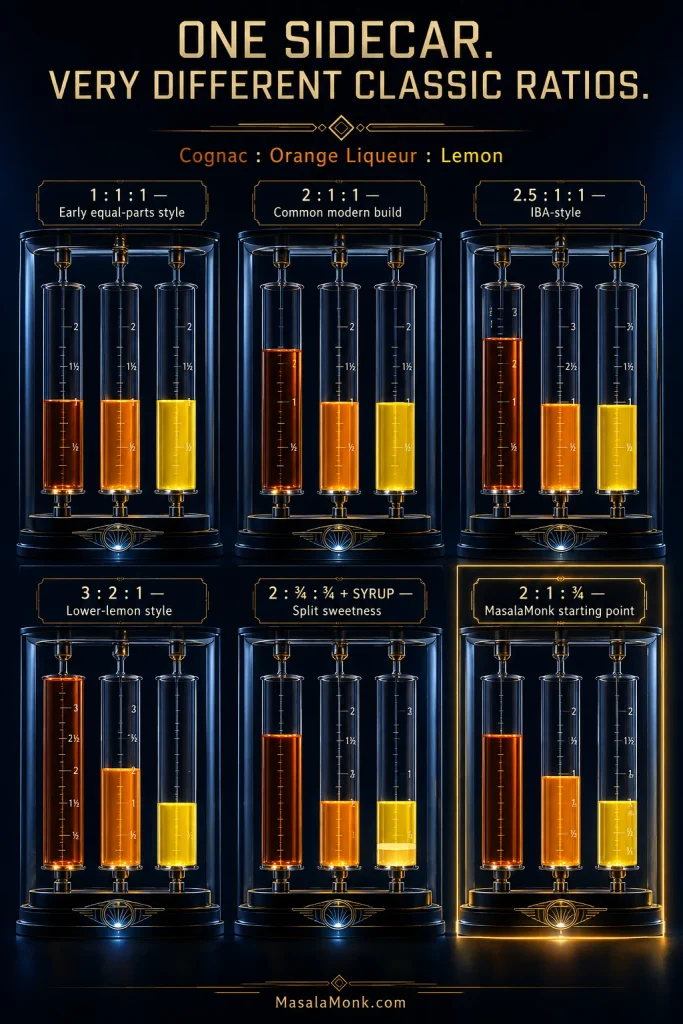
The International Bartenders Association currently specifies 50 ml Cognac, 20 ml triple sec and 20 ml fresh lemon. Elsewhere you’ll find equal-parts recipes, the familiar 2:1:1 build, lower-lemon 3:2:1 versions, and formulas that move some sweetness into syrup.
Ratios below are Cognac : orange liqueur : lemon.
Common approach
Approx. formula
What it does in the glass
Equal parts
1 : 1 : 1
Citrus and orange become very prominent
2:1:1
2 : 1 : 1
Bright and familiar; sharp lemon can push it quite tart
IBA-style
2.5 : 1 : 1
Leaves more room for the Cognac
3:2:1
3 : 2 : 1
Uses less lemon while giving orange more room
Split the sweetness
About 2 : ¾ : ¾ + syrup
Softens the finish without adding as much orange liqueur
This recipe
2 : 1 : ¾
Citrusy, with the Cognac still easy to taste
In PUNCH’s blind tasting of 10 bartender Sidecars, small syrup additions appeared repeatedly, and the winning version used Cognac, Cointreau, lemon and a teaspoon of rich Demerara syrup. Syrup isn’t a cheat. It lets sweetness move without bringing another pour of orange liqueur with it.
Different formulas are different balance choices, not mistakes.
For the recipe here, we keep the familiar amount of Cointreau and use slightly less lemon. That’s only the starting point: lemons vary in acidity, Cognacs in fruit and weight, and orange liqueurs in sweetness and strength. A stripped-back Daiquiri exposes the same problem—unusually sharp fruit has nowhere to hide when there are only a few ingredients.
There isn’t one secret ratio waiting to be uncovered. What matters is knowing what each choice changes once the drink reaches the glass.
How Cognac, Orange Liqueur and Lemon Change a Sidecar
Best Cognac for a Sidecar: Spend Enough, Not the Most
Cognac is grape brandy from the Cognac region of France. XO is unnecessary here; a lively VS or VSOP usually gives better value in a drink with lemon and orange liqueur.
Official Cognac guidance defines VS by a youngest wine spirit of at least two years and VSOP by a youngest wine spirit of at least four years. VS tends to feel younger and more energetic, while VSOP often brings more fruit, spice and depth.
Need actual bottle names? Hennessy VS is an easy mixing reference; Rémy Martin 1738 Accord Royal is a fuller step-up. If another decent VS or VSOP costs less where you live, buy that instead. The label matters less than choosing a Cognac with enough character to remain recognizable after lemon and dilution.
You don’t need to build a home bar around this drink. One good Cognac, one orange liqueur and fresh lemons are enough.
Spend for character, not prestige.
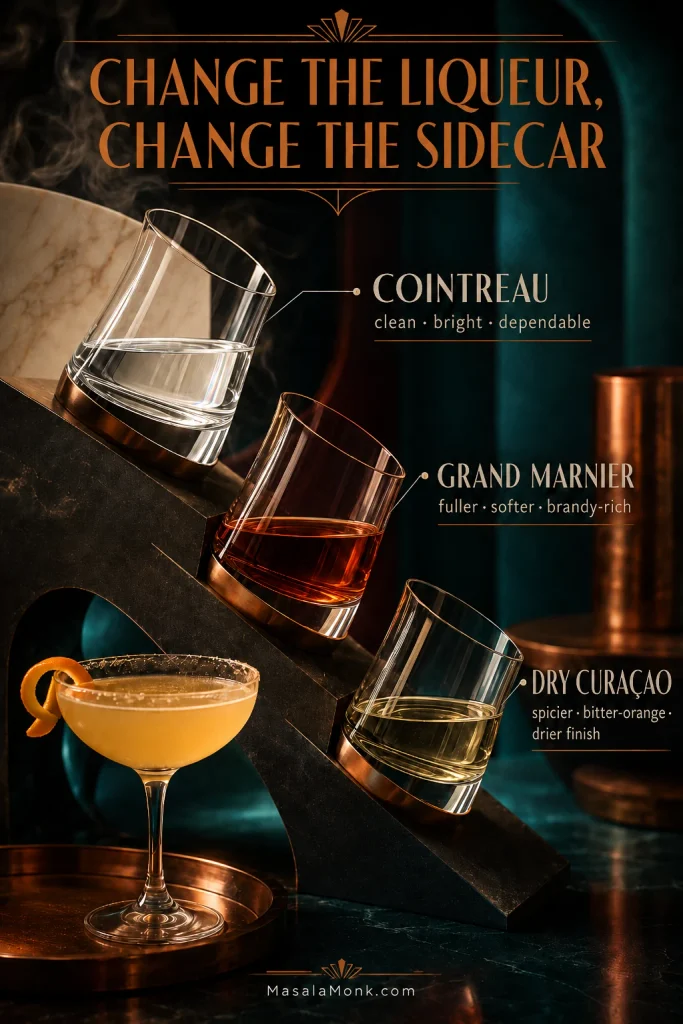
Cointreau, Grand Marnier or Dry Curaçao?
Cointreau is the easiest reference point: clear orange aroma, predictable sweetness and enough strength to remain noticeable after shaking.
Grand Marnier makes the orange feel softer and fuller against the lemon, with extra brandy richness underneath. Dry curaçao lets more spice and bitter orange show through and may leave the finish noticeably drier.
Other triple secs vary widely in sweetness and strength, so an identical measure won’t necessarily behave like Cointreau.
The same measure can shift the whole orange profile.
Fresh Lemon Can Move the Whole Drink
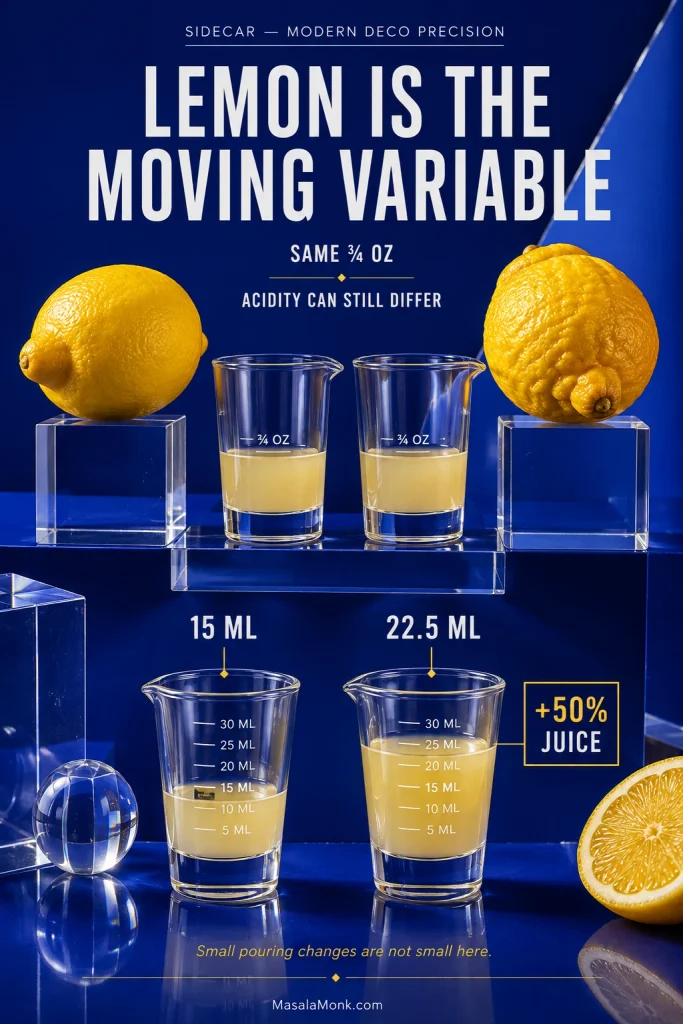
Fresh juice matters here, but fresh doesn’t mean identical. ¾ oz is a fixed volume. It isn’t a fixed amount of acidity. One lemon may make the recipe beautifully lively; another can be noticeably fiercer at exactly the same measurement. Taste the fruit itself if it seems unusually sharp.
Once the bottles and lemon are right, the remaining variables are mostly in your hands: measuring, temperature and dilution.
Measure, Shake and Chill: Where Sidecars Go Off Course
1. Measure the First Few
Citrus gets unforgiving quickly. A pour that grows from 15 ml to 22.5 ml is 50% more lemon. Measure the first few Sidecars; once you know the baseline, you’ll recognize what an extra splash actually changed.
Measure the volume; taste the fruit.
2. Shake Hard, Not Forever
About 12–15 seconds of vigorous shaking with plenty of cold, solid ice is a sensible home target. The exact second matters less than the result: a thoroughly cold shaker and a drink that tastes joined-up rather than like alcohol and lemon taking turns.
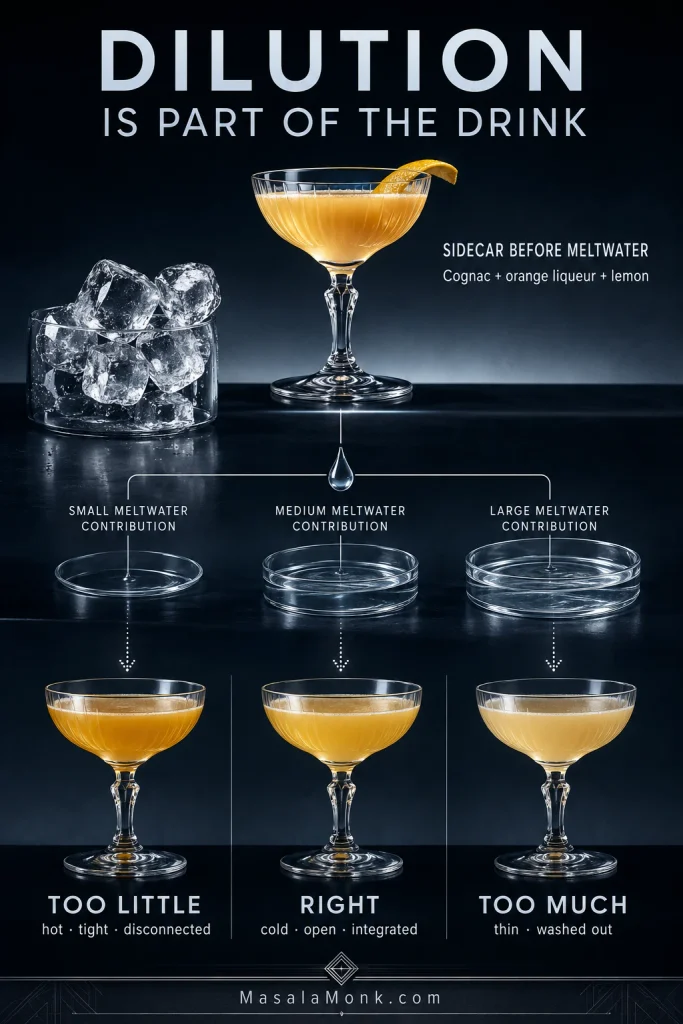
3. Dilution Is Part of the Drink
The water melting from the ice ends up in your glass. Too little and the Sidecar tastes hot, tight and unfinished. Too much and the Cognac turns thin. At the useful point between them, the spirit opens up, the lemon loses its hard edge and the orange aroma becomes easier to notice.
Use plenty of good ice instead of counting cubes. Home ice varies too much in size and melt rate for “five cubes” to mean much.
Cold matters. Integration matters more.
4. Chill, Strain and Serve
Pre-chill the glass because the finished cocktail contains no serving ice. A freezer is easiest; ice water while you shake gets you there too. For straining, a normal cocktail strainer is enough; fine-straining catches little shards of ice and citrus pulp if you prefer a cleaner texture.
Choose a 5–6 oz (roughly 150–180 ml) coupe, Nick & Nora or other small cocktail glass for this amount. An oversized modern coupe can make a perfectly normal Sidecar look as though someone forgot half your drink.
Served up means shaken with ice and then strained into the glass without that ice.
Lemon or orange twist? Both are legitimate. Lemon smells sharper over the first sip; orange makes the drink seem softer and more orange-led before you’ve even tasted it. Whichever peel you choose, twist it over the glass first so the oils land on the surface.
Bartenders disagree about the sugar rim too. A Sidecar is perfectly happy without one.
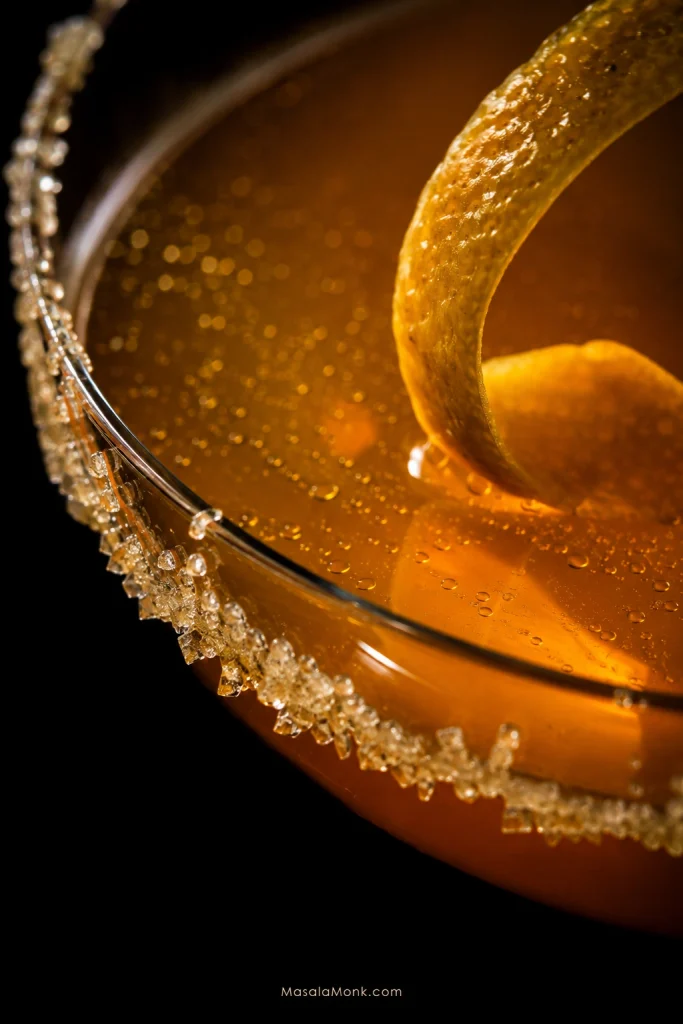
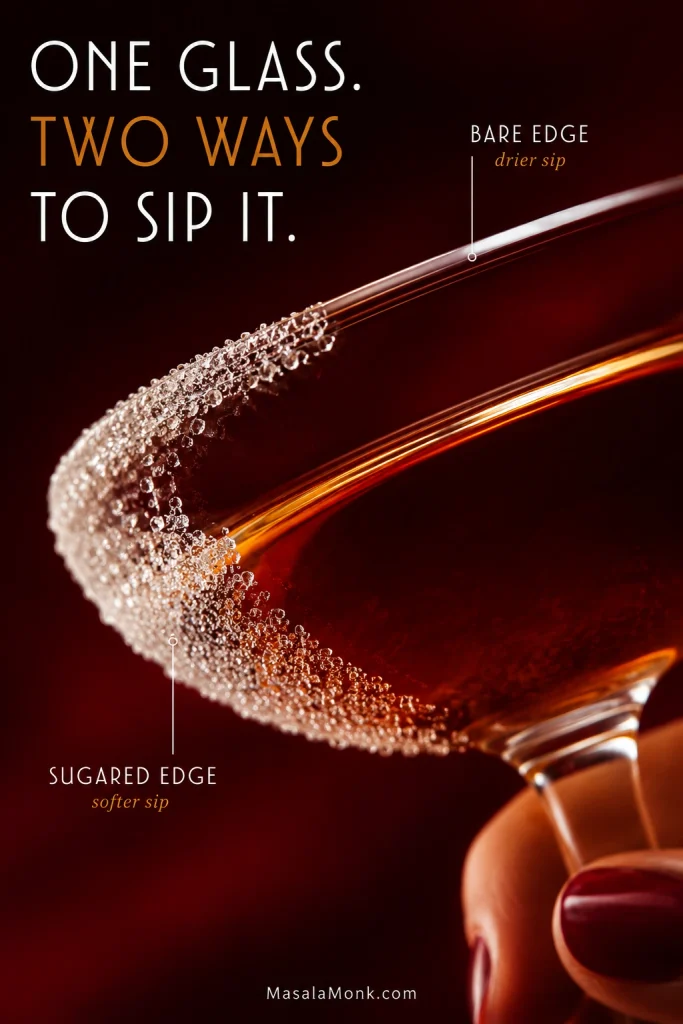
If you enjoy the sugar, a half rim is more interesting than coating the whole glass. One side softens the sip; turn the glass and the cocktail tastes drier from the bare edge. Use superfine or caster sugar and moisten mainly the outside edge so loose sugar doesn’t slowly dissolve into the drink.
Selective sweetness beats an all-or-nothing rim.
The Sidecar Balance Dial: Fine-Tune a Good Drink
If your Sidecar already tastes good, stop troubleshooting. This is the fun part.
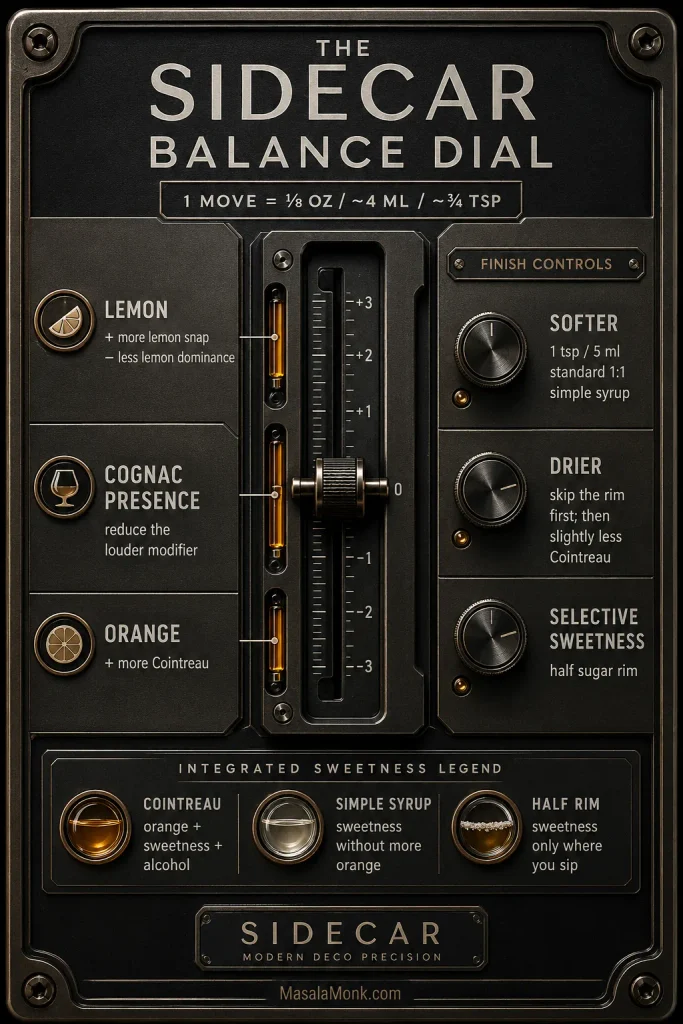
Think in ⅛-oz moves—about 4 ml, roughly ¾ teaspoon. That’s enough to learn something in a three-ingredient cocktail without turning your kitchen into a bar lab. In the table below, one “step” means that amount.
You want…
Move
What you’ll notice
More lemon snap
Add one step of lemon
The Cognac becomes less prominent
Less lemon dominance
Take one step of lemon away
The spirit becomes easier to taste without adding sweetness
More Cognac presence
Reduce whichever is masking it—lemon or Cointreau—by one step
The Cognac moves forward without making the drink larger
More orange
Add one step of Cointreau
Orange, sweetness and alcohol all rise together
A softer finish without more orange
Add 1 tsp (5 ml) standard 1:1 simple syrup
Using rich 2:1 syrup? Start with roughly three-quarters as much
Sweetness only on selected sips
Use a half sugar rim
The liquid itself stays unchanged
A drier finish
Skip the rim first; then consider one step less Cointreau
Less Cointreau also means less orange flavor
Cointreau, Syrup and Sugar Do Different Jobs
More Cointreau brings sweetness, orange flavor and alcohol together. Standard 1:1 simple syrup softens the drink without adding more orange. Sugar on the rim changes only the sips that touch it.
A lemon-heavy Sidecar isn’t automatically asking for sugar. Use less citrus when lemon is the problem; reach for syrup when Cognac and lemon already taste right together but the finish is still too dry. A Lemon Drop Martini makes those different kinds of sweetness especially easy to taste because all three appear in the same drink.
One small move makes the next glass more informative.
Fix My Sidecar
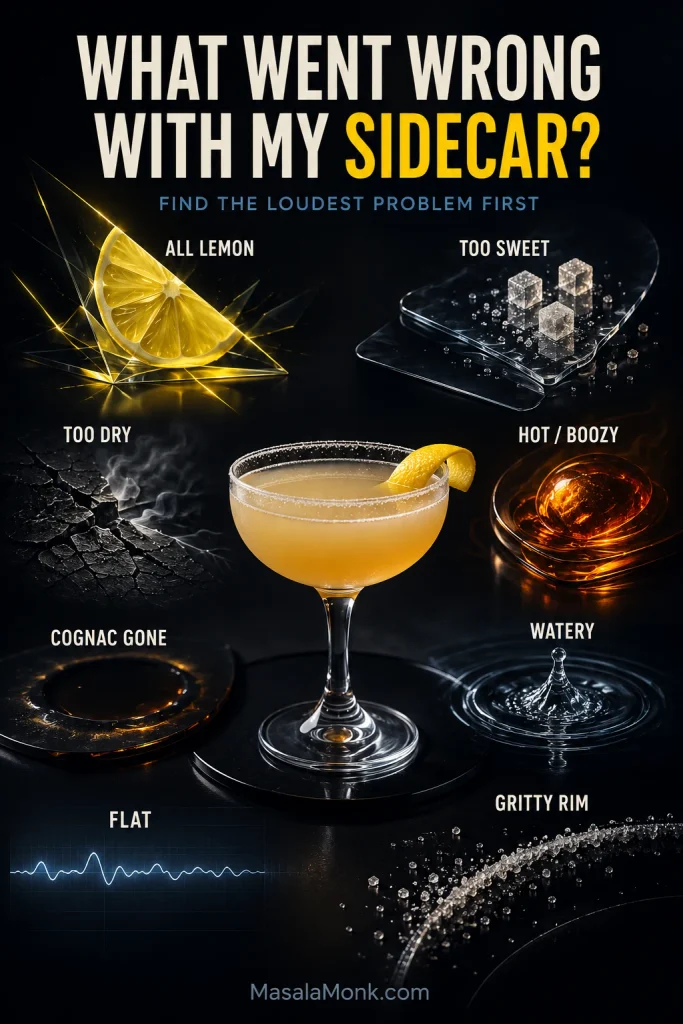
A drink that’s simply not your preferred ratio belongs in the Balance Dial above. This section is for the Sidecar that’s plainly unpleasant: puckering, hot, washed out, gritty or mysteriously flat.
Name the loudest flaw first; change one thing.
What happened?
Likely reason
Try this first
All lemon / too sour
The citrus is drowning the Cognac and orange
Reduce the lemon by the small increment described above
Too sweet
Syrup, rim sugar or Cointreau is pushing sweetness too far
Remove syrup or the rim first. Added neither? Use slightly less Cointreau
Too dry
The drink needs sweetness, not more citrus
Try the half rim or about 1 tsp (5 ml) 1:1 simple syrup
Hot or boozy
Often under-dilution
Look at the ice and shake before rewriting the ratio
Can’t taste the Cognac
Lemon or orange liqueur is masking it
Ease back whichever ingredient you notice first
Watery / washed out
Too much dilution or fast-melting ice
You can’t take water back out; use colder, sturdier ice and stop sooner next time
Flat aroma
Tired citrus or no fresh peel oils
Use fresh lemon and express the garnish over the surface
Gritty or unevenly sweet
A heavy sugar rim
Use finer sugar on only half the outside edge
Different every time
Fruit, pouring and dilution are all moving
Measure the next one and write down the ratio that lands
Something stranger? Bitterness can come from citrus pith, an aggressively squeezed peel or the orange liqueur itself. If the drink tastes oddly soapy or perfumed, check the glass for detergent residue and wash and dry the citrus before blaming the recipe.
What Can You Substitute—and When Is It a Different Drink?
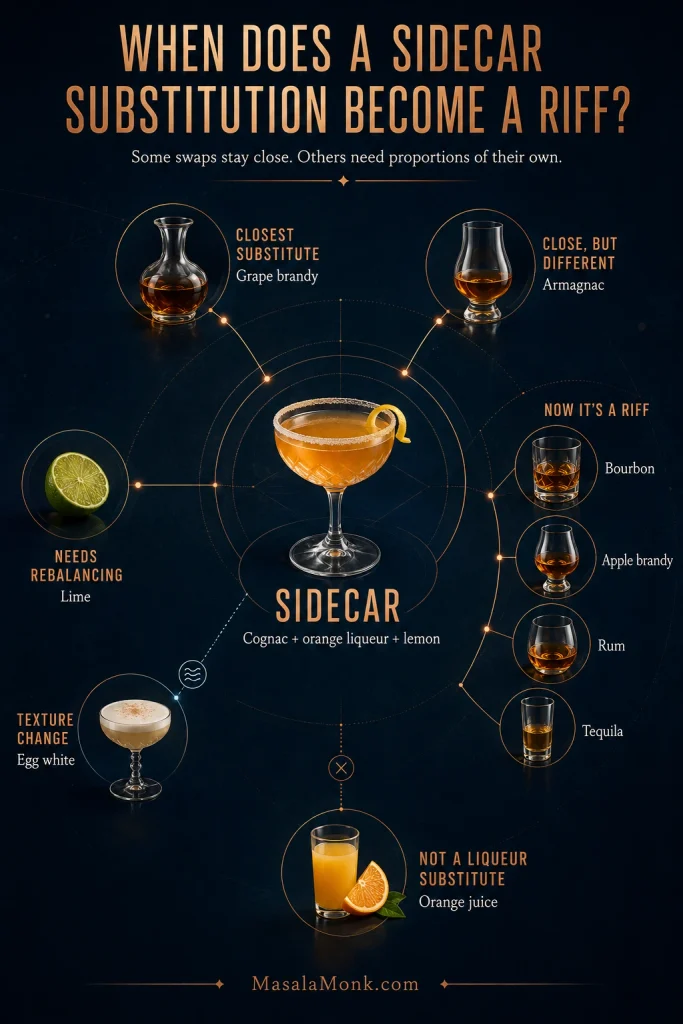
Some swaps keep you close to a Sidecar. Others move far enough away that you’re better off treating the result as a riff with proportions of its own.
Good grape brandy is the closest Cognac substitute. Armagnac takes the drink somewhere darker and more rustic, with earthier fruit and spice.
Lime can replace lemon, but its different acidity and aroma may need a new balance. Egg white changes the texture, giving you a softer, foamy sour-style drink.
Bourbon, apple brandy, rum or tequila take you firmly into riff territory. And orange juice is not a substitute for orange liqueur: juice adds water and acidity while removing much of the alcohol and concentrated orange character the liqueur contributes.
Preserve the structure—or break it deliberately for a riff.
How to Batch Sidecars for Four
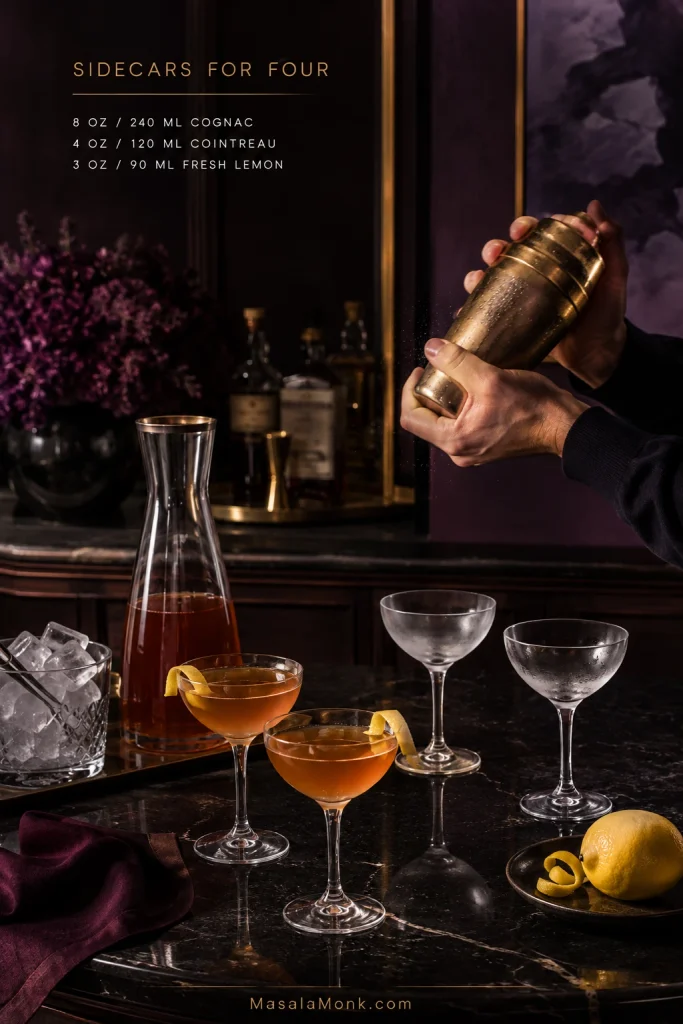
8 oz (240 ml) Cognac
4 oz (120 ml) Cointreau
3 oz (90 ml) fresh lemon juice
Combine the Cognac and Cointreau ahead of time and refrigerate. Add the fresh lemon shortly before serving. Once everything is mixed, measure 3¾ oz (about 112 ml) per drink into the shaker and shake with ice as usual.
Chill the glasses before people arrive. If your shaker comfortably holds two drinks, shaking two at a time is practical; don’t crowd all four into a standard shaker.
If all four will be served within a short window, mix the full batch shortly beforehand and keep it cold until you’re ready to shake.
Prebatch the stable ingredients; keep fresh lemon close to service.
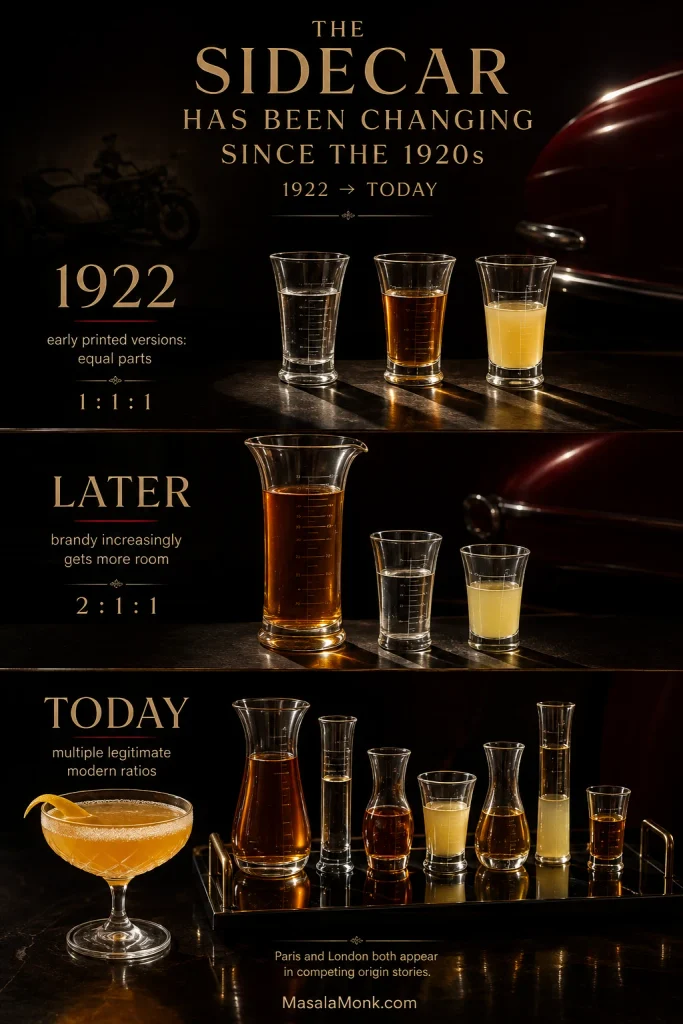
The Sidecar Has Been Changing Since the 1920s
The modern argument over ratios isn’t particularly modern. Sidecar recipes were appearing in cocktail books by 1922, and their proportions have been shifting for almost as long as the drink has been in print.
Its exact birthplace is difficult to pin down. Both Paris and London appear in competing accounts, while the familiar tale of a customer arriving at a bar in a motorcycle sidecar is better treated as cocktail lore than settled history.
Early printed versions used equal quantities of brandy, orange liqueur and lemon. Later recipes increasingly gave the brandy more room. Today’s “classic” Sidecars disagree because variation has been part of the drink for a very long time.
The ratio argument is almost as old as the drink.
The Sidecar also belongs to the broader Daisy tradition: base spirit, citrus and sweetness supplied partly or entirely by a liqueur. That’s why a White Lady or Margarita can feel distantly familiar without being interchangeable with it.
Sidecar Cocktail FAQ
Is a Sidecar a Martini?
No. A Sidecar isn’t part of the Martini family. The confusion mostly comes from the stemmed glass, which is often casually called a martini glass.
Can you serve a Sidecar on the rocks?
Yes, although the classic presentation is served up without ice in the finished glass. Over fresh ice, the cocktail keeps diluting as you drink it.
How strong is a Sidecar?
It’s a strong cocktail because most of the liquid comes from spirits. With 40% ABV Cognac and 40% ABV Cointreau, this recipe contains roughly two U.S. standard drinks. Shaking adds water and lowers the percentage of alcohol in the finished cocktail, but it doesn’t remove alcohol. The exact finished ABV depends heavily on how much dilution your ice and shaking contribute.
A good Sidecar should make all the argument about ratios disappear once you take a sip: cold, orange-scented and still unmistakably like Cognac. When you hit the version that makes you want another sip, write the ratio down. That’s the one worth repeating.
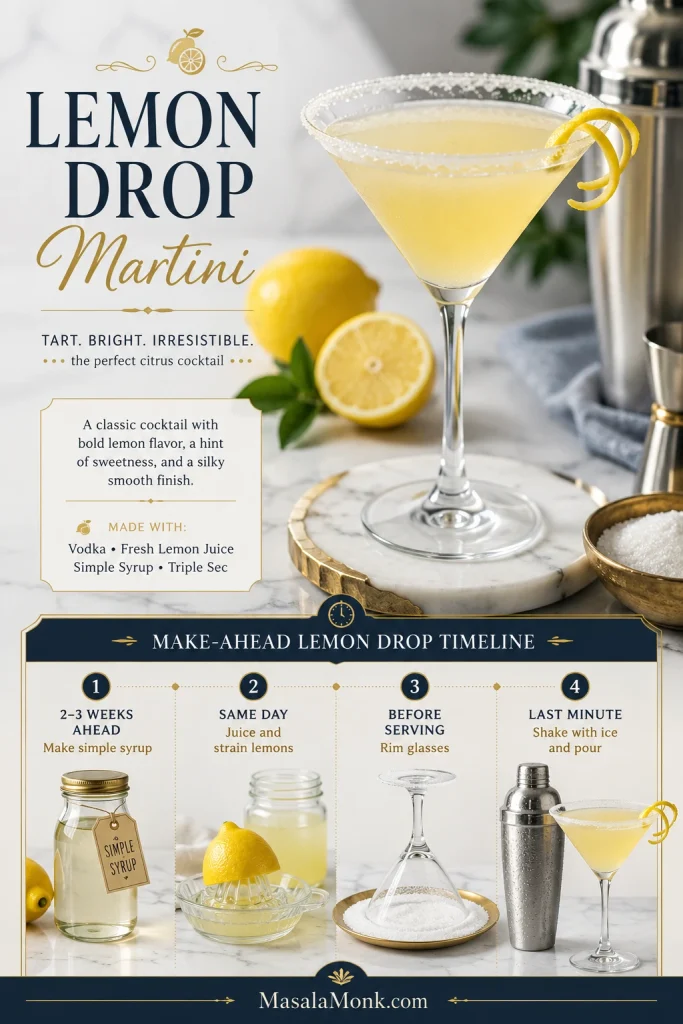
A good lemon drop martini should taste lively before it tastes sweet. The glass is deeply chilled, the rim sparkles lightly, and the first sip lands with just-squeezed lemon, clean vodka, a soft orange note, and enough sweetness to smooth the sharp edge. It should feel polished, not syrupy; refreshing, not harsh; easy, but still pretty enough to make the glass feel special.
This easy lemon drop martini starts with a balanced classic ratio: vodka, Cointreau or triple sec, fresh lemon juice, and simple syrup, shaken hard and poured into a lightly sugared glass. Once that baseline tastes right, you can make it without triple sec, soften it with limoncello, turn it into shots, batch it for guests, or add fruit without losing the crisp citrus snap.
Quick Answer: How to Make a Lemon Drop Martini
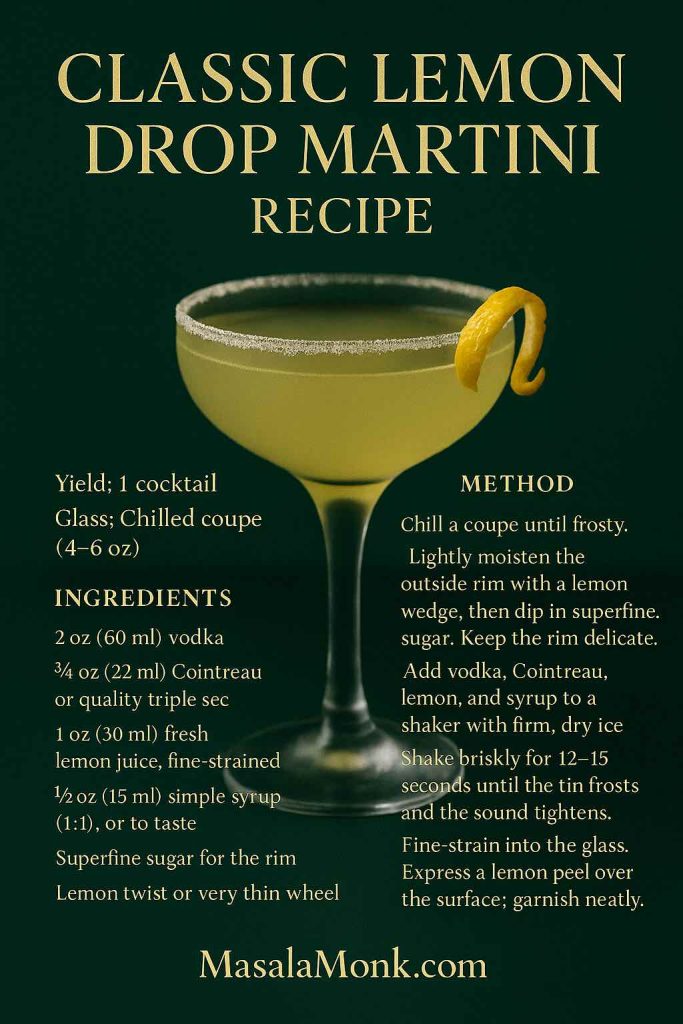
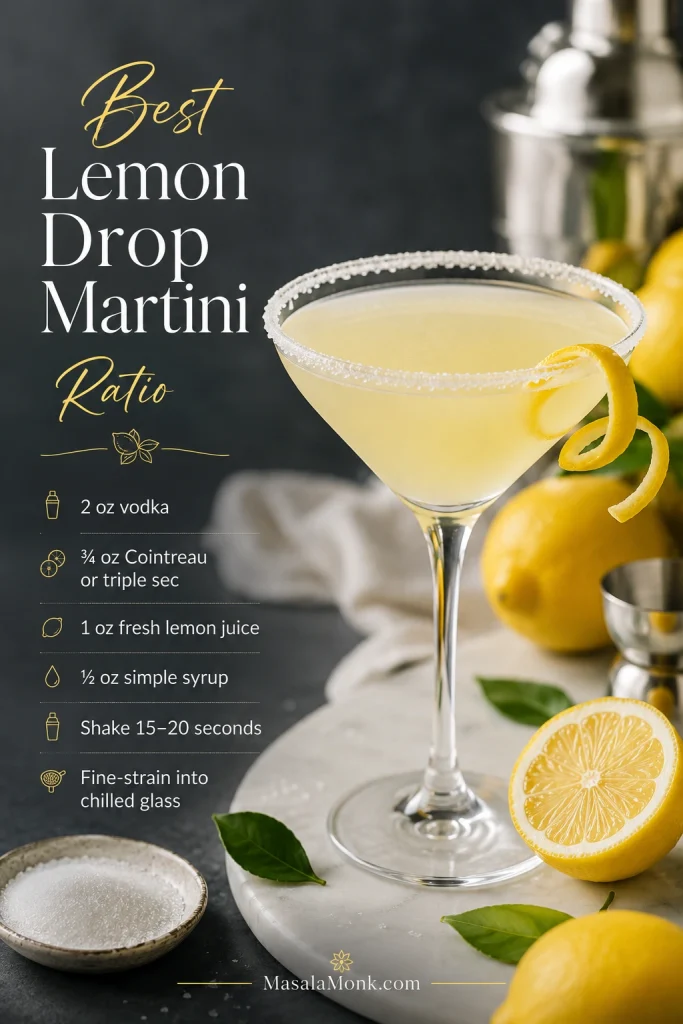
To make a classic lemon drop martini, shake 2 oz (60 ml) vodka, ¾ oz (22 ml) Cointreau or triple sec, 1 oz (30 ml) fresh lemon juice, and ½ oz (15 ml) simple syrup with firm ice for 15–20 seconds. Fine-strain into a chilled, lightly sugar-rimmed 5–6 oz coupe or martini glass, then garnish with a lemon twist.
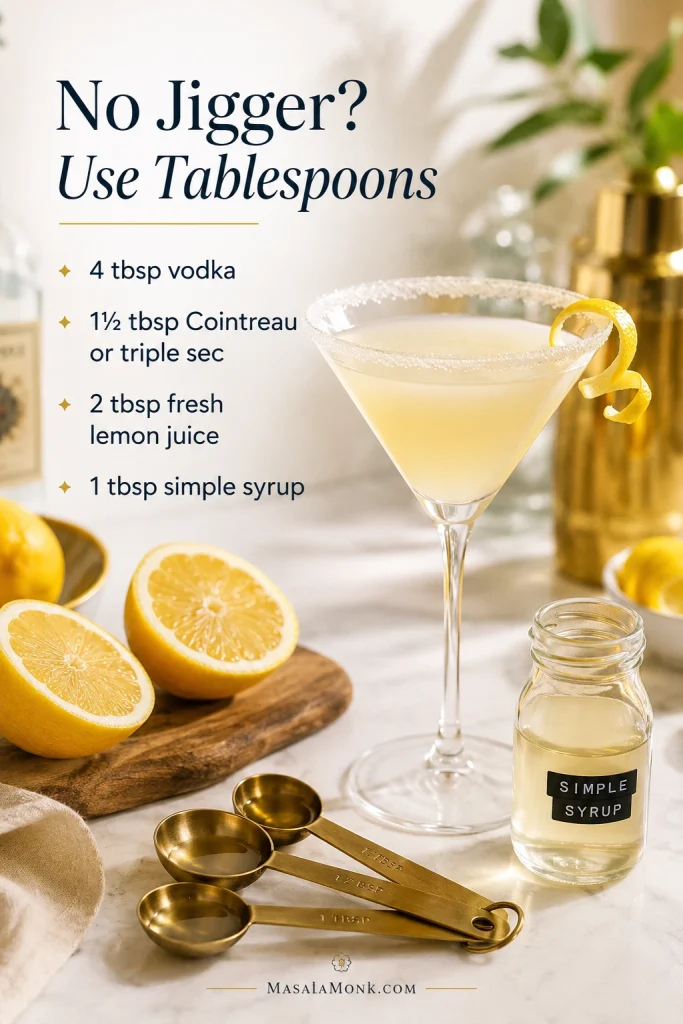
No jigger? Use 4 tablespoons vodka, 1½ tablespoons Cointreau or triple sec, 2 tablespoons fresh lemon juice, and 1 tablespoon simple syrup.
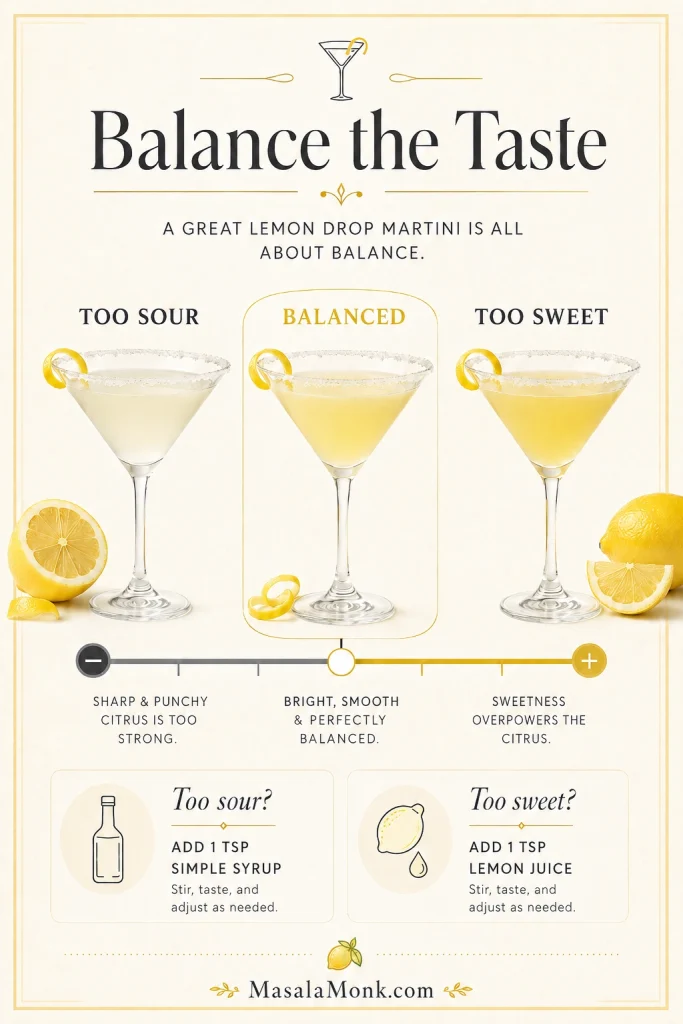
Before you shake, remember this: chill the glass, sugar only the outside rim, and adjust by teaspoons instead of guessing. Add syrup if the drink is too sour; add lemon if it tastes too sweet.
This is the drink to pour when you want something dressed up but not fussy: before dinner, for a small party, beside a dessert table, or as the first round when people want something bright and familiar.
Make this version first. It is the classic baseline: lemon-forward, deeply chilled, gently sweet, and easy to adjust. A well-made Lemon Drop should hit in this order: cold lemon, smooth vodka, a soft orange note, then a small sparkle from the rim — not sour lemonade, melted candy, or a glass full of sugar.
Yield
1 cocktail
Prep time
5 minutes
Glass
5–6 oz coupe or martini glass
Flavor
Lemon-forward, crisp, gently sweet
Shake time
15–20 seconds
Serve
Immediately
Ingredients
Ingredient
Amount
Vodka
2 oz / 60 ml
Cointreau or quality triple sec
¾ oz / 22 ml
Fresh lemon juice, fine-strained
1 oz / 30 ml / 2 tbsp
Simple syrup, 1:1
½ oz / 15 ml / 1 tbsp
Superfine sugar, for rim
1–2 tbsp / about 12–25 g
Lemon twist or thin lemon wheel
1
Method
Chill a 5–6 oz coupe or martini glass for 5–10 minutes, or fill it with ice water while you work.
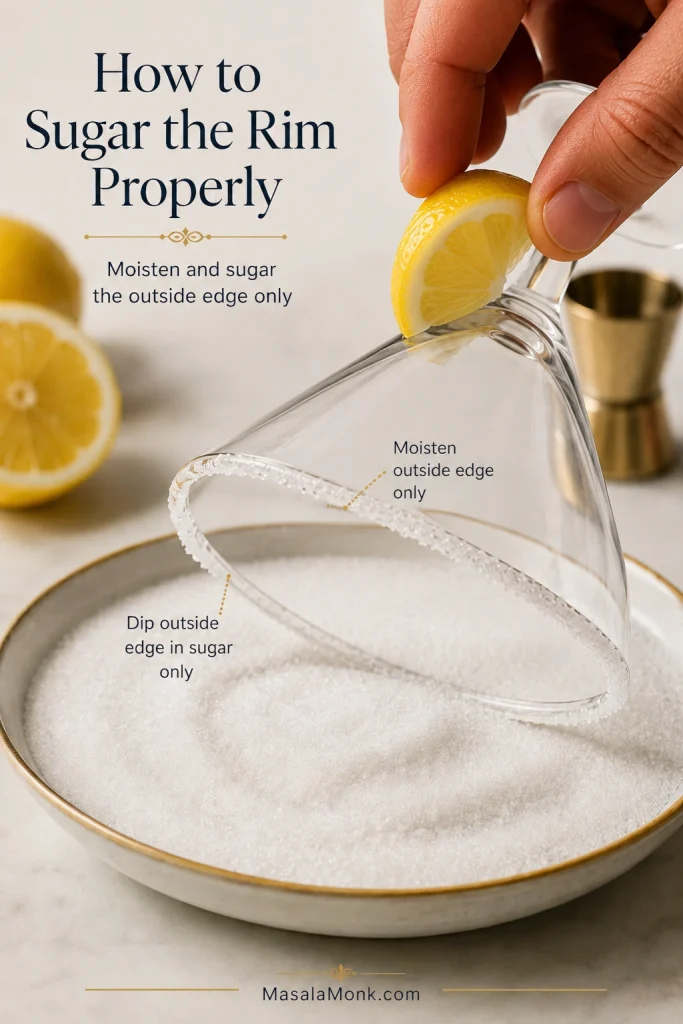
Place superfine sugar on a shallow plate, moisten only the outside rim with lemon, and dip lightly.
Add vodka, Cointreau or triple sec, fresh lemon juice, and simple syrup to a shaker.
Fill the shaker with firm ice.
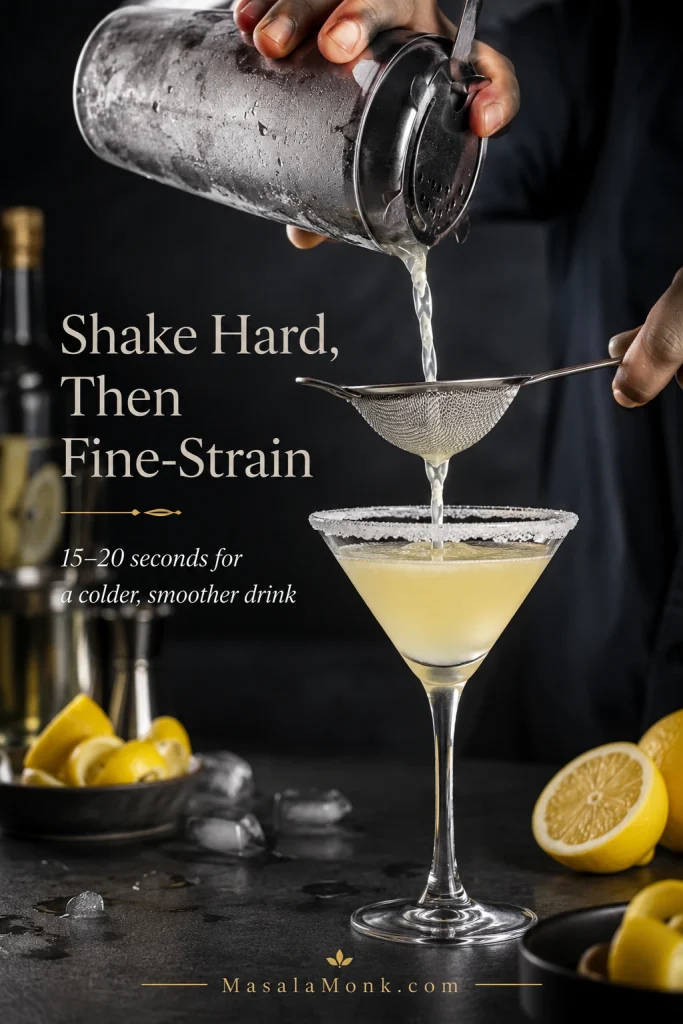
Shake for 15–20 seconds, until the outside feels very cold.
Fine-strain into the prepared glass.
Express a lemon peel over the surface, then garnish with the twist or a thin lemon wheel.
You will know it is right when the drink feels cold and sharp at first, then softens almost immediately. The rim should add sparkle, not a mouthful of sugar.
Taste before changing the recipe. Too sharp? Add 1 teaspoon simple syrup and shake briefly with fresh ice. Too sweet? Add 1 teaspoon lemon juice and re-shake. A Lemon Drop loses its edge as it warms, so pour it last-minute rather than letting filled glasses sit on a tray.
Use the classic recipe card as your baseline before changing the drink. Once the vodka, lemon, orange liqueur, and syrup work together, every variation becomes easier to adjust.
No-Jigger Lemon Drop Measurements
Use this quick conversion when measuring at home. Tablespoons keep the drink accurate, and teaspoon-sized adjustments keep the final sip from swinging too sour or too sweet.
Tablespoons are accurate enough for a home Lemon Drop when the ratio is clear. Measure first, then adjust in teaspoons so the drink stays lively without turning too sour or too sweet.
Before You Mix: 3 Details That Make It Taste Better
The recipe is simple, but the small details matter. Small technique choices make the drink feel bar-clean instead of last-minute.
1. Use fresh, strained lemon juice
A lemon drop is only as good as its lemon. Fresh juice tastes vivid and fragrant, while bottled juice often tastes flat or stale. Strain out pulp before shaking so the drink stays smooth.
2. Keep the sugar rim thin
The rim should frame the first sip, not turn the cocktail into dessert. Moisten only the outside edge of the glass so sugar does not fall into the drink.
3. Shake hard with firm ice
Shaking does more than chill the drink. It adds a small amount of water, softens the lemon, and gives the cocktail a smoother finish. If the shaker frosts or feels painfully cold, you are there.
Shake and Fine-Strain for a Cleaner Pour
Once the drink is measured, the shake controls texture as much as temperature. Cold ice, firm shaking, and fine-straining help the cocktail pour clean, bright, and smooth.
A firm shake chills, aerates, and lightly dilutes the drink. Fine-straining then gives the Lemon Drop Martini a cleaner texture with fewer ice shards or pulp flecks in the glass.
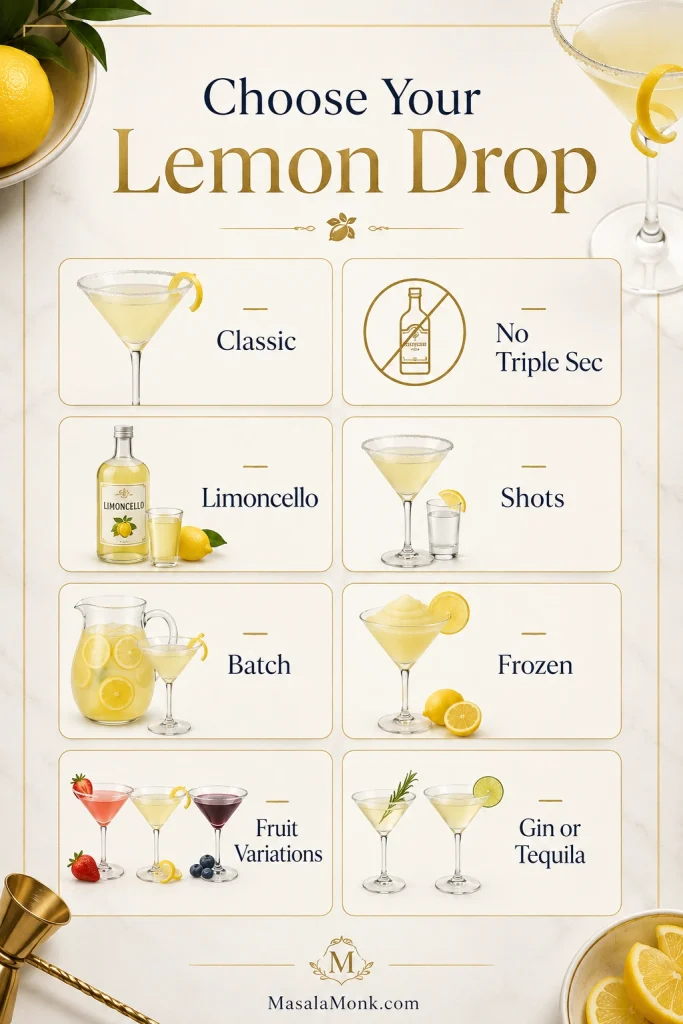
Start with the classic, then change one thing at a time. That keeps the drink recognizable while letting you make it drier, sweeter, fruitier, stronger, softer, or easier to serve.
Match the Lemon Drop to the moment: no triple sec for a simple pour, limoncello for softness, shots for a tray, and batch or frozen versions for guests.
Mood or need
Make this
Why it works
Clean and classic
Classic Lemon Drop Martini
Best balance of vodka, orange, lemon, and syrup
No orange liqueur
3-Ingredient Lemon Drop
Vodka, lemon, syrup; rim optional
Softer and more lemony
Limoncello Lemon Drop
Limoncello adds round lemon perfume
Party tray
Lemon Drop Shots
Smaller, brighter, faster to serve
Hosting dinner
Pitcher Lemon Drop
Batch ahead, then shake or dilute properly
Hot afternoon
Frozen Lemon Drop
Blended, cold, citrusy
Pretty brunch drink
Strawberry or Lavender Lemon Drop
Color, aroma, and a softer mood
Drier twist
Gin Lemon Drop
More botanical and less candy-like
Not sure where to start? Make the classic once, then decide whether you want it softer with limoncello, quicker as shots, or fruitier for a party glass.
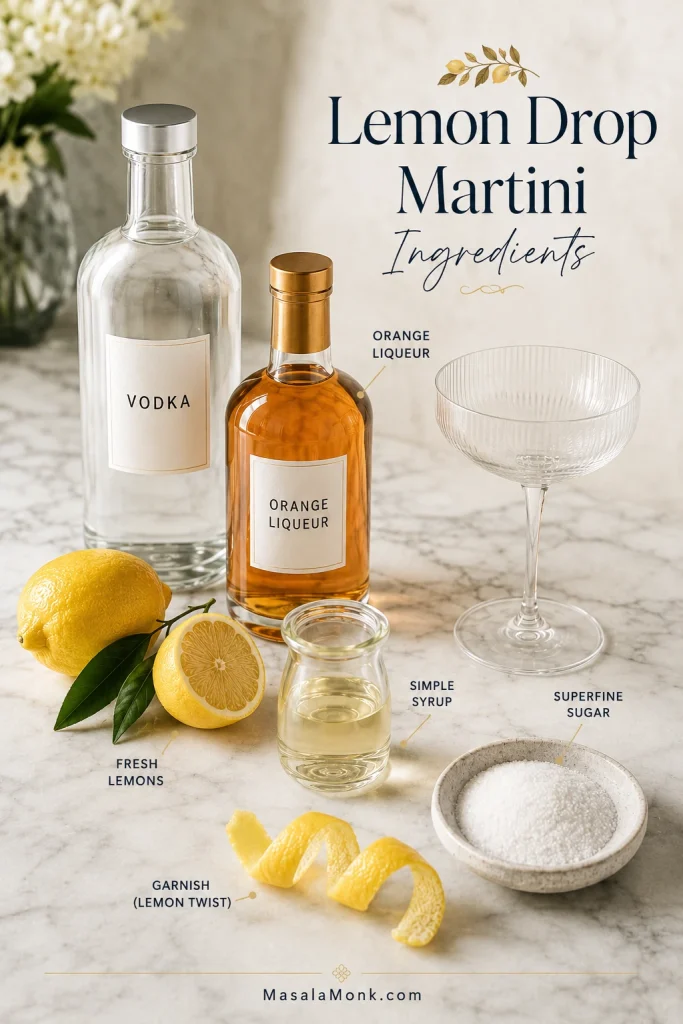
Lemon Drop Martini Ingredients
With only a few ingredients in the shaker, every choice shows up in the glass. Fresh lemon smells brighter, measured syrup keeps the drink crisp, and a neutral vodka lets the citrus lead.
With so few ingredients, every shortcut shows quickly. Fresh lemon juice, measured syrup, orange liqueur, and neutral vodka create the polished Lemon Drop flavor.
Vodka
Plain vodka is the safest choice for the cleanest classic Lemon Drop. It does not need to be expensive; it just needs to stay out of the lemon’s way. Lemon vodka works if you want a louder citrus aroma, but reduce the syrup slightly so the drink does not turn candy-like.
Cointreau, Triple Sec, or Grand Marnier
Cointreau gives the clearest orange note. A good triple sec keeps the drink accessible and works well in the classic ratio. Grand Marnier tastes richer and rounder, so use a little less syrup if the cocktail feels too sweet.
Fresh Lemon Juice
Choose lemons that feel heavy for their size, then roll them before juicing. One medium lemon usually gives about 2 tablespoons juice, though dry lemons may give less. Plan on one lemon per cocktail, plus an extra lemon nearby.
Simple Syrup
For syrup, begin with a basic 1:1 mix made from equal parts sugar and water. Half an ounce is the best starting point for one drink. To make a small batch, stir ½ cup sugar with ½ cup hot water until clear, cool, then refrigerate in a clean jar and use within 2–3 weeks.
Superfine Sugar
Superfine sugar gives the smoothest rim because it dissolves quickly on the lips. Granulated sugar works, but it feels crunchier. Avoid powdered sugar; it can clump, turn pasty, and taste dusty.
No bar tools?
No shaker? A jar with a tight lid works. Use tablespoons instead of a jigger and a tea strainer instead of a cocktail strainer. One ounce equals 2 tablespoons. If using a jar, wrap it in a towel and make sure the lid seals tightly before shaking.
The Best Lemon Drop Ratio for a Balanced Drink
The Lemon Drop Ratio at a Glance
Use this ratio as the starting point before you change the syrup, rim, or liqueur. It keeps the lemon bright while giving the vodka sour enough softness to feel polished.
Use this Lemon Drop Martini ratio as the drink’s control panel: vodka gives structure, lemon brings sharpness, orange liqueur adds aroma, and syrup rounds the edge.
Think of the drink as a vodka sour served up: the vodka keeps it clear, the lemon gives it lift, the orange liqueur adds perfume, and the syrup softens the edge so the drink feels bright instead of sharp. Shaking supplies the cold dilution that makes it rounded instead of harsh. The sugar rim should stay outside the glass so the first taste sparkles while the cocktail underneath stays crisp. If you like this spirit-citrus-sugar balance, the Daiquiri recipe follows the same sour-cocktail logic with rum and lime.
If you want it…
Adjust this way
Sharper and more citrus-forward
Keep syrup at ½ oz / 15 ml
Softer and sweeter
Increase syrup to ¾ oz / 22 ml
Drier and more bar-style
Use ½ oz / 15 ml orange liqueur and ½ oz / 15 ml syrup
More party-style
Use up to 1 oz / 30 ml syrup
Less sweet overall
Rim only half the glass
More aromatic
Express a fresh lemon peel over the drink
How to Balance a Lemon Drop That Tastes Off
Small corrections work better than big guesses. Taste once, adjust by the teaspoon, and shake briefly again so the fix blends into the drink.
Taste first, then fix the drink in teaspoons. Syrup softens a too-sharp Lemon Drop, while fresh lemon cuts a too-sweet one before a brief re-shake.
How to Make a Lemon Sugar Rim
The rim should sparkle, not clump. A heavy sugar crust makes the first sip awkward and can drop sugar into the cocktail. The best lemon sugar rim is thin, even, and only on the outside edge of the glass.
Add superfine sugar to a small shallow plate.
Rub in 1 teaspoon finely grated lemon zest if you want a brighter rim.
Run a lemon wedge around the outside edge of the glass only.
Dip the moistened outside rim into the sugar.
Let the glass sit for 2–3 minutes while you make the cocktail.
Rim only the outside edge of the glass so sugar sweetens each sip, not the whole cocktail. The drink stays cleaner, brighter, and less likely to turn syrupy.
Prefer it less sweet? Rim only half the glass. Guests can choose the sugared side or the clean side, and the drink still looks polished without turning the first sip into candy.
That little sugared edge is part of the charm: the glass looks ready before the drink is even poured.
3-Ingredient Lemon Drop Martini, No Triple Sec or Cointreau
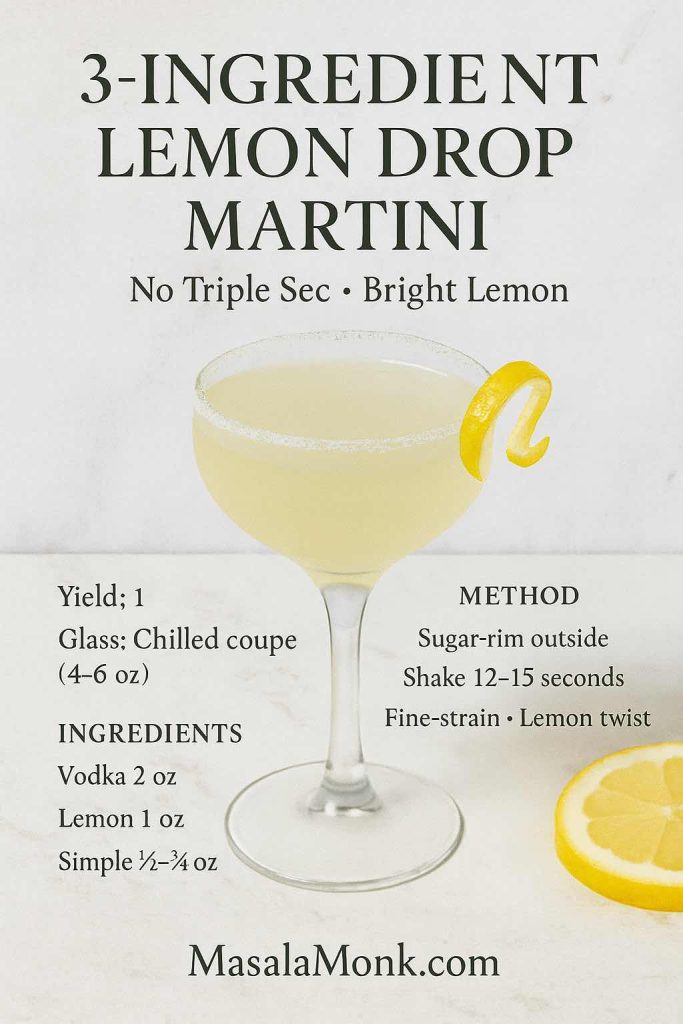
You can make a clean lemon drop martini without Cointreau or triple sec: vodka, lemon juice, and simple syrup. The sugar rim and lemon twist are optional, but they make even the simplest version feel complete.
Ingredient
Amount
Vodka
2 oz / 60 ml
Fresh lemon juice
1 oz / 30 ml
Simple syrup
½–¾ oz / 15–22 ml
Optional superfine sugar for rim
1–2 tbsp / about 12–25 g
Optional lemon twist
1
Vodka, fresh lemon juice, and syrup keep this 3-ingredient Lemon Drop simple. A light sugar rim and lemon twist make the shortcut feel complete.
Shake the vodka, lemon juice, and syrup with firm ice for 15–20 seconds, then fine-strain into a chilled glass. Use ½ oz syrup for a sharper drink, or ¾ oz if you want it softer. Missing the orange aroma? Add 1–2 dashes of orange bitters.
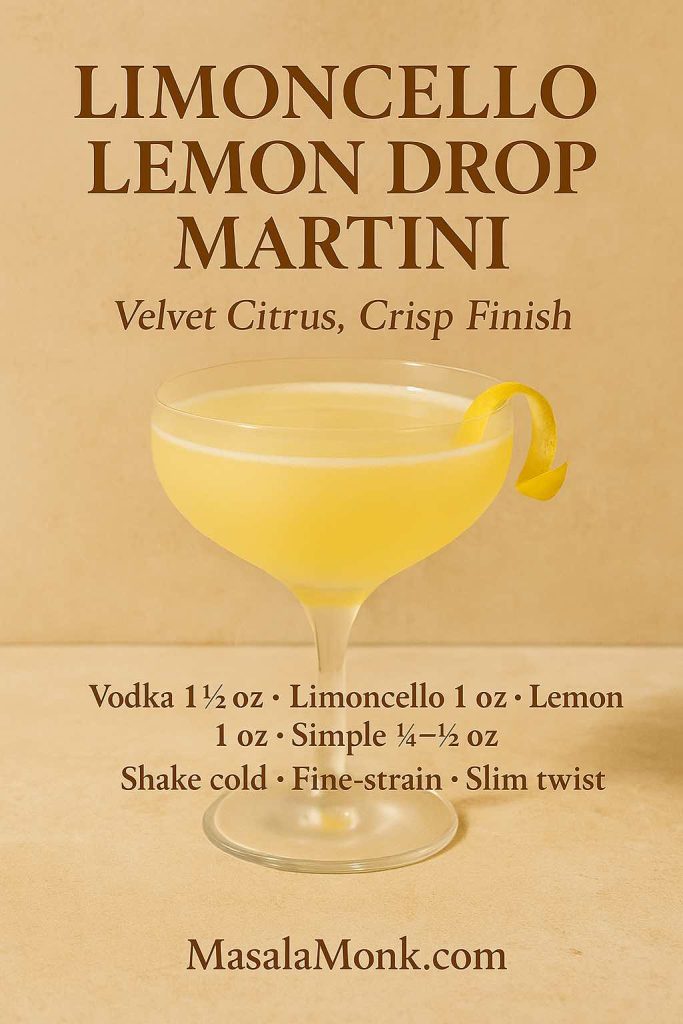
Limoncello makes a lemon drop softer, rounder, and more perfumed — the version to pour when you want the drink to feel sunnier and a little more generous. Since limoncello is already sweet, use less simple syrup than you would in the classic drink.
Ingredient
Amount
Vodka
1½ oz / 45 ml
Limoncello
1 oz / 30 ml
Fresh lemon juice
1 oz / 30 ml
Simple syrup
¼–½ oz / 7–15 ml, to taste
Superfine sugar for rim
optional, or half rim
Lemon twist
1
Since limoncello already brings sweetness, reduce the syrup before you shake. That keeps the variation sunny and lemony instead of drifting into dessert-drink territory.
Shake with ice until very cold, then fine-strain into a chilled glass. Start with ¼ oz syrup and increase only if the lemon feels too sharp.
Too sweet? Skip the simple syrup and use a half rim.
Too heavy? Add ¼ oz / 7 ml more lemon juice.
Too flat? Add the tiniest pinch of fine salt before shaking; it should not taste salty, just more awake.
This is the version for the tray: quick to shake, easy to pass around, and brighter than a plain vodka shot. Lemon drop shots for a party should taste like smaller, punchier versions of the cocktail, not plain vodka chased with sugar.
Version
Vodka
Lemon juice
Simple syrup
Bright shot
1 oz / 30 ml
½ oz / 15 ml
¼ oz / 7 ml
Sweeter party shot
1 oz / 30 ml
½ oz / 15 ml
½ oz / 15 ml
6 shots
6 oz / 180 ml
3 oz / 90 ml
1½–3 oz / 45–90 ml
Small, cold batches make better Lemon Drop shots. Pour right before serving so each glass tastes lively instead of warm, flat, or overly sweet.
Shake shots with ice for 8–10 seconds, then strain into lightly sugared shot glasses. Work in small batches so every round tastes lively instead of warm and syrupy.
Batch Lemon Drop Martini: Pitcher, Party Batch, and Freezer-Door Lemon Drops
Serving more than two people? The only trick is dilution. A shaken Lemon Drop gets a little water from the ice, and that water is part of the drink. For guests, the goal is simple: keep the first round cold and the second round just as good.
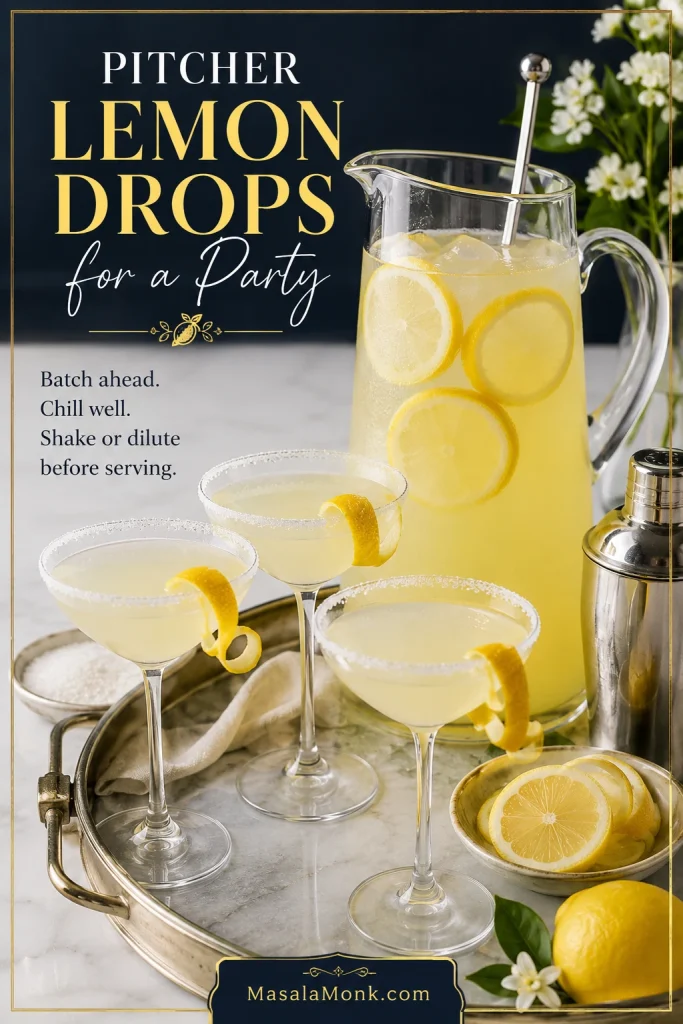
Pitcher Lemon Drops for a Party
A pitcher setup works best when the base is cold, the glasses are ready, and the dilution plan is settled before guests arrive.
Chill the base and prepare the glasses before guests arrive. For a pitcher Lemon Drop, the dilution plan matters more than the garnish pile.
Serving style
Best choice
Add water?
Best quality
Batch ingredients, shake each drink
No
Easiest pitcher
Add water and chill
Yes
Freezer-door bottle
Use smaller batch, shake each serving
No
Ready-pour bottle
Add measured water before chilling
Yes
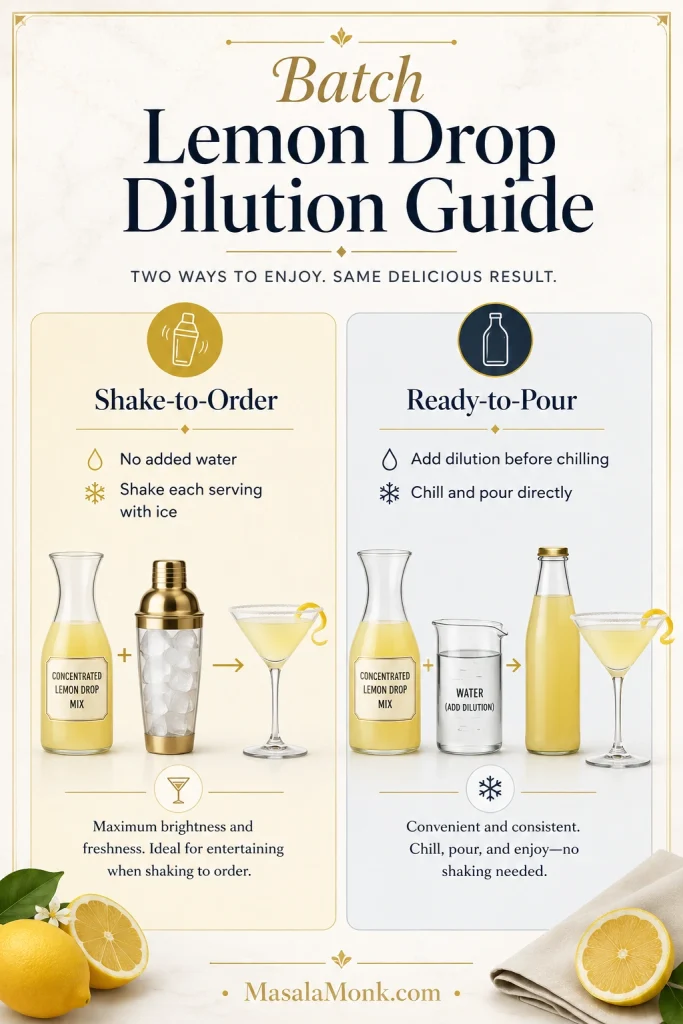
Batch Dilution: Shake-to-Order vs Ready-Pour
Use this choice before you bottle the drink. If the batch will not be shaken with ice later, it needs measured water now.
Decide the serving style before batching. Shake-to-order Lemon Drops stay undiluted until the final shake, while ready-pour batches need measured water ahead of time.
If a batched Lemon Drop tastes strong, sharp, or oddly flat, it usually does not need more sugar first; it needs the water that shaking would have added.
After dilution, one shaken cocktail usually pours around 5 oz, sometimes closer to 5½ oz. Because Lemon Drops taste bright and smooth, they can feel lighter than they are. Serve them small, cold, and freshly poured.
Shake-to-order batches
Batch
Vodka
Orange liqueur
Lemon juice
Syrup
Water
4 cocktails
8 oz / 240 ml
3 oz / 90 ml
4 oz / 120 ml
2–3 oz / 60–90 ml
none
8 cocktails
16 oz / 480 ml
6 oz / 180 ml
8 oz / 240 ml
4–6 oz / 120–180 ml
none
Ready-pour and freezer batches
Batch
Vodka
Orange liqueur
Lemon juice
Syrup
Water / dilution
8 ready-pour cocktails
16 oz / 480 ml
6 oz / 180 ml
8 oz / 240 ml
4–6 oz / 120–180 ml
8–10 oz / 240–300 ml
750 ml freezer bottle, shake-to-serve, about 5 cocktails
10 oz / 300 ml
3¾ oz / 110 ml
5 oz / 150 ml
2½ oz / 75 ml
none; shake each serving with ice
1 liter ready-pour bottle, about 6 cocktails
12 oz / 360 ml
4½ oz / 135 ml
6 oz / 180 ml
3–4 oz / 90–120 ml
6–7 oz / 180–210 ml
Use a large pitcher or a 1.5 liter bottle for the 8-drink ready-pour batch; it will not fit in a standard 750 ml bottle. Do not fill a freezer bottle to the top. Leave headspace, cap tightly, and shake or invert before pouring.
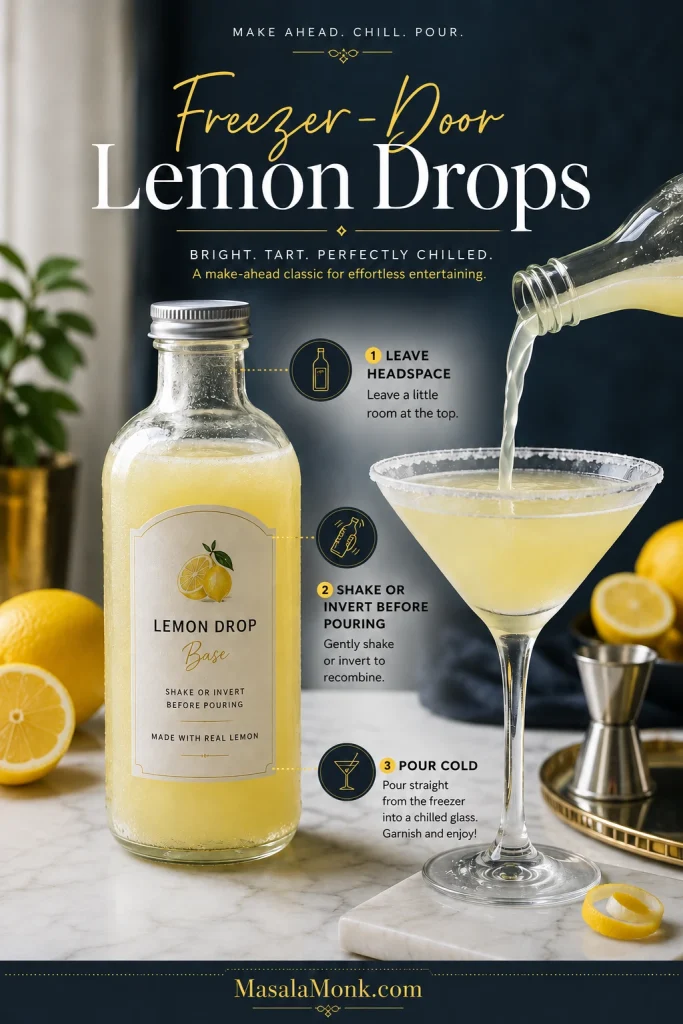
Freezer-Door Lemon Drop Bottle
A freezer-door bottle is convenient, but it still needs room at the top and a quick shake before serving so the citrus and syrup stay even.
A freezer-door Lemon Drop batch needs headspace and a quick shake or invert before pouring. That recombines citrus and syrup so every glass tastes consistent.
Batches with fresh lemon juice taste best the same day. To prep further ahead, mix the vodka, orange liqueur, and syrup first, then add fresh lemon juice closer to serving. For a built-over-ice vodka drink that is easy to serve by the round, the Moscow Mule recipe is another good party option.
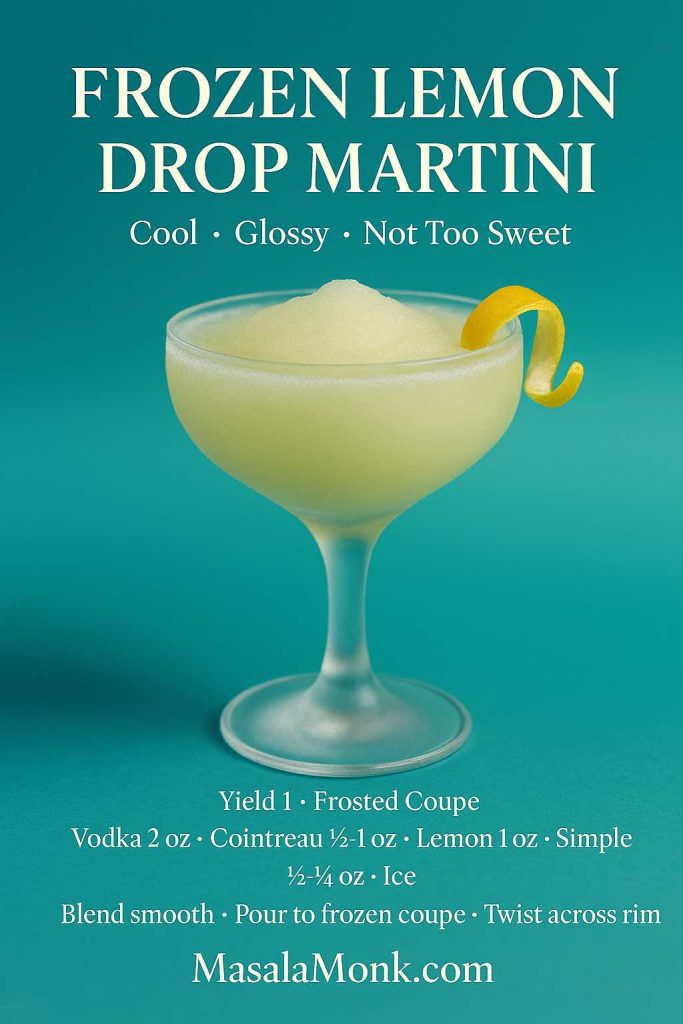
A frozen lemon drop should still taste like a cocktail, not a syrupy lemon slush with vodka hiding underneath. Start with ½ oz syrup. Frozen drinks taste muted at first, then sweeter as they soften, so it is easier to add syrup than fix a slushy that turns cloying.
Ingredient
Amount
Vodka
2 oz / 60 ml
Cointreau or triple sec
½–1 oz / 15–30 ml
Fresh lemon juice
1 oz / 30 ml
Simple syrup
½–¾ oz / 15–22 ml
Ice
about 1 heaping cup
Frozen Lemon Drops should still taste like cocktails, not lemon slush. Start with restrained syrup because the drink can taste sweeter as it softens.
Blend until smooth, then pour into a chilled glass. If the drink feels too sharp, blend in a small spoonful of syrup. If it feels too sweet, add a squeeze of lemon and pulse once more. For another frozen party drink with a creamier tropical mood, try this Piña Colada recipe.
Fruit and Floral Lemon Drop Variations
Variations are where the drink gets playful, but the rule stays the same: let the lemon lead and use fruit as the accent, not the whole personality. Fruit should dress the lemon, not take over the whole glass.
Let fruit and herbs frame the lemon instead of hiding it. Berries, lavender, ginger, or basil work best as accents, with fine-straining for a smoother finish.
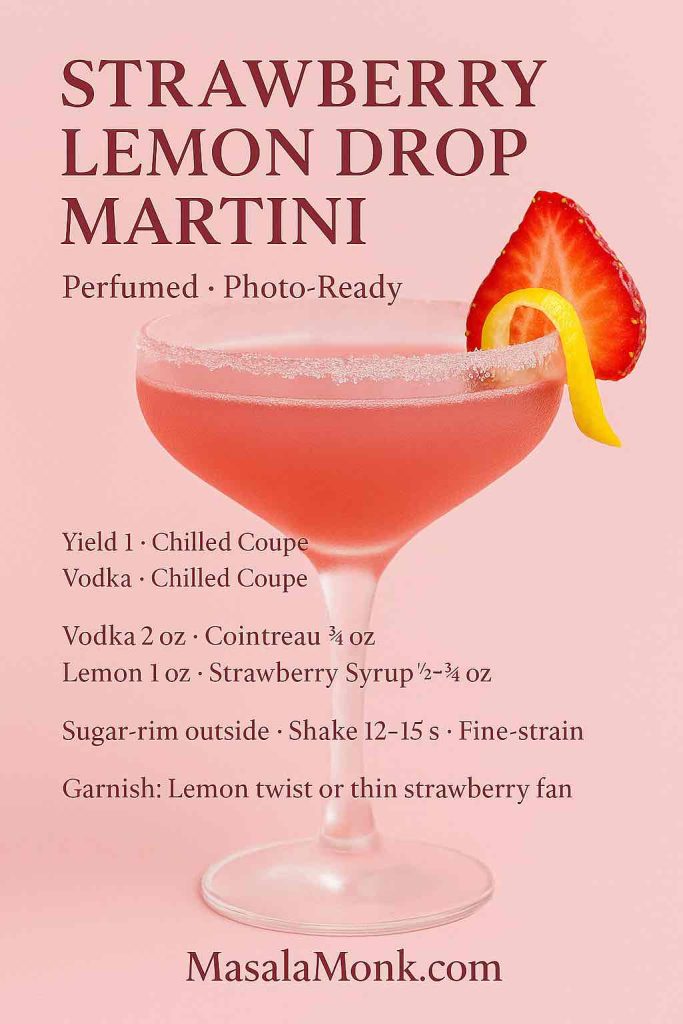
For most fruit lemon drops, start with the classic recipe and replace the simple syrup with ½–¾ oz fruit syrup, or muddle fresh fruit before shaking. Fine-strain well and keep the total sweetness steady.
Variation
Use
Best cue
Strawberry Lemon Drop
½–¾ oz strawberry syrup or 2 muddled berries
Best party color
Blueberry Lemon Drop
½–¾ oz syrup or 8–10 berries
Strain well for a cleaner look
Raspberry Lemon Drop
½ oz raspberry syrup
Tart and vivid; strain seeds
Blackberry Lemon Drop
½–¾ oz syrup or 2–3 berries
Darker, silkier mood
Lavender Lemon Drop
¼–½ oz lavender syrup
Keep it subtle
Ginger Lemon Drop
¼–½ oz ginger syrup
Spicy-bright
Basil Lemon Drop
3–4 leaves, gently muddled
Fresh and herbal
Use syrup when you want a clearer, prettier party drink. Muddled fruit tastes fresher but can add pulp, skins, or seeds.
Strawberry Lemon Drop Martini
Strawberry is the easiest fruit variation to make feel party-ready. Keep the sweetness measured, then fine-strain so the pink color stays clean.
A few strawberries add color and softness without turning the drink jammy. Use a small amount, then fine-strain so the cocktail stays clean.
Other spirit swaps: gin or tequila
A gin lemon drop tastes more botanical and a little drier. Try 2 oz London Dry gin, ¾ oz Cointreau, 1 oz lemon juice, and ¼–½ oz syrup. Keep the rim delicate so the botanicals do not feel heavy. For another gin-and-lemon classic, the French 75 cocktail recipe is also worth saving.
A tequila lemon drop leans toward a lemony margarita. Try 2 oz blanco tequila, ¾ oz Cointreau, 1 oz lemon juice, and ½ oz syrup. A half-sugar, half-salt rim works especially well here. If that version catches your eye, the Spicy Margarita recipe goes deeper into citrus, tequila, and a bold rim.
Vodka does not need to be expensive here, but it does need to disappear cleanly behind the lemon. A harsh bottle becomes more obvious once fresh citrus sharpens everything around it. Chilling helps, but it cannot turn a rough vodka smooth.
Vodka choice
Use it when
Adjustment
Plain neutral vodka
You want the classic
Use the main ratio
Smoother premium vodka
You want a cleaner finish
Do not over-sweeten
Budget vodka
Casual party drinks
Shake colder; use fresh lemon
Lemon vodka
You want louder citrus aroma
Reduce syrup
Sweet citron vodka
Only for party-style drinks
Half rim; less syrup
Plain vodka is the safest choice for a crisp Lemon Drop Martini. Lemon vodka or sweet citron vodka can also work, but start with less syrup.
For another chilled vodka drink with a sweet-tart edge, the Appletini is a natural next pour. It uses the same basic lesson: keep the fruit sharp, the glass cold, and the sweetness controlled.
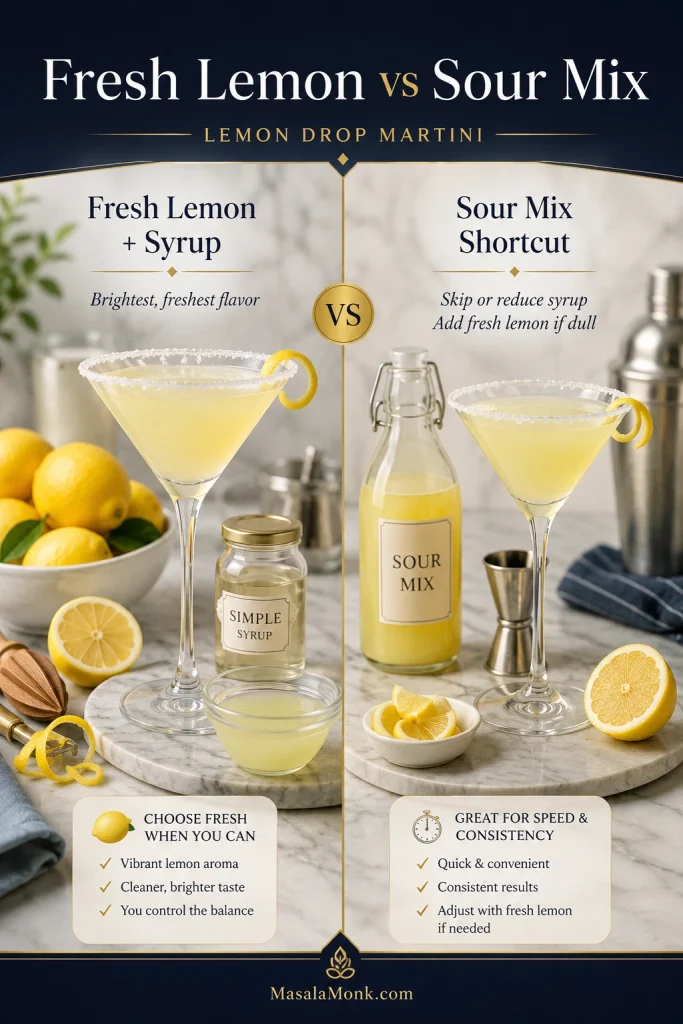
Fresh Lemon Juice vs Sour Mix or Lemon Drop Mix
Fresh lemon juice and simple syrup give the freshest, clearest lemon drop. Mixes and sour mix can work when convenience matters, but they usually taste sweeter, flatter, or less fresh.
Using a mix? Treat it as both citrus and sweetener. Do not add the full simple syrup from the classic recipe. Add vodka first, taste, then brighten with a small squeeze of fresh lemon if the drink feels dull.
Fresh lemon juice and simple syrup give you the most control. Sour mix is faster, but skip extra syrup at first and add fresh lemon if the drink tastes flat.
Option
Result
Adjustment
Fresh lemon + syrup
Brightest and best
Use the main recipe
Bottled lemon juice
Flatter and sharper
Add a fresh twist; reduce syrup slightly
Sour mix
Sweeter and less fresh
Skip or reduce simple syrup
Lemon drop mix
Easiest
Add vodka and a squeeze of fresh lemon if possible
Premixed bottle
Least flexible
Chill hard and garnish with fresh lemon
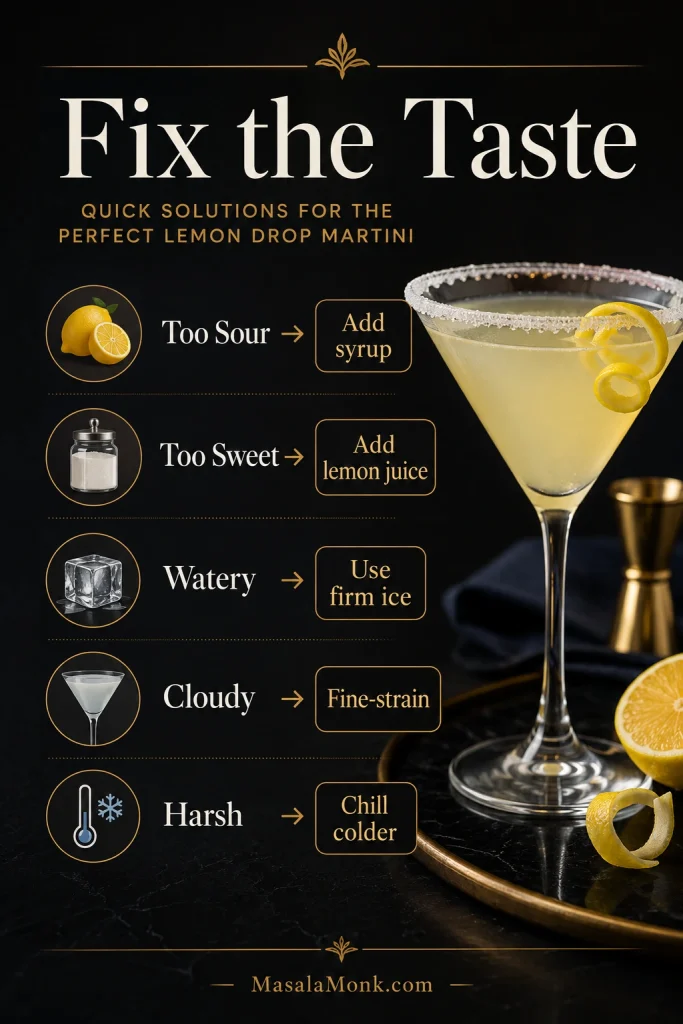
Fix the Taste
Do not dump the drink if the first sip is off. Lemon drops are forgiving when you adjust slowly. Taste, adjust by teaspoons, and shake briefly again with fresh ice.
Small adjustments fix most Lemon Drop Martini problems. Syrup softens sharp lemon, fresh juice cuts sweetness, firm ice controls dilution, and fine-straining clears the pour.
You can prepare parts of a lemon drop ahead, but the best texture comes from shaking close to serving. A Lemon Drop feels most alive when the glass is cold, the rim is neat, and the citrus still smells fresh.
Lemon juice: Juice lemons the same day if possible. Strain and refrigerate until needed.
Simple syrup: Store in a clean jar in the fridge and use within 2–3 weeks.
Rimmed glasses: Rim glasses shortly before serving so the sugar stays neat.
Pitcher batch: Mix and chill up to a few hours ahead.
Best service: Shake each serving with ice and pour immediately.
Prepare the parts instead of the finished cocktail. Make syrup ahead, juice lemons the same day, rim glasses close to serving, and shake with ice at the last minute.
Serve alongside:mango lemonade for a non-alcoholic citrus option.
Bartender-Style Reference: Drier Classic vs Softer Home Version
Despite the martini glass, the Lemon Drop was born as a bright 1970s bar drink, closer in spirit to a vodka sour than a true martini.
This version sits between those worlds: it keeps the classic vodka-orange-lemon structure, then uses measured syrup and a delicate rim so the drink lands bright without turning harsh.
If you enjoy martini-style drinks with a different mood, try an Espresso Martini.
FAQs
These quick answers cover the swaps and shortcuts people usually ask about once the shaker is already out.
What is a Lemon Drop Martini?
A Lemon Drop Martini is a chilled vodka cocktail with fresh lemon juice, balanced sweetness, orange liqueur, and usually a sugar rim.
Is a Lemon Drop Martini the same as a Lemon Martini?
The names overlap, but a Lemon Drop Martini usually means vodka, lemon, sweetener, and a sugar rim. “Lemon Martini” can refer more broadly to lemon-flavored martini-style drinks, so recipes vary.
Which vodka works best?
A clean neutral vodka is the safest choice for the classic version. Lemon vodka works when you want stronger citrus aroma, but reduce the syrup slightly.
Fresh lemon juice or bottled?
Fresh lemon juice is best because the aroma is part of the drink. Bottled lemon juice works only as a shortcut and may taste flatter.
How sweet should a Lemon Drop be?
It should be balanced, not dessert-sweet. Start with ½ oz / 15 ml simple syrup for one cocktail, then add more only if the lemon tastes too sharp.
No triple sec — what should I use?
Use vodka, fresh lemon juice, and simple syrup for a three-ingredient lemon drop. Add 1–2 dashes of orange bitters if you want a little orange aroma without liqueur.
Cointreau, triple sec, or Grand Marnier?
Cointreau tastes crisp and clear. Triple sec is more budget-friendly and varies by brand. Grand Marnier tastes richer and rounder, so use a little less syrup if the drink feels too sweet.
How long should you shake a Lemon Drop Martini?
Shake for 15–20 seconds, or until the shaker feels very cold. For shots, 8–10 seconds is usually enough because the serving is smaller.
Lemon Drop Martini vs Lemon Drop Shot — what is the difference?
A Lemon Drop Martini is a full cocktail served up in a coupe or martini glass. A Lemon Drop Shot is smaller, stronger, and served in a shot glass with less dilution.
How do you make Lemon Drop shots?
For one bright shot, shake 1 oz / 30 ml vodka, ½ oz / 15 ml lemon juice, and ¼ oz / 7 ml simple syrup with ice for 8–10 seconds. Strain into a lightly sugared shot glass.
Can you make a Lemon Drop Martini with sour mix?
Yes. Use vodka and sour mix, then skip or reduce the simple syrup because most sour mixes already contain sugar. A squeeze of fresh lemon helps brighten the drink.
What is the best way to batch Lemon Drops for a party?
Mix the vodka, orange liqueur, lemon juice, and syrup ahead, then chill. For the best texture, shake each serving with ice. For ready-pour service, add cold water to replace shake dilution.
Does limoncello work in a Lemon Drop Martini?
Yes. Limoncello makes the cocktail softer and more lemon-perfumed. Since it is sweet, reduce the simple syrup and consider using only a half sugar rim.
The Lemon Drop lasts because it gives a simple promise and delivers it quickly: cold vodka, just-squeezed lemon, a soft edge of sweetness, and a glass that looks festive before anyone takes the first sip. Make the classic first, keep the rim delicate, and shake until the tin feels icy.
After that, the variations are easy: limoncello for softness, shots for the party tray, frozen for hot afternoons, strawberry when the room needs color. The goal stays the same every time: citrus first, smooth second, sweet only enough.
If you make it, start with the classic first. Then come back and tell us what your table chose next: limoncello, frozen, strawberry, or shots.
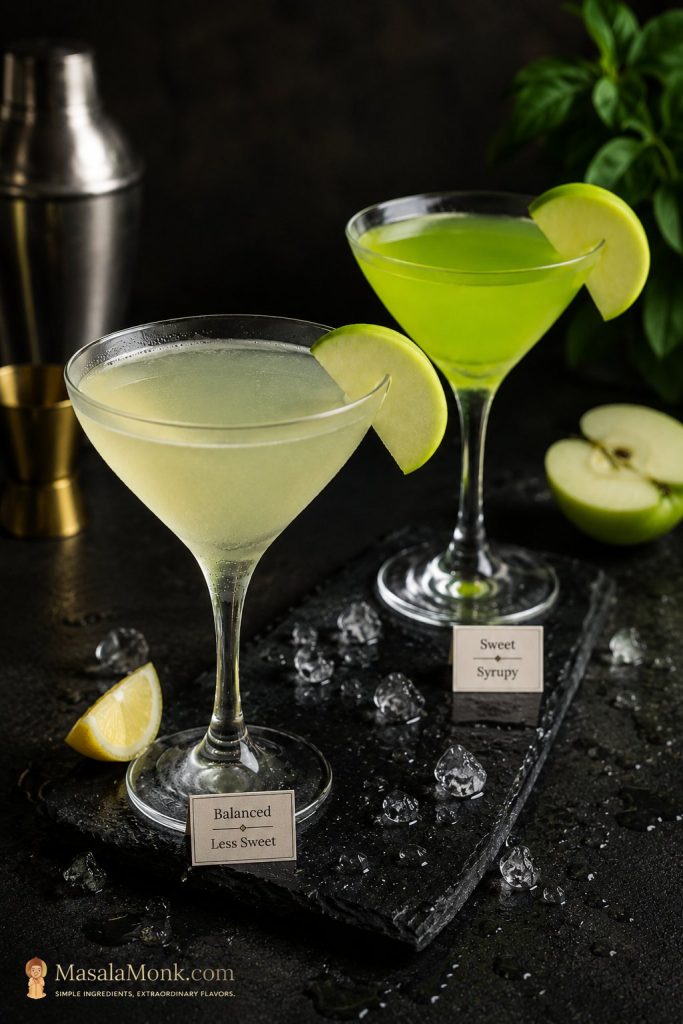
The Appletini is better than its reputation. When it is made badly, it can taste like melted green candy. Done well, it is icy, sharp, apple-bright, and genuinely fun to sip.
This version keeps the green apple snap people expect, but balances it with real apple juice and fresh lemon, so the drink tastes crisp instead of syrupy. It still feels like the classic apple martini, just cleaner, colder, and more grown-up.
The mood should feel playful, not childish — bright enough for a retro cocktail night and sharp enough to serve before dinner with salty snacks.
Quick answer: an Appletini, also called an apple martini, is a chilled vodka cocktail usually made with vodka, sour apple schnapps or sour apple liqueur, apple juice, fresh lemon juice, and ice. Shake it hard, strain it into a chilled martini glass or coupe, and garnish with a thin green apple slice.
Make this tonight:
Use the ratio: 1 1/2 oz vodka, 1 oz sour apple liqueur, 1 oz apple juice, and 1/2 oz fresh lemon juice.
Make this version first. It gives you the green apple flavor people expect from an Appletini without the heavy sweet finish. Once you taste this balance, every variation becomes easier.
The best version smells lightly of green apple before you even sip it. On the first taste, it should land cold and sharp, turn apple-sweet in the middle, and finish clean with lemon.
Prep time: 5 minutes Total time: 5 minutes Yield: 1 cocktail Glass: Chilled martini glass or coupe Equipment: Cocktail shaker, jigger or small measuring cup, strainer
Ingredients
1 1/2 oz / 45 ml vodka
1 oz / 30 ml sour apple schnapps, sour apple liqueur, or apple pucker
1 oz / 30 ml apple juice, preferably cloudy or unfiltered
1/2 oz / 15 ml fresh lemon juice
1/4 oz / 7.5 ml simple syrup, optional
Ice
Thin green apple slice, for garnish
Instructions
Chill a martini glass or coupe while you measure the ingredients.
Add the vodka, sour apple liqueur, apple juice, lemon juice, and optional simple syrup to a cocktail shaker.
Fill the shaker with plenty of fresh ice.
Shake hard for 15 to 20 seconds, until the outside of the shaker feels very cold.
Strain into the chilled glass.
Garnish with a thin green apple slice. Brush or dip the apple slice in lemon juice first so it stays fresh-looking.
Recipe note: start without simple syrup when your sour apple liqueur is already sweet. If the balance still feels off, use the taste-fixing guide below.
Before You Mix
A good Appletini should look playful but taste clean. Apple should show up before sugar.
You do not need a full bar setup. A jar, a tablespoon, fresh lemon, and enough ice will get you most of the way there.
No jigger? Use tablespoons: 1 oz = 2 tablespoons, 1/2 oz = 1 tablespoon, and 1/4 oz = 1 1/2 teaspoons.
No shaker? Use a clean mason jar, protein shaker, or sturdy jar with a tight lid. Shake carefully, then strain through a small sieve when needed.
Greener drink? Use a brighter sour apple liqueur or apple pucker, but keep the pour controlled.
Fresher drink? Use cloudy or unfiltered apple juice and keep the syrup optional.
Glassware note: A coupe is a shallow stemmed cocktail glass. Either a coupe or martini glass works; chilling it matters more than the shape.
What Is an Appletini, Exactly?
An Appletini, or apple martini, is a vodka cocktail flavored with apple. It is not a classic martini in the dry gin-and-vermouth sense; it is a modern vodka cocktail with a martini-glass attitude.
The old-school green version is usually shaken with sour apple schnapps or sour apple liqueur and served cold in a stemmed glass. “Apple martini” can also describe fresher versions made with apple juice, apple cider, or apple brandy. This recipe sits in the middle: bright green apple flavor, real apple body, and enough fresh lemon to keep the drink balanced.
Which Appletini Do You Want?
Not every Appletini uses the same apple ingredient. Maybe you want the neon-green bar drink, a cleaner apple martini, or simply a way to use the bottle already on your shelf.
You Want
Use This
Result
Old-school green Appletini
Sour apple schnapps or apple pucker
Bright, sweet-tart, nostalgic
Less sweet apple martini
Less liqueur, no syrup, more lemon
Cleaner and sharper
Fresh apple martini
Cloudy or unfiltered apple juice
Less neon, more real apple
Fall apple martini
Apple cider and maple syrup
Warmer and deeper
Sour apple martini
Apple pucker plus extra lemon or lime
Sharper and more bar-style
Non-alcoholic Appletini
Apple juice, lemon, optional syrup, sparkling water
Fresh apple mocktail
For a first try, stay with the main recipe. It gives you the expected green apple flavor without going too sweet.
Why This Appletini Works
The liqueur gives the snap, the juice gives the apple body, and the lemon keeps the drink balanced. That is the whole trick.
One ounce of sour apple liqueur is enough to give the Appletini its identity without letting the bottle take over. Apple juice makes the cocktail taste more like actual apple. Fresh lemon keeps the finish bright. Vodka gives the drink structure without covering the fruit.
The 1/2 oz lemon pour is deliberate: less can leave the drink flat, while more pushes it toward a sharper sour apple martini. Cold matters too. The drink should hit like a frosted Granny Smith slice, not a melted sour candy.
I would rather start with a tart Appletini and sweeten it later than try to rescue one that already tastes heavy. Fresh lemon is the easiest way to make the apple taste brighter, the same way citrus keeps a Lemon Drop Martini from tasting flat.
Appletini Ingredients and Smart Swaps
You do not need the perfect bottle to make a good Appletini. You need a clear balance: apple, citrus, cold, and restraint.
Quick chooser: use apple pucker or sour apple schnapps for the nostalgic green Appletini, cloudy apple juice for a fresher less-sweet version, and non-alcoholic apple cider for a deeper fall-style apple martini.
A balanced Appletini starts before you shake: vodka for structure, sour apple liqueur for snap, apple juice for body, lemon for lift, and syrup only if needed.
Vodka
The base spirit is here to stay out of the way. Apple and lemon should be the parts you notice first. Use a smooth vodka you enjoy in cocktails; it does not need to be expensive, but it should not taste harsh.
A flavored vodka also works, but it can push the drink sweeter and more perfumed. For the adjusted balance, use the apple vodka Appletini version below. Gin can be used for a botanical variation, but vodka gives the expected Appletini flavor.
Sour Apple Schnapps, Sour Apple Liqueur, or Apple Pucker
This is the ingredient that gives the Appletini its green apple snap. Sour apple schnapps, sour apple liqueur, and apple pucker all work, but they can taste very different from bottle to bottle.
The most old-school green Appletini comes from sour apple schnapps or apple pucker. A slightly cleaner version starts with a sour apple liqueur that is not aggressively sweet. Begin with 1 oz / 30 ml, then adjust with lemon juice or apple juice rather than adding more liqueur immediately.
Apple pucker, sour apple schnapps, and sour apple liqueur can all work, but they do not taste equally sweet. Taste your bottle first, then adjust lemon and syrup from there.
Use whatever sour apple bottle you have. The only rule is to taste before adding syrup, because some bottles are already sweet enough.
Apple Juice
This is what makes the drink taste like apple, not just apple-flavored alcohol. Cloudy apple juice, also sold as unfiltered apple juice, gives the fullest flavor. Clear apple juice is lighter and often sweeter, so unsweetened juice gives you the most control. The drink should taste like apple before it tastes like sugar.
Apple Cider
For this recipe, apple cider means non-alcoholic apple cider: unfiltered apple juice with a deeper, rounder flavor. In some countries, “cider” means alcoholic cider; that is not what this Appletini variation needs unless a recipe specifically says so.
Use apple juice or sour apple liqueur for the bright green look. For a deeper fall version, cider gives the drink a softer color and warmer apple flavor; the apple cider martini variation shows how to make that swap.
Apple juice keeps the drink closer to a bright classic Appletini. Meanwhile, non-alcoholic apple cider makes a warmer apple cider martini variation with deeper fruit flavor.
Fresh Lemon Juice
Lemon is the difference between a drink that tastes bracing and one that tastes like green syrup. Without enough citrus, an Appletini can taste flat, even when the measurements are technically correct.
Fresh lemon juice is best because this cocktail has only a few ingredients, so the citrus flavor stands out. Lime juice also works for a sharper sour apple edge. For more easy ways to use lemon with vodka, this vodka with lemon guide has simple citrus-forward ideas.
Simple Syrup
This is the ingredient to add last, not first. Shake the drink without syrup when your sour apple liqueur is sweet. Taste, then add a small splash only when the cocktail feels too sharp.
For a cider variation, maple syrup can replace simple syrup, but use it lightly because it moves the drink into fall-cocktail territory.
Green Apple Garnish
A thin green apple slice makes the drink look intentional, not just green. Granny Smith works especially well because it is tart, bright, and crisp. Brush or dip the slice in lemon juice before garnishing so it does not brown.
Thin green apple slices look beautiful, but they brown quickly. A little lemon juice keeps the Appletini garnish fresh-looking while you finish the drinks.
For cider or caramel apple variations, a cinnamon-sugar rim can be delicious. For the main Appletini, keep the garnish simple so the drink stays sharp rather than dessert-like.
How to Make an Appletini Cold, Crisp, and Balanced
The recipe card gives the quick version; this section shows the small technique choices that make the drink taste colder, cleaner, and less sweet.
Pour the Sour Apple Liqueur
Measure the sour apple liqueur instead of guessing. A controlled pour keeps the apple flavor bright without letting sweetness take over the drink.
Sour apple liqueur gives the Appletini its color and snap, but the pour needs control. Lemon juice keeps that green apple flavor tart instead of candy-sweet.
Shake the Appletini With Plenty of Ice
Fill the shaker with fresh ice and shake until the outside feels very cold. This is where the cocktail gets its clean texture, quick chill, and just enough dilution.
A hard shake makes a real difference here. It chills the Appletini quickly, lightly dilutes the alcohol, and helps the apple and lemon taste brighter together.
Strain Into a Chilled Glass
Empty the ice water from the glass if you used it, then strain the Appletini immediately. A chilled coupe or martini glass keeps the first sip sharp instead of soft.
Strain the Appletini into a chilled glass so the texture stays smooth and the first sip lands cold. This small step gives the cocktail its clean martini-style finish.
Step-by-Step Method
Chill the glass. Put your martini glass or coupe in the freezer for a few minutes, or fill it with ice water while you make the drink.
Measure the ingredients. Add vodka, sour apple liqueur, apple juice, lemon juice, and optional syrup to a cocktail shaker.
Add plenty of ice. Fill the shaker with fresh, clean-tasting ice so the drink chills quickly. Old freezer ice can dull a simple cocktail.
Shake hard. Shake for 15 to 20 seconds, until the shaker feels icy cold on the outside.
Taste if needed. If it tastes sweet, add a squeeze of lemon. If it tastes sharp, add a small splash of syrup.
Strain. Pour the cocktail into the chilled glass.
Garnish. Add a lemon-dipped green apple slice, lemon twist, or cocktail cherry.
The finished drink should be smooth, frosty, and clean — not thick or slushy.
The Best Appletini Ratio for a Crisp, Less-Sweet Drink
Save this Appletini ratio:
1 1/2 : 1 : 1 : 1/2
Vodka : sour apple liqueur : apple juice : lemon juice
Use the Appletini ratio as a starting point. Shake, taste, then sweeten only if the apple and lemon feel too sharp.
This is the ratio to remember. It keeps the Appletini recognizable, but stops it from becoming heavy.
Vodka gives the cocktail structure.
Sour apple liqueur gives the Appletini flavor.
Apple juice gives real apple body.
Lemon juice balances the sweetness.
Simple syrup is optional, not automatic.
The ratio is flexible, but the order of adjustment matters: fix sweetness with citrus first, then syrup only if needed. A pale green Appletini that tastes snappy and fresh is better than a neon one that tastes heavy. More color usually means more liqueur and more sweetness.
That is the sweet spot: enough green apple to feel like an Appletini, enough lemon to make you want the next sip.
How to Fix the Taste: Less Sweet, More Tart, or Stronger
Use this after the first shake, not before. Cocktail balance depends on the bottle of liqueur, the sweetness of the juice, and how cold the drink is.
A less-sweet Appletini should taste brighter, not weaker. Real apple juice and enough lemon pull the green apple flavor into focus.
Problem
How to Fix It
Overly sweet
Add a little more lemon or lime juice, reduce the sour apple liqueur next time, and skip the syrup.
Too tart
Add 1/4 oz / 7.5 ml simple syrup or use a slightly sweeter apple juice.
Weak or thin
Add a little more vodka, not more liqueur.
Strong alcohol bite
Add more apple juice and shake again with plenty of ice.
Heavy finish
Use less sour apple liqueur and more cloudy or unfiltered apple juice.
Flat flavor
Add a touch more fresh citrus and make sure the drink is very cold.
Needs more green color
Use a brighter sour apple liqueur, but avoid extra syrup. A green apple garnish also helps the look.
Most bad Appletinis are not mysterious. They are too warm, too sweet, or both. Fix the cold and citrus, and the whole cocktail suddenly makes sense.
Appletini Variations
Think of the variations as moods: sour and sharp, fresh and quiet, fall and rounded, or dessert-like and playful. Start with the main recipe, then jump to the version that matches the bottle, season, or crowd you are mixing for.
None of these versions need to feel serious. The Appletini’s charm is that it gets to be fun — it just does not have to be cloying.
Sour Apple Martini
Use 1 1/2 oz vodka, 1 oz sour apple liqueur or apple pucker, 1/2 oz lemon or lime juice, and only 1/2 oz apple juice. Skip the syrup unless the drink tastes too sharp.
For a sharper sour apple martini, let apple pucker or sour apple liqueur bring the punch, then balance it with lemon or lime. The contrast keeps the drink snappy.
Green Apple Martini
Use a bright sour apple liqueur and garnish with a thin Granny Smith slice. To make the drink greener without making it much sweeter, keep the liqueur to 1 oz / 30 ml and let the garnish help with the color.
A Granny Smith garnish instantly says green apple martini. Keep the slices thin and the fan proportional so the glass looks polished instead of overloaded.
Fresh Apple Martini
Reduce the sour apple liqueur to 1/2 oz / 15 ml and use 1 1/2 oz / 45 ml cloudy or unfiltered apple juice. Add 1/2 oz / 15 ml lemon juice and a small amount of simple syrup only when needed. This version will not look as green, and that is the point.
Cloudy apple juice gives a fresh apple martini more body and a softer color. Use it when you want real apple flavor without leaning on a neon-green bar look.
Apple Cider Martini
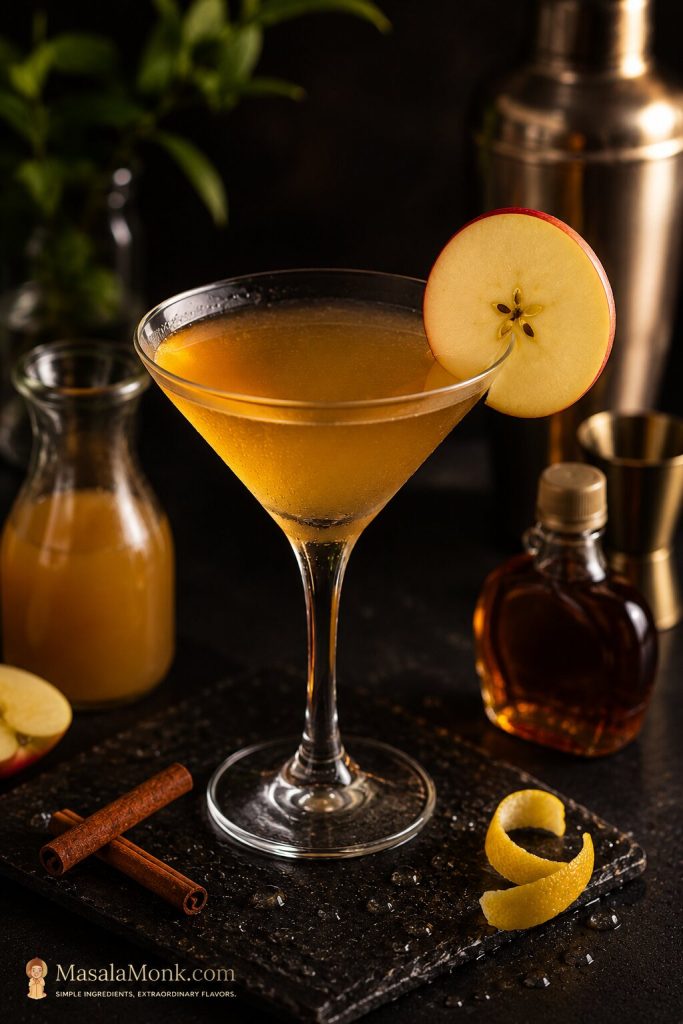
Replace the apple juice with apple cider and use maple syrup instead of simple syrup. This is no longer the bright green bar-style Appletini; it is a deeper apple martini with a rounder cider flavor.
For a fall-style Appletini, swap in non-alcoholic apple cider and keep the garnish simple. Cinnamon, lemon peel, and a small maple cue make it seasonal without turning it heavy.
Caramel Apple Martini
Add a small splash of butterscotch schnapps or use caramel vodka. Keep the lemon juice in the drink so the caramel does not make it heavy. A caramel drizzle or cinnamon-sugar rim works, but use it lightly.
Caramel belongs in an apple martini as an accent, not the base. A light rim or small drizzle gives dessert flavor, while lemon keeps the cocktail from becoming sticky.
Appletini With Apple Vodka
Use 1 1/2 oz / 45 ml apple vodka, 3/4 oz / 22.5 ml sour apple liqueur, 1 oz / 30 ml apple juice, and 1/2 oz / 15 ml lemon juice. Skip the simple syrup unless needed. With apple vodka, keep the liqueur and syrup lighter so the drink stays bright instead of turning into apple candy.
Apple vodka can make an Appletini smell more aromatic, but it may also push the drink sweeter. Start by reducing syrup, then use lemon to keep the finish clean.
Non-Alcoholic Appletini or Virgin Appletini
Shake 2 oz / 60 ml apple juice, 1/2 oz / 15 ml lemon juice, and 1/4 oz / 7.5 ml simple syrup only when needed with ice. Strain into a chilled glass and top with sparkling water. Use ginger ale for a sweeter mocktail.
A virgin Appletini should still feel like a cocktail, not plain apple juice in a fancy glass. Lemon brings brightness, sparkling water adds lift, and green apple keeps the look classic.
For something apple-forward without the vodka, MasalaMonk’s apple juice mocktails are a natural next step.
Can You Use Appletini Mix or Sour Mix?
Yes, but start small. Appletini mix, sour apple mix, and sweet-and-sour mix are usually already sweetened, so they can push the drink heavy fast.
With sweet-and-sour mix, shake 1 1/2 oz vodka, 1 oz sour apple liqueur, 1/2 oz apple juice, and 1/2 oz sour mix with ice. Taste before adding more sour mix or any syrup. Fresh lemon and apple juice simply make the drink taste more alive.
Sour mix is useful when you need speed, but it is often already sweetened. Measure it carefully, shake the drink, and taste before adding any extra simple syrup.
Common Appletini Mistakes
Check this when the drink tastes almost right but not quite. Most Appletini problems come from the same few places.
Using too much sour apple liqueur: keep it around 1 oz / 30 ml so the drink tastes like apple, not syrup.
Adding syrup automatically: many apple liqueurs are already sweet, so taste first.
Skipping fresh lemon: citrus is what keeps the cocktail bright.
Shaking too lightly: the drink needs enough cold and dilution to taste clean.
Batching without dilution: add a little cold water when serving straight from a pitcher.
Cutting garnish too early: brush or dip apple slices in lemon juice so they do not brown.
Make-Ahead, 2-Drink, and Pitcher Appletinis
You can scale this recipe, but a pitcher Appletini needs help from cold and dilution because it misses the shake. Whenever possible, batch the ingredients, chill them, then shake individual portions with ice before serving.
A pitcher Appletini should still feel like a cocktail, not a bowl of green punch.
For 2 Appletinis
3 oz / 90 ml vodka
2 oz / 60 ml sour apple liqueur
2 oz / 60 ml apple juice
1 oz / 30 ml fresh lemon juice
1/2 oz / 15 ml simple syrup, optional
Ice, for shaking
Shake with ice and strain into two chilled glasses.
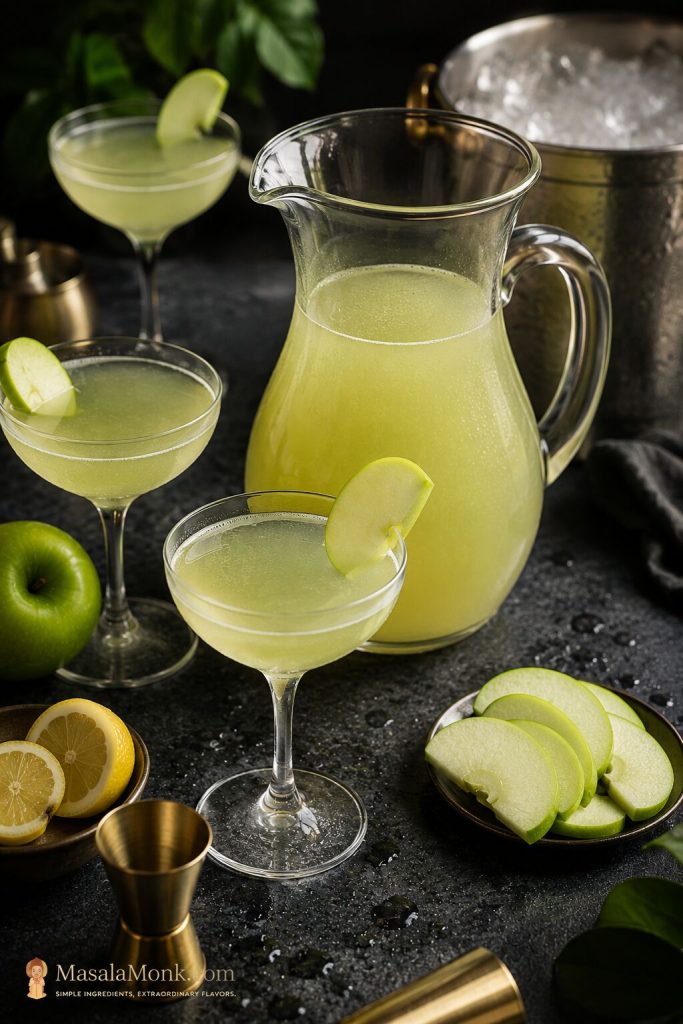
Pitcher Appletini for 8 Cocktails
For pitcher Appletinis, chill the mixture before guests arrive and keep ice out of the pitcher. That way, each pour stays cold and crisp instead of watered down.
12 oz / 360 ml vodka
8 oz / 240 ml sour apple liqueur
8 oz / 240 ml apple juice
4 oz / 120 ml fresh lemon juice
2 oz / 60 ml simple syrup, optional
4 to 6 oz / 120 to 180 ml cold water, when serving straight from the pitcher without shaking
Stir everything except ice in a pitcher and refrigerate until very cold. When ready to serve, shake individual portions with ice when possible, then strain into chilled glasses. This gives the best texture and balance.
Serving straight from the pitcher? Start with 4 oz / 120 ml cold water. Taste after chilling and add up to 2 oz / 60 ml more water when the batch tastes too sharp or strong.
Keep ice out of the pitcher unless you are serving immediately. Ice will melt and water down the whole batch. Garnish each glass just before serving so the apple slices look fresh. This is still a cocktail batch, not a light punch, so pour modest servings and keep it chilled.
Can You Make Appletinis Ahead?
Yes. Mix the vodka, sour apple liqueur, apple juice, and lemon juice up to 4 hours ahead and refrigerate. Add ice only when shaking or serving.
For the freshest flavor, shake with ice right before pouring. Citrus can taste dull when it sits too long, so this drink is best mixed ahead only for same-day serving. Slice the apple garnish right before serving, or hold slices briefly in lemon water and pat dry before using.
Serve It Up or On the Rocks
An Appletini is usually served “up,” meaning shaken with ice and strained into a stemmed glass without ice. That gives it the clean martini-style feel.
You can also serve it over fresh ice in a rocks glass for a colder, slower-sipping drink. On the rocks, the cocktail becomes more diluted as the ice melts. That can make sweeter versions easier to drink, but it will soften the sharp apple flavor over time.
For vodka cocktails served tall or over ice, a Moscow Mule may be more your style than a strained martini glass drink.
Is an Appletini Strong?
An Appletini can be stronger than it tastes because the main recipe has 1 1/2 oz vodka plus 1 oz sour apple liqueur. The apple juice and citrus make it taste smooth and fruity, so serve it in small martini portions rather than oversized pours.
For general drink-size context, the NIAAA standard drink guide explains how distilled spirits are counted in standard servings. Sip slowly and serve responsibly.
What to Serve With an Appletini
The tart apple edge cuts through creamy cheese beautifully, and the lemony finish wakes up salty snacks. Think sharp cheddar, brie, salted nuts, olives, prosciutto, fried cheese bites, pork sliders, or spicy chicken bites.
Salty snacks make a tart Appletini taste even brighter. Cheese, olives, nuts, crackers, cured meat, and fried bites all work because they balance the green apple finish.
For a simple snack table, pair Appletinis with a charcuterie board and something creamy like an easy cheese ball. The salty, creamy bites make the apple and lemon feel even brighter.
For caramel apple or apple cider martini variations, serve light desserts, apple tart, cinnamon cookies, or vanilla-forward sweets. Keep the food less sweet when the cocktail itself is on the sweeter side.
Why the Appletini Deserves a Better Reputation
The Appletini is one of those cocktails people either remember fondly or dismiss too quickly. Its retro reputation came from very sweet, very green versions, but the idea itself is solid: cold vodka, apple, citrus, and enough tartness to make the fruit taste brighter.
The Appletini does not need to apologize for being retro. It just needs enough citrus and cold to be worth drinking now.
Retro Green Appletini Party
This is where the drink earns its comeback: not as a novelty shot, but as a cold, bright cocktail that still feels fun with friends.
The Appletini should still feel fun and retro — just colder, cleaner, and better balanced. Serve it with salty snacks when you want a playful cocktail-night drink that does not taste syrupy.
For a little cocktail history, the Appletini is widely associated with the 1990s apple martini wave and the Lola’s West Hollywood origin story.
This recipe keeps the fun part of the drink — the green apple snap — and fixes the part that usually goes wrong: too much sweetness.
FAQs
What is in an Appletini?
An Appletini usually contains vodka, sour apple schnapps or sour apple liqueur, apple juice, lemon juice, and ice. The best versions taste cold and tart, not just sweet and green.
How do you make an Appletini?
Shake vodka, sour apple liqueur, apple juice, and fresh lemon juice with ice for 15 to 20 seconds. Strain into a chilled martini glass and garnish with a thin green apple slice.
Is an Appletini the same as an apple martini?
Appletini is the common nickname for an apple martini. The name often suggests the bright green sour apple version, while “apple martini” can also describe fresher apple juice or cider versions.
Is an Appletini made with vodka or gin?
Vodka is the usual base for an Appletini. Gin can be used for a botanical variation, but it will taste less like the expected apple martini.
What does an Appletini taste like?
An Appletini should taste cold, sweet-tart, and apple-forward, with a sharp green apple finish. If it tastes like syrup first and apple second, it needs more citrus or less liqueur.
Why is my Appletini too sweet?
An Appletini tastes too sweet when the sour apple liqueur, sour mix, apple juice, or syrup adds too much sugar. Fix it with fresh lemon or lime juice, skip the syrup, and reduce the apple liqueur next time.
How do I make an Appletini less sweet?
Use the same vodka, but reduce the sour apple liqueur, skip the syrup, choose unsweetened apple juice, and add fresh lemon or lime a little at a time.
Can I make an Appletini without sour apple schnapps?
You can make an Appletini without sour apple schnapps by using apple juice or apple cider with vodka, fresh lemon juice, and a little simple syrup or maple syrup when needed. It will taste more like a fresh apple martini than the bright green bar-style version, but still crisp and apple-flavored.
Can I use apple juice instead of apple pucker?
Apple juice works well when you want a softer, fresher apple flavor. For a bolder sour green apple flavor, apple pucker is the stronger choice, and using both gives classic Appletini flavor with more real apple body.
Can I use apple cider instead of apple juice?
Use non-alcoholic apple cider or unfiltered apple juice when you want a deeper, more fall-flavored version. It will not look as bright green as a classic Appletini, but it works well with lemon, maple syrup, and a cinnamon garnish.
What is the best garnish for an Appletini?
A thin green apple slice is the classic garnish. Brush it with lemon juice to slow browning. A lemon twist or cocktail cherry also works.
Can I make a pitcher of Appletinis?
Batch the vodka, sour apple liqueur, apple juice, and lemon juice in a pitcher and chill well. Keep ice out of the pitcher, and add a little cold water when serving without shaking individual drinks.
Can I make a non-alcoholic Appletini?
Shake apple juice, lemon juice, and a little simple syrup only when needed with ice, then strain into a chilled glass. Top with sparkling water for a lighter non-alcoholic Appletini, or use ginger ale for a sweeter version.
Serve only to adults of legal drinking age and enjoy responsibly.
The best Appletini keeps the fun — the green glass, the retro wink, the first icy sip — and loses the syrupy finish. Make it cold, keep the lemon fresh, and let the apple taste like apple.
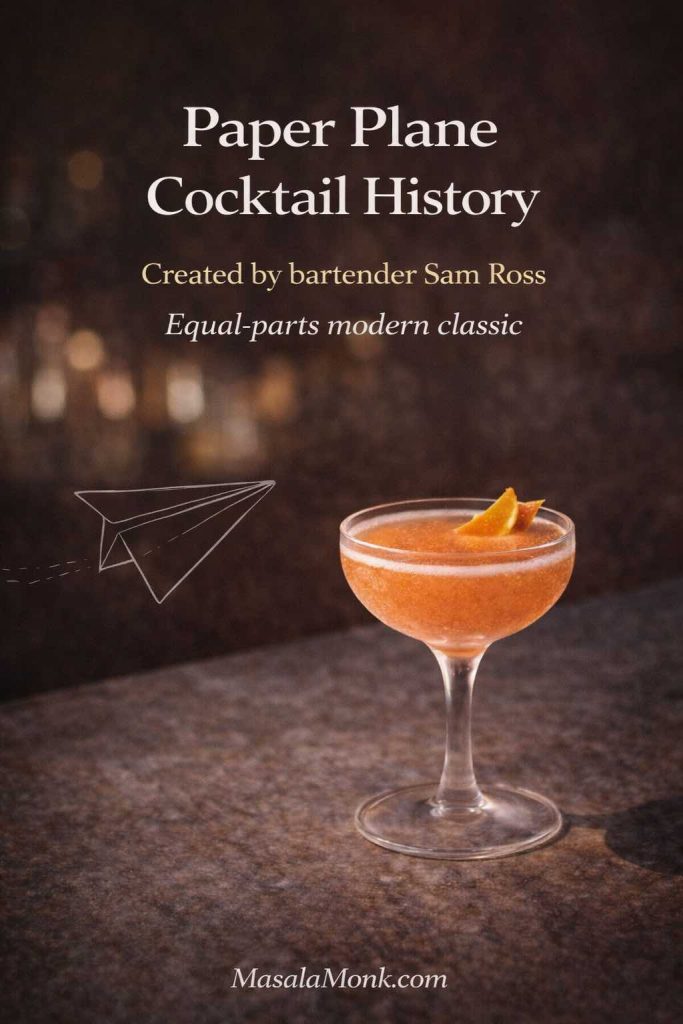
The Paper Plane Cocktail has a funny way of disappearing from the glass. You make it because you want something balanced—bright, bittersweet, and a little grown-up—then you take a sip and realize you’ve already started planning a second one. It’s lively without being loud, and it’s complex without making you work for it.
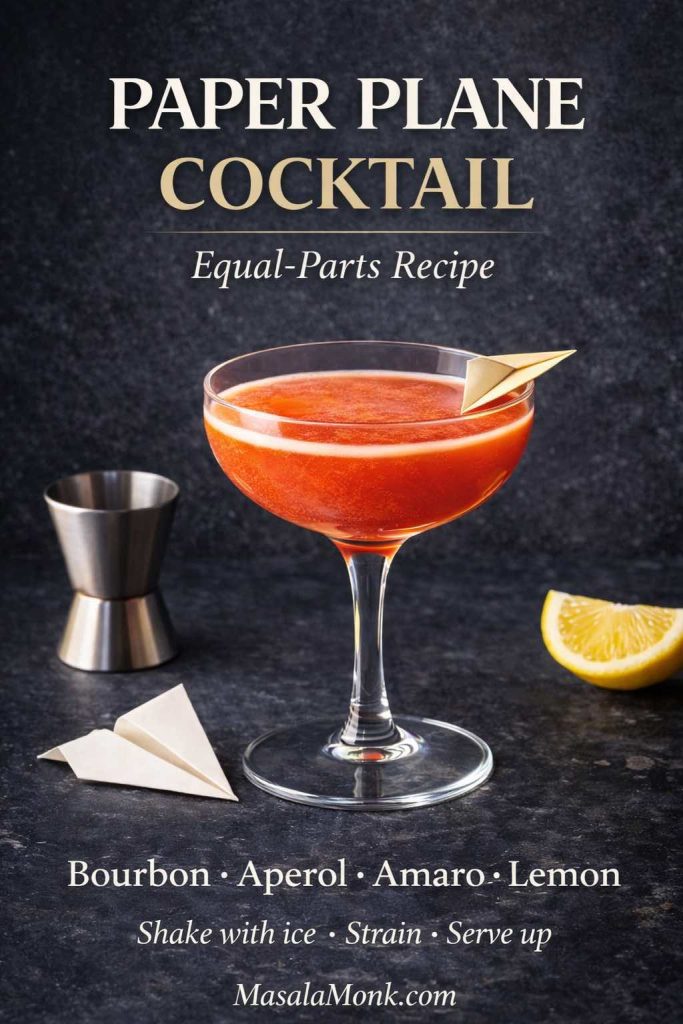
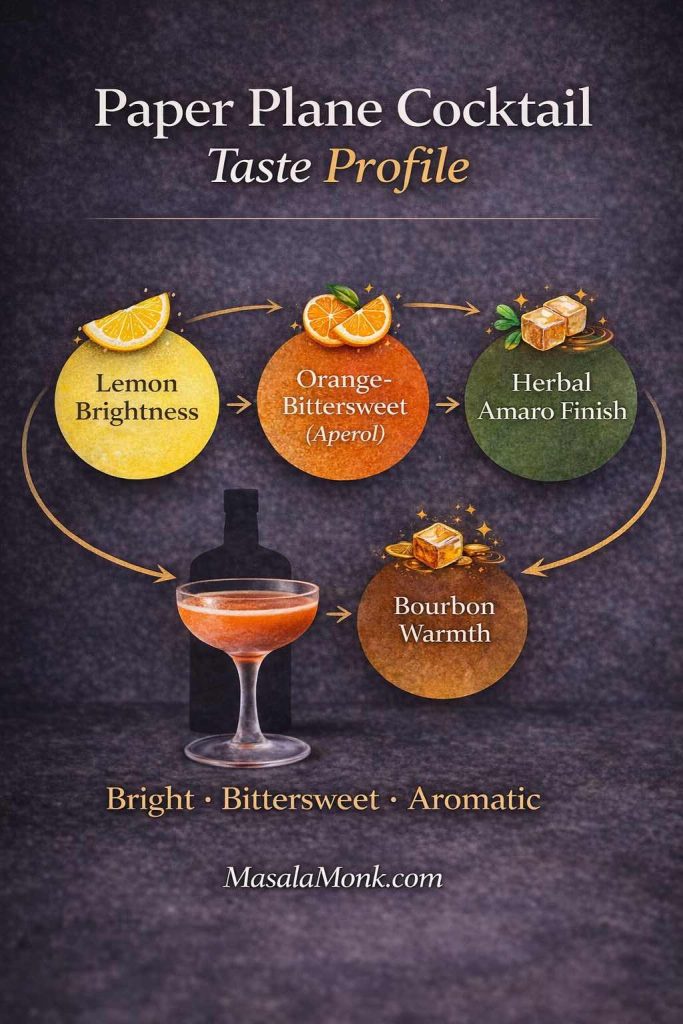
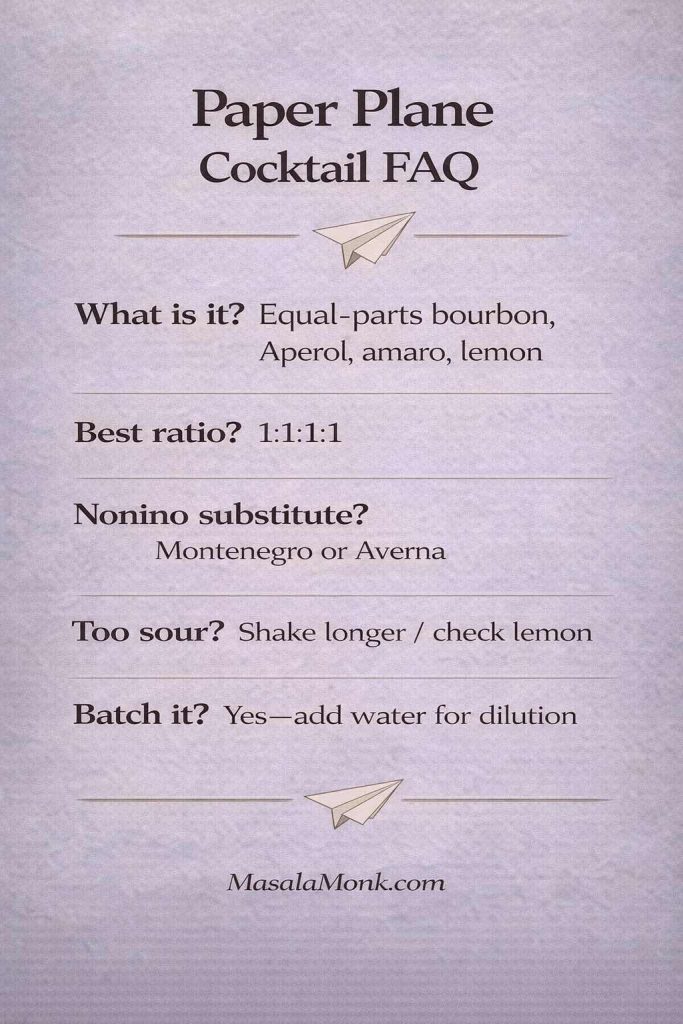
Part of the charm is the build itself. This paper plane drink is famously equal-parts: bourbon, Aperol, amaro, and fresh lemon juice, shaken hard and served straight up. No syrup to measure, no bitters to count, no garnish to fuss over unless you feel like it. Despite the simplicity, the flavor moves in layers: lemon first, then orange-bitter sweetness, then a longer herbal finish that makes the whole thing feel “finished.”
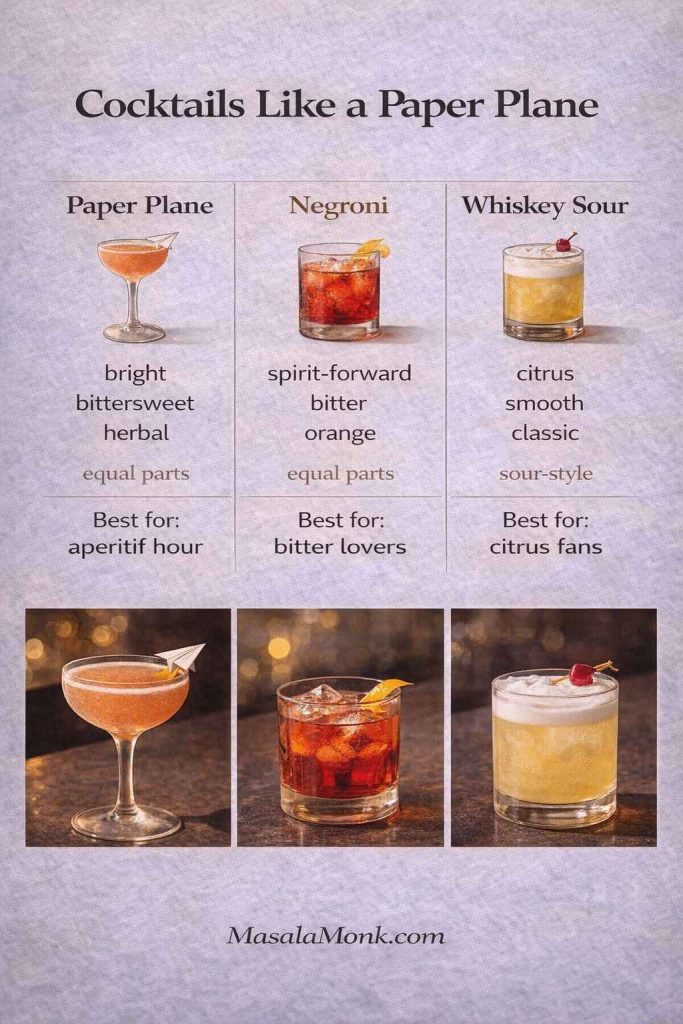
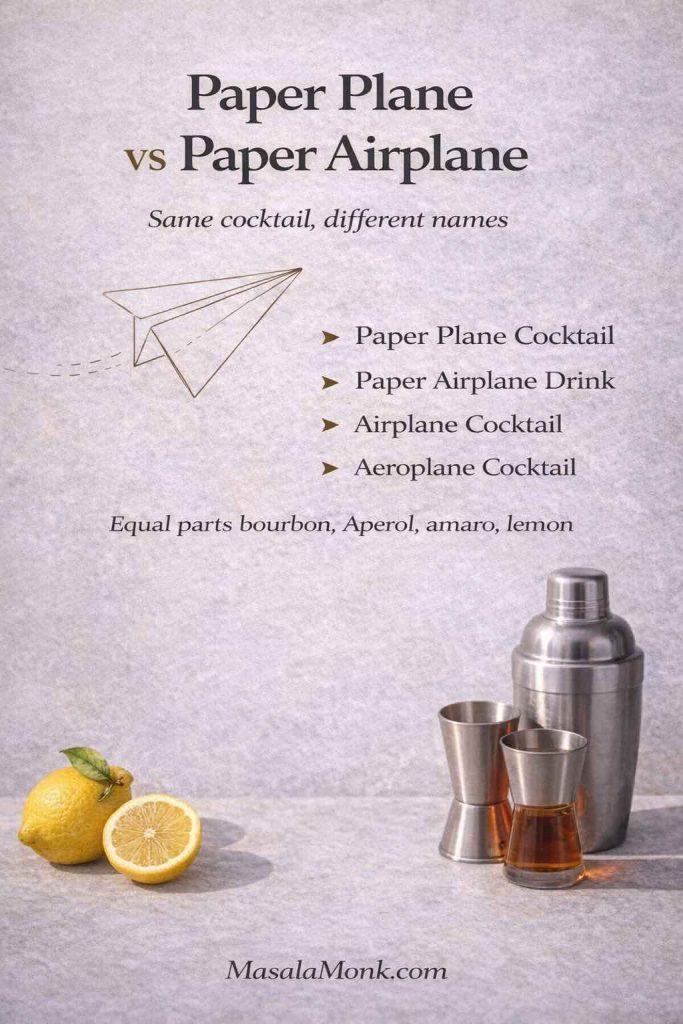
If you’ve heard it called the paper airplane drink, the airplane cocktail, or even the aeroplane cocktail, you’re still in the same neighborhood. Names wobble. The idea stays steady: a modern whiskey sour–style cocktail built to taste bright and warm at the same time.
Paper Plane Cocktail recipe (classic equal-parts build)
The “best paper plane recipe” is the one you can remember without reaching for your phone. This is that recipe.
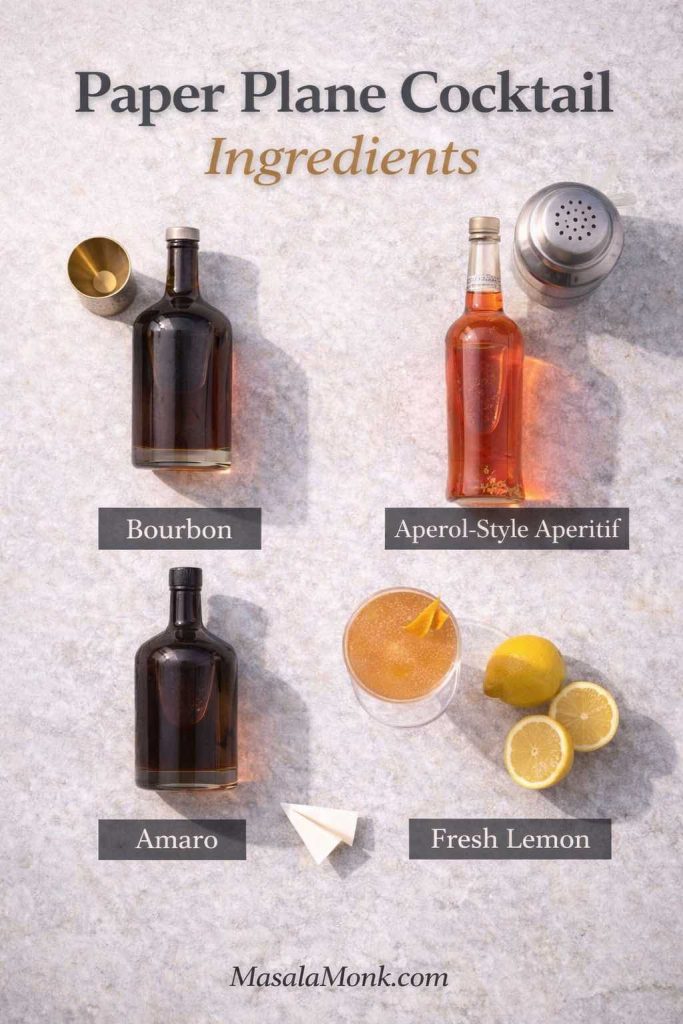
Ingredients
Bourbon
Aperol
Amaro (traditionally Amaro Nonino)
Fresh lemon juice
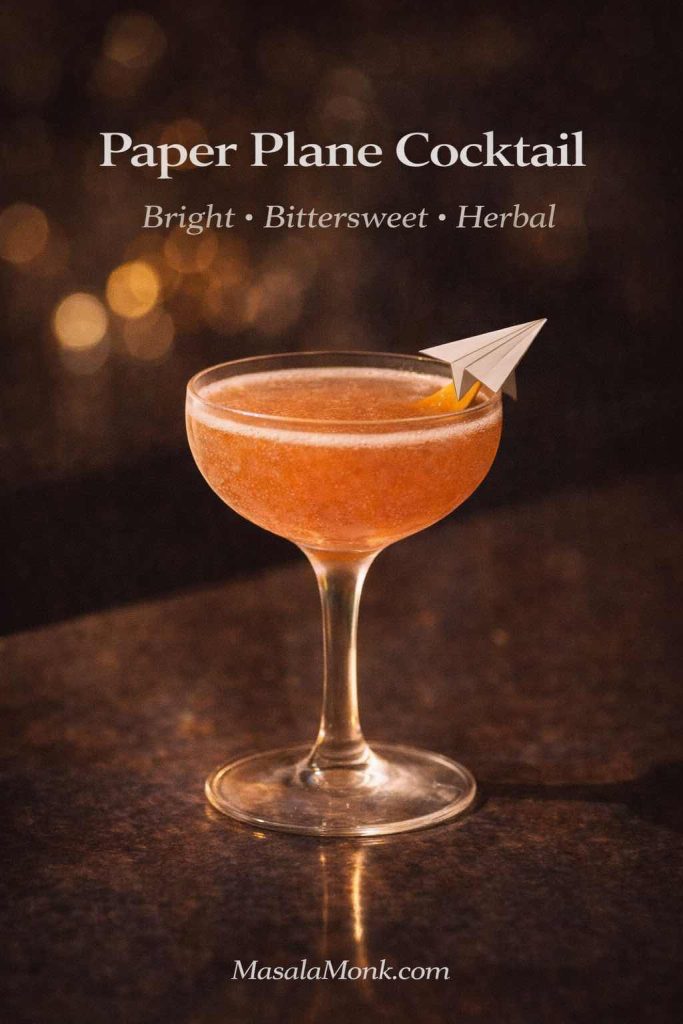
Equal-parts Paper Plane cocktail: bourbon, Aperol, amaro, and fresh lemon—shake with ice, strain into a chilled coupe, and serve up for a bright, bittersweet finish.
Equal-parts ratio (single drink)
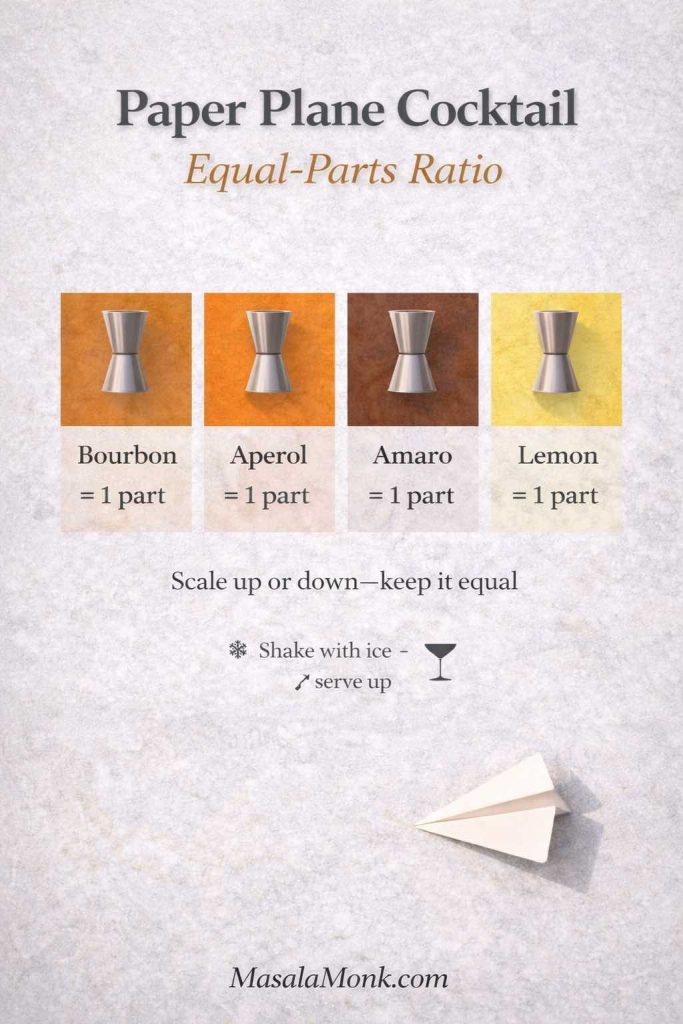
Use equal parts of each ingredient. Many people default to 1 ounce each at home, but any equal measure works.
Paper Plane cocktail equal-parts ratio: bourbon, Aperol, amaro, and fresh lemon at 1:1:1:1—scale the “one part” to any measure, shake with ice, then strain and serve up.
Method
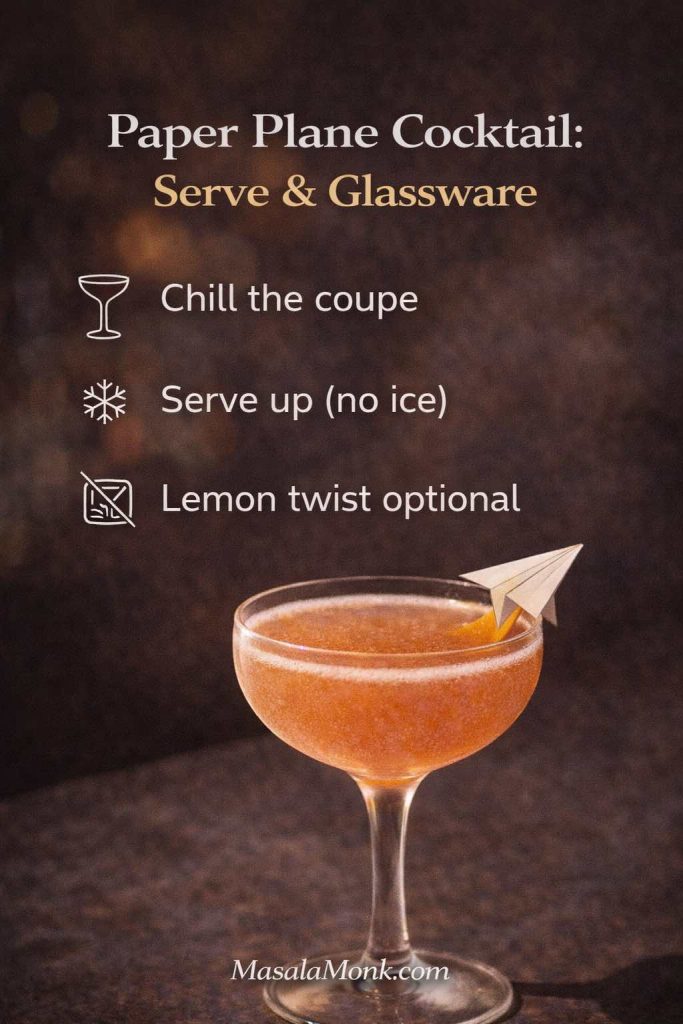
Chill a coupe or cocktail glass.
Add bourbon, Aperol, amaro, and fresh lemon juice to a shaker.
Fill with ice.
Shake until the shaker turns frosty and your hands feel the cold bite through the metal.
Strain into the chilled glass.
Shake the Paper Plane cocktail hard until the shaker turns frosty—about 10–12 seconds—to chill, dilute, and smooth out the bittersweet finish before straining.
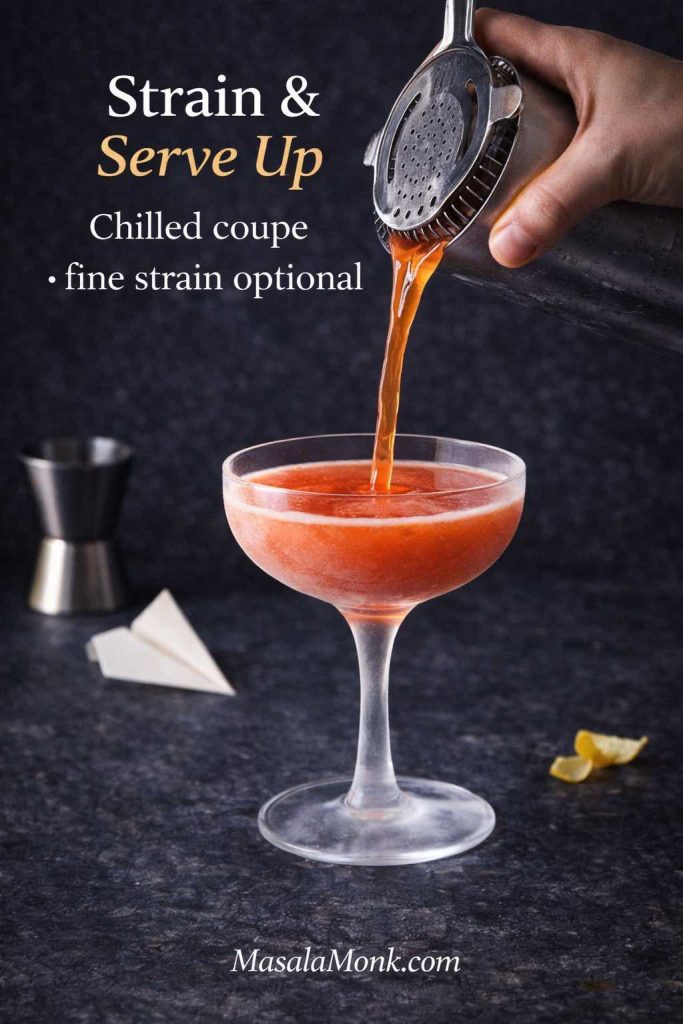
Strain the Paper Plane cocktail into a chilled coupe for a cleaner, silkier sip—then fine strain if you want an extra-smooth finish.
That’s the paper plane cocktail recipe at its core: quick, clean, and repeatable.
Paper Plane Cocktail ingredients: what each one is really doing
It’s tempting to treat this drink like a simple checklist—four bottles, one lemon, done. Still, the Paper Plane is one of those cocktails where a small change in one ingredient can shift the entire personality. Once you understand what each element contributes, you’ll know exactly how to adjust it, how to substitute, and how to build a version that fits your palate without losing what makes it a Paper Plane.
Paper Plane cocktail ingredients, at a glance: bourbon, an Aperol-style aperitif, amaro (Nonino or a substitute), and fresh lemon—an equal-parts lineup that’s easy to remember and even easier to mix.
Bourbon: the warm spine of the drink
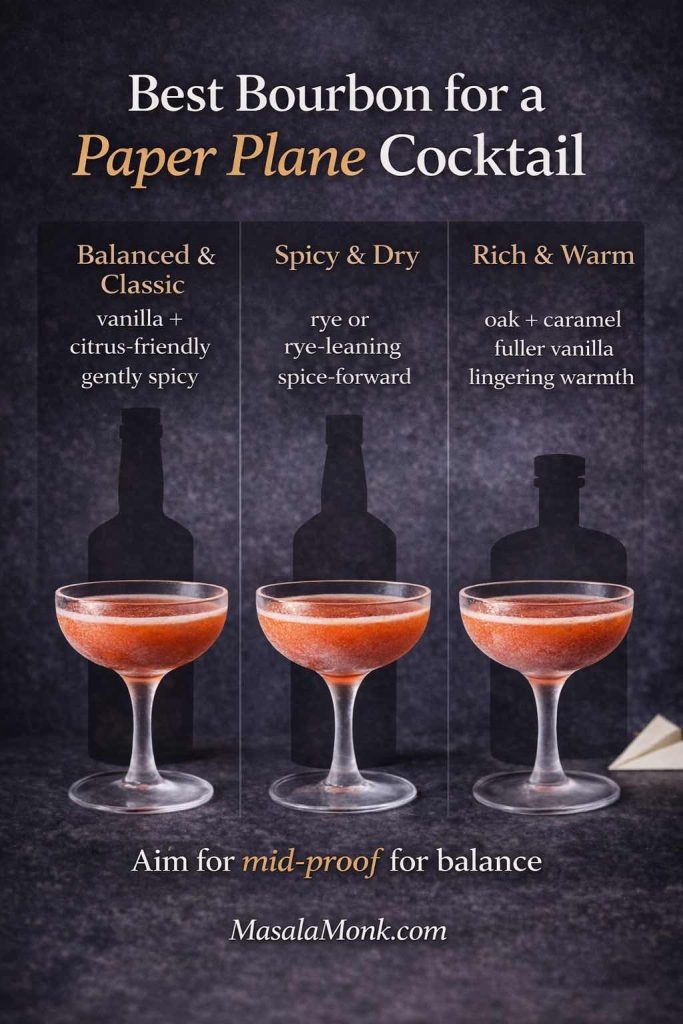
Bourbon is the base, so it sets the tone. In a bourbon paper plane, you’re looking for warmth, gentle vanilla, and enough structure to stand up to citrus and bitterness.
A mid-proof bourbon tends to work beautifully here. Too soft and the drink leans sharply lemony; too hot and it can feel aggressive. Somewhere in the middle, the Paper Plane Cocktail becomes what it’s meant to be: bright on the front end, mellow at the back.
If you enjoy thinking about bourbon as an ingredient—not just a spirit—MasalaMonk’s guide on what to mix with Jim Beam is a useful way to understand how bourbon behaves with citrus, sugar, and other mixers. That kind of perspective helps you choose confidently even when you’re staring at an imperfect home bar selection.
Aperol: the orange-bitter bridge
Aperol is the drink’s sunny center. It brings orange-peel bitterness and a gentle sweetness that keeps the cocktail from feeling austere. Without it, the Paper Plane would tilt too sharp and too herbal. With it, everything lifts.
If you’re already fond of bourbon and Aperol together, the Paper Plane Cocktail is one of the most satisfying ways to combine them because neither tastes like an afterthought. The Aperol doesn’t just sweeten—rather, it shapes the drink’s whole arc.
Amaro: the signature herbal finish
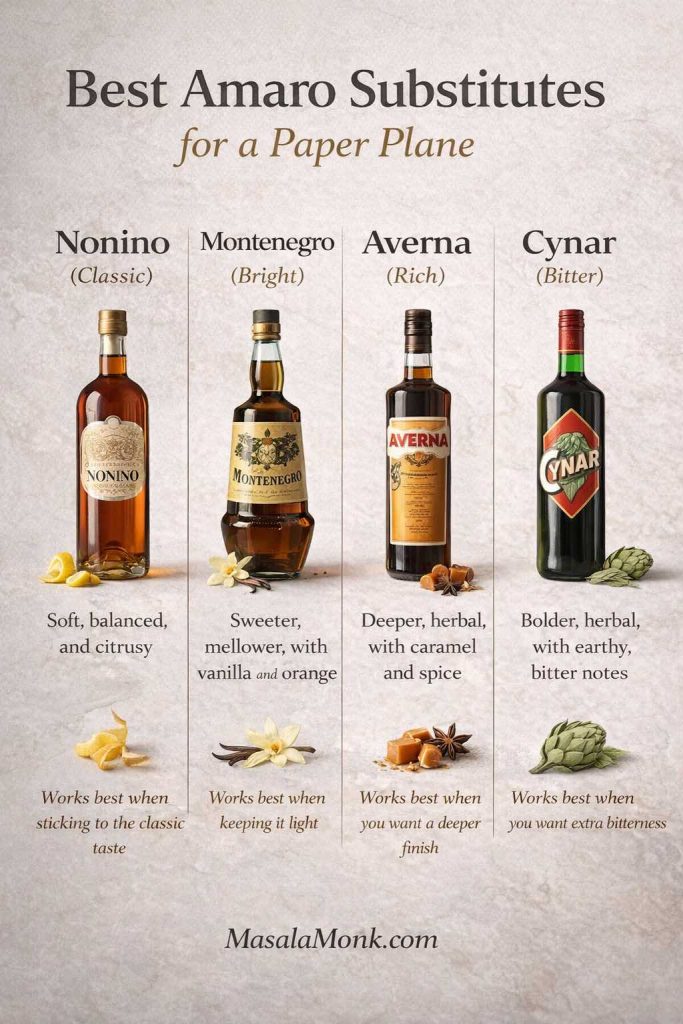
This is where the Paper Plane becomes unmistakable. Amaro adds depth, bitterness, and the kind of lingering complexity that makes you want another sip. Traditionally, that amaro is Amaro Nonino, which sits in a sweet spot: aromatic and bittersweet without feeling syrupy or medicinal.
That said, many people don’t keep Nonino around, and not every store carries it. Fortunately, the cocktail’s structure welcomes substitutions, especially when you know what you’re aiming for.
Lemon juice: brightness and definition
Fresh lemon juice draws the lines. It gives the Paper Plane Cocktail its clarity and its “snap.” Bottled lemon can work in a pinch, but it often tastes flatter and slightly cooked, which dulls the drink’s brilliance. With fresh lemon, the cocktail feels alive.
If you love citrus-forward whiskey drinks beyond this one, MasalaMonk’s Whiskey Sour recipe is a great companion because it shows how tiny changes in acid and sweetness can completely reshape a whiskey sour–style drink. The Paper Plane is in that same family, even though it uses liqueurs instead of simple syrup.
Paper Plane Cocktail taste: what to expect in the first sip
The Paper Plane tends to taste “complete.” The lemon hits first—clean and bright—then Aperol slides in with orange-bitter sweetness, and finally the amaro stretches the finish into something herbal and quietly luxurious. Meanwhile, bourbon provides a steady warmth underneath, like a bass note holding the melody together.
The Paper Plane cocktail’s flavor hits in layers—lemon brightness up front, Aperol’s orange-bittersweet core, a lingering herbal amaro finish, and steady bourbon warmth underneath.
If you’re trying to picture it: it’s more bracing than an Old Fashioned, less sugary than many modern whiskey cocktails, and more aromatic than a straightforward sour.
Paper Plane cocktail, served up: a bright lemon lift, a bittersweet orange core, and an herbal amaro finish—an equal-parts modern classic that disappears fast once the first sip hits.
Just as important, the drink’s balance makes it friendly at different moments. On a hot evening, it’s refreshing. On a cool night, it’s comforting. That flexibility is a big reason you’ll see the Paper Plane cocktail on so many menus: it earns its spot.
The Paper Plane Cocktail and the whiskey question: bourbon, rye, and beyond
Bourbon is classic, yet the Paper Plane Cocktail also shows up as a whiskey paper plane in plenty of bars and home kitchens. Once you start swapping the base spirit, you get a whole new set of expressions while keeping the same equal-parts architecture.
Bourbon for Paper Plane: choosing a bottle that behaves
A dependable, mid-proof bourbon with balanced sweetness is usually the safest choice. You want enough flavor to hold the center without taking over.
If your bourbon is very sweet and dessert-like, the cocktail can feel heavier.
If it’s extremely oaky, the bitterness can skew woody.
If it’s too delicate, lemon and Aperol will dominate.
Not every bourbon drinks the same in a Paper Plane cocktail—choose balanced for the classic profile, go spicier for a drier finish, or pick a richer pour for extra warmth (mid-proof usually keeps the equal-parts mix in check).
When you land on a bourbon that works, you’ll understand why “paper plane bourbon” shows up so often in conversation. It’s not about chasing a single “right” bottle; it’s about finding a bourbon that lets the drink stay bright while still tasting like bourbon.
Paper Plane whiskey drink: what happens if you use rye?
Rye makes the drink drier and spicier. The lemon feels sharper, the finish feels snappier, and the whole cocktail can read more “brisk” than “warm.” For some people, that’s perfection—especially if they already enjoy more bitter, less sweet classics.
Can you use other whiskey styles?
You can, though it starts to drift away from the core personality. Irish whiskey will soften everything and make it gentler. Scotch introduces smoke or malt that can clash with Aperol, depending on the bottle. None of these are wrong, yet bourbon remains the version that most reliably delivers the “bright and warm” promise.
Paper Plane Cocktail history: where it came from and why it stuck
The Paper Plane’s story is part of its appeal. It’s credited to bartender Sam Ross and tied to the craft-cocktail era that re-popularized balanced sours, amaro, and modern riffs on classics. The drink also famously nods to M.I.A.’s song “Paper Planes,” which gave it a name that feels playful instead of precious.
Paper Plane cocktail history in one line: bartender Sam Ross created this equal-parts modern classic—memorable to mix, bright to drink, and easy to make your own with smart amaro swaps.
If you want the deeper thread—how early versions used different bitter components, how it moved through bars, and how it became a modern standard—PUNCH’s deep dive on the Paper Plane’s rise is the most engaging overview.
There’s something telling about how quickly the cocktail spread. The formula is memorable. The ingredient list feels approachable. The payoff is immediate. Once a drink hits those three points, it doesn’t need gimmicks to survive. It becomes a habit.
Paper Plane Cocktail served style: glass, temperature, and that “straight up” feel
The Paper Plane Cocktail is usually served straight up—strained into a chilled glass without ice. That choice is not just aesthetics. It keeps the drink’s texture smooth and its flavors focused.
Serve the Paper Plane cocktail the right way: chill your coupe first, strain and serve it up (no ice), then add a lemon twist if you want extra aroma.
Glass choice
A coupe or cocktail glass is ideal. The stem keeps your hand from warming the drink too quickly, and the open rim helps the aromatics rise. If you’ve ever seen “paper plane cocktail glass” mentioned, that’s what’s being pointed at: a chilled, stemmed vessel that keeps the drink crisp.
Shake like you mean it
Shaking isn’t busywork here. It chills the cocktail rapidly and adds the right amount of dilution, which softens bitterness and makes the lemon feel integrated rather than sharp.
When the Paper Plane tastes “too tight” or overly intense, it’s often because it wasn’t shaken long enough. On the flip side, if you shake forever with half-melted ice, you can dilute it into a whisper. Aim for cold, confident, and decisive.
A quick lemon twist garnish lifts the Paper Plane cocktail instantly—those citrus oils add a fresher aroma that makes the bourbon, Aperol, and amaro taste even more vibrant.
Garnish: optional, but a lemon twist is a smart choice
The IBA spec lists no garnish. Even so, a lemon twist can be lovely because it perfumes the drink without altering its balance. If you’re the type who enjoys aroma as much as taste, it’s worth the three seconds it takes.
Paper Plane Cocktail ingredients when you don’t have Nonino
This is where the drink becomes especially home-bar friendly. Amaro Nonino is the traditional choice, but it’s not the only way to make a satisfying Paper Plane Cocktail. In fact, swapping the amaro is one of the easiest ways to customize the drink.
Instead of chasing a perfect replica, think in terms of direction:
Do you want brighter and lighter?
Or do you want deeper and richer?
Do you want more bitterness?
Or a softer, rounder finish?
Once you answer that, the right substitution becomes obvious.
Best amaro for Paper Plane Cocktail: the most satisfying substitutes
A Paper Plane without Amaro Nonino can still be excellent. The cocktail’s equal-parts structure gives you a sturdy frame; the amaro simply changes the color of the painting.
Choosing an amaro changes the Paper Plane cocktail’s finish: Nonino keeps it classic, Montenegro turns it brighter, Averna makes it richer, and Cynar pushes extra bitterness.
Amaro Montenegro Paper Plane: bright and aromatic
Montenegro is a popular substitute because it stays friendly with Aperol. It keeps the drink fragrant and lively, so the result still feels like a paper plane drink rather than a heavier amaro cocktail.
If you love the way Aperol tastes and you want the orange-bitter note to remain prominent, Montenegro is often the smoothest path.
Amaro Averna Paper Plane: deeper, darker, rounder
Averna brings more richness—caramel, cola-like depth, and a warmer kind of bitterness. With Averna, the cocktail feels cozier, and the bourbon seems to glow a little more.
This is a wonderful direction when you want your bourbon paper plane to feel like an evening drink rather than an aperitif.
More assertive amari: for people who genuinely like bitterness
Some amaros will push the drink into bolder territory. That can be fantastic if you already enjoy classics like the Negroni. It can also surprise someone expecting the Paper Plane’s usual softness.
If you go this route, start with the equal-parts structure, taste, then adjust gradually. Often the drink doesn’t need a full overhaul—just a tiny nudge.
Paper Plane Cocktail with gin: a bright riff that’s worth trying
A gin Paper Plane sounds like it shouldn’t work, yet it often does. By replacing bourbon with gin, you get a version that’s more botanical and more citrus-lifted, with less warmth and more perfume.
Gin Paper Plane cocktail (equal parts): swap bourbon for gin to get a brighter, more botanical Paper Plane—shake gin, Aperol, amaro, and fresh lemon with ice, then strain into a chilled coupe.
Here’s what changes:
The finish becomes sharper and more aromatic.
The drink feels lighter on the tongue.
The bitterness can read more pronounced because bourbon’s round sweetness is gone.
If you enjoy this direction, MasalaMonk’s gin cocktail recipe roundup is a fun next step because it explores how gin behaves in sour-style builds and fruit-forward twists without losing structure.
Paper Plane Cocktail batch method: how to make it for a crowd without shaking all night
The Paper Plane is easy for one person. It becomes tedious for twelve. That’s where batching turns the cocktail into a host’s best friend.
A batch paper plane cocktail works beautifully because the drink is already equal-parts and shaken. Scaling it up is straightforward; the only real trick is accounting for dilution.
Batch Paper Plane cocktails for a crowd: keep the equal-parts bourbon, Aperol, amaro, and fresh lemon ratio, then add cold water for proper dilution so every pour tastes like a freshly shaken drink.
When you shake a cocktail, you’re adding water. That water is not a mistake—it’s part of the drink. Without it, a batched Paper Plane can taste too strong and too sharp.
A helpful reference here is Bon Appétit’s Paper Fleet recipe, which is essentially Paper Planes for a crowd with built-in logic for chilling and dilution. It’s a reassuring blueprint if you want to batch with confidence.
Batching a Paper Plane cocktail is simple: mix equal parts bourbon, Aperol, amaro, and lemon, chill the batch, then add a little water so it tastes as smooth as a freshly shaken drink.
A simple batching approach that keeps the flavor balanced
Combine bourbon, Aperol, amaro, and lemon juice in equal parts in a large container.
Add a measured amount of cold water to mimic shake dilution.
Chill the batch thoroughly.
Serve it straight up in chilled glasses.
Once the batch is cold, the experience becomes almost effortless: pour, garnish if you like, and get back to your guests.
Paper Plane cocktails for a crowd: batch the equal-parts mix, chill it hard, then pour into cold coupes so every glass tastes bright, bittersweet, and freshly made.
Turning it into a pitcher-style Paper Plane punch
If you want a “paper plane punch drink” vibe, treat it like a festive pitcher cocktail. Keep it very cold, serve in smaller glasses, and garnish more generously so the table feels celebratory.
If you like the broader hosting mindset—big-batch logic, party-friendly ratios, and how to keep flavors bright—MasalaMonk’s rum punch recipe is a great read. It’s a totally different flavor world, but the approach to crowd-serving is transferable.
Paper Plane Cocktail and ice: small details that make a noticeable difference
Because the Paper Plane Cocktail is shaken and served up, ice matters mostly during the shake. Clean, hard ice chills faster and dilutes more predictably. Softer, wet ice melts quickly and can water down the drink before it ever reaches the glass.
If you enjoy the “little upgrades” side of home bartending—how to make drinks look and feel more intentional—MasalaMonk’s post on cocktail ice ideas is a fun rabbit hole. Even when you’re serving a drink without ice in the glass, better ice in the shaker can make everything smoother.
Paper Plane Cocktail vs. other bittersweet classics
One reason the Paper Plane Cocktail feels so instantly likable is that it connects to flavors people already enjoy—citrus, orange bitterness, herbal depth—without requiring an acquired taste. Once you’re into it, though, you may start craving other drinks that live in a similar lane.
If you like a Paper Plane cocktail, you’ll probably enjoy other balanced classics too—Negroni for a more bitter, spirit-forward sip, or a Whiskey Sour for a smoother citrus-driven drink.
If you love the bitter-orange side
The Negroni is the obvious cousin: equal parts, bitter-forward, iconic. It’s more spirit-driven and less citrusy than the Paper Plane, yet the flavor family overlaps enough that many people love both. If you want a solid foundation and thoughtful riffs, MasalaMonk’s Negroni recipe is a great guide.
If you love the citrus structure
A whiskey sour sits closer to the Paper Plane’s “bright and balanced” backbone, even though it usually relies on simple syrup rather than Aperol and amaro. If you want to explore that world, MasalaMonk’s Whiskey Sour recipe is a reliable starting point for ratios, whiskey choices, and variations.
If you want sparkle and celebration
The French 75 scratches a different itch—bright lemon, bubbles, and a clean finish—yet it still appeals to people who like citrus-driven cocktails with structure. MasalaMonk’s French 75 cocktail recipe is especially useful because it covers classic builds and variations, including a bourbon-leaning French 95 twist that can feel like a playful bridge from whiskey sours toward lighter, sparkling territory.
Paper Plane Cocktail pairings: what to serve so the drink tastes even better
A Paper Plane Cocktail loves salty snacks, creamy textures, and a little heat. The bitterness and citrus cut through richness, while spicy foods make the drink feel even brighter. If you’re pouring this cocktail at home, pairing it with the right bites turns a simple drink into a full evening.
What to serve with a Paper Plane cocktail: spicy jalapeño poppers, creamy deviled eggs, and a bold dip—salty, rich pairings that let the bittersweet citrus notes shine.
Spicy, creamy, crunchy: the easiest win
Jalapeño poppers are practically made for this moment. The filling is rich, the pepper brings heat, and the Paper Plane’s lemon-and-bitter profile keeps everything from feeling heavy. If you want a dependable, oven-friendly version, MasalaMonk’s baked jalapeño poppers are a perfect companion.
Crispy potato snacks that disappear fast
Potatoes have a way of making cocktails feel like a party even when it’s just a few people in the kitchen. For a big spread with plenty of options, MasalaMonk’s potato appetizers ideas give you plenty of directions—crispy, cheesy, spicy, and everything in between. The Paper Plane’s bitterness is especially good with salty potato edges.
Make-ahead, neat, and quietly perfect
Deviled eggs feel almost too simple, yet they’re one of the best matches for a bittersweet cocktail. Creamy filling meets citrus and bitterness in a way that’s unexpectedly elegant. MasalaMonk’s deviled eggs recipe is a great option if you want something you can prep ahead and plate quickly.
Dips that work with the Paper Plane’s sharpness
If you want something bold and crowd-pleasing, buffalo chicken dip is hard to beat. It’s spicy, rich, and deeply snackable—and the Paper Plane’s lemon resets your palate after each bite. MasalaMonk’s buffalo chicken dip recipe fits beautifully on the same table.
For a cooler, fresher option, tzatziki is a smart contrast. Yogurt, cucumber, garlic, and herbs bring a clean, tangy bite that plays nicely with citrus. MasalaMonk’s Greek tzatziki sauce recipe is perfect when you want something creamy without feeling heavy.
A dessert pairing that makes the evening feel planned
Churros and the Paper Plane Cocktail might not be an obvious match until you try it. Cinnamon sugar loves orange bitterness, and warm fried dough makes chilled citrus taste even brighter. If you want to do it properly at home, MasalaMonk’s guide on how to make churros is a fun way to end the night on a high note.
Paper Plane Cocktail naming quirks: Paper Airplane, airplane cocktail, aeroplane cocktail
You’ll see a few different names floating around for the same idea. Some people lean into “paper airplane” as a playful synonym. Others shorten it to airplane cocktail, air plane cocktail, or aeroplane cocktail. On menus, it may even show up as a plane cocktail or plane drink.
Paper Plane vs paper airplane drink: different names, same cocktail—an equal-parts mix of bourbon, Aperol, amaro, and lemon that’s shaken and served up.
In practice, what matters is the structure: bourbon (or another base spirit), Aperol, amaro, and lemon, built as an equal-parts drink and served up. Once you know that, you can recognize the Paper Plane even when the wording shifts.
A few thoughtful ways to make the Paper Plane Cocktail feel personal
The Paper Plane Cocktail is famous for being easy. Still, “easy” doesn’t have to mean generic. With a few deliberate choices, the drink can feel tailored to you.
Fix a Paper Plane cocktail in seconds: shake a touch longer if it’s too sour, choose a softer amaro or reduce it slightly if it’s too bitter, and add a splash of water if it tastes too strong—small tweaks, same equal-parts idea.
You can lean brighter
Choose a lighter, more citrus-friendly bourbon.
Use a brighter amaro substitution like Montenegro.
Express a lemon twist over the glass.
Lean warmer
Choose a richer bourbon.
Use Averna for a deeper amaro tone.
Keep the drink very cold so warmth comes from flavor, not heat.
Lean more bitter
Pick an amaro with more bite.
Keep the equal-parts build at first, then adjust slowly.
Pair it with something rich and salty so bitterness feels elegant rather than harsh.
Paper Plane Cocktail: the kind of recipe you end up memorizing
Some drinks are fun once, then you forget them. The Paper Plane Cocktail is the opposite. It’s the sort of recipe that sneaks into your muscle memory because it’s so easy to repeat—and because it always feels like a little reward.
It’s also flexible in the ways that matter. You can keep it classic with bourbon and Nonino. Also, you can make a paper plane bourbon drink that’s warmer and richer with a deeper amaro. Then, you can try a gin Paper Plane when you want something more botanical. You can batch it when friends come over. Through all those versions, the cocktail still tastes like itself: lemon-bright, orange-bitter, herbal, and clean.
Make one. Then, when the glass is suddenly empty, you’ll understand why this equal-parts drink became a modern classic in the first place.
Paper Plane cocktail FAQ: an equal-parts bourbon, Aperol, amaro, and lemon drink (1:1:1:1) that’s easy to tweak with Nonino substitutes—and simple to batch when you’re serving a crowd.
FAQs
1) What is a Paper Plane Cocktail?
A Paper Plane Cocktail is a modern equal-parts drink made with bourbon, Aperol, amaro, and fresh lemon juice. It’s shaken with ice and served up, giving you a bright citrus start, a bittersweet orange middle, and a long herbal finish.
2) What’s the classic Paper Plane Cocktail recipe ratio?
The classic ratio is equal parts bourbon, Aperol, amaro, and lemon juice. Many home versions use 1 ounce of each, although you can scale the same proportion up or down depending on your glassware and preference.
3) Is “paper airplane drink” the same as the Paper Plane Cocktail?
In most cases, yes. “Paper airplane drink” is a common alternate way people refer to the Paper Plane Cocktail, especially online. The ingredient structure remains the same: whiskey (usually bourbon), Aperol, amaro, and lemon.
4) What are the Paper Plane Cocktail ingredients?
The standard Paper Plane Cocktail ingredients are bourbon, Aperol, amaro (traditionally Amaro Nonino), and fresh lemon juice. That four-part structure is what makes the drink memorable and easy to repeat.
5) Which bourbon is best for a Paper Plane Cocktail?
Look for a bourbon with a balanced profile—vanilla, gentle spice, and moderate oak—so it won’t disappear behind lemon and bitterness. A mid-proof bottle often works nicely, because it keeps the Paper Plane Cocktail tasting warm and structured without getting harsh.
6) Can I make a Paper Plane Cocktail with whiskey instead of bourbon?
You can. Many people make a whiskey Paper Plane using rye, which usually produces a drier, spicier cocktail. If you use a softer whiskey style, the drink can become smoother and less punchy, but it will still follow the Paper Plane template.
7) What amaro is used in the original Paper Plane Cocktail?
The classic choice is Amaro Nonino. It’s known for a polished, aromatic bitterness that pairs well with Aperol and lemon while letting bourbon stay present.
8) What are the best amaro substitutes for a Paper Plane Cocktail?
If you need a Paper Plane without Amaro Nonino, two popular substitutes are Amaro Montenegro (brighter, more aromatic) and Averna (deeper, richer). Each swap changes the personality slightly, yet the cocktail still works well within the equal-parts framework.
9) How does an Amaro Montenegro Paper Plane taste compared to the classic?
With Montenegro, the drink often feels lighter and more perfumed, with a softer bitter edge. It’s a good direction if you want the Paper Plane Cocktail to stay fresh and citrus-forward.
10) How does an Averna Paper Plane taste compared to the classic?
Averna tends to make the cocktail rounder and darker, with more caramel-leaning depth. It can feel cozier and more dessert-adjacent, especially alongside a rich bourbon.
11) Can I use Aperol alternatives in a Paper Plane Cocktail?
You can swap Aperol, but the drink will drift from the classic Paper Plane flavor. If you change the orange-bitter liqueur, expect the cocktail to become either more bitter or more sweet depending on what you choose.
12) Can I make a Paper Plane Cocktail with gin?
Yes. A gin Paper Plane keeps the equal-parts structure but shifts the flavor toward botanicals and brighter aromatics. The result usually tastes lighter and more citrus-lifted than the bourbon version.
13) What’s the best garnish for a Paper Plane Cocktail?
Many versions skip garnish entirely, since the drink is already aromatic. Even so, a lemon twist is a popular option because it adds fragrance without altering the balance.
14) What glass should I use for a Paper Plane Cocktail?
A coupe or cocktail glass is a common choice. Since the drink is served up, a chilled stemmed glass helps keep it cold and crisp while you sip.
15) What does the Paper Plane Cocktail taste like?
It’s bright and lemony at first, then bittersweet and orange-tinged, finishing with herbal bitterness from the amaro. Overall, it lands as refreshing yet complex, with bourbon warmth underneath.
16) Why is my Paper Plane Cocktail too sour?
Often it comes down to lemon intensity or low dilution. If your lemons are especially sharp, the drink may taste more tart than expected. A slightly longer shake can also help by adding a touch more water to soften the edges.
17) Why is my Paper Plane Cocktail too bitter?
The most common reason is an amaro substitution that’s more bitter than Nonino, or a heavier pour of aperitif/amaro. In that case, try a gentler amaro next time, or reduce the amaro slightly while keeping the drink balanced.
18) Can I make a batch Paper Plane Cocktail for a party?
Absolutely. A batch Paper Plane cocktail works well because the drink is equal-parts. The main thing to remember is dilution: add a bit of water to the batch so it drinks like a shaken cocktail once served cold.
19) How far ahead can I batch a Paper Plane Cocktail?
If you’re batching, you can prep it a few hours ahead and keep it chilled until serving. For best results, add fresh lemon close to serving time if you’re making it well in advance, since citrus brightness fades gradually.
20) Is there an “airplane cocktail recipe” that’s different from a Paper Plane Cocktail?
Sometimes “airplane cocktail” is used as shorthand for the Paper Plane, and sometimes it’s simply a naming variation (aeroplane, air plane). When the ingredient list is bourbon, Aperol, amaro, and lemon, you’re looking at the Paper Plane Cocktail recipe—even if the wording changes.
21) What drinks are similar to a Paper Plane Cocktail?
Other bittersweet classics can scratch the same itch, especially cocktails that combine spirit, bitterness, and balance. If you enjoy the Paper Plane Cocktail, you’ll likely also enjoy other aperitif-and-amaro style drinks with citrus or equal-parts structure.
22) What does “Paper Plane Cocktail IBA” mean?
It refers to the International Bartenders Association listing for the Paper Plane, which standardizes the core ingredients and method. When a recipe cites the IBA spec, it usually means it’s sticking closely to the classic equal-parts template.
23) Can I make a “Paper Plane punch drink” version?
Yes—treat it like a scaled-up batch. Keep the same proportions, chill it thoroughly, and serve it in smaller portions. With a pitcher-style approach, the drink stays bright and consistent while making hosting easier.
24) Is the Paper Plane Cocktail strong?
It’s moderately strong. Even though it includes citrus, it’s still built from spirits and liqueurs, so it drinks like a real cocktail—smooth, balanced, and deceptively easy to finish.
There’s something wonderfully honest about a whiskey sour. No smoke and mirrors, no mile-long ingredient list—just whiskey, citrus, and sweetness, shaken together until they become more than the sum of their parts. Whether you like yours sharp and bracing, frothy with egg white, or dressed up with a red wine float as a New York sour drink, mastering a great whiskey sour recipe gives you a whole family of cocktails to play with.
Let’s walk through it slowly, glass in hand.
What Exactly Is a Whiskey Sour?
At its core, a whiskey sour cocktail is a “sour”: one spirit, one citrus, one sweetener. That template shows up everywhere in cocktail culture—margaritas, daiquiris, sidecars—but the whiskey sour drink might be the most comforting of the lot.
In its simplest form, you’re working with:
Whiskey
Fresh lemon juice
Sugar (usually as simple syrup)
Shake it with ice, strain it into a glass, garnish if you like, and you’re done. That’s your basic answer when someone asks, “What’s in a whiskey and sour?” or “What’s the whiskey sour cocktail recipe?”
Over the years, bartenders have added little twists:
A splash of egg white to create the creamy Boston Sour
A float of dry red wine to turn it into a dramatic New York whiskey sour
Swapping in different sweeteners (honey, maple, ginger syrup)
Experimenting with different styles of whiskey—bourbon, rye, Irish, Scotch
Yet the structure stays the same. Spirit, sour, sweet. Once you understand that, you can see how every sour whisky drink you encounter is just a variation on this backbone.
Like many great drinks, the traditional whiskey sour grew out of necessity. Long before cocktail bars and Instagram, sailors mixed spirits with lemon or lime juice and sugar to ward off scurvy and make rough spirits more palatable on long voyages. Over time, that practical mixture migrated onto dry land and into early American bars.
By the mid-19th century, manuals like Jerry Thomas’s Bartender’s Guide were formalizing the idea of “sours”—brandy sour, gin sour, whiskey sour. The original whiskey sour recipe would have been pretty rustic by modern standards: spirit, citrus, and powdered sugar, maybe with a bit of water to help it dissolve.
Fast forward to today, and the drink still follows the same logic, though we’ve traded powdered sugar for simple syrup, added the option of egg white, and fine-tuned the whiskey sour ratio so it suits modern palates. Meanwhile, new variations keep spinning off—from the red-wine-topped New York sour cocktail recipe to maple- and spice-laced twists like the Nutmeg Maple Whiskey Sour you’ll find in Masala Monk’s nutmeg-inspired cocktails for Saturday nights.
The drink has evolved, but its spirit hasn’t changed much: a simple, reliable way to turn whiskey and lemon into something you want to linger over.
Before shaking, it helps to get familiar with the core whiskey sour ingredients and why they matter.
1. Whiskey
The whiskey is your base, so choose wisely. Almost any style can work:
Bourbon – The default for a bourbon whiskey sour and bourbon sour. It’s naturally sweet, with notes of vanilla and caramel that play beautifully with lemon.
Rye – Spicier and drier, great for a rye whiskey sour if you like more bite.
Irish whiskey – Light, smooth, and friendly. Ideal for an easy-drinking Irish whiskey sour or Jameson whiskey sour.
Scotch – Malty and sometimes smoky. That’s your scotch sour, scotch whiskey sour, or sour scotch, and it can be delicious in the right hands.
Later on, when you’re ready to get very specific about the best whiskey for whiskey sour, you can dip into more brand-focused guides like Masala Monk’s deep dive on what to mix with Jim Beam or bottle lists from cocktail sites that compare bourbon and rye for mixed drinks.
2. Fresh Lemon Juice
Lemon is the “sour in whiskey sour.” It’s what turns a glass of straight spirit into a refreshing lemon whiskey drink and gives the cocktail its signature brightness.
Fresh makes a big difference. Bottled juice tends to taste flat or sharp in the wrong way, while fresh lemons give you aroma and zest along with acidity. If someone asks about whiskey and lemon juice or drinks with whiskey and lemon, this is the heart of the answer: fresh citrus, not shelf-stable juice.
3. Sweetener
Traditional recipes used sugar and water; today, most bartenders reach for:
Simple syrup – Equal parts sugar and water, dissolved. This is the most common simple syrup for whiskey sour and makes it easy to adjust sweetness.
Maple syrup – For a maple whiskey sour, especially in colder weather.
Honey syrup – For a honey lemon whiskey sour, floral and cozy.
Ginger syrup – For a ginger whiskey sour with a warming kick.
Even if you’re using a flavoured syrup, the logic is the same: balance the lemon with enough sweetness that the cocktail tastes harmonious rather than punishingly sour.
4. Egg White (Optional)
Egg white is technically optional, but if you’ve ever admired a cocktail with a thick, silky foam on top, you’ve seen what it can do. Adding a small amount and shaking properly turns your drink into a luscious whiskey sour with egg white—what many people call a Boston Sour.
You’ll also see recipes labelled:
Whiskey sour cocktail recipe egg white
Whiskey sour cocktail with egg white
Whiskey drink with egg white
All of them are describing this creamy variation. We’ll get into the technique in a moment.
Let’s start with the most straightforward whiskey sour recipe: clean, bright, and easy to remember.
Simple Whiskey Sour
This is your go-to simple whiskey sour, perfect for a weeknight drink or a first experiment at home.
Ingredients (1 drink)
50 ml (1¾ oz) whiskey
25 ml (¾–1 oz) fresh lemon juice
20–25 ml (⅔–¾ oz) simple syrup
Ice
Lemon wheel or twist, plus a cherry
Think of this as the standard whiskey sour recipe ml and whiskey sour measurements you can rely on. It’s essentially a 2:1:1 whiskey sour ratio, which is easy to scale up.
Classic Whiskey Sour Recipe – a 2:1:1 mix of whiskey, fresh lemon, and simple syrup, styled as a home bartender’s guide cover for MasalaMonk.com.
Method
Add the whiskey, lemon juice, and simple syrup to a cocktail shaker filled with ice.
Shake briskly for 10–15 seconds, until the outside of the shaker is frosty.
Strain into a rocks glass filled with fresh ice.
Garnish with a lemon wheel or twist and a cherry.
That’s it. In just a few steps, you’ve made an easy whiskey sour from scratch. You can call this your basic whiskey sour, classic whiskey sour, traditional whiskey sour recipe, or just “my house whiskey sour.”
If a friend asks, “How do you make a whiskey sour?” or “How do I make a whisky sour at home?”—this is the version to teach them.
Once you’re comfortable with the basic build, you might want to explore the creamy, velvety side of the style: the whiskey sour with an egg white, often referred to as a Boston Sour.
Why Add Egg White?
Egg white doesn’t change the flavour dramatically; instead, it transforms texture. It gives the drink:
A thick, luxurious foam cap
A softer, rounder mouthfeel
A canvas for a few drops of aromatic bitters
That’s why you’ll sometimes see recipes titled egg white whisky sour or boston sour cocktail. They’re all talking about the same technique.
Egg-White Whiskey Sour Recipe
Ingredients (1 drink)
50 ml (1¾ oz) whiskey
25 ml (¾–1 oz) fresh lemon juice
20–25 ml (⅔–¾ oz) simple syrup
10–15 ml (⅓–½ oz) egg white (about half the white of a large egg)
Ice
Bitters + lemon twist, to garnish
Frothy & silky Whiskey Sour with Egg White – a Boston Sour recipe in one glance: 50 ml whiskey, 25 ml lemon, 20 ml simple syrup and egg white, dry shaken then shaken with ice for MasalaMonk.com.
Method
Add whiskey, lemon, simple syrup, and egg white to a shaker without ice.
Seal and dry shake for about 10–20 seconds. This whips air into the egg white.
Open the shaker, add ice, and shake again until chilled.
Strain into a rocks glass over ice or into a chilled coupe.
Dot the foam with a few drops of bitters and garnish with a twist.
You now have a lush, restaurant-worthy whiskey sour cocktail. If you want more context about this style and why bartenders swear by the dry-shake method, you can always look to classic recipe resources like Liquor.com’s take on the whiskey sour or similar guides that spell out both the egg and no-egg versions in detail.
Anyone looking for a whisky sour recipe with egg white or a whiskey sour cocktail recipe that looks truly pro will be delighted with this version.
Whiskey Sour Recipe Without Egg (No-Fuss & Vegan Friendly)
Not everyone is comfortable with egg in a drink, and that’s completely fine. A whiskey sour without egg white is:
Easier to batch for parties
Faster to shake on a busy night
Naturally lighter and more zippy
The good news is you don’t need to change much. The whiskey sour recipe no egg is simply the simple recipe from above: whiskey, lemon, syrup, ice, shake.
No egg, just classic – this Whiskey Sour Recipe (No Egg) keeps it simple with 50 ml whiskey, 25 ml lemon and 20–25 ml simple syrup, shaken with ice and strained over fresh ice for MasalaMonk.com.
You’ll see plenty of variations on the phrase—whiskey sour ingredients no egg, whiskey sour ingredients without egg, whisky sour no egg, whisky sour recipe no egg, whisky sour without egg—but they all boil down to the same thing: a classic, foam-free sour that puts the citrus and whiskey front and centre.
If you still want that foamy look but don’t want to use egg, some bartenders use aquafaba (the liquid from a can of chickpeas) as a vegan substitute. The technique is the same: dry shake first, then shake with ice.
Whiskey Sour with Sour Mix: Shortcuts That Still Taste Great
Sometimes you’re making one perfect drink for yourself. Other times you’re in full host mode and squeezing lemons for ten people feels like too much. That’s where whiskey sour mix comes in handy.
Party-ready Whiskey Sour with Sour Mix – a fast 2-ingredient recipe card for batching: 50 ml whiskey, 75–90 ml sour mix, shake with ice and serve, created for MasalaMonk.com.
Using Bottled Mix
For a quick-and-easy whiskey sour with sour mix, try:
50 ml (1¾ oz) whiskey
75–90 ml (2½–3 oz) commercial sour mix
Shake with ice, strain over fresh ice, garnish. That’s your classic shortcut for a whiskey sour drink mix–based serve.
You might also see this loosely described as:
Whiskey and sour mix
Sour mix and whiskey
Whisky sour with sour mix
Whiskey sour with sweet and sour mix
If you’re already using sour mix for shots and party drinks, you can keep the same bottle on hand for sours. For instance, if you enjoy the Green Tea Shot with Jameson from Masala Monk—Jameson, peach schnapps, sour mix—that same mix gives you a fast route to a Jameson whiskey sour–style drink in a pinch.
Homemade Whiskey Sour Mix Recipe
For better flavour and more control, it’s worth making your own homemade whiskey sour mix. A simple version:
1 part fresh lemon juice
1 part fresh lime juice (optional but bright)
1 part sugar (stirred into the juice or turned into syrup)
Combine, chill, and you’ve got a versatile lemon sour recipe drink base that works for:
Classic whiskey sweet and sour highballs
Batch whiskey sour recipe with sour mix pitchers
Other sour-style cocktails and even tea-based drinks
Tangy & fresh Homemade Sour Mix – lemon juice, lime juice, sugar and water mixed and bottled so your next round of whiskey sours on MasalaMonk.com is always just a shake away.
Once your mix is ready, you can use roughly 50 ml whiskey to 75–90 ml of your sour blend for a fast, consistent drink. It may not be as precise as the single-serve whiskey sour from scratch, but it’s very party-friendly.
Best Whiskey for Whiskey Sour: Choosing the Right Bottle
Talk to ten bartenders about the best whiskey for whiskey sour recipe, and you’ll get at least twelve opinions. That said, a few patterns show up again and again.
Bourbon
Bourbon is the classic choice for a bourbon whiskey sour or bourbon sour:
Naturally sweeter, with vanilla, caramel, and baking-spice notes
Often feels rounder and softer with lemon juice
Plays nicely with a wide range of sweeteners, from simple syrup to maple
When you’re browsing the shelf, look for a bottle you’d happily sip neat but don’t mind mixing. If you’ve already been experimenting with ideas from “what to mix with Jim Beam” style articles—including highballs, long drinks, and sours—that same Jim Beam or similar bourbon will make a very solid good whiskey for whiskey sour.
Rye
Rye brings more spine to the party. A rye whiskey sour:
Tastes drier and spicier
Leans into pepper and baking spice notes
Works beautifully if you don’t like your cocktails overly sweet
If you already enjoy Manhattan-style drinks, a rye-based sour might feel like the perfect bridge between sharp and refreshing.
Irish Whiskey
For something lighter, Irish whiskey is tailor-made for a whiskey and lemon combination. A Jameson sour or Jameson whiskey sour tends to be:
Smooth and approachable
Slightly grassy or cereal-like in a pleasant way
Great for people who say they “don’t really like whiskey” but enjoy balanced cocktails
In fact, if you’ve made the Green Tea Shot mentioned earlier, you already know how friendly Jameson is with sour mix and citrus.
Scotch & Beyond
Scotch in a sour can be a little more polarizing, yet a good scotch sour drink or scotch sour cocktail can be lovely:
Blended scotch gives you malt, honey, and a gentle smokiness
Some peated whiskies add a smoky surprise to the lemon
Choosing your bottle – bourbon for sweet and round, rye for spice, Irish for smooth and Scotch for smoky, all ready to turn into your perfect whiskey sour on MasalaMonk.com.
So What’s “Best”?
When people ask for:
Best whiskey for whiskey sour
Best whiskey for sour
Best whisky for a whisky sour
Whisky sour best whisky
…they’re usually looking for reassurance more than a single magical brand. As a guideline:
Choose a whiskey you’d drink on the rocks, with enough character to stand up to lemon and sugar, but not so precious that you feel guilty shaking it.
Once you’ve locked in your house whiskey sour recipe, you can start branching out. The sour template is incredibly flexible, so experimenting is half the fun.
New York Sour
The New York sour (sometimes called a Continental Sour) is a classic variation that adds a red wine float on top of a standard whiskey sour.
Rich & elegant New York Sour – a whiskey sour shaken first, then finished with a red wine float for bar-quality layers, as featured in the MasalaMonk.com whiskey sour guide.
To make one:
Shake your usual sour—either with or without egg white.
Strain into a rocks glass over ice.
Gently pour 10–15 ml (½ oz) of dry red wine over the back of a spoon so it floats on the surface.
The result is a layered drink with a deep purple cap and a fruity, winey aroma. It’s the answer to anyone looking for a New York sour drink or a more dramatic whiskey sour cocktail for dinner parties.
If you’d like a step-by-step benchmark, you can peek at Liquor.com’s New York Sour cocktail recipe, then tweak it to taste at home.
Maple, Nutmeg & Dessert-Like Sours
For colder evenings, swapping simple syrup for maple syrup gives you an instant maple whiskey sour. Add a dusting of nutmeg and perhaps a splash of bitters, and you’re in dessert territory.
Cozy & comforting Maple Whiskey Sour – 50 ml whiskey, 25 ml lemon and 20 ml maple syrup, shaken with ice and finished with lemon and freshly grated nutmeg for MasalaMonk.com.
Masala Monk goes even further in their Nutmeg Maple Whiskey Sour, combining whiskey, maple, lemon, and nutmeg into a spiced, wintery twist. That’s a perfect example of how a basic whiskey sour recipe becomes something special with just one or two smart adjustments.
Amaretto & Whiskey Sours
If you enjoy nutty flavours, amaretto is your friend. A few ways to play:
Amaretto whiskey sour – Split the base between whiskey and amaretto, then add lemon and a touch of syrup.
Amaretto sour with whiskey – Start from an amaretto sour and add a shot of whiskey for depth.
Amaretto bourbon sour or bourbon amaretto sour – Bourbon for richness, amaretto for almond sweetness.
Nutty & smooth Amaretto Whiskey Sour – 35 ml whiskey, 25 ml amaretto and 25 ml lemon, shaken with ice and strained over fresh ice for a dessert-like twist in the MasalaMonk.com whiskey sour guide.
You’ll find similar pairing ideas in Masala Monk’s piece on what mixes well with Baileys, where creamy liqueurs, nutty spirits, and whiskey frequently share the same glass. Once you see how well those flavours work together, folding amaretto into your whiskey sour feels very natural.
Fruity Whiskey Sours
Fruit-driven riffs are an easy way to soften the drink and make it more playful:
Cranberry whiskey sour or cranberry orange whiskey sour
Cranberry whiskey drink with lemon and a bit of sugar
Apple whiskey sour, peach whiskey sour, or pineapple whiskey sour
Cherry whiskey sour with muddled cherries plus juice
A simple approach is to replace part of the lemon or syrup with a fruit juice or puree, then rebalance to taste. If you already enjoy whiskey cranberry, cranberry and whiskey, or whiskey cranberry juice combos, you’re only a small step away from a full-blown whiskey sour variation.
Tropical-leaning recipes like Masala Monk’s coconut water cocktails show another path: lighter, longer drinks that keep whiskey as a base but weave in coconut, citrus, and sweetness. That approach also plays nicely with sour-style builds.
Tea & Spice Sours
Tea and spices open up a more sophisticated side of the sour template:
Brewed black tea or Earl Grey can replace some of the water in your simple syrup or even stand in for part of the lemon.
Spiced syrups (cinnamon, clove, star anise) can add warmth without overpowering.
For more inspiration, you can browse Masala Monk’s tea-driven cocktail collections, like their Earl Grey and bourbon iced tea cocktails or the saffron-infused iced tea recipes. Many of those drinks follow the same spirit–citrus–sweet blueprint as a sour, just stretched into a taller, more refreshing format.
Although the whiskey sour cocktail feels relaxed and unfussy, a few small choices can change how it feels in the hand.
Glassware
Traditionally, a whiskey sour drink is served:
In an old fashioned (rocks) glass over ice, or
“Up” in a coupe or sour glass, without ice, especially when made with egg white
Serving on the rocks feels more casual and forgiving. Pouring it into stemware, on the other hand, makes it feel like a proper “cocktail-hour” moment, particularly when you’ve shaken in egg white and topped the foam with bitters.
Garnish
You don’t need a garnish for the drink to taste good, yet small touches do a lot:
A lemon wheel or twist emphasises the citrus
A cherry nods to old-school bar style
A few drops of bitters on egg-white foam add aroma and visual flair
From there, you can get playful—an orange twist with a whiskey old fashioned sour spin, a cinnamon stick for a winter variation, or even a sprig of herb for a lighter whiskey and lemon cocktails vibe.
When to Reach for a Whiskey Sour
One of the reasons the whiskey sour cocktail endures is its flexibility. It works in a surprising number of scenarios:
As an aperitif, when you want something bright but still spirit-forward
As a slow sipper with snacks or fried foods (the lemon cuts through richness)
As a bridge drink for people who don’t yet love neat whiskey but enjoy balanced cocktails
As a base for dessert-leaning twists alongside coffee, chocolate, or creamy liqueurs
If you’re already dabbling in richer whiskey drinks, like cinnamon-spiked Old Fashioneds or dessert-style combinations from Masala Monk’s cinnamon cocktail round-up or their espresso martini variations, the sour gives you a fresher counterpoint—something that feels lighter on the palate without being lightweight.
Meanwhile, if you’re just getting into cocktails, the whiskey sour recipe is a perfect teacher. It shows you how to balance sweet and sour, how to adjust ratios to your taste, and how a small tweak (maple instead of sugar, or rye instead of bourbon) can create a whole new personality in the glass.
By now, the whiskey sour shouldn’t feel mysterious. It’s just:
A spirit you like
Fresh lemon juice
Enough sweetness to balance
Ice and a good shake
Optional egg white if you love that silky foam
From that starting point, you can move in any direction you like. Pour in a red wine float and you’ve made a moody New York sour. Stir in maple syrup and nutmeg and suddenly you’re sipping a fireside treat. Reach for amaretto and you get a softer, dessert-like variation. Swap in cranberry juice, pineapple, or peach puree and you’re firmly in fruity-cocktail territory.
And if you ever feel stuck, you can always roam through the broader Masala Monk Cocktails recipe collection and see how often that simple sour logic—spirit, citrus, sweet—shows up in different clothes, from tea cocktails to shaken espresso drinks.
How to make a Whiskey Sour in 3 easy steps – add whiskey, lemon and simple syrup to a shaker with ice, shake hard, then strain over fresh ice and garnish, as shown in this MasalaMonk.com guide image.
Ultimately, learning one reliable whiskey sour recipe does more than just give you a single drink. It hands you a template, a way of thinking about flavour and balance. Once you’ve felt that click—the moment when whiskey, lemon, and sugar line up just right—you’ll start to spot sour-shaped opportunities everywhere you look.
The classic whiskey sour recipe follows a very simple pattern: 2 parts whiskey, 1 part fresh lemon juice, and 1 part sweetener. In practice, that usually means about 50 ml whiskey, 25 ml lemon juice, and 20–25 ml simple syrup shaken with ice and strained into a rocks glass. This basic build gives you a traditional whiskey sour that’s bright, balanced, and easy to tweak into your own version of the perfect whiskey sour.
2. What are the whiskey sour ingredients, with and without egg?
To start, the core whiskey sour ingredients are:
Whiskey (bourbon, rye, Irish, or Scotch)
Fresh lemon juice
Simple syrup (or another sweetener)
That’s all you need for a simple whiskey sour. For a whiskey sour with egg white—often called a Boston Sour—you simply add a small amount of egg white and shake twice (once without ice, once with). When you prefer a whiskey sour without egg instead, you just leave that egg white out and still get a clean, refreshing drink. So “whiskey sour ingredients no egg” and “whiskey sour ingredients without egg” are exactly the same as the classic recipe minus the egg white.
3. How do you make a whiskey sour from scratch at home?
To make a whiskey sour from scratch, follow these steps:
Measure 50 ml whiskey, 25 ml fresh lemon juice, and 20–25 ml simple syrup into a shaker with ice.
Shake hard for 10–15 seconds until chilled.
Strain into a rocks glass over fresh ice.
Garnish with a lemon wheel or twist and a cherry.
That simple technique answers most of the common questions—how do you make a whiskey sour, how do you make a whiskey sour drink, how do I make a whisky sour, and even make a whiskey sour for a guest. If you want the silky foam version, you just add egg white and use a dry shake first to turn it into a whiskey sour and egg white style cocktail.
4. What’s the difference between whiskey sour with egg white and whiskey sour no egg?
To begin with, both versions use the same whiskey sour measurements and whiskey sour ratio of spirit, lemon, and sweetener. The only difference is texture. A whiskey sour with egg white (or egg white whisky sour) gets a thick, creamy foam and a rounder mouthfeel. A whiskey sour no egg feels lighter and more sharply citrusy. When you see phrases like whisky sour recipe with egg white or whiskey sour cocktail recipe egg white, that’s pointing to the rich, foamy style; meanwhile, whiskey sour recipe no egg, whisky sour recipe no egg, and whisky sour without egg are all describing the same bright, egg-free drink.
5. Can I make a whiskey sour with sour mix instead of fresh lemon?
Absolutely. For convenience, many people use whiskey sour mix or whiskey sour drink mix. To do that, simply mix about 50 ml whiskey with 75–90 ml sour mix, shake with ice, and strain. That gives you a quick whiskey sour with sour mix which is great for parties. When you’re using pre-bottled mixers, you’ll often hear it called whiskey and sour mix, sour mix and whiskey, or whisky sour with sour mix. If you prefer more control, you can prepare a homemade sour mix for whiskey sours with fresh lemon, lime, and sugar, which tastes brighter than most store-bought options and can become your own best whiskey sour mix or best sour mix for whiskey sour.
6. How do I make a whiskey sour with sweet and sour mix?
Instead of separate lemon and syrup, you can reach for sweet and sour mix with whiskey for a streamlined approach. All you need to do is combine around 1 part whiskey to 2 parts sweet and sour mix, shake with ice, and strain. This is often called a whiskey sour with sweet and sour mix, and informally people might just say whiskey and sweet and sour. Although fresh citrus and simple syrup give more nuance, this method is handy when you want to mix several drinks quickly and still stay within the classic cocktail whiskey sour recipe family.
7. What is the best whiskey for a whiskey sour?
When choosing the best whiskey for whiskey sour, think more about flavour than price. Generally, bourbon makes a round, approachable bourbon sour or bourbon whiskey sour with vanilla and caramel notes, while rye creates a spicier, drier whiskey sour drink. Irish whiskey yields a soft, friendly Irish whiskey sour, and Scotch gives you a more adventurous scotch sour or scotch and sour. As a rule of thumb, the best whiskey to use for a whiskey sour is something you enjoy neat but don’t mind mixing—your personal good whiskey for whiskey sour. For many drinkers, that becomes “their” best whiskey sour recipe and the bottle they return to whenever they want a reliable good whiskey sour.
8. How strong is a whiskey sour, and what ratio should I use?
In terms of strength, a standard whiskey sour recipe ml (50 ml whiskey, 25 ml lemon, 20–25 ml syrup) ends up around the same alcohol level as many classic cocktails once diluted with ice. The typical whiskey sour ratio is roughly 2:1:1 (two parts whiskey, one part citrus, one part sweet). You can tweak that if you like it more tart or more sweet, yet this simple ratio is widely used for a classic whiskey sour recipe and keeps the balance predictable. So whenever you see “original whiskey sour recipe” or “traditional whiskey sour,” this kind of proportion is usually what sits behind it.
9. Can I make a whiskey sour without simple syrup or with other sweeteners?
Certainly. While simple syrup is the most common choice, a whiskey sour without simple syrup is still possible. You can dissolve sugar directly into the lemon juice before shaking or use alternatives like honey syrup or maple syrup. For instance, a maple whiskey sour swaps simple syrup for maple, while a whiskey sour with maple syrup leans into a richer, dessert-like profile. Likewise, honey syrup produces a honey lemon whiskey sour that feels soothing and aromatic. As long as you keep the sweet-and-sour balance in line, the cocktail remains recognisably a whiskey sour cocktail even with different sweeteners.
10. Are canned or premade whiskey sours worth trying?
Many brands now offer whiskey sour in a can or bottle so you can simply chill, pour, and enjoy. These premade whiskey sour options are convenient for picnics, travel, or times when you don’t want to measure anything. Although they can’t always match the freshness of a whiskey sour from scratch, they’re a practical alternative when shaking isn’t possible. If you enjoy the flavour, you can later reverse-engineer it at home by adjusting your own whiskey sour recipe—changing the sweetness or citrus level until your homemade version becomes “the best whiskey sour recipe” for your taste.
11. Can I add extra flavours like grenadine, lime, or lemonade to a whiskey sour?
Yes, absolutely; once you understand the base, adding flavours becomes very natural. A whiskey sour with grenadine gets a rosy colour and extra pomegranate sweetness. A whiskey sour with lime adds sharper, more zesty acidity—either alongside lemon or in place of it. For a longer, more casual drink, a whiskey sour with lemonade stretches the cocktail into a refreshing highball. All these variations still sit in the same family as the original whiskey sour, just dressed up to suit your mood or the season.
12. How do I turn a good whiskey sour into my “perfect” whiskey sour?
Ultimately, the perfect whiskey sour is personal. Start with the classic whiskey sour recipe—50 ml whiskey, 25 ml lemon, 20–25 ml simple syrup—then adjust one element at a time. Perhaps you nudge the syrup down for a sharper edge, or increase lemon if you like a very bright whiskey and lemon drink. Maybe you switch from bourbon to rye, or you decide that a foamy whiskey sour with egg is your forever favourite. Gradually, you’ll find your preferred combination of whiskey, ratio, and texture, and that’s when your own traditional whiskey sour recipe quietly becomes “the best whiskey sour recipe” in your house.Thinking