
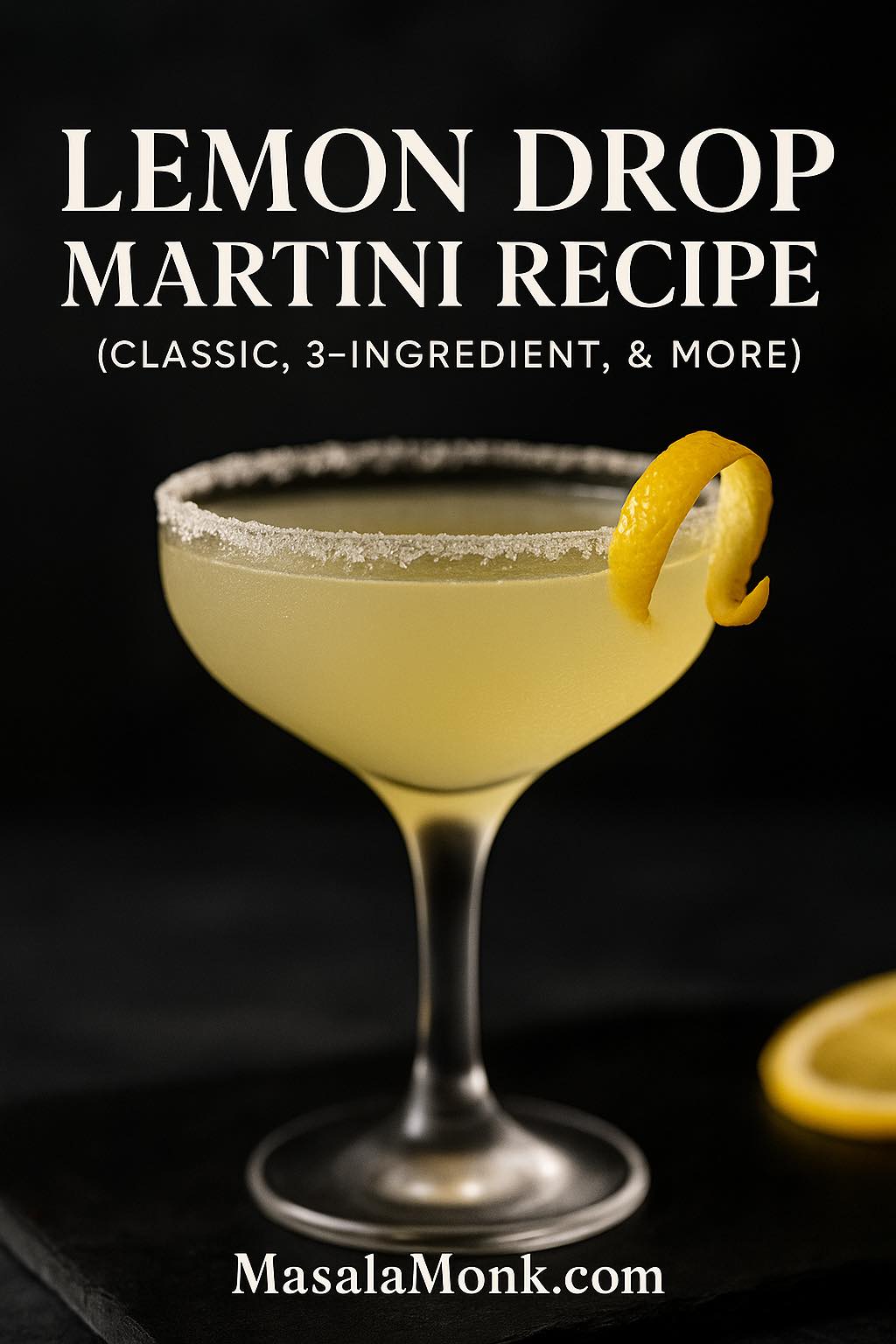
A good lemon drop martini should taste lively before it tastes sweet. The glass is deeply chilled, the rim sparkles lightly, and the first sip lands with just-squeezed lemon, clean vodka, a soft orange note, and enough sweetness to smooth the sharp edge. It should feel polished, not syrupy; refreshing, not harsh; easy, but still pretty enough to make the glass feel special.
This easy lemon drop martini starts with a balanced classic ratio: vodka, Cointreau or triple sec, fresh lemon juice, and simple syrup, shaken hard and poured into a lightly sugared glass. Once that baseline tastes right, you can make it without triple sec, soften it with limoncello, turn it into shots, batch it for guests, or add fruit without losing the crisp citrus snap.
Quick Answer: How to Make a Lemon Drop Martini
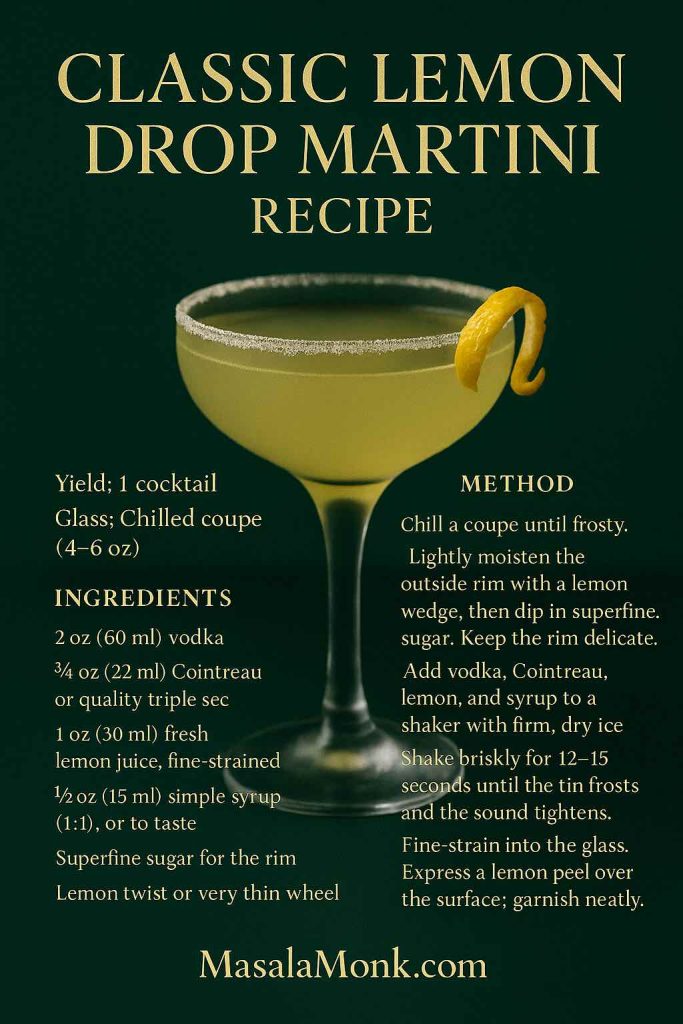
To make a classic lemon drop martini, shake 2 oz (60 ml) vodka, ¾ oz (22 ml) Cointreau or triple sec, 1 oz (30 ml) fresh lemon juice, and ½ oz (15 ml) simple syrup with firm ice for 15–20 seconds. Fine-strain into a chilled, lightly sugar-rimmed 5–6 oz coupe or martini glass, then garnish with a lemon twist.
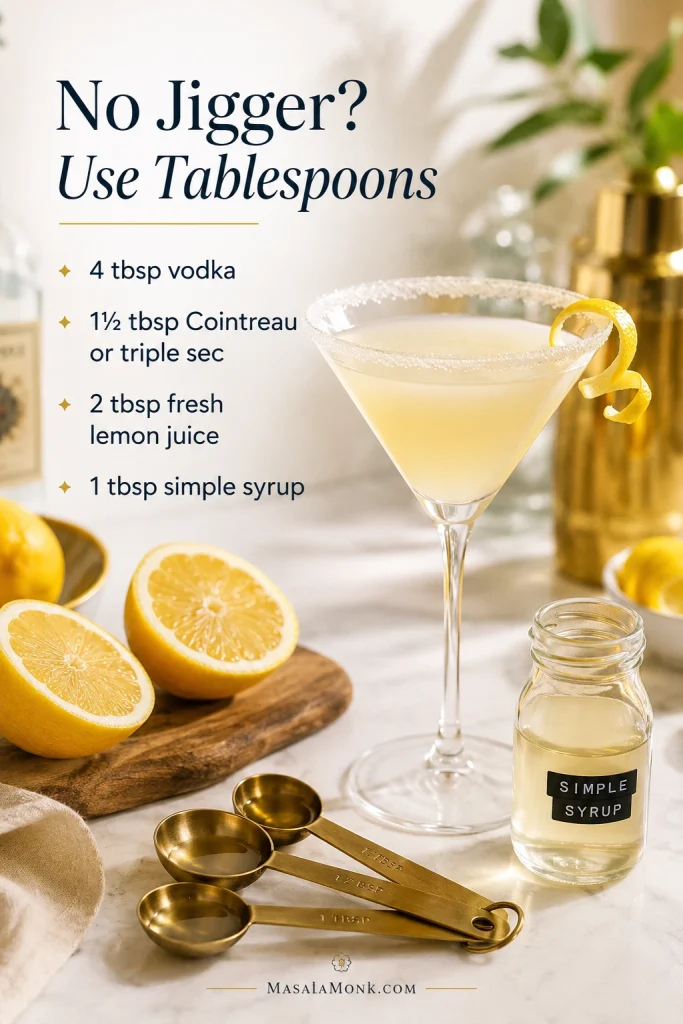
No jigger? Use 4 tablespoons vodka, 1½ tablespoons Cointreau or triple sec, 2 tablespoons fresh lemon juice, and 1 tablespoon simple syrup.
Before you shake, remember this: chill the glass, sugar only the outside rim, and adjust by teaspoons instead of guessing. Add syrup if the drink is too sour; add lemon if it tastes too sweet.
This is the drink to pour when you want something dressed up but not fussy: before dinner, for a small party, beside a dessert table, or as the first round when people want something bright and familiar.
Jump to What You Need
- Classic Recipe
- Ingredients
- Ratio
- Sugar Rim
- No Triple Sec or Cointreau
- Limoncello Version
- Lemon Drop Shots
- Pitcher & Freezer Batch
- Frozen Lemon Drop
- Fruit Variations
- Fix the Taste
- FAQs
Classic Lemon Drop Martini Recipe
Make this version first. It is the classic baseline: lemon-forward, deeply chilled, gently sweet, and easy to adjust. A well-made Lemon Drop should hit in this order: cold lemon, smooth vodka, a soft orange note, then a small sparkle from the rim — not sour lemonade, melted candy, or a glass full of sugar.
| Yield | 1 cocktail |
| Prep time | 5 minutes |
| Glass | 5–6 oz coupe or martini glass |
| Flavor | Lemon-forward, crisp, gently sweet |
| Shake time | 15–20 seconds |
| Serve | Immediately |
Ingredients
| Ingredient | Amount |
|---|---|
| Vodka | 2 oz / 60 ml |
| Cointreau or quality triple sec | ¾ oz / 22 ml |
| Fresh lemon juice, fine-strained | 1 oz / 30 ml / 2 tbsp |
| Simple syrup, 1:1 | ½ oz / 15 ml / 1 tbsp |
| Superfine sugar, for rim | 1–2 tbsp / about 12–25 g |
| Lemon twist or thin lemon wheel | 1 |
Method
- Chill a 5–6 oz coupe or martini glass for 5–10 minutes, or fill it with ice water while you work.
- Place superfine sugar on a shallow plate, moisten only the outside rim with lemon, and dip lightly.
- Add vodka, Cointreau or triple sec, fresh lemon juice, and simple syrup to a shaker.
- Fill the shaker with firm ice.
- Shake for 15–20 seconds, until the outside feels very cold.
- Fine-strain into the prepared glass.
- Express a lemon peel over the surface, then garnish with the twist or a thin lemon wheel.
You will know it is right when the drink feels cold and sharp at first, then softens almost immediately. The rim should add sparkle, not a mouthful of sugar.
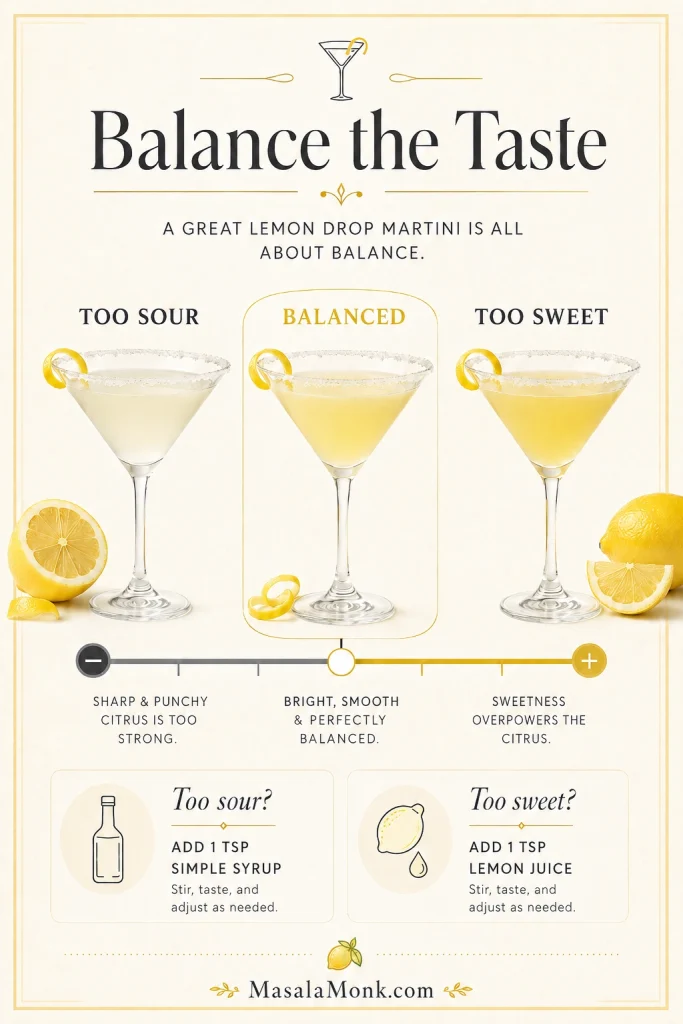
Taste before changing the recipe. Too sharp? Add 1 teaspoon simple syrup and shake briefly with fresh ice. Too sweet? Add 1 teaspoon lemon juice and re-shake. A Lemon Drop loses its edge as it warms, so pour it last-minute rather than letting filled glasses sit on a tray.
No-Jigger Lemon Drop Measurements
Use this quick conversion when measuring at home. Tablespoons keep the drink accurate, and teaspoon-sized adjustments keep the final sip from swinging too sour or too sweet.
Before You Mix: 3 Details That Make It Taste Better
The recipe is simple, but the small details matter. Small technique choices make the drink feel bar-clean instead of last-minute.
1. Use fresh, strained lemon juice
A lemon drop is only as good as its lemon. Fresh juice tastes vivid and fragrant, while bottled juice often tastes flat or stale. Strain out pulp before shaking so the drink stays smooth.
2. Keep the sugar rim thin
The rim should frame the first sip, not turn the cocktail into dessert. Moisten only the outside edge of the glass so sugar does not fall into the drink.
3. Shake hard with firm ice
Shaking does more than chill the drink. It adds a small amount of water, softens the lemon, and gives the cocktail a smoother finish. If the shaker frosts or feels painfully cold, you are there.
Shake and Fine-Strain for a Cleaner Pour
Once the drink is measured, the shake controls texture as much as temperature. Cold ice, firm shaking, and fine-straining help the cocktail pour clean, bright, and smooth.

Need to rescue a drink that tastes off?
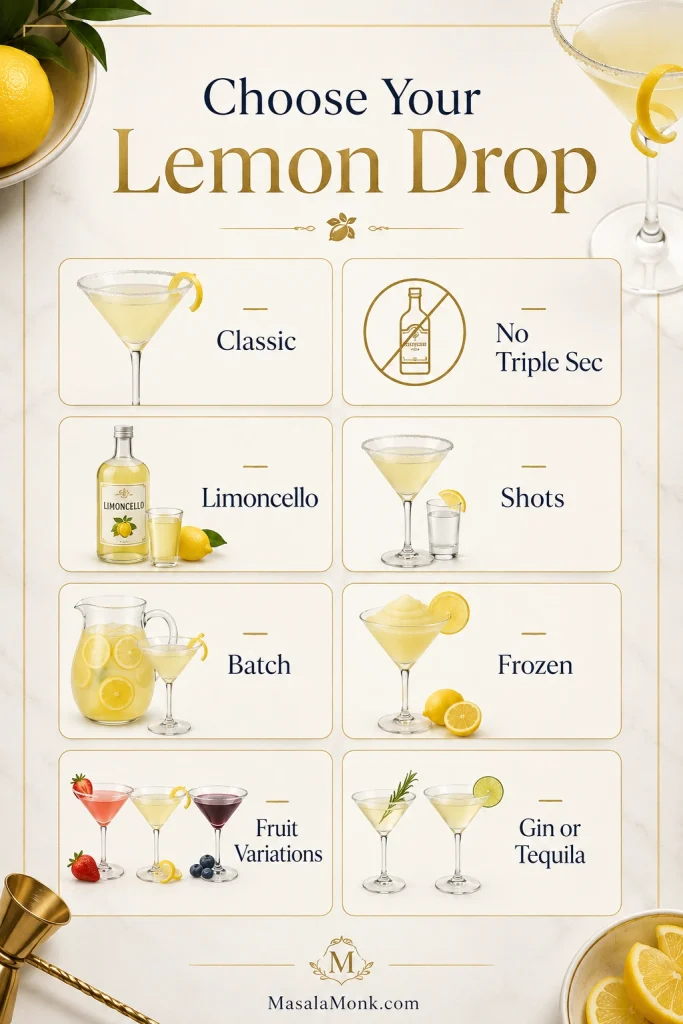
Choose Your Lemon Drop
Start with the classic, then change one thing at a time. That keeps the drink recognizable while letting you make it drier, sweeter, fruitier, stronger, softer, or easier to serve.
| Mood or need | Make this | Why it works |
|---|---|---|
| Clean and classic | Classic Lemon Drop Martini | Best balance of vodka, orange, lemon, and syrup |
| No orange liqueur | 3-Ingredient Lemon Drop | Vodka, lemon, syrup; rim optional |
| Softer and more lemony | Limoncello Lemon Drop | Limoncello adds round lemon perfume |
| Party tray | Lemon Drop Shots | Smaller, brighter, faster to serve |
| Hosting dinner | Pitcher Lemon Drop | Batch ahead, then shake or dilute properly |
| Hot afternoon | Frozen Lemon Drop | Blended, cold, citrusy |
| Pretty brunch drink | Strawberry or Lavender Lemon Drop | Color, aroma, and a softer mood |
| Drier twist | Gin Lemon Drop | More botanical and less candy-like |
Not sure where to start? Make the classic once, then decide whether you want it softer with limoncello, quicker as shots, or fruitier for a party glass.
Lemon Drop Martini Ingredients
With only a few ingredients in the shaker, every choice shows up in the glass. Fresh lemon smells brighter, measured syrup keeps the drink crisp, and a neutral vodka lets the citrus lead.
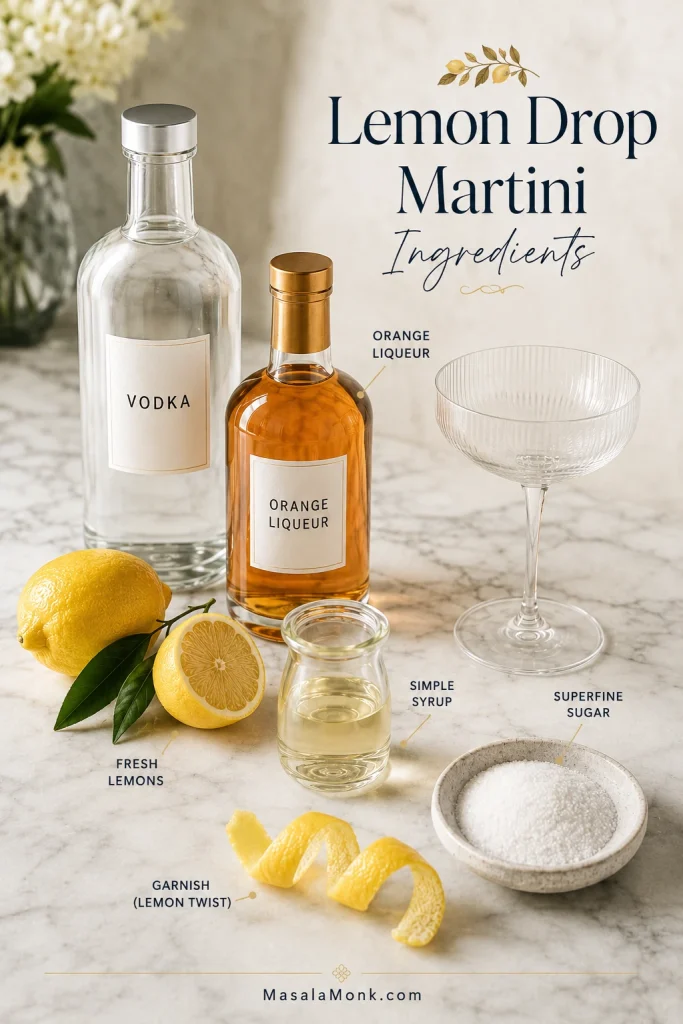
Vodka
Plain vodka is the safest choice for the cleanest classic Lemon Drop. It does not need to be expensive; it just needs to stay out of the lemon’s way. Lemon vodka works if you want a louder citrus aroma, but reduce the syrup slightly so the drink does not turn candy-like.
Cointreau, Triple Sec, or Grand Marnier
Cointreau gives the clearest orange note. A good triple sec keeps the drink accessible and works well in the classic ratio. Grand Marnier tastes richer and rounder, so use a little less syrup if the cocktail feels too sweet.
Fresh Lemon Juice
Choose lemons that feel heavy for their size, then roll them before juicing. One medium lemon usually gives about 2 tablespoons juice, though dry lemons may give less. Plan on one lemon per cocktail, plus an extra lemon nearby.
Simple Syrup
For syrup, begin with a basic 1:1 mix made from equal parts sugar and water. Half an ounce is the best starting point for one drink. To make a small batch, stir ½ cup sugar with ½ cup hot water until clear, cool, then refrigerate in a clean jar and use within 2–3 weeks.
Superfine Sugar
Superfine sugar gives the smoothest rim because it dissolves quickly on the lips. Granulated sugar works, but it feels crunchier. Avoid powdered sugar; it can clump, turn pasty, and taste dusty.
No bar tools?
No shaker? A jar with a tight lid works. Use tablespoons instead of a jigger and a tea strainer instead of a cocktail strainer. One ounce equals 2 tablespoons. If using a jar, wrap it in a towel and make sure the lid seals tightly before shaking.
The Best Lemon Drop Ratio for a Balanced Drink
The Lemon Drop Ratio at a Glance
Use this ratio as the starting point before you change the syrup, rim, or liqueur. It keeps the lemon bright while giving the vodka sour enough softness to feel polished.
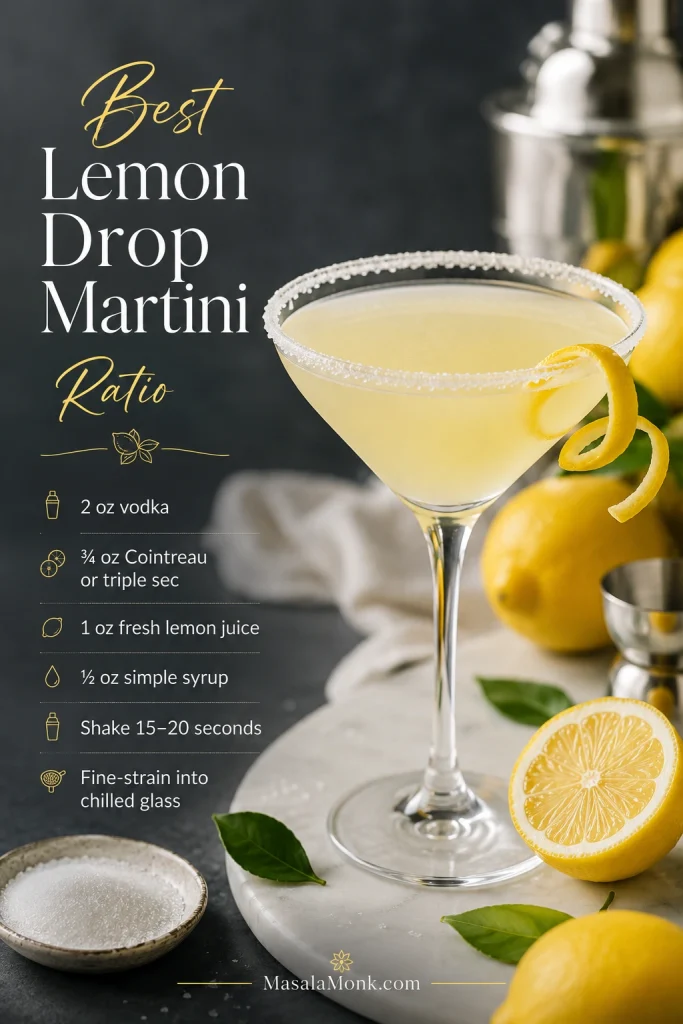
Think of the drink as a vodka sour served up: the vodka keeps it clear, the lemon gives it lift, the orange liqueur adds perfume, and the syrup softens the edge so the drink feels bright instead of sharp. Shaking supplies the cold dilution that makes it rounded instead of harsh. The sugar rim should stay outside the glass so the first taste sparkles while the cocktail underneath stays crisp. If you like this spirit-citrus-sugar balance, the Daiquiri recipe follows the same sour-cocktail logic with rum and lime.
| If you want it… | Adjust this way |
|---|---|
| Sharper and more citrus-forward | Keep syrup at ½ oz / 15 ml |
| Softer and sweeter | Increase syrup to ¾ oz / 22 ml |
| Drier and more bar-style | Use ½ oz / 15 ml orange liqueur and ½ oz / 15 ml syrup |
| More party-style | Use up to 1 oz / 30 ml syrup |
| Less sweet overall | Rim only half the glass |
| More aromatic | Express a fresh lemon peel over the drink |
How to Balance a Lemon Drop That Tastes Off
Small corrections work better than big guesses. Taste once, adjust by the teaspoon, and shake briefly again so the fix blends into the drink.
How to Make a Lemon Sugar Rim
The rim should sparkle, not clump. A heavy sugar crust makes the first sip awkward and can drop sugar into the cocktail. The best lemon sugar rim is thin, even, and only on the outside edge of the glass.
- Add superfine sugar to a small shallow plate.
- Rub in 1 teaspoon finely grated lemon zest if you want a brighter rim.
- Run a lemon wedge around the outside edge of the glass only.
- Dip the moistened outside rim into the sugar.
- Let the glass sit for 2–3 minutes while you make the cocktail.
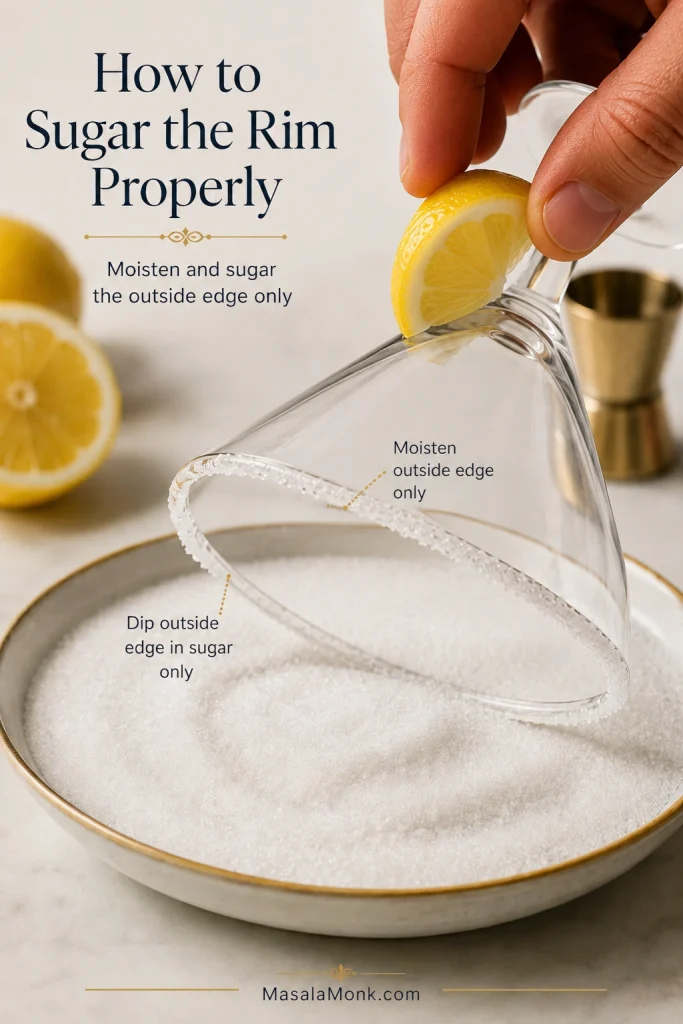
Prefer it less sweet? Rim only half the glass. Guests can choose the sugared side or the clean side, and the drink still looks polished without turning the first sip into candy.
That little sugared edge is part of the charm: the glass looks ready before the drink is even poured.
3-Ingredient Lemon Drop Martini, No Triple Sec or Cointreau
You can make a clean lemon drop martini without Cointreau or triple sec: vodka, lemon juice, and simple syrup. The sugar rim and lemon twist are optional, but they make even the simplest version feel complete.
| Ingredient | Amount |
|---|---|
| Vodka | 2 oz / 60 ml |
| Fresh lemon juice | 1 oz / 30 ml |
| Simple syrup | ½–¾ oz / 15–22 ml |
| Optional superfine sugar for rim | 1–2 tbsp / about 12–25 g |
| Optional lemon twist | 1 |
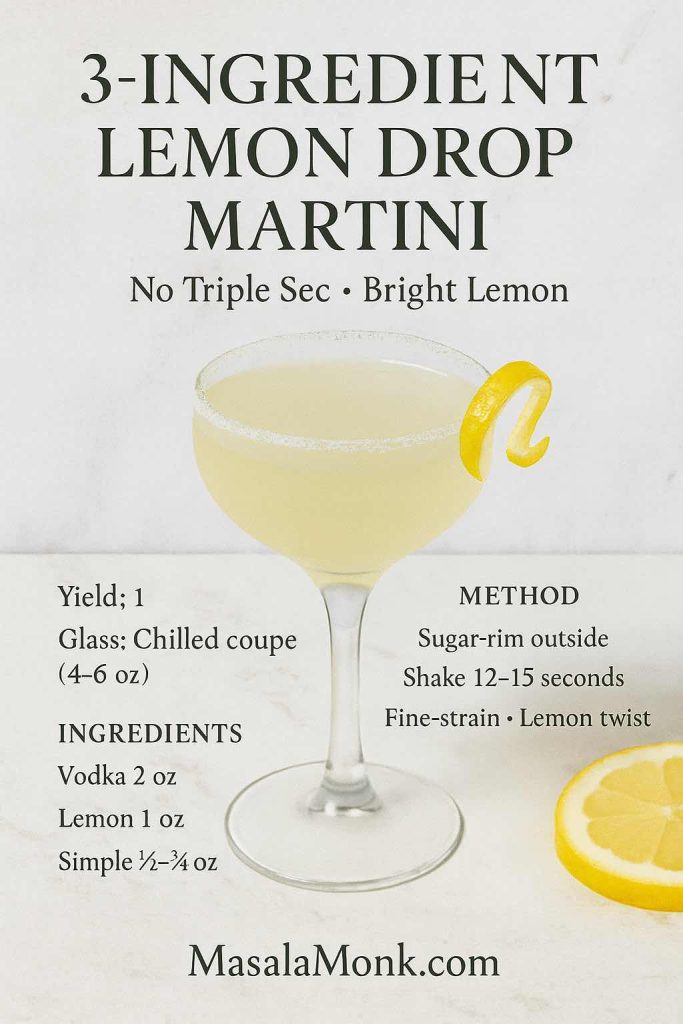
Shake the vodka, lemon juice, and syrup with firm ice for 15–20 seconds, then fine-strain into a chilled glass. Use ½ oz syrup for a sharper drink, or ¾ oz if you want it softer. Missing the orange aroma? Add 1–2 dashes of orange bitters.
Back to the classic recipe · Try the limoncello version
Limoncello Lemon Drop Martini
Limoncello makes a lemon drop softer, rounder, and more perfumed — the version to pour when you want the drink to feel sunnier and a little more generous. Since limoncello is already sweet, use less simple syrup than you would in the classic drink.
| Ingredient | Amount |
|---|---|
| Vodka | 1½ oz / 45 ml |
| Limoncello | 1 oz / 30 ml |
| Fresh lemon juice | 1 oz / 30 ml |
| Simple syrup | ¼–½ oz / 7–15 ml, to taste |
| Superfine sugar for rim | optional, or half rim |
| Lemon twist | 1 |
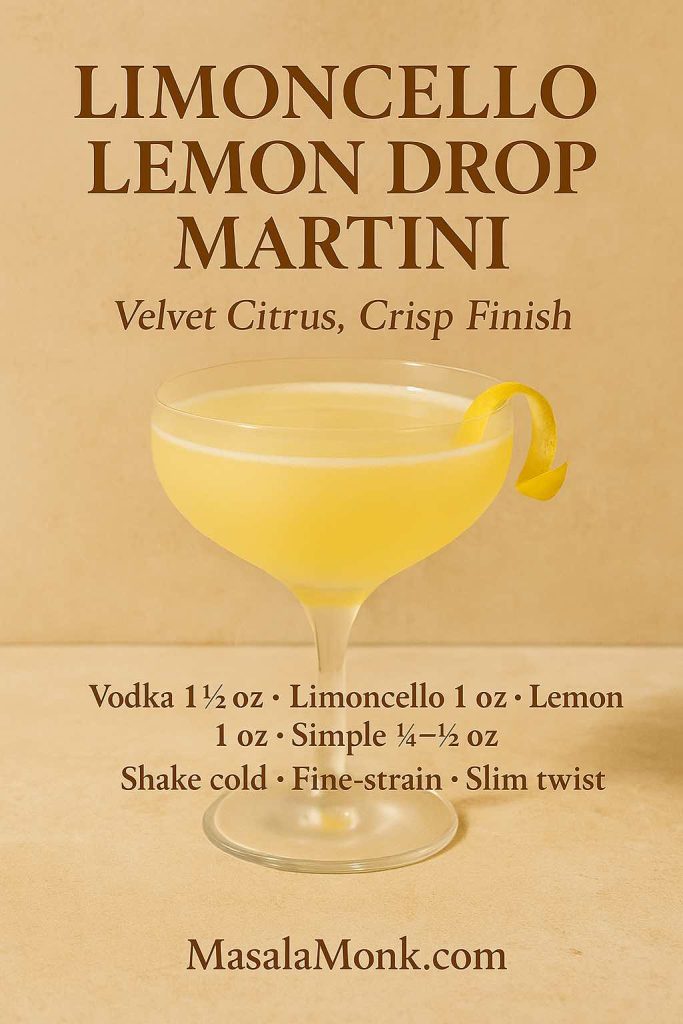
Shake with ice until very cold, then fine-strain into a chilled glass. Start with ¼ oz syrup and increase only if the lemon feels too sharp.
- Too sweet? Skip the simple syrup and use a half rim.
- Too heavy? Add ¼ oz / 7 ml more lemon juice.
- Too flat? Add the tiniest pinch of fine salt before shaking; it should not taste salty, just more awake.
More ways to fix the taste · Back to the classic recipe
Lemon Drop Shot Ratio
This is the version for the tray: quick to shake, easy to pass around, and brighter than a plain vodka shot. Lemon drop shots for a party should taste like smaller, punchier versions of the cocktail, not plain vodka chased with sugar.
| Version | Vodka | Lemon juice | Simple syrup |
|---|---|---|---|
| Bright shot | 1 oz / 30 ml | ½ oz / 15 ml | ¼ oz / 7 ml |
| Sweeter party shot | 1 oz / 30 ml | ½ oz / 15 ml | ½ oz / 15 ml |
| 6 shots | 6 oz / 180 ml | 3 oz / 90 ml | 1½–3 oz / 45–90 ml |

Shake shots with ice for 8–10 seconds, then strain into lightly sugared shot glasses. Work in small batches so every round tastes lively instead of warm and syrupy.
Serving more than shots? Jump to pitcher and batch Lemon Drops.
Batch Lemon Drop Martini: Pitcher, Party Batch, and Freezer-Door Lemon Drops
Serving more than two people? The only trick is dilution. A shaken Lemon Drop gets a little water from the ice, and that water is part of the drink. For guests, the goal is simple: keep the first round cold and the second round just as good.
Pitcher Lemon Drops for a Party
A pitcher setup works best when the base is cold, the glasses are ready, and the dilution plan is settled before guests arrive.

| Serving style | Best choice | Add water? |
|---|---|---|
| Best quality | Batch ingredients, shake each drink | No |
| Easiest pitcher | Add water and chill | Yes |
| Freezer-door bottle | Use smaller batch, shake each serving | No |
| Ready-pour bottle | Add measured water before chilling | Yes |
Batch Dilution: Shake-to-Order vs Ready-Pour
Use this choice before you bottle the drink. If the batch will not be shaken with ice later, it needs measured water now.
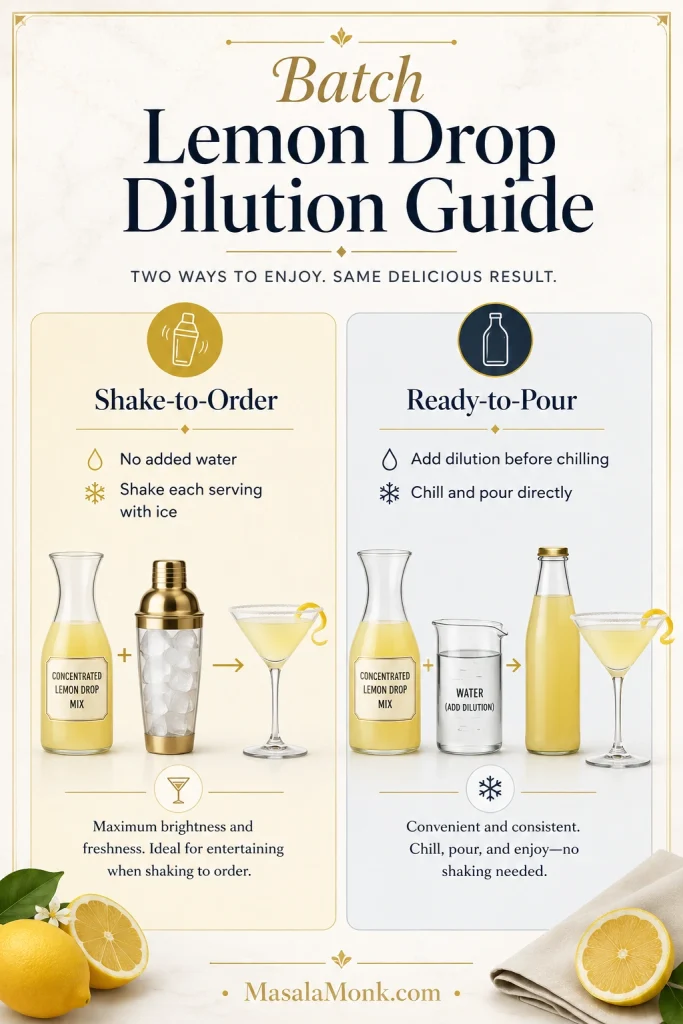
If a batched Lemon Drop tastes strong, sharp, or oddly flat, it usually does not need more sugar first; it needs the water that shaking would have added.
After dilution, one shaken cocktail usually pours around 5 oz, sometimes closer to 5½ oz. Because Lemon Drops taste bright and smooth, they can feel lighter than they are. Serve them small, cold, and freshly poured.
Shake-to-order batches
| Batch | Vodka | Orange liqueur | Lemon juice | Syrup | Water |
|---|---|---|---|---|---|
| 4 cocktails | 8 oz / 240 ml | 3 oz / 90 ml | 4 oz / 120 ml | 2–3 oz / 60–90 ml | none |
| 8 cocktails | 16 oz / 480 ml | 6 oz / 180 ml | 8 oz / 240 ml | 4–6 oz / 120–180 ml | none |
Ready-pour and freezer batches
| Batch | Vodka | Orange liqueur | Lemon juice | Syrup | Water / dilution |
|---|---|---|---|---|---|
| 8 ready-pour cocktails | 16 oz / 480 ml | 6 oz / 180 ml | 8 oz / 240 ml | 4–6 oz / 120–180 ml | 8–10 oz / 240–300 ml |
| 750 ml freezer bottle, shake-to-serve, about 5 cocktails | 10 oz / 300 ml | 3¾ oz / 110 ml | 5 oz / 150 ml | 2½ oz / 75 ml | none; shake each serving with ice |
| 1 liter ready-pour bottle, about 6 cocktails | 12 oz / 360 ml | 4½ oz / 135 ml | 6 oz / 180 ml | 3–4 oz / 90–120 ml | 6–7 oz / 180–210 ml |
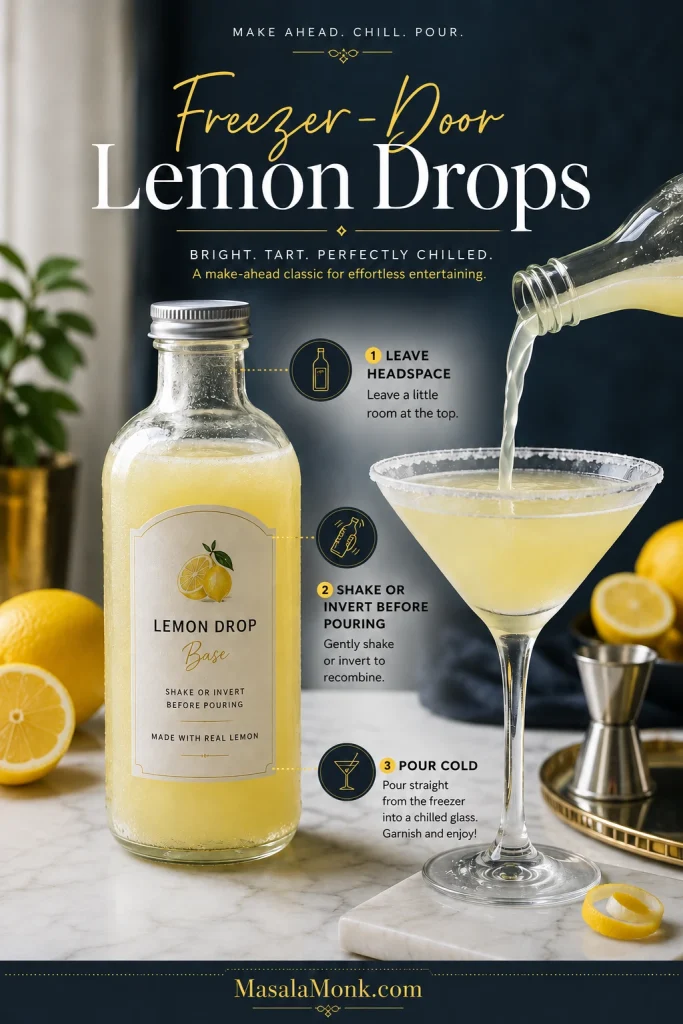
Use a large pitcher or a 1.5 liter bottle for the 8-drink ready-pour batch; it will not fit in a standard 750 ml bottle. Do not fill a freezer bottle to the top. Leave headspace, cap tightly, and shake or invert before pouring.
Freezer-Door Lemon Drop Bottle
A freezer-door bottle is convenient, but it still needs room at the top and a quick shake before serving so the citrus and syrup stay even.
Batches with fresh lemon juice taste best the same day. To prep further ahead, mix the vodka, orange liqueur, and syrup first, then add fresh lemon juice closer to serving. For a built-over-ice vodka drink that is easy to serve by the round, the Moscow Mule recipe is another good party option.
Frozen Lemon Drop Martini
A frozen lemon drop should still taste like a cocktail, not a syrupy lemon slush with vodka hiding underneath. Start with ½ oz syrup. Frozen drinks taste muted at first, then sweeter as they soften, so it is easier to add syrup than fix a slushy that turns cloying.
| Ingredient | Amount |
|---|---|
| Vodka | 2 oz / 60 ml |
| Cointreau or triple sec | ½–1 oz / 15–30 ml |
| Fresh lemon juice | 1 oz / 30 ml |
| Simple syrup | ½–¾ oz / 15–22 ml |
| Ice | about 1 heaping cup |
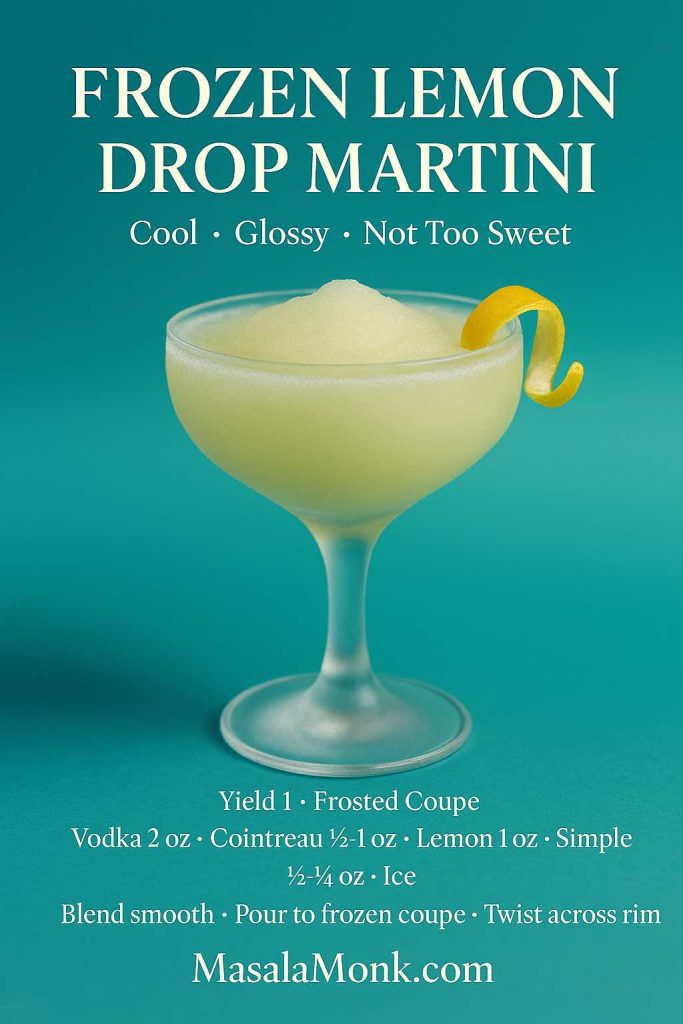
Blend until smooth, then pour into a chilled glass. If the drink feels too sharp, blend in a small spoonful of syrup. If it feels too sweet, add a squeeze of lemon and pulse once more. For another frozen party drink with a creamier tropical mood, try this Piña Colada recipe.
Fruit and Floral Lemon Drop Variations
Variations are where the drink gets playful, but the rule stays the same: let the lemon lead and use fruit as the accent, not the whole personality. Fruit should dress the lemon, not take over the whole glass.

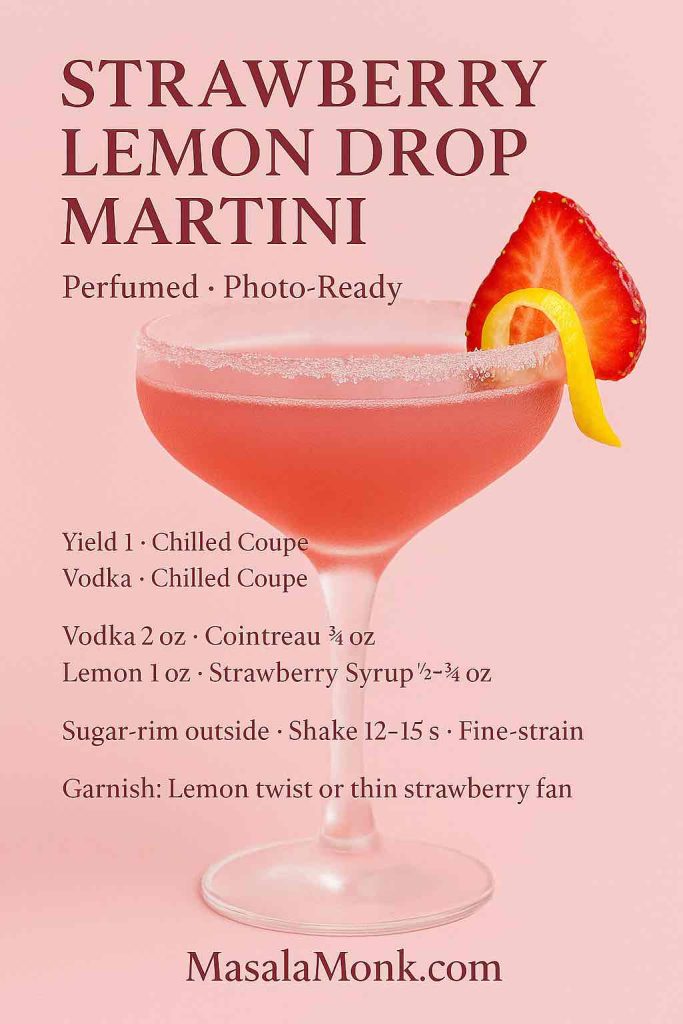
For most fruit lemon drops, start with the classic recipe and replace the simple syrup with ½–¾ oz fruit syrup, or muddle fresh fruit before shaking. Fine-strain well and keep the total sweetness steady.
| Variation | Use | Best cue |
|---|---|---|
| Strawberry Lemon Drop | ½–¾ oz strawberry syrup or 2 muddled berries | Best party color |
| Blueberry Lemon Drop | ½–¾ oz syrup or 8–10 berries | Strain well for a cleaner look |
| Raspberry Lemon Drop | ½ oz raspberry syrup | Tart and vivid; strain seeds |
| Blackberry Lemon Drop | ½–¾ oz syrup or 2–3 berries | Darker, silkier mood |
| Lavender Lemon Drop | ¼–½ oz lavender syrup | Keep it subtle |
| Ginger Lemon Drop | ¼–½ oz ginger syrup | Spicy-bright |
| Basil Lemon Drop | 3–4 leaves, gently muddled | Fresh and herbal |
Use syrup when you want a clearer, prettier party drink. Muddled fruit tastes fresher but can add pulp, skins, or seeds.
Strawberry Lemon Drop Martini
Strawberry is the easiest fruit variation to make feel party-ready. Keep the sweetness measured, then fine-strain so the pink color stays clean.
Other spirit swaps: gin or tequila
A gin lemon drop tastes more botanical and a little drier. Try 2 oz London Dry gin, ¾ oz Cointreau, 1 oz lemon juice, and ¼–½ oz syrup. Keep the rim delicate so the botanicals do not feel heavy. For another gin-and-lemon classic, the French 75 cocktail recipe is also worth saving.
A tequila lemon drop leans toward a lemony margarita. Try 2 oz blanco tequila, ¾ oz Cointreau, 1 oz lemon juice, and ½ oz syrup. A half-sugar, half-salt rim works especially well here. If that version catches your eye, the Spicy Margarita recipe goes deeper into citrus, tequila, and a bold rim.
Back to the classic recipe · Fix the taste · Back to Jump Menu
Best Vodka for a Lemon Drop Martini
Vodka does not need to be expensive here, but it does need to disappear cleanly behind the lemon. A harsh bottle becomes more obvious once fresh citrus sharpens everything around it. Chilling helps, but it cannot turn a rough vodka smooth.
| Vodka choice | Use it when | Adjustment |
|---|---|---|
| Plain neutral vodka | You want the classic | Use the main ratio |
| Smoother premium vodka | You want a cleaner finish | Do not over-sweeten |
| Budget vodka | Casual party drinks | Shake colder; use fresh lemon |
| Lemon vodka | You want louder citrus aroma | Reduce syrup |
| Sweet citron vodka | Only for party-style drinks | Half rim; less syrup |

For another chilled vodka drink with a sweet-tart edge, the Appletini is a natural next pour. It uses the same basic lesson: keep the fruit sharp, the glass cold, and the sweetness controlled.
Fresh Lemon Juice vs Sour Mix or Lemon Drop Mix
Fresh lemon juice and simple syrup give the freshest, clearest lemon drop. Mixes and sour mix can work when convenience matters, but they usually taste sweeter, flatter, or less fresh.
Using a mix? Treat it as both citrus and sweetener. Do not add the full simple syrup from the classic recipe. Add vodka first, taste, then brighten with a small squeeze of fresh lemon if the drink feels dull.
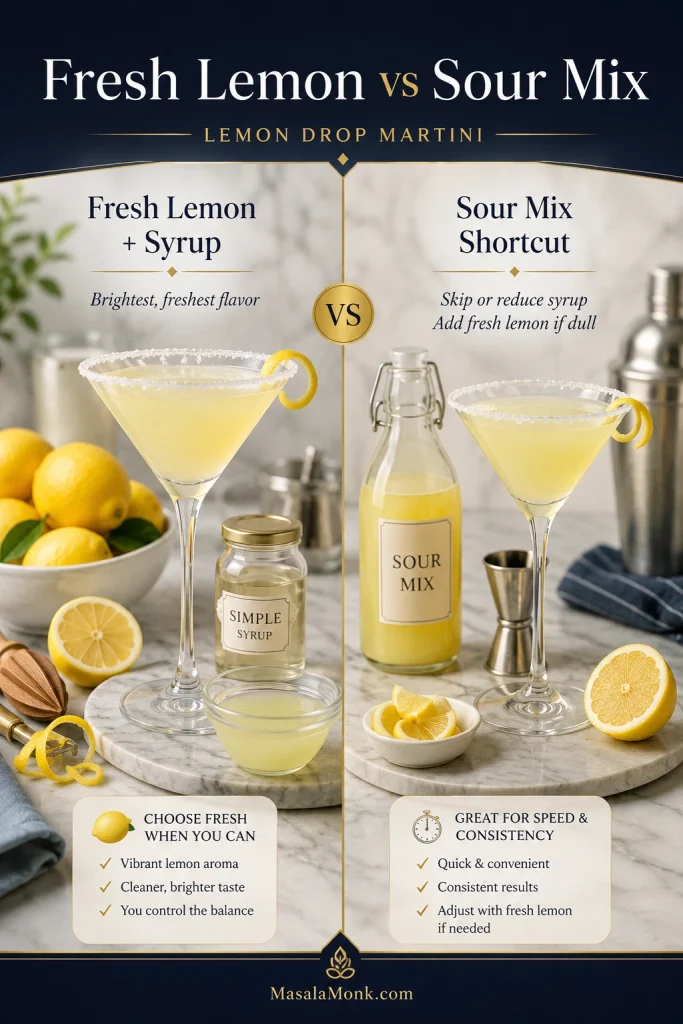
| Option | Result | Adjustment |
|---|---|---|
| Fresh lemon + syrup | Brightest and best | Use the main recipe |
| Bottled lemon juice | Flatter and sharper | Add a fresh twist; reduce syrup slightly |
| Sour mix | Sweeter and less fresh | Skip or reduce simple syrup |
| Lemon drop mix | Easiest | Add vodka and a squeeze of fresh lemon if possible |
| Premixed bottle | Least flexible | Chill hard and garnish with fresh lemon |
Fix the Taste
Do not dump the drink if the first sip is off. Lemon drops are forgiving when you adjust slowly. Taste, adjust by teaspoons, and shake briefly again with fresh ice.
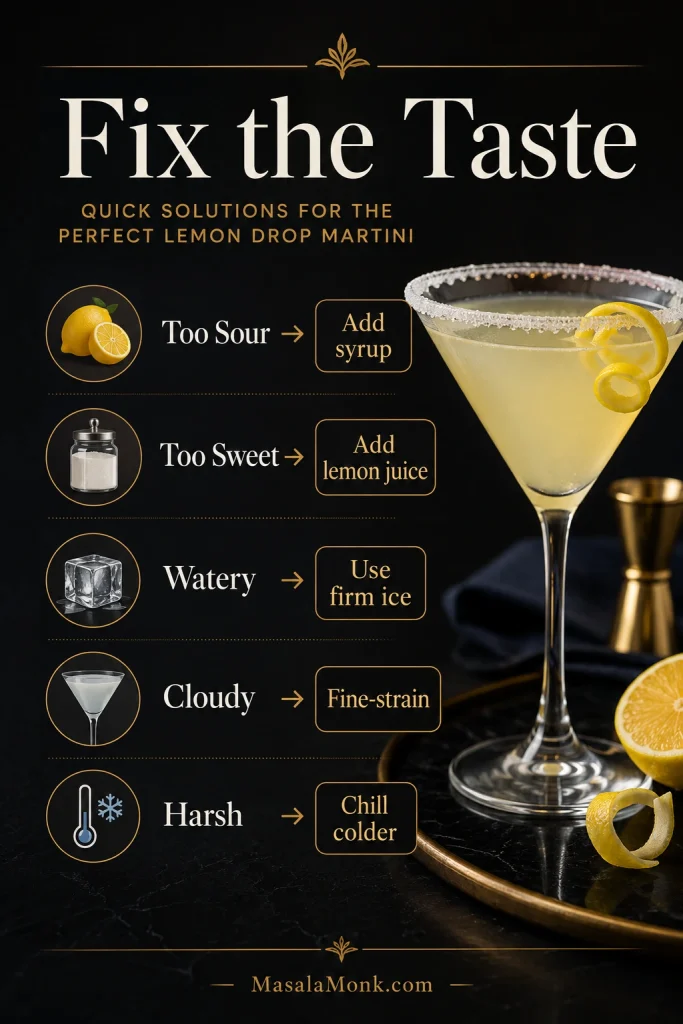
| Problem | What probably happened | How to fix it |
|---|---|---|
| Too sour | The lemons are sharp or syrup is too low | Add 1 tsp simple syrup and shake briefly |
| Too sweet | Too much syrup, sweet liqueur, or heavy rim | Add 1 tsp lemon juice and re-shake |
| Watery | Wet ice or too much shaking | Use firm ice and shake 15–20 seconds |
| Cloudy | Pulp, ice shards, or sugar fell in | Fine-strain and rim outside only |
| Harsh | Drink is warm or vodka is rough | Chill the glass and shake colder |
| Rim too crunchy | Sugar is too coarse or too thick | Use superfine sugar and a lighter dip |
| Limoncello version too sweet | Limoncello plus syrup overload | Reduce syrup or use a half rim |
| Fruit version tastes jammy | Too much syrup or puree | Add lemon juice and strain well |
Back to the classic recipe · Back to Jump Menu
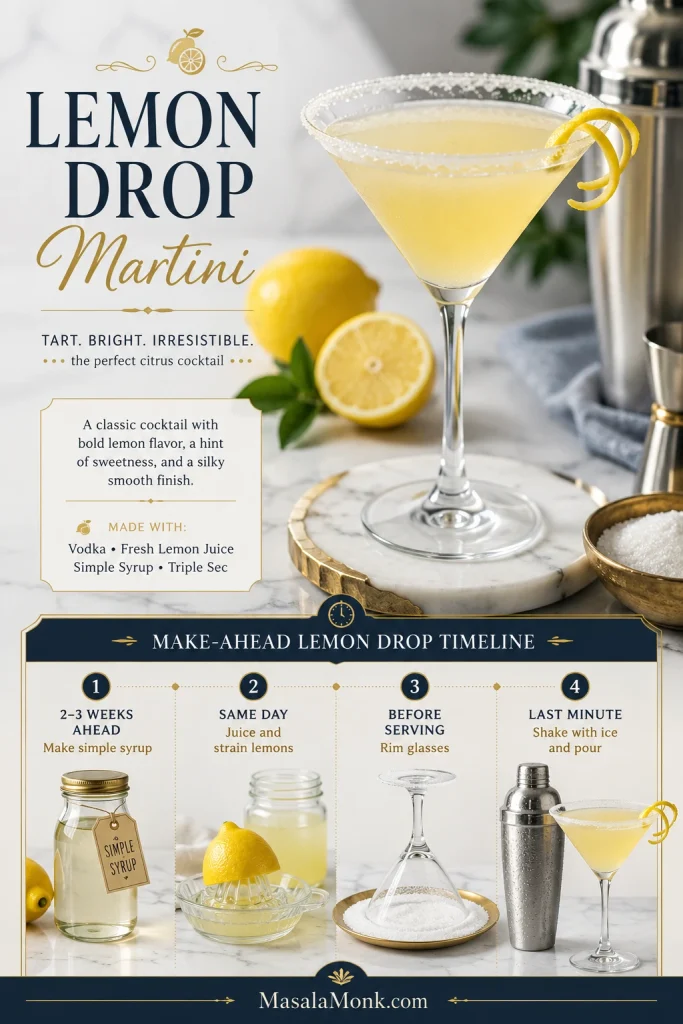
Make-Ahead and Storage Notes
You can prepare parts of a lemon drop ahead, but the best texture comes from shaking close to serving. A Lemon Drop feels most alive when the glass is cold, the rim is neat, and the citrus still smells fresh.
- Lemon juice: Juice lemons the same day if possible. Strain and refrigerate until needed.
- Simple syrup: Store in a clean jar in the fridge and use within 2–3 weeks.
- Rimmed glasses: Rim glasses shortly before serving so the sugar stays neat.
- Pitcher batch: Mix and chill up to a few hours ahead.
- Best service: Shake each serving with ice and pour immediately.
Serve alongside: mango lemonade for a non-alcoholic citrus option.
Bartender-Style Reference: Drier Classic vs Softer Home Version
Despite the martini glass, the Lemon Drop was born as a bright 1970s bar drink, closer in spirit to a vodka sour than a true martini.
The International Bartenders Association’s Lemon Drop Martini shows the drier classic skeleton of vodka, triple sec, and fresh lemon juice. Liquor.com’s Lemon Drop recipe also centers vodka, triple sec, fresh lemon juice, simple syrup, and a sugar rim.
This version sits between those worlds: it keeps the classic vodka-orange-lemon structure, then uses measured syrup and a delicate rim so the drink lands bright without turning harsh.
If you enjoy martini-style drinks with a different mood, try an Espresso Martini.
FAQs
These quick answers cover the swaps and shortcuts people usually ask about once the shaker is already out.
What is a Lemon Drop Martini?
A Lemon Drop Martini is a chilled vodka cocktail with fresh lemon juice, balanced sweetness, orange liqueur, and usually a sugar rim.
Is a Lemon Drop Martini the same as a Lemon Martini?
The names overlap, but a Lemon Drop Martini usually means vodka, lemon, sweetener, and a sugar rim. “Lemon Martini” can refer more broadly to lemon-flavored martini-style drinks, so recipes vary.
Which vodka works best?
A clean neutral vodka is the safest choice for the classic version. Lemon vodka works when you want stronger citrus aroma, but reduce the syrup slightly.
Fresh lemon juice or bottled?
Fresh lemon juice is best because the aroma is part of the drink. Bottled lemon juice works only as a shortcut and may taste flatter.
How sweet should a Lemon Drop be?
It should be balanced, not dessert-sweet. Start with ½ oz / 15 ml simple syrup for one cocktail, then add more only if the lemon tastes too sharp.
No triple sec — what should I use?
Use vodka, fresh lemon juice, and simple syrup for a three-ingredient lemon drop. Add 1–2 dashes of orange bitters if you want a little orange aroma without liqueur.
Cointreau, triple sec, or Grand Marnier?
Cointreau tastes crisp and clear. Triple sec is more budget-friendly and varies by brand. Grand Marnier tastes richer and rounder, so use a little less syrup if the drink feels too sweet.
How long should you shake a Lemon Drop Martini?
Shake for 15–20 seconds, or until the shaker feels very cold. For shots, 8–10 seconds is usually enough because the serving is smaller.
Lemon Drop Martini vs Lemon Drop Shot — what is the difference?
A Lemon Drop Martini is a full cocktail served up in a coupe or martini glass. A Lemon Drop Shot is smaller, stronger, and served in a shot glass with less dilution.
How do you make Lemon Drop shots?
For one bright shot, shake 1 oz / 30 ml vodka, ½ oz / 15 ml lemon juice, and ¼ oz / 7 ml simple syrup with ice for 8–10 seconds. Strain into a lightly sugared shot glass.
Can you make a Lemon Drop Martini with sour mix?
Yes. Use vodka and sour mix, then skip or reduce the simple syrup because most sour mixes already contain sugar. A squeeze of fresh lemon helps brighten the drink.
What is the best way to batch Lemon Drops for a party?
Mix the vodka, orange liqueur, lemon juice, and syrup ahead, then chill. For the best texture, shake each serving with ice. For ready-pour service, add cold water to replace shake dilution.
Does limoncello work in a Lemon Drop Martini?
Yes. Limoncello makes the cocktail softer and more lemon-perfumed. Since it is sweet, reduce the simple syrup and consider using only a half sugar rim.
Closing Pour
The Lemon Drop lasts because it gives a simple promise and delivers it quickly: cold vodka, just-squeezed lemon, a soft edge of sweetness, and a glass that looks festive before anyone takes the first sip. Make the classic first, keep the rim delicate, and shake until the tin feels icy.
After that, the variations are easy: limoncello for softness, shots for the party tray, frozen for hot afternoons, strawberry when the room needs color. The goal stays the same every time: citrus first, smooth second, sweet only enough.
If you make it, start with the classic first. Then come back and tell us what your table chose next: limoncello, frozen, strawberry, or shots.








