Posted on Leave a comment

Orange Crush Recipe: Fresh Orange Vodka Cocktail, Pitcher & Mocktail

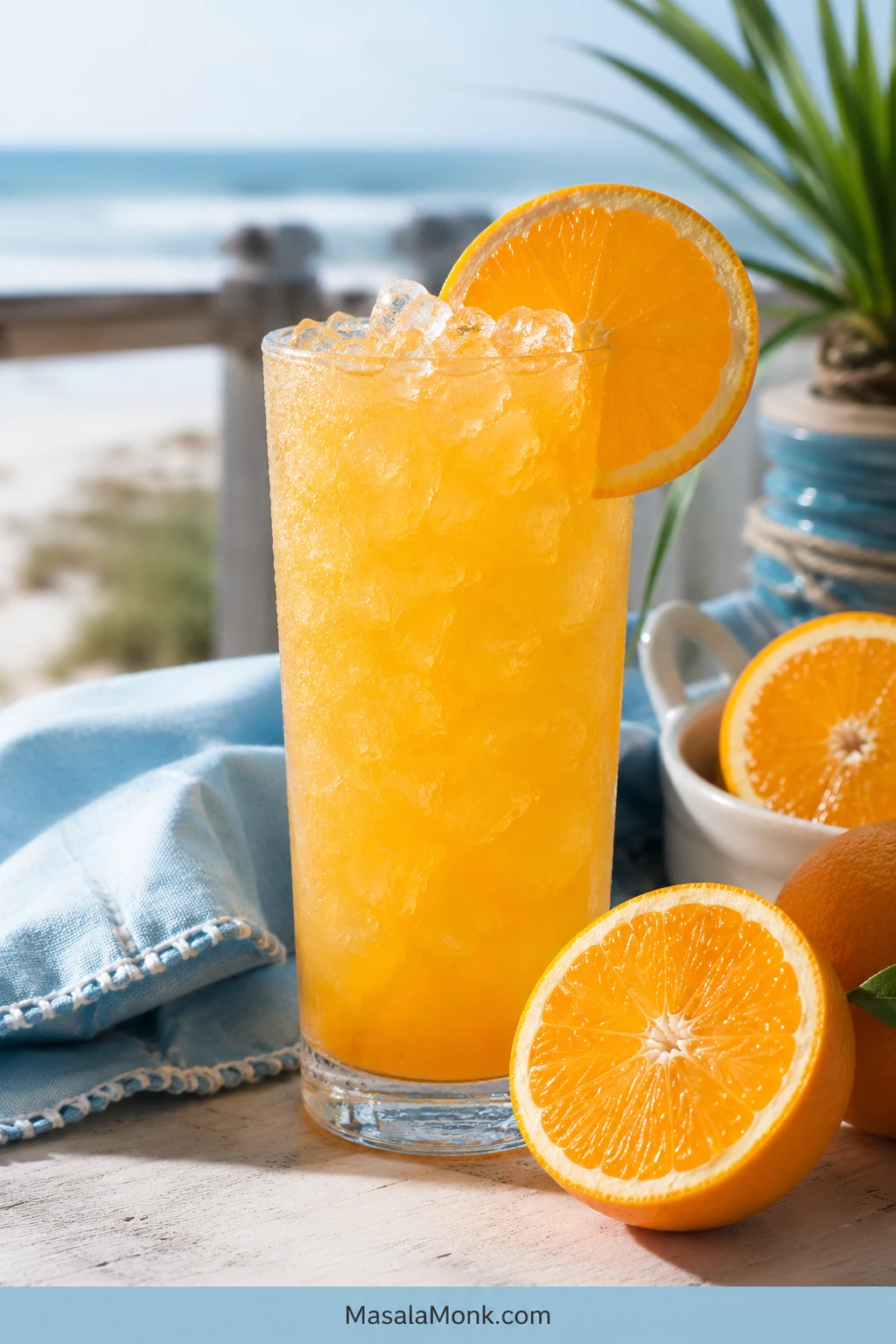
Tall Orange Crush cocktail in a clear glass with crushed ice, orange slice garnish, condensation, fresh oranges, and a coastal table setting.
An Orange Crush should smell like a just-cut orange before you taste the vodka. It should be cold, juicy, sparkling, and bright enough to feel like a beach-bar drink instead of plain vodka with orange soda. This version uses fresh-squeezed orange juice, vodka or orange vodka, triple sec, crushed ice, and just enough bubbles to keep every sip lively.

It is the kind of drink that works because it feels simple: squeeze, pour, fizz, sip. The same build is easy enough for one glass after work and bright enough for a whole tray of summer drinks.

If a Screwdriver is vodka and orange juice, an Orange Crush is the fresher, louder cousin. It adds orange liqueur, crushed ice, and soda, so the glass lands citrusy, cold, and easy to sip without feeling heavy.

This is the cocktail version, not the soda cake. You will get the classic drink first, then the choices that matter: regular vodka or orange vodka, triple sec or Cointreau, lemon-lime soda or club soda, one glass or a pitcher, plus frozen, lighter, shot, and mocktail versions.

Jump to Recipe · Make One Now · Pitcher · Variations · Fixes · FAQs

Quick Answer: What Is an Orange Crush?

An Orange Crush is a fresh orange vodka cocktail made with fresh-squeezed orange juice, vodka or orange vodka, triple sec or another orange liqueur, lemon-lime soda or club soda, and crushed ice.

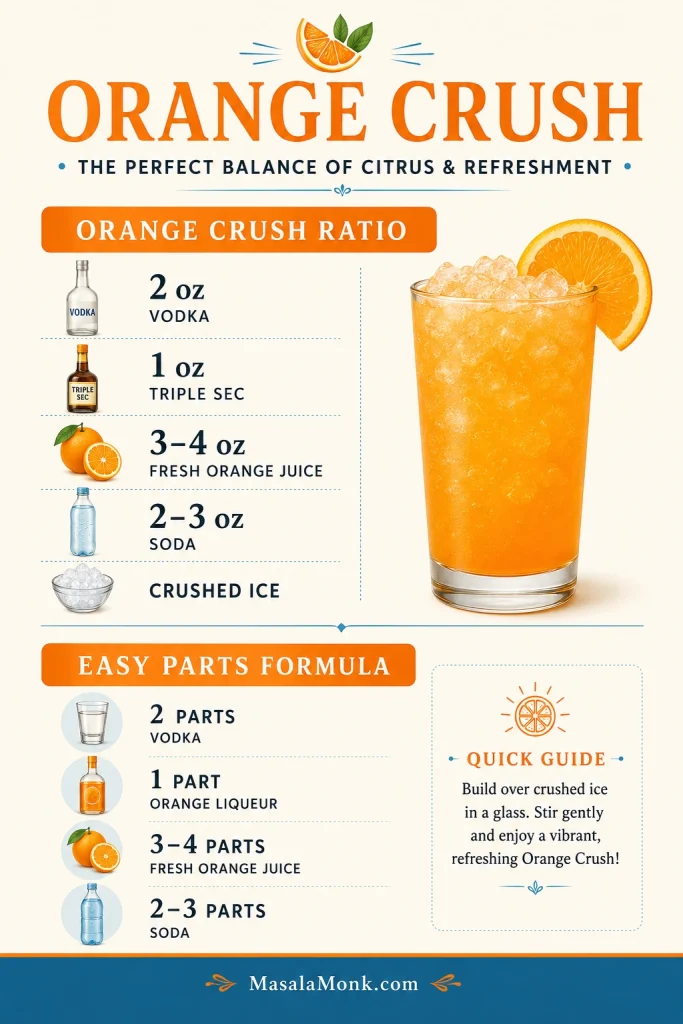
The best starting ratio is 2 oz / 60 ml vodka, 1 oz / 30 ml triple sec, 3–4 oz / 90–120 ml fresh orange juice, and 2–3 oz / 60–90 ml lemon-lime soda or club soda. Build it over crushed ice, add the soda last, and serve it while the glass is still cold and bubbly.

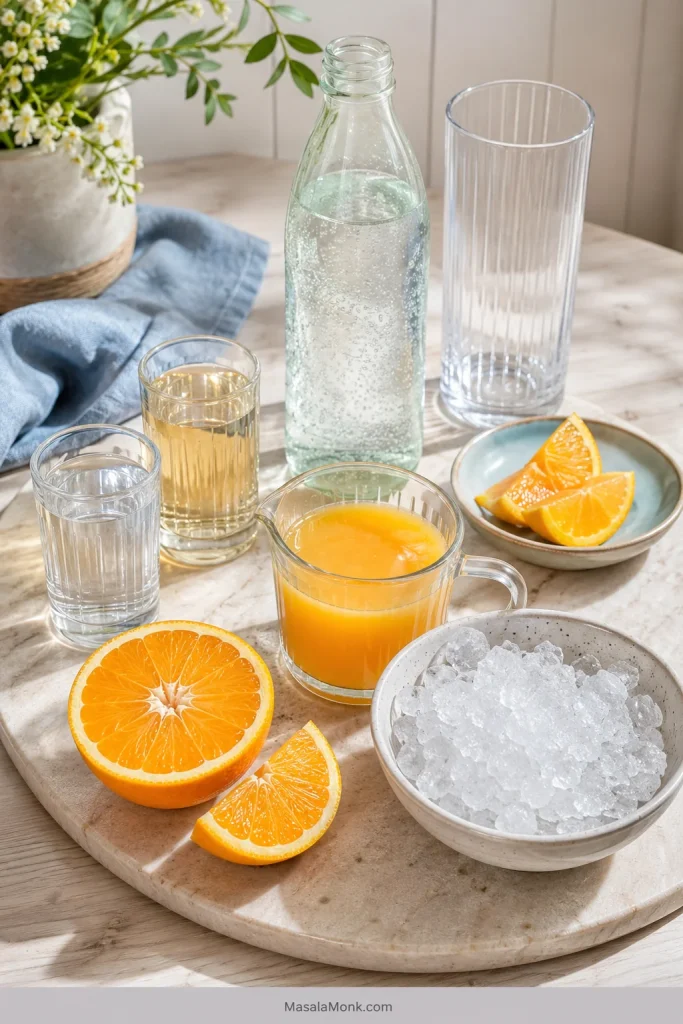
Orange Crush ingredients on a light tabletop, including fresh orange juice, vodka, orange liqueur, soda, crushed ice, orange wedges, and a tall glass.
The one-glass Orange Crush formula works because every ingredient has a clear role: juice brings brightness, vodka gives structure, orange liqueur adds depth, and soda lifts the finish.

Make One Now

Fill a highball, Collins, or pint glass with crushed ice. Add 2 oz / 60 ml vodka, 1 oz / 30 ml triple sec, and 3–4 oz / 90–120 ml fresh orange juice. Stir briefly, top with 2–3 oz / 60–90 ml lemon-lime soda or club soda, stir once more, garnish with orange, and drink while the ice is still crisp.

If the first sip tastes like orange first and alcohol second, you are in the right place. From there, adjust the next glass sweeter, drier, stronger, or more orange-forward.

Start here before you customize: vodka or orange vodka, triple sec, fresh-squeezed orange juice, lemon-lime soda, and a full glass of crushed ice.

Three things ruin the drink fast: warm juice, soda added too early, and finished cocktails sitting in a pitcher with ice.

Want this?Use this
Classic beach-bar Orange CrushOrange vodka + lemon-lime soda
Cleaner, less sweet drinkPlain vodka + club soda
Stronger orange flavorOrange vodka + Cointreau
Lighter party pourClub soda + extra fresh orange
MocktailFresh orange juice + lemon or lime + soda

You are not chasing a syrupy orange soda drink here. You want fresh citrus, cold ice, clean vodka, orange depth, and a bubbly finish.

Recipe Card: Orange Crush Cocktail

This is the balanced house version: cocktail-strength, orange-forward, bubbly, but not sticky. It is built to taste like fresh orange first, not lemon-lime soda first.

Prep time5 minutes
Cook time0 minutes
Total time5 minutes
Servings1
Yield1 cocktail
MethodBuilt in the glass
GlassHighball, Collins, or pint glass
EquipmentCitrus juicer, jigger or measuring cup, bar spoon

Ingredients

  • 3–4 oz / 90–120 ml fresh orange juice
  • 2 oz / 60 ml vodka or orange vodka
  • 1 oz / 30 ml triple sec or Cointreau
  • 2–3 oz / 60–90 ml lemon-lime soda, club soda, or orange sparkling water
  • Crushed ice, enough to fill the glass
  • Orange wheel or wedge, for garnish

Instructions

  1. Juice the oranges and measure 3–4 oz / 90–120 ml fresh orange juice.
  2. Fill a highball, Collins, or pint glass with crushed ice.
  3. Add vodka, triple sec, and fresh orange juice.
  4. Stir for 5–10 seconds, just enough to chill and combine.
  5. Top with lemon-lime soda, club soda, or orange sparkling water.
  6. Stir gently once or twice, garnish with orange, and serve immediately.

Notes

  • Orange vodka gives a stronger coastal bar-style orange flavor.
  • Plain vodka keeps the drink cleaner and less sweet.
  • Lemon-lime soda gives the classic finish.
  • Club soda or orange sparkling water makes it drier.
  • Add the soda last and serve right away.

What You Need

You only really need a citrus juicer, a jigger or small measuring cup, a tall glass, and crushed ice. A bar spoon helps, but a regular spoon is fine. Shakers are optional; use one only for the vodka, orange liqueur, and juice, never the soda.

A hand press makes the drink feel especially beach-bar style, but any citrus juicer works. What matters most is measuring the alcohol, filling the glass with enough ice, and adding the bubbles at the end.

Why This Ratio Works

A good Orange Crush is not vodka hidden under orange soda. It is fresh orange juice sharpened with vodka, deepened with orange liqueur, and lifted with bubbles.

Remember the Orange Crush rule: fresh orange carries the drink, orange liqueur deepens it, and soda only lifts it.

Infographic showing Orange Crush measurements for vodka, triple sec, fresh orange juice, soda, crushed ice, and a scalable parts formula.
The ounce ratio works for one cocktail, while the parts formula works for batching. That way, the Orange Crush stays balanced even when you scale it for guests.
This house ratio starts a little less sweet on purpose. You can always add more soda, but you cannot rescue a sticky glass once it is built.

The 2 oz / 60 ml vodka pour keeps it cocktail-strength, while 3–4 oz / 90–120 ml orange juice gives enough citrus to make the glass taste juicy instead of sharp. For a sweeter crush, add a little more orange liqueur or lemon-lime soda. To make a drier one, reduce the liqueur to ½ oz / 15 ml and use club soda.

Ingredients That Make the Drink Work

Because the cocktail is so simple, there is nowhere for dull juice or flat bubbles to hide. Good oranges and the right topper matter more than expensive bar tools.

Fresh orange juice

Fresh juice gives you that little burst of orange oil and perfume before the glass even reaches your mouth. That is the difference between a bright Orange Crush and a flat vodka-orange drink, and it is what bottled juice never quite gives you. Pulp is fine if you like a fuller texture.

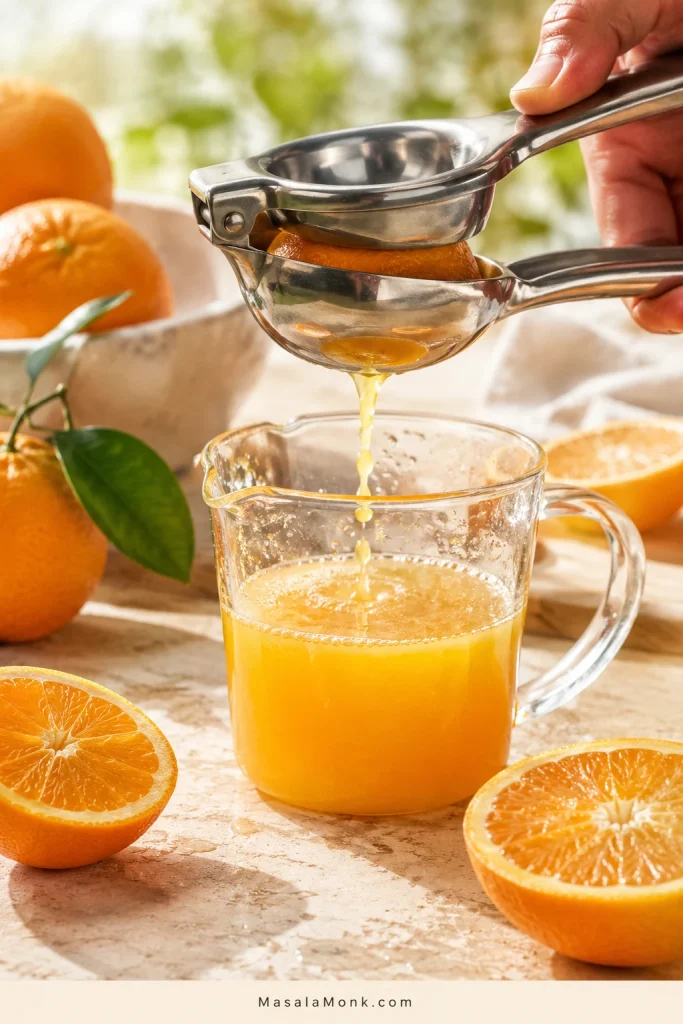
Fresh orange being squeezed in a metal citrus press, with juice dripping into a clear measuring cup and orange halves on a bright countertop.
The citrus press does more than save time. It pulls bright juice and aromatic orange oils into the drink, which is why fresh-squeezed orange juice tastes livelier in an Orange Crush.

One juicy orange may be enough for one drink, but plan on 1–2 oranges per cocktail so you are not short. Measure the juice and aim for 3–4 oz / 90–120 ml per glass. If one orange gives you less than 3 oz, squeeze another half.

Navel oranges are easy to find and usually sweet. Valencia oranges are especially juicy. Cara Cara oranges make a softer, sweeter pink-orange drink. Blood oranges also work, but they change the color and add a deeper berry-like edge.

If you bought a bag of oranges and have more citrus than you need for drinks, save a few for this orange marmalade recipe; it uses the same bright flavor in a slower, spoonable way.

Vodka or orange vodka

You do not need to buy a special bottle for one drink, but the vodka choice does change the mood of the glass. Plain vodka keeps the cocktail clean and citrus-led; orange vodka makes it taste more like the beach drink people remember.

Sweet, fragrant oranges are enough for plain vodka to work beautifully. When the fruit is mild, orange vodka helps the flavor along.
Vodka choiceBest forWhat it does
Plain vodkaA cleaner Orange CrushLets fresh orange juice stay in front
Orange vodkaBeach drink flavorAdds stronger orange aroma
Neutral vodkaEasy home mixingKeeps the drink simple and crowd-friendly
Vanilla or whipped vodkaDessert-style drinkCan taste creamsicle-like, but turns sweet quickly

Start with plain vodka and good oranges if you are unsure. The second glass can always get louder with orange vodka.

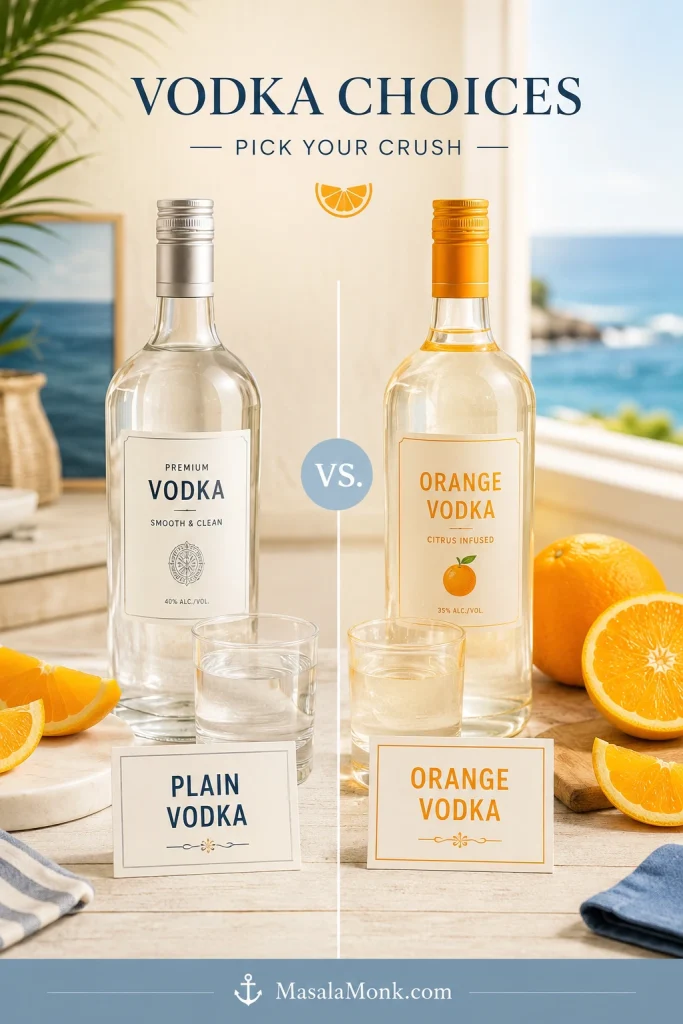
Side-by-side comparison of plain vodka and orange vodka with small pour glasses, orange slices, and labels on a coastal tabletop.
Plain vodka keeps the cocktail cleaner and more citrus-led. However, orange vodka helps when the fruit is mild or when you want a stronger beach-bar orange flavor.

Triple sec or orange liqueur

Orange liqueur is helpful, but it can take over fast. Measure it once, taste the drink, then adjust the next glass.

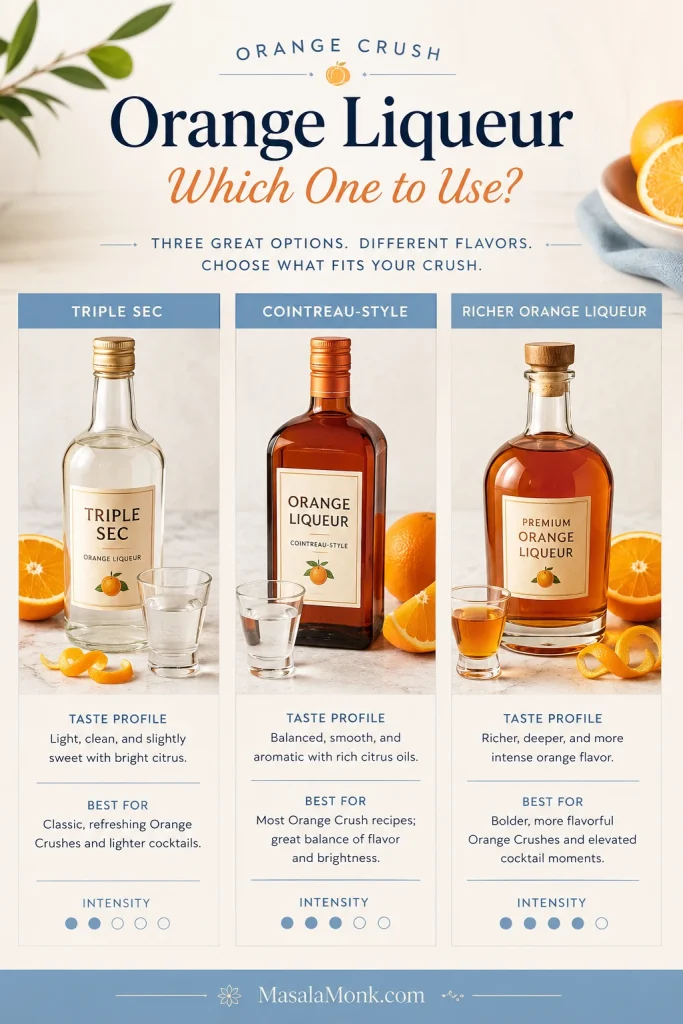
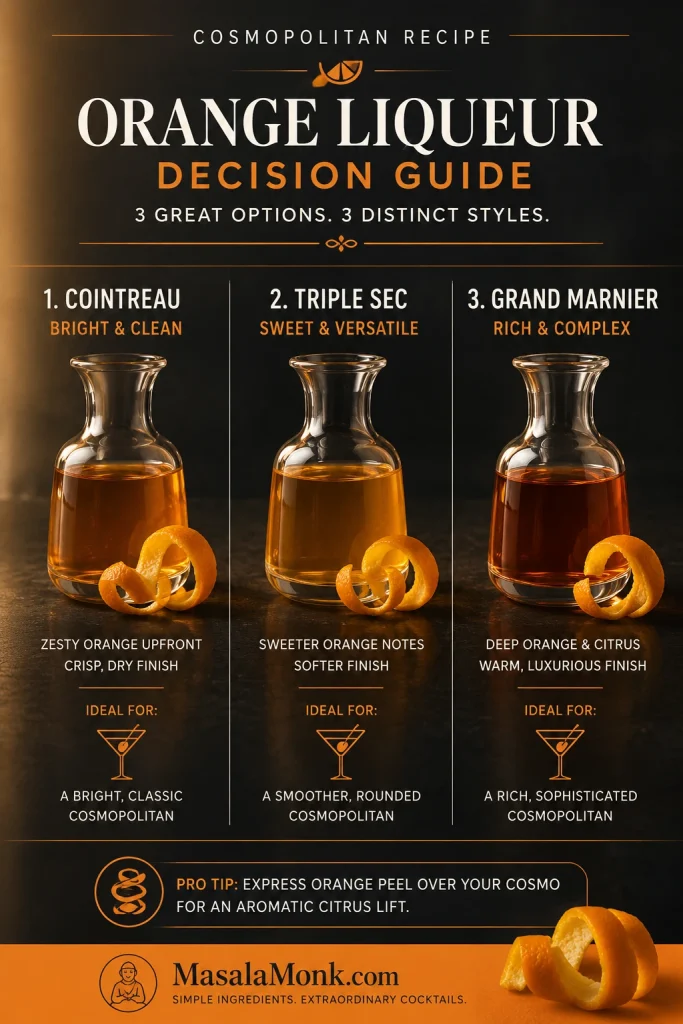
Triple sec adds sweetness and orange depth. Cointreau gives a cleaner orange flavor. Grand Marnier is richer and heavier, so use it when you want a rounder cocktail rather than the lightest possible glass.

Orange liqueurFlavorBest use
Triple secSweet, simple, classicStandard Orange Crush
CointreauCleaner, stronger orangePremium but still bright drink
Grand MarnierRicher, deeper, slightly brandy-likeRounder cocktail; use lightly

The safest first pour is still 1 oz / 30 ml. Once the drink is in your hand, you will know whether it needs more orange depth or less sweetness.

Orange liqueur comparison showing triple sec, Cointreau-style liqueur, and richer orange liqueur with bottles, small glasses, and orange props.
Orange liqueur should deepen the citrus, not turn the drink sticky. Start with a measured pour, then adjust only if the glass needs more orange flavor after tasting.
If you want another drink where orange liqueur has to stay balanced instead of taking over, this spicy margarita recipe uses that same sweet-citrus logic with lime, tequila, and heat.
Soda or sparkling water

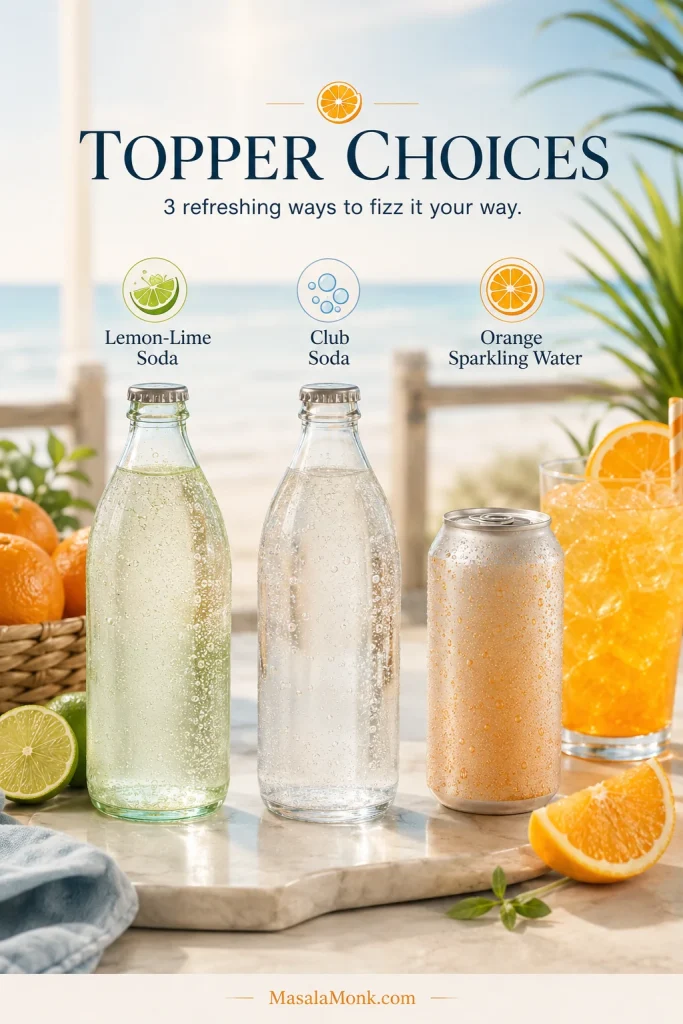
The topper decides the mood of the glass: classic and sweet, clean and dry, or full-on orange soda. This is where many homemade versions go wrong. Too much sweet fizz, and the fresh orange disappears.

TopperResultUse it when
Sprite, 7UP, or lemon-lime sodaSweet, sparkling, classicYou want the beach-bar drink
Club sodaDryer and lighterYou want less sugar
Orange sparkling waterCitrusy but not syrupyYou want orange flavor without extra sweetness
Orange sodaVery sweet and candy-likeUse only for a soda-style twist

Start with less topper than you think. You can always add a splash more, but you cannot take sweetness back out.

Topper comparison showing lemon-lime soda, club soda, and orange sparkling water with an Orange Crush cocktail in the background.
The topper controls sweetness more than most people expect. Choose lemon-lime soda for a classic Orange Crush, club soda for a drier drink, or orange sparkling water for lighter citrus fizz.

Crushed ice

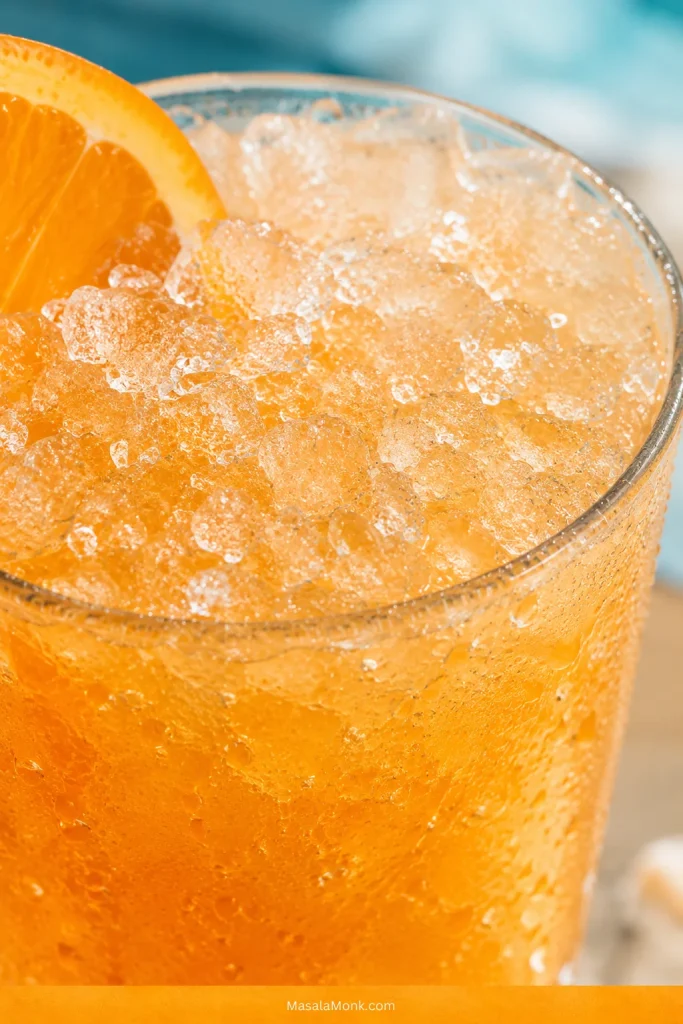
Crushed ice is part of the drink’s personality. It chills fast, softens the vodka, and gives the glass that loose, beach-bar feel you do not get from a few hard cubes.

Close-up of crushed ice and condensation in a glass of orange cocktail with an orange slice garnish near the rim.
Crushed ice gives the cocktail its classic beach-bar texture. It chills the glass quickly, slightly softens the vodka, catches the bubbles, and makes each sip feel lighter.

Ready to mix? jump to the method · recipe card · back to top

How to Make It

The easiest home method is also the best one: build the drink right in the glass. It is fast, clean, and keeps the soda lively.

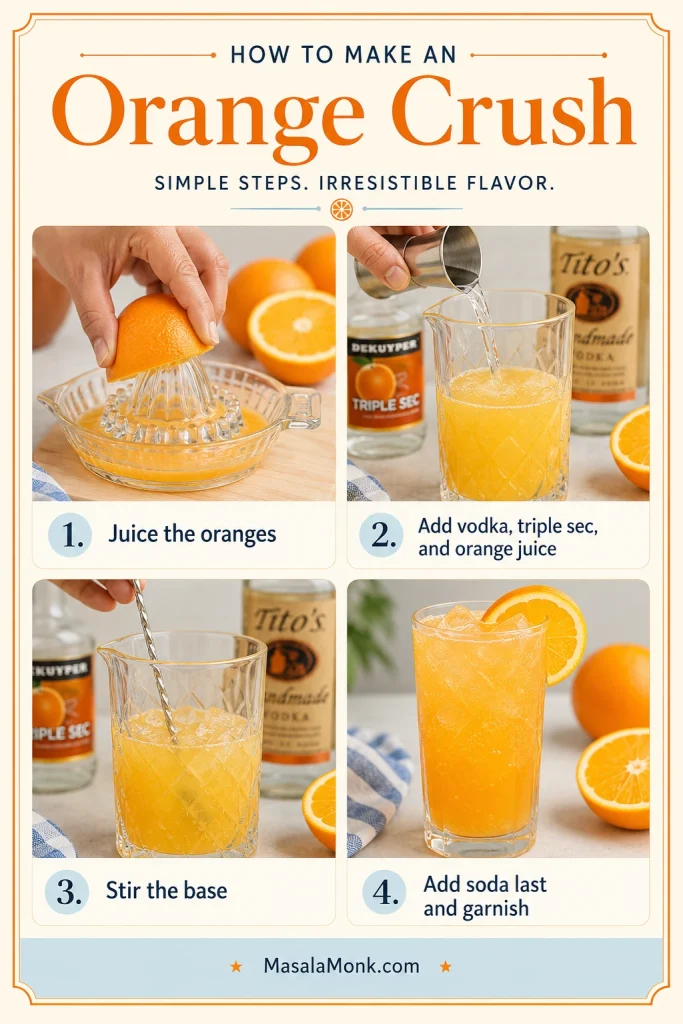
Step-by-step Orange Crush guide with panels showing oranges juiced, vodka and triple sec added, the base stirred, and soda added last with garnish.
The best method is simple: juice, build, stir, fizz, garnish. Most importantly, stir the base before adding soda so the final Orange Crush stays cold and lively.
  1. Juice first. Squeeze the oranges right before mixing if you can.
  2. Ice the glass. Fill the glass with crushed ice, not just a few cubes.
  3. Add the base. Pour in vodka, triple sec, and orange juice.
  4. Stir briefly. You want the base cold and even, not overworked.
  5. Add fizz last. Top with soda or sparkling water.
  6. Serve immediately. The drink is best before the bubbles fade and the ice melts.

Once the soda goes in, the drink is alive for a short window. The best sip is the first one: cold glass, sharp ice, orange aroma, and bubbles still lifting the citrus.

Add Soda Last for Better Fizz

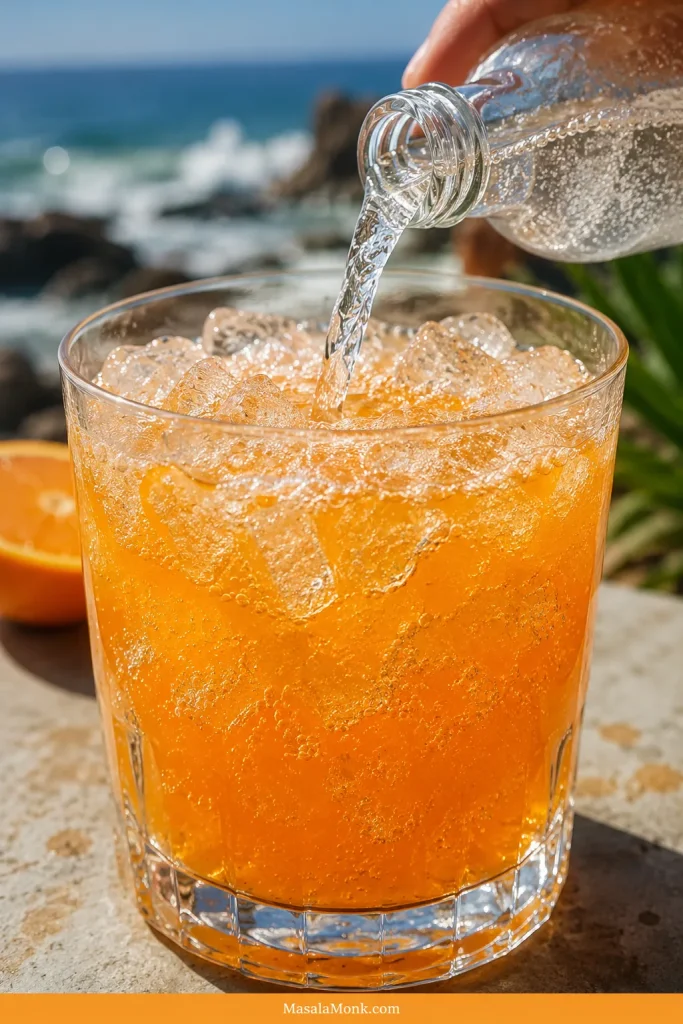
Clear soda being poured into a golden orange cocktail over crushed ice, with bubbles rising around the ice in the glass.
Pour the soda after the orange-vodka base is mixed and chilled. That small delay protects the bubbles, so the Orange Crush tastes freshly built instead of dull by the time it reaches the table.

If you prefer a colder, slightly frothier drink, shake only the vodka, orange liqueur, and orange juice with ice for 10–15 seconds. Pour over crushed ice, then add the soda. Do not shake carbonated soda.

Fresh Orange Juice vs Bottled Orange Juice

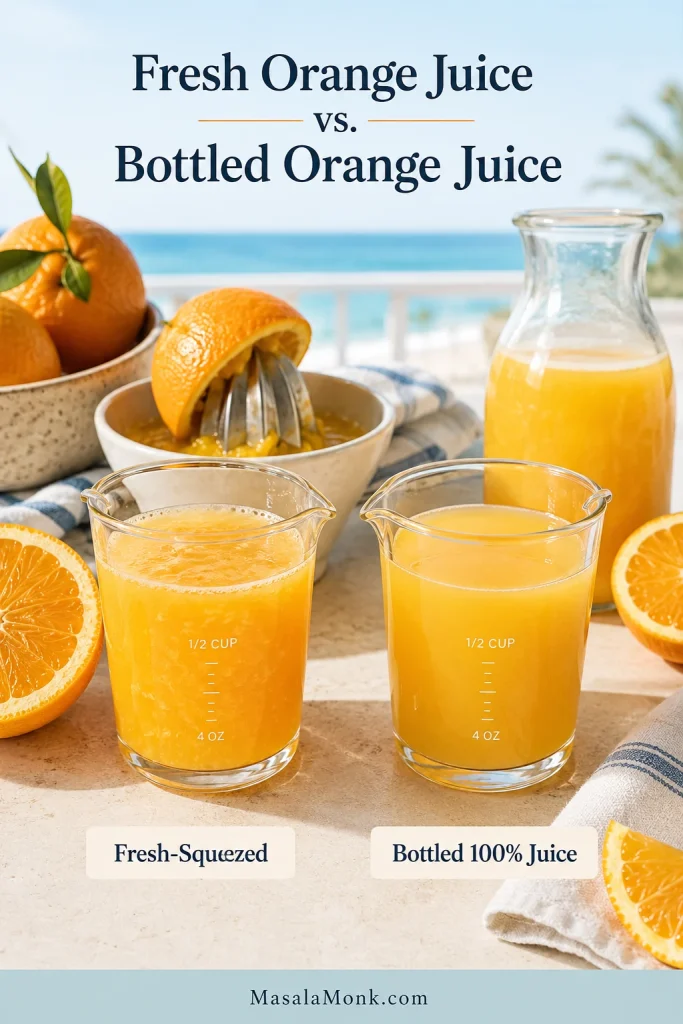
Fresh orange juice gives the drink its best aroma. You smell the orange before the first sip, and the cocktail tastes juicy instead of flat. Bottled juice can make a decent quick drink, but it will not give the same just-cut orange aroma.

Choose chilled 100% orange juice with no added sugar if you use bottled juice. Club soda is usually the better topper there, because it keeps the glass from turning too sweet.

Fresh-squeezed orange juice and bottled 100% orange juice compared in measuring glasses with oranges, a citrus press, and a juice bottle nearby.
Fresh juice is best for one or two glasses because it brings brighter aroma and texture. For a larger pitcher, bottled 100% orange juice can help, but keep it well chilled.

When making one or two drinks, squeeze the oranges. In a large party pitcher, bottled juice can be practical, but just-squeezed citrus still gives the best flavor.

Beach-Bar Style Orange Crush

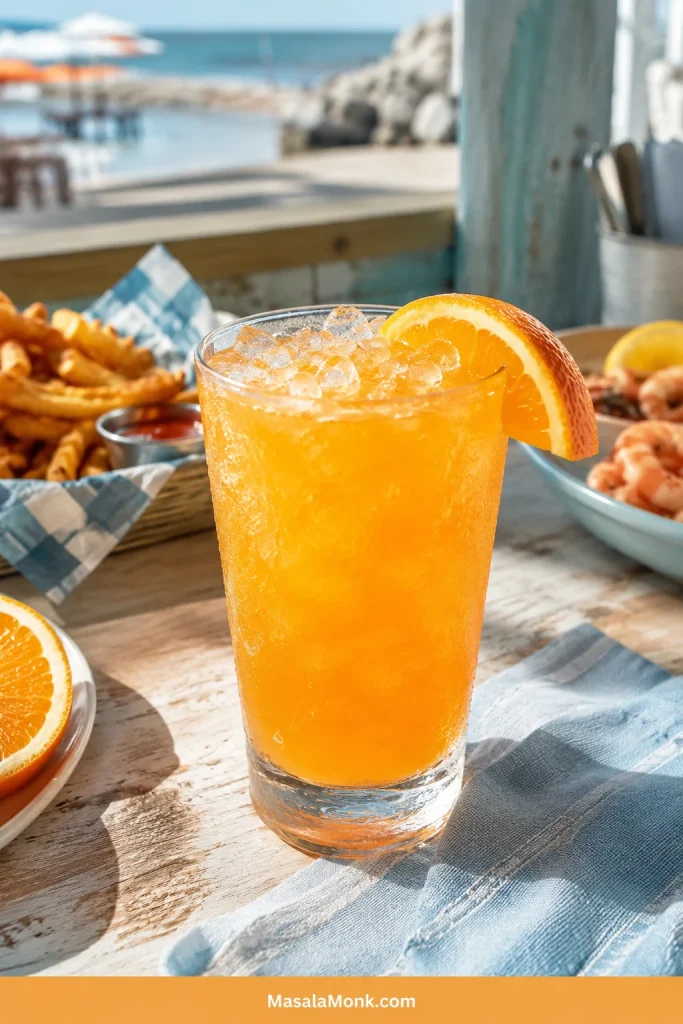
For an Ocean City-style Orange Crush, use orange vodka, fresh-squeezed orange juice, triple sec, lemon-lime soda, and a full glass of crushed ice. Build it fast, keep it cold, and serve it while the fizz is still lively.

Orange Crush cocktail on a rustic coastal table with crushed ice, orange garnish, fries, seafood snacks, blue napkin, and a beach-bar background.
A Mid-Atlantic-style Orange Crush should feel cold, casual, and fast-built. Look for fresh orange aroma, a full glass of crushed ice, and just enough fizz to keep it refreshing.

Beach-bar style is about cues, not fussy technique: orange scent first, crushed ice to the top, fizz added last, and enough soda to lift the drink without turning it into candy.

  • Orange smell first: fresh juice is doing its job.
  • Crushed ice to the top: the texture should feel cold, casual, and fast-melting.
  • Bubbles added last: the drink stays lively.
  • Orange vodka optional: use it for stronger coastal-bar flavor.
  • Not too much soda: the glass should still taste like orange, not candy.

The Easy Parts Formula

Once that ratio makes sense, you can scale the drink without doing bar math every time.

2 parts vodka + 1 part orange liqueur + 3–4 parts fresh orange juice + 2–3 parts soda.

For one drink, 1 part can be 1 oz. When batching, 1 part can be 1 cup. Use a smaller “part” for one drink and a larger “part” for a pitcher, but keep the soda separate until serving so the drink stays fizzy.

Pitcher Recipe

A pitcher should make hosting easier, not give everyone a flat drink. Mix the vodka, orange liqueur, and orange juice ahead. The pitcher should sit cold in the fridge; the fizz should happen in the glass.

Orange Crush Pitcher Amounts

ServingsVodkaTriple secFresh orange juiceSoda to add at serving
12 oz / 60 ml1 oz / 30 ml3–4 oz / 90–120 ml2–3 oz / 60–90 ml
48 oz / 240 ml4 oz / 120 ml12–16 oz / 360–480 ml8–12 oz / 240–360 ml
612 oz / 360 ml6 oz / 180 ml18–24 oz / 540–720 ml12–18 oz / 360–540 ml
816 oz / 480 ml8 oz / 240 ml24–32 oz / 720–960 ml16–24 oz / 480–720 ml

Keep the Pitcher Fizzy

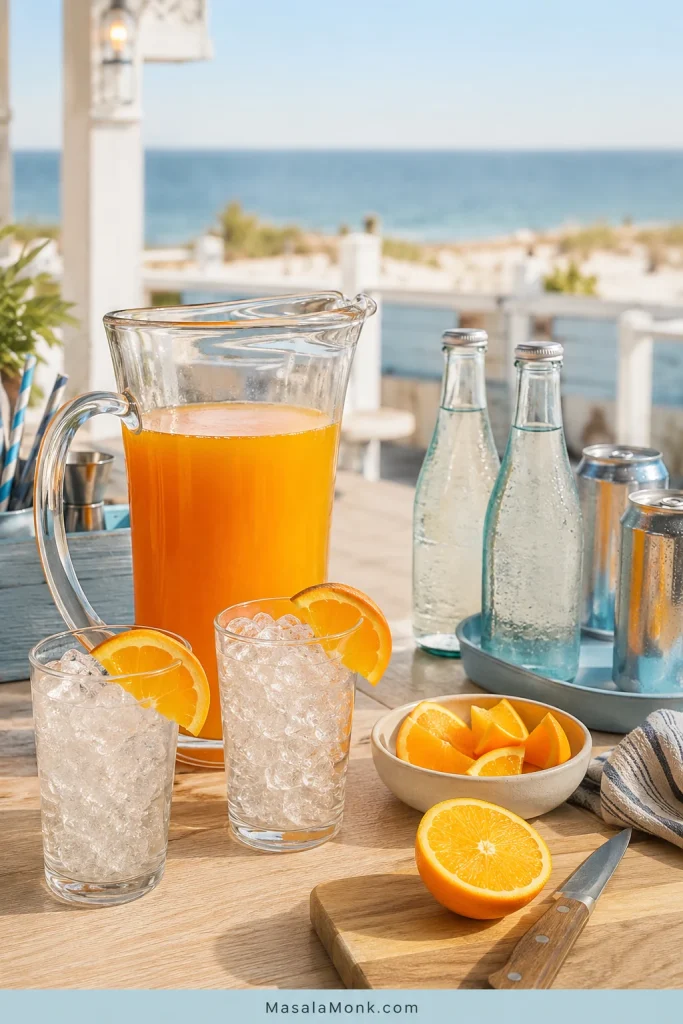
Best party setup: Chill the orange-vodka base in a pitcher, then set out crushed ice, orange wedges, lemon-lime soda, and club soda so guests can finish each glass sweeter or drier.

Orange Crush pitcher setup with orange base in a clear pitcher, crushed-ice glasses, orange wedges, a jigger, and separate bottles of soda.
A pitcher works best when only the orange-vodka base is made ahead. Then the soda and crushed ice stay fresh for each glass instead of fading in the pitcher.

Keep the base cold and let guests finish their own glasses; that way every pour still has fresh fizz instead of tasting like it waited around. For bigger party math, this jungle juice recipe has 1, 2, and 5 gallon guidance, including the same useful rule: add fizzy mixers near serving time.

Just-squeezed juice is still best for pitchers. Bottled juice can help when you need volume, but choose a good chilled 100% orange juice and use club soda or a lighter hand with the lemon-lime soda.

For a lighter pitcher, use the lower end of the vodka range or let guests top each glass with extra club soda. Serve pitcher drinks responsibly, especially because orange juice and soda can make the cocktail taste lighter than it is.

Variations: Frozen, Lighter, Shot, and Mocktail

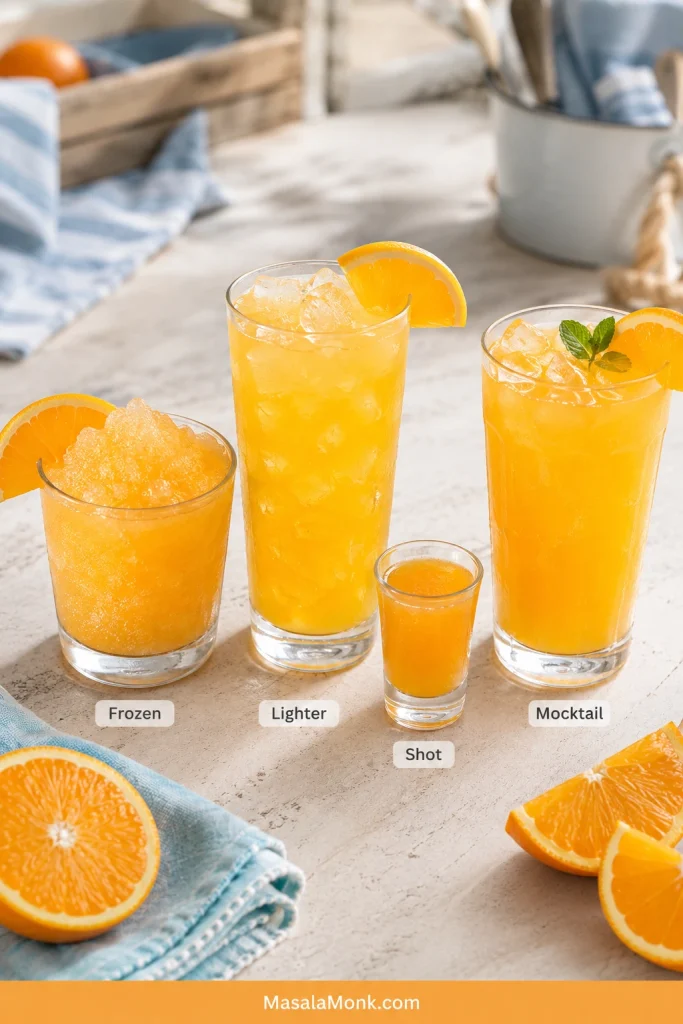
Once the classic glass tastes right, the variations are just small turns of the same dial: colder, lighter, stronger, or alcohol-free.

Four Orange Crush variations labeled Frozen, Lighter, Shot, and Mocktail, served in different glasses with orange garnishes on a tabletop.
Once the classic version tastes right, the same fresh-orange base can become frozen, lighter, stronger, or alcohol-free. Still, each version should keep the citrus flavor in front.

Frozen Orange Crush

Blend 4 oz / 120 ml fresh orange juice, 2 oz / 60 ml vodka, 1 oz / 30 ml triple sec, and 1 to 1¼ cups crushed ice, about 120–150 g, until slushy. If your oranges are tart, add ½ oz / 15 ml simple syrup. Pour into a cold glass and finish with a small splash of soda.

Add soda after blending, not before. Too much soda in the blender loses its fizz and can foam up.

If you like frozen cocktails but hate icy, watery texture, this frozen strawberry daiquiri recipe goes deeper into blender balance, fruit body, and slushy texture.

Lighter Orange Crush

For a lighter, skinny-style drink, use plain vodka, reduce triple sec to ½ oz / 15 ml if needed, and top with club soda or orange sparkling water instead of lemon-lime soda. Keep the orange juice at 3–4 oz / 90–120 ml so the drink still tastes full.

Orange Crush Shot

Shake 1 oz vodka or orange vodka, ¼ oz triple sec, and ¾ oz fresh orange juice with ice. Strain into one large shot glass, or split between two smaller shot glasses. Add only a tiny splash of soda if you want fizz.

This keeps the shot in the same fresh-orange family as the cocktail instead of turning it into a candy-style party drink.

Orange Crush Mocktail

Combine 4 oz / 120 ml fresh orange juice, ½ oz / 15 ml lemon or lime juice, crushed ice, and 2–3 oz / 60–90 ml lemon-lime soda, club soda, or orange sparkling water. For a sweeter mocktail, add a little orange simple syrup. To keep it cleaner, use club soda and a little orange zest.

The mocktail should still taste like fresh orange with bubbles, not just a glass of orange soda.

For more light, refreshing drinks that do not feel heavy, this guide to coconut water cocktails has easy ideas that sit closer to the clean, cooling side of the drinks table.

Maryland, Ocean City, and Delaware

The Orange Crush belongs to Mid-Atlantic beach culture: Ocean City bars, crushed ice, fresh-squeezed juice, seafood tables, and a friendly Maryland-Delaware argument over who gets to claim it.

It has beach-bar DNA. This is not meant to be slow or precious. The drink is a fast-built glass: fresh orange squeezed in, vodka or orange vodka, orange liqueur, crushed ice, and lemon-lime fizz.

That regional pride is part of why the drink has stayed so specific. Fresh-squeezed orange, orange liqueur, cold ice, and a quick build are the identity.

Maryland’s official state-symbol page lists the Original Maryland Orange Crush as its state cocktail, and Delaware’s General Assembly page records HB 444 designating the Orange Crush as Delaware’s state cocktail. You can read those official notes from the Maryland State Archives and the Delaware General Assembly.

Orange Crush vs Screwdriver vs Mimosa

These three drinks all use orange juice, but they serve different moments.

DrinkWhat it isMain difference
Orange CrushVodka, orange liqueur, fresh orange juice, soda, crushed iceSparkling, fresh, summer-bar style
ScrewdriverVodka and orange juiceSimpler, no fizz, no orange liqueur
MimosaSparkling wine and orange juiceBrunch drink, lighter, wine-based

A Screwdriver is the simplest vodka-orange drink. Make a Mimosa when you want a wine-based brunch drink. Choose an Orange Crush when you want fresh orange juice, vodka, orange liqueur, fizz, and crushed ice in one bright summer glass.

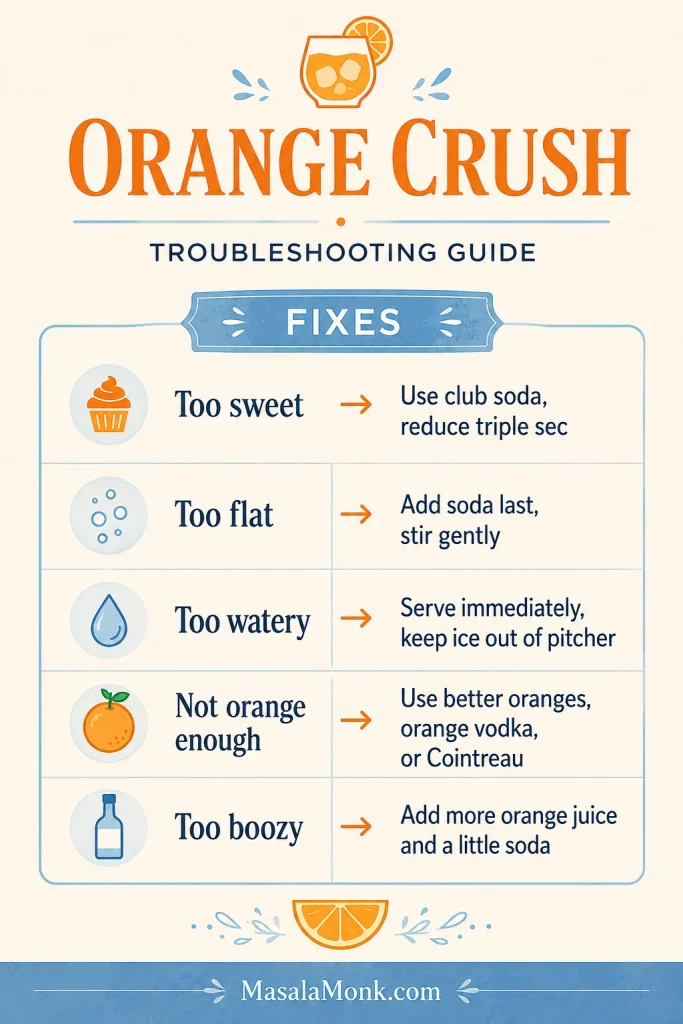
Fixes for a Drink That’s Too Sweet, Flat, or Watery

If the drink misses, it usually misses in one of a few predictable ways: too sweet, too flat, too watery, or not orange enough. Fix the glass before you start over.

Orange Crush troubleshooting chart listing problems such as too sweet, too flat, too watery, not orange enough, and too boozy, with simple fixes.
When an Orange Crush tastes off, adjust the cause instead of adding more of everything. Sweetness, flatness, watery texture, weak orange flavor, and harsh booze each need a different fix.
ProblemWhat happenedFix
Too sweetToo much lemon-lime soda or orange liqueurUse club soda and reduce triple sec to ½ oz / 15 ml
Too weakToo much soda or juiceUse less soda or add ½ oz / 15 ml more vodka
Too boozyAlcohol is louder than the orangeAdd more fresh orange juice and a little more soda
Too flatSoda was added early or stirred too hardAdd soda last and stir gently
Too wateryThe drink sat too long over crushed iceServe immediately and do not make finished drinks ahead
Not orange enoughMild oranges or plain vodkaUse orange vodka, better oranges, or Cointreau
Too bitterPith got into the juiceJuice gently and avoid crushing the white pith

The fastest rescue: add more orange juice if it tastes too boozy, club soda if it tastes too sweet, or a small splash of orange liqueur if it tastes thin.

Still tuning the glass? check the topper · check the ratio · recipe card

What to Serve With It

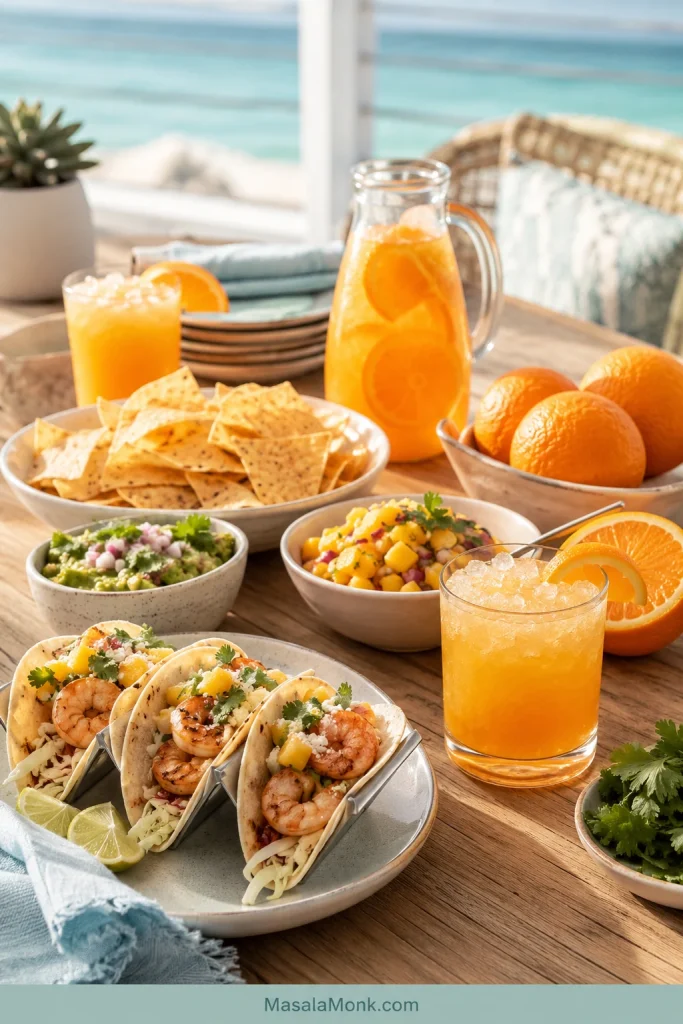
Think salty, spicy, grilled, and creamy. Orange Crush cocktails have enough sweetness to soften heat, enough citrus to cut through richness, and enough bubbles to keep snack food from feeling heavy. For a full summer-style plate, shrimp tacos with slaw and creamy cilantro-lime sauce are an easy pairing because the citrusy drink cuts through the creamy sauce and warm spices.

Orange Crush cocktail served on a bright coastal table with shrimp tacos, tortilla chips, mango salsa, guacamole, oranges, and a pitcher behind it.
This cocktail works well with salty, spicy, grilled, and creamy foods because citrus and bubbles cut through richness. Pair it with shrimp tacos, chips, salsa, guacamole, or seafood snacks.
  • Grilled shrimp, fish, or chicken
  • Tacos, nachos, or quesadillas
  • Crab cakes or seafood snacks
  • Salty chips, pretzels, and party mixes
  • Spicy appetizers
  • Fruit, cheese, and brunch boards
  • Guacamole or creamy dips for a rich contrast

If you are keeping the food snackier, a bowl of fresh mango salsa works with chips, tacos, fish, shrimp, and grilled chicken. For a sharper citrus cocktail at the same table, the Lemon Drop Martini brings more tartness, while the Orange Crush stays tall, juicy, and easygoing.

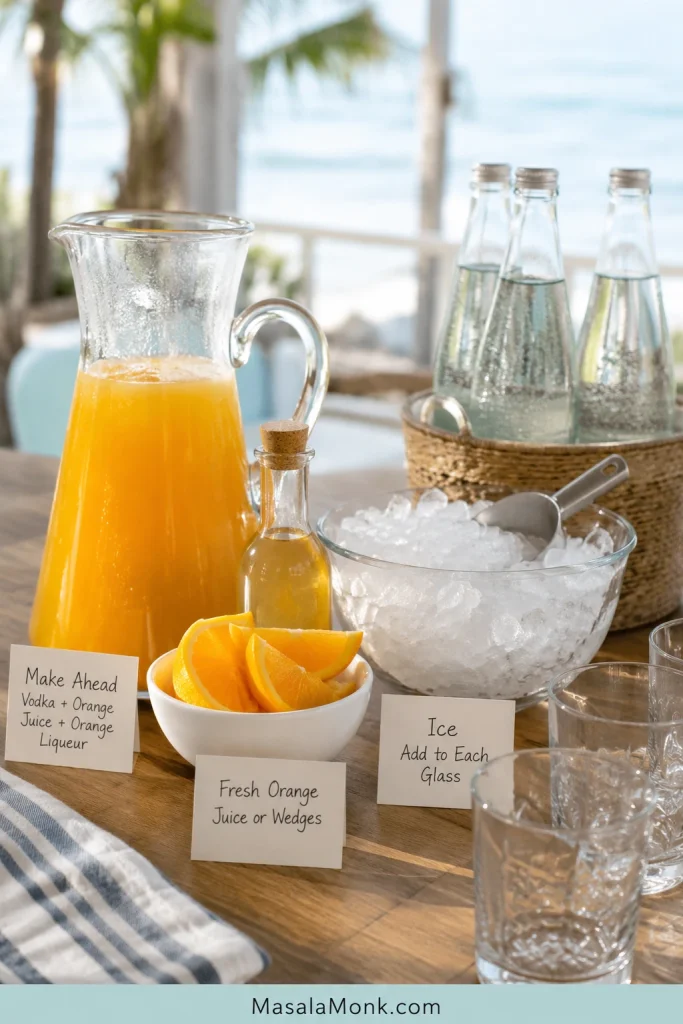
Make-Ahead Tips for Parties

An Orange Crush is best made right before serving, but you can prepare the parts ahead.

Make-ahead Orange Crush party setup with orange-vodka base in a pitcher, orange wedges, crushed ice bowl, empty glasses, and soda bottles kept separate.
Party prep is easier when the parts are ready but unfinished. Keep the base, ice, soda, glasses, and garnish separate, then build each Orange Crush to order.
  • Fresh orange juice: Juice a few hours ahead and keep chilled.
  • Pitcher base: Mix vodka, triple sec, and orange juice ahead, then refrigerate.
  • Soda: Add only when serving.
  • Crushed ice: Add to glasses, not the pitcher.
  • Finished cocktail: Do not store it. The soda goes flat and the ice waters it down.

If serving a group, keep the chilled base in a pitcher and let guests top their own glasses. That keeps every drink cold, sparkling, and adjustable.

FAQs

What alcohol is in an Orange Crush?

An Orange Crush usually contains vodka or orange vodka plus triple sec or another orange liqueur. It also includes fresh orange juice, soda, and crushed ice.

Is an Orange Crush the same as a Screwdriver?

No. A Screwdriver is vodka and orange juice. An Orange Crush adds orange liqueur, soda, and crushed ice, which makes it more sparkling and layered.

Is an Orange Crush made with Orange Crush soda?

The classic cocktail is usually made with fresh orange juice, vodka or orange vodka, orange liqueur, and lemon-lime soda or club soda. Orange Crush soda can make a sweeter twist, but it tastes more like candy orange and less like the fresh beach drink.

Fresh orange juice or bottled orange juice — which is better?

For one or two drinks, fresh-squeezed juice is best because you can taste the difference: brighter aroma, cleaner citrus, and less boxed sweetness. Bottled 100% orange juice can work for speed or pitchers, especially if it is well chilled.

Can you make it with regular vodka?

Yes. Regular vodka works well, especially with fresh orange juice. Orange vodka gives a stronger beach-bar orange flavor, but it is not required.

Do you need triple sec?

Triple sec is strongly recommended because it gives the drink orange depth, not just sweetness. Cointreau makes the flavor cleaner, while Grand Marnier makes it richer.

Sprite or club soda — which should you use?

Lemon-lime soda such as Sprite or 7UP gives the classic sweet finish. Club soda makes the drink drier, cleaner, and less sugary. Orange sparkling water sits between the two.

How do you make an Orange Crush less sweet?

Use club soda or orange sparkling water instead of lemon-lime soda, and reduce the triple sec to ½ oz / 15 ml. Keep enough fresh orange juice so the drink still tastes full.

How strong is an Orange Crush?

With 2 oz vodka and 1 oz orange liqueur, an Orange Crush is a real cocktail, not a low-alcohol spritz. The fresh juice and bubbles make it easy to sip, so use 1½ oz vodka or extra club soda if you want a lighter glass.

How many oranges do you need for one drink?

One juicy orange may be enough, but plan on 1–2 oranges per drink so you are not short. Measure the juice and aim for 3–4 oz / 90–120 ml per cocktail.

What makes it a Maryland or Ocean City Orange Crush?

The Ocean City-style identity comes from fresh-squeezed orange juice, vodka or orange vodka, triple sec, lemon-lime soda, and crushed ice. Maryland beach bars helped make it famous, and Delaware beach towns keep the same drink close to their own summer culture.

Is this the same as Orange Crush soda cake?

No. This recipe is for the fresh orange vodka cocktail. Orange Crush soda cake is a separate dessert usually made with orange soda and cake mix or cake batter.

Recipe card · Back to top

Final Sip

Make the first glass classic. Use fresh orange juice, vodka, triple sec, lemon-lime soda, and enough crushed ice to make the glass properly cold. Then taste and adjust from there.

A sweeter Orange Crush, a drier one, a pitcher, frozen drink, or mocktail all come from the same simple rule: let the orange lead, keep the bubbles lively, and serve it before the ice wins.

Try the classic glass first, then tell us which version became yours: sweeter, drier, stronger, or alcohol-free.

Posted on Leave a comment

Cosmopolitan Recipe: Classic Cosmo Cocktail, Ingredients & Perfect Ratio

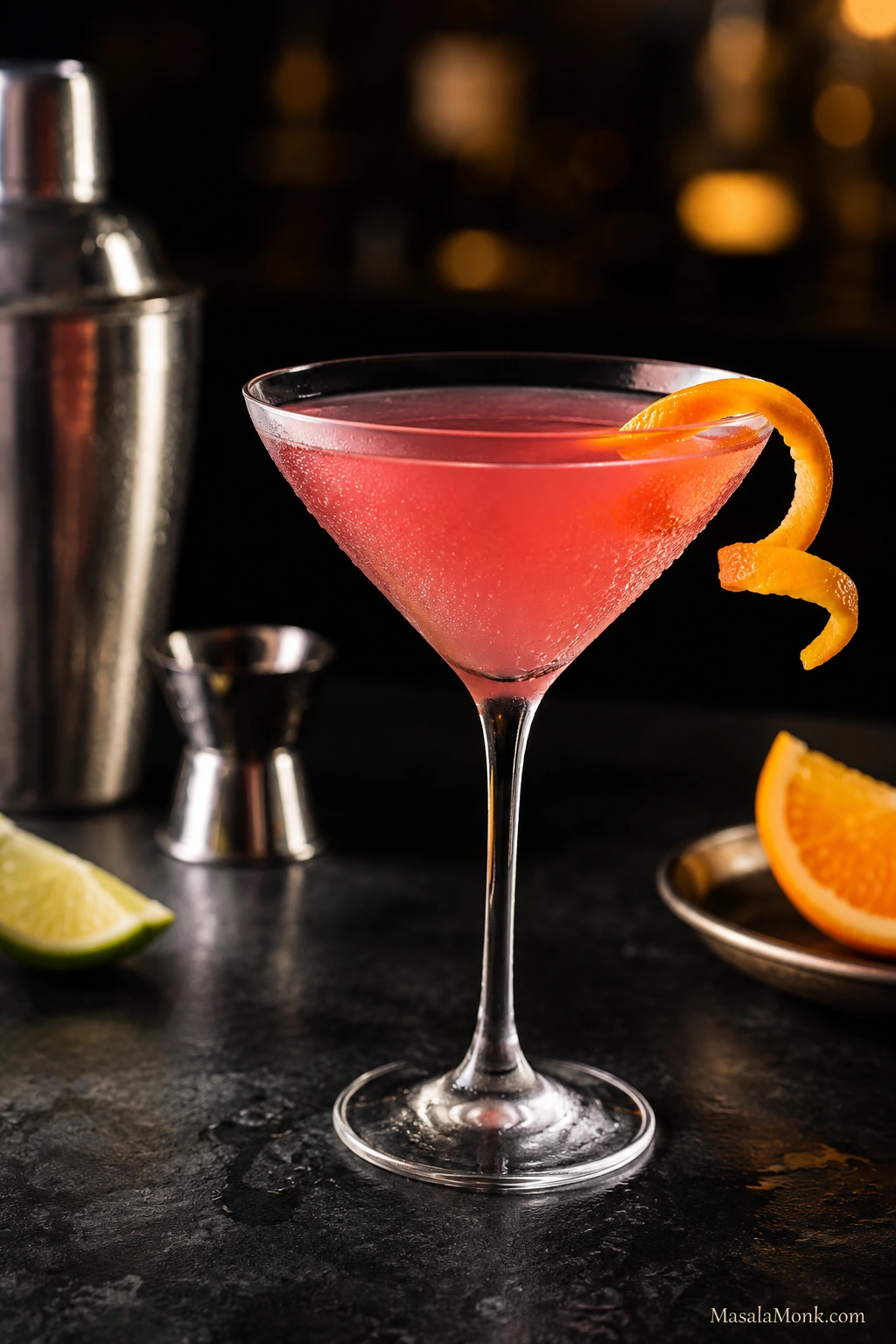
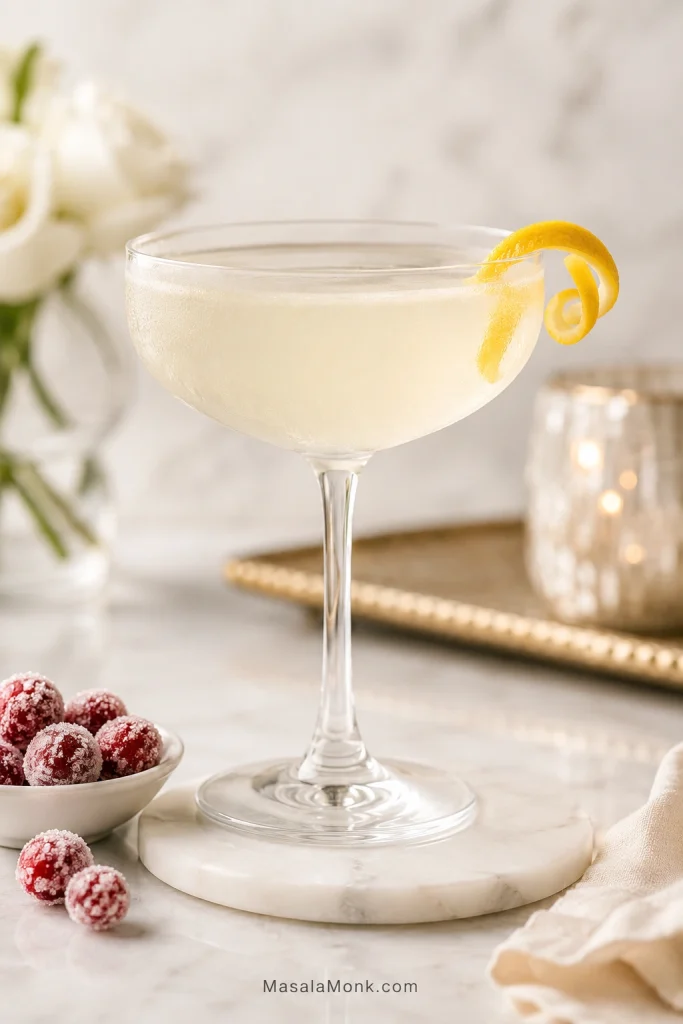
Classic Cosmopolitan cocktail in a chilled coupe glass with a curled orange twist on a dark bar surface.

A good Cosmopolitan has a little theatre to it: the chilled glass, the pink pour, the citrus oil on top, and that first cold sip that snaps awake without turning sour. It should feel like a real cocktail, not a giant vodka-cranberry — polished, cold, and easy to sip.

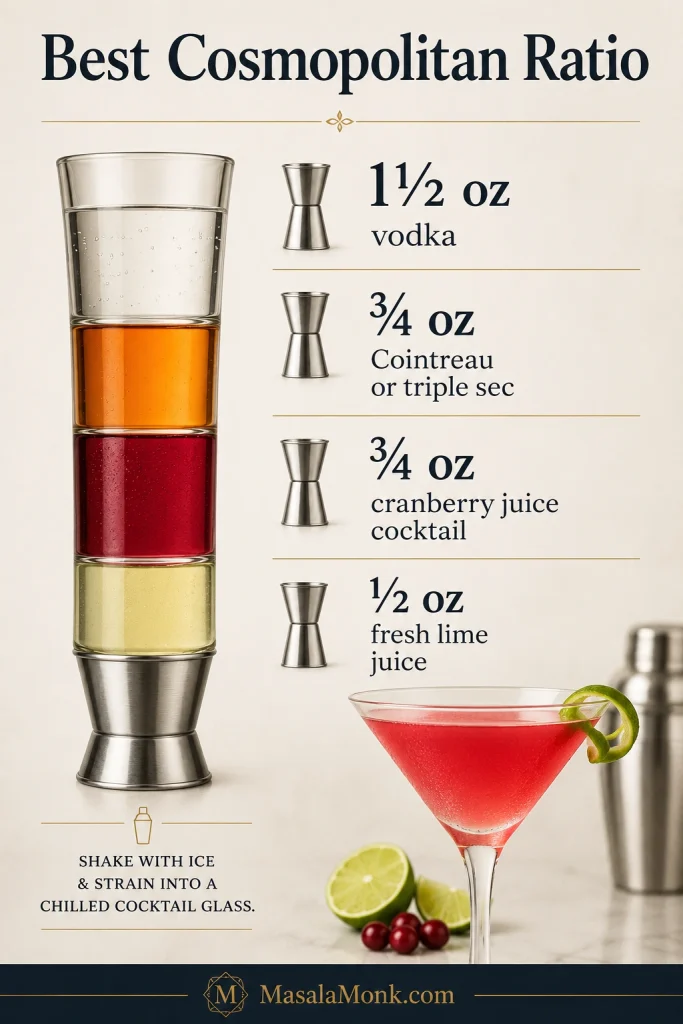
Make this first: Shake 1½ oz vodka, ¾ oz Cointreau, ¾ oz cranberry juice cocktail, and ½ oz fresh lime juice with plenty of ice. Strain into a chilled coupe or martini glass and finish with an orange twist.

The Cosmo has always carried a little party-glass glamour, but the reason it survives is simple: cranberry, lime, orange, and vodka can taste fantastic when the ratio is right. This version starts balanced, then shows you how to tune the next glass drier, softer, lighter, or party-ready.

Cosmopolitan ratio guide showing vodka, orange liqueur, cranberry juice cocktail, and fresh lime juice measurements.
This is the balanced Cosmo ratio to make first: vodka for structure, orange liqueur for smoothness, cranberry for color, and lime for snap.

Cosmo at a Glance

DrinkClassic Cosmopolitan cocktail, also called a Cosmo
TasteIcy, pink, cranberry-lime, lightly sweet, citrus-bright
Starting ratio1½ oz vodka : ¾ oz orange liqueur : ¾ oz cranberry : ½ oz lime
Cranberry to useCranberry juice cocktail for familiar color and easy mixing
Orange liqueurCointreau, or a good-quality triple sec
VodkaCitrus vodka for a bar-style feel; plain vodka also works
MethodShake hard with ice and strain
GlassSmall coupe, martini glass, Nick & Nora, or cocktail glass
GarnishOrange twist first choice; lemon or lime twist also works
Time5 minutes

Jump to

Classic Cosmopolitan Recipe

Start with this version if you want the Cosmo most people are hoping for at home: a clean vodka base, bright cranberry color, fresh lime snap, and enough orange liqueur to round the edges.

Prep time5 minutes
Cook time0 minutes
Total time5 minutes
Servings1 cocktail
MethodShaken
GlassSmall coupe, martini glass, Nick & Nora, or cocktail glass

Ingredients

  • 1½ oz / 45 ml vodka or citrus vodka
  • ¾ oz / 22 ml Cointreau or good triple sec
  • ¾ oz / 22 ml cranberry juice cocktail
  • ½ oz / 15 ml fresh lime juice
  • Ice, for shaking
  • Orange twist, lemon twist, or lime twist, for garnish

Method

  1. Chill a small coupe, martini glass, Nick & Nora, or cocktail glass.
  2. Add vodka, Cointreau or triple sec, cranberry juice cocktail, and fresh lime juice to a cocktail shaker.
  3. Fill the shaker at least halfway with ice.
  4. Shake hard for 15–20 seconds, or until the outside of the shaker feels very cold.
  5. Strain into the chilled glass. Fine strain if you want a cleaner pour with fewer lime pulp bits or ice shards.
  6. Twist orange peel over the glass to release the oils, garnish, and serve immediately.

The first sip should be cold and citrusy, with cranberry in the background and orange on the nose. Lime hitting first means the glass needs softening; cranberry taking over means the next round should go drier.

A bar Cosmo usually tastes smoother because of accurate measuring, enough ice, hard shaking, and a properly chilled glass. The cocktail drinks easily, but it is still spirit-forward, so keep the pour modest and serve it properly cold.

Need to tune the glass? Go to Best Cosmopolitan Ratio if you want a drier or softer style, or jump to How to Fix the Taste if your Cosmo is too sour, sweet, strong, or red.

What Is a Cosmopolitan?

In simple terms, a Cosmopolitan is a shaken vodka cocktail made with orange liqueur, cranberry juice, and fresh lime juice. It is usually served straight up in a chilled coupe or martini glass with a citrus twist.

Whatever you call it — Cosmopolitan, Cosmo, or Cosmo martini — it should taste like a chilled cranberry-lime vodka cocktail, not a sweet red mixed drink.

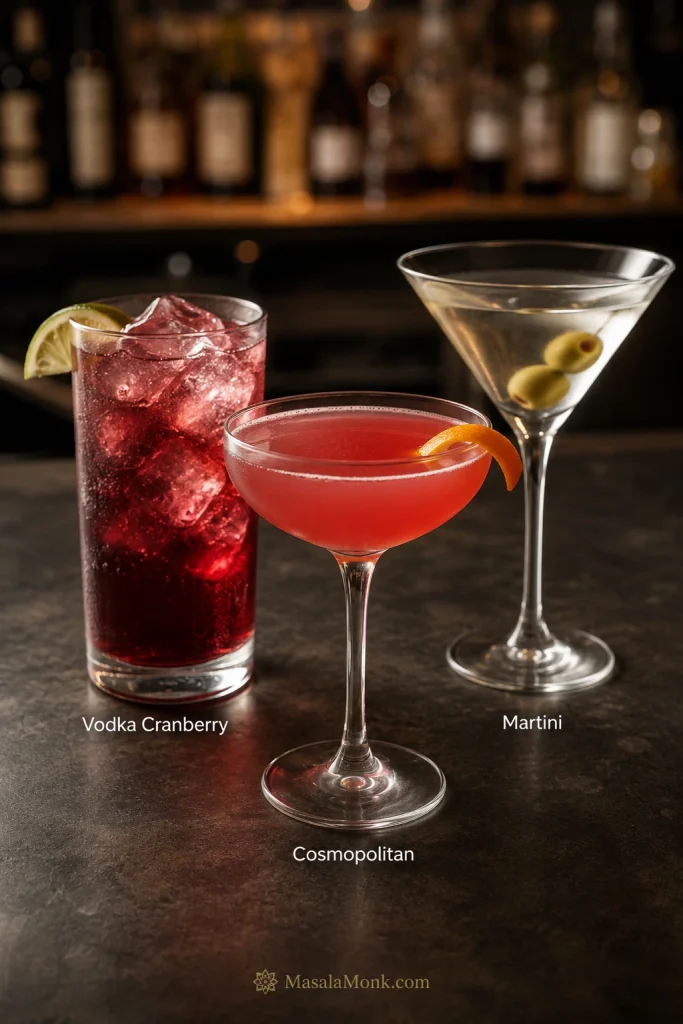
Vodka cranberry usually means a taller, juicier drink served over ice; a Cosmopolitan is shorter, shaken, strained, citrusy, and balanced with orange liqueur and lime.

Cosmopolitan, vodka cranberry, and martini displayed side by side in different cocktail glasses.
The Cosmo sits between two familiar drinks: brighter than vodka cranberry, but softer and fruitier than a martini. That middle ground is why the ratio matters so much.

Unlike a classic martini, which is usually gin or vodka with vermouth, a Cosmo is built around cranberry, lime, orange liqueur, and vodka. If you want something closer to a true martini, MasalaMonk’s Dirty Martini Recipe goes briny and dry instead of cranberry-lime.

Best Cosmopolitan Ratio

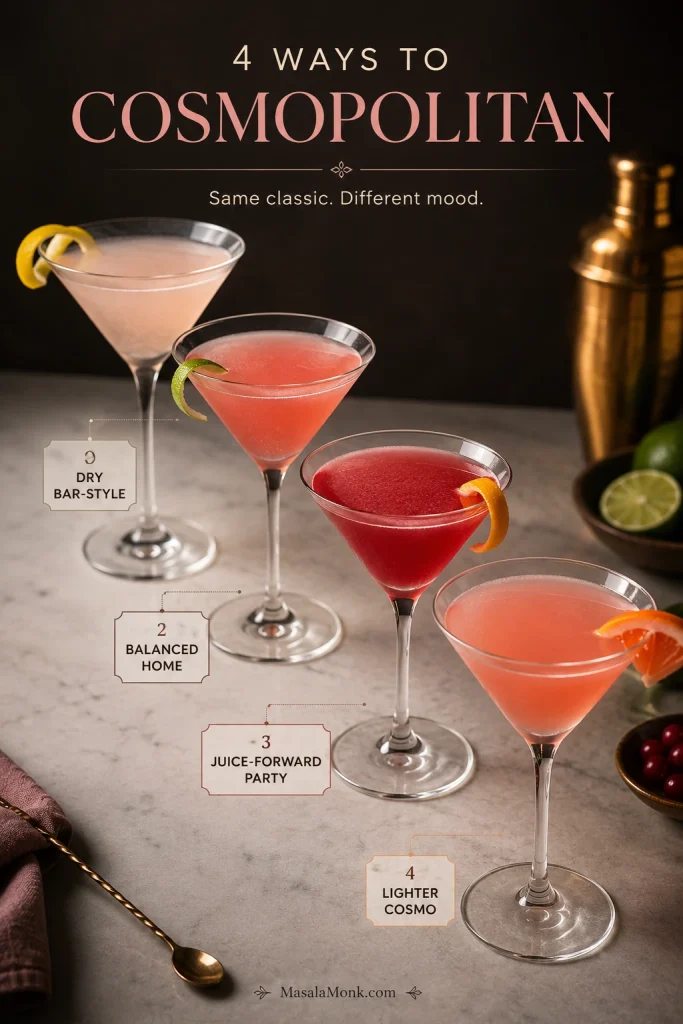
If other Cosmo recipes have felt too sour, too juicy, or too strong, the issue was probably the ratio style — not you. Modern Cosmos range from dry bar-style versions with just a splash of cranberry to softer party glasses with more juice. This recipe starts in the balanced middle, then shows you how to move drier, brighter, softer, or lighter.

As a formal reference point, the International Bartenders Association lists a drier-style Cosmopolitan formula with Vodka Citron, Cointreau, cranberry juice, fresh lime, and a lemon twist. At home, the more useful question is not “Which ratio is the only correct one?” but “Which style tastes best in my glass?”

You do not need to study every table before shaking the first drink. Make the starting version, taste it, then come back here only if you want to tune the next pour.

IngredientOzMLWhat it does
Vodka1½ oz45 mlGives the drink its base and structure
Cointreau or triple sec¾ oz22 mlAdds orange flavor and softens the acidity
Cranberry juice cocktail¾ oz22 mlGives color, fruitiness, and a little sweetness
Fresh lime juice½ oz15 mlAdds brightness and tartness

Choose Your Cosmo Style

Once you understand the first ratio, the rest is simple. You are not locked into one “correct” pour; you are choosing the style you want to drink.

StyleVodkaOrange liqueurCranberryLimeUse when
Balanced home Cosmo1½ oz¾ oz¾ oz½ ozYou want the safest first version
Dry bar-style Cosmo1½ oz¾ oz½ oz¾ ozYou like tart, crisp cocktails
Juice-forward party Cosmo2 oz1 oz2–3 oz1–2 tspYou want a softer, fruitier party drink
Citrus-forward Cosmo2 oz1 oz1 oz1 ozYou want a sharper citrus edge
Lighter Cosmo1 oz½ oz1 oz½ ozYou want a lower-alcohol feel
Four Cosmopolitan ratio styles shown in glasses, including dry, balanced, juice-forward, and lighter versions.
Different Cosmopolitan ratios create different drinking styles, so choose the result first: dry, balanced, juice-forward, or lighter.

Start with the balanced home Cosmo if you are unsure. Prefer tart drinks? Move drier next time. Serving guests who like softer cocktails? Use the juice-forward party version.

Taste is the point. Once the first version is cold and measured, small changes are not mistakes — they are how you find your house Cosmo.

If you enjoy clean, shaken vodka cocktails, this sits near MasalaMonk’s Lemon Drop Martini Recipe, but the Cosmo is less sugary and more cranberry-citrus than lemon-candy.

Cosmopolitan Ingredients

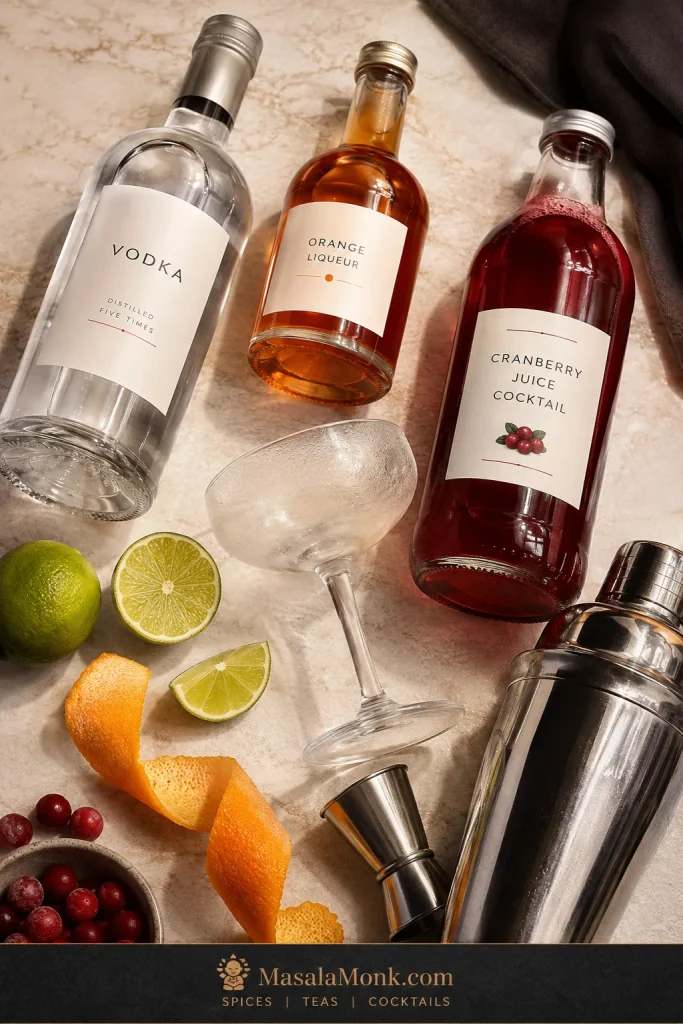
A Cosmo only has four main ingredients — vodka, orange liqueur, cranberry juice, and lime — so every bottle and citrus choice shows up in the final sip. With a short drink like this, there is nowhere for tired citrus or rough vodka to hide.

Cosmopolitan ingredients with vodka, orange liqueur, cranberry juice, lime, orange peel, shaker, and coupe glass.
Because the ingredient list is short, there is nowhere for weak choices to hide. Use clean vodka, fresh lime, orange liqueur, and cranberry juice cocktail for a glass that tastes bright instead of rough.

Vodka or Citrus Vodka

Citrus vodka gives the most familiar bar-style flavor. Plain vodka keeps cranberry and lime cleaner. Orange vodka makes the drink rounder, while lemon vodka makes it sharper. Choose something you like in mixed drinks; it does not need to be expensive, but it should not taste rough.

Cointreau, Triple Sec, or Grand Marnier

Cointreau is the cleanest and most reliable orange liqueur for a Cosmo. Good triple sec works well for an everyday home version. Grand Marnier makes the glass richer because of its brandy base, so use it when you want a rounder, deeper orange note. Dry curaçao can also work if you like a warmer, cocktail-bar-style orange profile.

Orange liqueur guide showing Cointreau, triple sec, and Grand Marnier choices for a Cosmopolitan.
Cointreau makes the cleanest orange-forward Cosmo, triple sec keeps it simple, and Grand Marnier adds weight. Orange liqueur changes the finish, not just the sweetness.

Cranberry Juice Cocktail

For the familiar pink Cosmo, cranberry juice cocktail is the easiest bottle to use. It brings color, fruitiness, and enough sweetness to stand up to the fresh lime.

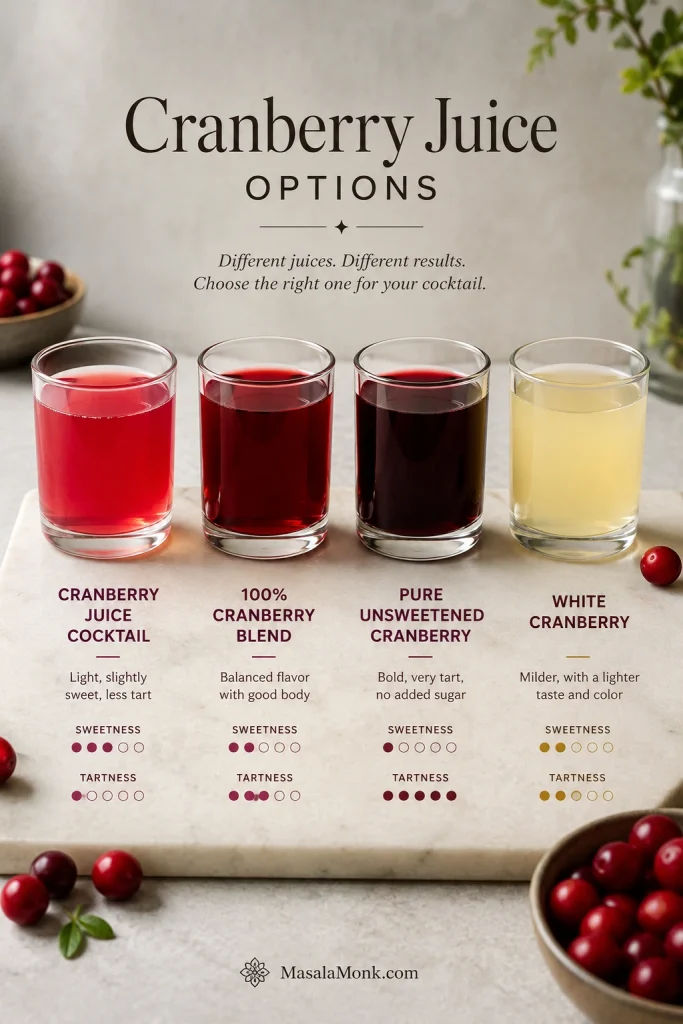
Pure unsweetened cranberry juice is much sharper. It can make a good version, but you usually need to reduce the lime or add a little more orange liqueur so the drink does not become aggressively tart. If your last Cosmo tasted too sour, the problem may not have been you; it may have been unsweetened cranberry plus too much lime.

Cranberry optionWhat happens in the cocktailAdjustment
Cranberry juice cocktailFamiliar pink color, lightly sweet, easiest to mixNo adjustment needed
100% cranberry blendLess sweet, more tartReduce lime slightly if needed
Pure unsweetened cranberryVery sharp and dryAdd sweetness or use less lime
White cranberry juicePale, softer, less traditionalUse for White Cosmo
Sparkling cranberryFizzy and lighterBetter for a spritz, not a shaken Cosmo
Cranberry juice options for a Cosmopolitan, including cranberry cocktail, unsweetened cranberry, and white cranberry.
Cranberry juice cocktail is the easiest route to a classic pink Cosmopolitan. Unsweetened cranberry is sharper, so reduce lime or add a touch more sweetness before judging the drink.

Fresh Lime Juice

Fresh lime juice gives the drink its snap. It is worth squeezing because bottled lime often tastes dull or metallic in short cocktails. If lemon is all you have, use a little less; it can work, but it shifts the flavor away from the usual cranberry-lime profile.

Orange Twist, Lemon Twist, or Lime Garnish

An orange twist is the best home garnish because it lifts the orange liqueur aroma. Twist the peel over the glass so the oils spray onto the surface. Lemon makes the drink sharper, while lime reinforces the cranberry-lime profile. Sugared cranberries look beautiful for holidays, but keep them optional so the glass still feels elegant.

Another elegant vodka cocktail where the ratio matters more than extra sweetness is MasalaMonk’s Lychee Martini Recipe.

Got the bottles ready? Jump to How to Shake a Better Cosmopolitan, or use Cosmopolitan Substitutions That Still Work if you are missing cranberry, lime, vodka, or orange liqueur.

How to Shake a Better Cosmopolitan

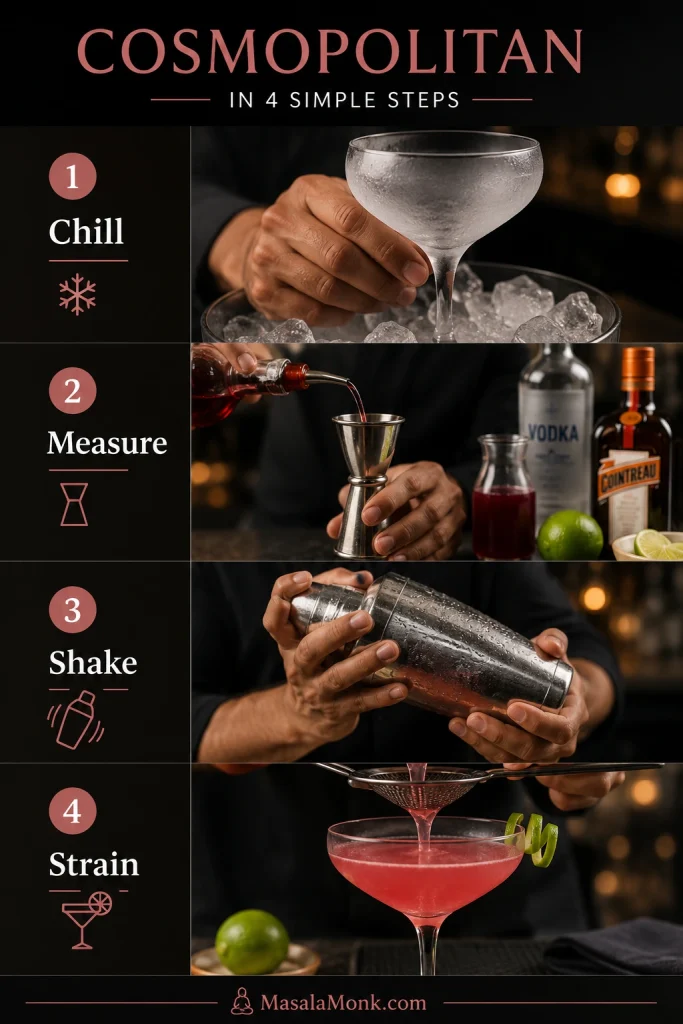
A Cosmopolitan should be shaken, not stirred. Shaking chills the drink, softens the alcohol, integrates the lime, and gives the glass a cleaner texture.

1. Chill the glass

Put the glass in the freezer for a few minutes or fill it with ice water while you measure the ingredients. A cold glass keeps the Cosmo crisp after straining.

2. Measure carefully

Add vodka, orange liqueur, cranberry juice cocktail, and fresh lime juice to the shaker. Measure the first one so you know what the balanced version tastes like before you adjust it.

3. Shake hard with ice

Fill the shaker at least halfway with ice and shake hard for 15–20 seconds. The outside of the shaker should feel very cold. That chill and dilution are what make the drink taste smooth instead of hot.

4. Strain and garnish

Strain into the chilled glass. Fine strain if you want a more polished pour. Express an orange twist over the surface, garnish, and serve right away.

A better Cosmo is mostly sequence: chill the glass, measure the pour, shake hard with ice, then strain while the drink is still icy.

Four-step Cosmopolitan process guide showing a chilled glass, measured ingredients, cocktail shaker, and strained pink drink.
The method is simple, but the order matters. Measuring, shaking hard, and straining right away give a homemade Cosmo its cold, smooth, bar-style texture.

You do not need a full bar cart. A shaker or clean jar, a jigger or measuring spoon, fresh lime, plenty of ice, and a chilled glass are enough.

No jigger? One tablespoon equals ½ oz. For the main recipe, use 3 tablespoons vodka, 1½ tablespoons Cointreau, 1½ tablespoons cranberry juice cocktail, and 1 tablespoon fresh lime juice.

A small coupe makes the drink look intentional. Cosmos look best a little restrained: icy, pink, and just full enough to feel elegant.

How to Fix the Taste

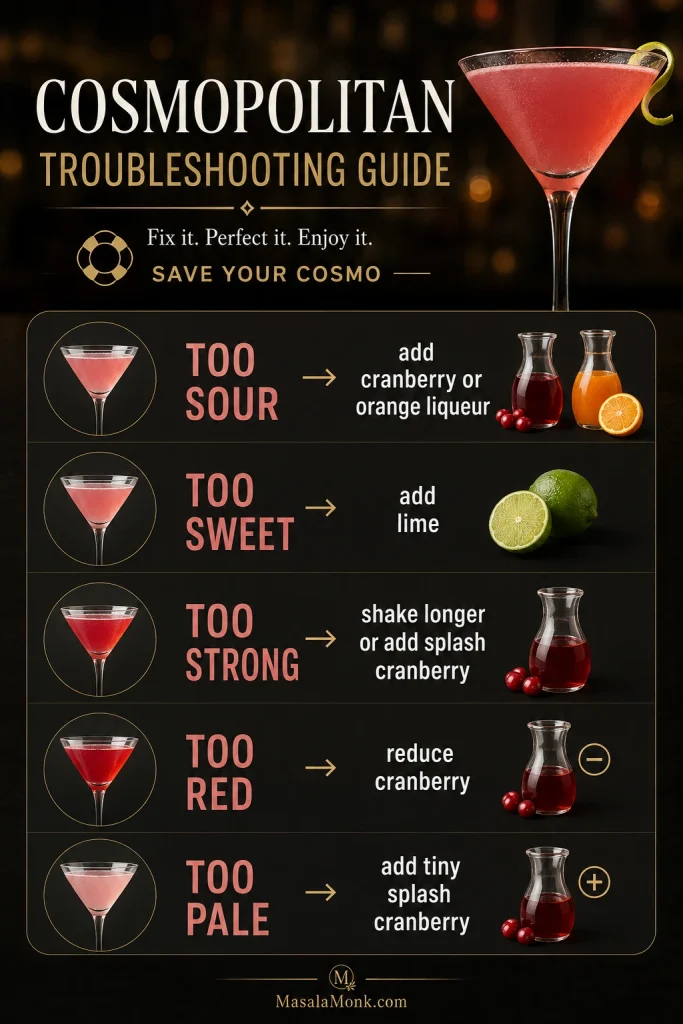
Most off-balance Cosmos are easy to rescue. Add a little, shake briefly again with ice, then taste. Work in small ¼ oz moves so the drink stays polished.

ProblemLikely causeFix
Too sourToo much lime or unsweetened cranberryAdd ¼ oz cranberry juice cocktail or ¼ oz orange liqueur.
Too sweetToo much cranberry cocktail or sweet triple secAdd ¼ oz fresh lime juice.
Too strongNot enough dilution or too much vodkaShake longer with plenty of ice or add a small splash of cranberry.
Too wateryIce sat in the glass too longShake fresh and serve immediately.
Too redToo much cranberry juiceReduce cranberry next time or use the starting ratio.
Too paleToo little cranberry juiceAdd a tiny splash of cranberry juice cocktail.
Harsh vodka smellWeak citrus aroma or rough vodkaShake well and express an orange twist over the drink.
Flat flavorBottled lime or old citrusUse fresh lime juice and a fresh citrus twist.
Cosmopolitan troubleshooting guide for a drink that is too sour, too sweet, too strong, too red, or too pale.
Most off-balance Cosmos need correction, not a restart. Instead, adjust in small ¼ oz moves, shake briefly again with ice, and taste before changing anything else.

How to Get the Right Pink Color

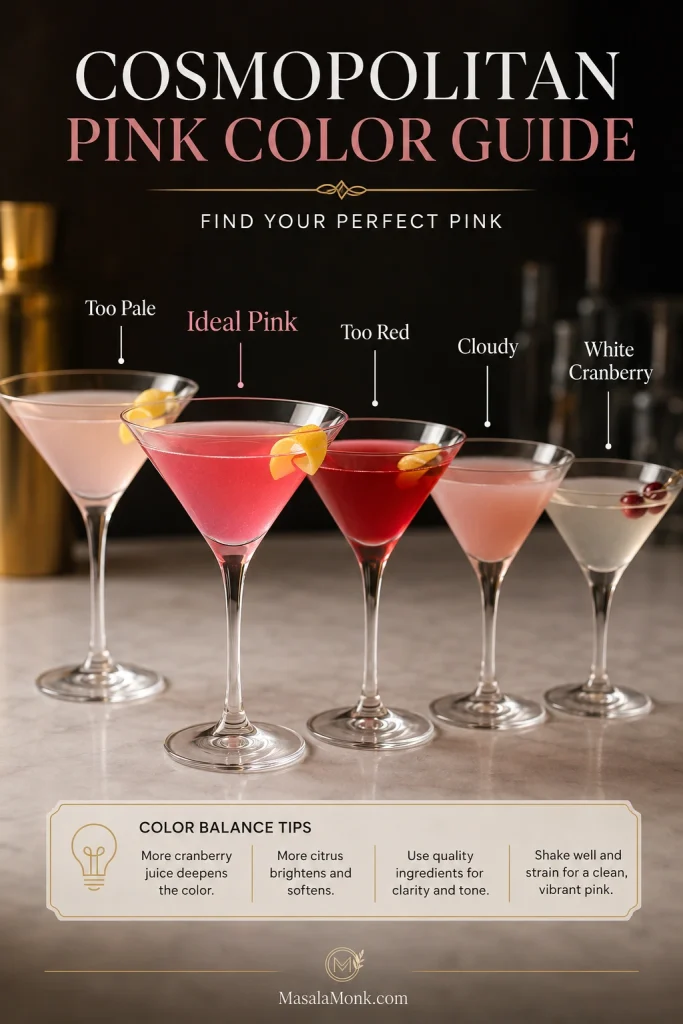
Aim for pink to light cranberry-red — bright enough to look like a Cosmo, not so dark that it tastes like straight juice. The color changes quickly depending on the cranberry and the ratio.

  • Deep red: too much cranberry. Use less cranberry next time or move back to the starting ratio.
  • Very pale: too little cranberry. Add a small splash of cranberry juice cocktail.
  • Cloudy: pulpy lime juice or rough straining. Use fresh strained lime juice and strain cleanly.
  • Dull or brownish: dark liqueur, old juice, or too much rich orange liqueur. Use fresh juice and a cleaner orange liqueur.
  • Almost clear: white cranberry juice. That is closer to a White Cosmo than the regular pink version.
Cosmopolitan color guide showing pale, ideal pink, deep red, cloudy, and white cranberry versions.
Color gives you an early clue about balance. If a Cosmopolitan looks too dark, it probably has too much cranberry; if it looks cloudy, the juice choice or shake may be the reason.

Making more than one? Go to Pitcher Cosmopolitan for Parties before scaling the recipe, because pitcher Cosmos need dilution handled differently from single shaken drinks.

Pitcher Cosmopolitan for Parties and Make-Ahead

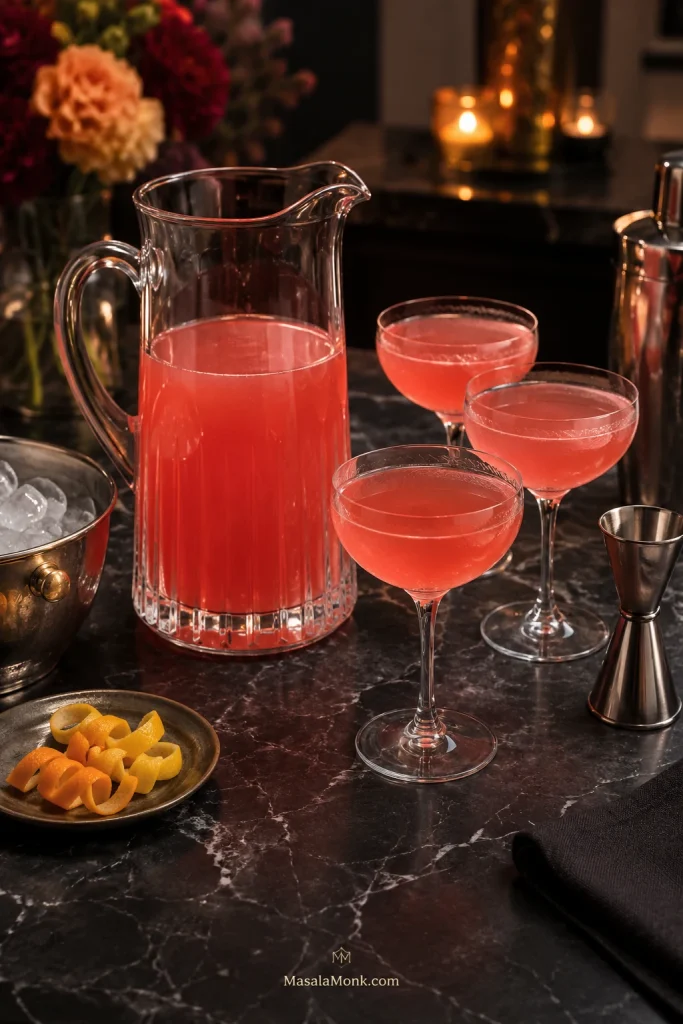
Party Cosmos need one rule: keep ice out of the batch until serving. The pitcher should make you look relaxed, not trap you behind a shaker all night.

Pitcher of Cosmopolitans with chilled coupe glasses, citrus twists, and ice kept separately for serving.
Batch the Cosmopolitan mixture ahead for parties, but keep ice out of the pitcher. That way, guests still get a cold, balanced drink instead of a watered-down Cosmo.

This pitcher uses the balanced ratio. For a softer party batch, increase the cranberry slightly and reduce the lime to taste.

BatchVodkaCointreau/triple secCranberry juice cocktailFresh lime juice
4 drinks6 oz / 180 ml3 oz / 90 ml3 oz / 90 ml2 oz / 60 ml
8 drinks12 oz / 360 ml6 oz / 180 ml6 oz / 180 ml4 oz / 120 ml
12 drinks18 oz / 540 ml9 oz / 270 ml9 oz / 270 ml6 oz / 180 ml

How to Serve a Pitcher Cosmo

  • Mix vodka, orange liqueur, cranberry juice, and lime juice in a pitcher.
  • Refrigerate until very cold.
  • Keep ice out of the pitcher until serving so the batch does not turn watery.
  • Shake individual servings with ice and strain for the best texture.
  • For easier party service, stir the chilled pitcher with ice just before pouring.
  • Keep citrus twists and garnishes separate until serving.

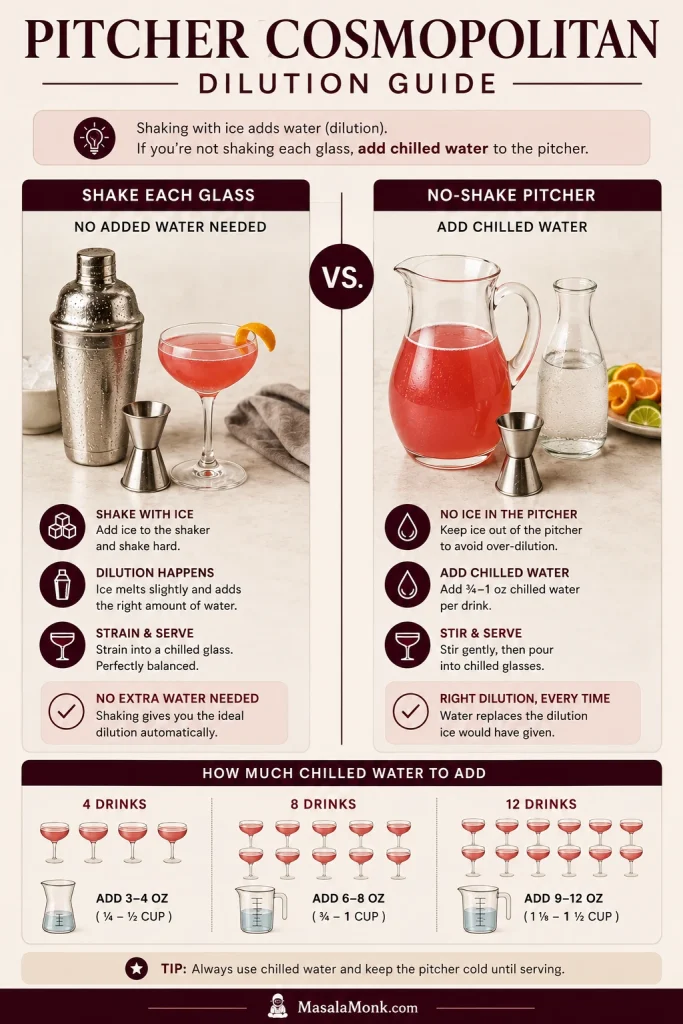
A pitcher Cosmo often fails for one boring reason: people forget that shaking with ice adds water. That dilution is part of the recipe.

If you want to serve the pitcher without shaking individual portions, add about ¾ to 1 oz chilled water per drink to the batch, or stir the pitcher well with ice just before serving. That means about 3–4 oz chilled water for 4 drinks, 6–8 oz for 8 drinks, or 9–12 oz for 12 drinks.

Pitcher Cosmopolitan dilution guide comparing shaking each glass with adding chilled water to a no-shake pitcher.
Ice chills a shaken Cosmo and also softens it with dilution. For a no-shake pitcher, measured chilled water keeps the batch smooth instead of sharp or syrupy.

If you shake each serving with ice, do not add the extra water to the pitcher. The shaker will handle the dilution for you.

Make-Ahead Notes

Shake one or two drinks fresh whenever possible. For a pitcher, mix the alcohol, cranberry juice, and lime juice a few hours ahead, then refrigerate the batch without ice. Fresh lime tastes best the day it is squeezed, and citrus twists stay most fragrant when cut close to serving time.

For another cranberry party drink with a colder, spicier feel, try the Cranberry Moscow Mule Recipe. It uses ginger beer instead of a martini-style shaken base.

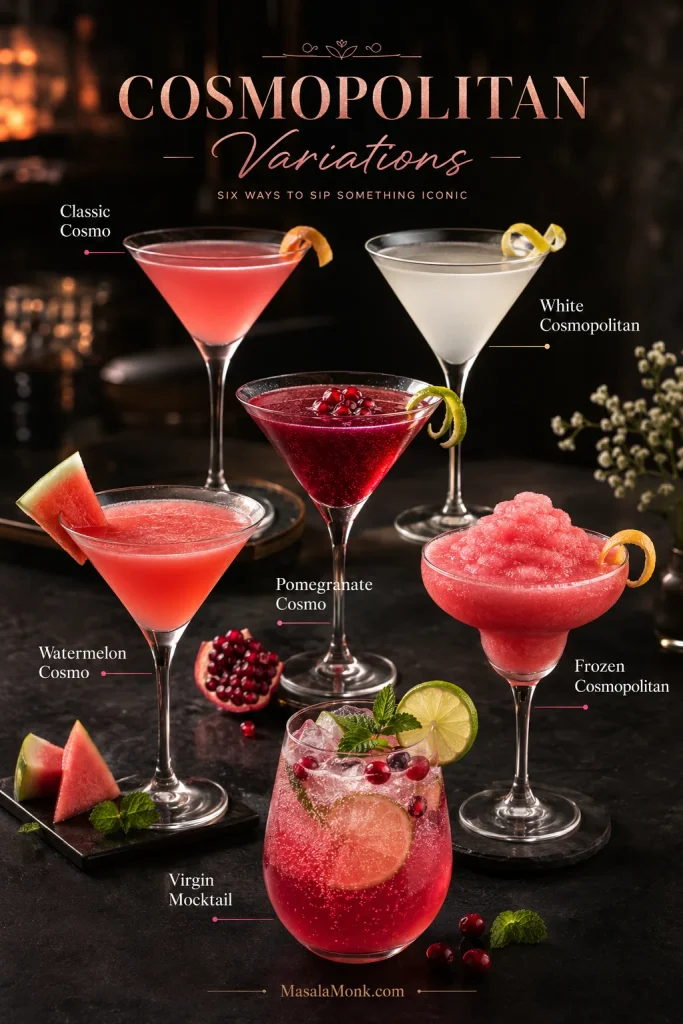
Cosmopolitan Variations

After the first good Cosmo, variations are just small turns of the same dial. Keep the vodka-orange-citrus structure, then change the fruit, sweetness, or color.

Cosmopolitan variations board with classic, white, pomegranate, watermelon, frozen, and virgin mocktail versions.
Once the base Cosmo ratio is right, variations become easier to control. Keep the orange-citrus backbone, then adjust fruit, color, texture, or alcohol level for the occasion.

Elegant and Party Versions

White Cosmopolitan: shake 1½ oz vodka, ¾ oz Cointreau or good triple sec, 1 oz white cranberry juice, and ½ oz fresh lime juice with ice. Strain into a chilled glass and garnish with a lemon twist, orange twist, or sugared cranberries.

Pale White Cosmopolitan cocktail in a coupe glass with a lemon twist and sugared cranberries beside it.
White cranberry juice makes a softer, paler Cosmopolitan without losing the drink’s shape, which is why it works well for brunch, holidays, and elegant party glasses.

Floral White Cosmo: use ½ oz elderflower liqueur and ¼ oz Cointreau instead of the full ¾ oz Cointreau. It turns softer, more floral, and very brunch-friendly.

If you are planning a brunch or party spread, MasalaMonk’s Mimosa Recipes guide gives you lighter sparkling options to serve beside a pitcher of Cosmos.

Fruitier Versions

Pomegranate Cosmo: replace ½ to ¾ oz of the cranberry juice with pomegranate juice for a deeper ruby color and a sharper tart-fruit finish. If the pomegranate tastes dry, add a tiny splash more orange liqueur.

Watermelon Cosmo: muddle a few cubes of ripe watermelon in the shaker, then add 1½ oz vodka, ¾ oz Cointreau or triple sec, ½ oz lime juice, and ½ oz cranberry juice. Shake with ice and fine strain. A tiny pinch of salt helps if the watermelon tastes flat.

Cranberry-Orange Cosmo: add ¼–½ oz fresh orange juice or use orange vodka. Keep the orange modest so it rounds the drink without turning it into brunch juice.

Frozen, Lighter, and Non-Alcoholic Versions

Frozen Cosmopolitan: blend vodka, orange liqueur, cranberry juice cocktail, lime juice, and ice until slushy. Very cold blended cocktails taste less sweet, so start with the juice-forward party ratio.

Lower-Sugar Cosmopolitan: use 100% cranberry juice or a lower-sugar cranberry blend, then reduce the lime slightly. For a lighter alcohol feel, use 1 oz vodka instead of 1½ oz.

Virgin Cosmopolitan Mocktail: shake 2 oz cranberry juice, ½ oz orange juice or orange syrup, and ½ oz fresh lime juice with ice. Strain into a chilled glass and top with 1–2 oz sparkling water. Add sparkling water after shaking, not before; carbonation can build pressure inside a shaker.

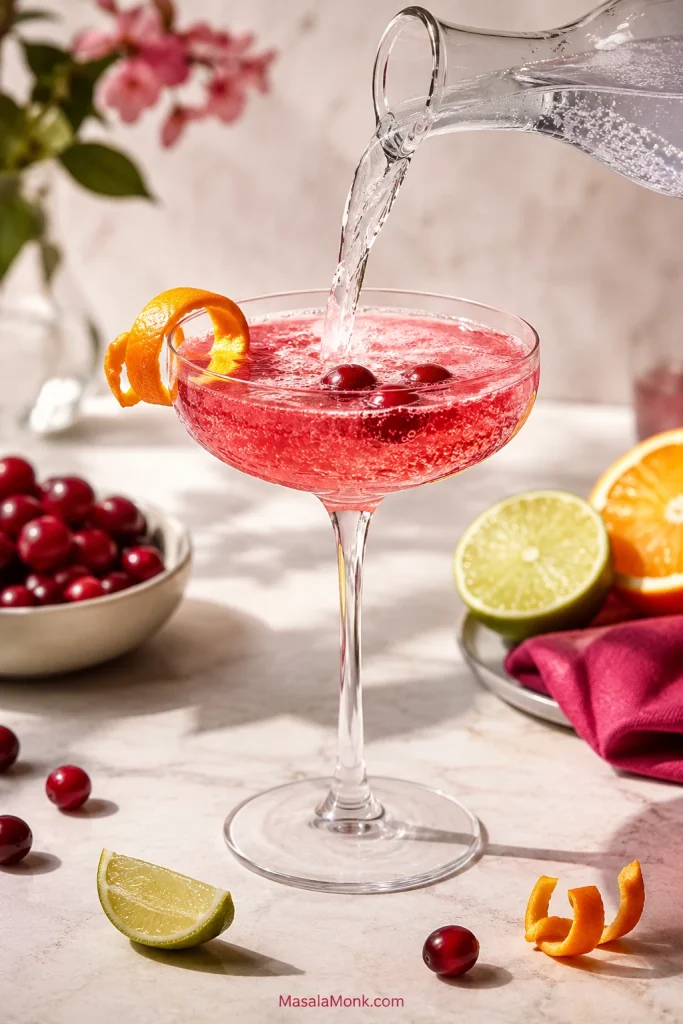
Virgin Cosmopolitan mocktail with cranberry, citrus garnish, and sparkling water being poured into a coupe glass.
Shake the cranberry-citrus base first, then add sparkling water after straining. This keeps pressure out of the shaker and helps the mocktail stay bubbly.

Cosmopolitan Substitutions That Still Work

Missing something? These swaps keep the drink recognizably pink, citrusy, and clean instead of sending it in a completely different direction. The trick is to swap without losing the triangle: cranberry, lime, orange.

Missing ingredientBest substituteWhat to know
No CointreauGood triple secAdjust if it tastes very sweet.
No triple secCointreau, Grand Marnier, or dry curaçaoGrand Marnier makes the cocktail richer.
No cranberry juice cocktail100% cranberry blendReduce lime slightly or add a touch more orange liqueur.
No limeLemon juiceUse a little less; lemon changes the flavor.
No citrus vodkaPlain vodkaUse a good citrus twist for aroma.
No shakerClean jar with tight lidShake carefully with ice and strain.

What to Serve with a Cosmopolitan

Think salty, creamy, crisp, and bite-sized — food people can pick up while holding a chilled glass. The best Cosmo food is the kind people can nibble between sips without needing a knife and fork.

Cosmopolitan cocktail served with cheese, crostini, shrimp, olives, salted nuts, and crackers.
Salty, creamy, and crisp snacks pair best with a cold cranberry-lime Cosmopolitan. Bite-sized appetizers keep guests sipping, snacking, and mingling easily.
  • Cheese boards with brie, goat cheese, sharp cheddar, salted nuts, crackers, or a make-ahead cheese ball
  • Shrimp cocktail, lemon-garlic shrimp, or other light seafood appetizers
  • Crostini with whipped feta, goat cheese, smoked salmon, or cucumber
  • Olives, Marcona almonds, seasoned popcorn, chips, or crisp crackers
  • Cranberry-orange holiday bites or small brunch-friendly snacks

FAQs

What is in a Cosmopolitan cocktail?

A Cosmopolitan usually contains vodka or citrus vodka, Cointreau or triple sec, cranberry juice, fresh lime juice, ice, and a citrus twist. The flavor should be cranberry-lime with a smooth orange finish.

Is a Cosmopolitan a martini?

People often call it a Cosmo martini because it is served in a martini-style glass, but it is not a classic martini. Classic martinis usually rely on gin or vodka with vermouth. Cosmos are shaken with cranberry, orange liqueur, and lime.

Is a Cosmo the same as vodka cranberry?

No. Vodka cranberry is a taller mixed drink over ice; a Cosmo is shaken, strained, citrusy, and balanced with orange liqueur.

Which vodka is best for a Cosmo?

Citrus vodka gives the most recognizable bar-style flavor, but plain vodka works well too. Use a clean vodka you enjoy in mixed drinks and rely on fresh lime and a citrus twist for brightness.

Cointreau or triple sec: what should you use in a Cosmo?

Cointreau is the cleanest choice. Good triple sec works for an everyday Cosmo, while Grand Marnier makes the drink richer and rounder.

Should cranberry juice cocktail or 100% cranberry juice be used?

Cranberry juice cocktail is easiest for the familiar pink Cosmo. 100% cranberry tastes sharper, so use a little less lime or add a touch more orange liqueur.

Why is my Cosmopolitan too sour?

It probably has too much lime or very tart cranberry juice. Add a small splash of cranberry juice cocktail or orange liqueur, then shake briefly again with ice.

How do you make a pitcher of Cosmos?

Scale the vodka, orange liqueur, cranberry juice, and lime juice in a pitcher, then chill without ice. Shake individual servings when possible. For a no-shake pitcher, add ¾ to 1 oz chilled water per drink.

What is a White Cosmopolitan?

A White Cosmopolitan is a paler version made with white cranberry juice instead of regular cranberry juice. It can be simple with Cointreau or softer and floral with elderflower liqueur.

How do you make a lower-sugar Cosmopolitan?

Use 100% cranberry juice or a lower-sugar cranberry blend, then reduce the lime slightly. Expect it to taste sharper than the cranberry juice cocktail version.

Is there a non-alcoholic Cosmo mocktail?

Yes. Shake cranberry juice, orange juice or orange syrup, and fresh lime with ice, strain, then top with sparkling water. Add sparkling water after shaking so pressure does not build.

Once you know the balance, a Cosmo becomes easy: cold glass, measured pour, fresh lime, orange on the nose, and just enough cranberry to glow pink. Start with the balanced ratio, then tune the next round until it feels like your house drink.

Posted on 16 Comments

Lemon Drop Martini Recipe (Classic, 3-Ingredient & More)

Chilled lemon drop martini in a sugar-rimmed glass with a lemon twist, fresh lemons, and cocktail tools on a styled bar surface.

A good lemon drop martini should taste lively before it tastes sweet. The glass is deeply chilled, the rim sparkles lightly, and the first sip lands with just-squeezed lemon, clean vodka, a soft orange note, and enough sweetness to smooth the sharp edge. It should feel polished, not syrupy; refreshing, not harsh; easy, but still pretty enough to make the glass feel special.

This easy lemon drop martini starts with a balanced classic ratio: vodka, Cointreau or triple sec, fresh lemon juice, and simple syrup, shaken hard and poured into a lightly sugared glass. Once that baseline tastes right, you can make it without triple sec, soften it with limoncello, turn it into shots, batch it for guests, or add fruit without losing the crisp citrus snap.

Quick Answer: How to Make a Lemon Drop Martini

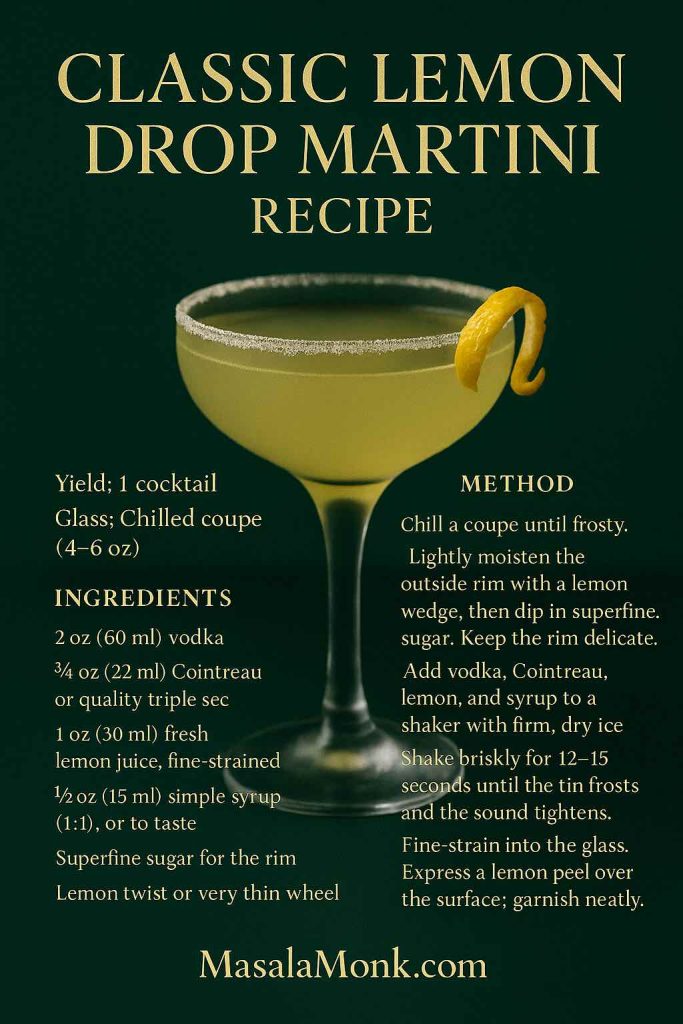
To make a classic lemon drop martini, shake 2 oz (60 ml) vodka, ¾ oz (22 ml) Cointreau or triple sec, 1 oz (30 ml) fresh lemon juice, and ½ oz (15 ml) simple syrup with firm ice for 15–20 seconds. Fine-strain into a chilled, lightly sugar-rimmed 5–6 oz coupe or martini glass, then garnish with a lemon twist.

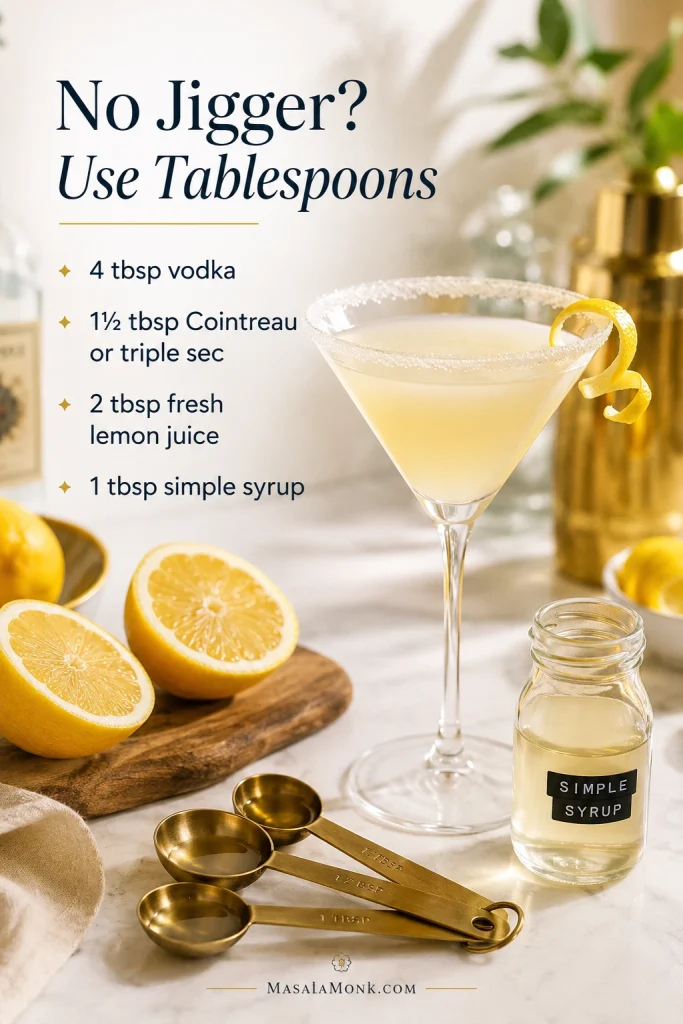
No jigger? Use 4 tablespoons vodka, 1½ tablespoons Cointreau or triple sec, 2 tablespoons fresh lemon juice, and 1 tablespoon simple syrup.

Before you shake, remember this: chill the glass, sugar only the outside rim, and adjust by teaspoons instead of guessing. Add syrup if the drink is too sour; add lemon if it tastes too sweet.

This is the drink to pour when you want something dressed up but not fussy: before dinner, for a small party, beside a dessert table, or as the first round when people want something bright and familiar.

Jump to What You Need

Classic Lemon Drop Martini Recipe

Make this version first. It is the classic baseline: lemon-forward, deeply chilled, gently sweet, and easy to adjust. A well-made Lemon Drop should hit in this order: cold lemon, smooth vodka, a soft orange note, then a small sparkle from the rim — not sour lemonade, melted candy, or a glass full of sugar.

Yield1 cocktail
Prep time5 minutes
Glass5–6 oz coupe or martini glass
FlavorLemon-forward, crisp, gently sweet
Shake time15–20 seconds
ServeImmediately

Ingredients

IngredientAmount
Vodka2 oz / 60 ml
Cointreau or quality triple sec¾ oz / 22 ml
Fresh lemon juice, fine-strained1 oz / 30 ml / 2 tbsp
Simple syrup, 1:1½ oz / 15 ml / 1 tbsp
Superfine sugar, for rim1–2 tbsp / about 12–25 g
Lemon twist or thin lemon wheel1

Method

  1. Chill a 5–6 oz coupe or martini glass for 5–10 minutes, or fill it with ice water while you work.
  2. Place superfine sugar on a shallow plate, moisten only the outside rim with lemon, and dip lightly.
  3. Add vodka, Cointreau or triple sec, fresh lemon juice, and simple syrup to a shaker.
  4. Fill the shaker with firm ice.
  5. Shake for 15–20 seconds, until the outside feels very cold.
  6. Fine-strain into the prepared glass.
  7. Express a lemon peel over the surface, then garnish with the twist or a thin lemon wheel.

You will know it is right when the drink feels cold and sharp at first, then softens almost immediately. The rim should add sparkle, not a mouthful of sugar.

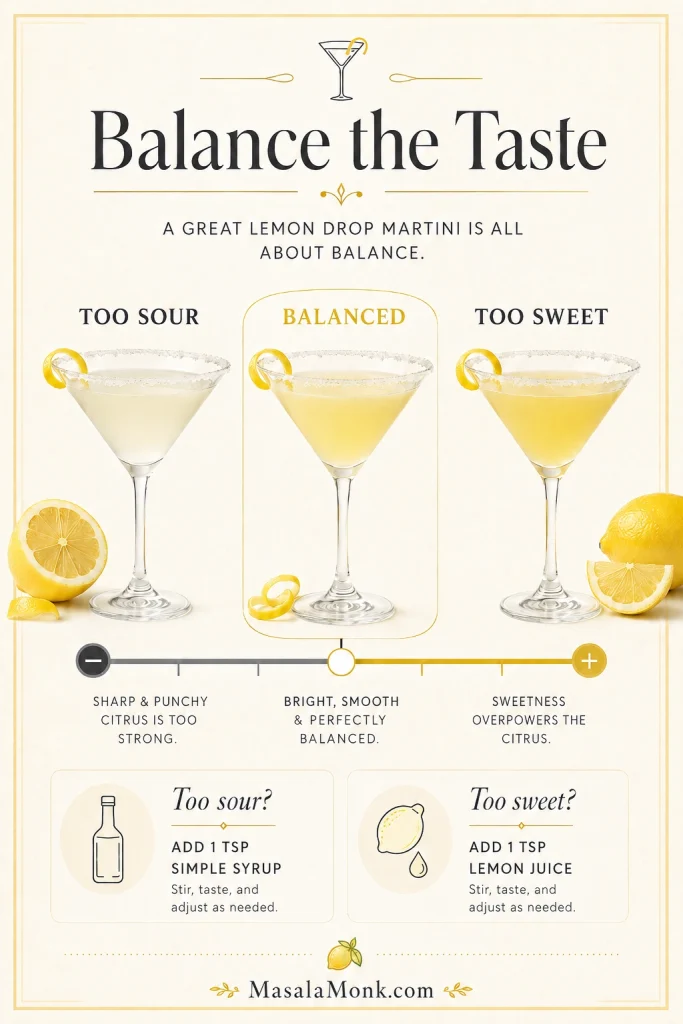
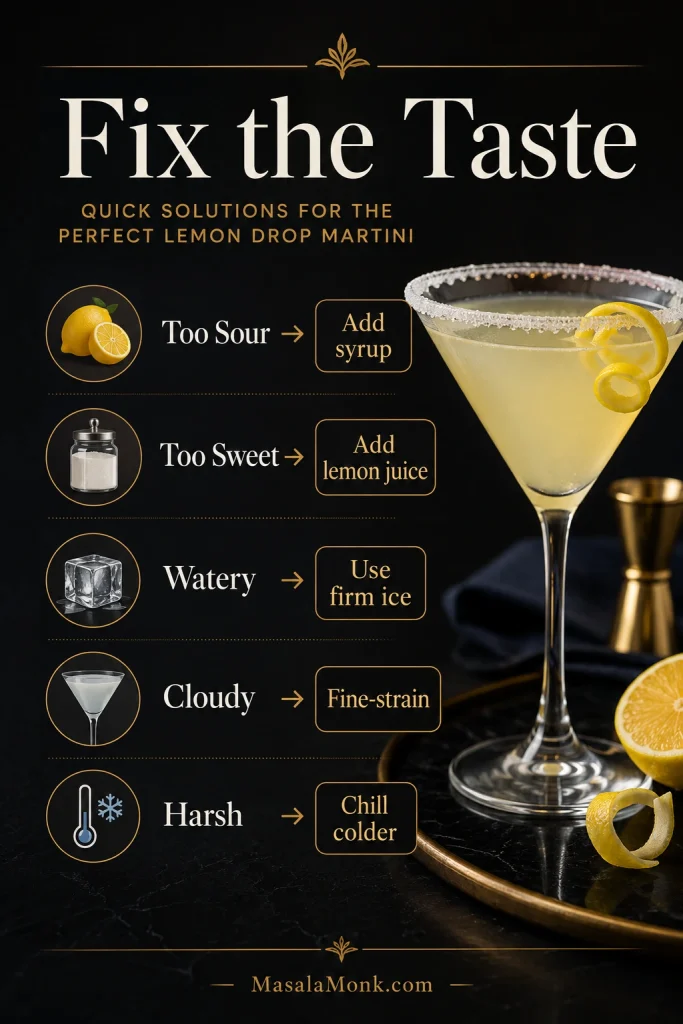
Taste before changing the recipe. Too sharp? Add 1 teaspoon simple syrup and shake briefly with fresh ice. Too sweet? Add 1 teaspoon lemon juice and re-shake. A Lemon Drop loses its edge as it warms, so pour it last-minute rather than letting filled glasses sit on a tray.

Classic lemon drop martini recipe card with a pale yellow cocktail, sugar rim, lemon garnish, and recipe measurements.
Use the classic recipe card as your baseline before changing the drink. Once the vodka, lemon, orange liqueur, and syrup work together, every variation becomes easier to adjust.

No-Jigger Lemon Drop Measurements

Use this quick conversion when measuring at home. Tablespoons keep the drink accurate, and teaspoon-sized adjustments keep the final sip from swinging too sour or too sweet.

Tablespoon measurement guide for a lemon drop martini with measuring spoons, lemons, simple syrup, and a finished cocktail.
Tablespoons are accurate enough for a home Lemon Drop when the ratio is clear. Measure first, then adjust in teaspoons so the drink stays lively without turning too sour or too sweet.

Before You Mix: 3 Details That Make It Taste Better

The recipe is simple, but the small details matter. Small technique choices make the drink feel bar-clean instead of last-minute.

1. Use fresh, strained lemon juice

A lemon drop is only as good as its lemon. Fresh juice tastes vivid and fragrant, while bottled juice often tastes flat or stale. Strain out pulp before shaking so the drink stays smooth.

2. Keep the sugar rim thin

The rim should frame the first sip, not turn the cocktail into dessert. Moisten only the outside edge of the glass so sugar does not fall into the drink.

3. Shake hard with firm ice

Shaking does more than chill the drink. It adds a small amount of water, softens the lemon, and gives the cocktail a smoother finish. If the shaker frosts or feels painfully cold, you are there.

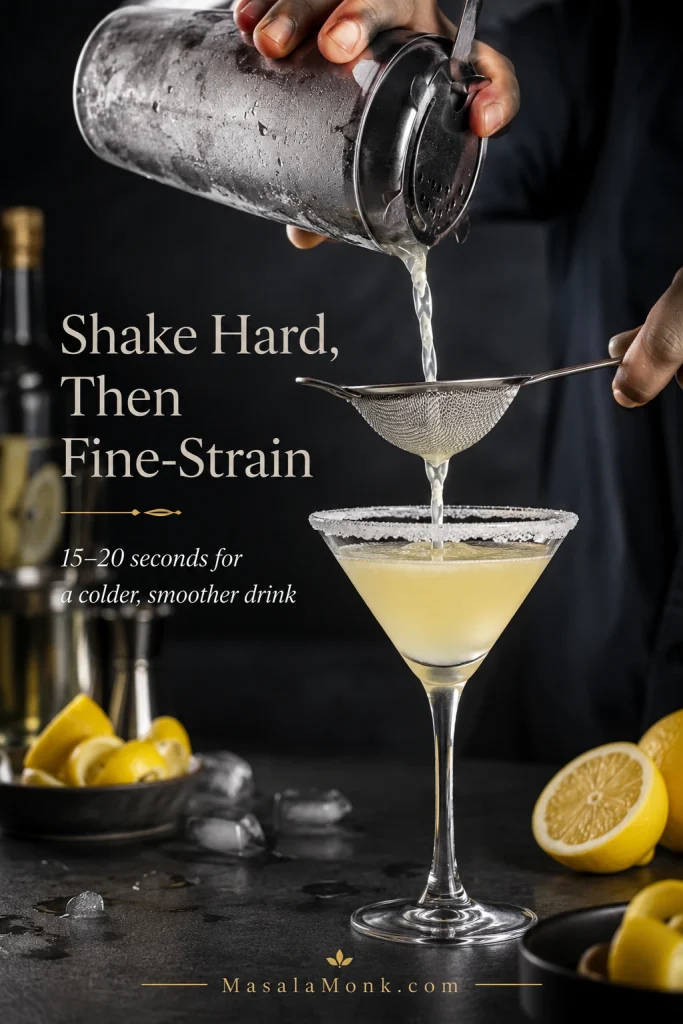
Shake and Fine-Strain for a Cleaner Pour

Once the drink is measured, the shake controls texture as much as temperature. Cold ice, firm shaking, and fine-straining help the cocktail pour clean, bright, and smooth.

Cocktail shaker and fine strainer pouring a lemon drop martini into a prepared sugar-rimmed glass.
A firm shake chills, aerates, and lightly dilutes the drink. Fine-straining then gives the Lemon Drop Martini a cleaner texture with fewer ice shards or pulp flecks in the glass.

Need to rescue a drink that tastes off?

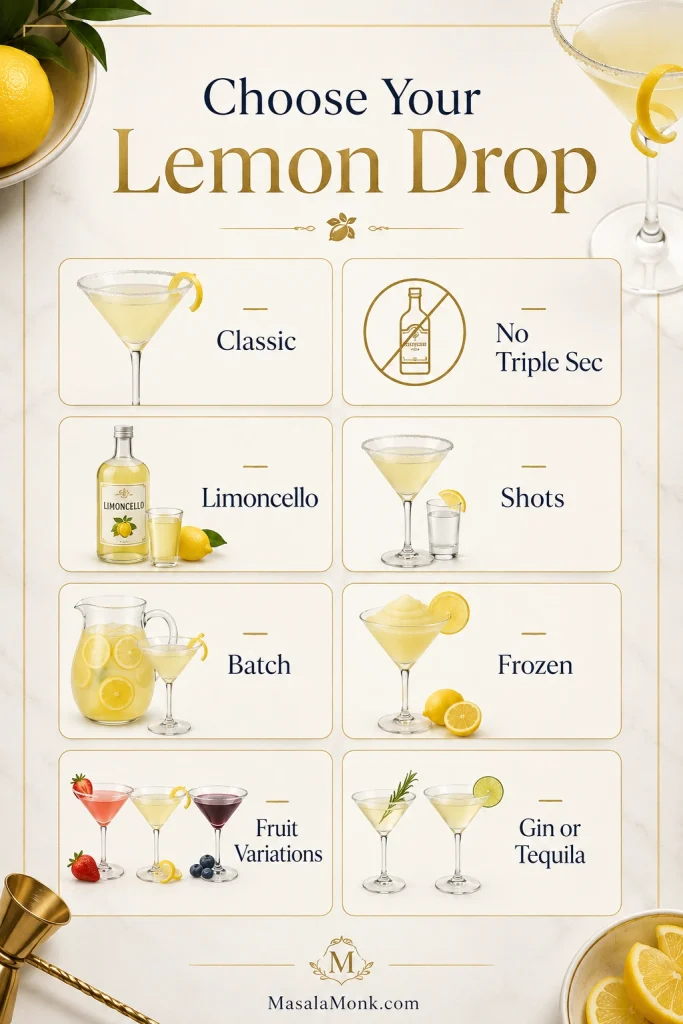
Choose Your Lemon Drop

Start with the classic, then change one thing at a time. That keeps the drink recognizable while letting you make it drier, sweeter, fruitier, stronger, softer, or easier to serve.

Decision guide showing lemon drop martini options including classic, no triple sec, limoncello, shots, batch, frozen, fruit variations, and gin or tequila.
Match the Lemon Drop to the moment: no triple sec for a simple pour, limoncello for softness, shots for a tray, and batch or frozen versions for guests.
Mood or needMake thisWhy it works
Clean and classicClassic Lemon Drop MartiniBest balance of vodka, orange, lemon, and syrup
No orange liqueur3-Ingredient Lemon DropVodka, lemon, syrup; rim optional
Softer and more lemonyLimoncello Lemon DropLimoncello adds round lemon perfume
Party trayLemon Drop ShotsSmaller, brighter, faster to serve
Hosting dinnerPitcher Lemon DropBatch ahead, then shake or dilute properly
Hot afternoonFrozen Lemon DropBlended, cold, citrusy
Pretty brunch drinkStrawberry or Lavender Lemon DropColor, aroma, and a softer mood
Drier twistGin Lemon DropMore botanical and less candy-like

Not sure where to start? Make the classic once, then decide whether you want it softer with limoncello, quicker as shots, or fruitier for a party glass.

Lemon Drop Martini Ingredients

With only a few ingredients in the shaker, every choice shows up in the glass. Fresh lemon smells brighter, measured syrup keeps the drink crisp, and a neutral vodka lets the citrus lead.

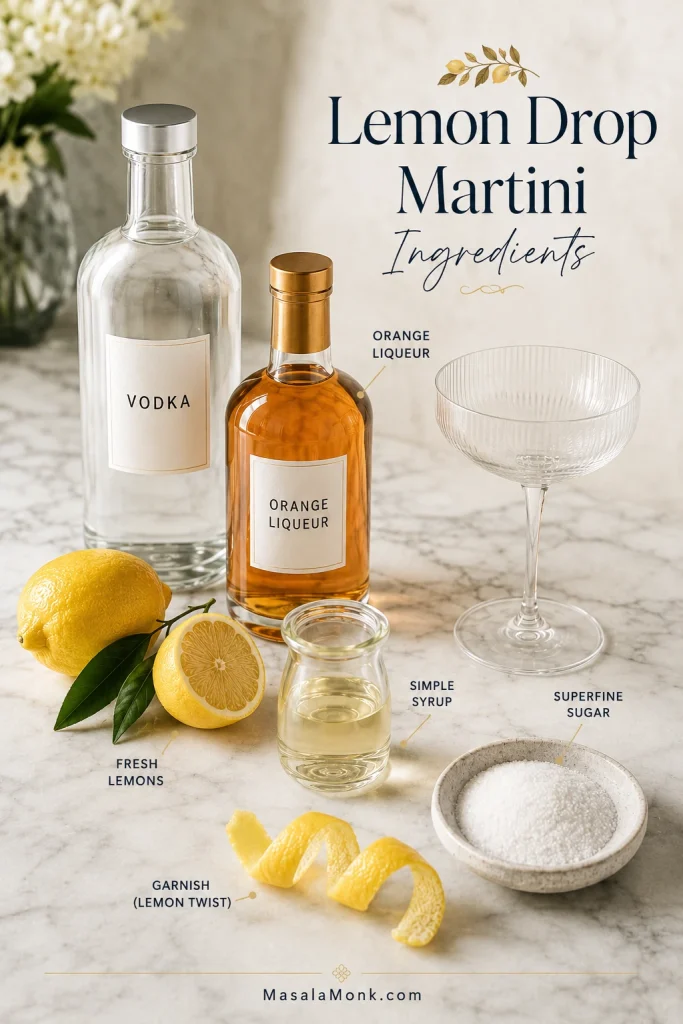
Lemon drop martini ingredients on a marble surface, including vodka, orange liqueur, fresh lemons, simple syrup, superfine sugar, lemon twist, and glassware.
With so few ingredients, every shortcut shows quickly. Fresh lemon juice, measured syrup, orange liqueur, and neutral vodka create the polished Lemon Drop flavor.

Vodka

Plain vodka is the safest choice for the cleanest classic Lemon Drop. It does not need to be expensive; it just needs to stay out of the lemon’s way. Lemon vodka works if you want a louder citrus aroma, but reduce the syrup slightly so the drink does not turn candy-like.

Cointreau, Triple Sec, or Grand Marnier

Cointreau gives the clearest orange note. A good triple sec keeps the drink accessible and works well in the classic ratio. Grand Marnier tastes richer and rounder, so use a little less syrup if the cocktail feels too sweet.

Fresh Lemon Juice

Choose lemons that feel heavy for their size, then roll them before juicing. One medium lemon usually gives about 2 tablespoons juice, though dry lemons may give less. Plan on one lemon per cocktail, plus an extra lemon nearby.

Simple Syrup

For syrup, begin with a basic 1:1 mix made from equal parts sugar and water. Half an ounce is the best starting point for one drink. To make a small batch, stir ½ cup sugar with ½ cup hot water until clear, cool, then refrigerate in a clean jar and use within 2–3 weeks.

Superfine Sugar

Superfine sugar gives the smoothest rim because it dissolves quickly on the lips. Granulated sugar works, but it feels crunchier. Avoid powdered sugar; it can clump, turn pasty, and taste dusty.

No bar tools?

No shaker? A jar with a tight lid works. Use tablespoons instead of a jigger and a tea strainer instead of a cocktail strainer. One ounce equals 2 tablespoons. If using a jar, wrap it in a towel and make sure the lid seals tightly before shaking.

The Best Lemon Drop Ratio for a Balanced Drink

The Lemon Drop Ratio at a Glance

Use this ratio as the starting point before you change the syrup, rim, or liqueur. It keeps the lemon bright while giving the vodka sour enough softness to feel polished.

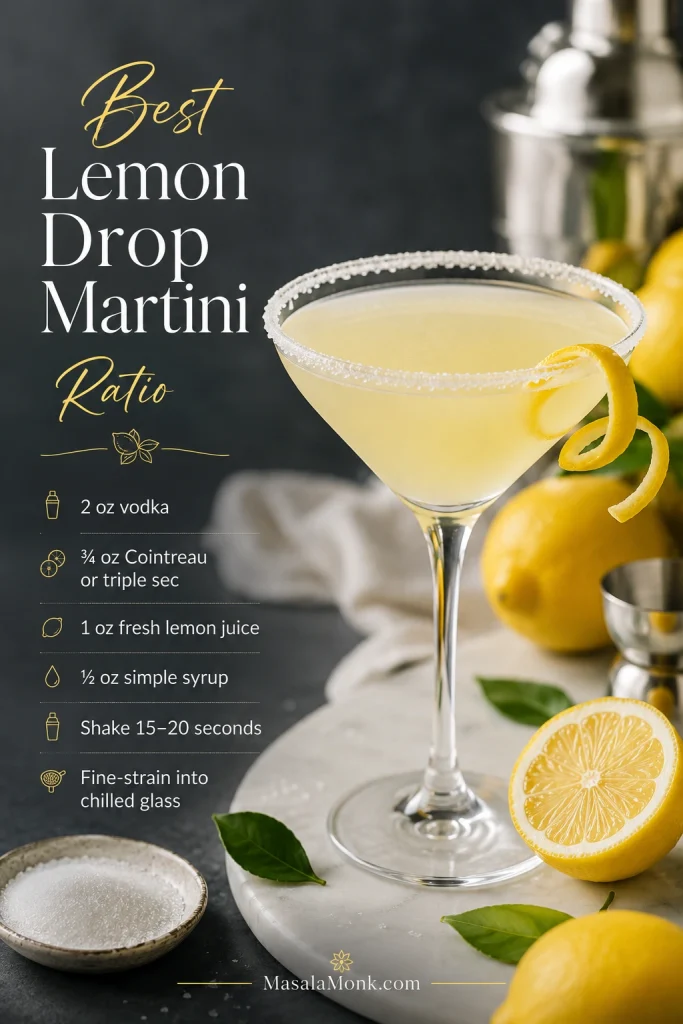
Lemon drop martini ratio card showing vodka, Cointreau or triple sec, fresh lemon juice, simple syrup, shake time, and a sugar-rimmed cocktail.
Use this Lemon Drop Martini ratio as the drink’s control panel: vodka gives structure, lemon brings sharpness, orange liqueur adds aroma, and syrup rounds the edge.

Think of the drink as a vodka sour served up: the vodka keeps it clear, the lemon gives it lift, the orange liqueur adds perfume, and the syrup softens the edge so the drink feels bright instead of sharp. Shaking supplies the cold dilution that makes it rounded instead of harsh. The sugar rim should stay outside the glass so the first taste sparkles while the cocktail underneath stays crisp. If you like this spirit-citrus-sugar balance, the Daiquiri recipe follows the same sour-cocktail logic with rum and lime.

If you want it…Adjust this way
Sharper and more citrus-forwardKeep syrup at ½ oz / 15 ml
Softer and sweeterIncrease syrup to ¾ oz / 22 ml
Drier and more bar-styleUse ½ oz / 15 ml orange liqueur and ½ oz / 15 ml syrup
More party-styleUse up to 1 oz / 30 ml syrup
Less sweet overallRim only half the glass
More aromaticExpress a fresh lemon peel over the drink

How to Balance a Lemon Drop That Tastes Off

Small corrections work better than big guesses. Taste once, adjust by the teaspoon, and shake briefly again so the fix blends into the drink.

Lemon drop martini balance guide showing too sour, balanced, and too sweet drinks with syrup and lemon juice adjustments.
Taste first, then fix the drink in teaspoons. Syrup softens a too-sharp Lemon Drop, while fresh lemon cuts a too-sweet one before a brief re-shake.

How to Make a Lemon Sugar Rim

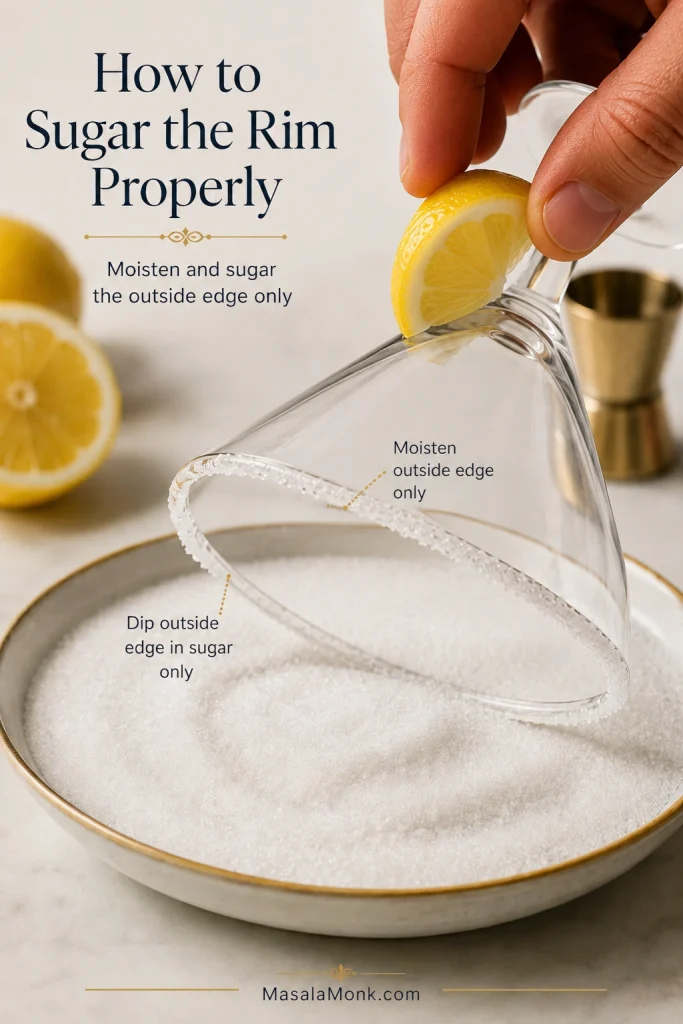
The rim should sparkle, not clump. A heavy sugar crust makes the first sip awkward and can drop sugar into the cocktail. The best lemon sugar rim is thin, even, and only on the outside edge of the glass.

  1. Add superfine sugar to a small shallow plate.
  2. Rub in 1 teaspoon finely grated lemon zest if you want a brighter rim.
  3. Run a lemon wedge around the outside edge of the glass only.
  4. Dip the moistened outside rim into the sugar.
  5. Let the glass sit for 2–3 minutes while you make the cocktail.
Close-up of a lemon drop martini glass being moistened and sugared only on the outside edge with superfine sugar.
Rim only the outside edge of the glass so sugar sweetens each sip, not the whole cocktail. The drink stays cleaner, brighter, and less likely to turn syrupy.

Prefer it less sweet? Rim only half the glass. Guests can choose the sugared side or the clean side, and the drink still looks polished without turning the first sip into candy.

That little sugared edge is part of the charm: the glass looks ready before the drink is even poured.

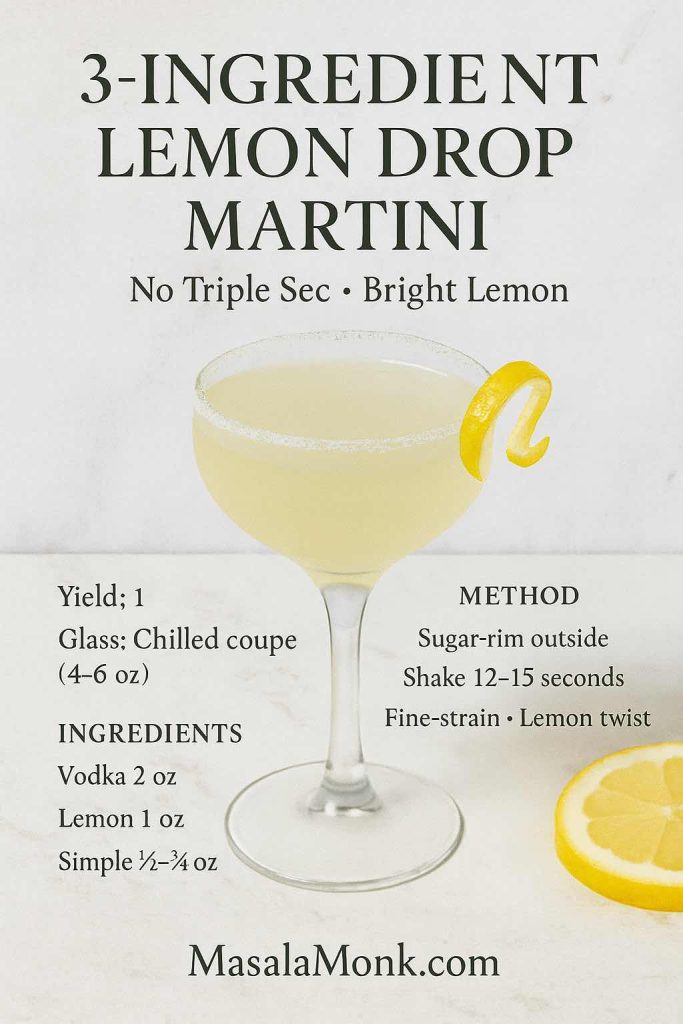
3-Ingredient Lemon Drop Martini, No Triple Sec or Cointreau

You can make a clean lemon drop martini without Cointreau or triple sec: vodka, lemon juice, and simple syrup. The sugar rim and lemon twist are optional, but they make even the simplest version feel complete.

IngredientAmount
Vodka2 oz / 60 ml
Fresh lemon juice1 oz / 30 ml
Simple syrup½–¾ oz / 15–22 ml
Optional superfine sugar for rim1–2 tbsp / about 12–25 g
Optional lemon twist1
Three-ingredient lemon drop martini card showing vodka, fresh lemon juice, simple syrup, and a sugar-rimmed cocktail.
Vodka, fresh lemon juice, and syrup keep this 3-ingredient Lemon Drop simple. A light sugar rim and lemon twist make the shortcut feel complete.

Shake the vodka, lemon juice, and syrup with firm ice for 15–20 seconds, then fine-strain into a chilled glass. Use ½ oz syrup for a sharper drink, or ¾ oz if you want it softer. Missing the orange aroma? Add 1–2 dashes of orange bitters.

Back to the classic recipe · Try the limoncello version

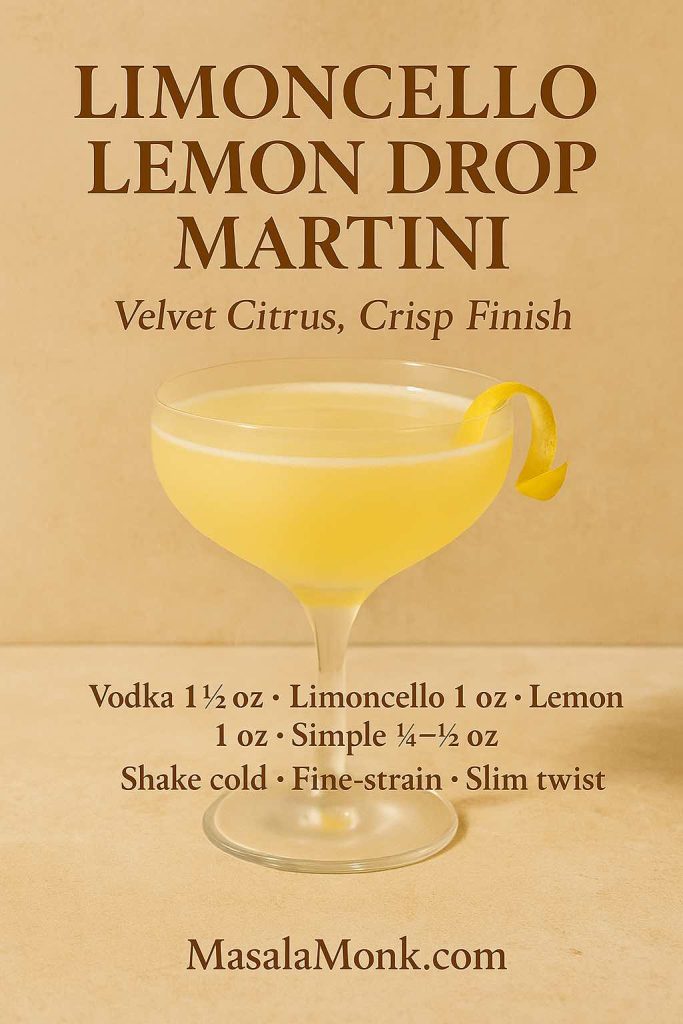
Limoncello Lemon Drop Martini

Limoncello makes a lemon drop softer, rounder, and more perfumed — the version to pour when you want the drink to feel sunnier and a little more generous. Since limoncello is already sweet, use less simple syrup than you would in the classic drink.

IngredientAmount
Vodka1½ oz / 45 ml
Limoncello1 oz / 30 ml
Fresh lemon juice1 oz / 30 ml
Simple syrup¼–½ oz / 7–15 ml, to taste
Superfine sugar for rimoptional, or half rim
Lemon twist1
Limoncello lemon drop martini card with a golden lemon cocktail, limoncello bottle, lemons, and a sugar-rimmed glass.
Since limoncello already brings sweetness, reduce the syrup before you shake. That keeps the variation sunny and lemony instead of drifting into dessert-drink territory.

Shake with ice until very cold, then fine-strain into a chilled glass. Start with ¼ oz syrup and increase only if the lemon feels too sharp.

  • Too sweet? Skip the simple syrup and use a half rim.
  • Too heavy? Add ¼ oz / 7 ml more lemon juice.
  • Too flat? Add the tiniest pinch of fine salt before shaking; it should not taste salty, just more awake.

More ways to fix the taste · Back to the classic recipe

Lemon Drop Shot Ratio

This is the version for the tray: quick to shake, easy to pass around, and brighter than a plain vodka shot. Lemon drop shots for a party should taste like smaller, punchier versions of the cocktail, not plain vodka chased with sugar.

VersionVodkaLemon juiceSimple syrup
Bright shot1 oz / 30 ml½ oz / 15 ml¼ oz / 7 ml
Sweeter party shot1 oz / 30 ml½ oz / 15 ml½ oz / 15 ml
6 shots6 oz / 180 ml3 oz / 90 ml1½–3 oz / 45–90 ml
Tray of sugar-rimmed lemon drop shots with lemon garnish and a small shot-ratio overlay.
Small, cold batches make better Lemon Drop shots. Pour right before serving so each glass tastes lively instead of warm, flat, or overly sweet.

Shake shots with ice for 8–10 seconds, then strain into lightly sugared shot glasses. Work in small batches so every round tastes lively instead of warm and syrupy.

Serving more than shots? Jump to pitcher and batch Lemon Drops.

Batch Lemon Drop Martini: Pitcher, Party Batch, and Freezer-Door Lemon Drops

Serving more than two people? The only trick is dilution. A shaken Lemon Drop gets a little water from the ice, and that water is part of the drink. For guests, the goal is simple: keep the first round cold and the second round just as good.

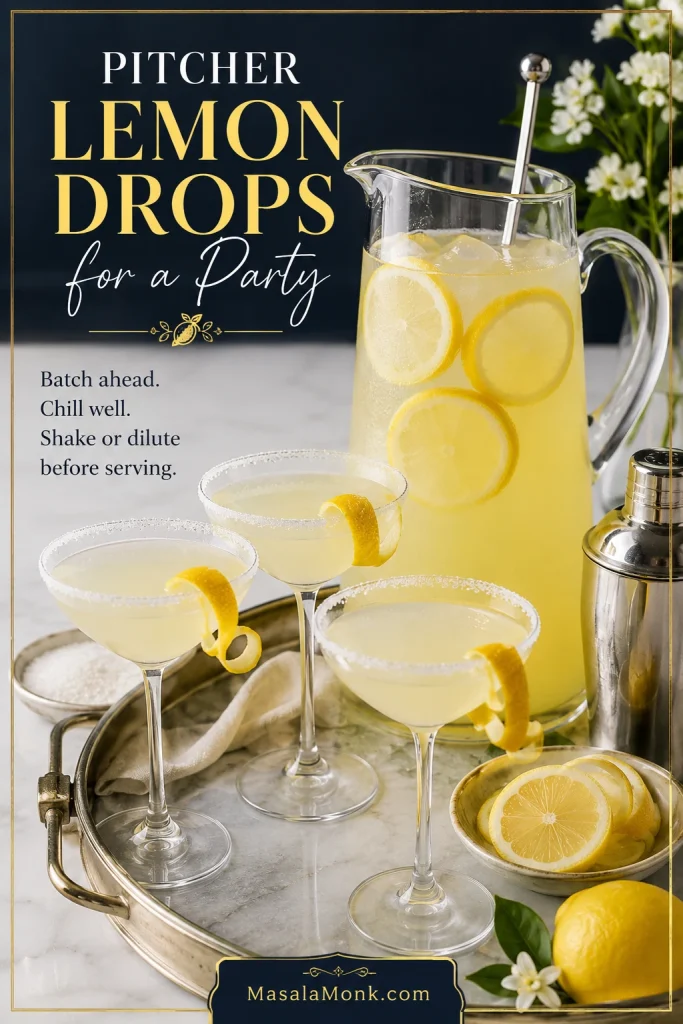
Pitcher Lemon Drops for a Party

A pitcher setup works best when the base is cold, the glasses are ready, and the dilution plan is settled before guests arrive.

Clear pitcher of pale yellow lemon drop martinis with lemon slices, sugar-rimmed coupe glasses, lemons, and cocktail tools.
Chill the base and prepare the glasses before guests arrive. For a pitcher Lemon Drop, the dilution plan matters more than the garnish pile.
Serving styleBest choiceAdd water?
Best qualityBatch ingredients, shake each drinkNo
Easiest pitcherAdd water and chillYes
Freezer-door bottleUse smaller batch, shake each servingNo
Ready-pour bottleAdd measured water before chillingYes

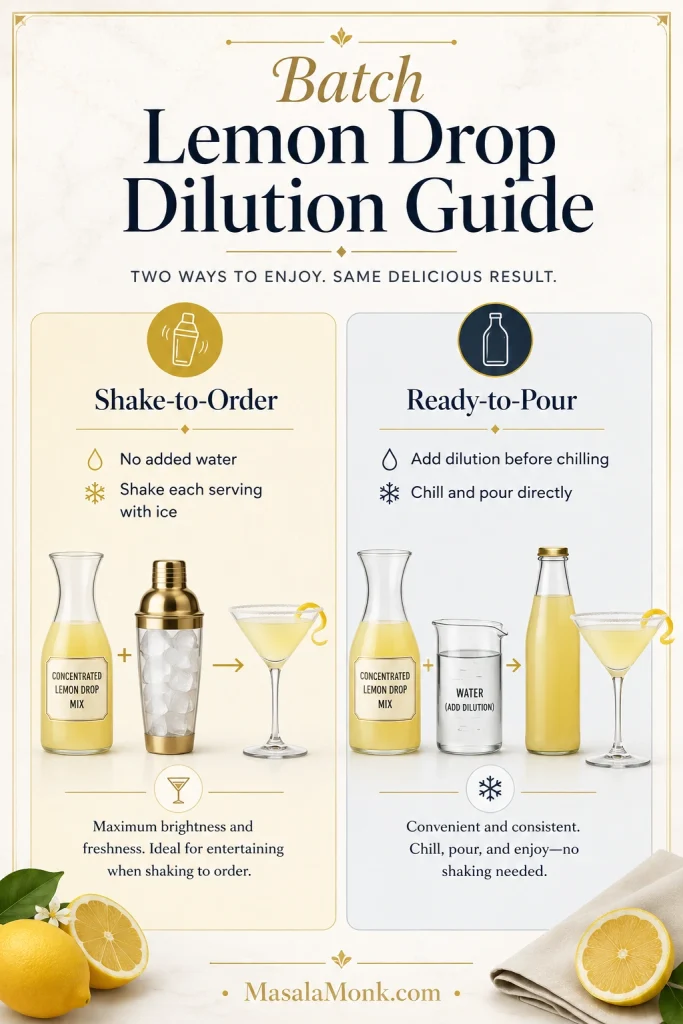
Batch Dilution: Shake-to-Order vs Ready-Pour

Use this choice before you bottle the drink. If the batch will not be shaken with ice later, it needs measured water now.

Infographic comparing shake-to-order lemon drop batches with ready-to-pour batches that include water for dilution.
Decide the serving style before batching. Shake-to-order Lemon Drops stay undiluted until the final shake, while ready-pour batches need measured water ahead of time.

If a batched Lemon Drop tastes strong, sharp, or oddly flat, it usually does not need more sugar first; it needs the water that shaking would have added.

After dilution, one shaken cocktail usually pours around 5 oz, sometimes closer to 5½ oz. Because Lemon Drops taste bright and smooth, they can feel lighter than they are. Serve them small, cold, and freshly poured.

Shake-to-order batches

BatchVodkaOrange liqueurLemon juiceSyrupWater
4 cocktails8 oz / 240 ml3 oz / 90 ml4 oz / 120 ml2–3 oz / 60–90 mlnone
8 cocktails16 oz / 480 ml6 oz / 180 ml8 oz / 240 ml4–6 oz / 120–180 mlnone

Ready-pour and freezer batches

BatchVodkaOrange liqueurLemon juiceSyrupWater / dilution
8 ready-pour cocktails16 oz / 480 ml6 oz / 180 ml8 oz / 240 ml4–6 oz / 120–180 ml8–10 oz / 240–300 ml
750 ml freezer bottle, shake-to-serve, about 5 cocktails10 oz / 300 ml3¾ oz / 110 ml5 oz / 150 ml2½ oz / 75 mlnone; shake each serving with ice
1 liter ready-pour bottle, about 6 cocktails12 oz / 360 ml4½ oz / 135 ml6 oz / 180 ml3–4 oz / 90–120 ml6–7 oz / 180–210 ml

Use a large pitcher or a 1.5 liter bottle for the 8-drink ready-pour batch; it will not fit in a standard 750 ml bottle. Do not fill a freezer bottle to the top. Leave headspace, cap tightly, and shake or invert before pouring.

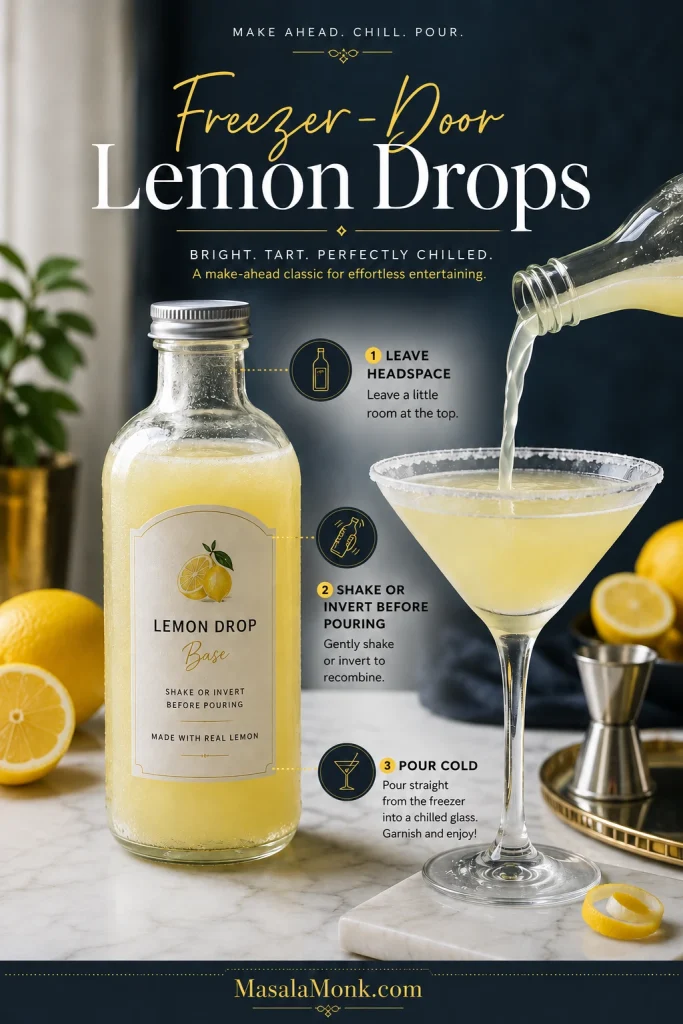
Freezer-Door Lemon Drop Bottle

A freezer-door bottle is convenient, but it still needs room at the top and a quick shake before serving so the citrus and syrup stay even.

Frosted freezer-door lemon drop bottle with headspace, pouring pale cocktail into a sugar-rimmed martini glass with lemon garnish.
A freezer-door Lemon Drop batch needs headspace and a quick shake or invert before pouring. That recombines citrus and syrup so every glass tastes consistent.

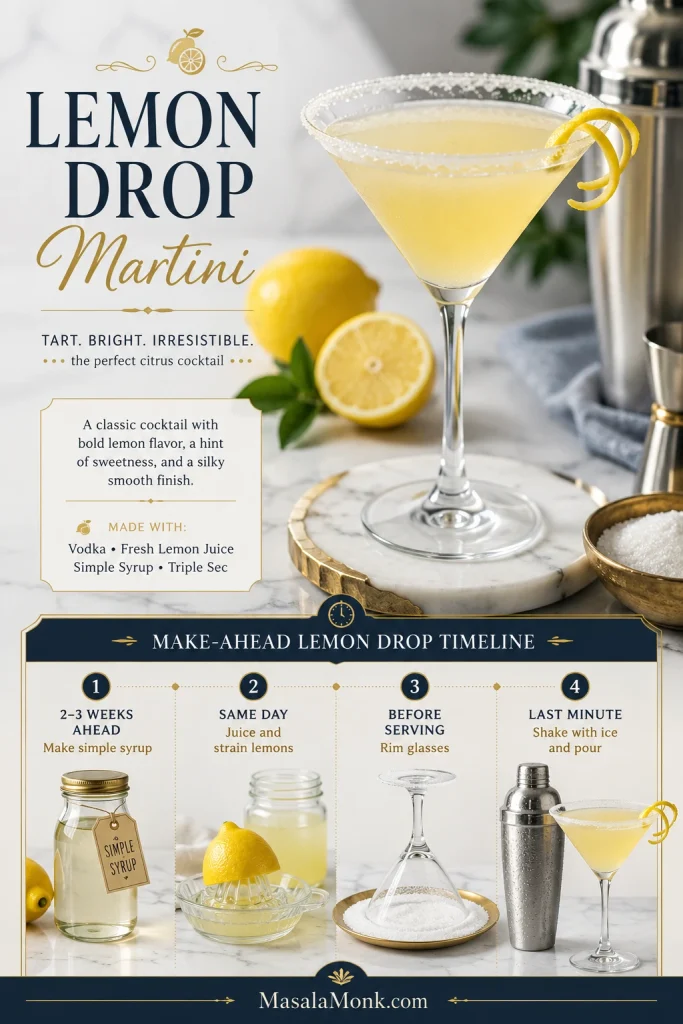
Batches with fresh lemon juice taste best the same day. To prep further ahead, mix the vodka, orange liqueur, and syrup first, then add fresh lemon juice closer to serving. For a built-over-ice vodka drink that is easy to serve by the round, the Moscow Mule recipe is another good party option.

Back to Jump Menu

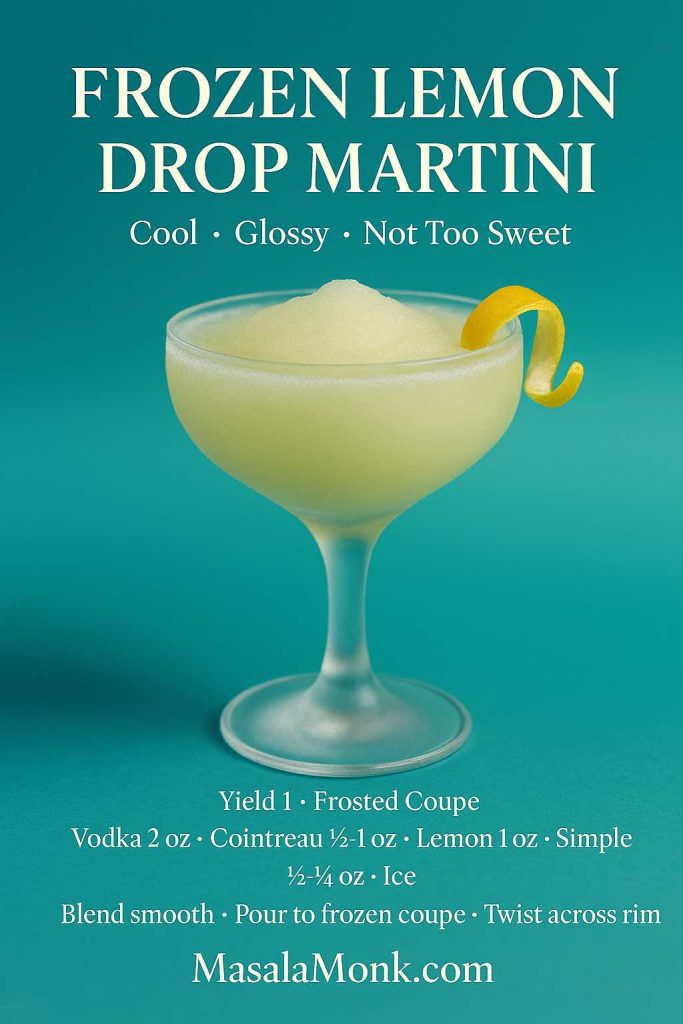
Frozen Lemon Drop Martini

A frozen lemon drop should still taste like a cocktail, not a syrupy lemon slush with vodka hiding underneath. Start with ½ oz syrup. Frozen drinks taste muted at first, then sweeter as they soften, so it is easier to add syrup than fix a slushy that turns cloying.

IngredientAmount
Vodka2 oz / 60 ml
Cointreau or triple sec½–1 oz / 15–30 ml
Fresh lemon juice1 oz / 30 ml
Simple syrup½–¾ oz / 15–22 ml
Iceabout 1 heaping cup
Frozen lemon drop martini recipe card showing an icy pale yellow cocktail with lemon garnish.
Frozen Lemon Drops should still taste like cocktails, not lemon slush. Start with restrained syrup because the drink can taste sweeter as it softens.

Blend until smooth, then pour into a chilled glass. If the drink feels too sharp, blend in a small spoonful of syrup. If it feels too sweet, add a squeeze of lemon and pulse once more. For another frozen party drink with a creamier tropical mood, try this Piña Colada recipe.

Fruit and Floral Lemon Drop Variations

Variations are where the drink gets playful, but the rule stays the same: let the lemon lead and use fruit as the accent, not the whole personality. Fruit should dress the lemon, not take over the whole glass.

Fruit and floral lemon drop martini guide with strawberry, blueberry, raspberry, blackberry, lavender, ginger, basil, and a lemon cocktail.
Let fruit and herbs frame the lemon instead of hiding it. Berries, lavender, ginger, or basil work best as accents, with fine-straining for a smoother finish.

For most fruit lemon drops, start with the classic recipe and replace the simple syrup with ½–¾ oz fruit syrup, or muddle fresh fruit before shaking. Fine-strain well and keep the total sweetness steady.

VariationUseBest cue
Strawberry Lemon Drop½–¾ oz strawberry syrup or 2 muddled berriesBest party color
Blueberry Lemon Drop½–¾ oz syrup or 8–10 berriesStrain well for a cleaner look
Raspberry Lemon Drop½ oz raspberry syrupTart and vivid; strain seeds
Blackberry Lemon Drop½–¾ oz syrup or 2–3 berriesDarker, silkier mood
Lavender Lemon Drop¼–½ oz lavender syrupKeep it subtle
Ginger Lemon Drop¼–½ oz ginger syrupSpicy-bright
Basil Lemon Drop3–4 leaves, gently muddledFresh and herbal

Use syrup when you want a clearer, prettier party drink. Muddled fruit tastes fresher but can add pulp, skins, or seeds.

Strawberry Lemon Drop Martini

Strawberry is the easiest fruit variation to make feel party-ready. Keep the sweetness measured, then fine-strain so the pink color stays clean.

Strawberry lemon drop martini card with a pink cocktail, fresh strawberries, lemon garnish, and a sugar-rimmed glass.
A few strawberries add color and softness without turning the drink jammy. Use a small amount, then fine-strain so the cocktail stays clean.

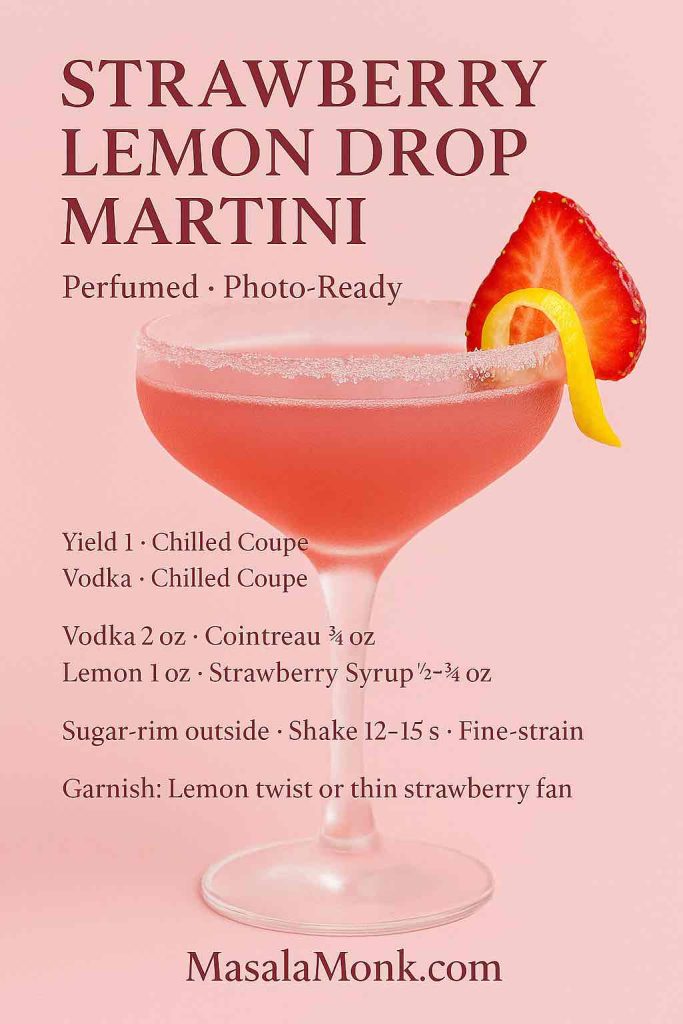
Other spirit swaps: gin or tequila

A gin lemon drop tastes more botanical and a little drier. Try 2 oz London Dry gin, ¾ oz Cointreau, 1 oz lemon juice, and ¼–½ oz syrup. Keep the rim delicate so the botanicals do not feel heavy. For another gin-and-lemon classic, the French 75 cocktail recipe is also worth saving.

A tequila lemon drop leans toward a lemony margarita. Try 2 oz blanco tequila, ¾ oz Cointreau, 1 oz lemon juice, and ½ oz syrup. A half-sugar, half-salt rim works especially well here. If that version catches your eye, the Spicy Margarita recipe goes deeper into citrus, tequila, and a bold rim.

Back to the classic recipe · Fix the taste · Back to Jump Menu

Best Vodka for a Lemon Drop Martini

Vodka does not need to be expensive here, but it does need to disappear cleanly behind the lemon. A harsh bottle becomes more obvious once fresh citrus sharpens everything around it. Chilling helps, but it cannot turn a rough vodka smooth.

Vodka choiceUse it whenAdjustment
Plain neutral vodkaYou want the classicUse the main ratio
Smoother premium vodkaYou want a cleaner finishDo not over-sweeten
Budget vodkaCasual party drinksShake colder; use fresh lemon
Lemon vodkaYou want louder citrus aromaReduce syrup
Sweet citron vodkaOnly for party-style drinksHalf rim; less syrup
Vodka decision guide for a lemon drop martini comparing plain vodka, premium vodka, lemon vodka, and sweet citron vodka.
Plain vodka is the safest choice for a crisp Lemon Drop Martini. Lemon vodka or sweet citron vodka can also work, but start with less syrup.

For another chilled vodka drink with a sweet-tart edge, the Appletini is a natural next pour. It uses the same basic lesson: keep the fruit sharp, the glass cold, and the sweetness controlled.

Fresh Lemon Juice vs Sour Mix or Lemon Drop Mix

Fresh lemon juice and simple syrup give the freshest, clearest lemon drop. Mixes and sour mix can work when convenience matters, but they usually taste sweeter, flatter, or less fresh.

Using a mix? Treat it as both citrus and sweetener. Do not add the full simple syrup from the classic recipe. Add vodka first, taste, then brighten with a small squeeze of fresh lemon if the drink feels dull.

Side-by-side comparison of fresh lemon with simple syrup and a generic sour mix shortcut for making a lemon drop martini.
Fresh lemon juice and simple syrup give you the most control. Sour mix is faster, but skip extra syrup at first and add fresh lemon if the drink tastes flat.
OptionResultAdjustment
Fresh lemon + syrupBrightest and bestUse the main recipe
Bottled lemon juiceFlatter and sharperAdd a fresh twist; reduce syrup slightly
Sour mixSweeter and less freshSkip or reduce simple syrup
Lemon drop mixEasiestAdd vodka and a squeeze of fresh lemon if possible
Premixed bottleLeast flexibleChill hard and garnish with fresh lemon

Fix the Taste

Do not dump the drink if the first sip is off. Lemon drops are forgiving when you adjust slowly. Taste, adjust by teaspoons, and shake briefly again with fresh ice.

Lemon drop martini troubleshooting guide showing fixes for too sour, too sweet, watery, cloudy, and harsh drinks.
Small adjustments fix most Lemon Drop Martini problems. Syrup softens sharp lemon, fresh juice cuts sweetness, firm ice controls dilution, and fine-straining clears the pour.
ProblemWhat probably happenedHow to fix it
Too sourThe lemons are sharp or syrup is too lowAdd 1 tsp simple syrup and shake briefly
Too sweetToo much syrup, sweet liqueur, or heavy rimAdd 1 tsp lemon juice and re-shake
WateryWet ice or too much shakingUse firm ice and shake 15–20 seconds
CloudyPulp, ice shards, or sugar fell inFine-strain and rim outside only
HarshDrink is warm or vodka is roughChill the glass and shake colder
Rim too crunchySugar is too coarse or too thickUse superfine sugar and a lighter dip
Limoncello version too sweetLimoncello plus syrup overloadReduce syrup or use a half rim
Fruit version tastes jammyToo much syrup or pureeAdd lemon juice and strain well

Back to the classic recipe · Back to Jump Menu

Make-Ahead and Storage Notes

You can prepare parts of a lemon drop ahead, but the best texture comes from shaking close to serving. A Lemon Drop feels most alive when the glass is cold, the rim is neat, and the citrus still smells fresh.

  • Lemon juice: Juice lemons the same day if possible. Strain and refrigerate until needed.
  • Simple syrup: Store in a clean jar in the fridge and use within 2–3 weeks.
  • Rimmed glasses: Rim glasses shortly before serving so the sugar stays neat.
  • Pitcher batch: Mix and chill up to a few hours ahead.
  • Best service: Shake each serving with ice and pour immediately.
Make-ahead lemon drop martini timeline showing simple syrup, juiced lemons, rimmed glasses, shaker, and finished cocktail.
Prepare the parts instead of the finished cocktail. Make syrup ahead, juice lemons the same day, rim glasses close to serving, and shake with ice at the last minute.

Serve alongside: mango lemonade for a non-alcoholic citrus option.

Bartender-Style Reference: Drier Classic vs Softer Home Version

Despite the martini glass, the Lemon Drop was born as a bright 1970s bar drink, closer in spirit to a vodka sour than a true martini.

The International Bartenders Association’s Lemon Drop Martini shows the drier classic skeleton of vodka, triple sec, and fresh lemon juice. Liquor.com’s Lemon Drop recipe also centers vodka, triple sec, fresh lemon juice, simple syrup, and a sugar rim.

This version sits between those worlds: it keeps the classic vodka-orange-lemon structure, then uses measured syrup and a delicate rim so the drink lands bright without turning harsh.

If you enjoy martini-style drinks with a different mood, try an Espresso Martini.

FAQs

These quick answers cover the swaps and shortcuts people usually ask about once the shaker is already out.

What is a Lemon Drop Martini?

A Lemon Drop Martini is a chilled vodka cocktail with fresh lemon juice, balanced sweetness, orange liqueur, and usually a sugar rim.

Is a Lemon Drop Martini the same as a Lemon Martini?

The names overlap, but a Lemon Drop Martini usually means vodka, lemon, sweetener, and a sugar rim. “Lemon Martini” can refer more broadly to lemon-flavored martini-style drinks, so recipes vary.

Which vodka works best?

A clean neutral vodka is the safest choice for the classic version. Lemon vodka works when you want stronger citrus aroma, but reduce the syrup slightly.

Fresh lemon juice or bottled?

Fresh lemon juice is best because the aroma is part of the drink. Bottled lemon juice works only as a shortcut and may taste flatter.

How sweet should a Lemon Drop be?

It should be balanced, not dessert-sweet. Start with ½ oz / 15 ml simple syrup for one cocktail, then add more only if the lemon tastes too sharp.

No triple sec — what should I use?

Use vodka, fresh lemon juice, and simple syrup for a three-ingredient lemon drop. Add 1–2 dashes of orange bitters if you want a little orange aroma without liqueur.

Cointreau, triple sec, or Grand Marnier?

Cointreau tastes crisp and clear. Triple sec is more budget-friendly and varies by brand. Grand Marnier tastes richer and rounder, so use a little less syrup if the drink feels too sweet.

How long should you shake a Lemon Drop Martini?

Shake for 15–20 seconds, or until the shaker feels very cold. For shots, 8–10 seconds is usually enough because the serving is smaller.

Lemon Drop Martini vs Lemon Drop Shot — what is the difference?

A Lemon Drop Martini is a full cocktail served up in a coupe or martini glass. A Lemon Drop Shot is smaller, stronger, and served in a shot glass with less dilution.

How do you make Lemon Drop shots?

For one bright shot, shake 1 oz / 30 ml vodka, ½ oz / 15 ml lemon juice, and ¼ oz / 7 ml simple syrup with ice for 8–10 seconds. Strain into a lightly sugared shot glass.

Can you make a Lemon Drop Martini with sour mix?

Yes. Use vodka and sour mix, then skip or reduce the simple syrup because most sour mixes already contain sugar. A squeeze of fresh lemon helps brighten the drink.

What is the best way to batch Lemon Drops for a party?

Mix the vodka, orange liqueur, lemon juice, and syrup ahead, then chill. For the best texture, shake each serving with ice. For ready-pour service, add cold water to replace shake dilution.

Does limoncello work in a Lemon Drop Martini?

Yes. Limoncello makes the cocktail softer and more lemon-perfumed. Since it is sweet, reduce the simple syrup and consider using only a half sugar rim.

Back to Jump Menu

Closing Pour

The Lemon Drop lasts because it gives a simple promise and delivers it quickly: cold vodka, just-squeezed lemon, a soft edge of sweetness, and a glass that looks festive before anyone takes the first sip. Make the classic first, keep the rim delicate, and shake until the tin feels icy.

After that, the variations are easy: limoncello for softness, shots for the party tray, frozen for hot afternoons, strawberry when the room needs color. The goal stays the same every time: citrus first, smooth second, sweet only enough.

If you make it, start with the classic first. Then come back and tell us what your table chose next: limoncello, frozen, strawberry, or shots.