

The Appletini is better than its reputation. When it is made badly, it can taste like melted green candy. Done well, it is icy, sharp, apple-bright, and genuinely fun to sip.
This version keeps the green apple snap people expect, but balances it with real apple juice and fresh lemon, so the drink tastes crisp instead of syrupy. It still feels like the classic apple martini, just cleaner, colder, and more grown-up.
The mood should feel playful, not childish — bright enough for a retro cocktail night and sharp enough to serve before dinner with salty snacks.
Quick answer: an Appletini, also called an apple martini, is a chilled vodka cocktail usually made with vodka, sour apple schnapps or sour apple liqueur, apple juice, fresh lemon juice, and ice. Shake it hard, strain it into a chilled martini glass or coupe, and garnish with a thin green apple slice.
Make this tonight:
- Use the ratio: 1 1/2 oz vodka, 1 oz sour apple liqueur, 1 oz apple juice, and 1/2 oz fresh lemon juice.
- Start tart: add simple syrup only after tasting.
- Serve it ice-cold: shake hard with plenty of ice and pour into a chilled glass.
Jump to: Recipe · Before You Mix · What It Is · Choose Your Version · Ingredients · How to Make It · Best Ratio · Fix the Taste · Variations · Pitcher Version · FAQs
Appletini Recipe
Make this version first. It gives you the green apple flavor people expect from an Appletini without the heavy sweet finish. Once you taste this balance, every variation becomes easier.
The best version smells lightly of green apple before you even sip it. On the first taste, it should land cold and sharp, turn apple-sweet in the middle, and finish clean with lemon.
Prep time: 5 minutes
Total time: 5 minutes
Yield: 1 cocktail
Glass: Chilled martini glass or coupe
Equipment: Cocktail shaker, jigger or small measuring cup, strainer
Ingredients
- 1 1/2 oz / 45 ml vodka
- 1 oz / 30 ml sour apple schnapps, sour apple liqueur, or apple pucker
- 1 oz / 30 ml apple juice, preferably cloudy or unfiltered
- 1/2 oz / 15 ml fresh lemon juice
- 1/4 oz / 7.5 ml simple syrup, optional
- Ice
- Thin green apple slice, for garnish
Instructions
- Chill a martini glass or coupe while you measure the ingredients.
- Add the vodka, sour apple liqueur, apple juice, lemon juice, and optional simple syrup to a cocktail shaker.
- Fill the shaker with plenty of fresh ice.
- Shake hard for 15 to 20 seconds, until the outside of the shaker feels very cold.
- Strain into the chilled glass.
- Garnish with a thin green apple slice. Brush or dip the apple slice in lemon juice first so it stays fresh-looking.
Recipe note: start without simple syrup when your sour apple liqueur is already sweet. If the balance still feels off, use the taste-fixing guide below.
Before You Mix
A good Appletini should look playful but taste clean. Apple should show up before sugar.
You do not need a full bar setup. A jar, a tablespoon, fresh lemon, and enough ice will get you most of the way there.
- No jigger? Use tablespoons: 1 oz = 2 tablespoons, 1/2 oz = 1 tablespoon, and 1/4 oz = 1 1/2 teaspoons.
- No shaker? Use a clean mason jar, protein shaker, or sturdy jar with a tight lid. Shake carefully, then strain through a small sieve when needed.
- Greener drink? Use a brighter sour apple liqueur or apple pucker, but keep the pour controlled.
- Fresher drink? Use cloudy or unfiltered apple juice and keep the syrup optional.
- Glassware note: A coupe is a shallow stemmed cocktail glass. Either a coupe or martini glass works; chilling it matters more than the shape.
What Is an Appletini, Exactly?
An Appletini, or apple martini, is a vodka cocktail flavored with apple. It is not a classic martini in the dry gin-and-vermouth sense; it is a modern vodka cocktail with a martini-glass attitude.
The old-school green version is usually shaken with sour apple schnapps or sour apple liqueur and served cold in a stemmed glass. “Apple martini” can also describe fresher versions made with apple juice, apple cider, or apple brandy. This recipe sits in the middle: bright green apple flavor, real apple body, and enough fresh lemon to keep the drink balanced.
Which Appletini Do You Want?
Not every Appletini uses the same apple ingredient. Maybe you want the neon-green bar drink, a cleaner apple martini, or simply a way to use the bottle already on your shelf.
| You Want | Use This | Result |
|---|---|---|
| Old-school green Appletini | Sour apple schnapps or apple pucker | Bright, sweet-tart, nostalgic |
| Less sweet apple martini | Less liqueur, no syrup, more lemon | Cleaner and sharper |
| Fresh apple martini | Cloudy or unfiltered apple juice | Less neon, more real apple |
| Fall apple martini | Apple cider and maple syrup | Warmer and deeper |
| Sour apple martini | Apple pucker plus extra lemon or lime | Sharper and more bar-style |
| Non-alcoholic Appletini | Apple juice, lemon, optional syrup, sparkling water | Fresh apple mocktail |
For a first try, stay with the main recipe. It gives you the expected green apple flavor without going too sweet.
Why This Appletini Works
The liqueur gives the snap, the juice gives the apple body, and the lemon keeps the drink balanced. That is the whole trick.
One ounce of sour apple liqueur is enough to give the Appletini its identity without letting the bottle take over. Apple juice makes the cocktail taste more like actual apple. Fresh lemon keeps the finish bright. Vodka gives the drink structure without covering the fruit.
The 1/2 oz lemon pour is deliberate: less can leave the drink flat, while more pushes it toward a sharper sour apple martini. Cold matters too. The drink should hit like a frosted Granny Smith slice, not a melted sour candy.
I would rather start with a tart Appletini and sweeten it later than try to rescue one that already tastes heavy. Fresh lemon is the easiest way to make the apple taste brighter, the same way citrus keeps a Lemon Drop Martini from tasting flat.
Appletini Ingredients and Smart Swaps
You do not need the perfect bottle to make a good Appletini. You need a clear balance: apple, citrus, cold, and restraint.
Quick chooser: use apple pucker or sour apple schnapps for the nostalgic green Appletini, cloudy apple juice for a fresher less-sweet version, and non-alcoholic apple cider for a deeper fall-style apple martini.

Vodka
The base spirit is here to stay out of the way. Apple and lemon should be the parts you notice first. Use a smooth vodka you enjoy in cocktails; it does not need to be expensive, but it should not taste harsh.
A flavored vodka also works, but it can push the drink sweeter and more perfumed. For the adjusted balance, use the apple vodka Appletini version below. Gin can be used for a botanical variation, but vodka gives the expected Appletini flavor.
Sour Apple Schnapps, Sour Apple Liqueur, or Apple Pucker
This is the ingredient that gives the Appletini its green apple snap. Sour apple schnapps, sour apple liqueur, and apple pucker all work, but they can taste very different from bottle to bottle.
The most old-school green Appletini comes from sour apple schnapps or apple pucker. A slightly cleaner version starts with a sour apple liqueur that is not aggressively sweet. Begin with 1 oz / 30 ml, then adjust with lemon juice or apple juice rather than adding more liqueur immediately.

Use whatever sour apple bottle you have. The only rule is to taste before adding syrup, because some bottles are already sweet enough.
Apple Juice
This is what makes the drink taste like apple, not just apple-flavored alcohol. Cloudy apple juice, also sold as unfiltered apple juice, gives the fullest flavor. Clear apple juice is lighter and often sweeter, so unsweetened juice gives you the most control. The drink should taste like apple before it tastes like sugar.
Apple Cider
For this recipe, apple cider means non-alcoholic apple cider: unfiltered apple juice with a deeper, rounder flavor. In some countries, “cider” means alcoholic cider; that is not what this Appletini variation needs unless a recipe specifically says so.
Use apple juice or sour apple liqueur for the bright green look. For a deeper fall version, cider gives the drink a softer color and warmer apple flavor; the apple cider martini variation shows how to make that swap.

Fresh Lemon Juice
Lemon is the difference between a drink that tastes bracing and one that tastes like green syrup. Without enough citrus, an Appletini can taste flat, even when the measurements are technically correct.
Fresh lemon juice is best because this cocktail has only a few ingredients, so the citrus flavor stands out. Lime juice also works for a sharper sour apple edge. For more easy ways to use lemon with vodka, this vodka with lemon guide has simple citrus-forward ideas.
Simple Syrup
This is the ingredient to add last, not first. Shake the drink without syrup when your sour apple liqueur is sweet. Taste, then add a small splash only when the cocktail feels too sharp.
For a cider variation, maple syrup can replace simple syrup, but use it lightly because it moves the drink into fall-cocktail territory.
Green Apple Garnish
A thin green apple slice makes the drink look intentional, not just green. Granny Smith works especially well because it is tart, bright, and crisp. Brush or dip the slice in lemon juice before garnishing so it does not brown.

For cider or caramel apple variations, a cinnamon-sugar rim can be delicious. For the main Appletini, keep the garnish simple so the drink stays sharp rather than dessert-like.
How to Make an Appletini Cold, Crisp, and Balanced
The recipe card gives the quick version; this section shows the small technique choices that make the drink taste colder, cleaner, and less sweet.
Pour the Sour Apple Liqueur
Measure the sour apple liqueur instead of guessing. A controlled pour keeps the apple flavor bright without letting sweetness take over the drink.

Shake the Appletini With Plenty of Ice
Fill the shaker with fresh ice and shake until the outside feels very cold. This is where the cocktail gets its clean texture, quick chill, and just enough dilution.

Strain Into a Chilled Glass
Empty the ice water from the glass if you used it, then strain the Appletini immediately. A chilled coupe or martini glass keeps the first sip sharp instead of soft.

Step-by-Step Method
- Chill the glass. Put your martini glass or coupe in the freezer for a few minutes, or fill it with ice water while you make the drink.
- Measure the ingredients. Add vodka, sour apple liqueur, apple juice, lemon juice, and optional syrup to a cocktail shaker.
- Add plenty of ice. Fill the shaker with fresh, clean-tasting ice so the drink chills quickly. Old freezer ice can dull a simple cocktail.
- Shake hard. Shake for 15 to 20 seconds, until the shaker feels icy cold on the outside.
- Taste if needed. If it tastes sweet, add a squeeze of lemon. If it tastes sharp, add a small splash of syrup.
- Strain. Pour the cocktail into the chilled glass.
- Garnish. Add a lemon-dipped green apple slice, lemon twist, or cocktail cherry.
The finished drink should be smooth, frosty, and clean — not thick or slushy.
The Best Appletini Ratio for a Crisp, Less-Sweet Drink
Save this Appletini ratio:
1 1/2 : 1 : 1 : 1/2
Vodka : sour apple liqueur : apple juice : lemon juice

This is the ratio to remember. It keeps the Appletini recognizable, but stops it from becoming heavy.
- Vodka gives the cocktail structure.
- Sour apple liqueur gives the Appletini flavor.
- Apple juice gives real apple body.
- Lemon juice balances the sweetness.
- Simple syrup is optional, not automatic.
The ratio is flexible, but the order of adjustment matters: fix sweetness with citrus first, then syrup only if needed. A pale green Appletini that tastes snappy and fresh is better than a neon one that tastes heavy. More color usually means more liqueur and more sweetness.
That is the sweet spot: enough green apple to feel like an Appletini, enough lemon to make you want the next sip.
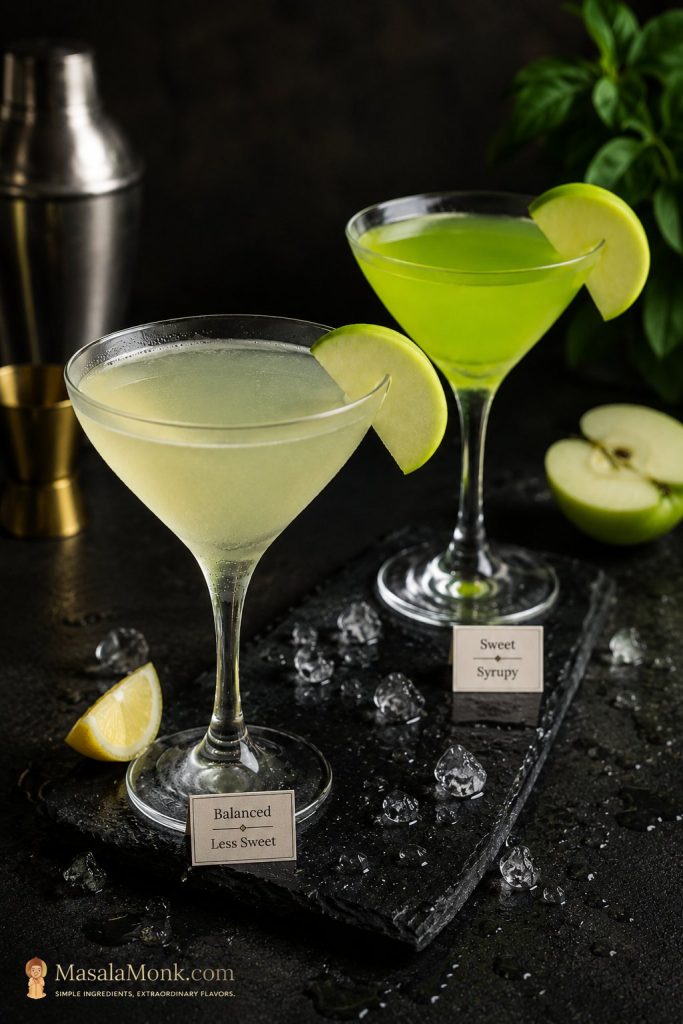
How to Fix the Taste: Less Sweet, More Tart, or Stronger
Use this after the first shake, not before. Cocktail balance depends on the bottle of liqueur, the sweetness of the juice, and how cold the drink is.
| Problem | How to Fix It |
|---|---|
| Overly sweet | Add a little more lemon or lime juice, reduce the sour apple liqueur next time, and skip the syrup. |
| Too tart | Add 1/4 oz / 7.5 ml simple syrup or use a slightly sweeter apple juice. |
| Weak or thin | Add a little more vodka, not more liqueur. |
| Strong alcohol bite | Add more apple juice and shake again with plenty of ice. |
| Heavy finish | Use less sour apple liqueur and more cloudy or unfiltered apple juice. |
| Flat flavor | Add a touch more fresh citrus and make sure the drink is very cold. |
| Needs more green color | Use a brighter sour apple liqueur, but avoid extra syrup. A green apple garnish also helps the look. |
Most bad Appletinis are not mysterious. They are too warm, too sweet, or both. Fix the cold and citrus, and the whole cocktail suddenly makes sense.
Appletini Variations
Think of the variations as moods: sour and sharp, fresh and quiet, fall and rounded, or dessert-like and playful. Start with the main recipe, then jump to the version that matches the bottle, season, or crowd you are mixing for.
None of these versions need to feel serious. The Appletini’s charm is that it gets to be fun — it just does not have to be cloying.
Sour Apple Martini
Use 1 1/2 oz vodka, 1 oz sour apple liqueur or apple pucker, 1/2 oz lemon or lime juice, and only 1/2 oz apple juice. Skip the syrup unless the drink tastes too sharp.

Green Apple Martini
Use a bright sour apple liqueur and garnish with a thin Granny Smith slice. To make the drink greener without making it much sweeter, keep the liqueur to 1 oz / 30 ml and let the garnish help with the color.

Fresh Apple Martini
Reduce the sour apple liqueur to 1/2 oz / 15 ml and use 1 1/2 oz / 45 ml cloudy or unfiltered apple juice. Add 1/2 oz / 15 ml lemon juice and a small amount of simple syrup only when needed. This version will not look as green, and that is the point.

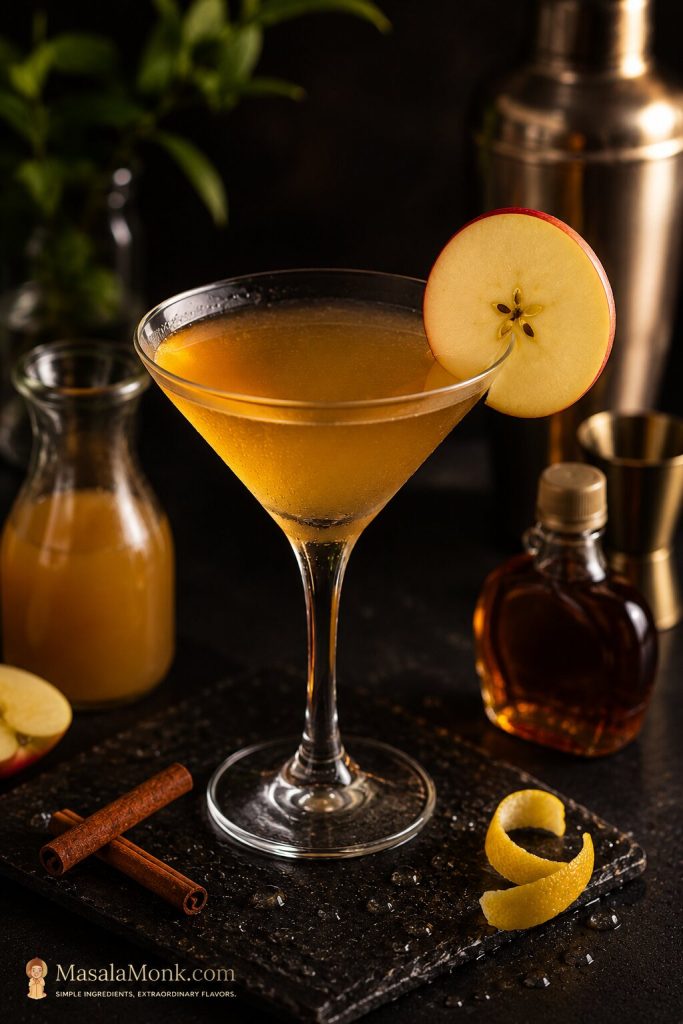
Apple Cider Martini
Replace the apple juice with apple cider and use maple syrup instead of simple syrup. This is no longer the bright green bar-style Appletini; it is a deeper apple martini with a rounder cider flavor.
Caramel Apple Martini
Add a small splash of butterscotch schnapps or use caramel vodka. Keep the lemon juice in the drink so the caramel does not make it heavy. A caramel drizzle or cinnamon-sugar rim works, but use it lightly.

Appletini With Apple Vodka
Use 1 1/2 oz / 45 ml apple vodka, 3/4 oz / 22.5 ml sour apple liqueur, 1 oz / 30 ml apple juice, and 1/2 oz / 15 ml lemon juice. Skip the simple syrup unless needed. With apple vodka, keep the liqueur and syrup lighter so the drink stays bright instead of turning into apple candy.

Non-Alcoholic Appletini or Virgin Appletini
Shake 2 oz / 60 ml apple juice, 1/2 oz / 15 ml lemon juice, and 1/4 oz / 7.5 ml simple syrup only when needed with ice. Strain into a chilled glass and top with sparkling water. Use ginger ale for a sweeter mocktail.

For something apple-forward without the vodka, MasalaMonk’s apple juice mocktails are a natural next step.
Can You Use Appletini Mix or Sour Mix?
Yes, but start small. Appletini mix, sour apple mix, and sweet-and-sour mix are usually already sweetened, so they can push the drink heavy fast.
With sweet-and-sour mix, shake 1 1/2 oz vodka, 1 oz sour apple liqueur, 1/2 oz apple juice, and 1/2 oz sour mix with ice. Taste before adding more sour mix or any syrup. Fresh lemon and apple juice simply make the drink taste more alive.

Common Appletini Mistakes
Check this when the drink tastes almost right but not quite. Most Appletini problems come from the same few places.
- Using too much sour apple liqueur: keep it around 1 oz / 30 ml so the drink tastes like apple, not syrup.
- Adding syrup automatically: many apple liqueurs are already sweet, so taste first.
- Skipping fresh lemon: citrus is what keeps the cocktail bright.
- Shaking too lightly: the drink needs enough cold and dilution to taste clean.
- Batching without dilution: add a little cold water when serving straight from a pitcher.
- Cutting garnish too early: brush or dip apple slices in lemon juice so they do not brown.
Make-Ahead, 2-Drink, and Pitcher Appletinis
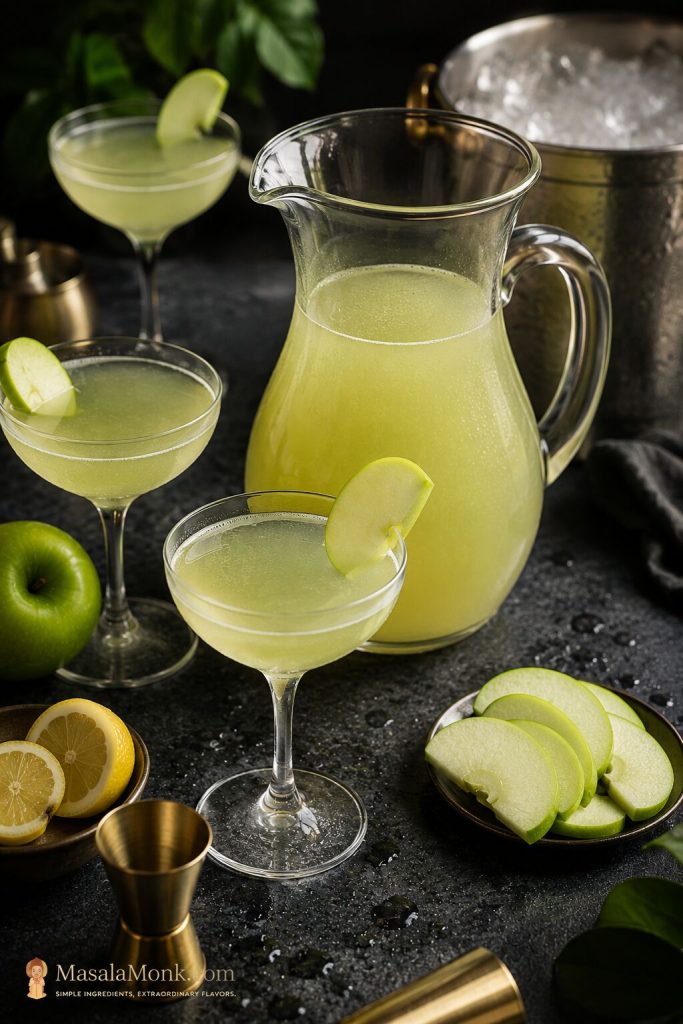
You can scale this recipe, but a pitcher Appletini needs help from cold and dilution because it misses the shake. Whenever possible, batch the ingredients, chill them, then shake individual portions with ice before serving.
A pitcher Appletini should still feel like a cocktail, not a bowl of green punch.
For 2 Appletinis
- 3 oz / 90 ml vodka
- 2 oz / 60 ml sour apple liqueur
- 2 oz / 60 ml apple juice
- 1 oz / 30 ml fresh lemon juice
- 1/2 oz / 15 ml simple syrup, optional
- Ice, for shaking
Shake with ice and strain into two chilled glasses.
Pitcher Appletini for 8 Cocktails
- 12 oz / 360 ml vodka
- 8 oz / 240 ml sour apple liqueur
- 8 oz / 240 ml apple juice
- 4 oz / 120 ml fresh lemon juice
- 2 oz / 60 ml simple syrup, optional
- 4 to 6 oz / 120 to 180 ml cold water, when serving straight from the pitcher without shaking
Stir everything except ice in a pitcher and refrigerate until very cold. When ready to serve, shake individual portions with ice when possible, then strain into chilled glasses. This gives the best texture and balance.
Serving straight from the pitcher? Start with 4 oz / 120 ml cold water. Taste after chilling and add up to 2 oz / 60 ml more water when the batch tastes too sharp or strong.
Keep ice out of the pitcher unless you are serving immediately. Ice will melt and water down the whole batch. Garnish each glass just before serving so the apple slices look fresh. This is still a cocktail batch, not a light punch, so pour modest servings and keep it chilled.
Can You Make Appletinis Ahead?
Yes. Mix the vodka, sour apple liqueur, apple juice, and lemon juice up to 4 hours ahead and refrigerate. Add ice only when shaking or serving.
For the freshest flavor, shake with ice right before pouring. Citrus can taste dull when it sits too long, so this drink is best mixed ahead only for same-day serving. Slice the apple garnish right before serving, or hold slices briefly in lemon water and pat dry before using.
Serve It Up or On the Rocks
An Appletini is usually served “up,” meaning shaken with ice and strained into a stemmed glass without ice. That gives it the clean martini-style feel.
You can also serve it over fresh ice in a rocks glass for a colder, slower-sipping drink. On the rocks, the cocktail becomes more diluted as the ice melts. That can make sweeter versions easier to drink, but it will soften the sharp apple flavor over time.
For vodka cocktails served tall or over ice, a Moscow Mule may be more your style than a strained martini glass drink.
Is an Appletini Strong?
An Appletini can be stronger than it tastes because the main recipe has 1 1/2 oz vodka plus 1 oz sour apple liqueur. The apple juice and citrus make it taste smooth and fruity, so serve it in small martini portions rather than oversized pours.
For general drink-size context, the NIAAA standard drink guide explains how distilled spirits are counted in standard servings. Sip slowly and serve responsibly.
What to Serve With an Appletini
The tart apple edge cuts through creamy cheese beautifully, and the lemony finish wakes up salty snacks. Think sharp cheddar, brie, salted nuts, olives, prosciutto, fried cheese bites, pork sliders, or spicy chicken bites.

For a simple snack table, pair Appletinis with a charcuterie board and something creamy like an easy cheese ball. The salty, creamy bites make the apple and lemon feel even brighter.
For caramel apple or apple cider martini variations, serve light desserts, apple tart, cinnamon cookies, or vanilla-forward sweets. Keep the food less sweet when the cocktail itself is on the sweeter side.
Why the Appletini Deserves a Better Reputation
The Appletini is one of those cocktails people either remember fondly or dismiss too quickly. Its retro reputation came from very sweet, very green versions, but the idea itself is solid: cold vodka, apple, citrus, and enough tartness to make the fruit taste brighter.
The Appletini does not need to apologize for being retro. It just needs enough citrus and cold to be worth drinking now.
Retro Green Appletini Party
This is where the drink earns its comeback: not as a novelty shot, but as a cold, bright cocktail that still feels fun with friends.

For a little cocktail history, the Appletini is widely associated with the 1990s apple martini wave and the Lola’s West Hollywood origin story.
This recipe keeps the fun part of the drink — the green apple snap — and fixes the part that usually goes wrong: too much sweetness.
FAQs
What is in an Appletini?
An Appletini usually contains vodka, sour apple schnapps or sour apple liqueur, apple juice, lemon juice, and ice. The best versions taste cold and tart, not just sweet and green.
How do you make an Appletini?
Shake vodka, sour apple liqueur, apple juice, and fresh lemon juice with ice for 15 to 20 seconds. Strain into a chilled martini glass and garnish with a thin green apple slice.
Is an Appletini the same as an apple martini?
Appletini is the common nickname for an apple martini. The name often suggests the bright green sour apple version, while “apple martini” can also describe fresher apple juice or cider versions.
Is an Appletini made with vodka or gin?
Vodka is the usual base for an Appletini. Gin can be used for a botanical variation, but it will taste less like the expected apple martini.
What does an Appletini taste like?
An Appletini should taste cold, sweet-tart, and apple-forward, with a sharp green apple finish. If it tastes like syrup first and apple second, it needs more citrus or less liqueur.
Why is my Appletini too sweet?
An Appletini tastes too sweet when the sour apple liqueur, sour mix, apple juice, or syrup adds too much sugar. Fix it with fresh lemon or lime juice, skip the syrup, and reduce the apple liqueur next time.
How do I make an Appletini less sweet?
Use the same vodka, but reduce the sour apple liqueur, skip the syrup, choose unsweetened apple juice, and add fresh lemon or lime a little at a time.
Can I make an Appletini without sour apple schnapps?
You can make an Appletini without sour apple schnapps by using apple juice or apple cider with vodka, fresh lemon juice, and a little simple syrup or maple syrup when needed. It will taste more like a fresh apple martini than the bright green bar-style version, but still crisp and apple-flavored.
Can I use apple juice instead of apple pucker?
Apple juice works well when you want a softer, fresher apple flavor. For a bolder sour green apple flavor, apple pucker is the stronger choice, and using both gives classic Appletini flavor with more real apple body.
Can I use apple cider instead of apple juice?
Use non-alcoholic apple cider or unfiltered apple juice when you want a deeper, more fall-flavored version. It will not look as bright green as a classic Appletini, but it works well with lemon, maple syrup, and a cinnamon garnish.
What is the best garnish for an Appletini?
A thin green apple slice is the classic garnish. Brush it with lemon juice to slow browning. A lemon twist or cocktail cherry also works.
Can I make a pitcher of Appletinis?
Batch the vodka, sour apple liqueur, apple juice, and lemon juice in a pitcher and chill well. Keep ice out of the pitcher, and add a little cold water when serving without shaking individual drinks.
Can I make a non-alcoholic Appletini?
Shake apple juice, lemon juice, and a little simple syrup only when needed with ice, then strain into a chilled glass. Top with sparkling water for a lighter non-alcoholic Appletini, or use ginger ale for a sweeter version.
More Cocktail Recipes
For crisp vodka cocktails, try a Screwdriver or Moscow Mule. For another martini-style drink, try an Espresso Martini.
Serve only to adults of legal drinking age and enjoy responsibly.
The best Appletini keeps the fun — the green glass, the retro wink, the first icy sip — and loses the syrupy finish. Make it cold, keep the lemon fresh, and let the apple taste like apple.








