
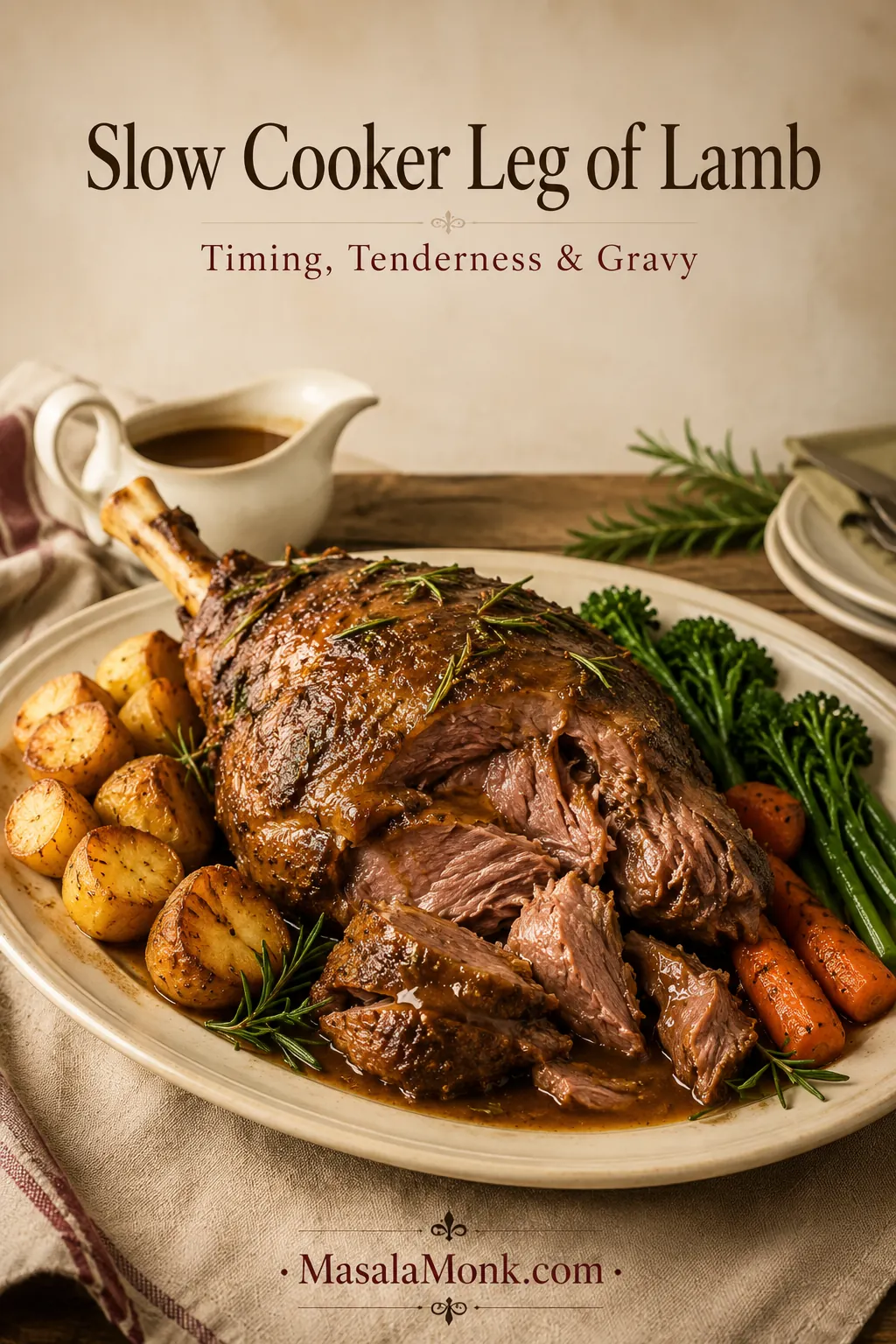
Slow cooker leg of lamb should give you three things when the lid comes off: meat that yields beneath a fork, a kitchen full of garlic and rosemary, and cooking juices already halfway to becoming gravy.
That is the calm version of Sunday lunch. Leg of lamb is not something most people want to experiment with blindly, especially when several people are waiting to eat—and a compact boneless roll, bone-in half leg and large whole leg will not all behave in exactly the same way.
The recipe below gives you a dependable starting point. Then the joint-specific guide shows when to begin checking a 1 kg half leg, a rolled boneless joint or a larger bone-in leg, because shape and thickness can matter almost as much as weight.
Quick Answer: Slow Cooker Leg of Lamb
A 1.3–1.5 kg / 2.9–3.3 lb leg of lamb generally needs about 7–8 hours on low in a slow cooker or Crock-Pot. Start checking the thickest meat at around 6½ hours. A smaller 1 kg / 2.2 lb half leg can take about 3½–4½ hours on high, with the first check at three hours.
Keep most of the lamb above the liquid. Continue cooking until it has reached a safe temperature and a fork twists through the thickest section with little resistance, then brown it briefly while turning the cooking juices into gravy.
This method produces fully cooked, fork-tender lamb. It is not the right method when you want a pink or medium-rare centre with neat carved slices.
Not sure your joint matches this timing? Check the joint type, test the cooker fit, or use the timing guide.
Slow Cooker Leg of Lamb Recipe
Garlic and Rosemary Lamb with Gravy
The lamb is savoury and rosemary-scented, with mellow garlic, soft sweet onions and plenty of cooking juice for gravy. A short hot-oven finish gives the pale slow-cooked surface burnished edges without drying the tender meat underneath.
Recipe at a glance:
Prep: 25 minutes
Slow cooking: about 7–8 hours on low
Browning and gravy: 15–20 minutes
Final rest: 5–10 minutes
Serves: 4 generously, or 5–6 with substantial sides
Slow cooker: about 5.5–6 litres / 6 quarts
Equipment: slow cooker, meat thermometer, roasting tray, broad spatula or serving spoon, heatproof jug, fine-mesh strainer and saucepan.
Choose your finish: For the best colour and a fuller gravy, brown the lamb in the oven, then defat, reduce and thicken the cooking juices. For the easiest route, skip the oven finish and serve the pale but tender lamb with defatted cooking juices or a simple gravy.
Before you start: check whether the lamb fits and see how to test doneness if this is your first time slow-cooking a leg of lamb.
Most of the cooking time is unattended. The active work is divided between the initial preparation and the optional browning-and-gravy finish.
Using a smaller or boneless leg? Follow the same preparation and finishing method, then use the timing guide later in the article for the cooking window.
Ingredients
| Ingredient | Amount |
|---|---|
| Bone-in half leg of lamb | 1.3–1.5 kg / 2.9–3.3 lb |
| Fine sea salt | 10 g / about 1¾ teaspoons |
| Freshly ground black pepper | About 2 g / 1 teaspoon |
| Garlic, finely grated or crushed | 6 cloves / about 20–24 g |
| Fresh rosemary, finely chopped | 2 tablespoons / about 6–8 g |
| Olive oil, divided | 30 ml / 2 tablespoons |
| Large onions, thickly sliced | 2 / about 350–400 g |
| Large carrots, cut into large pieces | 2 / about 200–250 g |
| Unsalted or low-sodium lamb, beef or chicken stock | 240 ml / 1 cup |
| Dry red wine, or additional stock | 120 ml / ½ cup |
| Redcurrant jelly or mint jelly, optional | 2 tablespoons / about 35–40 g |
For the Gravy
- 16 g / 2 tablespoons cornflour or cornstarch
- 45 ml / 3 tablespoons cold water
- Hot unsalted stock or water, only if needed
- Salt and black pepper, added only after tasting
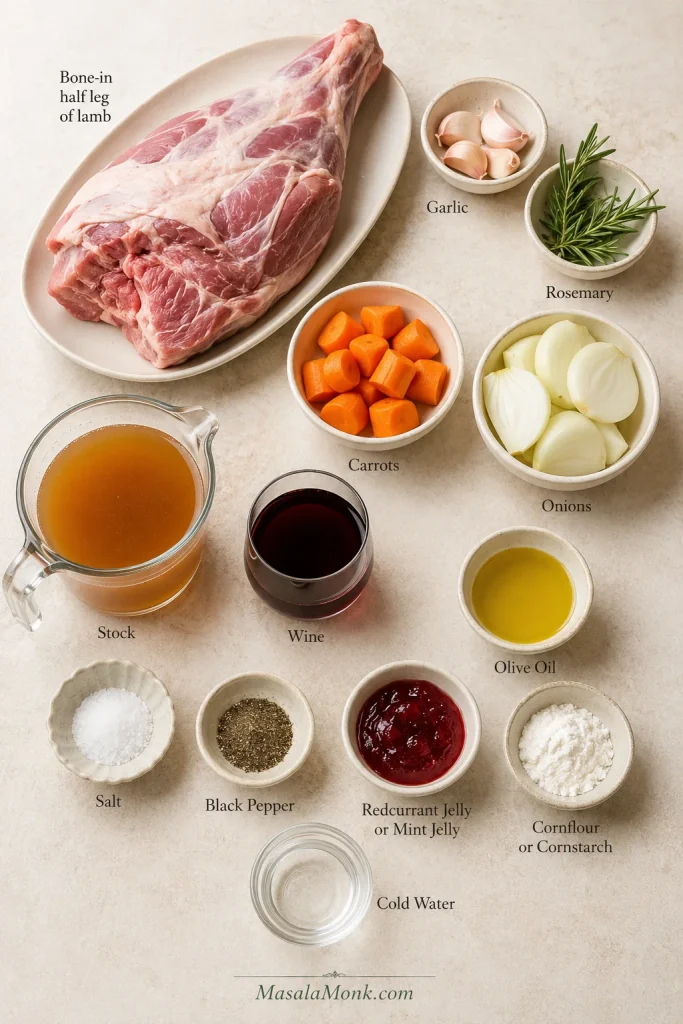
The ingredient set is small, but it builds both the lamb and the gravy.
Instructions
Prepare and Load the Lamb
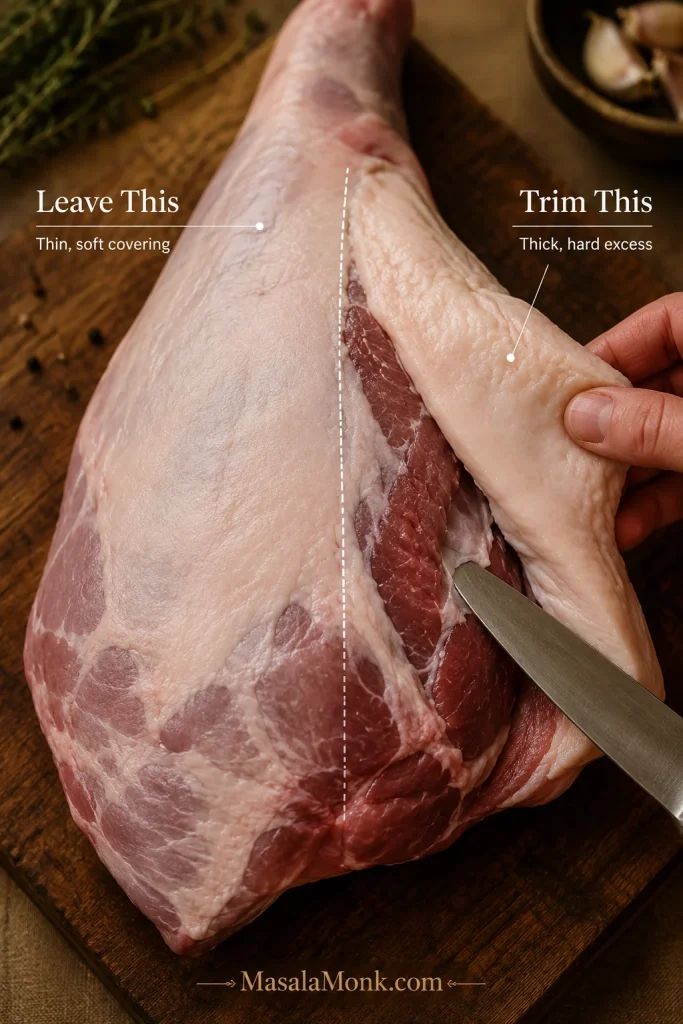
- Thaw, trim and test the fit. Begin with fully thawed lamb and remove all outer packaging. Leave a thin, soft fat covering in place, but trim away any unusually thick or hard external fat. Put the unseasoned leg inside the clean cooker. The lid must close flat, with room underneath for the vegetables and cooking juices. Remove the lamb and pat it dry.
Trim only the heavy excess fat before seasoning.
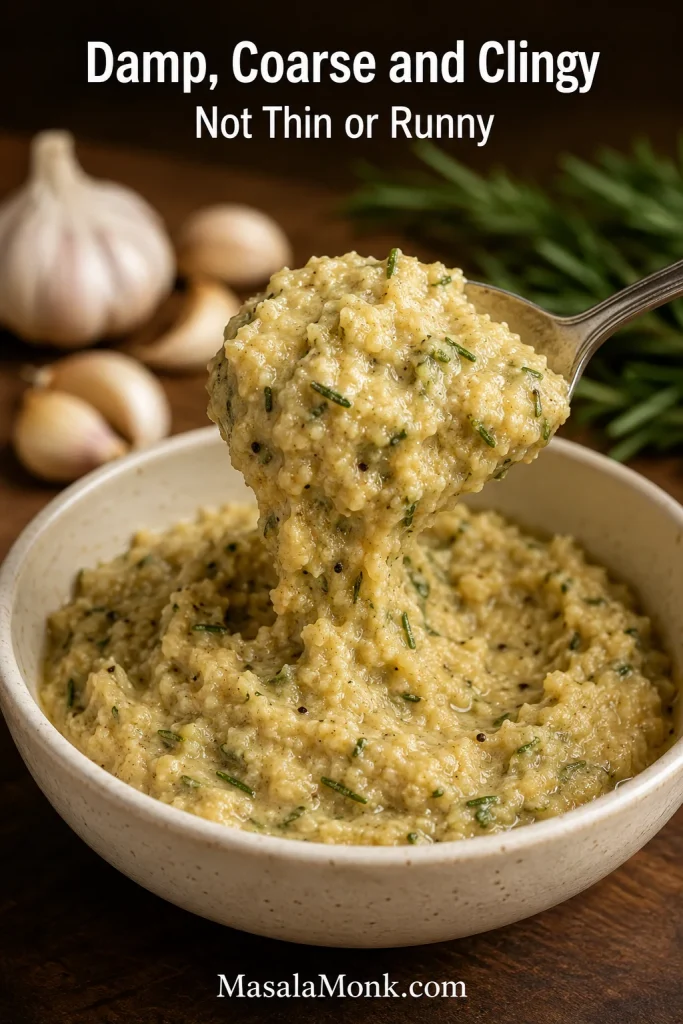
- Season the lamb. Mix the salt, pepper, garlic, rosemary and 1 tablespoon of olive oil into a damp, coarse paste. It should cling to the meat rather than run off. Rub it over every exposed surface.
Aim for a paste that clings.
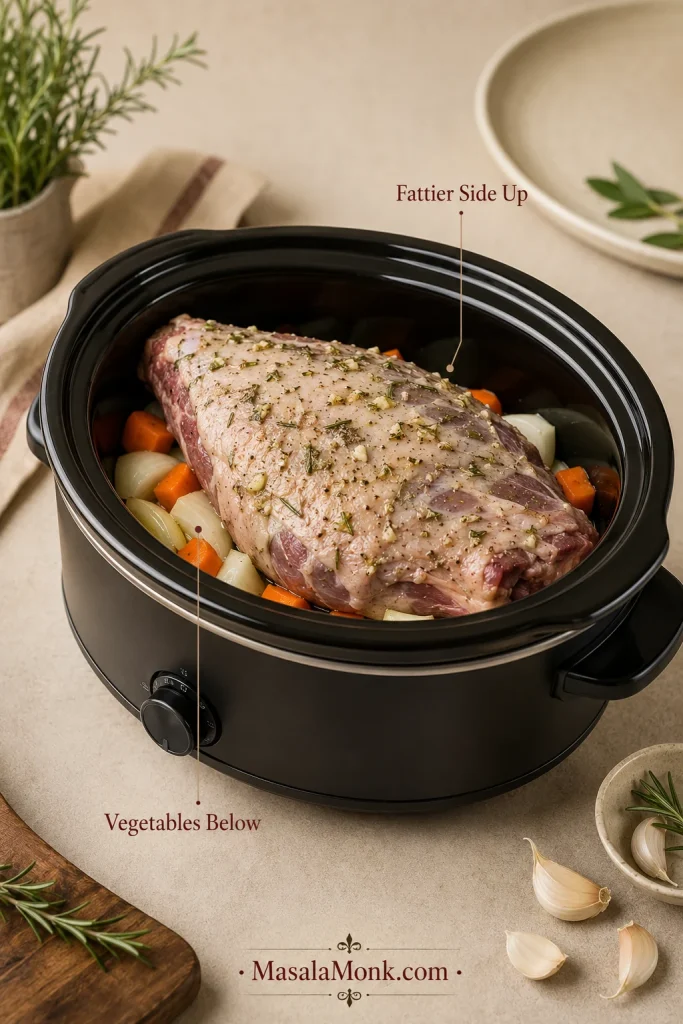
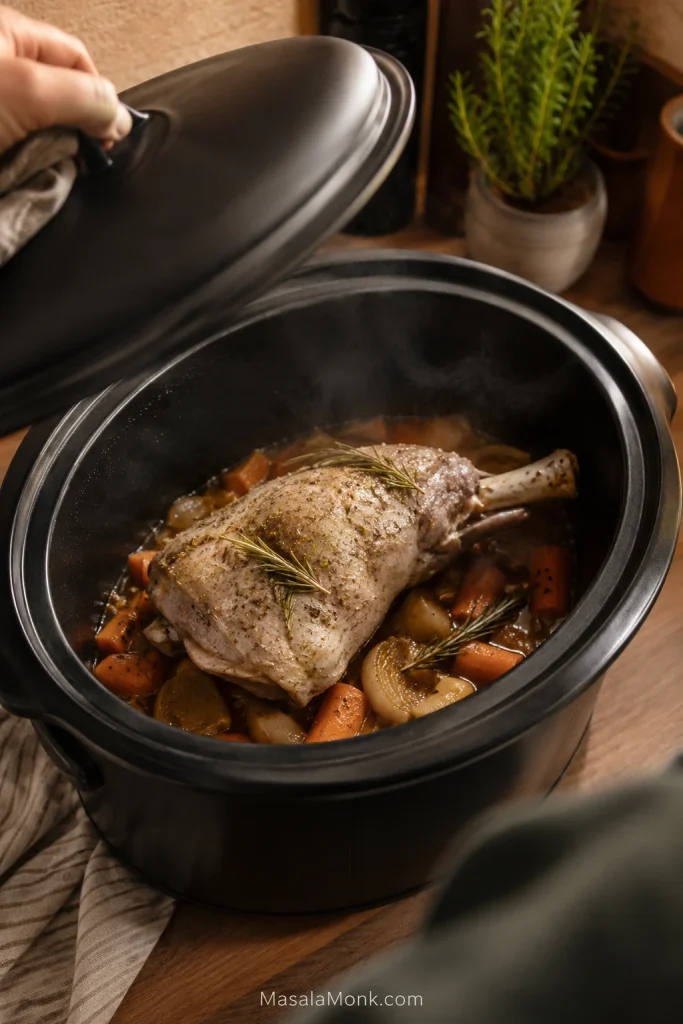
- Build the cooker. Spread the onion and carrot over the base. Place the lamb on top with the fattier side facing upward where its shape allows.
This is the setup to copy before the lid goes on.
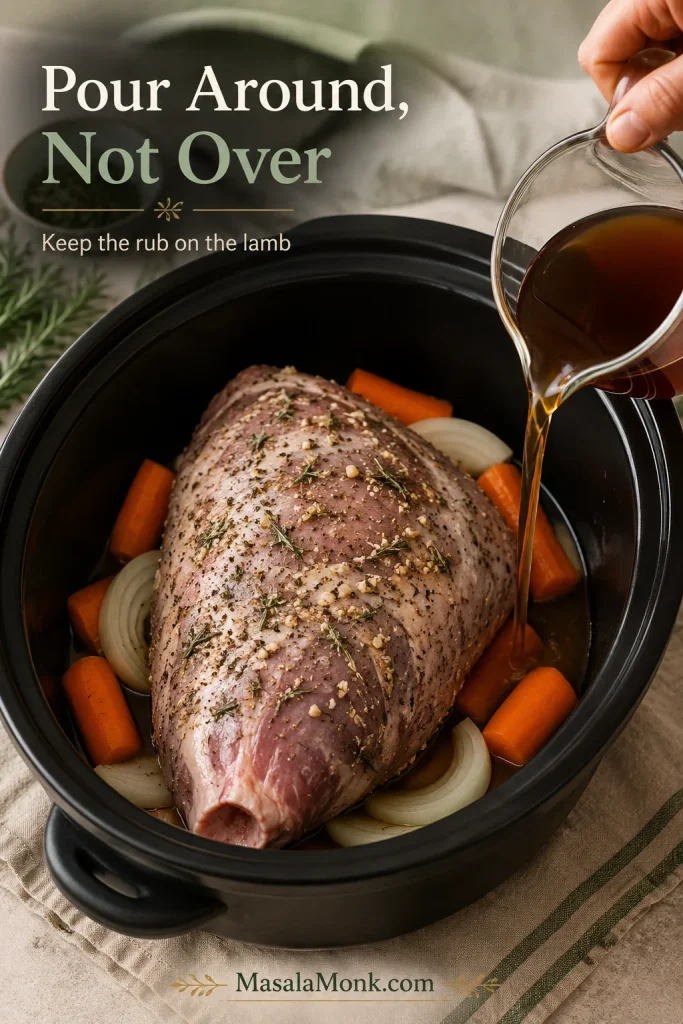
- Add the stock and wine. Pour them around the sides rather than over the seasoning. Only the vegetables and lower part of the lamb should sit in the liquid; the cooker is not meant to look like soup.
Pour the liquid around the lamb, not over the rub.
Cook and Check Doneness
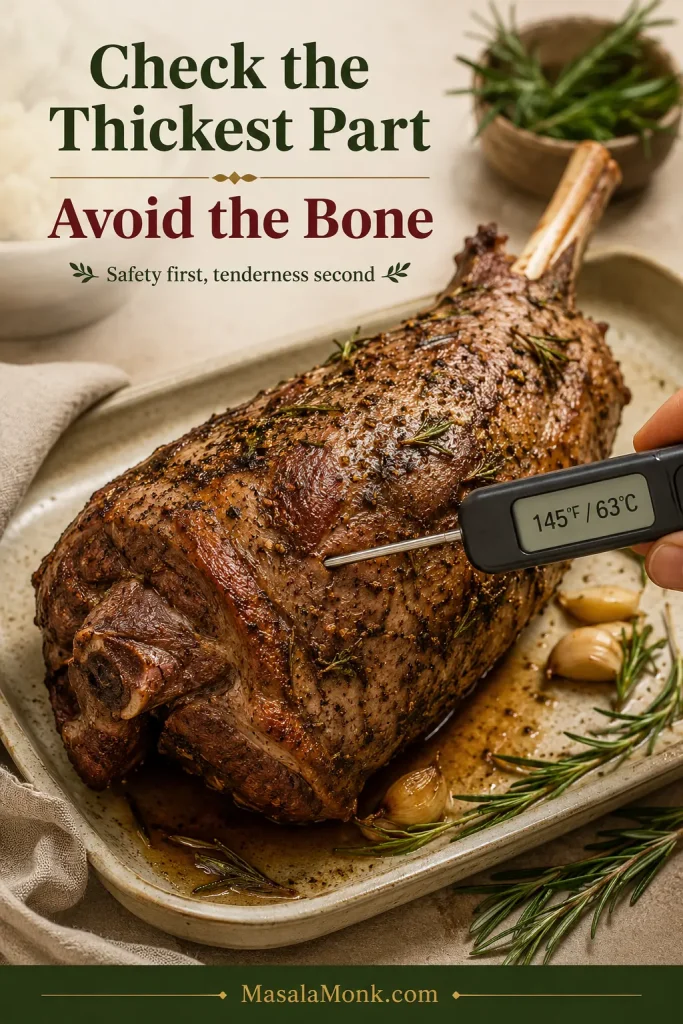
- Slow cook. Cover and cook the 1.3–1.5 kg / 2.9–3.3 lb bone-in half leg on low for about 7–8 hours. Keep the lid closed until the first check at around 6½ hours, because repeated lifting releases heat and can lengthen the cook.
- Check the thickest part.
Confirm safety: Insert the thermometer into the thickest meat without touching the bone. It must reach at least 63°C / 145°F, followed by a rest of at least 3 minutes. The final 5–10-minute rest in this recipe satisfies that minimum.
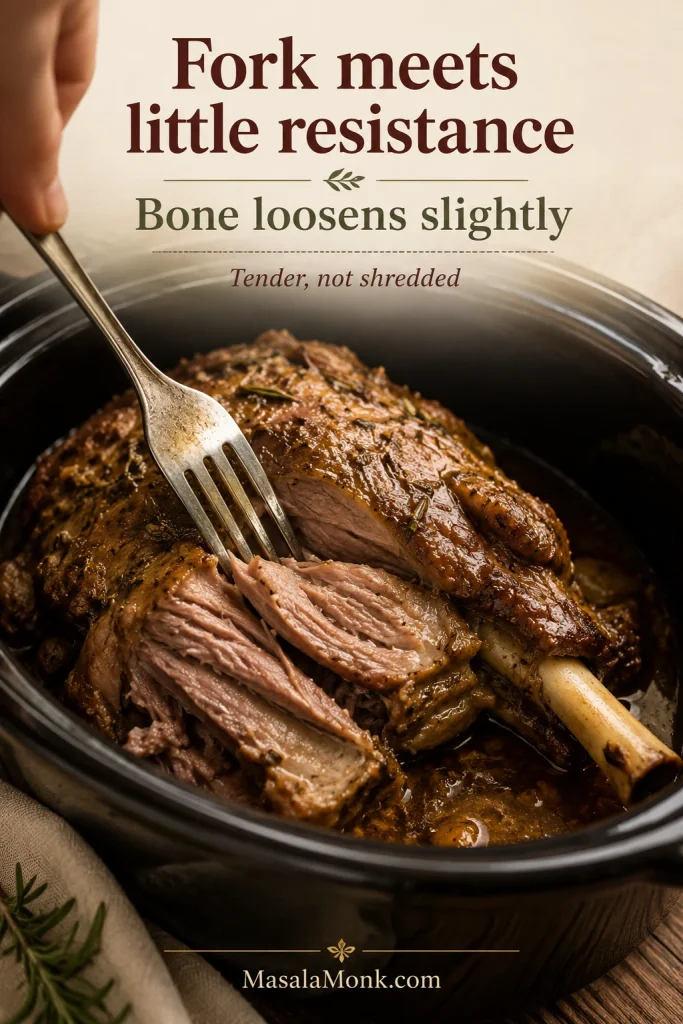
Then check tenderness: The fork should slide into the thickest section and twist easily. The fibres should begin to separate, and a bone-in leg should feel loose around the bone. Reaching the safe temperature does not automatically mean the lamb is tender.
Need more detail? See the full temperature and fork-tenderness guide.
Brown, Make Gravy and Serve
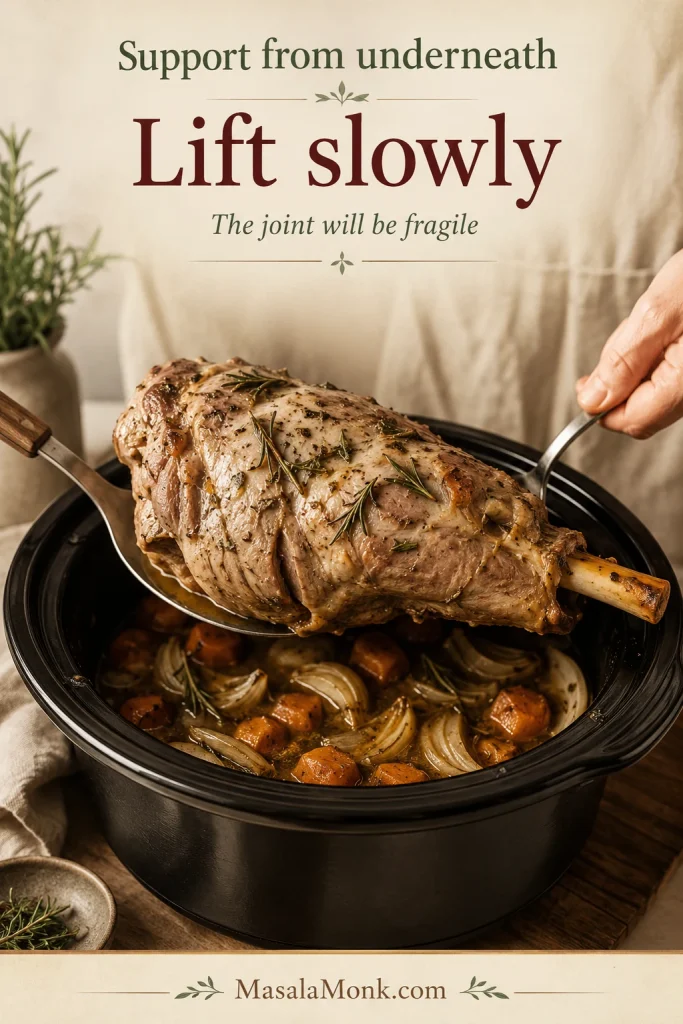
- Transfer and strain. By this point the leg may feel unexpectedly fragile. Support it from underneath with a broad spatula or serving spoon rather than trusting the tongs to hold it together. Move it to a lined roasting tray, then strain the cooking juices through a fine-mesh strainer into a heatproof jug. Heat the oven to 220°C / 425°F.
Lift with support underneath once the lamb is tender.
- Brown the lamb. Brush the surface lightly with the remaining olive oil or a thin layer of jelly. Roast for about 10–15 minutes, stopping when the garlic-and-rosemary surface looks burnished and the edges begin to darken. A hot grill or broiler can do the same job in a few minutes, but watch continuously.
- Make the gravy. Remove the surface fat from the strained juices, then simmer them in a wide saucepan. Mix the cornflour or cornstarch with the cold water and whisk the slurry in gradually. Stop when the gravy coats the back of a spoon; you may not need all of it.
- Rest, portion and serve. Rest the browned lamb for 5–10 minutes. Lift away the loosened bone, discard any large pieces of fat and pull the meat into generous sections rather than fine shreds. Remove the string from a boneless roll before portioning, then serve with hot gravy.
Gravy looking greasy or thin? Jump to the gravy fixing guide.
Recipe Notes
- Boneless rolled leg: leave ordinary butcher’s string in place while cooking. Follow the package instructions for elastic or synthetic netting.
- Skipping wine: replace it with the same amount of unsalted or low-sodium stock.
- Using dried rosemary: use 1–1½ teaspoons dried rosemary, crushed between your fingers.
- Extra cooking juice is normal: the liquid level usually rises as the lamb, onions and carrots release moisture.
- Gravy yield: depending on the leg and how far the juices are reduced, there should be enough for roughly 4–6 servings.
Slow-cooker safety: thaw the lamb completely, load and switch on the cooker immediately, and follow your appliance manual for large cuts and fill levels. Use the hob, oven or microwave—not the slow cooker—to reheat refrigerated leftovers.
Choose the Lamb Joint You Actually Have
Best default: use a 1.3–1.5 kg bone-in half leg and cook it on low. It fits more readily than a whole leg, still looks generous on the table and gives you a useful cue near the end as the bone begins to loosen.
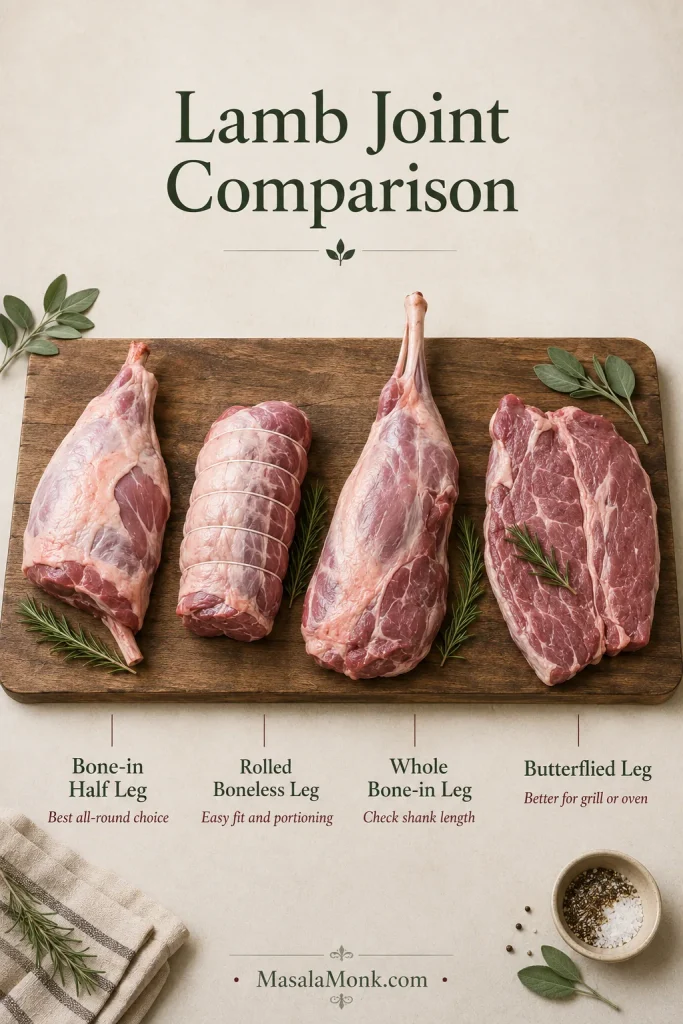
Compare Common Lamb Joints
| Joint | Best for | Main caution |
|---|---|---|
| Bone-in half leg | Best all-round choice | The bone reduces the edible yield |
| Rolled boneless leg | Easy fit and simple portioning | Check it earlier than a long bone-in leg |
| Whole bone-in leg | A larger gathering | The long shank may prevent the lid from closing |
| Butterflied leg | Grilling or faster oven roasting | Uneven thickness makes it less suited to this method |
A smaller 800 g–1 kg bone-in half leg works well on high when time is shorter, although there is less meat to protect from overcooking. A rolled boneless leg gives more edible meat at the same raw weight and is often the easiest choice for a compact cooker.
Whole Leg and Shoulder Cautions
Bought a whole leg? Test it before seasoning. When the shank is too long, ask a butcher whether it can be shortened or partly cut so the joint bends more easily.
Start by identifying the joint you actually bought.
Lamb shoulder contains more fat and connective tissue and is better treated as a separate recipe rather than assigned the leg timings in this guide.
Will the Lamb Fit Your Slow Cooker?
The slow cooker does not care how elegant the leg looked in the butcher’s case. It cares whether the lid can close.
- Before seasoning, place the lamb in the clean cooker insert.
- Make sure the thickest part sits below the rim.
- Leave room underneath for the onion, carrot and cooking liquid.
- Check that the lid closes flat without touching or pressing against the meat.
- Remove the lamb before preparing the recipe.
The lid must close flat.
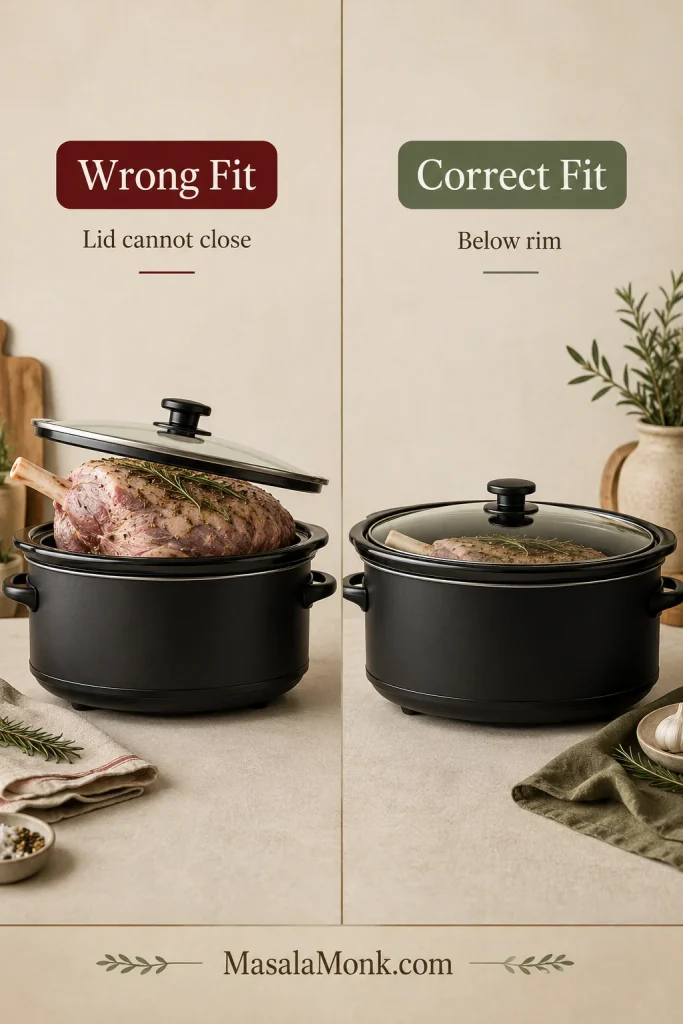
The fit test takes less than a minute and is worth doing before your hands are covered in garlic and rosemary. A 5.5–6 litre / 6-quart oval cooker is a useful starting size for many half legs, but the appliance manual should take priority for unusually large cuts.
FoodSafety.gov also recommends checking the manufacturer’s guidance for large cuts. See its slow-cooker safety advice.
Slow Cooker Leg of Lamb Cooking-Time Guide
Two legs with the same weight can still finish at different times. These conservative planning windows bring together timings used for comparable joints. Begin checking at the stated time, then let the thermometer and fork make the final decision.
| Lamb | Setting | First check | Common working window |
|---|---|---|---|
| 1 kg / 2.2 lb bone-in half leg | High | 3 hours | About 3½–4½ hours |
| 1 kg / 2.2 lb bone-in half leg | Low | 6½ hours | About 7–8 hours |
| 1.3–1.5 kg / 2.9–3.3 lb bone-in half leg | Low | 6½ hours | About 7–8 hours |
| 1.3–1.5 kg / 2.9–3.3 lb rolled boneless leg | Low | 6 hours | About 6½–8 hours |
| 1.3–1.5 kg / 2.9–3.3 lb rolled boneless leg | High | 3½ hours | About 4–5 hours |
| Approximately 2 kg / 4.4 lb leg | Low | 8 hours | About 8–10 hours |
Use the full timing guide for planning, not final doneness.
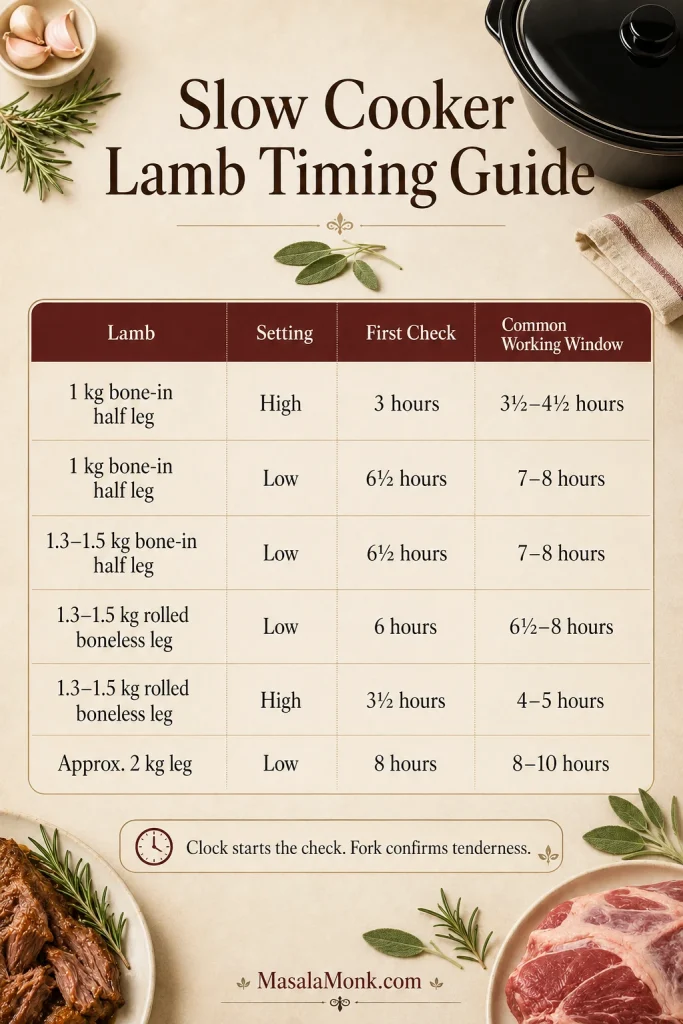
Planning around a meal time? Use the dinner and Sunday lunch schedules, or check the four-hour route for a smaller half leg.
Need to use high for a 1.3–1.5 kg bone-in half leg? Treat four hours as an early check rather than a promised finishing time. The thickest meat may need closer to five or six hours before the fork turns easily. Low remains the more forgiving route.
Use the clock to start checking. Confirm safety with the thermometer. Judge tenderness with the fork.
Three checks matter: time, temperature and tenderness.
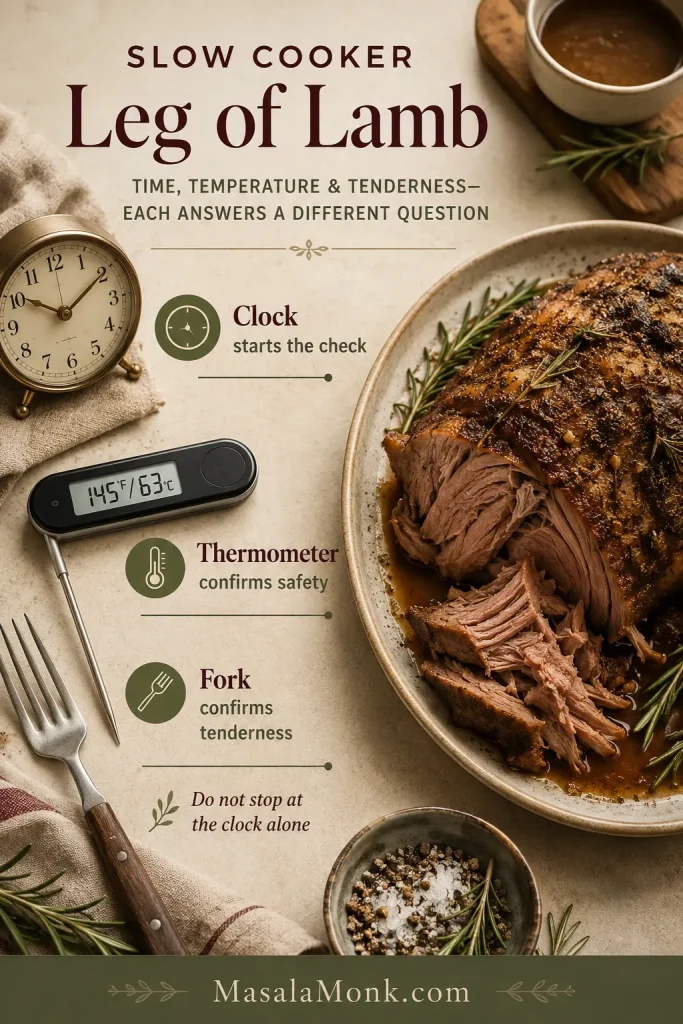
A safe temperature may arrive before the fork agrees. When the thickest meat still pushes back, the connective tissue needs more time to soften.
Can Leg of Lamb Be Ready in Four Hours?
Yes—for a fully thawed 1 kg half leg on high. Check the thickest section from three hours and probe more than one area when the joint is thick or uneven. A larger bone-in leg may still feel firm at four hours.
The four-hour route only suits a smaller half leg.
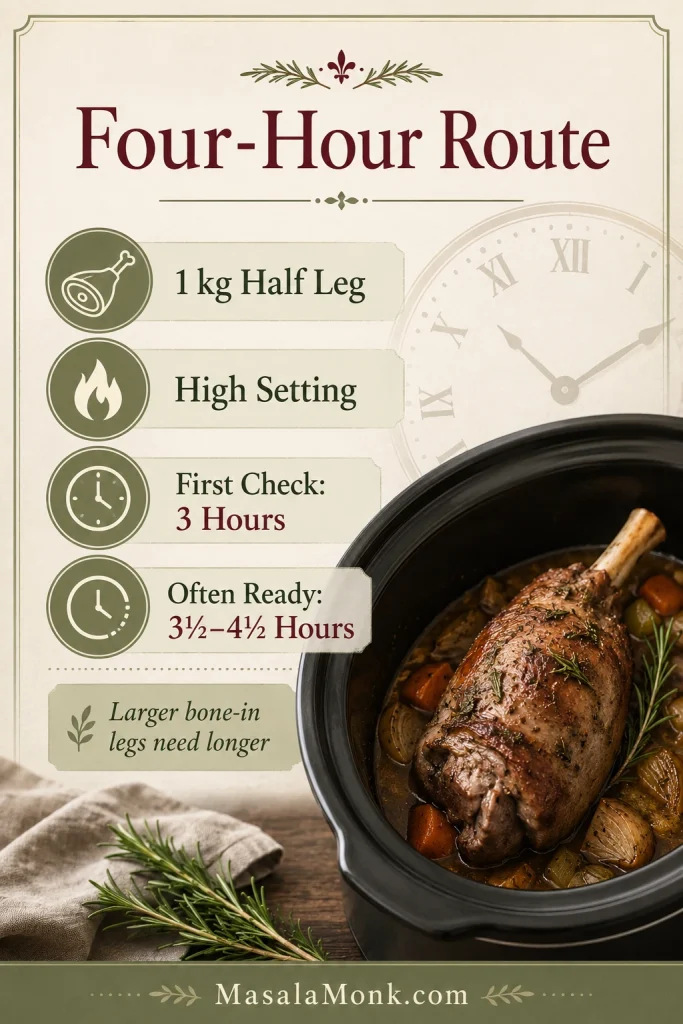
Choose the setting according to the joint and time available:
- Low: the most forgiving setting for a larger leg and the best default for a family meal.
- High: useful for a smaller half leg, compact boneless roll or late start, but with a narrower finishing window.
- Warm: for holding already-cooked food, not for beginning with raw lamb.
Cooking Schedules for Dinner and Sunday Lunch
| Serving plan | Suggested approach |
|---|---|
| Dinner at 7 p.m. | For the main recipe joint, start on low between about 10:30 and 11:30 a.m. Check from around 5:30–6 p.m., then brown and finish the gravy shortly before serving. |
| Lunch at 1 p.m. | Use a smaller half leg on high, or cook the lamb the previous day and reheat it gently. |
| Make it the previous day | Cook until tender, cool promptly and refrigerate with some cooking juice. Reheat covered before restoring the browned surface. |
| Cook overnight | Reserve this for a larger leg whose low-setting window suits the time available. A small, lean joint may become soft but dry during an extreme overnight cook. |
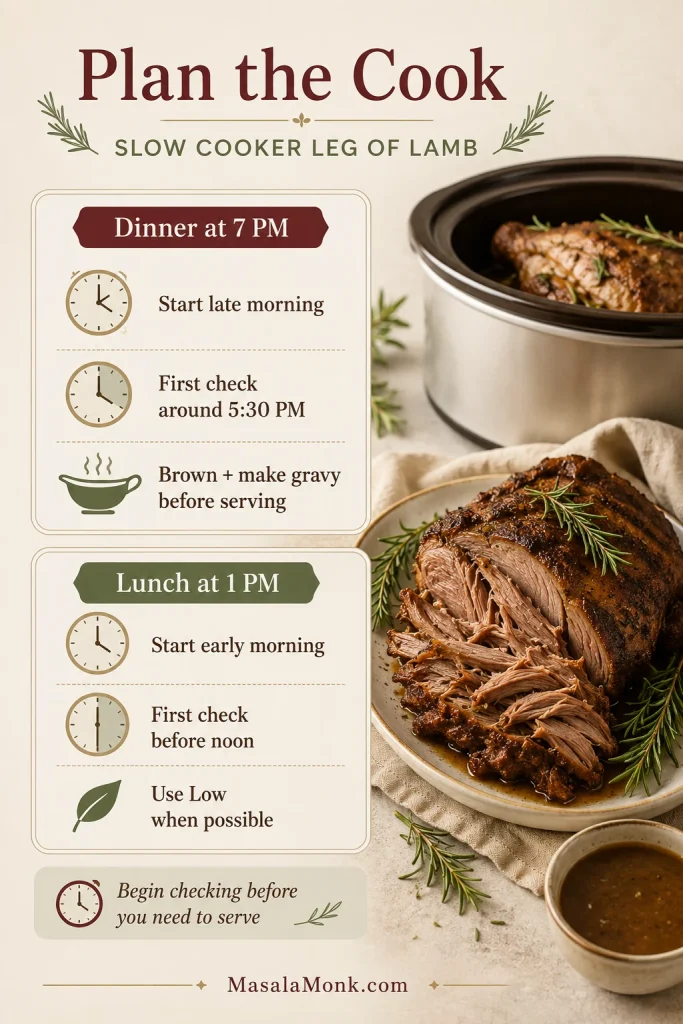
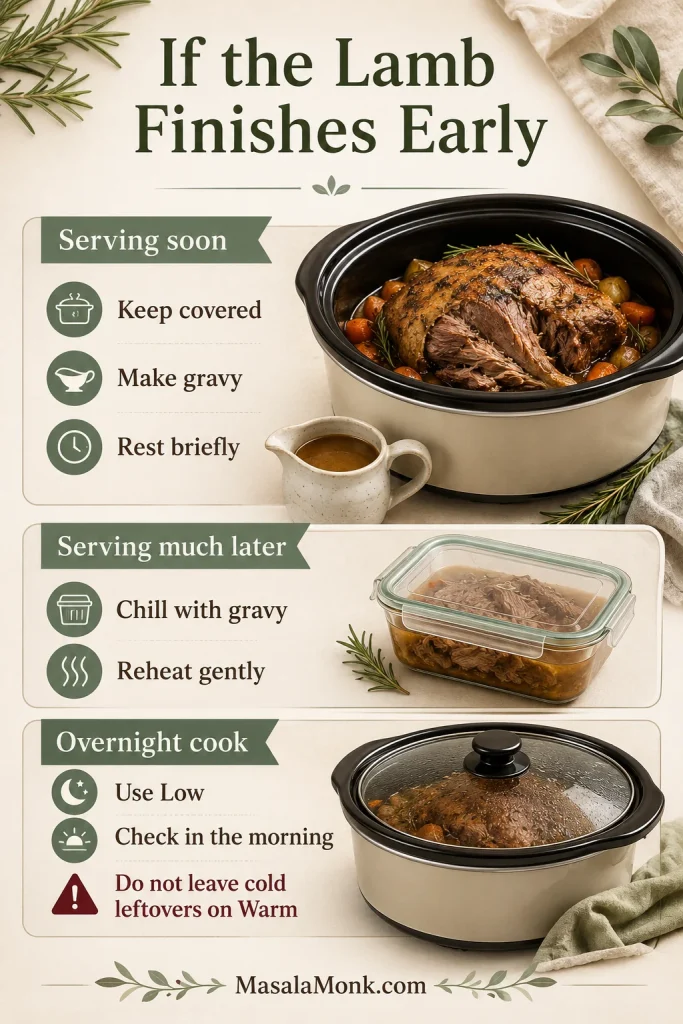
If the lamb becomes tender early: remove it from the cooker. If serving soon, keep it safely hot; if the wait will be longer, cool it promptly and refrigerate it with some cooking juice. Reheat and brown it shortly before serving.
For the previous-day route, cover the lamb and reheat it in a 163°C / 325°F oven until the centre reaches 74°C / 165°F. Uncover and increase the heat briefly to restore the browned surface, then rest the meat while warming the gravy separately.
Have a safe plan if the lamb finishes early.
How Much Liquid Does Leg of Lamb Need?
During cooking, the slow cooker will usually create considerably more liquid than you put into it. The lamb should therefore sit above most of the stock rather than disappear into it.
- Little or no added liquid gives concentrated juices and a more roast-like result, but may leave too little for a generous gravy.
- A moderate amount gives enough cooking juice for gravy without turning the dish into a stew. The main recipe uses this middle route.
- A large amount creates a wetter, more fully braised result.
Enough liquid for gravy is not the same as submerging the lamb.
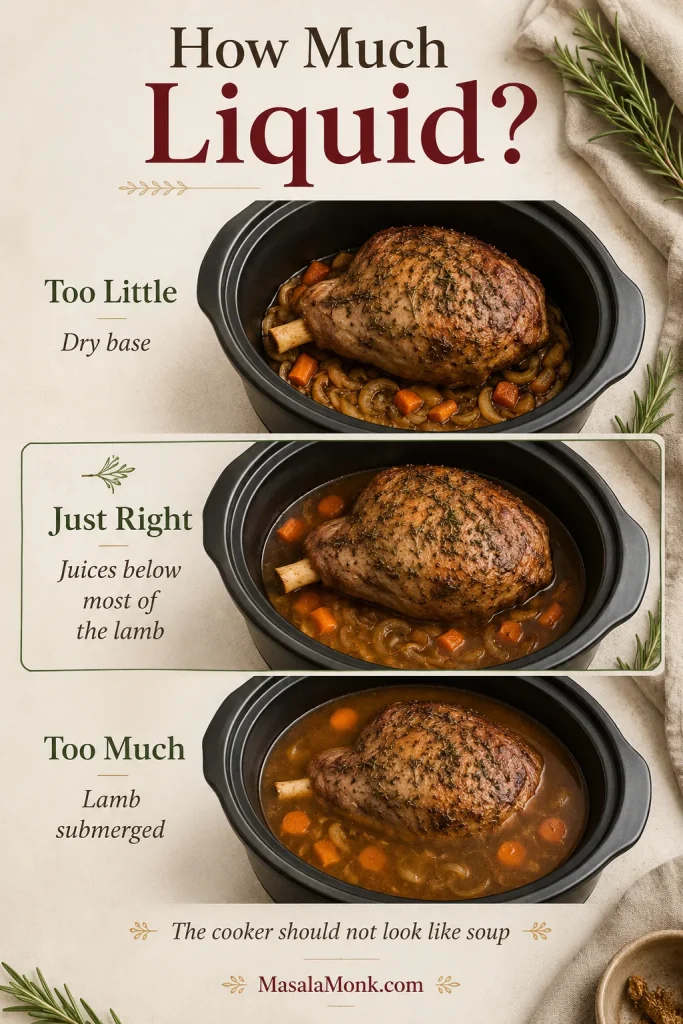
A larger-than-expected pool of cooking juice is normal. Strain it, remove the fat and reduce it before adding cornflour or cornstarch.
Too much liquid after cooking? See how to defat, reduce and thicken the juices.
How to Tell When Slow-Cooked Lamb Is Done
Temperature answers the safety question. The fork tells you what the meat will feel like on the plate.
This slow-cooker version is about fork-tender lamb, not pink carving slices.
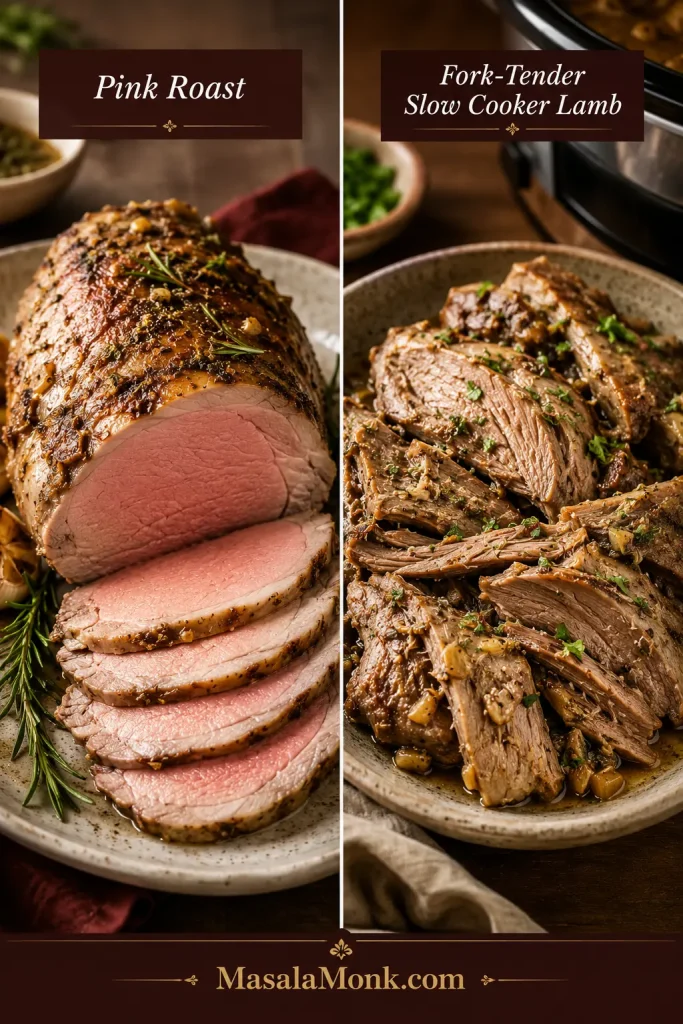
Temperature vs Texture
| Stage | What you notice | Result |
|---|---|---|
| Firm but safely cooked | The meat slices cleanly and pushes back against the fork | Suitable for firm slices |
| Tender | The fork enters easily but the leg still holds together | Soft carved slices |
| Easy to separate | The fibres part with little pressure | Fork-tender serving pieces |
| Dry and fibrous | The meat separates but feels cottony | Cooked beyond its best point |
Doneness is a texture journey, not a single moment.
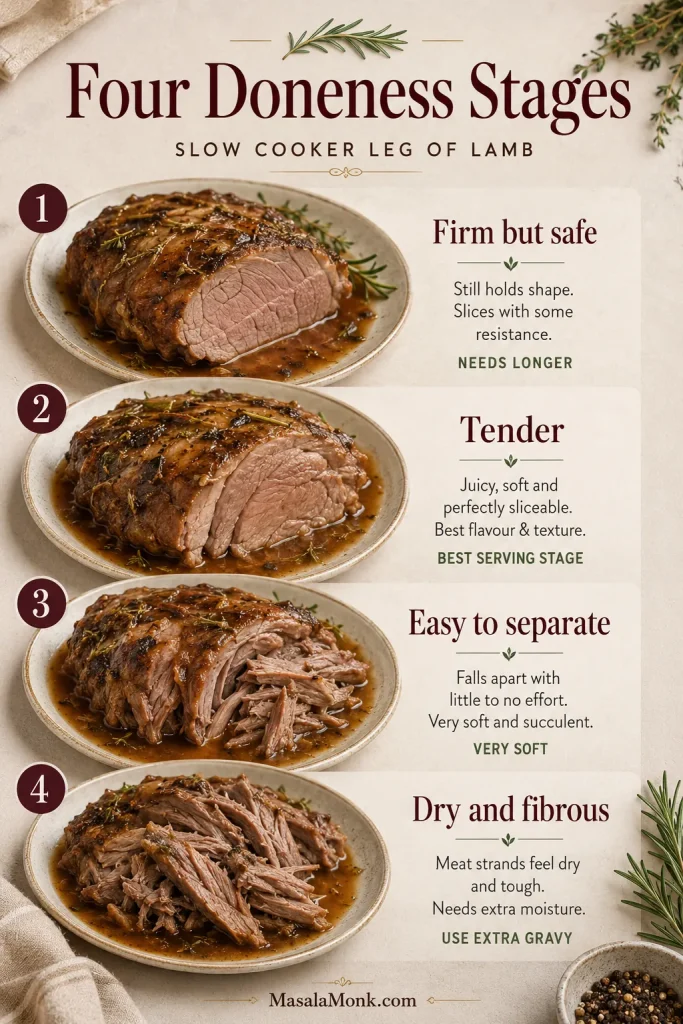
Most slow-cooker cooks are aiming for the third row: lamb that still looks like a roast on the tray but separates easily when served.
Place the thermometer in the thickest meat without touching the bone or sitting inside a large seam of fat. Whole lamb roasts should reach at least 63°C / 145°F and rest for at least 3 minutes. See the FoodSafety.gov safe-temperature chart for current official guidance.
Fork Tenderness Cues
If the fork still pushes back, dinner is not ruined. The lamb is usually asking for more time, not a rescue operation.
By the time the fork turns easily, the garlic has mellowed, the rosemary has scented the cooking juices and the onions have softened into the base of the gravy. The lamb may still look pale, but most of the flavour work is already done.
The fork test tells you what the thermometer cannot.
Brown the Lamb and Make the Gravy
When the lid first comes off, the aroma may promise roast lamb before the surface looks the part. That is normal. The slow cooker has done the tenderising; the oven finish supplies the colour.
Do not panic if the lamb looks pale when the lid lifts.
Browning changes the finish, not the tenderness.
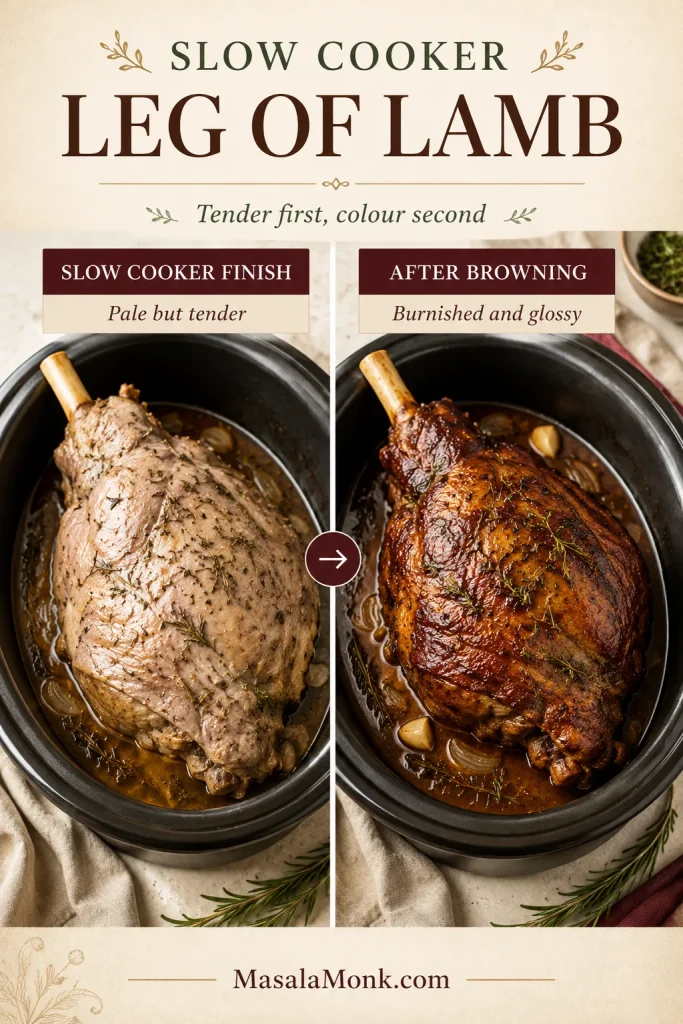
Sear First or Brown Afterwards?
Searing first adds browned flavour to the cooking juices, but the crust softens beneath the lid. Browning afterwards gives the most visible colour and avoids handling a heavy raw leg in a hot pan.
- Hot oven: brown at 220°C / 425°F for about 10–15 minutes.
- Grill or broiler: use intense top heat for only a few minutes and watch continuously.
- No oven available: serve the lamb directly from the cooker. It will remain pale and soft, but still taste good.
Jelly glazes contain sugar, so they can move quickly from glossy to burnt. Stop when the surface looks burnished and the edges begin to darken.
Make the Gravy
- Strain the cooking juices into a heatproof jug.
- Let the fat rise, then remove it with a gravy separator or large spoon.
- Taste the defatted liquid before adding any salt.
- Simmer it in a wide saucepan until the flavour is concentrated.
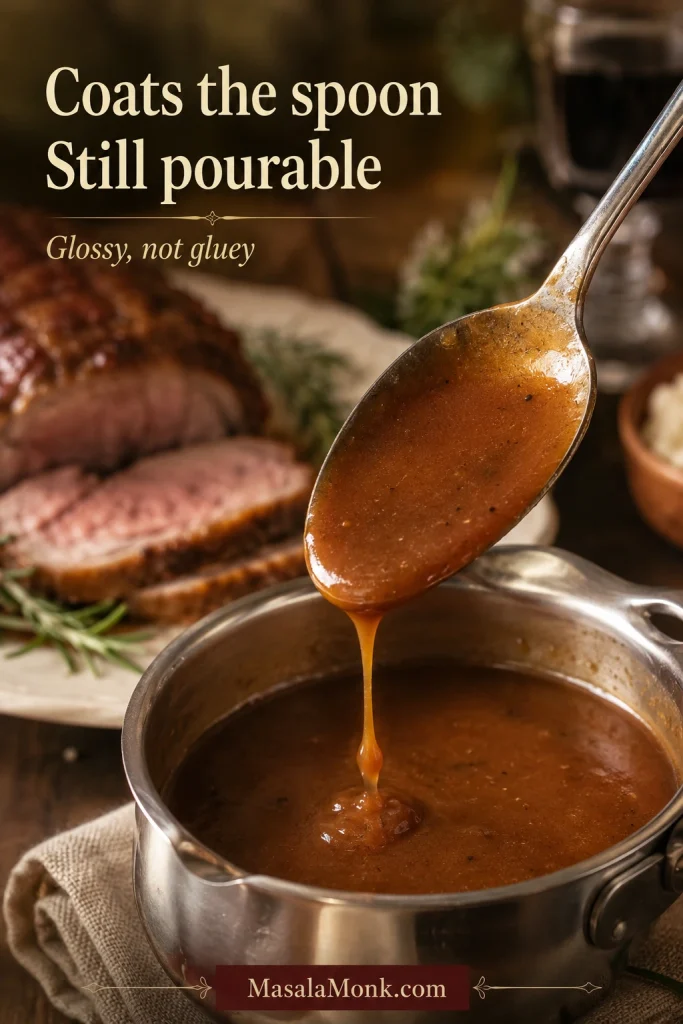
- Whisk in the cornflour or cornstarch slurry gradually, stopping when the gravy coats the back of a spoon.
Make the gravy in the right order.
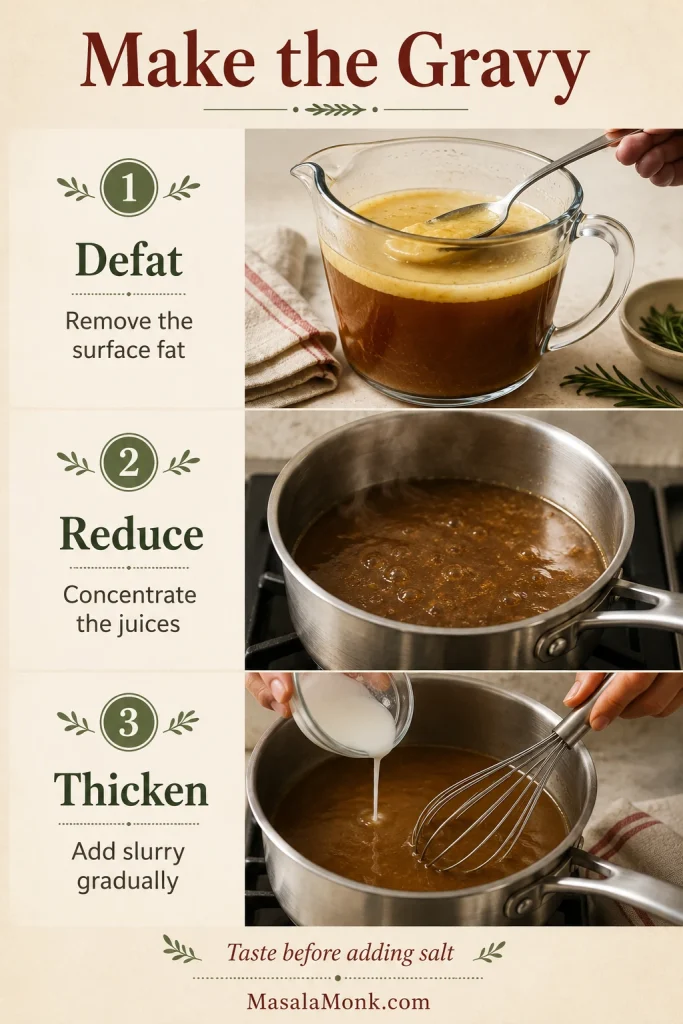
Defat, reduce, then thicken. Reducing first concentrates the flavour and helps prevent a gluey gravy—the same fix that works for a watery slow cooker beef stew.
If the juices look greasy, do not panic. That is rendered fat waiting to be separated—not a failed gravy.
Stop thickening while the gravy still pours.
When to Add Potatoes and Carrots
- Add them at the start for flavour. Onion and large carrot pieces beneath the lamb become very soft and enrich the cooking juices.
- Add them around halfway for more shape. Cut large carrots, parsnips or waxy potatoes into even 4–5 cm / 1½–2 inch pieces and test the largest piece with a knife before serving.
- Cook them separately for browned edges. Vegetables underneath the lamb cannot become crisp.
Choose soft slow-cooker vegetables or firmer roasted sides.
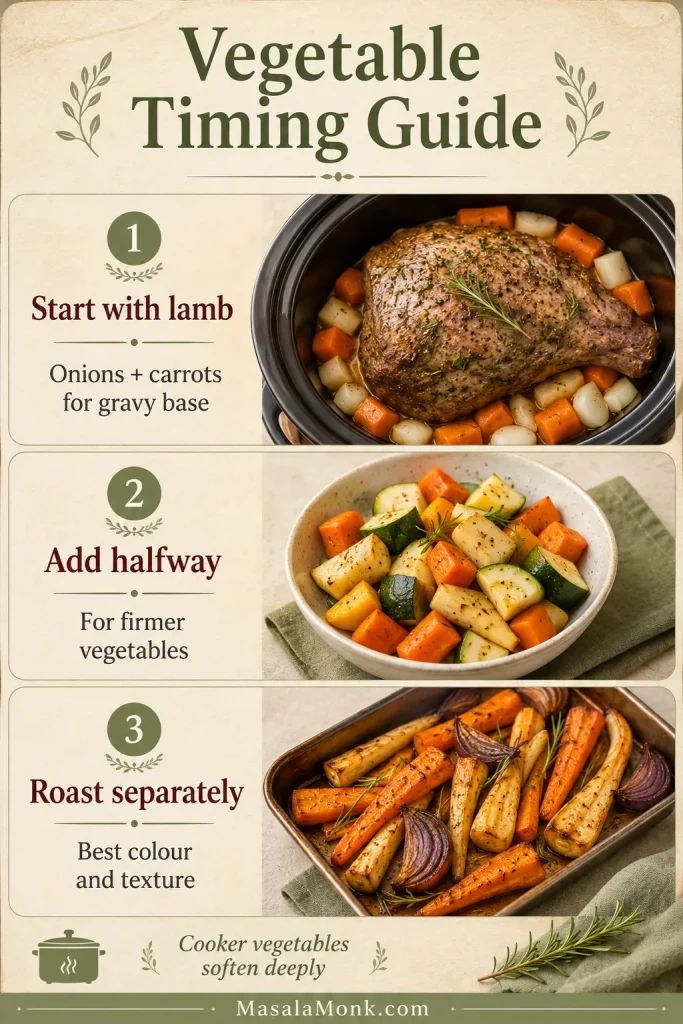
Dense potatoes can take longer than expected. Roast the vegetables separately when lunch needs to arrive on time; their doneness is much easier to control outside the slow cooker. These oven-roasted carrots can cook while the lamb browns and rests.
How to Serve Slow Cooker Leg of Lamb
This is not a roast that needs ceremonial carving. Once the bone lifts away, arrange the meat generously on a warm platter, spoon over enough gravy to make the surface shine and bring the remaining gravy separately so everyone can help themselves.
At the table, the work should feel finished: soft lamb in generous pieces, crisp sides around it and hot gravy passed separately.
This is the payoff: generous lamb, hot gravy and simple sides that make the slow cooking feel worth it.
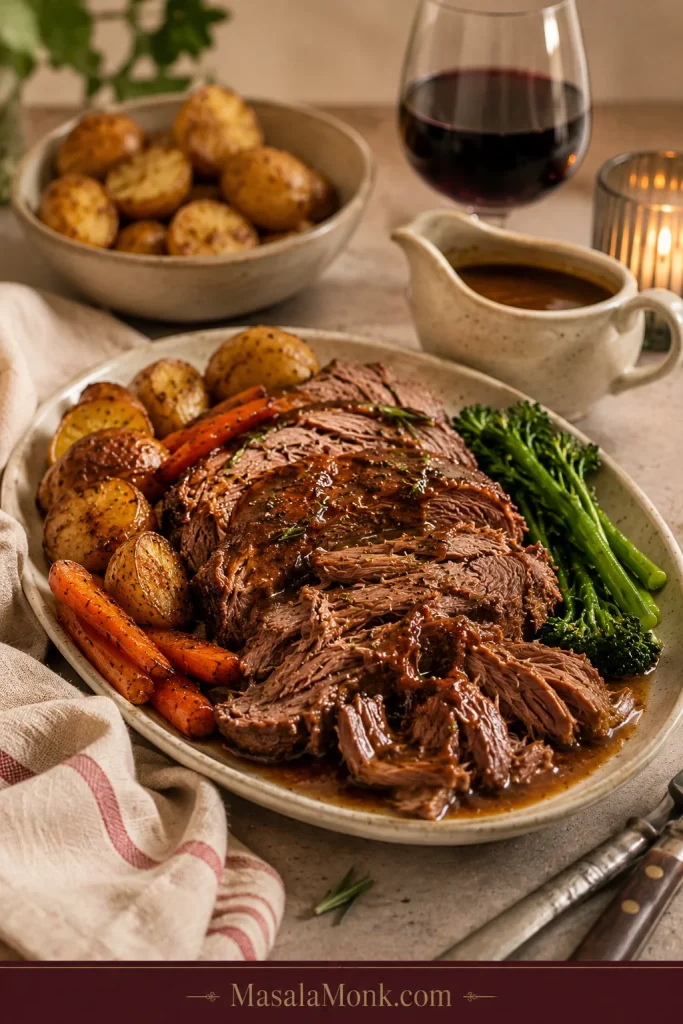
Rich lamb and glossy gravy are at their best with something crisp, green or sharply dressed beside them. For a classic roast-dinner plate, add creamy mashed potatoes, green beans or peas and roasted carrots.
- Crispy roast potatoes or lemon potatoes
- Cauliflower cheese
- Crisp eggless Yorkshire puddings
- Mint sauce, yogurt-herb sauce or chimichurri
- A bright cucumber or leafy salad
- Herbed rice or couscous for a lighter meal
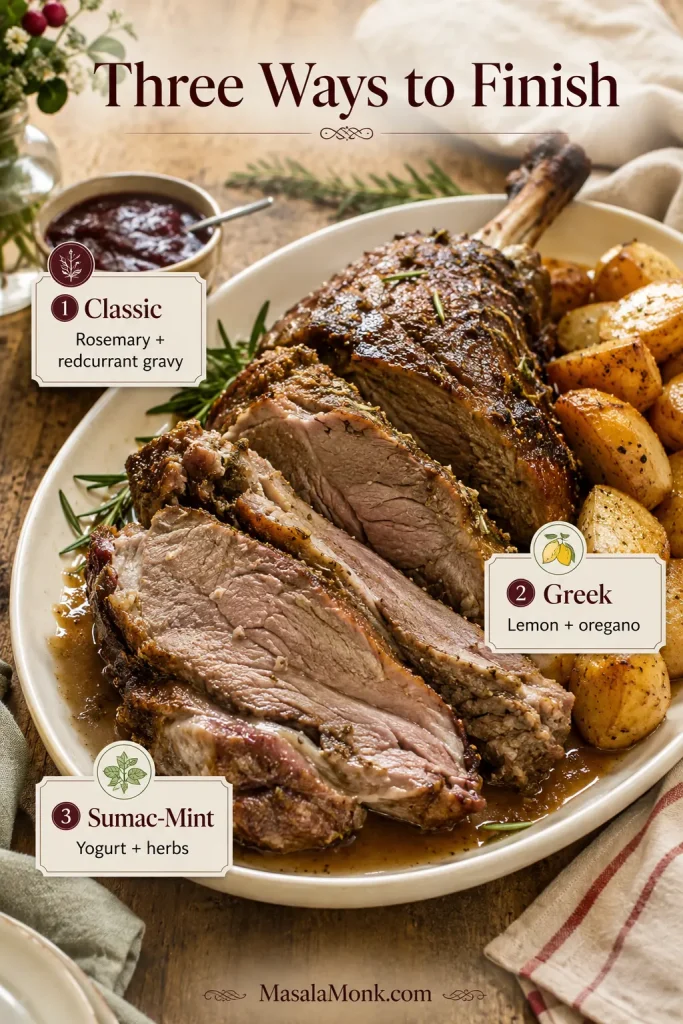
Three Ways to Finish It
Use the same salt, oil, vegetables and cooking liquid as the main recipe. These are flexible ways to change the flavour without turning the guide into three separate recipes.
- Classic rosemary and redcurrant: use the recipe as written and brush the lamb with a thin layer of redcurrant jelly before browning.
- Greek lemon and oregano: use 1 tablespoon chopped rosemary, 1½ teaspoons dried oregano and the finely grated zest of 1 lemon. Finish the gravy with a small squeeze of lemon.
- Sumac, mint and yogurt: add 2 teaspoons sumac and 1 teaspoon dried mint to the garlic paste, then serve with yogurt, lemon and fresh herbs. A cool cucumber salad with dill and onion adds the crispness rich lamb needs.
One method can finish three ways.
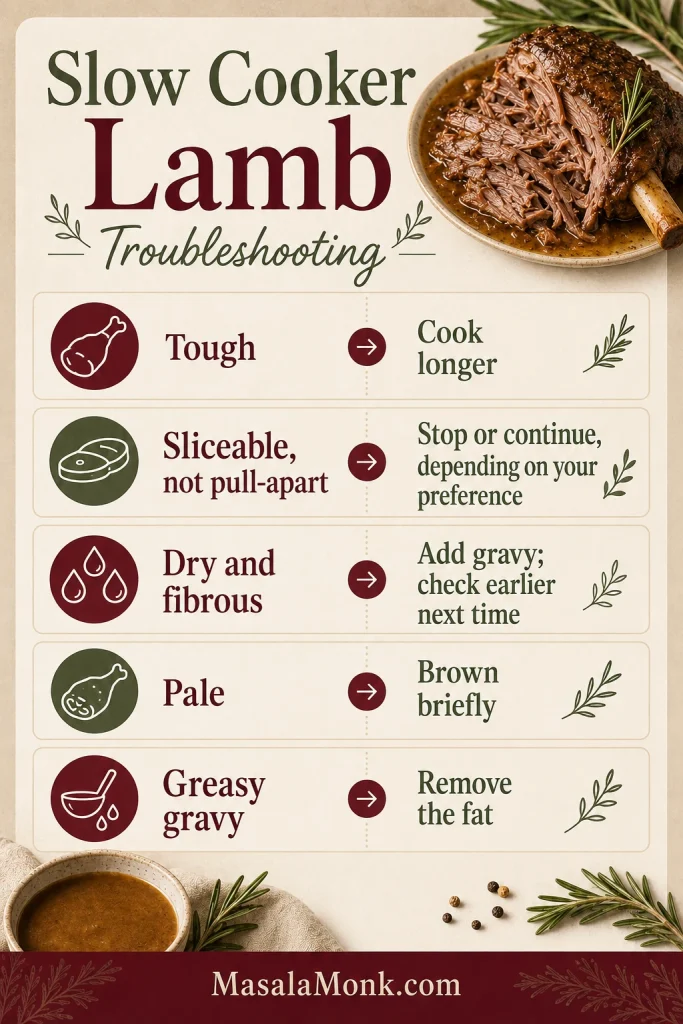
Slow Cooker Leg of Lamb Troubleshooting
The Meat
The lamb is tough.
It has not softened enough. Continue cooking and check the thickest section again.
It is cooked but will not pull apart.
It has reached a sliceable stage. Cook it longer only when you want softer meat.
It is dry and fibrous.
A small or lean leg has cooked too long. Serve it with gravy and check it earlier next time.
The outside is soft but the centre is firm.
The joint is thick, cold or unevenly shaped. Continue cooking and probe more than one thick area.
The Finish
The surface is pale.
Slow cookers do not brown meat. Use a short oven or broiler finish.
The leg breaks during transfer.
It has become very tender. Support it from underneath and arrange the meat directly on the serving platter.
The Cooker, Vegetables and Gravy
The leg will not fit.
The cooker is too small or the bone is too long. Use a half leg or ask a butcher to shorten the shank.
There is too much cooking juice.
The lamb released substantial moisture. Reduce the liquid before thickening it.
The gravy is greasy.
Rendered fat remains in the liquid. Separate it before reducing or thickening.
The vegetables are mushy.
Serving vegetables were added too early. Add them later or cook them separately.
Firm meat needs longer. Soft but dry meat has already had enough.
Use the texture first, then choose the fix.
Problem solved? Go back to the recipe steps or continue to storage and reheating.
Storage, Freezing and Reheating
Keep a little gravy with the leftovers. It protects the meat as it reheats and makes tomorrow’s dinner much more forgiving.
Keep the storage plan simple: chill with juices, freeze in portions and reheat gently.
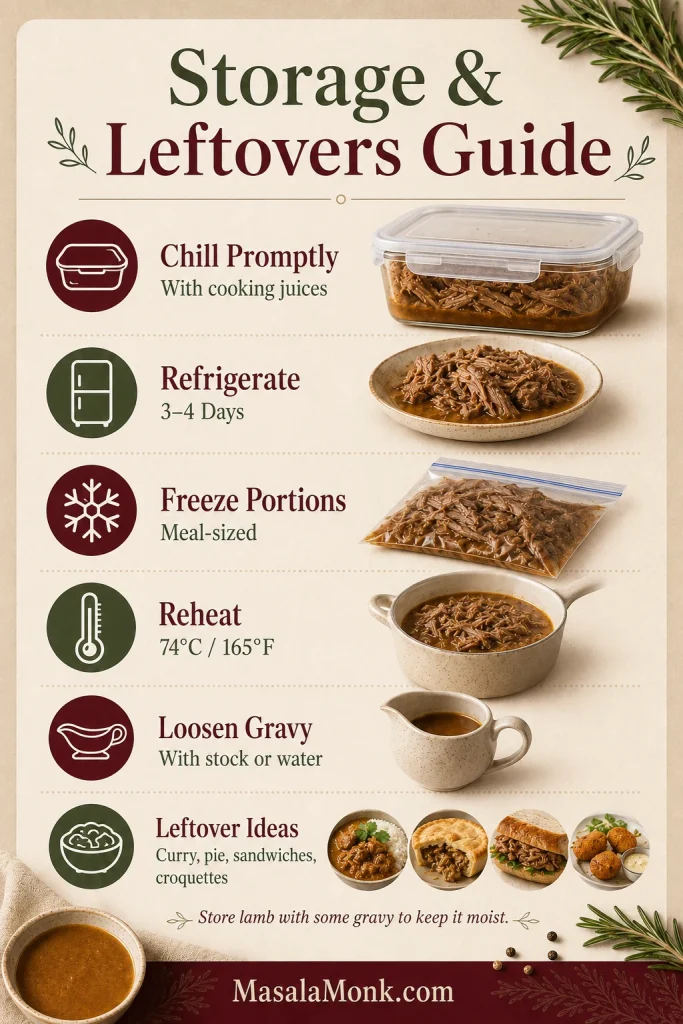
Cool the lamb promptly and refrigerate it in shallow airtight containers within two hours of cooking. Use refrigerated leftovers within 3–4 days.
Freeze meal-sized portions with a little gravy for around 2–3 months for the best quality. Thaw them safely in the refrigerator.
Reheat the lamb in a saucepan with gravy, in a covered oven dish or in microwave-safe portions until it reaches 74°C / 165°F in the centre. Add a splash of stock or water if the gravy has become very thick.
Use the hob, oven or microwave for refrigerator-cold leftovers rather than warming them slowly in the slow cooker.
Ideas for Leftover Lamb
- Lamb curry with some leftover gravy stirred into the sauce
- Turn chopped lamb and gravy into shepherd’s pie. The gravy-first, mash-second approach in our slow cooker cottage pie guide works here too—use cooked lamb instead of beef.
- Rolls or sandwiches with gravy, mint sauce, crisp lettuce or sharp pickles
- Lamb tacos with yogurt and herbs
- Lamb orzo or tomato-based pasta
- Mix chopped lamb with mashed potato and turn it into crisp homemade croquettes.
Frequently Asked Questions
Will slow-cooker leg of lamb stay pink?
Not with this method. It is designed for fully cooked, fork-tender lamb. Use a conventional oven-roasting method when you want a pink or medium-rare centre.
What if I want slices rather than pull-apart lamb?
Remove the lamb at the tender stage, when the fork enters easily but the joint still holds together. It must still reach the safe minimum temperature and complete the required rest.
Can I put frozen lamb in the slow cooker?
No. Thaw the lamb completely before slow cooking so the centre heats predictably and safely.
Can I cook the lamb the day before?
Yes. Refrigerate the cooked lamb with some of its juices, then reheat it covered until the centre reaches 74°C / 165°F. Brown the surface only after the meat is hot.
Can I cook leg of lamb without added liquid?
Some joints release enough juice to cook with little or no added liquid, but the result depends on the lamb and the appliance. The main recipe uses a moderate amount because it provides a more dependable quantity of cooking juice for gravy.
What size leg did you cook, and when did it become tender? Share the setting too—and your slow-cooker size if you know it. Those details may help the next person cooking the same joint.
When the fork meets almost no resistance, lift the lamb carefully, give it a little colour and turn the juices into gravy. That is the moment an expensive leg stops feeling risky and starts feeling like dinner is handled.








