Posted on Leave a comment

Hot Toddy Recipe

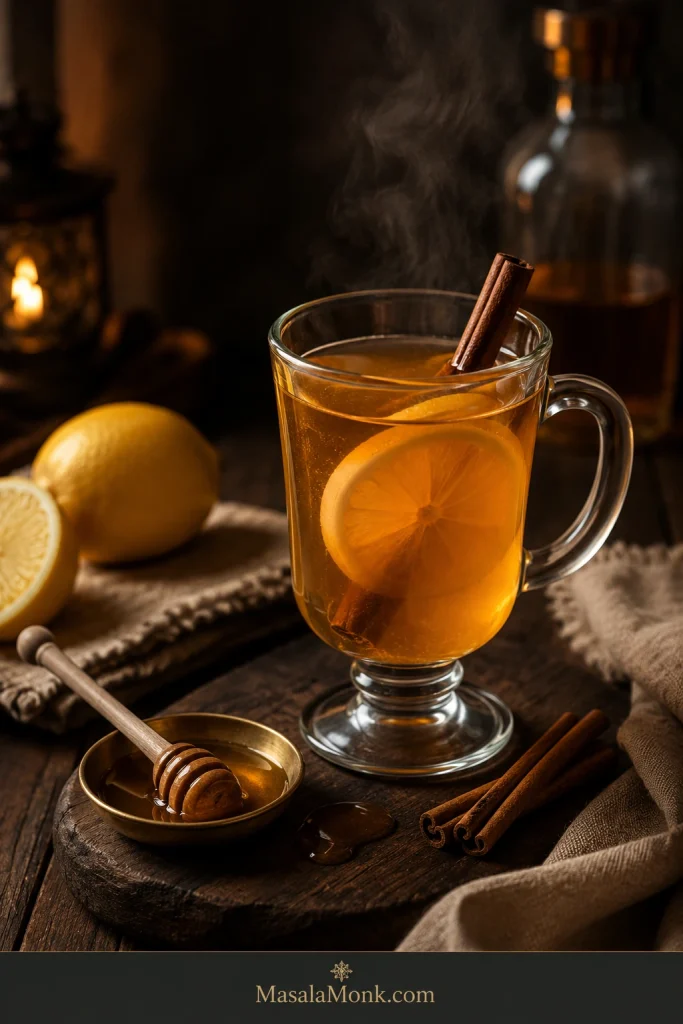
Classic hot toddy in a clear glass mug with whiskey, honey, lemon, cinnamon, and visible steam on a dark wooden table.

A good hot toddy should feel warm before it tastes strong: lemon steam rising from the mug, honey softening the edges, a little whiskey warmth underneath, and enough hot water or tea to make the whole drink smooth and sippable. It is simple, but it should never taste flat, harsh, or thrown together.

This hot toddy recipe starts with the classic whiskey, honey, lemon, and hot water formula, then shows you how to adjust it for the toddy you actually want: softer with bourbon, fuller with tea, fruitier with apple cider, completely alcohol-free, or more aromatic with ginger, cardamom, cinnamon, and clove.

It is the kind of drink you make when you want something slower than a cocktail but more comforting than plain tea. One warm mug, a spoonful of honey, a squeeze of lemon, and a little heat are enough to change the mood of the evening.

Although a hot toddy is often talked about as a cold-weather comfort drink, it is not medicine or a cure. If you are under the weather, taking medication, avoiding alcohol, or serving someone who does not drink, use the non-alcoholic version below with hot tea, honey, lemon, ginger, and warming spices. The alcoholic version is for adults of legal drinking age only.

Classic hot toddy in a clear glass mug with whiskey, honey, lemon, cinnamon, and visible steam on a dark wooden table.
In a classic hot toddy, lemon and honey should balance the whiskey instead of hiding it, so the mug tastes bright, gently sweet, and warming.

Quick Answer: Hot Toddy Ratio

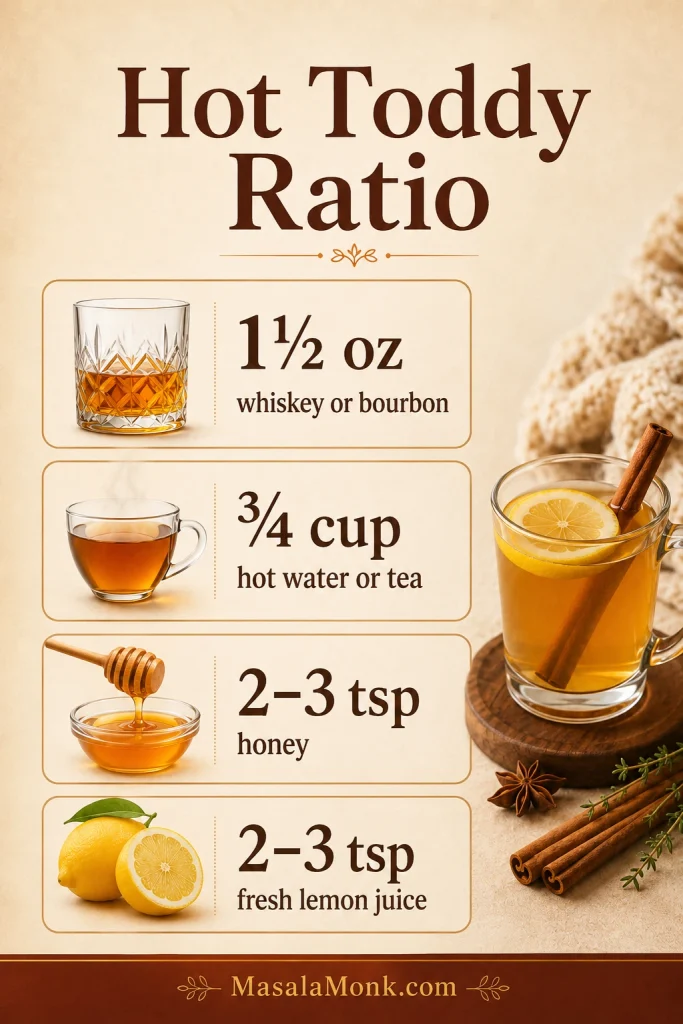
For one classic hot toddy, use 1½ ounces / 45 ml whiskey or bourbon, ¾ cup / 180 ml hot water or hot tea, 2 to 3 teaspoons honey, and 2 to 3 teaspoons fresh lemon juice. Stir the honey and lemon into the hot liquid first, then add the whiskey or bourbon and taste before serving.

Infographic showing a hot toddy ratio of 1½ ounces whiskey or bourbon, ¾ cup hot water or tea, 2 to 3 teaspoons honey, and 2 to 3 teaspoons fresh lemon juice.
Start with this hot toddy ratio, then adjust the mug by taste: more honey for softness, more lemon for brightness, or more tea for a longer sip.

The finished drink should taste bright at the front, gently sweet in the middle, and warming at the end. If it tastes like only whiskey, only lemon, or only honey, it needs one small adjustment.

  • Tastes too strong? Add more hot water or tea.
  • Sharp from lemon? Add a little more honey.
  • Overly sweet? Add more lemon juice.
  • Need it softer? Use bourbon or Irish whiskey.
  • Want more body? Use black tea or ginger tea instead of plain water.
  • Skipping alcohol? Use tea, honey, lemon, ginger, cinnamon, and cloves.

When the balance is right, it should feel like lemon tea with quiet whiskey warmth, not a mug of hot alcohol.

Need the next step? Jump to the full recipe, measurements, tea version, non-alcoholic hot toddy, or quick flavor fixes.

Hot Toddy Recipe

Classic Hot Toddy

This classic hot toddy is made with whiskey or bourbon, hot water or tea, honey, fresh lemon, and optional warming spices. It is quick, cozy, and easy to adjust in the mug.

Prep Time5 minutes
Heating Time3 minutes
Total Time8 minutes
Yield1 drink
Mug Size8 to 10 oz / 240 to 300 ml
CategoryDrink
CuisineAmerican
MethodStirred hot drink

Ingredients

  • 1½ ounces / 45 ml whiskey or bourbon
  • ¾ cup / 180 ml hot water or hot tea
  • Honey: 2 to 3 teaspoons / 14 to 21 g
  • Fresh lemon juice: 2 to 3 teaspoons / 10 to 15 ml
  • Lemon round: 1, for garnish
  • Cinnamon stick: 1, optional
  • Whole cloves: 2 to 4, optional
  • Fresh ginger: 1 thin slice, optional

Equipment

  • Heatproof mug or Irish coffee glass
  • Kettle or small saucepan
  • Spoon
  • Jigger or small measuring cup
  • Measuring spoons
  • Citrus juicer, optional

Glass note: Use a heatproof mug or tempered glass. Avoid pouring very hot liquid into thin decorative glass, which can crack.

Instructions

  1. Fill your mug with hot water for a minute to warm it, then discard that water.
  2. Heat fresh water or brewed tea until steaming and just off the boil, about 190–205°F / 88–96°C. No thermometer needed; steam and a just-settled boil are the practical cues.
  3. Honey and fresh lemon juice go into the warm mug first.
  4. Pour in the hot water or tea and stir until the honey dissolves fully.
  5. Add the whiskey or bourbon and stir again.
  6. Garnish with a lemon round, cinnamon stick, cloves, or ginger if using.
  7. Taste carefully. Add more honey for sweetness, lemon for brightness, or hot water/tea if the drink is too strong.
  8. Let it cool for a moment before sipping. It should be steaming, not scalding.

Recipe note: Do not boil the whiskey. Add the spirit after the hot water or tea, so the drink stays smooth and balanced.

The first sip should be lemony, lightly sweet, and warm all the way through, with the whiskey in the background instead of shouting over everything.

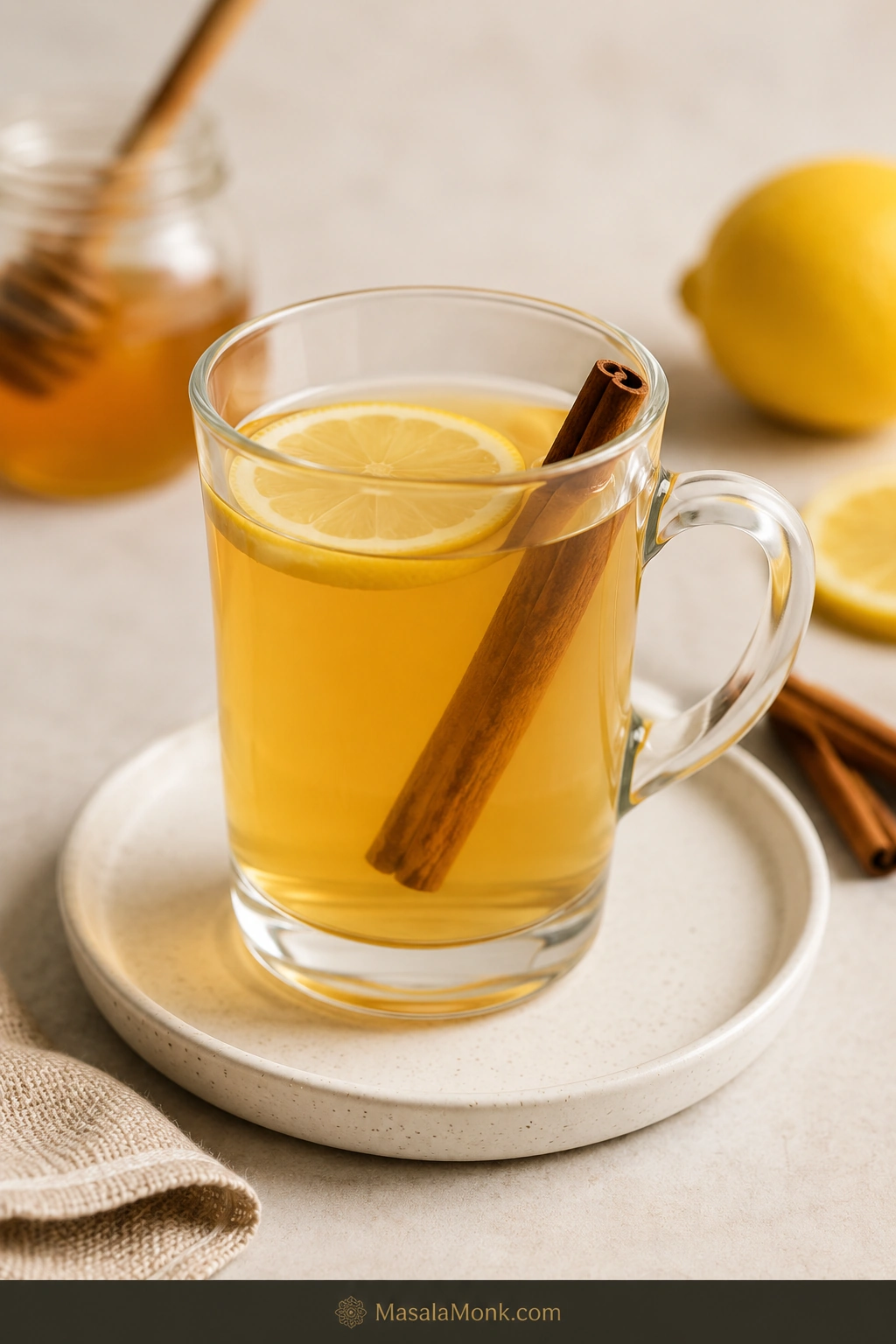
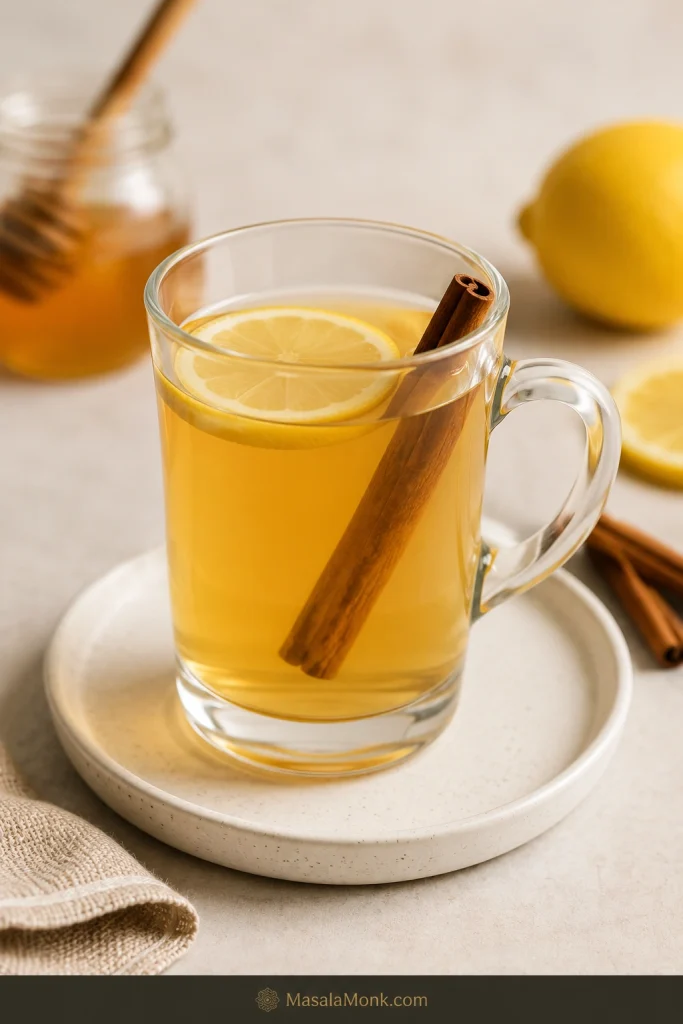
Finished classic hot toddy in a clear glass mug with a lemon slice, cinnamon stick, saucer, and soft steam.
Aim for a steaming, not scalding, mug with enough honey and lemon to make the whiskey feel smooth.

Jump to the Part You Need

Make it: Recipe | Best Whiskey | Variations
Customize it: Tea | Non-Alcoholic | Apple Cider
Fix it: Cold/Cough | Substitutions | Fix the Flavor | FAQ

Want to adjust the mug? See the best whiskey choices, browse the hot toddy variations, or jump to how to fix the flavor.

Hot Toddy at a Glance

Keep this nearby for your first mug, then adjust by taste.

Time8 minutes
Yield1 drink
Mug8 to 10 oz / 240 to 300 ml heatproof mug
SpiritWhiskey or bourbon
BaseHot water or brewed tea
BalanceHoney + fresh lemon
TemperatureSteaming, not boiling

Before You Sip

  • Is the honey fully dissolved?
  • Does the mug smell lemony, warm, and lightly spiced?
  • Is it steaming but not scalding?
  • Does it taste balanced, not like straight whiskey?
  • Need no alcohol? Use the same honey-lemon-spice base with tea.
A hand holding a steaming hot toddy mug with lemon and cinnamon beside honey, lemon slices, and a cozy table setting.

Before you sip, check the balance: the mug should smell lemony and spiced, feel warm in your hands, and taste smooth instead of sharp.

Why This Hot Toddy Works

A hot toddy works when it feels like one smooth drink, not four ingredients sitting in the same mug. Honey softens the whiskey, lemon wakes it up, and hot water or tea carries everything without making it taste thin.

  • Whiskey or bourbon gives body and warmth.
  • Hot water or tea opens the aroma and keeps the drink gentle.
  • Honey softens the alcohol and rounds the lemon.
  • Fresh lemon juice keeps the flavor bright instead of heavy.
  • Warming the mug helps the drink stay hot longer.
  • Dissolving the honey first prevents a sticky layer at the bottom.
  • Adding whiskey last keeps the spirit from tasting cooked.

The result feels classic, but still gives you room to adjust. Make it with water for a clean whiskey toddy, tea for more body, bourbon for softness, apple cider for a festive twist, or no alcohol when you want the comfort without the spirit.

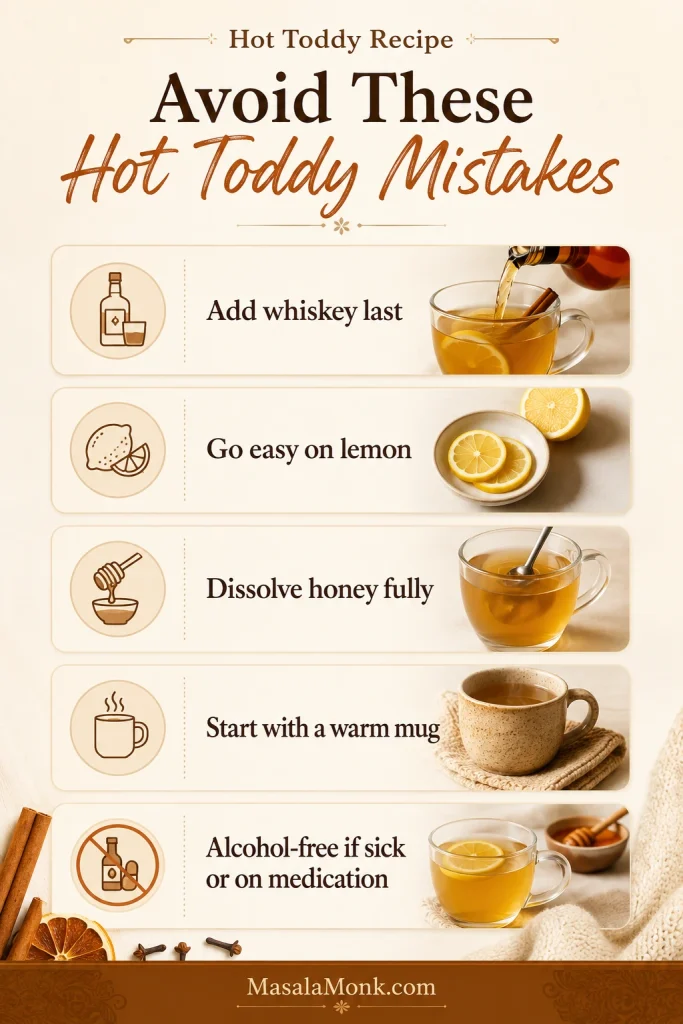
Avoid These Hot Toddy Mistakes

  • Add the whiskey last. Boiling it can make the drink taste harsh.
  • Go easy on the lemon at first. You can always add more after tasting.

  • Dissolve the honey fully. Otherwise it settles at the bottom instead of sweetening the drink.
  • Start with a warm mug. It keeps the toddy cozy longer.
  • Do not treat the alcoholic version as medicine. If you are sick or taking medication, make the alcohol-free version.
Infographic titled Avoid These Hot Toddy Mistakes with tips to add whiskey last, go easy on lemon, dissolve honey fully, warm the mug, and choose alcohol-free if sick or on medication.
Small fixes usually improve a hot toddy more than extra ingredients: warm the mug, dissolve the honey, and taste before serving.

What Is a Hot Toddy?

A hot toddy is a warm drink usually made with whiskey or bourbon, hot water or tea, honey, lemon, and optional spices. It is served hot and is especially popular as a cozy cold-weather drink.

At its best, it is less like a cocktail and more like a warm, balanced honey-lemon drink with a little spirit underneath. The classic formula is simple: spirit, heat, sweetness, and brightness. Whiskey gives depth, honey softens the edges, lemon keeps it lively, and hot water or tea makes it easy to sip.

You may also see people write it as hot tottie, hottie tottie, hot tati, or hot toddy drink. The standard spelling is hot toddy, and those searches usually point to the same warm whiskey, honey, and lemon drink.

Hot Toddy Ingredients

Because the ingredient list is short, each part matters. Water gives you the cleanest whiskey-lemon flavor. Tea makes the drink feel slower and fuller, especially when you want something closer to an evening mug than a cocktail. Cider turns it sweeter, fruitier, and more seasonal.

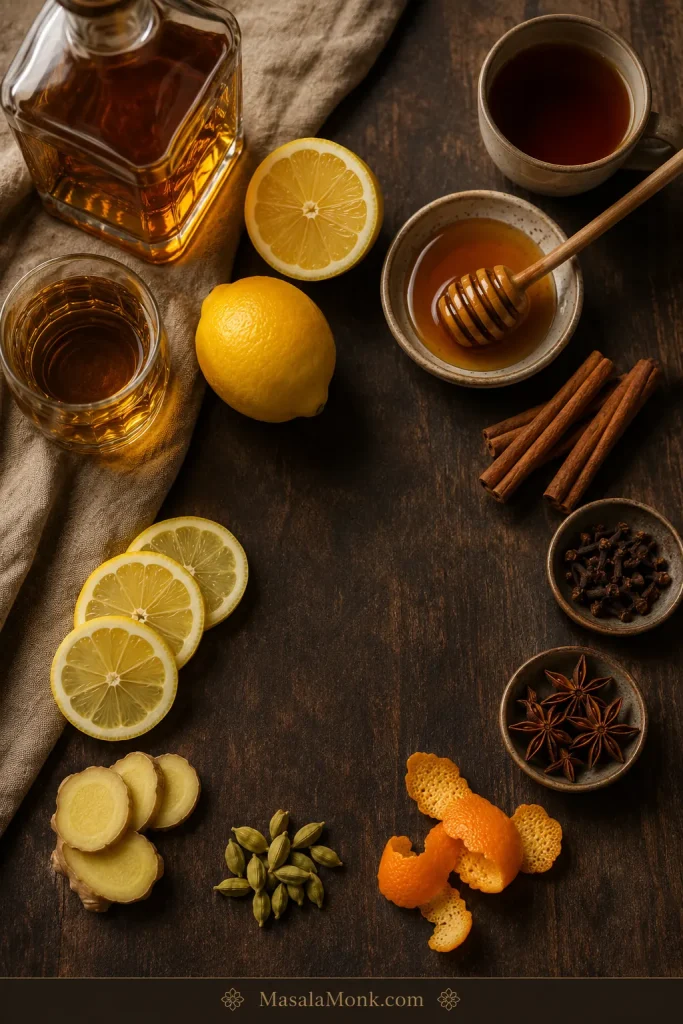
Hot toddy ingredients arranged on a table, including whiskey, honey, lemons, tea, cinnamon, cloves, ginger, cardamom, star anise, and orange peel.
Think of the ingredients as a balance system: spirit for warmth, citrus for lift, honey for roundness, and spice for aroma.

Whiskey or Bourbon

Whiskey is the classic choice. Bourbon works beautifully because it is naturally sweeter, with vanilla and caramel notes that blend well with honey and lemon. Irish whiskey makes a smoother, gentler toddy. Rye gives more spice and bite.

You do not need a rare bottle here. Use something you like drinking, but save the most delicate whiskey for sipping neat. Heat, honey, and lemon will soften the fine details.

Hot Water or Hot Tea

Hot water gives you the cleanest classic style. Tea turns it into something you settle into, not just something you mix. Black tea, ginger tea, lemon tea, chamomile, rooibos, chai, and decaf Earl Grey can all work, depending on the mood you want.

Split-screen comparison of a lighter hot toddy labeled Clean Classic and a darker tea hot toddy labeled Fuller Tea Toddy.
Use hot water for the cleanest whiskey-lemon flavor; meanwhile, tea gives a hot toddy more body and a slower evening feel.

Honey

Honey is not just sweetness here. It is what pulls the lemon and whiskey together so the drink tastes smooth instead of sharp. Start with 2 teaspoons if you prefer a cleaner sip, or use 1 tablespoon if you want it sweeter and more soothing.
Fresh Lemon Juice

Lemon juice keeps the drink from tasting heavy or flat. Use fresh lemon when you can, because the recipe is so simple. Bottled lemon juice can taste harsh when there are only a few ingredients involved. The same fresh-lemon balance is what makes a Lemon Drop Martini work in a colder, brighter way.
Cinnamon, Cloves, Ginger, and Other Spices

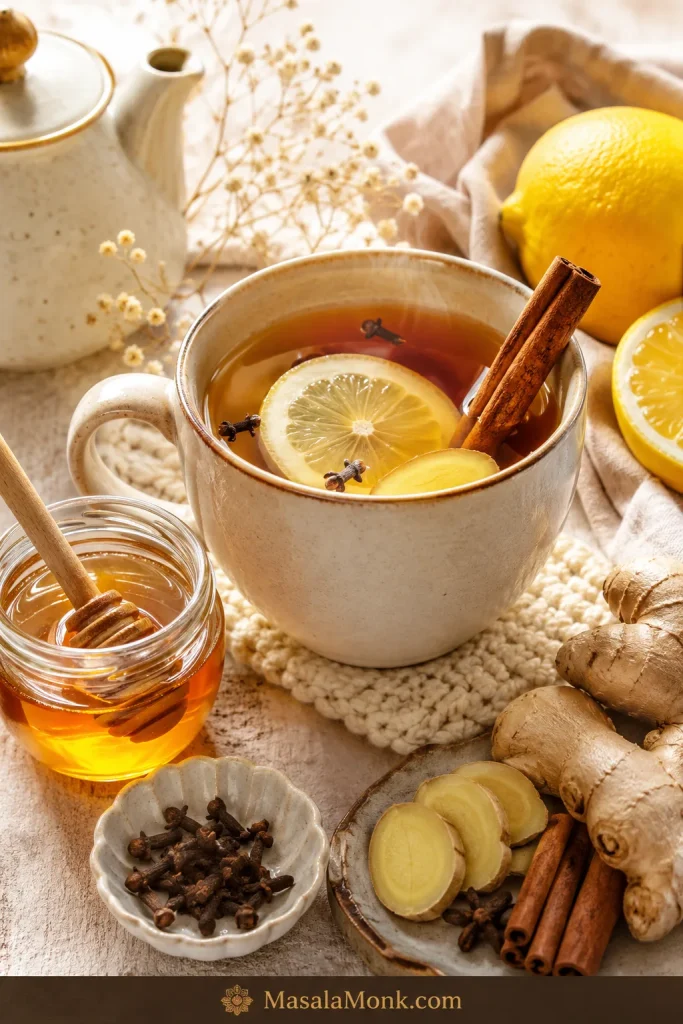
Spices are optional, but they are what make the mug smell like you meant to slow down. A cinnamon stick is the easiest addition. Cloves give an old-fashioned holiday flavor. Ginger adds gentle heat. Nutmeg, star anise, cardamom, and orange peel can make the drink feel deeper and more wintery.

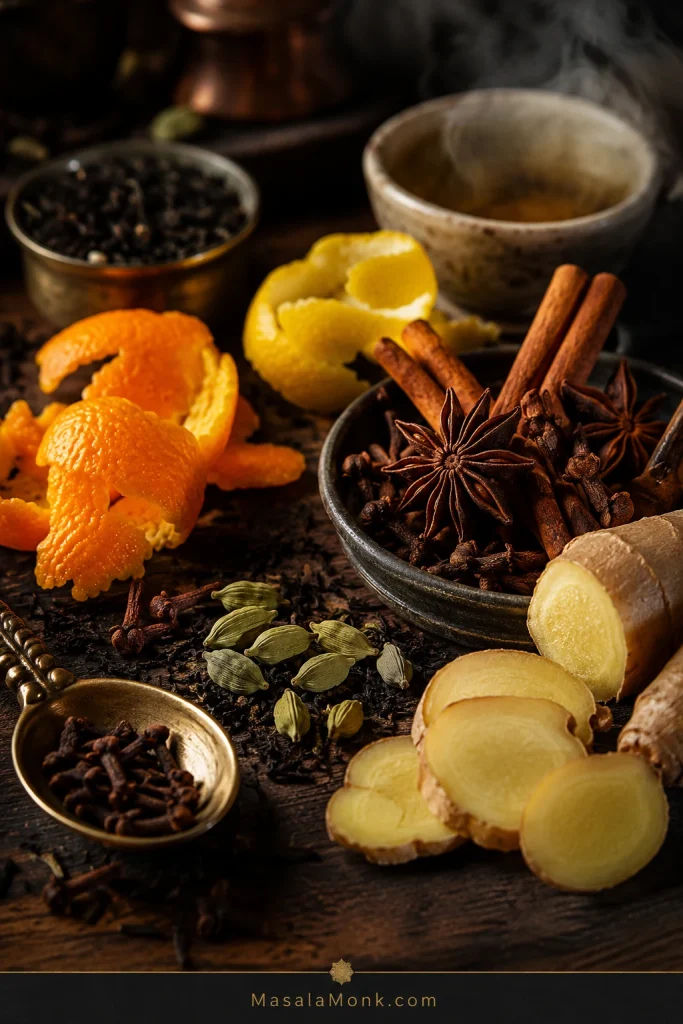
Close-up of hot toddy spices including cinnamon sticks, cloves, ginger slices, cardamom pods, star anise, orange peel, lemon peel, and tea leaves.
Cinnamon, cloves, ginger, and cardamom deepen the aroma without adding much work.

Small Details That Make a Better Hot Toddy

The recipe card gives you the method. These are the little things that make the difference between a hot drink that tastes fine and one that feels smooth, fragrant, and properly balanced.

Four-step hot toddy process showing a mug being warmed, honey and lemon being added, hot tea or water being poured, and whiskey being added last.
Building the drink in layers helps the honey dissolve fully, keeps the citrus balanced, and stops the whiskey from tasting harsh.

1. Warm the Mug

Fill the mug with hot water and let it sit for a minute while you gather the ingredients. Then discard that water. A warm mug keeps the drink hot for longer, especially if you are using glass or sipping slowly.

2. Heat the Water or Brew the Tea

Heat water until it is steaming and just off the boil, around 190–205°F / 88–96°C. Brewing tea first gives you a fuller base; plain water keeps the flavor cleaner. The alcohol goes in at the end, not while the tea is steeping.

3. Dissolve the Honey First

Honey and lemon go into the warm mug first, followed by the hot base. Stir until the honey dissolves fully so the sweetness runs through the drink instead of settling at the bottom.

4. Add the Whiskey Last

Once the honey has dissolved, add the whiskey or bourbon and stir again. This keeps the drink smooth and avoids a cooked-alcohol taste.

5. Taste Before Serving

The finished drink should taste balanced, not sugary or sour. More hot water or tea softens a strong pour. A little honey calms sharp lemon. Another squeeze of lemon wakes up a toddy that tastes too sweet.

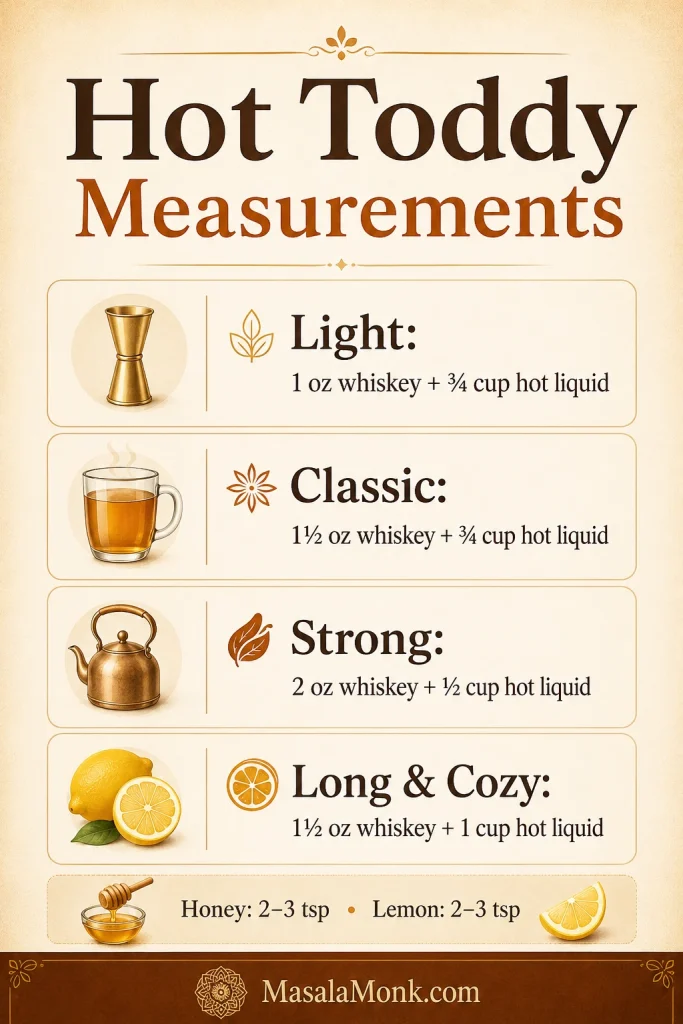
Hot Toddy Measurements: Ounces, ML, and Grams

Measure the first one. After that, your taste will tell you whether you want it brighter, sweeter, stronger, or longer. These numbers are not rules; they are starting points for finding the mug you like best.

Infographic titled Hot Toddy Measurements showing light, classic, strong, and long cozy ratios for whiskey and hot liquid, plus honey and lemon guidance.
Use the first measured hot toddy as your baseline; after that, make it lighter, stronger, or longer by adjusting the whiskey and hot base.
IngredientUS MeasureMetric
Whiskey or bourbon1½ ounces45 ml
Stronger whiskey pour2 ounces60 ml
Hot water or tea¾ cup180 ml
Long tea-style drink1 cup240 ml
Honey2 teaspoonsabout 14 g
Honey1 tablespoonabout 21 g
Lemon juice2 teaspoons10 ml
Lemon juice1 tablespoon15 ml

Once the classic ratio makes sense, you can make the drink lighter, stronger, or longer without guessing.

StyleWhiskeyHot LiquidBest For
Light1 oz / 30 ml¾ cup / 180 mlGentle sipping
Classic1½ oz / 45 ml¾ cup / 180 mlBalanced hot toddy
Strong2 oz / 60 ml½ cup / 120 mlCocktail-forward drink
Long & cozy1½ oz / 45 ml1 cup / 240 mlTea-style winter drink

Best Whiskey for a Hot Toddy

You do not need the fanciest bottle for a hot toddy. The best whiskey is the one that warms the drink without fighting the honey and lemon. If you are unsure, start with bourbon or Irish whiskey. Both are easy to like in a warm honey-lemon drink.

Four tasting glasses labeled Bourbon, Irish Whiskey, Rye, and Brandy/Cognac with lemon peel, cinnamon, honey, and a hot toddy mug nearby.
The best whiskey for a hot toddy depends on mood: bourbon is soft, Irish whiskey is smooth, rye is spicier, and brandy tastes fruitier.

Best Choices Fast

  • Classic choice: whiskey, hot water, honey, and lemon.
  • Beginner-friendly mug: bourbon, hot tea, honey, lemon, and cinnamon.
  • Smoothest option: Irish whiskey with hot water or tea.
  • No-alcohol pick: ginger tea, honey, lemon, cinnamon, and cloves.
  • MasalaMonk-style version: black tea, ginger, cardamom, cinnamon, clove, honey, and lemon.
SpiritFlavorBest Use
BourbonSweet, rounded, vanilla, caramelBest beginner-friendly hot toddy
Irish whiskeySmooth, mellow, gentleBest for a softer drink
Rye whiskeySpicy, dry, sharperBest with ginger, lemon, and clove
Blended whiskeyBalanced and affordableBest everyday choice
Canadian whiskyLight, smooth, slightly sweetBest with honey, lemon, and tea
ScotchMalty or smokyBest only if you enjoy smoky drinks
Dark rumSweet, rich, festiveBest with apple cider and cinnamon
Brandy or CognacFruity, gentle, old-fashionedBest with lemon, honey, and orange

Choosing a bottle only for this drink does not need to be complicated. Pick bourbon for the softest and easiest mug, Irish whiskey for something smooth and mellow, or rye if you want more spice. Save smoky Scotch for people who already enjoy smoky flavors, because heat can make that smoke feel stronger.

If the whiskey-and-lemon balance is your favorite part of this drink, save this Whiskey Sour Recipe for a colder, sharper cocktail later. Love ginger most? The Whiskey Ginger Recipe takes the same warming spirit in a simpler, fizzy direction.

Hot Toddy Variations: Bourbon, Tea, Cider, Non-Alcoholic, Rum, and Brandy

Once the classic ratio makes sense, choose the version by mood. Keep it clean with hot water, make it slower with tea, turn it festive with cider, deepen it with rum or brandy, or skip the alcohol and build the comfort around ginger, honey, lemon, and spice.

Choose your version: Tea | Non-Alcoholic | Apple Cider | Indian-Spiced | Hennessy, Crown Royal, or Vodka | For a Crowd

Six-panel Hot Toddy Variations graphic showing Classic, Bourbon, Tea, No Alcohol, Apple Cider, and Indian-Spiced hot toddies with different mugs, garnishes, and ingredients.
Once the classic hot toddy ratio makes sense, the variations become easy: choose bourbon for softness, tea for body, cider for fruit, or spices for aroma.
If You Want…Make ThisBest Starting Point
Classic and cleanWhiskey hot toddyWhiskey, hot water, honey, lemon
Softer and sweeterBourbon hot toddyBourbon, hot water, honey, lemon
More bodyTea hot toddyBlack tea or ginger tea base
No alcoholNon-alcoholic hot toddyTea, honey, lemon, ginger, spices
Festive and fruityApple cider hot toddyWarm cider, bourbon or rum, cinnamon
More aromaticIndian-spiced hot toddyGinger, cardamom, cinnamon, clove
Sweet and holiday-likeRum hot toddyDark rum, cider, cinnamon, orange
Gentle and old-fashionedBrandy or Cognac hot toddyBrandy, Cognac, lemon, honey, orange
Light and smoothCanadian whisky hot toddyCanadian whisky, tea, honey, lemon

Whiskey Hot Toddy

The whiskey style is the clean, old-fashioned starting point: 1½ ounces / 45 ml whiskey, ¾ cup / 180 ml hot water, 2 teaspoons honey, and 2 teaspoons lemon juice. Add a cinnamon stick or lemon round if you want a simple garnish.

This is the one to make when you want the classic flavor without extra fruit, tea, or spices getting in the way.

Bourbon Hot Toddy

Bourbon is the softest place to start if whiskey usually feels sharp to you. Its vanilla, caramel, and oak notes melt naturally into honey and lemon, so the finished drink tastes rounder without needing much extra sugar. Use 1½ to 2 ounces / 45 to 60 ml bourbon, then begin with 2 teaspoons honey because bourbon already brings sweetness.

It pairs beautifully with cinnamon, orange peel, apple cider, and a small slice of ginger.

Golden bourbon hot toddy in a clear glass mug with lemon, orange peel, cinnamon stick, honey, and warm amber lighting.

Bourbon is the gentlest place to start because it brings natural vanilla, caramel, and sweetness under the lemon.

Hot Toddy with Tea

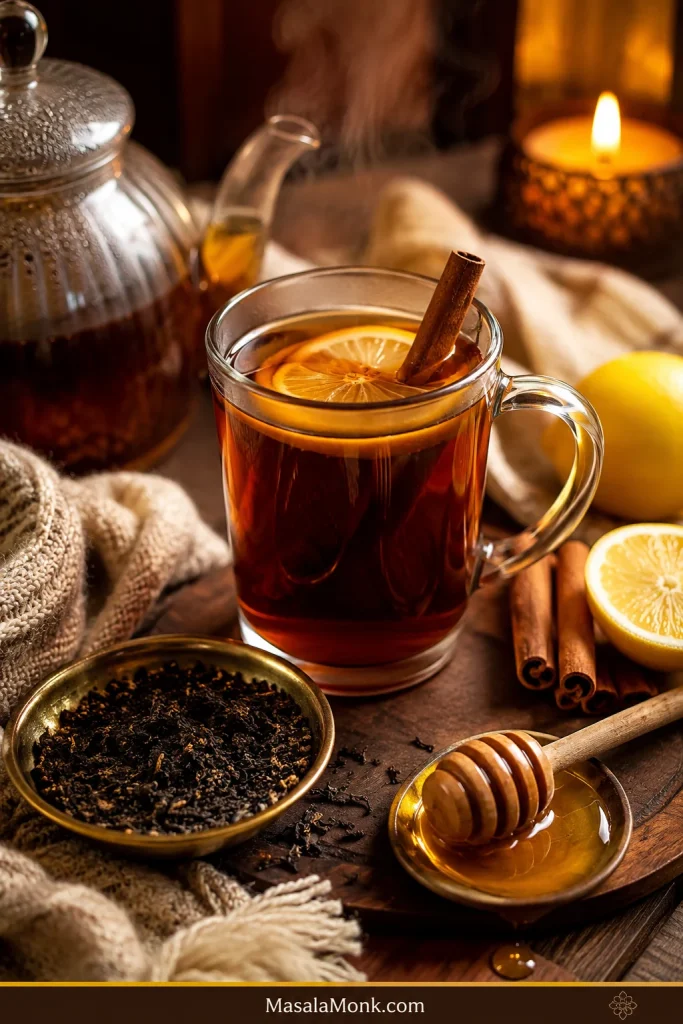
A tea hot toddy is richer and more aromatic than one made with plain water. Brew the tea first, then add honey, lemon, and whiskey or bourbon after the tea has steeped.

Tea turns it into a slower evening drink, the kind you can hold for a few minutes while the lemon and spice open up.

Tea hot toddy with dark black tea, honey, lemon, cinnamon, loose tea leaves, and a teapot in a warm candlelit setting.

For a fuller hot toddy with tea, brew the tea first so the base has depth before adding honey, lemon, and whiskey.
  • Black tea: classic and strong enough for whiskey.
  • Ginger tea: warming, spicy, and good with lemon.
  • Chamomile: gentle and floral.
  • Rooibos: naturally caffeine-free and slightly sweet.
  • Chai: spiced and bold; use less honey.
  • Decaf Earl Grey: fragrant and smooth for an evening drink.

Close to bedtime, use decaf black tea, rooibos, chamomile, or ginger tea. For a tea base that tastes more spiced and structured, MasalaMonk’s Masala Chai Masterclass goes deeper into black tea, ginger, cardamom, cinnamon, cloves, and whole-spice balance.

To make one tea-based toddy, use 1 cup / 240 ml brewed tea, 1½ ounces / 45 ml whiskey or bourbon, 1½ to 2 teaspoons honey, and 2 teaspoons lemon juice. If the tea is already spiced or sweet, start with less honey and adjust at the end.

Non-Alcoholic Hot Toddy

The non-alcoholic style should taste complete, not like a whiskey drink with something missing. This is not a lesser version. It is the one to make when you want comfort, warmth, and honey-lemon flavor without alcohol.

Non-Alcoholic Hot Toddy Ingredients

  • Hot black tea, ginger tea, lemon tea, or herbal tea: 1 cup / 240 ml
  • Honey: 1 tablespoon
  • Fresh lemon juice: 1 to 2 teaspoons
  • Cinnamon stick: 1
  • Whole cloves: 2
  • Fresh ginger: 1 thin slice
  • Orange slice: 1, optional

How to Make It

Brew the tea with ginger, cinnamon, and cloves. Stir in honey and lemon while the tea is still hot. Taste, then add more lemon for brightness or more honey for sweetness. This style is ideal when you want a soothing honey-lemon drink without alcohol.

Non-alcoholic hot toddy in a ceramic mug with ginger tea, honey, lemon, cinnamon, cloves, fresh ginger, and no alcohol bottle.
A non-alcoholic hot toddy should taste complete on its own, using ginger tea, honey, lemon, and spices for warmth without alcohol.

For a deeper flavor, use ginger tea or black tea. Prefer a softer evening drink? Use chamomile, rooibos, or decaf tea. A creamier no-alcohol spiced tea path starts with this Chai Latte Recipe, especially if you want a café-style mug instead of a clear tea toddy.

Honey note: Do not give honey to babies under 1 year old. For more food-safety guidance, see the CDC’s foods and drinks to avoid or limit for young children.

Using this for cold-weather comfort? Read the cold, cough, and sore throat note, or jump back to all hot toddy variations.

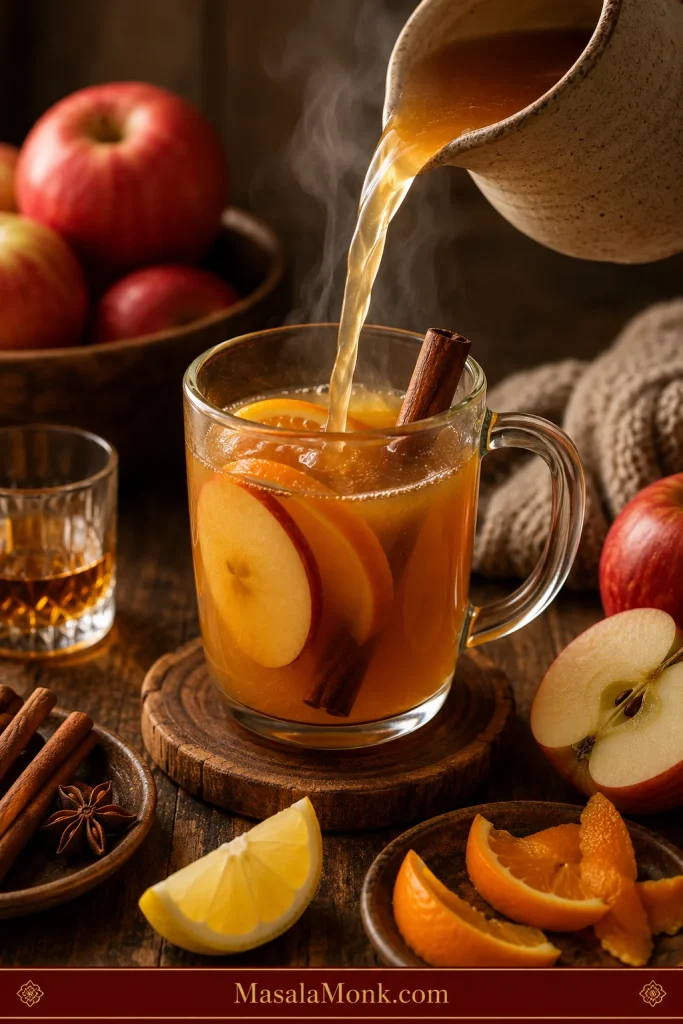
Apple Cider Hot Toddy

An apple cider hot toddy is the fall and winter style. The cider brings fruit, sweetness, and a little tartness, so the drink feels rounder and more festive than the plain-water version. Bourbon makes it mellow, dark rum makes it richer, and brandy gives it an old-fashioned fruit warmth.

Apple cider hot toddy being poured into a glass mug with apple slices, cinnamon, orange peel, lemon, and warm autumn colors.
Apple cider makes a hot toddy fruitier and rounder, so start with less honey and let the cinnamon and citrus carry the warmth.

Use sweet, non-alcoholic apple cider here. If your cider is alcoholic, warm it gently and be extra careful not to boil the drink.

  • ¾ cup / 180 ml apple cider
  • Bourbon, whiskey, dark rum, or brandy: 1½ ounces / 45 ml
  • Honey: 1 to 2 teaspoons
  • Fresh lemon juice: 2 teaspoons
  • Cinnamon stick: 1
  • Fresh ginger: 1 thin slice
  • Clove or star anise: 1, optional

Warm the apple cider with cinnamon, ginger, and clove until steaming. Let it sit for a few minutes so the spices can infuse. Add lemon juice and the spirit to the mug, then pour in the warm cider and stir. Because apple cider is already sweet, start with less honey and adjust at the end.

This is the mug that smells like cinnamon, citrus, and cold weather coming in from the door. A thin apple slice, orange peel, or cinnamon stick makes it feel finished without adding extra work. If apple drinks are your lane, the Appletini Recipe shows the colder, sharper side of apple and lemon.

Rum Hot Toddy

Dark rum turns the drink richer and more festive, especially with cinnamon, clove, nutmeg, orange, or apple cider. Use the same base ratio: 1½ ounces / 45 ml rum, ¾ cup / 180 ml hot water or cider, 2 teaspoons honey, and 2 teaspoons lemon juice.

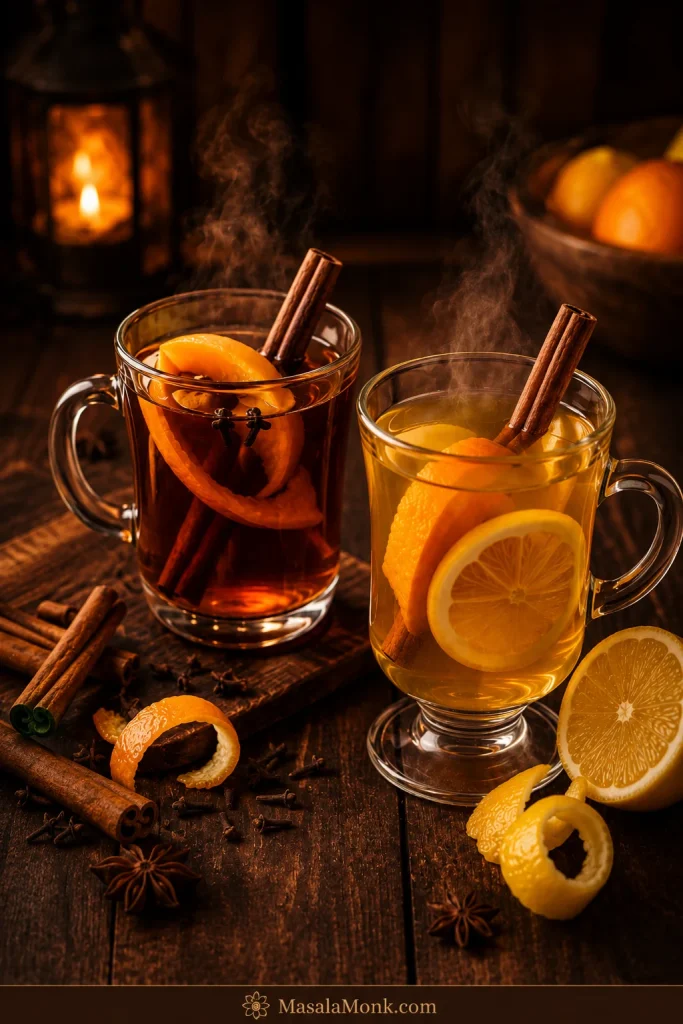
Brandy or Cognac Hot Toddy

Brandy gives the drink a gentler, fruitier flavor. Cognac, including Hennessy, works the same way because it is a style of brandy. Use 1½ ounces / 45 ml brandy or Cognac in place of whiskey, then pair it with lemon, honey, orange peel, and a cinnamon stick.

Two steaming hot toddy variations, one darker rum-style drink with orange and spice and one lighter brandy or Cognac-style drink with lemon and citrus peel.
Rum gives a hot toddy deeper spice and richness, while brandy or Cognac makes the mug softer, fruitier, and more after-dinner friendly.

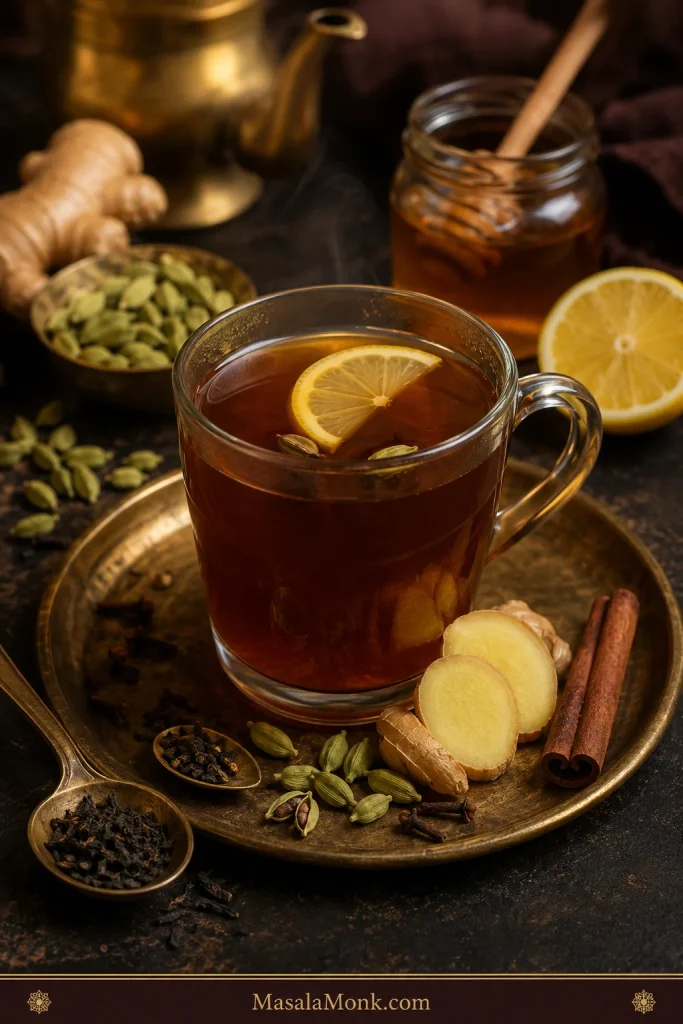
Indian-Spiced Ginger Cardamom Hot Toddy

This is the MasalaMonk version: still a hot toddy, but with the ginger-cardamom warmth of an evening chai. It keeps the honey-lemon base and adds a deeper masala-style fragrance.

Indian-spiced hot toddy with tea, honey, lemon, ginger, cardamom, cinnamon, cloves, brass props, and warm steam.
Layered with ginger, cardamom, cinnamon, and cloves, this Indian-spiced hot toddy gives the honey-lemon base a MasalaMonk-style finish.

For the alcoholic drink: use 1½ ounces / 45 ml whiskey or bourbon with ¾ cup / 180 ml hot water or tea. Alcohol-free: skip the whiskey and use 1 cup / 240 ml hot black tea or ginger tea.

  • Honey or brown sugar: 2 teaspoons
  • Fresh lemon juice: 2 teaspoons
  • Ginger slice: 1 thin piece
  • Green cardamom pod: 1, lightly crushed
  • Cinnamon stick: 1 small piece
  • Whole cloves: 1 to 2
  • Star anise: 1 small piece, optional

Simmer the water or tea briefly with ginger, cardamom, cinnamon, and cloves. Strain into a warm mug, stir in honey and lemon, then add whiskey or bourbon if using. This one is especially good when you want the drink to feel fragrant, layered, and quietly spiced.

Already Have Hennessy, Crown Royal, or Vodka?

If the bottle on your shelf is not whiskey or bourbon, you may still be able to make a good toddy. The trick is knowing whether that spirit brings flavor, softness, spice, or just alcohol.

Infographic titled Already Have One of These showing Cognac or Brandy as fruity and soft, Canadian Whisky as smooth and light, and Vodka as needing tea and spice.
Choose carefully when the bottle is not bourbon or whiskey: Cognac adds fruit, Canadian whisky stays light, and vodka needs tea and spice.
  • Hennessy / Cognac: A good choice if you want a softer, fruitier drink. Use it like brandy with honey, lemon, orange peel, and cinnamon.
  • Crown Royal / Canadian whisky: Smooth and light, so it works well when you want a gentler drink. Use tea instead of plain water if you want more body.
  • Vodka: Not ideal for a classic hot toddy because it adds alcohol without much flavor. If you use it, make the base stronger with tea, ginger, lemon, honey, and spices.
  • Tequila or gin: Possible, but not classic. Once you use these, the drink becomes more of a warm cocktail than a traditional hot toddy.

When in doubt, choose the spirit that already tastes good with lemon. That is why whiskey, bourbon, brandy, Cognac, and dark rum feel more natural here than vodka.

Make-Ahead Lemon Ginger Hot Toddy Mix

If hot toddies become your cold-evening habit, this lemon ginger mix makes the next mug almost automatic. Prepare a small jar and you only need hot water, tea, cider, or a splash of whiskey when serving.

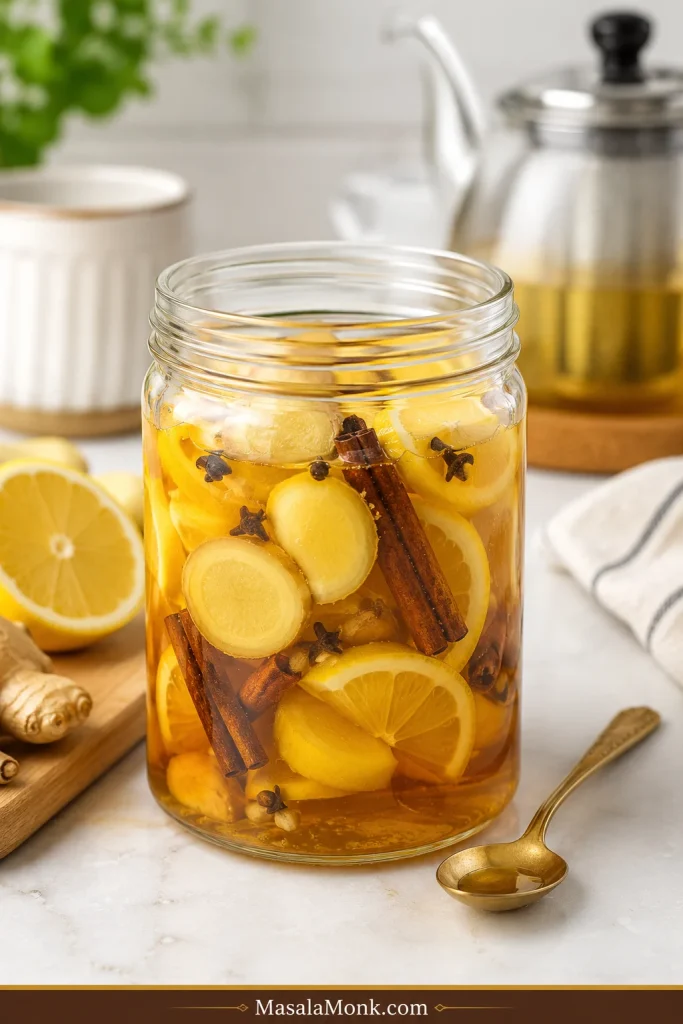
Jar of make-ahead lemon ginger hot toddy mix with honey, lemon peel, ginger slices, cinnamon sticks, cloves, and a spoon.
Keep the lemon ginger mix separate from the alcohol so it works for tea, cider, whiskey, or an alcohol-free mug.

Lemon Ginger Hot Toddy Mix Formula

IngredientAmount
Honey½ cup
Fresh lemon juice¼ cup
Lemon peelfrom 1 lemon
Fresh ginger2-inch piece, thinly sliced
Cinnamon sticks2
Whole cloves8 to 10

Combine everything in a clean jar and stir well. Let it sit for at least 30 minutes before using, or refrigerate it for a stronger ginger-spice flavor. This makes about ¾ cup mix, enough for roughly 6 to 12 drinks depending on whether you use 1 or 2 tablespoons per serving.

You can spoon it straight from the jar, or strain out the ginger, lemon peel, cinnamon, and cloves after a day if you want a smoother syrup. Store covered in the fridge for about 5 to 7 days. Use a clean spoon each time and discard the mix if it smells fermented or looks cloudy.

To serve, stir 1 to 2 tablespoons of the mix into hot water, tea, or warm apple cider. Add 1½ ounces / 45 ml whiskey, bourbon, rum, brandy, or Cognac if desired. For a stronger base, warm the mix with water or tea and keep the alcohol separate until serving.

Hot Toddies for a Crowd

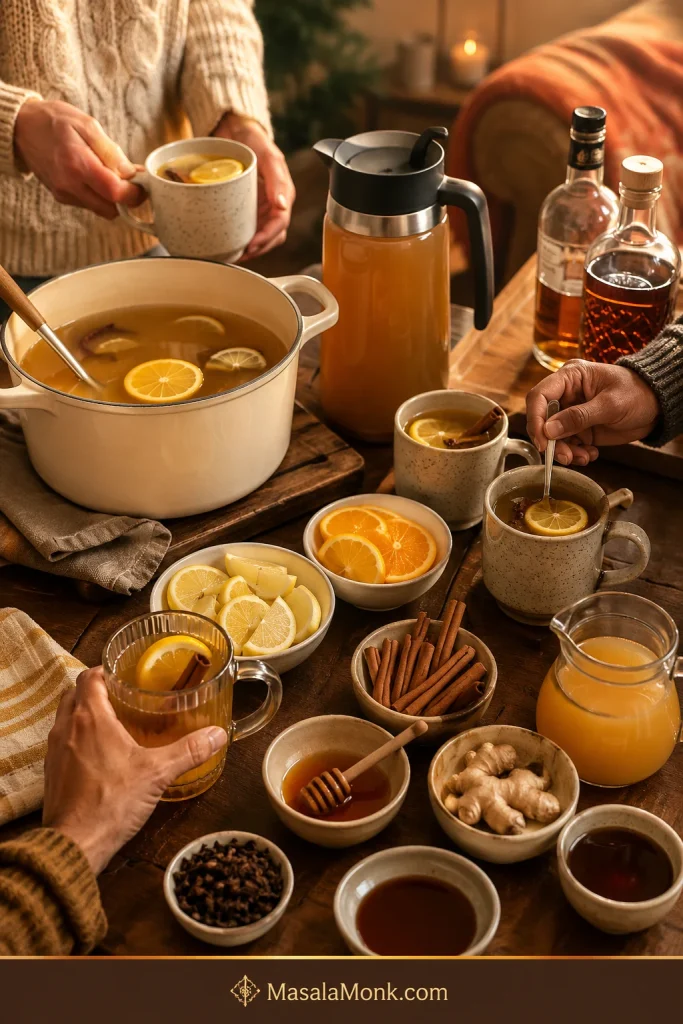
At a small gathering, make one warm honey-lemon-spice base and let everyone finish their own mug. Guests can build the drink they want, and you do not have to guess who wants whiskey, who wants rum, and who wants none at all.

Hot toddy bar setup with mugs, honey-lemon-spice base, tea, cider, lemon wedges, orange slices, cinnamon, ginger, cloves, honey, and spirits on the side.
A hot toddy bar works best when the base is shared and the final choice — whiskey, rum, tea, cider, or no alcohol — happens by the mug.

6-Drink Hot Toddy Batch Base

IngredientFor 6 Drinks
Hot water, tea, or apple cider4½ cups / about 1 liter
Honey¼ to ⅓ cup
Fresh lemon juice¼ to ⅓ cup
Cinnamon sticks3
Whole cloves8 to 12
Fresh ginger slices6 to 8
Whiskey or bourbon9 oz / 270 ml, added at serving

Warm the water, tea, or cider with honey, lemon, cinnamon, cloves, and ginger. Keep the base on low heat or the warm setting; it should steam gently, not boil. Add 1½ ounces / 45 ml whiskey or bourbon to each mug, then ladle the warm base over it. For non-drinkers, ladle the same base into a mug without alcohol.

Simple Hot Toddy Bar Ideas

  • Hot water, black tea, ginger tea, or warm apple cider
  • Honey, maple syrup, lemon wedges, and orange slices
  • Cinnamon sticks, cloves, fresh ginger, and cardamom pods
  • Whiskey, bourbon, dark rum, brandy, or Cognac
  • Non-alcoholic tea base for guests who do not drink

Hot Toddy for Cold, Cough, or Sore Throat?

A hot toddy is often associated with cold-weather comfort because it is warm and contains honey and lemon. That does not make it medicine, and it should not be treated as a cure for cough, cold, flu, or sore throat.

If you are sick, taking cold medicine, allergy medicine, sleep aids, or pain relievers, make the alcohol-free version. Alcohol can interact with some medicines and may not be a good choice when you are unwell. The National Institute on Alcohol Abuse and Alcoholism has a helpful overview of alcohol and medication interactions.

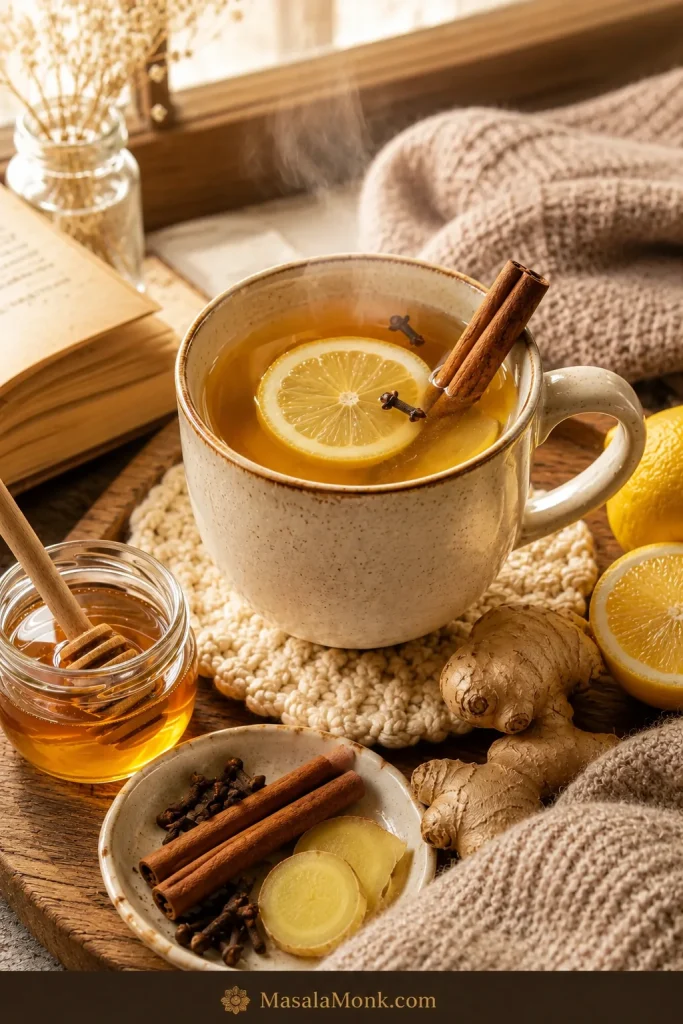
Alcohol-free hot toddy with ginger tea, honey, lemon, cinnamon, cloves, fresh ginger, steam, a book, and a soft blanket near a window.
For alcohol-free comfort, keep the focus on ginger tea, honey, lemon, and warming spice.

For a cozy no-alcohol drink, brew ginger tea or black tea, add honey and lemon, and steep it with cinnamon or cloves. You still get the warm honey-lemon comfort without the whiskey.

What to Use If You’re Missing Something

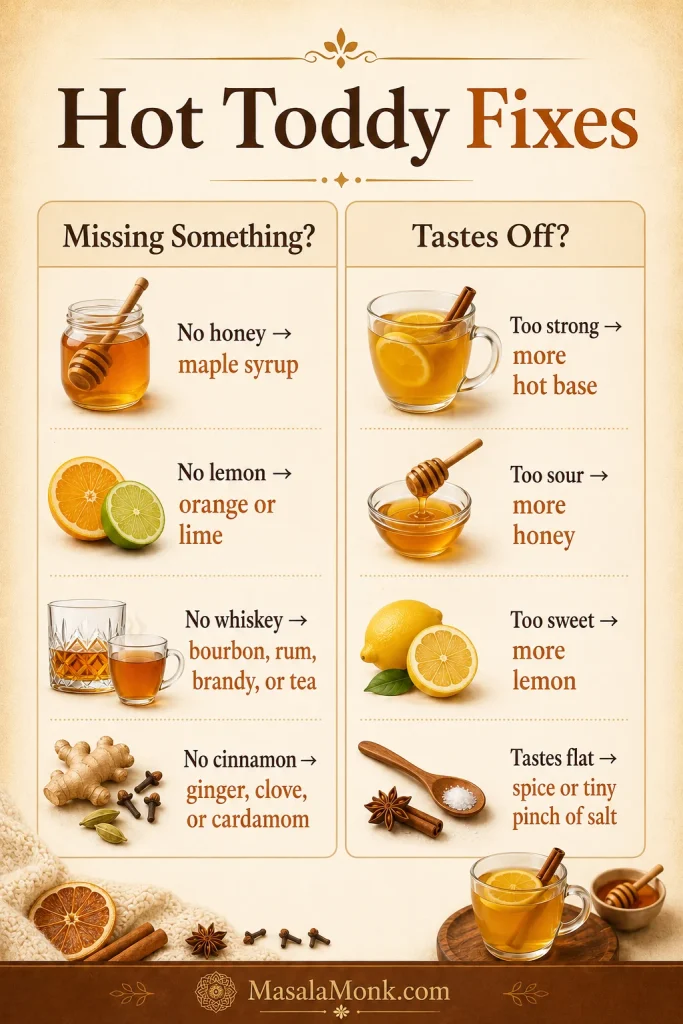
A missing ingredient does not ruin the drink. It just changes the path. Use what you have, then taste and rebalance before serving.

Infographic titled Hot Toddy Fixes showing substitutions for missing honey, lemon, whiskey, and cinnamon, plus fixes for a hot toddy that is too strong, sour, sweet, or flat.
Missing honey, lemon, whiskey, or cinnamon does not ruin the recipe; instead, swap what you need and rebalance the mug before serving.
Missing IngredientUse Instead
No whiskeyBourbon, dark rum, brandy, Cognac, or hot tea for no alcohol
No bourbonWhiskey, rum, brandy, or Canadian whisky
No honeyMaple syrup, brown sugar syrup, agave, or simple syrup
No lemonOrange juice, lime juice, or a small splash of apple cider
No hot waterHot tea or warm apple cider
No teaHot water with ginger, cinnamon, or cloves
No cinnamonClove, ginger, nutmeg, star anise, cardamom, or skip it
No fresh gingerA small pinch of ground ginger
No clovesCinnamon, nutmeg, star anise, or cardamom
Vegan optionUse maple syrup instead of honey

Already mixed the drink and it tastes off? Use the hot toddy troubleshooting guide to fix it before serving.

How to Fix a Hot Toddy That Tastes Off

The nice thing about this drink is that almost every mistake is fixable before you take the second sip. Most problems can be fixed right in the mug.

ProblemFix
Overly strongAdd more hot water or tea, 2 tablespoons at a time.
Weak or thinUse 2 ounces / 60 ml whiskey next time, or reduce the hot liquid slightly.
Overly sweetAdd another squeeze of lemon juice.
Sharp or sourAdd ½ to 1 teaspoon more honey.
WateryUse less hot liquid next time, or add more honey and lemon to rebalance.
Flat flavorAdd a tiny pinch of salt, a cinnamon stick, clove, ginger, or more lemon.
Honey will not dissolveStir honey into the hot liquid before adding alcohol.
Cooled too fastPre-warm the mug before making the drink.
Sharp whiskey edgeUse bourbon or Irish whiskey next time, or add more hot tea and honey.
Thin vodka versionUse tea instead of water and add ginger, cinnamon, or orange peel.

Ready to make another mug? Return to the recipe card, the measurement guide, or the variation table.

How to Serve It Warm and Cozy

Serve a hot toddy in a heatproof mug, tempered glass, or Irish coffee glass while it is still steaming. A lemon round and cinnamon stick are enough, but orange peel, cloves, ginger, cardamom, or star anise make the drink smell more inviting before the first sip.

If you are making several, keep the tea, water, or cider base warm and mix each drink fresh. The toddy tastes best when the citrus is bright, the honey is fully dissolved, and the spirit has not been sitting over heat.

Hot Toddy FAQ

What is in a hot toddy?

A classic hot toddy is made with whiskey or bourbon, hot water or tea, honey, fresh lemon juice, and optional spices like cinnamon, cloves, ginger, or nutmeg.

Is a hot toddy made with whiskey or bourbon?

Both work. Whiskey is the broad classic choice, while bourbon gives the drink a sweeter, softer flavor. Irish whiskey, rye, blended whiskey, Canadian whisky, dark rum, brandy, and Cognac can also be used.

Does tea work in a hot toddy?

Yes. Tea works especially well when you want a fuller, slower hot toddy. Black tea, ginger tea, chamomile, rooibos, chai, and decaf Earl Grey are all good choices.

What is the best non-alcoholic hot toddy?

The best non-alcoholic hot toddy uses hot tea, honey, lemon, ginger, cinnamon, and cloves. Ginger tea or black tea gives the most body, while chamomile or rooibos makes a softer evening drink.

Is a hot toddy good for cough or cold?

A hot toddy is a warm comfort drink, not a cure. Honey, lemon, and hot tea can feel soothing, but alcohol is not necessary and may not be suitable when you are sick or taking medicine. The alcohol-free version is the better choice when you are unwell.

Which whiskey is best for a hot toddy?

Bourbon is the easiest choice, Irish whiskey is smooth and mellow, rye is spicier, and blended whiskey is practical for everyday hot toddies. Use smoky Scotch only if you already enjoy smoky drinks.

Is rum good in a hot toddy?

Yes. Dark rum or spiced rum gives the drink a warmer, sweeter, more holiday-like feel. It is especially good with apple cider, cinnamon, clove, orange, and nutmeg.

Does Hennessy work in a hot toddy?

Hennessy works because it is Cognac, so you can use it like brandy. It pairs well with honey, lemon, orange peel, cinnamon, and hot water or tea.

What replaces lemon in a hot toddy?

Orange juice, lime juice, or a small splash of apple cider can replace lemon. The flavor will change, but the drink still needs brightness to balance the honey and spirit.

What can replace honey?

Maple syrup is the easiest honey substitute, especially with bourbon or apple cider. Brown sugar syrup, agave, or simple syrup also work.

Is it hot toddy or hot tottie?

The standard spelling is hot toddy. Hot tottie, hottie tottie, hot tati, and similar spellings usually refer to the same warm whiskey, honey, and lemon drink.

How strong is a hot toddy?

A classic hot toddy usually has 1½ ounces / 45 ml whiskey or bourbon. For a lighter drink, use 1 ounce / 30 ml. Make it more cocktail-forward with 2 ounces / 60 ml.

Need the basics again? Go back to the quick hot toddy ratio or the full recipe card.

Final Notes

The best hot toddy is not the strongest or the sweetest one. It is the one that tastes balanced in your mug. Start with the classic ratio, use fresh lemon, dissolve the honey properly, add the whiskey last, and adjust before serving.

Once you have the base down, the drink becomes easy to customize. Make it with bourbon for softness, tea for body, apple cider for a festive twist, rum or brandy for a warmer turn, Cognac for a fruitier old-fashioned feel, or skip the alcohol entirely and make a honey-lemon tea toddy instead.

However you make it, the goal is the same: a steaming mug that tastes balanced, smells inviting, and gives you a reason to slow down for a few minutes.

Posted on Leave a comment

Tom Collins Recipe: Classic Gin Collins Cocktail

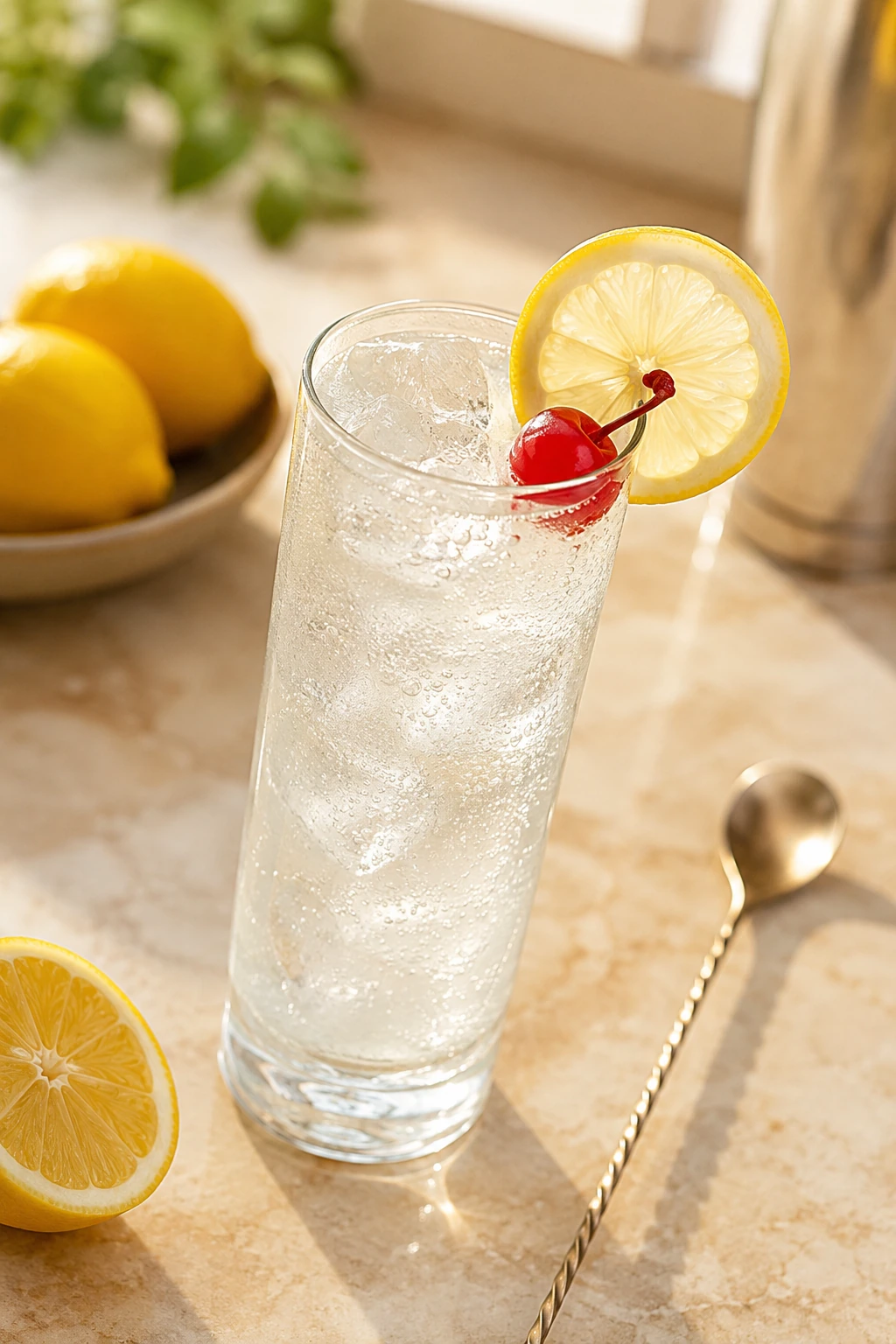
Tall Tom Collins cocktail in a Collins glass with ice, bubbles, lemon wheel, red cherry, fresh lemons, and a bar spoon on a bright stone surface.

A good Tom Collins feels cold before you even finish the first sip: lemon on the nose, bubbles lifting the glass, just enough sweetness to soften the gin, and no heavy aftertaste.

The drink is simple — gin, lemon juice, simple syrup, club soda, and ice — but the balance matters. Lemon sharpens it, syrup softens it, soda lifts it, and ice keeps it honest. Get those four things right and the glass tastes bright instead of sticky, flat, or watery.

This Tom Collins recipe is built for home bartenders. You get the classic ratio first, then ounce, milliliter, and tablespoon measurements, a no-shaker method, an optional shaken method, mix guidance, pitcher amounts, easy variations, and fixes for drinks that turn too sour, too sweet, too weak, or too flat.

You do not need a full bar setup. If you can measure, stir, taste, and top with soda, you can make this drink well.

Tom Collins at a Glance

Prep
5 minutes

Yield
1 cocktail

Method
Build in glass

Glass
Collins or highball

  • Taste: lemon-first, lightly sweet, sparkling, and dry on the finish.
  • Best first gin: London dry gin for a crisp modern glass.
  • Classic-style gin: Old Tom gin for a softer, slightly sweeter version.
  • Sweetness level: crisp at ½ oz syrup, softer at ¾ oz.

Quick Definition

A Tom Collins is a tall gin cocktail made with gin, fresh lemon juice, simple syrup, club soda, and ice. Think sparkling lemonade with a dry gin finish: citrusy, lightly sweet, crisp, and gently botanical.

Gin makes it a Tom Collins. Vodka gives you a Vodka Collins. Whiskey or bourbon gives you the version many home bartenders call a John Collins.

Quick Answer: Best Tom Collins Ratio

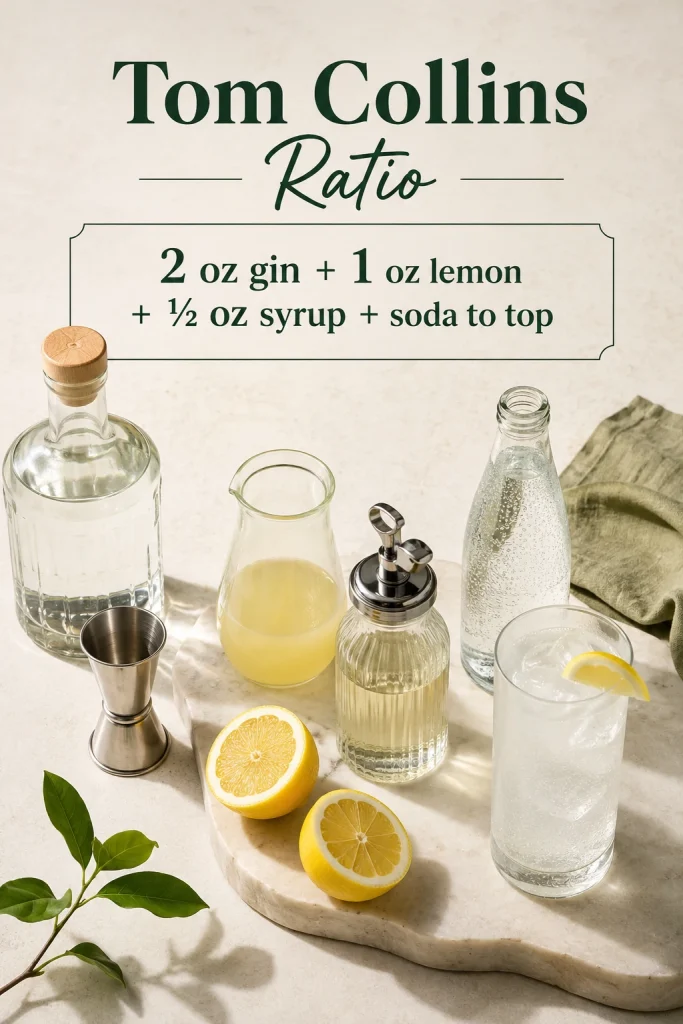
For one classic Tom Collins, use 2 oz gin, 1 oz fresh lemon juice, ½ oz simple syrup, and 2–4 oz cold club soda. Build it over plenty of ice in a Collins or highball glass, then garnish with lemon and a cherry.

Tom Collins Ratio at a Glance

This visual gives you the baseline before you adjust sweetness, lemon, or soda for your own glass.

Tom Collins ratio board showing gin, lemon juice, simple syrup, club soda, a jigger, lemon halves, a syrup jar, and a finished cocktail.
Use the 2:1:½ Tom Collins ratio as your starting point: gin for structure, lemon for snap, simple syrup for balance, and club soda for lift.
IngredientAmount for 1 drinkWhat it does
Gin2 oz / 60 mlGives the cocktail its botanical base.
Fresh lemon juice1 oz / 30 mlSharpens the drink and gives it citrus snap.
Simple syrup½ oz / 15 mlSoftens the sour edge without making it sticky.
Cold club soda2–4 oz / 60–120 mlAdds bubbles, length, and lift.
IceEnough to fill the glassKeeps the drink cold and slows dilution.
GarnishLemon wheel and cherryAdds classic aroma and presentation.

This version starts crisp on purpose. Many Tom Collins drinks drift sweeter, but ½ oz syrup keeps the first glass bright and gives you room to adjust. Move to ¾ oz if you want a softer lemonade-style Collins. Use 1 oz only if your lemons are especially sharp or you already know you like a sweeter drink.

Make the first glass exactly this way. Then adjust the second one if you want it sweeter, sharper, stronger, or longer.

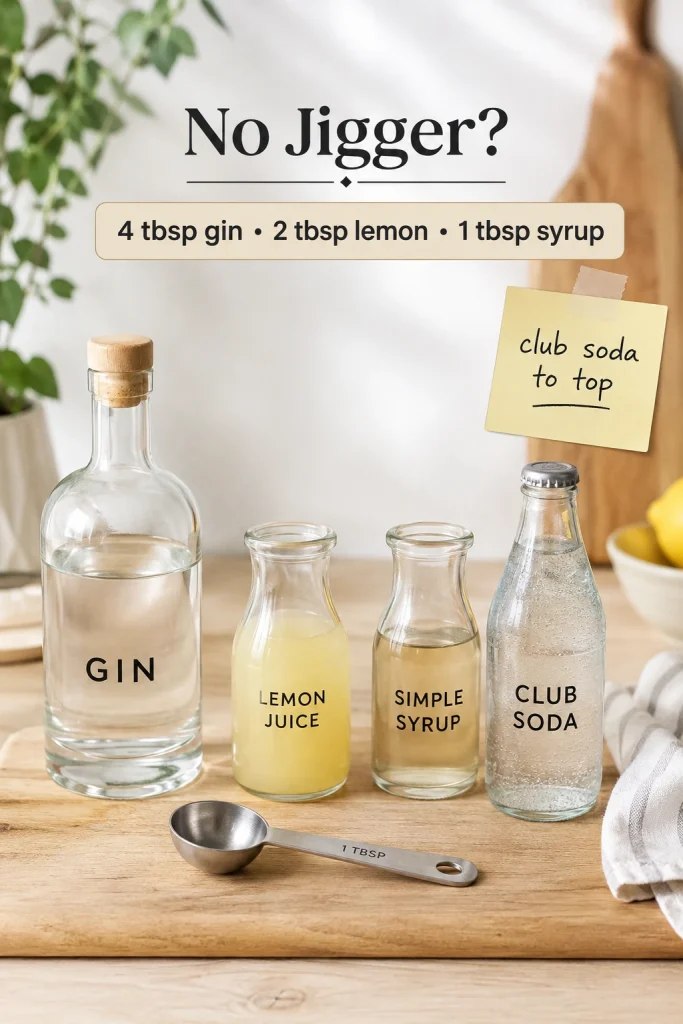
No jigger? Use tablespoons: 2 oz gin = 4 tablespoons, 1 oz lemon juice = 2 tablespoons, and ½ oz simple syrup = 1 tablespoon.

No-Jigger Tom Collins Measurements

Use this when you are making the cocktail with kitchen spoons instead of bar tools.

No-jigger Tom Collins measurement guide with gin, lemon juice, simple syrup, club soda, and a tablespoon measure on a wooden countertop.
No jigger? Tablespoons still work well: 4 tablespoons gin, 2 tablespoons lemon juice, and 1 tablespoon simple syrup keep the drink balanced at home.

Classic Tom Collins Recipe

Make this version first. It gives you the clean baseline: gin, fresh lemon, simple syrup, chilled soda water, and enough ice to keep the drink crisp from the first sip to the last.

Prep Time
5 minutes

Total Time
5 minutes

Servings
1 drink

Difficulty
Easy

Equipment

  • Collins glass or highball glass
  • Jigger or tablespoon measure
  • Bar spoon or long spoon
  • Citrus juicer
  • Cocktail shaker and strainer, optional

Ingredients

  • 2 oz / 60 ml gin
  • 1 oz / 30 ml fresh lemon juice
  • ½ oz / 15 ml simple syrup
  • Ice, enough to fill the glass
  • 2–4 oz / 60–120 ml cold club soda, to top
  • Lemon wheel, for garnish
  • Maraschino cherry or cocktail cherry, optional but classic

Lemon note: one medium lemon often gives enough juice for one Tom Collins, with a little extra for adjusting if the glass needs more citrus.

Method

  1. Add the gin, lemon juice, and simple syrup to a Collins or highball glass.
  2. Stir briefly so the lemon and syrup combine.
  3. Fill the glass with ice.
  4. Top with cold club soda.
  5. Stir gently once or twice. Do not over-stir or the drink will lose fizz.
  6. Garnish with a lemon wheel and cherry. Serve right away.

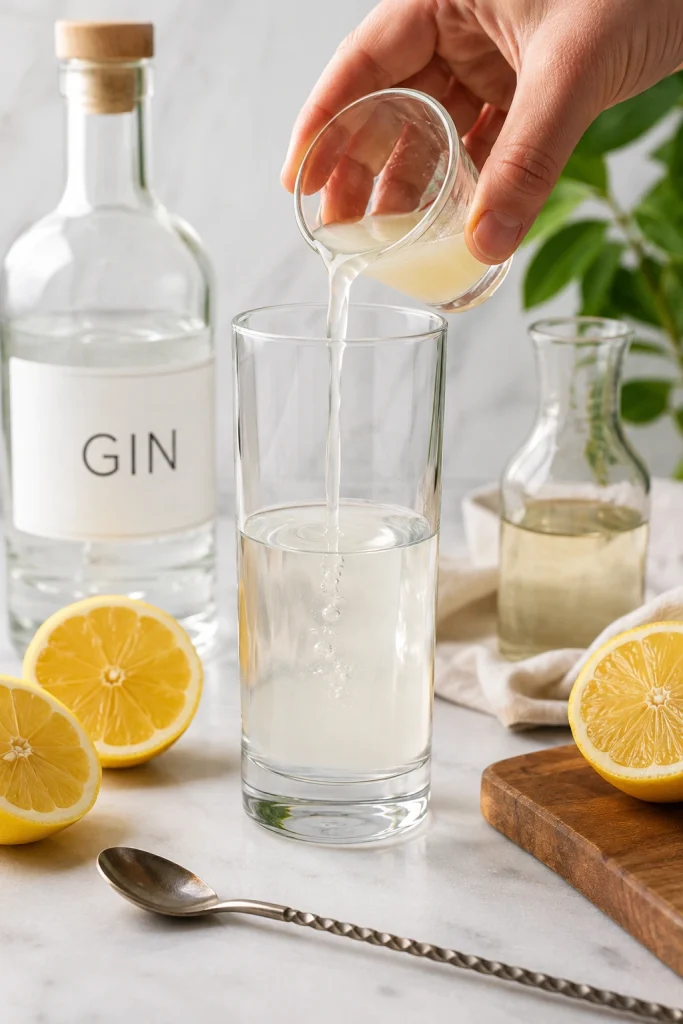
Mix the Gin, Lemon, and Syrup First

The lemon and syrup need a moment with the gin before ice and bubbles enter the glass.

Hand pouring lemon juice into a Collins glass with gin, with simple syrup, fresh lemons, a bar spoon, and a cutting board nearby.
Combine the gin, lemon juice, and simple syrup before adding ice, because the base blends more evenly when the sour and sweet parts meet first.

Fill the Glass with Ice

A full ice fill is part of the method, not just presentation.

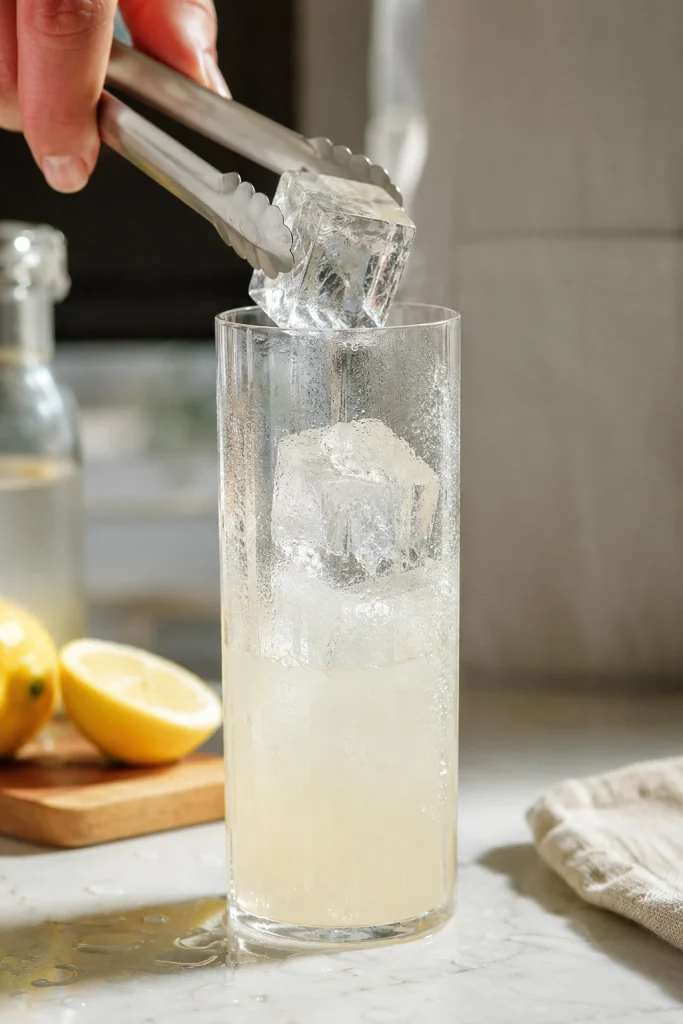
Ice tongs placing a large clear ice cube into a Collins glass with pale lemon cocktail base and condensation on the glass.
Next, fill the glass generously. More ice chills the drink faster and, just as importantly, slows dilution while the lemon and gin stay clear.

Add Club Soda Last

This is the step that protects the fizz, so keep the soda cold and add it at the end.

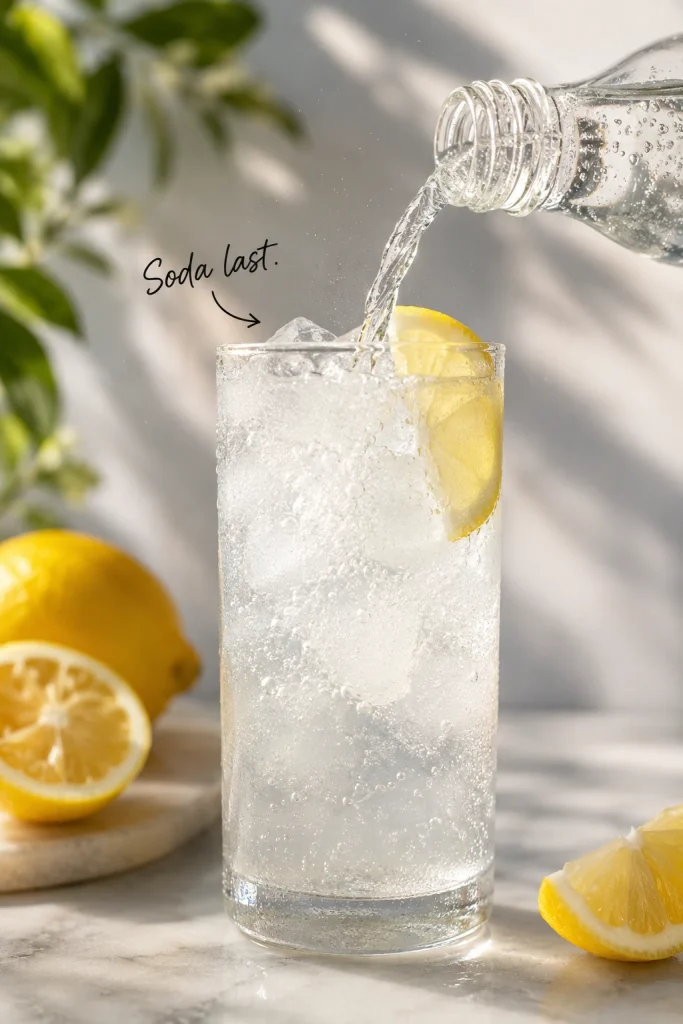
Club soda being poured into an ice-filled Tom Collins glass with bubbles, condensation, lemon garnish, and fresh lemons nearby.
Club soda should go in last, because lively bubbles disappear quickly once over-stirred. After that, one or two gentle turns are enough.

Optional Shaken Method

Shake only the gin, lemon juice, and simple syrup with ice for 5–10 seconds. Strain into an ice-filled Collins glass, top with cold club soda, stir gently, and garnish. Never shake the soda.

Taste cue: before adding soda, the gin-lemon-syrup mix should taste a little stronger and sharper than the final drink. Ice and bubbles will soften it.

Finished glass cue: the final drink should taste lemon-first, lightly sweet, and sparkling, with gin in the background rather than alcohol heat up front.

Fix the taste · Make a pitcher · Back to top

The goal is not the sweetest Collins or the strongest Collins. It is the one that still tastes alive after a few minutes on the table: lemon first, gin behind it, bubbles still moving, and no syrupy finish at the bottom of the glass.

Finished Glass Cue

Use the finished drink as a quick quality check before serving or adjusting the next glass.

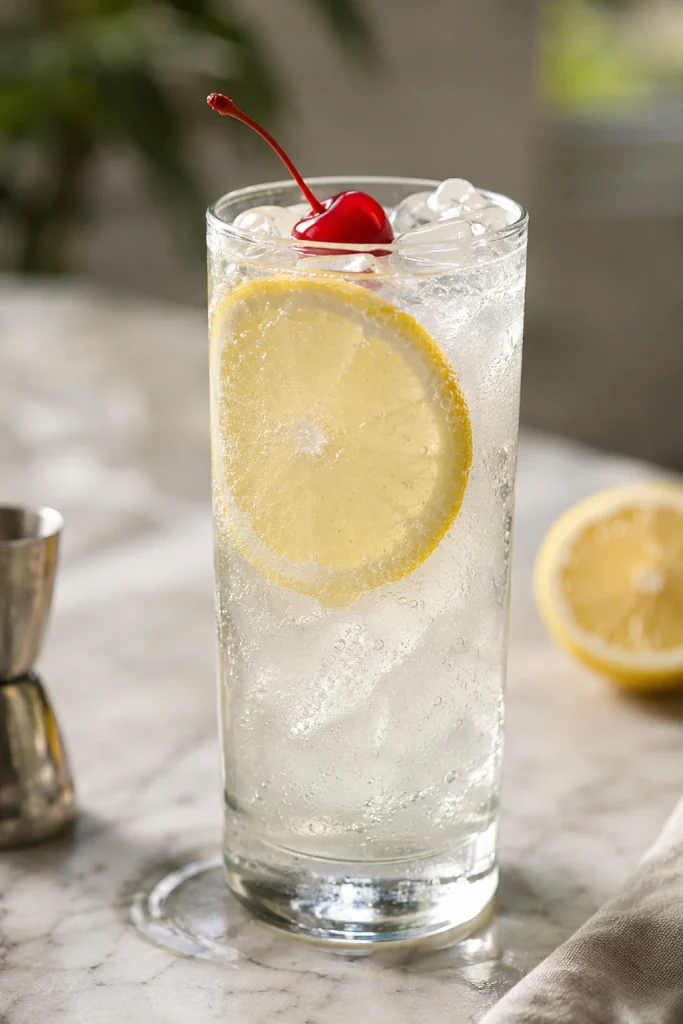
Finished Tom Collins cocktail in a tall glass with ice, bubbles, lemon slice, cherry, condensation, and a small wet ring on marble.
A good finished Tom Collins should look pale, clear, fizzy, and packed with ice. If it looks flat or cloudy, check the soda, ice, and lemon balance.

Choose Your Style

Make the classic version once. After that, the drink is easy to steer. Change one thing at a time: syrup for softness, soda for length, lemon for sharpness, or the spirit for a different Collins.

  • Crisp classic: 2 oz gin, 1 oz lemon, ½ oz syrup, and 2–3 oz soda.
  • Softer lemonade-style: increase the syrup to ¾ oz.
  • Lighter highball: use 3–4 oz soda for a longer, easier sip.
  • Stronger and sharper: use only 2 oz soda so the gin and lemon stay more present.
  • Shortcut mix version: use Tom Collins mix instead of the lemon juice and syrup.

Most people land between crisp classic and softer lemonade-style. For guests, start crisp and leave extra syrup nearby so each glass can be adjusted without remaking the drink.

From here, the small details do the work: the gin you choose, how fresh the soda is, how much syrup you like, and whether you are making one glass or a pitcher.

Why This Recipe Works

A Tom Collins works because nothing has to shout. The lemon wakes it up, the syrup rounds the edge, the soda gives it lift, and the ice keeps that balance cold while you sip.

  • Fresh lemon gives the snap. Bottled lemon can taste dull or harsh in a cocktail this simple.
  • Start with ½ oz syrup. It keeps the drink crisp while leaving room to sweeten the next glass.
  • Use cold, freshly opened soda. That is what gives the drink real lift.
  • Fill the glass with ice. More ice keeps the drink colder and helps it stay bright instead of watery.

Start here: make the crisp version once before changing the syrup, soda, or gin. Once that baseline tastes right, every variation becomes easier to judge.

Tom Collins Ingredients

With a drink this simple, there is nowhere for dull lemon, flat soda, or gritty sugar to hide. Choose a clean gin, squeeze fresh lemon if you can, dissolve the sugar first, and treat the soda like the final lift rather than a filler.

Tom Collins Ingredients, Laid Out

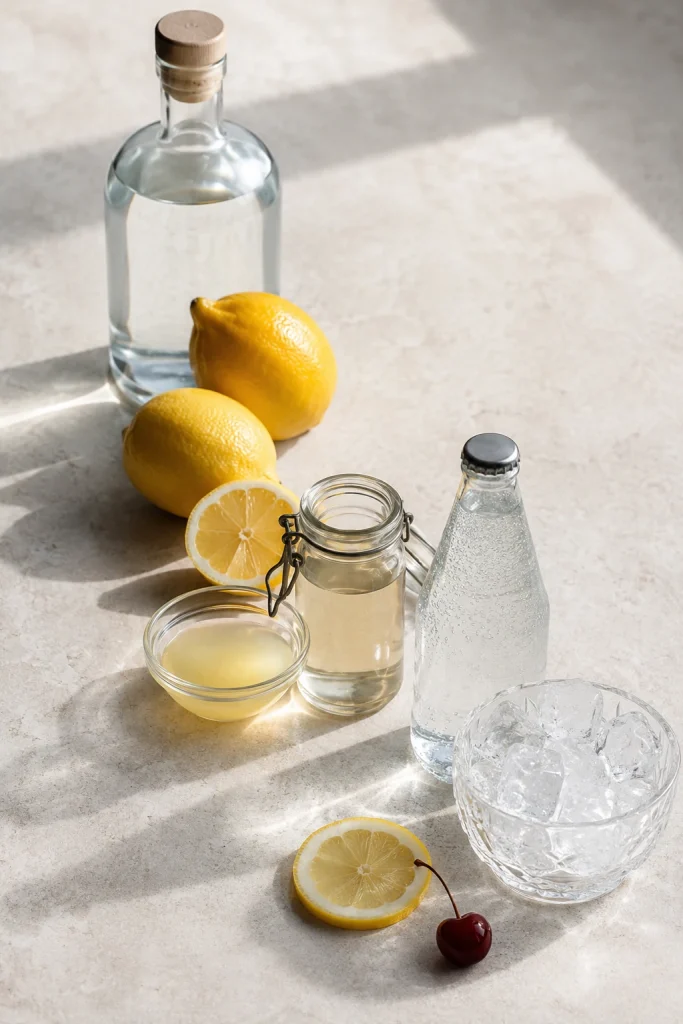
Tom Collins ingredients arranged on a light stone surface, including gin, lemons, lemon juice, simple syrup, club soda, ice, a lemon wheel, and a cherry.
Since this gin cocktail uses only a few ingredients, freshness matters: clean gin, real lemon juice, smooth syrup, cold soda, and plenty of ice do most of the work.

Gin

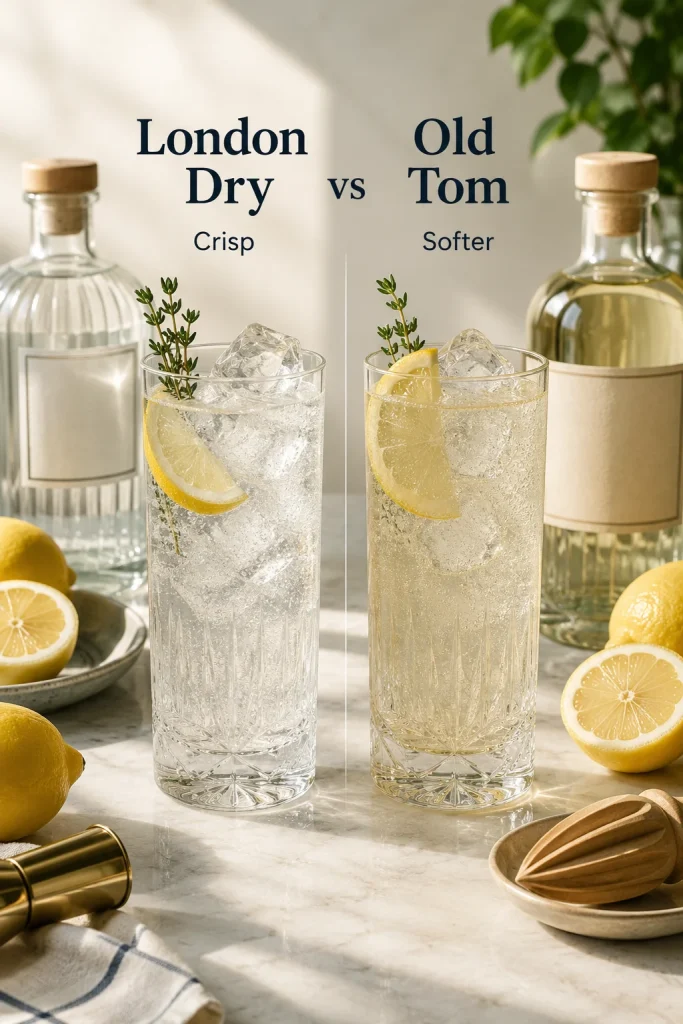
A Tom Collins does not need rare or expensive gin. It needs a gin that stays clean with lemon, syrup, soda, and ice. London dry gin is the easiest modern choice because it stays crisp without adding sweetness. Old Tom gin gives the drink a rounder, slightly sweeter old-school feel.

Classic gin note: if you use Old Tom gin, start with a little less syrup because the gin already brings softness. If your gin tastes very dry or sharp, the full ½ oz syrup will help round out the lemon.

London Dry vs Old Tom Gin

Two Tom Collins cocktails side by side comparing London dry gin and Old Tom gin, with generic gin bottles, lemons, ice, and labels.
London dry gin gives a sharper, cleaner Collins, while Old Tom gin creates a softer, rounder version with a slightly sweeter classic-cocktail feel.

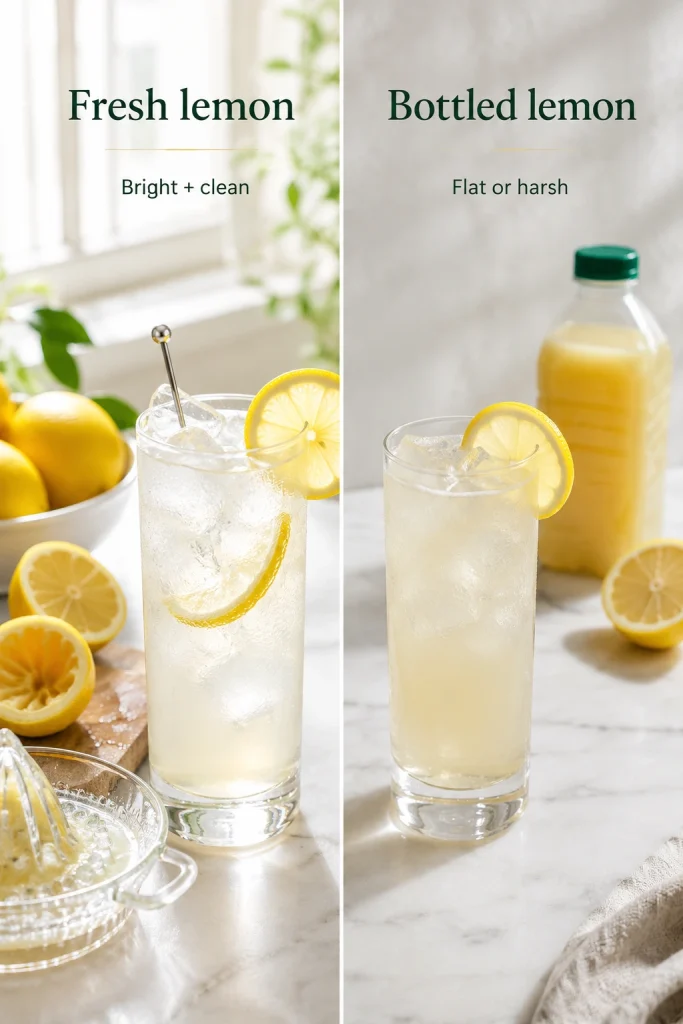
Fresh Lemon Juice

Lemon is where the drink wakes up. Fresh juice gives you that clean citrus snap; bottled lemon can make the whole glass taste flat or harsh.

One medium lemon often gives around 2–3 tablespoons of juice, so one lemon is usually enough for one drink. Keep a wedge nearby if you like to adjust the first sip.

Fresh Lemon vs Bottled Lemon

Split comparison of fresh lemon juice and bottled lemon juice for a Tom Collins, with fresh lemons, a juicer, bottled lemon juice, and two cocktails.
Bottled lemon juice works in a pinch, but fresh lemon gives this gin highball cleaner aroma, brighter tartness, and a less harsh finish.

Simple Syrup

This is the quiet fixer in the drink. It smooths the lemon without leaving sugar at the bottom of the glass. Loose sugar can make the first sip sharp and the last sip too sweet.

No simple syrup made? Dissolve sugar in warm water first. Do not add dry sugar straight to the cold glass unless you are willing to stir longer and accept some grit.

Club Soda

The soda is where many Tom Collins drinks lose their lift. Chilled, freshly opened club soda or soda water keeps the glass bright; warm or half-flat soda makes even a good ratio taste dull.

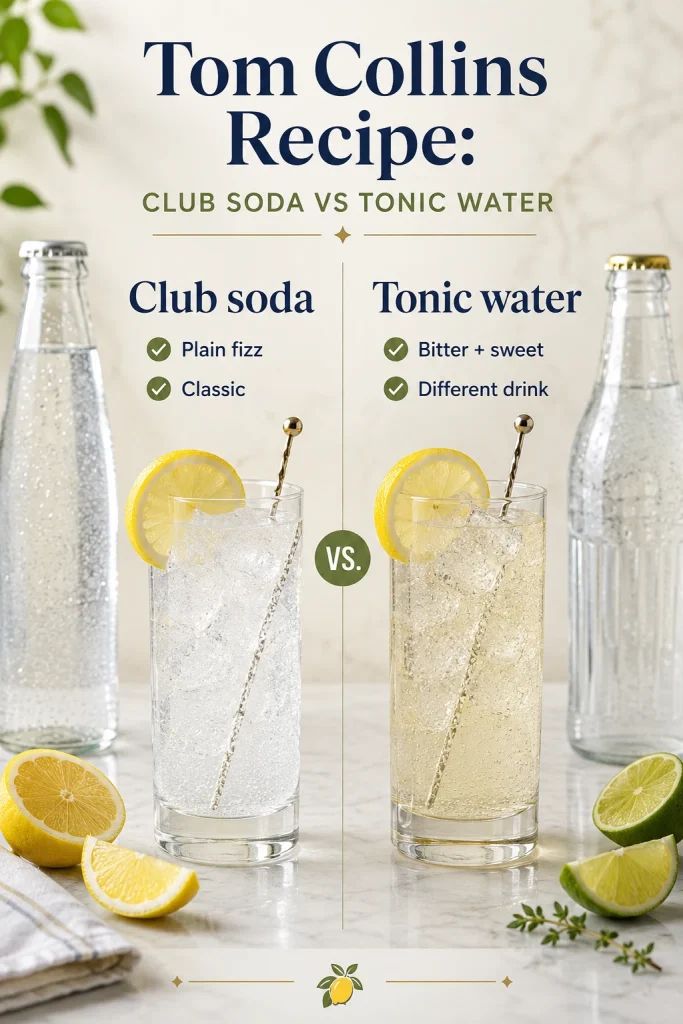
For this recipe, club soda and soda water work the same practical way: plain carbonated water for fizz. Do not use tonic water unless you want a different drink; tonic is bitter and sweet, while club soda is plain and sparkling.

Club Soda vs Tonic Water

Club soda and tonic water comparison with two fizzy highball cocktails, lemon garnishes, generic bottles, checklist labels, lemons, and lime.
Club soda keeps the drink clean, dry, and fizzy. Tonic water adds bitter sweetness and moves it away from the classic Collins profile.

Ice and Garnish

Fill the glass with ice. A full glass stays colder and usually dilutes more slowly than a glass with only a few cubes. A lemon wheel and cherry are classic; a lemon wedge is fine if that is what you have.

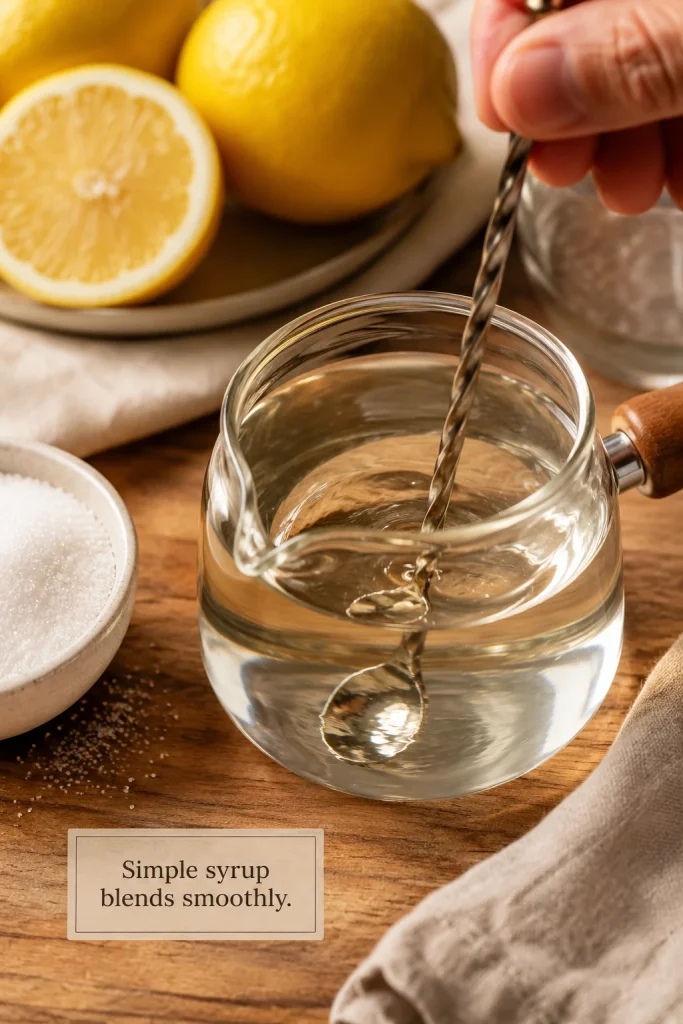
How to Make Simple Syrup

Simple syrup is just sugar dissolved in water. It blends smoothly into a cold cocktail, which is why it works better here than loose sugar.

Why Simple Syrup Works Better

Clear simple syrup being stirred in a glass pot with sugar, lemons, and a linen cloth on a warm wooden surface.
Because it dissolves fully in a cold cocktail, simple syrup gives every sip the same smooth sweet-tart balance.
  1. Add ½ cup sugar and ½ cup water to a small saucepan.
  2. Warm gently and stir until the sugar dissolves.
  3. Cool completely before using.
  4. Store covered in the refrigerator.

For a one-drink shortcut, stir 1 tablespoon sugar with 1 tablespoon warm water until dissolved, cool briefly, then measure 1 tablespoon / 15 ml of that syrup for the drink. Save any extra for adjusting.

Measurements: Ounces, ML, Tablespoons, and Grams

Bar tools are nice, but they are not the point here. A tablespoon measure and a clear ratio will get you much farther than fancy gear and flat soda.

Measure styleGinLemon juiceSimple syrupClub soda
Ounces2 oz1 oz½ oz2–4 oz
Milliliters60 ml30 ml15 ml60–120 ml
Tablespoons4 tbsp2 tbsp1 tbsp4–8 tbsp
Approx. grams where usefulUse volumeAbout 30 gAbout 18–20 gUse volume

The soda amount is a range because glass size, ice size, and personal taste all matter. Start with 2 oz / 60 ml for a stronger, more lemon-forward drink. Use 3–4 oz / 90–120 ml for a lighter highball.

Built vs Shaken

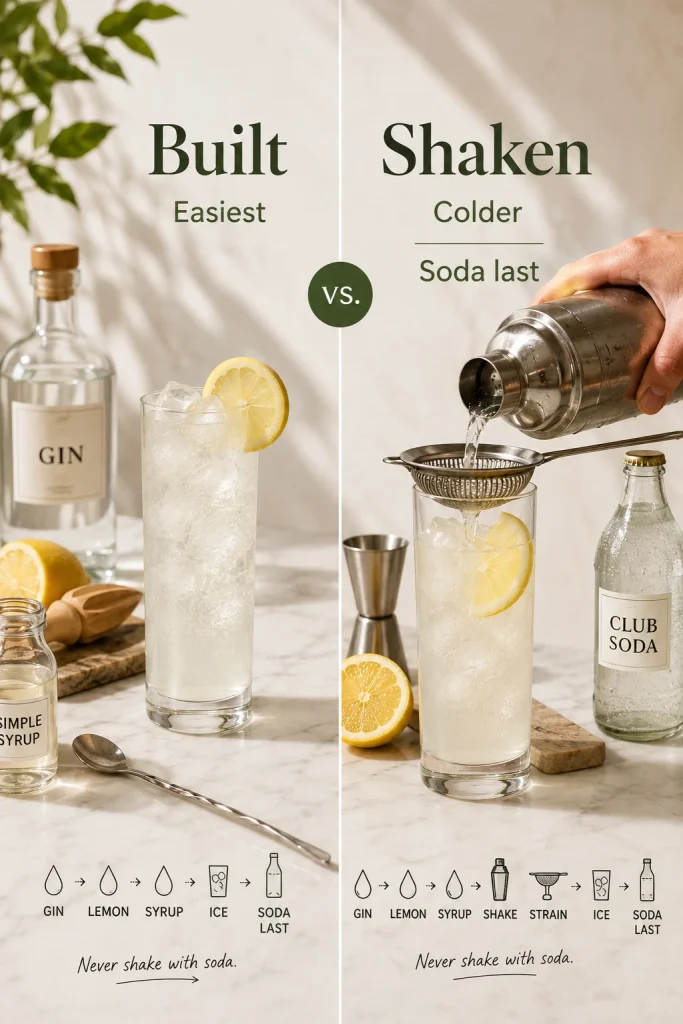
Both methods work. Build it in the glass when you want the easiest version. Shake the gin, lemon juice, and syrup first when you want the drink extra cold and slightly more blended.

Built vs Shaken Tom Collins

Built versus shaken Tom Collins comparison with a glass-built drink, cocktail shaker, strainer, gin, simple syrup, club soda, lemons, and step icons.
Build it directly in the glass for speed, or shake only the gin, lemon, and syrup for extra chill. Either way, soda stays last.

The fizz rule: mix the gin, lemon, and syrup first; add ice after the base is blended; pour cold soda last; stir once or twice. Extra stirring after soda makes the drink go flat faster.

  • Built in the glass: stir gin, lemon, and syrup in the glass, add ice, then top with soda. This is fast, simple, and does not need a shaker.
  • Shaken first: shake gin, lemon, and syrup with ice, strain over fresh ice, then top with soda. This gives a colder, more polished drink.

One rule does not change: never shake the soda. It should always go in after stirring or shaking, right before serving.

For another sharper lemon-and-sugar cocktail, the Lemon Drop Martini uses a similar citrus balance in a colder, served-up drink.

Back to recipe card · Glass, ice, and soda tips · Back to top

Glass, Ice, Soda, and Garnish

A Tom Collins should still feel alive ten minutes into sitting on the table: cold glass, lemon scent, bubbles still moving, not a sweet yellow drink melting into weak lemonade.

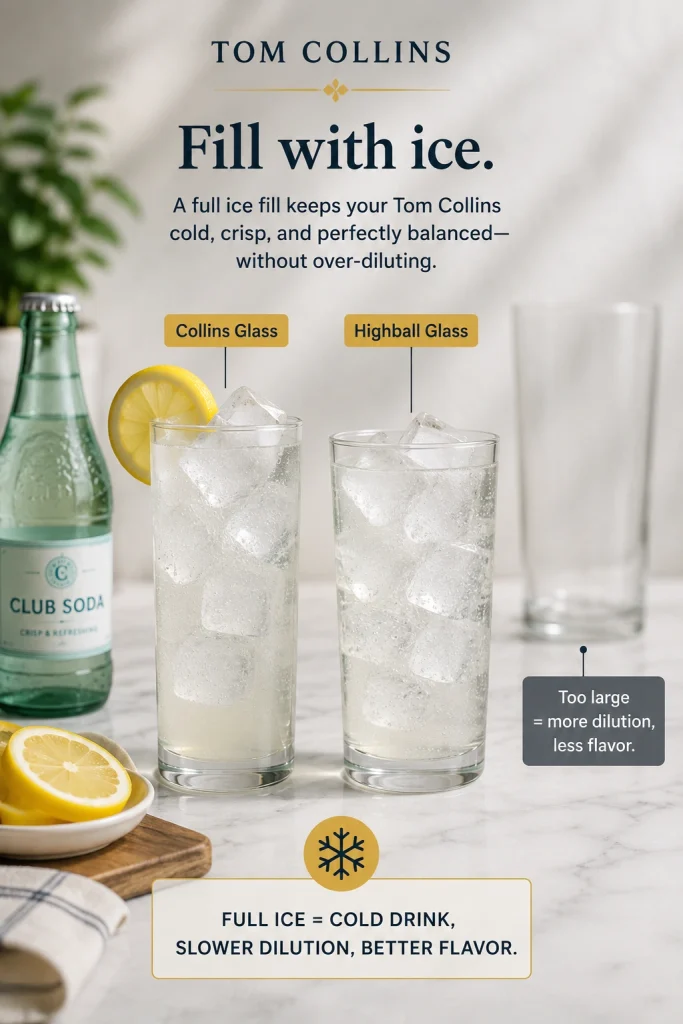
Collins Glass vs Highball

The glass and ice choice controls how much soda you need and how quickly the drink dilutes.

Collins glass and highball glass filled with ice for a Tom Collins, with club soda, lemon slices, and a larger empty glass in the background.
A Collins or highball glass packed with ice keeps the drink tall without drowning it in soda, so the flavor stays brighter and less watery.

Soda: use a cold, freshly opened bottle or can if you can. Pour slowly down the side of the glass or over the back of a spoon if you want a gentler top-up.

Glass: a 12–14 oz Collins or highball glass works well. A very large glass can trick you into adding too much soda, which weakens the lemon and gin flavor.

Ice: do not be stingy. Plenty of ice keeps the drink cold and helps it stay crisp instead of watery.

Garnish: a lemon wheel and cherry are classic. A lemon wedge also works if that is what you have. Choose an orange slice only when you want a softer citrus aroma.

The same ice-first, soda-last habit also matters in a Mojito, where lime, mint, rum, and bubbles need the same fresh lift.

Fix a flat or watery drink · Back to recipe

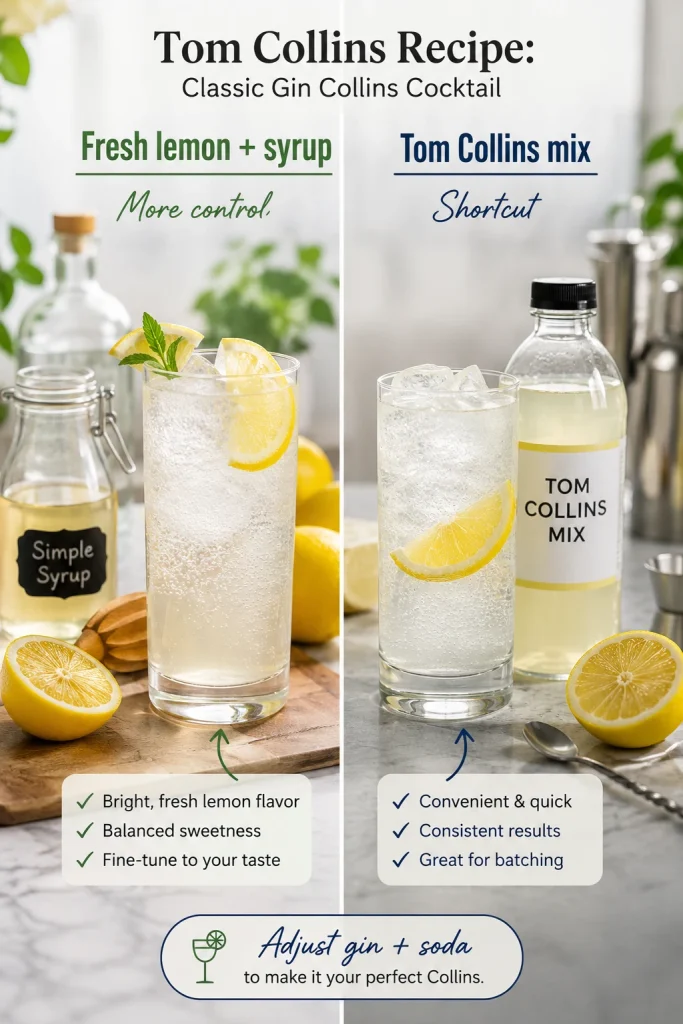
Can You Use Tom Collins Mix or Sour Mix?

Yes, but fresh lemon juice and simple syrup give you more control. Mix is convenient, but it locks the sour and sweet parts together. Using separate lemon and syrup lets you fix the drink one direction at a time.

Fresh Ingredients vs Tom Collins Mix

Fresh lemon and simple syrup compared with Tom Collins mix, showing two tall cocktails, lemons, a syrup jar, a generic mix bottle, and comparison notes.
Fresh lemon and simple syrup give you more control over tartness and sweetness. Still, a Tom Collins mix can work if you adjust the gin and soda carefully.

With mix, treat the bottle as both the sour and sweet part of the drink. Do not add extra syrup until you taste the glass.

For a shortcut version with mix, use:

  • 2 oz gin
  • 2–3 oz Tom Collins mix or sour mix
  • Ice
  • 2–3 oz cold club soda
  • Lemon and cherry for garnish

Start with 2 oz mix if the bottle tastes sweet. Use closer to 3 oz if it tastes tart, but skip extra syrup until the glass is mixed and tasted. Add soda last, then adjust gently.

Fresh vs mix: fresh lemon and syrup make the drink taste more alive. Mix is useful for speed, but it can make the cocktail sweeter and flatter if you pour too much.

Pitcher Version for a Crowd

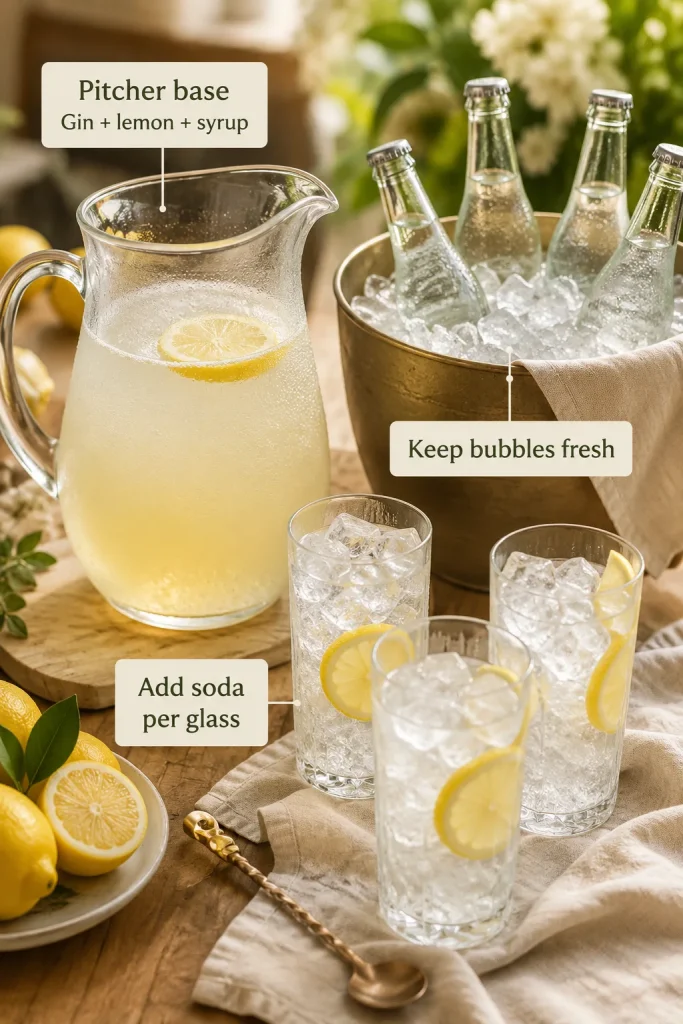
This is where the drink becomes especially useful for hosting: the gin-lemon-syrup base can wait in the fridge, but the bubbles should not. Mix the base ahead, keep the soda cold and unopened, then top each glass right before serving so every drink tastes freshly made.

Pitcher Base First, Soda Last

Tom Collins pitcher base with lemon slices, separate club soda bottles in an ice bucket, ice-filled glasses, lemons, linen, and serving labels.
For a pitcher, mix gin, lemon, and syrup ahead; add cold club soda to each glass just before serving so the fizz stays fresh.
ServingsGinLemon juiceSimple syrupClub soda
4 drinks8 oz / 240 ml4 oz / 120 ml2 oz / 60 ml8–16 oz / 240–480 ml
6 drinks12 oz / 360 ml6 oz / 180 ml3 oz / 90 ml12–24 oz / 360–720 ml
8 drinks16 oz / 480 ml8 oz / 240 ml4 oz / 120 ml16–32 oz / 480–960 ml

For each drink, use 3½ oz / 105 ml of the chilled base. Pour that over ice, top with club soda, stir gently, and garnish. Let guests add soda themselves if you want every glass to taste freshly made.

What to serve with it · Make-ahead tips · Back to top

Variations

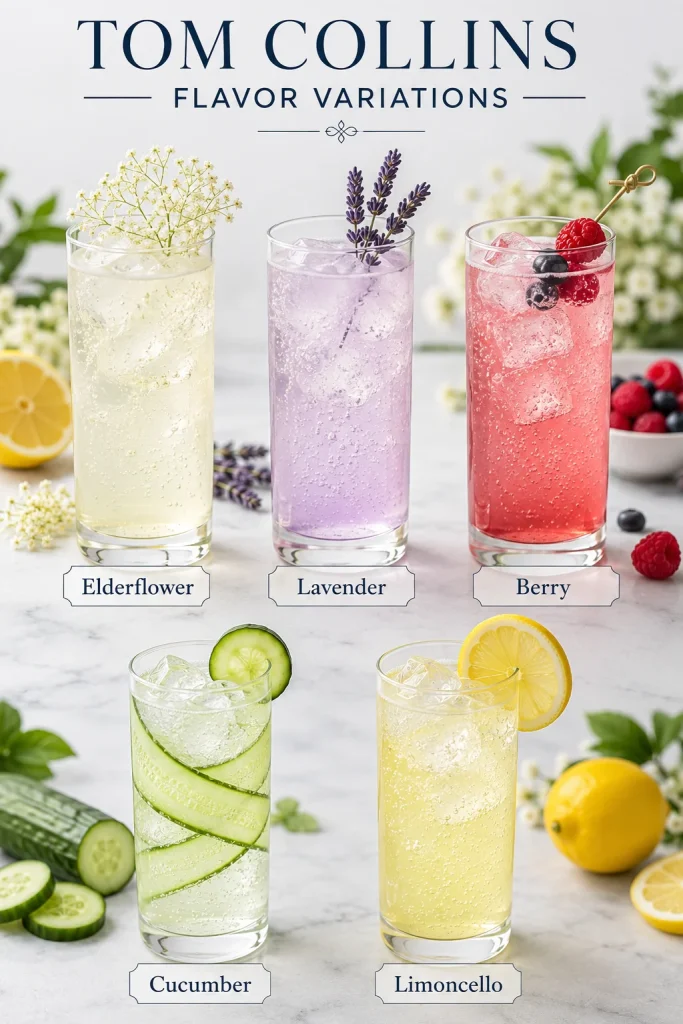
Start with Vodka Collins or John Collins if you want a spirit swap. Try elderflower, cucumber, berry, lavender, or limoncello when you want a flavor twist. To make lighter or playful versions, adjust the syrup, skip the gin, or blend the drink with ice.

Tom Collins Flavor Variations

Five Tom Collins flavor variations labeled elderflower, lavender, berry, cucumber, and limoncello, each in a tall glass with a distinct garnish.
After the classic ratio tastes balanced, small flavor changes work best: elderflower, lavender, berry, cucumber, or limoncello should enhance the drink, not bury the lemon.

Spirit Swaps

  • Vodka Collins: use 2 oz vodka, 1 oz lemon juice, ½ oz simple syrup, and club soda to top. The glass tastes cleaner and less botanical, closer to sparkling lemon vodka than a gin highball.
  • John Collins: use 2 oz whiskey or bourbon, 1 oz lemon juice, ½ oz simple syrup, and club soda to top. Whiskey takes the Collins in a warmer, deeper direction.

MasalaMonk’s vodka with lemon cocktails guide stays in the same crisp, easy-mixing direction.

Flavor Twists

  • Elderflower Collins: use 2 oz gin, 1 oz lemon juice, ½ oz elderflower liqueur or cordial, ¼ oz simple syrup, and soda to top. Skip the extra syrup at first if the elderflower ingredient is very sweet.
  • Lavender Collins: replace plain simple syrup with ½ oz lavender syrup. Go light; lavender should whisper, not take over.
  • Berry Collins: muddle 2–3 strawberries or raspberries with the lemon juice and syrup before adding gin, ice, and soda. If using berry syrup, reduce or skip the plain syrup.
  • Cucumber Collins: add 3–4 thin cucumber slices before the gin, lemon, and syrup. Stir gently, add ice, then top with soda.
  • Limoncello Collins: use 2 oz gin, ¾ oz lemon juice, ½ oz limoncello, ¼ oz simple syrup, and soda to top.

Lighter and Fun Versions

  • Low-sugar Collins: use ¼ oz simple syrup instead of ½ oz, then add a little more soda. Taste before cutting the syrup too aggressively.
  • Frozen Collins: blend 2 oz gin, 1 oz lemon juice, ½ oz simple syrup, and 1 cup ice until slushy. Finish with a small splash of club soda. Fun, but not the version to judge the classic by.
  • Non-alcoholic Collins-style lemon soda: skip the gin and use 1 oz lemon juice, ½–¾ oz simple syrup, lots of ice, and cold club soda. Add a few drops of non-alcoholic bitters or strong brewed tea if you want more depth.

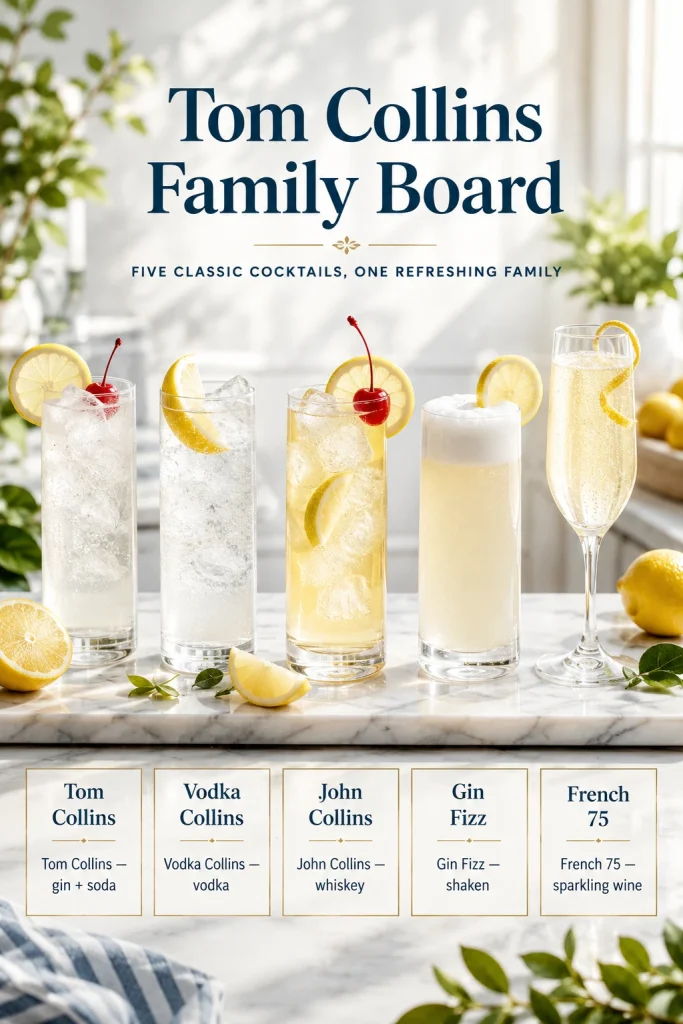
Think of a Tom Collins as a gin sour made tall: gin, lemon, sugar, ice, and soda. Change the spirit and you get another Collins. Shake it shorter and serve it differently, and you move closer to a fizz. Swap club soda for sparkling wine, and you move toward a French 75.

Tom Collins and Related Drinks

Tom Collins family board with five labeled drinks: Tom Collins, Vodka Collins, John Collins, Gin Fizz, and French 75 on a bright marble counter.
Once you understand the Collins family, the differences are simple: change the spirit, the bubbles, or the method, and you move into another classic cocktail.

If you like the wider cocktail-family side of things, Difford’s has a helpful overview of Collins cocktails.

DrinkBaseMain difference
Tom CollinsGinClassic gin, lemon, syrup, and club soda drink served tall over ice.
Vodka CollinsVodkaCleaner and less botanical than a Tom Collins.
John CollinsOften whiskey or bourbon in modern home-bar usageWarmer and deeper, with the same Collins structure.
Gin FizzGinUsually shaken and often served shorter, sometimes without ice.
French 75Gin and sparkling wineUses Champagne or sparkling wine instead of club soda.

Older cocktail references do not always use the Tom Collins and John Collins names the same way. The International Bartenders Association’s John Collins listing notes Old Tom gin for Tom Collins, so for everyday mixing, the simple gin-versus-whiskey distinction is the easiest way to choose your glass.

Love the gin, lemon, and bubbles combination? The French 75 takes that same bright idea in a sparkling-wine direction.

How to Fix a Drink That Tastes Off

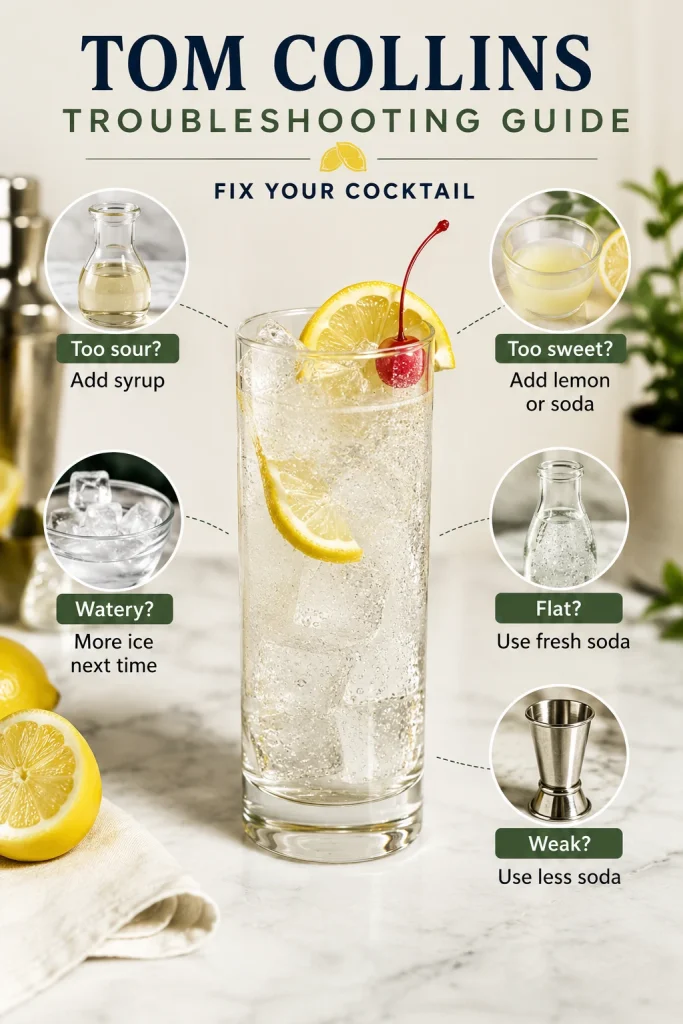
When the drink tastes wrong, do not dump it immediately. A Tom Collins is forgiving because most problems have a small correction: sweetness with syrup, strength with soda, freshness with lemon, and lift with fresh bubbles.

Troubleshooting at a Glance

Use the smallest correction first, then taste again before changing the drink in another direction.

Tom Collins troubleshooting guide with a central cocktail and fix cues for drinks that are too sour, too sweet, flat, watery, or weak.
Small fixes usually save a Tom Collins that tastes too sour, sweet, flat, watery, or weak: syrup, lemon, fresh soda, or more ice.
ProblemFix nowPrevent next time
Too sourAdd ¼ oz simple syrup or 1–2 teaspoons, then stir gently.Start with ½ oz syrup and adjust by teaspoons.
Too sweetAdd a small squeeze of lemon or a splash of club soda.Do not add more syrup before tasting.
FlatAdd a splash of fresh cold club soda.Use freshly opened soda and add it last.
WateryAdd a small splash of gin and lemon if needed.Use more ice and avoid over-stirring.
Too weakAdd less soda next time.Start with 2 oz soda, then lengthen only if needed.
Too harshAdd a little more soda or a tiny touch of syrup.Use a softer gin or reduce lemon slightly.
GrainyStir longer, though it may not fully fix.Use simple syrup instead of undissolved sugar.

Common mistakes to avoid: warm soda, too much soda, too little ice, dry sugar in the glass, bottled lemon juice, and shaking the soda. Each one can make an otherwise good Tom Collins taste flat, harsh, weak, or messy.

The easiest balance test: taste the gin, lemon, and syrup before adding soda. It should taste slightly too bright and strong because the ice and soda will soften it.

Make the recipe again · Check ice and soda tips · Back to top

What to Serve with a Tom Collins

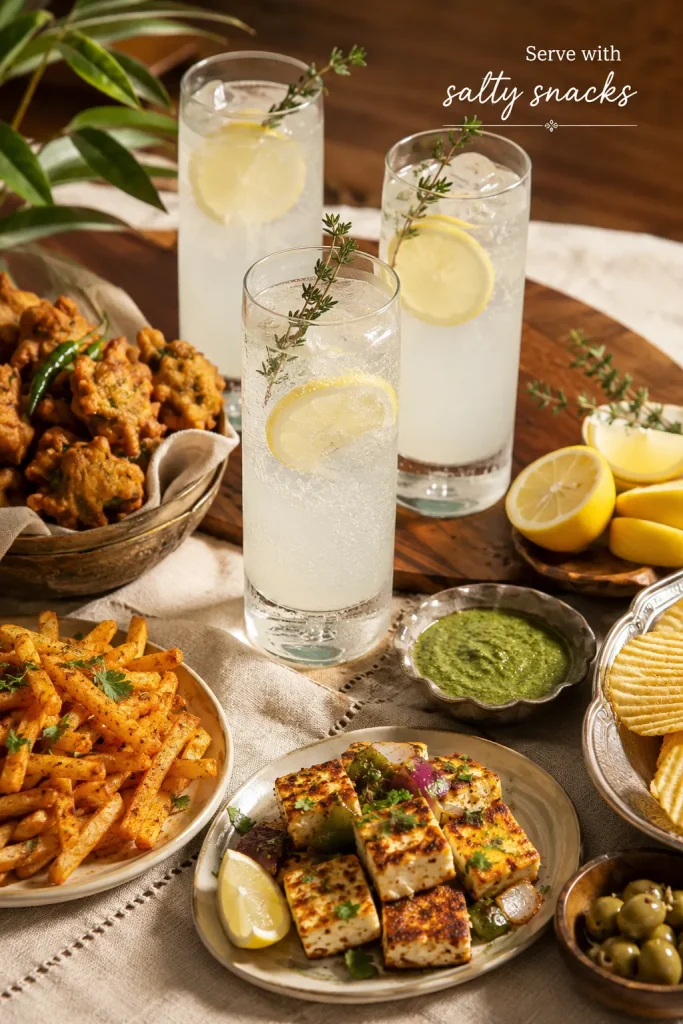
A Tom Collins is made for salty, lemon-friendly snacks: pakoras, masala fries, grilled paneer, olives, chips, fried chicken bites, shrimp, and anything with herbs or chutney on the side. The bubbles refresh the palate, the citrus cuts richness, and the light sweetness softens salty or spicy bites.

Snack Table Pairing Ideas

Salty snacks make the citrus and bubbles feel brighter, especially with fried or spiced food.

Tom Collins glasses served with pakoras, masala fries, grilled paneer, green chutney, olives, chips, lemon wedges, herbs, and cream linen.
A Tom Collins is at its best with salty, lemon-friendly snacks: pakoras, masala fries, grilled paneer, green chutney, olives, and chips.
  • Salty snacks: spiced nuts, olives, chips, crackers, and popcorn work because the drink is cold and citrusy.
  • Fried appetizers: fries, fritters, pakoras, tempura, and fried chicken bites work because lemon and soda cut through richness.
  • Seafood and chicken: grilled shrimp, crab cakes, lemony fish, grilled chicken, and lightly spiced chicken skewers pair well without overpowering the drink.
  • Cheese boards and fresh salads: mild cheeses, salty crackers, nuts, fruit, cucumber, herbs, and citrus dressing keep the table easy and party-friendly.

MasalaMonk’s Green Chutney keeps a snack table fresh, herby, and citrusy. For a hot, crunchy pairing, MasalaMonk’s Mozzarella Sticks recipe also works well with the lemon-and-bubbles profile.

Very sweet desserts are not the best first pairing because the cocktail already has lemon and syrup. If serving dessert, keep it light: lemon cookies, shortbread, fruit, or a not-too-sweet citrus cake.

Make-Ahead Tips

Do not fully make a Tom Collins ahead with soda. The bubbles fade and the drink loses its lift.

For make-ahead prep, mix the gin, lemon juice, and simple syrup together and chill that base. When ready to serve, pour it over ice and top with cold club soda. Fresh lemon juice tastes best the same day, so avoid making the base too far ahead.

At party time, place the chilled base, cold soda, ice, lemon wheels, and cherries next to each other so each drink can be topped fresh. That keeps every glass lively instead of serving a flat pitcher.

Tom Collins FAQ

These quick answers cover the most common questions about the drink, the ingredients, and the Collins family.

What is in a Tom Collins?

A Tom Collins is made with gin, fresh lemon juice, simple syrup, club soda, ice, and usually a lemon wheel and cherry for garnish.

What alcohol is in a Tom Collins?

The classic alcohol is gin, which gives the drink its dry, botanical edge.

Is it made with gin or vodka?

Gin makes it a Tom Collins. Vodka gives you a Vodka Collins: same lemon-soda structure, cleaner flavor, less botanical edge.

What does it taste like?

A Tom Collins tastes like sparkling lemonade with a dry gin finish: lemony, lightly sweet, crisp, and not heavy.

Is a Tom Collins a strong cocktail?

It uses a standard 2 oz pour of gin, but the tall glass, ice, lemon, and soda make it feel lighter and more refreshing than a spirit-forward cocktail. Use 2 oz soda for a stronger glass or 3–4 oz for a longer, lighter highball.

What gin is best for a Tom Collins?

London dry gin is the easiest choice for a crisp modern Tom Collins. Old Tom gin gives a softer, slightly sweeter classic-style drink; if you use it, reduce the syrup slightly and taste before adding more.

Should it be shaken or stirred?

Either method works. The easiest method is to build it in the glass. For a colder drink, shake only the gin, lemon juice, and syrup, then strain over ice and top with soda. Never shake the soda.

Do you need a shaker?

No shaker is needed. You can build a Tom Collins directly in the glass by stirring gin, lemon juice, and simple syrup, adding ice, topping with club soda, and garnishing.

Does sour mix work?

Yes, but fresh lemon juice and simple syrup usually taste better. If using sour mix, treat it as a replacement for the lemon juice and syrup, then add gin, ice, and club soda.

Can you use tonic water instead of club soda?

You can use tonic water, but it will not taste like a classic Tom Collins. Tonic water is bitter and sweet, while club soda is plain and fizzy.

What is the difference between Tom Collins and Vodka Collins?

A Tom Collins uses gin. A Vodka Collins uses vodka. The lemon, sweetener, soda, and ice structure stays similar, but the vodka version tastes cleaner and less botanical.

How is John Collins different?

In many modern home-bar recipes, a John Collins is made with whiskey or bourbon instead of gin. It has a warmer, deeper flavor, though the naming history is more complicated in older cocktail references.

Can you make a pitcher?

Yes. Mix gin, lemon juice, and simple syrup ahead, then chill. Add club soda only when serving so the pitcher does not go flat.

Can you make it non-alcoholic?

You can make a Collins-style lemon soda by skipping the gin and using lemon juice, simple syrup, ice, and cold club soda. It will not be a classic Tom Collins, but it gives you the same cold, fizzy lemon feel.

Final Tips

Make the classic version once, then use the first sip as your guide. If it tastes too sharp, soften it with syrup. When it feels weak, use less soda next time. Dull flavor usually means the glass needs fresh lemon, fresh bubbles, or more ice.

Did you make it crisp and classic, softer like sparkling lemonade, or sharper with extra lemon? Tell us your Collins style in the comments — your note may help the next reader choose their first glass.

Enjoy responsibly. The recipe is written for one cocktail; for a group, batch only the gin-lemon-syrup base and let each glass get fresh soda.

Back to top

Posted on 16 Comments

Lemon Drop Martini Recipe (Classic, 3-Ingredient & More)

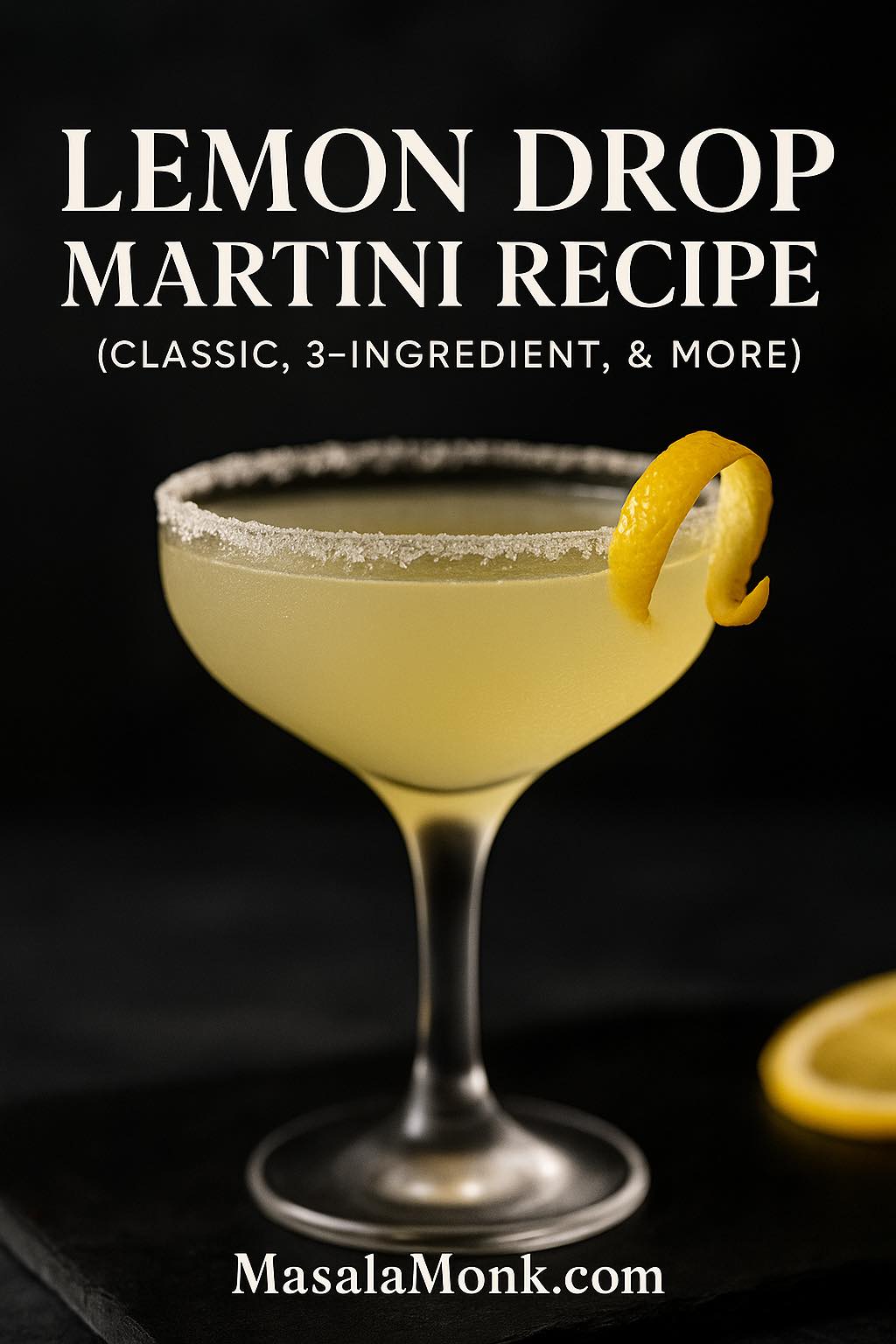
Chilled lemon drop martini in a sugar-rimmed glass with a lemon twist, fresh lemons, and cocktail tools on a styled bar surface.

A good lemon drop martini should taste lively before it tastes sweet. The glass is deeply chilled, the rim sparkles lightly, and the first sip lands with just-squeezed lemon, clean vodka, a soft orange note, and enough sweetness to smooth the sharp edge. It should feel polished, not syrupy; refreshing, not harsh; easy, but still pretty enough to make the glass feel special.

This easy lemon drop martini starts with a balanced classic ratio: vodka, Cointreau or triple sec, fresh lemon juice, and simple syrup, shaken hard and poured into a lightly sugared glass. Once that baseline tastes right, you can make it without triple sec, soften it with limoncello, turn it into shots, batch it for guests, or add fruit without losing the crisp citrus snap.

Quick Answer: How to Make a Lemon Drop Martini

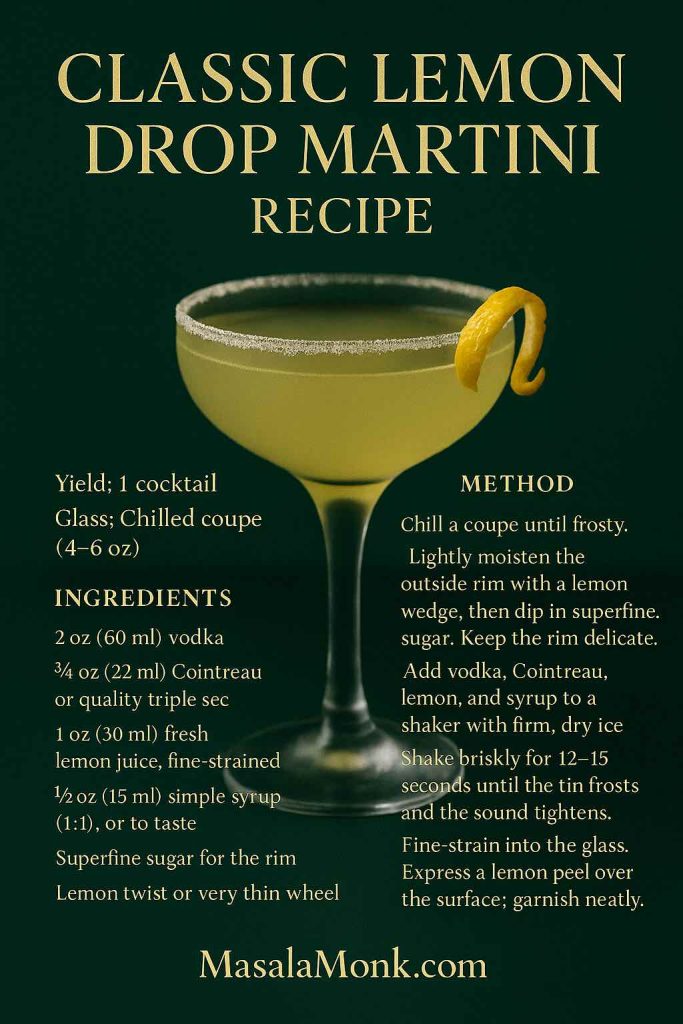
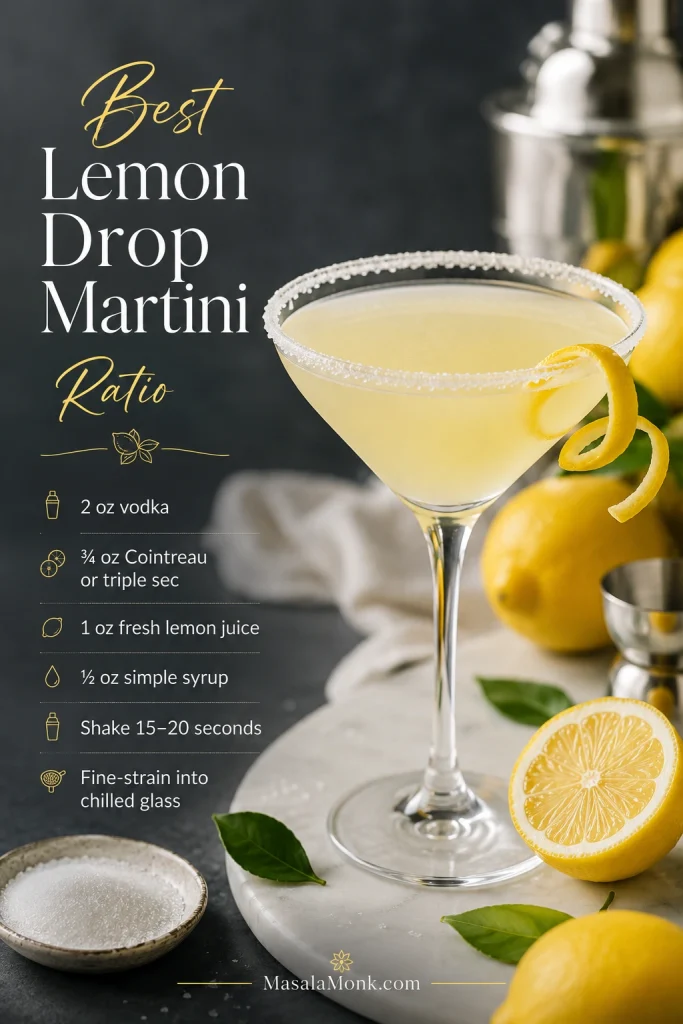
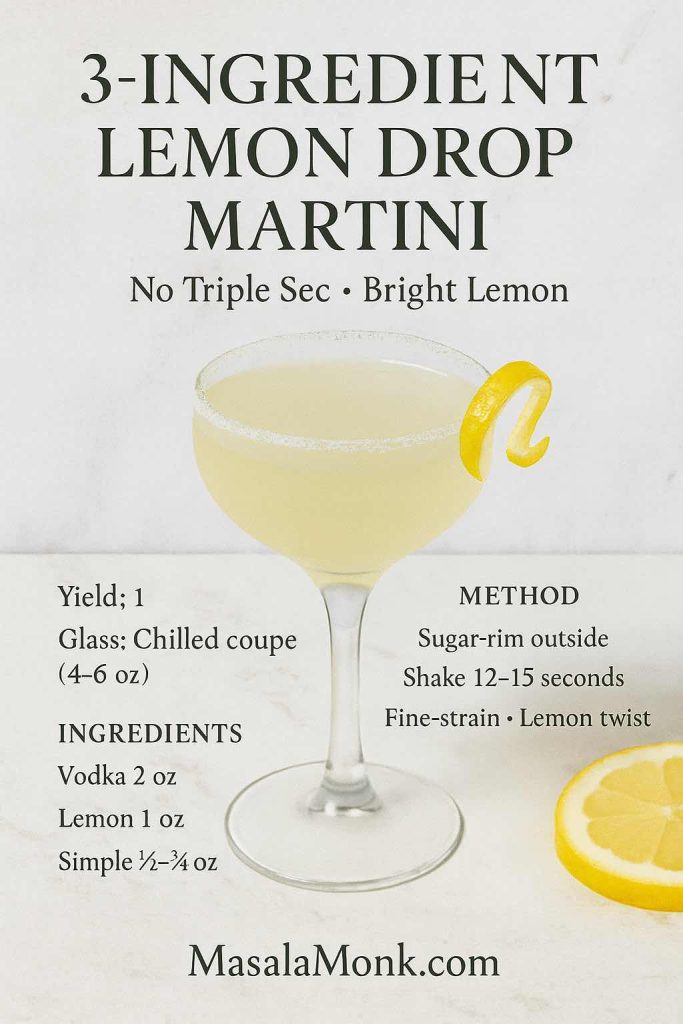
To make a classic lemon drop martini, shake 2 oz (60 ml) vodka, ¾ oz (22 ml) Cointreau or triple sec, 1 oz (30 ml) fresh lemon juice, and ½ oz (15 ml) simple syrup with firm ice for 15–20 seconds. Fine-strain into a chilled, lightly sugar-rimmed 5–6 oz coupe or martini glass, then garnish with a lemon twist.

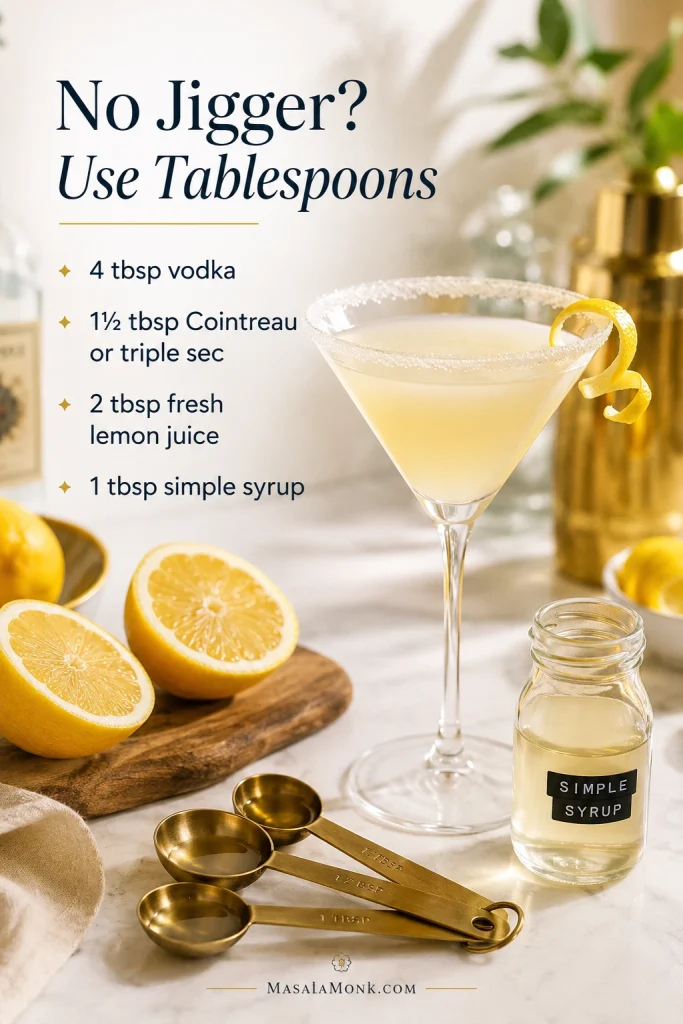
No jigger? Use 4 tablespoons vodka, 1½ tablespoons Cointreau or triple sec, 2 tablespoons fresh lemon juice, and 1 tablespoon simple syrup.

Before you shake, remember this: chill the glass, sugar only the outside rim, and adjust by teaspoons instead of guessing. Add syrup if the drink is too sour; add lemon if it tastes too sweet.

This is the drink to pour when you want something dressed up but not fussy: before dinner, for a small party, beside a dessert table, or as the first round when people want something bright and familiar.

Jump to What You Need

Classic Lemon Drop Martini Recipe

Make this version first. It is the classic baseline: lemon-forward, deeply chilled, gently sweet, and easy to adjust. A well-made Lemon Drop should hit in this order: cold lemon, smooth vodka, a soft orange note, then a small sparkle from the rim — not sour lemonade, melted candy, or a glass full of sugar.

Yield1 cocktail
Prep time5 minutes
Glass5–6 oz coupe or martini glass
FlavorLemon-forward, crisp, gently sweet
Shake time15–20 seconds
ServeImmediately

Ingredients

IngredientAmount
Vodka2 oz / 60 ml
Cointreau or quality triple sec¾ oz / 22 ml
Fresh lemon juice, fine-strained1 oz / 30 ml / 2 tbsp
Simple syrup, 1:1½ oz / 15 ml / 1 tbsp
Superfine sugar, for rim1–2 tbsp / about 12–25 g
Lemon twist or thin lemon wheel1

Method

  1. Chill a 5–6 oz coupe or martini glass for 5–10 minutes, or fill it with ice water while you work.
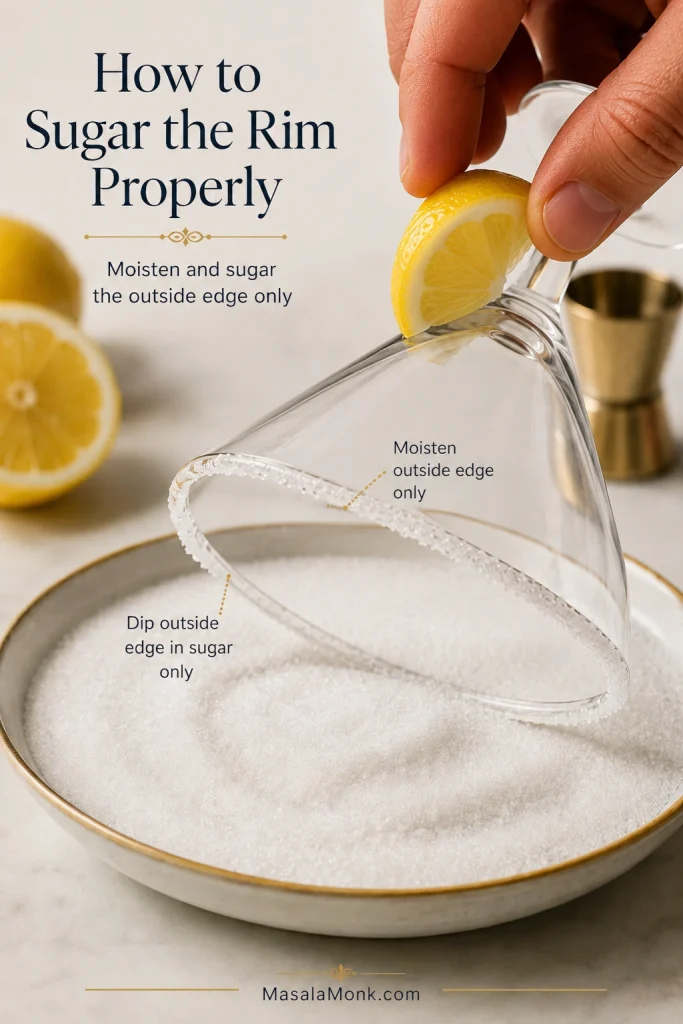
  2. Place superfine sugar on a shallow plate, moisten only the outside rim with lemon, and dip lightly.
  3. Add vodka, Cointreau or triple sec, fresh lemon juice, and simple syrup to a shaker.
  4. Fill the shaker with firm ice.
  5. Shake for 15–20 seconds, until the outside feels very cold.
  6. Fine-strain into the prepared glass.
  7. Express a lemon peel over the surface, then garnish with the twist or a thin lemon wheel.

You will know it is right when the drink feels cold and sharp at first, then softens almost immediately. The rim should add sparkle, not a mouthful of sugar.

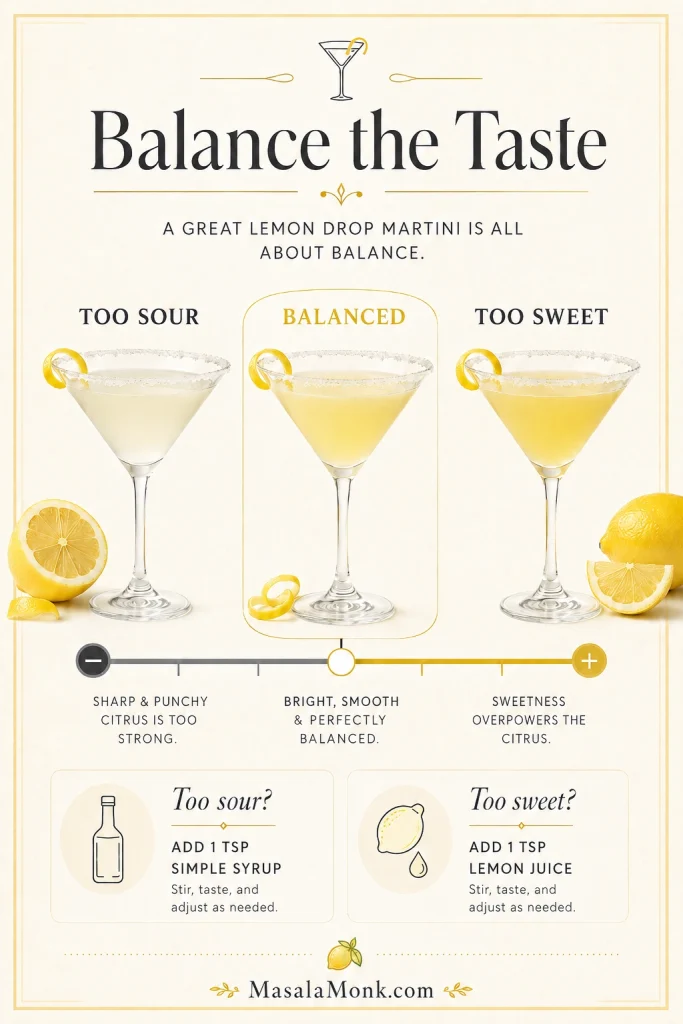
Taste before changing the recipe. Too sharp? Add 1 teaspoon simple syrup and shake briefly with fresh ice. Too sweet? Add 1 teaspoon lemon juice and re-shake. A Lemon Drop loses its edge as it warms, so pour it last-minute rather than letting filled glasses sit on a tray.

Classic lemon drop martini recipe card with a pale yellow cocktail, sugar rim, lemon garnish, and recipe measurements.
Use the classic recipe card as your baseline before changing the drink. Once the vodka, lemon, orange liqueur, and syrup work together, every variation becomes easier to adjust.

No-Jigger Lemon Drop Measurements

Use this quick conversion when measuring at home. Tablespoons keep the drink accurate, and teaspoon-sized adjustments keep the final sip from swinging too sour or too sweet.

Tablespoon measurement guide for a lemon drop martini with measuring spoons, lemons, simple syrup, and a finished cocktail.
Tablespoons are accurate enough for a home Lemon Drop when the ratio is clear. Measure first, then adjust in teaspoons so the drink stays lively without turning too sour or too sweet.

Before You Mix: 3 Details That Make It Taste Better

The recipe is simple, but the small details matter. Small technique choices make the drink feel bar-clean instead of last-minute.

1. Use fresh, strained lemon juice

A lemon drop is only as good as its lemon. Fresh juice tastes vivid and fragrant, while bottled juice often tastes flat or stale. Strain out pulp before shaking so the drink stays smooth.

2. Keep the sugar rim thin

The rim should frame the first sip, not turn the cocktail into dessert. Moisten only the outside edge of the glass so sugar does not fall into the drink.

3. Shake hard with firm ice

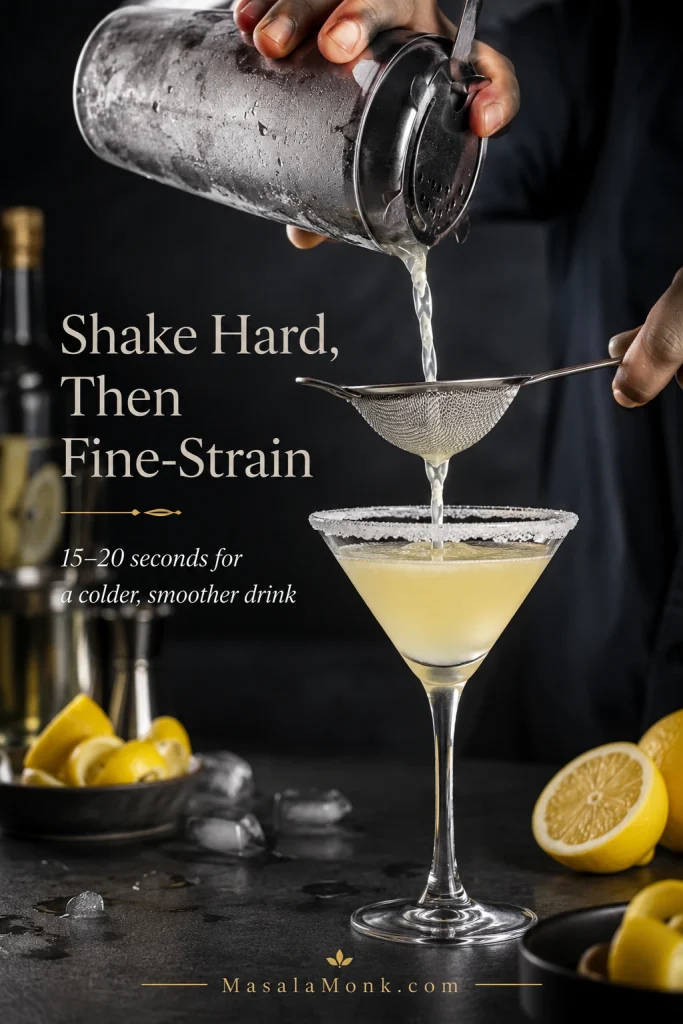
Shaking does more than chill the drink. It adds a small amount of water, softens the lemon, and gives the cocktail a smoother finish. If the shaker frosts or feels painfully cold, you are there.

Shake and Fine-Strain for a Cleaner Pour

Once the drink is measured, the shake controls texture as much as temperature. Cold ice, firm shaking, and fine-straining help the cocktail pour clean, bright, and smooth.

Cocktail shaker and fine strainer pouring a lemon drop martini into a prepared sugar-rimmed glass.
A firm shake chills, aerates, and lightly dilutes the drink. Fine-straining then gives the Lemon Drop Martini a cleaner texture with fewer ice shards or pulp flecks in the glass.

Need to rescue a drink that tastes off?

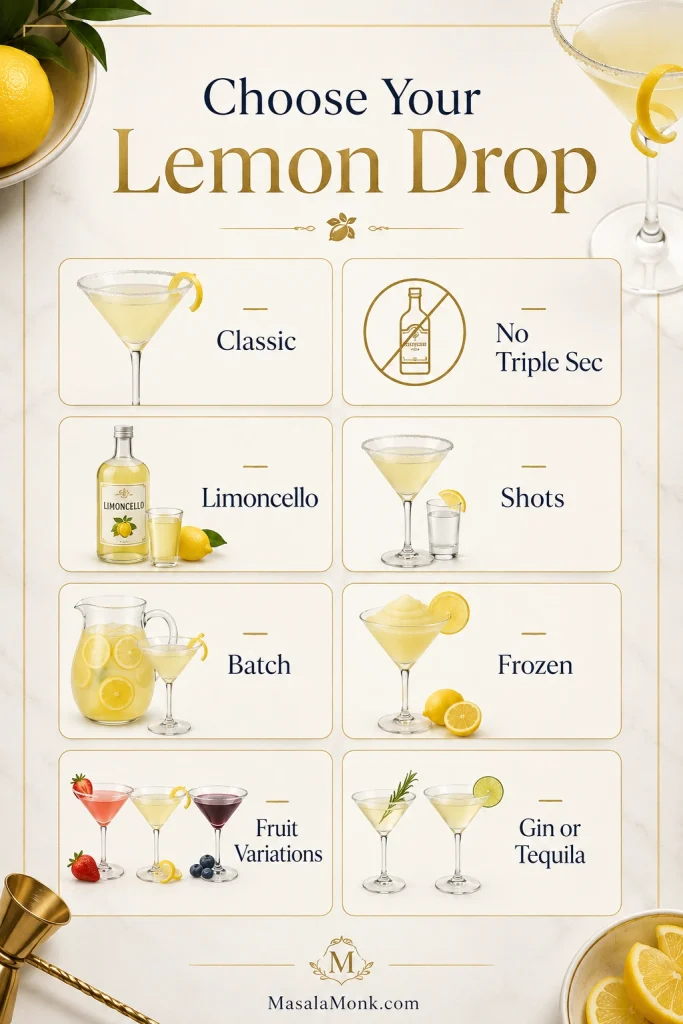
Choose Your Lemon Drop

Start with the classic, then change one thing at a time. That keeps the drink recognizable while letting you make it drier, sweeter, fruitier, stronger, softer, or easier to serve.

Decision guide showing lemon drop martini options including classic, no triple sec, limoncello, shots, batch, frozen, fruit variations, and gin or tequila.
Match the Lemon Drop to the moment: no triple sec for a simple pour, limoncello for softness, shots for a tray, and batch or frozen versions for guests.
Mood or needMake thisWhy it works
Clean and classicClassic Lemon Drop MartiniBest balance of vodka, orange, lemon, and syrup
No orange liqueur3-Ingredient Lemon DropVodka, lemon, syrup; rim optional
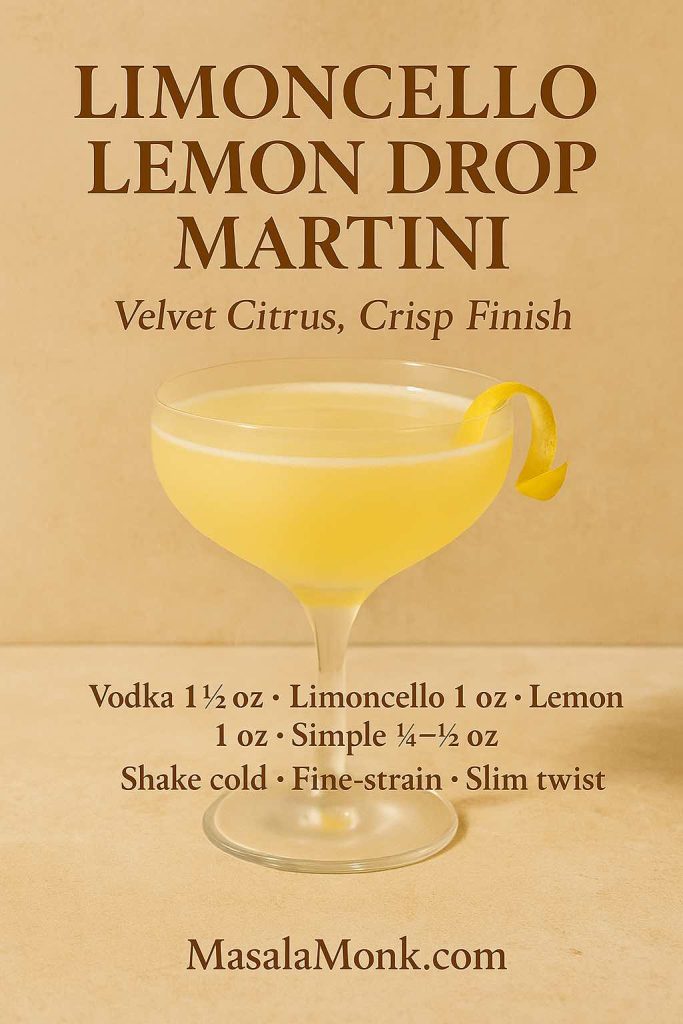
Softer and more lemonyLimoncello Lemon DropLimoncello adds round lemon perfume
Party trayLemon Drop ShotsSmaller, brighter, faster to serve
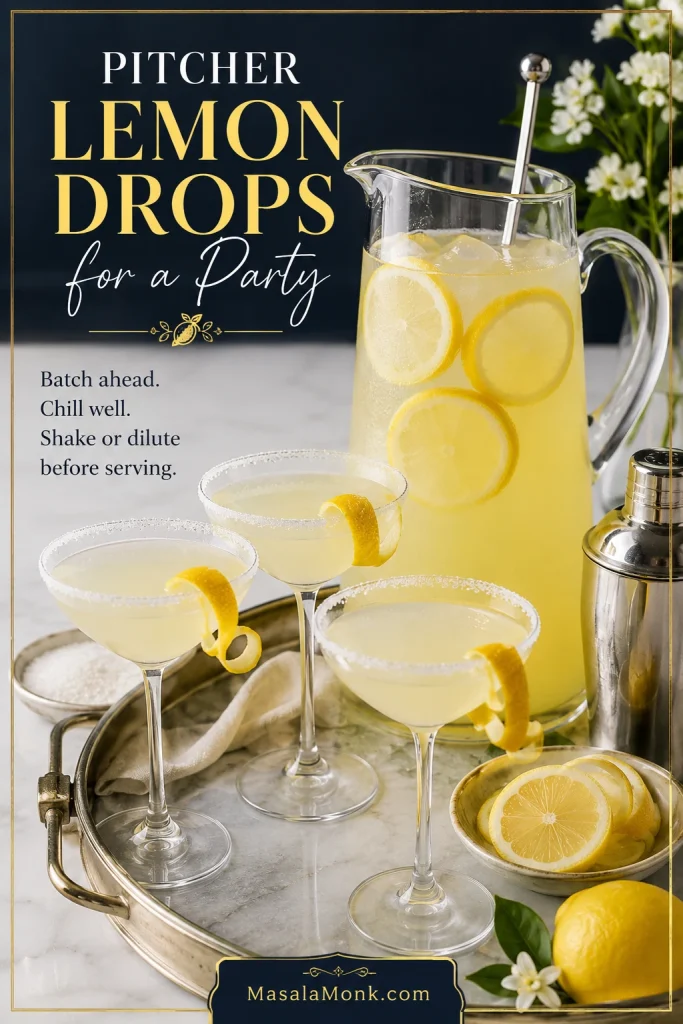
Hosting dinnerPitcher Lemon DropBatch ahead, then shake or dilute properly
Hot afternoonFrozen Lemon DropBlended, cold, citrusy
Pretty brunch drinkStrawberry or Lavender Lemon DropColor, aroma, and a softer mood
Drier twistGin Lemon DropMore botanical and less candy-like

Not sure where to start? Make the classic once, then decide whether you want it softer with limoncello, quicker as shots, or fruitier for a party glass.

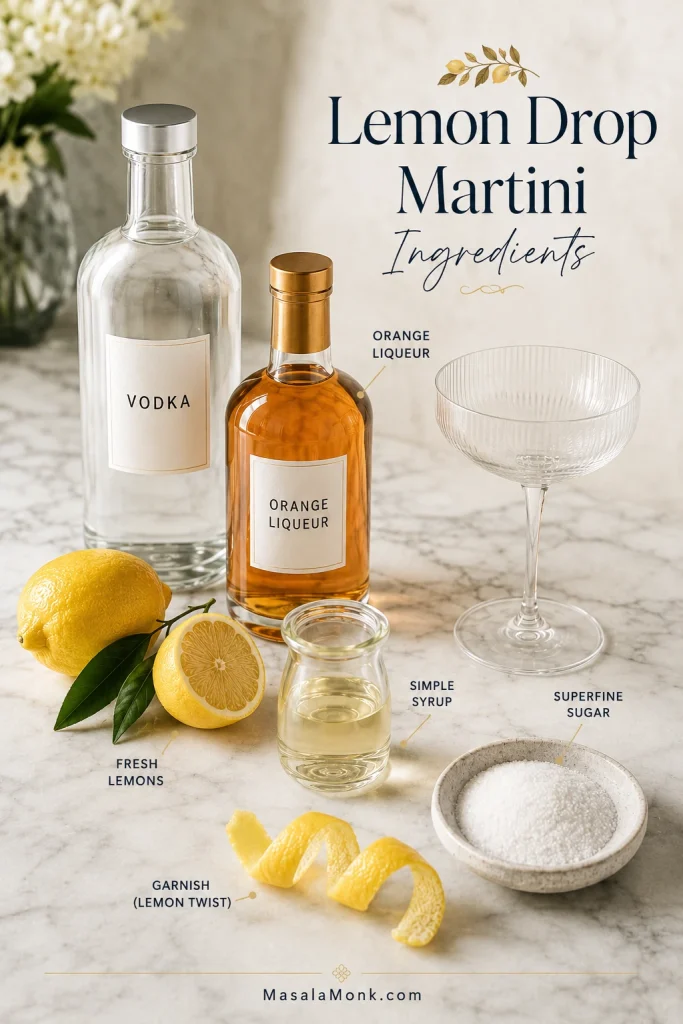
Lemon Drop Martini Ingredients

With only a few ingredients in the shaker, every choice shows up in the glass. Fresh lemon smells brighter, measured syrup keeps the drink crisp, and a neutral vodka lets the citrus lead.

Lemon drop martini ingredients on a marble surface, including vodka, orange liqueur, fresh lemons, simple syrup, superfine sugar, lemon twist, and glassware.
With so few ingredients, every shortcut shows quickly. Fresh lemon juice, measured syrup, orange liqueur, and neutral vodka create the polished Lemon Drop flavor.

Vodka

Plain vodka is the safest choice for the cleanest classic Lemon Drop. It does not need to be expensive; it just needs to stay out of the lemon’s way. Lemon vodka works if you want a louder citrus aroma, but reduce the syrup slightly so the drink does not turn candy-like.

Cointreau, Triple Sec, or Grand Marnier

Cointreau gives the clearest orange note. A good triple sec keeps the drink accessible and works well in the classic ratio. Grand Marnier tastes richer and rounder, so use a little less syrup if the cocktail feels too sweet.

Fresh Lemon Juice

Choose lemons that feel heavy for their size, then roll them before juicing. One medium lemon usually gives about 2 tablespoons juice, though dry lemons may give less. Plan on one lemon per cocktail, plus an extra lemon nearby.

Simple Syrup

For syrup, begin with a basic 1:1 mix made from equal parts sugar and water. Half an ounce is the best starting point for one drink. To make a small batch, stir ½ cup sugar with ½ cup hot water until clear, cool, then refrigerate in a clean jar and use within 2–3 weeks.

Superfine Sugar

Superfine sugar gives the smoothest rim because it dissolves quickly on the lips. Granulated sugar works, but it feels crunchier. Avoid powdered sugar; it can clump, turn pasty, and taste dusty.

No bar tools?

No shaker? A jar with a tight lid works. Use tablespoons instead of a jigger and a tea strainer instead of a cocktail strainer. One ounce equals 2 tablespoons. If using a jar, wrap it in a towel and make sure the lid seals tightly before shaking.

The Best Lemon Drop Ratio for a Balanced Drink

The Lemon Drop Ratio at a Glance

Use this ratio as the starting point before you change the syrup, rim, or liqueur. It keeps the lemon bright while giving the vodka sour enough softness to feel polished.

Lemon drop martini ratio card showing vodka, Cointreau or triple sec, fresh lemon juice, simple syrup, shake time, and a sugar-rimmed cocktail.
Use this Lemon Drop Martini ratio as the drink’s control panel: vodka gives structure, lemon brings sharpness, orange liqueur adds aroma, and syrup rounds the edge.

Think of the drink as a vodka sour served up: the vodka keeps it clear, the lemon gives it lift, the orange liqueur adds perfume, and the syrup softens the edge so the drink feels bright instead of sharp. Shaking supplies the cold dilution that makes it rounded instead of harsh. The sugar rim should stay outside the glass so the first taste sparkles while the cocktail underneath stays crisp. If you like this spirit-citrus-sugar balance, the Daiquiri recipe follows the same sour-cocktail logic with rum and lime.

If you want it…Adjust this way
Sharper and more citrus-forwardKeep syrup at ½ oz / 15 ml
Softer and sweeterIncrease syrup to ¾ oz / 22 ml
Drier and more bar-styleUse ½ oz / 15 ml orange liqueur and ½ oz / 15 ml syrup
More party-styleUse up to 1 oz / 30 ml syrup
Less sweet overallRim only half the glass
More aromaticExpress a fresh lemon peel over the drink

How to Balance a Lemon Drop That Tastes Off

Small corrections work better than big guesses. Taste once, adjust by the teaspoon, and shake briefly again so the fix blends into the drink.

Lemon drop martini balance guide showing too sour, balanced, and too sweet drinks with syrup and lemon juice adjustments.
Taste first, then fix the drink in teaspoons. Syrup softens a too-sharp Lemon Drop, while fresh lemon cuts a too-sweet one before a brief re-shake.

How to Make a Lemon Sugar Rim

The rim should sparkle, not clump. A heavy sugar crust makes the first sip awkward and can drop sugar into the cocktail. The best lemon sugar rim is thin, even, and only on the outside edge of the glass.

  1. Add superfine sugar to a small shallow plate.
  2. Rub in 1 teaspoon finely grated lemon zest if you want a brighter rim.
  3. Run a lemon wedge around the outside edge of the glass only.
  4. Dip the moistened outside rim into the sugar.
  5. Let the glass sit for 2–3 minutes while you make the cocktail.
Close-up of a lemon drop martini glass being moistened and sugared only on the outside edge with superfine sugar.
Rim only the outside edge of the glass so sugar sweetens each sip, not the whole cocktail. The drink stays cleaner, brighter, and less likely to turn syrupy.

Prefer it less sweet? Rim only half the glass. Guests can choose the sugared side or the clean side, and the drink still looks polished without turning the first sip into candy.

That little sugared edge is part of the charm: the glass looks ready before the drink is even poured.

3-Ingredient Lemon Drop Martini, No Triple Sec or Cointreau

You can make a clean lemon drop martini without Cointreau or triple sec: vodka, lemon juice, and simple syrup. The sugar rim and lemon twist are optional, but they make even the simplest version feel complete.

IngredientAmount
Vodka2 oz / 60 ml
Fresh lemon juice1 oz / 30 ml
Simple syrup½–¾ oz / 15–22 ml
Optional superfine sugar for rim1–2 tbsp / about 12–25 g
Optional lemon twist1
Three-ingredient lemon drop martini card showing vodka, fresh lemon juice, simple syrup, and a sugar-rimmed cocktail.
Vodka, fresh lemon juice, and syrup keep this 3-ingredient Lemon Drop simple. A light sugar rim and lemon twist make the shortcut feel complete.

Shake the vodka, lemon juice, and syrup with firm ice for 15–20 seconds, then fine-strain into a chilled glass. Use ½ oz syrup for a sharper drink, or ¾ oz if you want it softer. Missing the orange aroma? Add 1–2 dashes of orange bitters.

Back to the classic recipe · Try the limoncello version

Limoncello Lemon Drop Martini

Limoncello makes a lemon drop softer, rounder, and more perfumed — the version to pour when you want the drink to feel sunnier and a little more generous. Since limoncello is already sweet, use less simple syrup than you would in the classic drink.

IngredientAmount
Vodka1½ oz / 45 ml
Limoncello1 oz / 30 ml
Fresh lemon juice1 oz / 30 ml
Simple syrup¼–½ oz / 7–15 ml, to taste
Superfine sugar for rimoptional, or half rim
Lemon twist1
Limoncello lemon drop martini card with a golden lemon cocktail, limoncello bottle, lemons, and a sugar-rimmed glass.
Since limoncello already brings sweetness, reduce the syrup before you shake. That keeps the variation sunny and lemony instead of drifting into dessert-drink territory.

Shake with ice until very cold, then fine-strain into a chilled glass. Start with ¼ oz syrup and increase only if the lemon feels too sharp.

  • Too sweet? Skip the simple syrup and use a half rim.
  • Too heavy? Add ¼ oz / 7 ml more lemon juice.
  • Too flat? Add the tiniest pinch of fine salt before shaking; it should not taste salty, just more awake.

More ways to fix the taste · Back to the classic recipe

Lemon Drop Shot Ratio

This is the version for the tray: quick to shake, easy to pass around, and brighter than a plain vodka shot. Lemon drop shots for a party should taste like smaller, punchier versions of the cocktail, not plain vodka chased with sugar.

VersionVodkaLemon juiceSimple syrup
Bright shot1 oz / 30 ml½ oz / 15 ml¼ oz / 7 ml
Sweeter party shot1 oz / 30 ml½ oz / 15 ml½ oz / 15 ml
6 shots6 oz / 180 ml3 oz / 90 ml1½–3 oz / 45–90 ml
Tray of sugar-rimmed lemon drop shots with lemon garnish and a small shot-ratio overlay.
Small, cold batches make better Lemon Drop shots. Pour right before serving so each glass tastes lively instead of warm, flat, or overly sweet.

Shake shots with ice for 8–10 seconds, then strain into lightly sugared shot glasses. Work in small batches so every round tastes lively instead of warm and syrupy.

Serving more than shots? Jump to pitcher and batch Lemon Drops.

Batch Lemon Drop Martini: Pitcher, Party Batch, and Freezer-Door Lemon Drops

Serving more than two people? The only trick is dilution. A shaken Lemon Drop gets a little water from the ice, and that water is part of the drink. For guests, the goal is simple: keep the first round cold and the second round just as good.

Pitcher Lemon Drops for a Party

A pitcher setup works best when the base is cold, the glasses are ready, and the dilution plan is settled before guests arrive.

Clear pitcher of pale yellow lemon drop martinis with lemon slices, sugar-rimmed coupe glasses, lemons, and cocktail tools.
Chill the base and prepare the glasses before guests arrive. For a pitcher Lemon Drop, the dilution plan matters more than the garnish pile.
Serving styleBest choiceAdd water?
Best qualityBatch ingredients, shake each drinkNo
Easiest pitcherAdd water and chillYes
Freezer-door bottleUse smaller batch, shake each servingNo
Ready-pour bottleAdd measured water before chillingYes

Batch Dilution: Shake-to-Order vs Ready-Pour

Use this choice before you bottle the drink. If the batch will not be shaken with ice later, it needs measured water now.

Infographic comparing shake-to-order lemon drop batches with ready-to-pour batches that include water for dilution.
Decide the serving style before batching. Shake-to-order Lemon Drops stay undiluted until the final shake, while ready-pour batches need measured water ahead of time.

If a batched Lemon Drop tastes strong, sharp, or oddly flat, it usually does not need more sugar first; it needs the water that shaking would have added.

After dilution, one shaken cocktail usually pours around 5 oz, sometimes closer to 5½ oz. Because Lemon Drops taste bright and smooth, they can feel lighter than they are. Serve them small, cold, and freshly poured.

Shake-to-order batches

BatchVodkaOrange liqueurLemon juiceSyrupWater
4 cocktails8 oz / 240 ml3 oz / 90 ml4 oz / 120 ml2–3 oz / 60–90 mlnone
8 cocktails16 oz / 480 ml6 oz / 180 ml8 oz / 240 ml4–6 oz / 120–180 mlnone

Ready-pour and freezer batches

BatchVodkaOrange liqueurLemon juiceSyrupWater / dilution
8 ready-pour cocktails16 oz / 480 ml6 oz / 180 ml8 oz / 240 ml4–6 oz / 120–180 ml8–10 oz / 240–300 ml
750 ml freezer bottle, shake-to-serve, about 5 cocktails10 oz / 300 ml3¾ oz / 110 ml5 oz / 150 ml2½ oz / 75 mlnone; shake each serving with ice
1 liter ready-pour bottle, about 6 cocktails12 oz / 360 ml4½ oz / 135 ml6 oz / 180 ml3–4 oz / 90–120 ml6–7 oz / 180–210 ml

Use a large pitcher or a 1.5 liter bottle for the 8-drink ready-pour batch; it will not fit in a standard 750 ml bottle. Do not fill a freezer bottle to the top. Leave headspace, cap tightly, and shake or invert before pouring.

Freezer-Door Lemon Drop Bottle

A freezer-door bottle is convenient, but it still needs room at the top and a quick shake before serving so the citrus and syrup stay even.

Frosted freezer-door lemon drop bottle with headspace, pouring pale cocktail into a sugar-rimmed martini glass with lemon garnish.
A freezer-door Lemon Drop batch needs headspace and a quick shake or invert before pouring. That recombines citrus and syrup so every glass tastes consistent.

Batches with fresh lemon juice taste best the same day. To prep further ahead, mix the vodka, orange liqueur, and syrup first, then add fresh lemon juice closer to serving. For a built-over-ice vodka drink that is easy to serve by the round, the Moscow Mule recipe is another good party option.

Back to Jump Menu

Frozen Lemon Drop Martini

A frozen lemon drop should still taste like a cocktail, not a syrupy lemon slush with vodka hiding underneath. Start with ½ oz syrup. Frozen drinks taste muted at first, then sweeter as they soften, so it is easier to add syrup than fix a slushy that turns cloying.

IngredientAmount
Vodka2 oz / 60 ml
Cointreau or triple sec½–1 oz / 15–30 ml
Fresh lemon juice1 oz / 30 ml
Simple syrup½–¾ oz / 15–22 ml
Iceabout 1 heaping cup
Frozen lemon drop martini recipe card showing an icy pale yellow cocktail with lemon garnish.
Frozen Lemon Drops should still taste like cocktails, not lemon slush. Start with restrained syrup because the drink can taste sweeter as it softens.

Blend until smooth, then pour into a chilled glass. If the drink feels too sharp, blend in a small spoonful of syrup. If it feels too sweet, add a squeeze of lemon and pulse once more. For another frozen party drink with a creamier tropical mood, try this Piña Colada recipe.

Fruit and Floral Lemon Drop Variations

Variations are where the drink gets playful, but the rule stays the same: let the lemon lead and use fruit as the accent, not the whole personality. Fruit should dress the lemon, not take over the whole glass.

Fruit and floral lemon drop martini guide with strawberry, blueberry, raspberry, blackberry, lavender, ginger, basil, and a lemon cocktail.
Let fruit and herbs frame the lemon instead of hiding it. Berries, lavender, ginger, or basil work best as accents, with fine-straining for a smoother finish.

For most fruit lemon drops, start with the classic recipe and replace the simple syrup with ½–¾ oz fruit syrup, or muddle fresh fruit before shaking. Fine-strain well and keep the total sweetness steady.

VariationUseBest cue
Strawberry Lemon Drop½–¾ oz strawberry syrup or 2 muddled berriesBest party color
Blueberry Lemon Drop½–¾ oz syrup or 8–10 berriesStrain well for a cleaner look
Raspberry Lemon Drop½ oz raspberry syrupTart and vivid; strain seeds
Blackberry Lemon Drop½–¾ oz syrup or 2–3 berriesDarker, silkier mood
Lavender Lemon Drop¼–½ oz lavender syrupKeep it subtle
Ginger Lemon Drop¼–½ oz ginger syrupSpicy-bright
Basil Lemon Drop3–4 leaves, gently muddledFresh and herbal

Use syrup when you want a clearer, prettier party drink. Muddled fruit tastes fresher but can add pulp, skins, or seeds.

Strawberry Lemon Drop Martini

Strawberry is the easiest fruit variation to make feel party-ready. Keep the sweetness measured, then fine-strain so the pink color stays clean.

Strawberry lemon drop martini card with a pink cocktail, fresh strawberries, lemon garnish, and a sugar-rimmed glass.
A few strawberries add color and softness without turning the drink jammy. Use a small amount, then fine-strain so the cocktail stays clean.

Other spirit swaps: gin or tequila

A gin lemon drop tastes more botanical and a little drier. Try 2 oz London Dry gin, ¾ oz Cointreau, 1 oz lemon juice, and ¼–½ oz syrup. Keep the rim delicate so the botanicals do not feel heavy. For another gin-and-lemon classic, the French 75 cocktail recipe is also worth saving.

A tequila lemon drop leans toward a lemony margarita. Try 2 oz blanco tequila, ¾ oz Cointreau, 1 oz lemon juice, and ½ oz syrup. A half-sugar, half-salt rim works especially well here. If that version catches your eye, the Spicy Margarita recipe goes deeper into citrus, tequila, and a bold rim.

Back to the classic recipe · Fix the taste · Back to Jump Menu

Best Vodka for a Lemon Drop Martini

Vodka does not need to be expensive here, but it does need to disappear cleanly behind the lemon. A harsh bottle becomes more obvious once fresh citrus sharpens everything around it. Chilling helps, but it cannot turn a rough vodka smooth.

Vodka choiceUse it whenAdjustment
Plain neutral vodkaYou want the classicUse the main ratio
Smoother premium vodkaYou want a cleaner finishDo not over-sweeten
Budget vodkaCasual party drinksShake colder; use fresh lemon
Lemon vodkaYou want louder citrus aromaReduce syrup
Sweet citron vodkaOnly for party-style drinksHalf rim; less syrup
Vodka decision guide for a lemon drop martini comparing plain vodka, premium vodka, lemon vodka, and sweet citron vodka.
Plain vodka is the safest choice for a crisp Lemon Drop Martini. Lemon vodka or sweet citron vodka can also work, but start with less syrup.

For another chilled vodka drink with a sweet-tart edge, the Appletini is a natural next pour. It uses the same basic lesson: keep the fruit sharp, the glass cold, and the sweetness controlled.

Fresh Lemon Juice vs Sour Mix or Lemon Drop Mix

Fresh lemon juice and simple syrup give the freshest, clearest lemon drop. Mixes and sour mix can work when convenience matters, but they usually taste sweeter, flatter, or less fresh.

Using a mix? Treat it as both citrus and sweetener. Do not add the full simple syrup from the classic recipe. Add vodka first, taste, then brighten with a small squeeze of fresh lemon if the drink feels dull.

Side-by-side comparison of fresh lemon with simple syrup and a generic sour mix shortcut for making a lemon drop martini.
Fresh lemon juice and simple syrup give you the most control. Sour mix is faster, but skip extra syrup at first and add fresh lemon if the drink tastes flat.
OptionResultAdjustment
Fresh lemon + syrupBrightest and bestUse the main recipe
Bottled lemon juiceFlatter and sharperAdd a fresh twist; reduce syrup slightly
Sour mixSweeter and less freshSkip or reduce simple syrup
Lemon drop mixEasiestAdd vodka and a squeeze of fresh lemon if possible
Premixed bottleLeast flexibleChill hard and garnish with fresh lemon

Fix the Taste

Do not dump the drink if the first sip is off. Lemon drops are forgiving when you adjust slowly. Taste, adjust by teaspoons, and shake briefly again with fresh ice.

Lemon drop martini troubleshooting guide showing fixes for too sour, too sweet, watery, cloudy, and harsh drinks.
Small adjustments fix most Lemon Drop Martini problems. Syrup softens sharp lemon, fresh juice cuts sweetness, firm ice controls dilution, and fine-straining clears the pour.
ProblemWhat probably happenedHow to fix it
Too sourThe lemons are sharp or syrup is too lowAdd 1 tsp simple syrup and shake briefly
Too sweetToo much syrup, sweet liqueur, or heavy rimAdd 1 tsp lemon juice and re-shake
WateryWet ice or too much shakingUse firm ice and shake 15–20 seconds
CloudyPulp, ice shards, or sugar fell inFine-strain and rim outside only
HarshDrink is warm or vodka is roughChill the glass and shake colder
Rim too crunchySugar is too coarse or too thickUse superfine sugar and a lighter dip
Limoncello version too sweetLimoncello plus syrup overloadReduce syrup or use a half rim
Fruit version tastes jammyToo much syrup or pureeAdd lemon juice and strain well

Back to the classic recipe · Back to Jump Menu

Make-Ahead and Storage Notes

You can prepare parts of a lemon drop ahead, but the best texture comes from shaking close to serving. A Lemon Drop feels most alive when the glass is cold, the rim is neat, and the citrus still smells fresh.

  • Lemon juice: Juice lemons the same day if possible. Strain and refrigerate until needed.
  • Simple syrup: Store in a clean jar in the fridge and use within 2–3 weeks.
  • Rimmed glasses: Rim glasses shortly before serving so the sugar stays neat.
  • Pitcher batch: Mix and chill up to a few hours ahead.
  • Best service: Shake each serving with ice and pour immediately.
Make-ahead lemon drop martini timeline showing simple syrup, juiced lemons, rimmed glasses, shaker, and finished cocktail.
Prepare the parts instead of the finished cocktail. Make syrup ahead, juice lemons the same day, rim glasses close to serving, and shake with ice at the last minute.

Serve alongside: mango lemonade for a non-alcoholic citrus option.

Bartender-Style Reference: Drier Classic vs Softer Home Version

Despite the martini glass, the Lemon Drop was born as a bright 1970s bar drink, closer in spirit to a vodka sour than a true martini.

The International Bartenders Association’s Lemon Drop Martini shows the drier classic skeleton of vodka, triple sec, and fresh lemon juice. Liquor.com’s Lemon Drop recipe also centers vodka, triple sec, fresh lemon juice, simple syrup, and a sugar rim.

This version sits between those worlds: it keeps the classic vodka-orange-lemon structure, then uses measured syrup and a delicate rim so the drink lands bright without turning harsh.

If you enjoy martini-style drinks with a different mood, try an Espresso Martini.

FAQs

These quick answers cover the swaps and shortcuts people usually ask about once the shaker is already out.

What is a Lemon Drop Martini?

A Lemon Drop Martini is a chilled vodka cocktail with fresh lemon juice, balanced sweetness, orange liqueur, and usually a sugar rim.

Is a Lemon Drop Martini the same as a Lemon Martini?

The names overlap, but a Lemon Drop Martini usually means vodka, lemon, sweetener, and a sugar rim. “Lemon Martini” can refer more broadly to lemon-flavored martini-style drinks, so recipes vary.

Which vodka works best?

A clean neutral vodka is the safest choice for the classic version. Lemon vodka works when you want stronger citrus aroma, but reduce the syrup slightly.

Fresh lemon juice or bottled?

Fresh lemon juice is best because the aroma is part of the drink. Bottled lemon juice works only as a shortcut and may taste flatter.

How sweet should a Lemon Drop be?

It should be balanced, not dessert-sweet. Start with ½ oz / 15 ml simple syrup for one cocktail, then add more only if the lemon tastes too sharp.

No triple sec — what should I use?

Use vodka, fresh lemon juice, and simple syrup for a three-ingredient lemon drop. Add 1–2 dashes of orange bitters if you want a little orange aroma without liqueur.

Cointreau, triple sec, or Grand Marnier?

Cointreau tastes crisp and clear. Triple sec is more budget-friendly and varies by brand. Grand Marnier tastes richer and rounder, so use a little less syrup if the drink feels too sweet.

How long should you shake a Lemon Drop Martini?

Shake for 15–20 seconds, or until the shaker feels very cold. For shots, 8–10 seconds is usually enough because the serving is smaller.

Lemon Drop Martini vs Lemon Drop Shot — what is the difference?

A Lemon Drop Martini is a full cocktail served up in a coupe or martini glass. A Lemon Drop Shot is smaller, stronger, and served in a shot glass with less dilution.

How do you make Lemon Drop shots?

For one bright shot, shake 1 oz / 30 ml vodka, ½ oz / 15 ml lemon juice, and ¼ oz / 7 ml simple syrup with ice for 8–10 seconds. Strain into a lightly sugared shot glass.

Can you make a Lemon Drop Martini with sour mix?

Yes. Use vodka and sour mix, then skip or reduce the simple syrup because most sour mixes already contain sugar. A squeeze of fresh lemon helps brighten the drink.

What is the best way to batch Lemon Drops for a party?

Mix the vodka, orange liqueur, lemon juice, and syrup ahead, then chill. For the best texture, shake each serving with ice. For ready-pour service, add cold water to replace shake dilution.

Does limoncello work in a Lemon Drop Martini?

Yes. Limoncello makes the cocktail softer and more lemon-perfumed. Since it is sweet, reduce the simple syrup and consider using only a half sugar rim.

Back to Jump Menu

Closing Pour

The Lemon Drop lasts because it gives a simple promise and delivers it quickly: cold vodka, just-squeezed lemon, a soft edge of sweetness, and a glass that looks festive before anyone takes the first sip. Make the classic first, keep the rim delicate, and shake until the tin feels icy.

After that, the variations are easy: limoncello for softness, shots for the party tray, frozen for hot afternoons, strawberry when the room needs color. The goal stays the same every time: citrus first, smooth second, sweet only enough.

If you make it, start with the classic first. Then come back and tell us what your table chose next: limoncello, frozen, strawberry, or shots.

Posted on Leave a comment

Lychee Martini Recipe

Chilled lychee martini in a coupe glass with lychee garnish on a cocktail pick on a pale stone surface.

If you have a can of lychees and a bottle of vodka, you are five minutes away from a pale, glossy lychee martini that smells floral, tastes bright, and feels far more elegant than the effort it takes.

This is the lychee martini people wanted the old version to be: still pretty, still fragrant, still a little nostalgic, but colder and cleaner. It is a good drink for people who want something beautiful without wanting something sugary.

Canned lychee syrup gives you the flavor base, the whole fruit becomes the garnish, and a small splash of dry vermouth keeps the finish crisp. This is the kind of cocktail that makes a small dinner feel planned, even if all you did was chill the glasses and open a can of lychees.

Make this simple vodka version first. Once that glass tastes right, the rest is just mood: gin for floral, puree for body, pear for elegance, or sparkling water for a zero-proof version.

Lychee Martini at a Glance

This cocktail takes about 5 minutes, serves 1, and is best shaken hard with ice until very cold. Use 2 oz vodka, 3/4 to 1 oz canned lychee syrup, 1/2 oz fresh lime juice, and 1/4 oz dry vermouth. Start with 3/4 oz syrup if your can tastes very sweet.

Prep Time5 minutes
Yield1 cocktail
MethodShake with ice
Best BaseCanned lychee syrup

The Best Lychee Martini Ratio

Think of the base as 2 oz vodka, about 1 oz lychee, and 1/2 oz citrus, with a small dry accent.

IngredientAmount
Vodka2 oz / 60 ml
Canned lychee syrup3/4 to 1 oz / 22 to 30 ml
Fresh lime juice1/2 oz / 15 ml
Dry vermouth1/4 oz / 7.5 ml
IceEnough to fill the shaker halfway
Lychees for garnish1 to 2 canned or fresh lychees
No-table version

2 oz vodka, 3/4 to 1 oz lychee syrup, 1/2 oz lime juice, and 1/4 oz dry vermouth. Shake with ice for 15 to 20 seconds, strain into a chilled glass, and garnish with lychee.

The MasalaMonk lychee martini rule

Lychee for aroma, lime for lift, vermouth for restraint. Use dry vermouth for the default version. Choose Cointreau only if you want a brighter, slightly rounder bar-style glass.

Tested balance note

I prefer 3/4 oz lychee syrup when the canned syrup is thick and very sweet, and the full 1 oz when the syrup tastes lighter. The 1/4 oz dry vermouth is small, but it makes the finish noticeably cleaner.

A quick measure note: 1/4 oz is about 1 1/2 teaspoons, and 1/2 oz is about 1 tablespoon.

Graphic showing a lychee martini ratio with vodka, lychee syrup, lime juice, and dry vermouth.
Use this ratio as the first-glass baseline; adjust only the syrup after tasting your canned lychees.

Lychee Martini Recipe Card

Balanced Lychee Martini

This is the version to make first: vodka, canned lychee syrup, fresh lime, dry vermouth, ice, and a simple lychee garnish.

Prep5 minutes
Serves1 cocktail
GlassCoupe or martini
MethodShaken

Ingredients

  • 2 oz / 60 ml vodka
  • 3/4 to 1 oz / 22 to 30 ml canned lychee syrup
  • 1/2 oz / 15 ml fresh lime juice
  • 1/4 oz / 7.5 ml dry vermouth
  • Ice, enough to fill the shaker halfway
  • 1 to 2 canned or fresh lychees, for garnish

Method

  1. Chill a coupe or martini glass.
  2. Add vodka, lychee syrup, lime juice, and dry vermouth to a shaker.
  3. Add ice and shake hard for 15 to 20 seconds.
  4. Strain into the chilled glass.
  5. Garnish with one or two lychees and serve right away.

Optional adjustments: Use lemon instead of lime for a softer finish, Cointreau instead of dry vermouth for a rounder citrus note, lychee puree for fuller body, or a tiny pinch of salt if the drink tastes flat.

Classic vodka lychee martini in a stemmed glass with lychee garnish and bar tools nearby.
The classic vodka version is the baseline for judging sweetness, citrus, and dilution before you change the recipe.

Want to change the mood of the drink after this first glass? Go to Choose Your Version or jump straight to the variation section.

How to Make a Lychee Martini

1. Chill the glass

Place a martini glass or coupe in the freezer for 5 to 10 minutes. If you do not have time, fill the glass with ice water while you make the cocktail, then empty it before pouring. A warm lychee martini tastes heavier than a well-chilled one.

Choose a coupe if you are serving guests because it is easier to carry. A martini glass gives the drink that sharper classic look.

2. Add the ingredients to a shaker

Add vodka, canned lychee syrup, fresh lime juice, and dry vermouth to a cocktail shaker. If you are using puree, muddled fresh lychee, or lychee liqueur, add it here.

Hand pouring liquid from a jigger into a cocktail shaker while making a lychee martini.
Measure into the shaker first; in a simple drink, one careless extra pour can throw off the whole glass.

3. Add ice

Fill the shaker about halfway with fresh ice. Good ice matters because it chills the drink before it waters it down.

4. Shake hard

Shake for 15 to 20 seconds, or until the shaker feels very cold.

Why shake instead of stir?

Classic spirit-only martinis are usually stirred, but this one has citrus and lychee syrup, juice, or puree. Shaking chills it faster, blends the fruit, and gives the drink a smoother texture.

Hands shaking a metal cocktail shaker with ice while preparing a lychee martini.
Shake until the metal feels cold so the drink lands smoother, colder, and brighter.

5. Strain into the glass

Strain into your chilled martini glass or coupe. Use a regular strainer for the syrup or juice version. Double strain through a fine mesh strainer if you used puree or muddled fresh lychee.

Pale lychee martini being strained from a shaker into a chilled cocktail glass.
A clean strain into a cold glass makes the final pour clearer and more polished.

6. Garnish and serve

Skewer one or two lychees on a cocktail pick and rest it across the glass, or drop one lychee gently into the drink. Serve right away while the glass is still cold and the aroma is fresh. The first sip should feel cold and fragrant before it feels sweet.

No Cocktail Shaker?

Use a mason jar with a tight lid. Add the ingredients and ice, seal it well, shake hard, then strain into a chilled glass. It will not feel quite as polished as a proper shaker, but it works well for a home cocktail.

Mason jar filled with pale lychee martini mixture and ice, with a hand holding the lid.
A mason jar works when there is no shaker, as long as it seals tightly and the drink is strained.

Using puree or fresh lychee instead of syrup? See Best Lychee to Use before moving to the second round.

Remember this before you adjust

If you remember nothing else: start with canned lychee syrup, keep the lime fresh, and shake until the tin is cold.

The finished drink should land in this order: lychee aroma first, cool vodka body second, lime at the end.

Back to top ↑

Choose Your Version

Make the default glass first. Once you know how sweet, tart, and strong you like it, use this table to adjust the mood.

Graphic listing lychee martini versions including classic, drier, floral, frozen, zero-proof, and bar-style.
Use this chart to choose your next direction: classic, drier, floral, frozen, zero-proof, or bar-style.
You WantUse This Route
Classic easy versionCanned lychee syrup + vodka + lime + dry vermouth
Drier, cleaner versionLess syrup + extra citrus + dry vermouth
More floral and grown-upGin + lychee syrup + lime + optional elderflower
Frozen party versionFrozen lychees + vodka or gin + lime + ice
Zero-proof versionLychee juice + lime + sparkling water or tonic
Smoother bar-style versionLychee puree + vodka + lemon + Cointreau or elderflower
First-glass rule

If you are making this for the first time, do not start with rose, pear, liqueur, or puree. Make the canned-syrup vodka version first, then adjust the second glass. Your biggest choice is not the garnish. It is syrup vs puree, lime vs lemon, vodka vs gin.

Need help choosing the base first? See Best Lychee to Use. Trying to fix sweetness before changing the whole recipe? Go to less-sweet fixes.

What Is a Lychee Martini?

A lychee martini is a martini-style cocktail, not a strict classic martini. It borrows the cold glass, elegant serve, and spirit-forward feel, then adds lychee and citrus for a softer fruit finish.

It is usually made with vodka, lychee syrup or juice, citrus, ice, and a lychee garnish. The drink should be pale and almost delicate, but the flavor should not be weak. You want lychee on the nose, citrus on the finish, and enough chill that the vodka feels smooth rather than sharp.

Lychee is also spelled litchi in many places, so a litchi martini and a lychee martini usually mean the same drink.

What Does a Lychee Martini Taste Like?

A lychee martini tastes floral, juicy, lightly tropical, and gently sweet, with a citrus finish. It should taste like lychee first, not sugar syrup.

Vodka keeps the cocktail quiet and lets the lychee lead. Gin pushes it in a more botanical direction. Lychee liqueur makes the fruit louder, so it needs citrus to stay crisp. Lime gives the drink a sharper edge, while lemon makes it softer and more elegant.

A good lychee martini should feel delicate, not weak. If the glass smells like lychee before you sip, you are already close. The first sip should be floral; the finish should be cleaner than expected.

Why This Recipe Works

This version works because it respects what lychee is good at: aroma, softness, and a little perfume. Lime gives it shape, vodka gives it room, and vermouth keeps the finish dry.

Canned lychee syrup gives instant flavor.
You do not need a special mixer. The syrup from canned lychees is fragrant, easy to measure, and available all year.
Fresh lime keeps the drink lifted.
If the cocktail tastes flat, it usually does not need more fruit. It needs acid. Lime gives the drink a clear finish.
Vodka keeps the fruit in front.
Because vodka is neutral, the lychee stays central.
Dry vermouth adds restraint.
You do not taste it loudly, but it keeps the finish clear-edged.

Why Lychee Martinis Are Back

The older lychee martini was often all syrup and perfume. The better modern version is colder, brighter, and more restrained: real lychee flavor, fresh citrus, and a softer finish. Punch has also covered the lychee martini’s return to real lychee flavor and layered balance, which is exactly the direction this recipe takes.

Back to top ↑

Ingredients You Need

You do not need a bar cart full of bottles. The main thing is choosing one lychee base and keeping the drink cold, fresh, and clean.

Overhead view of vodka, dry vermouth, canned lychees, lime, shaker, jigger, and ice arranged for a lychee martini.
Lychee brings aroma, lime adds lift, and vodka plus vermouth give the cocktail its cold, crisp backbone.

Vodka

Vodka is the easiest and most common base for a lychee martini. It is smooth, neutral, and lets the fruit stay in front. Use something clean and mid-shelf. If you would not drink it in a vodka soda, it will not disappear here.

Plain vodka is the best starting point. Citrus vodka can work if you want a sharper drink, but vanilla or strongly flavored vodka can make the cocktail feel less crisp.

Canned Lychee Syrup

For the default recipe, use the syrup from canned lychees. It gives you lychee flavor and a ready-made garnish in one can. Start with 3/4 oz / 22 ml if your syrup tastes very thick. Use the full 1 oz / 30 ml if the syrup tastes lighter or you want a softer fruit note.

Fresh Lime Juice

Fresh lime juice keeps the drink lifted. Bottled lime can taste dull in a cocktail this simple. Lime makes the cocktail sharper and more tropical. Lemon makes it softer and more elegant. Yuzu can work too, but use it lightly because it is aromatic and sharp.

For a deeper citrus cocktail comparison, the lemon drop martini is a useful companion because it also depends on keeping sweetness and citrus in balance.

Dry Vermouth

Dry vermouth is the default accent in this recipe. Use 1/4 oz / 7.5 ml for a subtle edge. Use up to 1/2 oz / 15 ml if you want the vermouth to be more noticeable. It should not shout. It should simply make the lychee taste cleaner.

Cointreau or Orange Liqueur

Cointreau is lovely, but it changes the drink. Use it when you want a rounder citrus cocktail, not when you want the driest martini-style version.

If using Cointreau instead of dry vermouth, start with the lower amount of lychee syrup and adjust after tasting. The orange-citrus structure is similar to fruit-forward drinks like a mango margarita recipe, where fruit, citrus, and orange liqueur all need to stay in check.

Ice

Ice chills, dilutes, and smooths the cocktail. Use plenty of fresh, cold ice. Old, wet, half-melted ice can make the drink watery before it is properly chilled.

Lychee Garnish

One or two whole lychees on a cocktail pick are enough. Canned lychees are perfect because they are soft, glossy, and easy to skewer. Fresh peeled lychees also work when they are in season.

The garnish is doing more than looking pretty. It tells the drink what flavor to expect before the first sip.

Best Lychee to Use for a Lychee Martini

For most home kitchens, canned lychees are the smartest option: predictable, easy, and already packed with garnish. Fresh lychees are wonderful when they smell floral before you even peel them, but they should feel like a bonus, not a requirement.

Canned lychees in syrup and fresh peeled lychees arranged side by side for comparing lychee martini ingredients.
Canned lychee is more consistent for cocktails; fresh lychee is delicate but needs more prep.
What You HaveHow to Use ItAdjustment
Canned lychees in syrupUse syrup in the cocktail and fruit as garnishAdd lime to keep the finish bright
Fresh lycheesPeel, pit, muddle or blend, then strainAdd a little simple syrup if needed
Lychee juice or nectarUse as a lighter fruit baseReduce added syrup
Lychee pureeUse for fuller fruit flavor and bodyDouble strain for smooth texture
Lychee liqueurUse for intense flavor and extra alcoholReduce or skip extra syrup
Lychee martini mixUse only if that is what you haveAdd fresh citrus, start small, and taste before adding more
Chart comparing canned lychee syrup, fresh lychee, juice or nectar, puree, and liqueur for making lychee martinis.
Match the lychee base to the result: easy, lighter, stronger, fuller, or silkier.

Clear vs Cloudy Lychee Martinis

For the clearest drink, use canned lychee syrup and strain well. For stronger fruit flavor, use lychee puree or muddled fresh lychee. The cocktail will be slightly cloudy, but it will taste more fruit-forward. Double strain puree or muddled fruit if you want a smoother finish.

Two lychee martinis side by side, one clearer and more translucent and the other cloudier and creamier.
Syrup makes a clearer drink; puree or fresh fruit gives a cloudier, fuller-bodied glass.

How to Use Canned Lychees

  1. Open the can and strain the syrup into a small cup.
  2. Pick the firmest whole lychees for garnish.
  3. Chill the syrup if you have time.
  4. Use 3/4 to 1 oz / 22 to 30 ml syrup per cocktail.
  5. Save any leftover lychees for garnish, dessert, or mocktails.

If the syrup is very thick, start with less. You can always add more, but it is harder to pull sweetness back once the drink is mixed.

How to Use Fresh Lychees

  1. Peel the lychees.
  2. Remove and discard the seed.
  3. Muddle 2 to 3 lychees in the shaker if you only want a fresh fruit accent.
  4. If using fresh lychee as the full fruit base, blend or muddle 4 to 6 peeled, pitted lychees.
  5. Strain and measure about 1 oz / 30 ml of juice or puree for one cocktail.
  6. Add a little simple syrup only if the fruit is not sweet enough.

Use only the peeled white fruit, never the seed.

Back to top ↑

How to Make It Less Sweet

This is the part that separates a good lychee martini from a one-note one. If the glass tastes heavy, fix the balance before adding more fruit.

Jigger measuring lychee syrup beside canned lychees and a lime wedge for a lychee martini.
Start with a smaller syrup pour when the can tastes thick, then add more only if the glass needs fruit.
ProblemFix
Too sweetAdd 1/4 oz / 7.5 ml more lime or lemon juice
SyrupyReduce lychee syrup to 3/4 oz / 22 ml or 1/2 oz / 15 ml
Too candy-likeUse dry vermouth instead of Cointreau
Flat flavorAdd a tiny pinch of salt before shaking
Too strongAdd 1/2 oz / 15 ml lychee juice
Too wateryUse colder ice and shake only 15 to 20 seconds
Not enough lychee flavorAdd muddled lychee, puree, or a small amount of lychee liqueur

A tiny pinch of salt may sound unusual, but it can make the lychee taste clearer. Use only a few grains, not enough to make the drink taste salty.

Quick quality checks

Before you change the whole recipe, check the simple things: fresh citrus, cold glass, enough ice, and syrup amount. If using liqueur, reduce syrup; if using puree or fresh lychee, double strain.

Graphic listing fixes for a lychee martini that is too sweet, syrupy, flat, too strong, or cloudy.
Use the chart to fix sweetness, flatness, strength, or cloudiness without starting over.

Still not getting the balance right? Check the troubleshooting section before changing the whole recipe again.

Vodka, Gin, or Lychee Liqueur?

The default lychee martini is vodka-based, but the best spirit depends on the style you want.

Vodka Lychee Martini

Vodka gives the cleanest glass. It is smooth, simple, and lets the fruit stay in front. Use the main recipe if you are making the drink for the first time.

Gin Lychee Martini

Gin makes the drink more botanical and floral. It works especially well if your gin has citrus, rose, cucumber, or elderflower notes.

Pale gin lychee martini with lychee garnish, cucumber ribbon, and botanical accents in a stemmed glass.
Gin shifts the drink toward a brighter, greener, more botanical profile.
  • 2 oz / 60 ml gin
  • 1 oz / 30 ml lychee syrup or juice
  • 1/2 oz / 15 ml lime juice
  • 1/4 to 1/2 oz / 7.5 to 15 ml elderflower liqueur, optional
  • 1 to 2 lychees for garnish

Shake with ice and strain into a chilled glass. If using elderflower liqueur, reduce the lychee syrup slightly because both are sweet. If gin is the direction you like, the French 75 cocktail is another elegant gin-and-citrus drink that works well for parties.

Lychee Liqueur Martini

Lychee liqueur gives stronger fruit flavor, but it also adds sweetness and alcohol. Treat it as part of the lychee base, not as something to add on top of a full pour of syrup.

  • 1 1/2 oz / 45 ml vodka
  • 3/4 oz / 22 ml lychee liqueur
  • 1/2 oz / 15 ml lychee juice or canned syrup
  • 1/2 oz / 15 ml lime or lemon juice
  • Ice
  • Lychee garnish

Shake hard and strain into a chilled glass. This route tastes more intense and bar-like, but the citrus is important. Without it, the drink can become cloying.

Lychee Martini Variations

Once the base drink tastes right, the variations are easy. Think of them as small turns in mood, not totally new recipes. Save the rose water, pear vodka, and Halloween garnish for round two.

Every variation should still protect the same thing: lychee aroma first, clean citrus finish last.

Frozen Lychee Martini

A frozen lychee martini is thicker, softer, and more slushy than the shaken version. Because very cold drinks can taste less tart, add enough lime so it stays bright.

Frozen lychee martini with slushy texture in a chilled glass with lime and lychee nearby.
The frozen version turns the drink softer and slushier, with fruit taking the lead over the spirit.
  • 1 cup frozen lychees, about 8 to 10 lychees or 100 to 120 g
  • 2 oz / 60 ml vodka or gin
  • 1 oz / 30 ml lychee syrup
  • 1/2 oz / 15 ml lime juice
  • 1/2 oz / 15 ml dry vermouth, optional
  • 1/2 to 3/4 cup ice

Blend until slushy and pour into a chilled coupe or martini glass. If it is too thick, add a splash of lychee juice. If it is too sweet, add a little more lime.

Virgin Lychee Martini

A virgin lychee martini should still feel like a proper drink, not just juice in a fancy glass.

Virgin lychee martini mocktail in a stemmed glass with bubbles, lychee garnish, and lime.
Bubbles and lime keep the zero-proof glass bright enough to feel like a proper cocktail.
  • 2 oz / 60 ml lychee juice or nectar
  • 1 oz / 30 ml canned lychee syrup
  • 1/2 oz / 15 ml fresh lime juice
  • 1 to 2 oz / 30 to 60 ml sparkling water or tonic
  • 1/2 teaspoon grenadine or cranberry juice, optional for color
  • Lychee garnish

Shake the lychee juice, syrup, and lime with ice. Strain into a chilled glass, top with sparkling water or tonic, and garnish with lychee. For a less sweet mocktail, use more sparkling water and less syrup. You can also add a thin slice of ginger, a few mint leaves, or 1 to 2 drops of rose water.

For more zero-proof lychee ideas, MasalaMonk also has lychee virgin mojitos built around lychee, lime, mint, coconut water, and sparkling water.

Rose Lychee Martini

Rose is lovely here, but it is powerful. A few drops make the drink feel romantic; too much makes the lychee disappear.

  • 2 to 4 drops rose water, or
  • 1/4 teaspoon rose syrup

Shake it with the main recipe. Garnish with a lychee and, if available, one edible rose petal.

Pear Lychee Martini

A pear lychee martini gives the drink a softer, elegant fruit note.

Pear lychee martini in a coupe glass with lychee garnish and pear accent.
Pear makes the drink gentler, softer, and more dinner-party friendly.
  • 2 oz / 60 ml pear vodka or regular vodka
  • 3/4 oz / 22 ml lychee syrup or juice
  • 1/2 oz / 15 ml lemon juice
  • 1/4 to 1/2 oz / 7.5 to 15 ml elderflower liqueur, optional
  • Lychee garnish

Shake with ice and strain. This variation is especially good for dinner parties because it feels delicate rather than tropical.

For a Din Tai Fung-inspired pear lychee martini, use pear vodka, lychee, lemon, and a small amount of elderflower liqueur. This is not the official restaurant recipe, but it follows the pear-lychee-elderflower direction people often associate with that style; Din Tai Fung’s own menu describes its Pear Lychee Martini with pear vodka, St-Germain, fresh lemon juice, and lychee fruit.

Pink Lychee Martini

A classic lychee martini is usually pale, not pink. Add cranberry, pomegranate, raspberry, or grenadine only if you want color, not because the drink needs it.

Pale blush-pink lychee martini with lychee garnish in an elegant stemmed glass.
Keep the color blush and translucent so berry or pomegranate does not bury the lychee.
  • 1/4 oz / 7.5 ml cranberry juice
  • 1 teaspoon grenadine
  • 1/4 oz / 7.5 ml raspberry liqueur
  • A small splash of pomegranate juice

The goal is a blush-pink drink, not a berry cocktail with lychee in the background.

Restaurant-Style Lychee Martini

Most restaurant-style searches are really about texture, balance, and a colder finish — not a secret bottle. The trick is mouthfeel: the drink should feel silkier, not heavier.

Pale lychee martini in a chilled coupe glass with lychee garnish, fine strainer, and small bowl of puree nearby.
Puree gives this bar-style version a silkier body while keeping the glass pale and elegant.

When the canned syrup version tastes a little too light, this is the upgrade: puree for body, lemon for softness, and Cointreau or elderflower for a rounder bar-style finish.

  • 2 oz / 60 ml vodka
  • 1 oz / 30 ml lychee puree
  • 1/2 oz / 15 ml lemon juice
  • 1/4 to 1/2 oz / 7.5 to 15 ml Cointreau or elderflower liqueur
  • Ice
  • Lychee garnish

Double Strain Lychee Puree Martini

Shake hard and double strain.

Lychee martini being poured through a fine mesh strainer into a coupe glass.
A fine mesh strain keeps puree smooth while preserving the extra fruit body.

For a Nobu-inspired lychee martini, aim for the style rather than a claimed official recipe: very cold, smooth, lychee-forward, and polished. This captures the direction with vodka, lychee juice or puree, fresh citrus, and a chilled glass.

Soho-Style Lychee Martini

If your bottle is Soho or another lychee liqueur, treat it as both flavor and sweetener. That means you need less syrup and more citrus than you might expect.

  • 1 1/2 oz / 45 ml vodka
  • 3/4 oz / 22 ml Soho or another lychee liqueur
  • 1/2 oz / 15 ml lychee juice
  • 1/2 oz / 15 ml lime juice

Shake with ice and strain. Taste before adding extra syrup.

Other Easy Flavor Twists

  • For a softer version, replace 1/2 oz / 15 ml vodka with chilled sake.
  • To make the citrus sharper, use 1 teaspoon yuzu juice in place of part of the lime.
  • A light coconut note can come from a small splash of coconut water.
  • For Halloween, stuff a canned lychee with a blueberry, raspberry, or small dark grape and rest it on the glass with a cocktail pick.

Coconut milk or cream of coconut will make the drink cloudy and heavier, so use it only if you want a creamy tropical version.

Garnish Ideas

A lychee martini should look clean and elegant. You do not need a crowded glass. A lychee garnish is enough drama for one drink.

Close-up of glossy lychee garnish on a cocktail pick resting across the rim of a chilled lychee martini glass.
The lychee garnish sets the flavor expectation before the first sip.
  • One whole lychee on a cocktail pick
  • Two lychees skewered together
  • Lychee with a lime twist
  • Lychee with an edible rose petal
  • Lychee stuffed with blueberry for Halloween
  • Lychee with a tiny mint sprig
  • A very light sugar rim for a sweeter party version

The whole lychee is part of the charm: pale, glossy, and almost jewel-like in a frosty glass. For the most classic look, use one or two pale lychees in a clear, ice-cold drink.

For photos, place the lychee garnish across the rim instead of dropping it into the drink. It keeps the glass cleaner and shows the fruit.

Common Lychee Martini Mistakes

Prep table with syrup, wet ice, warm glass, puree, strainer, garnish, and bar tools arranged for a lychee martini.
Too much syrup, weak ice, warm glassware, or poor straining can change the drink more than garnish ever will.
Avoid these first
  • Using too much syrup: Start with 3/4 oz if your canned lychee syrup tastes thick.
  • Skipping fresh citrus: Bottled lime can make the drink taste flatter.
  • Serving it warm: Chill the glass and shake until the tin feels cold.
  • Adding every floral ingredient at once: Rose, elderflower, pear, and lychee can blur together quickly.
  • Not straining puree: Double strain if you want a smooth restaurant-style glass.
  • Using a harsh vodka: A simple drink will not hide a rough spirit.

Need exact fixes for a glass that already went wrong? Jump to Troubleshooting.

Back to top ↑

Make-Ahead and Party Tips

How to Make the Base Ahead

Make the base ahead, not the finished cocktail. A lychee martini is best after it has been freshly shaken with ice.

For parties, this is the kind of drink you want partly ready before guests arrive: chilled base in the fridge, glasses waiting, and the firmest lychees picked for garnish. It lets you look prepared without doing much in front of guests.

Clear pitcher and bottle of lychee martini base with empty chilled glasses, lychees, lime, shaker, and jigger on a table.
Chill the base in advance, then shake each serving to order so dilution stays controlled.

To prep a single cocktail ahead, combine the vodka, lychee syrup, citrus, and dry vermouth in a small jar and refrigerate. When ready to serve, shake the chilled mixture with ice and strain into a cold glass.

Scale for a Party

If you are batching for a group, multiply the recipe by the number of drinks you want. Keep ice out of the pitcher and shake individual portions at serving time. If you like pitcher-friendly vodka drinks, MasalaMonk’s Moscow Mule recipe is a useful companion because it also separates the make-ahead base from the fresh or fizzy finishing element.

Before batching for guests, mix one test drink. It is much easier to fix one glass than eight, and a pitcher tastes different before dilution.

ServingsVodkaLychee SyrupCitrusDry Vermouth or Cointreau
12 oz / 60 ml3/4 to 1 oz / 22 to 30 ml1/2 oz / 15 ml1/4 oz / 7.5 ml
24 oz / 120 ml1 1/2 to 2 oz / 45 to 60 ml1 oz / 30 ml1/2 oz / 15 ml
48 oz / 240 ml3 to 4 oz / 90 to 120 ml2 oz / 60 ml1 oz / 30 ml
816 oz / 480 ml6 to 8 oz / 180 to 240 ml4 oz / 120 ml2 oz / 60 ml

Serve It Without Losing Texture

For a batch, start with the lower amount of lychee syrup. Taste the chilled base, then add more only if needed. Cointreau adds sweetness as well as citrus, so keep that in mind when scaling.

For best texture, shake individual servings with ice. If serving straight from a pitcher, add about 1/2 oz / 15 ml cold water per cocktail to replace the dilution from shaking.

Garnish just before serving so the lychees look fresh. If using fresh citrus, the batch tastes best the same day.

Planning food too? Go straight to What to Serve with Lychee Martinis.

Troubleshooting

Most lychee martini problems are easy to fix. They usually come down to sweetness, temperature, or straining.

IssueLikely CauseFix
Too sweetToo much syrup or liqueurAdd lime/lemon, reduce syrup, or use dry vermouth
Too sourToo much citrusAdd a splash of lychee syrup or juice
Too strongToo much vodka or not enough dilutionAdd 1/2 oz / 15 ml lychee juice or shake with fresh ice
Too wateryWarm glass, weak ice, or overshakingChill the glass and shake only 15 to 20 seconds
Cloudy drinkPuree, juice, or muddled fruitDouble strain or use canned syrup for a clearer look
Not enough lychee flavorWeak juice or too much citrusAdd muddled lychee, puree, or a little lychee liqueur
Tastes flatNeeds acid or saltAdd a tiny pinch of salt or a little more citrus
Garnish sinks awkwardlyLychee is too soft or tornUse a cocktail pick and choose firmer lychees

What to Serve with Lychee Martinis

Serve lychee martinis with food that gives the drink contrast: salt, crunch, spice, or clean seafood. The cocktail is floral and lightly sweet, so it works best with snacks that keep the glass feeling fresh.

Best Pairings by Mood

Pairing MoodGood Options
Salty and crunchyCroquettes, fried wontons, crispy tofu
Fresh and lightSushi-style bites, shrimp appetizers, cucumber salad
SpicyChilli garlic snacks, spicy chicken skewers, spring rolls
Party boardFruit, cheese, deviled eggs, light crackers
Pairing chart showing foods to serve with lychee martinis, including croquettes, wontons, crispy tofu, sushi bites, shrimp, cucumber, chilli garlic snacks, chicken skewers, fruit, cheese, and deviled eggs.
Match the drink with salty, fresh, spicy, or party-board foods depending on the serve.

Easy Party Pairings

Lychee martini in a stemmed glass served beside a plate of golden croquettes on a tray.
Warm, crisp snacks give this floral cocktail the contrast it needs.

Crisp, hot party bites are a natural match. Croquettes work beautifully because the salty crunch balances the cocktail’s fruitiness.

Creamy snacks can also work if they are not too heavy. A platter of classic deviled eggs gives the drink something savory and rich to cut through.

Avoid very heavy dishes if you want the cocktail to stay fragrant and refreshing.

Serving a crowd as well? Pair this section with the make-ahead and party tips.

Responsible Serving Note

This recipe is intended for adults of legal drinking age. Because this uses a full spirit pour, serve smaller portions and keep the virgin lychee martini available for guests who prefer not to drink.

Back to top ↑

FAQs

What is a lychee martini made of?

A lychee martini is usually made with vodka, lychee syrup or juice, fresh lime or lemon juice, ice, and a lychee garnish. This version also uses a small amount of dry vermouth for a cleaner finish.

What does a lychee martini taste like?

It tastes floral, juicy, lightly tropical, and gently sweet, with a citrus finish. A good one smells delicate, tastes bright, and finishes cleaner than you expect.

Can I make a lychee martini with canned lychee?

Yes. For most home bartenders, canned lychee is the smartest starting point because it gives you consistent syrup and whole lychees for garnish.

Can I use the syrup from canned lychees?

Yes. Start with 3/4 to 1 oz / 22 to 30 ml per cocktail, depending on how sweet the syrup tastes.

Do I need lychee liqueur?

No. Lychee liqueur can make a good drink, but canned lychee syrup is easier to find and easier to control. If you use liqueur, reduce the syrup.

Can I make a lychee martini without vermouth?

Yes. Use vodka, lychee syrup or juice, and fresh lime or lemon. Vermouth gives the drink its dry edge, so skip it only if you want a softer fruit cocktail.

Should a lychee martini be shaken or stirred?

Shake this version because it contains citrus and lychee syrup, juice, or puree. Shaking chills and blends the drink better than stirring.

Is vodka or gin better for a lychee martini?

Vodka is best for the cleanest lychee flavor. Gin works if you want a more botanical, floral drink.

What is the best vodka for a lychee martini?

Use a clean, smooth, mid-shelf vodka that tastes good chilled. Avoid strongly flavored vodka unless you specifically want that flavor in the drink.

How strong is a lychee martini?

A lychee martini is closer to a martini than a tall mixed drink. For a lighter glass, add 1/2 oz / 15 ml lychee juice or make the virgin version with sparkling water.

How do I make a lychee martini less sweet?

Use less lychee syrup, add more lime or lemon juice, choose dry vermouth instead of Cointreau, or add a tiny pinch of salt before shaking.

Can I use fresh lychee?

Yes. Peel and pit the lychees, then muddle or blend them before shaking. Double strain if you want a smoother drink.

Can I make a frozen lychee martini?

Yes. Blend frozen lychees with vodka or gin, lychee syrup, lime juice, and ice until slushy.

Can I make a virgin lychee martini?

Yes. Use lychee juice or nectar, canned lychee syrup, lime juice, and sparkling water or tonic. Shake the juice, syrup, and lime with ice, then top with bubbles.

What is a Nobu-style lychee martini?

A Nobu-style or restaurant-style lychee martini usually means a very cold, smooth, lychee-forward vodka drink with a polished bar feel. Aim for the style with vodka, lychee puree or juice, citrus, and a small amount of Cointreau or elderflower liqueur rather than claiming an official copycat.

Can I make lychee martinis ahead for a party?

Yes. Mix the vodka, lychee syrup, citrus, and dry vermouth ahead and refrigerate. Keep ice out of the pitcher, then shake each serving with ice before pouring.

Final Tips for the Best Lychee Martini

Make the first one simple: canned lychee syrup, vodka, lime, dry vermouth, and a glass cold enough to fog at the edges. Once that balance is right, the rest is just mood — gin for floral, puree for body, pear for elegance, or sparkling water for a zero-proof glass.

Keep the garnish simple, taste before adding extra syrup, and let the lychee do the work.

Tried it with fresh lychee, gin, rose, pear, or as a mocktail? Tell us what changed the drink most for you — lime or lemon, syrup or puree, vodka or gin? Your answer may help the next reader adjust their glass too.

Back to top ↑

Posted on Leave a comment

Appletini Recipe: Crisp, Cold Apple Martini with Vodka

Pale green Appletini in a chilled coupe glass with a thin green apple slice garnish on a dark bar surface.

The Appletini is better than its reputation. When it is made badly, it can taste like melted green candy. Done well, it is icy, sharp, apple-bright, and genuinely fun to sip.

This version keeps the green apple snap people expect, but balances it with real apple juice and fresh lemon, so the drink tastes crisp instead of syrupy. It still feels like the classic apple martini, just cleaner, colder, and more grown-up.

The mood should feel playful, not childish — bright enough for a retro cocktail night and sharp enough to serve before dinner with salty snacks.

Quick answer: an Appletini, also called an apple martini, is a chilled vodka cocktail usually made with vodka, sour apple schnapps or sour apple liqueur, apple juice, fresh lemon juice, and ice. Shake it hard, strain it into a chilled martini glass or coupe, and garnish with a thin green apple slice.

Make this tonight:

  • Use the ratio: 1 1/2 oz vodka, 1 oz sour apple liqueur, 1 oz apple juice, and 1/2 oz fresh lemon juice.
  • Start tart: add simple syrup only after tasting.
  • Serve it ice-cold: shake hard with plenty of ice and pour into a chilled glass.

Appletini Recipe

Make this version first. It gives you the green apple flavor people expect from an Appletini without the heavy sweet finish. Once you taste this balance, every variation becomes easier.

The best version smells lightly of green apple before you even sip it. On the first taste, it should land cold and sharp, turn apple-sweet in the middle, and finish clean with lemon.

Prep time: 5 minutes
Total time: 5 minutes
Yield: 1 cocktail
Glass: Chilled martini glass or coupe
Equipment: Cocktail shaker, jigger or small measuring cup, strainer

Ingredients

  • 1 1/2 oz / 45 ml vodka
  • 1 oz / 30 ml sour apple schnapps, sour apple liqueur, or apple pucker
  • 1 oz / 30 ml apple juice, preferably cloudy or unfiltered
  • 1/2 oz / 15 ml fresh lemon juice
  • 1/4 oz / 7.5 ml simple syrup, optional
  • Ice
  • Thin green apple slice, for garnish

Instructions

  1. Chill a martini glass or coupe while you measure the ingredients.
  2. Add the vodka, sour apple liqueur, apple juice, lemon juice, and optional simple syrup to a cocktail shaker.
  3. Fill the shaker with plenty of fresh ice.
  4. Shake hard for 15 to 20 seconds, until the outside of the shaker feels very cold.
  5. Strain into the chilled glass.
  6. Garnish with a thin green apple slice. Brush or dip the apple slice in lemon juice first so it stays fresh-looking.

Recipe note: start without simple syrup when your sour apple liqueur is already sweet. If the balance still feels off, use the taste-fixing guide below.

Before You Mix

A good Appletini should look playful but taste clean. Apple should show up before sugar.

You do not need a full bar setup. A jar, a tablespoon, fresh lemon, and enough ice will get you most of the way there.

  • No jigger? Use tablespoons: 1 oz = 2 tablespoons, 1/2 oz = 1 tablespoon, and 1/4 oz = 1 1/2 teaspoons.
  • No shaker? Use a clean mason jar, protein shaker, or sturdy jar with a tight lid. Shake carefully, then strain through a small sieve when needed.
  • Greener drink? Use a brighter sour apple liqueur or apple pucker, but keep the pour controlled.
  • Fresher drink? Use cloudy or unfiltered apple juice and keep the syrup optional.
  • Glassware note: A coupe is a shallow stemmed cocktail glass. Either a coupe or martini glass works; chilling it matters more than the shape.

What Is an Appletini, Exactly?

An Appletini, or apple martini, is a vodka cocktail flavored with apple. It is not a classic martini in the dry gin-and-vermouth sense; it is a modern vodka cocktail with a martini-glass attitude.

The old-school green version is usually shaken with sour apple schnapps or sour apple liqueur and served cold in a stemmed glass. “Apple martini” can also describe fresher versions made with apple juice, apple cider, or apple brandy. This recipe sits in the middle: bright green apple flavor, real apple body, and enough fresh lemon to keep the drink balanced.

Which Appletini Do You Want?

Not every Appletini uses the same apple ingredient. Maybe you want the neon-green bar drink, a cleaner apple martini, or simply a way to use the bottle already on your shelf.

You Want Use This Result
Old-school green Appletini Sour apple schnapps or apple pucker Bright, sweet-tart, nostalgic
Less sweet apple martini Less liqueur, no syrup, more lemon Cleaner and sharper
Fresh apple martini Cloudy or unfiltered apple juice Less neon, more real apple
Fall apple martini Apple cider and maple syrup Warmer and deeper
Sour apple martini Apple pucker plus extra lemon or lime Sharper and more bar-style
Non-alcoholic Appletini Apple juice, lemon, optional syrup, sparkling water Fresh apple mocktail

For a first try, stay with the main recipe. It gives you the expected green apple flavor without going too sweet.

Why This Appletini Works

The liqueur gives the snap, the juice gives the apple body, and the lemon keeps the drink balanced. That is the whole trick.

One ounce of sour apple liqueur is enough to give the Appletini its identity without letting the bottle take over. Apple juice makes the cocktail taste more like actual apple. Fresh lemon keeps the finish bright. Vodka gives the drink structure without covering the fruit.

The 1/2 oz lemon pour is deliberate: less can leave the drink flat, while more pushes it toward a sharper sour apple martini. Cold matters too. The drink should hit like a frosted Granny Smith slice, not a melted sour candy.

I would rather start with a tart Appletini and sweeten it later than try to rescue one that already tastes heavy. Fresh lemon is the easiest way to make the apple taste brighter, the same way citrus keeps a Lemon Drop Martini from tasting flat.

Appletini Ingredients and Smart Swaps

You do not need the perfect bottle to make a good Appletini. You need a clear balance: apple, citrus, cold, and restraint.

Quick chooser: use apple pucker or sour apple schnapps for the nostalgic green Appletini, cloudy apple juice for a fresher less-sweet version, and non-alcoholic apple cider for a deeper fall-style apple martini.

Vodka, sour apple liqueur, apple juice, lemons, simple syrup, ice, and green apples arranged for an Appletini recipe.
A balanced Appletini starts before you shake: vodka for structure, sour apple liqueur for snap, apple juice for body, lemon for lift, and syrup only if needed.

Vodka

The base spirit is here to stay out of the way. Apple and lemon should be the parts you notice first. Use a smooth vodka you enjoy in cocktails; it does not need to be expensive, but it should not taste harsh.

A flavored vodka also works, but it can push the drink sweeter and more perfumed. For the adjusted balance, use the apple vodka Appletini version below. Gin can be used for a botanical variation, but vodka gives the expected Appletini flavor.

Sour Apple Schnapps, Sour Apple Liqueur, or Apple Pucker

This is the ingredient that gives the Appletini its green apple snap. Sour apple schnapps, sour apple liqueur, and apple pucker all work, but they can taste very different from bottle to bottle.

The most old-school green Appletini comes from sour apple schnapps or apple pucker. A slightly cleaner version starts with a sour apple liqueur that is not aggressively sweet. Begin with 1 oz / 30 ml, then adjust with lemon juice or apple juice rather than adding more liqueur immediately.

Small bottles and pour glasses of green apple cocktail ingredients with green apple and lemon nearby.
Apple pucker, sour apple schnapps, and sour apple liqueur can all work, but they do not taste equally sweet. Taste your bottle first, then adjust lemon and syrup from there.

Use whatever sour apple bottle you have. The only rule is to taste before adding syrup, because some bottles are already sweet enough.

Apple Juice

This is what makes the drink taste like apple, not just apple-flavored alcohol. Cloudy apple juice, also sold as unfiltered apple juice, gives the fullest flavor. Clear apple juice is lighter and often sweeter, so unsweetened juice gives you the most control. The drink should taste like apple before it tastes like sugar.

Apple Cider

For this recipe, apple cider means non-alcoholic apple cider: unfiltered apple juice with a deeper, rounder flavor. In some countries, “cider” means alcoholic cider; that is not what this Appletini variation needs unless a recipe specifically says so.

Use apple juice or sour apple liqueur for the bright green look. For a deeper fall version, cider gives the drink a softer color and warmer apple flavor; the apple cider martini variation shows how to make that swap.

Two small glasses of cloudy apple juice and darker apple cider with an Appletini glass blurred in the background.
Apple juice keeps the drink closer to a bright classic Appletini. Meanwhile, non-alcoholic apple cider makes a warmer apple cider martini variation with deeper fruit flavor.

Fresh Lemon Juice

Lemon is the difference between a drink that tastes bracing and one that tastes like green syrup. Without enough citrus, an Appletini can taste flat, even when the measurements are technically correct.

Fresh lemon juice is best because this cocktail has only a few ingredients, so the citrus flavor stands out. Lime juice also works for a sharper sour apple edge. For more easy ways to use lemon with vodka, this vodka with lemon guide has simple citrus-forward ideas.

Simple Syrup

This is the ingredient to add last, not first. Shake the drink without syrup when your sour apple liqueur is sweet. Taste, then add a small splash only when the cocktail feels too sharp.

For a cider variation, maple syrup can replace simple syrup, but use it lightly because it moves the drink into fall-cocktail territory.

Green Apple Garnish

A thin green apple slice makes the drink look intentional, not just green. Granny Smith works especially well because it is tart, bright, and crisp. Brush or dip the slice in lemon juice before garnishing so it does not brown.

Thin green apple slices being brushed with lemon juice beside a lemon half and a small bowl.
Thin green apple slices look beautiful, but they brown quickly. A little lemon juice keeps the Appletini garnish fresh-looking while you finish the drinks.

For cider or caramel apple variations, a cinnamon-sugar rim can be delicious. For the main Appletini, keep the garnish simple so the drink stays sharp rather than dessert-like.

How to Make an Appletini Cold, Crisp, and Balanced

The recipe card gives the quick version; this section shows the small technique choices that make the drink taste colder, cleaner, and less sweet.

Pour the Sour Apple Liqueur

Measure the sour apple liqueur instead of guessing. A controlled pour keeps the apple flavor bright without letting sweetness take over the drink.

Green sour apple liqueur being poured into a cocktail shaker with apple juice, lemon, ice, and green apple nearby.
Sour apple liqueur gives the Appletini its color and snap, but the pour needs control. Lemon juice keeps that green apple flavor tart instead of candy-sweet.

Shake the Appletini With Plenty of Ice

Fill the shaker with fresh ice and shake until the outside feels very cold. This is where the cocktail gets its clean texture, quick chill, and just enough dilution.

Cocktail shaker being shaken with ice on a dark bar surface with green apple slices and lemon nearby.
A hard shake makes a real difference here. It chills the Appletini quickly, lightly dilutes the alcohol, and helps the apple and lemon taste brighter together.

Strain Into a Chilled Glass

Empty the ice water from the glass if you used it, then strain the Appletini immediately. A chilled coupe or martini glass keeps the first sip sharp instead of soft.

Pale green Appletini being strained from a metal cocktail shaker into a chilled coupe glass.
Strain the Appletini into a chilled glass so the texture stays smooth and the first sip lands cold. This small step gives the cocktail its clean martini-style finish.

Step-by-Step Method

  1. Chill the glass. Put your martini glass or coupe in the freezer for a few minutes, or fill it with ice water while you make the drink.
  2. Measure the ingredients. Add vodka, sour apple liqueur, apple juice, lemon juice, and optional syrup to a cocktail shaker.
  3. Add plenty of ice. Fill the shaker with fresh, clean-tasting ice so the drink chills quickly. Old freezer ice can dull a simple cocktail.
  4. Shake hard. Shake for 15 to 20 seconds, until the shaker feels icy cold on the outside.
  5. Taste if needed. If it tastes sweet, add a squeeze of lemon. If it tastes sharp, add a small splash of syrup.
  6. Strain. Pour the cocktail into the chilled glass.
  7. Garnish. Add a lemon-dipped green apple slice, lemon twist, or cocktail cherry.

The finished drink should be smooth, frosty, and clean — not thick or slushy.

The Best Appletini Ratio for a Crisp, Less-Sweet Drink

Save this Appletini ratio:

1 1/2 : 1 : 1 : 1/2

Vodka : sour apple liqueur : apple juice : lemon juice

Four measured Appletini ingredients in small glasses with green apple, lemon, and bar tools nearby.
Use the Appletini ratio as a starting point. Shake, taste, then sweeten only if the apple and lemon feel too sharp.

This is the ratio to remember. It keeps the Appletini recognizable, but stops it from becoming heavy.

  • Vodka gives the cocktail structure.
  • Sour apple liqueur gives the Appletini flavor.
  • Apple juice gives real apple body.
  • Lemon juice balances the sweetness.
  • Simple syrup is optional, not automatic.

The ratio is flexible, but the order of adjustment matters: fix sweetness with citrus first, then syrup only if needed. A pale green Appletini that tastes snappy and fresh is better than a neon one that tastes heavy. More color usually means more liqueur and more sweetness.

That is the sweet spot: enough green apple to feel like an Appletini, enough lemon to make you want the next sip.

How to Fix the Taste: Less Sweet, More Tart, or Stronger

Use this after the first shake, not before. Cocktail balance depends on the bottle of liqueur, the sweetness of the juice, and how cold the drink is.

Two Appletini cocktails compared on a dark surface, one pale and balanced and one brighter green and sweeter-looking.
A less-sweet Appletini should taste brighter, not weaker. Real apple juice and enough lemon pull the green apple flavor into focus.
Problem How to Fix It
Overly sweet Add a little more lemon or lime juice, reduce the sour apple liqueur next time, and skip the syrup.
Too tart Add 1/4 oz / 7.5 ml simple syrup or use a slightly sweeter apple juice.
Weak or thin Add a little more vodka, not more liqueur.
Strong alcohol bite Add more apple juice and shake again with plenty of ice.
Heavy finish Use less sour apple liqueur and more cloudy or unfiltered apple juice.
Flat flavor Add a touch more fresh citrus and make sure the drink is very cold.
Needs more green color Use a brighter sour apple liqueur, but avoid extra syrup. A green apple garnish also helps the look.

Most bad Appletinis are not mysterious. They are too warm, too sweet, or both. Fix the cold and citrus, and the whole cocktail suddenly makes sense.

Appletini Variations

Think of the variations as moods: sour and sharp, fresh and quiet, fall and rounded, or dessert-like and playful. Start with the main recipe, then jump to the version that matches the bottle, season, or crowd you are mixing for.

None of these versions need to feel serious. The Appletini’s charm is that it gets to be fun — it just does not have to be cloying.

Sour Apple Martini

Use 1 1/2 oz vodka, 1 oz sour apple liqueur or apple pucker, 1/2 oz lemon or lime juice, and only 1/2 oz apple juice. Skip the syrup unless the drink tastes too sharp.

Bright green sour apple martini in a coupe glass with a green apple garnish, ice, lemon, and bar tools nearby.
For a sharper sour apple martini, let apple pucker or sour apple liqueur bring the punch, then balance it with lemon or lime. The contrast keeps the drink snappy.

Green Apple Martini

Use a bright sour apple liqueur and garnish with a thin Granny Smith slice. To make the drink greener without making it much sweeter, keep the liqueur to 1 oz / 30 ml and let the garnish help with the color.

Green apple martini in a coupe glass with a fan of thin Granny Smith apple slices on the rim.
A Granny Smith garnish instantly says green apple martini. Keep the slices thin and the fan proportional so the glass looks polished instead of overloaded.

Fresh Apple Martini

Reduce the sour apple liqueur to 1/2 oz / 15 ml and use 1 1/2 oz / 45 ml cloudy or unfiltered apple juice. Add 1/2 oz / 15 ml lemon juice and a small amount of simple syrup only when needed. This version will not look as green, and that is the point.

Pale apple martini in a coupe glass with cloudy apple juice, lemon peel, green apple, ice, and bar tools on a light surface.
Cloudy apple juice gives a fresh apple martini more body and a softer color. Use it when you want real apple flavor without leaning on a neon-green bar look.

Apple Cider Martini

Replace the apple juice with apple cider and use maple syrup instead of simple syrup. This is no longer the bright green bar-style Appletini; it is a deeper apple martini with a rounder cider flavor.

Amber apple cider martini in a coupe glass with an apple slice garnish, cinnamon sticks, lemon peel, apple cider, and a small syrup bottle.
For a fall-style Appletini, swap in non-alcoholic apple cider and keep the garnish simple. Cinnamon, lemon peel, and a small maple cue make it seasonal without turning it heavy.

Caramel Apple Martini

Add a small splash of butterscotch schnapps or use caramel vodka. Keep the lemon juice in the drink so the caramel does not make it heavy. A caramel drizzle or cinnamon-sugar rim works, but use it lightly.

Pale green-gold caramel apple martini in a coupe glass with a light caramel rim, apple slice garnish, cinnamon sticks, and bar tools.
Caramel belongs in an apple martini as an accent, not the base. A light rim or small drizzle gives dessert flavor, while lemon keeps the cocktail from becoming sticky.

Appletini With Apple Vodka

Use 1 1/2 oz / 45 ml apple vodka, 3/4 oz / 22.5 ml sour apple liqueur, 1 oz / 30 ml apple juice, and 1/2 oz / 15 ml lemon juice. Skip the simple syrup unless needed. With apple vodka, keep the liqueur and syrup lighter so the drink stays bright instead of turning into apple candy.

Apple vodka, sour apple liqueur, lemon juice, sliced green apples, and a pale green Appletini arranged on a dark bar surface.
Apple vodka can make an Appletini smell more aromatic, but it may also push the drink sweeter. Start by reducing syrup, then use lemon to keep the finish clean.

Non-Alcoholic Appletini or Virgin Appletini

Shake 2 oz / 60 ml apple juice, 1/2 oz / 15 ml lemon juice, and 1/4 oz / 7.5 ml simple syrup only when needed with ice. Strain into a chilled glass and top with sparkling water. Use ginger ale for a sweeter mocktail.

Non-alcoholic green apple mocktail in a coupe glass with bubbles, green apple garnish, lemon, ice, and apple slices.
A virgin Appletini should still feel like a cocktail, not plain apple juice in a fancy glass. Lemon brings brightness, sparkling water adds lift, and green apple keeps the look classic.

For something apple-forward without the vodka, MasalaMonk’s apple juice mocktails are a natural next step.

Can You Use Appletini Mix or Sour Mix?

Yes, but start small. Appletini mix, sour apple mix, and sweet-and-sour mix are usually already sweetened, so they can push the drink heavy fast.

With sweet-and-sour mix, shake 1 1/2 oz vodka, 1 oz sour apple liqueur, 1/2 oz apple juice, and 1/2 oz sour mix with ice. Taste before adding more sour mix or any syrup. Fresh lemon and apple juice simply make the drink taste more alive.

Appletini sour mix setup with measured glasses of vodka, sour apple liqueur, apple juice, and sour mix beside a shaker and green apples.
Sour mix is useful when you need speed, but it is often already sweetened. Measure it carefully, shake the drink, and taste before adding any extra simple syrup.

Common Appletini Mistakes

Check this when the drink tastes almost right but not quite. Most Appletini problems come from the same few places.

  • Using too much sour apple liqueur: keep it around 1 oz / 30 ml so the drink tastes like apple, not syrup.
  • Adding syrup automatically: many apple liqueurs are already sweet, so taste first.
  • Skipping fresh lemon: citrus is what keeps the cocktail bright.
  • Shaking too lightly: the drink needs enough cold and dilution to taste clean.
  • Batching without dilution: add a little cold water when serving straight from a pitcher.
  • Cutting garnish too early: brush or dip apple slices in lemon juice so they do not brown.

Make-Ahead, 2-Drink, and Pitcher Appletinis

You can scale this recipe, but a pitcher Appletini needs help from cold and dilution because it misses the shake. Whenever possible, batch the ingredients, chill them, then shake individual portions with ice before serving.

A pitcher Appletini should still feel like a cocktail, not a bowl of green punch.

For 2 Appletinis

  • 3 oz / 90 ml vodka
  • 2 oz / 60 ml sour apple liqueur
  • 2 oz / 60 ml apple juice
  • 1 oz / 30 ml fresh lemon juice
  • 1/2 oz / 15 ml simple syrup, optional
  • Ice, for shaking

Shake with ice and strain into two chilled glasses.

Pitcher Appletini for 8 Cocktails

Glass pitcher of pale green Appletinis with chilled coupe glasses, green apple slices, lemon, an ice bucket, and bar tools.
For pitcher Appletinis, chill the mixture before guests arrive and keep ice out of the pitcher. That way, each pour stays cold and crisp instead of watered down.
  • 12 oz / 360 ml vodka
  • 8 oz / 240 ml sour apple liqueur
  • 8 oz / 240 ml apple juice
  • 4 oz / 120 ml fresh lemon juice
  • 2 oz / 60 ml simple syrup, optional
  • 4 to 6 oz / 120 to 180 ml cold water, when serving straight from the pitcher without shaking

Stir everything except ice in a pitcher and refrigerate until very cold. When ready to serve, shake individual portions with ice when possible, then strain into chilled glasses. This gives the best texture and balance.

Serving straight from the pitcher? Start with 4 oz / 120 ml cold water. Taste after chilling and add up to 2 oz / 60 ml more water when the batch tastes too sharp or strong.

Keep ice out of the pitcher unless you are serving immediately. Ice will melt and water down the whole batch. Garnish each glass just before serving so the apple slices look fresh. This is still a cocktail batch, not a light punch, so pour modest servings and keep it chilled.

Can You Make Appletinis Ahead?

Yes. Mix the vodka, sour apple liqueur, apple juice, and lemon juice up to 4 hours ahead and refrigerate. Add ice only when shaking or serving.

For the freshest flavor, shake with ice right before pouring. Citrus can taste dull when it sits too long, so this drink is best mixed ahead only for same-day serving. Slice the apple garnish right before serving, or hold slices briefly in lemon water and pat dry before using.

Serve It Up or On the Rocks

An Appletini is usually served “up,” meaning shaken with ice and strained into a stemmed glass without ice. That gives it the clean martini-style feel.

You can also serve it over fresh ice in a rocks glass for a colder, slower-sipping drink. On the rocks, the cocktail becomes more diluted as the ice melts. That can make sweeter versions easier to drink, but it will soften the sharp apple flavor over time.

For vodka cocktails served tall or over ice, a Moscow Mule may be more your style than a strained martini glass drink.

Is an Appletini Strong?

An Appletini can be stronger than it tastes because the main recipe has 1 1/2 oz vodka plus 1 oz sour apple liqueur. The apple juice and citrus make it taste smooth and fruity, so serve it in small martini portions rather than oversized pours.

For general drink-size context, the NIAAA standard drink guide explains how distilled spirits are counted in standard servings. Sip slowly and serve responsibly.

What to Serve With an Appletini

The tart apple edge cuts through creamy cheese beautifully, and the lemony finish wakes up salty snacks. Think sharp cheddar, brie, salted nuts, olives, prosciutto, fried cheese bites, pork sliders, or spicy chicken bites.

Appletini served beside a snack board with cheese, olives, nuts, crackers, cured meat, fried bites, and green apple garnish.
Salty snacks make a tart Appletini taste even brighter. Cheese, olives, nuts, crackers, cured meat, and fried bites all work because they balance the green apple finish.

For a simple snack table, pair Appletinis with a charcuterie board and something creamy like an easy cheese ball. The salty, creamy bites make the apple and lemon feel even brighter.

For caramel apple or apple cider martini variations, serve light desserts, apple tart, cinnamon cookies, or vanilla-forward sweets. Keep the food less sweet when the cocktail itself is on the sweeter side.

Why the Appletini Deserves a Better Reputation

The Appletini is one of those cocktails people either remember fondly or dismiss too quickly. Its retro reputation came from very sweet, very green versions, but the idea itself is solid: cold vodka, apple, citrus, and enough tartness to make the fruit taste brighter.

The Appletini does not need to apologize for being retro. It just needs enough citrus and cold to be worth drinking now.

Retro Green Appletini Party

This is where the drink earns its comeback: not as a novelty shot, but as a cold, bright cocktail that still feels fun with friends.

Three pale green Appletini cocktails in coupe glasses with green apple garnishes, olives, nuts, crackers, cheese, and bar tools on a dark table.
The Appletini should still feel fun and retro — just colder, cleaner, and better balanced. Serve it with salty snacks when you want a playful cocktail-night drink that does not taste syrupy.

For a little cocktail history, the Appletini is widely associated with the 1990s apple martini wave and the Lola’s West Hollywood origin story.

This recipe keeps the fun part of the drink — the green apple snap — and fixes the part that usually goes wrong: too much sweetness.

FAQs

What is in an Appletini?

An Appletini usually contains vodka, sour apple schnapps or sour apple liqueur, apple juice, lemon juice, and ice. The best versions taste cold and tart, not just sweet and green.

How do you make an Appletini?

Shake vodka, sour apple liqueur, apple juice, and fresh lemon juice with ice for 15 to 20 seconds. Strain into a chilled martini glass and garnish with a thin green apple slice.

Is an Appletini the same as an apple martini?

Appletini is the common nickname for an apple martini. The name often suggests the bright green sour apple version, while “apple martini” can also describe fresher apple juice or cider versions.

Is an Appletini made with vodka or gin?

Vodka is the usual base for an Appletini. Gin can be used for a botanical variation, but it will taste less like the expected apple martini.

What does an Appletini taste like?

An Appletini should taste cold, sweet-tart, and apple-forward, with a sharp green apple finish. If it tastes like syrup first and apple second, it needs more citrus or less liqueur.

Why is my Appletini too sweet?

An Appletini tastes too sweet when the sour apple liqueur, sour mix, apple juice, or syrup adds too much sugar. Fix it with fresh lemon or lime juice, skip the syrup, and reduce the apple liqueur next time.

How do I make an Appletini less sweet?

Use the same vodka, but reduce the sour apple liqueur, skip the syrup, choose unsweetened apple juice, and add fresh lemon or lime a little at a time.

Can I make an Appletini without sour apple schnapps?

You can make an Appletini without sour apple schnapps by using apple juice or apple cider with vodka, fresh lemon juice, and a little simple syrup or maple syrup when needed. It will taste more like a fresh apple martini than the bright green bar-style version, but still crisp and apple-flavored.

Can I use apple juice instead of apple pucker?

Apple juice works well when you want a softer, fresher apple flavor. For a bolder sour green apple flavor, apple pucker is the stronger choice, and using both gives classic Appletini flavor with more real apple body.

Can I use apple cider instead of apple juice?

Use non-alcoholic apple cider or unfiltered apple juice when you want a deeper, more fall-flavored version. It will not look as bright green as a classic Appletini, but it works well with lemon, maple syrup, and a cinnamon garnish.

What is the best garnish for an Appletini?

A thin green apple slice is the classic garnish. Brush it with lemon juice to slow browning. A lemon twist or cocktail cherry also works.

Can I make a pitcher of Appletinis?

Batch the vodka, sour apple liqueur, apple juice, and lemon juice in a pitcher and chill well. Keep ice out of the pitcher, and add a little cold water when serving without shaking individual drinks.

Can I make a non-alcoholic Appletini?

Shake apple juice, lemon juice, and a little simple syrup only when needed with ice, then strain into a chilled glass. Top with sparkling water for a lighter non-alcoholic Appletini, or use ginger ale for a sweeter version.

More Cocktail Recipes

For crisp vodka cocktails, try a Screwdriver or Moscow Mule. For another martini-style drink, try an Espresso Martini.

Serve only to adults of legal drinking age and enjoy responsibly.

The best Appletini keeps the fun — the green glass, the retro wink, the first icy sip — and loses the syrupy finish. Make it cold, keep the lemon fresh, and let the apple taste like apple.