Seafood gumbo gets expensive at exactly the point when you have the least room for improvisation. By the time good shrimp and crab go into the pot, the roux should taste right, the broth should have body, and the seasoning should be almost where you want it.
This Louisiana-style seafood gumbo starts with a brown roux, the onion-celery-bell-pepper trinity, shellfish stock and okra. Most of the cooking happens before the shrimp ever sees the pot, so the broth can become deep and savory without sacrificing the seafood at the end.
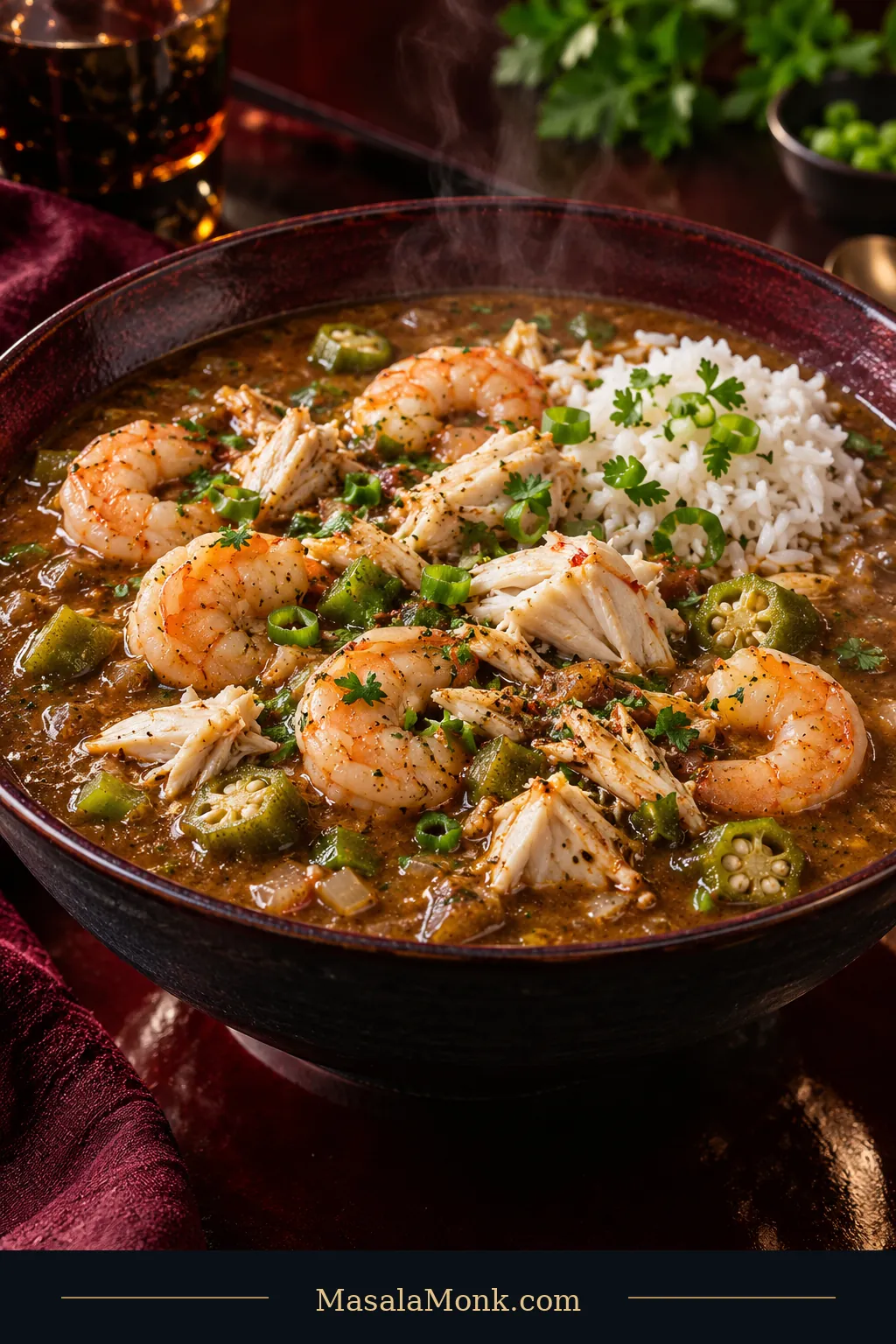
In the bowl, this seafood gumbo has a rich but fluid broth, tender shrimp, pieces of sweet crab, soft okra and enough heat to wake everything up without overpowering the shellfish.
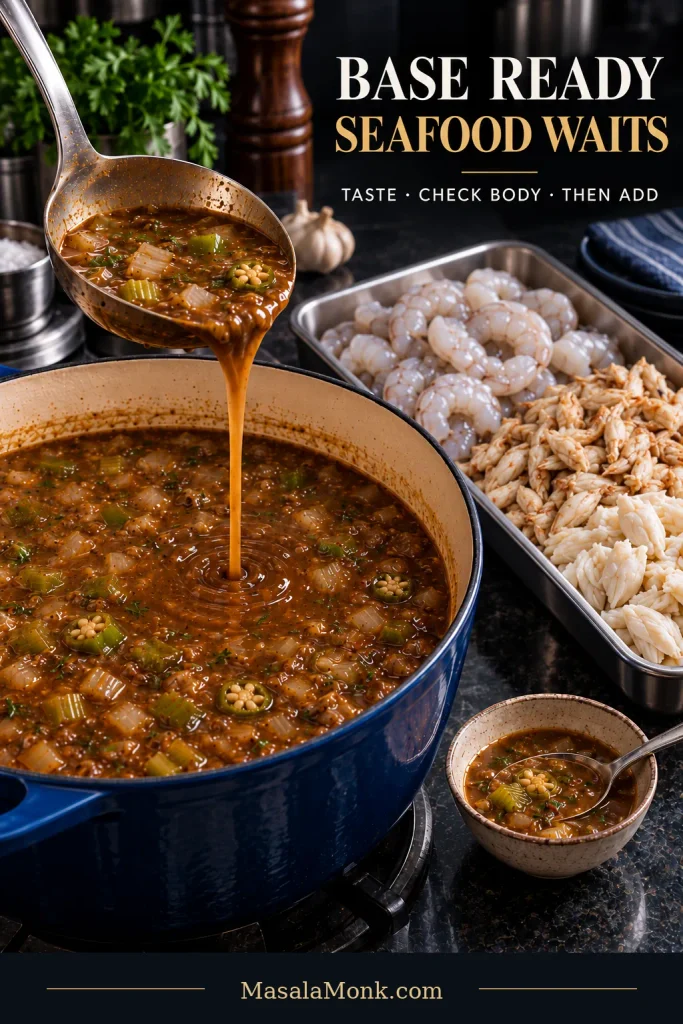
Final Check Before the Seafood
Give the roux a quick look and smell, then taste the stock and base. If the roux still looks or smells off, or the stock or base needs work, the shrimp can wait a few more minutes in the refrigerator.
- Roux: deep brown, smooth and toasted, with no scorched smell or black flecks.
- Stock: clearly shellfish-rich and savory, with enough flavor to carry through the finished broth.
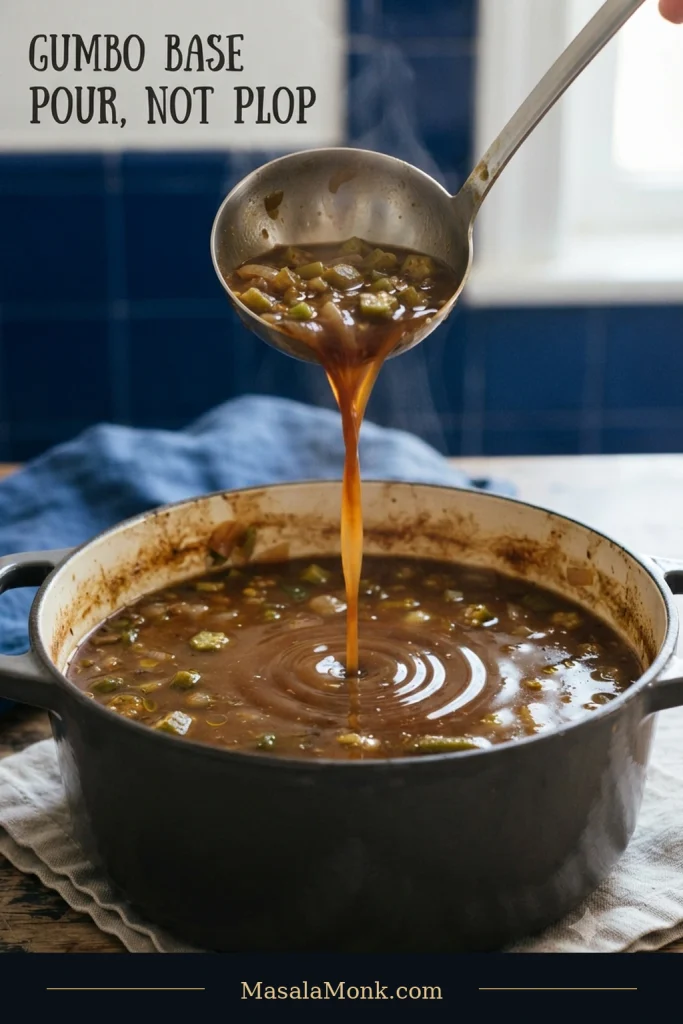
- Gumbo base: seasoned and flowing, with enough body to leave a light coating on a spoon.
- Seafood: shrimp cooks only until opaque and tender; delicate lump crab goes in at the very end.
Seafood Gumbo Recipe
Shrimp and Crab Seafood Gumbo
A deep-brown seafood gumbo with shrimp, claw and lump crabmeat, okra and savory seafood stock. Most of the seasoning and consistency work happens before the seafood enters, helping the shrimp stay tender and the lump crab remain in recognizable pieces.
- Serves: about 8
- Prep time: about 30 minutes
- Cook time: about 1 hour 45 minutes–2 hours
- Total: about 2¼–2½ hours
- Pot: 7- to 8-quart heavy Dutch oven or stockpot
- Roux target: deep milk-chocolate to coffee brown
Stock choice: you need 7 cups / 1.65 L total shrimp or seafood stock for the gumbo. Use unsalted homemade shrimp stock, low-sodium purchased seafood stock or a combination. If making shrimp-shell stock, start it first; its short simmer can run while you chop the vegetables and prepare the okra. For the flavor check and top-up decision, see the quick shrimp-stock guide.
Equipment
- 7- to 8-quart heavy-bottomed Dutch oven or stockpot
- 10- to 12-inch skillet for the okra
- Medium saucepan, about 3 quarts, if making shrimp-shell stock
- Sturdy wooden spoon or heatproof spatula
- Fine-mesh strainer if making shrimp-shell stock
- Ladle
Optional Quick Shrimp-Shell Stock
- Shells reserved from the shrimp used in the gumbo
- 1 teaspoon vegetable, canola or other neutral oil
- 6 cups / about 1.4 L water
- A small handful of clean onion, celery or green-onion trimmings, optional
- 1 bay leaf, optional
Okra
- 10 oz / 285 g sliced okra, fresh or frozen
- 1 tablespoon / 15 ml vegetable, canola or other neutral oil
Roux and Gumbo Base
- ½ cup / 4 fl oz / 120 ml vegetable or canola oil
- ¾ cup / about 90 g all-purpose flour
- 2 cups / about 300 g chopped yellow onion
- 1 cup / about 150 g chopped green bell pepper
- 1 cup / about 120 g chopped celery
- 4 garlic cloves / about 15 g, minced
- 7 cups / 1.65 L shrimp or seafood stock total—unsalted homemade, low-sodium purchased or a combination
- Up to 1 additional cup / 8 fl oz / 240 ml unsalted stock or water for consistency adjustments
- 1 tablespoon salt-free or low-sodium Cajun or Creole seasoning
- 1 teaspoon dried thyme
- 2 bay leaves
- 1 tablespoon / 15 ml Worcestershire sauce
- ½ teaspoon freshly ground black pepper
- ¼ teaspoon cayenne pepper, plus more if wanted
- Kosher salt, as needed
Seafood
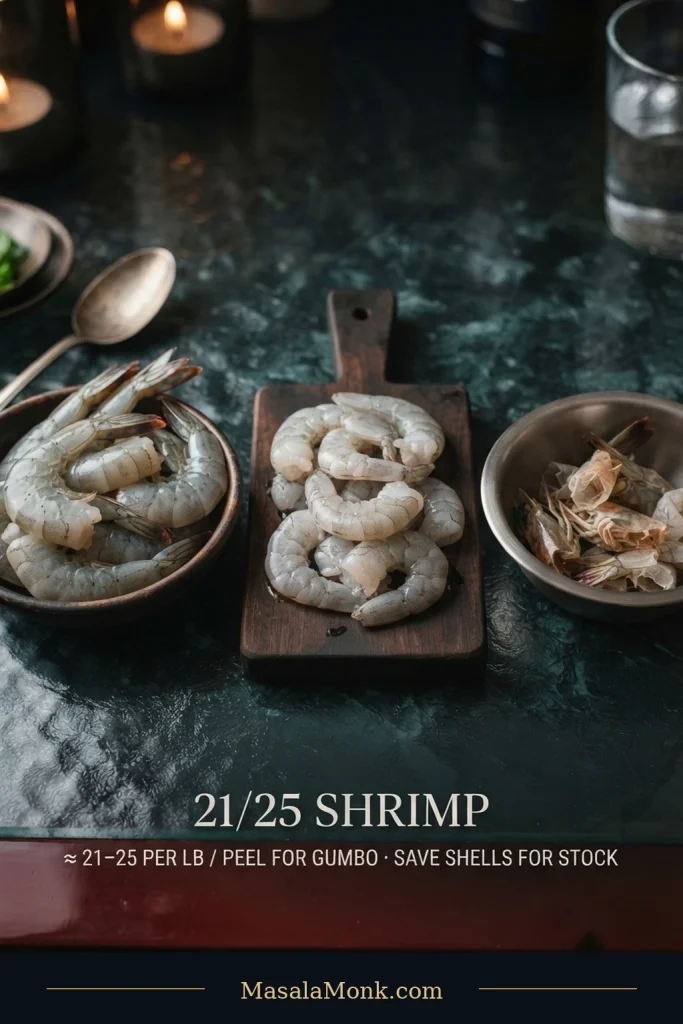
- 1½ lb / 24 oz / 680 g raw peeled 21/25 shrimp, deveined and tails removed
- 8 oz / 225 g cooked claw crabmeat, picked over for shell and cartilage
- 8 oz / 225 g cooked lump crabmeat, picked over for shell and cartilage
- Optional: 8 oz / 225 g shucked oysters, with their packing liquid (“oyster liquor”) strained and reserved
Shrimp size: 21/25 means roughly 21–25 shrimp per pound.
If making the shrimp-shell stock: buy shell-on shrimp and peel and devein them yourself, reserving the shells. Buy enough to finish with about 1½ lb / 680 g peeled shrimp for the gumbo.
To Finish and Serve
- ½ cup sliced green onions
- ¼ cup chopped flat-leaf parsley
- 1–2 teaspoons filé powder (ground sassafras leaves), optional
- Hot sauce, to taste
- 3–4 cups hot cooked long-grain white rice, plus more if wanted
Seafood Gumbo Ingredients: What Goes Into Each Stage
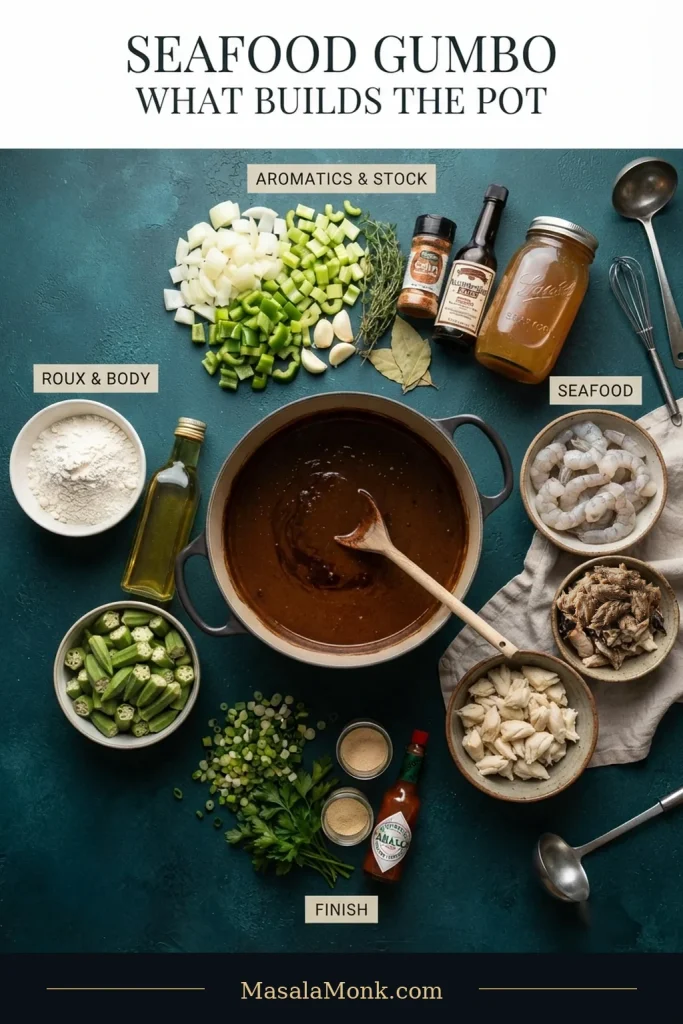
Before heating the roux, group the ingredients by when they enter the pot: the roux ingredients and chopped trinity first, stock and okra during the long simmer, and the shrimp and crab near the end. This overview helps you organize the work without stopping to measure or chop once the roux is darkening.
Optional Quick Shrimp-Shell Stock
Using purchased seafood stock? Skip straight to the main instructions.
- Heat 1 teaspoon oil in a medium saucepan over medium heat. Add the shrimp shells and cook for 2–3 minutes, stirring, until they turn pink and smell distinctly shrimpy.
- Add 6 cups / 1.4 L water, plus the vegetable trimmings and bay leaf if using. Bring to a gentle simmer and cook for 15–20 minutes.
- Strain through a fine-mesh sieve without pressing sediment through, then taste and measure the stock. Bring it to 7 cups / 1.65 L total: use water if it already tastes full and shrimp-rich, or low-sodium seafood stock if it still tastes light. Keep up to 1 additional cup of unsalted stock or water nearby for later consistency adjustments.
Instructions
Build the Base
- Get everything ready. Chop the onion, bell pepper and celery; mince the garlic; measure the flour, oil, stock and seasonings; and pick through both kinds of crabmeat. Keep the lump crab separate.
- Cook the okra. Heat 1 tablespoon / 15 ml oil in a wide skillet over medium to medium-high heat. Cook for 10–12 minutes, stirring regularly, until tender, lightly browned in places and much less stringy. Set aside.
- Make the roux. Heat ½ cup / 120 ml oil in the Dutch oven over medium heat and stir in the flour until smooth. Stir regularly at first, then almost constantly once the color begins to deepen. Scrape the bottom and corners until the roux reaches a deep milk-chocolate to coffee-brown shade, usually about 20–30 minutes. Lower the heat whenever it starts moving faster than you can comfortably control it.
- Add the trinity. Stir in the onion, green bell pepper and celery—the Louisiana “trinity.” The mixture will tighten dramatically when the vegetables hit the roux; that is normal. Cook for 5–7 minutes until softened, then add the garlic for 30–60 seconds.
- Add the stock gradually. Stir in about 1 cup / 240 ml stock first and work it into a smooth sauce. Add the rest gradually, using 7 cups / 1.65 L total at this stage. Keep the extra unsalted stock or water nearby. Once the liquid is smooth, the most nerve-racking part is behind you.
- Simmer the base. Add the cooked okra, Cajun or Creole seasoning, thyme, bay leaves, Worcestershire sauce, black pepper and cayenne. If using oysters, add the strained oyster liquor now. Bring to a gentle simmer and cook for 45–60 minutes, stirring occasionally.
Check the Base and Finish
- Taste the broth. It should be savory and rounded, with seafood flavor you can clearly taste. Add salt until the broth is almost where you want it; crabmeat and oyster liquor can add more later.
- Look at the thickness. Ladle some up. It should pour easily while leaving a light coating on the spoon. Simmer uncovered for another 5–10 minutes if it is thin. If it is thicker than you like, add extra unsalted stock or water ¼ cup / 60 ml at a time.
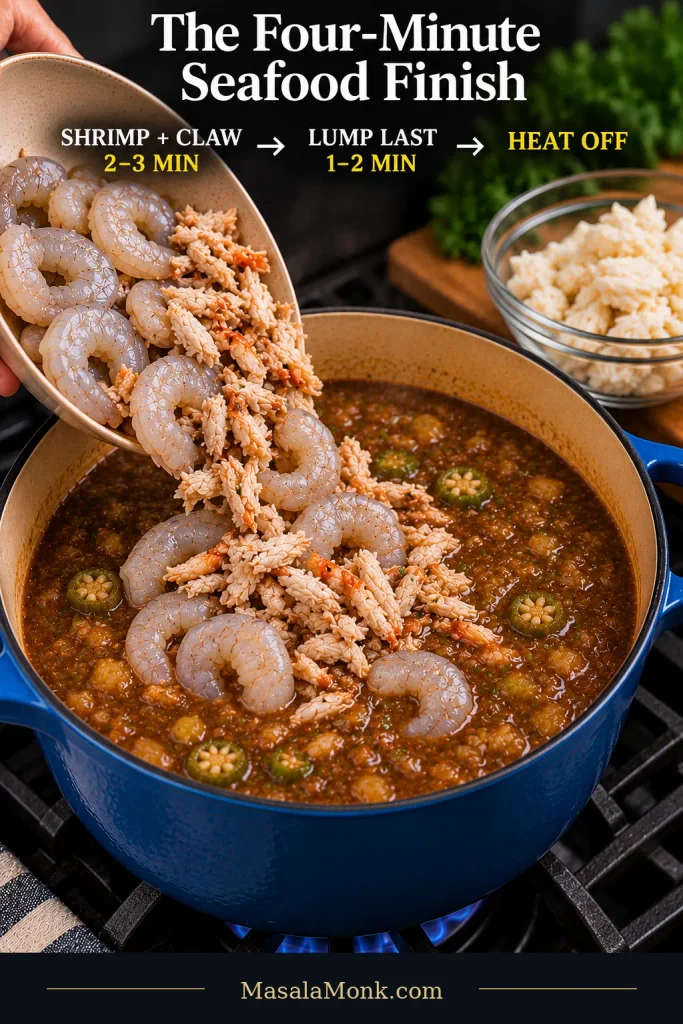
- Add the shrimp and claw crab. Keep the gumbo at a gentle simmer, then add the raw shrimp and cooked claw crabmeat. If using oysters, add them now as well. Cook for about 2–3 minutes.
- Fold in the lump crab. Add it gently and continue only until the shrimp are opaque and just firm and any oysters are opaque and firm, with their edges beginning to curl, usually another 1–2 minutes.
- Finish off heat. Remove the bay leaves and stir in the green onions and parsley. Add filé powder now if using, or offer it at the table. Here it is a light off-heat finish, not a required second thickener. Taste once the crab is hot and make the final salt and heat adjustment.
- Serve promptly. Portion the warm long-grain white rice into bowls, then ladle the gumbo around or over it. Put hot sauce on the table for anyone who wants more heat.
Recipe Notes
- Roux: if the roux develops persistent black flecks or smells sharply burnt, restart. It is frustrating, but beginning again is faster than spending another hour trying to hide burnt flour.
- Frozen shrimp: raw frozen shrimp work well. Thaw completely, drain and make sure they are deveined.
- Crab: the claw meat is already cooked, so it only needs to heat through. Lump crab waits until the end so the larger pieces survive.
- Salt: stock, seasoning blends, Worcestershire, crabmeat and oyster liquor all vary in sodium. If your Cajun or Creole blend is salty, start conservatively and wait until the seafood is hot before making the final salt adjustment.
- Make ahead: for the best seafood texture, refrigerate the finished base before adding the quick-cooking seafood. Reheat the base, then add the shrimp, picked crab, oysters or crawfish according to their normal timing.
Research basis: This recipe synthesizes established Louisiana seafood-gumbo methods and published chef techniques. MasalaMonk has not independently kitchen-tested this exact version.
The recipe above is enough to cook from. What follows is for the points where gumbo stops being about measurements and starts asking you to judge what is happening in the pot.
Seafood Gumbo Guide
Build the Base
- Stock, Roux, Okra & Body
- Quick Shrimp-Shell Stock
- How Dark Should the Roux Be?
- Okra Without the Ropey Texture
- Taste & Adjust the Base
Choose & Finish the Seafood
Fix & Plan
Build the Base: Stock, Roux, Okra & Body
The base has three jobs: deeply toasted flavor from the roux, clear shellfish flavor from the stock, and enough body to carry the seafood without becoming heavy.
Quick Shrimp-Shell Stock
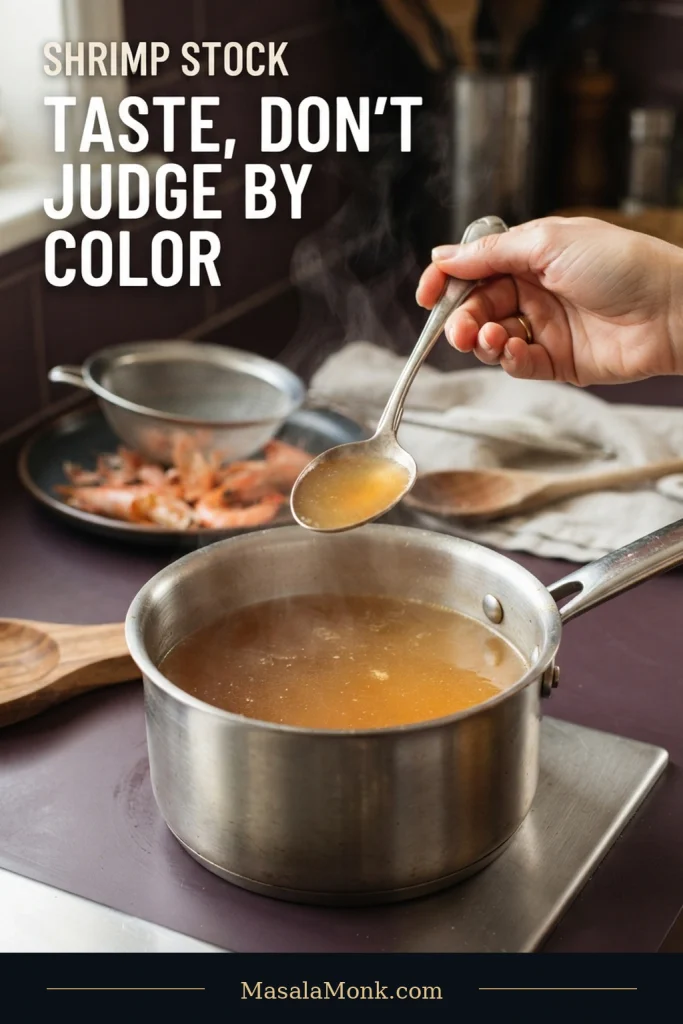
If you make the shell stock above, judge it by flavor rather than color.
Don’t assume a dark stock is automatically a strong one. Too few shells for the amount of water can produce plenty of color with little depth, while lots of heads and shells reduced too aggressively can turn heavy or almost bitter.
A spoonful should taste distinctly shrimp-rich and savory without taking over your palate. When it already has that concentration, water is enough to bring it to volume; when it still tastes light, low-sodium seafood stock is the better top-up.
How Dark Should a Seafood Gumbo Roux Be?
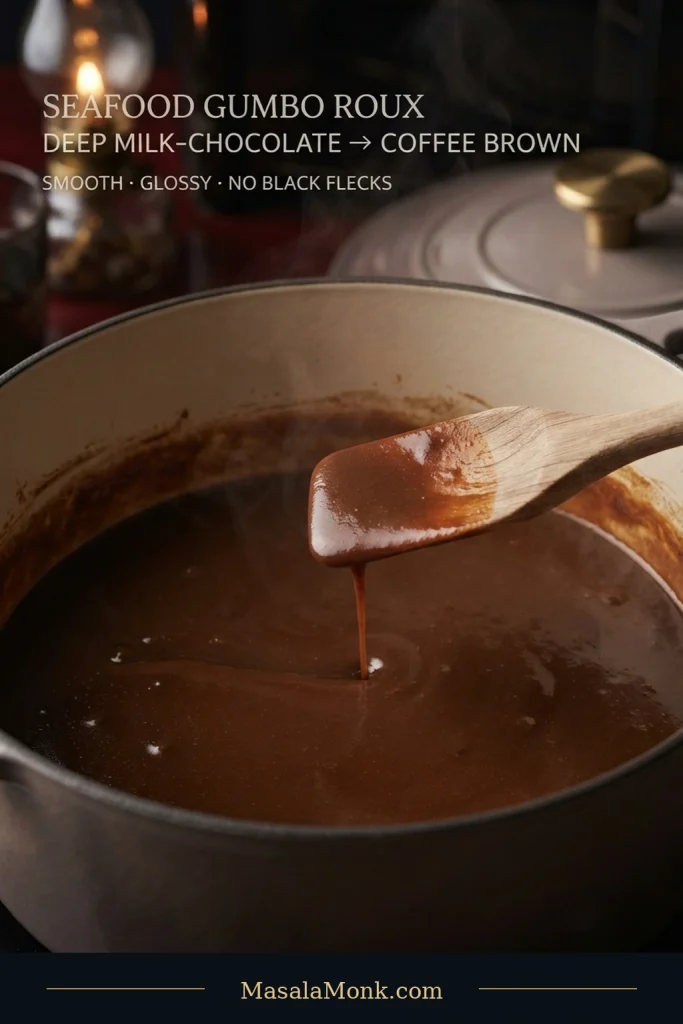
For this pot, stop in the deep milk-chocolate to coffee-brown range. You want plenty of toasted flavor while leaving room for sweet shrimp and crab.
As the roux gets darker, you gain roasted flavor and give up some thickening power. The darkest possible roux isn’t automatically the right one for every gumbo.
Stay close once it moves past peanut-butter brown. The raw-flour smell fades, the aroma turns nutty and toasted, and the color can deepen surprisingly fast. Twenty to thirty minutes is a useful planning range, but the pot and burner decide the actual clock.
If the roux starts moving faster than you can comfortably control it, turn the heat down. Persistent black flecks or a sharply scorched smell mean it is time to begin again.
There is no prize for taking the roux one shade darker than you actually enjoy.
Louisiana seafood gumbo comes in a wide range of roux shades, seafood combinations and thickening traditions. Explore Louisiana’s gumbo guide offers a useful overview of that regional range.
When the Trinity Hits the Roux
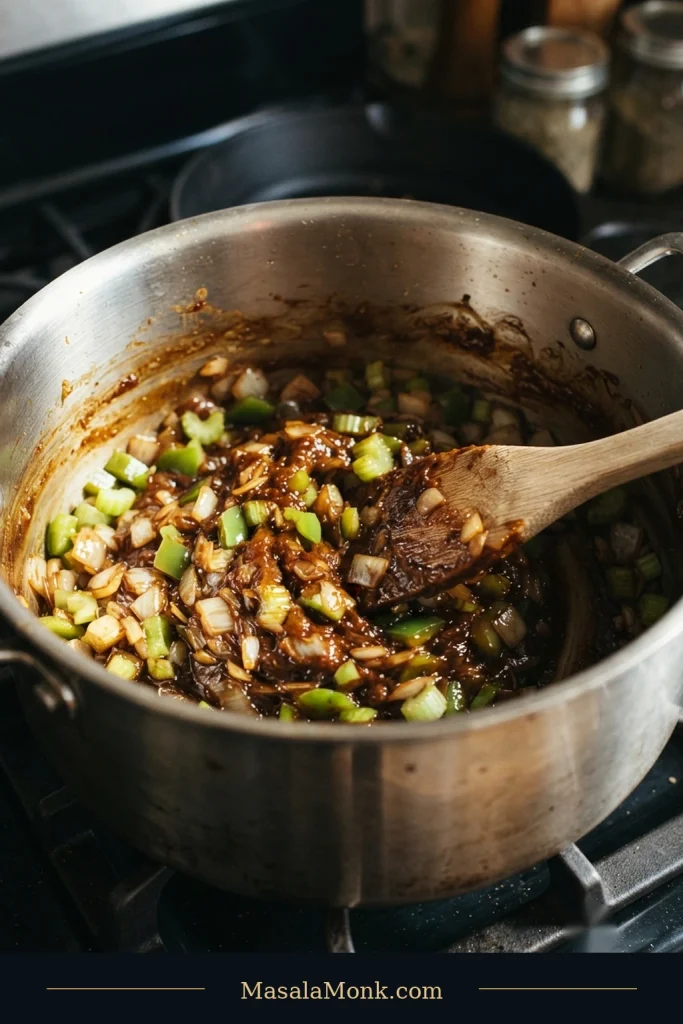
This is the moment the vegetables meet the hot roux. Expect the mixture to tighten into a dense paste before any stock is added; that change is normal.
Work the First Stock Into the Roux
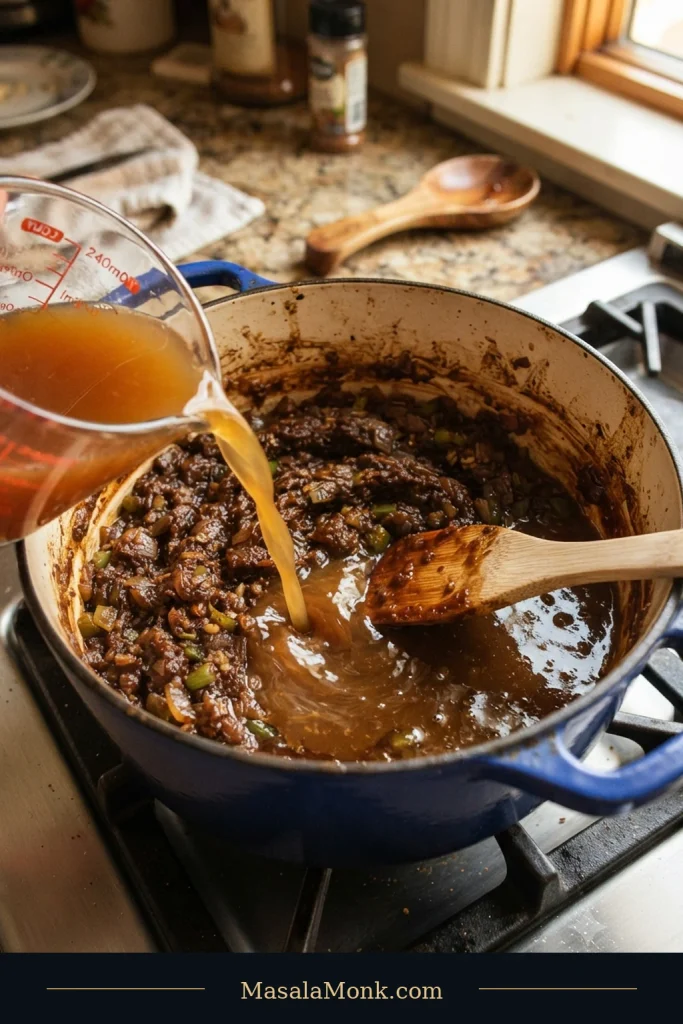
Start with about 1 cup / 240 ml of stock and keep stirring until the thick mixture becomes a smooth sauce. Only then add the remaining stock in stages.
Okra Without the Ropey Texture
Okra is useful in seafood gumbo, but it isn’t mandatory. It adds vegetal flavor and extra body, and cooking it separately helps tame the ropey texture that puts many people off.
At first the sliced okra looks wet and increasingly stringy. Keep going. The strands diminish, the pieces soften and a few edges begin to brown. That’s the point to stop.
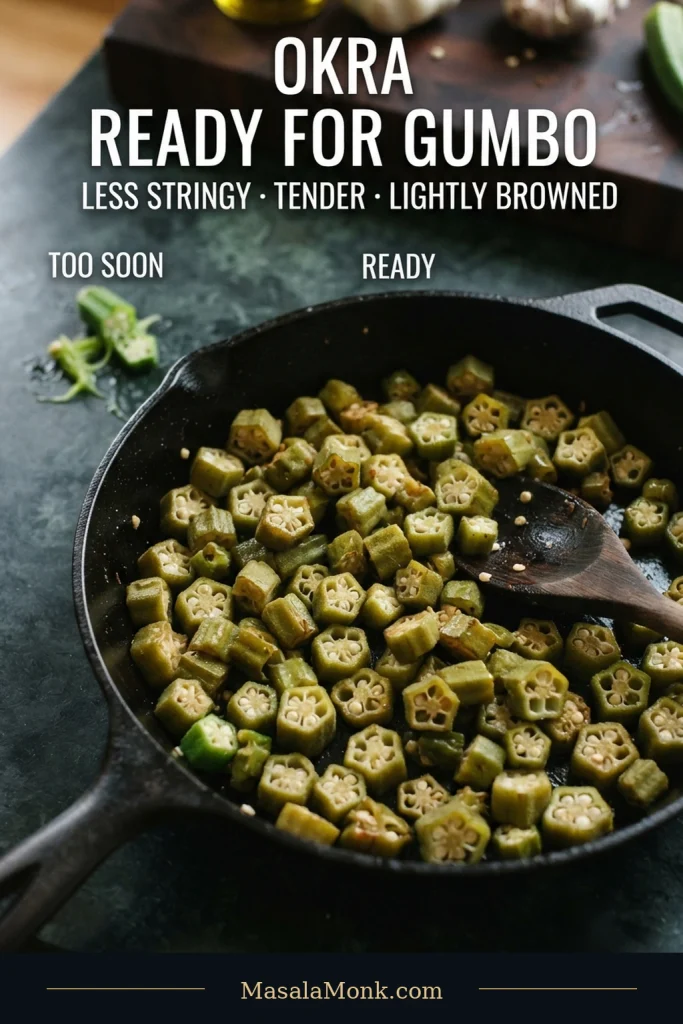
Fresh and frozen both work. Frozen okra may need a little longer while its surface moisture evaporates.
You can also roast or smother the okra; the skillet simply lets you watch the change happen.
If okra isn’t for you, leave it out. The gumbo will have a different body. A little filé powder off heat can add an earthy sassafras note and some additional body, but in this recipe it is a light finish rather than a required second thickener. If you leave the okra out, use the base-tasting and consistency check to decide whether the broth needs any adjustment.
Taste and Adjust the Base
After 45–60 minutes of gentle simmering, the broth should already be enjoyable by itself. The vegetables will have softened into the broth, the roux should no longer taste separately floury, and the pot should smell like one finished base rather than stock plus seasoning.
A flat-tasting gumbo often needs salt before it needs another spoonful of seasoning. Cajun and Creole blends vary enormously in sodium, so adding more can quickly push the whole pot too far.
If the broth tastes too intense, loosen it with a little unsalted stock or water. By contrast, a weak broth needs a little more uncovered simmering so the flavor can concentrate.
Ladle some up and watch how it falls. It should pour, not plop like gravy, while still leaving a light coating on the spoon. A splash of unsalted stock or water loosens an overly thick pot; a few more minutes uncovered will build body when it is still too loose.
If You Prefer a Tomato-Based Gumbo
Tomatoes stay out of the core recipe so the toasted roux, seafood stock and shellfish come through distinctly. For a tomato-based variation, add 1 cup / 240 ml crushed tomatoes and initially hold back 1 cup / 240 ml of the stock. After the base has simmered, add as much of that held-back stock as needed to reach the same flowing consistency.
If what you’re after is a substantially thicker roux-and-seafood sauce, our Cajun Étouffée is the better template.
When the broth tastes deep and pours cleanly from the ladle, the slow part is finished. From here, the pace changes quickly.
Choosing Shrimp, Crab & Other Seafood
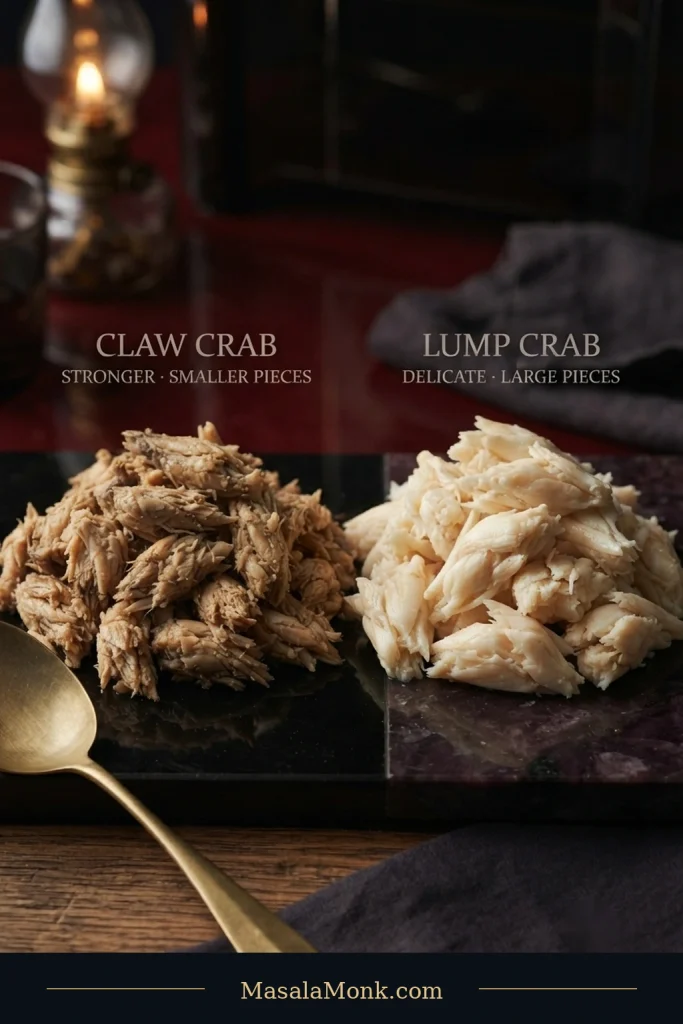
Shrimp and crab are enough to make a complete seafood gumbo. Claw meat brings a stronger, more pronounced crab flavor; lump crab gives you the large delicate pieces worth finding in the bowl.
Start With Good Shrimp
Raw shrimp around 21/25 count are large enough to stay juicy and recognizable without turning each spoonful into one oversized shrimp. The tails come off because this is a spoon dish.
Frozen raw shrimp work well too. Thaw them completely, drain them and check the backs even when the package says “peeled.” Peeled doesn’t always mean deveined.
Claw Crab for Flavor, Lump Crab for Pieces
Claw meat is darker, stronger and usually less expensive than lump crab. Because it is already cooked, it only needs to heat through. Its stronger flavor makes it a good partner to the milder, more delicate lump meat.
Lump crab costs more because you’re paying for those large, delicate pieces. Fold it in near the end and leave it alone as much as possible. The point of buying lump crab is to still find lump crab in the bowl.
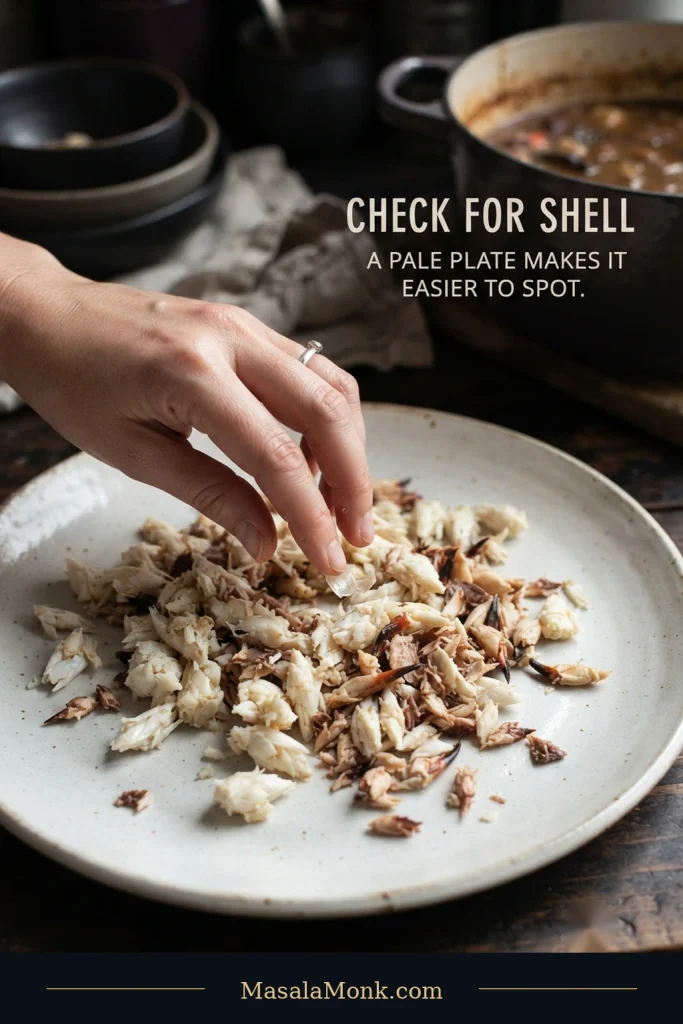
Check Picked Crab for Shell
Before cooking, spread all of the crabmeat across a pale plate and run your fingertips through it. Tiny pieces of shell and cartilage are much easier to spot there than in a dark bowl of gumbo.
Optional Seafood Options
You don’t need to empty the seafood counter into the pot. Add oysters when you want more briny richness, crawfish for their sweeter tail meat, or whole blue crabs when you want more crab flavor and don’t mind shells and claws at the table. For the timing that protects the shrimp and picked crab, jump to the seafood finishing window.
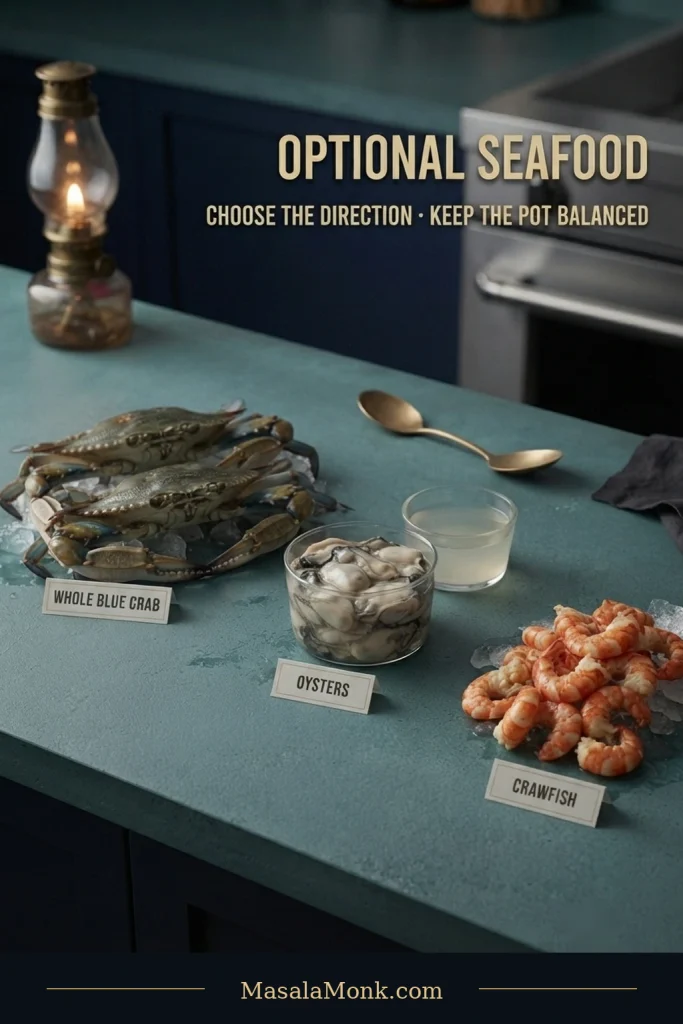
What About Whole Crabs?
Whole cleaned blue crabs can add excellent flavor while the gumbo simmers. They also mean claws and shells at the table. Some people consider that part of the meal; others would rather eat gumbo entirely with a spoon.
If whole gumbo crabs are easy to find, add 1–2 cleaned blue crabs once the stock is incorporated and let them simmer with the base. Remove them before adding the picked seafood, or leave them in for serving if you want the hands-on experience. Picked crab alone keeps this recipe completely spoon-friendly.
Want the shell cracking, potatoes and corn to be the whole experience? Try our Cajun Seafood Boil.
Adding Oysters or Crawfish
Oysters add a deeper briny note. Strain their liquor into the simmering base and hold the oyster meat until the seafood finish.
For a crawfish version, replace about 8 oz / 225 g of the shrimp or claw crab with 8 oz / 225 g cooked crawfish tails. Fold the crawfish in near the end, just long enough to heat through.
More seafood does not automatically make better seafood gumbo. It is more satisfying when you can still recognize the shrimp and crab in each spoonful.
Andouille changes the picture completely, bringing smoke, fat and extra salt. For that darker, meatier style, see our Chicken & Andouille Gumbo.
Know When the Seafood Is Done
For 21/25 shrimp, expect roughly 3–5 minutes total in gently simmering gumbo. Cooked claw crab only needs warming, and delicate lump crab belongs in the final minute or two.
After all the slow cooking, two hours of gumbo-making suddenly becomes a four-minute finish. Stay close to the stove.
Fold in the Lump Crab Gently
By this point, the base is ready and the shrimp are nearly done. Fold just enough to distribute the crab; vigorous stirring can break the larger pieces before they reach the bowls.
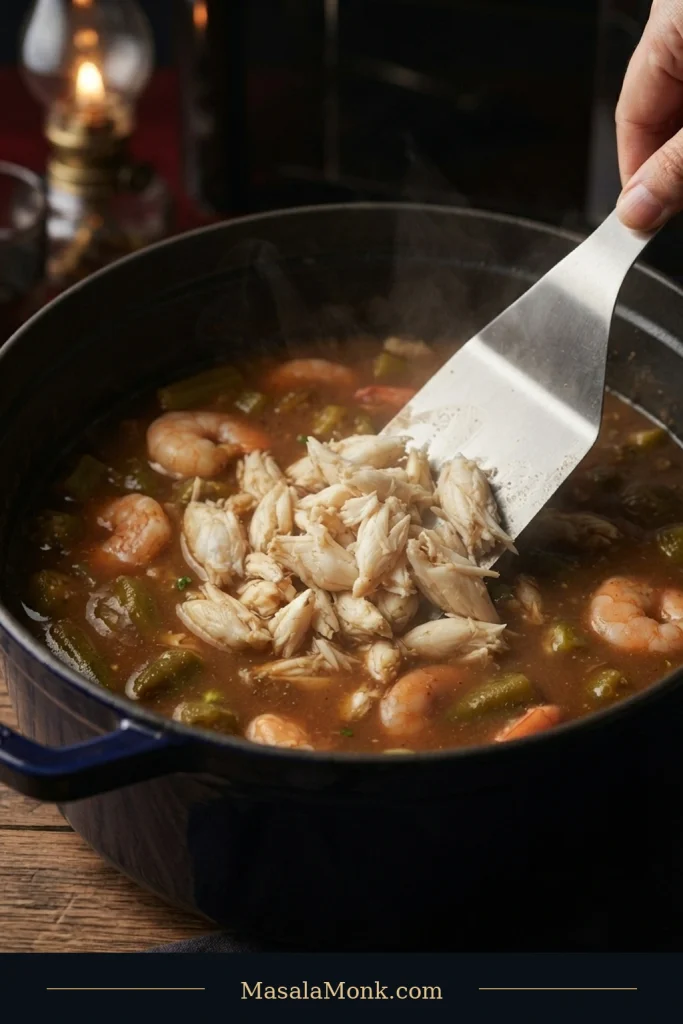
Look for shrimp flesh that has turned opaque all the way through and feels just firm. The shrimp will curl as they cook, but shape alone isn’t a reliable doneness test.
If you added oysters, watch them rather than the clock. They’re ready when they are opaque and firm and their edges begin to curl.
Turn off the heat before adding filé powder. Boiling filé can give the broth an unpleasant stringy texture.
One last taste matters because crabmeat and oyster liquor can shift the salt. Make any final adjustment gently; if the broth tastes right, leave it alone.
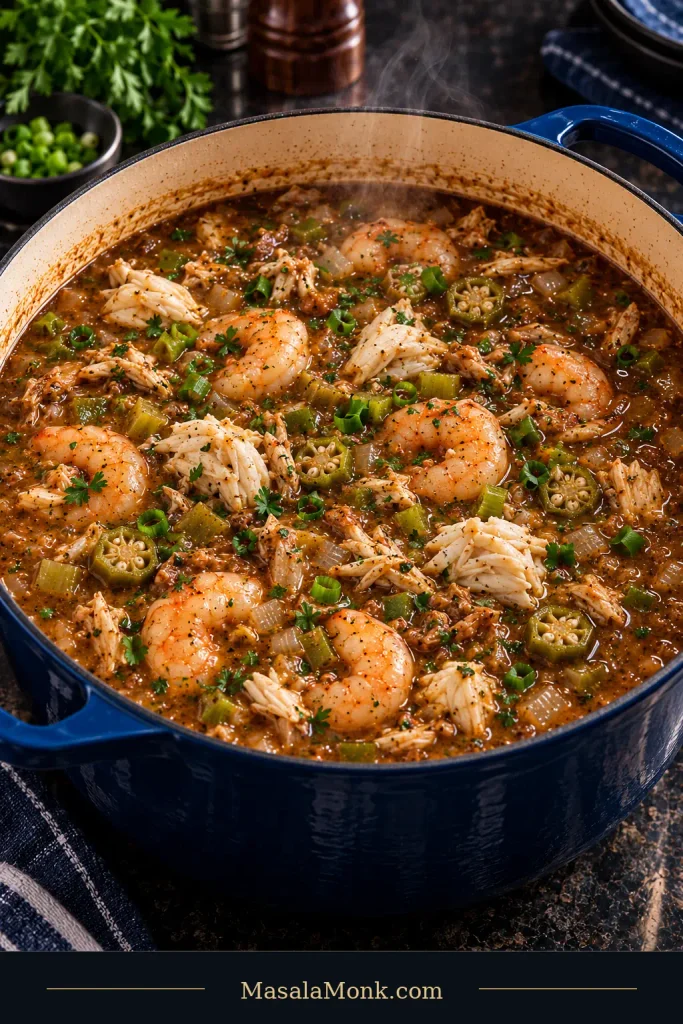
In the finished bowl, the broth should flow around the rice, the shrimp should remain tender, the lump crab should still be recognizable, and the okra should feel soft and integrated.
What the Finished Pot Should Look Like
Check the whole pot, not only the most photogenic part of the surface. Shrimp, crab and okra should be spread through the broth, with enough liquid between the pieces to ladle a balanced serving.
A Balanced Spoonful
Lift a spoonful with broth as well as seafood. The liquid should bring the shrimp, crab and okra together in one bite rather than letting the solids pile up without enough gumbo around them.
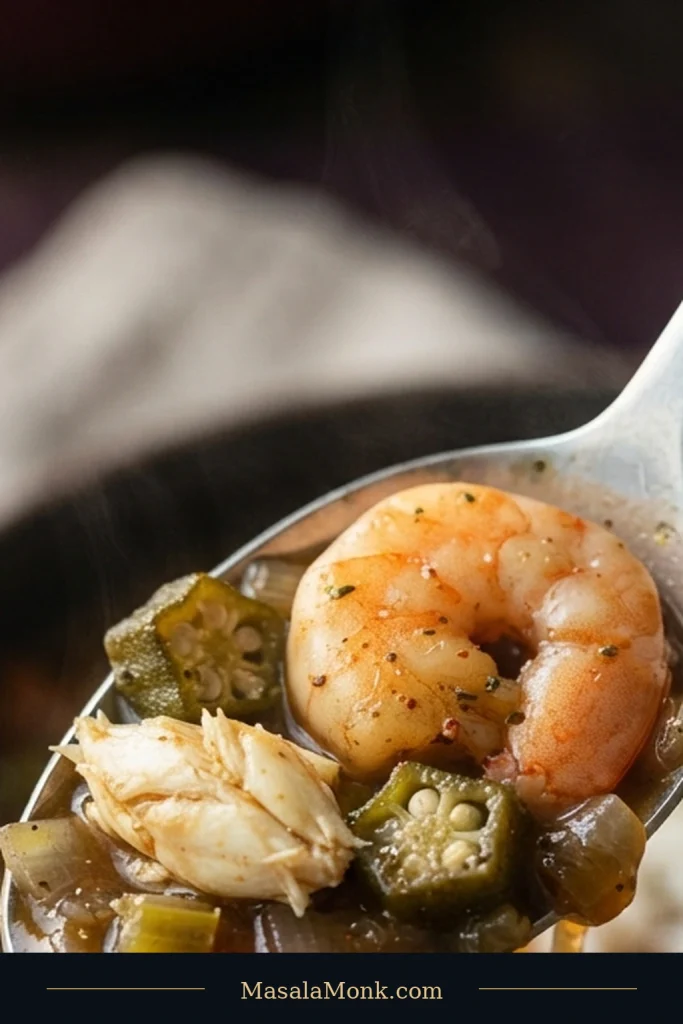
If yours looks and tastes like that, you’re finished. When something still seems off, identify the problem before changing anything else; the troubleshooting guide separates base problems from issues that appear after the seafood goes in.
Fix My Seafood Gumbo
Some gumbo problems are easy to correct now. Others are mostly lessons for the next pot.
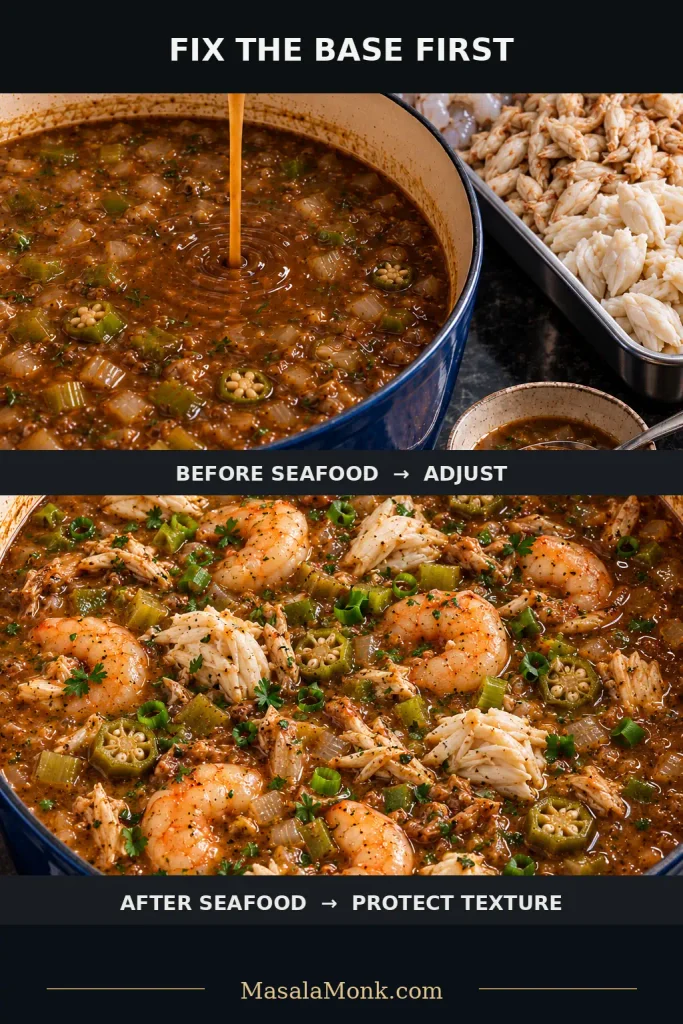
Problems to Fix Before the Seafood
| What You Notice | Likely Cause | What to Do |
|---|---|---|
| Roux smells burned or has black flecks | The flour has scorched | Restart the roux. The bitterness will stay in the pot. |
| Gumbo is too thin | Too much liquid, a dark roux with less thickening power, or not enough reduction | Simmer uncovered for 5–10 minutes and look again. |
| Gumbo is too thick | Too much reduction or too little liquid | Add unsalted stock or water ¼ cup / 60 ml at a time. |
| Flavor is weak | The stock was dilute or the broth needs more reduction | Reduce the base and taste the salt. Extra shrimp will not fix weak broth. |
| Seafood flavor is overpowering | The shellfish stock is too concentrated or too many seafoods are competing | Add unsalted stock or water gradually, then taste again. |
| It is too salty | Stock, seasoning and Worcestershire have stacked up | Dilute with unsalted stock or water before adding the seafood. |
| Oil is floating on top | Some free fat has separated while simmering | Skim obvious excess. A little surface oil is not a disaster. |
| Okra is still very ropey | It needs more cooking | Give the base more simmering time. Next time, take the okra a little farther in the skillet. |
| Roux tastes too roasted | It went darker than you enjoy | Extra stock can soften the intensity somewhat. Stop at a lighter brown next time. |
| The base is lumpy or gritty | Lumps can form when liquid is incorporated into the roux too quickly; grit usually points to shell-stock sediment | Work the first stock into the roux gradually, and strain homemade shell stock through a fine sieve. |
After the Seafood Goes In
| Problem | What Happened | What You Can Do |
|---|---|---|
| Shrimp are rubbery | They cooked too long | Overcooked shrimp will not become tender again. Add them later next time. |
| Gumbo is still too thin | The broth needed more reduction before the seafood was added | If practical, lift out the seafood with a slotted spoon, reduce the broth briefly, then return the seafood only long enough to warm through. |
| Gumbo tastes too salty | The crab or oyster liquor pushed an already-seasoned broth too far | Add small amounts of unsalted stock or water. Avoid a long corrective simmer with the seafood still in the pot. |
| Lump crab disappeared | It went in too early or was stirred too much | Fold it in during the last minute or two next time and leave it alone once distributed. |
| Gumbo suddenly feels gritty after the seafood | A small piece of crab shell or cartilage probably made it through | If the base was smooth beforehand, check the crabmeat before assuming the roux or stock caused it. |
| Filé made the gumbo stringy | It was boiled after the filé went in | Add filé after the heat is off or let everyone add it to individual bowls. |
Make the Base Ahead, Not the Seafood
Yes—you can make seafood gumbo ahead. Cook and refrigerate the finished base before the quick-cooking seafood goes in. Reheat the base, then add the shrimp, picked crab, oysters or crawfish according to their normal timing.
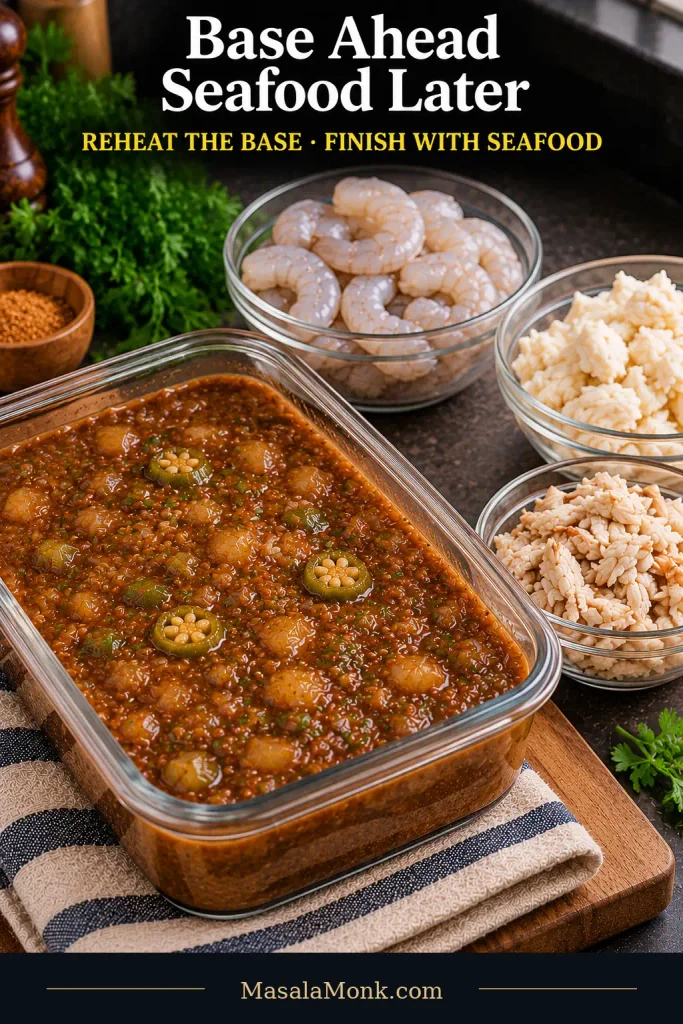
The base can benefit from an overnight rest. Shrimp does not benefit from being cooked twice.
Cool, Store and Reheat It Safely
A Dutch oven full of gumbo holds heat for a long time. Divide leftovers into shallow containers so they cool more quickly.
Refrigerate perishable leftovers within 2 hours—or within 1 hour if the food is sitting in temperatures above 90°F / 32°C—and generally use refrigerated leftovers within 3–4 days. USDA guidance recommends reheating leftovers to 165°F / 74°C. See the USDA leftovers and food-safety guidance.
Warm individual portions when practical. Repeatedly heating and cooling the whole pot is hard on both food safety and seafood texture.
Keep the rice separate too. It keeps drinking up broth while it sits, so storing it on its own helps tomorrow’s gumbo still look like gumbo rather than a pot of swollen rice.
Freezing Works Best Before the Seafood
Fully cooked seafood gumbo can be frozen, but the seafood holds up better when you freeze the base alone. Thaw and reheat the base, thin it with a little unsalted stock or water if needed, then add the quick-cooking seafood according to its normal timing. If the reheated base seems too thick or too thin, use the base consistency check before adding the seafood.
Seafood Gumbo FAQs
Can I use cooked shrimp instead of raw shrimp?
Yes, but add cooked shrimp at the very end. Let the gumbo finish cooking first, then fold in the shrimp and warm them gently for a minute or two. A long simmer will make already-cooked shrimp tough.
What if I can only find one kind of crabmeat?
Use about 1 lb / 450 g total crabmeat. Claw meat gives the strongest crab flavor. Lump gives you the largest recognizable pieces, while backfin is a useful middle ground with smaller flakes and body meat. If all of your crab is delicate lump meat, add it near the end.
Can I double seafood gumbo?
Yes, although two normal-size pots are often easier to control than one enormous batch. Roux darkens less predictably in a very large pot, and the seafood still needs only a few minutes at the end—the cooking time does not double just because the ingredient quantities do.
Can I make this without a flour roux?
Some gumbos lean more heavily on okra or other traditional thickeners. This one is built around a flour-and-oil roux, so simply leaving out the flour would change the broth enough that you would need a different recipe.
What to Serve With Seafood Gumbo
Once the gumbo reaches the table, keep the rest simple.
Long-grain white rice is the main partner. For eight servings, 3–4 cups cooked rice gives everyone a modest scoop while leaving plenty of gumbo around it. If you need the rice method too, use our guide to cooking fluffy long-grain white rice.
A scoop of classic potato salad gives you a cool, creamy contrast beside the hot gumbo. For a fresher option, serve a sharp cucumber salad or simply dressed greens.
French bread is useful for catching the last of the broth. Keep hot sauce on the table so everyone can choose their own heat.
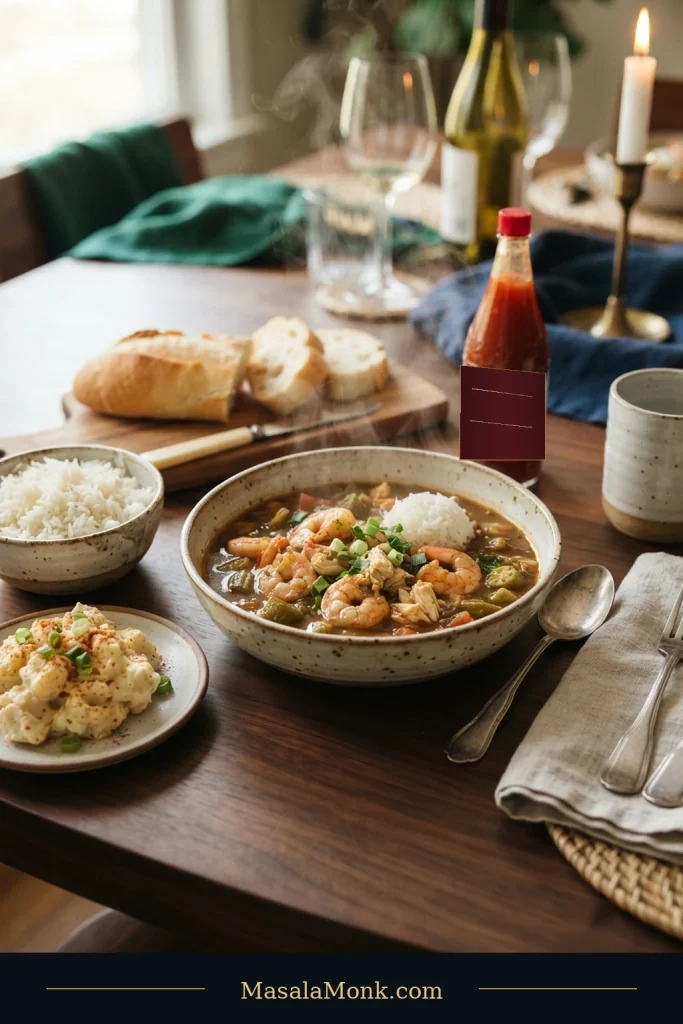
Set the rice in the bowl, ladle the gumbo around it, and serve while the shrimp are tender, the lump crab is still in pieces and the broth is hot enough to perfume the whole bowl.