
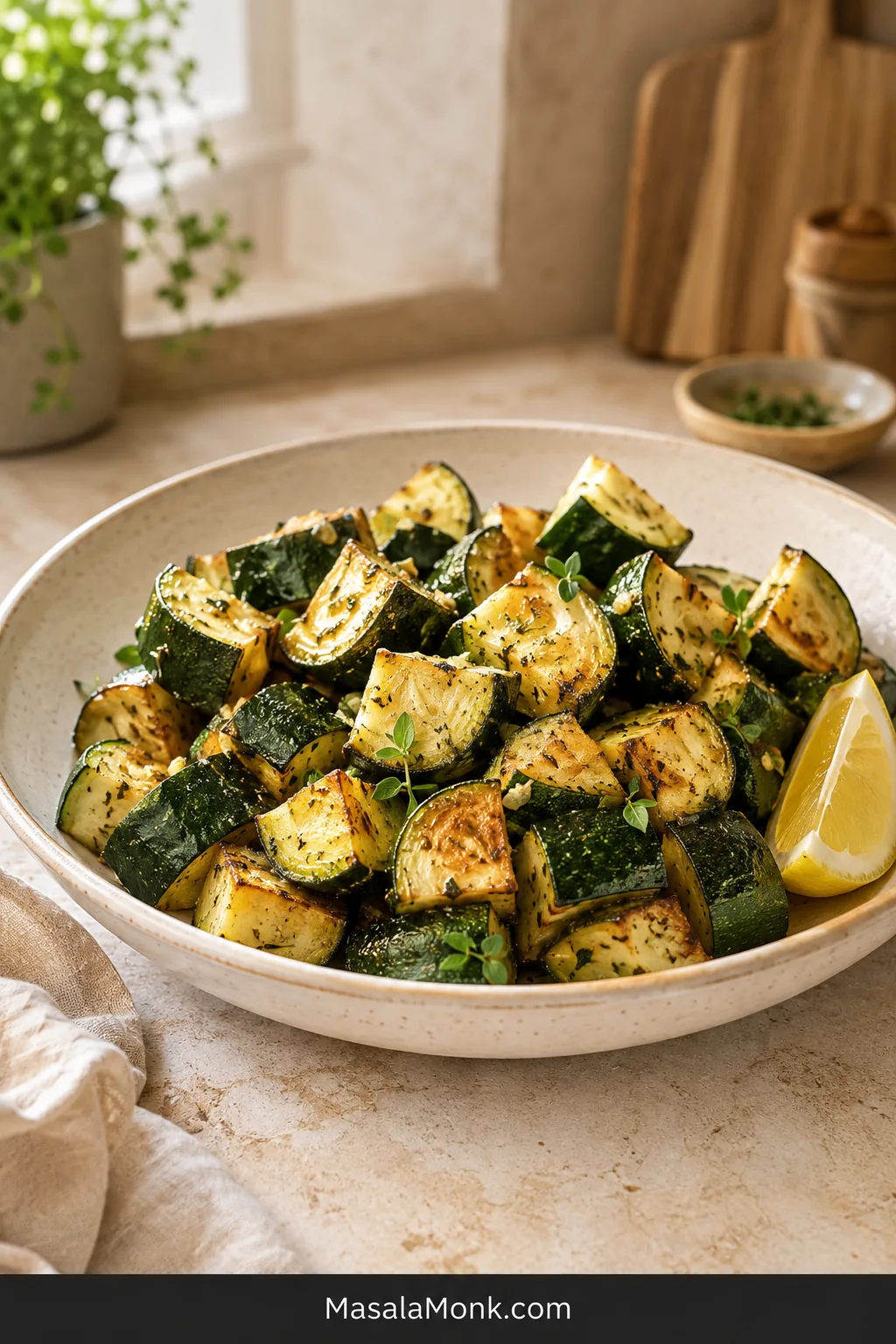
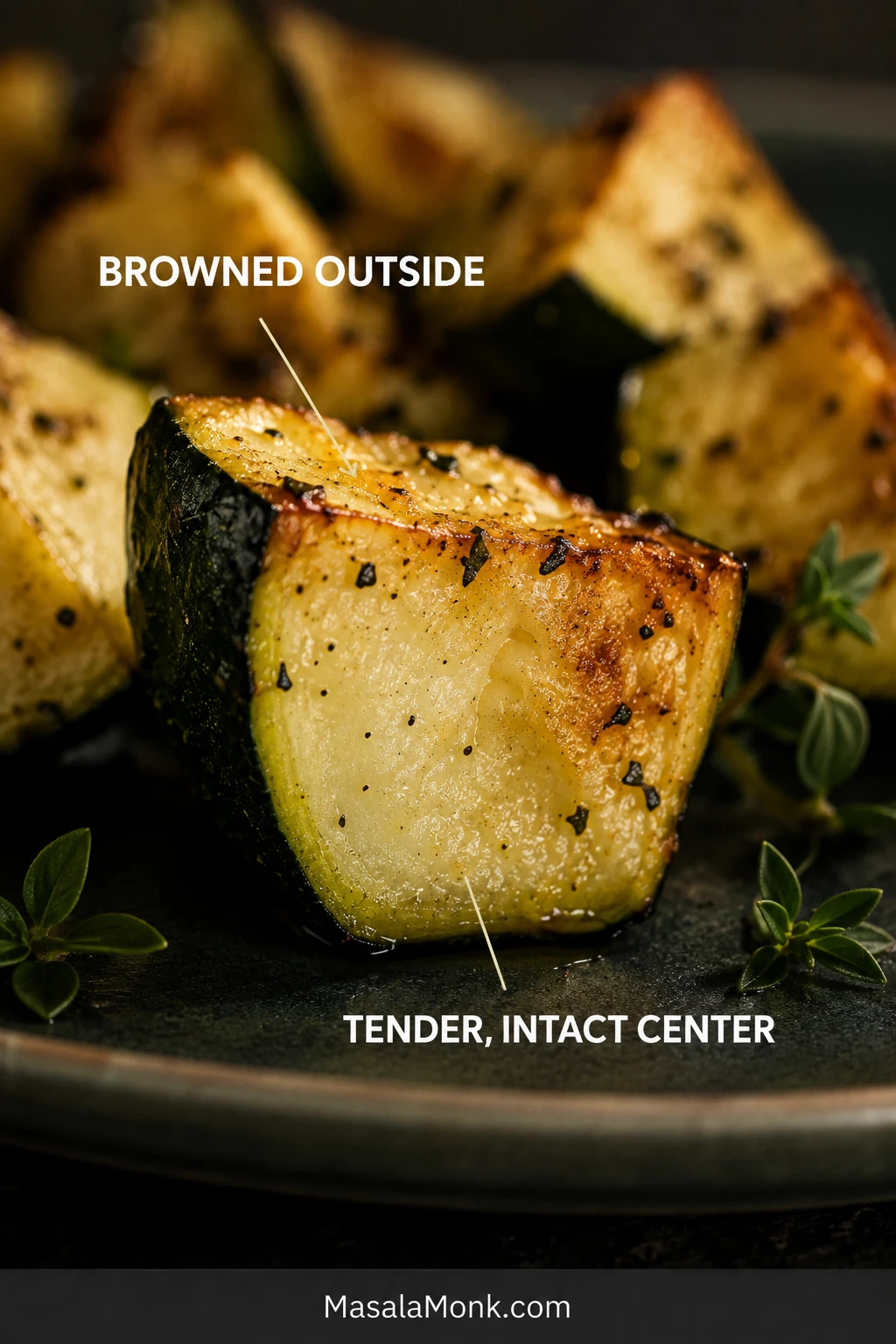
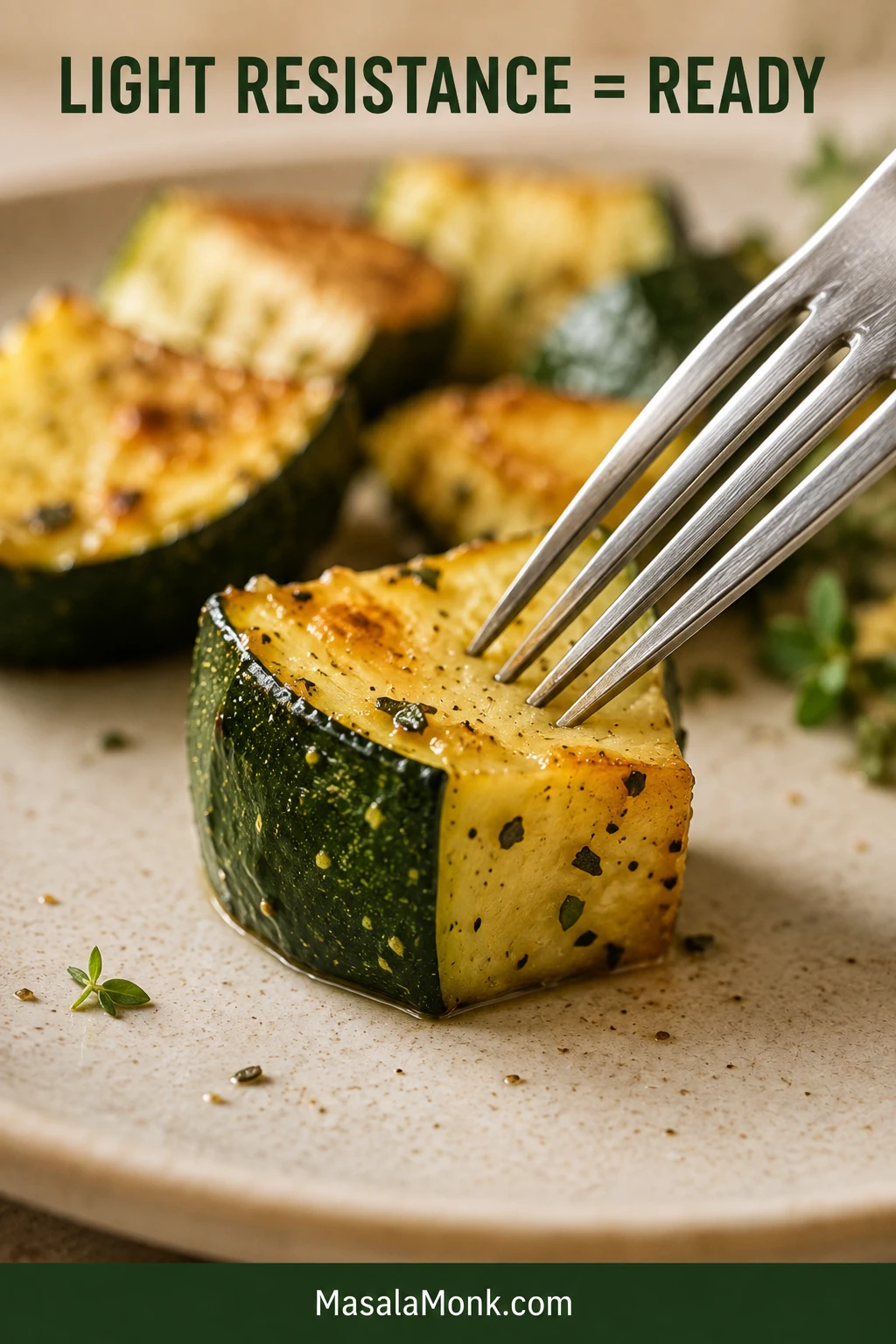
Good air fryer zucchini has a small, easy-to-spot window. The cut faces have started to bronze, the edges look roasted instead of wet, and the center is tender without folding when lifted with a fork.
Some nights dinner needs one last thing—something green, hot and bright that does not ask for another pan or a bowl of breading. Zucchini, called courgette in the UK, fills that gap when it gets enough heat and breathing room.
This is air fryer zucchini without breading, flour or egg. The goal is not to dry the vegetable until it crunches like a chip; it is to brown the outside while the middle still tastes fresh and juicy. For thin Parmesan rounds or panko-coated pieces, use the separate crispy zucchini chips recipe.
Quick Answer
Cut 1 lb / 454 g small or medium zucchini into ¾-inch / 2 cm chunks. Coat with 2 teaspoons / 10 ml oil, add the dry seasonings and spread the pieces loosely in a preheated 400°F / 200°C air fryer.
Cook undisturbed for 5 minutes, shake well and begin checking at 7 minutes. Many basket-style air fryers finish this cut in about 8–11 minutes. Remove the zucchini when several faces are golden, the surfaces no longer look watery and a fork enters with a little resistance.
Cut thick. Cook hot. Check early.
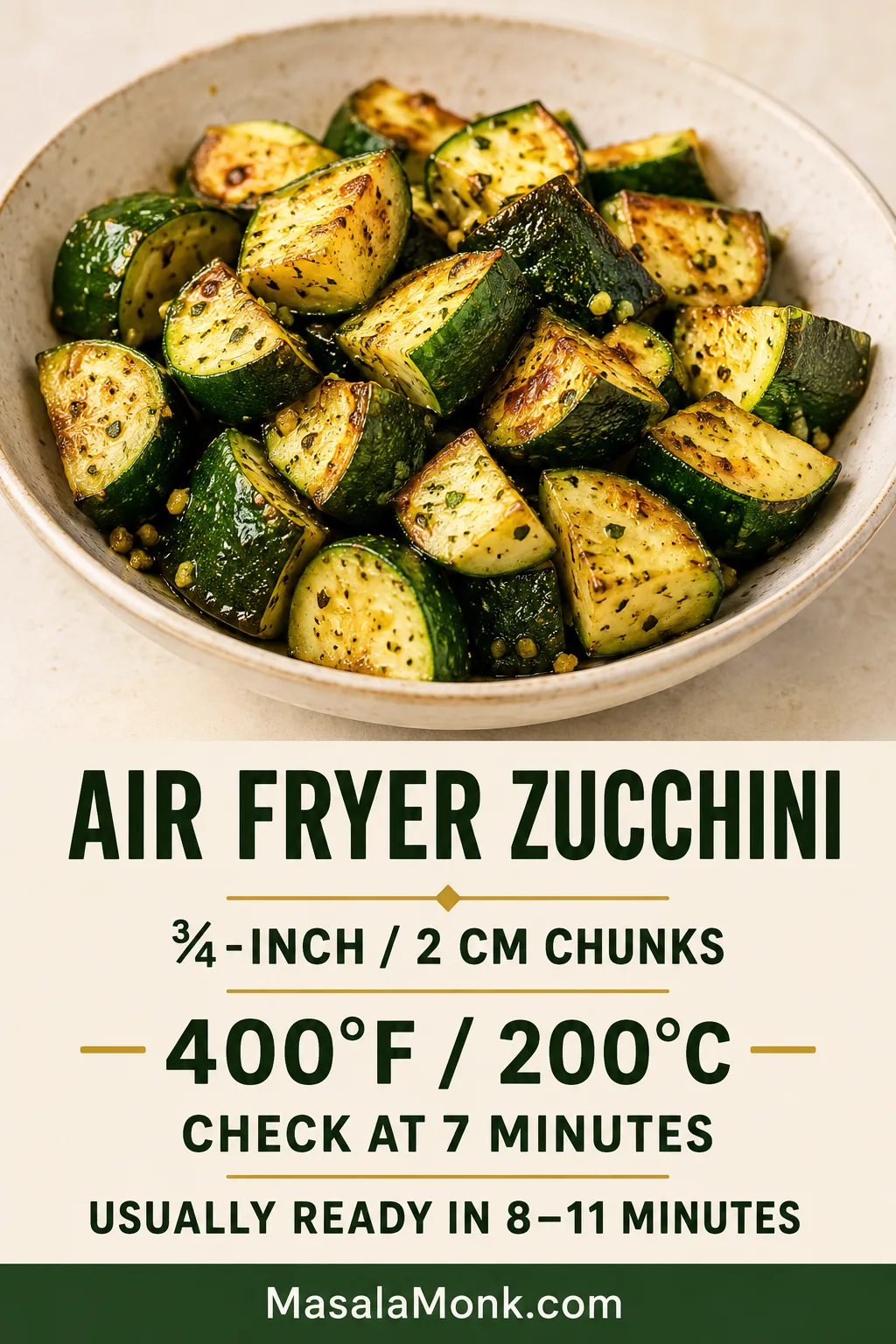
Air Fryer Zucchini Recipe
Thick zucchini chunks with browned corners and tender centers that still hold their shape. The base version is lightly garlicky and gently herbal, with fresh zucchini sweetness and an optional squeeze of lemon.
Equipment
- Basket-style or oven-style air fryer
- Sharp knife and cutting board
- Mixing bowl
- Measuring spoons or a digital kitchen scale
- Silicone-tipped tongs or a small flexible spatula
Ingredients
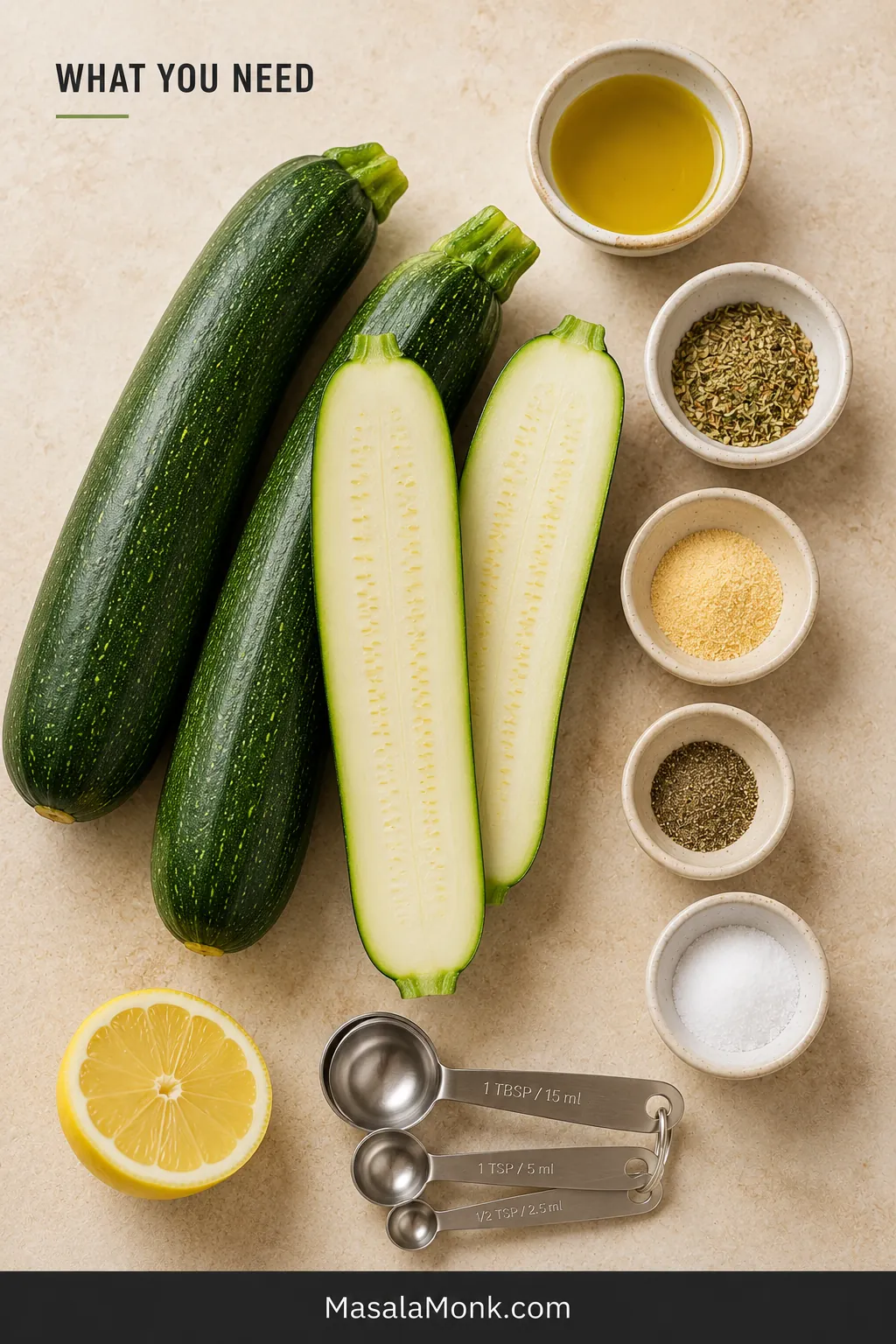
- 1 lb / 454 g small or medium zucchini, usually 2 to 3 depending on size
- 2 teaspoons / 10 ml olive oil or avocado oil
- 1 teaspoon Italian seasoning, or ½ teaspoon dried oregano
- ½ teaspoon garlic powder
- ¼ teaspoon ground black pepper
- 3 g salt, or about ½ teaspoon fine salt when not weighing
- 1 teaspoon / 5 ml lemon juice, optional, added after cooking
Method
- Dry and cut the zucchini. Wash it, dry the skin well and trim the ends. Quarter each zucchini lengthwise, then cut the long quarters crosswise into ¾-inch / 2 cm chunks. Blot any visibly wet sides.
- Preheat the air fryer. Heat it to 400°F / 200°C for 3 to 5 minutes, unless the machine preheats automatically or its instructions recommend starting from cold.
- Oil the zucchini. While the air fryer heats, toss the chunks with the oil until they carry a thin, even sheen.
- Season just before cooking. Add the Italian seasoning, garlic powder, pepper and salt. Toss again and move the zucchini straight into the hot basket. If you salted an oversized zucchini earlier, omit the salt here and adjust only after cooking.
- Spread the pieces loosely. A little touching is fine, but the chunks should shift when the basket is shaken. Divide them into two batches when needed.
- Cook undisturbed for 5 minutes. This gives the surfaces touching the basket time to begin browning.
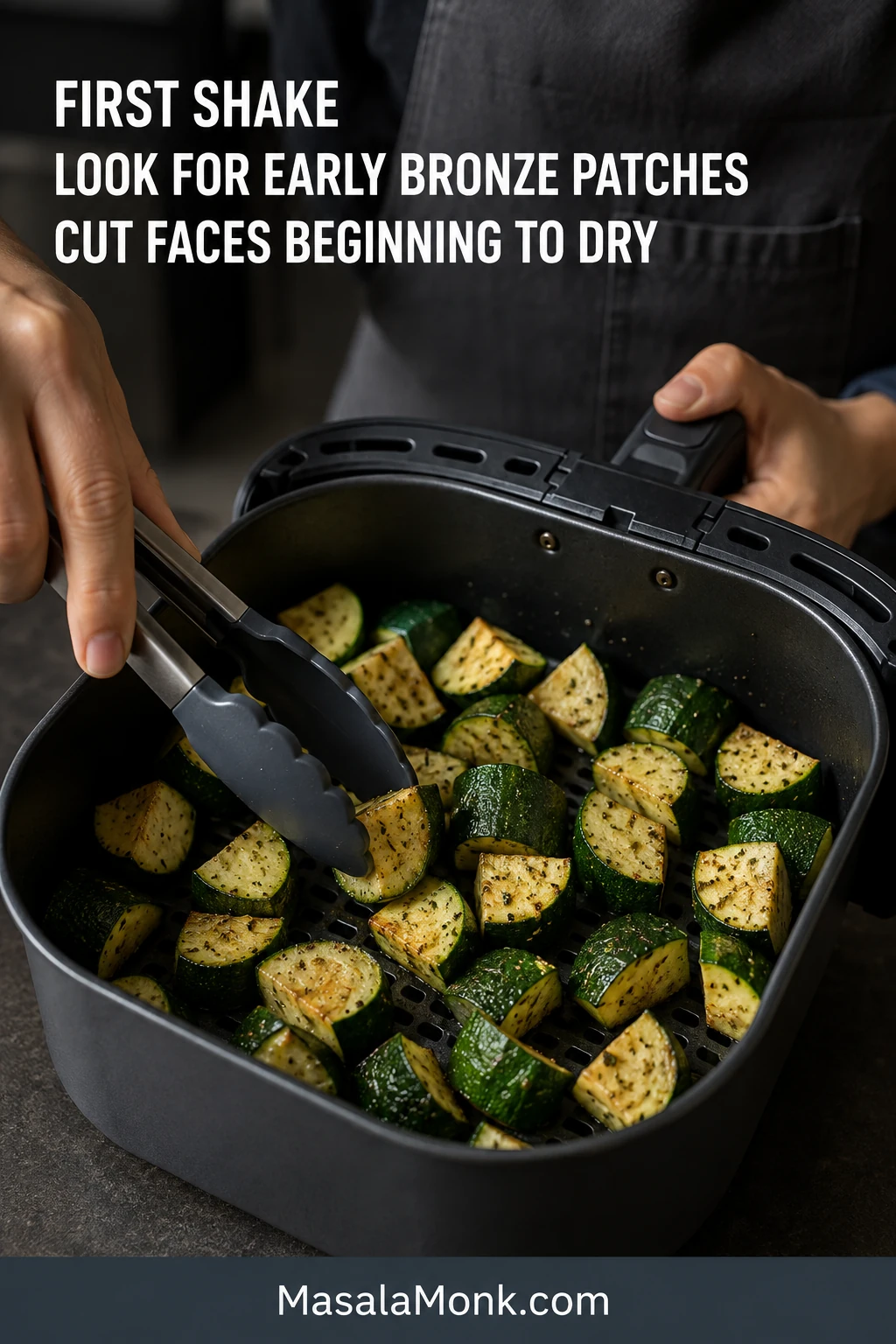
- Shake well. The zucchini will not look finished yet. Look for the first bronze patches and cut faces beginning to dry—the signs that the basket is roasting rather than steaming. Turn any pieces still resting on one pale face.
- Begin checking at 7 minutes. Give the zucchini another minute or two as needed. Remove it when several corners are golden, the cut sides no longer look wet and a fork enters with light resistance. For side-by-side cues, see how to tell when air fryer zucchini is done.
- Finish and serve. Transfer the zucchini to a broad, uncovered plate. Add lemon juice or fresh herbs while it is hot.
Success Cues and Second-Batch Timing
What success smells and feels like: The basket should smell garlicky and lightly roasted. Lift one piece: it should hold its shape while the fork meets only slight resistance in the center.
A little moisture in the center is the point. A puddle underneath is not.
Cooking two batches: Keep the first batch uncovered. When the second is nearly ready, return the first batch to the air fryer for 30–60 seconds only if it has cooled noticeably.
Explore the guide: Four controls before cooking · Time and doneness · Troubleshooting · Variations · Serving ideas · Storage and reheating · FAQ
If your zucchini tends to come out pale, watery or softer than expected, four variables usually explain it.
Four Things to Control Before Cooking
1. Start with firm zucchini
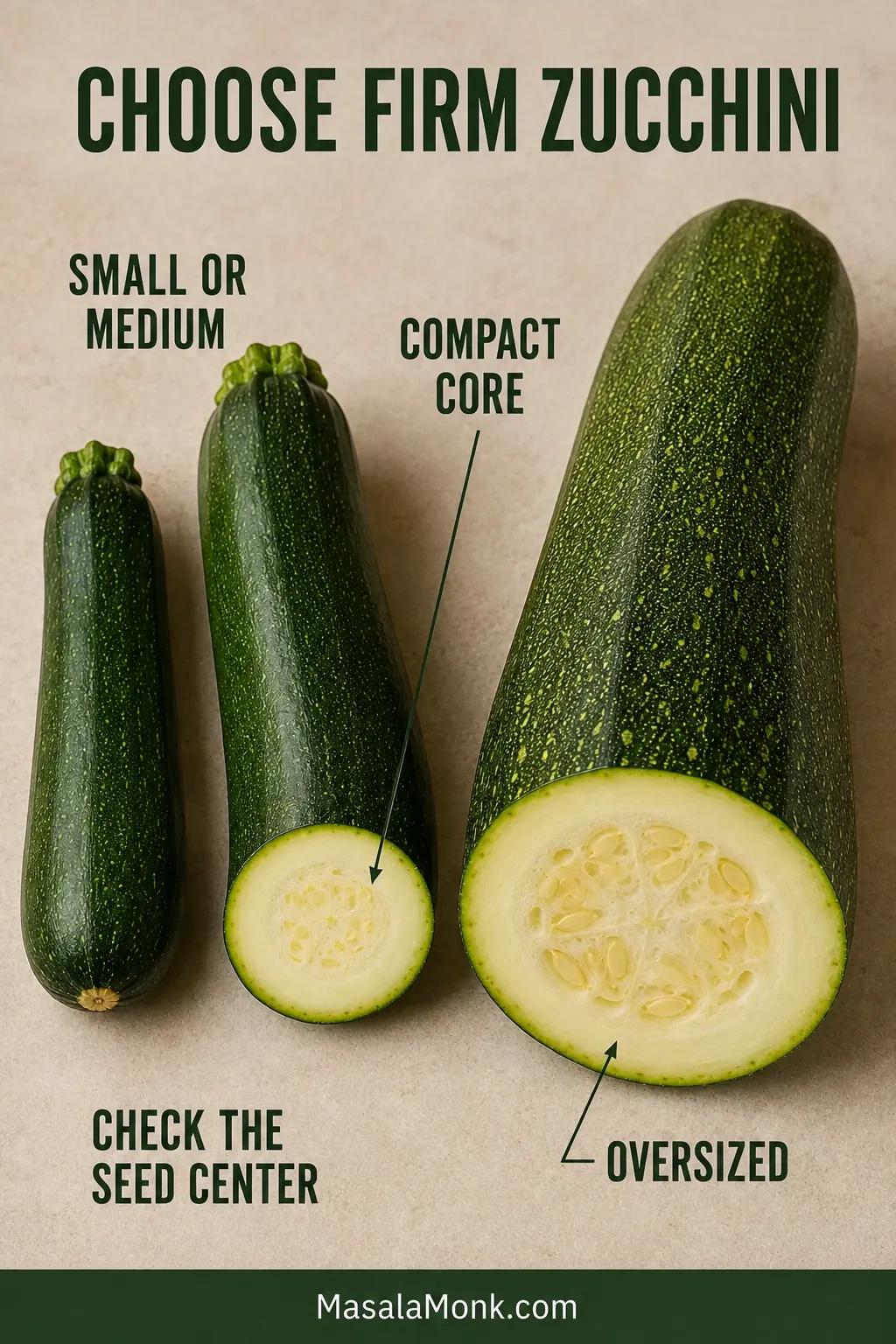
Small and medium zucchini are usually easiest to air fry because their flesh is firm and their seed cores are compact. Choose vegetables that feel heavy for their size, with smooth skin and no broad soft patches.
With an oversized garden zucchini, scoop away broad seeds surrounded by loose, spongy flesh. If the remaining pieces still look unusually wet, sprinkle them with about half the measured salt, rest for 10 minutes and blot thoroughly. Add more salt only after cooking and tasting.
2. Cut thick, even chunks
Quarter the zucchini lengthwise, then cut across those long quarters. This shape gives the hot air several edges to brown without leaving the middle so thin that it folds.
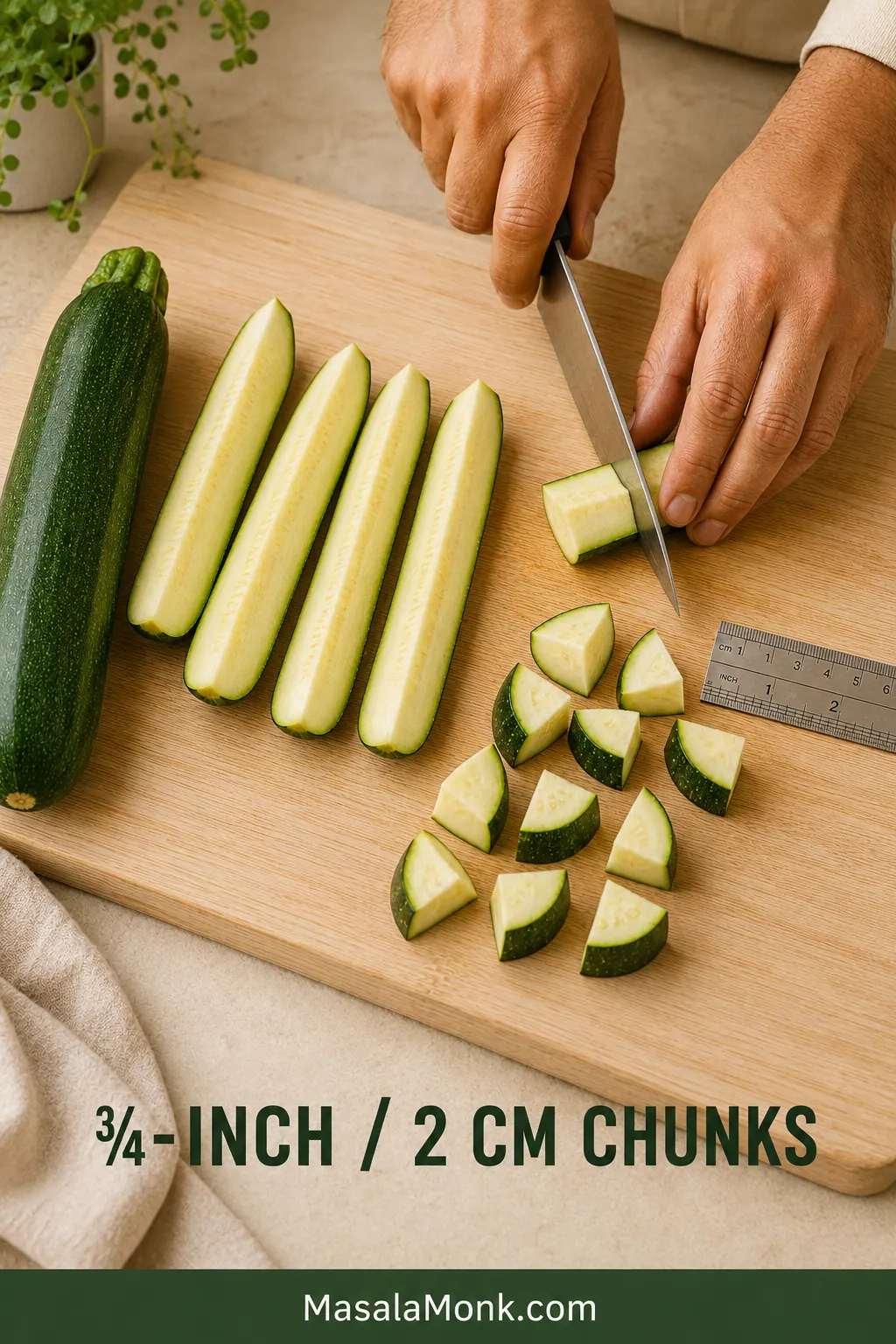
The tapered ends naturally make smaller pieces. Check those first and take them out when ready. The larger chunks can continue for another minute.
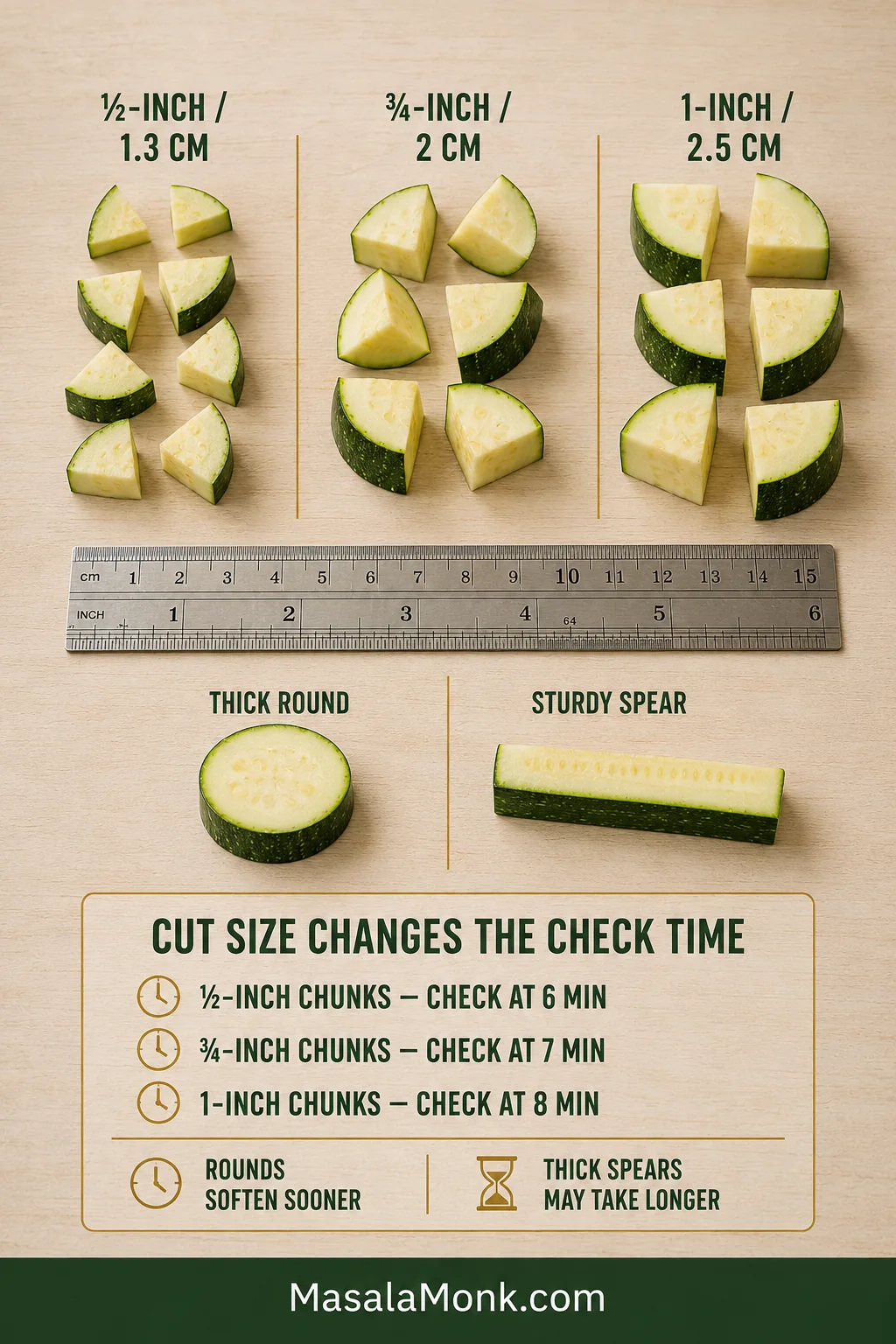
| Cut | First check | What to expect |
|---|---|---|
| ½-inch / 1.3 cm chunks | 6 minutes | Fast cooking; remove smaller pieces promptly |
| ¾-inch / 2 cm chunks | 7 minutes | The balanced everyday cut used in this recipe |
| 1-inch / 2.5 cm chunks | 8 minutes | A firmer, juicier middle; continue as needed |
Thick rounds or spears can also work. Rounds expose broader cut faces and usually soften sooner, while sturdy spears may need slightly longer depending on their width.
To prepare ahead, refrigerate the cut zucchini in a dry, covered container. Blot it before cooking and wait to add the seasonings.
3. Dry the surface and season late
Blot any cut faces that look glossy with water. A thin coat of oil helps the seasonings cling and encourages the exposed edges to brown instead of drying into leathery patches.

Season when the air fryer is already hot. Moving the salted pieces directly into the basket gives them less time to release water before cooking begins.
Flavor note: Garlic powder and dried herbs can cook with the zucchini. Add lemon, lime and fresh herbs afterward so their flavor stays bright.

4. Leave room for the hot air
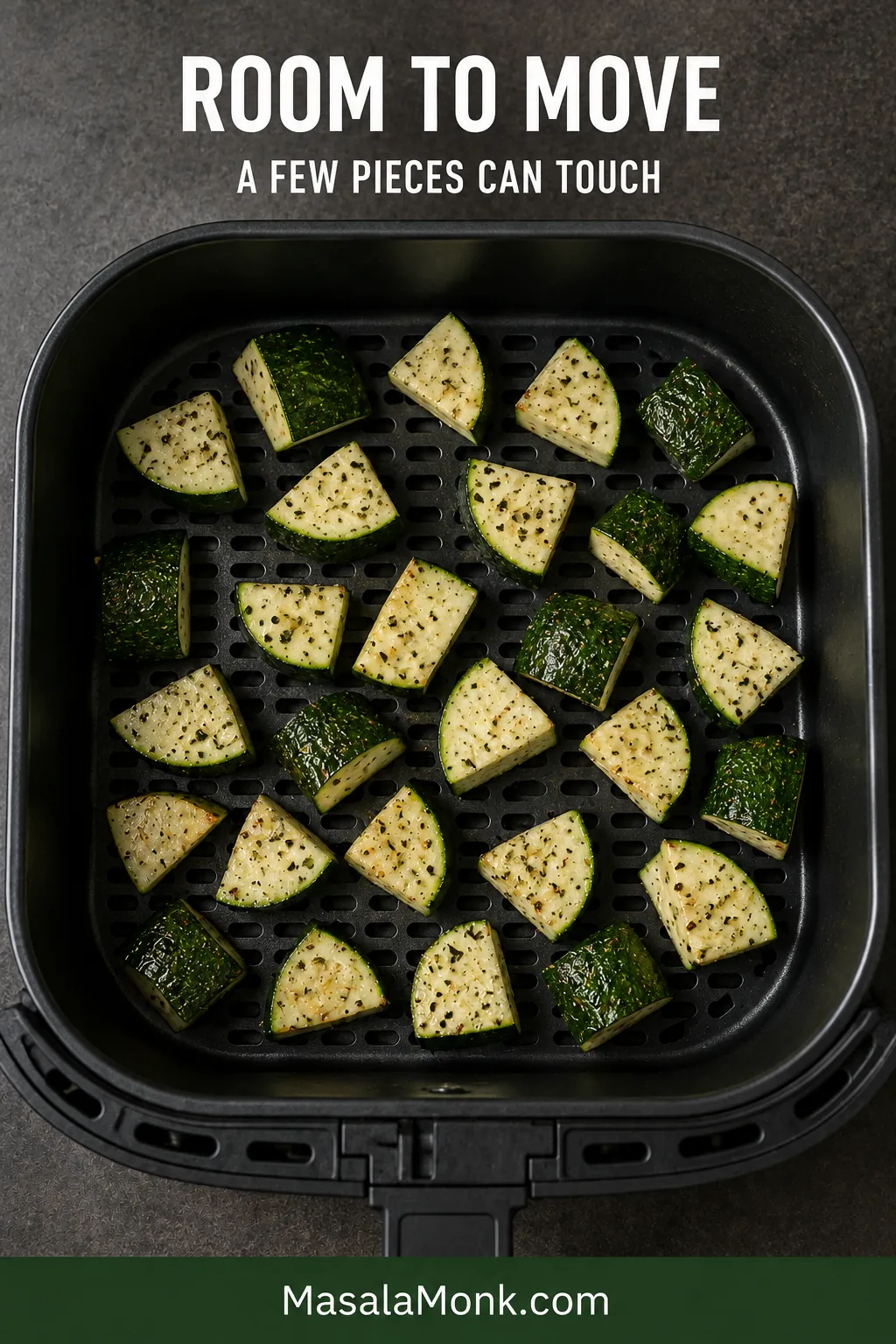
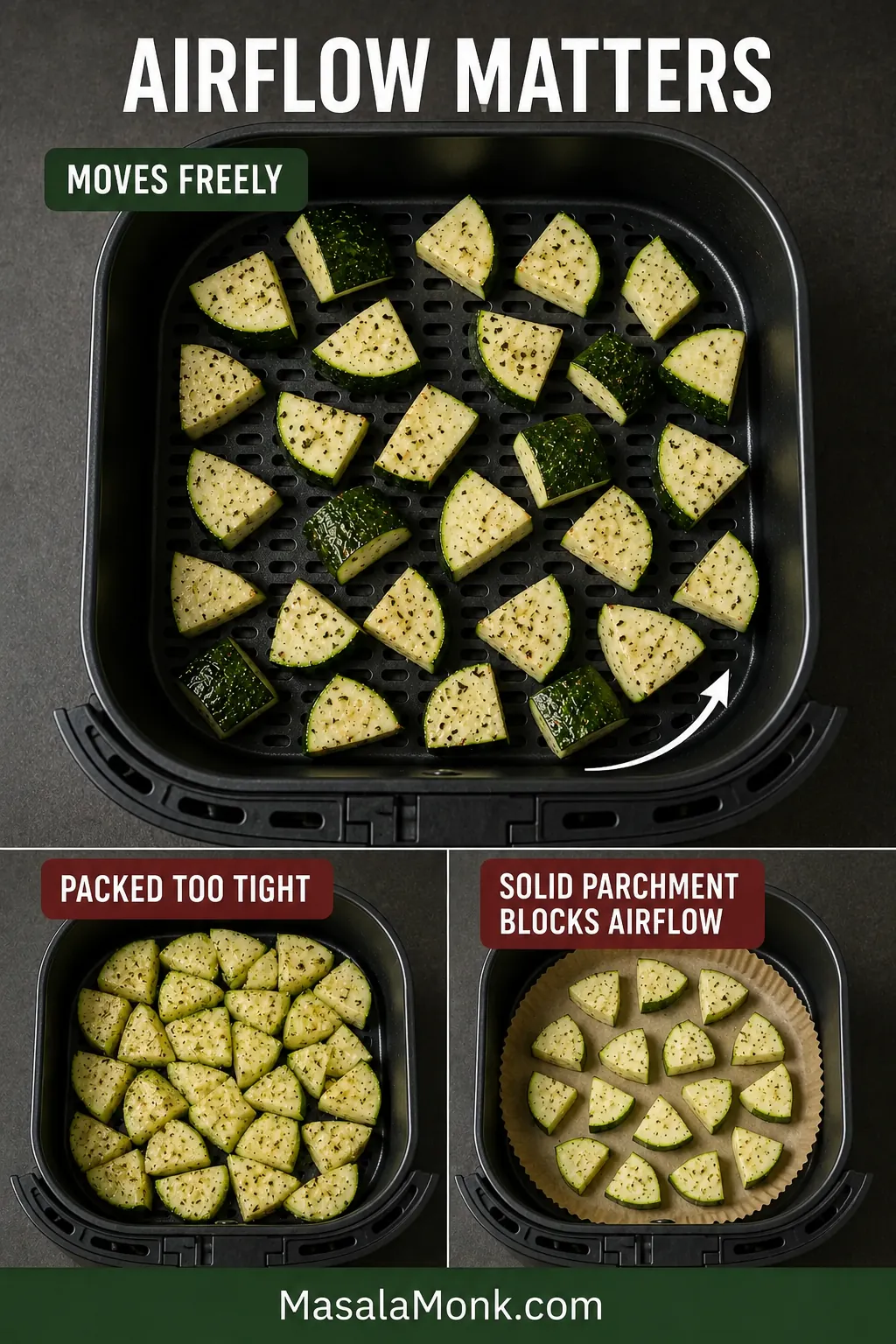
What matters is the flat cooking area, not the capacity printed on the box. A few pieces can touch, but the load should redistribute when the uncooked basket is gently shaken. If it moves as one packed mass, divide it into two batches.
If several foods come out pale or uneven in your machine—not only zucchini—these common air fryer mistakes and fixes cover crowding, preheating, oil and halfway turning in more detail.
Solid parchment can block airflow beneath the zucchini. Cook directly in a clean basket, or use only a properly secured perforated liner approved for your machine.
Once these four details are in place, zucchini stops feeling unpredictable. It becomes the kind of side you can start while the rest of dinner finishes.
Ready to cook? Return to the recipe card.
Time, Temperature and Doneness
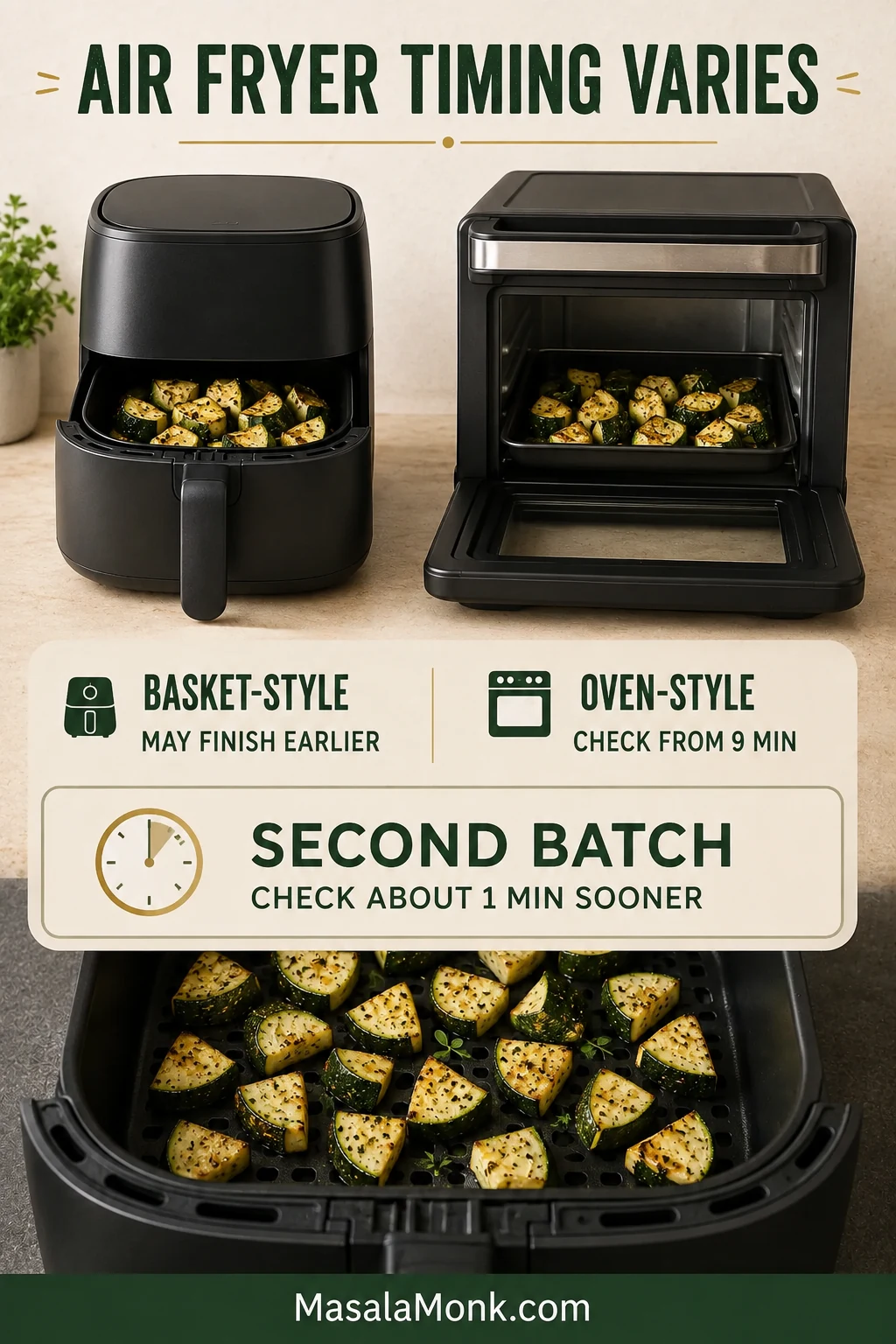
Treat the recipe’s 8–11-minute cooking time as a checking range, not a guaranteed finish. Basket shape, load size and fan strength determine where your zucchini falls within it.
Compact basket machines may finish early. Oven-style air fryers often need several extra minutes, so inspect them from around 9 minutes and turn pieces whose undersides remain pale. A later batch may cook faster because the chamber is already thoroughly hot.
How to Tell When Air Fryer Zucchini Is Done
If your zucchini needs ten minutes while another recipe promises seven, nothing has gone wrong. The timer should tell you when to check. The zucchini should tell you when to stop.
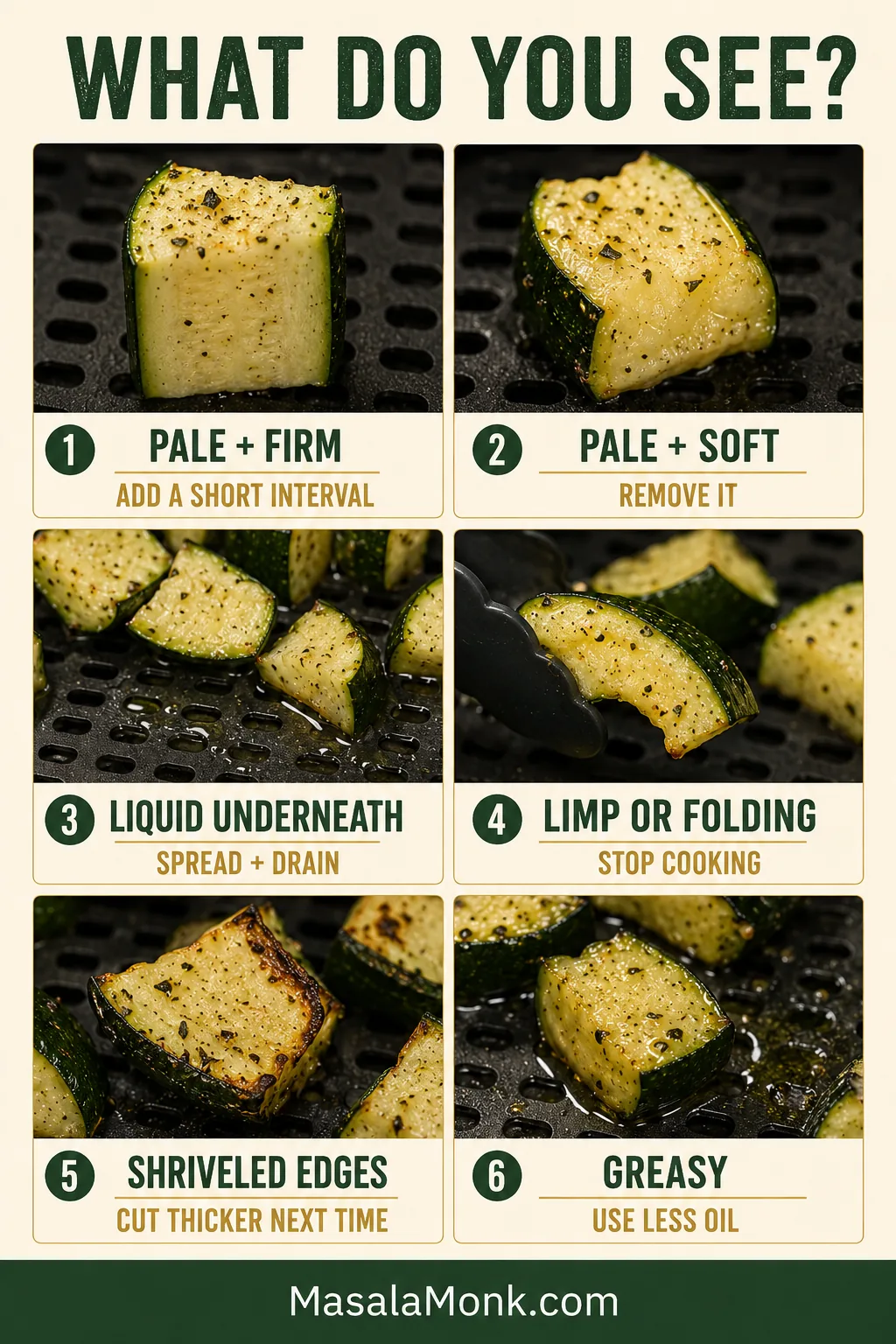
Before adding another minute, check one piece: Pale and firm means it needs more time. Golden and tender means it is ready. Pale and floppy usually means extra cooking will not improve the texture.
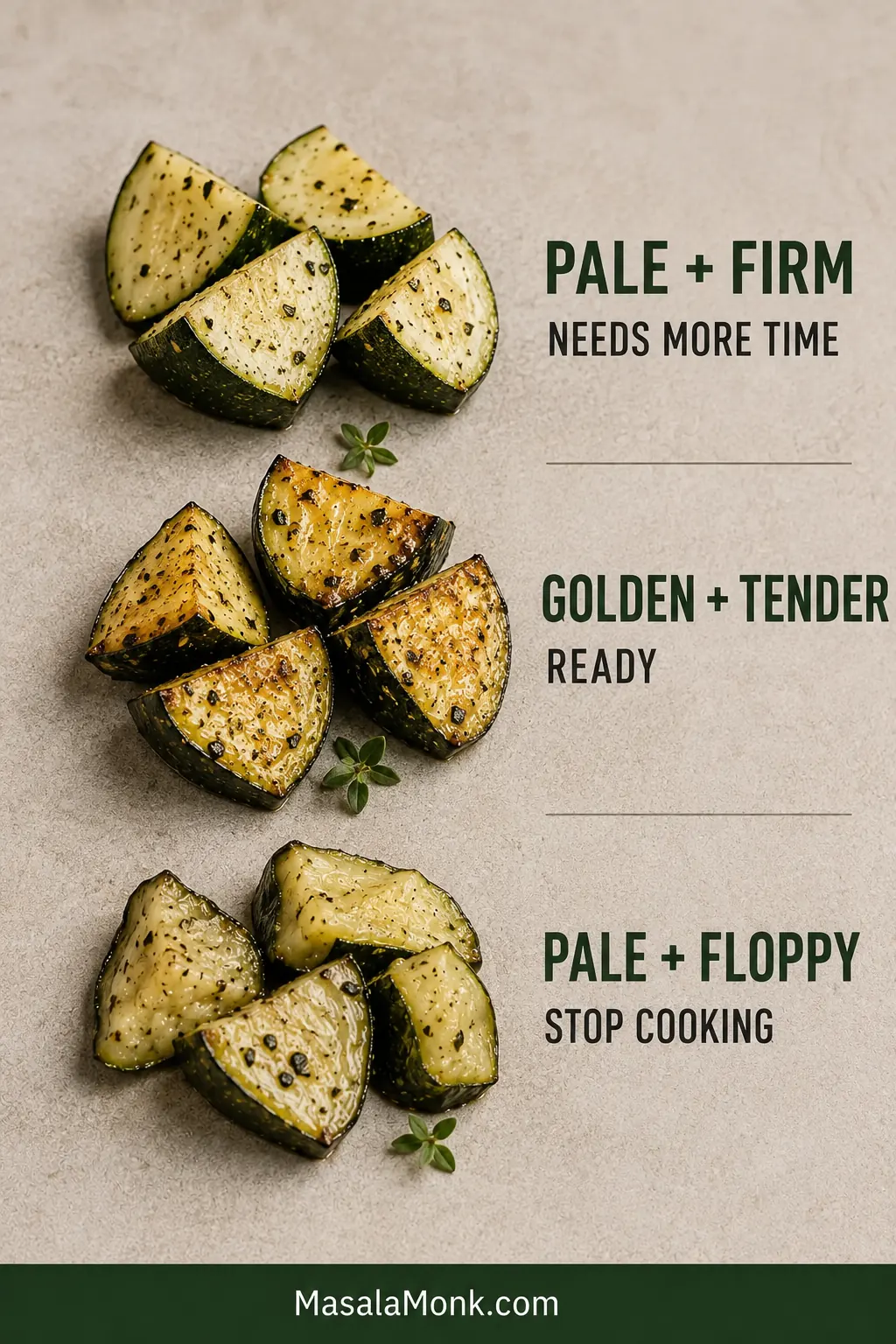
Look for several golden faces rather than identical color on every side. The cut surfaces should no longer look wet, and a fork should enter easily while still meeting a little resistance in the middle.
Already soft, wet or uneven? Use the troubleshooting guide before adding more time.
Fixing Soft, Wet or Uneven Zucchini
Even a softer batch is usually still usable. Stop cooking before it collapses further, then serve it promptly or fold it into pasta, rice or a sauced dish.
Pale but already soft
This usually means the zucchini became tender before it received enough heat or airflow to brown. Likely causes: an overloaded basket, a cold start, weak oven-style airflow or excess surface moisture. Do now: remove it once tender; more time may only make it softer. Next time: reduce the load, dry the pieces carefully and preheat where appropriate.
Wet or sitting in liquid
Water was released faster than the basket could evaporate it. Move the zucchini to a wide, uncovered plate and drain any liquid that has collected. Common causes include wet cut sides, early salting, a packed basket or transferring the hot pieces into a narrow or covered bowl.

If the zucchini was oversized and seedy, scoop out the loose center next time. Otherwise, reduce the load, blot the pieces and season only when the air fryer is ready.
Limp or folding in half
The zucchini’s structure has already started to break down. Thin pieces, cooking past tenderness, leaving the finished batch in the hot basket or giving a second batch the same timing in an already-hot chamber can all cause it.
Remove it immediately and serve it now instead of chasing more color. Next time, cut thicker and watch the second batch a minute sooner.
Other common problems
- Shriveled edges: Use thicker pieces, a measured coat of oil and an earlier check.
- Burned seasoning: Use a lighter coating of spices and add Parmesan or delicate finishes near the end.
- Taking much longer: A cold start, dense load, larger cut or oven-style appliance may be slowing the batch. Keep checking in short intervals.
- Seasoning fell off: Dry the zucchini, add oil before the dry ingredients and avoid repeated shaking.
- Greasy zucchini: Measure the oil and reduce it when cooking less than one pound.
- Softened on the plate: Use a broad uncovered dish and add wet sauces at the table.
Once the texture is under control, changing the flavor is the easy part.
Air Fryer Zucchini Variations
Choose your finish: Keep the garlic-and-herb version simple, add Parmesan for nutty browned edges, or finish the zucchini with chaat masala and lime.
| Finish | Best when you want | Key adjustment |
|---|---|---|
| Everyday unbreaded | Golden edges and a tender middle | Use the base recipe |
| Parmesan | Savory, nutty browned corners | Reduce the salt and add cheese near the end |
| Chaat masala and lime | Tangy, bright flavor | Skip the Italian herbs; add chaat masala, lime and cilantro after cooking |
| Very low oil | Minimal added fat | Expect lighter browning and slightly drier edges |
| Thin chips or breaded fries | A crisp coating | Use the separate chips method |
Using little or no oil: The zucchini will brown less evenly and may develop drier edges. Dry it carefully, keep the basket loose and check it sooner than the standard version. A fine oil spray offers a useful middle ground.

Parmesan Zucchini
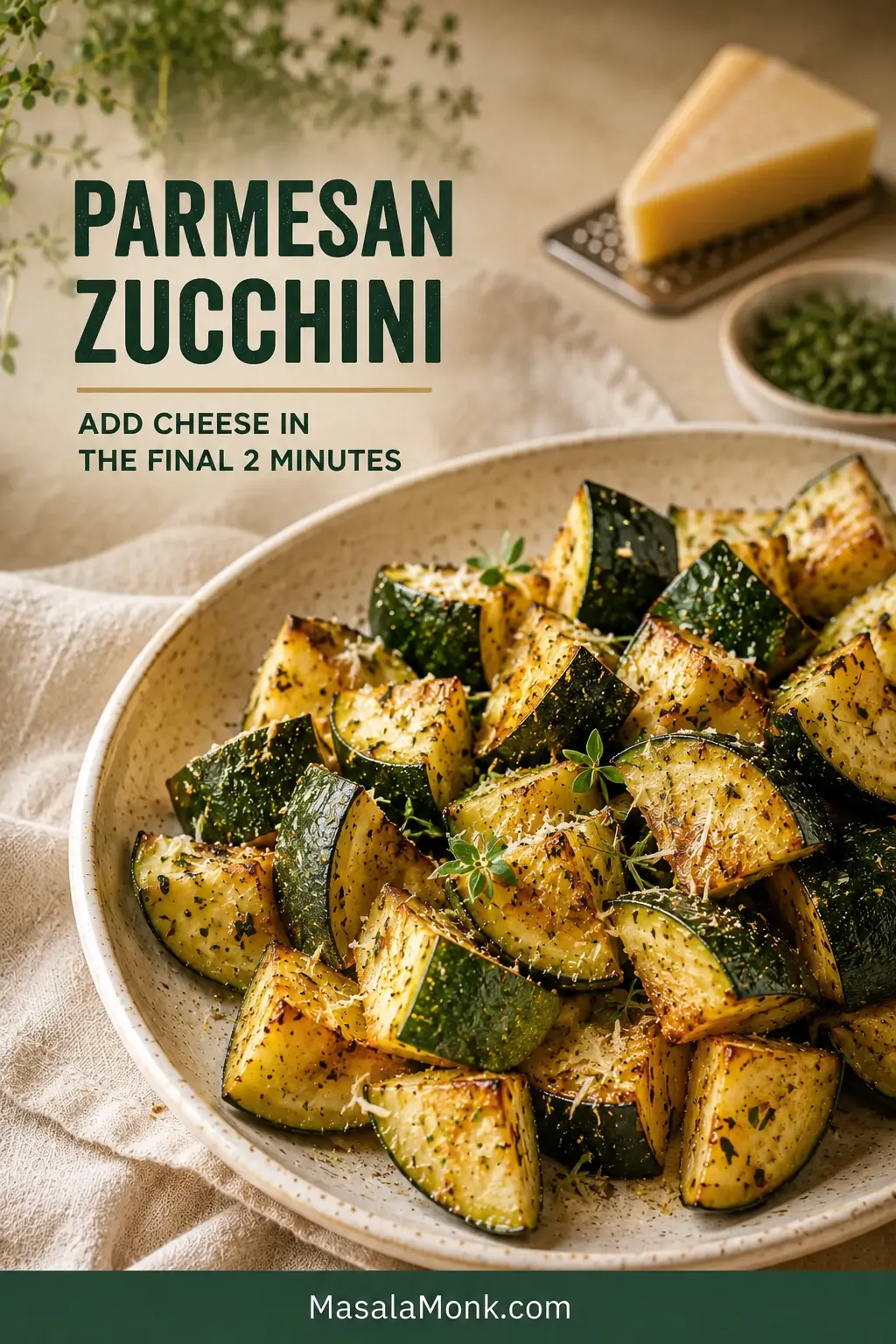
Use half the salt in the base recipe. During the final 2 minutes, add 2 tablespoons / about 10 g finely grated Parmesan. Sprinkle it over the zucchini, return the basket and avoid shaking again.
The cheese should catch on the corners and smell nutty as it browns. For an easier finish, sprinkle Parmesan over the zucchini on the serving plate instead.
Beside garlic Parmesan broccoli pasta, keep the zucchini lightly seasoned and add only a light dusting of cheese at the table.
Chaat Masala and Lime Zucchini
Omit the Italian seasoning, but keep the garlic powder and black pepper. Reduce the fine salt to ¼ teaspoon.
After cooking, sprinkle the hot zucchini with ½ teaspoon chaat masala, add 1 teaspoon / 5 ml lime juice and finish with a small handful of chopped cilantro. Taste before adding more because chaat masala blends vary in salt and intensity.

The tangy spice and bright lime work especially well beside dal and rice, chickpeas or cubes of soft homemade paneer.
Zucchini and Yellow Squash
Yellow summer squash can cook in the same basket when the pieces are similar in size. Softer or seedier chunks may finish first, so take them out and let the firmer pieces continue.
Can You Air Fry Frozen Zucchini?
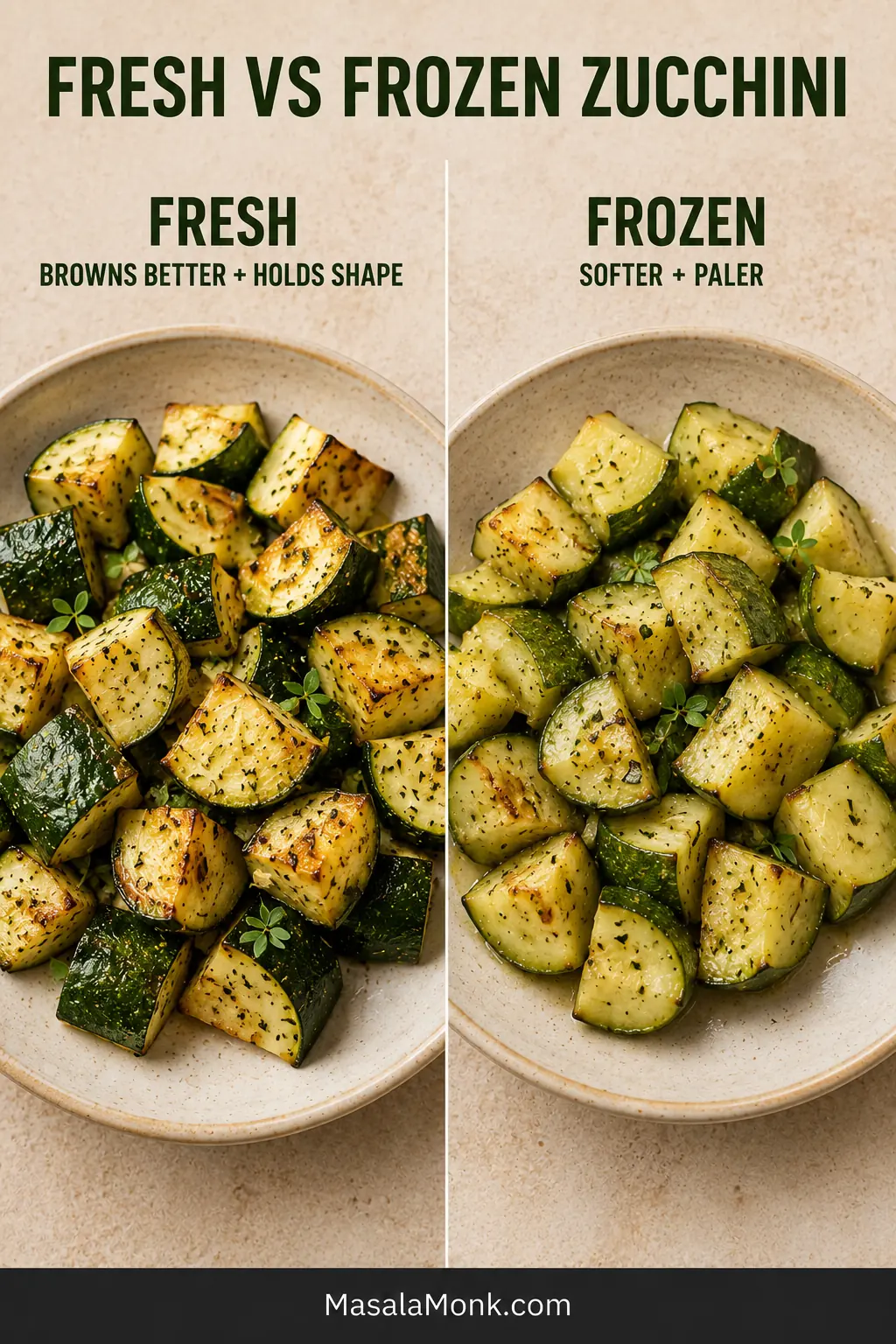
Yes, but it will be softer, paler and less distinctly roasted than fresh zucchini. Frozen pieces release more water and lose structure quickly.
Use fresh zucchini when you want browned chunks that hold their shape. Save frozen zucchini for soup, curry, pasta sauce, casseroles or blended vegetable sauces where softness belongs.
Freezing fresh zucchini at home? The National Center for Home Food Preservation’s summer-squash guidance explains how to blanch, cool and pack it safely.
What to Serve With Air Fryer Zucchini
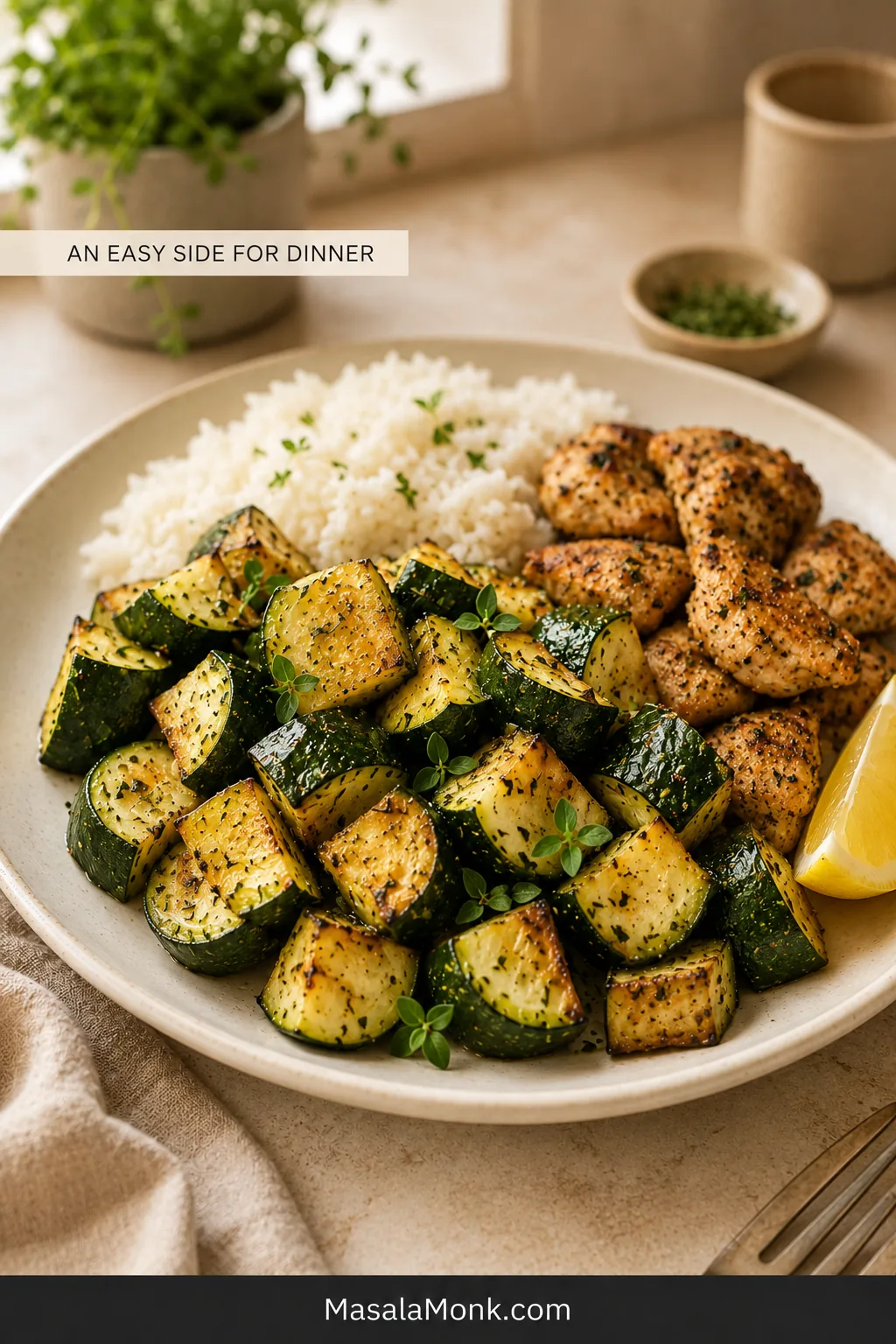
Once the texture is right, this is the kind of side that quietly fits around almost anything already planned for dinner. Spoon the zucchini beside rice or potatoes and juicy air fryer chicken breast, salmon, paneer or tofu. Squeeze lemon over the whole plate and add a little salt at the table.
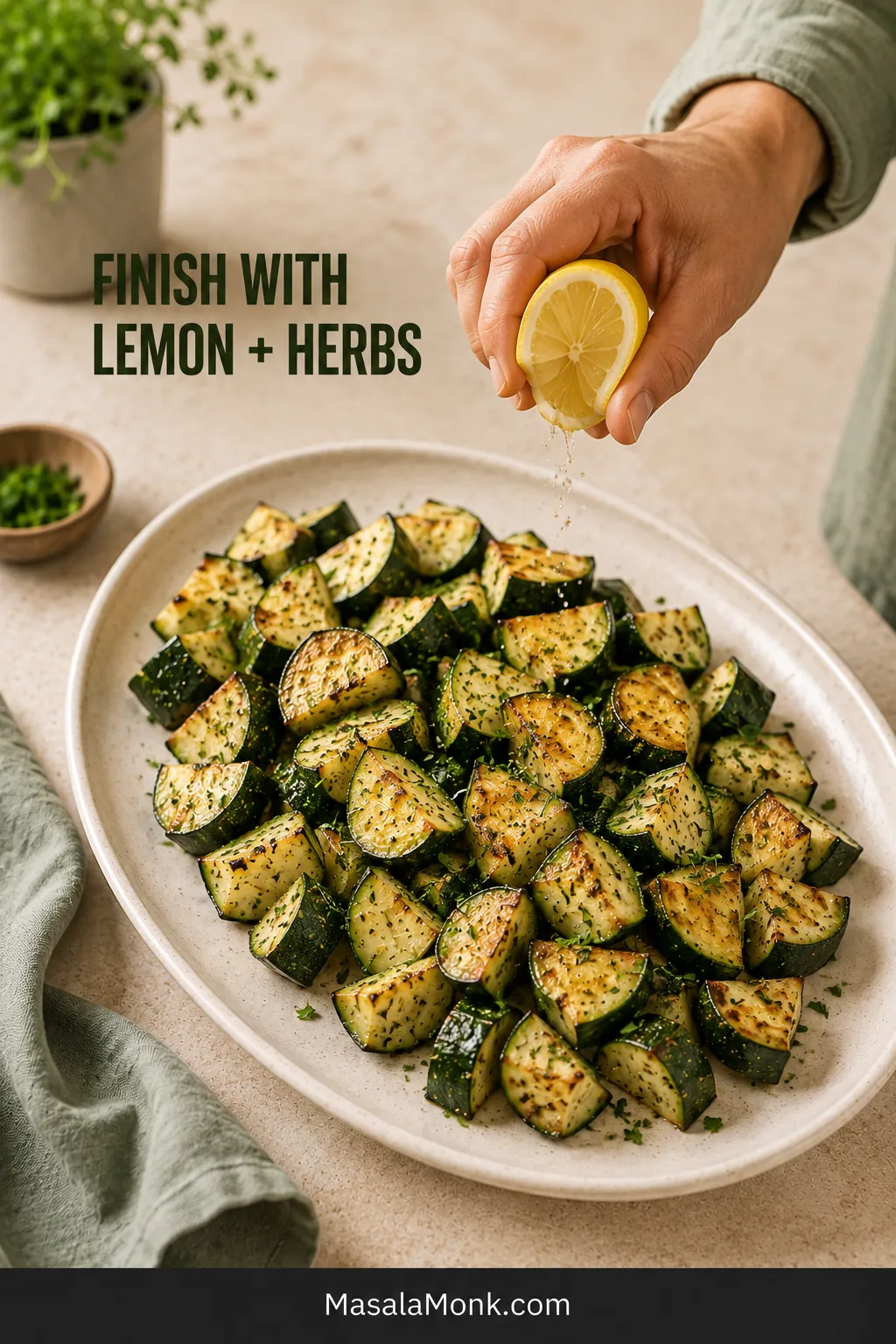
With a richer main such as honey garlic salmon, keep the zucchini lemony and herb-led. For a vegetarian bowl, layer it with warm grains, chickpeas or paneer, plenty of herbs and a cool yogurt or tahini sauce.
Once chilled, fold leftovers into a chickpea salad, wrap or pasta bowl. Add them close to serving so they do not sit in dressing and soften further.
When the air fryer is already occupied—or a softer vegetable side suits dinner better—the skillet mushroom and zucchini stir-fry is a useful stovetop alternative.
How to Store and Reheat Air Fryer Zucchini
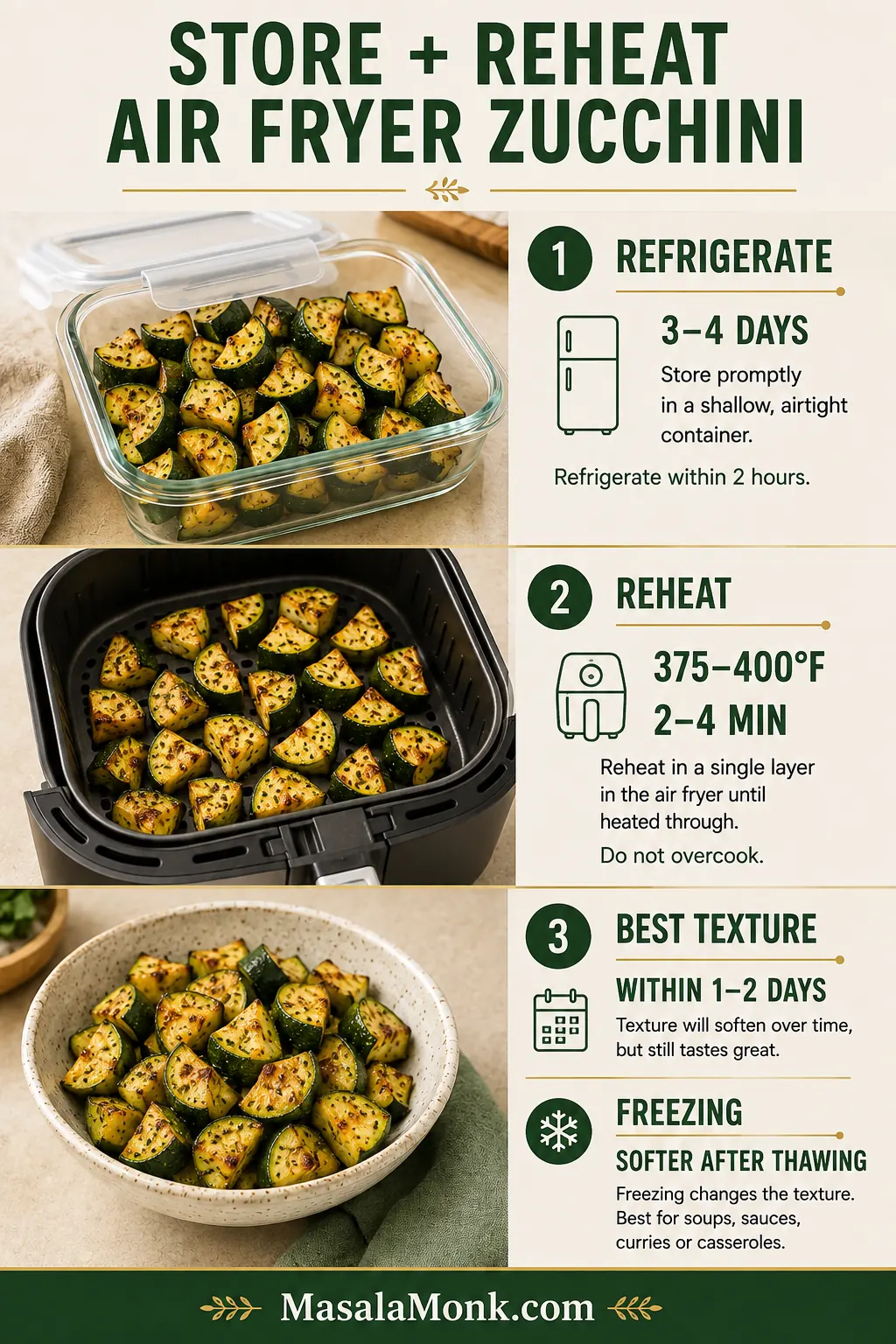
Transfer leftovers promptly to a shallow covered container and refrigerate them within two hours. The zucchini does not need to cool completely before going into the refrigerator.
Use it within 3 to 4 days, following the USDA’s leftovers and food-safety guidance. For the best texture, eat it during the first day or two.
Reheating
Arrange the zucchini in one layer and reheat at 375–400°F / 190–200°C for approximately 2 to 4 minutes. Check early; the goal is to reheat it, not cook the center a second time.
The microwave is convenient, although the zucchini will be softer. Heat it in short intervals. Freezing cooked zucchini will not preserve its roasted texture; use thawed leftovers in soup, sauce, curry or a casserole.
Food-safety note: Reheat leftovers until hot throughout. If you check with a thermometer, USDA recommends reheating leftovers to 165°F / 74°C.
Frequently Asked Questions
Do you need to peel zucchini before air frying?
No. The skin is edible, adds color and helps the chunks stay intact. Leave it on unless it is unusually tough or damaged.
Do you need to preheat the air fryer?
Preheating gives the zucchini a hot start and makes the checking range more predictable. Skip it only when your machine preheats automatically or its manufacturer recommends starting from cold.
Should zucchini be salted before air frying?
Salt small or medium zucchini immediately before air frying, not well in advance. Only oversized, visibly watery zucchini benefits from a 10-minute salted rest followed by thorough blotting.
Why did my air fryer zucchini turn soggy?
Common causes include thin pieces, a crowded basket, wet surfaces, a cold start, salting too early, overcooking or trapping steam after cooking. Use the full troubleshooting guide to match the visible symptom with the right correction.
How long does zucchini take at 400°F?
Begin checking thick chunks at 7 minutes. Many preheated basket-style machines will finish them between 8 and 11 minutes. See the time and temperature guide for oven-style machines, second batches and visual stopping cues.
Can you air fry zucchini rounds or spears?
Yes. Keep rounds and spears fairly thick and inspect them early. Rounds usually soften faster because they expose broad cut faces, while sturdy spears may take closer to the chunk timing. See the cut-size and shape guide for the visual comparison. Use the separate zucchini chips method for very thin or breaded pieces.
When the zucchini looks ready before the timer does, trust your fork. Take it out and let dinner continue.








