Posted on Leave a comment

Zucchini Bread Recipe: Easy, Moist and Never Soggy

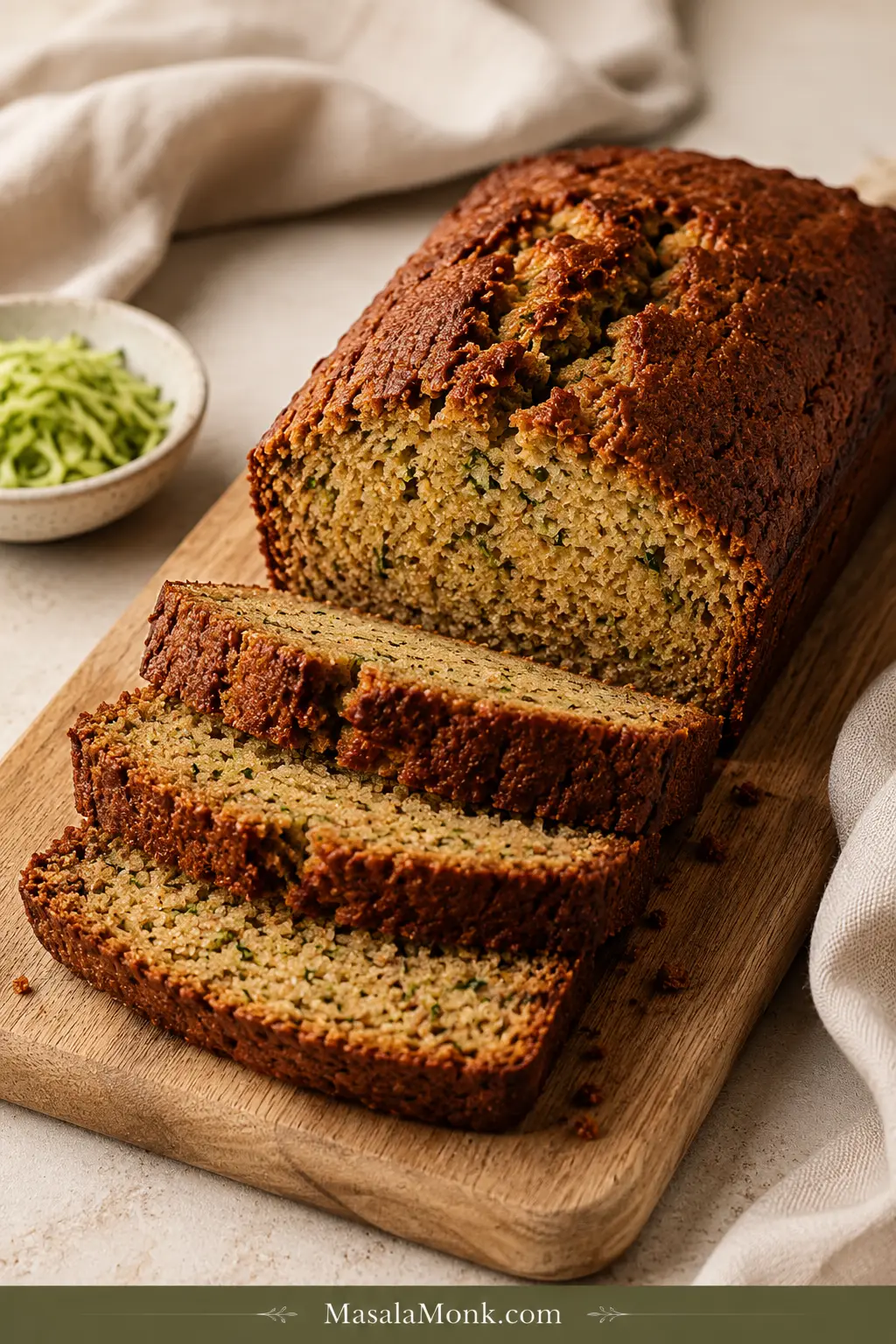
Sliced homemade zucchini bread with a deeply golden cracked top, tender cinnamon-colored crumb and small green zucchini flecks.

A good zucchini bread has a deeply golden top with a natural split down the middle, warm cinnamon in the first bite, and a tender crumb dotted with little green flecks. A slice should bend gently without falling apart, with enough moisture to stay lovely today and still be worth reaching for tomorrow.

Zucchini creates that tenderness, but it can also make the middle deceptive. The crust may look beautifully baked while the batter underneath still needs a few more minutes.

This version keeps the process easy: one bowl, no mixer, no peeling small or medium zucchini, and no wringing fresh shreds dry. You grate, stir, fold and bake.

Keep the moisture in the shreds, leave the puddle behind, and bake until the middle is set.

Quick Answer: How Do You Make Moist Zucchini Bread Without a Wet Middle?

Do not squeeze fresh zucchini dry for this recipe. Grate it on the large holes of a box grater and use 370g / 13 oz, about 2 firmly packed cups. Weigh the shreds themselves; if liquid has collected separately beneath them, leave that puddle behind.

Bake the thick batter in a 9 × 5-inch / 23 × 13 cm loaf pan at 350°F / 175°C. The crack across the top should reveal baked crumb, and a thin skewer or knife pushed into the loaf should show no raw batter.

You can make good zucchini bread without a thermometer. If you have one, it gives you the most objective final check when the crack or tester leaves any doubt. Around 200–205°F / 93–96°C indicates the loaf is baked through.
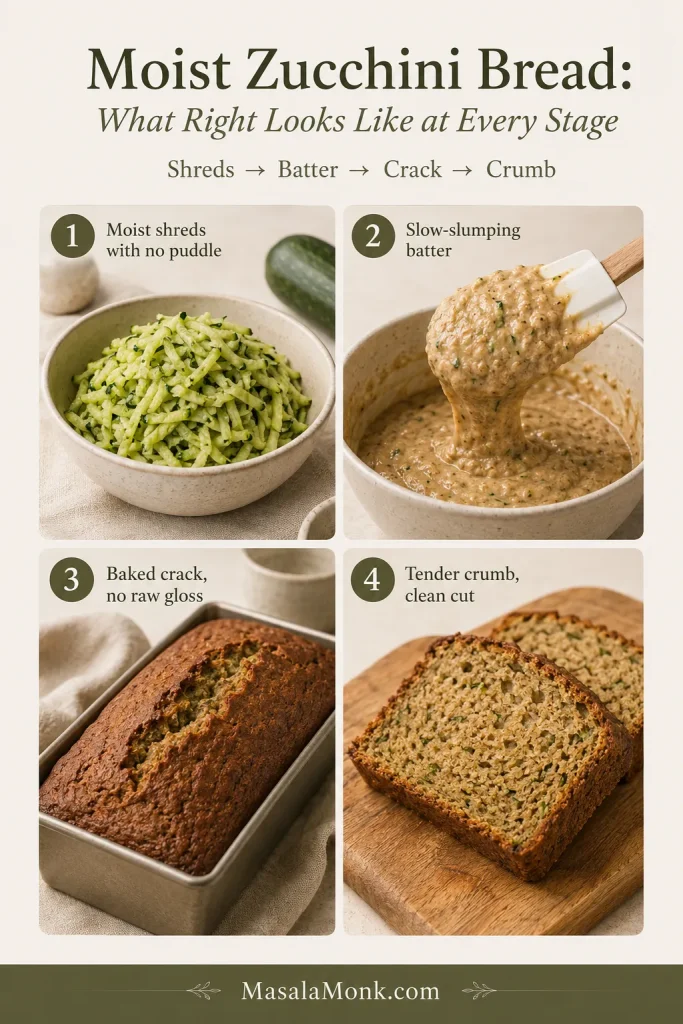
Four-stage zucchini bread guide showing moist grated zucchini, thick batter, a baked center crack and a clean-cut finished crumb.
Use the sequence as checkpoints: moist shreds → thick batter → baked crack → settled crumb. Problems are easier to correct before the loaf reaches the oven.

Zucchini Bread Recipe

This is a cinnamon-forward, oil-based loaf with plenty of zucchini, a golden split top and a crumb that stays tender without feeling wet. Make it plain, or fold in nuts or chocolate when that sounds better.

Recipe at a Glance

Yield1 loaf, about 8–10 generous slices
Pan9 × 5-inch / 23 × 13 cm loaf pan; light-colored metal preferred. Using glass or dark metal? See the pan notes.
Oven350°F / 175°C
PrepAbout 15 minutes
BakeAbout 55–60 minutes; check the loaf itself for doneness
Zucchini370g / 13 oz freshly grated zucchini, not wrung dry
Cooling15 minutes in the pan, then completely on a rack

You will need: one large mixing bowl, a box grater, fork or whisk, flexible spatula, 9 × 5-inch loaf pan, parchment paper and a cooling rack. A digital scale is particularly helpful; an instant-read thermometer is optional.

Ingredients
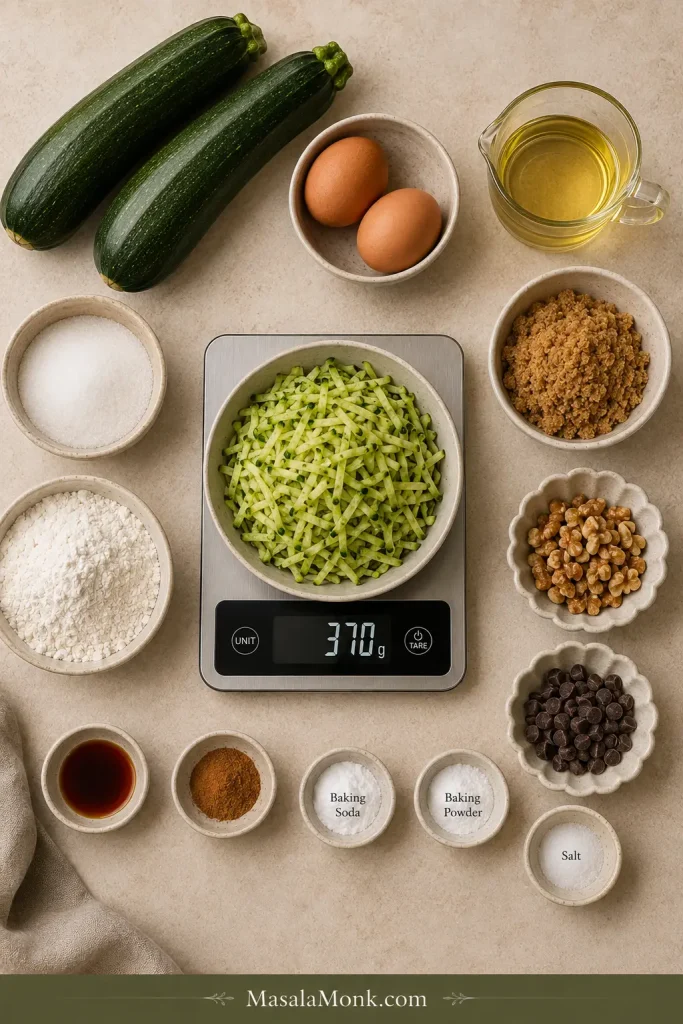
Zucchini bread ingredients arranged around a digital scale holding grated zucchini at 370 grams, with two eggs, flour, sugars, oil and spices.
Weigh 370g of the grated flesh you will actually use, especially if an oversized zucchini needs trimming first.
  • 370g / 13 oz freshly grated zucchini, about 2 firmly packed cups, not wrung dry
  • 2 large eggs
  • 160ml / ⅔ cup neutral oil, such as sunflower, canola or vegetable oil
  • 95g / 3.4 oz (½ cup packed) brown sugar, light or dark
  • 100g / 3.5 oz (½ cup) granulated sugar
  • 1 teaspoon vanilla extract
  • 1 teaspoon fine salt
  • ¾ teaspoon baking soda
  • ½ teaspoon baking powder
  • 1¼ teaspoons ground cinnamon
  • ⅛ teaspoon ground nutmeg, optional
  • 260g / 9.2 oz (2 cups) all-purpose flour, spooned and leveled if using cups
  • Up to 85g / 3 oz chopped walnuts, pecans or chocolate chips, optional

Instructions
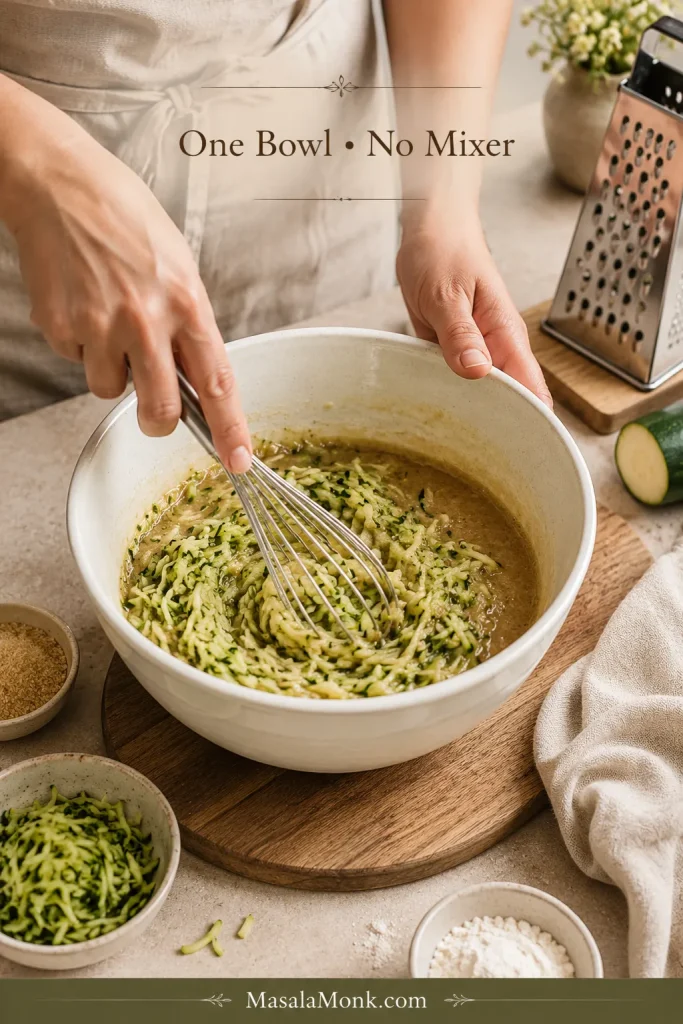
Hands mixing grated zucchini and wet ingredients in a large cream bowl beside a box grater, with no electric mixer present.
Hand mixing makes it easier to stop as soon as the batter comes together.

Prep and Mix the Batter

  1. Heat the oven. Set a rack in the center and preheat to 350°F / 175°C. Lightly grease a 9 × 5-inch / 23 × 13 cm loaf pan and line the long sides with a parchment sling.
  2. Grate the zucchini. Leave small and medium zucchini unpeeled and grate them on the large holes of a box grater. Measure 370g / 13 oz. Keep the moisture in the shreds, but leave behind any liquid that has pooled separately. Using oversized or frozen zucchini? See the prep notes first.
  3. Mix the wet ingredients. Put the grated zucchini in a large bowl. Add the eggs, oil, brown sugar, granulated sugar, vanilla and salt. Stir until evenly combined.
  4. Add the spices and leaveners. Sprinkle the cinnamon, nutmeg, baking soda and baking powder evenly across the surface. Stir thoroughly, scraping around the bowl, so everything is well distributed before the flour goes in.
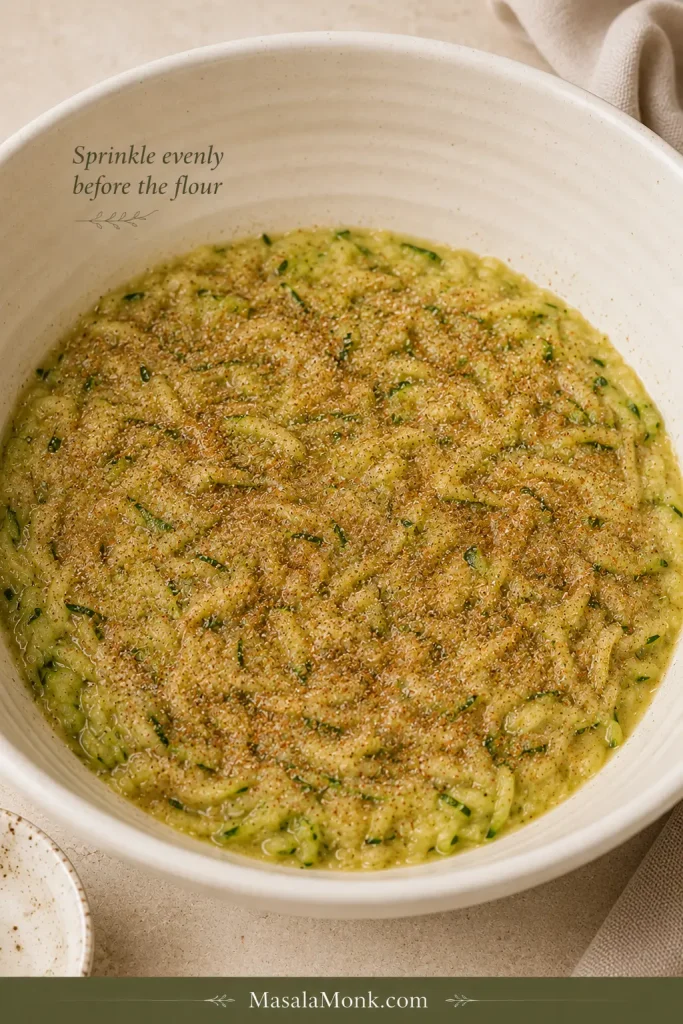
Cinnamon and small amounts of baking soda and baking powder evenly scattered over a wet zucchini mixture before flour is added.
Scatter the leaveners broadly before the flour goes in so they distribute evenly through the loaf.
  1. Fold in the flour. Add the flour and fold just until the last dry streak disappears. Fold in nuts or chocolate chips now, if using. The batter should spread easily with a spatula and slump slowly when lifted.
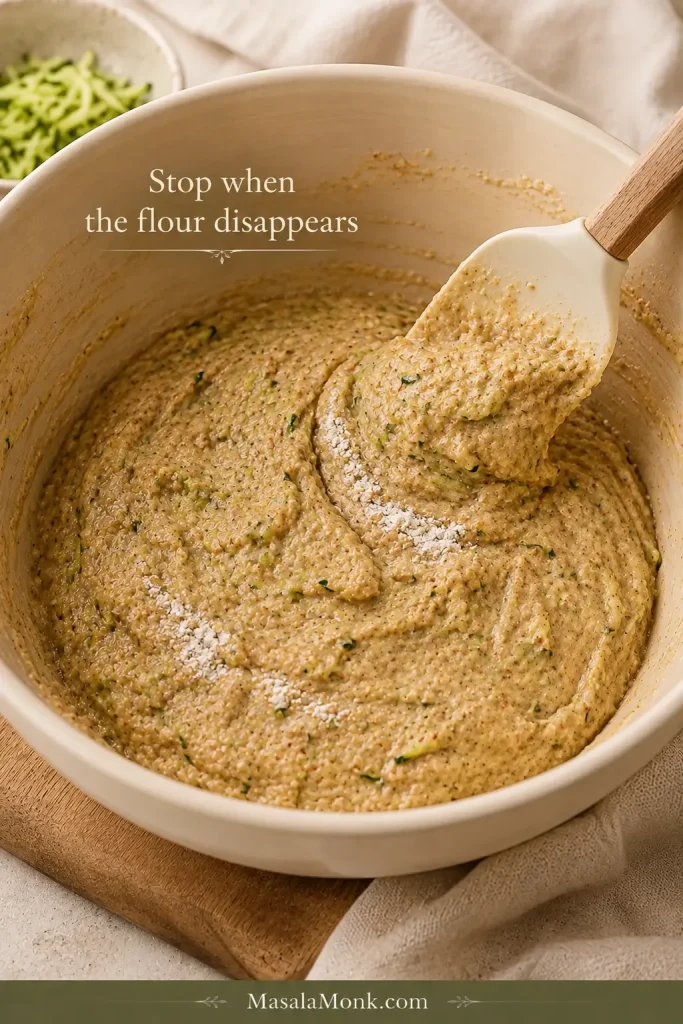
Zucchini bread batter being gently folded with a spatula while a few final streaks of dry flour remain visible.
Stop when the last dry flour streak disappears; extra folding only works the batter harder.

Fill, Bake and Cool

  1. Fill the pan. Scrape the entire batch into the prepared pan and smooth the top lightly.
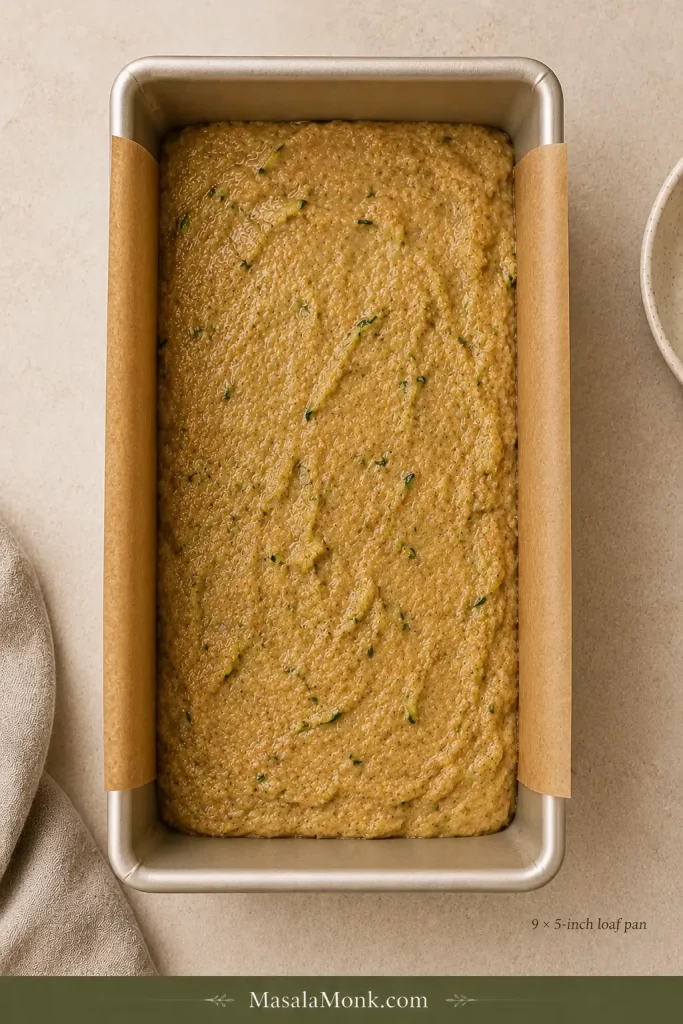
Thick zucchini bread batter spread in a parchment-lined light metal 9 by 5 inch loaf pan with space remaining above the batter.
Use the full batch in the intended 9×5-inch pan so the center bakes at the expected depth.
  1. Bake. Bake for about 55–60 minutes. Near the end of that window, the top will usually be deeply golden with a natural crack running across it.
  2. Check before removing it. Look into the crack and test the loaf with a thin skewer or knife. A few tender crumbs are fine; shiny raw batter needs more time. Loosely tent the top with foil if it already has enough color.
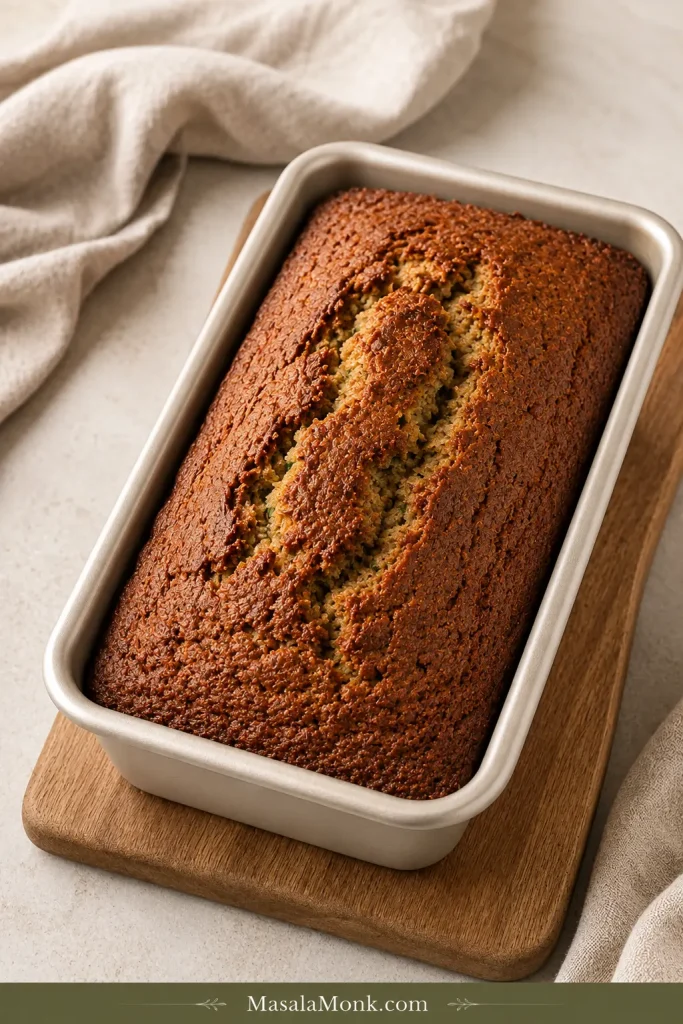
Golden-brown zucchini bread with a natural central crack still inside a light-colored metal loaf pan after baking.
Once the top is golden and split, the center—not surface color—decides whether the loaf is done.
  1. Cool. Leave the bread in its pan for about 15 minutes, then lift it onto a rack. Cool completely for clean slices and a fully settled crumb.

Recipe source: Adapted from Smitten Kitchen’s Ultimate Zucchini Bread, with additional guidance here on zucchini moisture, doneness and common texture problems.

Table of Contents

Which Zucchini Are You Using?

Freshly grated zucchini is the reference point for this loaf. Small supermarket zucchini are the simplest route, but the oversized one hiding beneath the garden leaves can work too.
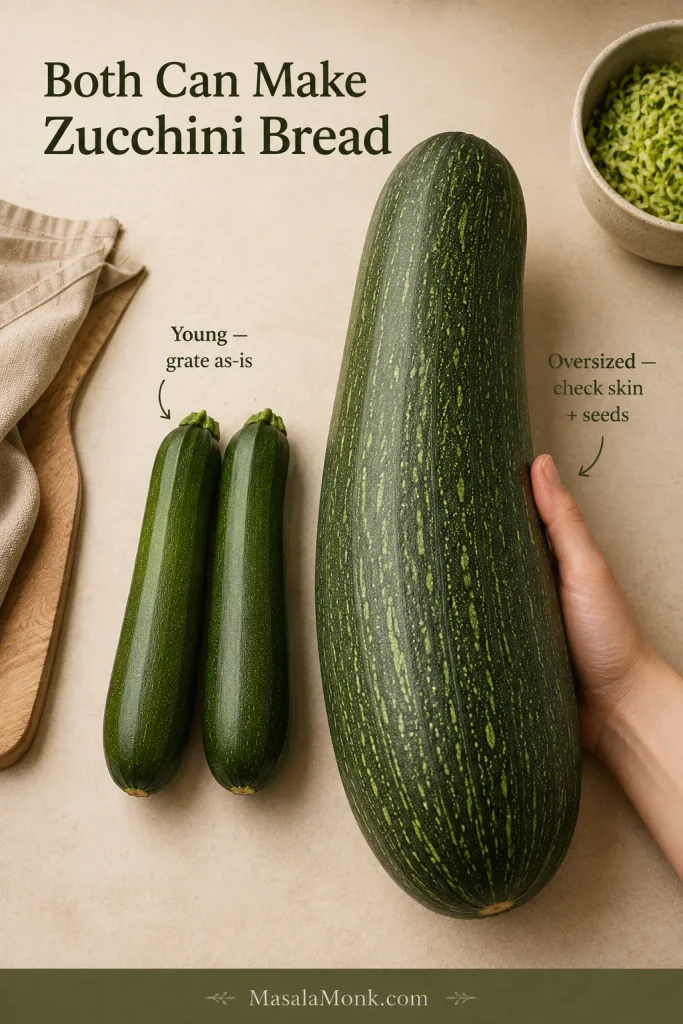
Several small young zucchini beside one very large garden zucchini, comparing the sizes that can be used for zucchini bread.
Prep changes with zucchini size; the target stays 370g of usable grated flesh.
You haveWhat to do
Small or medium fresh zucchiniLeave the skin and seeds in place. Grate and measure 370g.
Large garden zucchiniCut it open first. Remove tough skin or a pale, spongy cavity full of hard seeds if necessary, then grate and measure 370g of the usable flesh.
Frozen shredded zucchiniIt can work, but it will not behave exactly like fresh zucchini after thawing. See the note below.

How to Prepare Zucchini for Bread

Peel, Seeds and Grating

Do you need to peel it? No. Thin zucchini skin softens during baking and leaves the familiar green flecks through each slice. Peel only an oversized mature zucchini whose skin has become leathery.

What about the seeds? Leave young seeds alone. With a huge garden zucchini, scoop out the middle only when it has become pale, spongy and filled with hard mature seeds.
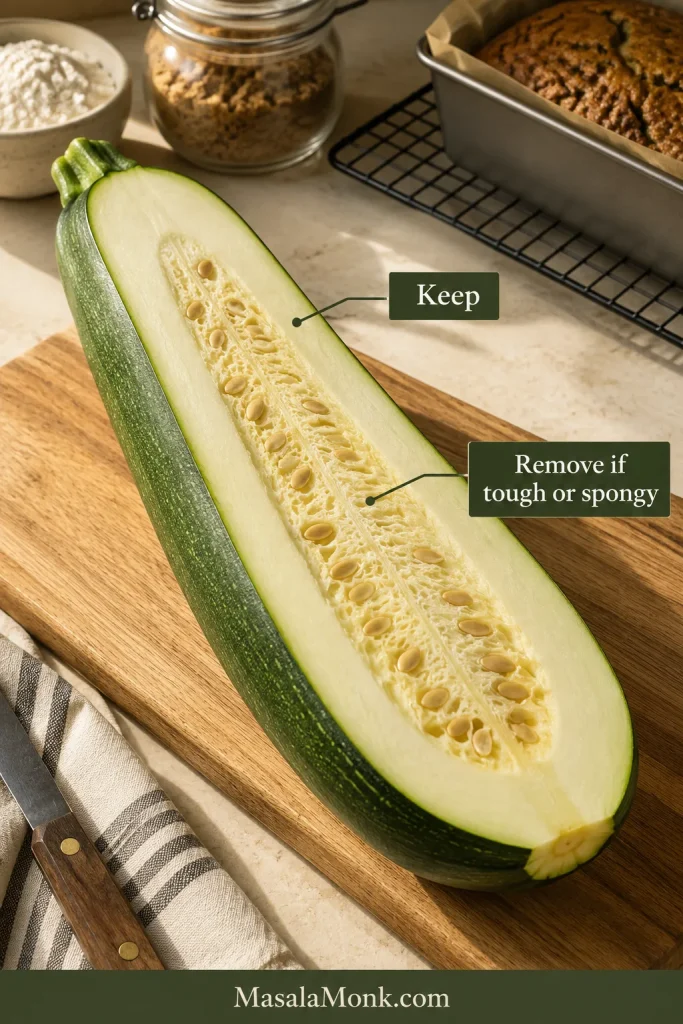
Large mature zucchini cut lengthwise to show firm usable outer flesh and a pale, seeded central cavity that may need removing.
Remove a hard-seeded, spongy center before weighing so the 370g reflects usable flesh.

Which grater? Use the large holes of a box grater. They produce strands that disappear comfortably into the baked crumb without turning the raw zucchini into pulp.
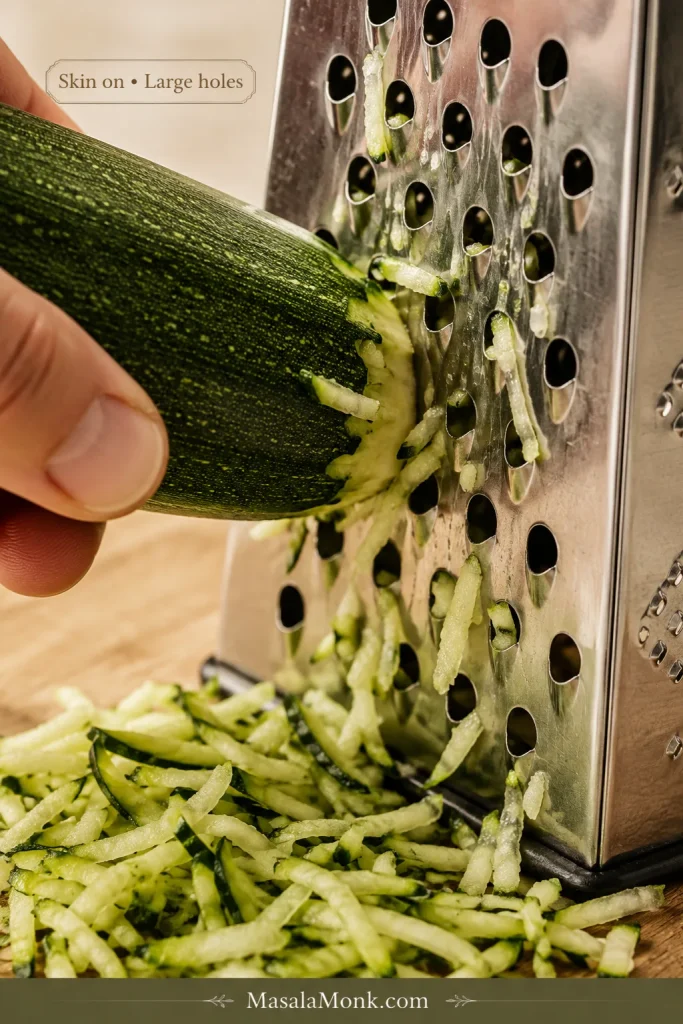
Unpeeled green zucchini being grated on the large holes of a stainless steel box grater, with green-edged shreds collecting below.
Grate over a plate or shallow bowl so separately pooled liquid is easy to leave behind.

Should You Squeeze Zucchini for Zucchini Bread?

No—fresh zucchini should not be squeezed dry for this loaf. Its moisture is part of what keeps the crumb tender.

A bowl of freshly grated zucchini can look surprisingly wet. That alone does not mean anything has gone wrong.

Moisture held inside and on the shreds belongs in the recipe. Water that has collected separately as a puddle does not. Leave that free liquid behind, but do not twist or wring the zucchini into a dry, fibrous mass.

Keep the moisture in the shreds; leave the puddle behind.
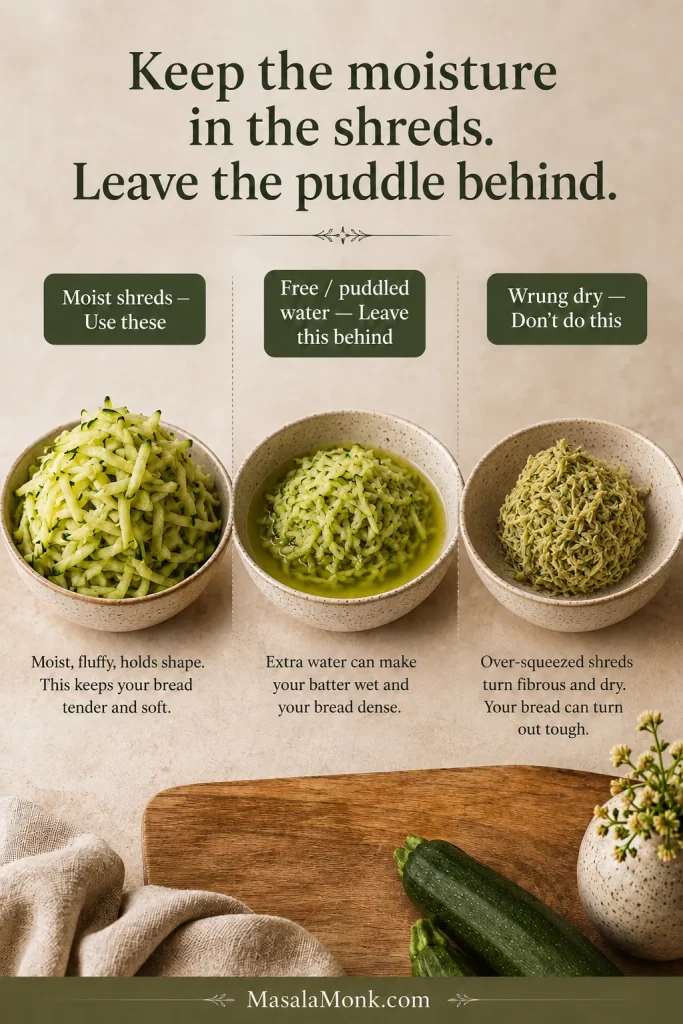
Three grated zucchini states showing moist fluffy shreds, zucchini sitting in separately pooled liquid and tightly squeezed dry zucchini.
Judge separated liquid, not simple dampness: keep moist shreds, leave the puddle, and don’t wring them dry.

Grated too much? Keep the extra out of the batter so the ratio stays intact. These crispy zucchini chips turn the surplus into something thin, salty and crunchy instead.

Can You Use Frozen Zucchini for Zucchini Bread?

Yes, but fresh zucchini gives the most predictable result here. Freezing breaks down the shreds and makes them release considerably more water as they thaw.

Thaw frozen zucchini completely and let any liquid that has separated freely drain away. Do not wring the remaining shreds dry. Drained frozen zucchini is not a gram-for-gram equivalent to the fresh amount in the recipe, so some variation is unavoidable.

The batter checkpoint matters more when you use frozen zucchini. It should still spread easily, slump slowly from the spatula and have no distinct layer of liquid collecting around it. A bag of summer zucchini saved for later can still make a good loaf; it simply asks you to pay closer attention to the bowl.
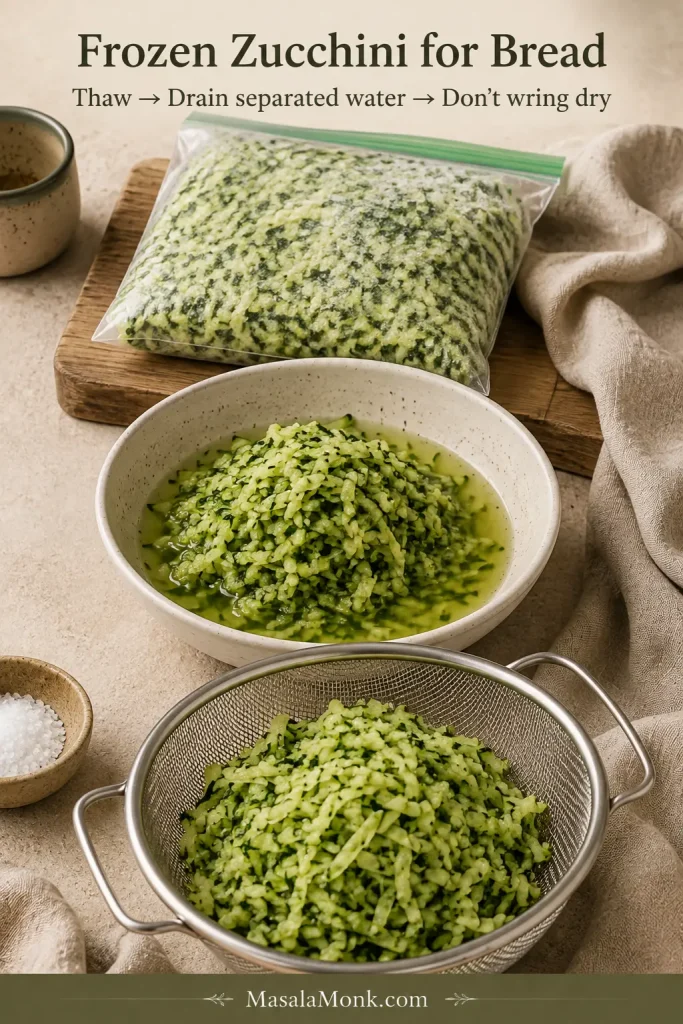
Frozen grated zucchini, thawed zucchini releasing liquid and drained zucchini shreds that remain visibly moist.
After thawing, drain freely separated liquid without wringing the shreds; then use batter consistency as the better checkpoint.

What Should Zucchini Bread Batter Look Like?

The batter should be thick enough to spread into the pan and loose enough to slump slowly from the spatula. Green strands of zucchini will still be visible through the cinnamon-speckled mixture.

A little visible moisture from the grated zucchini is normal. A distinct layer of liquid separating around the batter is different; check whether free zucchini water went into the bowl and recheck the measurements before baking.
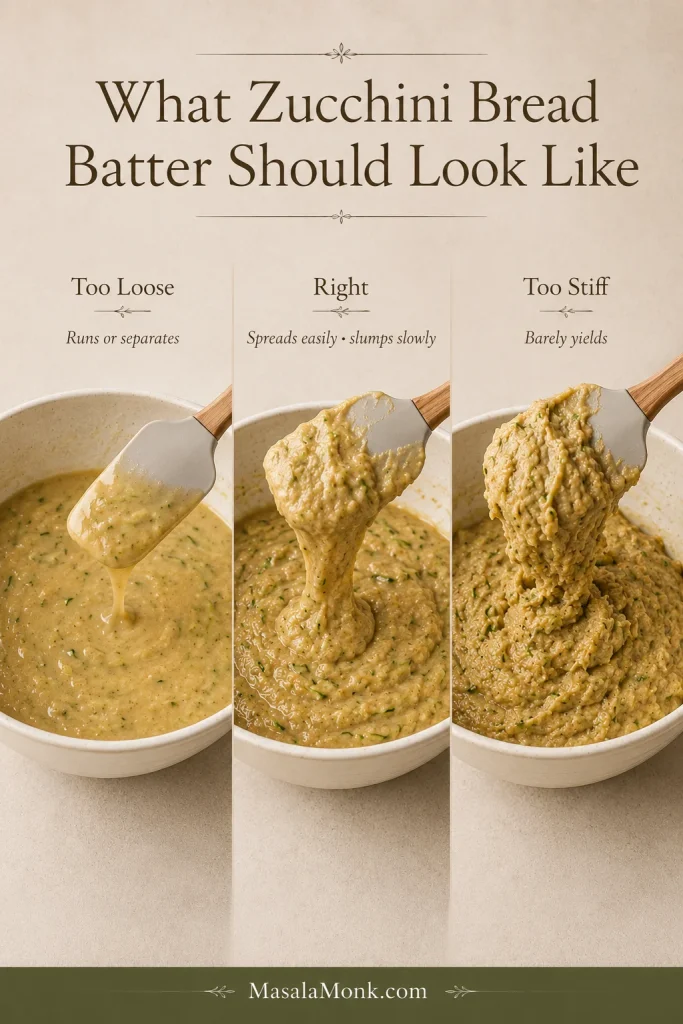
Three zucchini bread batters comparing a thin runny mixture, thick slow-slumping correct batter and an overly stiff batter.
If the batter is too loose or stiff, recheck zucchini water and flour before adding anything.

A mixture that barely yields to the spatula can point to too much flour.

How to Know Zucchini Bread Is Done

Zucchini bread is done when the crack through the top reveals baked crumb and a tester pushed into the loaf carries no raw batter. The clock tells you when to begin looking; these cues tell you when to stop baking.

Check the Crack, Then Use a Tester

A deeply golden top is persuasive, especially once the kitchen smells like the loaf must be done. Check the crack anyway.

Shiny batter down inside that opening needs more oven time. Baked crumb has lost the raw gloss.
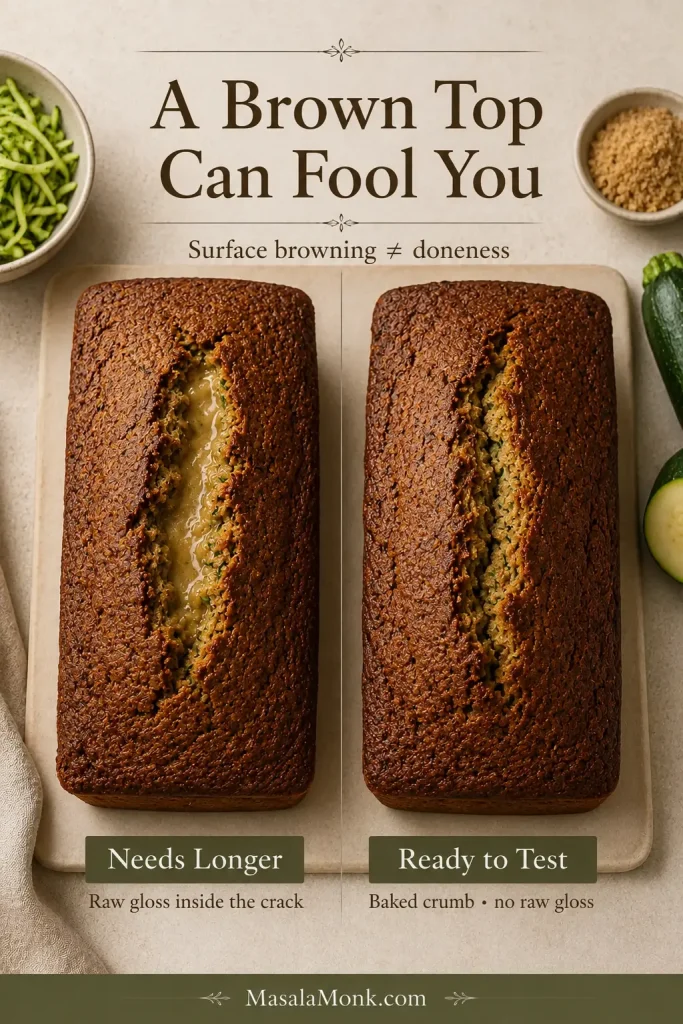
Two similarly browned zucchini loaves comparing a crack with glossy raw batter and a crack showing opaque baked crumb.
Once the crust is brown enough, judge the center—not the surface color or the clock.

Next, push a thin skewer or knife into the thickest part. A clean tester or a few tender crumbs are both fine. A streak of uncooked batter is not.
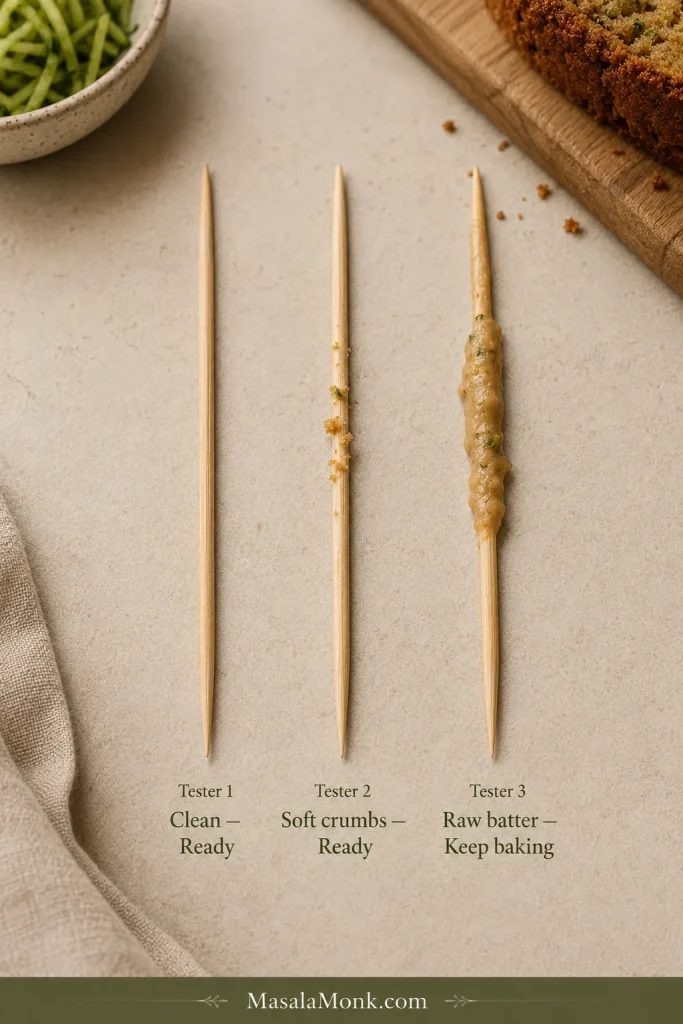
Three wooden testers showing a clean tester, a few soft baked crumbs and a thick smear of raw zucchini bread batter.
Test the thickest center; an edge can look done while the deepest batter still needs time.

Chocolate chips can imitate wet batter, so test another spot before deciding.
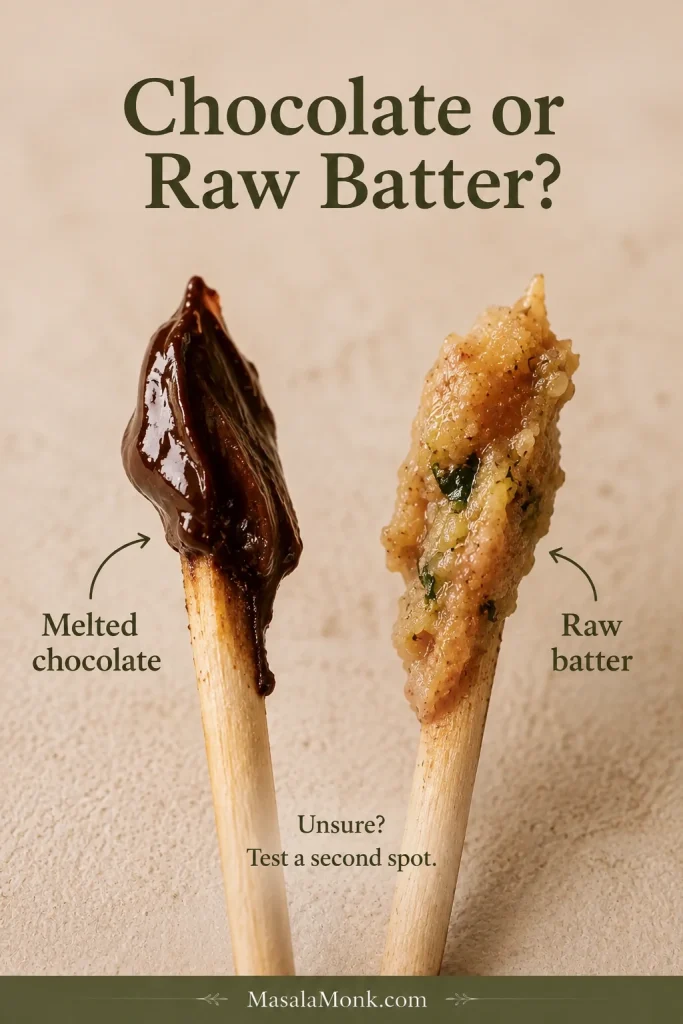
Two close-up baking testers comparing dark melted chocolate residue with a pale, wet smear of raw zucchini bread batter.
If a tester hits melted chocolate, test a nearby spot before extending the bake.

A Thermometer Gives You One More Check

You can make good zucchini bread without a thermometer. If you have one, it gives you the most objective final check when the crack or tester leaves any doubt.

Move an instant-read probe slowly through the loaf and note the lowest reading. Around 200–205°F / 93–96°C indicates that the bread is baked through.
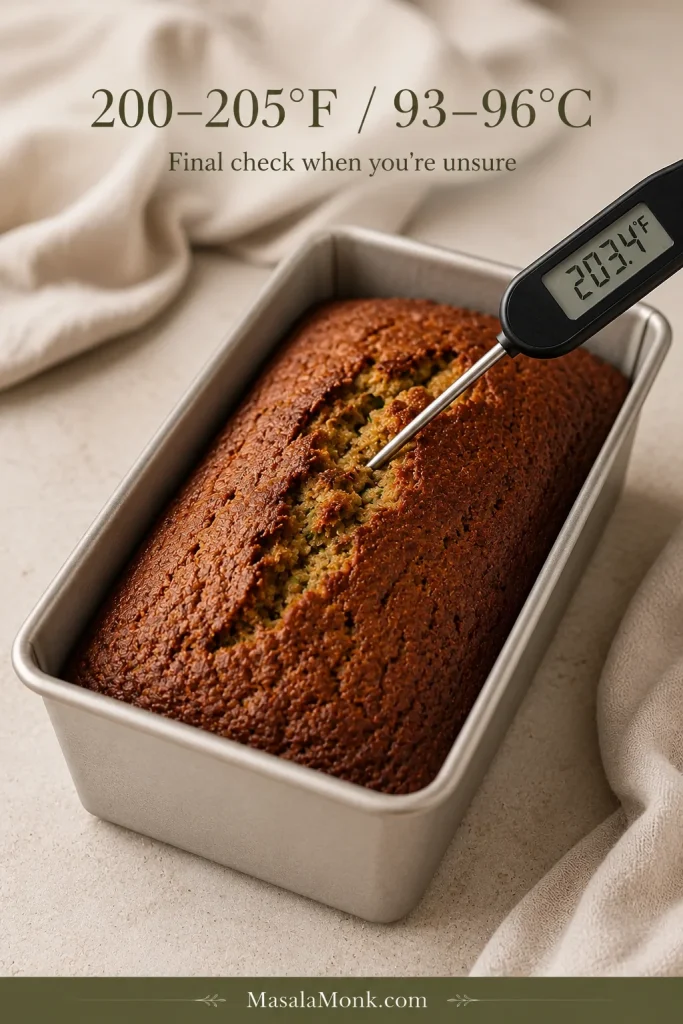
Instant-read thermometer inserted into the thick center of zucchini bread in a light metal pan, displaying about 203 degrees Fahrenheit.
Keep the probe off the pan and read the thickest part of the loaf.

King Arthur Baking’s quick-bread doneness guide explains the thermometer method in more detail.

Already baked it and found a wet or raw center? Go straight to troubleshooting →

The Hard Part: Let It Cool

This is the instruction nobody wants when the kitchen smells like cinnamon and the loaf is sitting three feet away.
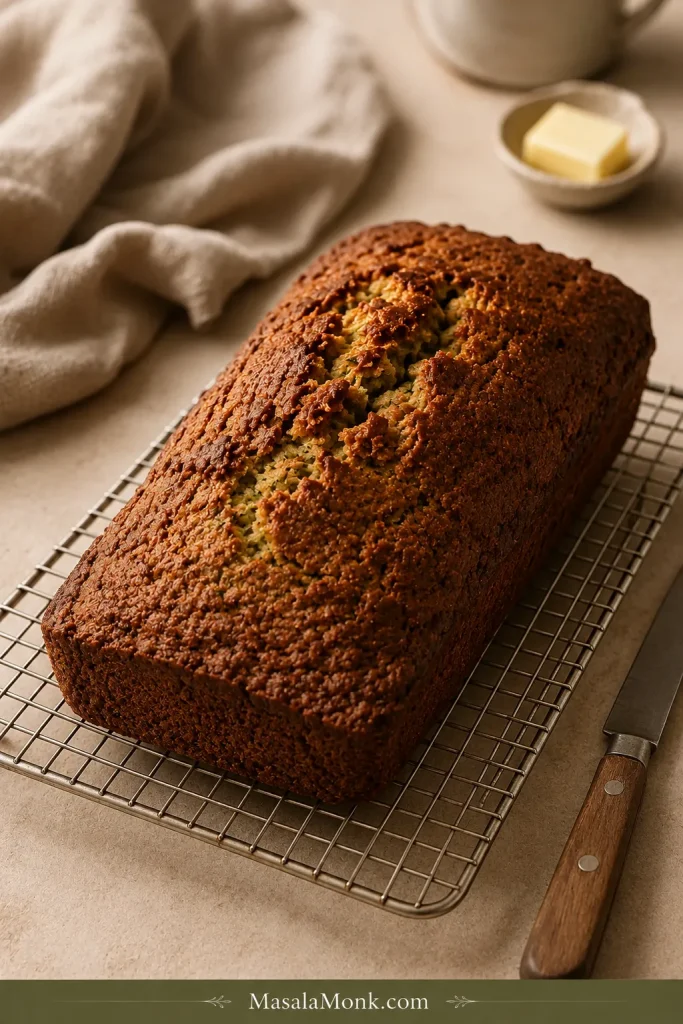
Whole golden zucchini bread cooling on a wire rack beside a knife, butter and neutral linen in warm natural light.

Give it about 15 minutes in the pan, then move it to a rack. Steam continues to escape while the crumb settles, so a just-baked slice naturally feels tackier than one cut later.

You can steal a warm slice. Just wait until the loaf has cooled before deciding that its tender middle is actually gummy.
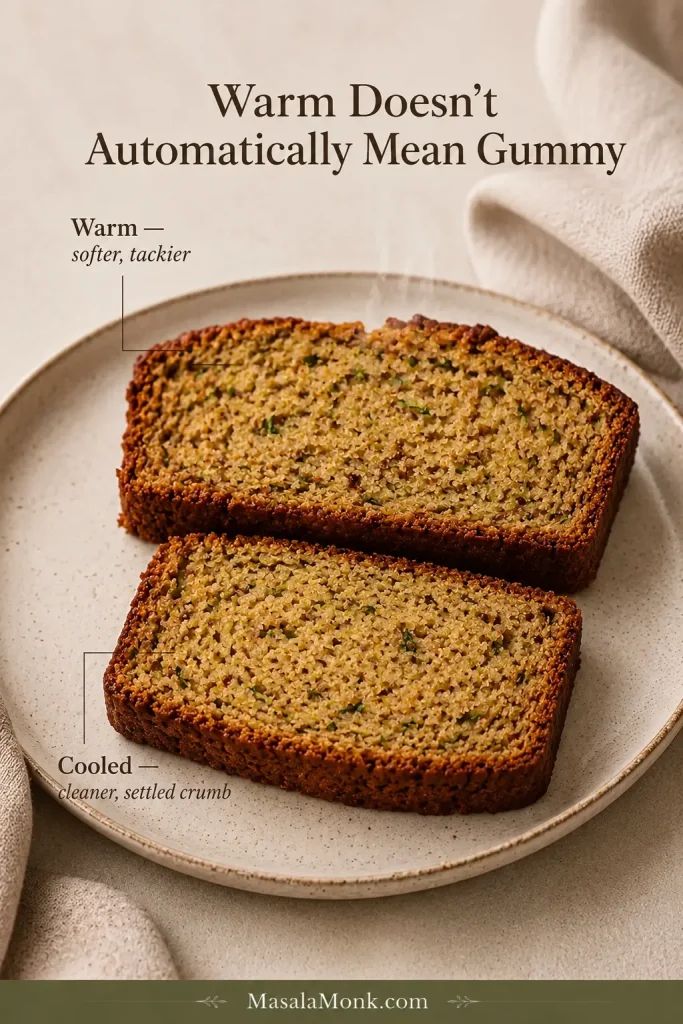
Two fully baked zucchini bread slices comparing a softer warm crumb with a cleaner, more settled cooled crumb.
Judge gumminess on a cooled slice; warmth and trapped steam can temporarily make a fully baked crumb feel tackier.

Moist, Wet or Gummy?

Moist: The cooled crumb is tender, holds together and cuts cleanly. That’s the texture you’re after.

Wet: Raw-looking or paste-like batter remains through the loaf and smears onto the knife. It needed more baking.

Gummy: The bread holds together but feels tacky, compressed or rubbery. Underbaking can cause it, but excess free water, heavy mixing or cutting while very hot can contribute too.

A slightly tacky patch directly beneath the top crust is different from a stripe of raw batter running through the loaf.
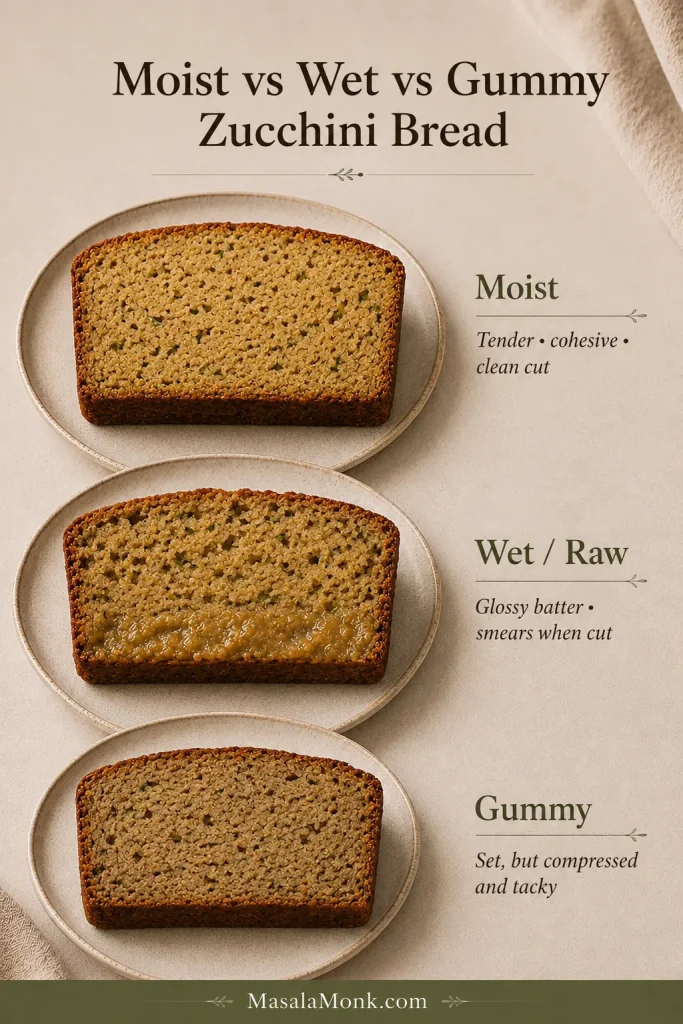
Three zucchini bread slices comparing a tender baked crumb, a glossy raw band and an opaque but compressed gummy crumb.
Wet or raw points back to doneness; a fully set but gummy crumb points to moisture, mixing or cooling.

Zucchini Bread Troubleshooting

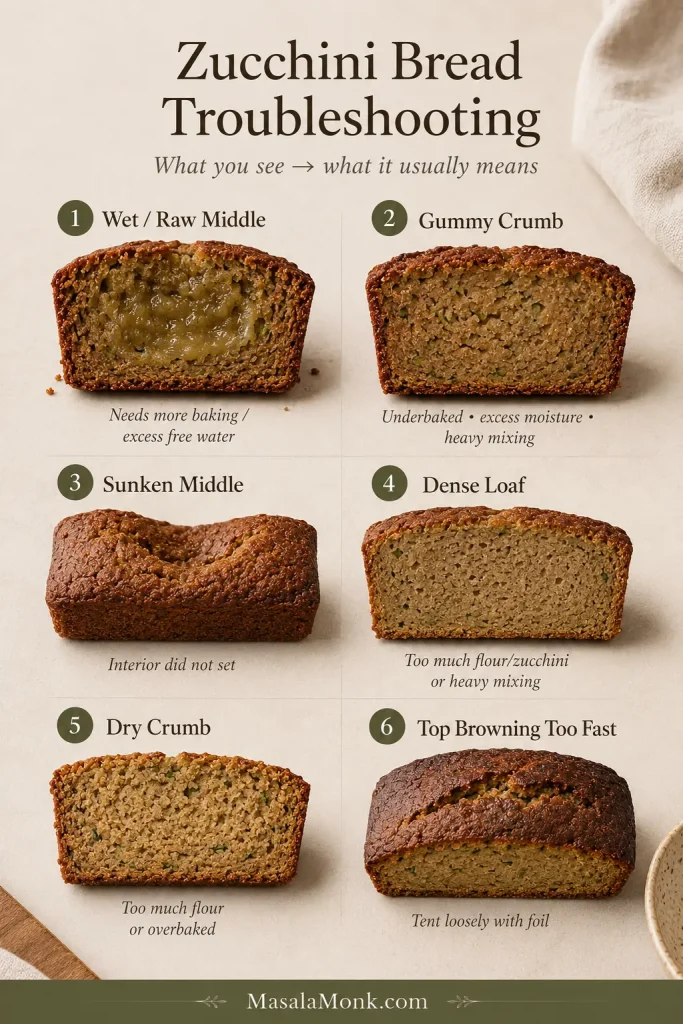
Troubleshooting guide showing zucchini bread with a raw center, gummy crumb, sunken middle, dense crumb, dry crumb and an overly browned top.
Start with the symptom you can see and change one variable at a time.
ProblemLikely causeNext move
Wet or raw middleMore baking time needed; excess free water; oven running coolKeep a whole, hot loaf baking until the raw batter is gone
Gummy crumbUnderbaking, excess moisture, heavy mixing or cutting very hotMix only until combined, bake fully and cool before judging
Sunken middleInterior had not set; inaccurate leavener; pan too small or overfilledCheck measurements, pan size and doneness
Dense loafToo much flour, too much zucchini or heavy mixingWeigh the key ingredients and stop folding once combined
Dry crumbToo much flour, zucchini wrung dry or loaf overbakedKeep the zucchini’s natural moisture and remove the loaf once baked through
Top browning too quicklyDark pan or strong top heatLoosely tent with foil while the loaf finishes

If the top is already dark enough while the center still needs time, loosely tent the loaf with foil and continue baking. The foil is a shield for the crust, not a signal that the middle is finished.
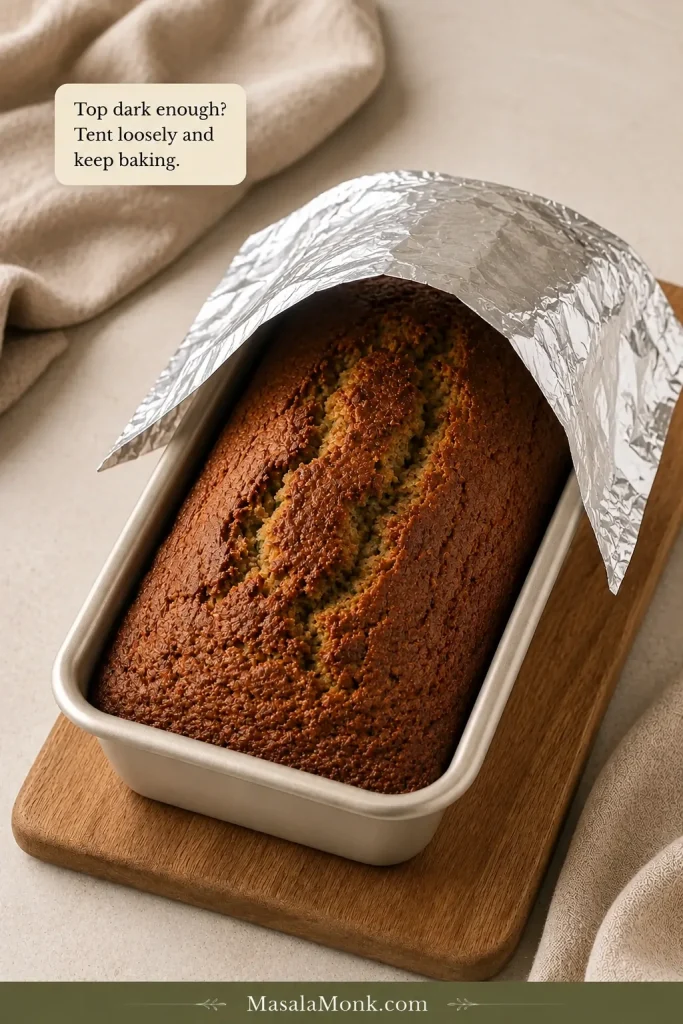
Deeply browned zucchini bread in a light metal loaf pan with aluminum foil loosely arched above the top to prevent further browning.
Keep the foil loose with an air gap; shield the browned crust without wrapping the loaf.

Why Is My Zucchini Bread Raw in the Middle?

Usually because the loaf needed more time, excess free water entered the batter, or the oven was running cooler than expected.

A loaf that is still whole and hot can go back into the oven. Cover the top loosely with foil when it already has enough color and continue until the raw batter is gone.

If you’ve already cut into it and found a genuinely raw middle, the options are unfortunately narrower. Save the fully baked portions. Continuing to bake the whole cut loaf tends to dry the parts that were already done before the exposed batter cooks evenly.
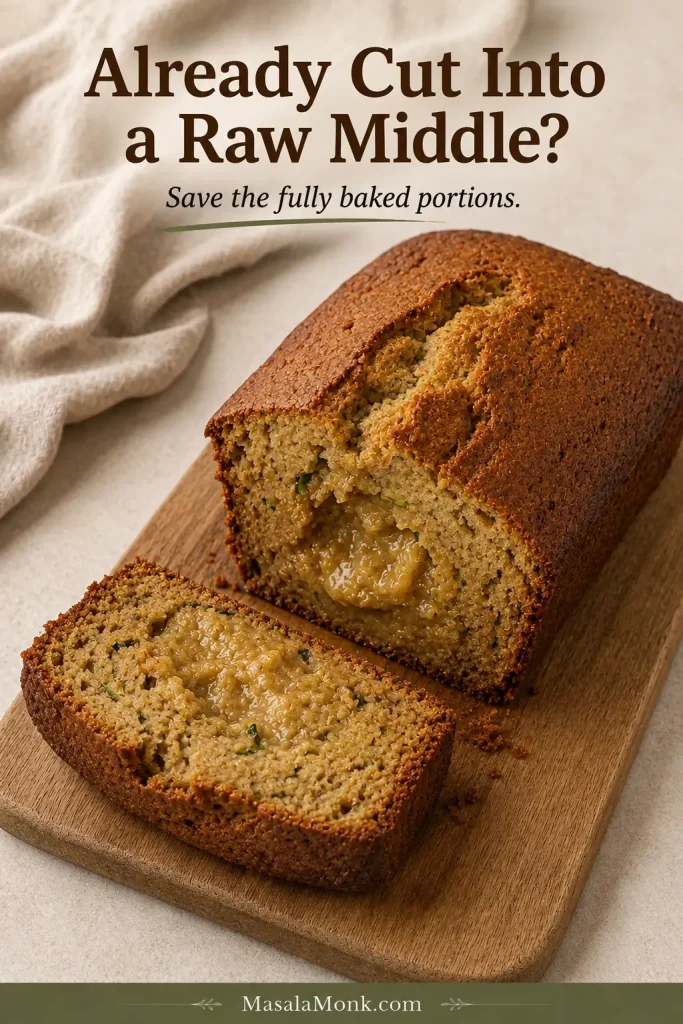
Cut zucchini bread showing fully baked outer crumb surrounding a glossy raw section in the middle of the loaf.
Once the loaf is cut open, protect the baked portions rather than trying to finish it like an intact loaf.

↑ Back to the recipe · Recheck doneness

Easy Add-Ins

Walnuts or pecans: Fold in up to 85g / 3 oz. Walnuts give the loaf the more familiar old-fashioned crunch; pecans are slightly sweeter.

Chocolate chips: Use up to 85g / 3 oz semi-sweet or dark chocolate. In a slightly warm slice, the chips soften into little melted pockets against the cinnamon crumb.

Raisins: About 75g / 2.6 oz, roughly ½ cup, gives the loaf a more old-fashioned recipe-box feel. Raisins and walnuts work especially well together.
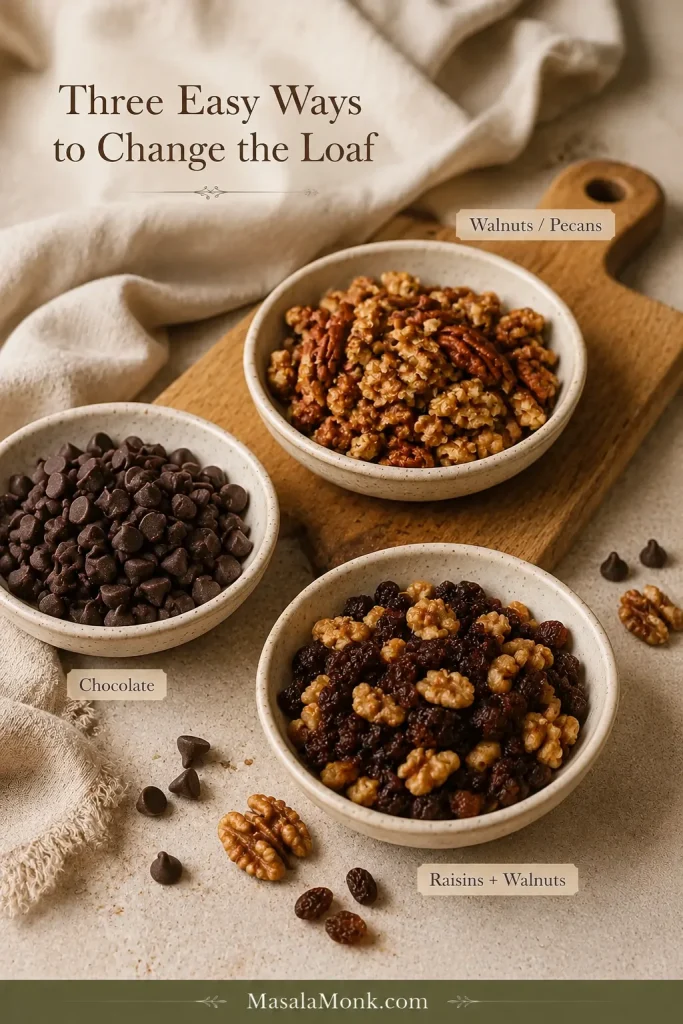
Walnuts and pecans, chocolate chips, and raisins with walnuts arranged in bowls as optional zucchini bread add-ins.
Distribute add-ins evenly so every slice gets some without heavy clusters weakening the crumb.

If that combination of grated vegetables, cinnamon and nuts is the part you love most, it takes a richer turn in this carrot cake with cream cheese frosting.

Before You Start Swapping Ingredients

Zucchini bread is forgiving, but flour, eggs, sugar, oil and zucchini moisture all help determine the final crumb. Change several at once and you’re effectively making a different recipe.

For the first loaf, keep the eggs and oil as written. Butter and applesauce both work in zucchini breads designed around them, but they do not perform exactly the same job as neutral oil here.

If applesauce is the change you are considering, this banana bread made with applesauce shows how a quick bread can be built around fruit puree from the start.

Eggless, vegan, gluten-free, keto and almond-flour versions change the structure enough that they are better treated as their own recipes instead of casual swaps inside this one.

Ready to bake? Return to the zucchini bread recipe →

The Pan Matters More Than It Seems

The full batch fits a 9 × 5-inch / 23 × 13 cm loaf pan. A light-colored metal pan gives you more control over browning during the long bake.

Dark metal usually browns the crust faster. When the top has enough color before the loaf is finished, cover it loosely with foil and keep baking.

Glass behaves differently from metal and holds heat longer. If glass is what you have, King Arthur Baking recommends reducing the oven temperature by 25°F; for this loaf, that means 325°F / about 165°C. Expect the timing to change and use the same doneness cues instead of relying on the original clock time.
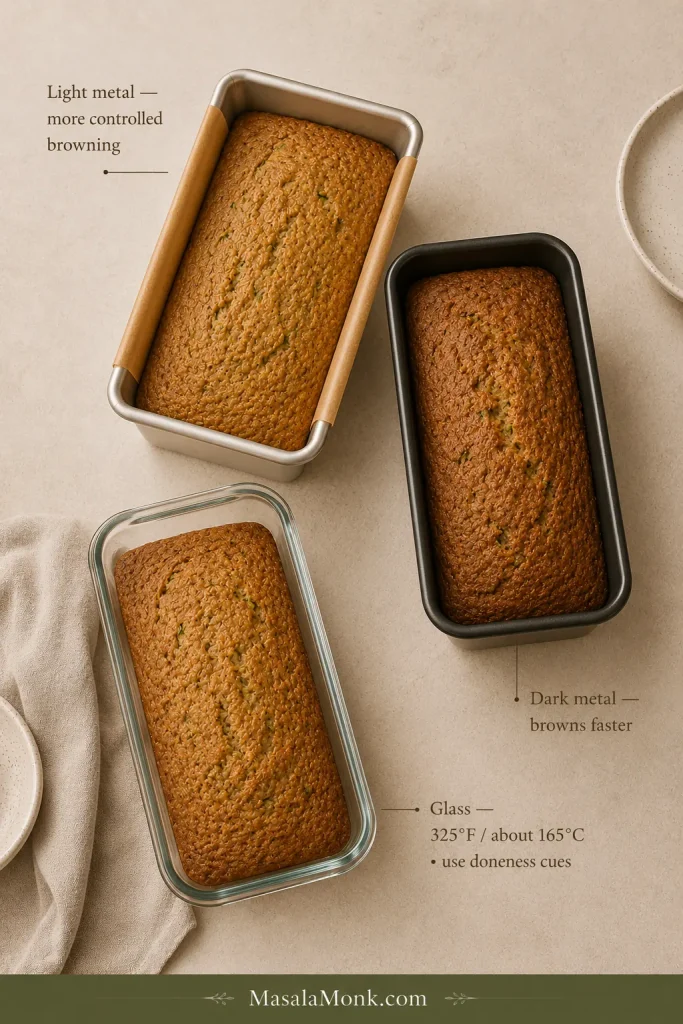
Three zucchini loaves baked in similarly sized light metal, dark metal and clear glass pans to compare pan materials and browning.
Keep the 9×5 size constant when comparing pan materials so batter depth does not become a second variable.

A noticeably smaller loaf pan makes the batter deeper and changes the bake. Use the specified 9 × 5-inch pan when possible instead of forcing the full batch into something smaller. Muffins and mini loaves need their own baking times, so the full-loaf timing should not be used for either.

Storing and Freezing Zucchini Bread

Room temperature: Cool the loaf completely before covering it. Keep it well wrapped or in an airtight container for about 3 days. Wrapping while warm traps steam against the crust.

Refrigerator: A very hot or humid kitchen is the main reason to refrigerate it. Chilled quick bread firms up, so let a slice lose its chill or warm it gently before eating.

Freezer: Wrap the completely cooled loaf or individual slices tightly and place them in a freezer-safe bag or container. For best quality, use them within about 3 months. Individual slices are especially handy: pull one out, let it thaw on the counter, and breakfast is mostly handled.
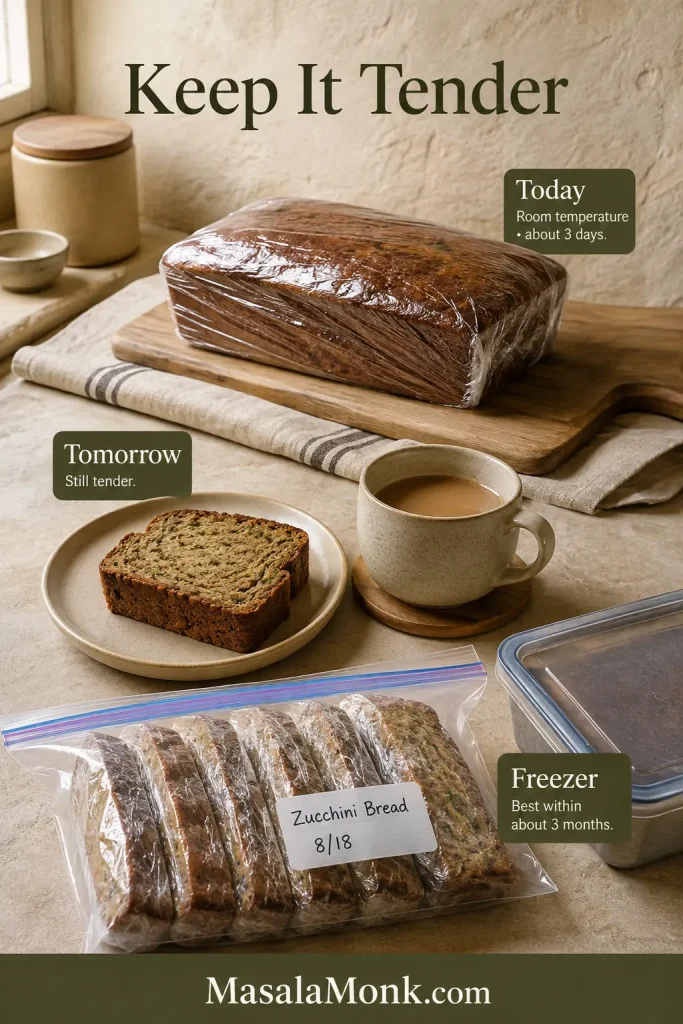
Wrapped whole zucchini bread for room-temperature storage, a slice served with coffee and individually wrapped slices packed for freezing.
Freeze the cooled loaf in portions so you can thaw one slice without repeatedly exposing the rest.

For another simple cinnamon bake that keeps well for the next day, try this fresh apple cake.

Frequently Asked Questions

Can You Taste the Zucchini in Zucchini Bread?

Not strongly. Cinnamon, vanilla and brown sugar reach you first. The zucchini mostly contributes moisture, tenderness and little green flecks instead of an obvious vegetable flavor.

Can You Use Yellow Summer Squash Instead?

A young, firm yellow summer squash can work much like zucchini. Grate it the same way. An oversized mature squash may need tough skin or a coarse seed cavity removed first.

Can You Double the Recipe?

Yes. Divide a double batch between two 9 × 5-inch pans. One extra-deep loaf would bake very differently; the pan section explains why depth and material matter.

The Slice You’re Looking For

Once the loaf has cooled, the knife should pass through without dragging a wet streak behind it. The slice bends gently, the crumb holds together, and cinnamon reaches you before zucchini ever does.

That’s the balance this bread is after: the zucchini keeps the crumb tender, while enough oven time turns the middle from batter into bread.

Add butter if you like. It does not need much else.
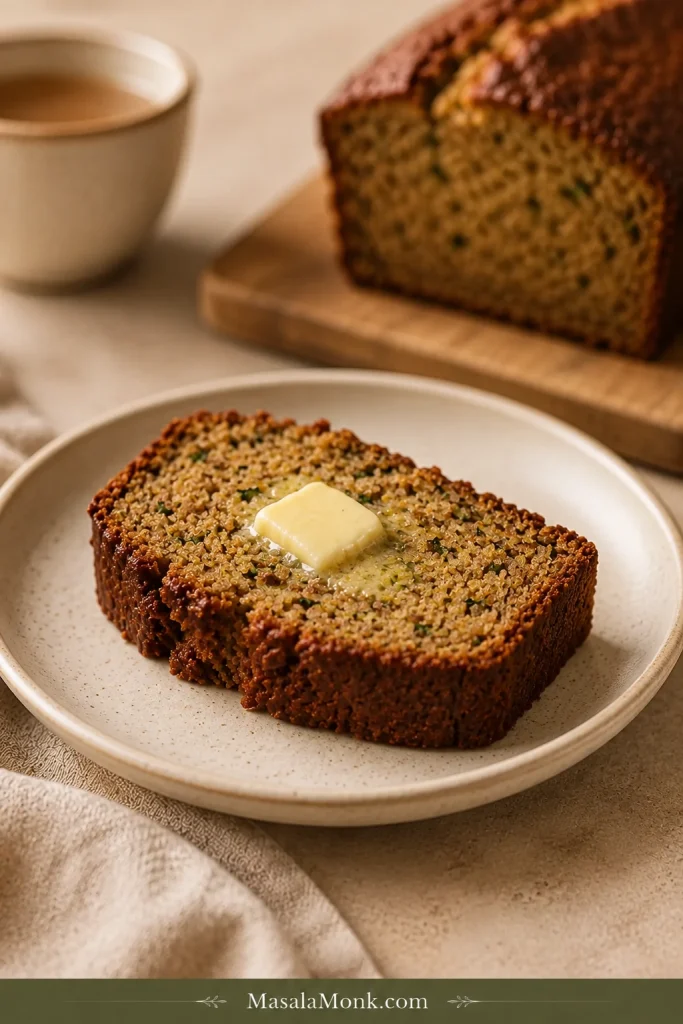
Thick slice of golden zucchini bread with tender green-flecked crumb and a small pat of melting butter, with the remaining loaf softly blurred behind.

What did you make yours with: small fresh zucchini, one of those enormous garden zucchini, or zucchini from the freezer?
↑ Back to the recipe · ↑ Back to top

Posted on Leave a comment

Air Fryer Zucchini Recipe: Tender, Browned and Not Mushy

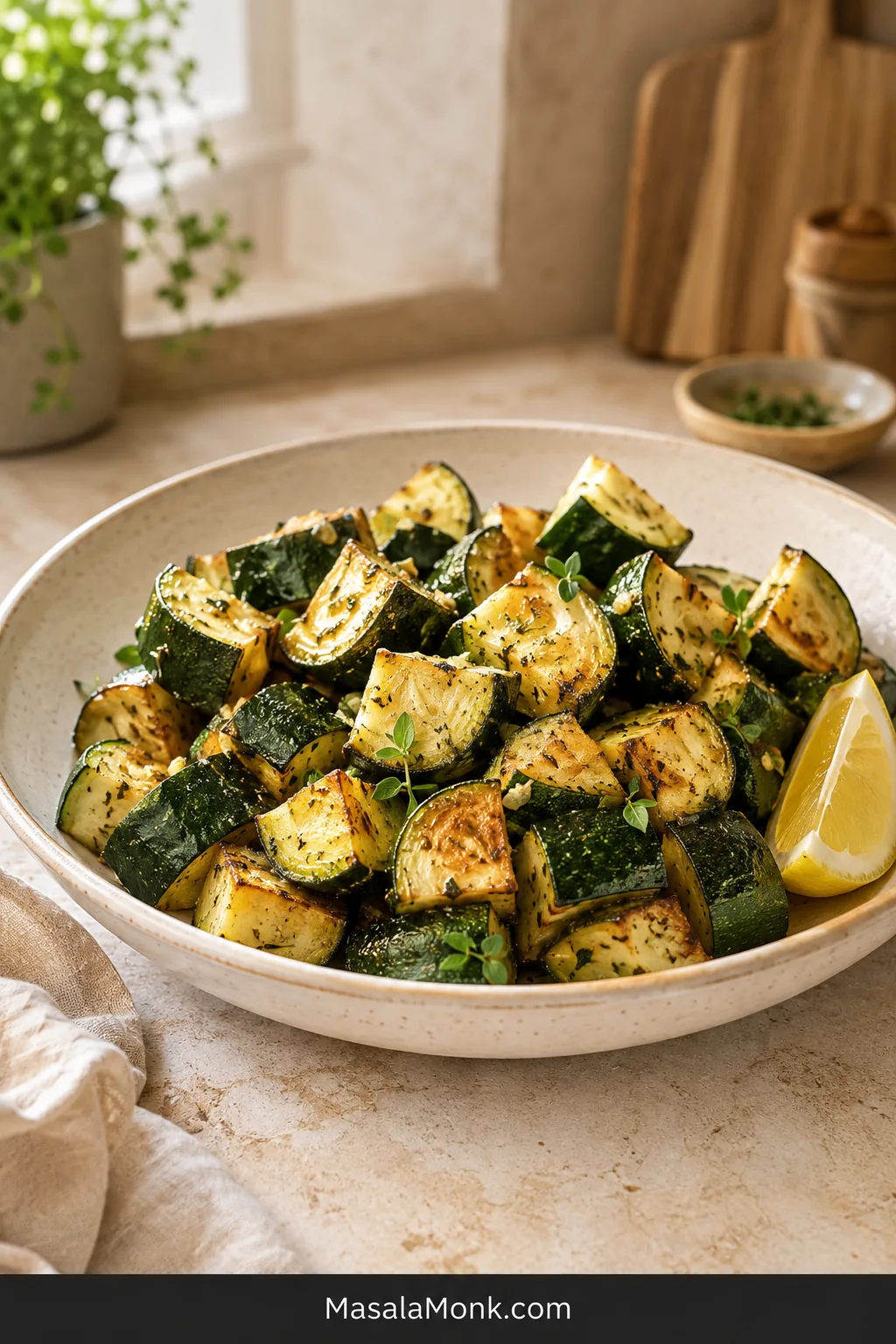
Ivory bowl filled with browned zucchini chunks with intact green skin, scattered herbs and a lemon wedge on a pale stone surface.

Good air fryer zucchini has a small, easy-to-spot window. The cut faces have started to bronze, the edges look roasted instead of wet, and the center is tender without folding when lifted with a fork.

Some nights dinner needs one last thing—something green, hot and bright that does not ask for another pan or a bowl of breading. Zucchini, called courgette in the UK, fills that gap when it gets enough heat and breathing room.

This is air fryer zucchini without breading, flour or egg. The goal is not to dry the vegetable until it crunches like a chip; it is to brown the outside while the middle still tastes fresh and juicy. For thin Parmesan rounds or panko-coated pieces, use the separate crispy zucchini chips recipe.

Quick Answer

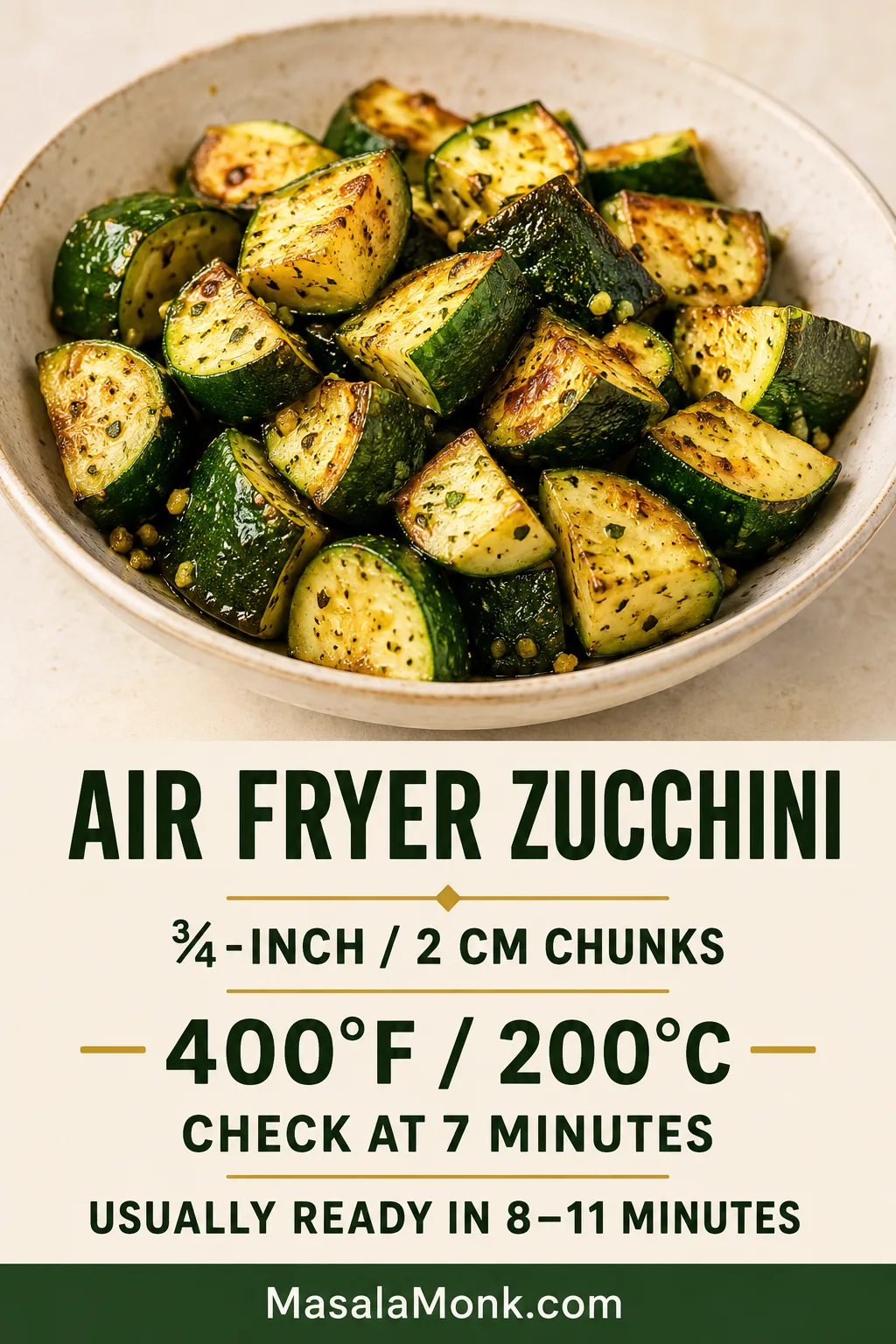
Cut 1 lb / 454 g small or medium zucchini into ¾-inch / 2 cm chunks. Coat with 2 teaspoons / 10 ml oil, add the dry seasonings and spread the pieces loosely in a preheated 400°F / 200°C air fryer.

Cook undisturbed for 5 minutes, shake well and begin checking at 7 minutes. Many basket-style air fryers finish this cut in about 8–11 minutes. Remove the zucchini when several faces are golden, the surfaces no longer look watery and a fork enters with a little resistance.

Cut thick. Cook hot. Check early.

Vertical timing guide showing ¾-inch zucchini pieces, a temperature of 400°F, a first check at 7 minutes and an expected cooking range of 8–11 minutes.
How long to air fry zucchini depends on basket shape, load and fan strength. Use the stated range for your first batch, then remember where your own machine landed.

Air Fryer Zucchini Recipe

Thick zucchini chunks with browned corners and tender centers that still hold their shape. The base version is lightly garlicky and gently herbal, with fresh zucchini sweetness and an optional squeeze of lemon.

Active prep: About 8–10 minutes · Cook time: 8–11 minutes per batch

Total time: About 20 minutes for one batch; preheating overlaps with prep · Temperature: 400°F / 200°C

Yield: Serves 4 alongside a main course, or 2 as a generous vegetable portion

Small basket: Allow another 9–12 minutes if the zucchini needs two batches.

Dietary note: The base recipe is vegan and dairy-free, with no flour or breadcrumbs. Check packaged seasoning labels when strict gluten avoidance matters.

Equipment

  • Basket-style or oven-style air fryer
  • Sharp knife and cutting board
  • Mixing bowl
  • Measuring spoons or a digital kitchen scale
  • Silicone-tipped tongs or a small flexible spatula

Ingredients

  • 1 lb / 454 g small or medium zucchini, usually 2 to 3 depending on size
  • 2 teaspoons / 10 ml olive oil or avocado oil
  • 1 teaspoon Italian seasoning, or ½ teaspoon dried oregano
  • ½ teaspoon garlic powder
  • ¼ teaspoon ground black pepper
  • 3 g salt, or about ½ teaspoon fine salt when not weighing
  • 1 teaspoon / 5 ml lemon juice, optional, added after cooking
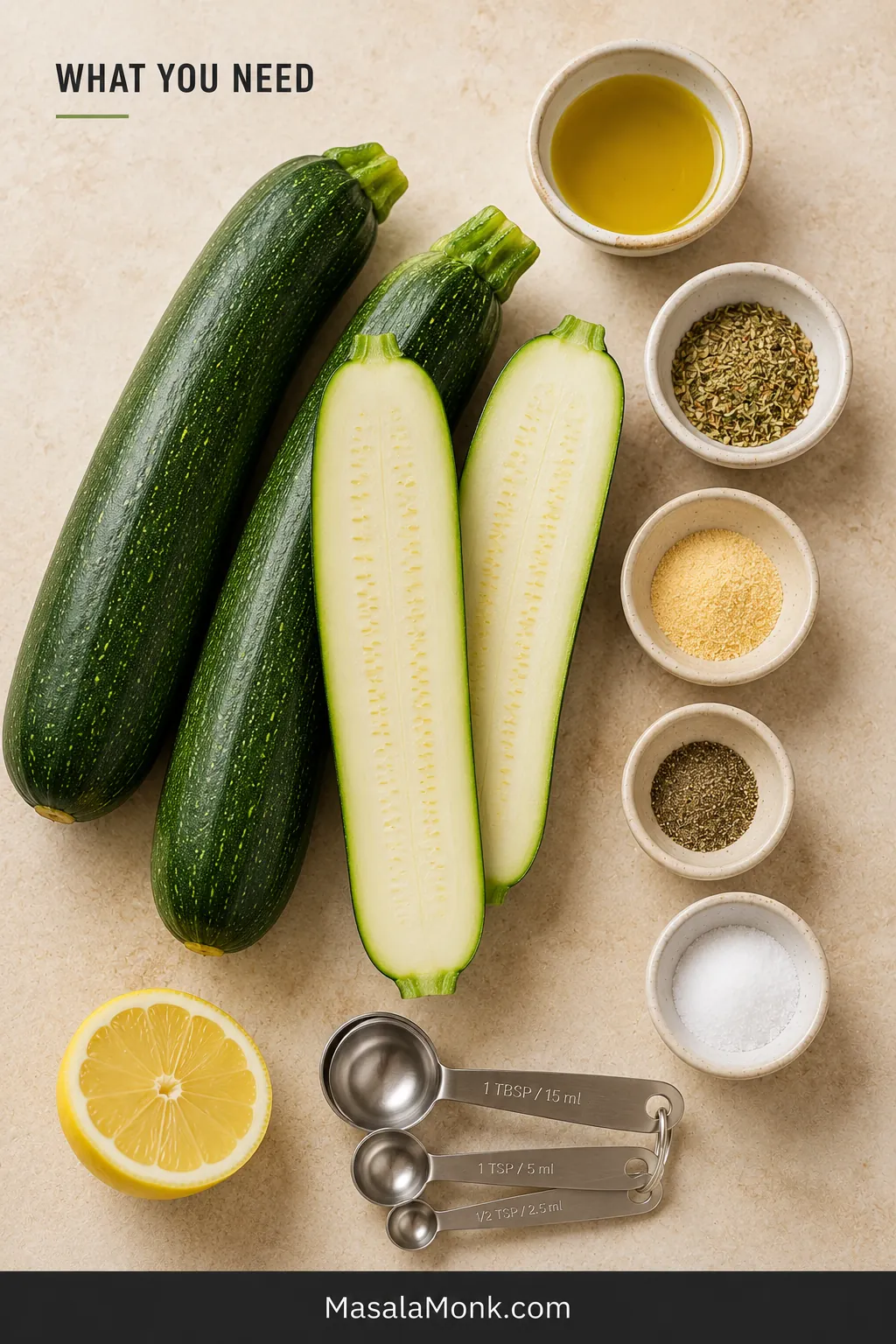
Overhead arrangement of zucchini, oil, Italian seasoning, garlic powder, black pepper, salt, lemon and measuring spoons on a warm cream surface.
For air fryer zucchini without breading, two teaspoons of oil are enough to help the seasonings cling. Extra oil cannot compensate for wet zucchini or restricted airflow.

Method

  1. Dry and cut the zucchini. Wash it, dry the skin well and trim the ends. Quarter each zucchini lengthwise, then cut the long quarters crosswise into ¾-inch / 2 cm chunks. Blot any visibly wet sides.
  2. Preheat the air fryer. Heat it to 400°F / 200°C for 3 to 5 minutes, unless the machine preheats automatically or its instructions recommend starting from cold.
  3. Oil the zucchini. While the air fryer heats, toss the chunks with the oil until they carry a thin, even sheen.
  4. Season just before cooking. Add the Italian seasoning, garlic powder, pepper and salt. Toss again and move the zucchini straight into the hot basket. If you salted an oversized zucchini earlier, omit the salt here and adjust only after cooking.
  5. Spread the pieces loosely. A little touching is fine, but the chunks should shift when the basket is shaken. Divide them into two batches when needed.
  6. Cook undisturbed for 5 minutes. This gives the surfaces touching the basket time to begin browning.
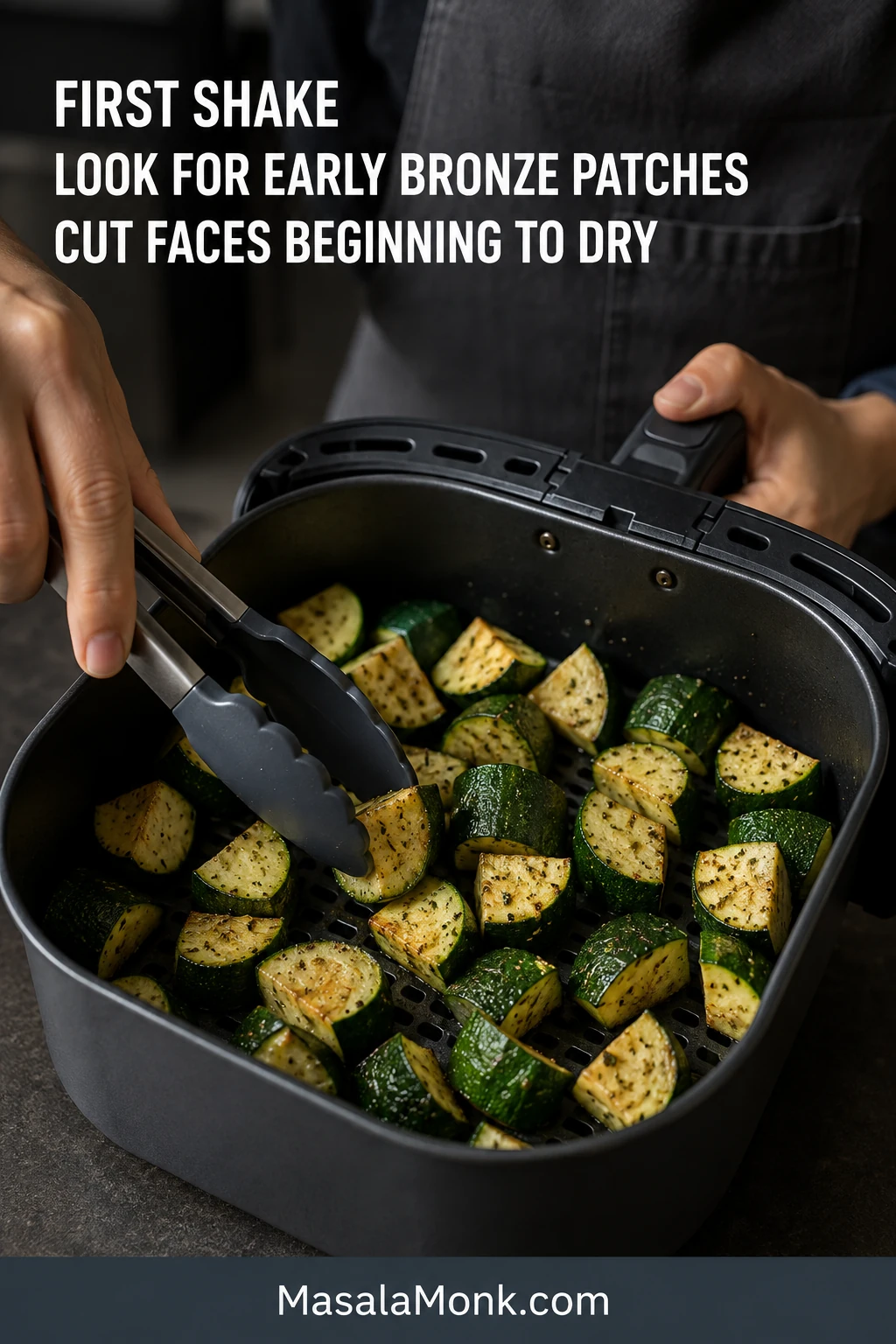
  7. Shake well. The zucchini will not look finished yet. Look for the first bronze patches and cut faces beginning to dry—the signs that the basket is roasting rather than steaming. Turn any pieces still resting on one pale face.
  8. Begin checking at 7 minutes. Give the zucchini another minute or two as needed. Remove it when several corners are golden, the cut sides no longer look wet and a fork enters with light resistance. For side-by-side cues, see how to tell when air fryer zucchini is done.
  9. Finish and serve. Transfer the zucchini to a broad, uncovered plate. Add lemon juice or fresh herbs while it is hot.

Success Cues and Second-Batch Timing

Cook turning partially cooked zucchini in an open air fryer basket, with early brown patches visible on several pieces.
One deliberate shake is usually more useful than repeatedly opening the machine. Turn the pale faces, redistribute any clustered pieces and give the heat time to recover.

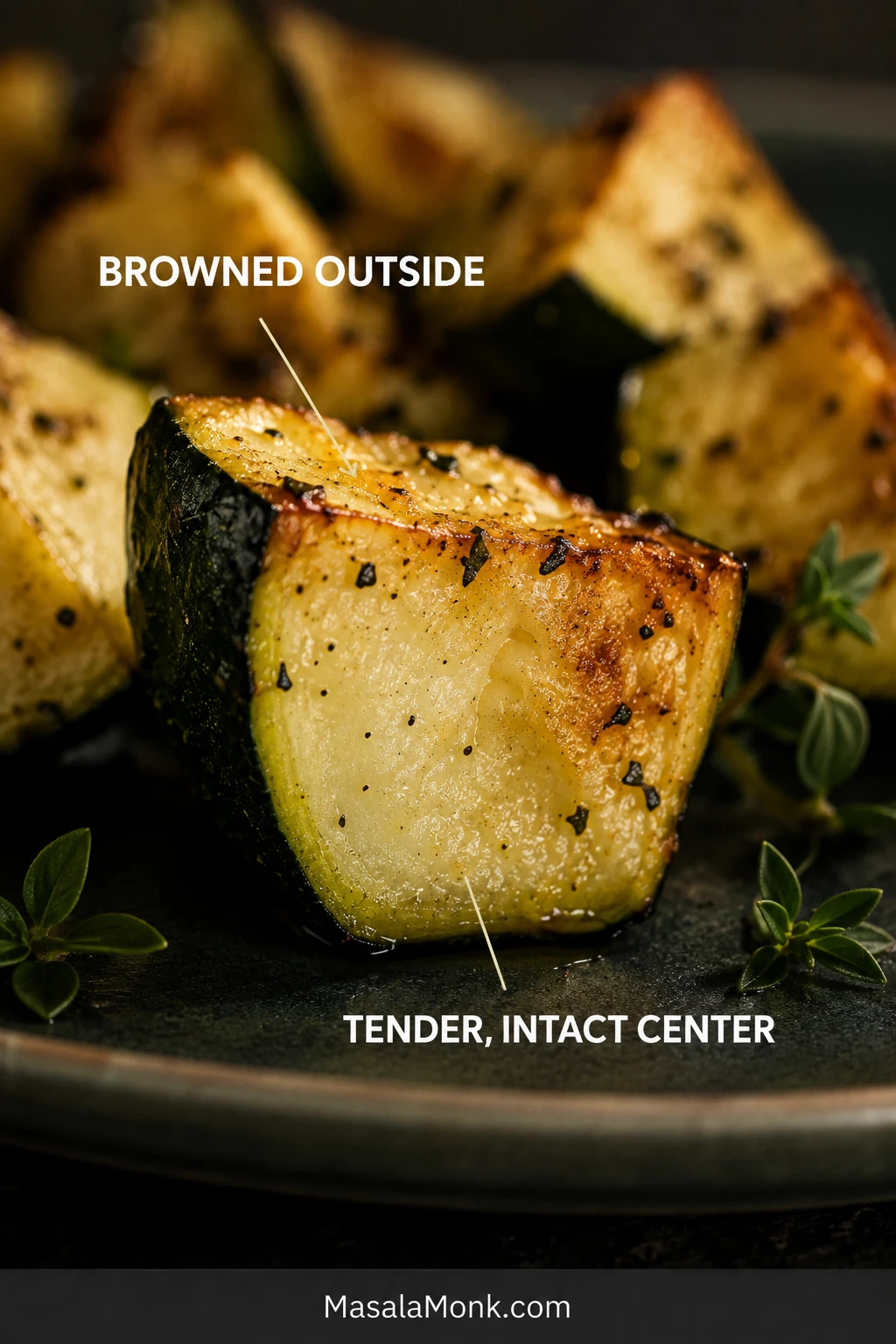
What success smells and feels like: The basket should smell garlicky and lightly roasted. Lift one piece: it should hold its shape while the fork meets only slight resistance in the center.

A little moisture in the center is the point. A puddle underneath is not.

Close-up of a browned zucchini chunk cut open to show dark green skin and a pale, moist, intact center.
Still uncertain? Cut open one of the largest chunks. A moist center that holds together is desirable; waterlogged flesh that slumps or releases liquid has moved beyond the ideal window.

Cooking two batches: Keep the first batch uncovered. When the second is nearly ready, return the first batch to the air fryer for 30–60 seconds only if it has cooled noticeably.

If your zucchini tends to come out pale, watery or softer than expected, four variables usually explain it.

Four Things to Control Before Cooking

1. Start with firm zucchini

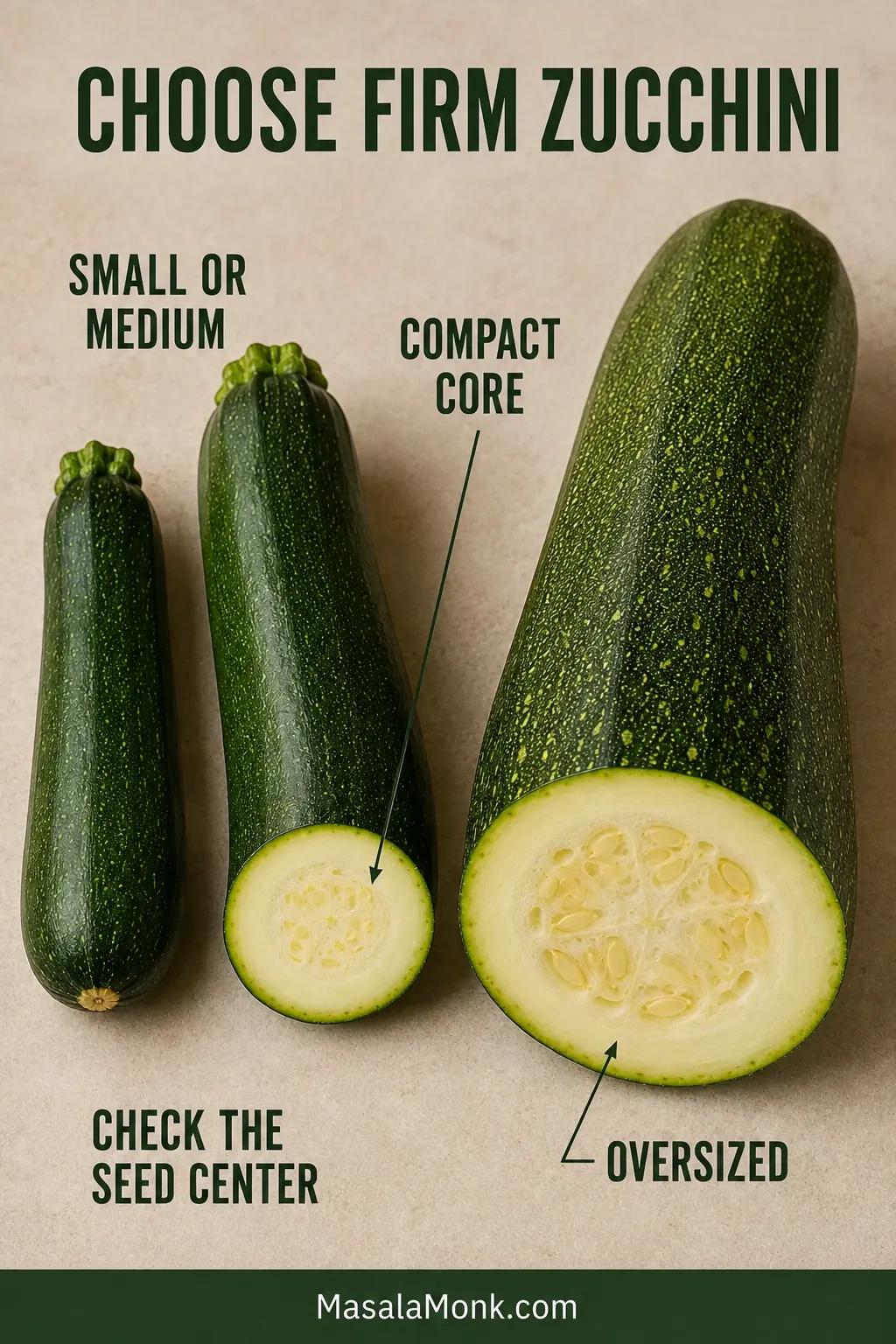
Small and medium zucchini are usually easiest to air fry because their flesh is firm and their seed cores are compact. Choose vegetables that feel heavy for their size, with smooth skin and no broad soft patches.

With an oversized garden zucchini, scoop away broad seeds surrounded by loose, spongy flesh. If the remaining pieces still look unusually wet, sprinkle them with about half the measured salt, rest for 10 minutes and blot thoroughly. Add more salt only after cooking and tasting.

Small, medium and oversized zucchini displayed side by side, with compact seed cores in the smaller vegetables and a broad, loose center in the largest.
An oversized zucchini is still useful. Air fry the firm outer flesh, then save a loose or heavily seeded center for soup, curry or a blended vegetable sauce.

2. Cut thick, even chunks

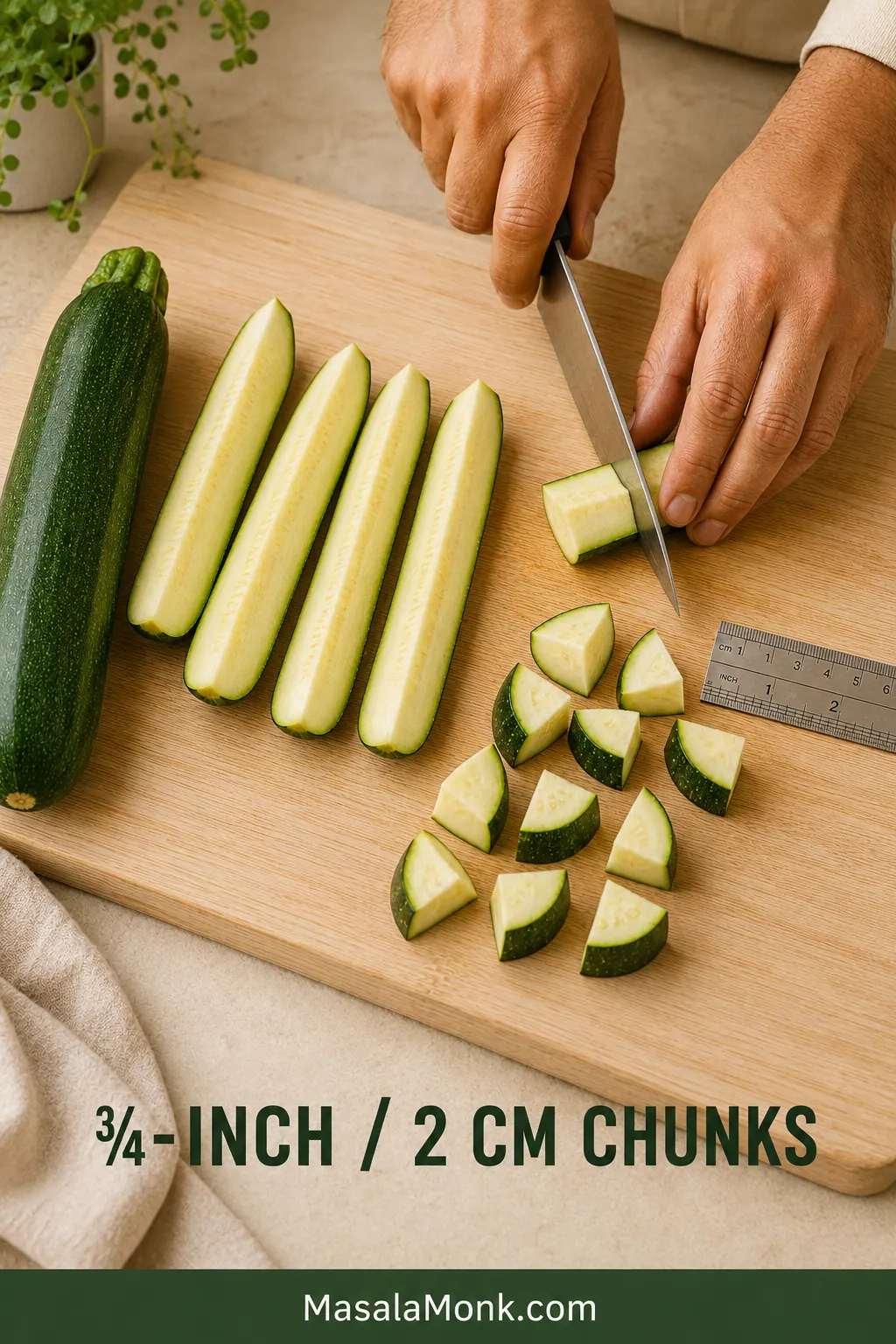
Quarter the zucchini lengthwise, then cut across those long quarters. This shape gives the hot air several edges to brown without leaving the middle so thin that it folds.

Hands cutting a lengthwise zucchini quarter into ¾-inch chunks on a wooden board, with whole zucchini, cut quarters and a ruler nearby.
Match thickness more closely than shape. Pieces with similar thickness soften at a similar rate even when their outlines are not perfectly identical.

The tapered ends naturally make smaller pieces. Check those first and take them out when ready. The larger chunks can continue for another minute.

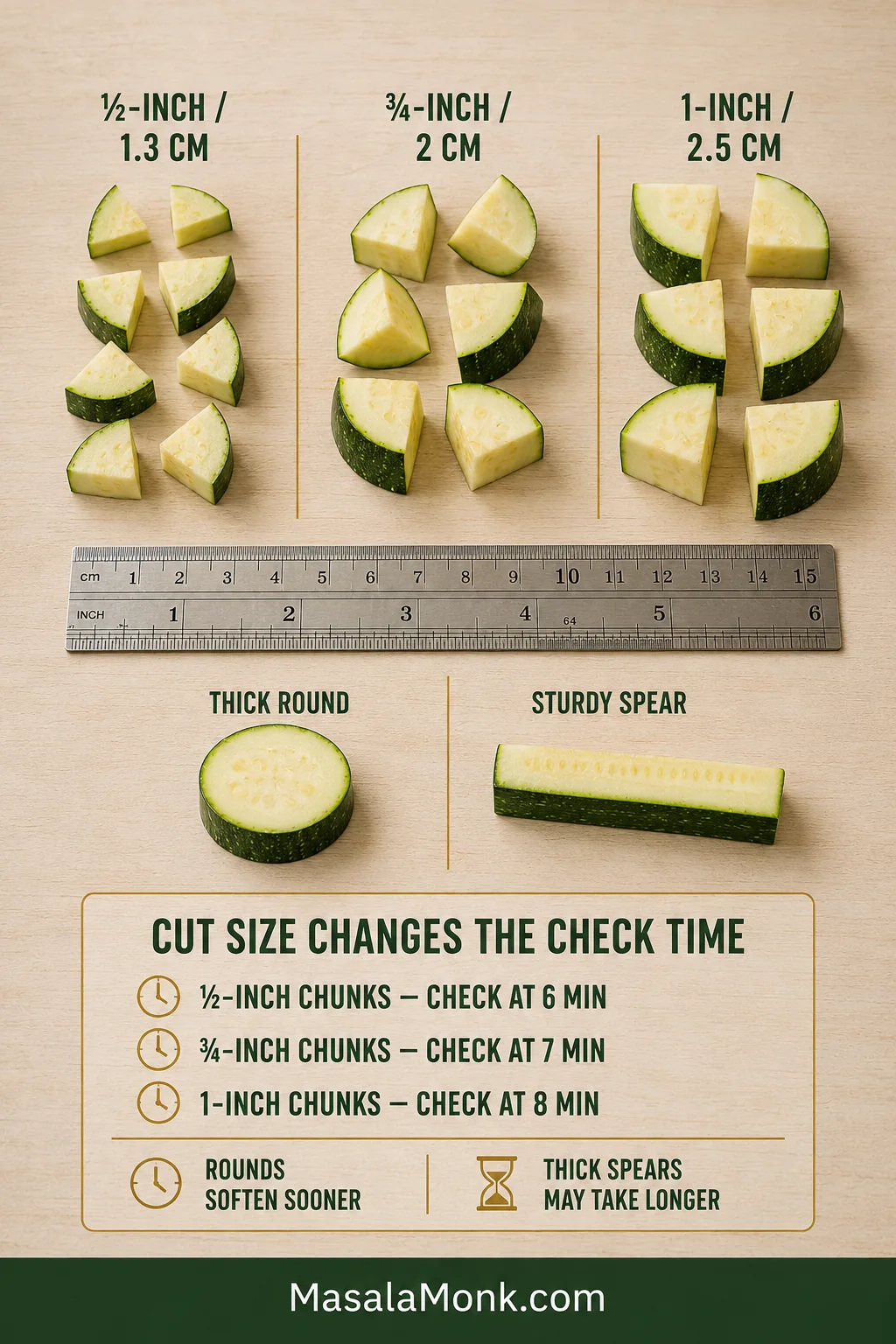
CutFirst checkWhat to expect
½-inch / 1.3 cm chunks6 minutesFast cooking; remove smaller pieces promptly
¾-inch / 2 cm chunks7 minutesThe balanced everyday cut used in this recipe
1-inch / 2.5 cm chunks8 minutesA firmer, juicier middle; continue as needed

Thick rounds or spears can also work. Rounds expose broader cut faces and usually soften sooner, while sturdy spears may need slightly longer depending on their width.

Guide comparing ½-inch, ¾-inch and 1-inch zucchini pieces beside a ruler, along with a thick round and a sturdy spear.
Choose the cut for the meal: chunks make the most forgiving side, sturdy spears suit dipping, and thick rounds cook quickly but lose structure sooner.

To prepare ahead, refrigerate the cut zucchini in a dry, covered container. Blot it before cooking and wait to add the seasonings.

3. Dry the surface and season late

Blot any cut faces that look glossy with water. A thin coat of oil helps the seasonings cling and encourages the exposed edges to brown instead of drying into leathery patches.

Two raw zucchini pieces shown side by side, one glossy with surface moisture and one matte after blotting with a paper towel.
Blot after cutting, not only after washing. Newly exposed zucchini flesh can develop a fresh sheen of moisture even when the outer skin was dried thoroughly.

Season when the air fryer is already hot. Moving the salted pieces directly into the basket gives them less time to release water before cooking begins.

Flavor note: Garlic powder and dried herbs can cook with the zucchini. Add lemon, lime and fresh herbs afterward so their flavor stays bright.

Hands tossing lightly oiled zucchini chunks in a metal bowl while dry seasoning falls across their surfaces.
The mixing bowl should look nearly dry after tossing. Oil pooling beneath the zucchini signals more than the batch needs.

4. Leave room for the hot air

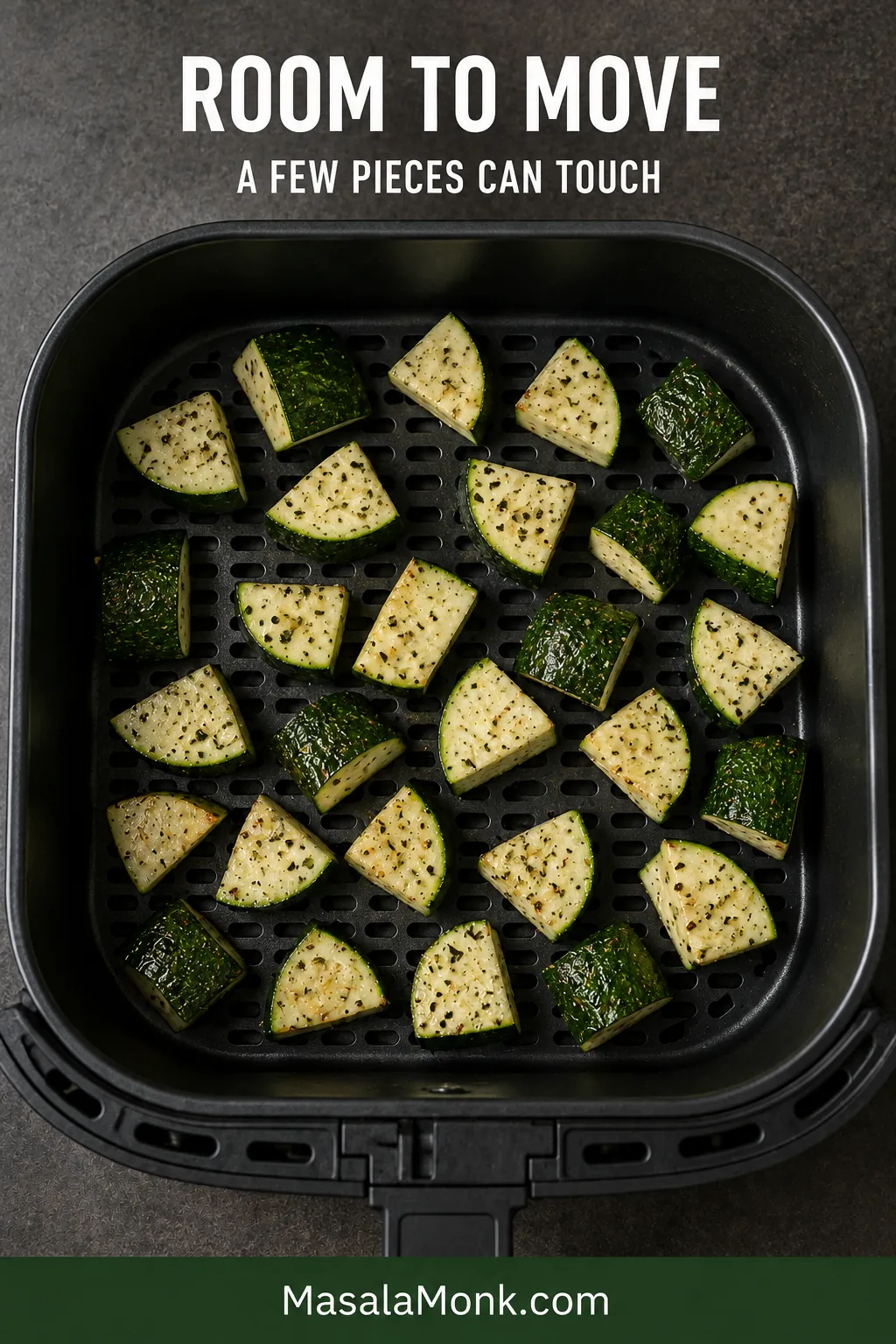
What matters is the flat cooking area, not the capacity printed on the box. A few pieces can touch, but the load should redistribute when the uncooked basket is gently shaken. If it moves as one packed mass, divide it into two batches.

Seasoned raw zucchini chunks arranged loosely in one layer inside a perforated air fryer basket, with visible gaps and basket holes between them.
One smaller, freely moving batch often browns faster than an overloaded basket that must first evaporate trapped moisture. Capacity matters less than usable flat space.

If several foods come out pale or uneven in your machine—not only zucchini—these common air fryer mistakes and fixes cover crowding, preheating, oil and halfway turning in more detail.

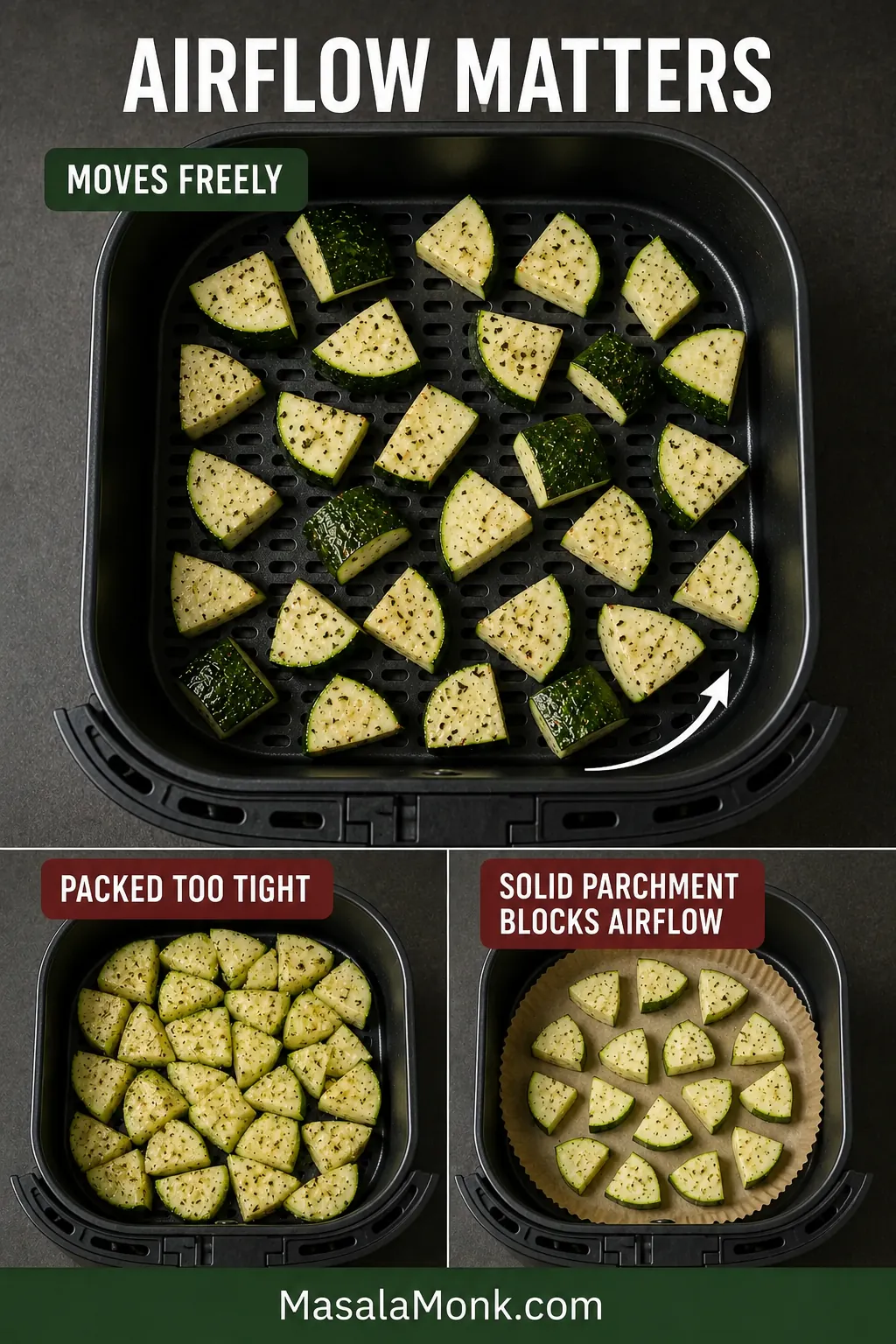
Solid parchment can block airflow beneath the zucchini. Cook directly in a clean basket, or use only a properly secured perforated liner approved for your machine.

Guide comparing loosely arranged zucchini, an overcrowded air fryer basket and solid parchment covering the basket perforations.
Some basket holes should remain visible, but movement matters most. If the zucchini shifts as one packed mass instead of redistributing, divide the batch.

Once these four details are in place, zucchini stops feeling unpredictable. It becomes the kind of side you can start while the rest of dinner finishes.

Time, Temperature and Doneness

Treat the recipe’s 8–11-minute cooking time as a checking range, not a guaranteed finish. Basket shape, load size and fan strength determine where your zucchini falls within it.

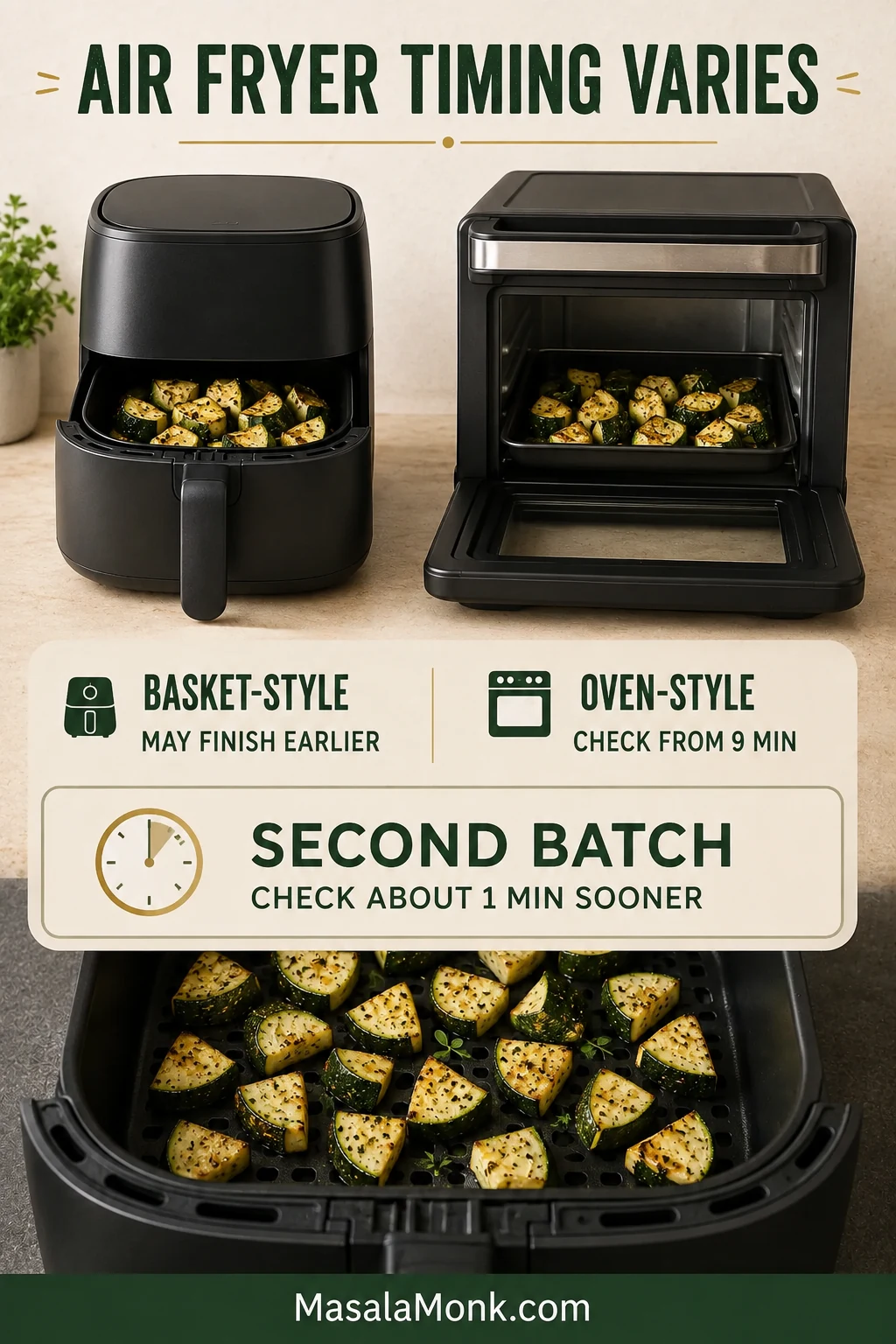
Compact basket machines may finish early. Oven-style air fryers often need several extra minutes, so inspect them from around 9 minutes and turn pieces whose undersides remain pale. A later batch may cook faster because the chamber is already thoroughly hot.

Timing guide comparing a basket-style air fryer, an oven-style air fryer and a second batch cooked in an already heated basket.
Write down the finish time of the first successful batch in your machine. That personal benchmark will be more dependable next time than any universal minute count.

How to Tell When Air Fryer Zucchini Is Done

If your zucchini needs ten minutes while another recipe promises seven, nothing has gone wrong. The timer should tell you when to check. The zucchini should tell you when to stop.

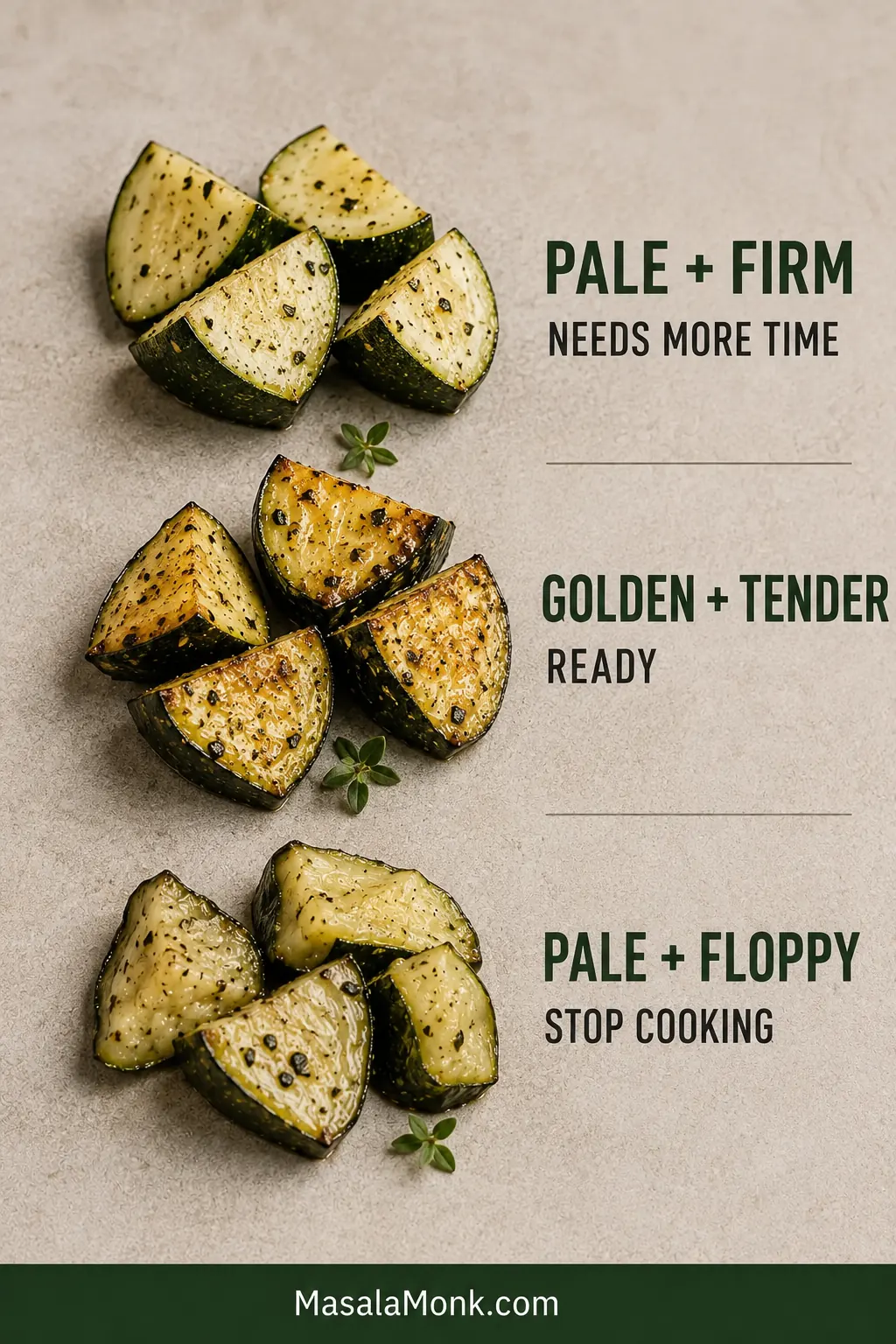
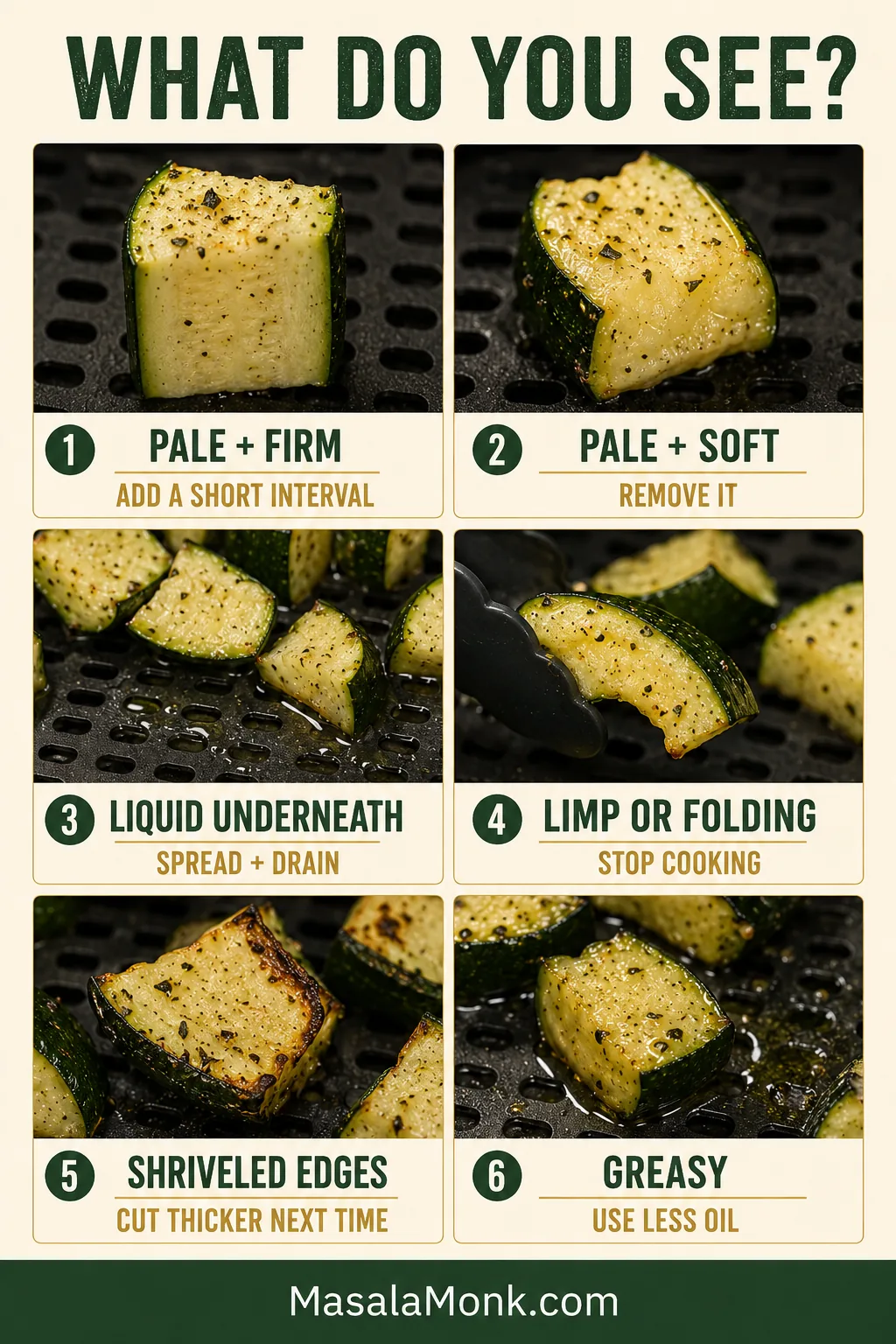
Before adding another minute, check one piece: Pale and firm means it needs more time. Golden and tender means it is ready. Pale and floppy usually means extra cooking will not improve the texture.

Three zucchini doneness states showing pale firm pieces, golden tender pieces and pale floppy pieces with a recommended action for each.
Air fryer zucchini doneness will not always be uniform. Remove the early winners and let only the firmer, paler pieces continue for another brief interval.

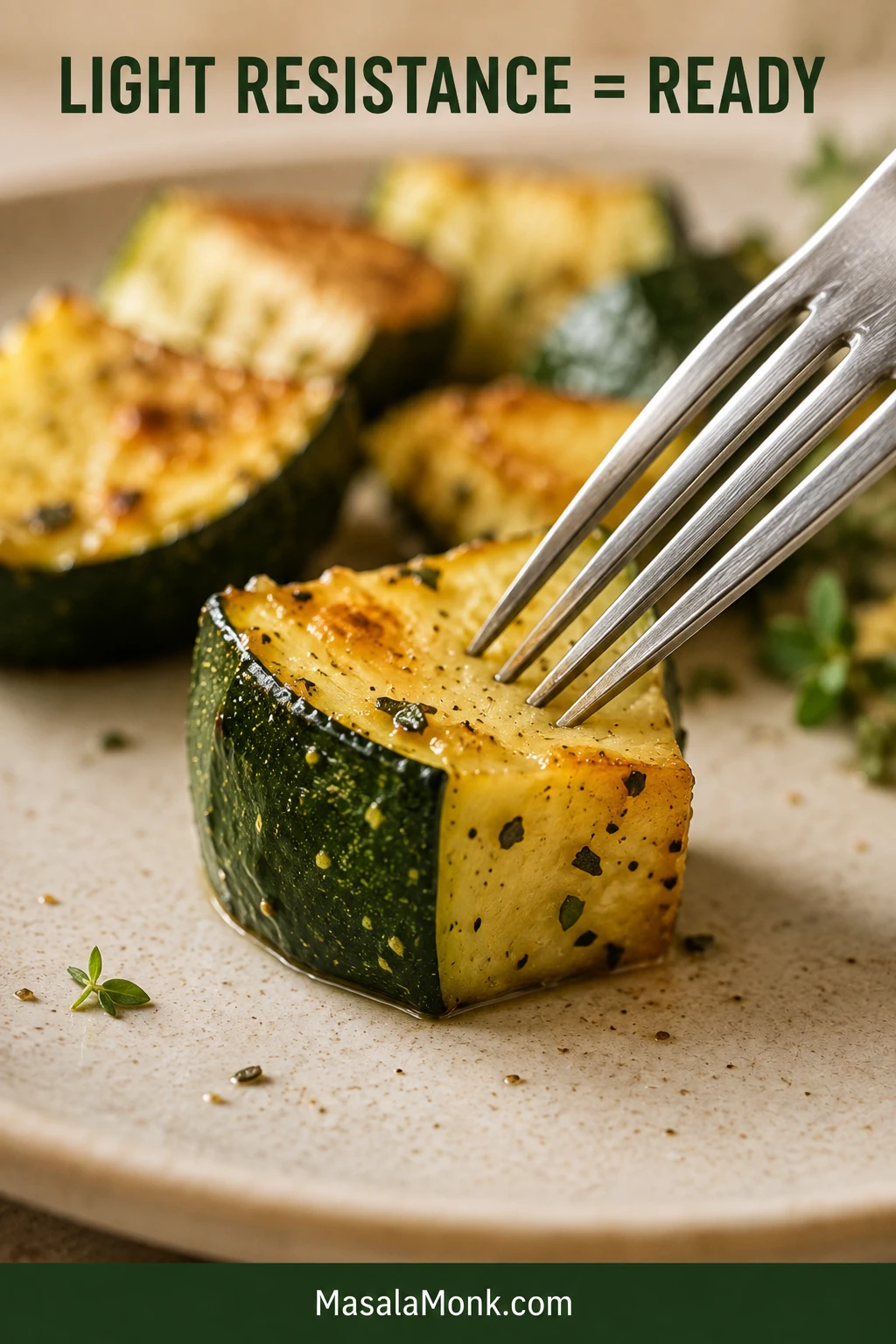
Look for several golden faces rather than identical color on every side. The cut surfaces should no longer look wet, and a fork should enter easily while still meeting a little resistance in the middle.

Dinner fork pressing gently into a browned zucchini chunk that remains upright on a neutral plate.
Test one of the thickest pieces rather than the darkest one. If its center gives gently without collapsing, the smaller pieces are already ready to leave the basket.

Already soft, wet or uneven? Use the troubleshooting guide before adding more time.

Fixing Soft, Wet or Uneven Zucchini

Even a softer batch is usually still usable. Stop cooking before it collapses further, then serve it promptly or fold it into pasta, rice or a sauced dish.

Six-part troubleshooting guide comparing pale, soft, watery, limp, shriveled and greasy air fryer zucchini.
When diagnosing soggy air fryer zucchini, judge texture before color. Firm pieces may need more heat; already-soft pieces need to come out, whatever shade they are.

Pale but already soft

This usually means the zucchini became tender before it received enough heat or airflow to brown. Likely causes: an overloaded basket, a cold start, weak oven-style airflow or excess surface moisture. Do now: remove it once tender; more time may only make it softer. Next time: reduce the load, dry the pieces carefully and preheat where appropriate.

Wet or sitting in liquid

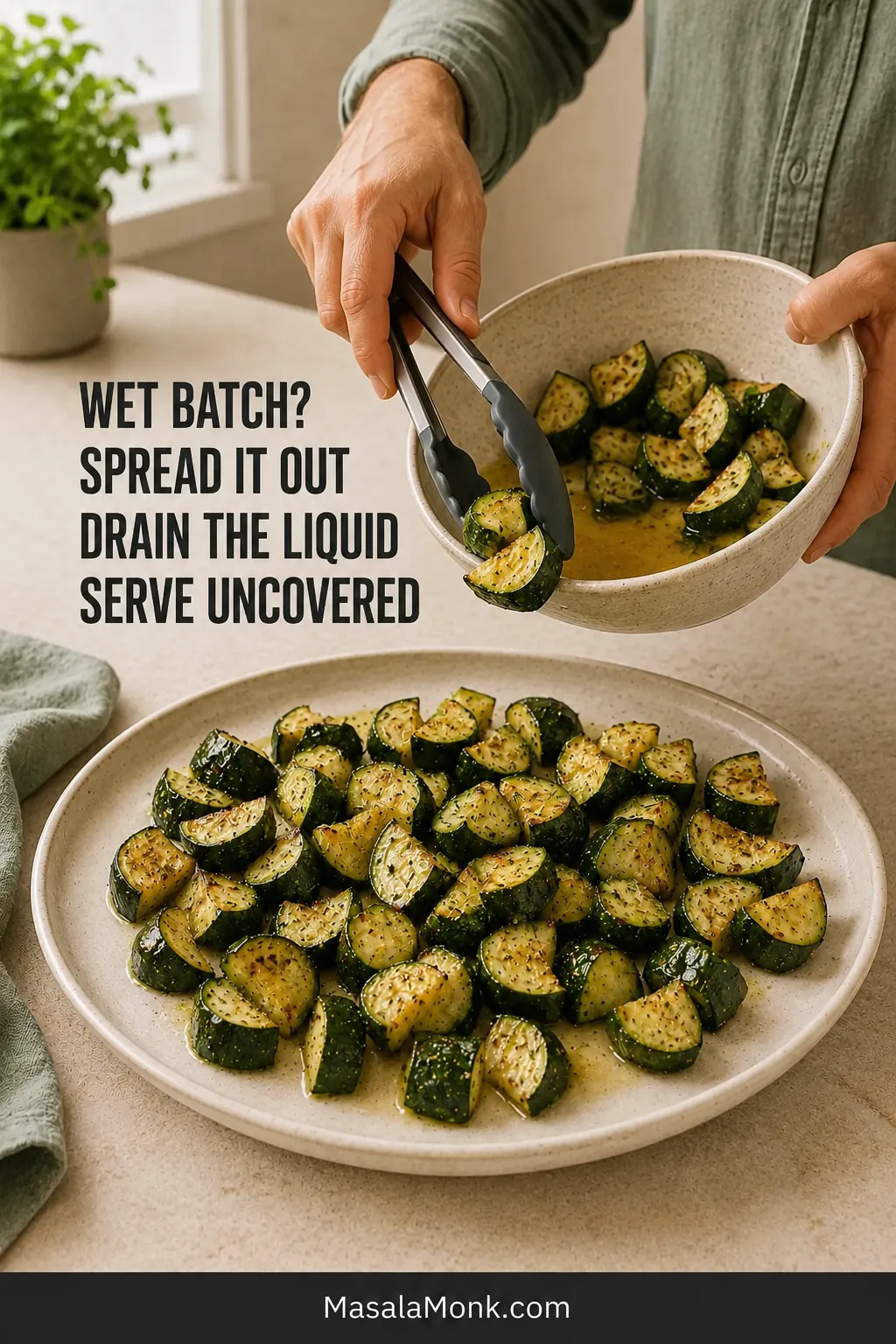
Water was released faster than the basket could evaporate it. Move the zucchini to a wide, uncovered plate and drain any liquid that has collected. Common causes include wet cut sides, early salting, a packed basket or transferring the hot pieces into a narrow or covered bowl.

Cook transferring wet zucchini from a narrow bowl with pooled liquid onto a broad uncovered platter using silicone-tipped tongs.
Spreading the batch prevents further steaming, but it cannot rebuild lost structure. Do not return floppy zucchini to the air fryer merely to chase darker color.

If the zucchini was oversized and seedy, scoop out the loose center next time. Otherwise, reduce the load, blot the pieces and season only when the air fryer is ready.

Limp or folding in half

The zucchini’s structure has already started to break down. Thin pieces, cooking past tenderness, leaving the finished batch in the hot basket or giving a second batch the same timing in an already-hot chamber can all cause it.

Remove it immediately and serve it now instead of chasing more color. Next time, cut thicker and watch the second batch a minute sooner.

Other common problems

  • Shriveled edges: Use thicker pieces, a measured coat of oil and an earlier check.
  • Burned seasoning: Use a lighter coating of spices and add Parmesan or delicate finishes near the end.
  • Taking much longer: A cold start, dense load, larger cut or oven-style appliance may be slowing the batch. Keep checking in short intervals.
  • Seasoning fell off: Dry the zucchini, add oil before the dry ingredients and avoid repeated shaking.
  • Greasy zucchini: Measure the oil and reduce it when cooking less than one pound.
  • Softened on the plate: Use a broad uncovered dish and add wet sauces at the table.

Once the texture is under control, changing the flavor is the easy part.

Air Fryer Zucchini Variations

Choose your finish: Keep the garlic-and-herb version simple, add Parmesan for nutty browned edges, or finish the zucchini with chaat masala and lime.

FinishBest when you wantKey adjustment
Everyday unbreadedGolden edges and a tender middleUse the base recipe
ParmesanSavory, nutty browned cornersReduce the salt and add cheese near the end
Chaat masala and limeTangy, bright flavorSkip the Italian herbs; add chaat masala, lime and cilantro after cooking
Very low oilMinimal added fatExpect lighter browning and slightly drier edges
Thin chips or breaded friesA crisp coatingUse the separate chips method

Using little or no oil: The zucchini will brown less evenly and may develop drier edges. Dry it carefully, keep the basket loose and check it sooner than the standard version. A fine oil spray offers a useful middle ground.

Side-by-side bowls comparing evenly browned zucchini cooked with the standard amount of oil and paler zucchini with drier edges cooked with little or no oil.
Air fryer zucchini without oil needs closer attention at the small tapered pieces. Their exposed edges may dry before the larger chunks develop much color.

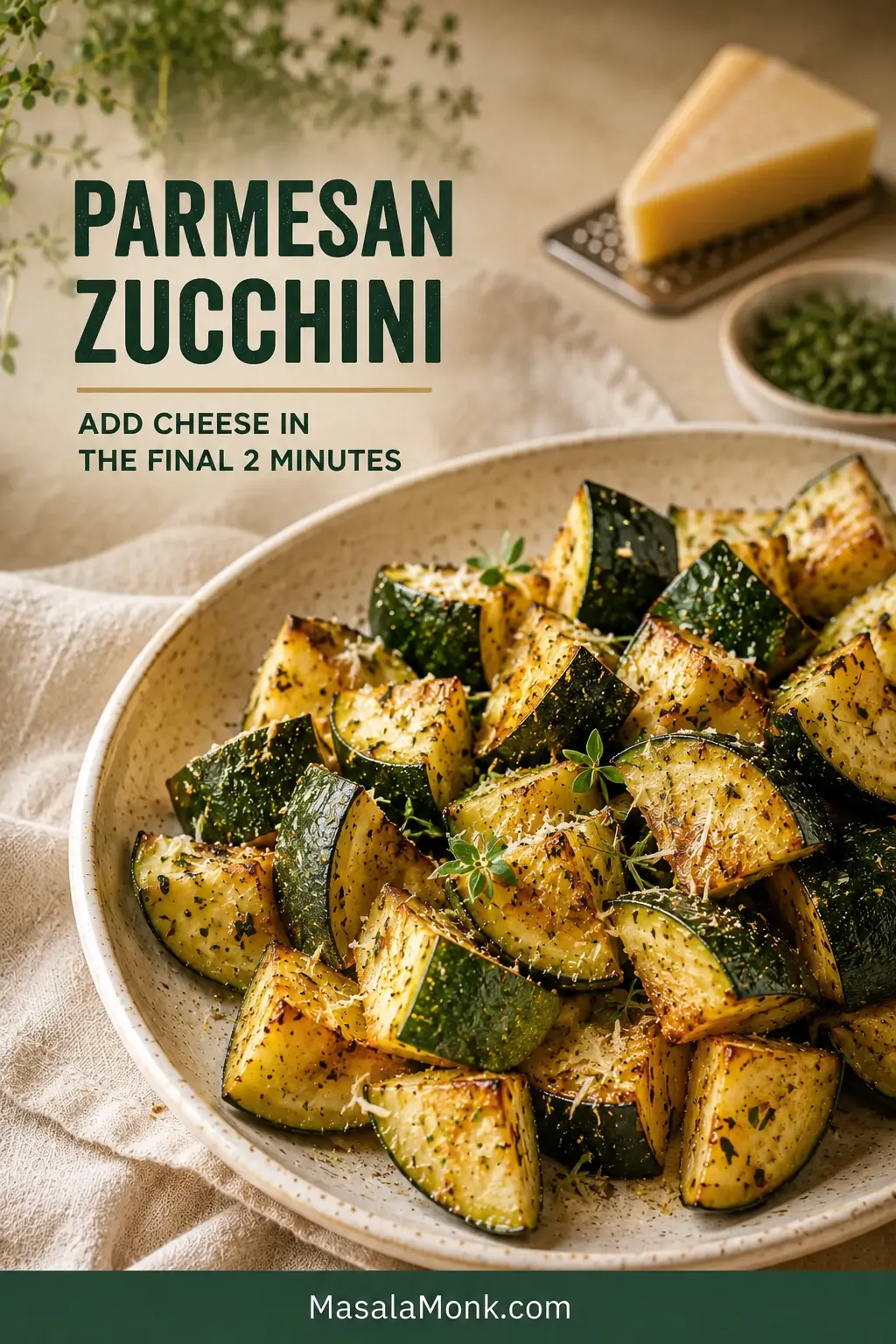
Parmesan Zucchini

Use half the salt in the base recipe. During the final 2 minutes, add 2 tablespoons / about 10 g finely grated Parmesan. Sprinkle it over the zucchini, return the basket and avoid shaking again.

The cheese should catch on the corners and smell nutty as it browns. For an easier finish, sprinkle Parmesan over the zucchini on the serving plate instead.

Browned zucchini chunks lightly coated with finely grated Parmesan, with a cheese wedge and metal grater in the background.
For Parmesan air fryer zucchini, use finely grated cheese rather than coarse shreds. The smaller particles cling to the corners and melt before they have time to scorch.

Beside garlic Parmesan broccoli pasta, keep the zucchini lightly seasoned and add only a light dusting of cheese at the table.

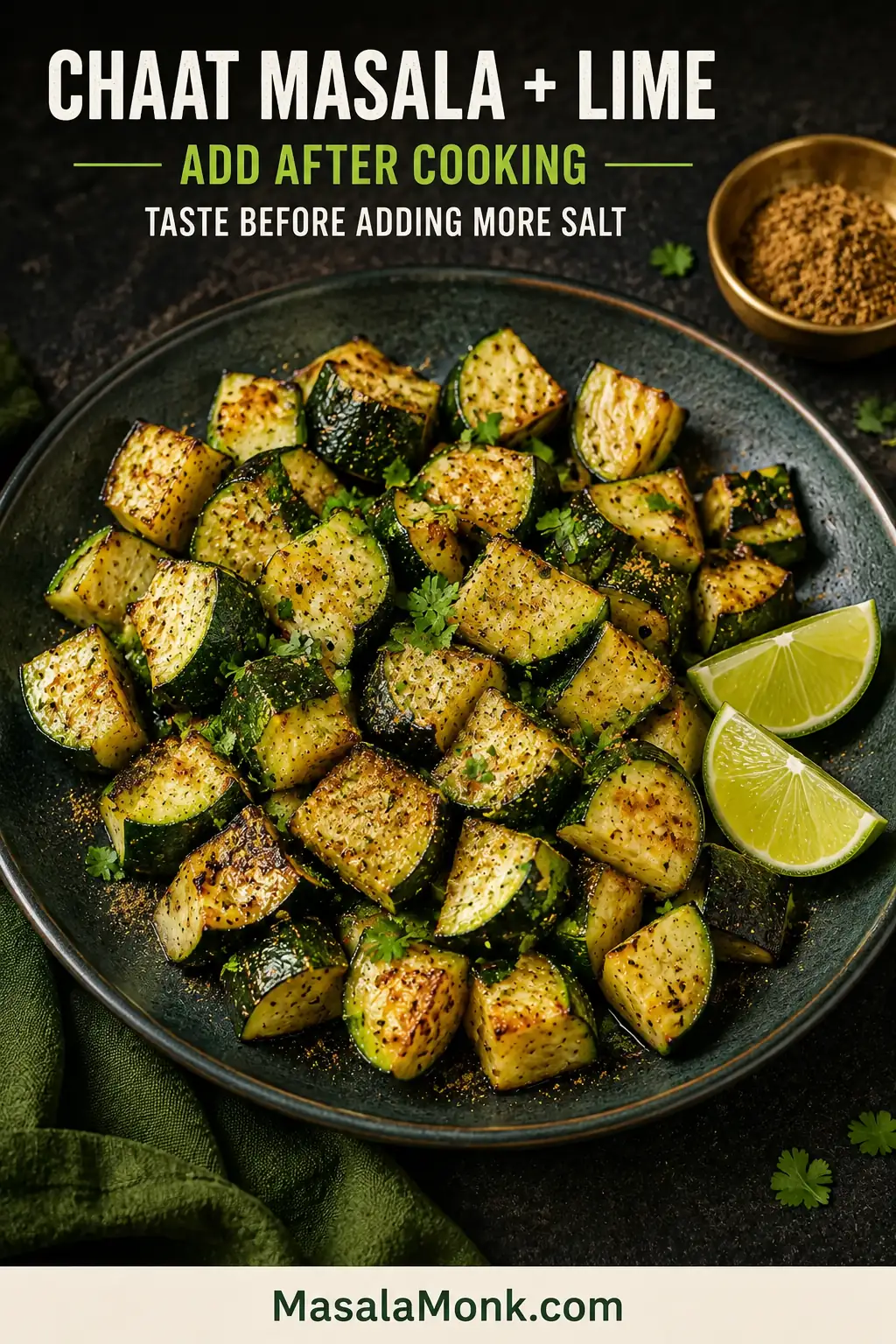
Chaat Masala and Lime Zucchini

Omit the Italian seasoning, but keep the garlic powder and black pepper. Reduce the fine salt to ¼ teaspoon.

After cooking, sprinkle the hot zucchini with ½ teaspoon chaat masala, add 1 teaspoon / 5 ml lime juice and finish with a small handful of chopped cilantro. Taste before adding more because chaat masala blends vary in salt and intensity.

Dark plate of browned zucchini finished with chaat masala, lime wedges and chopped cilantro beside a small bowl of spice.
Chaat masala, lime and cilantro belong after cooking, when their flavor stays vivid. Taste before adding more salt because seasoning blends vary widely.

The tangy spice and bright lime work especially well beside dal and rice, chickpeas or cubes of soft homemade paneer.

Zucchini and Yellow Squash

Yellow summer squash can cook in the same basket when the pieces are similar in size. Softer or seedier chunks may finish first, so take them out and let the firmer pieces continue.

Can You Air Fry Frozen Zucchini?

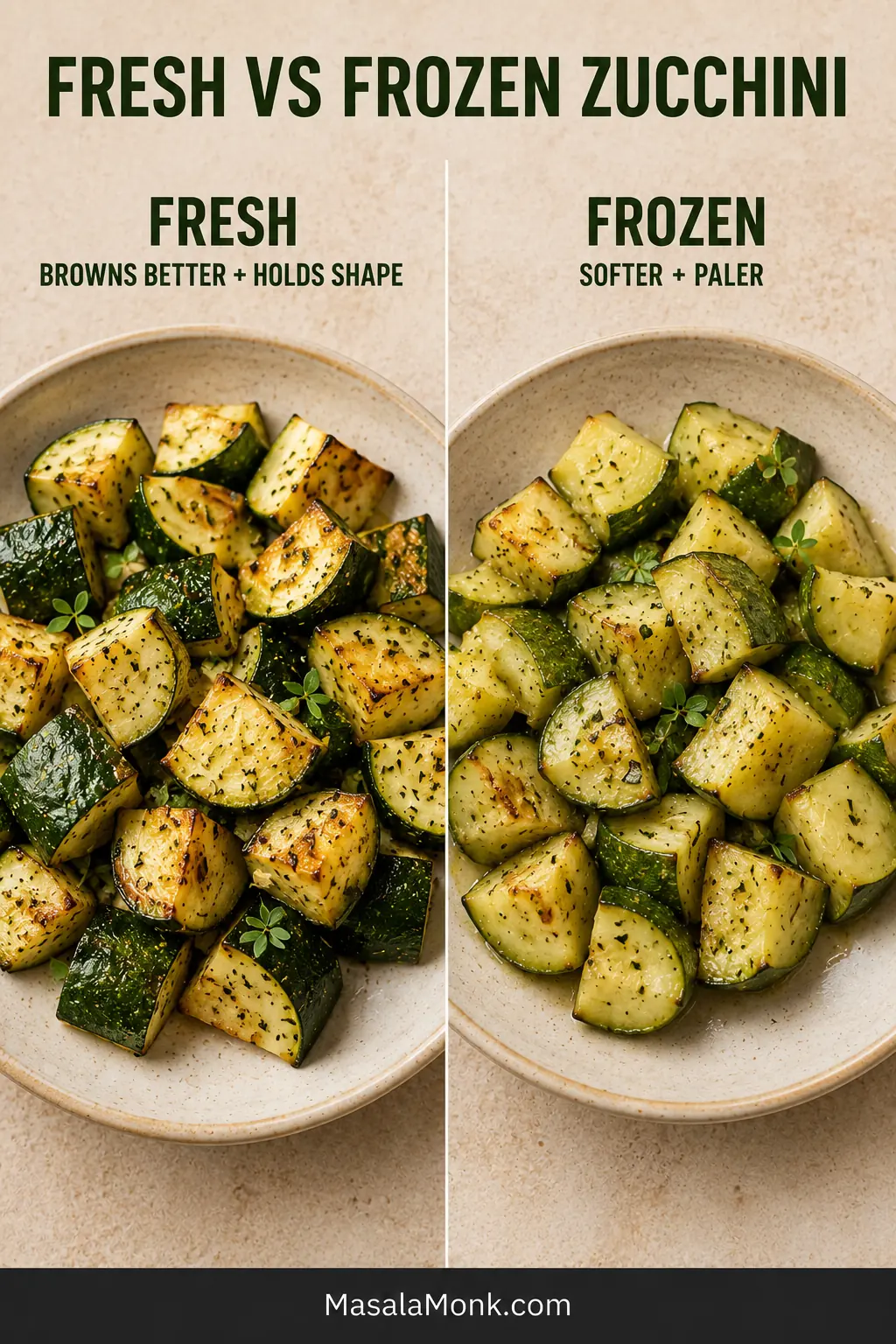
Yes, but it will be softer, paler and less distinctly roasted than fresh zucchini. Frozen pieces release more water and lose structure quickly.

Use fresh zucchini when you want browned chunks that hold their shape. Save frozen zucchini for soup, curry, pasta sauce, casseroles or blended vegetable sauces where softness belongs.

Side-by-side bowls showing browned, firm fresh zucchini and paler, softer zucchini cooked from frozen.
Treat frozen zucchini in the air fryer as an ingredient rather than a roasted side. Its softer texture becomes far less noticeable once folded into a curry, soup or sauce.

Freezing fresh zucchini at home? The National Center for Home Food Preservation’s summer-squash guidance explains how to blanch, cool and pack it safely.

What to Serve With Air Fryer Zucchini

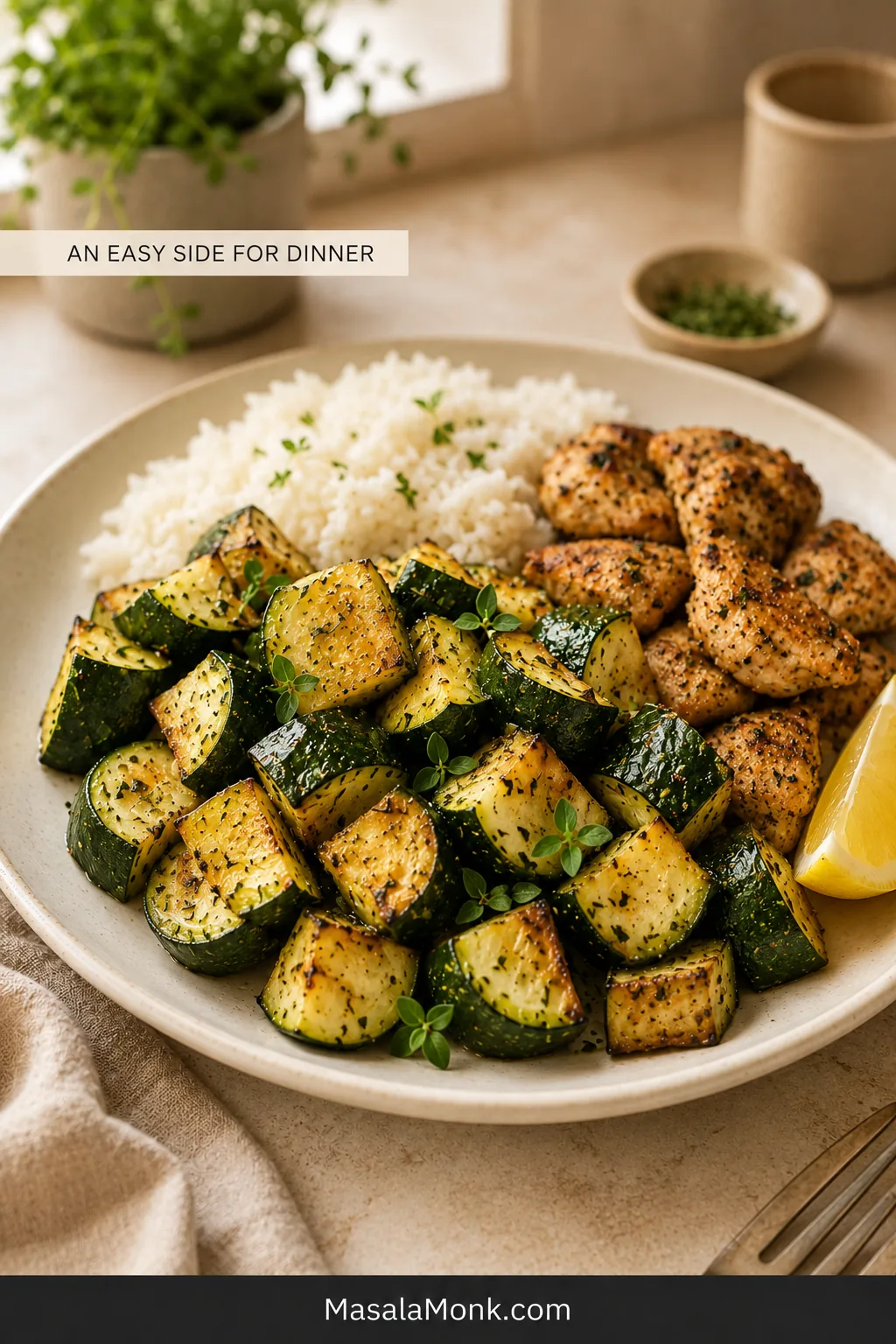
Once the texture is right, this is the kind of side that quietly fits around almost anything already planned for dinner. Spoon the zucchini beside rice or potatoes and juicy air fryer chicken breast, salmon, paneer or tofu. Squeeze lemon over the whole plate and add a little salt at the table.

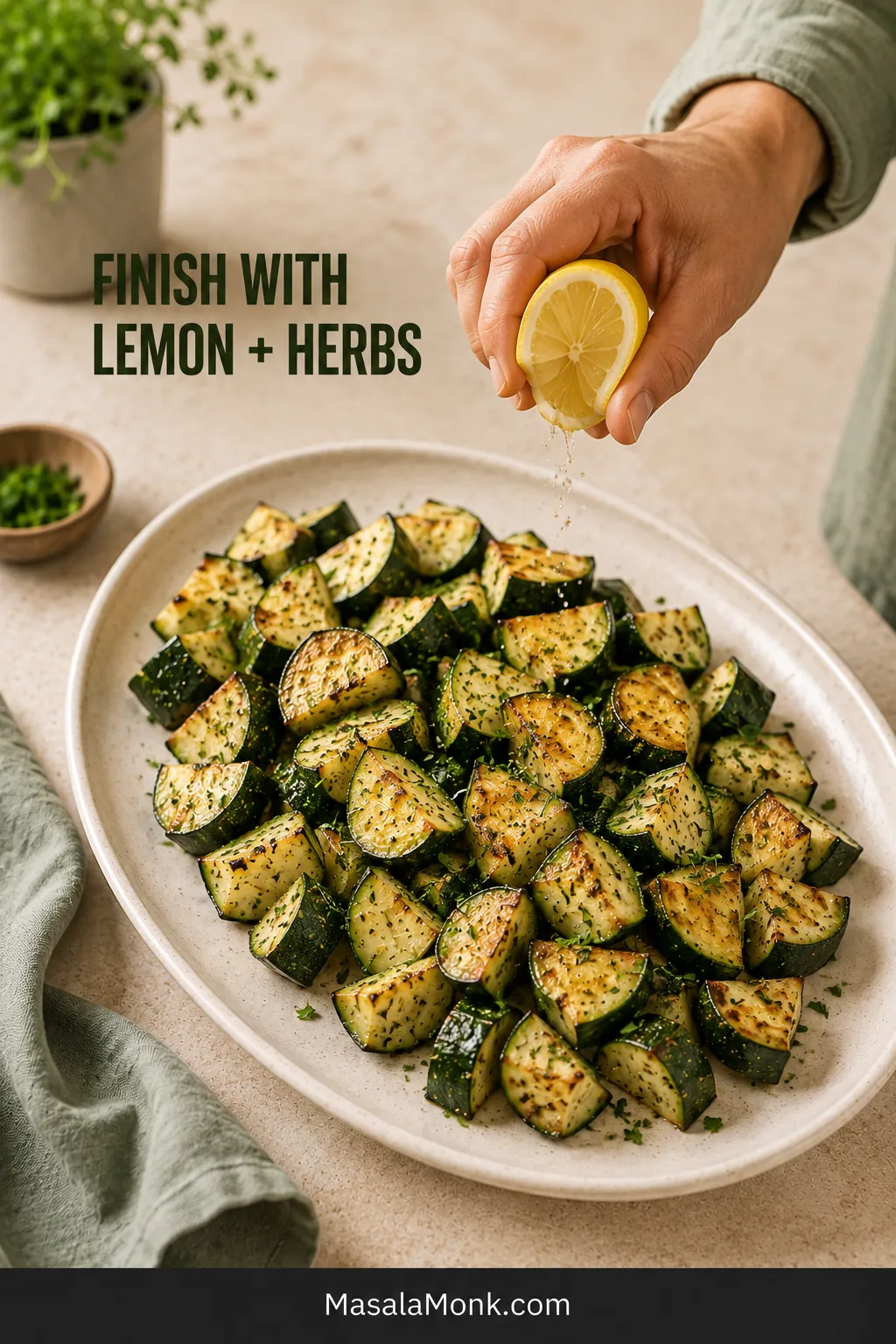
Hand squeezing lemon over browned zucchini spread across a broad white platter and finished with fresh herbs.
Add lemon and fresh herbs after cooking so their flavor stays bright. A broad platter lets steam escape instead of softening the browned surfaces.

With a richer main such as honey garlic salmon, keep the zucchini lemony and herb-led. For a vegetarian bowl, layer it with warm grains, chickpeas or paneer, plenty of herbs and a cool yogurt or tahini sauce.

Weeknight dinner plate with a generous serving of browned zucchini, white rice and seasoned chicken pieces on a warm neutral table.
Wondering what to serve with air fryer zucchini? Plate it last and keep gravy, dressing or wetter sauces alongside it so the browned surfaces remain distinct longer.

Once chilled, fold leftovers into a chickpea salad, wrap or pasta bowl. Add them close to serving so they do not sit in dressing and soften further.

When the air fryer is already occupied—or a softer vegetable side suits dinner better—the skillet mushroom and zucchini stir-fry is a useful stovetop alternative.

How to Store and Reheat Air Fryer Zucchini

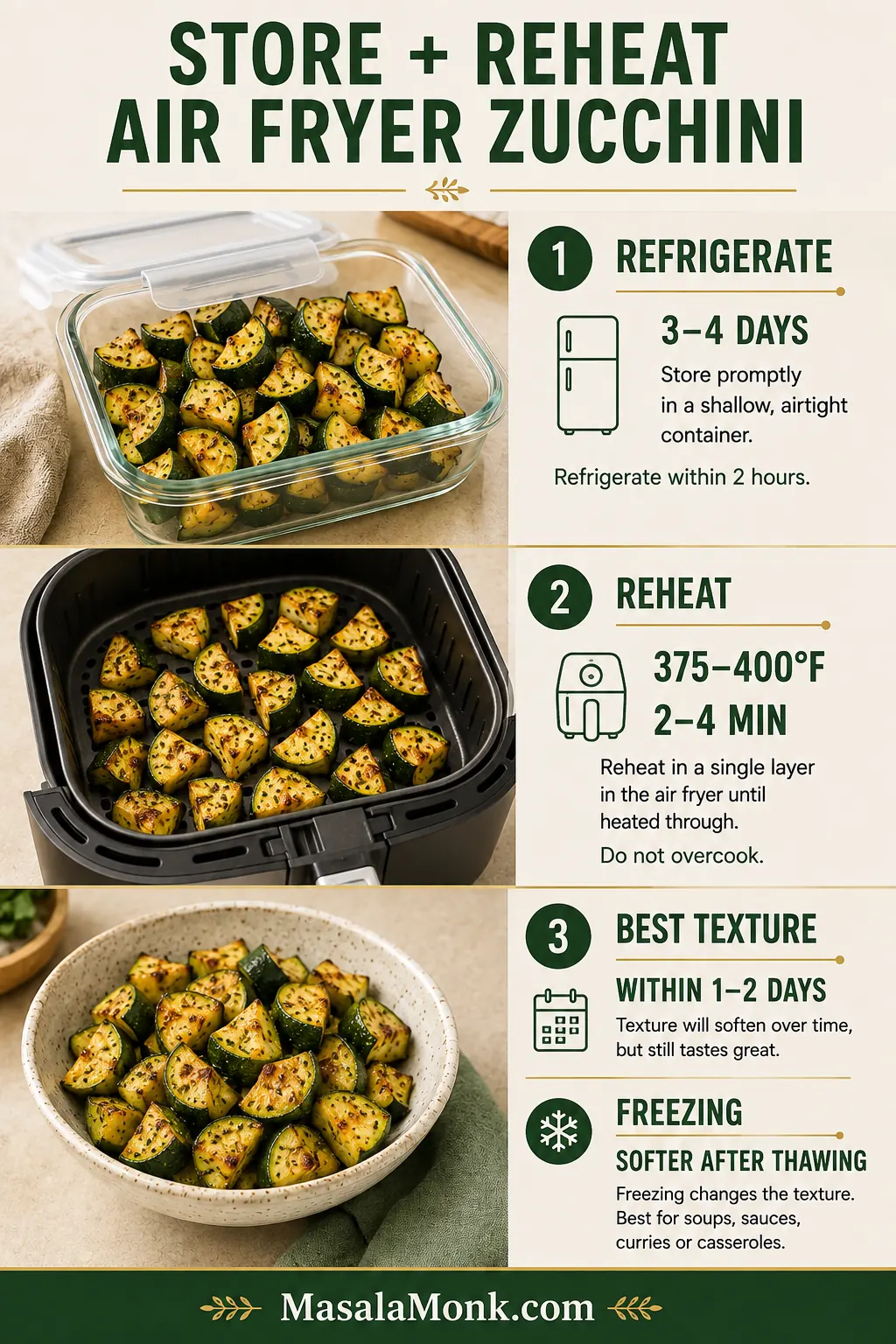
Transfer leftovers promptly to a shallow covered container and refrigerate them within two hours. The zucchini does not need to cool completely before going into the refrigerator.

Use it within 3 to 4 days, following the USDA’s leftovers and food-safety guidance. For the best texture, eat it during the first day or two.

Vertical storage guide showing zucchini in a shallow lidded container, a single layer reheating in an air fryer and notes about refrigeration and freezing.
For the best way to reheat air fryer zucchini, warm only the portion you need in one layer. Add reserved lemon, herbs or cheese after reheating—not before storage.

Reheating

Arrange the zucchini in one layer and reheat at 375–400°F / 190–200°C for approximately 2 to 4 minutes. Check early; the goal is to reheat it, not cook the center a second time.

The microwave is convenient, although the zucchini will be softer. Heat it in short intervals. Freezing cooked zucchini will not preserve its roasted texture; use thawed leftovers in soup, sauce, curry or a casserole.

Food-safety note: Reheat leftovers until hot throughout. If you check with a thermometer, USDA recommends reheating leftovers to 165°F / 74°C.

Frequently Asked Questions

Do you need to peel zucchini before air frying?

No. The skin is edible, adds color and helps the chunks stay intact. Leave it on unless it is unusually tough or damaged.

Do you need to preheat the air fryer?

Preheating gives the zucchini a hot start and makes the checking range more predictable. Skip it only when your machine preheats automatically or its manufacturer recommends starting from cold.

Should zucchini be salted before air frying?

Salt small or medium zucchini immediately before air frying, not well in advance. Only oversized, visibly watery zucchini benefits from a 10-minute salted rest followed by thorough blotting.

Why did my air fryer zucchini turn soggy?

Common causes include thin pieces, a crowded basket, wet surfaces, a cold start, salting too early, overcooking or trapping steam after cooking. Use the full troubleshooting guide to match the visible symptom with the right correction.

How long does zucchini take at 400°F?

Begin checking thick chunks at 7 minutes. Many preheated basket-style machines will finish them between 8 and 11 minutes. See the time and temperature guide for oven-style machines, second batches and visual stopping cues.

Can you air fry zucchini rounds or spears?

Yes. Keep rounds and spears fairly thick and inspect them early. Rounds usually soften faster because they expose broad cut faces, while sturdy spears may take closer to the chunk timing. See the cut-size and shape guide for the visual comparison. Use the separate zucchini chips method for very thin or breaded pieces.

When the zucchini looks ready before the timer does, trust your fork. Take it out and let dinner continue.

Posted on 4 Comments

Skillet Mushroom and Zucchini Stir Fry- Fresh and Healthy

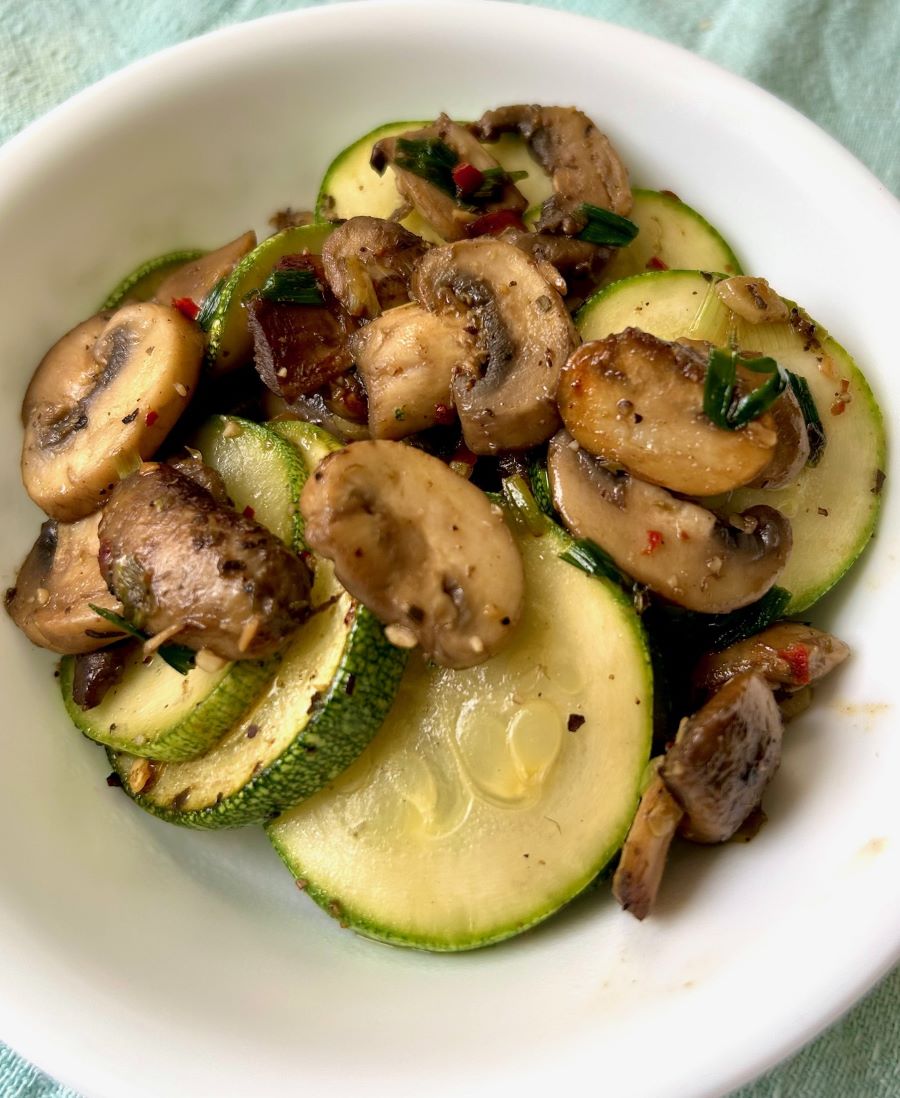
Sometimes, the best way to enjoy fresh veggies is a simple sauté. I love doing this with zucchini, especially because it cooks up quickly. Skillet sautéed mushroom and zucchini is fresh, healthy and absolutely delicious side dish. This is sautéed to crispy tenderness with garlic, scallions, butter, olive oil and mild spices. It is quick, easy and wholesome. Even kids will love it as a side.

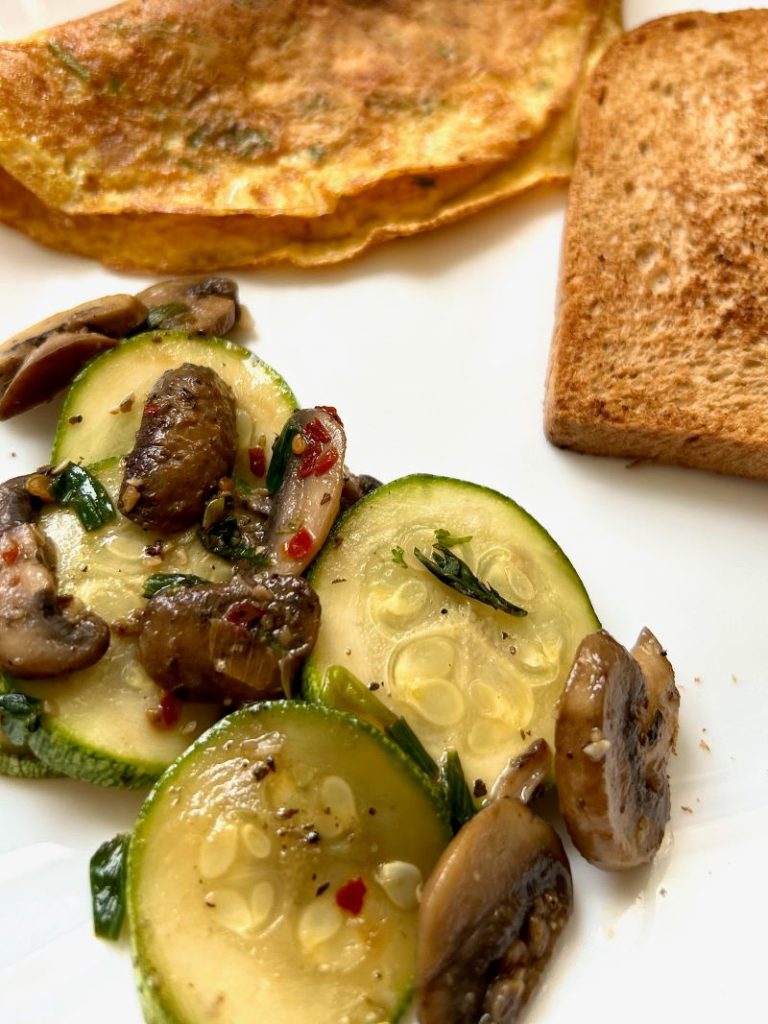
Pair these veggies with scrambled eggs, omelette or roasted chicken. For vegetarians and vegans you can add Indian cottage cheese or tofu to it for protein. It could be your perfect light meal in summers. I paired it with omelette and a toast for breakfast. 

Tips for sautéing Zucchini to prevent it from getting Soggy

  1. Since zucchini contain a large amount of water content, it is best to sauté it at on a high flame. It allows the moisture to evaporate at a quicker rate, allowing the zucchini to brown. It also shortens the cooking time. 
  2. Be mindful when cutting the zucchini. Smaller and uneven pieces can burn more easily at high temperature. 
  3. Don’t overcrowd the zucchini in the pan. This will cause the zucchini to steam and not get browning effect.

Recipe: serves 3

Ingredients 

  • Zucchini: 2 cups, cut into roundels of roughly 1/2 cm thickness
  • Mushroom: 250 grams, chopped length wise
  • Garlic: 3-4 large cloves, cut thinly
  • Scallions: 2, chopped with greens
  • Salt and pepper to taste
  • Italian Seasoning: 1/2 tsp
  • Red Chilli flakes: 1/2 tsp or less
  • Butter: 20 grams
  • Olive Oil: 1 tbsp
  • Lemon juice: 1 tsp

Instructions 

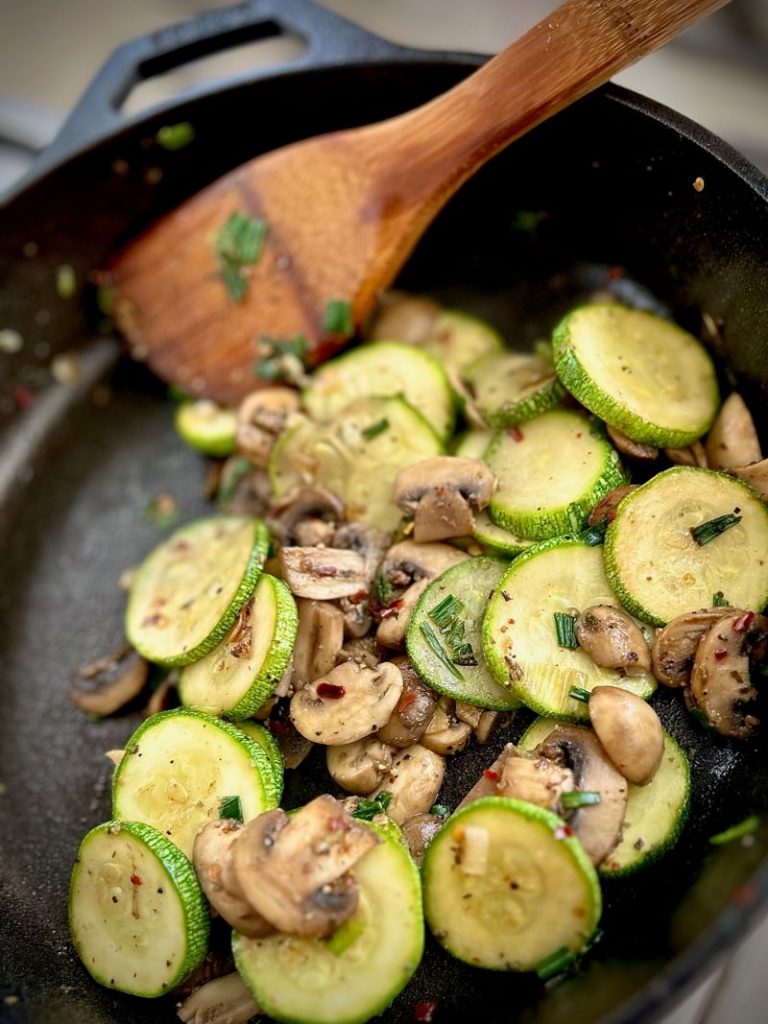
  • Bring cast iron skillet to medium heat. Add half of butter and olive oil.
  • Increase the flame and add zucchini. Sauté at high flame for 3-4 minutes. Remove it from the skillet and set aside. 
  • Now add remaining half of the butter and oil and sauté garlic till it becomes lightish brown. 
  • Then add mushrooms and cook for a minute. 
  • Season mushrooms with some salt and pepper and then add scallions and scallions greens. Cook everything for 4-5 minutes or till mushrooms soften and become brown.
  • Return zucchini to the skillet. Add Italian seasoning and red chilli flakes if using. Mix well and cook for another minute on high flame. 
  • Taste for salt and other seasoning. Add more if required. 
  • Remove skillet from flame and finish it with lemon juice. 

Enjoy the goodness! 🙂

I hope you enjoyed reading this recipe. Do give this recipe a shot. I am sure this recipe will bring you a lot of joy. If you try this recipe, do give us a shout out. Just click a picture and tag us on @masala.monk or use the hashtag #MasalaMonkRecipe and share on Instagram and Facebook. We would love to hear from you. Happy Cooking!

Posted on Leave a comment

Zucchini – Nutrition, Benefits, and 5 Practical Ways for Weight Loss

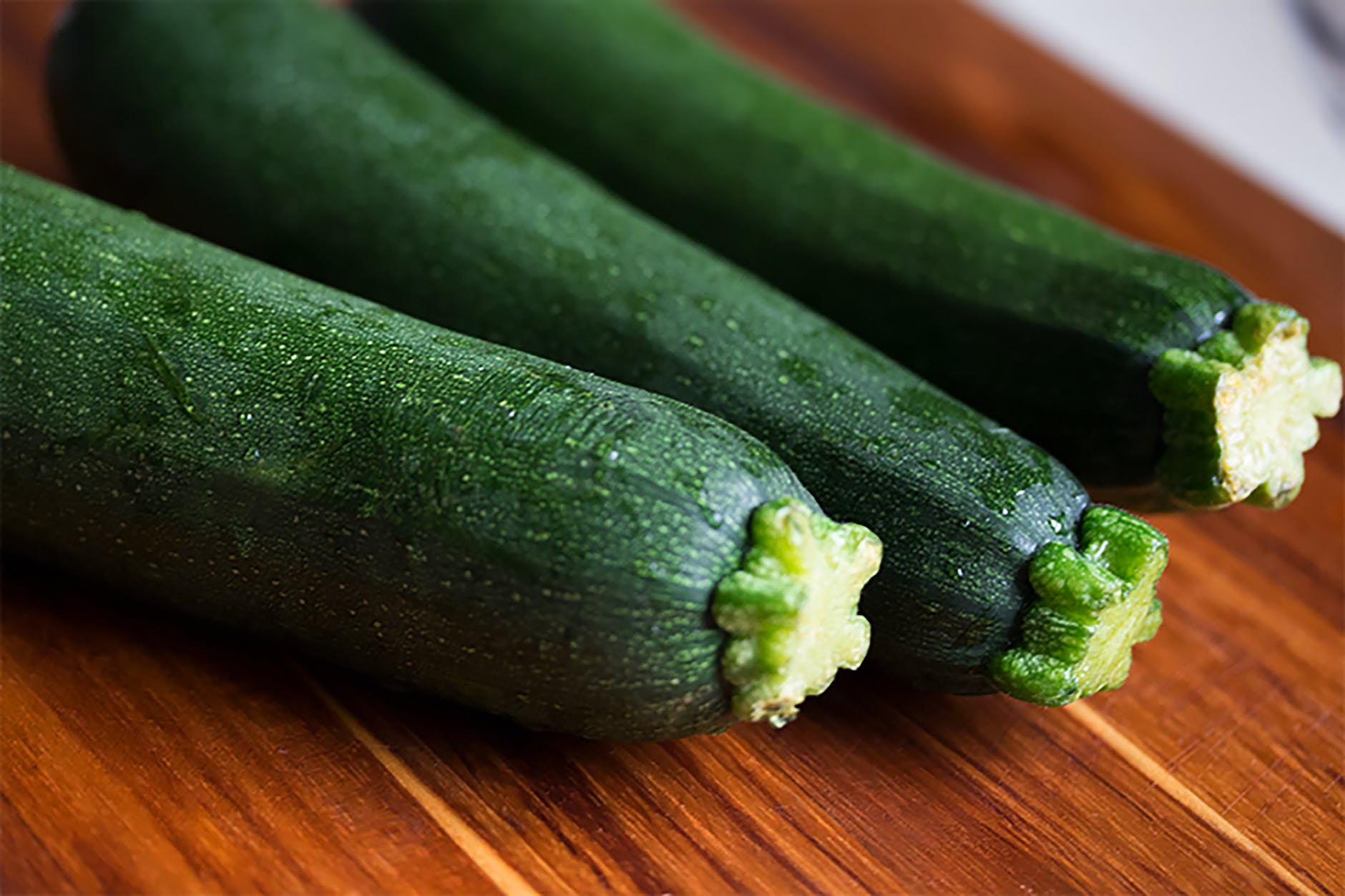
pexels-photo-128420.jpeg

Zucchini: The Ultimate Guide to Weight Loss and Nutritional Benefits

Zucchini, often referred to as courgette in some parts of the world, is not just a simple summer squash. It’s a powerhouse of nutrition, offering a multitude of health benefits. Whether you’re on a weight loss journey or simply aiming to boost your overall health, zucchini might just be the vegetable you’ve been overlooking. Let’s dive deep into the world of zucchini and explore its potential.

1. Zucchini: A Weight Loss Ally

If you’re aiming to shed some extra pounds, zucchini should be on your plate. Here’s why:

  • Low in Calories: One cup of raw zucchini has a mere 20 calories. This means you can eat a good amount without consuming too many calories.
  • High Water Content: Zucchini is composed of about 95% water. This high water content can help you feel full and satisfied, reducing the chances of overeating.
  • Zoodles – A Pasta Alternative: Zucchini noodles, affectionately known as “zoodles”, are a fantastic low-carb, low-calorie alternative to traditional pasta. They can be paired with a variety of sauces, giving you the pasta experience without the added carbs.

2. Nutritional Goldmine

Zucchini is not just about weight loss; it’s packed with essential nutrients:

  • Vitamins: It’s a good source of Vitamin C, which is crucial for skin health and immunity. It also provides Vitamin B6, essential for brain health and the conversion of food into energy.
  • Minerals: Zucchini boasts minerals like potassium, which can help regulate blood pressure, and magnesium, known for its muscle and nerve functions.
  • Dietary Fiber: This vegetable is a good source of dietary fiber, promoting digestive health and aiding in cholesterol regulation.

3. Beyond Weight Loss: Health Benefits of Zucchini

Zucchini’s benefits extend beyond just weight loss:

  • Heart Health: The combination of fiber, potassium, and magnesium in zucchini can help reduce the risk of heart diseases.
  • Antioxidant Properties: Zucchini contains antioxidants like lutein and zeaxanthin, which can combat oxidative stress and reduce the risk of age-related diseases.
  • Blood Sugar Regulation: The fiber content in zucchini can help stabilize blood sugar levels, making it beneficial for diabetics.

4. Culinary Delights: How to Enjoy Zucchini

The versatility of zucchini is unmatched:

  • Raw Zucchini: Thinly sliced zucchini can be added to salads or used as a base for zucchini carpaccio.
  • Baked Goods: Zucchini bread and muffins are delicious ways to sneak in some veggies into your baked goods.
  • Stuffed Zucchini: Hollow out a zucchini and stuff it with a mixture of grains, veggies, and proteins for a wholesome meal.
  • Grilled Zucchini: Perfect for summer BBQs, grilled zucchini slices can be seasoned with herbs and spices for a smoky flavor.

5. Zucchini vs. Other Veggies

Compared to other vegetables, zucchini stands out due to its versatility in cooking and its rich nutrient profile. For instance, while cucumbers are hydrating, zucchinis offer a broader range of vitamins and minerals.

Conclusion

Zucchini is more than just a green vegetable; it’s a versatile, nutritional powerhouse that can support weight loss, heart health, and overall well-being. By incorporating zucchini into your diet, you’re not only treating your taste buds but also nourishing your body.


FAQs

  1. How does zucchini’s nutritional profile compare to other squashes?
    Zucchini, like other squashes, is rich in vitamins and minerals but tends to have fewer calories and carbs, making it a preferred choice for many.
  2. Is zucchini safe for pregnant women?
    Absolutely! Zucchini is not only safe but also beneficial for pregnant women due to its folate content, which supports fetal development.
  3. Can zucchini be juiced?
    Yes, zucchini can be juiced and combined with other vegetables and fruits for a refreshing drink.
  4. Why is zucchini sometimes called a “summer squash”?
    Zucchini is termed “summer squash” because it is harvested during the summer months when it’s tender and soft.
  5. How should zucchini be stored for freshness?
    It’s best to store zucchini in a plastic bag in the refrigerator’s crisper drawer. It can last for about a week.

Blog Tags:
Zucchini, Weight Loss, Nutritional Benefits, Zoodles, Heart Health, Dietary Fiber, Antioxidants, Cooking Tips, Summer Squash, Health and Wellness.