
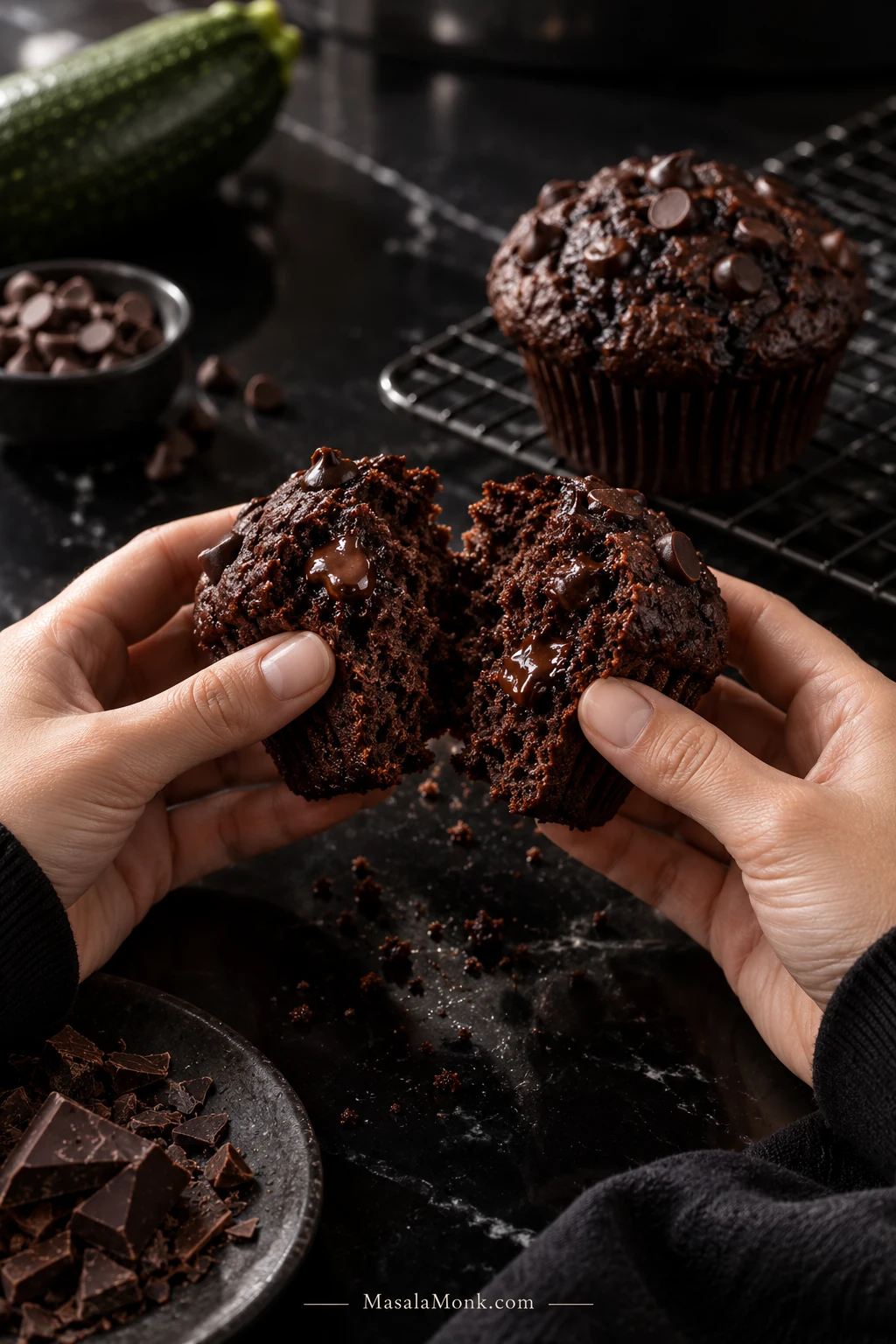
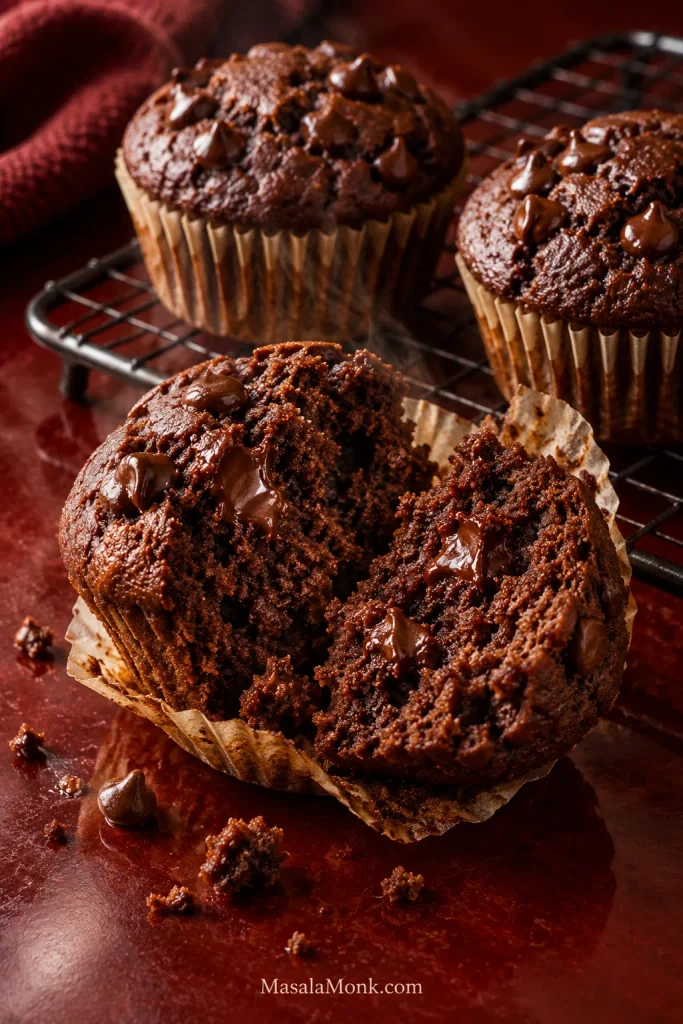
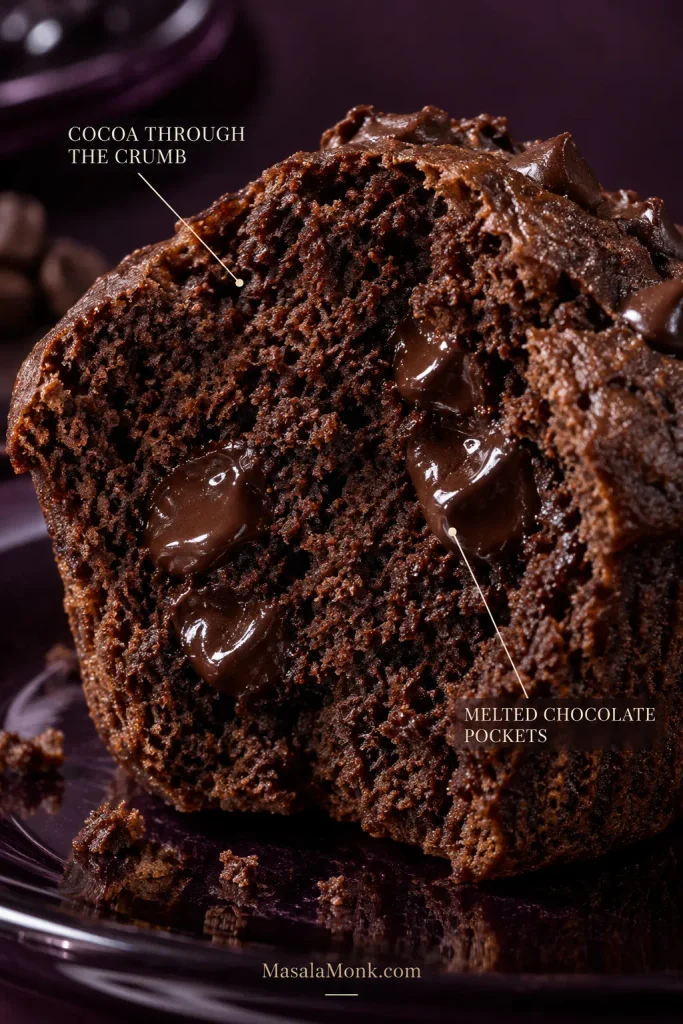
These chocolate zucchini muffins should eat like rich chocolate muffins that happen to contain zucchini—not vegetable muffins that happen to contain cocoa. Break one open and the center should be dark, soft and tender, with melted chocolate tucked through the crumb.
The double chocolate comes from cocoa baked through the crumb and semisweet chips that stay soft and melty while the muffins are warm. Finely shredded zucchini works quietly underneath, keeping the center tender while contributing very little flavor of its own.
The one part worth watching is the zucchini’s water. Exceptionally juicy zucchini or an extra handful of shreds can leave the middle heavy. Squeeze the zucchini bone-dry, though, and you give up some of the softness it brings to the crumb.
Three checkpoints matter more than any one timer.
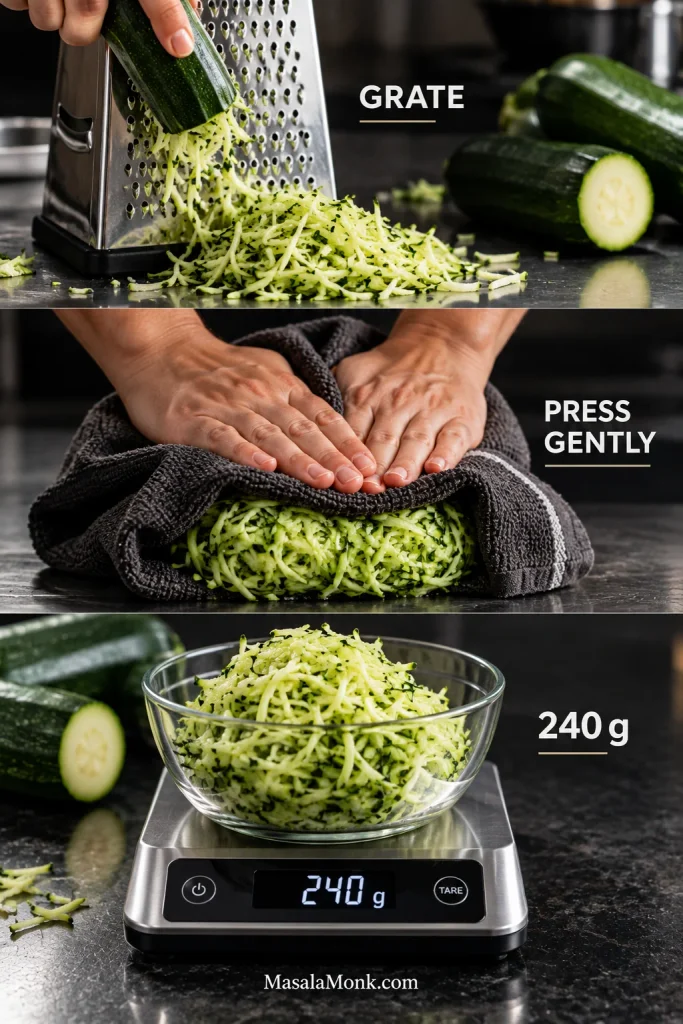
Prepared Zucchini
240 g / 8.5 oz
Finely shredded, with loose surface water pressed away while the shreds remain damp.
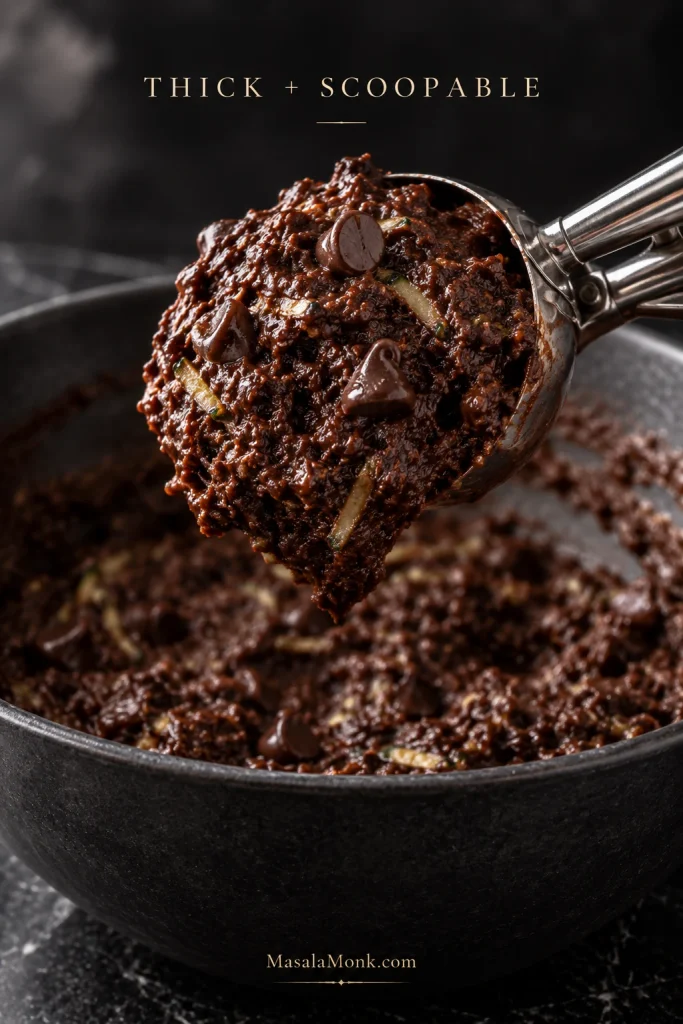
Batter
Thick + scoopable
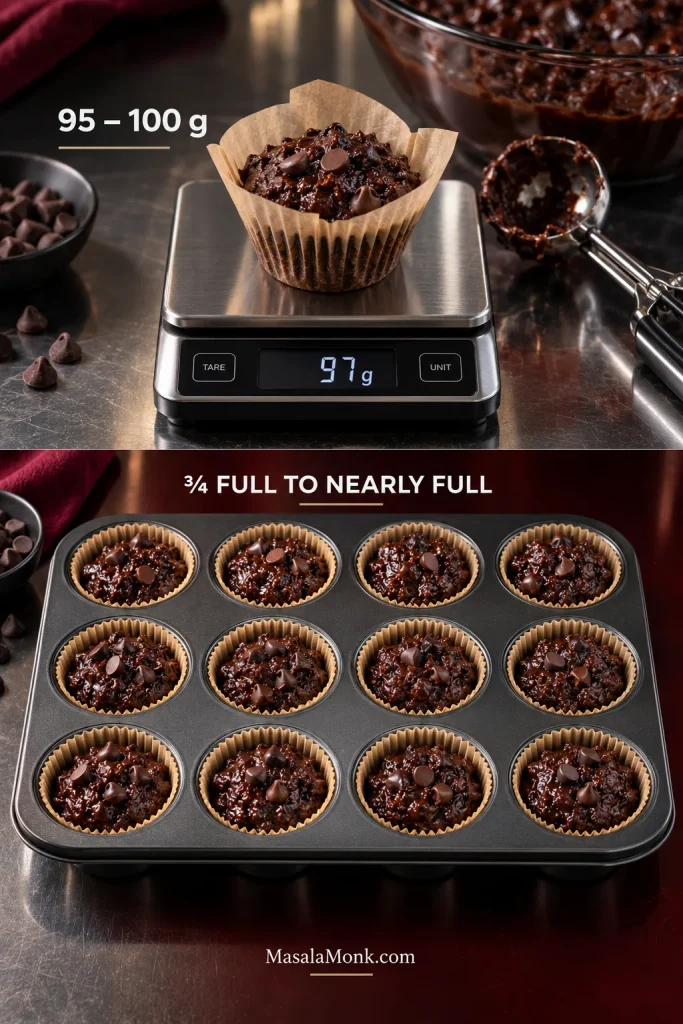
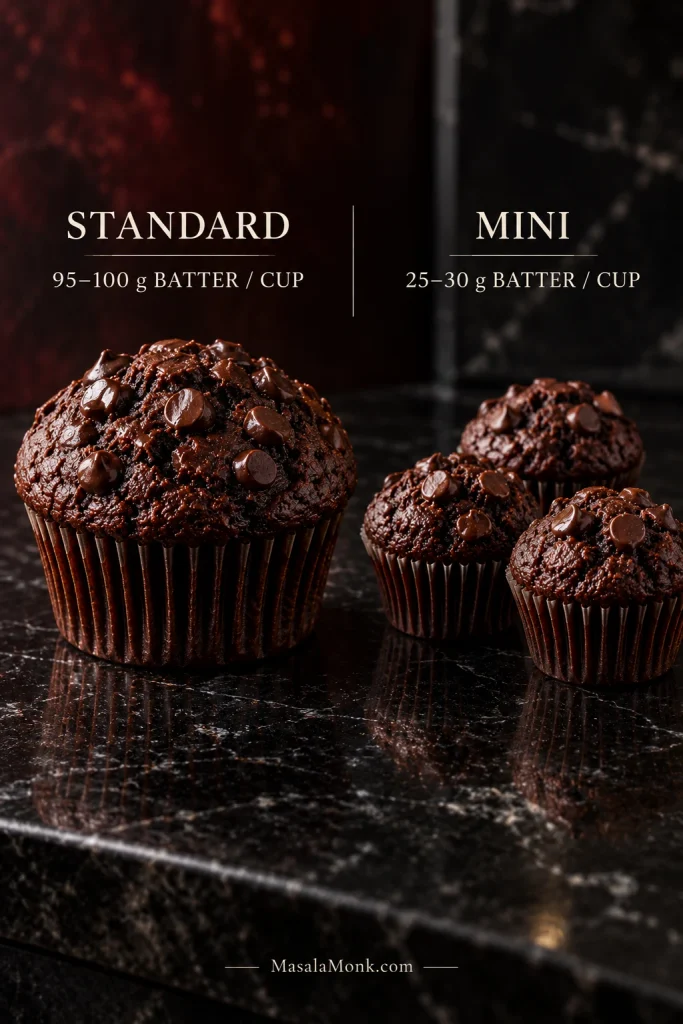
About 95–100 g / 3.4–3.5 oz in each standard muffin cup.
Baked Center
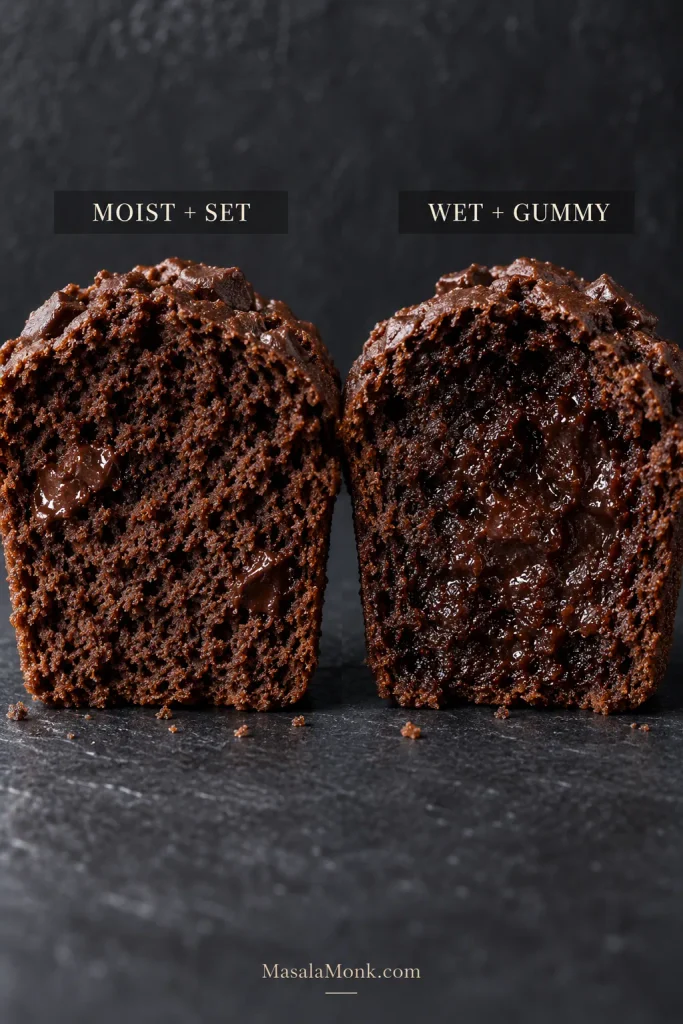
Moist + fully set
The top springs back and a tester shows tender crumbs with no raw batter.
Chocolate Zucchini Muffins Recipe
No mixer is needed—a whisk and spatula are enough.
Useful equipment: a standard 12-cup muffin pan, parchment-style liners, box grater, two mixing bowls, whisk, flexible spatula and wire rack. A digital kitchen scale is strongly recommended for the zucchini and portioning; an instant-read thermometer is optional.
Use the small shredding holes of the box grater. The tiny rasp or zester face tends to turn zucchini into wet pulp. A light-colored metal muffin pan works well here; dark nonstick pans brown the bottoms and sides faster, so check them earlier.
Ingredients
Dry Ingredients
- 200 g / 7 oz all-purpose flour, about 1⅔ cups when spooned and leveled
- 40 g / 1.4 oz Dutch-process unsweetened cocoa powder, about ½ cup
- 1½ teaspoons baking powder
- ½ teaspoon baking soda
- ½ teaspoon fine salt
- 1 teaspoon instant espresso powder, optional
Wet Ingredients
- 150 g / 5.3 oz light or dark brown sugar, a scant ¾ cup packed
- 50 g / 1.8 oz granulated sugar, about ¼ cup
- 2 large eggs, about 100 g without shells
- 110 g / 120 ml neutral oil (½ cup / 4 fl oz)
- 80 g / 2.8 oz sour cream, about ⅓ cup
- 10 ml / 2 teaspoons vanilla extract
Zucchini & Chocolate
- 240 g / 8.5 oz prepared zucchini, finely shredded and weighed after pressing away loose surface water. No scale? Expect roughly 1¾–2 cups after pressing, and use the damp, no-drip cue in the method as your final check.
- 170 g / 6 oz semisweet chocolate chips, about 1 cup, divided
Method
Prep and Mix
- Heat the oven to 375°F / 190°C. Put a rack in the middle and line a standard 12-cup muffin pan with parchment-style liners. Let the oven fully preheat before the batter goes in.
- Prepare the zucchini. Leave the tender peel on and shred it on the small shredding holes of a box grater. Spread the shreds over a clean kitchen towel, fold another section over the top and press firmly with flat hands. Lift the towel and check them. Press again if there is still loose water on the surface. The zucchini should feel damp and flexible. If you can, weigh 240 g / 8.5 oz.
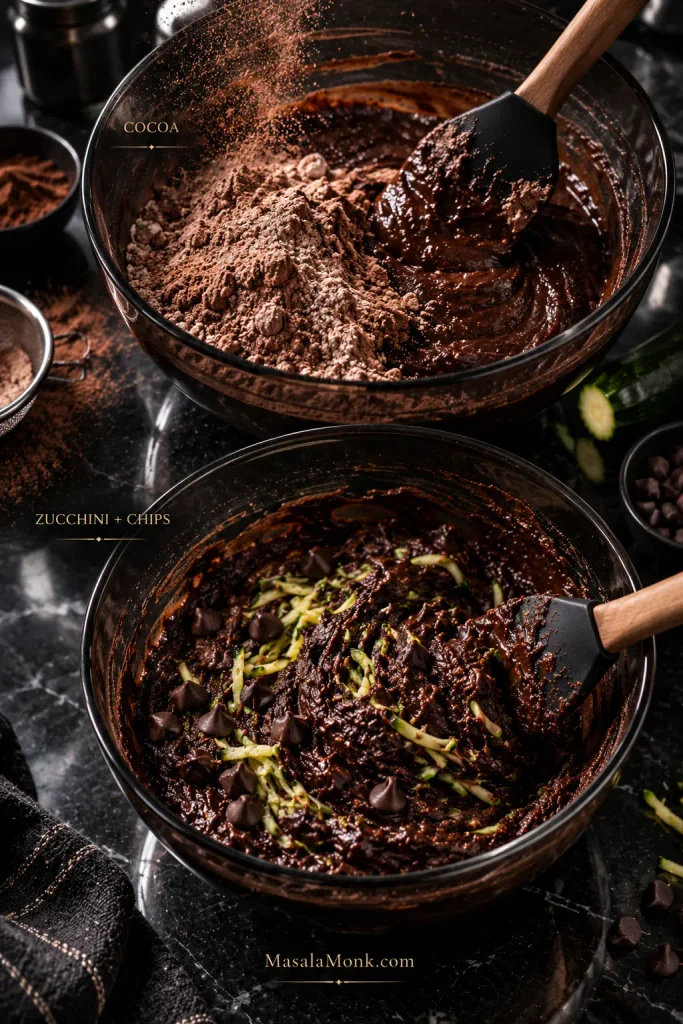
- Mix the dry ingredients. Whisk the flour, cocoa powder, baking powder, baking soda, salt and optional espresso powder until the cocoa is evenly dispersed and no obvious lumps remain.
- Mix the wet ingredients. In a large bowl, whisk the brown sugar, granulated sugar and eggs until evenly combined. Whisk in the oil, sour cream and vanilla until smooth.
- Bring the batter together gently. Add the dry mixture to the wet mixture and fold until only a few flour or cocoa streaks remain. Then add the prepared zucchini and 140 g / 5 oz chocolate chips, folding just until combined. The batter should look dark, thick and slightly glossy.
Check, Portion and Bake
- Still looks almost too thick? That is okay. The batter should be thick enough to scoop. It may loosen as the zucchini releases moisture, so don’t add milk just because it looks thick. If yours already looks loose, leave the flour alone and move on.
- Portion evenly. Divide the batter among the 12 muffin cups, aiming for about 95–100 g / 3.4–3.5 oz per cup. Without a scale, fill the cups roughly ¾ full to nearly full. Scatter the remaining 30 g / 1 oz chocolate chips over the tops.
- Bake for about 20–24 minutes. Start checking at 19 minutes. Pan color, zucchini moisture and individual ovens can shift the timing.
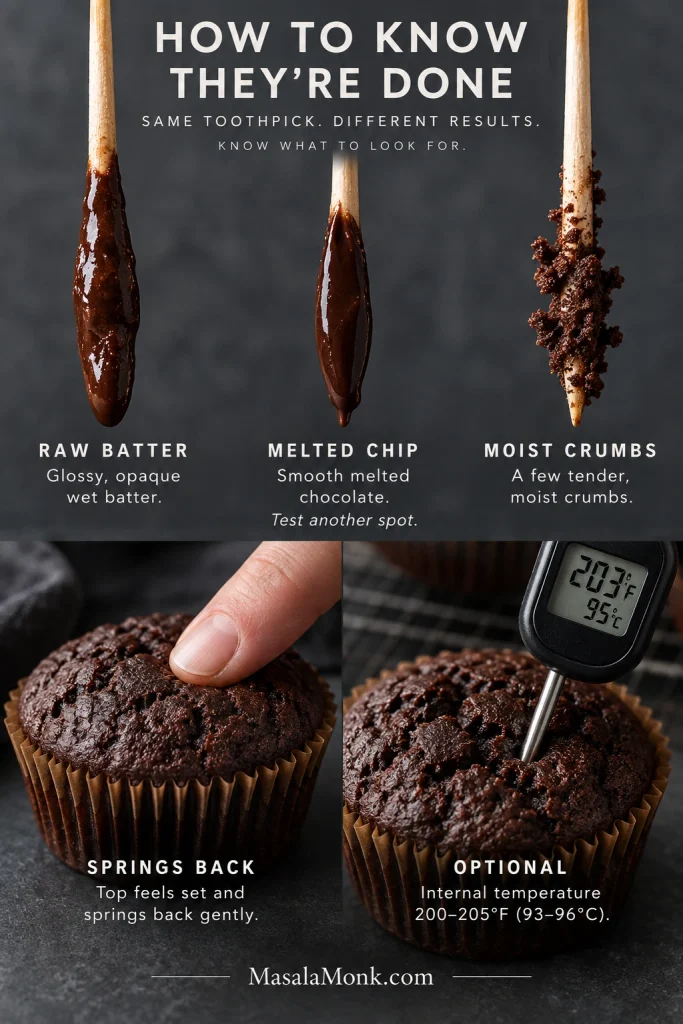
- Check the center. The tops should look set and spring back gently. A tester should show moist crumbs with no raw batter. Hit a pocket of melted chocolate? Test another spot. If you use a thermometer, about 200–205°F / 93–96°C is another useful check.
Cool Before Judging the Crumb
- Cool for 5 minutes in the pan, then move to a wire rack. Give the crumb a few more minutes to settle before deciding whether the middle is fully set. A muffin cut open piping hot will look softer than one that has cooled slightly.
Making them ahead? Measure the dry ingredients and chocolate in advance, but mix the batter close to baking time. Once the zucchini is in the bowl and the leaveners are wet, the batter is better off heading for the oven.
Let one cool long enough for the crumb to settle, then pull it apart. The center should be soft and dark, with little pockets of chocolate still yielding where the muffin is warm.
For the Next Batch
If the muffins are already in the oven, you have everything you need. Come back here when you want to handle a different kind of zucchini, change an ingredient, make minis or work out what happened to the crumb.
Getting the Zucchini Moisture Right
So, should you squeeze zucchini for muffins? For this recipe, yes—but gently. Pick up a small handful of the shredded zucchini and squeeze. Nothing should drip, but the strands should still feel soft, damp and flexible. That’s the state you want before weighing the 240 g / 8.5 oz for this recipe.
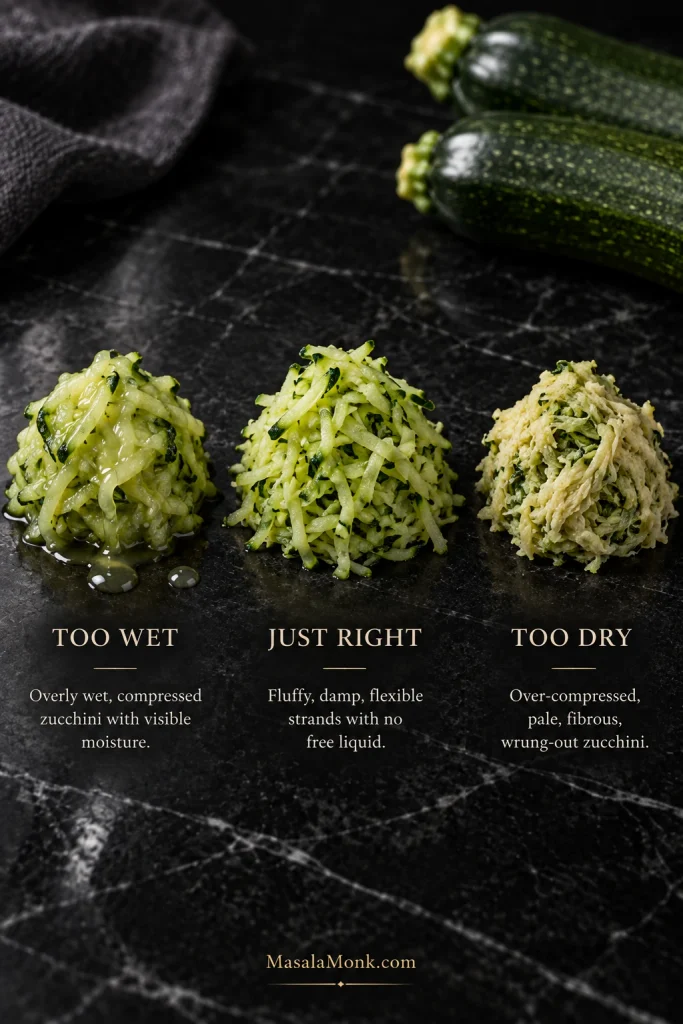
Another zucchini recipe may tell you to squeeze harder or not squeeze at all. That’s not necessarily a contradiction; the rest of the batter determines how much zucchini water it can handle. King Arthur Baking also discusses zucchini moisture as a variable in baking.
| Zucchini | What to do | What to expect |
|---|---|---|
| Fresh, ordinary zucchini | Shred finely and press lightly | Soft, damp shreds without loose surface water |
| Exceptionally juicy zucchini | Press more firmly before weighing | No liquid should drip when you gently squeeze a handful |
| Very large mature zucchini | Remove tough developed seeds if needed, then shred the firmer flesh | The large central seed area can be wetter and coarser than young zucchini |
| Frozen, then thawed zucchini | Thaw fully, drain well, press away the released liquid, then weigh | Thawed zucchini releases considerably more water, so drain and press it before weighing |
Why Extra Zucchini Can Make the Centers Gummy
That last handful may look harmless, but it still brings water into the batter. Add enough and the middle can lag behind while the outside keeps baking.
Have enough left for another bake? Save it for the Zucchini Bread Recipe instead of adding more here.
Center still seems too wet? Jump to gummy-center troubleshooting · Back to Recipe
Building a Deeper Chocolate Flavor
The goal is depth without drying the crumb. Cocoa absorbs water as well as adding flavor, so simply piling in more doesn’t automatically make a better chocolate muffin.
Cocoa Flavors the Whole Crumb
The recipe uses 40 g / 1.4 oz cocoa powder. That’s enough for a dark, unmistakably chocolate crumb while leaving room for the zucchini, oil and sour cream to keep it soft.
Dutch-process cocoa is the intended choice for its dark color and smooth chocolate flavor. Natural unsweetened cocoa can also be used here; expect a lighter color and a slightly sharper cocoa taste.
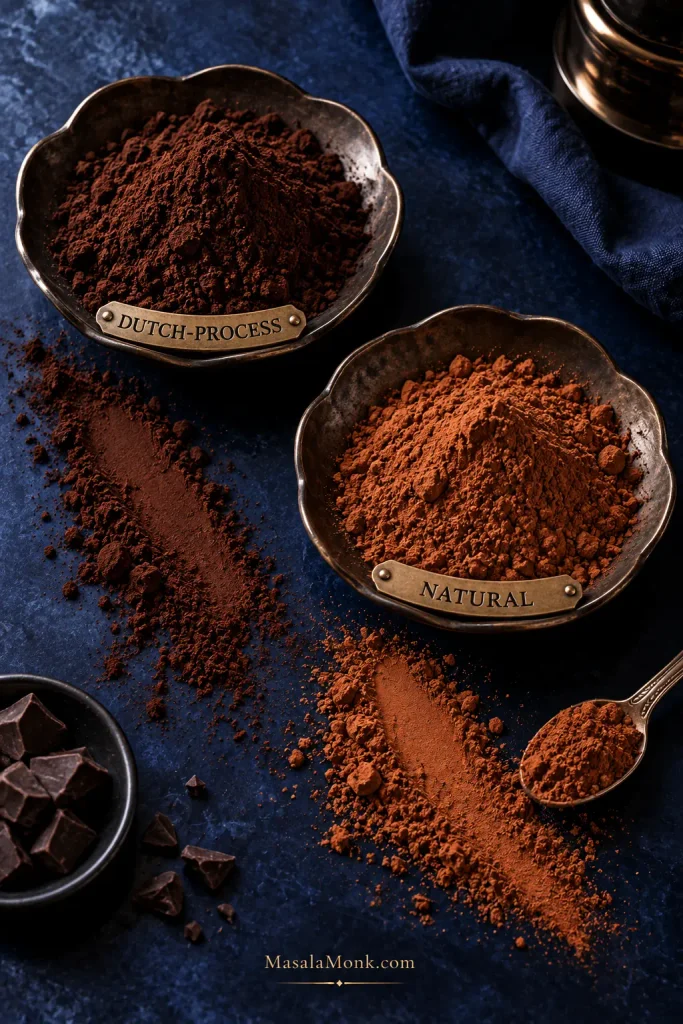
Keep the baking soda and baking powder as written if you change cocoa. Their balance belongs to the whole batter, not the cocoa alone.
Chocolate Chips Make It Double Chocolate
The chips add what cocoa cannot: pockets of actual melted chocolate. Pull a muffin apart while it is still warm and those pockets stay softer and richer than the surrounding cocoa crumb.
Semisweet keeps the sweetness balanced. Dark chocolate makes the muffins more intense, while milk chocolate pushes them further toward dessert. Reserve a few chips for the tops so the finished muffins look as chocolatey as they taste.
For a frosted muffin-style cupcake, cool the standard-size muffins completely and top them with Chocolate Cream Cheese Frosting. If you want a lighter, finer cake crumb, start with a cupcake-specific batter.
Substitutions Without Wrecking the Batter
You do not need to treat the recipe as untouchable. A different chocolate or another mild neutral oil is easy. Changes to cultured dairy or flour affect the batter more, so keep the experiments simple.
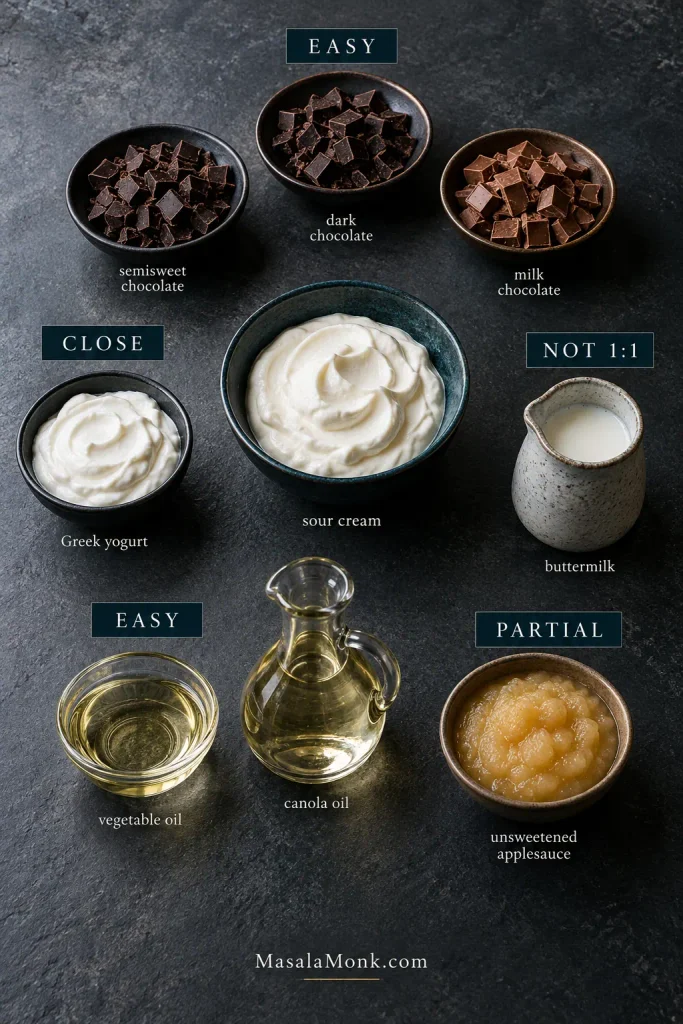
Replacing part of the oil with unsweetened applesauce is one of the gentler changes. Replace no more than about half the oil. The crumb will be less rich and a bit heavier, but it should remain soft. For a bake where applesauce is built in from the start, Banana Bread With Applesauce takes that approach deliberately.
Easy Swaps That Keep the Batter Close
- Chocolate: dark or milk chocolate chips can replace semisweet directly. Dark makes the muffins more intense; milk makes them sweeter.
- Neutral oil: another mild neutral oil is an easy swap.
- Greek yogurt: thick full-fat Greek yogurt is a reasonable substitute for the sour cream, with a tangier and slightly less rich result.
- Buttermilk: it is considerably thinner than sour cream, so it is not a straight 1:1 swap. Greek yogurt is the closer substitute.
- 1:1 gluten-free baking blend: a true cup-for-cup blend may work, but absorption, texture and bake time vary between brands.
When a Swap Becomes a Different Recipe
Want the muffins less sweet? Reduce the sugar conservatively. Bigger cuts change tenderness and moisture as well as sweetness. For a much lower-sugar muffin, start with a recipe designed around that change.
One substitution is a variation. Replacing the flour, fat, sugar and egg at the same time is a new recipe.
Once you’re replacing the flour entirely, removing the eggs or switching to specialty sweeteners, those changes need a different formula. If higher protein is the goal, use High Protein Muffins instead of forcing extra protein into this batter.
Changed an ingredient and the texture went sideways? Troubleshoot the Muffins · Back to Recipe
Mini Muffins & Taller Bakery-Style Tops
For minis, use about 25–30 g / 0.9–1.1 oz batter per cup and start checking around 9 minutes. Expect roughly 40 minis, give or take a few, because mini pans vary more than standard muffin tins.
Bake them at 375°F / 190°C for about 9–12 minutes. They move from moist to dry quickly, so use the same doneness cues and check early.
For Taller Muffin Tops
Fully preheat the oven, use fresh leaveners, portion the cups evenly and fill them generously. Those basics already give the batter a strong start.
Some bakery-style methods begin with a burst of higher heat and then finish cooler. That can create a more dramatic crown, but it also makes browning and oven hot spots more influential.
This recipe stays at 375°F / 190°C from start to finish. If taller bakery-style crowns are the priority, the Blueberry Muffin Recipe goes further with generous filling and a hot-start method.
Why Are My Chocolate Zucchini Muffins Gummy, Dry, Dense or Flat?
Most texture problems are easiest to troubleshoot one likely cause at a time. Find the symptom closest to yours, change that first, and leave the rest of the recipe alone on the next batch.
| Problem | Likely cause | What to do |
|---|---|---|
| Wet or gummy center | Very wet zucchini, extra zucchini, moisture-heavy substitutions, oversized portions or underbaking | Check the zucchini amount and preparation first; extra oven time cannot always rescue a batter carrying too much water |
| Dense or rubbery | Overmixing, protein powder or a flour swap that absorbs differently | Fold only until combined and change one major ingredient at a time |
| Dry | Too much flour, zucchini pressed extremely dry, large sugar/fat reductions or overbaking | Weigh the flour and start checking sooner |
| Rose, then collapsed | Wet batter, several major substitutions at once, too much leavener or a center that had not set | Correct the batter before adding more baking powder |
| Flat tops | Old leavener, underheated oven, heavy batter or underfilled cups | Use fresh leaveners, fully preheat and portion consistently |
| Dark outside, raw middle | Oversized portions, dark pan, oven running hot or excess batter moisture | Check the pan, oven, portion size and zucchini before simply extending the bake |
| Bitter or chemical | Too much baking soda or baking powder, or an improvised leavener swap | Measure carefully and keep the leaveners as written |
| Tester looks wet | You may have pierced a melted chocolate chip | Test another spot before deciding the center is raw |
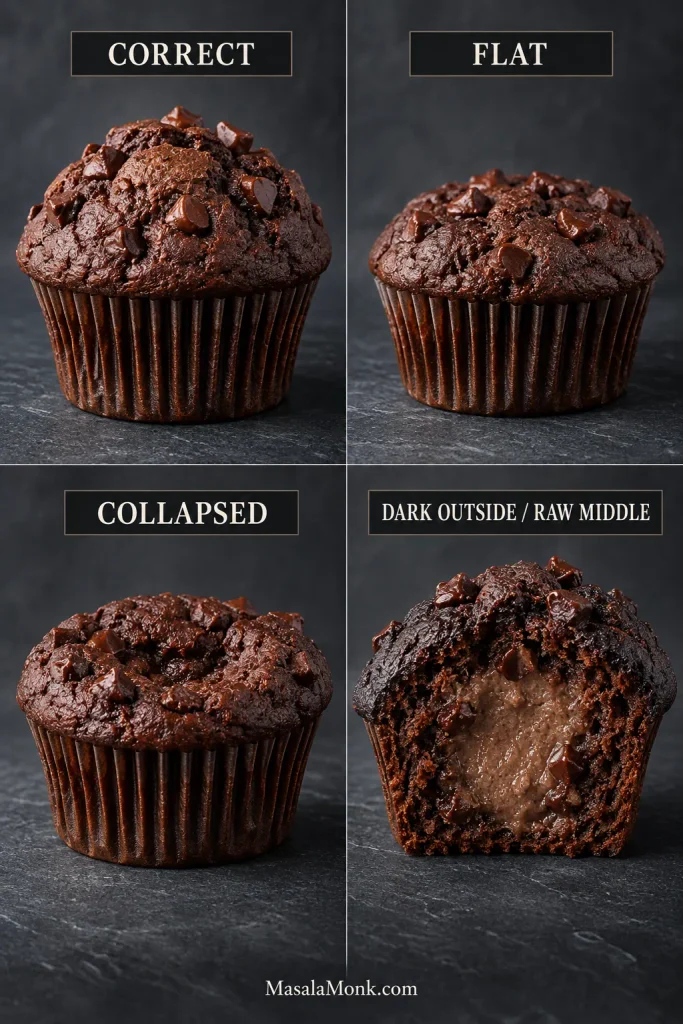
Wet or Gummy in the Middle
Extra zucchini, a large applesauce substitution, a different flour or unusually large portions can all leave the center struggling to set before the outside is ready. A genuinely underbaked muffin may only need a few more minutes. When the batter itself carries too much water, however, the edges can dry while the middle stays sticky.
Bitter or Chemical Taste
Chemical or metallic bitterness usually points to too much baking soda or baking powder, or an incorrect swap between the two. Very dark cocoa can also taste harsher after a large sugar reduction.
One warning matters if the zucchini came from your garden. If the raw zucchini itself tastes strongly and unusually bitter, discard it. Germany’s Federal Institute for Risk Assessment advises against eating unusually bitter courgettes or zucchini because the bitterness can signal elevated cucurbitacins.
How to Store and Freeze Chocolate Zucchini Muffins
Cool the muffins completely before sealing them up. They are at their best for about 2–3 days at room temperature; packing them while warm traps steam and can make the tops sticky.
For longer storage, refrigerate them in an airtight container for about 5–6 days, or freeze them for about 2–3 months. To freeze them, cool them fully and wrap them individually or transfer them to a well-sealed freezer bag or container.
Thaw at room temperature or warm one briefly in the microwave. The crumb softens again, and the chocolate chips turn melty at the edges.
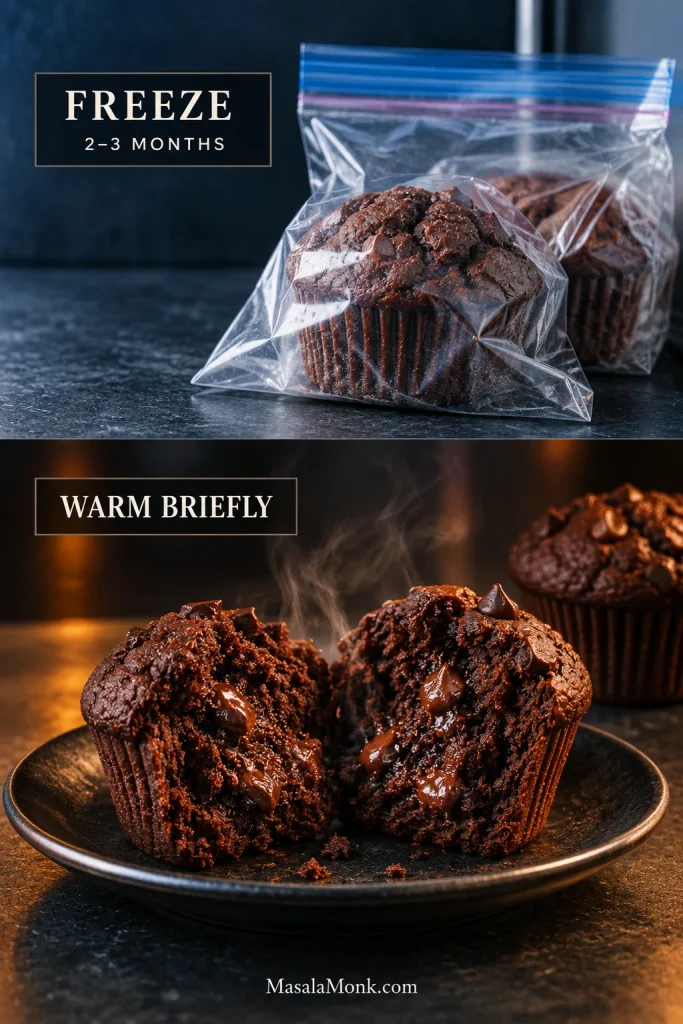
Baking a big garden-zucchini batch? If the centers seemed borderline, cut one muffin open after it has cooled before freezing the entire batch. It is much better to catch a wet middle before thirty muffins disappear into the freezer. If the crumb looks compressed or shiny, compare it with Wet or Gummy in the Middle before storing the batch.
Discard muffins with visible mold, an off smell or an unusual slimy texture.
Warm one just enough for the chips to soften again, and the thing you notice first is still the chocolate: a dark, tender crumb with the zucchini quietly doing the work that keeps it soft.








