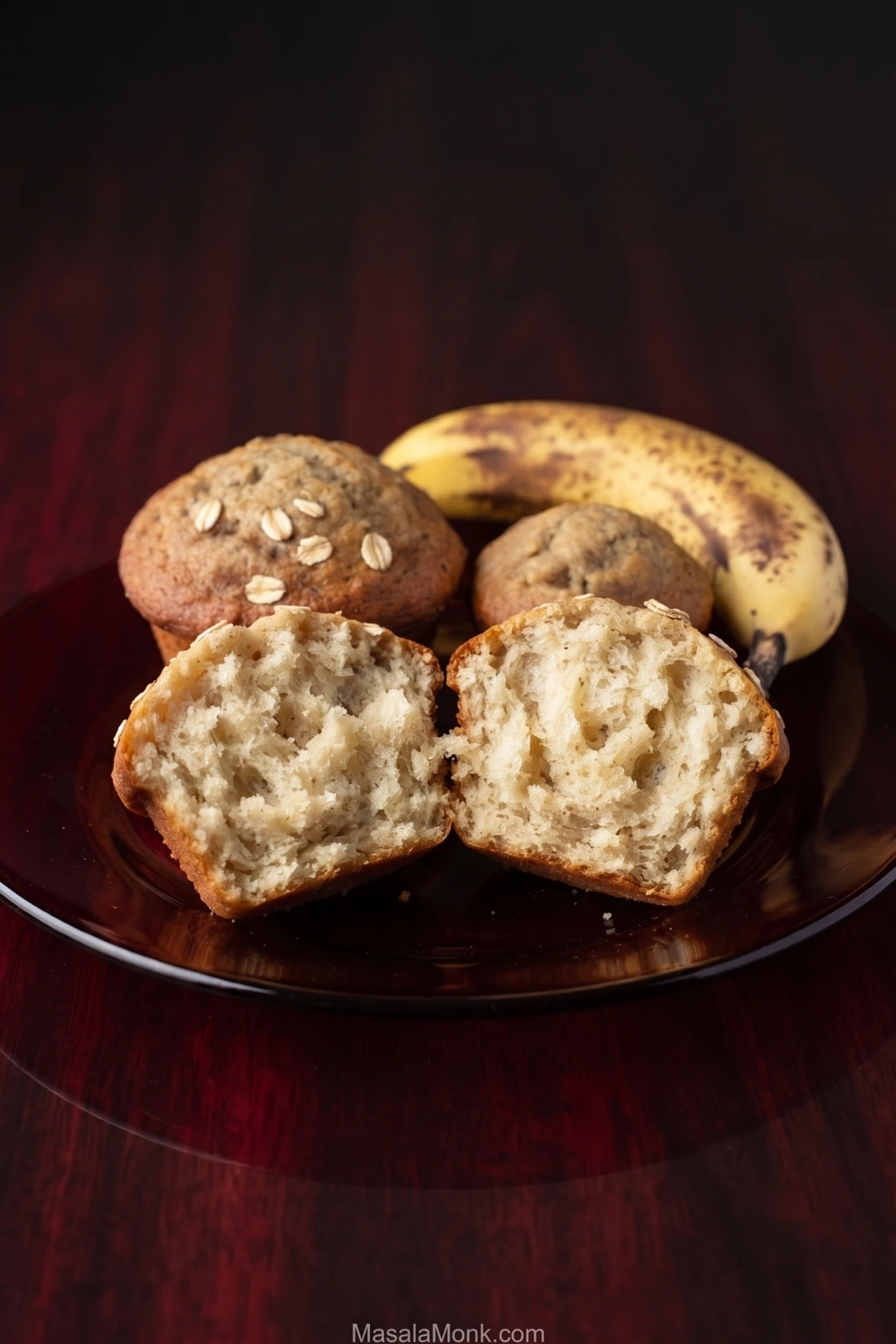
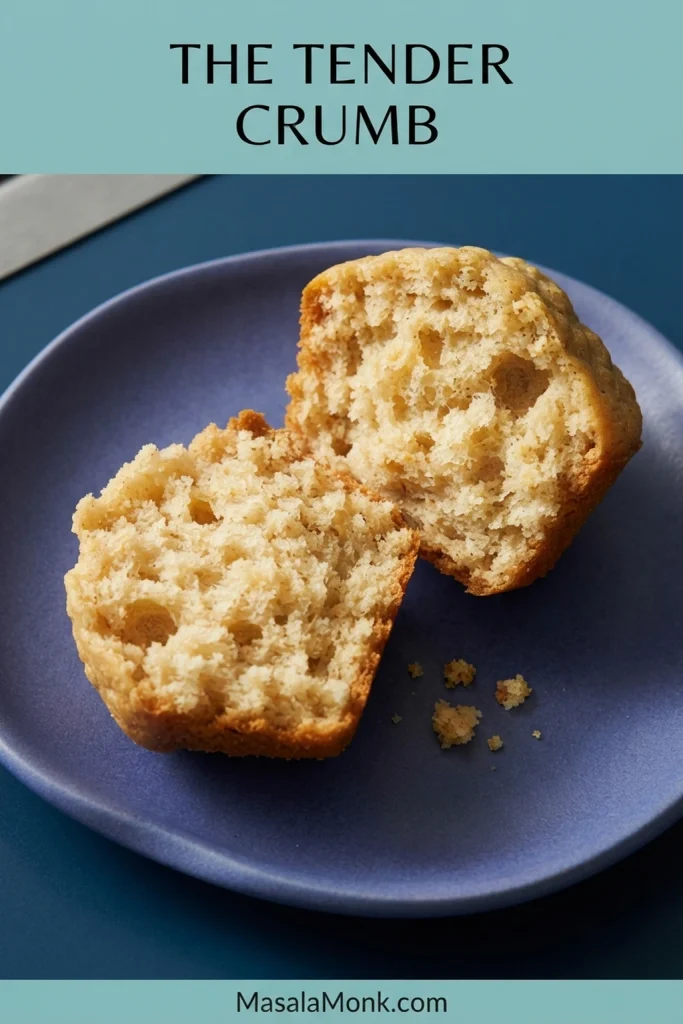
Those spotty bananas on the counter are exactly what you want for a batch of banana oatmeal muffins. These are soft, gently sweet breakfast muffins with a familiar muffin texture and little flakes of rolled oats throughout. Flour gives them structure and lift, while the oats bring a little chew.
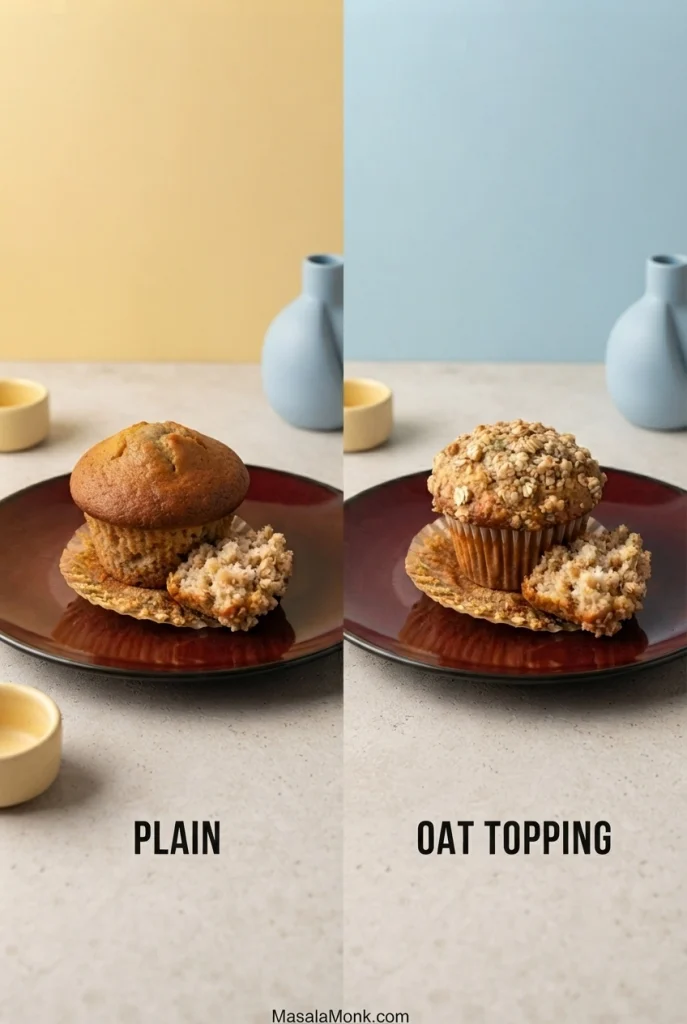
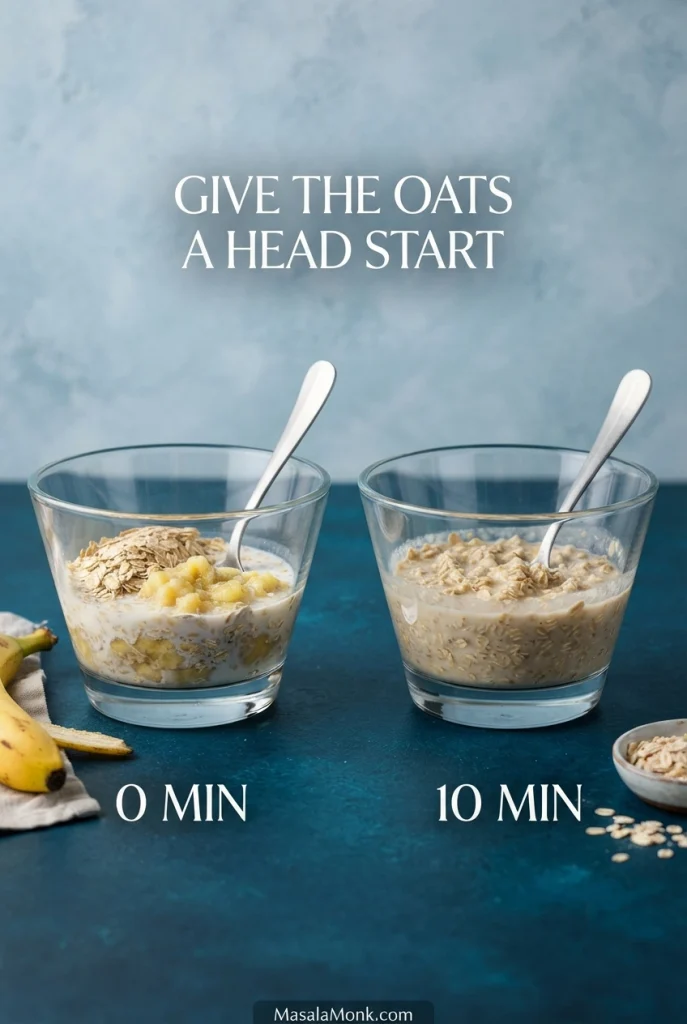
Give the rolled oats 10 minutes to soften in the banana and milk while you prepare everything else. That short rest gives the oats a head start on hydration without making them disappear into the muffin. Leave the tops plain, or add the buttery oat topping for a lightly crisp finish with the warm banana and cinnamon underneath. Chocolate chips, blueberries and nuts all work too.
Use just enough pressure to anchor the oat topping; it should still look loose and craggy rather than pressed flat into the muffin batter.
Before You Mix
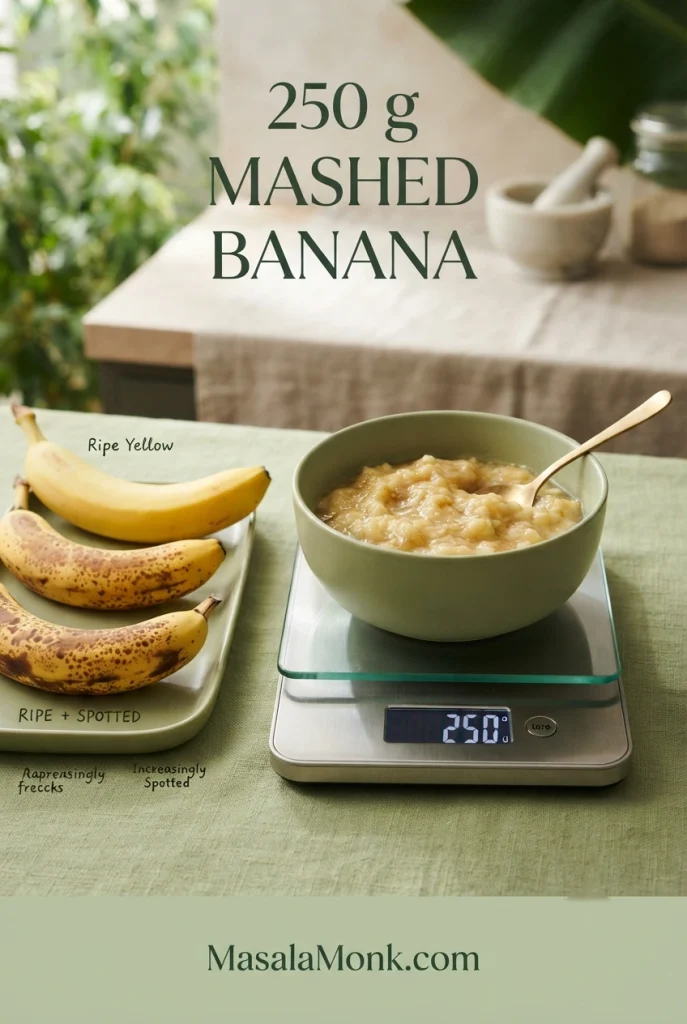
Banana: 250 g mashed ripe banana Oats: old-fashioned rolled oats Oat rest: 10 minutes while you prep Oven: 375°F (190°C), conventional oven Yield: 12 standard muffins
The goal is not to soak the rolled oats until creamy. A short 10-minute rest softens them while preserving enough definition to notice in the baked crumb.
Banana Oatmeal Muffins
Soft banana muffins with rolled oats, a touch of cinnamon and an optional buttery oat topping. They’re gently sweet and tender inside, with a little extra crunch on top if you use the topping.
Prep Time 15 minutes
Bake Time 18–22 minutes
Oat Rest 10 minutes, during prep
Total Time About 40–50 minutes, including initial cooling
Yield 12 standard muffins
Equipment
Standard 12-cup muffin pan
Paper liners or nonstick baking spray
Mixing bowls
Whisk and flexible spatula
Kitchen scale or measuring cups and spoons
Ingredients
1½ cups (180 g) all-purpose flour
1½ cups (150 g) old-fashioned rolled oats
½ cup (100 g) packed light brown sugar
1½ teaspoons baking powder
½ teaspoon baking soda
½ teaspoon ground cinnamon
½ teaspoon fine salt
250 g mashed very ripe banana (about 1 generous cup)
2 large eggs
¼ cup (60 ml) neutral oil
½ cup (120 ml) milk
1 teaspoon vanilla extract
Optional Oat Topping — for 12 Muffins
¼ cup (25 g) old-fashioned rolled oats
1 tablespoon (12 g) packed light brown sugar
1 tablespoon (14 g) melted butter
Small pinch of ground cinnamon
Instructions
Heat the oven. Preheat to 375°F (190°C). Line a standard 12-cup muffin pan or grease the cups well.
Soften the oats. Mash the ripe bananas and weigh out 250 g. Stir the banana, rolled oats and milk together and leave for 10 minutes. While they rest, measure the remaining ingredients and prepare the dry mixture.
Mix the dry ingredients. In a large bowl, whisk together the flour, baking powder, baking soda, cinnamon and salt.
Finish the banana mixture. Whisk the brown sugar, eggs, oil and vanilla into the rested banana and oats.
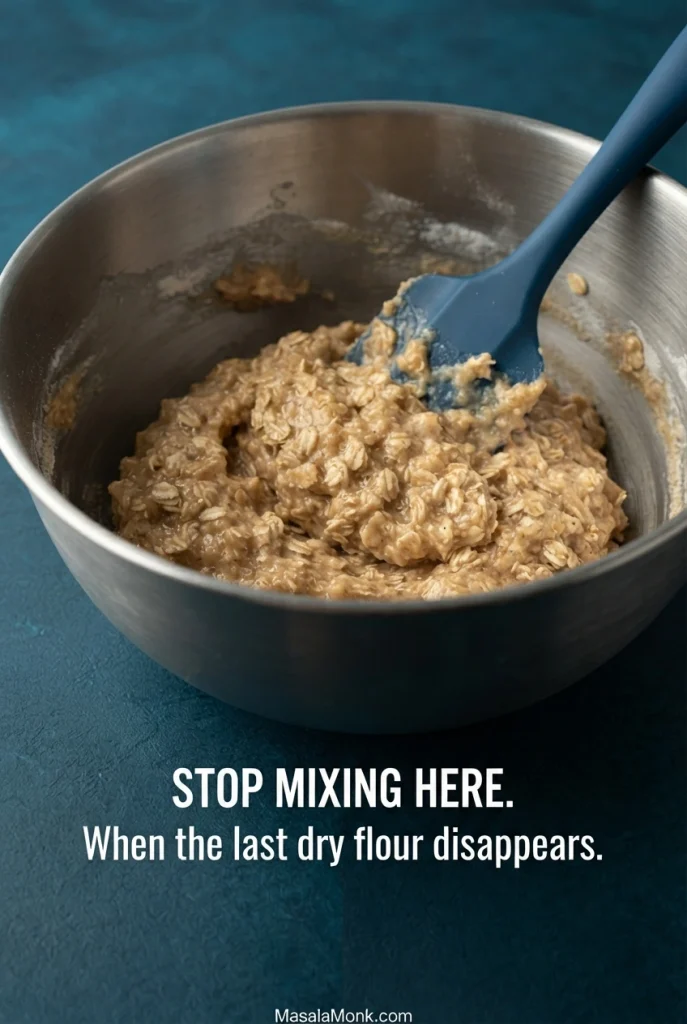
Bring the batter together. Pour the wet mixture into the dry ingredients. Fold gently until no dry flour remains. A few small lumps are fine; don’t keep stirring in search of a perfectly smooth batter.
Prepare the topping, if using. Stir the oats, brown sugar, melted butter and cinnamon together until lightly coated.
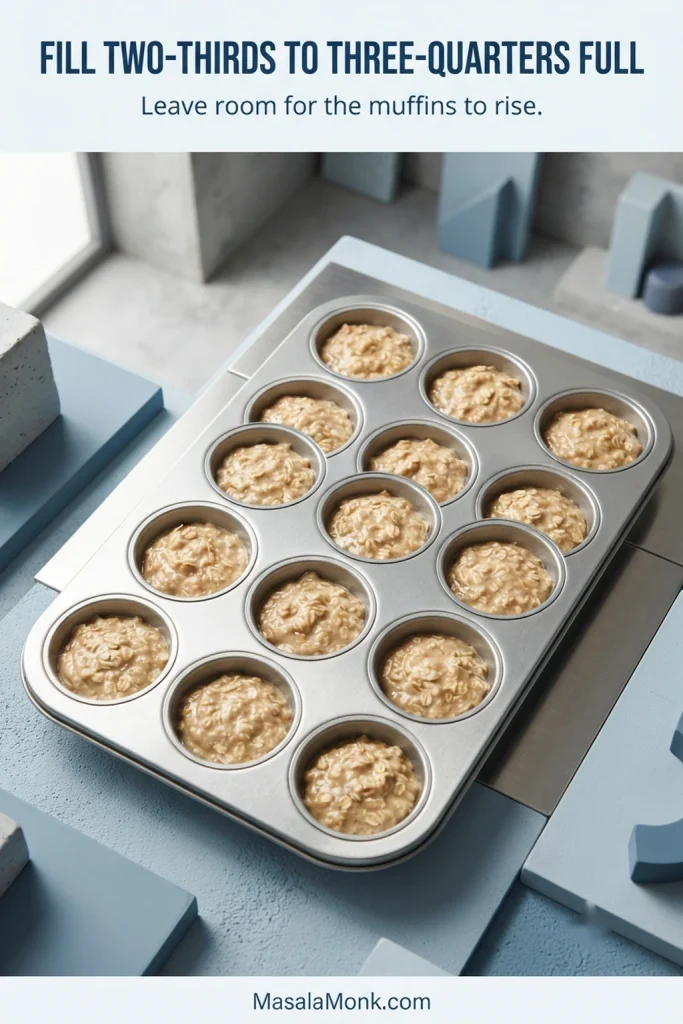
Fill the pan. Divide the batter evenly among all 12 muffin cups. They should be roughly two-thirds to three-quarters full.
Add the topping, if using. Divide it among the muffins and press it lightly onto the batter. Otherwise, leave the tops plain.
Bake. Slide the pan into the oven for 18–22 minutes, beginning to check at 18 minutes.
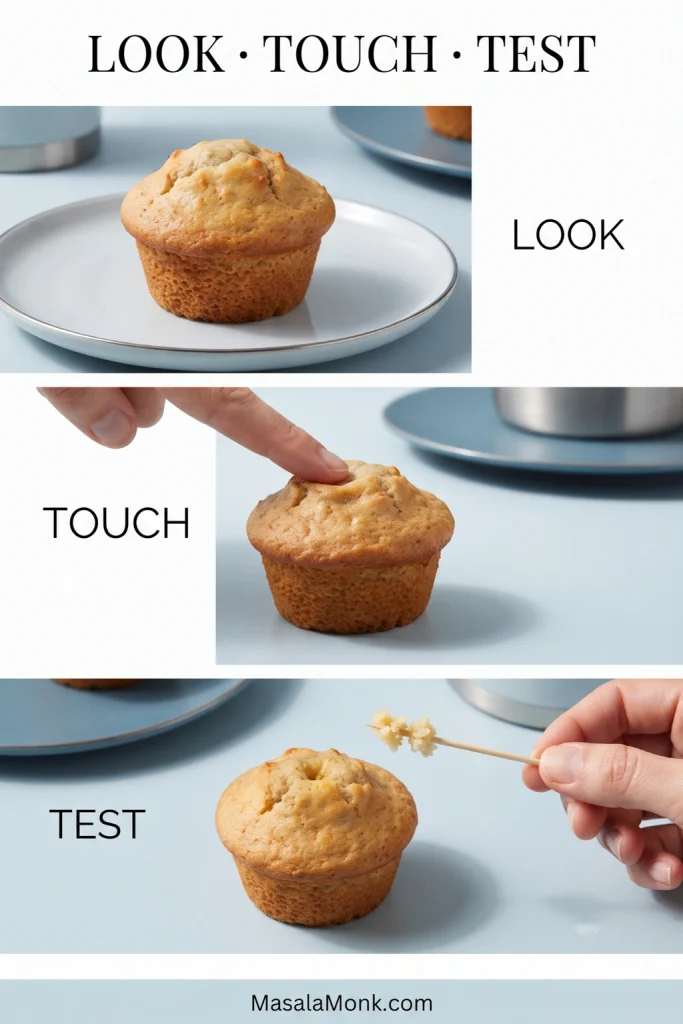
Check the center. The tops should look set, the middle should spring back gently when touched, and a toothpick inserted into the center should come out without wet batter. A few moist crumbs are fine.
Cool. Leave the muffins in the pan for 5–10 minutes, then transfer them to a wire rack. Give them a little more time before peeling away paper liners or judging the texture; banana muffins stay especially soft while they’re hot.
Recipe Notes
Banana: Weigh the mashed fruit if you can. Individual bananas vary enough in size to affect the moisture in the batter.
Oats: Old-fashioned rolled oats give the texture this recipe is designed for.
Flour: If measuring by cups, spoon the flour into the cup and level it without packing.
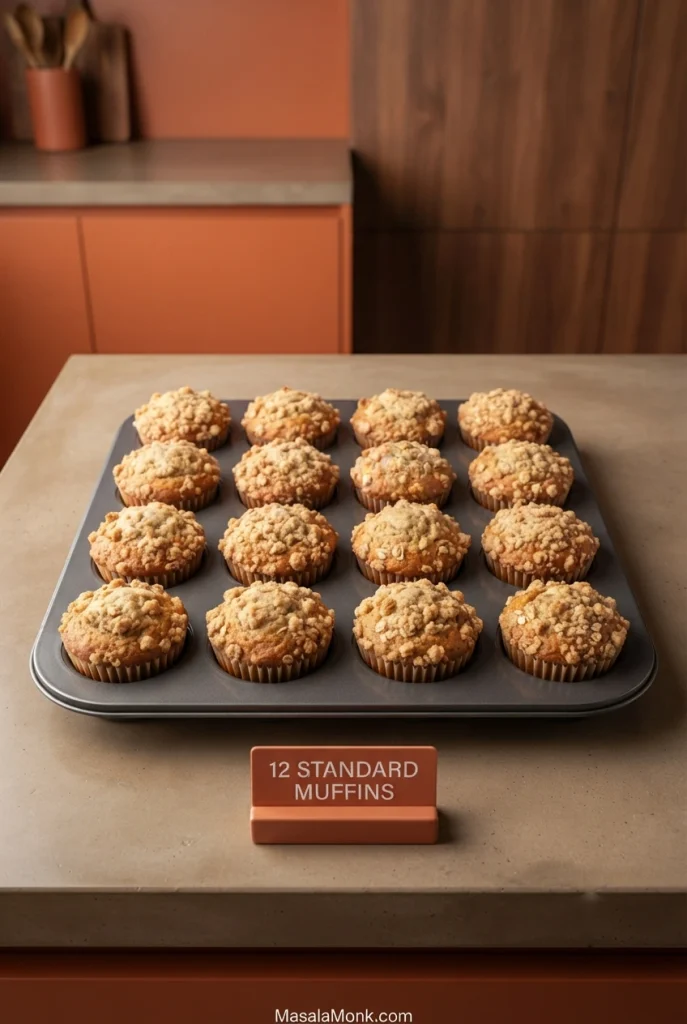
This recipe is sized for a standard 12-cup muffin pan. You should finish with 12 standard muffins rather than a smaller batch of oversized ones.
A full 12-cup pan is the expected yield here, with naturally varied oat-topped crowns rather than twelve perfectly identical muffins.
Don’t judge the crumb straight from the oven. Give the muffins a few minutes to cool and let the centers settle before deciding whether the texture is right.
A tender center can feel very soft and still be fully baked. The important clue is that it pulls apart into a recognizable crumb instead of smearing or collapsing.
Need Help With This Batch?
Choosing a different oat, using frozen bananas or troubleshooting a batch? Jump straight to the answer you need.
Use 250 g of mashed ripe banana. Counting bananas is less reliable because two pieces of fruit can be surprisingly different in size.
Weighing the mashed fruit keeps the wet-to-dry balance steadier from batch to batch, even when the bananas themselves are very different sizes.
Look for bananas with plenty of brown spots. They’ll mash easily and bring fuller banana flavor and sweetness to the muffins.
Using frozen bananas? Thaw them completely, mash the fruit and include the liquid they release when weighing what you need.
Which Oats Work Best?
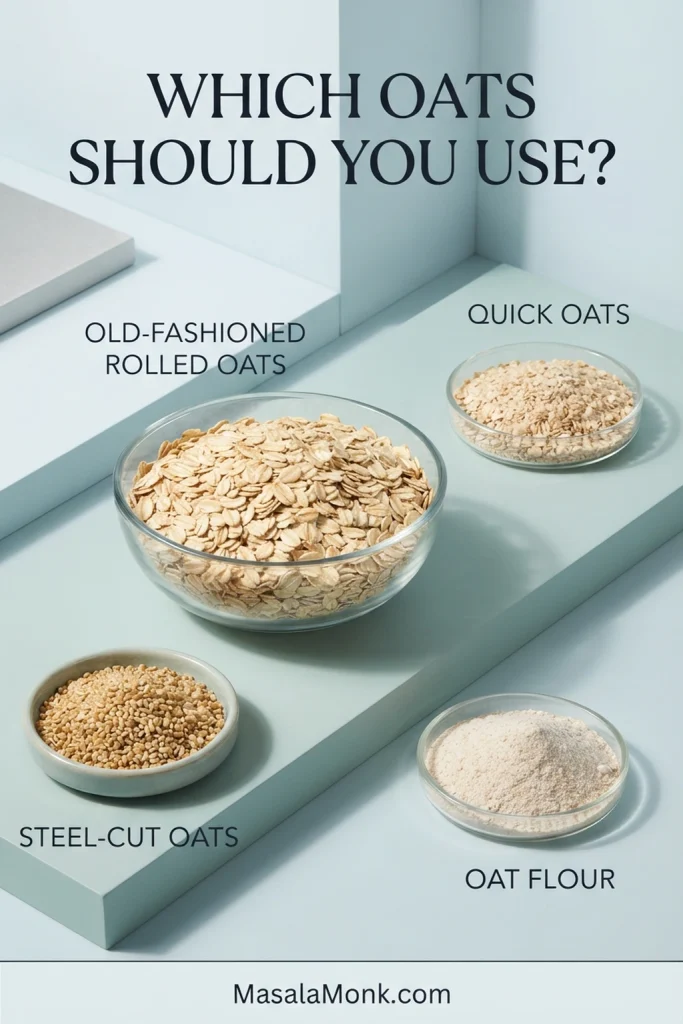
Old-fashioned rolled oats work best here. The short rest softens them while preserving some texture. Quick oats work too, but give you a finer, softer result.
Think of the oat choices as a texture spectrum. Quick oats soften more, rolled oats keep definition, while steel-cut oats stay too firm for this short hydration.
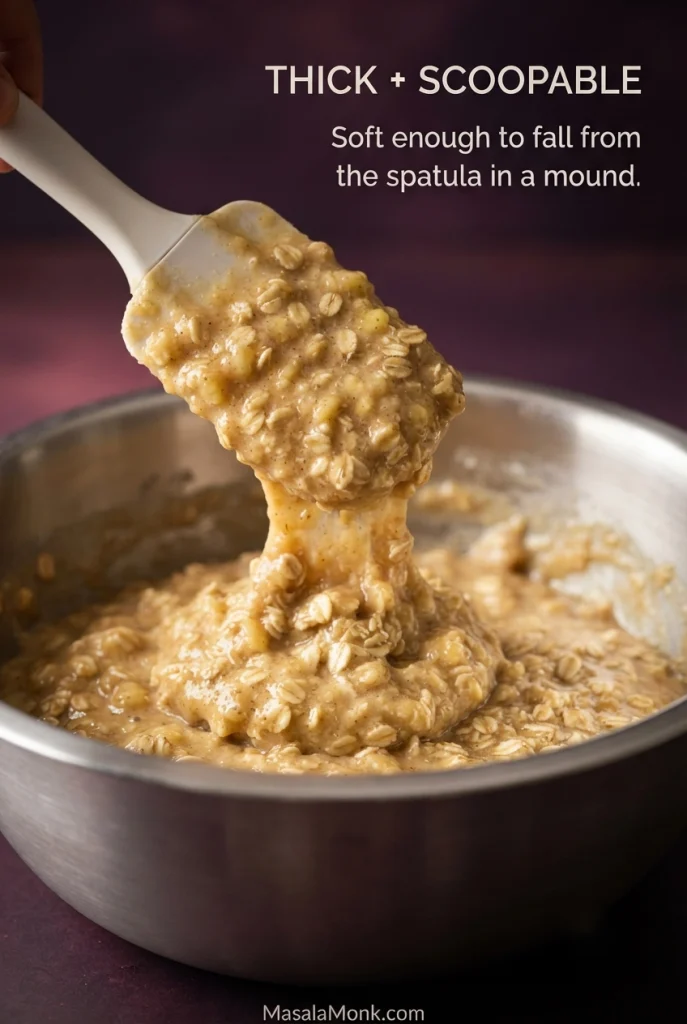
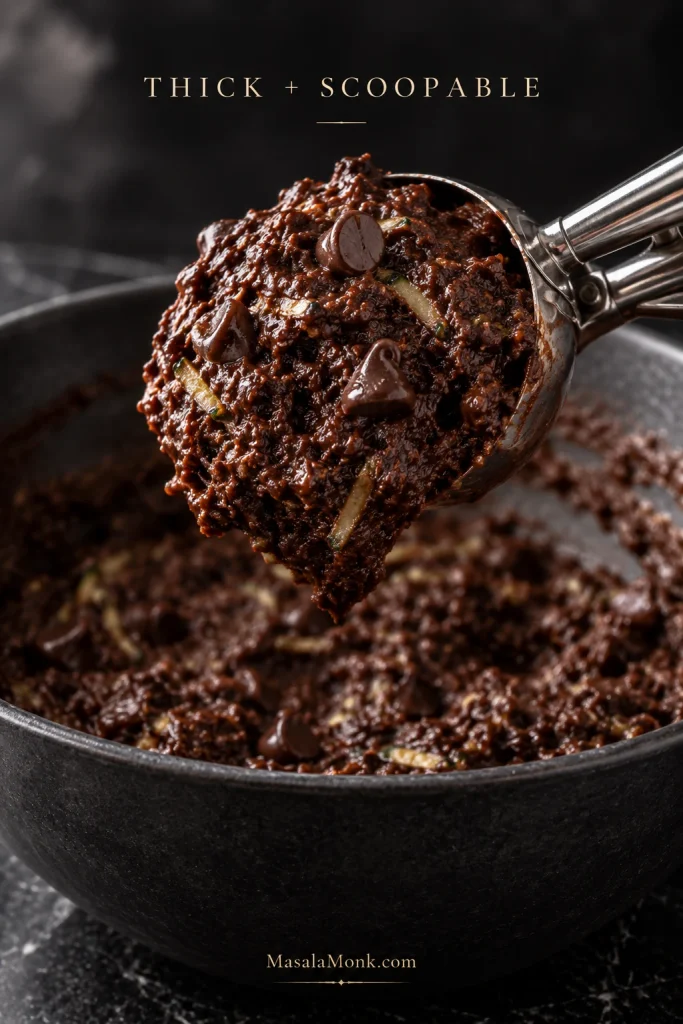
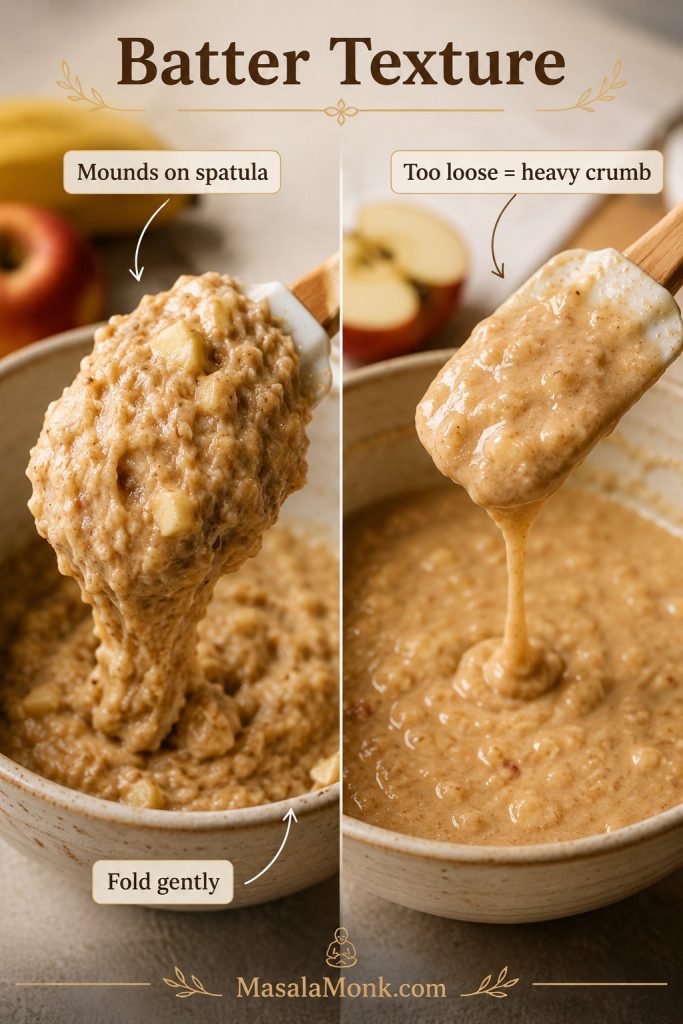
The batter should be thick and scoopable but still soft, with rolled oats visible throughout. It should fall from the spatula in a soft mound rather than run like pancake batter.
Watch how the batter leaves the spatula: it should drop in heavy, soft folds rather than stream from it. That visual cue is more useful than chasing a perfectly smooth mixture.
It won’t look like smooth cake batter, and that’s fine. Small lumps are normal, but there shouldn’t be pockets of dry flour. If yours looks unusually loose or stiff, check the measurements before trying to correct it with extra flour or milk.
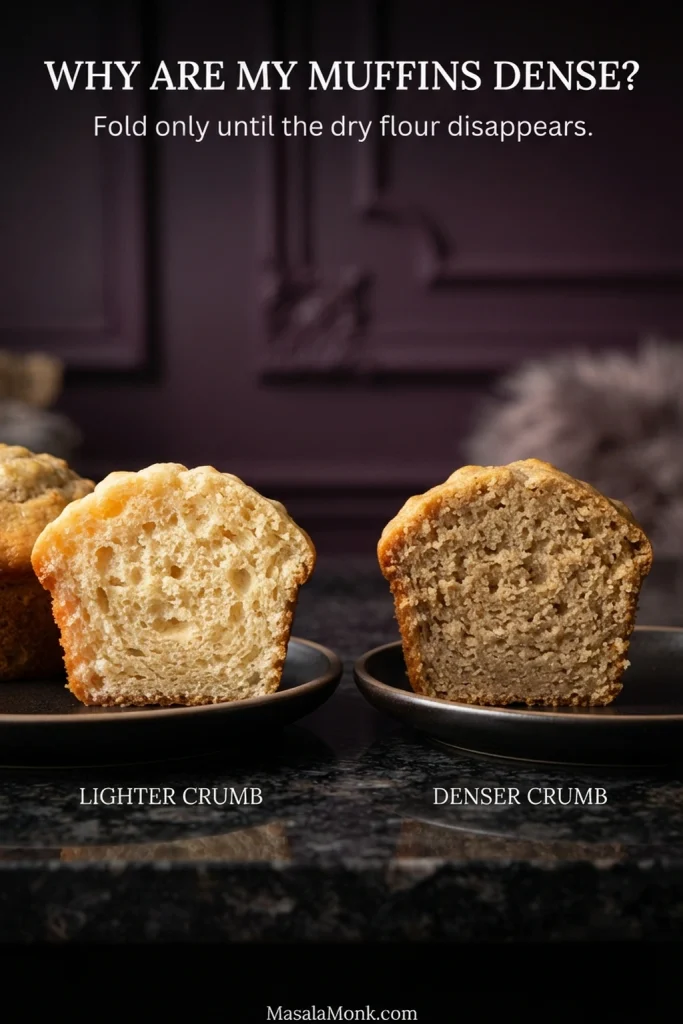
A few lumps are a safer stopping point than chasing smoothness. Extra folding is more likely to tighten the crumb than improve the banana oat batter.
Consistency matters as much as the fill line. Cups that are noticeably fuller than their neighbors can still be baking after the smaller muffins are ready.
How to Tell They’re Done
Start checking around 18 minutes. The muffins are done when the tops are set, the centers spring back gently, and a toothpick comes out without wet batter. A few moist crumbs are fine.
Look: the top is set and lightly golden.
Touch: the middle springs back instead of staying indented.
Test: the toothpick has no wet batter clinging to it.
A toothpick with a few damp crumbs is not the same as one streaked with wet batter. Read that cue together with the set top and springy center.
If the center needs more time, bake for another 2–3 minutes and check again. Ovens and pans can shift the timing, so use those cues alongside the clock.
Moist vs. Gummy: What’s the Difference?
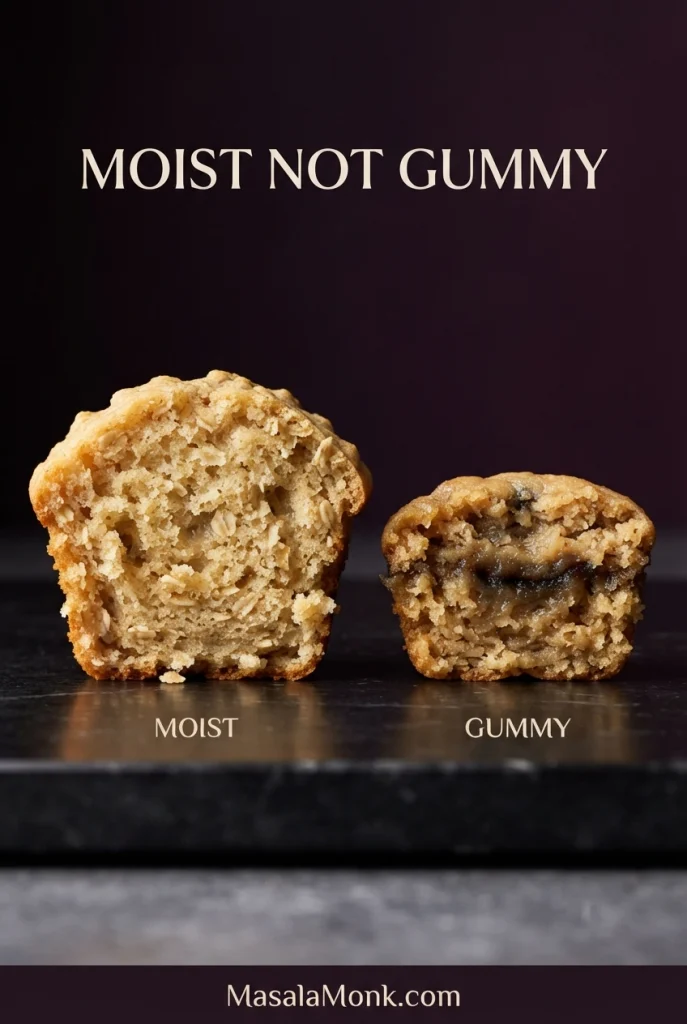
A moist banana oatmeal muffin feels soft and tender but still breaks into a recognizable crumb. By contrast, a gummy muffin feels tacky or paste-like in the middle, sometimes with a damp-looking seam running through it.
A glossy, damp seam that remains after cooling is more concerning than an overall soft crumb. Check measurements and doneness before changing the banana amount.
If the center still feels gummy after that short cooling period, look first at the ingredient measurements, then consider whether the middle had actually finished baking.
If Your Muffins Didn’t Turn Out as Expected
Most problems leave a useful clue. Start with what you can see or feel in the finished batch.
If the crumb is tight but not wet, look first at mixing and leavener freshness. Those two clues are more useful than immediately changing the flour, oats or liquid.
What happened?
What to do
The center is wet
If the muffins are still baking and the tops aren’t getting too dark, give them another 2–3 minutes. For repeated batches that stay wet in the middle, recheck the ingredient amounts and verify that your oven is reaching the set temperature.
The muffins are dry
Warm them briefly for serving. Next time, check for too much flour or oats and start testing sooner; a few extra minutes in the oven can make a noticeable difference.
They’re dense or tough
Check that the leaveners are fresh and stop mixing once no dry flour remains.
The liners are sticking
Let the muffins cool longer before peeling. Next time, lightly grease the liners or the pan.
They didn’t rise much
Make sure the oven is fully preheated and the baking powder and baking soda are fresh.
You wanted them sweeter
Nothing necessarily went wrong—you may simply prefer a sweeter muffin. Very ripe bananas help, or add chocolate chips to the next batch.
Yes, you can reduce the sugar if you prefer a less-sweet muffin. Keep the reduction modest because sugar also helps with browning and tenderness. Very ripe bananas bring more sweetness, but they don’t do quite the same job in the batter.
Using Oat Flour
Don’t replace all the wheat flour with oat flour in this recipe. The muffins won’t rise or hold together in quite the same way. For an oat-flour version, use a formula developed for it from the start.
Adding Protein Powder
Protein powder isn’t a simple stir-in here. Powders vary in how much liquid they absorb and can leave muffins dry or rubbery without other adjustments. If extra protein is the goal, our high-protein muffins are a better starting point.
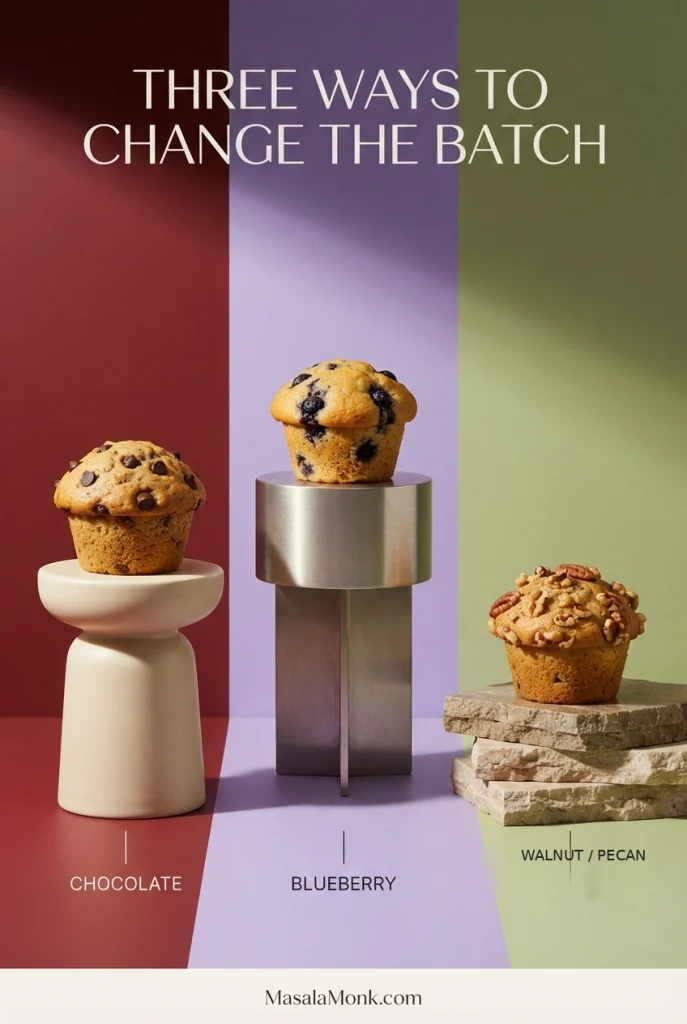
Three Easy Ways to Change the Batch
Chocolate chips and chopped nuts are the easiest add-ins to fold through. Frozen blueberries need gentler handling because they can streak the batter as they thaw.
Chocolate Chip Banana Oatmeal Muffins
Fold in up to ½ cup (about 85–90 g) semisweet or dark chocolate chips for little pockets of melted chocolate through the muffins.
Banana Blueberry Oatmeal Muffins
Use about ¾ cup blueberries. Fresh berries can go straight in. If using frozen, keep them frozen until the last moment, knock away any heavy coating of loose ice, and fold gently to limit streaking. Our blueberry muffin recipe has more guidance on baking with fresh and frozen blueberries.
Banana Walnut or Pecan Muffins
Fold in ½ cup chopped walnuts or pecans. Their crunch works especially well if you leave off the oat topping, though you can use both.
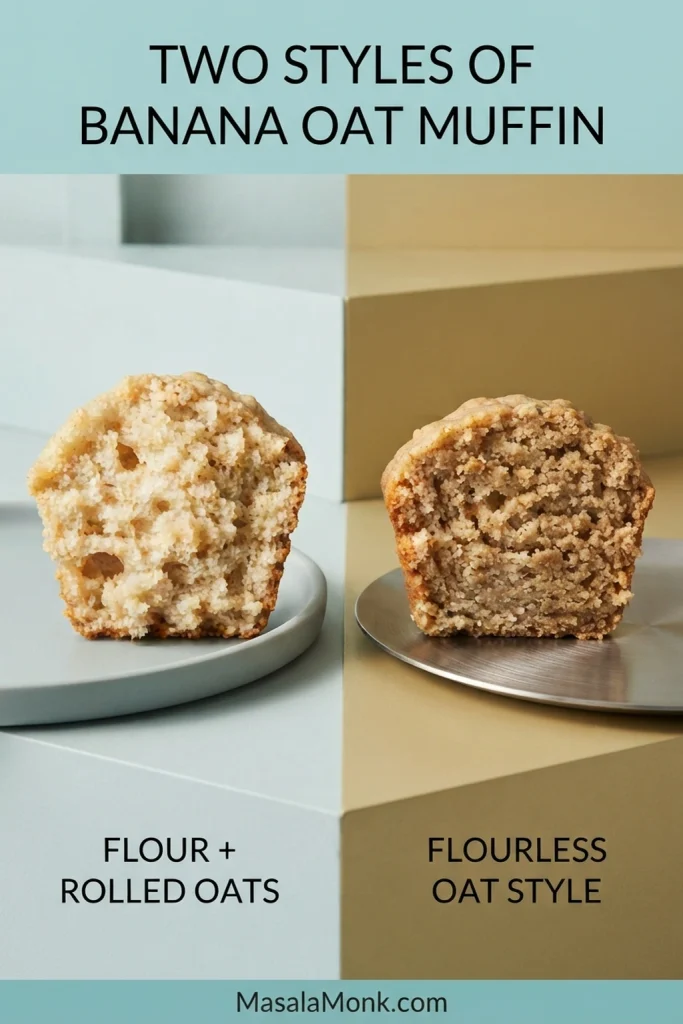
What About Flourless or 3-Ingredient Banana Oat Muffins?
Flourless banana-oat muffins rely on oats for most or all of their structure. That includes many simplified, short-ingredient-list versions. Some use whole oats, some blend them into flour, and many have a softer, denser texture that sits somewhere between a conventional muffin and baked oatmeal.
This recipe uses wheat flour as the framework, with whole rolled oats added for texture. Removing that flour or replacing it with extra oats changes how the muffins rise and hold together, so it isn’t a direct substitution.
Whole oats, oat flour and wheat flour do different structural jobs. Therefore, flourless banana oat muffins need different ratios rather than a one-for-one flour swap.
If you need gluten-free banana oatmeal muffins, use a recipe developed around a gluten-free flour system rather than removing the wheat flour from this one.
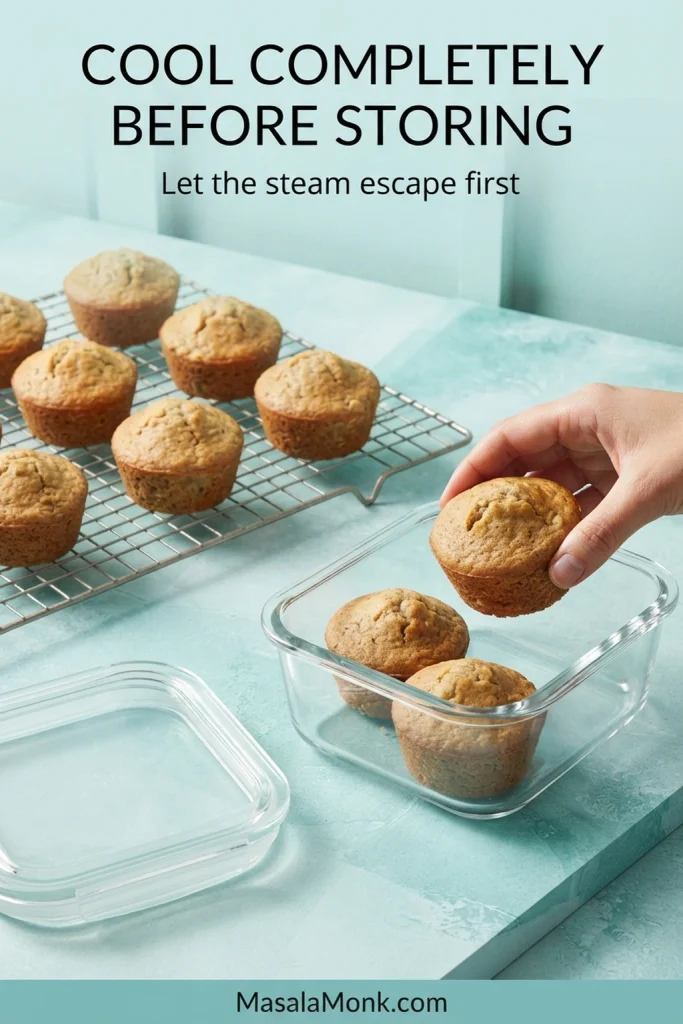
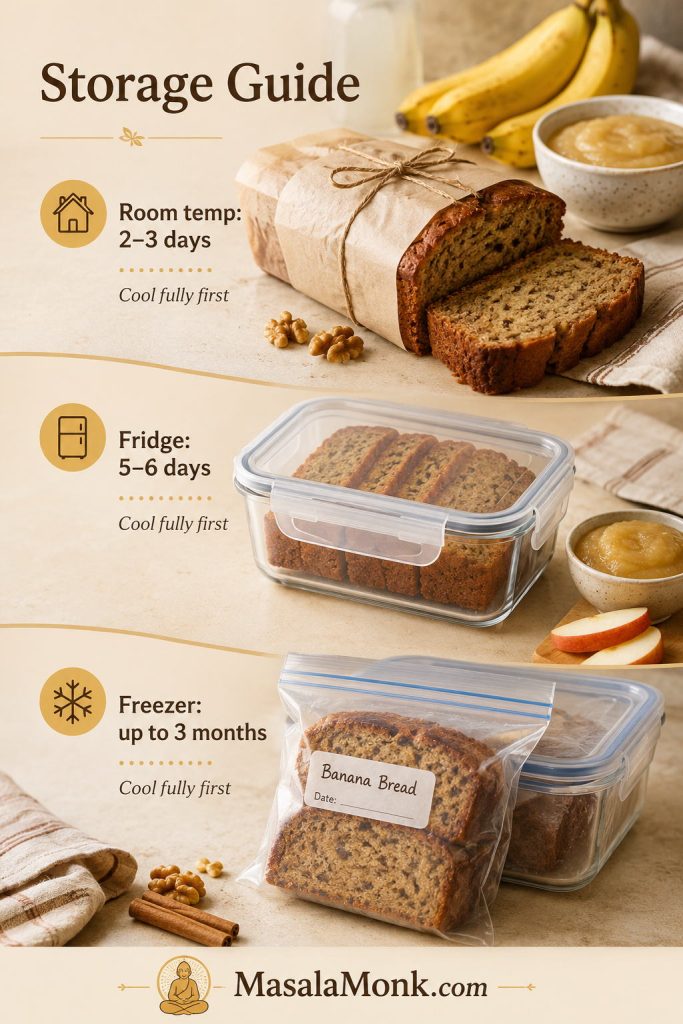
Let the muffins cool completely before storing them. Sealing them while they’re still warm traps steam and can leave the tops damp, particularly if you used the oat topping.
Wait until the muffins are cool all the way through before sealing them. The oat topping is especially quick to lose its lightly crisp texture when trapped with residual steam.
Room Temperature
Keep completely cooled muffins in a well-sealed container in a cool room for about 2–3 days. In a particularly warm or humid kitchen, refrigerate them instead.
Freezer
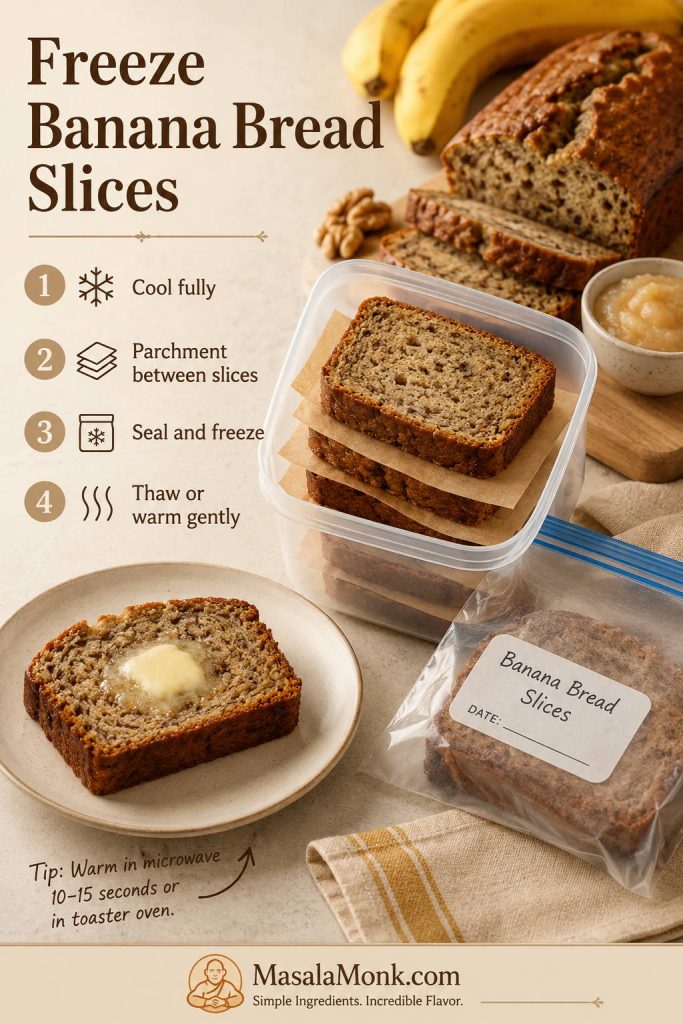
Freeze cooled muffins in a freezer-safe container or bag. For easy single servings, freeze them separately until firm before packing them together. Aim to use them within about 3 months for best quality.
Thawing and Warming
Let a muffin thaw at room temperature for a few hours or in the refrigerator overnight. Warm it briefly in the microwave, checking in short bursts, or use a low oven if you’d like to perk up the oat topping.
Choose the reheating method by texture: the microwave is quickest for a soft muffin, while a low oven does a better job of reviving the oat topping.
If make-ahead breakfasts are the goal, our overnight oats are another easy option to prepare ahead—without turning on the oven.
The best part of baking a dozen is knowing breakfast is already waiting for tomorrow. Keep a few on the counter, freeze the extras, and warm one when you want it.
If you make these, tell us how your batch turned out—and whether you went with rolled or quick oats, plain tops or the oat topping, blueberries, chocolate or nuts.
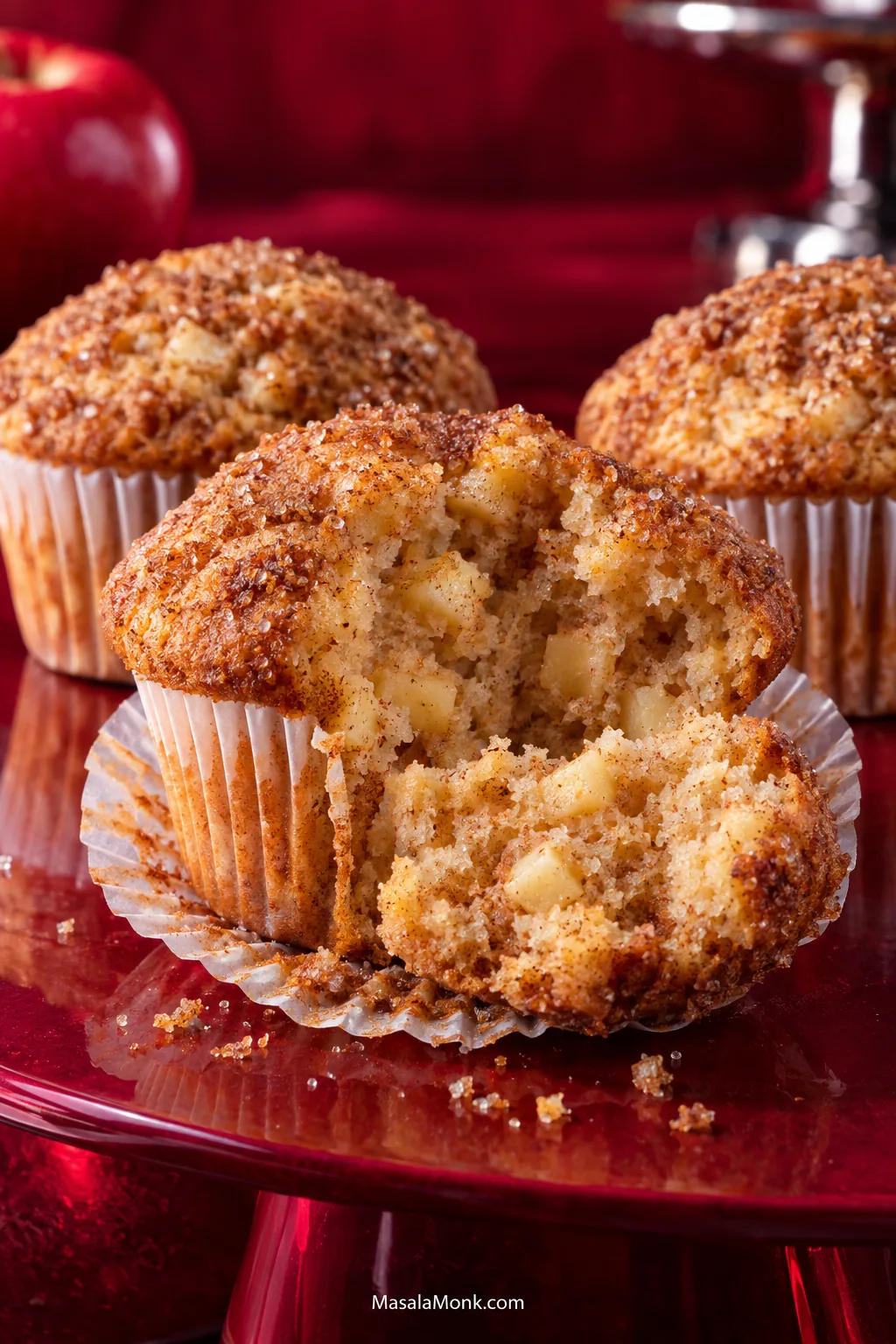
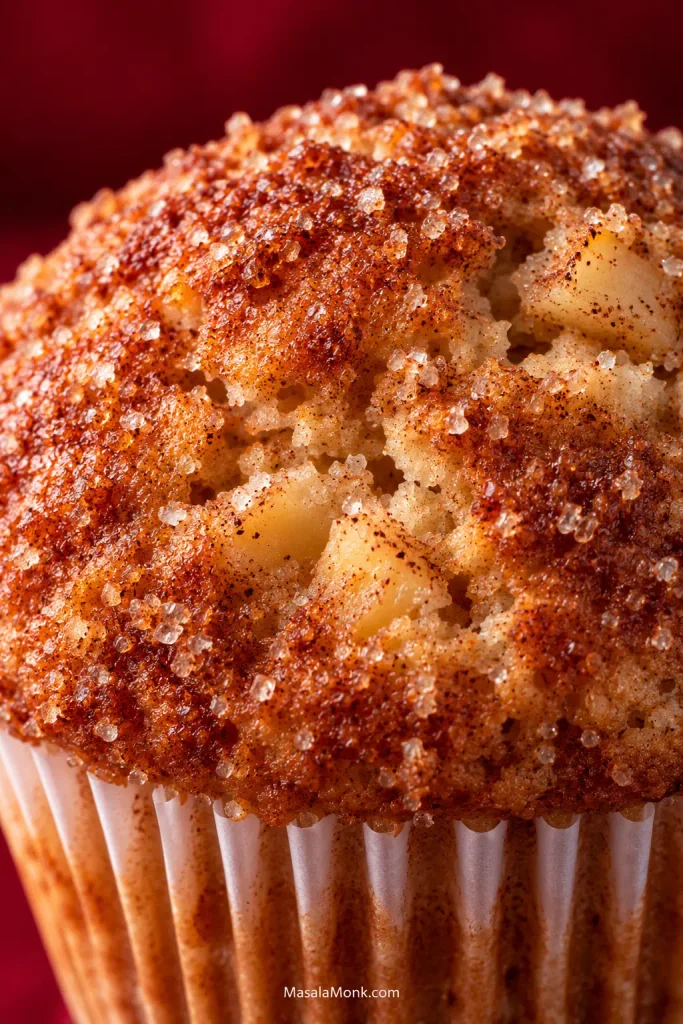
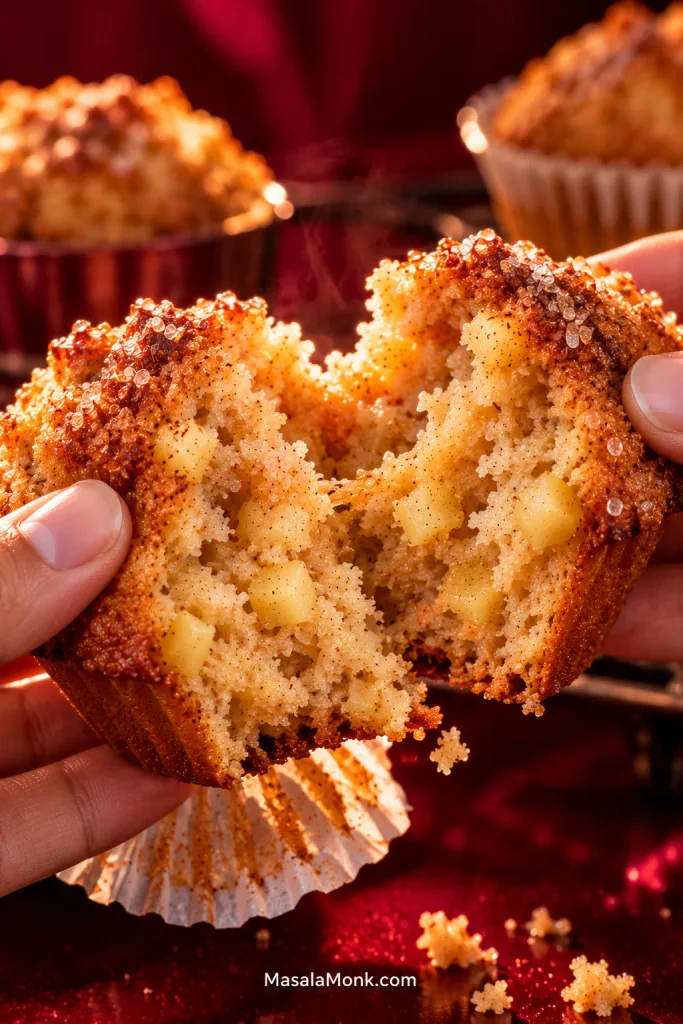
Break one open while it’s still warm. These apple cinnamon muffins have tender pieces of fresh apple through a moist crumb, with a thin cinnamon-sugar crackle over the top.
The apple still tastes like apple. Cinnamon warms it without taking over.
The tricky part is getting the fruit and the muffin ready at the same time. Oversized apple pieces can still be firm when the crumb is done; push the moisture too far and the center turns heavy instead. Small pieces and a thick batter do most of the work.
Before you start: there’s no mixer and no separate streusel. Dice the apples small, and don’t thin the batter when it looks thicker than cake batter.
Yield 12 standard muffins
Prep About 20 minutes, including a 10-minute batter rest
Bake About 18–21 minutes
Cool 5 minutes in the pan, then transfer to a rack
Equipment
Standard 12-cup muffin tin
Parchment-style liners or a lightly greased pan
Large mixing bowl, medium mixing bowl and small bowl
Whisk and flexible spatula
Kitchen scale, recommended
Wire cooling rack
Ingredients
For the muffins
250 g (about 2 cups) all-purpose flour
2 teaspoons baking powder
½ teaspoon baking soda
½ teaspoon fine salt
2 teaspoons ground cinnamon
150 g (¾ cup packed) light brown sugar
2 large eggs
120 ml (½ cup) neutral oil, such as canola, sunflower or vegetable oil
120 g (½ cup) plain Greek yogurt
60 ml (¼ cup) milk
2 teaspoons vanilla extract
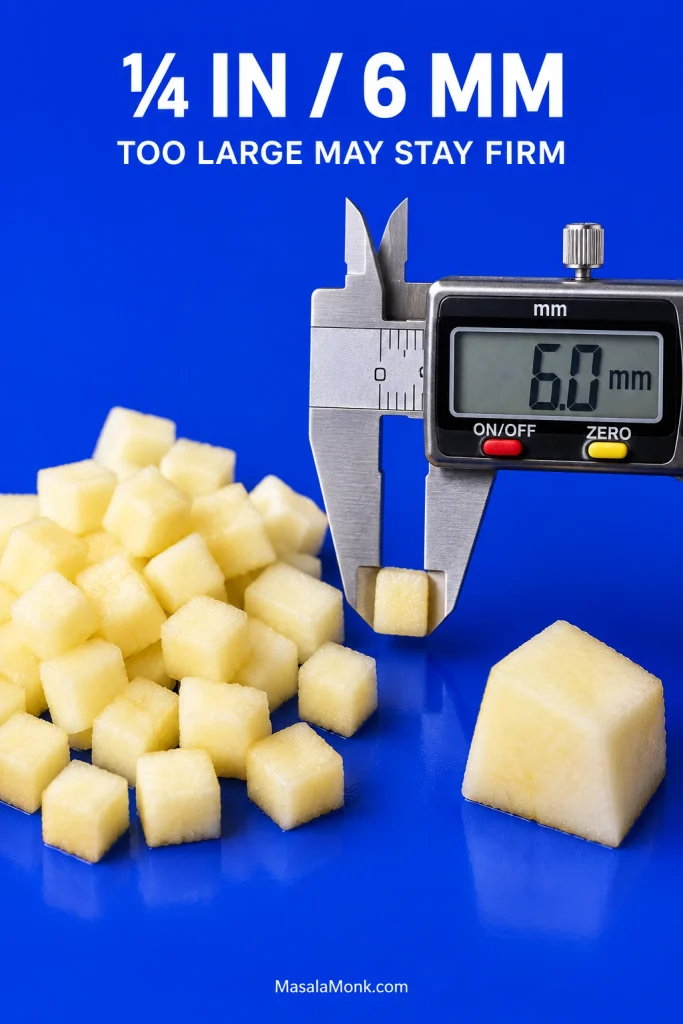
250 g (about 9 oz) peeled and cored apple, cut into roughly ¼-inch (6 mm) pieces
For the cinnamon-sugar top
2 tablespoons coarse sugar, such as Demerara or turbinado
½ teaspoon ground cinnamon
Mix and Rest the Batter
Heat the oven. Place a rack near the middle and heat to 425°F (220°C). Line a 12-cup muffin tin or lightly grease the wells. Mix the coarse sugar and ½ teaspoon cinnamon in the small bowl.
Mix the dry ingredients. Whisk the flour, baking powder, baking soda, salt and 2 teaspoons cinnamon together in the medium bowl.
Mix the wet ingredients. In the large bowl, whisk the brown sugar and eggs until smooth. Whisk in the oil, Greek yogurt, milk and vanilla.
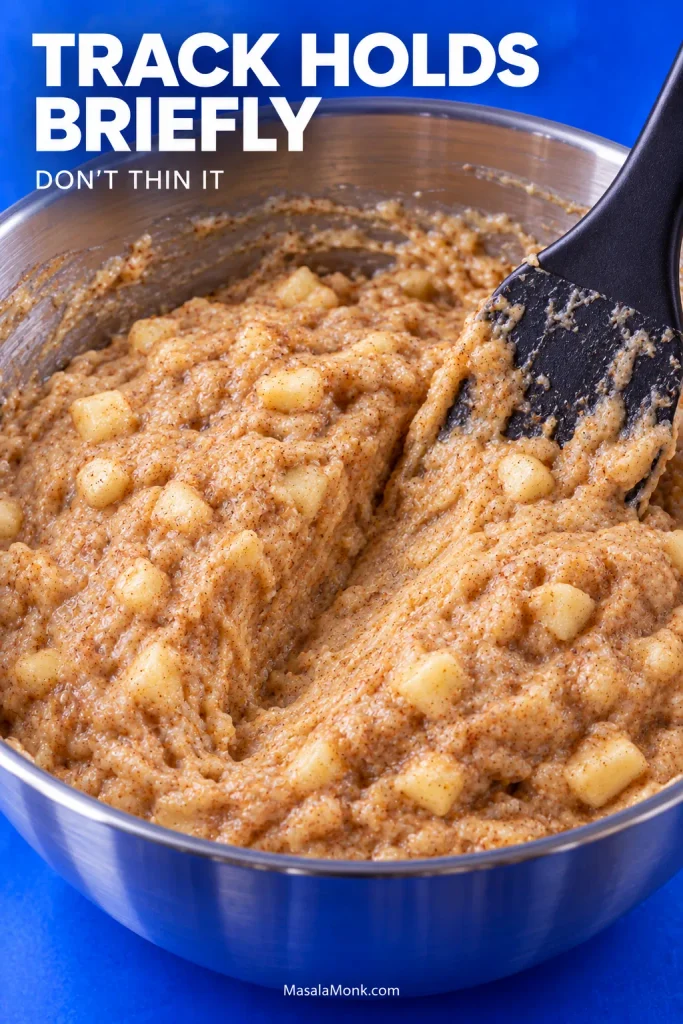
Bring the batter together. Add the dry ingredients and switch to a spatula. Fold until the last dry streaks disappear. The batter will be thick: lift the spatula and it should fall back heavily, leaving a track for a moment before settling. Fold in the apples with as few extra strokes as possible.
Once the flour disappears, stop mixing; a slightly rough apple muffin batter with a soft furrow is exactly where you want to be.
Rest briefly. Leave the batter at room temperature for about 10 minutes. This short pause lets the already-thick batter settle before you portion it into the pan.
Portion, Bake and Cool
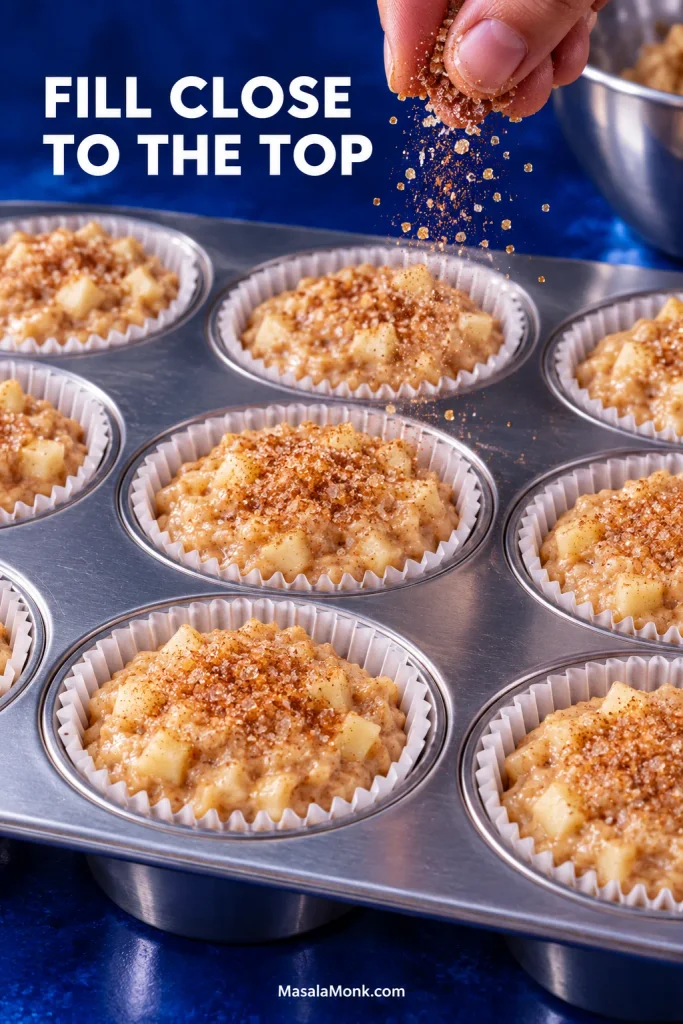
Fill the pan. Divide the batter evenly among the 12 wells, filling each close to the top. Scatter the cinnamon sugar loosely over them.
Judge the fill by height, not scoop count. Keeping all 12 cups near the liner rim helps them finish together even when the crowns are not identical.
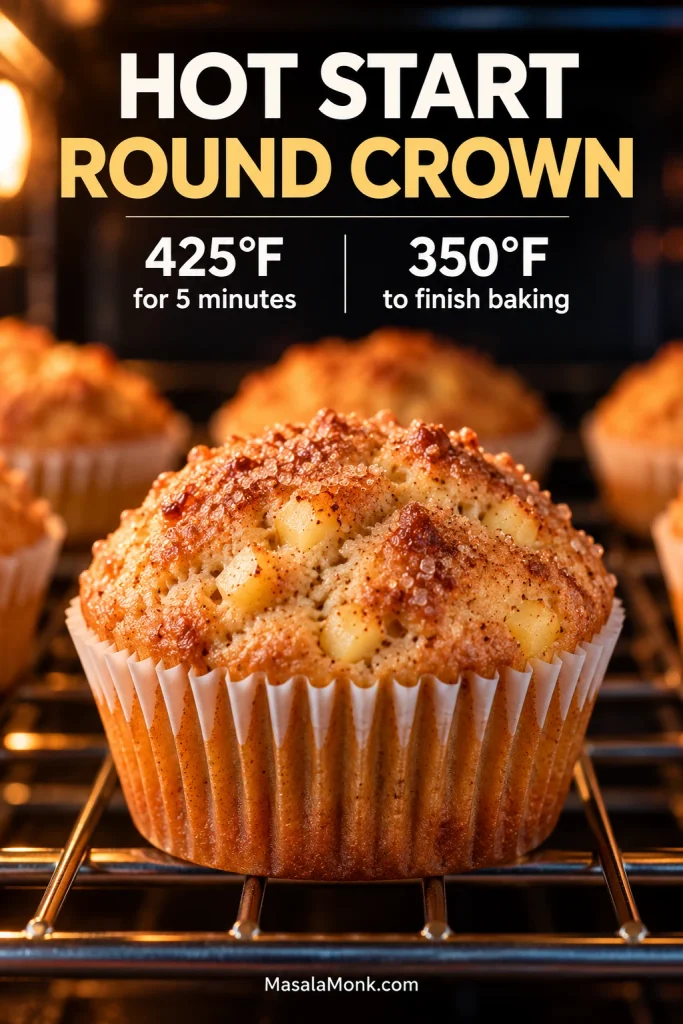
Bake. Start at 425°F (220°C) for 5 minutes. Lower the oven to 350°F (180°C) and continue for about 13–16 minutes. Check with a toothpick: raw batter means more time, while moist crumbs are fine. If the tester goes through apple, try another spot.
Cool. Leave the muffins in the pan for about 5 minutes, then move them to a rack. Give them a few more minutes before pulling one apart—the apple stays much hotter than the crumb.
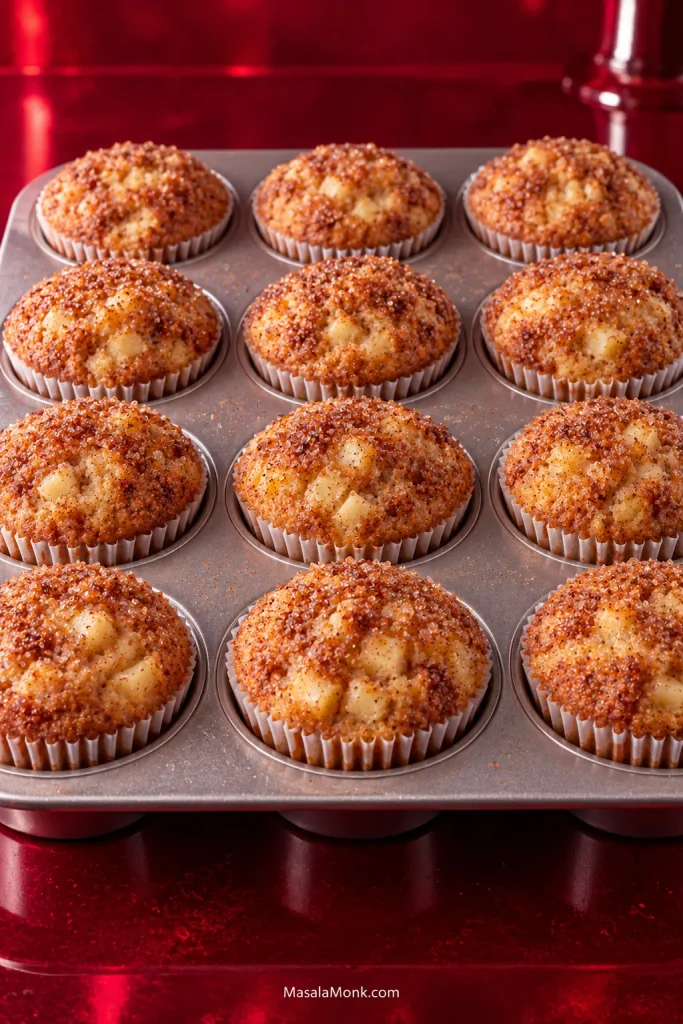
After baking, compare set centers and browning rather than crown height; small differences from muffin to muffin are completely normal.
That’s enough to bake them. The notes below cover the few details that make the biggest difference.
Aim for pieces about ¼ inch (6 mm) across. They soften during the short bake without disappearing into the muffin. Break one open and you should see small pockets of apple through the crumb, not one wet cavity around a large chunk.
Measure one 6 mm apple cube and leave it on the board as your reference. It is the fastest way to keep the rest of the dice consistently small.
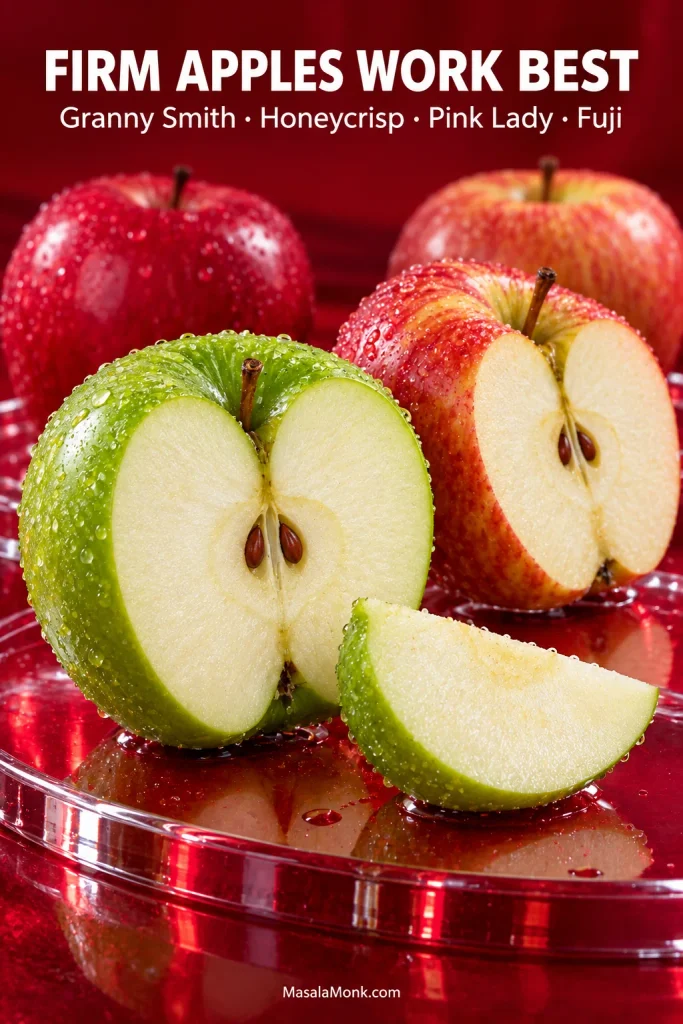
Which apples are best for apple muffins?
Firm apples such as Granny Smith, Honeycrisp and Pink Lady are good choices for apple muffins. Granny Smith is sharper and tarter; Honeycrisp and Pink Lady are sweeter and more fragrant. Fuji works if you prefer a gentler, sweeter apple flavor.
Firmness matters as much as the name on the sticker. Taste a piece before it goes into the bowl. A bland or mealy apple will not suddenly become more flavorful in the oven.
When choosing apples for muffins, crisp, dense flesh matters more than the variety name; soft or grainy fruit will lose definition faster.
Whole apples vary so much in size that the useful number here is the prepared weight: 250 g (9 oz) after peeling and coring.
The cut changes with the bake. A fresh apple cake has enough oven time to handle larger pieces. Muffins need smaller ones.
About the peel: remove it for the softest, most even bite. Thin apple skin is perfectly edible, but it stays more noticeable than the cooked flesh.
Grated apple and applesauce behave differently
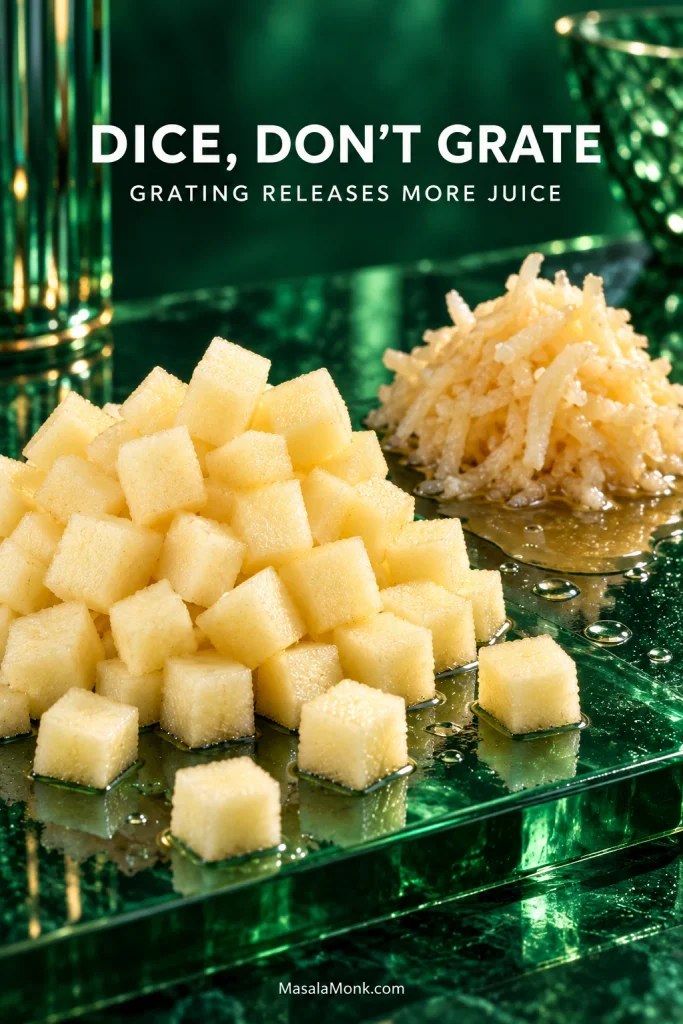
Grating releases much more juice into the batter, so dice the apple for this recipe. If you want the fruit less noticeable, cut the dice finer instead.
Grated apple exposes more cut surface, so its juice enters the batter sooner; small dice hold more of that moisture inside.
Applesauce is a bigger change. It blends through the batter rather than remaining as pieces, so it is not a direct replacement for the fresh apple here. A recipe built around applesauce, such as this moist applesauce cake, starts with a different moisture balance.
Expect the batter to look surprisingly thick the first time you make it. Leave it alone.
Drag a spatula through the bowl. The line should remain visible for a second before slowly closing. Once the apples go in, the batter will look crowded with fruit without turning wet or loose.
If you have a scale, use it for the flour. Too much flour is one of the easiest ways to make these muffins dry.
Using cups? Loosen the flour, spoon it into the cup and level the top rather than packing it down. King Arthur Baking has a useful visual guide to measuring flour.
The thick batter helps keep the apple distributed instead of letting it sink toward the bottom. Oil keeps the crumb soft after cooling; Greek yogurt adds moisture and body.
The 10-minute rest is a short pause, not a make-ahead step. During that pause, the batter may thicken a little, but don’t turn it into an overnight rest. If you want a head start, measure the dry ingredients and cinnamon sugar ahead of time instead.
Get the Crown Without Drying the Center
The tops don’t need to tower over the liners. A good crown here is rounded and lightly crisp, with a center that stays tender.
Thick batter, generously filled cups and the first 5 minutes at 425°F (220°C) help build that rounded crown. Lowering the temperature afterward gives the center more time to finish without chasing a taller top at the expense of the crumb; ThermoWorks explains the role of that initial oven heat in more detail.
At the 5-minute mark, lower the oven setting without opening the door.
The cinnamon sugar makes a thinner crust than streusel. Some melts into the surface as the muffins rise, while crystals caught on the high points remain crisp against the softer crumb. If that contrast is your favorite part, apple cider donuts take it in a much crunchier direction.
A patchy cinnamon-sugar surface is the goal: some bare muffin between the crystals keeps the topping thin rather than candy-like.
How to Tell When Apple Muffins Are Done
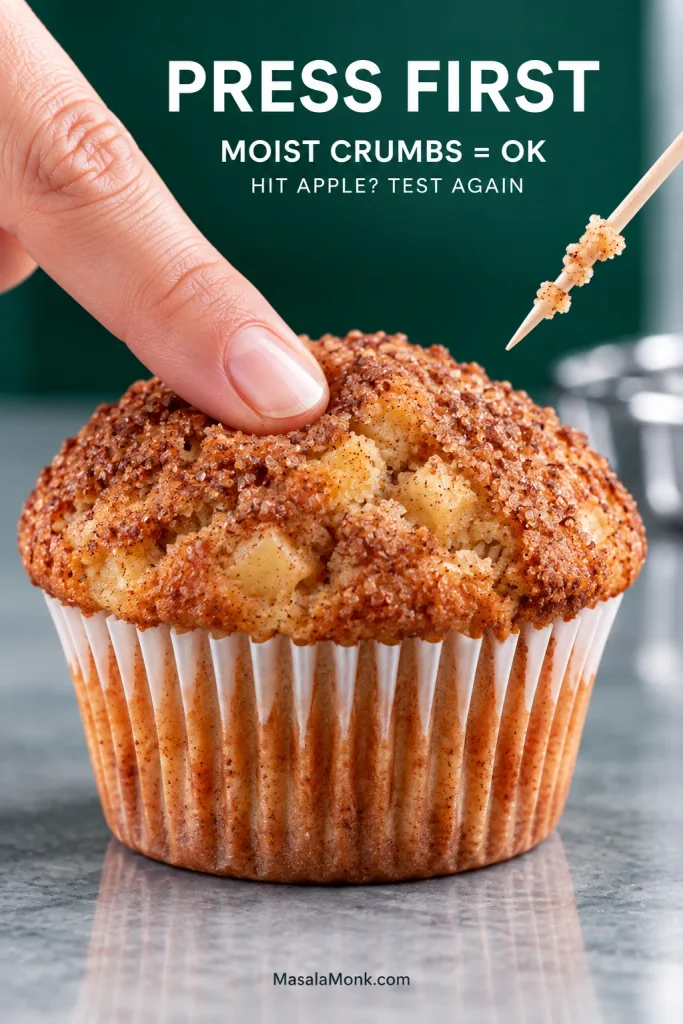
Start checking once the tops are rounded and set. Give one a light press near the center; it should spring back rather than hold the dent.
Then use a toothpick. Raw batter needs more time. Moist crumbs are fine. Hit apple? Try another spot.
Use the clues together: spring at the center, no raw batter, and a second toothpick spot if the first one hits apple.
Apple Muffin Troubleshooting
If something is off, start with what actually happened. Change one thing next time rather than changing the fruit, flour and oven all at once.
Read the Crumb: Moist or Gummy?
Moist crumb still shows little air cells around the apple. By contrast, gummy crumb looks compressed, glossy and almost fused together.
Match the Symptom Before You Change the Recipe
What happened?
Likely reason
Try this next time
Dry muffin, firm apple
The apple pieces were probably too large, so the muffins stayed in the oven longer while you waited for the fruit to soften
Cut the apple smaller and judge doneness by the crumb rather than waiting for large pieces of fruit
Dry all the way through
Too much flour or too much oven time
Weigh the flour and begin checking earlier
Wet or gummy center
The center may be underbaked, or the batter may contain too much fruit or free juice
Use the stated apple weight and dice size, and check the crumb in more than one spot before taking the pan out
Dense, chewy crumb or long tunnels
The batter was mixed too much after the flour went in
Fold only until the dry flour disappears
Apple sank toward the bottom
The batter may have been too loose, the fruit too large or heavy, or there may have been excess moisture
Measure the liquids and apple carefully, keep the dice small and do not thin the batter
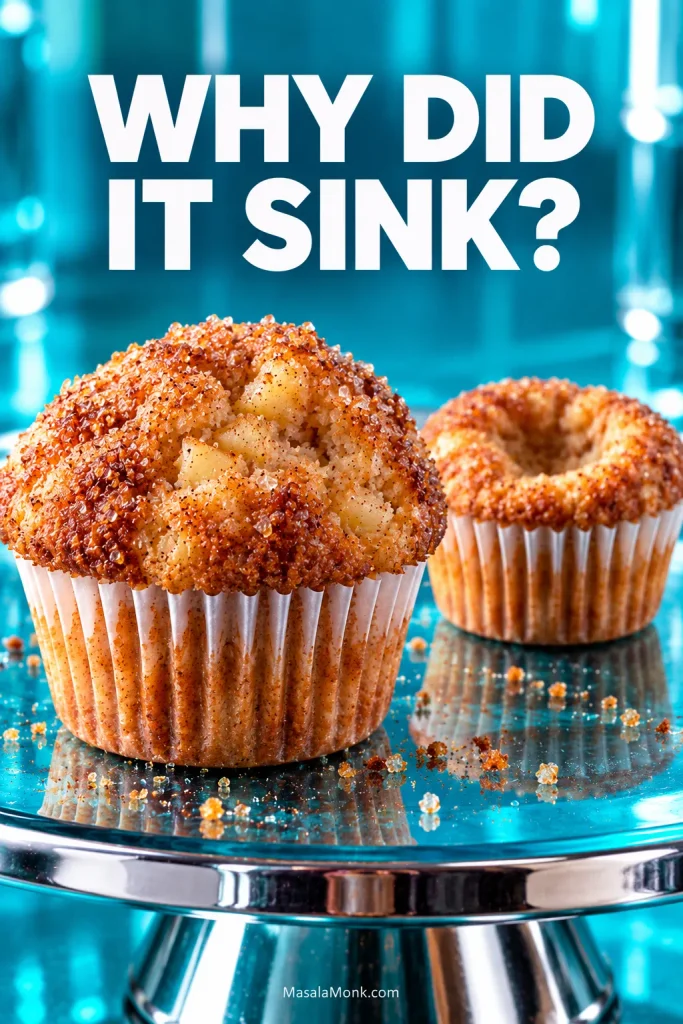
Rose high, then sank
The center may not have set, or the leavener may have been overmeasured
Measure the leavener carefully and bake until the center is set
Flat or low tops
The oven may not have been fully hot, the leavener may be weak, or the cups may have been underfilled
Preheat thoroughly, use fresh leavener and fill the cups as directed
Bottoms browned too fast
Dark bakeware, a low rack or a hot-running oven
Use the middle rack, try a lighter pan and check the oven temperature if it keeps happening
Why Apple Muffins Sink
After cooling, a sunken muffin often keeps a higher rim around a depressed center, showing that it rose before losing support. A uniformly low top tells a different story.
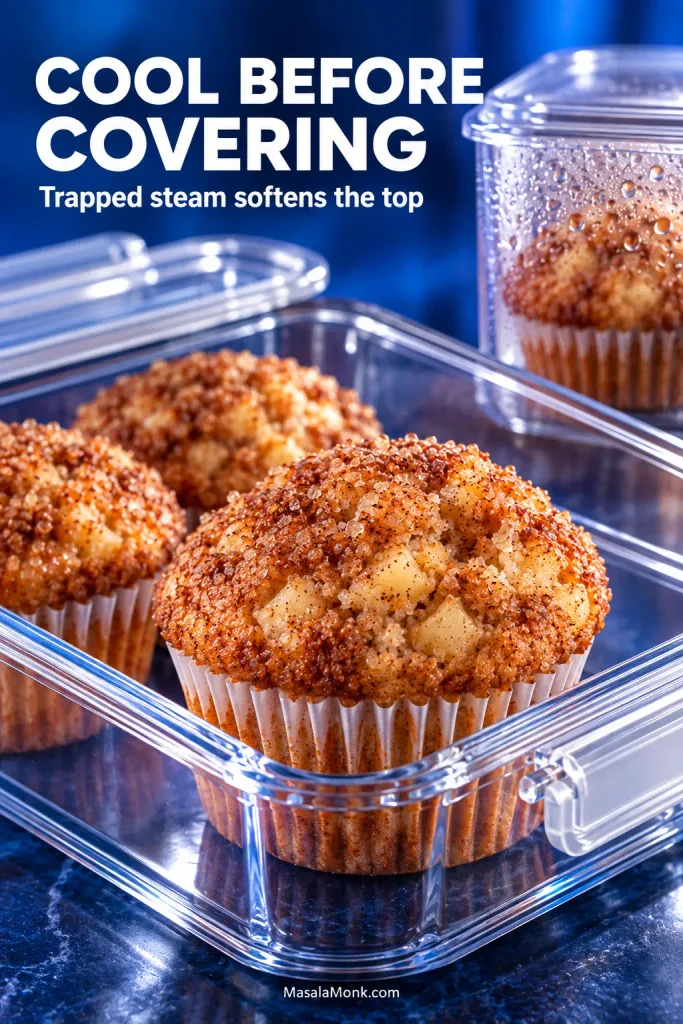
What changes by tomorrow is mostly the top. The cinnamon sugar has its best crackle on the day the muffins are baked; once they sit covered, some of that crispness fades.
Let the muffins cool completely before covering them. In a cool, dry kitchen, keep them airtight at room temperature for about 2 days. If your kitchen is very warm or humid, refrigerate them instead and let them sit at room temperature for a little while before eating.
Once the muffins are cool, the lid should stay clear. If it fogs, uncover them and let the remaining heat escape before sealing again.
For anything beyond that short window, freezing is the better option for preserving the crumb. Freeze the cooled muffins airtight, thaw at room temperature and warm briefly if you like. The cinnamon-sugar top will be softer after freezing, but the muffin warms well.
Pull one apart and the crumb should separate softly around small pockets of apple.
Warm, tender crumb with little apple pockets and a crisp cinnamon-sugar edge.
The coarse sugar hits first, then warm cinnamon and tender apple through the center.
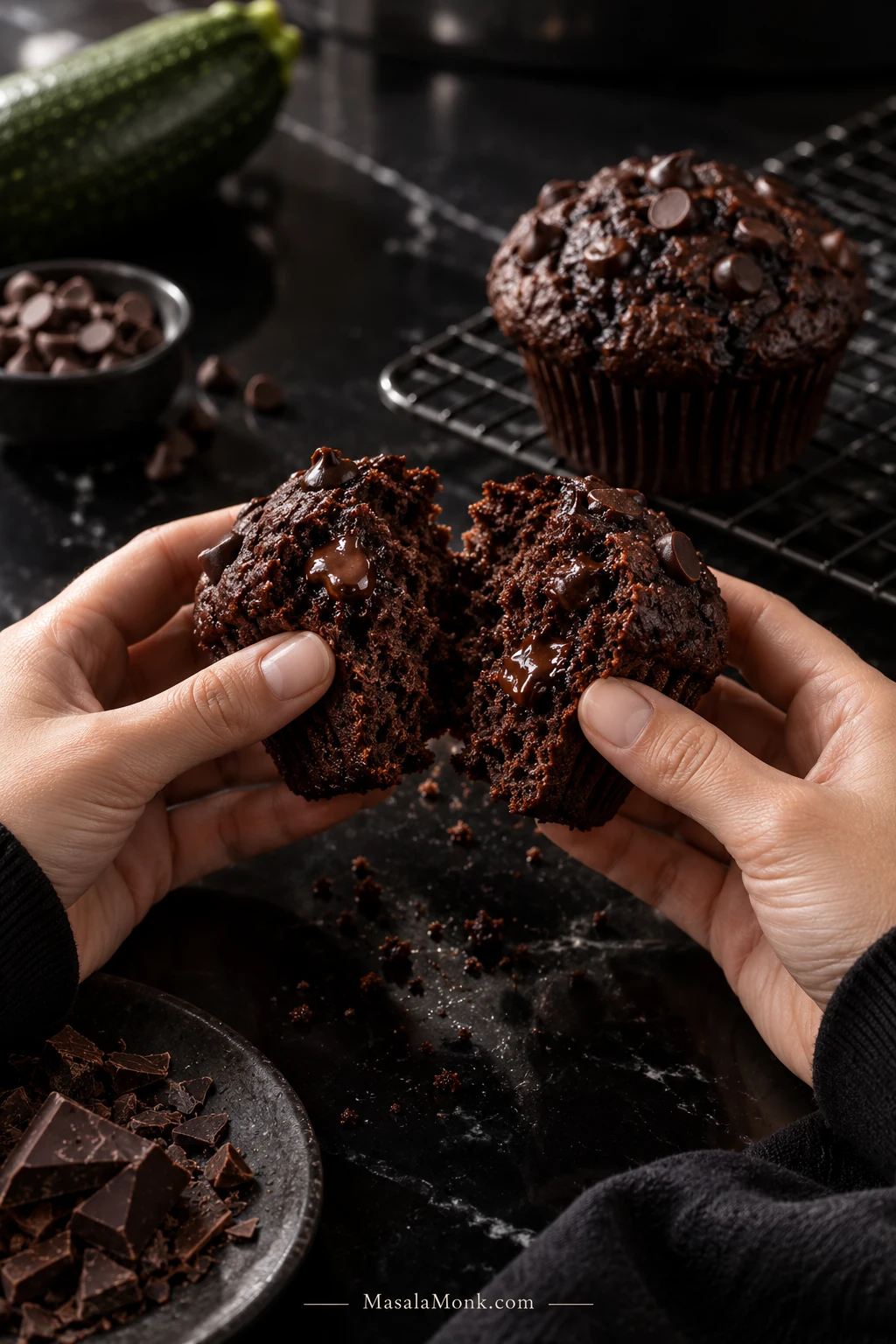
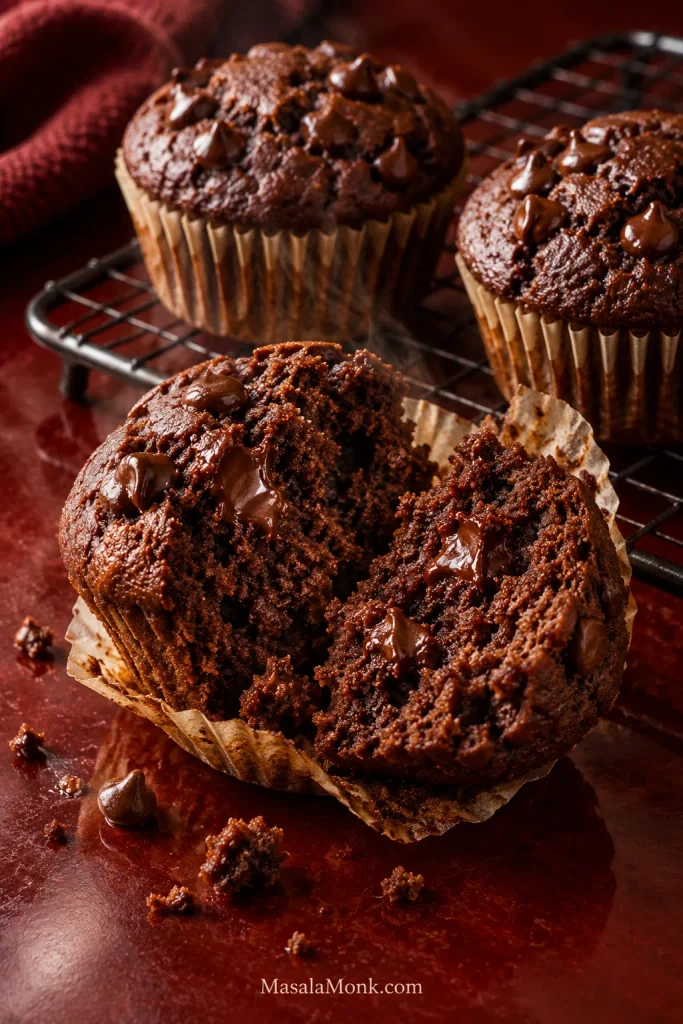
These chocolate zucchini muffins should eat like rich chocolate muffins that happen to contain zucchini—not vegetable muffins that happen to contain cocoa. Break one open and the center should be dark, soft and tender, with melted chocolate tucked through the crumb.
The double chocolate comes from cocoa baked through the crumb and semisweet chips that stay soft and melty while the muffins are warm. Finely shredded zucchini works quietly underneath, keeping the center tender while contributing very little flavor of its own.
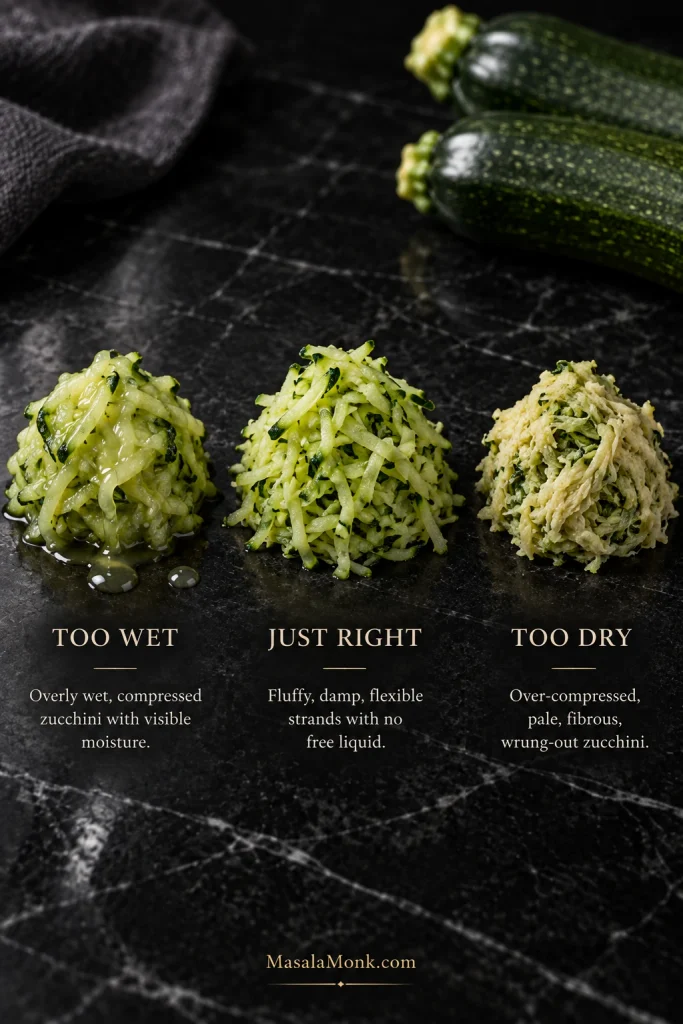
The one part worth watching is the zucchini’s water. Exceptionally juicy zucchini or an extra handful of shreds can leave the middle heavy. Squeeze the zucchini bone-dry, though, and you give up some of the softness it brings to the crumb.
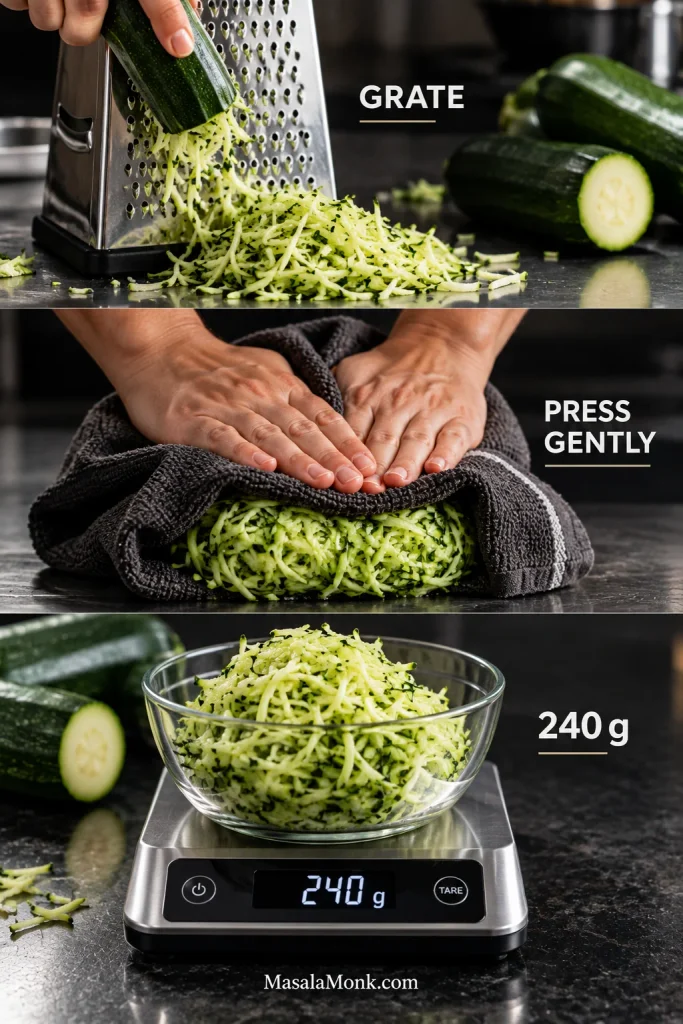
Finely shredded, with loose surface water pressed away while the shreds remain damp.
Batter
Thick + scoopable
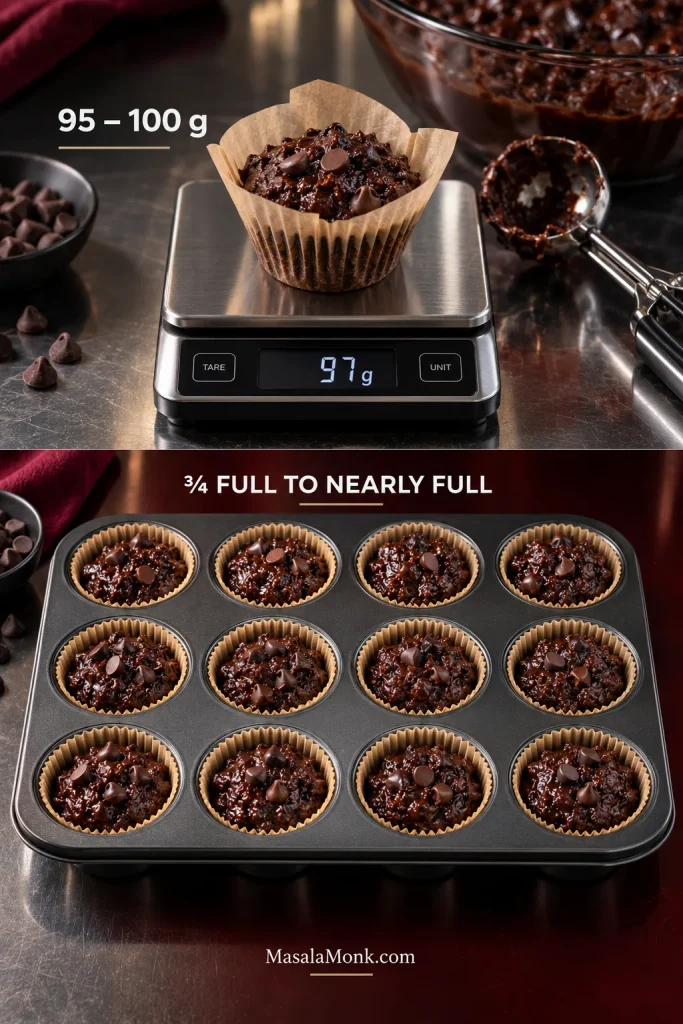
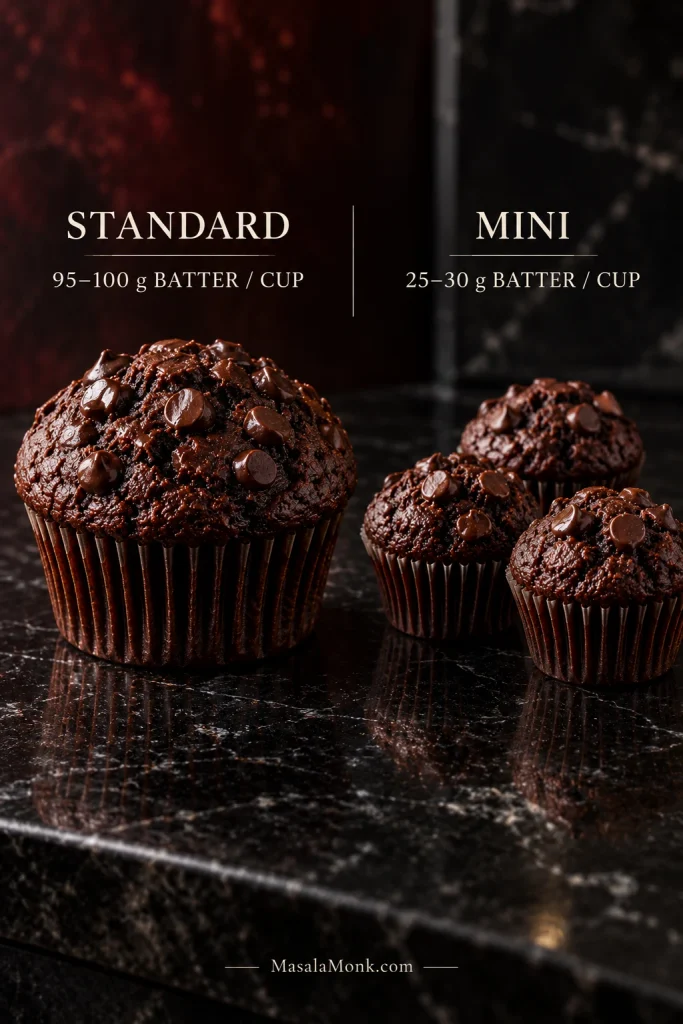
About 95–100 g / 3.4–3.5 oz in each standard muffin cup.
Baked Center
Moist + fully set
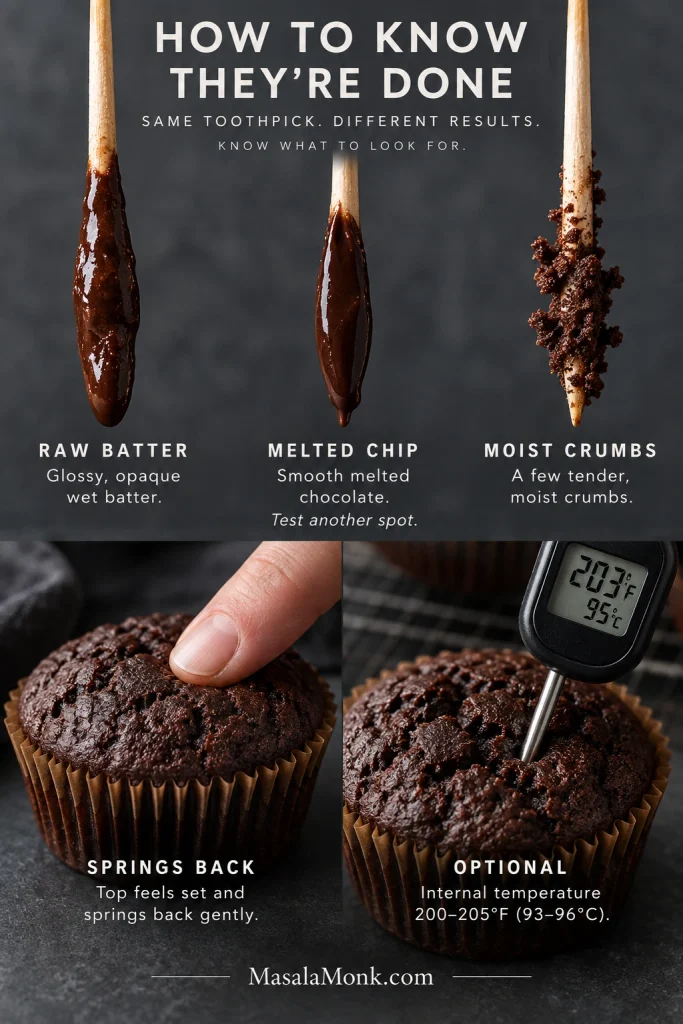
The top springs back and a tester shows tender crumbs with no raw batter.
Chocolate Zucchini Muffins Recipe
No mixer is needed—a whisk and spatula are enough.
Yield12 standard muffins
PrepAbout 20 minutes
TotalAbout 45–50 minutes
Oven375°F / 190°C
BakeAbout 20–24 minutes
Cool5 minutes in pan
Useful equipment: a standard 12-cup muffin pan, parchment-style liners, box grater, two mixing bowls, whisk, flexible spatula and wire rack. A digital kitchen scale is strongly recommended for the zucchini and portioning; an instant-read thermometer is optional.
Use the small shredding holes of the box grater. The tiny rasp or zester face tends to turn zucchini into wet pulp. A light-colored metal muffin pan works well here; dark nonstick pans brown the bottoms and sides faster, so check them earlier.
Ingredients
Dry Ingredients
200 g / 7 oz all-purpose flour, about 1⅔ cups when spooned and leveled
40 g / 1.4 oz Dutch-process unsweetened cocoa powder, about ½ cup
1½ teaspoons baking powder
½ teaspoon baking soda
½ teaspoon fine salt
1 teaspoon instant espresso powder, optional
Wet Ingredients
150 g / 5.3 oz light or dark brown sugar, a scant ¾ cup packed
50 g / 1.8 oz granulated sugar, about ¼ cup
2 large eggs, about 100 g without shells
110 g / 120 ml neutral oil (½ cup / 4 fl oz)
80 g / 2.8 oz sour cream, about ⅓ cup
10 ml / 2 teaspoons vanilla extract
Zucchini & Chocolate
240 g / 8.5 oz prepared zucchini, finely shredded and weighed after pressing away loose surface water. No scale? Expect roughly 1¾–2 cups after pressing, and use the damp, no-drip cue in the method as your final check.
170 g / 6 oz semisweet chocolate chips, about 1 cup, divided
Method
Prep and Mix
Heat the oven to 375°F / 190°C. Put a rack in the middle and line a standard 12-cup muffin pan with parchment-style liners. Let the oven fully preheat before the batter goes in.
Prepare the zucchini. Leave the tender peel on and shred it on the small shredding holes of a box grater. Spread the shreds over a clean kitchen towel, fold another section over the top and press firmly with flat hands. Lift the towel and check them. Press again if there is still loose water on the surface. The zucchini should feel damp and flexible. If you can, weigh 240 g / 8.5 oz.
Weigh the zucchini after pressing, not before, so the 240 g target controls both the amount of zucchini and how much loose water reaches the batter.
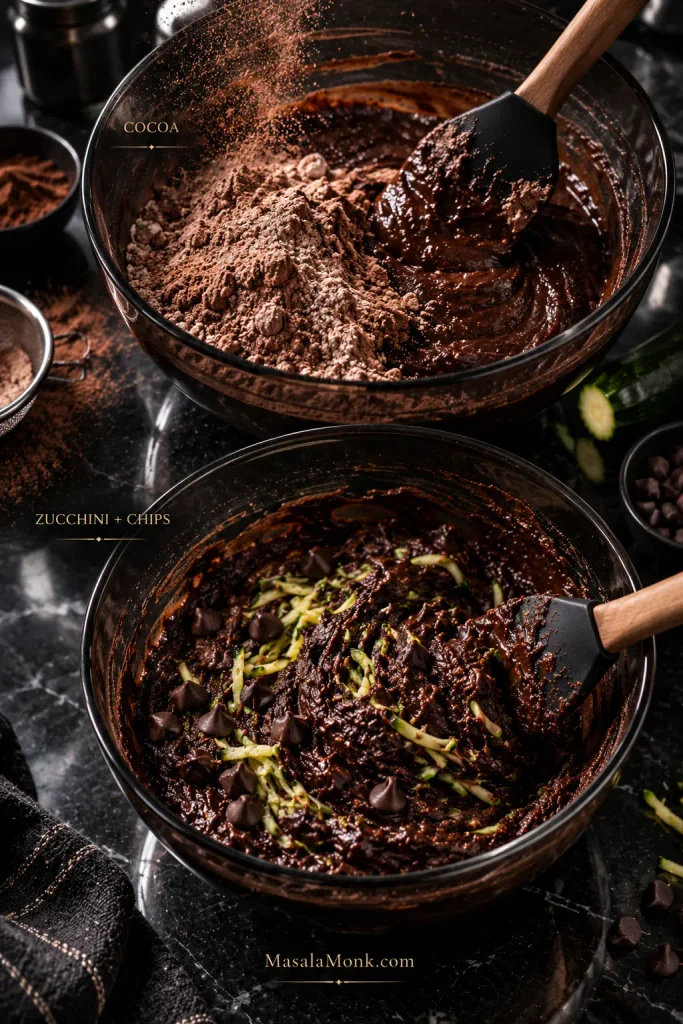
Mix the dry ingredients. Whisk the flour, cocoa powder, baking powder, baking soda, salt and optional espresso powder until the cocoa is evenly dispersed and no obvious lumps remain.
Mix the wet ingredients. In a large bowl, whisk the brown sugar, granulated sugar and eggs until evenly combined. Whisk in the oil, sour cream and vanilla until smooth.
Bring the batter together gently. Add the dry mixture to the wet mixture and fold until only a few flour or cocoa streaks remain. Then add the prepared zucchini and 140 g / 5 oz chocolate chips, folding just until combined. The batter should look dark, thick and slightly glossy.
A few faint flour streaks before the final fold are preferable to overmixing; the zucchini and chocolate chips finish distributing everything as they go in.
Check, Portion and Bake
Still looks almost too thick? That is okay. The batter should be thick enough to scoop. It may loosen as the zucchini releases moisture, so don’t add milk just because it looks thick. If yours already looks loose, leave the flour alone and move on.
Watch how the batter behaves, not just how thick it looks: a scoop should leave soft ridges that relax slowly rather than disappearing immediately.
Portion evenly. Divide the batter among the 12 muffin cups, aiming for about 95–100 g / 3.4–3.5 oz per cup. Without a scale, fill the cups roughly ¾ full to nearly full. Scatter the remaining 30 g / 1 oz chocolate chips over the tops.
Even portions help synchronize doneness across the pan, so weighing roughly 95–100 g per standard cup can keep smaller muffins from drying out while larger ones are still setting.
Bake for about 20–24 minutes. Start checking at 19 minutes. Pan color, zucchini moisture and individual ovens can shift the timing.
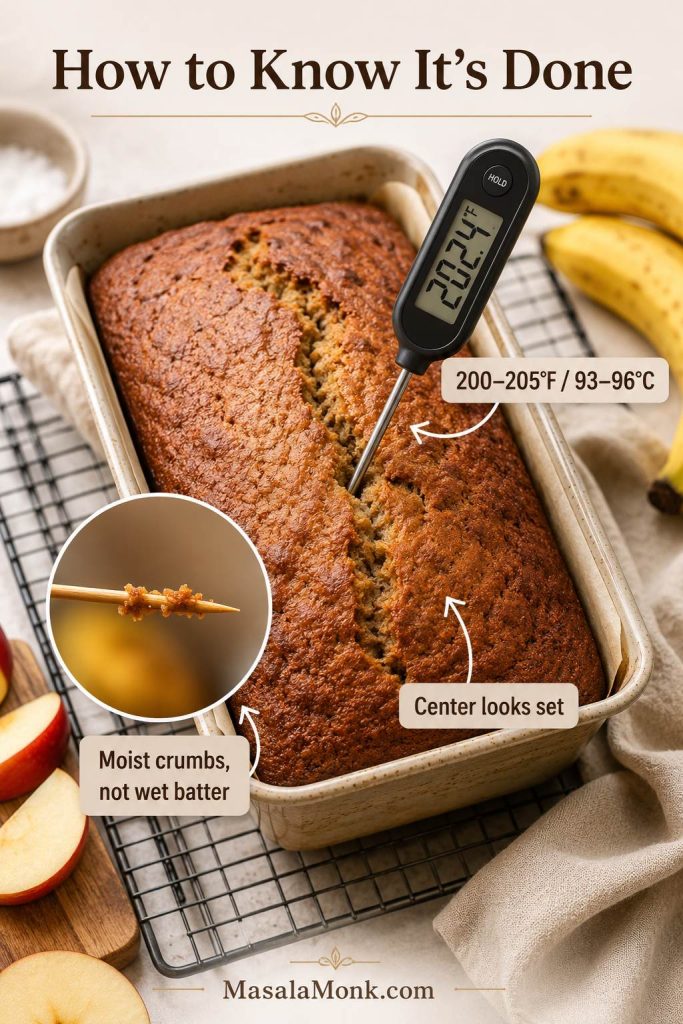
Check the center. The tops should look set and spring back gently. A tester should show moist crumbs with no raw batter. Hit a pocket of melted chocolate? Test another spot. If you use a thermometer, about 200–205°F / 93–96°C is another useful check.
With chocolate muffins, use several doneness cues together: a springy top, moist crumbs and a second toothpick spot are more reliable than one chocolate-streaked test.
Cool Before Judging the Crumb
Cool for 5 minutes in the pan, then move to a wire rack. Give the crumb a few more minutes to settle before deciding whether the middle is fully set. A muffin cut open piping hot will look softer than one that has cooled slightly.
Making them ahead? Measure the dry ingredients and chocolate in advance, but mix the batter close to baking time. Once the zucchini is in the bowl and the leaveners are wet, the batter is better off heading for the oven.
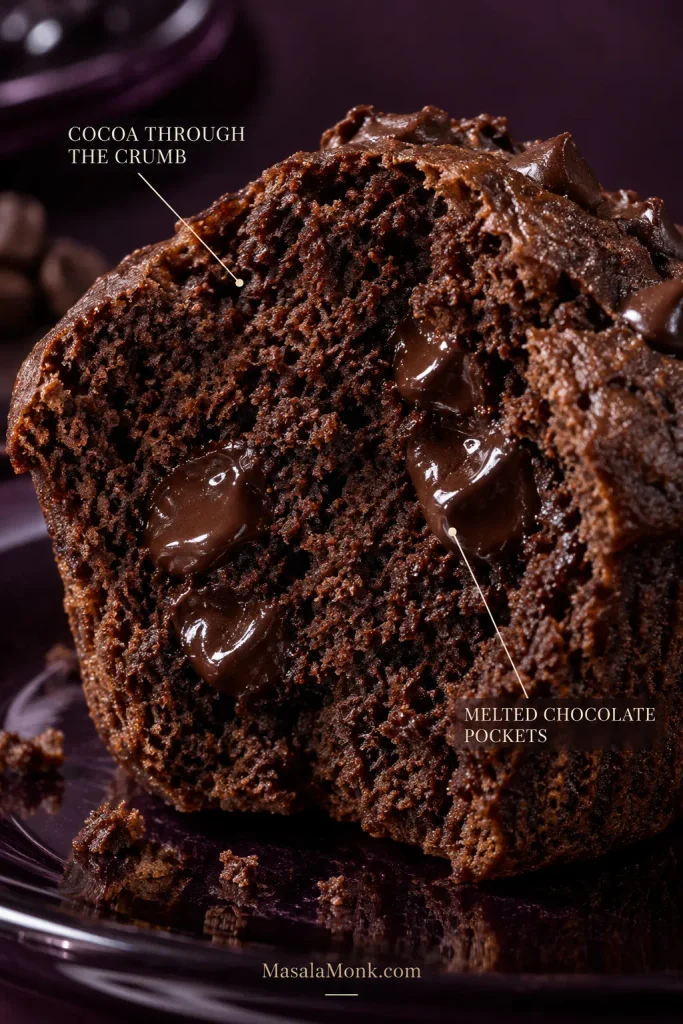
Let one cool long enough for the crumb to settle, then pull it apart. The center should be soft and dark, with little pockets of chocolate still yielding where the muffin is warm.
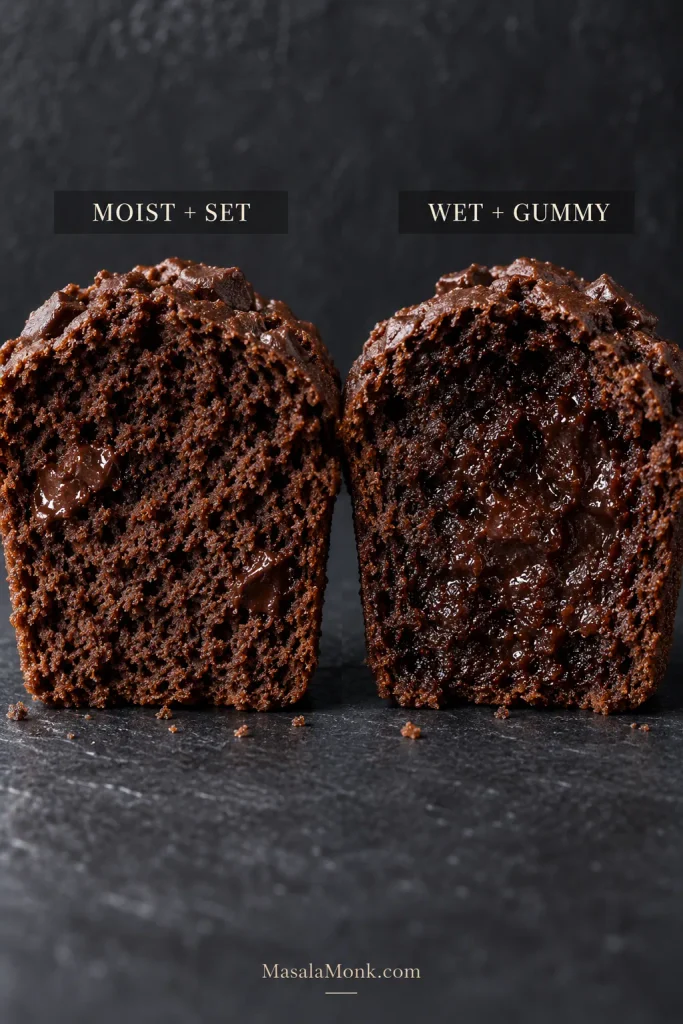
This is the texture to look for once the crumb has set: visible aeration and a mostly matte interior, with gloss confined mainly to actual pockets of melted chocolate.
For the Next Batch
If the muffins are already in the oven, you have everything you need. Come back here when you want to handle a different kind of zucchini, change an ingredient, make minis or work out what happened to the crumb.
So, should you squeeze zucchini for muffins? For this recipe, yes—but gently. Pick up a small handful of the shredded zucchini and squeeze. Nothing should drip, but the strands should still feel soft, damp and flexible. That’s the state you want before weighing the 240 g / 8.5 oz for this recipe.
The goal is not dry zucchini; it is zucchini without free water. Damp, flexible shreds still carry the moisture that helps the finished muffins stay tender.
No liquid should drip when you gently squeeze a handful
Very large mature zucchini
Remove tough developed seeds if needed, then shred the firmer flesh
The large central seed area can be wetter and coarser than young zucchini
Frozen, then thawed zucchini
Thaw fully, drain well, press away the released liquid, then weigh
Thawed zucchini releases considerably more water, so drain and press it before weighing
Why Extra Zucchini Can Make the Centers Gummy
That last handful may look harmless, but it still brings water into the batter. Add enough and the middle can lag behind while the outside keeps baking.
Have enough left for another bake? Save it for the Zucchini Bread Recipe instead of adding more here.
The goal is depth without drying the crumb. Cocoa absorbs water as well as adding flavor, so simply piling in more doesn’t automatically make a better chocolate muffin.
Cocoa Flavors the Whole Crumb
The recipe uses 40 g / 1.4 oz cocoa powder. That’s enough for a dark, unmistakably chocolate crumb while leaving room for the zucchini, oil and sour cream to keep it soft.
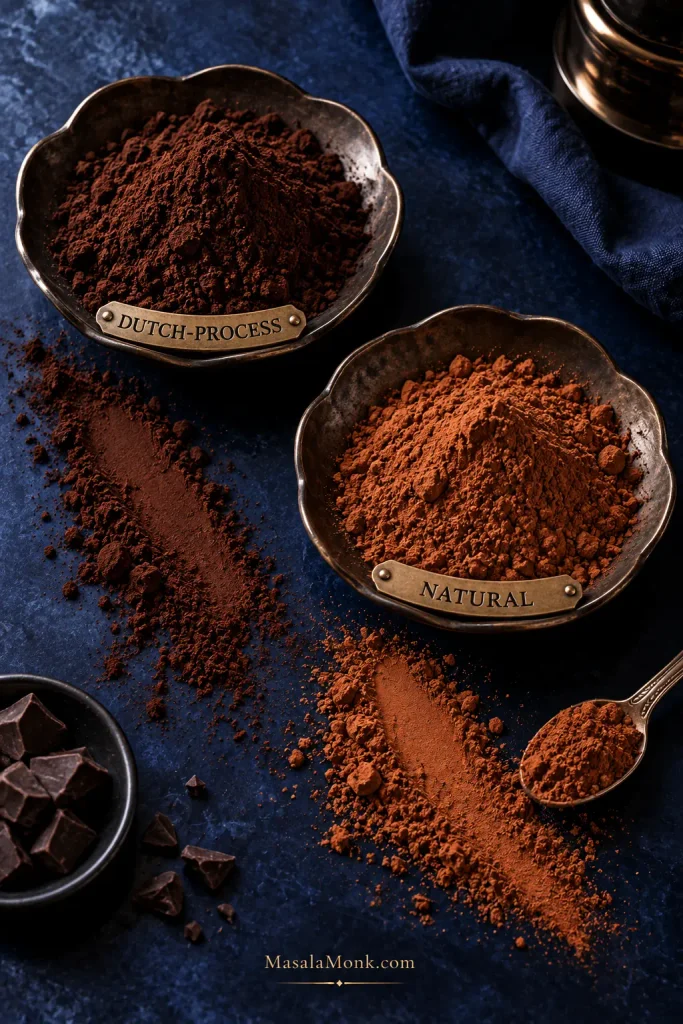
Dutch-process cocoa is the intended choice for its dark color and smooth chocolate flavor. Natural unsweetened cocoa can also be used here; expect a lighter color and a slightly sharper cocoa taste.
Cocoa choice changes the chocolate profile, but quantity changes the batter too; adding extra cocoa simply for darker color can also make the crumb drier.
Keep the baking soda and baking powder as written if you change cocoa. Their balance belongs to the whole batter, not the cocoa alone.
Chocolate Chips Make It Double Chocolate
The chips add what cocoa cannot: pockets of actual melted chocolate. Pull a muffin apart while it is still warm and those pockets stay softer and richer than the surrounding cocoa crumb.
Semisweet keeps the sweetness balanced. Dark chocolate makes the muffins more intense, while milk chocolate pushes them further toward dessert. Reserve a few chips for the tops so the finished muffins look as chocolatey as they taste.
Look for a mostly matte cocoa crumb interrupted by glossier pockets where the chocolate chips have melted.
For a frosted muffin-style cupcake, cool the standard-size muffins completely and top them with Chocolate Cream Cheese Frosting. If you want a lighter, finer cake crumb, start with a cupcake-specific batter.
Substitutions Without Wrecking the Batter
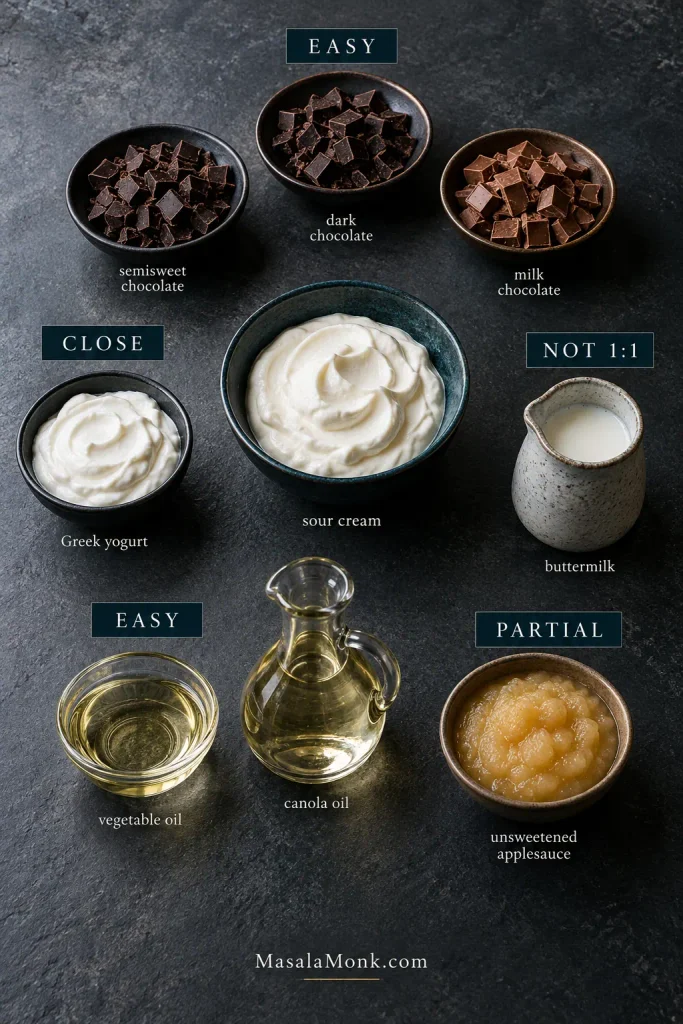
You do not need to treat the recipe as untouchable. A different chocolate or another mild neutral oil is easy. Changes to cultured dairy or flour affect the batter more, so keep the experiments simple.
Replacing part of the oil with unsweetened applesauce is one of the gentler changes. Replace no more than about half the oil. The crumb will be less rich and a bit heavier, but it should remain soft. For a bake where applesauce is built in from the start, Banana Bread With Applesauce takes that approach deliberately.
Easy Swaps That Keep the Batter Close
Chocolate: dark or milk chocolate chips can replace semisweet directly. Dark makes the muffins more intense; milk makes them sweeter.
Neutral oil: another mild neutral oil is an easy swap.
Greek yogurt: thick full-fat Greek yogurt is a reasonable substitute for the sour cream, with a tangier and slightly less rich result.
Buttermilk: it is considerably thinner than sour cream, so it is not a straight 1:1 swap. Greek yogurt is the closer substitute.
1:1 gluten-free baking blend: a true cup-for-cup blend may work, but absorption, texture and bake time vary between brands.
For chocolate zucchini muffin substitutions, judge a swap by what it does to batter thickness, fat and water—not merely by whether two ingredients seem similar.
When a Swap Becomes a Different Recipe
Want the muffins less sweet? Reduce the sugar conservatively. Bigger cuts change tenderness and moisture as well as sweetness. For a much lower-sugar muffin, start with a recipe designed around that change.
One substitution is a variation. Replacing the flour, fat, sugar and egg at the same time is a new recipe.
Once you’re replacing the flour entirely, removing the eggs or switching to specialty sweeteners, those changes need a different formula. If higher protein is the goal, use High Protein Muffins instead of forcing extra protein into this batter.
For minis, use about 25–30 g / 0.9–1.1 oz batter per cup and start checking around 9 minutes. Expect roughly 40 minis, give or take a few, because mini pans vary more than standard muffin tins.
Bake them at 375°F / 190°C for about 9–12 minutes. They move from moist to dry quickly, so use the same doneness cues and check early.
Because mini chocolate zucchini muffins hold only 25–30 g of batter per cup, the window between moist and dry is narrower; start checking early rather than scaling the standard bake time proportionally.
For Taller Muffin Tops
Fully preheat the oven, use fresh leaveners, portion the cups evenly and fill them generously. Those basics already give the batter a strong start.
Some bakery-style methods begin with a burst of higher heat and then finish cooler. That can create a more dramatic crown, but it also makes browning and oven hot spots more influential.
This recipe stays at 375°F / 190°C from start to finish. If taller bakery-style crowns are the priority, the Blueberry Muffin Recipe goes further with generous filling and a hot-start method.
Why Are My Chocolate Zucchini Muffins Gummy, Dry, Dense or Flat?
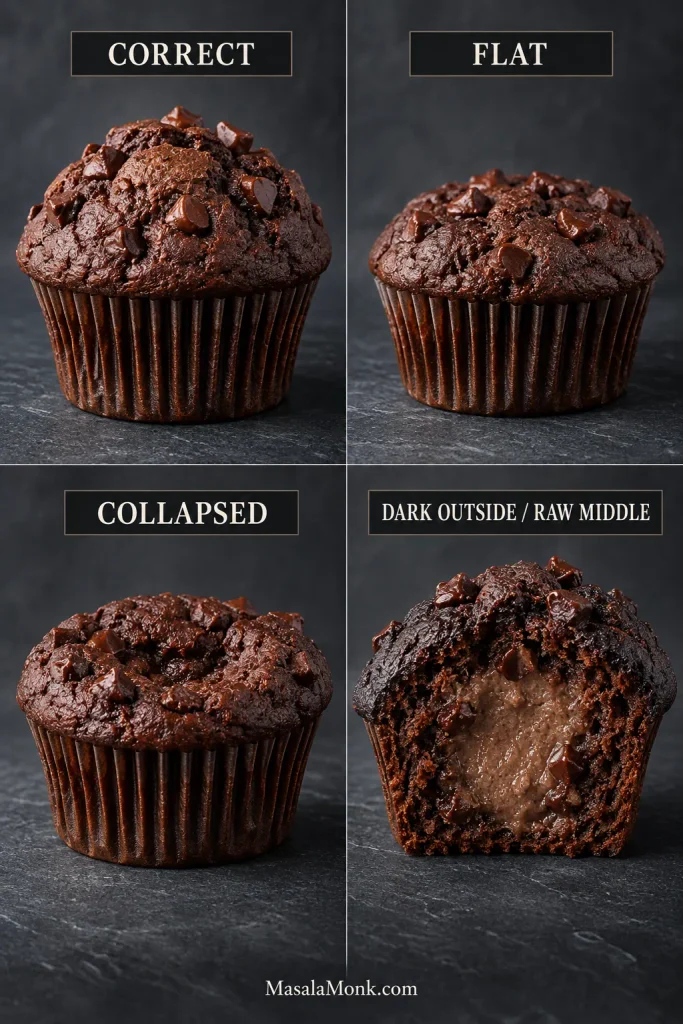
Most texture problems are easiest to troubleshoot one likely cause at a time. Find the symptom closest to yours, change that first, and leave the rest of the recipe alone on the next batch.
Problem
Likely cause
What to do
Wet or gummy center
Very wet zucchini, extra zucchini, moisture-heavy substitutions, oversized portions or underbaking
Check the zucchini amount and preparation first; extra oven time cannot always rescue a batter carrying too much water
Dense or rubbery
Overmixing, protein powder or a flour swap that absorbs differently
Fold only until combined and change one major ingredient at a time
Dry
Too much flour, zucchini pressed extremely dry, large sugar/fat reductions or overbaking
Weigh the flour and start checking sooner
Rose, then collapsed
Wet batter, several major substitutions at once, too much leavener or a center that had not set
Correct the batter before adding more baking powder
Flat tops
Old leavener, underheated oven, heavy batter or underfilled cups
Use fresh leaveners, fully preheat and portion consistently
Dark outside, raw middle
Oversized portions, dark pan, oven running hot or excess batter moisture
Check the pan, oven, portion size and zucchini before simply extending the bake
Bitter or chemical
Too much baking soda or baking powder, or an improvised leavener swap
Measure carefully and keep the leaveners as written
Tester looks wet
You may have pierced a melted chocolate chip
Test another spot before deciding the center is raw
Treat the muffin’s shape as a clue rather than a verdict: flat, collapsed and raw-centered muffins point you toward different moisture, heat, leavening or portioning checks.
Wet or Gummy in the Middle
Extra zucchini, a large applesauce substitution, a different flour or unusually large portions can all leave the center struggling to set before the outside is ready. A genuinely underbaked muffin may only need a few more minutes. When the batter itself carries too much water, however, the edges can dry while the middle stays sticky.
A moist crumb still has structure—visible pores, clean separation and a mostly matte surface—whereas a gummy center compresses into shiny, paste-like crumb away from the chocolate pockets.
Bitter or Chemical Taste
Chemical or metallic bitterness usually points to too much baking soda or baking powder, or an incorrect swap between the two. Very dark cocoa can also taste harsher after a large sugar reduction.
How to Store and Freeze Chocolate Zucchini Muffins
Cool the muffins completely before sealing them up. They are at their best for about 2–3 days at room temperature; packing them while warm traps steam and can make the tops sticky.
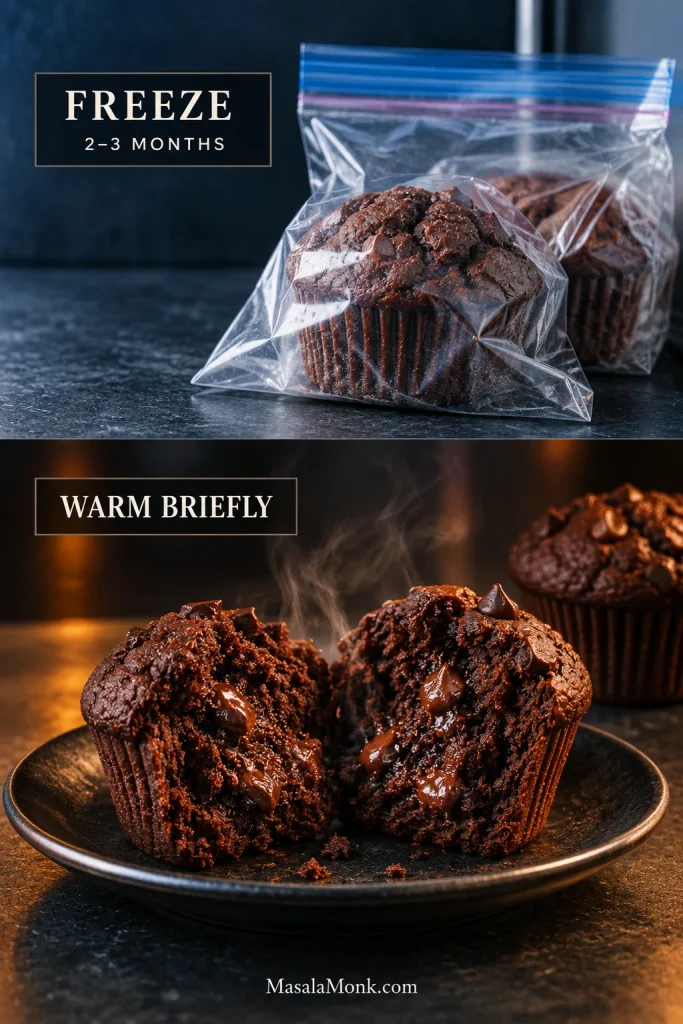
For longer storage, refrigerate them in an airtight container for about 5–6 days, or freeze them for about 2–3 months. To freeze them, cool them fully and wrap them individually or transfer them to a well-sealed freezer bag or container.
Thaw at room temperature or warm one briefly in the microwave. The crumb softens again, and the chocolate chips turn melty at the edges.
Individual wrapping turns a frozen batch into single servings: take out one muffin, warm it briefly, and leave the rest sealed until you need them.
Baking a big garden-zucchini batch? If the centers seemed borderline, cut one muffin open after it has cooled before freezing the entire batch. It is much better to catch a wet middle before thirty muffins disappear into the freezer. If the crumb looks compressed or shiny, compare it with Wet or Gummy in the Middle before storing the batch.
Discard muffins with visible mold, an off smell or an unusual slimy texture.
Warm one just enough for the chips to soften again, and the thing you notice first is still the chocolate: a dark, tender crumb with the zucchini quietly doing the work that keeps it soft.
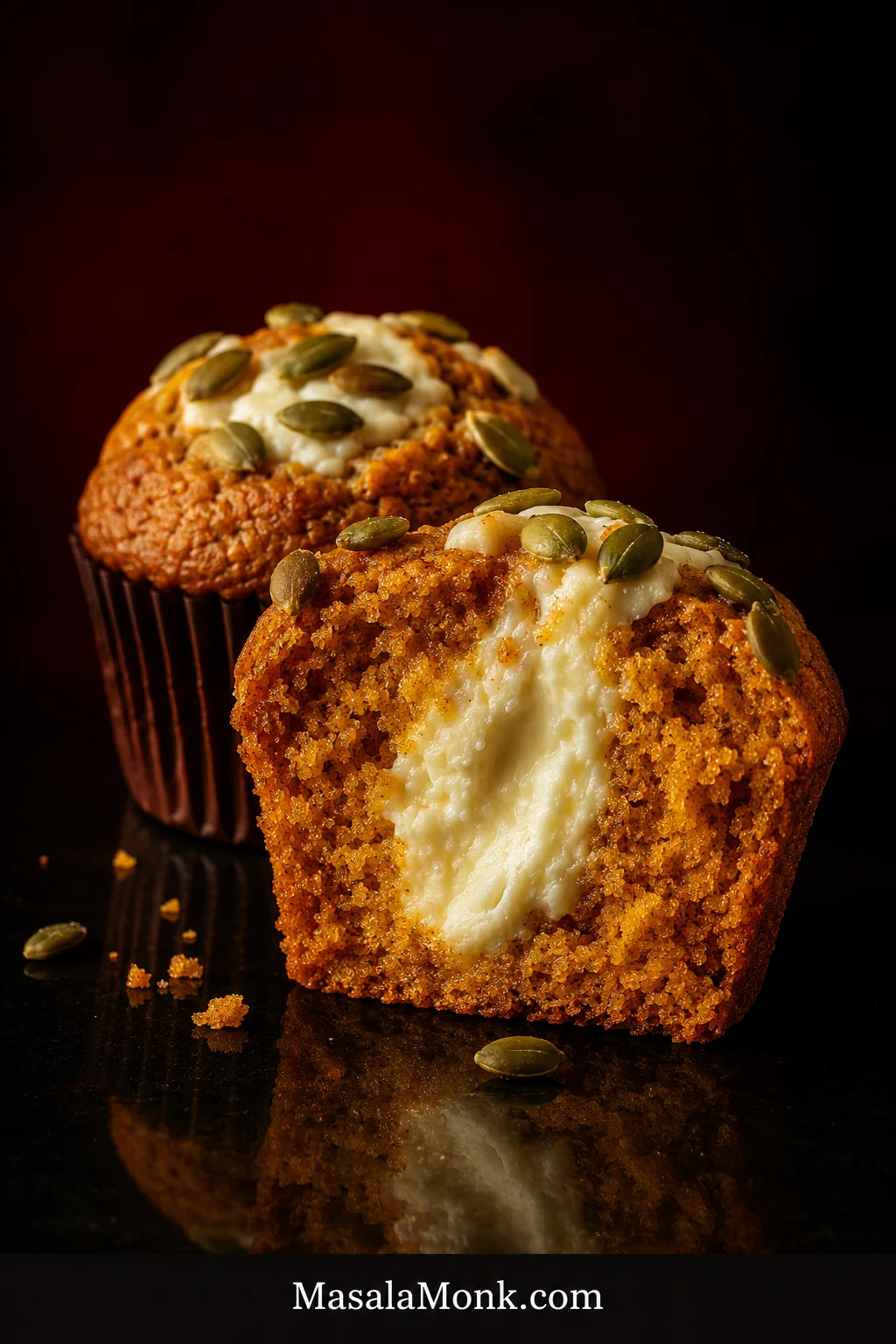
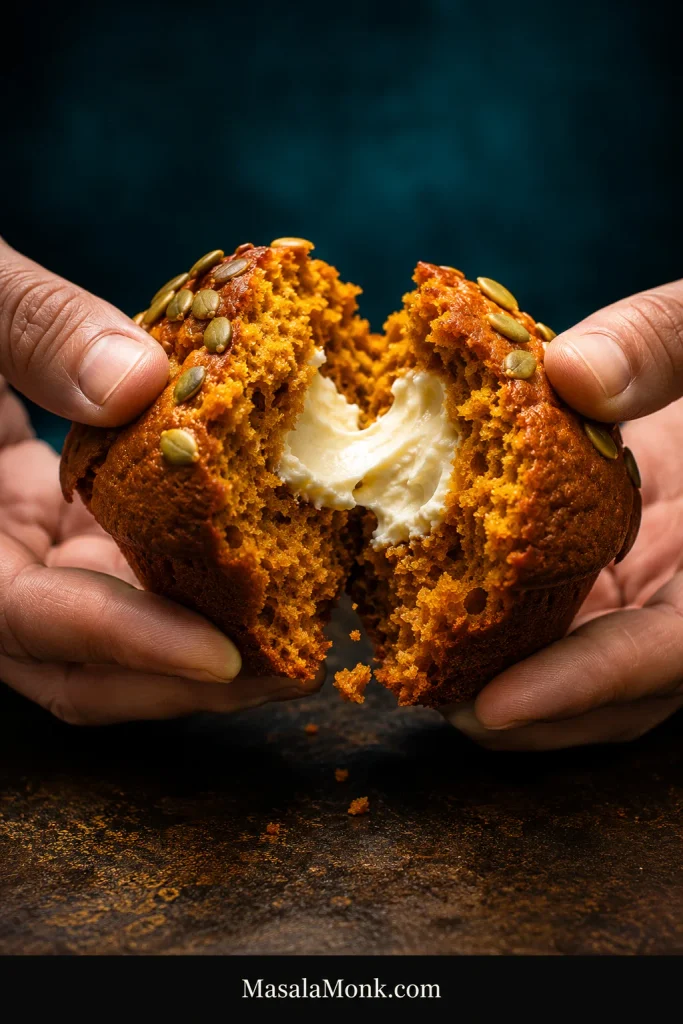
Cut one of these pumpkin cream cheese muffins open after it has cooled a little and the best part should be obvious: a creamy white filling inside a tender, warmly spiced pumpkin muffin. Roasted pepitas bring a salty crunch to the top, while tangy cream cheese keeps the sweetness in balance.
The disappointing version looks promising from above and then gives you bite after bite of pumpkin with barely a streak of cream cheese inside. Here, each standard muffin gets about 1 1/2 tablespoons of filling, piped into the raw batter rather than left as a small dollop at the crown.
There’s no need to freeze the filling first or rest the batter. Once the cream cheese is smooth, the rest is whisk, fold, pipe and bake.
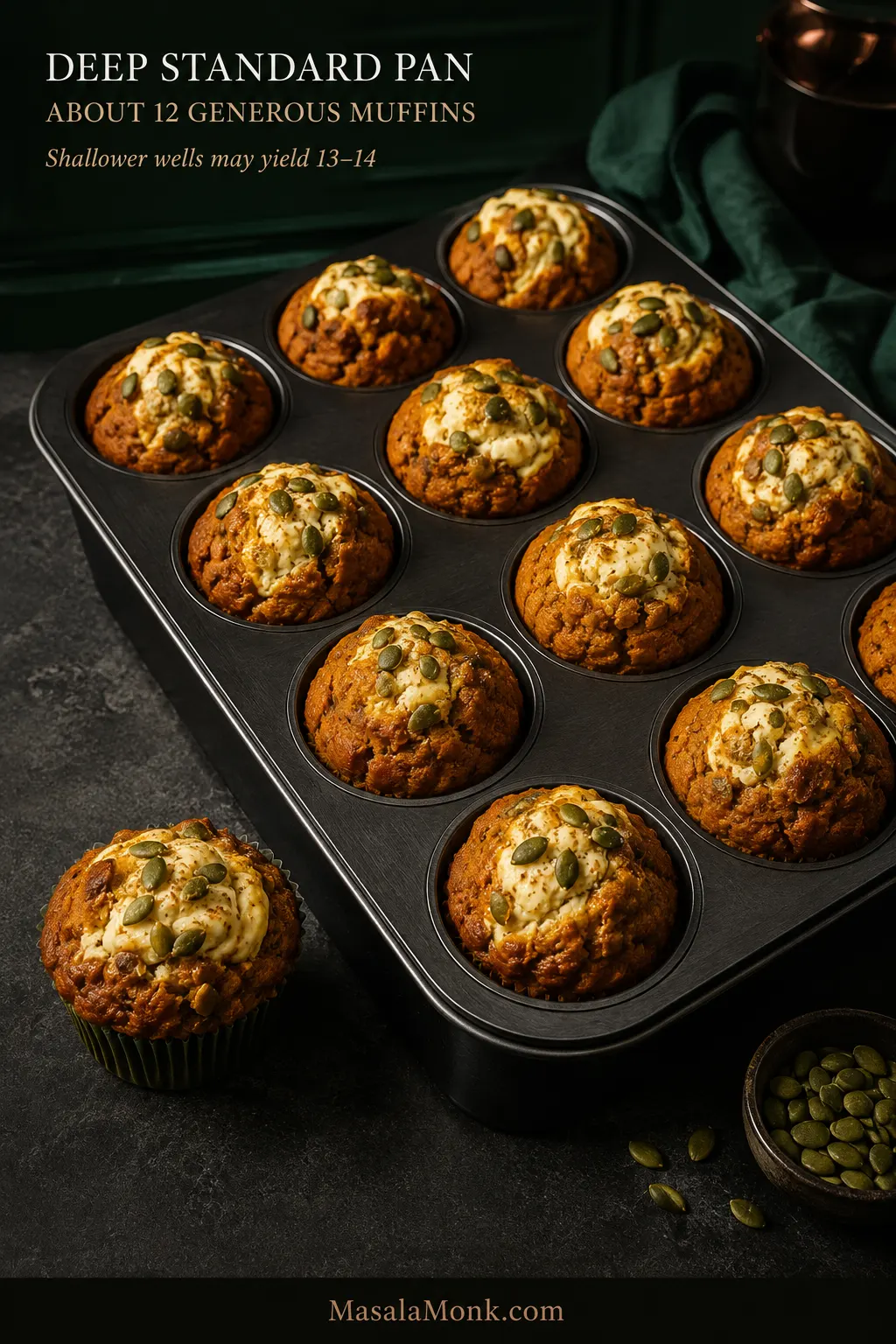
This batch makes about 12 generously filled muffins in a deep standard 12-cup pan. Shallower wells may give you 13 or 14. Let the pan decide the final yield instead of forcing every bit of batter into 12 cups.
Use the pan, not the recipe yield, as the final portioning guide. If a shallower cup already looks comfortably full around 85–90 g of batter, move the rest into another liner rather than forcing a taller muffin into too little space.
The target is a tender, warmly spiced pumpkin crumb with enough structure to hold the cream cheese without turning dense or gummy.
Yield: about 12 standard muffins; 13–14 in shallower wells
Prep: about 25 minutes
Bake: about 19–23 minutes
Cool before a clean first cut: about 20–30 minutes
Conventional oven: 425°F / 220°C, then 350°F / 175°C
Fan/convection: as a starting point, reduce both temperatures by about 25°F / 15°C—roughly 400°F / 205°C, then 325°F / 165°C—and begin checking a little earlier; ovens vary
Batter rest: none
You will need: a standard muffin pan, liners, two large mixing bowls, a small bowl for the filling, a whisk, a flexible spatula and a piping bag or sturdy zip-top bag. A handheld mixer is convenient for smoothing the cream cheese, but properly softened cream cheese can also be stirred smooth by hand. A kitchen scale is especially useful for the flour and filling.
Cream Cheese Filling
8 oz (226 g) full-fat block cream cheese, softened until pliable but still cool
1/2 cup (60 g) confectioners’ sugar (powdered or icing sugar)
1 tablespoon (8 g) all-purpose flour
1 teaspoon (5 ml) vanilla extract
1/8 teaspoon fine salt
Pumpkin Muffin Batter
2 1/4 cups (280 g) all-purpose flour
2 teaspoons pumpkin pie spice
1 teaspoon ground cinnamon
1 teaspoon baking powder
1 teaspoon baking soda
1/2 teaspoon fine salt
2 large eggs
3/4 cup packed light brown sugar (150 g); dark brown sugar also works
1/3 cup granulated sugar (67 g)
1 1/3 cups (330 g) 100% pumpkin purée
1/2 cup (120 ml) neutral oil, such as vegetable, canola, sunflower or mild avocado oil
Heat the oven. Position a rack in the middle and preheat a conventional oven to 425°F / 220°C. Line the muffin pan.
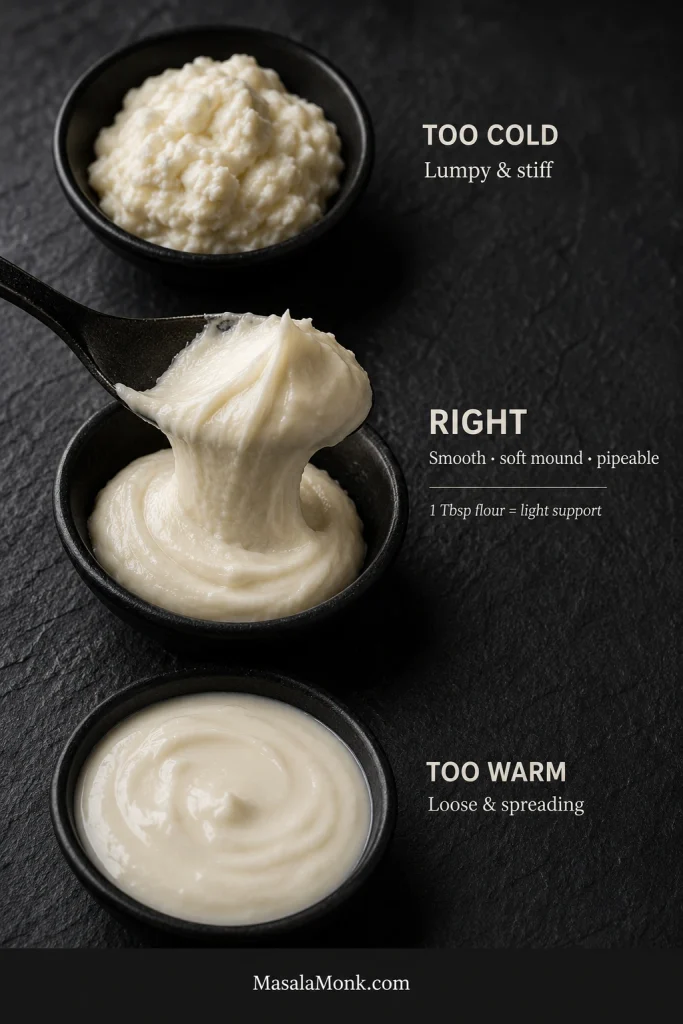
Mix the filling. Smooth the softened cream cheese, then mix in the confectioners’ sugar, flour, vanilla and salt. Scoop some up with a spoon: it should sit in a soft mound briefly instead of running flat. Chill for 15–20 minutes if it has become loose. Transfer to a piping bag or sturdy zip-top bag and cut an opening about 1/2 inch / 1–1.5 cm wide.
Temperature usually explains the filling before flour does. Lumpy filling is often still too cold; filling that spreads immediately has usually become too warm. Correct the temperature first so the center stays creamy rather than turning pasty.
Whisk the dry ingredients. Combine the flour, pumpkin pie spice, cinnamon, baking powder, baking soda and salt.
Mix the pumpkin base. In the second large bowl, whisk the eggs and both sugars until smooth. Add the pumpkin purée, oil, milk and vanilla and whisk again.
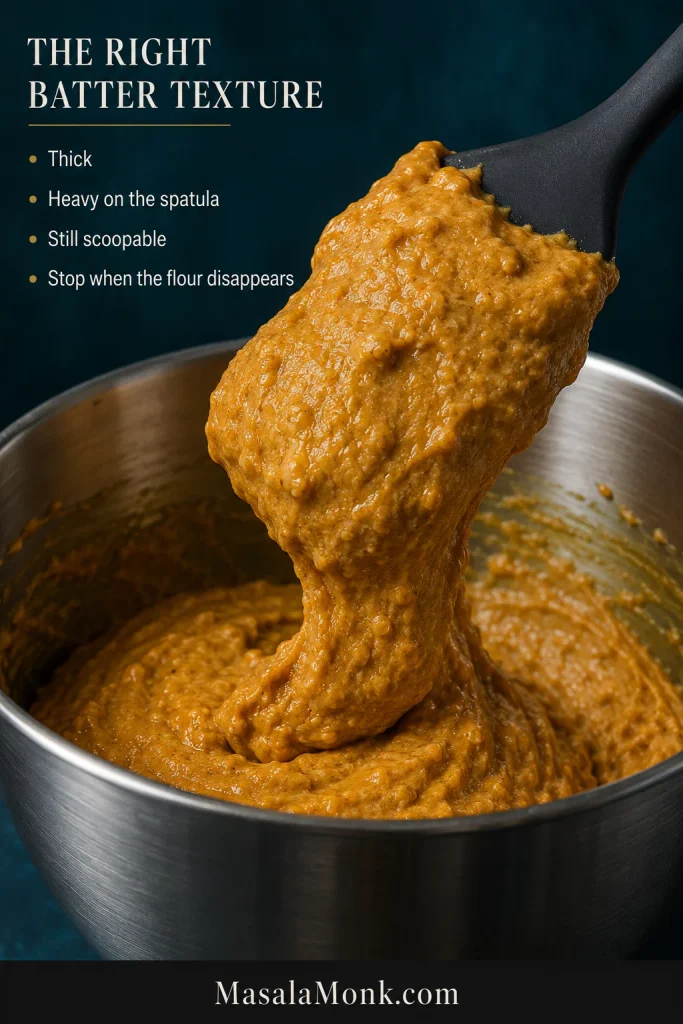
Fold the batter. Add the dry ingredients to the pumpkin mixture and switch to a spatula. Fold until the last visible flour disappears. The batter should sit heavily on the spatula but still scoop easily. A few small lumps are fine. Stop there.
A few small lumps are a better stopping point than a perfectly smooth batter. Once the flour is incorporated, extra folding can tighten the pumpkin crumb long before the batter starts looking obviously overmixed.
Fill and Top the Muffins
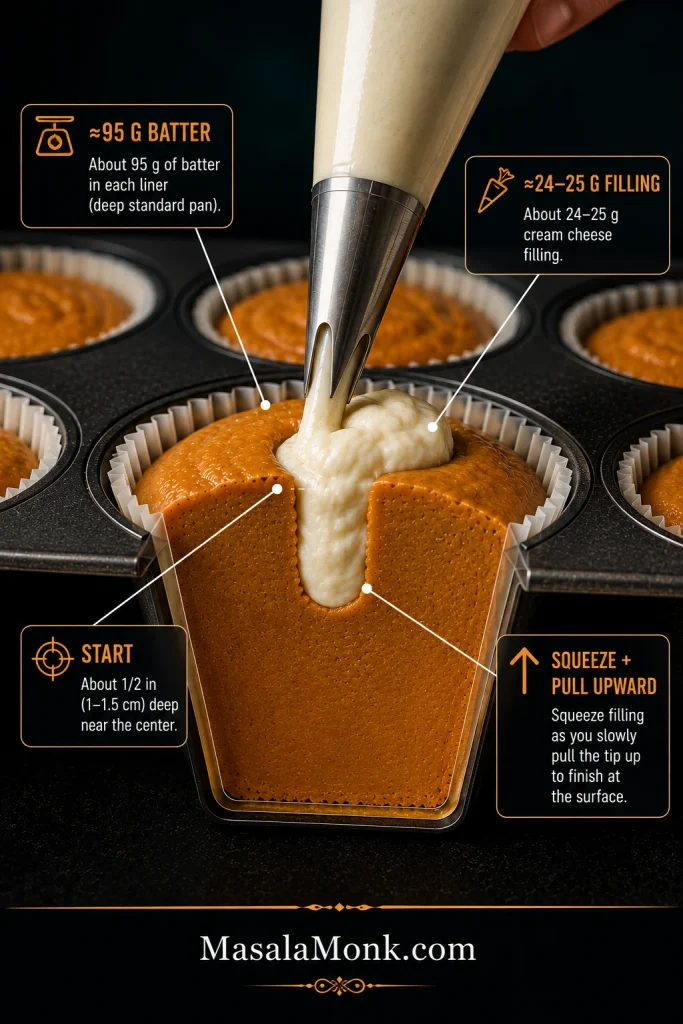
Fill the muffin wells. In a deep standard pan, divide the batter among 12 wells, about 95 g each. Shallower cups may already look full at 85–90 g; use a 13th or 14th liner instead of squeezing in the rest.
Pipe in the cream cheese. Divide the filling among the muffins, about 24–25 g each when making 12. Insert the tip about 1/2 inch / 1–1.5 cm into the batter. Squeeze as you slowly pull the bag upward, finishing with some cream cheese visible at the surface. Keep the filling away from the liner.
Piping upward creates a narrower vertical pocket instead of a broad cheese layer. That helps preserve pumpkin underneath and around the filling, which matters just as much as getting plenty of cream cheese into the muffin.
Add the pepitas. Toss the pepitas with the optional 1/4 teaspoon pumpkin pie spice, if using, then scatter them around the exposed cream cheese and press very lightly. The white crowns will vary a bit from muffin to muffin. That’s fine.
Bake, Check and Cool
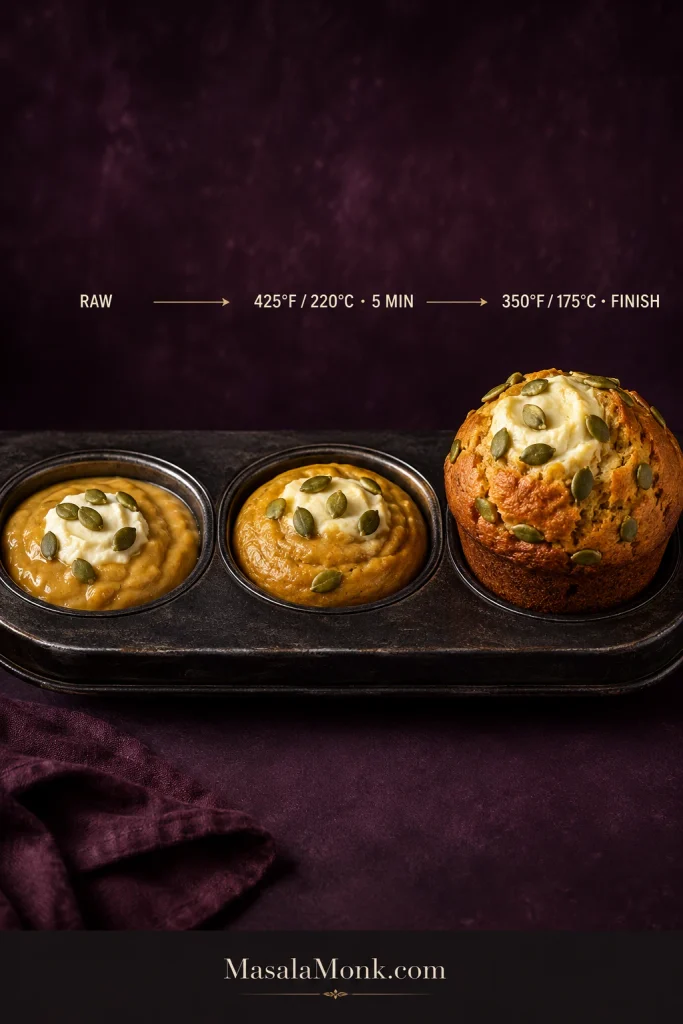
Start hot. Bake at 425°F / 220°C for 5 minutes. The early heat encourages the thick batter to rise quickly. Without opening the oven, reduce the temperature to 350°F / 175°C so the centers can finish without overbaking the tops.
Finish baking. Continue for another 14–18 minutes. Start checking near the early end of the range.
The two-temperature bake works as part of the whole system, not as a shortcut. Thick batter, sensible portioning and fresh leaveners still determine whether the muffin rises well; the hot start simply gives them an early advantage.
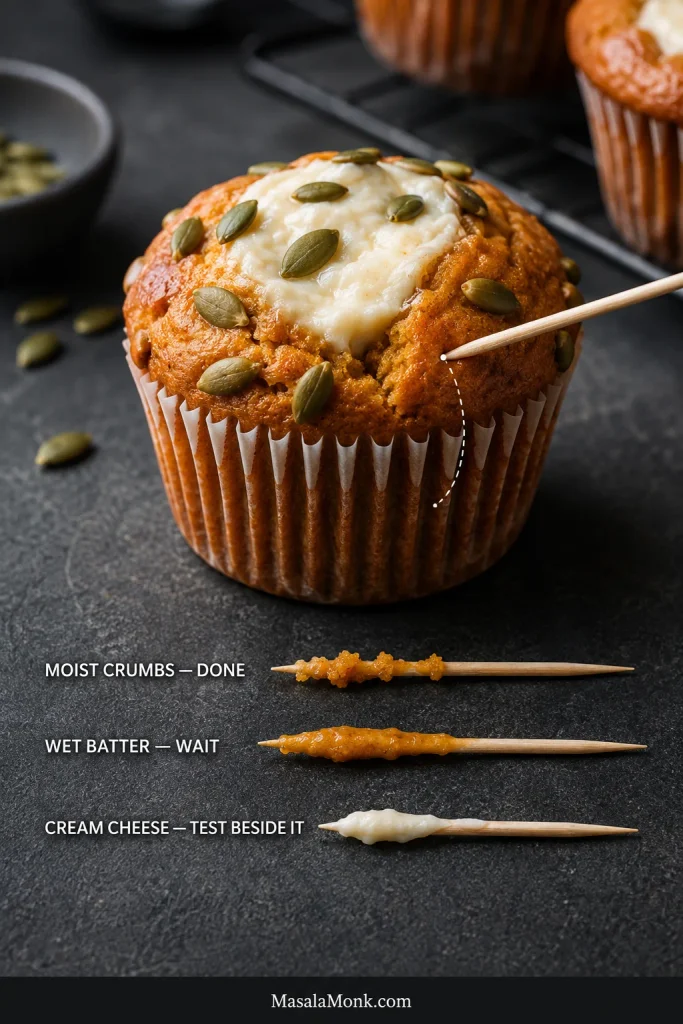
Check beside the filling. Insert a toothpick into the pumpkin portion just off-center. A few moist crumbs are fine; wet batter isn’t. The top should spring back lightly and the exposed cream cheese should look set and more matte than glossy.
Cool before cutting. Leave the muffins in the pan for about 5–10 minutes, then move them to a wire rack. Give the filling another 15–20 minutes to settle if you want a cleaner first cut.
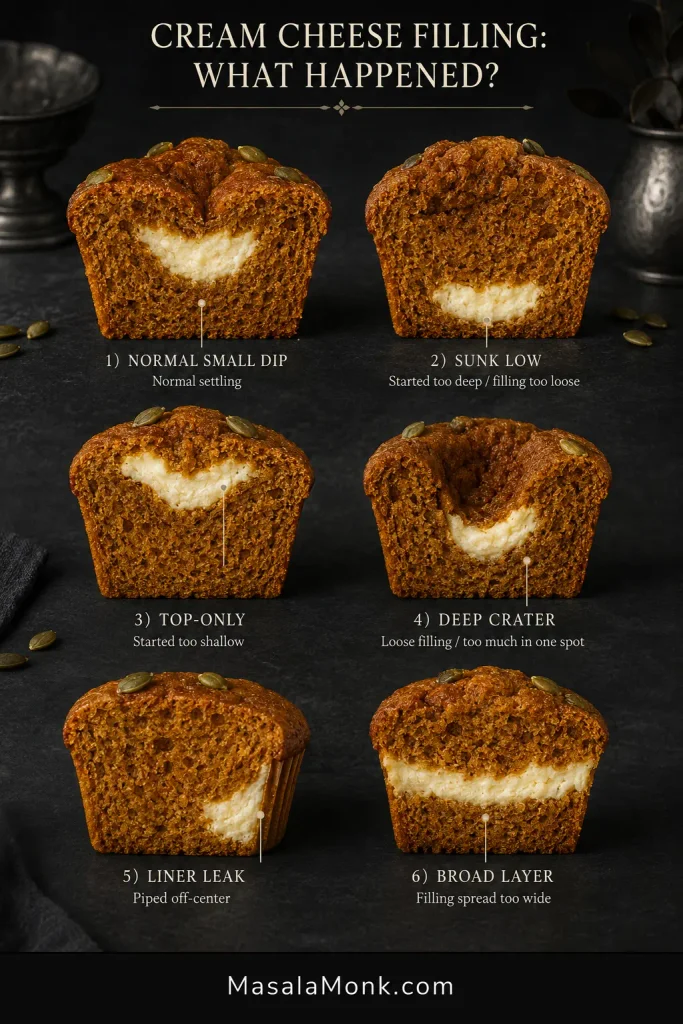
That first cut tells you more than the top does. Cream cheese settling slightly to one side is normal; a deep crater or filling pooled near the bottom is a different story.
The pumpkin crumb around the center should stay open and tender; a shiny, compressed band suggests excess moisture or underbaking.
That white center and pepita crown may look familiar.
Are These Starbucks Pumpkin Cream Cheese Muffins a Copycat?
They’re Starbucks-inspired rather than an exact replica. Starbucks’ 2026 Pumpkin Cream Cheese Muffin combines spiced pumpkin muffin, sweet cream-cheese filling and spiced pepitas. This recipe keeps that recognizable white center and pumpkin-seed top while using its own eggless filling, proportions and method.
If that seasonal coffee-shop muffin is what brought you here, homemade has one obvious advantage: you decide when the season starts—and how much cream cheese goes into the middle.
What Keeps the Muffins Tender and the Filling Creamy
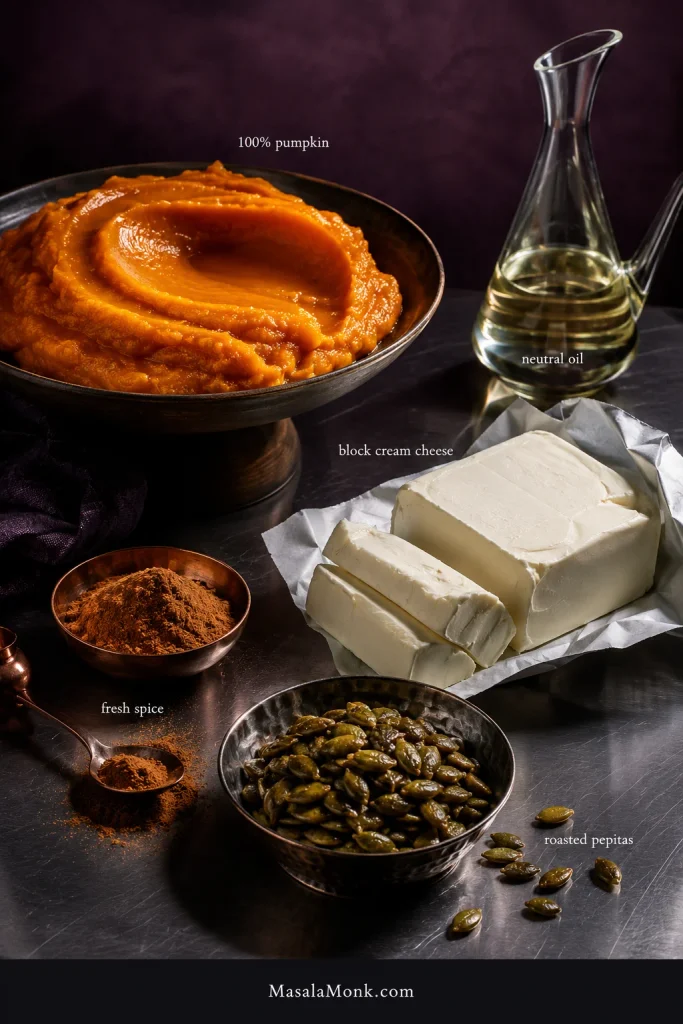
A few ingredient choices do most of the work here: thick pumpkin keeps excess water in check, block cream cheese makes the center more predictable, oil helps the crumb stay tender after chilling, and fresh spices keep the pumpkin tasting lively after baking.
Ingredient form matters more than brand here: thick purée, block cream cheese and neutral oil give the recipe its intended balance.
Use Thick Pumpkin Purée
Use plain 100% pumpkin purée, not pumpkin pie filling. Pie filling already contains sugar, spices and other ingredients, so it changes both flavor and moisture.
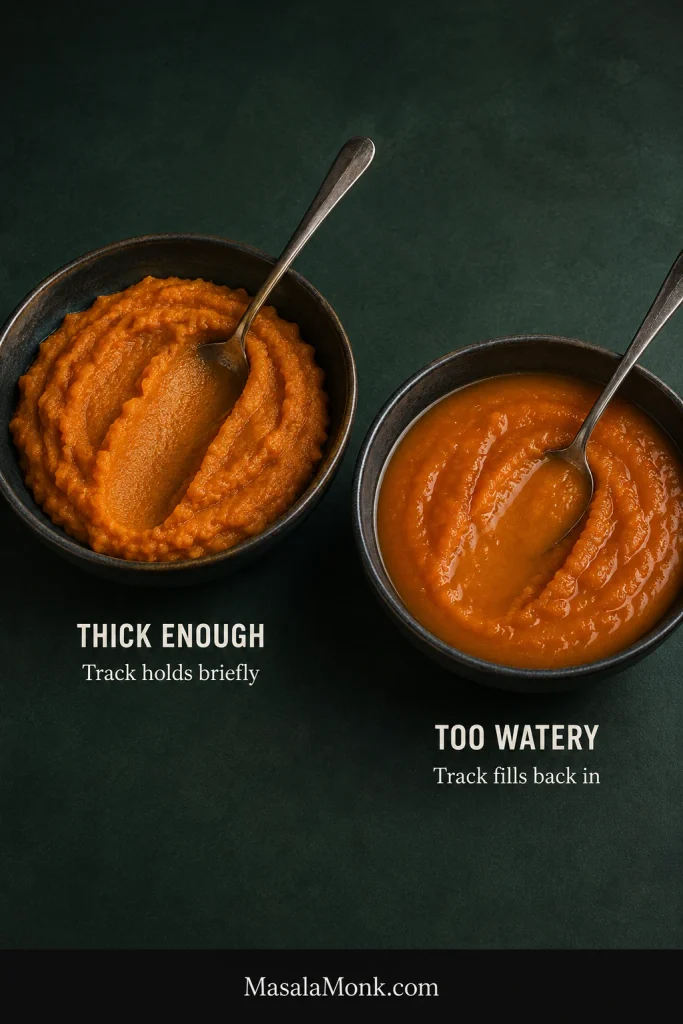
Homemade purée works when it is roughly as thick as canned pumpkin. Drag a spoon through it; the track should stay visible briefly instead of flooding straight back in. Our pumpkin bread recipe has more detail on canned versus fresh pumpkin and handling a watery homemade purée.
If homemade pumpkin purée closes over the spoon track almost immediately, deal with the excess water at the source. Draining or gently reducing it protects pumpkin flavor better than correcting a wet batter later with extra flour.
A typical 15 oz / 425 g can leaves roughly 95 g after you measure what this recipe needs. Save it for oatmeal, pancakes, soup, smoothies or a healthy pumpkin spice latte. Adding the remainder here would throw off the moisture balance.
Keep the Cream Cheese Cool Enough to Hold Its Shape
Use full-fat block or brick-style cream cheese. Tub-style, whipped and reduced-fat products may contain more water, stabilizers or incorporated air, making the filling less predictable.
You want the block pliable enough to mix without stubborn lumps while it still feels cool. Leave it in a hot kitchen too long and the mixture loosens noticeably.
Oil for Tenderness, Flour Measured Carefully
Neutral oil helps these muffins stay tender after cooling and refrigeration. Melted butter brings more buttery richness, but the texture firms more once chilled.
Weigh the flour if you can: 280 g. With cups, loosen it, spoon it in and level without packing. Extra flour makes this batter heavy surprisingly quickly.
Use Spices You Can Actually Smell
Smell your pumpkin pie spice before measuring it.
Pumpkin and cream cheese can mute a timid blend, so stale spices leave the finished muffins noticeably flat. Fresh cinnamon and ginger should announce themselves as soon as the jar opens and become even more noticeable once the pan is in the oven.
If you need a fresh blend, use our homemade pumpkin pie spice. In a pinch, replace the 2 teaspoons here with approximately 1 teaspoon cinnamon, 1/2 teaspoon ginger, 1/4 teaspoon nutmeg, 1/8 teaspoon cloves and 1/8 teaspoon allspice, then keep the additional teaspoon of cinnamon already listed in the batter.
How to Get a Creamy Center That Stays Put
Keep the filling creamy but pipeable. The tablespoon of flour already in the recipe gives the eggless center enough support; adding more can make it pasty. If the mixture stops holding a soft mound in a warm kitchen, chill it briefly instead of adding extra flour.
Pipe through the center. Start around the middle and squeeze as you pull upward, keeping pumpkin batter between the filling and liner. A small dip or slightly off-center cream-cheese crown after cooling is normal.
How to Tell When Pumpkin Cream Cheese Muffins Are Done
A toothpick pushed straight through the cream cheese may come back coated even when the muffin is fully baked. Test just beside it.
Press the top. It should spring back lightly.
Check the pumpkin portion. A few moist crumbs are fine; wet batter isn’t.
Look at the exposed cream cheese. It should appear set and more matte than glossy.
Do not wait for a bone-dry tester. A few moist crumbs from the pumpkin portion are a better endpoint than baking until every trace disappears, especially with a cream cheese center that naturally stays soft.
Troubleshooting Pumpkin Cream Cheese Muffins
The hardest part is sometimes knowing when to stop fixing something that isn’t broken. A small dip, an off-center white crown or two muffins that rise differently can still be completely good muffins.
For a real problem, match the symptom you saw and change one thing at a time.
Leave it alone if the surrounding muffin is baked.
Cream cheese sinks toward the bottom
Piping started too deep, or the filling was very loose
Start nearer the middle and briefly chill loose filling.
Most cream cheese stays on top
Piping began too close to the surface
Insert the bag a little farther before squeezing.
Deep crater
Loose filling or too much filling concentrated in one spot
Chill the filling and spread it vertically as you withdraw the bag.
Filling leaks to the liner
It was piped off-center
Keep pumpkin batter between the cream cheese and paper.
Lumpy filling
Cream cheese was too cold
Soften it until pliable before mixing.
Muffin separates around the cream-cheese layer
The filling spread into a broad horizontal layer
Keep the pocket narrower and more central.
Treat filling position as evidence. A problem that is mostly about where the cream cheese ended up usually points toward piping depth or direction; a loose cratered center suggests you should look at filling consistency instead.
Muffin Texture & Rise Problems: Dense, Gummy, Dry or Flat
What you see
Likely cause
Next time
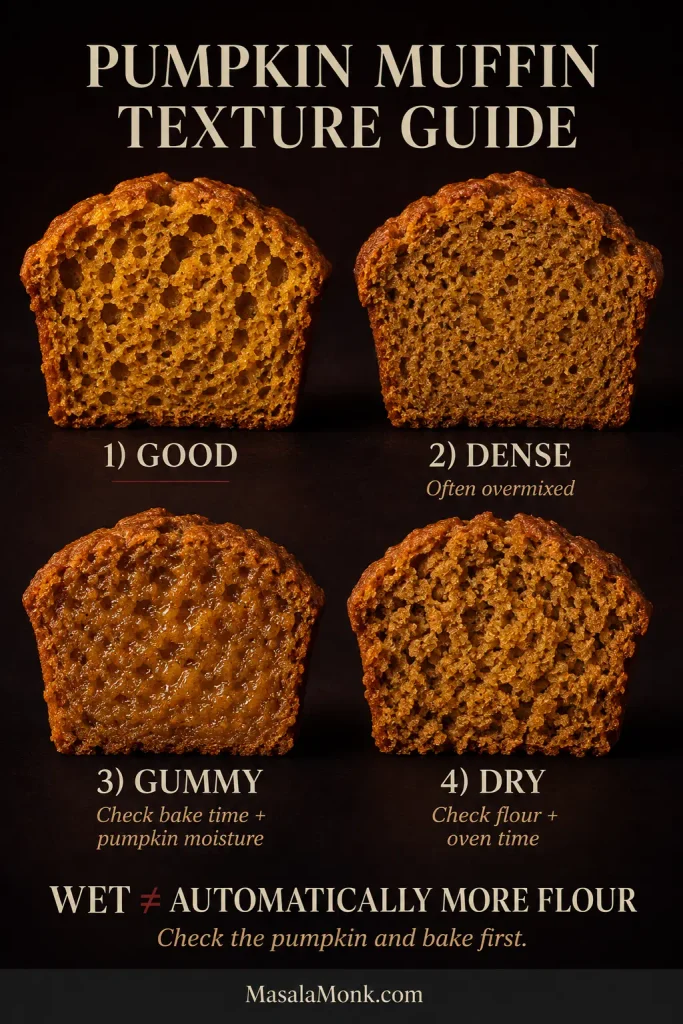
Dense or rubbery
Too much mixing after the flour went in
Fold only until the last dry streak disappears.
Dry and heavy
Too much flour or too much oven time
Weigh the flour and begin checking earlier.
Wet or gummy
Underbaking or watery pumpkin purée
Use thick purée and test beside the filling.
Flat tops
Weak leavener, underheated oven or very loose batter
Use fresh baking powder and soda and fully preheat the oven.
Lopsided tops
Uneven portions, off-center filling or uneven oven heat
Portion carefully and keep the filling near the middle.
The crumb tells you which direction to investigate. Tight pores suggest density, a shiny compressed interior points toward gumminess, and rough fragile crumb suggests dryness—three different problems that should not receive one generic fix.
A wet, heavy muffin doesn’t automatically need more flour. Check the pumpkin and baking time first, or an underbaking problem can easily become a dry-muffin problem on the next batch.
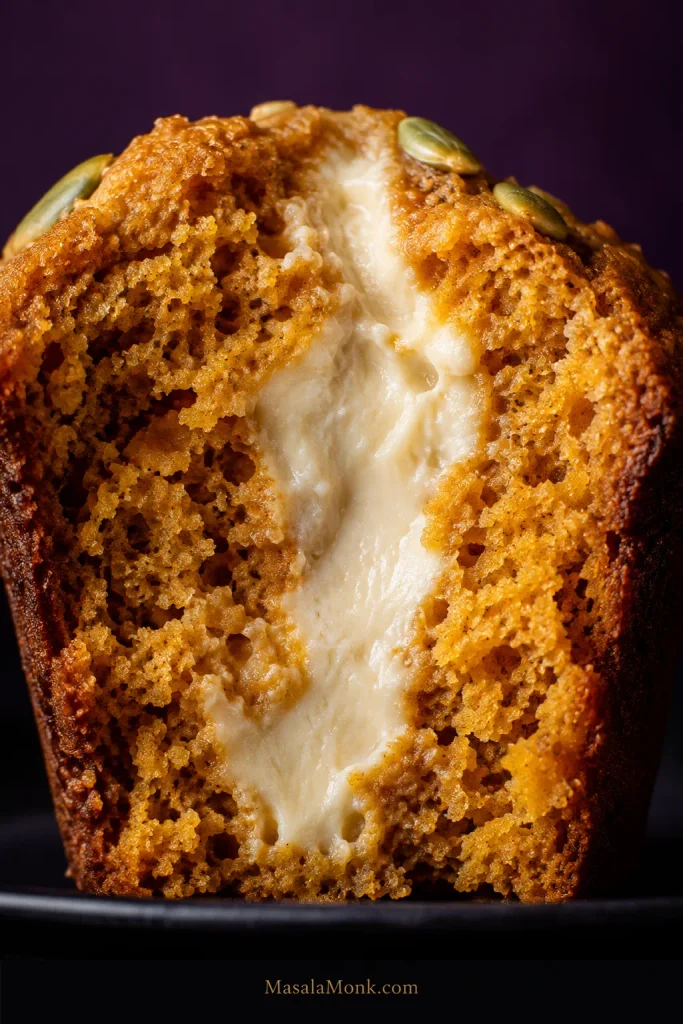
Once the muffin is baked through, the center should still be creamy while the pumpkin around it pulls apart cleanly rather than compressing into a wet, gummy band.
This is the payoff: soft pumpkin crumb pulling away from a thick creamy center, with pepitas adding crunch at the top.
Once the base muffin works for you, these variations change one element at a time—the center, the crown or the mix-ins—without rebuilding the whole recipe.
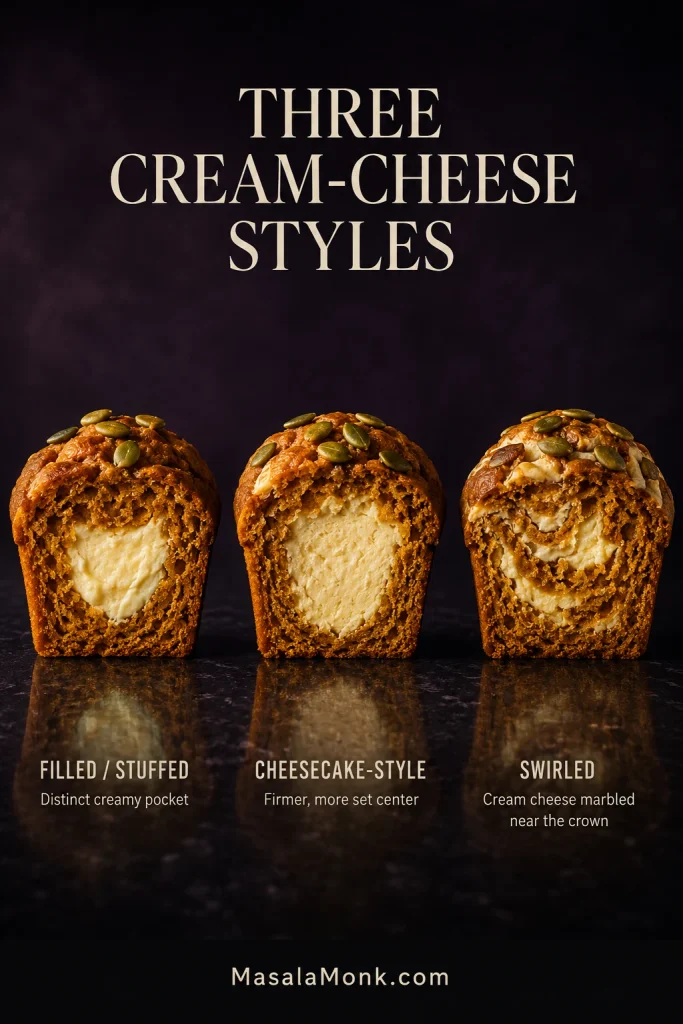
Filled, Cheesecake-Style or Swirled?
They’re related, but they don’t give you the same muffin. The main recipe is a filled or stuffed pumpkin cream cheese muffin with a distinct creamy pocket inside. Add egg or egg yolk to a filling and it sets more firmly, closer to baked cheesecake. A surface swirl keeps more of the cream cheese near the top and gives the crown a marbled look.
Filled gives the strongest cream-cheese pocket, cheesecake-style sets firmer, and a swirl spreads the tangy richness through more of the crown.
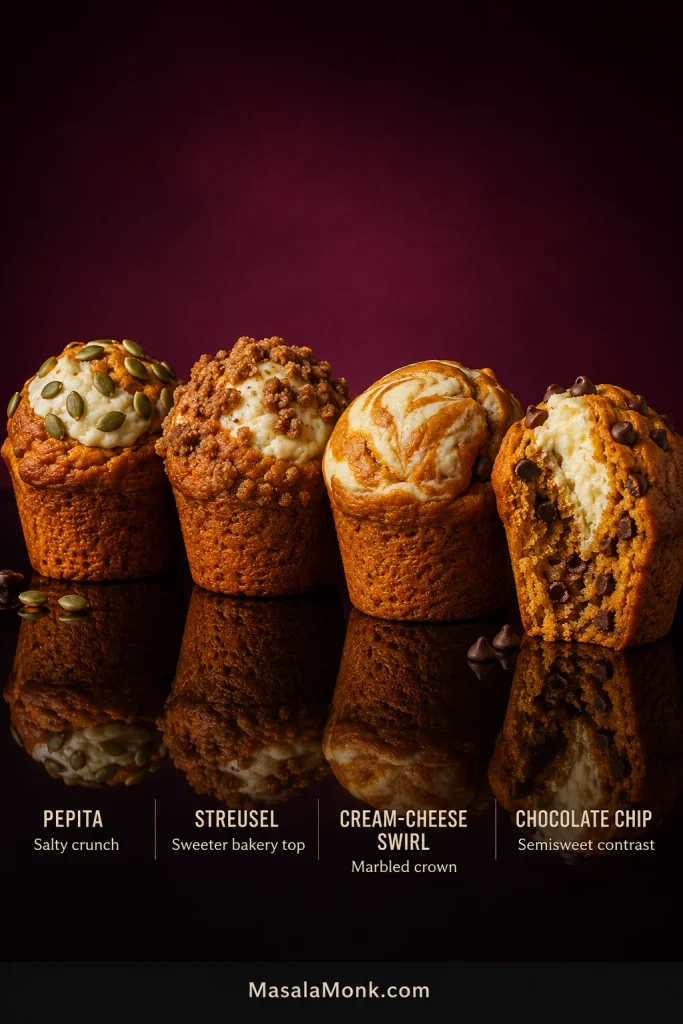
Keep the Pepitas for Salty Crunch
The muffin and filling are already sweet, so roasted salted pepitas bring welcome contrast without adding another sugary layer. Toss them with the optional pumpkin pie spice for a slightly more aromatic top.
Use Streusel for a Sweeter Bakery Muffin
Leave off the pepitas and mix:
1/2 cup (63 g) all-purpose flour
1/4 cup packed brown sugar (50 g)
1 teaspoon cinnamon
3 tablespoons (42 g) melted unsalted butter
Stir with a fork until irregular crumbs form, then divide the streusel evenly among the muffins, scattering it around rather than directly over the cream cheese.
Swirl the Cream Cheese for a Creamier Crown
A surface swirl needs only half of the main filling: 113 g cream cheese, 30 g confectioners’ sugar, about 1 1/2 teaspoons (4 g) flour, 1/2 teaspoon vanilla and a pinch of salt.
Divide it over the pumpkin batter and make a few loose passes with a toothpick or thin skewer. Stop while clear streaks of white and orange remain. Bake on the same standard-muffin schedule and test the pumpkin portion for doneness.
Chocolate Chip Pumpkin Cream Cheese Muffins
Fold 1/2 cup (about 85 g) semisweet chocolate chips into the pumpkin batter before filling the pan. Keep the cream-cheese quantity and baking method unchanged.
If you’re deciding which version to make, this final lineup shows how the four easiest finishes change the look and balance of the same pumpkin cream cheese muffin.
Pepitas keep the top least sweet; streusel makes it richer, a cream-cheese swirl emphasizes tang, and semisweet chocolate adds deeper contrast.
Mini and Jumbo Pumpkin Cream Cheese Muffins
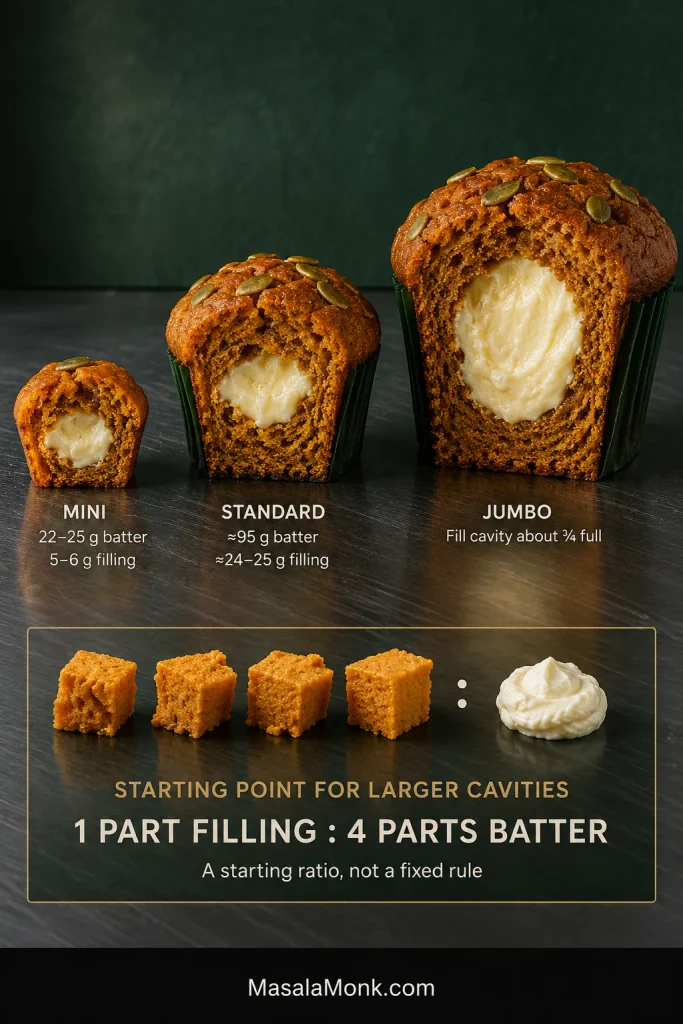
The standard and mini portions suggest a useful starting point for larger muffins: roughly 1 part cream-cheese filling for every 4 parts batter by weight. Use that as a starting point for larger cavities, not a fixed rule.
Scaling up is not just a matter of adding more filling. If cream cheese increases faster than the pumpkin batter around it, the shell becomes thinner and craters or leaks become more likely—so both parts should grow together.
Size
Starting point
Bake
Standard
About 95 g batter + 24–25 g filling in a deep 12-cup pan
425°F / 220°C for 5 min, then 350°F / 175°C; start checking around 19 min total
Mini
About 22–25 g batter + 5–6 g filling; roughly 48 minis from the full batch, depending on the pan
350°F / 175°C throughout; start checking at 11–12 min, with many pans finishing around 12–14 min
Jumbo
Fill each cavity roughly three-quarters full, then use the 1:4 filling-to-batter ratio as a starting point
425°F / 220°C for 5 min, then 350°F / 175°C; begin checking around 27 min total, with deeper pans sometimes needing longer
Jumbo cavities vary too much for one universal gram amount or bake time to be genuinely useful. Let the pan and the same doneness cues from the standard muffins guide you.
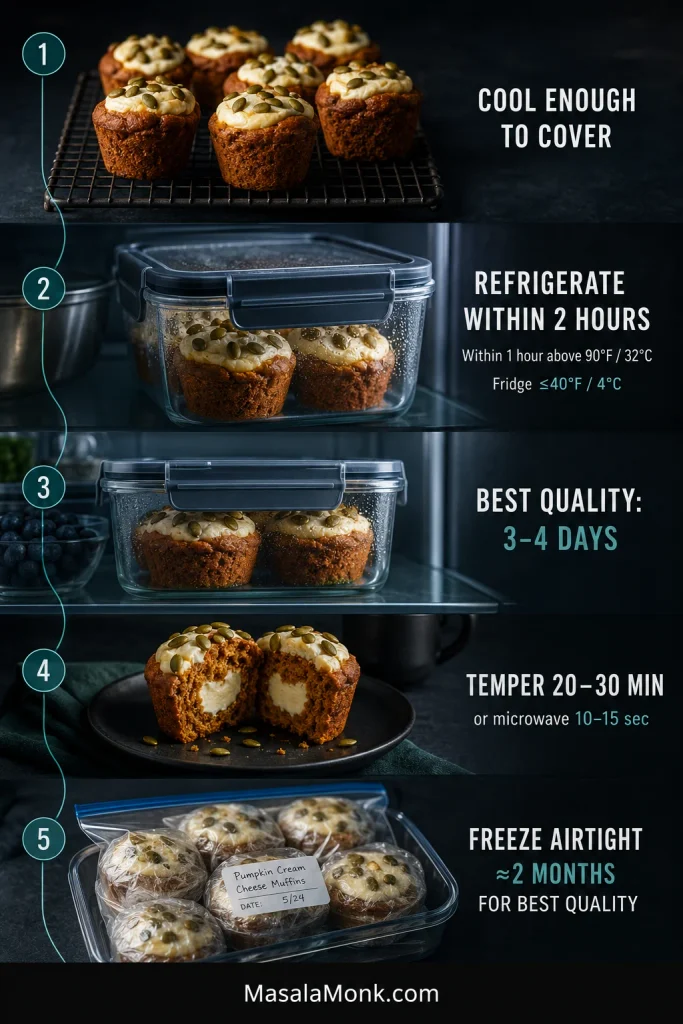
Because the filling is dairy-based, the timeline below separates cooling, refrigeration, serving and freezing so each stage is easy to follow.
Storage changes texture as well as shelf life. Once chilled, the pumpkin crumb firms and the cream cheese loses some softness; a short temper at room temperature restores much of the freshly baked eating texture.
Do Pumpkin Cream Cheese Muffins Need to Be Refrigerated?
Yes. Let the muffins stop steaming and cool enough to cover, then refrigerate them while keeping the total room-temperature time under 2 hours. If the room or outdoor temperature is above 90°F / 32°C, keep that time under 1 hour. The FDA recommends keeping the refrigerator at 40°F / 4°C or below.
For the best quality, use the refrigerated muffins within about 3–4 days, consistent with USDA guidance for refrigerated leftovers. Give a chilled muffin 20–30 minutes at room temperature and it softens again while the filling loses its hard chill. A brief 10–15 second microwave warm-up works too.
Can You Freeze Pumpkin Cream Cheese Muffins?
Yes. Cool them completely, wrap well and freeze airtight for up to about 2 months for best quality. The filling may thaw slightly softer or a bit more granular than it was fresh.
Can You Make Them Ahead?
The cream-cheese filling can be mixed ahead and refrigerated separately; let it loosen just enough to pipe before assembling. For the muffins themselves, bake ahead rather than holding the fully mixed pumpkin batter overnight.
Pumpkin Cream Cheese Muffins FAQ
Can I Make Them Without a Piping Bag?
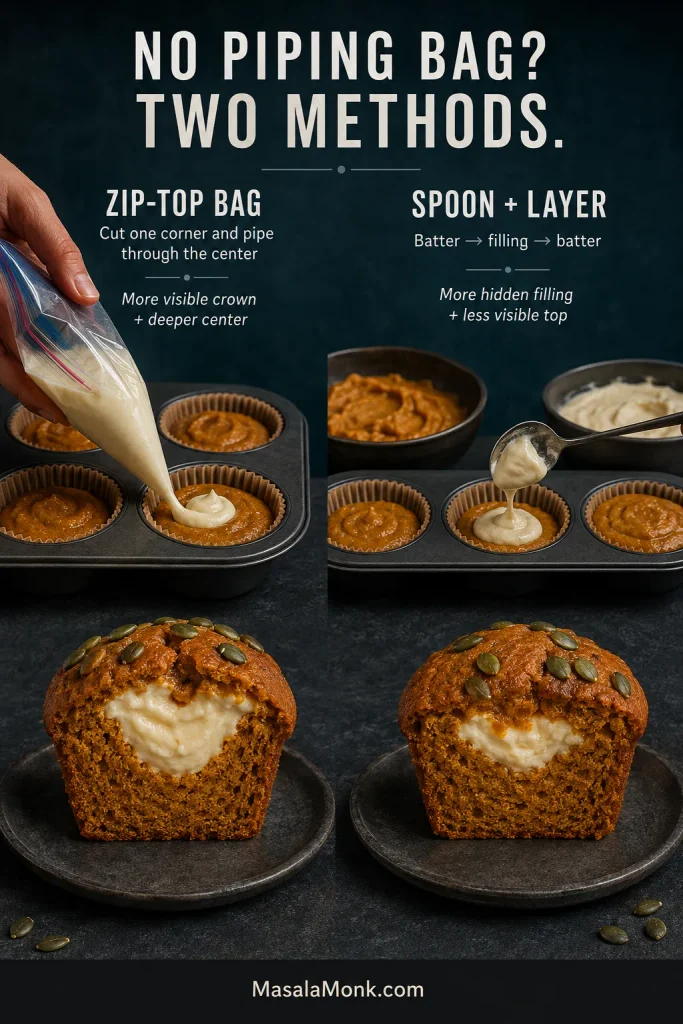
Yes. A sturdy zip-top bag with a corner cut off works well. You can also spoon in some pumpkin batter, add cream cheese to the middle and cover it with more batter. That gives you a more hidden pocket with less filling visible on top.
Choose the workaround according to the result you want. A cut zip-top bag gives better control over a visible crown and central filling path; spoon-and-layer assembly is simpler when a hidden cream cheese pocket is perfectly fine.
Can I Replace the Oil With Butter?
Yes. Replace the 1/2 cup oil with 1/2 cup (113 g) melted unsalted butter and let it cool slightly before mixing it with the wet ingredients. You’ll get more buttery richness, but the muffin will firm somewhat more after cooling and refrigeration.
Can I Add Even More Cream Cheese?
The main recipe already uses a generous amount. Packing substantially more cream cheese into the same-size muffin leaves less pumpkin batter around it and makes craters, leaks and gummy edges more likely. For a bigger cream-cheese pocket, move to a larger muffin and scale the batter and filling together.
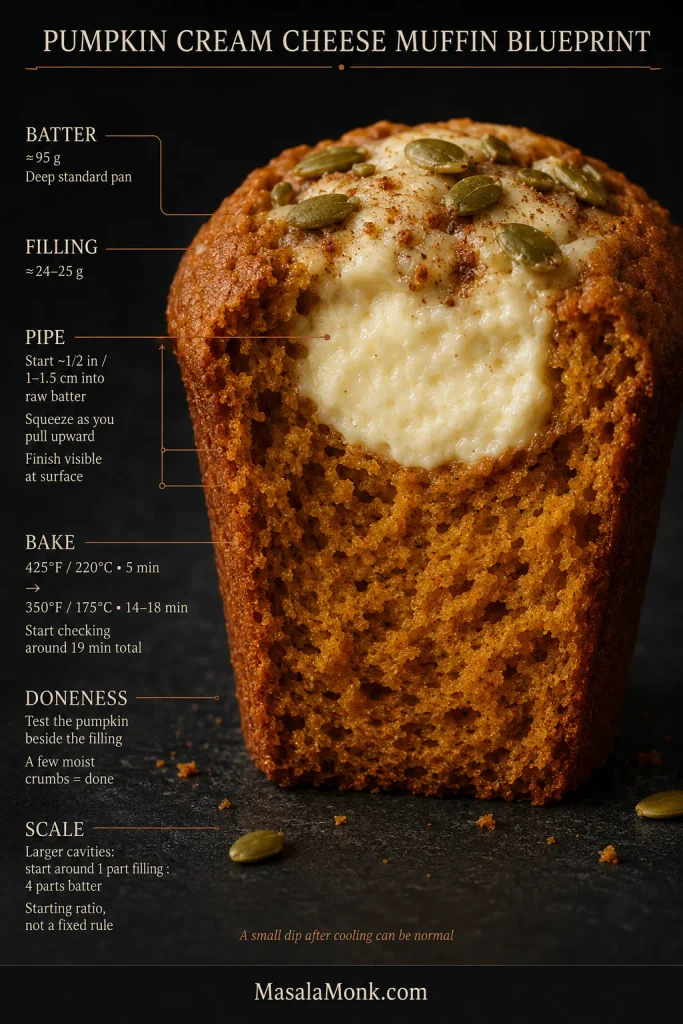
If you want one visual reference to keep beside the pan, the blueprint below is the most useful place to start.
Use this as a troubleshooting map rather than a second recipe card. When a batch looks different, compare the batter-to-filling balance, piping position, bake sequence and doneness check before changing the formula itself.
Let the first one cool enough for the filling to settle, then cut straight through the middle. The tender pumpkin crumb should pull apart around a creamy white center, with salty pepitas cracking across the top. Take another bite, and there should still be cream cheese there.
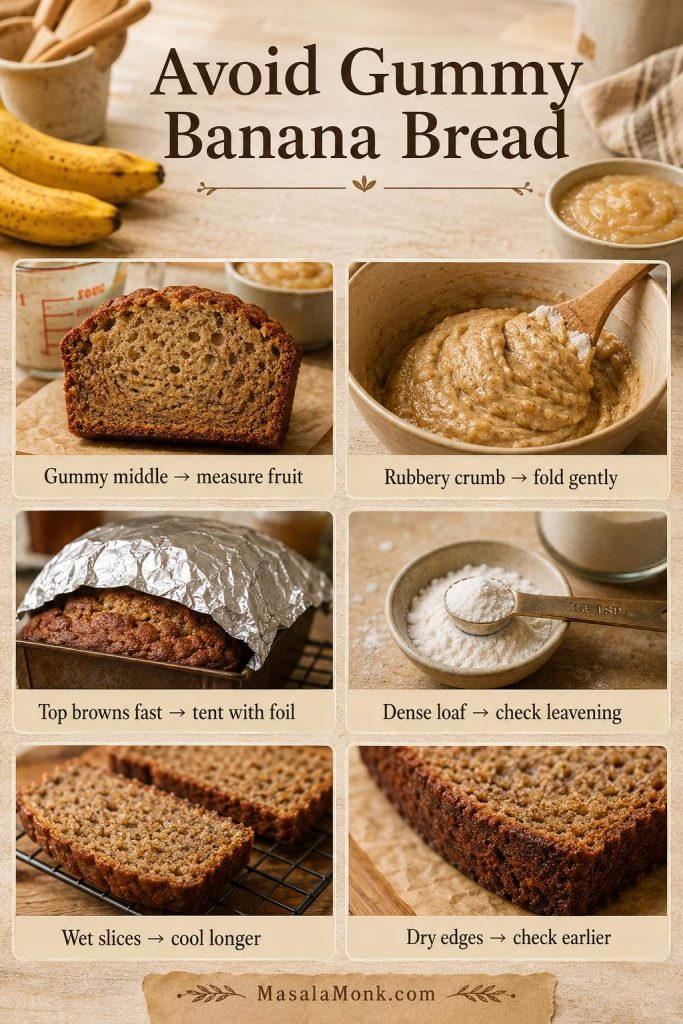
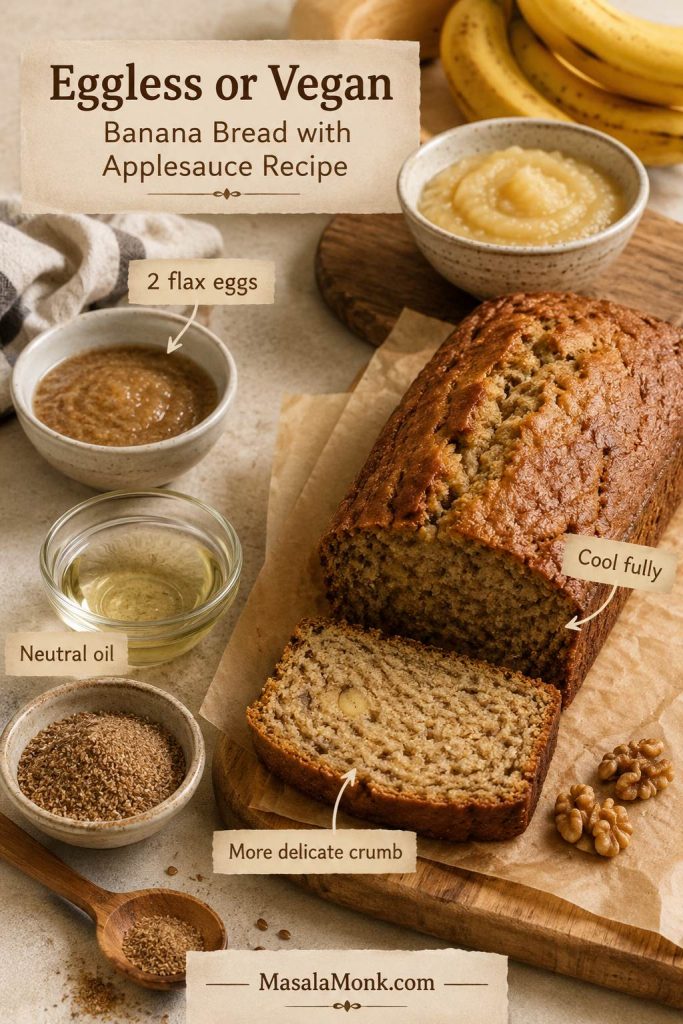
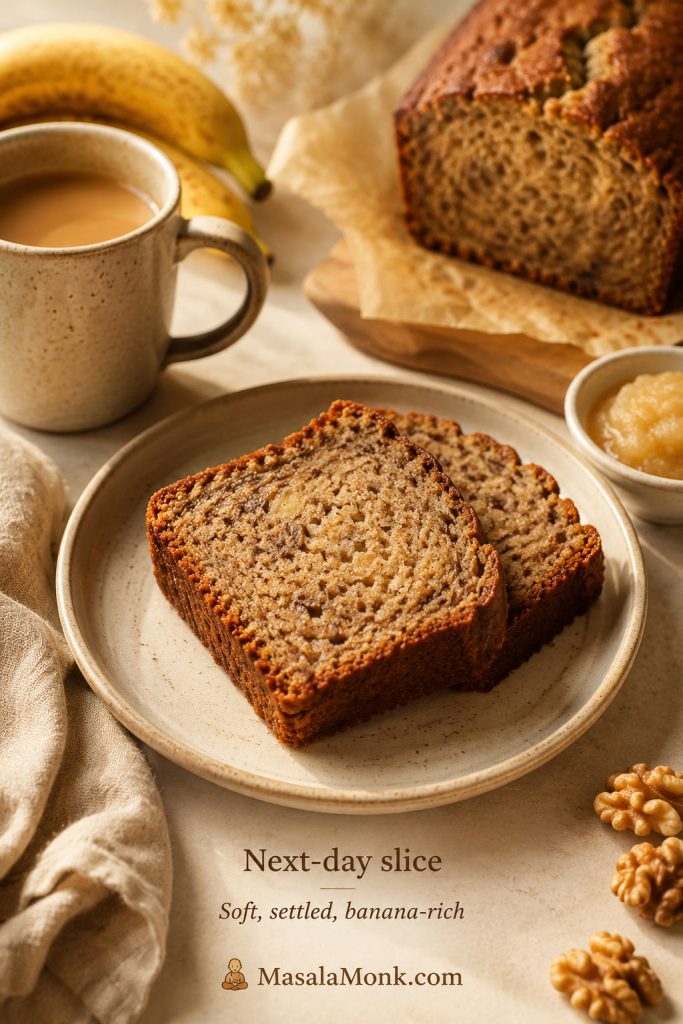
This banana bread with applesauce recipe is for the moment when the bananas on the counter are almost too soft for the fruit bowl but perfect for baking. The loaf comes out moist, sliceable, and a little lighter than classic banana bread, while still holding together after it cools.
The texture comes down to balance. Applesauce is wonderful in banana bread because it adds moisture and lets you use less fat, but it also brings water into the batter. With the wrong ratio, the top can look beautifully baked while the center stays heavy, damp, or gummy.
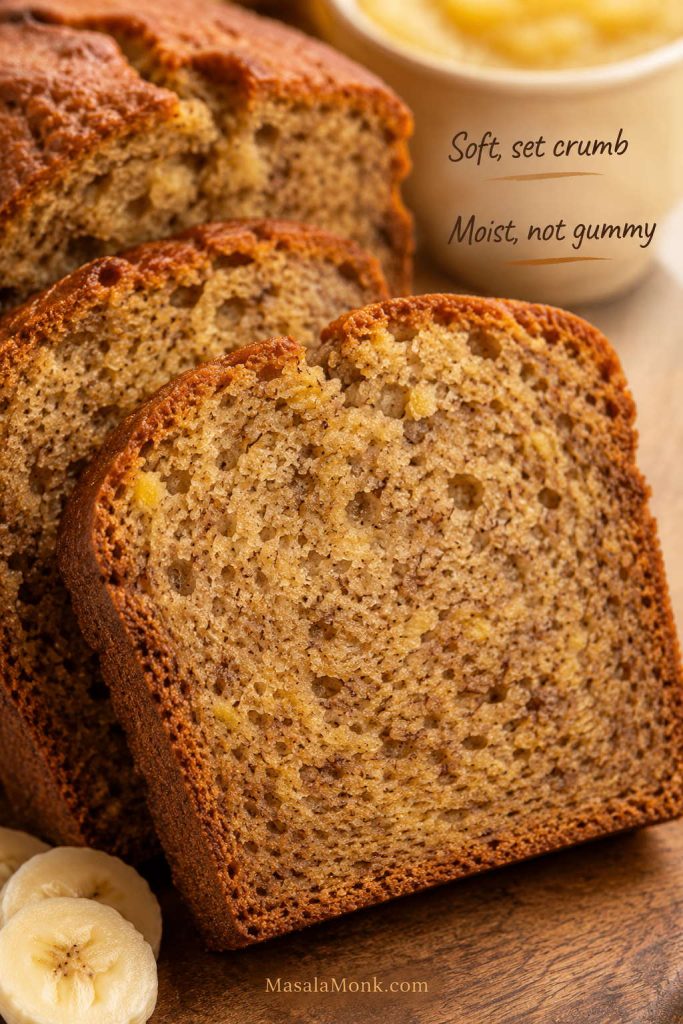
The goal is a loaf that smells like ripe bananas and cinnamon, slices without dragging, and feels plush rather than damp when you pick up a piece.
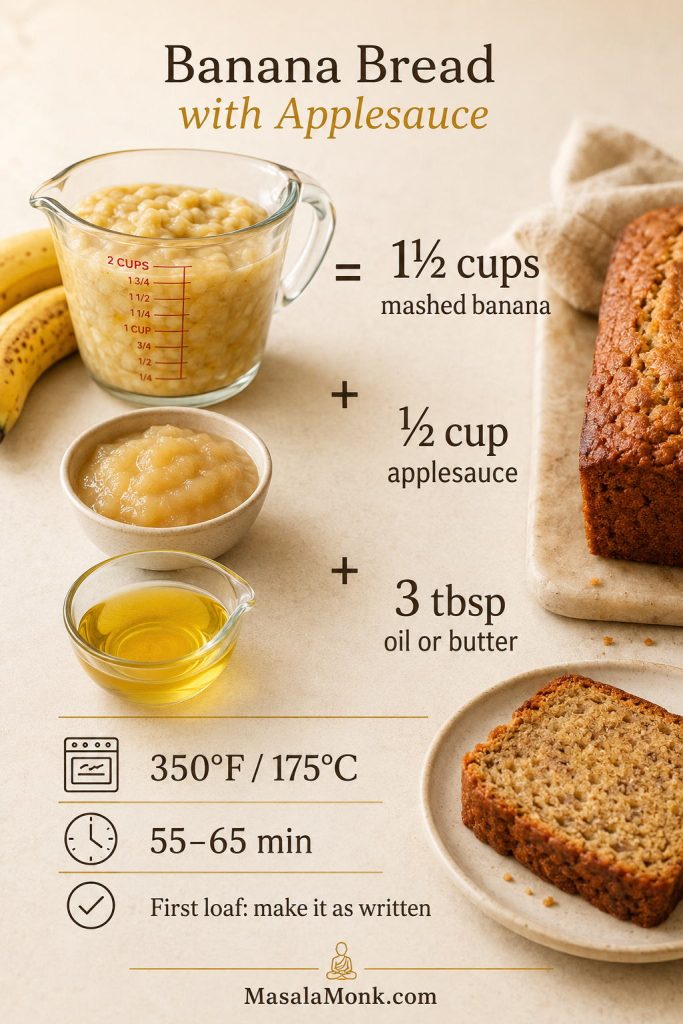
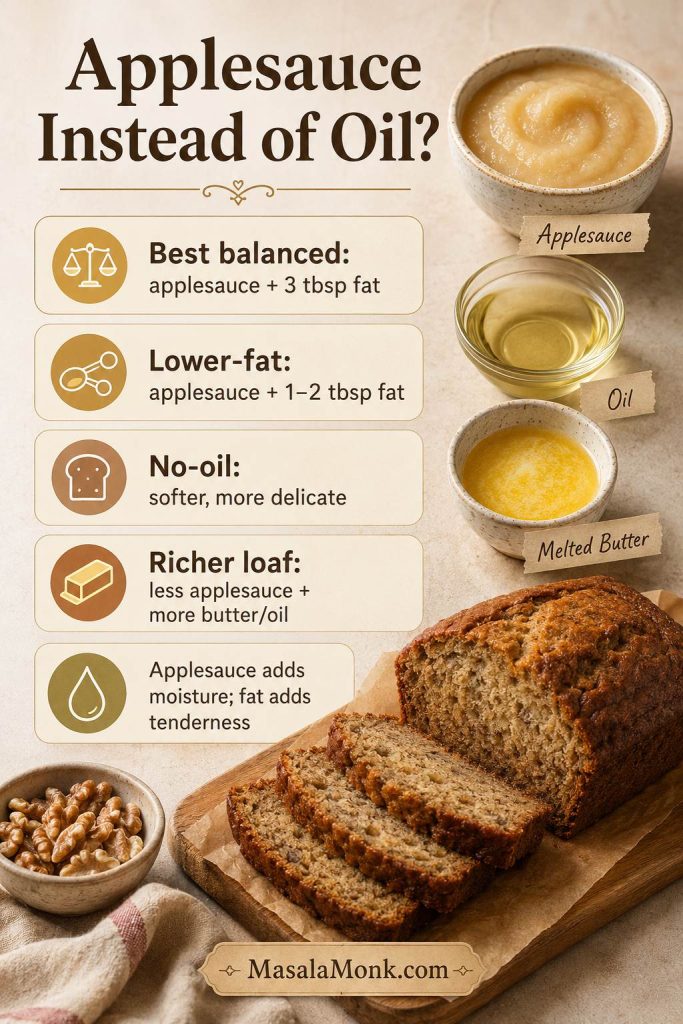
For one moist loaf, the sweet spot is 1½ cups mashed ripe banana plus ½ cup unsweetened applesauce, with 3 tablespoons oil or melted butter to keep each slice from feeling rubbery or fragile. Bake it in a 9×5-inch loaf pan at 350°F / 175°C until the middle bakes through and the crumb looks even, not shiny or wet.
This is not a fully no-oil loaf by default because applesauce replaces moisture better than it replaces tenderness. The small amount of fat keeps the crumb softer, cleaner, and easier to slice neatly.
This version is built around the texture problem applesauce banana bread often has: plenty of moisture, but not enough structure to slice cleanly. That is why the banana and applesauce are measured, a little fat stays in the batter, and the loaf gets time to bake through and cool before slicing.
At a glance: For one 9×5-inch loaf, use 1½ cups mashed ripe banana, ½ cup unsweetened applesauce, 2 cups flour, 2 eggs, and 3 tablespoons oil or melted butter. Bake at 350°F / 175°C for 55–65 minutes, until the center reaches about 200–205°F / 93–96°C.
For the first bake, make the recipe as written before reducing the oil, cutting the sugar further, or swapping in more whole wheat flour. Once you know how the batter should look and how the cooled loaf should slice, the variations become much easier to control.
Make the first loaf with the full ratio before tweaking. Once you know this baseline, lower-fat and variation decisions become much easier.
What This Loaf Tastes Like
This is a banana-forward loaf first, with gentle apple sweetness in the background. It does not taste like apple cake. The applesauce mostly shows up in the texture: an even crumb, a little extra moisture, and slices that still taste pleasant the next day.
Cinnamon, vanilla, and brown sugar make the banana flavor warmer. If you add walnuts or pecans, the loaf becomes more classic and bakery-style. If you skip them, it stays simple, easy to slice, and lunchbox-friendly.
It should taste like a cozy banana loaf with a softer crumb, not like applesauce trying to take over. It is still a quick bread, so expect a soft, sturdy crumb rather than an airy cake texture.
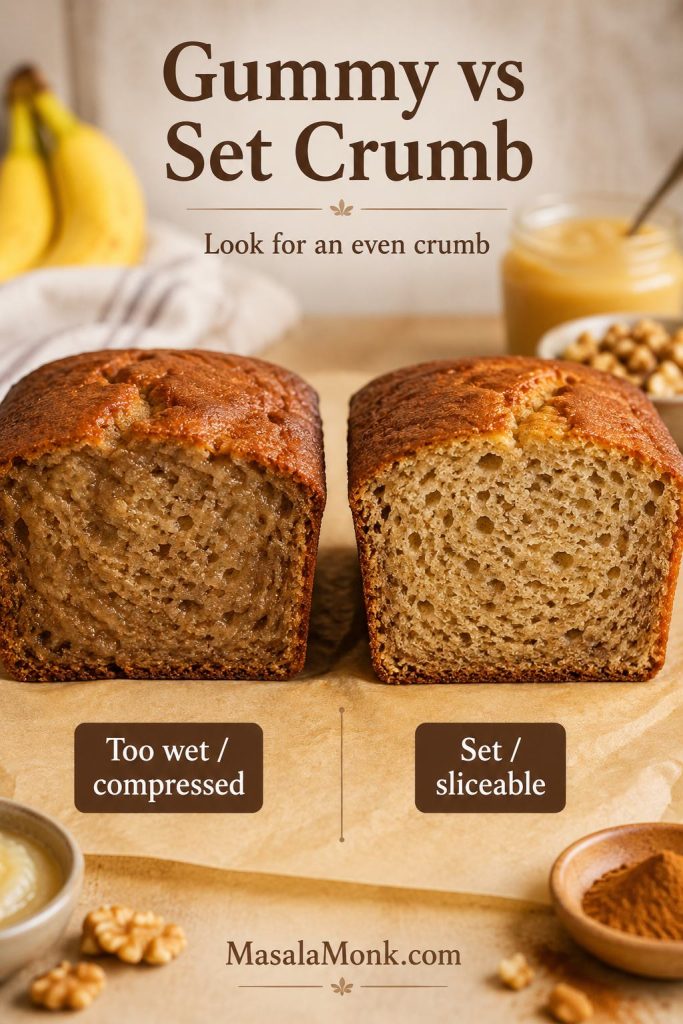
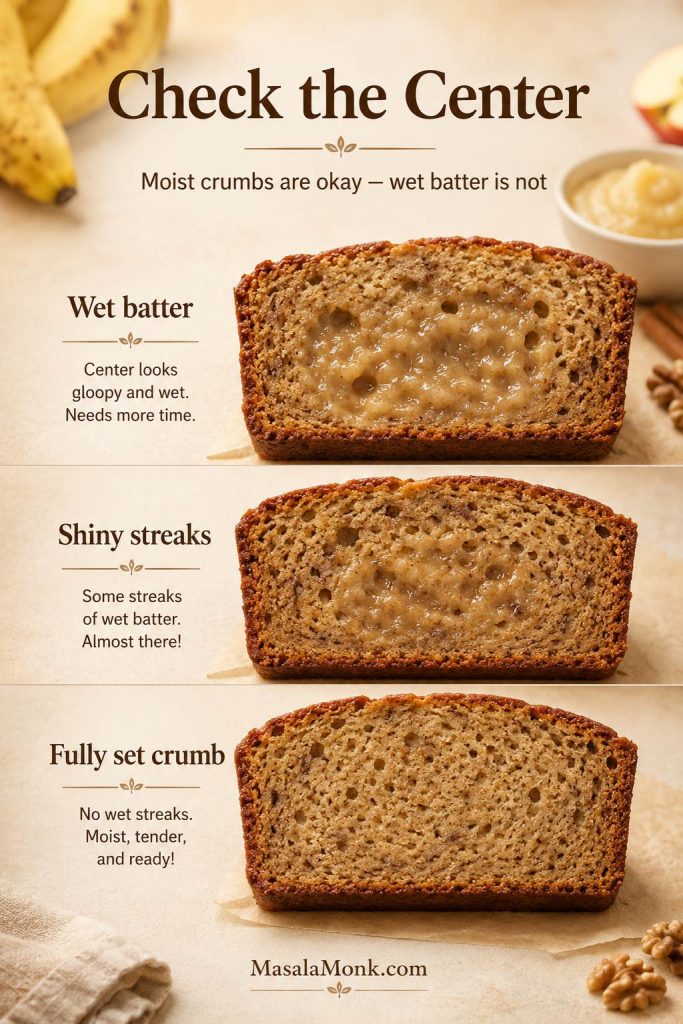
Look for a crumb that is evenly baked from edge to middle. That is the difference between fruit-rich banana bread and underdone banana bread.
Why You’ll Love This Recipe
Moist without the gummy middle: the banana, applesauce, flour, fat, and bake time are balanced so the loaf sets properly.
Still tastes like real banana bread: applesauce lightens the loaf, but a small amount of oil or butter keeps each slice from feeling rubbery or fragile.
Uses the bananas you were about to lose: heavily speckled bananas give the deepest flavor and natural sweetness.
Easy to adjust after the first bake: make it nuttier, less sweet, lower fat, dairy-free, vegan, or muffin-style without starting from scratch.
Why Applesauce Works in Banana Bread
Banana bread already depends on fruit puree, so applesauce fits naturally into the batter. It adds gentle sweetness and helps the loaf stay fresh-tasting for longer.
The catch is that applesauce is not the same as butter or oil. Fat helps coat the flour, which gives the crumb a softer bite. Applesauce brings extra water and fruit solids, which is why the batter needs the right balance. When the batter gets too wet, quick breads can turn dense, chewy, or gummy.
For that reason, this recipe keeps a small amount of oil or melted butter in the batter. It still feels lighter than a classic loaf, but it slices more cleanly once cooled.
You see the same idea in a good applesauce cake, where the applesauce keeps the crumb moist and even without making the cake feel wet.
Ingredients for Banana Bread with Applesauce
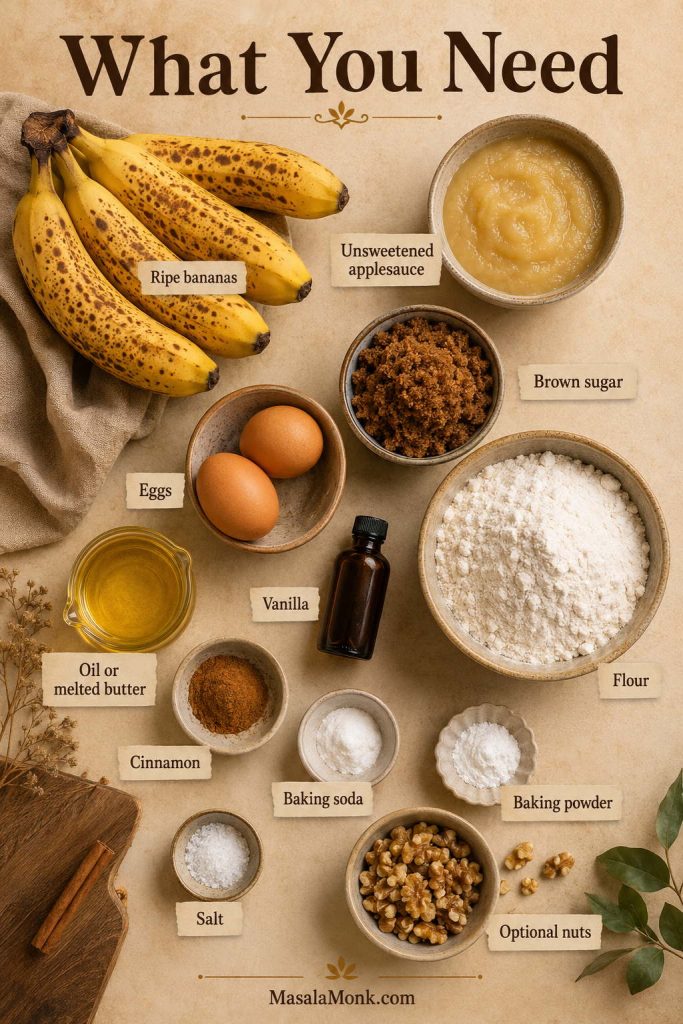
The ingredients are familiar, but measuring them makes the loaf much more reliable. A little too much banana or applesauce can make the crumb feel compressed instead of tender.
The ingredient list is simple, but the recipe depends on balance: ripe bananas for flavor, applesauce for moisture, and a little fat for tenderness.
Very Ripe Bananas
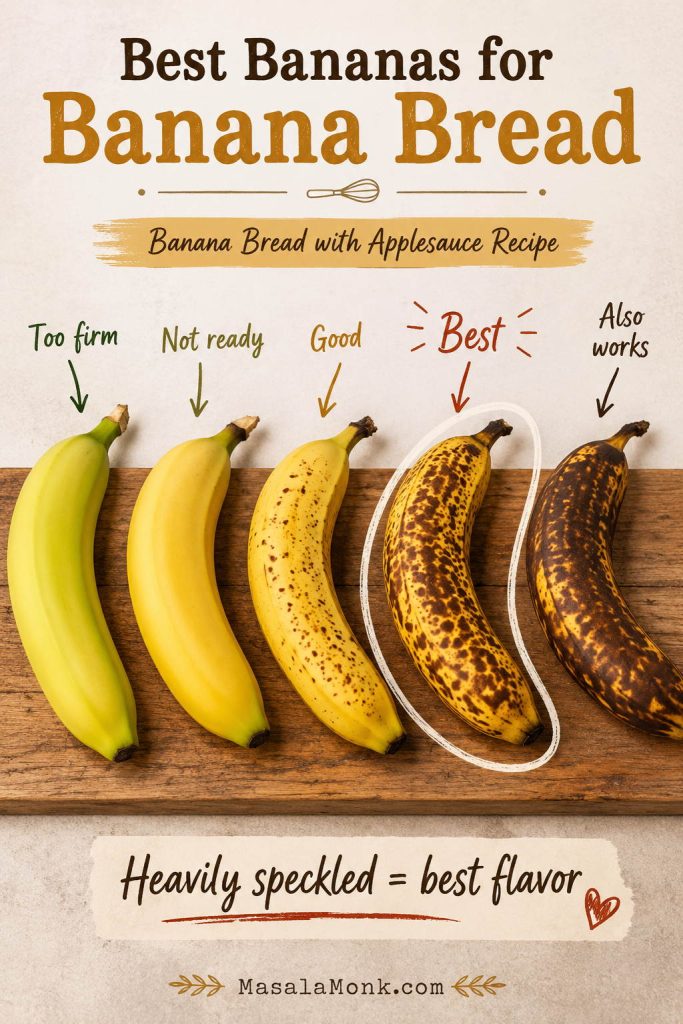
Use bananas that are heavily speckled or mostly brown on the outside. They mash easily, taste sweeter, and give the loaf its deep banana flavor. If the bananas are still too yellow, use the ripening shortcuts before you start.
Heavily speckled bananas give banana bread the deepest flavor. However, measuring the mashed fruit still keeps the applesauce loaf from getting too wet.
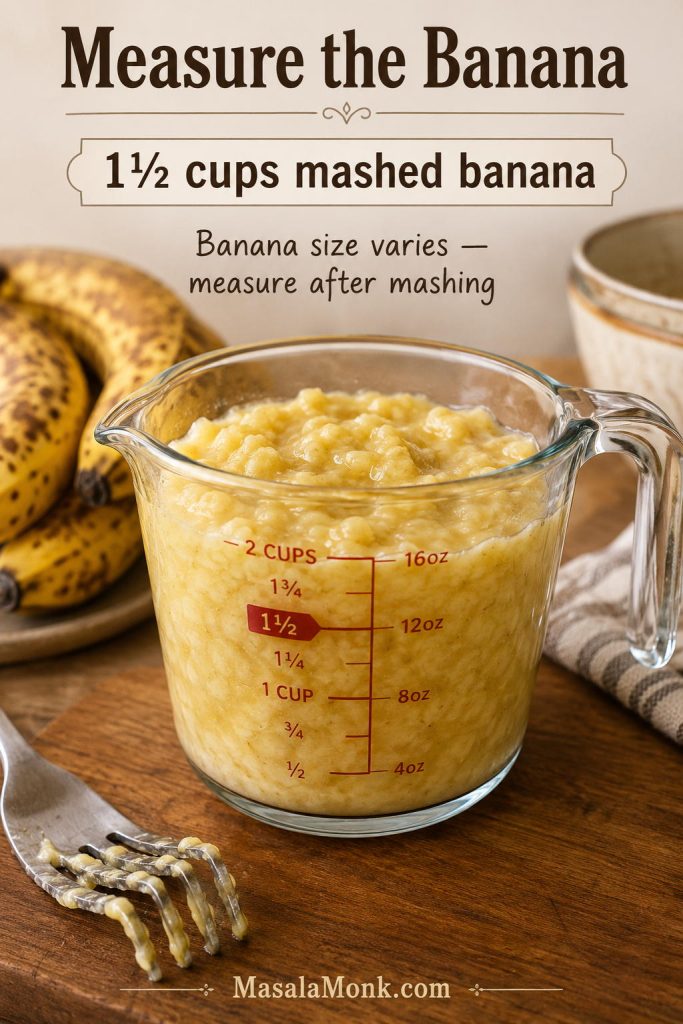
If a banana looks too far gone for eating out of hand, it may be exactly right for this batter. For this recipe, measure 1½ cups mashed banana, which is usually about 3 large bananas or 4 smaller ones. Too little banana gives a bland loaf, while too much can make the middle heavy, especially with applesauce in the batter. Using freezer bananas? Drain them before measuring.
Banana size changes from bunch to bunch, so measure after mashing. This one step makes banana bread with applesauce much more reliable.
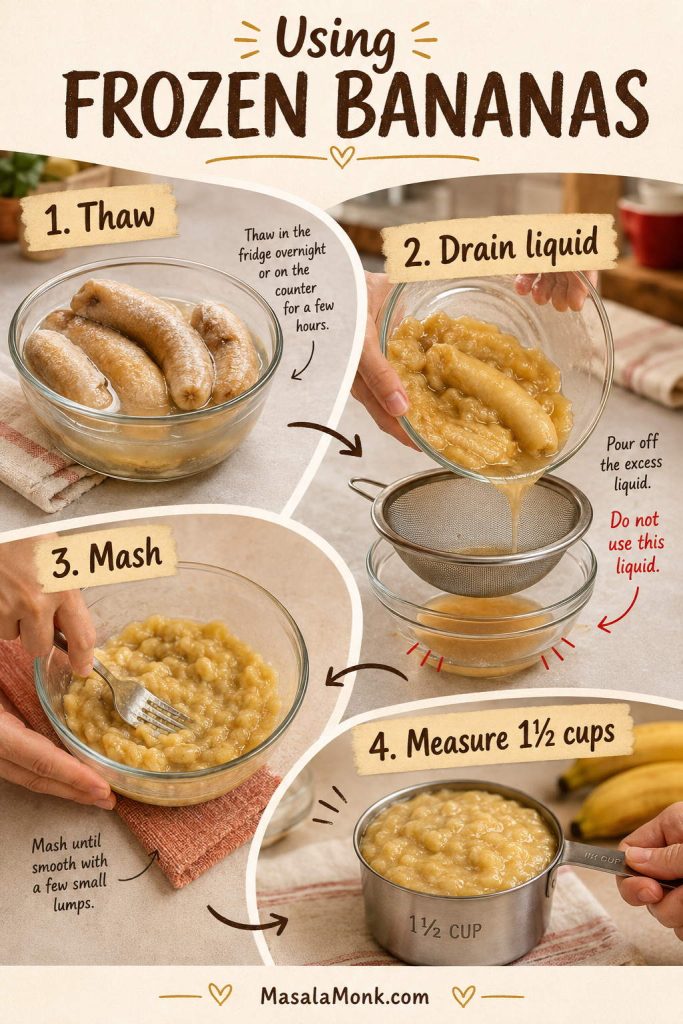
Frozen bananas also work. Thaw them first, drain off excess liquid, then mash and measure. They can release a lot of moisture, so measuring is even more important if you are using bananas from the freezer.
Frozen bananas work well, but they release extra liquid. Drain first, then mash and measure so the loaf stays soft instead of gummy.
How to Ripen Bananas Faster
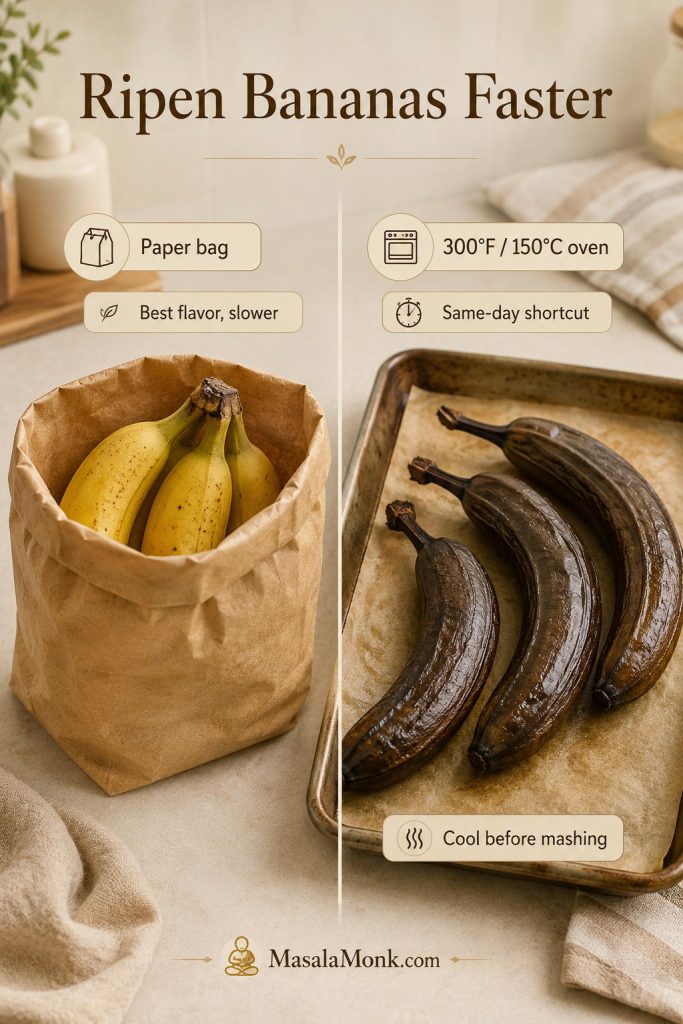
If your bananas are yellow but not soft yet, place them in a paper bag and leave them at room temperature until the peels become heavily speckled. For a same-day option, bake unpeeled bananas on a lined baking sheet at 300°F / 150°C until the peels darken and the fruit softens, then cool before mashing.
This shortcut helps with texture, but it does not create the same deep flavor as bananas that ripen naturally over several days. Use it when you need banana bread today, not when you are chasing the strongest banana flavor.
If the bananas release liquid as they cool, leave that liquid behind before measuring so you do not add extra water to the batter.
A paper bag is better when you have time; meanwhile, the oven shortcut helps when banana bread needs to happen today.
Unsweetened Applesauce
Plain unsweetened applesauce is best because it adds moisture without making the loaf too sweet. Homemade or store-bought both work, as long as the applesauce is smooth enough to blend evenly into the batter.
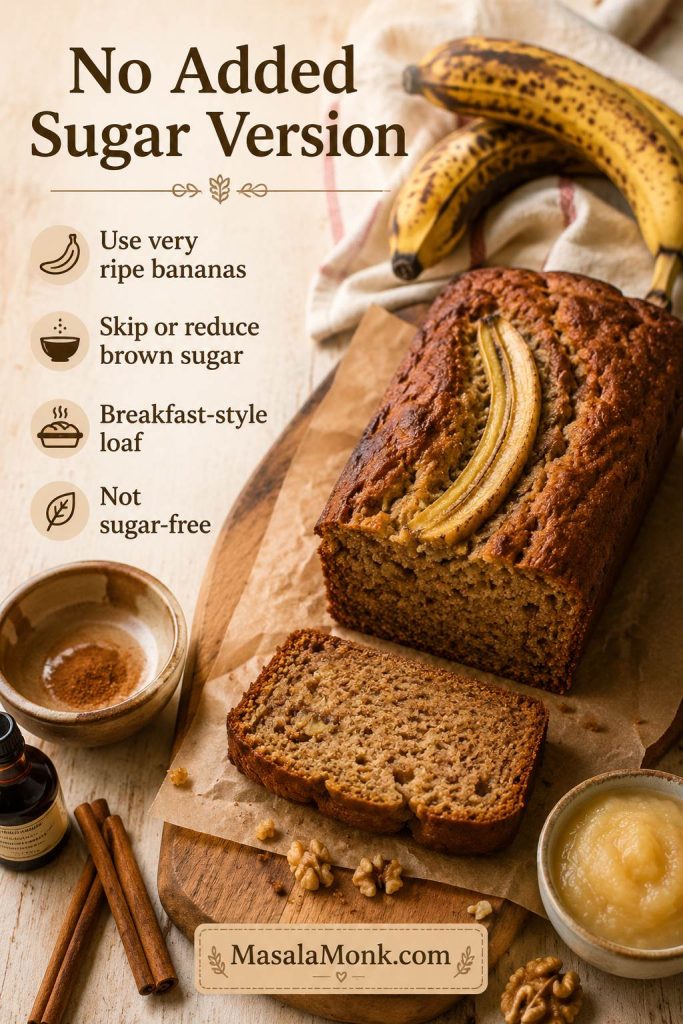
Sweetened applesauce is fine, but reduce the brown sugar slightly if you prefer a less sweet loaf. Cinnamon applesauce works too, especially if you want a warmer, spiced flavor.
A Small Amount of Oil or Melted Butter
The few tablespoons of fat are not there by accident. You can make a no-oil version, but the texture is usually more fragile. Three tablespoons of neutral oil or melted butter give the crumb a better bite while keeping the recipe lighter than a traditional butter-heavy loaf.
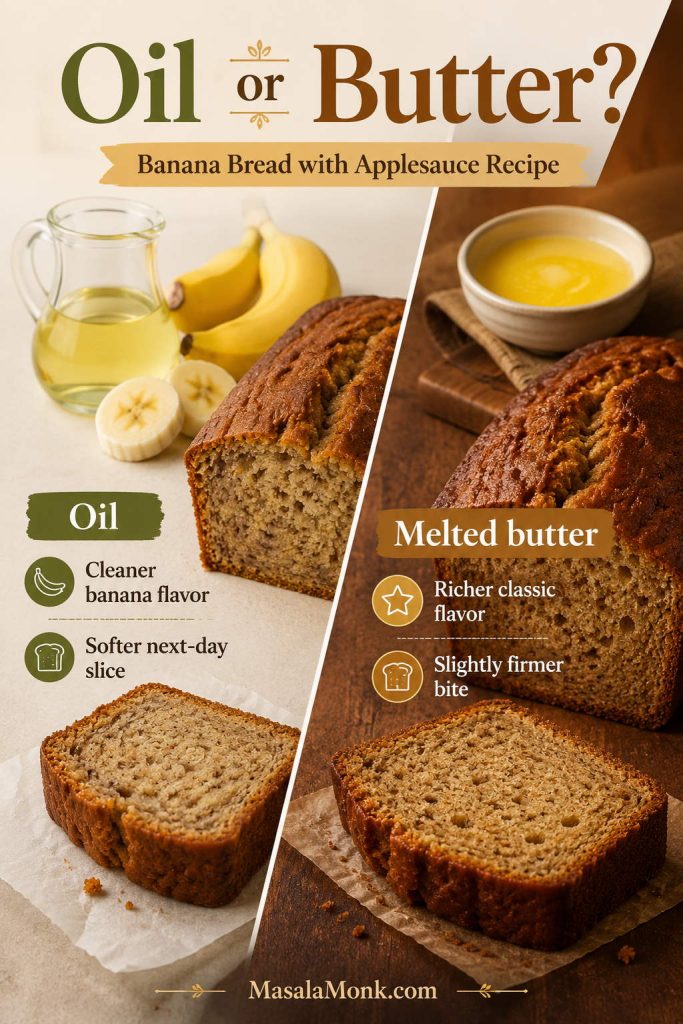
Use neutral oil when you want the banana flavor to stay clean and simple, with a softer next-day slice. Use melted butter if you want a richer, more classic banana bread flavor and a slightly firmer bite once the loaf cools. Trying to reduce more fat? Compare the applesauce-oil options later in the post.
Oil keeps the banana flavor cleaner and softer the next day, while melted butter gives the loaf a richer, more classic banana bread taste.
Flour, Eggs, Sugar, and Leavening
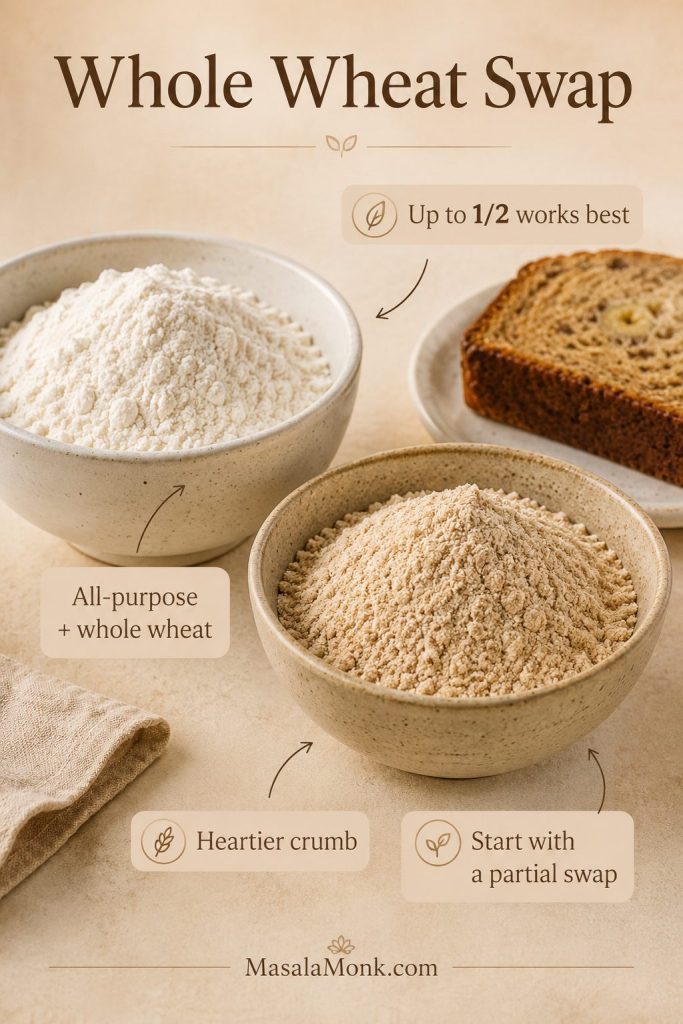
All-purpose flour gives the most reliable loaf. You can replace up to half of it with whole wheat flour for a heartier flavor, but using all whole wheat flour will make the bread denser and may need a little extra moisture.
A partial whole wheat swap adds heartier flavor without taking over the loaf. Start with half so the crumb still stays tender.
If you want a banana loaf built around oats instead of regular flour, try this healthy banana bread with oat flour for a more oat-forward version.
Brown sugar is doing more than sweetening here. It brings a light caramel note that makes the banana taste rounder, especially when the applesauce is plain and unsweetened. Eggs help the batter set, and a mix of baking soda plus a little baking powder helps lift the fruit-heavy batter.
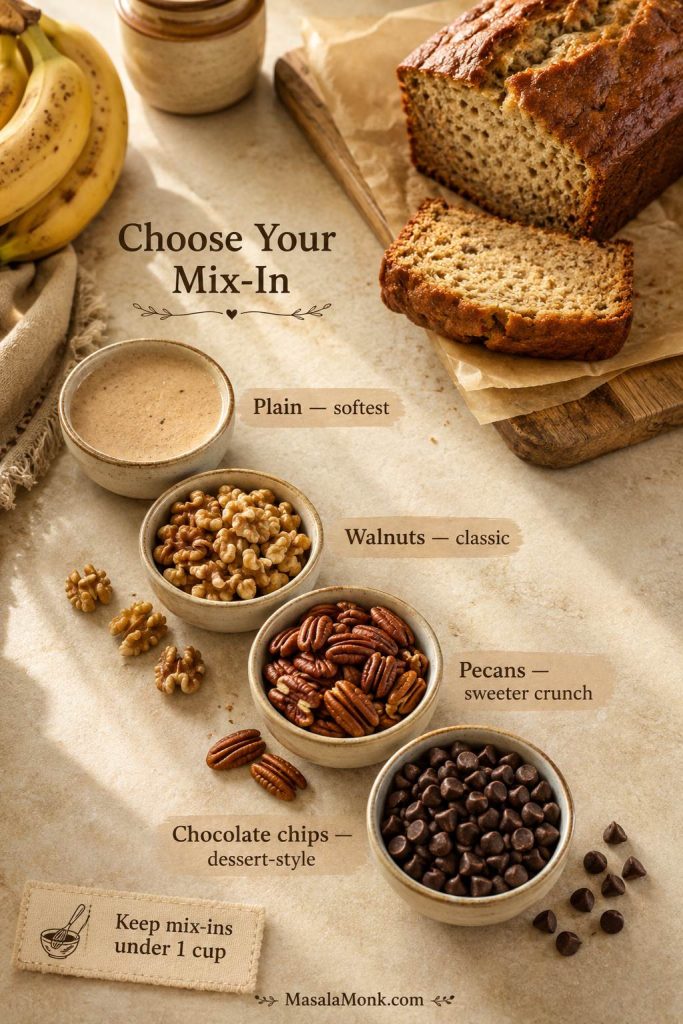
Walnuts, Pecans, or Chocolate Chips
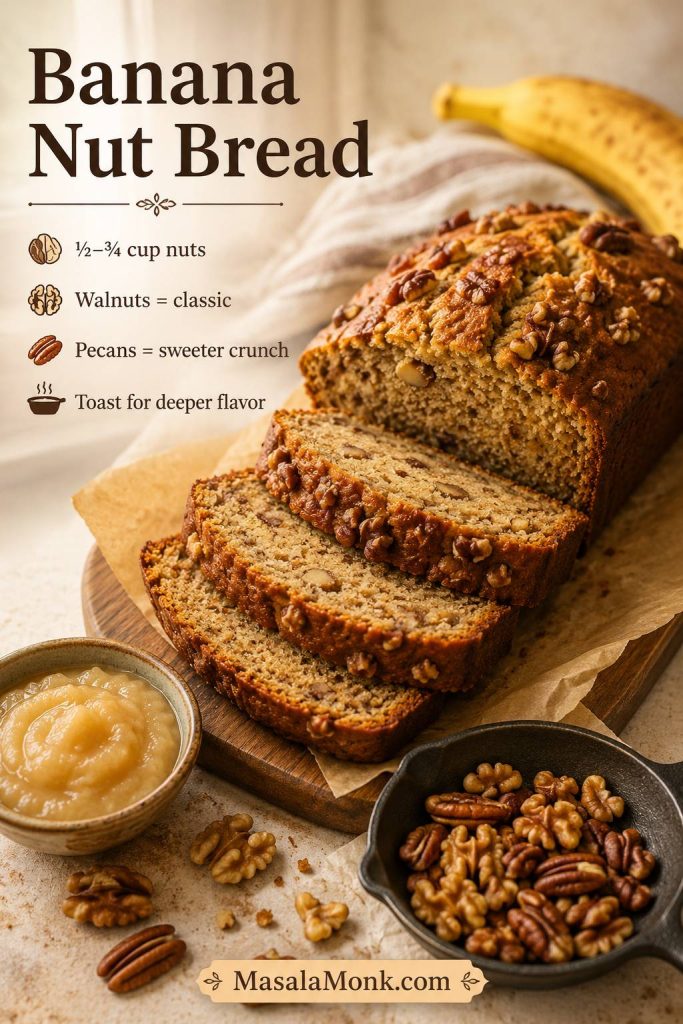
Walnuts and pecans turn this into banana nut bread with applesauce. Use ½ cup for a lighter crunch or up to ¾ cup for a more classic banana nut loaf. Chocolate chips also work, but they make the bread sweeter and more dessert-like.
Mix-ins change the personality of the loaf. Still, keep them under 1 cup so the banana-applesauce batter stays balanced and sliceable.
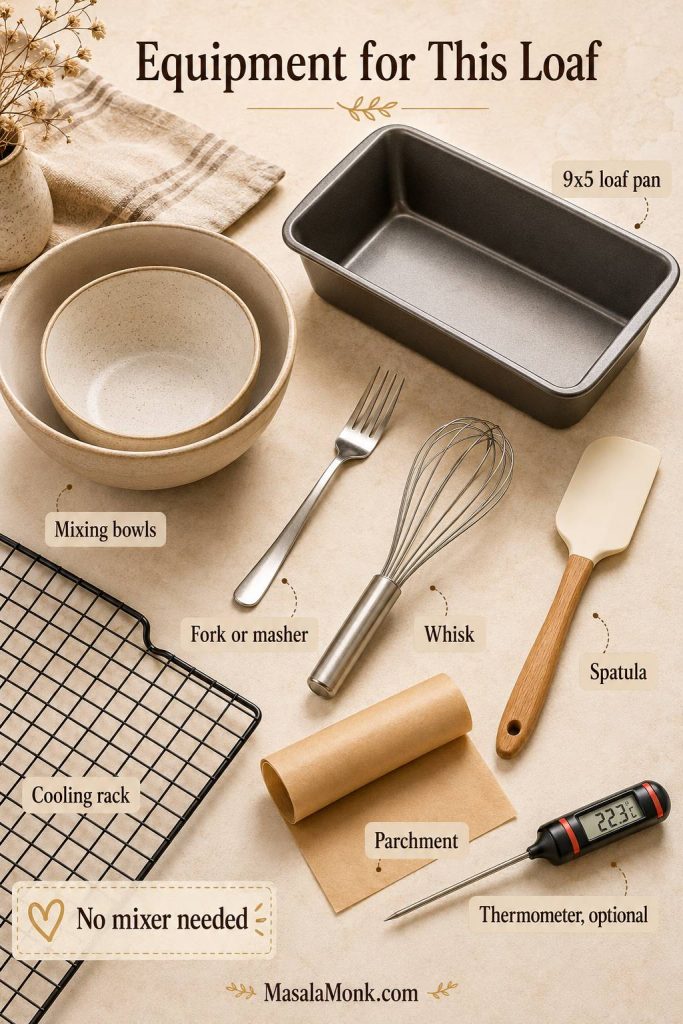
Equipment for This Loaf
You do not need a mixer for this loaf. In fact, mixing by hand is better because it helps prevent a rubbery crumb. A few small banana lumps are fine; beaten batter is not what you want here.
9×5-inch loaf pan
Large mixing bowl
Medium bowl for dry ingredients
Fork or potato masher for the bananas
Whisk
Flexible spatula
Parchment paper, optional
Cooling rack
Digital thermometer, optional
The important part is not special equipment. It is gentle mixing, the right pan, and enough cooling time before slicing. A digital thermometer removes the guesswork from fruit-heavy loaves, where the top can brown before the center is ready.
A bowl, whisk, spatula, and loaf pan are enough. The thermometer is the only optional tool that can save an uncertain center.
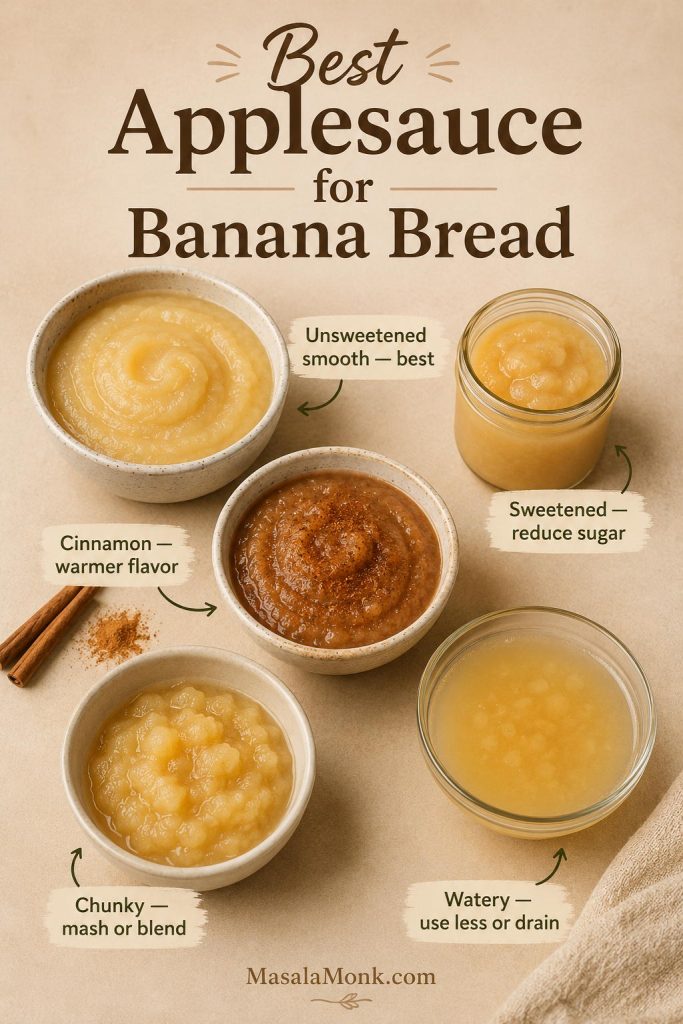
What Kind of Applesauce Should You Use?
The applesauce you use changes more than sweetness. It can change how loose the batter feels and how quickly the middle bakes through. If you are trying to avoid a damp center, this is one of the easiest places to stay in control.
Smooth unsweetened applesauce is the safest choice. If your applesauce is chunky or watery, adjust it before mixing so the crumb bakes evenly.
Applesauce Type
Works?
What to Adjust
Unsweetened smooth applesauce
Best choice
No change needed
Sweetened applesauce
Yes
Reduce the brown sugar slightly if you want a less sweet loaf
Cinnamon applesauce
Yes
Reduce or skip the extra cinnamon if needed
Homemade applesauce
Yes
Use smooth applesauce that is not watery
Chunky applesauce
Sometimes
Mash or blend first for a more even crumb
Very watery applesauce
Risky
Drain slightly or use 1–2 tablespoons less
If your applesauce looks loose and watery, hold back a little instead of adding extra. The batter may seem thick at first, but extra water shows up later in the baked crumb. The finished batter should mound softly in the pan, not pour like pancake batter.
Best Banana-to-Applesauce Ratio
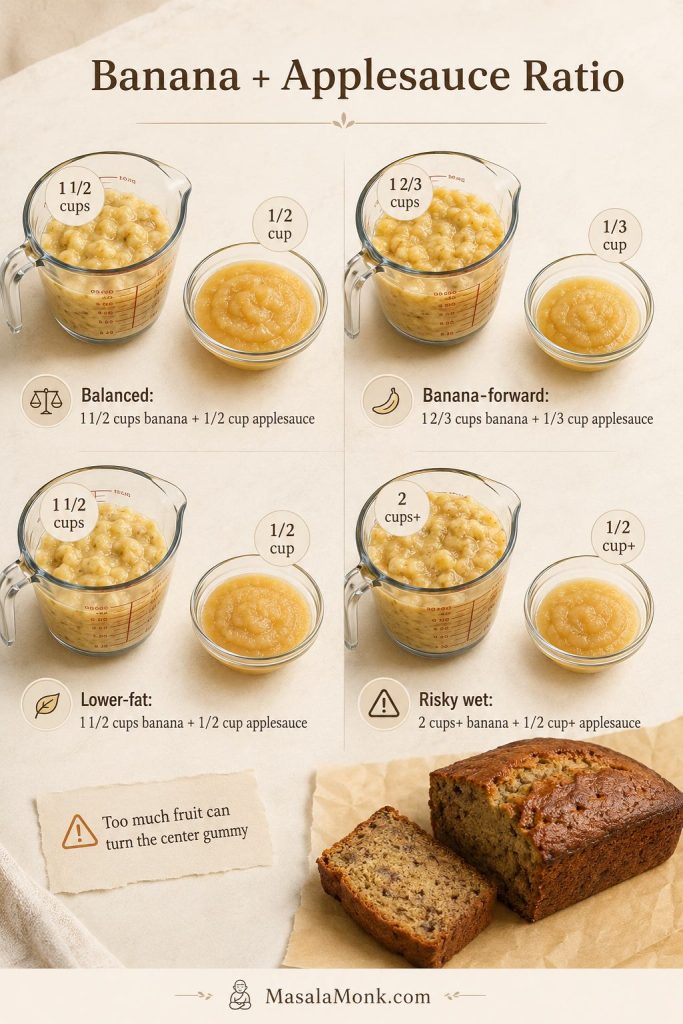
The best starting ratio for one standard loaf is 1½ cups mashed banana to ½ cup applesauce. That gives enough banana flavor and enough applesauce moisture without flooding the batter.
Applesauce is not the problem. The problem is stacking too much banana and applesauce without giving the loaf enough flour, eggs, bake time, and cooling time.
Loaf Style
Mashed Banana
Applesauce
Result
Balanced classic
1½ cups
½ cup
Moist and sliceable
More banana-forward
1⅔ cups
⅓ cup
Stronger banana flavor with slightly less added moisture
Lower-fat style
1½ cups
½ cup
Lighter and more delicate, especially if you reduce the oil
Risky wet loaf
2 cups or more
½ cup or more
More likely to bake up dense or gummy in the center
When the balance is right, the loaf tastes fruit-rich without feeling heavy. The first slice should smell warm, hold together, and look set rather than damp or compressed.
The banana-to-applesauce ratio controls moisture before the loaf ever reaches the oven. Too much fruit can make the crumb slow to set.
That balance is what keeps the loaf tasting like real banana bread, not like a lighter version where the texture feels like a compromise.
Best Pan Size and Pan Type for Banana Bread with Applesauce
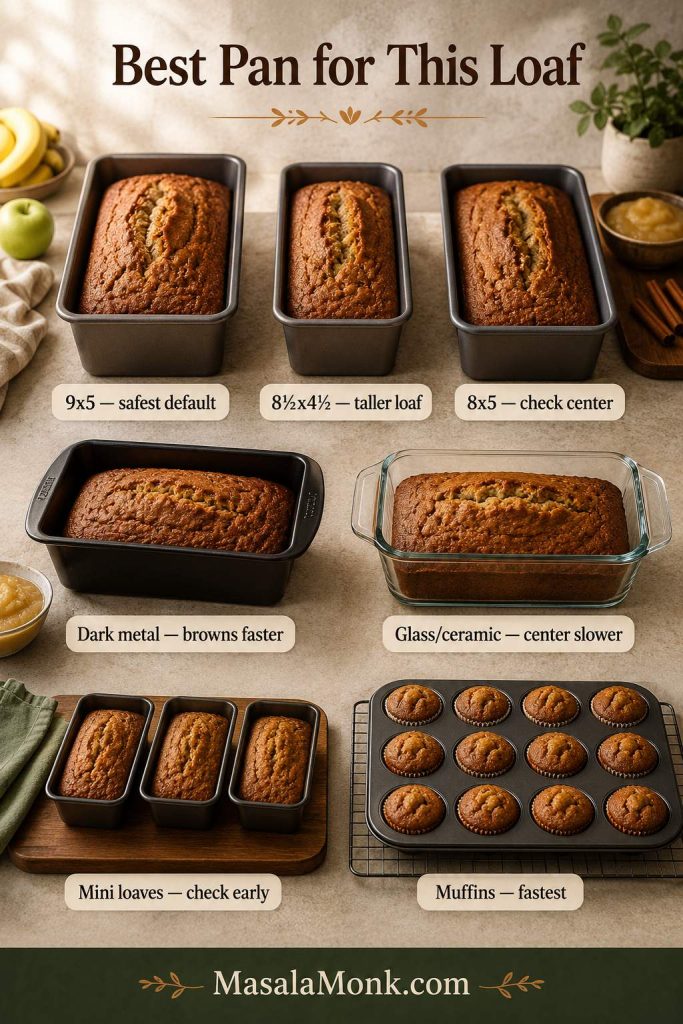
Pan size changes how deep the batter sits, which changes how quickly the center sets. For this fruit-rich batter, a 9×5-inch loaf pan is the safest default.
Pan
What Changes
How to Bake It
9×5-inch loaf pan
Best default; bakes most evenly
55–65 minutes at 350°F / 175°C
8½x4½-inch loaf pan
Taller loaf; center takes longer
Start checking around 55 minutes, but expect extra time
8×5-inch loaf pan
Works, but the center can be slower
Use a thermometer if possible and avoid pulling early
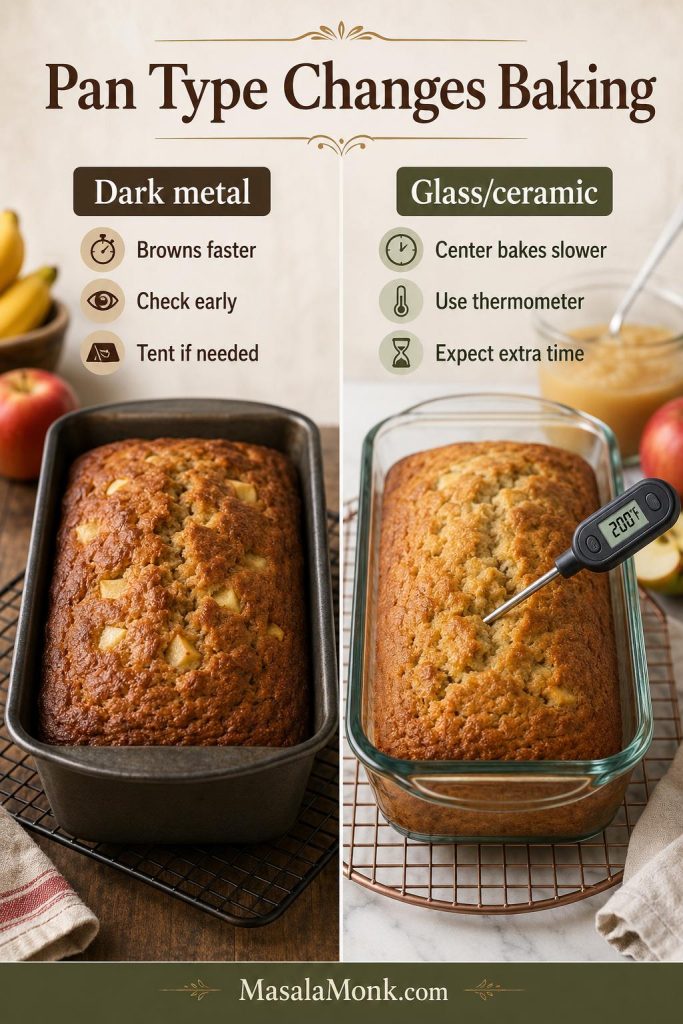
Dark metal loaf pan
Browns faster on the outside
Check early, tent if needed, and reduce the oven by 25°F / about 15°C if it over-browns
Glass or ceramic loaf pan
Can bake more slowly through the center
Expect extra time and use a thermometer; tent if the top browns before the middle is done
Mini loaf pans
Smaller loaves bake faster
Start checking around 30–35 minutes
Muffin tin
Fastest bake with more edges
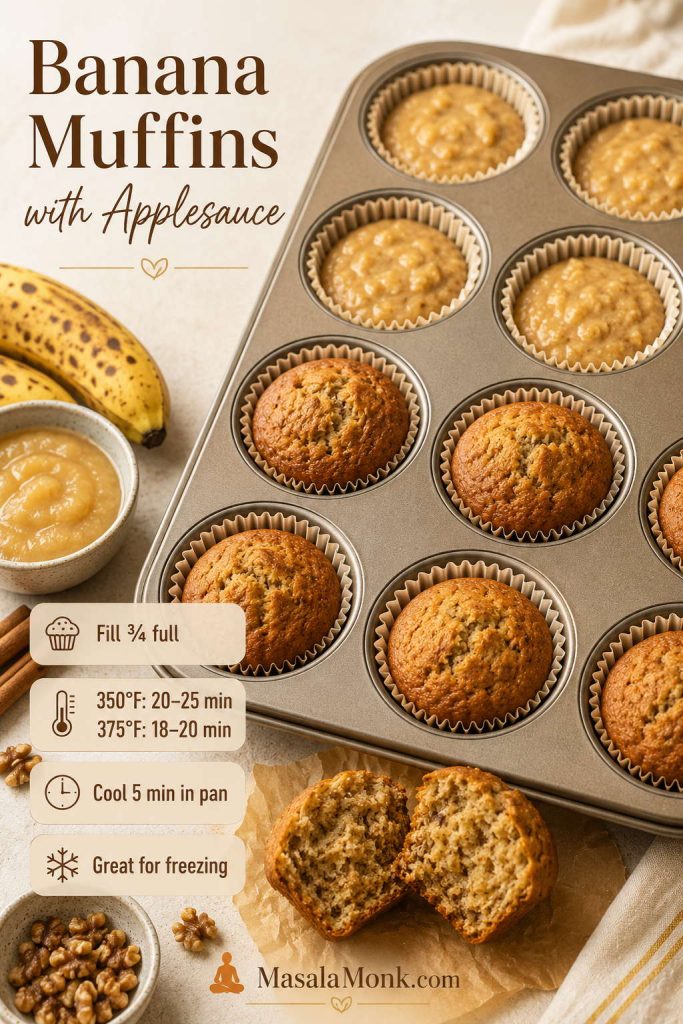
20–25 minutes at 350°F, or 18–20 minutes at 375°F
Pan size and material change how the middle bakes. Because this batter is fruit-rich, the safest default is a 9×5-inch loaf pan.
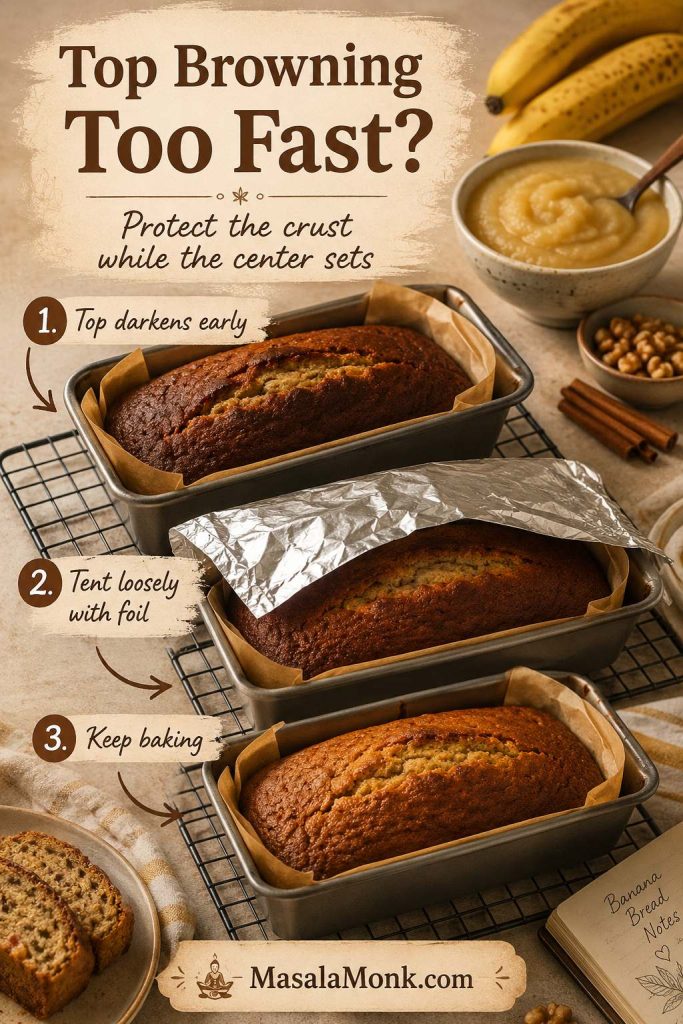
If the top browns before the middle is done, tent the loaf loosely with foil and continue baking. This is especially useful with smaller loaf pans, dark metal pans, glass pans, ceramic pans, or very ripe bananas.
Dark metal browns faster, while glass and ceramic can bake more slowly through the center. As a result, doneness cues matter more than color alone.
How to Make Banana Bread with Applesauce
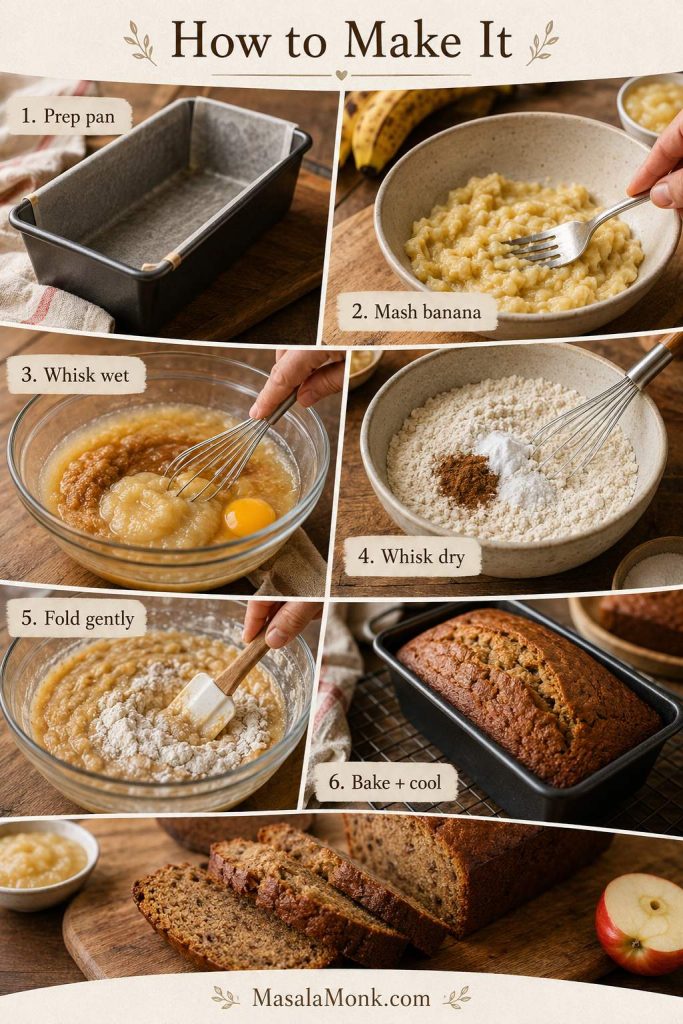
Once the fruit and applesauce are measured, the method is simple. The main thing is to mix gently and give the center enough time to bake through. If you are unsure near the end, use the doneness guide instead of judging by color alone.
The method is simple, but the order helps: measure the fruit, mix wet and dry separately, fold gently, then let the loaf cool before slicing.
1. Prepare the Pan
Heat the oven to 350°F / 175°C. Grease a 9×5-inch loaf pan and line it with parchment if you want to lift the loaf out easily.
2. Mash and Measure the Bananas
Mash the ripe bananas with a fork, then measure 1½ cups. A few small banana lumps are fine. They make the loaf feel homemade and keep the crumb from becoming too uniform.
3. Mix the Wet Ingredients
Whisk the mashed banana, applesauce, eggs, brown sugar, oil or melted butter, and vanilla until combined. The mixture will look loose and glossy.
4. Mix the Dry Ingredients Separately
In another bowl, whisk the flour, baking soda, baking powder, cinnamon, and salt. This helps the leavening spread evenly through the thick fruit-based batter.
5. Fold Gently
Add the dry ingredients to the wet ingredients and fold with a spatula until no dry flour remains. A mixer is not needed here; overmixing is one of the easiest ways to make the crumb rubbery.
The batter should be thick enough to mound on the spatula. If it looks loose before it goes into the oven, the finished crumb is more likely to feel heavy.
The batter should mound instead of pour. If it spreads too easily, the baked banana bread is more likely to feel compressed.
6. Add Nuts if Using
Fold in walnuts or pecans at the end. For a prettier top, save a small handful and scatter them over the batter before baking.
7. Bake Until the Center Is Set
Spread the batter into the prepared pan and bake for 55 to 65 minutes. A browned top is only part of the story; this fruit-heavy batter still needs time for the center to finish baking.
Near the end, the loaf should smell deeply banana-rich, and the center should look set rather than glossy. The bread is done when a toothpick inserted into the center comes out with moist crumbs but no wet batter. For the most reliable check, use a digital thermometer; the center should register about 200°F to 205°F / 93°C to 96°C. King Arthur Baking also recommends this internal-temperature range for banana bread doneness in its banana bread doneness guide.
A few moist crumbs are fine, but wet batter is not. For extra confidence, check for 200–205°F in the center before cooling the loaf.
8. Cool Before Slicing
Let the loaf cool in the pan for 10 to 15 minutes, then move it to a rack. Banana bread continues to set as it cools, especially when applesauce is in the batter.
Cutting too early can make a properly baked loaf look underdone, because the crumb has not had time to settle. Waiting is annoying, but it is one of the easiest ways to get clean slices.
Once cooled, the slices should look even and plush, with tiny banana flecks through the crumb instead of a shiny wet line in the center.
Cooling is part of the recipe, not an afterthought. Once the crumb settles, the slices cut cleaner and hold their shape.
Before you use the recipe card, remember the three texture cues that matter most: measured banana, batter that mounds instead of pours, and a fully cooled loaf before the first cut.
This is the texture to look for after cooling: even crumb, clean edges, and slices that hold together without crumbling.
Banana Bread with Applesauce Recipe
This fruit-rich loaf is lighter than classic banana bread but still soft, fragrant, and sturdy enough to slice cleanly once cooled.
Yield1 standard loaf
Prep Time15 minutes
Cook Time55–65 minutes
Total TimeAbout 1 hour 20 minutes, plus 45–60 minutes cooling
Pan: 9×5-inch loaf pan Oven: 350°F / 175°C
Ingredients
1½ cups mashed very ripe banana, about 340 g
½ cup unsweetened applesauce, about 120 g
2 large eggs
½ cup packed light brown sugar, about 105 g
3 tablespoons neutral oil, about 45 ml, or 3 tablespoons melted butter, about 42 g
2 teaspoons vanilla extract
2 cups all-purpose flour, 240 g
1 teaspoon baking soda
½ teaspoon baking powder
1 teaspoon ground cinnamon
½ teaspoon fine salt
½ cup chopped walnuts or pecans, optional, about 55–65 g
Method
Heat the oven to 350°F / 175°C. Grease a 9×5-inch loaf pan and line it with parchment if you want easier lifting.
Mash the bananas, then measure 1½ cups. Banana size varies so much that measuring gives you a more reliable loaf than counting bananas alone.
In a large bowl, whisk the mashed banana, applesauce, eggs, brown sugar, oil or melted butter, and vanilla.
In a separate bowl, whisk the flour, baking soda, baking powder, cinnamon, and salt.
Add the dry ingredients to the wet ingredients and fold gently until no dry flour remains. The batter should be thick enough to mound on the spatula, not runny.
Fold in walnuts or pecans if using.
Spread the batter into the prepared pan. Bake for 55–65 minutes, or until a toothpick inserted in the center comes out with moist crumbs but no wet batter. For the most reliable check, the center should read about 200–205°F / 93–96°C.
If the top browns before the center is done, tent the loaf loosely with foil and keep baking.
Cool in the pan for 10–15 minutes, then move to a rack. Let the loaf cool for at least 45–60 minutes before slicing so the crumb can finish setting.
Notes
For your first loaf, use the full 3 tablespoons oil or melted butter. Once you know the texture, you can reduce it to 2 tablespoons for a lighter but more delicate loaf.
Use up to ¾ cup nuts, about 85 g, if you want a more classic banana nut loaf.
For a less sweet loaf, reduce the brown sugar to ⅓ cup if your bananas are very ripe.
If using frozen bananas, thaw and drain off excess liquid before measuring.
For the cleanest slices, cool the loaf fully before cutting.
After the first loaf, the best tweak is personal: richer with butter, cleaner with oil, crunchier with walnuts, softer as muffins, or lighter with a little less fat. The sections below help you adjust without losing the clean-slicing texture.
How to Avoid Gummy Banana Bread with Applesauce
A good slice should hold together, with an even crumb and a set center. If your last loaf looked beautiful on top but cut into a compressed middle, you probably do not need a completely different recipe. You usually need better measurement, a little more bake time, and enough cooling before cutting.
Most gummy loaves come from a combination of too much wet fruit, heavy mixing, not enough time in the oven, or slicing before the crumb has set. The good news is that it usually does not mean you are bad at banana bread; it comes down to one of a few fixable choices.
Most gummy banana bread problems come from moisture, mixing, bake time, or cooling. Once you know the cause, the fix is usually simple.
Texture Problems and Fixes
Problem
Likely Cause
How to Fix It
Gummy middle
Too much banana or applesauce, or the loaf was underbaked
Measure the banana, keep applesauce to ½ cup, and bake until the middle no longer looks shiny or wet
Rubbery texture
The batter was overmixed
Fold gently by hand and stop when the flour disappears
Top browns too fast
The outside is browning before the center finishes
Tent loosely with foil and continue baking
Dense loaf
Too much wet ingredient or weak leavening
Use fresh baking soda and baking powder, and follow the banana-to-applesauce ratio
Wet-looking slices
The loaf was sliced too hot
Cool at least 45 minutes before slicing
Dry edges
Dark pan, overbaking, or too little wet ingredient
Check earlier, use parchment, and try a lighter pan next time if the edges keep drying out
A compressed crumb is a clue, not a disaster. Next time, check the fruit amount, bake time, and cooling window.
Wet Center vs Fully Baked Crumb
A clean toothpick is not always the best goal for banana bread. A few soft crumbs on the toothpick are fine. Wet batter, shiny streaks, or a sunken center mean the loaf needs more time.
Moist crumbs are normal in banana bread, but shiny streaks or wet batter mean the center still needs more time.
What to Do If the Top Browns Too Fast
If the top is dark but the center still has wet batter, lay a loose piece of foil over the loaf and continue baking. This keeps the crust from getting too dark while the middle finishes.
If the top browns early, do not pull the loaf too soon. Tent it loosely with foil so the crust is protected while the center finishes.
Can Applesauce Replace Oil or Butter in Banana Bread?
Applesauce can lighten banana bread beautifully, but it cannot do everything butter or oil does. It brings moisture; fat brings richness, tenderness, and a cleaner bite.
Because banana bread already contains mashed fruit, it handles applesauce better than many cakes or cookies. Even so, a small amount of oil or melted butter helps prevent the loaf from becoming springy, tough, or too delicate in the middle.
½ cup applesauce + 3 tablespoons oil or melted butter
Moist, rich enough, and sliceable
Lower-fat
½ cup applesauce + 1–2 tablespoons oil
Lighter and more delicate
No-oil
½ cup applesauce and no added fat
Moist but more delicate, with a higher risk of a soft center
Richer loaf
⅓ cup applesauce + ¼ cup melted butter or oil
More classic banana bread texture
After the first loaf, you can reduce the oil slightly if you prefer a softer, lower-fat version.
Applesauce adds moisture, but fat adds tenderness. That is why the best banana bread with applesauce usually keeps a small amount of oil or butter.
Banana Bread with Applesauce and Yogurt
Yogurt works best as a small swap, not a big extra addition, because banana, applesauce, and yogurt all bring moisture. For a tangier, softer loaf, replace 2 tablespoons of the applesauce with plain Greek yogurt or regular plain yogurt.
Use yogurt as a swap, not an add-on. A small amount adds tang, while too much extra moisture can slow the center.
It gives the loaf a little tang and softness without turning it into a completely different bake.
Adding a full extra ½ cup yogurt can make this batter too wet unless you also adjust the flour or bake time. The flavor may be good, but the center can turn heavy.
Banana Nut Bread with Applesauce
For banana nut bread with applesauce, fold ½ to ¾ cup chopped walnuts or pecans, about 55–85 g, into the batter just before baking. Walnuts make the loaf taste more old-school; pecans make it a little softer and sweeter.
Toast the nuts, cool them, then fold them in last. That keeps the crunch clear without overworking the batter.
This is the version to make when you want the loaf to feel more classic and bakery-style, with a little crunch against the soft fruit-rich crumb.
Toasting the nuts first gives deeper flavor without changing the recipe. Warm them in a dry skillet for 3–5 minutes, or on a baking sheet for 6–8 minutes at 350°F / 175°C, then cool before folding them into the batter.
Too many nuts can make the loaf crumbly and weigh down an already-moist batter. Keep it under 1 cup if you want neat slices.
No Added Sugar Banana Bread with Applesauce
A no-added-sugar version works best when the bananas are deeply ripe, but it will taste more like a breakfast loaf than a dessert loaf. The bananas carry most of the sweetness, so this is not the place for pale, barely ripe fruit.
This version is not truly sugar-free because bananas and applesauce contain natural sugars. However, you can skip the brown sugar or reduce it to 2 to 3 tablespoons if your bananas are very sweet and heavily speckled.
For a no-added-sugar version, very ripe bananas do the heavy lifting. However, the loaf will taste more breakfast-style than dessert-like.
For better flavor in a no-added-sugar loaf, use extra cinnamon, vanilla, and a pinch more salt. These small touches make the banana flavor taste fuller even without much added sugar.
Eggless or Vegan Banana Bread with Applesauce
For a vegan version, use neutral oil instead of butter and replace the eggs with 2 flax eggs. To make 2 flax eggs, mix 2 tablespoons ground flaxseed with 5 tablespoons water and let it thicken for about 10 minutes before adding it to the batter.
Flax eggs help bind the batter, but the crumb is more delicate. Let the loaf cool fully before slicing for the cleanest texture.
It is a helpful option when the loaf needs to work for more people at the table, but full cooling matters even more because the crumb is more delicate.
Applesauce helps with moisture and a little binding, but it does not behave exactly like eggs. An eggless loaf will usually be more delicate and slightly denser, so let it cool completely before slicing.
If you only need the recipe to be dairy-free, the fix is easier: use neutral oil instead of melted butter. The rest of the main recipe can stay the same.
Banana Muffins with Applesauce
This batter also works as banana muffins with applesauce. Divide it into a lined muffin tin, filling each cup about ¾ full. Bake at 350°F / 175°C for about 20 to 25 minutes, or until the tops spring back and a toothpick comes out with moist crumbs.
The same banana-applesauce batter can become muffins. Because they bake faster than a loaf, check early and let them rest briefly in the pan.
Muffins are the better choice when you want faster cooling, easy freezing, or smaller grab-and-go portions with the same banana-applesauce flavor. Overbaking while waiting for a dark top can dry the edges, so look for tops that are set and spring back lightly.
For slightly taller muffin tops, bake at 375°F / 190°C and start checking around 18 to 20 minutes. Muffins bake faster than a loaf, so watch them closely near the end.
This recipe usually makes about 12 standard muffins. Let them sit in the pan for 5 minutes, then move them to a rack so the bottoms do not steam and turn damp.
For a more filling meal-prep bake, these high protein muffins are a good next step.
Storage and Freezing
How to Store the Loaf
Because this loaf is fruit-rich, storage matters almost as much as baking. Wrap it too soon and the outside can turn sticky; cool it fully and the slices keep beautifully. Want smaller portions instead? Use the muffin conversion.
Room temperature: keep tightly wrapped or in an airtight container for 2–3 days once fully cool.
Refrigerator: store for 5–6 days if your kitchen is warm, though the crumb may firm slightly.
Freezer: freeze slices for up to 3 months with parchment between them for easier thawing. For the cleanest setup, use the slice-freezing method below.
Cool the loaf fully before storing. Otherwise, trapped steam can soften the crust and make the slices feel sticky.
How to Freeze Slices
To serve frozen slices, thaw at room temperature or warm gently. A quick warm-up makes the banana flavor taste fresher and softens the crumb again.
Freeze slices with parchment between them so you can thaw one piece at a time. Then warm gently to bring back the soft crumb.
It is especially good the next day, when the banana flavor has had time to settle into the crumb.
If you are baking through ripe bananas often, this sourdough banana bread recipe is another good make-ahead loaf for the same breakfast-and-snack lane.
The Next-Day Slice
Once you know the texture cues, this becomes the kind of banana bread you stop overthinking: ripe bananas, a measured scoop of applesauce, a thick batter, and enough cooling time for clean slices. The first slice is soft and fragrant, but the next-day slice may be even better — more settled, more banana-rich, and exactly the reason those spotted bananas were worth saving.
The next-day slice is often the reward for waiting: the banana flavor deepens, the crumb settles, and the loaf feels even easier to enjoy.
After the first bake, pay attention to your favorite version: oil for a cleaner banana flavor, melted butter for a richer slice, walnuts for a classic banana bread feel, or plain for a softer breakfast loaf. That little preference is what turns the recipe into your house version.
FAQs About Banana Bread with Applesauce
How much applesauce belongs in one loaf of banana bread?
For one standard 9×5-inch loaf, ½ cup applesauce is the best starting point. It adds moisture without making the batter too loose, especially when paired with about 1½ cups mashed banana.
Does applesauce replace all the oil or butter?
Applesauce can replace some of the fat, but the best texture usually comes from keeping a small amount of oil or melted butter in the batter. A fully no-oil loaf can work, although it will be more delicate.
Why did my applesauce banana bread turn gummy?
The usual causes are too much wet ingredient, overmixing, underbaking, or slicing while the loaf is still hot. Measure the banana, keep the applesauce to ½ cup, fold gently, and bake until the middle no longer looks shiny or wet.
Do frozen bananas work?
They do, but thawing and draining matter. Frozen bananas release extra liquid, so drain off the excess, mash the fruit, and then measure the 1½ cups.
How much whole wheat flour can I use?
Up to half is the safest swap. Replacing all the all-purpose flour with whole wheat flour makes the loaf heartier and denser, so start with a partial swap before changing the whole recipe.
What happens if I skip the added sugar?
The loaf will taste more breakfast-style than dessert-style. Very ripe bananas help, but bananas and applesauce still contain natural sugars, so “no added sugar” is the more accurate description.
How do I make this into banana nut bread?
Fold ½ to ¾ cup chopped walnuts or pecans into the batter before baking. Toasted walnuts give the most classic banana nut bread flavor.
Which applesauce types work best?
Unsweetened smooth applesauce is the easiest choice. Sweetened applesauce works if you reduce the sugar slightly, cinnamon applesauce adds warmth, and chunky applesauce should be mashed or blended first.
How do I make it eggless or vegan?
For a vegan loaf, use neutral oil instead of butter and replace the eggs with 2 flax eggs. The loaf will be more delicate and slightly denser, so cool it completely before slicing.
Where does yogurt fit into the recipe?
A small amount works best. Replace 2 tablespoons of the applesauce with plain yogurt for a tangier loaf, but avoid adding much more unless you adjust the flour or bake time.
How do I know the middle is fully baked?
A toothpick should come out with moist crumbs, not wet batter or shiny streaks. For a more precise check, the center should register about 200°F to 205°F / 93°C to 96°C on a digital thermometer.
{
“@context”: “https://schema.org”,
“@graph”: [
{
“@type”: “Organization”,
“@id”: “https://masalamonk.com/#organization”,
“name”: “MasalaMonk.com”,
“url”: “https://masalamonk.com/”,
“logo”: {
“@type”: “ImageObject”,
“@id”: “https://masalamonk.com/#logo”,
“url”: “https://masalamonk.com/wp-content/uploads/2018/04/masala-monk-logo.png”,
“contentUrl”: “https://masalamonk.com/wp-content/uploads/2018/04/masala-monk-logo.png”
}
},
{
“@type”: “WebSite”,
“@id”: “https://masalamonk.com/#website”,
“url”: “https://masalamonk.com/”,
“name”: “MasalaMonk.com”,
“publisher”: {
“@id”: “https://masalamonk.com/#organization”
},
“inLanguage”: “en-US”
},
{
“@type”: “ImageObject”,
“@id”: “https://masalamonk.com/banana-bread-with-applesauce-recipe/#primaryimage”,
“url”: “https://masalamonk.com/wp-content/uploads/2026/05/banana-bread-with-applesauce-recipe.jpg”,
“contentUrl”: “https://masalamonk.com/wp-content/uploads/2026/05/banana-bread-with-applesauce-recipe.jpg”,
“caption”: “Banana bread with applesauce sliced to show a soft, set crumb.”
},
{
“@type”: “WebPage”,
“@id”: “https://masalamonk.com/banana-bread-with-applesauce-recipe/#webpage”,
“url”: “https://masalamonk.com/banana-bread-with-applesauce-recipe/”,
“name”: “Banana Bread with Applesauce Recipe”,
“headline”: “Banana Bread with Applesauce Recipe”,
“description”: “A moist banana bread with applesauce recipe that uses ripe bananas, measured applesauce, and a little oil or butter for tender slices without a gummy center.”,
“isPartOf”: {
“@id”: “https://masalamonk.com/#website”
},
“publisher”: {
“@id”: “https://masalamonk.com/#organization”
},
“primaryImageOfPage”: {
“@id”: “https://masalamonk.com/banana-bread-with-applesauce-recipe/#primaryimage”
},
“mainEntity”: {
“@id”: “https://masalamonk.com/banana-bread-with-applesauce-recipe/#recipe”
},
“datePublished”: “2026-05-28”,
“dateModified”: “2026-05-28”,
“isAccessibleForFree”: true,
“inLanguage”: “en-US”
},
{
“@type”: “Recipe”,
“@id”: “https://masalamonk.com/banana-bread-with-applesauce-recipe/#recipe”,
“mainEntityOfPage”: {
“@id”: “https://masalamonk.com/banana-bread-with-applesauce-recipe/#webpage”
},
“url”: “https://masalamonk.com/banana-bread-with-applesauce-recipe/”,
“name”: “Banana Bread with Applesauce Recipe”,
“headline”: “Banana Bread with Applesauce Recipe”,
“description”: “Moist banana bread with applesauce, ripe bananas, and a small amount of oil or butter for tender slices without a gummy center.”,
“image”: [
{
“@type”: “ImageObject”,
“@id”: “https://masalamonk.com/banana-bread-with-applesauce-recipe/#image-finished-loaf”,
“url”: “https://masalamonk.com/wp-content/uploads/2026/05/banana-bread-with-applesauce-recipe.jpg”,
“contentUrl”: “https://masalamonk.com/wp-content/uploads/2026/05/banana-bread-with-applesauce-recipe.jpg”,
“caption”: “Sliced banana bread with applesauce showing a soft, set crumb.”
},
{
“@type”: “ImageObject”,
“@id”: “https://masalamonk.com/banana-bread-with-applesauce-recipe/#image-slice-texture”,
“url”: “https://masalamonk.com/wp-content/uploads/2026/05/banana-bread-with-applesauce-slice-texture-683×1024.jpg”,
“contentUrl”: “https://masalamonk.com/wp-content/uploads/2026/05/banana-bread-with-applesauce-slice-texture-683×1024.jpg”,
“caption”: “Close-up of banana bread with applesauce slices showing an even crumb.”
},
{
“@type”: “ImageObject”,
“@id”: “https://masalamonk.com/banana-bread-with-applesauce-recipe/#image-clean-slices”,
“url”: “https://masalamonk.com/wp-content/uploads/2026/05/clean-slices-of-banana-bread-with-applesauce-683×1024.jpg”,
“contentUrl”: “https://masalamonk.com/wp-content/uploads/2026/05/clean-slices-of-banana-bread-with-applesauce-683×1024.jpg”,
“caption”: “Clean slices of banana bread with applesauce showing no wet line.”
},
{
“@type”: “ImageObject”,
“@id”: “https://masalamonk.com/banana-bread-with-applesauce-recipe/#image-next-day-slice”,
“url”: “https://masalamonk.com/wp-content/uploads/2026/05/banana-bread-with-applesauce-next-day-slice-683×1024.jpg”,
“contentUrl”: “https://masalamonk.com/wp-content/uploads/2026/05/banana-bread-with-applesauce-next-day-slice-683×1024.jpg”,
“caption”: “Next-day banana bread with applesauce served as a breakfast slice.”
}
],
“thumbnailUrl”: “https://masalamonk.com/wp-content/uploads/2026/05/banana-bread-with-applesauce-recipe.jpg”,
“author”: {
“@id”: “https://masalamonk.com/#organization”
},
“publisher”: {
“@id”: “https://masalamonk.com/#organization”
},
“datePublished”: “2026-05-28”,
“dateModified”: “2026-05-28”,
“inLanguage”: “en-US”,
“prepTime”: “PT15M”,
“cookTime”: “PT1H5M”,
“totalTime”: “PT2H20M”,
“recipeYield”: “1 standard loaf (about 10 slices)”,
“recipeCategory”: [
“Quick Bread”,
“Breakfast”,
“Snack”
],
“recipeCuisine”: “American”,
“keywords”: “banana bread with applesauce, applesauce banana bread, moist banana bread, banana bread recipe, banana nut bread with applesauce, no added sugar banana bread, eggless banana bread, vegan banana bread, banana muffins with applesauce”,
“recipeIngredient”: [
“1½ cups mashed very ripe banana, about 340 g”,
“½ cup unsweetened applesauce, about 120 g”,
“2 large eggs”,
“½ cup packed light brown sugar, about 105 g”,
“3 tablespoons neutral oil, about 45 ml, or 3 tablespoons melted butter, about 42 g”,
“2 teaspoons vanilla extract”,
“2 cups all-purpose flour, 240 g”,
“1 teaspoon baking soda”,
“½ teaspoon baking powder”,
“1 teaspoon ground cinnamon”,
“½ teaspoon fine salt”,
“½ cup chopped walnuts or pecans, optional, about 55–65 g”
],
“recipeInstructions”: [
{
“@type”: “HowToStep”,
“@id”: “https://masalamonk.com/banana-bread-with-applesauce-recipe/#prepare-the-pan”,
“position”: 1,
“name”: “Prepare the pan”,
“url”: “https://masalamonk.com/banana-bread-with-applesauce-recipe/#prepare-the-pan”,
“text”: “Heat the oven to 350°F / 175°C. Grease a 9×5-inch loaf pan and line it with parchment if you want easier lifting.”,
“image”: “https://masalamonk.com/wp-content/uploads/2026/05/how-to-make-banana-bread-with-applesauce-step-by-step-683×1024.jpg”
},
{
“@type”: “HowToStep”,
“@id”: “https://masalamonk.com/banana-bread-with-applesauce-recipe/#mash-and-measure-bananas”,
“position”: 2,
“name”: “Mash and measure the bananas”,
“url”: “https://masalamonk.com/banana-bread-with-applesauce-recipe/#mash-and-measure-bananas”,
“text”: “Mash the bananas, then measure 1½ cups. Banana size varies, so measuring gives you a more reliable loaf than counting bananas alone.”,
“image”: “https://masalamonk.com/wp-content/uploads/2026/05/measure-mashed-bananas-for-banana-bread-683×1024.jpg”
},
{
“@type”: “HowToStep”,
“@id”: “https://masalamonk.com/banana-bread-with-applesauce-recipe/#mix-wet-ingredients”,
“position”: 3,
“name”: “Mix the wet ingredients”,
“url”: “https://masalamonk.com/banana-bread-with-applesauce-recipe/#mix-wet-ingredients”,
“text”: “In a large bowl, whisk the mashed banana, applesauce, eggs, brown sugar, oil or melted butter, and vanilla.”,
“image”: “https://masalamonk.com/wp-content/uploads/2026/05/how-to-make-banana-bread-with-applesauce-step-by-step-683×1024.jpg”
},
{
“@type”: “HowToStep”,
“@id”: “https://masalamonk.com/banana-bread-with-applesauce-recipe/#mix-dry-ingredients”,
“position”: 4,
“name”: “Mix the dry ingredients”,
“url”: “https://masalamonk.com/banana-bread-with-applesauce-recipe/#mix-dry-ingredients”,
“text”: “In a separate bowl, whisk the flour, baking soda, baking powder, cinnamon, and salt.”,
“image”: “https://masalamonk.com/wp-content/uploads/2026/05/how-to-make-banana-bread-with-applesauce-step-by-step-683×1024.jpg”
},
{
“@type”: “HowToStep”,
“@id”: “https://masalamonk.com/banana-bread-with-applesauce-recipe/#fold-gently”,
“position”: 5,
“name”: “Fold the batter gently”,
“url”: “https://masalamonk.com/banana-bread-with-applesauce-recipe/#fold-gently”,
“text”: “Add the dry ingredients to the wet ingredients and fold gently until no dry flour remains. The batter should be thick enough to mound on the spatula, not runny.”,
“image”: “https://masalamonk.com/wp-content/uploads/2026/05/banana-bread-batter-texture-guide-683×1024.jpg”
},
{
“@type”: “HowToStep”,
“@id”: “https://masalamonk.com/banana-bread-with-applesauce-recipe/#add-nuts-if-using”,
“position”: 6,
“name”: “Add nuts if using”,
“url”: “https://masalamonk.com/banana-bread-with-applesauce-recipe/#add-nuts-if-using”,
“text”: “Fold in walnuts or pecans if using.”,
“image”: “https://masalamonk.com/wp-content/uploads/2026/05/mix-ins-for-banana-bread-with-applesauce-683×1024.jpg”
},
{
“@type”: “HowToStep”,
“@id”: “https://masalamonk.com/banana-bread-with-applesauce-recipe/#bake-until-center-is-set”,
“position”: 7,
“name”: “Bake until the center is set”,
“url”: “https://masalamonk.com/banana-bread-with-applesauce-recipe/#bake-until-center-is-set”,
“text”: “Spread the batter into the prepared pan. Bake for 55–65 minutes, or until a toothpick inserted in the center comes out with moist crumbs but no wet batter. For the most reliable check, the center should read about 200–205°F / 93–96°C.”,
“image”: “https://masalamonk.com/wp-content/uploads/2026/05/banana-bread-doneness-guide-683×1024.jpg”
},
{
“@type”: “HowToStep”,
“@id”: “https://masalamonk.com/banana-bread-with-applesauce-recipe/#foil-tent-banana-bread”,
“position”: 8,
“name”: “Tent with foil if needed”,
“url”: “https://masalamonk.com/banana-bread-with-applesauce-recipe/#foil-tent-banana-bread”,
“text”: “If the top browns before the center is done, tent the loaf loosely with foil and keep baking.”,
“image”: “https://masalamonk.com/wp-content/uploads/2026/05/top-browning-too-fast-banana-bread-fix-683×1024.jpg”
},
{
“@type”: “HowToStep”,
“@id”: “https://masalamonk.com/banana-bread-with-applesauce-recipe/#cool-before-slicing-step”,
“position”: 9,
“name”: “Cool before slicing”,
“url”: “https://masalamonk.com/banana-bread-with-applesauce-recipe/#cool-before-slicing-step”,
“text”: “Cool in the pan for 10–15 minutes, then move to a rack. Let the loaf cool for at least 45–60 minutes before slicing so the crumb can finish setting.”,
“image”: “https://masalamonk.com/wp-content/uploads/2026/05/cool-banana-bread-before-slicing-683×1024.jpg”
}
]
}
]
}