
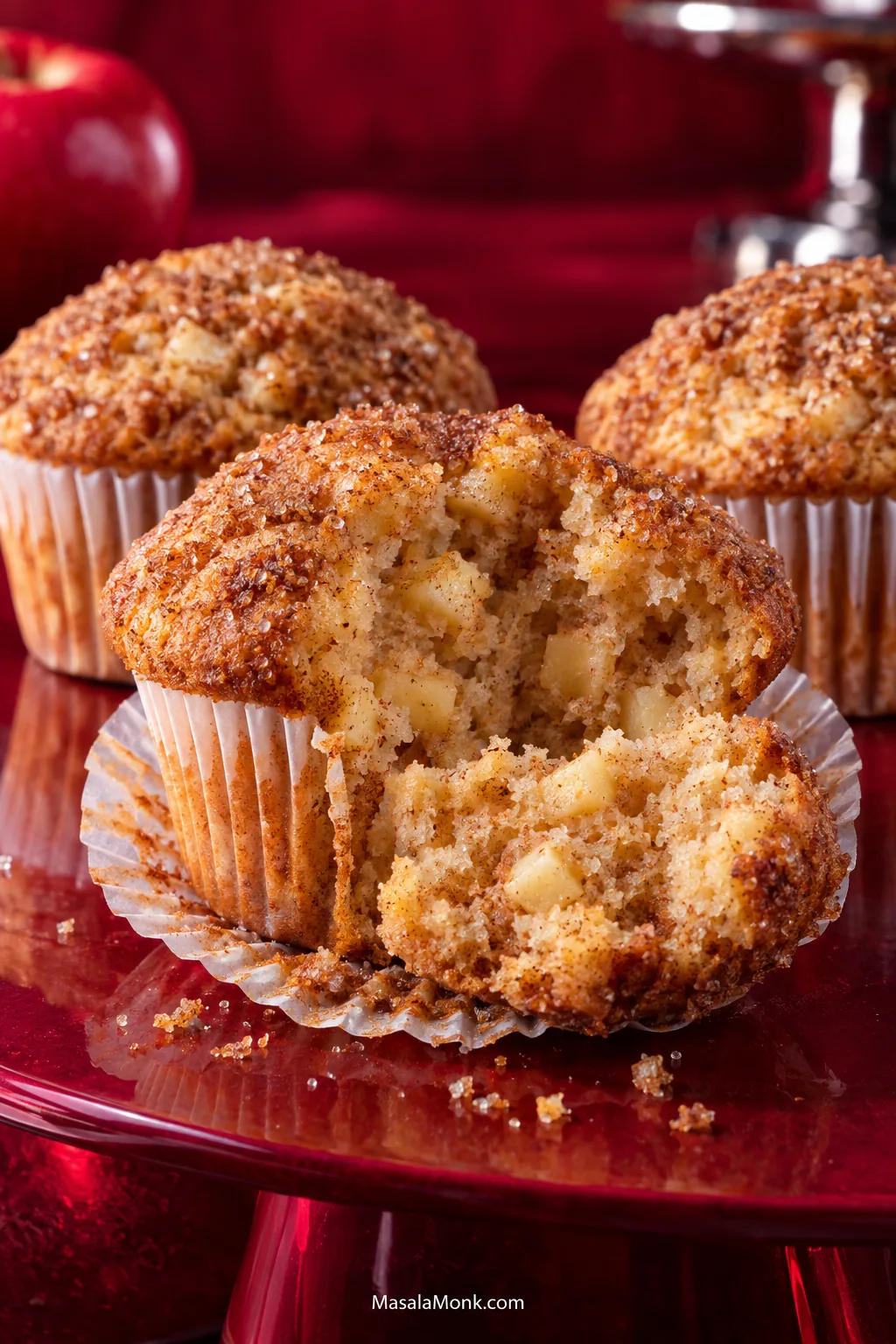
Break one open while it’s still warm. These apple cinnamon muffins have tender pieces of fresh apple through a moist crumb, with a thin cinnamon-sugar crackle over the top.
The apple still tastes like apple. Cinnamon warms it without taking over.
The tricky part is getting the fruit and the muffin ready at the same time. Oversized apple pieces can still be firm when the crumb is done; push the moisture too far and the center turns heavy instead. Small pieces and a thick batter do most of the work.
In This Guide
Make the muffins
Finish & troubleshoot
Apple Cinnamon Muffins Recipe
Before you start: there’s no mixer and no separate streusel. Dice the apples small, and don’t thin the batter when it looks thicker than cake batter.
Equipment
- Standard 12-cup muffin tin
- Parchment-style liners or a lightly greased pan
- Large mixing bowl, medium mixing bowl and small bowl
- Whisk and flexible spatula
- Kitchen scale, recommended
- Wire cooling rack
Ingredients
For the muffins
- 250 g (about 2 cups) all-purpose flour
- 2 teaspoons baking powder
- ½ teaspoon baking soda
- ½ teaspoon fine salt
- 2 teaspoons ground cinnamon
- 150 g (¾ cup packed) light brown sugar
- 2 large eggs
- 120 ml (½ cup) neutral oil, such as canola, sunflower or vegetable oil
- 120 g (½ cup) plain Greek yogurt
- 60 ml (¼ cup) milk
- 2 teaspoons vanilla extract
- 250 g (about 9 oz) peeled and cored apple, cut into roughly ¼-inch (6 mm) pieces
For the cinnamon-sugar top
- 2 tablespoons coarse sugar, such as Demerara or turbinado
- ½ teaspoon ground cinnamon
Mix and Rest the Batter
- Heat the oven. Place a rack near the middle and heat to 425°F (220°C). Line a 12-cup muffin tin or lightly grease the wells. Mix the coarse sugar and ½ teaspoon cinnamon in the small bowl.
- Mix the dry ingredients. Whisk the flour, baking powder, baking soda, salt and 2 teaspoons cinnamon together in the medium bowl.
- Mix the wet ingredients. In the large bowl, whisk the brown sugar and eggs until smooth. Whisk in the oil, Greek yogurt, milk and vanilla.
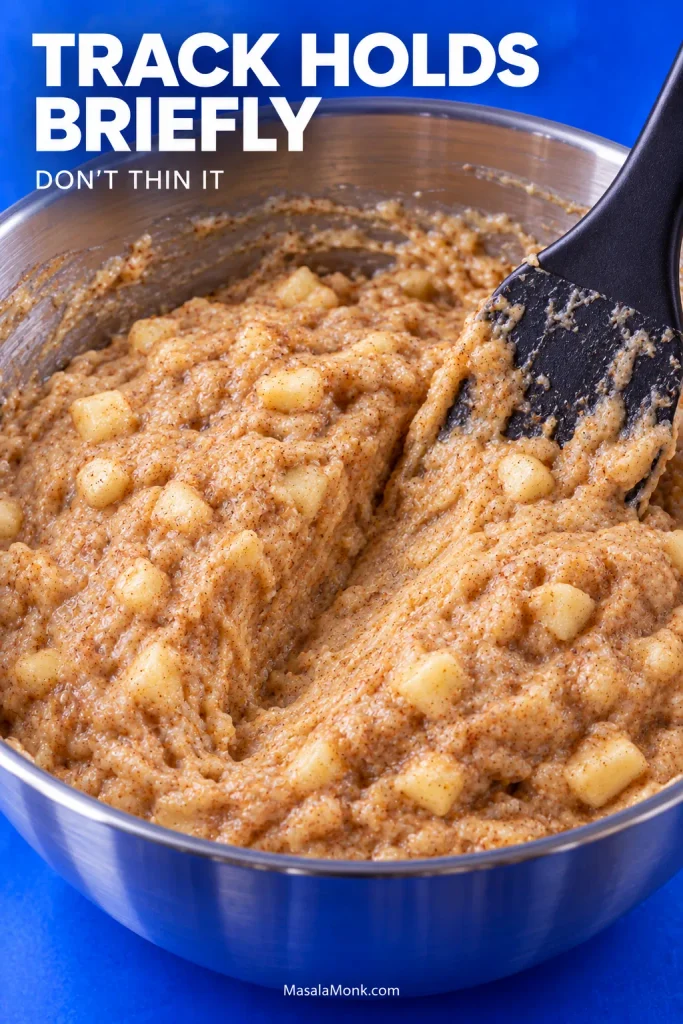
- Bring the batter together. Add the dry ingredients and switch to a spatula. Fold until the last dry streaks disappear. The batter will be thick: lift the spatula and it should fall back heavily, leaving a track for a moment before settling. Fold in the apples with as few extra strokes as possible.
- Rest briefly. Leave the batter at room temperature for about 10 minutes. This short pause lets the already-thick batter settle before you portion it into the pan.
Portion, Bake and Cool
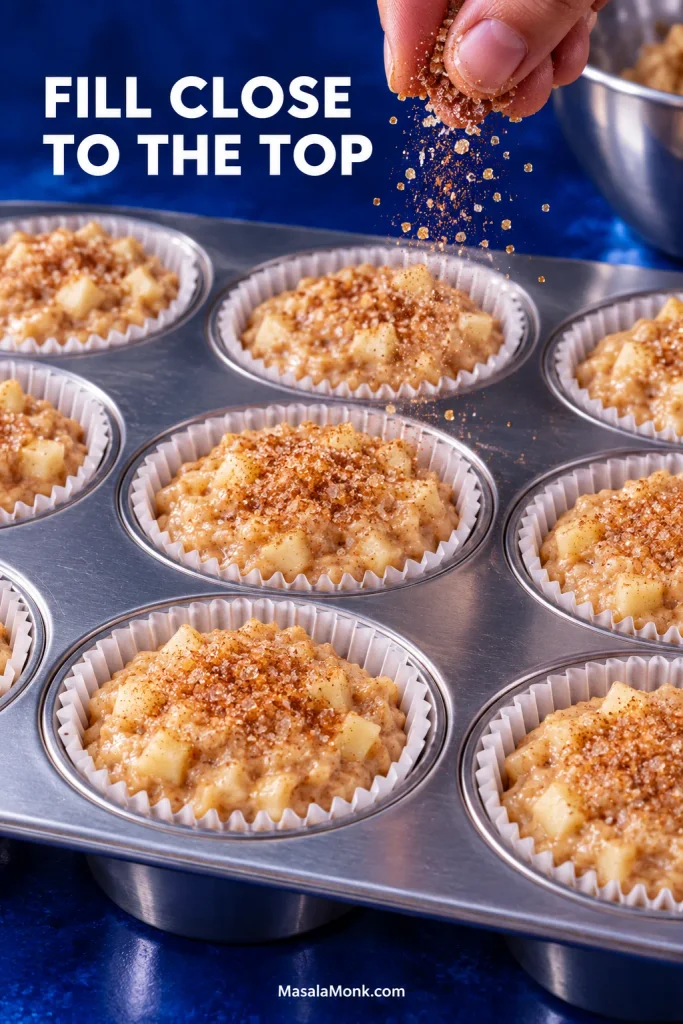
- Fill the pan. Divide the batter evenly among the 12 wells, filling each close to the top. Scatter the cinnamon sugar loosely over them.
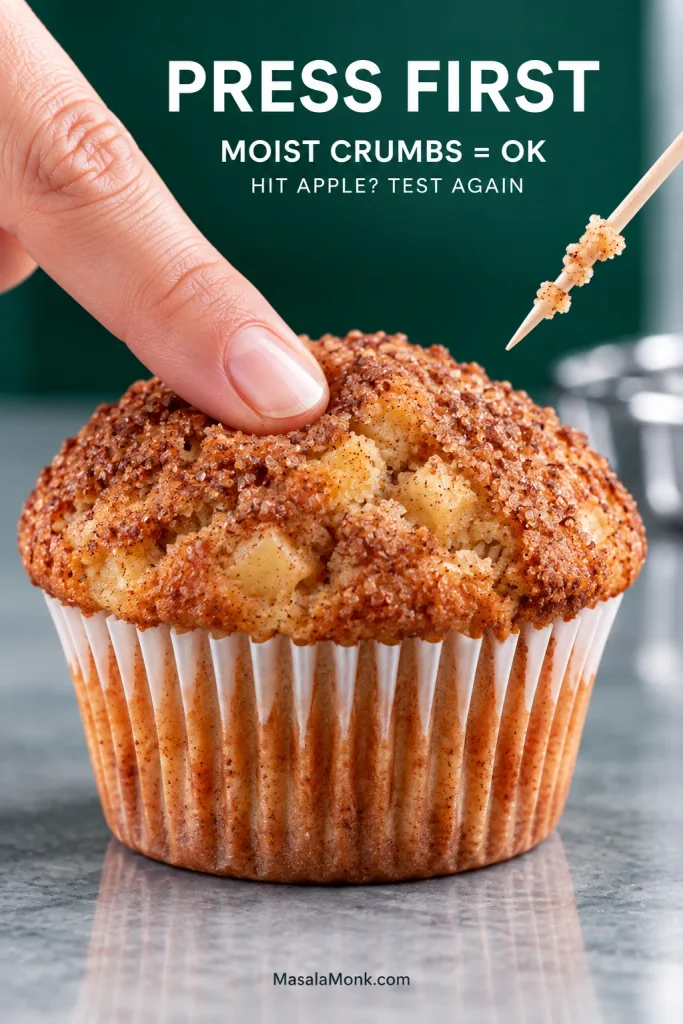
- Bake. Start at 425°F (220°C) for 5 minutes. Lower the oven to 350°F (180°C) and continue for about 13–16 minutes. Check with a toothpick: raw batter means more time, while moist crumbs are fine. If the tester goes through apple, try another spot.
- Cool. Leave the muffins in the pan for about 5 minutes, then move them to a rack. Give them a few more minutes before pulling one apart—the apple stays much hotter than the crumb.
That’s enough to bake them. The notes below cover the few details that make the biggest difference.
Need more detail? Apple size · Batter consistency · Doneness
Cut the Apple Small Enough to Soften
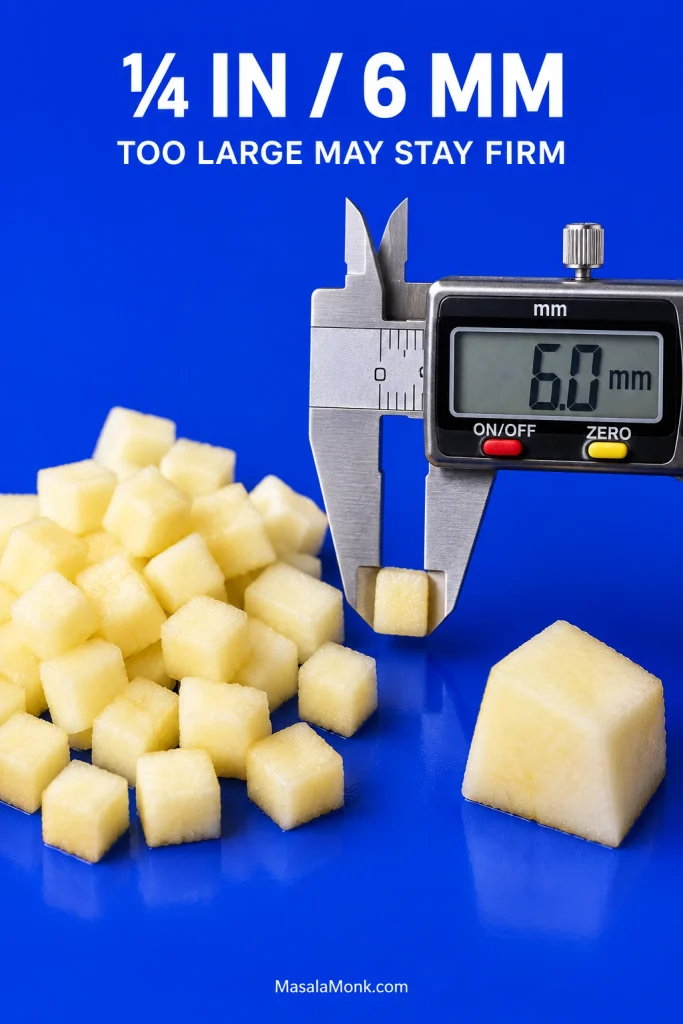
Aim for pieces about ¼ inch (6 mm) across. They soften during the short bake without disappearing into the muffin. Break one open and you should see small pockets of apple through the crumb, not one wet cavity around a large chunk.
Which apples are best for apple muffins?
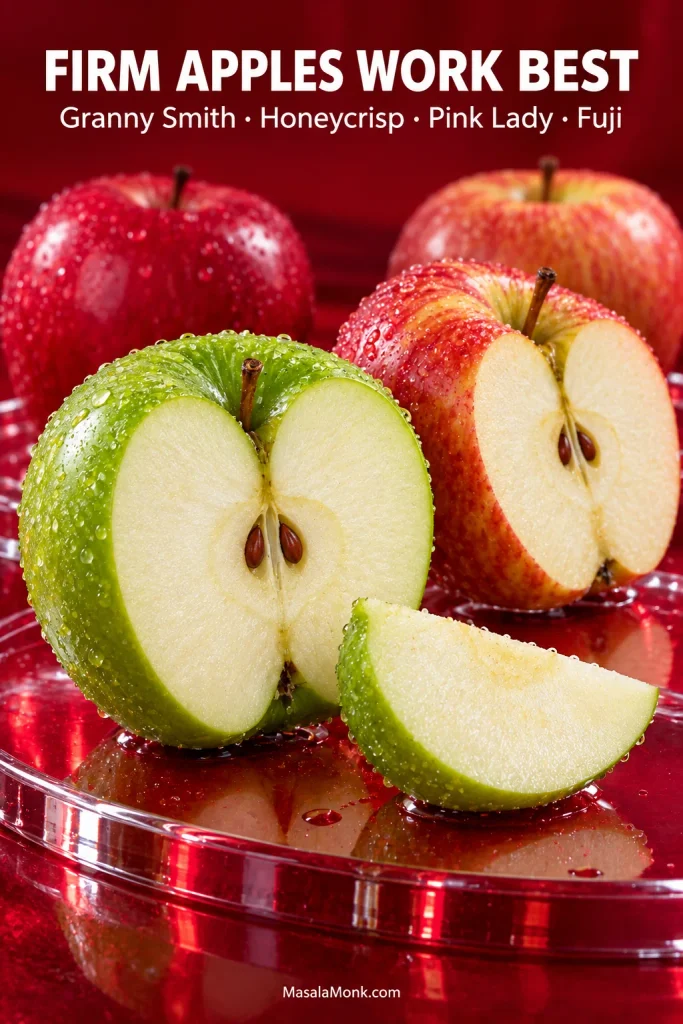
Firm apples such as Granny Smith, Honeycrisp and Pink Lady are good choices for apple muffins. Granny Smith is sharper and tarter; Honeycrisp and Pink Lady are sweeter and more fragrant. Fuji works if you prefer a gentler, sweeter apple flavor.
Firmness matters as much as the name on the sticker. Taste a piece before it goes into the bowl. A bland or mealy apple will not suddenly become more flavorful in the oven.
Whole apples vary so much in size that the useful number here is the prepared weight: 250 g (9 oz) after peeling and coring.
The cut changes with the bake. A fresh apple cake has enough oven time to handle larger pieces. Muffins need smaller ones.
About the peel: remove it for the softest, most even bite. Thin apple skin is perfectly edible, but it stays more noticeable than the cooked flesh.
Grated apple and applesauce behave differently
Grating releases much more juice into the batter, so dice the apple for this recipe. If you want the fruit less noticeable, cut the dice finer instead.

Applesauce is a bigger change. It blends through the batter rather than remaining as pieces, so it is not a direct replacement for the fresh apple here. A recipe built around applesauce, such as this moist applesauce cake, starts with a different moisture balance.
The Batter Should Mound, Not Pour
Expect the batter to look surprisingly thick the first time you make it. Leave it alone.
Drag a spatula through the bowl. The line should remain visible for a second before slowly closing. Once the apples go in, the batter will look crowded with fruit without turning wet or loose.
If you have a scale, use it for the flour. Too much flour is one of the easiest ways to make these muffins dry.
Using cups? Loosen the flour, spoon it into the cup and level the top rather than packing it down. King Arthur Baking has a useful visual guide to measuring flour.
The thick batter helps keep the apple distributed instead of letting it sink toward the bottom. Oil keeps the crumb soft after cooling; Greek yogurt adds moisture and body.
The 10-minute rest is a short pause, not a make-ahead step. During that pause, the batter may thicken a little, but don’t turn it into an overnight rest. If you want a head start, measure the dry ingredients and cinnamon sugar ahead of time instead.
Get the Crown Without Drying the Center
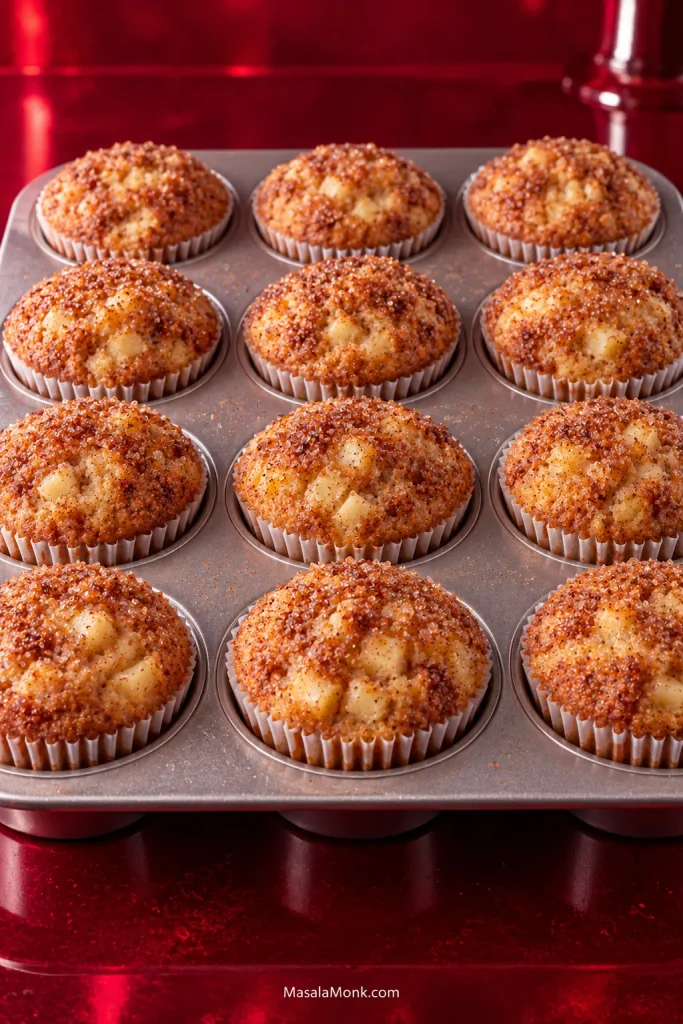
The tops don’t need to tower over the liners. A good crown here is rounded and lightly crisp, with a center that stays tender.
Thick batter, generously filled cups and the first 5 minutes at 425°F (220°C) help build that rounded crown. Lowering the temperature afterward gives the center more time to finish without chasing a taller top at the expense of the crumb; ThermoWorks explains the role of that initial oven heat in more detail.
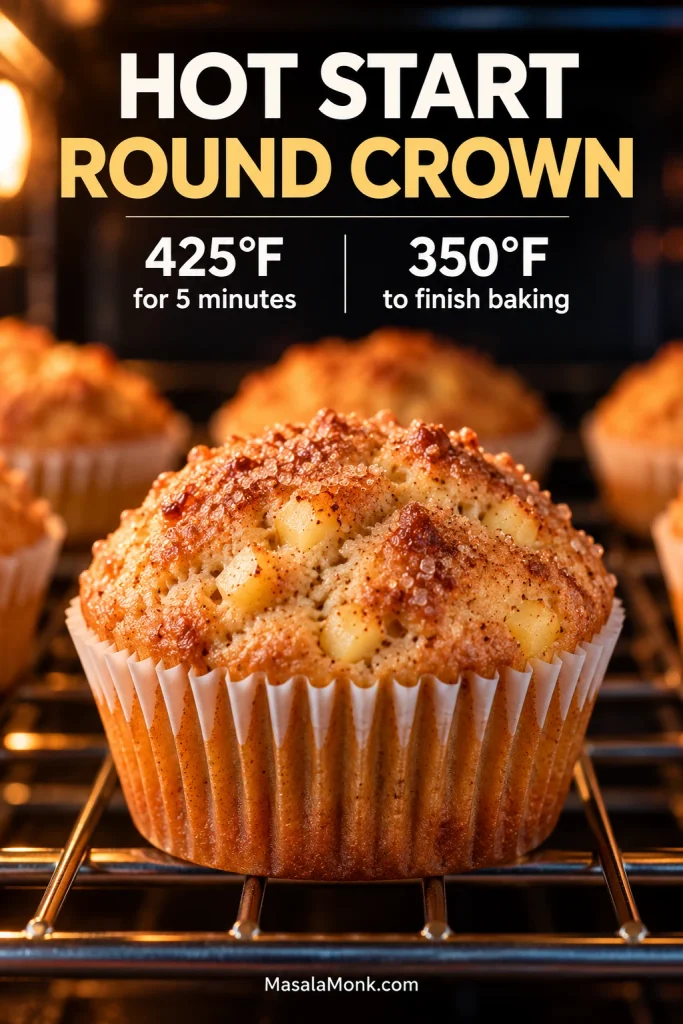
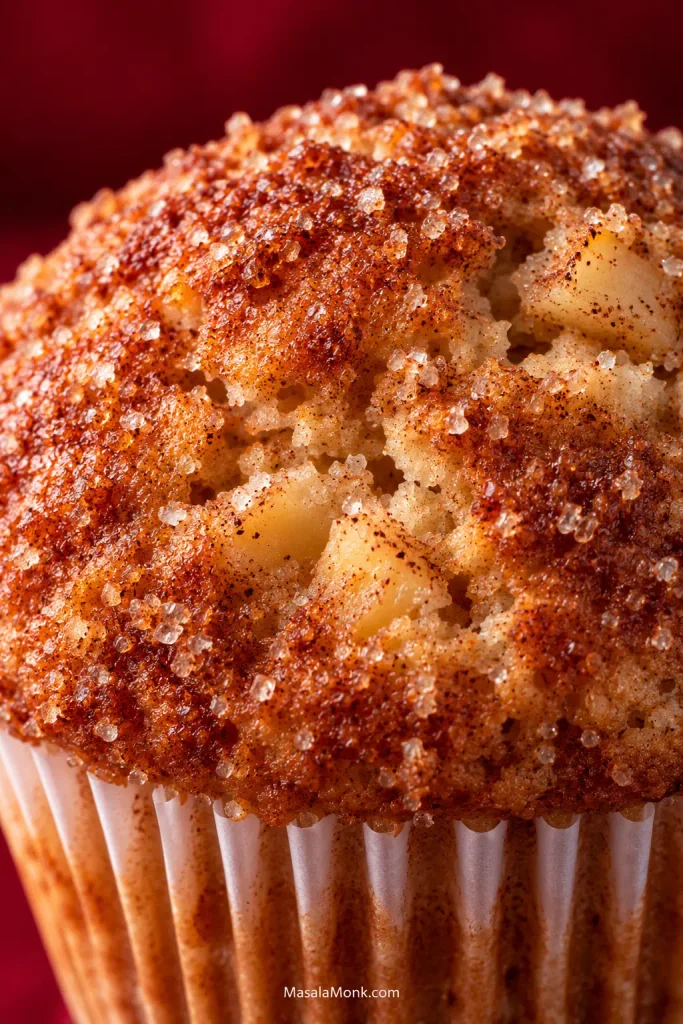
The cinnamon sugar makes a thinner crust than streusel. Some melts into the surface as the muffins rise, while crystals caught on the high points remain crisp against the softer crumb. If that contrast is your favorite part, apple cider donuts take it in a much crunchier direction.
How to Tell When Apple Muffins Are Done
Start checking once the tops are rounded and set. Give one a light press near the center; it should spring back rather than hold the dent.
Then use a toothpick. Raw batter needs more time. Moist crumbs are fine. Hit apple? Try another spot.
Apple Muffin Troubleshooting
If something is off, start with what actually happened. Change one thing next time rather than changing the fruit, flour and oven all at once.
Read the Crumb: Moist or Gummy?

Match the Symptom Before You Change the Recipe
| What happened? | Likely reason | Try this next time |
|---|---|---|
| Dry muffin, firm apple | The apple pieces were probably too large, so the muffins stayed in the oven longer while you waited for the fruit to soften | Cut the apple smaller and judge doneness by the crumb rather than waiting for large pieces of fruit |
| Dry all the way through | Too much flour or too much oven time | Weigh the flour and begin checking earlier |
| Wet or gummy center | The center may be underbaked, or the batter may contain too much fruit or free juice | Use the stated apple weight and dice size, and check the crumb in more than one spot before taking the pan out |
| Dense, chewy crumb or long tunnels | The batter was mixed too much after the flour went in | Fold only until the dry flour disappears |
| Apple sank toward the bottom | The batter may have been too loose, the fruit too large or heavy, or there may have been excess moisture | Measure the liquids and apple carefully, keep the dice small and do not thin the batter |
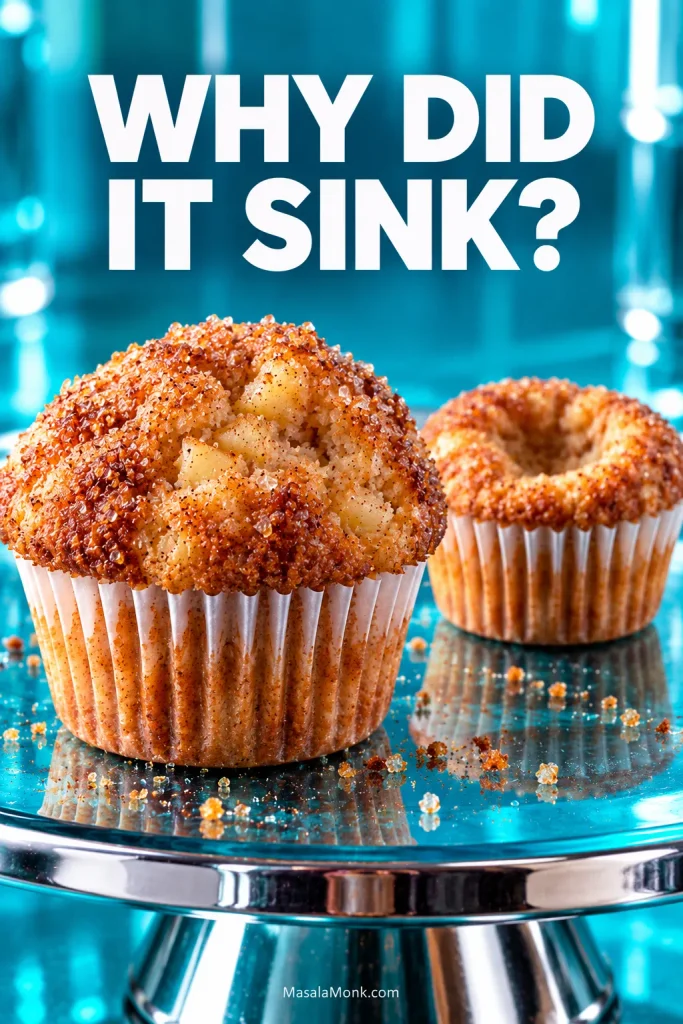
| Rose high, then sank | The center may not have set, or the leavener may have been overmeasured | Measure the leavener carefully and bake until the center is set |
| Flat or low tops | The oven may not have been fully hot, the leavener may be weak, or the cups may have been underfilled | Preheat thoroughly, use fresh leavener and fill the cups as directed |
| Bottoms browned too fast | Dark bakeware, a low rack or a hot-running oven | Use the middle rack, try a lighter pan and check the oven temperature if it keeps happening |
Why Apple Muffins Sink
How to Store Apple Cinnamon Muffins
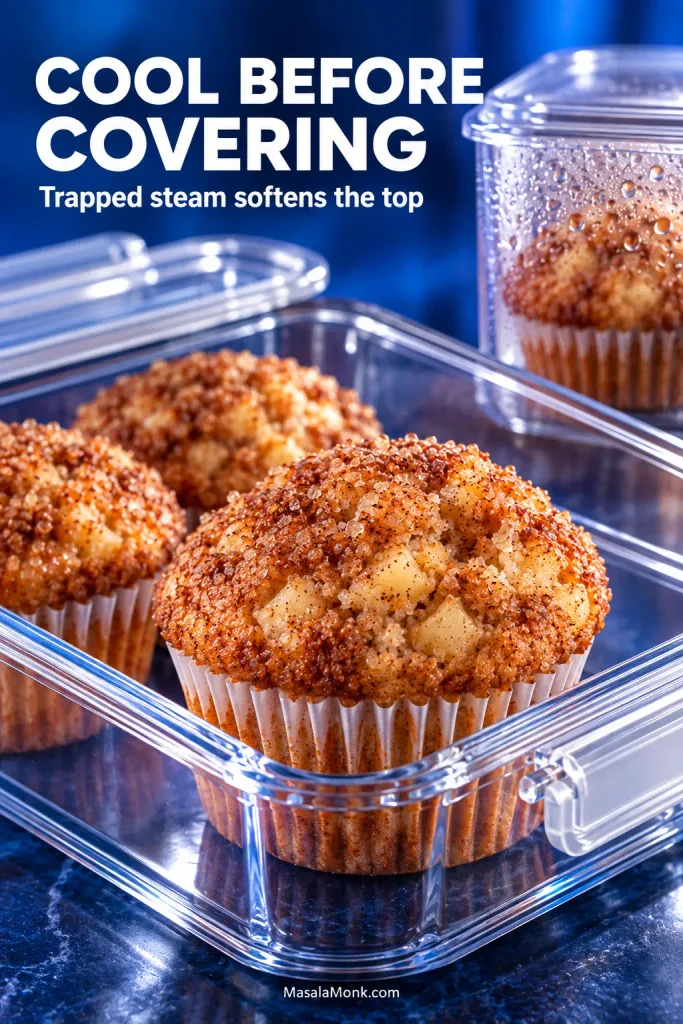
What changes by tomorrow is mostly the top. The cinnamon sugar has its best crackle on the day the muffins are baked; once they sit covered, some of that crispness fades.
Let the muffins cool completely before covering them. In a cool, dry kitchen, keep them airtight at room temperature for about 2 days. If your kitchen is very warm or humid, refrigerate them instead and let them sit at room temperature for a little while before eating.
For anything beyond that short window, freezing is the better option for preserving the crumb. Freeze the cooled muffins airtight, thaw at room temperature and warm briefly if you like. The cinnamon-sugar top will be softer after freezing, but the muffin warms well.
Pull one apart and the crumb should separate softly around small pockets of apple.
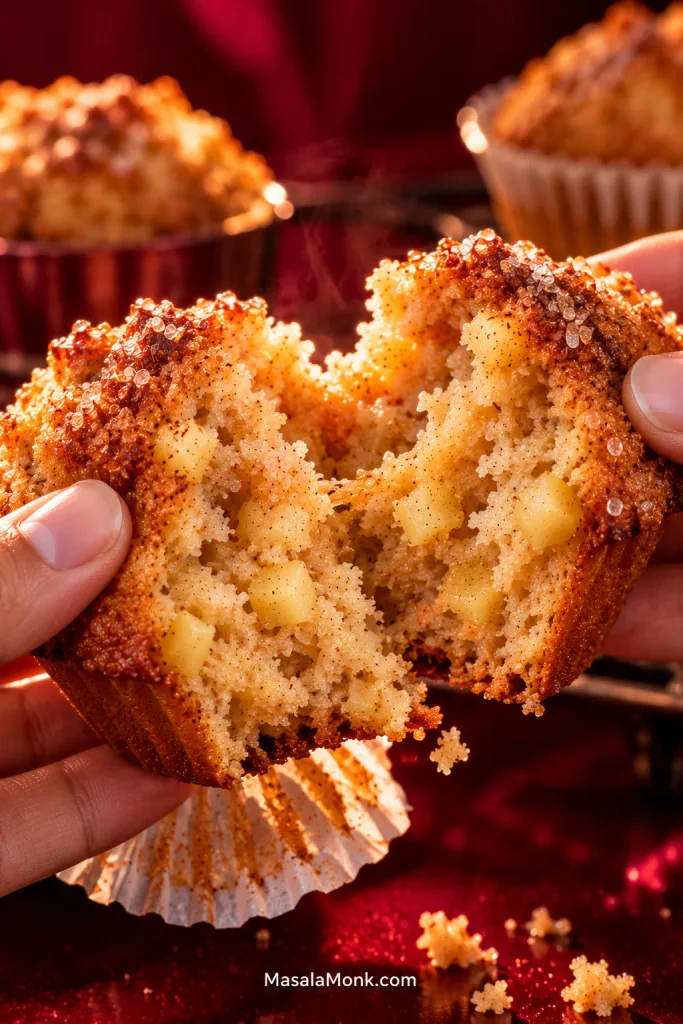
The coarse sugar hits first, then warm cinnamon and tender apple through the center.








