
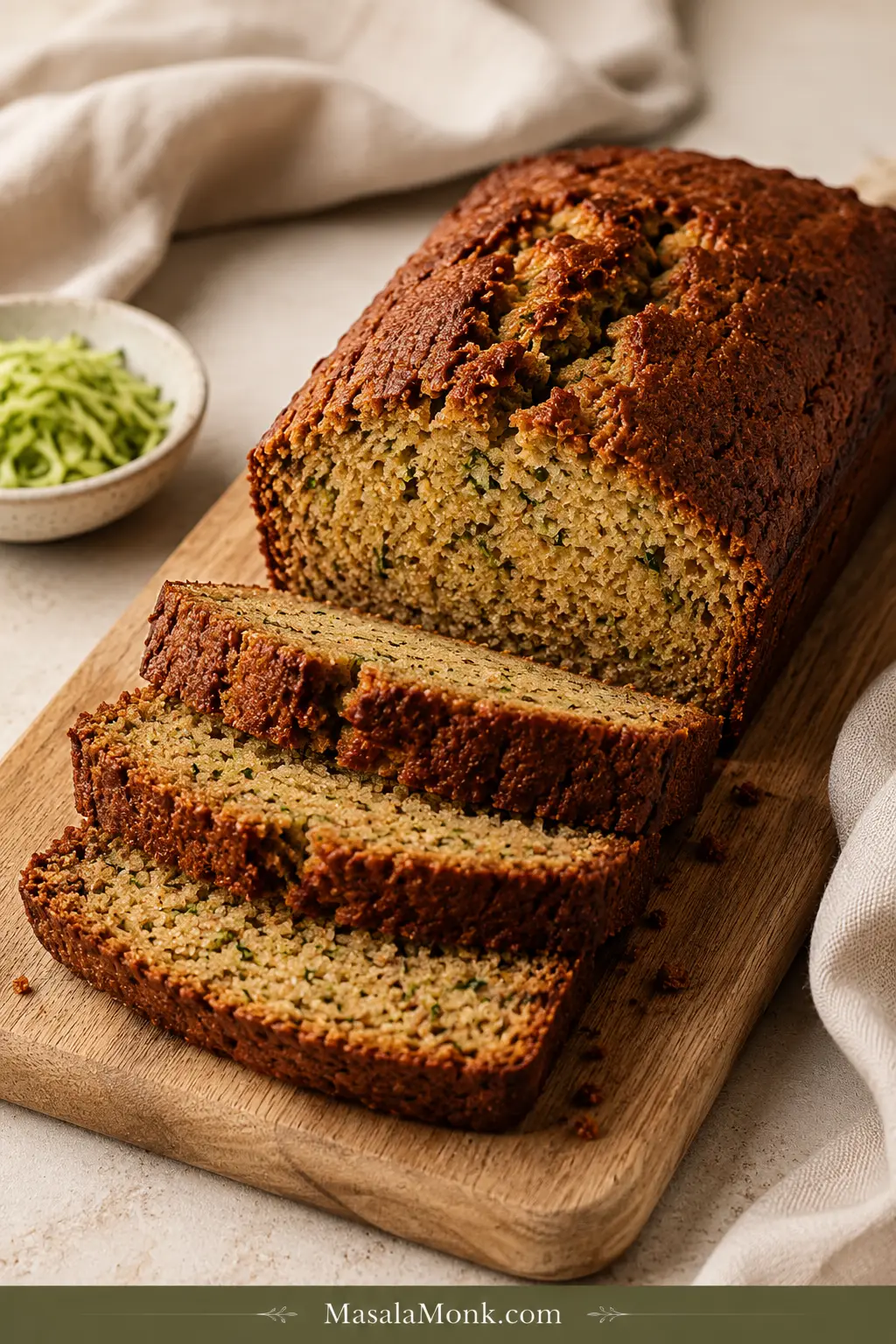
A good zucchini bread has a deeply golden top with a natural split down the middle, warm cinnamon in the first bite, and a tender crumb dotted with little green flecks. A slice should bend gently without falling apart, with enough moisture to stay lovely today and still be worth reaching for tomorrow.
Zucchini creates that tenderness, but it can also make the middle deceptive. The crust may look beautifully baked while the batter underneath still needs a few more minutes.
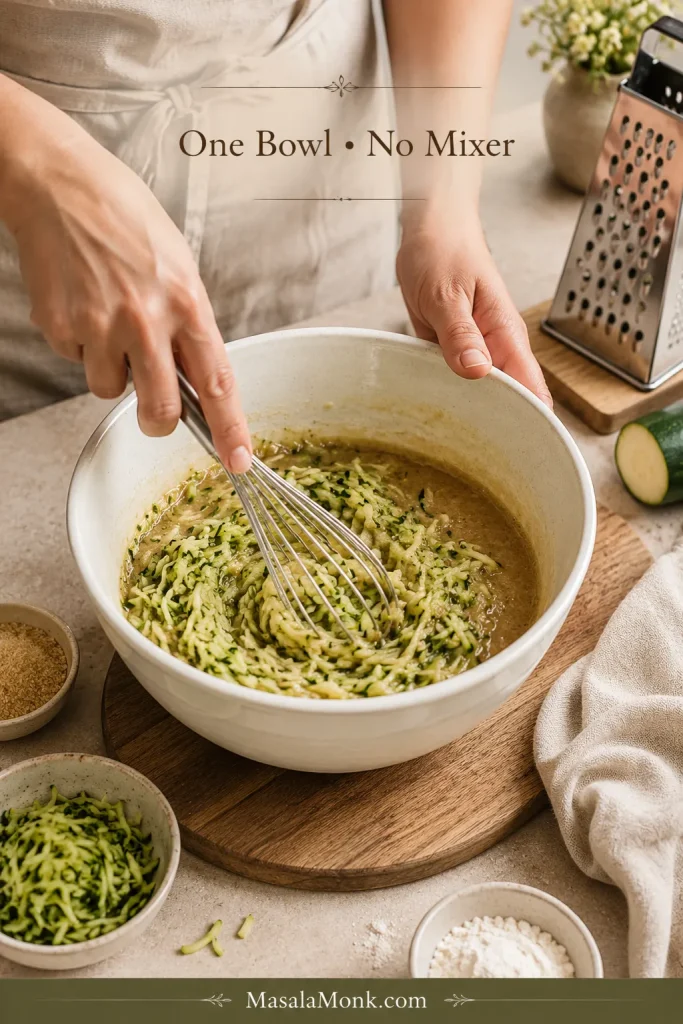
This version keeps the process easy: one bowl, no mixer, no peeling small or medium zucchini, and no wringing fresh shreds dry. You grate, stir, fold and bake.
Keep the moisture in the shreds, leave the puddle behind, and bake until the middle is set.
Quick Answer: How Do You Make Moist Zucchini Bread Without a Wet Middle?
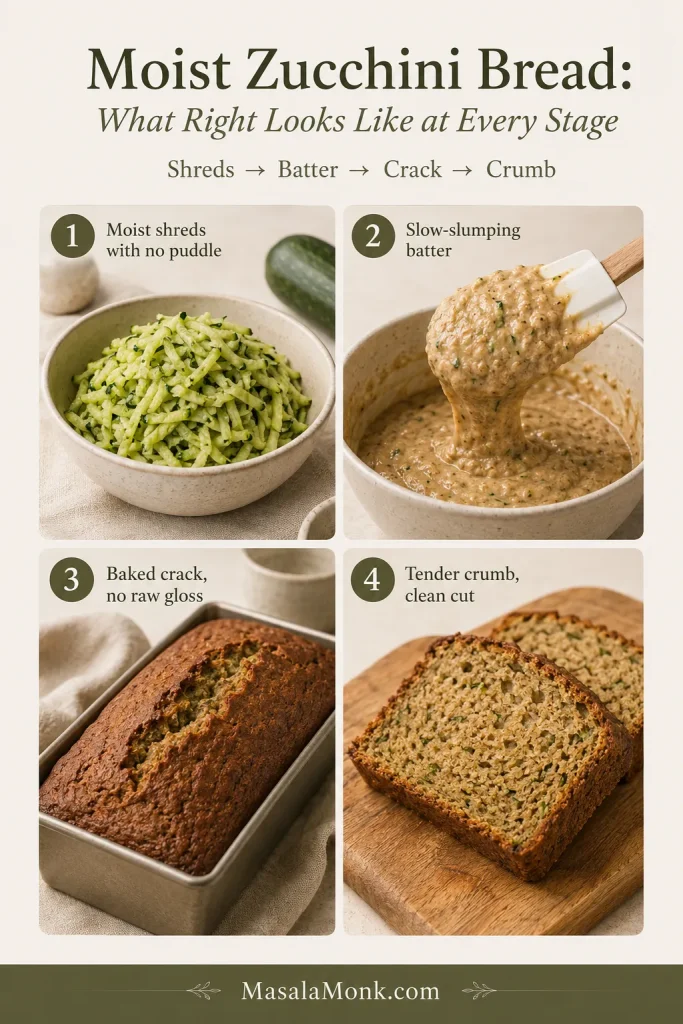
Do not squeeze fresh zucchini dry for this recipe. Grate it on the large holes of a box grater and use 370g / 13 oz, about 2 firmly packed cups. Weigh the shreds themselves; if liquid has collected separately beneath them, leave that puddle behind.
Bake the thick batter in a 9 × 5-inch / 23 × 13 cm loaf pan at 350°F / 175°C. The crack across the top should reveal baked crumb, and a thin skewer or knife pushed into the loaf should show no raw batter.
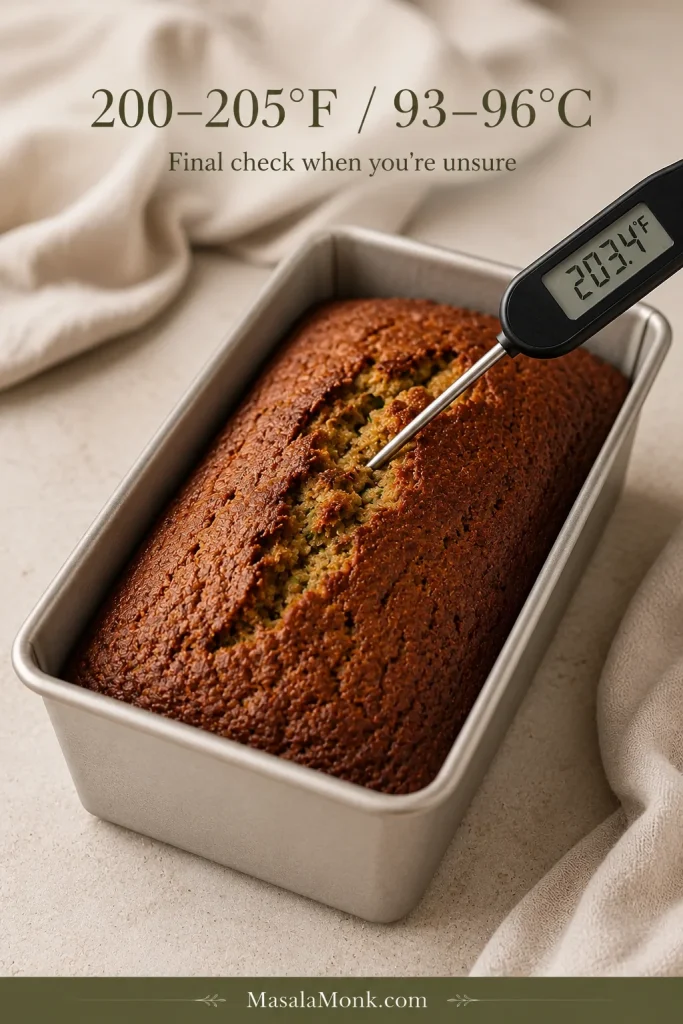
You can make good zucchini bread without a thermometer. If you have one, it gives you the most objective final check when the crack or tester leaves any doubt. Around 200–205°F / 93–96°C indicates the loaf is baked through.
Zucchini Bread Recipe
This is a cinnamon-forward, oil-based loaf with plenty of zucchini, a golden split top and a crumb that stays tender without feeling wet. Make it plain, or fold in nuts or chocolate when that sounds better.
Recipe at a Glance
| Yield | 1 loaf, about 8–10 generous slices |
| Pan | 9 × 5-inch / 23 × 13 cm loaf pan; light-colored metal preferred. Using glass or dark metal? See the pan notes. |
| Oven | 350°F / 175°C |
| Prep | About 15 minutes |
| Bake | About 55–60 minutes; check the loaf itself for doneness |
| Zucchini | 370g / 13 oz freshly grated zucchini, not wrung dry |
| Cooling | 15 minutes in the pan, then completely on a rack |
You will need: one large mixing bowl, a box grater, fork or whisk, flexible spatula, 9 × 5-inch loaf pan, parchment paper and a cooling rack. A digital scale is particularly helpful; an instant-read thermometer is optional.
Ingredients
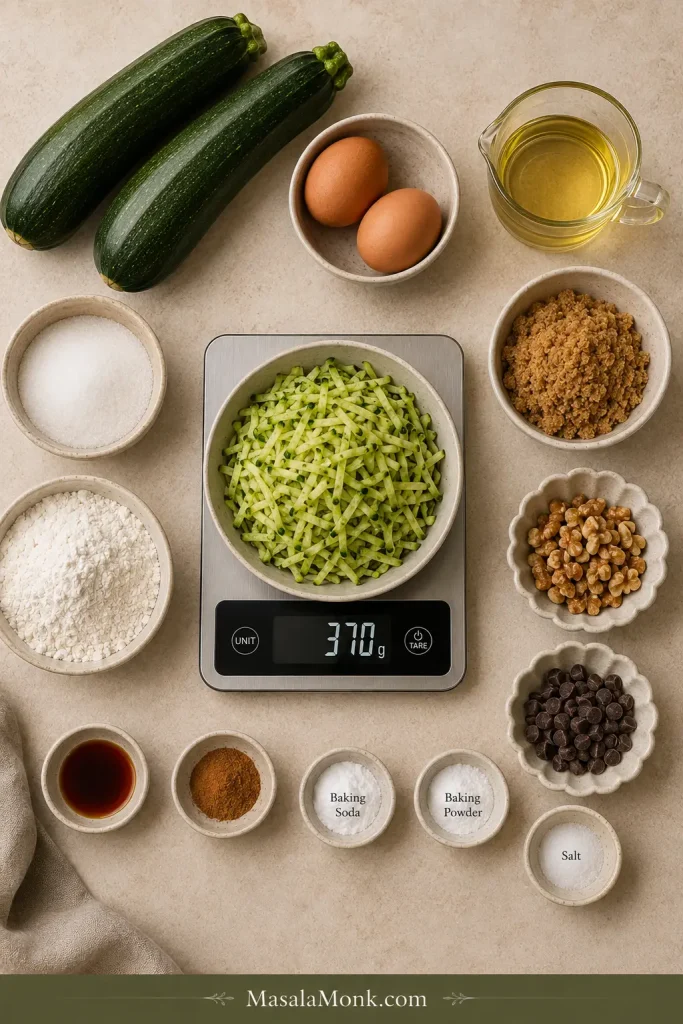
- 370g / 13 oz freshly grated zucchini, about 2 firmly packed cups, not wrung dry
- 2 large eggs
- 160ml / ⅔ cup neutral oil, such as sunflower, canola or vegetable oil
- 95g / 3.4 oz (½ cup packed) brown sugar, light or dark
- 100g / 3.5 oz (½ cup) granulated sugar
- 1 teaspoon vanilla extract
- 1 teaspoon fine salt
- ¾ teaspoon baking soda
- ½ teaspoon baking powder
- 1¼ teaspoons ground cinnamon
- ⅛ teaspoon ground nutmeg, optional
- 260g / 9.2 oz (2 cups) all-purpose flour, spooned and leveled if using cups
- Up to 85g / 3 oz chopped walnuts, pecans or chocolate chips, optional
Instructions
Prep and Mix the Batter
- Heat the oven. Set a rack in the center and preheat to 350°F / 175°C. Lightly grease a 9 × 5-inch / 23 × 13 cm loaf pan and line the long sides with a parchment sling.
- Grate the zucchini. Leave small and medium zucchini unpeeled and grate them on the large holes of a box grater. Measure 370g / 13 oz. Keep the moisture in the shreds, but leave behind any liquid that has pooled separately. Using oversized or frozen zucchini? See the prep notes first.
- Mix the wet ingredients. Put the grated zucchini in a large bowl. Add the eggs, oil, brown sugar, granulated sugar, vanilla and salt. Stir until evenly combined.
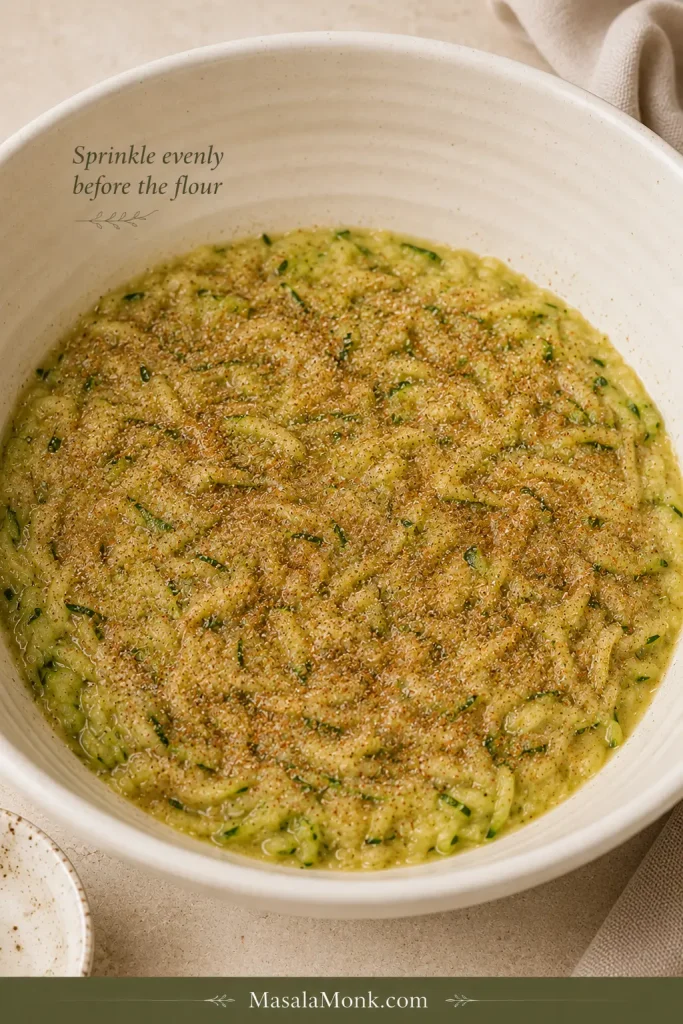
- Add the spices and leaveners. Sprinkle the cinnamon, nutmeg, baking soda and baking powder evenly across the surface. Stir thoroughly, scraping around the bowl, so everything is well distributed before the flour goes in.
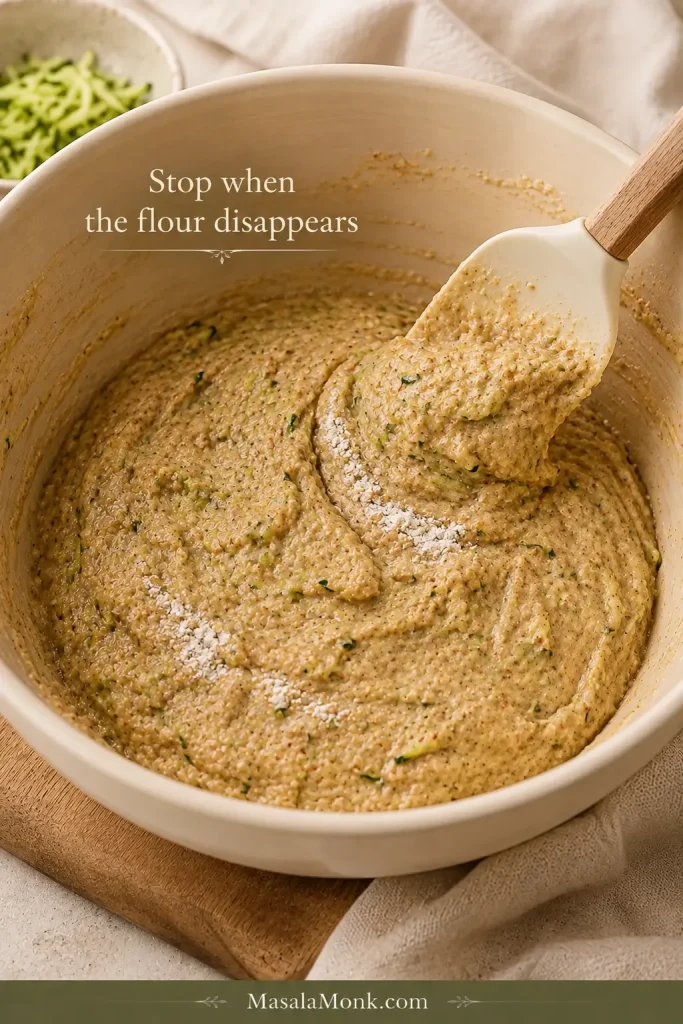
- Fold in the flour. Add the flour and fold just until the last dry streak disappears. Fold in nuts or chocolate chips now, if using. The batter should spread easily with a spatula and slump slowly when lifted.
Fill, Bake and Cool
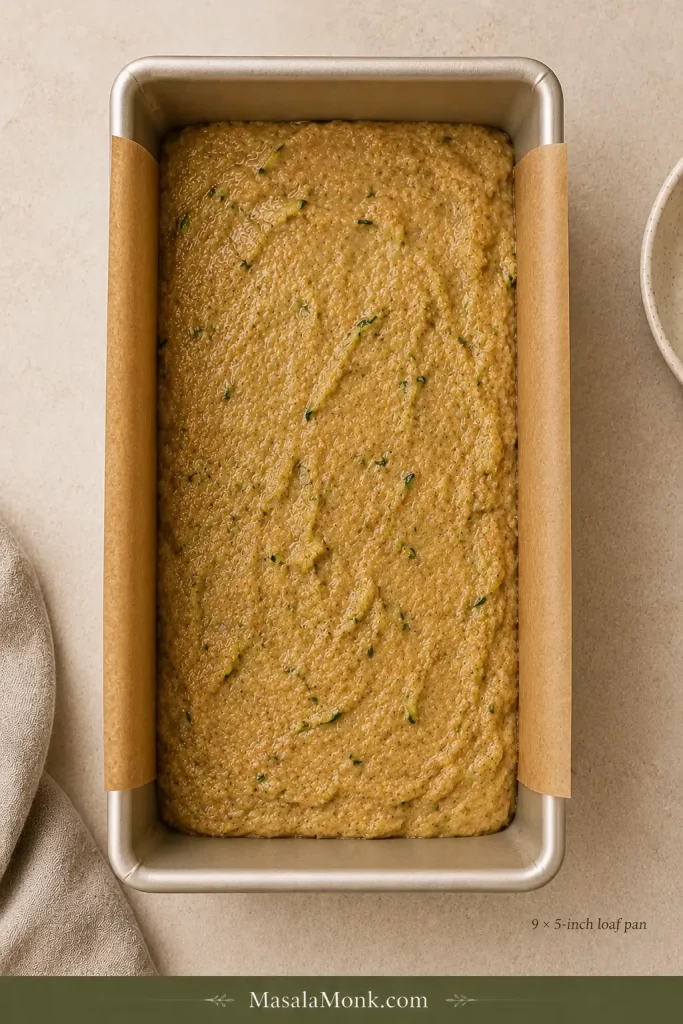
- Fill the pan. Scrape the entire batch into the prepared pan and smooth the top lightly.
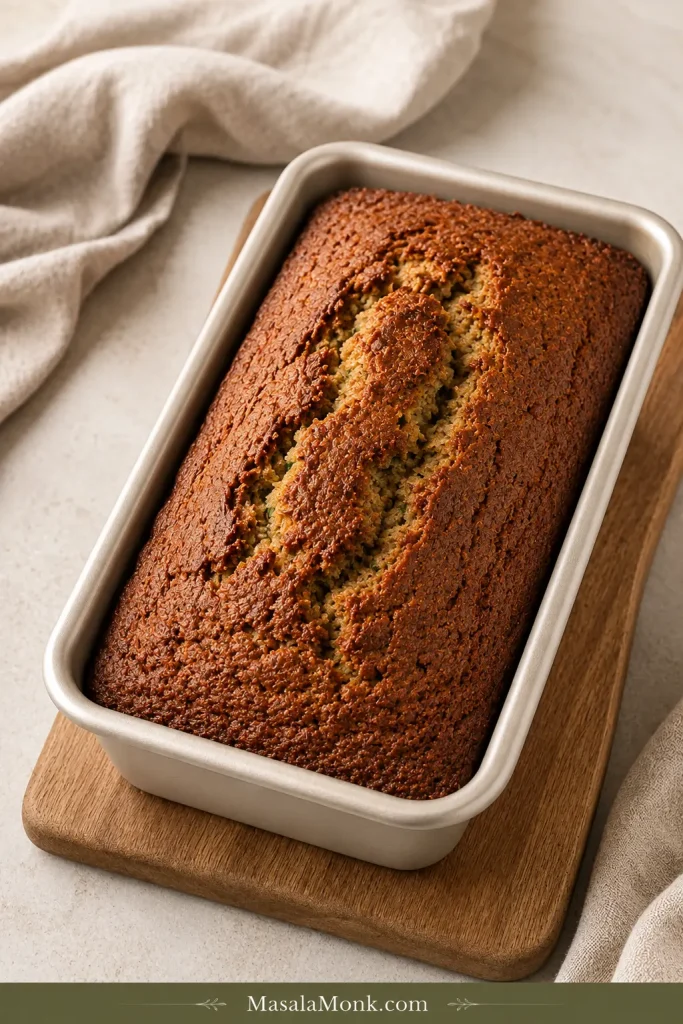
- Bake. Bake for about 55–60 minutes. Near the end of that window, the top will usually be deeply golden with a natural crack running across it.
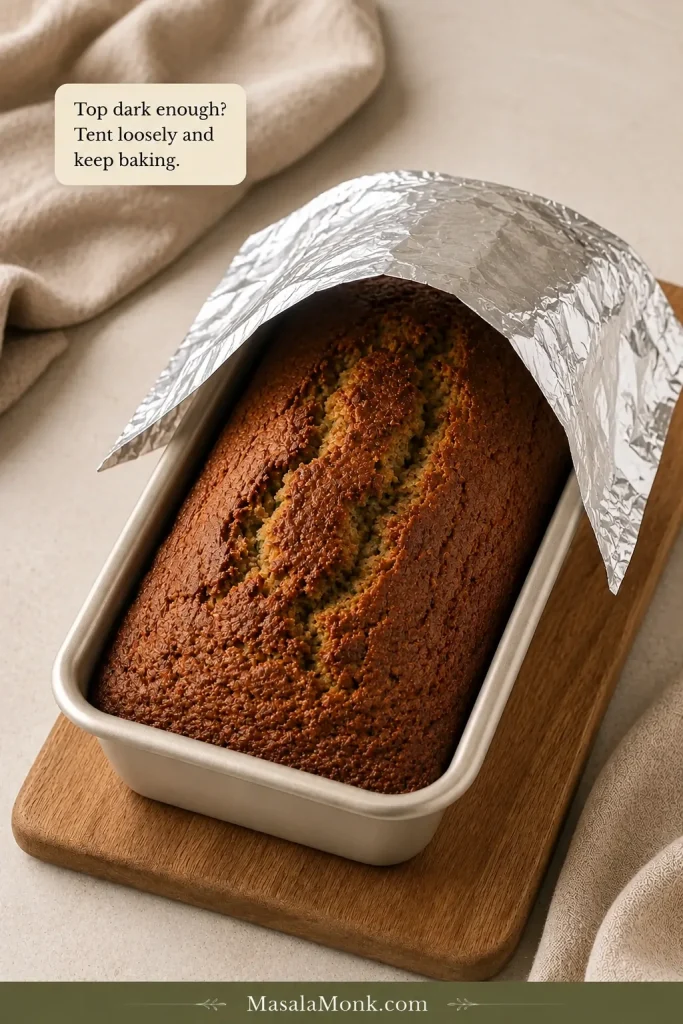
- Check before removing it. Look into the crack and test the loaf with a thin skewer or knife. A few tender crumbs are fine; shiny raw batter needs more time. Loosely tent the top with foil if it already has enough color.
- Cool. Leave the bread in its pan for about 15 minutes, then lift it onto a rack. Cool completely for clean slices and a fully settled crumb.
Recipe source: Adapted from Smitten Kitchen’s Ultimate Zucchini Bread, with additional guidance here on zucchini moisture, doneness and common texture problems.
Table of Contents
Zucchini & Batter
Baking & Texture
Change & Keep
Which Zucchini Are You Using?
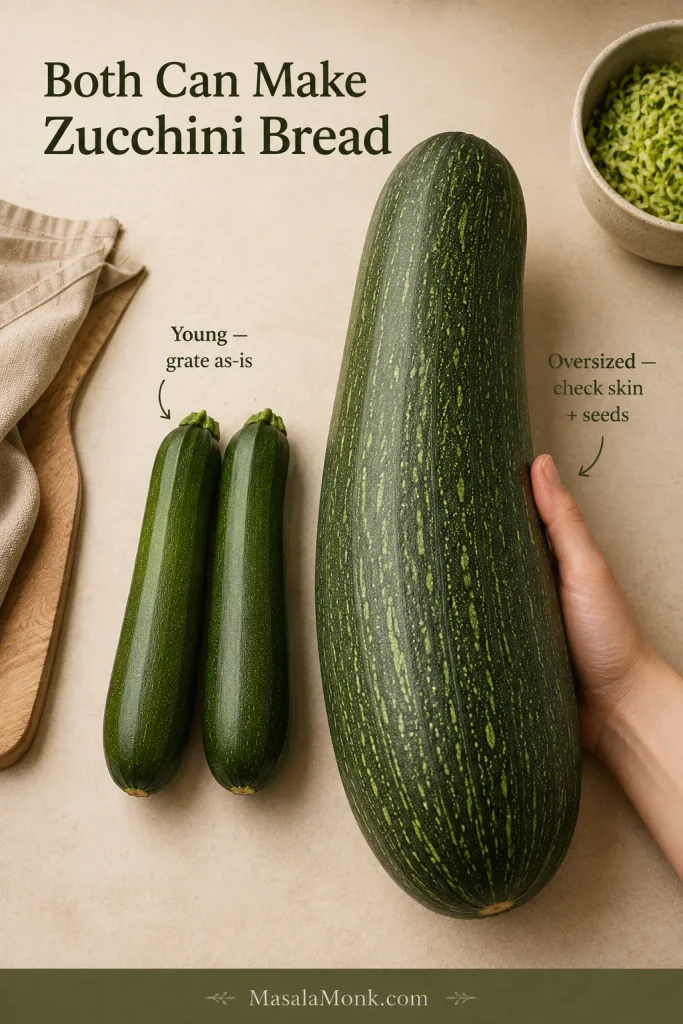
Freshly grated zucchini is the reference point for this loaf. Small supermarket zucchini are the simplest route, but the oversized one hiding beneath the garden leaves can work too.
| You have | What to do |
|---|---|
| Small or medium fresh zucchini | Leave the skin and seeds in place. Grate and measure 370g. |
| Large garden zucchini | Cut it open first. Remove tough skin or a pale, spongy cavity full of hard seeds if necessary, then grate and measure 370g of the usable flesh. |
| Frozen shredded zucchini | It can work, but it will not behave exactly like fresh zucchini after thawing. See the note below. |
How to Prepare Zucchini for Bread
Peel, Seeds and Grating
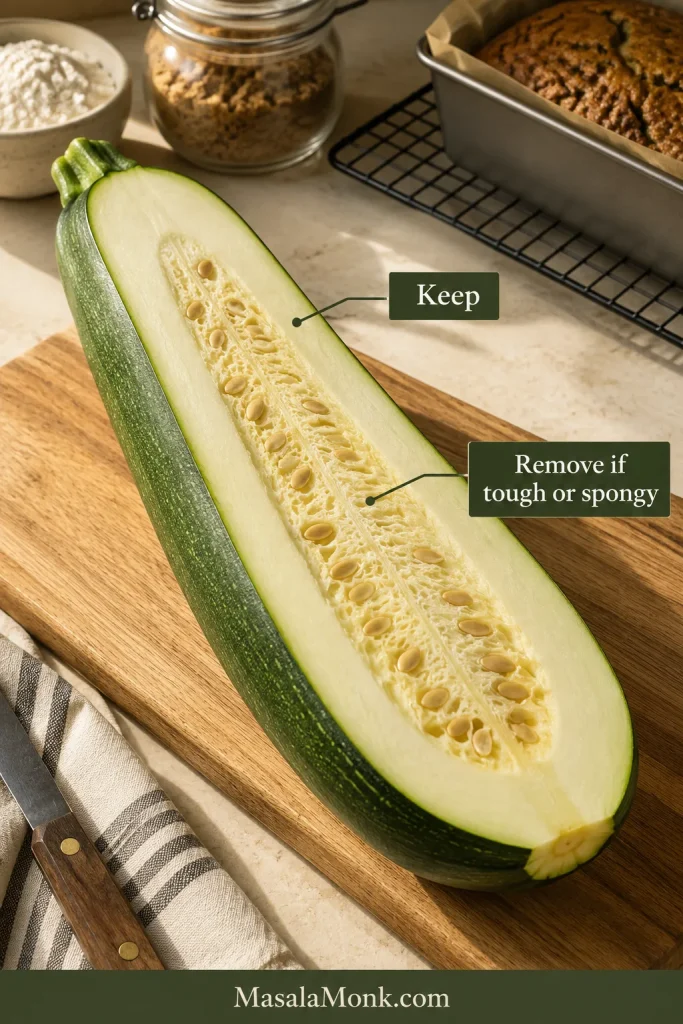
Do you need to peel it? No. Thin zucchini skin softens during baking and leaves the familiar green flecks through each slice. Peel only an oversized mature zucchini whose skin has become leathery.
What about the seeds? Leave young seeds alone. With a huge garden zucchini, scoop out the middle only when it has become pale, spongy and filled with hard mature seeds.
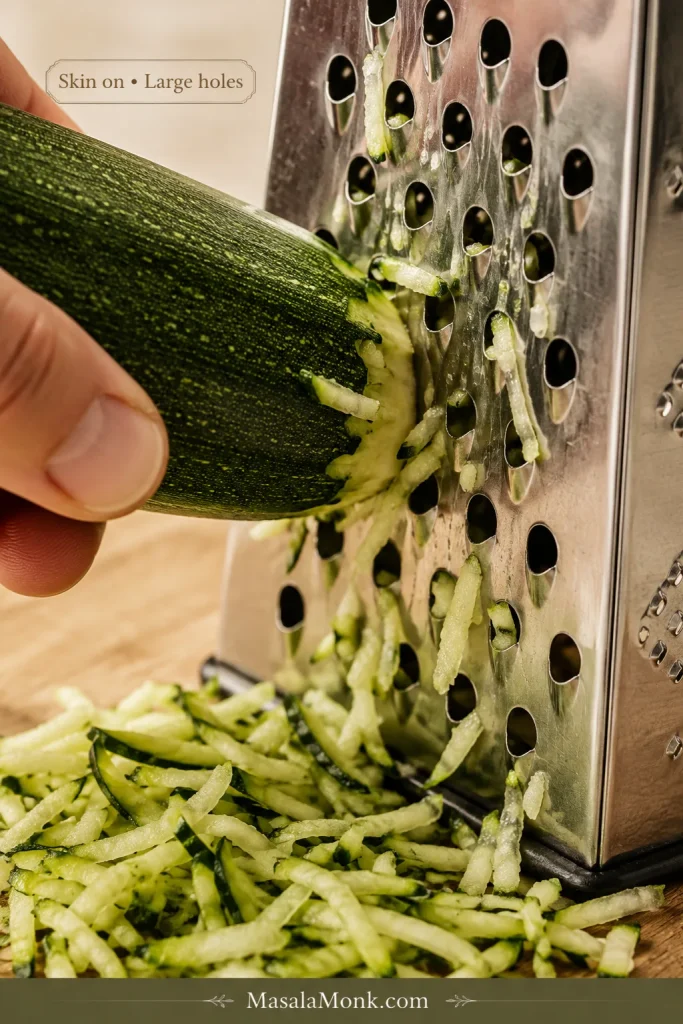
Which grater? Use the large holes of a box grater. They produce strands that disappear comfortably into the baked crumb without turning the raw zucchini into pulp.
Should You Squeeze Zucchini for Zucchini Bread?
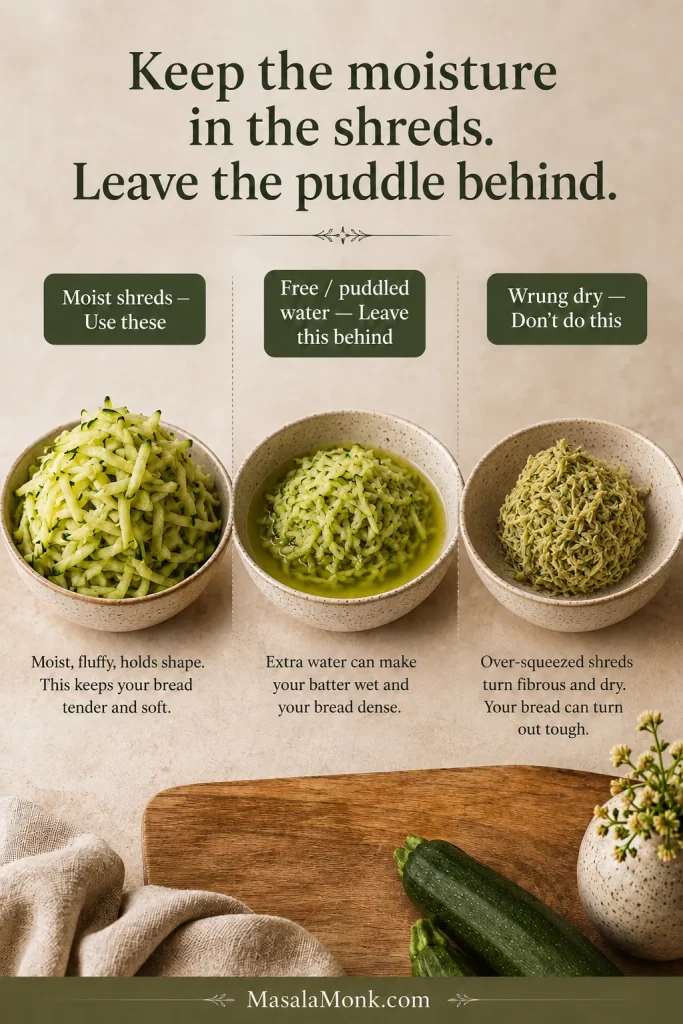
No—fresh zucchini should not be squeezed dry for this loaf. Its moisture is part of what keeps the crumb tender.
A bowl of freshly grated zucchini can look surprisingly wet. That alone does not mean anything has gone wrong.
Moisture held inside and on the shreds belongs in the recipe. Water that has collected separately as a puddle does not. Leave that free liquid behind, but do not twist or wring the zucchini into a dry, fibrous mass.
Keep the moisture in the shreds; leave the puddle behind.
Grated too much? Keep the extra out of the batter so the ratio stays intact. These crispy zucchini chips turn the surplus into something thin, salty and crunchy instead.
Can You Use Frozen Zucchini for Zucchini Bread?
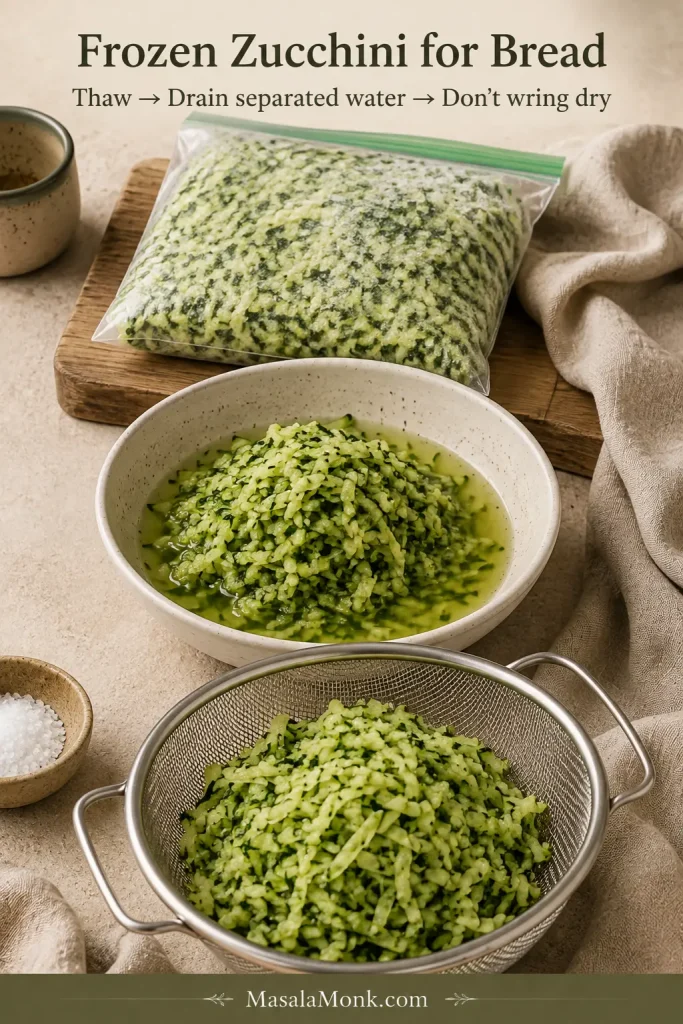
Yes, but fresh zucchini gives the most predictable result here. Freezing breaks down the shreds and makes them release considerably more water as they thaw.
Thaw frozen zucchini completely and let any liquid that has separated freely drain away. Do not wring the remaining shreds dry. Drained frozen zucchini is not a gram-for-gram equivalent to the fresh amount in the recipe, so some variation is unavoidable.
The batter checkpoint matters more when you use frozen zucchini. It should still spread easily, slump slowly from the spatula and have no distinct layer of liquid collecting around it. A bag of summer zucchini saved for later can still make a good loaf; it simply asks you to pay closer attention to the bowl.
What Should Zucchini Bread Batter Look Like?
The batter should be thick enough to spread into the pan and loose enough to slump slowly from the spatula. Green strands of zucchini will still be visible through the cinnamon-speckled mixture.
A little visible moisture from the grated zucchini is normal. A distinct layer of liquid separating around the batter is different; check whether free zucchini water went into the bowl and recheck the measurements before baking.
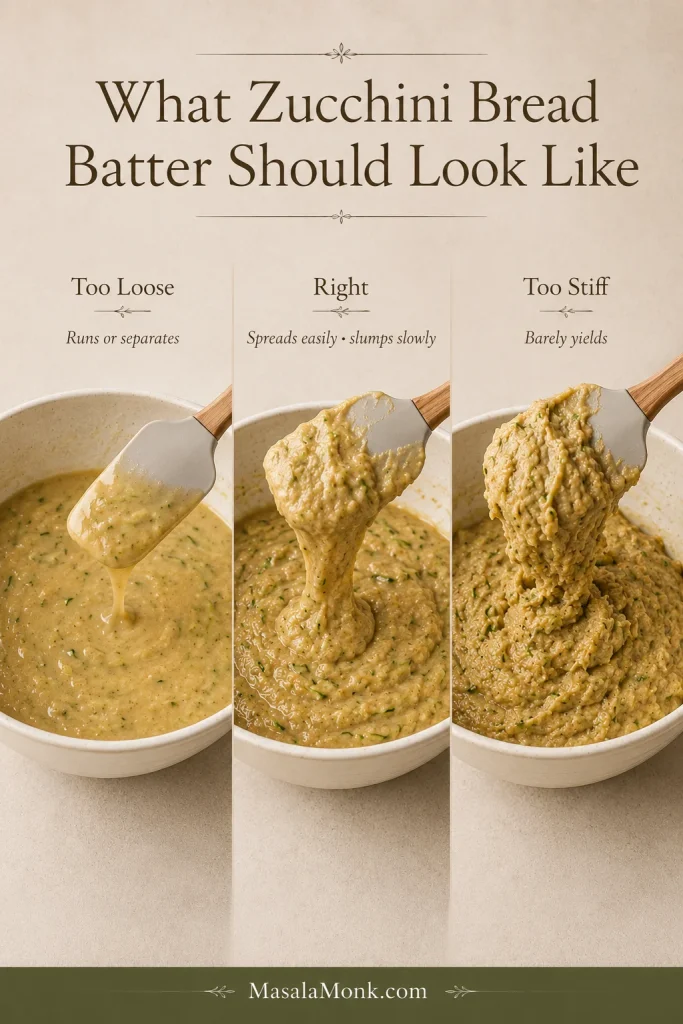
A mixture that barely yields to the spatula can point to too much flour.
How to Know Zucchini Bread Is Done
Zucchini bread is done when the crack through the top reveals baked crumb and a tester pushed into the loaf carries no raw batter. The clock tells you when to begin looking; these cues tell you when to stop baking.
Check the Crack, Then Use a Tester
A deeply golden top is persuasive, especially once the kitchen smells like the loaf must be done. Check the crack anyway.
Shiny batter down inside that opening needs more oven time. Baked crumb has lost the raw gloss.
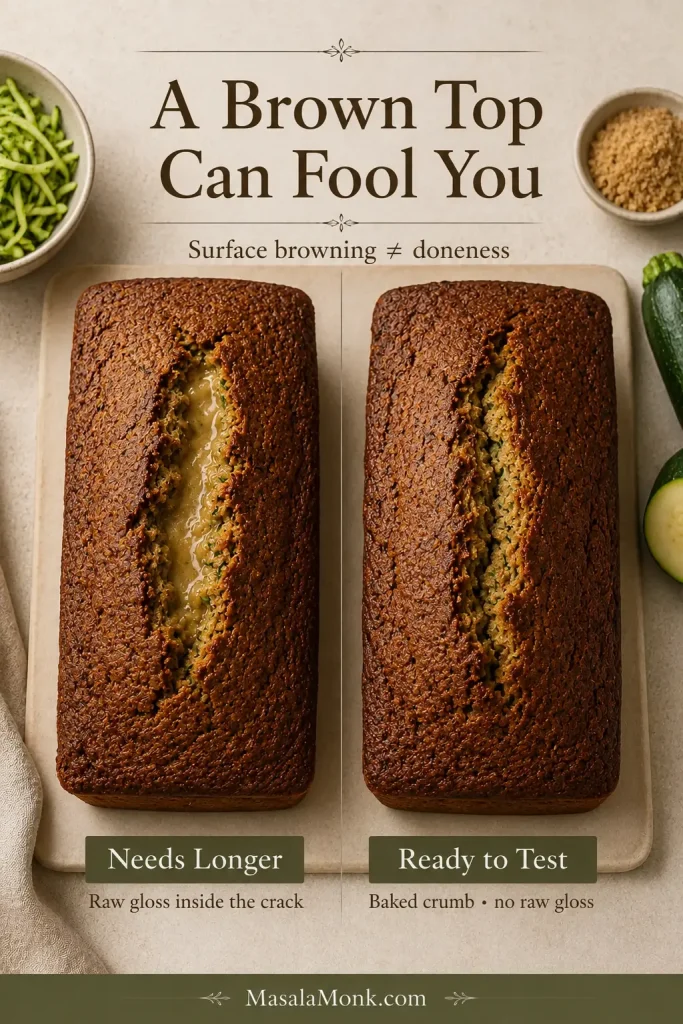
Next, push a thin skewer or knife into the thickest part. A clean tester or a few tender crumbs are both fine. A streak of uncooked batter is not.
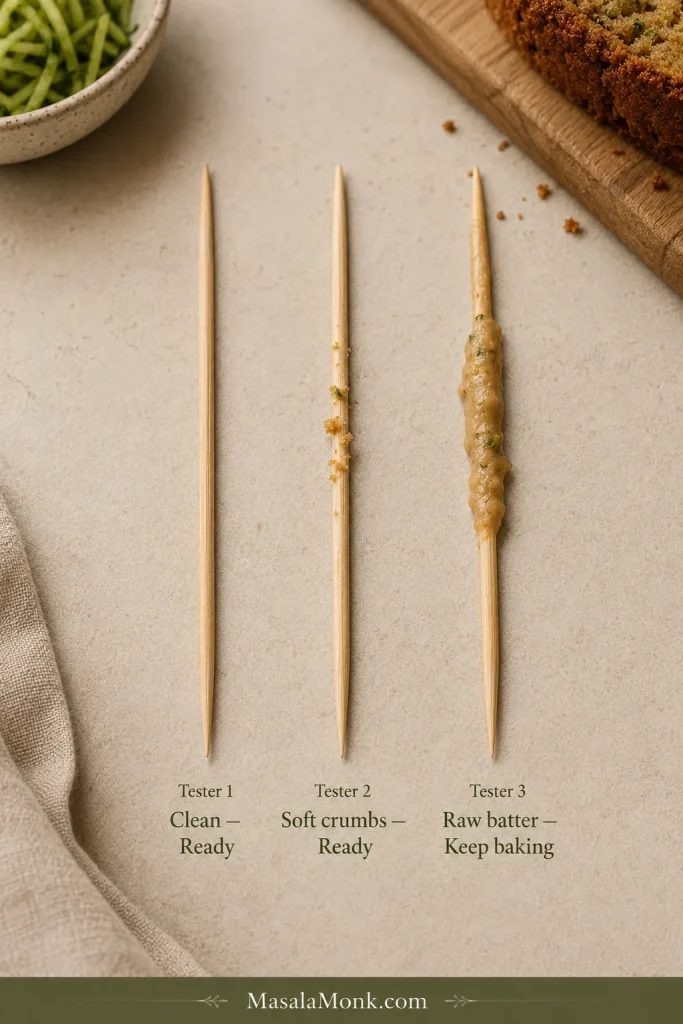
Chocolate chips can imitate wet batter, so test another spot before deciding.
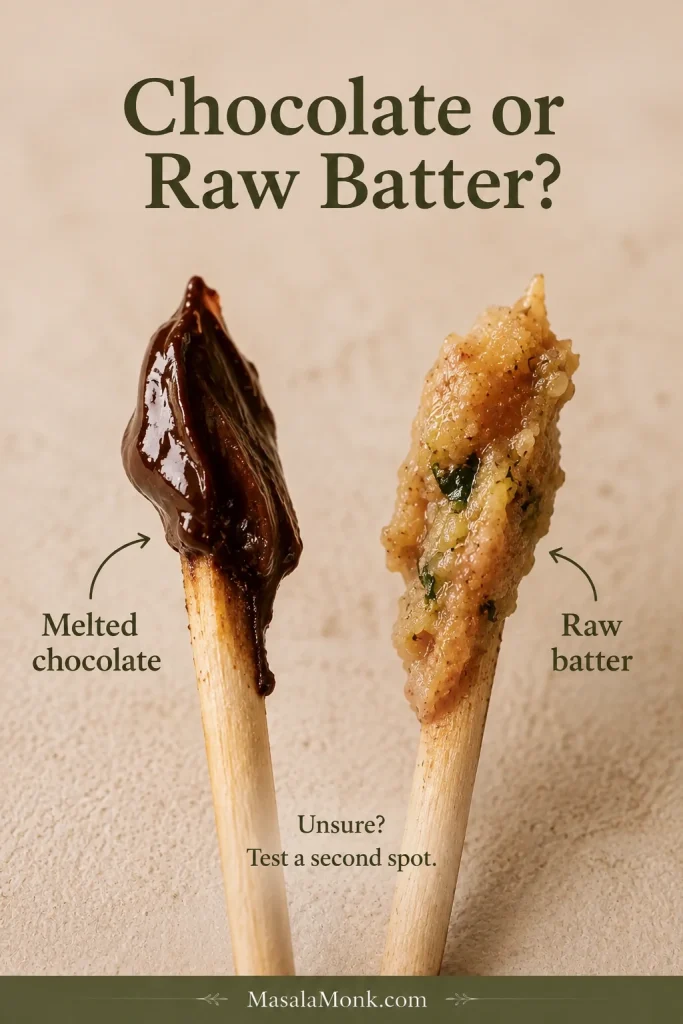
A Thermometer Gives You One More Check
You can make good zucchini bread without a thermometer. If you have one, it gives you the most objective final check when the crack or tester leaves any doubt.
Move an instant-read probe slowly through the loaf and note the lowest reading. Around 200–205°F / 93–96°C indicates that the bread is baked through.
King Arthur Baking’s quick-bread doneness guide explains the thermometer method in more detail.
Already baked it and found a wet or raw center? Go straight to troubleshooting →
The Hard Part: Let It Cool
This is the instruction nobody wants when the kitchen smells like cinnamon and the loaf is sitting three feet away.
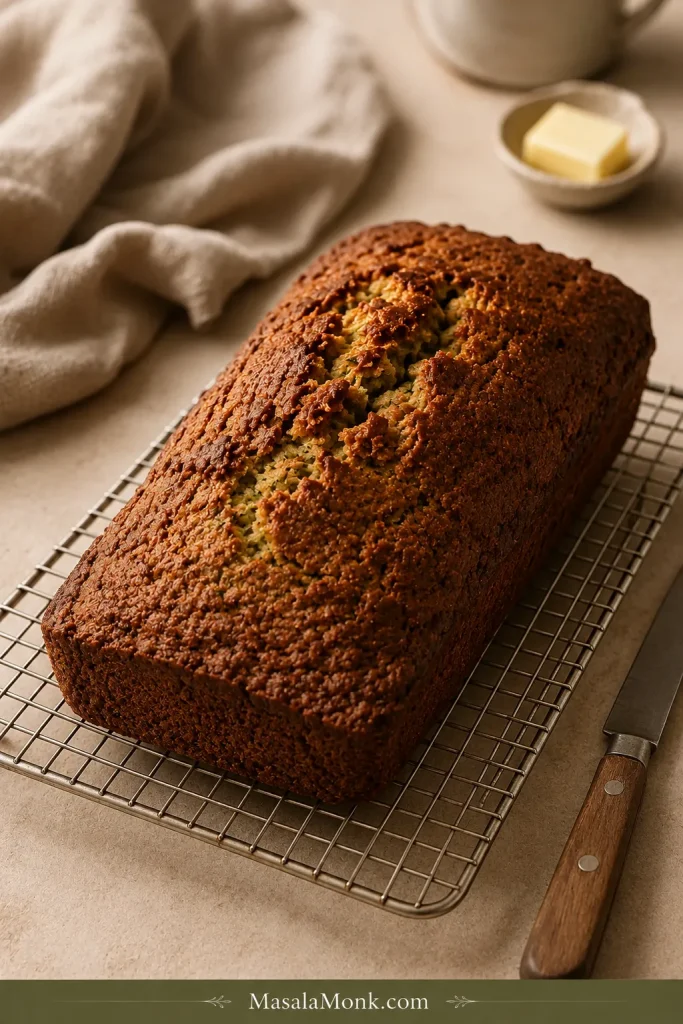
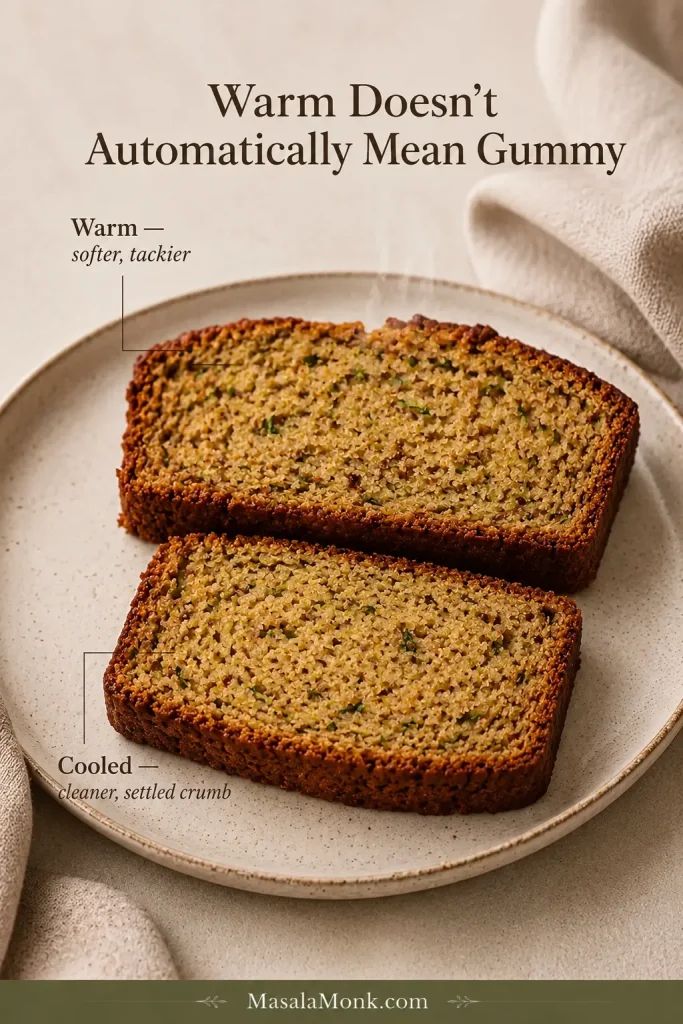
Give it about 15 minutes in the pan, then move it to a rack. Steam continues to escape while the crumb settles, so a just-baked slice naturally feels tackier than one cut later.
You can steal a warm slice. Just wait until the loaf has cooled before deciding that its tender middle is actually gummy.
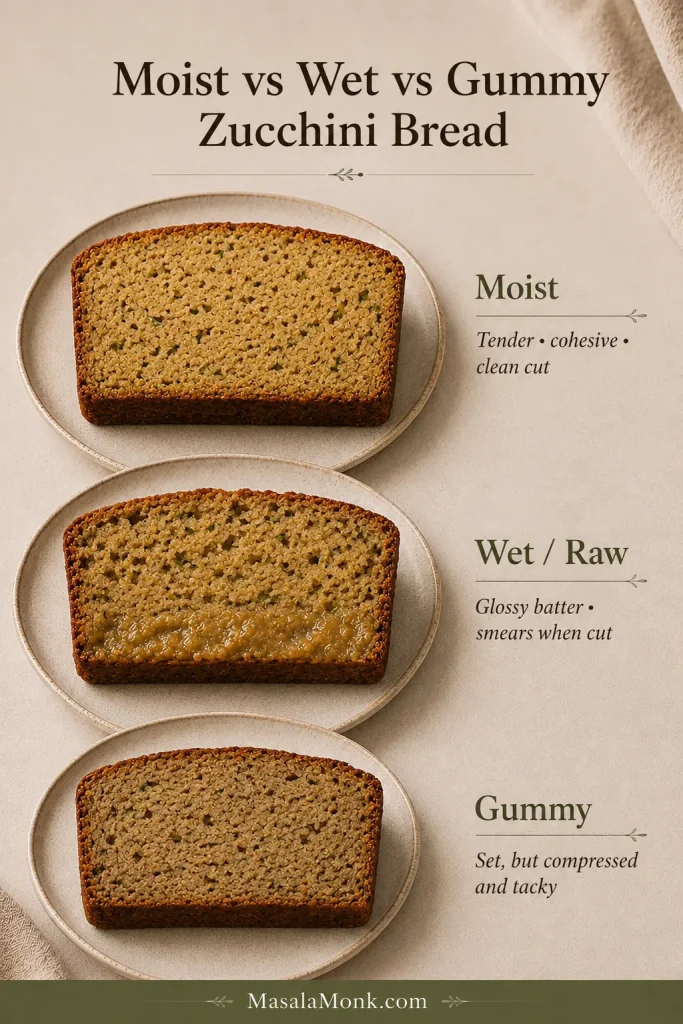
Moist, Wet or Gummy?
Moist: The cooled crumb is tender, holds together and cuts cleanly. That’s the texture you’re after.
Wet: Raw-looking or paste-like batter remains through the loaf and smears onto the knife. It needed more baking.
Gummy: The bread holds together but feels tacky, compressed or rubbery. Underbaking can cause it, but excess free water, heavy mixing or cutting while very hot can contribute too.
A slightly tacky patch directly beneath the top crust is different from a stripe of raw batter running through the loaf.
Zucchini Bread Troubleshooting
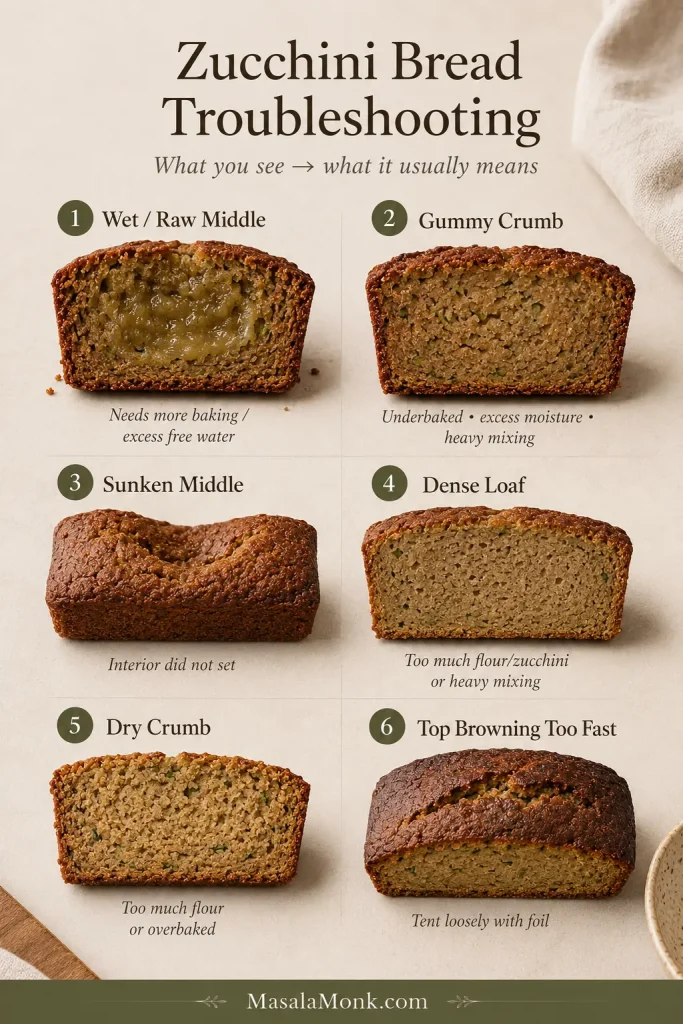
| Problem | Likely cause | Next move |
|---|---|---|
| Wet or raw middle | More baking time needed; excess free water; oven running cool | Keep a whole, hot loaf baking until the raw batter is gone |
| Gummy crumb | Underbaking, excess moisture, heavy mixing or cutting very hot | Mix only until combined, bake fully and cool before judging |
| Sunken middle | Interior had not set; inaccurate leavener; pan too small or overfilled | Check measurements, pan size and doneness |
| Dense loaf | Too much flour, too much zucchini or heavy mixing | Weigh the key ingredients and stop folding once combined |
| Dry crumb | Too much flour, zucchini wrung dry or loaf overbaked | Keep the zucchini’s natural moisture and remove the loaf once baked through |
| Top browning too quickly | Dark pan or strong top heat | Loosely tent with foil while the loaf finishes |
If the top is already dark enough while the center still needs time, loosely tent the loaf with foil and continue baking. The foil is a shield for the crust, not a signal that the middle is finished.
Why Is My Zucchini Bread Raw in the Middle?
Usually because the loaf needed more time, excess free water entered the batter, or the oven was running cooler than expected.
A loaf that is still whole and hot can go back into the oven. Cover the top loosely with foil when it already has enough color and continue until the raw batter is gone.
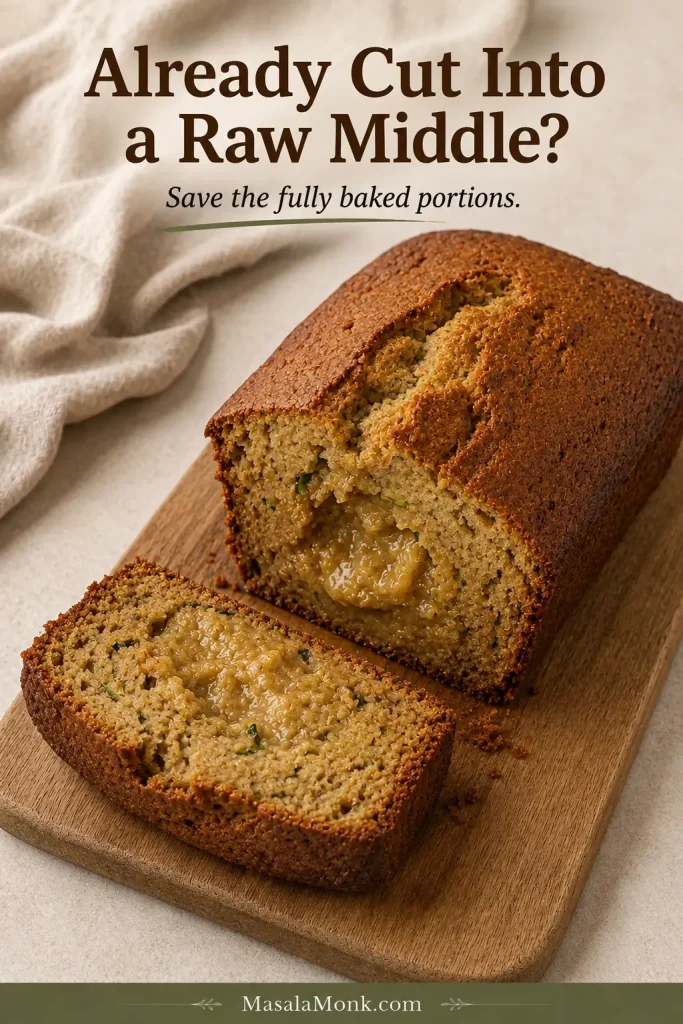
If you’ve already cut into it and found a genuinely raw middle, the options are unfortunately narrower. Save the fully baked portions. Continuing to bake the whole cut loaf tends to dry the parts that were already done before the exposed batter cooks evenly.
↑ Back to the recipe · Recheck doneness
Easy Add-Ins
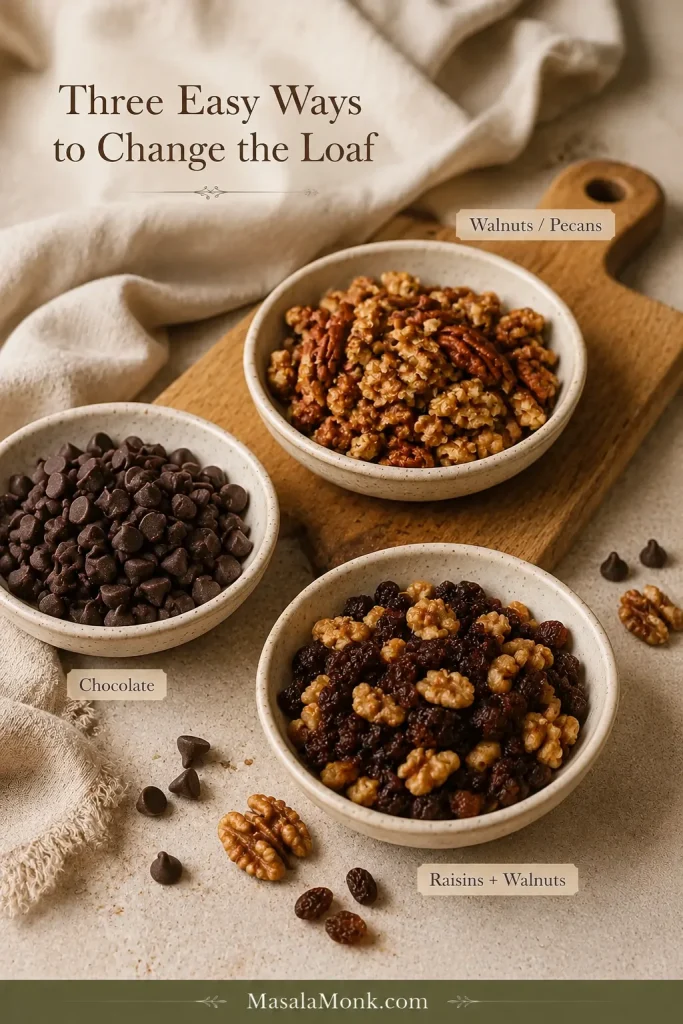
Walnuts or pecans: Fold in up to 85g / 3 oz. Walnuts give the loaf the more familiar old-fashioned crunch; pecans are slightly sweeter.
Chocolate chips: Use up to 85g / 3 oz semi-sweet or dark chocolate. In a slightly warm slice, the chips soften into little melted pockets against the cinnamon crumb.
Raisins: About 75g / 2.6 oz, roughly ½ cup, gives the loaf a more old-fashioned recipe-box feel. Raisins and walnuts work especially well together.
If that combination of grated vegetables, cinnamon and nuts is the part you love most, it takes a richer turn in this carrot cake with cream cheese frosting.
Before You Start Swapping Ingredients
Zucchini bread is forgiving, but flour, eggs, sugar, oil and zucchini moisture all help determine the final crumb. Change several at once and you’re effectively making a different recipe.
For the first loaf, keep the eggs and oil as written. Butter and applesauce both work in zucchini breads designed around them, but they do not perform exactly the same job as neutral oil here.
If applesauce is the change you are considering, this banana bread made with applesauce shows how a quick bread can be built around fruit puree from the start.
Eggless, vegan, gluten-free, keto and almond-flour versions change the structure enough that they are better treated as their own recipes instead of casual swaps inside this one.
Ready to bake? Return to the zucchini bread recipe →
The Pan Matters More Than It Seems
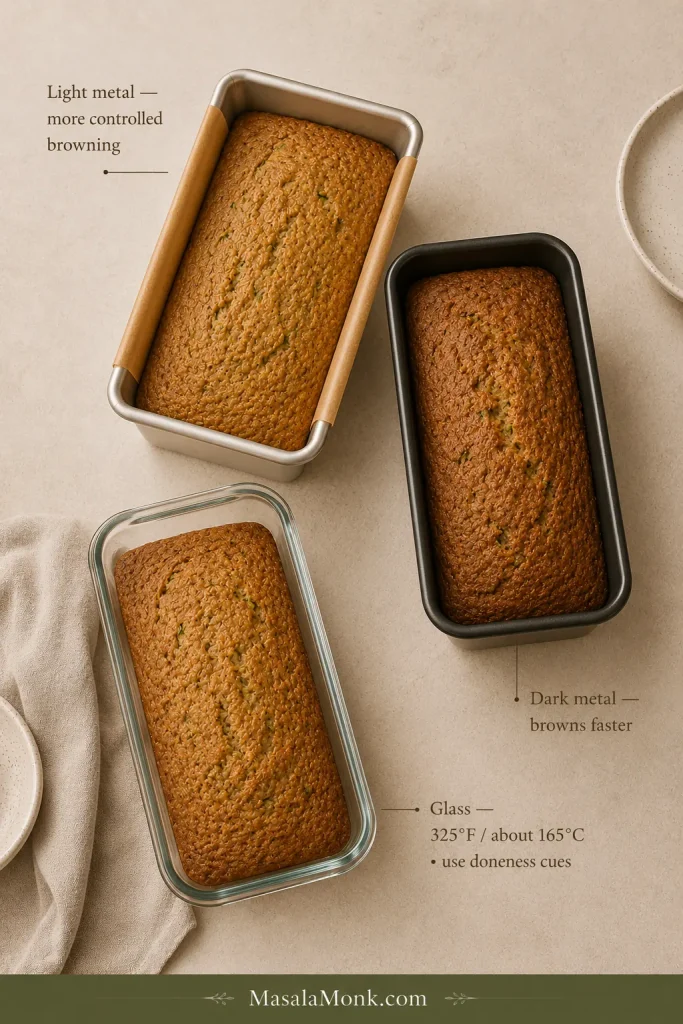
The full batch fits a 9 × 5-inch / 23 × 13 cm loaf pan. A light-colored metal pan gives you more control over browning during the long bake.
Dark metal usually browns the crust faster. When the top has enough color before the loaf is finished, cover it loosely with foil and keep baking.
Glass behaves differently from metal and holds heat longer. If glass is what you have, King Arthur Baking recommends reducing the oven temperature by 25°F; for this loaf, that means 325°F / about 165°C. Expect the timing to change and use the same doneness cues instead of relying on the original clock time.
A noticeably smaller loaf pan makes the batter deeper and changes the bake. Use the specified 9 × 5-inch pan when possible instead of forcing the full batch into something smaller. Muffins and mini loaves need their own baking times, so the full-loaf timing should not be used for either.
Storing and Freezing Zucchini Bread
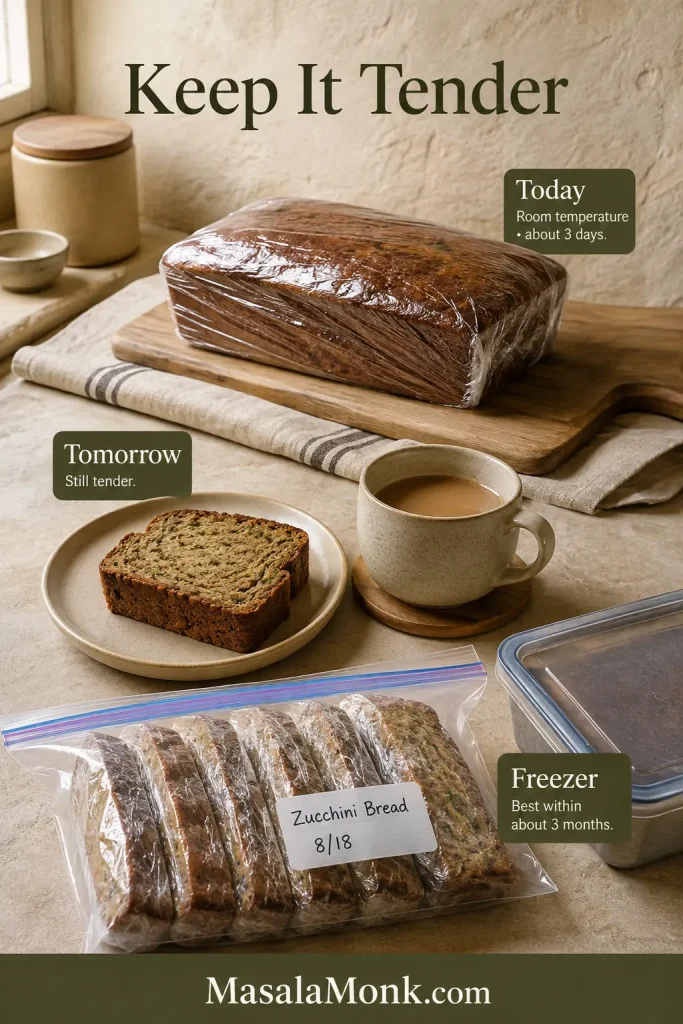
Room temperature: Cool the loaf completely before covering it. Keep it well wrapped or in an airtight container for about 3 days. Wrapping while warm traps steam against the crust.
Refrigerator: A very hot or humid kitchen is the main reason to refrigerate it. Chilled quick bread firms up, so let a slice lose its chill or warm it gently before eating.
Freezer: Wrap the completely cooled loaf or individual slices tightly and place them in a freezer-safe bag or container. For best quality, use them within about 3 months. Individual slices are especially handy: pull one out, let it thaw on the counter, and breakfast is mostly handled.
For another simple cinnamon bake that keeps well for the next day, try this fresh apple cake.
Frequently Asked Questions
Can You Taste the Zucchini in Zucchini Bread?
Not strongly. Cinnamon, vanilla and brown sugar reach you first. The zucchini mostly contributes moisture, tenderness and little green flecks instead of an obvious vegetable flavor.
Can You Use Yellow Summer Squash Instead?
A young, firm yellow summer squash can work much like zucchini. Grate it the same way. An oversized mature squash may need tough skin or a coarse seed cavity removed first.
Can You Double the Recipe?
Yes. Divide a double batch between two 9 × 5-inch pans. One extra-deep loaf would bake very differently; the pan section explains why depth and material matter.
The Slice You’re Looking For
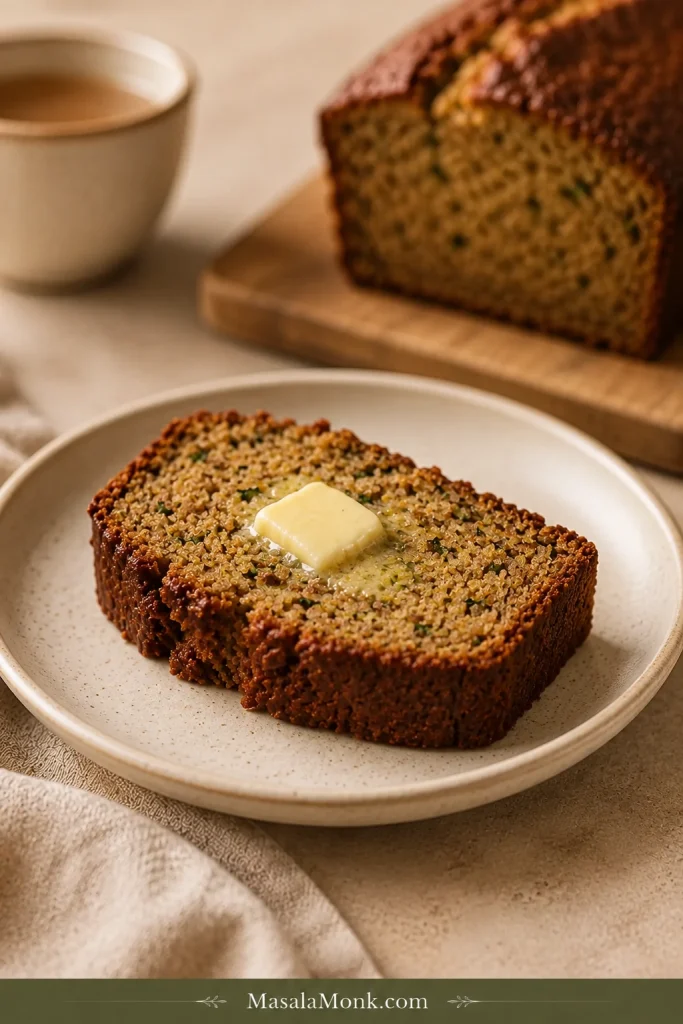
Once the loaf has cooled, the knife should pass through without dragging a wet streak behind it. The slice bends gently, the crumb holds together, and cinnamon reaches you before zucchini ever does.
That’s the balance this bread is after: the zucchini keeps the crumb tender, while enough oven time turns the middle from batter into bread.
Add butter if you like. It does not need much else.
What did you make yours with: small fresh zucchini, one of those enormous garden zucchini, or zucchini from the freezer?








