
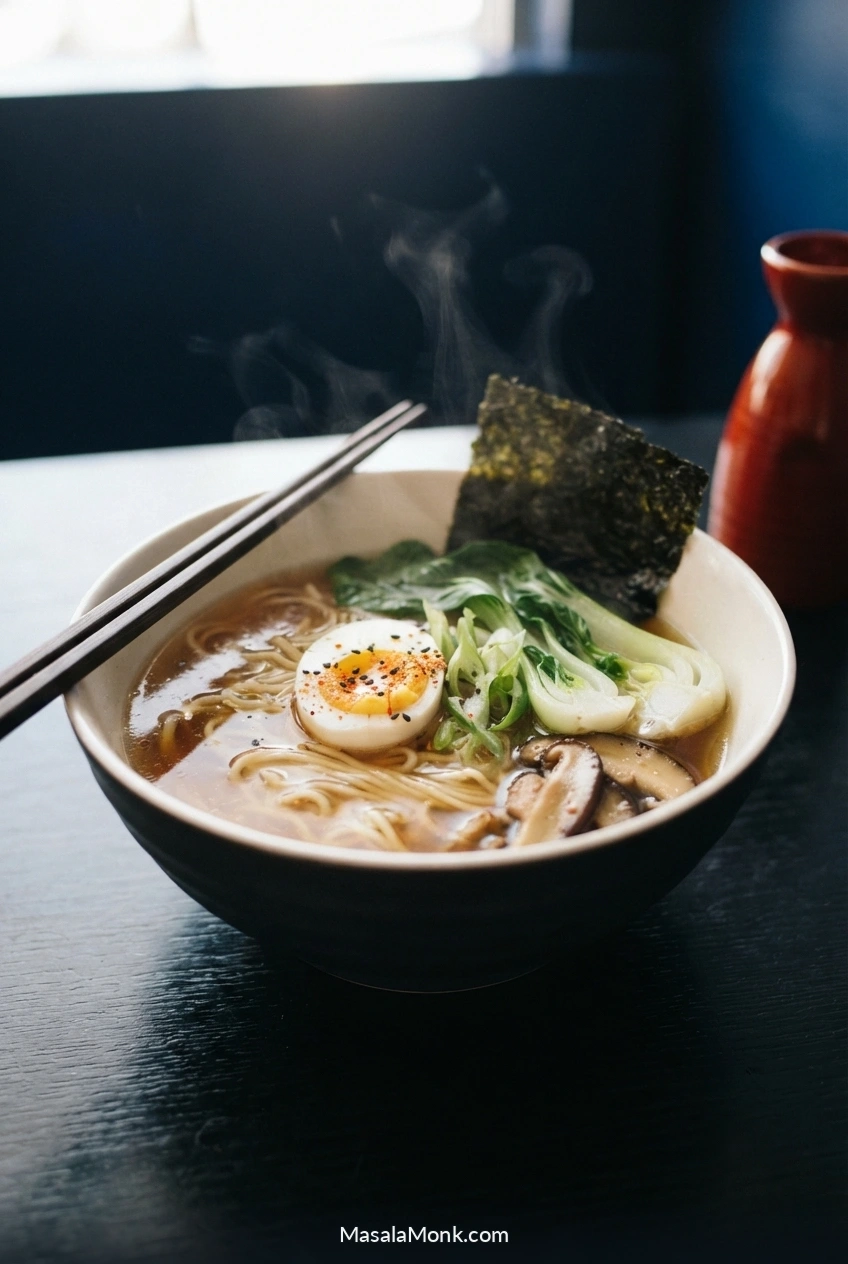
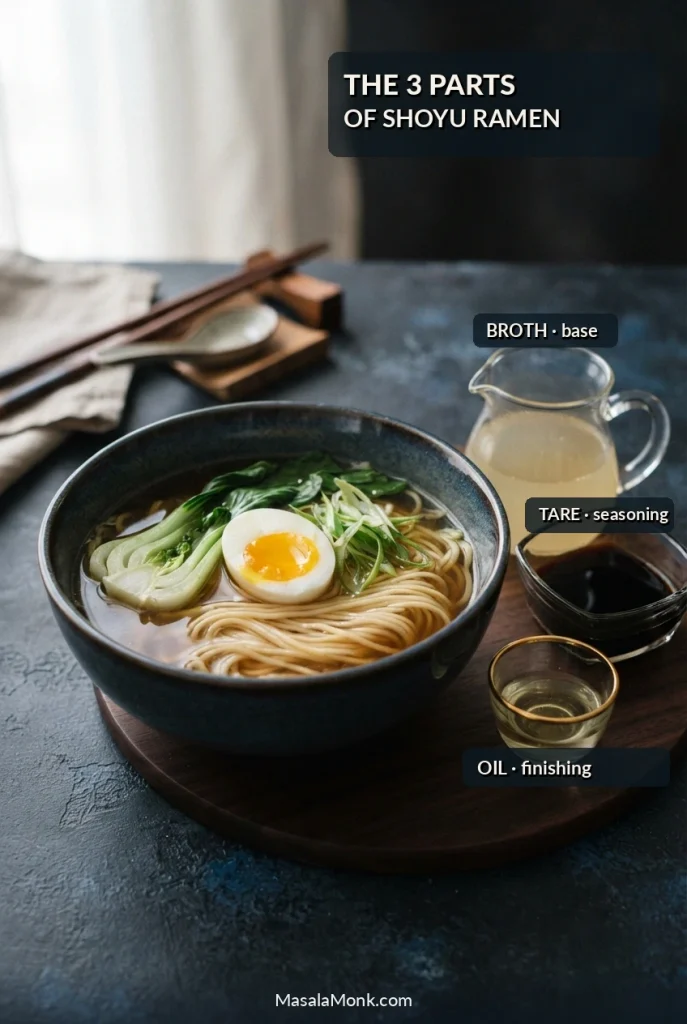
Shoyu ramen is ramen seasoned with soy sauce. For this Japanese-style version, dried shiitake and ginger deepen a clear chicken broth, while springy noodles, tender greens and jammy eggs finish under a little fragrant scallion-garlic oil.
This shoyu ramen recipe makes four generous bowls in about an hour using prepared stock and purchased noodles. The broth brings the base flavor, the soy tare seasons each bowl, and the aromatic oil adds fragrance at the end. Keeping them separate makes it easier to get the seasoning right without making the whole pot too salty. Allow a little extra time on your first attempt.
Jump to the ingredients · Jump to the cooking steps
Table of Contents
- Timing and portions
- Ingredients and equipment
- Step-by-step ramen recipe
- Noodles, stock and substitutions
- Fixing broth, noodle and egg problems
- Make-ahead, leftovers and reheating
- Common questions
Homemade Ramen at a Glance
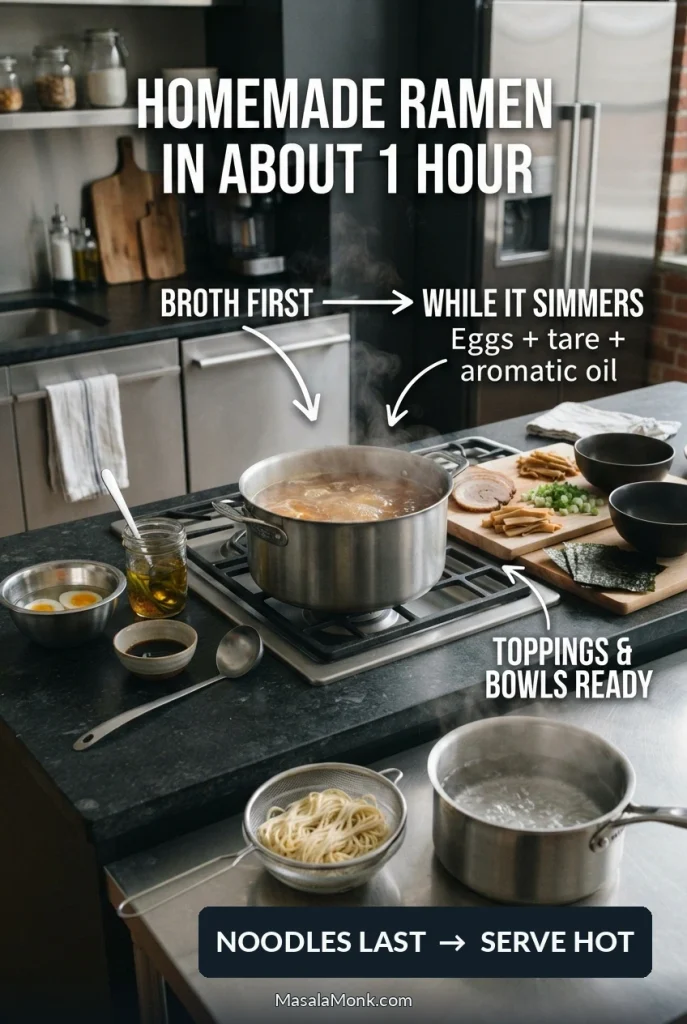
This roughly one-hour ramen plan works because tasks overlap: the broth simmers while you prepare the eggs, tare and aromatic oil. Cook the noodles only when the serving bowls are ready.
| At a glance | Details |
|---|---|
| Serves | 4 generous bowls |
| Prep | About 15 minutes |
| Cooking | About 40–45 minutes, with overlapping tasks |
| Total | About 1 hour |
| Style | Japanese-style shoyu ramen with clear chicken-and-shiitake broth |
Ingredients for Four Bowls of Ramen
Start with unsalted or very low-sodium chicken stock. Fresh or frozen alkaline ramen noodles give the most familiar springy bite, but dried ramen works too. Choose the greens and toppings you like.
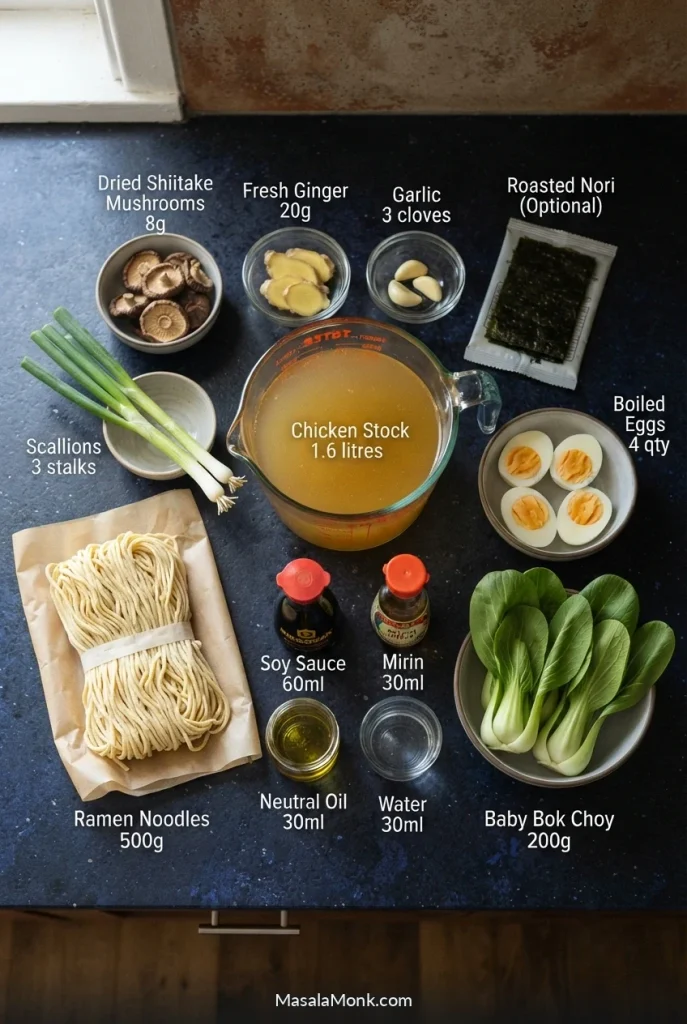
You’ll need 3 garlic cloves and 3 scallions altogether, divided between the broth, finishing oil and garnish. Kombu is optional, and there’s a mirin-free alternative alongside the tare ingredients.
For the Broth
- 1.6 litres / about 6¾ US cups unsalted or very low-sodium chicken stock
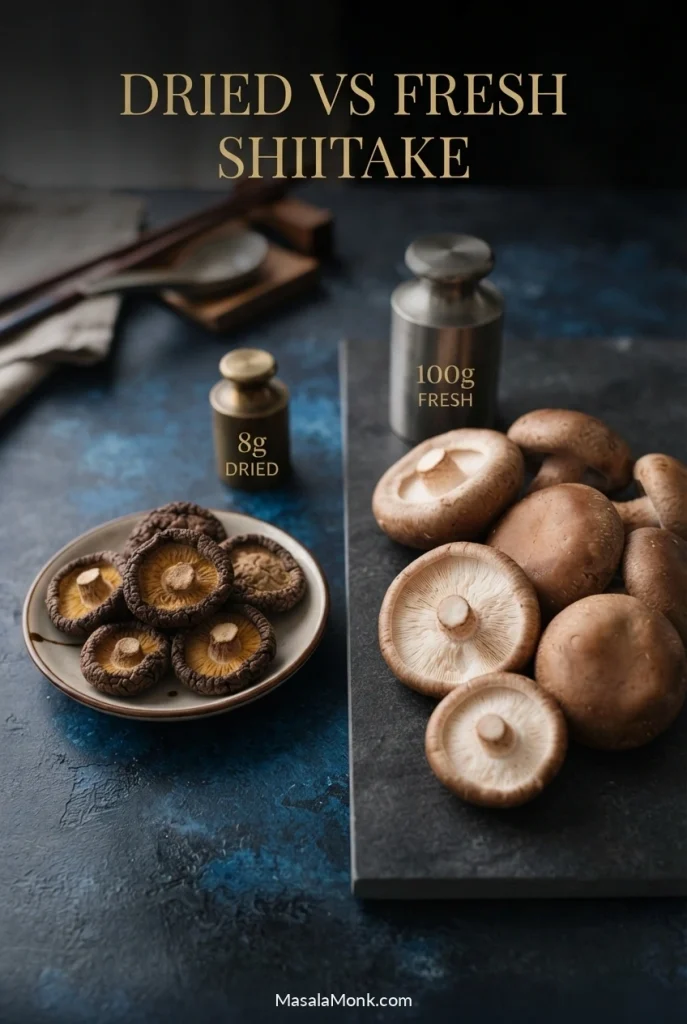
- 8 g / about 0.3 oz dried shiitake mushrooms, usually 2–4 pieces (or 100–150 g / 3½–5 oz fresh shiitake; see Step 1)
- 5 g / about 0.2 oz kombu (dried kelp), optional
- 20 g / about 0.7 oz fresh ginger, sliced
- 2 garlic cloves, lightly crushed
- 2 scallion whites, cut into short lengths (reserve the greens)
Choose plain chicken stock rather than one strongly flavored with celery, bay leaves or mixed herbs; those can compete with the ginger and shiitake.
For the Shoyu Tare (Soy Seasoning)
- 4 tbsp / 60 ml regular Japanese soy sauce
- 2 tbsp / 30 ml mirin
- 2 tbsp / 30 ml water
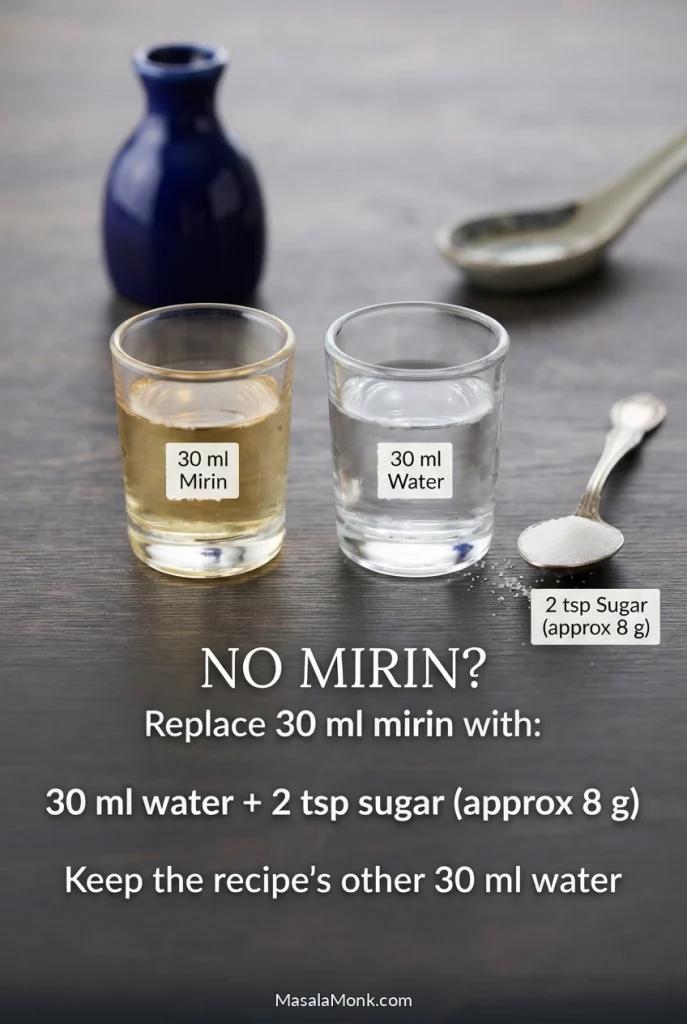
No mirin? Replace the 2 tablespoons of mirin with 2 tablespoons / 30 ml water plus 2 teaspoons / about 8 g sugar. This gives the tare sweetness, although it won’t have quite the same depth as mirin.
This makes approximately 120 ml / 8 tbsp of tare. Start with only part of it in each bowl and adjust after tasting. Regular Japanese soy sauce suits this recipe better than dark Chinese or sweet soy sauce; our soy sauce guide explains how the varieties differ.
For the Scallion-Garlic Oil
- 2 tbsp / 30 ml neutral oil, such as canola or rice-bran oil
- 1 remaining scallion white, thinly sliced
- 1 remaining garlic clove, thinly sliced
For the Noodles and Toppings
- 500 g / about 17½ oz fresh or frozen ramen noodles, or 340 g / 12 oz dried ramen noodles
- 4 large eggs, refrigerated
- 200 g / 7 oz baby bok choy, or 100–150 g / 3½–5 oz baby spinach
- Reserved scallion greens, thinly sliced
- 2 sheets roasted nori, cut into pieces, optional
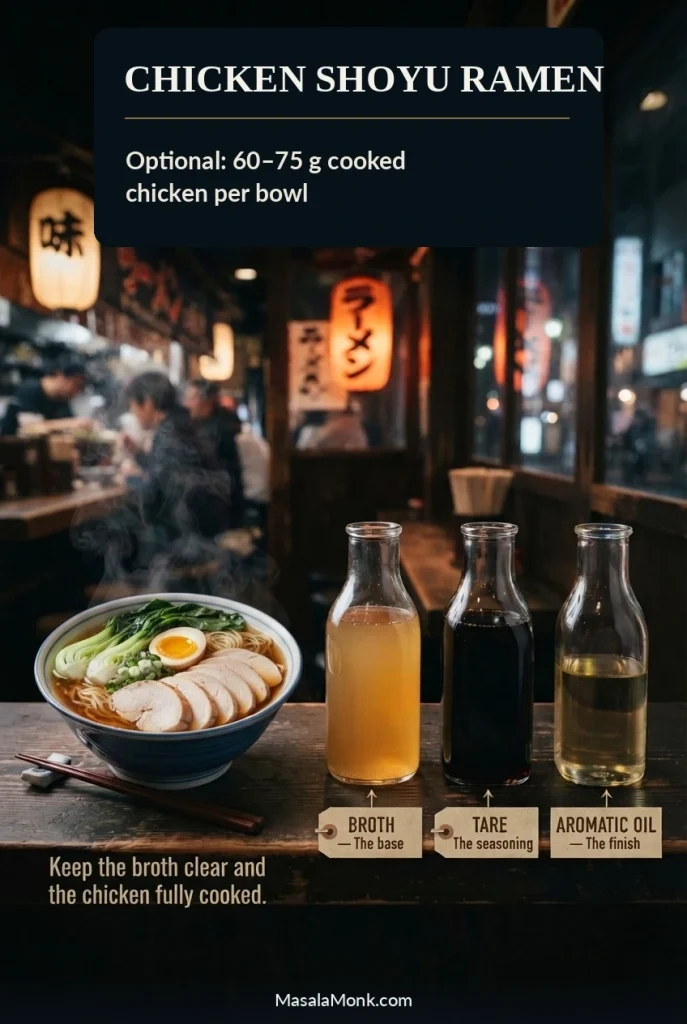
- 240–300 g / about 8½–10½ oz fully cooked chicken, optional
Leftover chicken or rotisserie chicken works well as a topping. The broth itself already uses chicken stock, so you don’t need additional meat to make this version.
Keep the nori dry until serving; spare sheets also work for onigiri (Japanese rice balls).
Equipment
You’ll need a saucepan for broth, a large pot for noodles, a small saucepan for eggs and tare, a very small frying pan or saucepan for aromatic oil, and four deep, heat-safe bowls. Have a strainer or colander ready.
A measuring jug, tongs and a small kitchen scale are helpful. You can reuse the egg saucepan for the tare once the eggs are cooling, which makes the recipe easier on a smaller stove. Deep bowls holding around 1 litre / 4 cups leave plenty of room for noodles and toppings.
How to Make Shoyu Ramen at Home
Start the broth first. While it simmers, cook the eggs and make the tare and aromatic oil. Get the toppings and soup bowls ready before cooking the noodles; those go into the soup last.
1. Build the Chicken-and-Shiitake Broth
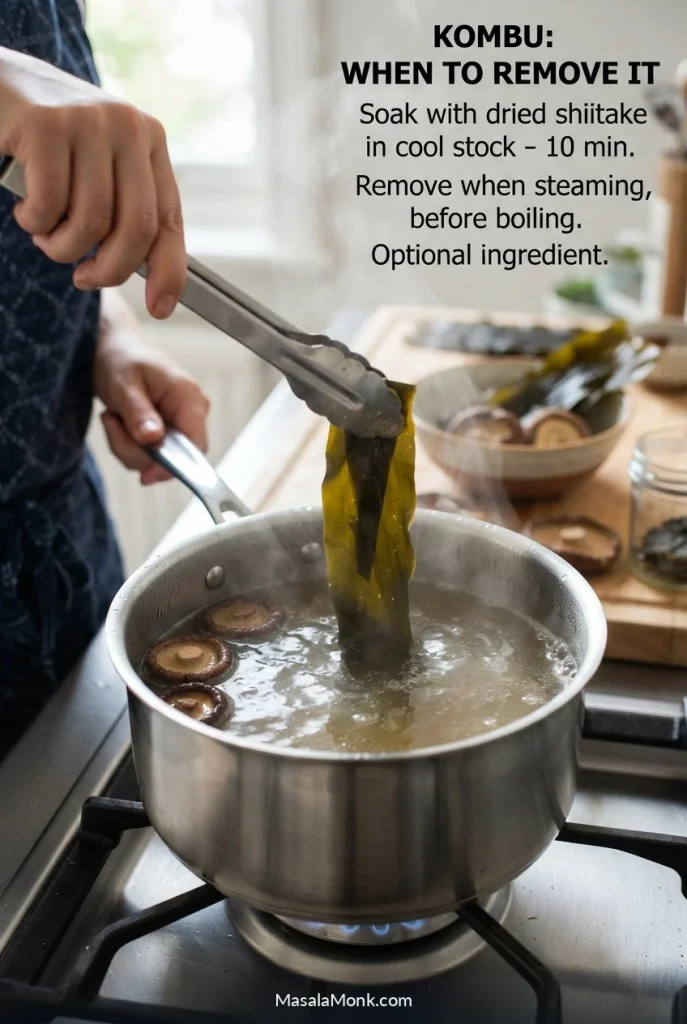
Pour the 1.6 litres chicken stock into a saucepan. If using dried shiitake, rinse them briefly if gritty and add them to the cool stock with the optional kombu for 10 minutes. If using fresh shiitake instead, add the sliced mushrooms later with the aromatics; you can still soak the optional kombu in the cool stock for 10 minutes. Prepare the ginger, garlic and scallions while the stock rests.
Heat the stock gently. If using kombu, lift it out when the liquid is steaming and tiny bubbles appear at the edges, before it boils hard.
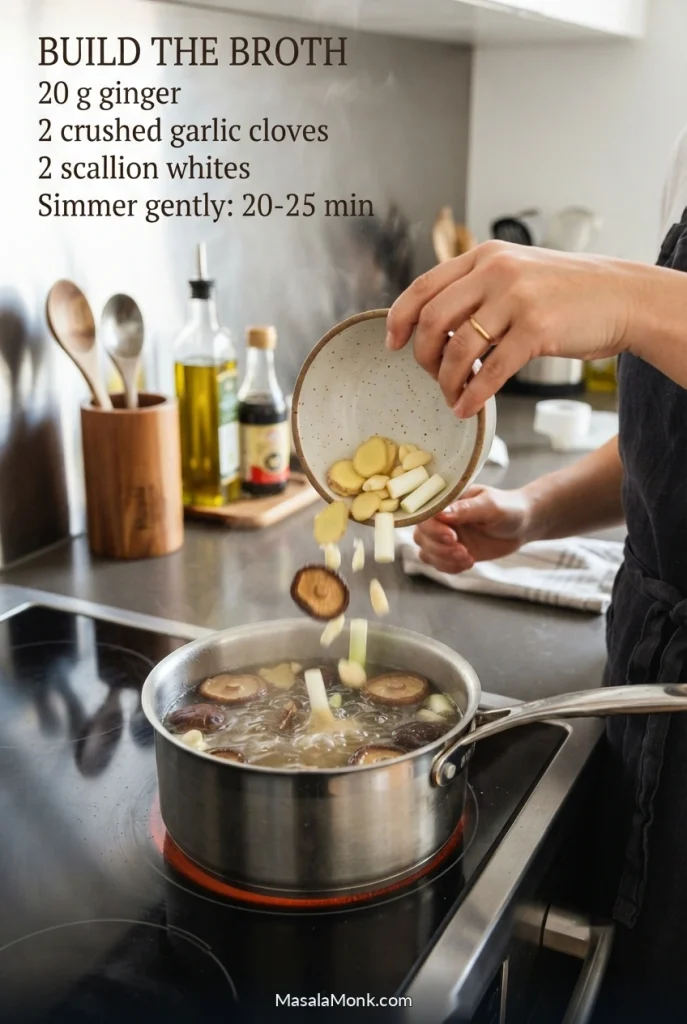
Add the 20 g sliced ginger, 2 crushed garlic cloves and 2 scallion whites (and fresh shiitake, if using).
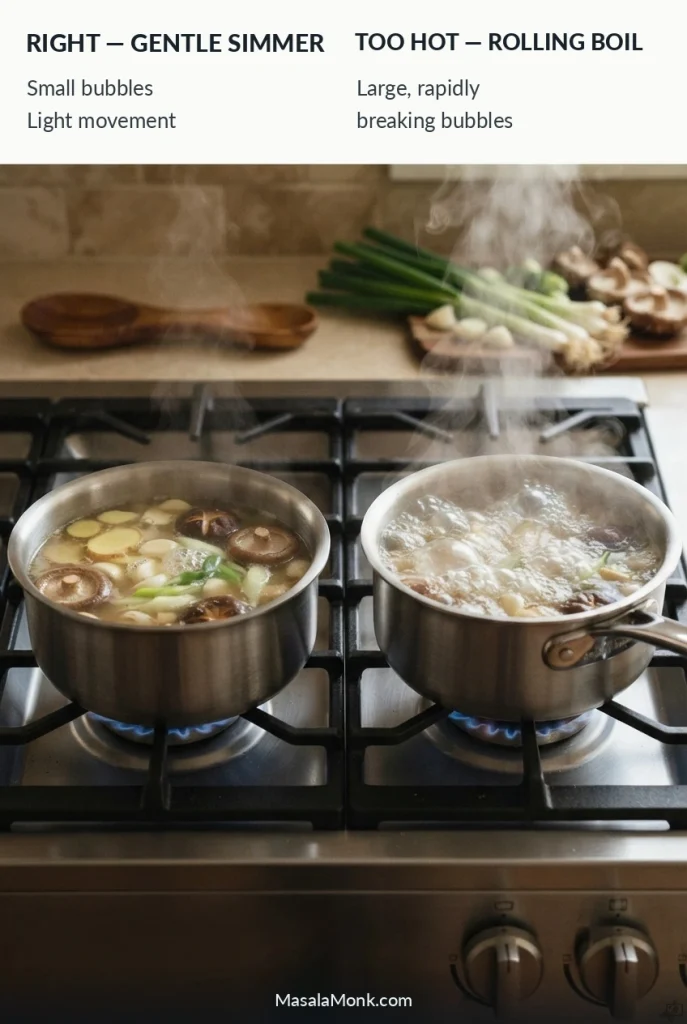
With the lid slightly ajar, simmer gently for 20–25 minutes. As soon as the simmer starts, set a 10-minute timer and begin Steps 2 and 3 while the broth cooks. The ginger-and-mushroom aroma should deepen without the stock boiling away rapidly.
When that 10-minute timer rings, put the large pot of water for the greens and noodles on the heat, or do so as soon as a burner is free. Strain the broth after its full 20–25-minute simmer.
2. Cook the Eggs While the Broth Simmers
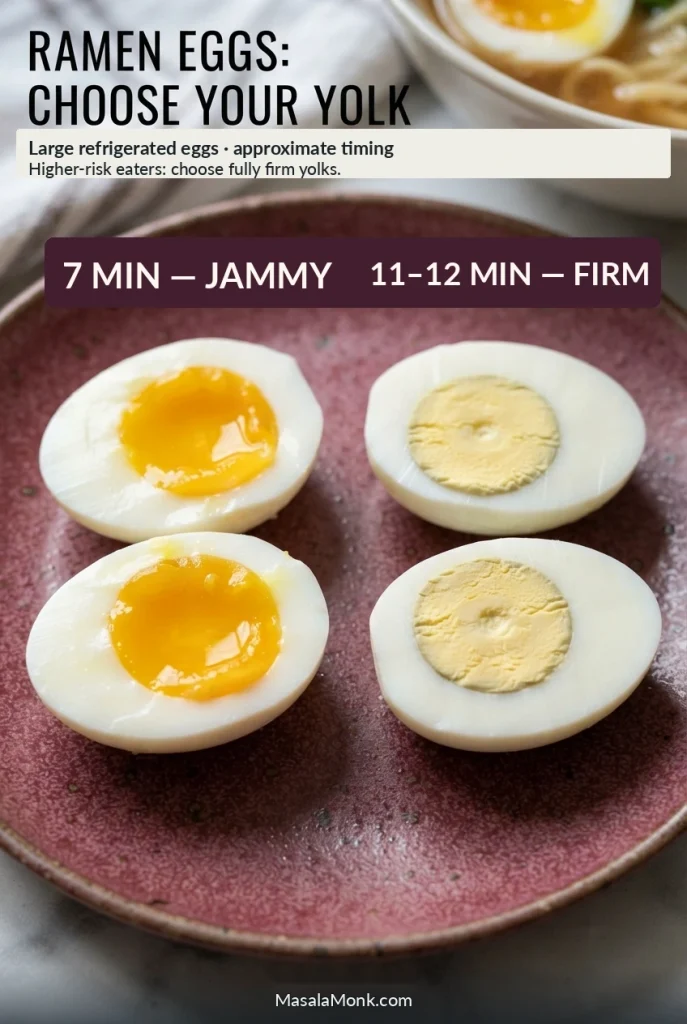
Bring a small saucepan of water to a steady boil. Lower in the 4 large refrigerated eggs and cook for 7 minutes for set whites and jammy yolks, or 11–12 minutes for fully firm yolks. Larger eggs may take a little longer. These are plain boiled eggs rather than soy-marinated ajitsuke tamago.
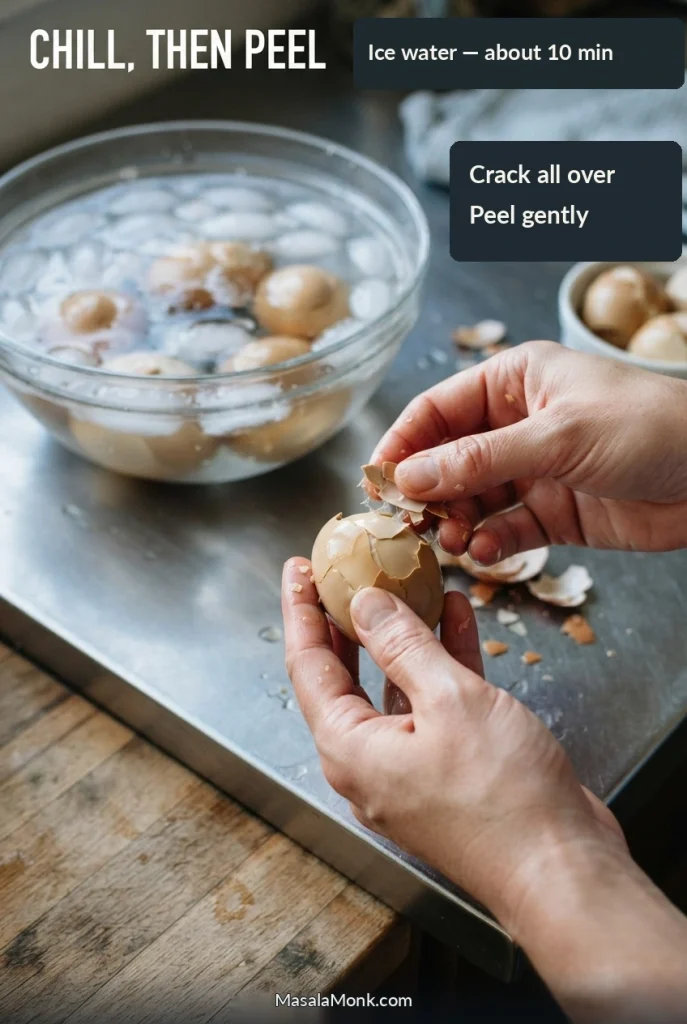
Transfer the eggs immediately to ice water and leave them for about 10 minutes. Crack the shells all over, then peel gently. Running a little water beneath the shells can help when they stick.
Jammy yolks remain undercooked. Choose the firm-yolk option for anyone at higher risk of foodborne illness. The FDA’s egg-safety guidance recommends cooking both whites and yolks until firm.
3. Make the Soy Tare and Scallion-Garlic Oil
Combine 60 ml soy sauce, 30 ml mirin and 30 ml water in a small saucepan. Warm gently for 1–2 minutes, until steaming, then pour into a jug. If you’re using the mirin-free substitution, add the water and sugar in place of the mirin.
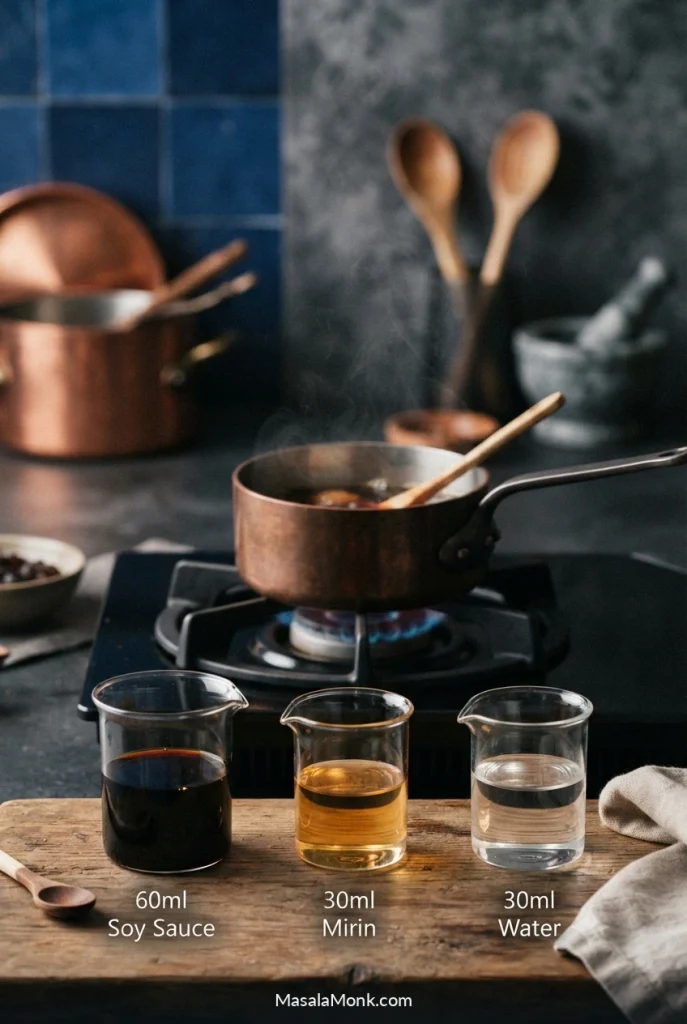
The tare goes into each serving bowl, so everyone can adjust the soy flavor to their own taste.
For the aromatic oil, put 30 ml neutral oil, the remaining sliced garlic clove and remaining sliced scallion white into a very small cold frying pan or saucepan.
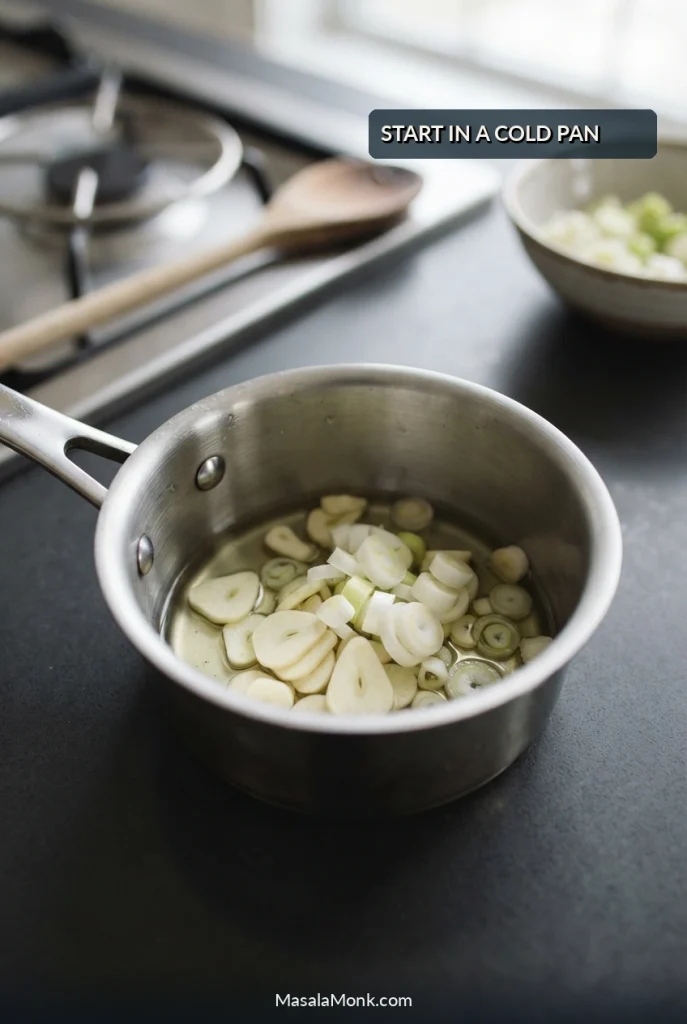
Warm over low heat for about 3–5 minutes, stirring occasionally, until the garlic is fragrant and pale golden. Don’t let it turn dark brown: scorched garlic makes the oil bitter. Strain into a small heat-safe cup.
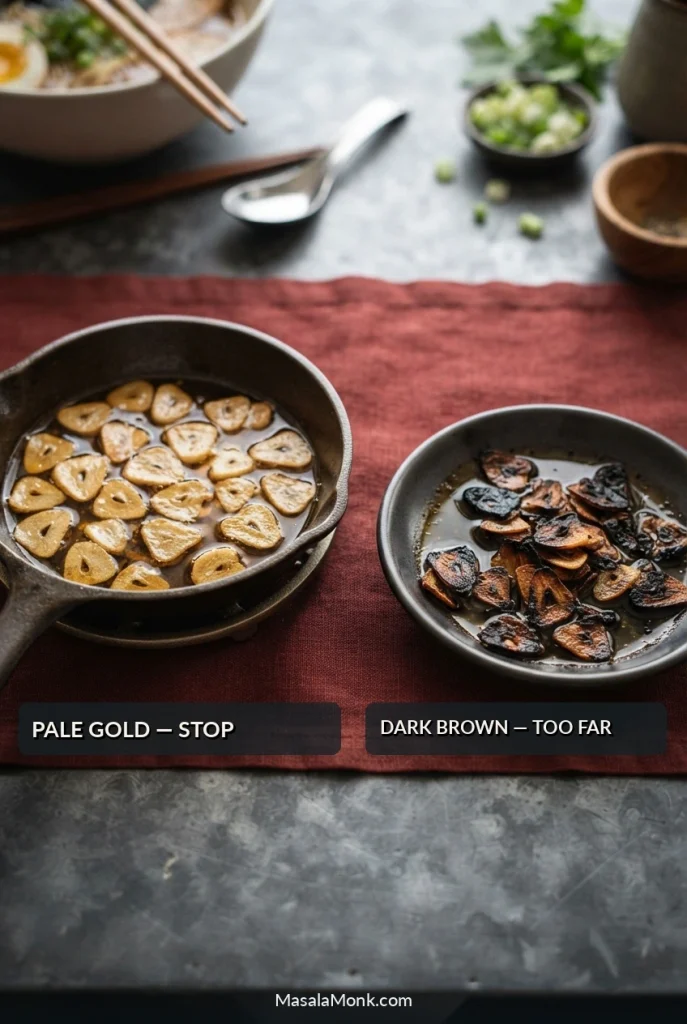
You’ll use ½–1 teaspoon per bowl. Discard any unused homemade garlic-infused oil after the meal rather than keeping it at room temperature.
4. Strain and Keep the Broth Hot
Once the broth has simmered, remove the ginger, garlic, scallions and shiitake. Reserve tender mushroom caps for toppings, slicing them if needed, and discard tough stems.
For a clearer soup, strain the broth through a fine sieve. A little cloudiness is fine; it won’t spoil the flavor.
Measure out 1.3 litres / about 5½ US cups of unseasoned broth for four bowls. Reserve any extra broth. If less than 1.3 litres remains, top up with hot unsalted stock. Hot water is a fallback, although it will make the flavor lighter.
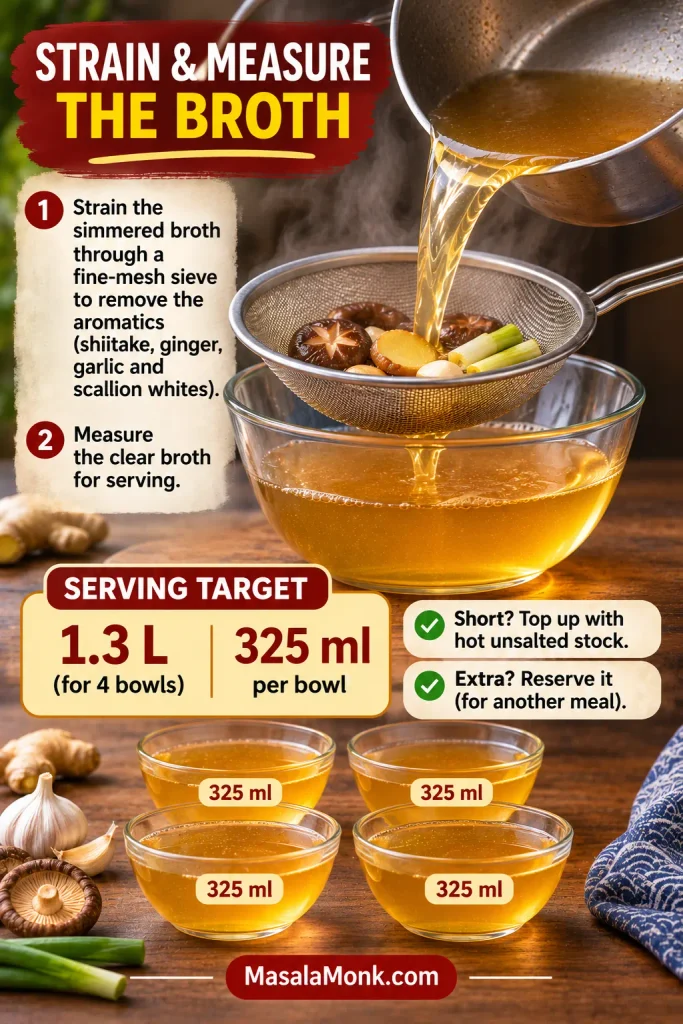
Keep the measured serving broth steaming in its saucepan over low heat. It may taste mild before the tare goes in; that’s expected.
5. Prepare the Greens, Toppings and Bowls
Wash the bok choy carefully, especially around the base, where grit can collect. Separate the thicker stems from the leaves. If using baby spinach, rinse and drain it instead.
Use the boiling noodle water to cook the bok choy stems for about 1 minute, then add the leaves for another 30–60 seconds, until tender. Baby spinach needs only a quick dip. Lift the greens out and drain them, leaving the water in the pot for the noodles.
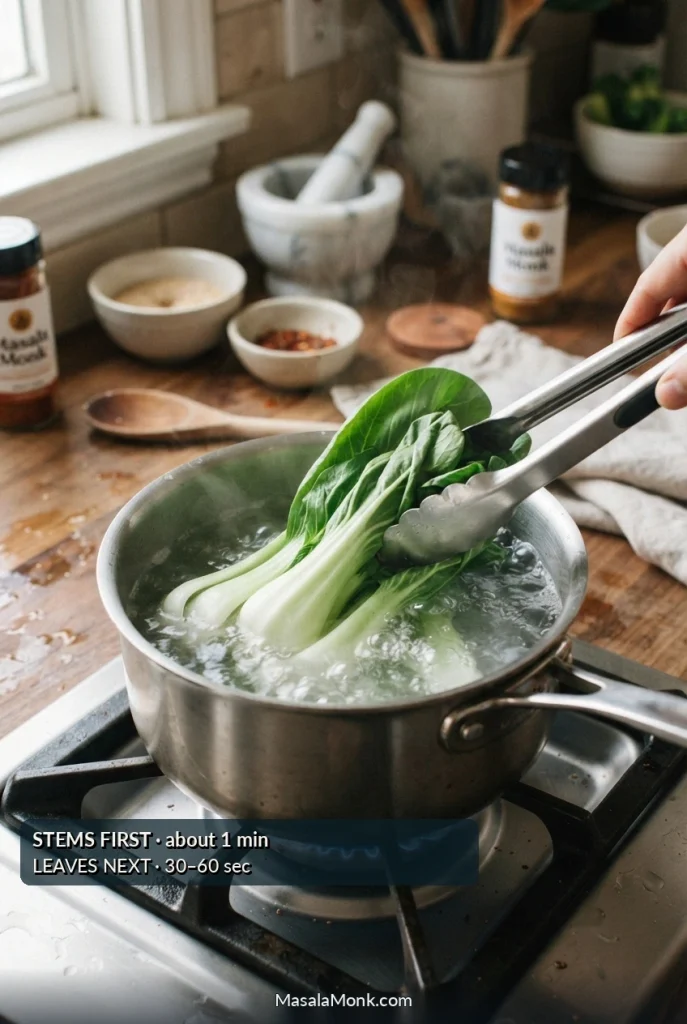
Get the Toppings Ready Before the Noodles
Slice the scallion greens, cut the nori and halve the peeled eggs. Warm any cooked chicken in a covered pan with a splash of extra stock or water, not from the measured 1.3 litres reserved for the bowls. Refrigerated cooked chicken should be reheated to 74°C / 165°F.
Have the toppings ready before the noodles cook. A large pot may accommodate all four noodle portions at once; with a smaller pot, serve two bowls at a time so the cooked noodles never have to wait.
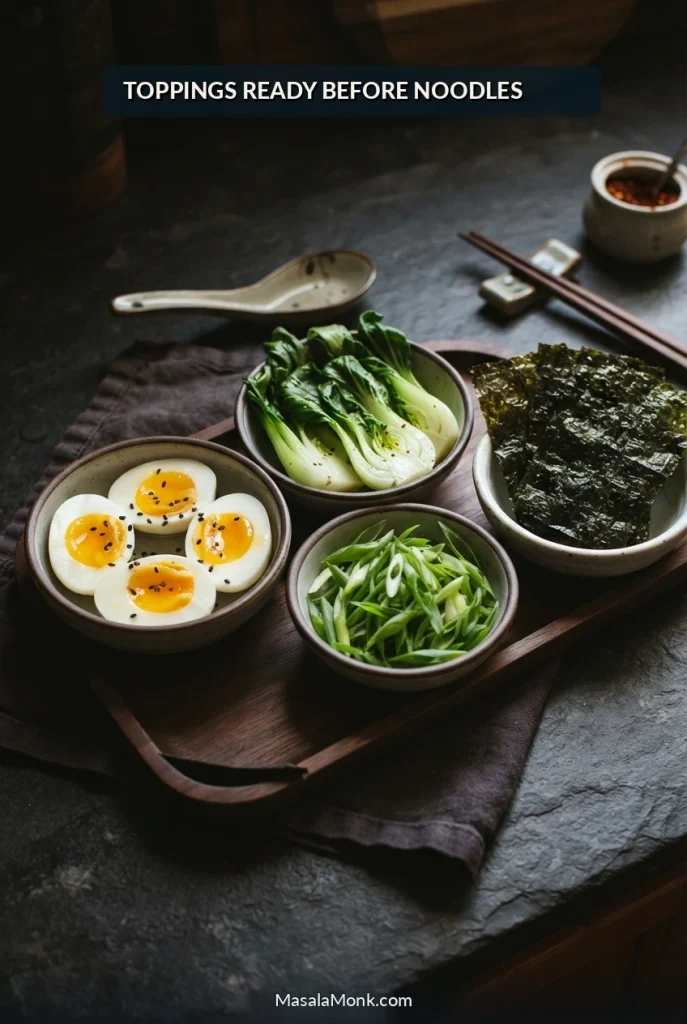
Measure and Warm the Serving Bowls
These are the starting amounts for one bowl, not the full four-serving batch. The noodle weights are measured before cooking:
| Per bowl | Amount |
|---|---|
| Hot chicken-and-shiitake broth | 325 ml / about 1⅓ US cups |
| Shoyu tare | Start with 25 ml / 1 tbsp + 2 tsp for unsalted stock; with salted stock, try about 15 ml / 1 tbsp or less, then taste |
| Uncooked noodles | 125 g fresh/frozen or 85 g dried |
| Scallion-garlic oil | ½–1 tsp |
| Toppings | 1 egg, halved; greens and scallions; optional nori and cooked chicken |
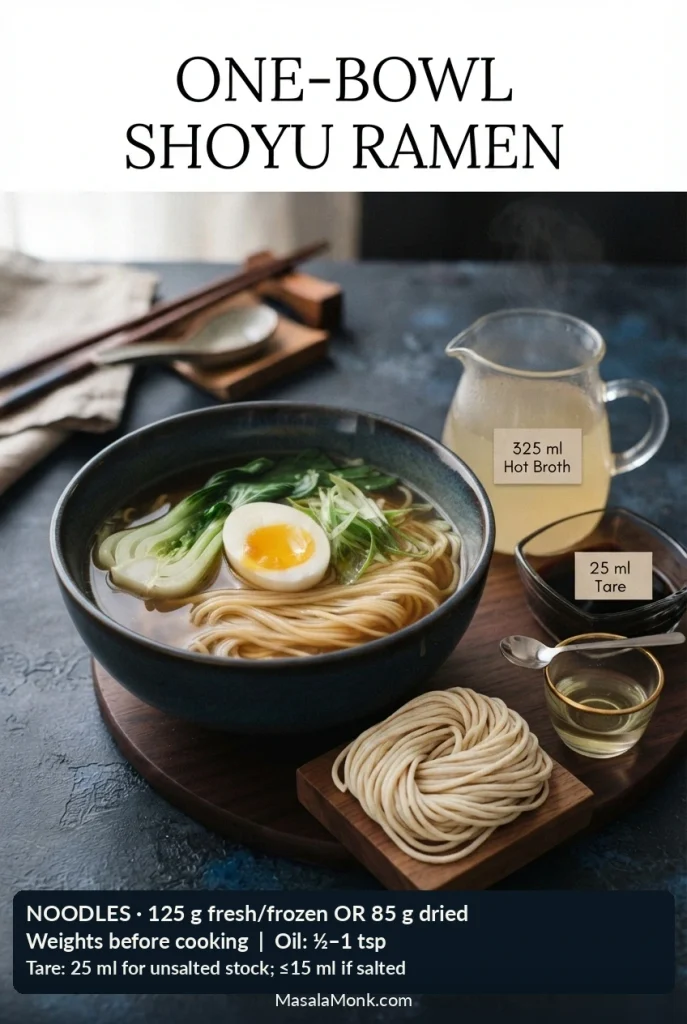
Warm the bowls you’re about to serve by filling them briefly with hot water, then empty them. Add the measured tare to each bowl. Keep the broth steaming and bring the noodle water back to a full boil.
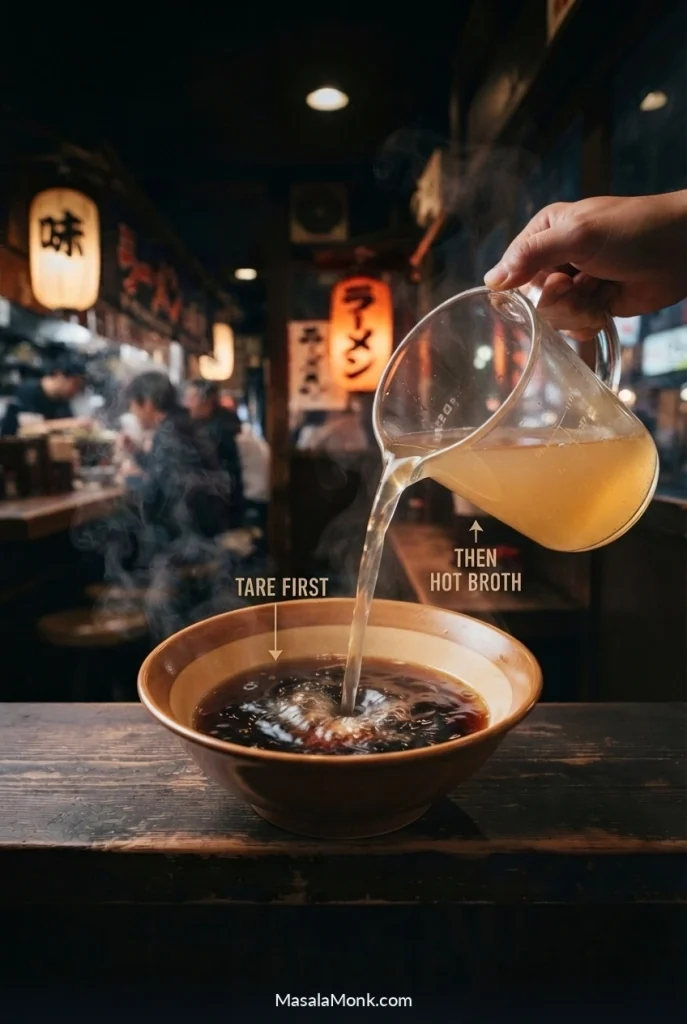
The soup comes together when hot, unseasoned stock is stirred into the tare waiting in each bowl. Use 325 ml broth per serving; the noodle-timing choice in Step 6 tells you whether to mix the soup before starting the noodles or while they boil.
6. Cook the Noodles and Season the Soup
Use plenty of unsalted, rapidly boiling water, roughly 3–4 litres / 3–4 US quarts if your pot can hold all four portions. Check the packet cooking time before you start. Many frozen ramen noodles go into the water without thawing, but follow the label.
Choose the Noodle-Cooking Order
The noodle packet determines the order: under 4 minutes means season the bowls first; 4 minutes or longer gives you time to season them while the noodles cook. Read both options below before you start the timer.
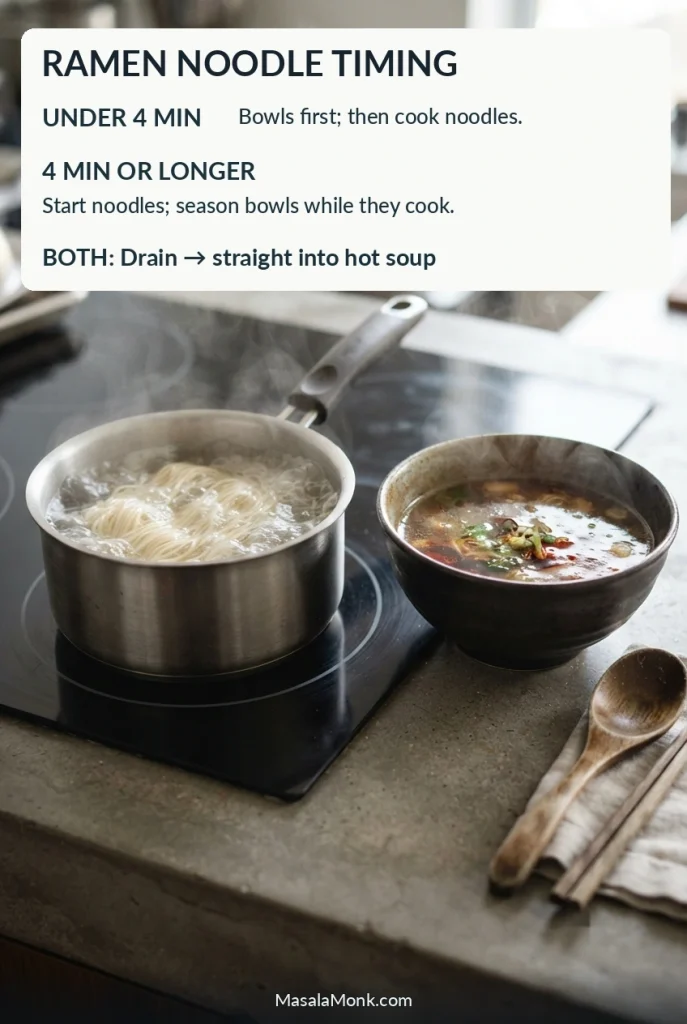
For noodles that cook in under 4 minutes: Pour 325 ml hot broth into each tare-filled bowl before boiling the noodles. Stir and taste; add ½–1 teaspoon more tare if needed. Once the seasoned soup is ready, cook the noodles according to the packet.
For noodles that take 4 minutes or longer: Start them in the boiling water first. While they cook, pour 325 ml hot broth into each tare-filled bowl, stir, taste and adjust if needed. Have the seasoned soup ready before the noodles finish.
Cook, Drain and Transfer the Noodles
While cooking, separate the noodle strands gently and follow the packet timing. Taste one toward the shorter end of the range; it should have a little resistance when bitten. Do not let the noodles sit in the pot after they are ready.
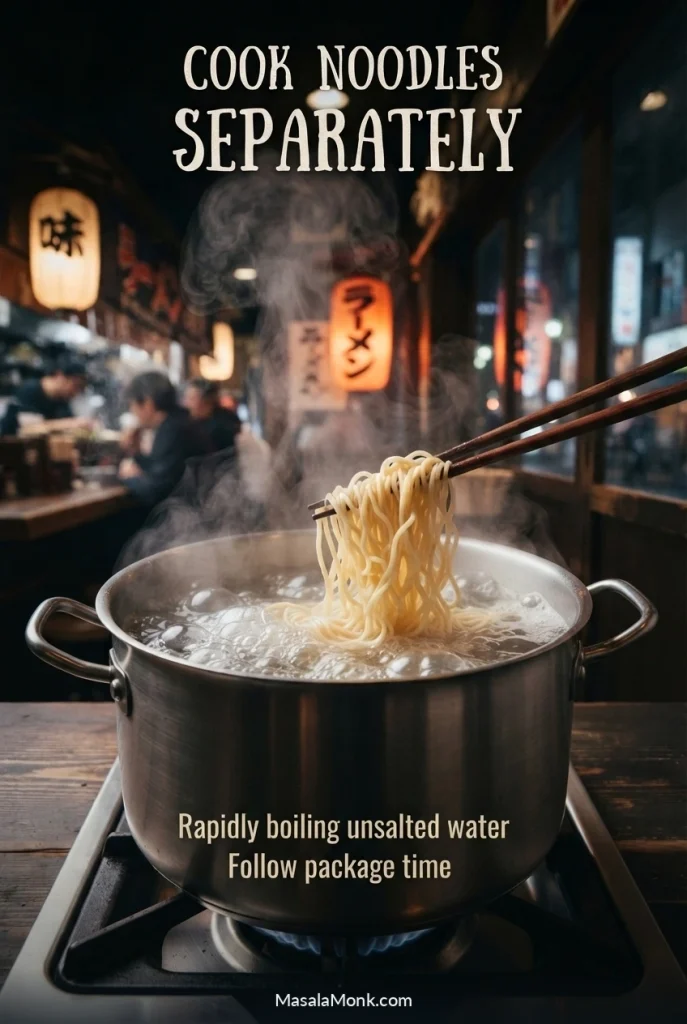
As soon as the noodles are ready, drain them without rinsing, shake off excess water and transfer them directly into the prepared hot soup. Do not leave them waiting in the colander.
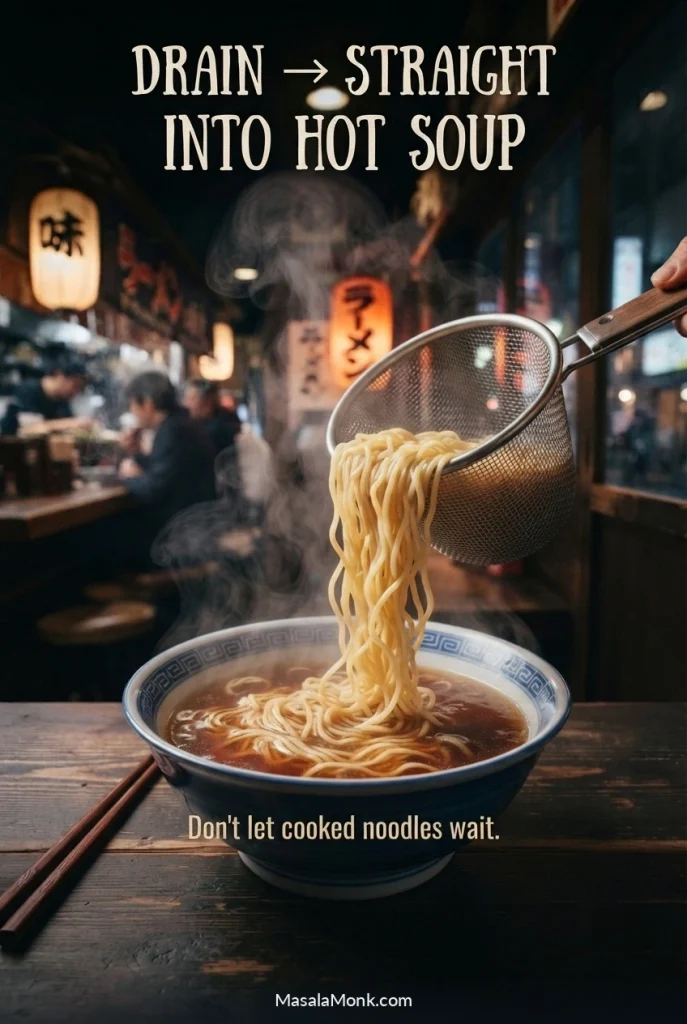
If cooking in two rounds, fill and season only the bowls you are serving now. Keep the remaining broth hot and repeat just before the next noodle portions are ready.
7. Finish with Aromatic Oil and Toppings
Drizzle ½–1 teaspoon scallion-garlic oil over each bowl. Add the tender greens, egg halves, sliced scallions and any cooked chicken or nori.
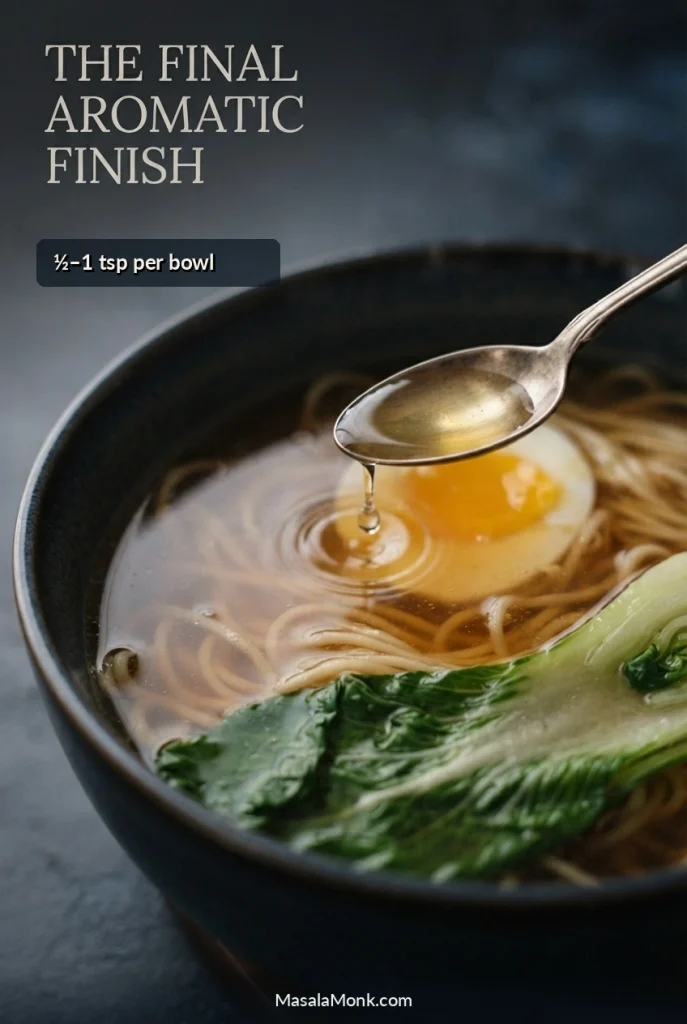
The fragrant oil should be noticeable over the hot, soy-seasoned broth, while the noodles still have their bite. Bring the bowls straight to the table.
Choosing Noodles, Stock and Simple Swaps
Which Noodles Work Best for Homemade Ramen?
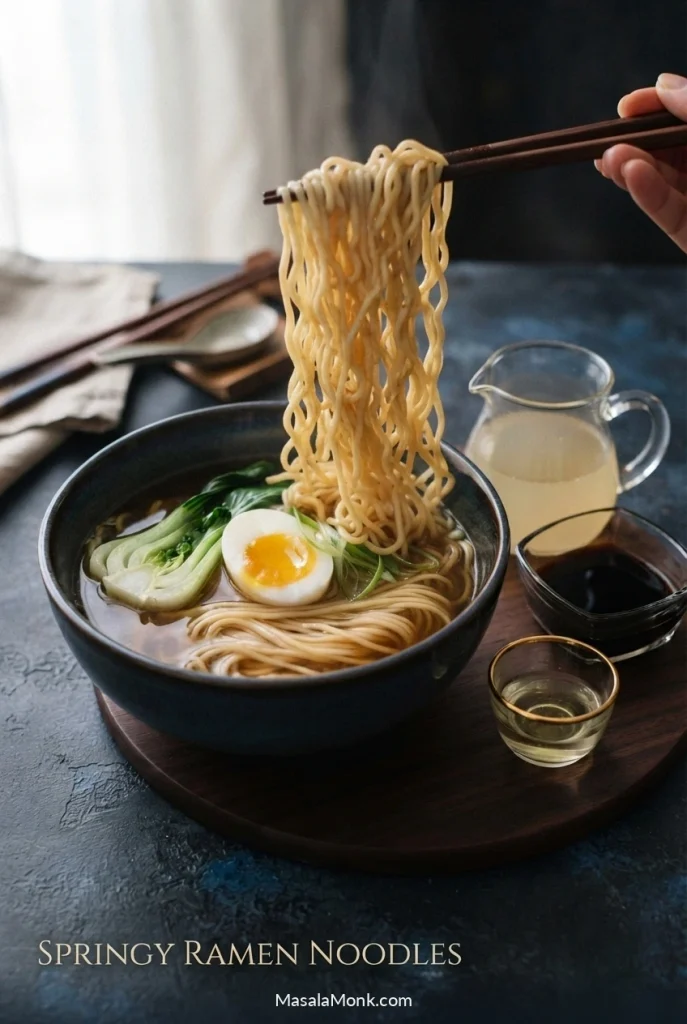
Fresh alkaline ramen noodles give shoyu ramen its familiar springy texture. Frozen ramen works similarly; dried ramen is a practical alternative. Whatever you choose, follow the packet timing. Once you’ve chosen a type, use the noodle-timing decision in Step 6 to coordinate the soup and noodles.
| Noodle type | For four servings | What to expect |
|---|---|---|
| Fresh alkaline ramen | 500 g / 17½ oz | Springy texture; often cooks quickly |
| Frozen ramen | 500 g / 17½ oz | Similar texture to fresh; often cooked directly from frozen |
| Dried ramen | 340 g / 12 oz | Convenient pantry alternative; use packet cooking time |
| Instant noodle blocks | 4 labeled portions | Convenient, but texture varies; omit the packaged soup seasoning |
| Rice noodles or spaghetti | Not a direct substitute | Can make a pleasant noodle soup, but won’t reproduce alkaline ramen’s chew |
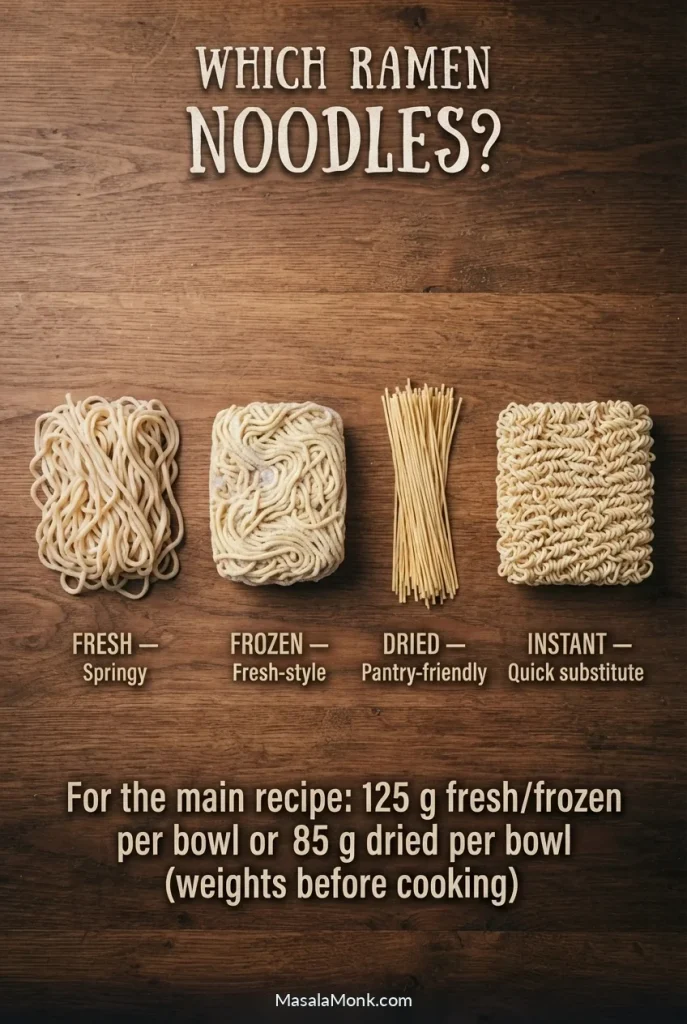
Traditional ramen noodles get some of their texture from kansui, an alkaline ingredient in the dough. For a different wheat-noodle dish, our Dan Dan noodles use a spicy, sesame-rich sauce rather than broth.
Choosing the Stock and Mushrooms
If the stock tastes watery before you begin, aromatics will make it more fragrant but cannot give it the depth of a fuller-flavored chicken stock. Choose the best plain, unsalted stock you can get rather than relying on extra soy sauce to compensate.
Dried shiitake have a more concentrated flavor than fresh. The fresh-mushroom option in the ingredient list makes a gentler soup; its tender slices are good in the finished bowls.
Ginger and scallions also form the aromatic base of our wonton soup, though its broth and finish differ.
Soy Sauce, Mirin and Seasoning Choices
Soy sauce brands vary in saltiness. Start with less tare when using an unfamiliar bottle, then taste the soup before adding more.
Mirin brings gentle sweetness; the water-and-sugar swap in the ingredients is useful when you do not have it, though the taste differs slightly. If avoiding alcohol, use the swap and check labels on the other condiments.
Leftover mirin can also be used in homemade teriyaki sauce.
Chicken, Vegetarian, Vegan and Spicy Variations
The cooked chicken topping is optional. Use a modest portion so the clear broth, noodles, egg and greens remain the main features of the bowl rather than being crowded out by meat.
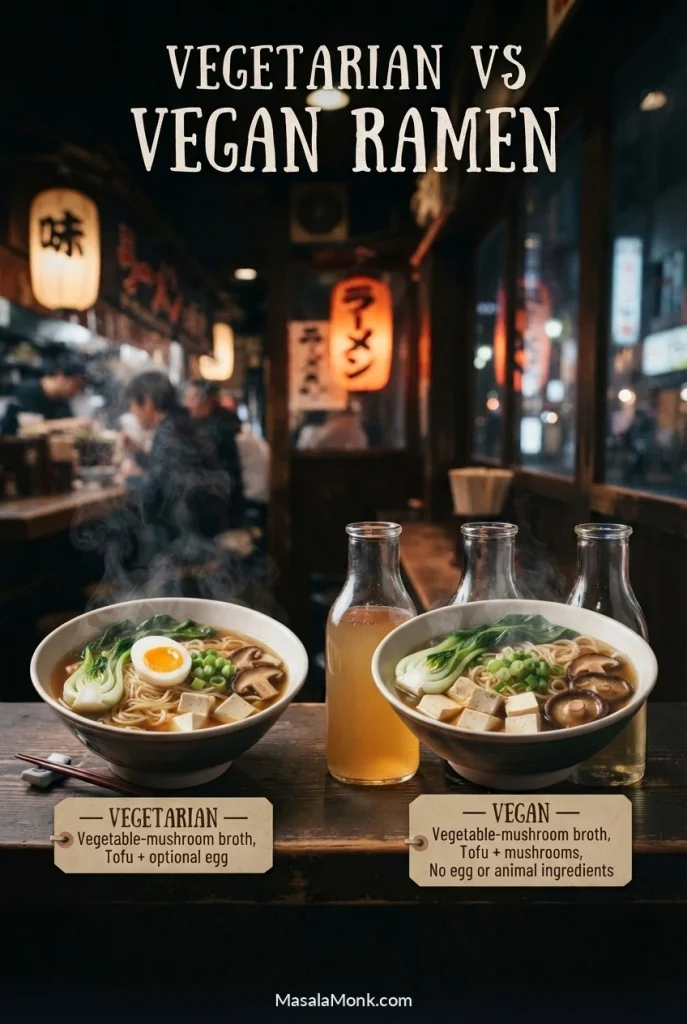
For vegetarian ramen, use 1.6 litres of flavorful, unsalted or very low-sodium vegetable-and-mushroom stock in place of the chicken stock. Warm or lightly pan-sear firm tofu for an extra topping.
For vegan ramen, leave out the egg and chicken as well, and check the noodles and condiments for animal-derived ingredients.
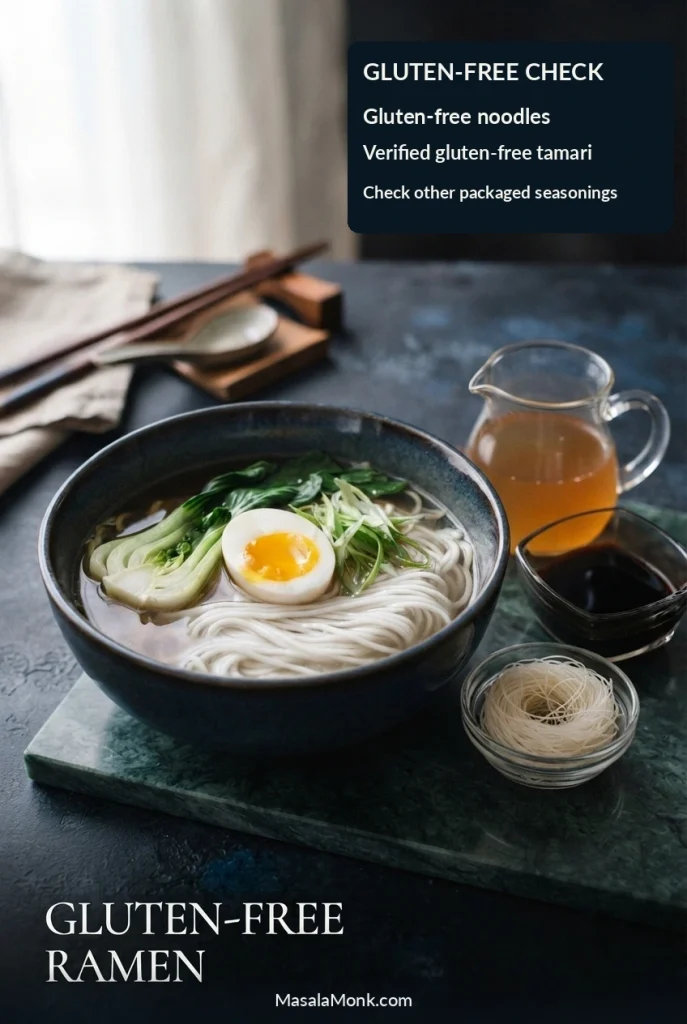
For gluten-free shoyu ramen, use suitable gluten-free noodles and verified gluten-free soy sauce or tamari, and check packaged seasonings. If avoiding gluten strictly, use fresh cooking water and clean pots and strainers to prevent wheat cross-contact. Rice noodles have a softer bite than alkaline wheat ramen.
For extra heat, put chili oil or chili paste on the table. Each person can season their bowl without making the whole batch spicy. Once you’ve chosen your variation, return to the step-by-step method.
Why Your Ramen Tastes Bland, Salty or Greasy
A bland bowl may need more seasoning or more flavorful stock—two different problems. Use the guide below to identify what is missing before adjusting the whole batch. You can also revisit the one-bowl starting amounts.
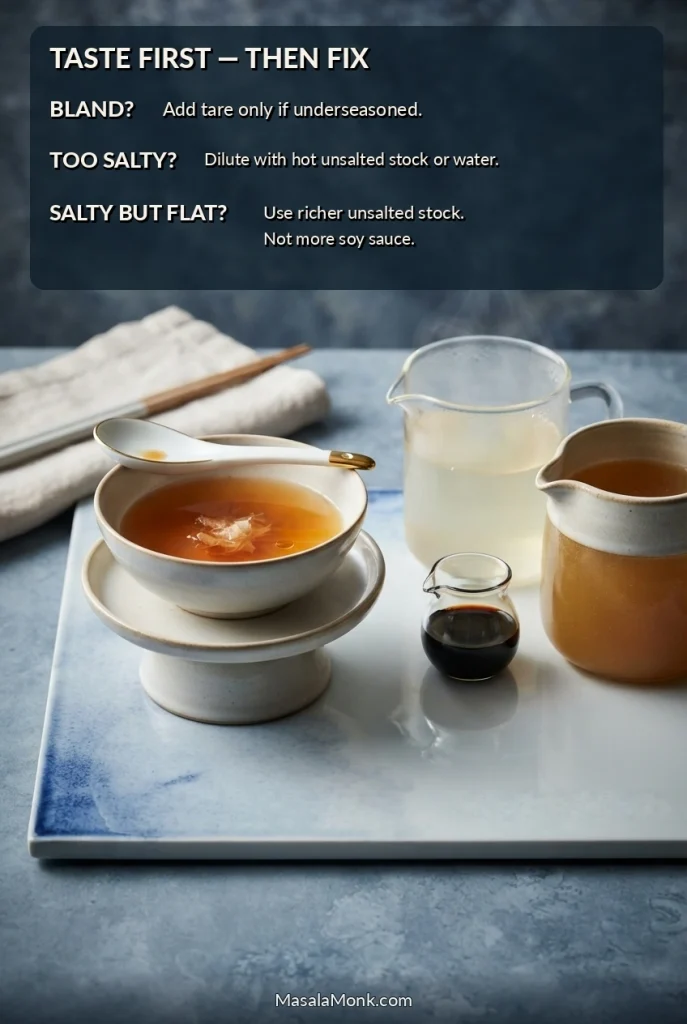
Match Each Ramen Problem to the Right Fix
| Problem | Likely cause | What helps |
|---|---|---|
| Bland soup | Too little tare or weak stock | Add a little tare if the soup needs seasoning. If saltiness is already right, use more flavorful unsalted stock if available. |
| Too salty | Salted stock or too much tare | Dilute with hot unsalted stock or a little water, then taste again. |
| Salty but flat | Stock lacks savory depth | Try a little richer, unsalted chicken or mushroom stock. More soy sauce will only increase the saltiness. |
| Watery or diluted broth | Weak stock or too much dilution | Replace some liquid with stronger unsalted stock if available. Soy sauce adds salt, not richness. |
| Bitter soup | Scorched garlic oil or overheated aromatics | If the oil has not been added, discard it and make a fresh batch. If it is already in the bowl, skim visible oil and replace some affected broth if possible; bitterness may linger. |
| Too oily | Excess finishing oil or fat in the broth | Skim excess fat and use less aromatic oil. |
| Cloudy broth | Vigorous boiling or starchy noodle water | Simmer the broth gently and boil noodles separately. Slight cloudiness is harmless. |
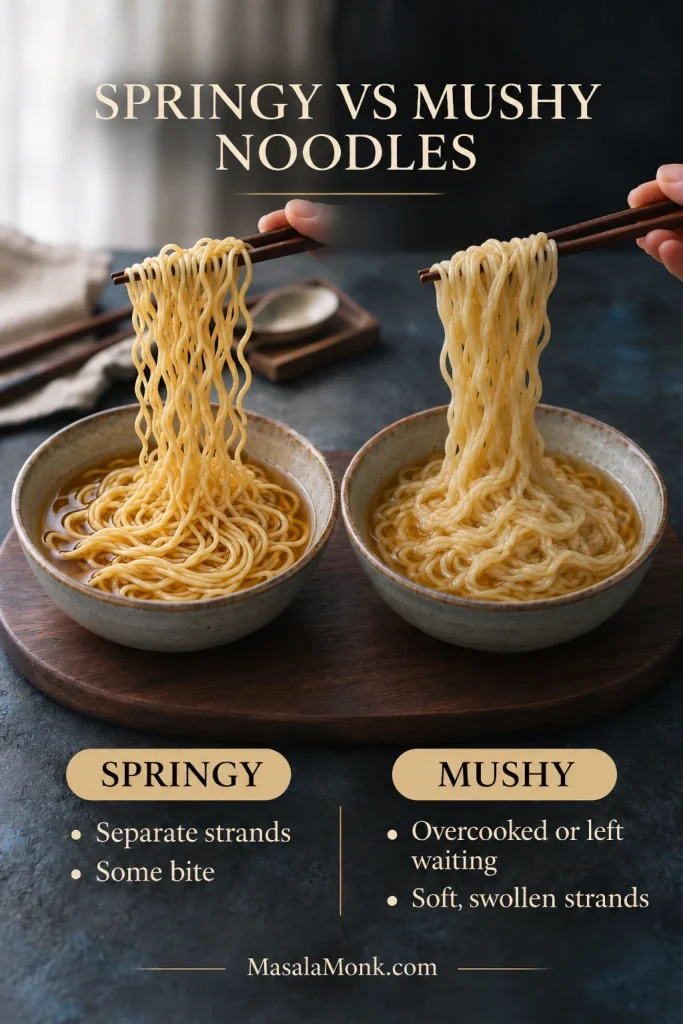
| Mushy noodles | Overcooking or waiting after draining | They won’t regain their chew. Replace them if possible, and transfer the next batch directly into ready soup. |
| Eggs tear during peeling | Delicate whites or rushed chilling | Chill fully, crack the shells all around and peel gently under water. |
| Lukewarm ramen | Cold bowls, cold toppings or slow assembly | Reheat broth separately until steaming. Don’t simmer cooked noodles to make them hot again. |
How to Recognize Overcooked Ramen Noodles
Compare the same kind of ramen noodle: properly cooked strands stay separate and springy, while overcooked noodles swell, soften and cling together.
Make-Ahead, Storage and Reheating
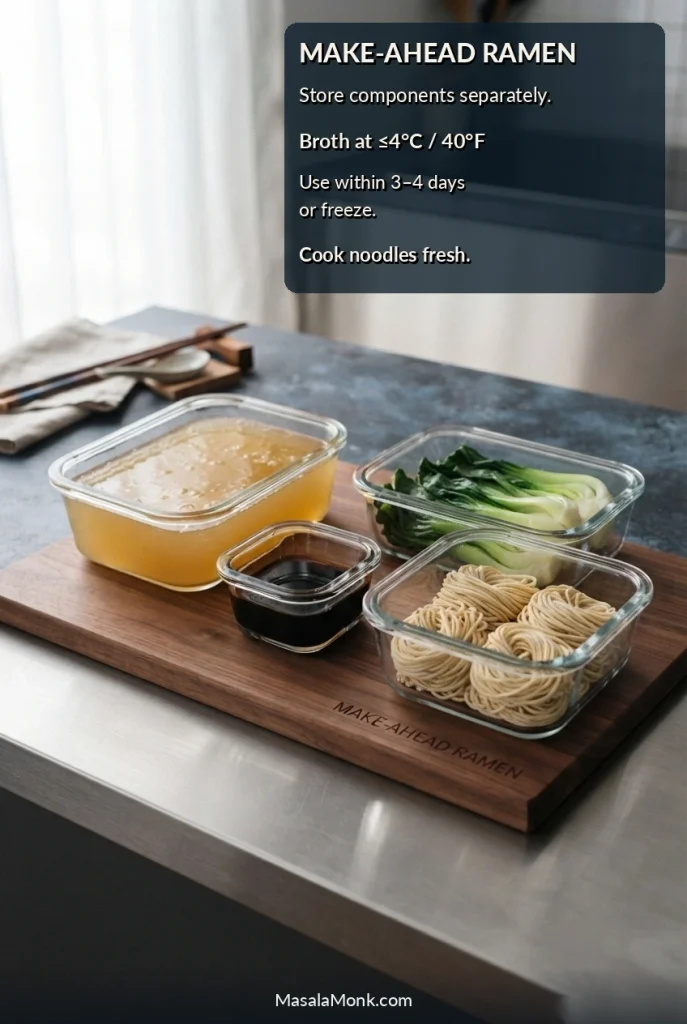
You can prepare the broth and tare ahead, wash the greens and slice the scallions. Refrigerate the components separately, then cook the noodles when you’re ready to serve. Noodles left sitting in soup absorb liquid and soften, which is why we also keep them separate in our chicken noodle soup recipe.
Cool the broth promptly in shallow containers. Refrigerate at 4°C / 40°F or below within 2 hours of cooking, or within 1 hour if the surrounding temperature is above 32°C / 90°F. Use refrigerated broth within 3–4 days, or freeze it. For more guidance, see FoodSafety.gov’s food-safety recommendations.
To serve leftovers, bring the broth to a boil before assembling fresh noodles. Reheat cooked chicken thoroughly to 74°C / 165°F before adding it to the bowls.
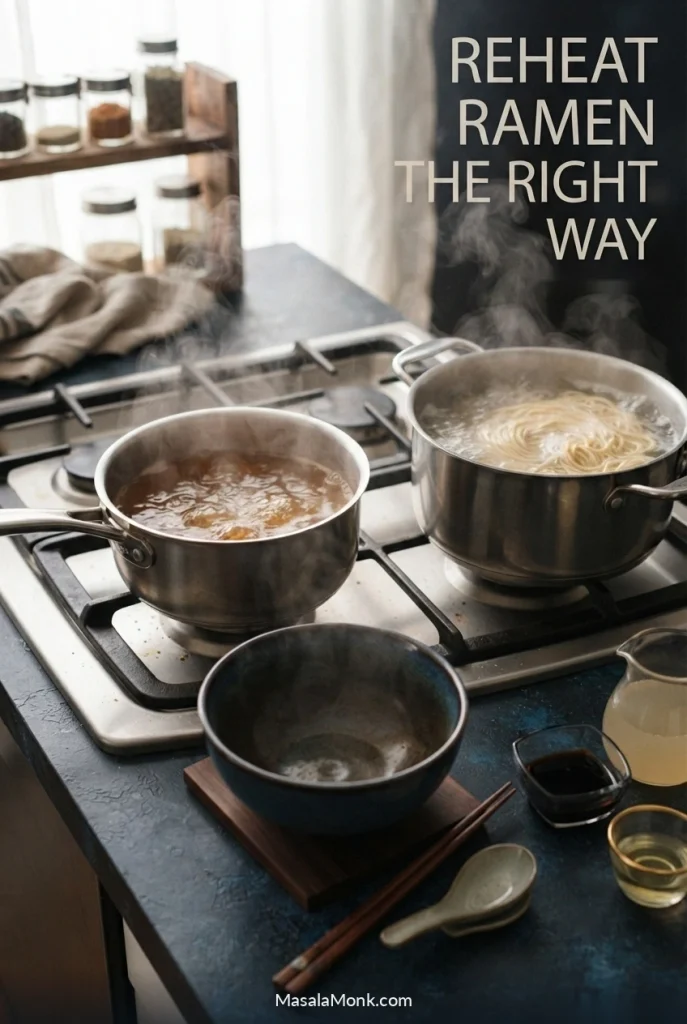
Keep the mixed tare covered in the refrigerator. Prepare jammy eggs close to serving time and use fresh garlic-infused oil for the meal; don’t leave homemade garlic oil at room temperature to store for later. For the final topping order once your soup and noodles are hot, see Step 7.
Common Questions About Homemade Ramen
Can I make this with bouillon cubes or concentrated stock?
Yes, but many concentrates contain substantial salt. Prepare them according to the label, preferably on the mild side, and begin with less tare in each bowl. You can add more seasoning once you’ve tasted the finished soup.
Can I make two bowls instead of four?
Yes. Halve the ingredients and use two eggs, 250 g fresh or frozen noodles or 170 g dried noodles. Allow approximately 650 ml broth and 50 ml tare for the two bowls at the usual starting strength, adjusting for stock saltiness. The per-bowl starting amounts are also handy when serving different portions.
Can I make this ramen gluten-free?
Yes. Use suitable gluten-free noodles and verified gluten-free soy sauce or tamari, checking all other packaged seasonings too. Rice-based noodles can make a good soup, but they won’t reproduce the springy texture of traditional alkaline wheat ramen. For clean-equipment considerations, see the gluten-free adaptation.
For something alongside the ramen, try pan-fried gyoza or a cool cucumber salad. Both work well with the hot, savory broth.
What noodles did you use, and did you change the toppings or soy seasoning? Share what worked for your bowl, especially the noodle cooking time. That detail can be genuinely helpful to someone using the same brand.








