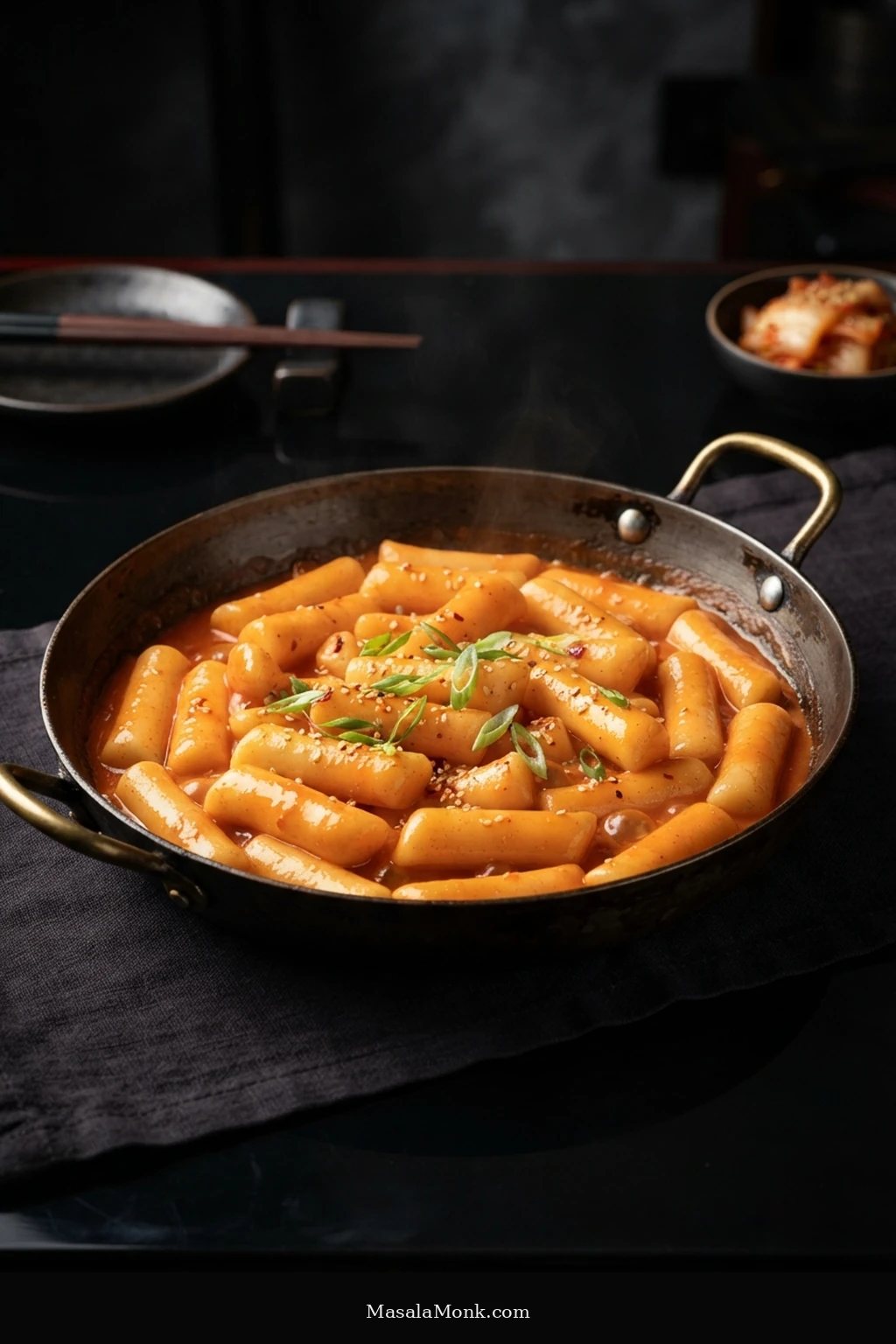
Springy Korean rice cakes coated in a glossy orange-red sauce are the reason rose tteokbokki is so easy to crave. Gochujang brings its fermented chilli depth, while milk and cream turn the sauce silky enough to cling to every piece.
Rose tteokbokki is a creamy variation of classic Korean tteokbokki, using an Italian-inspired rosé-style sauce built around a Korean chilli base. Dairy softens the red sauce into its familiar pink-orange colour. Some versions also use tomato, but this one does not need it.
The real cooking problem is that the tteok and the sauce are running on separate clocks. Fresh rice cakes can soften in minutes; a firm refrigerated, vacuum-packed or frozen batch may still be dense in the centre while a cream-heavy sauce is already getting too thick. This method gives the tteok most of its cooking time in seasoned chilli liquid first, then brings in the milk and cream only when the centre is almost tender.
First, What Kind of Tteok Do You Have?
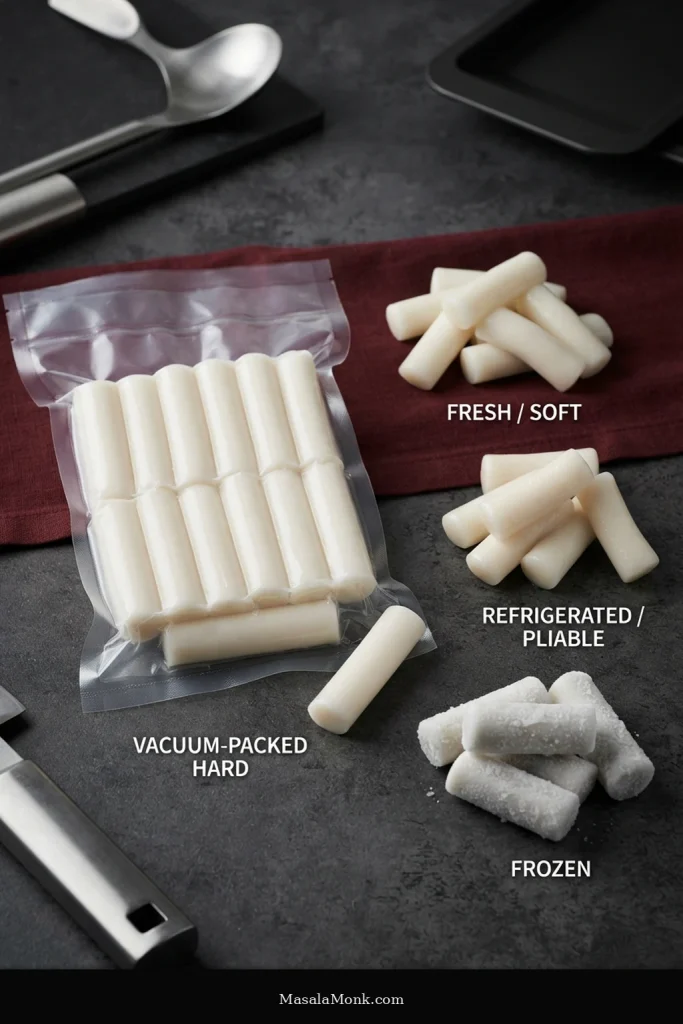
Rice cakes that look almost identical can behave very differently in the pan, so check what you have before you start.
| Your rice cakes | Before they go into the pan |
|---|---|
| Fresh and soft | Separate the pieces and rinse if needed. Usually no soaking. |
| Refrigerated but pliable | Usually use directly. A brief soak can help if the centres feel quite firm. |
| Vacuum-packed and hard | Soak in warm water while you prepare the other ingredients, until the pieces loosen and feel less rigid. |
| Frozen | Thaw or soak until the pieces separate and are no longer frozen solid through the centre. |
If your package gives different preparation instructions, follow those first. Use soaking when needed to loosen firm tteok, then cook to texture rather than to a fixed time. Rice cakes that are already soft and flexible can go straight into the pan.
Most cylindrical tteokbokki rice cakes are rice-based. If your packet says mil-tteok, it is wheat-based and usually has a somewhat softer, different chew. It is also not gluten-free.
Rose Tteokbokki Recipe
Recipe development note: This exact MasalaMonk formula has not yet been kitchen-tested.
| Yield | 2 generous or 3 moderate servings |
|---|---|
| Prep | About 10 minutes |
| Cook | About 10–18 minutes for most tteok; longer if very firm |
| Total prep + cook | Roughly 20–30 minutes, plus soaking or thawing if needed |
| Spice level | Adjustable |
| Pan | 10–12 inch / 25–30 cm skillet or shallow sauté pan; a wider pan will reduce the sauce faster |
Rice Cakes & Aromatics
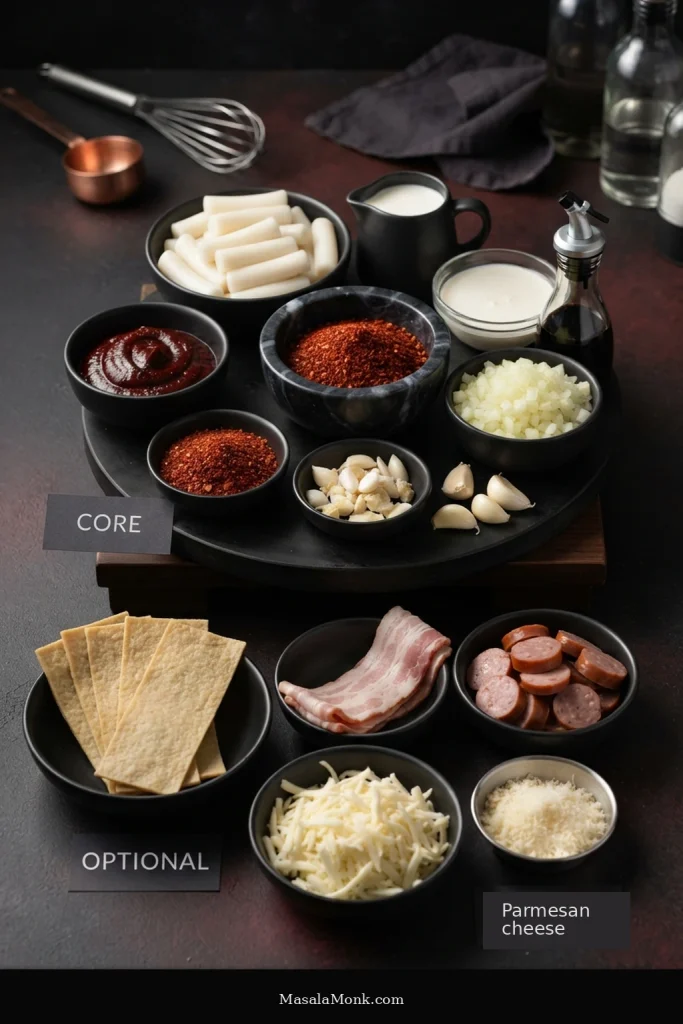
- 400 g / 14 oz Korean tteokbokki rice cakes (tteok)
- 1 tablespoon neutral cooking oil
- 1 small onion, about 100 g, thinly sliced
- 3 large garlic cloves, about 12 g, finely minced
For the Rose Sauce
- 2 tablespoons gochujang (Korean fermented chilli paste), about 35–40 g
- Gochugaru (Korean red pepper flakes), to taste — as a rough starting point: none for the lowest heat; ¼–½ teaspoon for mild; 1 teaspoon for medium; up to 2 teaspoons for hot. Brands and chilli tolerance vary.
- 15 ml / 1 tablespoon regular or all-purpose soy sauce, not dark soy sauce
- 10 g / about 2½ teaspoons sugar
- 180 ml / ¾ cup water
- Hot water for adjusting, as needed — keep about 240 ml / 1 cup nearby; you may use very little or none, and an unusually firm batch may need more
- 180 ml / ¾ cup whole milk
- 120 ml / ½ cup heavy cream or whipping cream
- 2 scallions, thinly sliced, for finishing
- Toasted sesame seeds, optional
Optional Additions
- 100 g / 3½ oz Korean fish cake, cut into bite-size pieces
- 75 g / 2½ oz bacon, cut small
- 100–120 g / 3½–4 oz fully cooked sausage, sliced
- 60 g / 2 oz mozzarella
- 1–2 tablespoons finely grated Parmesan or Pecorino
Hold the extra salt until you have tasted the finished sauce. Gochujang, soy sauce and salty add-ins may already provide all you need.
1. Prepare the Tteok
If your tteok needed soaking or thawing, drain it now. Fresh, soft rice cakes can go straight into the pan.
Frozen pieces do not need to become completely soft before cooking. Get them separated and free of a frozen-solid centre; the pan can handle the rest.
2. Soften the Onion and Garlic
Heat the oil over medium heat. Add the onion and cook for 2–3 minutes, until it begins to soften and smell sweet. Add the garlic and cook for about 30 seconds, just until fragrant.
Using bacon? Start with it instead of the oil. Let the fat render and the bacon begin to brown, pour off most of the excess fat, then add the onion.
3. Cook the Gochujang Briefly
Add the gochujang and your chosen amount of gochugaru. Stir for about 30 seconds. The paste should loosen, become fragrant and coat the onion and garlic; keep it moving so it does not scorch.
4. Give the Tteok a Head Start
Pour in 180 ml / ¾ cup water, then add the soy sauce and sugar. Stir until the gochujang dissolves into an even red sauce.
Add the rice cakes. Fish cake or sliced fully cooked sausage can go in now too.
Bring the pan to a lively simmer and stir regularly. Soft fresh tteok may need only a few minutes. Firmer rice cakes can take considerably longer.
Bite one before the dairy goes in. The centre should have lost its hard or chalky core but still feel slightly firmer than you ultimately want to eat it.
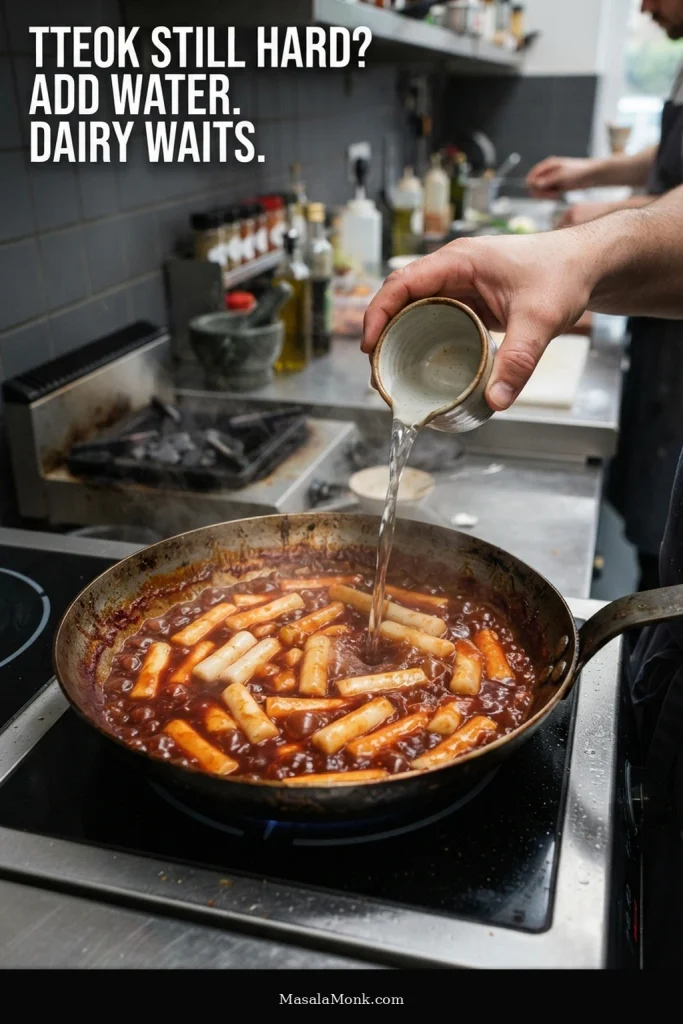
Still hard: the outside may feel soft, but the centre is dense or resistant. Give it more moisture and time.
Ready for the dairy: no hard or chalky centre, but still slightly firmer than the final serving texture.
Gone too far: noticeably swollen, gummy or slimy, with edges beginning to lose their shape.
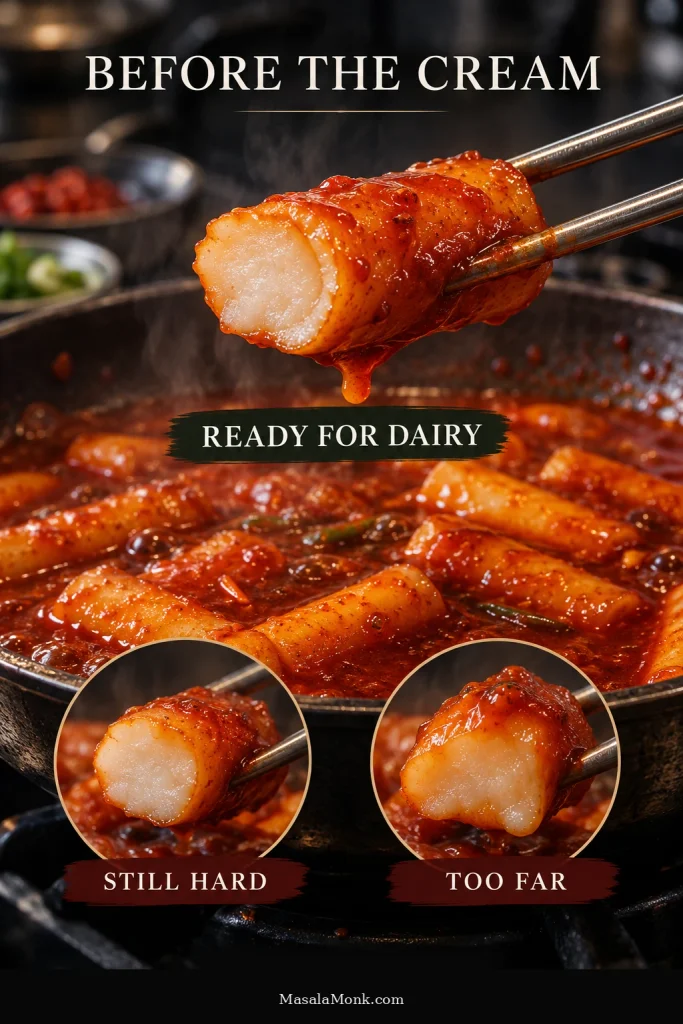
If the sauce starts thickening while the centre is still firm, add hot water a few tablespoons at a time and keep cooking. This is normal with firmer rice cakes.
Hard rice cake + thickening sauce = more water.
Do not move on to the dairy stage while the centre is still hard or chalky. Once it is almost tender, let any obvious excess water simmer away. There should still be red sauce around the tteok, but not a panful of thin broth when the milk and cream go in.
Pan already going off track? Jump to troubleshooting →
5. Add the Milk and Cream
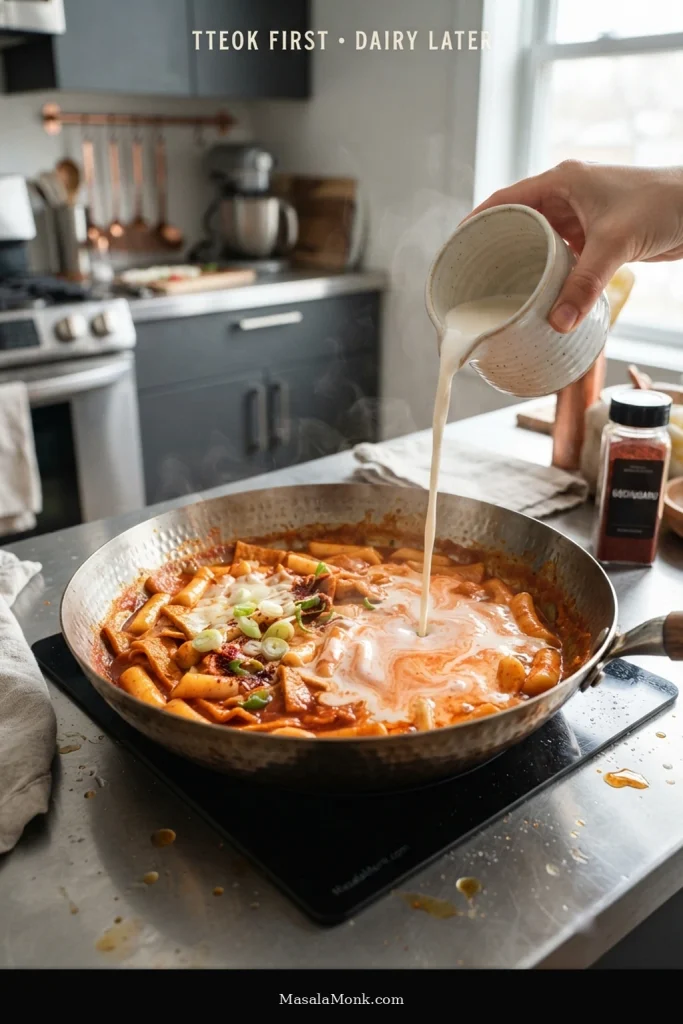
Lower the heat to medium-low. Stir in the milk and cream and bring the sauce back to a gentle simmer.
Simmer only until the rice cakes are fully tender and the sauce begins to cling to them, usually about 1–4 minutes. A wider pan may get there faster, so trust the texture and appearance more than the clock.
This is when the pan changes character: the loose red sauce turns softer in colour, glossier and fuller, while the fermented chilli flavour still comes through underneath the dairy.
6. Taste and Adjust
Now taste the sauce. Dairy changes how the chilli, sweetness and salt register, so this is the moment to make small corrections.
More gochugaru increases the heat. If the fermented chilli flavour itself feels weak, start with another ½ teaspoon gochujang. Mix it first with a spoonful of sauce from the pan, stir it back in and simmer briefly before tasting again.
If you used a lot of reserve water to soften firm tteok, the seasoning may need a little attention too. Taste first, then change one thing at a time.
7. Stop While the Sauce Still Moves
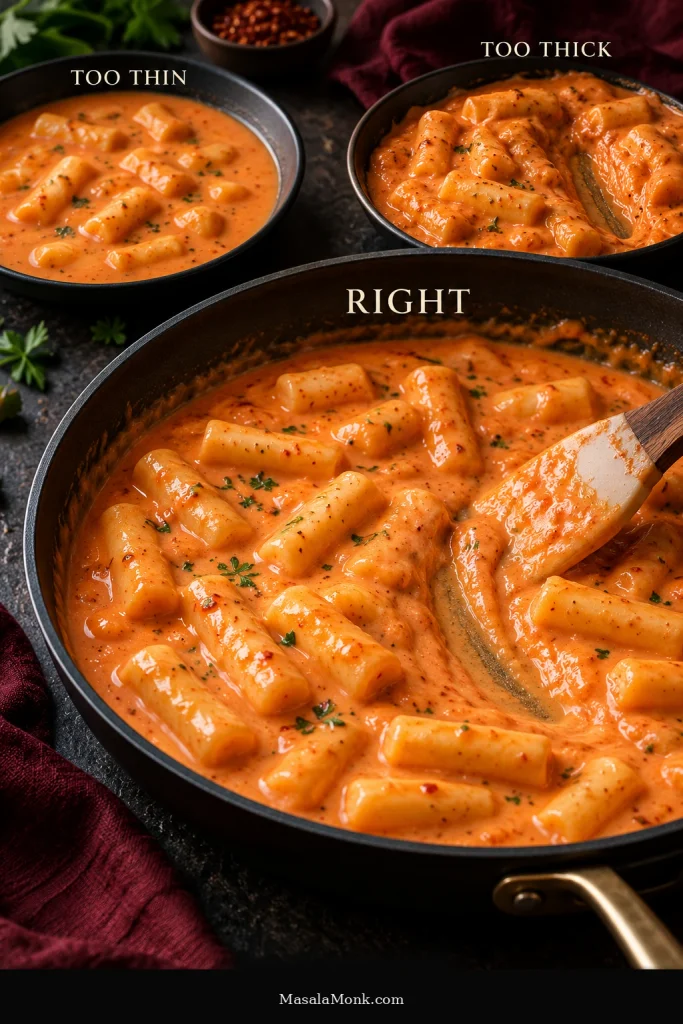
Rose tteokbokki sauce is ready when it coats the rice cakes, still pools in the pan, and a spatula trail slowly closes behind it.
Drag the spatula across the bottom. A clear path should appear for a moment, then fill back in. If the trail stays like a trench and the tteok sits in a heavy paste, the sauce has gone further than it needs to.
Take the pan off the heat slightly looser than you want the final dish. It will continue thickening as it stands.
8. Finish and Serve
If using mozzarella, melt it into or over the finished pan. Finish with Parmesan or Pecorino instead if you prefer a sharper, saltier note.
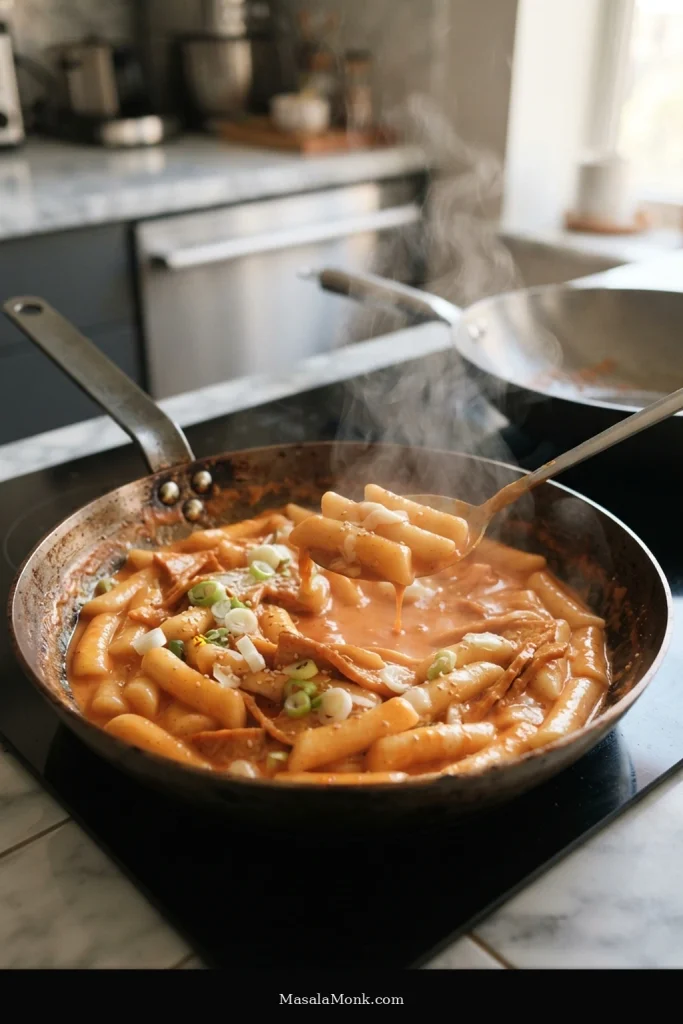
Add scallions and sesame seeds if using, and serve while the sauce still moves easily around the tteok.
If the Pan Looks Wrong Right Now
If something has gone off course, most batches are still recoverable. First work out whether the rice cakes need help, the sauce needs help, or both.
A thin sauce is easy to reduce, and a thick one can usually be loosened. The rice-cake texture deserves more attention because once tteok becomes gummy and overcooked, there is much less you can do to bring that springy chew back.
Match the Pan to the Fix
| What is happening | What to do |
|---|---|
| Tteok hard, sauce getting thick | Add hot water and keep the simmer gentle until the centre softens. |
| Tteok tender, sauce still thin | Reduce uncovered. If the rice cakes are already perfect, lift them out briefly while the sauce thickens. |
| Tteok getting gummy or losing clean edges | Get the rice cakes out of the heat. Finish the sauce separately if necessary. |
| Sauce too thick | Add water or milk 1–2 tablespoons at a time. |
| Too spicy | Add milk a tablespoon or two at a time. Use cream instead only if you also want a richer sauce. |
| Creamy but bland | If the gochujang flavour is weak, add a small amount more. If the chilli is already present but the sauce still tastes flat, try a small splash of soy sauce or a tiny pinch of stock powder. |
| Too sweet | If it is only slightly sweet, a little more gochugaru or savouriness can bring the balance back. If it is genuinely oversweetened, dilute with unsalted water or milk, then rebuild the seasoning gradually. |
| Too salty | Dilute with unsalted water or milk and stop adding salty toppings or seasonings. |
| Too greasy | Skim obvious excess fat if possible, then loosen with a little milk or water. Next time, drain rendered bacon more thoroughly. |
| Sauce slides off the tteok | Give it a short uncovered simmer while stirring. Reduction and rice-cake starch should provide enough body without a cornstarch slurry. |
Back in control? Continue with Step 5 if the tteok still needed cooking, or return to Step 7 if you were only correcting the final sauce.
Milk, Cream and Cheese
Milk keeps the sauce moving around the pan. Cream gives it the fuller, clingier finish that makes rose tteokbokki feel rich without needing a blanket of melted cheese. An all-cream sauce becomes heavy quickly, especially once tteok starch, bacon or cheese enter the picture.
Mozzarella adds stretch; Parmesan or Pecorino adds a sharper, saltier savouriness. Neither is required for a good rose sauce.
No Heavy Cream?
Replace the cream with an equal volume of whole milk. The sauce will be lighter and looser, so expect a little more gentle reduction once the tteok is tender. Half-and-half is an easy middle ground.
Adjusting the Sauce to Your Taste
Rose tteokbokki varies widely from one shop or recipe to another, so use the base as a starting point and adjust the part you care about.
Gochujang is doing more than making the dish hot. It brings fermented flavour, sweetness, colour and body. Gochugaru is the cleaner tool when you simply want more chilli, which is why the recipe keeps the paste fairly steady and lets you adjust the flakes.
Sugar should round the chilli and dairy rather than dominate them. With salt, taste the finished pan before adding more—especially when fish cake, bacon, sausage or cheese is involved.
- More savoury / snack-shop style: fish cake or well-rendered bacon brings its own flavour; a small amount of Korean stock powder, bouillon or MSG can deepen the background seasoning. Add a little, taste, then decide whether it needs more.
- More saucy: start with another 60 ml / ¼ cup water if you want more sauce without extra richness, or milk for a creamier result. Add more only as needed, then retaste the seasoning.
Adding Ramen and Other Extras
Noodles change the pan most because they absorb sauce as they soften. Vegetables can add bulk while releasing some moisture of their own.
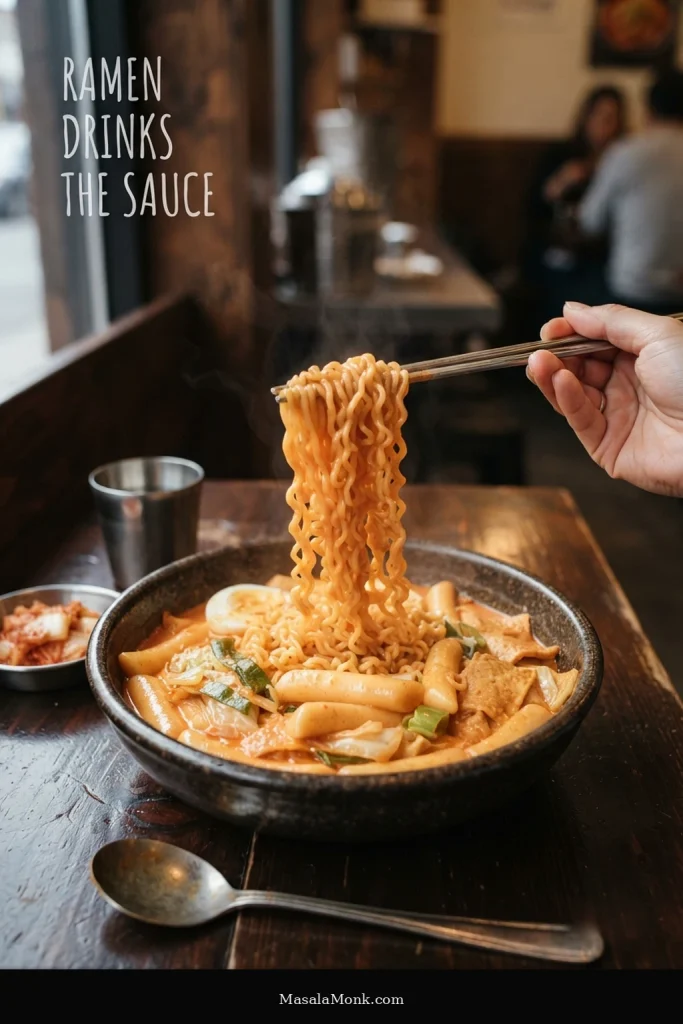
- Instant ramen, about 80–100 g / 3–3½ oz: Branch from the base recipe near the end of Step 4. When the tteok has lost its hard or chalky centre but is still slightly firmer than final serving texture, add the ramen with about 180 ml / ¾ cup extra hot water. Let the noodles begin softening, adding more hot water if they absorb the sauce too quickly, then proceed with the milk and cream. Thick or air-dried noodles may need more liquid; very quick-cooking noodles may need less.
- Udon: Precooked udon usually absorbs less than dry ramen. Add near the end and loosen the sauce only if needed.
- Dangmyeon / glass noodles: Soak or cook them according to the package first, then add near the end.
- Mushrooms: Cook with the onion. They add savouriness and release some moisture.
- Cabbage: Adds sweetness, bulk and moisture. Keep the amount modest unless you are also increasing the sauce.
- Hard-boiled egg: Serve alongside or add near the end. It barely changes the sauce but makes the meal more substantial.
Rose Rabokki
Add a full block of instant ramen and you are moving into rose rabokki territory: the noodles are now competing with the tteok for liquid, and the dish becomes more substantial than the base 2–3 serving recipe. Keep extra hot water nearby and judge the pan as the noodles soften.
Making the base version? Return to the main recipe →
Making It Vegetarian, Vegan or Gluten-Free
Vegetarian
Leave out fish cake, bacon and sausage. Mushrooms, tofu or yubu (fried tofu pockets) can add texture and savoury depth. Use vegetarian stock if adding any, and choose a vegetarian-labelled hard cheese if avoiding animal rennet matters to you.
Vegan
Leave out the meat, fish cake and cheese, then replace the milk and cream with unsweetened, unflavoured plant versions that have some body. Barista-style soy, oat or cashew products often work better than very thin drinking milks. Plant milk or cream restores richness; mushrooms, yubu, mushroom seasoning, vegetable bouillon or nutritional yeast can rebuild savoury depth. Coconut cream also works, but it gives the dish a noticeable coconut flavour.
Gluten-Free
Rose tteokbokki can be gluten-free, but it is not automatically gluten-free. Check the labels on the tteok, gochujang, soy sauce, fish cake, sausage and any prepared stock seasoning. Mil-tteok is made from wheat.
Storing and Reheating Rose Tteokbokki
This dish is best fresh. Cooked tteok firms considerably after chilling, and the sauce thickens at the same time.
Refrigerate leftovers promptly in a covered container. For the best texture, eat them within a day or two.
How to Reheat It
- Put the leftover tteokbokki in a skillet and add 1–2 tablespoons water or milk per serving.
- Cover and warm over medium-low heat, stirring occasionally as the sauce loosens.
- If the sauce tightens before the centres of the rice cakes soften, add another small splash of liquid.
- Keep heating until the tteok itself is tender through the middle.
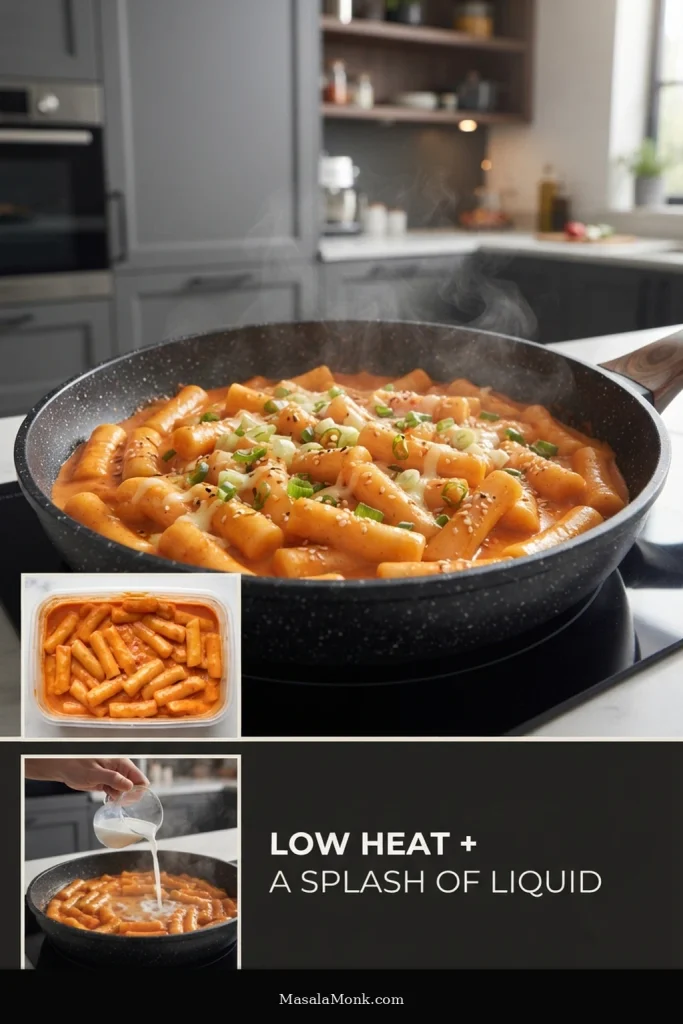
For a microwave fallback, add a small splash of water or milk, cover loosely and heat in short intervals, stirring between each one. Keep going until the sauce is hot and the centres of the rice cakes have softened again.
For food safety, the USDA recommends reheating leftovers to 165°F / 74°C throughout.
This is not a dish worth making in a huge batch for the freezer. Freezing and reheating can change both the texture of the rice cakes and the creamy sauce.
What to Serve with Rose Tteokbokki
Rose tteokbokki is rich enough that the best companions usually bring freshness, acidity or a completely different texture. A cold, crisp cucumber salad does exactly that without making the meal heavier.
Danmuji (yellow pickled radish) is especially good beside the creamy chilli sauce: cold, crisp, sweet-sour and sharp enough to reset your palate between bites. Kimchi or a hard-boiled egg work well too.
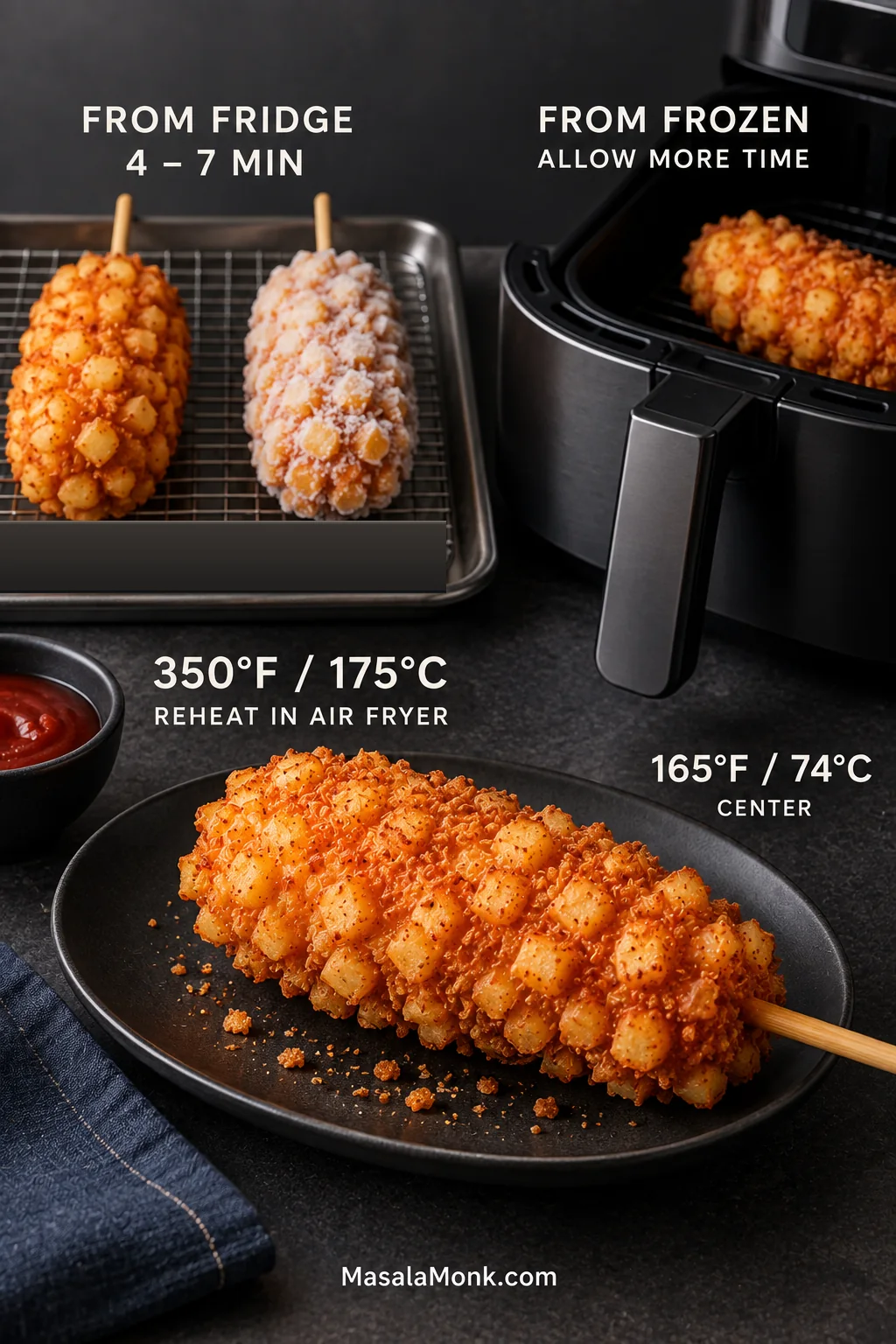
If you want more of a Korean snack-shop spread, crisp gimmari (fried seaweed rolls) or our Korean corn dogs bring the crunchy, chewy contrast that the soft rice cakes do not.
For a larger Korean dinner, bulgogi adds sweet-savoury beef and browned edges without repeating the creamy texture of the main dish.
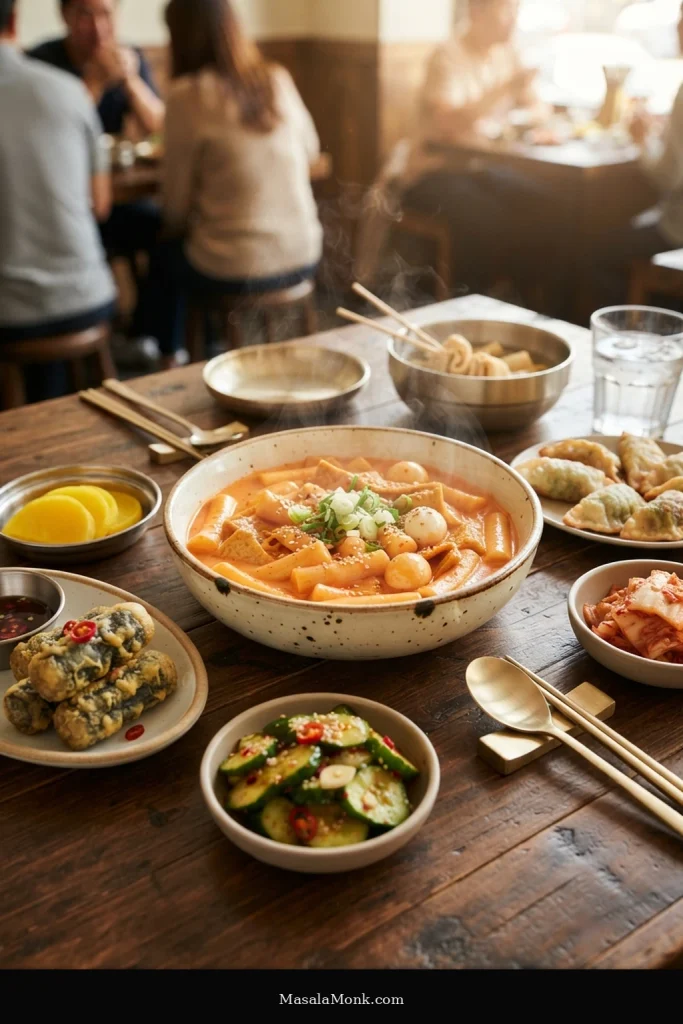
There is a short sweet spot with tteokbokki: the centres are completely tender, the chew still has some bounce, and every rice cake drags a little glossy orange-red sauce behind it.
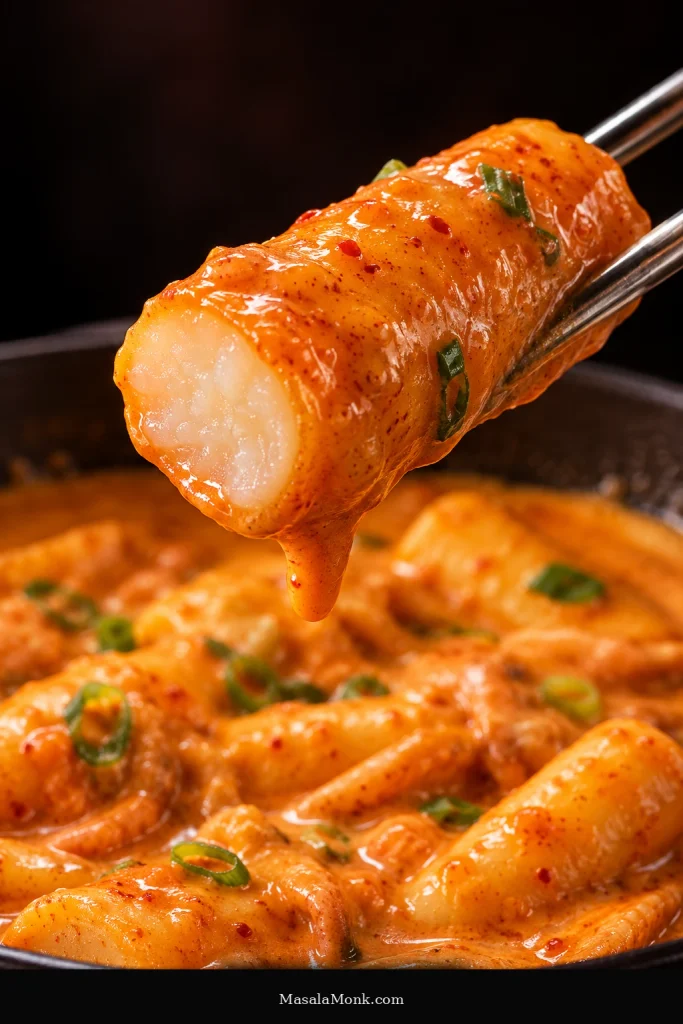
Serve it then, while the tteok still pushes back gently against the bite and the sauce is loose enough to follow it onto the spoon.