
A classic cherry clafoutis recipe bakes sweet cherries in a tender French custard, then brings the dessert to the table in the same dish. As it bakes, the edges puff and turn golden; after a short rest, they settle around the softly set center.
Here the cherries are pitted, so everyone can enjoy the dessert without searching for stones. There’s no pastry to roll: eggs, milk, a little cream and flour make the batter, with sugar and vanilla for flavor. Preparing the fruit usually takes longer than mixing everything together.
Also in this guide: Doneness · Fresh or frozen cherries · Baking dishes · Troubleshooting · Other fruits · Storage
Classic Cherry Clafoutis Recipe
Arrange pitted cherries in a buttered dish, pour the thin custard batter around them and bake until the edges are golden and the center has gently set.
Serves: 6 generous portions or 8 smaller portions · Prep: 20–30 minutes, including pitting · Bake: about 40–55 minutes (begin checking at 35) · Rest: 15–20 minutes · Total: approximately 1 hour 15 minutes to 1 hour 45 minutes. Frozen-cherry thawing time is extra.
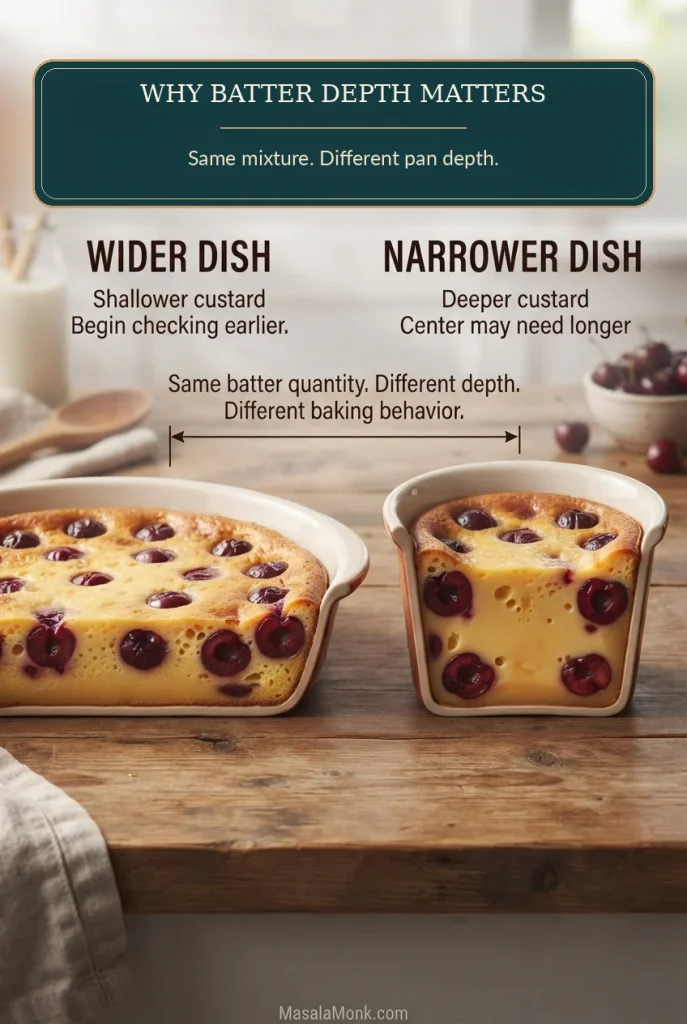
Oven: 180°C / 350°F conventional (approximately 160°C fan). Dish: a 23 cm / 9-inch round ovenproof baking dish, about 5 cm / 2 inches deep. The broad dish gives the custard room to bake evenly and puff without spilling; a narrower dish can take longer to set.
Ingredients
- 500 g (about 1 lb 2 oz) sweet cherries, weighed after stemming and pitting (approximately 3–3½ US cups)
- 3 large eggs (approximately 150 g without shells)
- 240 ml (1 US cup) whole milk
- 60 ml (¼ US cup) unsweetened heavy or whipping cream
- 75 g (½ US cup + 2 tbsp) all-purpose flour
- 90 g (about ⅓ US cup + 2 tbsp) granulated sugar
- 20 g (about 1½ tbsp) unsalted butter, for the batter
- 10 g (about 2 tsp) unsalted butter, for greasing the dish
- 1 tsp vanilla extract
- ⅛ tsp almond extract, optional
- ¼ tsp fine salt
- Powdered sugar, optional, for serving
Eggs and a modest amount of flour give clafoutis its soft custard structure without baking powder. The ingredient board below shows the measured components together; the list above is the reference for quantities.

Without cream? Replace the 60 ml cream with another 60 ml whole milk for a slightly lighter custard. For gluten-free or dairy-free choices, see the ingredient substitutions.
Equipment: mixing bowl, whisk and measuring tools; a cherry pitter or sturdy straw is helpful. A blender and instant-read thermometer are optional.
How to Make Cherry Clafoutis
- Prepare the oven and dish. Heat the oven to 180°C / 350°F conventional (approximately 160°C fan), with a rack in the middle. Grease the baking dish with the reserved 10 g butter. Take the milk and cream out of the refrigerator while you prepare the cherries.
- Pit the cherries. Wash and drain the cherries, remove stems and stones, and weigh out 500 g. Check for overlooked pits and pat away surface water.

Weigh after pitting: Start with approximately 575–625 g of whole fresh cherries, then remove the stems and stones. Weigh out 500 g of prepared fruit, not 500 g of cherries plus pits. Set any extra aside; if you are using frozen cherries, follow the thawing and drained-weight guidance.

Mix the Custard Batter
- Combine the eggs and flour. Whisk the eggs, sugar, salt, vanilla and optional almond extract together. Add the flour in two or three portions, whisking out any dry lumps. The mixture will be thick at this stage.

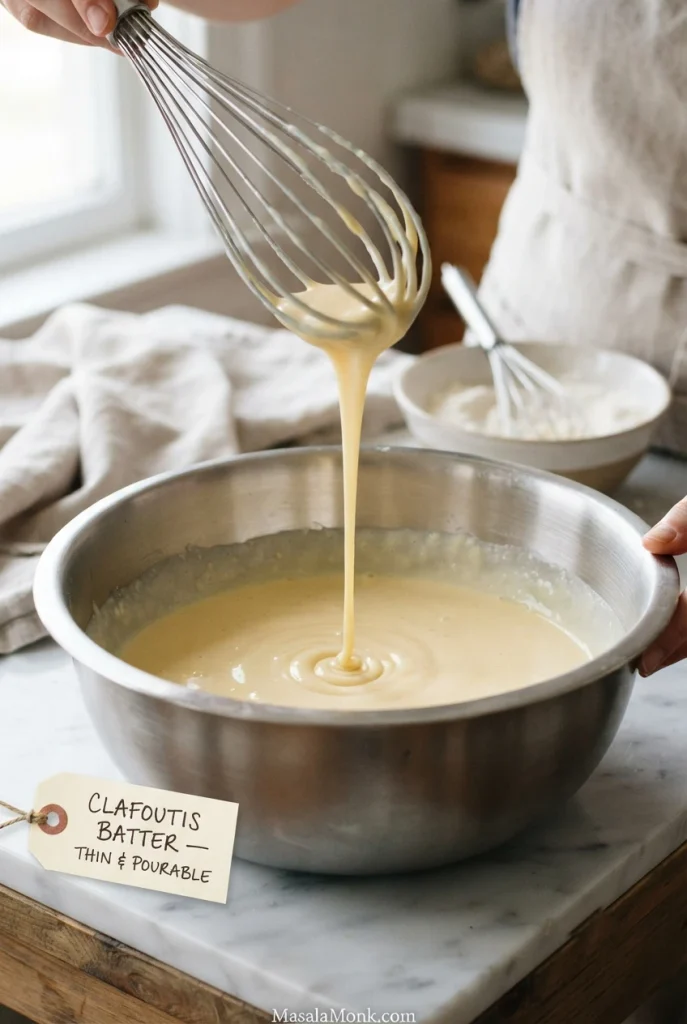
- Finish the batter. Melt the remaining 20 g butter and leave it to cool briefly. Whisk a splash of milk into the egg mixture, then add the remaining milk and cream. Drizzle in the butter while it is still liquid but no longer very hot. The batter should be smooth and thin enough to pour easily; strain it if stubborn flour lumps remain.
Consistency check: The mixture should pour much like French crêpe batter, rather than holding the thick ribbons of cake batter.
Fill the Dish and Bake
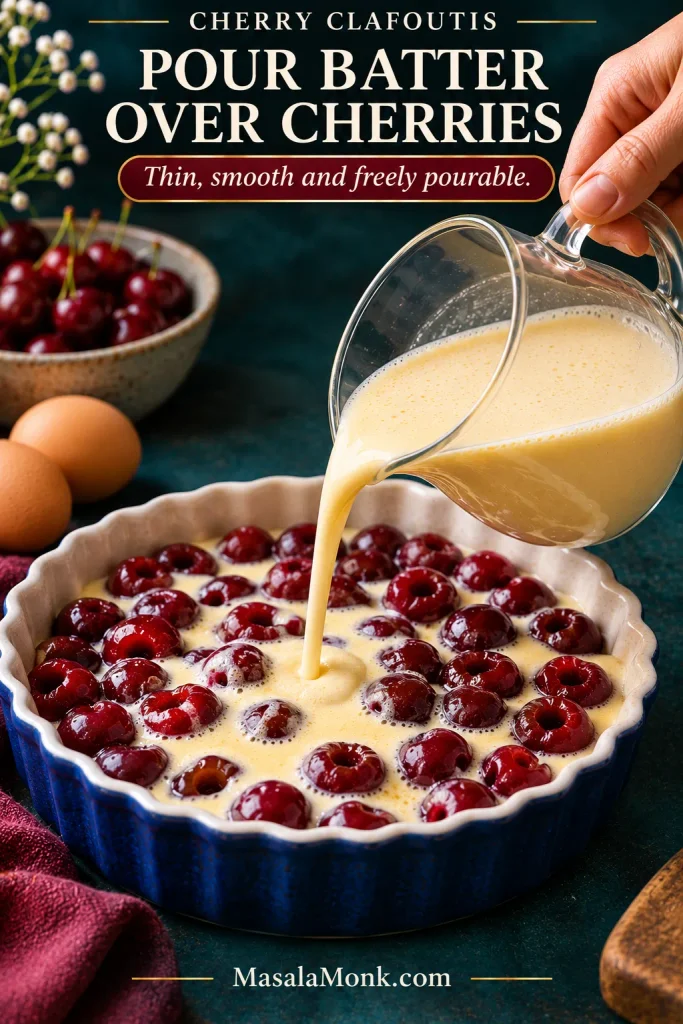
- Fill the dish. Spread the cherries in a fairly even layer. Give the batter a quick final whisk and pour it over and around the fruit; a few cherries will remain visible.
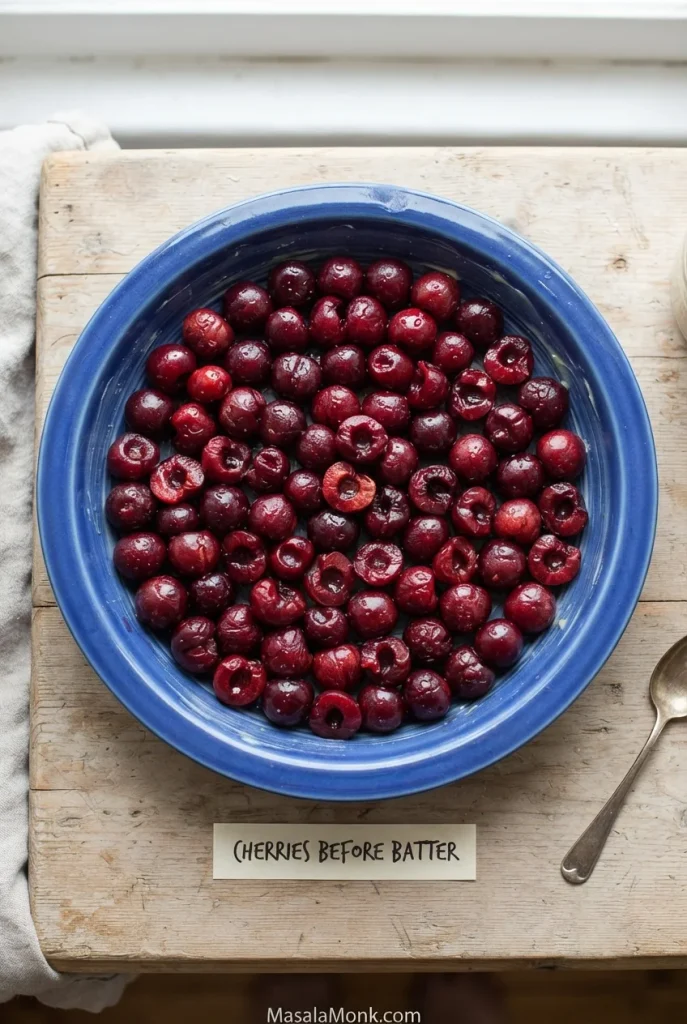
Keep the fruit even: If the pouring batter pushes cherries to one side, pause and gently redistribute them. A few exposed cherries are normal.
- Bake and check. Start checking after 35 minutes. The edges should be golden and set, while the center wobbles gently as one mass rather than sloshing. If it is still liquid, bake for another five minutes and check again. Most reference-size dishes need around 40–55 minutes; a shallow dish may be ready sooner. If the movement is hard to judge, compare a set center with a liquid one.

Let the Clafoutis Rest and Serve
- Let it rest. Set the dish on a heat-safe surface for 15–20 minutes. Dust with powdered sugar if you like and serve warm. For serving, use a broad spoon rather than insisting on perfectly neat wedges.

What to expect from the first serving: Warm clafoutis may not lift as a neat wedge. The golden edge is a little firmer, while the center stays creamy around the cherries. As it cools, the custard becomes easier to portion.

Illustrated cherry clafoutis recipe card: Here are the ingredients, oven setting and seven cooking stages together in one visual reference. Use the detailed instructions above for texture cues and timing adjustments, especially if your baking dish is shallower or deeper.

Optional blender method: For a quicker batter, briefly blend the eggs, sugar, flour, milk, cream, salt and extracts until smooth. Scrape down any flour stuck to the jar, then pulse in the melted butter after it has cooled slightly. Pour around the prepared cherries and bake as directed.

Ingredient Substitutions
Gluten-free: Replace the 75 g wheat flour with 75 g of a measure-for-measure gluten-free baking blend intended to replace all-purpose flour. The custard’s set may vary with the blend; almond flour or coconut flour alone isn’t an equivalent swap.
Dairy-free: Replace the 240 ml milk and 60 ml cream with 300 ml unsweetened soy milk, and use plant-based baking butter for both the 20 g batter butter and 10 g dish butter. Expect a different flavor and less dairy richness.
Vegan: The three eggs provide much of the custard’s structure. For an egg-free version, use a separately formulated vegan clafoutis batter rather than removing the eggs from this recipe.

How to Tell When Clafoutis Is Done
Look at the edges and gently move the dish. The edges should be golden and set; the center should wobble together like a tender custard. A center that visibly runs or sloshes still needs more time. The top can brown before a deep custard has finished baking. If that happens, see how to protect the top while the center finishes.

Clafoutis is a fruit-filled custard, not a fluffy cake. It should hold a soft shape when served; the puffed rim naturally sinks as it cools.

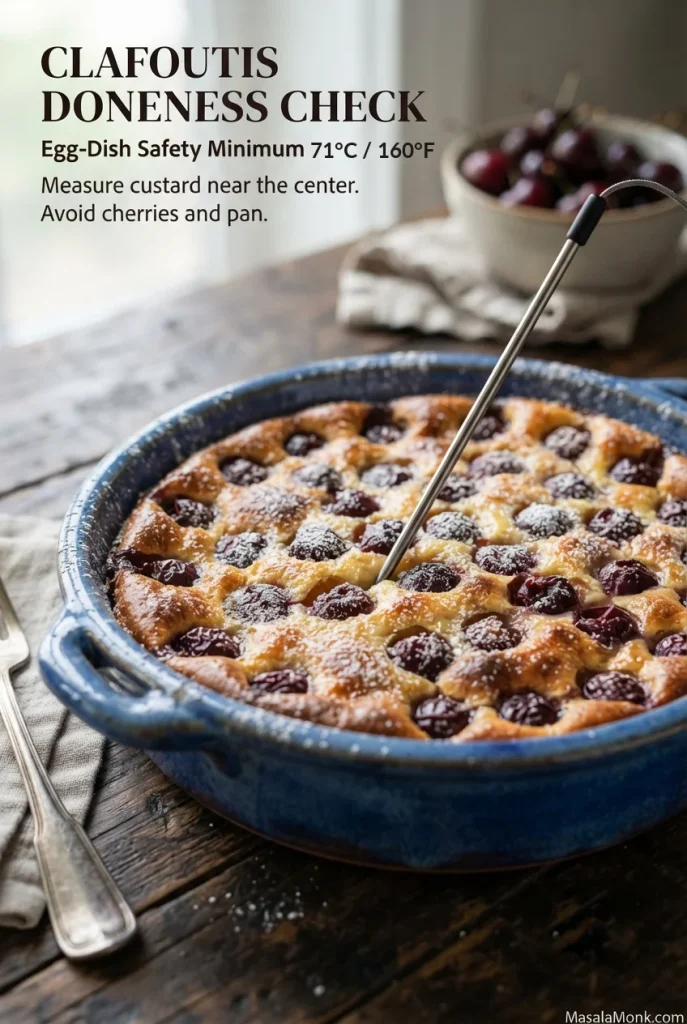
Optional thermometer check: FoodSafety.gov gives a minimum internal temperature of 71°C / 160°F for egg dishes. Check the custard near the center, keeping the probe away from cherries and the pan. Temperature confirms the safety minimum; the custard should also look set. A skewer is less dependable here because it can pick up juice from a cherry. See the FoodSafety.gov cooking-temperature chart.
Fresh, Frozen and Traditional Cherries for Clafoutis
Look for plump, ripe sweet cherries with smooth skins, no leaking juice and no large soft spots. Bing, Lapins and other dark varieties work, but ripe fruit matters more than a particular name: the cherries bring most of the flavor to this mild custard. Use a cherry pitter, or push the stones out with a sturdy straw or chopstick over the mouth of a narrow-necked bottle.

Can You Use Frozen Cherries?
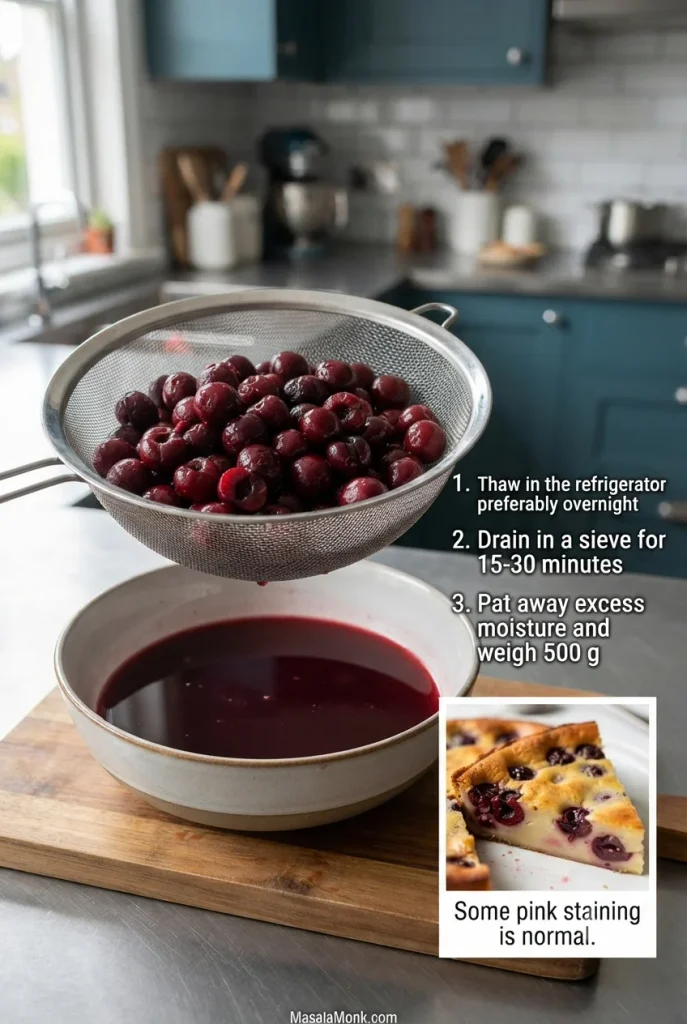
Yes. Buy approximately 600–650 g frozen pitted sweet cherries to allow for juice lost during thawing; the amount varies by brand and how much you drain. Thaw in the refrigerator, preferably overnight. Drain in a sieve for 15–30 minutes, pat away excess surface moisture, then weigh 500 g drained cherries. Thawing time is not included in the recipe’s preparation estimate.

Why draining matters: Once the frozen cherries have thawed, the liquid collected beneath the sieve is juice that would otherwise go into the batter. The fruit may still stain the custard pink, which is normal; draining the free liquid helps prevent watery patches around the cherries.
Sour, Canned and Jarred Cherries
Sour cherries: Use 500 g prepared fruit. If the cherries are particularly tart, increase the total sugar from 90 g to about 100–120 g, according to the fruit’s flavor.
Canned or jarred cherries: Drain and weigh 500 g of fruit. For cherries packed in syrup, taste one of the drained cherries before making the batter; reduce the sugar if the fruit is already very sweet. Do not substitute prepared cherry pie filling: its added starch and syrup are intended for a thick sauce, not this custard.

Why Did Traditional French Clafoutis Keep the Pits?
In France’s Limousin region, clafoutis was traditionally baked with whole cherries. The pits were said to help retain juice and add a faint almond note, although the flavor benefit is debated. Here, pitting makes the dessert more comfortable to eat, particularly when sharing it with children or guests. The optional ⅛ tsp almond extract adds a subtle almond note without leaving the stones in.

Clafoutis is pronounced roughly klah-foo-TEE; clafouti also appears in English. In traditional French usage, similar custards with other fruits are often called flaugnarde or flognarde.
Why the Baking Dish Matters
Use a broad 9-inch / 23 cm round ovenproof dish about 2 inches / 5 cm deep, or an 8 × 8-inch / 20 × 20 cm square dish of similar depth. Both allow the custard to spread out; leave some headroom for it to puff. Because a deeper layer may need longer in the oven, use the center-set cues instead of relying only on the timer.

- 10-inch / 25 cm round: The custard will be thinner, so begin checking earlier.
- Smaller or deeper dish: The middle may need more time even when the top is golden.
- Ovenproof cast iron: Holds heat differently from ceramic; watch the edges for faster browning.
Check the filled dish: Before baking, look at where the custard sits against the pan wall. Leave headroom for the rim to rise; if a narrower dish is almost full, use a wider dish or divide the mixture between smaller ovenproof dishes.
Half Batches and Individual Ramekins
For a half batch, halve every ingredient and use approximately 75 g of beaten egg. Crack one large egg into a bowl, then beat a second egg separately and add enough to reach 75 g. A 6–7-inch / 15–18 cm dish is a reasonable starting size; do not assume the baking time will be exactly half.

For individual clafoutis, plan on six 240 ml / 8-US-fl-oz ramekins, or about eight smaller 180 ml / 6-US-fl-oz ones. Have an extra ramekin available, since actual capacity varies with the fruit.
Butter the ramekins, divide the fruit and batter, and fill each no more than three-quarters full. Set them on a baking tray. Begin checking after 20 minutes; approximately 25–35 minutes is a useful guide, with the same gently set centers as in a full-size dish.

Serving individual clafoutis: Let the custard settle briefly after baking, then bring each ramekin to the table on a saucer or other heat-safe base. The ceramic will remain hot, so guests can enjoy the soft center without handling the dish directly.

Clafoutis Troubleshooting
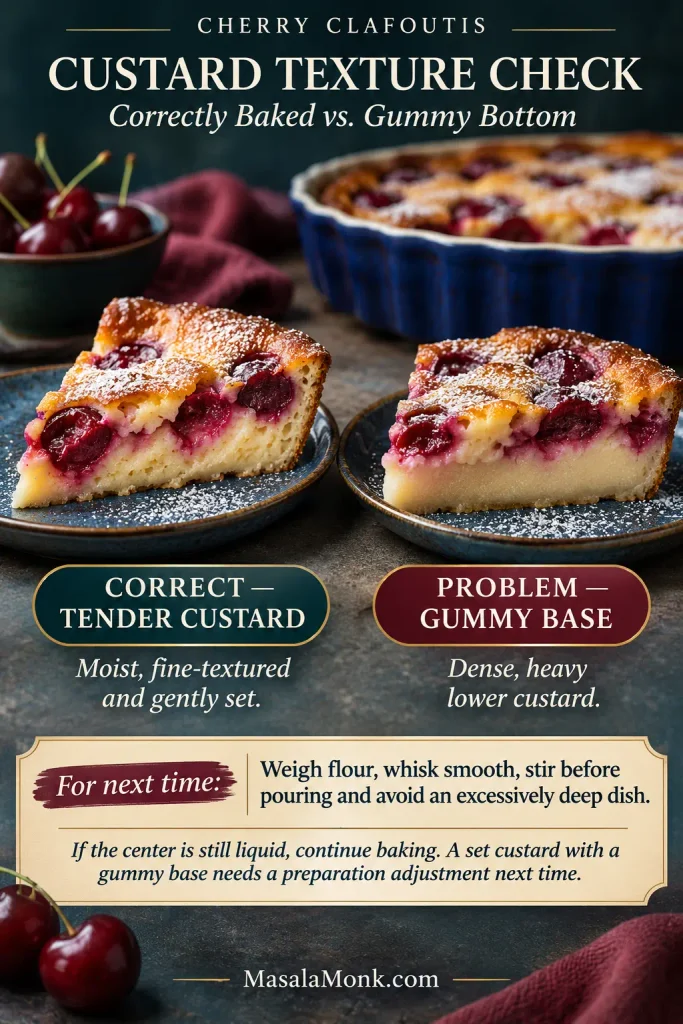
Start with what you can see while the clafoutis is still warm. A center that flows needs more time, even if the top is dark. Once the custard has set, however, baking longer won’t reliably fix a pasty base or rubbery texture; those are clues for the next batch.

Brown Top, Liquid Middle
Keep baking if the center still flows. Cover an already-dark top loosely with foil and check again after five minutes. A deep pan can make the center slower to set; turning up the heat sharply may overcook the edges.

Thick, Gummy Bottom Layer
Check the middle first: if it still flows, give the clafoutis a little longer in the oven. Once the center has set, however, extra baking is unlikely to repair a gummy base. For the next batch, weigh the flour, whisk it smooth, stir just before pouring and use a broad dish rather than a deep, narrow one. Unsure whether the texture is actually gummy? Compare it with a correctly set custard interior.
Rubbery or Overly Firm Custard
A center baked well past the softly set stage can become firm and dry. Serve an overbaked portion with a little cream, then use the gentle-wobble cue earlier next time rather than waiting for the whole dessert to become rigid.
Bland or Too Eggy
Flat flavor often calls for riper cherries and the full amount of salt and vanilla. When eggs dominate, check that you used three large eggs and stopped baking while the custard was still tender, rather than waiting for it to turn rubbery.
For the next batch, review the original ingredient list and seven-step method before changing the formula or oven settings.
Can You Make Clafoutis with Other Fruit?
Yes. Cherries are the classic choice, but the same style of custard can take other fruit. Plums bring a pleasantly tart contrast; ripe peaches make the dessert softer and more fragrant. Keep the fruit in an even layer and leave excess surface juice behind. The custard method is unchanged, so use the classic recipe with your chosen fruit.
Peaches, Nectarines, Plums and Apricots
Use approximately 350–450 g prepared fruit in the 9-inch dish. Choose ripe but reasonably firm peaches, nectarines, plums or apricots, remove the stones and slice into wedges. Discard any juice released while cutting.

Berries, Apples and Pears
For blueberries, raspberries or blackberries, use 300–400 g of washed and thoroughly dried fruit. Spread the berries evenly rather than piling them up; raspberries are particularly delicate, so fold or stir them as little as possible.
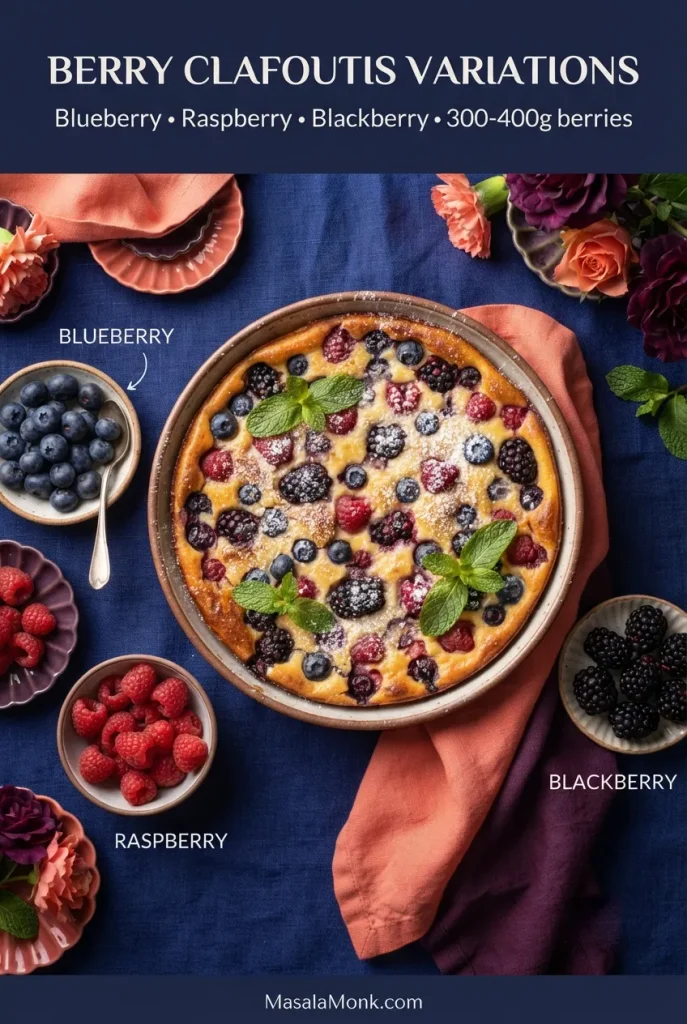
For apples and pears: Use 300–400 g thin, evenly cut slices. If the fruit is very firm, soften it in a covered pan with a splash of water for about 3–5 minutes, until the slices begin to bend. Drain and cool them before they go into the custard.

Prefer fruit beneath a topping rather than baked in custard? Try peach cobbler or apple crumble.
Serving, Making Ahead and Storing
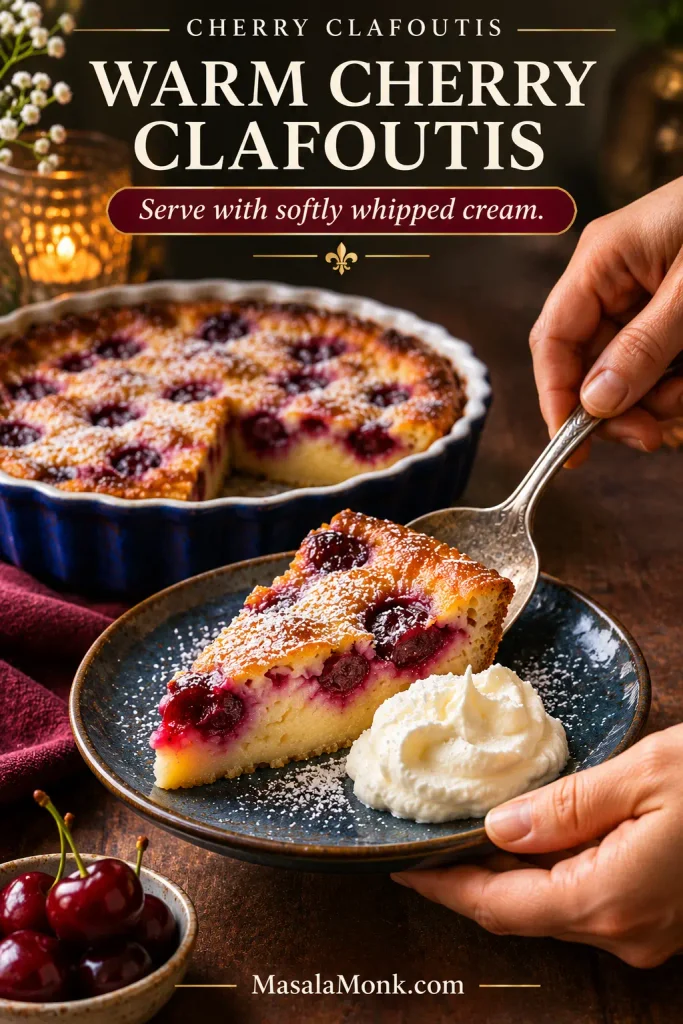
After its 15–20-minute rest, bring the dish to the table and spoon out the clafoutis while the cherries are still warm. The cherries bring plenty of sweetness to the mild custard, so a dusting of powdered sugar is often enough. Softly whipped cream or crème fraîche is lovely alongside it. Cold leftovers become firmer and easier to slice.
Can You Make Clafoutis Ahead?
Yes. Pit the cherries ahead, cover and refrigerate them, then drain off any collected juice before baking. You can also prepare the batter, refrigerate it promptly in a covered container and use it within 24 hours. Whisk it again before pouring; flour may settle. For the softest texture, bake closer to serving time. When it is time to bake, use the illustrated recipe summary to review the quantities and method.

How Long Does Clafoutis Keep?
Refrigerate leftovers promptly at 4°C / 40°F or colder. Include cooling and serving time when counting how long the dessert has been out: no more than two hours altogether, or one hour if the surrounding temperature is above 32°C / 90°F. Use shallow containers to cool larger leftovers promptly.
The FoodSafety.gov cold-storage chart gives 3–4 refrigerated days for comparable cooked egg dishes and custard pies. Its texture is softest on the day it is baked.
Serve refrigerated leftovers cold, or reheat them thoroughly to 74°C / 165°F if you prefer them hot; reheating will firm the custard. Freezing the baked dessert is less appealing because egg custard may turn grainy or release water as it thaws. Freeze extra cherries for another batch instead.

Made this clafoutis? Tell us whether you used fresh or frozen cherries—and if you preferred it warm from the oven or chilled the next day.