
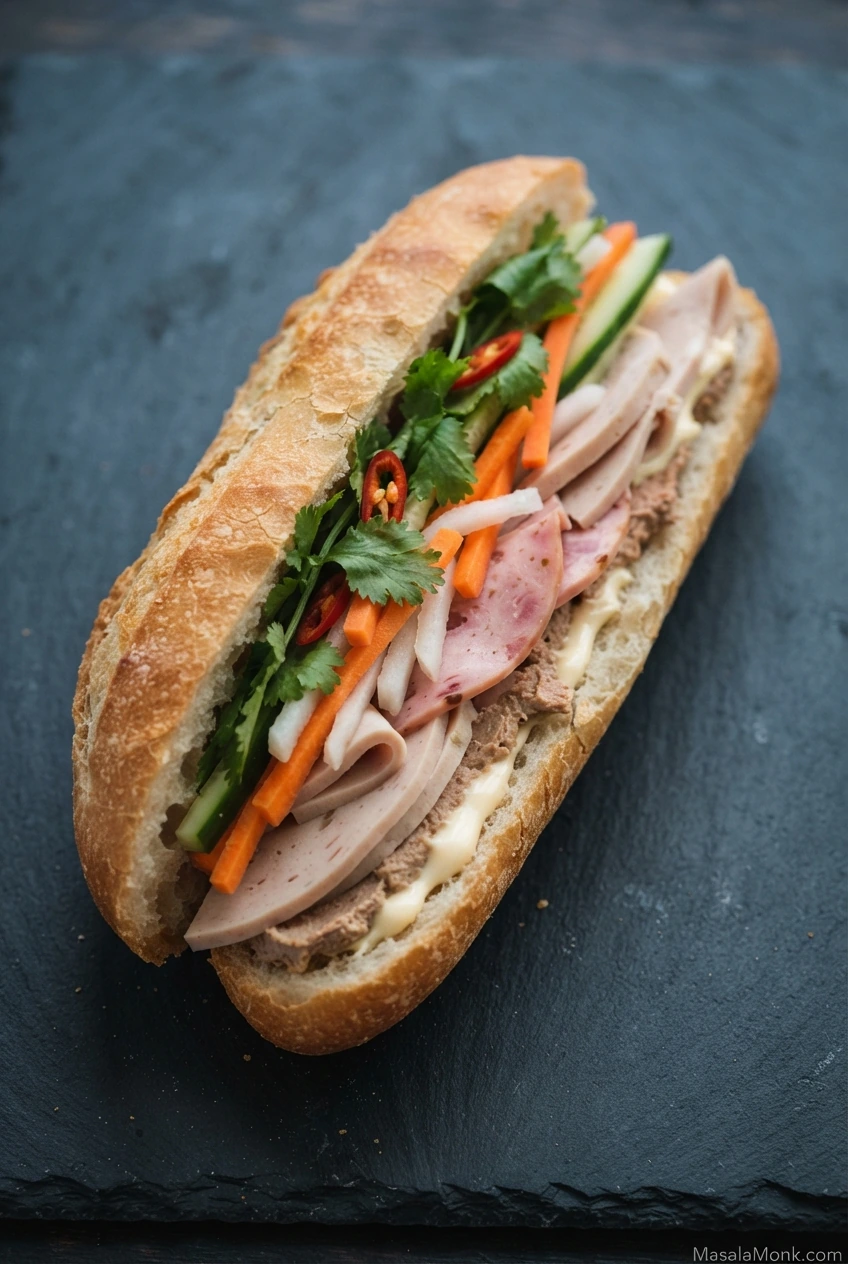
In a good bánh mì, the thin baguette crust cracks easily, then gives way to soft bread, savoury pork and creamy pâté. Crisp carrot-daikon pickle brings the tang, cucumber adds a cool crunch, and cilantro leaves a fresh herbal note.
This banh mi recipe makes four Vietnamese mixed cold-cut sandwiches in the Saigon style, known as bánh mì thịt nguội. The quick carrot-daikon pickle (đồ chua) is the only component made from scratch; the bread, cooked cold cuts, pâté and mayonnaise are ready to use.
No Vietnamese deli nearby? You can use a fully cooked pork or chicken luncheon loaf in place of chả lụa, sliced deli ham for the second meat and a light, thin-crusted sandwich roll. The flavours and textures will differ, but the assembly stays the same. See the substitution guide for practical options.
Jump to what you need:
- Full recipe
- Sandwich ingredients
- Quick carrot-daikon pickle
- Sandwich assembly
- Best bread
- Cold-cut buying guide
- Pâté and sauces
- Substitutions
- Troubleshooting
- Make ahead and food safety
Classic Banh Mi Recipe: Vietnamese Cold-Cut Sandwiches
Makes: 4 sandwiches | Active preparation: about 35–50 minutes | Total elapsed time: about 95–120 minutes, including at least 60 minutes of refrigerated pickling.
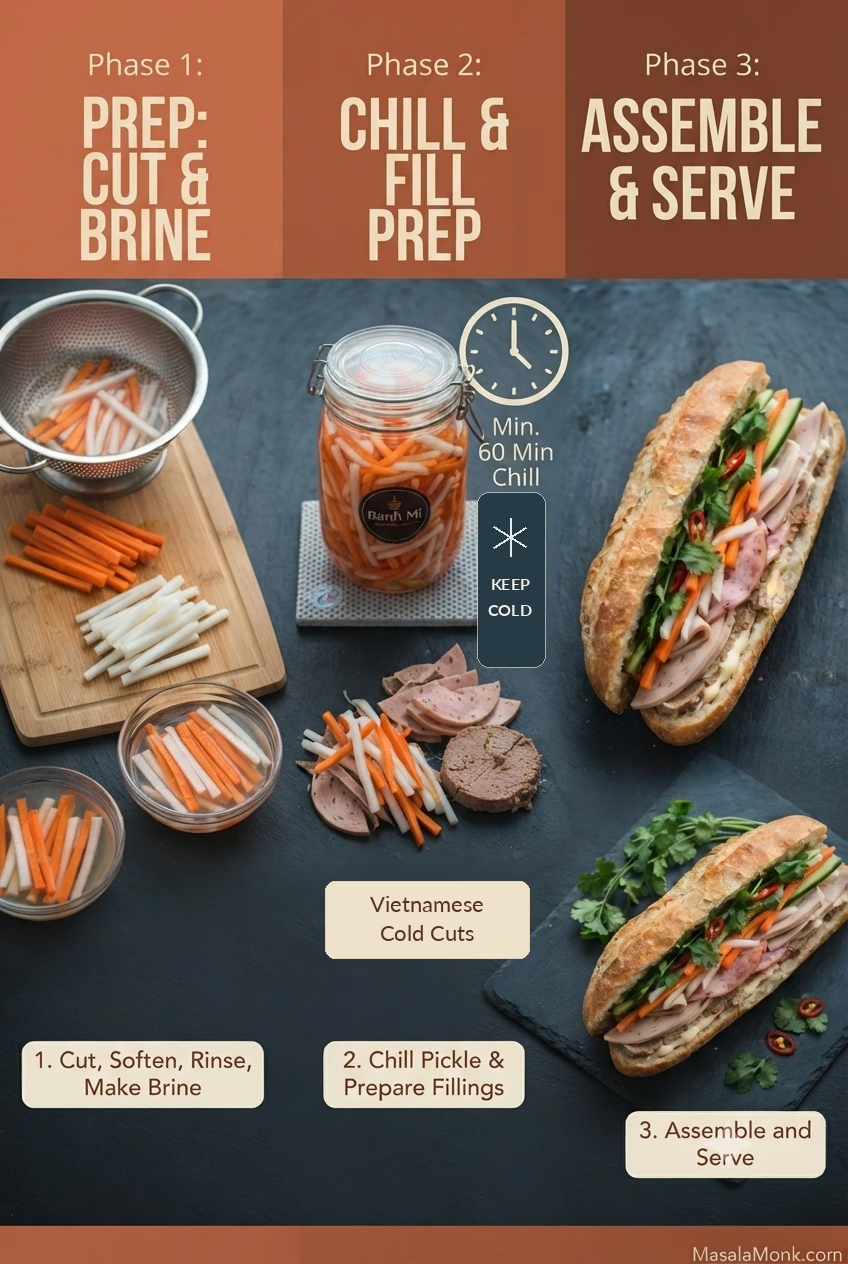
Using prepared pickles: Allow roughly 20–30 minutes to prepare fillings and assemble. If everything is already sliced and ready, assembly alone takes about 10–15 minutes for four sandwiches.
Equipment: Sharp knife, serrated bread knife, cutting board, mixing bowl, strainer, measuring spoons, kitchen scale and a narrow, covered food-safe container. An oven is optional.
For the Carrot-Daikon Pickle (Đồ Chua)
- 200 g (7 oz) peeled daikon (white radish)
- 140 g (5 oz) peeled carrot
- 3 g fine salt (approximately ½ tsp), for the initial softening
- 8 g granulated sugar (2 tsp), for the initial softening
- 120 ml (½ US cup) distilled white vinegar, labelled 5% acidity
- 120 ml (½ US cup) water
- 40 g granulated sugar (a little over 3 tbsp), for the brine
- 2 g fine salt (about ⅓ tsp; weighing is more reliable), for the brine
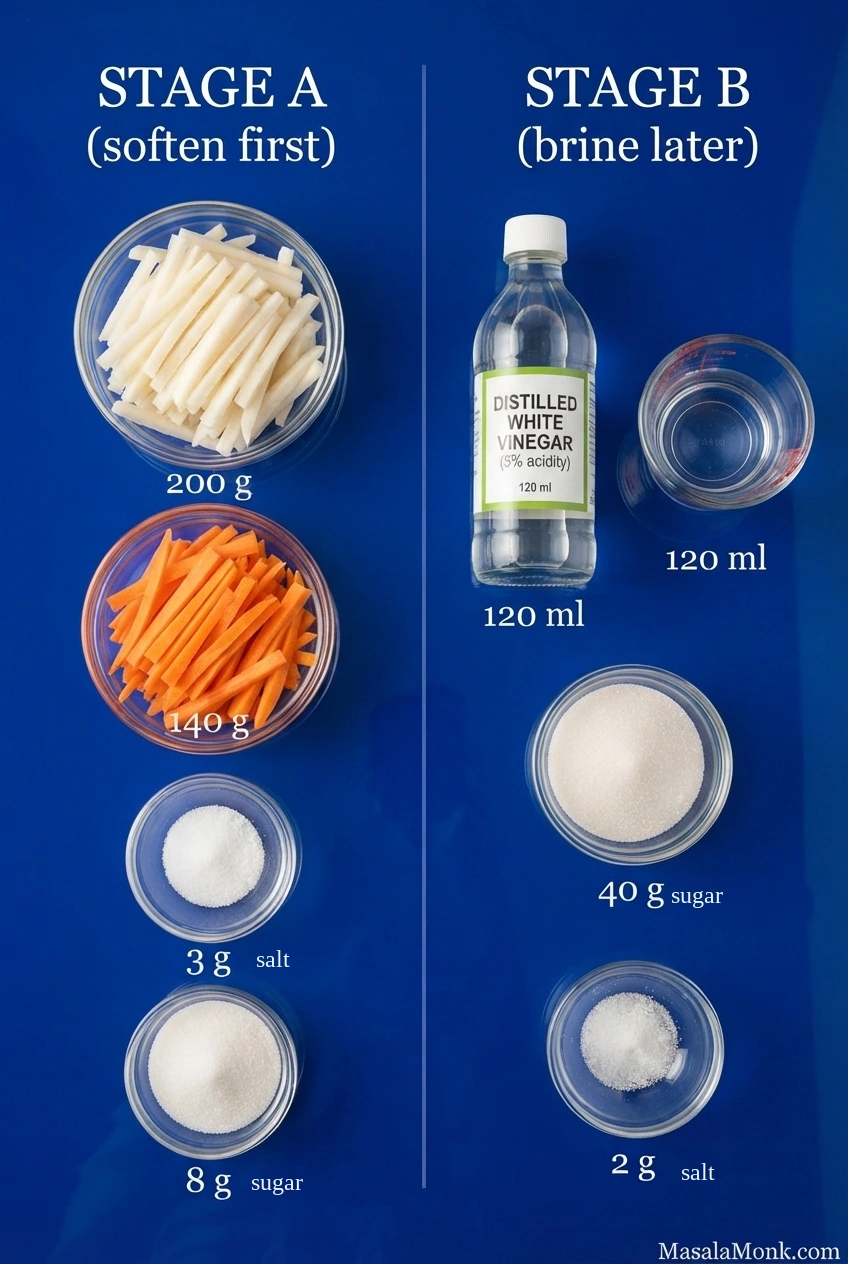
Keep the salt and sugar portions separate: one set softens the vegetables; the other goes into the brine. No daikon available? See the pickle alternatives.
For Four Mixed Cold-Cut Sandwiches
- 4 Vietnamese baguettes, around 18–23 cm (7–9 in) long, or light, thin-crusted sandwich rolls
- 150 g (5.3 oz) chả lụa, fully cooked Vietnamese pork roll (sometimes labelled “Vietnamese ham”), thinly sliced
- 150 g (5.3 oz) of a different cooked pork cold cut, such as the deli’s other prepared pork filling, giò thủ (head cheese) or ordinary fully cooked deli ham; sliced and ready to eat
- 80 g (2.8 oz) spreadable liver pâté, pork or chicken
- 60 g (2.1 oz; about 4 tbsp) mild, full-fat mayonnaise
- 200–240 g (7–8.5 oz) drained carrot-daikon pickle
- 1 medium cucumber (about 150 g / 5.3 oz), cut into thin lengthwise strips
- 12–16 sprigs cilantro (fresh coriander leaves with tender stems)
- 1–2 fresh red chillies or jalapeños, thinly sliced, optional
- Up to 5 ml (1 tsp) Maggi seasoning total, or a little regular soy sauce, to taste
- 2–4 spring onions (scallions), optional
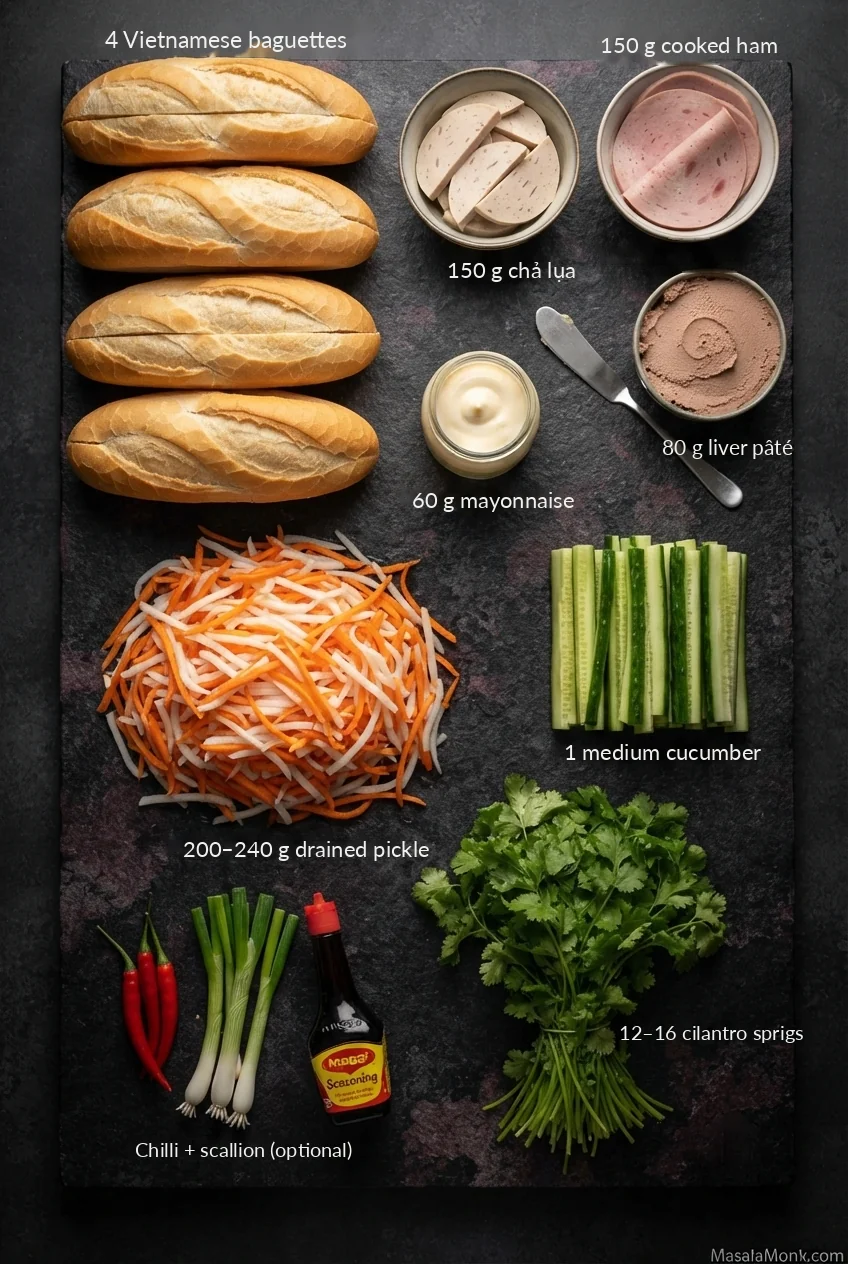
These amounts suit four medium rolls; use a little less filling for narrow baguettes. Check packaged ingredients for allergens, particularly bread, pâté, mayonnaise, cold cuts and seasoning sauces.
Making One Bánh Mì? Use These Quantities
Use one roll, about 75 g combined cold cuts, 20 g pâté, 15 g mayonnaise, 50–60 g drained pickle, cucumber, a few cilantro sprigs and up to ¼ tsp Maggi. Make the pickle as a batch rather than trying to measure a tablespoon-sized brine.
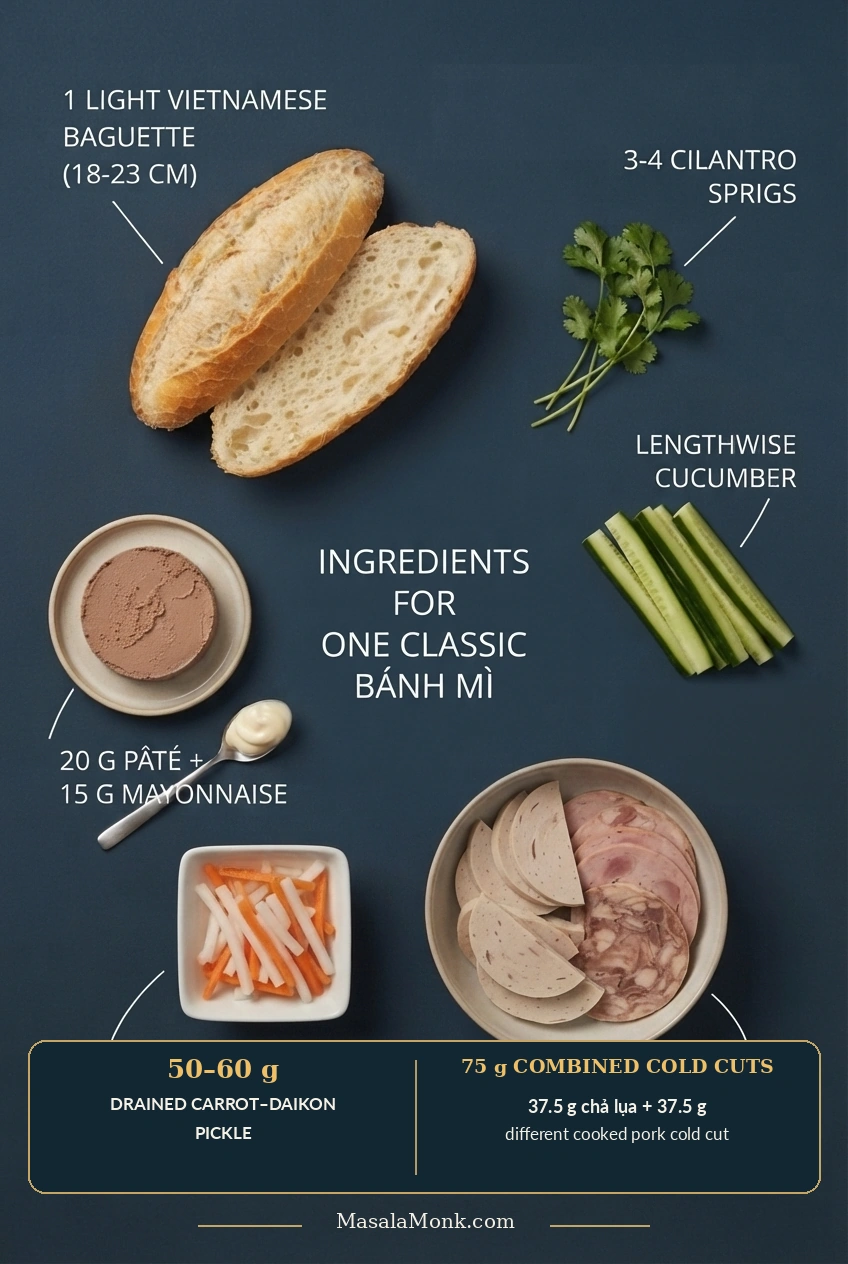
What Is Inside a Classic Vietnamese Cold-Cut Bánh Mì?
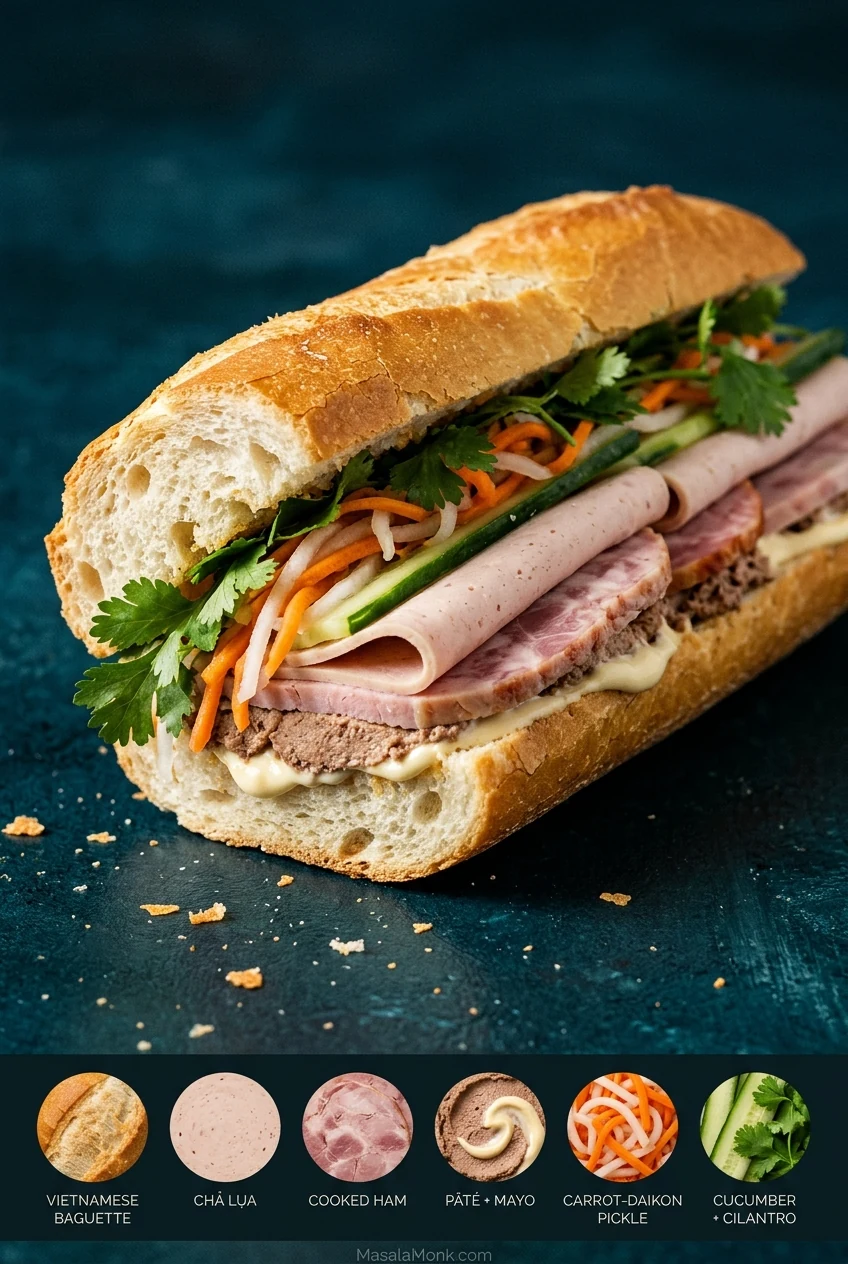
The two cooked pork preparations contribute different textures; pâté and mayonnaise add richness, while cucumber, crisp đồ chua and cilantro brighten each bite. The illustration shows how these elements fit inside the roll.
Part A: Make the Quick Pickle
Step 1: Wash and Cut
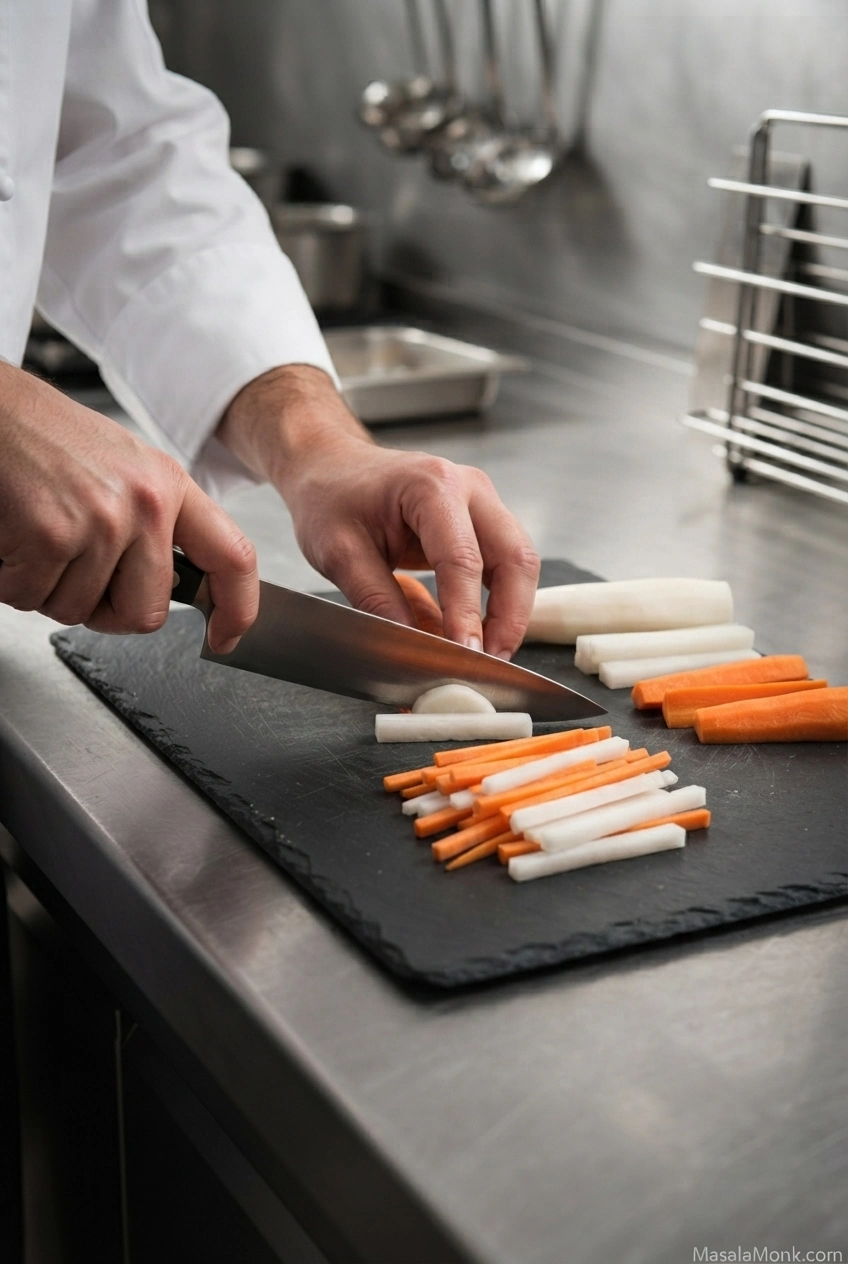
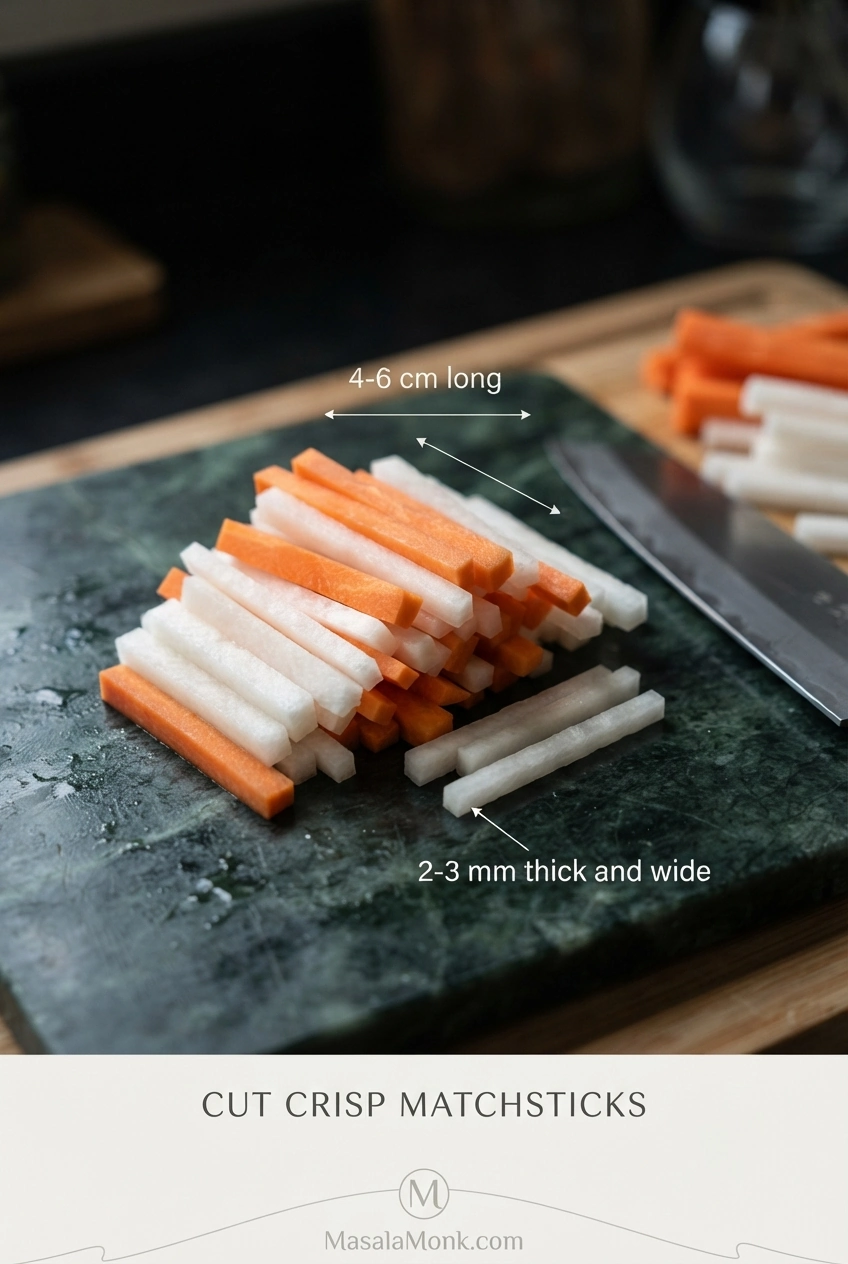
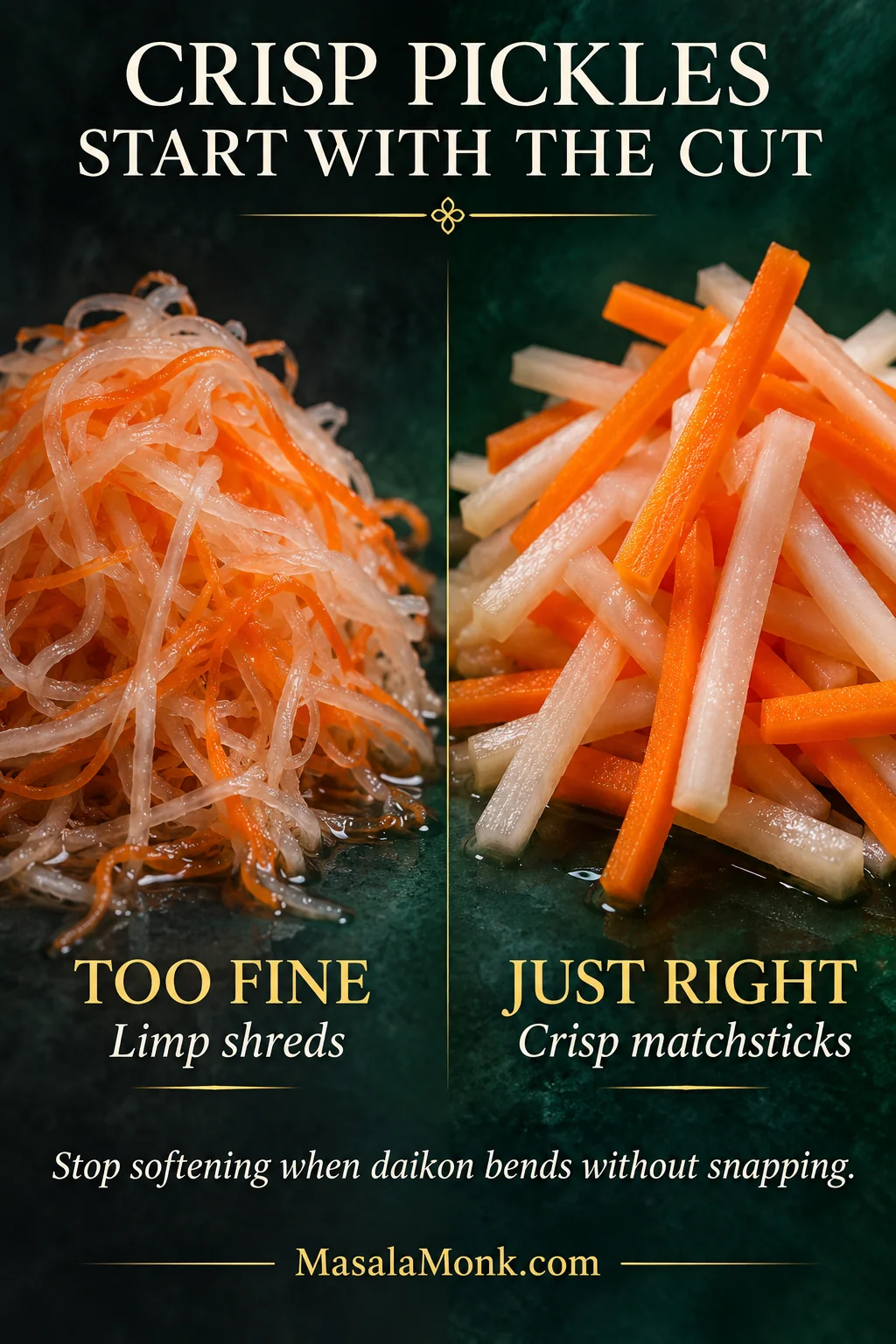
Rinse and peel the carrot and daikon. Slice a narrow flat face on a slippery daikon root and rest that side on the cutting board before cutting into matchsticks 4–6 cm (1½–2½ in) long and about 2–3 mm thick and wide. Think crisp little sticks, not grated shreds. Taste a piece of daikon; replace a root that is very bitter or harsh.
Check the matchstick size. Pieces of similar thickness soften at a similar rate. Compare the first cuts with the measurements below before preparing the full batch.
Step 2: Soften Slightly
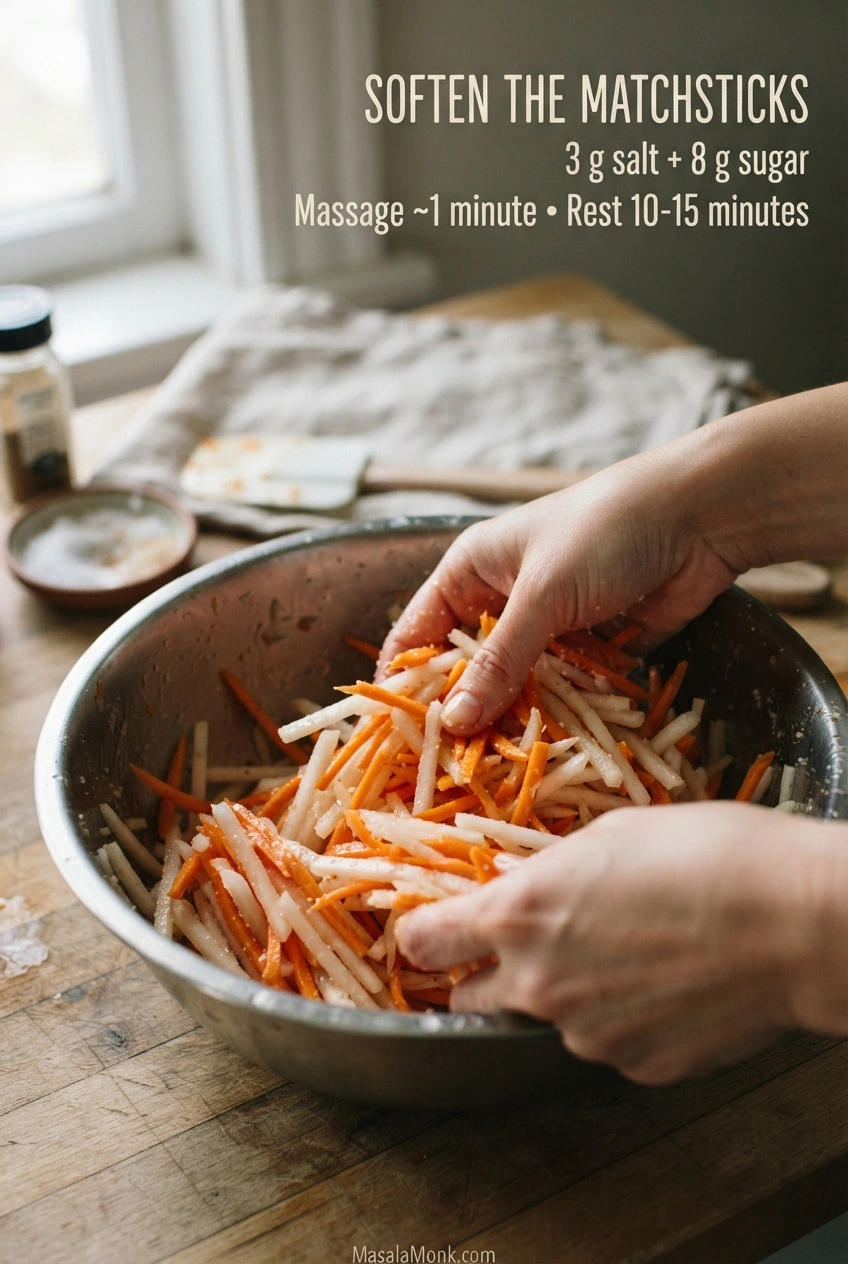
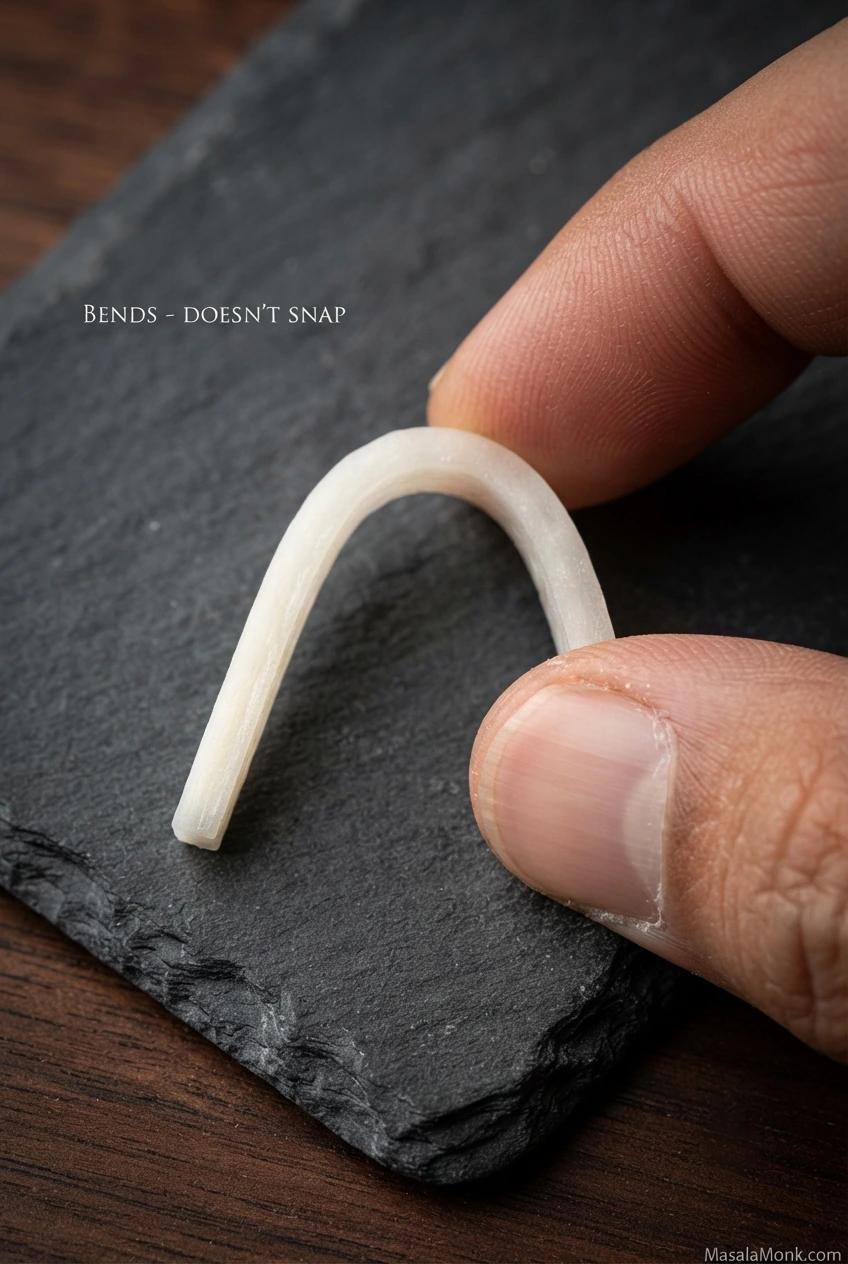
Toss the matchsticks with the 3 g salt and 8 g sugar. Massage gently for about a minute, then leave them for 10–15 minutes. A stick of daikon should now bend without snapping but still feel firm between your teeth.
The bend test marks a change in texture. A daikon stick should curve gently while retaining some resistance, rather than becoming a limp shred.
Step 3: Rinse and Drain
Rinse in a strainer under cool water, then press lightly to remove excess liquid. This washes away most of the softening mixture so it does not throw off the brine.

Step 4: Make the Brine
Dissolve the 40 g sugar and 2 g salt in 120 ml water, then stir in 120 ml white vinegar labelled 5% acidity. Room-temperature water is fine; if you warmed it to dissolve the sugar, let the brine cool first.

Step 5: Pack and Refrigerate
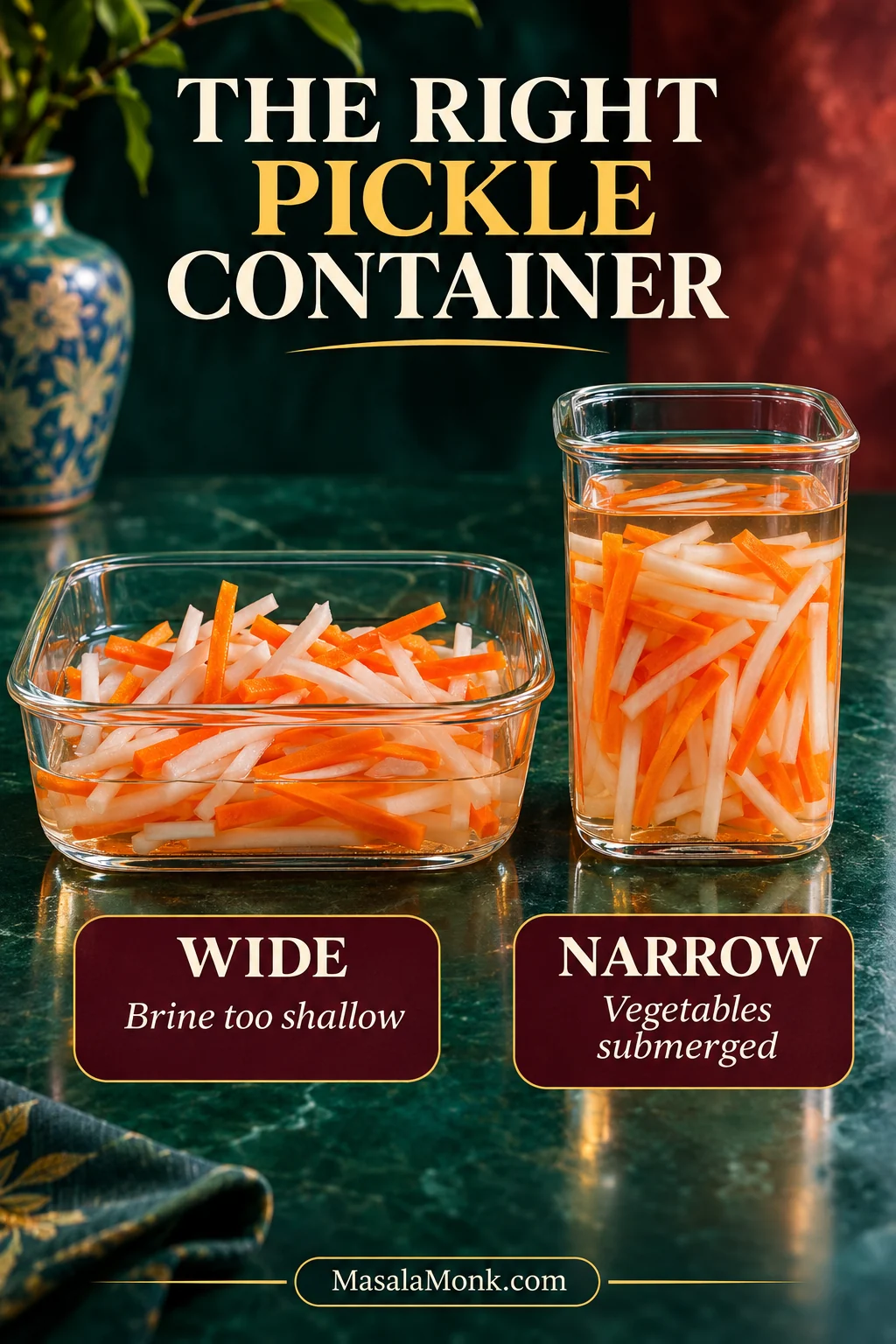
Transfer the matchsticks to a clean, narrow food-safe container and pour in the brine. Press the vegetables down gently so they’re submerged; try a narrower container if the liquid is too shallow. Cover and refrigerate for at least 60 minutes. If you still need more liquid, use the optional note below.
Only if more brine is needed: Mix 60 ml vinegar labelled 5% acidity, 60 ml water, 20 g sugar and 1 g fine salt. Add just enough to submerge the vegetables.
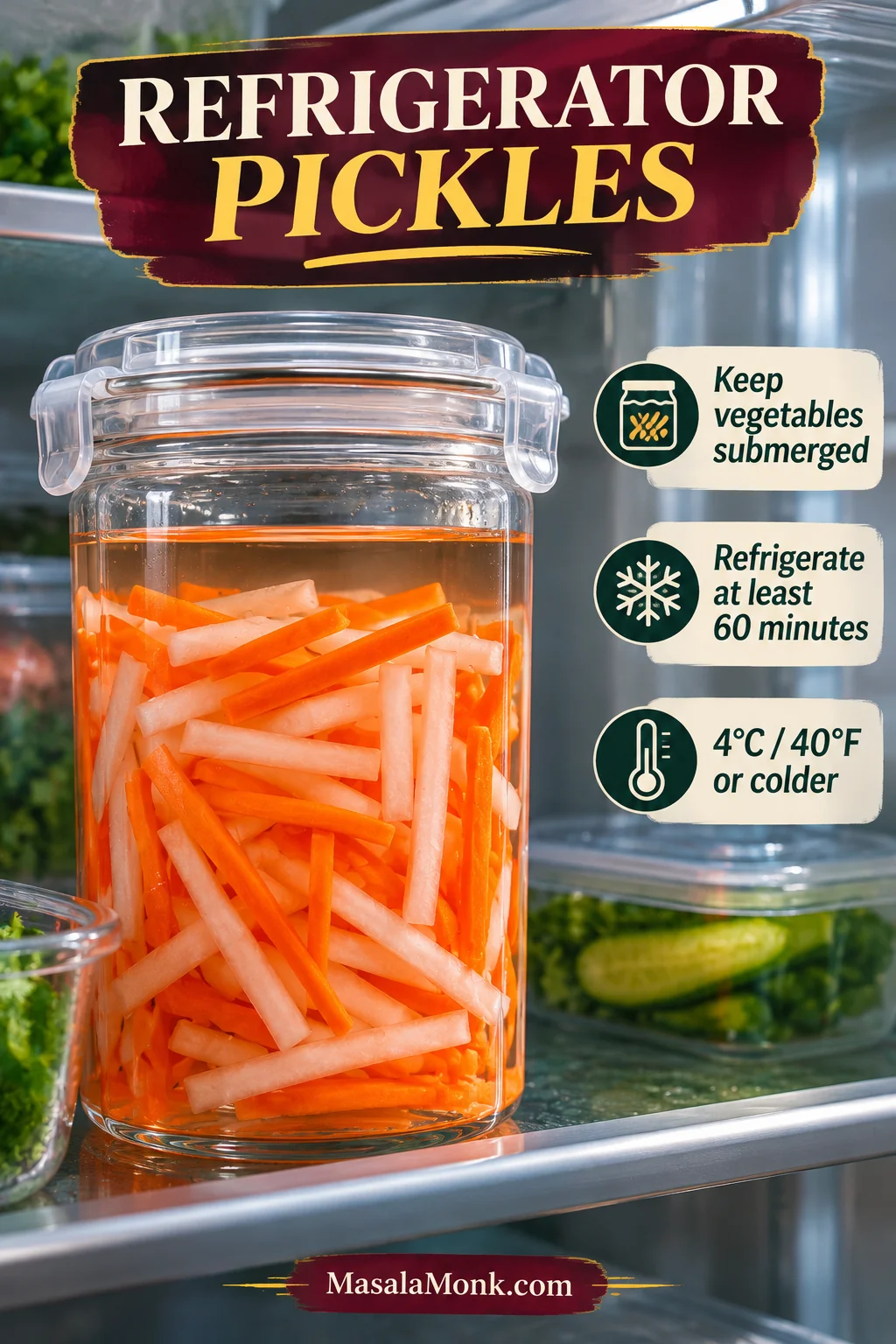
After an hour, the vegetables are lightly pickled: crisp, mildly sweet and tangy. For a fuller sweet-sour flavour, make them the day before. Drain 200–240 g for the sandwiches and keep any leftovers refrigerated in their brine. This is a refrigerator pickle, not a shelf-stable preserve.
Part B: Assemble the Sandwiches
Already have the pickles ready? Start here and drain them before filling the rolls. Still choosing ingredients? The bread guide and cold-cut buying guide can help.
Step 1: Prepare the Fillings
Divide both cold cuts into four portions. Wash the cucumber and slice it lengthwise. Rinse and dry the cilantro. Slice the chilli, if using; trim the spring onions and cut the tender parts into thin strips. Keep meats and spreads refrigerated until assembly.
Step 2: Check the Rolls
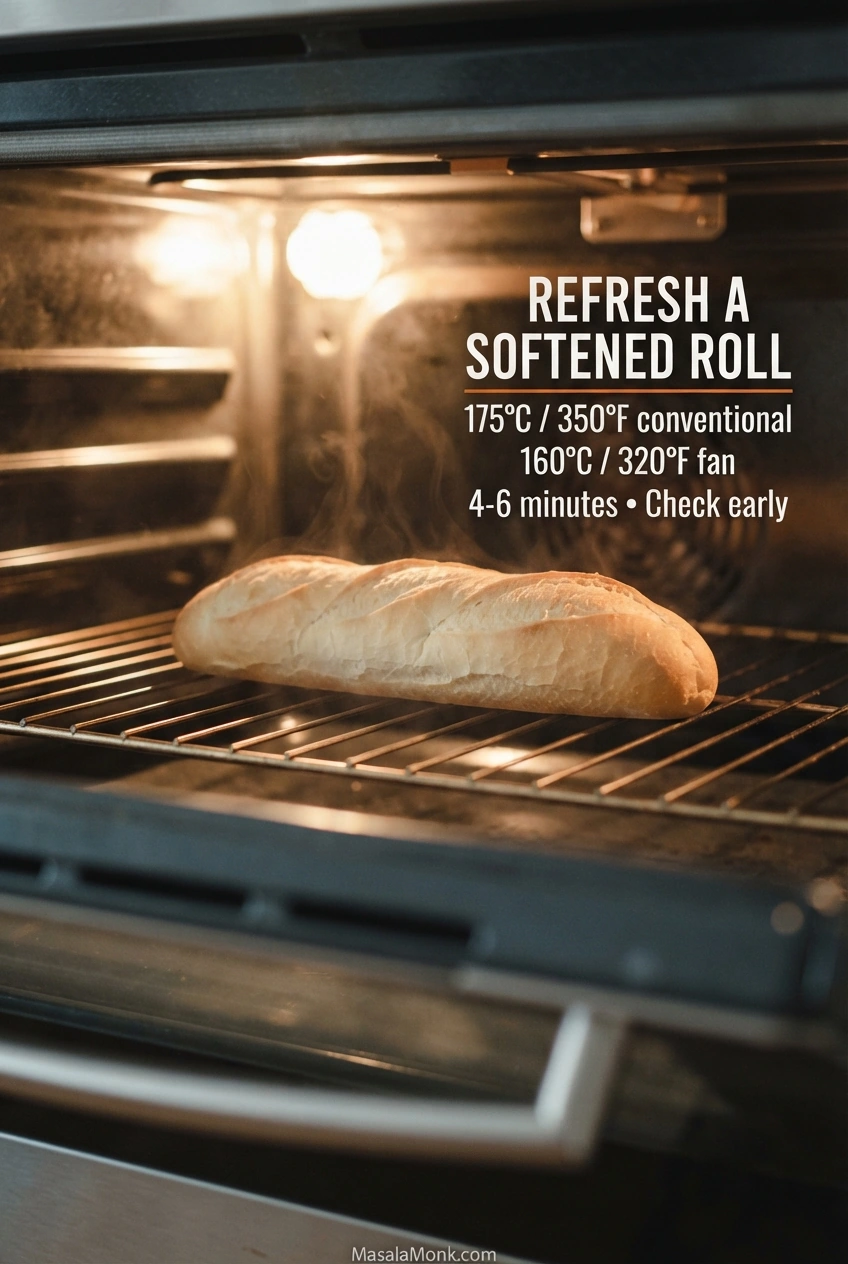
Use fresh, crisp baguettes as they are. If a suitable roll has softened, refresh it for 4–6 minutes at 175°C (350°F) in a conventional oven or 160°C (320°F) in a fan oven, checking early. Or warm it gently in a dry skillet without flattening. Cool slightly before spreading.
Step 3: Open and Spread
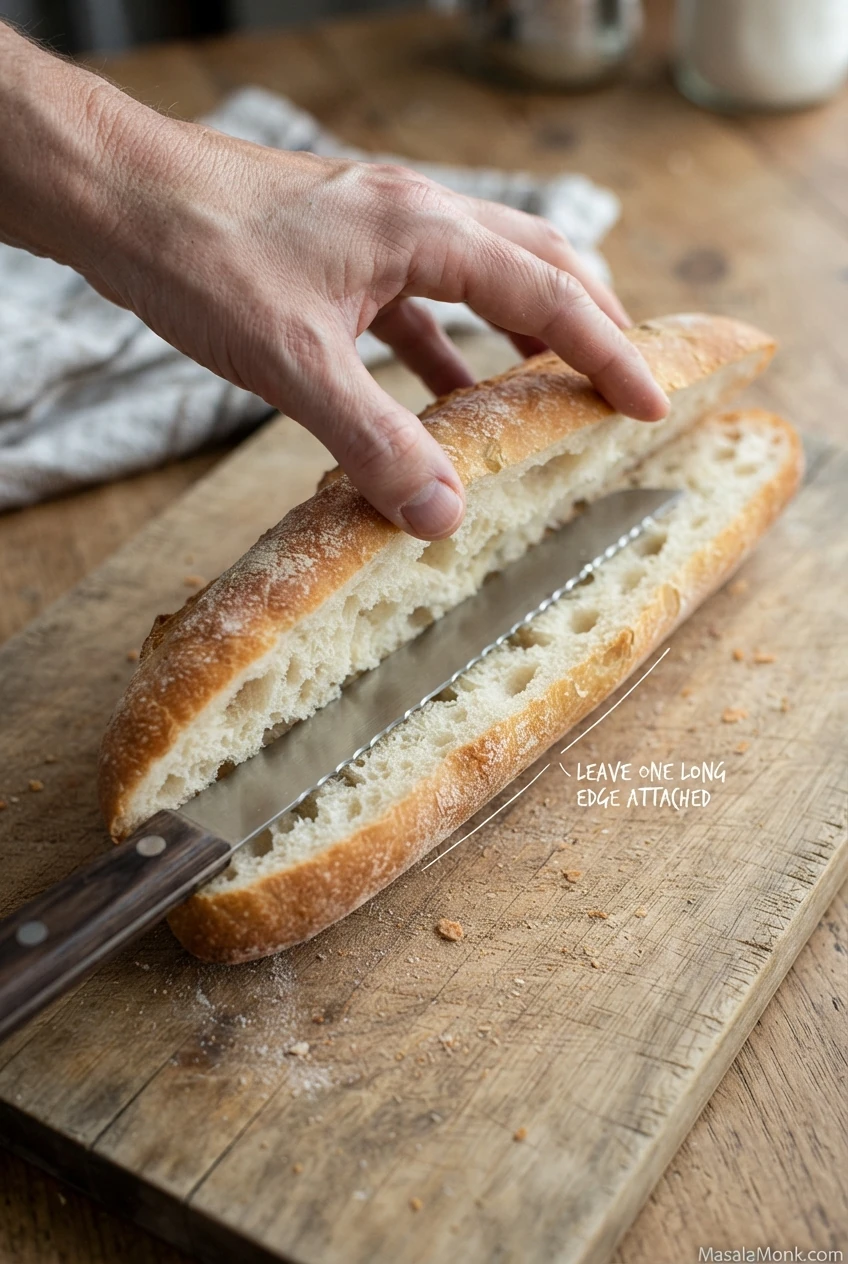
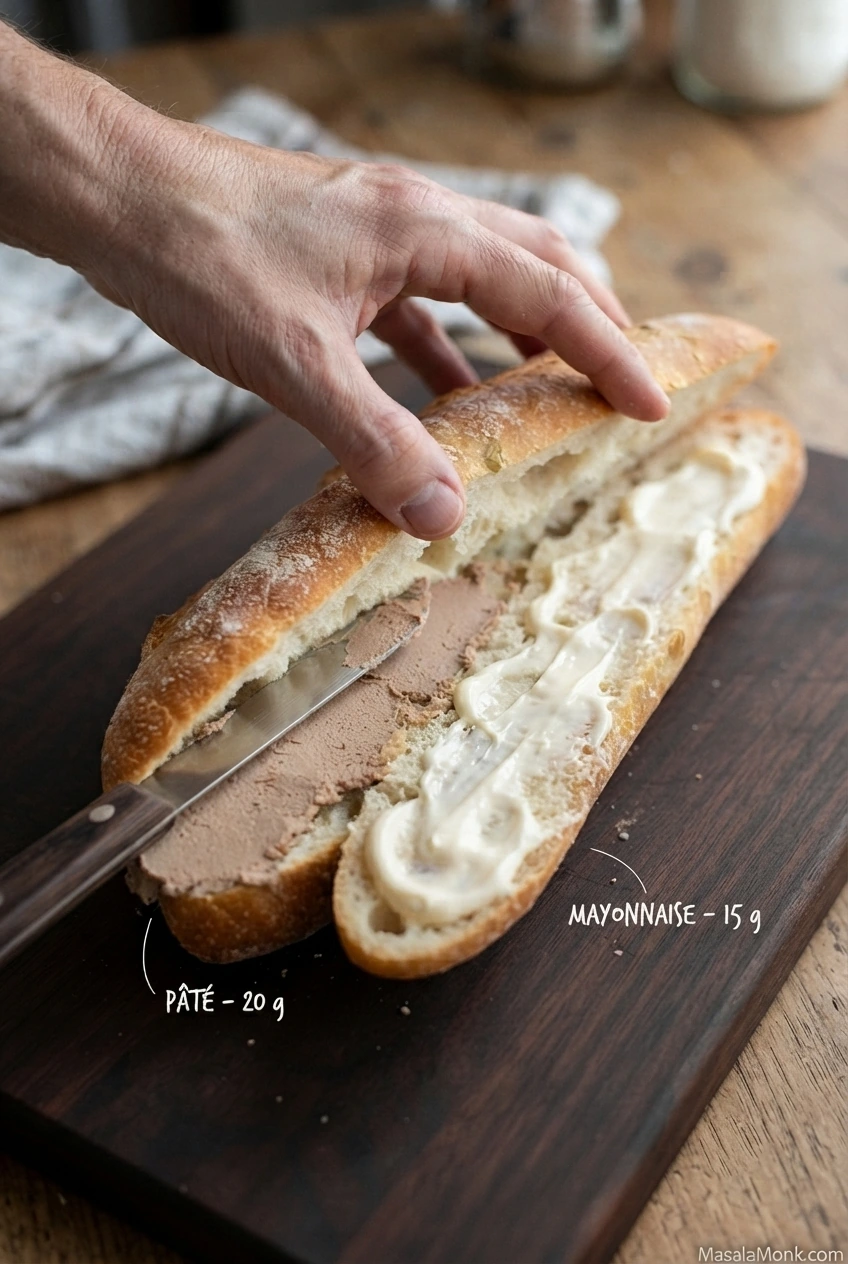
Slit each baguette lengthwise, leaving one long edge attached. If the crumb is unusually dense, pull out a little to make room. Spread about 20 g pâté along one side and 15 g mayonnaise along the other, right towards the ends.
Spread without tearing the bread. The baguette crumb is delicate, so use a light touch when distributing the pâté and mayonnaise instead of digging into the bread.
Step 4: Layer the Cold Cuts
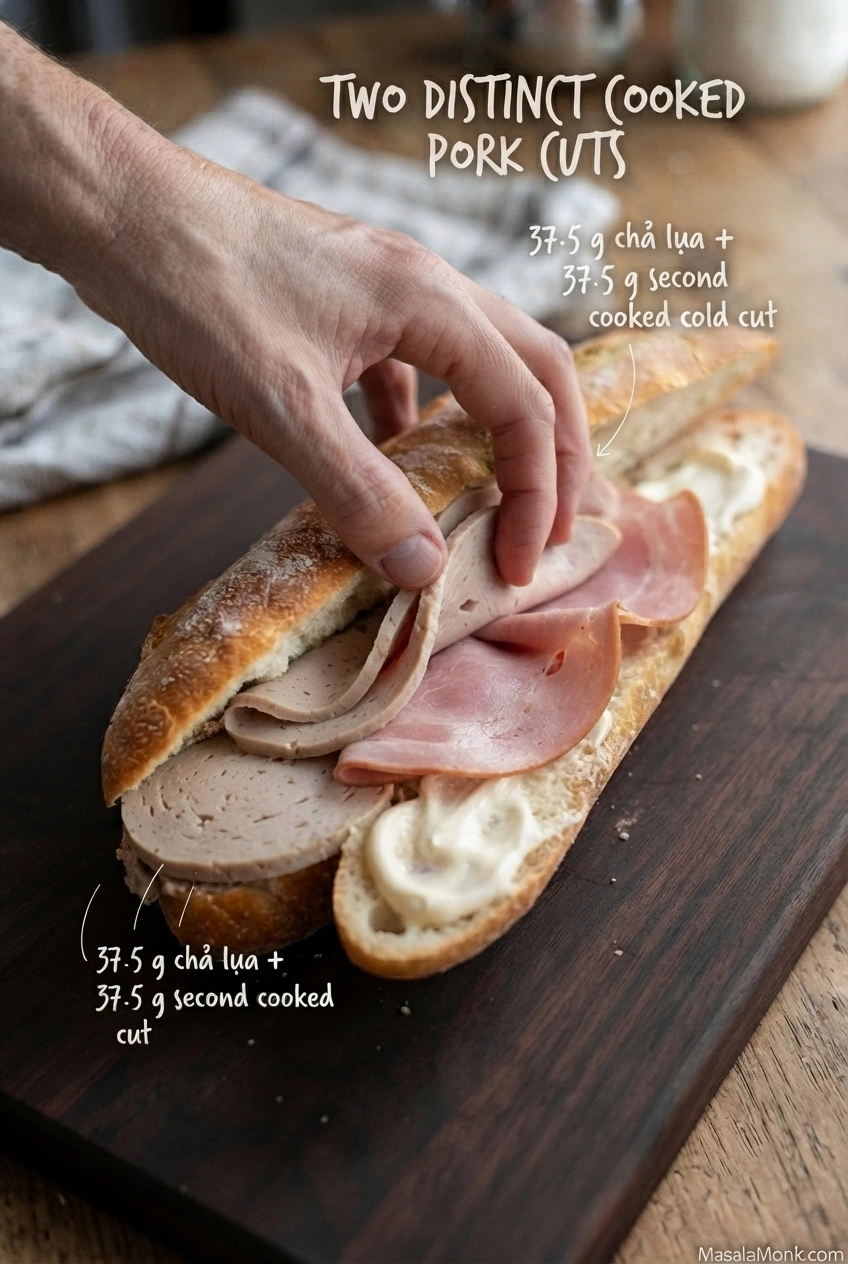
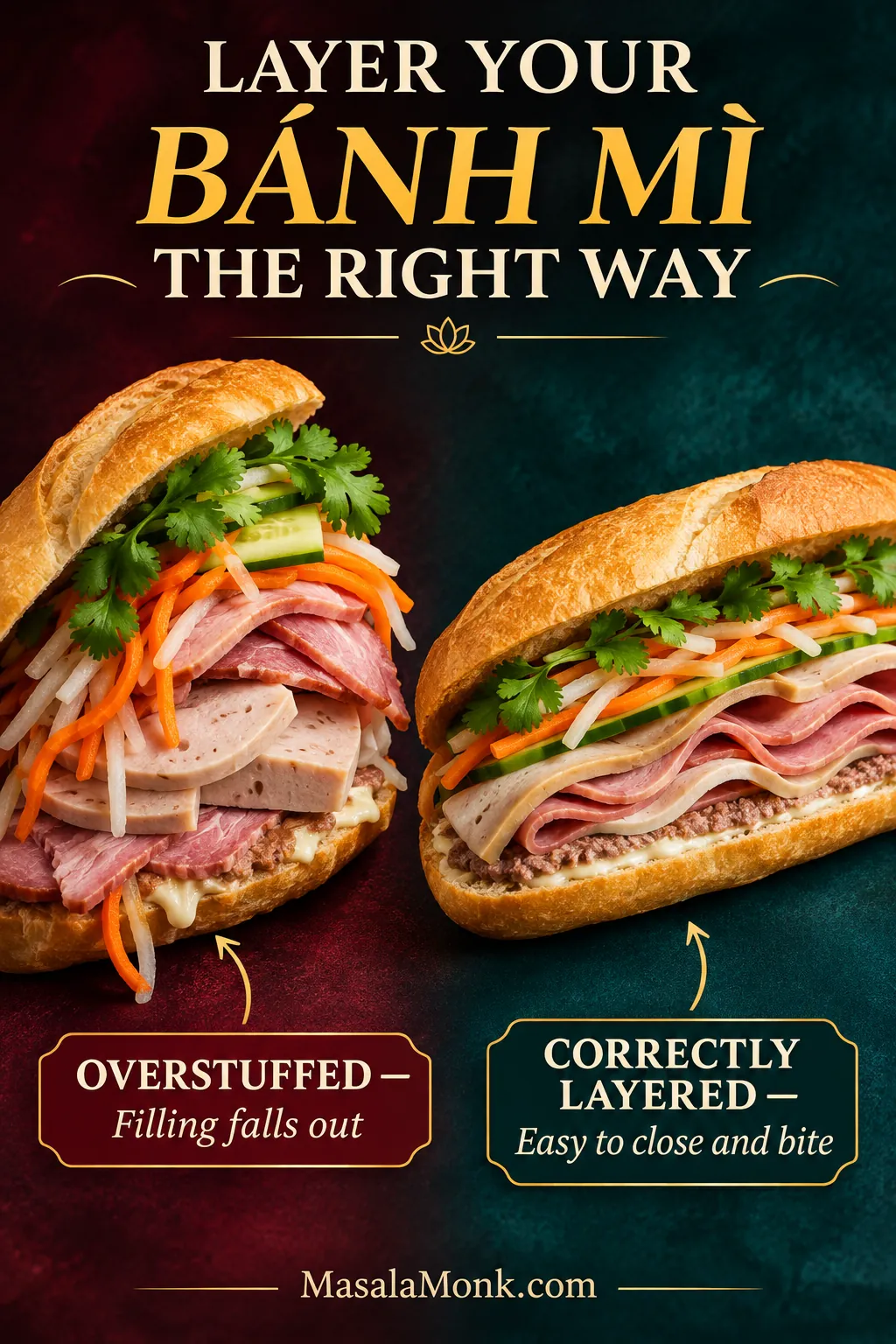
Fold one-quarter of each meat into every roll. Keep the slices loose and spread along the bread rather than pressing them into a tall stack; this makes the sandwich easier to bite.
Step 5: Season to Taste
Taste the cold cuts first. If they need it, drizzle on a few drops of Maggi and add more only as needed, up to ¼ tsp (1.25 ml) per roll. Skip it when the meats are already salty.
Step 6: Finish with Vegetables and Herbs
Lay a few cucumber strips lengthwise over the meat, followed by 50–60 g drained pickle. Add 3–4 sprigs of cilantro, plus spring onion and chilli if you like.
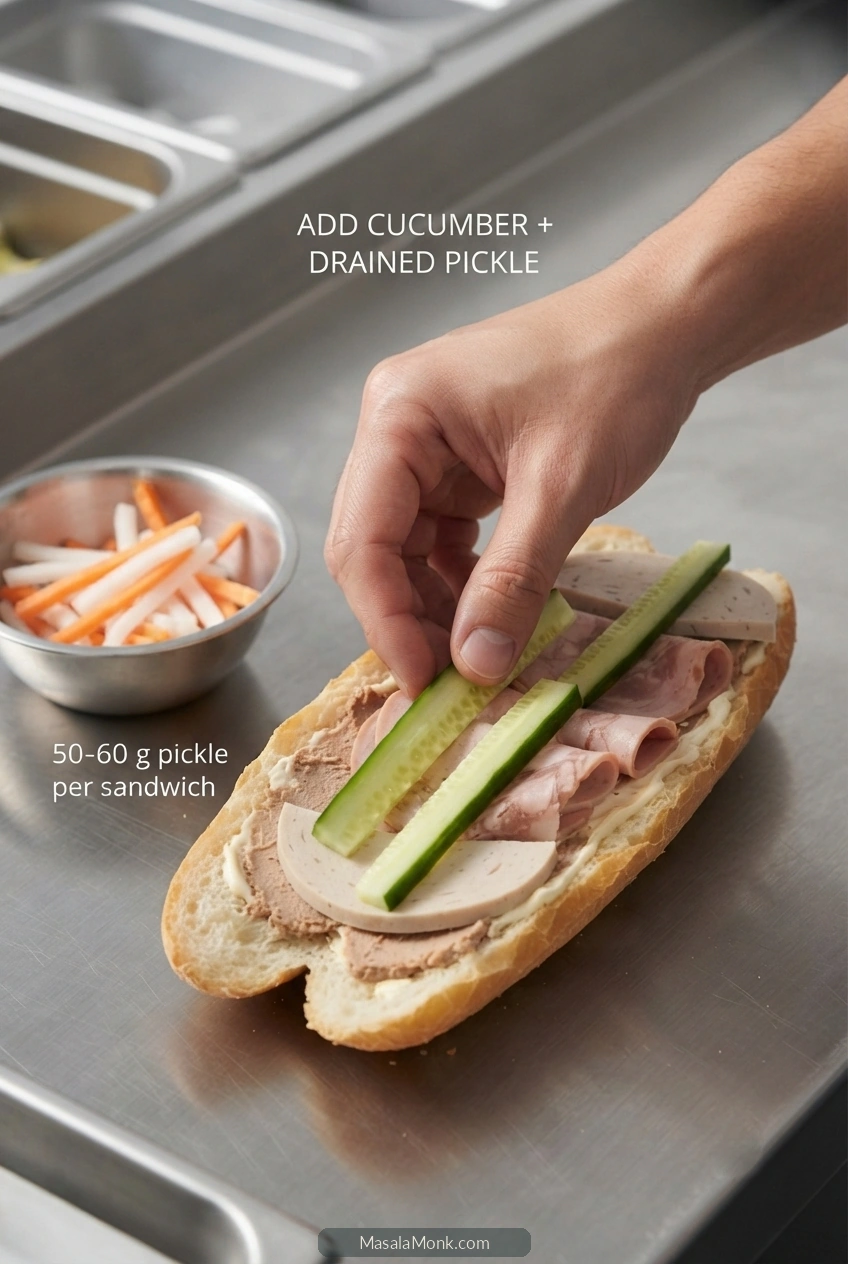
Finish with herbs and optional chilli. Spread the cilantro along the roll and use a few thin chilli slices at a time so one bite does not carry all the heat.
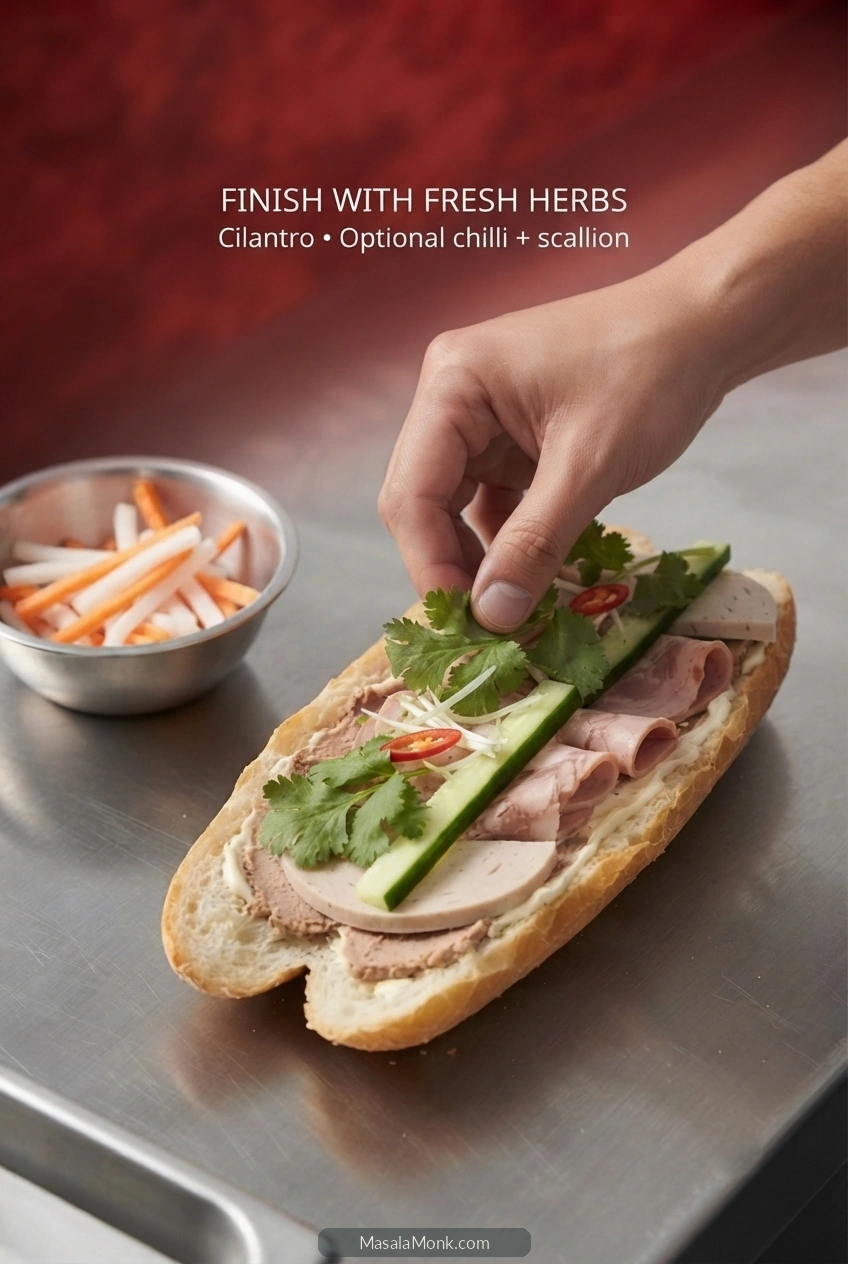
Step 7: Close and Serve
Bring the roll together gently. Meat and pickles should stay tucked inside; if they spill out, remove a little filling instead of squeezing the bread. Serve straight away.
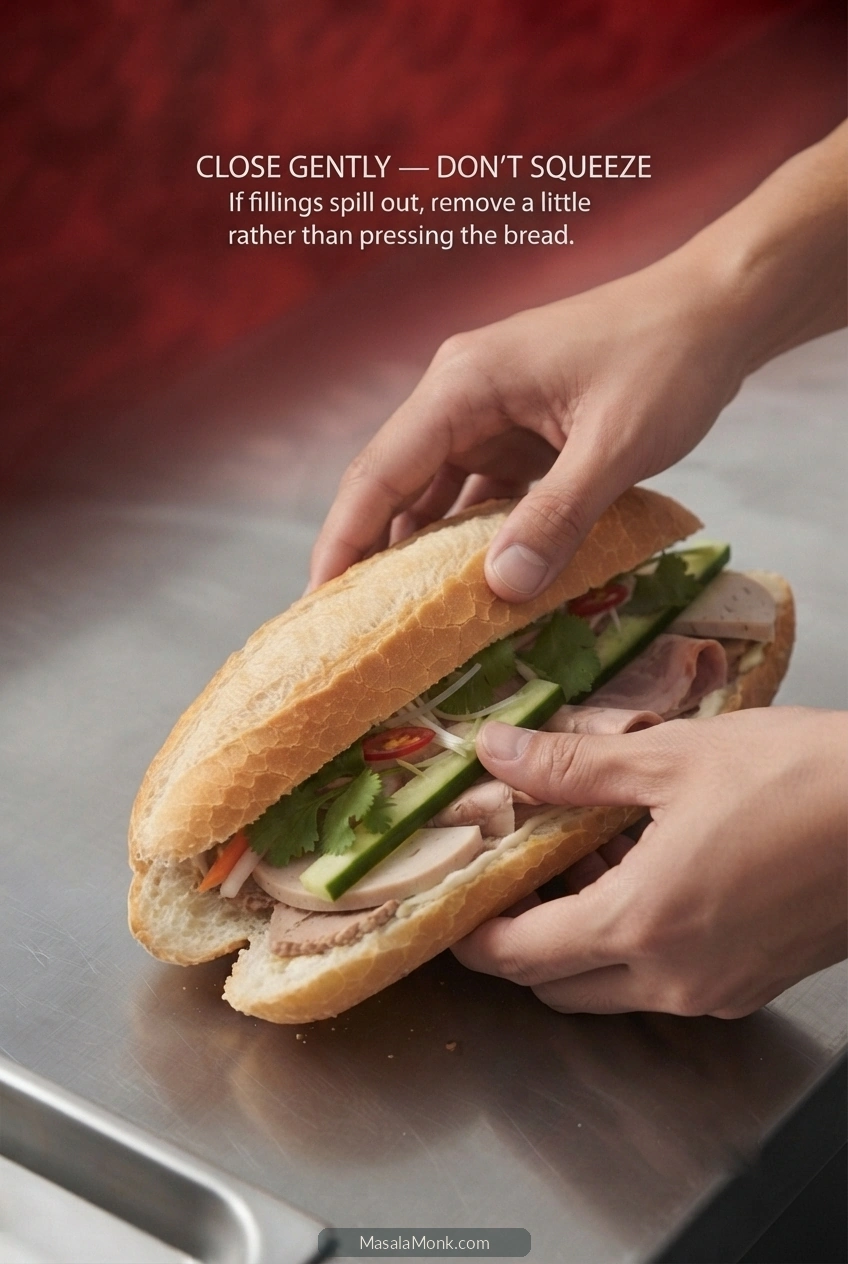
Cut, Wrap and Serve the Finished Bánh Mì
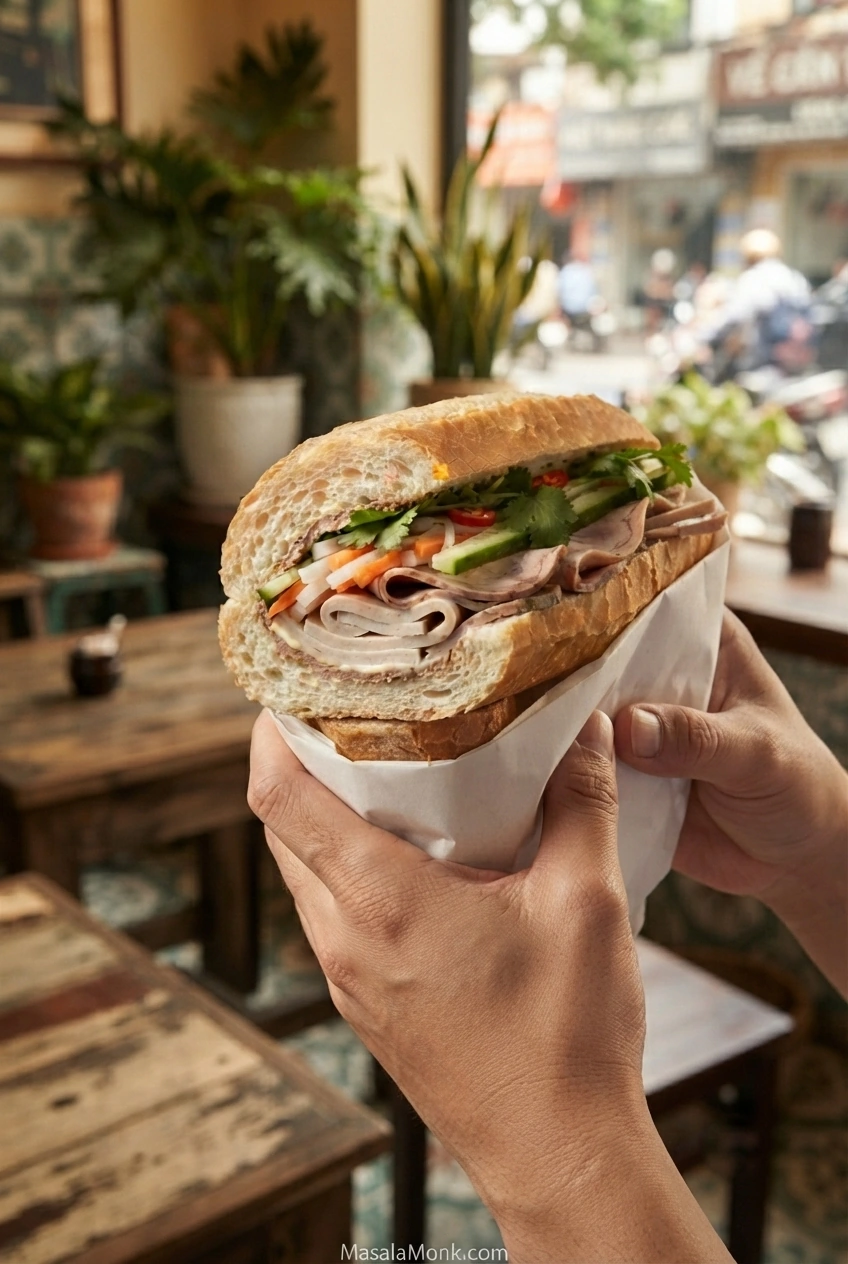
A freshly assembled bánh mì is best while its crust is still crisp. If you are sharing one, cut the baguette into shorter portions just before serving, using a serrated knife and gentle strokes to keep the filling in place.
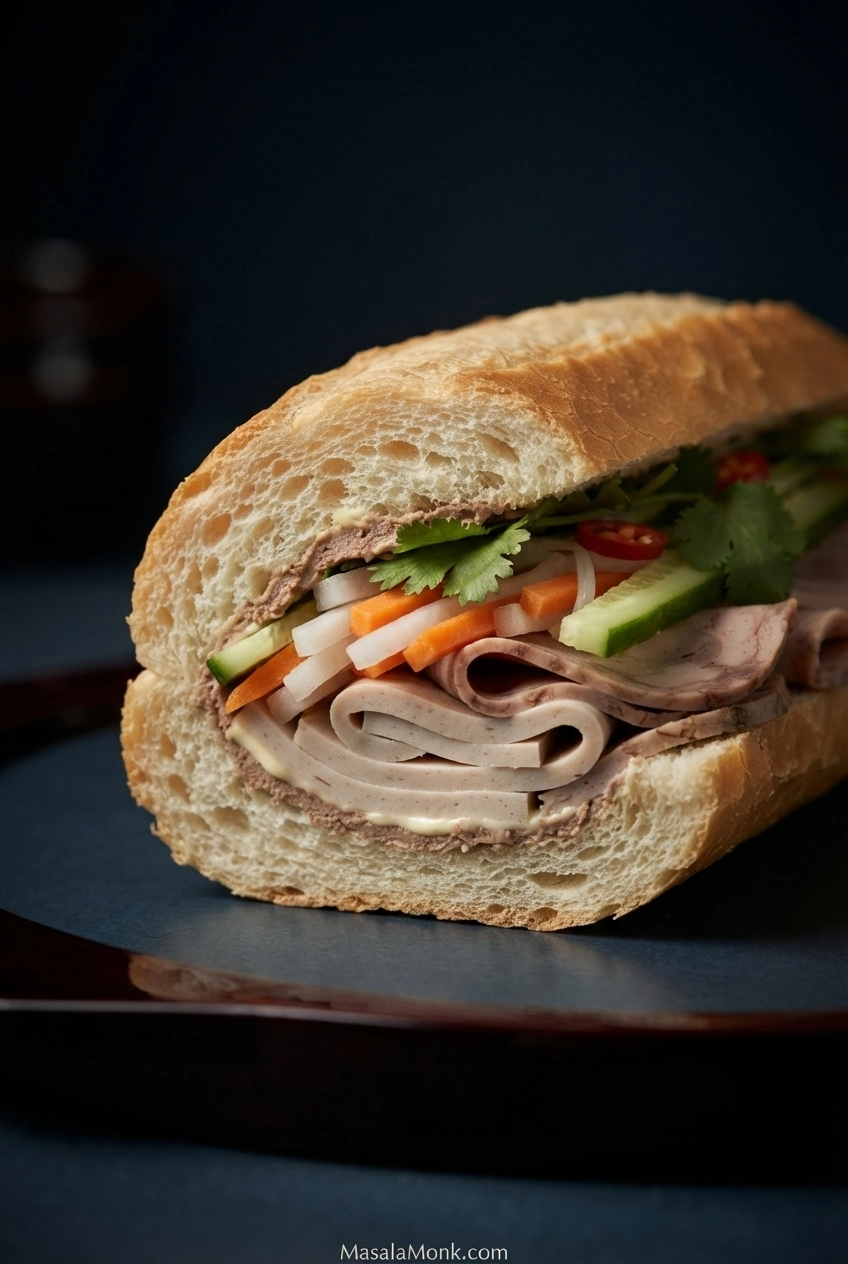
For eating on the go, leave the paper loose enough to slide down as you eat. The open top keeps the crisp crust from being trapped inside a tight wrap.
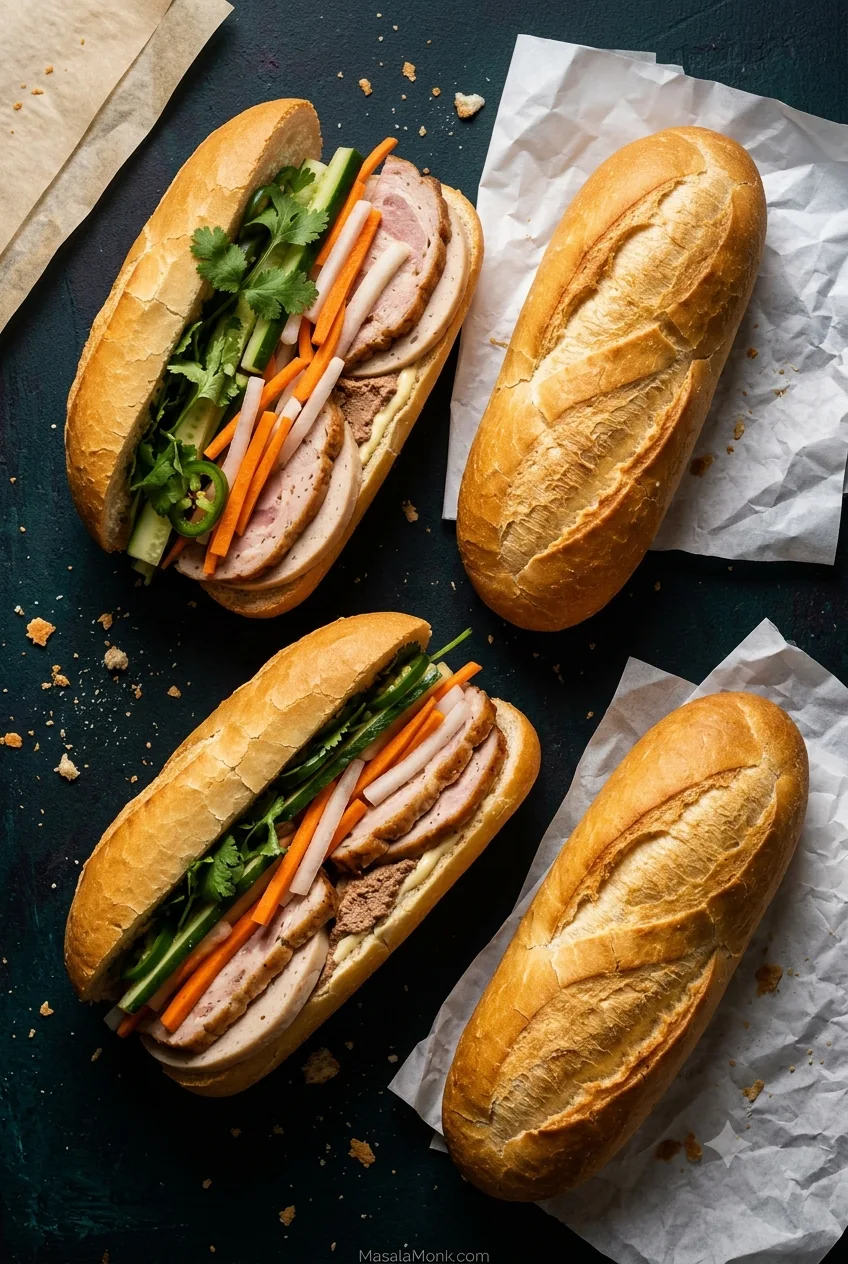
Bring the four finished sandwiches to the table as soon as they are assembled, while the crusts are crisp and the pickles still have their crunch.
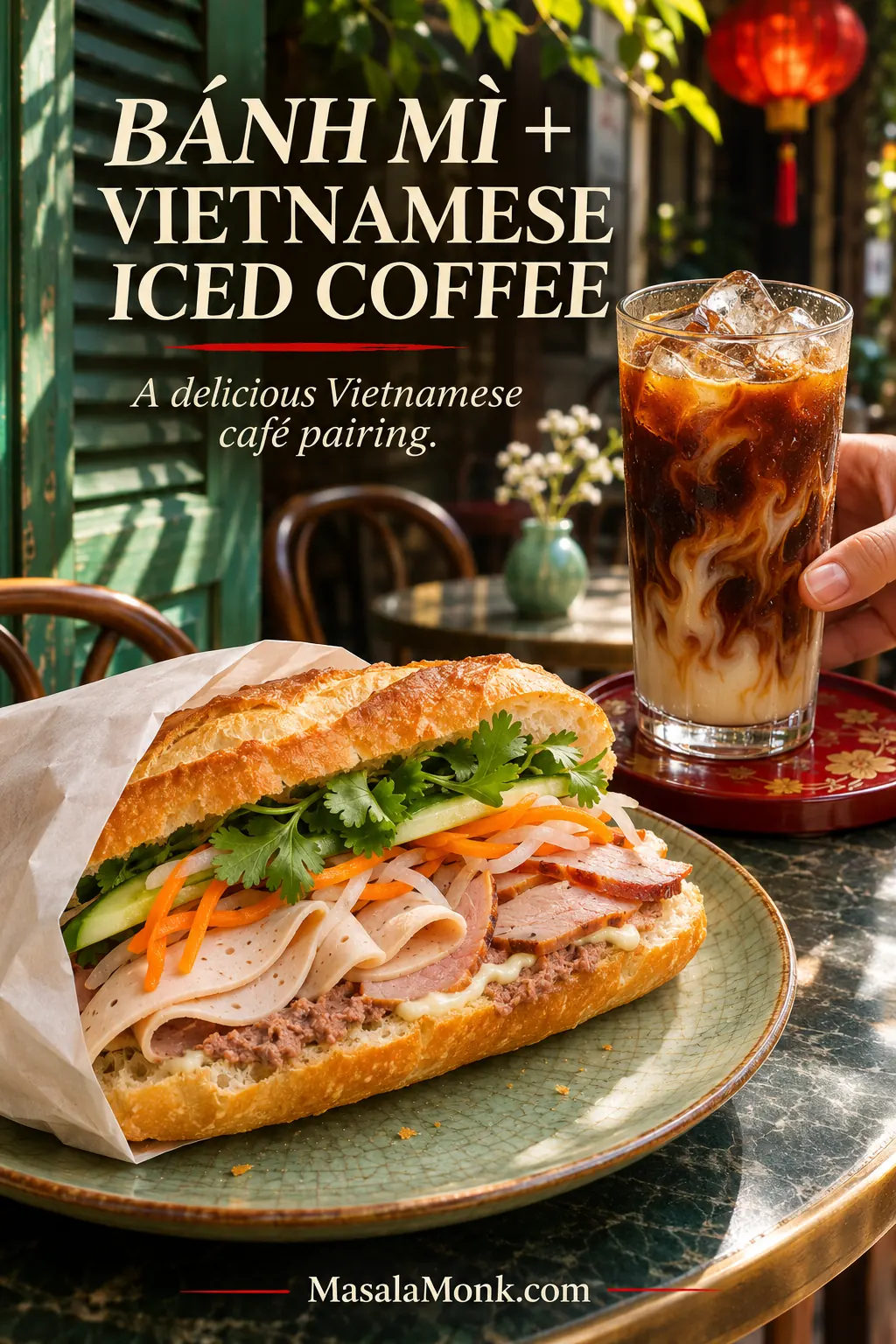
Pair Bánh Mì with Vietnamese Iced Coffee
Vietnamese iced coffee with condensed milk makes a lovely contrast to the savoury pork and tangy pickle. The cold, sweet drink is especially welcome with a little fresh chilli. Our iced coffee collection includes a version to make at home.
Best Bread for Banh Mi: Light Crust, Airy Middle
The best bread for bánh mì is a light Vietnamese baguette with a thin, crisp crust and airy interior. A thick, hard artisan crust can force the meat and pickle out before the bread gives way, however impressive the loaf looks. Gently warming a suitable roll can revive a softened crust; it won’t transform dense, tough bread into an airy baguette.
How Vietnamese Baguettes Compare with Substitutes
A light sandwich roll can work when Vietnamese baguettes are unavailable. Choose by how readily the crust yields, not merely by the shape of the loaf.
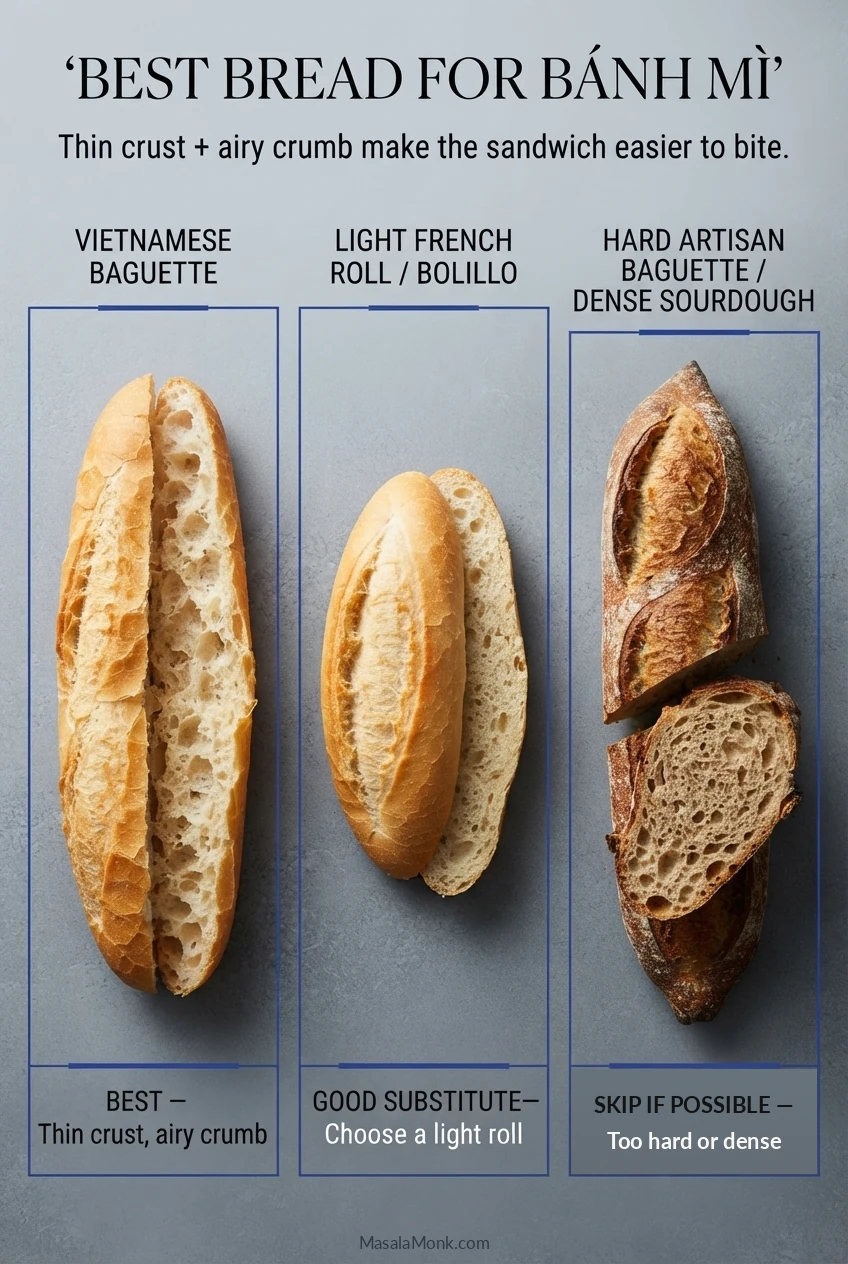
- First choice: A fresh Vietnamese baguette, roughly 18–23 cm (7–9 in) for one sandwich.
- Closest everyday option: A light French-style sandwich roll or bolillo with a relatively thin crust.
- Skip when possible: Very hard artisan baguettes, dense sourdough and rolls with heavy toppings that take over the flavour.
How to Recognize a Thin Crust and Airy Crumb
The crumb should leave space for the fillings without needing to be compressed. A close-up of the broken bread makes that texture easier to identify.
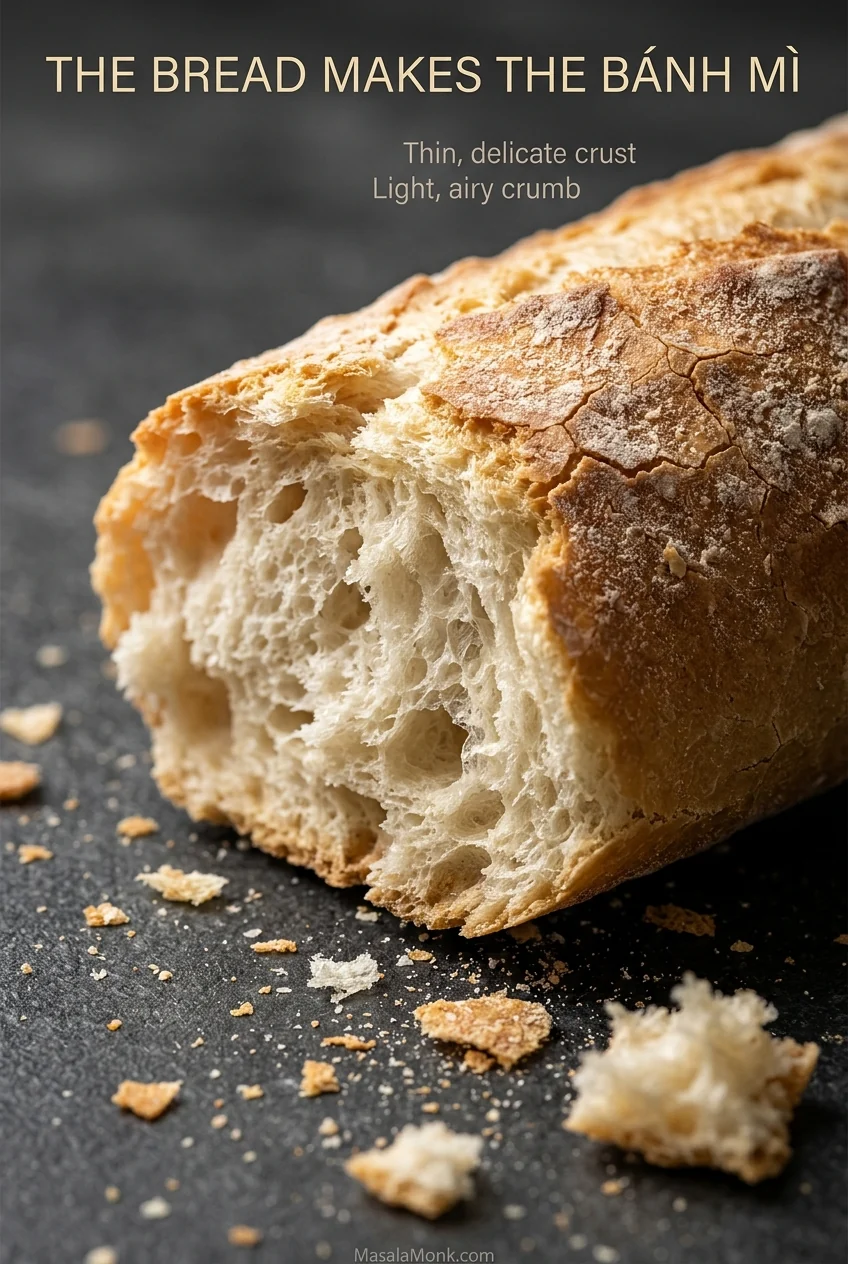
Rice flour appears in some Vietnamese baguette recipes, but it isn’t required for light bánh mì bread. Flour choice, dough handling and baking all affect the crust and crumb. Cookbook author Andrea Nguyen explains what to look for when buying bánh mì bread, including why rice flour is not essential.
Freeze spare fresh rolls tightly wrapped; thaw and refresh them gently when needed. Chosen a suitable roll? Return to the assembly steps.
What Meat Goes in a Classic Banh Mi?
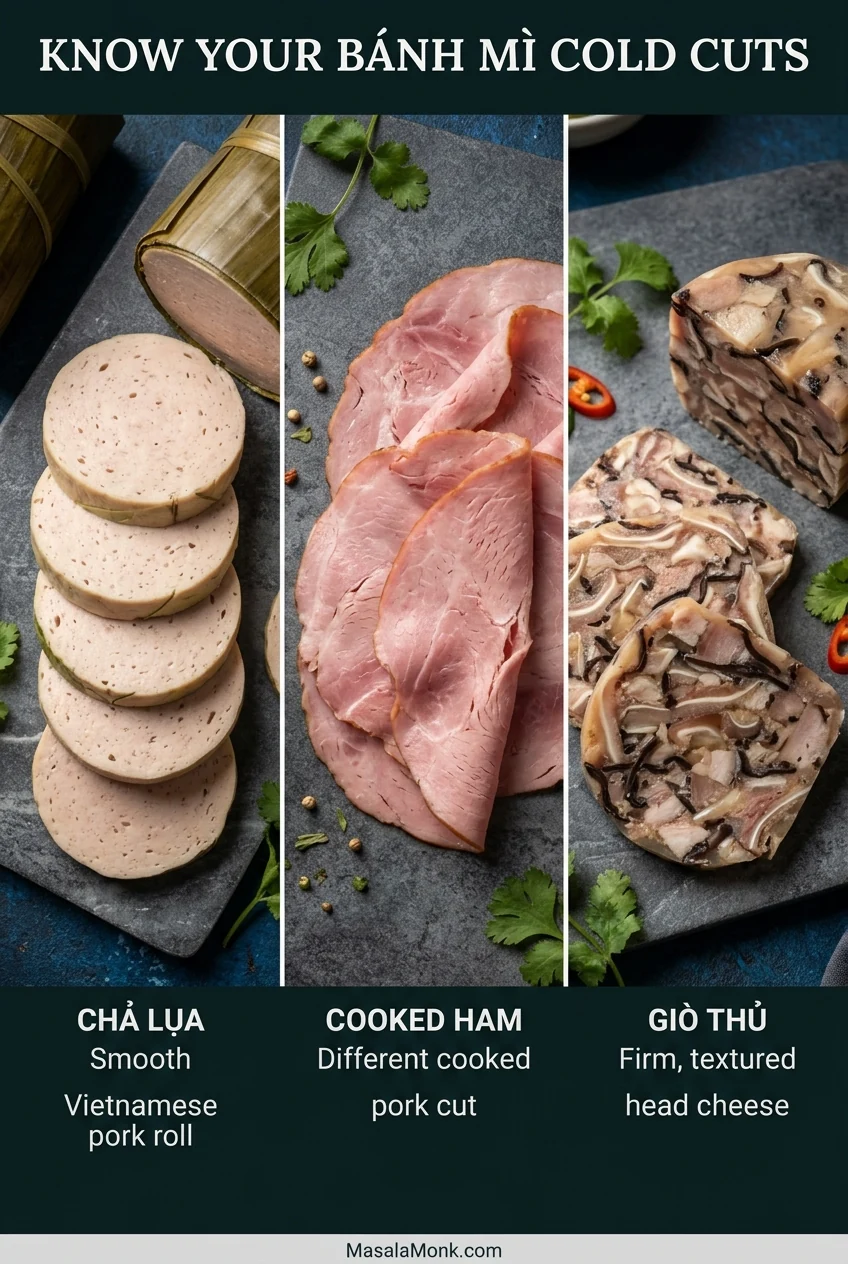
Ask for 150 g chả lụa and 150 g of a different fully cooked pork cold cut for mixed bánh mì. Check the labels: chả lụa is also sold as “Vietnamese ham,” so make sure the second package isn’t the same pork roll. The deli’s other cooked pork preparation, head cheese or ordinary fully cooked deli ham can provide that second layer.
Chả lụa (also called giò lụa in northern Vietnam) is a smooth, springy pork roll whose thin slices fold into the baguette. Thịt nguội refers to cold meats more broadly, not one specific sausage. A shop’s đặc biệt, or special, may combine several pork preparations; there is no fixed list you have to recreate.
Giò thủ (also called chả thủ) is a firmer, gelatin-rich head-cheese preparation with visible pieces of pork. It can add another texture to the meat mix, but isn’t required.
Recognize Chả Lụa, Ham and Giò Thủ
The smooth surface of chả lụa contrasts with the distinct pork pieces in giò thủ and the familiar texture of cooked deli ham. That difference is part of the appeal of a mixed cold-cut bánh mì.
Cooked roast pork is another alternative, although its texture differs from Vietnamese charcuterie. If you want to prepare it yourself another day, our oven-roasted pork tenderloin guide covers that separate cooking step. Cool and refrigerate it promptly before slicing for a cold sandwich.
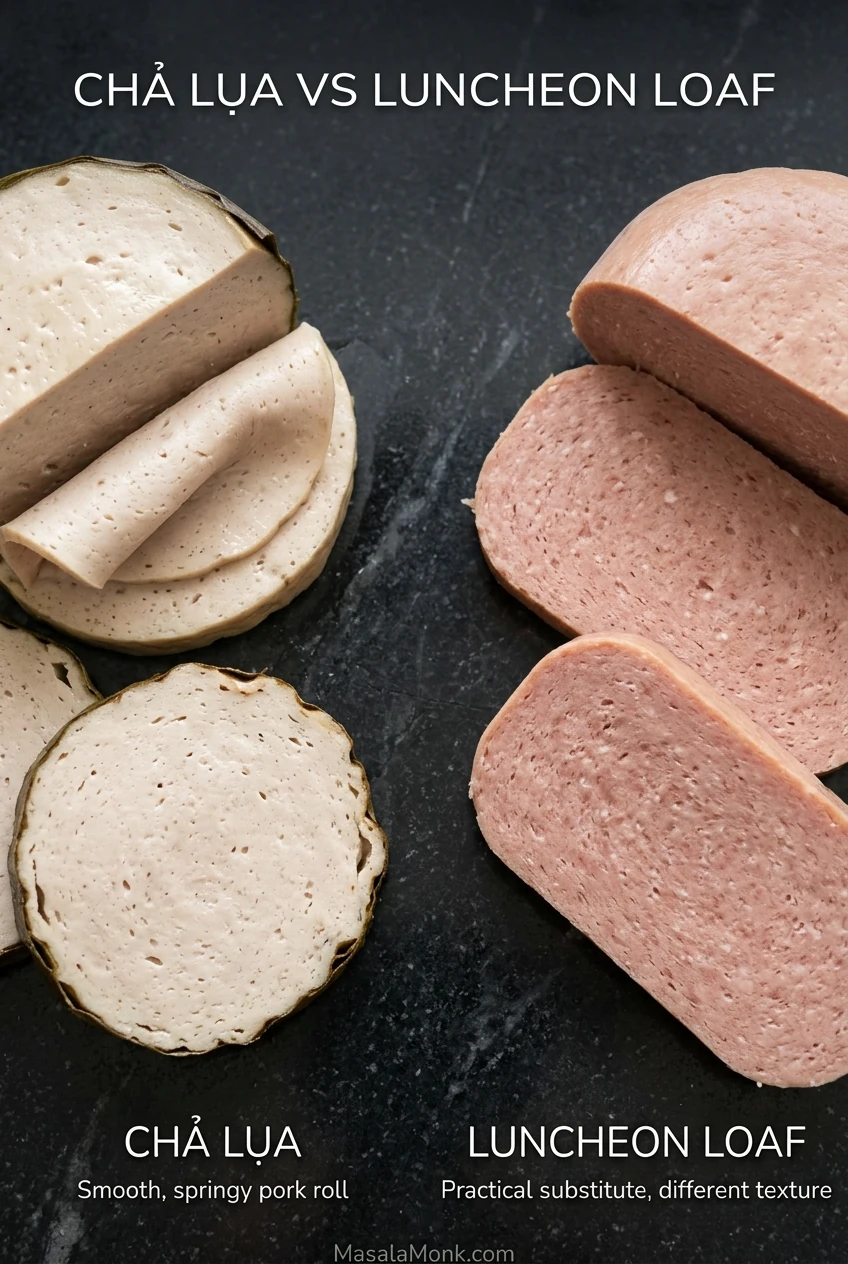
Chả Lụa Compared with Luncheon Loaf
A fully cooked luncheon loaf is a practical substitute, but it may be softer and less springy. Thin slices make that texture difference easier to manage in a baguette.
Got your two distinct cooked cold cuts? See how to layer them in the baguette.
What Sauce Goes on Banh Mi? Pâté, Mayo and Maggi
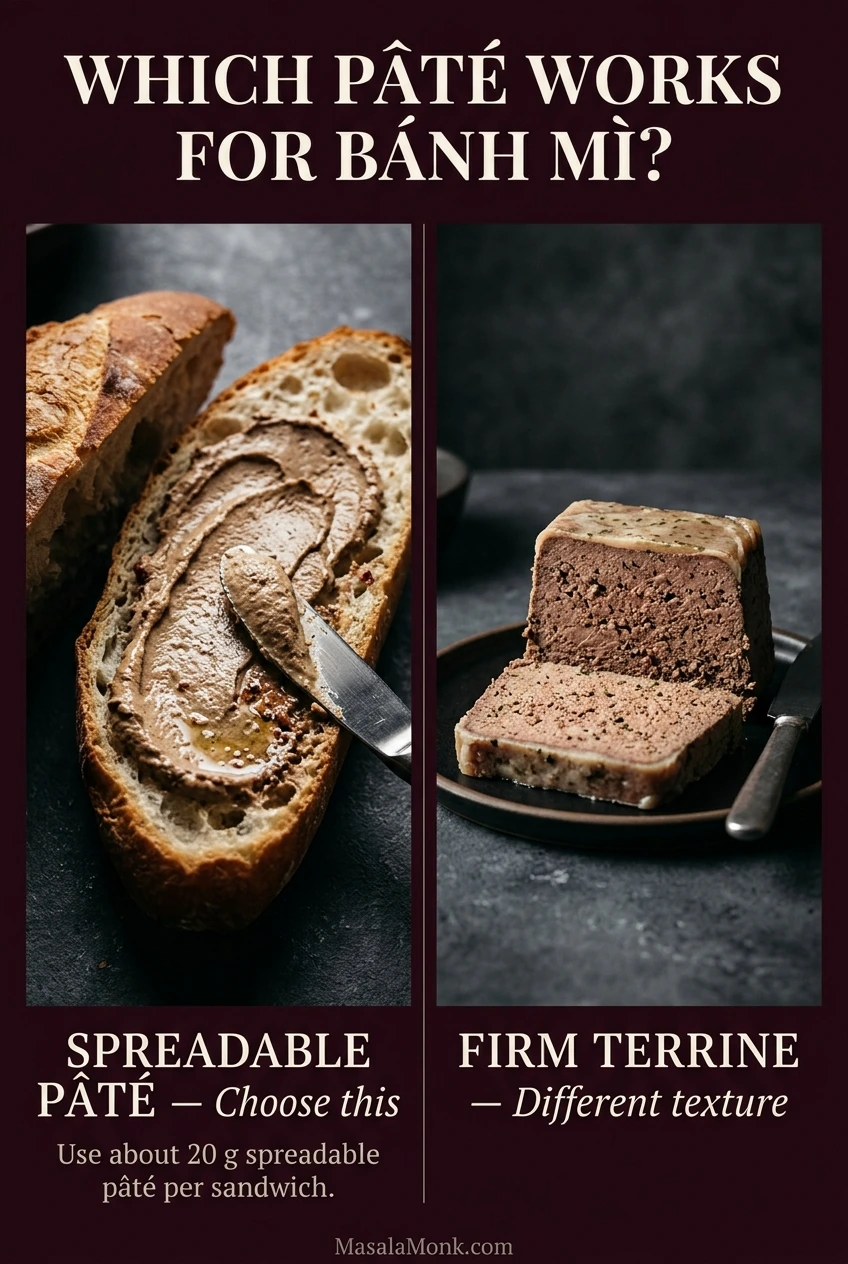
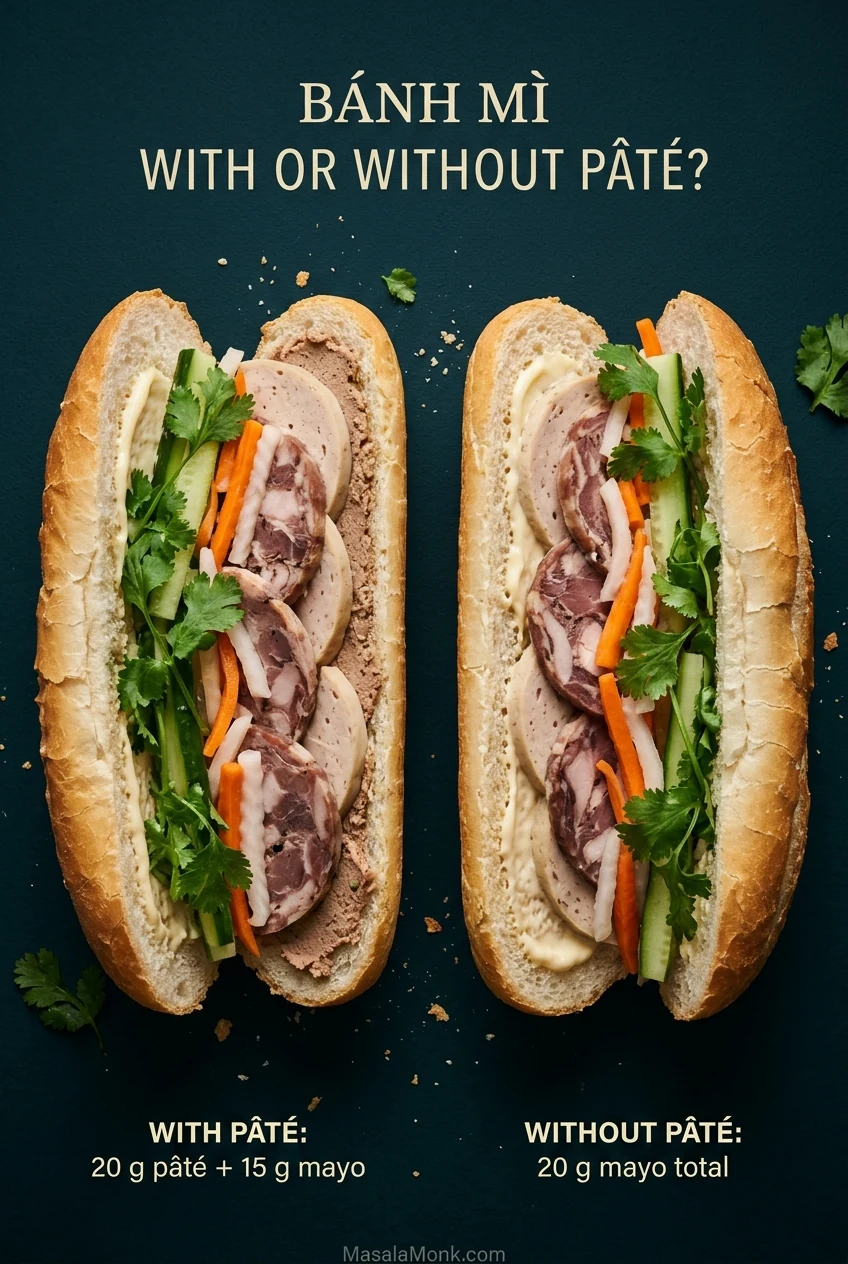
Pâté: Look for pork- or chicken-liver pâté that spreads smoothly inside the roll, rather than a firm terrine meant for slicing. Use about 20 g per sandwich. If pâté is unavailable, spread roughly 1 extra tsp (5 g) mayonnaise per roll instead of trying to replace all 20 g of pâté with mayo. The sandwich will be creamy but won’t have the same liver flavour.
Spreadable Liver Pâté Versus Firm Terrine
To coat a baguette evenly, choose a soft pâté that spreads readily when chilled. The comparison is about pâté texture, not the type of bread used in the photograph.
What Changes When You Leave Out Liver Pâté?
When liver pâté is omitted, the change is most noticeable in the creamy layer against the bread. You can still make a balanced sandwich with the two cooked meats, drained pickle, cucumber and herbs.
Mayonnaise: A mild, full-fat jarred mayo is convenient. Vietnamese egg-yolk sauces such as sốt bơ trứng can taste richer and less sharp than standard commercial mayo. If you would rather make it, our homemade mayonnaise guide covers the basic method and variations.
Maggi: The amount depends on the saltiness of your cold cuts. Regular soy sauce can provide savouriness if you don’t have Maggi, though it tastes different. Ready to build the sandwich? Return to opening and spreading the bread.
Easy Substitutions When Ingredients Are Hard to Find
A Supermarket-Friendly Bánh Mì Variation
Use the substitution table below to choose comparable ingredients without expecting them to taste identical to Vietnamese deli preparations.
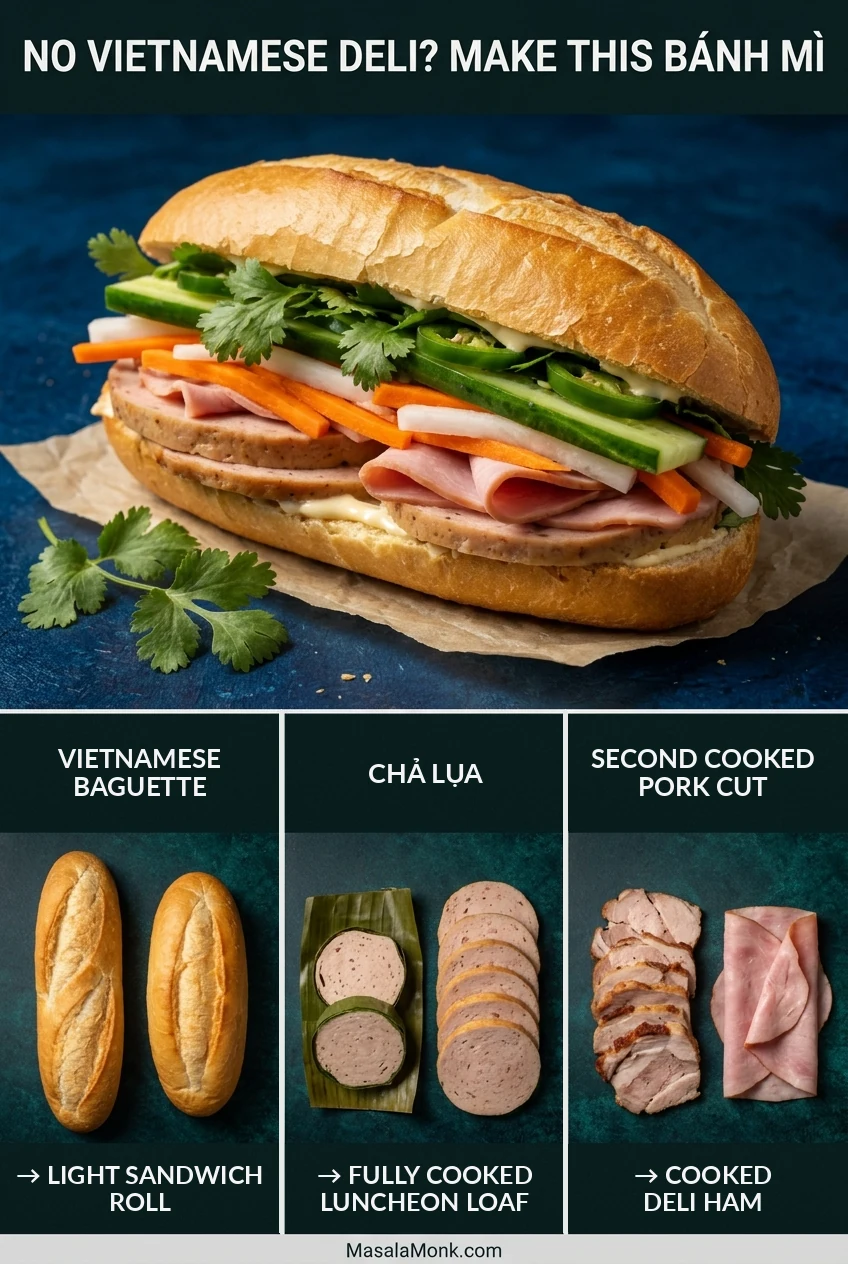
| Ingredient | What to Use Instead (and What Changes) |
|---|---|
| Vietnamese baguette | Light French sandwich roll or bolillo: Often a little denser or chewier; choose a thin crust that yields easily. |
| Chả lụa | Fully cooked pork or chicken luncheon loaf: Usually softer and less springy, with different seasoning. |
| Second cooked pork cold cut | Thinly sliced, fully cooked deli ham or chilled roast pork: Ham is convenient and may be saltier; roast pork brings a firmer, meatier bite. Either works as a second flavour beside chả lụa. |
| Liver pâté (pork or chicken) | About 1 extra tsp (5 g) mild mayonnaise per roll: Keeps the bread creamy without trying to replace pâté gram for gram; the liver flavour will be absent. |
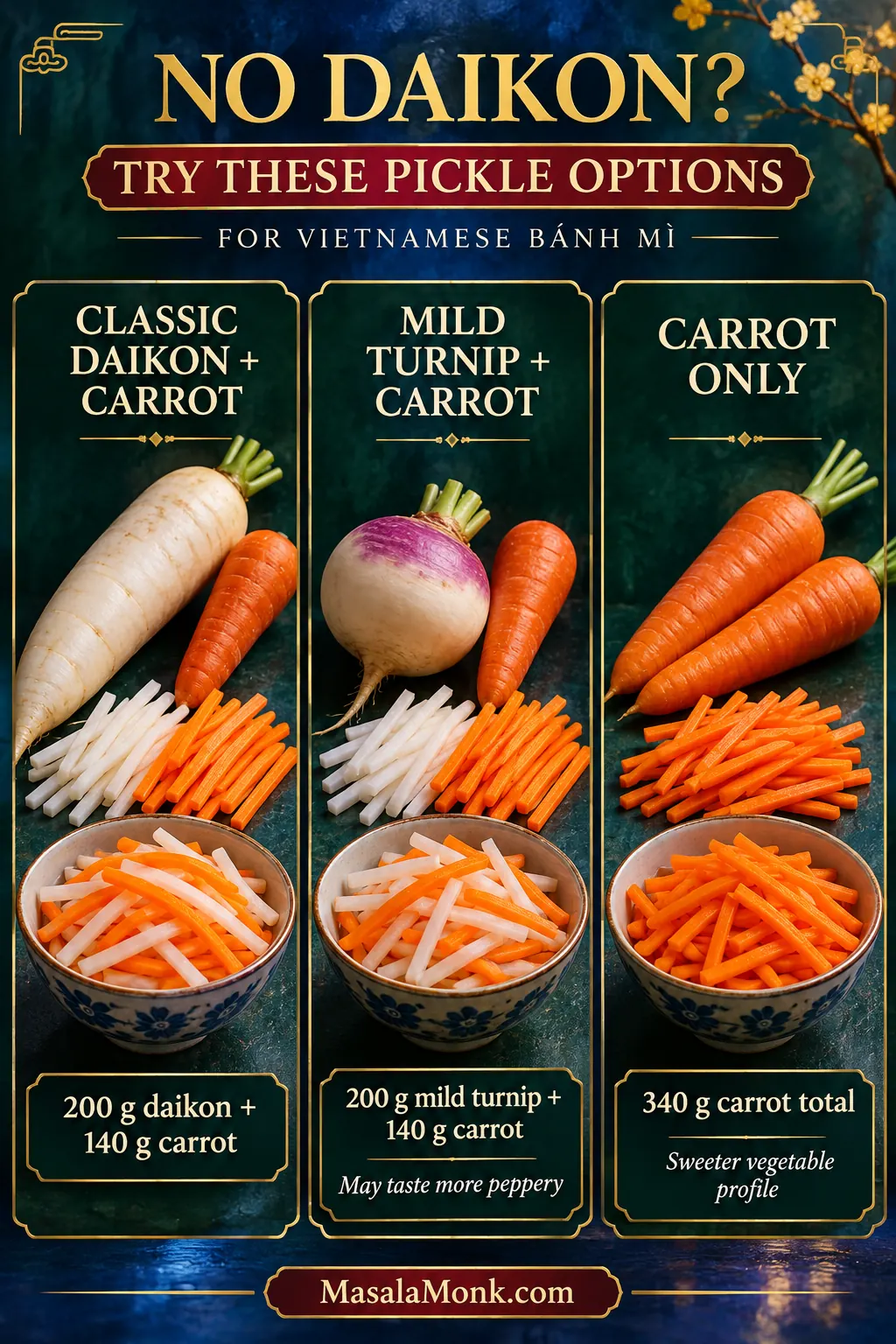
| Daikon | 200 g mild turnip, or 340 g carrot total for carrot-only pickle: Turnip can taste more peppery; carrot-only pickles are sweeter. |
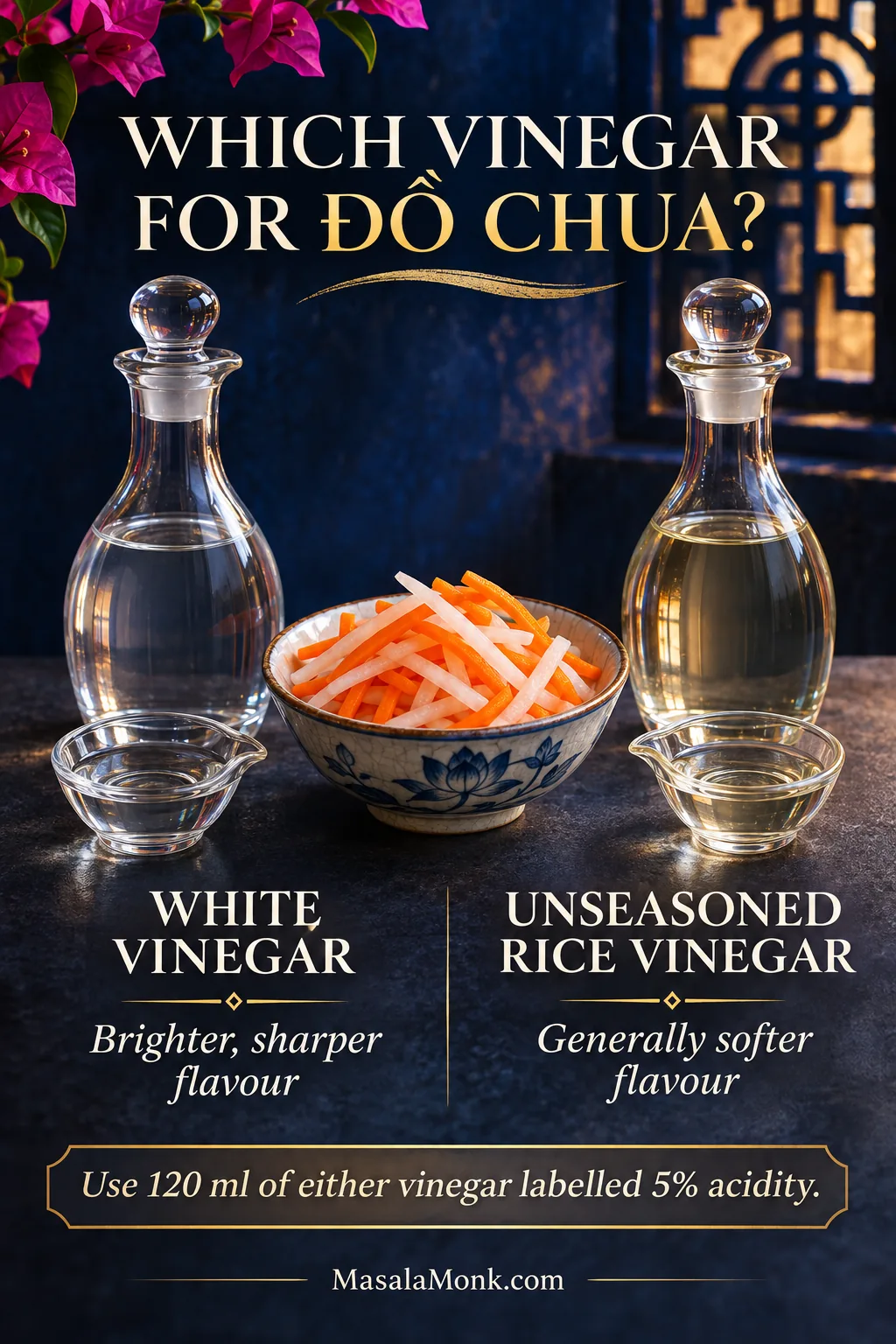
| Distilled white vinegar, 5% acidity | Unseasoned rice vinegar labelled 5% acidity: Generally a softer flavour; use the same measured volume. |
| Maggi seasoning | A few drops of regular soy sauce: Adds salt and savouriness, but not exactly Maggi’s flavour; add gradually. |
| Cilantro | Leave it out: Less herbal aroma; cucumber and spring onion can still bring freshness. |
Daikon, Mild Turnip or Carrot-Only Quick Pickle
Choose the root vegetables you can find, keeping their starting weights consistent with the substitution table.
Compare White Vinegar and Unseasoned Rice Vinegar
Check the vinegar label before following the measured refrigerator-pickle formula.
Once you have chosen the substitutes, check the four-sandwich ingredient quantities before assembling.
Fix a Banh Mi That Isn’t Quite Right
- Bread too hard? Transfer the filling to a softer roll; reheating won’t rescue a crust that was tough to begin with. For the next sandwich, choose a more suitable roll.
- Too salty? Leave out Maggi, remove some of the saltiest meat and add unseasoned cucumber.
- Pickle too tart? Use less of it in this sandwich and add more cucumber. For the next refrigerated batch, increase the sugar slightly if you prefer a sweeter pickle; keep the measured vinegar and water proportions unchanged.
- Pickle limp? Soft vegetables, very fine shreds or prolonged salting can all work against crunch. For the next batch, compare the target matchstick size and stop softening when a stick bends without snapping.
- Pickle bitter? Taste the raw daikon before starting the next batch. Some roots are too harsh for a pleasant quick pickle; replace a very bitter one rather than relying on sugar to mask it.
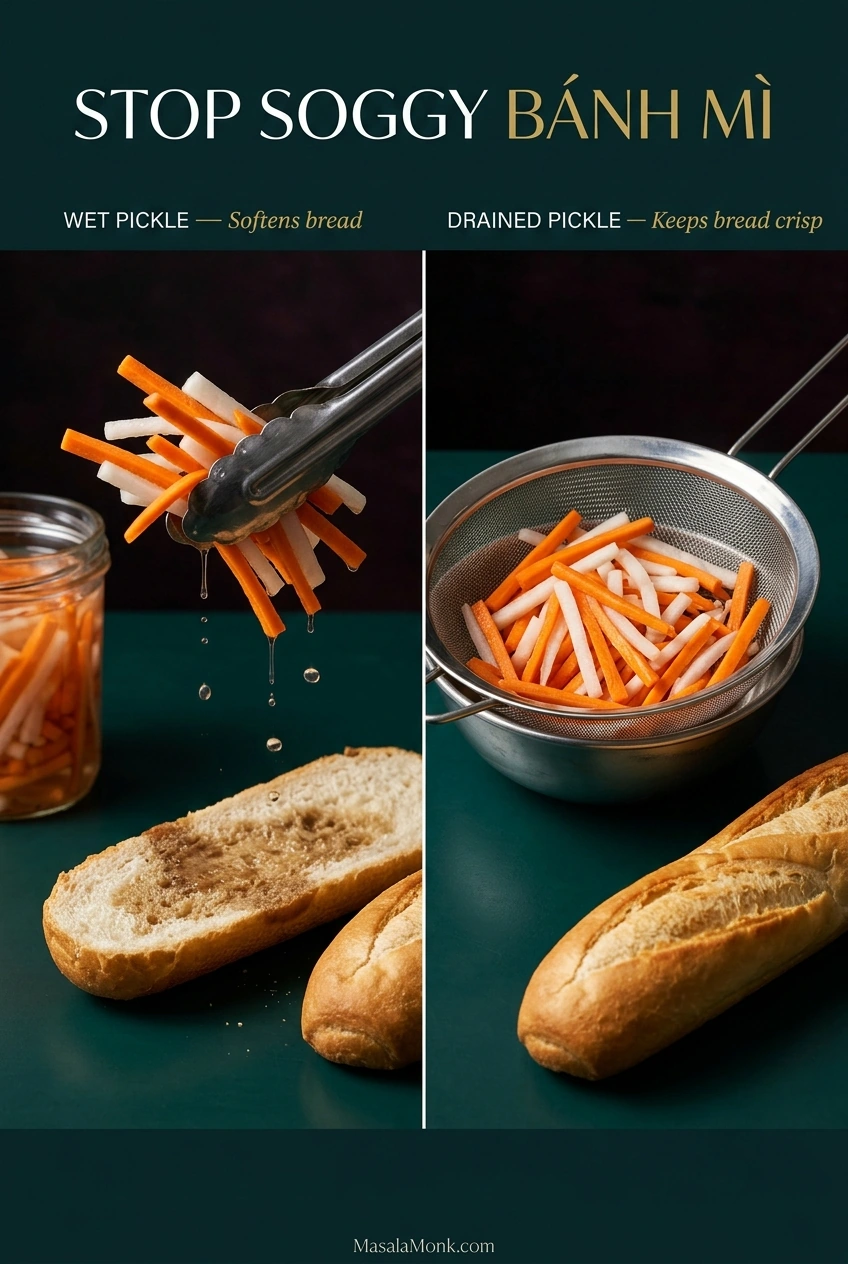
- Bread soggy? Move the filling into fresh bread if possible. Next time, drain the pickles thoroughly and keep wet fillings separate until assembly.
- Filling falling out? Spread the meat along the roll rather than piling it in the centre, and remove some filling if it still won’t close. See the layering step for the correct arrangement.
- Daikon smells strong? A sulphur-like scent can develop in chilled daikon pickles, but smell alone does not establish safety. Discard pickles with mould, slime, unexpected gas, improper refrigeration or other signs of spoilage.
Why Drained Pickle Matters for Crisp Bread
Compare the surface moisture in the two examples before assembling the sandwich.
How to Recognize an Overstuffed Bánh Mì
Compare the height and placement of the fillings rather than relying on total volume.
Why Finely Shredded Pickle Becomes Limp
This comparison distinguishes fine wet shreds from more substantial matchsticks.
Make Ahead, Pack for Lunch and Store Safely
Can you make bánh mì ahead? Yes. Make the carrot-daikon pickle the day before, and keep the cooked meats, pâté and mayonnaise refrigerated in separate covered containers. Wash and dry the herbs and cucumber; slice them closer to serving. Assemble the rolls shortly before eating to preserve the delicate crust.
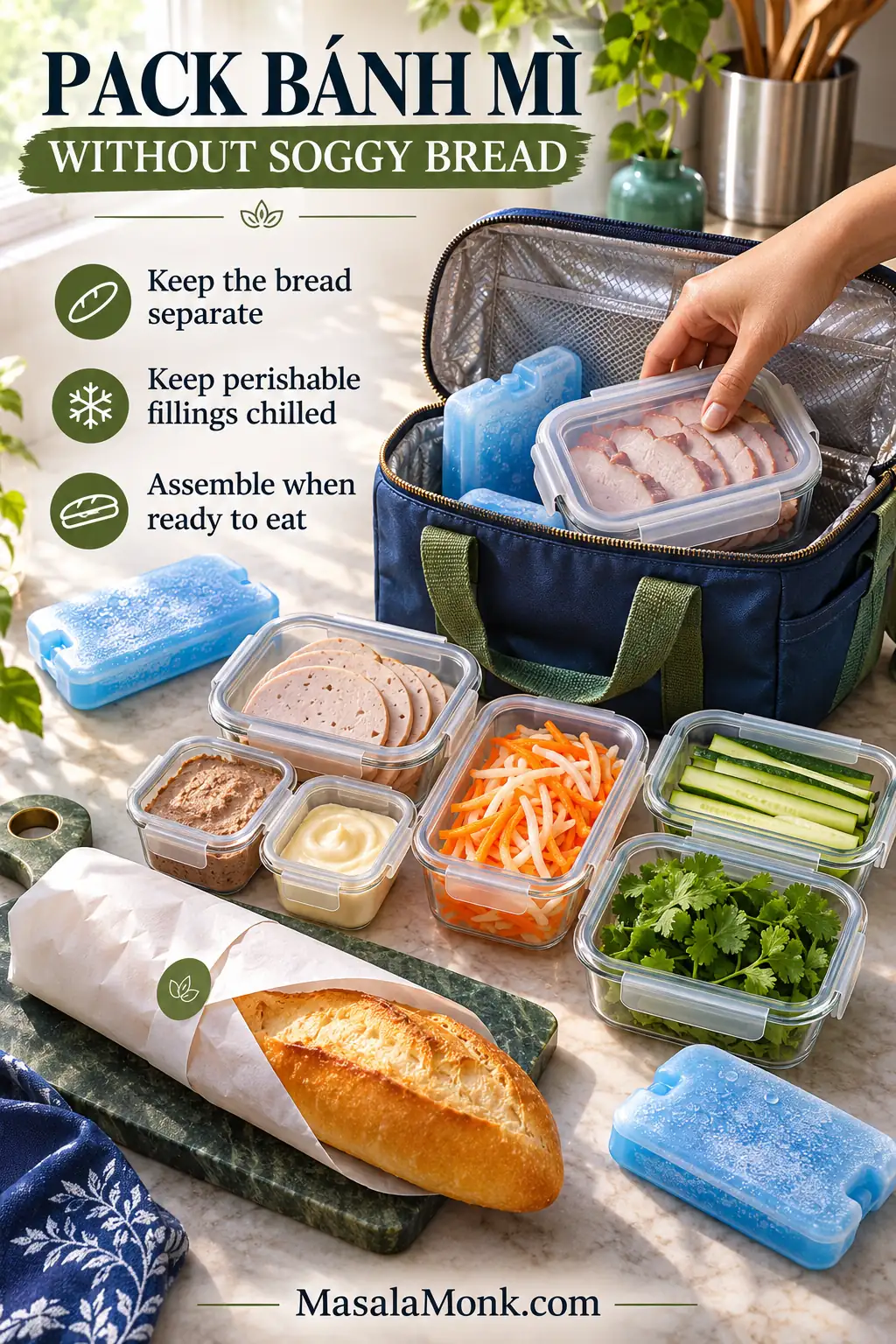
For packed lunches: Carry the roll apart from chilled meat, spreads and vegetables when you can. An insulated bag with ice packs helps keep perishables cold. If you need a fully assembled sandwich, drain the pickle thoroughly, wrap it to hold the filling in place and expect the bread to soften with time.
Pack a Bánh Mì for Lunch Without Soggy Bread
For a packed lunch, arrange the containers so wet vegetables cannot leak onto the baguette, even while everything stays chilled.
For a group: Put out bread and prepared vegetables first. Bring chilled meats and spreads to the table only when everyone is ready to assemble, then return perishable fillings to the refrigerator promptly.
Storage and Food Safety
Keep the quick pickle covered, with vegetables in their brine, in the refrigerator at 4°C (40°F) or colder. For best quality, aim to use this small homemade batch within about a week. Discard any batch that shows signs of spoilage or has been stored improperly. The pickle is for refrigeration, not shelf-stable canning.
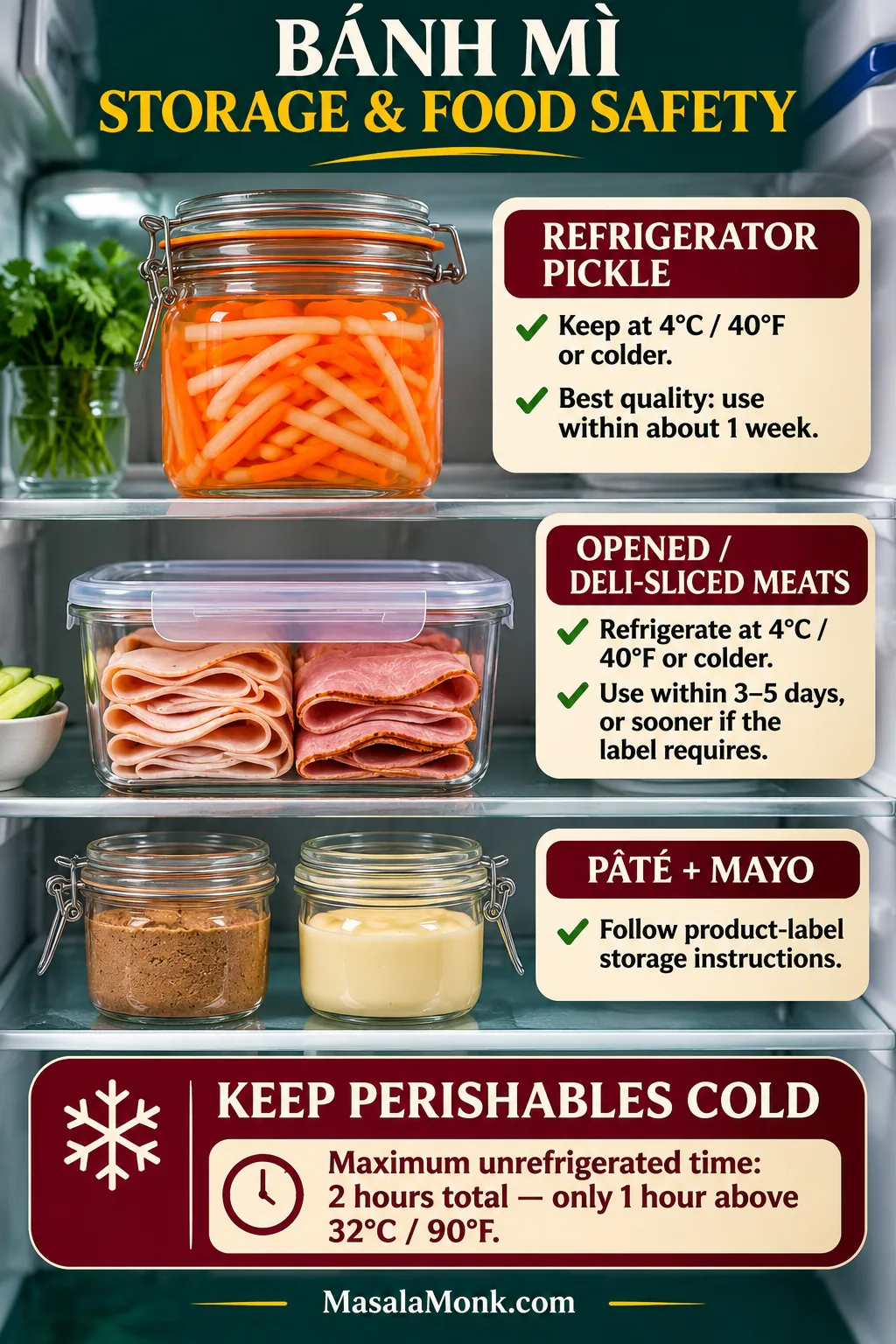
FoodSafety.gov recommends using opened or deli-sliced luncheon meat within 3–5 days at 4°C (40°F) or below; follow the package if it gives a shorter limit. Store pâté and mayonnaise as their labels direct. Limit the total time perishable fillings and sandwiches spend unrefrigerated—including preparation, transport and serving—to 2 hours, or 1 hour when temperatures exceed 32°C (90°F).
This recipe uses cold deli meats and may include refrigerated pâté. For pregnant people, adults aged 65 or older and people with weakened immune systems, CDC Listeria prevention guidance advises heating deli meats to 74°C (165°F) or until steaming hot and choosing unopened shelf-stable pâté instead of refrigerated pâté. Once any shelf-stable pâté is opened, refrigerate it and follow its label’s storage instructions.
Back to the full recipe · Back to top
Other Ways to Make Banh Mi
Bánh mì thịt nướng features grilled pork; bánh mì heo quay often includes roast pork with crisp skin; and bánh mì trứng is built around eggs. Chicken, sardines and vegetable fillings are common too.
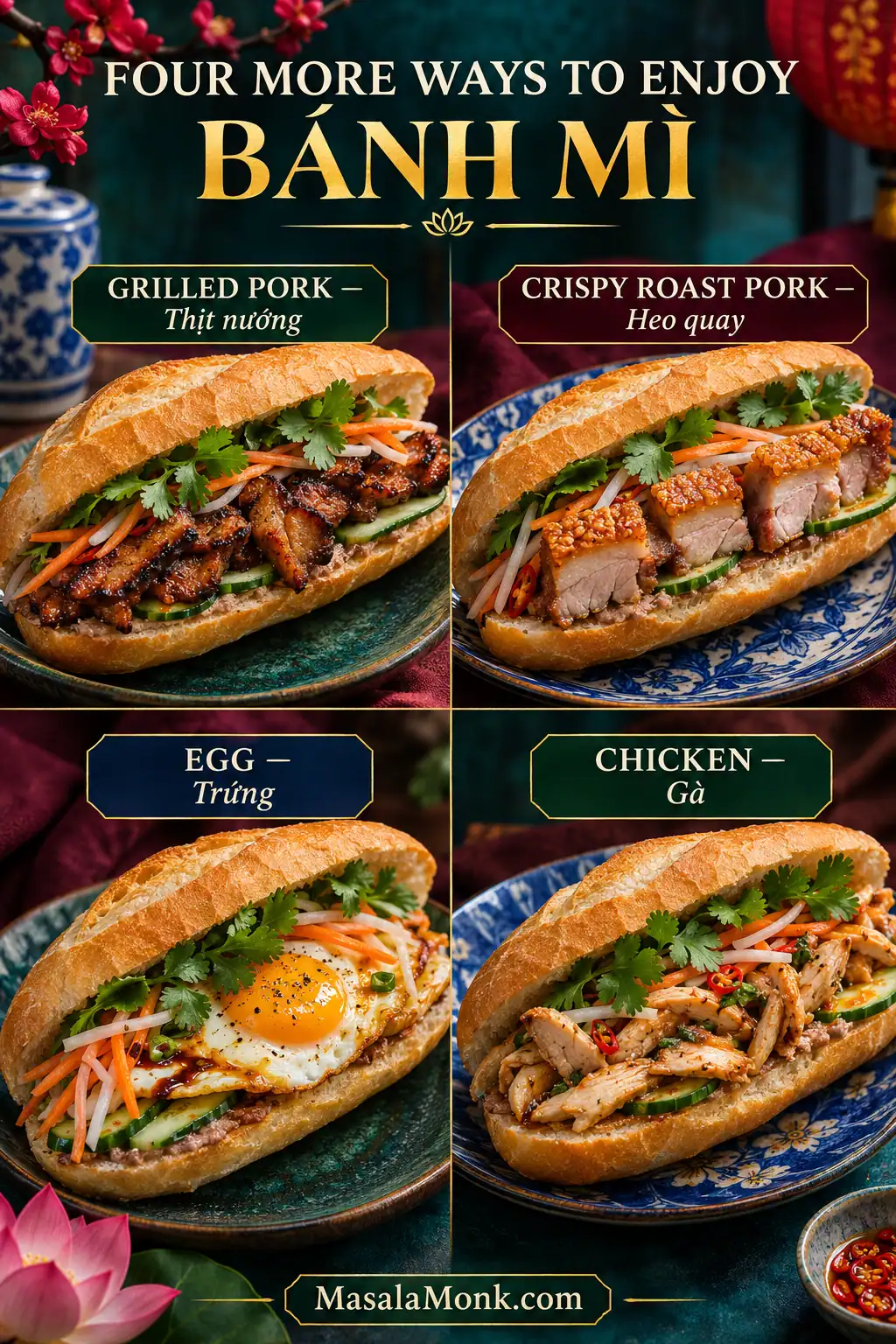
For a plant-based variation, our broader tempeh meal-prep collection includes a short tempeh bánh mì idea with crisped tempeh, pickles and herbs. Replace the pâté and regular mayonnaise with plant-based spreads as well.
Found good bánh mì rolls locally, or a cold-cut substitute worth recommending? Tell us what you bought and where you found it in the comments.








