
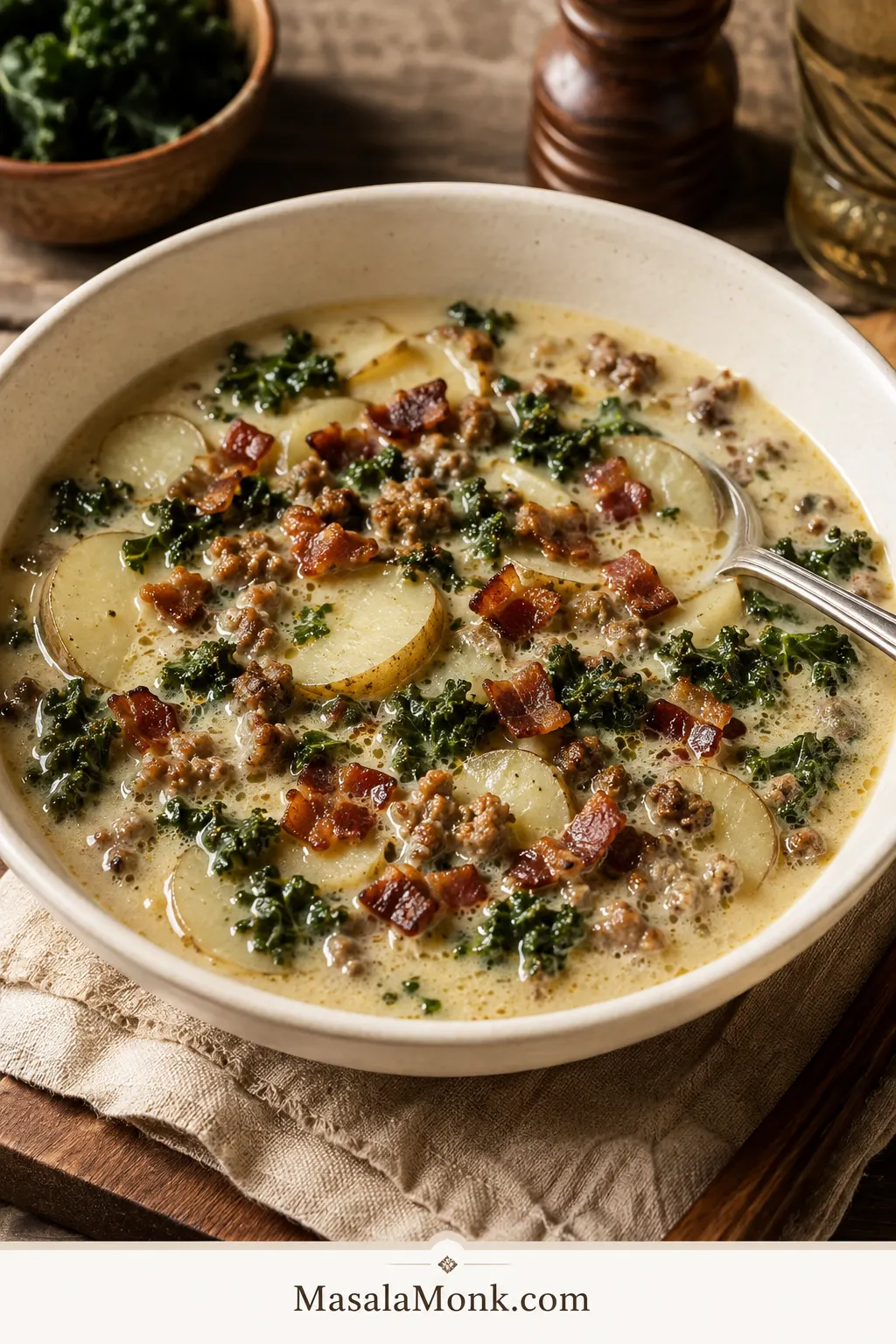
The best spoonful of Zuppa Toscana carries browned Italian sausage, a tender slice of potato, softened kale and enough creamy broth to bring everything together.
This is a one-pot, Olive Garden-style Zuppa Toscana with Italian sausage, russet potatoes, kale, bacon and creamy chicken broth. This version keeps the familiar richness without turning the broth heavy: savory first, creamy but still flowing, with tender potatoes that stay intact. You may remember the name, or simply remember it as that creamy sausage-and-kale soup from Olive Garden. Crisp bacon at the end brings a welcome crunch against the soft potatoes and creamy broth.
There is plenty of room to make it yours. Hot or mild sausage both work. Potato skins are optional. Spinach can stand in for kale. Those choices shift the flavor or texture without making the recipe fussy.
Quick Answer: How to Make Zuppa Toscana
Crisp the bacon, brown the Italian sausage and leave only a thin coating of rendered fat behind. Soften onion and garlic, then simmer evenly sliced russet potatoes in chicken broth until tender. Return the sausage, add kale, and finish with heavy cream once the greens have softened.
Remember three things: give the sausage time to brown, keep the potato pieces close to the same thickness, and add the cream near the end over gentle heat.
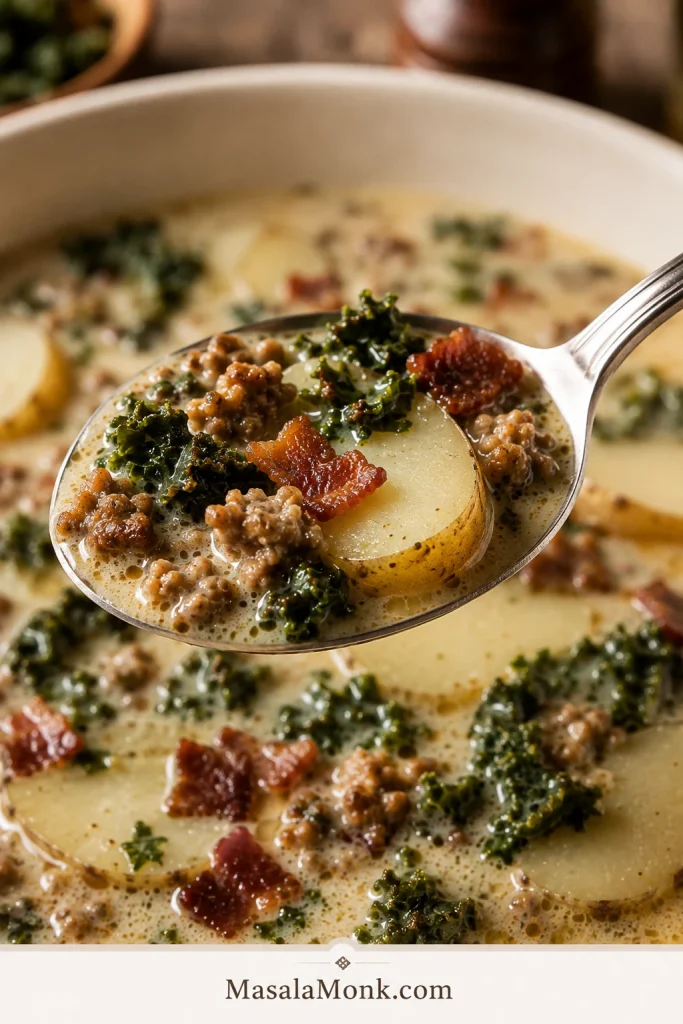
Zuppa Toscana Recipe
Tender russets, browned sausage and softened kale make this substantial enough for dinner, while cream rounds out the broth and crisp bacon is added at the finish.
Recipe at a Glance
| Prep time | About 20 minutes |
|---|---|
| Cook time | 40–45 minutes |
| Total time | About 1 hour |
| Method | One-pot stovetop |
| Yield | Roughly 10 cups / 2.4 litres, depending on evaporation |
| Serves | 6–7 dinner portions or 10 starter portions |
| Pot | 5½–6 quart / 5.2–5.7 litre Dutch oven or heavy pot |
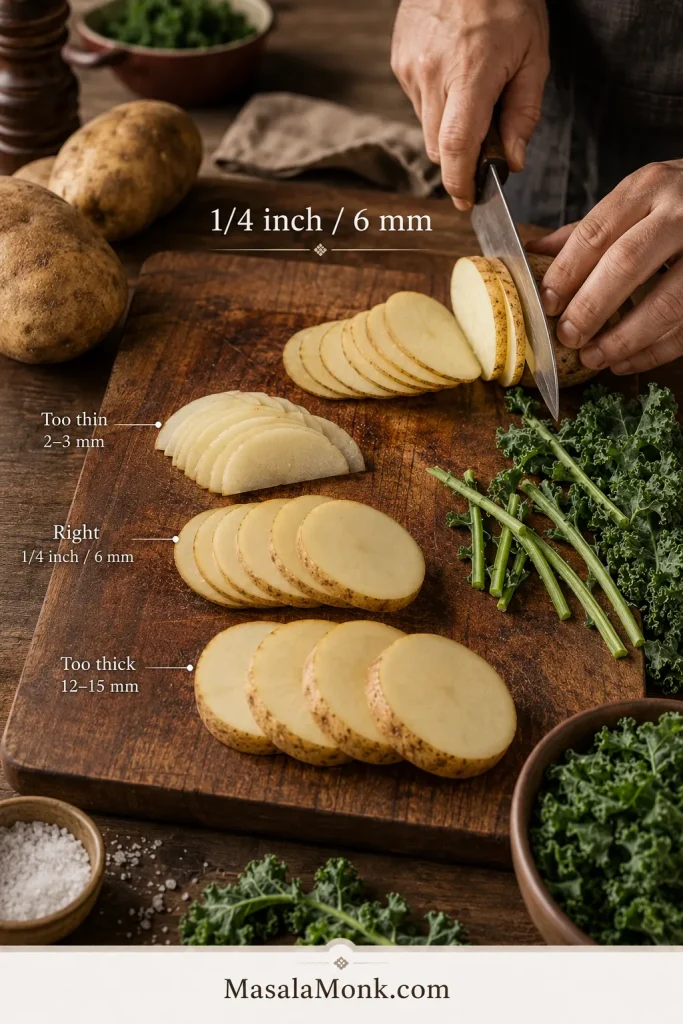
| Potato cut | About ¼ inch / 6 mm thick |
| Texture target | Creamy, flowing broth; tender intact potatoes; softened kale; no oily slick |
Ingredients
- 4 oz / 113 g bacon, about 4 thick-cut slices, chopped
- 1 lb / 454 g Italian pork sausage, hot or mild; use bulk sausage or remove the casings from links
- 1 medium yellow onion, finely chopped, about 1 cup / 150 g
- 4 medium garlic cloves, finely minced
- ¼–½ teaspoon crushed red pepper flakes, optional; with hot sausage, start without them and add extra heat after tasting
- 1½ lb / 680 g russet potatoes, scrubbed
- 5 cups / 40 fl oz / 1.18 litres low-sodium chicken broth or stock
- ½ teaspoon freshly ground black pepper, plus more to taste
- ¼ teaspoon fine salt, plus more to taste
- 4 oz / 115 g curly kale, tough stems removed and leaves chopped
- 1 cup / 8 fl oz / 240 ml heavy cream
- ½–1 teaspoon white-wine vinegar, optional, only if the soup still tastes heavy or flat after the salt is right
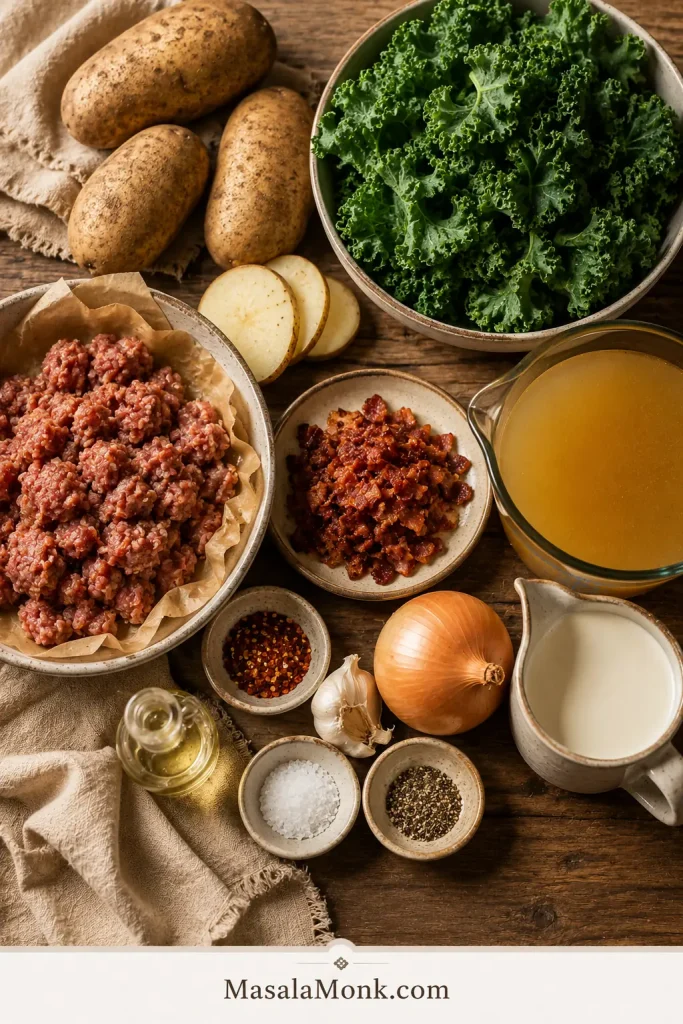
Optional for serving: grated Parmesan and extra crushed red pepper.
Equipment
- 5½–6 quart / 5.2–5.7 litre Dutch oven or heavy-bottomed pot
- Slotted spoon
- Ladle
- Instant-read thermometer, optional
Instructions
Prep and Brown
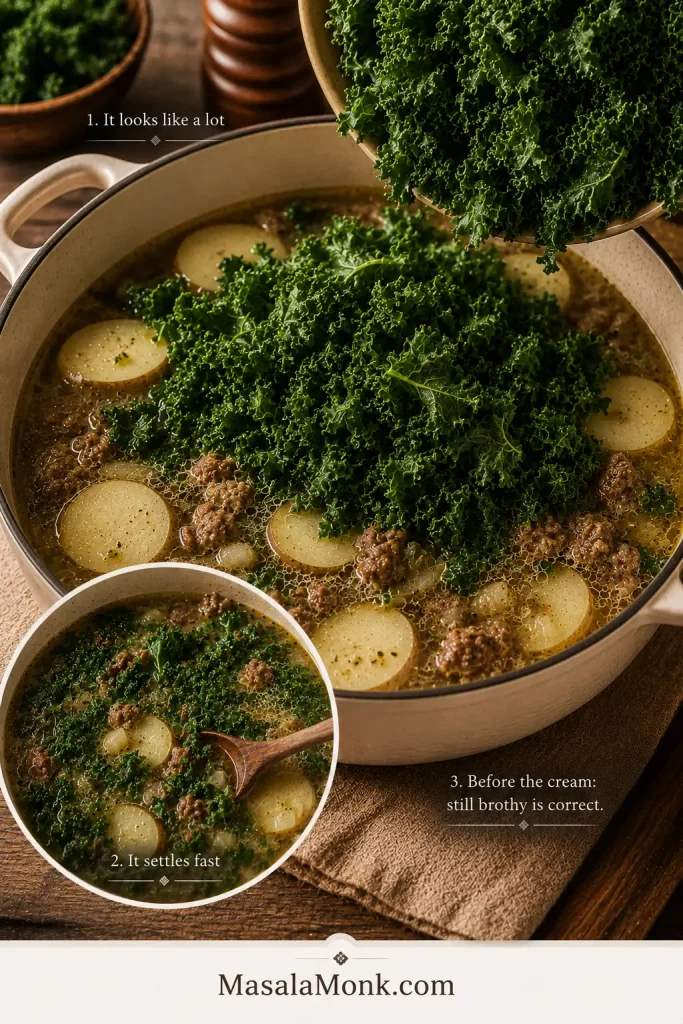
- Prep the potatoes and kale. Leave the potato skins on or peel them if you prefer. Halve the potatoes lengthwise; quarter especially wide ones, then slice crosswise about ¼ inch / 6 mm thick. They do not need to be ruler-perfect—just reasonably even. Strip the tough stems from the kale and chop the leaves into spoon-friendly pieces. The pile looks generous at first, but it settles quickly in the soup.
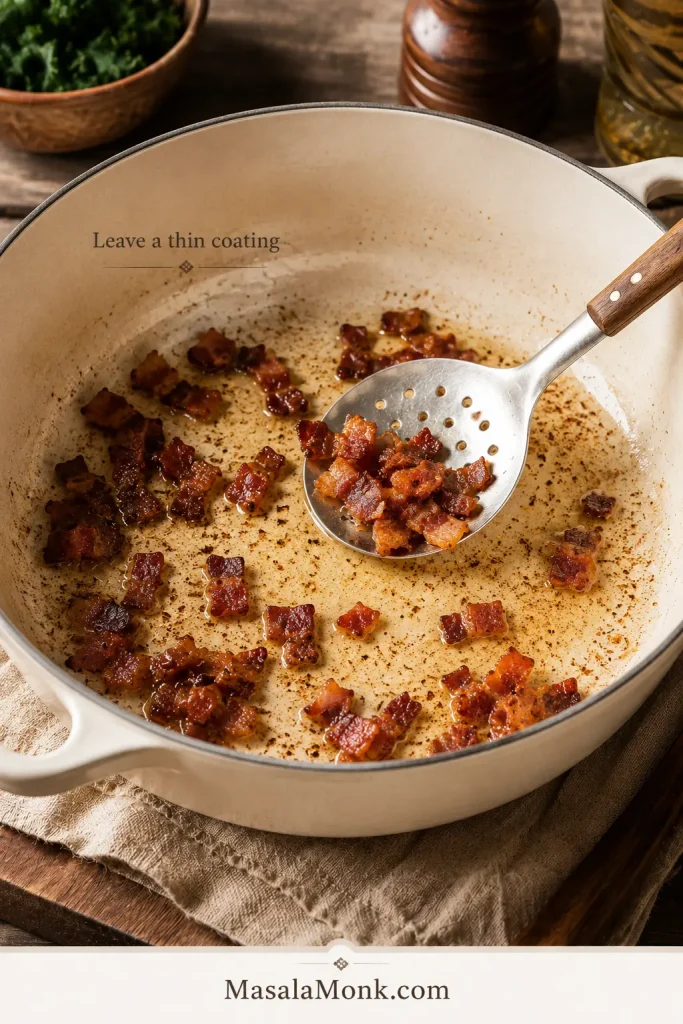
- Crisp the bacon. Put the chopped bacon in the cold pot and set it over medium heat. Cook 6–8 minutes, stirring occasionally, until crisp and browned. Remove it with a slotted spoon. Leave a thin glossy coating of fat on the bottom and spoon away any obvious puddle.
- Brown the sausage. Increase the heat to medium-high. Add the sausage and let part of it sit against the hot surface before breaking it up. Cook 5–7 minutes, until browned and cooked through. A mix of medium and smaller crumbles works well; there is no need to make them perfectly uniform. A larger crumble should reach 160°F / 71°C if checked with an instant-read thermometer. Transfer the sausage to the plate with the bacon. If it has released a deep puddle of fat, spoon away the excess and leave only a thin coating in the pot.
Build the Broth
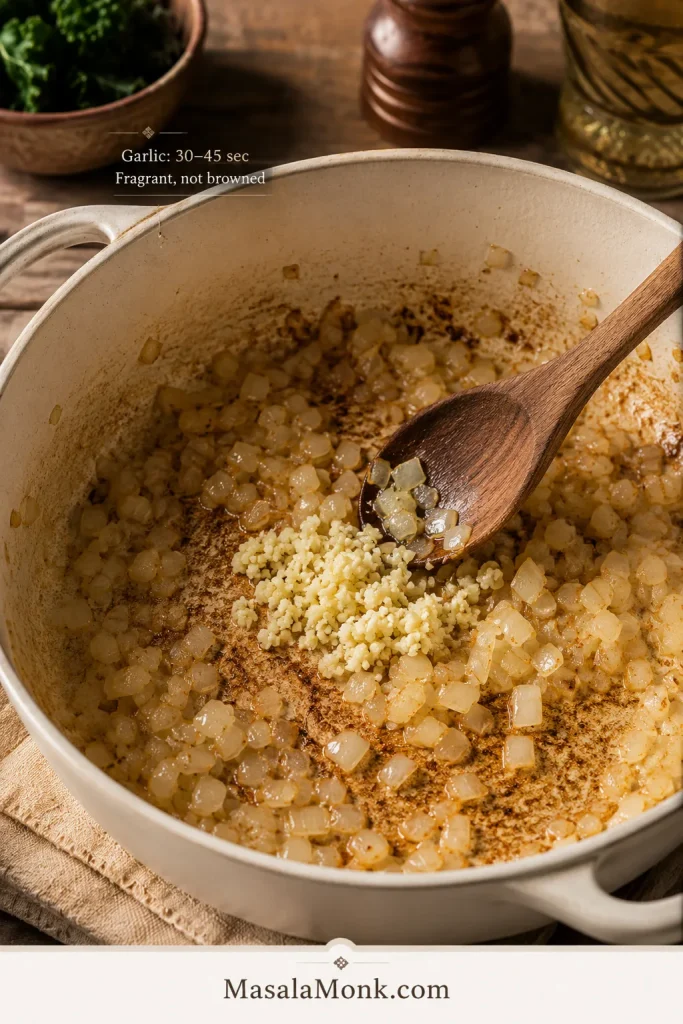
- Cook the onion and garlic. Reduce the heat to medium. Add the onion and cook 4–5 minutes, stirring and scraping up the browned bits, until softened. Add the garlic and optional red pepper flakes and cook another 30–45 seconds, just until fragrant.
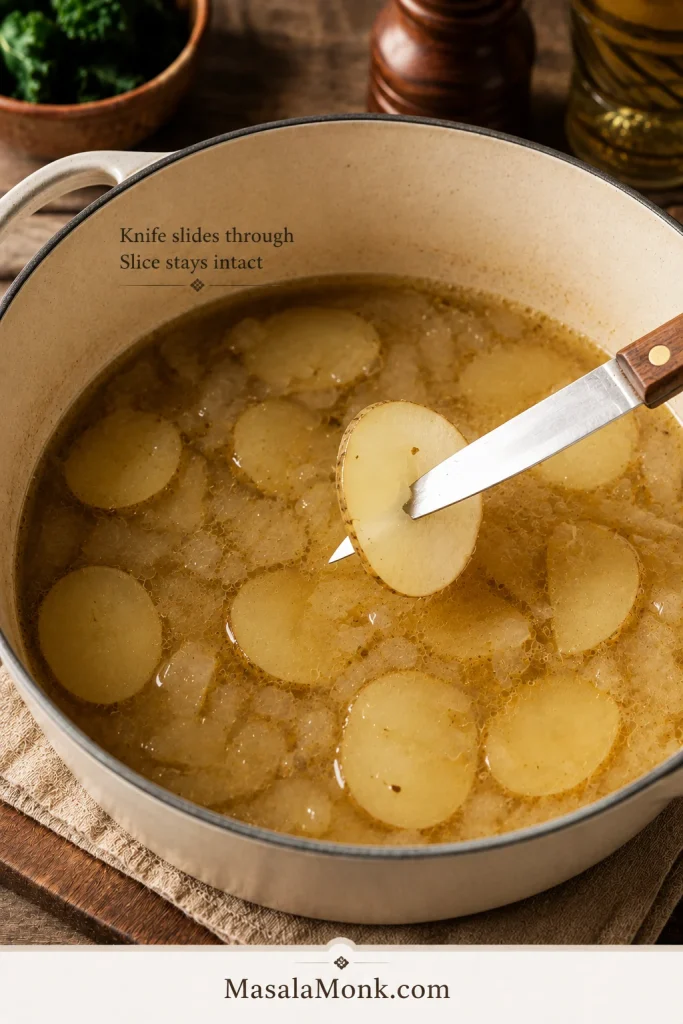
- Simmer the potatoes. Pour in the chicken broth and scrape the bottom well so the browned bits dissolve into the liquid. Add the potatoes, black pepper and ¼ teaspoon salt. Bring to a boil, then reduce to a steady simmer. Cook 12–16 minutes, checking early. The potatoes are ready when a knife or fork passes through without meeting a chalky center and the slice holds together when lifted.
- Return the sausage and add the kale. Stir the sausage back in, then add the kale. Simmer 3–5 minutes, until the leaves bend easily onto a spoon. Mature kale may need another minute. Before the cream goes in, the soup will look fairly brothy—that is exactly where it should be.
Finish and Serve
- Finish with cream and season. Reduce the heat to low. Stir in the heavy cream and about half of the cooked bacon. Warm for 2–3 minutes. The broth will turn paler and more opaque while the sausage, potatoes and kale remain clearly visible. Taste and add more salt, black pepper or red pepper only as needed. If the salt is right but the soup tastes heavy or muted, stir in ½ teaspoon white-wine vinegar, taste, and add a little more only if the broth still needs brightness.
- Serve. Ladle into bowls and scatter over the remaining crisp bacon. Add Parmesan or extra red pepper at the table if you like.
Recipe Notes
- Half-and-half: use the same starting volume. Stir a ladle of hot broth into refrigerator-cold half-and-half, then add the warmed mixture over low heat.
- Spinach: replace the kale and add the spinach only during the final 1–2 minutes.
- Crispier bacon: keep all of the cooked bacon out of the soup and add it only at serving.
- Doubling: use at least an 8-quart pot and brown the sausage in batches. Double the ingredient quantities, but do not double the potato cooking time; check them by tenderness.
Before serving: give the finished pot one gentle bottom-to-top stir so the sausage and kale are evenly distributed from the first bowl to the last.
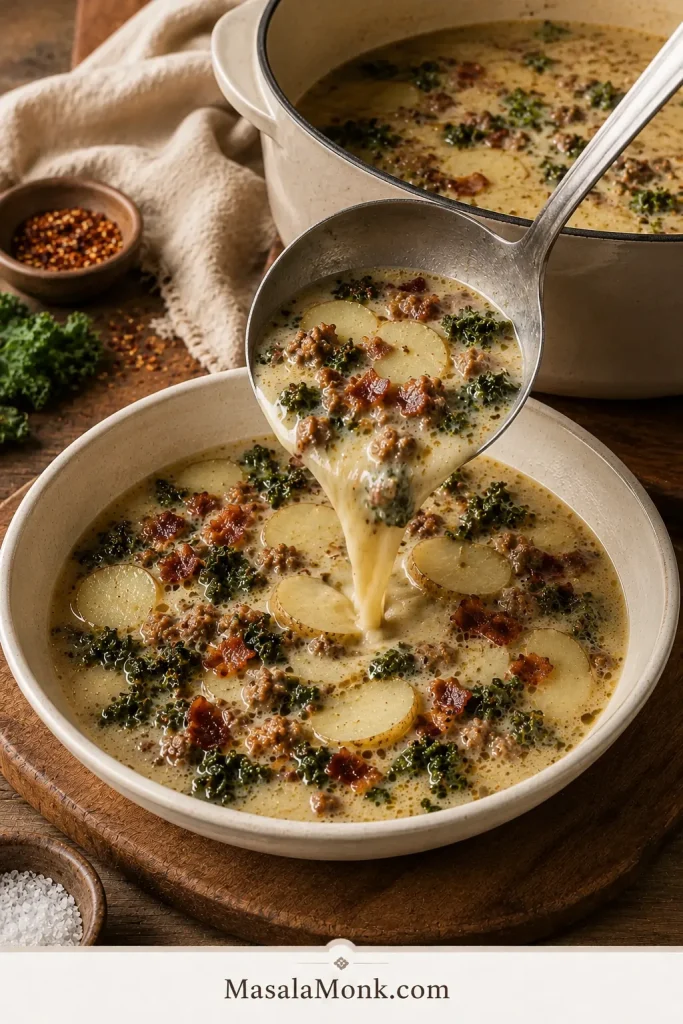
Sausage, Potatoes, Greens and Cream
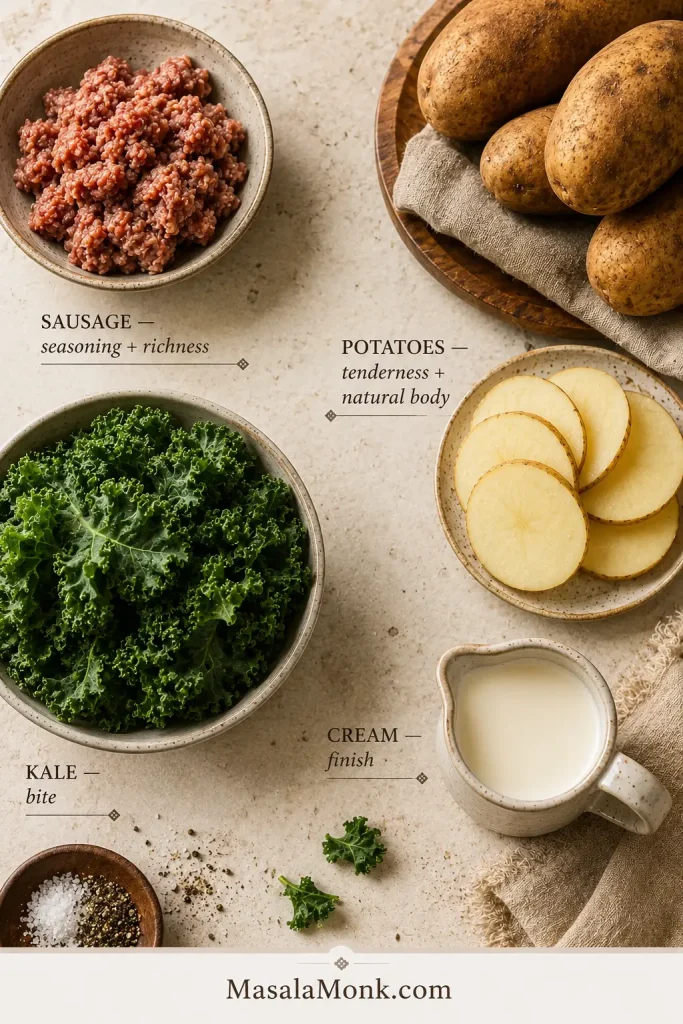
Get these four ingredients right and most of the soup takes care of itself. Sausage brings much of the seasoning, potatoes add body, kale keeps some bite in the spoon, and cream rounds everything out at the end.
Which Italian Sausage Is Best for Zuppa Toscana?
Most of the seasoning in this soup comes from the sausage, so hot versus mild changes more than just the heat. Hot Italian pork sausage brings more spice into the broth from the beginning; mild sausage gives you more control at the end.
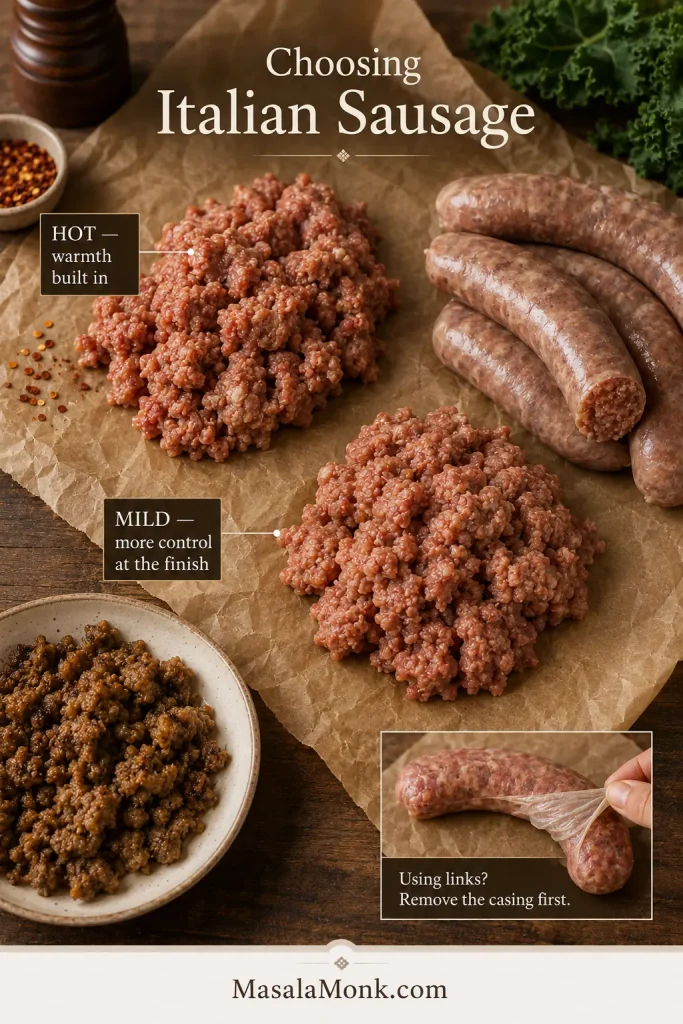
The sausage seasons the broth as it browns, so real color matters more than perfectly even crumbles. Bulk sausage is easiest, but links work just as well once the casings are removed.
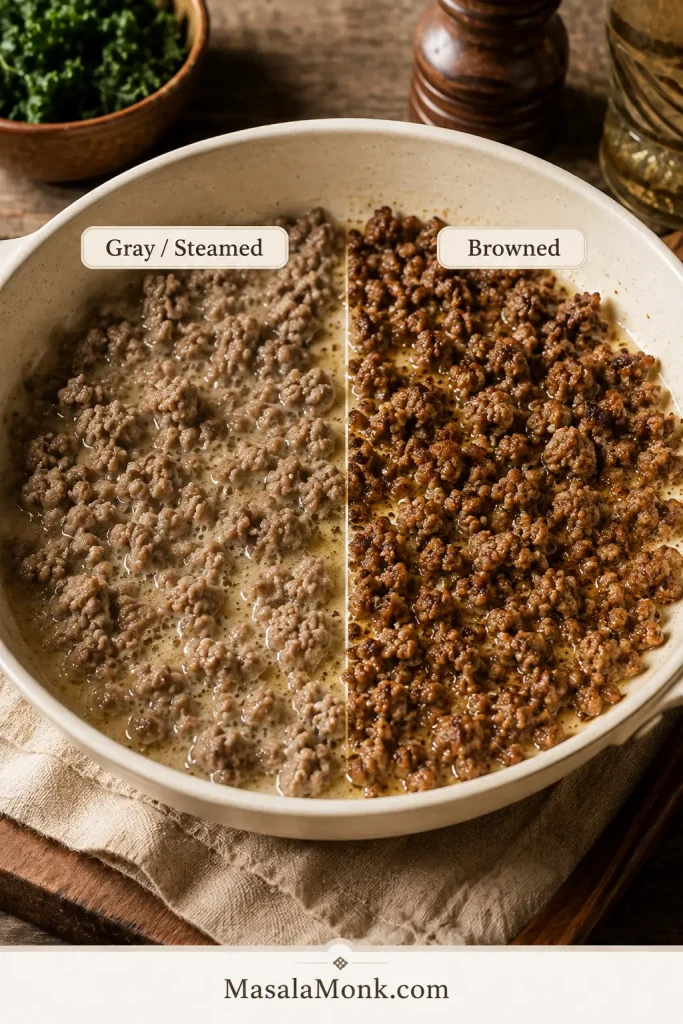
Giving sausage room to brown pays off in sausage pasta too, where those browned edges become part of the sauce rather than disappearing under it.
Best Potatoes for Zuppa Toscana—and Why the Cut Matters
Russets suit this version particularly well because their starchier edges give the broth some natural body.
Yukon Golds are a good alternative when you want firmer, tidier pieces. Russets soften more around the edges; Yukons hold their shape longer.
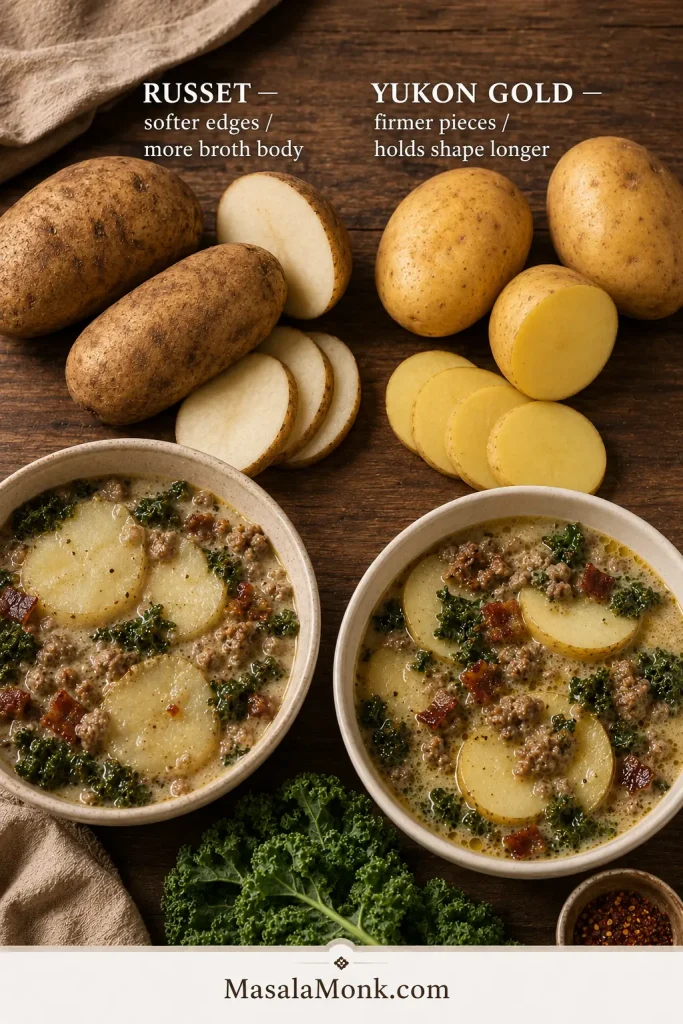
That same difference is why russets make fluffier mashed potatoes, while Yukon Golds stay denser and naturally creamier.
The cut determines the clock. Pieces around ¼ inch / 6 mm thick cook quickly while keeping enough structure to survive the spoon.
A knife should slip through without resistance while the slice stays intact when lifted.
Kale, Spinach and the Creamy Finish
Choosing Your Greens
For this soup, curly kale is the first choice. Spinach works too, but gives the bowl a much softer green.
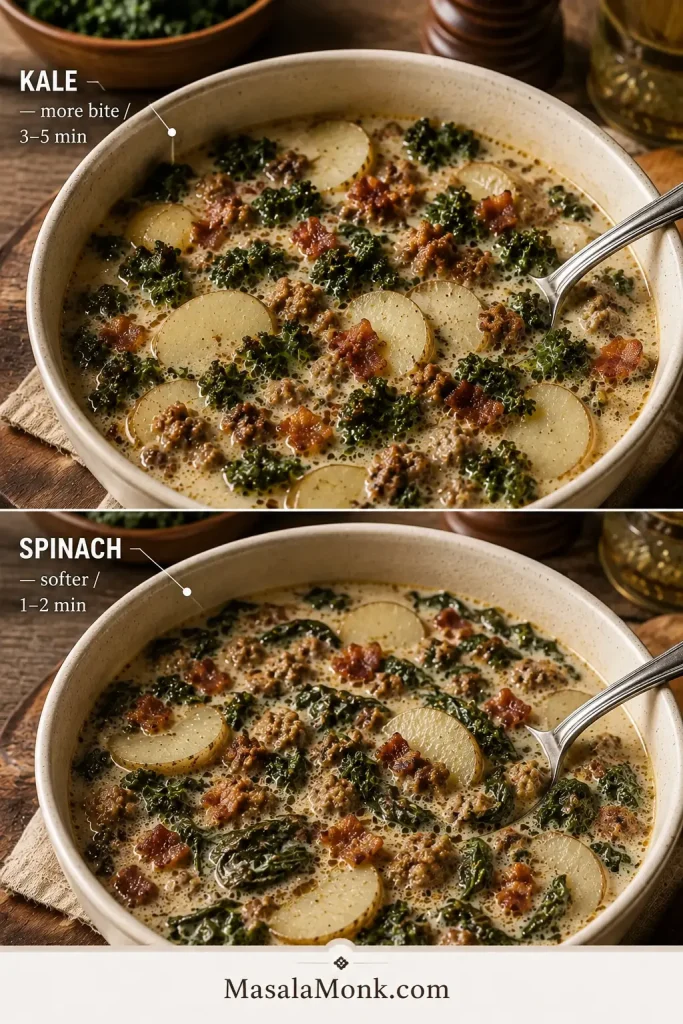
If you prefer more bite in each spoonful, kale is the better choice. Remove the tough stems and chop the leaves small enough to sit comfortably on a spoon. Lacinato or Tuscan kale works as well and may soften faster.
Choosing the Cream
Heavy cream gives the richest, smoothest finish. Half-and-half is lighter, evaporated milk keeps some body with less richness, and whole milk makes the broth noticeably thinner.
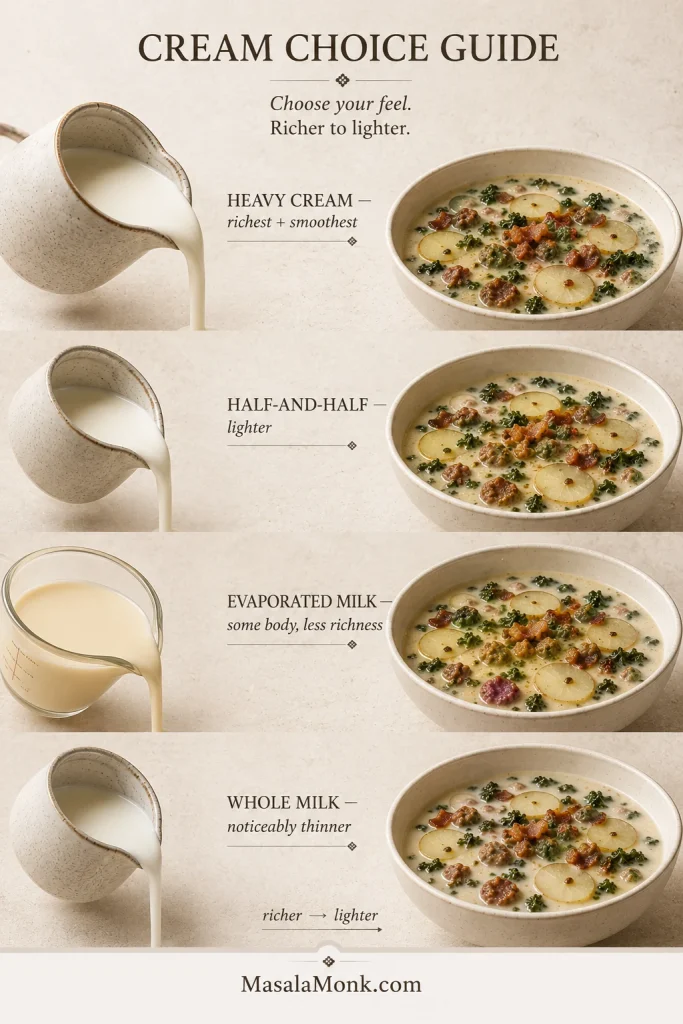
Add the dairy near the end and avoid prolonged hard boiling. Lower-fat choices benefit from gentler handling, but the goal stays simple: a creamy soup that still tastes clearly of sausage and savory broth.
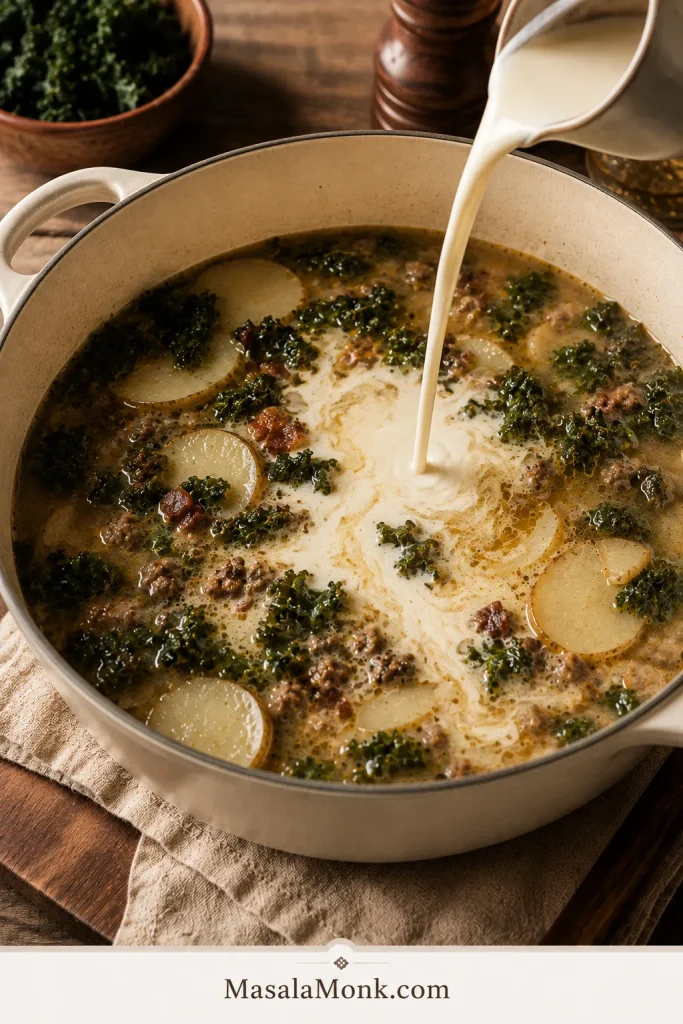
Adding the cream near the end works in tomato basil soup too, keeping it smooth without muting the tomato base.
Once those choices are settled, the timer matters less than recognizing a handful of visual and tactile checkpoints.
Cooking now? ↑ Back to the recipe
Five Cooking Checkpoints
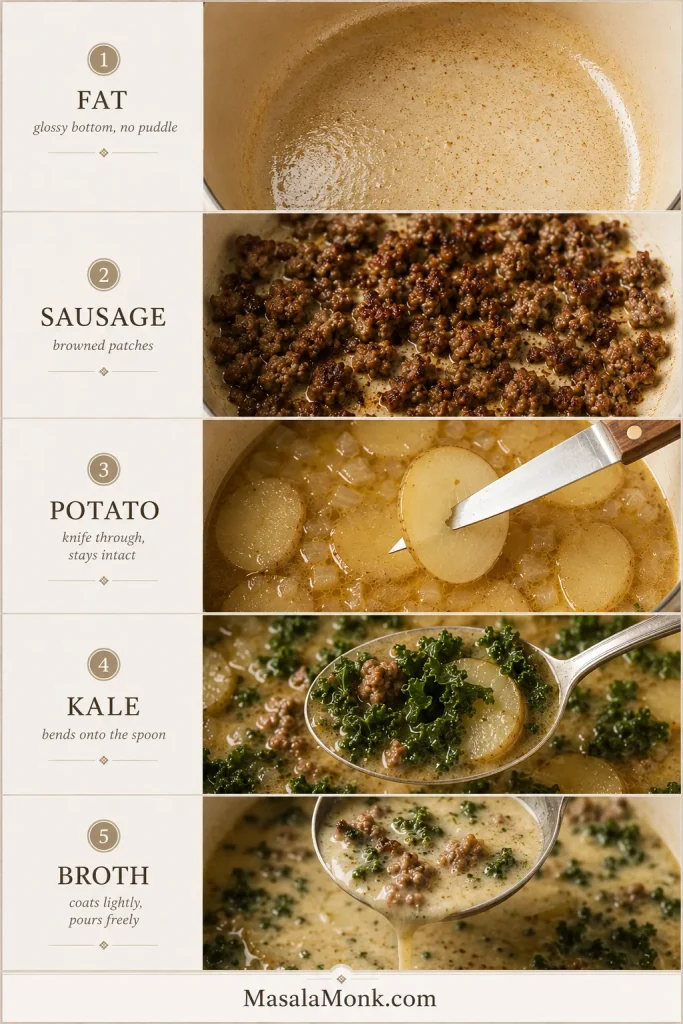
- Rendered fat: a glossy bottom, no deep puddle.
- Sausage: browned patches rather than uniformly gray crumbles.
- Potatoes: the knife slips through and the slice stays intact.
- Kale: the leaves bend into the spoon without leathery resistance.
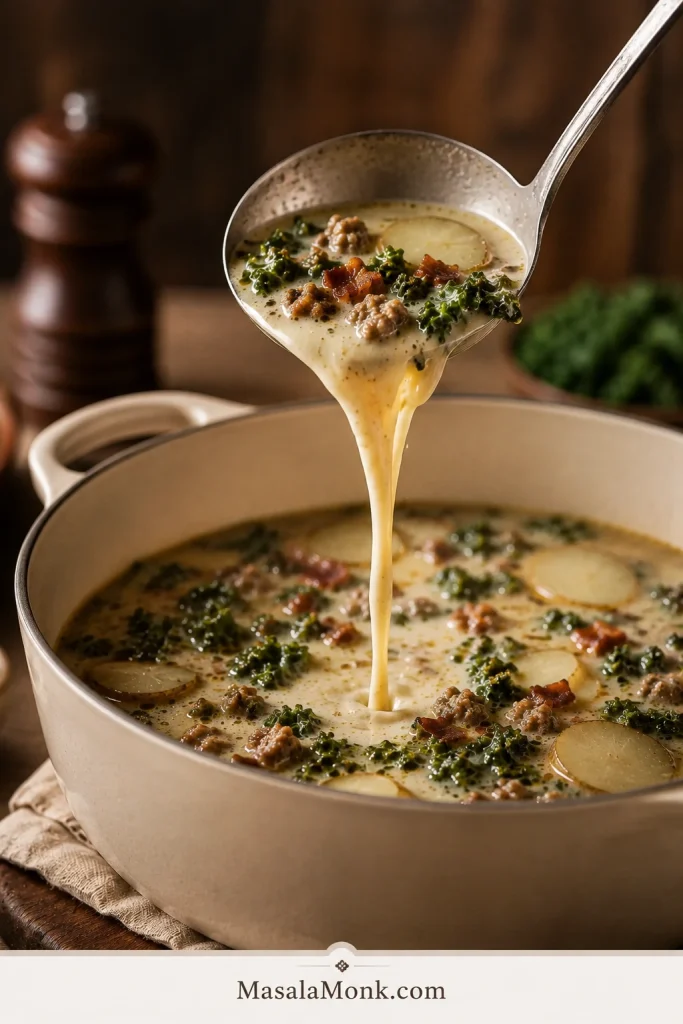
- Broth: creamy enough to coat lightly, loose enough to pour freely.
Rendered bacon fat: after the bacon comes out, the pot should look evenly glossy rather than flooded. Tilt it briefly if you are unsure; a visible puddle means more should come out.
Onion, garlic and fond: soften the onion over the browned bits and scrape up what releases easily. The broth will lift the rest, so the pot does not need to look perfectly clean before you move on.
Adjust the Creaminess and Seasoning
Creamy is a finish here, not a thickness category.
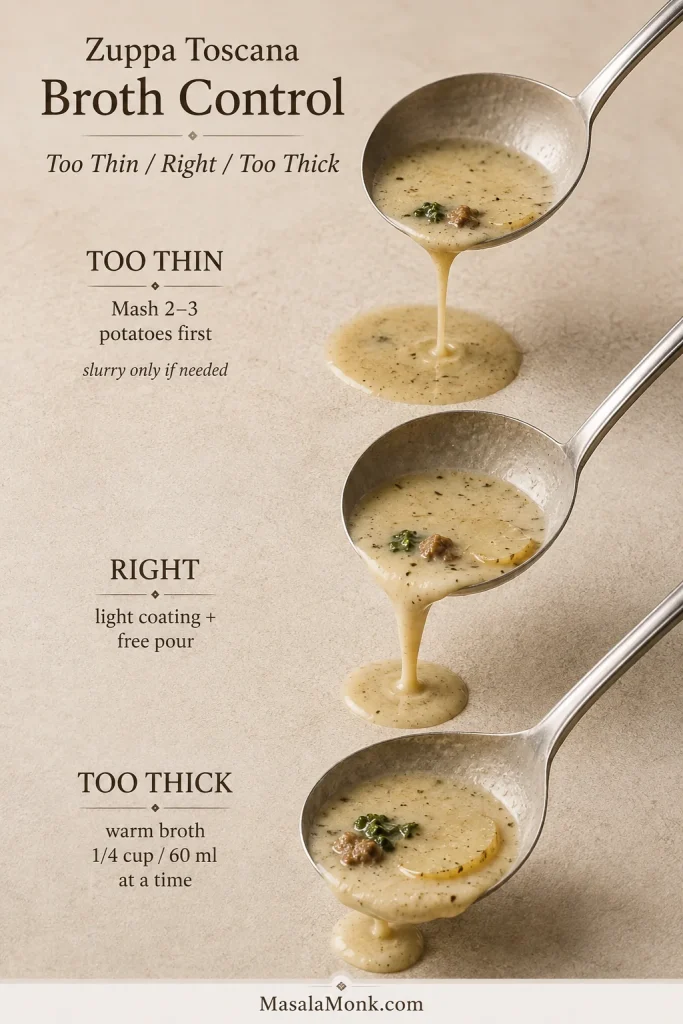
If your soup looks thinner than expected after the cream goes in, give the potatoes a chance to help before reaching for a thickener. Mash two or three cooked pieces into the broth and let that starch disperse for a minute. If it is still thinner than you want, whisk together 1 tablespoon cornstarch and 1 tablespoon cold water, add half the slurry, simmer for a minute and reassess.
Too thick is easier: add warm broth in ¼-cup / 60 ml splashes until the ladle moves easily again.
Then season in order: salt first, spice second, acidity last. Bacon, sausage and packaged broth vary enough that the soup itself is the best guide.
Troubleshooting: Fix the Soup You Have
This is a forgiving soup, and most problems are easier to correct than they first look. Match what you are seeing to the table before changing several things at once.
Texture and Doneness Problems
| Problem | What to do now | Next time |
|---|---|---|
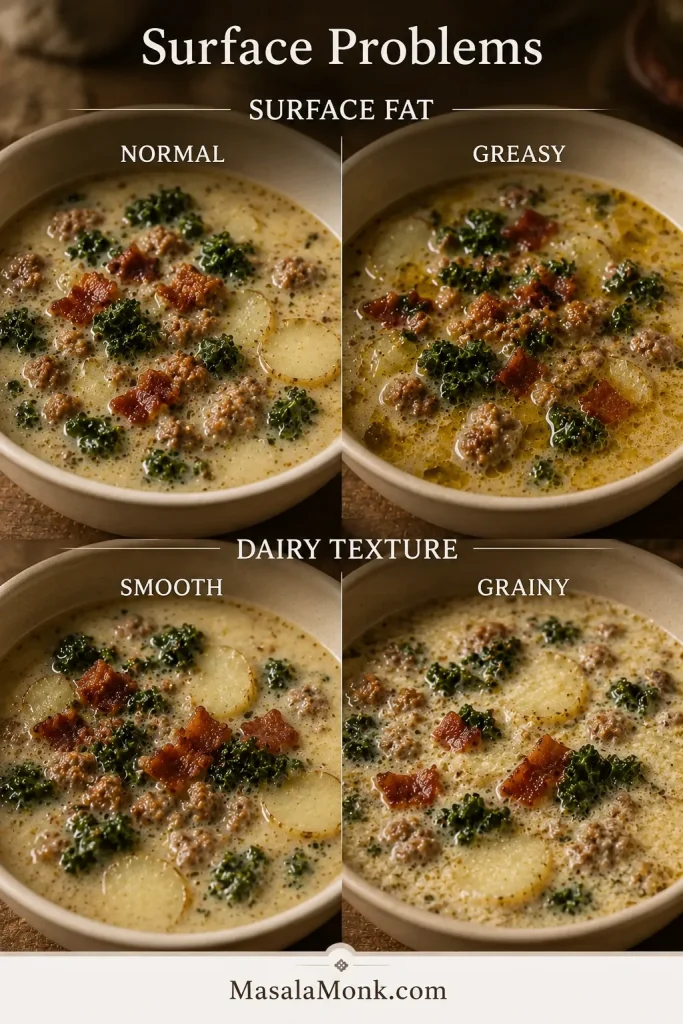
| Greasy | More cream will not fix the greasiness. Let the surface settle and skim the obvious pools instead. | Spoon away more rendered fat before cooking the onion. |
| Too thin | Mash 2–3 potato pieces into the broth. Use a small cornstarch slurry only if needed. | Keep the broth-to-potato ratio as written, and wait until the cream is in before adding extra liquid. |
| Too thick | Add warm low-sodium broth ¼ cup / 60 ml at a time. | Keep the simmer gentle and avoid unnecessary reduction. |
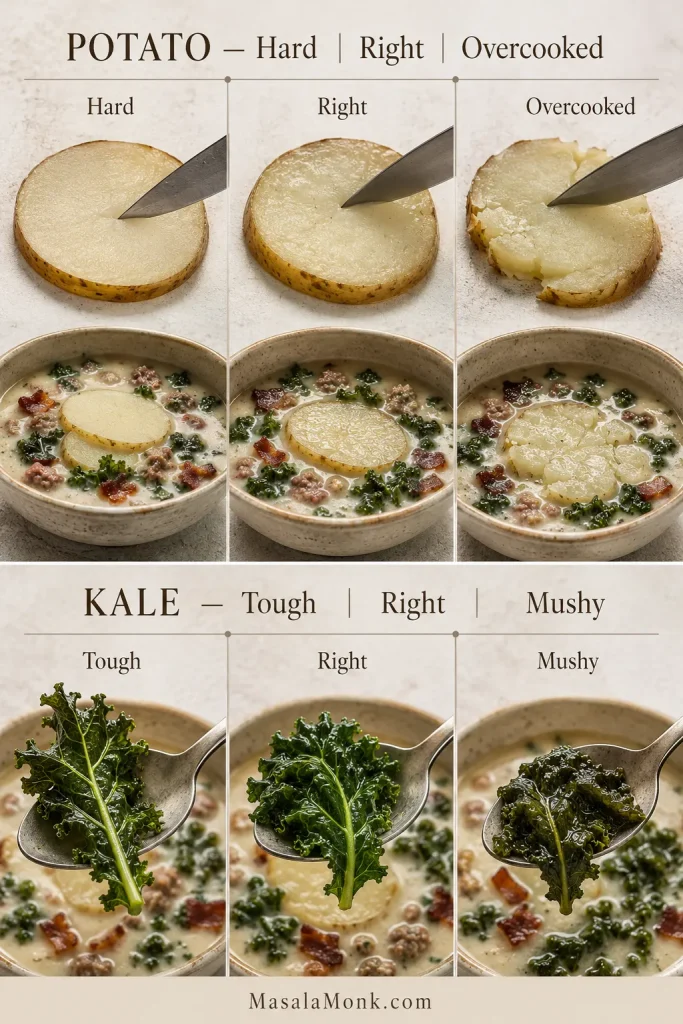
| Hard potatoes | Keep simmering. If the kale is already tender, lift it out and return it once the potatoes are ready. | Keep the slices close to ¼ inch / 6 mm thick. |
| Potatoes falling apart | You cannot firm them back up, but you can keep them from breaking down further. Stir as little as possible and serve once the rest of the soup is ready. | Cut them slightly thicker or begin checking sooner. |
| Tough kale | Simmer another 1–2 minutes. | Remove thick stems and chop the leaves smaller. |
| Mushy kale | Once kale has gone very soft, its bite will not come back. Stop cooking and serve rather than softening it further. | Add the kale later. |
Potato and Kale Doneness at a Glance
Dairy and Seasoning Problems
| Problem | What to do now | Next time |
|---|---|---|
| Grainy dairy | Take the soup off high heat and stir gently. The texture may improve, although it may not become completely smooth again. | Add dairy near the end and avoid prolonged hard boiling. |
| Bland | Add salt gradually, then check black pepper or red pepper. Consider acidity only after the salt is right. | Give the sausage time to brown and taste the whole soup before serving. |
| Too salty | Add unsalted broth ¼ cup / 60 ml at a time, then reassess both the seasoning and thickness. | Use low-sodium broth and keep early seasoning light. |
Soup back on track? ↑ Return to the recipe
Substitutions and Variations
The swaps above keep the soup fairly close to the main recipe. These next changes alter the flavor or texture more noticeably, but they can still work well.
- No bacon: brown the sausage directly and add a small splash of olive oil only if the pot looks dry. The soup loses some smoke but keeps its basic character.
- Chicken or turkey Italian sausage: use the same weight. Expect a leaner, slightly less rich soup. Ground poultry should reach 165°F / 74°C.
- Cauliflower: replace some or all of the potato with bite-size florets and cook only until tender. The soup will have less natural starch and a lighter body.
- Plant cream: choose a rich, unsweetened product rather than thin plant milk. Flavor and body vary considerably by brand.
- Gluten-free: the base recipe uses no flour. Check the sausage, bacon and broth labels when the soup needs to be reliably gluten-free.
A fully vegan version needs more than a dairy swap. It tastes best when the plant-based sausage, vegetable broth and dairy-free cream are chosen to work together.
Can You Adapt Zuppa Toscana for a Slow Cooker or Instant Pot?
Yes, but the potatoes cook differently and the timing changes enough that these are better treated as separate methods rather than direct stovetop conversions. Whichever appliance you use, keep the same basic order: brown the sausage first, cook the potatoes in the broth, then add the greens and cream near the end.
Slow cooker: Brown the sausage before it goes into the slow cooker so the broth gets the benefit of that browning without carrying all of the rendered fat with it. Cook the potatoes in the broth until tender, then add the kale and cream near the end instead of letting either spend the whole cook in the slow cooker.
Finishing the richer ingredients later works well in slow cooker broccoli cheese soup too, after the vegetables have had their long cook.
Instant Pot: Use sauté to brown the sausage, then pressure-cook the potato-and-broth base without the cream. Add kale and dairy only after the lid is open. For consistent potatoes, use a pressure-cooker-specific recipe rather than guessing from the stovetop timing.
Prefer the stovetop route? ↑ Back to the recipe
What Is Zuppa Toscana? Olive Garden Copycat vs Tuscan Soup
“Zuppa Toscana” simply means “Tuscan soup,” but the creamy sausage, potato and kale version familiar to many American diners is closely associated with Olive Garden.
This recipe is deliberately an Olive Garden-style Zuppa Toscana. Tuscany itself has a much broader soup tradition, so this is not presented as a definitive traditional Tuscan formula.
If you want an Italian-style soup built around vegetables, beans, pasta and tomato broth instead, Minestrone Soup heads in a completely different direction.
What to Serve With Zuppa Toscana
A generous bowl already gives you sausage, potatoes and greens, so dinner does not need much else. Something crisp, sharp or crusty alongside it is usually enough.
For dipping, go with warm breadsticks, focaccia or a crusty loaf. For contrast, choose something fresh and acidic—a crisp green salad, simple tomato salad or cucumber salad with vinegar, dill and onion.
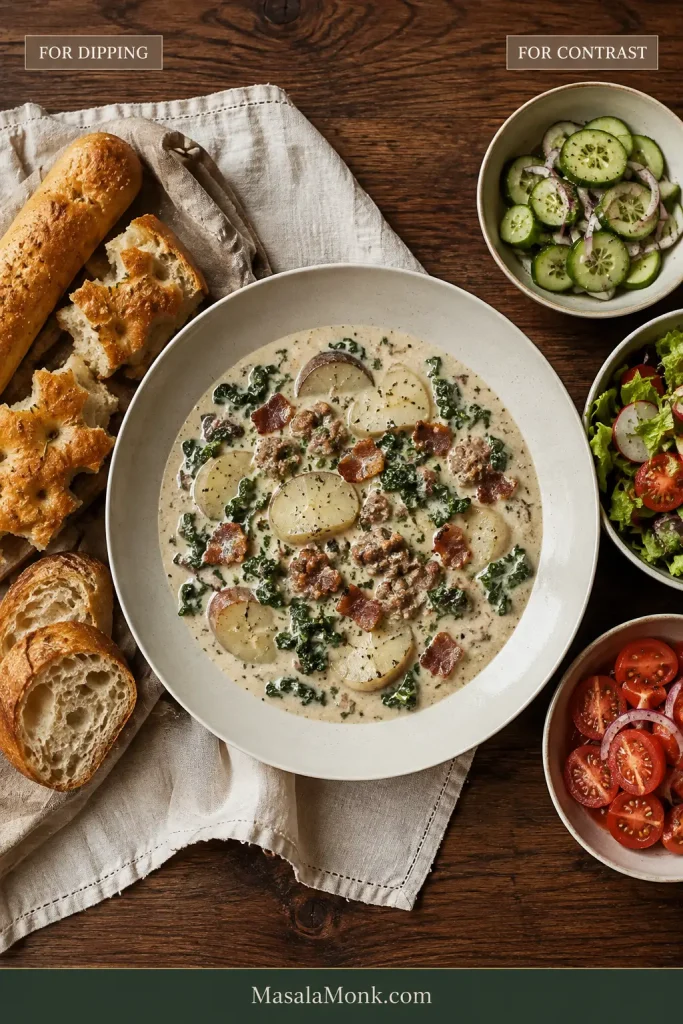
If you want the bread to be part of the meal, sourdough focaccia gives you crisp olive-oil edges and a soft middle that soaks up the broth left at the bottom of the bowl.
A bowl, a piece of good bread and something fresh on the side—and dinner is essentially handled.
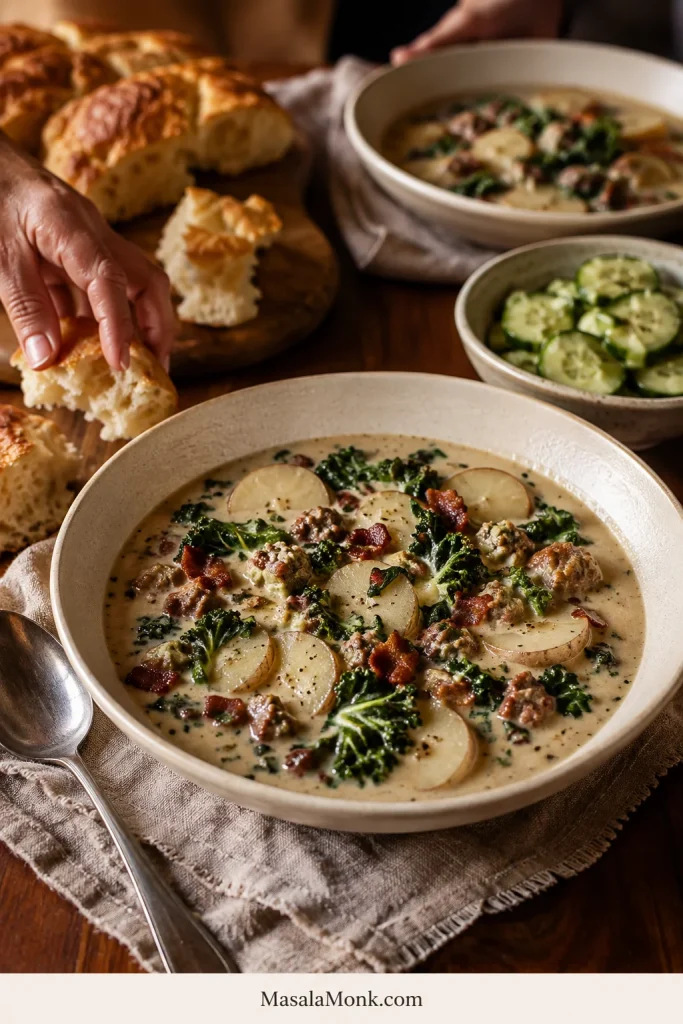
How Much Soup Is One Serving?
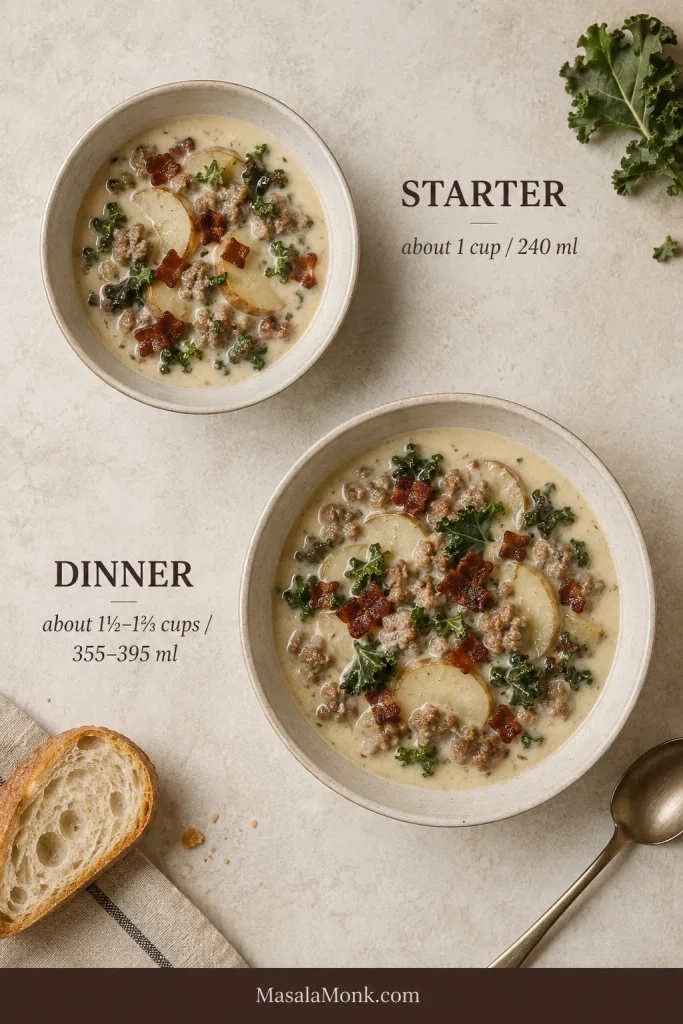
Olive Garden’s nutrition information lists a restaurant soup serving as 8 fl oz, or about 1 cup / 240 ml. That works well as a starter at home too. For dinner, allow roughly 1½–1⅔ cups / 355–395 ml per person.
Make Ahead, Store, Freeze and Reheat
Make Ahead
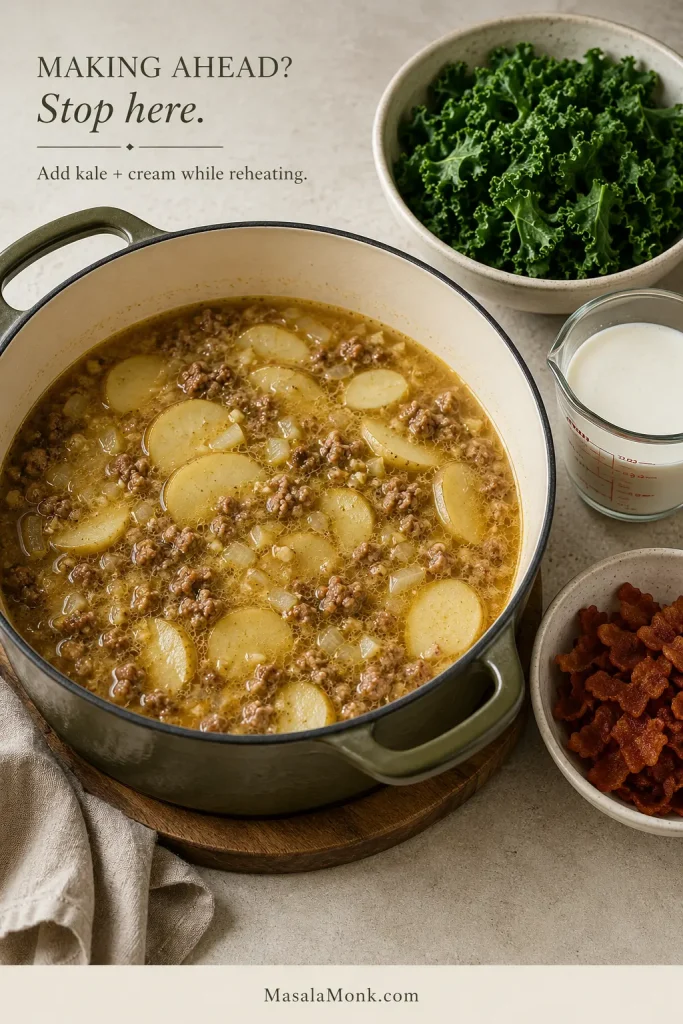
You can make the soup earlier the same day or the night before. For the freshest greens and smoothest finish, stop once the potatoes are tender, then add the kale and cream while reheating.
That is a useful stopping point when you are cooking for guests: most of the work is finished, and the last few minutes happen just before serving.
Refrigerate
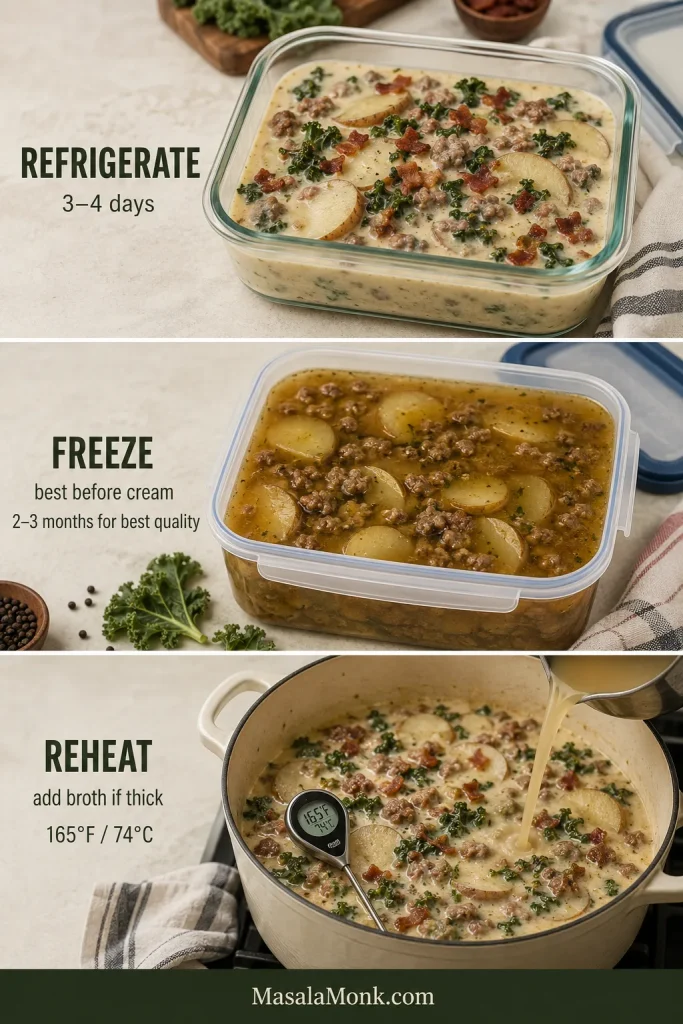
Divide a large batch among shallow covered containers so it cools quickly, and refrigerate within 2 hours rather than leaving the whole Dutch oven on the counter. Use refrigerated leftovers within about 3–4 days.
Freeze
The best texture comes from freezing the sausage-and-potato base before adding the cream. Potatoes may soften after thawing, while fresh cream gives the reheated soup a smoother finish.
Frozen soup is best within about 2–3 months. Thaw the base, reheat it thoroughly, then add fresh kale and cream.
Reheat
Do not be surprised if refrigerated Zuppa Toscana looks considerably thicker the next day. The potatoes keep absorbing broth as the soup rests. Add enough broth while reheating to bring back a flowing consistency.
Reheat while stirring so the dairy warms evenly, then bring the soup briefly to a full boil before removing it from the heat. Leftovers should reach 165°F / 74°C. Planned make-ahead batches keep the smoothest texture when the cream is added after the base is hot.
Storage at a glance: refrigerate finished soup promptly, freeze the cream-free base when possible, and judge whether reheated soup needs extra broth only after it is hot and stirred through.
For current cooling, refrigerator and reheating recommendations, see the USDA leftovers guidance.
It is also the kind of leftover that makes tomorrow’s lunch feel already taken care of.
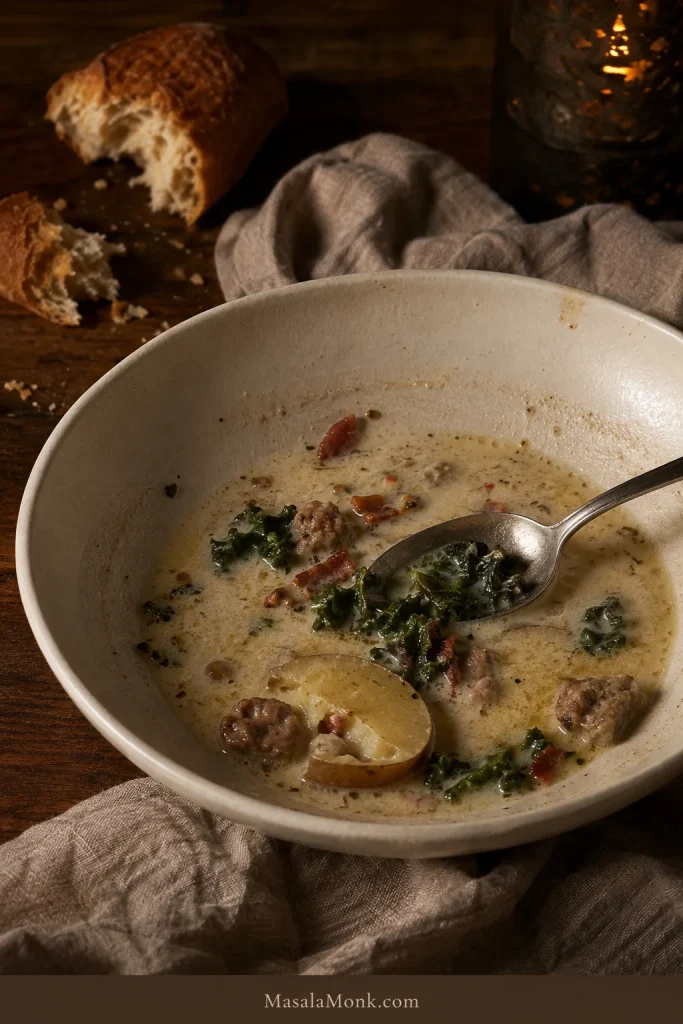
By the time the bowls hit the table, the potato should split easily with the spoon, the kale should curl into the creamy broth, and browned sausage should be tucked through nearly every spoonful. Scatter the crisp bacon over the top while it can still crackle against the softer soup.
If you make it, tell me which route you took: hot or mild sausage—and did you stay with kale or use spinach?








