
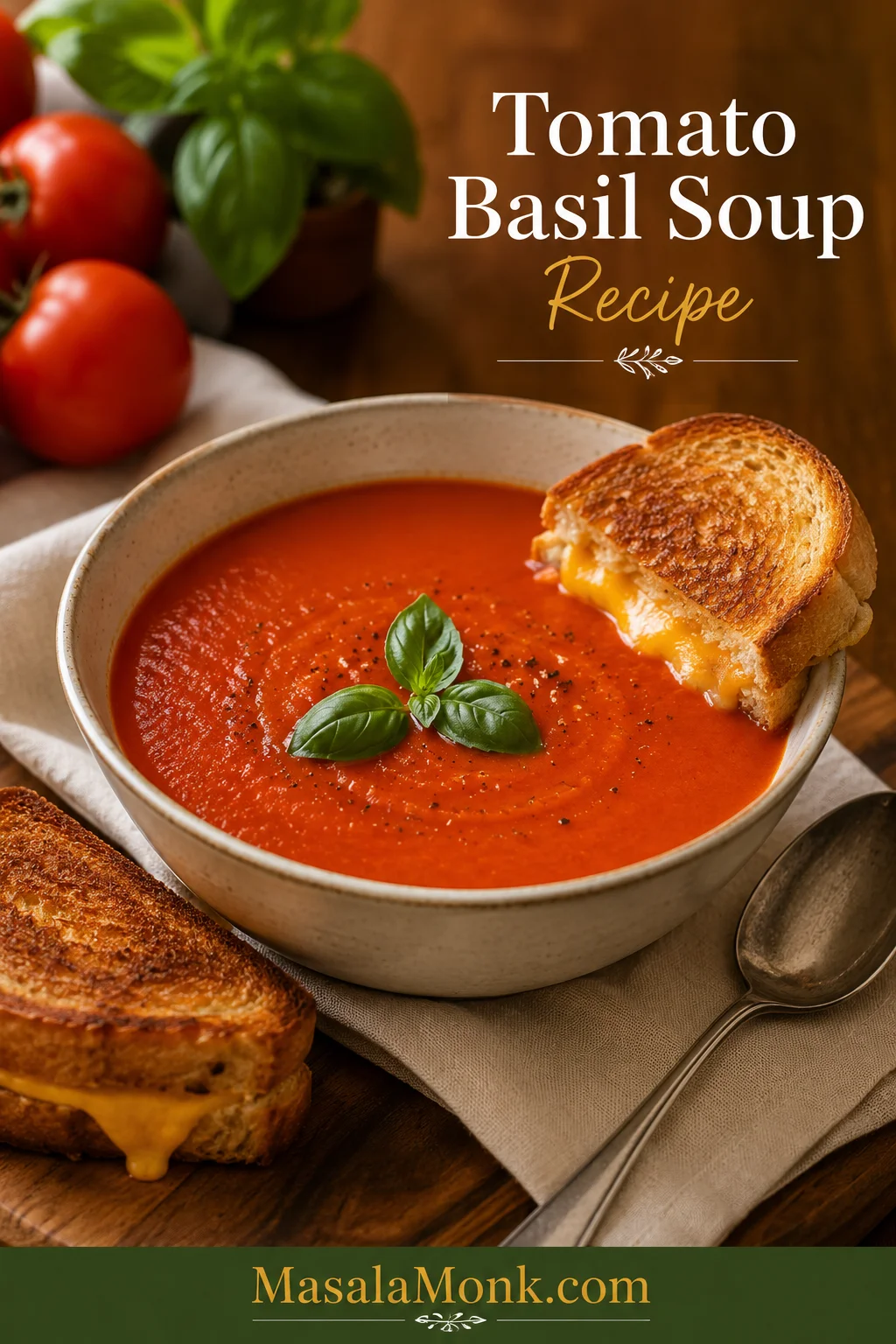
This tomato basil soup recipe is built for the bowl people actually want: smooth, tomato-rich, fresh with basil, and full enough to dip grilled cheese into without tasting sour, watery, bitter, or flat.
It is the kind of soup that turns grilled cheese from a quick snack into a real dinner. The spoon should come up glossy and lightly thick, the tomato flavor should feel mellow instead of sharp, and the first spoonful should end with basil showing up fresh, not boiled into the background.
This main recipe uses canned tomatoes because they are reliable all year and make the easiest weeknight soup. When fresh tomatoes are ripe and sweet, you can use the roasted fresh tomato variation for deeper flavor. Either way, the method stays simple: build flavor with onion, garlic, and tomato paste, simmer until the tomatoes taste rounded, blend smooth, then save the basil for the finish.
Keep it light, make it creamy, turn it bisque-style, or make it dairy-free with white beans, cashew cream, or coconut milk. The important part is learning how to control the acidity, texture, and basil timing, so the soup tastes balanced instead of sharp.
Quick Answer: Fresh, Canned, Creamy, or Roasted?
To make tomato basil soup, simmer canned tomatoes with onion, garlic, tomato paste, and broth, blend until smooth, then add fresh basil and optional cream at the end.
The easiest version starts with canned whole peeled or crushed tomatoes because they give the soup dependable flavor year-round. Fresh tomatoes are best when they are ripe and sweet; roast them first if you want a deeper, more summery bowl.
Canned tomato soup is convenient, but homemade soup lets you control the salt, acidity, texture, basil, and creamy finish instead of accepting whatever is already in the can.
To make the bowl softer and silkier, stir in 1/2 cup / 120 ml heavy cream over low heat. A richer bisque-style version uses more cream, parmesan, and a strained finish. Dairy-free body can come from white beans, cashew cream, coconut milk, or a good olive oil finish.
Start with the canned version when you want certainty. Save the roasted version for tomatoes that actually taste like summer.
Ready to cook? Jump to the recipe card · Still choosing tomatoes? Compare fresh and canned tomatoes · Need a fix? Go to troubleshooting
Table of Contents
Tomato Basil Soup at a Glance
| Main version | Canned tomato basil soup |
| Total time | 35 to 40 minutes |
| Best tomatoes | 2 cans whole peeled or crushed tomatoes, 28 ounces each, about 1.59 kg total |
| Broth amount | 2 cups / 480 ml, then adjust after blending |
| Basil timing | Blend fresh basil in near the finish |
| Dried basil fallback | 1 to 1 1/2 teaspoons during the simmer, if needed |
| Cream amount | Optional 1/2 cup / 120 ml heavy cream |
| Texture cue | Spoon-coating and pourable, not thin or paste-thick |
| Main mistake to avoid | Boiling the basil or dairy too long |
Best Default for the Easiest Version
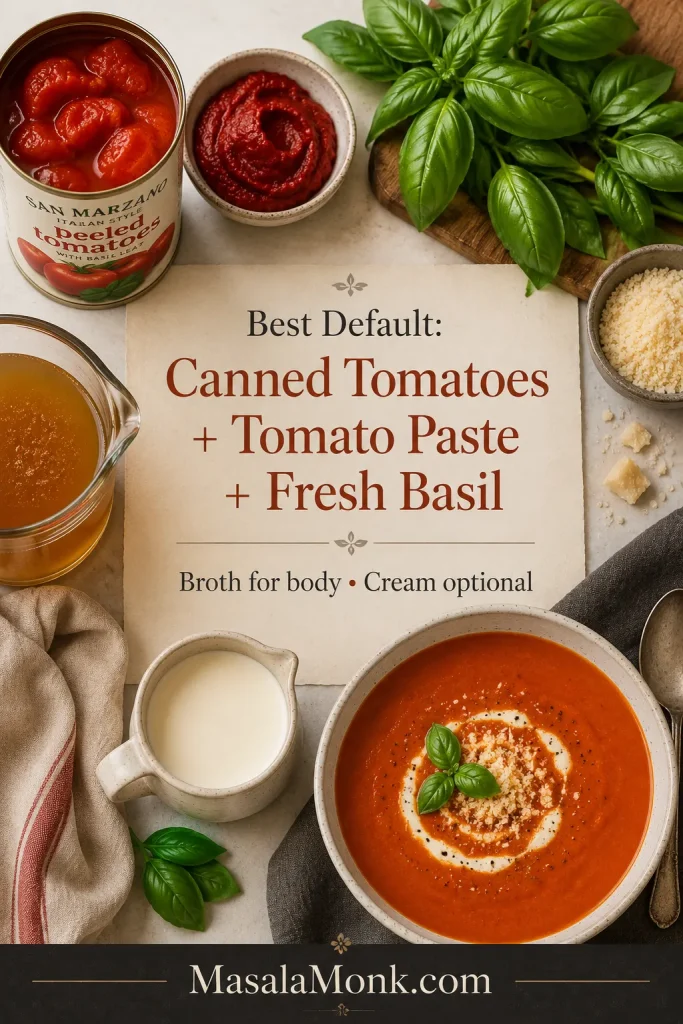
Use 2 cans whole peeled or crushed tomatoes, 2 tablespoons tomato paste, 2 cups / 480 ml broth, fresh basil at the finish, and cream only if you want a softer bowl.
That gives the blender enough to work with without making the soup watery, and it keeps the basil and dairy away from the heat that dulls them.
The reliable default formula
Tomato Basil Soup Recipe
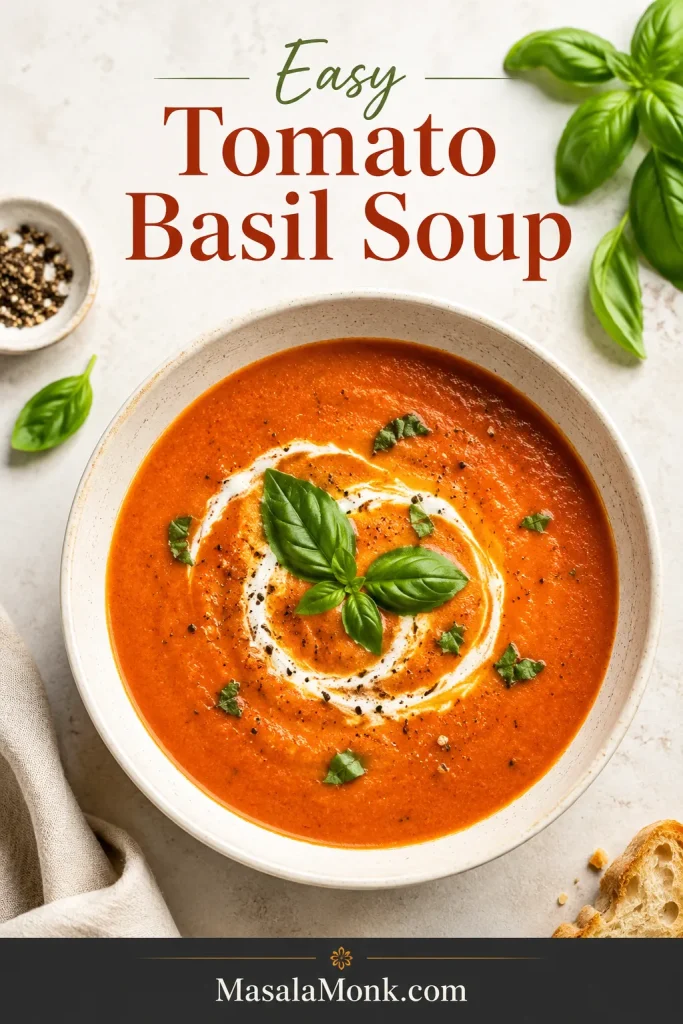
The dependable stovetop version uses canned tomatoes for body, tomato paste for depth, fresh basil at the finish, and cream only if you want a softer, richer bowl.
What the finished stovetop soup should look like
Ingredients
- 2 tablespoons olive oil or unsalted butter, about 30 ml oil or 28 g butter
- 1 medium yellow onion, chopped, about 150 to 180 g
- 1 small carrot, finely chopped or grated, optional, about 60 to 80 g
- 4 garlic cloves, minced, about 12 to 16 g
- 2 tablespoons tomato paste, about 30 g
- 2 cans whole peeled or crushed tomatoes, 28 ounces each, about 1.59 kg total
- 2 cups vegetable broth or chicken broth, 480 ml
- Fine sea salt, 1 teaspoon to start, plus more to taste
- Black pepper, 1/2 teaspoon
- Optional sugar, 1 teaspoon, for acidity balance
- 1 to 1 1/2 teaspoons dried basil, optional, if you want an herby simmered base
- 1/2 to 1 cup fresh basil leaves, loosely packed, about 15 to 25 g
- 1/2 cup heavy cream, optional, 120 ml
- 1/3 cup finely grated parmesan, optional, about 30 to 35 g
- Extra basil, black pepper, cream, olive oil, or parmesan for serving
Instructions
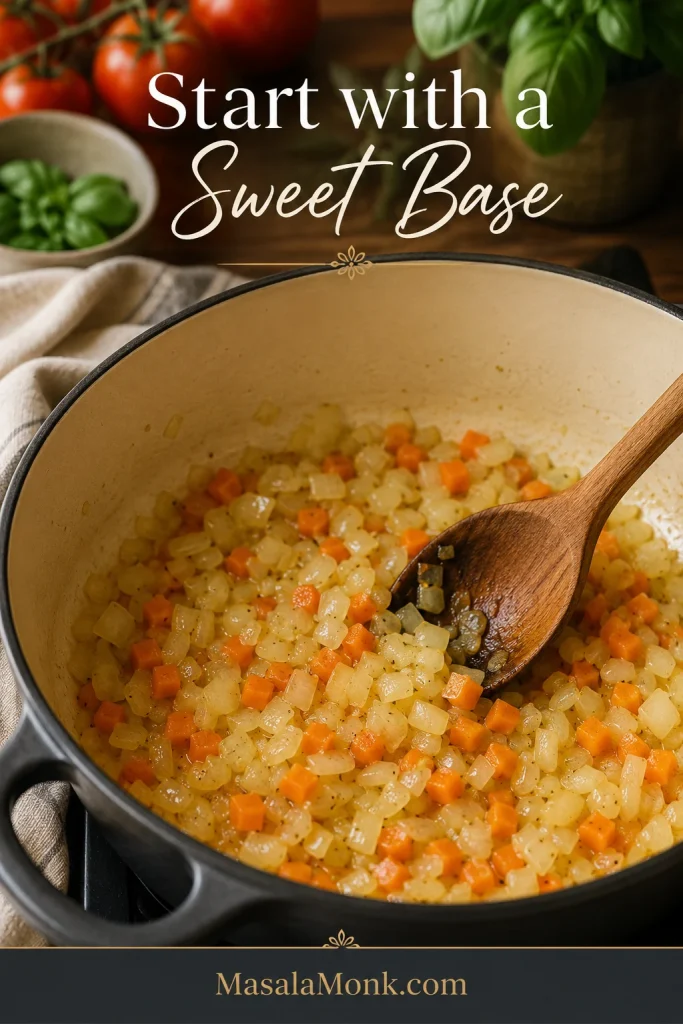
- Soften the onion. Warm the olive oil or butter in a large non-reactive pot or Dutch oven over medium heat. Add the onion and carrot, if using. Cook for 8 to 10 minutes, stirring often, until the onion is soft and lightly golden around the edges.
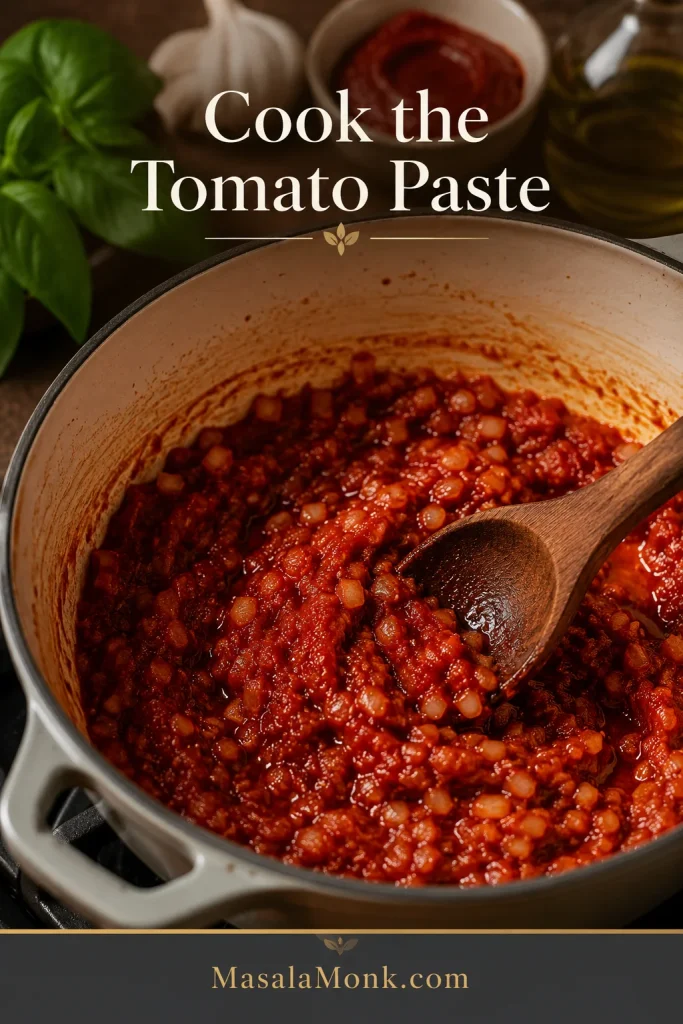
- Add garlic and tomato paste. Stir in the garlic and cook for 30 to 60 seconds, just until fragrant. Add the tomato paste and cook for 1 minute, stirring so it darkens slightly and smells deeper.
- Pour in tomatoes and broth. Add the canned tomatoes with their juices, broth, salt, pepper, sugar if using, and dried basil if using. Crush whole peeled tomatoes with a spoon as they warm.
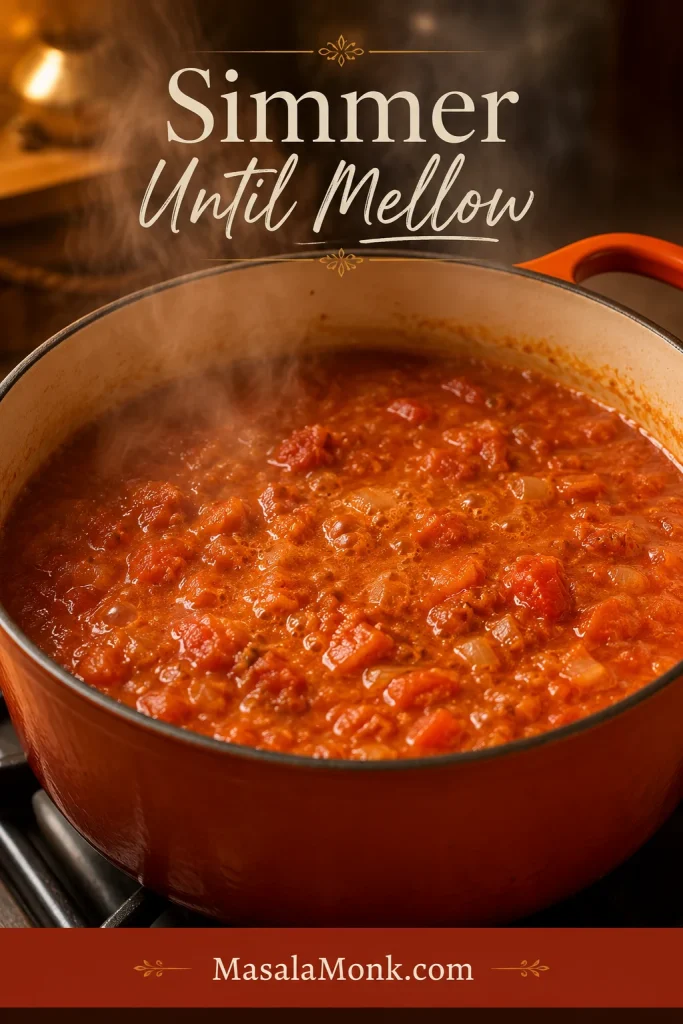
- Simmer until rounded. Bring the soup to a gentle boil, then reduce the heat and simmer uncovered or partially covered for 20 to 25 minutes. The tomatoes should taste less raw and sharp.
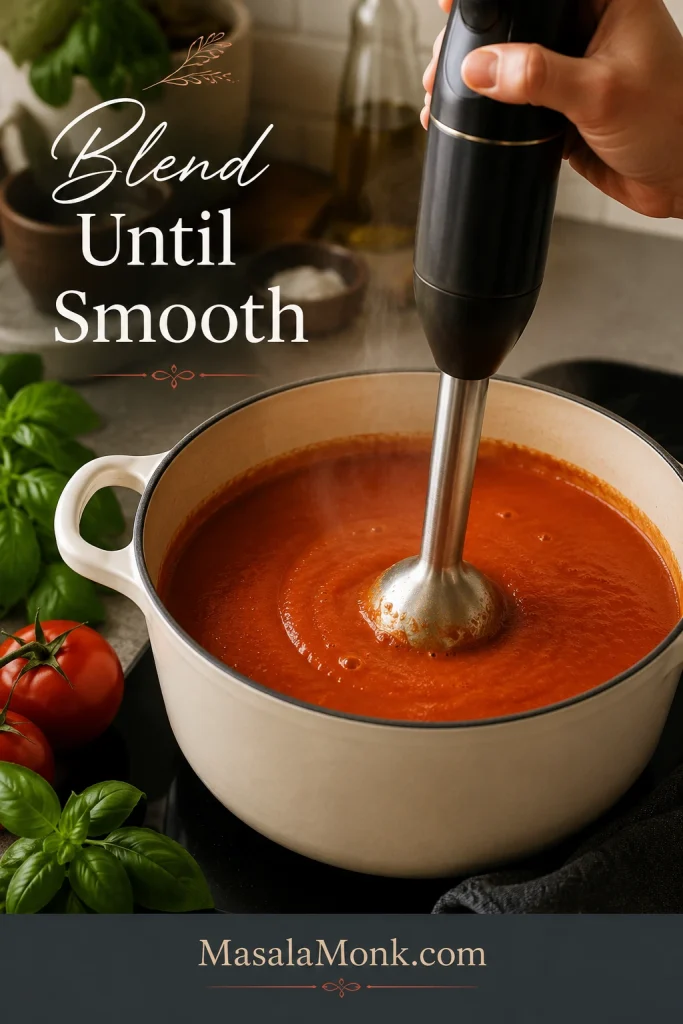
- Blend smooth. Turn off the heat. Use an immersion blender until smooth, or blend carefully in countertop batches.
- Finish with fresh basil. Add basil once the soup has simmered, then blend briefly so it brightens the pot.
- Finish creamy, if desired. Return the soup to low heat. Stir in cream and parmesan, if using, and avoid a hard boil after dairy goes in.
- Taste and adjust. Tomato soups often need their final salt adjustment after blending. Add more salt, pepper, basil, cream, parmesan, or a tiny pinch of sugar if needed. Too thick? Add broth 1/4 cup / 60 ml at a time. Too thin? Simmer uncovered a little longer.
- Serve. Ladle into bowls and finish with basil, black pepper, a drizzle of cream or olive oil, and parmesan if you like.
Recipe Notes
- Whole peeled or crushed canned tomatoes give the smoothest main recipe.
- Fire-roasted canned tomatoes add deeper flavor without roasting fresh tomatoes.
- The carrot is optional, but helpful when tomatoes taste sharp.
- Dried basil can simmer with the tomatoes. Fresh basil is best saved for the finish.
- Add any dairy finish over low heat and avoid boiling once it goes in.
- For freezing, leave out cream and parmesan. Add dairy after reheating.
Need help choosing ingredients? See what matters · Want it creamy? Go to creamy options · Planning leftovers? Jump to storage and freezing
Make This Soup When
- Grilled cheese night needs to feel like dinner.
- The pantry has canned tomatoes, but the bowl still needs to taste homemade.
- Fresh summer tomatoes are finally ripe enough to roast.
- Creamy soup sounds good, but heavy or curdled soup does not.
- You want something warm and homemade without starting from scratch for hours.
- Leftovers need to reheat well for lunch or another easy dinner.
- Sour, watery, bland, bitter, or grainy tomato soup has happened before — and you want clear fixes this time.
The Core Idea Behind This Soup
This is a tomato-first soup, not a cream-first soup. The base has to taste good before anything creamy goes in, which is why the recipe starts with reliable tomatoes, softened onion, tomato paste, controlled broth, and basil at the finish. Cream and parmesan can make the bowl silkier, but they should not have to rescue the pot.
Why This Recipe Works
Tomato soup usually goes wrong in small, fixable ways: too much acidity, too much liquid, tired basil, weak tomato flavor, or dairy added over harsh heat. This version protects the bowl before those problems start.
- Reliable tomatoes carry the base. Canned tomatoes are often better than pale out-of-season fresh ones.
- Tomato paste adds depth. A minute in the pot makes it taste sweeter, darker, and less raw.
- The broth stays controlled. With 2 cups / 480 ml, the soup blends easily but still has body. Add more only after blending, when you can see the final texture.
- Carrot quietly softens sharpness. It disappears into the background and helps round acidic tomatoes.
- Basil finishes the bowl. It tastes fresher when it wakes up in the hot soup instead of boiling the whole time.
- Dairy stays gentle. Low heat keeps cream smooth and parmesan melted into the background.
The main cue: before blending, the soup should smell tomato-rich and mellow, not raw, sharp, or watery. After blending, it should lightly coat a spoon but still pour easily.
Ingredients That Matter
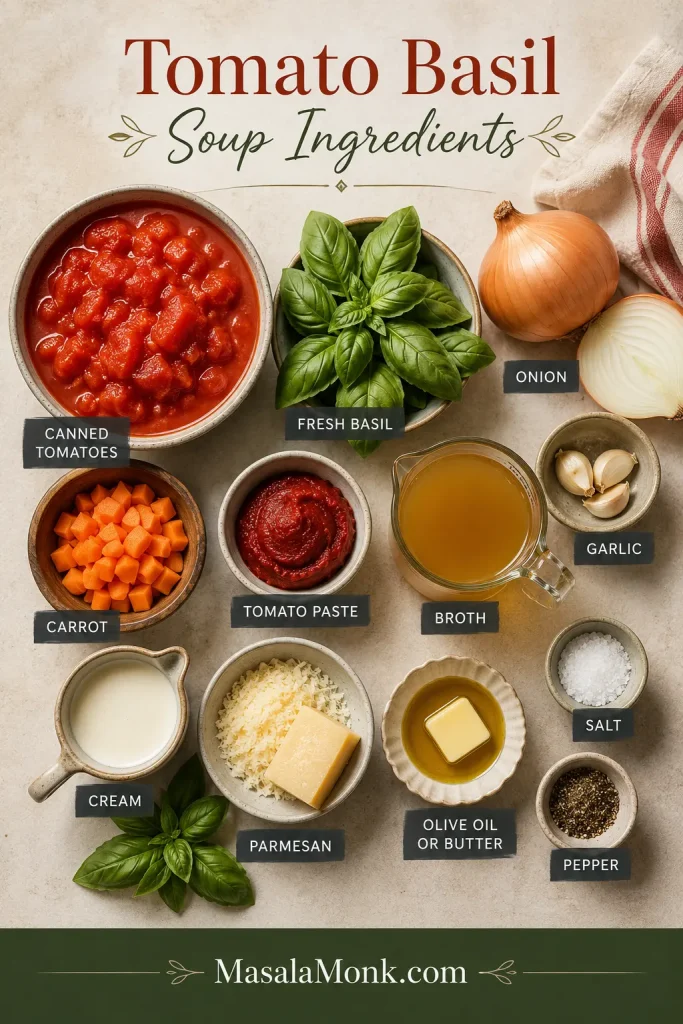
The can does the dependable work; the basil makes it feel alive. These are the ingredients that decide whether the soup tastes rounded, fresh, and complete.
Ingredients that build the bowl
Tomatoes
Whole peeled canned tomatoes are the safest choice for a smooth, rounded soup. Crushed tomatoes are faster. Fire-roasted tomatoes add a deeper, slightly smoky flavor. Fresh tomatoes work best only when they are ripe, sweet, and in season.
Bad fresh tomatoes do not become magical just because they are fresh. If they are hard, pale, watery, or bland, canned tomatoes will usually make the better bowl.
Fresh Basil
Fresh basil is what turns plain tomato soup into tomato basil soup. Let it finish the pot instead of simmering through the whole cook time. Long boiling can make basil taste dull or slightly bitter.
Dried basil can help when fresh basil is limited. Use 1 to 1 1/2 teaspoons during the simmer, then add any fresh basil you have near the finish for a cleaner lift.
If you have extra basil, a spoonful of classic basil pesto can finish the bowl when you want stronger basil flavor and a little extra richness.
Tomato Paste
Tomato paste makes the soup taste deeper. Cook it for about 1 minute with the onion and garlic before adding the tomatoes. When it darkens slightly and smells sweeter, it starts doing real work in the pot.
Onion, Garlic, and Optional Carrot
Onion brings sweetness, garlic adds savory depth, and a small carrot helps soften sharp tomatoes without making the soup taste like carrot. Cook the carrot with the onion so it blends smoothly into the background.
Broth
Vegetable broth keeps the soup vegetarian; chicken broth makes it a little rounder and more savory. Low-sodium broth gives you more control, especially because tomato soup often needs its final salt adjustment after blending.
For a lower-sodium bowl, use no-salt-added tomatoes and low-sodium broth, then season at the end. It is much easier to add salt than to fix a salty pot.
Cream and Parmesan
Heavy cream softens tomato acidity and makes the soup silkier. Parmesan adds salty, savory depth. Use either one, both, or neither. A good creamy finish should soften the tomato, not bury it.
Planning to freeze leftovers? Keep the dairy out of the batch and add cream or parmesan after reheating.
Sugar or Baking Soda
Tomatoes are naturally acidic. A little sugar, cooked carrot, cream, butter, or a tiny amount of baking soda can round out sharpness. Start gently; the goal is balanced tomato flavor, not sweet or flat soup.
With baking soda, begin with a pinch if you are unsure, or use up to 1/8 teaspoon for the whole pot. Stir, let the bubbling settle, then taste again before adding more.
Equipment You’ll Need
Because this soup is simple, the pot and blender matter more than usual: metallic flavor, rough blending, or trapped blender steam can show up fast.
- Large non-reactive pot or Dutch oven: stainless steel or enamel-coated cookware is best for tomato soup.
- Immersion blender: easiest for blending directly in the pot.
- Countertop blender: best for a silkier texture; blend hot soup carefully in batches.
- Rimmed baking sheet: needed for the roasted fresh tomato variation.
- Fine mesh strainer: optional, but helpful for an extra-smooth bisque-style finish.
Tomatoes are acidic, so avoid long simmering in reactive aluminum, uncoated cast iron, or copper cookware. A reactive pot can sometimes give tomato soup a metallic taste.
Hot blender safety: if using a countertop blender, fill it no more than halfway, loosen or remove the center cap, cover the lid with a folded towel, start on low speed, and blend in batches. Do not seal hot soup tightly in a blender.
How to Make Tomato Basil Soup
Think of the method in three moves: soften the base, simmer away the canned edge, then finish fresh. The soup should smell deeper before it looks finished.
1. Cook the onion until soft
Give the onion the full 8 to 10 minutes. This is where the soup gets its first layer of sweetness. Add the carrot here if you are using it, and let the onion soften with a little color around the edges.
Start with softened onion and carrot
2. Add garlic and tomato paste
Garlic only needs to wake up; tomato paste needs a minute to deepen. Stir until the paste darkens slightly and smells sweeter, not raw.
Cook tomato paste before adding liquid
3. Simmer the tomatoes and broth
Add the tomatoes, broth, salt, pepper, sugar if using, and dried basil if using. Simmer for 20 to 25 minutes, uncovered or partially covered, until the tomatoes lose their sharp canned edge.
When the soup looks loose, simmer a few minutes longer before blending. A thick-looking soup can be loosened later, so do not rush to add extra broth yet.
Simmer until the tomato base looks mellow
4. Blend until smooth
An immersion blender is easiest. A countertop blender gives a silkier texture, but hot soup must be blended carefully in batches. For a very smooth bisque-style bowl, strain the soup after blending.
Blend hot soup carefully
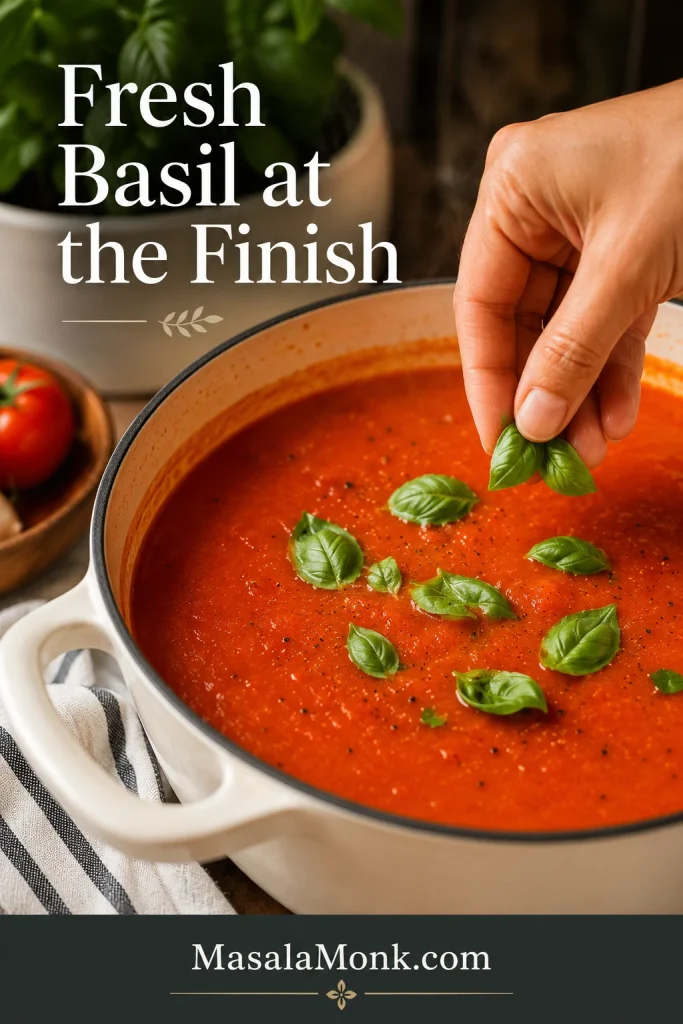
5. Add fresh basil at the finish
Add the fresh basil after the soup has simmered, then blend briefly. The soup should smell like tomato first, then basil rising through it — not boiled herbs.
Add fresh basil near the finish
6. Finish creamy or keep it light
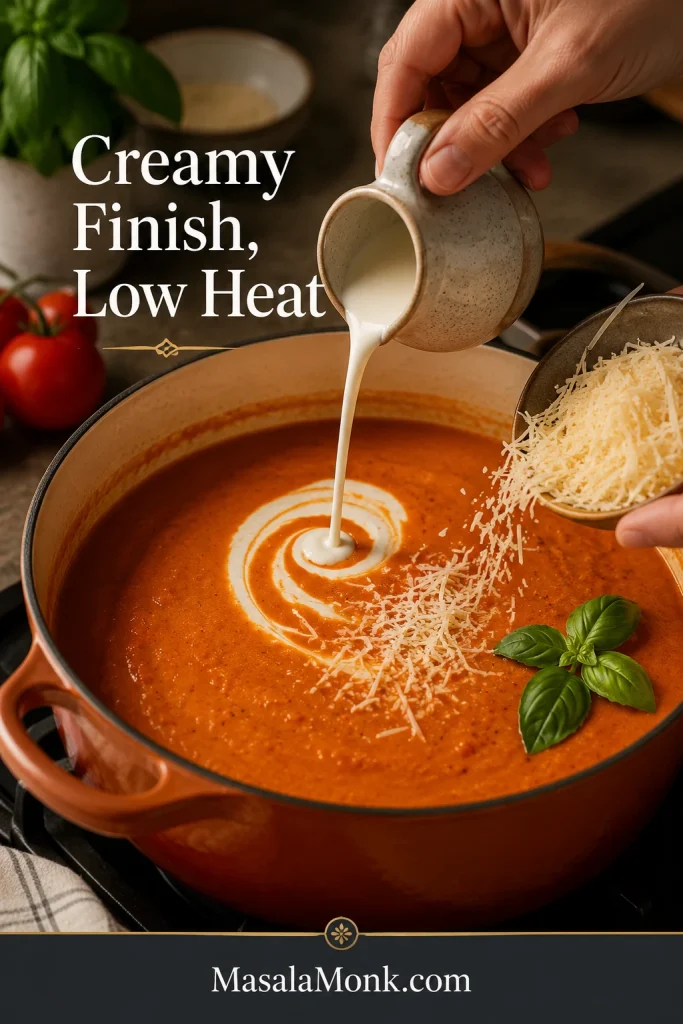
To make a richer bowl, stir in cream and parmesan over low heat. For a lighter finish, skip the dairy and use olive oil, fresh basil, white beans, cashew cream, or another dairy-free option below.
Finish cream and parmesan over low heat
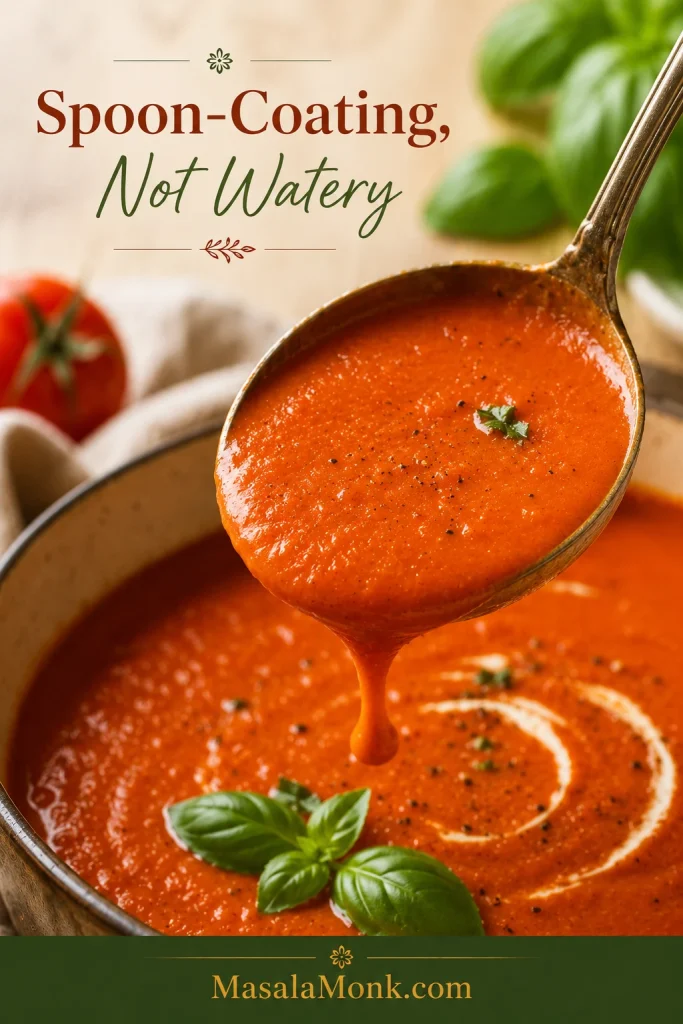
Texture check: the finished soup should be spoon-coating and pourable. When it feels heavy, add broth 1/4 cup / 60 ml at a time. If it looks thin, simmer uncovered for a few more minutes.
The texture should coat a spoon, but still pour
Fresh Tomatoes vs Canned Tomatoes
Fresh tomatoes and canned tomatoes can both make excellent tomato basil soup. The better choice depends on the season, the tomato quality, and how smooth you want the final bowl.
| Tomato choice | Use it when | What to know |
|---|---|---|
| Whole peeled canned tomatoes | You want the best all-purpose canned option | They blend into a smooth, rounded soup |
| Crushed canned tomatoes | You want the fastest soup | Convenient and reliable, though texture varies by brand |
| Fire-roasted canned tomatoes | You want deeper flavor without roasting | Adds a lightly smoky, roasted taste |
| Fresh Roma or plum tomatoes | Tomatoes are ripe, sweet, and in season | Best roasted first for deeper flavor |
| Fresh watery tomatoes | You have no other option | Use less broth and simmer longer |
| Diced canned tomatoes | You want a rustic texture | They can stay firmer, so blend well or simmer longer |
| Tomato passata | You want a very smooth shortcut | Use less broth because passata is already loose |
| Tomato sauce | You only have sauce on hand | Use carefully; it may already contain salt, herbs, or sugar |
Which canned tomatoes blend best
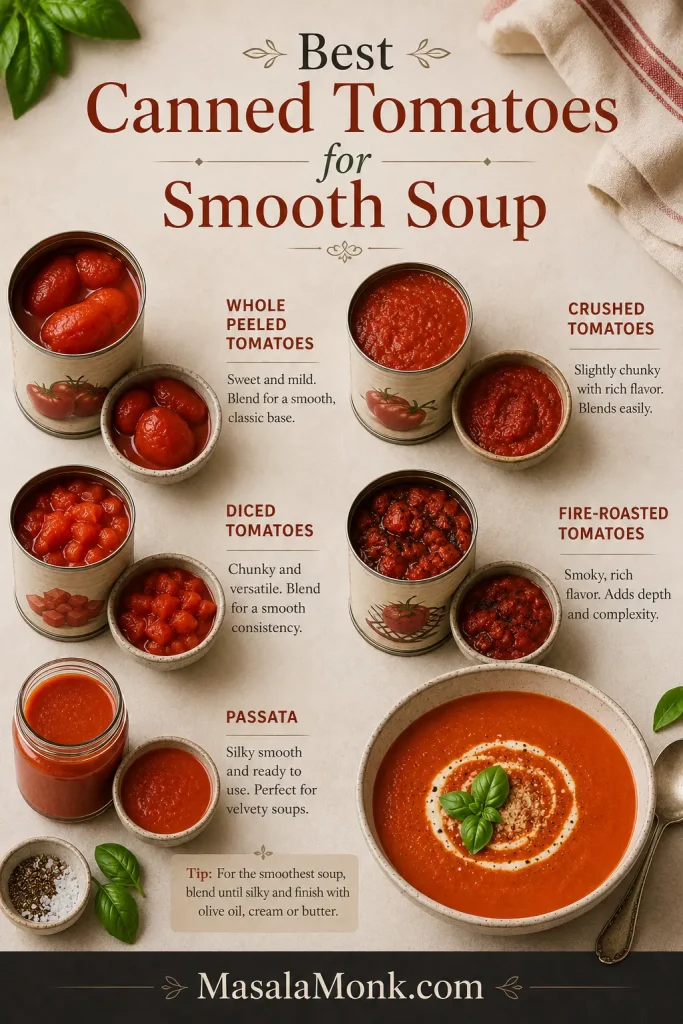
How to choose for smooth texture
Fresh tomatoes do not always need peeling. With a strong blender and a slightly rustic goal, you can leave the skins on. For a velvety soup, peel them, use a high-speed blender, or strain after blending.
Whole peeled or crushed canned tomatoes are the safest default. When comparing cans, tomatoes without calcium chloride often soften and blend more easily, while diced tomatoes can stay firmer even after simmering. That firmness is useful in chunky dishes, but less helpful when the goal is a silky soup.
The best choice is the tomato that already has flavor before the pot has to fix it.
Fresh tomatoes vs canned tomatoes
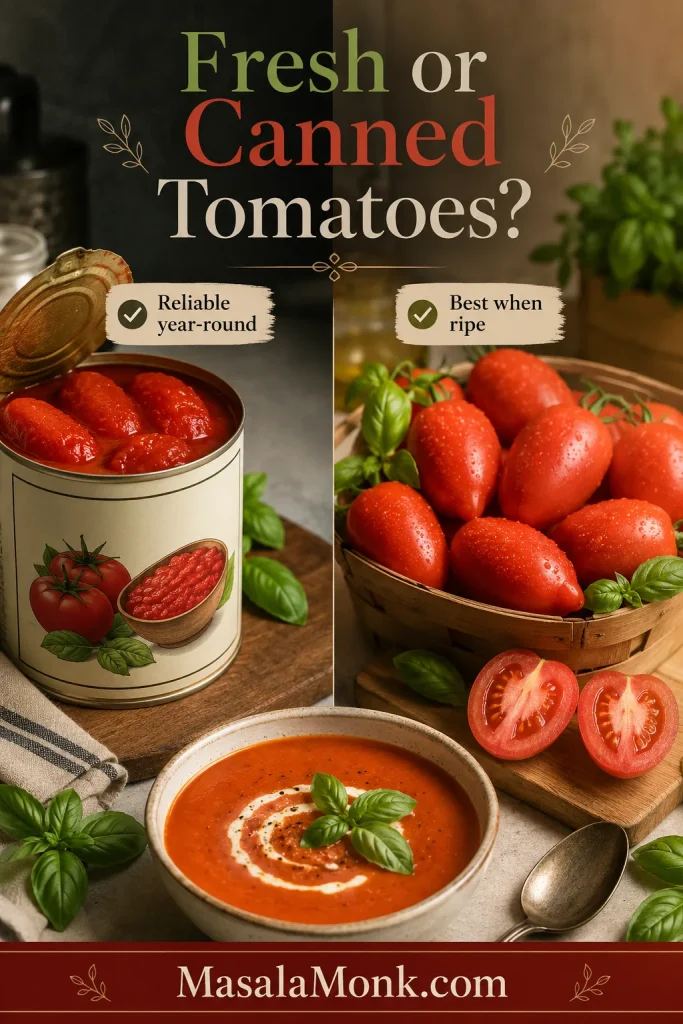
If you are working through a basket of ripe tomatoes, this guide to tomato sauce from fresh tomatoes is helpful for understanding how reduction changes tomato flavor and texture.
Using ripe fresh tomatoes? Go to the roasted variation · Want the easiest version? Use the best default · Ready to cook? Back to the recipe card
Roasted Tomato Basil Soup Variation
Use this version when fresh tomatoes are ripe and flavorful. Roasting is worth it only when the tomatoes have something to give.
As the tomatoes roast, their edges soften, the juices concentrate, and the flavor moves from bright and raw to deeper and sweeter. This is the version to make when the tomatoes smell good before they even go into the oven.
Roast until tomatoes collapse and garlic softens
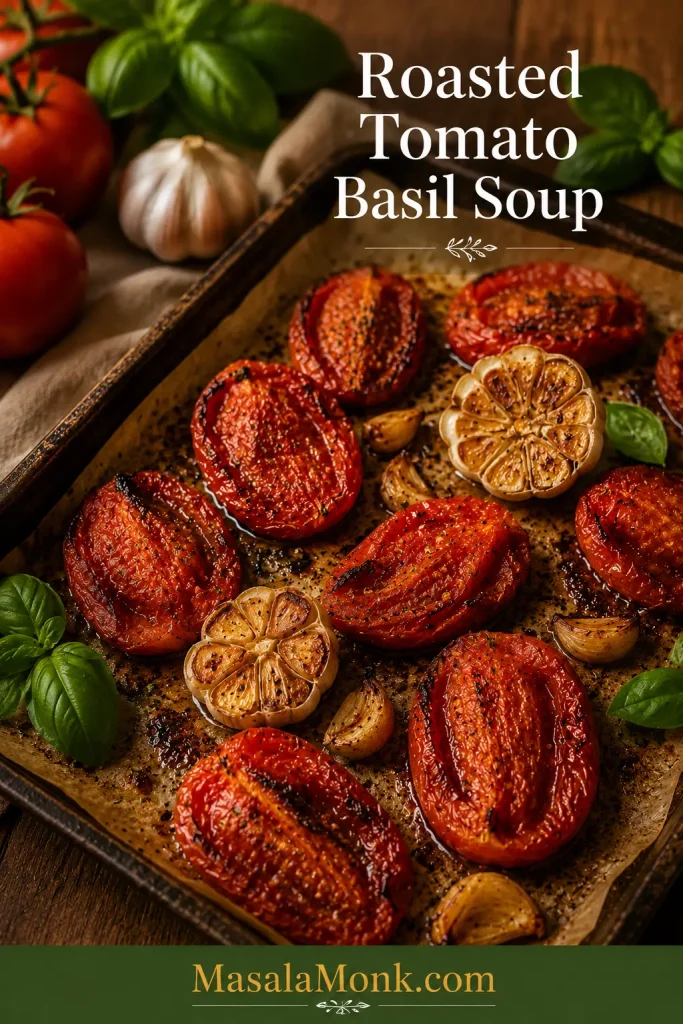
Roasted Tomato Ingredients
- 3 lb Roma or plum tomatoes, about 1.35 kg, halved
- 6 to 8 garlic cloves, peeled
- 3 tablespoons olive oil, 45 ml
- 1 medium onion, chopped, about 150 to 180 g
- 1 1/2 to 2 cups broth, 360 to 480 ml
- 1/2 to 1 cup fresh basil leaves, about 15 to 25 g
- Salt and black pepper, to taste
- Heavy cream or parmesan, optional
How to Make the Roasted Version
- Heat the oven to 425°F / 220°C.
- Place the tomatoes and garlic on a rimmed baking sheet. Toss with olive oil, salt, and pepper.
- Roast for 30 to 40 minutes, until the tomatoes soften, collapse, and deepen in color.
- Meanwhile, cook the onion in a pot until soft.
- Add the roasted tomatoes, roasted garlic, and 1 1/2 cups / 360 ml broth to the pot.
- Simmer for 15 to 20 minutes.
- Add the basil at the end, then blend until smooth.
- Adjust with more broth if needed, then finish with cream or parmesan if desired.
Very juicy fresh tomatoes need less broth at first. You can always thin the soup after blending, but a watery batch takes longer to fix.
What roasted tomato basil soup should look like
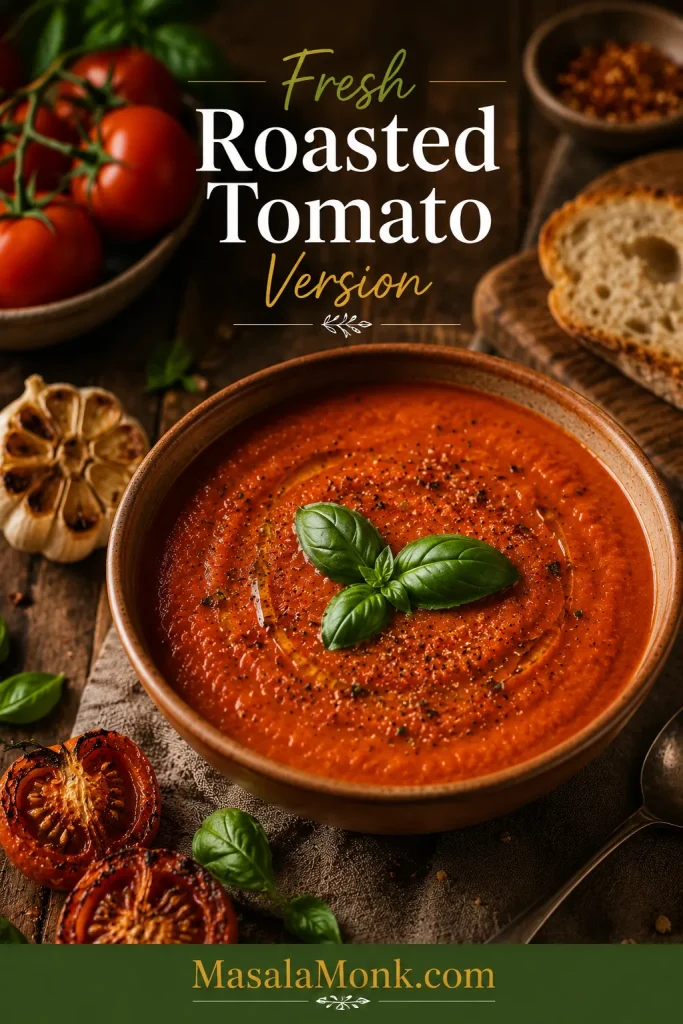
How to Make Tomato Basil Soup Creamy
Creaminess can come from dairy, cheese, beans, cashews, coconut milk, or careful blending. Choose the option that matches the bowl you want. The goal is to soften the soup, not cover it up.
Creamy vs no-cream: what changes
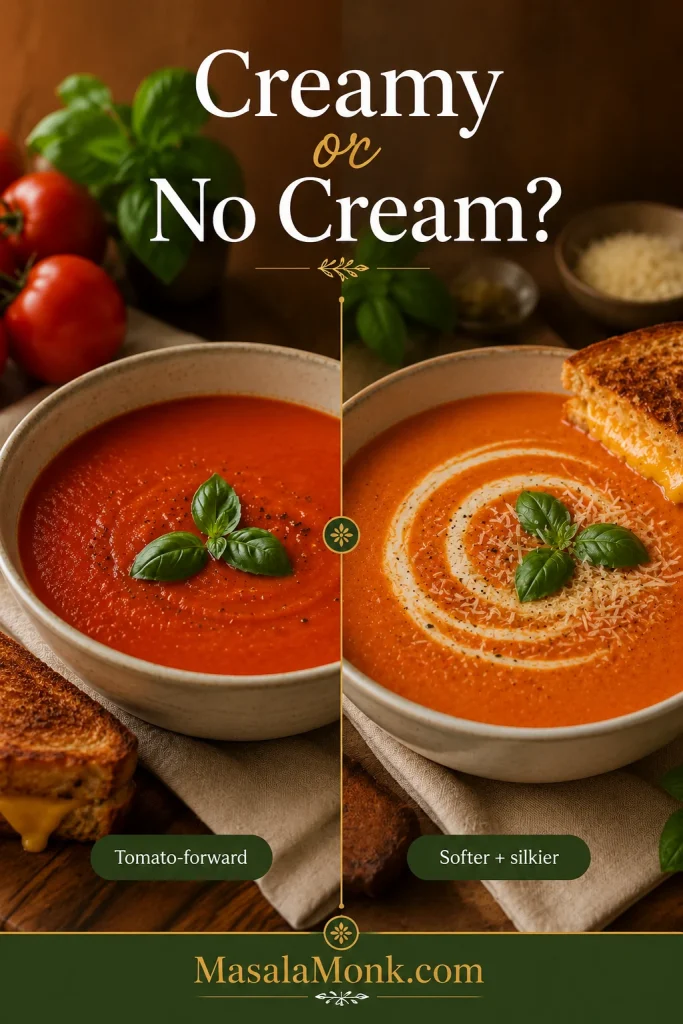
Creamy options at a glance
| Creamy option | Amount | Result |
|---|---|---|
| Heavy cream | 1/2 cup / 120 ml | Classic creamy tomato basil soup |
| More heavy cream | 3/4 to 1 cup / 180 to 240 ml | Richer, bisque-style soup |
| Half-and-half | 1/2 cup / 120 ml | Lighter creamy finish |
| Whole milk | 1/2 cup / 120 ml | Lighter, but more likely to curdle if boiled |
| Parmesan | 1/3 cup / 30 to 35 g | Savory, salty depth |
| White beans | 1/2 cup / 85 to 100 g | Creamy texture without cream |
| Cashew cream | 1/4 to 1/2 cup / 60 to 120 ml | Vegan creamy option |
| Coconut milk | 1/4 to 1/2 cup / 60 to 120 ml | Dairy-free richness with a slight coconut note |
| Basil pesto | 1 to 3 tablespoons | Herby richness and stronger basil flavor |
The bowl should still taste like tomatoes after it turns silky.
The safest creamy finish comes from lowering the heat first. Stir in cream gently, avoid a hard boil, and use finely grated parmesan so it melts into the soup instead of clumping.
Freezing leftovers? Leave the dairy out now and add cream or parmesan after reheating.
Tomato Basil Soup vs Tomato Basil Bisque
Tomato basil soup can be light, creamy, chunky, smooth, brothy, or rich. Bisque usually means a smoother, creamier, more restaurant-style soup with a silkier texture.
To make this recipe more like bisque, use 3/4 to 1 cup / 180 to 240 ml heavy cream, add parmesan, finish with a little butter, and strain after blending if you want it extra smooth.
If you want the spoon to glide through the bowl like restaurant soup, straining after blending makes the biggest difference.
Bisque-style tomato basil soup
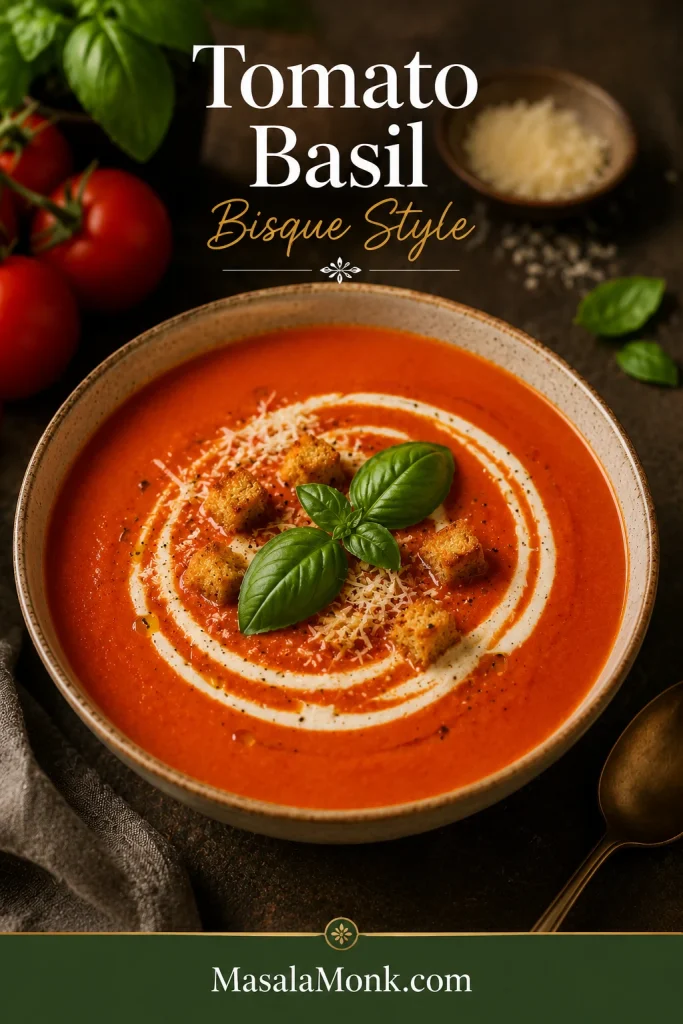
To keep the bowl lighter, skip the cream and parmesan, blend well, and use a little olive oil or white beans for body.
Another smooth, creamy soup that still needs balance rather than heaviness is this butternut squash soup.
How to Make It Taste More Restaurant-Style
Restaurant-style tomato basil soup usually tastes richer, smoother, and more balanced than a rushed homemade version. The difference is not complicated. It comes from giving the base a little time before blending and finishing the bowl with care.
- Cook the onion slowly. Soft, lightly golden onion gives sweetness and depth.
- Do not skip tomato paste. It makes the tomato flavor more concentrated.
- Use enough fat. Butter or olive oil rounds out acidity and gives the soup a fuller mouthfeel.
- Try fire-roasted tomatoes. They add deeper flavor without extra work.
- Add parmesan. A small amount makes the soup taste savory and complete.
- Finish with basil. Fresh basil added late tastes cleaner and more alive.
- Balance acidity gently. Cream, butter, sugar, carrot, or a careful pinch of baking soda can soften sharp tomatoes.
- Serve it with something crisp. Grilled cheese, parmesan toast, garlic bread, or croutons make the bowl feel complete.
Finish the bowl like a café soup
For a more polished finish, strain the soup after blending, add a small knob of butter at the end, warm the cream before stirring it in, and serve with basil, parmesan, croutons, or a cream swirl. None of this is fussy; it just makes the bowl feel finished.
Restaurant-style finishing moves
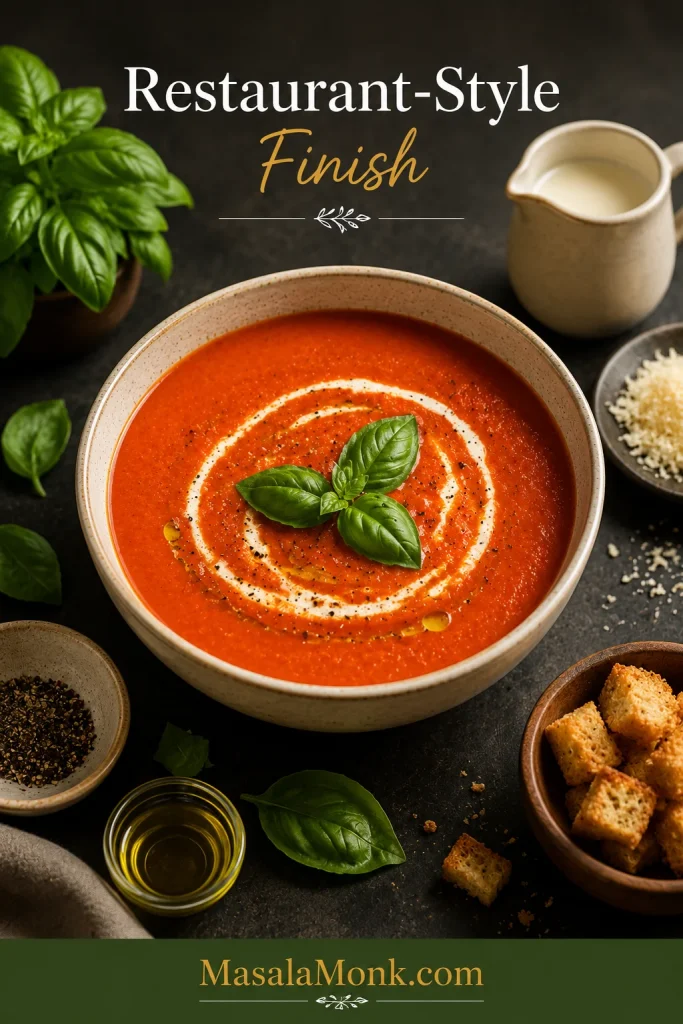
The best version should never feel like hot tomato juice with herbs. It should feel rounded on the spoon, with tomato first, basil second, and just enough richness to make another dip of grilled cheese feel necessary.
The goal is not fancy. It is that café-style bowl that makes the bread disappear faster than planned.
For a slower, deeper soup night built around bread, cheese, and a rich base, this French onion soup sits in the same comfort-food family.
Slow Cooker and Instant Pot Notes
These versions are convenient, but they taste best when you still give the onion, garlic, and tomato paste a little flavor-building time first.
Slow cooker and Instant Pot versions
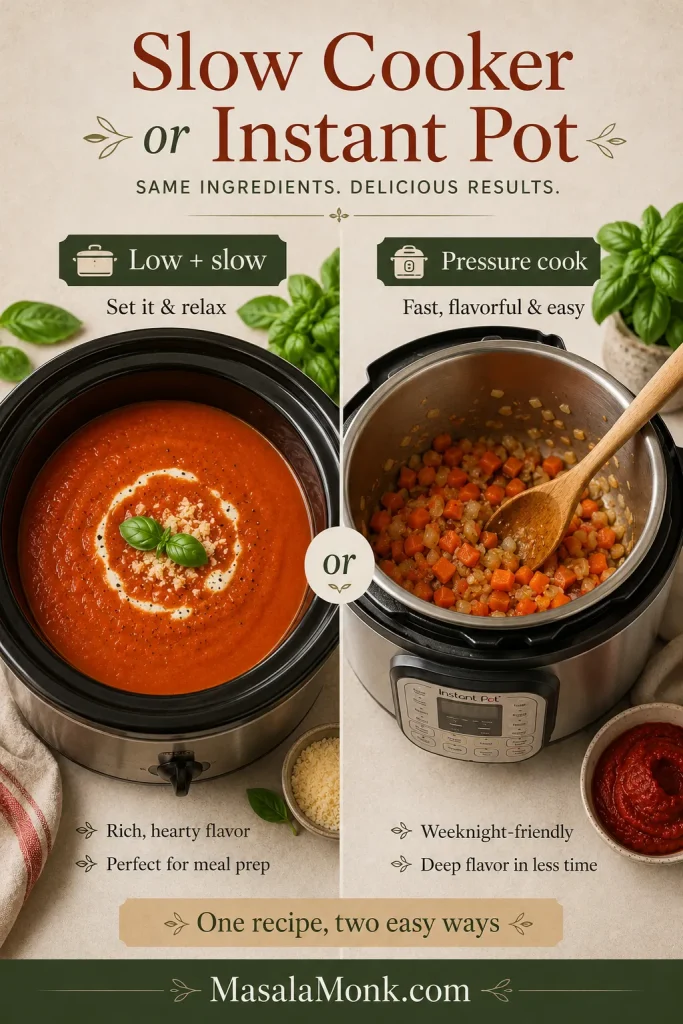
Slow Cooker Tomato Basil Soup
Add the tomatoes, broth, onion, optional carrot, garlic, tomato paste, salt, pepper, sugar, and dried basil to the slow cooker. Cook on low for 6 to 8 hours or high for 3 to 4 hours. Blend until smooth, then stir in the fresh basil and cream at the end.
For better flavor, sauté the onion, garlic, and tomato paste before adding them to the slow cooker. Slow cookers are convenient, but they do not brown ingredients for you.
If you like slow cooker soups that stay creamy and hands-off, this slow cooker broccoli cheese soup is another good one to keep nearby.
Instant Pot Tomato Basil Soup
Use the sauté function for the onion, optional carrot, garlic, and tomato paste. Add the tomatoes, broth, salt, pepper, sugar, and dried basil. Pressure cook for 8 to 10 minutes, let the pressure release naturally for a few minutes, then blend.
Scrape the bottom of the pot well before pressure cooking. Thick tomato mixtures can settle and trigger a burn warning if browned bits are stuck underneath.
Fresh basil, cream, and parmesan go in after pressure cooking, not before.
Vegan, Dairy-Free, and Lighter Options
Dairy-free tomato basil soup should still feel full, not like tomato broth pretending to be dinner. The trick is to replace cream with body, not just remove it.
- Use vegetable broth instead of chicken broth.
- Choose olive oil instead of butter.
- Skip parmesan, or use a dairy-free parmesan-style finish.
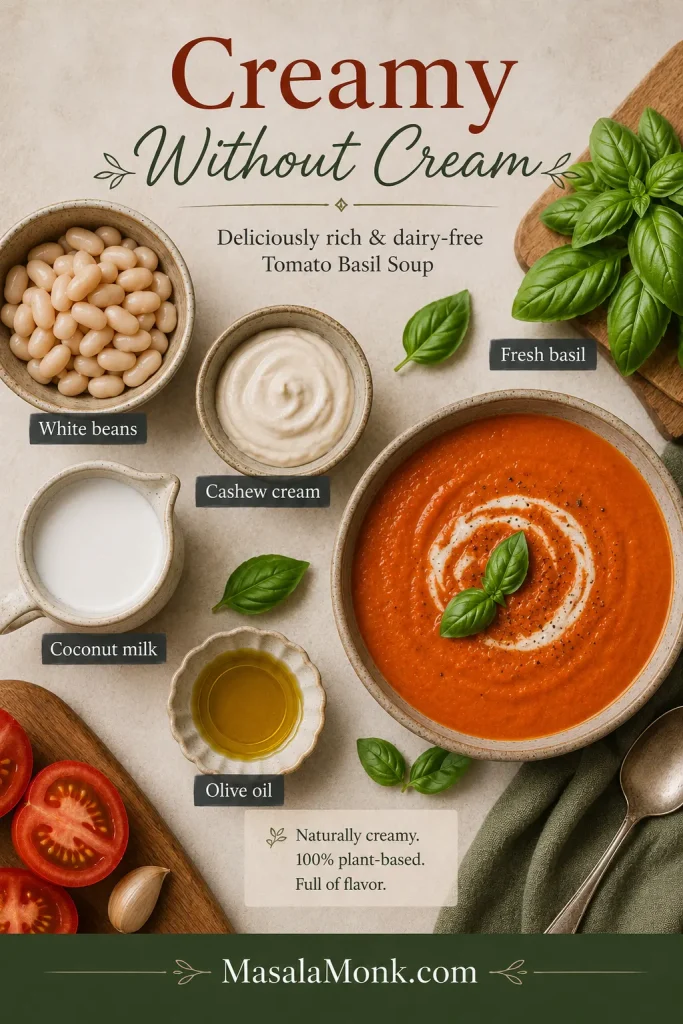
- Blend in 1/2 cup / 85 to 100 g white beans for creaminess without cream.
- Try cashew cream for a neutral vegan creamy finish.
- Choose coconut milk if you do not mind a slight coconut note.
- Pick low-sodium broth and no-salt-added tomatoes when you want more control over salt.
Dairy-free body builders
A dairy-free green finish can come from this fresh basil vegan pesto, used as a small swirl on top.
To keep the soup lighter, skip the cream and finish with olive oil, fresh basil, and black pepper. A well-blended tomato base can still feel complete without dairy.
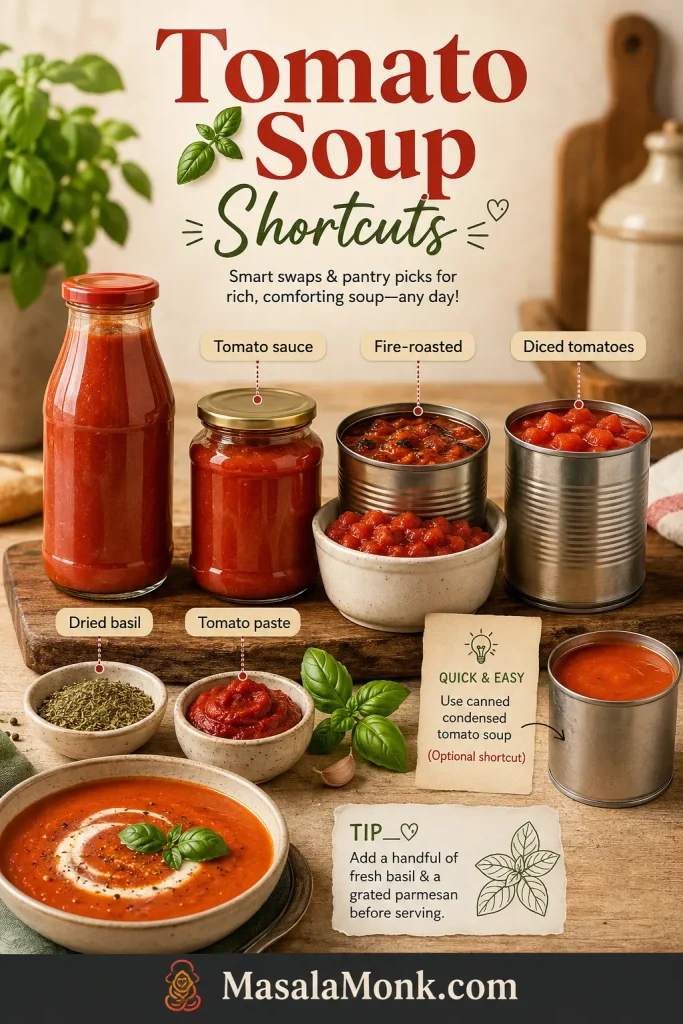
Shortcuts and Substitutions
Most weeknight soups are made with what is already in the pantry, so this section is about making smart swaps without losing the point of the bowl.
The best version starts with canned whole peeled or crushed tomatoes, but this soup is forgiving if you understand what each shortcut gives you and what it takes away.
| Shortcut or swap | How to use it | Watch for |
|---|---|---|
| Tomato passata | Use 4 to 5 cups / 960 ml to 1.2 L in place of canned tomatoes | Start with only 1 cup / 240 ml broth because passata is already smooth and loose |
| Tomato sauce | Use in a pinch, then season carefully | It may already contain salt, sugar, onion, garlic, or herbs |
| Diced tomatoes | Simmer longer and blend well | They can stay firmer than whole peeled tomatoes |
| Fire-roasted tomatoes | Use them like regular canned tomatoes | The soup will taste deeper and slightly smoky |
| Canned condensed tomato soup | Use only as a quick shortcut base | Add sautéed garlic/onion, basil, and cream; reduce added salt |
| No fresh basil | Use 1 to 1 1/2 teaspoons dried basil while simmering | The soup will taste more herby than fresh and basil-forward |
Shortcut products often bring their own salt, sugar, or herbs. Taste before adding the full amount of salt from the recipe.
Pantry shortcuts and substitutions
If you actually want sauce instead of soup, this marinara sauce recipe is the better place to go.
What to Serve With Tomato Basil Soup
A bowl of tomato basil soup rarely stays alone for long. It wants something crisp, cheesy, buttery, or sturdy enough to drag through the bowl.
- Grilled cheese: the classic pairing and the best choice for dipping.
- Garlic bread: crisp, buttery, and simple.
- Parmesan toast: excellent with creamy tomato basil soup.
- Croutons: add crunch without making another side dish.
- Basil pesto toast: doubles down on the basil flavor.
- Simple salad: good when you want a lighter meal.
- Tortellini: turns the soup into a more filling dinner.
- Orzo or small pasta: adds body and makes the soup heartier.
- Chicken: useful if you want more protein.
- Roasted vegetables: a good side for a cozy dinner bowl.
What to pair with tomato basil soup
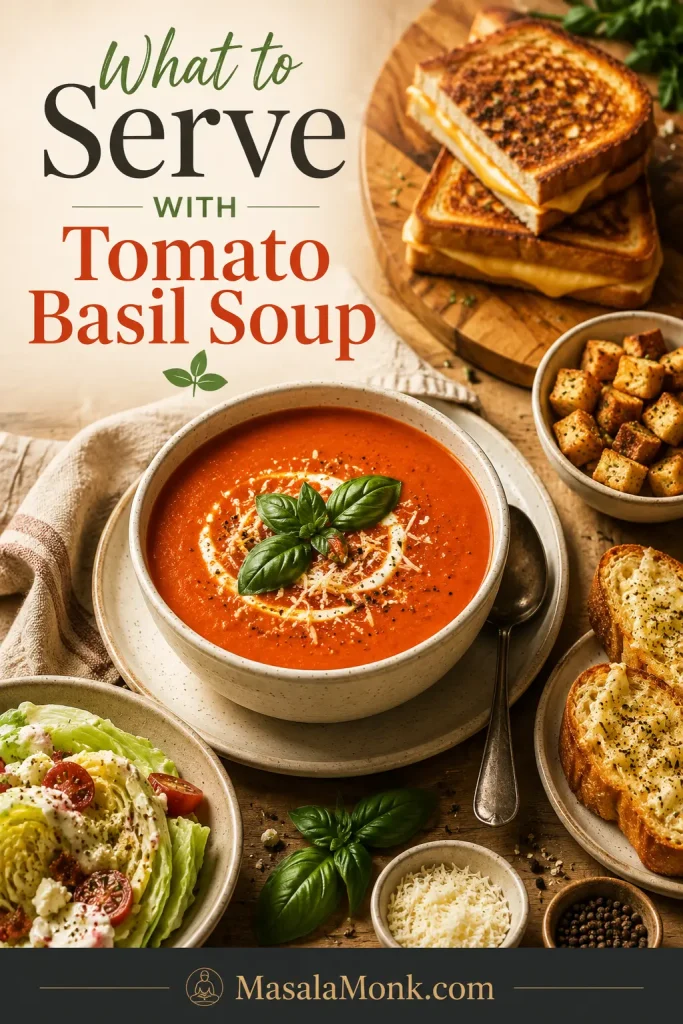
The best side is the one that gives the spoon something to chase: melted cheese, crisp bread, crunchy croutons, or a cold salad bite between warm spoonfuls.
If grilled cheese is not the plan, thick slices from this homemade garlic bread loaf are excellent for dipping.
Something softer with crisp olive-oil edges, like sourdough focaccia, works beautifully beside a smooth tomato soup.
Cold contrast also helps, and a wedge salad cuts through creamy tomato basil soup nicely.
Creamy bowls need crunch. Lighter soup does better with something cheesy, sturdy, or filling.
Mistakes to Avoid
Tomato basil soup is forgiving, but a few small choices can make the whole pot taste dull or harsh.
- Hold back extra broth until after blending. You can always thin the soup later.
- Save fresh basil for the final blend. Long simmering dulls its flavor.
- Keep the soup gentle once cream goes in. Hard boiling can make dairy split.
- Use stainless steel or enamel-coated cookware for long tomato simmering. Reactive pots can leave a metallic taste.
- Treat this as a fridge or freezer soup, not a canning recipe. Creamy soup needs proper preservation rules.
Troubleshooting Tomato Basil Soup
Tomato soup is rarely ruined. Most problems come from the same few places: acid, liquid, heat, salt, or tired basil. Taste once, adjust gently, and the pot usually comes back.
Fix the pot before serving
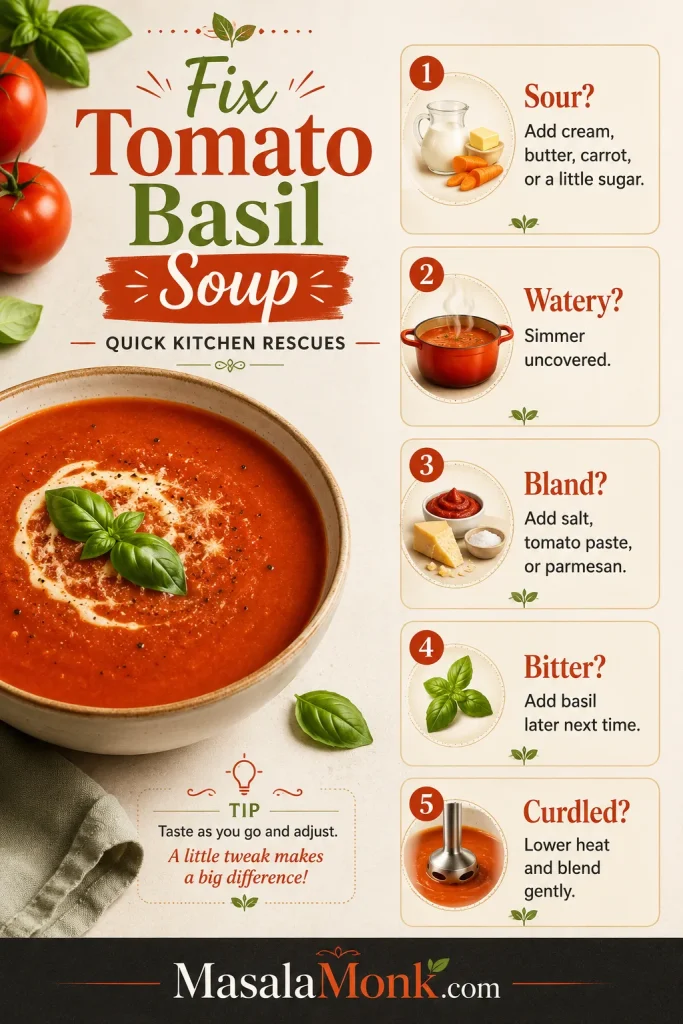
Quick fixes by symptom
| If the soup tastes | Try this first |
|---|---|
| Sour or sharp | Add cream, butter, cooked carrot, or a small pinch of sugar |
| Thin or watery | Simmer uncovered and add tomato paste if needed |
| Flat | Add salt, parmesan, roasted garlic, or more simmering time |
| Bitter | Save fresh basil for the finish next time |
| Too heavy | Thin with broth and brighten with fresh basil or black pepper |
For more specific fixes, use the table below.
Detailed tomato soup troubleshooting
| Problem | Likely cause | How to fix it |
|---|---|---|
| Soup tastes sour | Acidic tomatoes or not enough sweetness/fat | Add cream, butter, a little sugar, cooked carrot, or up to 1/8 teaspoon baking soda |
| Soup is watery | Too much broth or watery fresh tomatoes | Simmer uncovered, add tomato paste, or blend longer for body |
| Soup is too thick | It reduced too much | Add broth 1/4 cup / 60 ml at a time |
| Soup tastes bland | Not enough salt, weak tomatoes, or no flavor base | Add salt, tomato paste, parmesan, roasted garlic, or more simmering time |
| Basil tastes bitter | Basil cooked too long | Blend fresh basil in at the end and avoid long boiling |
| Cream curdled | Heat was too high or soup was very acidic | Lower the heat, add cream at the end, and do not boil after adding dairy |
| Soup tastes metallic | Reactive cookware | Use stainless steel or enamel-coated cookware |
| Soup is not smooth | Tomato skins, seeds, firm diced tomatoes, or not enough blending | Blend longer, use a stronger blender, strain the soup, or peel fresh tomatoes |
Use baking soda carefully if you choose that route. Start with a pinch if you are unsure, or up to 1/8 teaspoon for the whole pot. Stir, let the bubbling settle, and taste again. Too much baking soda can make tomato soup taste dull.
Fixed the pot? Choose what to serve with it · Saving the rest? Go to freezing notes · Back to recipe card
Storage and Freezing
How long does tomato basil soup last in the fridge?
Store cooled soup in an airtight container in the refrigerator for 3 to 4 days. Reheat gently on the stovetop or in the microwave, stirring often.
The flavor usually settles nicely after a night in the fridge, but the soup may thicken. Add a splash of broth or water when reheating if needed.
Can you freeze tomato basil soup?
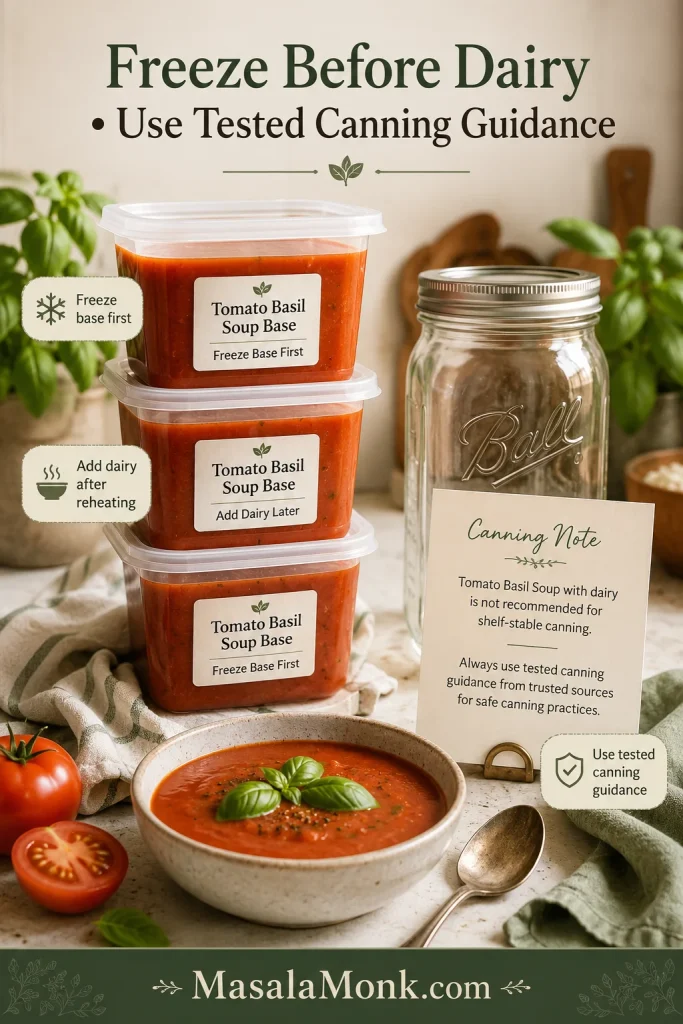
Freeze it for up to 3 months, preferably before adding cream or parmesan.
For the best texture, reheat the dairy-free base gently, then stir in cream or parmesan after it is hot. Dairy-finished soups can separate or turn slightly grainy if boiled hard after freezing.
Another freezer-friendly soup with beans, vegetables, and tomato broth is this minestrone soup.
How to reheat creamy tomato basil soup
Use low to medium-low heat. Stir often and avoid a hard boil. If the soup thickens in the fridge, add a splash of broth or water while reheating.
A slightly separated soup can usually be rescued with a quick immersion blend or a small splash of warm cream or broth.
A Quick Note About Canning
This recipe is written for eating fresh, refrigerating, or freezing. It is not designed as a shelf-stable canning recipe.
If you want to can tomato soup, use tested guidance such as the National Center for Home Food Preservation soup canning guidance. Avoid canning versions with cream, parmesan, flour, thickeners, rice, pasta, or untested ingredient changes unless you are following tested preservation guidance, because acidity and processing safety matter.
Freeze before dairy, and use tested canning guidance
Back to recipe card · Jump to FAQ · Back to top
FAQ
Can I make tomato basil soup with canned tomatoes?
Whole peeled, crushed, and fire-roasted canned tomatoes all work. For smooth soup, whole peeled tomatoes are usually the safest choice.
Can I use fresh tomatoes instead?
Fresh tomatoes work well when they are ripe, sweet, and in season. For the best fresh version, roast about 3 lb / 1.35 kg Roma or plum tomatoes first.
Do I need to peel the tomatoes?
Not always. Leave skins on for a rustic soup or if using a strong blender. Peel or strain for a smoother finish.
Can I use dried basil?
Dried basil works when fresh basil is limited. Use 1 to 1 1/2 teaspoons while the soup simmers, then add fresh basil at the end if you have it.
When should I add fresh basil?
Add it after simmering and before the final blend. Basil needs heat to release aroma, not a full 25-minute boil.
Can I use tomato sauce or passata?
Passata works well for a very smooth soup, but use less broth. Tomato sauce can work in a pinch, but taste before seasoning because it may already contain salt, sugar, garlic, onion, or herbs.
Can I use canned tomato soup as a shortcut?
You can, but it will taste more like upgraded canned soup than homemade. Add sautéed garlic and onion, stir in fresh basil, and finish with cream or parmesan if desired.
Can I make tomato basil soup without a blender?
Yes, but it will be rustic. Use crushed tomatoes, finely chop the onion and garlic, simmer until soft, then mash well with a potato masher.
How do I make it creamy?
Add 1/2 cup / 120 ml heavy cream for a classic creamy finish. For a richer bisque-style soup, use 3/4 to 1 cup / 180 to 240 ml cream and add parmesan.
Can I make it without cream?
You can. Blend well, use enough onion and tomato paste for body, and finish with olive oil or white beans if you want a fuller texture.
Can I use milk instead of cream?
Milk works, but it curdles more easily than cream. Use whole milk, lower the heat, add it at the end, and do not boil afterward.
Why is my soup sour?
Some tomatoes are sharper than others. Add a little cream, butter, sugar, cooked carrot, or up to 1/8 teaspoon baking soda to round out the flavor.
How do I thicken it?
Simmer uncovered, add tomato paste, use less broth next time, or blend in white beans for a thicker no-cream version.
Can I freeze tomato basil soup?
Freeze it for up to 3 months. For the best texture, freeze before adding cream or parmesan, then add dairy after reheating.
Can I make it vegan?
To make it vegan, use vegetable broth, olive oil instead of butter, and skip parmesan. White beans, cashew cream, coconut milk, or good blending can add body.
What is the difference between tomato basil soup and tomato basil bisque?
Tomato basil soup can be light or creamy. Bisque is usually smoother, richer, and creamier, often with more cream, butter, parmesan, or a strained finish.
What goes well with tomato basil soup?
Grilled cheese is the classic choice. Garlic bread, parmesan toast, croutons, salad, tortellini, and basil pesto toast also work well.
Final Thoughts
A good tomato basil soup does not need much. It needs enough body to coat the spoon, enough basil to feel fresh, and enough balance that the tomatoes taste mellow instead of sharp.
Once you know to simmer the tomatoes until mellow, hold the basil until the finish, and add any dairy gently, tomato basil soup stops being a gamble. It becomes the kind of pantry soup that still feels cooked with care.








