
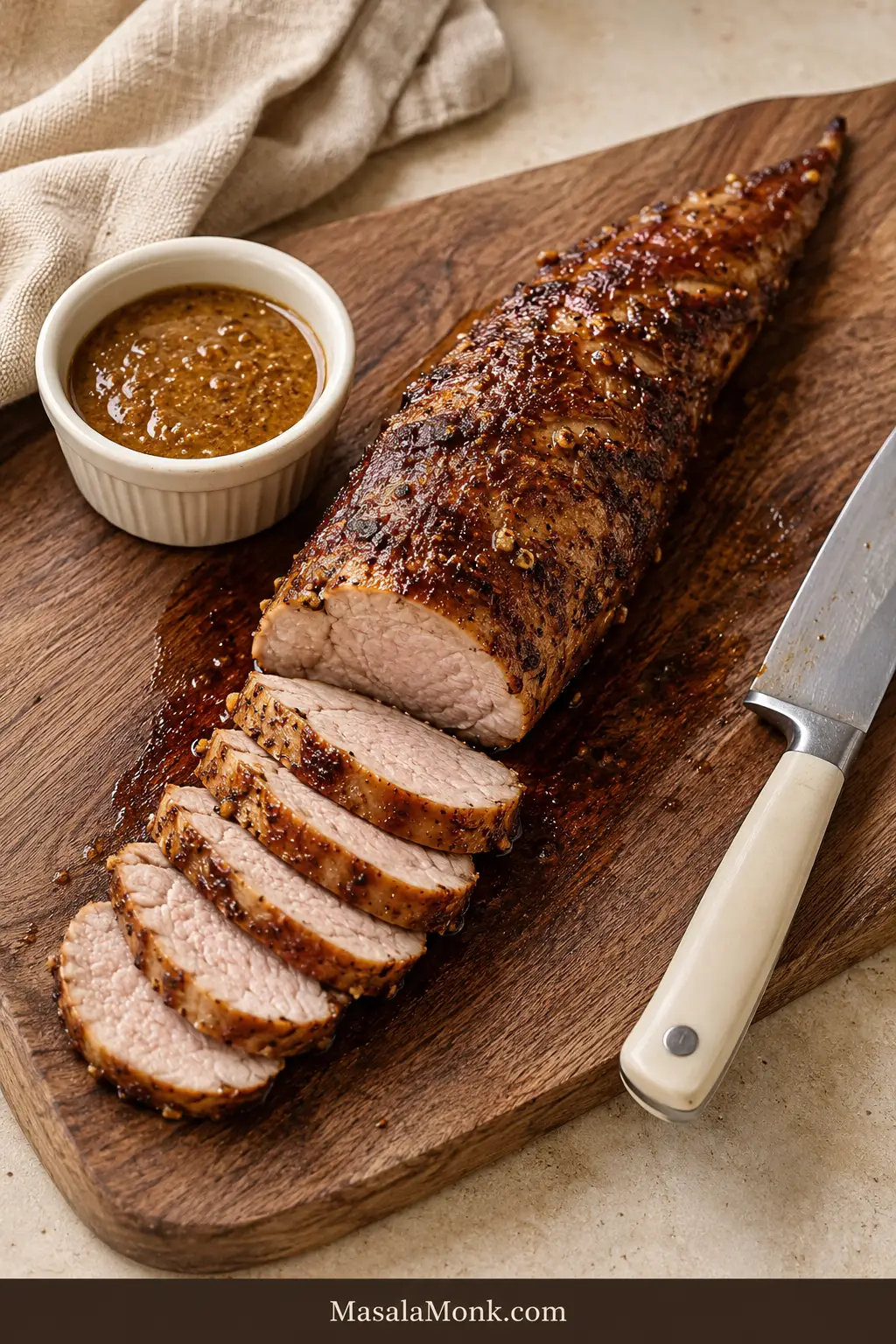
A good pork tenderloin marinade should give you savory, garlicky edges, enough sweetness to help the outside caramelize, and slices that still glisten when they reach the plate. It should not require an entire day of planning—and it definitely should not leave you with beautifully browned pork that somehow turned dry in the middle.
Pork tenderloin is naturally tender. The bigger risks are simpler: too much salt, a marinade that gets harsher with time, or leaving this very lean cut over the heat after the center is ready.
The marinade itself is a quick whisk-and-pour job, which makes this one of those dinners that can look like you worked much harder than you did. Even 30 minutes gives the outside noticeable seasoning, while 8–12 hours works when overnight prep is easier.
One thick tenderloin or two skinny ones, oven, grill or air fryer—you can adjust for what is actually in front of you without guessing.
Marinate for flavor. Cook for juiciness.
Quick Answer: How Long Should You Marinate Pork Tenderloin?
For this soy-Dijon marinade, 30 minutes gives the outside noticeable flavor, 2–4 hours is an easy same-day target, and 8–12 hours works for overnight prep.
Different marinades need different timing. A much more acidic mixture—or one made with fresh pineapple—should not automatically get the same overnight treatment.
Once cooking begins, the timer tells you when to start checking; the thermometer tells you when to stop. Cook the thickest part to 145°F / 63°C. Rest the tenderloin for 5 minutes; the USDA safety minimum after reaching 145°F is at least 3 minutes.
Pork Tenderloin Marinade Recipe
This recipe is written for 1 lb / 454 g of plain pork tenderloin. If yours is close to that weight and you have an instant-read thermometer, make it as written and you’re set. The deeper notes are there for the nights when your pork, timing or appliance behaves differently.
Recipe at a Glance
| Base pork weight | 1 lb / 454 g |
|---|---|
| Marinade prep | Quick whisk-and-pour |
| Marinating window | 30 minutes to 12 hours |
| Oven | 400°F / 205°C |
| Grill | 400–450°F / 205–230°C, with a cooler zone |
| Air fryer | 400°F; use 200°C on models that use Celsius |
| Final internal temperature | 145°F / 63°C in the thickest part |
| Rest | 5 minutes |
| Serves | 3–4 |
Equipment: a large zip-top food bag or snug nonreactive container, small mixing bowl or measuring jug, whisk or fork, tongs and an instant-read meat thermometer.
Ingredients
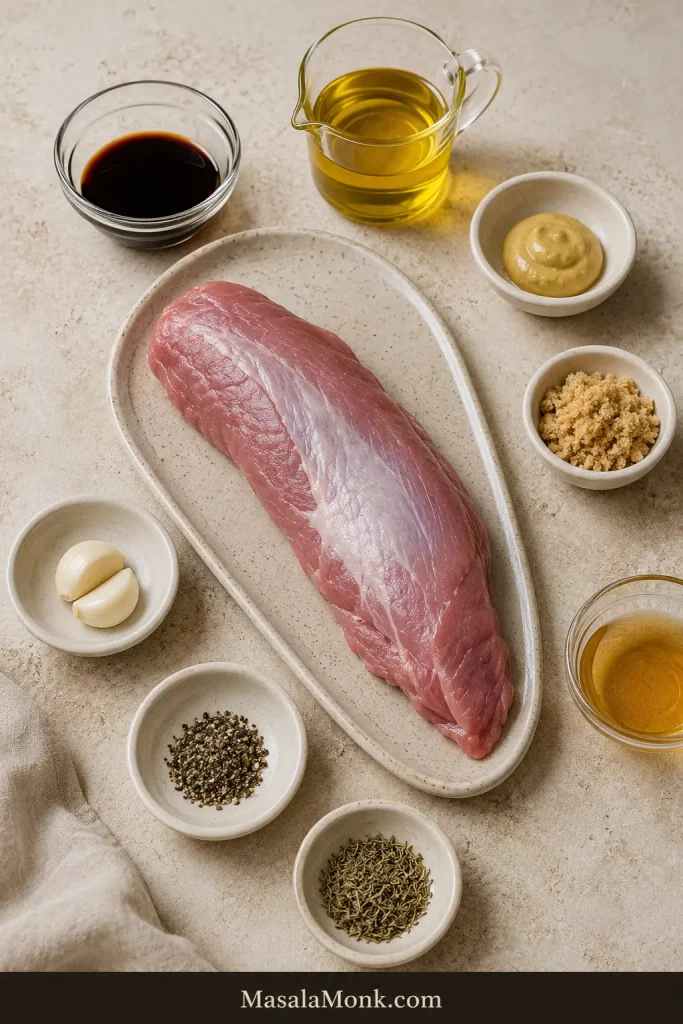
- 1 lb / 454 g plain pork tenderloin
- 2 tbsp / 30 ml low-sodium soy sauce
- 2 tbsp / 30 ml olive oil or avocado oil
- 1 tbsp / 15 g Dijon mustard
- 1 tbsp / about 12 g packed light brown sugar
- 1 tbsp / 15 ml apple cider vinegar
- 2 medium garlic cloves / about 6 g, finely grated or minced
- ½ tsp / about 1 g black pepper
- ½ tsp dried thyme or oregano
No extra salt is needed. Low-sodium soy sauce already handles most of the seasoning. Full-sodium soy, a salty rub or pork packed with a seasoning solution can push the finished tenderloin much saltier than expected.
Method
- Check the cut and label. Make sure you have pork tenderloin, not pork loin. If the package is pre-seasoned or enhanced, or says it contains a seasoning solution, check the sodium before adding this marinade.
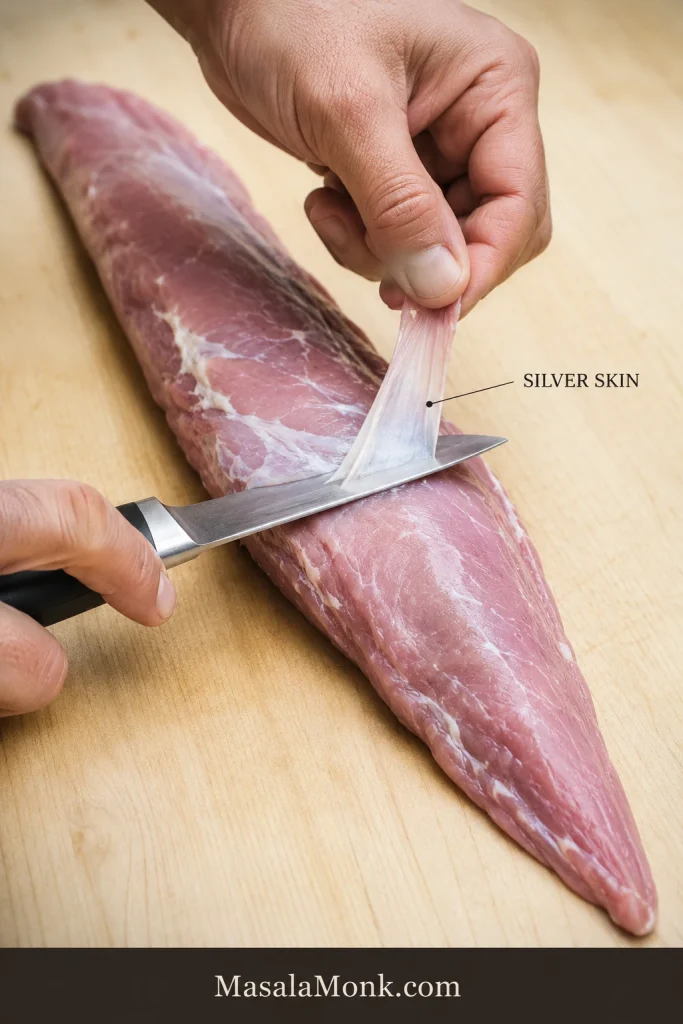
- Trim the silver skin. Slip a sharp knife just underneath the shiny membrane, angle the blade slightly upward and slice it away without digging deeply into the meat.
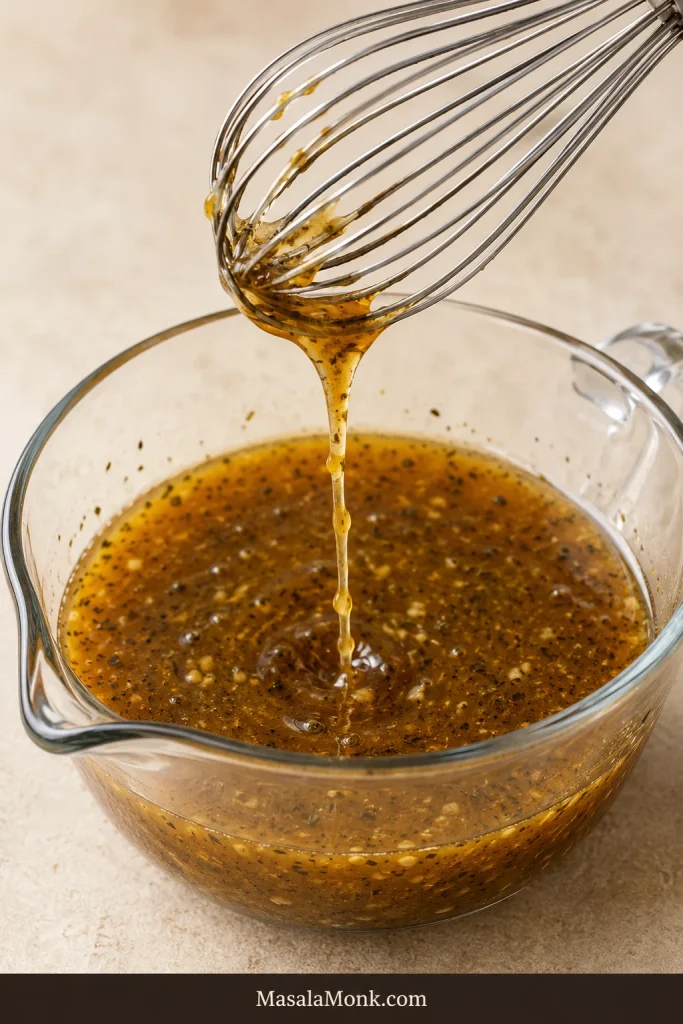
- Whisk the marinade. Combine the soy sauce, oil, Dijon, brown sugar, vinegar, garlic, pepper and herbs until smooth and the sugar is mostly dissolved. It should smell savory and garlicky first, with a light tang behind it.
- Coat the pork. Put the tenderloin in a snug bag or container, add the marinade and turn until every side has a thin, even coating. The meat does not need to be submerged.
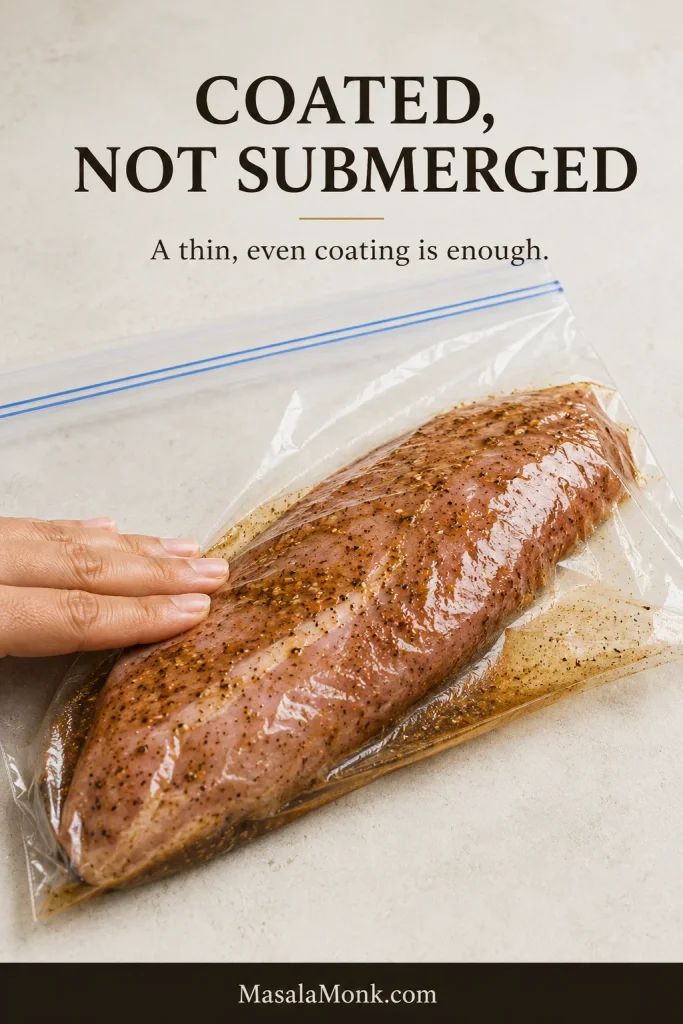
- Refrigerate. Marinate for 30 minutes to 12 hours.
- Drain before cooking. Let the loose marinade run off. Pat the pork especially dry if you’re searing it before roasting.
- Choose your cooking method. Use the oven, grill or air-fryer directions below and cook until the thickest part reaches 145°F / 63°C.
- Rest 5 minutes before slicing.
Choose Your Cooking Method
- Oven: Roast at 400°F / 205°C. For a slim 1-pound tenderloin, begin checking around 18 minutes. Thicker pieces often need longer. Remove at 145°F / 63°C and rest 5 minutes.
- Grill: Heat the grill to 400–450°F / 205–230°C with a hot side and a cooler side. Brown over direct heat, turning every 2–3 minutes, then move the pork to gentler heat once the crust looks good. Take a temperature reading once that crust is established and remove at 145°F / 63°C.
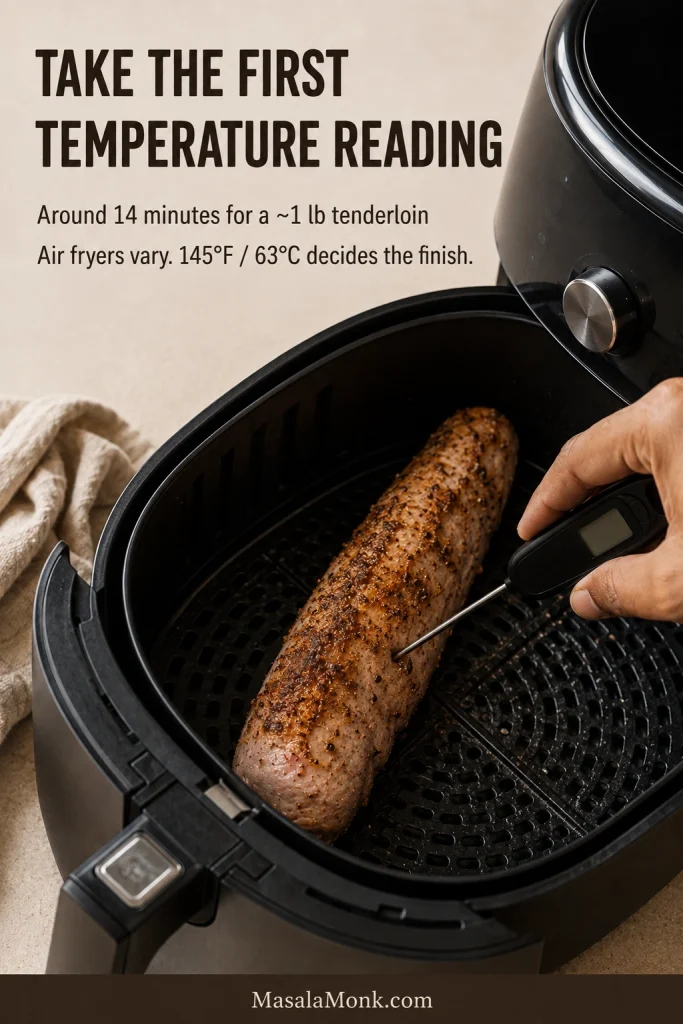
- Air fryer: Set it to 400°F, or 200°C on models that use Celsius. Follow your appliance’s own preheating guidance. Turn around 10 minutes, then take the first temperature reading around 14 minutes for a roughly 1-pound tenderloin. Larger or thicker pieces need longer. Remove at 145°F / 63°C and rest 5 minutes.
That’s enough to get dinner on the table. Got a thicker tenderloin, a very hot grill or an air fryer that cooks faster than expected? The notes below cover those cases.
Optional serving sauce
Want extra sauce for the sliced pork? Make this separately so it never touches raw meat:
- 1 tbsp / 15 ml low-sodium soy sauce
- 1 tbsp / 15 ml olive or avocado oil
- 1½ tsp Dijon mustard
- 1½ tsp brown sugar
- 1½ tsp apple cider vinegar
- 1 medium garlic clove, finely grated or minced
- ¼ tsp black pepper
- ¼ tsp dried thyme or oregano
Whisk everything together in a small saucepan and warm gently over low heat while the pork rests, just until the sugar dissolves and the sauce looks smooth. Keep it spoonable rather than reducing it into a heavy glaze.
Success Cues: From Marinade to Slice
- Marinade: savory and garlicky with a clean, gentle tang.
- After marinating: the pork is coated from end to end without sitting in a deep pool.
- Before searing: the exterior feels tacky, with no loose marinade running off.
- On the grill: the crust develops deep roasted, caramelized patches before anything turns bitter-black.
- After resting: the cut surface looks moist, with a little juice beading on the meat and board.
Need to Adapt the Recipe? Use This Guide
The straightforward version is above. Jump to whatever matches the pork or problem in front of you.
- Tenderloin, loin, medallions and two-packs
- How much marinade to make
- How long to marinate
- What to do before cooking
- Oven method and timing
- Grilling method and heat zones
- Air-fryer method and timing
- Swaps and flavor variations
- Troubleshooting
- Make ahead, freezing and leftovers
Pork Tenderloin vs Pork Loin, Medallions and Two-Packs
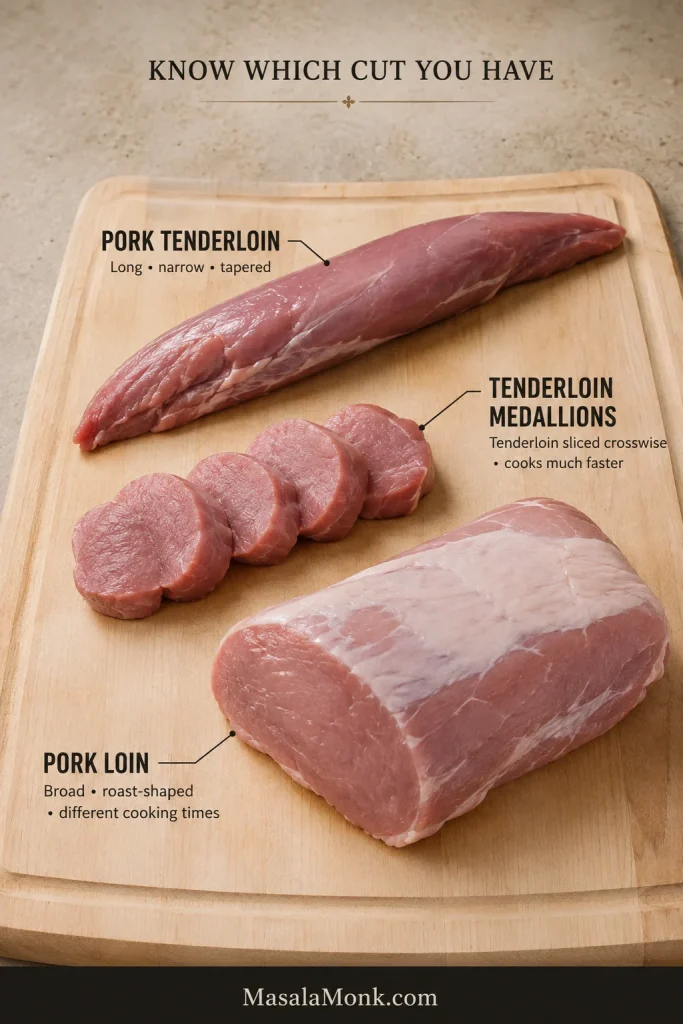
Long, narrow and very lean, pork tenderloin usually has one end tapering noticeably thinner than the other. In many markets, pork fillet is another common name for essentially the same cut.
Pork loin is different. It is broader, heavier and behaves more like a roast. If that’s what you bought, don’t use the tenderloin cooking times below. Our slow cooker pork loin recipe is one option when you want a low-and-slow route.
Medallions need less marinating and far less cooking time. They are usually tenderloin sliced crosswise into rounds, which exposes more surface to the marinade and gives heat a much shorter path through the meat.
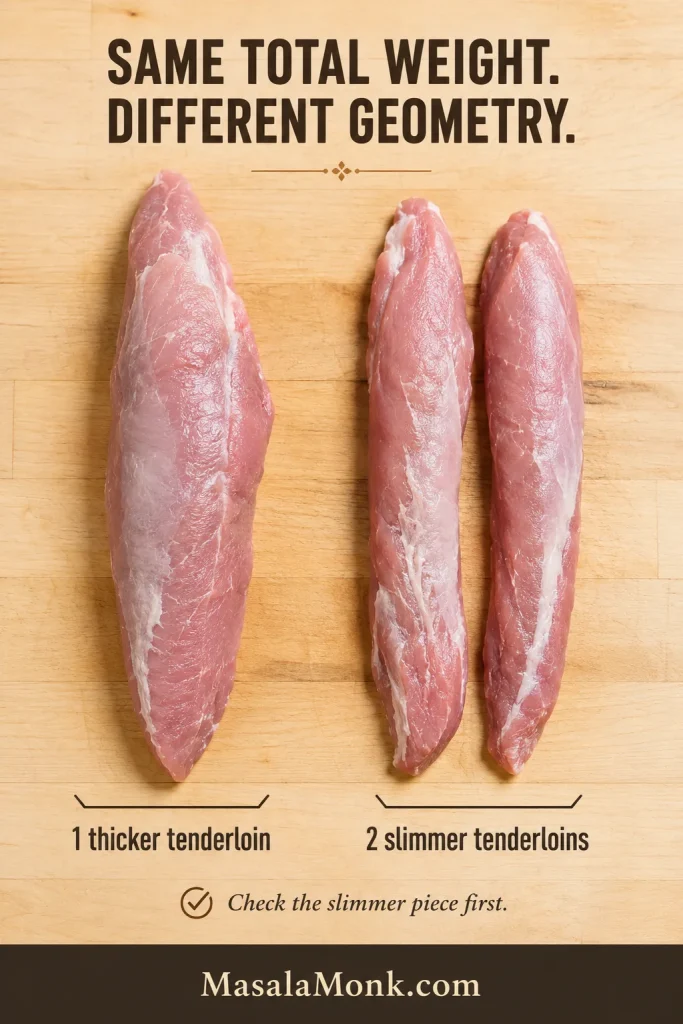
Two tenderloins from the same package rarely finish at exactly the same moment. Check the slimmer one first, pull it when it reaches temperature, and let the thicker piece keep going. Dinner is still on track.
Packages marked pre-seasoned, pre-marinated or enhanced—or labeled as containing a seasoning solution—may carry plenty of salt before you add anything. Check the label first. If the pork is already marinated, skip the homemade mixture and go straight to the cooking method you want.
How Much Marinade Do You Need?
If your tenderloin is close to a pound, make one batch and move on. For a noticeably larger or smaller piece, use the table as your starting point, then look at the coating.
| Pork weight | Starting amount |
|---|---|
| About 12 oz / 340 g | ¾ batch |
| 1 lb / 454 g | 1 batch |
| About 1¼ lb / 567 g | 1¼ batches |
| About 1½ lb / 680 g | 1½ batches |
| About 2 lb / 907 g | Up to 2 batches; use enough to coat well |
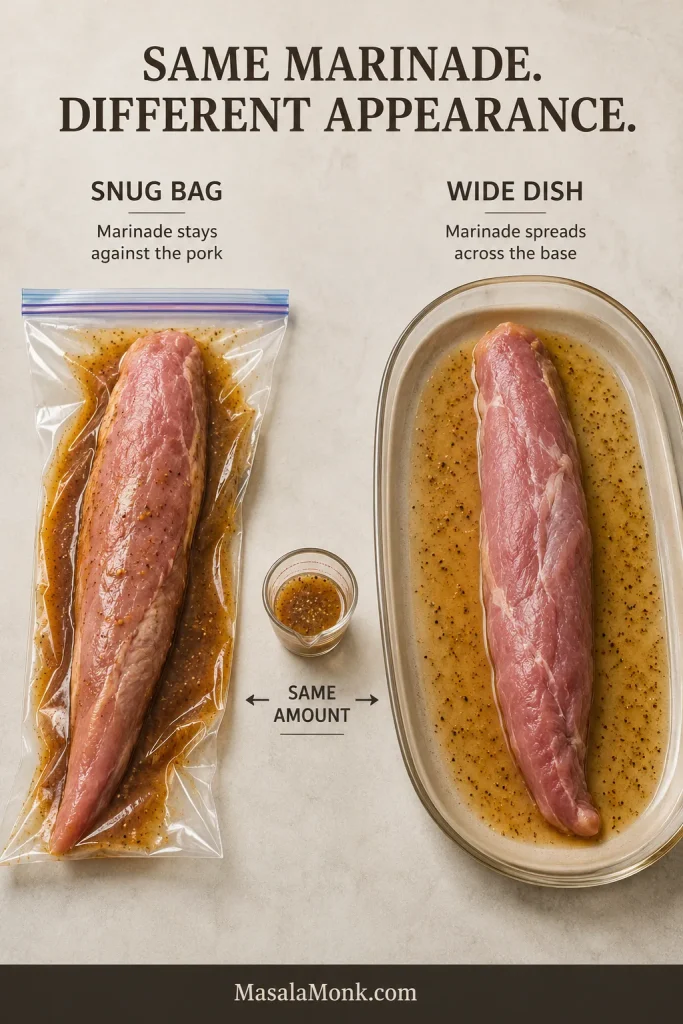
A snug bag may coat one larger tenderloin perfectly with less liquid than a broad container. Two smaller tenderloins expose more surface, so they can need a little more marinade to coat comfortably.
Zip the bag, turn the pork and look. Once every side has a light sheen from end to end, you’re there. You are coating pork, not poaching it.
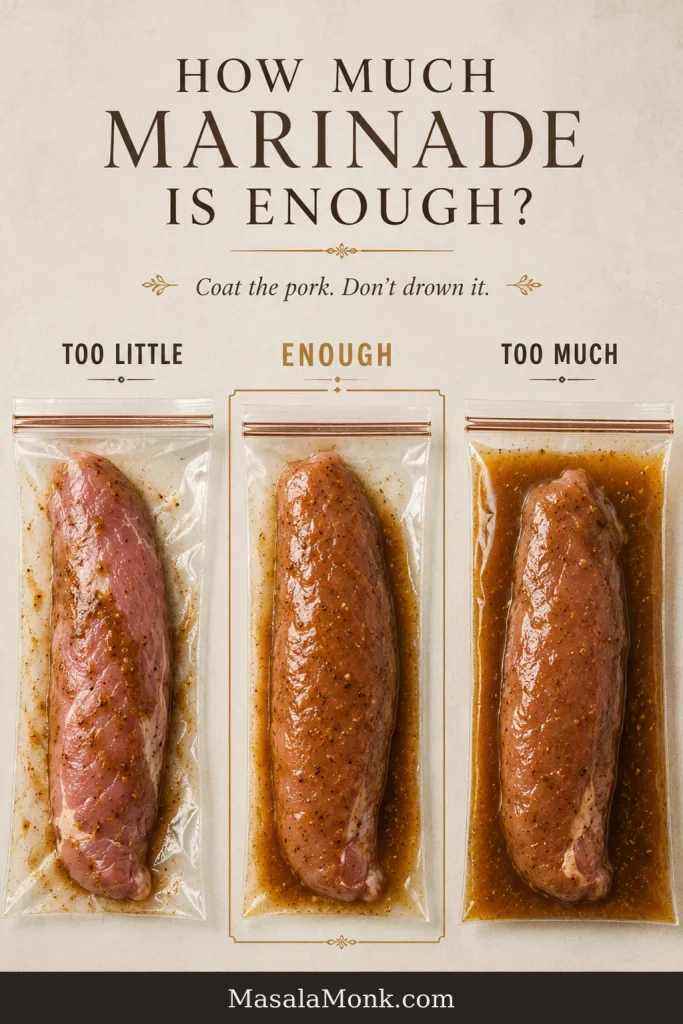
A wide casserole dish can make the same quantity look strangely small because the liquid spreads away from the meat. Turn the pork once or twice before deciding you need another batch.
What This Marinade Does
Pork tenderloin does not need a marinade to become tender. This mixture is mainly about seasoning, aroma, balance and giving the outside more flavor when it meets the heat.
Expect savory soy and Dijon first, warm garlic behind them, a little sweetness at the browned edges, and enough vinegar to keep everything lively. The pork should still taste like pork; the marinade is there to make those outer bites better, not bury them.
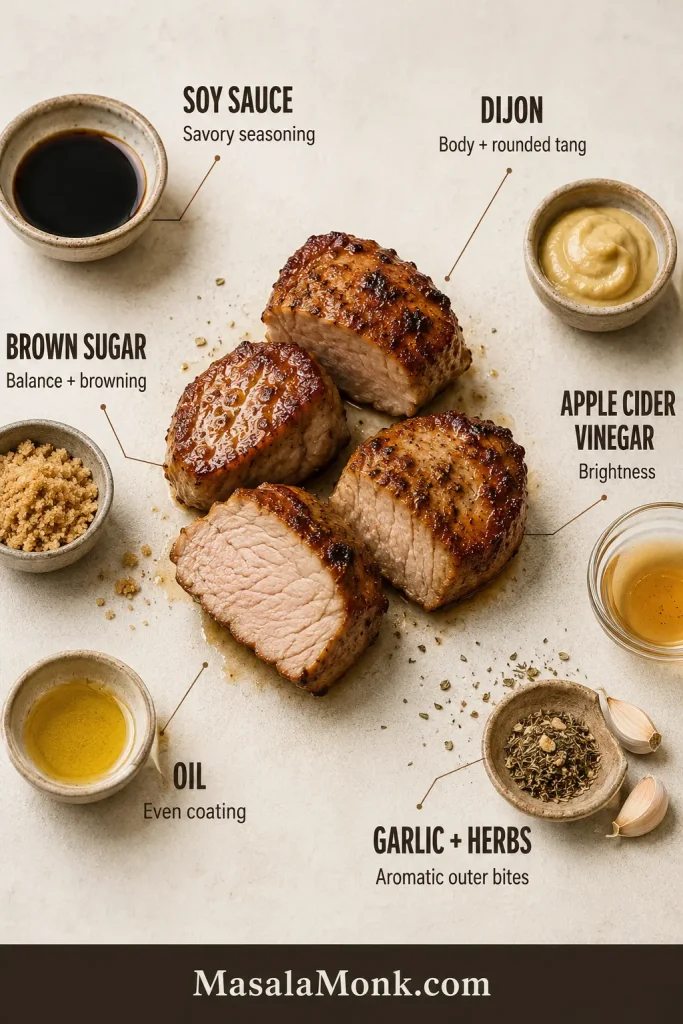
- Low-sodium soy sauce supplies salt and savory depth.
- Dijon adds body and rounded tang.
- Brown sugar balances the salty-tangy ingredients and encourages deeper browning.
- Apple cider vinegar keeps the flavor bright.
- Oil helps everything coat evenly, while garlic and herbs bring most of their aroma to the outer bites.
Once that coated surface hits real heat, this is where the marinade earns its keep: the garlic smells toastier, the sugar helps the edges deepen, and the salty-sweet crust becomes much more noticeable than it was in the bag.
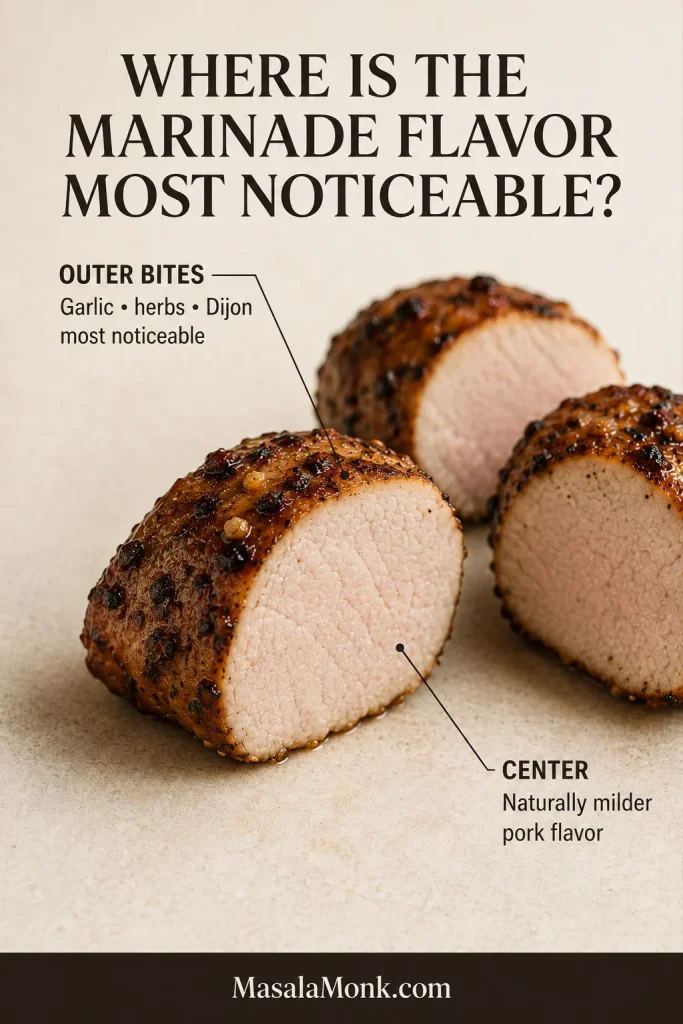
Garlic, herbs and mustard still do most of their obvious work near the exterior. A milder center is normal. Slice the pork and bring the serving sauce to the table instead of trying to solve it with days in marinade.
How Long to Marinate Pork Tenderloin
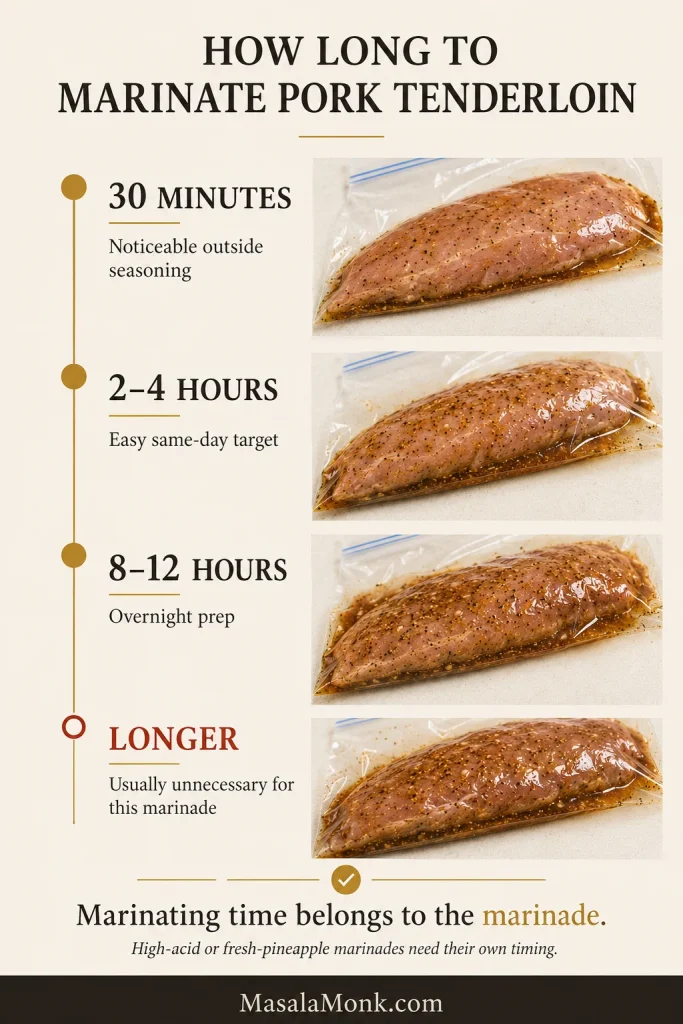
Marinating time belongs to the marinade. A mild soy-Dijon mixture, a citrus-heavy version and fresh pineapple all behave differently.
| Time | Best use | What to expect |
|---|---|---|
| 30 minutes | Dinner is close | Noticeable seasoning around the outside |
| 2–4 hours | Same-day prep | A fuller, more settled savory flavor |
| 8–12 hours | Overnight prep | A convenient make-ahead window for this marinade |
| Longer | Usually unnecessary | More time without a guaranteed improvement |
Anything in between is fine. Ninety minutes works. Six hours works. You haven’t missed a secret window because dinner moved by an hour.
Only have 30 minutes? Use them. Dinner is not ruined because you forgot to start at lunchtime. The center will stay milder than the outer bites, but the soy, garlic and mustard still have time to make themselves known.
Can you leave pork tenderloin in this marinade too long? Yes. Beyond about 12 hours, there is little reason to keep pushing. Extra salt, acid and time can eventually make the outer layer too salty, oddly firm or unpleasantly soft.
Safe and delicious are two different clocks. Pork can stay safely refrigerated longer than it needs to marinate here. USDA guidance permits pork in marinade in the refrigerator for up to 5 days, but that is a safety allowance—not a flavor or texture recommendation.
Fresh pineapple is different because bromelain can soften meat quickly. Use a separately timed pineapple marinade rather than adding it to this overnight formula.
Once the marinating time is up, the priority changes. Get the surface ready for heat, then let browning and temperature take over.
From Marinade to Heat
Keep the pork refrigerated while it marinates, turning it once if needed so every side stays coated. Any sauce meant for the table should be made separately before the raw pork is involved.
The USDA recommends marinating meat in the refrigerator. If marinade that touched raw pork is reused, bring it to a boil first; otherwise, discard it. See the USDA pork marinating guidance.
How wet should the pork be when it hits the heat?
- Straight roasting: let the loose marinade drain well.
- Sear, then roast: pat the exterior fairly dry so it can brown quickly.
- Grill: let the excess drip away but keep a thin coating on the meat.
- Air fryer: drain well so liquid does not collect underneath.
There is no need to rinse the pork. A lightly coated surface is exactly what you want.
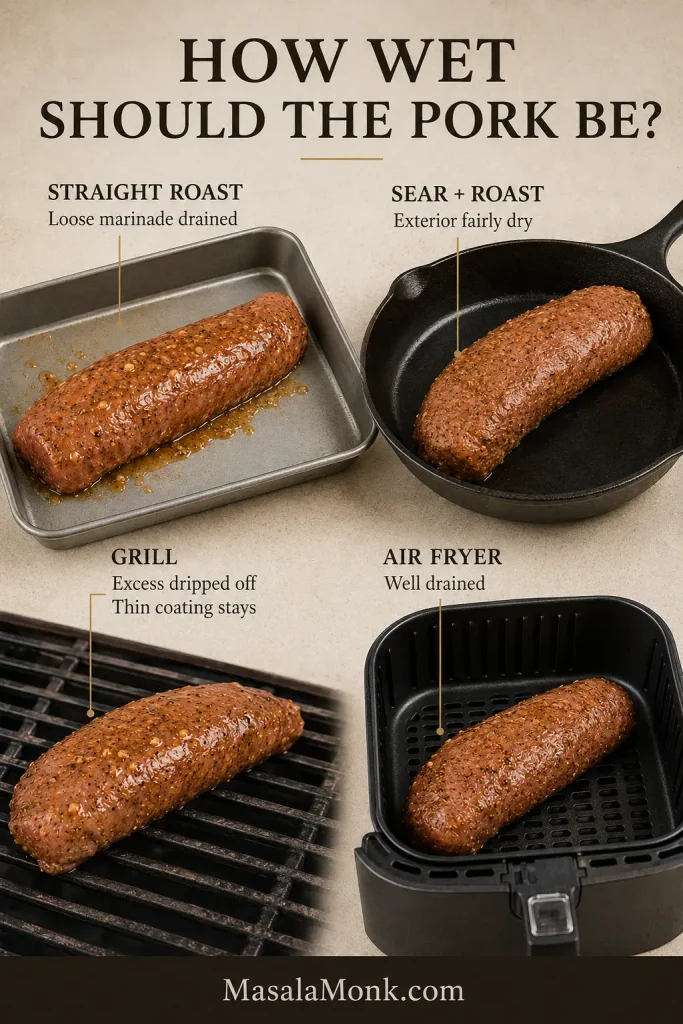
The oven is the easiest controlled route, the grill gives this marinade its most dramatic crust, and the air fryer is hard to beat when speed matters. All three finish at the same place: 145°F / 63°C in the thickest part.
Marinated Pork Tenderloin in the Oven
Roast at 400°F / 205°C. For a slim 1-pound tenderloin, start checking around 18 minutes. Thicker pieces often need longer.
- Preheat the oven to 400°F / 205°C.
- Let the loose marinade drain away.
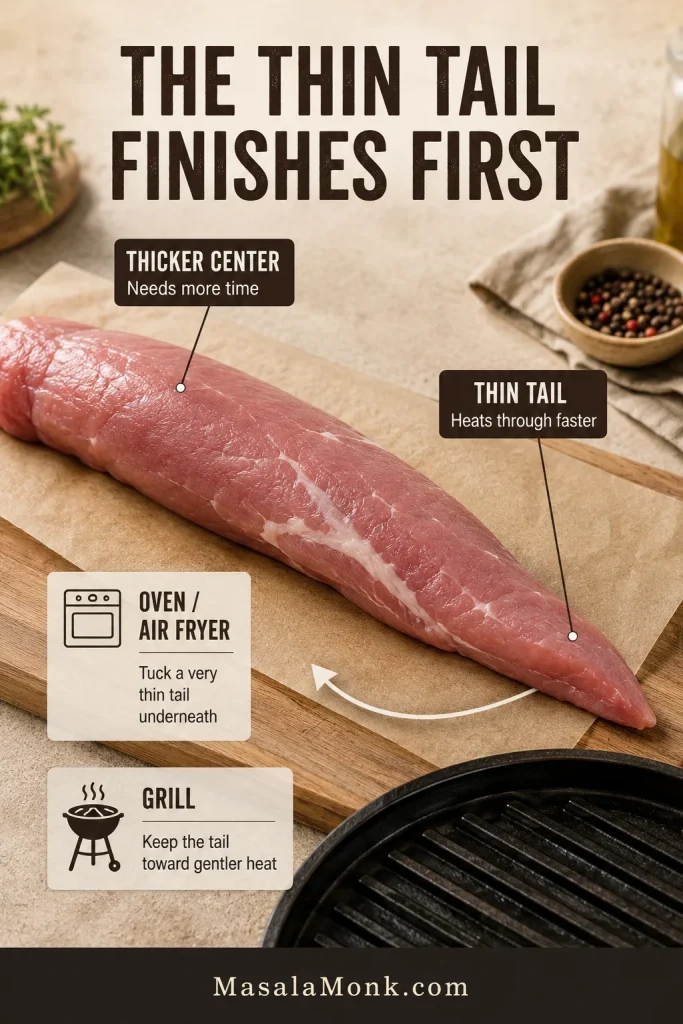
- Tuck a dramatically thin tail underneath so it does not finish long before the thicker middle.
- Place the pork on a lightly oiled rimmed pan or in a small roasting dish.
- Give a thicker piece more time and let the thermometer decide the finish.
- Remove at 145°F / 63°C and rest 5 minutes.
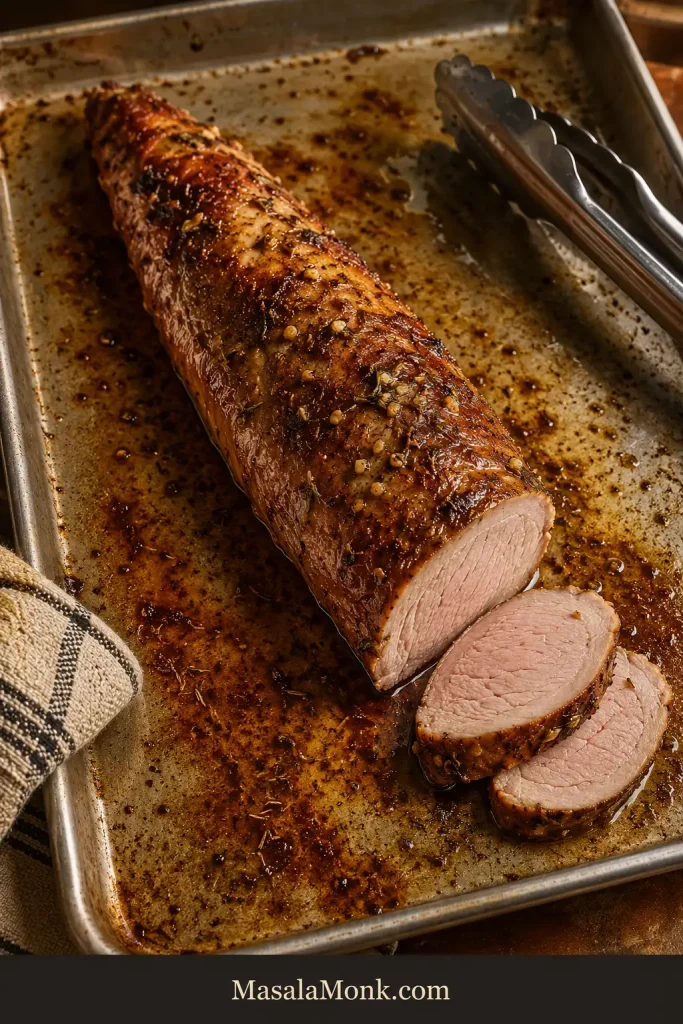
You’ll smell the garlic and mustard turning toastier before the pork is finished. The edges should deepen to a roasted brown, and by the time the thermometer says stop, the outside should look far more appetizing than the pale marinated pork that went into the oven.
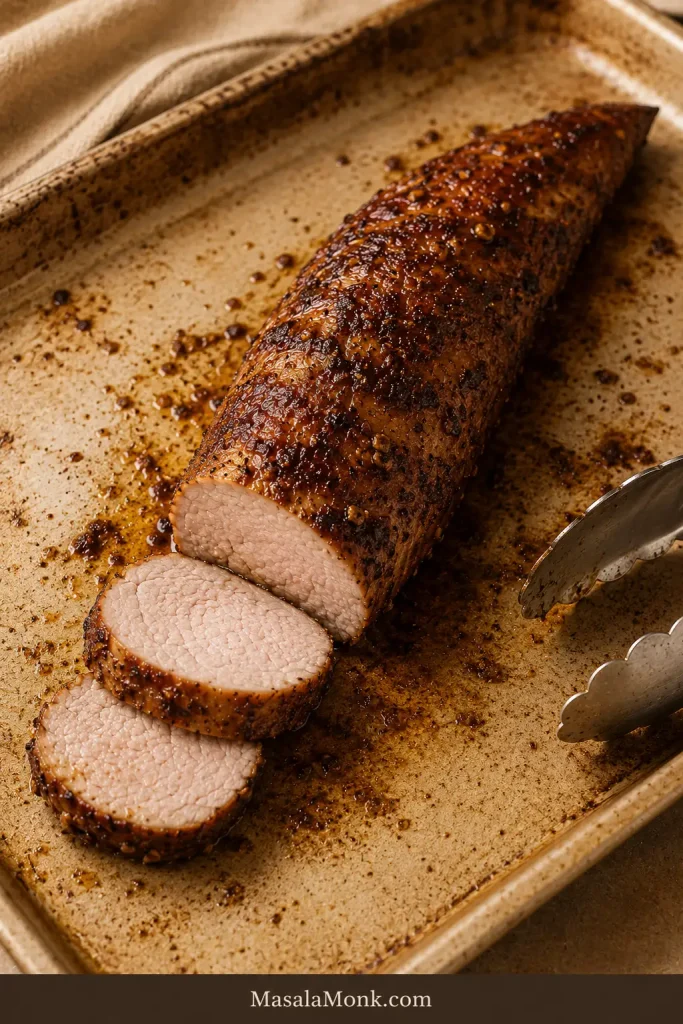
For a Darker Crust: Sear, Then Roast
Heat a heavy oven-safe skillet over medium-high heat with a thin film of neutral oil. Pat the tenderloin fairly dry, then let its broad sides turn deep golden, about 1–2 minutes per side.
Move the skillet to the oven once the crust looks good and begin checking sooner than you would with a straight roast. The hot pan has already given the center a head start.
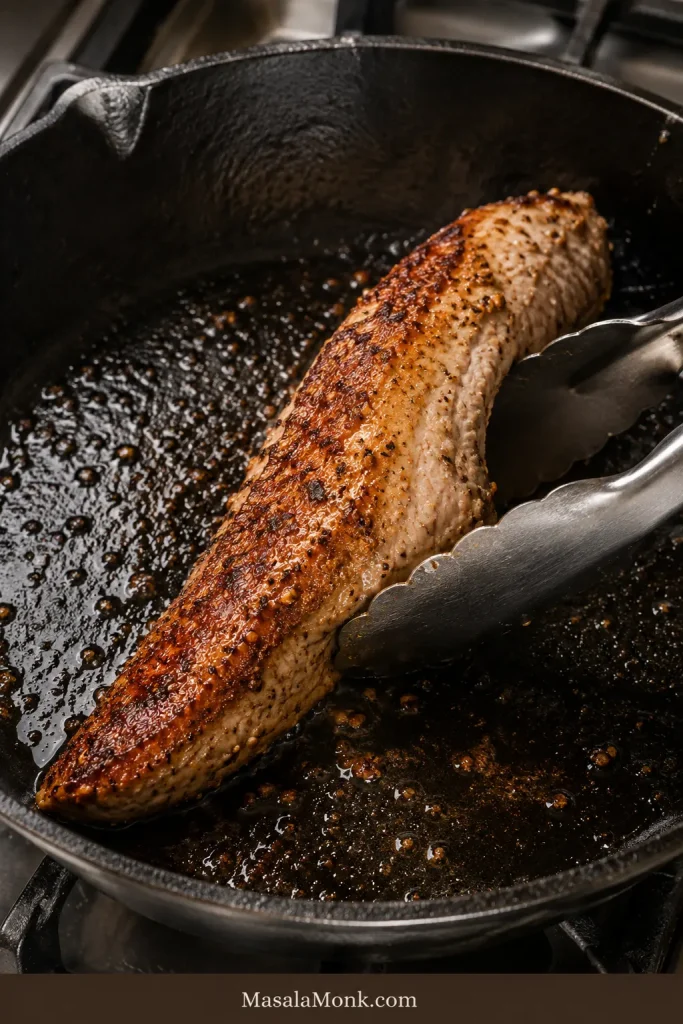
Our pork tenderloin in the oven guide goes deeper into oven-specific timing and temperature choices.
Pork Tenderloin Marinade for Grilling
The grill is where this marinade gets its boldest crust. Heat it to 400–450°F / 205–230°C and give yourself both a hot area for browning and a gentler area for finishing.
With gas, lower or switch off one burner. With charcoal, bank most of the coals to one side.
- Let the loose marinade drip away before the pork goes on.
- Start over direct heat and rotate every 2–3 minutes so several sides develop deep roasted color.
- Once the crust looks right, move the tenderloin to the cooler side if the middle still needs time.
- Close the lid and let gentler heat finish the center.
- Take the first temperature reading once the crust is established. Thickness and grill heat can move the finish time noticeably.
- Remove at 145°F / 63°C and rest 5 minutes.
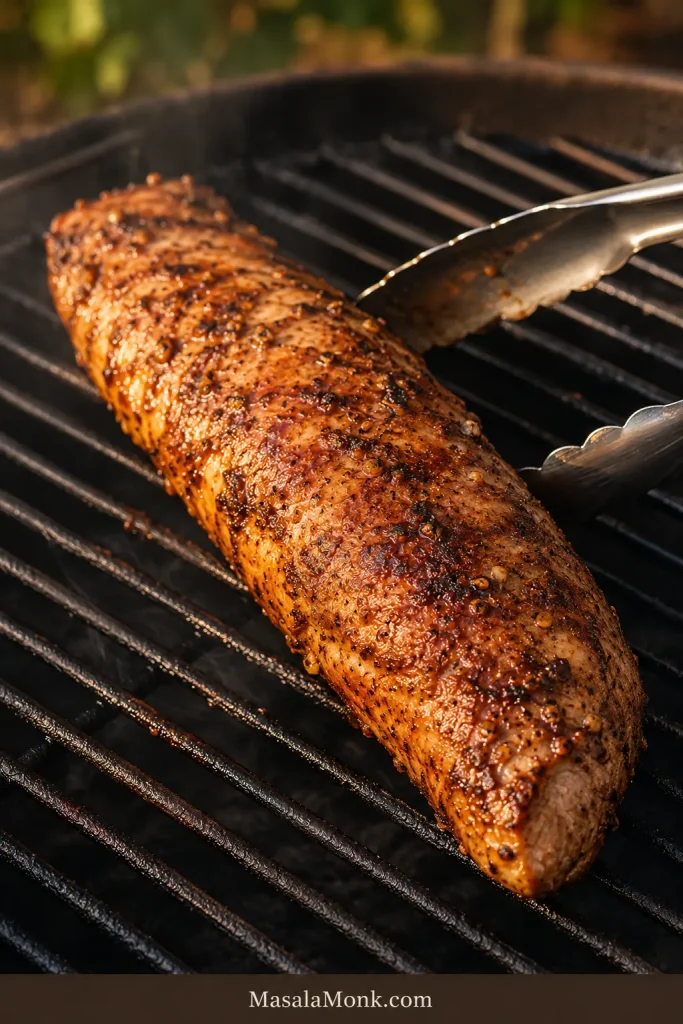
Beautiful crust, center not ready? Move it to the cooler side. You haven’t ruined anything. The direct heat has already done the browning; now the gentler side can finish the pork without scorching those salty-sweet edges.
Marinated Pork Tenderloin in the Air Fryer
Set the air fryer to 400°F, or 200°C on models that use Celsius. Follow your appliance’s instructions on whether it should preheat first; air fryers vary enough in size and power that cook times should be treated as starting points, not promises.

- Drain the tenderloin well and leave visible space around it.
- Cut an overly long tenderloin in half crosswise instead of curling it tightly around the basket.
- Cook for about 10 minutes, then turn the pork.
- For a tenderloin around 1 pound, take the first temperature reading around 14 minutes. A larger or thicker piece will usually need longer.
- Recheck the center as needed instead of automatically adding another fixed block of time.
- Remove at 145°F / 63°C and rest 5 minutes.
Air-fryer cooking time varies with appliance size and power, while the safe internal temperature does not. That’s why the thermometer matters more here than a minute-perfect chart.
For unusually thick pieces or more appliance-specific guidance, our air fryer pork tenderloin guide goes deeper.
Weight Sets the Marinade; Thickness Drives the Cook
Weight determines how much marinade to start with. Thickness determines when to start checking. Temperature determines when to stop.
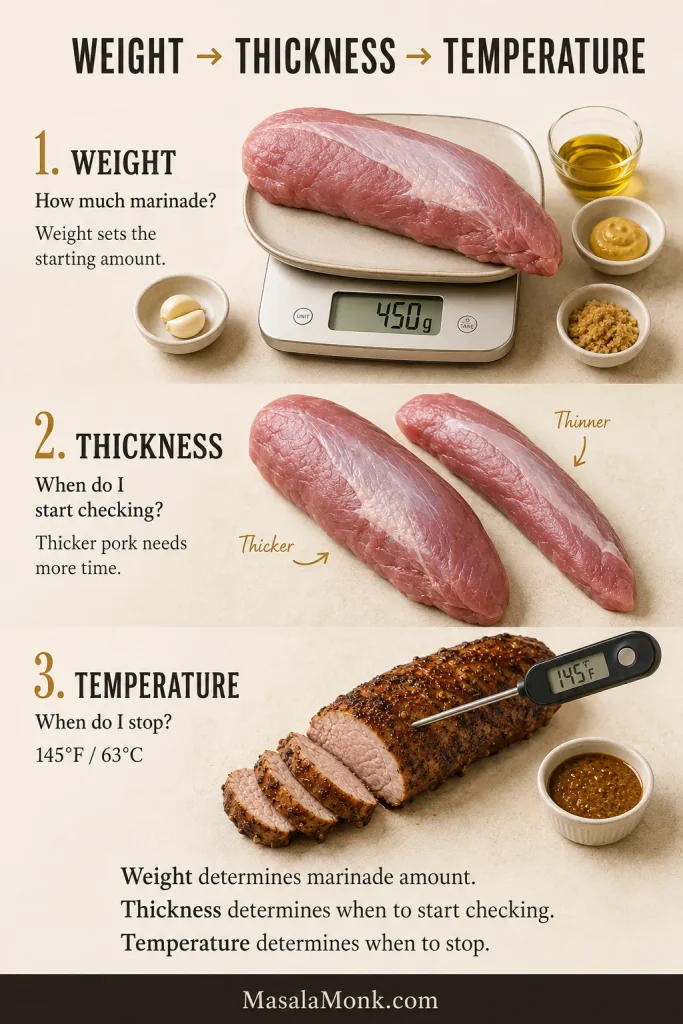
Two tenderloins can weigh almost the same and still finish several minutes apart because heat has farther to travel through the thicker one. Your pork does not need to look like the tenderloin in a recipe photo. Watch the piece in front of you.
The tapered tail often finishes first. Tuck a very thin end underneath for oven or air-fryer cooking, or point it toward gentler heat on the grill.
How to Check Pork Tenderloin Temperature
Check the thickest part with an instant-read thermometer. On a narrow cut like tenderloin, inserting from the side can make it easier to get the thermometer tip into the center.
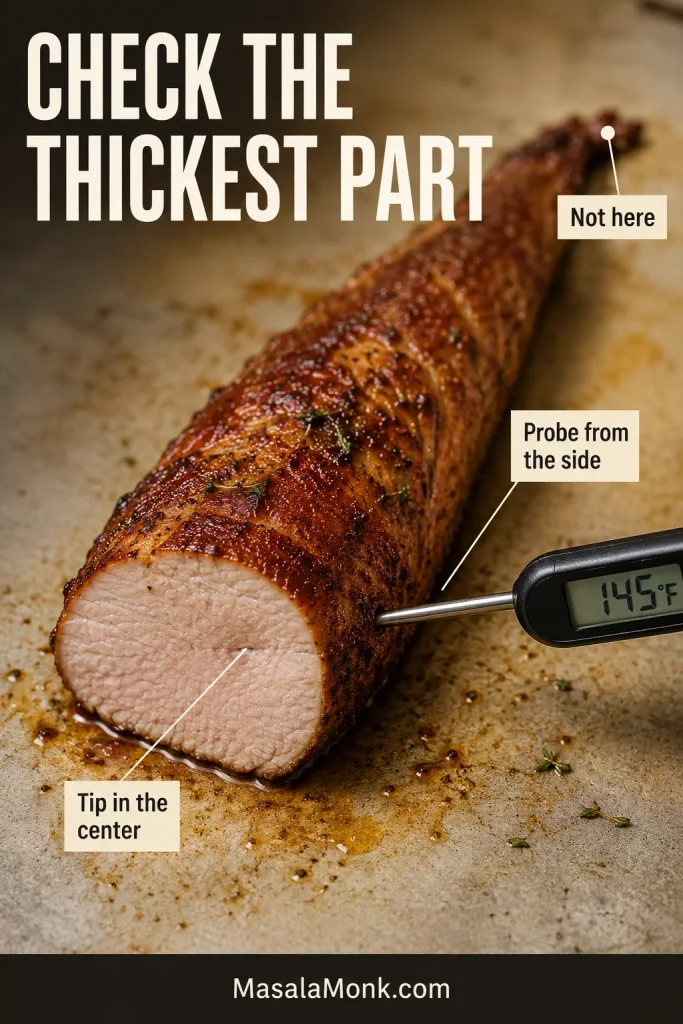
The USDA safe minimum for whole cuts of pork is 145°F / 62.8°C followed by at least a 3-minute rest. See the USDA safe minimum internal temperature chart.
A slight blush can be completely normal. Once the thickest part has reached 145°F / 63°C, you do not need to keep cooking until every slice turns white. A cool, translucent-looking center below temperature is different. The appearance tells you to check; the thermometer makes the final call.

Ingredient Swaps and Flavor Variations
Missing something from the base marinade? Start with the swaps below. Want a deliberately different flavor instead? The variations come next.
| Missing ingredient | What to use instead |
|---|---|
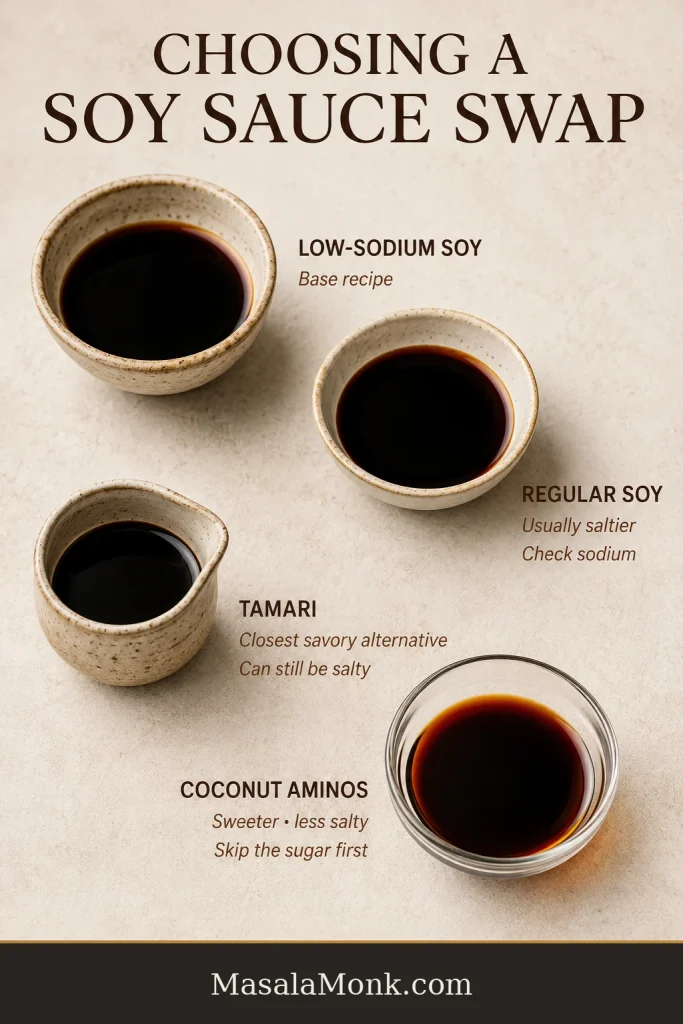
| Low-sodium soy sauce | Regular soy can work, but sodium varies widely by brand. Compare sodium per tablespoon and use less when needed. |
| Soy sauce | Tamari is often the closest savory substitute, though it may be just as salty. Coconut aminos is usually sweeter and less salty. |
| Brown sugar | Honey or maple syrup can replace it; begin with a little less because liquid sweeteners make the coating stickier and can brown faster. |
| Fresh garlic | Use about ½ tsp garlic powder in place of the two medium cloves. |
Pork Tenderloin Marinade Without Soy Sauce
For a soy-free version, replace the soy sauce with 2 tbsp / 30 ml coconut aminos and leave out the brown sugar at first.
Taste the unused mixture before the pork goes in. Pleasantly sweet but a little flat usually means it needs salt, not more sugar. Add fine salt a small pinch at a time until the savory side catches up. If gluten rather than soy is the concern, certified gluten-free tamari is generally the closer flavor swap.
Four Easy Flavor Directions
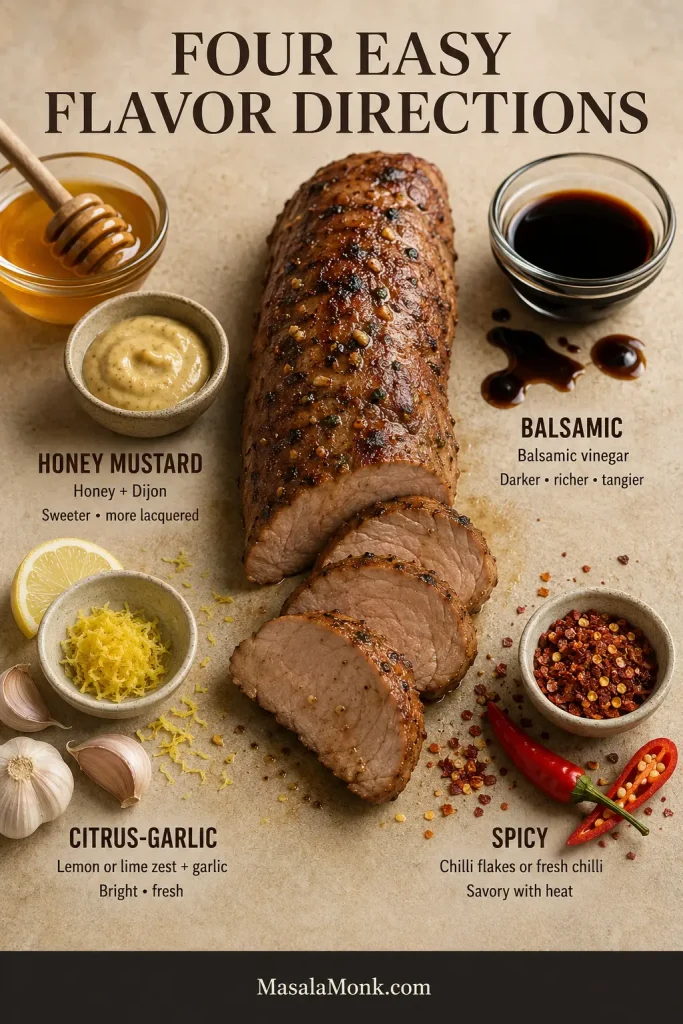
These are easy ways to nudge the base marinade in a new direction without turning the page into four more full recipes. Keep the salty-sweet-tangy balance in mind and taste any unused marinade before adding the pork.
Honey Mustard — rounder, sweeter and more lacquered. Replace the brown sugar with a slightly smaller amount of honey and increase the Dijon to about 1½ tbsp. Honey browns quickly, so watch aggressive heat.
Balsamic — darker, tangier and richer. Replace the cider vinegar with balsamic and begin with about half the brown sugar. Add more only if the unused marinade needs it.
Citrus-Garlic — bright and fresh. Use lemon or lime juice in place of the cider vinegar and add finely grated zest. Push the citrus much higher than the base amount and the pork should spend less time marinating.
Spicy — savory first, warmth at the finish. Add red-pepper flakes, minced fresh chilli or chilli sauce. A chilli sauce that is already sweet or salty may mean backing off the sugar or soy elsewhere.
No time to marinate at all? A dry rub makes more sense when you want to season and cook immediately or when a dry, browned crust is the priority. For the opposite approach—sear first, then add a sweet-savory glaze—our honey garlic pork chops show how that works.
Pork Tenderloin Marinade Troubleshooting
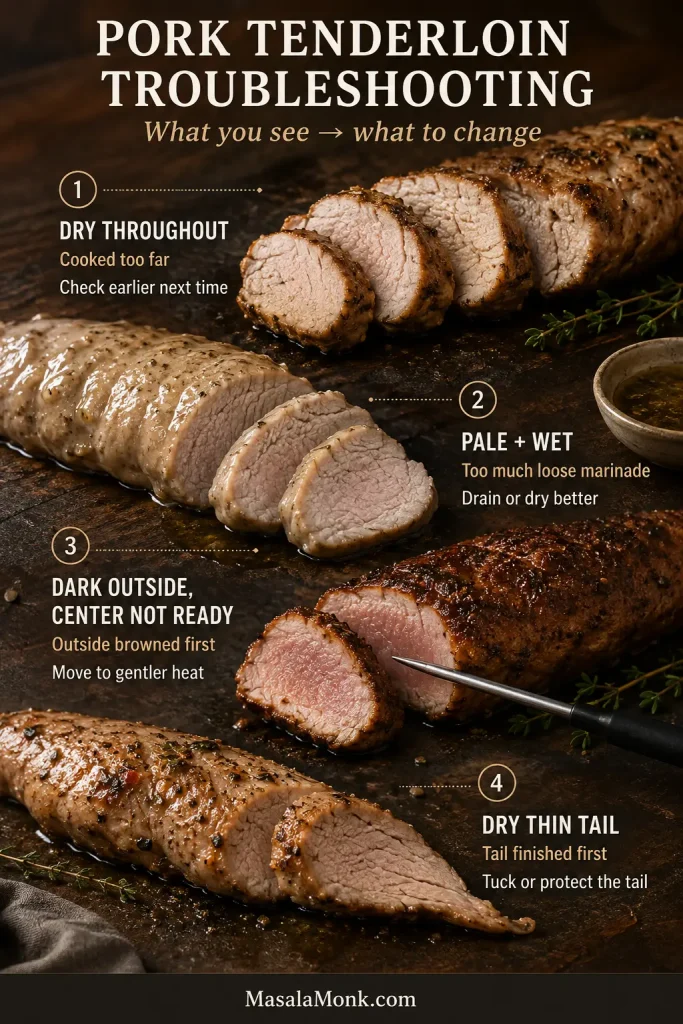
If dinner has gone slightly sideways, start here. Some problems can still be improved tonight; others tell you what to change next time.
Cooking and Doneness Problems
| Problem | What probably happened | What to do |
|---|---|---|
| Dry throughout | The pork cooked too far. | Slice thinly and add warm serving sauce now; start checking earlier next time. |
| Dry thin tail | The tapered end finished first. | Give those slices extra sauce; tuck the tail or keep it toward gentler heat next time. |
| Dark outside, underdone middle | The crust finished before the center. | Move to gentler or indirect heat and let the middle catch up. |
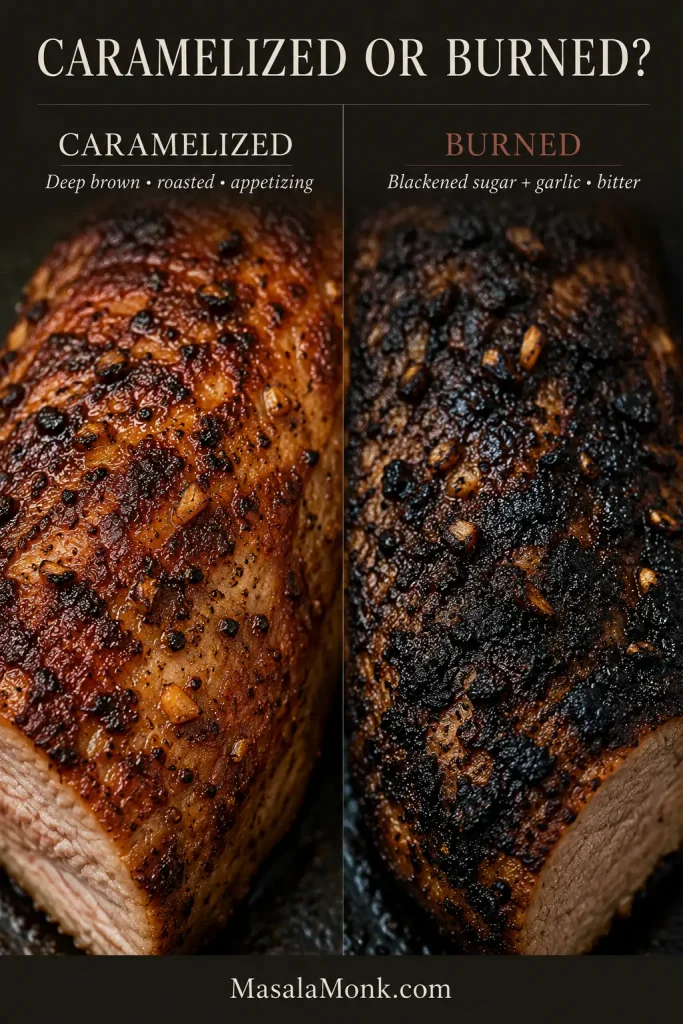
| Burned outside | Wet sugary marinade met aggressive heat. | Trim genuinely bitter patches if needed; drain better and save very sweet glazes for later next time. |
| Pale, wet-looking outside | The pork carried too much loose moisture into the heat. | Dry it more thoroughly before searing and give the skillet time to get properly hot. |
| One tenderloin finishes first | The pieces are different thicknesses. | Take the finished one out and let the thicker piece continue cooking. |
| The middle is slightly pink | Properly cooked pork can retain a blush. | Check the thickest part with a thermometer and use temperature as the final decision. |
Deep mahogany can be exactly what you want; brittle black sugar and garlic are different. If the exterior is the part making you hesitate, use the comparison below.
Salt, Texture and Flavor Problems
| Problem | What probably happened | What to do |
|---|---|---|
| Too salty | Soy, added salt, salty rub or enhanced pork stacked together. | Serve with unsalted sides now; check the label and reduce the total sodium next time. |
| Ham-like or unusually firm | Too much salt met too much time. | Slice thinly now; reduce sodium and shorten the soak next time. |
| Soft, mealy or mushy outside | Strong acid or a fast-acting tenderizing ingredient sat too long. | There is no true texture rescue; shorten the contact time next time. |
| Center tastes mild | Garlic, mustard and herbs did most of their work near the exterior. | Slice the pork and add serving sauce. More days in marinade are not the answer. |
The flavor was great, but the pork was dry? That tells you the marinade did its job; cooking time is what needs changing. Extra hours in the bag cannot protect a lean tenderloin that stays over the heat too long.
Make Ahead, Freeze and Store
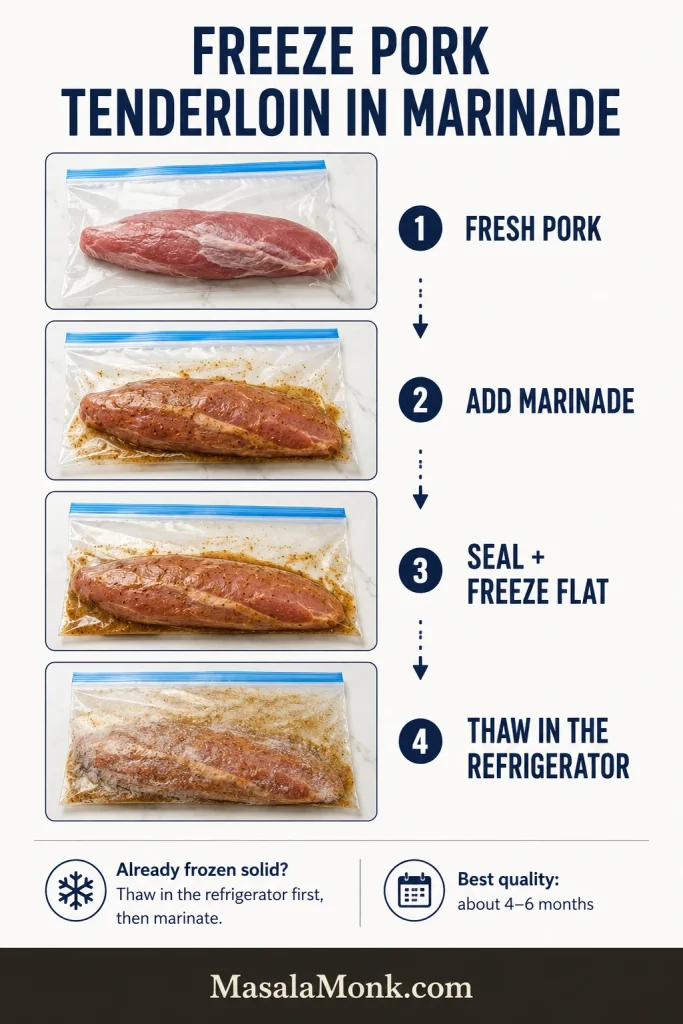
Yes—fresh pork tenderloin can be frozen in this marinade. Bag it and freeze promptly, then thaw it in the refrigerator before cooking.
A tenderloin that’s already frozen solid is different: thaw it in the refrigerator first, then add the marinade. The thawed surface coats more evenly, and you’ll have a much easier time judging the cook afterward.
| What you have | What to do |
|---|---|
| Unused marinade | Mix ahead, cover and refrigerate until you’re ready to add pork. |
| Raw pork in marinade | For best flavor and texture with this recipe, cook within the 30-minute to 12-hour window. |
| Fresh pork frozen in marinade | Freeze promptly; for best quality, aim to use within about 4–6 months. Thaw in the refrigerator before cooking. |
| Cooked pork | Refrigerate promptly and use within 3–4 days. |
| Leftovers you’re reheating | Reheat to 165°F / 74°C. |
Cold Pork Tenderloin Is Underrated
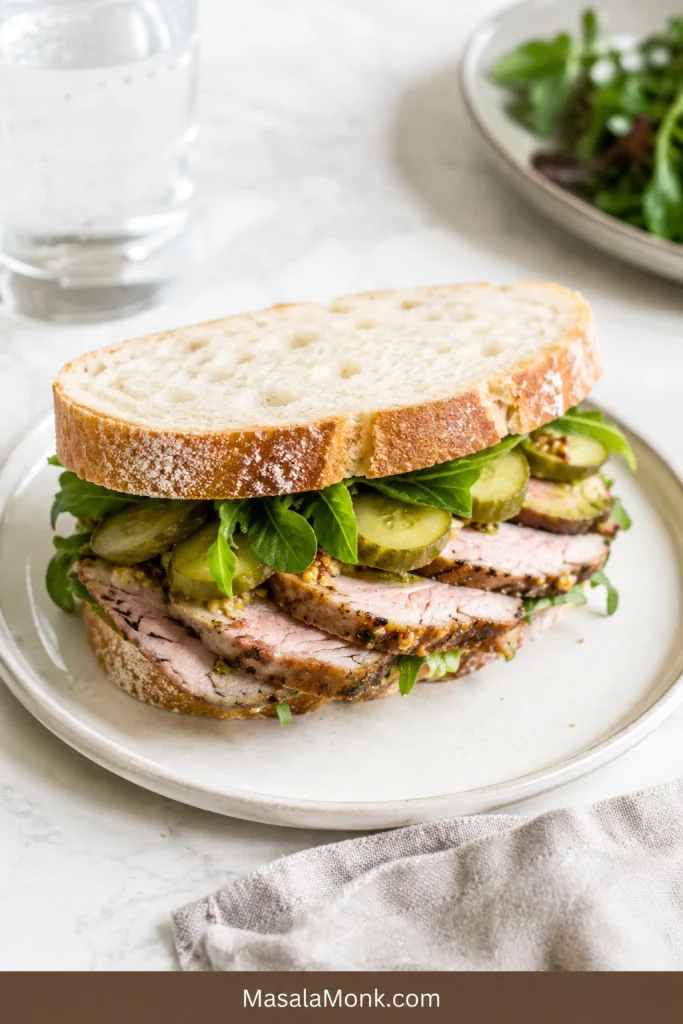
If tomorrow’s lunch is part of the plan, cold slices are genuinely excellent in sandwiches, salads and grain bowls. With such a lean cut, they can be more enjoyable than reheating every slice until the juiciness disappears.
An easy next-day plate is cold tenderloin with potato salad, pickles and something crisp and green. When you do want the pork warm, use gentle covered heat with a spoonful of serving sauce, broth or pan juices.
What to Serve With Marinated Pork Tenderloin
The pork already brings plenty of savory-sweet flavor, so give it sides that either catch the juices or freshen up the plate.
- Oven-roasted tenderloin: garlic mashed potatoes with green beans, broccoli or asparagus.
- Grilled tenderloin: cold creamy coleslaw, corn or a simple potato salad.
- Citrus-garlic version: rice or couscous with a crisp cucumber salad.
- Easy weeknight plate: roasted potatoes and one simple green vegetable.

Slice the rested tenderloin into medallions and spoon the board juices back over the warm cut surfaces. Bring the serving sauce to the table instead of burying the whole platter in it. The best bites have the contrast we’re after from the beginning: browned, garlicky edges and a center that still feels tender and juicy.
Frequently Asked Questions
Do I need to brine pork tenderloin before marinating?
No. The soy-based marinade already brings salt, so a separate brine adds another sodium layer and can push the pork toward overly salty or cured-tasting.
Do I need to poke holes in pork tenderloin?
No. An even coating is enough. Poking holes is unnecessary.
Do I need to bring pork tenderloin to room temperature before cooking?
No. Take it from the refrigerator, prepare the outside for your cooking method and let the thermometer tell you when the center is finished.
Marinate for Flavor. Cook for Juiciness.
Your tenderloin does not have to match the one in a recipe photo. Use its weight to decide how much marinade to start with, make sure every side is coated, then let thickness and temperature guide the cooking.
Get those pieces right and the first slice tells you you’ve nailed it: caramelized and garlicky around the edges, moist through the middle, with warm juice gathering on the board and enough sauce nearby to catch with the next bite.
If you make it, tell us the weight of your tenderloin, how long you marinated it, which cooking method you used and how long yours actually took. Those details give the next cook something genuinely helpful to compare with their own pork.








