Posted on Leave a comment

Pork Tenderloin Marinade Recipe: Easy, Juicy & Perfect for Grill, Oven or Air Fryer

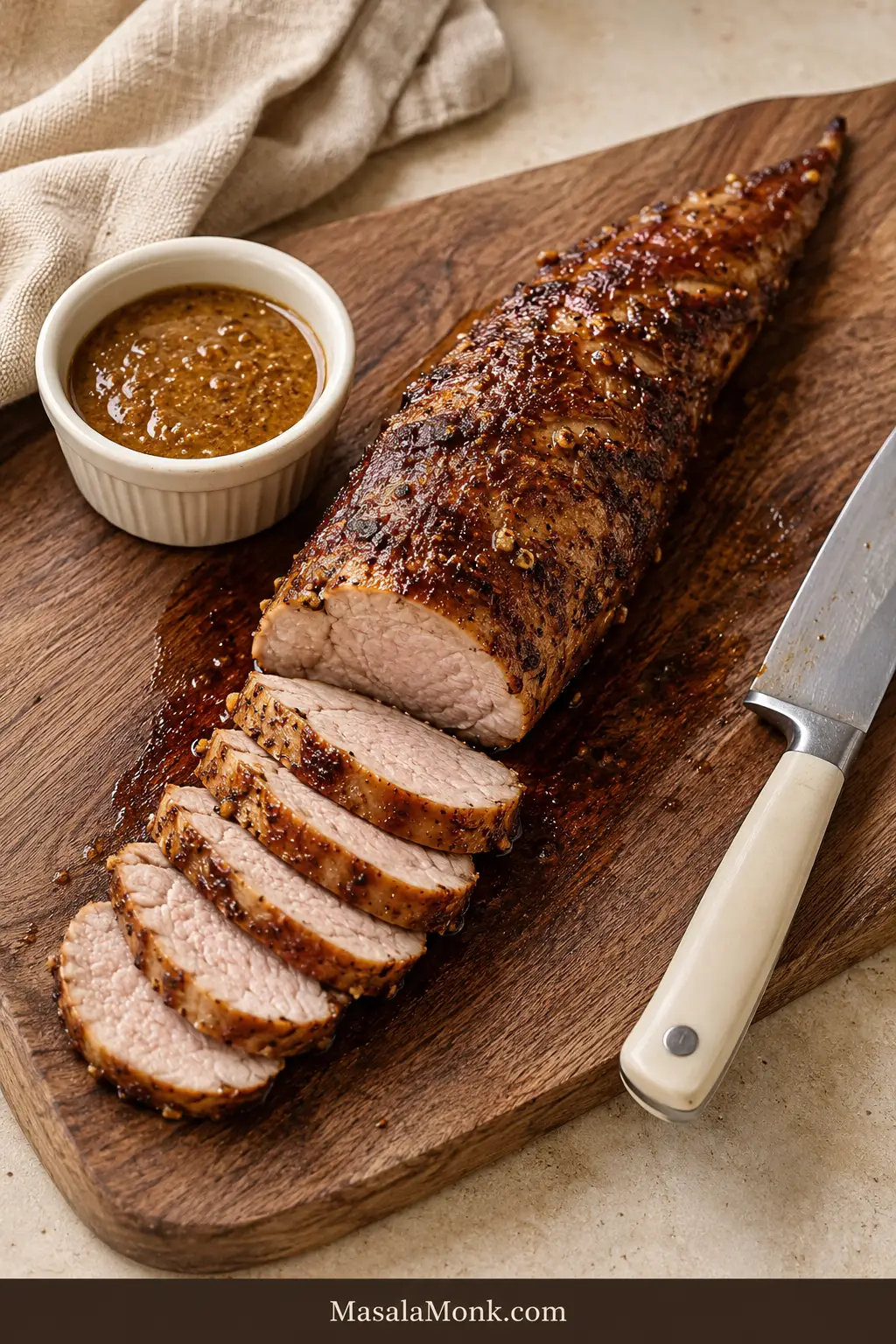
Sliced marinated pork tenderloin with a deep golden-mahogany crust, moist pale center, mustard-style sauce in a ramekin, and carving knife on a walnut board.

A good pork tenderloin marinade should give you savory, garlicky edges, enough sweetness to help the outside caramelize, and slices that still glisten when they reach the plate. It should not require an entire day of planning—and it definitely should not leave you with beautifully browned pork that somehow turned dry in the middle.

Pork tenderloin is naturally tender. The bigger risks are simpler: too much salt, a marinade that gets harsher with time, or leaving this very lean cut over the heat after the center is ready.

The marinade itself is a quick whisk-and-pour job, which makes this one of those dinners that can look like you worked much harder than you did. Even 30 minutes gives the outside noticeable seasoning, while 8–12 hours works when overnight prep is easier.

One thick tenderloin or two skinny ones, oven, grill or air fryer—you can adjust for what is actually in front of you without guessing.

Marinate for flavor. Cook for juiciness.

Quick Answer: How Long Should You Marinate Pork Tenderloin?

For this soy-Dijon marinade, 30 minutes gives the outside noticeable flavor, 2–4 hours is an easy same-day target, and 8–12 hours works for overnight prep.

Different marinades need different timing. A much more acidic mixture—or one made with fresh pineapple—should not automatically get the same overnight treatment.

Once cooking begins, the timer tells you when to start checking; the thermometer tells you when to stop. Cook the thickest part to 145°F / 63°C. Rest the tenderloin for 5 minutes; the USDA safety minimum after reaching 145°F is at least 3 minutes.

Pork Tenderloin Marinade Recipe

This recipe is written for 1 lb / 454 g of plain pork tenderloin. If yours is close to that weight and you have an instant-read thermometer, make it as written and you’re set. The deeper notes are there for the nights when your pork, timing or appliance behaves differently.

Recipe at a Glance

Base pork weight1 lb / 454 g
Marinade prepQuick whisk-and-pour
Marinating window30 minutes to 12 hours
Oven400°F / 205°C
Grill400–450°F / 205–230°C, with a cooler zone
Air fryer400°F; use 200°C on models that use Celsius
Final internal temperature145°F / 63°C in the thickest part
Rest5 minutes
Serves3–4

Equipment: a large zip-top food bag or snug nonreactive container, small mixing bowl or measuring jug, whisk or fork, tongs and an instant-read meat thermometer.

Ingredients

  • 1 lb / 454 g plain pork tenderloin
  • 2 tbsp / 30 ml low-sodium soy sauce
  • 2 tbsp / 30 ml olive oil or avocado oil
  • 1 tbsp / 15 g Dijon mustard
  • 1 tbsp / about 12 g packed light brown sugar
  • 1 tbsp / 15 ml apple cider vinegar
  • 2 medium garlic cloves / about 6 g, finely grated or minced
  • ½ tsp / about 1 g black pepper
  • ½ tsp dried thyme or oregano

No extra salt is needed. Low-sodium soy sauce already handles most of the seasoning. Full-sodium soy, a salty rub or pork packed with a seasoning solution can push the finished tenderloin much saltier than expected.
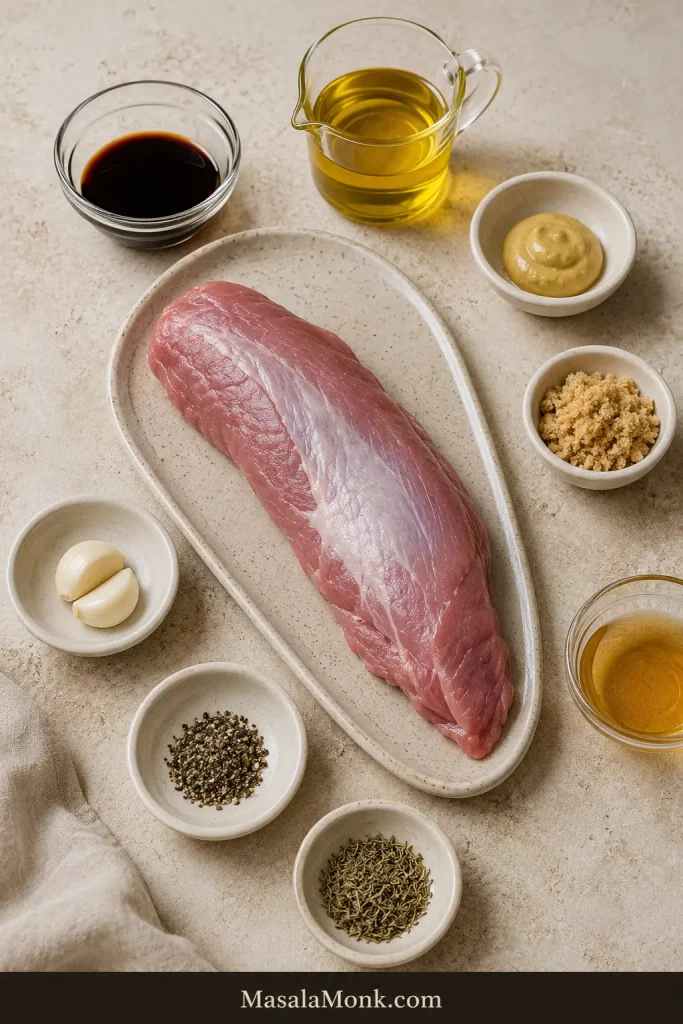
Pork tenderloin marinade ingredients around a raw tapered tenderloin: soy sauce, oil, Dijon, brown sugar, vinegar, garlic, pepper and herbs.
A snug coating is enough. Pork tenderloin does not need to sit submerged in marinade for the surface to be evenly seasoned.

Method

  1. Check the cut and label. Make sure you have pork tenderloin, not pork loin. If the package is pre-seasoned or enhanced, or says it contains a seasoning solution, check the sodium before adding this marinade.
  2. Trim the silver skin. Slip a sharp knife just underneath the shiny membrane, angle the blade slightly upward and slice it away without digging deeply into the meat.
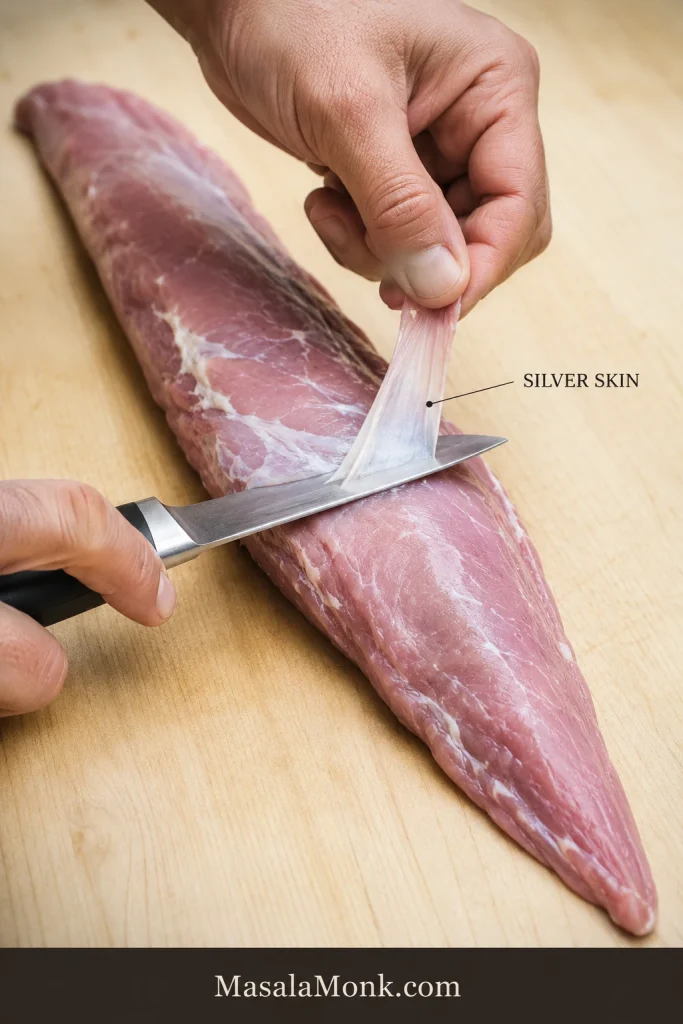
Hands trimming shiny silver skin from a raw tapered pork tenderloin with a knife angled beneath the membrane.
Silver skin feels firm and papery, unlike softer fat. Trim the shiny membrane without carving away good meat underneath.
  1. Whisk the marinade. Combine the soy sauce, oil, Dijon, brown sugar, vinegar, garlic, pepper and herbs until smooth and the sugar is mostly dissolved. It should smell savory and garlicky first, with a light tang behind it.
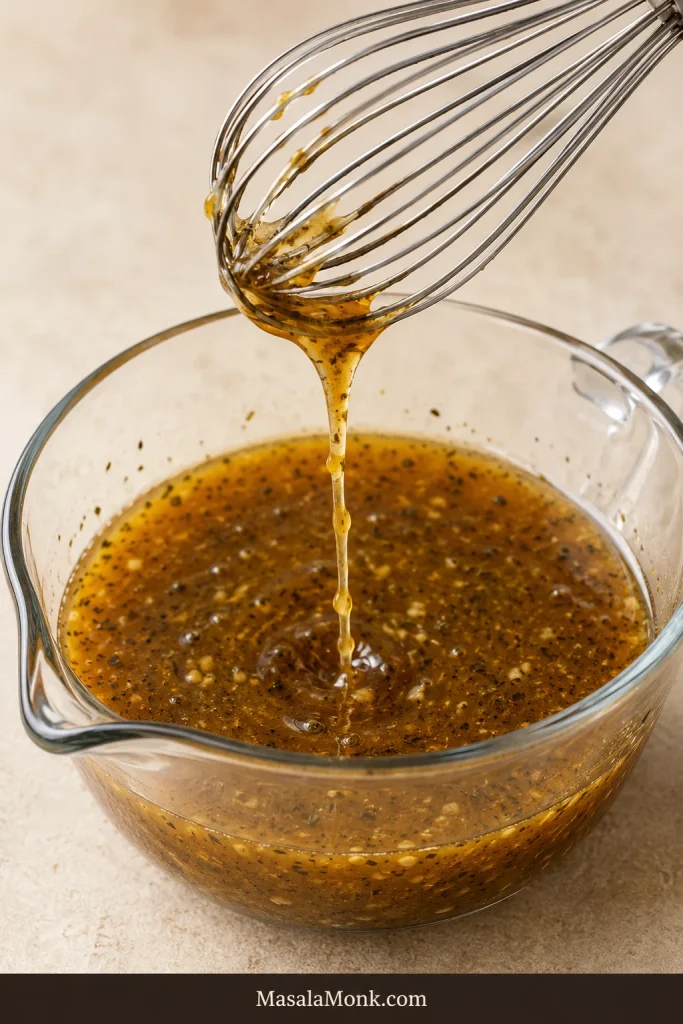
Thin amber-brown pork tenderloin marinade with garlic and herb flecks streaming from a whisk into a glass bowl.
The marinade should stream off the whisk, not cling like a glaze. If it turns sticky, it can scorch faster over high heat.
  1. Coat the pork. Put the tenderloin in a snug bag or container, add the marinade and turn until every side has a thin, even coating. The meat does not need to be submerged.
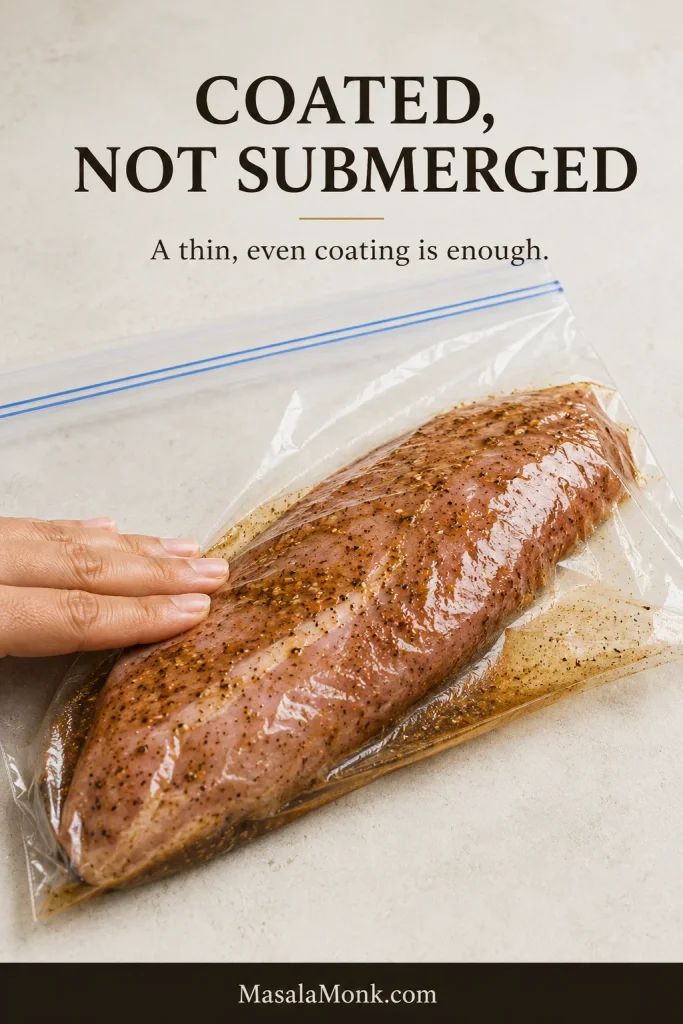
Raw pork tenderloin in a zip bag evenly coated with pork tenderloin marinade, with only a small amount pooling below.
A snug bag keeps a modest amount of marinade against the meat. Even coverage matters more than a deep pool of liquid.
  1. Refrigerate. Marinate for 30 minutes to 12 hours.
  2. Drain before cooking. Let the loose marinade run off. Pat the pork especially dry if you’re searing it before roasting.
  3. Choose your cooking method. Use the oven, grill or air-fryer directions below and cook until the thickest part reaches 145°F / 63°C.
  4. Rest 5 minutes before slicing.

Choose Your Cooking Method

  • Oven: Roast at 400°F / 205°C. For a slim 1-pound tenderloin, begin checking around 18 minutes. Thicker pieces often need longer. Remove at 145°F / 63°C and rest 5 minutes.
  • Grill: Heat the grill to 400–450°F / 205–230°C with a hot side and a cooler side. Brown over direct heat, turning every 2–3 minutes, then move the pork to gentler heat once the crust looks good. Take a temperature reading once that crust is established and remove at 145°F / 63°C.
  • Air fryer: Set it to 400°F, or 200°C on models that use Celsius. Follow your appliance’s own preheating guidance. Turn around 10 minutes, then take the first temperature reading around 14 minutes for a roughly 1-pound tenderloin. Larger or thicker pieces need longer. Remove at 145°F / 63°C and rest 5 minutes.

That’s enough to get dinner on the table. Got a thicker tenderloin, a very hot grill or an air fryer that cooks faster than expected? The notes below cover those cases.

Optional serving sauce

Want extra sauce for the sliced pork? Make this separately so it never touches raw meat:

  • 1 tbsp / 15 ml low-sodium soy sauce
  • 1 tbsp / 15 ml olive or avocado oil
  • 1½ tsp Dijon mustard
  • 1½ tsp brown sugar
  • 1½ tsp apple cider vinegar
  • 1 medium garlic clove, finely grated or minced
  • ¼ tsp black pepper
  • ¼ tsp dried thyme or oregano

Whisk everything together in a small saucepan and warm gently over low heat while the pork rests, just until the sugar dissolves and the sauce looks smooth. Keep it spoonable rather than reducing it into a heavy glaze.

Success Cues: From Marinade to Slice

  • Marinade: savory and garlicky with a clean, gentle tang.
  • After marinating: the pork is coated from end to end without sitting in a deep pool.
  • Before searing: the exterior feels tacky, with no loose marinade running off.
  • On the grill: the crust develops deep roasted, caramelized patches before anything turns bitter-black.
  • After resting: the cut surface looks moist, with a little juice beading on the meat and board.

Need to Adapt the Recipe? Use This Guide

The straightforward version is above. Jump to whatever matches the pork or problem in front of you.


Pork Tenderloin vs Pork Loin, Medallions and Two-Packs

Long, narrow and very lean, pork tenderloin usually has one end tapering noticeably thinner than the other. In many markets, pork fillet is another common name for essentially the same cut.

Pork loin is different. It is broader, heavier and behaves more like a roast. If that’s what you bought, don’t use the tenderloin cooking times below. Our slow cooker pork loin recipe is one option when you want a low-and-slow route.

Medallions need less marinating and far less cooking time. They are usually tenderloin sliced crosswise into rounds, which exposes more surface to the marinade and gives heat a much shorter path through the meat.
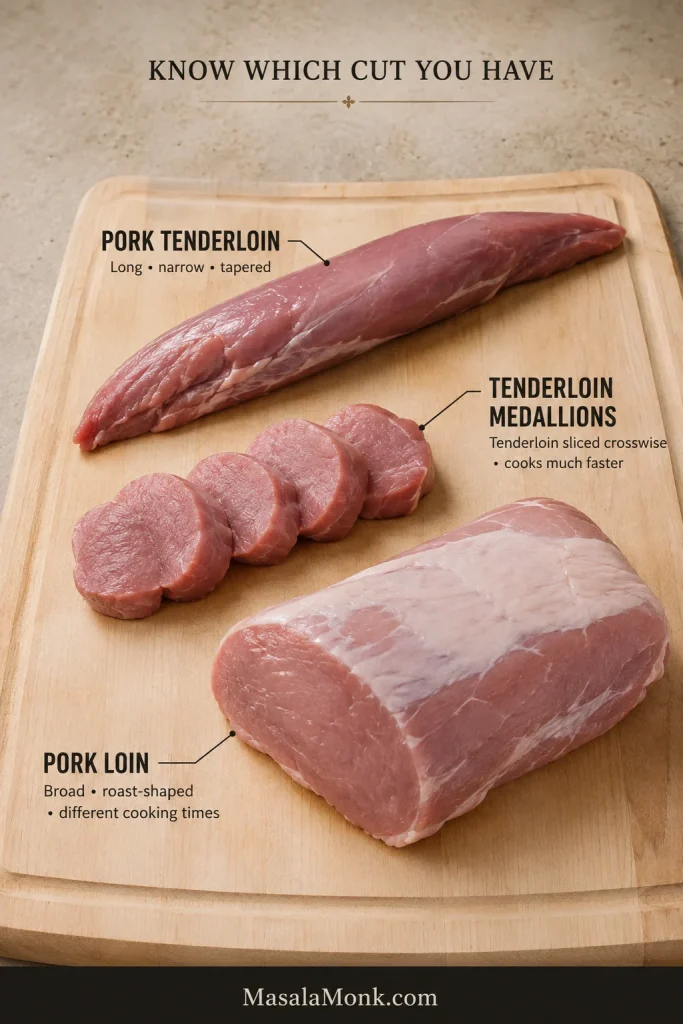
Raw pork tenderloin, tenderloin medallions and a much wider pork loin displayed side by side for comparison.
Tenderloin, medallions and pork loin do not cook on the same timetable. Identify the cut before you borrow any timing advice.

Two tenderloins from the same package rarely finish at exactly the same moment. Check the slimmer one first, pull it when it reaches temperature, and let the thicker piece keep going. Dinner is still on track.
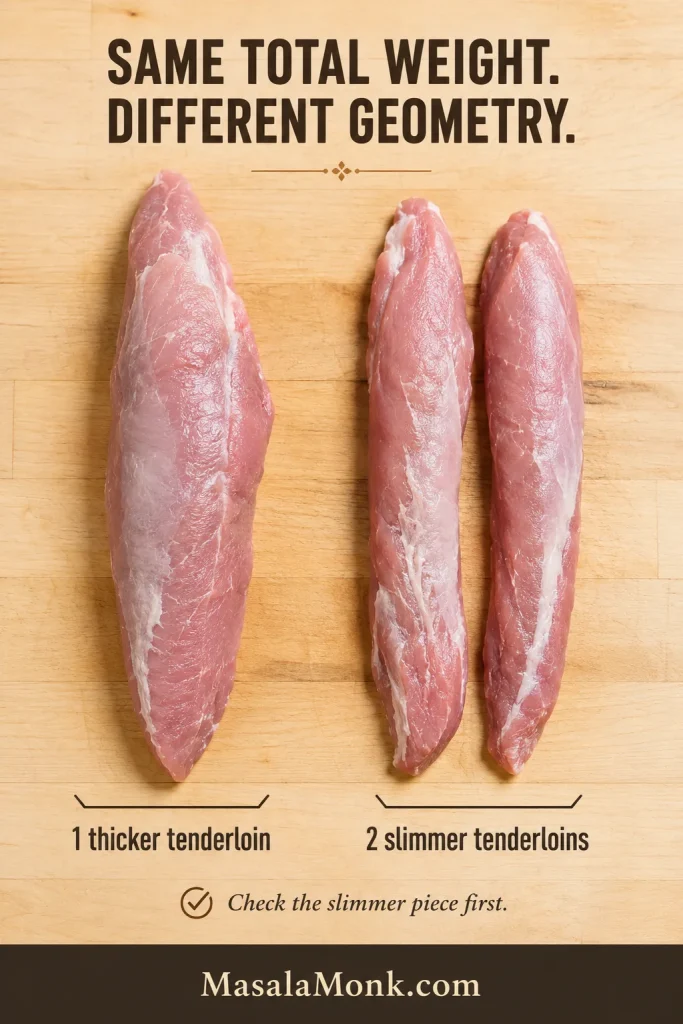
One thick tapered pork tenderloin beside two slimmer tenderloins of roughly similar combined weight.
Two pieces can share one package weight and still finish at different times. Thickness—not the combined weight—drives each center.

Packages marked pre-seasoned, pre-marinated or enhanced—or labeled as containing a seasoning solution—may carry plenty of salt before you add anything. Check the label first. If the pork is already marinated, skip the homemade mixture and go straight to the cooking method you want.

How Much Marinade Do You Need?

If your tenderloin is close to a pound, make one batch and move on. For a noticeably larger or smaller piece, use the table as your starting point, then look at the coating.

Pork weightStarting amount
About 12 oz / 340 g¾ batch
1 lb / 454 g1 batch
About 1¼ lb / 567 g1¼ batches
About 1½ lb / 680 g1½ batches
About 2 lb / 907 gUp to 2 batches; use enough to coat well

A snug bag may coat one larger tenderloin perfectly with less liquid than a broad container. Two smaller tenderloins expose more surface, so they can need a little more marinade to coat comfortably.

Zip the bag, turn the pork and look. Once every side has a light sheen from end to end, you’re there. You are coating pork, not poaching it.
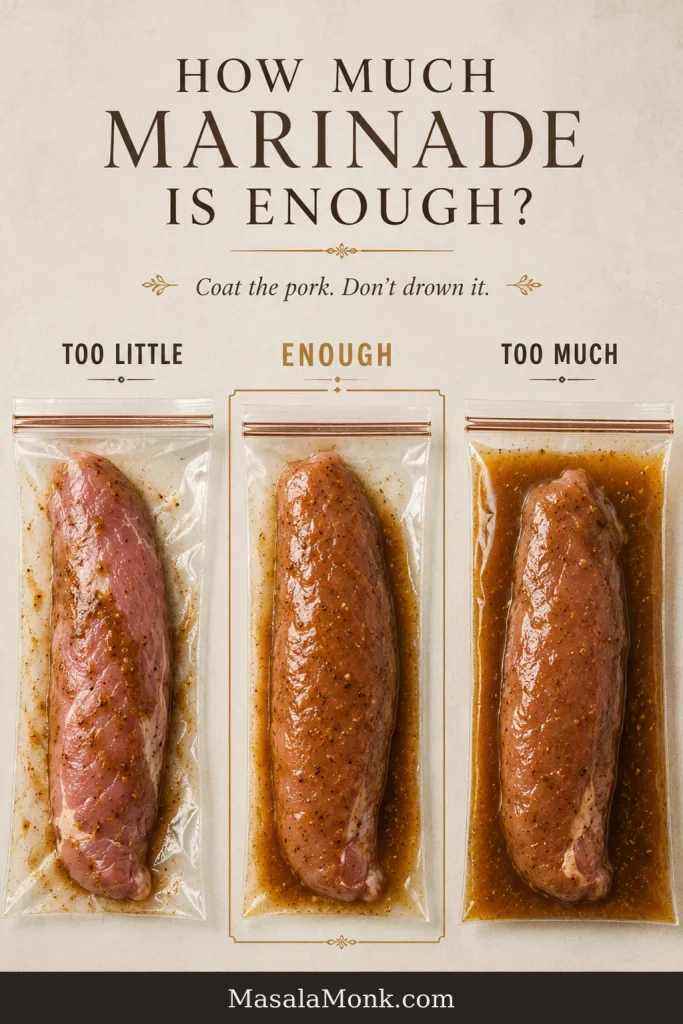
Three bags compare too little, enough and too much pork tenderloin marinade around raw tenderloin.
Before mixing more marinade, turn the bag and redistribute what you have. Dry patches can be a contact problem, not a quantity problem.

A wide casserole dish can make the same quantity look strangely small because the liquid spreads away from the meat. Turn the pork once or twice before deciding you need another batch.
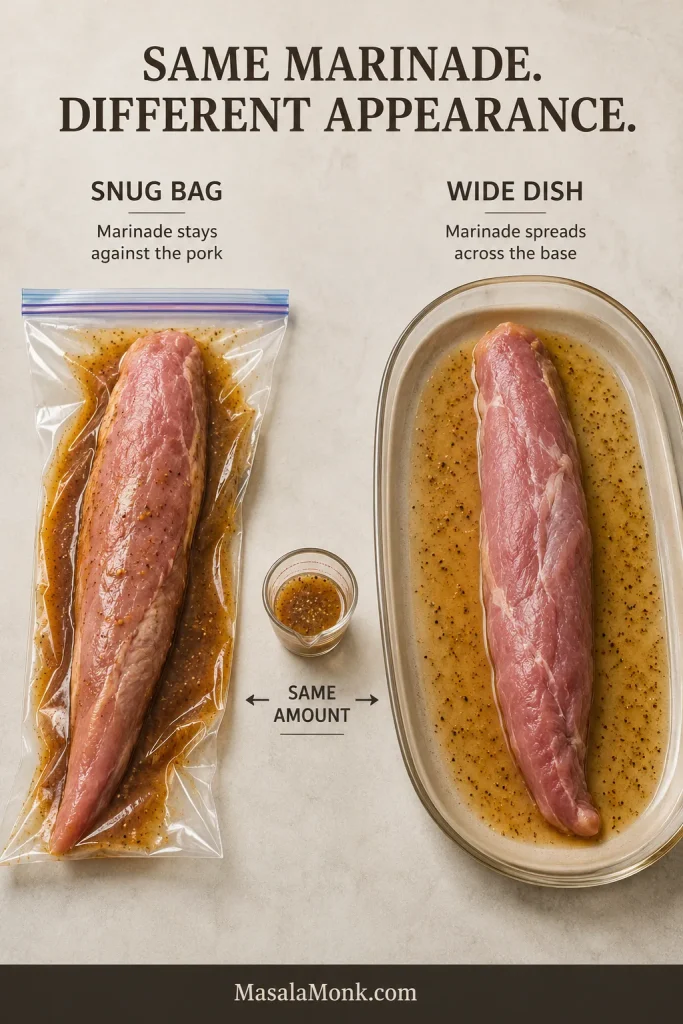
The same pork tenderloin marinade in a snug zip bag and a broad shallow dish, showing different visible liquid depth.
The same marinade looks shallower in a wide dish. A snug bag keeps it close to the pork and saves refrigerator space.

What This Marinade Does

Pork tenderloin does not need a marinade to become tender. This mixture is mainly about seasoning, aroma, balance and giving the outside more flavor when it meets the heat.

Expect savory soy and Dijon first, warm garlic behind them, a little sweetness at the browned edges, and enough vinegar to keep everything lively. The pork should still taste like pork; the marinade is there to make those outer bites better, not bury them.

  • Low-sodium soy sauce supplies salt and savory depth.
  • Dijon adds body and rounded tang.
  • Brown sugar balances the salty-tangy ingredients and encourages deeper browning.
  • Apple cider vinegar keeps the flavor bright.
  • Oil helps everything coat evenly, while garlic and herbs bring most of their aroma to the outer bites.
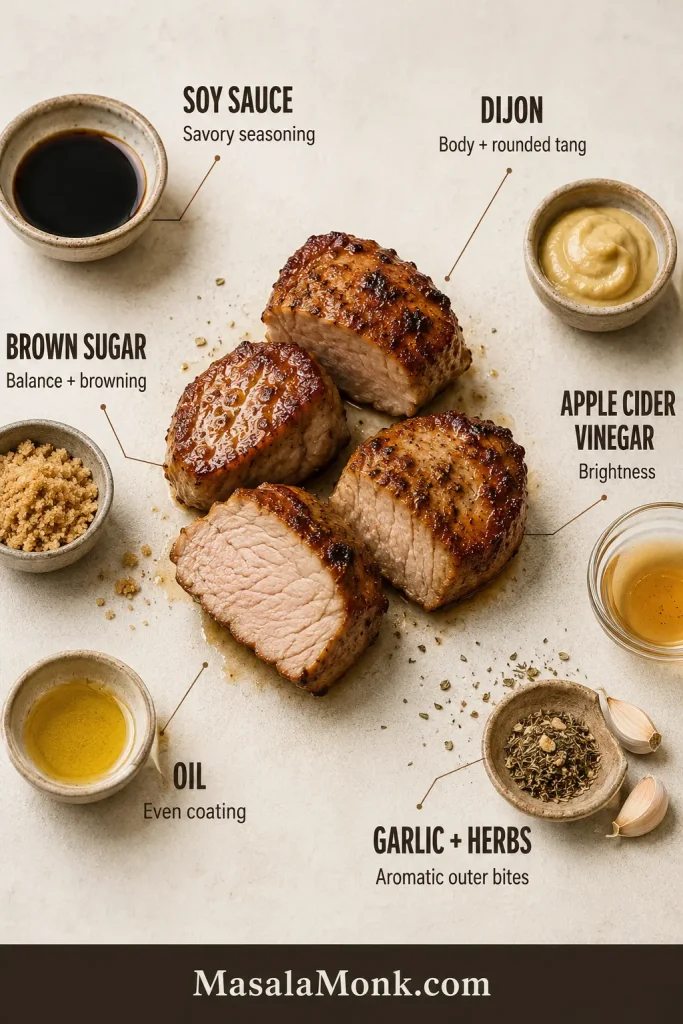
Cooked medallions surrounded by pork tenderloin marinade ingredients, with callouts for soy, Dijon, sugar, vinegar, oil, garlic and herbs.
Most of the marinade’s biggest payoff happens at the surface, where salt, sugar, garlic and heat build the browned, savory edge.

Once that coated surface hits real heat, this is where the marinade earns its keep: the garlic smells toastier, the sugar helps the edges deepen, and the salty-sweet crust becomes much more noticeable than it was in the bag.

Garlic, herbs and mustard still do most of their obvious work near the exterior. A milder center is normal. Slice the pork and bring the serving sauce to the table instead of trying to solve it with days in marinade.
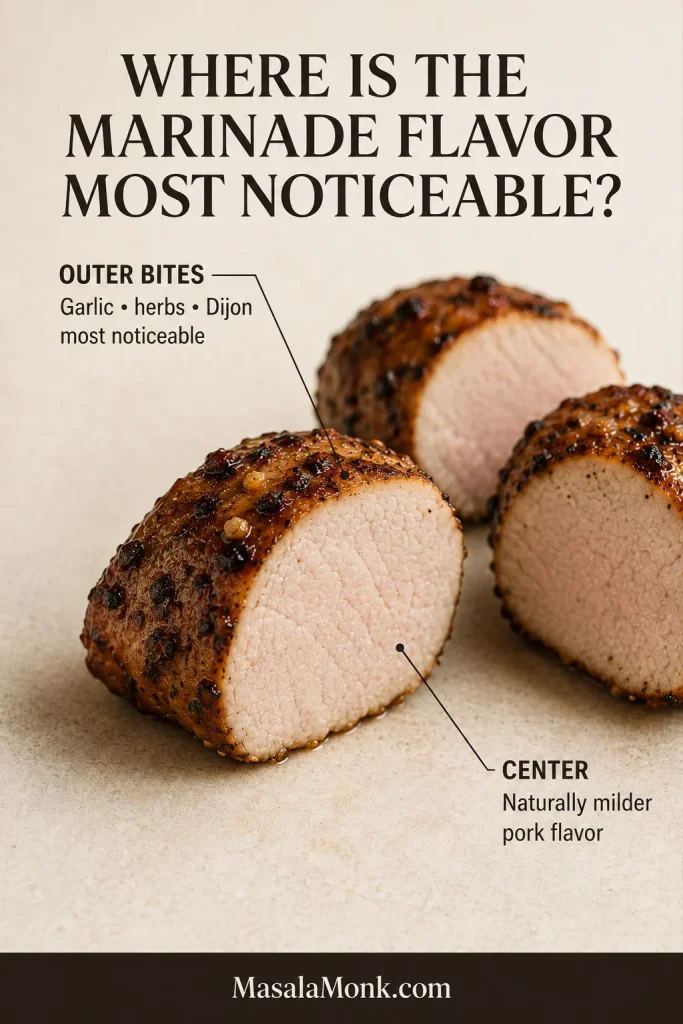
Pork medallions showing a browned outer crust and moist center, with callouts for where pork tenderloin marinade flavor is strongest.
Thinner slices give each bite more seasoned edge; thicker slices emphasize the milder center. Slice thickness changes how strong the marinade seems.

How Long to Marinate Pork Tenderloin

Marinating time belongs to the marinade. A mild soy-Dijon mixture, a citrus-heavy version and fresh pineapple all behave differently.

TimeBest useWhat to expect
30 minutesDinner is closeNoticeable seasoning around the outside
2–4 hoursSame-day prepA fuller, more settled savory flavor
8–12 hoursOvernight prepA convenient make-ahead window for this marinade
LongerUsually unnecessaryMore time without a guaranteed improvement

Anything in between is fine. Ninety minutes works. Six hours works. You haven’t missed a secret window because dinner moved by an hour.
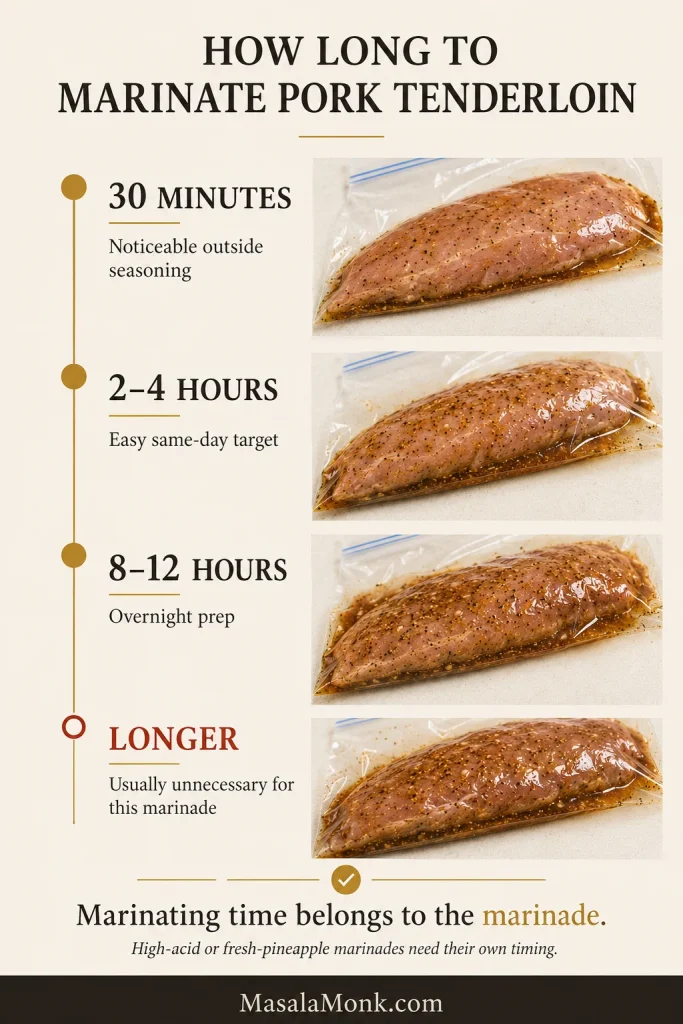
Pork tenderloin marinade timeline showing 30 minutes, 2–4 hours, 8–12 hours and longer.
Use this timeline for this soy-Dijon formula. Stronger acid or fresh pineapple needs a different clock.

Only have 30 minutes? Use them. Dinner is not ruined because you forgot to start at lunchtime. The center will stay milder than the outer bites, but the soy, garlic and mustard still have time to make themselves known.

Can you leave pork tenderloin in this marinade too long? Yes. Beyond about 12 hours, there is little reason to keep pushing. Extra salt, acid and time can eventually make the outer layer too salty, oddly firm or unpleasantly soft.

Safe and delicious are two different clocks. Pork can stay safely refrigerated longer than it needs to marinate here. USDA guidance permits pork in marinade in the refrigerator for up to 5 days, but that is a safety allowance—not a flavor or texture recommendation.

Fresh pineapple is different because bromelain can soften meat quickly. Use a separately timed pineapple marinade rather than adding it to this overnight formula.

Once the marinating time is up, the priority changes. Get the surface ready for heat, then let browning and temperature take over.

From Marinade to Heat

Keep the pork refrigerated while it marinates, turning it once if needed so every side stays coated. Any sauce meant for the table should be made separately before the raw pork is involved.

The USDA recommends marinating meat in the refrigerator. If marinade that touched raw pork is reused, bring it to a boil first; otherwise, discard it. See the USDA pork marinating guidance.

How wet should the pork be when it hits the heat?

  • Straight roasting: let the loose marinade drain well.
  • Sear, then roast: pat the exterior fairly dry so it can brown quickly.
  • Grill: let the excess drip away but keep a thin coating on the meat.
  • Air fryer: drain well so liquid does not collect underneath.

There is no need to rinse the pork. A lightly coated surface is exactly what you want.
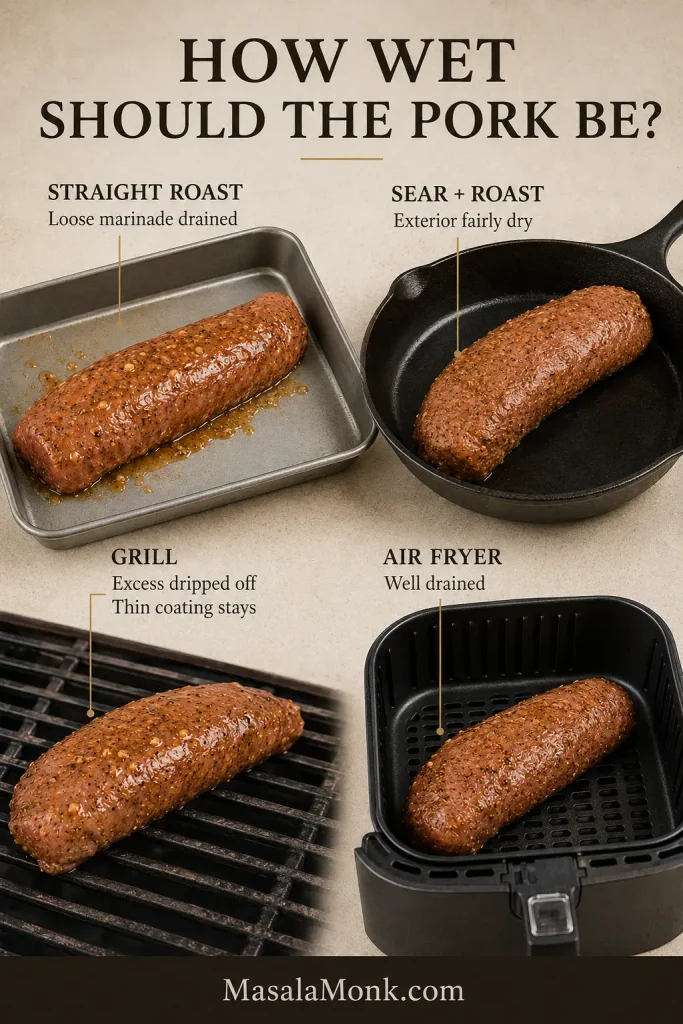
Raw marinated pork tenderloin prepared at four surface-moisture levels for roasting, searing, grilling and air frying.
Loose marinade slows browning. Drain well for roasting and air frying; pat especially dry before a hard sear.

The oven is the easiest controlled route, the grill gives this marinade its most dramatic crust, and the air fryer is hard to beat when speed matters. All three finish at the same place: 145°F / 63°C in the thickest part.

Marinated Pork Tenderloin in the Oven

Roast at 400°F / 205°C. For a slim 1-pound tenderloin, start checking around 18 minutes. Thicker pieces often need longer.

  1. Preheat the oven to 400°F / 205°C.
  2. Let the loose marinade drain away.
  3. Tuck a dramatically thin tail underneath so it does not finish long before the thicker middle.
  4. Place the pork on a lightly oiled rimmed pan or in a small roasting dish.
  5. Give a thicker piece more time and let the thermometer decide the finish.
  6. Remove at 145°F / 63°C and rest 5 minutes.

You’ll smell the garlic and mustard turning toastier before the pork is finished. The edges should deepen to a roasted brown, and by the time the thermometer says stop, the outside should look far more appetizing than the pale marinated pork that went into the oven.
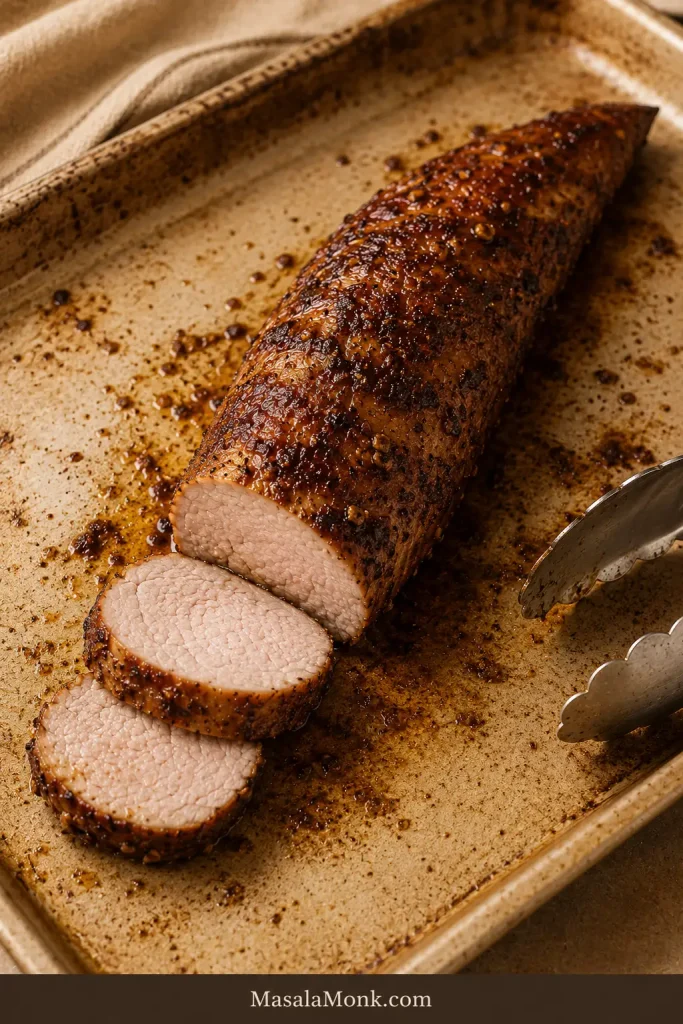
Oven-roasted pork tenderloin with a golden-mahogany crust, moist sliced center and browned cooking juices in the pan.
Those browned pan juices are useful. Spoon a little back over the sliced pork instead of leaving all that flavor behind.

For a Darker Crust: Sear, Then Roast

Heat a heavy oven-safe skillet over medium-high heat with a thin film of neutral oil. Pat the tenderloin fairly dry, then let its broad sides turn deep golden, about 1–2 minutes per side.

Move the skillet to the oven once the crust looks good and begin checking sooner than you would with a straight roast. The hot pan has already given the center a head start.
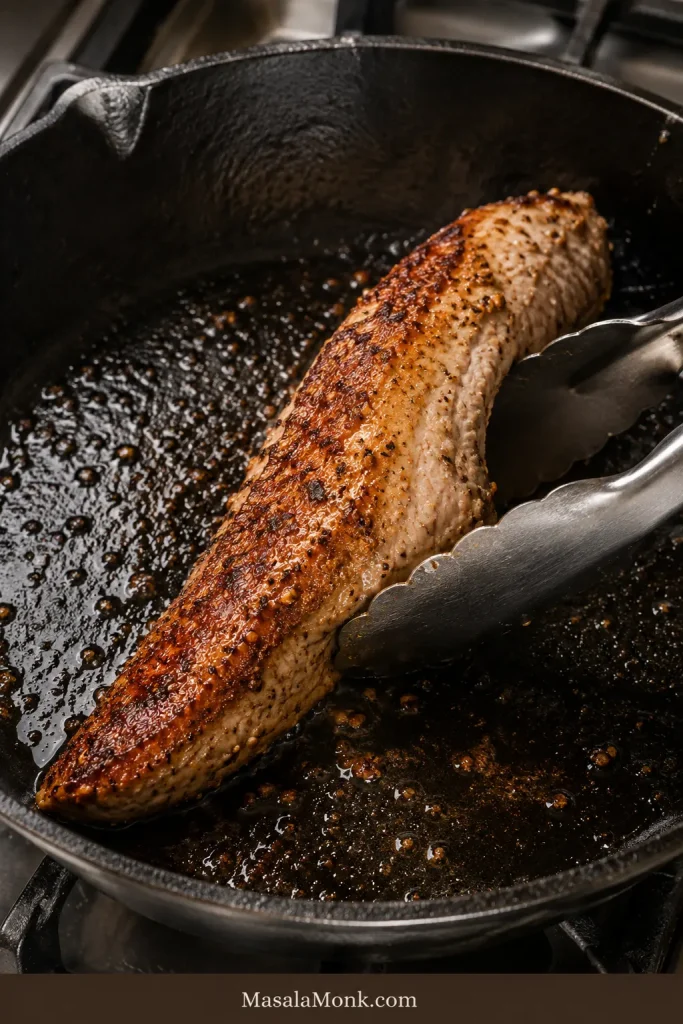
Tongs turning tapered pork tenderloin in a cast-iron skillet, with one side deeply browned and the rest still lighter.
Searing builds crust; it does not seal in juices. Once the exterior is browned, let gentler oven heat finish the center.

Our pork tenderloin in the oven guide goes deeper into oven-specific timing and temperature choices.

Pork Tenderloin Marinade for Grilling

The grill is where this marinade gets its boldest crust. Heat it to 400–450°F / 205–230°C and give yourself both a hot area for browning and a gentler area for finishing.

With gas, lower or switch off one burner. With charcoal, bank most of the coals to one side.

  1. Let the loose marinade drip away before the pork goes on.
  2. Start over direct heat and rotate every 2–3 minutes so several sides develop deep roasted color.
  3. Once the crust looks right, move the tenderloin to the cooler side if the middle still needs time.
  4. Close the lid and let gentler heat finish the center.
  5. Take the first temperature reading once the crust is established. Thickness and grill heat can move the finish time noticeably.
  6. Remove at 145°F / 63°C and rest 5 minutes.
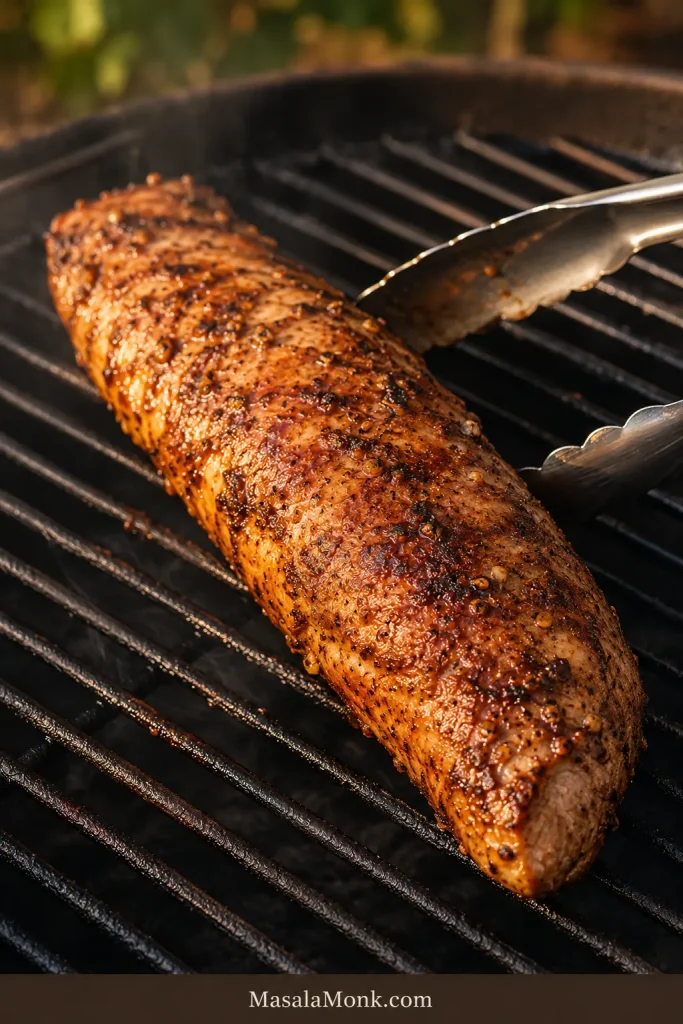
Marinated pork tenderloin on grill grates with irregular golden-mahogany browning, garlic flecks and a visibly tapered shape.
Look for irregular mahogany browning, not perfect black grill marks. Sugar, soy and garlic can turn bitter quickly over aggressive heat.

Beautiful crust, center not ready? Move it to the cooler side. You haven’t ruined anything. The direct heat has already done the browning; now the gentler side can finish the pork without scorching those salty-sweet edges.
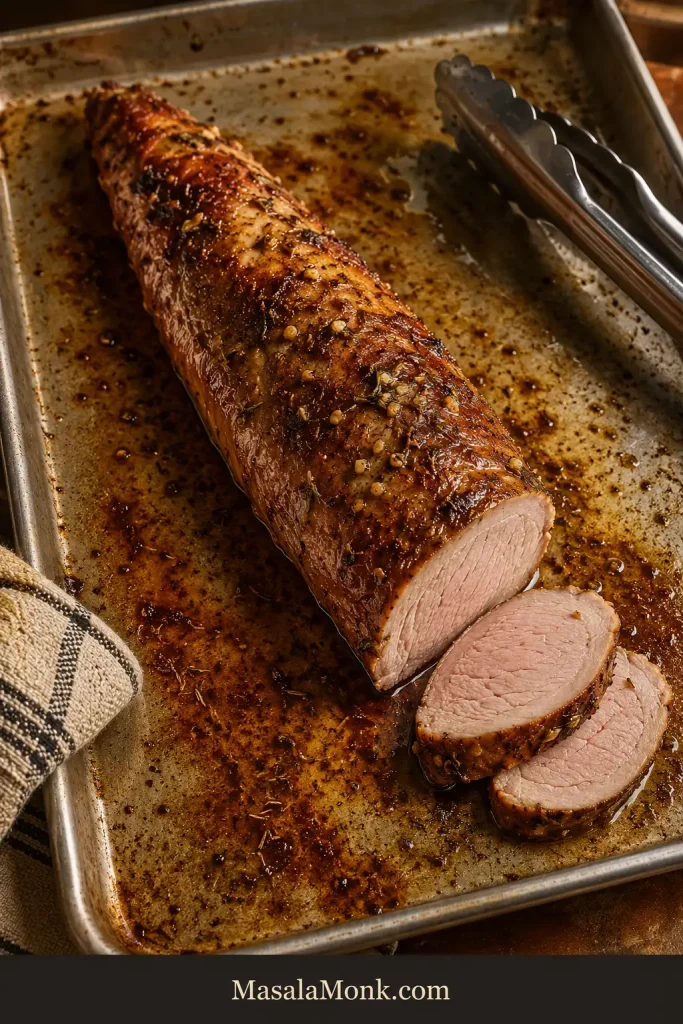
Two-zone charcoal grill with browned pork tenderloin moving from the hot coal side to a cooler finishing zone.
Two-zone grilling separates browning from doneness. Once the crust is set, move cooler and let gentler heat finish the center.

Marinated Pork Tenderloin in the Air Fryer

Set the air fryer to 400°F, or 200°C on models that use Celsius. Follow your appliance’s instructions on whether it should preheat first; air fryers vary enough in size and power that cook times should be treated as starting points, not promises.
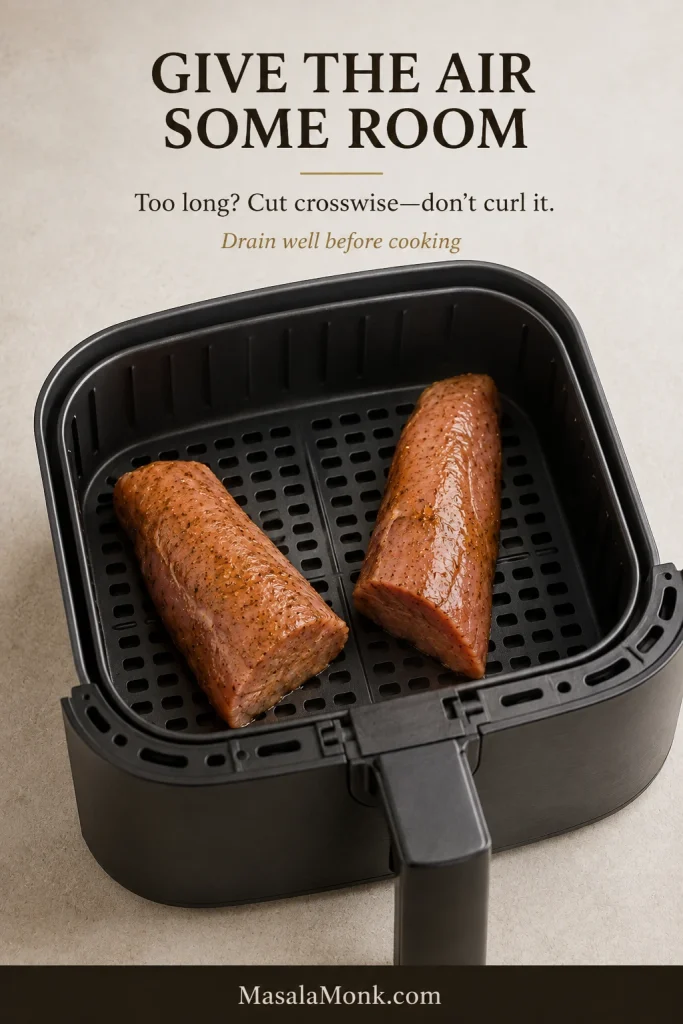
Raw marinated pork tenderloin cut into two straight pieces with open space around them in an air-fryer basket.
Air needs room to move around the pork. If a long tenderloin curls or crowds the basket, cutting it crosswise can improve evenness.
  1. Drain the tenderloin well and leave visible space around it.
  2. Cut an overly long tenderloin in half crosswise instead of curling it tightly around the basket.
  3. Cook for about 10 minutes, then turn the pork.
  4. For a tenderloin around 1 pound, take the first temperature reading around 14 minutes. A larger or thicker piece will usually need longer.
  5. Recheck the center as needed instead of automatically adding another fixed block of time.
  6. Remove at 145°F / 63°C and rest 5 minutes.

Air-fryer cooking time varies with appliance size and power, while the safe internal temperature does not. That’s why the thermometer matters more here than a minute-perfect chart.
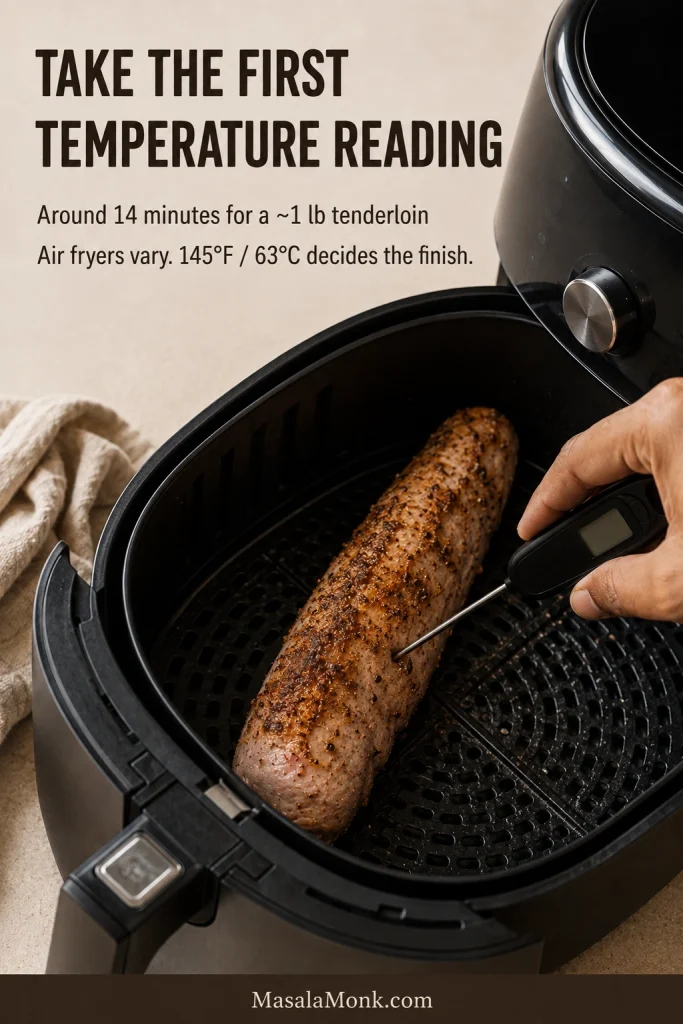
Partly browned pork tenderloin in an air-fryer basket being checked in the thickest section with an instant-read thermometer.
The first thermometer reading teaches you about your own air fryer. Remember whether this basket ran fast or slow for similar thickness next time.

For unusually thick pieces or more appliance-specific guidance, our air fryer pork tenderloin guide goes deeper.

Weight Sets the Marinade; Thickness Drives the Cook

Weight determines how much marinade to start with. Thickness determines when to start checking. Temperature determines when to stop.
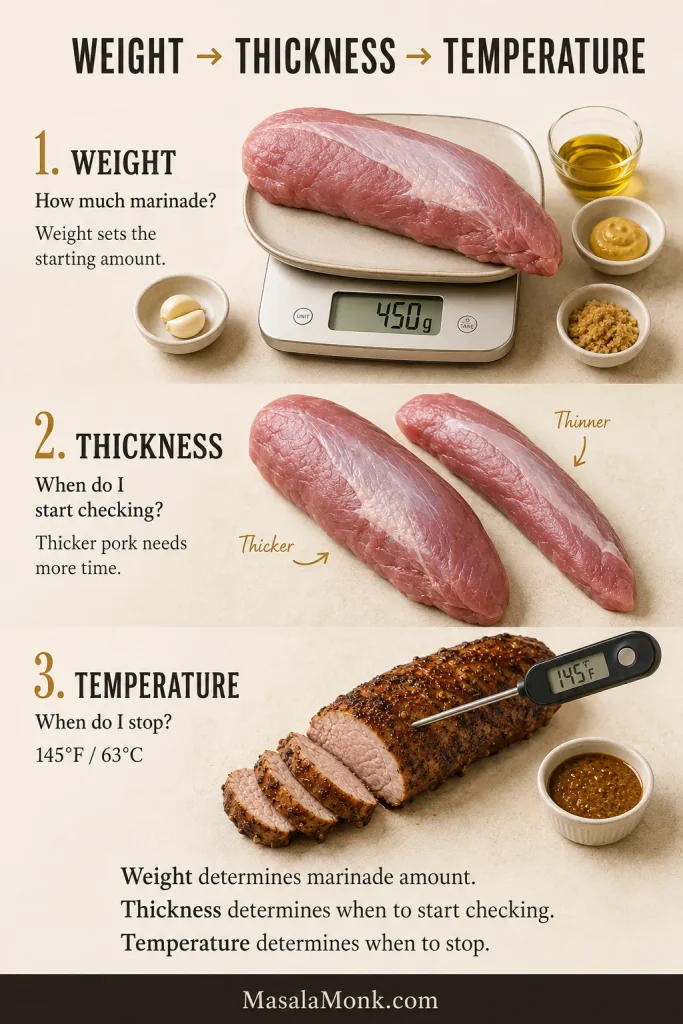
Infographic linking pork tenderloin weight, thickness and internal temperature with a scale, differently sized tenderloins and thermometer.
Two equally heavy tenderloins can finish at different times. Thickness—not package weight alone—is the better clue for when to start checking.

Two tenderloins can weigh almost the same and still finish several minutes apart because heat has farther to travel through the thicker one. Your pork does not need to look like the tenderloin in a recipe photo. Watch the piece in front of you.

The tapered tail often finishes first. Tuck a very thin end underneath for oven or air-fryer cooking, or point it toward gentler heat on the grill.
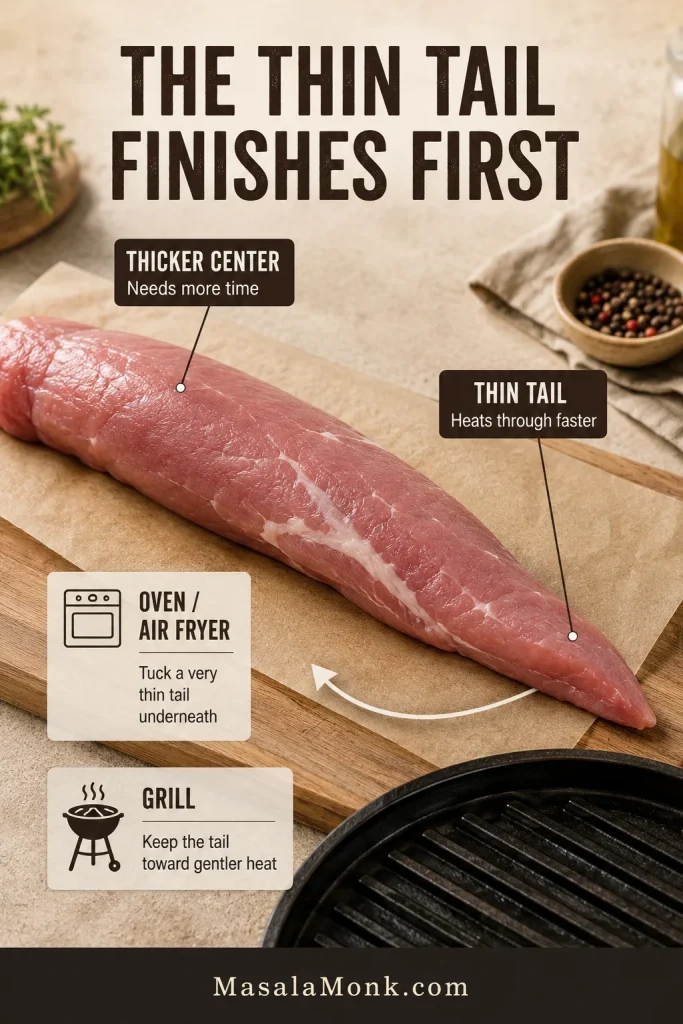
Raw tapered pork tenderloin labeled at the thick center and thin tail, with tuck-under and gentler-heat guidance.
A thin tail can dry before the center is ready. Tuck it under or keep that end over gentler heat.

How to Check Pork Tenderloin Temperature

Check the thickest part with an instant-read thermometer. On a narrow cut like tenderloin, inserting from the side can make it easier to get the thermometer tip into the center.
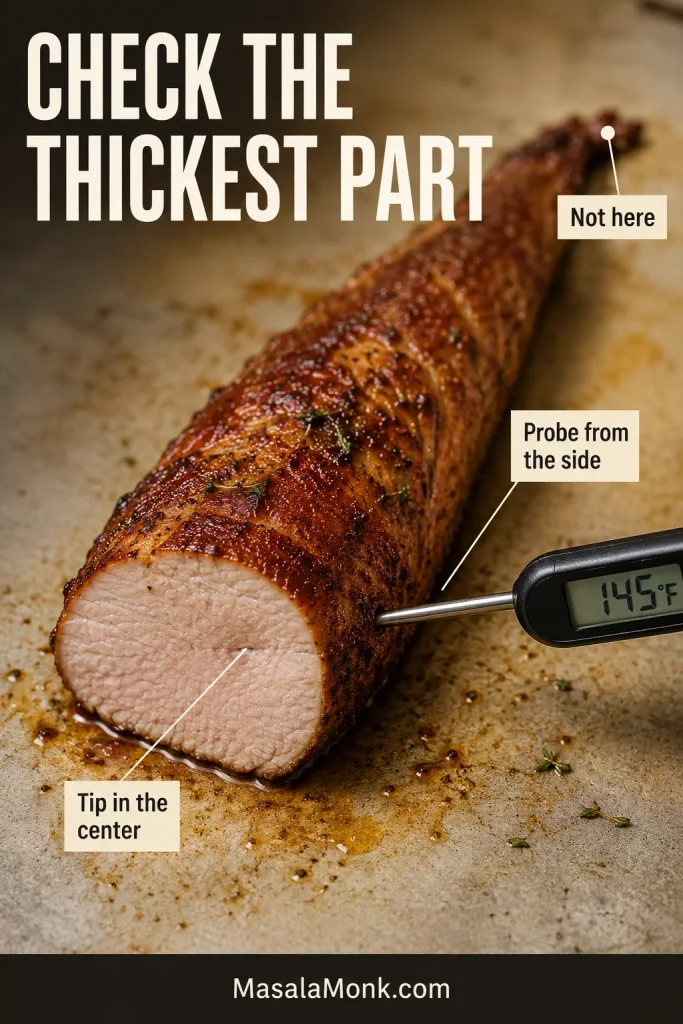
Thermometer inserted horizontally into the thickest part of cooked pork tenderloin, with the probe tip centered away from the tail.
Aim the probe tip at the center of the thickest section, not the tapered tail or the surface.

The USDA safe minimum for whole cuts of pork is 145°F / 62.8°C followed by at least a 3-minute rest. See the USDA safe minimum internal temperature chart.

A slight blush can be completely normal. Once the thickest part has reached 145°F / 63°C, you do not need to keep cooking until every slice turns white. A cool, translucent-looking center below temperature is different. The appearance tells you to check; the thermometer makes the final call.

Cooked pork tenderloin with a subtle pink center at 145°F beside a lower-temperature comparison slice.
A faint blush can remain at 145°F / 63°C. Use the thermometer—not color alone—to decide.

Ingredient Swaps and Flavor Variations

Missing something from the base marinade? Start with the swaps below. Want a deliberately different flavor instead? The variations come next.

Missing ingredientWhat to use instead
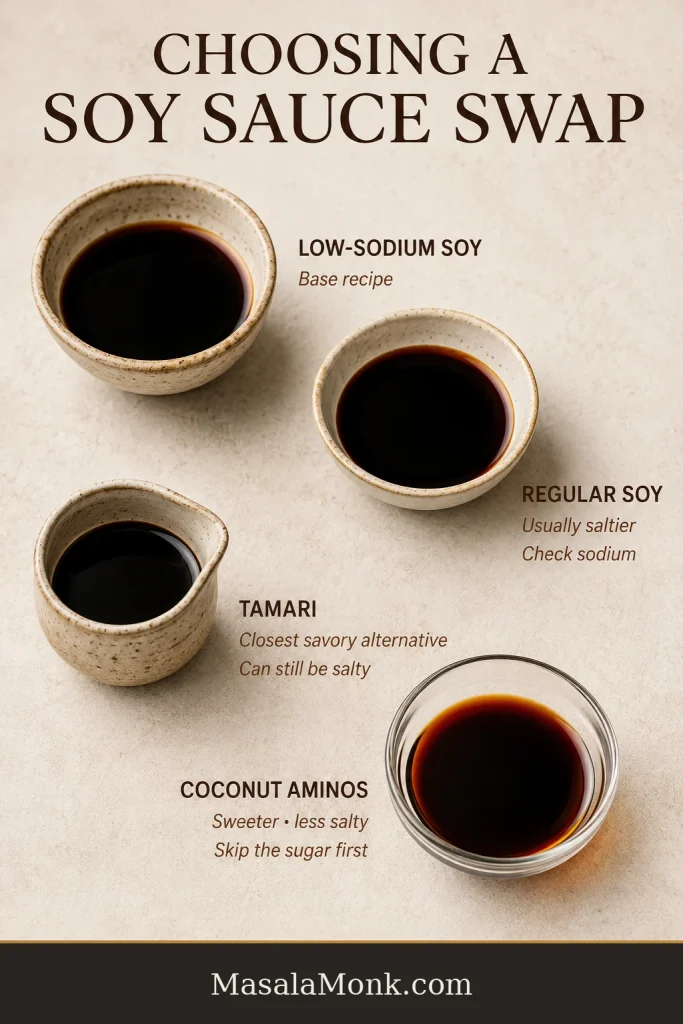
Low-sodium soy sauceRegular soy can work, but sodium varies widely by brand. Compare sodium per tablespoon and use less when needed.
Soy sauceTamari is often the closest savory substitute, though it may be just as salty. Coconut aminos is usually sweeter and less salty.
Brown sugarHoney or maple syrup can replace it; begin with a little less because liquid sweeteners make the coating stickier and can brown faster.
Fresh garlicUse about ½ tsp garlic powder in place of the two medium cloves.
Four sauce portions compare low-sodium soy sauce, regular soy sauce, tamari and coconut aminos for saltiness and sweetness.
A one-for-one swap can still change salt and sweetness. Adjust cautiously, especially with regular soy sauce or coconut aminos.

Pork Tenderloin Marinade Without Soy Sauce

For a soy-free version, replace the soy sauce with 2 tbsp / 30 ml coconut aminos and leave out the brown sugar at first.

Taste the unused mixture before the pork goes in. Pleasantly sweet but a little flat usually means it needs salt, not more sugar. Add fine salt a small pinch at a time until the savory side catches up. If gluten rather than soy is the concern, certified gluten-free tamari is generally the closer flavor swap.

Four Easy Flavor Directions

These are easy ways to nudge the base marinade in a new direction without turning the page into four more full recipes. Keep the salty-sweet-tangy balance in mind and taste any unused marinade before adding the pork.

Honey Mustard — rounder, sweeter and more lacquered. Replace the brown sugar with a slightly smaller amount of honey and increase the Dijon to about 1½ tbsp. Honey browns quickly, so watch aggressive heat.

Balsamic — darker, tangier and richer. Replace the cider vinegar with balsamic and begin with about half the brown sugar. Add more only if the unused marinade needs it.

Citrus-Garlic — bright and fresh. Use lemon or lime juice in place of the cider vinegar and add finely grated zest. Push the citrus much higher than the base amount and the pork should spend less time marinating.

Spicy — savory first, warmth at the finish. Add red-pepper flakes, minced fresh chilli or chilli sauce. A chilli sauce that is already sweet or salty may mean backing off the sugar or soy elsewhere.
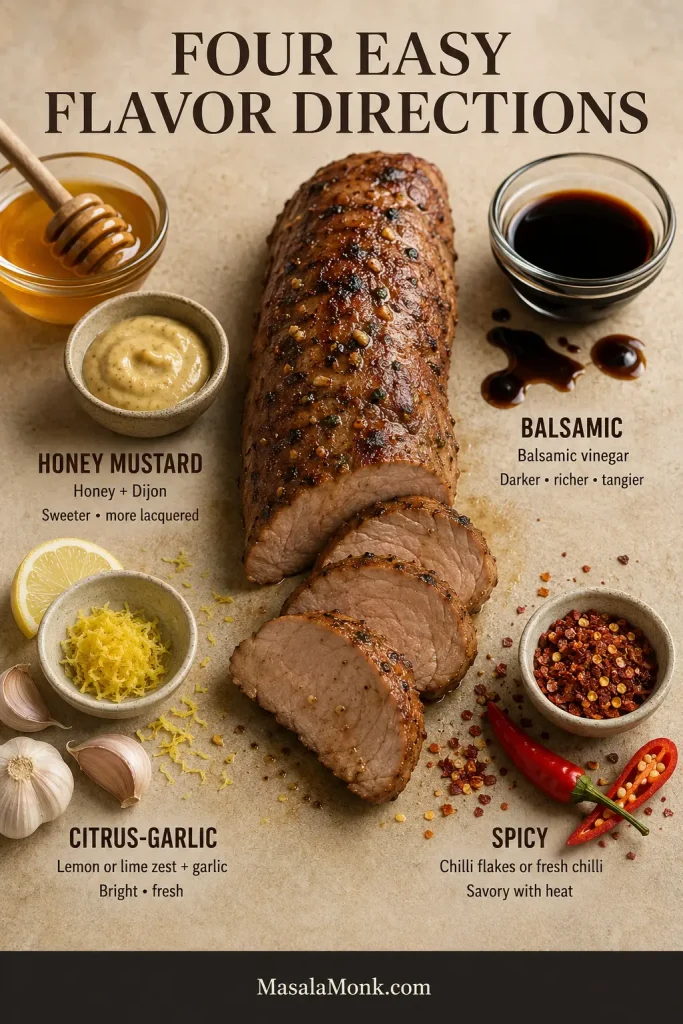
Sliced pork tenderloin with four pork tenderloin marinade variations: honey-Dijon, balsamic, citrus-garlic and spicy red chilli.
Change one flavor direction at a time. Honey-Dijon, balsamic, citrus-garlic and spicy versions stay clearer when the base structure remains familiar.

No time to marinate at all? A dry rub makes more sense when you want to season and cook immediately or when a dry, browned crust is the priority. For the opposite approach—sear first, then add a sweet-savory glaze—our honey garlic pork chops show how that works.

Pork Tenderloin Marinade Troubleshooting

If dinner has gone slightly sideways, start here. Some problems can still be improved tonight; others tell you what to change next time.
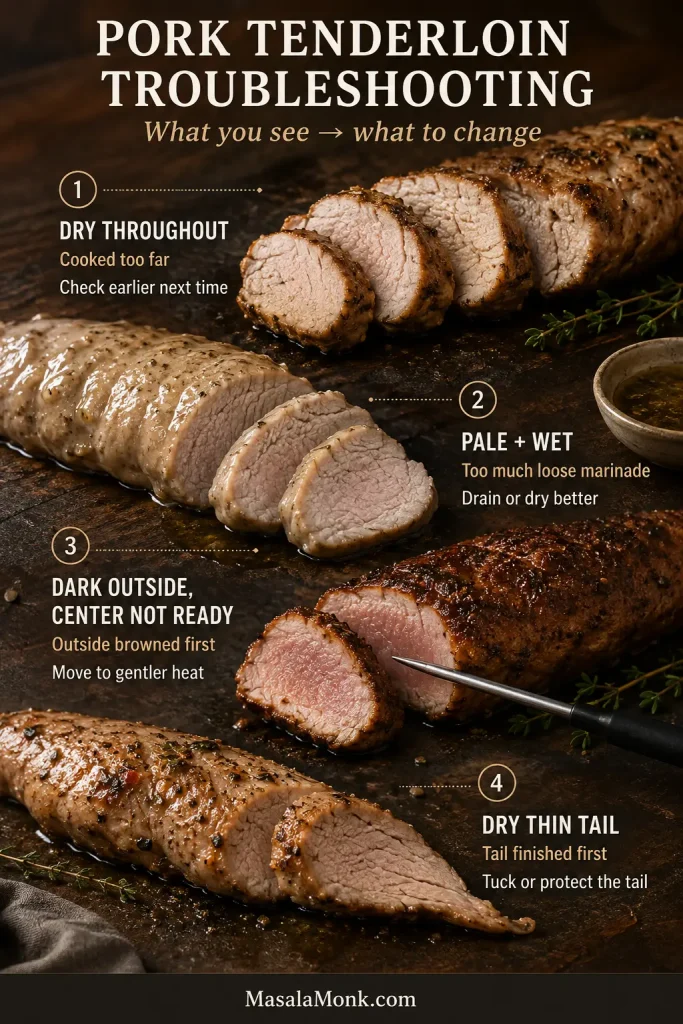
Troubleshooting graphic comparing dry slices, pale wet pork, a dark exterior with underdone center, and a dry thin tail.
Start by locating the problem: surface, center or thin end. That usually points to moisture, heat or cooking time as the next adjustment.

Cooking and Doneness Problems

ProblemWhat probably happenedWhat to do
Dry throughoutThe pork cooked too far.Slice thinly and add warm serving sauce now; start checking earlier next time.
Dry thin tailThe tapered end finished first.Give those slices extra sauce; tuck the tail or keep it toward gentler heat next time.
Dark outside, underdone middleThe crust finished before the center.Move to gentler or indirect heat and let the middle catch up.
Burned outsideWet sugary marinade met aggressive heat.Trim genuinely bitter patches if needed; drain better and save very sweet glazes for later next time.
Pale, wet-looking outsideThe pork carried too much loose moisture into the heat.Dry it more thoroughly before searing and give the skillet time to get properly hot.
One tenderloin finishes firstThe pieces are different thicknesses.Take the finished one out and let the thicker piece continue cooking.
The middle is slightly pinkProperly cooked pork can retain a blush.Check the thickest part with a thermometer and use temperature as the final decision.

Deep mahogany can be exactly what you want; brittle black sugar and garlic are different. If the exterior is the part making you hesitate, use the comparison below.
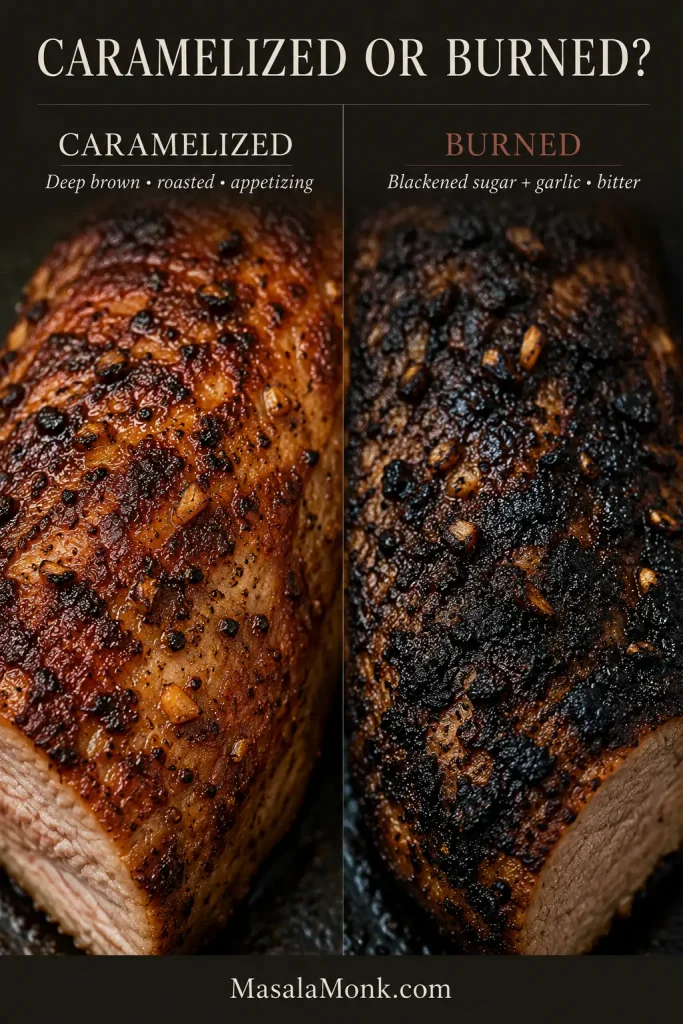
Macro comparison of mahogany caramelization on pork tenderloin beside a blackened, brittle surface with charred garlic.
Mahogany is caramelized; brittle black is burned. If the crust darkens too fast, lower the heat or move the pork cooler.

Salt, Texture and Flavor Problems

ProblemWhat probably happenedWhat to do
Too saltySoy, added salt, salty rub or enhanced pork stacked together.Serve with unsalted sides now; check the label and reduce the total sodium next time.
Ham-like or unusually firmToo much salt met too much time.Slice thinly now; reduce sodium and shorten the soak next time.
Soft, mealy or mushy outsideStrong acid or a fast-acting tenderizing ingredient sat too long.There is no true texture rescue; shorten the contact time next time.
Center tastes mildGarlic, mustard and herbs did most of their work near the exterior.Slice the pork and add serving sauce. More days in marinade are not the answer.

The flavor was great, but the pork was dry? That tells you the marinade did its job; cooking time is what needs changing. Extra hours in the bag cannot protect a lean tenderloin that stays over the heat too long.

Make Ahead, Freeze and Store

Yes—fresh pork tenderloin can be frozen in this marinade. Bag it and freeze promptly, then thaw it in the refrigerator before cooking.

A tenderloin that’s already frozen solid is different: thaw it in the refrigerator first, then add the marinade. The thawed surface coats more evenly, and you’ll have a much easier time judging the cook afterward.
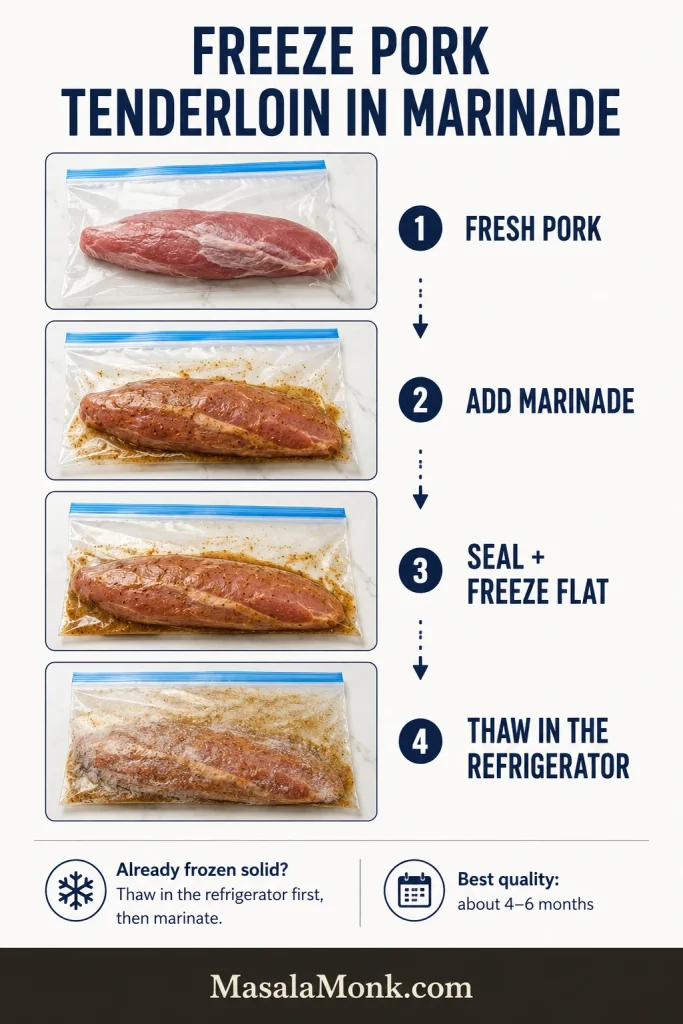
Pork tenderloin marinade freezer guide showing fresh pork bagged with marinade, frozen flat and thawed in the refrigerator.
Freeze the bag flat to save space and keep the marinade distributed around the pork. Thaw the sealed package in the refrigerator.
What you haveWhat to do
Unused marinadeMix ahead, cover and refrigerate until you’re ready to add pork.
Raw pork in marinadeFor best flavor and texture with this recipe, cook within the 30-minute to 12-hour window.
Fresh pork frozen in marinadeFreeze promptly; for best quality, aim to use within about 4–6 months. Thaw in the refrigerator before cooking.
Cooked porkRefrigerate promptly and use within 3–4 days.
Leftovers you’re reheatingReheat to 165°F / 74°C.

Cold Pork Tenderloin Is Underrated

If tomorrow’s lunch is part of the plan, cold slices are genuinely excellent in sandwiches, salads and grain bowls. With such a lean cut, they can be more enjoyable than reheating every slice until the juiciness disappears.

An easy next-day plate is cold tenderloin with potato salad, pickles and something crisp and green. When you do want the pork warm, use gentle covered heat with a spoonful of serving sauce, broth or pan juices.
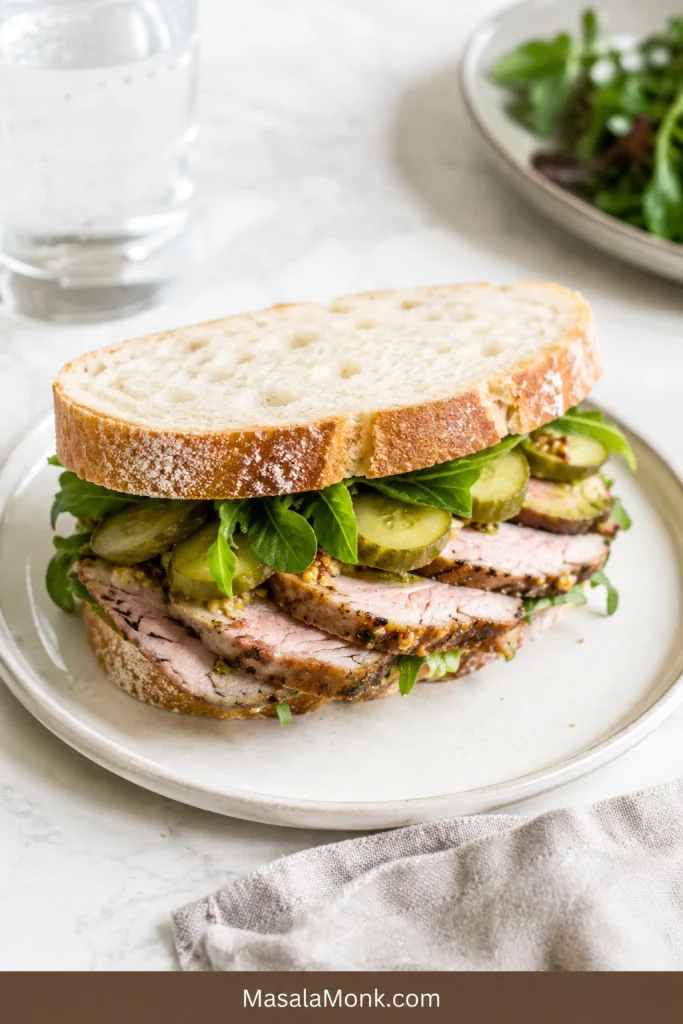
Sourdough sandwich with thin cold pork tenderloin slices, crisp greens, pickles and mustard-style dressing.
Cold tenderloin is easier to eat when sliced thin. Mustard, pickles and other bright, acidic ingredients also reach more of each bite.

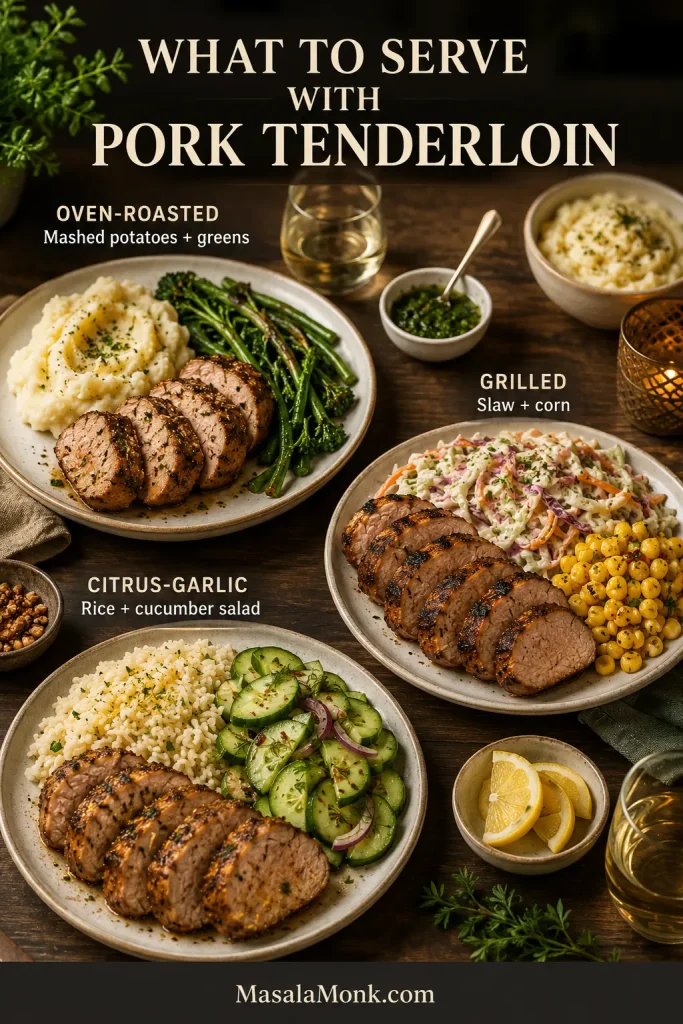
What to Serve With Marinated Pork Tenderloin

The pork already brings plenty of savory-sweet flavor, so give it sides that either catch the juices or freshen up the plate.

Three pork tenderloin pairings: roasted pork with mashed potatoes, grilled pork with slaw and corn, and citrus-garlic pork with rice.
Match the sides to the cooking style: creamy with roasted pork, crisp with grilled pork, fresh and bright with citrus-garlic.

Slice the rested tenderloin into medallions and spoon the board juices back over the warm cut surfaces. Bring the serving sauce to the table instead of burying the whole platter in it. The best bites have the contrast we’re after from the beginning: browned, garlicky edges and a center that still feels tender and juicy.

Frequently Asked Questions

Do I need to brine pork tenderloin before marinating?

No. The soy-based marinade already brings salt, so a separate brine adds another sodium layer and can push the pork toward overly salty or cured-tasting.

Do I need to poke holes in pork tenderloin?

No. An even coating is enough. Poking holes is unnecessary.

Do I need to bring pork tenderloin to room temperature before cooking?

No. Take it from the refrigerator, prepare the outside for your cooking method and let the thermometer tell you when the center is finished.


Marinate for Flavor. Cook for Juiciness.

Your tenderloin does not have to match the one in a recipe photo. Use its weight to decide how much marinade to start with, make sure every side is coated, then let thickness and temperature guide the cooking.

Get those pieces right and the first slice tells you you’ve nailed it: caramelized and garlicky around the edges, moist through the middle, with warm juice gathering on the board and enough sauce nearby to catch with the next bite.

If you make it, tell us the weight of your tenderloin, how long you marinated it, which cooking method you used and how long yours actually took. Those details give the next cook something genuinely helpful to compare with their own pork.
← Back to recipe · ↑ Back to top

Posted on Leave a comment

Air Fryer Pork Tenderloin Recipe: Juicy, Easy, No-Dry Timing Guide

Sliced air fryer pork tenderloin with browned edges, tender center, roasted potatoes, green beans, and juices on a serving board.

Air fryer pork tenderloin is the kind of dinner that feels almost too easy when it goes right. The outside turns browned and savory, the inside stays juicy, and you can slice it onto plates in about half an hour without heating the oven.

You are not trying to make fancy pork here. The goal is smoky browned edges, tender slices, and just enough pan-style flavor to make dinner feel like more than a shortcut. Everything comes down to three things: cook it hot, check it early, and rest before slicing.

Because pork tenderloin is lean, a few extra minutes can turn glossy slices into dry pork, especially if your piece is small, your air fryer runs hot, or the package in front of you is actually pork loin instead of tenderloin.

This guide is built for the real-life versions too: small tenderloins, hot air fryers, pre-marinated packs, pork fillet labels, frozen pork, and the moment you realize your potatoes need longer than the pork.

Quick Answer

Cook pork tenderloin in the air fryer at 400°F / 200°C, or 205°C if your air fryer uses exact 5-degree settings, until the middle of the pork reads 145°F / 63°C. Most 1–1½ lb / 450–680g tenderloins take about 18–24 minutes, but small or slim pieces can finish sooner. Start checking early, rest for 5 minutes, then slice across the grain.

The clock gets you close. A temperature check saves the pork.

What success looks like

The pork should have browned, smoky-garlic edges, a moist center, and slices that look glossy instead of chalky. Spoon any board juices back over the sliced pork before serving. That little step makes the whole plate feel more finished.

Texture check: Before serving, look for a moist center and glossy slices rather than a chalky cut surface.

Close-up of sliced air fryer pork tenderloin with browned crust, moist center, and juices on a wooden cutting board.
Look for slices that stay glossy in the center after resting; that shine is the visual clue that the pork was not cooked too long.

Ready to cook? Jump to the recipe cardNeed timing? See the chart

Make this when

  • You want pork that slices juicy, not dry and gray.
  • You need dinner fast, but still want it to feel complete.
  • You bought pork tenderloin or pork fillet and need clear air fryer timing.
  • You are using a Ninja Foodi, basket air fryer, oven-style air fryer, or pre-marinated pack.
  • You want potatoes, carrots, green beans, rice, salad, or a simple sauce on the side.

Air Fryer Pork Tenderloin Recipe Card

This is the fast version: season the pork with a smoky garlic-Dijon rub, air fry it hot, check once before it overcooks, and rest it so the slices stay juicy.

Recipe at a Glance

RecipeAir Fryer Pork Tenderloin
Best cutPork tenderloin or pork fillet, 1–1½ lb / 450–680g
Prep time5–10 minutes
Cook time18–24 minutes for most tenderloins
Start checking13–14 minutes for small/slim pieces; 16–18 minutes for standard pieces
Rest time5 minutes
Total timeAbout 28–35 minutes
Servings4
Air fryer temperature400°F / 200°C, or 205°C if available
Internal temperature145°F / 63°C in the center, then rest

Ingredients

  • 1 pork tenderloin, 1–1½ lb / 450–680g
  • 1 tablespoon / 15 ml olive oil or avocado oil
  • 1 teaspoon / 5 ml Dijon mustard
  • 1–2 teaspoons brown sugar or honey
  • 1 teaspoon smoked paprika
  • 1 teaspoon garlic powder
  • ½ teaspoon onion powder
  • ¾–1 teaspoon kosher salt, depending on size and seasoning
  • ½ teaspoon black pepper
  • Pinch of cayenne, chili powder, or red pepper flakes, optional

Method

  1. Preheat the air fryer to 400°F / 200°C, or 205°C if your air fryer allows that setting. Give it 3–5 minutes if your model recommends preheating.
  2. Pat the pork dry. Remove any tough silver skin if present.
  3. Mix the oil, Dijon mustard, brown sugar or honey, smoked paprika, garlic powder, onion powder, salt, pepper, and optional chili in a small bowl.
  4. Rub the seasoning mixture all over the tenderloin.
  5. Place it in the air fryer basket with space around it. Cut it in half crosswise if needed so it fits without curling tightly.
  6. Air fry for 10–12 minutes, then flip.
  7. Continue cooking until the middle reaches 145°F / 63°C, checking early for small or slim tenderloins.
  8. Rest loosely tented for 5 minutes, then slice across the grain into thick, juicy pieces.

Do not cook by time alone. A slim 1 lb tenderloin and a thick 1½ lb tenderloin should not be treated like the same piece of meat.

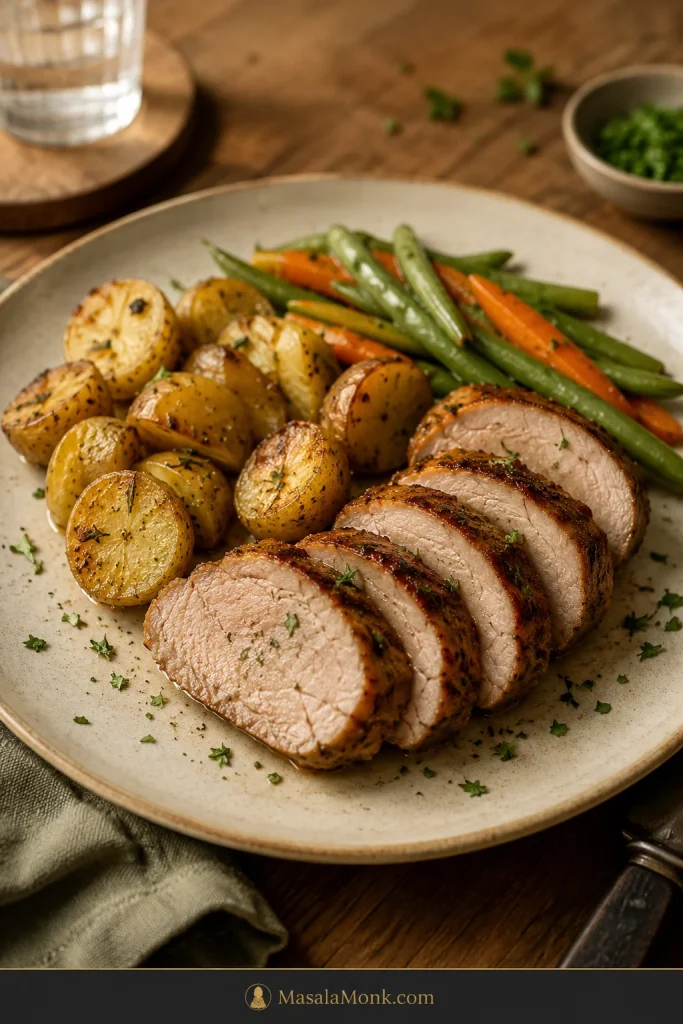
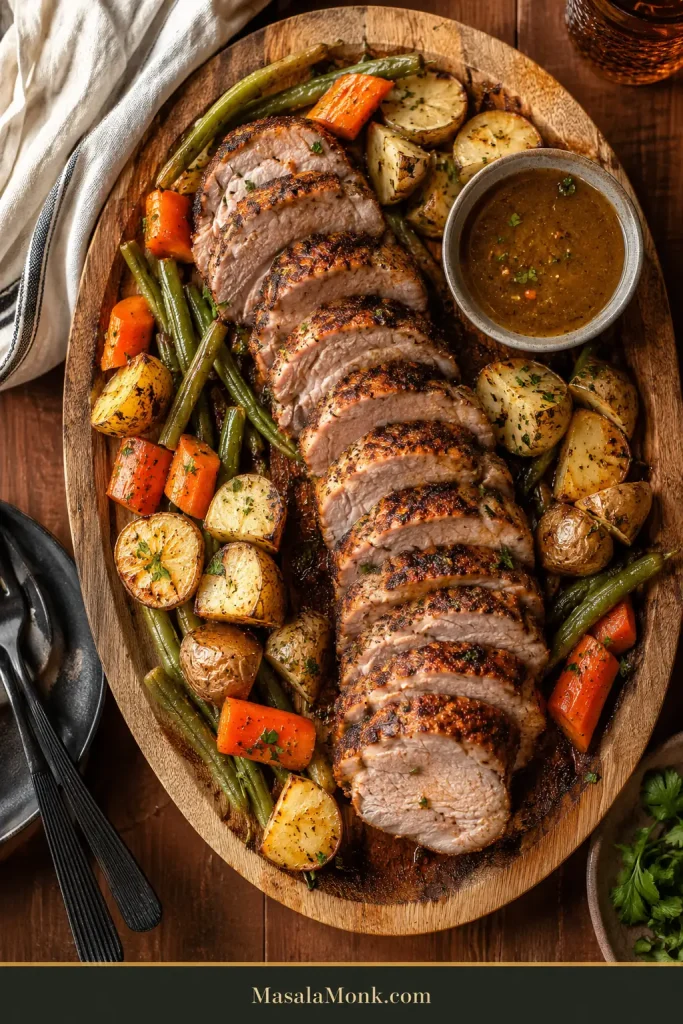
A simple plate of potatoes and green vegetables turns the tenderloin into a full weeknight dinner after the main method is done.

Plate of sliced pork tenderloin served with roasted potatoes, green beans, carrots, and herbs.
For a fast weeknight plate, pair pork tenderloin slices with potatoes and green vegetables so the air fryer recipe feels like a full meal, not just the main protein.

From here, the things that change the result are the cut, the thickness, the air fryer style, and when you stop cooking. That is what the rest of the guide helps you control.

Table of Contents

Choose your path

With a plain tenderloin, start with the recipe card and cooking chart. For a package labeled pork loin filet, check the cut section before you season anything. Adding potatoes or carrots? Read the sides section first so the pork does not wait around while the vegetables finish.

Why This Works

The air fryer works beautifully for pork tenderloin because the cut is small enough to cook through before the outside has time to dry out. You get browned edges without babysitting a skillet, as long as you stop at temperature.

The flavor is simple but satisfying: smoky, garlicky, lightly tangy, and just sweet enough to help the edges brown. Oil helps the rub toast instead of sitting dry on the surface. Dijon adds a quiet tang without making the pork taste mustardy. Brown sugar or honey helps the outside color. The short rest keeps the slices glossy when you cut in.

When it comes out right, the edges are smoky and browned, the slices look moist, and the mustard-garlic rub tastes like it took more effort than it did.

That is also why this tenderloin cooks hotter than some air fryer pork chops. Pork chops are flatter and can tighten quickly, so if the package in front of you is actually chops, switch to this air fryer boneless pork chops guide instead.

The no-dry rules

  • Use pork tenderloin, not pork loin. The cuts are different and need different timing.
  • Cook hot, but check early. 400°F / 200°C browns well, but small pieces finish quickly.
  • Test the middle, not the tapered end. The thin tail is not the doneness judge.
  • Rest before slicing. Five quiet minutes gives you glossier, juicier slices.
  • Do not chase “no pink.” A slight blush can be normal when the pork is cooked to temperature.

Before any of those rules can help, though, the cut has to be right.

Pork Tenderloin vs Pork Loin vs Pork Fillet

This is worth checking before you cook, because the wrong cut is the easiest way to follow the recipe perfectly and still end up disappointed. Pork tenderloin, pork loin, pork loin filet, pork fillet, and pork roast sound similar, but they do not cook the same way.

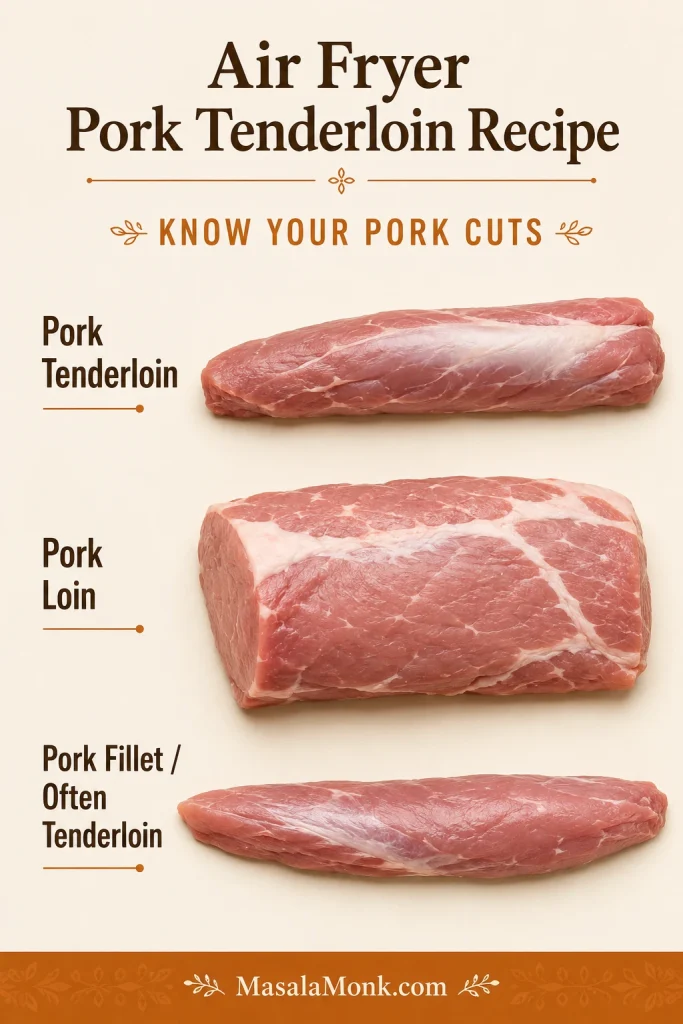
How to Identify the Right Cut

Cut check: Shape matters here; this visual helps you confirm tenderloin or pork fillet before using the air fryer timing.

Comparison image showing pork tenderloin, pork loin, and pork fillet with different shapes and sizes.
A quick shape check here can save the whole recipe: tenderloin and pork fillet are usually long and narrow, while pork loin is wider and cooks on a different timeline.
Package saysWhat it likely isUse this recipe?
Pork tenderloinLong, narrow, lean cut, usually 1–1½ lbYes
Pork filletOften the same cut as pork tenderloin in UK, Australia, and some grocery labelingYes, if long, narrow, and about 450–680g / 1–1½ lb
Pork loinWider, larger roast-style cutNo, it needs different timing
Pork loin filetCan be a branded or pre-marinated loin-style cut; check shape and weight carefullyMaybe, only if it looks like tenderloin
Pork roastUsually larger and wider than tenderloinNo

When to Switch Recipes

If it is wide like a roast, stop. This method is for a long, narrow pork tenderloin or pork fillet. A pork loin roast needs a different timing plan.

If your package turns out to be a bigger pork loin, you are not stuck — just switch methods. MasalaMonk already has a dedicated slow cooker pork loin recipe and a smoked pork loin recipe for that larger cut.

If you have pork tenderloin but want another cooking method, see the pork tenderloin in oven guide or this softer, hands-off slow cooker pork tenderloin recipe.

Cut confirmed? Back to the recipe cardGo to the cooking time chart

Ingredients for Juicy Pork Tenderloin

The ingredient list is short on purpose. Pork tenderloin does not need to be buried under sauce. It needs enough fat for browning, enough salt for flavor, and a rub that gives the air fryer something to toast.

The result is a smoky garlic crust with a little mustardy brightness and just enough sweetness to make the edges taste dinner-worthy, not sugary.

What Each Ingredient Does

Gather the rub ingredients before preheating so the pork can go from seasoning to basket without losing momentum.

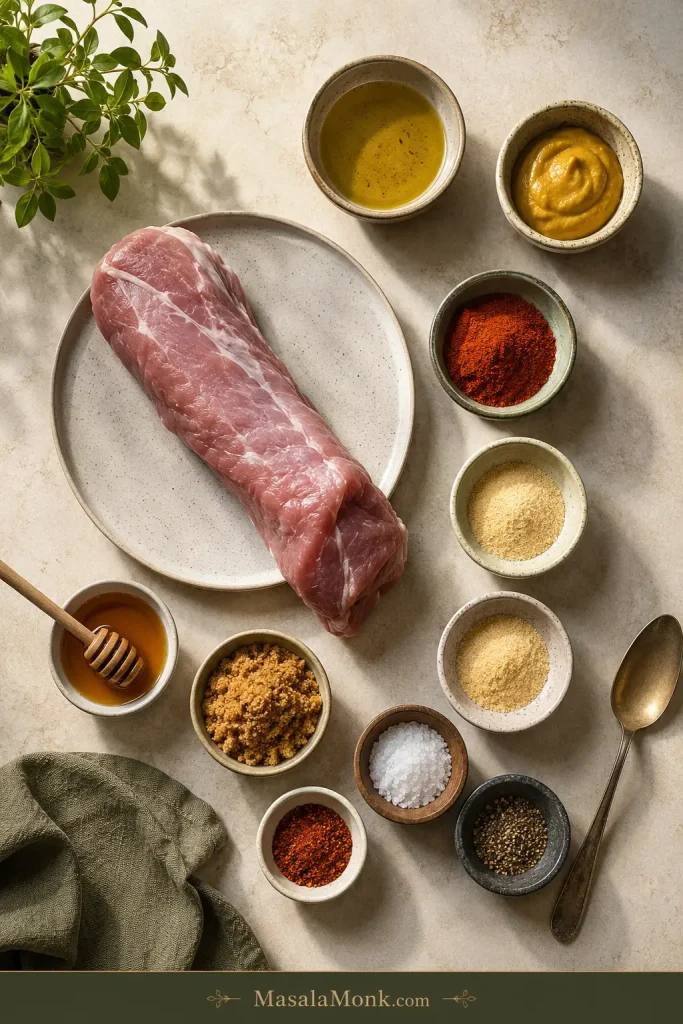
Overhead view of pork tenderloin ingredients including raw pork, oil, Dijon mustard, smoked paprika, garlic powder, onion powder, salt, pepper, honey, and brown sugar.
This short ingredient list works because each part has a job: oil helps the rub cling, Dijon adds brightness, and paprika plus garlic build the crust.
IngredientUS amountMetric amountWhy it helps
Pork tenderloin1–1½ lb450–680gThe ideal size for this method
Olive oil or avocado oil1 tbsp15 mlHelps browning and seasoning coverage
Dijon mustard1 tsp5 mlAdds tang and helps the rub cling
Brown sugar or honey1–2 tsp5–10 mlBalances lean pork and helps browning
Smoked paprika1 tsp2–3gAdds color and smoky depth
Garlic powder1 tsp3gMain savory note
Onion powder½ tsp1–2gRounds out the rub
Kosher salt¾–1 tsp4–6gPrevents bland pork
Black pepper½ tsp1gAdds gentle heat
Cayenne or chili powderPinchPinchOptional heat

Salt and Seasoning Notes

For smaller or pre-marinated tenderloins, stay near the lower salt amount. Use the higher amount for a plain, larger one. When the pork is already seasoned, injected, or packed in a salty marinade, reduce the salt in the rub.

With fine salt or table salt instead of kosher salt, start with about ½ teaspoon for a 1 lb / 450g tenderloin and adjust next time. Fine salt packs more tightly, so the same spoonful tastes saltier.

Easy Substitutions

  • No Dijon? Use yellow mustard, whole-grain mustard, or skip it and add a small splash of lemon juice or vinegar for brightness.
  • No smoked paprika? Use regular paprika with a pinch of chili powder, cayenne, or cumin.
  • No brown sugar? Use honey or maple syrup. Skip the sweetener if your marinade is already sweet.
  • No avocado oil? Olive oil works well. Use a light coating so the rub clings and browns.
  • Using a salty seasoning blend? Reduce or skip the added salt until you know how salty the blend is.

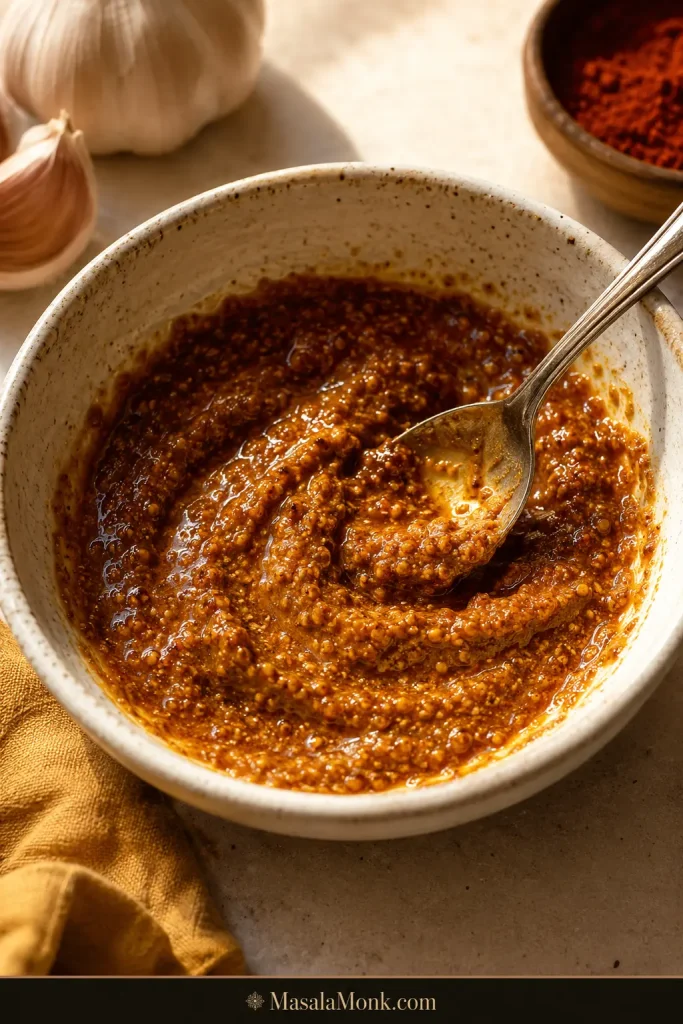
Rub texture: Aim for a loose paste that coats the pork evenly instead of dropping into the basket.

Bowl of smoky garlic Dijon rub with a spoon, made with mustard, paprika, oil, garlic, and seasonings.
The rub should look like a loose paste so it clings to the pork instead of dropping off as dry seasoning in the basket.

Can I use a marinade instead?

Yes. For a simple marinade-style version, mix 1 tablespoon oil, 2 teaspoons soy sauce, 1 teaspoon Dijon mustard, 1 tablespoon honey or brown sugar, 1 teaspoon garlic powder, and 1–2 teaspoons lemon juice or vinegar. Marinate for 20–30 minutes if you have time, then air fry the same way and check the internal temperature.

Equipment You Need

You can make this with basic kitchen tools, but the thermometer is the one that matters. Pork tenderloin is too lean and too quick-cooking for blind timing.

  • Air fryer
  • Instant-read thermometer
  • Tongs
  • Small bowl for the seasoning paste
  • Measuring spoons
  • Paper towels
  • Cutting board
  • Sharp knife for trimming silver skin and slicing

Basket Air Fryer, Oven-Style Air Fryer, and Ninja Foodi Notes

Air fryer style changes how quickly the outside browns, so use this as a first-check guide before trusting one fixed time.

Air fryer typeWhat to expectFirst check
Basket air fryerBrowns fastest with strong direct airflow13–16 minutes
Oven-style air fryerMay need a few extra minutes16–18 minutes
Ninja Foodi or Foodi GrillCan brown aggressively from the top13–15 minutes
Small air fryerCut the tenderloin in half; do not coil it tightlyBased on thickness
Air fryer with linerBrowning can slow if airflow is blockedCheck color and temperature early

How to Prepare the Pork

A good result starts before the basket: dry the surface, season all sides, and remove any tough silver skin so the finished slices are tender from edge to edge.

Prep Steps Before Air Frying

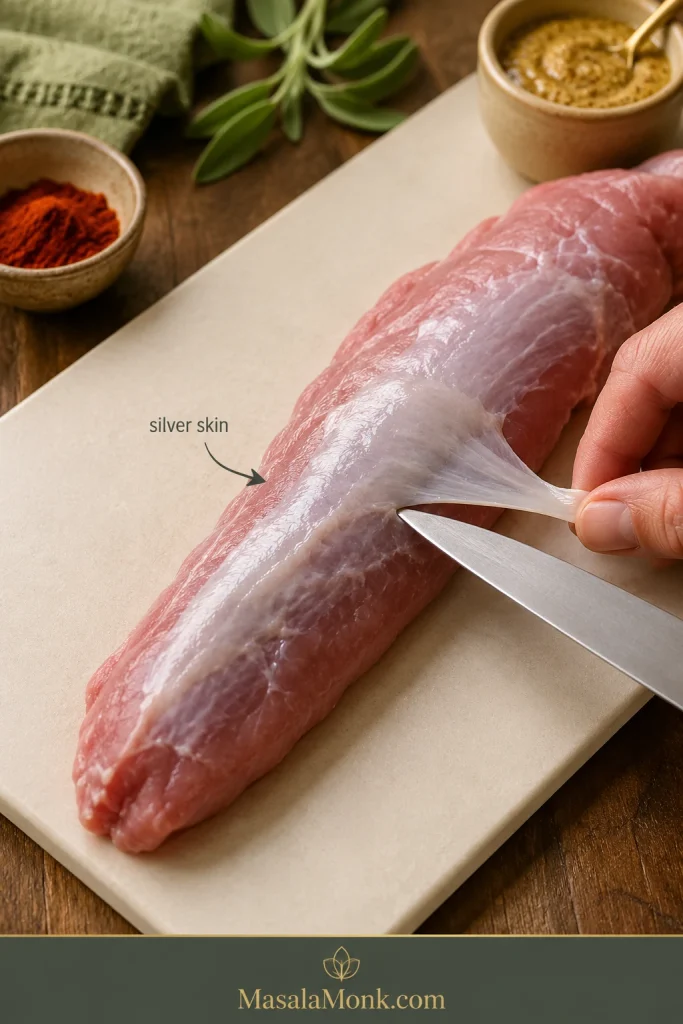
Look for the shiny strip before seasoning; trimming it now prevents chewy bites later.

Raw pork tenderloin on a cutting board with silver skin being lifted and trimmed with a knife.
Trim the silver skin before cooking, otherwise that shiny strip stays tough even when the pork itself is perfectly done.
  1. Pat it dry. Surface moisture slows browning.
  2. Remove silver skin. This is the shiny, tough membrane that does not soften well during cooking. Slide a thin knife under it and trim it away.
  3. Trim lightly. Pork tenderloin is already lean. Remove loose fat or ragged edges, but do not over-trim.
  4. Protect the thin tail. If the tapered end is very thin, tuck it slightly under so it does not overcook too far ahead of the center.
  5. Season all over. Coat the top, bottom, sides, and tapered end.
  6. Let it sit briefly. Even 5–10 minutes while the air fryer preheats helps the seasoning settle.

Seasoning Check Before Air Frying

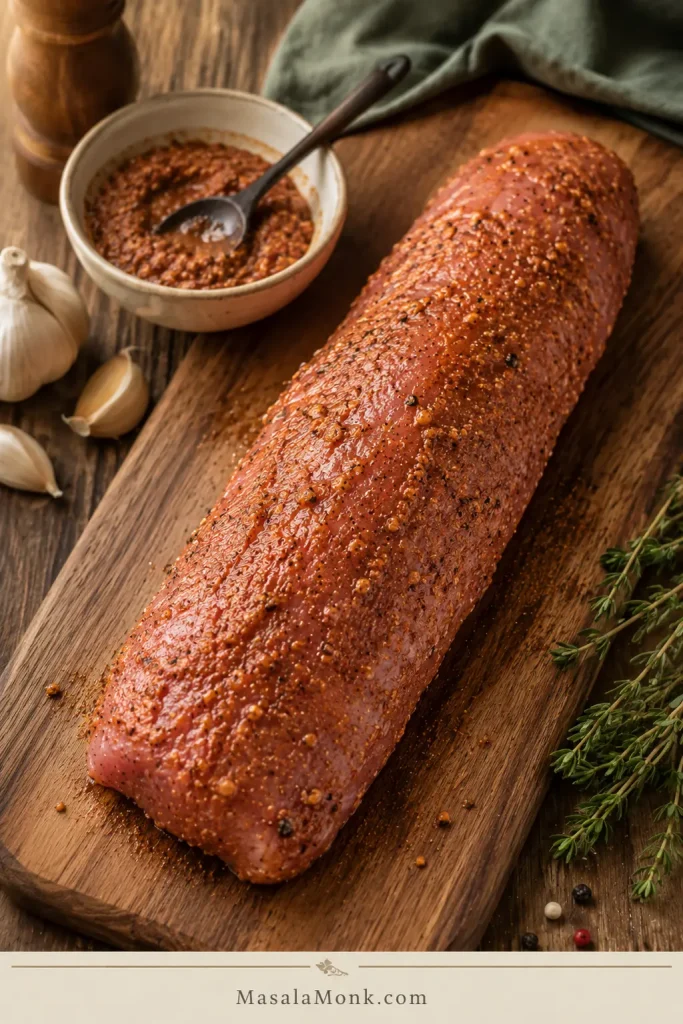
The tenderloin should look evenly coated before cooking, with no bare patches on the sides or tapered end.

Raw pork tenderloin coated evenly with reddish garlic Dijon seasoning paste on a wooden board.
Once the tenderloin is evenly coated, the paprika-Dijon rub can toast into a savory crust while the center stays protected from drying out.

How to Cook It in the Air Fryer

This is where the pork starts becoming dinner, not just a timing problem. Once it is seasoned, the cooking is simple. The only trick is not walking away for too long the first time you make it in your air fryer.

Basket spacing: Leave visible room around the pork so hot air can reach the sides and brown the surface.

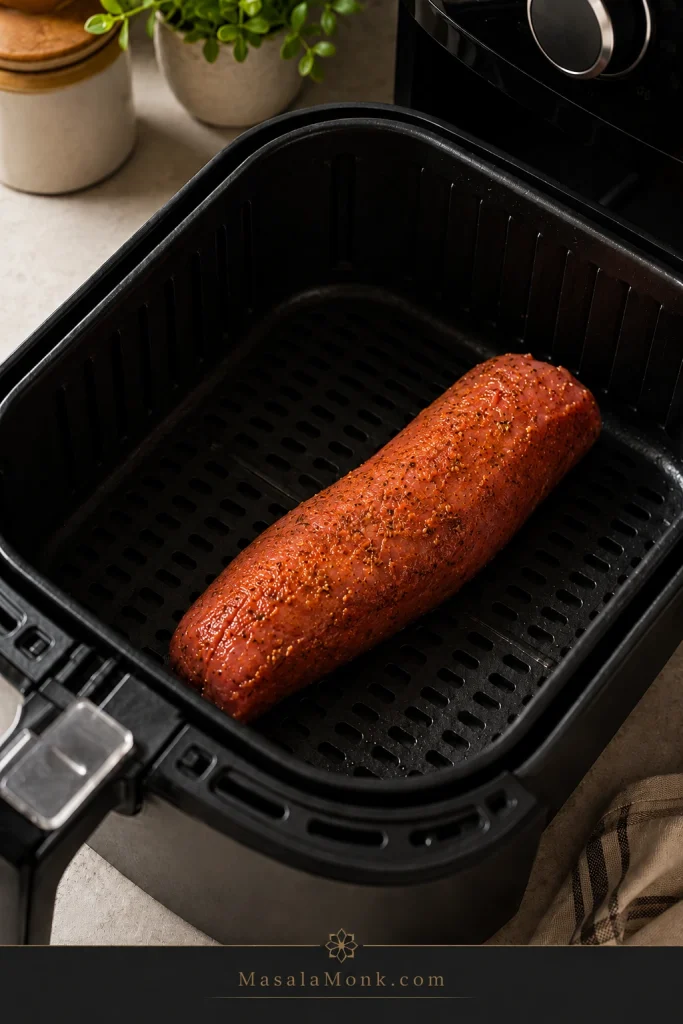
Seasoned raw pork tenderloin placed inside an air fryer basket with clear space around it.
Leave open space around the pork tenderloin in the air fryer basket; that airflow helps the surface brown instead of steaming.

Step-by-Step Air Fryer Method

  1. Preheat the air fryer. Set it to 400°F / 200°C, or 205°C if available. Preheat for 3–5 minutes if your air fryer recommends it.
  2. Season the pork. Rub the oil, mustard, and spice mixture over the whole tenderloin.
  3. Place it in the basket. Leave space around the meat so hot air can circulate. Cut it in half crosswise if it is too long.
  4. Cook the first side. Air fry for 10–12 minutes. The outside should be starting to color, but it does not need to look deeply browned yet.
  5. Flip. Turn the tenderloin with tongs. Some juices in the basket are normal.
  6. Watch the surface. By the time it is close, the rub should smell toasted and savory, and the outside should look browned in patches rather than wet.
  7. Finish cooking. Continue air frying until the middle reaches 145°F / 63°C.
  8. Rest. Transfer to a board and rest loosely tented for 5 minutes.
  9. Slice. Cut across the grain into thick slices. The center should look moist, not chalky.

After the Flip

After the flip, browned patches are enough; from this point, temperature matters more than chasing a darker crust.

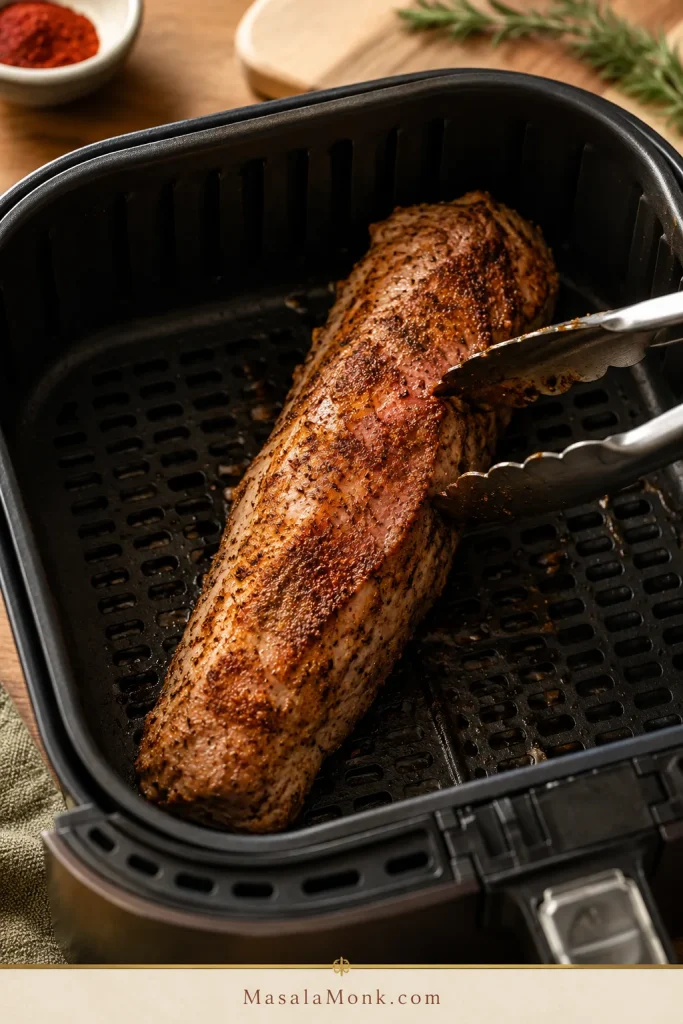
Pork tenderloin halfway cooked in an air fryer basket with browned seasoning patches after being flipped.
After flipping, the surface should start browning in patches; from here, rely on the thermometer rather than waiting for the outside to get darker.

When the Outside Browns Fast

Dark edges before a done center usually mean the heat is too aggressive. Lower the air fryer to 375–390°F / 190–200°C for the remaining minutes. If the pork is cooked through but pale, brush it with a little oil, honey mustard, or pan juices and air fry for 1–2 more minutes only if it is not already above temperature.

Rest and Slice Before Serving

Resting is not just waiting. It helps the juices settle before you slice. Spoon those juices back over the meat, and the pork tastes more finished.

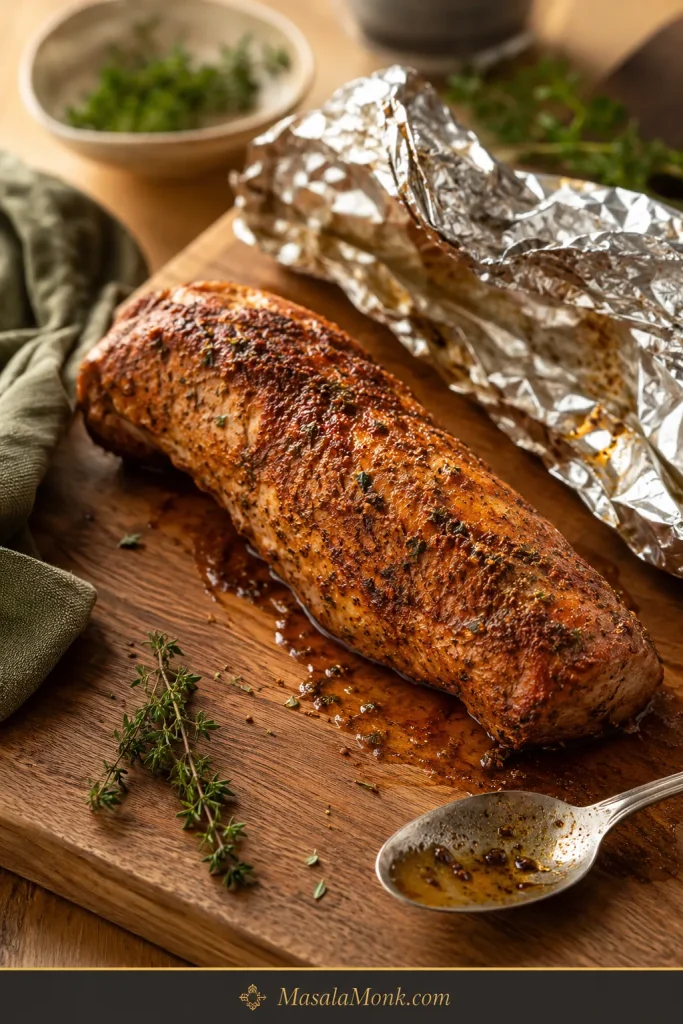
Rest the pork here before slicing so the juices settle and the board juices can be spooned back over the meat.

Whole cooked pork tenderloin resting on a wooden board with foil nearby, herbs, a spoon, and visible board juices.
Give the pork a few quiet minutes here; that short rest keeps more juices in the slices and leaves enough on the board to spoon back over the top.

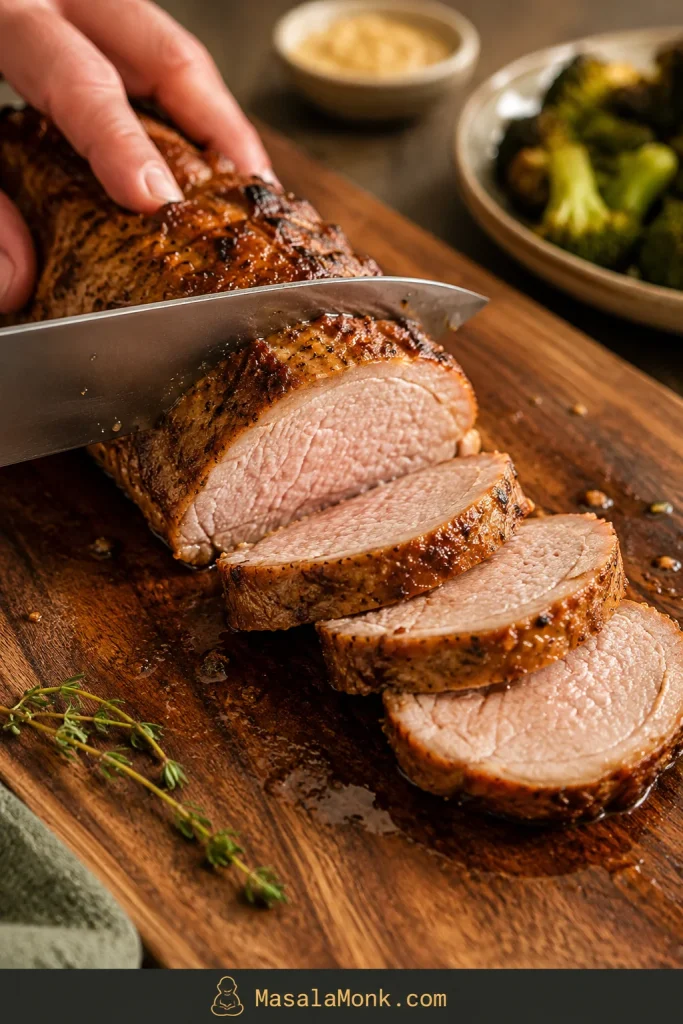
When the tenderloin has rested, use a steady cross-grain cut to make thick slices that stay moist on the plate.

Cooked pork tenderloin being sliced with a knife into thick pieces on a wooden cutting board.
Then slice across the grain into thick pieces; thinner slices dry out faster, while thicker slices hold moisture better on the plate.

Need exact timing? See the chartCheck the temperature guide

Cooking Time Chart by Weight

The chart is here to keep you from guessing, not to make the recipe complicated. Use the earliest check time when cooking a new brand, a new air fryer, or a pre-marinated pack.

First time with this air fryer? Watch closely once. After that, your own air fryer timing becomes the shortcut.

Use the timer to know when to start checking, then let the thermometer decide when the pork is done.

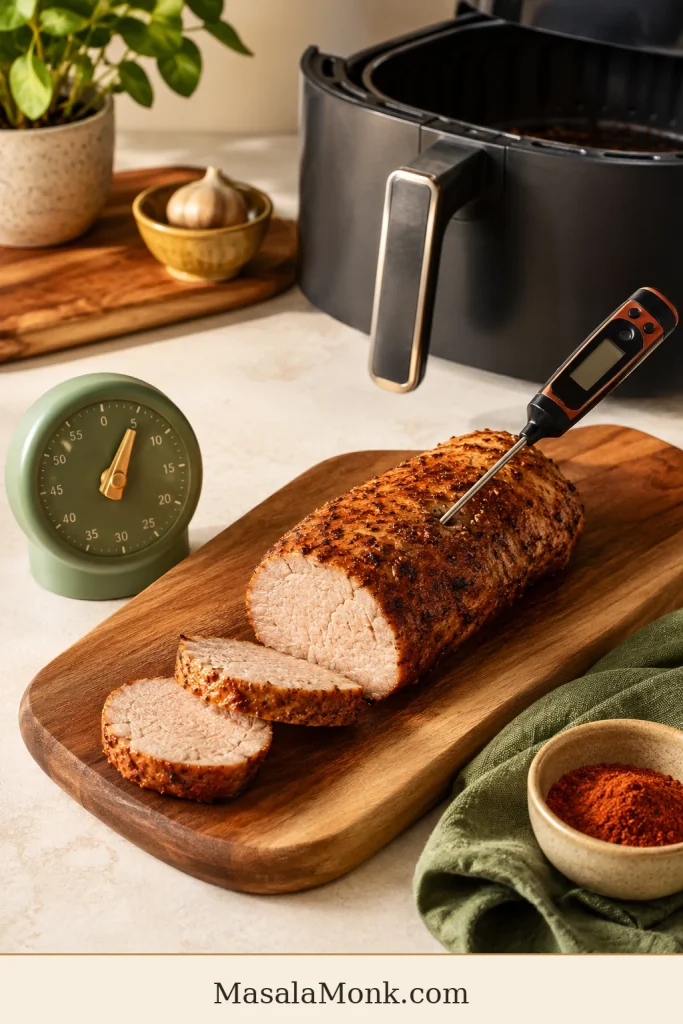
Cooked pork tenderloin on a cutting board with an instant-read thermometer, kitchen timer, air fryer, spice bowl, and green towel.
Your timer helps you know when to start checking, while the thermometer tells you when to stop; together, they make air fryer pork tenderloin repeatable.
Pork tenderloin sizeMetricAir fryer tempStart checkingLikely total time
Small or slim tenderloin450g / 1 lb400°F / 200°C13–14 min14–18 min
Standard tenderloin565g / 1¼ lb400°F / 200°C16 min18–22 min
Larger tenderloin680g / 1½ lb400°F / 200°C18–20 min20–26 min
Very thick tenderloin700g+ / 1½ lb+390–400°F / 200–205°C20 min24–28 min
Cut in half to fitSame total weight400°F / 200°C13–16 minDepends on thickness, not length

How to Use the Chart

Cutting a tenderloin in half does not automatically cook it in half the time. Thickness matters more than length. Pieces that stay thick in the center still need time, while slim pieces finish faster.

Save your first successful timing. Once you know how your air fryer handles a 1 lb or 1½ lb tenderloin, this recipe becomes much easier the next time.

If your “very thick tenderloin” is actually wide like a roast, pause and check the package. It may be pork loin, not tenderloin, and it needs a different cooking plan.

Internal Temperature and Pink Pork

Pork tenderloin is done when the middle of the thickest part reaches 145°F / 63°C, followed by a short rest. Check the largest section, not the thin tail end.

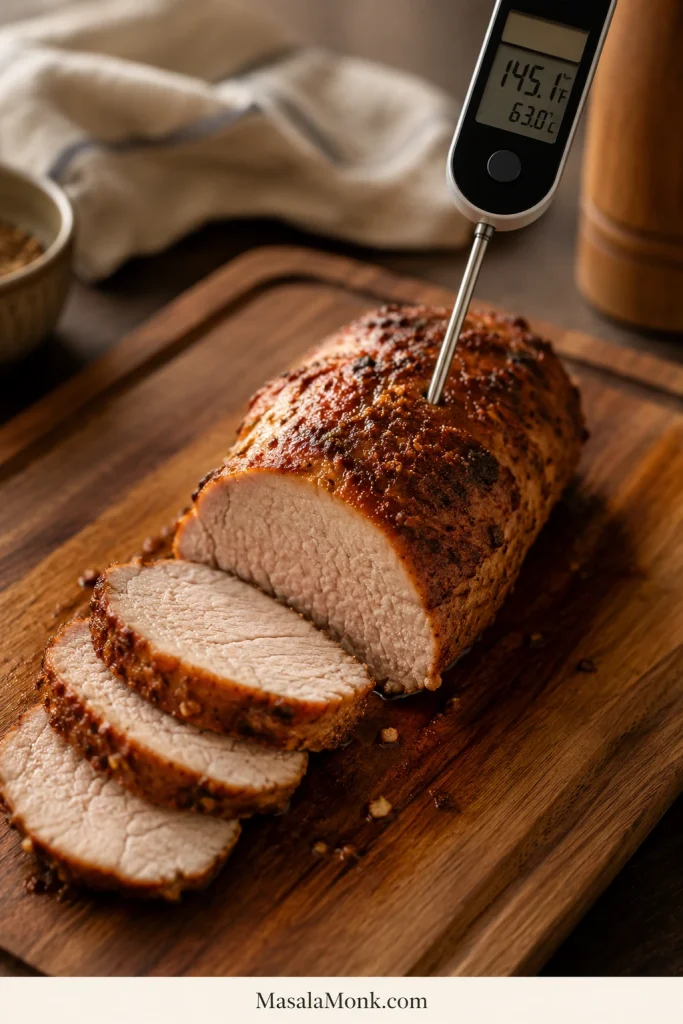
Temperature check: Measure the thickest center, not the thin end, when checking for 145°F / 63°C.

Instant-read thermometer inserted into the thickest center of cooked pork tenderloin on a wooden cutting board.
The thermometer should go into the thickest center, not the thin end; pull the pork at 145°F / 63°C so the slices stay tender after resting.

For food safety, FoodSafety.gov lists pork steaks, roasts, and chops at 145°F / 63°C with a 3-minute rest.

The National Pork Board pork cooking temperature guide gives the same practical guidance: 145°F, a short rest, and a digital thermometer.

What Pink Pork Means

That is why a slight blush of pink can be normal. Pink does not automatically mean raw; temperature tells you more than color.

For beginners, keep the target simple: cook to 145°F / 63°C, then rest for 5 minutes. Experienced cooks may start watching closely around 140–143°F because carryover can raise the final temperature during rest, but the clearest serving target for this recipe is still 145°F / 63°C.

Once you trust the thermometer, pork tenderloin stops being stressful. Instead of guessing by color or cutting into it five times, cook to the number, let it rest, and slice when the juices have settled.

Doneness guide

  • 140–143°F / 60–62°C: Watch closely here only if you understand carryover cooking and will rest the pork immediately.
  • 145°F / 63°C: Clearest finished target for most home cooks.
  • 150°F / 66°C: Still usable, but getting firmer.
  • 160°F / 71°C and above: Much drier, especially in lean tenderloin.

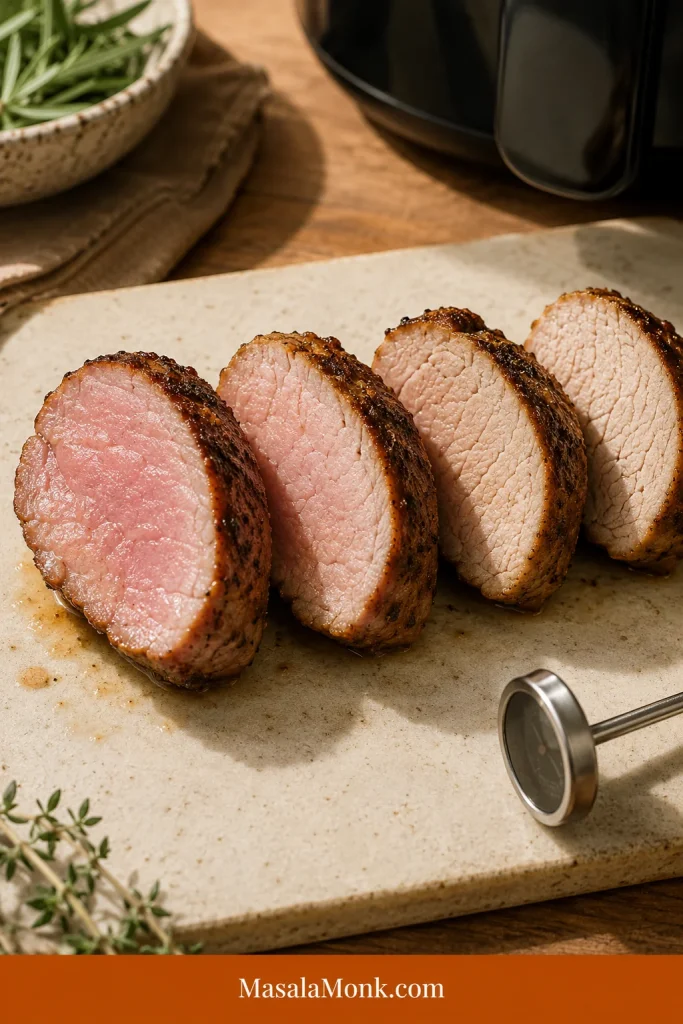
This visual pairs with the doneness guide: as pork cooks longer, the slices turn paler, firmer, and less glossy.

Four pork tenderloin slices arranged from pink and moist to pale and firmer, with a meat thermometer nearby.
As pork cooks longer, the slices turn paler and firmer; a slight blush with the right internal temperature can still mean tender, safe pork.

Nervous about dryness? Troubleshoot itBack to the recipe card

Why It Turns Dry — and How to Prevent It

This is the section to read if you are nervous, using a new air fryer, or already worried you left the pork in a minute too long. Dryness usually comes down to timing, cut, or resting. The good news is that all three are fixable.

ProblemWhat happensFix
Cooking by time onlyThe pork can overcook before you noticeUse the time chart, then do the doneness check
Using pork loin instead of tenderloinThe cut is larger and needs different timingCheck the package and shape before cooking
Very small tenderloinIt cooks faster than the recipe rangeStart checking at 13–14 minutes
No restJuices run out when slicedRest 5 minutes before cutting
Sugary marinade burns earlyThe outside darkens before the middle is doneCheck early or reduce the temperature slightly
Aggressive reheatingLeftovers become dry and firmReheat gently with sauce, broth, or butter

Match Your Result

Still not sure what happened? Match the result:

  • Outside dark, inside not ready: The heat was too aggressive, the rub was sugary, or the pork sat too close to the heating element. Lower the temperature for the remaining minutes.
  • Pale outside, dry inside: The pork likely cooked too long without enough surface oil or browning. Next time, dry it well, coat lightly with oil, and start checking earlier.
  • Only the thin end was dry: The tenderloin was tapered. Tuck the thin tail slightly under or expect the end pieces to cook faster than the center slices.

Dry pork is not ideal, but it is rarely beyond saving. Slice it thicker and serve it with something moist: pan juices, honey mustard, mushroom sauce, gravy, melted butter, broth, apple chutney, or a spoon of barbecue sauce.

If the slices need extra help, a spoon of creamy mushroom sauce turns slightly over-rested or lean pork into a much softer dinner plate.

Adding Potatoes, Carrots, or Green Beans

After the pork is under control, the real trick is keeping the sides from making it wait. You can cook it with potatoes, carrots, green beans, or sweet potatoes in the air fryer, but dense vegetables often take longer than the pork.

The pork is the part you protect. Vegetables are the part you can let keep cooking.

Best No-Dry Method

  1. Cook the tenderloin first.
  2. Rest it for 5–10 minutes.
  3. While it rests, cook or finish the potatoes, carrots, or green beans in the air fryer.
  4. Slice the pork right before serving.

This keeps the pork from waiting around while the potatoes catch up.

If you would rather keep the air fryer focused on the meat, make the potatoes separately. These ranch roasted potatoes give you crisp, salty-herby edges without forcing the tenderloin to wait in the basket.

One-Basket Dinner Example

For a simple one-basket version, use 1 lb / 450g pork tenderloin, 8 oz / 225g baby potatoes, and 1 large carrot. Halve the baby potatoes, slice the carrot thinly, toss the vegetables with oil and seasoning, and air fry them for 8–10 minutes at 390–400°F / 200–205°C. Add the seasoned pork, then cook until it reaches 145°F / 63°C. If the meat finishes before the vegetables are tender, remove and rest it while the vegetables cook a few minutes longer.

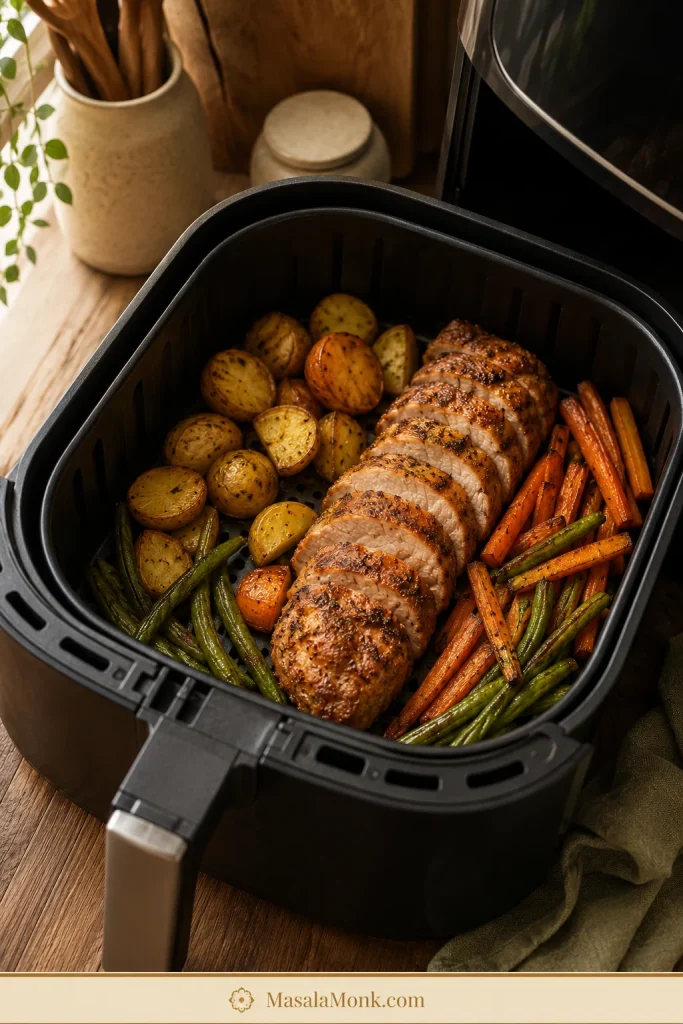
One-basket note: Keep the pork visible and let dense vegetables finish separately if they need more time.

Air fryer basket with sliced pork tenderloin, roasted baby potatoes, carrots, and green beans.
When making a one-basket dinner, keep the pork visible and give potatoes or carrots extra time so the vegetables finish without overcooking the meat.

Vegetable Timing Tips

SideBest way to handle it
Baby potatoesHalve them and give them a head start.
Regular potatoesCut into ½-inch cubes so they cook faster.
CarrotsSlice thinly or cut small; thick carrots need extra time.
Green beansAdd later or cook while pork rests.
Sweet potatoesCut small and expect them to need more time than green vegetables.

For a sweeter vegetable side, roasted carrots with honey, maple, or garlic work especially well with the smoky paprika and mustard in this pork rub.

Can You Cook It From Frozen?

Thawed is the recipe. Frozen is the emergency version.

A thawed tenderloin seasons better, browns better, cooks more evenly, and usually has a better texture. If you are staring at a frozen one and need a fallback, drop the heat and give it more time.

  • Use a lower temperature: about 330°F / 165°C.
  • Start checking around 30 minutes and expect roughly 33–38 minutes for many pieces, depending on thickness.
  • Start from frozen, then season once the surface softens enough for the rub to stick.
  • Flip halfway.
  • Check the middle, not just the browned outside.
  • Rest before slicing.

Do not cook a frozen double pack as one solid block. Separate the tenderloins first if they are frozen together. Do not use this fallback method for stuffed, rolled, or bacon-wrapped frozen tenderloin. Frozen breaded pork tenderloin is also a different product from raw whole tenderloin, so follow the package guidance and confirm doneness.

Smithfield, Hormel, and Pre-Marinated Packs

Pre-marinated packs are where label confusion shows up again. They are convenient, but some are pork tenderloin, some are pork loin filet, and some are wider, sweeter, or saltier than this recipe assumes.

These packs can still make an easy dinner; they just need a quick label check before they go into the basket.

Before cooking a pre-marinated pack, check the shape, salt level, sweetness, and final temperature instead of trusting the label alone.

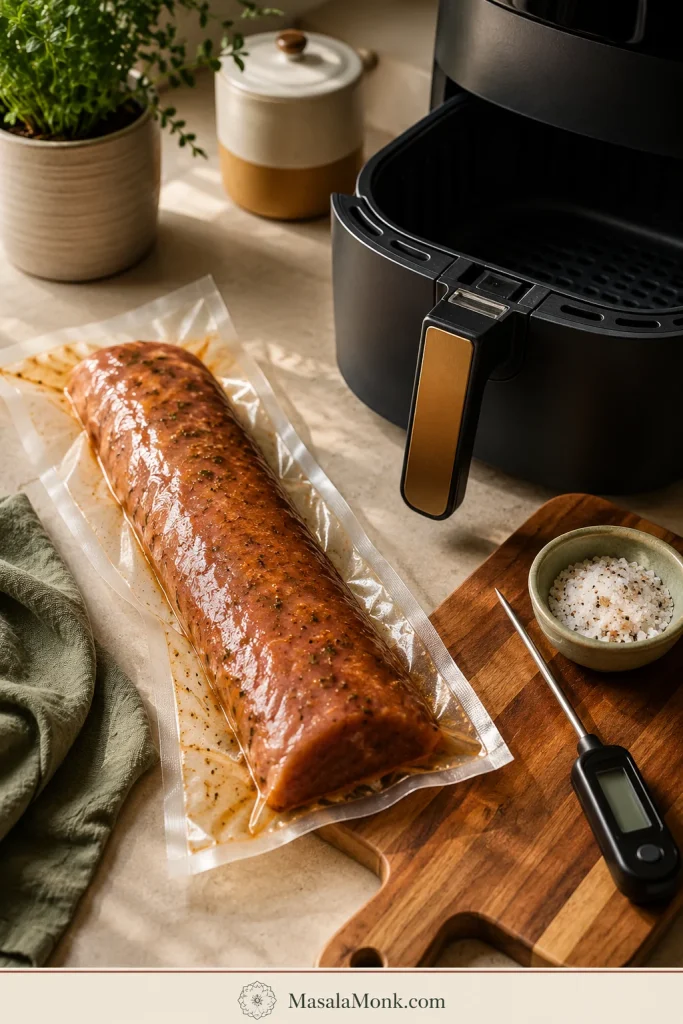
Unbranded pre-marinated pork tenderloin package beside an air fryer basket, thermometer, salt bowl, wooden board, and green towel.
Pre-marinated pork tenderloin can be convenient, but check the shape, salt level, sweetness, and final temperature instead of trusting package timing alone.

Pre-Marinated Package Checklist

  • Check the package name, weight, and shape before cooking.
  • Long, narrow packs around 1–1½ lb / 450–680g usually work with this method.
  • A pork loin filet label deserves a closer look. It may look long in the package but still be wider and denser than pork tenderloin.
  • Wider pork loin filet or roast-style packs need different timing.
  • Pat off excess wet marinade if it is very drippy.
  • Start checking around 15 minutes because sugar-heavy marinades can brown faster.
  • Dark edges early are a sign to check temperature before assuming the pork is done.
  • Use less added salt because many pre-marinated packs are already seasoned.

Package timing is a starting point, not a promise. Use the package for flavor guidance and your thermometer for doneness.

Air Fryer Pork Tenderloin Medallions

If you sliced the pork already, switch timing systems. Medallions cook much faster than a whole tenderloin, which makes them useful for rice bowls, salads, wraps, or a faster dinner plate.

  1. Slice the tenderloin into even medallions, about 1–1½ inches thick.
  2. Season both sides.
  3. Air fry at 350°F / 175°C for about 9–12 minutes, flipping once.
  4. Start checking around 7–8 minutes if the pieces are closer to 1 inch thick.
  5. Check the largest medallion for 145°F / 63°C, then rest briefly before serving.

Even thickness matters. Tiny end pieces cook faster than center-cut medallions, so pull them early if needed.

Flavor Variations

After you know when to stop cooking, the flavor can go almost anywhere. The timing usually stays close unless the tenderloin is thicker, smaller, wrapped, frozen, or heavily coated.

  • Honey mustard: Add extra Dijon and honey, then finish sliced pork with a small spoon of sauce.
  • BBQ rub: Use smoked paprika, brown sugar, garlic powder, onion powder, salt, pepper, and chili powder.
  • Garlic herb: Use garlic powder, thyme, rosemary, parsley, black pepper, and olive oil.
  • Cajun: Use Cajun seasoning, smoked paprika, garlic, and oil. Watch the salt if your blend is salty.
  • Soy-Dijon marinade: Use soy sauce, Dijon mustard, honey, garlic powder, and a little vinegar or lemon juice.
  • Spicy chili-garlic: Add chili flakes, cayenne, or chili paste to the oil and mustard mixture.
  • Bacon-wrapped: Cook more carefully because bacon needs time to render. Start checking early so the pork does not overcook while the bacon browns.

Choose honey mustard for a softer family-style dinner, Cajun for heat, garlic herb for mashed potatoes, and BBQ rub if you want leftovers for sandwiches.

After slicing, this honey mustard dressing can double as a bright pork drizzle, especially with the honey mustard or garlic herb versions.

With BBQ-style pork tenderloin, creamy coleslaw is a natural fresh side because it brings crunch, tang, and a little sweetness.

What to Serve with It

This pork tenderloin is flexible enough for a quick weeknight dinner, a meal-prep bowl, or a slightly nicer weekend plate. A few slices over mashed potatoes feels cozy; the same pork over rice with sauce becomes lunch tomorrow.

Once the pork is sliced, a platter with vegetables, potatoes, sauce, and board juices makes serving easier.

Family-style wooden platter with sliced pork tenderloin, roasted potatoes, carrots, green beans, herbs, and a bowl of sauce.
For serving, arrange sliced pork tenderloin with vegetables, potatoes, and sauce so each portion gets crust, tender center, and a little pan-style flavor.

Comfort sides

A classic comfort plate starts with sliced pork over creamy mashed potatoes, so the juices, mustard sauce, or mushroom gravy have somewhere to land.

Garlic mashed potatoes are the richer version, especially if you are skipping a sauce. For a cozy family-style dinner, creamy macaroni and cheese also works well with something green or crisp on the side.

Fresh sides

Something crisp beside the warm pork helps balance the plate. A wedge salad gives you cold crunch, creamy dressing, and steakhouse-style balance. Green beans, simple salad, apple sauce, apple chutney, and roasted carrots also fit the plate.

Bowls, wraps, and easy leftovers

Sliced pork works well over rice, in wraps, on salads, or tucked into quick bowls with vegetables and sauce. If you are turning leftovers into rice bowls, this how to cook rice guide helps with stovetop, rice cooker, and Instant Pot timing.

Make-Ahead Tips

You can season the pork up to 12 hours ahead and refrigerate it covered. Let it sit at room temperature for 15–20 minutes while the air fryer preheats, then cook as directed.

If the rub contains a lot of salt or soy sauce, avoid over-marinating a very small tenderloin. The smaller the piece, the faster salty marinades can make the texture feel firm.

Storage and Reheating

Leftover pork is best when you treat it gently. The meat is lean, so reheating should warm it through without blasting away the moisture you protected during cooking.

NeedBest method
Fridge storageStore in an airtight container for 3–4 days.
Freezer storageFreeze sliced or portioned pork, wrapped well, for easier reheating.
Air fryer reheatingReheat slices at 350°F / 175°C for 3–4 minutes.
Microwave reheatingAdd a splash of broth, water, butter, or sauce and heat gently.
What to avoidDo not blast a whole cooked tenderloin in the air fryer again. It can dry out before the center warms.

Leftover slices are best used gently: tucked into rice bowls with sauce, folded into wraps, chopped into breakfast hash, or added cold to salads instead of aggressively reheated.

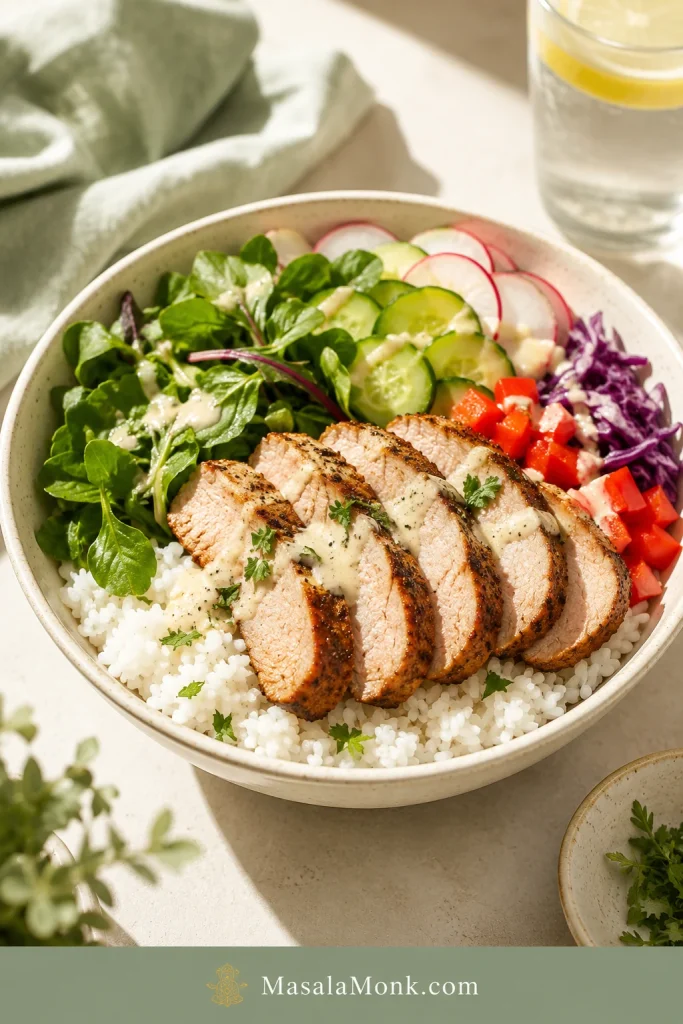
Extra slices can become an easy lunch with rice, crisp vegetables, greens, and a sauce that brings moisture back.

Rice bowl with sliced pork tenderloin, white rice, leafy greens, cucumber, radish, red pepper, purple cabbage, herbs, and sauce.
Finally, leftover air fryer pork tenderloin works beautifully in rice bowls because the sauce, greens, and crisp vegetables bring moisture back to the slices.

Go to FAQBack to the recipe cardBack to top

FAQ

How long do you cook pork tenderloin in the air fryer?

Most 1–1½ lb / 450–680g pork tenderloins take 18–24 minutes at 400°F / 200°C. Slim 1 lb pieces may finish closer to 14–18 minutes, while thick pieces may need 24–28 minutes. Use the chart, then confirm 145°F / 63°C in the center.

What temperature should I air fry pork tenderloin?

Set the air fryer to 400°F / 200°C, or 205°C if your model allows that setting. This gives good browning without a long cook time. If your air fryer runs very hot, reduce slightly to 375–390°F / 190–200°C and cook to temperature.

How do I keep it from drying out?

Use the right cut, check early, and rest before slicing. The mistake is usually not the seasoning — it is leaving lean pork in the air fryer a few minutes too long.

What if I do not have a meat thermometer?

A thermometer is strongly recommended because pork tenderloin is lean and cooks quickly. Without one, use the timing chart, slice into the thickest part, and check that the pork is hot all the way through with no raw-looking center. This is less reliable than a temperature check, so a small instant-read thermometer is worth it.

Is pork tenderloin the same as pork loin?

No. Pork tenderloin is long, narrow, and usually 1–1½ lb. Loin is wider, larger, and more roast-like. They need different cooking times, so checking the package before cooking matters.

Is pork fillet the same as pork tenderloin?

Often, yes. In many places, pork tenderloin is sold as pork fillet. If your pork fillet is long, narrow, and around 450–680g / 1–1½ lb, this air fryer method applies.

Can pork tenderloin be pink inside?

Yes. A slight blush can be normal when the pork is cooked to temperature. Do not keep cooking just to erase every hint of pink, or the tenderloin can turn dry.

Do I need to flip it?

Yes. Flipping helps the pork brown more evenly, especially in basket-style air fryers where the top often gets more direct heat than the bottom. Turn it after the first 10–12 minutes, then finish cooking.

Can I cook frozen pork tenderloin in the air fryer?

You can, but thawed is better for browning and texture. For frozen pork tenderloin, use about 330°F / 165°C, begin testing around 30 minutes, season once the surface softens, flip halfway, and confirm doneness before serving.

Can I cook pork tenderloin and potatoes together?

Yes, but potatoes need a head start because they usually take longer. Cook the pork first and finish the vegetables while it rests, or start small-cut potatoes 8–10 minutes before adding the pork.

How do I cook pre-marinated pork tenderloin?

Check that the package is actually pork tenderloin and not pork loin filet. Pat off excess wet marinade if needed, begin testing around 15 minutes, and cook until the pork reaches 145°F / 63°C. If the outside darkens early, check the temperature before assuming the middle is done.

Can I season pork tenderloin ahead of time?

Yes. You can season it up to 12 hours ahead and refrigerate it covered. Let it sit out for 15–20 minutes while the air fryer preheats so it is not going into the basket ice-cold.

How do I reheat leftovers?

Reheat slices at 350°F / 175°C for 3–4 minutes in the air fryer, or microwave gently with a splash of broth, water, butter, or sauce. Sliced pork reheats better than a whole tenderloin because it warms faster and needs less time.

Can I make pork tenderloin medallions in the air fryer?

Yes. Slice the tenderloin into even 1–1½ inch medallions, season both sides, and air fry at 350°F / 175°C for about 9–12 minutes, flipping once. Start checking early if the pieces are closer to 1 inch thick.

Final Tip

Once you know the cut, the temperature, and when to stop cooking, air fryer pork tenderloin becomes a very easy win: browned outside, juicy inside, and flexible enough for potatoes, salads, bowls, or leftovers the next day. The first cook teaches you your air fryer; after that, this becomes one of those dinners you can repeat without hovering over the basket.

If your air fryer runs especially hot or slow, drop your timing in the comments — model, weight, and total cook time are especially helpful. Someone else with the same style of air fryer may be comparing notes before dinner.

Back to recipe cardBack to cooking chartBack to top