
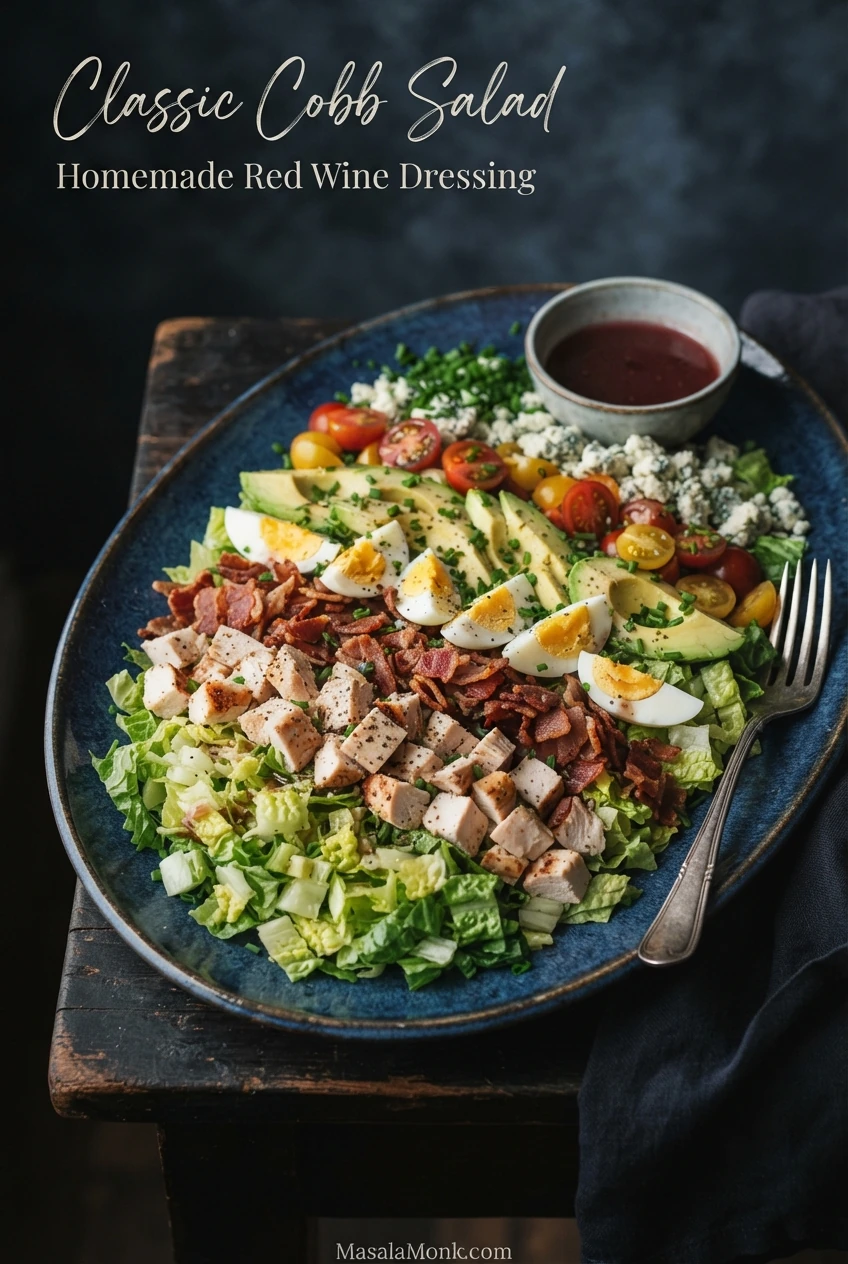
Cobb salad has enough chicken, bacon, eggs and avocado to make a proper lunch or dinner. Crisp lettuce and juicy tomatoes keep it fresh, while blue cheese gives it a salty bite and a red wine–Dijon vinaigrette cuts through the richer toppings. Arrange everything in colorful rows for the table, then toss your portion to get a little of each ingredient.
This Cobb salad recipe with homemade dressing serves four generously. From scratch, cook the eggs and bacon while preparing the chicken; once those are done, most remaining work is chopping and assembly. Already have cooked chicken, bacon and eggs? Dinner can be on the table in about 15–25 minutes.
Jump to: complete recipe · ingredients · dressing ingredients · cooking method · illustrated recipe card · quick version · make ahead and storage · troubleshooting · nutrition · FAQs.
Classic Cobb Salad Recipe
| At a glance | Classic Cobb salad |
|---|---|
| Yield | 4 main servings or 6–8 smaller sides |
| Hands-on preparation | About 25–35 minutes |
| Cooking | About 30 minutes with overlapping tasks |
| Total from scratch | About 50–65 minutes if some tasks overlap |
| With cooked chicken, bacon and eggs | About 15–25 minutes |
| Dressing | Homemade red wine–Dijon vinaigrette |
The estimated total includes overlapping tasks. Extra chicken batches or fully chilling the cooked toppings may extend it.
Equipment: saucepan, rimmed baking sheet, 25–30 cm (10–12 inch) skillet, instant-read thermometer, knife and cutting board, lidded jar or whisk, and a large bowl or platter. Use a salad spinner or clean towels to dry the greens. Set aside a separate board for raw chicken. For lunches prepared in advance, see the make-ahead and packing plan.
Ingredients for the Salad
- 450 g (about 1 lb) boneless, skinless chicken breast, raw weight
- 150 g (5.3 oz) streaky bacon, roughly 6 slices depending on thickness
- 4 large eggs
- 300 g (10.6 oz) romaine lettuce, trimmed weight
- 40 g (1.4 oz) watercress, or the same weight of additional romaine
- 250 g (8.8 oz) cherry tomatoes
- 250 g (8.8 oz) ripe avocado flesh, usually about 2 medium avocados; weigh after removing skin and pits
- 85 g (3 oz) blue cheese, crumbled or finely grated
- 10 g (about ⅓ oz) fresh chives, roughly a small bunch, finely chopped
- 5 ml (1 tsp) olive oil for the chicken; reserve up to another 5 ml (1 tsp) if the chicken must be cooked in two batches
- ½ tsp fine salt and ¼ tsp black pepper, for chicken; adjust for the saltiness of your other ingredients
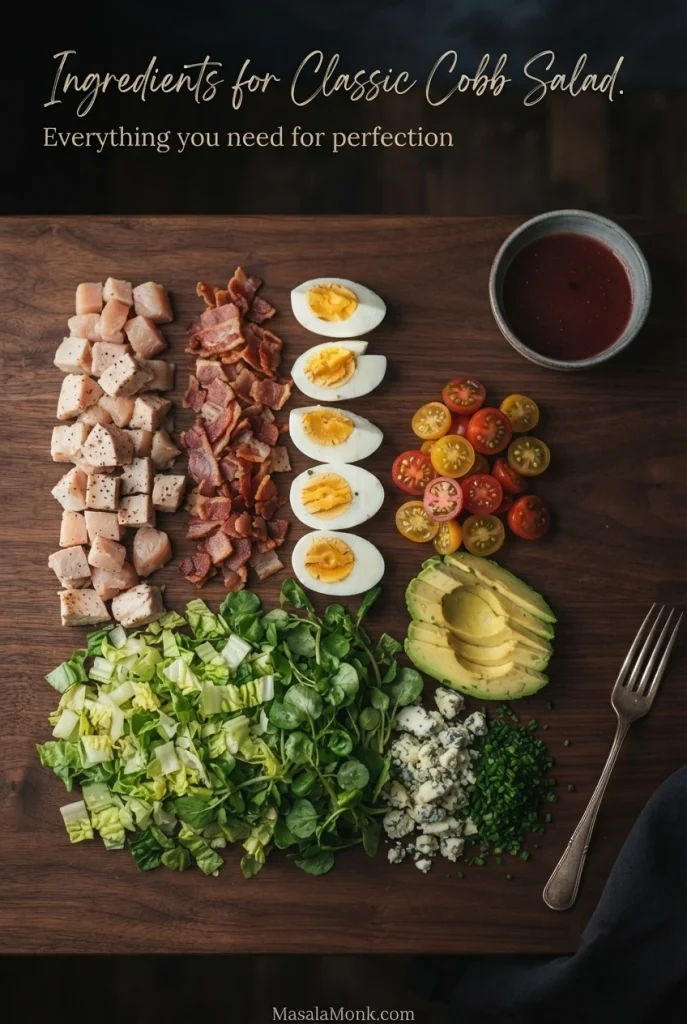
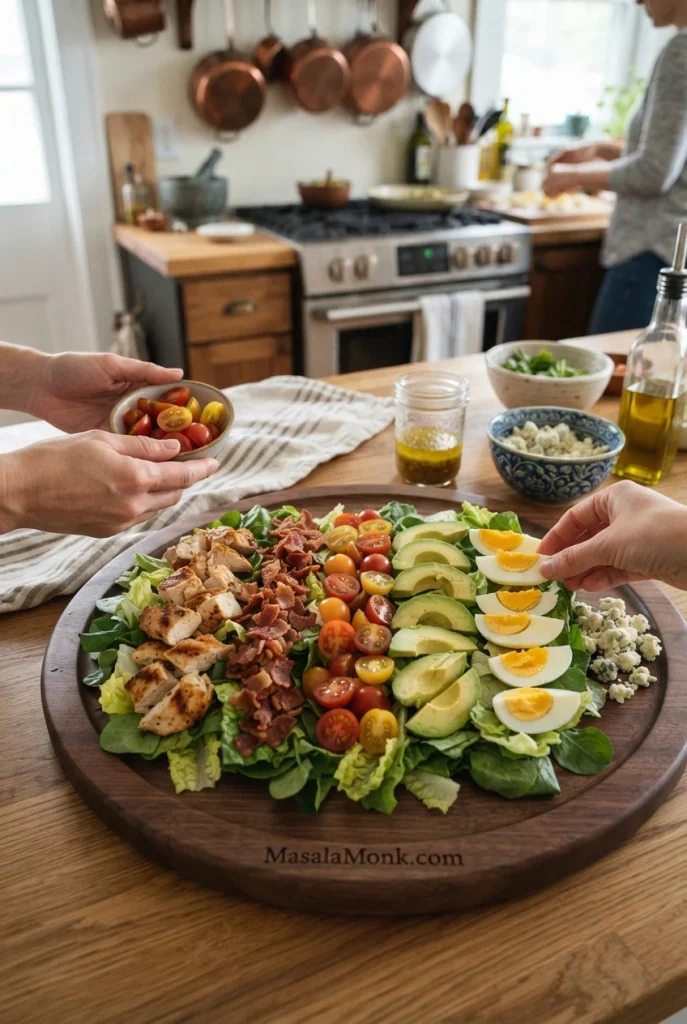
The photograph below shows the toppings after cooking and preparation. The listed 450 g chicken and 150 g bacon are raw weights, so the cooked portions will weigh less. Keep the finished ingredients separate until you assemble the salad.
Ingredients for the Homemade Red Wine Dressing
- 90 ml (6 tbsp) olive oil
- 45 ml (3 tbsp) red wine vinegar
- 15 ml (1 tbsp) freshly squeezed lemon juice
- 10 ml (2 tsp) Dijon mustard
- 5 ml (1 tsp) Worcestershire sauce
- 1 small garlic clove, finely grated
- ¼ tsp fine salt, initially
- ¼ tsp freshly ground black pepper
- ½ tsp sugar, optional, if you prefer a softer acidic edge
Combine the vinegar, lemon juice and seasonings before adding the oil. Salt dissolves in the watery ingredients much more readily than in oil; shaking afterward disperses the two phases into a pourable dressing.
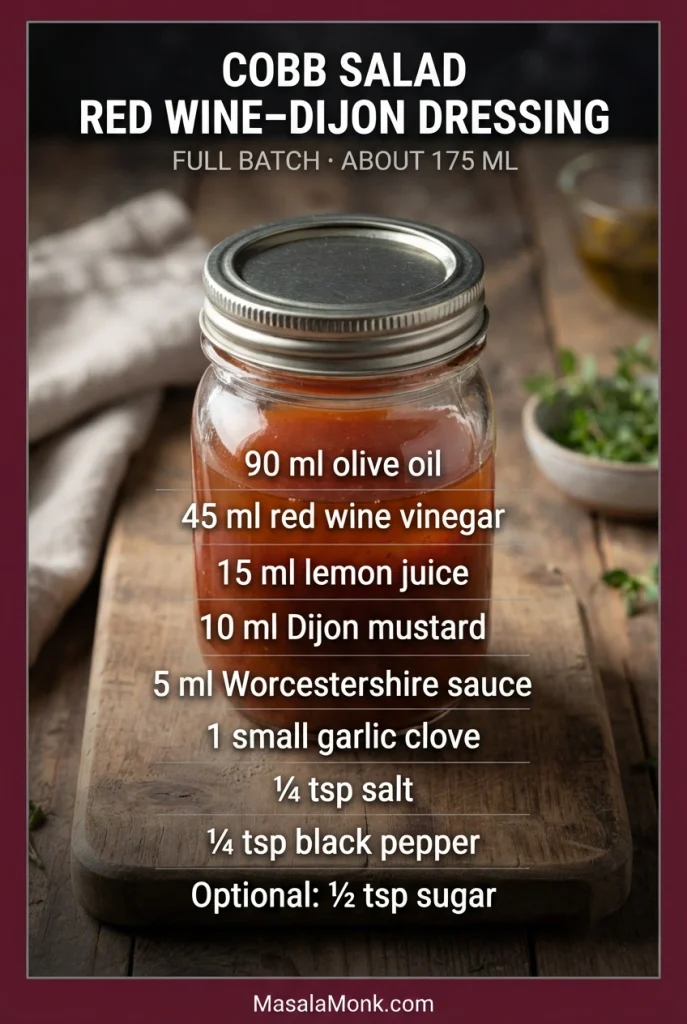
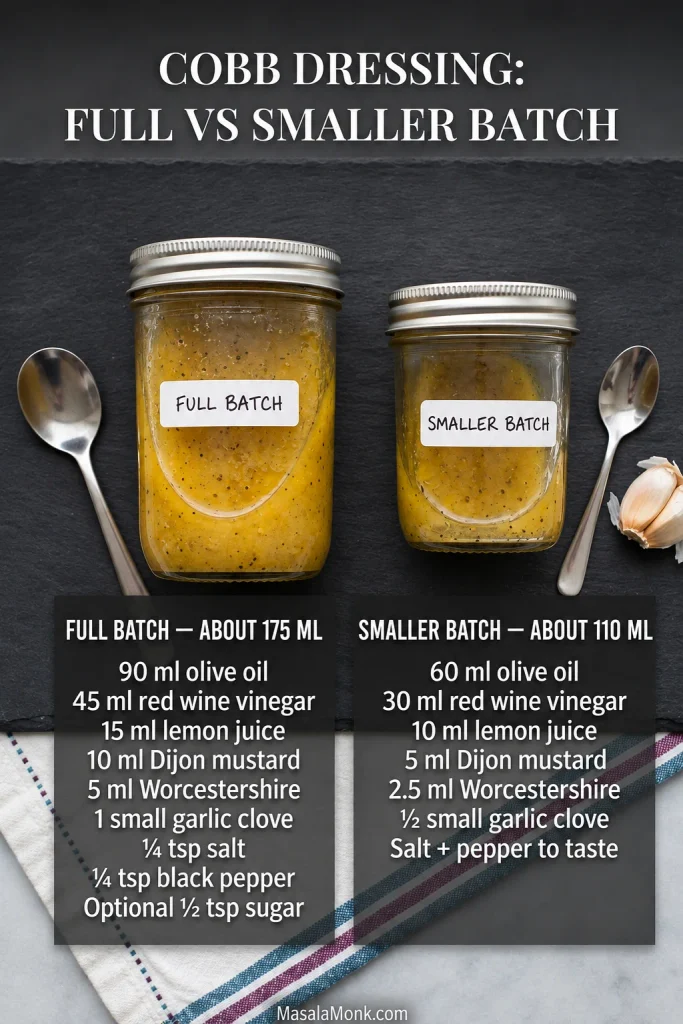
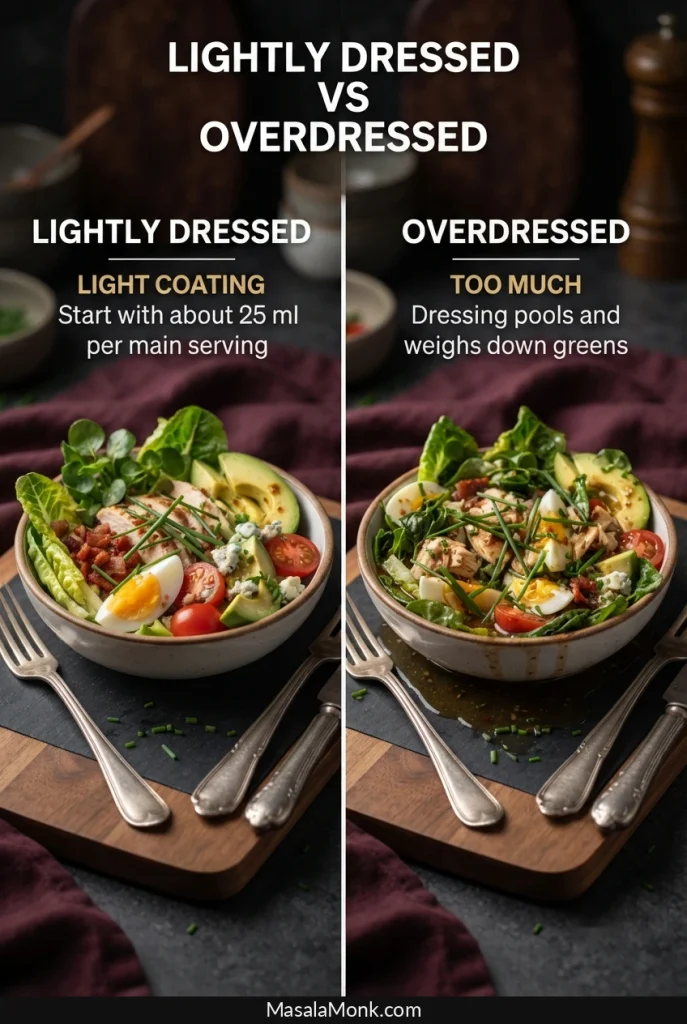
Dressing yield: approximately 175 ml (just under 6 US fl oz). Start with 25 ml (1 tbsp plus 2 tsp) per serving, or 100 ml for four. Serve the rest on the side rather than pouring it all over the greens.
Want a smaller batch? For about 110 ml, shake together 60 ml (4 tbsp) olive oil, 30 ml (2 tbsp) red wine vinegar, 10 ml (2 tsp) lemon juice, 5 ml (1 tsp) Dijon, 2.5 ml (½ tsp) Worcestershire, half a small garlic clove, and salt and pepper to taste. That covers four lightly dressed servings with a little to spare.
Plan the Cooking Workflow
Start the eggs and bacon before cooking the chicken. While the cooked toppings cool, wash and dry the greens; cut the avocado only at assembly to limit browning.
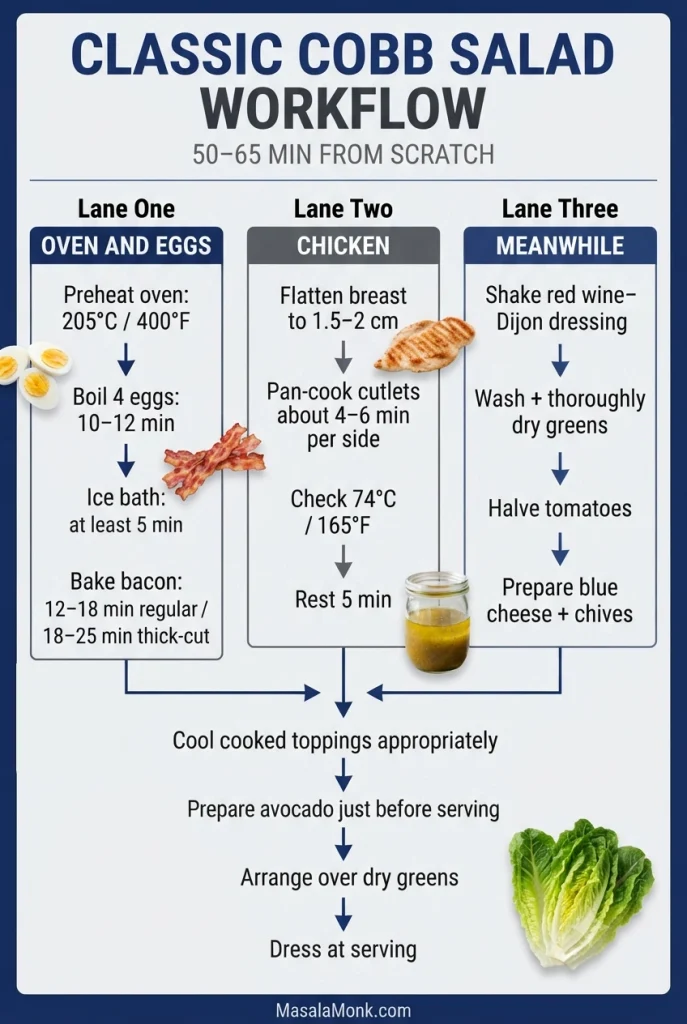
How to Make Cobb Salad
Boil and Cool the Eggs
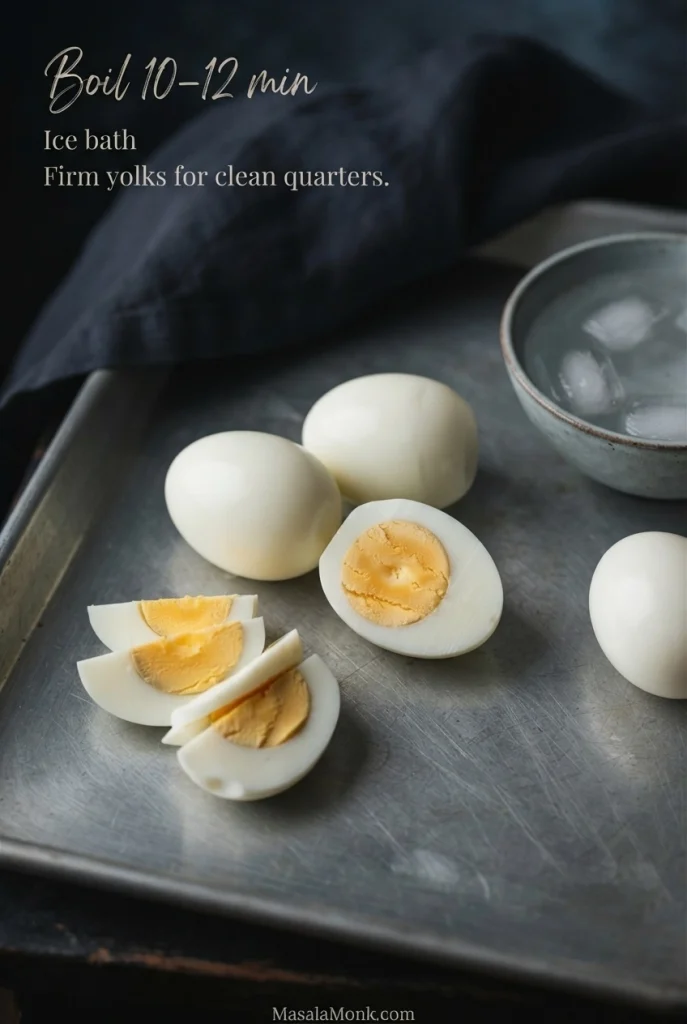
Step 1. Heat a conventional oven to 205°C / 400°F for the bacon. Meanwhile, lower four large eggs into gently boiling water and cook for 10–12 minutes for firm yolks. Transfer them to ice water for at least 5 minutes, then peel when cool enough to handle. While the eggs cook, arrange the bacon for the next step.
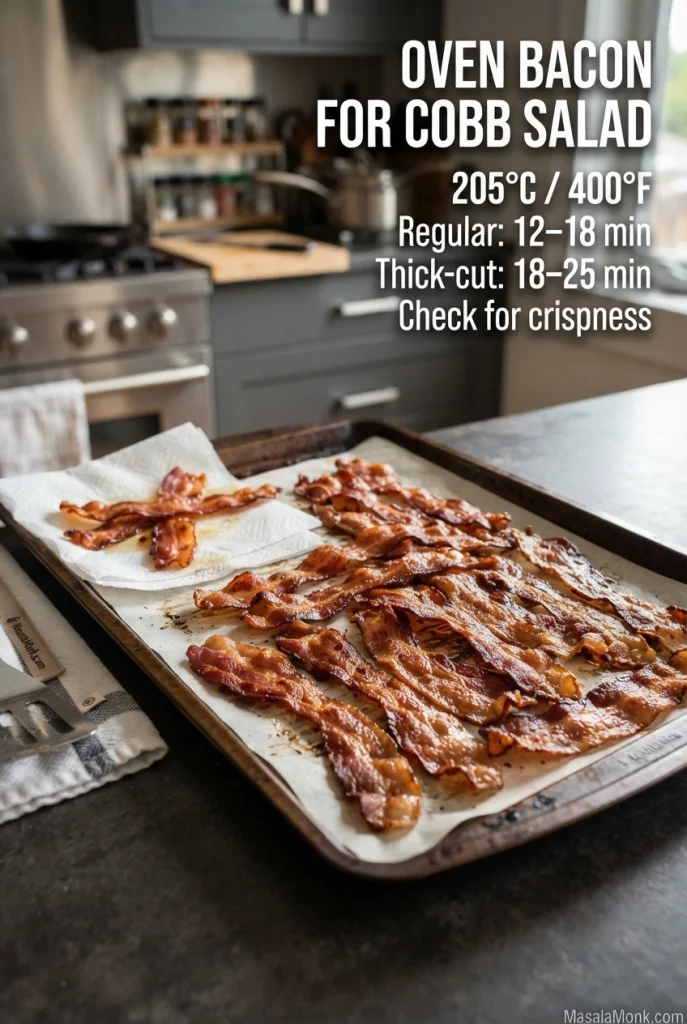
Cook Crispy Oven Bacon
Step 2. Arrange the slices in a single layer on a rimmed baking sheet. Parchment makes cleanup easier. Bake on the middle rack for about 12–18 minutes for regular slices or 18–25 minutes for thick-cut bacon. Check at the early end of the range and remove the bacon when crisp. Transfer to paper towels to drain, then cool before chopping. For other oven setups, see our guide to cooking bacon in the oven. No oven? Crisp it in a skillet over medium heat.
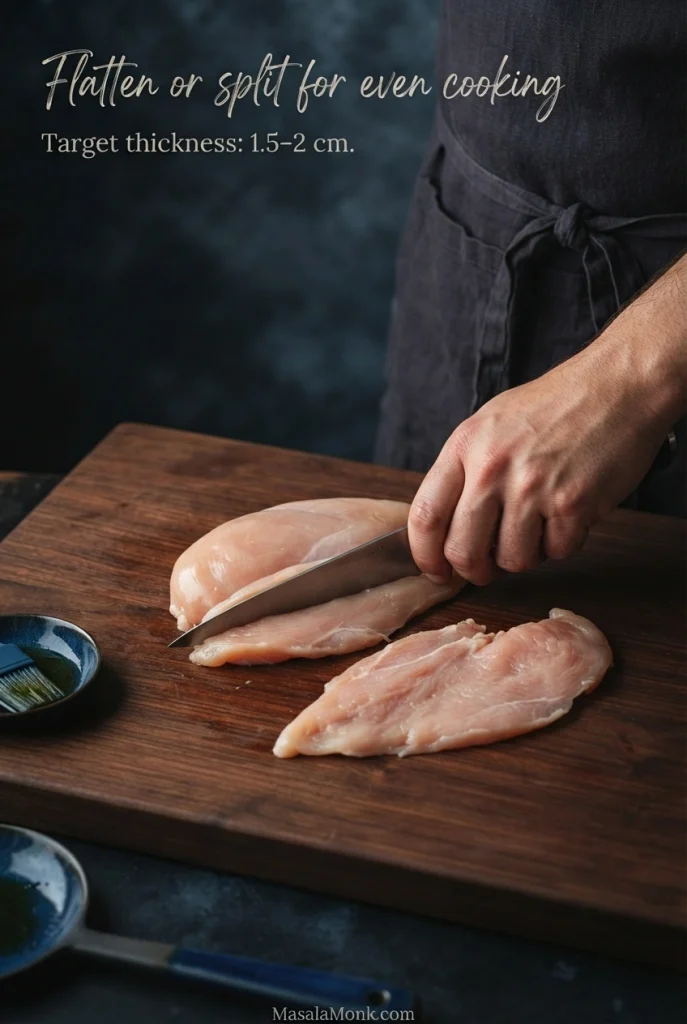
Prepare Even Chicken Cutlets
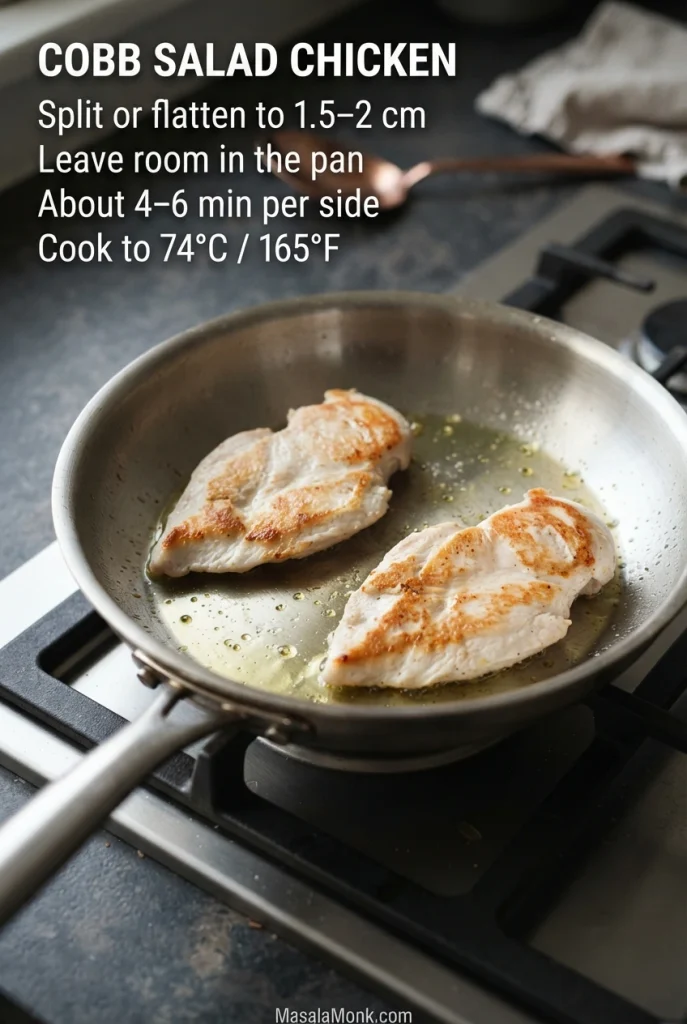
Step 3. While the bacon cooks, pat the chicken dry. If the breasts are very large, split them horizontally into thinner cutlets; otherwise, flatten the thickest areas so the pieces are about 1.5–2 cm (⅝–¾ inch) thick. Season with the listed ½ tsp salt and ¼ tsp pepper. Keep the raw-chicken board and utensils away from the salad ingredients, and wash your hands and work surfaces before preparing vegetables.
Pan-Cook and Slice the Chicken
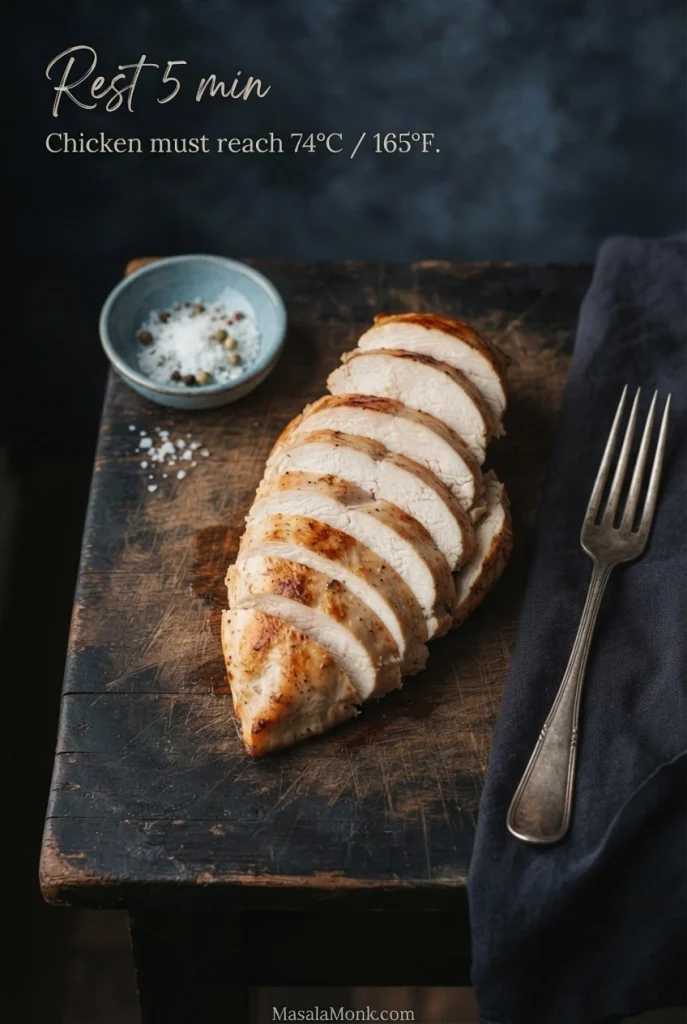
Step 4. Heat 5 ml (1 tsp) olive oil in a 25–30 cm (10–12 inch) skillet over medium heat. Add the chicken without crowding the pan; if necessary, cook in two batches using up to another 5 ml (1 tsp) oil. For pieces 1.5–2 cm thick, allow approximately 4–6 minutes per side. Check the thickest part with an instant-read thermometer: chicken must reach 74°C / 165°F, in line with FDA safe food-handling guidance. Rest the chicken for 5 minutes. Next, slice it across the grain and chop into bites; refrigerate promptly in a shallow container if serving the salad cold.
Cut the rested chicken into fairly short, even pieces rather than long strips. Spread the cooked pieces in a shallow container to cool quickly in the refrigerator; do not leave them on the counter for hours.
Shake the Red Wine Vinaigrette
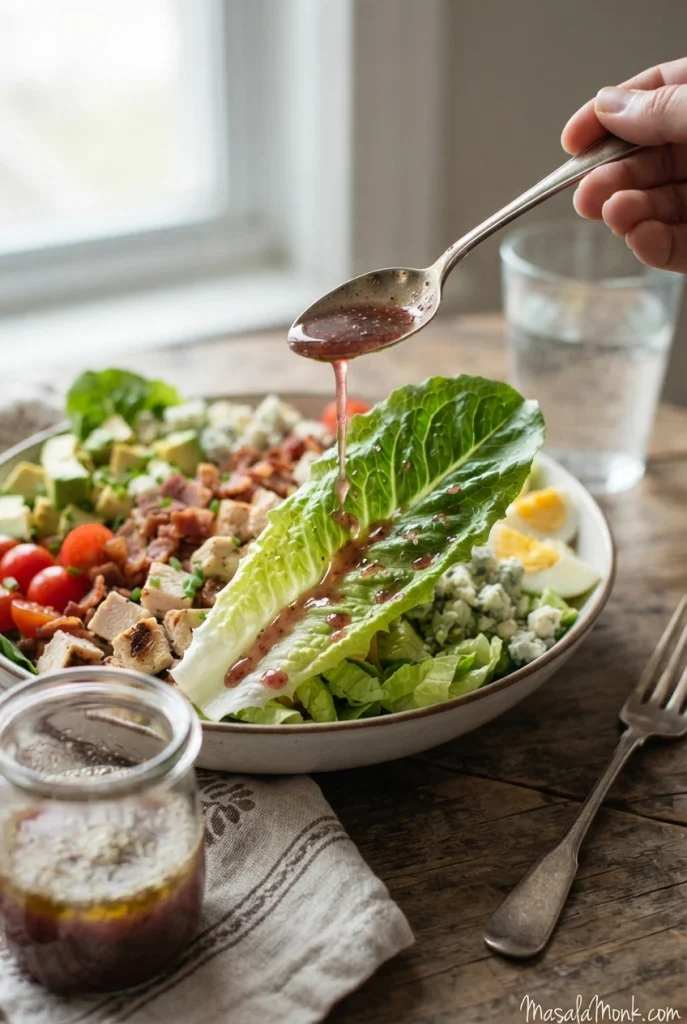
Step 5. Mix the vinegar, lemon, Dijon, Worcestershire, garlic, salt, pepper and optional sugar in a lidded jar. Add the oil and shake vigorously for 20–30 seconds. It should look slightly thickened, with the oil dispersed, yet still pour easily. Alternatively, drizzle the oil into the other ingredients while whisking.
Prepare the Fresh Toppings
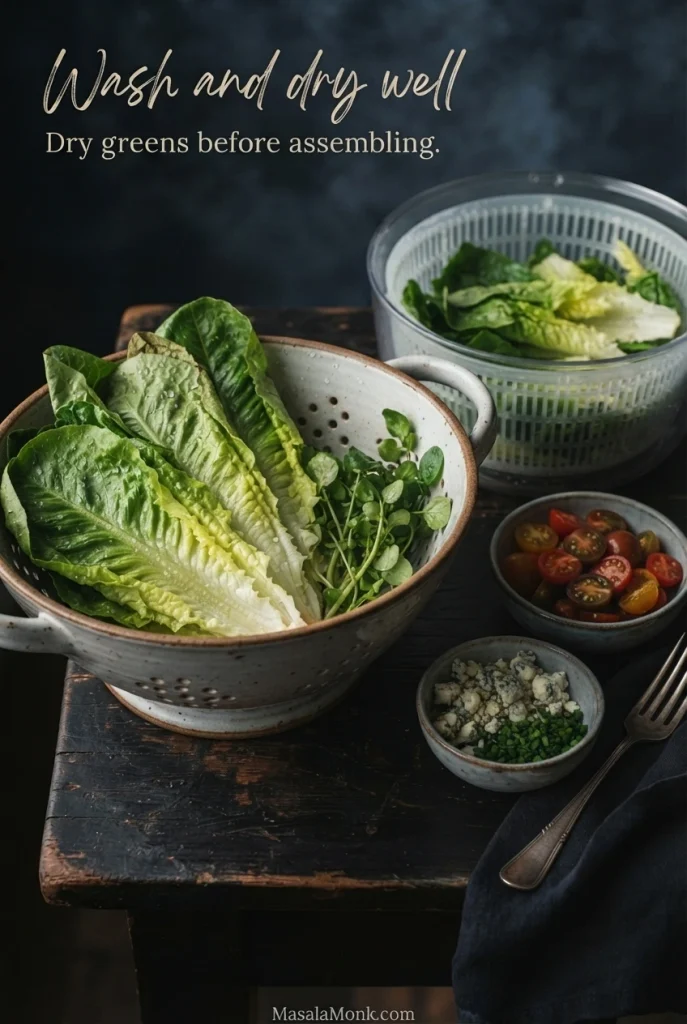
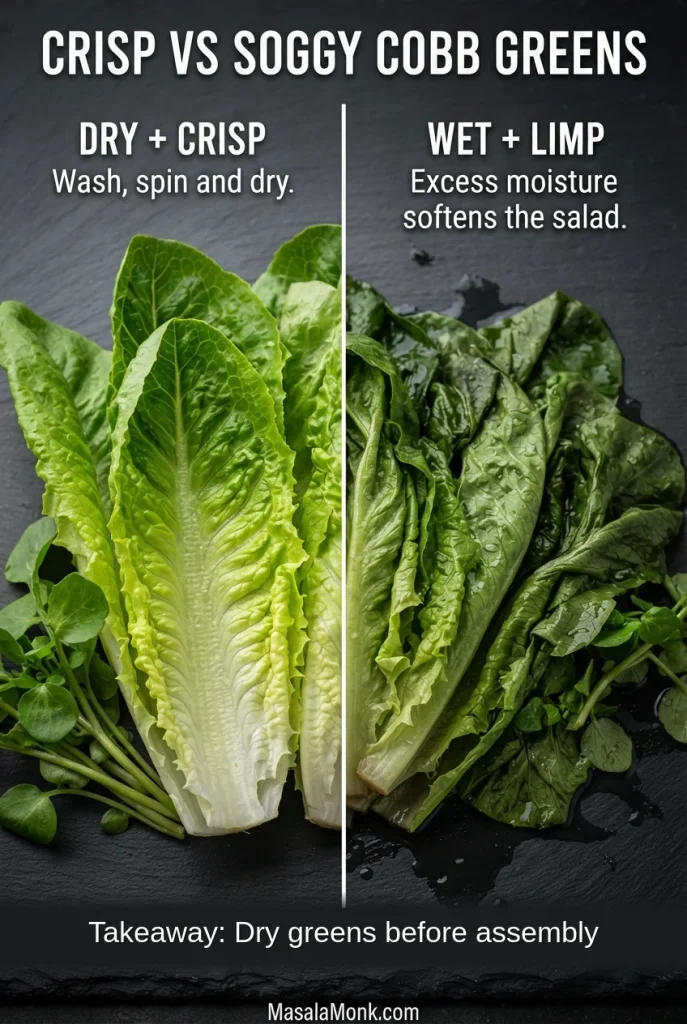
Step 6. After cleaning the raw-chicken board and work surfaces, wash and thoroughly dry the romaine and watercress, then chop. Water on the leaves dilutes the vinaigrette and collects at the bottom of the bowl. Halve the tomatoes, crumble the cheese and chop the chives while the cooked ingredients cool. Leave the avocado whole until serving.
Assemble and Dress the Salad
Step 7. Halve and pit the avocados, scoop out the flesh, then slice or dice. Spread the greens across a platter or four bowls. Arrange the cooled chicken, chopped bacon, quartered eggs, tomatoes, avocado and blue cheese over the top; finish with chives. Shake the dressing again. Serve on the side or start with 25 ml (1 tbsp plus 2 tsp) per portion, toss gently and taste a complete forkful before adding more. Serve immediately.
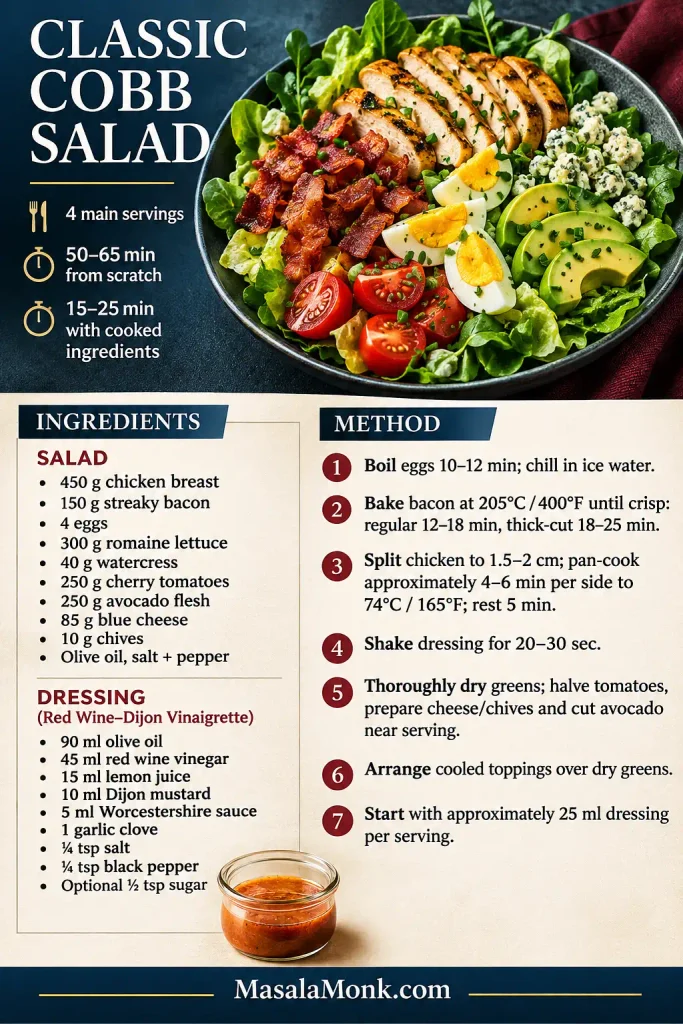
Illustrated Cobb Salad Recipe Card
The illustrated card condenses the full recipe into a visual reference. The 450 g chicken is weighed raw, while the 250 g avocado is weighed after removing skin and pits. Follow the written steps above for detailed timings, temperatures and cooling guidance.
Choosing the Best Ingredients for Cobb Salad
Chicken, Bacon and Eggs
Buy bacon by weight, not slice count, because thickness varies considerably. Cut the hard-boiled eggs into wedges only after cooling to keep their edges tidy. If the stovetop is busy, air fryer hard-boiled eggs offer another way to prepare the eggs.
Lettuce, Tomatoes and Avocado
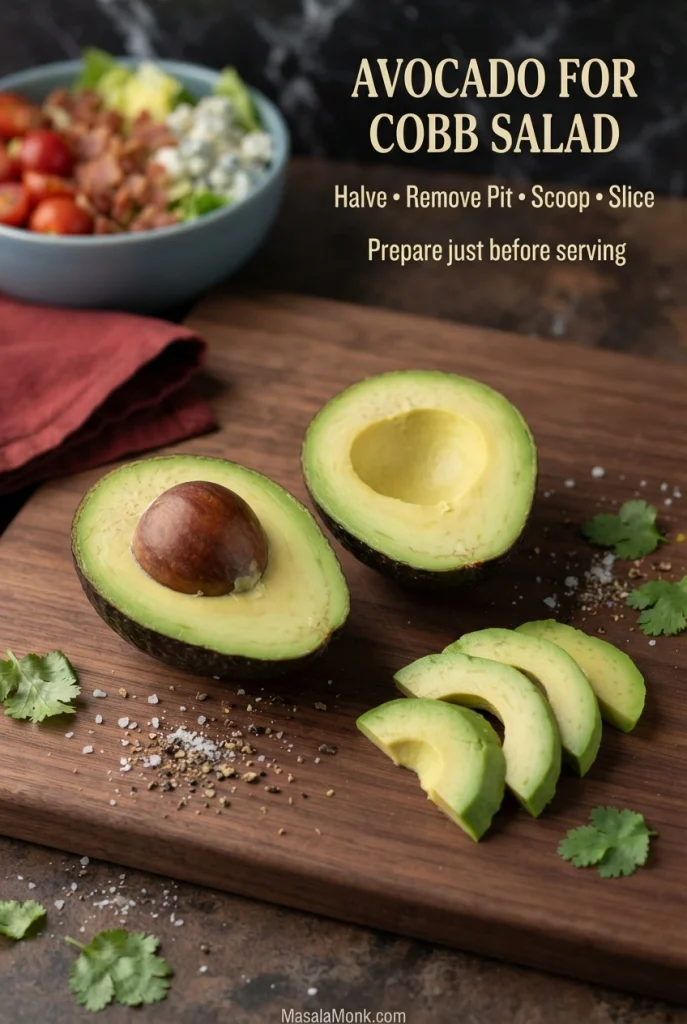
Crisp romaine holds up to the substantial toppings, while watercress contributes a peppery edge. If you cannot find watercress, use 340 g romaine in total. Choose tomatoes that are ripe but not excessively soft, so their juice does not collect beneath the greens.
Choose an avocado that gives slightly when pressed but is firm enough to slice. Cut it only when the other ingredients are ready; if the flesh is very soft, dice it instead of forcing it into neat slices.
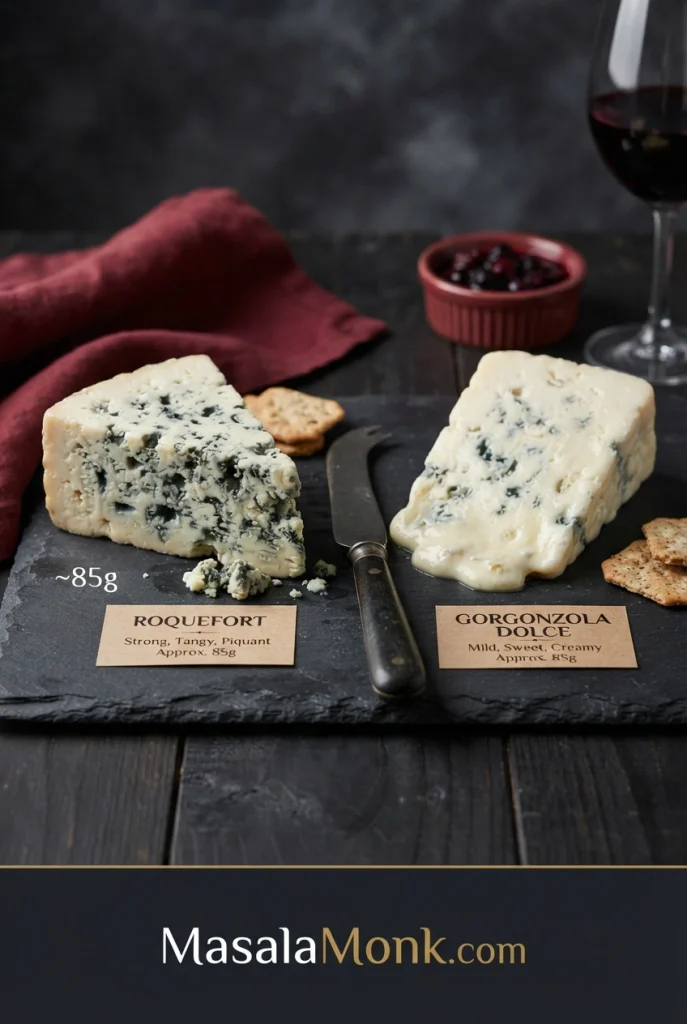
Which Blue Cheese Is Best?
Roquefort gives Cobb salad a pronounced salty bite. Use a milder blue cheese if that sounds overpowering, or explore the cheese-free and other ingredient substitutions. 85 g is enough for all four servings; serve some separately when not everyone enjoys it.
The Homemade Cobb Dressing: Tangy, Not Harsh
A sharp vinaigrette is a good match for this classic-style Cobb salad. This modern red wine–Dijon version uses lemon, garlic and Worcestershire; it is not a copy of the original Brown Derby dressing. Because the bacon, eggs, avocado and blue cheese are already rich, the dressing can be more acidic than a standard vinaigrette without overwhelming the finished salad.
Balance the Oil and Acid
The ratio here is 90 ml oil to 60 ml vinegar and lemon, compared with the familiar 3:1 oil-to-acid ratio. Taste the dressing on a forkful of salad before changing it. The bacon and avocado may make its sharpness feel quite different from a spoonful tasted on its own.
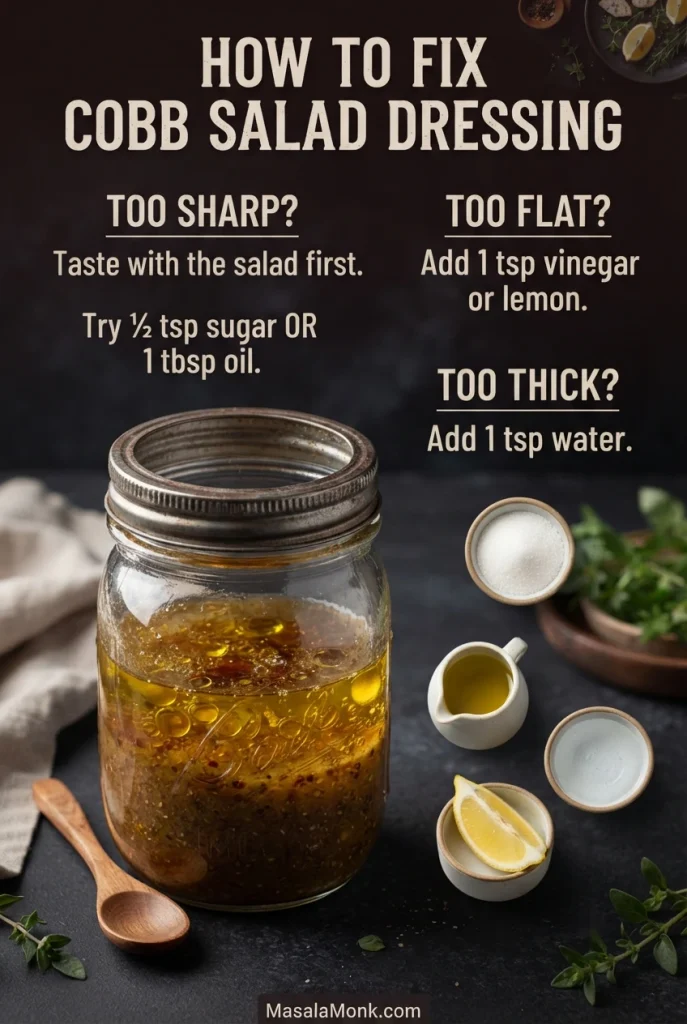
How to Fix Sharp, Flat or Thick Dressing
Too sharp? Try the optional ½ tsp sugar or shake in another 15 ml (1 tbsp) oil. Flat or oily? Add vinegar or lemon 5 ml (1 tsp) at a time. Too thick? Stir in 5 ml (1 tsp) water. Taste again before serving.
A bitter olive oil can overwhelm the dressing, so choose a mild-tasting one. Oil and vinegar will separate as the jar sits; shake it again before serving. If refrigerated olive oil has thickened, let the sealed jar stand briefly until pourable, then shake. For less dressing, use the smaller-batch measurements.
Prefer a creamy dressing? Ranch, blue-cheese dressing or green goddess will make the salad richer. A homemade honey mustard dressing gives it a sweeter edge. Start with a small amount and add more after tasting.
Ingredient note: Many Worcestershire sauces contain anchovies (fish), and Dijon or other prepared products can have additional allergens. Check package labels when relevant; use a fish-free Worcestershire alternative for a vegetarian version.
Return to the complete Cobb salad recipe.
Rows, Finely Chopped or Tossed: How Should Cobb Salad Be Served?
Use rows for a shared platter, especially when people prefer different toppings. For a more evenly mixed salad, chop the ingredients smaller and toss just before eating.
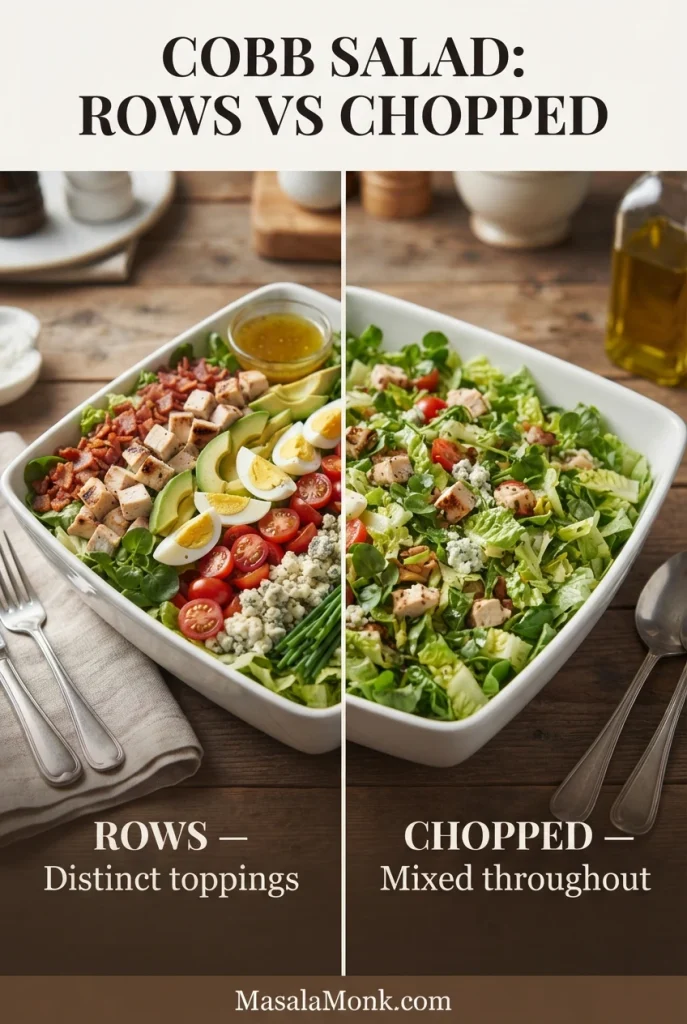
The colorful rows are not the whole tradition. The 1949 Brown Derby cookbook describes finely chopped greens and toppings, including chicken, bacon, eggs, avocado, tomatoes, Roquefort and chives, with watercress and chicory among the greens. Its French-style dressing also differs from this red wine–Dijon version. For the finer chopped style, cut the toppings into roughly 1 cm (⅜ inch) pieces, then toss at serving. For the full plating sequence, revisit how to assemble the salad. See the historical Brown Derby recipe for the period details.
Make Cobb Salad Faster with Rotisserie Chicken
Already have cooked chicken, bacon and hard-boiled eggs in the fridge? Use 330–350 g (about 12 oz) cooked chicken, four eggs and approximately 60–90 g cooked, drained bacon. Bacon yield varies, but that is a useful guide if you are buying it precooked. This shortcut takes about 15–25 minutes when all three ingredients are ready to eat.
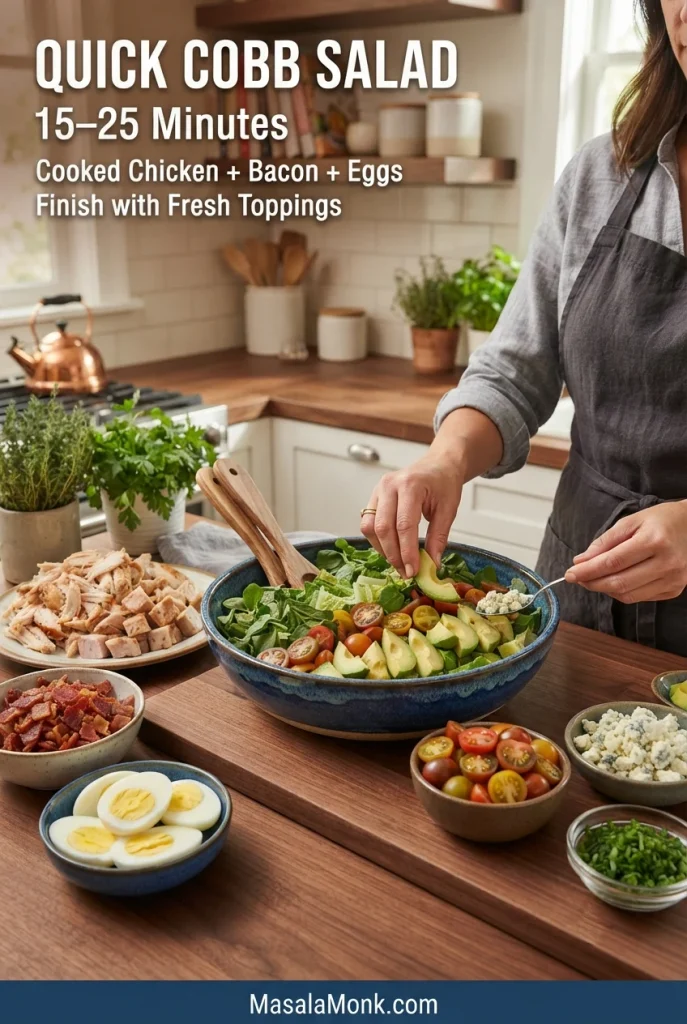
Wash and dry the greens, halve the tomatoes, crumble the cheese and shake the dressing. Prepare the avocado just before serving. Taste rotisserie chicken before seasoning it: it is often salty already. You can also prepare baked chicken breast ahead and save the cooked amount for this salad. Once the toppings are ready, use the final assembly instructions.
Cobb Salad Substitutions
These swaps change the character of the dish, so use the amounts as a starting point. Taste after assembly, particularly when replacing salty bacon or blue cheese.
| Change | What to do | What you’ll notice |
|---|---|---|
| Grilled chicken | Grill the seasoned 450 g raw chicken until the thickest part reaches 74°C / 165°F; rest, then chop. | Browned edges and a light char; watch thinner sections. |
| No blue cheese | Use about 85 g feta instead, or omit the cheese entirely. | Feta adds a salty, tangy bite without blue-cheese pungency. |
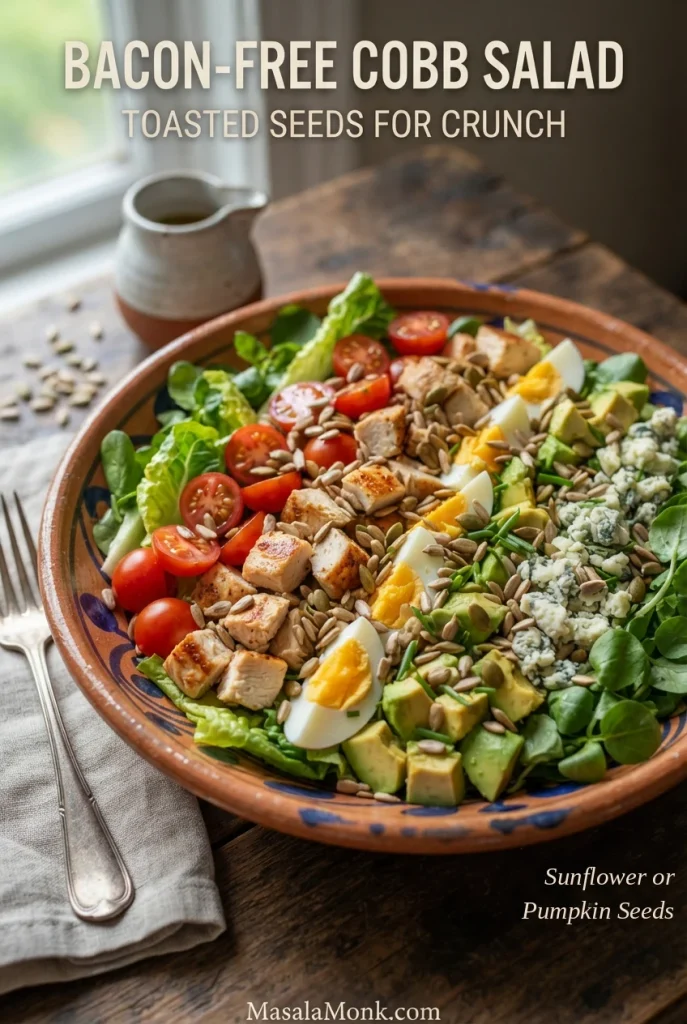
| No bacon | Omit the bacon and add 30 g toasted sunflower or pumpkin seeds. Toss seeds with a pinch of smoked paprika if you want a smoky note. | Less rich and salty; seeds bring crunch but not bacon’s flavor. |
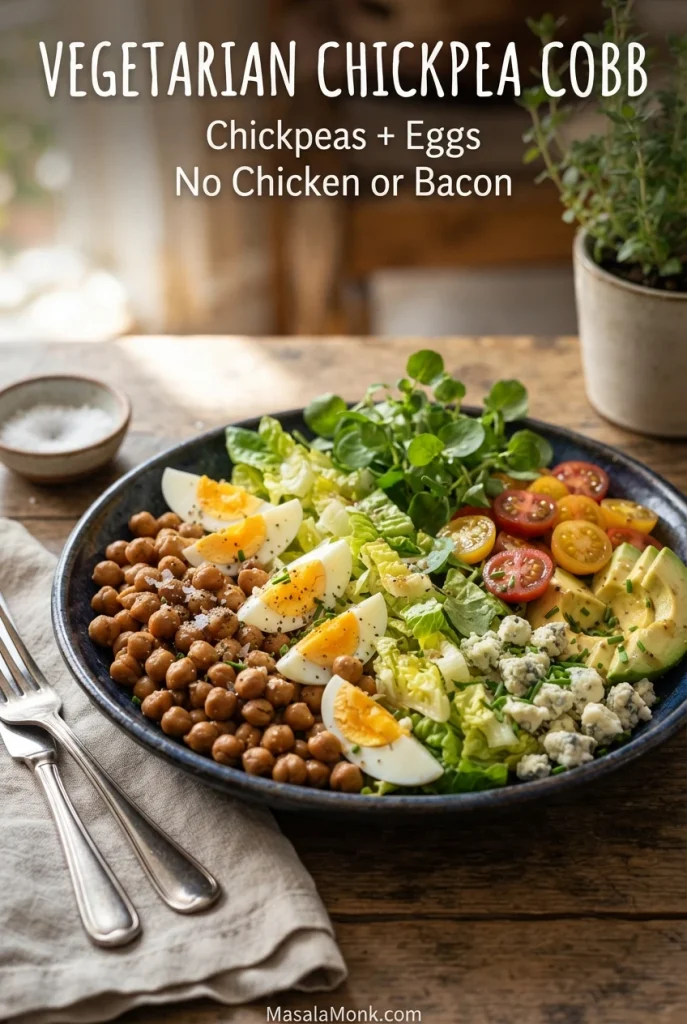
| Meatless Cobb-style salad | Drain and rinse 300–350 g cooked chickpeas; pat dry, then toss with 1 tsp olive oil, ¼ tsp smoked paprika and a pinch of salt. Replace chicken, omit bacon, use fish-free Worcestershire and choose cheese made with vegetarian-suitable rennet (or omit the cheese). | Softer and earthier, with less smoky richness; eggs remain, so this is vegetarian, not vegan. |
| Creamy dressing | Replace the vinaigrette with ranch or green goddess, starting with a small amount. | Richer coating and less sharp acidity. |
| More greens | Add 100–150 g lettuce; keep the other toppings as written and add a little more dressing only after tasting. | Useful if the blue cheese or bacon tastes too strong. |
Bacon-Free Cobb Salad with Toasted Seeds
This bacon-free Cobb salad still contains chicken, eggs and blue cheese. For make-ahead lunches, carry the toasted seeds separately and sprinkle them over the salad only at serving so they keep their crunch.
Vegetarian Chickpea Cobb-Style Salad
This is vegetarian, not vegan, because it still contains eggs. Check for fish-free Worcestershire and blue cheese made with vegetarian-suitable rennet, or leave the cheese out. Pat chickpeas dry before seasoning so the smoked paprika coats them instead of clumping.
Return to the complete Cobb salad recipe.
Making Cobb Salad Ahead
Cobb salad makes a satisfying packed lunch. The key is to keep the dressing and juicy toppings away from the greens until you are ready to eat.
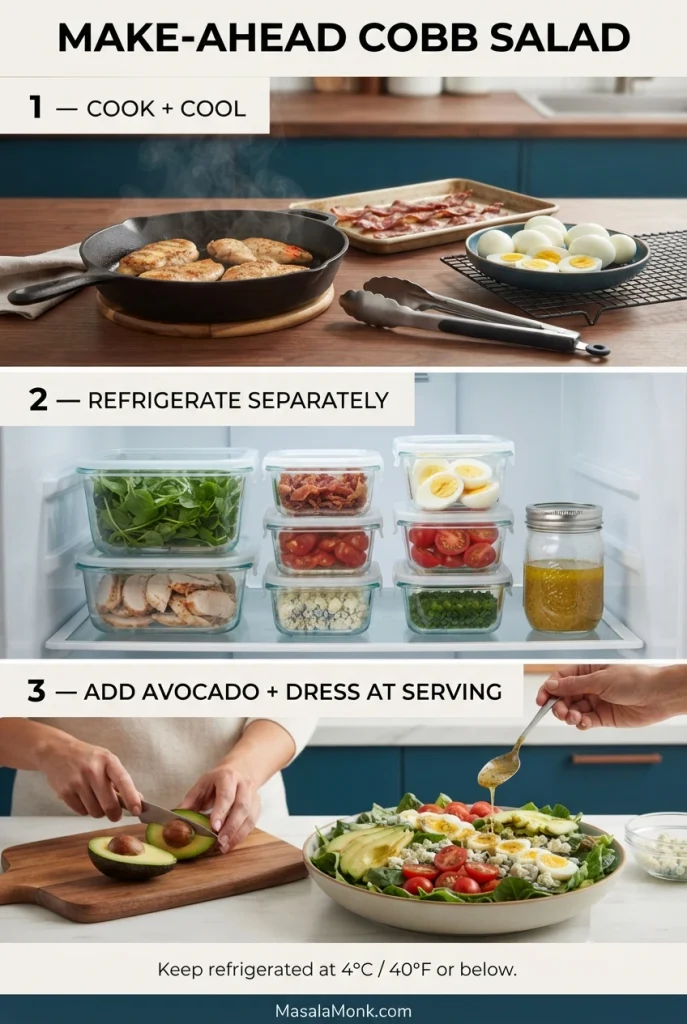
- The night before: Cook chicken, bacon and eggs; cool and refrigerate promptly. Make the dressing and refrigerate it separately.
- Before packing: Wash and thoroughly dry the greens, cut the tomatoes and portion the cheese.
- At mealtime: Cut the avocado, shake the dressing and toss everything together. If you cannot cut avocado at work, slice it just before packing, keep it separate and expect a little surface browning.
Packing Cobb Salad for Lunch
Use separate lunchbox compartments for the dry greens, cooked proteins, cheese and tomatoes, with vinaigrette in a leakproof container. If using one container, place sturdy toppings below the greens without crushing them; toss at lunchtime.
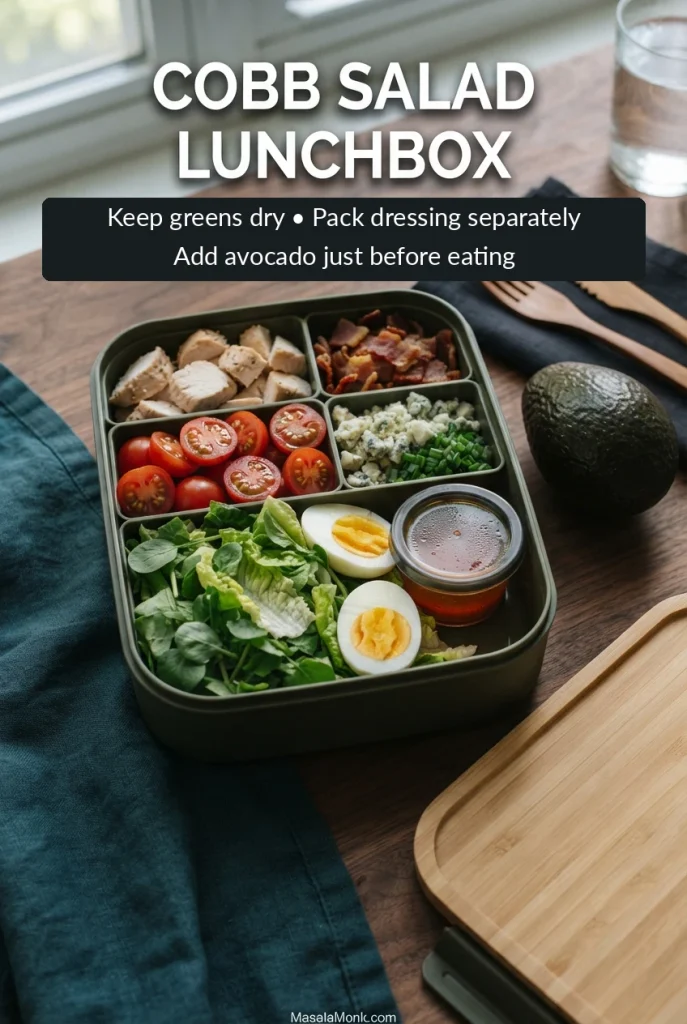
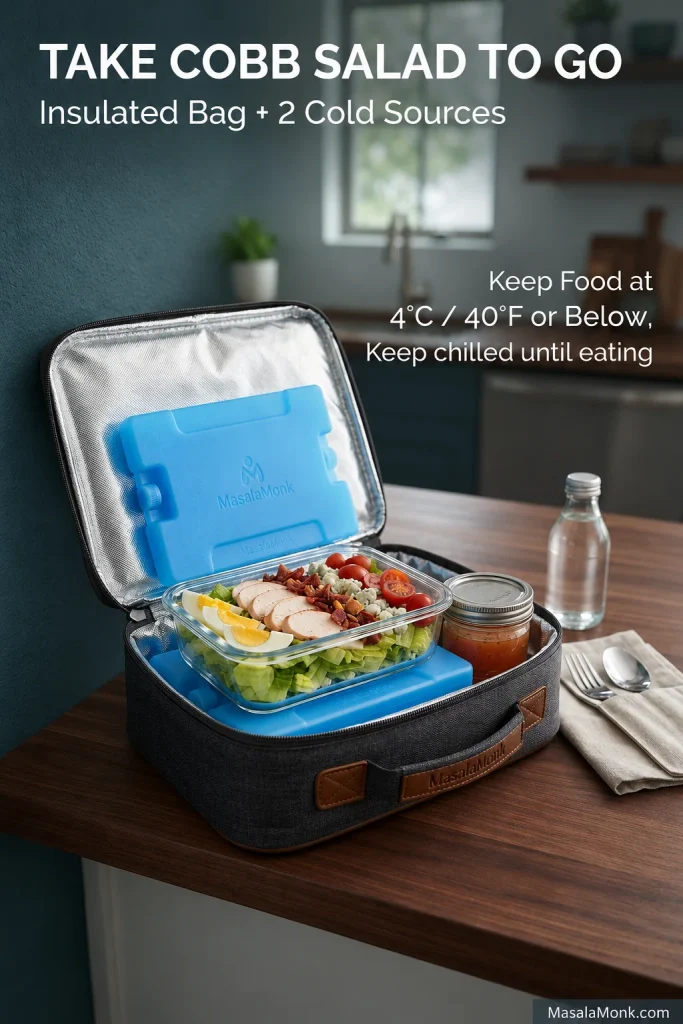
Keep the salad refrigerated until departure. For a journey without refrigeration, pack it in an insulated lunch bag with two cold sources, such as frozen gel packs, and refrigerate it on arrival if possible. Keep it cold until eating.
Storage and Leftovers
Refrigerate perishable ingredients at 4°C / 40°F or below within two hours of preparing them—or within one hour if the temperature is above 32°C / 90°F. Use a shorter period if a product label calls for it.
- Cooked chicken: 3–4 days refrigerated.
- Hard-boiled eggs: up to one week refrigerated.
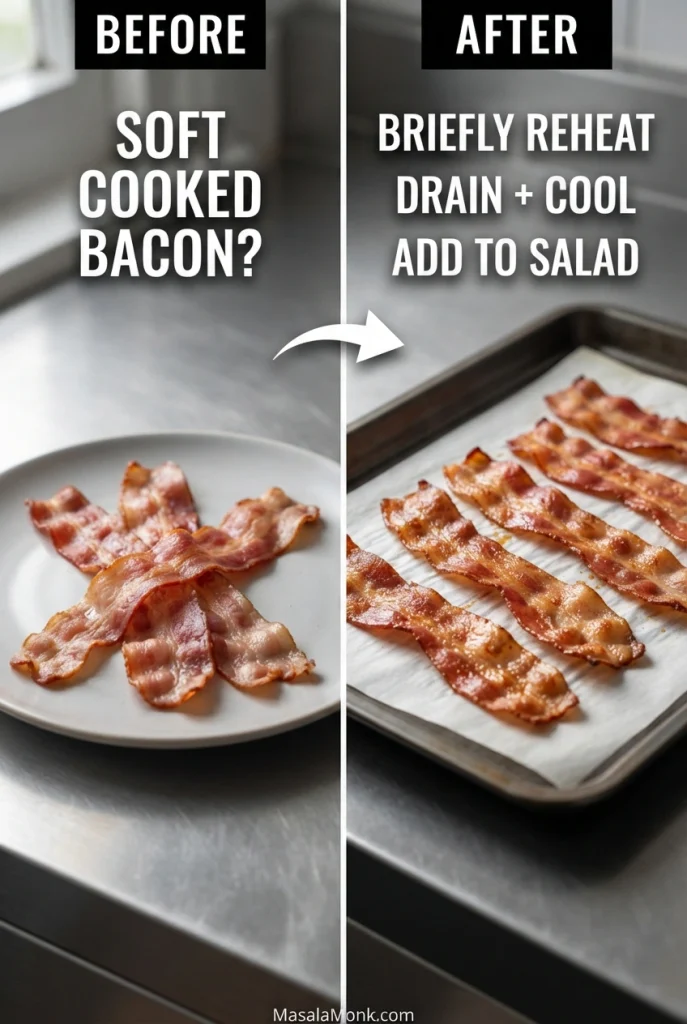
- Cooked bacon: refrigerate and aim to use within 3–4 days for best quality. Re-crisp briefly if needed, then cool it before adding to the greens.
- Fresh-garlic dressing: keep refrigerated and use within 2–3 days as a conservative home-prep target; shake again before serving.
- Already-dressed salad: best eaten immediately; it will soften in storage and is not suitable for freezing.
Cobb Salad Troubleshooting
| Problem | What may have happened | What to do now |
|---|---|---|
| Already-soggy greens | They were damp or dressed early. | Drain off liquid and add a handful of fresh, dry lettuce. Badly wilted leaves won’t regain their crunch; next time, follow the greens-preparation step. |
| Dressing pooling below | Too much dressing or watery toppings. | Lift the salad into a clean bowl with tongs, leaving excess liquid behind. |
| Vinaigrette too sour | Acidity is stronger than you enjoy. | Shake 15 ml (1 tbsp) more oil into the dressing; taste on a dressed leaf before adding more. See why the oil-to-acid balance matters. |
| Dressing separated | The oil and vinegar have settled. | Shake or whisk again just before serving. That’s normal. |
| Chicken already dry | It cooked past its ideal texture. | Chop smaller and mix with a little dressing; more cooking will not make it juicy. |
| Chicken still warm at assembly | It has not cooled enough for crisp greens. | Cut the cooked chicken, spread it in a shallow container and refrigerate promptly until cool enough to add. Do not leave it on the counter for hours. |
| Bacon lost its crunch | Steam or moisture softened it. | Refresh separately in a skillet until crisp, then let it cool before adding. |
| Avocado browned | Cut surfaces were exposed to air. | For harmless surface browning, trim the discolored layer if desired. Discard avocado that is spoiled; cut fresh avocado nearer serving next time. |
| Blue cheese dominates | Strong variety or heavy distribution. | Remove some crumbles and add more greens or chicken to rebalance. |
| Salad feels too rich | Rich toppings outweigh the crisp greens and acidity. | Add fresh, dry greens first. If the flavor still needs brightness, use a few drops of lemon or vinegar rather than more oily dressing. |
Recognize Crisp Versus Soggy Romaine
Distinguish two problems: freshly washed leaves can be crisp but still wet, while wilted leaves have actually lost firmness. Dry the first thoroughly; replace the second if they cannot hold their shape.
Recognize an Overdressed Salad
Use the recipe’s 25 ml per-serving starting amount as a guide. Drizzle around the bowl, lift the ingredients with tongs and inspect the bottom before adding any more.
Re-Crisp Cooked Bacon
Re-crisp cooked bacon separately in a dry skillet over medium heat or spread it in a single layer on an oven tray and warm until crisp. Watch thin strips closely, drain any released fat and let the bacon cool before adding it to the greens.
Back to the recipe · Back to the introduction.
Serving, Portions and Nutrition
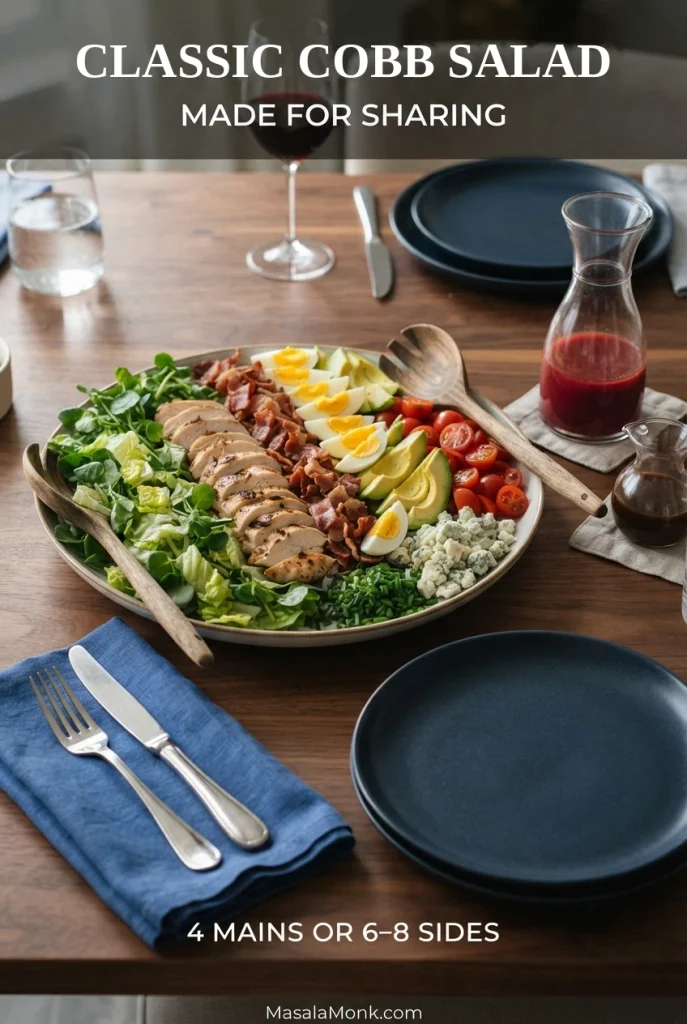
Serve four generous main-course portions, with an egg each, or set out six to eight smaller portions for a gathering. A big platter lets everyone choose how much blue cheese or dressing to take. For a more substantial shared meal, serve the smaller portions with crispy roasted potatoes.
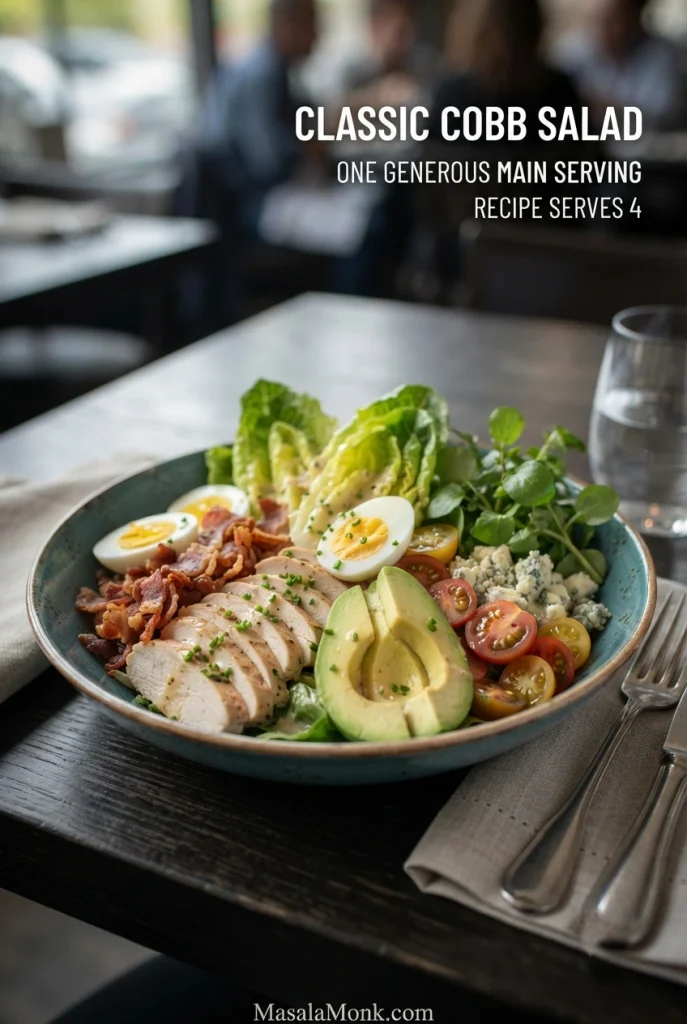
Portion a Single Cobb Salad Bowl
Place an egg portion and some chicken on each individual bowl before distributing the remaining toppings. Leave a little lettuce exposed so the dressing has somewhere to land when the salad is tossed.
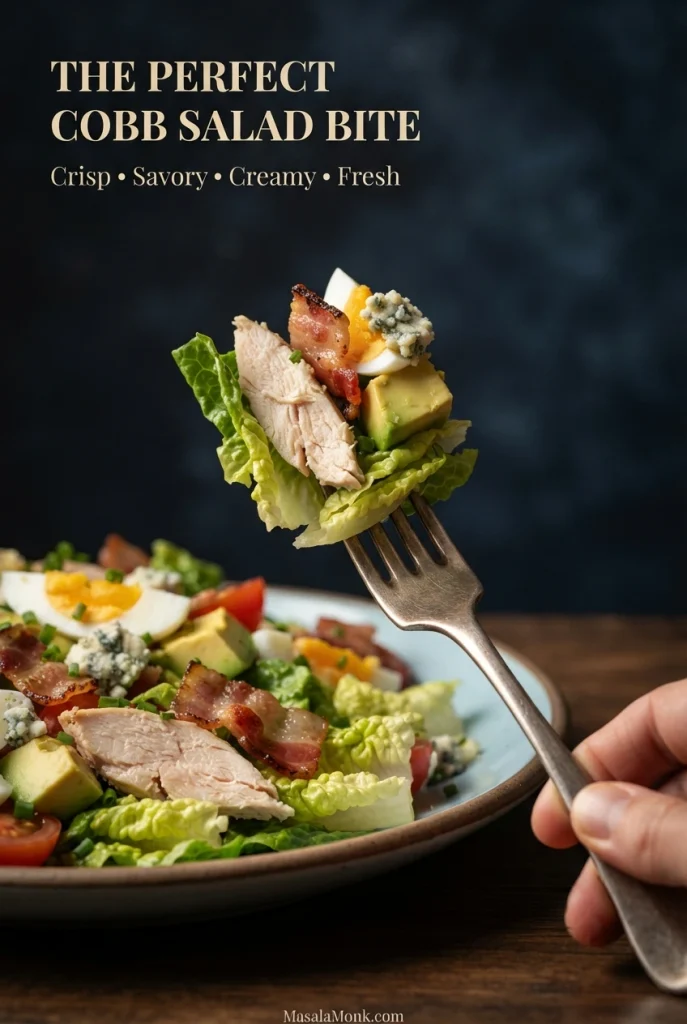
Combine Toppings in Each Forkful
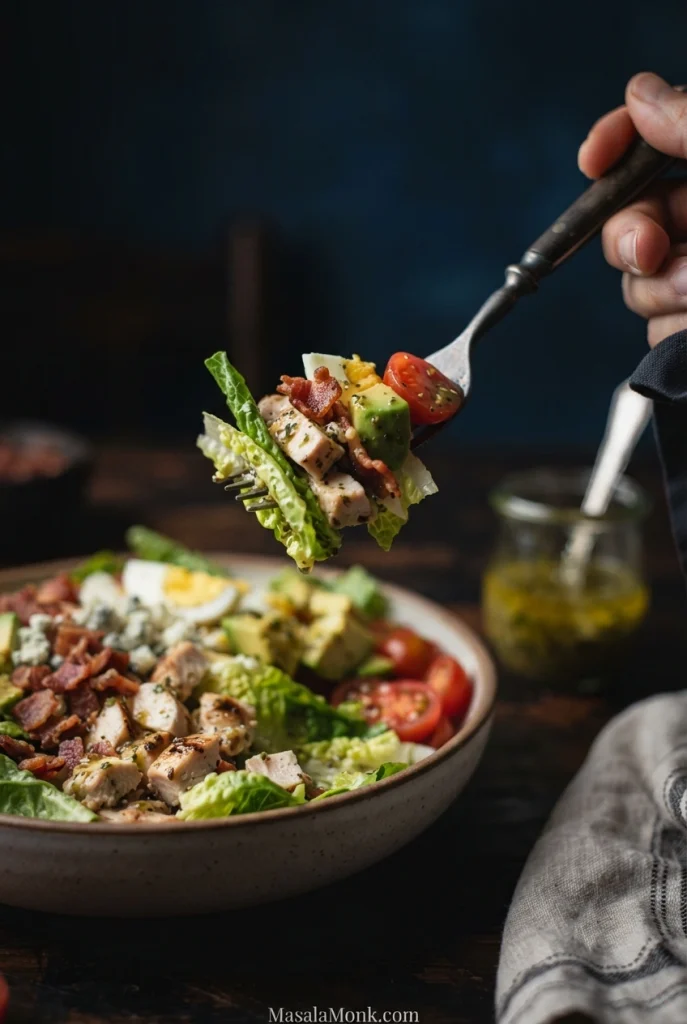
Mixing a composed salad is easier when long bacon strips and large chicken pieces have already been chopped. Smaller pieces fit onto a fork with lettuce, which makes the dish more pleasant to eat.
Nutrition is approximate per main-course serving. Estimates assume four portions, 25 ml dressing per serving, 5 ml chicken-cooking oil and approximately 75 g cooked, drained bacon from 150 g raw. Bacon yield, brands and actual dressing use change the totals; optional sugar, extra oil and extra dressing are excluded.
| Approximate nutrition | Per main-course serving |
|---|---|
| Calories | About 610 kcal |
| Protein | About 46 g |
| Carbohydrates | About 13 g |
| Fiber | About 7 g |
| Total fat | About 42 g |
Allow roughly 60–70 extra kcal for another 15 ml (1 tbsp) of this dressing, and about 40 kcal across the whole salad if you use the optional second teaspoon of chicken-cooking oil. Sodium varies especially widely with the bacon, cheese and Worcestershire brands, so a precise figure is not included.
Cobb Salad FAQs
How is Cobb salad different from chef salad?
Both are hearty composed salads, but Cobb salad is particularly associated with chicken, bacon, avocado, tomato, hard-cooked egg and blue cheese. Chef salad more often centers on ham, turkey or other sliced meats with different cheeses and vegetables.
Is Cobb salad served hot or cold?
Cobb salad is generally served cool, with crisp lettuce and cooked toppings that are no longer hot. If you prepare the chicken, bacon and eggs ahead, refrigerate them promptly and follow the make-ahead packing guidance before serving.








