Posted on Leave a comment

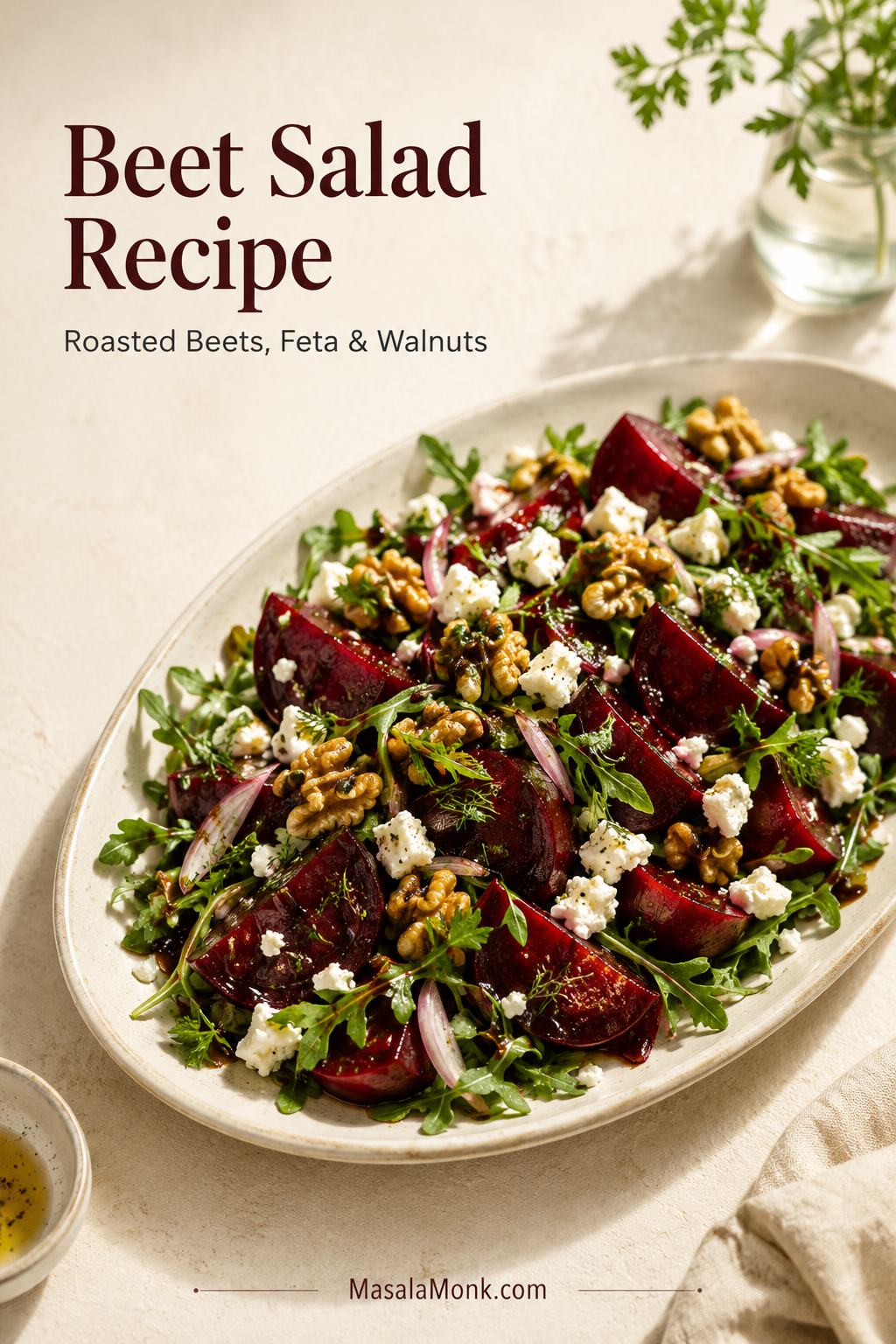
Beet Salad Recipe with Roasted Beets, Feta & Walnuts

This roasted beet salad stands out because it combines sweet beet wedges with salty feta, toasted walnuts, peppery greens, herbs, and a bright lemon-balsamic finish.

A good beet salad recipe should be more than earthy beets with cheese sprinkled on top. It should feel bright, crisp, salty, sweet, and fresh in the same bite: tender roasted beets, briny feta, toasted walnuts, peppery greens, fresh herbs, and a lemon-balsamic dressing that keeps everything lively.

It should look as good as it tastes too: ruby beet wedges, white feta, green herbs, toasted walnuts, and glossy greens that still look fresh.

This version looks like a special-occasion salad, but most of the work is simple: roast the beets, cool and peel them, dress the greens lightly, then layer everything so the salad stays colorful instead of wet, muddy, or fully pink.

Beets are dramatic. They stain the board, tint the vinaigrette, and can turn feta pink if the salad is tossed too hard. They can also taste muddy without enough acid, salt, herbs, and crunch. This recipe gives them a fair chance: roasted until sweet, dressed until bright, and finished with enough contrast to make every bite lively. If you know them as beetroot, same idea: roasted beetroot, feta, walnuts, greens, herbs, and a tangy vinaigrette.

Quick Answer: Beet Salad at a Glance

Fast recipe snapshot: Roast whole beets at 400°F / 200°C until tender, cool and peel, then layer with arugula or rocket, feta, toasted walnuts, herbs, shallot, and lemon-balsamic Dijon dressing. For a 15-minute version, use cooked, canned, vacuum-packed, or leftover roasted beets.

Go-to beet methodRoasted whole beets for the deepest, sweetest flavor
Roast time35–45 minutes for small beets, 45–60 minutes for medium, 60–75 minutes for large
Serves4 as a side, or 2 as a larger salad
GreensArugula / rocket for peppery bite; spinach for a milder salad
DressingLemon-balsamic Dijon vinaigrette
Make-ahead planRoast beets and make dressing ahead; assemble close to serving

The image below shows the bite this salad is built around: beet, feta, walnut, greens, herbs, and just enough dressing to bring everything together.
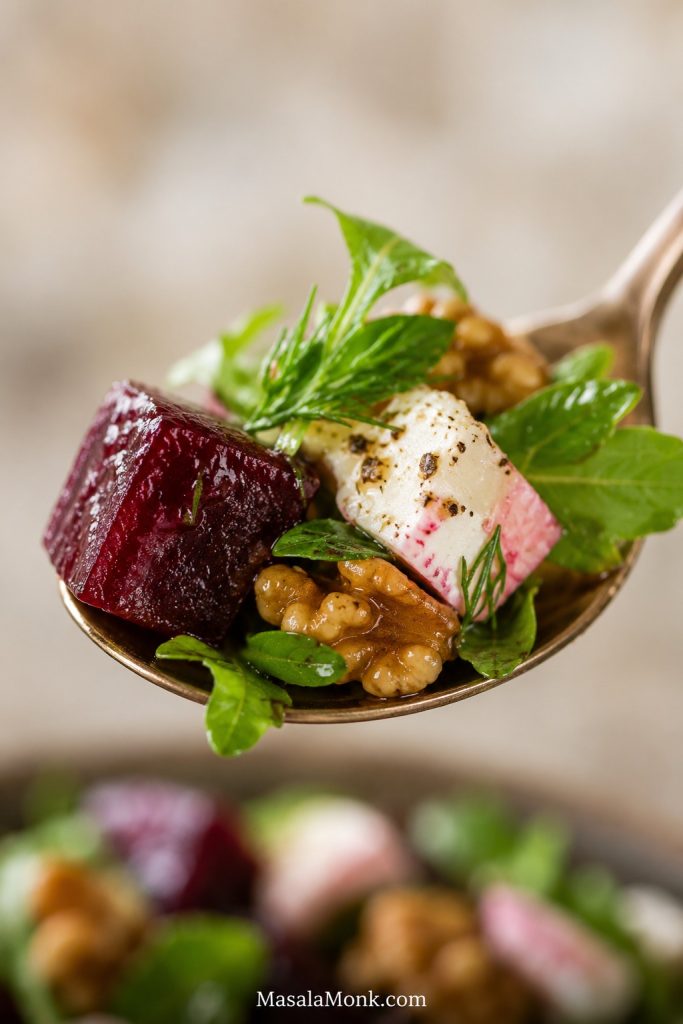
Close-up of a spoon holding roasted beet, feta, walnut, greens, herbs, and glossy dressing.
For the best bite, aim for sweetness, salt, crunch, freshness, and a little dressing together. That balance keeps beet salad lively instead of earthy or heavy.

The Beet Salad Balance Formula

Once you know the balance, you can change the salad without losing the point. Great beet salad needs five things: sweet beets, salty contrast, bright acid, crisp texture, and something fresh. Miss one, and the salad can taste flat, earthy, too soft, too sweet, or heavy.

  • Sweet: roasted beets or beetroot
  • Salty: feta, goat cheese, capers, olives, or salted seeds
  • Acid: lemon, orange, balsamic, vinegar, or pickled beets
  • Crunch: walnuts, pecans, pistachios, pumpkin seeds, apple, or cucumber
  • Freshness: arugula, rocket, parsley, mint, dill, basil, spinach, or kale

The trick is not making beets less like beets. It is giving them enough contrast to make their sweetness work. When those pieces are in place, the salad tastes bright instead of muddy, crisp instead of soft, and fresh instead of heavy.

What the finished salad should taste like: sweet roasted beets, salty-creamy feta, crisp toasted nuts, fresh herbs, lightly dressed greens, and a clean lemony finish.

Ingredients You’ll Need

You do not need many ingredients, but quality and timing matter. Medium beets roast more evenly, block feta stays creamier than pre-crumbled feta, toasted walnuts taste far better than raw walnuts, and fresh herbs make the salad feel brighter.
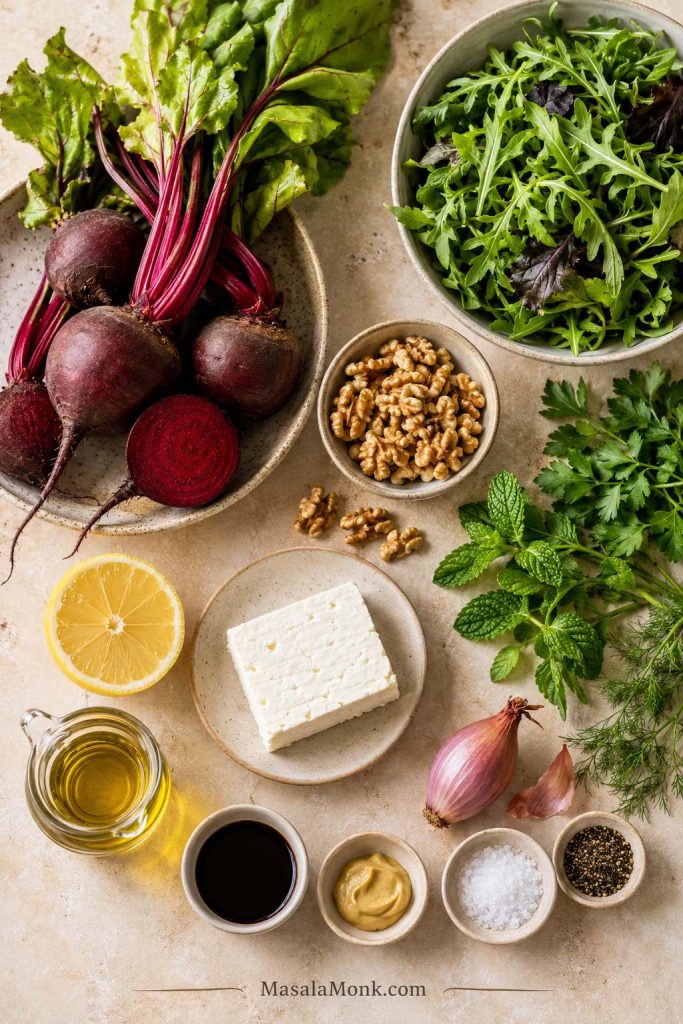
Raw beets, feta, walnuts, greens, herbs, lemon, balsamic vinegar, Dijon mustard, olive oil, salt, and pepper.
Start with a short ingredient list, but make each part count: tender beets, something salty, something crisp, fresh herbs, greens, and a sharp dressing.

Beets / Beetroot

Use 600–700 g / 1⅓–1½ lb raw beets, about 4 medium beets. Red beets are classic and easy to find. Golden beets are milder, stain less aggressively, and look beautiful mixed with red beets. Not starting with raw beets? The beet options section explains how to use cooked, canned, pickled, boiled, or raw beets.

Choose beets that feel firm and heavy for their size. Small to medium beets usually have the nicest texture for salad. Very large beets can take longer to roast and may be a little woody in the center.

Feta

Use 85–100 g / 3–3½ oz feta, crumbled into small pieces. Block feta is creamier and less dry than pre-crumbled feta, so it is the better choice when you have it. Goat cheese gives a softer, creamier salad; blue cheese is stronger and works best with pear, walnuts, and bitter greens. For a dairy-free version, skip the cheese and add avocado, toasted seeds, capers, olives, or tahini-lemon dressing.

Walnuts

Use 50–60 g / ½ cup walnuts, toasted. This is one place not to skip the pan: toasted walnuts taste deeper, crisper, and much better against sweet beets than raw walnuts. Pecans, pistachios, almonds, or pumpkin seeds also work.

Greens, herbs, and shallot

Use 120–140 g / 4–5 oz arugula/rocket, baby spinach, or mixed greens. Arugula is best when you want peppery contrast; spinach is softer and milder; kale works better for lunch bowls with grains or chickpeas.

Use one or two fresh herbs, not every herb at once. Parsley keeps it clean, mint makes it brighter, dill is excellent with cucumber or pickled beets, and basil works well with orange or balsamic. A little shallot or red onion gives the salad bite; soak it in cold water for 10 minutes if it tastes too sharp.

How to Roast Beets for Salad

Roasting beets is mostly hands-off. I get the cleanest flavor from medium beets roasted whole, then peeled after cooling. Very large beets work, but they take longer and can taste less sweet in the center. Skipping the oven? Use the 15-minute shortcut with cooked, canned, or vacuum-packed beets.
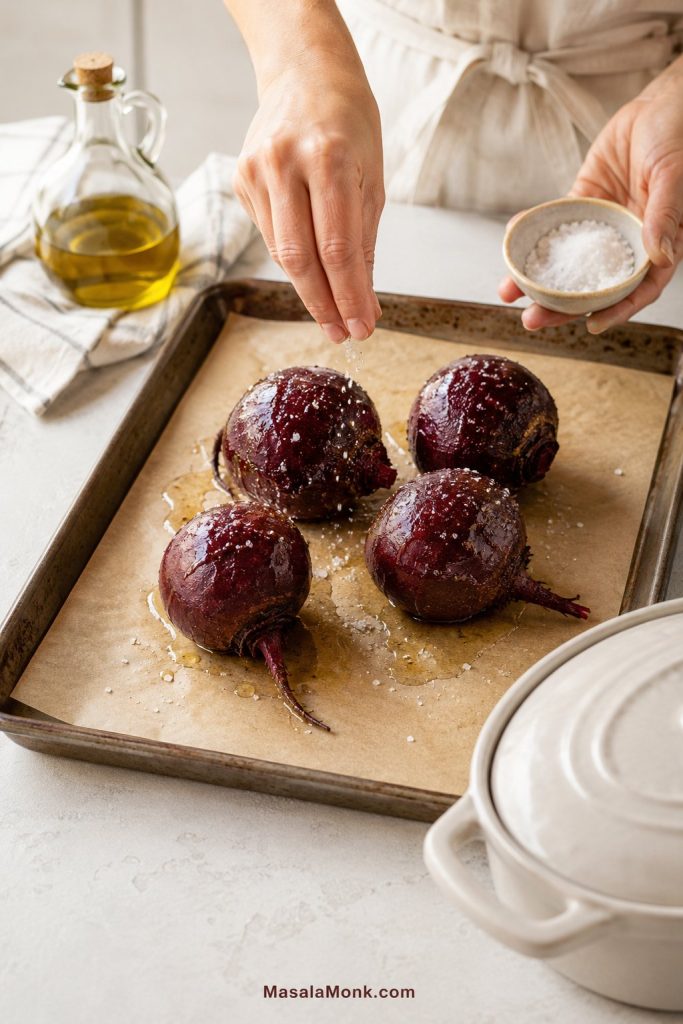
Whole beets on a parchment-lined tray being seasoned with olive oil and salt before roasting.
Before roasting, coat the beets with olive oil and salt. This simple step helps build flavor and makes the skins easier to remove later.

Whole roasted beets

  1. Heat the oven to 400°F / 200°C.
  2. Scrub the beets well. Trim the greens, leaving about 1 inch of stem if attached. This helps reduce bleeding while roasting.
  3. Rub the beets with 1 tbsp / 15 ml olive oil and a pinch of salt.
  4. Wrap the beets in foil, or place them in a covered baking dish. Set foil packets on a rimmed baking sheet in case any juices leak.
  5. If using red and golden beets together, wrap or roast them separately so the red beets do not stain the golden ones.
  6. Roast until tender: 35–45 minutes for small beets, 45–60 minutes for medium beets, and 60–75 minutes for large beets.
  7. The beets are done when a small knife slides into the center of the largest beet with little resistance.
  8. Let the beets cool for 10–15 minutes, or until comfortable to handle.
  9. Rub off the skins with paper towels or gloved hands.
  10. Slice into wedges, half-moons, cubes, or ¼-inch rounds.

Check, peel, and slice

Use the knife test on the largest beet in the batch, because smaller beets may be tender before the biggest one is ready. This is the simplest way to avoid firm centers.
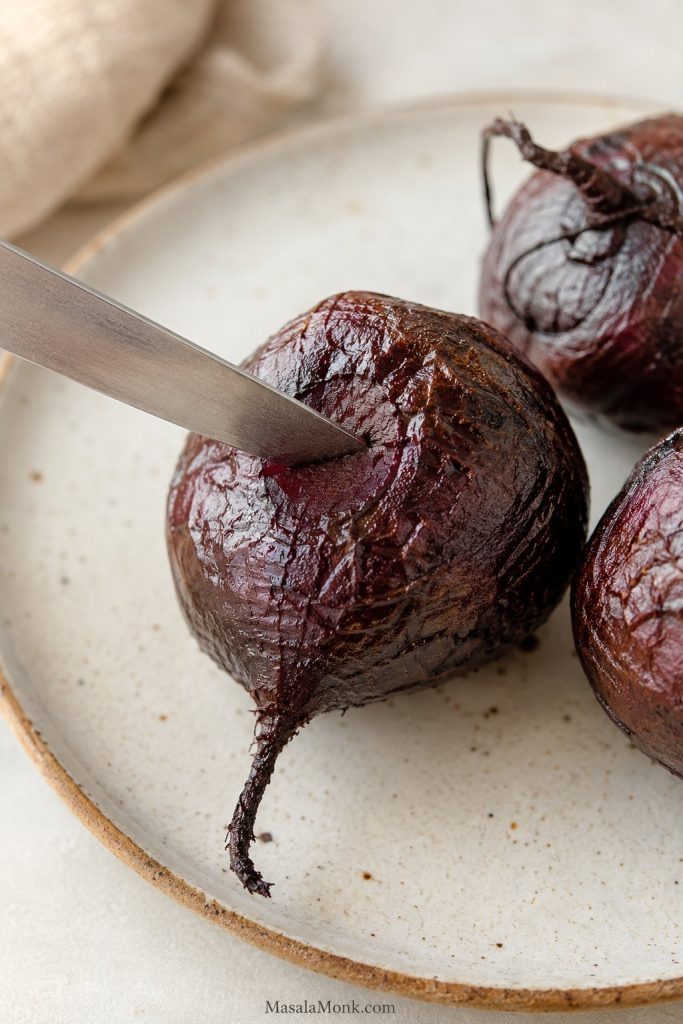
Knife inserted into the center of a roasted beet to test tenderness.
Next, check the largest beet, not the smallest one. When a knife slides into the center easily, the whole batch is ready.

For whole roasted beets, peel after roasting. The skins slip off more easily, the beets stay juicier, and the prep is less messy. If the skins do not rub off easily, the beets may need a little more time in the oven.
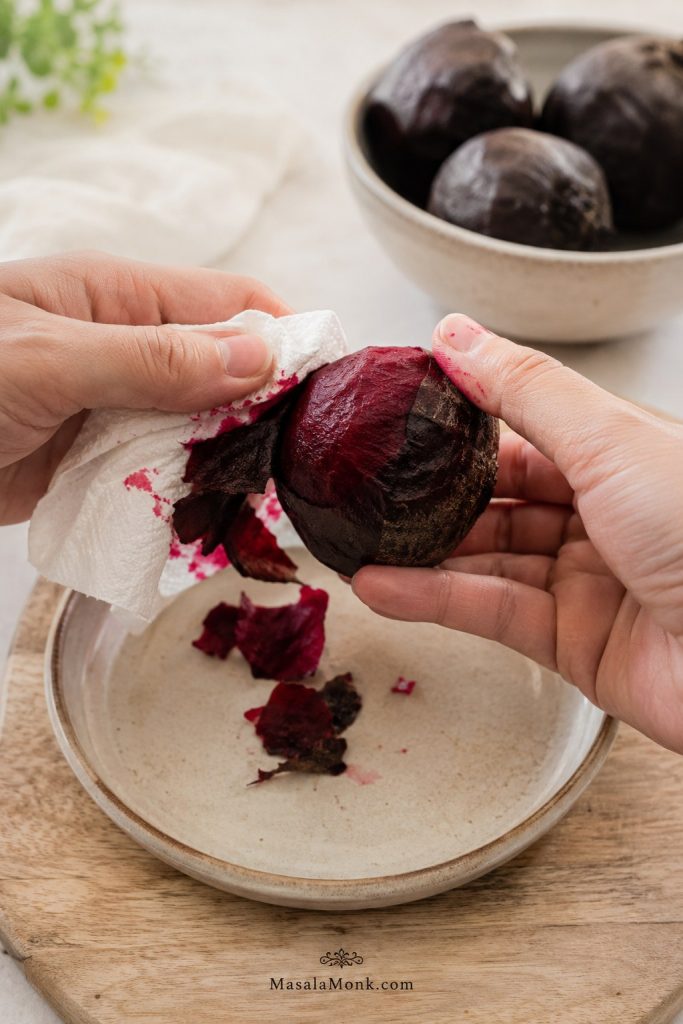
Hands peeling the skin from a roasted beet with a paper towel on a light plate.
Once the beets are cool enough to handle, rub the skins off with a paper towel or gloves. If they resist, roast them a little longer next time.

After slicing, taste one beet. If it tastes flat, sprinkle the sliced beets lightly with salt or toss them with 1 teaspoon of the vinaigrette before adding them to the salad.
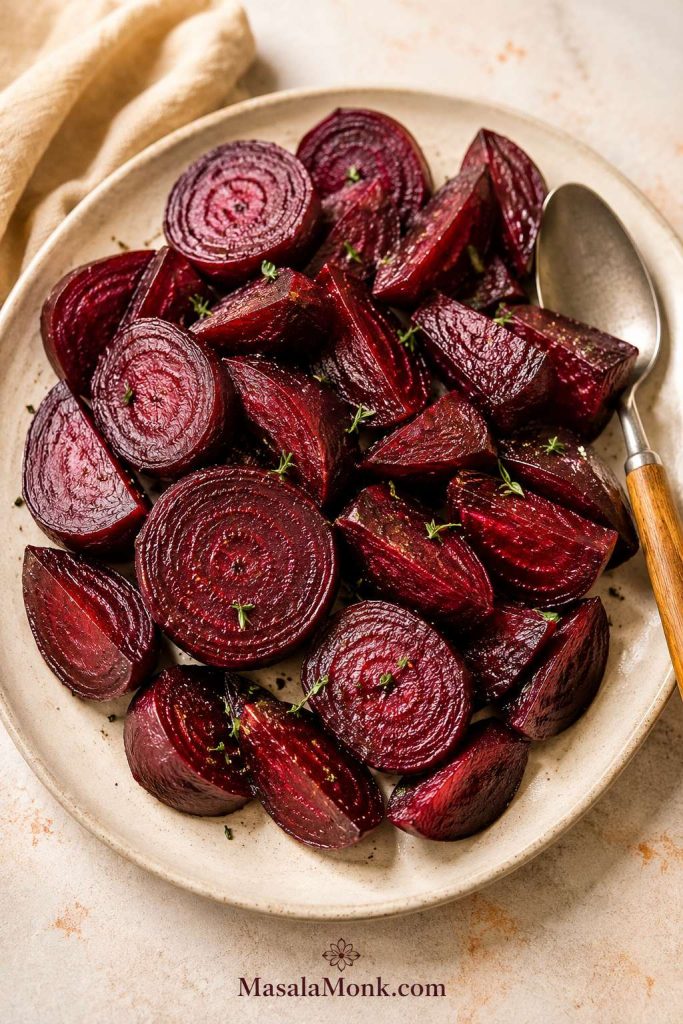
Sliced roasted beets in wedges and rounds on a cream plate with a spoon beside them.
After peeling, cut the beets into wedges, half-moons, or rounds. They should look tender and glossy, not watery, dry, or mushy.

Sliced roasted beets

If you want more roasted edges and a shorter cooking time, peel the beets first and slice them into wedges or ¼-inch rounds. Toss with olive oil and salt, spread on a lined baking sheet, and roast at 425–450°F / 220–230°C for about 25–35 minutes, turning once.

This route is faster, but it is messier because you peel and cut the beets while raw. It is helpful when you want a stronger roasted flavor and do not mind a stained cutting board.

Foil vs no foil

Foil traps steam around whole beets, which helps them cook evenly and makes the skins easier to rub off. A covered baking dish works in a similar way and is the most reliable no-foil option. Uncovered roasting gives more caramelization, but it can dry out whole beets before the centers are tender. Use uncovered roasting mainly for sliced beets.

No-foil method: Place scrubbed beets in a small covered baking dish with a splash of water and a little olive oil. Cover tightly and roast until tender. The goal is to trap enough steam for easy peeling while still concentrating the beet flavor.

How to Make Beet Salad

Once the beets are roasted, the rest is assembly. Start with less vinaigrette than you think you need, then add more only after tasting. Beet salad should look glossy, not wet.

  1. Roast, cool, peel, and slice the beets. If using cooked or canned beets, drain and pat them dry.
  2. Toast the walnuts. Warm them in a dry skillet for 3–5 minutes, stirring often, until fragrant. Let them cool so they stay crisp.
  3. Make the vinaigrette. Shake or whisk together olive oil, balsamic vinegar, lemon or orange juice, Dijon, honey or maple syrup, salt, and pepper.
  4. Dress the greens lightly. Toss the greens with 1–2 tablespoons of vinaigrette before adding the beets.
  5. Add the beets gently. Arrange them over the greens, then drizzle with a little more if needed.
  6. Finish with feta, walnuts, herbs, and shallot. Add these at the end so the salad keeps its texture and color.
  7. Taste a complete bite. Try beet, feta, walnut, greens, and dressing together. Adjust with lemon, salt, pepper, or herbs before serving.

Dress the greens first and keep the beets out until the leaves are lightly coated. This gives the salad flavor from underneath without turning the greens heavy.
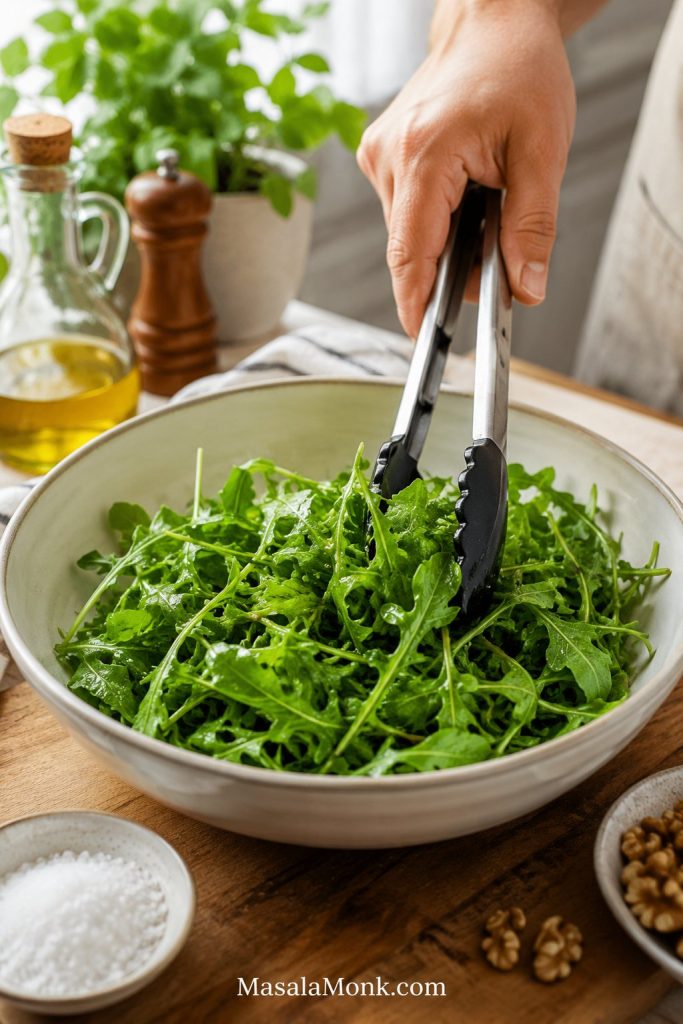
Tongs tossing arugula and mixed greens with a small amount of dressing in a shallow bowl.
First, dress the greens lightly before adding the beets. This gives the salad a flavorful base without soaking the leaves or staining everything pink.

Platter vs Bowl

Use a platter when presentation matters. Dress the greens lightly, layer the beets, then finish with feta, walnuts, herbs, and a final drizzle. A wide platter keeps the feta white, the walnuts crisp, and the beets from staining every leaf before serving.
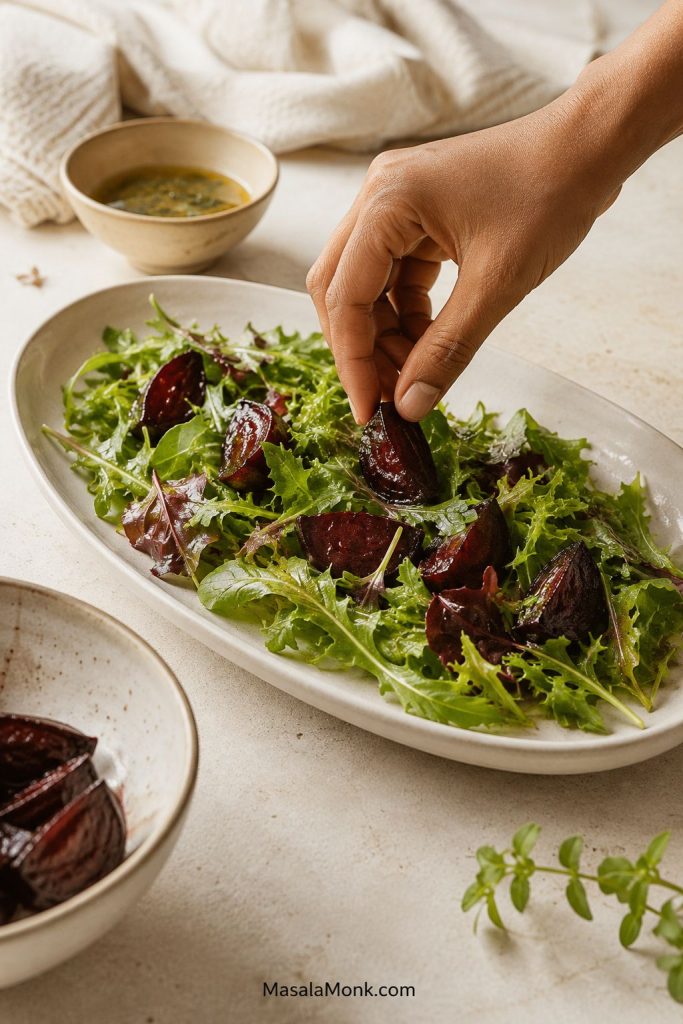
Hand placing roasted beet wedges over lightly dressed greens on a cream platter.
Then layer the beets over the greens instead of tossing hard. As a result, the salad stays cleaner, fresher-looking, and easier to serve.

Once the beets are arranged, add the delicate toppings at the end. This is the easiest way to keep the salad bright instead of fully stained pink.
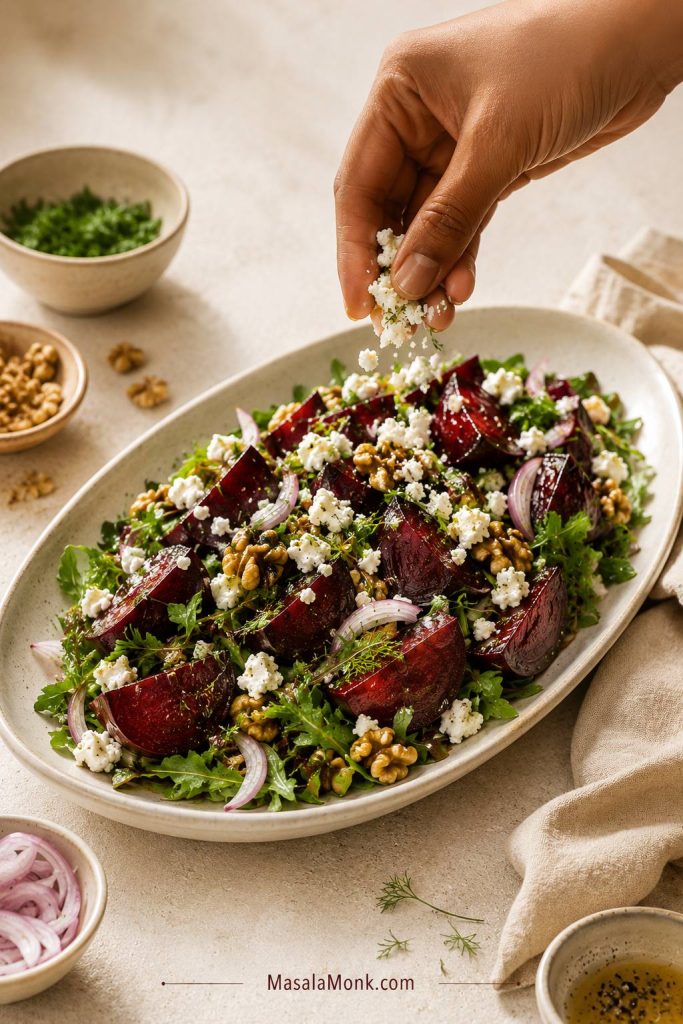
Hand sprinkling feta over roasted beet salad with walnuts, herbs, and greens on a cream platter.
Finish with feta, walnuts, herbs, and shallot at the end. That way the toppings stay bright, crisp, and visually fresh.

Use a bowl when you are adding quinoa, chickpeas, lentils, beans, eggs, chicken, or salmon. Cut the beets into cubes or half-moons so every forkful gets a little sweetness, salt, acid, and crunch.

Avoid these beet salad mistakes: Let the beets cool, dress lightly, add feta near the end, use enough salt and acid, and give soft canned beets something crisp.

The Best Dressing for Beet Salad: Lemon-Balsamic Dijon

With beets, the vinaigrette is what keeps the salad from tasting heavy. Think of it as the no-muddy-beets dressing: balsamic for depth, lemon for lift, Dijon for body, and just enough sweetness to round the edges without making the salad sugary.
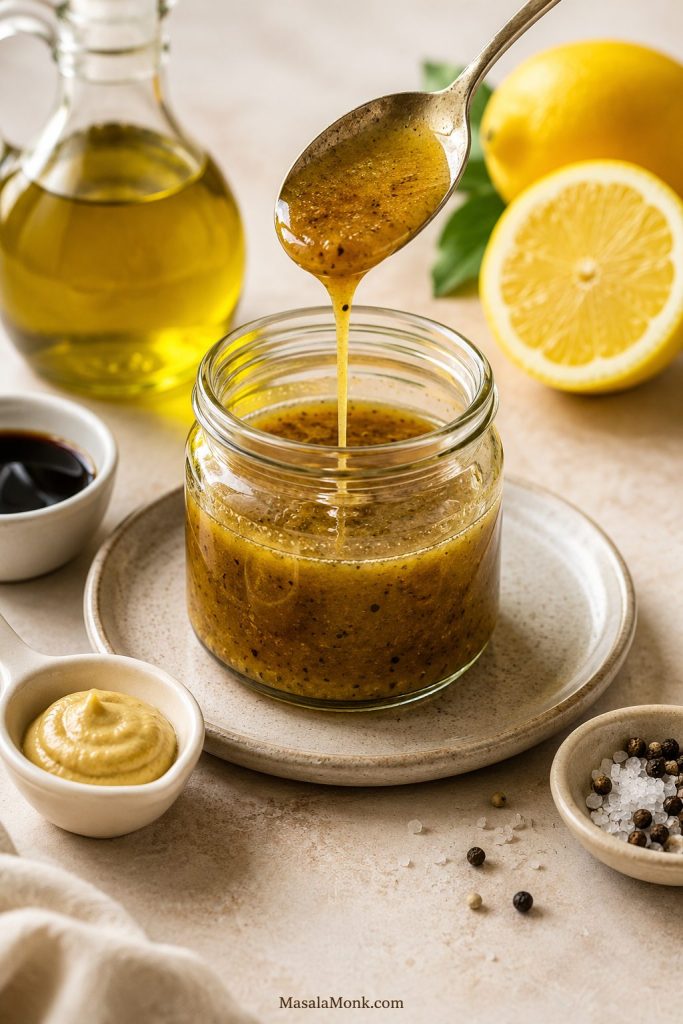
Lemon-balsamic Dijon dressing dripping from a spoon into a glass jar with lemon, mustard, olive oil, vinegar, salt, and pepper nearby.
The dressing should taste slightly sharper than you want at first. Once it coats the sweet beets and salty cheese, the flavor settles into balance.
IngredientAmountWhy it is there
Extra-virgin olive oil3 tbsp / 45 mlGives body and carries the flavor
Balsamic vinegar1 tbsp / 15 mlMatches the sweetness of roasted beets
Lemon juice or orange juice1 tbsp / 15 mlLifts the salad and reduces earthiness
Dijon mustard1 tsp / 5 mlHelps emulsify the dressing and adds bite
Honey or maple syrup1–2 tsp / 5–10 mlRounds the sharp edges without making the salad sweet
Fine salt¼ tsp, plus more to tasteBalances the beets without over-salting the feta
Black pepperTo tasteAdds warmth and contrast

Use 1 teaspoon honey or maple for a sharper vinaigrette, or 2 teaspoons if your vinegar is harsh or your beets taste especially earthy. Skip the sweetener for very sweet roasted beets or pickled beets.

How Much Dressing to Use

Dressing rule: Start with 1–2 tablespoons on the greens, then add more only after the beets are on the salad. If the salad tastes flat, add salt first; if it tastes earthy, add lemon and herbs; if it tastes too sweet, add vinegar, lemon, or peppery greens.

The easiest visual cue is the surface of the salad. The beets and greens should shine lightly, but the plate should not have dressing pooling at the bottom.
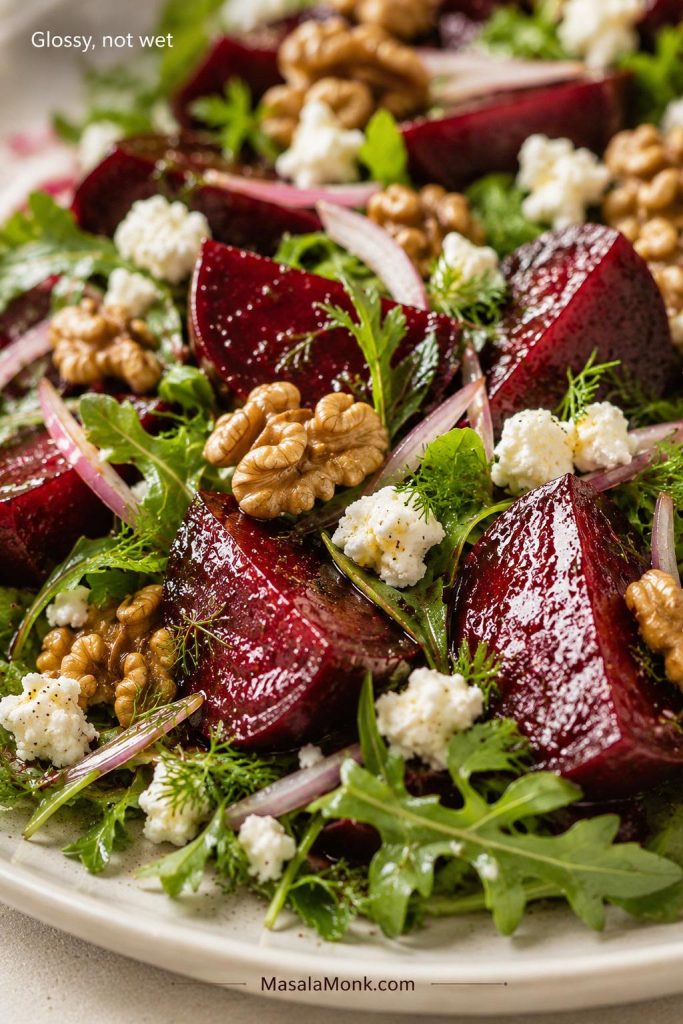
Close-up of roasted beet salad with glossy beets, greens, feta, walnuts, herbs, and the words “Glossy, not wet.”
The finished salad should look glossy, not wet. If liquid starts pooling, stop adding dressing and adjust with salt or lemon instead.

How to Change the Vinaigrette

Use orange vinaigrette when fruit is involved, lemon-herb dressing when the salad has cucumber or chickpeas, and honey-Dijon when you switch from feta to goat cheese. For a deeper dinner-party version, add roasted garlic or finely chopped toasted walnuts to the vinaigrette.

Recipe Card: Roasted Beet Salad with Feta & Walnuts

Sweet roasted beets, briny feta, toasted walnuts, greens, herbs, and a lemon-balsamic dressing come together in a colorful salad that works as a side dish or a larger salad with lunch add-ins.

Prep Time15 minutes
Roast Time45–60 minutes for medium beets
Cooling Time15 minutes
Total TimeAbout 1 hour 15–30 minutes for medium beets

Timing note: Small beets may roast in 35–45 minutes. Large beets can take 60–75 minutes.

Shortcut time: 15 minutes if using cooked, canned, vacuum-packed, or leftover roasted beets.

Yield: 4 side servings, or 2 larger salad servings. For a fuller lunch, add quinoa, chickpeas, lentils, eggs, beans, or another protein.

Equipment: rimmed baking sheet or small covered baking dish, foil or lid, sharp knife, cutting board, small skillet, small jar or bowl for dressing, paper towels or gloves, salad bowl or platter.

Ingredients

For the beets and salad

  • 600–700 g / 1⅓–1½ lb raw beets, about 4 medium
  • 1 tbsp / 15 ml olive oil, for roasting
  • Pinch of salt, for roasting
  • 120–140 g / 4–5 oz arugula/rocket, baby spinach, or mixed greens
  • 85–100 g / 3–3½ oz feta, crumbled
  • 50–60 g / ½ cup walnuts, toasted
  • 1 small shallot or ¼ small red onion, thinly sliced or minced
  • 2–3 tbsp chopped fresh parsley, mint, dill, or basil
  • Optional: 1 orange, segmented; 1 crisp apple, sliced; or a mix of red and golden beets

For the lemon-balsamic Dijon dressing

  • 3 tbsp / 45 ml extra-virgin olive oil
  • 1 tbsp / 15 ml balsamic vinegar
  • 1 tbsp / 15 ml lemon juice or orange juice
  • 1 tsp / 5 ml Dijon mustard
  • 1–2 tsp / 5–10 ml honey or maple syrup
  • ¼ tsp fine salt, plus more to taste
  • Freshly ground black pepper, to taste

Method

  1. Roast the beets. Heat the oven to 400°F / 200°C. Scrub the beets, rub with olive oil and a pinch of salt, then wrap in foil or place in a covered baking dish. Roast until a knife slides easily into the center: 35–45 minutes for small beets, 45–60 minutes for medium beets, or 60–75 minutes for large beets.
  2. Cool and peel. Let the beets cool for 10–15 minutes, or until comfortable to handle. Rub off the skins with paper towels or gloved hands. Slice into wedges, half-moons, cubes, or ¼-inch rounds.
  3. Toast the walnuts. Place walnuts in a dry skillet over medium-low heat for 3–5 minutes, stirring often, until fragrant. Cool before adding to the salad.
  4. Make the vinaigrette. In a jar or small bowl, combine olive oil, balsamic vinegar, lemon or orange juice, Dijon, honey or maple syrup, salt, and pepper. Shake or whisk until combined. Taste; it should be tangy and lightly salty before it goes on the salad.
  5. Dress the greens lightly. Toss the greens with 1–2 tablespoons of dressing before adding the beets. You may not need all of it.
  6. Add the beets. Arrange the sliced beets over the greens. Drizzle with another spoonful if needed.
  7. Finish the salad. Add feta, toasted walnuts, shallot or red onion, and herbs. Add orange or apple if using.
  8. Taste and serve. Taste a bite with beet, feta, walnut, greens, and dressing together. Adjust with lemon, salt, pepper, or herbs before serving.

Shortcut Version

Use about 3 cups cooked beets, or 500–600 g / 18–21 oz cooked, canned, vacuum-packed, or leftover roasted beets. Drain and pat dry, then slice and assemble the salad with the same dressing and remaining salad ingredients. Total time: about 15 minutes.

Notes

  • Cool beets fully and add feta last for the cleanest presentation.
  • Start with 1–2 tablespoons dressing; beet salad should be glossy, not wet.
  • For canned beets, use two standard 14–15 oz / 400 g cans, drain, rinse if needed, and pat very dry.
  • For pickled beets, reduce or skip the balsamic vinegar and use more lemon, dill, cucumber, and red onion.
  • Store roasted beets and dressing separately for 3–4 days. Assemble close to serving.

Use the recipe card above for the main roasted beet version. The sections below help you adapt it if you are starting with canned, cooked, pickled, raw, or boiled beets, or if you want a lunch bowl, no-greens version, storage plan, or quick fix.

Roasted, Raw, Canned, Pickled, or Boiled Beets?

Roasted beets give the fullest flavor, but this salad does not fall apart if you start with cooked, canned, pickled, boiled, or raw beets. The key is knowing what each type needs before it goes into the bowl.
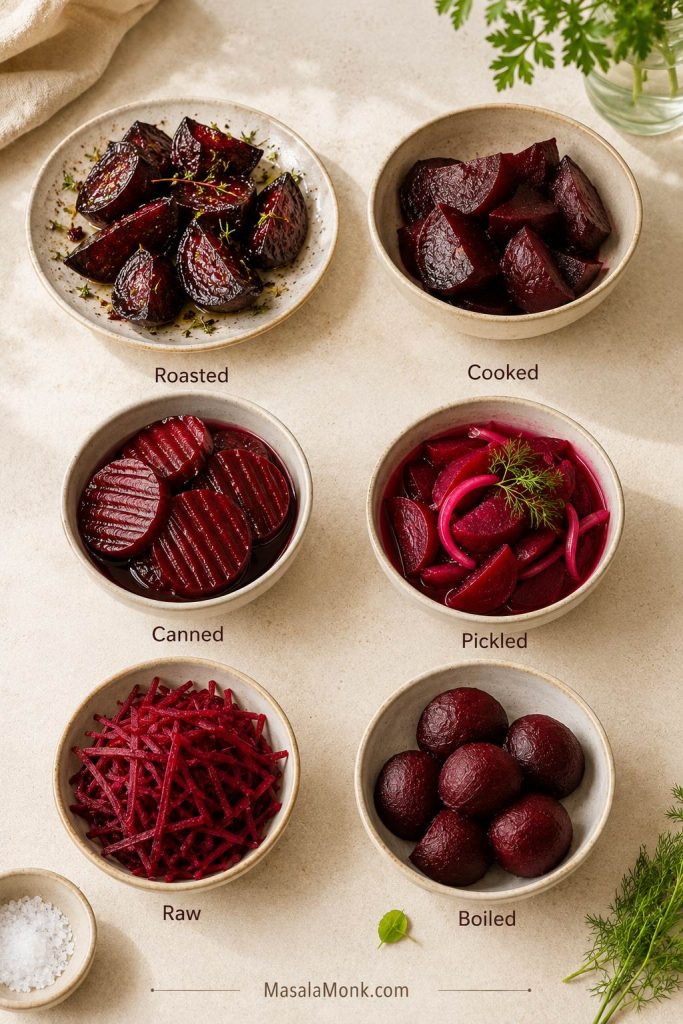
Six labeled bowls showing roasted, cooked, canned, pickled, raw, and boiled beets for beet salad.
Choose the beet style based on what you need: roasted for depth, canned for speed, pickled for tang, raw for crunch, and boiled for a softer bite.
Beet optionBest forWhat to know
Roasted beetsFullest flavorSweet, deep, tender, and less watery than boiled beets.
Vacuum-packed cooked beetsFastest no-roast optionClosest shortcut to roasted texture. Pat dry before using.
Canned beetsPantry shortcutDrain, rinse if needed, and pat very dry. Add extra crunch because canned beets are soft.
Pickled beetsTangy no-cook saladUse less vinegar in the dressing because the beets already bring acidity.
Raw beetsCrunchy slaw-style saladPeel, grate, julienne, or slice very thin. Thick raw beet pieces are too hard for this style.
Boiled beetsAlready cooked beetsSofter and often wetter than roasted beets. Dry them well and use a punchy dressing.

The shortcut versions are not second-best if you build them well. They just need more drying, more crunch, and a brighter finish.

If you are shopping specifically for this recipe, buy raw medium beets for the fullest flavor or vacuum-packed cooked beetroot for the easiest shortcut. Use canned or pickled beets when they are what you already have.

15-Minute Beet Salad with Cooked, Canned, or Vacuum-Packed Beets

For a fast beet salad, use about 3 cups cooked beets, or 500–600 g / 18–21 oz cooked, canned, vacuum-packed, or leftover roasted beets. Slice into wedges, half-moons, or cubes, then pat dry before adding dressing.
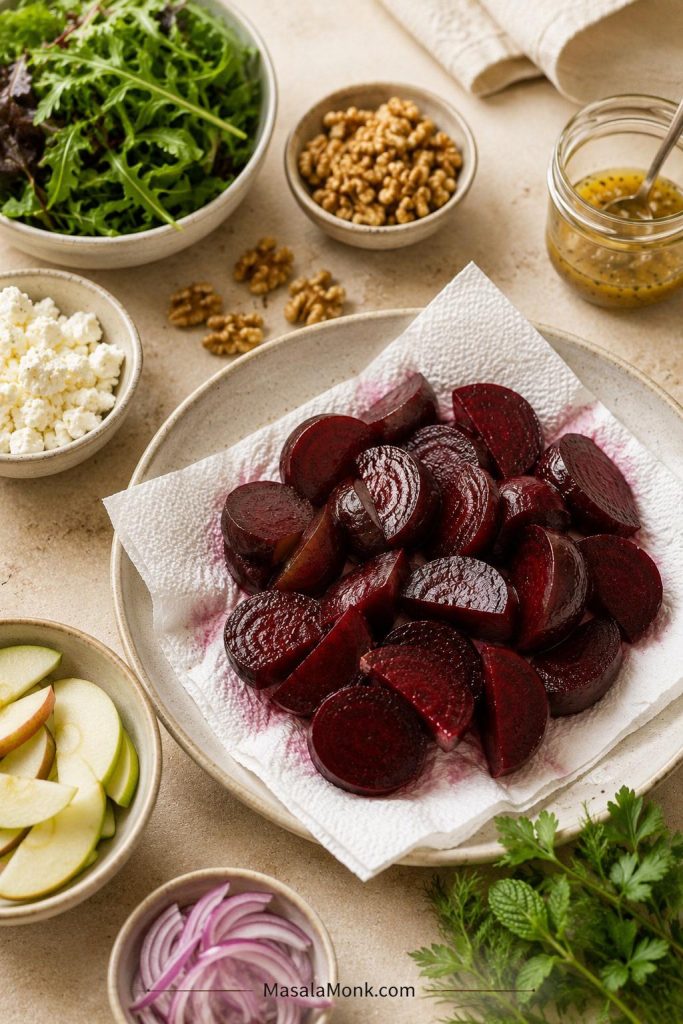
Cooked beet slices on paper towel with feta, walnuts, greens, apple slices, herbs, onion, and dressing nearby.
For canned or cooked beets, drying matters most. Pat them well, then add crunch, herbs, cheese, and a sharper dressing to keep the salad fresh.
  • Vacuum-packed cooked beets: The closest no-roast option to roasted beets. Drain, pat dry, slice, and build the salad the same way.
  • Canned beets: Use two standard 14–15 oz / 400 g cans, drained, or about 3 cups sliced canned beets. Rinse if they taste metallic, salty, or too sweet, then pat very dry and add extra texture.
  • Pickled beets: Use less balsamic or skip it. Pair with cucumber, red onion, dill, feta, walnuts or pistachios, olive oil, and lemon.

If I am using canned beets, I am more generous with walnuts, cucumber, or apple because canned beets are softer and need more crunch.

For pickled beets, a good quick combination is: 2 cups sliced pickled beets + 1 cucumber + ¼ red onion + ½ cup feta + ⅓ cup walnuts or pistachios + fresh dill + olive oil + lemon juice.
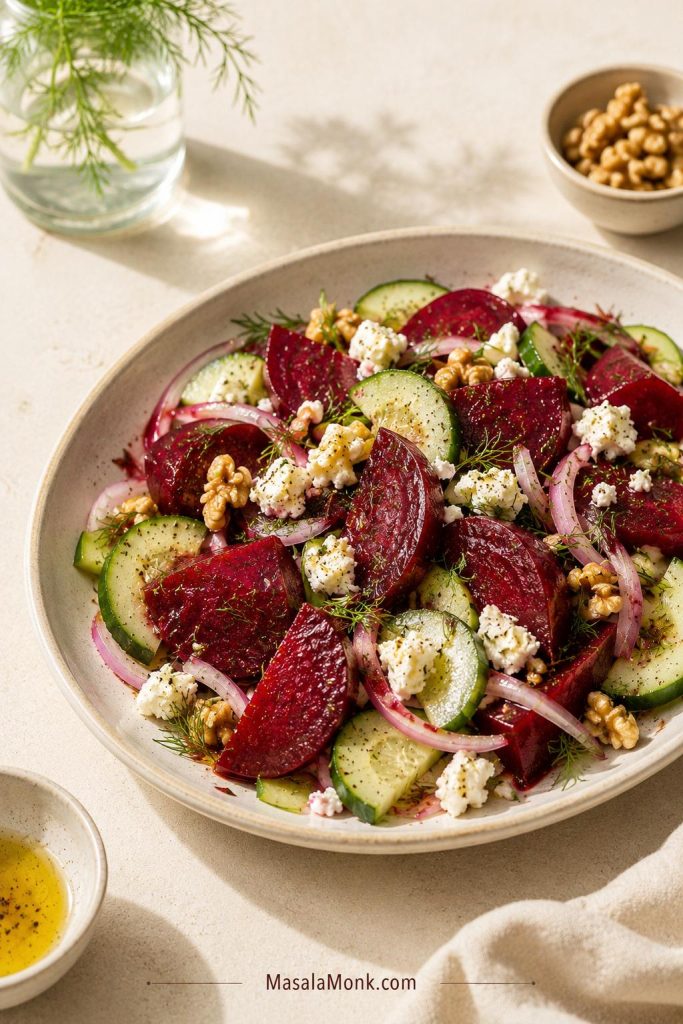
Pickled beet salad with cucumber slices, dill, red onion, feta, walnuts, and light dressing in a shallow bowl.
Because pickled beets already bring acid, pair them with cooling cucumber, dill, onion, and feta instead of a heavy balsamic-style finish.

How to Keep Beet Salad from Turning Everything Pink

Beets will always share some color. The goal is not to stop the color completely; it is to keep the salad from becoming one flat pink bowl before it reaches the table.

  • Cool the beets fully before adding them to greens or feta.
  • Pat cooked, canned, or pickled beets dry before slicing or tossing.
  • Dress the greens first instead of tossing everything together at once.
  • Add the beets gently and avoid aggressive mixing.
  • Add feta last so the white pieces stay visible.
  • Use a platter instead of a deep bowl when presentation matters.
  • Add walnuts right before serving so they stay crisp.
  • Roast red and golden beets separately if you want clean color contrast.

If leftovers turn pink, they are still good. Beet, feta, walnut, and herb salad without delicate greens can taste even better after sitting; it simply becomes more of a marinated beet side.

Beet Salad Variations

Use the variations by need: grains or legumes when it has to be lunch, orange or apple when it needs brightness, cucumber or raw beet when you want crunch, and no greens when it needs to sit.

To make beet salad a meal: Add 1½ cups cooked quinoa, 1 can chickpeas, 1½ cups lentils, boiled eggs, white beans, salmon, chicken, or tofu. Use sturdier greens like kale, arugula, or spinach, and keep the walnuts separate until serving.
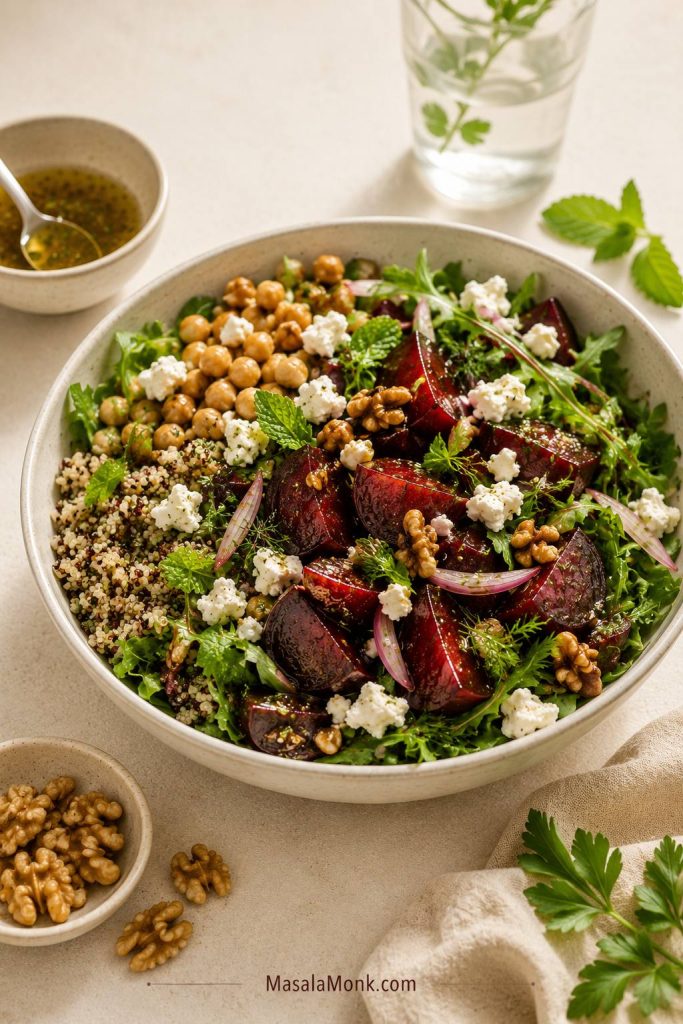
Beet salad lunch bowl with quinoa, chickpeas, roasted beets, feta, and walnuts.
To make beet salad filling enough for lunch, add quinoa or chickpeas. The extra base turns a side salad into a proper meal.

Turn it into lunch

Beet and quinoa salad: Fold in 1½ cups cooked and cooled quinoa and use a little extra dressing. Arugula, spinach, or finely chopped kale hold up best.

Beet and chickpea salad: Add 1 can chickpeas, drained and rinsed. Chickpeas make the salad more filling and work especially well with lemon, parsley, mint, cucumber, and feta. If you want another fresh, protein-friendly salad, this chickpea salad recipe is a useful next stop.

Beet and lentil salad: Add 1½ cups cooked green or brown lentils. Use extra lemon, vinegar, feta, and herbs so the salad stays bright instead of heavy.

Make it brighter

Beet and orange salad: Add 1–2 oranges, segmented or sliced. Use orange juice in the dressing and finish with mint or basil. Pistachios are especially good here.
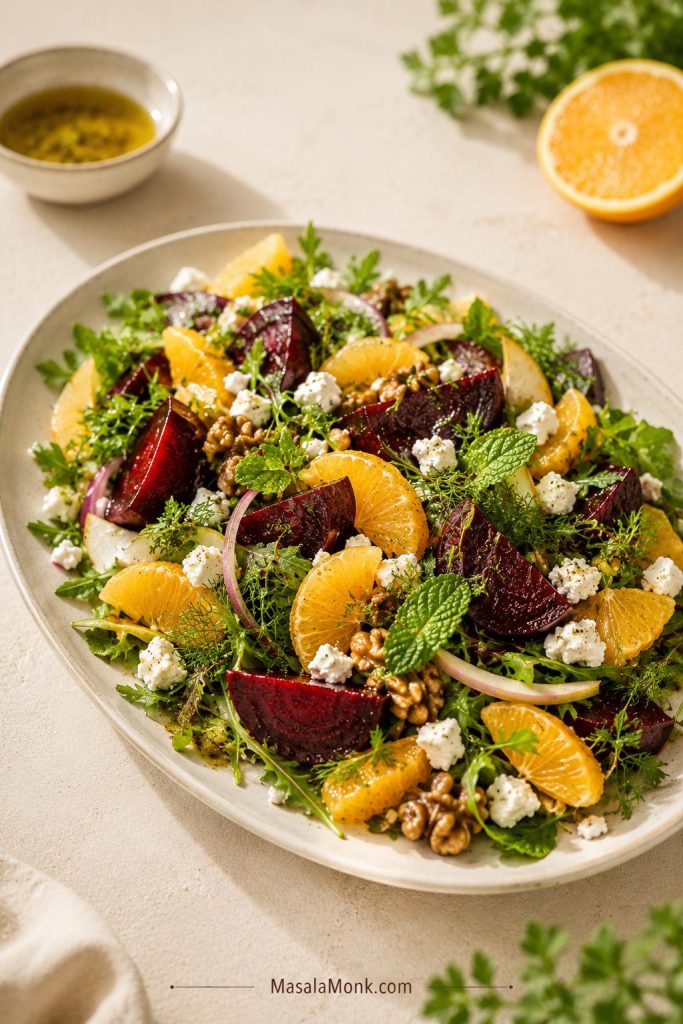
Beet and orange salad with roasted beet wedges, orange segments, greens, feta, and walnuts.
For a brighter variation, add orange segments. Citrus makes roasted beet salad juicier and helps cut through the earthy sweetness.

Apple beet salad: Add 1 crisp apple, thinly sliced just before serving. It gives the salad a sweet-tart snap that works well with walnuts, feta, and lemon.

Pear and beet salad: Add 1 ripe but firm pear when you want a softer, dinner-party style salad. Goat cheese, walnuts, and honey-Dijon are the best match here.

Make it crunchier

Raw beet salad: Peel 1–2 raw beets, then grate, julienne, or slice very thin. Toss with lemon or orange juice and salt, rest for 10 minutes, then add apple, carrot, herbs, seeds, or feta. Use a mandoline guard if slicing thinly.
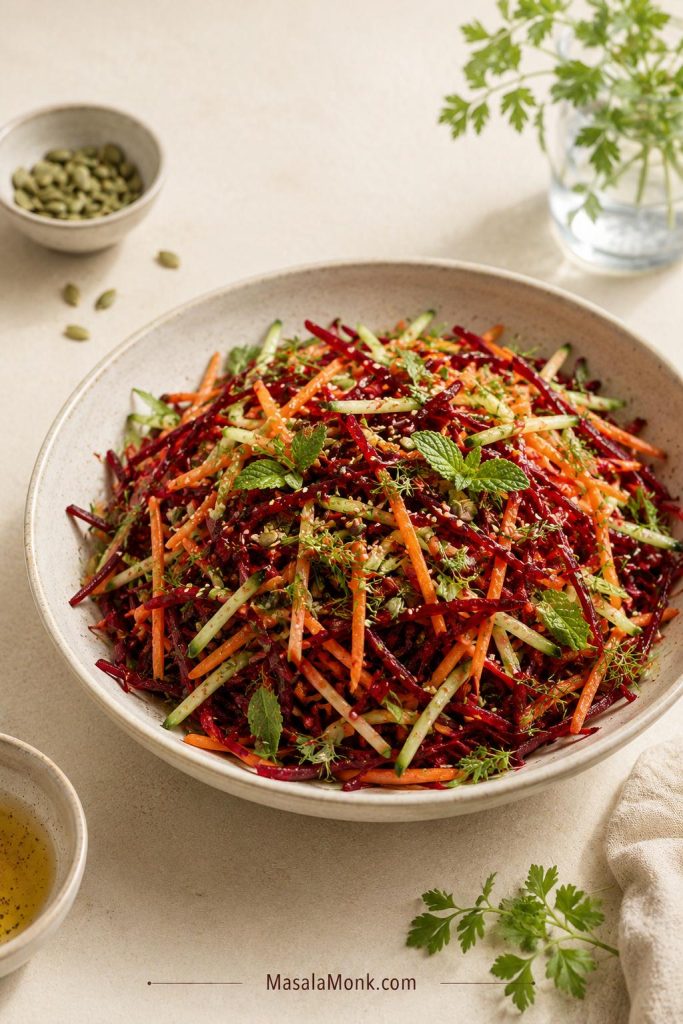
Raw beet salad with shredded beet, carrot, cucumber, herbs, seeds, and light dressing.
For raw beet salad, cut the beets thin. Shredding or julienning keeps the texture crisp and pleasant instead of hard or bulky.

Beet and carrot salad: Grate 1 raw beet + 1 large carrot, then add lemon juice, olive oil, parsley or mint, salt, and toasted seeds. This eats more like a beet slaw than a roasted beet salad.

Beet and cucumber salad: Combine 2 cups cooked or pickled beets + 1 cucumber, sliced. Add dill, feta, red onion, lemon, olive oil, and walnuts or pistachios. If cucumber is the part you love most, this crisp cucumber salad recipe is a good companion.

Make it ahead

No-greens beet salad: Make it more like a marinated beet side with 3 cups cooked beets + ½ cup feta + ½ cup walnuts + 2–3 tbsp herbs + 1 small shallot + enough dressing to coat. It is less delicate, more make-ahead friendly, and good for holiday or picnic tables. It will turn pink as it sits, but the flavor holds well for 2–3 days.
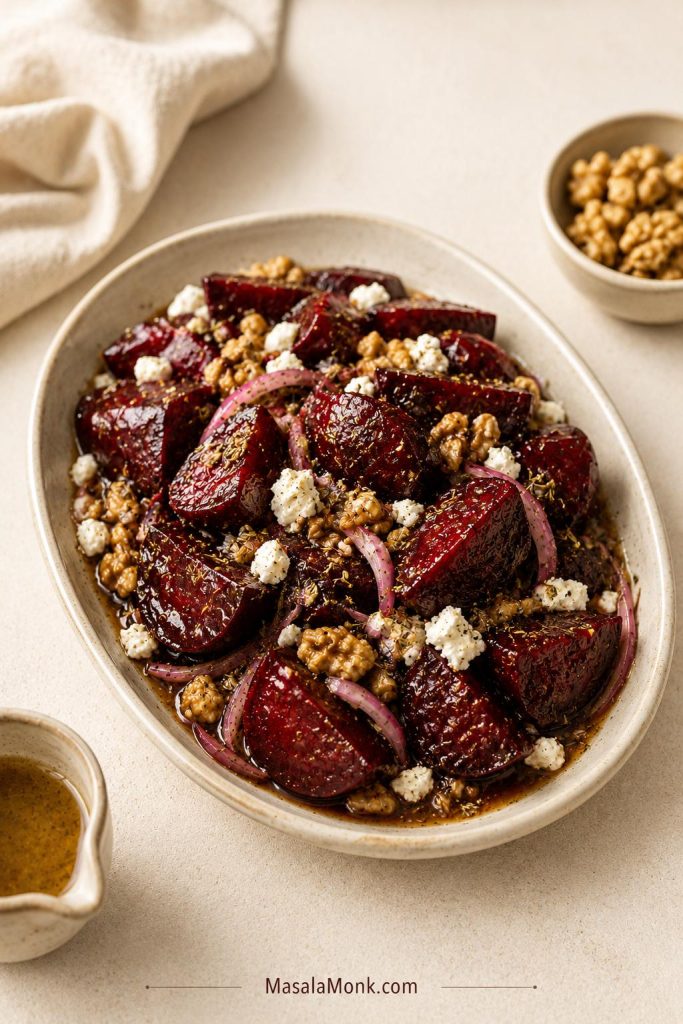
No-greens beet salad with roasted beet wedges, feta, walnuts, herbs, and shallot.
For a make-ahead beet side, skip the leafy greens. Marinate the beets first, then add feta, walnuts, and herbs closer to serving.

Change the cheese

Goat cheese beet salad: Use soft goat cheese instead of feta when you want a creamier salad, especially with honey-Dijon, walnuts, arugula, and pear.

Blue cheese beet salad: Use less cheese because the flavor is stronger. Add pear, walnuts, and bitter greens for balance.

Dairy-free beet salad: Skip the cheese and add avocado, toasted seeds, capers, olives, or tahini-lemon dressing. Increase salt slightly because feta normally provides much of the seasoning.

What to Serve with Beet Salad

Use this salad when the rest of the meal is simple and you need one dish that brings color, freshness, and a little drama. It is especially good next to anything rich or beige: roast chicken, salmon, steak, lentils, grains, or creamy soups.

  • With rich mains: serve it with roast chicken, steak, lamb, salmon, or trout. For a simple chicken plate, this baked chicken breast recipe keeps the protein easy and meal-prep friendly.
  • With simple soups: pair it with lentil soup, bean soup, tomato soup, or vegetable soup for a colorful lunch.
  • With grains: serve it over quinoa, farro, barley, rice, or couscous and add chickpeas or lentils.
  • For holiday or summer meals: use a wide platter, red and golden beets, feta, walnuts, herbs, cucumber, dill, or pickled beets.

If you bought a big bag of beets and still have a few left, use the extras in this beet juice recipe with carrot, apple, lemon, and ginger.

Make-Ahead and Storage

Beet salad is make-ahead friendly if you store the parts separately. Delicate greens and walnuts are best added close to serving. For a version that holds better after assembly, use the no-greens beet salad variation above.
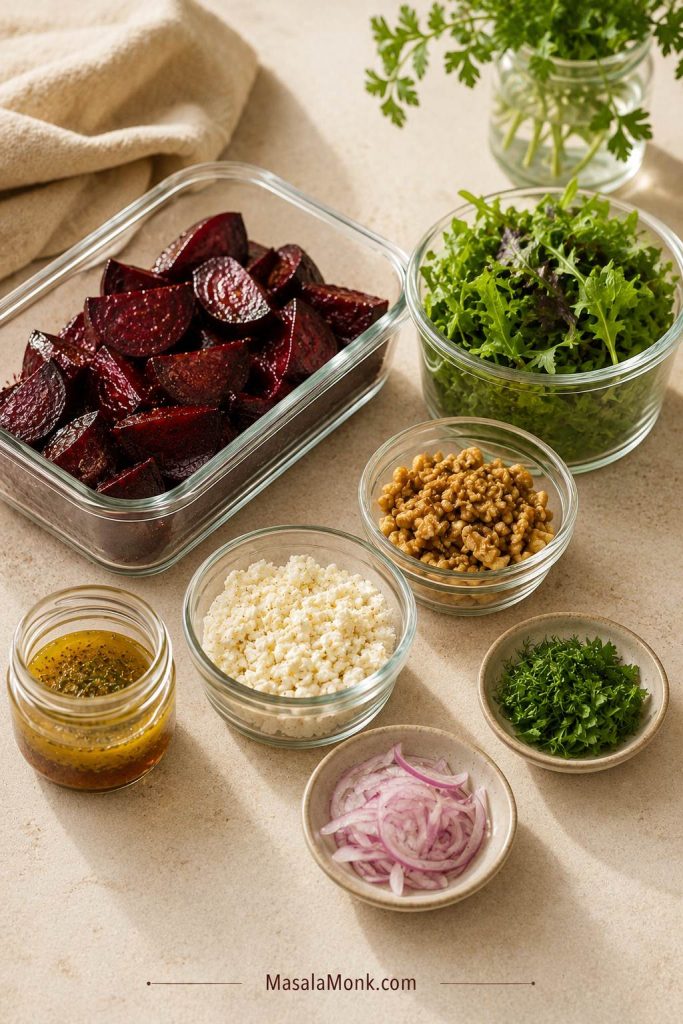
Separate containers of roasted beets, greens, feta, walnuts, herbs, red onion, and dressing.
Store the parts separately for the best texture: beets, greens, feta, walnuts, herbs, and dressing all hold better on their own.
ComponentHow long it keepsHow to store it
Roasted peeled beets3–4 daysRefrigerate in an airtight container
Dressing3–4 daysRefrigerate in a jar; shake before using
Toasted walnutsUp to 1 weekStore airtight at room temperature once cool
Washed greens2–3 daysKeep dry in a lined container or bag
Fully assembled salad with greensBest same dayServe soon after dressing
Beet, feta, walnut, and herb salad without greens2–3 daysRefrigerate, but expect the color to bleed

For entertaining, roast the beets the day before, make the dressing ahead, toast the walnuts, and wash the greens. Shortly before serving, slice the beets, dress the greens lightly, arrange everything on a platter, and finish with feta, walnuts, herbs, and a final drizzle.

For broader storage questions beyond this salad, the FoodSafety.gov cold food storage chart is a helpful reference for refrigerated prepared foods.

Troubleshooting Beet Salad

If the salad is not quite landing, do not start over. Beet salad is easy to correct once you know whether it needs salt, acid, texture, or gentler assembly.

Quick Fix Guide
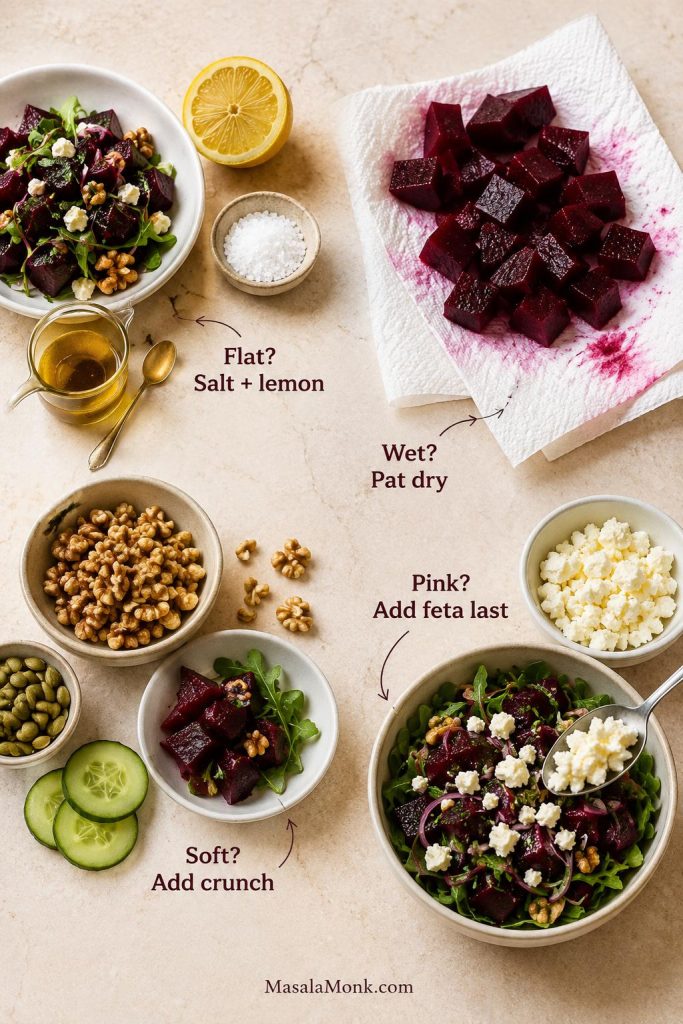
Beet salad troubleshooting guide showing lemon and salt, patted dry beets, walnuts and cucumber for crunch, and feta added last.
Flat salad usually needs salt and lemon. For a wet salad, dry the beets before adding more greens. When the texture feels soft, bring in crunch. If the feta turns pink, add it last next time.

Problem-by-Problem Fixes

ProblemFix nowFix next time
Salad tastes earthy or muddyAdd lemon juice, salt, feta, herbs, or a little extra vinegarRoast the beets longer and use smaller, fresher beets
Salad tastes blandAdd salt first, then acid and herbsTaste the dressing before tossing and season the beets lightly
Salad is too sweetAdd lemon, vinegar, peppery greens, black pepper, or more fetaUse less honey/maple and avoid sweetened canned beets
Salad is too acidicAdd olive oil, feta, walnuts, or a few more beetsBalance the dressing before adding it to the salad
Salad is wateryDrain excess liquid and add more greens or walnutsPat cooked or canned beets dry and avoid overdressing
Greens are soggyAdd fresh greens if availableDress close to serving and store components separately
Feta turned pinkIt is still fine to eatAdd feta last and arrange the salad instead of tossing heavily
Beets are too firmRoast or steam them longer until tenderTest the largest beet with a knife before cooling
Beets are too softUse them in a bowl-style salad with grains or beansRoast whole beets and avoid overcooking sliced pieces
Walnuts taste bitterUse fewer or swap with pecans, pistachios, or pumpkin seedsToast gently and avoid old walnuts
Raw beet salad is too hardLet grated beets rest with lemon and salt for 10 minutesGrate or julienne raw beets instead of cutting thick pieces

Most of the time, the fix is small: a little more lemon, a pinch of salt, a handful of herbs, or something crisp on top. If the salad tastes flat, add salt and lemon before adding more oil. For cleaner color next time, use the layering method and add feta last.

FAQs About Beet Salad

What cheese goes best with beet salad?

Feta is the easiest choice because it is salty, tangy, and crumbly. Goat cheese is creamier and more restaurant-style. Blue cheese is stronger and works best with pear, walnuts, and bitter greens.

Are roasted beets better than boiled beets for salad?

Roasted beets usually taste better because they are sweeter, deeper, and less watery. Boiled beets can work, but they need extra drying, salt, lemon, and herbs.

Should I peel beets before or after roasting?

For whole roasted beets, peel after roasting because the skins slip off more easily and the beets stay juicier. For sliced roasted beets, peel before cutting.

Should beet salad be served warm or cold?

Beet salad is best cool or at room temperature. Warm beets can wilt greens and stain feta faster, so let them cool before assembling.

Why does my beet salad taste muddy?

It usually needs more acid, salt, herbs, or contrast. Add lemon juice, balsamic vinegar, feta, parsley, mint, peppery greens, or toasted nuts.

What dressing works best with beets and feta?

A lemon-balsamic Dijon vinaigrette works well because balsamic matches the sweetness of beets, lemon lifts the salad, and Dijon gives the dressing body.

What nuts go with beet salad?

Walnuts are classic. Pistachios are excellent with orange, pecans work well with goat cheese or pear, almonds add clean crunch, and pumpkin seeds are a good nut-free option.

What herbs go with beet salad?

Parsley, mint, dill, and basil all work. Use parsley for an everyday salad, mint with orange, dill with cucumber or pickled beets, and basil with summery versions.

Is it okay to use canned beets?

Yes. Drain, rinse if needed, and pat canned beets very dry. Since they are softer than roasted beets, add crunch with walnuts, cucumber, apple, red onion, or seeds.

How do raw beets work in salad?

Raw beets work best grated, julienned, or sliced very thin. Toss with lemon or orange juice and salt, rest for 10 minutes, then add apple, carrot, herbs, feta, nuts, or seeds.

Can I make beet salad the day before?

Yes, but store the parts separately. You can roast and peel beets 3–4 days ahead. Keep beets, dressing, greens, feta, and walnuts separate, then assemble close to serving.

Should I toss beet salad or layer it?

Layer it when you want the salad to look pretty. Toss the greens lightly with dressing first, then arrange the beets, feta, walnuts, herbs, and shallot on top.

You do not need to make beet salad the same way every time. Roast the beets when flavor matters, use cooked beets when speed matters, and taste one complete bite before serving. If the beets are sweet, the feta is salty, the walnuts are crisp, and the last bite still tastes lemony and fresh, the salad is doing exactly what it should.
Posted on 1 Comment

Chickpea Salad Recipe

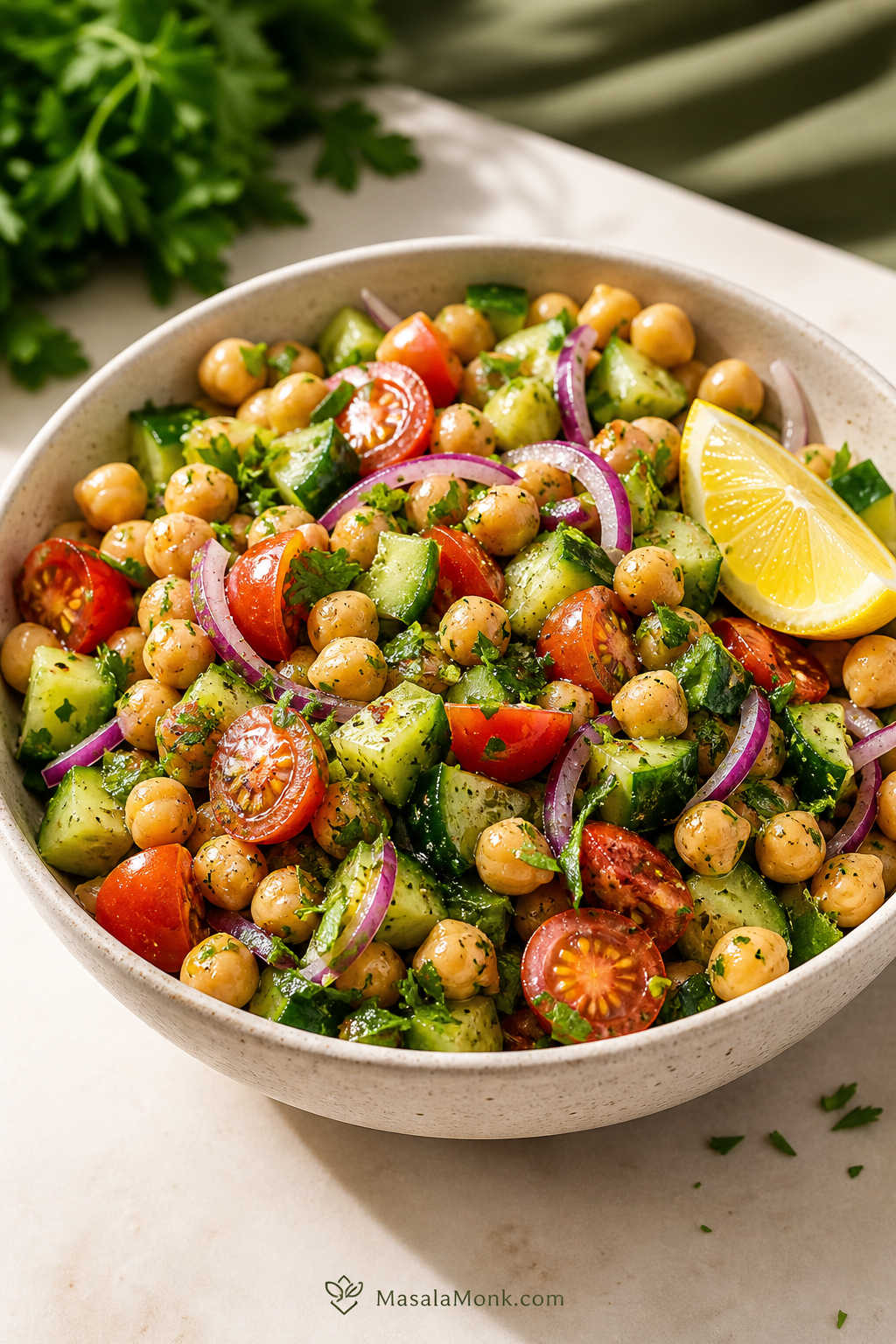
Bowl of chickpea salad with cucumber, cherry tomatoes, red onion, parsley, and lemon dressing on a light surface.

This chickpea salad recipe turns canned chickpeas into a fresh no-cook salad with cucumber, tomatoes, red onion, herbs, and lemon dressing in about 15 minutes. It is bright enough for a side dish, filling enough for lunch, and sturdy enough for meal prep.

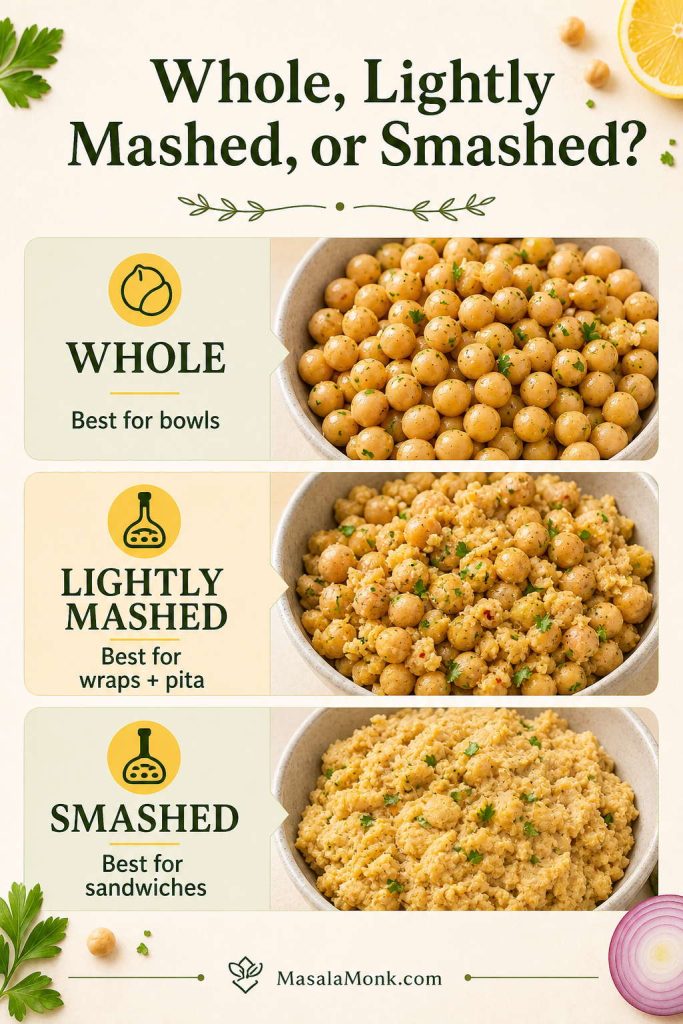
Keep the chickpeas whole for a crisp salad bowl, lightly mash them for wraps or pita pockets, or smash them more deeply for a creamy chickpea salad sandwich. The same recipe can lean Mediterranean with feta and olives, vegan with avocado or tahini, or Indian-style with cilantro, cumin, chili, and lemon.

Chickpeas and garbanzo beans are the same ingredient, so this also works as a garbanzo bean salad recipe. The key is simple: drain the chickpeas well, season them boldly, and use enough lemon, salt, herbs, and crunch so the salad tastes fresh instead of flat.

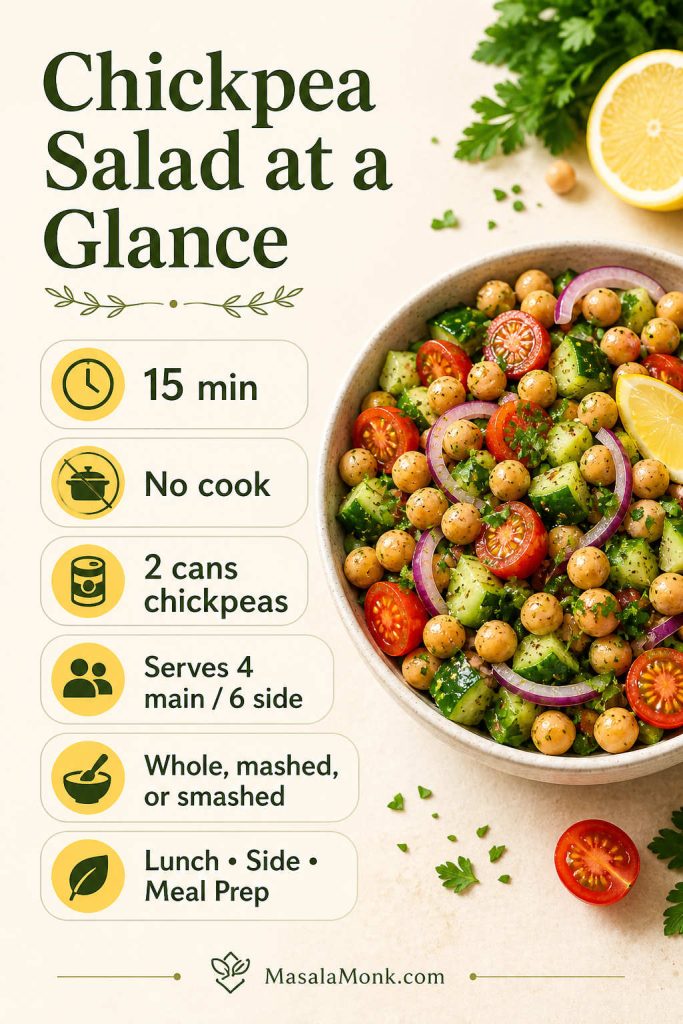
At a glance: This recipe takes about 15 minutes, uses 2 cans of chickpeas, serves 4 as a main or 6 as a side, and needs no cooking. Keep it whole for a salad bowl, lightly mash it for wraps, or smash it for sandwiches.
Why this version is easy to use: The base salad stays simple, but you also get dressing ratios, substitution options, storage cues, and texture choices. As a result, the same chickpeas can become a bowl, wrap, pita filling, sandwich, or meal-prep lunch without starting over.

Quick Answer: 15-Minute Chickpea Salad

Canned chickpeas make this a fresh salad with cucumber, tomatoes, herbs, and lemon dressing in about 15 minutes. Make the dressing first, drain and rinse the chickpeas, chop the vegetables, toss everything together, and let the bowl sit for 10 minutes if you have time.

The salad can be served cold or at room temperature. For a side salad or lunch bowl, leave the chickpeas whole. However, if you are making wraps or pita pockets, lightly mash some of them so the filling holds together. When you want a thicker sandwich filling, smash most of the chickpeas instead.

First time making it? Start with chickpeas, cucumber, tomatoes, red onion, parsley, lemon, olive oil, garlic, salt, and pepper. Once the base tastes good, add feta, olives, avocado, paneer, or extra spices.
Infographic showing chickpea salad facts including 15 minutes, no-cook method, two cans of chickpeas, serving size, and texture options.
Before you start, note the useful basics: this chickpea salad takes about 15 minutes, needs no cooking, and works as a bowl, wrap, sandwich filling, or meal-prep lunch.

Ingredients for Chickpea Salad

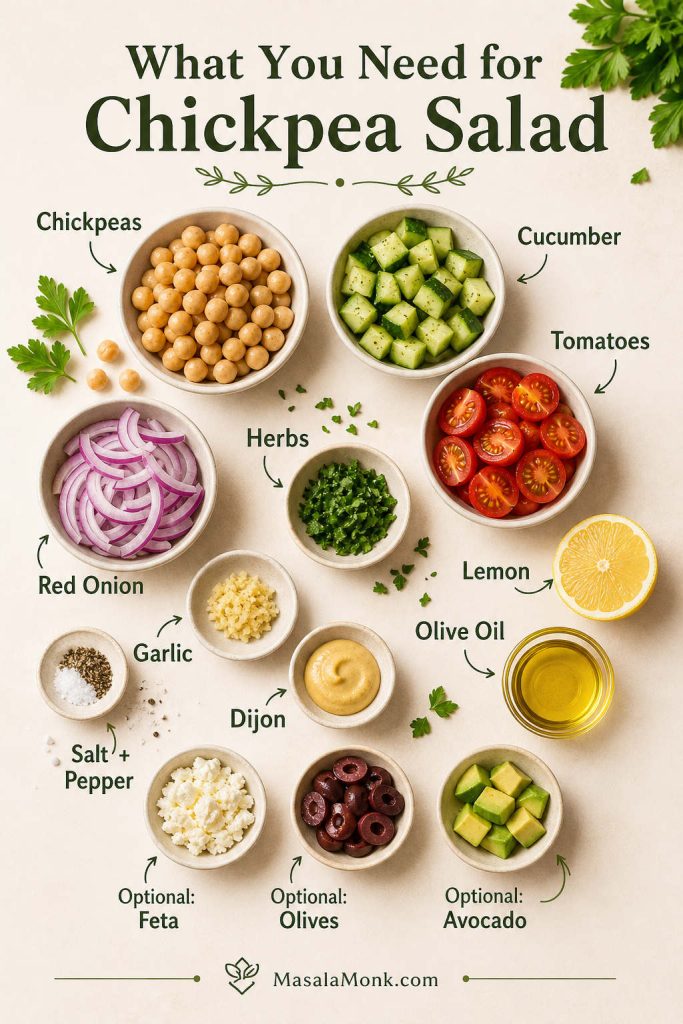
You only need a few ingredients, so each one should add something useful. The chickpeas make the salad filling, cucumber and tomatoes keep it fresh, herbs lift the flavor, and lemon dressing pulls this recipe together.

Labeled ingredient board for chickpea salad with chickpeas, cucumber, tomatoes, red onion, herbs, lemon, olive oil, garlic, Dijon mustard, and optional add-ins.
A good chickpea salad needs contrast, so chickpeas make it filling, cucumber adds crunch, tomatoes bring juiciness, herbs lift the flavor, and lemon dressing keeps everything bright.

Chickpeas or Garbanzo Beans?

Chickpeas and garbanzo beans are the same ingredient, so this recipe works no matter which name is on the can or how the salad is labeled. Use two cans of chickpeas or garbanzo beans, drain and rinse them well, and treat them the same way in the bowl.

Why Canned Chickpeas Work in This Salad Recipe

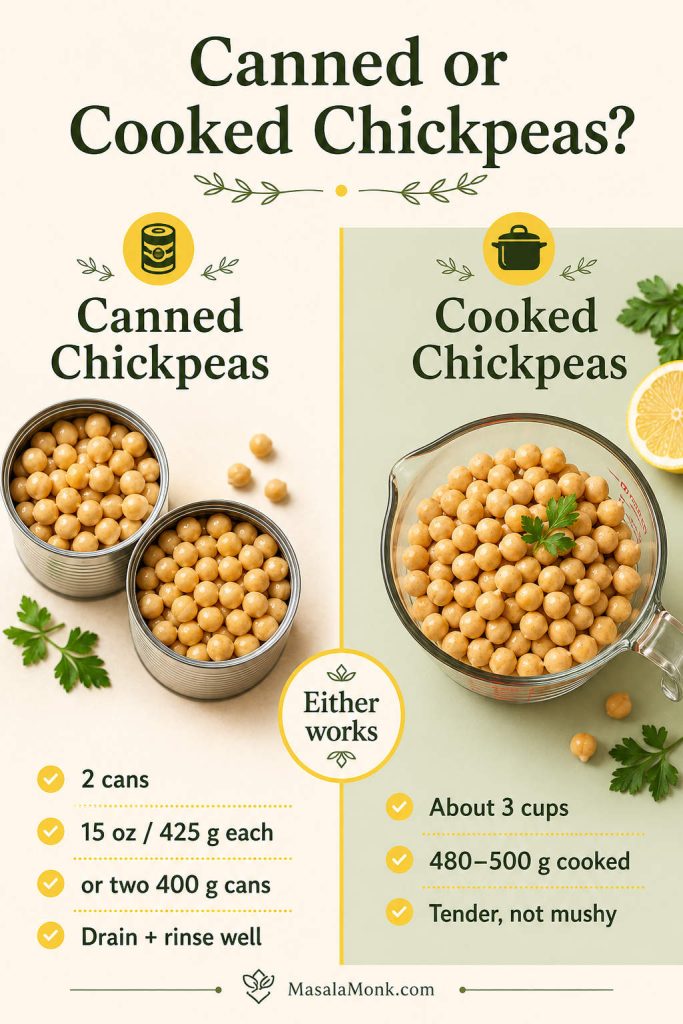
Canned chickpeas are already cooked, which makes this recipe quick enough for a weekday salad or lunch bowl. Use two 15-ounce / 425 g cans, or two 400 g cans, drained and rinsed. Once drained, that usually gives you about 480–500 g chickpeas total, or about 3 cups cooked chickpeas.

Rinsing matters because it removes excess canning liquid and gives the salad a cleaner flavor. After rinsing, let the chickpeas drain well. If they still look wet, pat them lightly with a clean towel so the dressing does not get diluted.

Using Cooked Chickpeas Instead of Canned

If you cook chickpeas from dry, use about 3 cups / 480–500 g cooked chickpeas. They should be tender enough to eat cold in the salad, but not so soft that they collapse when tossed.

Cooked-from-dry chickpeas can taste nuttier than canned ones. However, canned chickpeas are still the easiest choice when you want a fast salad.

Comparison image showing canned chickpeas on one side and cooked chickpeas on the other for use in chickpea salad.
Canned chickpeas are the easiest choice when you want a fast chickpea salad recipe; however, cooked chickpeas work just as well if they are tender, well-drained, and not too soft.

Fresh Vegetables That Keep the Salad Crisp

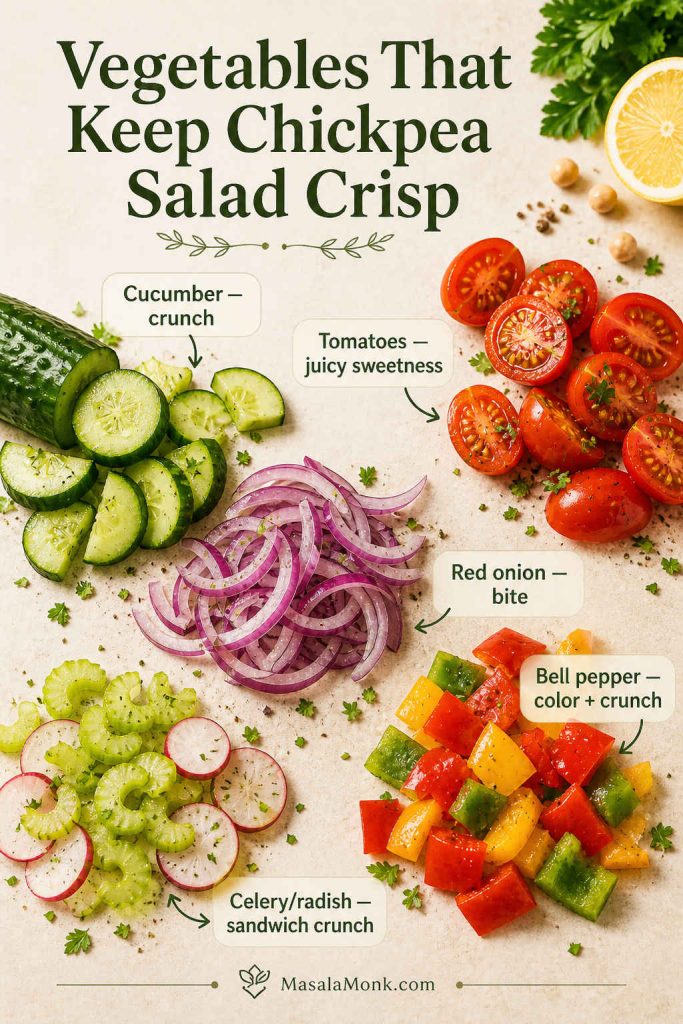
For this recipe, chickpeas give the salad body, so the vegetables should bring crunch, juice, and freshness. Cucumber adds crispness, cherry or grape tomatoes bring sweetness, red onion gives bite, and bell pepper adds color if you want extra crunch.

Vegetable guide for chickpea salad featuring cucumber, cherry tomatoes, red onion, bell pepper, and celery with short usage notes.
For the freshest texture, choose vegetables that add contrast: cucumber brings crunch, tomatoes add juiciness, red onion adds bite, and bell pepper adds extra color as well as crispness.

If you like fresh no-cook sides, this pairs well with MasalaMonk’s cucumber salad recipe. That one leans lighter and tangier, while this chickpea version is more filling.

Herbs That Make Chickpea Salad Taste Fresher

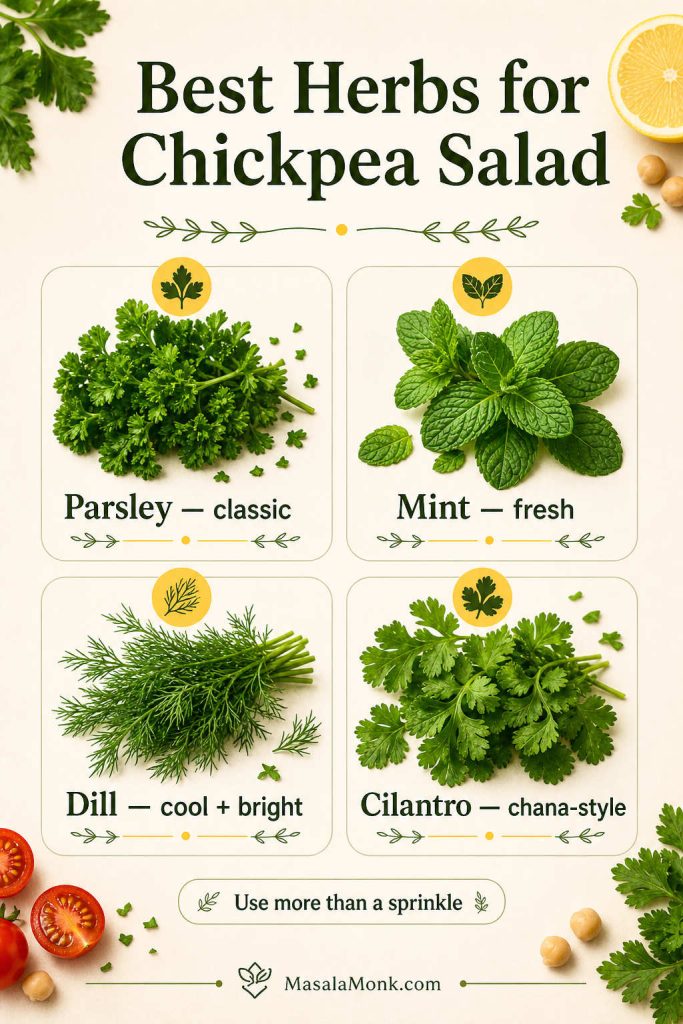
Parsley is the most classic choice, but mint, dill, and cilantro all work. For a Mediterranean-style salad, pair parsley with mint. For a cooler, brighter bowl, add dill. If you want the recipe to lean closer to Indian chana salad, go with cilantro, cumin, and chili.

Be generous with the herbs. Chickpeas are dense, so a small sprinkle can disappear in the bowl.

Herb comparison board for chickpea salad showing parsley, mint, dill, and cilantro with flavor notes.
Herbs can shift the whole direction of a chickpea salad, so parsley keeps it classic, mint makes it brighter, dill makes it cooler, and cilantro pushes it toward a chana-style version.

Optional Add-Ins for This Recipe

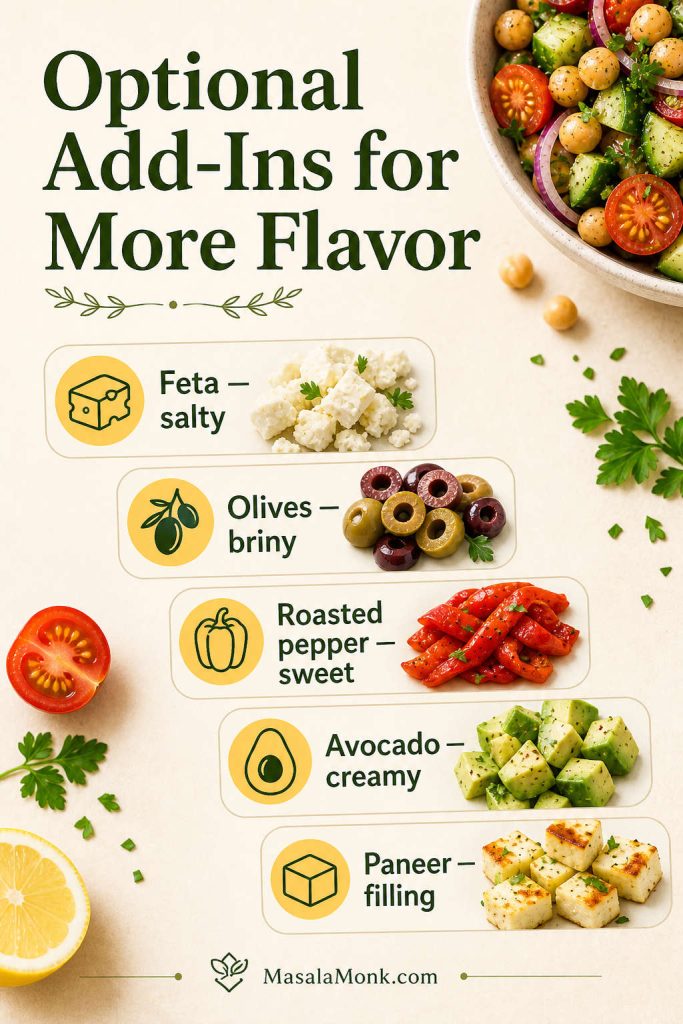
Olives, feta, roasted red pepper, avocado, and paneer all work, but they change the salad in different ways. Olives and feta make it more Mediterranean. Avocado makes it creamy. Paneer adds a firmer vegetarian protein option. Roasted red pepper brings sweetness and color.

If you are making this recipe ahead, add avocado just before serving. It tastes great with chickpeas, but it browns and softens quickly once mixed into the salad.

Guide to optional add-ins for chickpea salad including feta, olives, avocado, paneer, and roasted red pepper.
Once the base tastes balanced, add-ins can change the whole mood: feta and olives make it more Mediterranean, avocado makes it creamier, and paneer makes it more filling.

Easy Substitutions

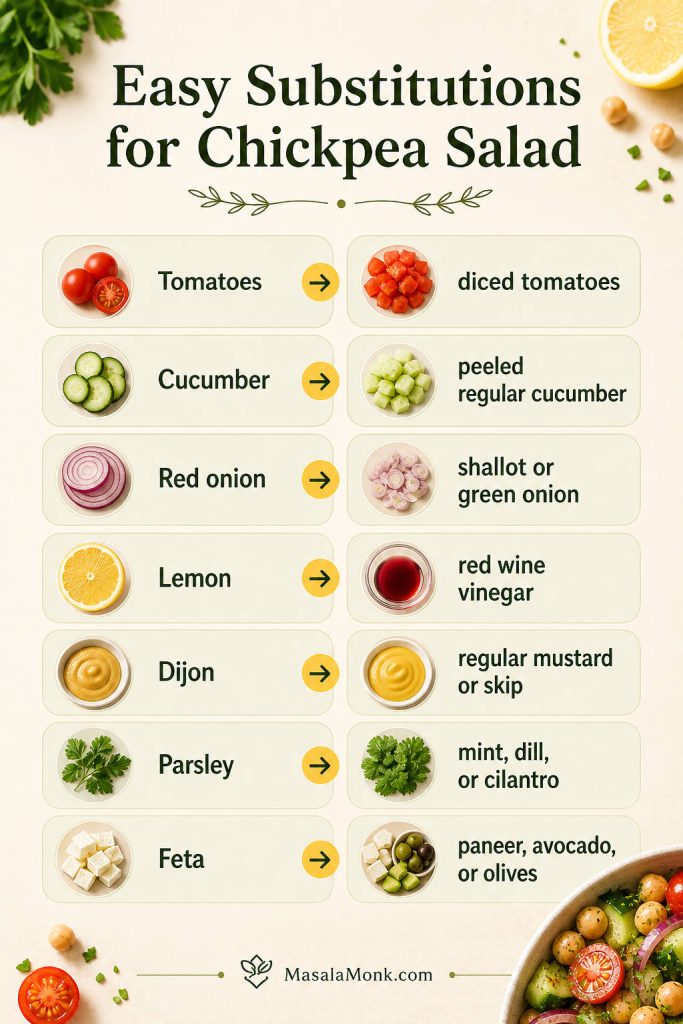
This salad is flexible, so you do not need every optional ingredient. As long as you keep the chickpeas, something crisp, something juicy, enough herbs, and a bright dressing, the recipe still works. Then you can adjust with what you have.

If you do not have… Use this instead
Cherry tomatoes Diced regular tomatoes, drained if they are very juicy
English or Persian cucumber Regular cucumber, peeled if the skin is tough and seeded if watery
Red onion Shallots, green onion, or white onion soaked in cold water for 10 minutes
Fresh lemon Red wine vinegar or apple cider vinegar, added to taste
Dijon mustard A small spoon of regular mustard, or skip it and whisk the dressing well
Parsley Mint, dill, cilantro, or a mix of fresh herbs
Feta Paneer, avocado, olives, toasted seeds, or simply leave it out
Substitutions guide for chickpea salad showing ingredient swaps for tomatoes, cucumber, onion, lemon, mustard, herbs, and feta.
Missing one ingredient should not stop the recipe, because a good chickpea salad still works when you keep the same balance of chickpeas, crunch, herbs, acidity, and seasoning.

The Lemon Dressing That Makes the Salad Work

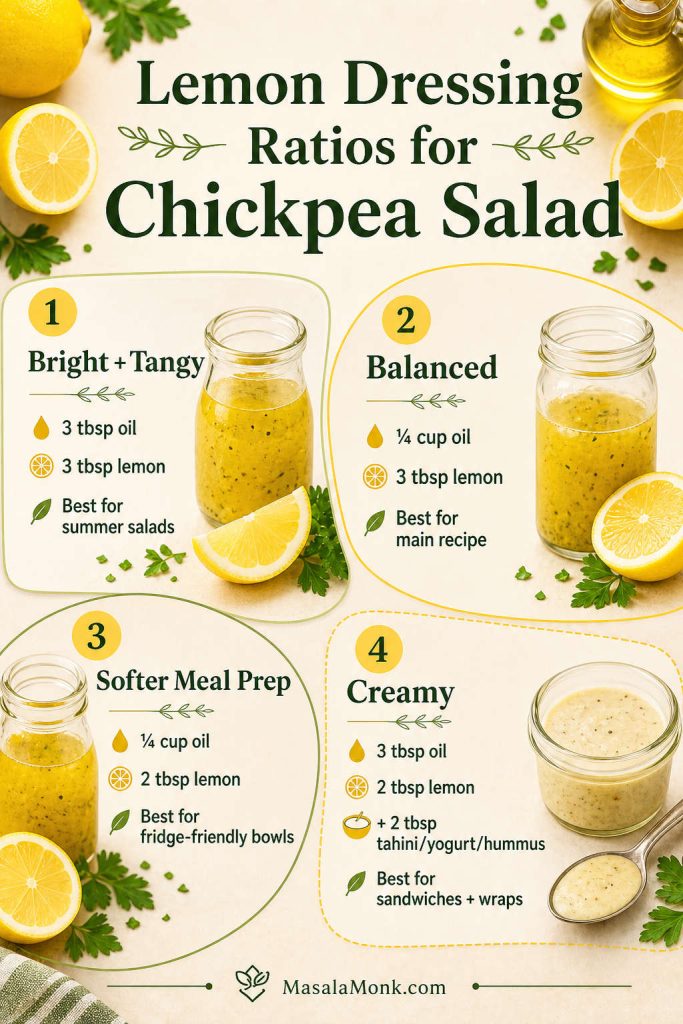
The dressing should taste bright, salty, and slightly sharp before it touches the chickpeas. Once everything is tossed together, the chickpeas, cucumber, and tomatoes soften that intensity, so the dressing needs enough lemon, garlic, mustard, and salt to season the whole salad.

Dressing ratio guide for chickpea salad showing bright, balanced, softer, and creamy lemon dressing options.
A small change in oil, lemon, or creamy binder can shift the whole bowl, so this dressing guide helps you choose the best chickpea salad texture for bowls, meal prep, wraps, or sandwiches.

Balanced Lemon Dressing

For the main recipe, use ¼ cup / 60 ml olive oil and 3 tablespoons / 45 ml fresh lemon juice. Add Dijon mustard, garlic, salt, black pepper, and either cumin or oregano. This gives the salad a balanced flavor without making it oily or sour.

A Brighter Lemon Dressing

If your chickpeas taste a little flat or your vegetables are very juicy, use equal parts olive oil and lemon juice. This sharper version works well for summer salads, cucumber-heavy bowls, and versions served with pita or grilled foods.

Creamy Dressing for Chickpeas and Sandwiches

When the recipe is going toward wraps or sandwiches, add 2 tablespoons of tahini, Greek yogurt, hummus, vegan mayo, or mashed avocado. A creamy dressing helps the chickpeas hold together instead of rolling out of the bread.

Indian-Style Lemon Dressing

For a chana salad variation, use lemon juice, olive oil, roasted cumin powder, black pepper, chopped cilantro, chili flakes or green chili, and salt. A tiny pinch of chaat masala can work if you want a sharper snack-style flavor, but keep it light so it does not overpower the chickpeas.

Bright, Balanced, and Creamy Dressing Guide

Dressing style Olive oil Lemon or vinegar Best for
Bright and tangy 3 tbsp / 45 ml 3 tbsp / 45 ml Summer salad, cucumber-heavy versions
Balanced ¼ cup / 60 ml 3 tbsp / 45 ml Main recipe
Softer meal-prep ¼ cup / 60 ml 2 tbsp / 30 ml Fridge-friendly version
Creamy 3 tbsp / 45 ml 2 tbsp / 30 ml plus 2 tbsp tahini, yogurt, hummus, or vegan mayo Sandwiches, wraps, and bowls
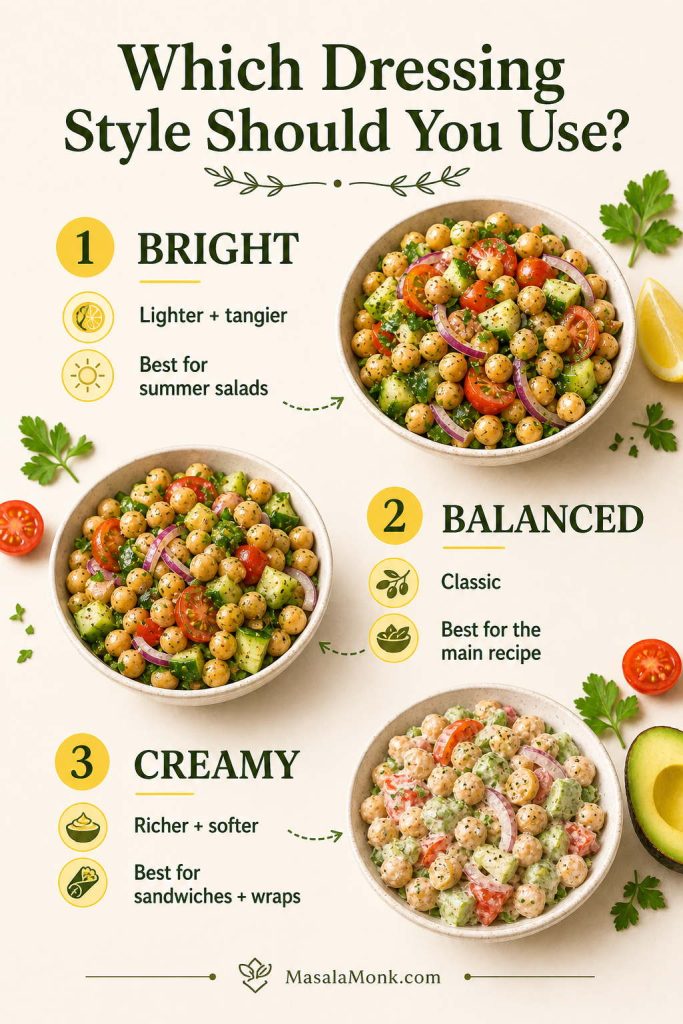
Comparison board showing bright, balanced, and creamy dressing styles for chickpea salad with short notes about each style.
Choose a brighter dressing when you want a sharper summer salad, a balanced dressing for the classic version, and a creamy dressing when the chickpea salad is headed for wraps or sandwiches.

Equipment You Need

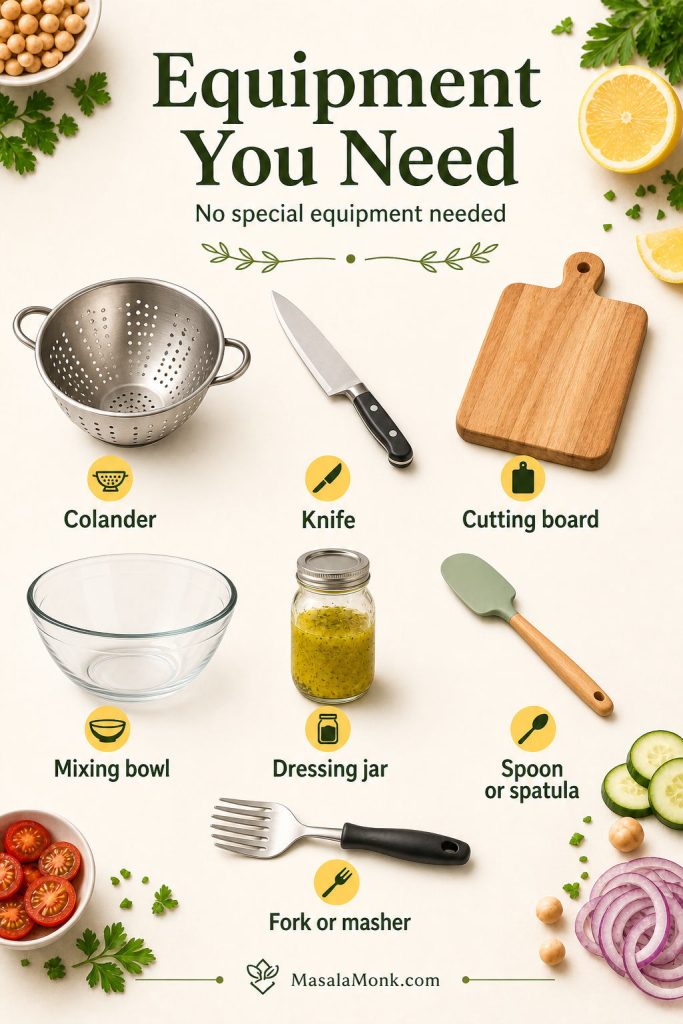
You do not need special equipment for this salad. A colander, cutting board, sharp knife, large mixing bowl, small bowl or jar for the dressing, and a spoon or spatula are enough. For the sandwich version, keep a fork or potato masher nearby so you can lightly smash the chickpeas.

Equipment board for chickpea salad showing a colander, knife, cutting board, mixing bowl, dressing jar, spoon or spatula, and fork or masher.
This chickpea salad recipe stays practical because it only needs a few everyday tools, so you can make it easily without special equipment or unnecessary cleanup.

How to Make Chickpea Salad

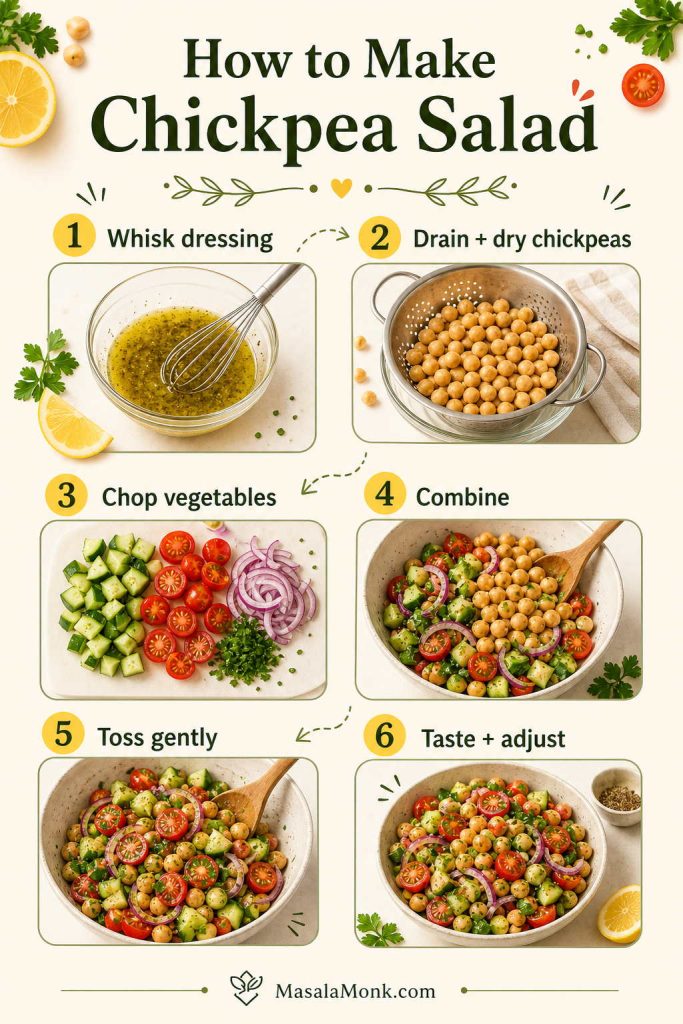
Because this is a no-cook recipe, making the salad is mostly about dressing the chickpeas well, chopping the vegetables, tossing gently, and tasting at the end.

  1. Make the dressing first. Whisk olive oil, lemon juice, Dijon, garlic, salt, pepper, and cumin or oregano in a large bowl. You can also shake it in a jar.
  2. Drain, rinse, and dry the chickpeas. Let them sit in a colander for a minute, then pat them lightly with a clean towel if they still look wet. Drier chickpeas hold the lemon dressing better and keep the salad from turning watery.
  3. Chop the vegetables. Dice the cucumber, halve the tomatoes, and finely chop the onion or shallot.
  4. Add everything to the bowl. Add chickpeas, vegetables, herbs, and sturdy add-ins to the dressing.
  5. Toss gently. Coat everything without crushing the chickpeas.
  6. Rest briefly. Let the salad sit for 10 minutes if you have time.
  7. Check the bowl. The chickpeas should look lightly glossy, not oily, and the salad should taste bright before it tastes salty.
  8. Taste and adjust. Add more lemon, salt, pepper, herbs, or olive oil as needed.
Step-by-step board showing how to make chickpea salad by whisking dressing, drying chickpeas, chopping vegetables, combining, tossing, and adjusting seasoning.
The method matters more than it first seems: whisk the dressing first, dry the chickpeas well, toss gently, and then taste again so the salad stays bright instead of bland or watery.
Avoid bland chickpeas: rinse them well, season the dressing boldly, and let the salad rest for 10 minutes before judging the flavor.
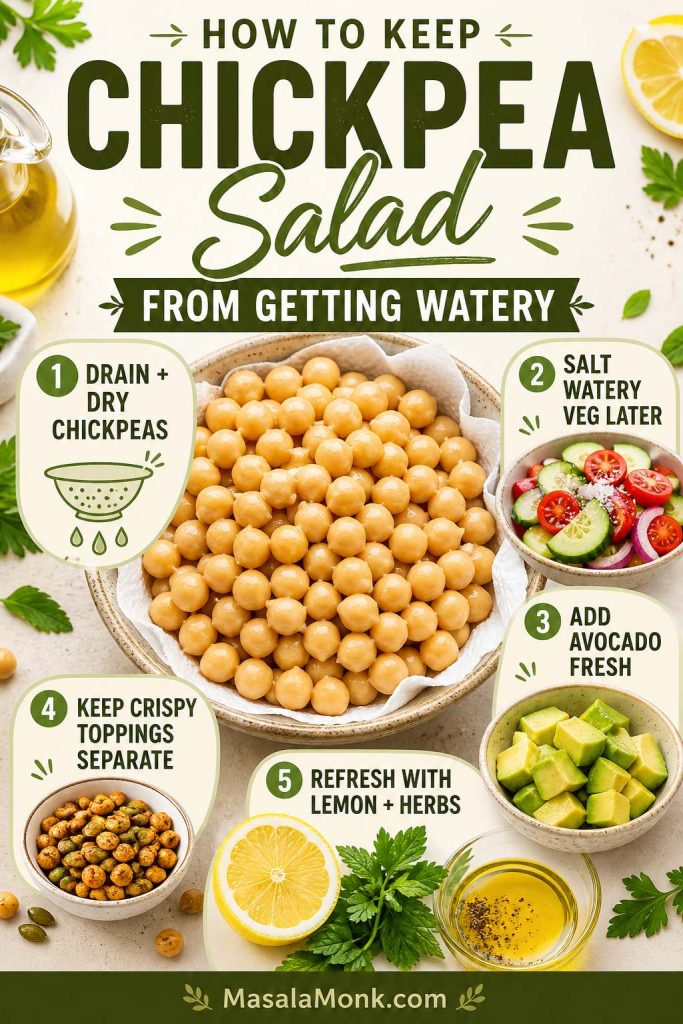
Avoid a watery salad: drain the chickpeas well, dry them if needed, do not over-salt cucumber and tomatoes too early, and add avocado only when you are close to serving.

Dry the Chickpeas Before Making Salad

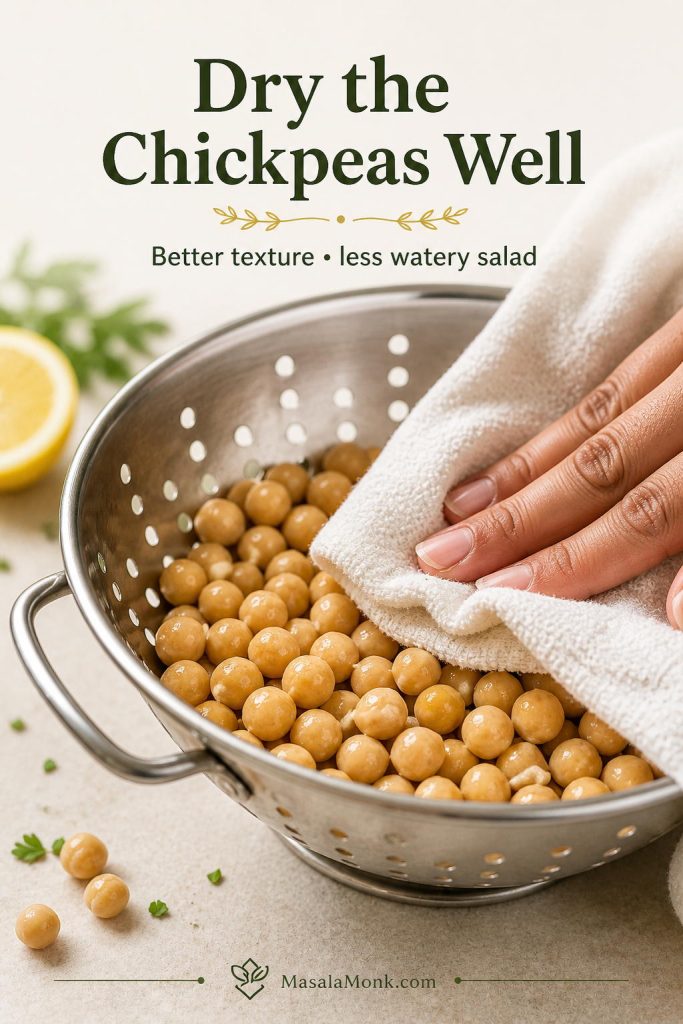
Close-up of rinsed chickpeas being patted dry with a clean towel before making chickpea salad.
Drying the chickpeas is one of the easiest upgrades because it helps the dressing cling better and, in turn, keeps the chickpea salad from turning loose or watered down.

Recipe Card

Chickpea Salad Recipe

A 15-minute no-cook salad made with chickpeas, cucumber, tomatoes, herbs, and lemon dressing. Serve it whole as a fresh salad bowl, lightly mashed in wraps or pita, or smashed into a creamy chickpea salad sandwich filling.

Prep Time15 minutes
Cook Time0 minutes
Total Time15 minutes
Servings4 main or 6 side servings

Optional rest time: 10 minutes
Course: Salad, Lunch, Side Dish
Cuisine: Mediterranean-inspired
Diet: Vegetarian; vegan if feta or paneer is omitted

Ingredients

Salad

  • 2 cans chickpeas, 15 oz / 425 g each, or two 400 g cans, drained and rinsed
  • Or use about 3 cups / 480–500 g cooked chickpeas
  • 1 large English cucumber or 3 Persian cucumbers, diced
  • 2 cups cherry or grape tomatoes, halved
  • 1 small red onion or 2 shallots, finely chopped
  • ½ cup olives, sliced, optional
  • ½ cup roasted red pepper, chopped, optional
  • ¾–1 cup chopped fresh herbs: parsley, mint, dill, cilantro, or a mix
  • ½ cup feta or paneer cubes, optional
  • 1 avocado, diced, optional and best added just before serving

Lemon Dressing

  • ¼ cup / 60 ml extra-virgin olive oil
  • 3 tbsp / 45 ml fresh lemon juice
  • 1 tsp Dijon mustard
  • 1 garlic clove, grated or minced
  • ½ tsp fine salt, plus more to taste
  • ½ tsp black pepper
  • ½ tsp ground cumin or dried oregano
  • ½–1 tsp sumac or lemon zest, optional
  • Pinch chili flakes or Aleppo pepper, optional

Instructions

  1. Whisk olive oil, lemon juice, Dijon mustard, garlic, salt, pepper, cumin or oregano, and sumac or lemon zest if using in a large bowl.
  2. Drain and rinse the chickpeas well. Let them sit in a colander for a minute, then pat dry if needed so the salad does not turn watery.
  3. Add chickpeas, cucumber, tomatoes, onion, olives, roasted red pepper, and herbs to the dressing. Toss gently.
  4. Add feta, paneer, or avocado only if serving soon.
  5. Let the salad rest for 10 minutes if possible.
  6. Taste and adjust with more lemon, salt, pepper, herbs, or olive oil.
  7. Serve cold or at room temperature as a salad, side dish, wrap filling, pita filling, or sandwich base.

Notes

  • For the cleanest flavor, rinse canned chickpeas well and let them drain before mixing.
  • If the chickpeas still look wet after draining, pat them lightly with a clean towel before mixing.
  • For a vegan version, skip feta and paneer. Use olives, avocado, roasted pepper, tahini, or extra herbs for richness.
  • For sandwiches, mash 60–70% of the chickpeas and add 2–4 tablespoons of a creamy binder.
  • For meal prep, add avocado, crispy chickpeas, and delicate herbs right before serving.
  • If using dried chickpeas, cook them until tender and use about 3 cups / 480–500 g cooked chickpeas.
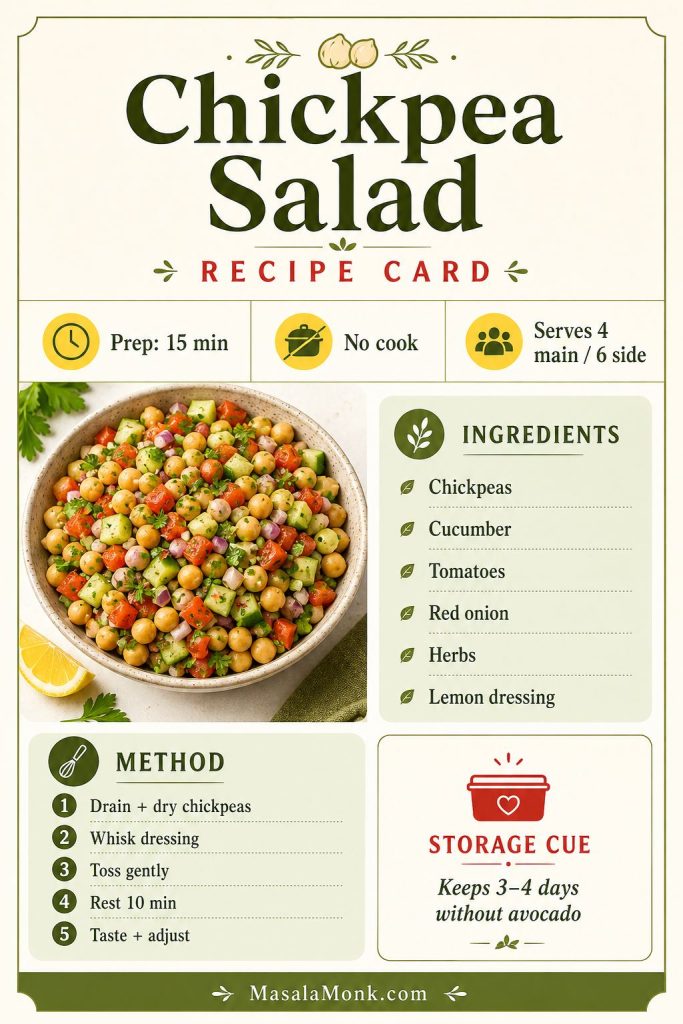
Recipe card graphic for chickpea salad with prep time, servings, core ingredients, method steps, and storage note.
Keep this recipe card handy when you need the short version: drain and dry the chickpeas, whisk the lemon dressing, toss gently, rest briefly, and adjust before serving.

Why This Recipe Works

The salad works because chickpeas make it filling without any cooking, while cucumber, tomatoes, onion, herbs, and lemon keep it fresh. The dressing is bright enough to season the chickpeas properly, and the same base can stay whole for bowls, lightly mashed for wraps, or smashed for sandwiches.

Whole, Lightly Mashed, or Smashed Chickpeas?

A small change in texture changes how you can use the salad. Whole chickpeas make the best fresh bowl. Lightly mashed chickpeas help the salad sit better in wraps or pita. Smashed chickpeas turn the same ingredients into a sandwich filling that holds together instead of rolling out of the bread.

Texture What to do Best use
Whole chickpeas Toss gently and do not mash Fresh salad bowls and side salads
Lightly mashed Press ¼–⅓ of the chickpeas Wraps, pita pockets, and lunch bowls
Smashed Mash 60–70% of the chickpeas Chickpea salad sandwiches
Creamy Mash deeply and add mayo, yogurt, tahini, hummus, or avocado Vegan tuna-style chickpea salad
Texture comparison board showing whole chickpeas, lightly mashed chickpeas, and smashed chickpeas with suggested uses.
Texture changes how the recipe works, so whole chickpeas suit salad bowls, lightly mashed chickpeas hold better in wraps, and smashed chickpeas make the most reliable sandwich filling.
Need the base recipe? Jump to recipe card · Main method · Recipe guide

Mediterranean-Style Chickpea Salad

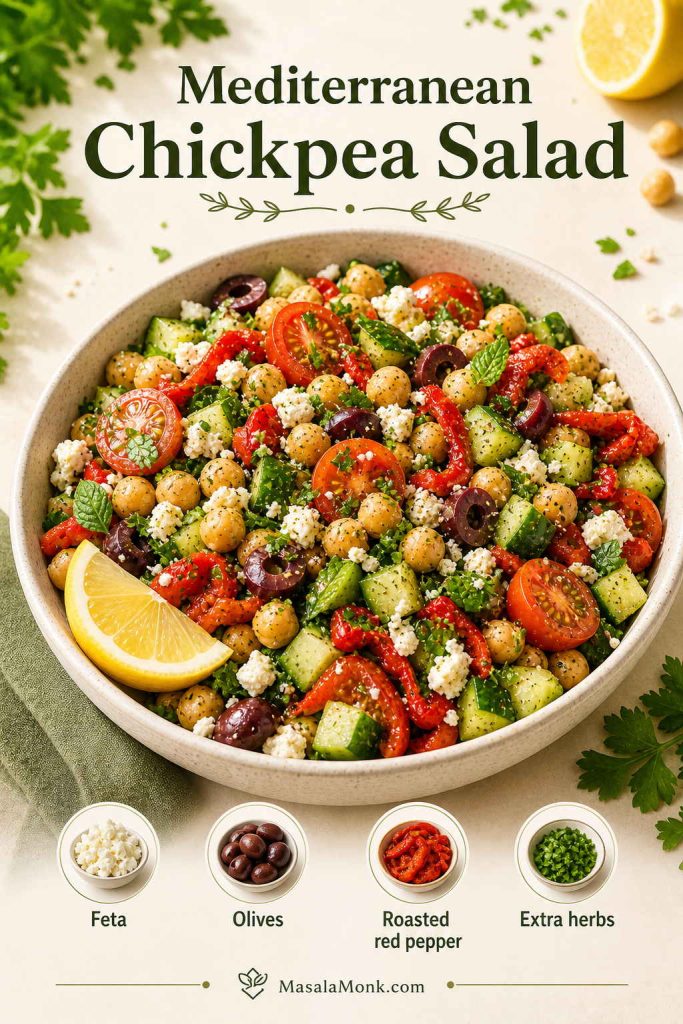
To make this recipe more Mediterranean, add olives, feta, roasted red pepper, parsley, mint, oregano, and extra lemon. Keep the cucumber, tomato, and red onion because they give the salad the fresh chopped texture that works so well with chickpeas.

This version is especially good with pita, hummus, grilled vegetables, rice bowls, roasted chicken, fish, or a simple soup. If you like herb-heavy Mediterranean salads, it also sits well next to MasalaMonk’s tabbouleh recipe, especially when serving pita, hummus, grilled vegetables, or mezze-style plates.

Mediterranean chickpea salad with feta, olives, roasted red pepper, cucumber, tomatoes, herbs, and lemon.
For a Mediterranean chickpea salad, feta, olives, roasted red pepper, and extra herbs deepen the flavor while still keeping the recipe fresh, colorful, and easy to serve.

Turn This Recipe Into a Chickpea Salad Sandwich

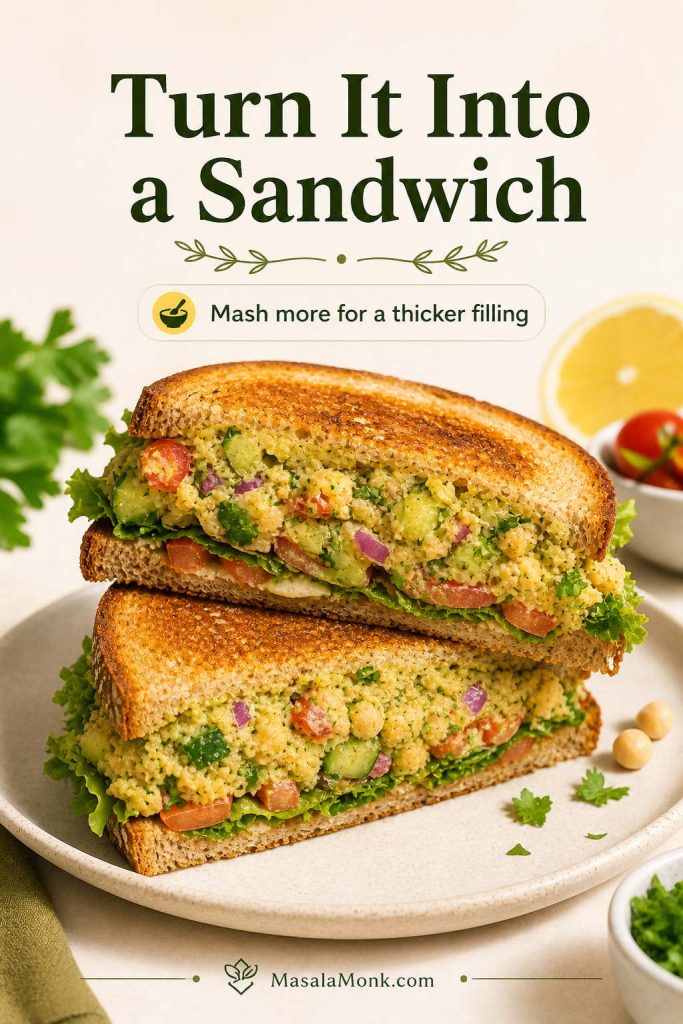
For a sandwich, mash most of the chickpeas and add a creamy binder. Greek yogurt, vegan mayo, tahini, hummus, mashed avocado, or a mix of mayo and yogurt all work. Then add something crunchy, such as celery, cucumber, onion, radish, or pickles.

Toasted bread, pita, wraps, and lettuce cups all work. If you are packing lunch, store the filling separately and assemble the sandwich later so the bread stays firm. This is also a useful plant-based alternative when you want a creamy, tangy sandwich filling. For a non-vegetarian comparison, see MasalaMonk’s chicken salad sandwich recipe.

Sandwich formula: 2 cups chickpea salad + 2–4 tbsp creamy binder + ¼ cup crunchy vegetables + lemon, mustard, herbs, salt, and pepper to taste.

If you want a cooler, yogurt-based sauce for wraps or pita, MasalaMonk’s Greek tzatziki sauce recipe is a natural fit with cucumber, herbs, chickpeas, and toasted bread.

Toasted chickpea salad sandwich cut in half, showing a thick filling of mashed chickpeas, vegetables, and herbs.
Turning chickpea salad into a sandwich works best when you mash more of the chickpeas, because the filling becomes thicker, creamier, and much easier to hold together.
Need the base recipe? Jump to recipe card · Main method · Recipe guide

Chickpea Tuna Salad and Vegan Tuna-Style Version

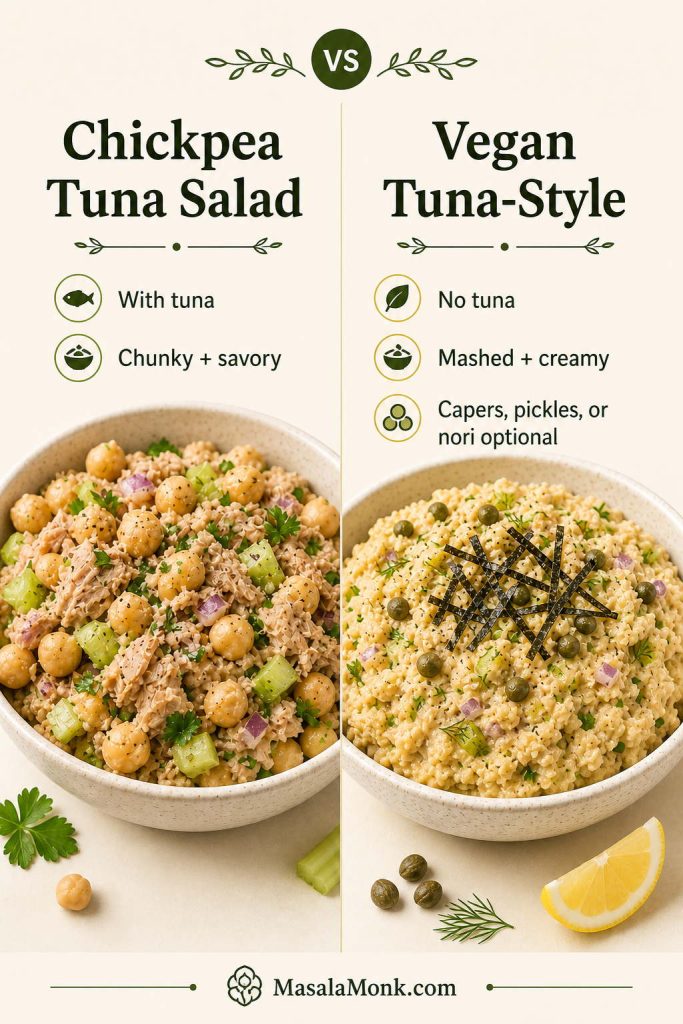
This base can move in two directions. To make a real chickpea tuna salad, add drained tuna, celery, lemon, herbs, and a little Greek yogurt or mayo. If you want a vegan tuna-style version, skip the tuna, mash the chickpeas more deeply, and add celery, lemon, pickles or capers, herbs, and a creamy binder such as vegan mayo, tahini, hummus, or avocado.

A more sea-like vegan flavor can come from finely crushed nori or a tiny pinch of kelp flakes. Keep it optional; the mashed chickpea version still works as a creamy salad filling without any sea flavor.

Comparison board showing chickpea tuna salad on one side and vegan tuna-style chickpea salad on the other.
For a chickpea tuna salad, add real tuna for a chunkier, savory version; for a vegan tuna-style salad, mash the chickpeas more and use capers, pickles, or nori for extra depth.
Need the base recipe? Jump to recipe card · Main method · Recipe guide

Meal Prep and Storage for This Salad

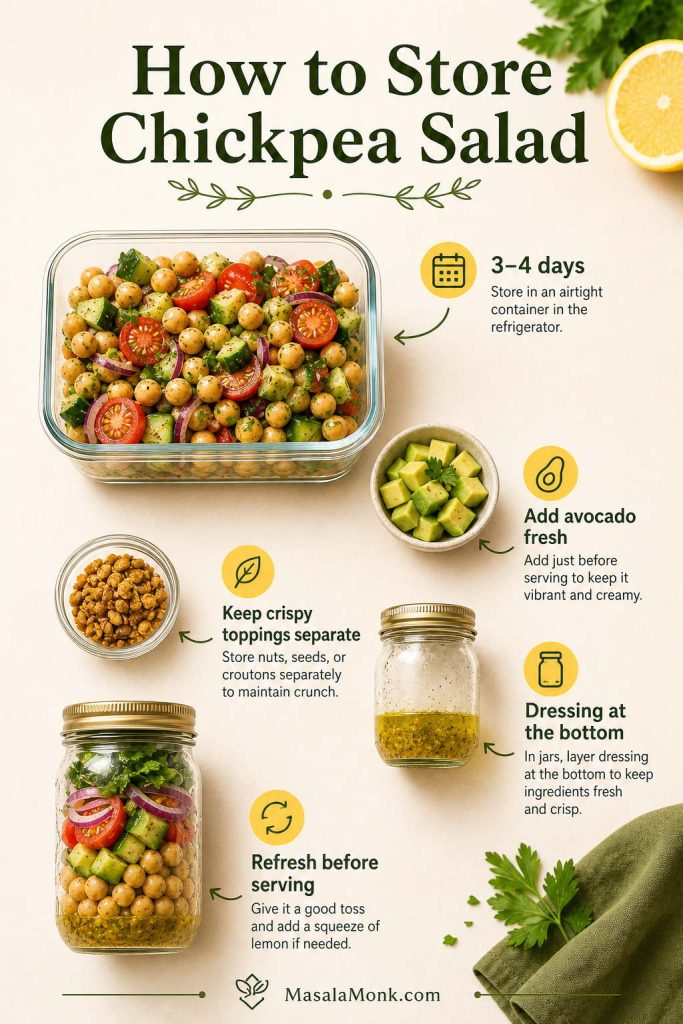
Chickpea salad is good for meal prep because chickpeas hold their shape better than leafy greens, so the salad stays useful for lunches over several days. However, a few ingredients are better added fresh. For example, avocado browns, crispy chickpeas soften, and delicate herbs taste brighter when added closer to serving.

Storage guide for chickpea salad with airtight containers, meal-prep jars, dressing jar, and notes about keeping avocado and crunchy toppings separate.
Chickpea salad is meal-prep friendly; however, it stores best when avocado, crispy toppings, and delicate herbs are added later instead of being mixed in too early.
Need the base recipe? Jump to recipe card · Main method · Recipe guide

For the best make-ahead version, store the base salad without avocado and add delicate toppings just before serving. If you are making lunch jars, put the dressing at the bottom, then chickpeas and firmer vegetables, then herbs or greens near the top.

If you are making the salad more than a few hours ahead, keep some of the herbs fresh for serving and go lighter on the salt at first. Salt draws water from cucumber and tomatoes, so a final pinch right before serving keeps the salad fresher.

How to Store This Recipe Without Making the Salad Watery

Drain and dry the chickpeas well, avoid over-salting watery vegetables too early, and keep avocado or crispy toppings separate. If the salad sits overnight, refresh it with a little lemon juice, olive oil, and fresh herbs before serving.

Infographic showing tips to keep chickpea salad from getting watery, including drying chickpeas, salting vegetables later, and adding avocado fresh.
If your chickpea salad turns watery, the fix usually starts earlier: dry the chickpeas well, salt juicy vegetables later, and add avocado or crunchy toppings closer to serving time.
Version Fridge life Best method
Plain chickpea salad, no avocado 3–4 days Store in an airtight container
With avocado Same day best Add avocado fresh just before serving
With feta or paneer 2–3 days best Add fresh if you want the cleanest texture
Dressing mixed in 2–3 days best texture Stir before serving and refresh with lemon or herbs
Dressing only 7–10 days Keep in a sealed jar in the fridge
Sandwich filling 3–4 days Store filling separately from bread
Crispy chickpeas Same day best Keep separate and add just before eating
Meal-prep jars 4–5 days Dressing bottom, chickpeas and vegetables middle, herbs top

Recipe Variations with Chickpeas

Once the base recipe is balanced, the same chickpeas can move in several salad directions. Keep lemon, salt, and herbs as the anchor, then change the add-ins based on how you want to serve it.

Lunch, Meal Prep, and Sandwich Versions

If you want… Make this version What to add
A dairy-free lunch Vegan chickpea salad Avocado, olives, roasted red pepper, extra herbs, toasted seeds, or tahini dressing
A more filling meal High-protein salad with chickpeas Quinoa, tofu, paneer, boiled eggs, Greek yogurt dressing, feta, grilled chicken, or extra chickpeas
A lunchbox or picnic salad Meal-prep chickpea salad Keep avocado and crispy toppings separate, use a slightly softer dressing, and add fresh herbs before serving
A sandwich filling Smashed chickpea salad Mash most of the chickpeas and add yogurt, tahini, hummus, vegan mayo, or avocado
A creamier bowl or wrap Avocado chickpea salad Diced avocado added just before serving, or a little mashed avocado in the dressing
Variation guide for chickpea salad showing vegan, high-protein, meal-prep, smashed sandwich, and avocado versions.
The same base recipe can become a vegan lunch, higher-protein bowl, meal-prep container, smashed sandwich filling, or avocado chickpea salad with only a few targeted changes.
Need the base recipe? Jump to recipe card · Main method · All variations

For more ways to build filling vegetarian bowls around legumes, grains, and seeds, see MasalaMonk’s guide to plant-based protein sources for high-protein meal prep.

Fresh, Crunchy, and Bigger-Flavor Versions

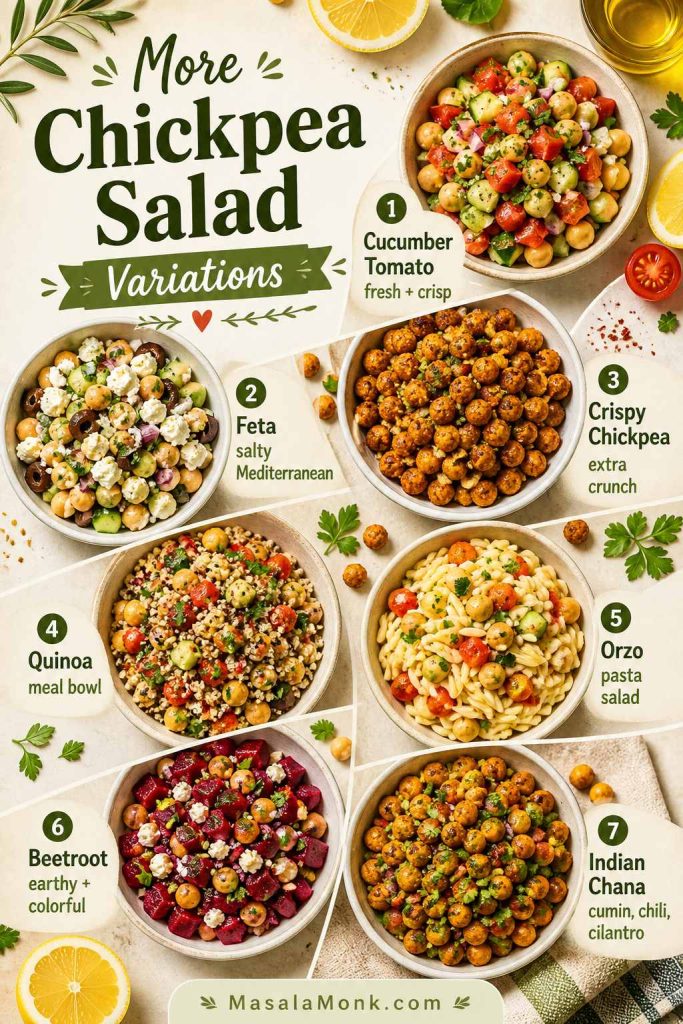
If you want… Make this version What to add
A clean summer side Cucumber tomato chickpea salad Extra cucumber, tomatoes, red onion, parsley, lemon, olive oil, salt, and pepper
A saltier Mediterranean side Feta chickpea salad Feta, olives, oregano, and lemon zest; taste before adding extra salt
A crunchy topping Crispy chickpea salad Add roasted or air-fried chickpeas right before serving so they stay crisp
A meal-prep grain bowl Quinoa chickpea salad Cooked and cooled quinoa plus extra dressing because grains absorb liquid
A pasta salad direction Orzo chickpea salad Cooked and cooled orzo, cucumber, tomato, herbs, feta, and extra lemon dressing
An earthy, colorful bowl Beetroot chickpea salad Cooked and cooled beetroot, feta or paneer, cumin, herbs, lemon, and red onion
An Indian-style side Indian chana salad Use kabuli chana for the closest chickpea salad texture, or kala chana for a firmer, earthier Indian-style version with cilantro, lemon, cumin, chili, onion, cucumber, and tomato
Second variation guide for chickpea salad showing cucumber tomato, feta, crispy chickpea, quinoa, orzo, beetroot, and Indian chana versions.
For more variety, the chickpea salad can turn crisp with cucumber and tomato, salty with feta, hearty with quinoa or orzo, earthy with beetroot, or spicier as Indian chana salad.
Need the base recipe? Jump to recipe card · Main method · All variations

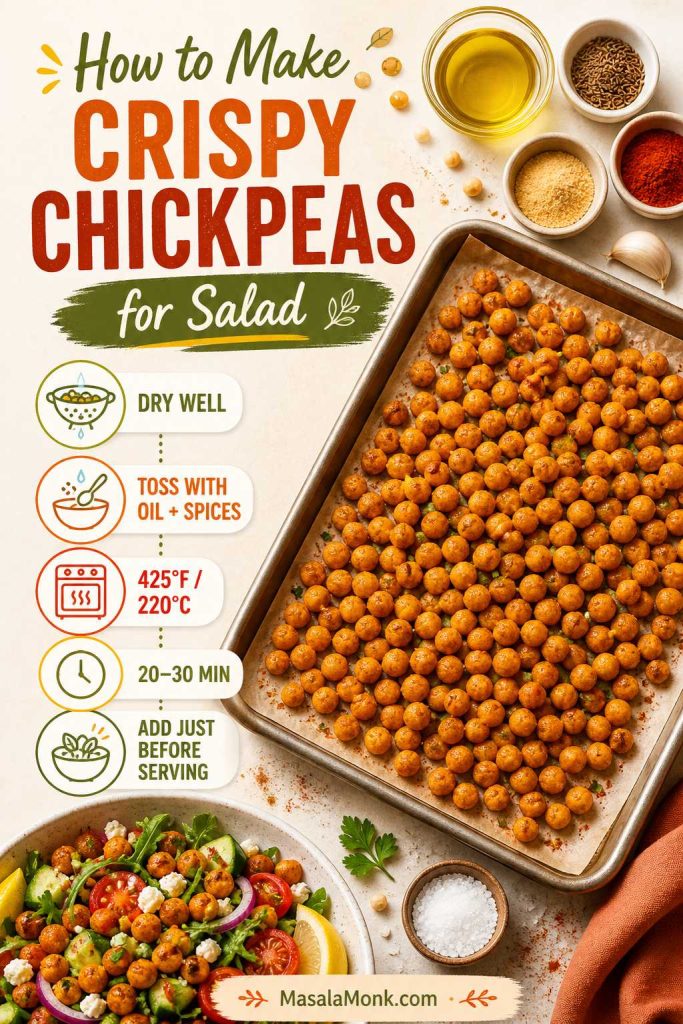
Crispy Chickpeas for Salad

For crispy chickpeas, dry the drained chickpeas very well, toss them with a little oil, salt, cumin, paprika, or garlic powder, and roast at 425°F / 220°C for about 20–30 minutes, shaking the pan once or twice. Add them to the salad right before serving so they stay crisp.

Roasted crispy chickpeas on a sheet pan with seasonings and notes about oven temperature, roasting time, and serving.
Crispy chickpeas add the most texture when they are roasted until dry and added right before serving, so they stay crunchy instead of softening in the salad.

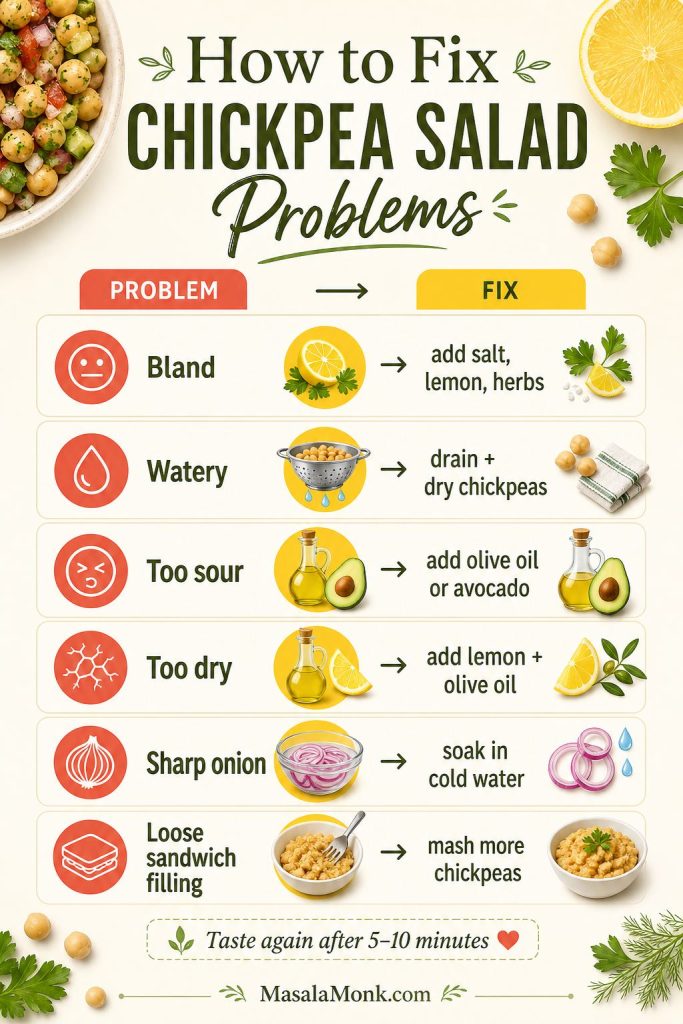
Troubleshooting This Salad

Because this recipe is not cooked, most chickpea salad problems can be fixed before serving. If the chickpeas taste bland, watery, sour, or dry, adjust the dressing first. Then give the salad a few minutes to settle before judging it again.

Problem Likely cause Fix
Salad tastes bland Not enough salt, acid, or herbs Add salt first, then lemon, then more herbs
Salad is watery Chickpeas or vegetables were too wet Drain and dry chickpeas well, and add tomatoes closer to serving
Chickpeas taste canned They were not rinsed well or not seasoned enough Rinse thoroughly and let them sit in dressing for 10 minutes
Onion is too sharp Raw onion is too strong Soak chopped onion in cold water for 10 minutes, then drain
Salad is too sour Too much lemon or vinegar Add olive oil, chickpeas, avocado, or feta to soften it
Salad is too dry Chickpeas absorbed the dressing Add a splash of olive oil and lemon juice before serving
Avocado browned It was added too early Add avocado fresh, or toss it with lemon before mixing
Sandwich filling is too loose Too much dressing or not enough mashing Mash more chickpeas and add a thicker binder
Crispy chickpeas went soft They sat in the wet salad Keep them separate and add just before eating
Troubleshooting guide for chickpea salad showing common problems such as bland, watery, too sour, too dry, sharp onion, and loose sandwich filling with quick fixes.
Before starting over, fix the bowl: bland salad usually needs salt, lemon, and herbs; watery salad needs better draining; and loose sandwich filling needs more mashed chickpeas.

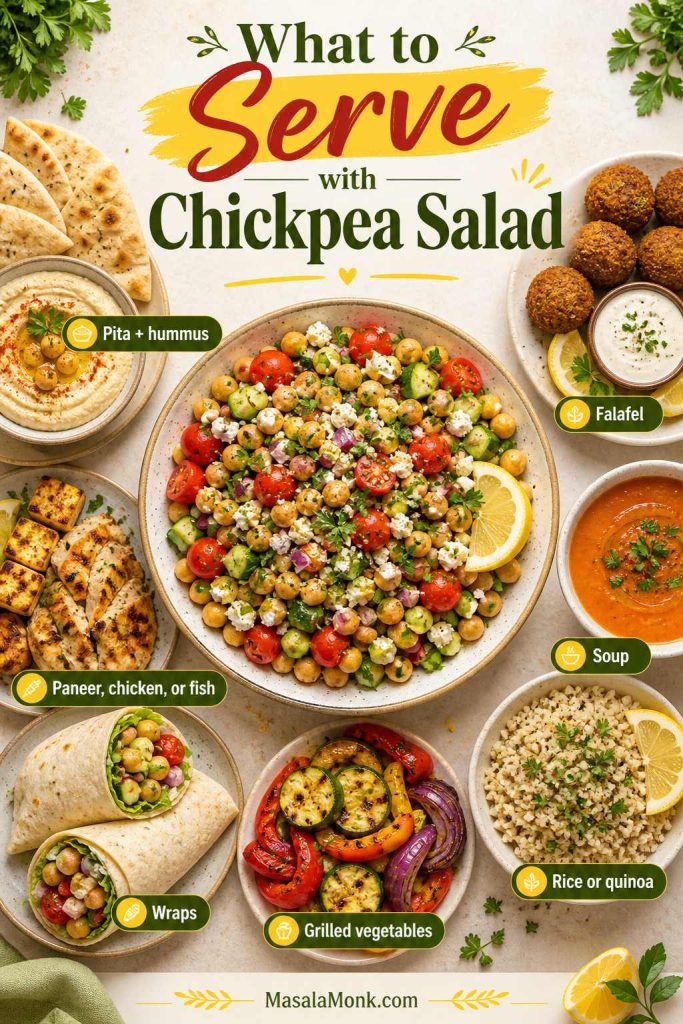
What to Serve with Chickpea Salad

Serve chickpea salad with pita, hummus, grilled vegetables, rice, quinoa, soup, roasted potatoes, grilled chicken, fish, or paneer. It also works inside wraps, lettuce cups, toasted sandwiches, or meal-prep bowls. To make a fuller chickpea-based mezze plate, add MasalaMonk’s falafel recipe on the side.

A lighter plate can be as simple as cucumber salad, tomato soup, or a green salad. For a sharper Middle Eastern-style plate, serve it with pita and a spoon of MasalaMonk’s amba sauce recipe for a tangy mango-chili contrast.

Serving ideas board for chickpea salad with pita, hummus, falafel, soup, rice or quinoa, wraps, grilled vegetables, and paneer, chicken, or fish.
Chickpea salad becomes a fuller meal more easily when you pair it with pita, hummus, soup, falafel, grains, or grilled vegetables, rather than serving it as a plain side alone.

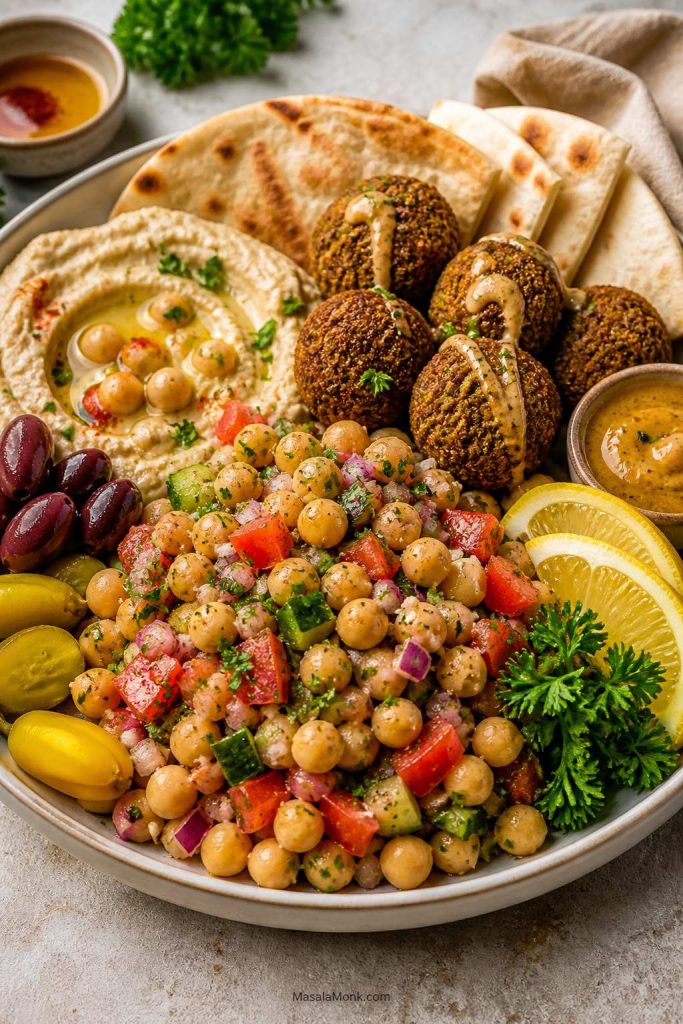
Chickpea Salad Mezze Plate

Chickpea salad served as part of a mezze plate with pita, hummus, falafel, olives, tomatoes, and lemon.
Serving chickpea salad as part of a mezze plate adds variety and makes the recipe more useful for lunch or dinner, especially when paired with hummus, pita, and falafel.

Final Serving Texture

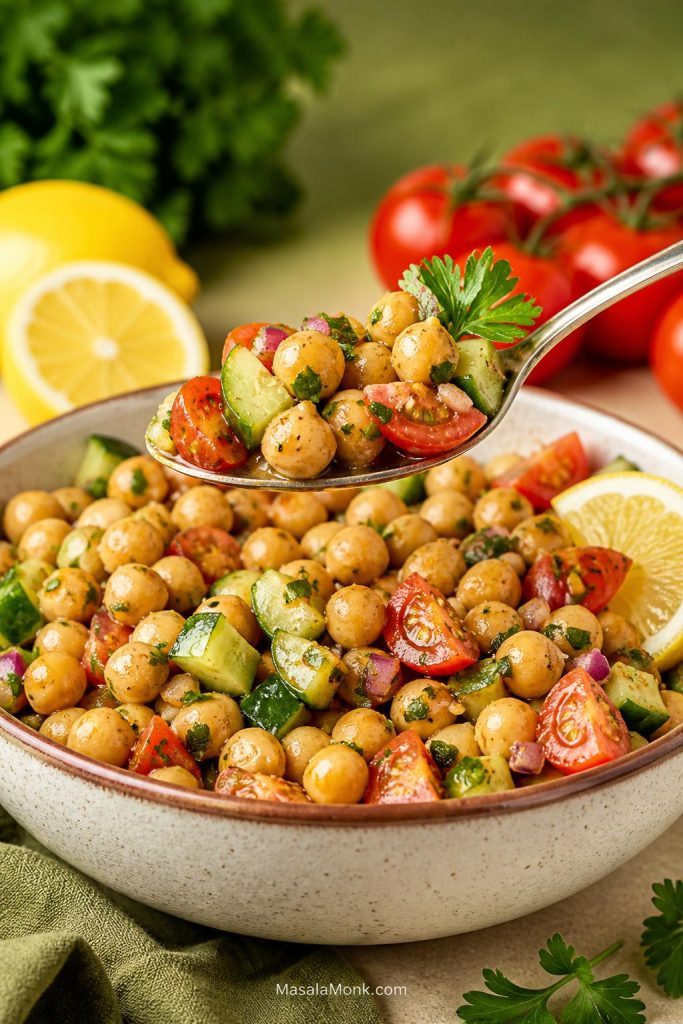
Close-up serving image of chickpea salad in a bowl with cucumber, tomatoes, herbs, and a spoon lifting a portion.
A final serving image highlights the texture that makes this recipe work so well: chickpeas stay distinct, vegetables stay crisp, and the dressing coats the salad without drowning it.
Ready to make it? Jump to recipe card · Main method · Recipe guide

FAQs About This Recipe

Are chickpeas and garbanzo beans the same?

Chickpeas and garbanzo beans are the same ingredient. “Chickpea” is more common in many recipe titles, while “garbanzo bean” often appears on cans and packaging. Use either one for this salad.

What kind of chickpeas work best for this salad?

Canned chickpeas are the easiest choice because they are already cooked and ready to use. Drain and rinse them well, then let them sit in a colander for a minute so extra water does not dilute the dressing.

Do canned chickpeas need to be cooked first?

No cooking is needed. Canned chickpeas are already cooked, so this recipe only needs draining, rinsing, chopping, dressing, and tossing.

How long does this chickpea salad recipe last in the fridge?

This chickpea salad recipe keeps well for about 3–4 days without avocado. Store it in an airtight container, then add avocado, crispy chickpeas, or delicate herbs closer to serving for the best texture.

How do you keep chickpea salad from getting watery?

Drain and dry the chickpeas well, use tomatoes that are not overly watery, and go lighter on salt if you are making the salad ahead. Salt pulls moisture from cucumber and tomatoes, so a final pinch before serving keeps the salad fresher.

Is this chickpea salad vegan?

The base salad is vegan when you skip feta, paneer, yogurt, and any dairy-based creamy add-ins. For richness, use olives, avocado, tahini, hummus, vegan mayo, roasted red pepper, toasted seeds, or extra herbs.

Is chickpea salad healthy?

Chickpea salad can be a nourishing meal or side because chickpeas provide plant-based protein and fiber, while the vegetables and herbs add freshness. Keep the dressing balanced and use richer add-ins like feta, paneer, avocado, or creamy binders according to how filling you want the salad to be. For more general chickpea nutrition background, see the Harvard Nutrition Source guide to chickpeas.

What can I use instead of lemon juice?

Red wine vinegar or apple cider vinegar can replace lemon juice. However, start with a little less than the recipe calls for, then taste and add more only if the salad needs extra brightness.

How do I make chickpea salad without mayo?

The base salad uses lemon and olive oil dressing, so it does not need mayo. For a creamy no-mayo version, use tahini, hummus, Greek yogurt, or mashed avocado.

How do I turn this into chickpea salad sandwiches?

Mash 60–70% of the chickpeas, add 2–4 tablespoons of a creamy binder, and keep the filling thick. Toasted bread, pita, wraps, and lettuce cups all work, but the filling should be stored separately from bread until serving.

What goes well with chickpea salad?

Pita, hummus, grilled vegetables, soup, rice, quinoa, roasted potatoes, paneer, grilled chicken, fish, and simple green salads all pair well with chickpea salad. It also works inside wraps, lettuce cups, and meal-prep bowls.

How can I make the salad higher in protein?

Add quinoa, paneer, tofu, boiled eggs, Greek yogurt dressing, feta, grilled chicken, or extra chickpeas. For a vegan version, use tofu, quinoa, hummus, tahini, seeds, or another legume.

Should you freeze chickpea salad?

Freezing is not worth it for this recipe. Cucumber, tomatoes, herbs, and dressing lose their fresh texture after thawing. If you want to prep ahead, freeze cooked chickpeas separately and make the salad fresh.