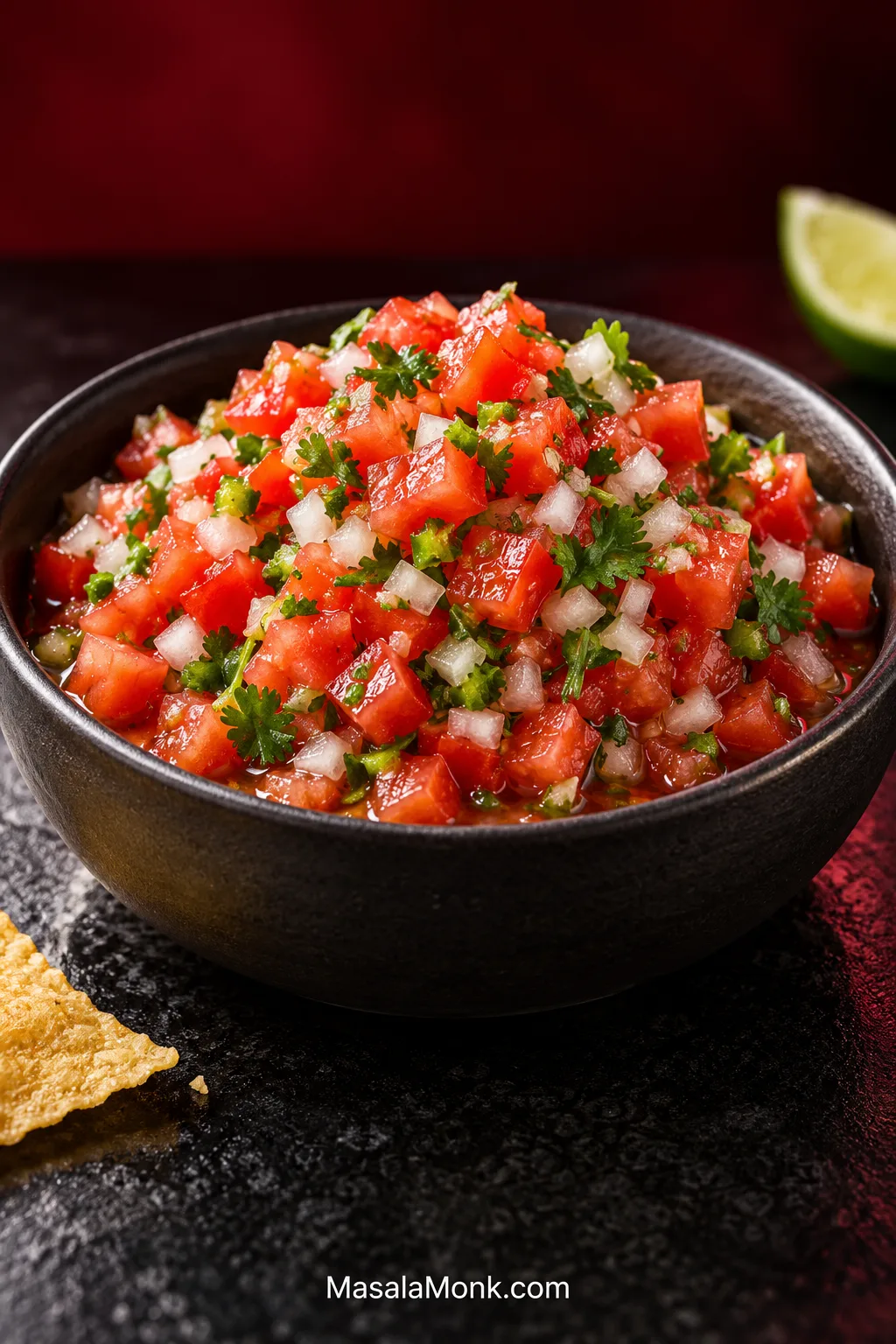
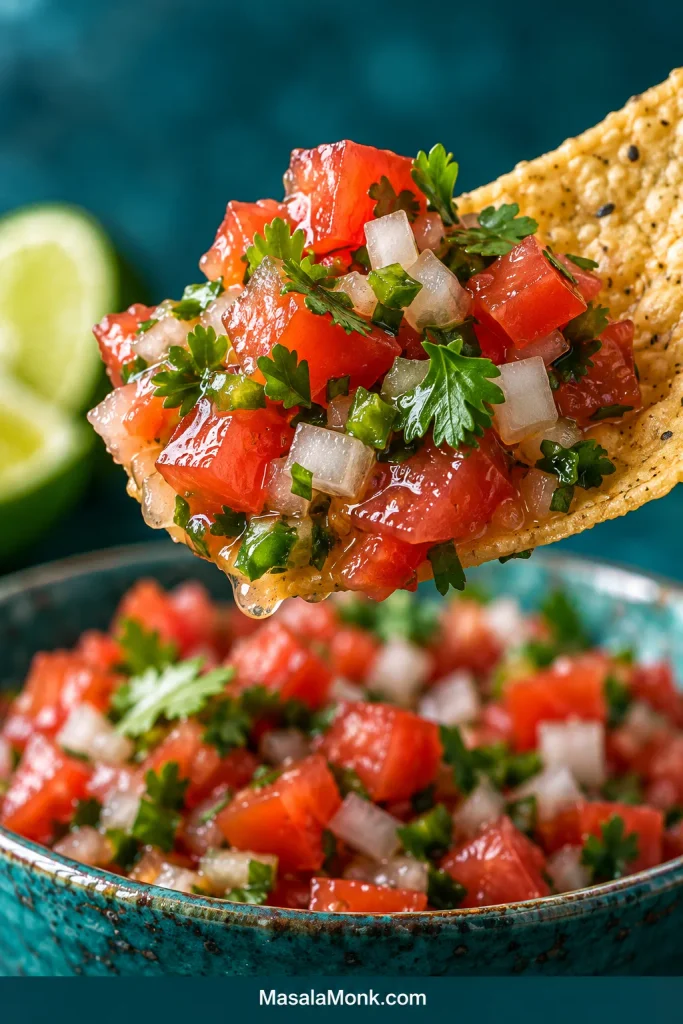
Good pico de gallo tastes like ripe tomato first. A good scoop should bring tomato, onion and chile together, with just enough seasoned juice to gloss the edge of a chip. White onion gives it crunch, chile brings a clean flicker of heat, cilantro keeps it lively, and lime sharpens the tomatoes.
The short ingredient list can be deceptive. Tomatoes may be sweet and firm one week, pale and watery the next. One white onion is gentle; another takes over every bite. Chiles vary wildly in heat, and limes do not all taste equally sharp.
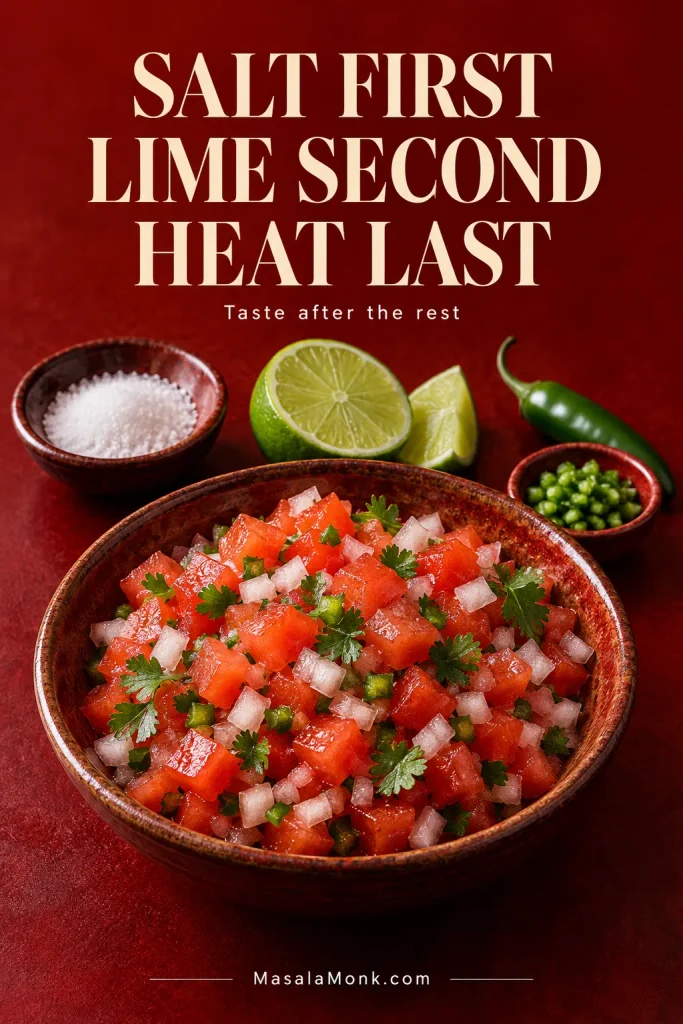
Use the measurements here as your starting point, then let the salsa tell you what it needs. You can eat it as soon as it is mixed, but give it about 15 minutes if you can. Then taste again: salt first, lime second, heat last.
Tomatoes: ripe and flavorful, but firm enough to stay in distinct pieces.
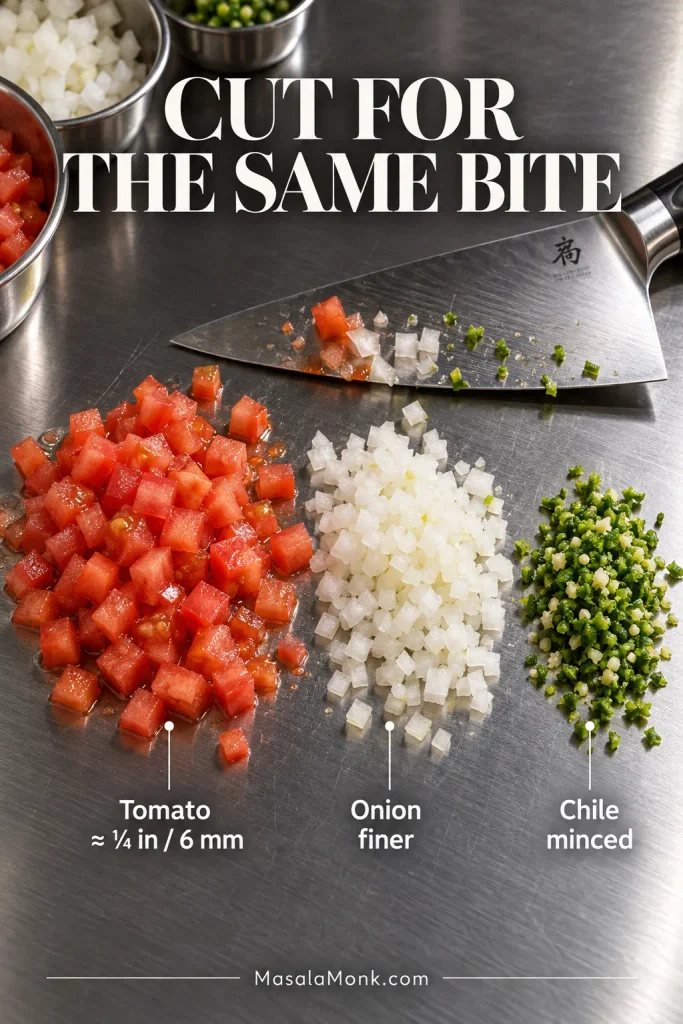
Texture: tomato around ¼ inch / 6 mm, onion slightly finer, chile finely minced.
What you’re aiming for: tomato-led, properly seasoned pico with some juice underneath instead of vegetables floating in liquid.
Use one tortilla chip as a texture test. It should pick up tomato, onion, chile and cilantro together. If one oversized piece takes over, the cutting sizes need another look.
Pico de Gallo Recipe
15 minutes active, plus a 15-minute recommended rest. Fresh, chunky Mexican tomato salsa with white onion, serrano or jalapeño, cilantro, lime and salt.
Prep 15 minutes
Rest 15 minutes recommended
Cook 0 minutes
Total About 30 minutes
Yield: about 3½–4 cups Serves: about 8–12 as a dip or condiment
Equipment
Sharp chef’s knife
Cutting board
Medium mixing bowl
A fine-mesh strainer and slotted spoon are handy if your tomatoes are especially juicy.
Ingredients
1½ lb / 680 g ripe, firm tomatoes, Roma/plum or another flavorful firm tomato
4 oz / 115 g white onion, about ¾ cup finely diced
1 medium serrano chile, finely minced, or 1 small-to-medium jalapeño for a milder batch
½ cup loosely packed fresh cilantro leaves and tender stems / about 8–10 g, then chopped
2 tablespoons / 30 ml fresh lime juice, usually from 1–2 limes, plus more if needed
½ teaspoon / about 3 g fine sea salt, plus more if needed
Method
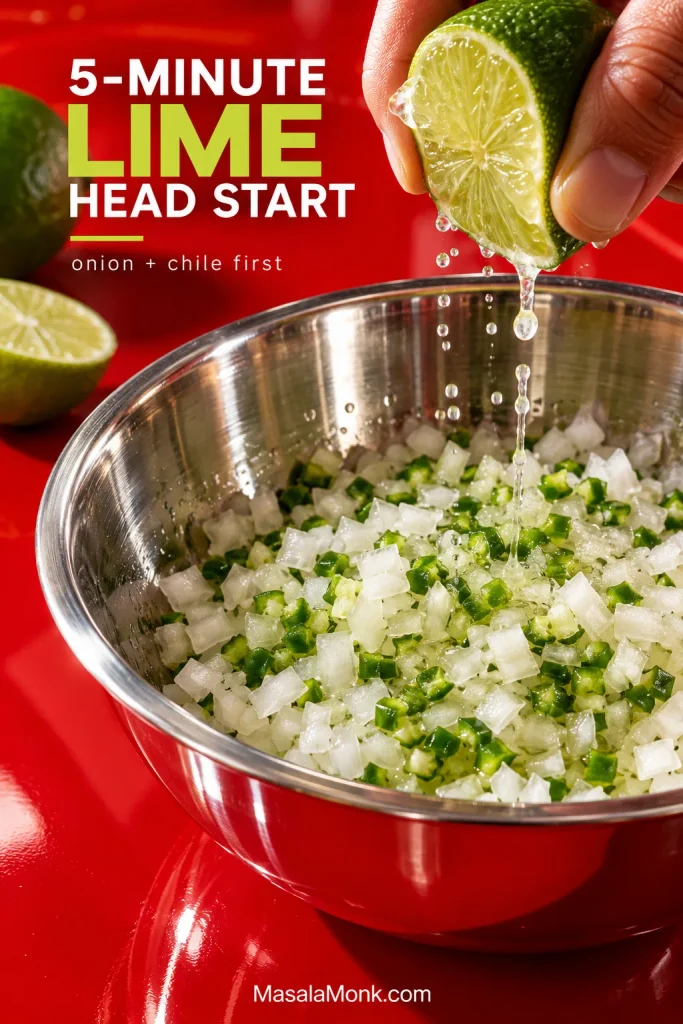
Start with the onion, chile and lime. Finely dice the white onion and mince the serrano or jalapeño. Taste a tiny piece of chile before deciding whether to use all of it. Put the onion and chile in a medium bowl, add 2 tablespoons / 30 ml lime juice and stir. Hold the salt for now. Let this sit for about 5 minutes while you chop the tomatoes.
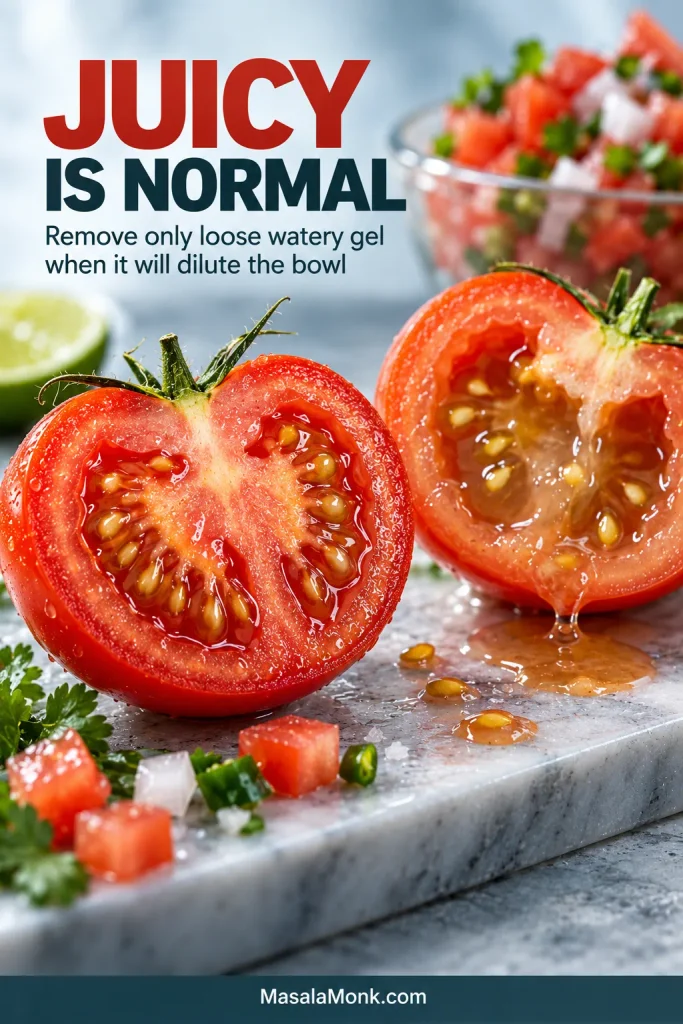
Prepare the tomatoes. Remove the hard cores and dice the tomatoes into roughly ¼-inch / 6 mm pieces. If a tomato has an especially loose, watery seed cavity, scoop out some of the free gel. Otherwise, leave it.
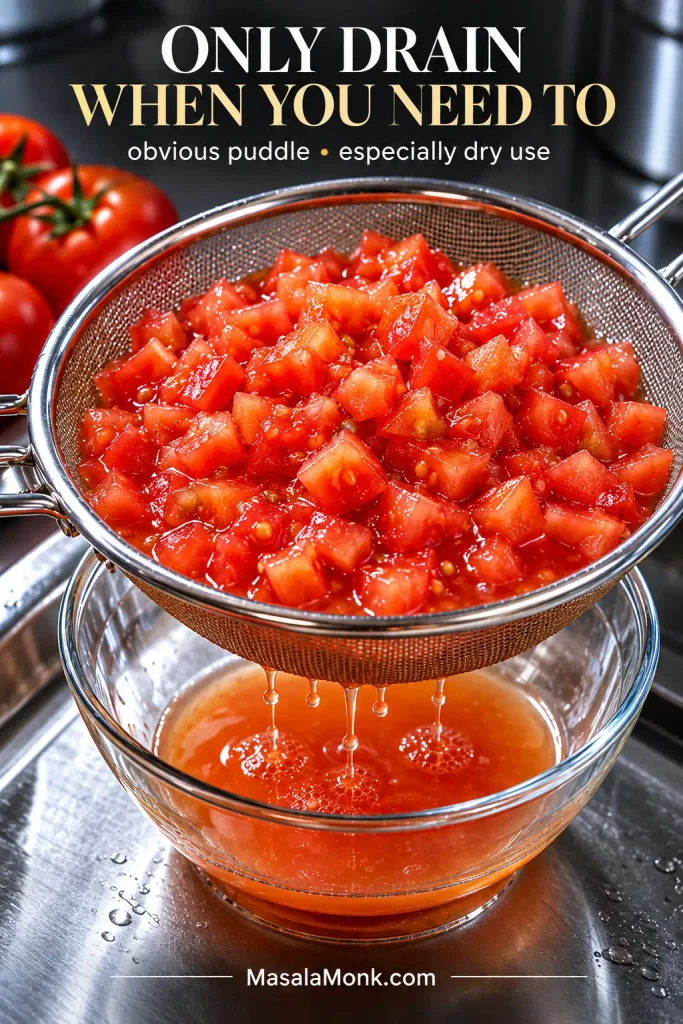
Drain only if needed. Look at the chopped tomatoes before deciding. A large puddle is a good reason to drain them briefly in a fine-mesh strainer. Firm tomatoes with a normal amount of juice can go straight into the bowl.
Mix and season. Add the tomatoes and cilantro to the onion mixture. Fold gently, add ½ teaspoon / about 3 g fine sea salt, and fold again.
Rest, then taste. You can eat the pico immediately, but a 15-minute rest makes the final seasoning easier to judge. By then, you may see pink-red tomato-lime juice collecting underneath. Fold once from the bottom, then taste a spoonful with tomato, onion and chile together.Check salt first, lime second and heat last.
Serve. Keep some of the seasoned juice when pico is a dip. For tacos, burritos, quesadillas or nachos, lift out mostly solids with a slotted spoon if the salsa is particularly juicy.
Recipe Notes
Taste a tomato before chopping the whole batch. If it is sweet, fragrant and juicy, you are already most of the way there.
When the onion burns hotter than the chile, rinse the diced pieces briefly under cold water and drain very well.
For less heat, use jalapeño instead of serrano, scrape away the pale inner ribs and tissue around the seeds, or start with only part of the chile.
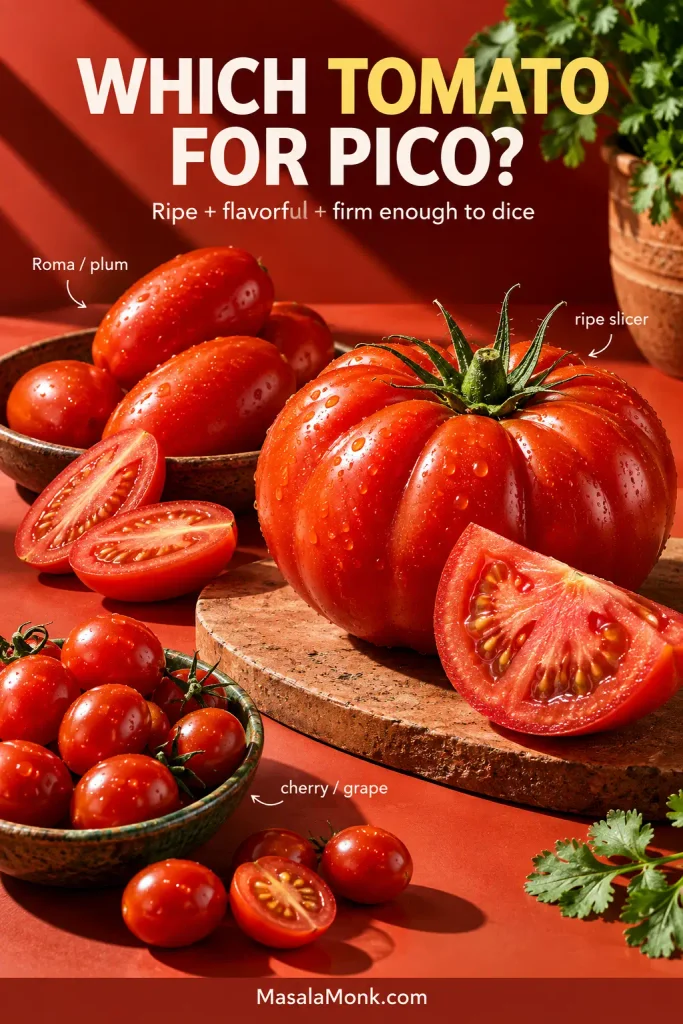
Roma or plum tomatoes are the easiest everyday choice because they’re usually firm and meaty. But the best tomato for pico de gallo is simply a ripe, flavorful one that still holds a clean dice.
Taste one before you chop the whole batch. In summer, a ripe slicing, vine or heirloom tomato may make much better salsa. If it smells like tomato before you cut it and tastes sweet and full, use it. A bland tomato has nowhere to hide here.
For the best tomatoes for pico de gallo, choose flavor and structure together. The tomato should smell ripe and taste juicy, yet stay upright under the knife. If it collapses into a soft pile, the salsa will soften faster.
In winter, grape or cherry tomatoes may beat large tomatoes that look good but taste pale or mealy. Whatever type you buy, look for ripe flavor and flesh that still holds its shape. Remove the hard core. Scoop out loose, watery seed gel only when there is enough of it to dilute the salsa.
Watch what happens when the tomato is cut. Keep the seed gel if it stays nestled inside the cavity. If thin liquid immediately runs across the board, that is the moisture worth trimming back.
Onion, Chile and Cilantro
White onion gives pico its crisp raw-onion bite. Dice it slightly finer than the tomato so no single chunk takes over a mouthful. If the onion burns hotter than the chile, give the diced pieces a quick cold-water rinse and drain them thoroughly before adding the lime.
Five minutes with lime is a brief tempering step, not a marinade. The onion should lose some harshness while keeping its crunch. If it turns noticeably soft, it has sat longer than needed.
Serrano is usually hotter than jalapeño, so use serrano for a sharper chile kick or jalapeño when you want gentler heat. Individual peppers vary enough that checking a tiny piece tells you more than the pepper count ever will. For less heat, scrape away the pale inner ribs and tissue around the seeds before mincing, or simply start with less chile.
Use the tender upper cilantro stems along with the leaves; once chopped, they are full of flavor and disappear into the salsa. Discard the thick lower stems.
Lime and Salt
Start with 2 tablespoons / 30 ml fresh lime juice and ½ teaspoon / about 3 g fine sea salt for 1½ lb / 680 g tomatoes. Tomatoes and limes vary enough that the final adjustment belongs after the salsa has rested.
There is no single sacred lime quantity. Larousse Cocina’s classic salsa mexicana or pico de gallo even lists lime juice as optional, noting that some traditionalists leave it out when ripe tomatoes already provide enough acidity. Starting with 30 ml leaves room to taste the rested salsa and add more only if it needs it.
Salt does something different: it wakes up the tomato and draws out some of its juice. That is why the final salt decision is easier after the short rest rather than the moment everything first hits the bowl.
Cut Everything for the Same Bite
Tomato, onion, chile and cilantro should still look like separate ingredients, but one chip should pick up several of them together rather than a mouthful of onion followed by a lonely tomato cube. Aim for roughly ¼ inch / 6 mm for the tomato, cut the onion finer and mince the chile. Perfect cubes aren’t the goal; a balanced bite is.
Think hierarchy rather than uniformity when cutting pico de gallo. Tomato should stay large enough to feel juicy, while onion becomes small enough to spread through the bite. Mince the chile finely enough to season without announcing itself as a chunk.
A sharp knife helps the tomato keep its shape. Repeated crushing or chopping releases more juice and gives the salsa a softer texture.
Can You Use a Food Processor?
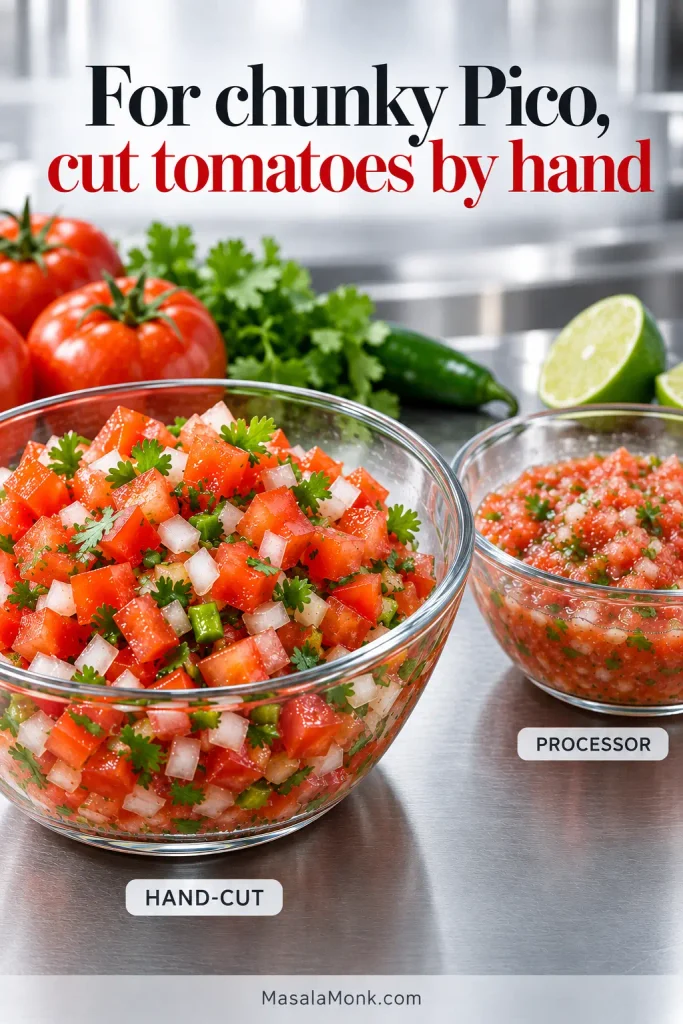
For classic chunky pico de gallo, cut the tomatoes by hand. A standard food processor tends to make the onion very fine before the tomato is evenly chopped, and every extra pulse releases more juice. The exception is a true dicing attachment. Otherwise, process the onion and chile cautiously if you need the shortcut, then cut the tomatoes by hand.
With a food processor, watch the liquid before you watch the clock. Stop if juice starts pooling before the tomato reaches an even dice. Hand-cut tomatoes give chunky pico de gallo a wider margin for error.
Season, Rest and Taste Again
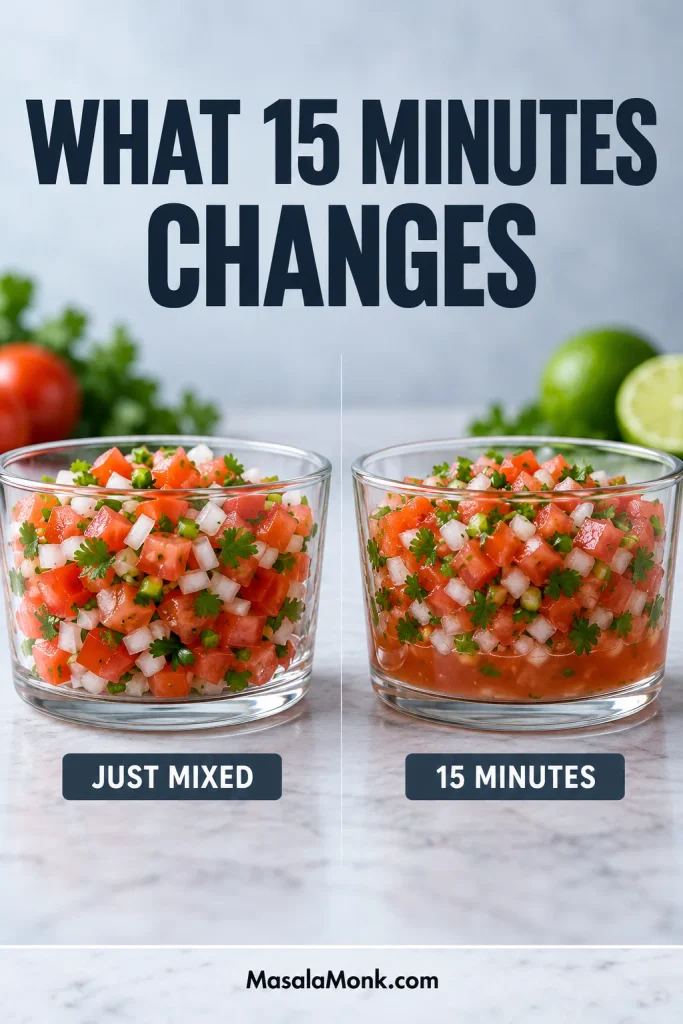
Pico de gallo can be eaten immediately, but a 15-minute rest makes the final seasoning easier to judge. While you chop the tomatoes, give the onion and chile about 5 minutes with the lime. Add the tomatoes and cilantro, season with salt, then let everything sit.
After the rest, you may see pink-red tomato-lime juice underneath. The onion will lose some of its raw edge, and the seasoning will be easier to judge once that juice is folded back through the bowl.
After the 15-minute rest, fold once from the bottom before tasting. Salt, lime and tomato juice collect there, so one gentle fold gives a truer read than tasting only the vegetables on top.
Take a spoonful with tomato, onion, chile and some of the juice. If the tomato tastes muted, add a small pinch of salt. Once the salt tastes right, add lime 1 teaspoon / 5 ml at a time only if the salsa still needs brightness. Add more serrano last if you want more heat.
If you have ever kept squeezing lime into a batch that somehow still tasted flat, check the salt first. Under-seasoned tomato can fool you into thinking it needs more acid.
Correct one flavor axis at a time: salt for muted tomato, lime for missing brightness and serrano for missing heat. Then retaste before changing the next one, rather than chasing several problems at once.
When the balance is right, tomato still leads, onion gives the bite some crunch, chile follows with heat, and lime sharpens the whole bowl without taking over.
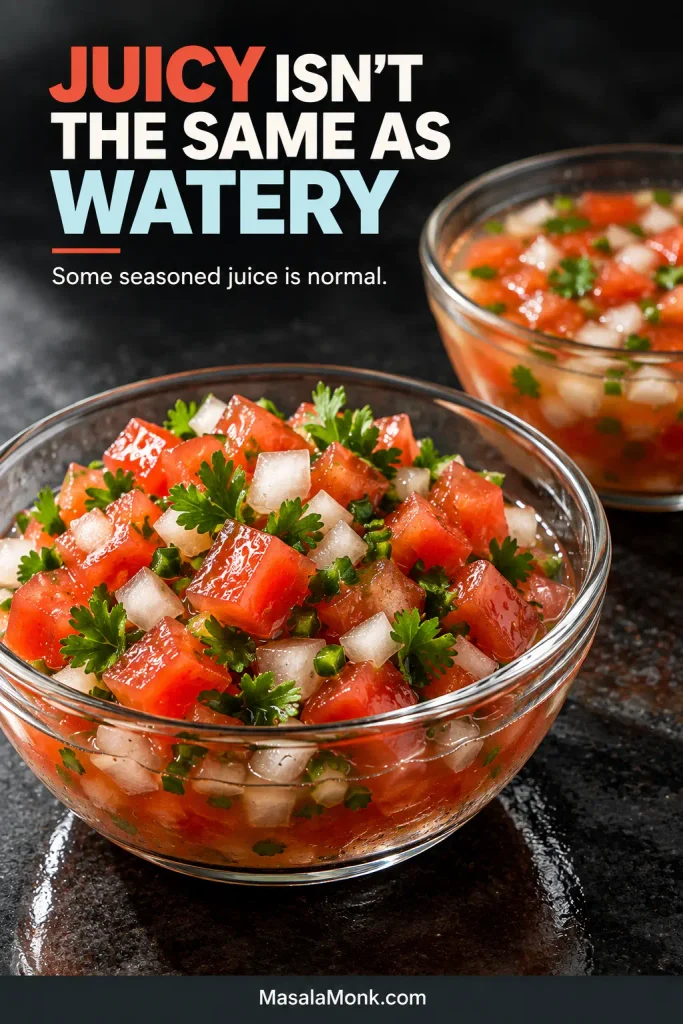
Juicy Isn’t the Same as Watery
Some seasoned tomato-lime juice is normal. Pico becomes watery when there is enough liquid to drown the chopped ingredients or work against the food underneath it.
Use the juice line as a visual check. A small pool beneath clearly defined vegetables means juicy pico. Once the chopped pieces begin sitting in a deep pool, the balance has tipped toward watery.
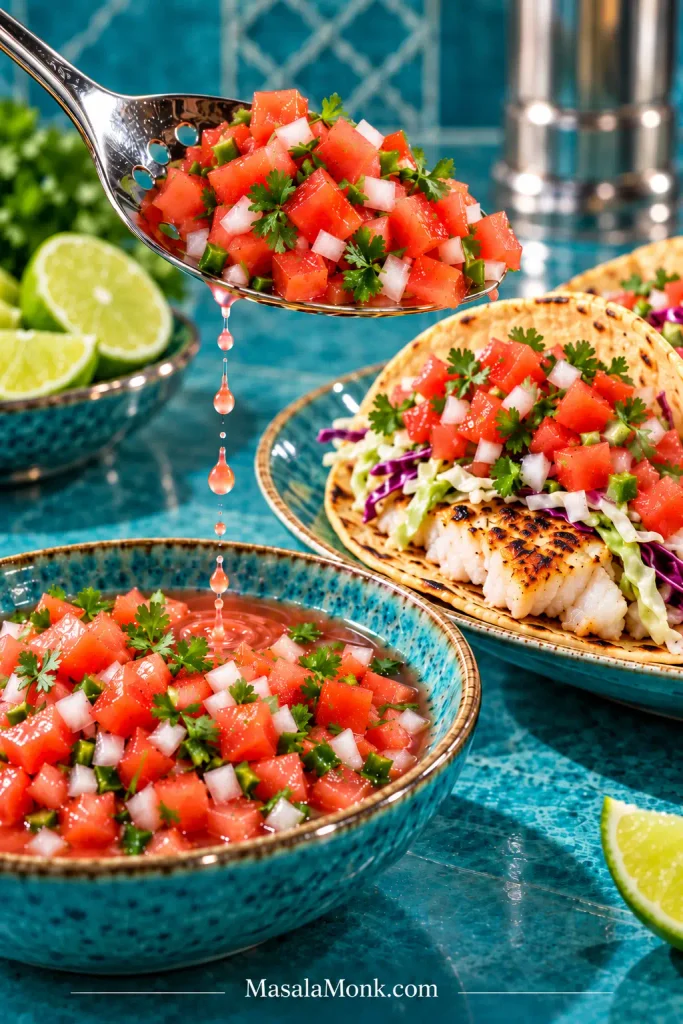
With chips, the juice is part of the pleasure. For fish tacos, lift mostly solids from the bowl so the fish, slaw and warm tortilla keep their own textures. The liquid that tastes great on a tortilla chip can work against you once it starts soaking into a tortilla.
For pico de gallo on fish tacos, drain at the moment of serving—not the whole batch in advance. A slotted spoon gives the tortilla mostly solids while keeping the flavorful juice available for chips or another serving.
Where It’s Going
What to Do
Tortilla chips
Keep some seasoned juice in the bowl.
Tacos or fajitas
Spoon mostly solids so the tortilla stays intact.
Burritos
Drain the portion going inside.
Quesadillas
Serve it over the cooked quesadilla or alongside it.
Nachos
Use a slotted spoon or drain briefly before topping.
The same rule applies to a 7 layer dip: drain the portion you’re adding so loose tomato juice doesn’t soften the layers underneath.
When the Tomatoes Really Are Too Wet
A puddle forming immediately after chopping is a good reason to drain the tomatoes briefly. For something that needs especially dry pico, such as nachos, lightly salt the diced tomatoes and leave them in a fine-mesh strainer for about 10 minutes.
If tomatoes genuinely need draining, do it before the pico is fully mixed. That removes excess tomato water while the cilantro, lime and onion stay in the finished bowl.
If you salt the tomatoes before draining, do not automatically add the recipe’s full ½ teaspoon / 3 g salt afterward. Assemble the pico, let it rest, taste, then add only what it needs.
Firm tomatoes with a normal amount of juice can skip this entirely.
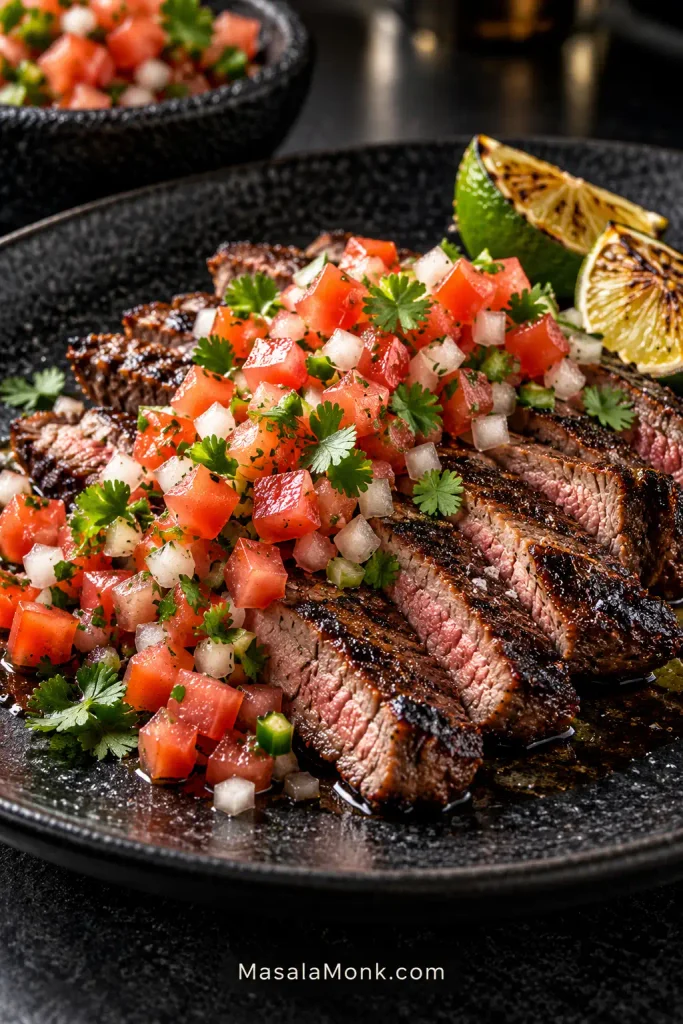
Spoon pico onto hot carne asada or sheet-pan chicken fajitas at the table. The cool tomato and lime wake up browned meat and roasted peppers; use mostly solids, then let some seasoned juice reach the food underneath.
Add pico de gallo after the carne asada is sliced and plated, not while the meat is still cooking. The beef stays hot and charred while the tomato and onion remain cool, crisp and bright.
It also fits naturally into a rice-and-beans plate. A spoonful beside Mexican rice and creamy refried beans gives the plate something cold, crisp and sharp.
For chips, put it beside homemade guacamole. One is chunky and juicy; the other cool and creamy.
Troubleshooting
Most pico problems are easy to fix before the bowl reaches the table. Take a spoonful with tomato, onion, chile and some of the juice, then correct the thing you can actually taste.
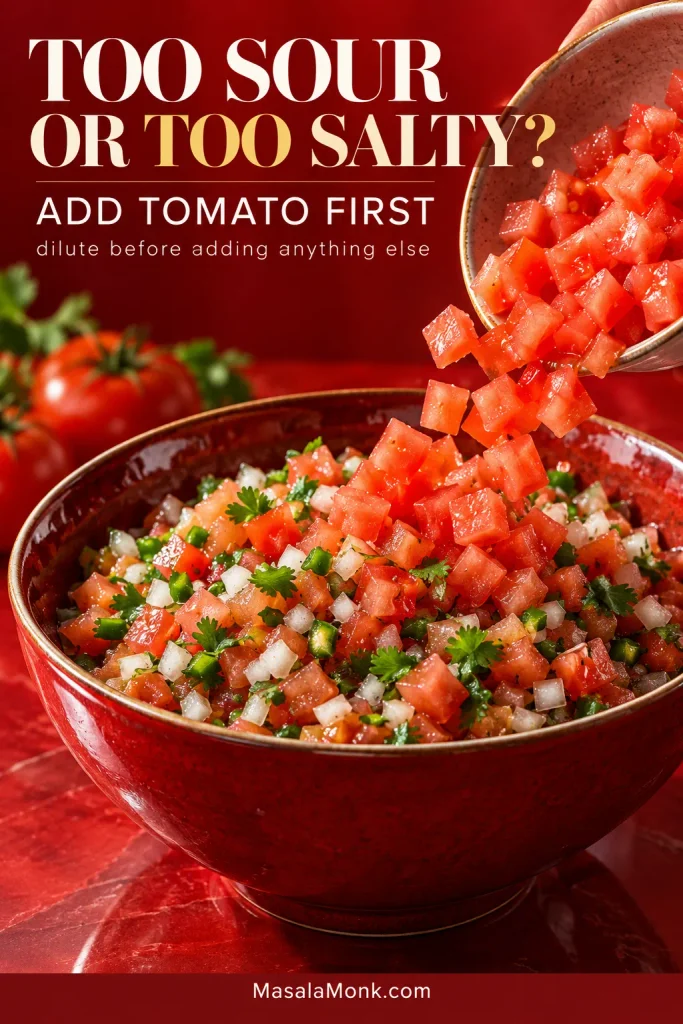
Use unseasoned diced tomato when rescuing pico that is too sour or too salty. Because it adds volume without adding more acid or salt, it corrects the concentration instead of creating a second imbalance.
Problem
What to Do
Bland or muted
Add a small pinch of salt, wait a minute and try another spoonful before adding more lime.
Salt tastes right, but it still needs brightness
Add fresh lime 1 teaspoon / 5 ml at a time.
Too sour
Add plain tomato first. Taste again before adding anything else.
Too salty
Add plain tomato first, then retaste.
Raw onion dominates
Add tomato now. Next time use less onion, cut it smaller or rinse a particularly harsh one.
Different onion. White onion is the first choice here, but red or yellow onion can work if that is what you have. Expect a slightly different raw-onion flavor.
Canned tomatoes in a pinch. Drain canned diced tomatoes very well. They can make a usable salsa when fresh tomatoes are poor, but the result will be softer and more salsa-like than classic fresh pico.
Pico de Gallo, Salsa Fresca and Salsa Mexicana
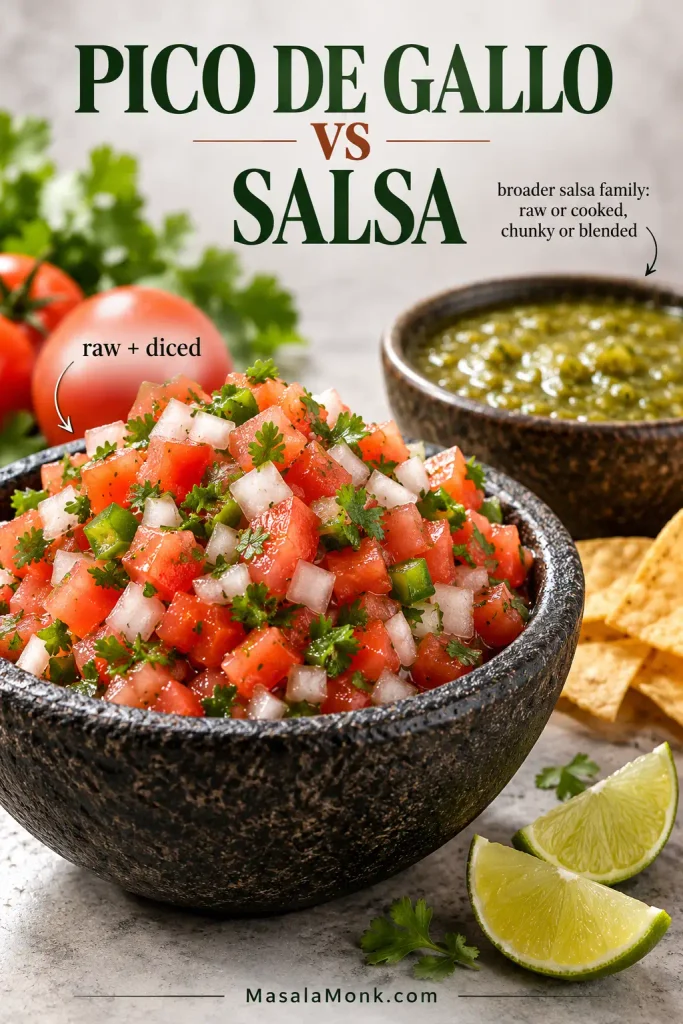
Pico de gallo is a fresh salsa made from raw, diced ingredients rather than cooked or blended ones. Salsa is the broader category and may be raw or cooked, chunky or smooth. Roasted salsa verde, for example, takes tomatillos and chiles through heat before blending, so it eats very differently from fresh pico.
Texture often reveals the method. Pico de gallo keeps recognizable raw dice. Other salsas may be roasted, cooked, pounded or blended until much smoother; neither texture is inherently “more authentic.”
You may also see pico described as salsa fresca or salsa cruda. The classic combination of tomato, white onion, green chile and cilantro is also commonly called salsa mexicana.
Pico de gallo literally translates as “rooster’s beak,” although the exact origin of the name is uncertain. In Mexico, the term can also refer to other chopped chile-and-lime preparations, including versions with fruit or jícama.
Make Ahead and Storage
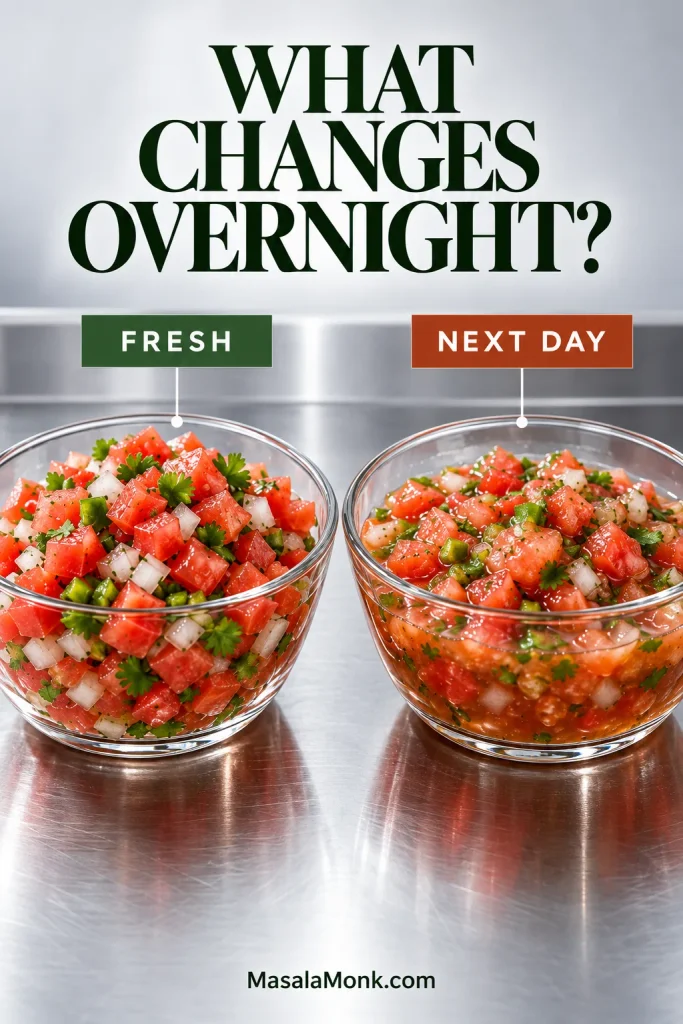
Pico de gallo is best the day it is made, but making it a few hours ahead is completely fine. A short rest helps the ingredients come together; as the hours pass, the tomatoes gradually soften and more juice collects underneath.
Next-day pico is not automatically bad—it has simply moved into a softer, juicier state. Use it where fresh flavor still matters but crisp texture matters less. Drain only the portion that needs to stay dry.
When You Eat It
What to Expect
15–30 minutes after mixing
Crisp vegetables with seasoning that has had time to settle in.
A few hours later
More juice and slightly softer tomatoes.
Next day
Still flavorful, but noticeably softer and wetter.
Prep ahead
Keep tomatoes whole until closer to serving; onion and chile can be chopped ahead.
For advance prep, keep the tomatoes whole or store chopped tomatoes separately. Shortly before assembly, combine the onion and chile with the lime for about 5 minutes, then add the tomatoes, cilantro and salt. This preserves the brief lime rest without leaving chopped tomatoes to soften in lime and salt for hours.
How Long Does It Keep?
For the best texture, eat refrigerated pico de gallo within about 3 days. Keep it covered and refrigerate it promptly. If you made it ahead, take out only the portion you plan to eat about 10–15 minutes before serving so the tomato, chile and lime lose the hardest refrigerator chill.
Keep it at 40°F / about 4°C or below. At a party, taco bar or cookout, don’t leave pico unrefrigerated for more than 2 hours. Above 90°F / about 32°C, that limit drops to 1 hour, following USDA food-safety guidance.
Can You Freeze It?
Pico de gallo does not freeze well if you want to serve it fresh because thawed tomato and onion become soft and watery. If you’d rather freeze leftovers than waste them, use the thawed mixture in something cooked—rice, beans, soup, eggs or a quick tomato-chile sauce.
When Leftovers Lose Their Crunch
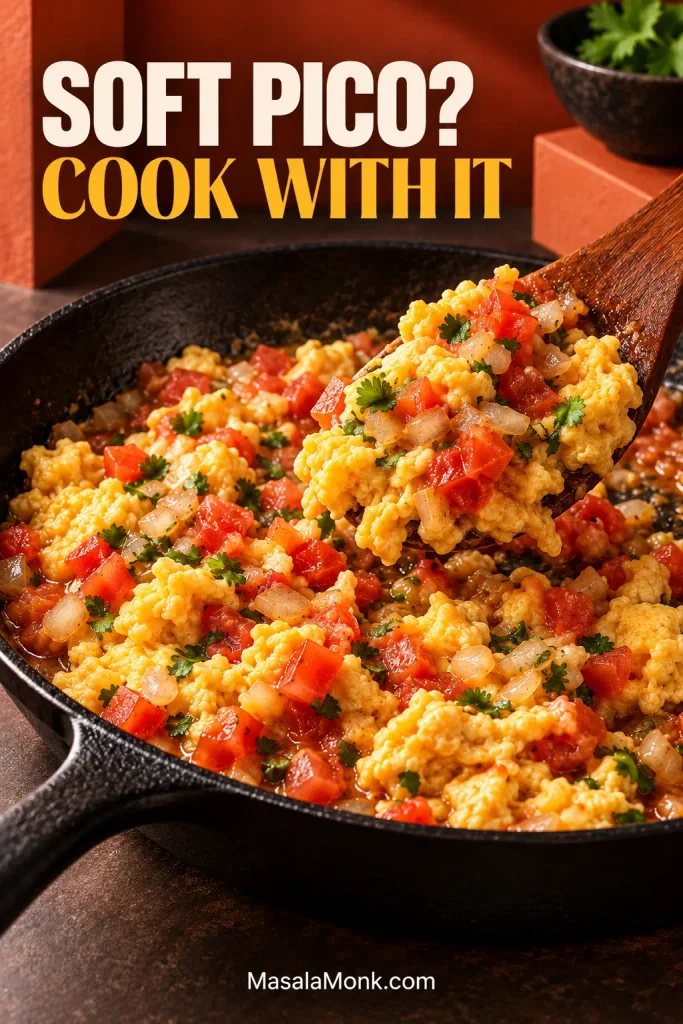
Soft next-day pico still has plenty of flavor. Cook it briefly into scrambled eggs or migas, stir it into refried beans or rice, add it to taco meat, or simmer it into a quick salsa. By day two or three, eggs, beans and rice are usually a better home for it than the chip bowl.
For eggs, cook softened leftover pico briefly before adding the eggs. Letting some of the extra tomato liquid steam away first concentrates the flavor and helps prevent a watery scramble.
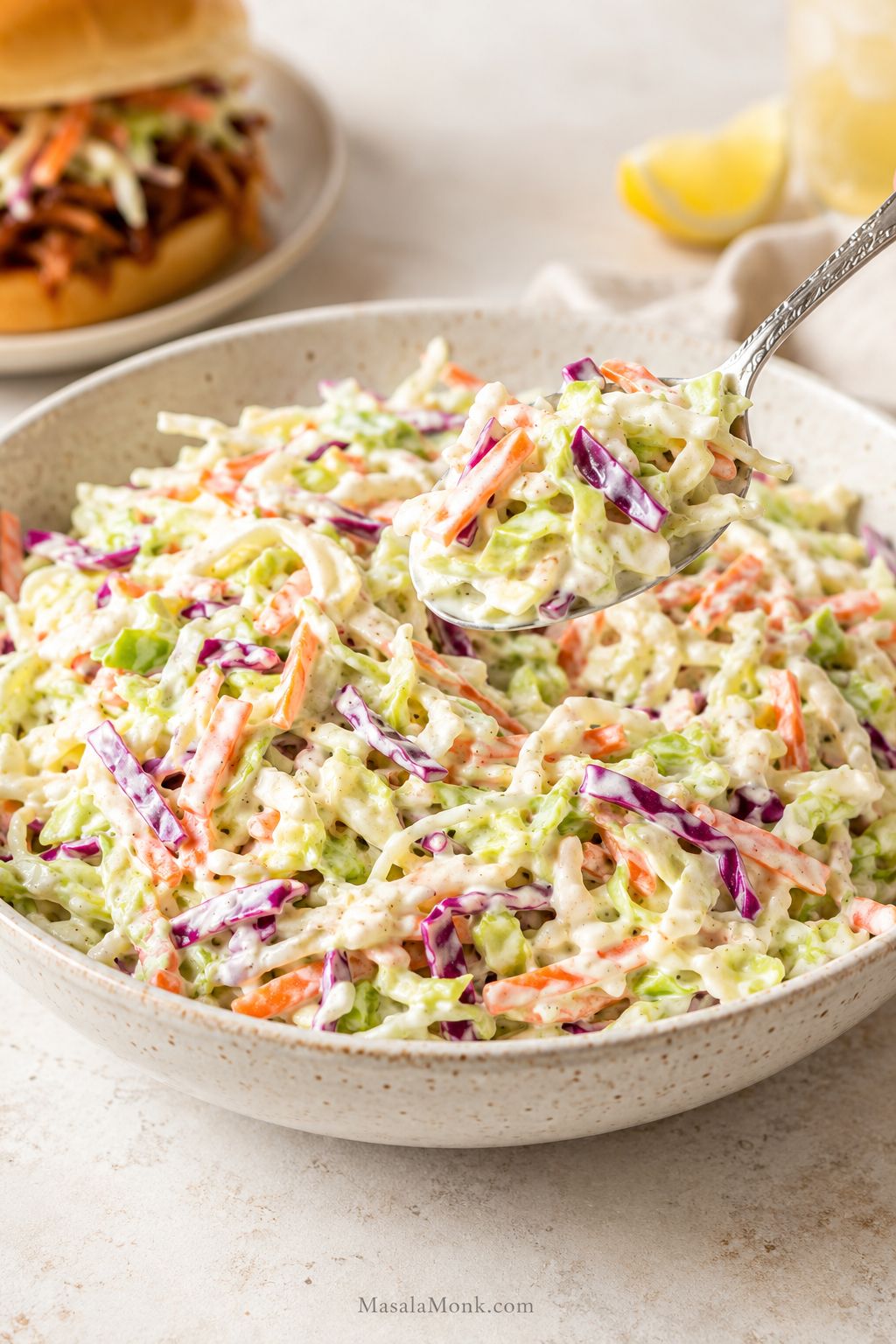
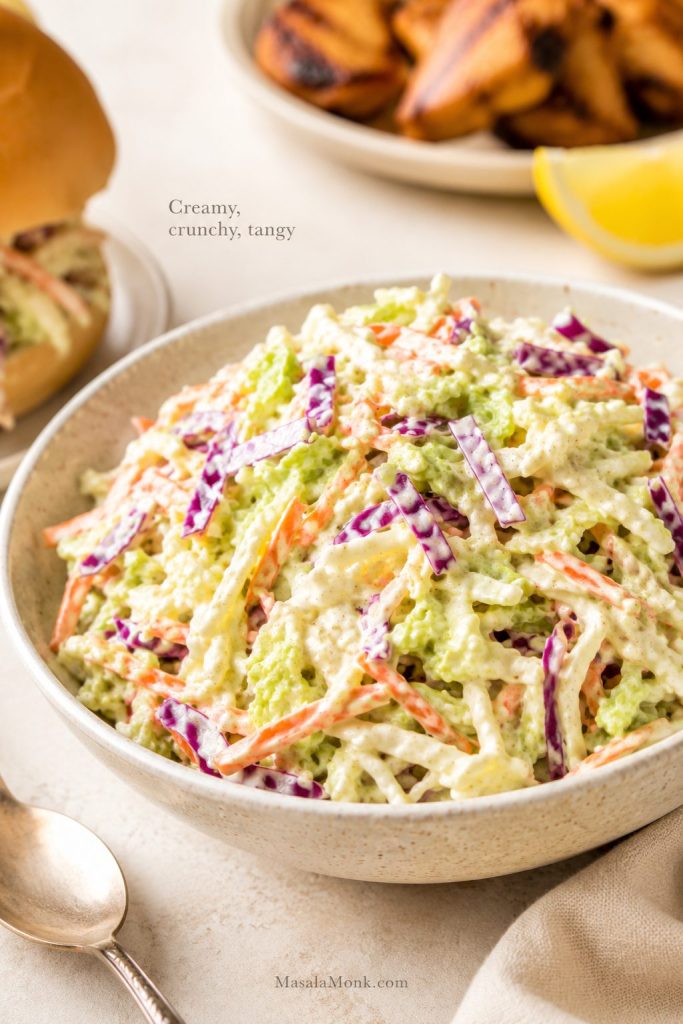
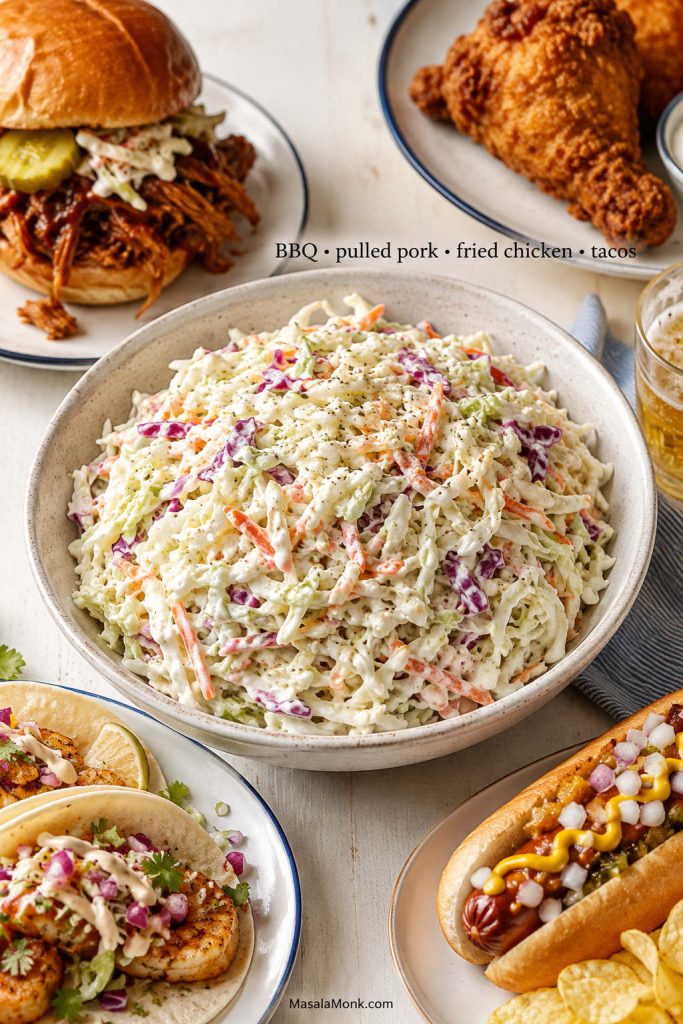
This coleslaw recipe is the cold, crunchy side that makes a cookout plate feel complete. It is creamy without being heavy, lightly sweet without tasting sugary, and tangy enough to cut through BBQ, burgers, fried chicken, fried fish, hot dogs, tacos, and pulled pork sandwiches.
The best version gives you that cold snap of cabbage, a creamy-tangy coating, and just enough sweetness to make smoky, salty, fried, or saucy food taste even better.
Because coleslaw brings cold crunch to smoky, fried, and saucy foods, it works especially well with BBQ plates, burgers, fried chicken, and pulled pork.
The recipe is simple — shredded cabbage, carrot, and a creamy dressing — but the little choices matter. Shred the cabbage fine enough, mix the dressing separately, chill the bowl, and hold back some dressing until the end. That is how you get homemade coleslaw that tastes fresh, not watery — and the full watery coleslaw fix is below if that is the problem you are trying to avoid.
You can make it with fresh cabbage when you want the strongest crunch, or with bagged coleslaw mix when you need a fast weeknight side. Either way, this is everyday creamy coleslaw: cool, crisp, bright, and sturdy enough to work as a side dish or a sandwich topping.
Best for: BBQ plates, burgers, fried chicken, fried fish, hot dogs, tacos, and pulled pork sandwiches
Texture: cold, crunchy, creamy, lightly sweet, and tangy
Prep time: 15 minutes
Chill time: 30–60 minutes
Servings: 8 side servings
Yield: about 8–9 cups
Shortcut: use bagged coleslaw mix; one 14–16 oz bag makes a smaller batch, while 20–24 oz gives the full recipe yield
Most important tip: start with part of the dressing, chill, toss again, then add more only if the slaw needs it
What You’ll Find in This Coleslaw Guide
This guide helps you make classic creamy coleslaw that tastes balanced, stays crisp, and works whether you are serving it in a bowl, beside grilled food, or inside a sandwich.
The best easy coleslaw recipe starts with finely shredded cabbage, grated carrot, and a creamy dressing made with mayonnaise, apple cider vinegar, a little lemon juice or mustard, sugar or honey, salt, pepper, and optional celery seed. The simple trick is to dress the cabbage lightly at first, let it chill, then add more dressing only if it needs it.
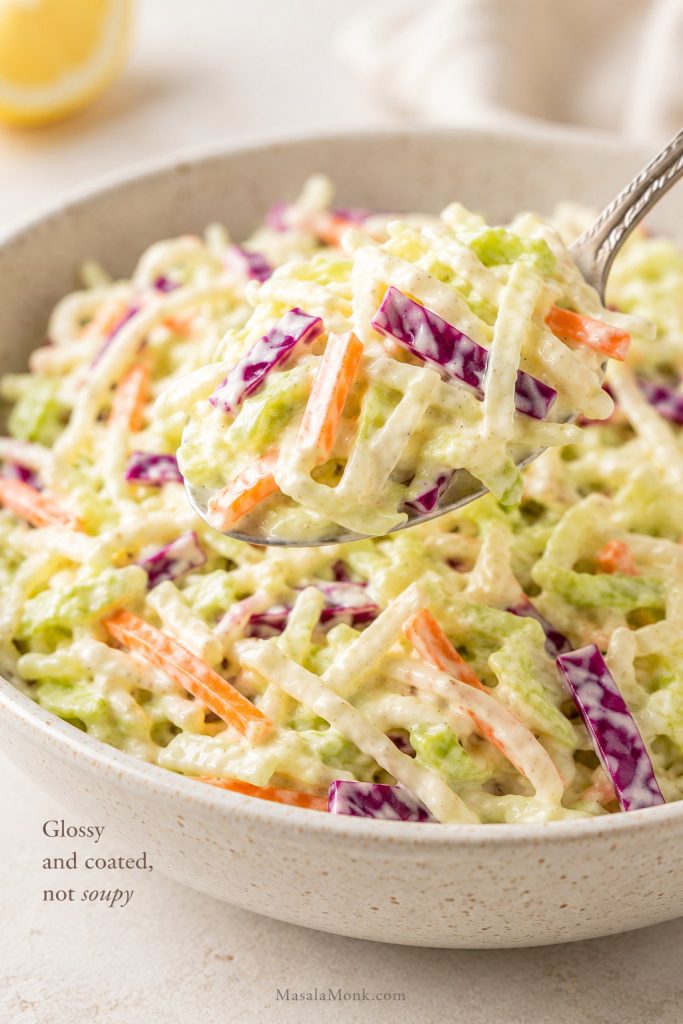
For a reliable balance, use about 8 cups of shredded cabbage and carrot mixture for every ⅔ cup of mayonnaise-based dressing. That gives you coleslaw that is glossy and lightly coated, not soupy at the bottom of the bowl. It should taste cool, crunchy, tangy, and just sweet enough. For the exact creamy-tangy balance, see the coleslaw dressing section before you adjust the mayo, vinegar, lemon, or mustard.
The best easy coleslaw should show contrast in one bite: creamy dressing on the outside, crisp cabbage underneath, and no thin liquid collecting below.
Using bagged coleslaw mix? One 14–16 oz / 400–450 g bag makes a smaller batch than this full recipe. For one bag, start with about half to two-thirds of the dressing. If you are in a hurry, you can serve the slaw after 10–15 minutes, though the texture and flavor are better after 30–60 minutes in the fridge. For the full bagged-mix math, see the bagged coleslaw mix conversion below.
Coleslaw Recipe Card
Coleslaw Recipe
This easy coleslaw recipe is made with crisp cabbage, grated carrot, and a sweet-tangy dressing. It is the kind of cold, crunchy side that works on a cookout plate, inside a sandwich, or beside fried food.
Prep Time 15 minutes
Chill Time 30–60 minutes
Total Time 45–75 minutes
Servings 8 side servings
Yield about 8–9 cups
Equipment
Large mixing bowl
Medium bowl
Whisk
Tongs
Sharp knife or mandoline
Box grater
Airtight container
Optional: colander or salad spinner for make-ahead cabbage
Ingredients
For the slaw:
6 loosely packed cups finely shredded green cabbage, about 420–450 g
2 loosely packed cups finely shredded red cabbage or more green cabbage, about 140–150 g
1 large carrot, grated, about 75–100 g
2–4 tablespoons thinly sliced scallion or red onion, optional
For the creamy coleslaw dressing:
⅔ cup mayonnaise, about 150 g
2 tablespoons apple cider vinegar, 30 ml
1 tablespoon lemon juice, 15 ml, or 2 teaspoons Dijon mustard, 10 ml
1 tablespoon sugar, about 12 g, or honey, about 20 g
½ teaspoon celery seed, optional
½ teaspoon fine salt, plus more to taste
¼ teaspoon black pepper
Instructions
Shred the cabbage. Slice the cabbage finely with a sharp knife or mandoline. Grate the carrot and add it to a large mixing bowl with the cabbage and optional scallion or red onion.
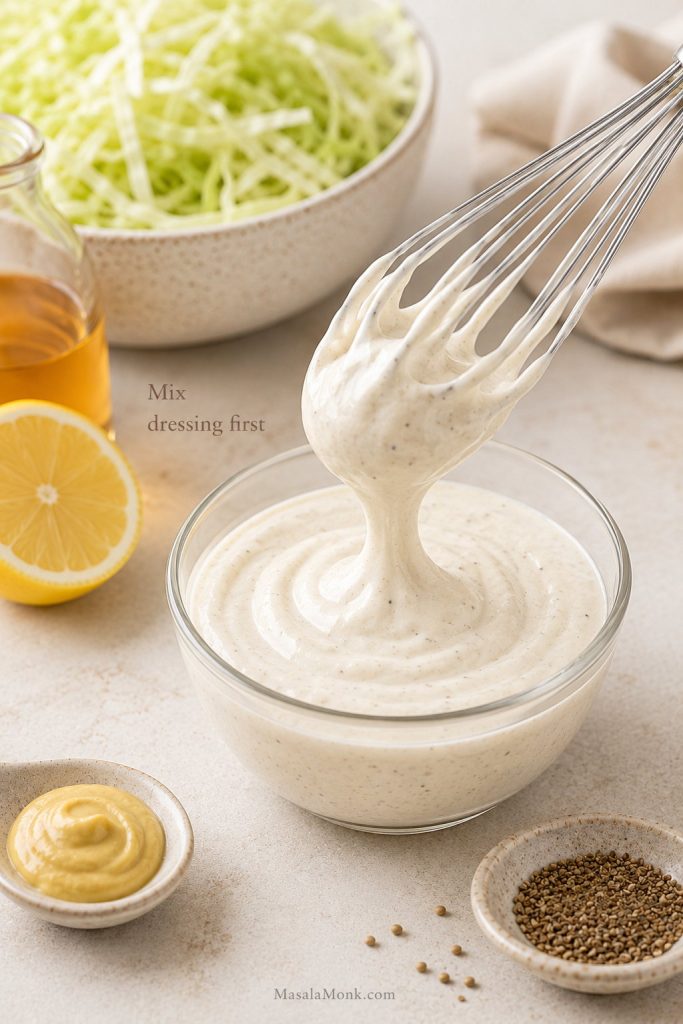
Mix the dressing. In a medium bowl, whisk together the mayonnaise, apple cider vinegar, lemon juice or Dijon mustard, sugar or honey, celery seed, salt, and black pepper until smooth.
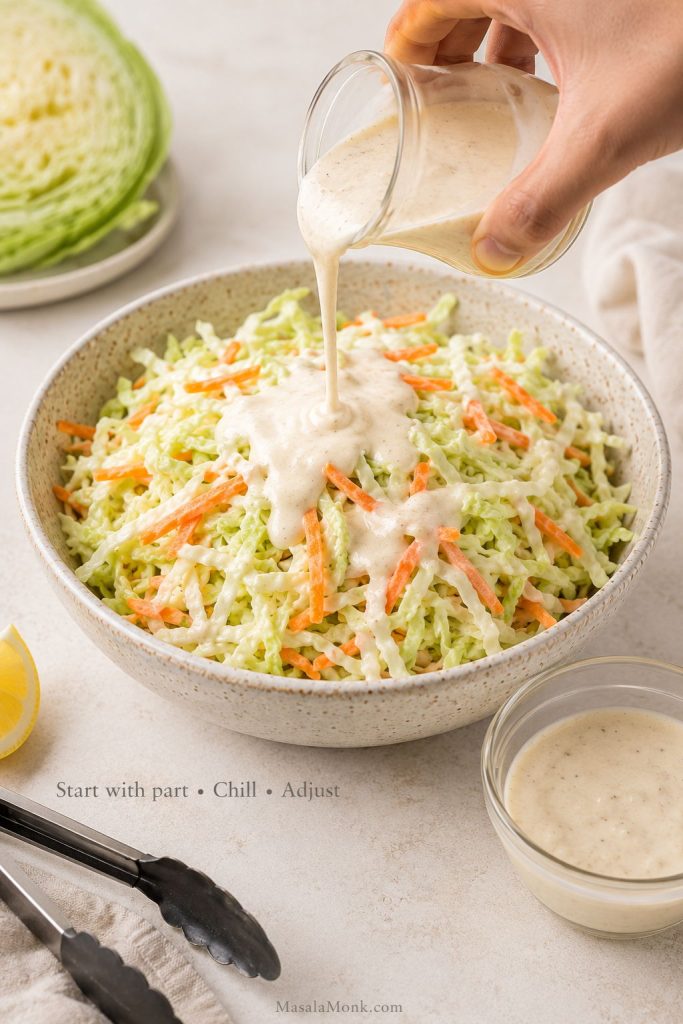
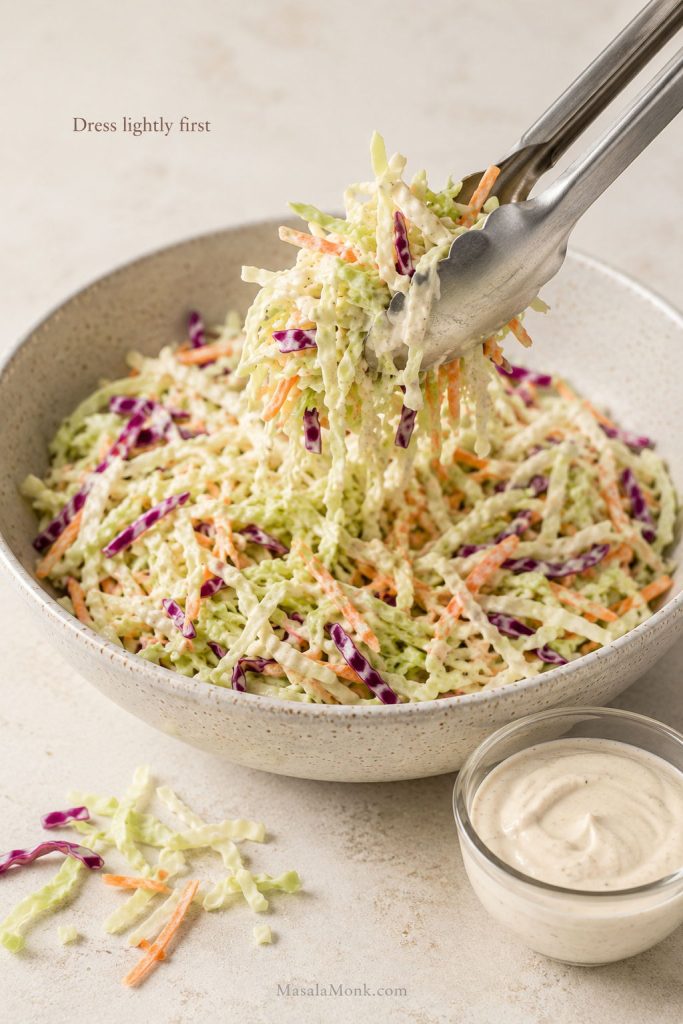
Dress lightly first. Pour about two-thirds of the dressing over the cabbage mixture. Toss well until the cabbage is lightly coated.
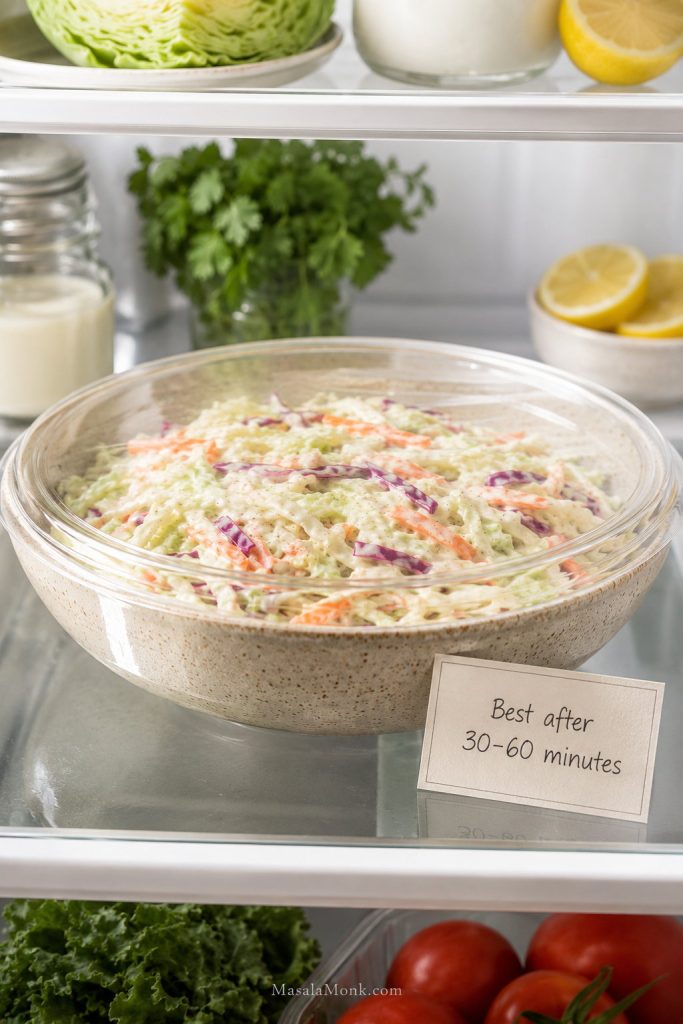
Chill. Cover and refrigerate for 30 to 60 minutes so the cabbage relaxes slightly and the flavors blend.
Finish before serving. Toss again. If the slaw looks dry, add more dressing a spoonful at a time. A little salt will wake it up if the flavor feels flat. When it tastes too sweet or heavy, sharpen it with vinegar or lemon juice. If the cabbage tastes bitter or the dressing feels too sharp, balance it with a tiny pinch of sugar.
Notes
One 14–16 oz / 400–450 g bag of coleslaw mix makes a smaller batch. For the full 8–9 cup yield, use about 20–24 oz / 560–680 g mix, or add extra shredded cabbage and carrot.
If using one 14–16 oz bag, start with about half to two-thirds of the dressing. Chill, toss, then add more only if needed.
Do not add all the dressing at once. Cabbage releases moisture as it sits, so the slaw becomes creamier after chilling; the two-thirds dressing rule explains how to control that texture.
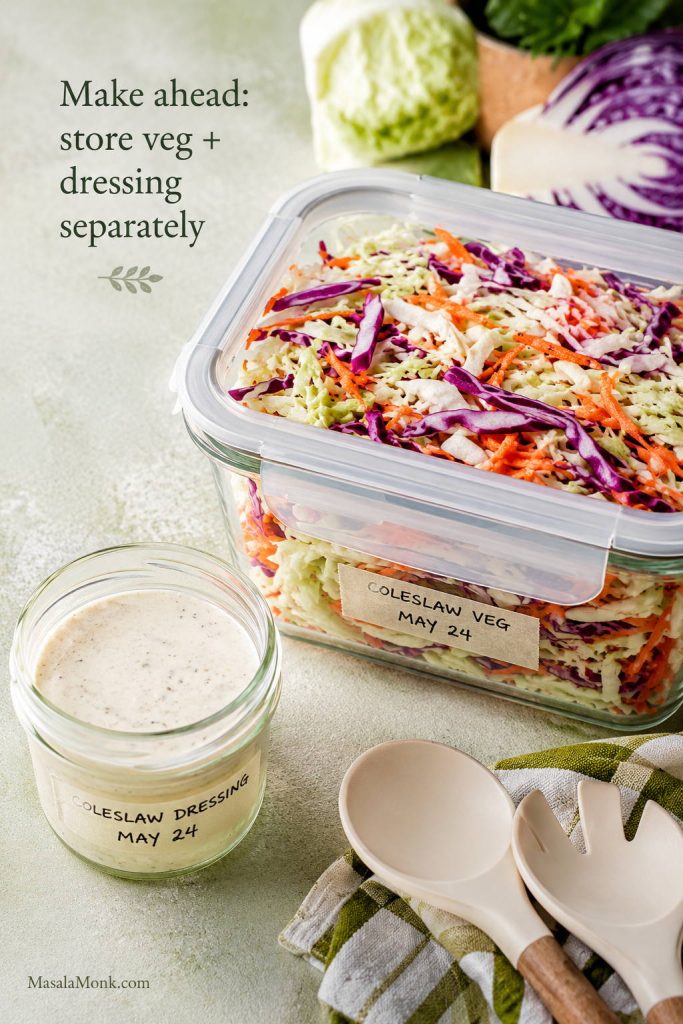
For make-ahead coleslaw, store the dressing and vegetables separately until a few hours before serving; see the make-ahead and storage tips for timing.
If you salt the cabbage first, reduce the dressing salt to ¼ teaspoon or leave it out until the final taste adjustment.
Serve cold or well chilled. Toss again and drain any excess liquid before serving if the slaw has been refrigerated for several hours.
If you make it, try it once as written, then adjust it sweeter, tangier, creamier, or crunchier for your table. Coleslaw is one of those recipes where small preferences matter.
Are you team creamy coleslaw or vinegar slaw? Share how you serve it — as a BBQ side, on pulled pork, with fried chicken, or piled onto hot dogs.
Why This Coleslaw Recipe Works
Good coleslaw is all about contrast. The cabbage should still crunch, the dressing should cling instead of pooling at the bottom, and the flavor should wake up the rest of the plate. When coleslaw is too wet, too sweet, or too mayo-heavy, it stops doing its job.
This is the version to make when you want classic creamy coleslaw that still tastes fresh after chilling. It is not overloaded with dressing, not sugary, and not watery at the bottom of the bowl.
Although this coleslaw recipe keeps the ingredient list classic, the method gives you more control. The cabbage is shredded finely enough to soften as it chills, but not so finely that it turns limp. The dressing has enough vinegar and lemon or mustard to balance the mayonnaise. Finally, the dressing is added in stages because cabbage changes as it sits.
That last part matters most. A bowl that looks slightly underdressed right after mixing can become perfectly creamy after 30 minutes in the fridge. Hold back some dressing at the beginning, let the slaw settle, then finish it right before serving.
The texture goal
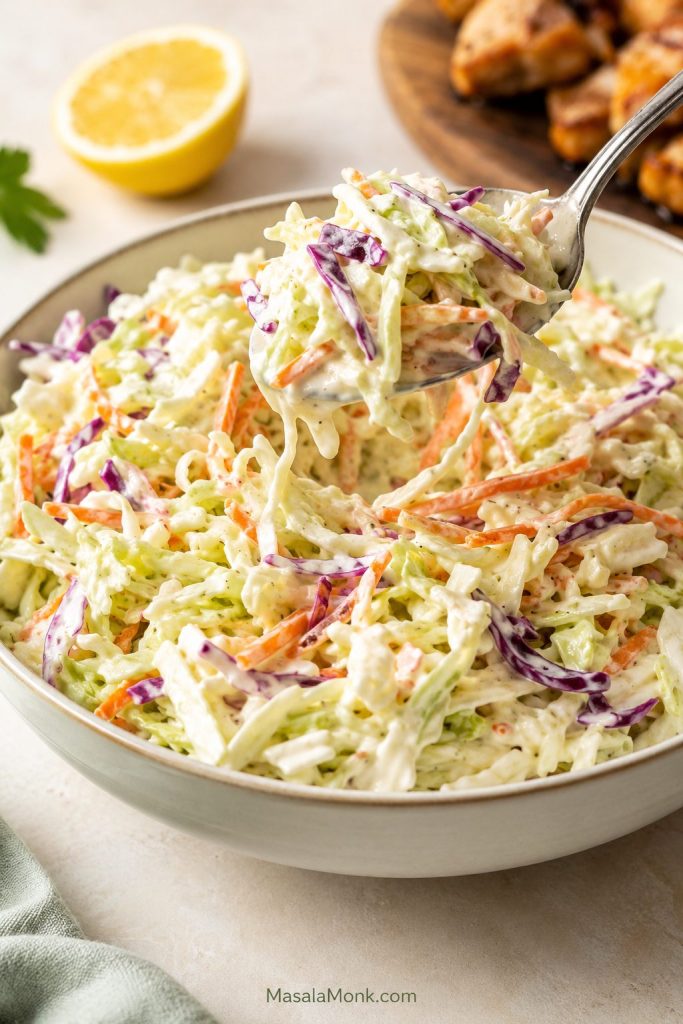
The dressing should cling to the cabbage in a light, glossy coat. You want crunch in every bite, not a puddle of thin dressing at the bottom of the bowl.
Coleslaw Recipe Ingredients
A good bowl of coleslaw does not ask for much: crisp cabbage, sweet carrot, a creamy dressing, enough acidity to brighten it, and enough salt to make the vegetables taste like themselves. Once those pieces are balanced, the bowl tastes crisp and fresh instead of heavy.
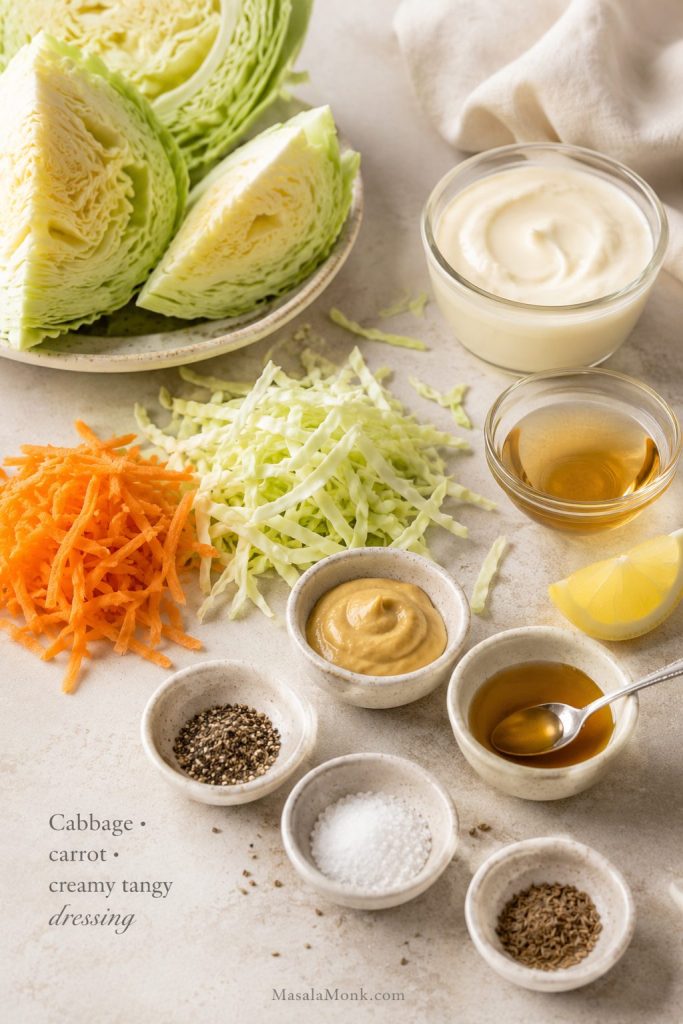
Classic coleslaw ingredients are simple, yet the balance matters: cabbage gives crunch, carrot adds sweetness, and vinegar or lemon keeps the creamy dressing bright.
Best Cabbage for Coleslaw
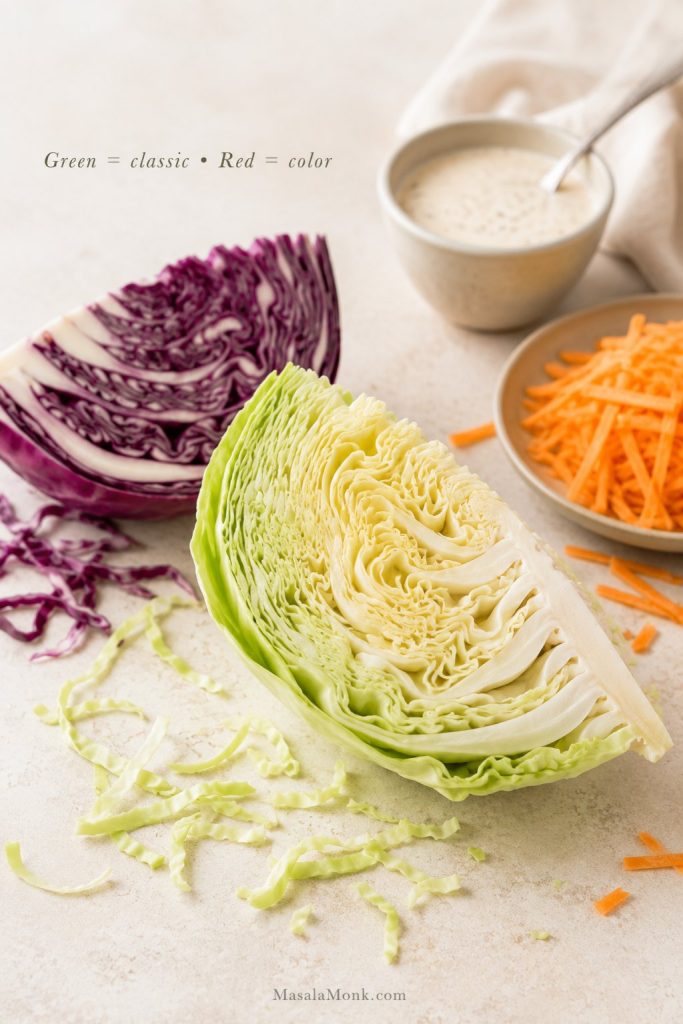
Green cabbage is the most reliable everyday cabbage for coleslaw. It is crisp, sturdy, mild, and strong enough to hold a creamy dressing without collapsing. Red cabbage adds color and extra crunch, but it can tint the dressing pink as the slaw sits.
Green cabbage is the best base for classic creamy coleslaw because it stays crisp, while red cabbage adds color and a slightly sharper bite.
A classic bowl can be made with only green cabbage and carrot. If you want more color, use mostly green cabbage with a smaller amount of red cabbage. The flavor will still be familiar, and the bowl will look brighter on the table.
Ingredient
What It Does
Notes
Green cabbage
Gives the slaw its main crunch
Mild, classic, sturdy, and easy to dress.
Red cabbage
Adds color and a peppery bite
Use less than green cabbage if you want a pale creamy dressing.
Carrot
Brings sweetness and color
Grate it finely so it spreads through the bowl.
Scallion or red onion
Adds optional sharpness
Use a light hand because raw onion can take over quickly.
Fresh Cabbage vs Bagged Coleslaw Mix
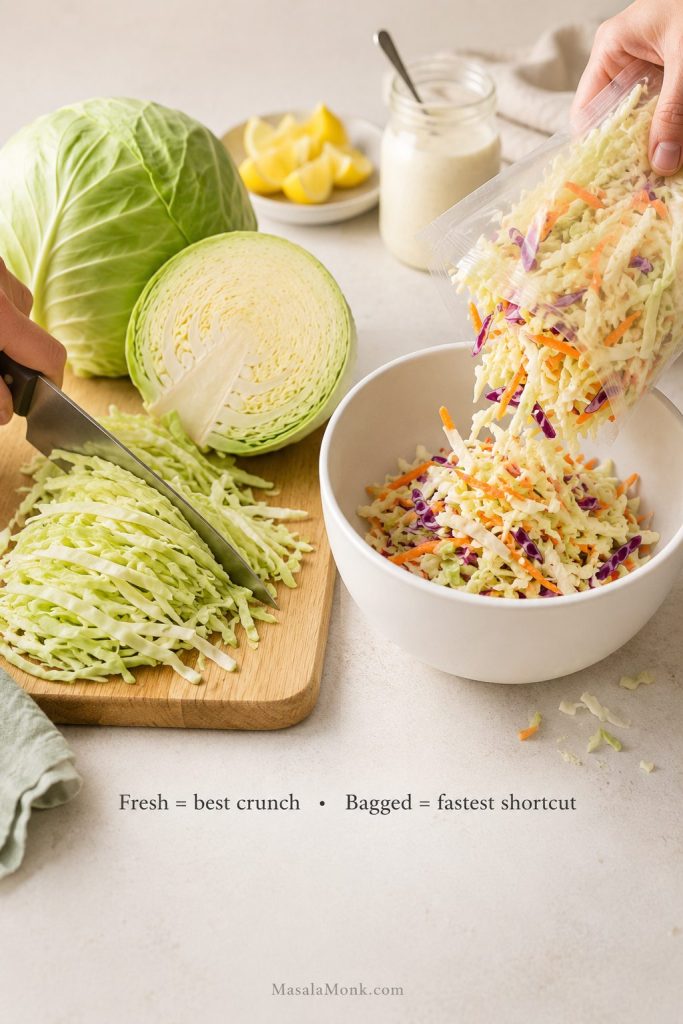
For this coleslaw recipe, fresh cabbage gives you the strongest crunch and the most control over shred size. It is the better choice when coleslaw is one of the main sides at a cookout or when you want it to hold up on sandwiches.
Fresh cabbage lets you choose the crunch and cut, while bagged coleslaw mix saves time as long as the dressing is added with a lighter hand.
However, bagged coleslaw mix is still worth using. It is fast and weeknight-friendly, though the cut and moisture level can vary from bag to bag. Because pre-cut cabbage can range from dry and sturdy to very fine and soft, dress it lightly first and give it a few minutes before deciding whether it needs more. If you are using a bag, the bagged coleslaw mix conversion will help you scale the dressing and yield correctly.
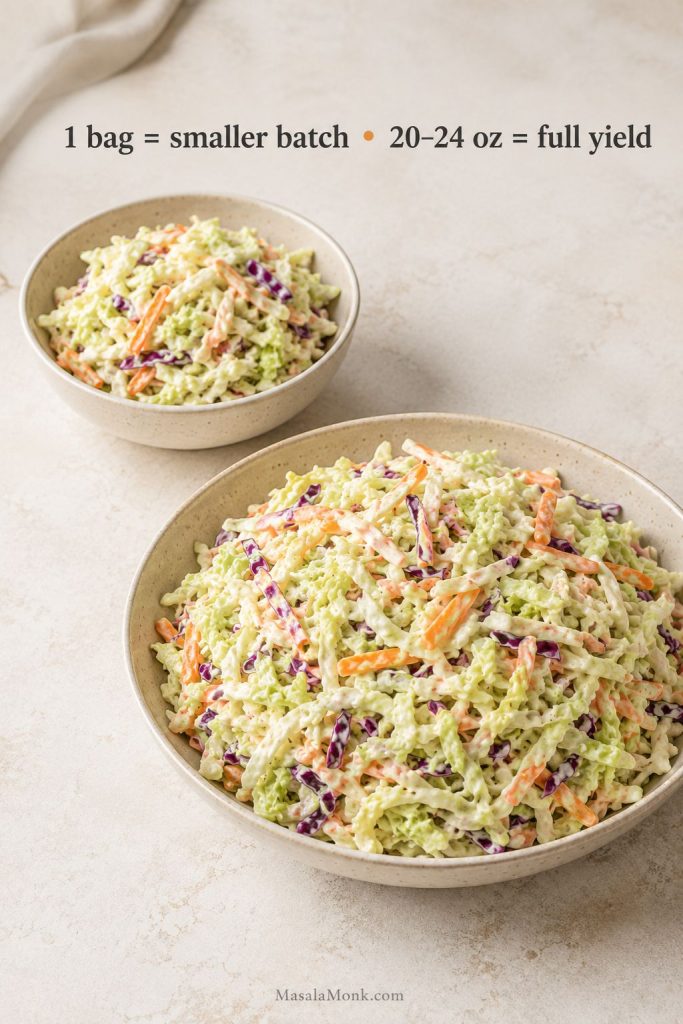
Bagged mix conversion: One 14–16 oz / 400–450 g bag of coleslaw mix makes a smaller batch, about 5–6 side servings. For the full 8–9 cup yield, use about 20–24 oz / 560–680 g coleslaw mix, or add extra shredded cabbage and carrot.
One 14–16 oz bag of coleslaw mix makes a smaller batch, so use 20–24 oz or add extra cabbage and carrot when you want the full recipe yield.
Shredded vs Chopped Coleslaw
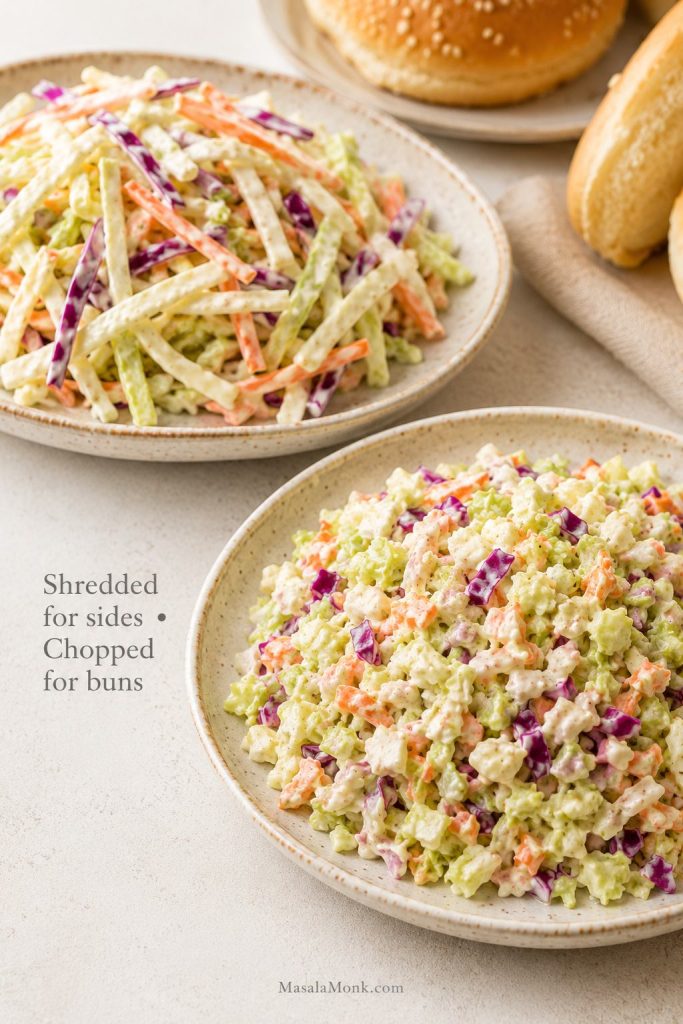
Thinly shredded cabbage gives you the classic creamy coleslaw texture: long, crisp strands that hold dressing and still crunch. This is the best cut when you are serving coleslaw as a side dish.
Shredded coleslaw gives side dishes that classic forkful texture, while chopped slaw stays neater on burgers, hot dogs, and pulled pork sandwiches.
Burgers, hot dogs, pulled pork sandwiches, and slaw dogs need a neater slaw. A finer chop keeps the cabbage from sliding out of the bun. Grated cabbage is softer and wetter, so use it only if you want a very fine deli-style texture.
Cut
Works Well With
Texture Goal
Thin shreds
Classic side dish coleslaw
Crisp, creamy, and traditional
Fine chop
Burgers, hot dogs, pulled pork sandwiches
Compact and bun-friendly
Thicker shreds
Crunchier slaw bowls and BBQ plates
More bite, needs more chilling time
Grated cabbage
Very soft deli-style slaw
Softens quickly and releases more liquid
Carrots, Onion, and Optional Add-Ins
Carrot is almost always worth adding because it brings sweetness and color. Grate it on the large holes of a box grater or use the shredding blade on a food processor.
Onion is optional. Scallions are gentler and fresher. Red onion is sharper and works best when sliced very thinly. If you are making coleslaw for kids, a mixed crowd, or a long cookout table, keep the onion light or leave it out.
Parsley, celery seed, chopped apple, or a little extra mustard can be useful, but the main recipe should stay clean. Too many extras turn classic coleslaw into a different salad.
Creamy Coleslaw Dressing
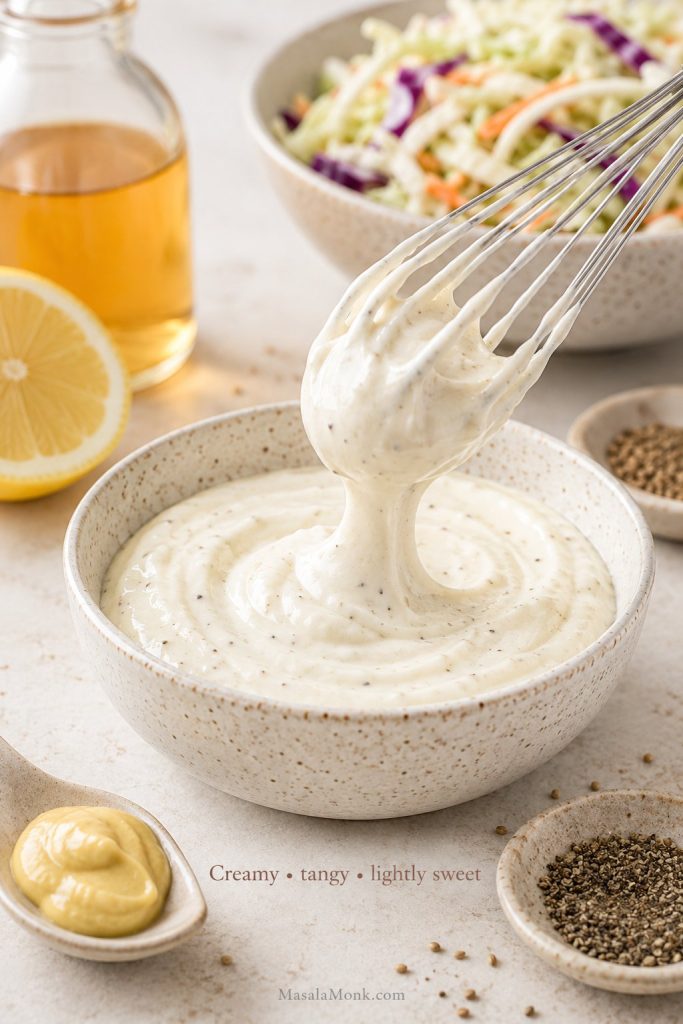
The dressing should make the cabbage taste brighter, not bury it. Mayonnaise gives the slaw its creamy body, vinegar brings the snap, lemon juice or mustard sharpens the edges, and a little sugar or honey rounds out the raw cabbage bite.
A creamy coleslaw dressing should taste slightly bold before mixing because the cabbage will mellow the vinegar, lemon, salt, and sweetness.
If you make your own mayonnaise, this is a good place to use it. A thick homemade mayo gives the dressing a richer texture and a cleaner flavor. You can use this homemade mayonnaise recipe as the creamy base.
The Sweet-Tangy Dressing Ratio
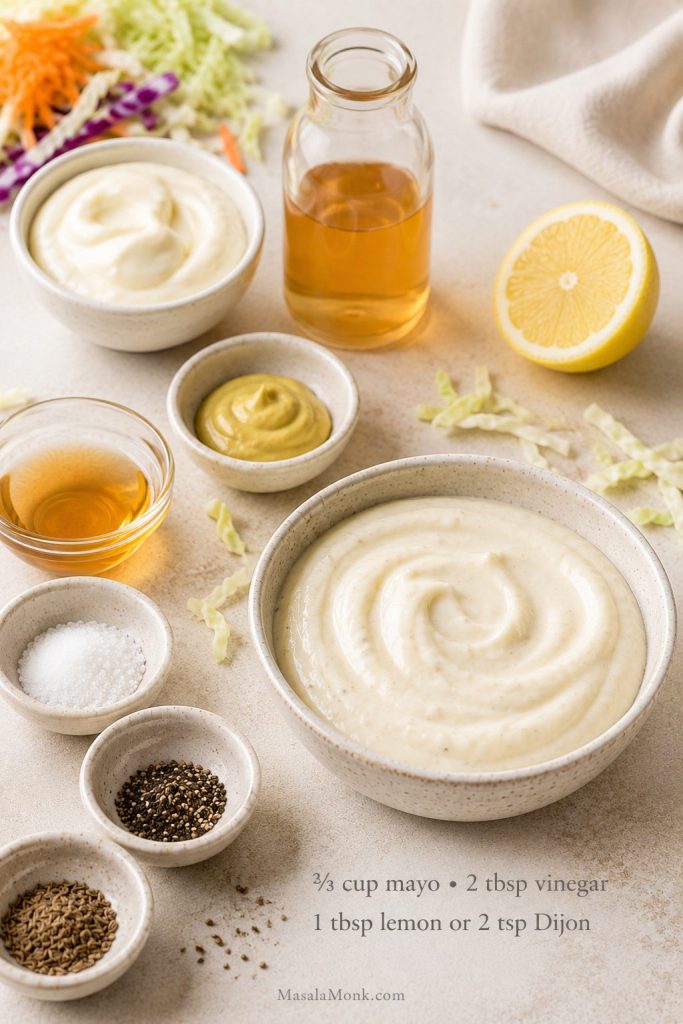
For this coleslaw recipe, about 8 cups of shredded cabbage and carrot works well with ⅔ cup mayonnaise, 2 tablespoons apple cider vinegar, 1 tablespoon lemon juice or 2 teaspoons Dijon mustard, and 1 tablespoon sugar or honey. For example, use lemon juice when you want a brighter dressing, or Dijon mustard when you want a sharper, more savory one.
This coleslaw dressing ratio gives enough creaminess to coat the cabbage, while vinegar, lemon, or Dijon keeps the finished slaw from tasting flat.
This gives you a dressing that is creamy but not bland, tangy but not harsh, and sweet enough to taste classic without turning sugary. If your family likes a sweeter cookout-style slaw, use the sugar or honey. If you want something sharper for pulled pork, fried fish, or tacos, lean a little harder on vinegar and lemon.
Flavor Goal
Adjustment
Works Well With
More tangy
Add 1–2 teaspoons extra vinegar or lemon juice
Fried chicken, fish, BBQ, pulled pork
Sweeter
Add 1–2 teaspoons sugar or honey
Classic cookout slaw, hot dogs, kids’ plates
Creamier
Add 1–2 tablespoons mayo
Potlucks, side dish bowls, BBQ plates
Lighter
Replace part of the mayo with Greek yogurt or buttermilk
Weeknight sides, lighter sandwiches
The Two-Thirds Dressing Rule
Do not drown the cabbage right away. Start with about two-thirds of the dressing, toss well, chill, then add more only if the slaw still looks dry. Cabbage relaxes and releases moisture as it sits, so a bowl that seems slightly underdressed at first often becomes just right after a short rest.
The reserved dressing is the safety net: once the cabbage relaxes in the fridge, you can finish the bowl without making it soupy.
As a result, this one habit prevents the two most common coleslaw problems: dry cabbage right after mixing and watery coleslaw later.
How Much Dressing to Use
The right amount of dressing depends on how finely the cabbage is cut and how long the bowl will sit. Thin shreds need less dressing because they soften quickly. Thicker shreds need a little more time and may need a touch more dressing after chilling. If your bowl often turns loose after chilling, the watery coleslaw section explains when to drain, salt, or hold back dressing.
After that, toss thoroughly, let the bowl settle, then taste again. If the slaw looks glossy and lightly coated, stop there. If it still looks dry after chilling, add the remaining dressing a spoonful at a time.
A glossy coating is the goal; if liquid is pooling underneath, the slaw will taste heavier and lose its crunch faster.
Taste after chilling, not only before. Cold cabbage dulls flavor slightly, and the dressing loosens as the slaw rests.
Mayo, Buttermilk, Sour Cream, or Greek Yogurt?
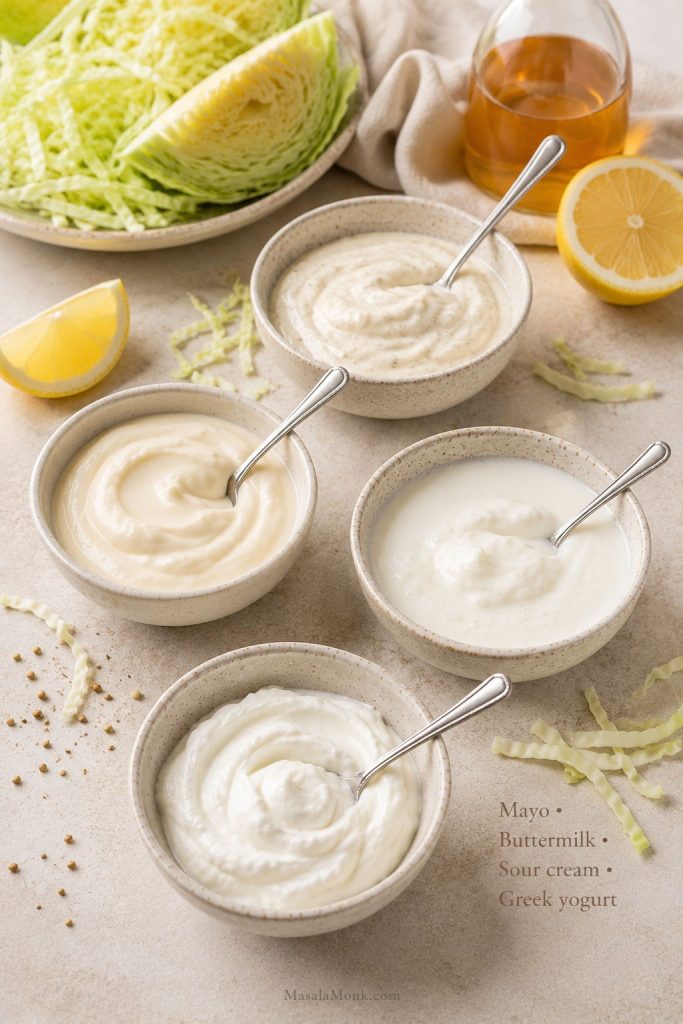
Mayonnaise is the classic choice because it gives coleslaw body and a smooth coating. Buttermilk makes the dressing looser and tangier. Sour cream adds richness with a gentle tang. Greek yogurt makes the dressing lighter and sharper, although it can taste more tart than classic mayo-based slaw.
Mayonnaise gives the most classic coleslaw texture, while buttermilk, sour cream, or Greek yogurt can make the dressing tangier, lighter, or richer.
The safest first version is mayonnaise. Once you understand the texture, you can replace 2–4 tablespoons of the mayo with buttermilk, sour cream, or Greek yogurt depending on the kind of slaw you want.
Need an egg-free version? Use a thick eggless mayo and keep the rest of the recipe the same. This eggless mayonnaise recipe works well when you want the same creamy texture without eggs.
How to Make Coleslaw
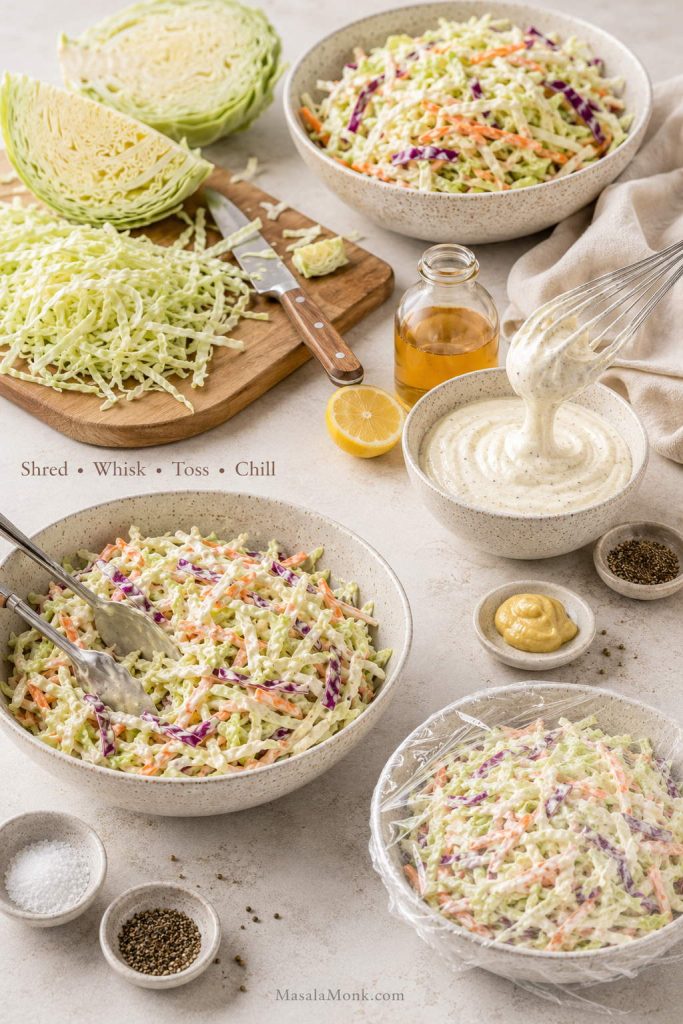
Coleslaw is easy, but the order helps. Shred the vegetables first, whisk the dressing separately, dress lightly, chill, then finish the bowl after it has had time to settle.
Once the cabbage is shredded and the dressing is mixed separately, the key is to toss lightly, chill, and finish the coleslaw after the vegetables settle.
Shred the Cabbage
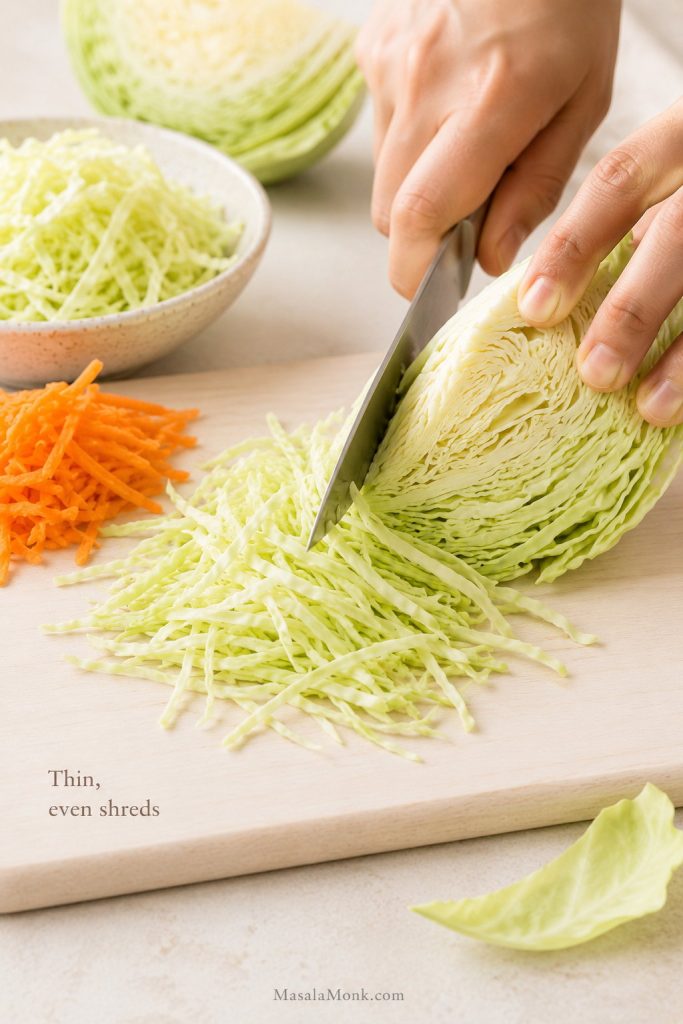
Cut the cabbage into quarters, remove the hard core, then slice it thinly with a sharp knife. A mandoline gives you very fine, even shreds. A food processor with a slicing blade is the fastest method when you are making a bigger batch.
Thin, even cabbage shreds soften evenly in the dressing, which helps homemade coleslaw stay creamy while keeping its crunch.
Side-dish coleslaw can handle longer shreds. Sandwich slaw should be finer or lightly chopped so it stays where you put it.
Mix the Dressing
Whisk the mayonnaise, apple cider vinegar, lemon juice or Dijon mustard, sugar or honey, celery seed, salt, and black pepper in a separate bowl. This gives you a smoother dressing and keeps one part of the slaw from getting too salty, too sweet, or too sharp.
Mixing the coleslaw dressing separately prevents uneven flavor, so one bite does not taste too salty, too sweet, or too sharp.
Taste the dressing before adding it to the cabbage. It should taste a little stronger than you want the finished coleslaw to taste because the cabbage will soften and mellow it.
Toss, Chill, and Adjust
Add about two-thirds of the dressing to the cabbage and carrot mixture. Toss with tongs or clean hands until the vegetables are evenly coated. Cover and chill for 30 to 60 minutes.
Light tossing gives the cabbage room to settle; after resting, you can add more dressing only where the bowl actually needs it.
Before serving, toss again and taste. If the slaw looks dry, add more dressing a spoonful at a time. A little salt will wake it up if the flavor feels flat. When it tastes too sweet or heavy, sharpen it with vinegar or lemon juice. If the cabbage tastes bitter or the dressing feels too sharp, balance it with a tiny pinch of sugar.
Best flavor window: Coleslaw tastes best after 30 minutes to 2 hours in the fridge. It is still good the next day, but the cabbage will be softer and the dressing thinner.
After 30–60 minutes in the fridge, the dressing clings better and the cabbage softens slightly without losing the cold crunch that makes coleslaw refreshing.
How to Keep Coleslaw from Getting Watery
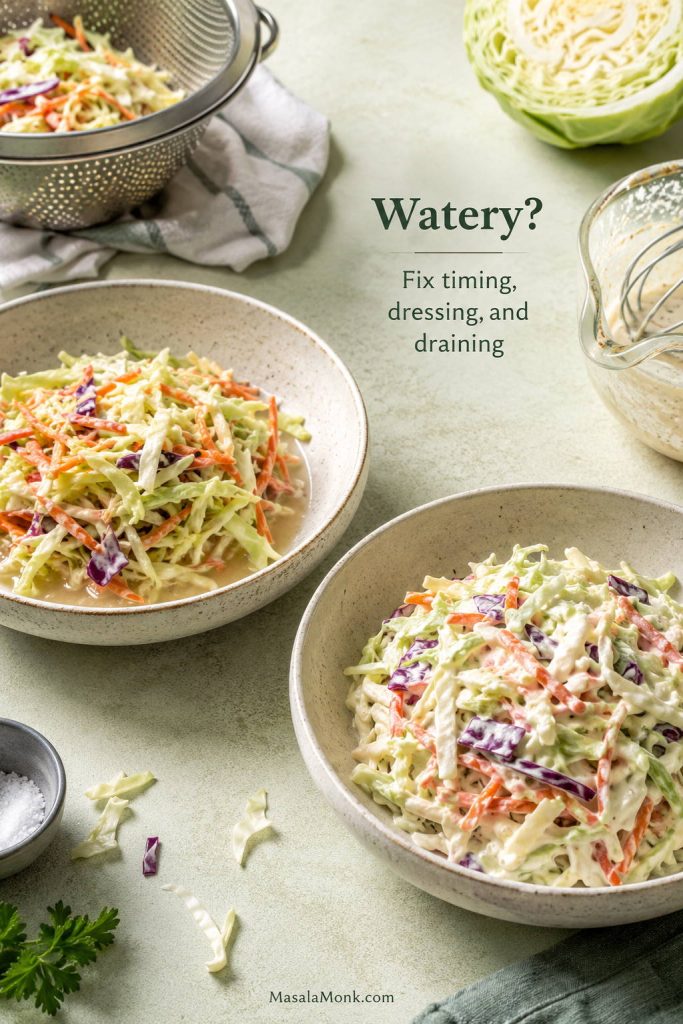
Watery coleslaw usually comes from cabbage releasing moisture after it is dressed. The bowl may look good when you mix it, then an hour later the dressing has thinned out and liquid has collected at the bottom. That does not mean you ruined it. It just means the cabbage did what cabbage does.
Watery coleslaw is usually a timing problem, not a ruined batch; draining, reserved dressing, and final seasoning can bring the bowl back.
Fortunately, the fix is not always “less dressing.” It is better timing. Start with part of the dressing, chill, toss again, then decide whether the bowl needs more dressing, more acid, a pinch of salt, or a quick drain.
Should You Salt the Cabbage?
Salting is optional, not mandatory. Skip it for quick same-day coleslaw. Use it when you need the slaw to hold longer, sit neatly on buns, or avoid watering down the dressing at a cookout.
Salting cabbage is optional for same-day coleslaw, but it helps make-ahead slaw stay crisper by drawing out extra moisture before dressing.
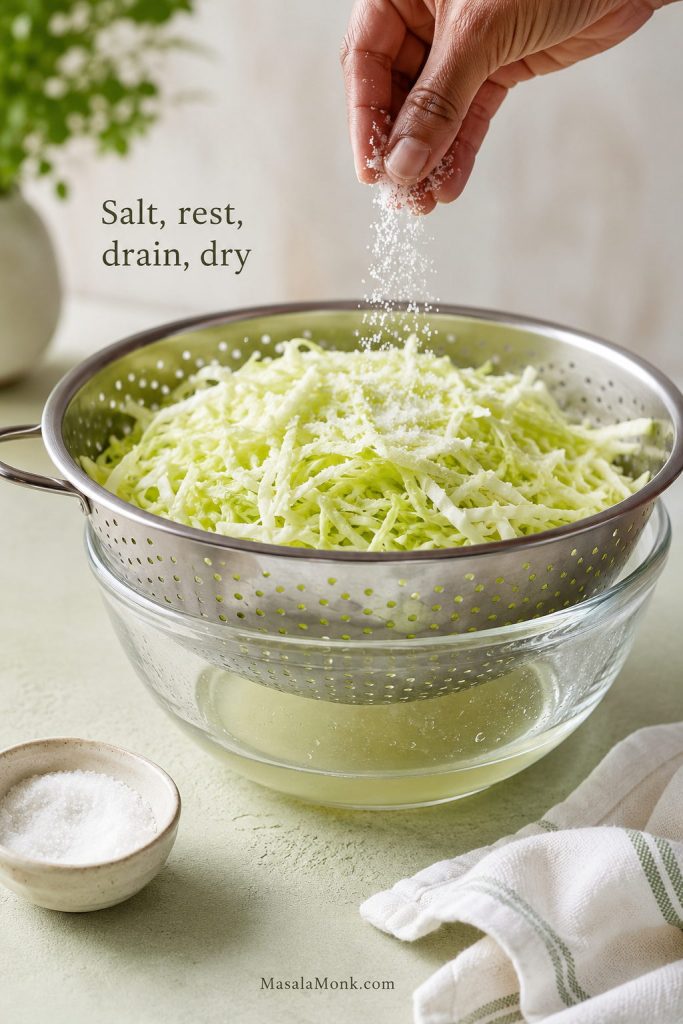
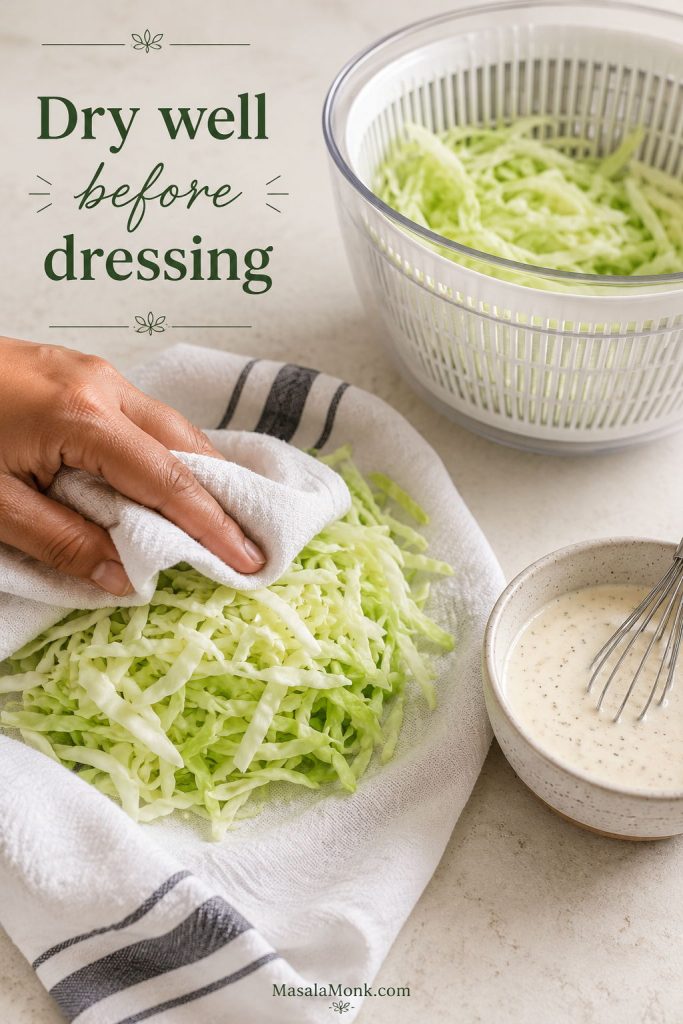
To salt cabbage for make-ahead coleslaw, toss the shredded cabbage with 1 teaspoon fine salt, or up to 1½ teaspoons if the cabbage is especially wet or you are using a larger head. Let it sit in a colander for 20 to 30 minutes. Rinse lightly if it tastes too salty, then dry it very well with a clean towel or salad spinner before adding the dressing. If you are prepping for tomorrow, pair this with the make-ahead storage method so the cabbage stays crisp.
If you salt the cabbage first, reduce the salt in the dressing to ¼ teaspoon or leave it out until the final taste adjustment.
Important: Dry the cabbage well after salting. Wet cabbage plus creamy dressing will still make watery coleslaw.
After salting or rinsing cabbage, dry it well before adding dressing; otherwise, even a thick creamy coleslaw dressing can turn watery.
Same-Day vs Make-Ahead Coleslaw
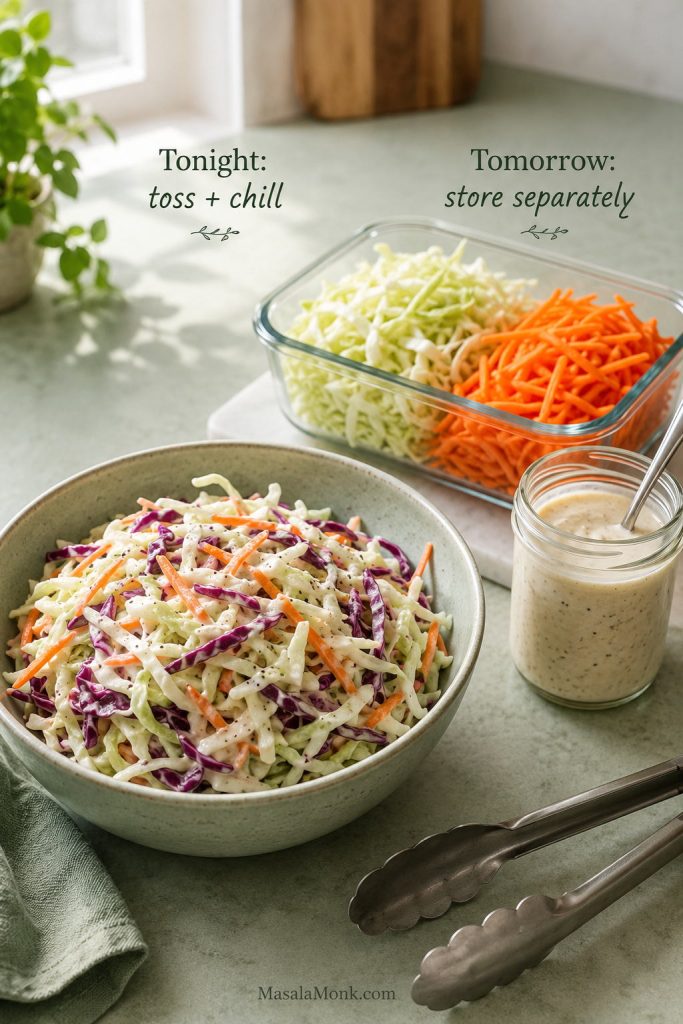
The best method depends on whether the slaw is for tonight’s dinner, tomorrow’s cookout, or a sandwich tray. A quick weeknight bowl does not need the same prep as a tray of sandwich slaw for a crowd.
Same-day slaw can be dressed early enough to relax, while tomorrow’s slaw stays crisper when the cabbage and dressing wait apart.
Situation
Should You Salt?
Best Move
Serving within 30–60 minutes
No
Dress lightly, chill, toss, and adjust
Making it tomorrow
Yes, or store dressing separately
Salt, drain, dry well, then dress later
Using bagged coleslaw mix
Usually no
Start with part of the dressing because bagged mix varies
Putting it on pulled pork, burgers, or hot dogs
Optional
Use a lighter hand with dressing and drain before adding to buns
Taking it to a cookout
Optional, but helpful
Salt only if prepping early; otherwise keep cold and dress close to serving
Coleslaw Troubleshooting
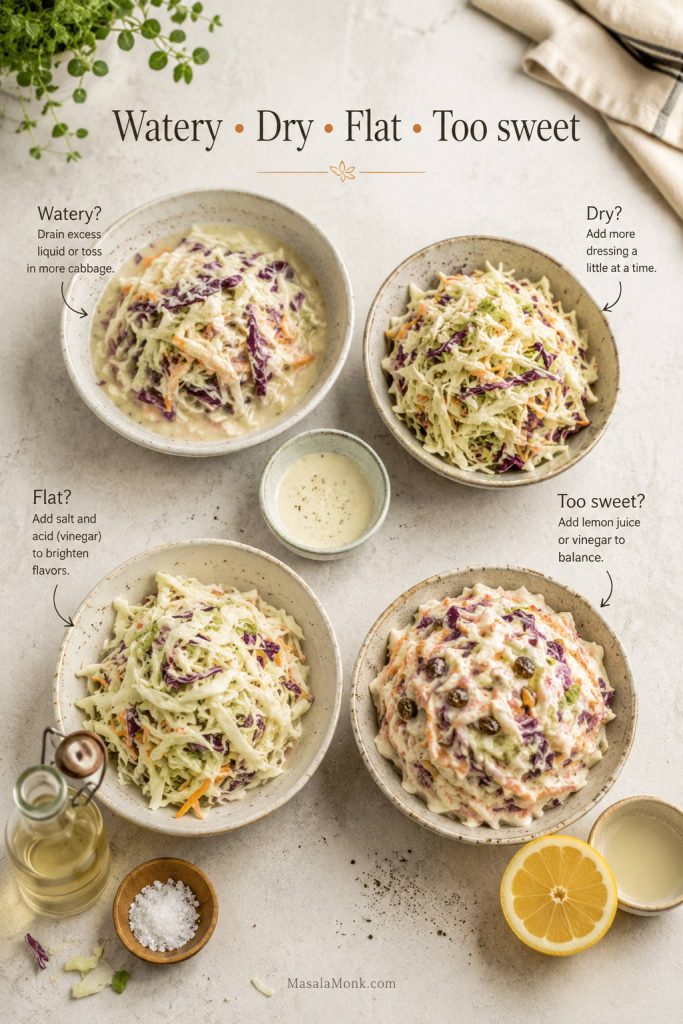
If the bowl tastes a little off, do not start over. Coleslaw is forgiving. Most problems need one small adjustment: a splash of vinegar, a pinch of salt, a spoonful of dressing, a few minutes of chilling, or a handful of fresh cabbage.
Most coleslaw problems need a small correction, not a new batch; drain watery slaw, add dressing gradually to dry slaw, and use salt or acid for flat flavor.
Quick Fixes for Common Coleslaw Problems
Use the table below to fix the most common coleslaw texture and flavor problems without starting over.
Problem
Likely Cause
Quick Fix
Coleslaw is watery
Too much dressing, cabbage released liquid, or cabbage was not dried
Drain excess liquid, toss, and refresh with a small spoonful of mayo if needed
Coleslaw is dry
Not enough dressing or very thick cabbage shreds
Add more dressing 1 tablespoon at a time after chilling
Coleslaw tastes flat
Not enough salt or acid
Add a pinch of salt and a splash of vinegar or lemon juice
Coleslaw is too sweet
Too much sugar, honey, or sweet mayo
Add vinegar, lemon juice, or mustard to sharpen it
Coleslaw is too sharp
Too much vinegar, lemon, or mustard
Add a small spoonful of mayo or a pinch of sugar
Coleslaw tastes too much like mayo
Dressing needs acid, salt, or sweetness
Add vinegar or lemon juice first, then a small pinch of sugar if needed
Cabbage is too stiff
Shreds are thick or slaw has not rested long enough
Chill 30–60 minutes longer, or slice thinner next time
Cabbage is too soft
Overdressed, over-salted, or stored too long
Drain well and fold in a handful of fresh shredded cabbage
Red cabbage turned the dressing pink
Red cabbage released color as it sat
Use mostly green cabbage, or add red cabbage close to serving
Bagged mix tastes flat
Pre-cut cabbage can taste dry or dull
Add extra vinegar, lemon, salt, or a handful of fresh herbs
Make-Ahead and Storage Tips for Coleslaw
This coleslaw recipe can be made ahead, but there is a tradeoff. In general, a short chill makes it taste better because the dressing has time to settle into the cabbage. A long chill makes it softer. The trick is deciding whether you want maximum crunch or maximum convenience.
Separate containers protect the crunch; once the dressing touches the cabbage, the countdown to softer, wetter slaw begins.
Best Flavor Window
The sweet spot is 30 minutes to 2 hours before serving. The cabbage softens just enough, the dressing clings better, and the bowl still tastes fresh.
A fully dressed bowl can still taste good the next day, but it will be softer and the dressing will be thinner. When crunch matters, store the vegetables and dressing separately.
How Far Ahead to Make Coleslaw
Use this table as a practical planning guide, especially if the slaw is going to a party, sitting beside grilled food, or going inside sandwiches.
When You Need It
Best Method
Why
Serving in 30–60 minutes
Dress now, chill, toss again
Best balance of flavor and crunch
Serving in 2–3 hours
Dress with two-thirds first, hold cold, adjust before serving
Prevents watery slaw
Serving tomorrow
Store vegetables and dressing separately
Keeps cabbage crisper
Serving on sandwiches
Use a lighter hand with dressing and drain before serving
Prevents soggy buns
Taking to a cookout
Chill well and keep over ice
Protects texture and food safety
A Simple Make-Ahead Plan
1 day ahead: shred cabbage and carrots; make the dressing separately.
2–3 hours before serving: toss with two-thirds of the dressing.
Right before serving: toss again and adjust with more dressing, salt, or vinegar.
How Long Coleslaw Lasts in the Fridge
Dressed coleslaw is best within 2 to 3 days. Keep it refrigerated in an airtight container, and discard it if it smells off, has changed texture noticeably, or has been left out too long.
If liquid collects at the bottom, drain it before serving leftovers. A small spoonful of mayo or a splash of vinegar can refresh the texture and flavor.
Do not freeze creamy coleslaw. The cabbage turns watery after thawing, and mayonnaise-based dressing can split.
Cookout and Potluck Safety
Because creamy coleslaw is served cold, keep it chilled until serving. For outdoor cookouts, place the serving bowl inside a larger bowl filled with ice if it will sit out for a while.
As a general food-safety rule, cold perishable foods should not sit out for more than 2 hours, or more than 1 hour when the outdoor temperature is above 90°F / 32°C. You can read more about the cold food safety window from the USDA food safety guidance.
How Much Coleslaw Per Person?
Coleslaw is one of those sides that disappears fast when sandwiches are involved, but sits longer when the table is full of other BBQ sides. If you are planning a full menu, the serving ideas section shows where coleslaw works best.
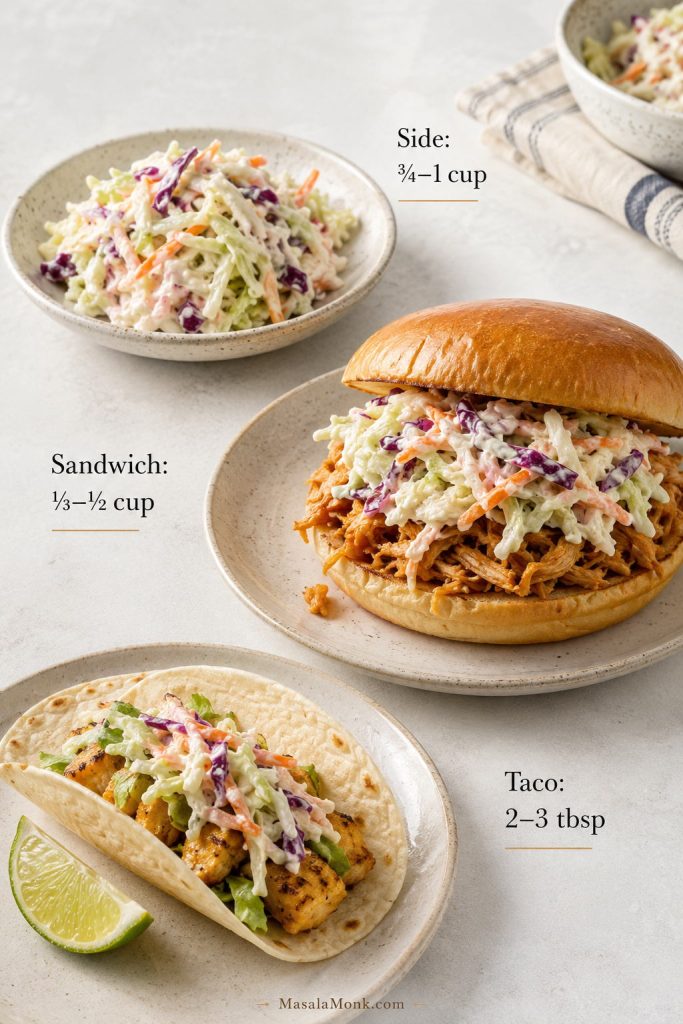
Plan more coleslaw for sides and less for toppings; a sandwich usually needs about ⅓–½ cup, while tacos only need a few tablespoons.
For a side dish, plan on about ¾ to 1 cup per person. If coleslaw is one of several sides, ½ to ¾ cup per person is usually enough. For sandwiches, burgers, hot dogs, or pulled pork, plan on ⅓ to ½ cup per sandwich.
As written, this recipe makes about 8–9 cups, so it serves 8 people generously as a side dish or more if you are using it as a topping. These amounts are approximate because finely chopped slaw packs more tightly than long shredded cabbage.
Use
Amount to Plan
Texture Goal
Side dish
¾–1 cup per person
Creamy, chilled, and lightly coated
Large BBQ spread
½–¾ cup per person
Tangy and not too heavy
Pulled pork sandwich
⅓–½ cup per sandwich
Finely shredded and not too wet
Burgers or hot dogs
¼–⅓ cup per bun
Finely chopped or thinly shredded
Tacos or wraps
2–3 tablespoons per piece
Lightly dressed and crunchy
What to Serve with Coleslaw
Coleslaw earns its place because it makes the rest of the meal easier to enjoy. A spoonful of cold crunch beside smoky meat, a bright layer inside a pulled pork sandwich, or a creamy bite next to fried fish can change the whole plate. For larger BBQ plates or sandwich trays, check the coleslaw per person guide before scaling the batch.
Coleslaw earns its place on cookout plates because cold crunch and tangy creaminess balance rich foods like pulled pork, fried chicken, tacos, and hot dogs.
Coleslaw for BBQ Plates
On a BBQ plate, coleslaw should cool the palate between bites of smoky, saucy, or grilled food. Keep it creamy, crisp, and slightly tangy. A little extra vinegar or lemon juice helps the slaw cut through ribs, grilled chicken, brisket, pulled pork, sausages, or other cookout mains.
If the rest of the plate is already sweet or saucy, avoid making the slaw too sweet. A balanced sweet-tangy dressing tastes fresher.
Coleslaw for Pulled Pork Sandwiches
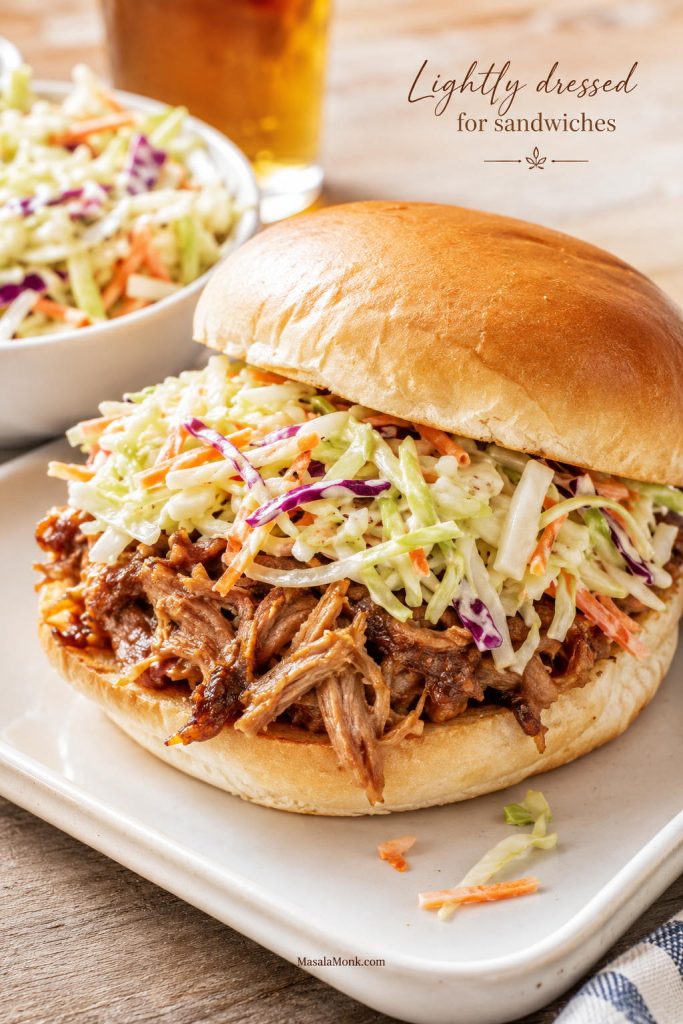
For pulled pork sandwiches, the slaw has one job: add crunch and brightness without soaking the bun. Keep it finely shredded, lightly dressed, and a little tangier than you would for a side dish.
For pulled pork sandwiches, keep the coleslaw finely shredded and lightly dressed so it adds crunch without making the bun soggy.
Long cabbage strands can pull out of the sandwich, and watery dressing can make the bread soggy. Chill the slaw, drain off any extra liquid, and add it right before serving.
This same logic works for chicken sandwiches too. A creamy, tangy slaw is especially good with BBQ chicken, crispy chicken, and grilled chicken sandwiches. For more sandwich ideas, see these chicken sandwich recipes.
Coleslaw for Burgers and Hot Dogs
For burgers and hot dogs, chop the slaw a little finer so it stays inside the bun and gives every bite some crunch. Hot dogs can handle a slightly sweeter dressing, while richer burgers usually taste better with a sharper, tangier slaw. Either way, drain off extra liquid before adding it to bread.
Coleslaw for Fried Chicken, Fish, Tacos, and Wraps
Fried chicken and fried fish need coleslaw that is bright and cold. If the main dish is already rich and crisp, the slaw should bring freshness. Add a little extra vinegar or lemon juice before serving.
Taco slaw should be lighter than a classic creamy BBQ side. Use this recipe as a starting point, then thin the dressing with extra lime or vinegar and use less mayo if you want a taco-style slaw.
For a lighter taco-style slaw, see the cabbage slaw approach in these fish tacos. The shrimp tacos use a similar fresher direction with creamy sauce and crunch.
Coleslaw also works beside fried fish and chips because the cool cabbage balances the hot, crisp batter. For that style of plate, keep the slaw cold and a little more acidic. You can pair it with this fish and chips recipe.
Easy Coleslaw Variations
Once the classic creamy version is working, you can adjust the dressing and vegetables to match the meal. Choose the version that fits the plate instead of loading one bowl with too many ideas.
No-Mayo Coleslaw
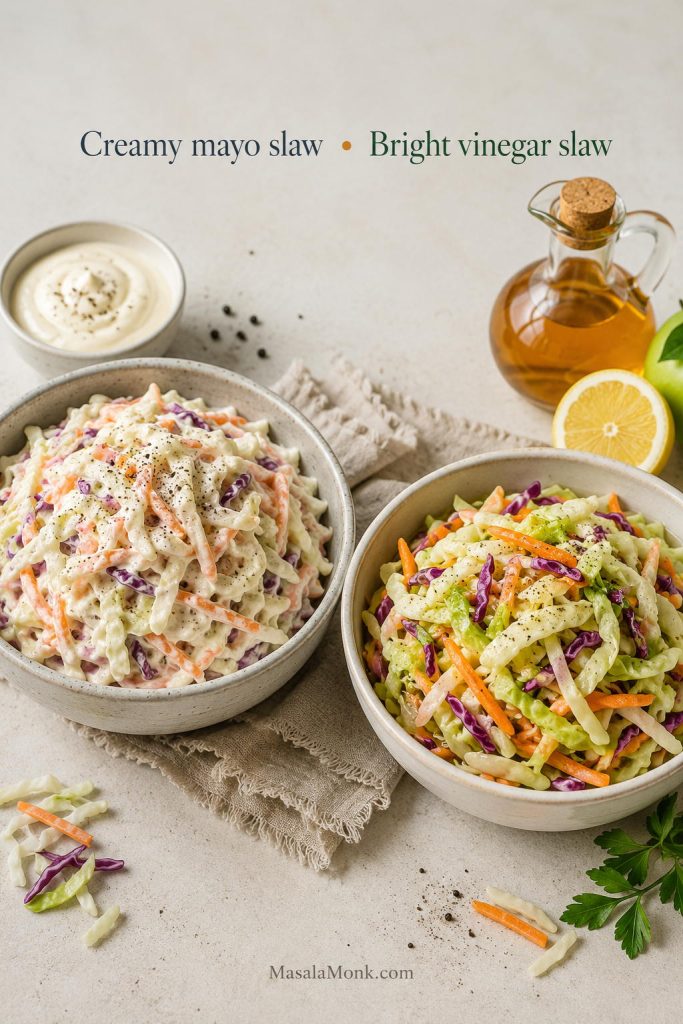
A no-mayo version works best when the dressing is sharp, glossy, and well-seasoned. Use apple cider vinegar, olive oil, a little Dijon mustard, honey or sugar, salt, pepper, and optional celery seed. This style is lighter, brighter, and especially good with pulled pork, tacos, fried food, and picnic plates where you want crunch more than creaminess. For a quick comparison, see the mayo vs vinegar coleslaw answer in the FAQs.
Choose mayo slaw when you want creamy comfort, and choose vinegar slaw when the plate needs a sharper, lighter bite.
Greek Yogurt Coleslaw
To make the dressing lighter, replace part of the mayonnaise with thick Greek yogurt. Start by replacing ¼ cup of the mayo, then taste before swapping more. Greek yogurt is tangier than mayo, so you may need a little more honey or sugar to balance it.
This version is useful for weeknight dinners, meal prep bowls, wraps, and lighter sandwiches.
Sweeter or Tangier Coleslaw
If you like a sweeter cookout-style slaw, add sugar or honey 1 teaspoon at a time. If you want it sharper, add apple cider vinegar, lemon juice, or mustard in small amounts.
Always adjust after the slaw has chilled. The flavor changes as the cabbage softens and the dressing loosens. If the bowl tastes bland, do not automatically add more mayo. Add a pinch of salt first, then a little acid.
Other Slaw Styles to Try Later
Apple slaw, broccoli slaw, red cabbage slaw, vegan coleslaw, keto coleslaw, and Asian slaw are all useful variations, but they each need their own balance. Apple needs enough acid so the bowl does not taste too sweet. Broccoli slaw needs a dressing that can soften firmer shreds. Red cabbage slaw often works better with a brighter vinaigrette. Asian slaw usually moves away from classic mayo dressing and toward sesame, ginger, soy, rice vinegar, lime, or herbs.
Keep this classic coleslaw recipe as the creamy base, then use those ideas when you want a different style of slaw.
Vegan or Egg-Free Coleslaw
Vegan coleslaw needs a thick vegan mayo and enough vinegar or lemon juice to keep the dressing bright. The dressing should taste slightly bold before it hits the cabbage because the vegetables will mellow it.
This vegan mayo recipe is a useful base for a plant-based version. For egg-free but not necessarily vegan coleslaw, use eggless mayo and keep the rest of the recipe the same.
How did you adjust it?
If you made this coleslaw sweeter, tangier, creamier, sharper, or more sandwich-friendly, share your version in the comments so other readers can try it too.
Once you understand the dressing balance, coleslaw becomes easy to adjust. Keep it creamier for cookouts, sharper for pulled pork, lighter for tacos, and colder than you think before serving. That is the difference between a bowl people ignore and a bowl that disappears.
Coleslaw FAQs
What is coleslaw made of?
Classic coleslaw is made with shredded cabbage, grated carrot, and a creamy or vinegar-based dressing. A creamy coleslaw dressing usually includes mayonnaise, vinegar, sugar or honey, salt, pepper, and sometimes mustard or celery seed.
What is the best cabbage for coleslaw?
Green cabbage is the most reliable choice because it is crisp, mild, and sturdy. Red cabbage adds color and crunch, but it can tint the dressing pink as it sits. Green cabbage alone is enough for a classic creamy slaw; red cabbage is mainly for color and extra crunch.
Can I use bagged coleslaw mix?
Bagged coleslaw mix works well, especially for weeknights. One 14–16 oz / 400–450 g bag makes a slightly smaller batch, so start with about half to two-thirds of the dressing. For the full 8–9 cup yield, use about 20–24 oz / 560–680 g mix or add extra shredded cabbage and carrot.
What is the difference between slaw and coleslaw?
Coleslaw usually means a cabbage-based slaw, often with carrots and a creamy or vinegar dressing. Slaw is broader and can include other shredded vegetables such as broccoli, Brussels sprouts, kale, apple, or red cabbage.
How do you keep coleslaw from getting watery?
Watery coleslaw usually happens when cabbage releases moisture after dressing. Start with part of the dressing, chill, toss again, and then decide whether the bowl needs more dressing, a quick drain, or a little extra seasoning. For make-ahead coleslaw, lightly salt the shredded cabbage, let it drain, dry it very well, and then dress it.
Should I salt cabbage before making coleslaw?
Quick same-day coleslaw does not need salted cabbage. Salting helps when you are making the slaw ahead, serving it outdoors, or using it on sandwiches where extra liquid can make the bread soggy. If you salt the cabbage, reduce the salt in the dressing and adjust at the end.
How long should coleslaw chill before serving?
For this coleslaw recipe, a 30 to 60 minute chill gives the cabbage time to soften slightly and lets the dressing flavor the vegetables. If you are in a hurry, even 10 to 15 minutes helps, but the texture is better with a longer rest.
Can I make coleslaw the night before?
You can, but the texture will be softer. For the best crunch, store the shredded vegetables and dressing separately, then combine them a few hours before serving.
How far ahead can I make coleslaw?
The freshest window is 30 minutes to 2 hours before serving. For parties, shred the vegetables and mix the dressing one day ahead, store them separately, and combine them on the day you plan to serve.
How long does coleslaw last in the fridge?
Dressed coleslaw is best within 2 to 3 days. It softens and releases liquid as it sits, so drain off excess liquid before serving leftovers.
Can you freeze coleslaw?
Creamy coleslaw does not freeze well. The cabbage turns watery after thawing, and mayonnaise-based dressing can separate. If you need to prep ahead, keep the shredded vegetables and dressing separate in the refrigerator.
Why does my coleslaw taste bland?
Bland coleslaw usually needs salt or acid, not more mayo. Add a pinch of salt and a small splash of vinegar or lemon juice, toss, and taste again.
Why did my red cabbage turn the dressing pink?
Red cabbage naturally releases color into creamy dressing as it sits. Use mostly green cabbage with a smaller amount of red cabbage if you want a classic pale dressing.
Is coleslaw better with mayo or vinegar?
Mayo coleslaw gives you the classic creamy cookout bowl. Vinegar slaw is sharper, lighter, and better when the main dish is rich, smoky, fried, or piled into a sandwich.
Is coleslaw gluten-free?
Most homemade coleslaw is naturally gluten-free if the mayonnaise, mustard, vinegar, and seasonings are gluten-free. Always check labels if you are cooking for someone with celiac disease or strict gluten sensitivity.
How much coleslaw do I need for pulled pork sandwiches?
Plan on ⅓ to ½ cup coleslaw per sandwich. Keep it finely shredded, lightly dressed, and well drained so it adds crunch without making the bun soggy.
What goes well with coleslaw?
Coleslaw goes well with BBQ, ribs, burgers, hot dogs, fried chicken, fried fish, fish tacos, shrimp tacos, wraps, and pulled pork sandwiches. It works especially well anywhere you want a cold, crunchy contrast to something smoky, sauy, fried, or spicy.
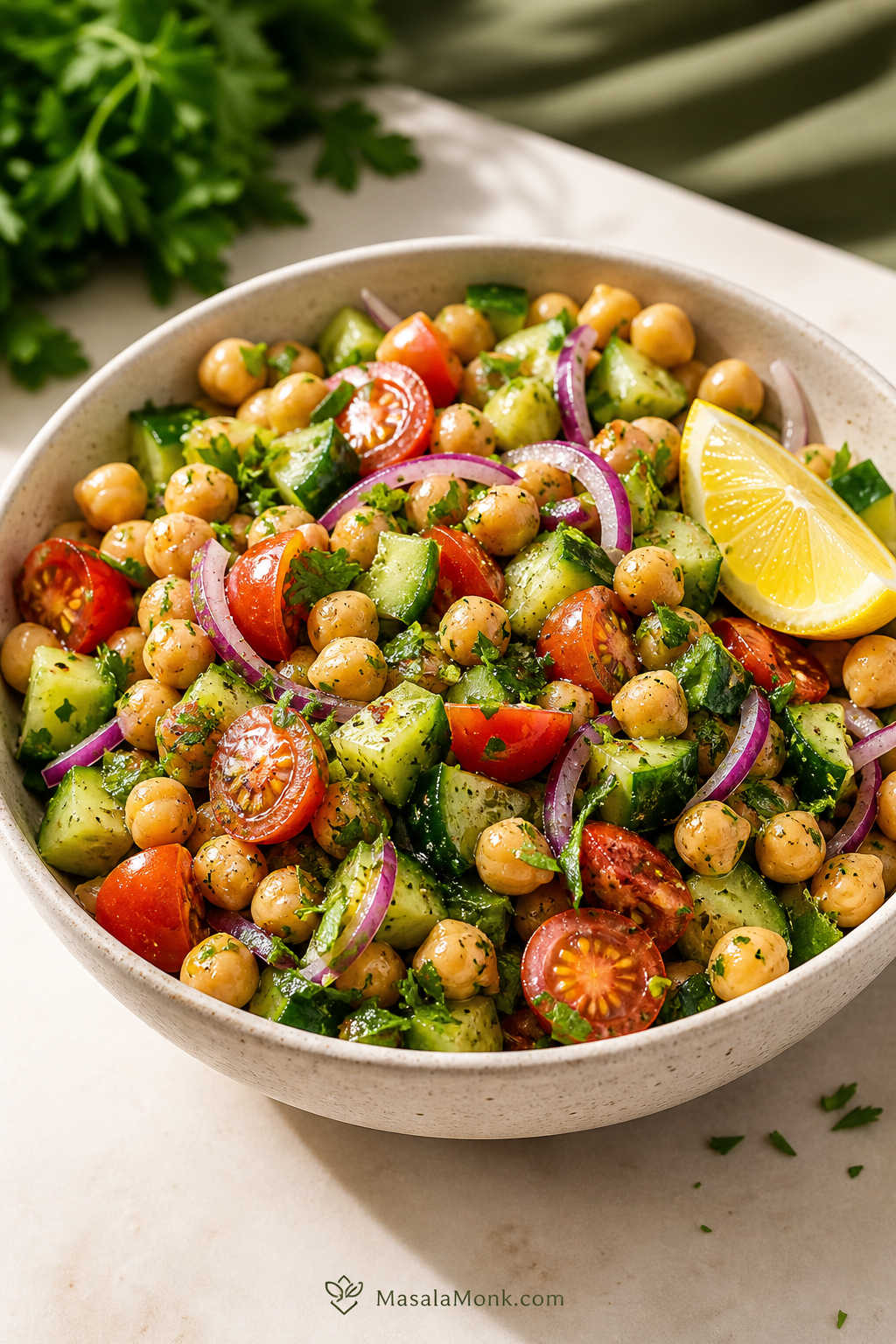
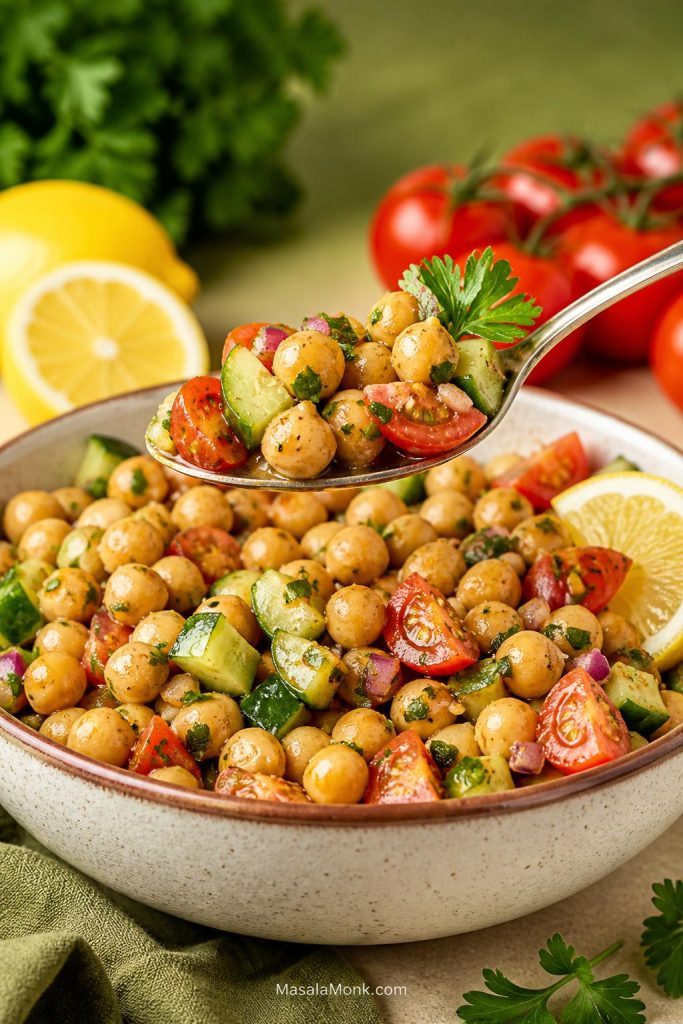
This chickpea salad recipe turns canned chickpeas into a fresh no-cook salad with cucumber, tomatoes, red onion, herbs, and lemon dressing in about 15 minutes. It is bright enough for a side dish, filling enough for lunch, and sturdy enough for meal prep.
Keep the chickpeas whole for a crisp salad bowl, lightly mash them for wraps or pita pockets, or smash them more deeply for a creamy chickpea salad sandwich. The same recipe can lean Mediterranean with feta and olives, vegan with avocado or tahini, or Indian-style with cilantro, cumin, chili, and lemon.
Chickpeas and garbanzo beans are the same ingredient, so this also works as a garbanzo bean salad recipe. The key is simple: drain the chickpeas well, season them boldly, and use enough lemon, salt, herbs, and crunch so the salad tastes fresh instead of flat.
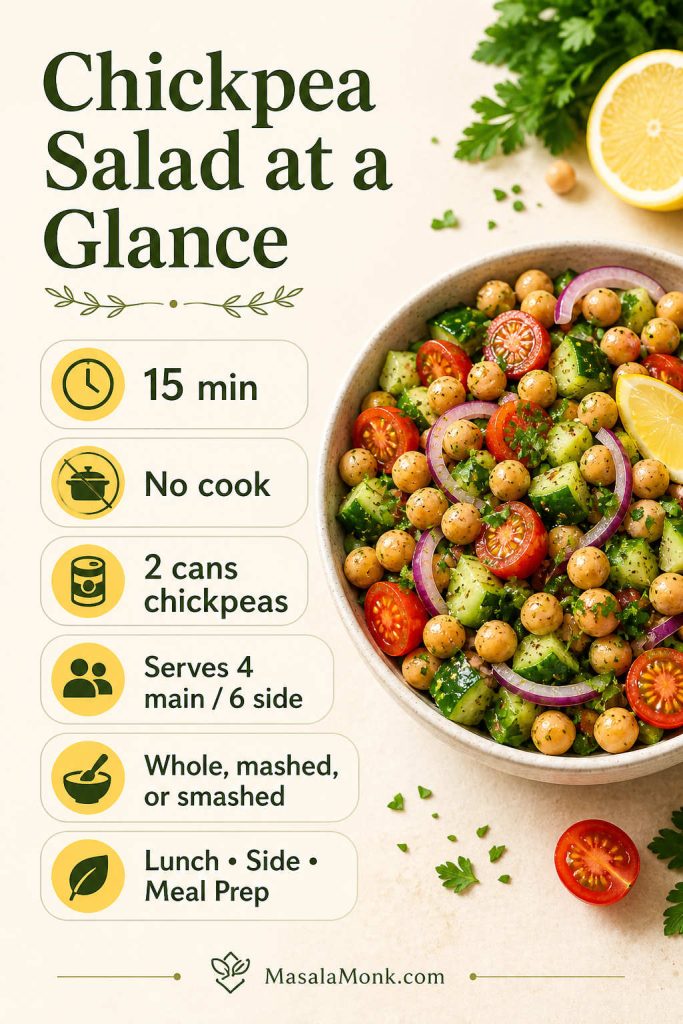
At a glance: This recipe takes about 15 minutes, uses 2 cans of chickpeas, serves 4 as a main or 6 as a side, and needs no cooking. Keep it whole for a salad bowl, lightly mash it for wraps, or smash it for sandwiches.
Why this version is easy to use: The base salad stays simple, but you also get dressing ratios, substitution options, storage cues, and texture choices. As a result, the same chickpeas can become a bowl, wrap, pita filling, sandwich, or meal-prep lunch without starting over.
Canned chickpeas make this a fresh salad with cucumber, tomatoes, herbs, and lemon dressing in about 15 minutes. Make the dressing first, drain and rinse the chickpeas, chop the vegetables, toss everything together, and let the bowl sit for 10 minutes if you have time.
The salad can be served cold or at room temperature. For a side salad or lunch bowl, leave the chickpeas whole. However, if you are making wraps or pita pockets, lightly mash some of them so the filling holds together. When you want a thicker sandwich filling, smash most of the chickpeas instead.
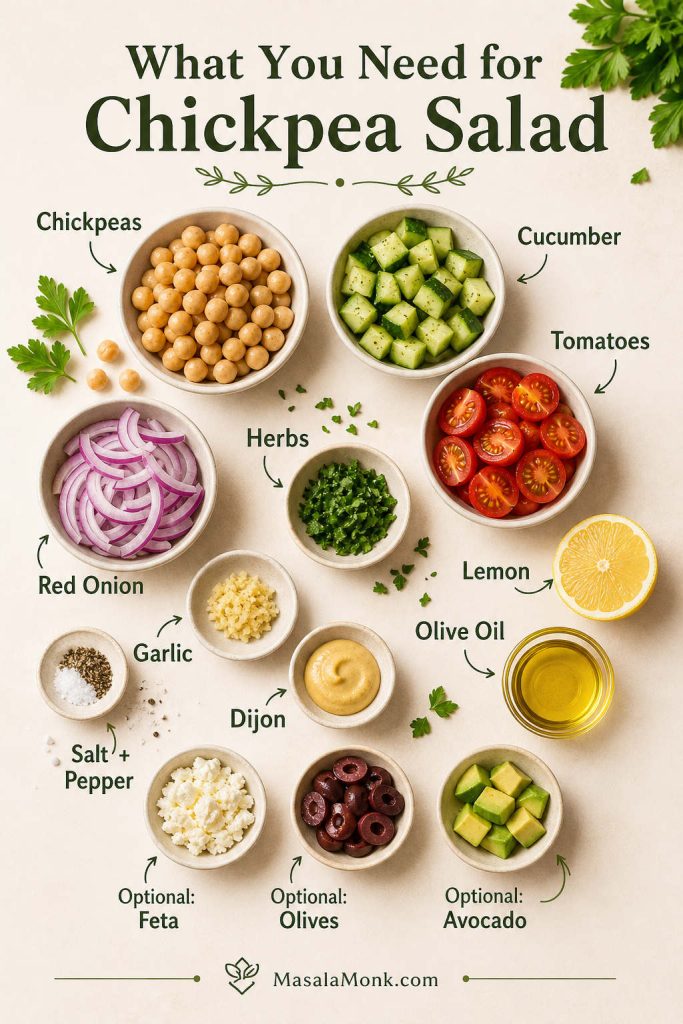
First time making it? Start with chickpeas, cucumber, tomatoes, red onion, parsley, lemon, olive oil, garlic, salt, and pepper. Once the base tastes good, add feta, olives, avocado, paneer, or extra spices.
Before you start, note the useful basics: this chickpea salad takes about 15 minutes, needs no cooking, and works as a bowl, wrap, sandwich filling, or meal-prep lunch.
Ingredients for Chickpea Salad
You only need a few ingredients, so each one should add something useful. The chickpeas make the salad filling, cucumber and tomatoes keep it fresh, herbs lift the flavor, and lemon dressing pulls this recipe together.
A good chickpea salad needs contrast, so chickpeas make it filling, cucumber adds crunch, tomatoes bring juiciness, herbs lift the flavor, and lemon dressing keeps everything bright.
Chickpeas or Garbanzo Beans?
Chickpeas and garbanzo beans are the same ingredient, so this recipe works no matter which name is on the can or how the salad is labeled. Use two cans of chickpeas or garbanzo beans, drain and rinse them well, and treat them the same way in the bowl.
Why Canned Chickpeas Work in This Salad Recipe
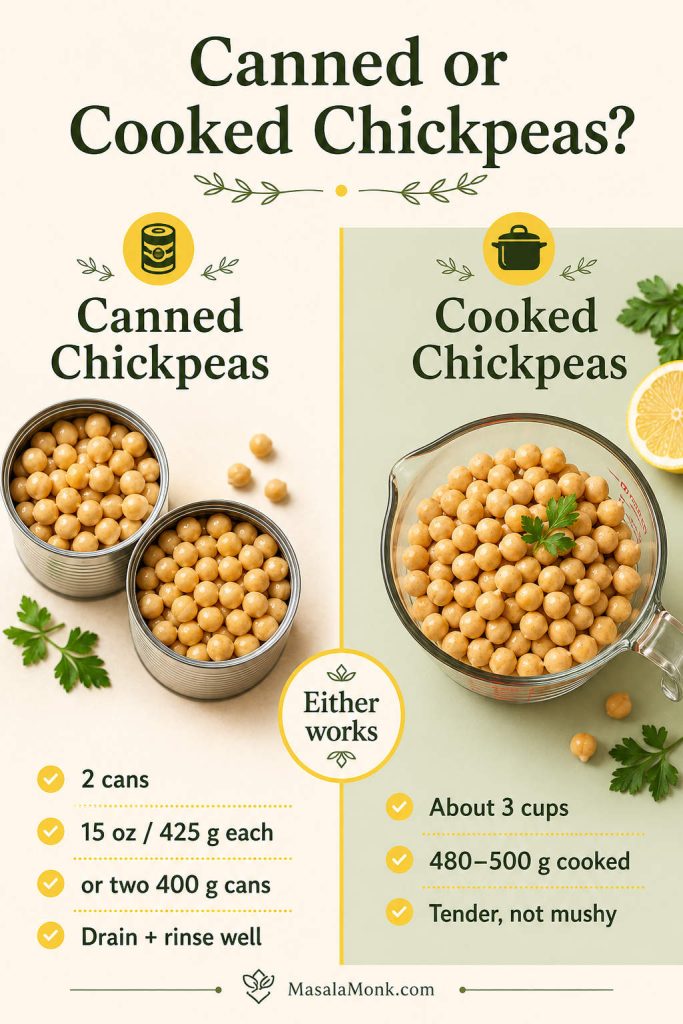
Canned chickpeas are already cooked, which makes this recipe quick enough for a weekday salad or lunch bowl. Use two 15-ounce / 425 g cans, or two 400 g cans, drained and rinsed. Once drained, that usually gives you about 480–500 g chickpeas total, or about 3 cups cooked chickpeas.
Rinsing matters because it removes excess canning liquid and gives the salad a cleaner flavor. After rinsing, let the chickpeas drain well. If they still look wet, pat them lightly with a clean towel so the dressing does not get diluted.
Using Cooked Chickpeas Instead of Canned
If you cook chickpeas from dry, use about 3 cups / 480–500 g cooked chickpeas. They should be tender enough to eat cold in the salad, but not so soft that they collapse when tossed.
Cooked-from-dry chickpeas can taste nuttier than canned ones. However, canned chickpeas are still the easiest choice when you want a fast salad.
Canned chickpeas are the easiest choice when you want a fast chickpea salad recipe; however, cooked chickpeas work just as well if they are tender, well-drained, and not too soft.
Fresh Vegetables That Keep the Salad Crisp
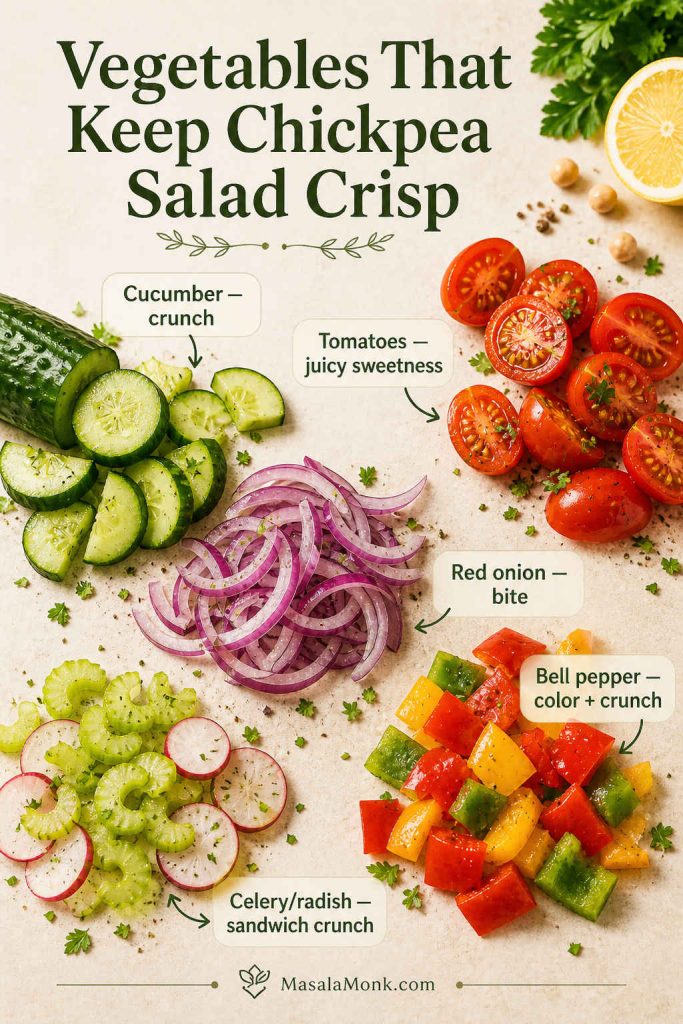
For this recipe, chickpeas give the salad body, so the vegetables should bring crunch, juice, and freshness. Cucumber adds crispness, cherry or grape tomatoes bring sweetness, red onion gives bite, and bell pepper adds color if you want extra crunch.
For the freshest texture, choose vegetables that add contrast: cucumber brings crunch, tomatoes add juiciness, red onion adds bite, and bell pepper adds extra color as well as crispness.
If you like fresh no-cook sides, this pairs well with MasalaMonk’s cucumber salad recipe. That one leans lighter and tangier, while this chickpea version is more filling.
Herbs That Make Chickpea Salad Taste Fresher
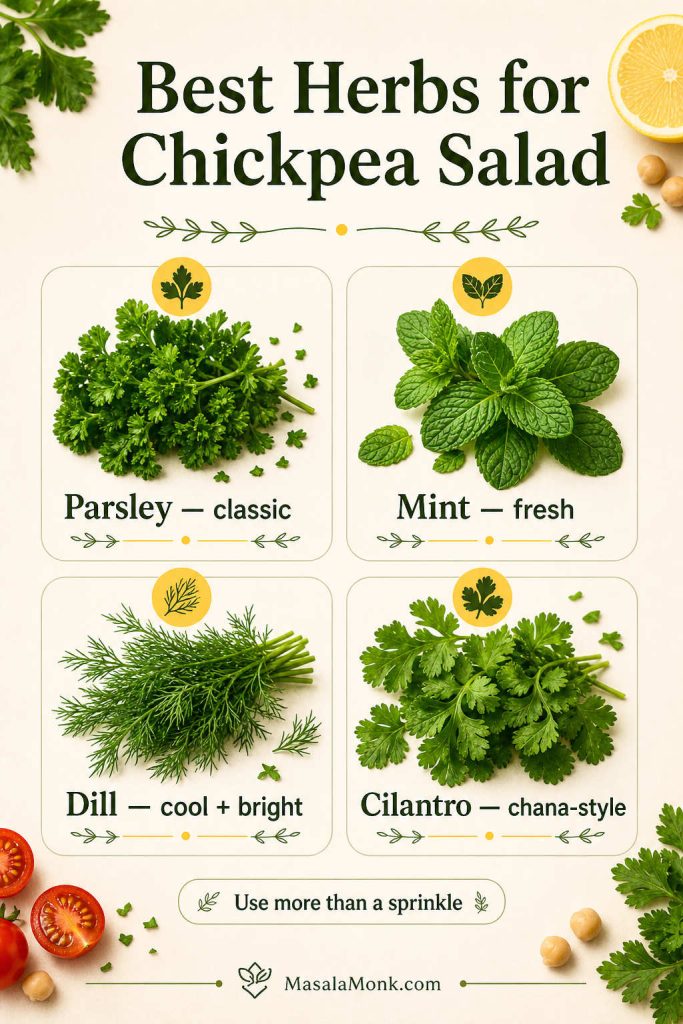
Parsley is the most classic choice, but mint, dill, and cilantro all work. For a Mediterranean-style salad, pair parsley with mint. For a cooler, brighter bowl, add dill. If you want the recipe to lean closer to Indian chana salad, go with cilantro, cumin, and chili.
Be generous with the herbs. Chickpeas are dense, so a small sprinkle can disappear in the bowl.
Herbs can shift the whole direction of a chickpea salad, so parsley keeps it classic, mint makes it brighter, dill makes it cooler, and cilantro pushes it toward a chana-style version.
Optional Add-Ins for This Recipe
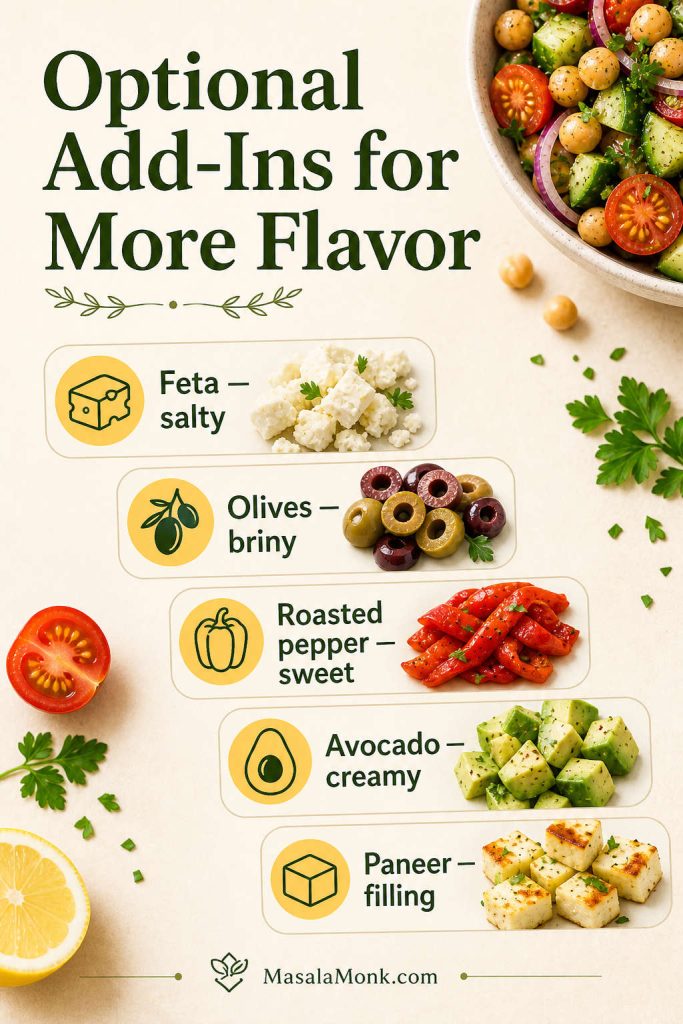
Olives, feta, roasted red pepper, avocado, and paneer all work, but they change the salad in different ways. Olives and feta make it more Mediterranean. Avocado makes it creamy. Paneer adds a firmer vegetarian protein option. Roasted red pepper brings sweetness and color.
If you are making this recipe ahead, add avocado just before serving. It tastes great with chickpeas, but it browns and softens quickly once mixed into the salad.
Once the base tastes balanced, add-ins can change the whole mood: feta and olives make it more Mediterranean, avocado makes it creamier, and paneer makes it more filling.
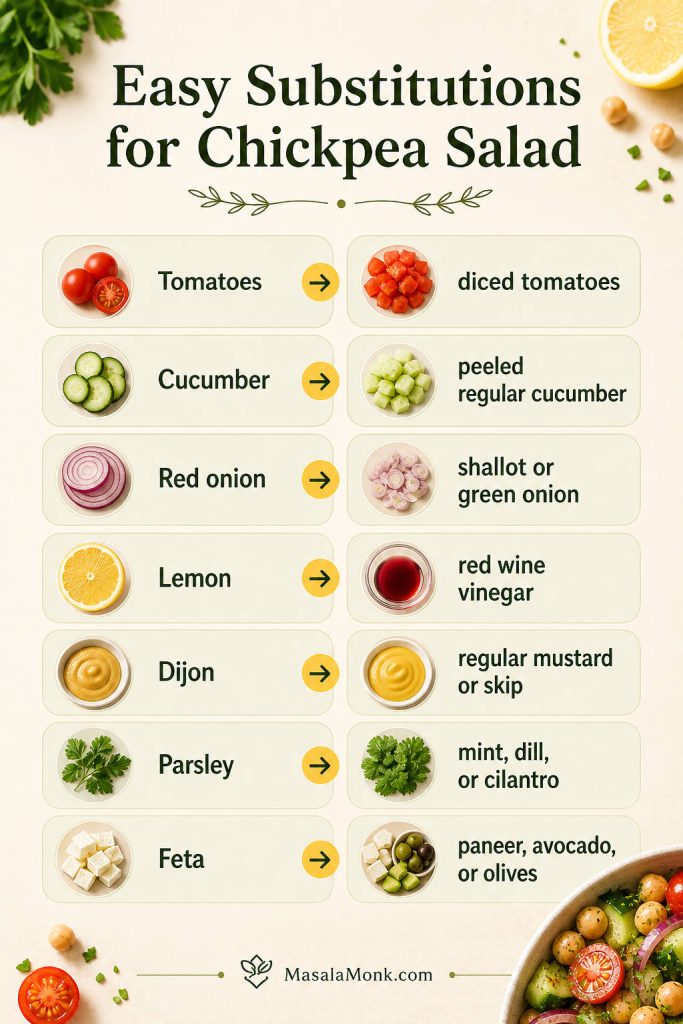
Easy Substitutions
This salad is flexible, so you do not need every optional ingredient. As long as you keep the chickpeas, something crisp, something juicy, enough herbs, and a bright dressing, the recipe still works. Then you can adjust with what you have.
If you do not have…
Use this instead
Cherry tomatoes
Diced regular tomatoes, drained if they are very juicy
English or Persian cucumber
Regular cucumber, peeled if the skin is tough and seeded if watery
Red onion
Shallots, green onion, or white onion soaked in cold water for 10 minutes
Fresh lemon
Red wine vinegar or apple cider vinegar, added to taste
Dijon mustard
A small spoon of regular mustard, or skip it and whisk the dressing well
Parsley
Mint, dill, cilantro, or a mix of fresh herbs
Feta
Paneer, avocado, olives, toasted seeds, or simply leave it out
Missing one ingredient should not stop the recipe, because a good chickpea salad still works when you keep the same balance of chickpeas, crunch, herbs, acidity, and seasoning.
The Lemon Dressing That Makes the Salad Work
The dressing should taste bright, salty, and slightly sharp before it touches the chickpeas. Once everything is tossed together, the chickpeas, cucumber, and tomatoes soften that intensity, so the dressing needs enough lemon, garlic, mustard, and salt to season the whole salad.
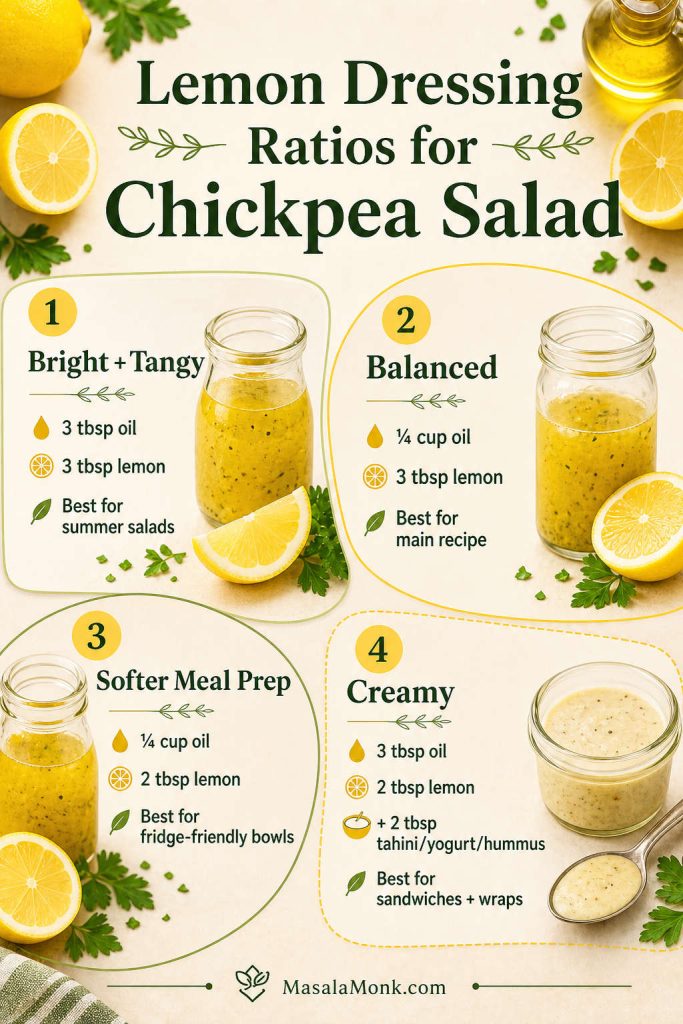
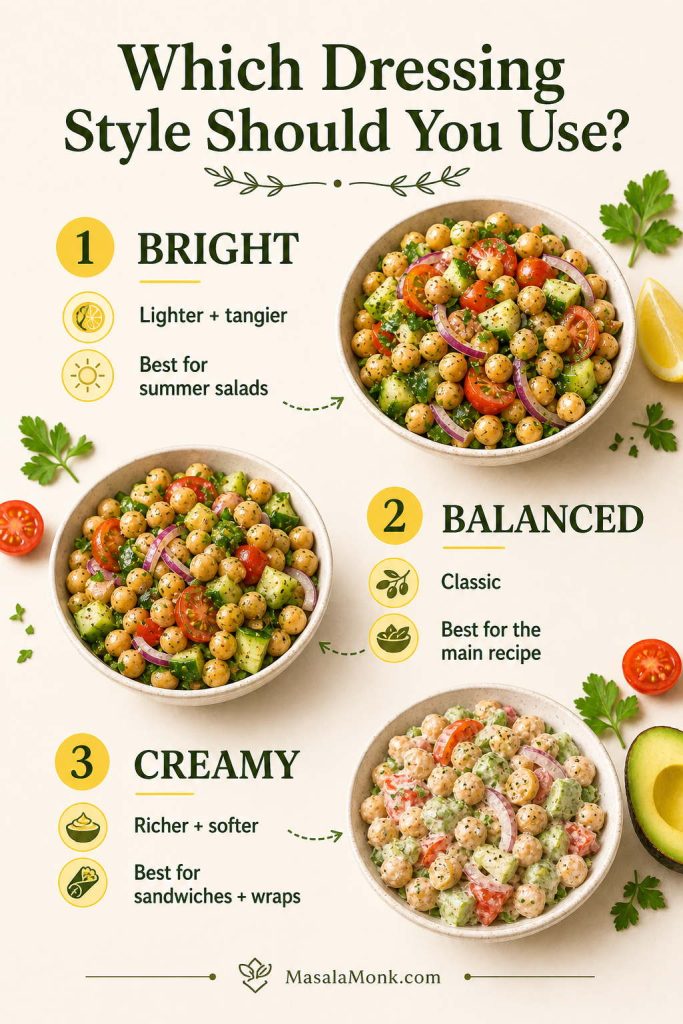
A small change in oil, lemon, or creamy binder can shift the whole bowl, so this dressing guide helps you choose the best chickpea salad texture for bowls, meal prep, wraps, or sandwiches.
Balanced Lemon Dressing
For the main recipe, use ¼ cup / 60 ml olive oil and 3 tablespoons / 45 ml fresh lemon juice. Add Dijon mustard, garlic, salt, black pepper, and either cumin or oregano. This gives the salad a balanced flavor without making it oily or sour.
A Brighter Lemon Dressing
If your chickpeas taste a little flat or your vegetables are very juicy, use equal parts olive oil and lemon juice. This sharper version works well for summer salads, cucumber-heavy bowls, and versions served with pita or grilled foods.
Creamy Dressing for Chickpeas and Sandwiches
When the recipe is going toward wraps or sandwiches, add 2 tablespoons of tahini, Greek yogurt, hummus, vegan mayo, or mashed avocado. A creamy dressing helps the chickpeas hold together instead of rolling out of the bread.
Indian-Style Lemon Dressing
For a chana salad variation, use lemon juice, olive oil, roasted cumin powder, black pepper, chopped cilantro, chili flakes or green chili, and salt. A tiny pinch of chaat masala can work if you want a sharper snack-style flavor, but keep it light so it does not overpower the chickpeas.
Bright, Balanced, and Creamy Dressing Guide
Dressing style
Olive oil
Lemon or vinegar
Best for
Bright and tangy
3 tbsp / 45 ml
3 tbsp / 45 ml
Summer salad, cucumber-heavy versions
Balanced
¼ cup / 60 ml
3 tbsp / 45 ml
Main recipe
Softer meal-prep
¼ cup / 60 ml
2 tbsp / 30 ml
Fridge-friendly version
Creamy
3 tbsp / 45 ml
2 tbsp / 30 ml plus 2 tbsp tahini, yogurt, hummus, or vegan mayo
Sandwiches, wraps, and bowls
Choose a brighter dressing when you want a sharper summer salad, a balanced dressing for the classic version, and a creamy dressing when the chickpea salad is headed for wraps or sandwiches.
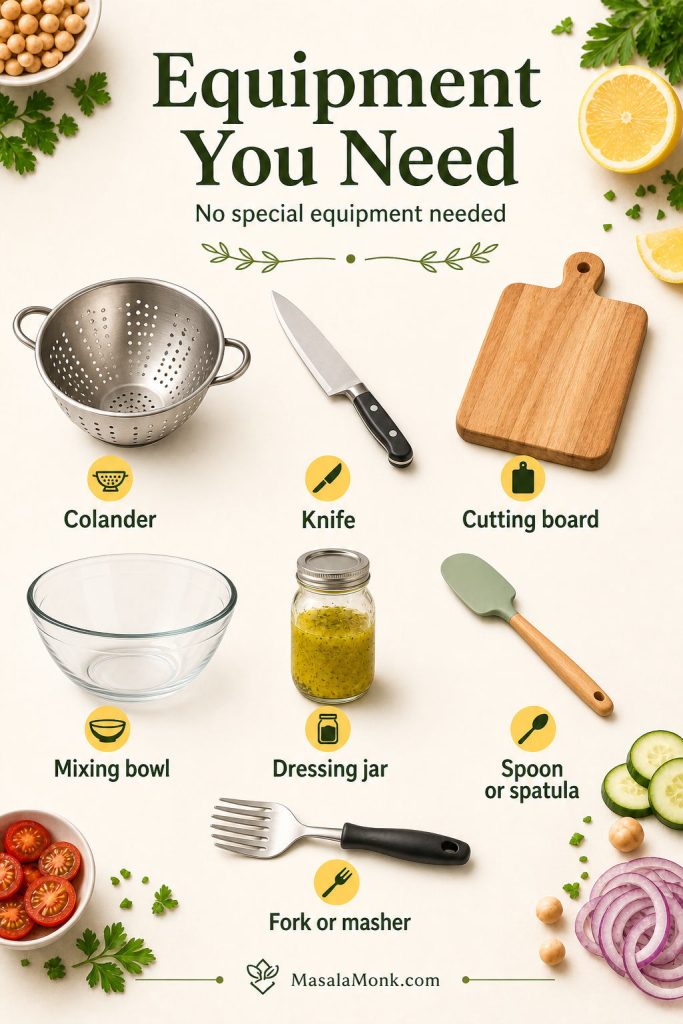
Equipment You Need
You do not need special equipment for this salad. A colander, cutting board, sharp knife, large mixing bowl, small bowl or jar for the dressing, and a spoon or spatula are enough. For the sandwich version, keep a fork or potato masher nearby so you can lightly smash the chickpeas.
This chickpea salad recipe stays practical because it only needs a few everyday tools, so you can make it easily without special equipment or unnecessary cleanup.
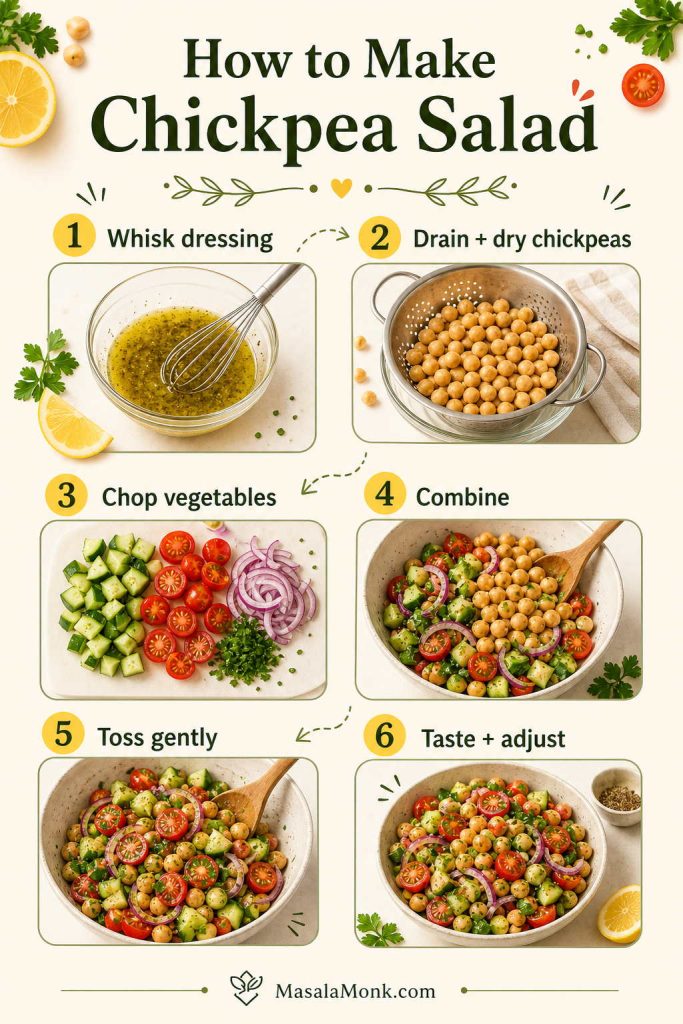
How to Make Chickpea Salad
Because this is a no-cook recipe, making the salad is mostly about dressing the chickpeas well, chopping the vegetables, tossing gently, and tasting at the end.
Make the dressing first. Whisk olive oil, lemon juice, Dijon, garlic, salt, pepper, and cumin or oregano in a large bowl. You can also shake it in a jar.
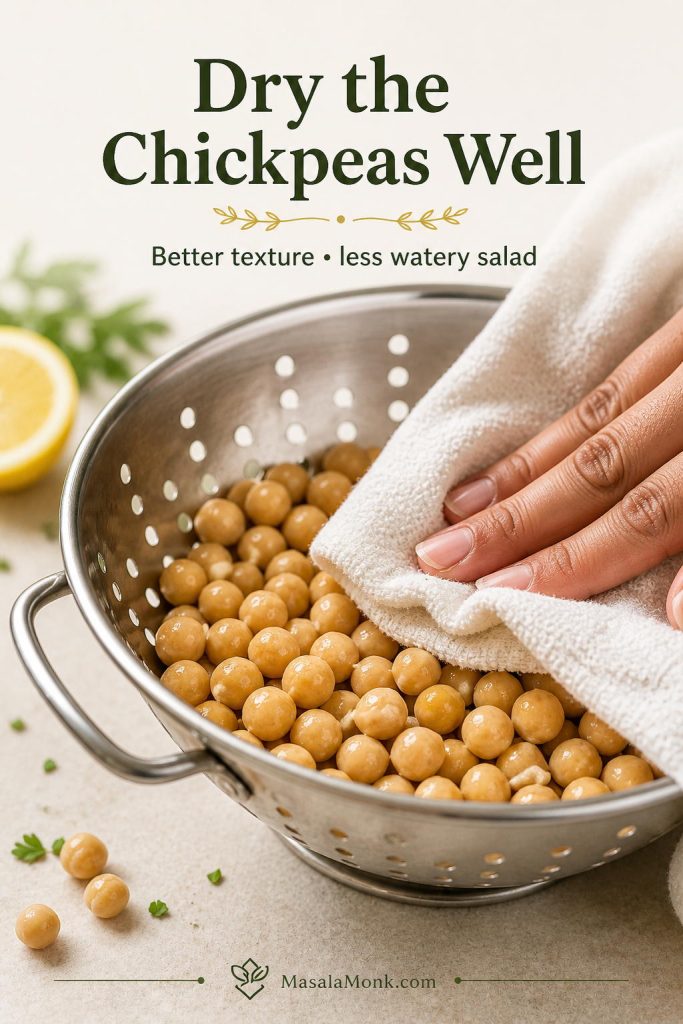
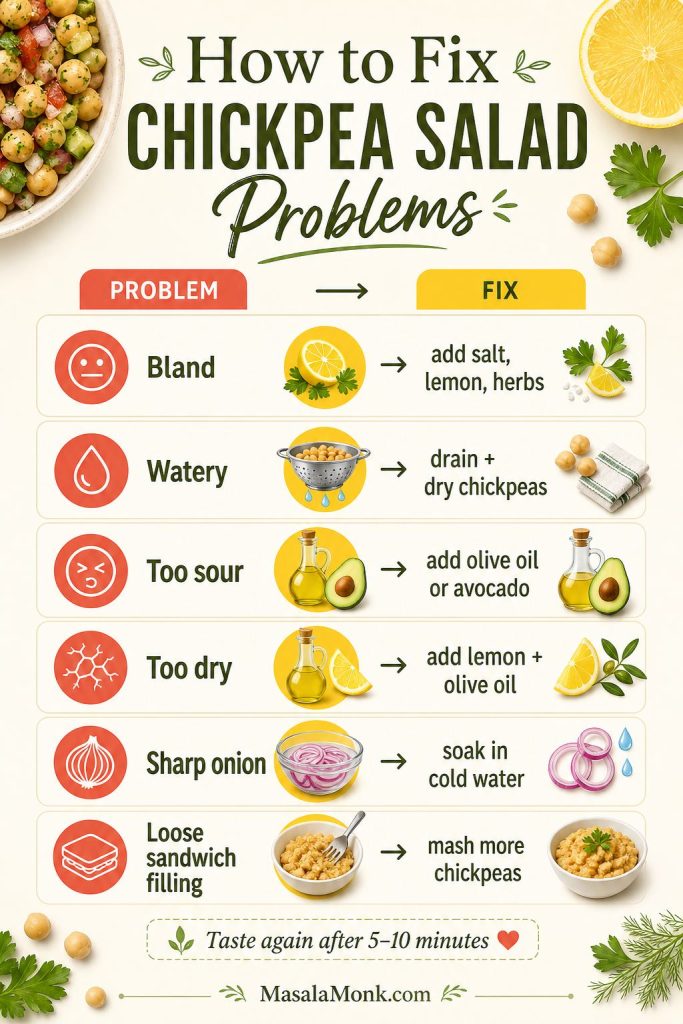
Drain, rinse, and dry the chickpeas. Let them sit in a colander for a minute, then pat them lightly with a clean towel if they still look wet. Drier chickpeas hold the lemon dressing better and keep the salad from turning watery.
Chop the vegetables. Dice the cucumber, halve the tomatoes, and finely chop the onion or shallot.
Add everything to the bowl. Add chickpeas, vegetables, herbs, and sturdy add-ins to the dressing.
Toss gently. Coat everything without crushing the chickpeas.
Rest briefly. Let the salad sit for 10 minutes if you have time.
Check the bowl. The chickpeas should look lightly glossy, not oily, and the salad should taste bright before it tastes salty.
Taste and adjust. Add more lemon, salt, pepper, herbs, or olive oil as needed.
The method matters more than it first seems: whisk the dressing first, dry the chickpeas well, toss gently, and then taste again so the salad stays bright instead of bland or watery.
Avoid bland chickpeas: rinse them well, season the dressing boldly, and let the salad rest for 10 minutes before judging the flavor.
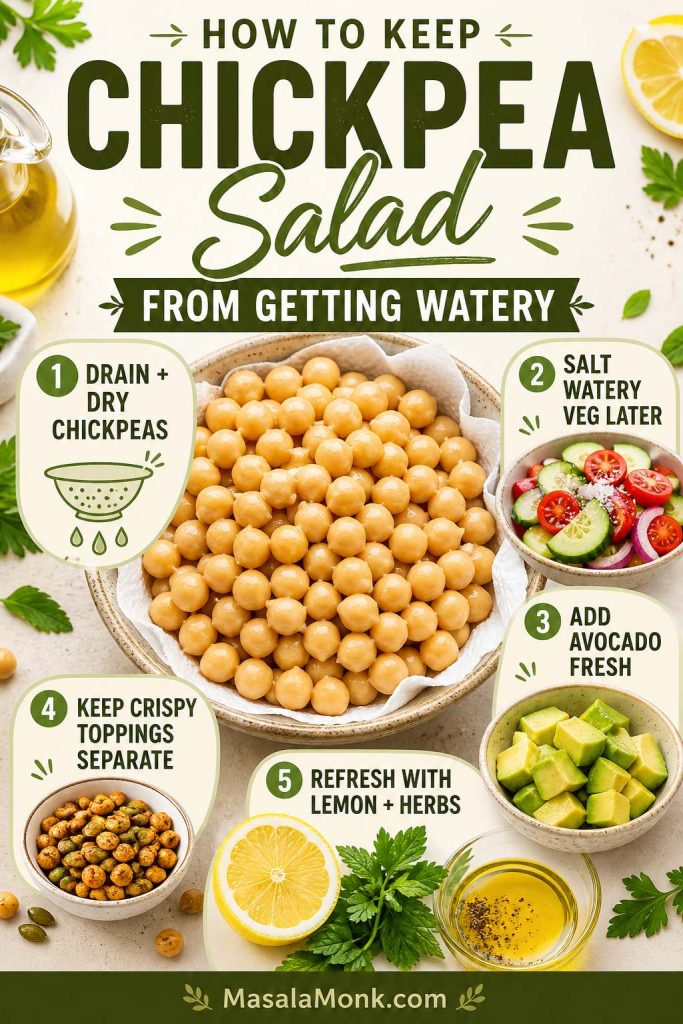
Avoid a watery salad: drain the chickpeas well, dry them if needed, do not over-salt cucumber and tomatoes too early, and add avocado only when you are close to serving.
Dry the Chickpeas Before Making Salad
Drying the chickpeas is one of the easiest upgrades because it helps the dressing cling better and, in turn, keeps the chickpea salad from turning loose or watered down.
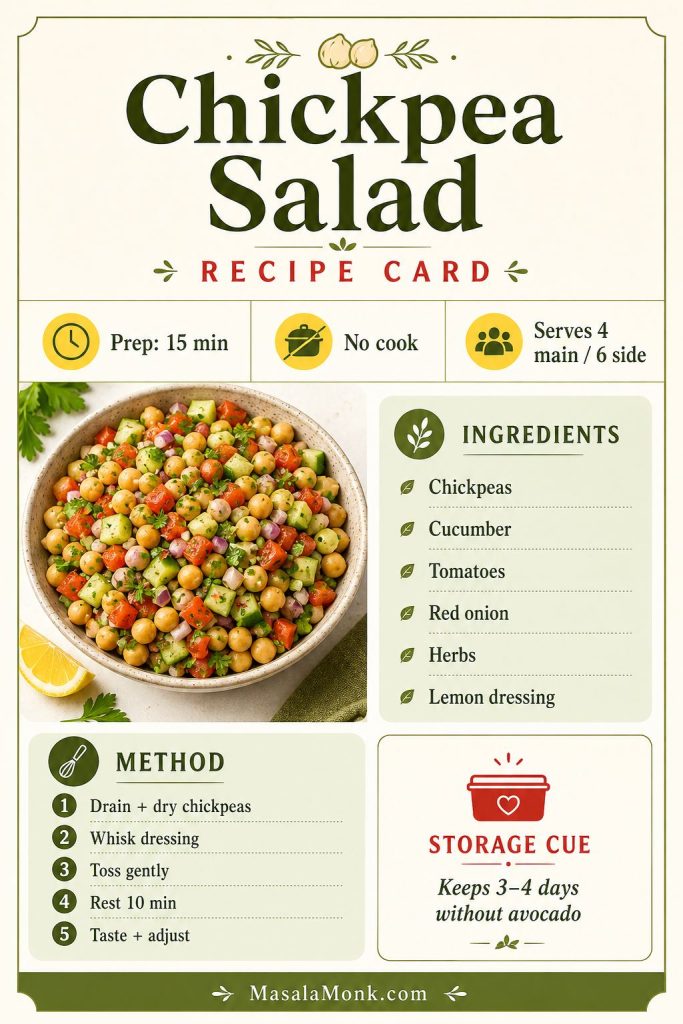
Recipe Card
Chickpea Salad Recipe
A 15-minute no-cook salad made with chickpeas, cucumber, tomatoes, herbs, and lemon dressing. Serve it whole as a fresh salad bowl, lightly mashed in wraps or pita, or smashed into a creamy chickpea salad sandwich filling.
Prep Time15 minutes
Cook Time0 minutes
Total Time15 minutes
Servings4 main or 6 side servings
Optional rest time: 10 minutes Course: Salad, Lunch, Side Dish Cuisine: Mediterranean-inspired Diet: Vegetarian; vegan if feta or paneer is omitted
Ingredients
Salad
2 cans chickpeas, 15 oz / 425 g each, or two 400 g cans, drained and rinsed
Or use about 3 cups / 480–500 g cooked chickpeas
1 large English cucumber or 3 Persian cucumbers, diced
2 cups cherry or grape tomatoes, halved
1 small red onion or 2 shallots, finely chopped
½ cup olives, sliced, optional
½ cup roasted red pepper, chopped, optional
¾–1 cup chopped fresh herbs: parsley, mint, dill, cilantro, or a mix
½ cup feta or paneer cubes, optional
1 avocado, diced, optional and best added just before serving
Lemon Dressing
¼ cup / 60 ml extra-virgin olive oil
3 tbsp / 45 ml fresh lemon juice
1 tsp Dijon mustard
1 garlic clove, grated or minced
½ tsp fine salt, plus more to taste
½ tsp black pepper
½ tsp ground cumin or dried oregano
½–1 tsp sumac or lemon zest, optional
Pinch chili flakes or Aleppo pepper, optional
Instructions
Whisk olive oil, lemon juice, Dijon mustard, garlic, salt, pepper, cumin or oregano, and sumac or lemon zest if using in a large bowl.
Drain and rinse the chickpeas well. Let them sit in a colander for a minute, then pat dry if needed so the salad does not turn watery.
Add chickpeas, cucumber, tomatoes, onion, olives, roasted red pepper, and herbs to the dressing. Toss gently.
Add feta, paneer, or avocado only if serving soon.
Let the salad rest for 10 minutes if possible.
Taste and adjust with more lemon, salt, pepper, herbs, or olive oil.
Serve cold or at room temperature as a salad, side dish, wrap filling, pita filling, or sandwich base.
Notes
For the cleanest flavor, rinse canned chickpeas well and let them drain before mixing.
If the chickpeas still look wet after draining, pat them lightly with a clean towel before mixing.
For a vegan version, skip feta and paneer. Use olives, avocado, roasted pepper, tahini, or extra herbs for richness.
For sandwiches, mash 60–70% of the chickpeas and add 2–4 tablespoons of a creamy binder.
For meal prep, add avocado, crispy chickpeas, and delicate herbs right before serving.
If using dried chickpeas, cook them until tender and use about 3 cups / 480–500 g cooked chickpeas.
Keep this recipe card handy when you need the short version: drain and dry the chickpeas, whisk the lemon dressing, toss gently, rest briefly, and adjust before serving.
The salad works because chickpeas make it filling without any cooking, while cucumber, tomatoes, onion, herbs, and lemon keep it fresh. The dressing is bright enough to season the chickpeas properly, and the same base can stay whole for bowls, lightly mashed for wraps, or smashed for sandwiches.
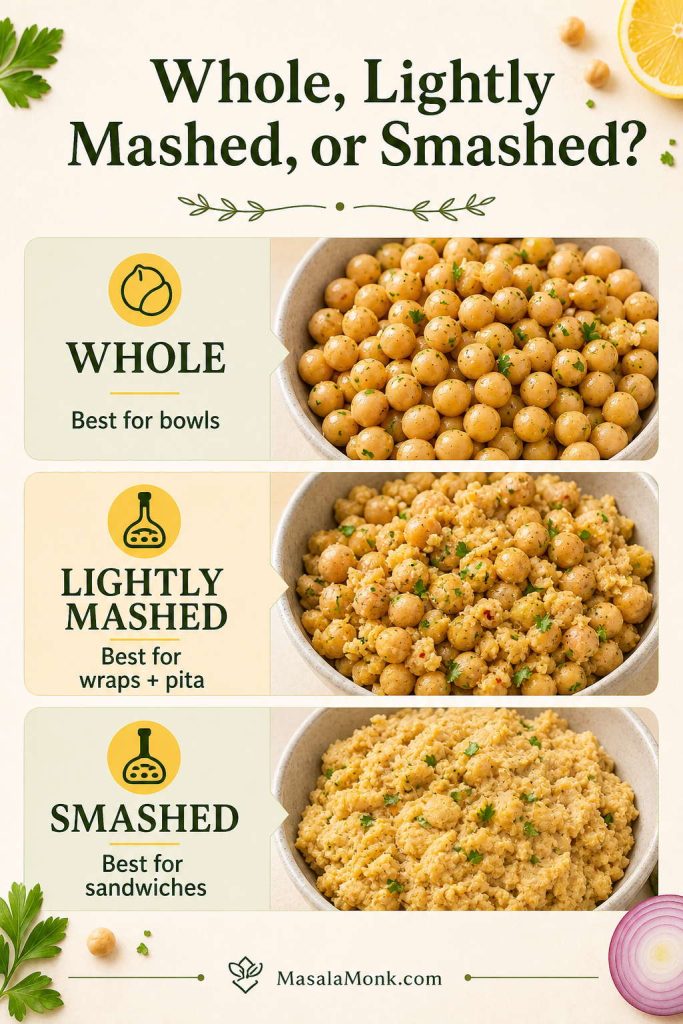
Whole, Lightly Mashed, or Smashed Chickpeas?
A small change in texture changes how you can use the salad. Whole chickpeas make the best fresh bowl. Lightly mashed chickpeas help the salad sit better in wraps or pita. Smashed chickpeas turn the same ingredients into a sandwich filling that holds together instead of rolling out of the bread.
Texture
What to do
Best use
Whole chickpeas
Toss gently and do not mash
Fresh salad bowls and side salads
Lightly mashed
Press ¼–⅓ of the chickpeas
Wraps, pita pockets, and lunch bowls
Smashed
Mash 60–70% of the chickpeas
Chickpea salad sandwiches
Creamy
Mash deeply and add mayo, yogurt, tahini, hummus, or avocado
Vegan tuna-style chickpea salad
Texture changes how the recipe works, so whole chickpeas suit salad bowls, lightly mashed chickpeas hold better in wraps, and smashed chickpeas make the most reliable sandwich filling.
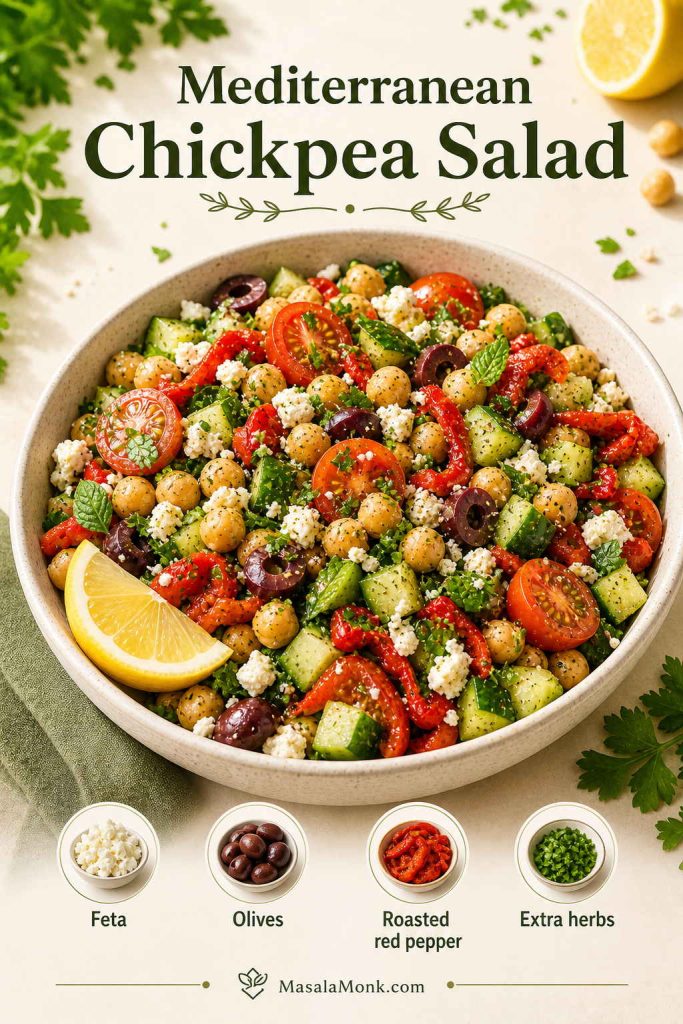
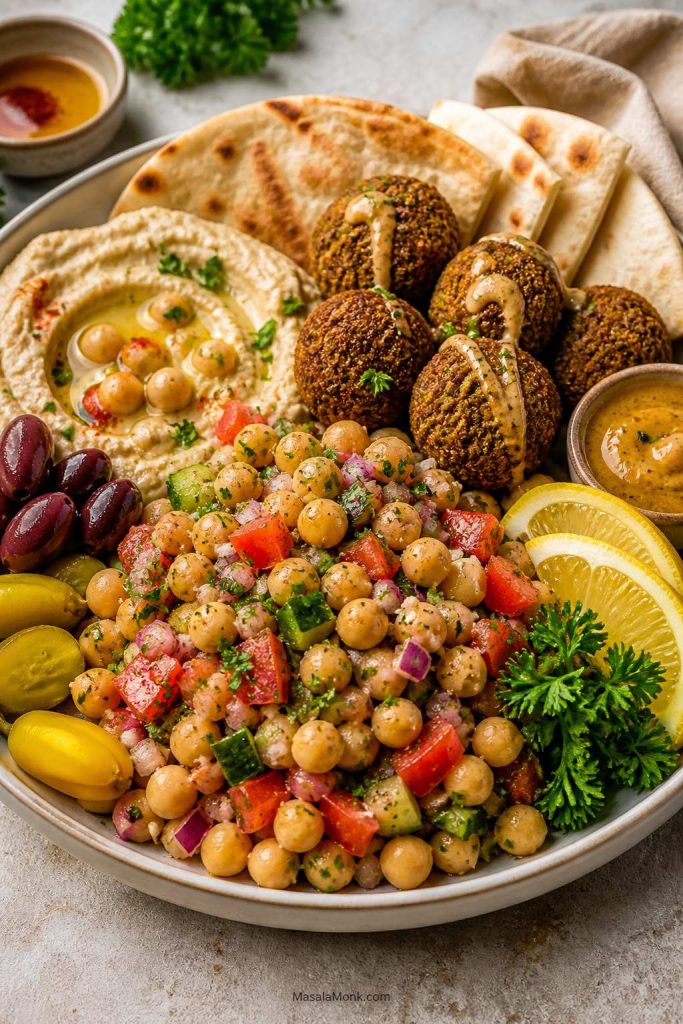
To make this recipe more Mediterranean, add olives, feta, roasted red pepper, parsley, mint, oregano, and extra lemon. Keep the cucumber, tomato, and red onion because they give the salad the fresh chopped texture that works so well with chickpeas.
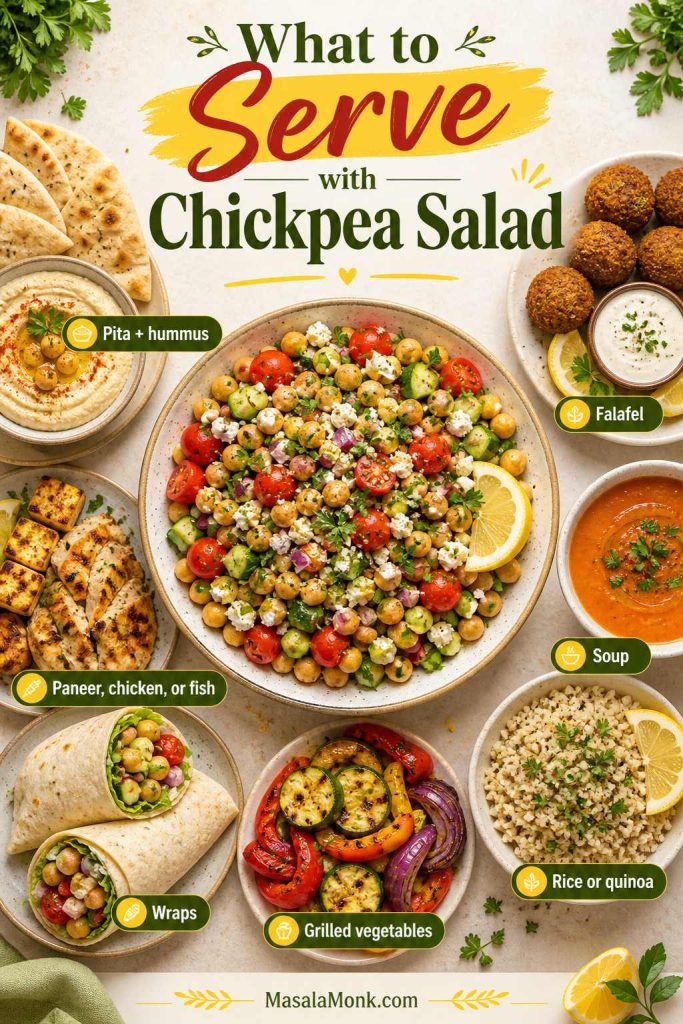
This version is especially good with pita, hummus, grilled vegetables, rice bowls, roasted chicken, fish, or a simple soup. If you like herb-heavy Mediterranean salads, it also sits well next to MasalaMonk’s tabbouleh recipe, especially when serving pita, hummus, grilled vegetables, or mezze-style plates.
For a Mediterranean chickpea salad, feta, olives, roasted red pepper, and extra herbs deepen the flavor while still keeping the recipe fresh, colorful, and easy to serve.
Turn This Recipe Into a Chickpea Salad Sandwich
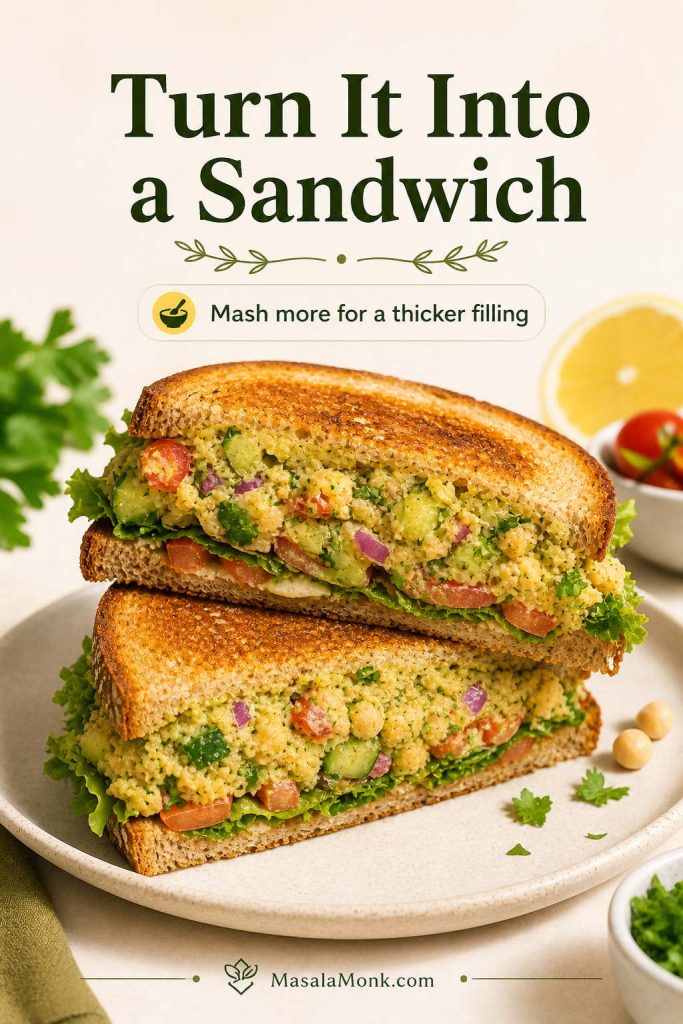
For a sandwich, mash most of the chickpeas and add a creamy binder. Greek yogurt, vegan mayo, tahini, hummus, mashed avocado, or a mix of mayo and yogurt all work. Then add something crunchy, such as celery, cucumber, onion, radish, or pickles.
Toasted bread, pita, wraps, and lettuce cups all work. If you are packing lunch, store the filling separately and assemble the sandwich later so the bread stays firm. This is also a useful plant-based alternative when you want a creamy, tangy sandwich filling. For a non-vegetarian comparison, see MasalaMonk’s chicken salad sandwich recipe.
Sandwich formula: 2 cups chickpea salad + 2–4 tbsp creamy binder + ¼ cup crunchy vegetables + lemon, mustard, herbs, salt, and pepper to taste.
If you want a cooler, yogurt-based sauce for wraps or pita, MasalaMonk’s Greek tzatziki sauce recipe is a natural fit with cucumber, herbs, chickpeas, and toasted bread.
Turning chickpea salad into a sandwich works best when you mash more of the chickpeas, because the filling becomes thicker, creamier, and much easier to hold together.
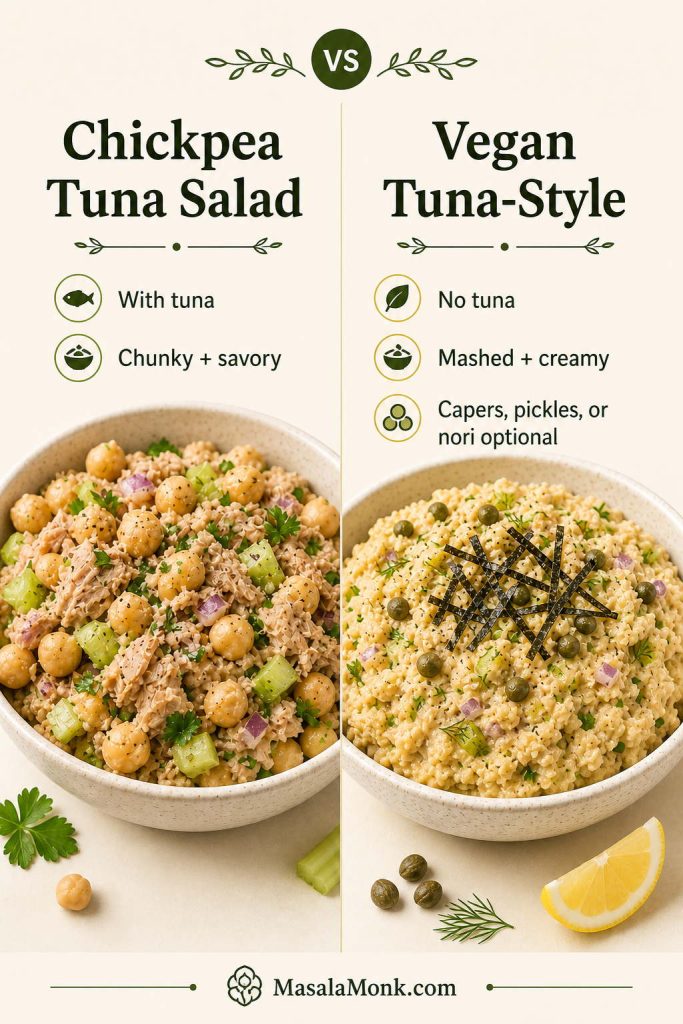
This base can move in two directions. To make a real chickpea tuna salad, add drained tuna, celery, lemon, herbs, and a little Greek yogurt or mayo. If you want a vegan tuna-style version, skip the tuna, mash the chickpeas more deeply, and add celery, lemon, pickles or capers, herbs, and a creamy binder such as vegan mayo, tahini, hummus, or avocado.
A more sea-like vegan flavor can come from finely crushed nori or a tiny pinch of kelp flakes. Keep it optional; the mashed chickpea version still works as a creamy salad filling without any sea flavor.
For a chickpea tuna salad, add real tuna for a chunkier, savory version; for a vegan tuna-style salad, mash the chickpeas more and use capers, pickles, or nori for extra depth.
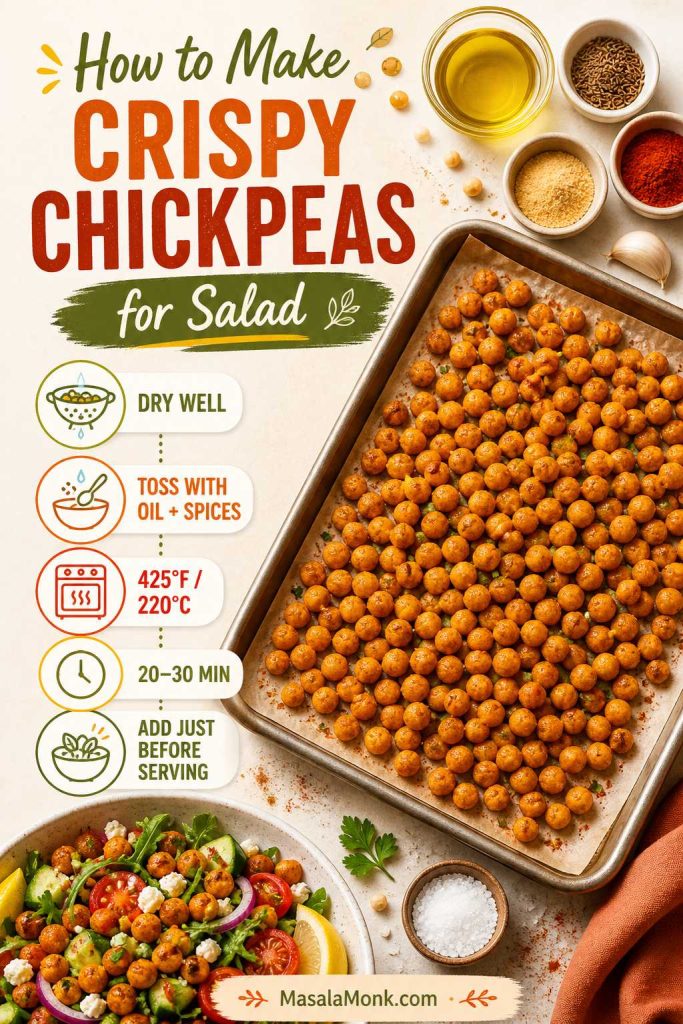
Chickpea salad is good for meal prep because chickpeas hold their shape better than leafy greens, so the salad stays useful for lunches over several days. However, a few ingredients are better added fresh. For example, avocado browns, crispy chickpeas soften, and delicate herbs taste brighter when added closer to serving.
Chickpea salad is meal-prep friendly; however, it stores best when avocado, crispy toppings, and delicate herbs are added later instead of being mixed in too early.
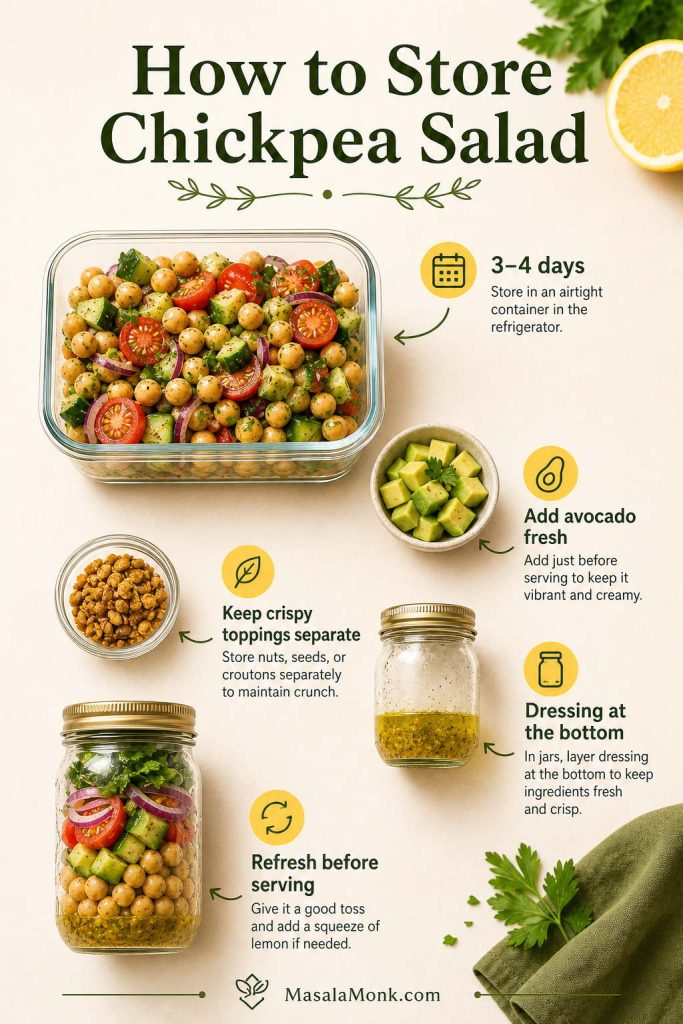
For the best make-ahead version, store the base salad without avocado and add delicate toppings just before serving. If you are making lunch jars, put the dressing at the bottom, then chickpeas and firmer vegetables, then herbs or greens near the top.
If you are making the salad more than a few hours ahead, keep some of the herbs fresh for serving and go lighter on the salt at first. Salt draws water from cucumber and tomatoes, so a final pinch right before serving keeps the salad fresher.
How to Store This Recipe Without Making the Salad Watery
Drain and dry the chickpeas well, avoid over-salting watery vegetables too early, and keep avocado or crispy toppings separate. If the salad sits overnight, refresh it with a little lemon juice, olive oil, and fresh herbs before serving.
If your chickpea salad turns watery, the fix usually starts earlier: dry the chickpeas well, salt juicy vegetables later, and add avocado or crunchy toppings closer to serving time.
Version
Fridge life
Best method
Plain chickpea salad, no avocado
3–4 days
Store in an airtight container
With avocado
Same day best
Add avocado fresh just before serving
With feta or paneer
2–3 days best
Add fresh if you want the cleanest texture
Dressing mixed in
2–3 days best texture
Stir before serving and refresh with lemon or herbs
Dressing only
7–10 days
Keep in a sealed jar in the fridge
Sandwich filling
3–4 days
Store filling separately from bread
Crispy chickpeas
Same day best
Keep separate and add just before eating
Meal-prep jars
4–5 days
Dressing bottom, chickpeas and vegetables middle, herbs top
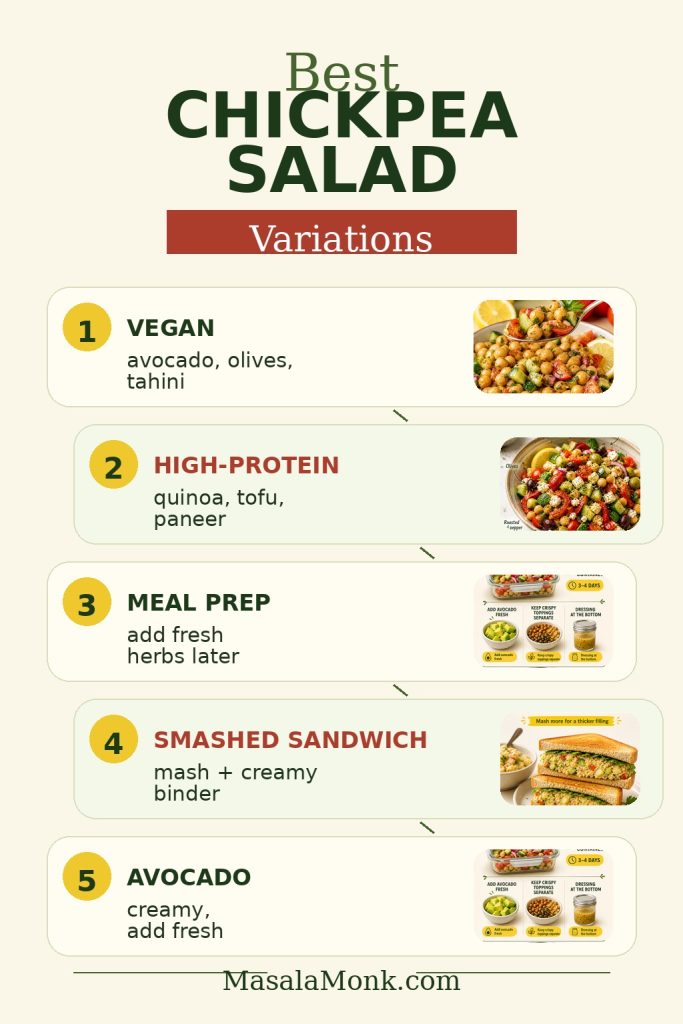
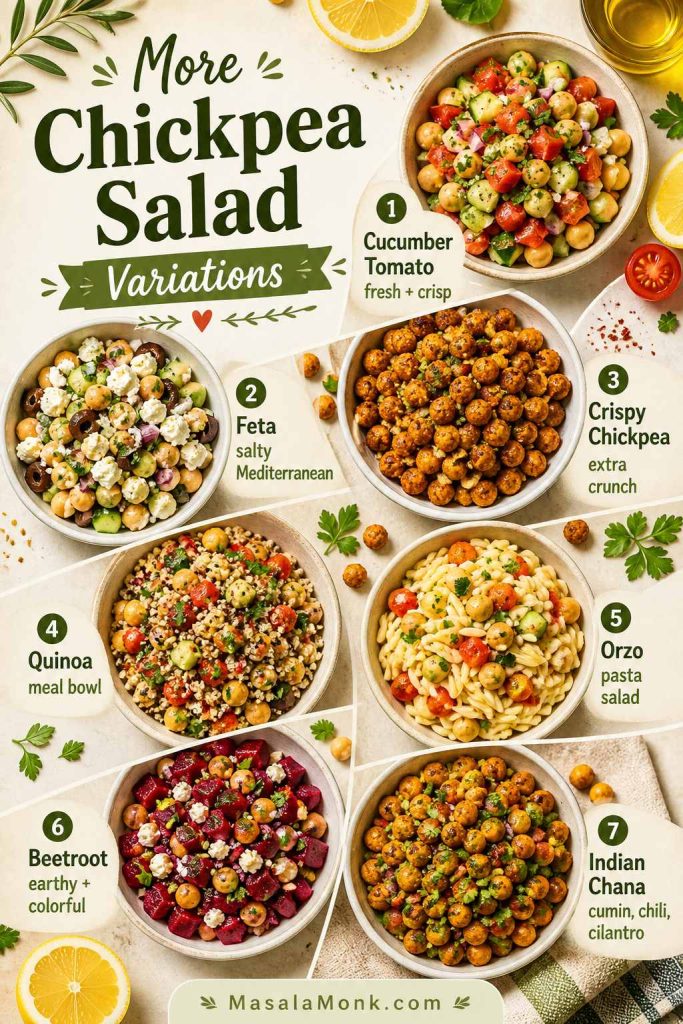
Once the base recipe is balanced, the same chickpeas can move in several salad directions. Keep lemon, salt, and herbs as the anchor, then change the add-ins based on how you want to serve it.
Lunch, Meal Prep, and Sandwich Versions
If you want…
Make this version
What to add
A dairy-free lunch
Vegan chickpea salad
Avocado, olives, roasted red pepper, extra herbs, toasted seeds, or tahini dressing
A more filling meal
High-protein salad with chickpeas
Quinoa, tofu, paneer, boiled eggs, Greek yogurt dressing, feta, grilled chicken, or extra chickpeas
A lunchbox or picnic salad
Meal-prep chickpea salad
Keep avocado and crispy toppings separate, use a slightly softer dressing, and add fresh herbs before serving
A sandwich filling
Smashed chickpea salad
Mash most of the chickpeas and add yogurt, tahini, hummus, vegan mayo, or avocado
A creamier bowl or wrap
Avocado chickpea salad
Diced avocado added just before serving, or a little mashed avocado in the dressing
The same base recipe can become a vegan lunch, higher-protein bowl, meal-prep container, smashed sandwich filling, or avocado chickpea salad with only a few targeted changes.
Extra cucumber, tomatoes, red onion, parsley, lemon, olive oil, salt, and pepper
A saltier Mediterranean side
Feta chickpea salad
Feta, olives, oregano, and lemon zest; taste before adding extra salt
A crunchy topping
Crispy chickpea salad
Add roasted or air-fried chickpeas right before serving so they stay crisp
A meal-prep grain bowl
Quinoa chickpea salad
Cooked and cooled quinoa plus extra dressing because grains absorb liquid
A pasta salad direction
Orzo chickpea salad
Cooked and cooled orzo, cucumber, tomato, herbs, feta, and extra lemon dressing
An earthy, colorful bowl
Beetroot chickpea salad
Cooked and cooled beetroot, feta or paneer, cumin, herbs, lemon, and red onion
An Indian-style side
Indian chana salad
Use kabuli chana for the closest chickpea salad texture, or kala chana for a firmer, earthier Indian-style version with cilantro, lemon, cumin, chili, onion, cucumber, and tomato
For more variety, the chickpea salad can turn crisp with cucumber and tomato, salty with feta, hearty with quinoa or orzo, earthy with beetroot, or spicier as Indian chana salad.
For crispy chickpeas, dry the drained chickpeas very well, toss them with a little oil, salt, cumin, paprika, or garlic powder, and roast at 425°F / 220°C for about 20–30 minutes, shaking the pan once or twice. Add them to the salad right before serving so they stay crisp.
Crispy chickpeas add the most texture when they are roasted until dry and added right before serving, so they stay crunchy instead of softening in the salad.
Because this recipe is not cooked, most chickpea salad problems can be fixed before serving. If the chickpeas taste bland, watery, sour, or dry, adjust the dressing first. Then give the salad a few minutes to settle before judging it again.
Problem
Likely cause
Fix
Salad tastes bland
Not enough salt, acid, or herbs
Add salt first, then lemon, then more herbs
Salad is watery
Chickpeas or vegetables were too wet
Drain and dry chickpeas well, and add tomatoes closer to serving
Chickpeas taste canned
They were not rinsed well or not seasoned enough
Rinse thoroughly and let them sit in dressing for 10 minutes
Onion is too sharp
Raw onion is too strong
Soak chopped onion in cold water for 10 minutes, then drain
Salad is too sour
Too much lemon or vinegar
Add olive oil, chickpeas, avocado, or feta to soften it
Salad is too dry
Chickpeas absorbed the dressing
Add a splash of olive oil and lemon juice before serving
Avocado browned
It was added too early
Add avocado fresh, or toss it with lemon before mixing
Sandwich filling is too loose
Too much dressing or not enough mashing
Mash more chickpeas and add a thicker binder
Crispy chickpeas went soft
They sat in the wet salad
Keep them separate and add just before eating
Before starting over, fix the bowl: bland salad usually needs salt, lemon, and herbs; watery salad needs better draining; and loose sandwich filling needs more mashed chickpeas.
What to Serve with Chickpea Salad
Serve chickpea salad with pita, hummus, grilled vegetables, rice, quinoa, soup, roasted potatoes, grilled chicken, fish, or paneer. It also works inside wraps, lettuce cups, toasted sandwiches, or meal-prep bowls. To make a fuller chickpea-based mezze plate, add MasalaMonk’s falafel recipe on the side.
A lighter plate can be as simple as cucumber salad, tomato soup, or a green salad. For a sharper Middle Eastern-style plate, serve it with pita and a spoon of MasalaMonk’s amba sauce recipe for a tangy mango-chili contrast.
Chickpea salad becomes a fuller meal more easily when you pair it with pita, hummus, soup, falafel, grains, or grilled vegetables, rather than serving it as a plain side alone.
Chickpea Salad Mezze Plate
Serving chickpea salad as part of a mezze plate adds variety and makes the recipe more useful for lunch or dinner, especially when paired with hummus, pita, and falafel.
Final Serving Texture
A final serving image highlights the texture that makes this recipe work so well: chickpeas stay distinct, vegetables stay crisp, and the dressing coats the salad without drowning it.
Chickpeas and garbanzo beans are the same ingredient. “Chickpea” is more common in many recipe titles, while “garbanzo bean” often appears on cans and packaging. Use either one for this salad.
What kind of chickpeas work best for this salad?
Canned chickpeas are the easiest choice because they are already cooked and ready to use. Drain and rinse them well, then let them sit in a colander for a minute so extra water does not dilute the dressing.
Do canned chickpeas need to be cooked first?
No cooking is needed. Canned chickpeas are already cooked, so this recipe only needs draining, rinsing, chopping, dressing, and tossing.
How long does this chickpea salad recipe last in the fridge?
This chickpea salad recipe keeps well for about 3–4 days without avocado. Store it in an airtight container, then add avocado, crispy chickpeas, or delicate herbs closer to serving for the best texture.
How do you keep chickpea salad from getting watery?
Drain and dry the chickpeas well, use tomatoes that are not overly watery, and go lighter on salt if you are making the salad ahead. Salt pulls moisture from cucumber and tomatoes, so a final pinch before serving keeps the salad fresher.
Is this chickpea salad vegan?
The base salad is vegan when you skip feta, paneer, yogurt, and any dairy-based creamy add-ins. For richness, use olives, avocado, tahini, hummus, vegan mayo, roasted red pepper, toasted seeds, or extra herbs.
Is chickpea salad healthy?
Chickpea salad can be a nourishing meal or side because chickpeas provide plant-based protein and fiber, while the vegetables and herbs add freshness. Keep the dressing balanced and use richer add-ins like feta, paneer, avocado, or creamy binders according to how filling you want the salad to be. For more general chickpea nutrition background, see the Harvard Nutrition Source guide to chickpeas.
What can I use instead of lemon juice?
Red wine vinegar or apple cider vinegar can replace lemon juice. However, start with a little less than the recipe calls for, then taste and add more only if the salad needs extra brightness.
How do I make chickpea salad without mayo?
The base salad uses lemon and olive oil dressing, so it does not need mayo. For a creamy no-mayo version, use tahini, hummus, Greek yogurt, or mashed avocado.
How do I turn this into chickpea salad sandwiches?
Mash 60–70% of the chickpeas, add 2–4 tablespoons of a creamy binder, and keep the filling thick. Toasted bread, pita, wraps, and lettuce cups all work, but the filling should be stored separately from bread until serving.
What goes well with chickpea salad?
Pita, hummus, grilled vegetables, soup, rice, quinoa, roasted potatoes, paneer, grilled chicken, fish, and simple green salads all pair well with chickpea salad. It also works inside wraps, lettuce cups, and meal-prep bowls.
How can I make the salad higher in protein?
Add quinoa, paneer, tofu, boiled eggs, Greek yogurt dressing, feta, grilled chicken, or extra chickpeas. For a vegan version, use tofu, quinoa, hummus, tahini, seeds, or another legume.
Should you freeze chickpea salad?
Freezing is not worth it for this recipe. Cucumber, tomatoes, herbs, and dressing lose their fresh texture after thawing. If you want to prep ahead, freeze cooked chickpeas separately and make the salad fresh.
A mango salsa recipe should do more than taste sweet and bright. It should stay chunky instead of turning watery, balance lime and heat without burying the fruit, and work whether you use it as a salsa dip with chips, a spoonable mango salsa sauce for tacos, or a fresh topping for fish, shrimp, or chicken.
This version starts with the cleanest, most useful base: ripe mango, red onion, jalapeño, cilantro, lime, and salt. It is the best first version to make because it stays bright, fresh, and flexible. From there, you can adjust it depending on how you plan to serve it: add tomato for a scoopable chip dip, avocado for a richer topping, or more chile for a hotter bowl that still tastes fresh instead of harsh.
If you are making mango salsa for the first time, make this clean version first. It gives you the brightest mango flavor, then lets you move toward a chunkier taco topping, a scoopable salsa dip, a saucier spoonful for salmon or shrimp, or a spicy variation without guessing.
If you want the shortest useful answer, start here. The best mango salsa recipe uses ripe but still firm mangoes, not very soft ones, so the bowl stays fresh and chunky instead of slumping into liquid. The best first version is usually no tomato. That cleaner build lets the mango stay bright and distinct, whether you serve it as a fresh salsa dip, a taco topping, or a spoonable mango salsa sauce for fish, shrimp, grilled chicken, and bowls.
Best mangoes: ripe but still firm, so the salsa holds a neat dice.
Best first version: no tomato, because it tastes cleaner and works better as a topping.
Best for chips: add tomato if you want a more pico-like, scoop-friendly bowl.
Best saucier move: mash or blend a few spoonfuls, then stir them back in instead of blending the whole bowl.
Best for tacos and fish: keep it fruit-forward, sharp, chunky, and lightly spicy.
Best heat move: start with jalapeño, then add more chile only if the bowl tastes flat.
Best make-ahead window: a short rest is fine, but it is best the day you make it.
Frozen mango: usable in a pinch, but fresh mango gives better texture.
At a Glance
Best first version: no tomato
Best for: tacos, fish, shrimp, grilled chicken, burrito bowls
Best chip-dip tweak: add 1 small seeded tomato
Best salsa sauce tweak: mash a small portion and fold it back in
Texture goal: chunky, glossy, not watery
Heat level: mild to medium, easy to adjust
Make-ahead: best the same day
The finished salsa should look glossy, not puddled. The mango pieces should stay distinct when spooned, and the bowl should smell bright and savory, not sharply acidic or raw.
Start with the no-tomato version when you want the mango to stay bright and distinct; add tomato only when the salsa is mainly for chips and you want a juicier, more scoopable bowl.
Mango Salsa Recipe Ingredients
The ingredient list for this mango salsa recipe is short on purpose. Because the bowl relies on freshness and contrast, every ingredient should help the mango rather than compete with it.
2 large ripe but firm mangoes, diced small (about 2 cups / 330 to 360 g diced mango)
1/4 to 1/3 cup finely chopped red onion (about 35 to 50 g)
1 small jalapeño, finely chopped
2 to 3 tablespoons chopped cilantro
1 to 2 tablespoons fresh lime juice, plus more to taste
1/4 teaspoon fine salt, plus more to taste
Optional: 1/4 cup finely chopped red bell pepper
Optional: 1 small tomato, seeded and finely diced
Optional: 1/2 avocado, diced
The mango
Use mangoes that smell ripe and feel slightly soft when pressed, but not squishy. Once diced, the pieces should hold clean edges rather than collapse or smear when stirred.
The onion
Red onion gives the bowl the sharp, savory edge that stops it from drifting toward fruit salad. Finely chopped onion works best because it spreads that bite evenly. If your onion tastes very harsh, rinse it briefly under cold water or soak it in cold water for 5 minutes, then dry it well before adding it.
The jalapeño
Jalapeño adds heat, but more importantly, it gives shape to the sweetness. For a milder bowl, remove the seeds and white membranes. For a medium bowl, leave in a little of the membrane. Start smaller than you think you need, then taste.
The cilantro, lime, and salt
Cilantro keeps the salsa tasting green and fresh. Lime lifts everything, while salt makes the fruit and aromatics taste more like themselves. Add lime gradually. You want the mango lightly coated, not sitting in a shallow pool at the bottom of the bowl.
The useful extras
Red bell pepper adds crunch without changing the identity of the bowl very much, so it is the safest extra if you want more texture. Tomato is best when the salsa is mainly for chips. Seed it well, then let the diced tomato sit on a paper towel for a minute if it seems very juicy. Avocado makes the bowl richer and softer, which is especially good over salmon, grilled chicken, or grain bowls. If you use avocado, add it at the very end and fold it in gently.
Best Mangoes to Use
The fruit decides a lot here. Even a well-seasoned bowl struggles if the mango is watery, stringy, or collapsing under the knife.
Choose mangoes that are ripe enough to taste sweet but still firm enough to hold a clean dice; very soft mangoes break down quickly once lime and salt are added.
Ripe but firm is the sweet spot
The best mangoes for salsa give slightly when pressed, smell fragrant, and taste sweet without turning mushy as soon as you cut them. Ataulfo, Champagne, honey, or Kent mangoes can all work well if they are firm enough to dice cleanly, but firmness matters more than variety.
Avoid overly soft mangoes
Very soft mangoes are better in sorbet, smoothies, or dressing. In salsa, they break down quickly once lime and salt are added, and the bowl becomes watery faster than you want.
If your mango is extra sweet or extra tart
When the fruit is especially sweet, lean a little harder on lime, salt, and jalapeño. For mangoes that taste more tart than expected, use less lime at first and let the fruit stay the focus. Taste before serving and adjust there instead of trying to fix everything at once.
How to Cut Mango for Salsa
How you cut the fruit affects both texture and usability in a mango salsa recipe. A good mango salsa should be easy to scoop, easy to spoon, and pleasant to eat in one bite.
Use the cheek-and-score method
Stand the mango upright, slice off the two cheeks, then score the flesh in a grid without cutting through the skin. Turn the cheek outward slightly and slice off the cubes. Then trim the remaining fruit from around the pit.
The mango should be small enough to scoop easily with chips or sit neatly on tacos, yet large enough to stay distinct. Aim for roughly small bean-sized pieces rather than large chunks or very fine mince.
Mix gently
Once the fruit is cut, treat it carefully. Fold the salsa together rather than stirring it hard. Otherwise, even good fruit starts to look tired before it reaches the table.
How to Make This Mango Salsa Recipe
This mango salsa recipe comes together quickly, but the order helps you keep both the texture and the balance under control.
Add the lime and salt lightly at first, then fold instead of stirring hard; this keeps the mango pieces clean-edged, glossy, and distinct when the salsa is served.
1. Dice the mango
Dice the mango into small, even cubes and place them in a medium bowl. The pieces should look clean-edged and firm enough to hold shape when lifted on a spoon.
2. Chop the supporting ingredients
Finely chop the red onion, jalapeño, and cilantro. If you are using red bell pepper, chop that finely too. The onion pieces should be small enough not to dominate a bite, and the jalapeño should be dispersed rather than concentrated in a few hot pockets.
3. Combine gently
Add the onion, jalapeño, cilantro, and bell pepper to the mango. Toss gently so the fruit stays intact. At this stage, the bowl should already look colorful and structured, not crushed.
4. Add lime and salt
Start with 1 tablespoon lime juice and 1/4 teaspoon salt. Toss again, gently, then look at the bottom of the bowl. You want a light gloss on the fruit, not visible pooling liquid.
5. Rest briefly, then taste again
Let the salsa sit for 10 minutes if you have time. That is enough to bring the flavors together without softening the fruit too much. After that short rest, the salsa should smell bright and savory, with the onion and lime settled into the fruit instead of shouting separately.
6. Adjust before serving
When the salsa tastes too sweet, add a little more lime, salt, or jalapeño. For a bowl that tastes too sharp, add a bit more mango. Flat flavor usually means it needs salt. Serve cool or lightly chilled, not ice-cold straight from the back of the fridge, so the flavor reads clearly.
Mango Salsa Recipe
Yield: About 2 cups, enough for 4 to 6 as a topping or 4 as a dip
2 large ripe but firm mangoes, diced small (about 2 cups / 330 to 360 g)
1/4 to 1/3 cup finely chopped red onion
1 small jalapeño, finely chopped
2 to 3 tablespoons chopped cilantro
1 to 2 tablespoons fresh lime juice
1/4 teaspoon fine salt, plus more to taste
Optional: 1/4 cup finely chopped red bell pepper
Instructions
Add the diced mango to a medium bowl.
Add the red onion, jalapeño, cilantro, and bell pepper if using.
Add 1 tablespoon lime juice and the salt, then toss gently.
Let the salsa sit for 10 minutes, then taste.
Add more lime or salt as needed.
Serve right away for the freshest texture.
Notes
Use firm-ripe mangoes, not very soft ones.
The finished salsa should look glossy, not puddled.
For a milder salsa, remove the jalapeño seeds and membranes.
For chips, add 1 small seeded tomato if you want a more dip-like bowl.
For a saucier mango salsa, mash or blend 2 to 3 tablespoons of the finished salsa with a squeeze of lime, then stir it back into the bowl.
If using avocado, fold it in at the very end.
This salsa is best the day you make it.
Why This Mango Salsa Recipe Works
This recipe works because it keeps the job of the salsa clear. It should brighten the food around it, not smother it.
It balances sweet, sharp, and spicy
The mango gives sweetness, but the onion, jalapeño, lime, and salt keep that sweetness from drifting into dessert territory. The result tastes bright and savory rather than merely fruity.
It stays chunky
Because the fruit is diced instead of blended, the finished salsa stays textured and spoonable. That texture is part of what makes it feel useful at the table.
It fits more than one meal
Although it is excellent with chips, it is even more valuable because it works over fish tacos, salmon, shrimp, grilled chicken, burrito bowls, and taco salads.
Tomato or No Tomato?
This is the biggest choice in mango salsa. Some people want a bright topping. Others want a bowl that feels more like a classic fresh dip.
Tomato is not wrong in mango salsa, but it changes the job of the bowl: skip it when you want a cleaner, chunkier topping for tacos or fish; add it when you want a juicier salsa for chips.
When no-tomato mango salsa is better
A no-tomato version is usually better for tacos, fish, shrimp, grilled chicken, and bowls. It tastes cleaner, lets the fruit stay more distinct, and avoids extra moisture.
When tomato makes sense
Add tomato when the bowl is mainly for chips or when you want a more familiar pico-like feel. Seed it first, then keep the pieces small so the salsa stays balanced instead of watery.
How to Fix the Balance
If it tastes too sweet
Add a little more lime, a pinch more salt, or a bit more jalapeño.
If it tastes too sharp
Add more mango first. Extra fruit is usually a cleaner fix than sweetener.
If it tastes too mild
It usually needs a touch more salt or lime.
If it turns watery
Wateriness usually comes from overly soft fruit, overmixing, too much resting time, or undrained tomato. Drain off a little excess liquid if needed, then taste again.
If you want it more like a salsa sauce
If you want a mango salsa sauce for tacos, fish, shrimp, chicken, or bowls, do not blend the whole recipe. Mash or blend 2 to 3 tablespoons of the finished salsa with a little lime juice, then stir it back into the bowl. That makes it more spoonable while keeping the fresh mango pieces intact.
If it feels too spicy
Add more mango if you have it. Avocado can soften the heat too if you want a richer version.
What to Serve with Mango Salsa
Once the bowl is made, use it as a salsa dip, taco topping, fresh side, or spoonable mango salsa sauce depending on the meal.
Mango salsa works best when you match the texture to the meal: keep it chunkier and drier for tacos or fish, add tomato for chips, and use a few spoonfuls to brighten bowls and salads.
Tortilla chips
For chips, a slightly juicier bowl is fine. This is the best place to add seeded tomato and use a slightly smaller dice if you want a more scoopable, party-friendly dip.
Fish tacos
For fish tacos, keep the salsa chunkier and a little drier. The no-tomato version works best here because it brings brightness and sweetness without making the taco wet or heavy. It pairs especially well with flaky grilled or pan-seared white fish.
Salmon
With baked, grilled, or pan-seared salmon, the lime, onion, and jalapeño do especially useful work. A spoonful on top cuts through the richness and makes a simple fillet feel more finished. If you want a softer, richer topping for salmon, the avocado variation below is the best branch.
Grilled chicken
Chicken gives the salsa a neutral base to wake up. It works especially well with grilled chicken breasts, thighs, or fajita-style chicken. A slightly punchier lime finish works well here, especially if the chicken is smoky, charred, or warmly spiced. For a full meal to pair it with, try these sheet pan chicken fajitas.
Shrimp
Shrimp and mango salsa are a natural pairing. Keep the salsa bright and lightly spicy rather than heavy or very wet. Spoon it over grilled shrimp skewers, tuck it into shrimp tacos, or use it over rice bowls when you want something fresh and quick.
Burrito bowls and taco salads
This is one of the smartest ways to use leftovers. A few spoonfuls add acidity, freshness, and texture to bowls with rice, beans, avocado, chicken, or shrimp.
Add 1 small seeded and finely diced tomato if you want the salsa to feel more like a classic fresh dip. Keep the amount modest so the mango still leads.
Mango avocado salsa
Add diced avocado when you want a richer, softer bowl. Fold it in at the end so it stays intact. This version is especially good with salmon, grilled chicken, and burrito bowls.
Once the base mango salsa tastes balanced, choose the variation by use: tomato for chips, avocado for richness, habanero for heat, pineapple for sweetness, or black beans for a heartier bowl.
Spicy mango habanero salsa
Swap in a very small amount of habanero if you want a hotter, fruitier heat. Go carefully so the brightness of the base recipe still comes through.
Pineapple mango salsa
Add a small amount of finely diced pineapple if you want a more tropical twist. Keep the ratio in favor of mango so the recipe still reads clearly as mango salsa.
Black bean mango salsa
Add rinsed and well-drained black beans if you want a heartier bowl for chips, burrito bowls, or taco salads. Keep the mango pieces distinct so the salsa still tastes fresh rather than heavy.
Pickled jalapeño or pickled onion
Use a little pickled jalapeño or pickled red onion if you want a sharper, brighter variation. Add these carefully because they bring both acidity and salt.
No cilantro version
If you do not like cilantro, use a smaller amount of parsley or fresh mint instead. The flavor will change, but the salsa can still taste fresh and balanced.
Watery mango salsa usually starts with fruit that is too soft, too much lime, juicy tomato, or rough mixing. Keep the bowl glossy instead of puddled by seasoning gradually and folding gently.
Using very soft mangoes: they may taste good, but they break down fast and make the bowl watery.
Adding too much lime at the start: the fruit should be coated lightly, not swimming.
Leaving onion pieces too large: big pieces make the salsa taste sharper and rougher than it should.
Not drying soaked onion or juicy tomato: extra water shows up later in the bowl.
Not seeding tomato for the chip-dip version: the salsa can turn loose fast.
Overmixing: stirring hard bruises the fruit and dulls the texture.
Letting it sit too long before serving: a short rest helps, but too long softens the mango and blurs the flavor.
Storage and Make-Ahead
Mango salsa is best fresh, and that is part of what makes it so good.
Best the day you make it
The texture is best on the day it is made. The fruit is firmer, the flavors feel brighter, and the bowl still looks clean and lively.
How long it lasts
Stored in an airtight container in the fridge, it will usually keep well for about 2 days, sometimes 3 depending on the fruit.
What changes after a few hours
A short rest of 10 to 20 minutes can help the flavors settle. After several hours, though, the mango softens more, liquid collects more easily, and the bowl becomes less crisp and defined.
How to freshen leftovers
If leftover salsa seems dull, drain off a little excess liquid, then add a small squeeze of lime and a pinch of salt. Let it sit for a minute, then taste again.
The best bowl is the one that still looks clean when you spoon it: distinct mango pieces, light lime gloss, no puddle at the bottom, and enough salt and chile to keep the sweetness lively.
Mango Salsa Recipe FAQs
Can I make mango salsa ahead of time?
Yes, but it is best within the same day if texture matters to you. Overnight storage softens the fruit and draws out more liquid.
Is mango salsa sauce the same as mango salsa?
Usually, yes. People often use mango salsa sauce to mean mango salsa served as a dip, taco topping, or spoonable sauce. Fresh mango salsa is normally chunky, not fully blended. If you want it saucier, mash or blend a small portion with lime juice and stir it back in instead of turning the whole bowl into a smooth mango sauce.
Is mango salsa better with tomato or without?
Neither is universally better. No-tomato mango salsa is usually better for tacos, fish, shrimp, and chicken, while tomato is better when you want a more scoopable dip for chips.
What mangoes are best for a mango salsa recipe?
Ripe but still firm mangoes are best. Ataulfo, Champagne, honey, and Kent mangoes can all work if they are firm enough to dice cleanly.
Can I use frozen mango?
You can, but fresh mango is better for a truly chunky bowl. Frozen fruit tends to soften more as it thaws.
What goes with mango salsa?
Tortilla chips, fish tacos, salmon, grilled chicken, shrimp, burrito bowls, and taco salads all work well.
Is mango salsa good with shrimp?
Yes. Mango salsa is excellent with grilled shrimp, shrimp tacos, coconut shrimp, shrimp rice bowls, and chilled shrimp appetizers. Keep it bright, lightly spicy, and not too wet so it lifts the shrimp without making the dish soggy.
How spicy should mango salsa be?
Usually just spicy enough to sharpen the sweetness. Most people do not need a very hot bowl unless they are intentionally making a spicy variation.
How long does mango salsa last in the fridge?
Usually 2 days, sometimes up to 3 depending on the fruit. It is most appealing sooner rather than later.
Can I use mango salsa for fish tacos?
Yes. The clean no-tomato base version is especially good here because it brightens the fish without making the taco feel soggy or overloaded.
If you want the best first version, make the clean no-tomato bowl, use firm-ripe mangoes, season lightly and carefully, and serve it while the texture is still bright and distinct. That version gives you the most flexibility and the clearest mango flavor.