Posted on Leave a comment

Baked Beans Recipe With Canned Beans, Canned Baked Beans, or Dried Beans

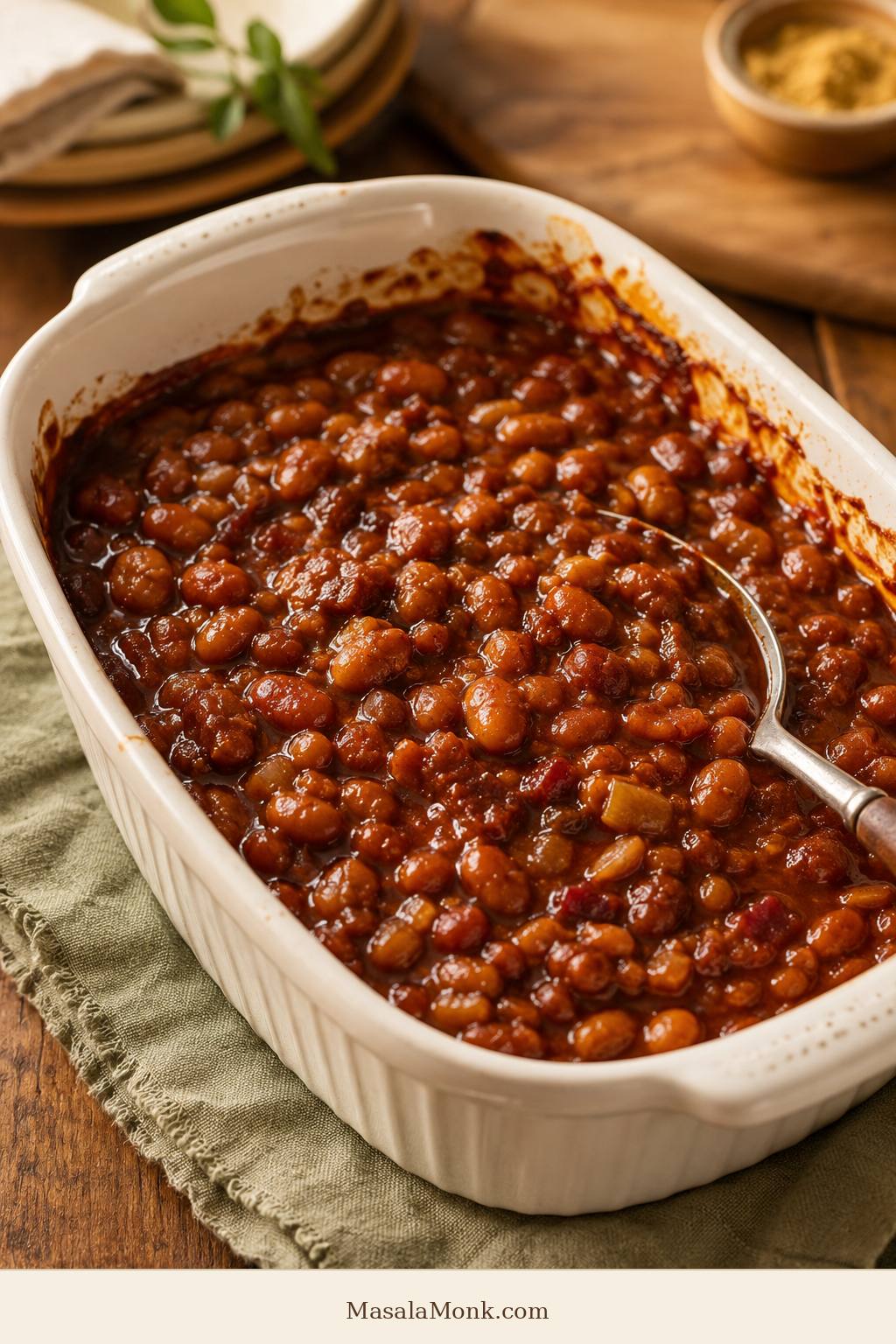
Homemade baked beans in a white ceramic dish with browned edges.

Good baked beans should taste like they took their time, even when you start with cans. The sauce should cling to the spoon, the edges should bubble and darken, and the flavor should land somewhere between sweet, tangy, deeply savory, and just smoky enough to feel slow-cooked.

This baked beans recipe is made for the way people actually cook: with whatever beans are already in the pantry. Plain canned beans, canned baked beans, and dried navy beans can all lead to a thick, balanced, homemade-tasting pan — with bacon, without pork, vegetarian, vegan, lower-sugar, and lower-sodium adjustments built in.

That means fewer store trips, less guessing with sweet canned beans, and dried beans that turn tender before they ever meet the sauce. Brown sugar and molasses bring familiar sweetness, mustard and vinegar add lift, onion and garlic make the beans taste cooked, and the oven gives you those glossy edges people keep sneaking from the pan.

This is the kind of side dish that quietly disappears from the corner of the pan while everyone is still “just tasting.”

For beans as a full dinner instead of a side dish, this bean stew recipe turns canned or cooked beans into a thick, hearty one-pot meal.

Quick Answer: How to Make Baked Beans

For easy homemade baked beans, start with plain canned white beans, navy beans, Great Northern beans, or cannellini beans. Drain and rinse the beans, then simmer them briefly in a sauce made with sautéed onion, ketchup or tomato sauce, a little barbecue sauce, brown sugar or molasses, mustard, apple cider vinegar, smoked paprika, and optional bacon.

Bake uncovered at 350°F / 175°C for 55 to 70 minutes, until the edges bubble, the sauce darkens, and it coats the beans instead of pooling around them. Rest the beans for 10 to 15 minutes before serving so the sauce can settle into the pan.
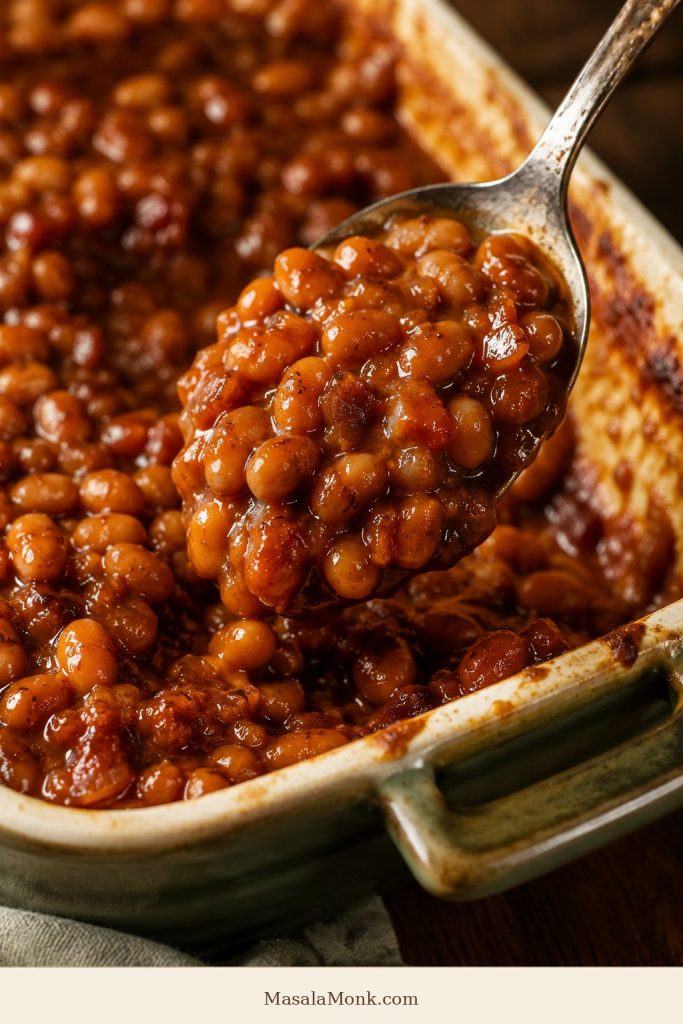
Spoon lifting thick baked beans from a ceramic baking dish.
Use the spoon test before serving. When the beans hold together in a full scoop, the sauce has reduced enough to rest.
Shortcut note: Starting with canned baked beans? Treat sweetness as an adjustment, not the starting point. Most cans already bring sugar, salt, and sauce; your job is to add onion, tang, cooked flavor, and a better baked texture.

This is an American-style baked beans recipe: thicker, darker, sweeter, and more barbecue-friendly than British-style tomato baked beans. For full amounts, jump to the recipe card, or keep reading for bean choices, pan size, texture cues, and fixes for watery, bland, too-sweet, or too-thick baked beans.

Baked Beans at a Glance

Most reliable beans: Plain canned navy beans, Great Northern beans, cannellini beans, or small white beans

Classic from-scratch beans: Dried navy beans

Quickest shortcut: Canned baked beans, adjusted with onion, mustard, vinegar, cooked flavor, and less sugar

Oven temperature: 350°F / 175°C

Cook time: 55 to 70 minutes for the main canned-bean version

Rest time: 10 to 15 minutes

Dish: 9×13-inch / 23×33 cm baking dish or Dutch oven

Texture cue: Bubbling edges, glossy top, and sauce that slowly settles when spooned

Serving cue: Serve after a short rest, when the sauce has stopped running and starts clinging to the beans

Why This Recipe Works

This recipe works because it does not force you into one starting point. A pantry can of white beans, a can of baked beans, and a bag of dried navy beans can all become a good pan — they just need slightly different handling.

The sauce is layered instead of just sweet. Onion and garlic create a savory base. Ketchup or tomato sauce gives body. Brown sugar and molasses bring that familiar baked-bean flavor. Mustard and vinegar keep the sauce bright. Smoked paprika adds a warm barbecue-style note, especially when there is no bacon in the pan.

Uncovered baking does the slow work. It concentrates the sauce, deepens the flavor, and gives the edges that slightly caramelized finish that makes the beans taste like they have been sitting near the grill for hours.

The baked beans balance test: Before baking, the sauce should taste a little stronger than the finished beans: sweet, tangy, savory, and loose enough to reduce in the oven. If it tastes flat, add mustard, vinegar, or a savory note before adding more sugar.

Canned Beans, Canned Baked Beans, or Dried Beans?

The best starting point is not the same for everyone. A weeknight pan, a potluck shortcut, and a from-scratch weekend batch all need slightly different handling.

Choose your starting point

  • Choose plain canned beans when you want the easiest homemade-tasting version.
  • Reach for canned baked beans when you need a fast potluck or cookout shortcut.
  • Start with dried navy beans when you want the most old-fashioned texture and do not mind extra time.
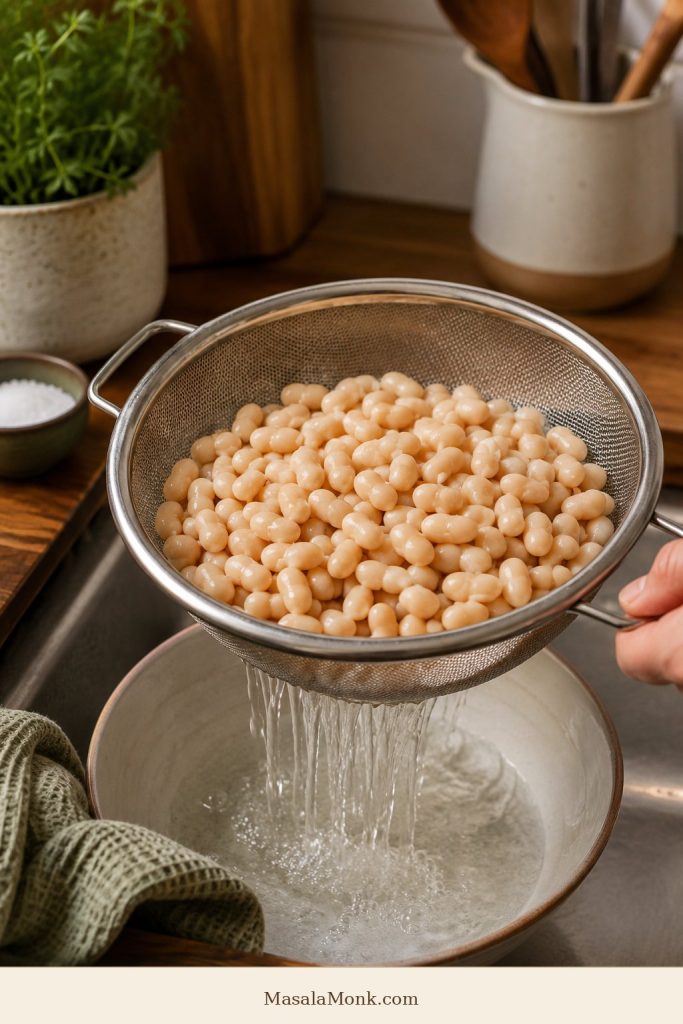
White beans draining in a colander over a bowl.
Plain canned white beans give you control. After draining and rinsing, you can build a cleaner baked beans sauce from scratch.
Starting Point When to Use It What to Know
Plain canned white beans Easy homemade flavor Fast, flexible, and less sweet than canned baked beans. This is the most reliable starting point for this recipe.
Canned baked beans Fast shortcut Already sweet and seasoned. Do not rinse them; adjust the sauce instead.
Dried navy beans From-scratch version Cook until fully tender before adding tomato, vinegar, molasses, or sugar.
Pork and beans Classic cookout shortcut Good with bacon, barbecue sauce, mustard, brown sugar, and a longer uncovered bake.
Cannellini or Great Northern beans Easy substitute Larger and creamier than navy beans, but reliable in a homemade sauce.
Pinto beans BBQ-style variation Earthier and heartier. Good for barbecue-style beans, potlucks, and mixed-bean versions.
Plain canned beans means cooked beans packed in liquid, usually not sweet. Canned baked beans means beans already packed in a seasoned tomato-style sauce. Treat them differently.

For this recipe, plain canned white beans are the easiest starting point. The beans are already tender, but the flavor is still yours to build — sweetness, tang, salt, depth, and final texture all stay in your hands.
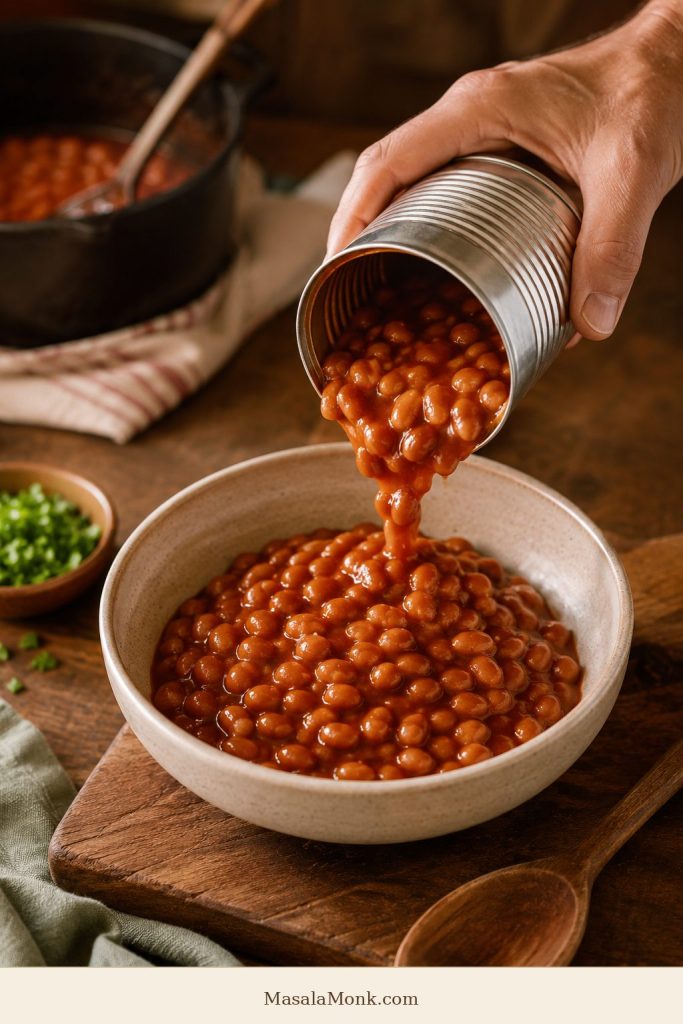
Canned baked beans poured from an unlabeled can into a bowl.
Canned baked beans are already sweet and sauced. Upgrade them with onion, acid, smoke, and oven time instead of more sugar.

Which Beans Work Best for Baked Beans?

The classic bean for baked beans is the navy bean, also called a haricot bean in some places. It is small, creamy, and holds its shape well in a thick sauce.

The good news is that baked beans are forgiving. The exact bean matters less than tenderness, sauce balance, and enough oven time.

  • Navy beans / haricot beans: the classic baked bean choice.
  • Great Northern beans: slightly larger, creamy, and easy to use.
  • Cannellini beans: larger and softer, but very convenient.
  • Pinto beans: good for barbecue-style baked beans.
  • Mixed beans: better for potluck or barbecue-style versions than classic baked beans.

For the cleanest homemade flavor, use plain canned navy beans or Great Northern beans. For the most traditional from-scratch version, use dried navy beans. All you have is cannellini or small white beans? Use them. As long as the beans are tender and the sauce is balanced, the pan will still work.
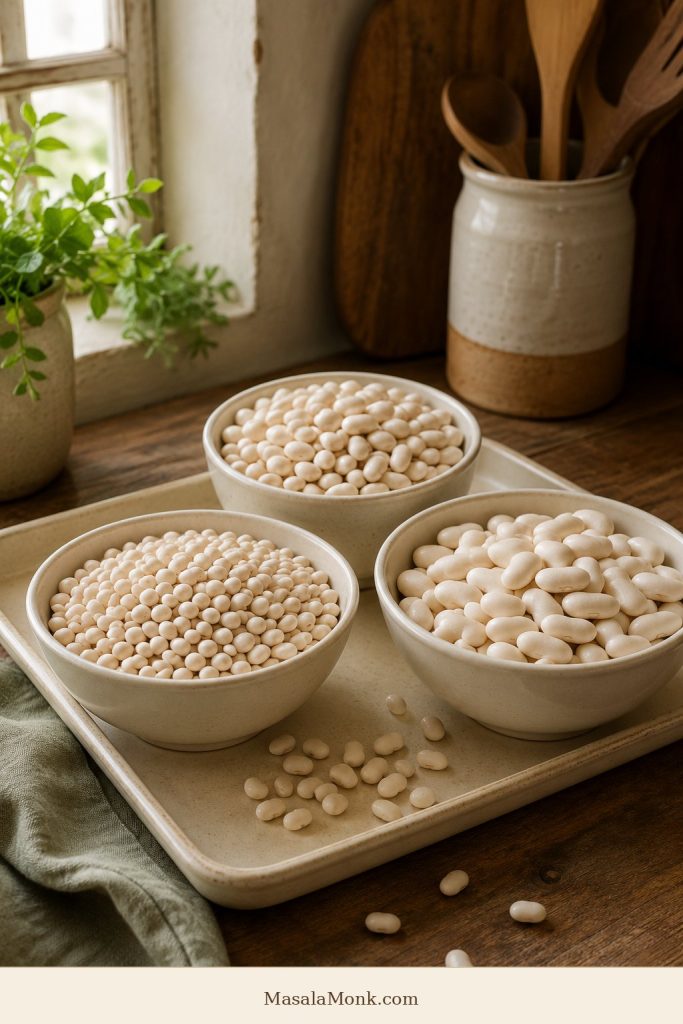
Three bowls showing different white beans for baked beans.
Navy beans are traditional, but Great Northern and cannellini beans also work. Choose white beans that soften well and hold sauce.

For a more complete rice-and-beans meal, this red beans and rice recipe is a better fit than a sweet-savory baked bean side.

Which Pan or Pot Works Best?

The dish changes how quickly the sauce settles around the beans. Wide baking dishes give more surface area, so the sauce tightens faster. Deeper casseroles keep the beans saucier, while a Dutch oven lets you sauté, simmer, and bake in the same pot.

  • 9×13-inch / 23×33 cm baking dish: the most reliable choice for a glossy, spoonable sauce because it gives the beans more surface area.
  • Dutch oven: best for one-pot cooking from stovetop to oven.
  • 2–3 quart casserole dish: works well, but keeps the beans saucier and may need more time.
  • Slow cooker: useful for keeping baked beans warm, but it will not give the same caramelized edges.
  • Thin metal pan: not ideal for long baking because sugary sauce can scorch at the edges or bottom.

Choose the 9×13 dish for a spoonable, glossy sauce. A Dutch oven is better for one-pot convenience. For parties, bake the beans first, then keep them warm in a slow cooker. Need a full slow-cooker beans-and-sausage dinner? Use this slow cooker sausage casserole recipe.
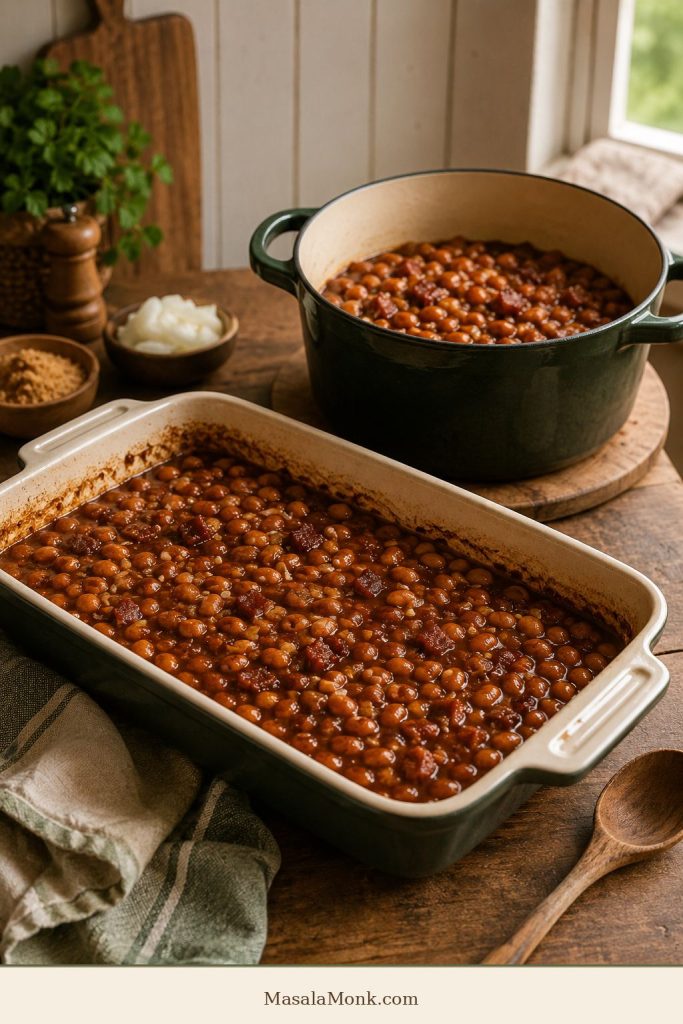
Wide baking dish and Dutch oven shown as baked beans pan options.
The pan changes the result. A wide dish reduces sauce faster, while a deeper Dutch oven keeps baked beans softer and saucier.

Ingredients You’ll Need

This recipe makes one 9×13-inch pan, about 8 to 10 servings.

Beans

Use 3 cans of plain white beans, 15 oz / 425 g each, drained and rinsed. Navy beans, Great Northern beans, cannellini beans, or small white beans all work.

If your cans are 400 g / 14 oz, use 3 cans for the same sauce ratio. Use 4 cans only for a larger batch, and increase the sauce by about one-quarter so the beans do not turn out under-sauced.

Onion and Garlic

Onion gives the sauce its savory base. Garlic adds depth. This is where the canned-bean flavor starts becoming cooked, not just mixed.

Ketchup, Tomato Sauce, or Tomato Paste

Ketchup gives sweetness, tang, and body. Tomato sauce gives a less sweet base. Tomato paste is optional, but useful when you want the sauce to cling better with less added sugar.

Barbecue Sauce

A little barbecue sauce adds cookout flavor and roundness. Use it as a background note, not the whole personality of the dish.

Brown Sugar and Molasses

Brown sugar gives quick sweetness. Molasses gives deeper, darker baked-bean flavor. Together, they create the old-fashioned sweetness people expect from baked beans. Use both for a classic sweet-savory sauce, or reduce the brown sugar for a less sweet pan.

Mustard and Vinegar

Mustard and vinegar keep the sauce balanced. They should not make the beans sour. They should make the sweetness taste brighter and less heavy. This is the difference between beans that taste flat and beans people keep spooning back onto the plate.

Smoked Paprika

Smoked paprika gives a warm, savory edge, especially useful when you are making baked beans without bacon or pork.

Worcestershire, Soy Sauce, or Tamari

A small amount adds rounded flavor. Standard Worcestershire sauce often contains anchovies, so use vegetarian Worcestershire, soy sauce, or tamari for vegetarian or vegan baked beans. A little goes a long way, especially once the sauce reduces.
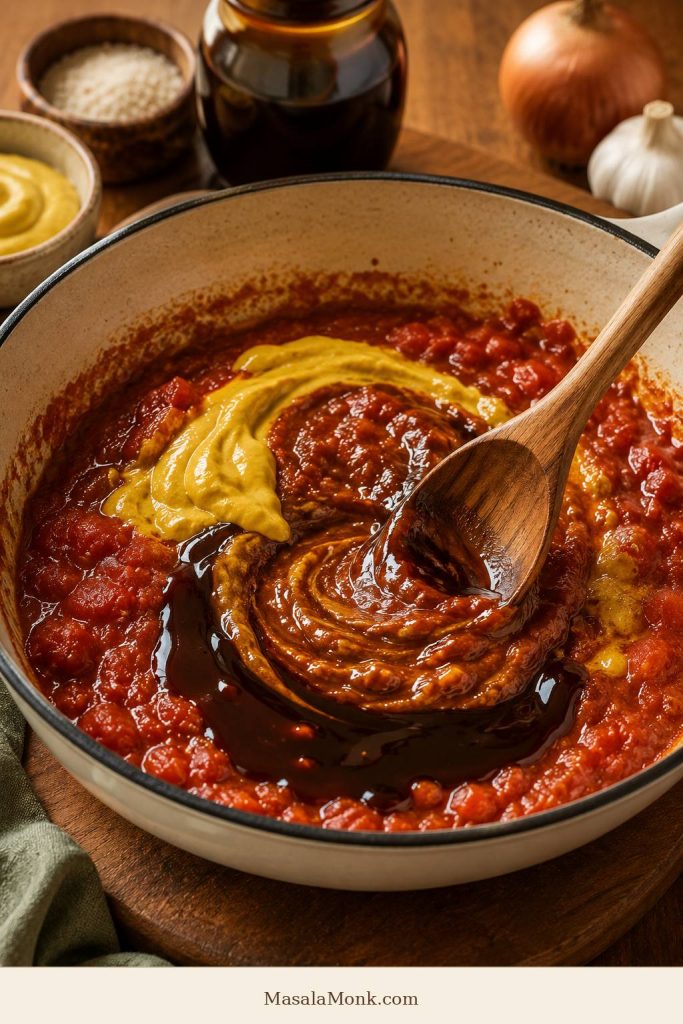
Tomato, mustard, and molasses stirred into baked beans sauce.
Build the sauce in layers: tomato for body, mustard for brightness, molasses for depth, and spice for a slow-cooked finish.

Bacon, Optional

Bacon adds salt, fat, and a savory edge. It is good, but not required. For no-pork baked beans, use olive oil or butter and build flavor with smoked paprika, mustard, vinegar, and a little vegetarian Worcestershire, soy sauce, or tamari.

Important: Starting with canned baked beans instead of plain canned beans? Taste before adding brown sugar or molasses.

What the Sauce Should Look Like

Baked beans are simple, but the texture matters. Too loose, and they taste like beans floating in sauce. Too dry, and they feel heavy. Aim for a sauce that coats the beans, bubbles at the edges, and firms up slightly as it rests.

A loose-looking pan halfway through baking is normal. The beans need room to bake into the sauce, and the final stretch plus the rest time are where the sauce turns spoonable.

Texture cues by stage

Stage What You Should See What It Means
Before baking The beans look saucy and slightly loose. The oven will reduce the sauce, so do not start with a dry mixture.
Halfway through baking The edges bubble first and the top starts to darken slightly. Stir once if the edges are reducing much faster than the center.
At the end The surface looks glossy and the sauce no longer pools like liquid. The beans are nearly ready. The sauce will cling better after resting.
After resting A spoon leaves a slow trail through the beans. This is the best serving texture.

If the sauce looks too thick before baking, add a splash of water, stock, or bean cooking liquid. If it looks watery near the end, keep baking uncovered and let the pan sit before judging the final texture. A little looseness at the end is fine; beans that look perfect the second they leave the oven can become too thick after resting.
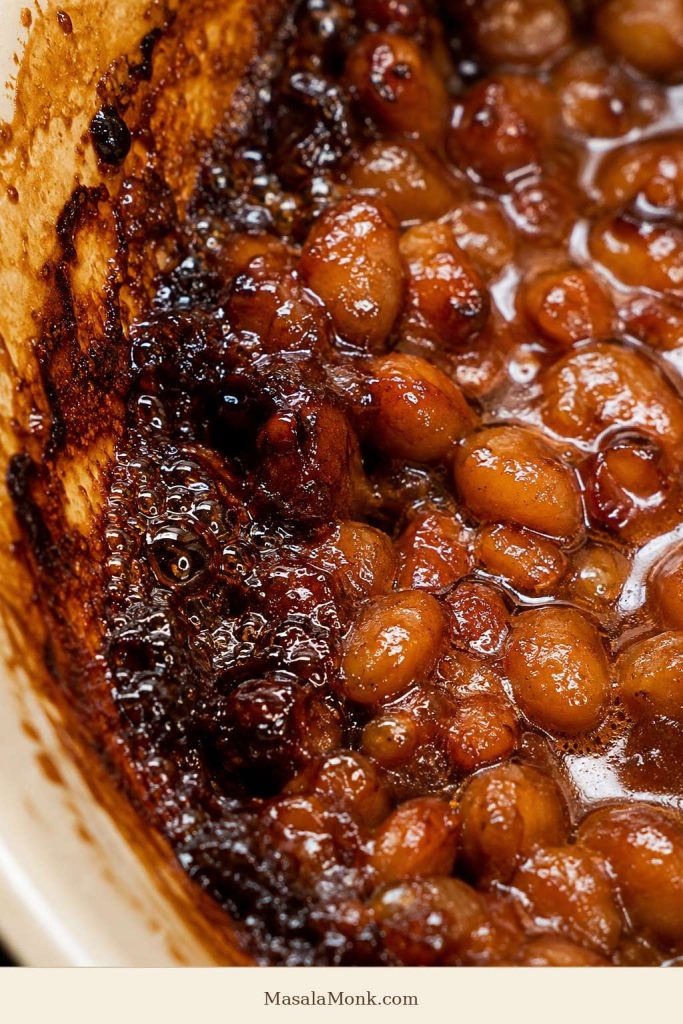
Close-up of baked beans bubbling along the edge of a dish.
Bubbling edges mean the sauce is concentrating. As the sides darken slightly, the baked beans move from saucy to properly baked.

How to Make Baked Beans With Canned Beans

Once the beans and pan are sorted, the method is simple: build flavor in a skillet, let the oven do the slow work, then give the pan a short rest before serving.

1. Heat the Oven

Preheat the oven to 350°F / 175°C. Use a 9×13-inch / 23×33 cm baking dish for more surface area, or a Dutch oven to sauté and bake in the same pot.

2. Cook the Bacon, If Using

If using bacon, cook 4 to 6 slices in a skillet until partly crisp. Remove the bacon, chop it, and keep about 1 to 2 tablespoons of the drippings in the pan. If skipping bacon, heat 2 tablespoons of olive oil, butter, or another cooking fat instead.

3. Sauté the Onion and Garlic

Add 1 finely chopped medium onion and cook for 5 to 7 minutes, until soft and lightly golden. Add 2 minced garlic cloves and cook for another 30 seconds.

This step is small, but it changes the whole dish. It makes the beans taste cooked instead of simply mixed.

Chopped onion sautéing in a skillet with a wooden spoon.
Start with onion when you want homemade flavor. This quick sauté gives canned or plain beans a savory base before the sauce goes in.

4. Build the Sauce

Stir in ketchup or tomato sauce, barbecue sauce, brown sugar, molasses, mustard, vinegar, smoked paprika, and black pepper. Tomato paste makes the sauce thicker and less sweet. Worcestershire, soy sauce, or tamari gives the pan more body when the flavor tastes flat.

Loosen the sauce with ¼ to ⅓ cup / 60 to 80 ml water, stock, or bean cooking liquid if it looks too tight before baking. Let it bubble for 2 to 3 minutes so everything comes together. Hold back extra salt until after the beans have baked and the sauce has concentrated.
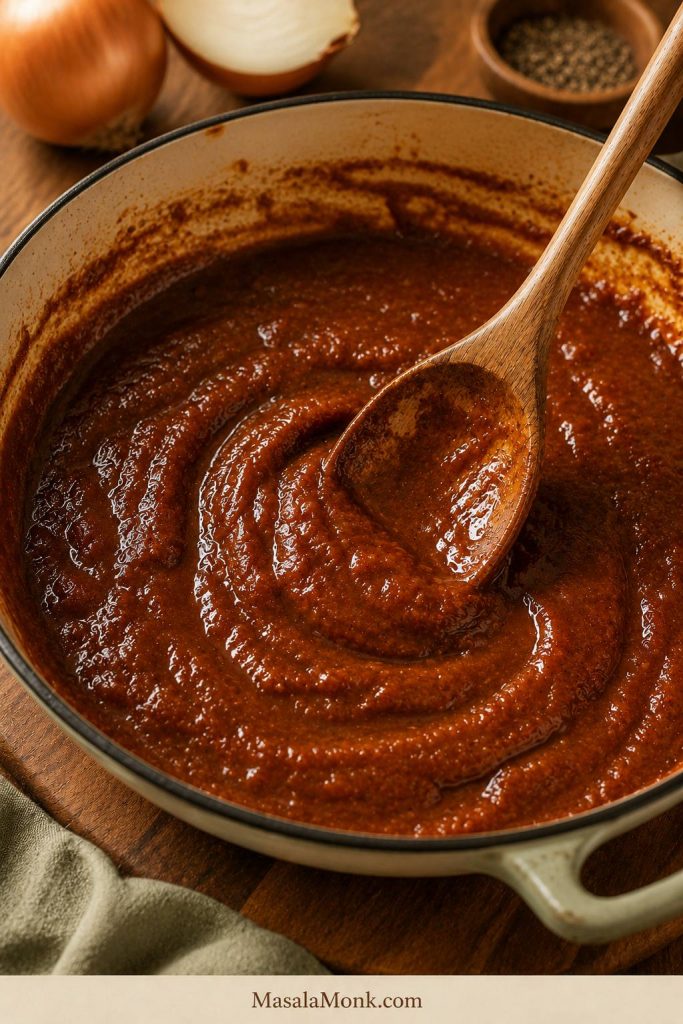
Reddish-brown baked beans sauce coating a spoon in a skillet.
Before adding beans, check the sauce on the spoon. It should taste bold now because the beans will soften the flavor later.

5. Add the Beans

Stir in the drained and rinsed beans gently so they are coated in the sauce. Taste the sauce before baking. It should be sweet, tangy, savory, and slightly stronger than you want the finished dish to be, because the beans will mellow it.
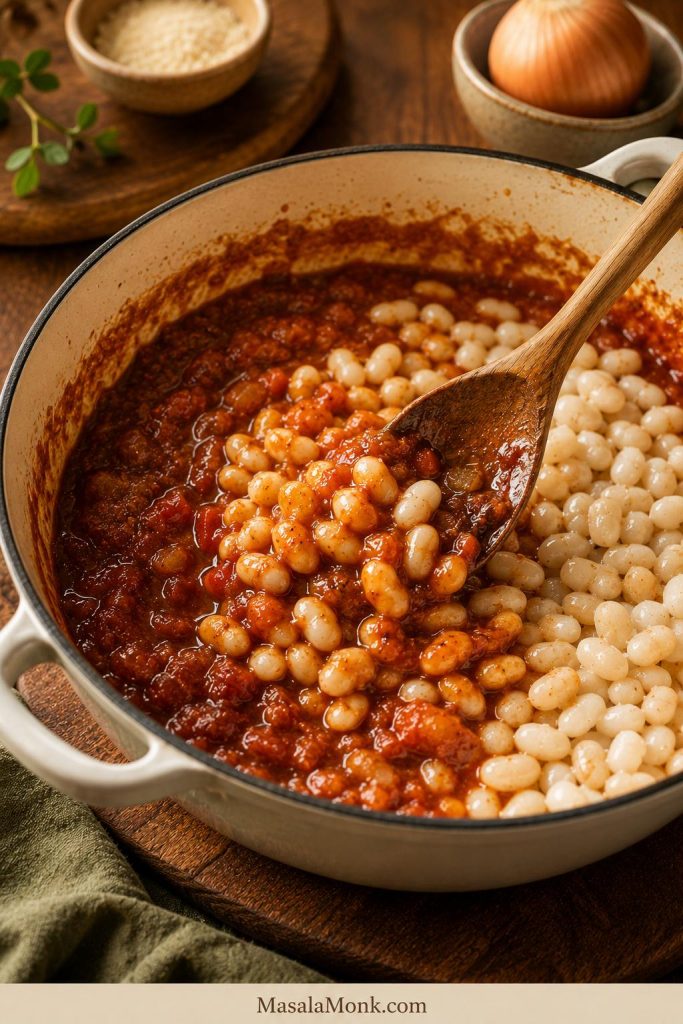
White beans folded into reddish-brown sauce with a wooden spoon.
Fold gently at this stage. The beans should stay mostly whole while the sauce coats them and prepares to reduce in the oven.

6. Bake Uncovered

Transfer the beans to the baking dish. Scatter the chopped bacon over the top if using. Bake uncovered for 55 to 70 minutes, until the edges are bubbling and the sauce has tightened around the beans. Stir once around the halfway point if the edges are getting much darker than the center.
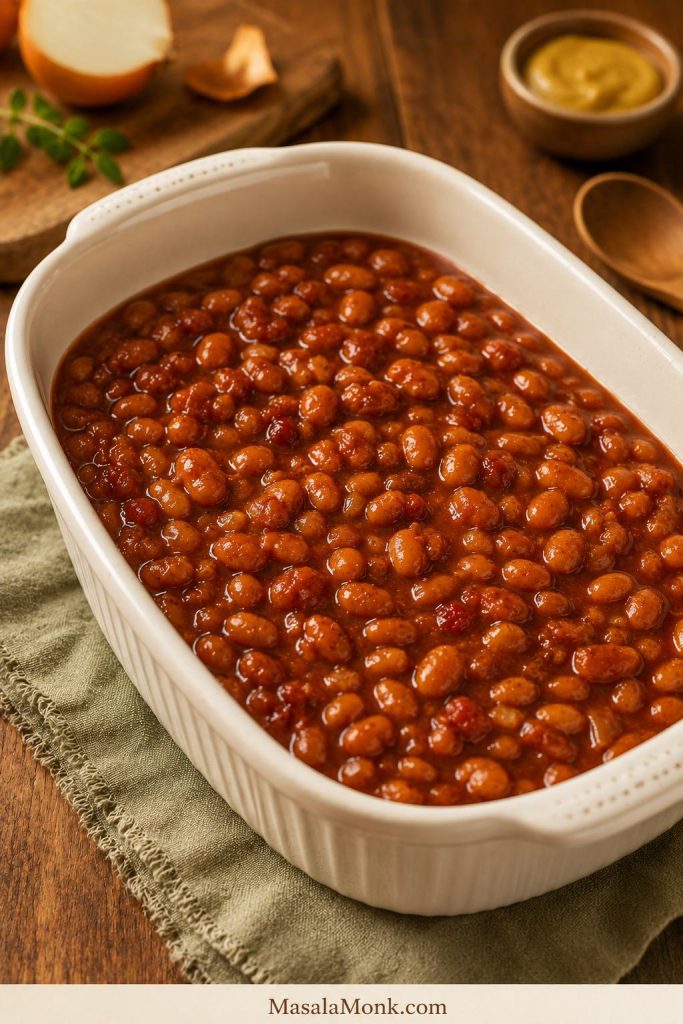
Saucy baked beans in a cream baking dish before baking.
Before baking, the mixture should look looser than the final dish. That extra sauce protects the beans while the oven reduces it.

The pan should still look saucy when it goes into the oven. Uncovered heat will reduce the liquid, darken the edges, and turn the mixture into proper baked beans.
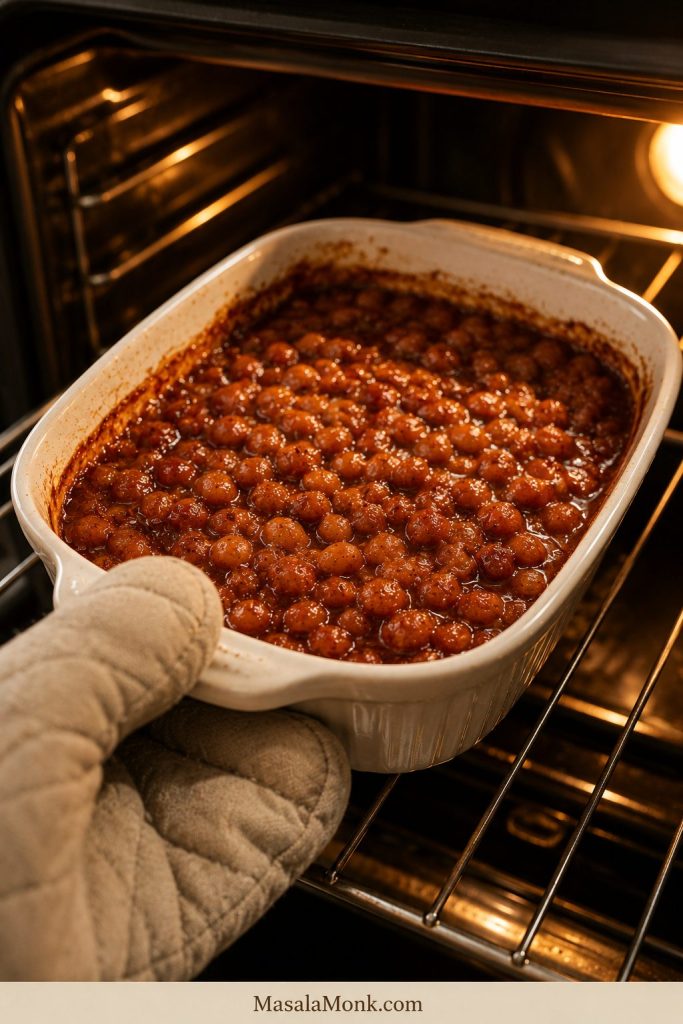
Baking dish of baked beans being placed on an oven rack.
Uncovered oven time is where the recipe changes. The sauce thickens, the edges darken, and the flavors settle into the beans.

The edges usually tell you first. They bubble, darken, and start to look sticky before the center fully catches up.
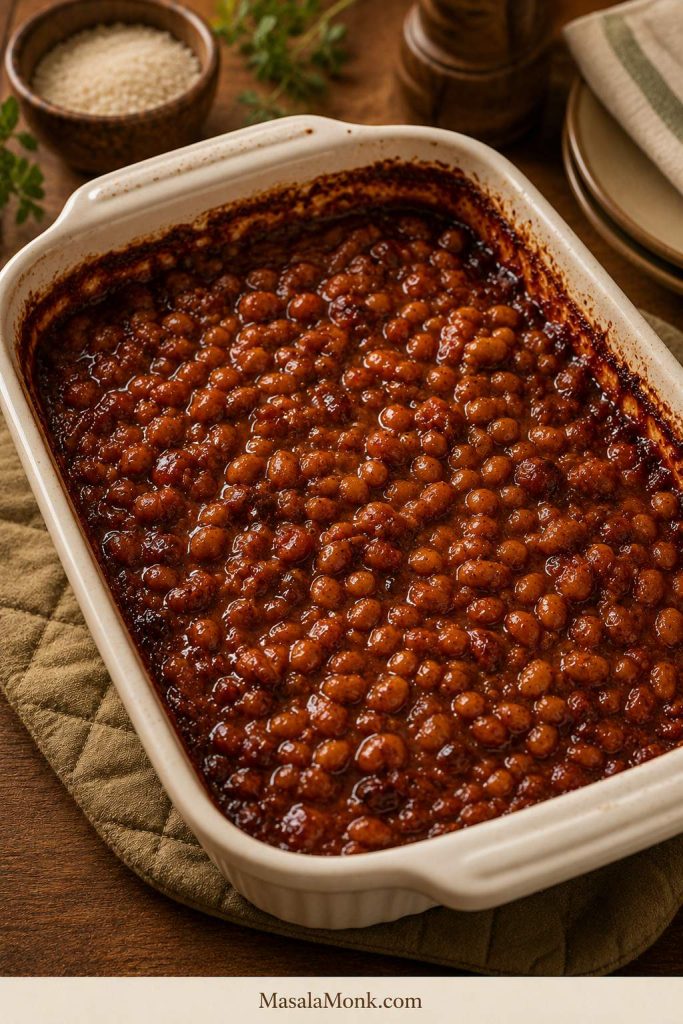
Finished baked beans bubbling in a cream baking dish.
When the pan is bubbling and the edges look darker, stop before it dries out. Resting will finish thickening the sauce.

If the beans still look a little saucy at 45 minutes, that is normal. The final stretch of baking and the short rest after the oven usually bring the sauce together.

7. Rest and Adjust

Let the baked beans rest for 10 to 15 minutes before serving. This is when the sauce stops looking separate and starts tasting settled. Taste after resting, then adjust with a little more vinegar, mustard, black pepper, or salt if needed.
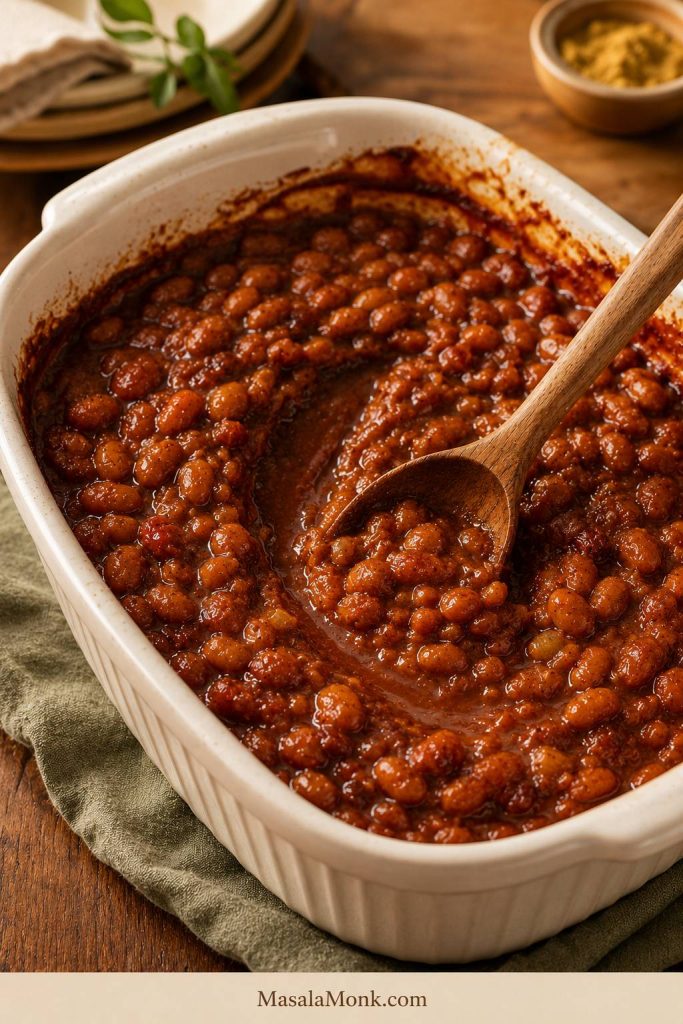
Spoon dragged through rested baked beans, leaving a visible trail.
After resting, drag a spoon through the pan. A slow trail means the baked beans are thick enough for serving.
Doneness cue: The beans are ready when the edges are bubbling, the top looks glossy, and the sauce slowly settles back when you drag a spoon through it.

Recipe Card: Easy Homemade Baked Beans

Tender white beans baked in a sweet-savory tomato-molasses sauce with onion, mustard, vinegar, smoked paprika, and optional bacon. Start with the main canned-bean version below, then use the notes for canned baked beans, dried navy beans, vegetarian, vegan, low-sugar, low-sodium, and no-pork adjustments.

Prep Time
15 minutes
Cook Time
55 to 70 minutes
Rest Time
10 to 15 minutes
Total Time
About 1 hour 30 minutes
Servings
8 to 10

Times are for the canned-bean version. The dried-bean version needs soaking and simmering time before baking.

Equipment

  • 9×13-inch / 23×33 cm baking dish or Dutch oven
  • Large skillet
  • Spoon or spatula
  • Foil, optional

Ingredients

Beans and Base

  • 3 cans plain white beans, 15 oz / 425 g each, drained and rinsed, or 3 cans white beans, 400 g / 14 oz each, drained and rinsed
  • 2 tablespoons olive oil, butter, or bacon drippings
  • 1 medium onion, finely chopped
  • 2 garlic cloves, minced, or ½ teaspoon garlic powder

Sauce

  • ½ cup / 120 ml ketchup or tomato sauce
  • ¼ cup / 60 ml barbecue sauce
  • ¼ cup / 50 g brown sugar
  • 2 tablespoons molasses or maple syrup
  • 2 tablespoons yellow mustard or Dijon mustard
  • 1 tablespoon apple cider vinegar, plus more to taste
  • 1 teaspoon smoked paprika
  • ½ teaspoon black pepper
  • ¼ to ⅓ cup / 60 to 80 ml water, stock, or bean cooking liquid, as needed

Optional Flavor Boosters

  • 1 tablespoon tomato paste, for a thicker sauce
  • 1 teaspoon Worcestershire sauce, soy sauce, or tamari
  • ⅛ teaspoon liquid smoke, optional; use up to ¼ teaspoon only for a stronger smoky flavor
  • Salt, added carefully at the end, to taste

Optional Bacon

  • 4 to 6 slices bacon

Instructions

  1. Preheat the oven to 350°F / 175°C.
  2. If using bacon, cook it in a skillet until partly crisp. Remove, chop, and set aside. Keep 1 to 2 tablespoons of the drippings in the pan. If skipping bacon, heat olive oil or butter instead.
  3. Add the onion and cook for 5 to 7 minutes, until soft and lightly golden. Add the garlic and cook for 30 seconds.
  4. Stir in the ketchup or tomato sauce, barbecue sauce, brown sugar, molasses, mustard, vinegar, smoked paprika, and black pepper. Add tomato paste, Worcestershire, soy sauce, tamari, or liquid smoke if using. Add a splash of water, stock, or bean cooking liquid if the sauce looks too tight. Do not add extra salt yet unless you are sure your beans and sauces are unsalted.
  5. Stir in the drained beans gently until coated.
  6. Transfer to a 9×13-inch / 23×33 cm baking dish or keep in a Dutch oven. Scatter bacon over the top if using.
  7. Bake uncovered for 55 to 70 minutes, until bubbling at the edges and glossy. Stir once if the edges are getting darker faster than the center.
  8. Rest for 10 to 15 minutes before serving. Taste and adjust with a little more vinegar, mustard, black pepper, or salt if needed.

Notes

Bean starting points

  • Balance test: Before baking, the sauce should taste sweet, tangy, savory, and slightly stronger than the finished beans.
  • Canned baked beans: Use 2 large cans, about 28 oz / 794 g each. Do not rinse them. Start with no extra sugar; add onion, mustard, vinegar, smoked paprika, and a little barbecue sauce.
  • Dried beans: For a batch close to the main recipe, use 12 oz / 340 g dried navy beans. Soak overnight, simmer until creamy, then sauce and bake. With 1 lb / 454 g dried beans, increase the sauce by about one-third.

Adjustments

  • Vegetarian baked beans: Skip bacon and use olive oil or butter. Add smoked paprika, mustard, vinegar, and vegetarian Worcestershire or soy sauce for rounded flavor.
  • Vegan baked beans: Use olive oil, maple syrup or molasses, smoked paprika, tomato sauce, mustard, vinegar, and tamari or soy sauce. Check that your barbecue sauce is vegan.
  • Low-sugar baked beans: Reduce brown sugar by half, use tomato sauce instead of ketchup, and balance the sauce with mustard, vinegar, tomato paste, and smoked paprika.
  • Low-sodium baked beans: Rinsed plain beans are easier to control than canned baked beans. Use low-sodium tomato sauce and salt only at the end.
  • Salt control: Bacon, canned baked beans, Worcestershire, soy sauce, tamari, and salted beans can all add salt, so taste before adding more.
  • Thicker baked beans: Bake uncovered longer, use a wider dish, or mash a few spoonfuls of beans and stir them back in.
  • Storage: Refrigerate for 3 to 4 days or freeze for up to 3 months.
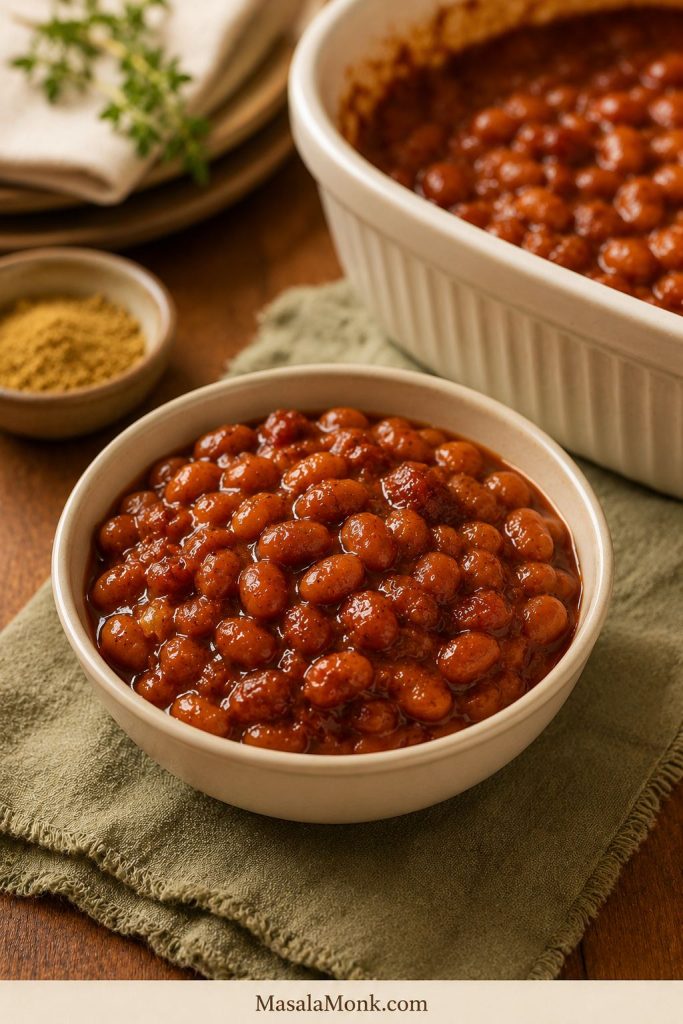
Bowl of homemade baked beans served beside the baking dish.
A good serving bowl should show tender beans coated in sauce, without a watery pool at the bottom.

Back to top ↑

How to Make Baked Beans From Dried Navy Beans
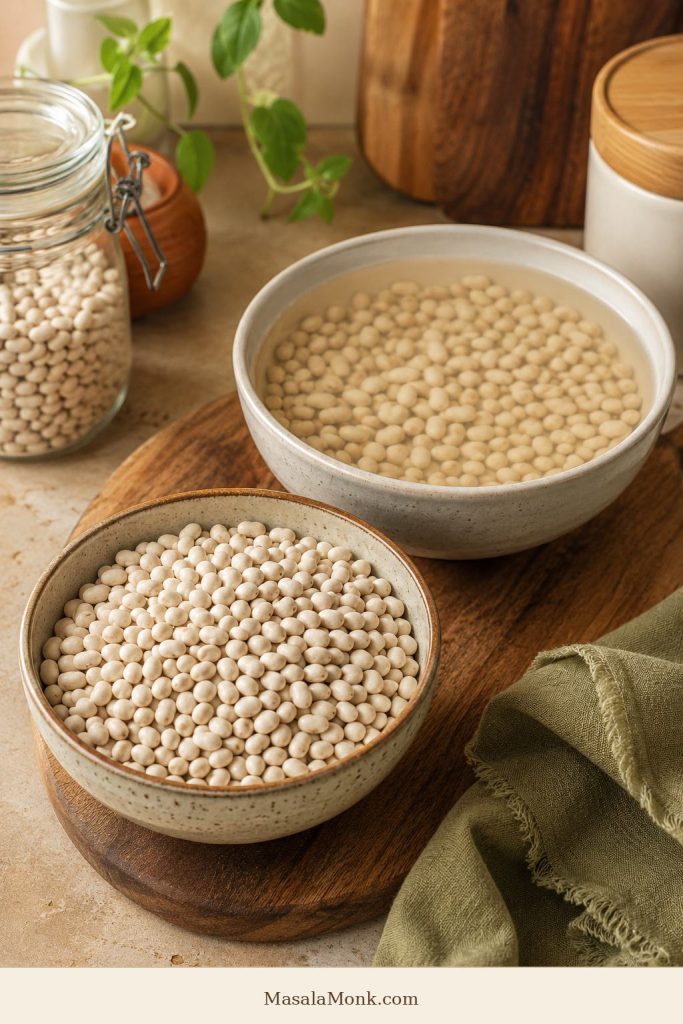
For a from-scratch batch close to the main canned-bean recipe, use 12 oz / 340 g dried navy beans. A full 1 lb / 454 g bag makes a larger batch, so increase the sauce by about one-third.

Dried navy beans and soaked beans in bowls on a wooden table.
Dried navy beans need to turn tender first. Then the molasses, mustard, tomato, and vinegar can season them without keeping them firm.

Think of dried beans as a two-step job: first make them tender in water, then make them flavorful in sauce.

Rinse the beans, then soak them in plenty of water for 8 to 12 hours. Drain and rinse again. Put the beans in a pot with fresh water and simmer until tender, usually 45 to 90 minutes, depending on the age of the beans.
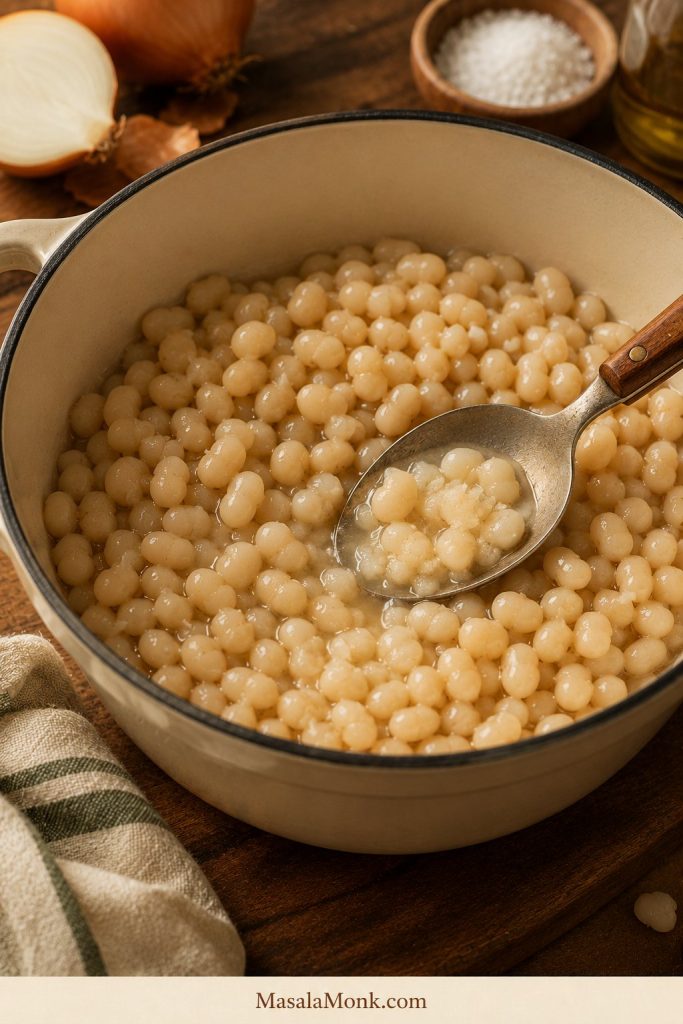
The beans should be creamy inside before they go into the sauce. Do not stop when they are merely “not crunchy.” Once tomato, vinegar, molasses, or sugar are added, firm beans can take much longer to soften.

Cooked navy beans before sauce with a spoon pressing into them.
Test dried beans before adding sweet or acidic sauce. Otherwise, the flavor may be right while the beans stay too firm.

Save some of the bean cooking liquid before draining. Once the beans are tender, continue with the sauce and baking method above. Bake at 325°F / 163°C for a deeper, slower version, or 350°F / 175°C for the standard version. Add reserved bean liquid if the beans get too thick before the sauce is done.

Important dried-bean rule: Tenderness comes before sauce. Cook dried beans until creamy and tender before adding tomato, vinegar, molasses, or sugar.

Can You Quick-Soak the Beans?

Yes. Cover rinsed beans with plenty of water, bring them to a boil, boil for 2 minutes, then turn off the heat. Cover and let them rest for 1 hour. Drain, rinse, and simmer in fresh water until tender before adding the sauce.

Can You Skip Soaking the Beans?

You can, but the simmering time will be longer and less predictable. Rinse the beans, cover them with plenty of water, and simmer until fully tender before adding them to the sauce.

If beans stay firm after a long simmer, they may be old. Keep simmering them in fresh water before adding sauce; do not try to force them tender in a sweet-acidic sauce.

How Much Cooked Bean Do You Get From Dried Beans?

One pound / 454 g dried navy beans usually gives roughly 6 to 7 cups cooked beans, depending on the beans and cooking time. That is more than the main canned-bean batch, so increase the sauce if using the full pound.

For a deeper dry-bean preparation guide, North Dakota State University Extension has a useful all-about-beans guide.

How to Make Canned Baked Beans Taste Homemade

Canned baked beans can taste like a real baked side dish, not just something warmed from a tin. The fastest route is simple: keep the can as the base, add onion and tang, hold back on sweetness, then bake uncovered until the sauce tastes cooked instead of canned.

Use 2 large cans of baked beans, about 28 oz / 794 g each. Do not rinse them; the sauce is part of the shortcut. Sauté a small chopped onion in oil, butter, or bacon drippings, then add mustard, apple cider vinegar, smoked paprika, a little barbecue sauce, and bacon if using. Add extra sugar only after tasting.
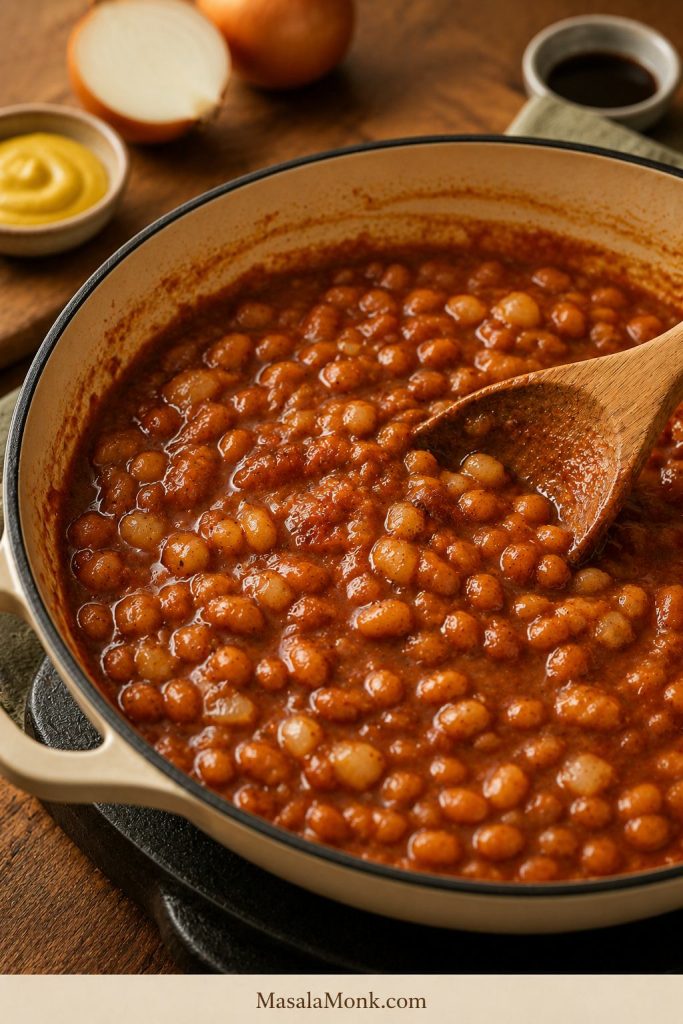
Canned baked beans stirred in a skillet with onion and seasoning.
To make canned baked beans taste homemade, warm them with onion, mustard, vinegar, and smoky seasoning before baking.

Bake uncovered at 350°F / 175°C for 45 to 60 minutes, until bubbling and glossy. If the beans still look loose, give them more uncovered time. A top that darkens too quickly just needs one stir and a loose cover.
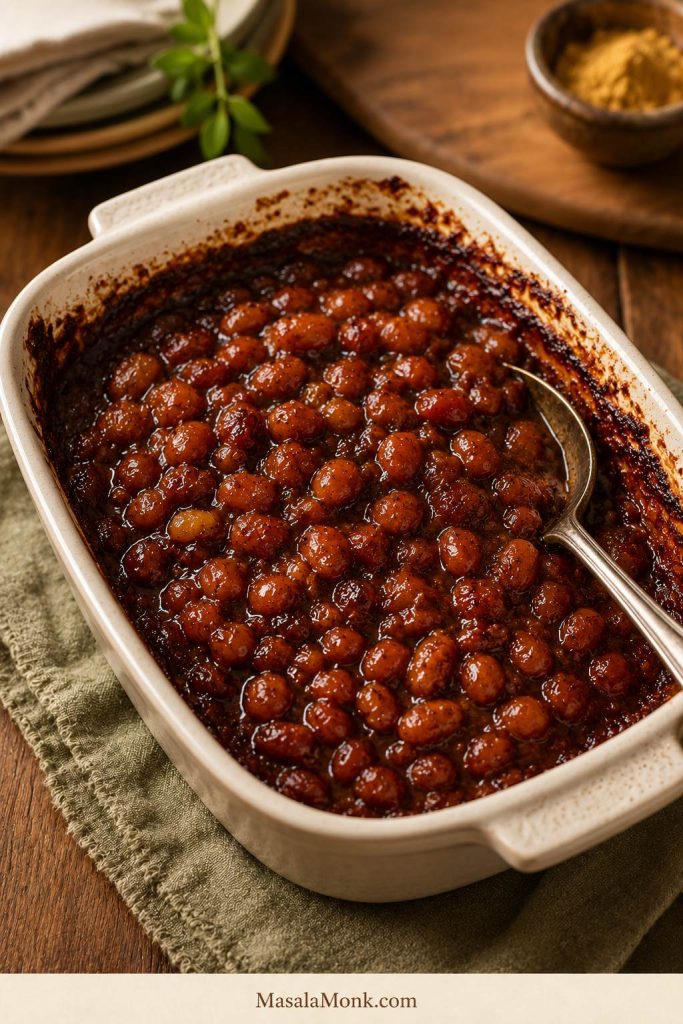
Upgraded canned baked beans baked in a small casserole dish.
After baking, the shortcut should look darker, thicker, and more cooked-in. That is the difference between opened and upgraded.
Canned baked beans usually need onion, tang, and enough cooked flavor to stop tasting straight from the can — not more sweetness first.

Quick Fixes for Canned Baked Beans

Problem What to Add or Do
Too sweet Add mustard, vinegar, tomato paste, smoked paprika, or more unsweetened beans.
Watery sauce Bake uncovered, use a wider dish, simmer first, or mash a few beans.
Bland flavor Add sautéed onion, garlic, mustard, smoked paprika, Worcestershire, soy sauce, or tamari.
Too salty Add unsalted beans, tomato sauce, or a splash of water. Avoid adding more BBQ sauce or bacon.
Thin sauce Bake longer uncovered, use tomato paste, or mash a small portion of beans.
Canned taste Sauté onion first, add acid and rounded flavor, then bake uncovered until the sauce darkens and clings to the beans.

A slow cooker is useful for keeping canned baked beans warm, but it will leave them softer and saucier than the oven. Bake first for the best flavor, then hold warm for serving.

Baked Beans Time and Temperature Guide

The oven temperature changes the finish. A hotter oven reduces the sauce quickly. A lower oven gives a deeper, slower flavor. For most home cooks, 350°F / 175°C is the most reliable default because it tightens the sauce without drying the beans too fast.

Method Temperature Time Use It For What to Watch
Quick canned baked beans 400°F / 204°C 30–35 minutes Fast weeknight side Reduces quickly, so watch for dry edges.
Standard baked beans 350°F / 175°C 55–70 minutes Most reliable method Good balance of reduction and control.
Low-and-slow baked beans 325°F / 163°C 1½–2 hours Deeper cookout flavor Add liquid if the sauce gets too tight before flavor develops.
Dried bean baked beans 325–350°F / 163–175°C 1½–3 hours after beans are cooked From-scratch version Beans must be fully tender before saucing.
Slow cooker baked beans Low 3–5 hours for canned base Potlucks and keeping warm Convenient, but less caramelized and often saucier.

If you are building a holiday or potluck oven schedule, baked beans also sit well beside a 350°F side like green bean casserole. For a sweeter holiday table, they can share the make-ahead plan with sweet potato casserole.

Should Baked Beans Be Covered or Uncovered?

Bake baked beans uncovered when you want the sauce to reduce, tighten, and darken around the edges. This is the most reliable method for this version.

Cover the dish when the beans are drying out before they are hot and tender, or when the edges are darkening too quickly. For very saucy beans, bake covered for the first 30 minutes, then uncover and continue baking until the sauce has lost its watery edge.
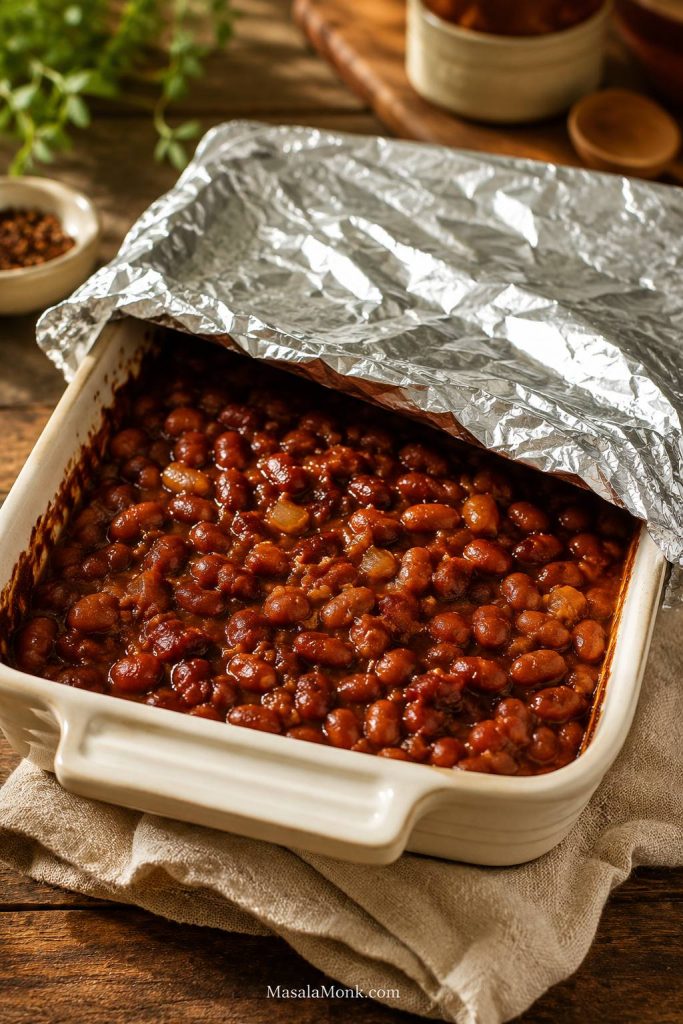
Easy rule: Watery beans need uncovered baking. Dry edges need a stir and a loose cover.
Baked beans loosely covered with foil lifted at one corner.
Use foil only when the edges darken too fast. Keep it loose so steam can escape and the sauce can still finish.

Easy Baked Beans Variations

Once the basic pan is working, these small changes let you take it toward BBQ, Boston-style, vegetarian, vegan, low-sugar, or no-pork baked beans without starting over.

Southern BBQ Baked Beans

This is the cookout version: a little bolder, a little smokier, and ready for a plate with ribs, hot dogs, grilled chicken, cornbread, or air fryer burgers. Lean more into barbecue sauce, smoked paprika, bacon, and brown sugar, but stop before the beans taste like bottled sauce.
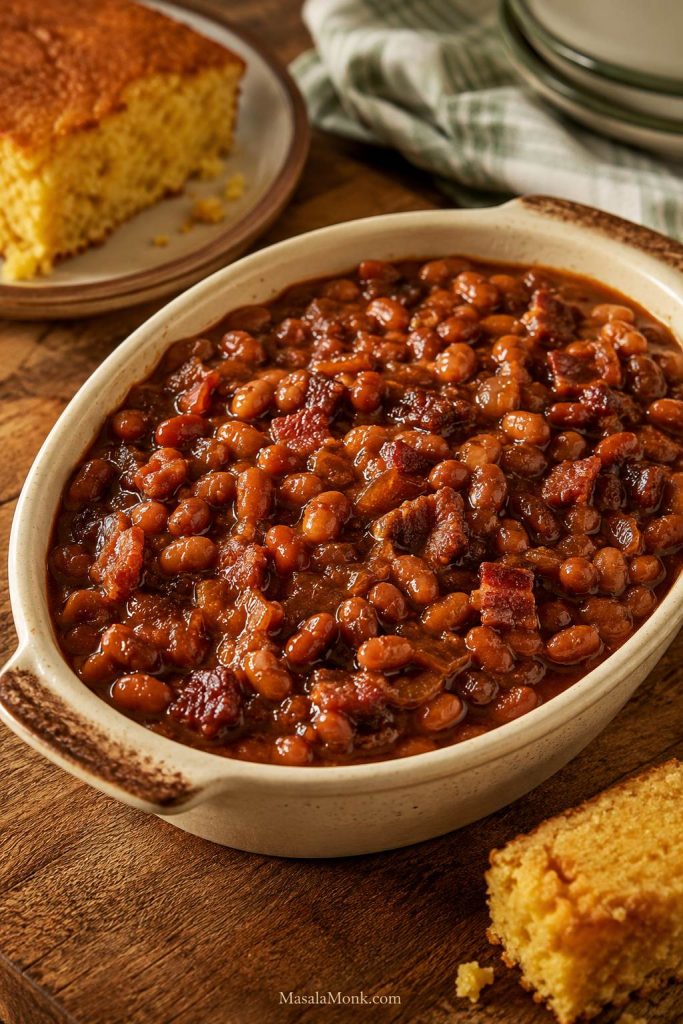
Southern-style baked beans with bacon served beside cornbread.
Southern BBQ baked beans should feel smoky and bold. Bacon, darker sauce, and cornbread push them toward cookout territory.

Boston-Style Baked Beans

Boston-style baked beans are darker, slower, and more molasses-forward. Lean on navy beans, molasses, mustard, onion, and bacon or salt pork, then bake lower and slower for a more traditional pan.
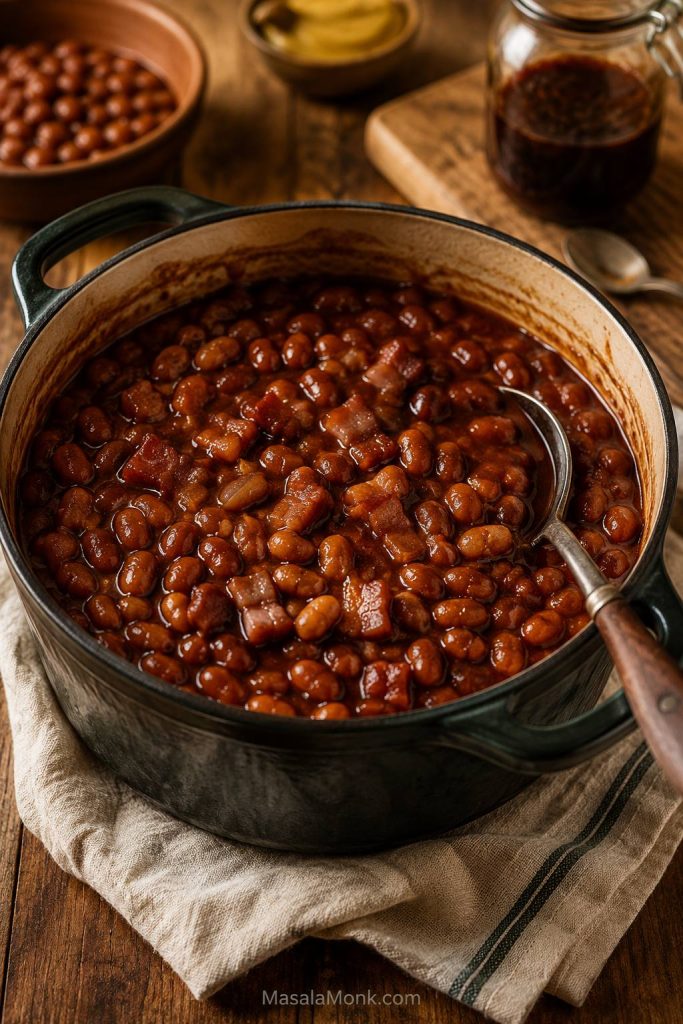
Boston-style baked beans in a dark Dutch oven with molasses sauce.
Boston-style baked beans lean deeper and more molasses-forward. Navy beans and a slower bake give this version its old-fashioned feel.

Vegetarian Baked Beans

Vegetarian baked beans still need the same rounded, cookout-style flavor. Skip the bacon, but replace what it usually brings: richness from olive oil or butter, smoke from paprika, brightness from mustard and vinegar, and a salt-and-umami note from vegetarian Worcestershire, soy sauce, or tamari.

Vegan Baked Beans

Vegan baked beans can still taste full and glossy. Use olive oil instead of butter or bacon fat, maple syrup or molasses for sweetness, tomato sauce or ketchup for body, and tamari or soy sauce for a deeper finish. Standard Worcestershire sauce often contains anchovies, so use vegetarian Worcestershire, soy sauce, or tamari instead. Check that your barbecue sauce is vegan too.
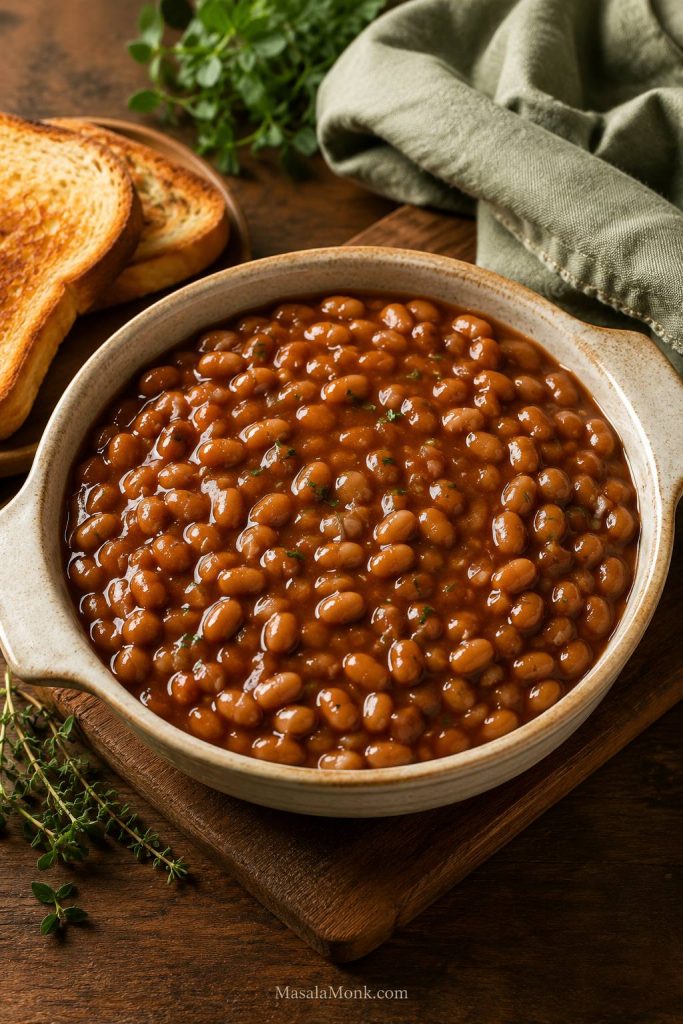
Vegan baked beans in a cream dish with toast nearby.
Vegan baked beans still need savory depth. Onion, smoked paprika, mustard, vinegar, and tamari can replace the bacon backbone.

For a lighter plant-based plate, pair these beans with a fresh chickpea salad or add homemade falafel for a more filling spread.

Low-Sugar Baked Beans

Low-sugar baked beans should still taste glossy, tangy, and cookout-worthy — just not candy-sweet. The easiest route is plain canned beans plus tomato sauce, mustard, vinegar, onion, smoked paprika, and just enough molasses for depth.

Start with tomato sauce instead of ketchup, cut the brown sugar in half, and taste before adding more sweetness. Some barbecue sauces are as sweet as ketchup, so choose a less sweet sauce or lean on tomato paste and warm spice instead.

Low-Sodium Baked Beans

Plain canned beans give you the most control because you can rinse them, choose your tomato base, and add salt only after the sauce has reduced. Choose low-sodium or no-salt-added canned beans when possible, rinse well, use low-sodium tomato sauce, and go easy on barbecue sauce, Worcestershire, soy sauce, bacon, and added salt.

For flavor without more salt, lean on onion, garlic, mustard, vinegar, smoked paprika, tomato paste, and a small amount of molasses.

No-Pork Baked Beans

No-pork baked beans need a little help replacing the smoky, salty backbone bacon usually gives. Caramelized onion, smoked paprika, mustard, vinegar, and a small splash of soy sauce, tamari, or vegetarian Worcestershire do the job well. Liquid smoke can help too, but start with only ⅛ teaspoon.

For a no-pork protein plate, serve the beans with baked chicken breast and a crisp salad instead of bacon-heavy sides.

Spicy Baked Beans

To make the pan spicy, build heat slowly so it supports the sweet-smoky sauce instead of taking over. Chipotle powder, cayenne, hot sauce, jalapeño, chilli flakes, or diced green chillies all work.

American vs British Baked Beans

American-style baked beans and British-style baked beans are related, but they do not taste the same. This recipe leans American-style: thicker, sweeter, darker, and more suited to BBQ plates and potlucks. British-style baked beans are usually softer, more tomato-forward, and often served on toast or baked potatoes.

  • American baked beans: thicker, sweeter, often smoky, with molasses, brown sugar, mustard, BBQ sauce, and optional bacon.
  • British-style baked beans: softer, more tomato-forward, less smoky, and usually served on toast, baked potatoes, or breakfast plates.

For a British-style version, skip the barbecue sauce, reduce the sugar, use tomato sauce or passata, and keep the sauce looser and more tomato-forward.

Common Baked Beans Mistakes to Avoid

  • Adding full sugar to canned baked beans: Taste first. They may already be sweet enough.
  • Skipping the onion step: Sautéed onion is one of the easiest ways to make canned beans taste homemade.
  • Covering the dish the whole time: Covered beans stay saucier. Uncovered baking reduces the sauce.
  • Adding acidic sauce before dried beans are tender: Tomato, vinegar, molasses, and sugar can slow softening.
  • Using a dish that is too deep: A deep dish reduces slowly. Use a wider dish if you want the sauce to tighten faster.
  • Skipping the rest time: Baked beans become more spoonable after 10 to 15 minutes out of the oven.
  • Salting too early: Bacon, canned beans, BBQ sauce, Worcestershire, soy sauce, and canned baked beans can all add salt.

How to Fix Baked Beans

Even if the pan does not look perfect when it comes out of the oven, baked beans are forgiving. Most problems are easy to fix with time, heat, or one balancing ingredient.
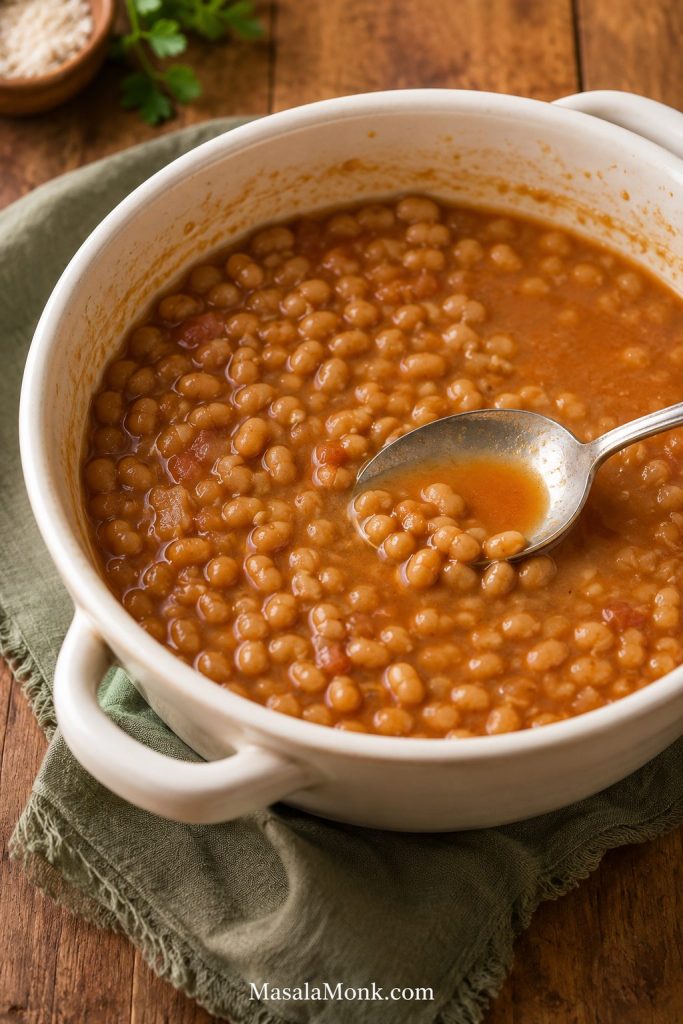
Watery baked beans in a deep cream casserole with loose sauce.
Thin sauce around the spoon means the baked beans need more uncovered time. Let the liquid reduce before serving.
Problem Fix
Watery baked beans Bake uncovered longer, use a wider dish, simmer the sauce first, or mash some beans.
Too sweet Add vinegar, mustard, tomato paste, smoked paprika, or more unsweetened beans.
Salty sauce Add unsalted beans, tomato sauce, or a splash of water; serve with rice or potatoes.
Overly thick beans Add water, stock, tomato sauce, or bean cooking liquid.
Bland flavor Add salt carefully, mustard, vinegar, smoked paprika, onion, garlic, Worcestershire, soy sauce, or tamari.
Hard dried beans Dried beans were not cooked enough before adding sauce. Simmer them until creamy before baking.
Dry baked beans Add liquid, cover loosely, and reduce the bake time next time.
Burned edges Lower the oven temperature, stir once, or use a heavier dish.

If your beans taste flat, they probably need tang, salt, or a deeper savory note — not more sugar. For thin beans, keep baking uncovered or mash a few beans before serving.
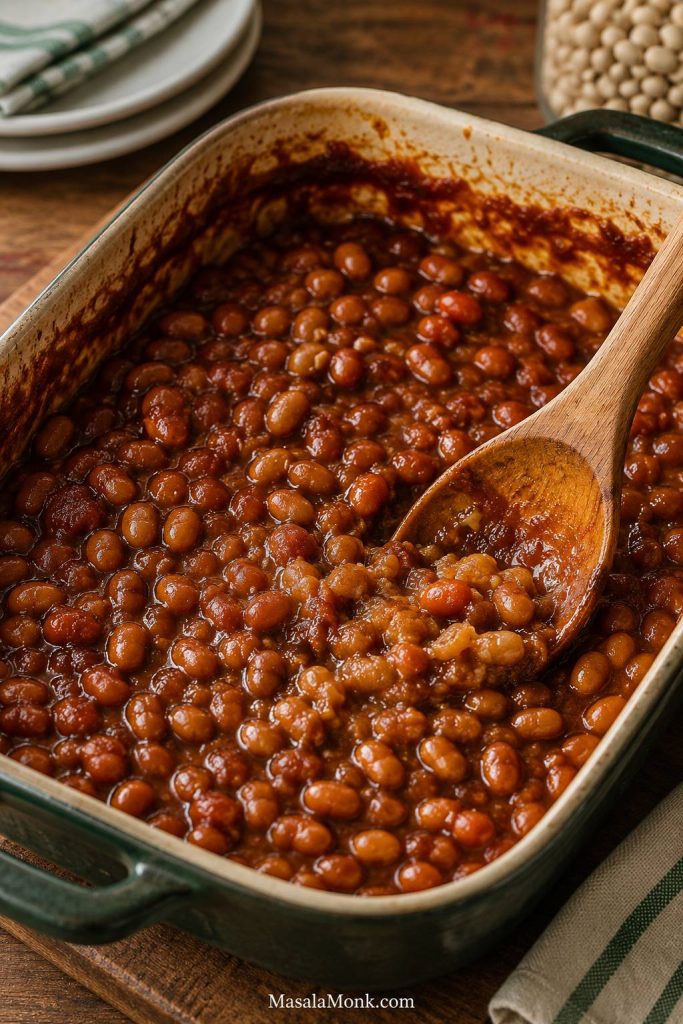
Thickened baked beans with reduced sauce and a spoon in the pan.
To thicken baked beans, remove moisture or add body. Bake uncovered longer, use a wider pan, or mash a few beans in.

What to Serve With Baked Beans

Baked beans can be a side dish, a potluck pan, or part of a simple comfort meal. They sit naturally beside smoky grilled foods like slow cooker pulled pork, but they can also turn toast, rice, potatoes, or eggs into something more filling.

Think of baked beans as the warm, saucy anchor on the plate. For the best plate, pair them with one smoky or grilled main, one crisp side, and one plain starch so the meal has contrast.
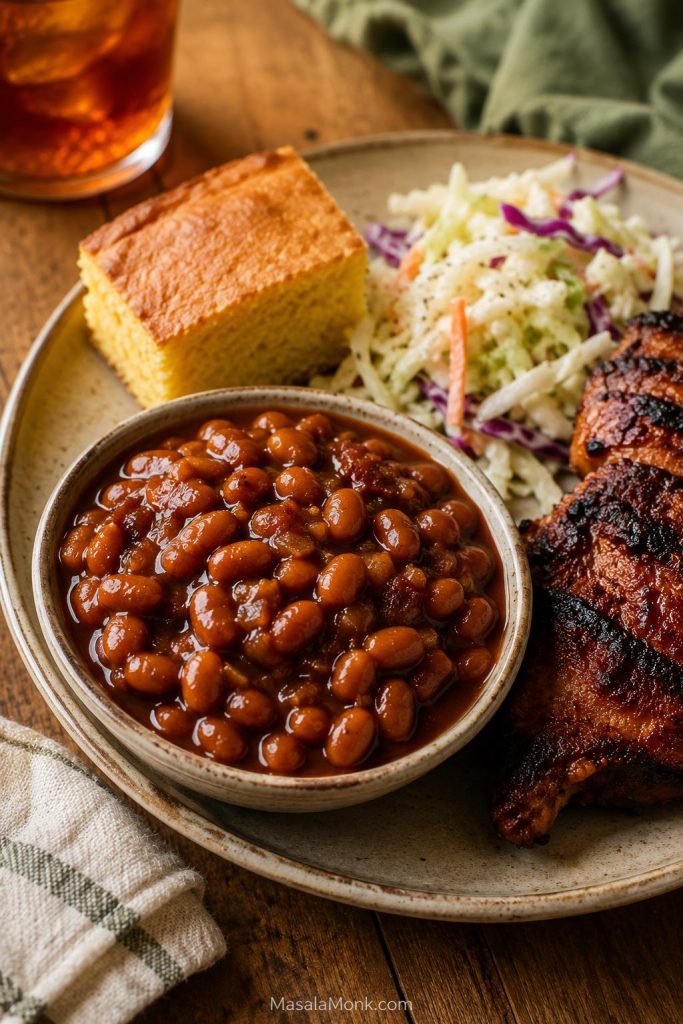
Baked beans served with slaw, cornbread, and grilled meat.
Build the plate with contrast: smoky grilled food, crisp slaw, and cornbread or bread to balance the sweet-savory beans.

For a BBQ or Cookout Plate

Build the plate around contrast: smoky meat, cool salad, crisp slaw, and these warm beans.

  • Burgers
  • Hot dogs
  • Ribs
  • Sausages
  • Grilled chicken
  • Corn on the cob
  • Potato salad
  • Coleslaw
  • Cornbread

A smoky sliced-meat plate works just as well as sandwiches, so these beans pair nicely with smoked pork loin. Creamy potato salad or crisp coleslaw adds the cold, fresh contrast needed against the sweet-savory sauce.

Easy Comfort Meal

Choose a plain starch when you want the beans to feel more like dinner. Toast, rice, potatoes, and eggs all catch the sauce well without competing with it.

  • Toast
  • Rice
  • Baked potatoes
  • Eggs
  • Roasted vegetables
  • Buttered bread

For a cozier plate, add toast, eggs, or a scoop of garlic mashed potatoes beside the beans.

Vegetarian Plate

Vegetarian plates work best when the beans are paired with something fresh, roasted, or crisp. That keeps the meal from feeling too soft.

  • Baked potatoes
  • Rice bowls
  • Grilled mushrooms
  • Roasted sweet potatoes
  • Simple green salad
  • Toast with herbs or chilli flakes

Leftover Ideas

Spoon leftover baked beans over toast, rice, baked potatoes, or roasted sweet potatoes. Serve them with eggs, fold them into wraps, use them as a quick side with sausages, or warm them until the sauce loosens again for a second-day lunch.

Make Ahead, Storage, Freezing, and Reheating

Baked beans are one of the rare sides that can become better after a night in the fridge. The sauce has time to settle into the beans, and reheating usually makes the pan taste even more rounded.

  • Make ahead: Cook 1 to 2 days ahead and refrigerate.
  • Fridge: Store leftovers in an airtight container for 3 to 4 days.
  • Freezer: Freeze for up to 3 months.
  • Reheating: Warm gently on the stovetop or cover and bake at 325°F / 163°C until hot.
  • If too thick after chilling: Add a splash of water, stock, or tomato sauce.
  • For parties: Bake first, then keep warm in a slow cooker on the warm setting while serving.
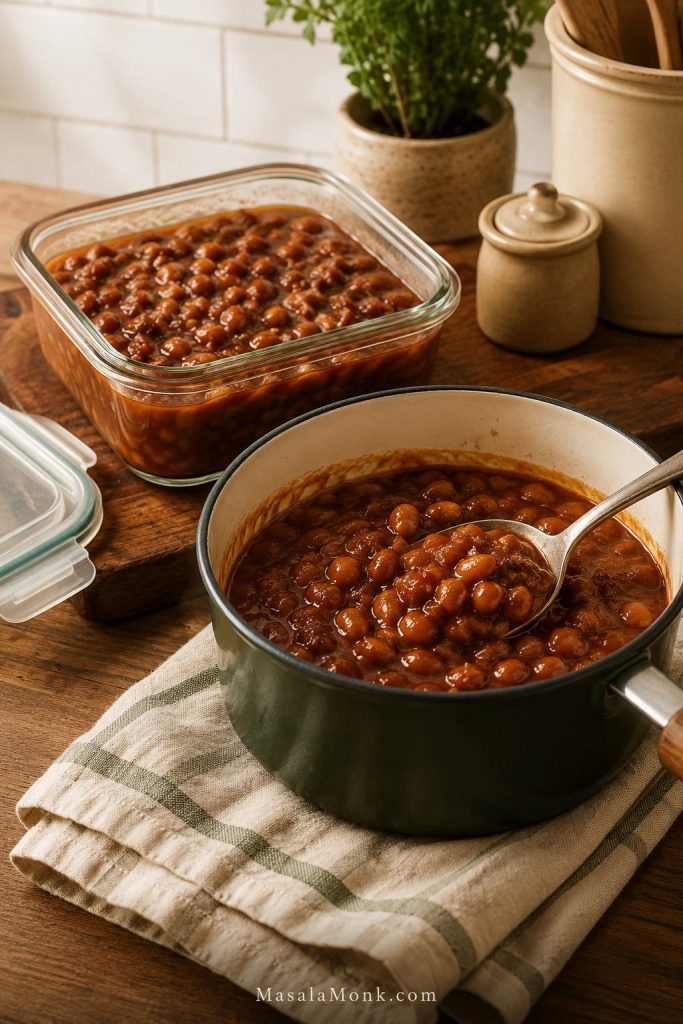
Baked beans in a glass container and saucepan for reheating.
Baked beans often improve overnight. When reheating, loosen the sauce with water, stock, or tomato sauce only as needed.
Baked beans thicken in the fridge and after freezing. Warm them first, then loosen with a little water, stock, or tomato sauce if needed. If serving for a party, refrigerate leftovers within 2 hours; this follows the standard FoodSafety.gov 2-hour rule.

Frequently Asked Questions

If you are adjusting the recipe for different beans, sweetness levels, or make-ahead timing, these quick answers should help.

What beans are used for baked beans?

Navy beans are the classic choice for baked beans, but Great Northern beans, cannellini beans, small white beans, and pinto beans also work. Plain canned white beans are the easiest option when you want homemade baked beans without a long cooking time.

Can I make baked beans with canned beans?

Yes. Plain canned beans are the easiest shortcut because the beans are already tender, but the sauce is still yours to control. Drain and rinse them, then bake them in the homemade sauce until it coats the beans instead of pooling around them.

Can I use canned baked beans for this recipe?

Yes. Treat canned baked beans as a shortcut base, not a blank canvas. They already bring sauce, sweetness, and salt, so add onion, mustard, vinegar, smoked paprika, and only a little extra sugar after tasting.

Do I drain canned beans for baked beans?

Drain and rinse plain canned beans. Do not rinse canned baked beans because their sauce is part of the shortcut. Extra liquid can be handled in the oven by baking uncovered.

How do you make canned baked beans taste homemade?

Sauté onion first, add mustard and vinegar for balance, use smoked paprika or a tiny amount of liquid smoke for depth, and bake uncovered until the sauce tastes cooked instead of canned.

Can I make baked beans from dried beans?

Yes. Use dried navy beans, soak them overnight or quick-soak them, then simmer until creamy and tender before adding the sauce. Think of dried beans in two steps: make them tender in water first, then make them flavorful in sauce.

Why are my baked beans watery?

They usually need more uncovered baking time. Baked beans often look loose before they come together; the last stretch in the oven and the 10-minute rest are where the sauce turns spoonable.

How do I thicken baked beans?

Bake them uncovered for longer, use a wider dish, simmer the sauce before baking, or mash a few spoonfuls of beans and stir them back in. Resting the beans also helps the sauce cling better.

Should baked beans be covered while baking?

For thicker baked beans, bake them uncovered. Cover them only when they are drying out too quickly or when the edges are darkening before the center is hot.

How do I make baked beans less sweet?

Use less brown sugar, reduce or skip extra molasses, and balance the sauce with mustard, vinegar, tomato paste, smoked paprika, and unsweetened beans. Beans that are already too sweet usually need acidity and rounded flavor, not more sugar.

Can I make baked beans without pork or bacon?

Yes. Bacon adds smoke, salt, fat, and umami, but you can replace those with smoked paprika, sautéed onion, mustard, vinegar, and a little vegetarian Worcestershire, soy sauce, or tamari.

Can baked beans be vegetarian or vegan?

Yes. Skip the bacon and use olive oil. For vegetarian or vegan depth, use smoked paprika, mustard, vinegar, caramelized onion, and soy sauce, tamari, or vegetarian Worcestershire sauce. Standard Worcestershire often contains anchovies, so check the label or use a vegetarian alternative.

Can I make baked beans in a slow cooker?

Yes. Cook canned-bean baked beans on low for about 3 to 5 hours. The slow cooker is useful for potlucks and keeping beans warm, but the sauce will not caramelize the same way it does in the oven. For the best texture, bake first and keep warm in the slow cooker.

Are baked beans better the next day?

Often, yes. The sauce settles and the flavor deepens after a night in the fridge. Reheat gently and add a splash of water, stock, or tomato sauce if the beans are too thick.

Can baked beans be made ahead?

Yes. Baked beans are one of those sides that often tastes better the next day. Make them 1 to 2 days ahead, refrigerate, then reheat gently before serving.

Can you freeze baked beans?

Yes. Cool them completely, freeze in airtight containers for up to 3 months, thaw overnight in the fridge, and reheat gently. Add a splash of water or tomato sauce if they are too thick after thawing.

What can I add to baked beans for more flavor?

Use the balance test first. If the beans taste flat, add tang, salt, or rounded flavor before adding more sugar. Sautéed onion, mustard, vinegar, smoked paprika, Worcestershire sauce, soy sauce, tomato paste, chipotle, or a tiny amount of liquid smoke can all help.

What is the difference between American and British baked beans?

American baked beans are usually thicker, sweeter, smokier, and often flavored with molasses, brown sugar, mustard, bacon, or barbecue sauce. British-style baked beans are usually more tomato-forward, softer, less smoky, and often served on toast or baked potatoes.

Final Thoughts

The best baked beans are not just sweet beans in sauce. They need enough sweetness to feel familiar, enough tang to stay balanced, enough depth to feel slow-cooked, and enough oven time for the sauce to settle into the beans.

Whether you started with pantry cans, a shortcut can of baked beans, or dried navy beans, the goal is the same: tender beans, a balanced sauce, and a pan with glossy edges that people keep returning to before the meal is even over.
Back to top ↑

Posted on Leave a comment

Coleslaw Recipe

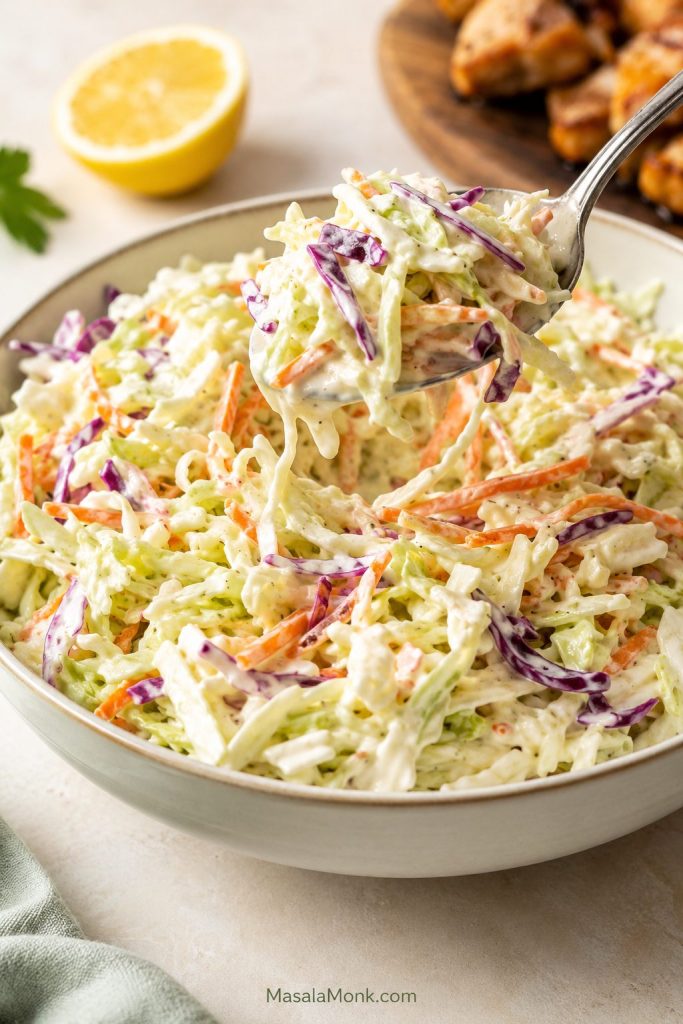
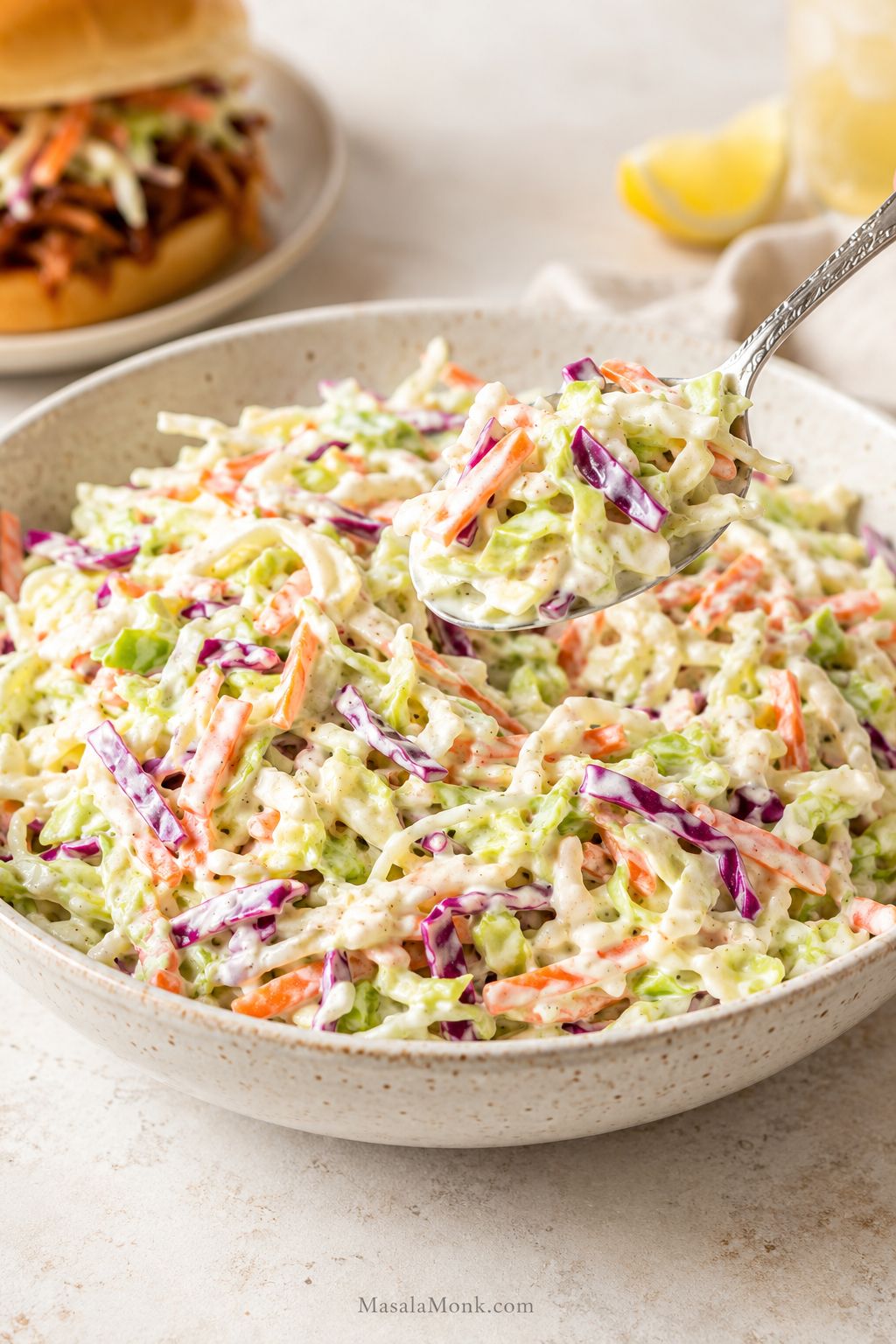
Creamy coleslaw in a bowl with shredded green cabbage, red cabbage, carrots, and a spoon lifting a serving.

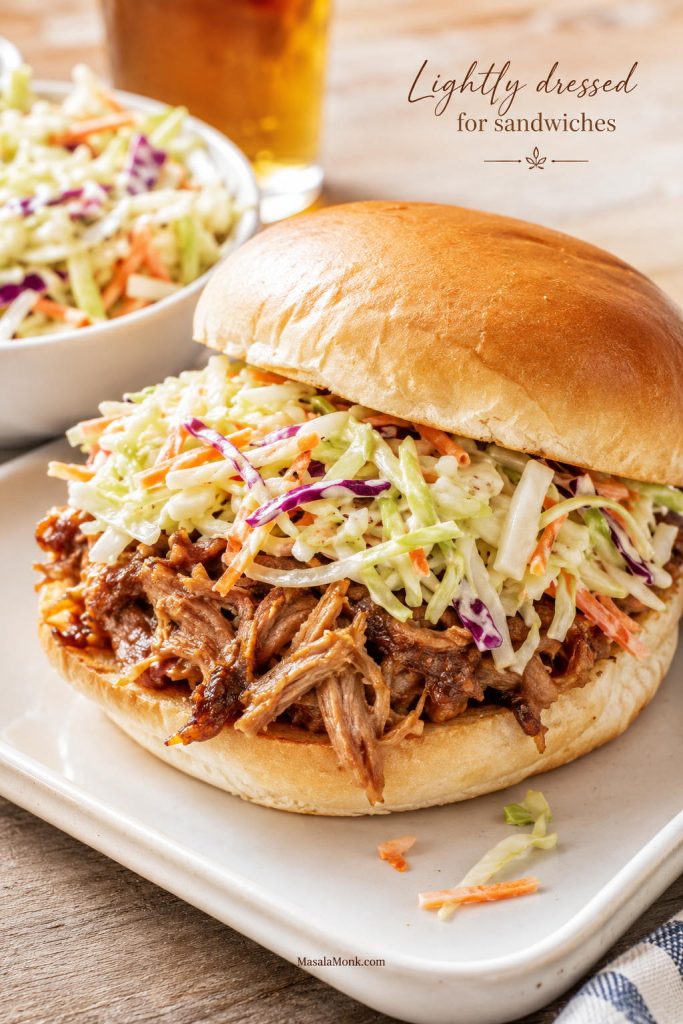
This coleslaw recipe is the cold, crunchy side that makes a cookout plate feel complete. It is creamy without being heavy, lightly sweet without tasting sugary, and tangy enough to cut through BBQ, burgers, fried chicken, fried fish, hot dogs, tacos, and pulled pork sandwiches.

The best version gives you that cold snap of cabbage, a creamy-tangy coating, and just enough sweetness to make smoky, salty, fried, or saucy food taste even better.

Easy creamy coleslaw recipe served as a cold crunchy BBQ side with cabbage, carrots, and creamy dressing.
Because coleslaw brings cold crunch to smoky, fried, and saucy foods, it works especially well with BBQ plates, burgers, fried chicken, and pulled pork.

The recipe is simple — shredded cabbage, carrot, and a creamy dressing — but the little choices matter. Shred the cabbage fine enough, mix the dressing separately, chill the bowl, and hold back some dressing until the end. That is how you get homemade coleslaw that tastes fresh, not watery — and the full watery coleslaw fix is below if that is the problem you are trying to avoid.

You can make it with fresh cabbage when you want the strongest crunch, or with bagged coleslaw mix when you need a fast weeknight side. Either way, this is everyday creamy coleslaw: cool, crisp, bright, and sturdy enough to work as a side dish or a sandwich topping.

Coleslaw at a Glance

  • Best for: BBQ plates, burgers, fried chicken, fried fish, hot dogs, tacos, and pulled pork sandwiches
  • Texture: cold, crunchy, creamy, lightly sweet, and tangy
  • Prep time: 15 minutes
  • Chill time: 30–60 minutes
  • Servings: 8 side servings
  • Yield: about 8–9 cups
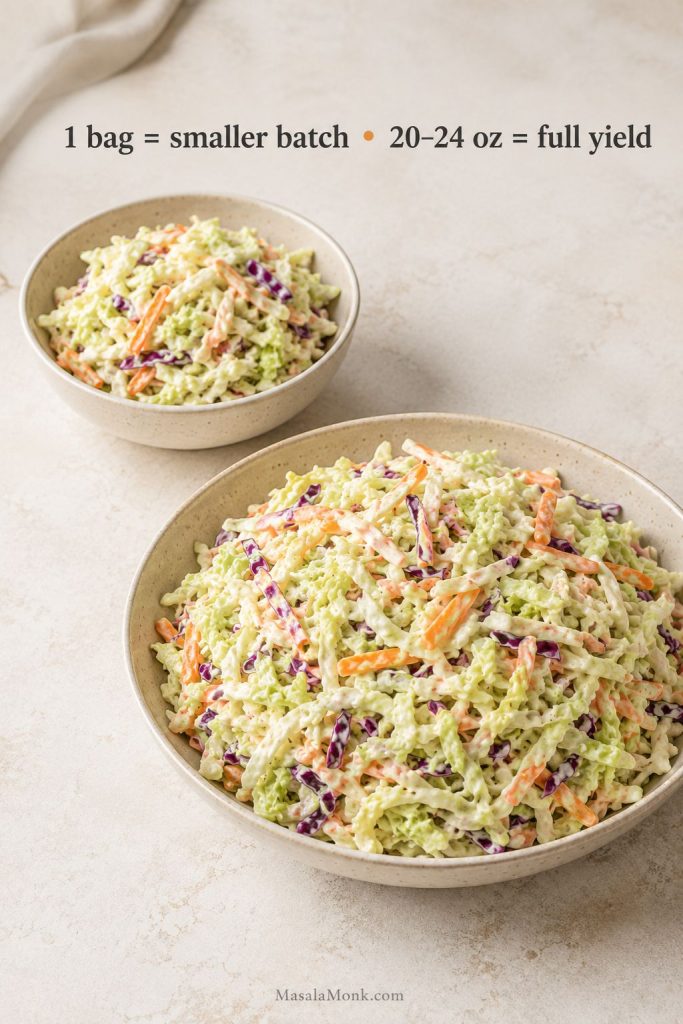
  • Shortcut: use bagged coleslaw mix; one 14–16 oz bag makes a smaller batch, while 20–24 oz gives the full recipe yield
  • Most important tip: start with part of the dressing, chill, toss again, then add more only if the slaw needs it

What You’ll Find in This Coleslaw Guide

This guide helps you make classic creamy coleslaw that tastes balanced, stays crisp, and works whether you are serving it in a bowl, beside grilled food, or inside a sandwich.

Quick Answer: The Best Easy Coleslaw Recipe

The best easy coleslaw recipe starts with finely shredded cabbage, grated carrot, and a creamy dressing made with mayonnaise, apple cider vinegar, a little lemon juice or mustard, sugar or honey, salt, pepper, and optional celery seed. The simple trick is to dress the cabbage lightly at first, let it chill, then add more dressing only if it needs it.

For a reliable balance, use about 8 cups of shredded cabbage and carrot mixture for every ⅔ cup of mayonnaise-based dressing. That gives you coleslaw that is glossy and lightly coated, not soupy at the bottom of the bowl. It should taste cool, crunchy, tangy, and just sweet enough. For the exact creamy-tangy balance, see the coleslaw dressing section before you adjust the mayo, vinegar, lemon, or mustard.

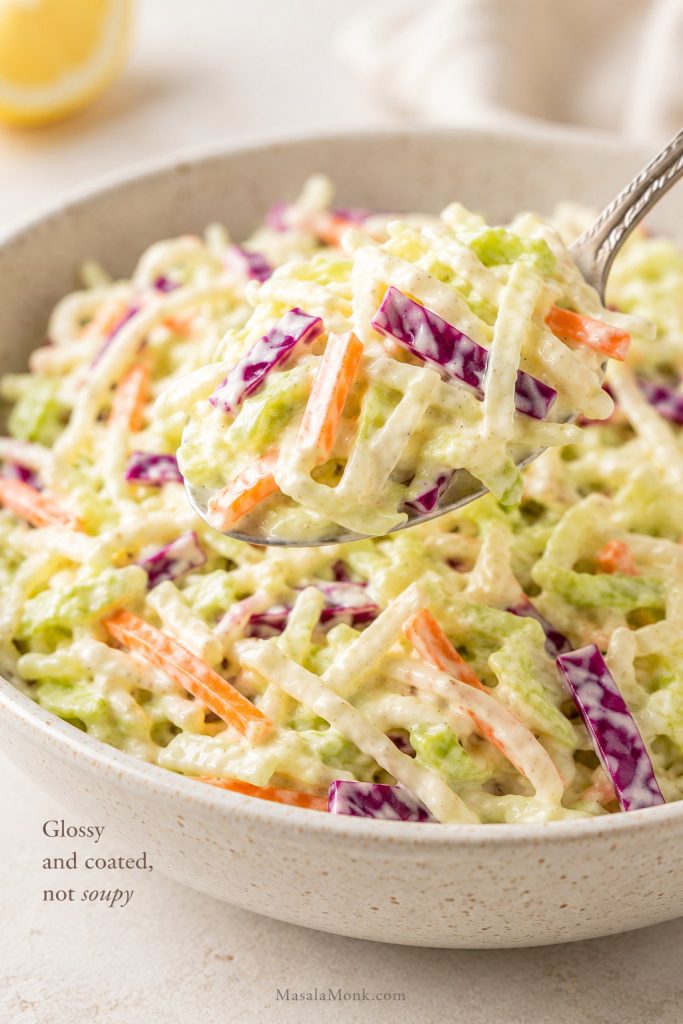
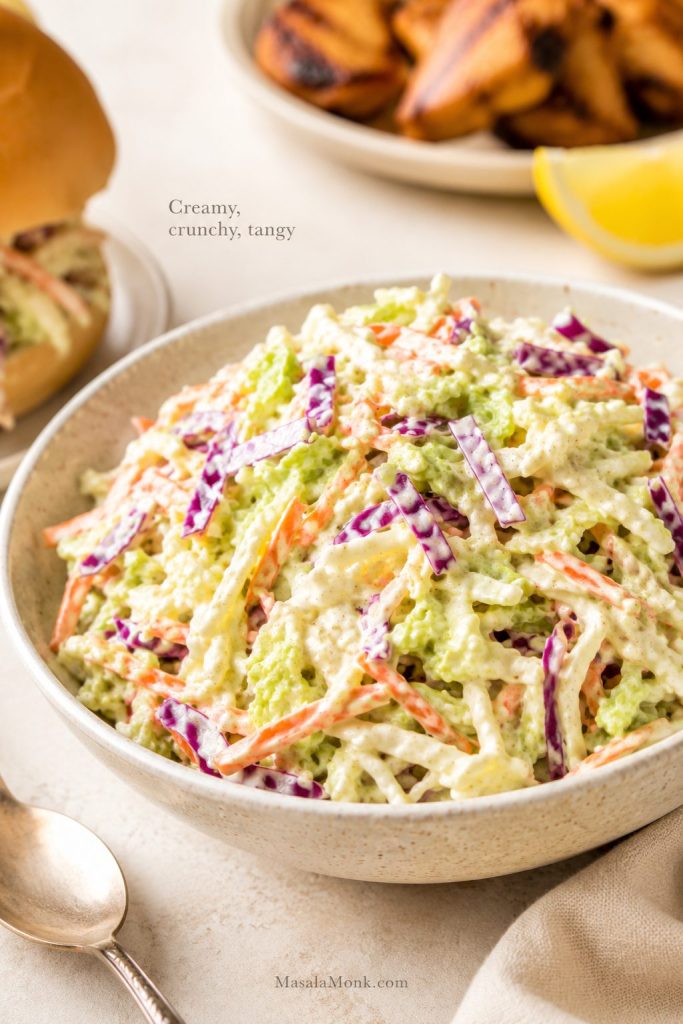
Close-up spoonful of creamy coleslaw with glossy dressing coating shredded cabbage and carrots.
The best easy coleslaw should show contrast in one bite: creamy dressing on the outside, crisp cabbage underneath, and no thin liquid collecting below.
Using bagged coleslaw mix? One 14–16 oz / 400–450 g bag makes a smaller batch than this full recipe. For one bag, start with about half to two-thirds of the dressing. If you are in a hurry, you can serve the slaw after 10–15 minutes, though the texture and flavor are better after 30–60 minutes in the fridge. For the full bagged-mix math, see the bagged coleslaw mix conversion below.

Coleslaw Recipe Card

Coleslaw Recipe

This easy coleslaw recipe is made with crisp cabbage, grated carrot, and a sweet-tangy dressing. It is the kind of cold, crunchy side that works on a cookout plate, inside a sandwich, or beside fried food.

Prep Time
15 minutes
Chill Time
30–60 minutes
Total Time
45–75 minutes
Servings
8 side servings
Yield
about 8–9 cups

Equipment

  • Large mixing bowl
  • Medium bowl
  • Whisk
  • Tongs
  • Sharp knife or mandoline
  • Box grater
  • Airtight container
  • Optional: colander or salad spinner for make-ahead cabbage

Ingredients

For the slaw:

  • 6 loosely packed cups finely shredded green cabbage, about 420–450 g
  • 2 loosely packed cups finely shredded red cabbage or more green cabbage, about 140–150 g
  • 1 large carrot, grated, about 75–100 g
  • 2–4 tablespoons thinly sliced scallion or red onion, optional

For the creamy coleslaw dressing:

  • ⅔ cup mayonnaise, about 150 g
  • 2 tablespoons apple cider vinegar, 30 ml
  • 1 tablespoon lemon juice, 15 ml, or 2 teaspoons Dijon mustard, 10 ml
  • 1 tablespoon sugar, about 12 g, or honey, about 20 g
  • ½ teaspoon celery seed, optional
  • ½ teaspoon fine salt, plus more to taste
  • ¼ teaspoon black pepper

Instructions

  1. Shred the cabbage. Slice the cabbage finely with a sharp knife or mandoline. Grate the carrot and add it to a large mixing bowl with the cabbage and optional scallion or red onion.
  2. Mix the dressing. In a medium bowl, whisk together the mayonnaise, apple cider vinegar, lemon juice or Dijon mustard, sugar or honey, celery seed, salt, and black pepper until smooth.
  3. Dress lightly first. Pour about two-thirds of the dressing over the cabbage mixture. Toss well until the cabbage is lightly coated.
  4. Chill. Cover and refrigerate for 30 to 60 minutes so the cabbage relaxes slightly and the flavors blend.
  5. Finish before serving. Toss again. If the slaw looks dry, add more dressing a spoonful at a time. A little salt will wake it up if the flavor feels flat. When it tastes too sweet or heavy, sharpen it with vinegar or lemon juice. If the cabbage tastes bitter or the dressing feels too sharp, balance it with a tiny pinch of sugar.

Notes

  • One 14–16 oz / 400–450 g bag of coleslaw mix makes a smaller batch. For the full 8–9 cup yield, use about 20–24 oz / 560–680 g mix, or add extra shredded cabbage and carrot.
  • If using one 14–16 oz bag, start with about half to two-thirds of the dressing. Chill, toss, then add more only if needed.
  • Do not add all the dressing at once. Cabbage releases moisture as it sits, so the slaw becomes creamier after chilling; the two-thirds dressing rule explains how to control that texture.
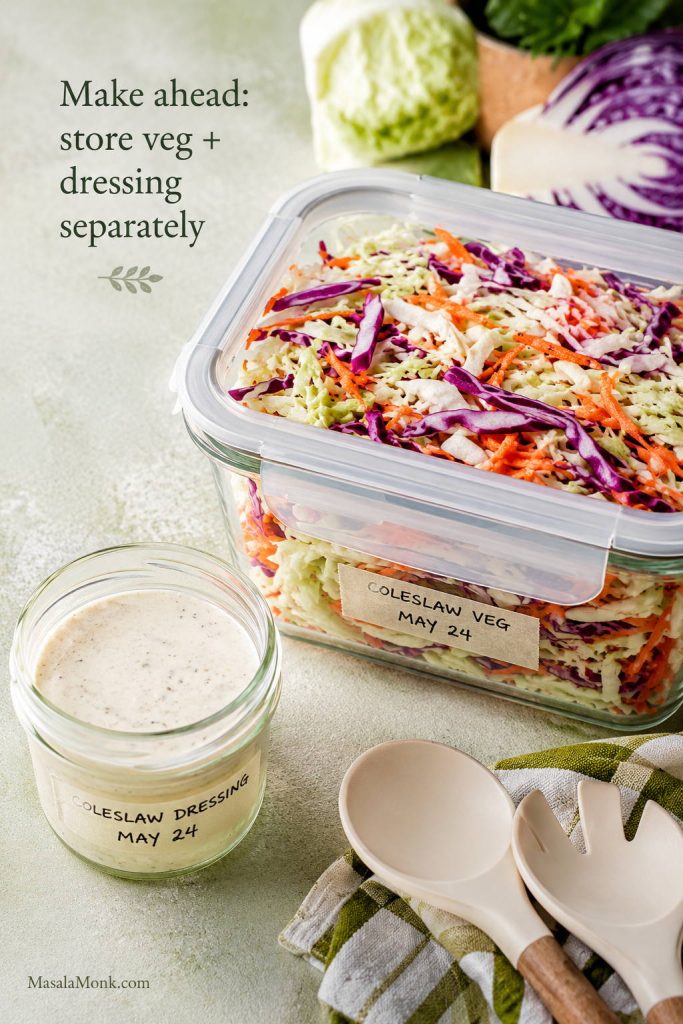
  • For make-ahead coleslaw, store the dressing and vegetables separately until a few hours before serving; see the make-ahead and storage tips for timing.
  • If you salt the cabbage first, reduce the dressing salt to ¼ teaspoon or leave it out until the final taste adjustment.
  • Serve cold or well chilled. Toss again and drain any excess liquid before serving if the slaw has been refrigerated for several hours.

If you make it, try it once as written, then adjust it sweeter, tangier, creamier, or crunchier for your table. Coleslaw is one of those recipes where small preferences matter.

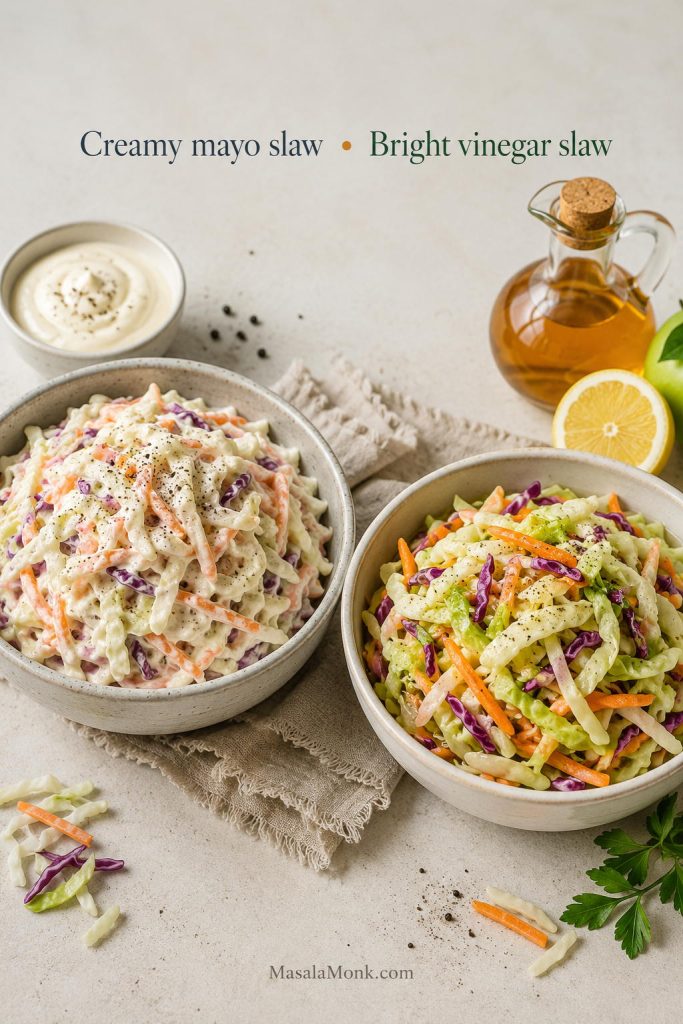
Are you team creamy coleslaw or vinegar slaw? Share how you serve it — as a BBQ side, on pulled pork, with fried chicken, or piled onto hot dogs.

Why This Coleslaw Recipe Works

Good coleslaw is all about contrast. The cabbage should still crunch, the dressing should cling instead of pooling at the bottom, and the flavor should wake up the rest of the plate. When coleslaw is too wet, too sweet, or too mayo-heavy, it stops doing its job.

This is the version to make when you want classic creamy coleslaw that still tastes fresh after chilling. It is not overloaded with dressing, not sugary, and not watery at the bottom of the bowl.

Although this coleslaw recipe keeps the ingredient list classic, the method gives you more control. The cabbage is shredded finely enough to soften as it chills, but not so finely that it turns limp. The dressing has enough vinegar and lemon or mustard to balance the mayonnaise. Finally, the dressing is added in stages because cabbage changes as it sits.

That last part matters most. A bowl that looks slightly underdressed right after mixing can become perfectly creamy after 30 minutes in the fridge. Hold back some dressing at the beginning, let the slaw settle, then finish it right before serving.

The texture goal

The dressing should cling to the cabbage in a light, glossy coat. You want crunch in every bite, not a puddle of thin dressing at the bottom of the bowl.

Coleslaw Recipe Ingredients

A good bowl of coleslaw does not ask for much: crisp cabbage, sweet carrot, a creamy dressing, enough acidity to brighten it, and enough salt to make the vegetables taste like themselves. Once those pieces are balanced, the bowl tastes crisp and fresh instead of heavy.

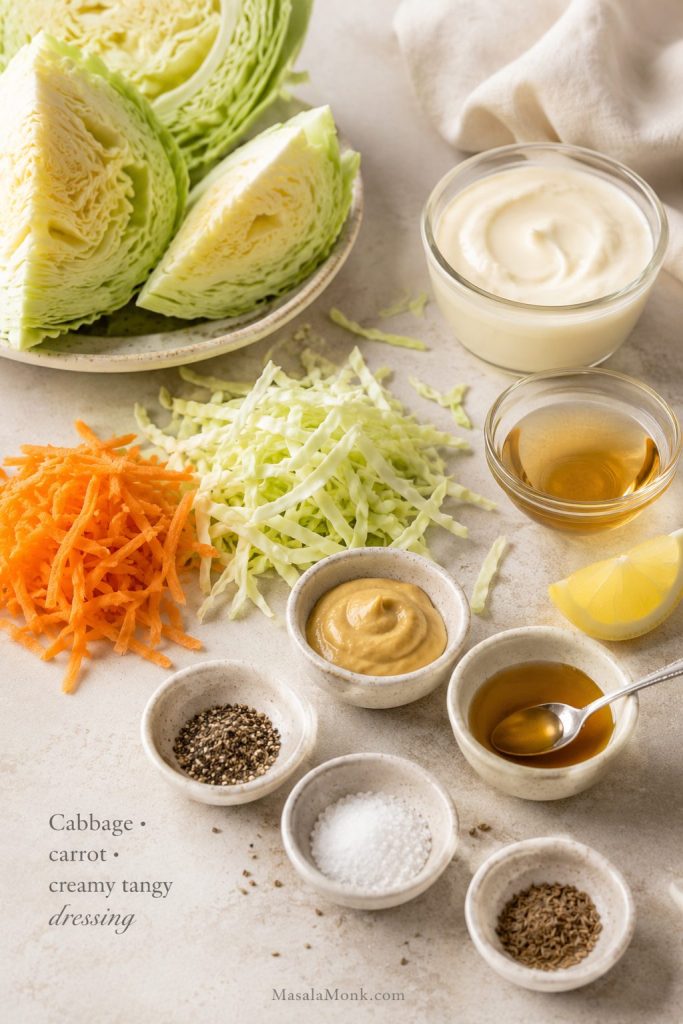
Coleslaw ingredients including cabbage, carrot, mayonnaise, vinegar, lemon, mustard, sugar, celery seed, salt, and pepper.
Classic coleslaw ingredients are simple, yet the balance matters: cabbage gives crunch, carrot adds sweetness, and vinegar or lemon keeps the creamy dressing bright.

Best Cabbage for Coleslaw

Green cabbage is the most reliable everyday cabbage for coleslaw. It is crisp, sturdy, mild, and strong enough to hold a creamy dressing without collapsing. Red cabbage adds color and extra crunch, but it can tint the dressing pink as the slaw sits.

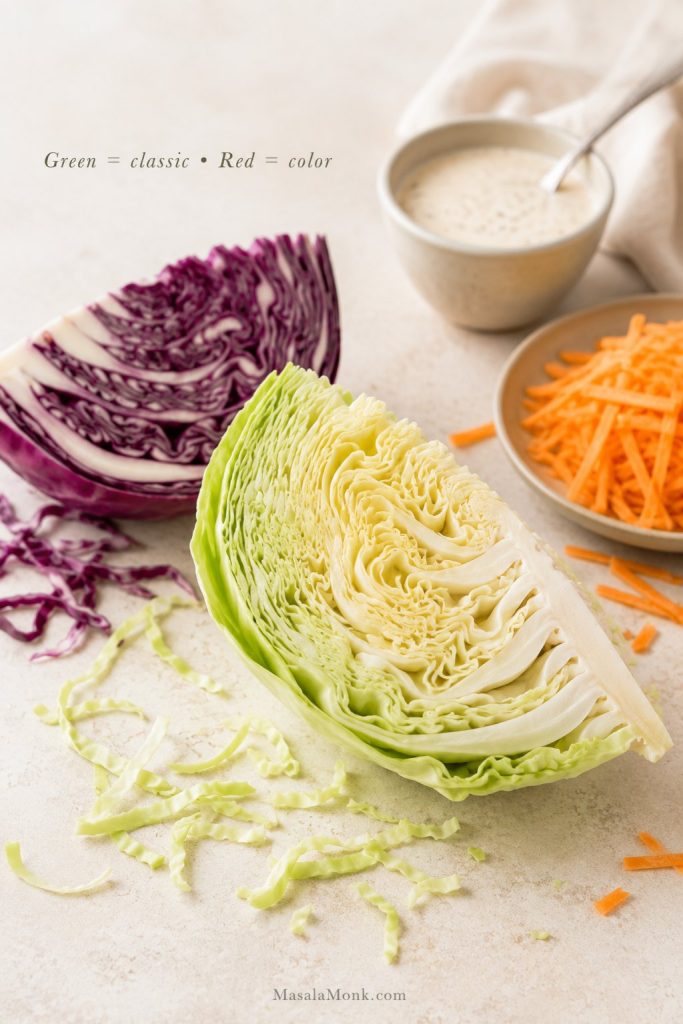
Green cabbage, red cabbage, carrots, and creamy dressing arranged for making coleslaw.
Green cabbage is the best base for classic creamy coleslaw because it stays crisp, while red cabbage adds color and a slightly sharper bite.

A classic bowl can be made with only green cabbage and carrot. If you want more color, use mostly green cabbage with a smaller amount of red cabbage. The flavor will still be familiar, and the bowl will look brighter on the table.

Ingredient What It Does Notes
Green cabbage Gives the slaw its main crunch Mild, classic, sturdy, and easy to dress.
Red cabbage Adds color and a peppery bite Use less than green cabbage if you want a pale creamy dressing.
Carrot Brings sweetness and color Grate it finely so it spreads through the bowl.
Scallion or red onion Adds optional sharpness Use a light hand because raw onion can take over quickly.

Fresh Cabbage vs Bagged Coleslaw Mix

For this coleslaw recipe, fresh cabbage gives you the strongest crunch and the most control over shred size. It is the better choice when coleslaw is one of the main sides at a cookout or when you want it to hold up on sandwiches.

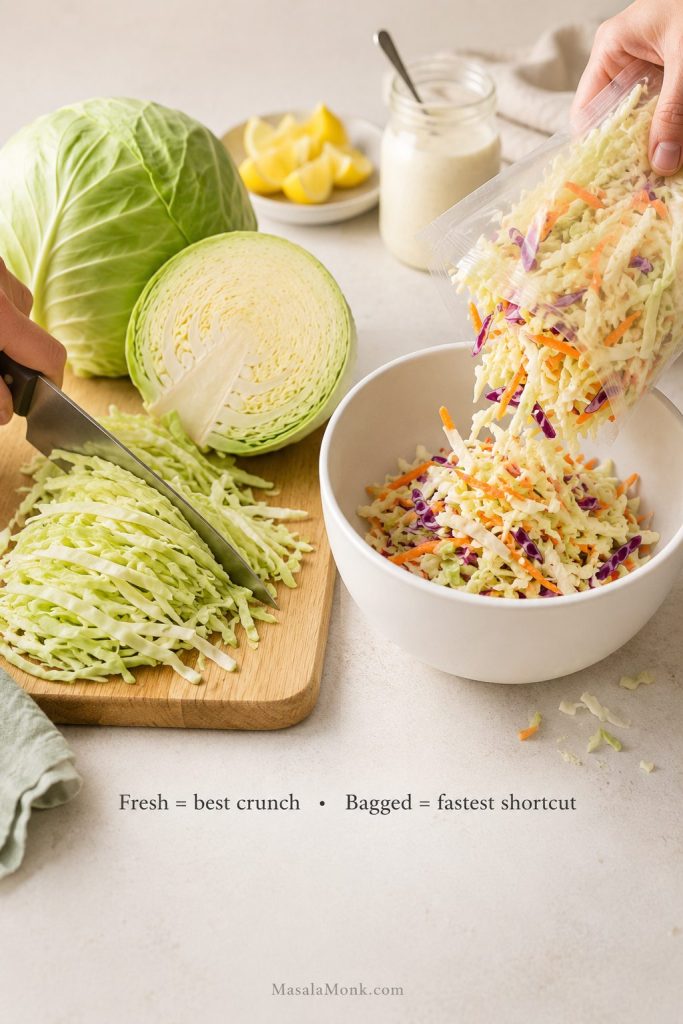
Fresh cabbage being sliced next to bagged coleslaw mix poured into a bowl.
Fresh cabbage lets you choose the crunch and cut, while bagged coleslaw mix saves time as long as the dressing is added with a lighter hand.

However, bagged coleslaw mix is still worth using. It is fast and weeknight-friendly, though the cut and moisture level can vary from bag to bag. Because pre-cut cabbage can range from dry and sturdy to very fine and soft, dress it lightly first and give it a few minutes before deciding whether it needs more. If you are using a bag, the bagged coleslaw mix conversion will help you scale the dressing and yield correctly.

Bagged mix conversion: One 14–16 oz / 400–450 g bag of coleslaw mix makes a smaller batch, about 5–6 side servings. For the full 8–9 cup yield, use about 20–24 oz / 560–680 g coleslaw mix, or add extra shredded cabbage and carrot.
Two bowls showing a smaller batch from one bag of coleslaw mix and a larger full-yield batch.
One 14–16 oz bag of coleslaw mix makes a smaller batch, so use 20–24 oz or add extra cabbage and carrot when you want the full recipe yield.

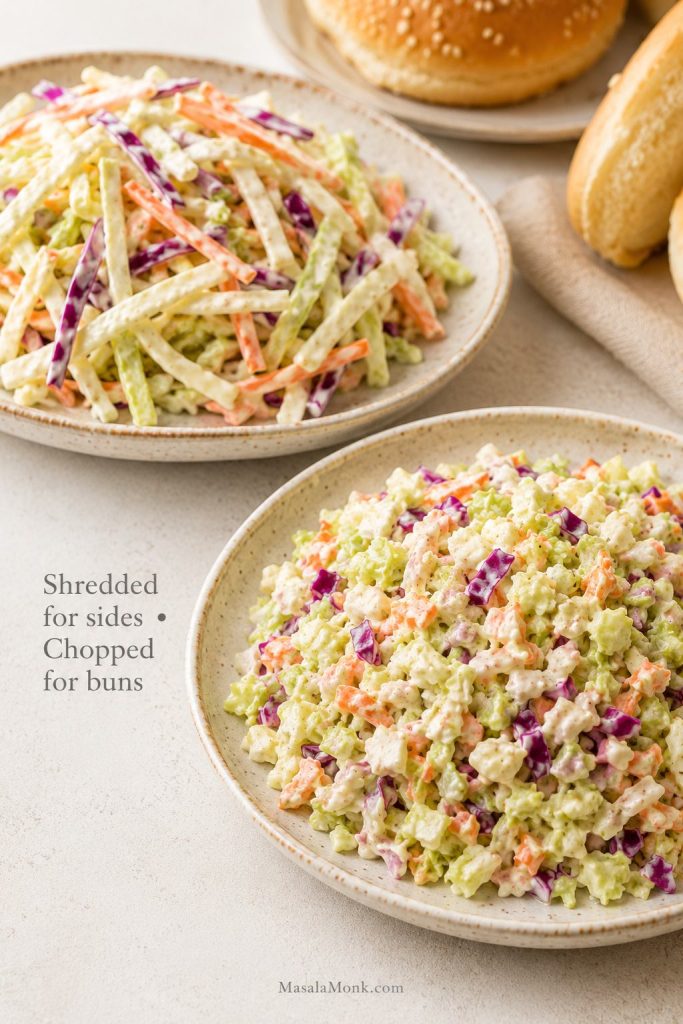
Shredded vs Chopped Coleslaw

Thinly shredded cabbage gives you the classic creamy coleslaw texture: long, crisp strands that hold dressing and still crunch. This is the best cut when you are serving coleslaw as a side dish.

Long shredded coleslaw beside finer chopped coleslaw for comparing side-dish and sandwich textures.
Shredded coleslaw gives side dishes that classic forkful texture, while chopped slaw stays neater on burgers, hot dogs, and pulled pork sandwiches.

Burgers, hot dogs, pulled pork sandwiches, and slaw dogs need a neater slaw. A finer chop keeps the cabbage from sliding out of the bun. Grated cabbage is softer and wetter, so use it only if you want a very fine deli-style texture.

Cut Works Well With Texture Goal
Thin shreds Classic side dish coleslaw Crisp, creamy, and traditional
Fine chop Burgers, hot dogs, pulled pork sandwiches Compact and bun-friendly
Thicker shreds Crunchier slaw bowls and BBQ plates More bite, needs more chilling time
Grated cabbage Very soft deli-style slaw Softens quickly and releases more liquid

Carrots, Onion, and Optional Add-Ins

Carrot is almost always worth adding because it brings sweetness and color. Grate it on the large holes of a box grater or use the shredding blade on a food processor.

Onion is optional. Scallions are gentler and fresher. Red onion is sharper and works best when sliced very thinly. If you are making coleslaw for kids, a mixed crowd, or a long cookout table, keep the onion light or leave it out.

Parsley, celery seed, chopped apple, or a little extra mustard can be useful, but the main recipe should stay clean. Too many extras turn classic coleslaw into a different salad.

Creamy Coleslaw Dressing

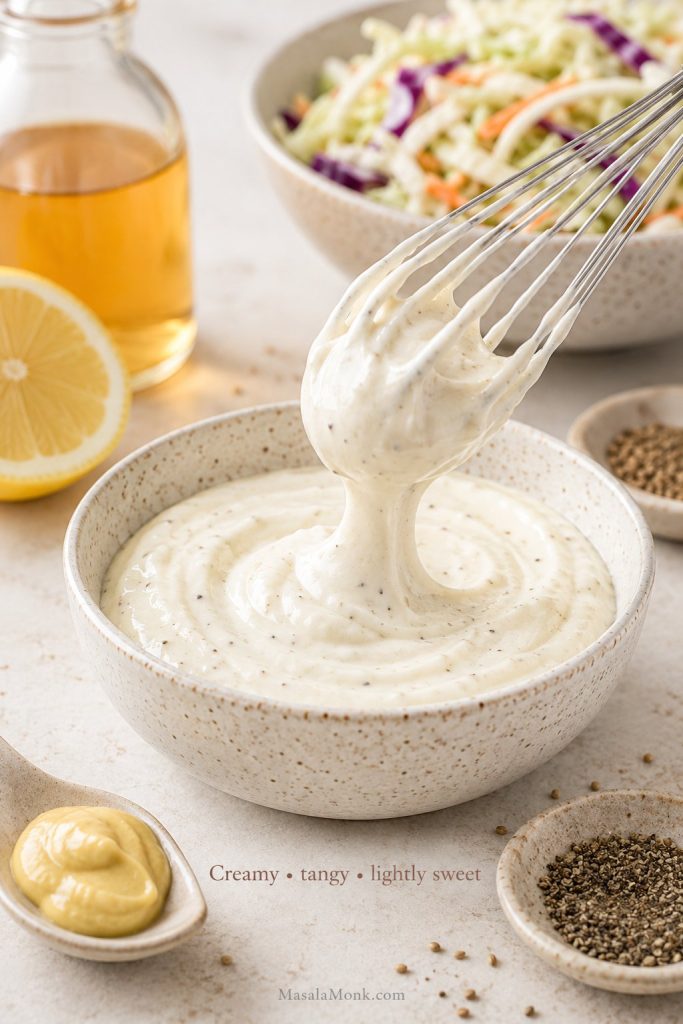
The dressing should make the cabbage taste brighter, not bury it. Mayonnaise gives the slaw its creamy body, vinegar brings the snap, lemon juice or mustard sharpens the edges, and a little sugar or honey rounds out the raw cabbage bite.

Creamy coleslaw dressing being whisked with lemon, vinegar, mustard, pepper, and cabbage nearby.
A creamy coleslaw dressing should taste slightly bold before mixing because the cabbage will mellow the vinegar, lemon, salt, and sweetness.

If you make your own mayonnaise, this is a good place to use it. A thick homemade mayo gives the dressing a richer texture and a cleaner flavor. You can use this homemade mayonnaise recipe as the creamy base.

The Sweet-Tangy Dressing Ratio

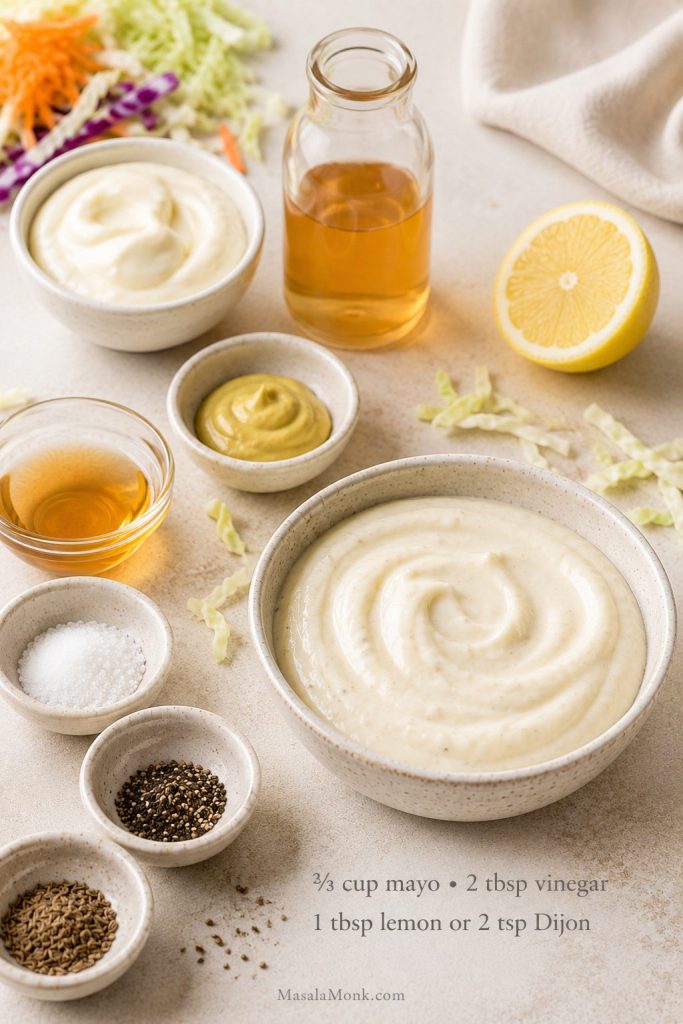
For this coleslaw recipe, about 8 cups of shredded cabbage and carrot works well with ⅔ cup mayonnaise, 2 tablespoons apple cider vinegar, 1 tablespoon lemon juice or 2 teaspoons Dijon mustard, and 1 tablespoon sugar or honey. For example, use lemon juice when you want a brighter dressing, or Dijon mustard when you want a sharper, more savory one.

Ingredients for creamy coleslaw dressing arranged with mayonnaise, vinegar, lemon, Dijon mustard, sugar, celery seed, and pepper.
This coleslaw dressing ratio gives enough creaminess to coat the cabbage, while vinegar, lemon, or Dijon keeps the finished slaw from tasting flat.

This gives you a dressing that is creamy but not bland, tangy but not harsh, and sweet enough to taste classic without turning sugary. If your family likes a sweeter cookout-style slaw, use the sugar or honey. If you want something sharper for pulled pork, fried fish, or tacos, lean a little harder on vinegar and lemon.

Flavor Goal Adjustment Works Well With
More tangy Add 1–2 teaspoons extra vinegar or lemon juice Fried chicken, fish, BBQ, pulled pork
Sweeter Add 1–2 teaspoons sugar or honey Classic cookout slaw, hot dogs, kids’ plates
Creamier Add 1–2 tablespoons mayo Potlucks, side dish bowls, BBQ plates
Lighter Replace part of the mayo with Greek yogurt or buttermilk Weeknight sides, lighter sandwiches

The Two-Thirds Dressing Rule

Do not drown the cabbage right away. Start with about two-thirds of the dressing, toss well, chill, then add more only if the slaw still looks dry. Cabbage relaxes and releases moisture as it sits, so a bowl that seems slightly underdressed at first often becomes just right after a short rest.

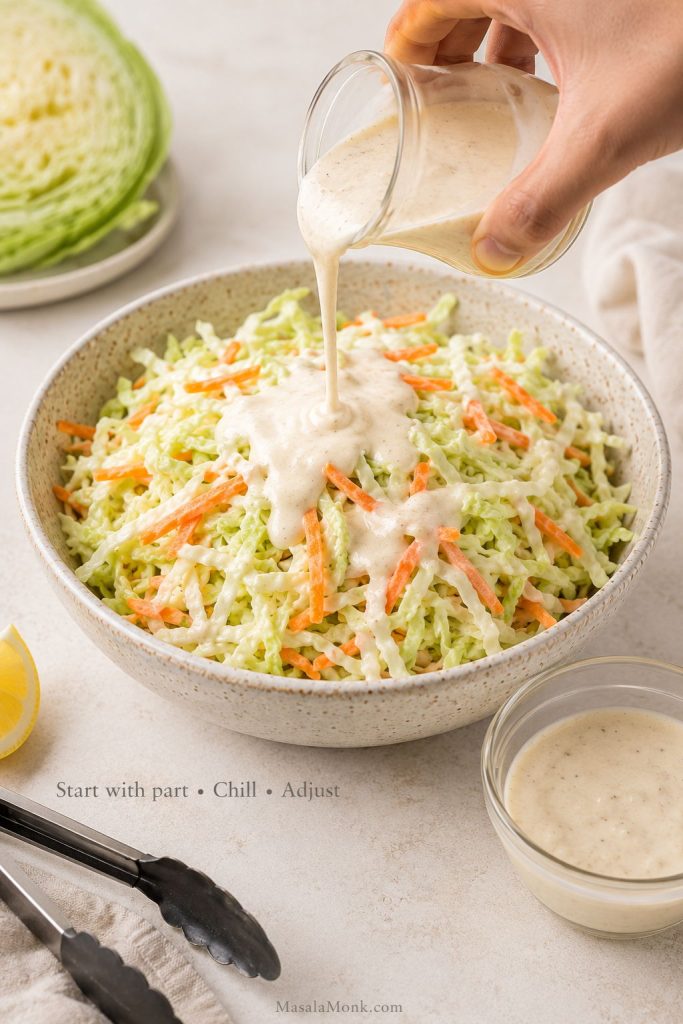
Creamy dressing being poured over shredded cabbage with extra reserved dressing in a small bowl beside it.
The reserved dressing is the safety net: once the cabbage relaxes in the fridge, you can finish the bowl without making it soupy.

As a result, this one habit prevents the two most common coleslaw problems: dry cabbage right after mixing and watery coleslaw later.

How Much Dressing to Use

The right amount of dressing depends on how finely the cabbage is cut and how long the bowl will sit. Thin shreds need less dressing because they soften quickly. Thicker shreds need a little more time and may need a touch more dressing after chilling. If your bowl often turns loose after chilling, the watery coleslaw section explains when to drain, salt, or hold back dressing.

After that, toss thoroughly, let the bowl settle, then taste again. If the slaw looks glossy and lightly coated, stop there. If it still looks dry after chilling, add the remaining dressing a spoonful at a time.

Spoonful of creamy coleslaw showing glossy dressing coating cabbage without liquid pooling in the bowl.
A glossy coating is the goal; if liquid is pooling underneath, the slaw will taste heavier and lose its crunch faster.
Taste after chilling, not only before. Cold cabbage dulls flavor slightly, and the dressing loosens as the slaw rests.

Mayo, Buttermilk, Sour Cream, or Greek Yogurt?

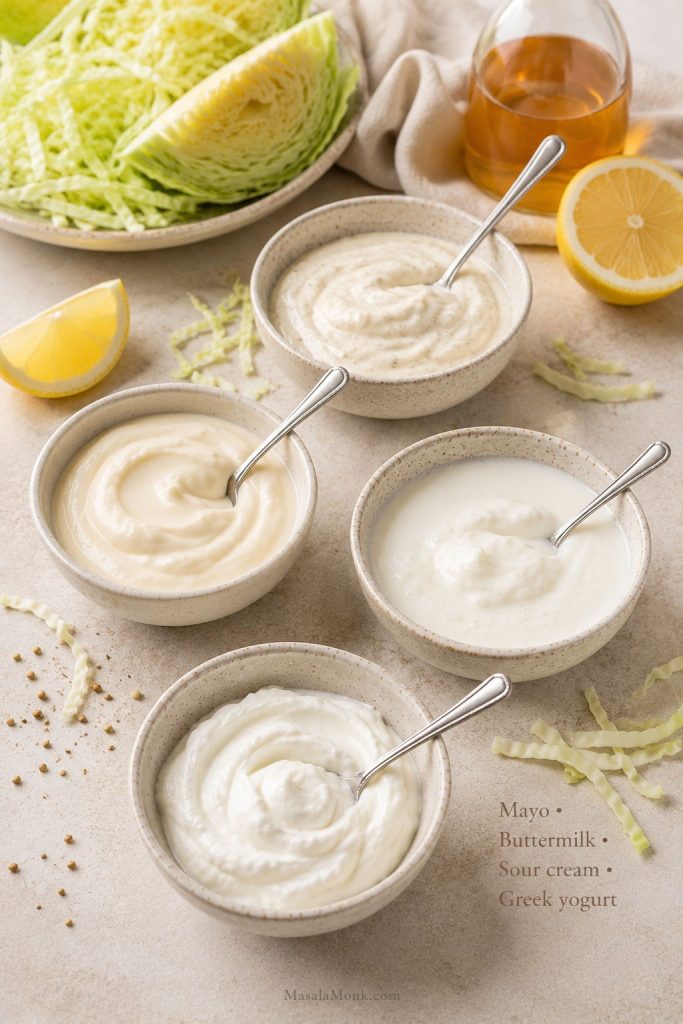
Mayonnaise is the classic choice because it gives coleslaw body and a smooth coating. Buttermilk makes the dressing looser and tangier. Sour cream adds richness with a gentle tang. Greek yogurt makes the dressing lighter and sharper, although it can taste more tart than classic mayo-based slaw.

Four bowls of creamy dressing bases for coleslaw: mayonnaise, buttermilk, sour cream, and Greek yogurt.
Mayonnaise gives the most classic coleslaw texture, while buttermilk, sour cream, or Greek yogurt can make the dressing tangier, lighter, or richer.

The safest first version is mayonnaise. Once you understand the texture, you can replace 2–4 tablespoons of the mayo with buttermilk, sour cream, or Greek yogurt depending on the kind of slaw you want.

Need an egg-free version? Use a thick eggless mayo and keep the rest of the recipe the same. This eggless mayonnaise recipe works well when you want the same creamy texture without eggs.

How to Make Coleslaw

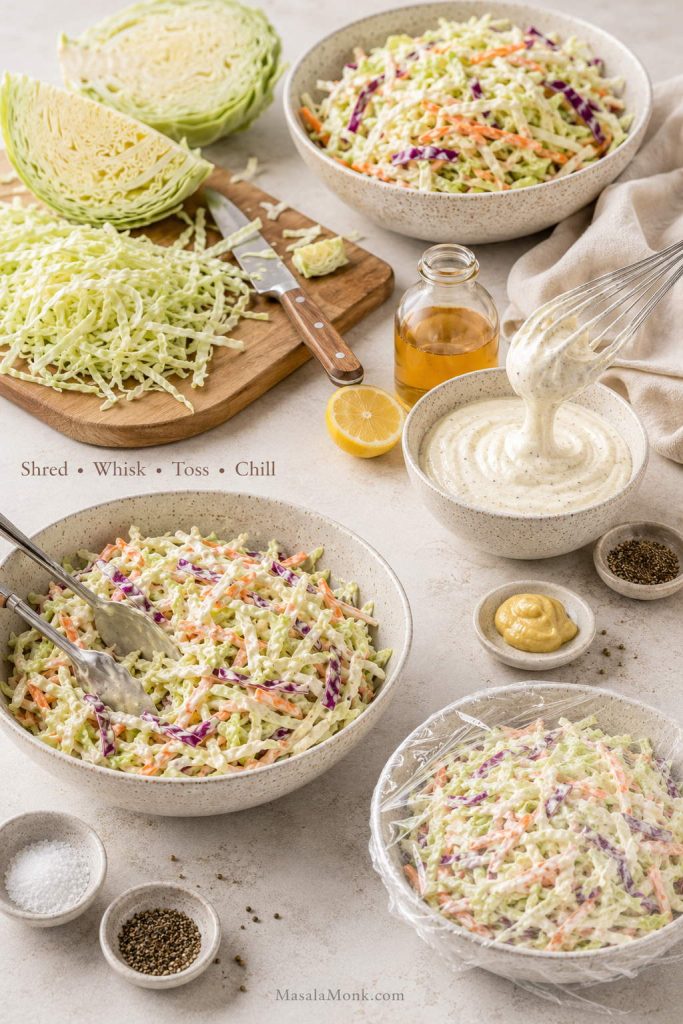
Coleslaw is easy, but the order helps. Shred the vegetables first, whisk the dressing separately, dress lightly, chill, then finish the bowl after it has had time to settle.

Step-by-step coleslaw process showing cabbage shredding, dressing whisking, tossing, and chilling.
Once the cabbage is shredded and the dressing is mixed separately, the key is to toss lightly, chill, and finish the coleslaw after the vegetables settle.

Shred the Cabbage

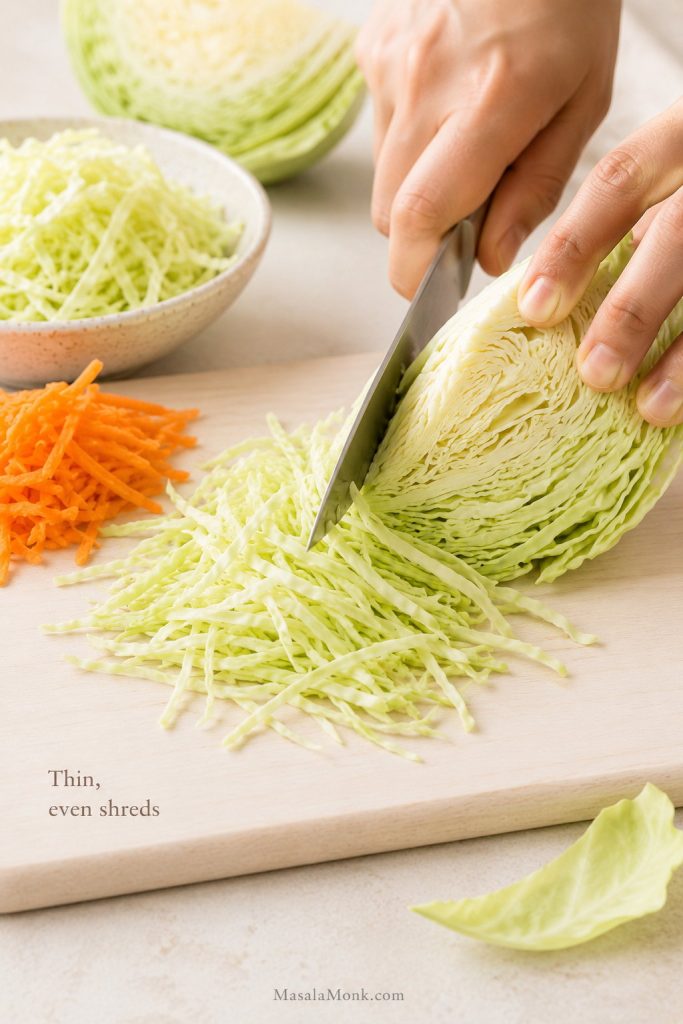
Cut the cabbage into quarters, remove the hard core, then slice it thinly with a sharp knife. A mandoline gives you very fine, even shreds. A food processor with a slicing blade is the fastest method when you are making a bigger batch.

Hands slicing green cabbage into thin shreds on a cutting board for homemade coleslaw.
Thin, even cabbage shreds soften evenly in the dressing, which helps homemade coleslaw stay creamy while keeping its crunch.

Side-dish coleslaw can handle longer shreds. Sandwich slaw should be finer or lightly chopped so it stays where you put it.

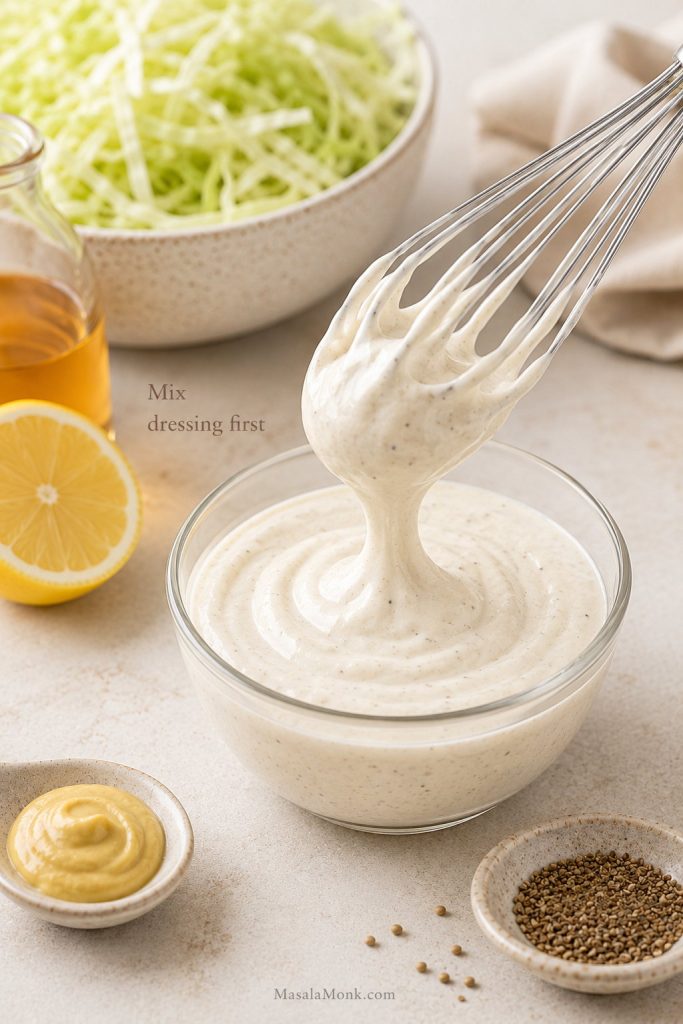
Mix the Dressing

Whisk the mayonnaise, apple cider vinegar, lemon juice or Dijon mustard, sugar or honey, celery seed, salt, and black pepper in a separate bowl. This gives you a smoother dressing and keeps one part of the slaw from getting too salty, too sweet, or too sharp.

Creamy coleslaw dressing being whisked in a bowl before it is added to shredded cabbage.
Mixing the coleslaw dressing separately prevents uneven flavor, so one bite does not taste too salty, too sweet, or too sharp.

Taste the dressing before adding it to the cabbage. It should taste a little stronger than you want the finished coleslaw to taste because the cabbage will soften and mellow it.

Toss, Chill, and Adjust

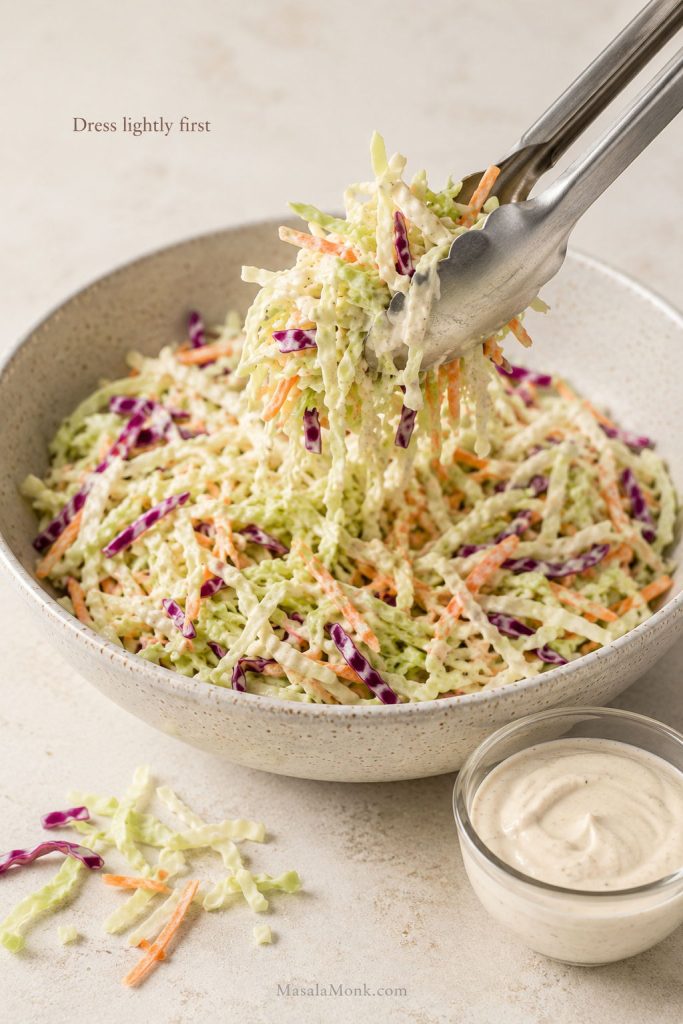
Add about two-thirds of the dressing to the cabbage and carrot mixture. Toss with tongs or clean hands until the vegetables are evenly coated. Cover and chill for 30 to 60 minutes.

Tongs lifting lightly dressed coleslaw from a bowl with extra dressing set aside.
Light tossing gives the cabbage room to settle; after resting, you can add more dressing only where the bowl actually needs it.

Before serving, toss again and taste. If the slaw looks dry, add more dressing a spoonful at a time. A little salt will wake it up if the flavor feels flat. When it tastes too sweet or heavy, sharpen it with vinegar or lemon juice. If the cabbage tastes bitter or the dressing feels too sharp, balance it with a tiny pinch of sugar.

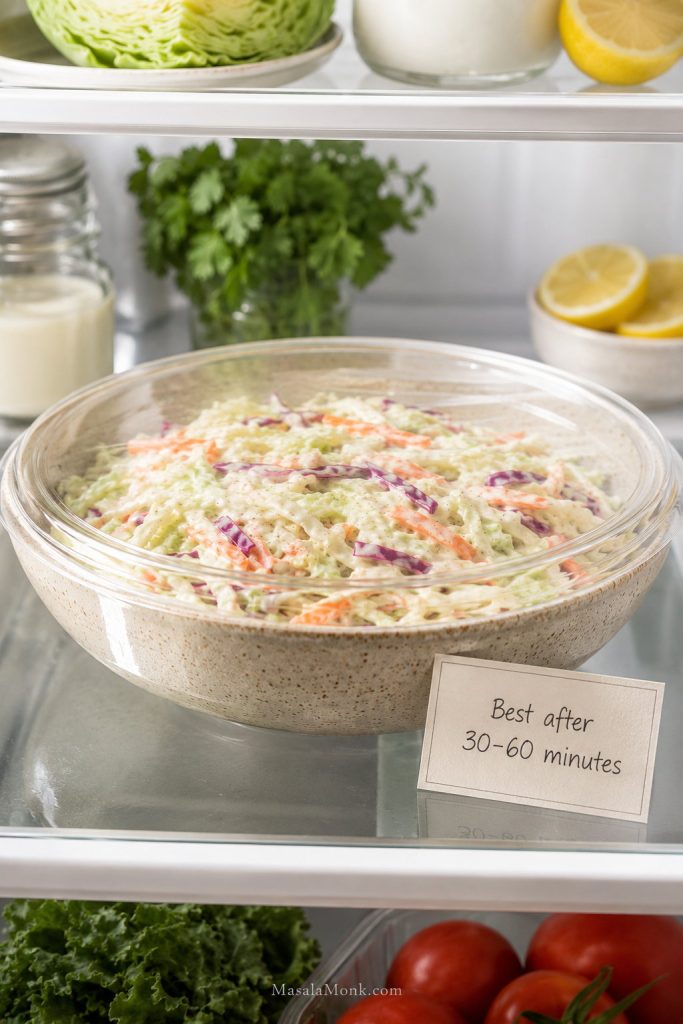
Best flavor window: Coleslaw tastes best after 30 minutes to 2 hours in the fridge. It is still good the next day, but the cabbage will be softer and the dressing thinner.
Bowl of creamy coleslaw chilling before serving with a note about resting for 30 to 60 minutes.
After 30–60 minutes in the fridge, the dressing clings better and the cabbage softens slightly without losing the cold crunch that makes coleslaw refreshing.

How to Keep Coleslaw from Getting Watery

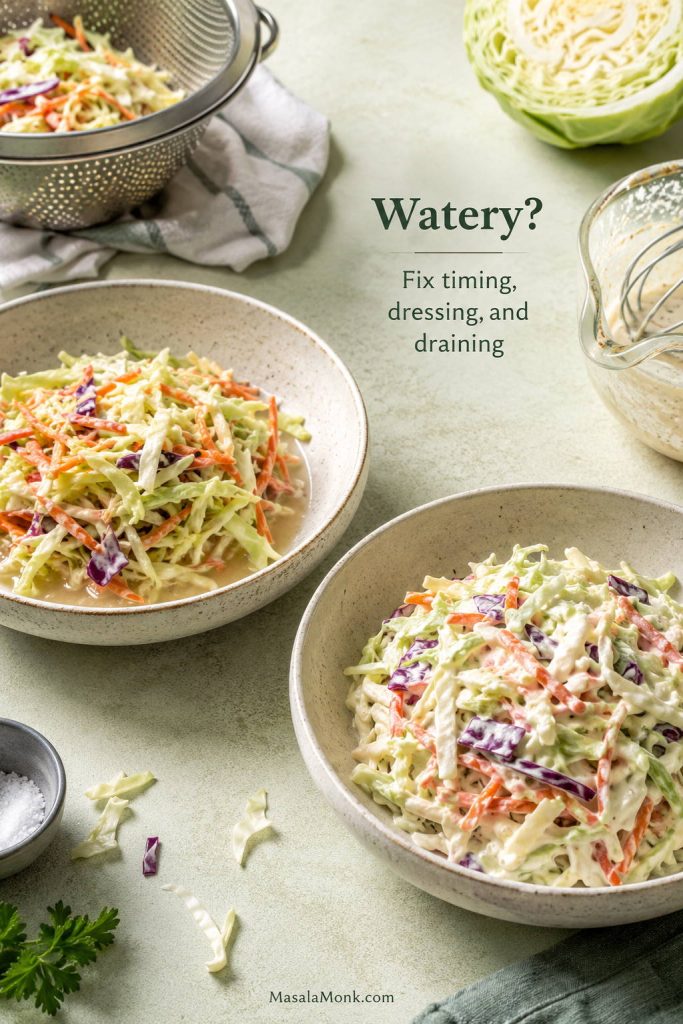
Watery coleslaw usually comes from cabbage releasing moisture after it is dressed. The bowl may look good when you mix it, then an hour later the dressing has thinned out and liquid has collected at the bottom. That does not mean you ruined it. It just means the cabbage did what cabbage does.

Two bowls comparing watery coleslaw with properly dressed coleslaw that is creamy and not soupy.
Watery coleslaw is usually a timing problem, not a ruined batch; draining, reserved dressing, and final seasoning can bring the bowl back.

Fortunately, the fix is not always “less dressing.” It is better timing. Start with part of the dressing, chill, toss again, then decide whether the bowl needs more dressing, more acid, a pinch of salt, or a quick drain.

Should You Salt the Cabbage?

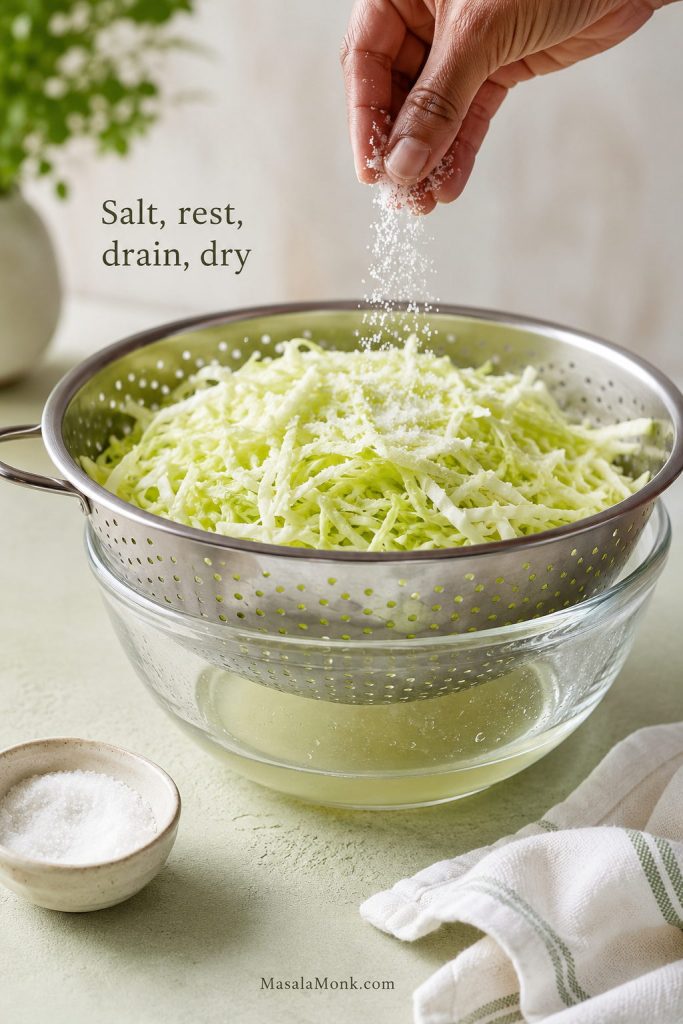
Salting is optional, not mandatory. Skip it for quick same-day coleslaw. Use it when you need the slaw to hold longer, sit neatly on buns, or avoid watering down the dressing at a cookout.

Hand sprinkling salt over shredded cabbage in a colander set over a bowl to drain moisture.
Salting cabbage is optional for same-day coleslaw, but it helps make-ahead slaw stay crisper by drawing out extra moisture before dressing.

To salt cabbage for make-ahead coleslaw, toss the shredded cabbage with 1 teaspoon fine salt, or up to 1½ teaspoons if the cabbage is especially wet or you are using a larger head. Let it sit in a colander for 20 to 30 minutes. Rinse lightly if it tastes too salty, then dry it very well with a clean towel or salad spinner before adding the dressing. If you are prepping for tomorrow, pair this with the make-ahead storage method so the cabbage stays crisp.

If you salt the cabbage first, reduce the salt in the dressing to ¼ teaspoon or leave it out until the final taste adjustment.

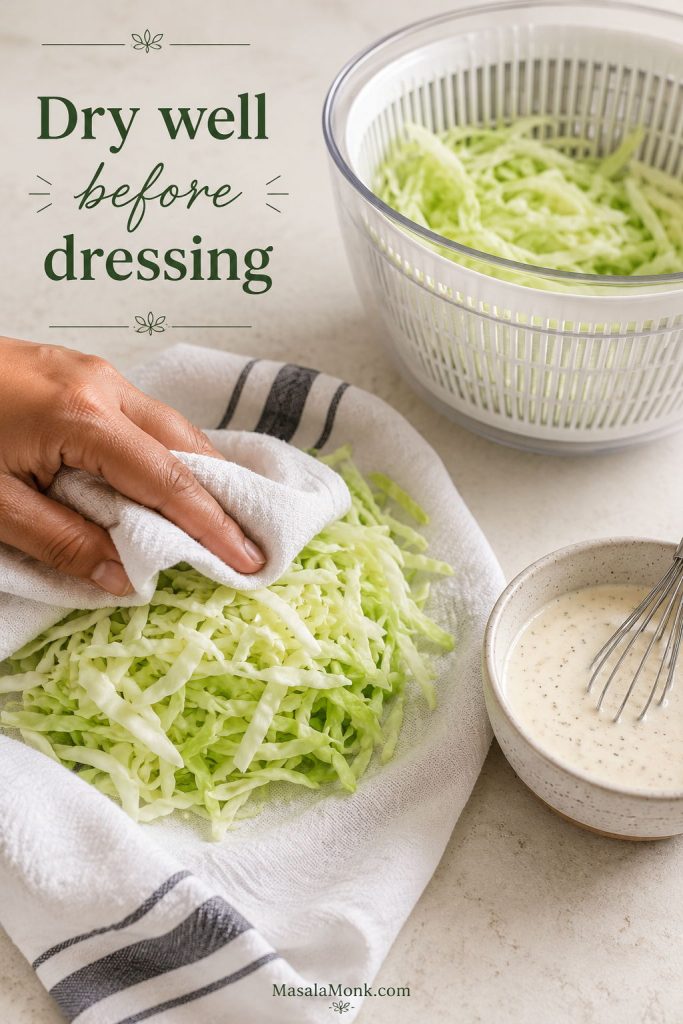
Important: Dry the cabbage well after salting. Wet cabbage plus creamy dressing will still make watery coleslaw.
Shredded cabbage being dried with a clean towel before creamy dressing is added.
After salting or rinsing cabbage, dry it well before adding dressing; otherwise, even a thick creamy coleslaw dressing can turn watery.

Same-Day vs Make-Ahead Coleslaw

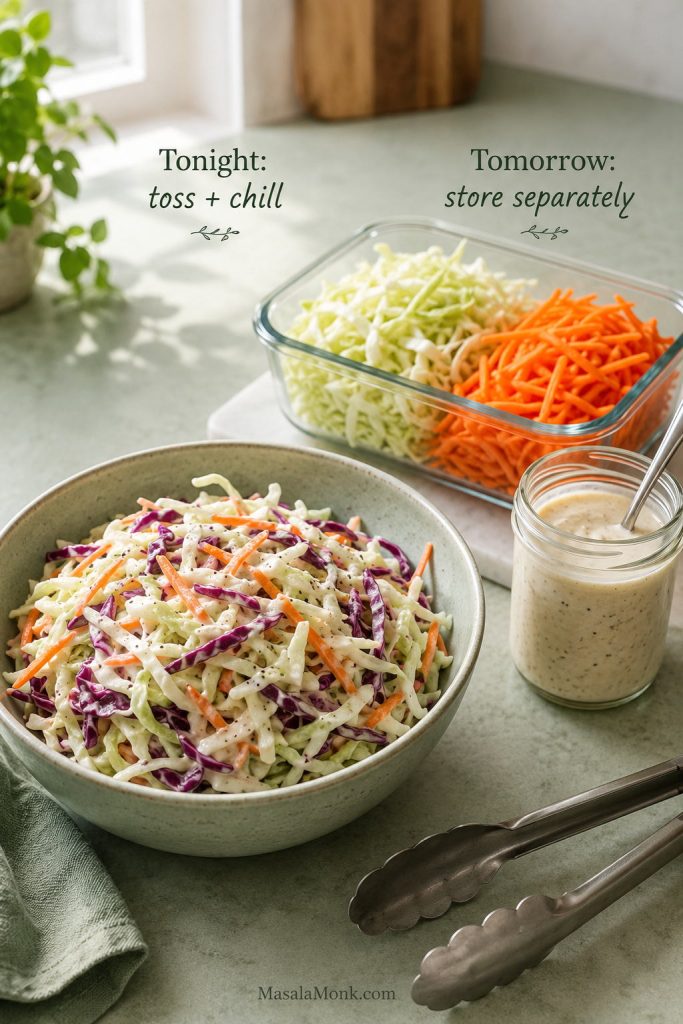
The best method depends on whether the slaw is for tonight’s dinner, tomorrow’s cookout, or a sandwich tray. A quick weeknight bowl does not need the same prep as a tray of sandwich slaw for a crowd.

Dressed coleslaw for same-day serving beside separate containers of cabbage and dressing for make-ahead prep.
Same-day slaw can be dressed early enough to relax, while tomorrow’s slaw stays crisper when the cabbage and dressing wait apart.
Situation Should You Salt? Best Move
Serving within 30–60 minutes No Dress lightly, chill, toss, and adjust
Making it tomorrow Yes, or store dressing separately Salt, drain, dry well, then dress later
Using bagged coleslaw mix Usually no Start with part of the dressing because bagged mix varies
Putting it on pulled pork, burgers, or hot dogs Optional Use a lighter hand with dressing and drain before adding to buns
Taking it to a cookout Optional, but helpful Salt only if prepping early; otherwise keep cold and dress close to serving

Coleslaw Troubleshooting

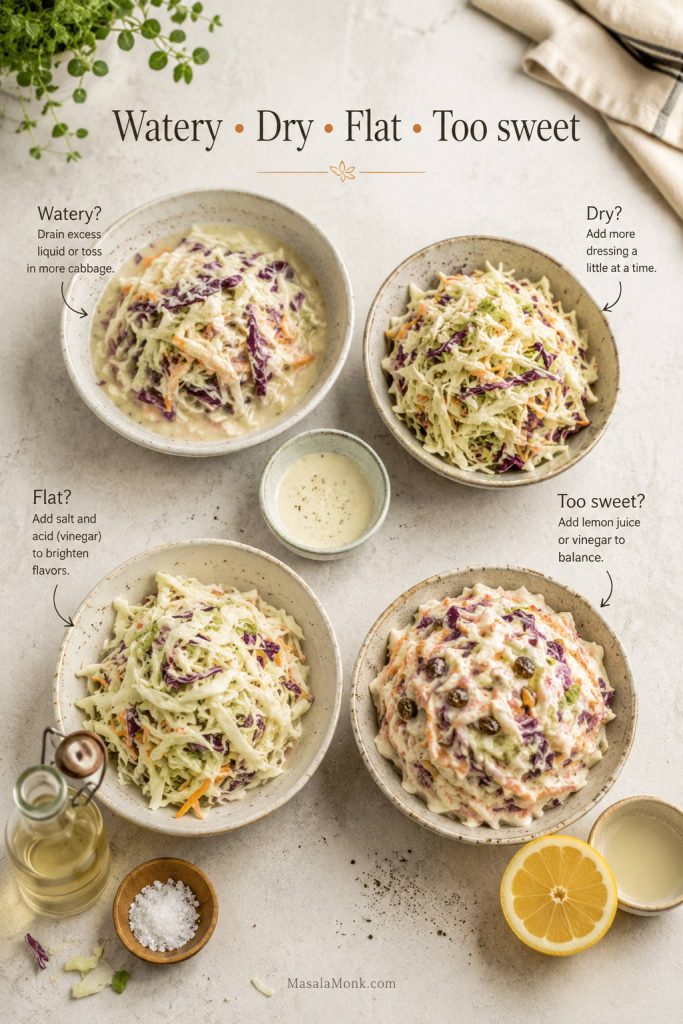
If the bowl tastes a little off, do not start over. Coleslaw is forgiving. Most problems need one small adjustment: a splash of vinegar, a pinch of salt, a spoonful of dressing, a few minutes of chilling, or a handful of fresh cabbage.

Four bowls showing watery, dry, flat, and too-sweet coleslaw with vinegar, salt, lemon, and dressing nearby.
Most coleslaw problems need a small correction, not a new batch; drain watery slaw, add dressing gradually to dry slaw, and use salt or acid for flat flavor.

Quick Fixes for Common Coleslaw Problems

Use the table below to fix the most common coleslaw texture and flavor problems without starting over.

Problem Likely Cause Quick Fix
Coleslaw is watery Too much dressing, cabbage released liquid, or cabbage was not dried Drain excess liquid, toss, and refresh with a small spoonful of mayo if needed
Coleslaw is dry Not enough dressing or very thick cabbage shreds Add more dressing 1 tablespoon at a time after chilling
Coleslaw tastes flat Not enough salt or acid Add a pinch of salt and a splash of vinegar or lemon juice
Coleslaw is too sweet Too much sugar, honey, or sweet mayo Add vinegar, lemon juice, or mustard to sharpen it
Coleslaw is too sharp Too much vinegar, lemon, or mustard Add a small spoonful of mayo or a pinch of sugar
Coleslaw tastes too much like mayo Dressing needs acid, salt, or sweetness Add vinegar or lemon juice first, then a small pinch of sugar if needed
Cabbage is too stiff Shreds are thick or slaw has not rested long enough Chill 30–60 minutes longer, or slice thinner next time
Cabbage is too soft Overdressed, over-salted, or stored too long Drain well and fold in a handful of fresh shredded cabbage
Red cabbage turned the dressing pink Red cabbage released color as it sat Use mostly green cabbage, or add red cabbage close to serving
Bagged mix tastes flat Pre-cut cabbage can taste dry or dull Add extra vinegar, lemon, salt, or a handful of fresh herbs

Make-Ahead and Storage Tips for Coleslaw

This coleslaw recipe can be made ahead, but there is a tradeoff. In general, a short chill makes it taste better because the dressing has time to settle into the cabbage. A long chill makes it softer. The trick is deciding whether you want maximum crunch or maximum convenience.

Shredded cabbage and carrots stored in a container with creamy dressing stored separately in a jar.
Separate containers protect the crunch; once the dressing touches the cabbage, the countdown to softer, wetter slaw begins.

Best Flavor Window

The sweet spot is 30 minutes to 2 hours before serving. The cabbage softens just enough, the dressing clings better, and the bowl still tastes fresh.

A fully dressed bowl can still taste good the next day, but it will be softer and the dressing will be thinner. When crunch matters, store the vegetables and dressing separately.

How Far Ahead to Make Coleslaw

Use this table as a practical planning guide, especially if the slaw is going to a party, sitting beside grilled food, or going inside sandwiches.

When You Need It Best Method Why
Serving in 30–60 minutes Dress now, chill, toss again Best balance of flavor and crunch
Serving in 2–3 hours Dress with two-thirds first, hold cold, adjust before serving Prevents watery slaw
Serving tomorrow Store vegetables and dressing separately Keeps cabbage crisper
Serving on sandwiches Use a lighter hand with dressing and drain before serving Prevents soggy buns
Taking to a cookout Chill well and keep over ice Protects texture and food safety

A Simple Make-Ahead Plan

  • 1 day ahead: shred cabbage and carrots; make the dressing separately.
  • 2–3 hours before serving: toss with two-thirds of the dressing.
  • Right before serving: toss again and adjust with more dressing, salt, or vinegar.

How Long Coleslaw Lasts in the Fridge

Dressed coleslaw is best within 2 to 3 days. Keep it refrigerated in an airtight container, and discard it if it smells off, has changed texture noticeably, or has been left out too long.

If liquid collects at the bottom, drain it before serving leftovers. A small spoonful of mayo or a splash of vinegar can refresh the texture and flavor.

Do not freeze creamy coleslaw. The cabbage turns watery after thawing, and mayonnaise-based dressing can split.

Cookout and Potluck Safety

Because creamy coleslaw is served cold, keep it chilled until serving. For outdoor cookouts, place the serving bowl inside a larger bowl filled with ice if it will sit out for a while.

As a general food-safety rule, cold perishable foods should not sit out for more than 2 hours, or more than 1 hour when the outdoor temperature is above 90°F / 32°C. You can read more about the cold food safety window from the USDA food safety guidance.

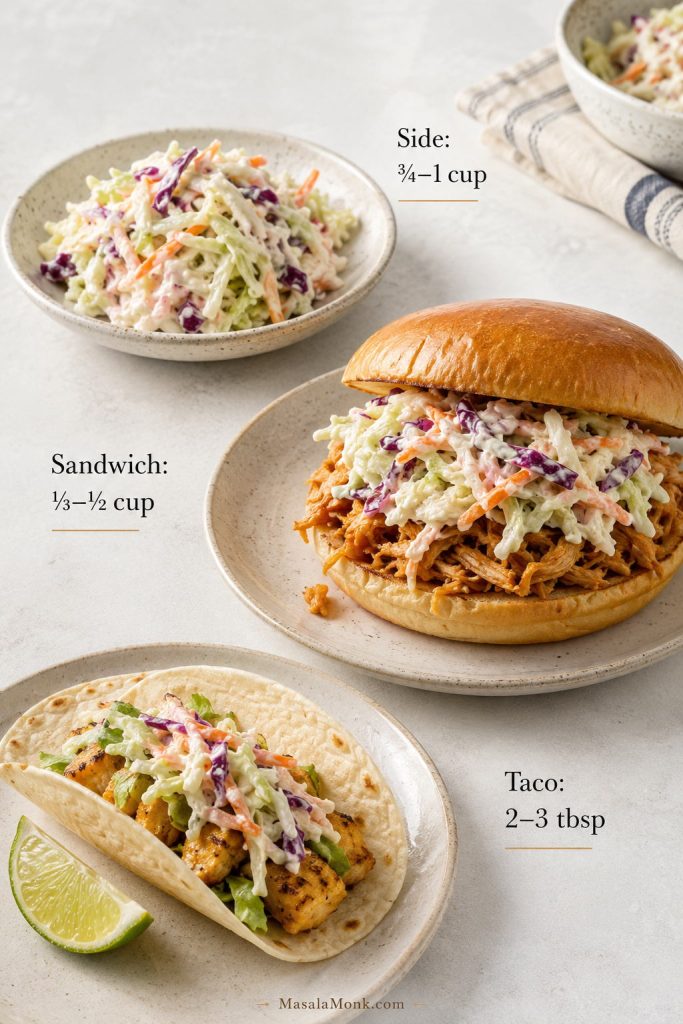
How Much Coleslaw Per Person?

Coleslaw is one of those sides that disappears fast when sandwiches are involved, but sits longer when the table is full of other BBQ sides. If you are planning a full menu, the serving ideas section shows where coleslaw works best.

Coleslaw portions shown as a side dish, a sandwich topping, and a taco topping with serving amounts.
Plan more coleslaw for sides and less for toppings; a sandwich usually needs about ⅓–½ cup, while tacos only need a few tablespoons.

For a side dish, plan on about ¾ to 1 cup per person. If coleslaw is one of several sides, ½ to ¾ cup per person is usually enough. For sandwiches, burgers, hot dogs, or pulled pork, plan on ⅓ to ½ cup per sandwich.

As written, this recipe makes about 8–9 cups, so it serves 8 people generously as a side dish or more if you are using it as a topping. These amounts are approximate because finely chopped slaw packs more tightly than long shredded cabbage.

Use Amount to Plan Texture Goal
Side dish ¾–1 cup per person Creamy, chilled, and lightly coated
Large BBQ spread ½–¾ cup per person Tangy and not too heavy
Pulled pork sandwich ⅓–½ cup per sandwich Finely shredded and not too wet
Burgers or hot dogs ¼–⅓ cup per bun Finely chopped or thinly shredded
Tacos or wraps 2–3 tablespoons per piece Lightly dressed and crunchy

What to Serve with Coleslaw

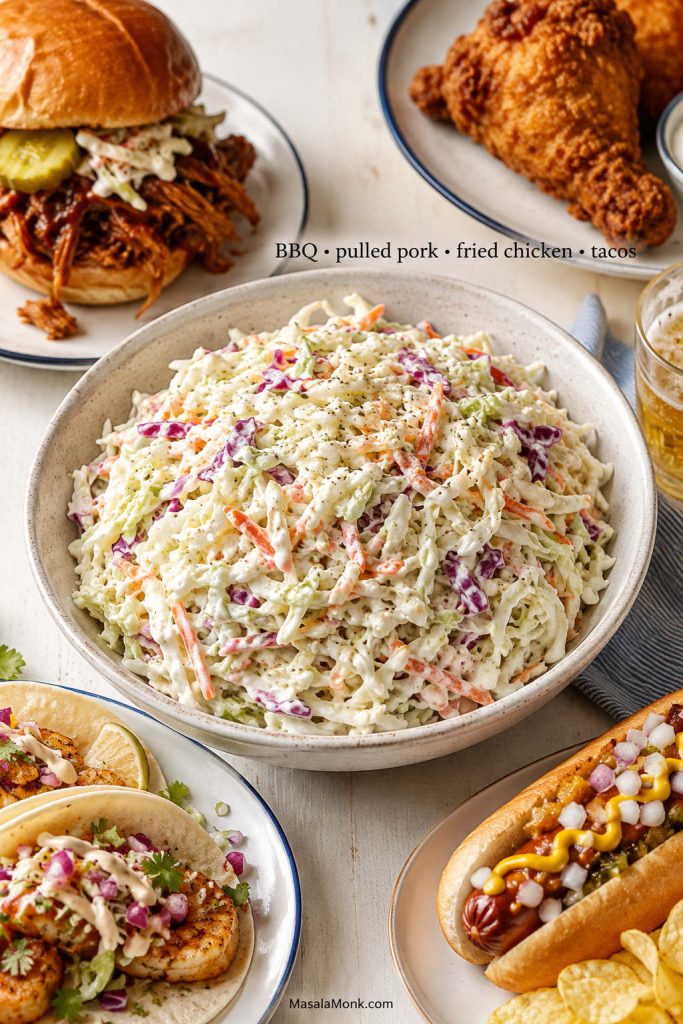
Coleslaw earns its place because it makes the rest of the meal easier to enjoy. A spoonful of cold crunch beside smoky meat, a bright layer inside a pulled pork sandwich, or a creamy bite next to fried fish can change the whole plate. For larger BBQ plates or sandwich trays, check the coleslaw per person guide before scaling the batch.

Bowl of creamy coleslaw served with pulled pork, fried chicken, tacos, and a hot dog.
Coleslaw earns its place on cookout plates because cold crunch and tangy creaminess balance rich foods like pulled pork, fried chicken, tacos, and hot dogs.

Coleslaw for BBQ Plates

On a BBQ plate, coleslaw should cool the palate between bites of smoky, saucy, or grilled food. Keep it creamy, crisp, and slightly tangy. A little extra vinegar or lemon juice helps the slaw cut through ribs, grilled chicken, brisket, pulled pork, sausages, or other cookout mains.

If the rest of the plate is already sweet or saucy, avoid making the slaw too sweet. A balanced sweet-tangy dressing tastes fresher.

Coleslaw for Pulled Pork Sandwiches

For pulled pork sandwiches, the slaw has one job: add crunch and brightness without soaking the bun. Keep it finely shredded, lightly dressed, and a little tangier than you would for a side dish.

Pulled pork sandwich topped with lightly dressed coleslaw on a soft bun.
For pulled pork sandwiches, keep the coleslaw finely shredded and lightly dressed so it adds crunch without making the bun soggy.

Long cabbage strands can pull out of the sandwich, and watery dressing can make the bread soggy. Chill the slaw, drain off any extra liquid, and add it right before serving.

This same logic works for chicken sandwiches too. A creamy, tangy slaw is especially good with BBQ chicken, crispy chicken, and grilled chicken sandwiches. For more sandwich ideas, see these chicken sandwich recipes.

Coleslaw for Burgers and Hot Dogs

For burgers and hot dogs, chop the slaw a little finer so it stays inside the bun and gives every bite some crunch. Hot dogs can handle a slightly sweeter dressing, while richer burgers usually taste better with a sharper, tangier slaw. Either way, drain off extra liquid before adding it to bread.

Coleslaw for Fried Chicken, Fish, Tacos, and Wraps

Fried chicken and fried fish need coleslaw that is bright and cold. If the main dish is already rich and crisp, the slaw should bring freshness. Add a little extra vinegar or lemon juice before serving.

Taco slaw should be lighter than a classic creamy BBQ side. Use this recipe as a starting point, then thin the dressing with extra lime or vinegar and use less mayo if you want a taco-style slaw.

For a lighter taco-style slaw, see the cabbage slaw approach in these fish tacos. The shrimp tacos use a similar fresher direction with creamy sauce and crunch.

Coleslaw also works beside fried fish and chips because the cool cabbage balances the hot, crisp batter. For that style of plate, keep the slaw cold and a little more acidic. You can pair it with this fish and chips recipe.

Easy Coleslaw Variations

Once the classic creamy version is working, you can adjust the dressing and vegetables to match the meal. Choose the version that fits the plate instead of loading one bowl with too many ideas.

No-Mayo Coleslaw

A no-mayo version works best when the dressing is sharp, glossy, and well-seasoned. Use apple cider vinegar, olive oil, a little Dijon mustard, honey or sugar, salt, pepper, and optional celery seed. This style is lighter, brighter, and especially good with pulled pork, tacos, fried food, and picnic plates where you want crunch more than creaminess. For a quick comparison, see the mayo vs vinegar coleslaw answer in the FAQs.

Two bowls comparing creamy mayo coleslaw with a brighter vinegar-style no-mayo coleslaw.
Choose mayo slaw when you want creamy comfort, and choose vinegar slaw when the plate needs a sharper, lighter bite.

Greek Yogurt Coleslaw

To make the dressing lighter, replace part of the mayonnaise with thick Greek yogurt. Start by replacing ¼ cup of the mayo, then taste before swapping more. Greek yogurt is tangier than mayo, so you may need a little more honey or sugar to balance it.

This version is useful for weeknight dinners, meal prep bowls, wraps, and lighter sandwiches.

Sweeter or Tangier Coleslaw

If you like a sweeter cookout-style slaw, add sugar or honey 1 teaspoon at a time. If you want it sharper, add apple cider vinegar, lemon juice, or mustard in small amounts.

Always adjust after the slaw has chilled. The flavor changes as the cabbage softens and the dressing loosens. If the bowl tastes bland, do not automatically add more mayo. Add a pinch of salt first, then a little acid.

Other Slaw Styles to Try Later

Apple slaw, broccoli slaw, red cabbage slaw, vegan coleslaw, keto coleslaw, and Asian slaw are all useful variations, but they each need their own balance. Apple needs enough acid so the bowl does not taste too sweet. Broccoli slaw needs a dressing that can soften firmer shreds. Red cabbage slaw often works better with a brighter vinaigrette. Asian slaw usually moves away from classic mayo dressing and toward sesame, ginger, soy, rice vinegar, lime, or herbs.

Keep this classic coleslaw recipe as the creamy base, then use those ideas when you want a different style of slaw.

Vegan or Egg-Free Coleslaw

Vegan coleslaw needs a thick vegan mayo and enough vinegar or lemon juice to keep the dressing bright. The dressing should taste slightly bold before it hits the cabbage because the vegetables will mellow it.

This vegan mayo recipe is a useful base for a plant-based version. For egg-free but not necessarily vegan coleslaw, use eggless mayo and keep the rest of the recipe the same.

How did you adjust it?

If you made this coleslaw sweeter, tangier, creamier, sharper, or more sandwich-friendly, share your version in the comments so other readers can try it too.

Once you understand the dressing balance, coleslaw becomes easy to adjust. Keep it creamier for cookouts, sharper for pulled pork, lighter for tacos, and colder than you think before serving. That is the difference between a bowl people ignore and a bowl that disappears.

Coleslaw FAQs

What is coleslaw made of?

Classic coleslaw is made with shredded cabbage, grated carrot, and a creamy or vinegar-based dressing. A creamy coleslaw dressing usually includes mayonnaise, vinegar, sugar or honey, salt, pepper, and sometimes mustard or celery seed.

What is the best cabbage for coleslaw?

Green cabbage is the most reliable choice because it is crisp, mild, and sturdy. Red cabbage adds color and crunch, but it can tint the dressing pink as it sits. Green cabbage alone is enough for a classic creamy slaw; red cabbage is mainly for color and extra crunch.

Can I use bagged coleslaw mix?

Bagged coleslaw mix works well, especially for weeknights. One 14–16 oz / 400–450 g bag makes a slightly smaller batch, so start with about half to two-thirds of the dressing. For the full 8–9 cup yield, use about 20–24 oz / 560–680 g mix or add extra shredded cabbage and carrot.

What is the difference between slaw and coleslaw?

Coleslaw usually means a cabbage-based slaw, often with carrots and a creamy or vinegar dressing. Slaw is broader and can include other shredded vegetables such as broccoli, Brussels sprouts, kale, apple, or red cabbage.

How do you keep coleslaw from getting watery?

Watery coleslaw usually happens when cabbage releases moisture after dressing. Start with part of the dressing, chill, toss again, and then decide whether the bowl needs more dressing, a quick drain, or a little extra seasoning. For make-ahead coleslaw, lightly salt the shredded cabbage, let it drain, dry it very well, and then dress it.

Should I salt cabbage before making coleslaw?

Quick same-day coleslaw does not need salted cabbage. Salting helps when you are making the slaw ahead, serving it outdoors, or using it on sandwiches where extra liquid can make the bread soggy. If you salt the cabbage, reduce the salt in the dressing and adjust at the end.

How long should coleslaw chill before serving?

For this coleslaw recipe, a 30 to 60 minute chill gives the cabbage time to soften slightly and lets the dressing flavor the vegetables. If you are in a hurry, even 10 to 15 minutes helps, but the texture is better with a longer rest.

Can I make coleslaw the night before?

You can, but the texture will be softer. For the best crunch, store the shredded vegetables and dressing separately, then combine them a few hours before serving.

How far ahead can I make coleslaw?

The freshest window is 30 minutes to 2 hours before serving. For parties, shred the vegetables and mix the dressing one day ahead, store them separately, and combine them on the day you plan to serve.

How long does coleslaw last in the fridge?

Dressed coleslaw is best within 2 to 3 days. It softens and releases liquid as it sits, so drain off excess liquid before serving leftovers.

Can you freeze coleslaw?

Creamy coleslaw does not freeze well. The cabbage turns watery after thawing, and mayonnaise-based dressing can separate. If you need to prep ahead, keep the shredded vegetables and dressing separate in the refrigerator.

Why does my coleslaw taste bland?

Bland coleslaw usually needs salt or acid, not more mayo. Add a pinch of salt and a small splash of vinegar or lemon juice, toss, and taste again.

Why did my red cabbage turn the dressing pink?

Red cabbage naturally releases color into creamy dressing as it sits. Use mostly green cabbage with a smaller amount of red cabbage if you want a classic pale dressing.

Is coleslaw better with mayo or vinegar?

Mayo coleslaw gives you the classic creamy cookout bowl. Vinegar slaw is sharper, lighter, and better when the main dish is rich, smoky, fried, or piled into a sandwich.

Is coleslaw gluten-free?

Most homemade coleslaw is naturally gluten-free if the mayonnaise, mustard, vinegar, and seasonings are gluten-free. Always check labels if you are cooking for someone with celiac disease or strict gluten sensitivity.

How much coleslaw do I need for pulled pork sandwiches?

Plan on ⅓ to ½ cup coleslaw per sandwich. Keep it finely shredded, lightly dressed, and well drained so it adds crunch without making the bun soggy.

What goes well with coleslaw?

Coleslaw goes well with BBQ, ribs, burgers, hot dogs, fried chicken, fried fish, fish tacos, shrimp tacos, wraps, and pulled pork sandwiches. It works especially well anywhere you want a cold, crunchy contrast to something smoky, sauy, fried, or spicy.