Posted on Leave a comment

Pineapple Jam Recipe and Pineapple Preserves

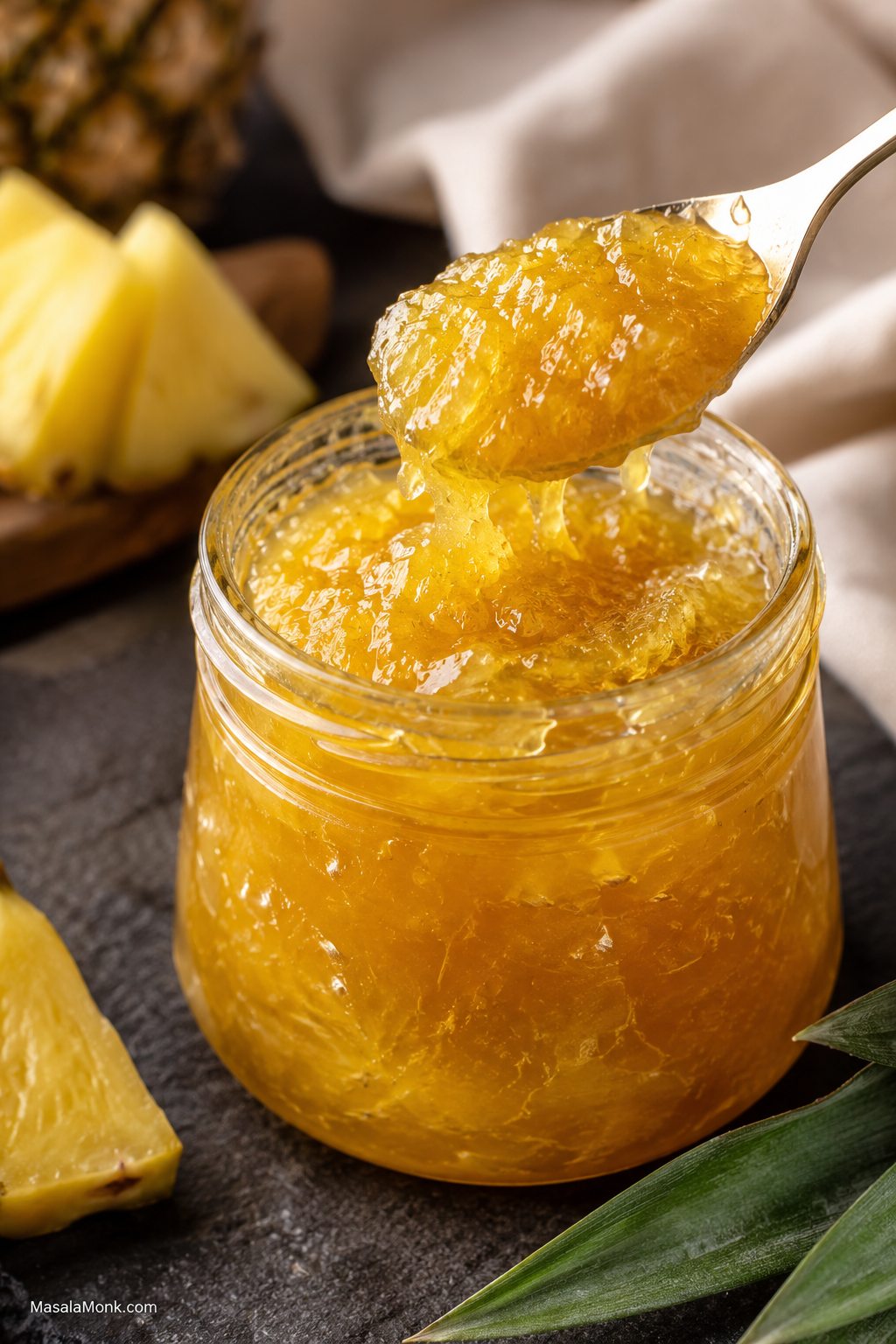
Open glass jar of glossy golden pineapple jam with a spoon lifting thick jam and fresh pineapple wedges behind it

This pineapple jam recipe turns fresh pineapple or canned crushed pineapple into a glossy, golden spread that tastes bright, tropical, and properly homemade. Make it smooth and spoonable for toast, leave it chunkier for pineapple preserves, or cook it down further when you need a thick filling for tarts, cookies, and pastries.

The main version is a simple no-pectin pineapple jam for the fridge or freezer. Pineapple, sugar, lemon or lime juice, and a pinch of salt cook down into a sweet-tart fruit spread that thickens as it cools and stays soft enough to spread.

Once you know what the bubbles, spoon trail, and cold-plate test should look like, the recipe becomes very forgiving. Use crushed pineapple for jam, diced pineapple for preserves, canned pineapple for a quick pantry batch, or a wider pan and longer cooking time for pineapple tart filling.

The best part is that the recipe does not fall apart if your pineapple is extra juicy, your can is a little watery, or you want a softer spoonable finish instead of a firm jar. The texture tests below will tell you when to stop.

Table of Contents

Use this guide to choose between smooth pineapple jam, chunkier pineapple preserves, a quick canned pineapple batch, or a thicker filling for tarts and pastries.

Quick Answer

For an easy pineapple jam recipe, simmer crushed pineapple with sugar, lemon or lime juice, and a pinch of salt until it turns shiny, golden, and thick enough to mound softly on a spoon. If you want pineapple preserves instead, use diced pineapple and stop cooking while the fruit pieces are still visible in a thick syrup.

The easiest no-pectin ratio is 3 cups crushed pineapple, 1½ cups sugar, and 1–2 tablespoons lemon or lime juice. Cook for about 25–35 minutes. The jam is ready when it leaves a brief trail in the pan, passes the cold-plate test, or reaches about 220°F / 104°C at sea level.

However, do not worry if it looks a little loose while hot. Pineapple jam thickens as it cools, so the goal is glossy and spreadable rather than stiff or rubbery. For the safest first batch, make the crushed pineapple version and refrigerate it.
Best first batch: Start with the no-pectin pineapple jam made with crushed pineapple. After that, try diced preserves, canned pineapple jam, or a thicker filling for tarts and pastries.
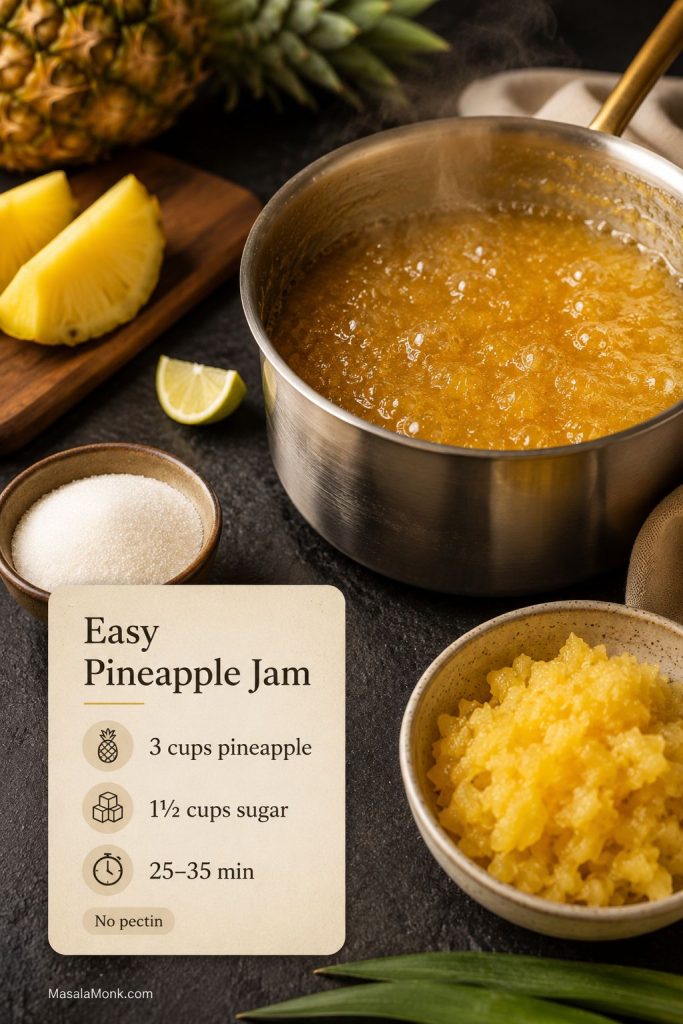
Saucepan of bubbling pineapple jam with crushed pineapple, sugar, citrus, and a quick ratio guide
Start with the simple no-pectin pineapple jam ratio, then let the pan tell you when it is done. As the fruit reduces, the bubbles slow down and the mixture turns shiny instead of watery.

Pineapple Jam Recipe at a Glance

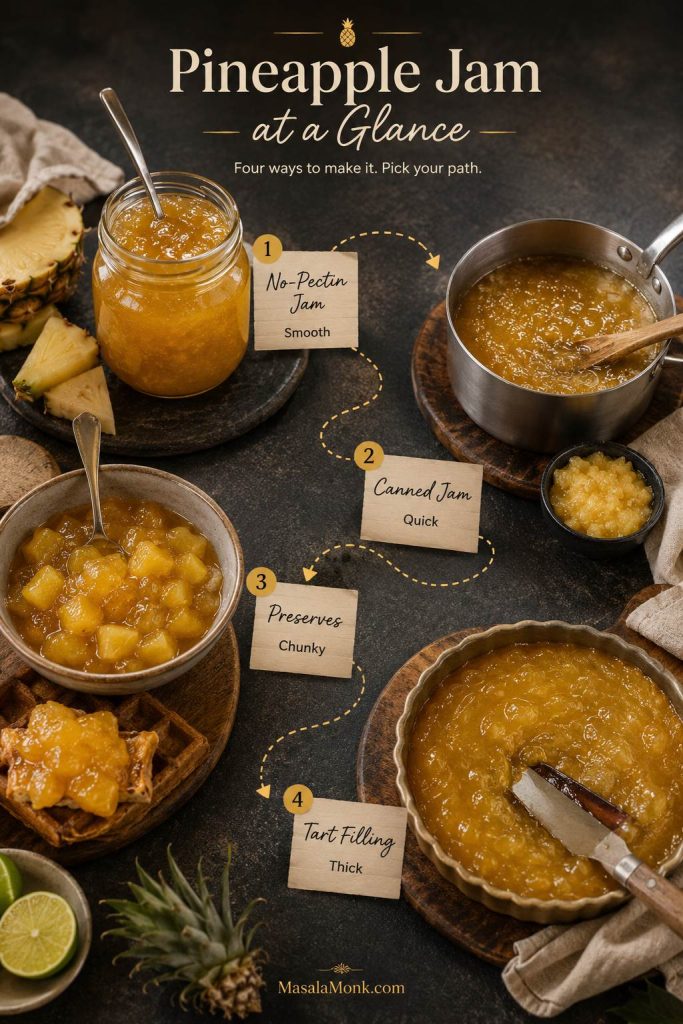
This pineapple jam recipe can go in four useful directions: soft-set jam, chunkier preserves, quick canned pineapple jam, or a much thicker tart filling. Start with the version that matches how you plan to serve it.
Pineapple jam at-a-glance guide showing no-pectin jam, canned jam, preserves, and tart filling routes
One pineapple jam recipe can become a breakfast spread, chunky preserve, canned-pineapple batch, or tart filling. As a result, choosing the route first helps you cook toward the right texture.
Version Pineapple Sugar Cook Time Best For
No-pectin pineapple jam 3 cups / about 680 g crushed pineapple 1½ cups / 300 g 25–35 minutes Toast, cookies, cakes, yogurt, everyday spreading
Canned pineapple jam 1 can / 20 oz / 567 g crushed pineapple in juice ¾–1 cup / 150–200 g 20–30 minutes Quick pantry batch, small jars, beginner version
Pineapple preserves 5½–6 cups diced pineapple ⅔–1 cup 30–40 minutes Biscuits, waffles, ice cream, cheese boards, glazes
Pineapple tart filling 4 cups grated or finely pulsed pineapple ½–¾ cup, then adjust 1–2½ hours Pineapple tarts, pastry filling, thumbprint cookies
Choose your version: Use crushed pineapple for soft, spreadable jam; diced pineapple for chunkier preserves; canned crushed pineapple for the quickest small batch; and finely pulsed pineapple cooked much longer for tart or pastry filling. For pantry storage, do not use the flexible recipe as written — follow a tested canning method instead.

Pineapple Jam vs Pineapple Preserves

Although pineapple jam and pineapple preserves use similar ingredients, they do not eat the same way. This pineapple jam recipe gives you both paths, so you can choose the texture that fits how you plan to use it.
A smoother jam is easier to spread because the fruit is crushed, finely chopped, pulsed, or mashed as it cooks. Choose this version for toast, scones, thumbprint cookies, cake layers, yogurt bowls, and everyday spooning.
Meanwhile, preserves are chunkier. The fruit is usually diced into small, even pieces and cooked until tender in a thick syrup. Choose this version when you want visible pineapple pieces on biscuits, pancakes, waffles, cheesecake, ice cream, cheese boards, or savory glazes.

Another easy way to think about it: jam should glide across toast, while preserves should give you soft little pineapple pieces in each spoonful.

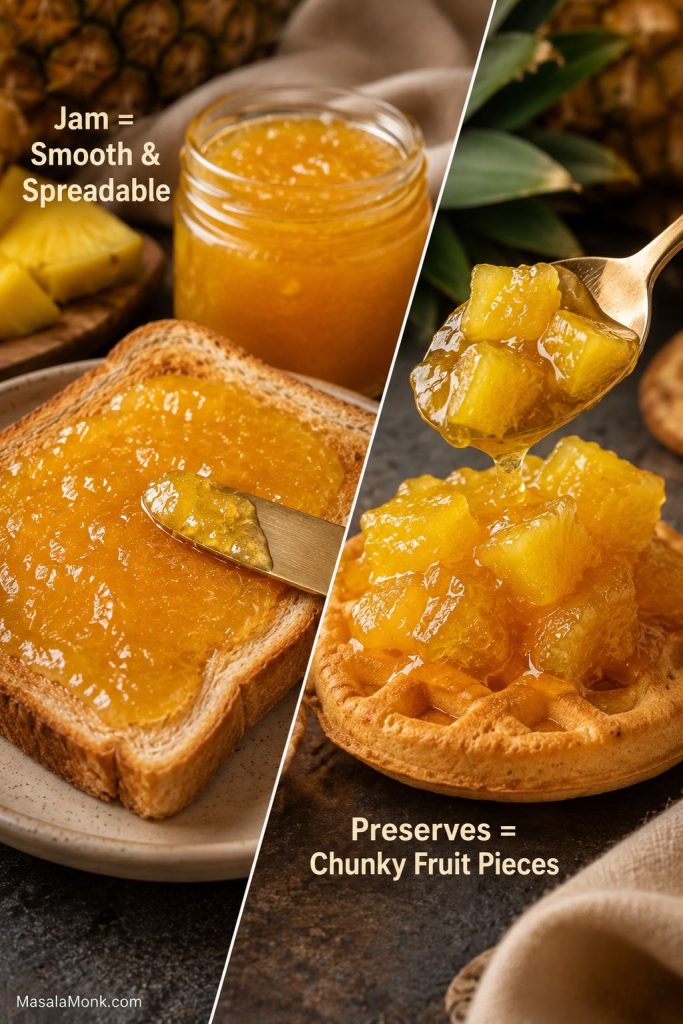
Diagonal comparison of smooth pineapple jam spread on toast and chunky pineapple preserves spooned over a biscuit or waffle
Pineapple jam and pineapple preserves are separated by texture more than ingredients. Crushed pineapple gives a smoother spread, while diced pineapple keeps soft fruit pieces in the finished preserve.
Version Fruit Cut Texture Best Uses
Pineapple jam Crushed, finely chopped, or pulsed Smoother, soft-set, glossy, spreadable Toast, scones, cookies, cake filling, yogurt, pastries
Pineapple preserves Small dice, about ¼–½ inch Chunkier fruit pieces in thick syrup Biscuits, waffles, ice cream, cheese boards, glazes
Pineapple tart filling Grated, finely pulsed, or cooked down further Very thick, sticky, paste-like Pineapple tarts, cookies, pastry filling, filled buns

Ingredients for Pineapple Jam and Preserves

You only need a few ingredients, but each one has a job. Pineapple brings the fruit and acidity, sugar helps the mixture thicken and shine, citrus keeps the flavor lively, and salt balances the sweetness. Because this pineapple jam recipe is flexible, the fruit cut matters as much as the ingredient list.

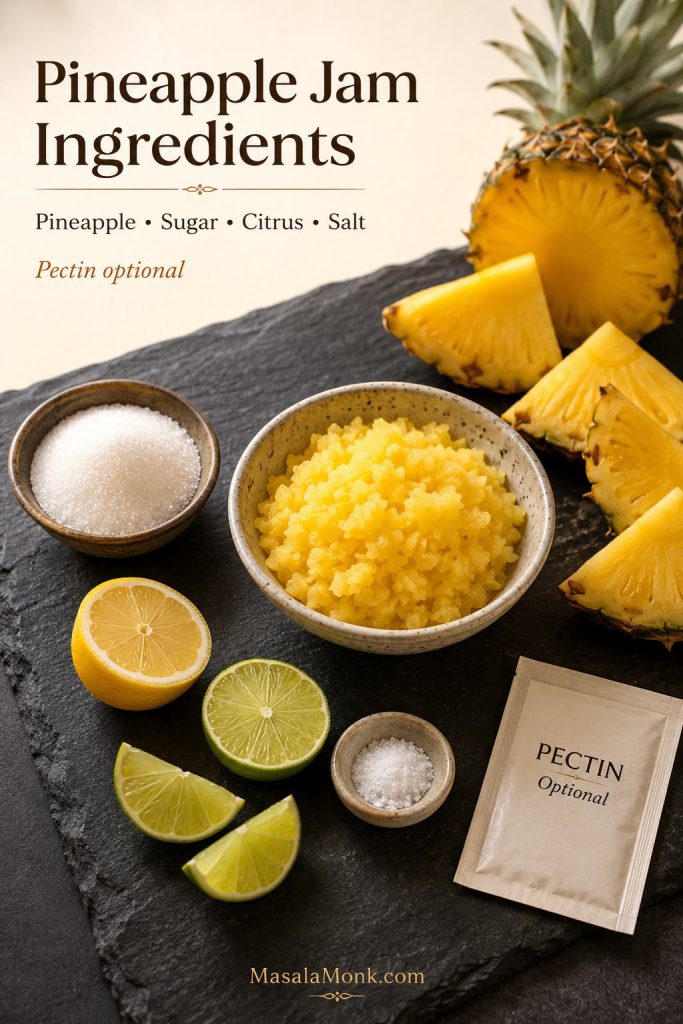
Pineapple jam ingredients including fresh pineapple, crushed pineapple, sugar, lemon, lime, salt, and optional pectin
Pineapple, sugar, citrus, and salt are enough for a flexible refrigerator jam. However, pectin can help when you want a firmer set, a faster cook, or a tested canning-style formula.

Pineapple

Fresh ripe pineapple gives the brightest flavor and color. Canned crushed pineapple works well when you want a faster batch. For jam, crush or finely chop the fruit. For preserves, cut it into small even pieces so everything softens at the same rate.

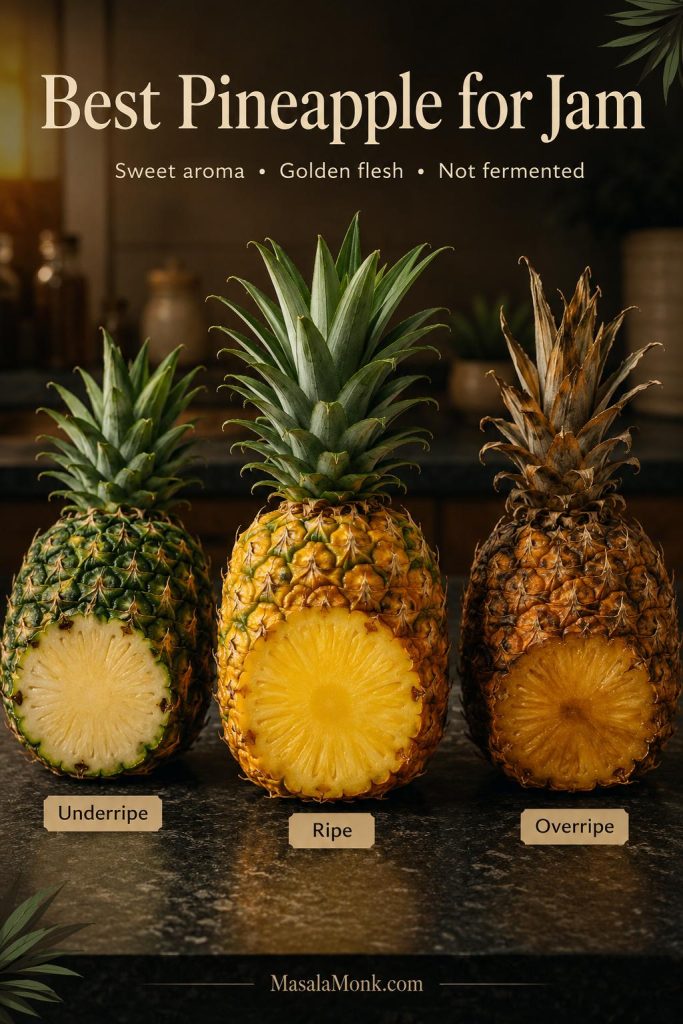
Choose pineapple that smells sweet and fruity, not fermented. Very underripe pineapple can taste sharp, while overripe pineapple may make the jam darker and softer. A very sweet pineapple gives a rounder jam; a sharper one may need the higher end of the sugar range. If the fruit tastes flat, lime juice usually wakes it up better than more sugar.

Pineapple selection guide comparing underripe, ripe, and overripe pineapple for jam making
Ripe pineapple gives homemade pineapple jam the brightest color and flavor. Meanwhile, underripe fruit can taste sharp, and overripe pineapple may cook down darker and softer.

Sugar

Sugar does more than sweeten the jar. It helps create body, improves the glossy finish, and supports the spreadable texture. For the main no-pectin version, start with 1½ cups sugar for 3 cups crushed pineapple. Use up to 2 cups if you prefer a firmer, sweeter jam.

Lemon or Lime Juice

Lemon juice gives a clean, classic fruit-spread flavor. Lime juice tastes a little more tropical and works especially well if you plan to use the jam with coconut desserts, pineapple tart filling, or drink-inspired pairings.

Salt

A small pinch of salt will not make the jam salty. Instead, it rounds out the sugar and helps the pineapple taste brighter.

Pectin, Optional

You can make pineapple jam without pectin, but pectin is useful when you want a quicker set, a firmer jar, or a lower-sugar method designed for that purpose. Different pectin types need different sugar levels and cooking steps, so follow the instructions on the package if you use it.
Fresh vs Canned Pineapple

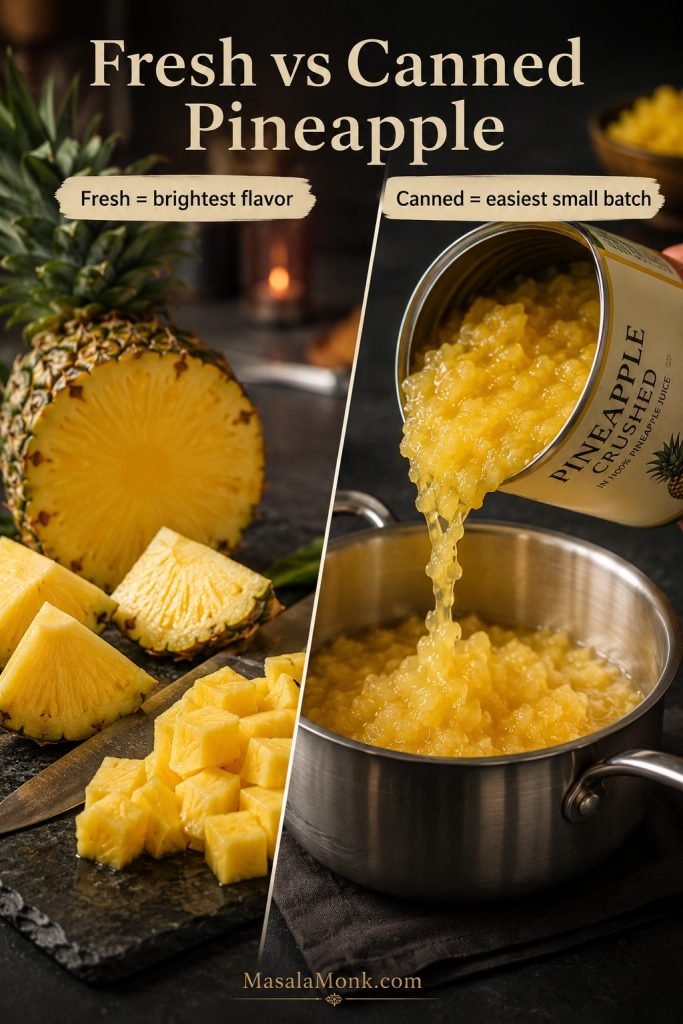
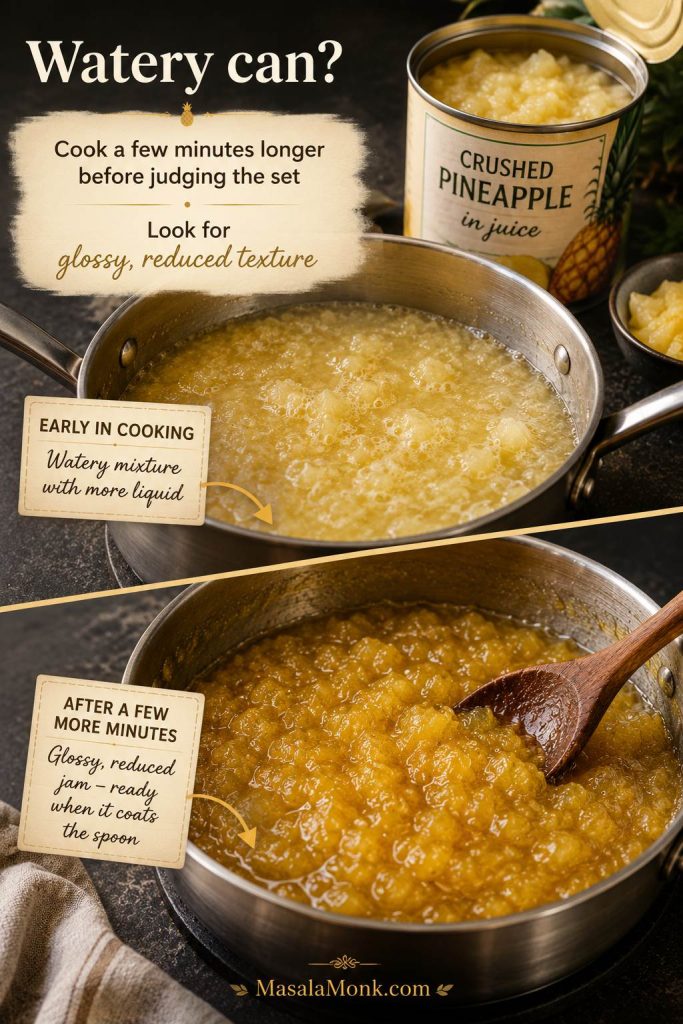
Fresh pineapple gives the brightest aroma and color, but canned pineapple is not a failure shortcut. It is fast, consistent, available year-round, and especially useful for a small-batch pineapple jam recipe. In fact, canned crushed pineapple is the easiest beginner version because the fruit is already evenly cut. The only real adjustment is moisture: if the can looks watery, cook a few minutes longer before judging the set.

Fresh pineapple being chopped beside canned crushed pineapple being poured into a saucepan for jam
Fresh pineapple gives the most vivid aroma, but canned crushed pineapple makes the easiest small-batch pineapple jam. Since the fruit is already evenly cut, it reduces with less prep work.

How to Prep Fresh Pineapple for Jam

When using fresh pineapple, peel, core, and chop the fruit first. Then, pulse it in a food processor for jam or dice it by hand for preserves. Try not to leave large pieces of tough core in the mixture because they can stay fibrous even after cooking.

Best Canned Pineapple to Use

For canned pineapple jam, choose crushed pineapple or pineapple chunks packed in juice rather than heavy syrup. Drain only if the can is extremely watery. Some juice helps the fruit cook down evenly and keeps the sugar from catching too early.

Watery canned crushed pineapple in juice reducing into thicker glossy pineapple jam in a saucepan
Canned pineapple jam can look loose at first because some cans carry more juice than others. Instead of adding thickeners too soon, simmer a little longer and wait for a glossy, reduced texture.
Pineapple Type Best For How to Use It
Fresh pineapple Brightest flavor, best color, homemade preserves Peel, core, chop, then crush or dice depending on texture
Canned crushed pineapple in juice Quick pineapple jam, small batches, pantry version Use with juice unless very watery; simmer longer if needed
Canned pineapple chunks Preserves or jam after chopping Chop smaller or pulse briefly before cooking
Pineapple in syrup Last-resort option Reduce added sugar and expect a sweeter final jam

If you are working with extra pineapple juice, save it for drinks, smoothies, marinades, or a tropical party bowl like this punch with pineapple juice.

Small-Batch Pineapple Jam

A small batch is perfect when you have one can of pineapple or a little fresh fruit left after cutting a whole pineapple. Since this is a small flexible batch, keep it chilled instead of treating it as pantry-stable.

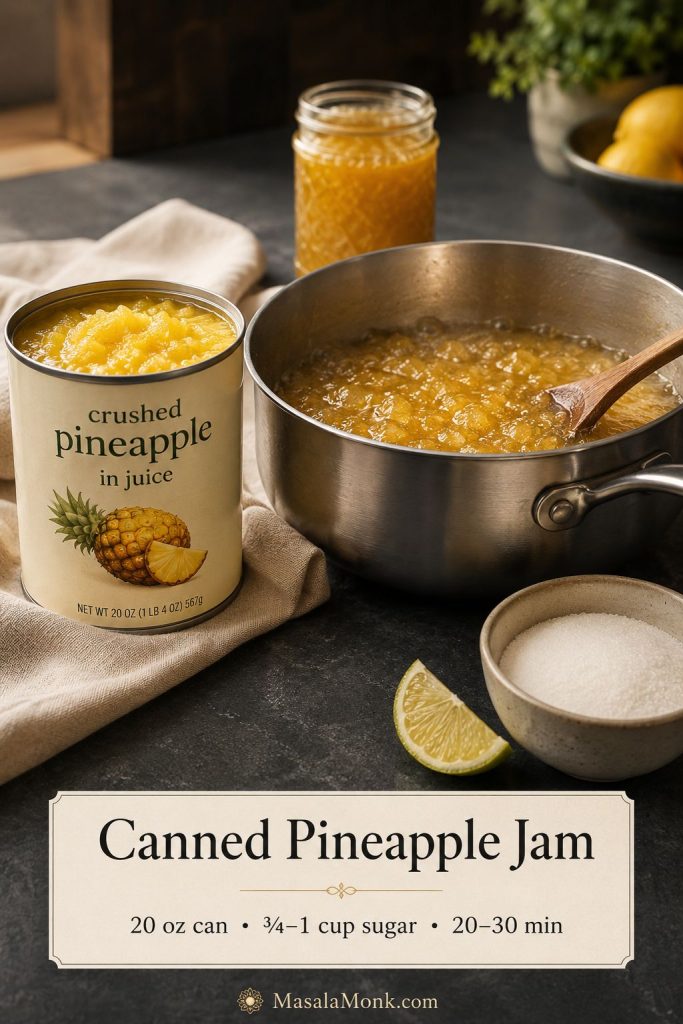
Small batches are also helpful when you are learning the texture cues. They reduce faster, are easier to stir, and give you a low-pressure way to understand how pineapple changes as it cooks. If you are standing in the kitchen with one 20-ounce can of crushed pineapple, this is the easiest place to start.

Small-batch canned pineapple jam setup with a 20-ounce can of crushed pineapple in juice, saucepan, sugar, citrus, and finished jar
A 20-ounce can of crushed pineapple is a practical shortcut for small-batch pineapple jam. Because the fruit is already crushed, the key is reducing the juice until the spread looks shiny and spoonable.

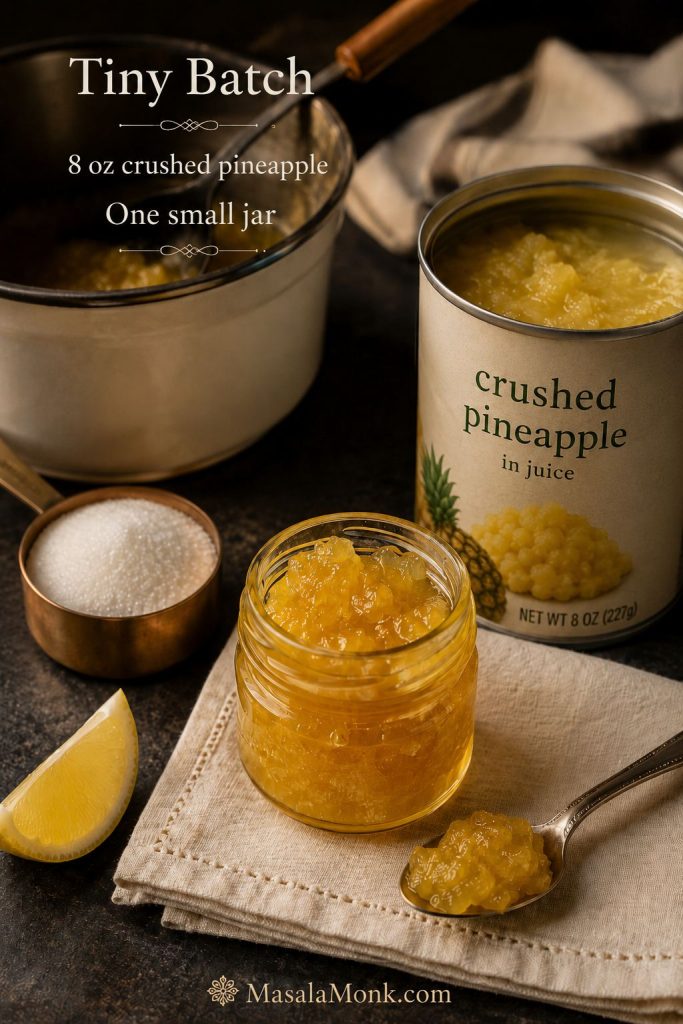
Tiny 8-Ounce Can Version

  • 1 can / 8 oz / 227 g crushed pineapple in juice
  • ⅓–½ cup / 65–100 g sugar
  • 1–2 teaspoons lemon or lime juice
  • Small pinch of salt

Simmer everything in a small saucepan for 15–25 minutes, stirring often, until shiny and jammy. This makes roughly one small jar, depending on how much you reduce it.
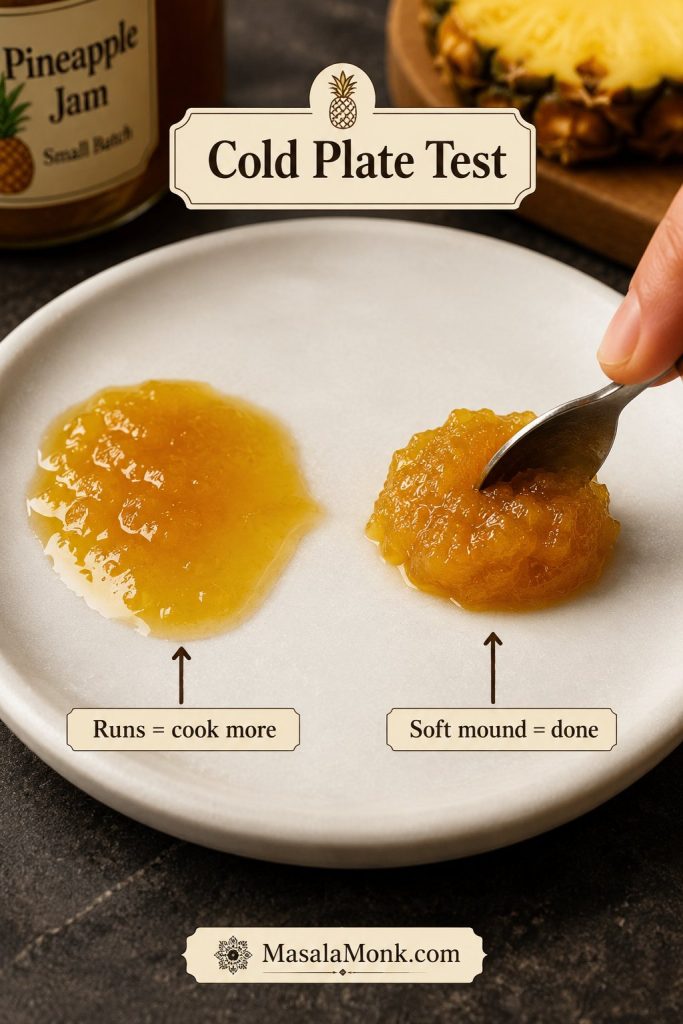
Tiny batch pineapple jam setup with an 8-ounce can of crushed pineapple in juice, small jar, lemon wedge, sugar, and saucepan
The 8-ounce can version is a smart tiny batch when you only want one small jar. It also gives you a low-risk way to practice the cold-plate test before making more.

20-Ounce Can Version

  • 1 can / 20 oz / 567 g crushed pineapple in juice
  • ¾–1 cup / 150–200 g sugar
  • 1 tablespoon / 15 ml lemon or lime juice
  • Pinch of salt

Cook for 20–30 minutes, or until the bubbles look slower and the fruit has reduced into a soft-set spread. If the canned pineapple is very juicy, the batch may need a few extra minutes.

Pineapple Jam Without Pectin

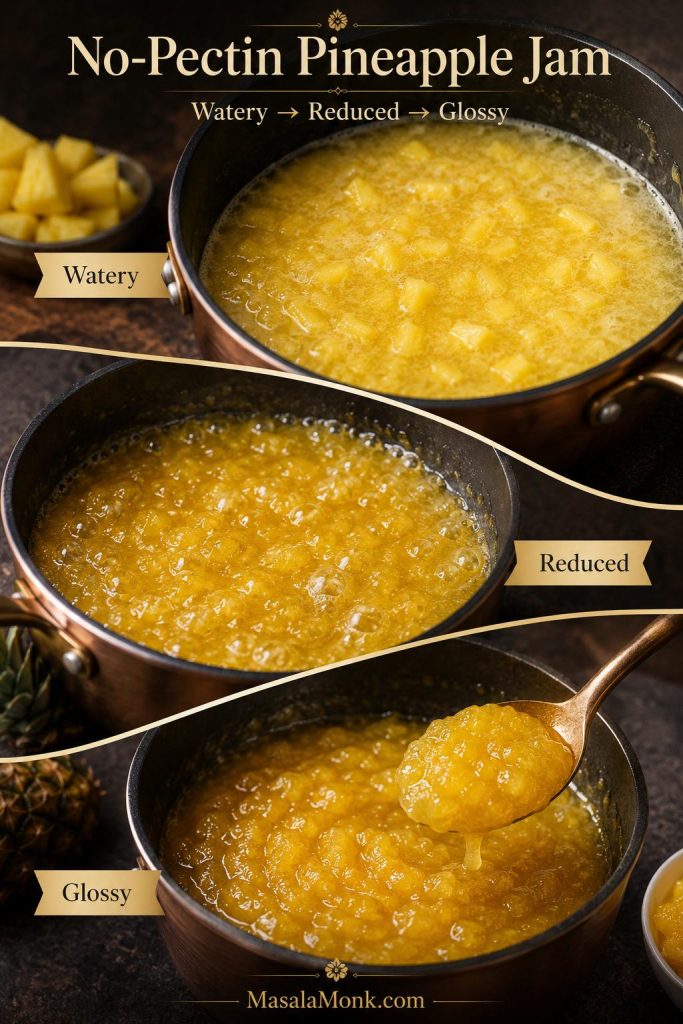
This no-pectin pineapple jam recipe is all about patience, not complicated technique. As the pineapple simmers, excess moisture cooks off, the sugar concentrates, and the mixture slowly changes from juicy fruit sauce into a glossy spread.

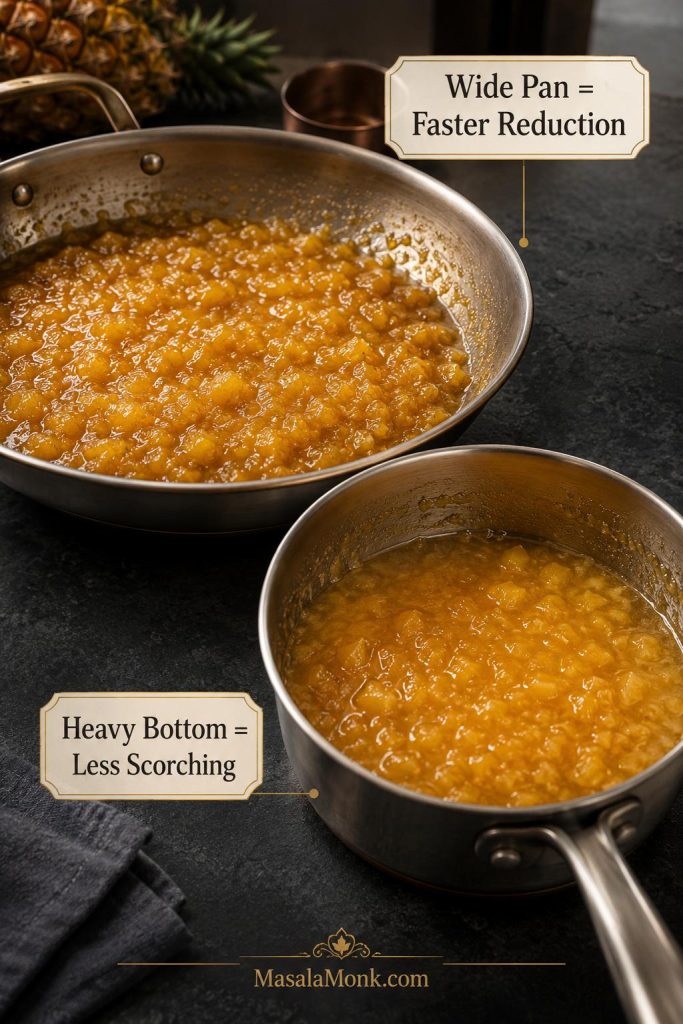
Because pineapple is not naturally high in pectin, the mixture needs enough time to reduce. A heavy-bottomed saucepan helps prevent scorching, while a wider pan speeds up evaporation.

Wide pan and heavy-bottom saucepan comparison for reducing pineapple jam without scorching
A wide pan speeds up pineapple jam because more surface area lets moisture evaporate. At the same time, a heavy bottom helps protect the sugar and fruit from scorching.

No-pectin pineapple jam sets by reduction rather than by a strong natural pectin gel. That means the finished texture is usually softer and more spoonable than commercial jam, but the flavor is more concentrated because the fruit cooks down slowly.

Three cooking stages of no-pectin pineapple jam changing from watery fruit to reduced sauce and glossy jam
No-pectin pineapple jam thickens by reduction rather than a strong commercial-style gel. Therefore, the texture should move from juicy fruit sauce to glossy spread as water cooks off.

The method is simple: combine crushed pineapple, sugar, lemon or lime juice, and salt. Bring the mixture to a boil, then simmer and stir often. As it cooks, the fruit will look less watery, the bubbles will become slower and shinier, and the jam will start leaving a brief trail when you drag a spatula across the bottom of the pan.
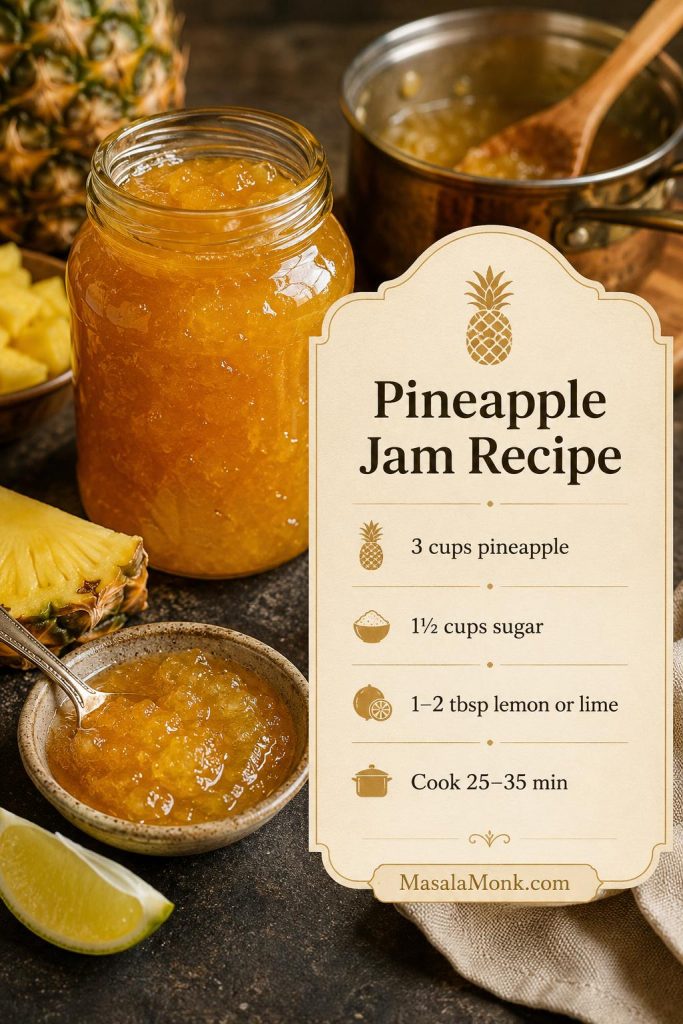
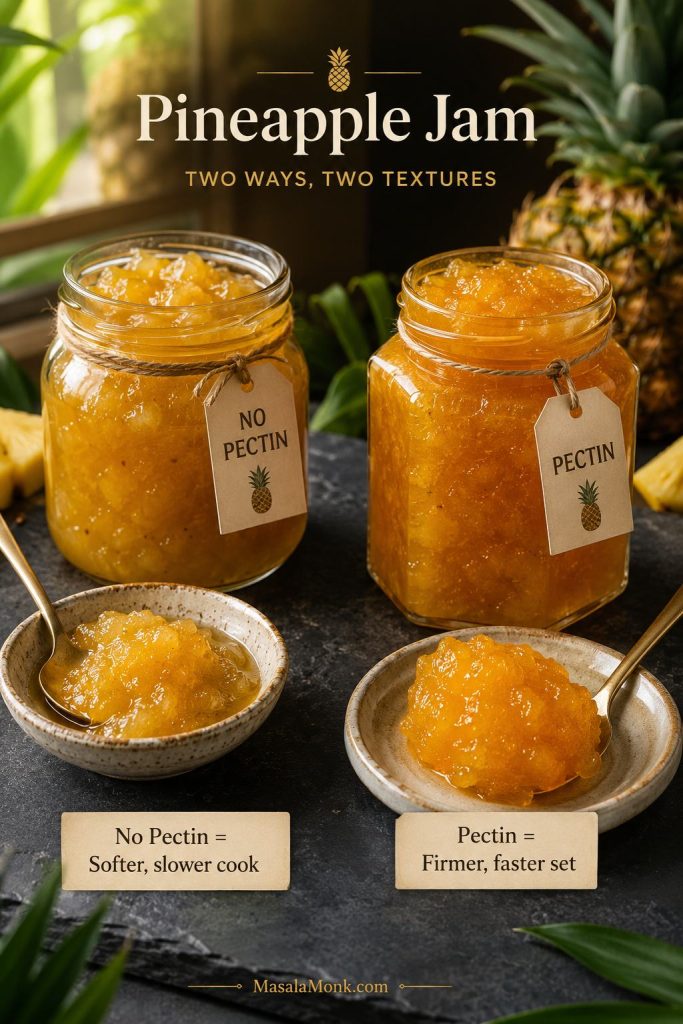
Texture tip: Pineapple jam thickens more as it cools. Therefore, stop when it is slightly looser than the final texture you want.

How to Make Pineapple Preserves

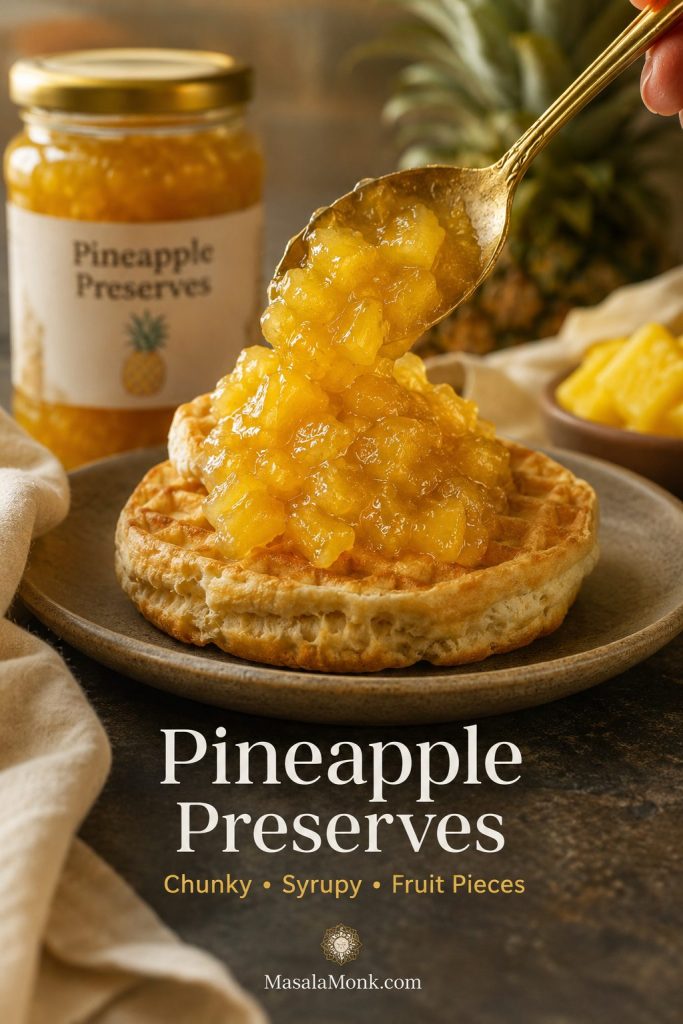
Make preserves when you want little golden pieces of pineapple in every spoonful. They are chunkier than jam, a little more syrupy, and especially good over biscuits, waffles, yogurt, ice cream, or cheesecake.

Chunky pineapple preserves being spooned over a waffle with visible pineapple pieces in glossy syrup
Pineapple preserves should keep visible fruit pieces in a thick syrup. For the best result, dice the fruit evenly and avoid mashing it so much that it turns into smooth jam.

Think of this as the pineapple preserve recipe path: diced fruit, less mashing, and a syrupy finish with visible golden pieces instead of a smoother spread.

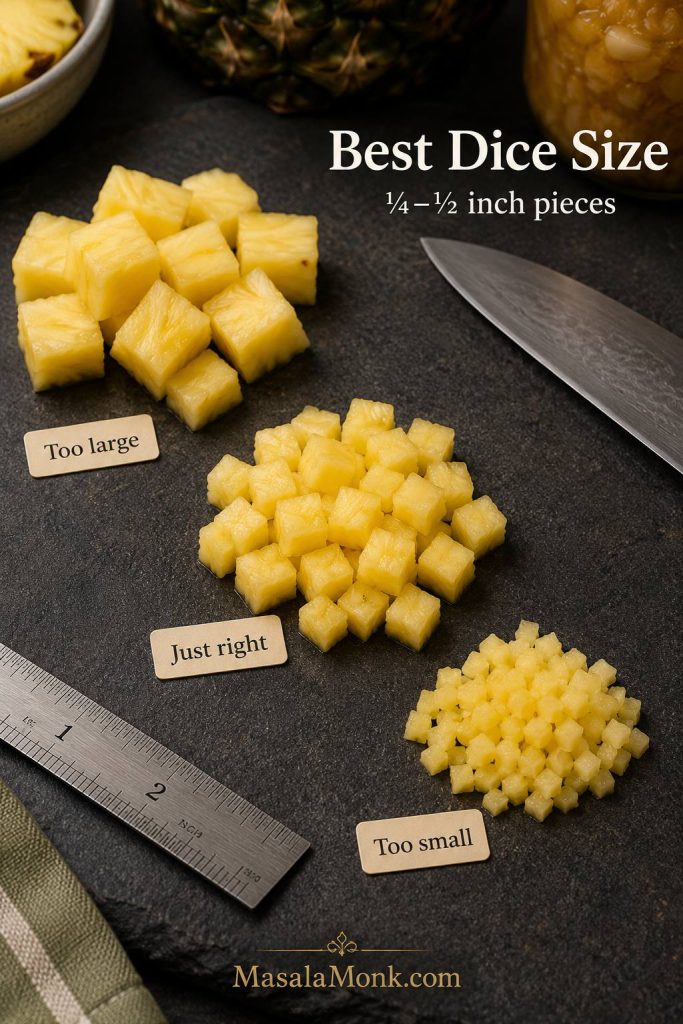
Then, cut the fruit into small pieces, about ¼–½ inch. Pieces that are too large can feel chewy or slide off toast; however, pieces that are too small will collapse into jam.

Pineapple dice-size guide with too-large, just-right, and too-small pieces for preserves
Even pineapple pieces cook more predictably. Aim for ¼–½ inch dice so the preserves stay spoonable, tender, and chunky without becoming chewy or collapsing completely.

Do not pulse preserves too finely unless you want jam. The whole point is to keep small pineapple pieces visible.

For a fruit-forward batch, use less sugar than the classic no-pectin jam. A good starting point is 5½–6 cups diced pineapple, ⅔–1 cup sugar, 2 tablespoons lemon juice, and a pinch of salt.

Cook the mixture in a wide pan for about 30–40 minutes, stirring often, until the pineapple turns tender and golden and the liquid reduces to a thick syrup. If the fruit starts breaking down too much, lower the heat and stir more gently.

For a middle texture, mash only part of the fruit. As a result, you get preserves with body: chunky enough for biscuits and waffles, but still thick enough to spoon over yogurt, cheesecake, or ice cream.

How to Tell When Pineapple Jam Is Done

Because hot jam looks looser than cooled jam, the most common mistake is stopping too early. Instead of relying only on the clock, use the texture cues below.

If this is your first time making pineapple jam, judge it by texture rather than time alone. Some pineapples are juicier than others, and canned pineapple can vary from can to can, so a batch may need a few extra minutes.

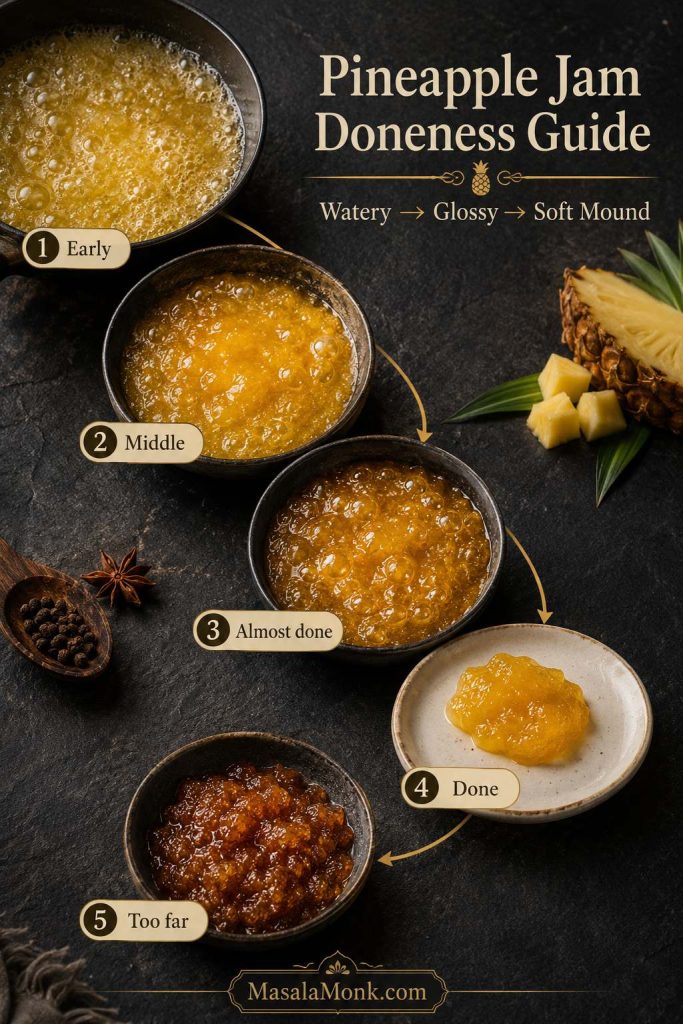
Doneness at a glance: Fast watery bubbles mean it is too early. Slower glossy bubbles mean it is close. A soft mound on a cold plate means it is ready. If the jam slides like syrup, cook it a few minutes longer.
Stage Visual Cue What It Means
Early Fast, watery bubbles Keep cooking; too much moisture remains
Middle Thicker fruit sauce Stir more often so the bottom does not catch
Almost done Slow, glossy bubbles Start testing with a spoon trail or cold plate
Done Soft mound on a cold plate Jar and cool; it will thicken more as it chills
Too far Sticky, dark, stiff texture Loosen gently with a splash of pineapple juice or water
Pineapple jam doneness guide showing early watery bubbles, thicker sauce, glossy bubbles, soft mound, and overcooked jam
Doneness is easier to judge by texture than by minutes alone. Watery bubbles mean keep cooking, slow glossy bubbles mean start testing, and a soft mound means the jam is ready.

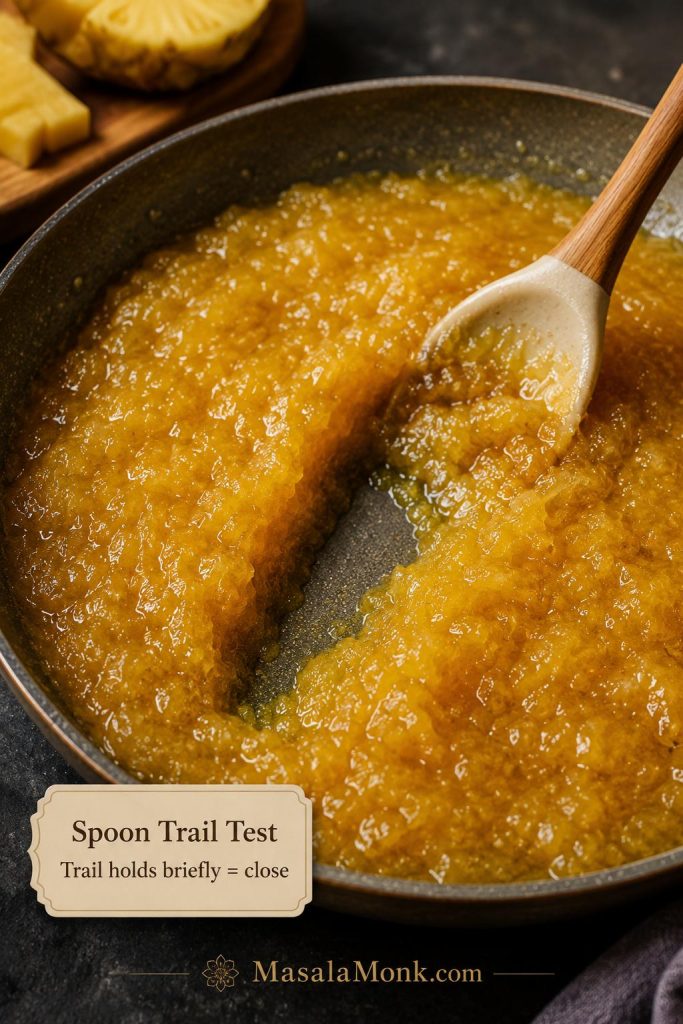
Spoon Trail Test

Drag a spatula or wooden spoon across the bottom of the pan. If the jam leaves a clean trail for a moment before slowly filling in, it is close. If liquid rushes back immediately, keep cooking.

Spoon trail test in a pan of thick pineapple jam with a spatula leaving a visible path through the jam
When a spoon or spatula leaves a brief trail across the pan, the pineapple jam is close. However, the mixture should still look glossy and spreadable, not dry or paste-like.

Cold Plate Test

Place a small plate in the freezer before you start cooking. When the jam looks thick, spoon a little onto the cold plate and wait 30–60 seconds. Then, push it with your finger. It should thicken, wrinkle slightly, or hold a soft mound instead of running like juice.

Cold plate test showing one runny pineapple jam sample and one soft mound sample being pushed with a spoon
The cold-plate test shows how pineapple jam will behave after cooling. If the sample runs like syrup, continue cooking; if it mounds softly, stop before it turns sticky.

Thermometer Cue

A classic jam-style set usually lands around 220°F / 104°C at sea level. This is a useful guide, but it should not be your only test. Pineapple type, pan width, sugar level, and altitude can all affect the final texture.

If you live at a higher elevation, the finishing temperature can be slightly lower. Therefore, use the cold-plate test and spoon trail along with the thermometer.

Bubble Cue

At the beginning, the mixture bubbles quickly and looks watery. Near the end, the bubbles become larger, slower, and glossier. The jam will look more like a thick fruit spread than a simmering fruit sauce.

Texture What It Looks Like What to Do
Too runny Liquid rushes back after stirring; cold-plate sample runs Cook 5–10 minutes longer, stirring often
Just right Shiny, soft-set, spoonable, gentle mound on cold plate Remove from heat and jar while warm
Too thick Stiff, sticky, hard to spread, darkening quickly Stir in 1–2 tablespoons water or pineapple juice and warm gently

Use this quick visual recipe card as a saveable reminder before the full method below.

Saveable pineapple jam recipe card with pineapple, sugar, lemon or lime, cooking time, jar, saucepan, and pineapple pieces
Use the base pineapple jam recipe first, then adjust the fruit cut to match your final texture. Crushed pineapple gives a smooth spread, while diced pineapple creates chunkier preserves.

Pineapple Jam Recipe Card: No-Pectin Jam or Chunky Preserves

This base pineapple jam recipe makes soft-set no-pectin jam. Use crushed pineapple for jam or diced pineapple for chunkier preserves.

Prep Time10 minutes
Cook TimeJam: 25–35 minutes; preserves: 30–40 minutes
YieldJam: about 2½–3 cups / about three 8-ounce jars; preserves: about 3–4 cups
StorageFridge or freezer

Ingredients for Pineapple Jam

  • 3 cups / about 680 g crushed pineapple, fresh or canned in juice
  • 1½ cups / 300 g granulated sugar
  • 1–2 tablespoons / 15–30 ml lemon or lime juice
  • ⅛ teaspoon fine salt, or a small pinch

For a firmer, sweeter jam: increase sugar up to 2 cups / 400 g.

For Pineapple Preserves Instead

  • Use 5½–6 cups small diced pineapple, about ¼–½ inch pieces
  • Use ⅔–1 cup sugar, depending on sweetness
  • Use 2 tablespoons / 30 ml lemon juice
  • Add a pinch of salt

Equipment

  • Heavy-bottomed saucepan or wide pan
  • Food processor, blender, knife, or potato masher
  • Silicone spatula or wooden spoon
  • Measuring cups or digital scale
  • Jam thermometer, optional
  • Small freezer plate for testing
  • Clean jars with lids

Method

  1. Prepare the pineapple. For jam, crush or finely chop the pineapple. For preserves, dice it into small even pieces.
  2. Combine the ingredients. Add pineapple, sugar, lemon or lime juice, and salt to a heavy saucepan.
  3. Start cooking. Bring to a boil over medium-high heat, stirring often so the sugar dissolves evenly.
  4. Simmer and reduce. For jam, cook for 25–35 minutes, stirring frequently. For preserves, cook for 30–40 minutes, or until the pineapple pieces are tender and suspended in thick syrup. Scrape the bottom and sides of the pan so the mixture does not scorch.
  5. Check the texture. Jam is ready when it looks shiny, thickened, and spoonable. It should leave a brief trail in the pan, mound softly on a cold plate, or reach about 220°F / 104°C at sea level. Preserves should look syrupy with visible fruit pieces.
  6. Jar and cool. Spoon the hot jam or preserves into clean jars. Let cool, then cover and refrigerate. The mixture will thicken more as it chills.

Notes

  • This flexible no-pectin recipe is intended for refrigerator or freezer storage.
  • For shelf-stable canning, follow a tested preservation method and proper processing instructions.
  • If using canned pineapple packed in syrup, reduce the sugar and taste as it cooks.
  • For a smoother jam, use an immersion blender briefly before the jam gets too thick.
  • Avoid doubling the batch in the same pan the first time. Larger batches take longer to reduce and are easier to scorch, so make two separate batches if you need more.

Pineapple Jam With Pectin

If you want a firmer version of this pineapple jam recipe, pectin can help you get there without cooking the fruit as long. It can also help if you are using a lower-sugar method designed for pectin.

However, pectin is not one-size-fits-all. Regular powdered pectin, liquid pectin, low-sugar pectin, and calcium-activated pectin all behave differently. Some require a high sugar ratio, while others are designed for lower-sugar spreads.

Two jars of pineapple jam comparing softer no-pectin jam with firmer pectin-set jam
Pectin is useful when you want a faster, firmer pineapple jam, but it is not always necessary. For a softer homemade spread, the no-pectin method gives a more spoonable finish.

Pectin versions are not automatically better; they are simply faster and firmer. If you use pectin, follow the specific package instructions for fruit amount, sugar amount, boiling time, and jar processing. Otherwise, the jam may turn too stiff, too loose, overly sweet, or unsuitable for pantry storage if you are trying to can it.

Fresh pineapple note: Some pectin methods recommend boiling fresh pineapple first because fresh pineapple contains enzymes that can interfere with gel formation. If your pectin brand gives pineapple-specific instructions, follow them.

Canning Pineapple Jam and Preserves Safely

Important: The recipe card above is written for refrigerator or freezer storage. Do not treat it as a shelf-stable canning recipe unless you switch to a tested canning formula and follow the exact fruit, acid, sugar, pectin, jar size, headspace, and processing time.

Pineapple jam can be canned, but pantry storage needs a tested method, not a flexible refrigerator-jam formula. The amount of sugar, acid, pectin, fruit, headspace, jar size, and processing time all matter.

Because this is a flexible pineapple jam recipe, treat the main batch as a refrigerator or freezer pineapple jam. If you want pantry storage, use a tested preservation method and follow the jar size, headspace, and processing time exactly.

For shelf-stable jars, Ball’s pineapple jam canning recipe is a useful reference. In addition, the National Center for Home Food Preservation guide to jams, jellies, and marmalades is a good place to check broader home-preservation safety guidance.

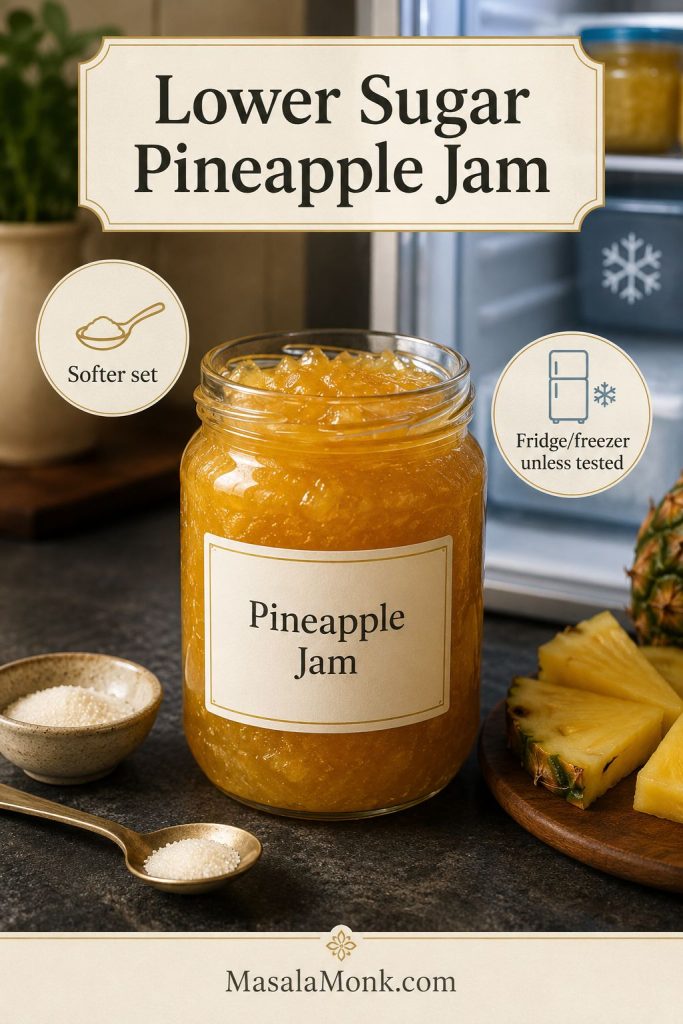
Be especially careful with low-sugar or sugar-free pineapple jam. Reducing sugar can affect set, texture, and storage safety. If you want a lower-sugar version, use a pectin and method designed for low-sugar jam, then refrigerate, freeze, or process only according to the instructions for that exact style.

Lower-sugar pineapple jam jar with small sugar cue and refrigerator-freezer storage reminder
Lower-sugar pineapple jam often sets softer because sugar helps with body and preservation. Unless you are using a tested low-sugar method, store it in the refrigerator or freezer.

Pineapple Jam for Tarts and Filling

You can also adapt this pineapple jam recipe into a thicker filling for tarts, cookies, and pastries. Unlike spreadable jam, tart filling cooks until most of the liquid evaporates and the mixture becomes sticky, concentrated, and paste-like.

Tart Filling Ratio

For a small tart-filling batch, start with about 4 cups finely pulsed or grated pineapple, ½–¾ cup sugar, 1 tablespoon lemon or lime juice, and a pinch of salt. Add sugar after some of the pineapple liquid has cooked off, then keep reducing until the filling is thick, sticky, and no longer watery.

How Thick Tart Filling Should Be

Cook it in a wide pan so moisture evaporates quickly. Then, continue cooking over medium-low heat until the mixture is darker, concentrated, and able to hold its shape when cooled.

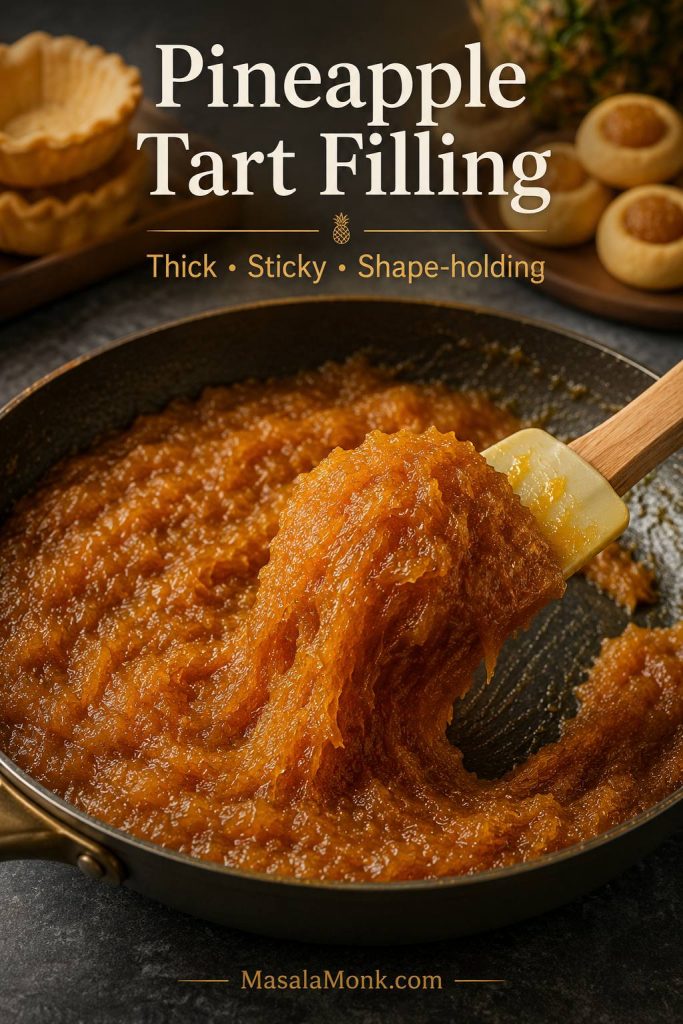
For tart filling, the mixture should not slide around the pan like jam. It should move as a sticky mass, leave the pan bottom visible for longer, and hold its shape once cooled.

Thick pineapple tart filling being lifted from a pan with a spatula while tart shells sit in the background
Pineapple tart filling needs to be thicker than breakfast jam. Cook it until it moves as one sticky mass, holds its shape, and no longer releases watery juice around the edges.

Near the end, stir more often and lower the heat if the filling starts catching on the bottom. Tart filling is ready when it looks darker, moves together as one sticky mass, and no longer releases watery juice around the edges.

This can take much longer than jam for toast. Depending on pineapple quantity and juiciness, tart filling may need 1–2½ hours. It is ready when a cooled spoonful holds its shape and does not leak liquid. For rolled pineapple tarts, the cooled filling should be thick enough to portion and shape.

Flavor Options for Pineapple Tart Filling

Finally, optional spices such as cinnamon, clove, star anise, ginger, or vanilla can make pineapple filling warmer and more dessert-like. Use them lightly so the fruit stays the main flavor.

How to Store Pineapple Jam and Preserves

After cooking, let the jam cool before sealing and storing. It will thicken as it cools, so do not judge the final texture while it is still boiling hot.

Because this pineapple jam recipe is written as a flexible refrigerator or freezer method, storage depends on sugar level, cleanliness, and how the jars are handled after cooling.

Storage Method How Long Best For
Refrigerator For best quality, use within about 2 weeks. Higher-sugar batches handled only with clean utensils may last longer. Everyday no-pectin pineapple jam and preserves
Freezer About 2–3 months for best texture Small batches, lower-sugar versions, extra jars
Shelf-stable pantry storage Only with a tested canning method Properly processed jam using safe canning instructions

Use clean jars and utensils every time. If the jam smells fermented, looks moldy, becomes fizzy, or changes in a way that feels off, discard it.

Ways to Use Pineapple Jam and Preserves

The fun of pineapple jam is that it moves easily between breakfast, dessert, and savory food. It can be the bright layer in a cake, the glossy topping on cheesecake, or the sweet-tart glaze that wakes up grilled chicken or pork.

Serving spread showing pineapple jam on toast, cheesecake, waffles, ice cream, and a savory glaze dish
Pineapple jam works beyond toast because its sweet-tart flavor cuts through rich foods. Try it with cheesecake, waffles, coconut ice cream, cheese boards, or a quick glaze for chicken, pork, shrimp, or tofu.
  • Spread on toast, biscuits, English muffins, or scones.
  • Spoon over pancakes, waffles, French toast, yogurt, or oatmeal.
  • Use as a filling for thumbprint cookies, sandwich cookies, cakes, cupcakes, or tart shells.
  • Spoon over chilled cheesecake, especially a simple no bake cheesecake where the bright pineapple cuts through the creamy filling.
  • Serve chunky pineapple preserves with vanilla ice cream, yogurt, or a scoop of homemade coconut ice cream.
  • Brush over grilled chicken, pork chops, ham, shrimp, or tofu as a sweet-tart glaze.
  • Pair with cream cheese, goat cheese, or brie for a quick appetizer.
  • Use a spoonful in tropical mocktails, cocktails, or fruit punches when you want pineapple sweetness and texture.

Best Version for Each Use

Use Best Version Why It Works
Toast, scones, biscuits Soft-set pineapple jam Spreads easily without large fruit pieces falling off
Waffles, pancakes, ice cream Pineapple preserves Chunky fruit pieces feel more generous as a topping
Thumbprint cookies or tart shells Thicker jam Holds better and does not run as much during serving
Pineapple tarts and pastry filling Tart filling Cooked longer until sticky, concentrated, and shape-holding
Pork, chicken, shrimp, or tofu glaze Preserves or looser jam Melts into a sweet-tart glaze with visible fruit if desired
Cheesecake or coconut desserts Jam or preserves Bright pineapple cuts through rich, creamy desserts

Troubleshooting Pineapple Jam

Pineapple jam is forgiving. However, the texture can shift depending on pineapple ripeness, water content, pan size, sugar level, and cooking time.

If your batch does not look right at first, do not panic. Most texture issues can be fixed by cooking a little longer, adding a splash of liquid, or balancing the sweetness with citrus and salt.

Quick Fixes for Common Problems

Problem Likely Cause Fix
Jam is runny Not cooked long enough, pineapple was very juicy, or sugar was reduced too much Return to the pan and simmer 5–10 minutes longer. Test on a cold plate before jarring again.
Jam is too thick Over-reduced or cooked at too high a heat Warm gently with 1–2 tablespoons water, pineapple juice, or lemon juice until spreadable.
Jam tastes too sweet Pineapple was very ripe or canned in syrup Add a little more lemon or lime juice and a tiny pinch of salt. Next time, reduce sugar slightly.
Jam tastes flat Not enough acid or salt Add lemon or lime juice in small amounts, then taste again.
Preserves are tough or chewy Pineapple pieces were too large or included too much core Chop smaller next time. For this batch, cook gently with a splash of water until softer.
Jam is browning too fast Heat is too high or pan bottom is too thin Lower the heat, stir more often, and use a heavier pan next time.
Canned pineapple flavor tastes dull Pineapple was packed in syrup or tasted muted from the can Add lime juice, lemon zest, ginger, or a small splash of pineapple juice to brighten it.
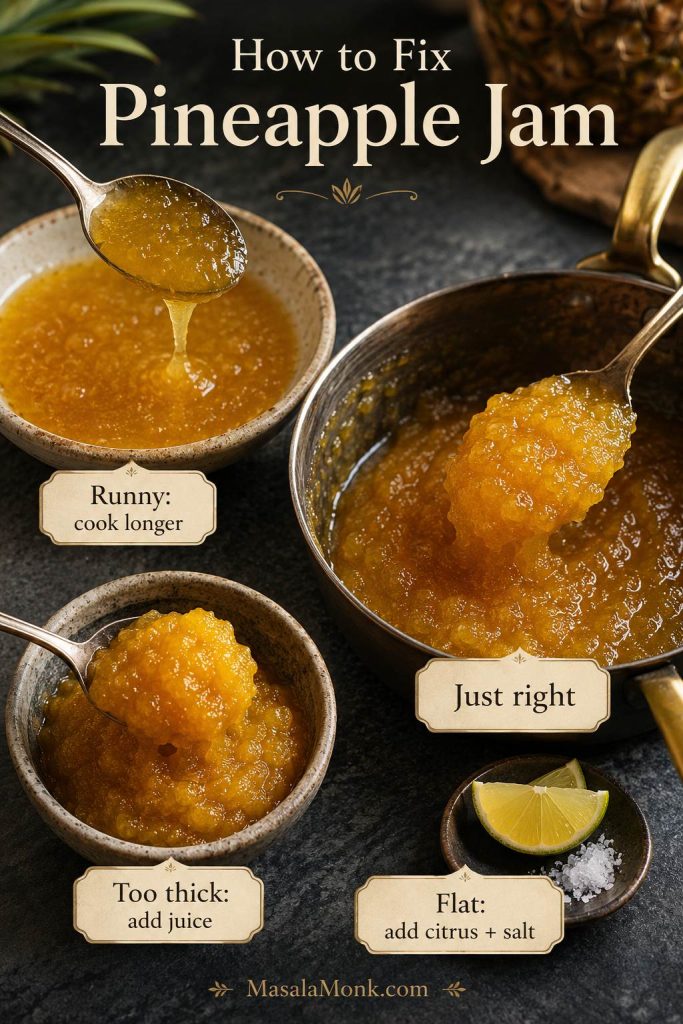
Troubleshooting guide showing runny pineapple jam, just-right jam, too-thick jam, citrus, salt, and fix labels
Most pineapple jam problems are fixable. Cook runny jam longer, loosen an overly thick batch with a splash of juice, and brighten flat flavor with citrus plus a tiny pinch of salt.

The Most Common Texture Mistake

The easiest mistake is judging the jam while it is still hot. If it slides across the cold plate like syrup, give it another few minutes. If it mounds softly and looks shiny, stop before it turns sticky or overly firm.

Pineapple Jam Variations

Once you have the basic method, this recipe is easy to adapt. Keep the first batch simple, then try one of these variations.

Pineapple Lime Jam

Use lime juice instead of lemon juice and add ½–1 teaspoon lime zest near the end. This gives the jam a brighter tropical finish.

Pineapple Ginger Jam

Add 1–2 teaspoons freshly grated ginger while the fruit cooks. Ginger works especially well if you plan to use the jam as a glaze for chicken, pork, shrimp, or tofu.

Pineapple Vanilla Jam

Stir in ½–1 teaspoon vanilla after removing the jam from the heat. This makes it softer and more dessert-like, especially for pancakes, yogurt, cakes, or thumbprint cookies.

Pineapple Coconut Jam

Add 2–4 tablespoons finely shredded coconut near the end of cooking, or stir in toasted coconut after the jam cools. This leans into a piña colada-style flavor, especially if you like the pineapple-coconut pairing in these piña colada variations.

Pineapple Jalapeño Jam

Add 1–2 tablespoons finely minced jalapeño for a sweet-hot condiment. This is excellent with cream cheese, grilled meats, tacos, sandwiches, and cheese boards. For a shelf-stable spicy jam, use a tested canning method rather than improvising the acid and pepper ratio.

Brown Sugar Pineapple Preserves

Replace 2–4 tablespoons of the white sugar with brown sugar for a deeper caramel flavor. This version works especially well as a glaze for ham, pork, or grilled pineapple desserts.

Thicker Pineapple Pastry Filling

Cook the jam longer over low heat until it is thick enough to hold its shape. This is the better version for pineapple tarts, filled cookies, pastry pockets, and cake layers that need a firmer filling.

FAQs

Jam or preserves: what is the real difference?

The difference is mostly texture. Pineapple jam is smoother because the fruit is crushed or finely chopped. Pineapple preserves are chunkier, with small pieces of fruit suspended in syrup.

Do you need pectin for pineapple jam?

No, not for a refrigerator or freezer version. Pineapple, sugar, and citrus can cook down into a soft-set jam on their own. However, pectin is helpful if you want a firmer set, a quicker recipe, a lower-sugar method, or a canning formula designed for that purpose.

When is pineapple jam safe for pantry storage?

Pineapple jam is safe for pantry storage only when you follow a tested canning method with the correct sugar, acid, pectin if required, jar size, headspace, and processing time. The flexible no-pectin recipe on this page should be treated as refrigerator or freezer jam unless you switch to a tested canning formula.

What is the safest way to make lower-sugar pineapple jam?

Use a lower-sugar pectin method or keep the jam refrigerated or frozen. Reducing sugar in a regular no-pectin batch can make the texture softer, and it should not be treated as shelf-stable unless the recipe is designed for that kind of storage.

What changes when you use canned pineapple?

Canned pineapple is usually softer and wetter than fresh pineapple, so it may cook down faster or need a few extra minutes depending on how much juice is in the can. Use pineapple packed in juice when possible, and simmer until it becomes shiny, reduced, and spoonable.

What is the best pineapple for jam?

Fresh ripe pineapple gives the brightest flavor. Canned crushed pineapple in juice is the easiest option and works well for small-batch pineapple jam. Avoid syrup-packed pineapple unless you are prepared to reduce the sugar.

Should you use crushed pineapple or chunks for preserves?

Use chunks or diced pineapple for preserves because you want visible fruit pieces. Crushed pineapple is better for a smoother jam. If using canned chunks, cut them smaller so they soften evenly and spoon easily over biscuits, waffles, yogurt, or ice cream.

Why is my pineapple jam runny?

Runny pineapple jam usually needs more cooking time. Pineapple can release a lot of liquid, especially if it is very ripe or canned with juice. Return the jam to the pan and simmer until it looks reduced, shiny, and spoonable. Then test it on a cold plate before jarring again.

How long does homemade pineapple jam last?

For best quality, use refrigerator pineapple jam within about 2 weeks. Higher-sugar batches handled only with clean utensils may last longer, but discard the jar if you see mold, fizzing, fermentation, off smells, or any change that feels unsafe.

How do you make pineapple jam thicker for tarts?

Cook it longer in a wide pan over medium-low heat until most of the moisture evaporates. Tart filling should be much thicker than spreadable jam. It should move as a sticky mass, leave the pan bottom visible for longer, and hold its shape once cooled.

Where does pineapple jam taste best besides toast?

Pineapple jam is excellent with biscuits, scones, pancakes, waffles, yogurt, ice cream, cheesecake, thumbprint cookies, cakes, pork, chicken, shrimp, cheese boards, and tropical desserts. Chunkier pineapple preserves are especially good when you want visible fruit pieces.

Final Thoughts

The best pineapple jam tastes like concentrated pineapple: bright, tropical, sweet-tart, and just thick enough to spoon generously over whatever needs a little sunshine. Start with crushed pineapple for the easiest jam, switch to diced fruit when you want preserves, and cook it longer when you need a sturdy filling for tarts or pastries.

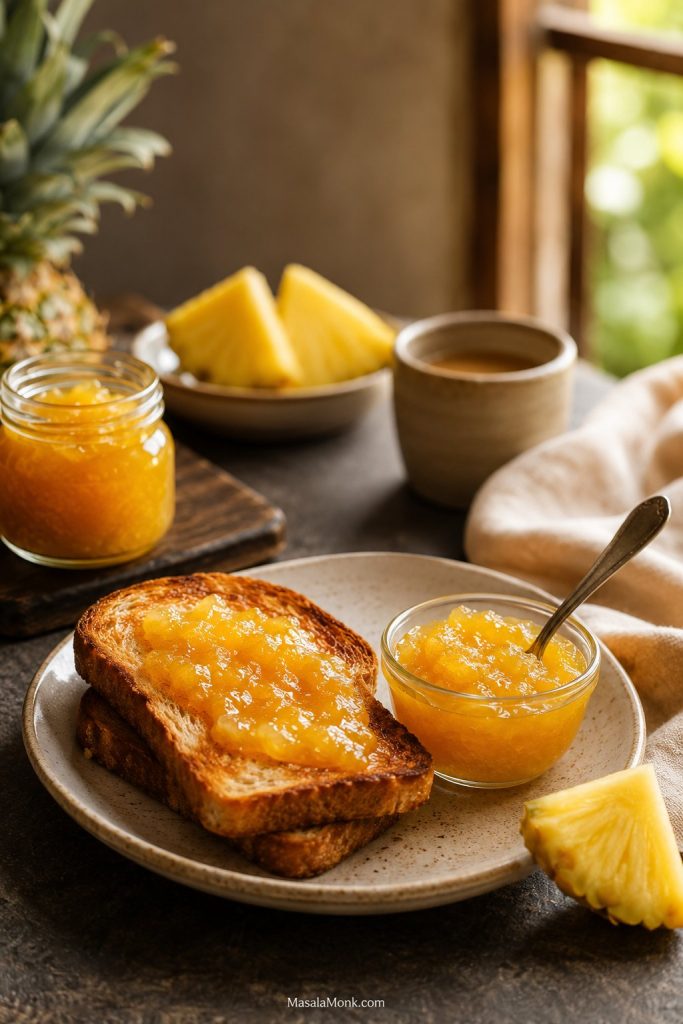
Toast spread with homemade pineapple jam beside a small bowl of chunky preserves, pineapple wedges, spoon, and warm breakfast setting
Once you understand the texture cues, pineapple jam becomes easy to customize. Keep it smooth for breakfast toast, or leave it chunkier when you want a dessert-style preserve.

After one batch, the texture cues become much easier to recognize. The bubbles slow down, the color deepens, the spoon leaves a trail, and the jam turns shiny enough to jar. That is the moment to stop, cool it, and decide where the first spoonful is going.

If you make it, notice whether you preferred fresh pineapple, canned crushed pineapple, or diced preserves. That one choice changes the texture more than anything else, and it is usually the difference between a smooth breakfast jam and a chunkier dessert-style preserve.

Posted on 7 Comments

Mango Salsa Recipe

Fresh mango salsa recipe in a bowl with diced mango, red onion, jalapeño, cilantro, lime, and tortilla chips, shown chunky and glossy without tomato.

A mango salsa recipe should do more than taste sweet and bright. It should stay chunky instead of turning watery, balance lime and heat without burying the fruit, and work whether you use it as a salsa dip with chips, a spoonable mango salsa sauce for tacos, or a fresh topping for fish, shrimp, or chicken.

This version starts with the cleanest, most useful base: ripe mango, red onion, jalapeño, cilantro, lime, and salt. It is the best first version to make because it stays bright, fresh, and flexible. From there, you can adjust it depending on how you plan to serve it: add tomato for a scoopable chip dip, avocado for a richer topping, or more chile for a hotter bowl that still tastes fresh instead of harsh.

If you are making mango salsa for the first time, make this clean version first. It gives you the brightest mango flavor, then lets you move toward a chunkier taco topping, a scoopable salsa dip, a saucier spoonful for salmon or shrimp, or a spicy variation without guessing.

Quick Answers

If you want the shortest useful answer, start here. The best mango salsa recipe uses ripe but still firm mangoes, not very soft ones, so the bowl stays fresh and chunky instead of slumping into liquid. The best first version is usually no tomato. That cleaner build lets the mango stay bright and distinct, whether you serve it as a fresh salsa dip, a taco topping, or a spoonable mango salsa sauce for fish, shrimp, grilled chicken, and bowls.

  • Best mangoes: ripe but still firm, so the salsa holds a neat dice.
  • Best first version: no tomato, because it tastes cleaner and works better as a topping.
  • Best for chips: add tomato if you want a more pico-like, scoop-friendly bowl.
  • Best saucier move: mash or blend a few spoonfuls, then stir them back in instead of blending the whole bowl.
  • Best for tacos and fish: keep it fruit-forward, sharp, chunky, and lightly spicy.
  • Best heat move: start with jalapeño, then add more chile only if the bowl tastes flat.
  • Best make-ahead window: a short rest is fine, but it is best the day you make it.
  • Frozen mango: usable in a pinch, but fresh mango gives better texture.

At a Glance

  • Best first version: no tomato
  • Best for: tacos, fish, shrimp, grilled chicken, burrito bowls
  • Best chip-dip tweak: add 1 small seeded tomato
  • Best salsa sauce tweak: mash a small portion and fold it back in
  • Texture goal: chunky, glossy, not watery
  • Heat level: mild to medium, easy to adjust
  • Make-ahead: best the same day

The finished salsa should look glossy, not puddled. The mango pieces should stay distinct when spooned, and the bowl should smell bright and savory, not sharply acidic or raw.

Mango salsa recipe at-a-glance guide showing no tomato as the best first version, serving ideas, chip dip tweak, texture goal, heat level, and make-ahead timing.
Start with the no-tomato version when you want the mango to stay bright and distinct; add tomato only when the salsa is mainly for chips and you want a juicier, more scoopable bowl.

Mango Salsa Recipe Ingredients

The ingredient list for this mango salsa recipe is short on purpose. Because the bowl relies on freshness and contrast, every ingredient should help the mango rather than compete with it.

  • 2 large ripe but firm mangoes, diced small (about 2 cups / 330 to 360 g diced mango)
  • 1/4 to 1/3 cup finely chopped red onion (about 35 to 50 g)
  • 1 small jalapeño, finely chopped
  • 2 to 3 tablespoons chopped cilantro
  • 1 to 2 tablespoons fresh lime juice, plus more to taste
  • 1/4 teaspoon fine salt, plus more to taste
  • Optional: 1/4 cup finely chopped red bell pepper
  • Optional: 1 small tomato, seeded and finely diced
  • Optional: 1/2 avocado, diced

The mango

Use mangoes that smell ripe and feel slightly soft when pressed, but not squishy. Once diced, the pieces should hold clean edges rather than collapse or smear when stirred.

The onion

Red onion gives the bowl the sharp, savory edge that stops it from drifting toward fruit salad. Finely chopped onion works best because it spreads that bite evenly. If your onion tastes very harsh, rinse it briefly under cold water or soak it in cold water for 5 minutes, then dry it well before adding it.

The jalapeño

Jalapeño adds heat, but more importantly, it gives shape to the sweetness. For a milder bowl, remove the seeds and white membranes. For a medium bowl, leave in a little of the membrane. Start smaller than you think you need, then taste.

The cilantro, lime, and salt

Cilantro keeps the salsa tasting green and fresh. Lime lifts everything, while salt makes the fruit and aromatics taste more like themselves. Add lime gradually. You want the mango lightly coated, not sitting in a shallow pool at the bottom of the bowl.

The useful extras

Red bell pepper adds crunch without changing the identity of the bowl very much, so it is the safest extra if you want more texture. Tomato is best when the salsa is mainly for chips. Seed it well, then let the diced tomato sit on a paper towel for a minute if it seems very juicy. Avocado makes the bowl richer and softer, which is especially good over salmon, grilled chicken, or grain bowls. If you use avocado, add it at the very end and fold it in gently.

Best Mangoes to Use

The fruit decides a lot here. Even a well-seasoned bowl struggles if the mango is watery, stringy, or collapsing under the knife.

Mango ripeness guide for mango salsa showing too firm, just right, and too soft mangoes with tips for sweetness, clean dice, and avoiding watery salsa.
Choose mangoes that are ripe enough to taste sweet but still firm enough to hold a clean dice; very soft mangoes break down quickly once lime and salt are added.

Ripe but firm is the sweet spot

The best mangoes for salsa give slightly when pressed, smell fragrant, and taste sweet without turning mushy as soon as you cut them. Ataulfo, Champagne, honey, or Kent mangoes can all work well if they are firm enough to dice cleanly, but firmness matters more than variety.

Avoid overly soft mangoes

Very soft mangoes are better in sorbet, smoothies, or dressing. In salsa, they break down quickly once lime and salt are added, and the bowl becomes watery faster than you want.

If your mango is extra sweet or extra tart

When the fruit is especially sweet, lean a little harder on lime, salt, and jalapeño. For mangoes that taste more tart than expected, use less lime at first and let the fruit stay the focus. Taste before serving and adjust there instead of trying to fix everything at once.

How to Cut Mango for Salsa

How you cut the fruit affects both texture and usability in a mango salsa recipe. A good mango salsa should be easy to scoop, easy to spoon, and pleasant to eat in one bite.

Use the cheek-and-score method

Stand the mango upright, slice off the two cheeks, then score the flesh in a grid without cutting through the skin. Turn the cheek outward slightly and slice off the cubes. Then trim the remaining fruit from around the pit.

For another visual reference on cutting around the pit, this mango cutting guide from the National Mango Board is helpful.

Dice small, but not tiny

The mango should be small enough to scoop easily with chips or sit neatly on tacos, yet large enough to stay distinct. Aim for roughly small bean-sized pieces rather than large chunks or very fine mince.

Mix gently

Once the fruit is cut, treat it carefully. Fold the salsa together rather than stirring it hard. Otherwise, even good fruit starts to look tired before it reaches the table.

How to Make This Mango Salsa Recipe

This mango salsa recipe comes together quickly, but the order helps you keep both the texture and the balance under control.

Step-by-step mango salsa recipe guide showing diced mango, chopped onion, jalapeño and cilantro, lime and salt, gentle folding, resting, and finished salsa.
Add the lime and salt lightly at first, then fold instead of stirring hard; this keeps the mango pieces clean-edged, glossy, and distinct when the salsa is served.

1. Dice the mango

Dice the mango into small, even cubes and place them in a medium bowl. The pieces should look clean-edged and firm enough to hold shape when lifted on a spoon.

2. Chop the supporting ingredients

Finely chop the red onion, jalapeño, and cilantro. If you are using red bell pepper, chop that finely too. The onion pieces should be small enough not to dominate a bite, and the jalapeño should be dispersed rather than concentrated in a few hot pockets.

3. Combine gently

Add the onion, jalapeño, cilantro, and bell pepper to the mango. Toss gently so the fruit stays intact. At this stage, the bowl should already look colorful and structured, not crushed.

4. Add lime and salt

Start with 1 tablespoon lime juice and 1/4 teaspoon salt. Toss again, gently, then look at the bottom of the bowl. You want a light gloss on the fruit, not visible pooling liquid.

5. Rest briefly, then taste again

Let the salsa sit for 10 minutes if you have time. That is enough to bring the flavors together without softening the fruit too much. After that short rest, the salsa should smell bright and savory, with the onion and lime settled into the fruit instead of shouting separately.

6. Adjust before serving

When the salsa tastes too sweet, add a little more lime, salt, or jalapeño. For a bowl that tastes too sharp, add a bit more mango. Flat flavor usually means it needs salt. Serve cool or lightly chilled, not ice-cold straight from the back of the fridge, so the flavor reads clearly.

Mango Salsa Recipe

Yield: About 2 cups, enough for 4 to 6 as a topping or 4 as a dip

Prep time: 15 minutes
Cook time: 0 minutes
Total time: 15 minutes

Ingredients

  • 2 large ripe but firm mangoes, diced small (about 2 cups / 330 to 360 g)
  • 1/4 to 1/3 cup finely chopped red onion
  • 1 small jalapeño, finely chopped
  • 2 to 3 tablespoons chopped cilantro
  • 1 to 2 tablespoons fresh lime juice
  • 1/4 teaspoon fine salt, plus more to taste
  • Optional: 1/4 cup finely chopped red bell pepper

Instructions

  1. Add the diced mango to a medium bowl.
  2. Add the red onion, jalapeño, cilantro, and bell pepper if using.
  3. Add 1 tablespoon lime juice and the salt, then toss gently.
  4. Let the salsa sit for 10 minutes, then taste.
  5. Add more lime or salt as needed.
  6. Serve right away for the freshest texture.

Notes

  • Use firm-ripe mangoes, not very soft ones.
  • The finished salsa should look glossy, not puddled.
  • For a milder salsa, remove the jalapeño seeds and membranes.
  • For chips, add 1 small seeded tomato if you want a more dip-like bowl.
  • For a saucier mango salsa, mash or blend 2 to 3 tablespoons of the finished salsa with a squeeze of lime, then stir it back into the bowl.
  • If using avocado, fold it in at the very end.
  • This salsa is best the day you make it.

Why This Mango Salsa Recipe Works

This recipe works because it keeps the job of the salsa clear. It should brighten the food around it, not smother it.

It balances sweet, sharp, and spicy

The mango gives sweetness, but the onion, jalapeño, lime, and salt keep that sweetness from drifting into dessert territory. The result tastes bright and savory rather than merely fruity.

It stays chunky

Because the fruit is diced instead of blended, the finished salsa stays textured and spoonable. That texture is part of what makes it feel useful at the table.

It fits more than one meal

Although it is excellent with chips, it is even more valuable because it works over fish tacos, salmon, shrimp, grilled chicken, burrito bowls, and taco salads.

Tomato or No Tomato?

This is the biggest choice in mango salsa. Some people want a bright topping. Others want a bowl that feels more like a classic fresh dip.

Comparison card showing no-tomato mango salsa for tacos, fish, shrimp, and chicken beside mango salsa with tomato for chips and pico-style dip.
Tomato is not wrong in mango salsa, but it changes the job of the bowl: skip it when you want a cleaner, chunkier topping for tacos or fish; add it when you want a juicier salsa for chips.

When no-tomato mango salsa is better

A no-tomato version is usually better for tacos, fish, shrimp, grilled chicken, and bowls. It tastes cleaner, lets the fruit stay more distinct, and avoids extra moisture.

When tomato makes sense

Add tomato when the bowl is mainly for chips or when you want a more familiar pico-like feel. Seed it first, then keep the pieces small so the salsa stays balanced instead of watery.

How to Fix the Balance

If it tastes too sweet

Add a little more lime, a pinch more salt, or a bit more jalapeño.

If it tastes too sharp

Add more mango first. Extra fruit is usually a cleaner fix than sweetener.

If it tastes too mild

It usually needs a touch more salt or lime.

If it turns watery

Wateriness usually comes from overly soft fruit, overmixing, too much resting time, or undrained tomato. Drain off a little excess liquid if needed, then taste again.

If you want it more like a salsa sauce

If you want a mango salsa sauce for tacos, fish, shrimp, chicken, or bowls, do not blend the whole recipe. Mash or blend 2 to 3 tablespoons of the finished salsa with a little lime juice, then stir it back into the bowl. That makes it more spoonable while keeping the fresh mango pieces intact.

If it feels too spicy

Add more mango if you have it. Avocado can soften the heat too if you want a richer version.

What to Serve with Mango Salsa

Once the bowl is made, use it as a salsa dip, taco topping, fresh side, or spoonable mango salsa sauce depending on the meal.

Guide to what to serve with mango salsa, including tortilla chips, fish tacos, salmon, grilled chicken, shrimp, bowls, and salads with serving tips.
Mango salsa works best when you match the texture to the meal: keep it chunkier and drier for tacos or fish, add tomato for chips, and use a few spoonfuls to brighten bowls and salads.

Tortilla chips

For chips, a slightly juicier bowl is fine. This is the best place to add seeded tomato and use a slightly smaller dice if you want a more scoopable, party-friendly dip.

Fish tacos

For fish tacos, keep the salsa chunkier and a little drier. The no-tomato version works best here because it brings brightness and sweetness without making the taco wet or heavy. It pairs especially well with flaky grilled or pan-seared white fish.

Salmon

With baked, grilled, or pan-seared salmon, the lime, onion, and jalapeño do especially useful work. A spoonful on top cuts through the richness and makes a simple fillet feel more finished. If you want a softer, richer topping for salmon, the avocado variation below is the best branch.

Grilled chicken

Chicken gives the salsa a neutral base to wake up. It works especially well with grilled chicken breasts, thighs, or fajita-style chicken. A slightly punchier lime finish works well here, especially if the chicken is smoky, charred, or warmly spiced. For a full meal to pair it with, try these sheet pan chicken fajitas.

Shrimp

Shrimp and mango salsa are a natural pairing. Keep the salsa bright and lightly spicy rather than heavy or very wet. Spoon it over grilled shrimp skewers, tuck it into shrimp tacos, or use it over rice bowls when you want something fresh and quick.

Burrito bowls and taco salads

This is one of the smartest ways to use leftovers. A few spoonfuls add acidity, freshness, and texture to bowls with rice, beans, avocado, chicken, or shrimp.

Variations

Mango salsa with tomato

Add 1 small seeded and finely diced tomato if you want the salsa to feel more like a classic fresh dip. Keep the amount modest so the mango still leads.

Mango avocado salsa

Add diced avocado when you want a richer, softer bowl. Fold it in at the end so it stays intact. This version is especially good with salmon, grilled chicken, and burrito bowls.

Mango salsa variations guide showing tomato, avocado, habanero, pineapple, black bean, and no-cilantro options for changing the base recipe.
Once the base mango salsa tastes balanced, choose the variation by use: tomato for chips, avocado for richness, habanero for heat, pineapple for sweetness, or black beans for a heartier bowl.

Spicy mango habanero salsa

Swap in a very small amount of habanero if you want a hotter, fruitier heat. Go carefully so the brightness of the base recipe still comes through.

Pineapple mango salsa

Add a small amount of finely diced pineapple if you want a more tropical twist. Keep the ratio in favor of mango so the recipe still reads clearly as mango salsa.

Black bean mango salsa

Add rinsed and well-drained black beans if you want a heartier bowl for chips, burrito bowls, or taco salads. Keep the mango pieces distinct so the salsa still tastes fresh rather than heavy.

Pickled jalapeño or pickled onion

Use a little pickled jalapeño or pickled red onion if you want a sharper, brighter variation. Add these carefully because they bring both acidity and salt.

No cilantro version

If you do not like cilantro, use a smaller amount of parsley or fresh mint instead. The flavor will change, but the salsa can still taste fresh and balanced.

For a smoother mango-based topping for salads, grilled chicken, or seafood, try this sweet and spicy mango salad dressing.

Common Mistakes

Troubleshooting card for avoiding watery mango salsa with tips to use firm-ripe mangoes, add lime gradually, seed tomato, fold gently, and serve the same day.
Watery mango salsa usually starts with fruit that is too soft, too much lime, juicy tomato, or rough mixing. Keep the bowl glossy instead of puddled by seasoning gradually and folding gently.
  • Using very soft mangoes: they may taste good, but they break down fast and make the bowl watery.
  • Adding too much lime at the start: the fruit should be coated lightly, not swimming.
  • Leaving onion pieces too large: big pieces make the salsa taste sharper and rougher than it should.
  • Not drying soaked onion or juicy tomato: extra water shows up later in the bowl.
  • Not seeding tomato for the chip-dip version: the salsa can turn loose fast.
  • Overmixing: stirring hard bruises the fruit and dulls the texture.
  • Letting it sit too long before serving: a short rest helps, but too long softens the mango and blurs the flavor.

Storage and Make-Ahead

Mango salsa is best fresh, and that is part of what makes it so good.

Best the day you make it

The texture is best on the day it is made. The fruit is firmer, the flavors feel brighter, and the bowl still looks clean and lively.

How long it lasts

Stored in an airtight container in the fridge, it will usually keep well for about 2 days, sometimes 3 depending on the fruit.

What changes after a few hours

A short rest of 10 to 20 minutes can help the flavors settle. After several hours, though, the mango softens more, liquid collects more easily, and the bowl becomes less crisp and defined.

How to freshen leftovers

If leftover salsa seems dull, drain off a little excess liquid, then add a small squeeze of lime and a pinch of salt. Let it sit for a minute, then taste again.

The best bowl is the one that still looks clean when you spoon it: distinct mango pieces, light lime gloss, no puddle at the bottom, and enough salt and chile to keep the sweetness lively.

Mango Salsa Recipe FAQs

Can I make mango salsa ahead of time?

Yes, but it is best within the same day if texture matters to you. Overnight storage softens the fruit and draws out more liquid.

Is mango salsa sauce the same as mango salsa?

Usually, yes. People often use mango salsa sauce to mean mango salsa served as a dip, taco topping, or spoonable sauce. Fresh mango salsa is normally chunky, not fully blended. If you want it saucier, mash or blend a small portion with lime juice and stir it back in instead of turning the whole bowl into a smooth mango sauce.

Is mango salsa better with tomato or without?

Neither is universally better. No-tomato mango salsa is usually better for tacos, fish, shrimp, and chicken, while tomato is better when you want a more scoopable dip for chips.

What mangoes are best for a mango salsa recipe?

Ripe but still firm mangoes are best. Ataulfo, Champagne, honey, and Kent mangoes can all work if they are firm enough to dice cleanly.

Can I use frozen mango?

You can, but fresh mango is better for a truly chunky bowl. Frozen fruit tends to soften more as it thaws.

What goes with mango salsa?

Tortilla chips, fish tacos, salmon, grilled chicken, shrimp, burrito bowls, and taco salads all work well.

Is mango salsa good with shrimp?

Yes. Mango salsa is excellent with grilled shrimp, shrimp tacos, coconut shrimp, shrimp rice bowls, and chilled shrimp appetizers. Keep it bright, lightly spicy, and not too wet so it lifts the shrimp without making the dish soggy.

How spicy should mango salsa be?

Usually just spicy enough to sharpen the sweetness. Most people do not need a very hot bowl unless they are intentionally making a spicy variation.

How long does mango salsa last in the fridge?

Usually 2 days, sometimes up to 3 depending on the fruit. It is most appealing sooner rather than later.

Can I use mango salsa for fish tacos?

Yes. The clean no-tomato base version is especially good here because it brightens the fish without making the taco feel soggy or overloaded.

If you want the best first version, make the clean no-tomato bowl, use firm-ripe mangoes, season lightly and carefully, and serve it while the texture is still bright and distinct. That version gives you the most flexibility and the clearest mango flavor.

↑ Back to top

Posted on 1 Comment

Mango Lassi Recipe (Restaurant-Style, Thick and Creamy)

Social-share cover image for mango lassi recipe showing a thick creamy restaurant-style glass of mango lassi

A good mango lassi recipe should taste clearly of mango, feel thick and creamy, and stay balanced between sweet, tangy, and cold. The best versions are rich enough to feel satisfying, but still easy to drink.

This mango lassi recipe is built for that result. It works with fresh mango, frozen mango, or canned mango pulp, and it shows you how to adjust the texture, sweetness, and tang so the drink stays smooth, cold, and properly mango-forward. For the closest restaurant-style Indian mango lassi, use full-fat yogurt and mango pulp.

At a glance: 10 minutes, 2 to 3 servings, thick and creamy, best served very cold.

Mango Lassi Recipe Quick Answer

Mango lassi is a cold yogurt-based Indian drink made by blending mango, yogurt, a little milk or water, and sweetener until smooth and creamy. Britannica gives helpful background on lassi as a traditional yogurt-based drink from India. A good mango lassi recipe should be thick but pourable, strongly mango-flavored, and lightly balanced by yogurt tang. Fresh ripe mango gives the best natural flavor, frozen mango gives extra chill and thickness, and mango pulp is the easiest way to get a richer, more restaurant-style result at home.

If you want a milk-based mango drink instead, try this mango shake for a creamier, less tangy option.

Glass of thick creamy mango lassi topped with mango cubes, pistachios, and saffron, with a scored mango half beside it.
A thick, creamy mango lassi made with a restaurant-style look and a rich mango finish.

Why This Mango Lassi Recipe Works

The difference between an average mango lassi and a very good one usually comes down to balance. A good mango lassi tastes clearly of mango first, not just yogurt and sugar. It feels creamy and rich without turning heavy, and it stays cold enough to be refreshing without becoming watery from too much ice.

The base is simple, but it is flexible enough to work with fresh mango, frozen mango, or canned mango pulp. That matters because small changes in mango type, yogurt thickness, and sweetener can noticeably change the final glass.

Balanced, not overly sweet

A good mango lassi recipe should taste naturally sweet and lightly tangy, not candy-like. Mangoes vary a lot in sweetness, and canned mango pulp is often already sweetened, so the best approach gives you room to adjust instead of forcing the same amount of sugar every time. Starting lighter and correcting after blending gives you a cleaner, more mango-forward result.

Thick but still pourable

The best texture lands somewhere between a smoothie and a milkshake. It should pour easily into a glass, but still look creamy and substantial. Yogurt gives the drink body, mango adds natural thickness, and just enough milk or water loosens it without washing out the flavor. For that reason, this mango lassi recipe works best when the liquid is added carefully instead of all at once.

Works with fresh mango, frozen mango, or pulp

One of the biggest reasons mango lassi recipes disappoint is that they pretend every mango works the same way. They do not. Ripe fresh mango gives the best flavor when it is excellent, frozen mango gives reliable cold thickness, and mango pulp gives the most dependable restaurant-style color and concentrated mango taste. This recipe is designed so you can get a good result with any of the three.

Easy to adjust to taste

Once everything is blended, you can still fix almost anything in seconds. A splash of milk loosens a lassi that feels too thick. More sweetness helps when it tastes too tart, while extra yogurt or mango can fix a thinner-than-expected texture. If the flavor seems flat, the drink usually needs stronger mango, not just more sugar. That flexibility makes this a much more dependable home recipe than a one-note formula.

Mango Lassi Recipe Ingredients

Mango lassi uses a short ingredient list, which means each ingredient matters more. This is not the kind of recipe where average fruit and random yogurt disappear into the background. The mango sets the flavor, the yogurt sets the body, and the liquid and sweetener determine whether the drink feels balanced or diluted.

Mango lassi ingredients guide showing mango pulp or ripe mango, full-fat yogurt, cold milk, optional cardamom and saffron, and the best-first route with mango pulp.
Start with mango pulp or ripe mango for flavor, full-fat yogurt for body, and cold milk to loosen the texture without making the lassi watery.

Mango

You can use ripe fresh mango, frozen mango, or canned mango pulp here. Fresh mango gives the best flavor when it is truly ripe and sweet. Frozen mango is excellent when you want the drink colder and thicker without relying on a lot of ice. Mango pulp is the easiest way to get that bright restaurant-style mango flavor and color, especially when your fresh mangoes are only decent instead of exceptional.

Yogurt

Yogurt gives mango lassi its body and tang. Full-fat yogurt makes the drink smoother and richer, while low-fat yogurt can taste thinner and sharper. Traditional dahi gives a softer tang and looser texture, while Greek yogurt makes a thicker lassi and often needs more liquid. Taste the yogurt before blending, because very sour yogurt can throw off the whole drink.

Milk or water

A small amount of milk loosens the yogurt and mango without stripping out richness. Water works too, especially if the mango and yogurt are already full-bodied, but milk usually gives a rounder result. The important thing is restraint. Too much liquid is one of the fastest ways to turn mango lassi from creamy to forgettable.

Sweetener

Sugar is the most straightforward option, but honey can work if you like its flavor. The amount depends on your mangoes and on whether your pulp is already sweetened. The best approach is to start low, blend, and then add more only if the drink still tastes too tart or muted. A good mango lassi recipe should taste sweet enough to feel comforting, not so sweet that it buries the fruit.

Cardamom and optional flavor additions

Cardamom is the classic optional addition, and a small amount can make the drink feel more finished without taking over. Saffron or a tiny drop of rose water can also work in richer versions, but both should stay in the background. This is still a mango drink first.

Best Mangoes and Yogurt for Mango Lassi

This is where ingredient choice matters most. When the mango and yogurt are right, the drink tastes smooth, balanced, and easy to love. When one is off, the lassi needs more correction than most people expect.

Guide comparing ripe sweet mangoes, mango pulp, full-fat yogurt, and Greek yogurt or dahi for mango lassi.
Sweet ripe mangoes give the best natural flavor, mango pulp gives the easiest restaurant-style shortcut, and full-fat yogurt gives mango lassi its smoothest, richest body.

Best mangoes for flavor

The best fresh mangoes for mango lassi are ripe, sweet, fragrant, and low in fibrous texture. If the mango tastes flat, watery, or slightly sour on its own, the lassi will usually need extra help from sugar or pulp. Soft, fully ripe mangoes give a rounder, more dessert-like result, while underripe fruit tends to make the drink taste sharper and less luxurious.

Alphonso and Kesar mango for restaurant-style lassi recipe

When people talk about restaurant-style mango lassi, they are often chasing the intense color and concentrated flavor associated with Alphonso or Kesar mango pulp. The National Horticulture Board’s mango varieties material is a useful reference for Indian varieties such as Alphonso and Kesar. That does not mean you need those mangoes every time, but it does explain why a lassi made with canned Indian mango pulp can taste more vivid and familiar than one made with average supermarket mangoes. If your fresh fruit is just okay, pulp can help bridge that gap.

Dahi vs Greek yogurt

Dahi usually gives a softer tang and a naturally looser consistency, which makes it very easy to blend into a smooth drinking texture. Greek yogurt gives more body and richness, but it can also make the lassi too thick or slightly too tart if you do not add enough liquid. Both work well. You just want to respect the difference instead of assuming they behave the same way.

What to do if your yogurt is too sour

If your yogurt tastes noticeably sharp, the finished lassi may taste more tangy than creamy even after sweetener is added. The easiest fixes are to use a sweeter mango, add a little more sweetener, reduce the yogurt slightly, or soften the tartness with a spoonful of mango pulp. In other words, do not fight sour yogurt with sugar alone. It is better to rebalance the drink from more than one direction.

Fresh Mango vs Frozen Mango vs Mango Pulp

This choice changes the drink more than almost anything else. Fresh mango gives the best natural flavor when the fruit is excellent. Frozen mango gives easy chill and thickness. Mango pulp gives the most reliable shortcut to the deeper color and fuller flavor many people expect from restaurant-style mango lassi.

Comparison of fresh mango, frozen mango, and mango pulp for making mango lassi, with notes on flavor, thickness, and restaurant-style results.
Fresh mango gives the best natural flavor, frozen mango adds extra chill and thickness, and mango pulp is the easiest route to a richer restaurant-style mango lassi.

Fresh mango: best flavor

Use fresh mango when your fruit is ripe, sweet, and actually worth showcasing. This is usually the best route when mangoes are in season and full of flavor. The main caution is that room-temperature fresh mango often makes the lassi less cold and slightly looser, so you may want colder yogurt, a little ice, or a brief chill before serving.

Frozen mango: best convenience and chill

Frozen mango is one of the easiest ways to make mango lassi feel thick and very cold without leaning too hard on ice. It is convenient, consistent, and often better than mediocre fresh mango. If you like a thicker glass with a colder finish, frozen mango is often the easiest choice. Just remember that heavily frozen fruit can also make the drink thicker than expected, so add liquid gradually.

The same “start with less liquid, then adjust” idea also helps with smoothie-style blends, and this strawberry smoothie recipe uses that logic well.

Mango pulp: best restaurant-style shortcut

Mango pulp is the easiest shortcut when you want a richer, more restaurant-style mango lassi. It gives stronger color, fuller mango flavor, and a more predictable result than average fresh fruit. Even a small amount can make the drink taste more complete.

How sweetened mango pulp changes the recipe

Most canned mango pulp is already sweetened, which means it does two jobs at once: it adds mango flavor and it adds sweetness. Because of that, you should not treat it like unsweetened fresh mango. Start with less added sugar than you think you need, blend first, and only sweeten more if the drink still tastes too tart. That one adjustment keeps the lassi from becoming cloying.

Mango Lassi Recipe Snapshot

This mango lassi recipe makes a thick, creamy, restaurant-style Indian drink with a strong mango flavor and a balanced sweet-tangy finish. The best-first version uses full-fat yogurt and canned Alphonso or Kesar mango pulp.

Mango lassi recipe snapshot showing time, servings, best-first formula with full-fat yogurt and mango pulp, and optional finish ingredients.
This mango lassi recipe snapshot shows the best-first route at a glance: full-fat yogurt, mango pulp, cold milk, and just enough sweetness for a thick, creamy restaurant-style result.
  • Prep time: 10 minutes
  • Total time: 10 minutes
  • Yield: 2 to 3 servings
  • Category: Drink
  • Cuisine: Indian
  • Texture: Thick and creamy
  • Best served: Very cold
  • Best-first formula: Full-fat yogurt plus canned mango pulp

How to Make This Mango Lassi Recipe

This mango lassi recipe is easiest to control when you start with less liquid than you think you need. Once the mango, yogurt, and sweetener are blended smooth, you can fine-tune the thickness and flavor in seconds.

Mango lassi texture guide showing too thick, just right, and too thin consistency with quick fixes.
Aim for a mango lassi that feels thick, creamy, and easy to pour, then adjust with a splash of milk if it is too thick or more yogurt or mango pulp if it turns too thin.

Add everything to the blender

Add the mango, yogurt, milk or water, sweetener, and cardamom if using to the blender. If you are using fresh mango and want the drink especially cold, add a few ice cubes or make sure the yogurt and liquid are well chilled before blending. If you are using canned mango pulp, start with less sweetener since the pulp may already be sweet.

Blend until fully smooth

Blend until the mixture looks silky and completely uniform, with no yogurt streaks or visible fruit pieces left behind. This usually takes less time than people expect, especially with mango pulp or very ripe mango. If the drink looks too thick to move well in the blender, add a small splash of liquid rather than a large pour.

Thick smooth mango lassi being poured from a blender jar into a glass, with a finished glass and mango pieces nearby.
Pour the lassi when it flows in a thick, smooth stream and settles into the glass without looking watery, stiff, or grainy.

Taste and adjust

Before pouring, taste the lassi once. This is where the drink starts to feel finished instead of merely acceptable. Add more sweetness a little at a time if needed. If the texture feels too thick, loosen it with a small splash of milk. When the yogurt tastes too sharp, extra mango or mango pulp usually works better than sugar alone.

Serve very cold

Pour into glasses and serve right away while the texture is at its best. Mango lassi is most satisfying when it is very cold, smooth, and freshly blended. If you want, finish with a tiny pinch of cardamom or a few saffron strands, but keep the garnish light so the mango stays at the center.

How to Make It Taste More Restaurant-Style

If you want an authentic mango lassi with a more restaurant-style finish, the answer is usually not more sugar or more ice. It is better ingredient choice, colder serving temperature, and a thicker final texture. Mango pulp and full-fat yogurt do most of the heavy lifting.

Guide showing how to make mango lassi taste more restaurant-style with mango pulp, full-fat yogurt, a thick cold finish, and light cardamom.
Use mango pulp for richer flavor, full-fat yogurt for body, and a thick cold finish to bring mango lassi closer to the restaurant-style version, then keep the cardamom light so the mango stays in front.

Use mango pulp for the closest restaurant-style flavor

When homemade mango lassi does not quite taste like the restaurant version, mango pulp is often the missing link. It gives deeper color, fuller mango flavor, and a more consistent result than average fresh fruit. You do not have to use only pulp, either. Even combining a little pulp with ripe fresh mango can bring the drink much closer to that restaurant-style result.

Use full-fat yogurt

Full-fat yogurt gives the drink a smoother, richer feel and helps it stay creamy instead of sharp or thin. Low-fat yogurt can still work, but it usually needs more help from good mango and careful sweetening. If you want the most satisfying texture, full-fat yogurt is the simplest upgrade.

Serve colder than you think

A lukewarm mango lassi tastes flatter and heavier. Cold temperature sharpens the refreshment and makes the texture feel more luxurious. Chill the yogurt, chill the liquid, and use frozen mango or a little ice when needed, but do not water the drink down just to make it colder.

Do not overthin the drink

A restaurant-style mango lassi should feel rich and creamy, not like thin juice with yogurt mixed in. Add liquid gradually and stop as soon as the drink becomes pourable. It is much easier to loosen a thick lassi than to fix one that has already become diluted.

Use cardamom lightly

Cardamom can make mango lassi feel finished and fragrant, but too much turns the drink perfumed and distracts from the fruit. A light hand works best. The same is true for rose water and saffron in richer versions. They should support the mango, not compete with it.

How to Fix Thickness, Sweetness, and Tang

Small adjustments make the biggest difference here. Mangoes vary, yogurt varies, and canned pulp changes the sweetness level a lot. A quick adjustment after blending is normal, not a sign that anything went wrong.

Mango lassi flavor fix guide showing how to correct tart, sweet, weak, or flat flavor with simple adjustments.
Fix a tart mango lassi with a little sweetness and more mango or pulp, bring back an overly sweet batch with yogurt or plain mango, and make flat flavor feel brighter by serving it colder and keeping the cardamom light.

If it is too thick

Add milk or water a splash at a time and blend briefly after each addition. Greek yogurt and frozen mango can make the lassi thicker than expected, so small adjustments are usually all you need. The goal is not a thin drink. It is a creamy one that pours easily.

If it is too thin

Add more yogurt for body or more mango for both body and flavor. Mango pulp can also help because it thickens and boosts mango taste at the same time. Avoid solving thinness with ice, since melting ice usually weakens the drink further.

If it is too tart

A tart lassi usually comes from sour yogurt, not from a lack of sugar alone. Start with a little more sweetener, but also consider adding more mango or mango pulp to round out the flavor. If the yogurt is especially sharp, reducing it slightly next time can give a better balance than simply pouring in more sugar.

If it is too sweet

Add more yogurt or a little more plain mango to pull the drink back into balance. This happens most often when canned pulp is already sweetened and extra sugar gets added too soon. A tiny pinch of salt can also make the sweetness feel less one-dimensional without making the drink taste salty.

If the mango flavor feels weak

More sugar is rarely the best fix here. What the drink usually needs is more mango, riper mango, or some mango pulp for concentration. This is especially useful when fresh mango looks good but tastes milder than expected. Strengthening the fruit works better than trying to sweeten your way into a fuller flavor.

Mango Lassi Recipe Variations

The best way to handle variations is to keep the classic version central and make small, controlled changes from there. That keeps the page useful for the main mango lassi search while still giving readers a few practical ways to adapt the recipe.

Mango lassi variations guide showing vegan or dairy-free, lower-sugar, lightly spiced, and extra-rich restaurant-style options.
Switch mango lassi toward vegan, lower-sugar, lightly spiced, or extra-rich restaurant-style versions by changing only one or two elements at a time and keeping the mango flavor strong.

Vegan mango lassi

Use a thick plain non-dairy yogurt and enough mango to keep the drink creamy and fruit-forward. Coconut yogurt gives the richest result, but it also adds its own flavor, so it works best when you do not mind that extra note in the background. Taste carefully before adding sweetener because some non-dairy yogurts are already lightly sweet.

Guide showing how to make mango lassi vegan with thick plain non-dairy yogurt, oat milk, strong mango, and sweetener tips.
Keep vegan mango lassi thick and creamy with plain non-dairy yogurt, a neutral milk like oat milk, and enough ripe mango or mango pulp to carry the flavor.

Dairy-free option

This works much like the vegan version, but the main goal is simply replacing the dairy while keeping the body of the drink intact. Use a plain dairy-free yogurt and a neutral or lightly creamy liquid so the mango still leads. Oat milk can work well here because it softens the texture without overpowering the drink.

Healthy or lower-sugar mango lassi

The easiest way to make mango lassi feel lighter is to rely on very sweet ripe mango and reduce the added sugar rather than stripping out all richness. You can also skip extra sweetener entirely if your mango or mango pulp is already sweet enough. Just remember that a lower-sugar version still needs enough mango flavor and enough yogurt body to taste complete.

Cardamom, saffron, or rose water

These are small finishing choices, not full identity changes. Cardamom is the easiest and most classic. Saffron adds warmth and a slightly more festive feel. Rose water can make the drink feel more perfumed and luxurious, but it needs a very light hand. In every case, the mango should still remain the first thing you taste.

Extra-rich restaurant-style Mango Lassi Recipe

If you want the richest, plushest version, use full-fat yogurt and mango pulp, and keep the drink slightly thicker than usual. Some people also like a little condensed milk in this style, but it should be added carefully because it sweetens very quickly. Even then, the goal is still a mango lassi, not a dessert that happens to be drinkable.

For a more tangy, spiced Indian summer drink, aam ka panna is a very different direction built around raw mango instead of ripe mango.

If you want something savory, cooling, and cumin-forward instead of creamy, jal jeera is another classic Indian summer drink worth making.

Storage and Make-Ahead

Mango lassi is at its best right after blending, when the drink is cold, smooth, and fully aerated. That fresh texture is part of what makes it feel rich and refreshing at the same time.

Storage and make-ahead guide for mango lassi showing best served fresh, fridge storage for about 1 day, stirring before serving again, and adding milk if it thickens after chilling.
Serve mango lassi fresh for the best texture, refrigerate leftovers only briefly, then stir well and loosen with a splash of milk if it thickens after chilling.

Best served fresh

If you want the thickest, creamiest texture, serve mango lassi as soon as it is blended. This is especially true when you are using fresh mango or ice, since the drink can loosen as it sits.

How long it keeps in the fridge

You can refrigerate mango lassi for about 1 day if needed. Store it in a covered jar or bottle and keep it cold.

What to do before serving again

Stir or shake well before serving again, because some separation is normal. If it feels too thick after chilling, add a small splash of milk and mix again.

If you want more traditional cooling drinks for hot weather, these Indian sharbats are a good next place to explore.

Mango Lassi Recipe FAQs

Can I make mango lassi with canned mango pulp?

Yes. Canned mango pulp is one of the easiest ways to make mango lassi taste more restaurant-style. It gives a concentrated mango flavor and strong color, but many brands are already sweetened, so add extra sugar carefully and only after tasting.

Can I use frozen mango instead of fresh?

Yes. Frozen mango works very well and often gives a thicker, colder lassi than fresh fruit. It is especially useful when fresh mangoes are out of season or not very flavorful. Just add liquid gradually because frozen fruit can make the drink thicker than expected.

What yogurt is best for mango lassi?

Plain full-fat yogurt usually gives the best balance of richness and smoothness. Dahi gives a softer tang and a looser texture, while Greek yogurt makes a thicker lassi and often needs more liquid. Any plain yogurt can work, but very sour yogurt may need more adjustment.

Why is my mango lassi too thick or too tart?

A too-thick lassi usually comes from Greek yogurt, frozen mango, or not enough liquid. A too-tart lassi usually comes from sour yogurt or mango that is not sweet enough. Both are easy to fix after blending with small, careful adjustments.

Can I make mango lassi without milk?

Yes. You can use water instead of milk, especially if your mango and yogurt already give the drink enough body. Milk makes the texture rounder and richer, but it is not essential. The key is to add only enough liquid to make the lassi pourable.

How do I make vegan mango lassi?

Use a thick plain non-dairy yogurt and a small amount of dairy-free milk or water. Coconut yogurt gives the richest texture, while oat milk can help keep the drink creamy without overpowering the mango too much. Taste before sweetening because some non-dairy products are already sweetened.

Can I make it ahead of time?

You can make it a few hours ahead, but it is best the same day and ideally soon after blending. If you make it ahead, keep it chilled and stir or shake it well before serving.

Is mango lassi supposed to be thick?

Yes. Mango lassi should be thick enough to feel creamy and substantial, but still pourable and easy to drink. It should not be watery, and it should not be so dense that it feels like spoonable yogurt.

Full Mango Lassi Recipe

Mango Lassi Recipe (Restaurant-Style, Thick and Creamy)

This restaurant-style Indian mango lassi recipe is thick, creamy, cold, and strongly mango-forward. For the best-first version, use full-fat yogurt and canned Alphonso or Kesar mango pulp.

  • Prep time: 10 minutes
  • Total time: 10 minutes
  • Yield: 2 to 3 servings
  • Category: Drink
  • Cuisine: Indian

Ingredients

  • 1 1/2 cups canned Alphonso or Kesar mango pulp
  • 1 cup plain full-fat yogurt
  • 1/4 to 1/2 cup cold milk, as needed
  • 1 to 2 tablespoons sugar or honey, only if needed
  • 1/8 teaspoon ground cardamom, optional
  • Ice only if needed for extra chill

Fresh mango option: use 1 cup ripe mango plus 1/2 cup mango pulp for a fresher flavor with similar depth.

Method

  1. Add the mango pulp, yogurt, 1/4 cup cold milk, sweetener if using, and cardamom if using to a blender.
  2. Blend until completely smooth and creamy.
  3. Add a little more milk only if needed to loosen the drink.
  4. Taste and adjust. Add more sweetener only if needed, or a little more mango pulp if the flavor needs more depth.
  5. Add a little ice and blend briefly only if you want the lassi colder and slightly frothier.
  6. Pour into glasses and serve immediately.

Notes

  • Best-first route: full-fat yogurt plus canned mango pulp gives the closest restaurant-style result.
  • Fresh mango: best when the fruit is very ripe, sweet, and fragrant.
  • Frozen mango: gives a colder, thicker lassi and works well when fresh mango is not at its best.
  • Dahi vs Greek yogurt: dahi gives a looser, softer-tang result, while Greek yogurt makes a thicker lassi and may need more milk.
  • Too thick: add milk a splash at a time.
  • Too thin: add more yogurt or more mango.
  • Too tart: add a little more sweetener and, if needed, more mango pulp.
  • Vegan version: use a thick plain non-dairy yogurt and dairy-free milk or water.

Storage

Mango lassi is best served right after blending, but you can refrigerate it for about 1 day. Stir or shake well before serving again, and add a small splash of milk if it thickens too much in the fridge.

For a colder mango finish, this mango sorbet recipe is a good next step when you want something fruit-forward but not creamy.

↑ Back to top

Posted on 4 Comments

How to Make Pineapple Chia Pudding: A Refreshing Low-Carb Breakfast Option

LOW-CARB PINEAPPLE CHIA PUDDING

Are you tired of the same old eggs or overnight oats for breakfast? Do you crave something light, refreshing, and tropical, but still want to keep your carbs in check? Look no further—pineapple chia pudding is about to become your new favorite!


Why Pineapple Chia Pudding?

Chia pudding is a superstar in the world of healthy breakfasts. With just a handful of ingredients, you get a creamy, satisfying dish that’s loaded with fiber, healthy fats, and protein. When you add pineapple into the mix, you get a burst of sunshine in every bite—tart, sweet, and absolutely invigorating.

But here’s the kicker: most tropical puddings are loaded with sugar or carb-heavy ingredients. This version keeps carbs to a minimum while maximizing flavor, texture, and satiety.


What Makes This Breakfast Low-Carb and Healthy?

  • Chia Seeds: Nearly all carbs in chia seeds are fiber, which doesn’t spike blood sugar and helps you stay full longer. Chia is also a source of omega-3 fats and plant-based protein.
  • Pineapple: Used sparingly for flavor and nutrition—just enough for a sweet, tangy pop without going overboard on sugar.
  • Unsweetened Non-Dairy Milk: Almond or coconut milk keeps things creamy and super low in carbs compared to dairy milk or fruit juice.
  • Natural Sweeteners: Swap out honey or maple syrup for monk fruit, erythritol, or stevia for a guilt-free treat.

Ingredients: What You’ll Need

Let’s break down everything you’ll need to whip up a perfect low-carb pineapple chia pudding:

IngredientWhy Use It?Carb Impact
Chia seeds (3 tbsp)Thickens, fiber, protein, omega-3s~2-3g net per serving
Unsweetened almond/coconut milk (3/4 cup)Creamy, low-cal, low-carb~1g net per serving
Fresh/frozen pineapple (2-3 tbsp)Tangy, tropical flavor~3-4g net per serving
Monk fruit/stevia/erythritolAdds sweetness, no sugar0g
Lime juice (optional)Brightness, balances flavorsNegligible
Vanilla extract (optional)Depth, classic pudding flavorNegligible
Unsweetened coconut flakes (optional)Texture, more tropical vibesMinimal
Greek yogurt (optional, topping)Creaminess, protein boostCheck label for carbs

PINEAPPLE CHIA
PUDDING
PINEAPPLE CHIA PUDDING

Step-by-Step Guide: From Ingredients to Bowl

1. Prep the Pineapple

  • Use fresh or frozen pineapple, but keep the serving to about 2–3 tablespoons per portion. Dice it small, or better yet, blend it with a little of your chosen milk for a smooth “pineapple milk.” This gives every bite a burst of flavor without overloading on carbs.

2. Mix the Chia Pudding

  • In a jar or bowl, add:
    • 3 tablespoons chia seeds
    • 3/4 cup unsweetened almond or coconut milk
    • 1/2 teaspoon vanilla extract
    • 1–2 teaspoons low-carb sweetener (to taste)
    • Optional: juice from half a lime for zing
  • Stir vigorously. Wait 5 minutes, stir again to break up clumps.

3. Let It Set

  • Cover the container and refrigerate for at least 2 hours (overnight is best). Chia seeds absorb the liquid and become thick, creating a pudding texture.
  • Pro Tip: For an ultra-smooth, quick version, blend everything (including chia) before chilling. This gives a silky “Dole Whip” vibe, as seen in new 2025 recipe trends.

4. Assemble and Top

  • Before serving, give your pudding a stir.
  • Top with your diced/blended pineapple and sprinkle with unsweetened coconut flakes. A dollop of Greek yogurt makes it extra creamy and satisfying.
  • Want to get fancy? Garnish with a mint leaf or a wedge of lime!

How to Keep It Low-Carb (And Delicious!)

  • Watch your pineapple portion. Pineapple is higher in sugar than berries, so moderation is key.
  • Always use unsweetened milks and yogurts. Sweetened versions can double or triple your carb count.
  • Sweeten smartly. A few drops of monk fruit or stevia goes a long way!
  • Protein boost: Add a scoop of your favorite low-carb protein powder, or swirl in Greek yogurt for extra staying power.
  • Make it your own: Add a hint of cinnamon, lime zest, or even a few toasted pumpkin seeds for crunch.

Meal Prep & Storage Tips

  • Batch-friendly: Make a few jars at once; pudding keeps in the fridge for up to 4 days.
  • Travel-ready: Perfect for grab-and-go breakfasts or snacks.
  • Add fruit just before eating to keep it fresh and vibrant.
  • Texture: If pudding is too thick after chilling, just stir in a splash more milk.

Nutrition Facts (Approximate per serving)

  • Calories: 120–160
  • Net carbs: 6–8g (with 3 Tbsp pineapple and low-carb sweetener)
  • Protein: 3–5g
  • Fiber: 5–7g
  • Fat: 5–7g

(Exact numbers will depend on your ingredients and serving sizes—always check labels if you’re carb counting strictly.)


Why Pineapple Chia Pudding Works—And Why You’ll Love It

  • Hydrating and filling: Chia seeds soak up liquid, so you get a sense of fullness that lasts.
  • Gut-friendly: The fiber helps keep your digestion on track.
  • Vegan, dairy-free, and gluten-free: Works for most diets!
  • Versatile: Easily swap in strawberries, mango, or kiwi for variety—or try a coconut‑lime version for a twist.

Common Questions & Troubleshooting

Q: My pudding isn’t thick! What happened?
A: You may need to add a bit more chia, or let it chill longer. Sometimes different brands of chia absorb liquid differently.

Q: Can I use canned pineapple?
A: Fresh or frozen is best—canned often has added sugar. If using canned, look for “in juice, not syrup” and rinse well.

Q: Is this really filling?
A: Yes! The combination of fiber, fat, and a little protein will keep you satisfied for hours.


Variations to Try

  1. Piña Colada Chia Pudding: Use coconut milk, pineapple, and a drop of coconut extract.
  2. Green Power: Add a handful of baby spinach to the blender for a boost (you won’t taste it!).
  3. Berry-Pineapple Swirl: Mix in a tablespoon of chopped strawberries or raspberries.
  4. Spicy Tropic: Add a pinch of cayenne for a fun kick!

Final Thoughts: Your Low-Carb Breakfast Upgrade

With just a few minutes of prep and a handful of pantry staples, you can wake up to a breakfast that’s bright, satisfying, and actually good for you. Pineapple chia pudding is endlessly adaptable—try it for a week, and you’ll never get bored.

Ready to try it? Let me know your favorite twists—or if you need help adapting this for keto, vegan, or nut-free diets! And don’t forget to tag your pudding pics #TropicalChia on Instagram so we can cheer you on.


Printable Recipe Card

Pineapple Chia Pudding (Low-Carb)

  • 3 tbsp chia seeds
  • 3/4 cup unsweetened almond or coconut milk
  • 2–3 tbsp diced pineapple
  • Sweetener (monk fruit/stevia), to taste
  • 1/2 tsp vanilla extract (optional)
  • 1 tsp lime juice (optional)

Directions:

  1. Blend or stir all ingredients except chia, then mix in chia seeds.
  2. Stir well, chill 2+ hours or overnight.
  3. Top with pineapple & coconut before serving. Enjoy!

Try this once, and you’ll see why pineapple chia pudding is the low-carb breakfast that delivers on taste, nutrition, and pure tropical joy—all in one bowl!

10 FAQs for Pineapple Chia Pudding (Low-Carb)

1. Can I use canned pineapple instead of fresh or frozen?
Yes, but choose pineapple canned in its own juice (not syrup) and drain/rinse well. Be aware canned pineapple is often slightly higher in sugar than fresh or frozen.


2. How can I make my chia pudding creamier?
Use full-fat coconut milk or a spoonful of Greek yogurt. Blending the pudding before chilling also results in a smoother, silkier texture.


3. Is this recipe suitable for keto diets?
With careful portioning (1-2 tablespoons pineapple) and zero-carb sweetener, you can keep net carbs low enough for most keto plans. Substitute even lower-carb berries if stricter keto compliance is needed.


4. How long does chia pudding keep in the fridge?
It keeps well for up to 4 days. Store in an airtight container and add fresh toppings just before serving for the best texture and flavor.


5. Why isn’t my chia pudding thickening properly?
Either not enough chia seeds were used, the milk ratio was off, or the pudding needs more time. Stir well after the first 10 minutes, and if it’s still runny after several hours, add an extra teaspoon of chia and let it sit longer.


6. Can I meal-prep pineapple chia pudding for the week?
Yes! Portion individual servings into jars for grab-and-go breakfasts. Add pineapple and toppings the day you plan to eat them for maximum freshness.


7. Are there nut-free options for the milk?
Absolutely. Use unsweetened coconut milk (carton or canned) or oat milk (if carbs are not a concern). Hemp milk is also a low-carb, nut-free alternative.


8. Is pineapple chia pudding suitable for kids?
Yes! It’s a fun, nutritious, and naturally sweet breakfast or snack for children. Consider using less sweetener if your child already enjoys fruit as-is.


9. Can I freeze chia pudding?
You can, but the texture may change upon thawing (it can get a bit watery). Freezing in popsicle molds is a great summer treat option!


10. How do I add more protein to this recipe?
Stir in a scoop of protein powder, use Greek yogurt, or add a layer of cottage cheese. You can also top with chopped nuts or seeds for a protein boost.

Posted on 6 Comments

5 Natural Alternatives for Commercial Processed Drinks this Summer

Natural Summer Drinks

Summer in India (and much of the world) means intense heat, rising humidity, and a constant search for something cool, satisfying, and hydrating. Yet most commercial processed drinks—think sodas, bottled iced teas, energy drinks, and “fruit” beverages—are loaded with refined sugar, artificial flavors, and preservatives that often leave you feeling sluggish, not refreshed.

This year, we challenge you to #ReimagineRefreshment. Skip the processed, and turn to natural, wholesome, and on-trend alternatives—each carefully chosen for taste, nutrition, and practicality in your everyday routine. Let’s discover the top 5, why they work, how you can make them at home, and how each fits with a modern wellness lifestyle.


1. Cortisol Cocktail: Social Media’s Favorite Stress‑Busting Summer Sipper

What is it?
A “cortisol cocktail” is a hydrating, mineral-rich, non-alcoholic drink trending everywhere from TikTok to wellness podcasts. Despite the name, it contains no hormones—just a combination of natural ingredients that support hydration, electrolytes, and calm.

Key Ingredients:

  • Coconut water (natural electrolytes & potassium)
  • Citrus juice (vitamin C boost)
  • Magnesium powder (supports calm, sleep, and nerve function)
  • Sea salt (mineral replenishment)
  • Sparkling water (just for fizz!)

How to Make It (1 glass):

  1. Pour 200ml coconut water into a tall glass.
  2. Squeeze in the juice of half an orange or lime.
  3. Stir in 1/4 tsp magnesium powder (or as per supplement label).
  4. Add a small pinch of sea salt.
  5. Top with sparkling water and a few ice cubes. Garnish with mint or orange wedge.

Why you’ll love it:
It’s lightly sweet, super hydrating, has no added sugar, and the minerals help with both energy and relaxation—a perfect afternoon pick-me-up or post-workout cooler.

Pro Tip: If you take medication or have kidney issues, check with your doctor before using magnesium supplements.


2. Prebiotic Soda: Gut-Friendly, Fizzy, and Fun

What’s new in 2025?
Big beverage brands and indie startups are rolling out “prebiotic sodas”—fiber-infused, naturally sweetened fizzy drinks made for gut health and a lighter summer vibe.

What makes it different?

  • Contains plant-based prebiotic fiber (like inulin) for digestion.
  • Lower in sugar than regular sodas.
  • Naturally flavored with real fruit.
  • Some use stevia or monk fruit for sweetness.

How to Make Your Own:

  1. Add a few fresh orange and strawberry slices to a glass.
  2. Pour chilled sparkling water over.
  3. Stir in 1 tsp inulin powder (available online/health stores).
  4. Add a tiny pinch of sea salt and a dash of stevia or honey if desired.

Why it’s great:
You get the satisfaction of bubbles without the sugar crash. Prebiotics feed the good bacteria in your gut, supporting overall digestion and wellness.

Pro Tip: Start with a small amount of inulin to let your system adjust.


3. Matcha Cooler: Energize with Antioxidants

Why matcha?
Matcha is a finely ground green tea powder rich in antioxidants, L-theanine (for calm focus), and a mild caffeine lift—ideal for summer afternoons or a healthy “mocktail hour.”

Trendy variations:

  • Classic Iced Matcha: Whisk 1 tsp matcha powder with a splash of cold water until frothy. Pour over ice, top with more cold water, and add honey or maple syrup if needed.
  • Pineapple Matcha Fizz: Whisk matcha, add pineapple juice, sparkling water, and ice for a tropical green twist.
  • Matcha Lemonade: Mix matcha with lemon juice, a touch of agave, and plenty of ice.

Why you’ll love it:
Matcha is naturally energizing but gentle on the system—no jitters. It looks beautiful in the glass and tastes bright and grassy.

Pro Tip: Use ceremonial-grade matcha for best color and flavor.


4. Chaas / Buttermilk: India’s Traditional Summer Hero

Why is chaas a classic?
This yogurt-based drink, known as chaas, is the ultimate Indian cooler—full of probiotics, protein, minerals, and natural cooling properties. It’s the perfect digestif after a heavy meal or a sweltering day.

Simple recipe:

  1. Blend 1 cup plain dahi (curd/yogurt) with 1.5 cups cold water.
  2. Add 1/2 tsp roasted cumin powder, a pinch of black salt, and a handful of fresh mint or coriander.
  3. Pour over ice and serve immediately.

Why you’ll love it:
Chaas hydrates, replenishes lost electrolytes, and is ultra-satisfying after spicy food or long hours outside.

Pro Tip:
Add grated ginger, chopped cucumber, or even a dash of chaat masala for variety.


5. Turmeric & Ginger Tonic: Anti-Inflammatory and Zesty

Why this tonic?
Both turmeric and ginger are scientifically proven to fight inflammation, boost immunity, and aid digestion—plus, they make a beautifully golden, Instagram-ready drink.

How to Make:

  1. Boil a 2-inch piece of ginger in 2 cups water for 5 minutes.
  2. Stir in 1 tsp turmeric powder, juice of half a lemon, and 1 tbsp honey or jaggery.
  3. Add a pinch of black pepper (boosts turmeric’s benefits), strain, and chill.
  4. Serve over ice with lemon slices.

Why you’ll love it:
This drink delivers a vibrant flavor punch, supports your health, and looks gorgeous. Perfect as a midday refreshment or post-dinner “digestive.”

Pro Tip:
Make a batch ahead and store in the fridge—it’s even better cold!


Conclusion: Hydrate Smarter, Live Better

This summer, skip the commercial drinks aisle and embrace these natural, practical, and deeply satisfying alternatives. Whether you’re after hydration, gut health, energy, tradition, or an immune boost, there’s a perfect glass waiting for you.

Try them at home, share with family and friends, and tag your creations with #MasalaMonkDrinks for a chance to get featured!


Share Your Favorite

Which drink will you try first? Have your own healthy summer sipper?
Drop your recipes, questions, and reviews in the comments below.


Stay cool, stay hydrated, and enjoy every sip—naturally.
MasalaMonk.com

10 FAQs for Natural Summer Drinks

1. Are these drinks suitable for kids and seniors?
Yes, all drinks can be enjoyed by kids and seniors, but adjust the amount of added salt, spices, or supplements (like magnesium) for age and dietary needs. Always consult a doctor for any chronic health issues.

2. Can I prepare these drinks ahead of time?
Absolutely! Drinks like chaas, turmeric & ginger tonic, and infused prebiotic soda can be refrigerated for up to 24–48 hours. Just stir before serving and add fresh herbs/ice at the end.

3. Are these drinks vegan?
Most are vegan by default. For chaas, use plant-based yogurt. For sweeteners, replace honey with agave or maple syrup.

4. Do I need special equipment to make these drinks?
No special equipment needed! A blender or whisk is helpful for chaas and matcha, but all drinks can be made with basic kitchen tools like a pitcher, knife, and glass.

5. Where can I find inulin powder or magnesium powder?
These are available at health food stores, large supermarkets, or online. Choose a reputable brand and start with small quantities.

6. Can I use bottled coconut water or does it have to be fresh?
Bottled coconut water is fine—just choose unsweetened and no-added-flavor versions for the healthiest option.

7. How much sugar do these drinks contain?
Most drinks are naturally low in sugar. You control sweetness—add fruits, stevia, or minimal natural sweeteners if desired.

8. Are these drinks safe for people with diabetes?
Most are safe in moderation, but always check with your doctor. Use unsweetened versions and low-GI sweeteners if needed.

9. Can I make a big batch for a party or picnic?
Definitely! All recipes can be multiplied, made in pitchers, and served chilled. Add ice and herbs just before serving for freshness.

10. How do I store leftovers?
Store in a covered container or bottle in the fridge for 24–48 hours. Shake or stir well before pouring.