Posted on Leave a comment

Avocado Toast Recipe

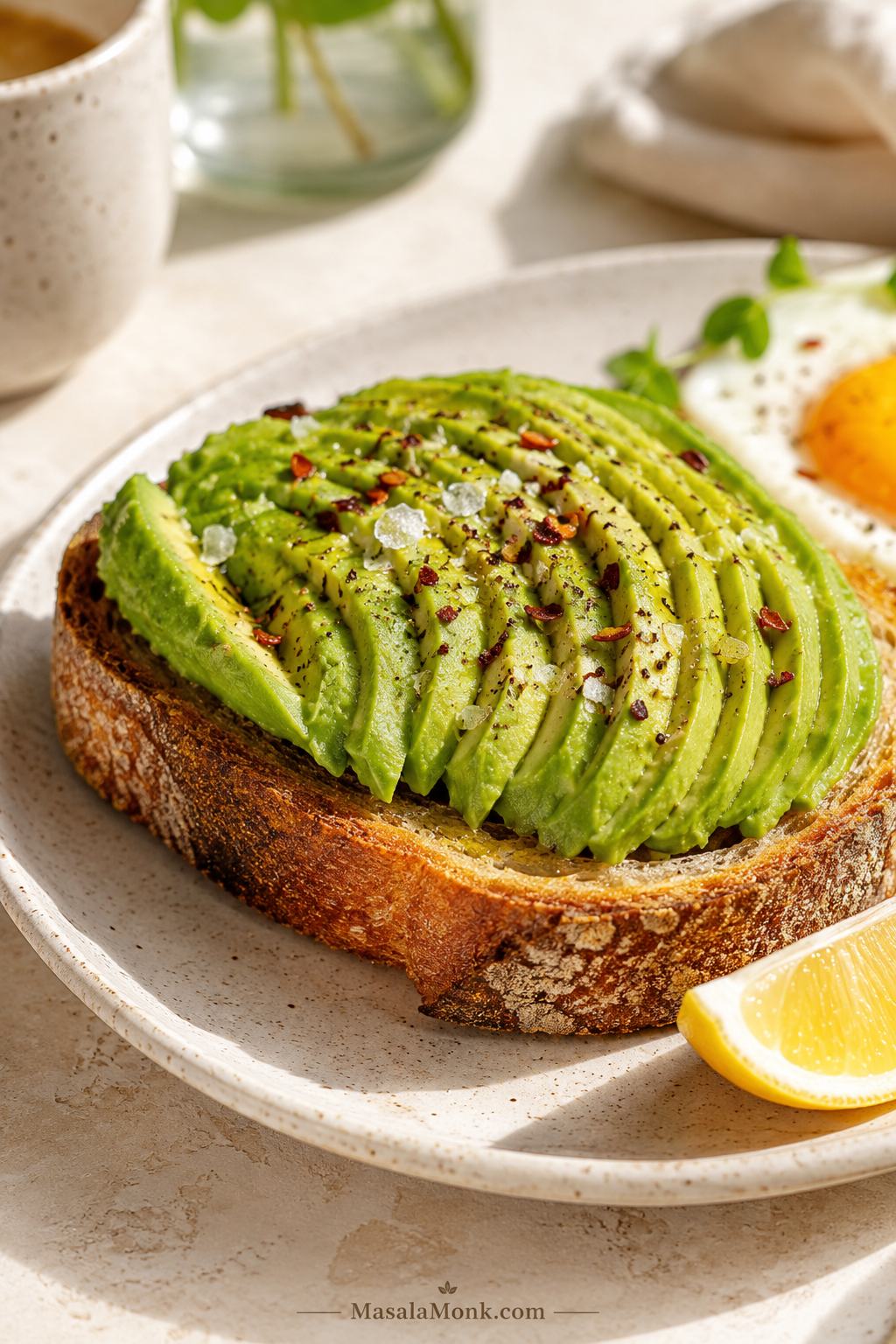
Avocado toast on thick sourdough with seasoned avocado, chili flakes, flaky salt, lemon, and a soft fried egg on a café plate.

A good avocado toast recipe should not taste like plain mashed avocado on dry bread. The best version is creamy, bright, salty, crisp at the edges, and finished with just enough contrast to make the next bite interesting. That contrast can be as simple as chili flakes and lemon, or as filling as egg, cottage cheese, smoked salmon, or crisp vegetables.

The everyday formula is easy: 1 thick slice of toast + 1/2 ripe avocado + 1–2 teaspoons lemon or lime juice + salt + pepper. Once that base tastes right, you can turn it into a fast breakfast, a high-protein toast, a brunch plate, or a simple lunch without making the recipe complicated.

If your toast usually tastes bland, soft, or overrated, the fix is rarely more avocado. It is better bread, a riper avocado, enough salt, enough citrus, and one topping that changes the bite.

The goal is not to pile everything on. The goal is to make the base so good that toppings feel like a choice, not a rescue mission.

Quick Answer: Best Ratio

For one slice, use 1 thick piece of well-toasted bread, 1/2 ripe avocado, 1–2 teaspoons lemon or lime juice, a generous pinch of salt, and black pepper. Mash the avocado with the citrus and seasoning, spread it over hot sturdy toast, and eat it right away.
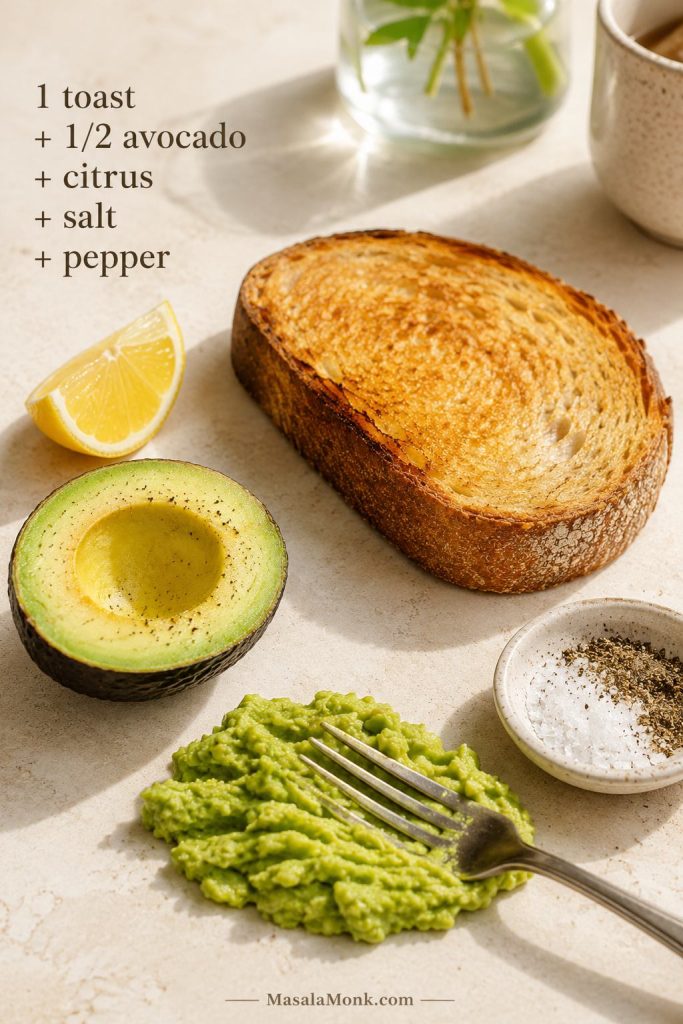
Avocado toast ratio guide with one toast, half an avocado, citrus, salt, pepper, and mashed avocado on a pale café surface.
Use this base ratio first because balanced avocado toast depends more on seasoning and texture than on extra toppings.

In a hurry, stop there. Toast well, season the avocado properly, spread it thickly, and finish with pepper, chili flakes, flaky salt, or everything bagel seasoning.

Best everyday build: Start with sourdough or seeded bread, 1/2 avocado, lemon or lime, fine salt, black pepper, flaky salt, and chili flakes. Add a fried egg when you want breakfast, or cucumber/radish when the slice needs crunch.
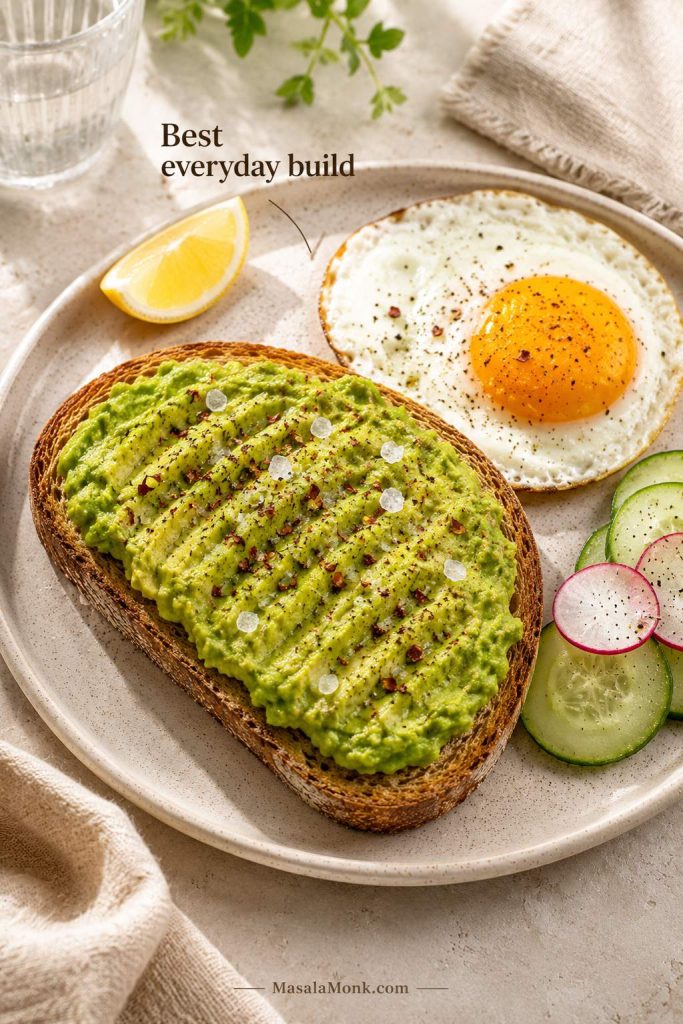
Everyday avocado toast build with seasoned avocado, chili flakes, lemon, fried egg, cucumber, and radish as topping options.
Once the base tastes bright and salty enough, choose one direction: egg for breakfast or crisp vegetables for crunch.

This is the version to make before you start loading on toppings. If this tastes good, every variation after it gets easier.

For two toasts, use 2 slices bread, 1 ripe avocado, 2–4 teaspoons lemon or lime juice, 1/4 teaspoon fine salt, and black pepper. Egg makes it breakfast, cottage cheese makes it more filling, and smoked salmon turns it into brunch.

Not sure what to add next? Jump to What Your Toast Needs to choose by crunch, salt, freshness, protein, or heat.

Base Formula

For 1 toast1 thick slice bread
Avocado1/2 ripe avocado
Citrus1–2 tsp lemon/lime
Time5–8 minutes

Use this base: 1 thick slice sourdough or whole-grain bread, 1/2 ripe avocado, 1–2 teaspoons lemon or lime juice, 1/8 teaspoon fine salt, black pepper, and optional flaky salt, olive oil, chili flakes, or one topping for contrast.
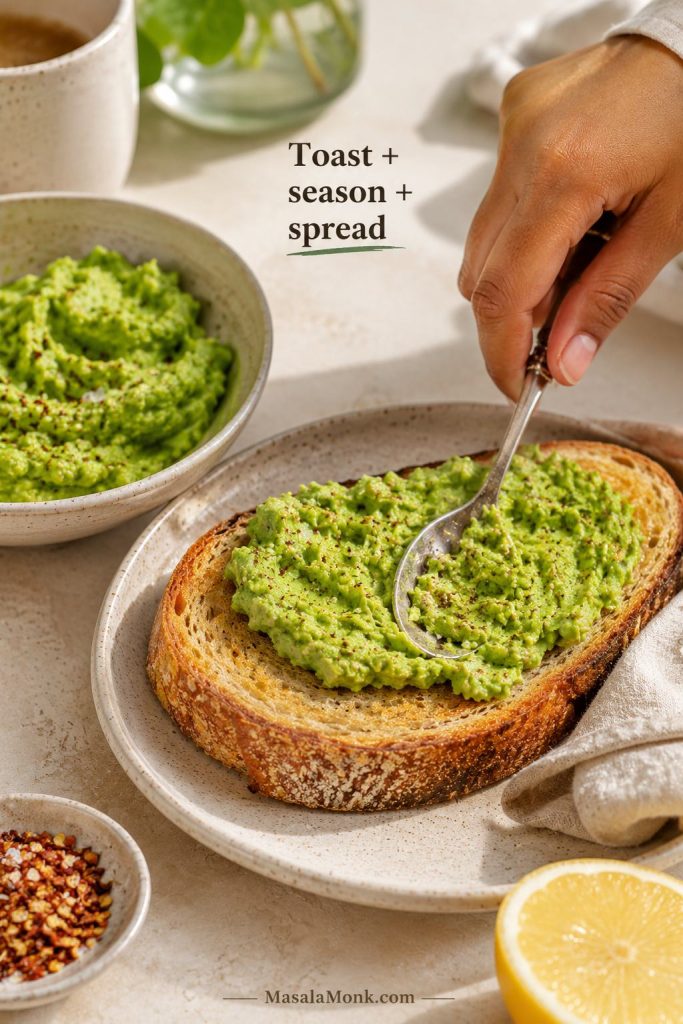
Avocado toast process scene with crisp toast, seasoned avocado mash, and avocado being spread onto bread.
Build the base in order: crisp the bread, season the mash, then spread it while the toast still has bite.

Once the base tastes right, use the toast ideas or the Fix the Bite guide to choose a topping.

That is the difference between toast that tastes like a café breakfast and toast that tastes like avocado spread on bread.

The Rule: Toast, Season, Contrast

The best version follows one simple rule: toast, season, contrast. Toast the bread deeply enough to hold the avocado. Season the avocado before it touches the bread. Then add one topping that changes the bite.

Toast, Season, Contrast

  • Toast: Use bread with enough structure, and toast it until the edges have crunch.
  • Season: Mash the avocado with lemon or lime, fine salt, and black pepper before spreading.
  • Contrast: Add one thing that changes the bite: egg for fullness, cucumber for crunch, feta for salt, tomato for freshness, or chili crisp for heat.
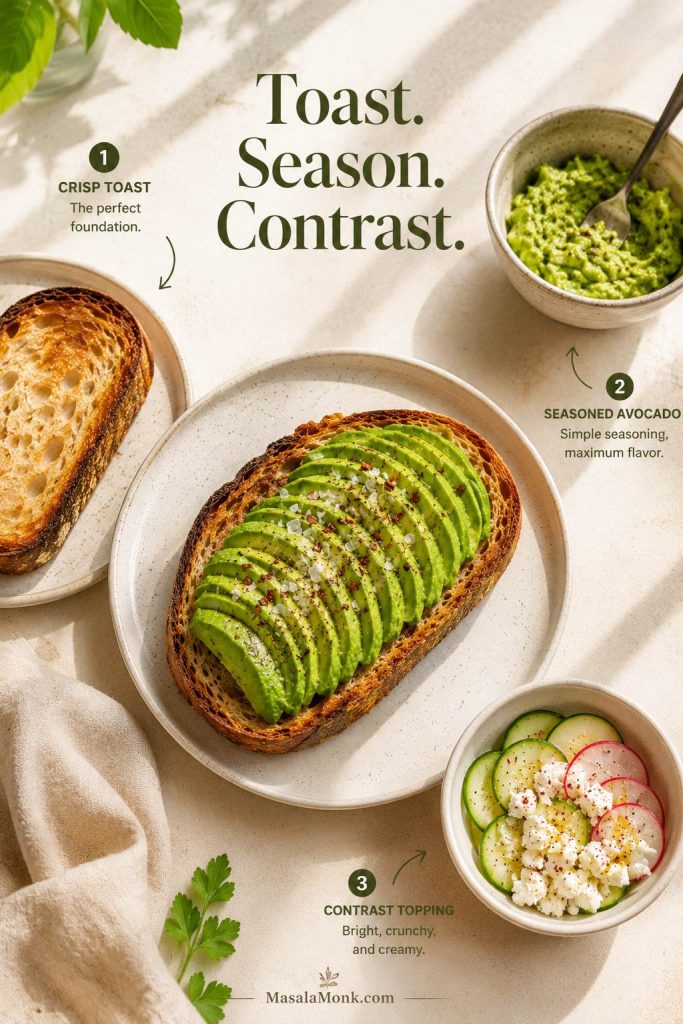
Toast Season Contrast guide with avocado toast, seasoned mash, crisp bread, and contrast toppings arranged around the toast.
A contrast topping should solve a real problem: add crunch, salt, freshness, heat, or fullness.

The first bite should feel creamy and crisp. If the second bite already feels boring, the toast needs contrast.

Once the base tastes good on its own, toppings become optional upgrades instead of rescue attempts.

Ingredients
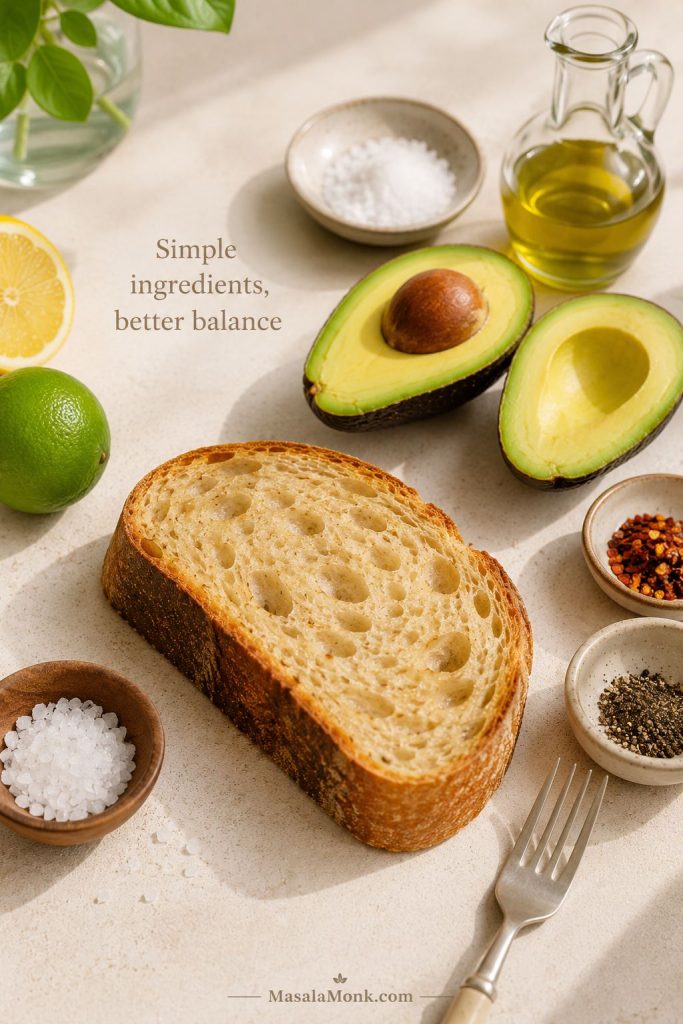
Avocado toast ingredients including bread, ripe avocado, lemon, olive oil, salt, pepper, chili flakes, and flaky salt.
Do not try to fix weak bread or underripe avocado with extra toppings; better ingredients make the simple version work.

This recipe is simple, so there is nowhere for weak ingredients to hide. The avocado should be ripe, the bread should be sturdy, and the seasoning should be bold enough to wake up the mild, creamy avocado. Lemon or lime gives brightness, salt brings the flavor forward, and pepper, chili, herbs, seeds, or crunchy vegetables keep each bite from feeling one-note.

Use the table as a starting point, then taste the avocado before it goes on the bread. That one small step is what keeps the whole slice from tasting flat.

Ingredient Amount for 2 toasts Why it matters
Thick bread 2 slices Gives the avocado somewhere to sit without turning the whole slice soft.
Ripe avocado 1 medium-large avocado, about 140–160 g flesh Mashes smoothly and gives the toast a creamy, buttery base.
Lemon or lime juice 2–4 tsp / 10–20 ml, to taste Cuts through the creamy avocado so the toast tastes fresh, not flat.
Fine salt 1/4 tsp, plus more to taste Brings the avocado forward instead of leaving it muted.
Black pepper 1/8 tsp Adds a warm, sharp finish.
Extra-virgin olive oil 1–2 tsp, optional Adds café-style richness, especially with sourdough.
Red pepper flakes Pinch, optional Adds a small kick so the avocado does not feel too creamy or quiet.
Flaky salt To finish Gives the top a crisp, salty pop.

How to Pick a Ripe Avocado

Look for fruit that gives slightly when pressed near the top or side. It should not feel rock-hard, hollow, wrinkled, or mushy. Underripe avocado tastes grassy and firm, while overripe avocado can taste dull and may have brown stringy patches inside.
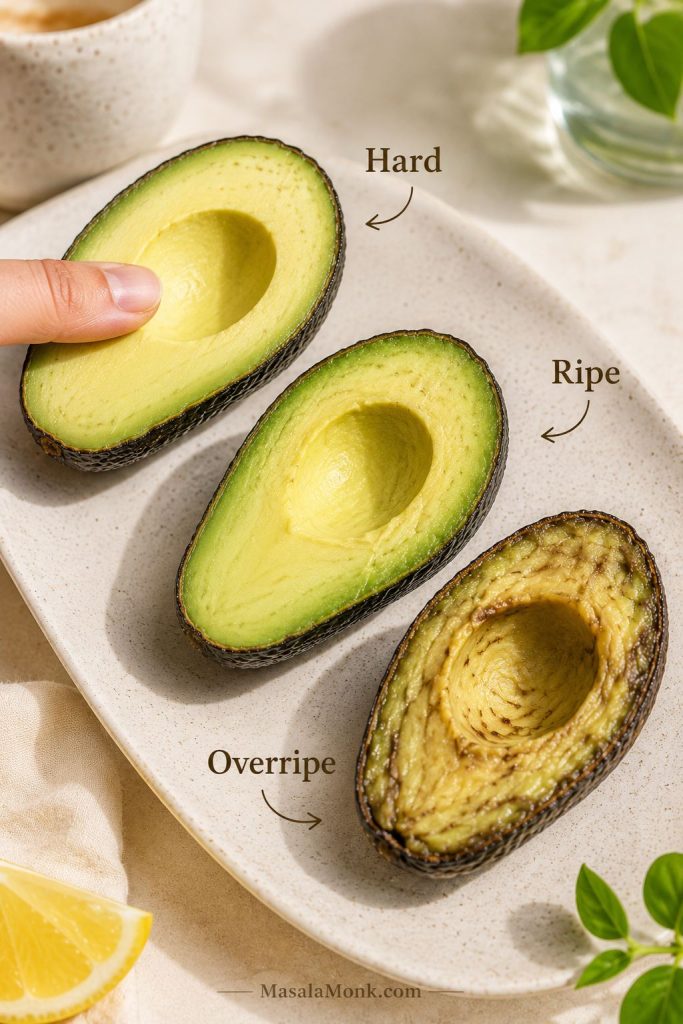
Avocado ripeness guide showing hard, ripe, and overripe avocado examples with cut flesh and pressure cues.
A ripe avocado should give slightly; otherwise, the finished toast can turn grassy, dull, or hard to mash.

If the small stem nub comes off easily and the flesh underneath looks green, the avocado is usually close. If it looks brown underneath or the fruit feels very soft, it may be overripe.

Not ripe yet? Leave it at room temperature. To speed things up, place it in a paper bag with a banana or apple. Once ripe, refrigerate it to slow things down.

If your avocado is hard, make something else today. Toast cannot fix fruit that is not ready.

Best Bread

Bread is where many avocado toasts quietly fail. It has to do more than sit underneath the avocado. It needs enough structure to hold the mash, enough crunch to stay interesting, and enough flavor that the toast still tastes good after the first bite.
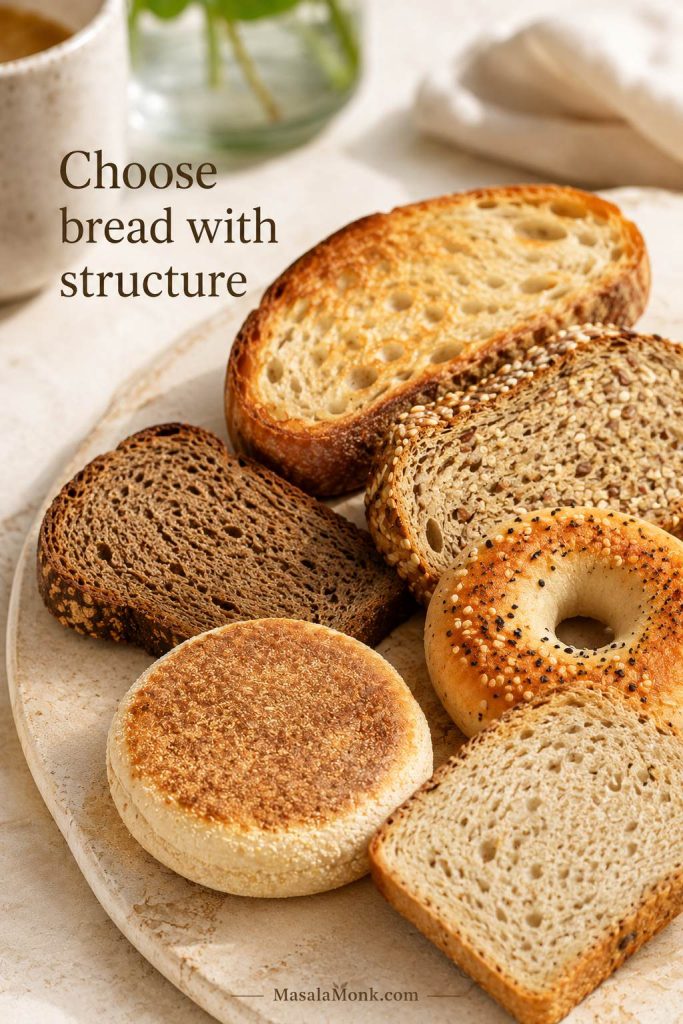
Toasted bread choices for avocado toast including sourdough, seeded bread, rye, bagel, English muffin, and gluten-free bread.
Choose bread with structure, because soft bread turns a good avocado topping into a soggy slice.

Sourdough is the best all-around choice, but whole grain, seeded bread, rye, bagels, English muffins, and gluten-free bread can all work if you toast them well.

Bread Best for Tip
Sourdough Classic café-style toast Toast until deeply golden so the center stays firm.
Whole grain Everyday healthy breakfast Choose a sturdy slice with good texture, not soft sandwich bread.
Seeded bread Crunch, fiber, and extra flavor Excellent with egg, tomato, cottage cheese, or cucumber.
Rye or pumpernickel Smoked salmon avocado toast Pairs well with capers, dill, onion, and lemon.
Bagel Bigger brunch-style serving Use half a bagel if you want a balanced portion.
English muffin Smaller breakfast portion Good with poached egg or cottage cheese.
Gluten-free bread Gluten-free avocado toast Toast it longer than usual so it does not turn soft.
Low-carb bread Lower-carb version Add protein so the meal feels complete.

Whatever bread you choose, toast it a little more than you would for buttered toast. Avocado is soft and rich, so the bread needs extra structure.
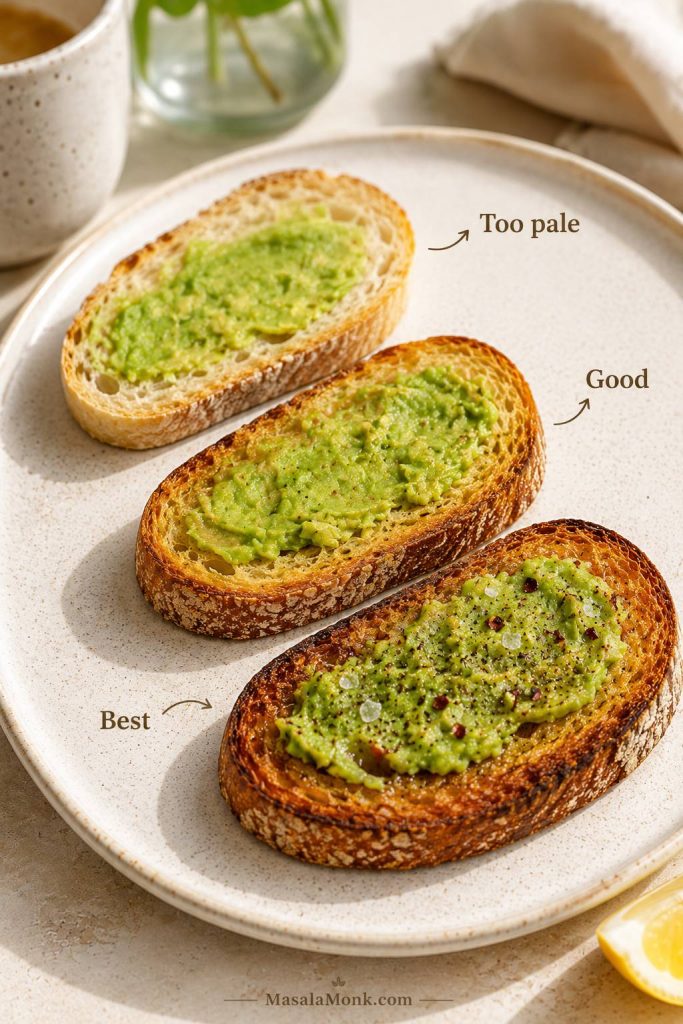
Toast doneness guide for avocado toast showing pale toast, golden toast, and deeply golden toast with avocado spread.
Toast the bread a little darker than usual so it can hold creamy avocado without collapsing.

Soft sandwich bread can work in a pinch, but only if you toast it harder than usual; otherwise, the avocado will flatten it quickly.

If sogginess is the main issue, jump to How to Keep It from Getting Soggy.

If you like making toast from homemade bread, this sourdough bread recipes guide is a useful place to start, especially if you want a loaf, sandwich bread, English muffin bread, or bagel that works well for breakfast toast.

How to Toast Bread Properly

Most disappointing slices start with bread that is too soft. The toast should be firm enough to resist the avocado, especially if you are adding tomato, cucumber, poached egg, smoked salmon, pickled onions, or cottage cheese.
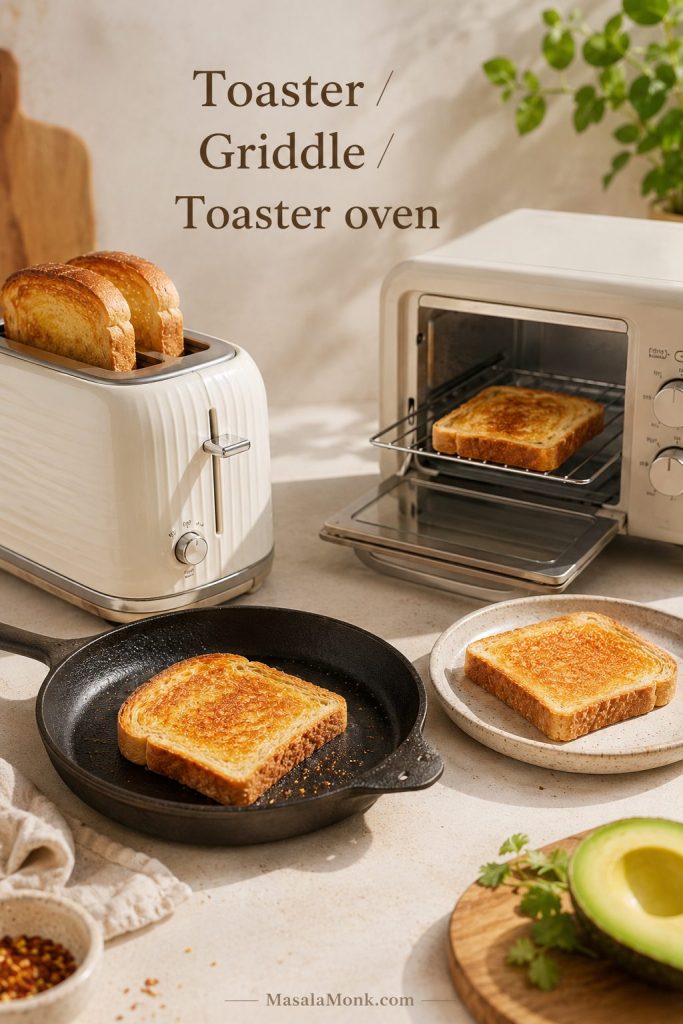
Bread toasting options for avocado toast with a toaster, griddle, toaster oven, and golden toasted bread.
Whether you use a toaster, griddle, or toaster oven, aim for firm golden bread with crisp edges.
  • Toaster: Best for fast everyday toast. Toast until golden and firm, not just warm.
  • Skillet or griddle: Best for thicker sourdough or café-style toast. Use medium heat and toast for 2–3 minutes per side.
  • Toaster oven: Best for multiple slices. Toast until the edges have crunch and the center feels sturdy.
  • Garlic rub: Rub hot toast lightly with the cut side of a garlic clove for extra savory flavor.
  • Olive oil or butter: Use a thin layer before pan-toasting, or a light drizzle after toasting, for a richer café-style finish.

Restaurant-style upgrade: Rub the hot toast lightly with garlic, brush or drizzle with a little olive oil, season the avocado before spreading, and finish with flaky salt. Those small details make the toast taste brighter and more complete.

Do not cook the avocado mixture in the skillet. Toast the bread first, then add the avocado after. Warm bread is good; cooked avocado mash usually tastes dull.

How to Make It

It works best when the bread is hot and sturdy, the avocado is seasoned before spreading, and the finished toast is eaten while the edges still have crunch. The method is short, but the order matters: toast first, season the avocado second, then build the toppings right before serving.
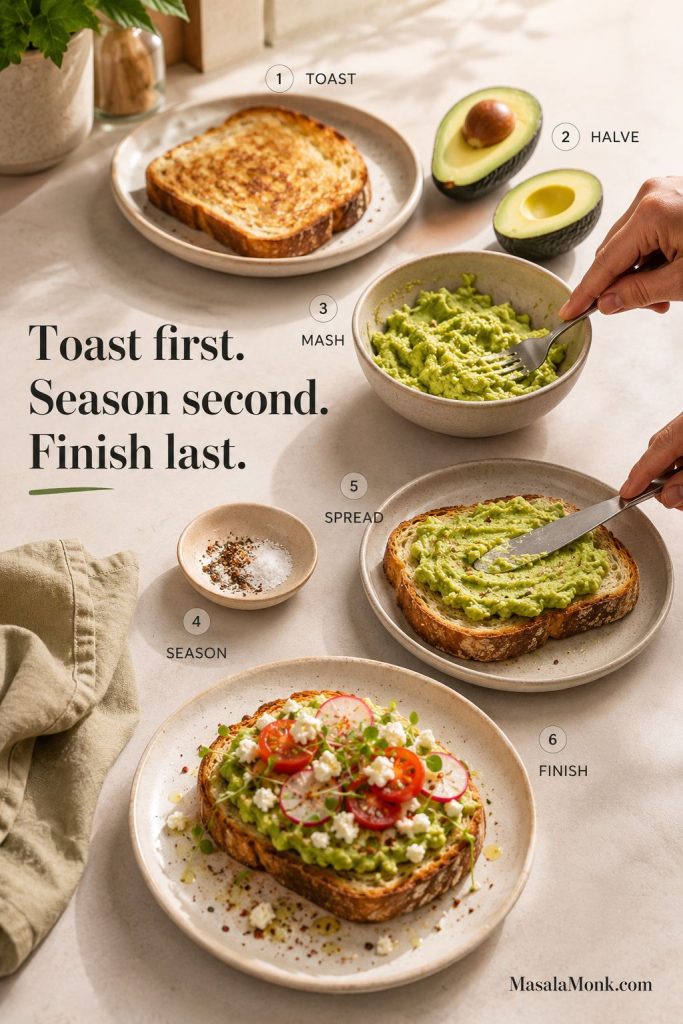
Step-by-step avocado toast method showing bread, avocado, mashing, seasoning, spreading, and finishing the toast.
Assemble only after the toast is ready, because avocado and wet toppings soften bread quickly.
  1. Toast the bread. Toast until golden and firm, not pale and soft.
  2. Prepare the avocado. Halve the avocado, remove the pit, and scoop the flesh into a small bowl.
  3. Season the mash. Add lemon or lime juice, salt, and black pepper. Mash with a fork until mostly smooth but still a little textured.
  4. Taste before spreading. Add more salt, citrus, pepper, or chili flakes if it tastes flat.
  5. Spread over hot toast. Use about 1/2 avocado per thick slice.
  6. Finish and serve. Add flaky salt, olive oil, chili flakes, herbs, egg, cottage cheese, smoked salmon, feta, or another topping with contrast. Eat immediately.

Season before spreading: This small step helps the avocado taste bright and balanced before it ever touches the bread.
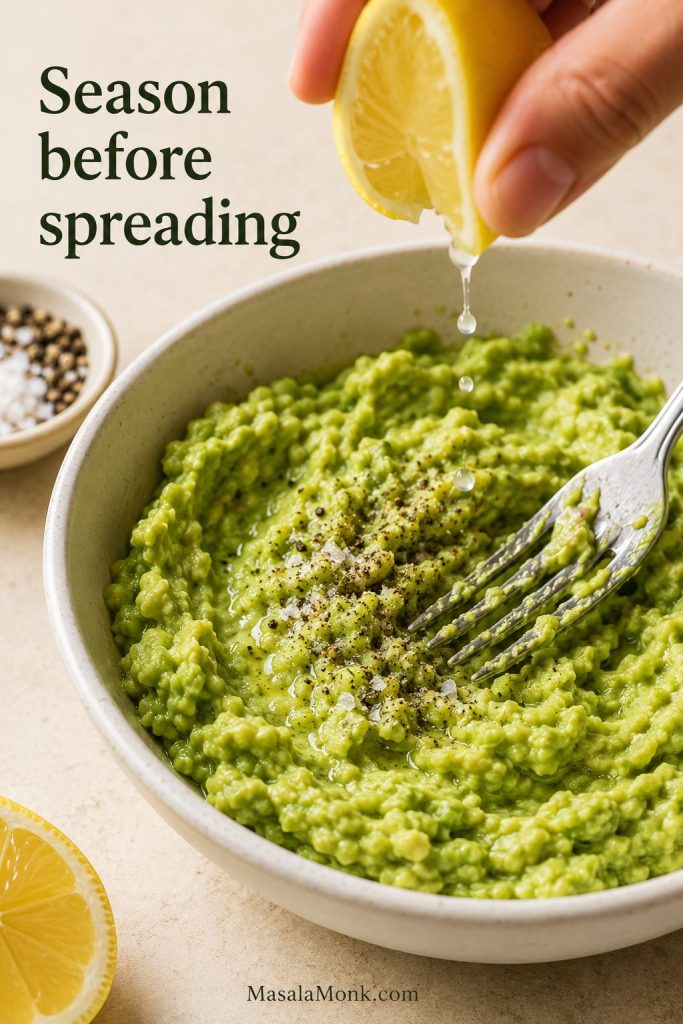
Close-up of avocado mash being seasoned with lemon juice, salt, pepper, and a fork before spreading.
Season the mash before spreading it; otherwise, the top may look good while the avocado still tastes flat.

Texture tip: Mash the avocado in a bowl if you want even seasoning and a creamier bite. Slice it if you want a cleaner café-style look, especially with smoked salmon, feta, tomato, or poached egg. Either way, season it before you add the toppings.
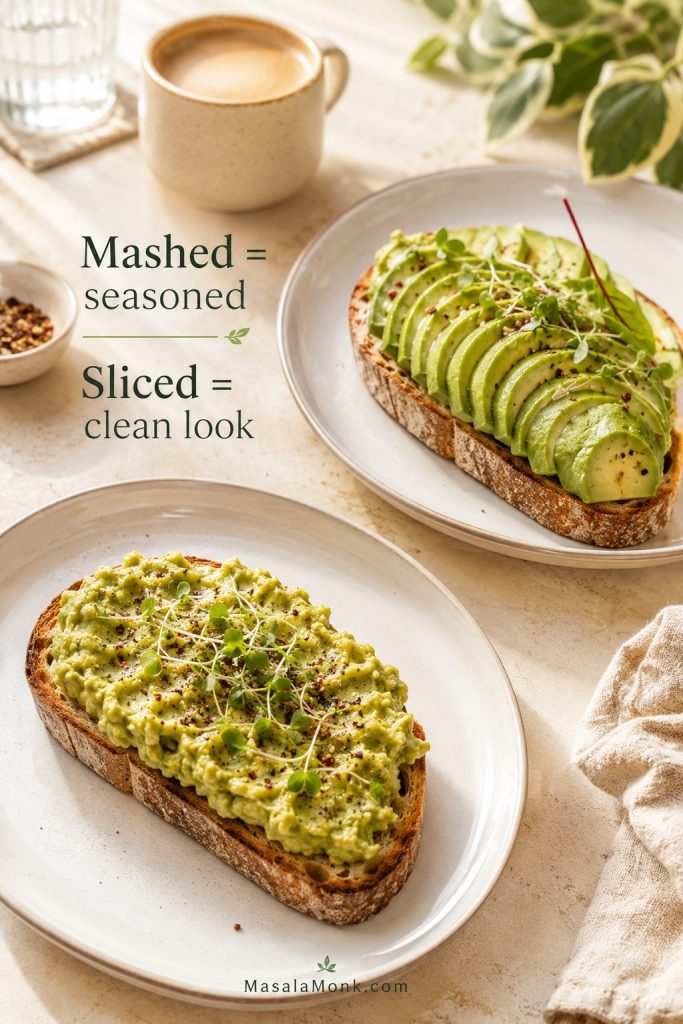
Two avocado toasts comparing mashed seasoned avocado with clean sliced avocado on café plates.
Mashed avocado holds seasoning better, while sliced avocado gives a cleaner café-style finish.

Avocado Toast with Egg

Egg turns the slice into breakfast, not a snack. One egg is enough for most slices. Two makes sense when the toast is the meal, not the side.
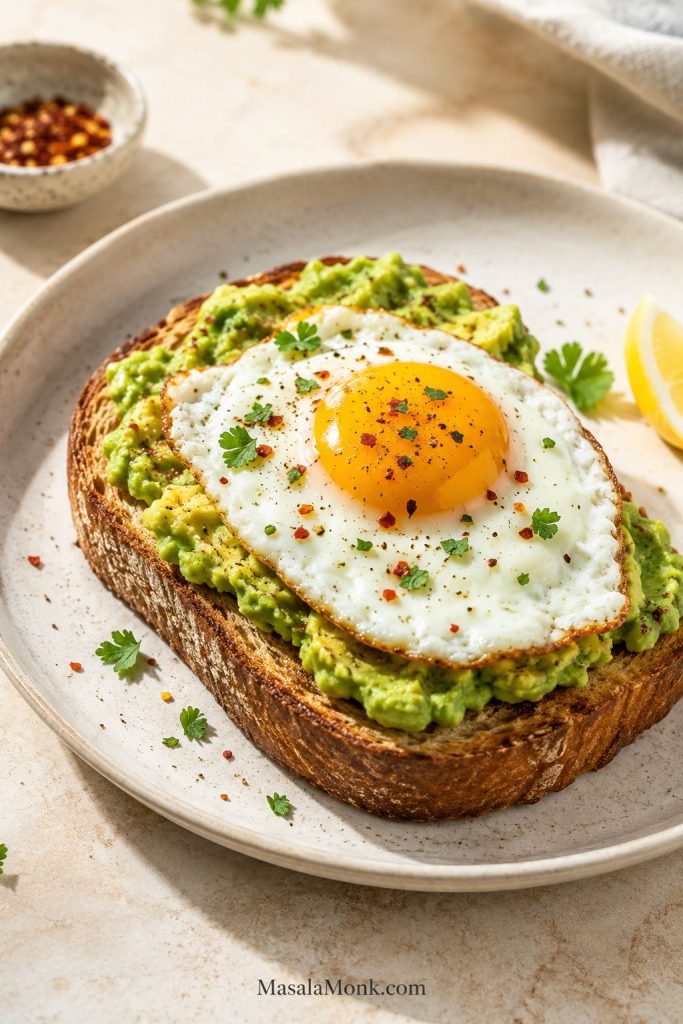
Avocado toast with a fried egg, soft yolk, herbs, chili flakes, and crisp sourdough edge.
Avocado toast with egg works best when the yolk adds richness without hiding the seasoned avocado.
Egg style Choose it when you want Watch out for
Fried egg Classic café-style toast with a rich yolk Do not over-salt if using bacon, feta, capers, or smoked salmon.
Poached egg Brunch-style toast Drain well or the bread gets wet.
Scrambled egg Soft, filling breakfast Keep the eggs creamy, not dry.
Jammy egg Meal-prep-friendly breakfast Slice gently so the yolk stays neat.
Egg whites Lighter high-protein toast Season more because egg whites are mild.

For the safest first version, choose fried egg. It gives the toast richness without making the method fussy. Poached egg is prettier for brunch, scrambled is softer and more filling, and jammy egg is the easiest make-ahead option.
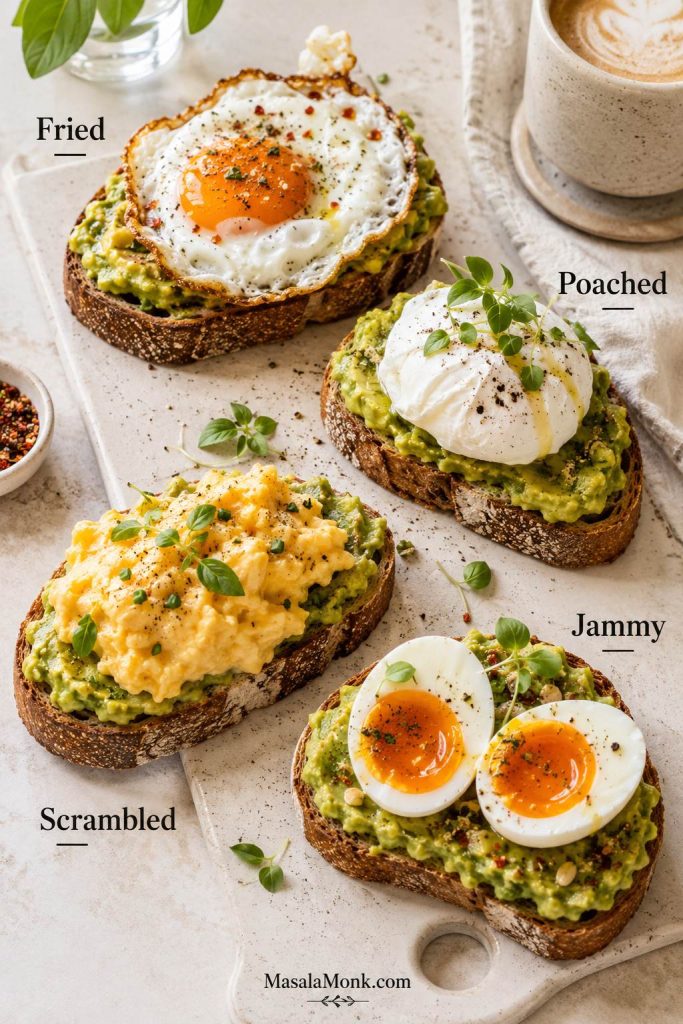
Egg styles for avocado toast showing fried, poached, scrambled, and jammy egg versions on small toasts.
Each egg style changes the meal: fried is rich, poached feels brunchy, scrambled is cozy, and jammy is prep-friendly.

Want a no-cook protein version instead? Jump to the Cottage Cheese Version.

Fried Egg Version

Spread 1/2 mashed avocado over one slice of toast, then top with one fried egg. Cook the egg on medium heat until the white is set and the yolk is still soft, about 2–3 minutes if covered, or a little longer if your pan runs cooler. Finish with salt, pepper, chili flakes, and herbs.
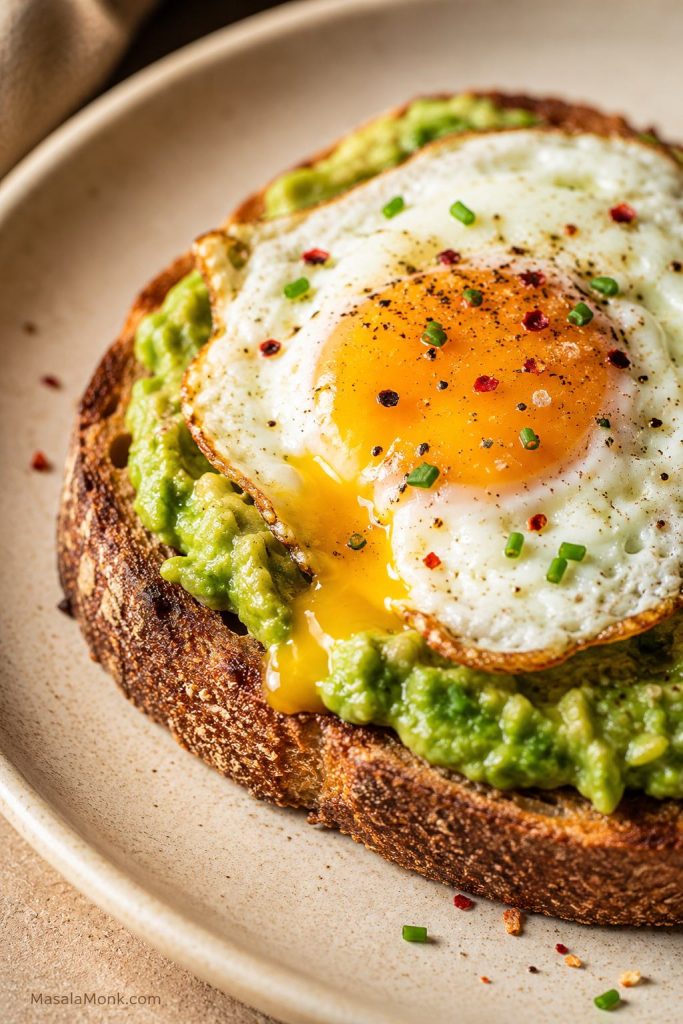
Close-up fried egg avocado toast with a soft yolk, seasoned avocado, chili flakes, and crisp bread crust.
A fried egg is the easiest upgrade when you want the slice to feel like a real breakfast.

Poached Egg Version

Poach the egg at a bare simmer for 3–4 minutes, then drain it well before placing it on the toast. This version is excellent with chives, flaky salt, black pepper, lemon, and a little chili oil.
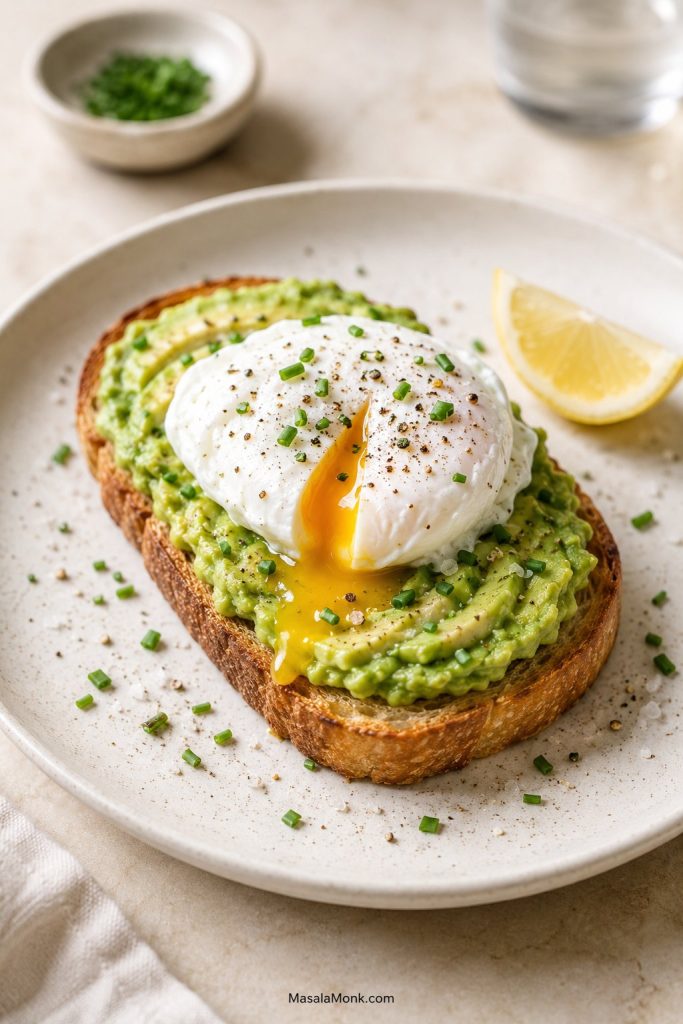
Poached egg avocado toast with chives, flaky salt, black pepper, lemon, and seasoned avocado.
Drain poached eggs well before serving, so the yolk adds richness without soaking the toast.

Scrambled Egg Version

Use soft scrambled eggs rather than dry curds. Cook them on low to medium-low heat for 2–3 minutes, then spoon them over the avocado base. Chives, black pepper, chili flakes, and a little feta work well here.
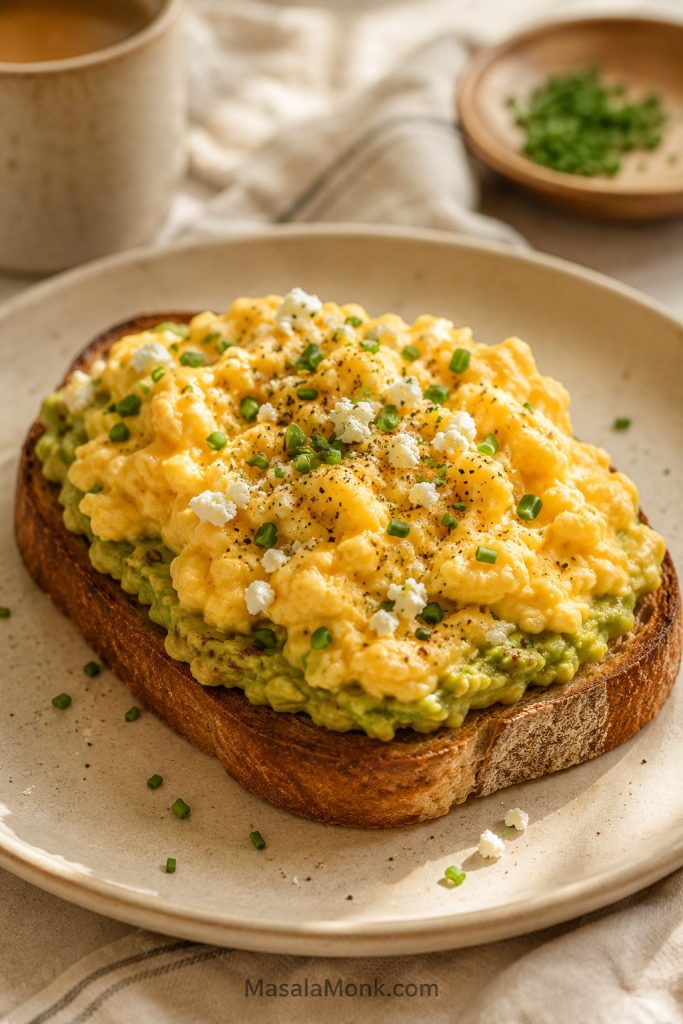
Scrambled egg avocado toast with soft eggs, seasoned avocado, chives, black pepper, and toasted bread.
Soft scrambled eggs make the toast warmer and more filling, especially when the avocado base is already seasoned.

Boiled or Jammy Egg Version

For a jammy egg, lower the egg into simmering water and cook for 6–7 minutes, then cool briefly before peeling. For clean hard-boiled slices, cook for 9–10 minutes. This is the best egg version when you want to prep part of breakfast ahead.
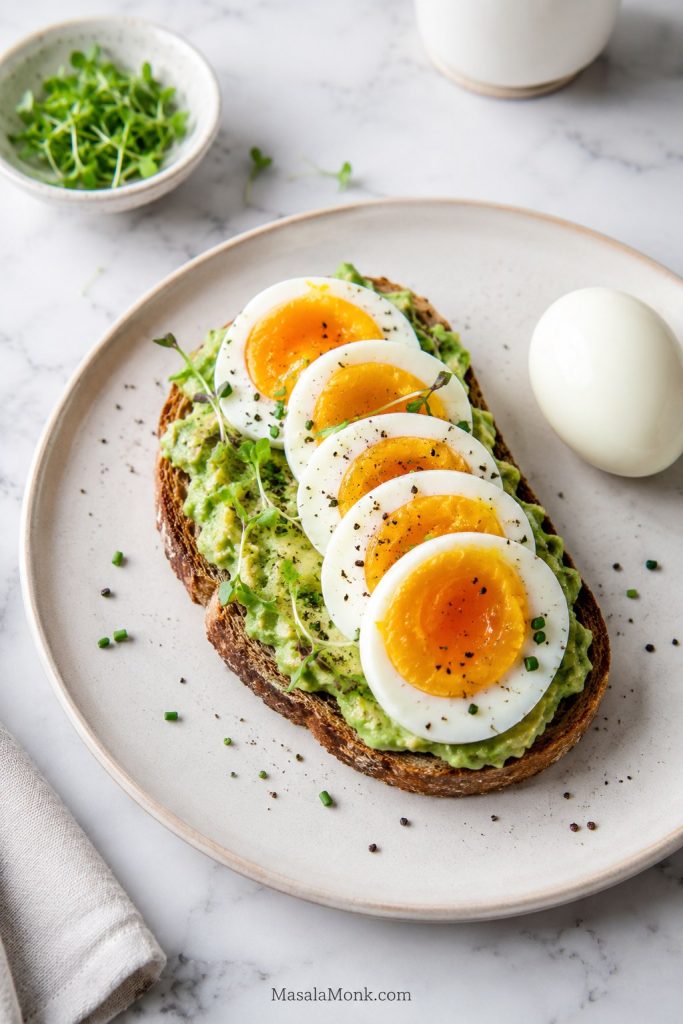
Jammy egg avocado toast with sliced boiled egg, golden yolk, microgreens, black pepper, and a peeled egg nearby.
Jammy eggs are a smart make-ahead topping because they add protein without another pan in the morning.

If you are cooking for more than one person, a toast bar can get messy fast. For a bigger egg breakfast, this frittata recipe is easier to prep ahead than building every slice one by one.

Cottage Cheese Version

The cottage cheese version is the no-cook protein route: cool, creamy, tangy, and more filling without another pan of eggs. Choose it when you want the toast to feel like a real breakfast but do not want to cook anything.
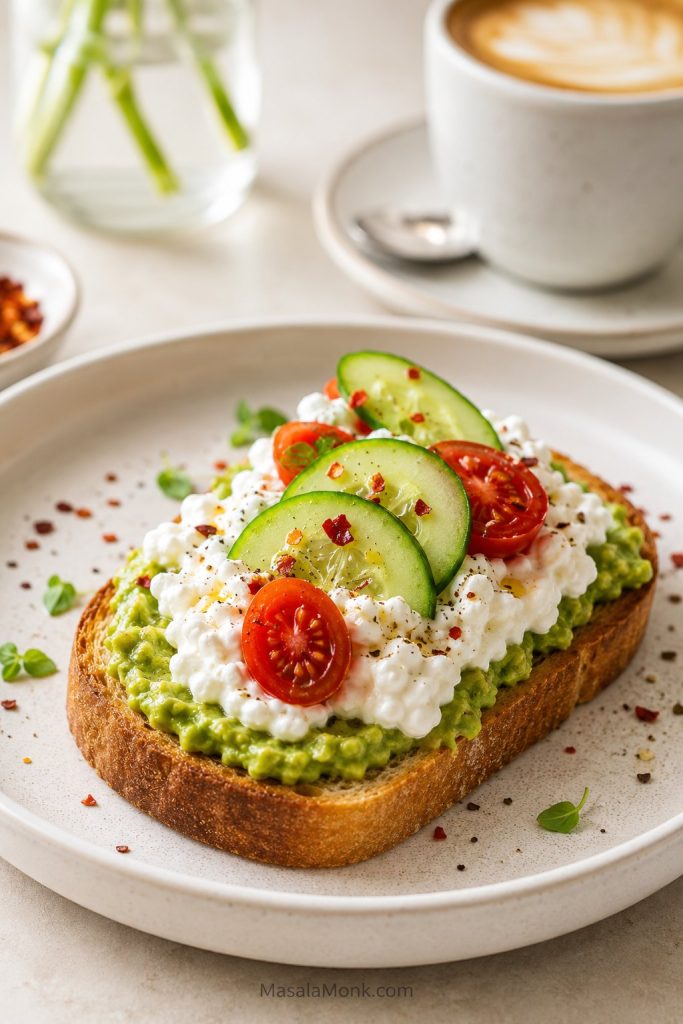
Cottage cheese avocado toast with seasoned avocado, creamy cottage cheese, cucumber or tomato, chili flakes, and crisp bread.
Cottage cheese adds cool tang and protein, but it works best when the texture is creamy rather than wet.

One thick slice needs 1/4 to 1/2 avocado, 1/3 cup / about 75 g cottage cheese, 1 teaspoon lemon or lime juice, salt, black pepper, and chili flakes. Watery cottage cheese should be drained first so the bread stays firm.
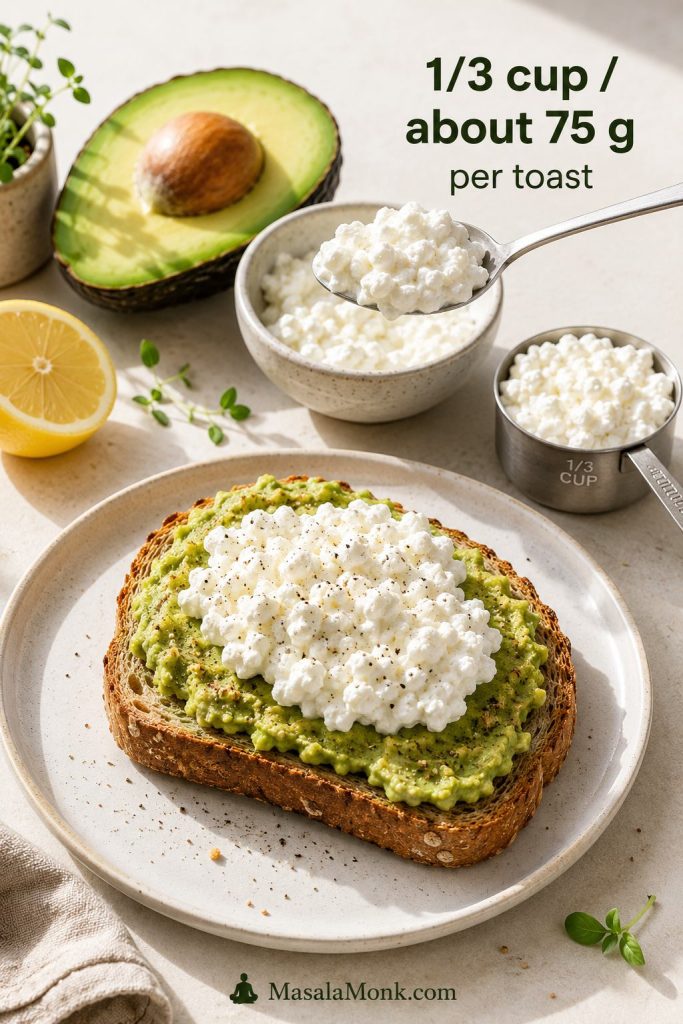
Cottage cheese avocado toast guide showing one-third cup or about 75 grams of cottage cheese with avocado and lemon.
Use about 1/3 cup cottage cheese per toast; however, drain it first if it looks watery.

Low-fat cottage cheese is usually lighter but can be wetter. Full-fat cottage cheese is creamier and richer. Both work, but season carefully because cottage cheese is already salty. For contrast, add something crisp, spicy, or fresh.

For a warmer version of the same high-protein idea, these scrambled eggs with cottage cheese give you a creamy breakfast option without relying on toast.

Brunch Versions: Smoked Salmon, Feta, and Bagel

Once the base is right, richer versions are easy. The trick is restraint: smoked salmon, feta, bagels, and cheese can make the toast feel special, but they also add salt, richness, or weight. Let one main topping lead, then use lemon, herbs, pepper, or crunchy vegetables to keep the bite balanced.

Smoked Salmon Version

For brunch, keep the avocado quieter and let salmon, lemon, capers, onion, and dill lead. Because smoked salmon is already salty, season the mash more lightly and use citrus or herbs for lift.

For one toast, use 1 slice sourdough, rye, seeded bread, or 1/2 toasted bagel; 1/2 avocado; 1–2 ounces / 30–60 g smoked salmon; 1 teaspoon lemon juice; 1 teaspoon capers; thin red onion or shallot; and dill, chives, or microgreens. Cream cheese, goat cheese, or cottage cheese can go under the avocado if you want a richer version.
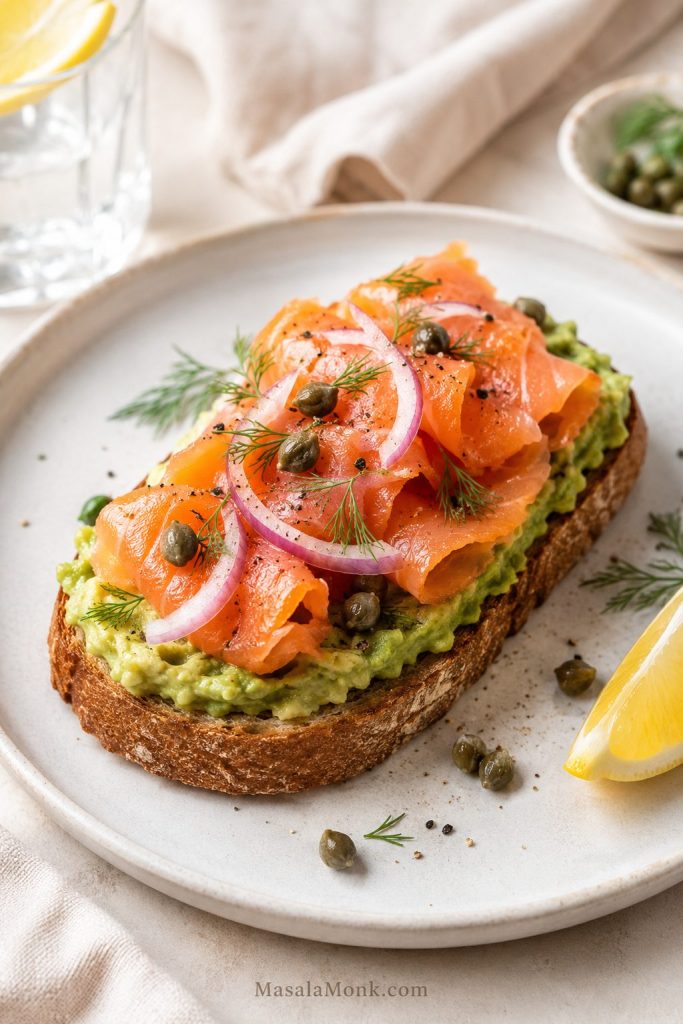
Smoked salmon avocado toast with folded salmon, capers, dill, red onion, lemon, and mashed avocado on sourdough.
Smoked salmon brings brunch richness, so lemon, dill, capers, and onion help keep the slice balanced.

Feta Version

Feta is the fastest fix for a mild, creamy base. It brings salt and edge, especially when you add tomato, cucumber, herbs, black pepper, or a little lemon.

For one toast, spread 1/2 avocado over sturdy toast, then add 1–2 tablespoons crumbled feta. If using olives, capers, or pickled onions too, reduce the salt in the avocado mash.
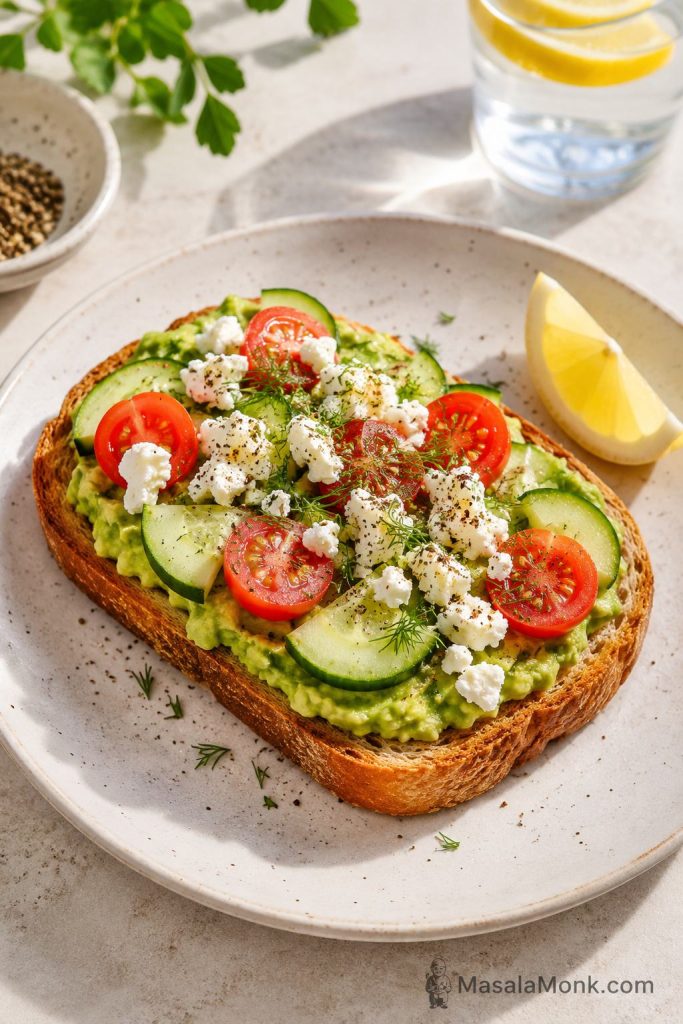
Feta avocado toast with crumbled feta, cucumber, tomato, dill, black pepper, lemon, and seasoned avocado.
Feta brings salt and sharpness, so it quickly makes a mild avocado base taste brighter.

Bagel Version

A bagel turns this into a bigger breakfast, so the build needs more restraint. Toast the cut side well, use 1/2 avocado per bagel half, and choose one main direction: egg, cottage cheese, smoked salmon, tomato, or everything bagel seasoning.

If the bagel is large, start with half. A full bagel with avocado and toppings can become very filling quickly.
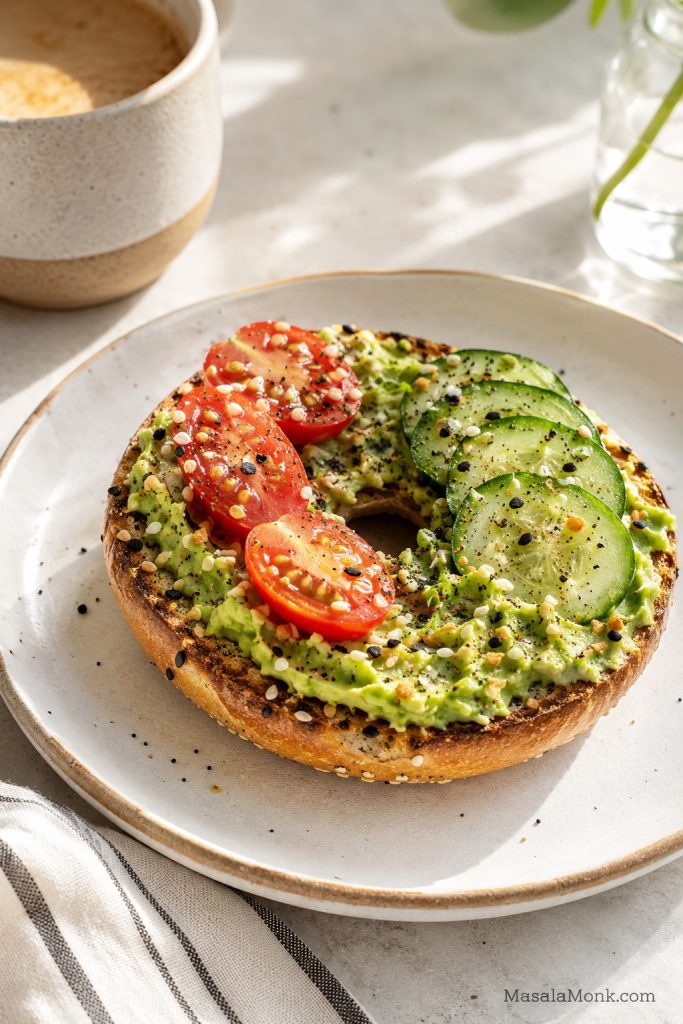
Avocado bagel toast on half a toasted bagel with seasoned avocado, cucumber, tomato, and everything seasoning.
A bagel makes the toast more filling; therefore, half a bagel with focused toppings often feels more balanced.

If you like the bagel direction, MasalaMonk’s breakfast sandwich ideas have more ways to build egg, cheese, avocado, sauce, and toasted bread into a fuller morning meal.

What Your Toast Needs: Fix the Bite

Do not choose toppings randomly. Choose them by what the bite is missing. If the base already tastes good, one topping is usually enough.

Take one bite of the base first; the answer is usually obvious once you notice whether it needs crunch, salt, heat, freshness, or protein.
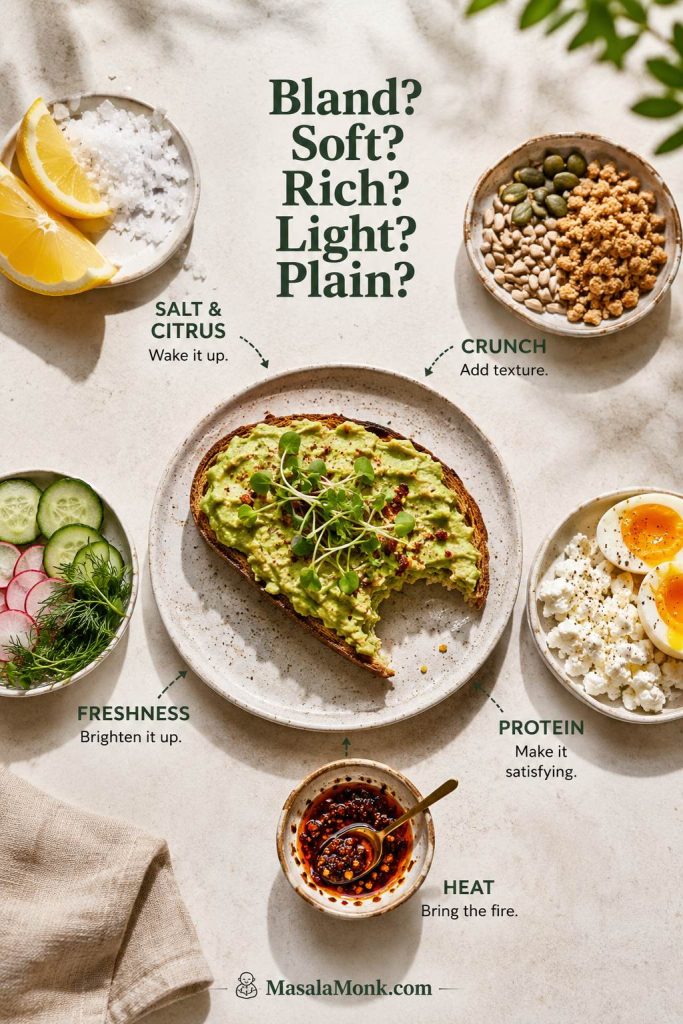
Diagnostic avocado toast guide with a bitten toast and surrounding cues for salt, citrus, crunch, freshness, protein, and heat.
Before adding more, decide what is missing: salt, crunch, freshness, protein, or heat.

What Your Toast Needs

  • Bland? Add salt, lemon or lime, chili flakes, hot sauce, flaky salt, or everything bagel seasoning.
  • Soft-on-soft? Add cucumber, radish, seeds, crispy garlic, toasted nuts, or crisp bacon.
  • Too rich? Add tomato, herbs, pickled onion, lemon or lime, capers, sprouts, or cucumber.
  • Not filling? Add egg, cottage cheese, beans, tuna, smoked salmon, tofu, or seeds.
  • Too plain? Add feta, goat cheese, za’atar, pesto, chili crisp, hot sauce, or a garlic rub on the toast.

15 Ideas That Actually Work

Think of these as starting points, not rules. A weekday toast might only need lemon and chili flakes, while a weekend brunch version can handle egg, smoked salmon, capers, herbs, and a little extra crunch.

Quick Everyday Ideas
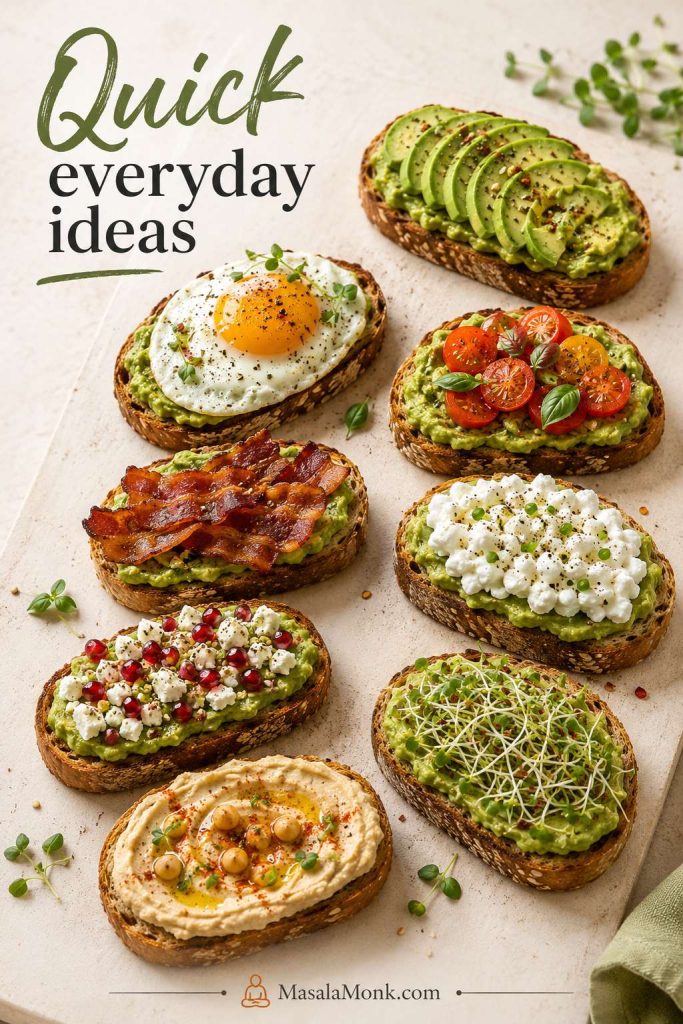
Board of quick avocado toast ideas with classic, egg, tomato, bacon, cottage cheese, feta, hummus, and sprout toppings.
For quick avocado toast ideas, pick one main topping and one fresh or crunchy finish instead of overloading the slice.
Idea What to add Why it works
Classic café toast Avocado, lemon, flaky salt, chili flakes, olive oil The cleanest version when the avocado is ripe and well-seasoned.
Fried egg avocado toast Avocado, fried egg, pepper, chives Rich yolk makes it feel like a full breakfast.
Tomato avocado toast Avocado, tomato, basil or coriander/cilantro, black pepper Tomato makes the toast feel juicy and summery.
Bacon avocado toast Avocado, crisp bacon, egg, hot sauce Salty crunch cuts through the creamy avocado.
Cottage cheese avocado toast Avocado, cottage cheese, cucumber, chili flakes Cool, creamy, tangy, and more filling without cooking another egg.
Feta avocado toast Avocado, feta, cucumber, tomato, oregano or za’atar Salty cheese and fresh vegetables balance the avocado.
Hummus avocado toast Hummus, avocado, olive oil, paprika Creamy, savory, and vegan-friendly.
Sprouts avocado toast Avocado, sprouts, cucumber, seeds, lemon Crunchy, fresh, and lighter.

Filling, Brunch, and Bigger Ideas

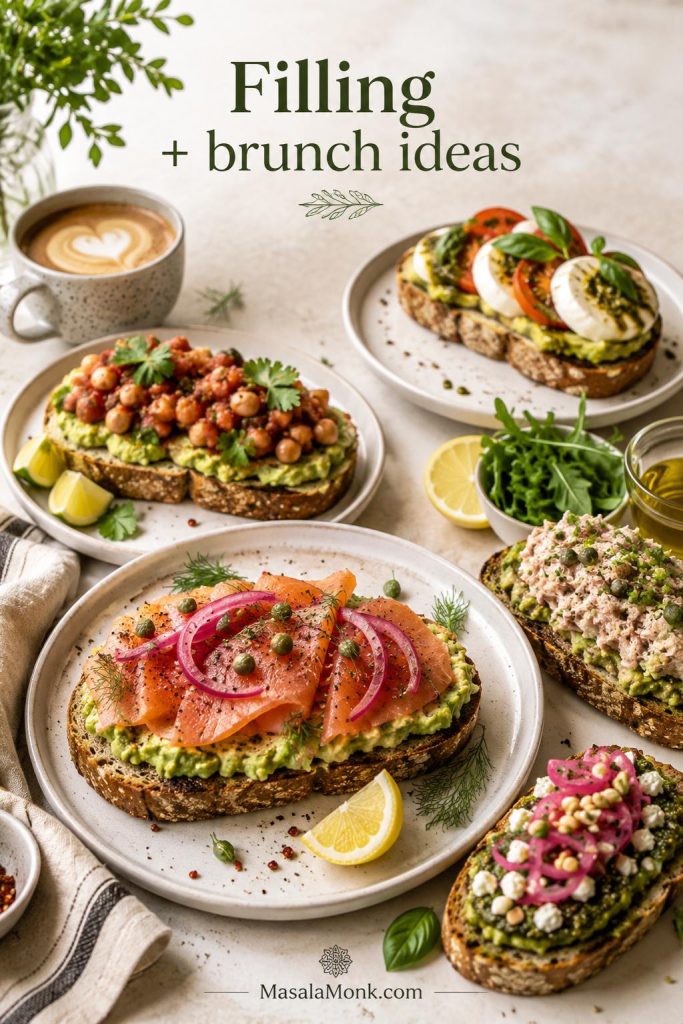
Brunch avocado toast spread with smoked salmon, beans, caprese toppings, tuna, pesto, pickled onion, lemon, and herbs.
Brunch versions can handle bigger flavors, but one main topping should still lead so the slice stays balanced.
Idea What to add Why it works
Smoked salmon avocado toast Avocado, salmon, capers, dill, red onion Premium brunch flavor with salt, tang, and herbs.
Black bean salsa avocado toast Avocado, black beans, salsa, coriander/cilantro, lime Filling, bright, vegan-friendly, and strong enough for brunch.
White bean avocado toast Avocado, white beans, lemon, herbs, pepper Creamy, mellow, and more satisfying without egg or cheese.
Caprese avocado toast Avocado, tomato, mozzarella or burrata, basil Fresh, creamy, and summer-friendly.
Tuna avocado toast Avocado, tuna, lemon, pepper, onion Protein-heavy and lunch-friendly.
Pickled onion avocado toast Avocado, pickled onions, herbs, black pepper Sharp, colorful, and useful when the toast tastes too rich.
Pesto avocado toast Avocado, pesto, tomato, flaky salt Herby, savory, and a fast way to make the base taste more complete.

You do not need to turn every slice into a loaded café plate. Most days, one strong direction is enough: egg and pepper, tomato and basil, cottage cheese and cucumber, or beans and salsa.
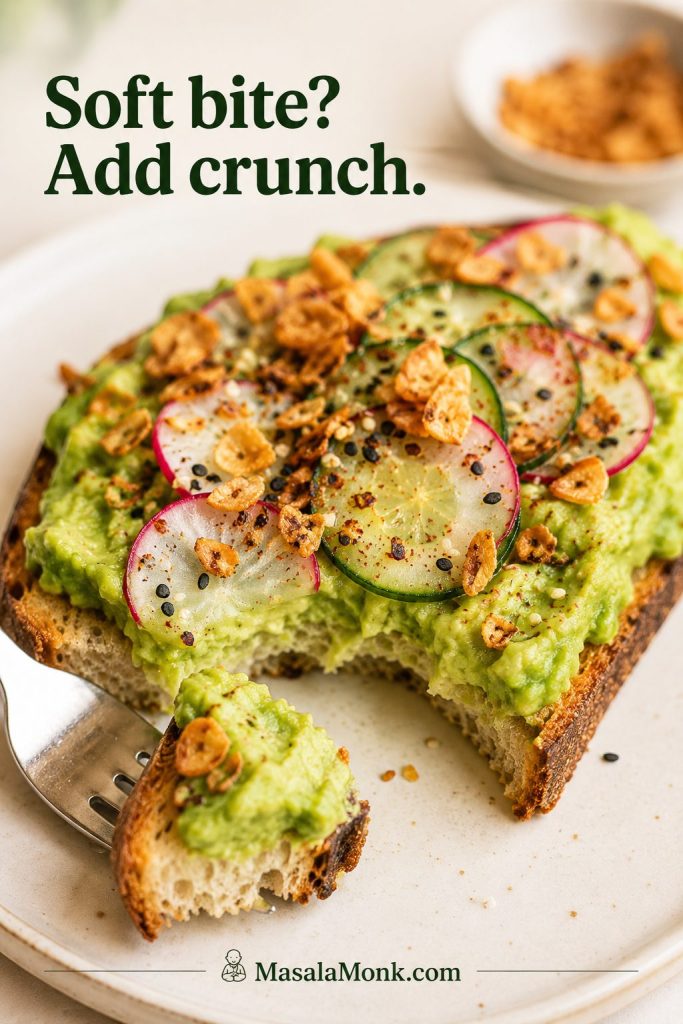
Crunch fix for avocado toast with cucumber, radish, crispy garlic, seeds, and a fork bite showing crisp bread.
When the bite feels soft all the way through, add cucumber, radish, seeds, or crispy garlic for contrast.

Still unsure what to add? Use What Your Toast Needs to choose by texture, salt, freshness, protein, or heat.

For the bacon version, keep the bacon crisp and the portion modest; the crunch matters more than piling it on. This air fryer bacon recipe is handy when you want a few crisp strips for breakfast without standing over a skillet.

Best Seasoning

If the toast tastes bland, it usually needs more salt, citrus, heat, or crunch — not more avocado. Start with salt and lemon or lime, then build from there. The seasoning should make the avocado taste brighter, not cover it completely.
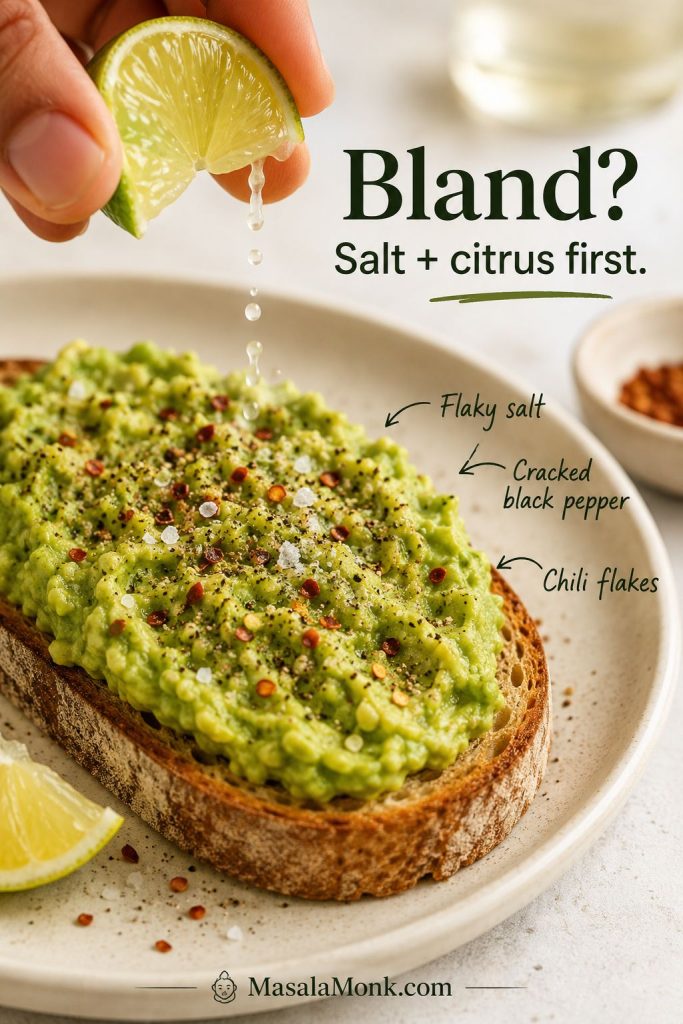
Close-up of bland avocado toast being fixed with lime juice, flaky salt, black pepper, and chili flakes.
When the avocado tastes bland, start with salt and citrus before reaching for more toppings.
  • Classic: flaky salt, black pepper, red pepper flakes, and olive oil.
  • Bagel-style: everything bagel seasoning, garlic powder, onion powder, or sesame seeds.
  • Fresh and herby: lemon pepper, za’atar, dill, basil, coriander/cilantro, or chives.
  • Warm and smoky: smoked paprika, chili flakes, chili crisp, or hot sauce.
  • Rich and savory: pesto, garlic rub, goat cheese, feta, or a light drizzle of olive oil.

For a safe first version, use lemon, flaky salt, black pepper, and chili flakes. For a bigger savory finish, try everything bagel seasoning, pesto, chili crisp, or a light garlic rub on the hot toast.
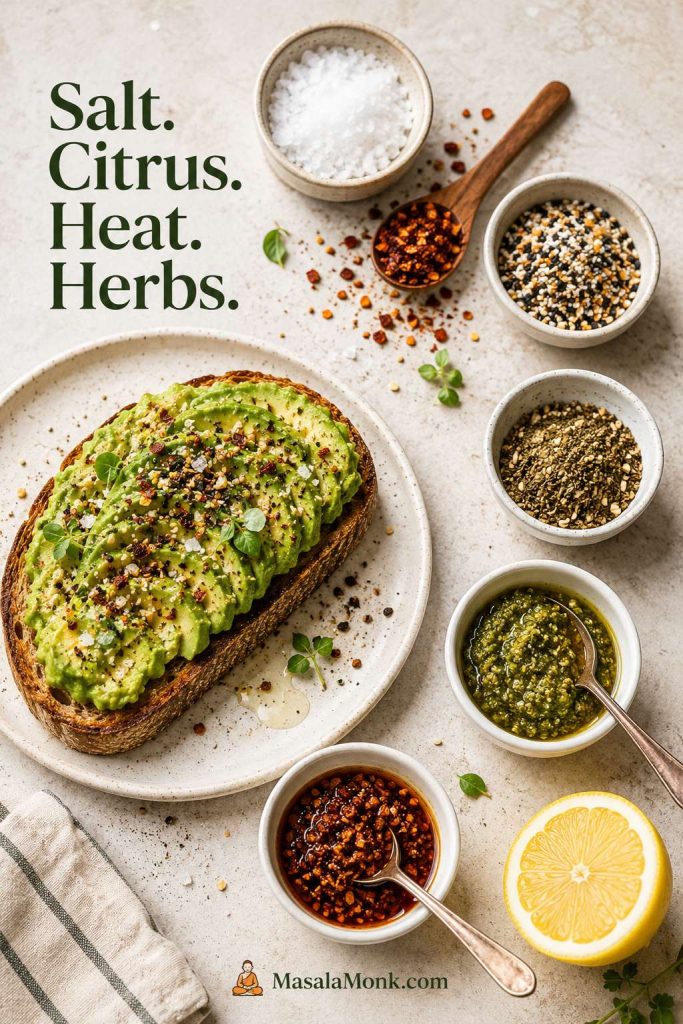
Seasoning palette for avocado toast with flaky salt, chili flakes, everything seasoning, za’atar, pesto, chili crisp, lemon, and herbs.
The best seasoning for avocado toast should brighten the avocado, not hide it; start with salt, citrus, heat, and herbs.

If seasoning does not fix the problem, check Mistakes & Fixes next.

Healthy & High-Protein Notes

This can be a healthy breakfast, but it depends on how you build it. Avocado brings fiber and mostly unsaturated fat, while the bread, toppings, and portion size decide whether the toast feels light, balanced, or too heavy.

Plain avocado toast can be delicious, but it is not automatically a full breakfast. Protein is what turns it from a good slice into a meal.
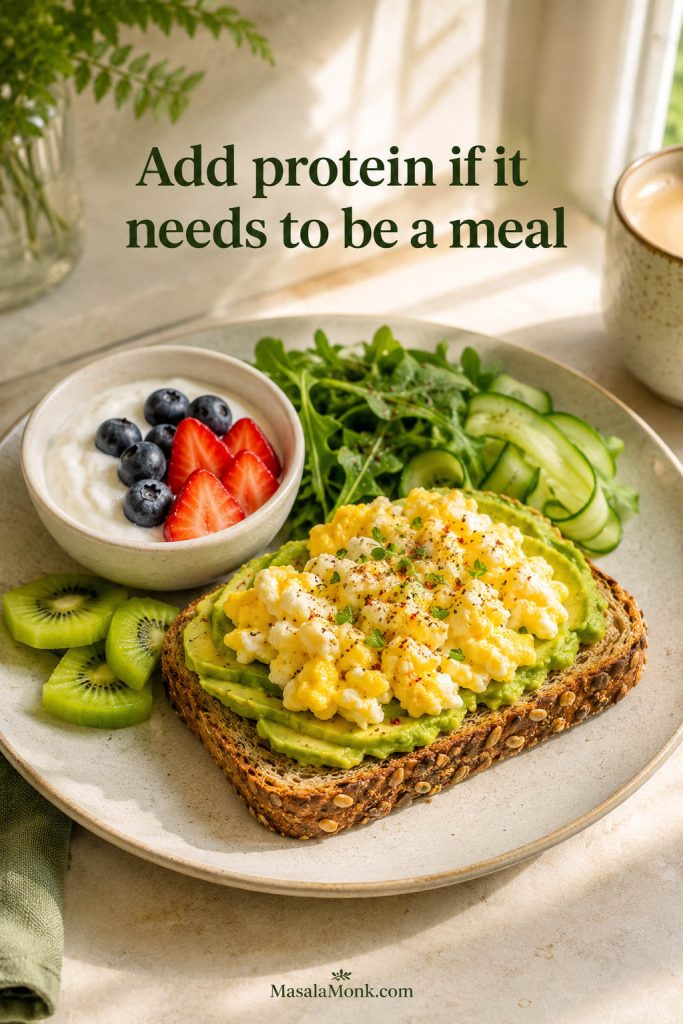
High-protein avocado toast breakfast with seeded toast, avocado, scrambled egg, yogurt with berries, greens, cucumber, and kiwi.
Protein is what turns avocado toast from a light slice into a breakfast that keeps you satisfied longer.

Think of avocado as the creamy fat-and-fiber part of the meal; then add egg, cottage cheese, beans, tuna, tofu, seeds, or smoked salmon if you want it to keep you full longer.

A good everyday version is 1 slice of whole-grain or seeded toast, 1/2 avocado, lemon or lime, salt, pepper, egg or cottage cheese, and tomato, cucumber, sprouts, herbs, or seeds. For a deeper nutrition read, Harvard’s avocado nutrition guide is a helpful reference.

If you are making it for weight loss, focus on portion and protein rather than treating one version as automatically “diet-friendly.” Use one slice of sturdy bread, about 1/2 avocado, plenty of lemon or lime, and a protein topping. Be careful with oversized bread, extra oil, heavy cheese, bacon, or several rich toppings at once.

For days when you want another protein-focused breakfast that is not toast, this high-protein oatmeal guide gives you a warmer bowl-style option with yogurt, egg whites, cottage cheese, tofu, or protein powder.

For practical protein builds in this post, jump to Avocado Toast with Egg or the Cottage Cheese Version.

Restaurant-Style Ideas

Restaurant-style versions work best when you borrow the method, not every exact detail. Toast the bread deeply, season the avocado before spreading, finish with flaky salt or olive oil, and add one fresh or crunchy topping so the slice tastes finished.
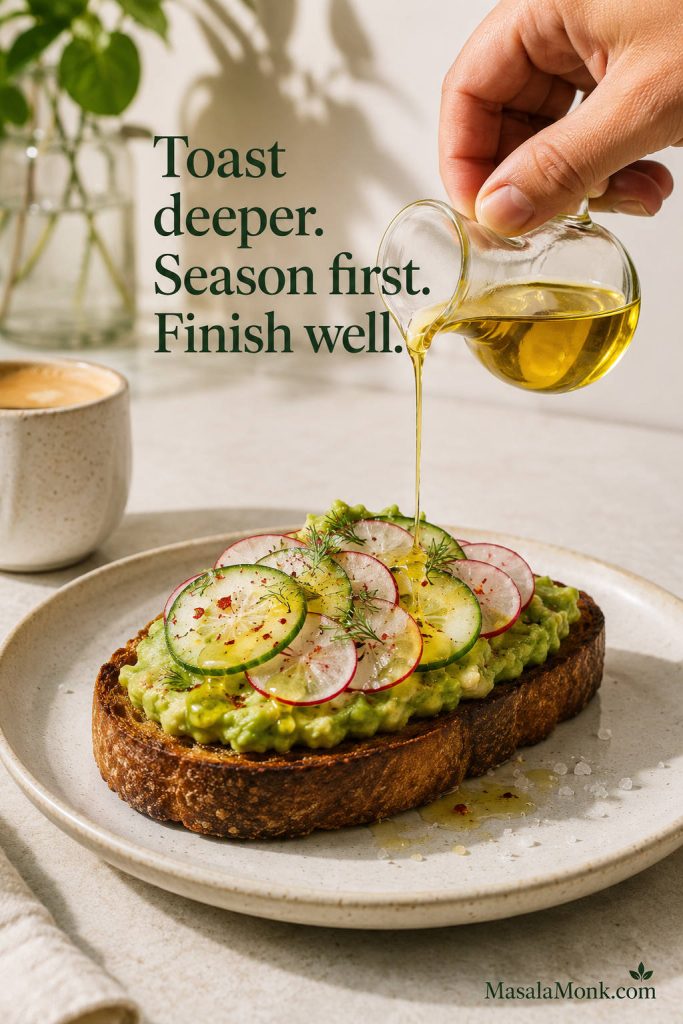
Restaurant-style avocado toast with olive oil being drizzled over avocado, radish, cucumber, herbs, and crisp bread.
Café-style toast usually wins on small details: deeper toast, seasoned avocado, and a deliberate final finish.

Dunkin-Style Version

For a Dunkin-style version, use toasted sourdough, a smooth avocado spread, lemon juice, sea salt, black pepper, and a generous finish of everything bagel seasoning. The official Dunkin avocado toast announcement confirms those signature details, which makes this one of the easiest copycat versions to echo at home.
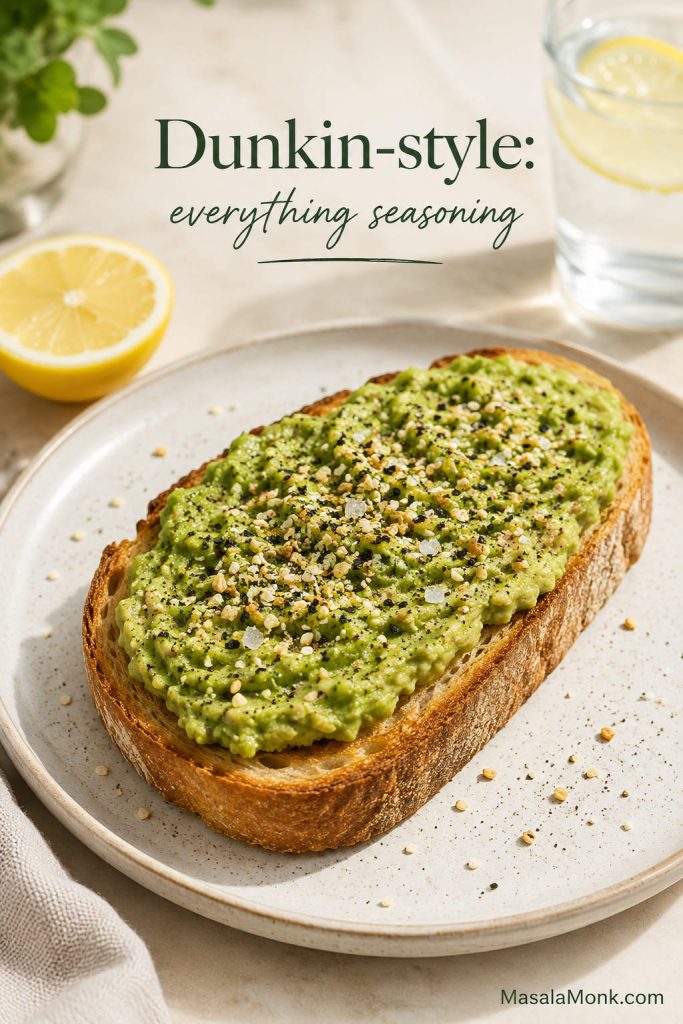
Dunkin-style avocado toast with smooth avocado spread on sourdough, everything seasoning, lemon, and black pepper.
For a Dunkin-style avocado toast, keep the spread smooth and finish generously with everything seasoning.

Café-Style Whole-Grain Version

For a café-style whole-grain version, use thick toast, smashed avocado, extra-virgin olive oil, lemon, flaky salt, and eggs. It gives you the bigger breakfast-plate feel without needing a restaurant copycat.

Why Your Avocado Toast Tastes Bland, Soggy, or Boring

Avocado toast gets mocked when it is made badly: pale bread, underripe avocado, no salt, no lemon, no crunch, and nothing to break up the creaminess. Fortunately, the fix is usually simple. Toast the bread harder, season the avocado before spreading, and add one topping that changes the bite.
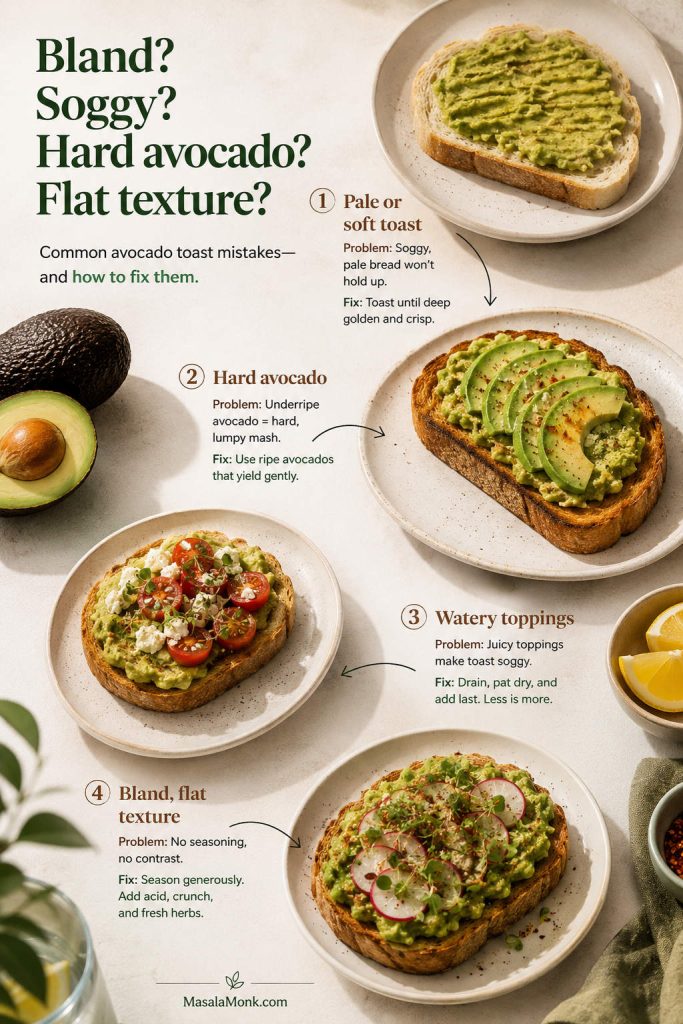
Avocado toast mistakes and fixes guide showing pale toast, hard avocado, watery toppings, bland mash, and improved toast examples.
If the slice tastes disappointing, check the bread, avocado ripeness, and seasoning before blaming the toppings.
Problem Why it happens Fix
Bland avocado toast Not enough salt, citrus, or seasoning Add salt, lemon or lime, black pepper, chili flakes, hot sauce, or everything seasoning.
Soggy toast Bread is too soft or toppings are wet Use thicker bread, toast it darker, drain wet toppings, and assemble right before eating.
Hard avocado Avocado is underripe Wait until it gives slightly when pressed. Do not force hard avocado into toast.
Brown avocado Avocado was cut too early or exposed to air Add lemon or lime and use it fresh. Press wrap directly onto leftovers if needed.
Too rich Too much avocado, oil, cheese, or creamy topping Add tomato, cucumber, herbs, pickled onion, lemon, or capers.
Not filling No protein Add egg, cottage cheese, smoked salmon, beans, tofu, tuna, or seeds.
Flat texture Everything is soft Add radish, cucumber, seeds, crispy garlic, onions, or toasted nuts.

When the toast tastes too rich, freshness is the fix. Tomato, herbs, pickled onion, lemon, capers, cucumber, or radish cut through the creamy base without making the slice heavier.
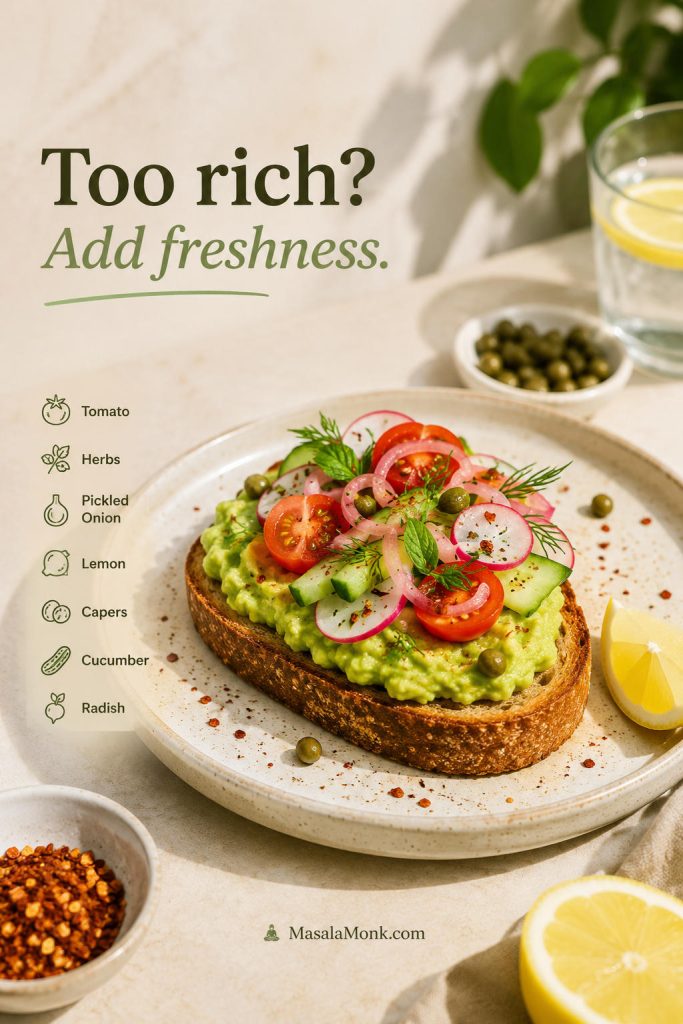
Too-rich avocado toast freshness fix with tomato, herbs, pickled onion, lemon, capers, cucumber, radish, and seasoned avocado.
When the toast tastes too rich, add freshness with tomato, herbs, pickled onion, lemon, capers, cucumber, or radish.

If sogginess is the main issue, the next section shows how to protect the bread.

How to Keep It from Getting Soggy

Toast the bread until it is deeply golden, not just warm. Thick sourdough, seeded bread, rye, and bagels hold up better than soft sandwich bread. If using tomato, cucumber, poached egg, pickled onion, or smoked salmon, drain or pat the topping before adding it. For tomatoes, remove watery seeds or pat slices dry before they hit the toast.
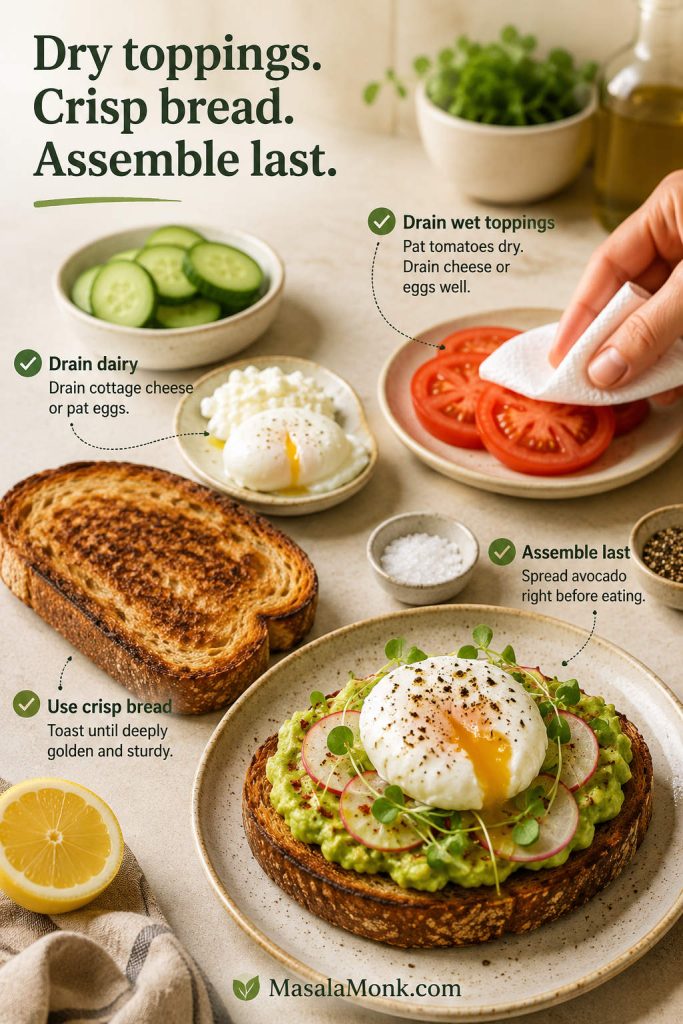
Soggy avocado toast prevention guide with tomato slices being dried, crisp toast, cottage cheese, poached egg, and a finished toast.
To keep avocado toast from getting soggy, remove extra moisture first and assemble only when you are ready to eat.

Do not let wet toppings do the bread’s job. The bread should carry the avocado; the toppings should add contrast, not soak the slice.

The safest rule is simple: assemble right before eating. Avocado softens the bread as it sits, and wet toppings speed that up. If you are making breakfast for several people, toast the bread, prep the toppings, and mash the avocado last.

Storage and Make-Ahead Tips

This toast is best fresh. The bread loses its edge, the avocado browns, and wet toppings can make the slice soft. However, you can still prep the parts ahead.
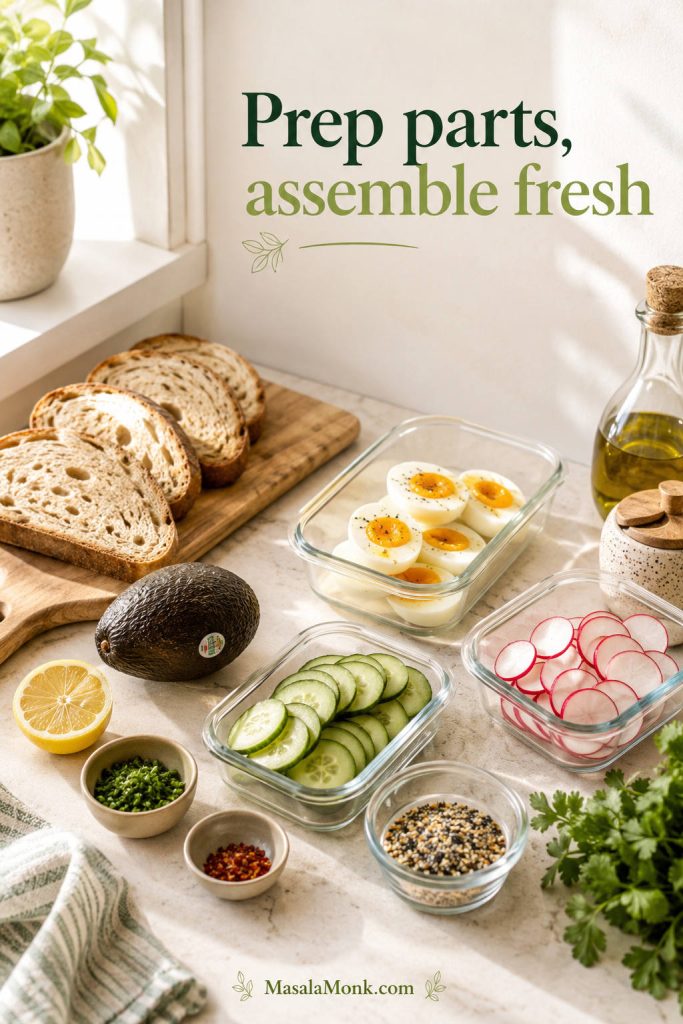
Make-ahead avocado toast prep with boiled eggs, sliced cucumber, radish, whole avocado, lemon, bread, seasonings, and herbs.
Prep toppings ahead, but save the avocado and toast for last so the finished slice stays bright and crisp.
  • Boil eggs ahead and refrigerate them.
  • Slice cucumber, radish, onion, or tomato shortly before serving.
  • Toast the bread right before eating.
  • Mash avocado with lemon or lime as close to serving time as possible.
  • If you must store avocado mash briefly, press plastic wrap directly onto the surface and refrigerate.

Do not freeze assembled avocado toast. It will not come back with a good texture.

Ready to make it now? Use the saveable guide below, then jump into the recipe card for the full amounts and steps.
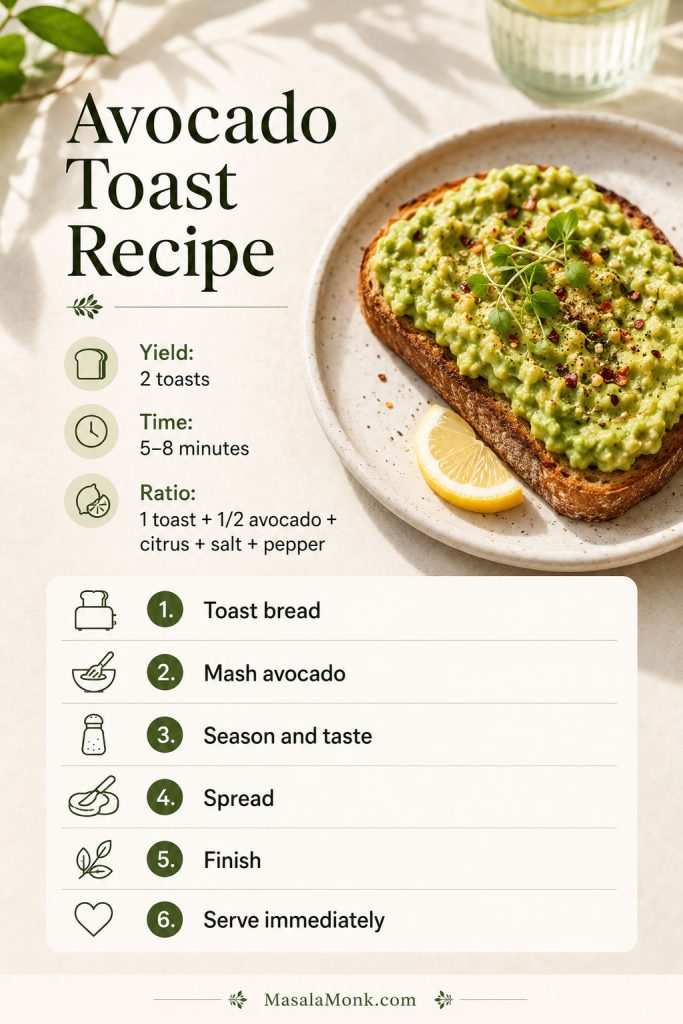
Avocado toast recipe card with finished toast, yield for two toasts, five-to-eight-minute timing, base ratio, and six steps.
Save the base avocado toast recipe first; then choose egg, cottage cheese, smoked salmon, vegetables, or seasoning based on the bite you want.

Avocado Toast Recipe

This easy avocado toast recipe gives you a bright, well-seasoned base first: crisp bread, ripe avocado, lemon or lime, salt, and pepper. Keep it simple, or choose one direction: egg for breakfast, cottage cheese for protein, smoked salmon for brunch, or tomato and cucumber for freshness.

Yield2 toasts
Prep Time5 minutes
Toast Time2–3 minutes
Total Time5–8 minutes

Ingredients

  • 2 thick slices sourdough, whole-grain, seeded, or multigrain bread
  • 1 ripe avocado, about 140–160 g flesh
  • 2–4 tsp lemon or lime juice / 10–20 ml, to taste
  • 1/4 tsp fine salt, plus more to taste
  • 1/8 tsp black pepper
  • 1–2 tsp extra-virgin olive oil, optional
  • Pinch red pepper flakes, optional
  • Flaky salt, for finishing
  • Optional toppings: egg, cottage cheese, smoked salmon, feta, tomato, cucumber, herbs, or your favorite seasoning

Instructions

  1. Toast the bread until crisp and golden.
  2. Mash the avocado with lemon or lime juice, fine salt, and black pepper until creamy but still slightly textured.
  3. Taste and adjust with more salt, citrus, pepper, or chili flakes if needed.
  4. Spread the avocado over the hot toast, using about half an avocado per slice.
  5. Finish with flaky salt, olive oil, chili flakes, herbs, egg, cottage cheese, smoked salmon, feta, or your chosen topping.
  6. Serve immediately while the bread still has bite.

Notes

  • Use 1/2 avocado per thick slice of toast as the base ratio.
  • For the egg version, add 1 fried, poached, scrambled, boiled, jammy, or egg-white topping per toast.
  • For the cottage cheese version, use 1/3 cup / about 75 g cottage cheese per toast and drain it if watery.
  • For the smoked salmon version, use 1–2 oz / 30–60 g smoked salmon per toast and reduce the added salt.
  • Toast the bread deeply enough to stay crisp under the avocado.
  • Assembled toast does not store well. Eat it right away.

FAQs

Most avocado toast questions come back to the same few problems: the bread got soft, the avocado tasted flat, or the toast did not feel filling enough.

What is the best bread?

Sourdough is the best all-around bread because it gets crisp, tastes slightly tangy, and holds the avocado well. Whole grain, seeded bread, rye, bagels, English muffins, and gluten-free bread also work if you toast them properly.

How much avocado do you need per slice?

Use about 1/2 medium-large avocado per thick slice. That is usually 70–80 g avocado flesh per toast. Use less if you are adding cottage cheese, egg, smoked salmon, or another rich topping.

Should avocado be mashed or sliced?

Mashed avocado is better for everyday toast because it spreads evenly and holds seasoning well. Sliced avocado looks cleaner and works nicely with smoked salmon, feta, tomato, or a poached egg. Either way, season it with salt and lemon or lime.

Do you cook the avocado?

No. Toast the bread first, then add the avocado after. Cooking the avocado mixture in a skillet can make it taste dull. The bread should be hot and crisp, but the avocado should stay fresh and seasoned.

What seasoning is best?

Start with salt, black pepper, and lemon or lime. Then add one stronger finish if needed: everything bagel seasoning, chili crisp, hot sauce, pesto, za’atar, smoked paprika, or flaky salt.

Why does it taste bland?

It usually tastes bland when the avocado is underripe or under-seasoned. Add more salt, lemon or lime, black pepper, chili flakes, or something crunchy. A little citrus and enough salt make a much bigger difference than adding more avocado.

What can I add for protein?

Egg and cottage cheese are the easiest breakfast options. For lunch or brunch, smoked salmon, tuna, beans, tofu, seeds, or egg whites can also make the toast more filling.

What goes with it besides egg?

Choose one direction: cottage cheese for creamy protein, tomato or cucumber for freshness, feta for salt, beans or hummus for a plant-based version, or chili crisp, pesto, and seeds for more flavor and texture.

Is cottage cheese good here?

Yes. Cottage cheese adds protein, tang, and creaminess. Use about 1/3 cup / 75 g cottage cheese per toast, and drain it first if it looks watery.

Is this healthy?

It can be a healthy breakfast when it uses sturdy whole-grain or seeded bread, about half an avocado, and a protein or vegetable topping. The avocado brings creaminess and healthy fats; the extra protein or vegetables make the meal more balanced.

Is it enough for breakfast?

It can be enough for a light breakfast. For a longer-lasting meal, add egg or cottage cheese so the toast has more staying power.

Is it good for weight loss?

It can fit into a weight-loss breakfast if the portion is sensible. Use one slice of bread, about 1/2 avocado, lemon or lime, and a protein topping such as egg or cottage cheese. Be careful with oversized bread, extra oil, heavy cheese, bacon, or too many rich toppings together.

Can you meal prep it?

You can prep the toppings, but assembled toast is best fresh. Boil eggs, slice vegetables, and keep toppings ready, then toast the bread and mash the avocado right before eating.

How do you keep it from getting soggy?

Use thick bread, toast it until crisp, drain wet toppings, and assemble right before serving. If using poached egg, tomato, cucumber, pickled onion, or smoked salmon, remove excess moisture before adding it.

Why do restaurant versions taste better?

Restaurant versions usually taste better because each small detail is handled well: the bread is toasted harder, the avocado gets enough salt and citrus, and the top has a finishing touch like olive oil, flaky salt, herbs, chili flakes, or something crunchy.

How do you make the Dunkin-style version?

Use toasted sourdough, mashed avocado, lemon juice, sea salt, black pepper, and everything bagel seasoning. Keep the avocado spread smooth and finish with enough seasoning to give the toast a savory, garlicky crunch.

Final Thoughts

Good avocado toast comes down to that same rule: crisp bread, seasoned avocado, and one topping that changes the bite. That will beat a loaded but bland slice every time.

Egg makes it breakfast, cottage cheese makes it more filling, smoked salmon makes it brunch, feta brings salt, and cucumber or radish brings crunch. Once the base is right, your best version can be simple, loaded, spicy, crunchy, or somewhere in between.

What is your go-to avocado toast topping — fried egg, cottage cheese, smoked salmon, feta, chili crisp, pesto, everything bagel seasoning, or something I should try next? Share it in the comments so other readers can try it too.
Posted on 1 Comment

Scrambled Eggs with Cottage Cheese Recipe

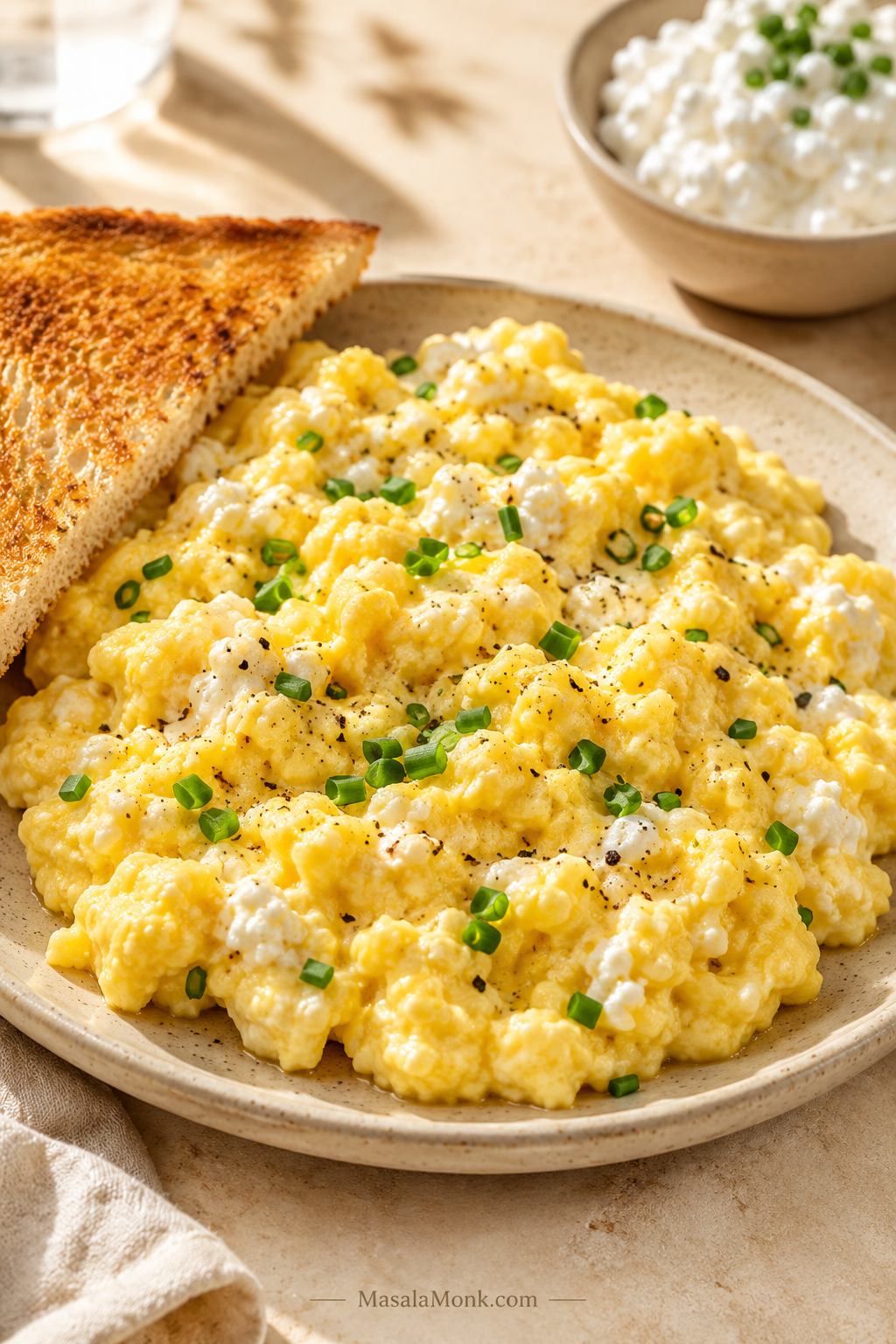
Scrambled eggs with cottage cheese served on a plate with toast, chives, and black pepper.

Scrambled eggs with cottage cheese can go one of two ways: creamy, soft, and surprisingly good, or loose and a little strange. The difference is not luck. It is the ratio, the cottage cheese you use, and how gently you cook the eggs.

This recipe is built for the good version: high-protein scrambled eggs that stay tender, creamy, and satisfying without turning wet or rubbery. It walks you through the ratio, the smoother blended option, the egg-white version, microwave method, add-ins, and the fixes that keep cottage cheese eggs from turning watery.

This is especially useful if you want a higher-protein breakfast but still want food that feels warm, familiar, and satisfying. It is not trying to turn eggs into a diet trick; it is just a better, creamier scramble with more staying power.

Quick Answer: How to Make Scrambled Eggs with Cottage Cheese

To make scrambled eggs with cottage cheese, whisk 2 large eggs with 1/4 cup cottage cheese, then cook the mixture gently in a nonstick skillet over medium-low heat. Push the eggs slowly with a silicone spatula until they are thickened, creamy, and just set through.

Best Starting Ratio

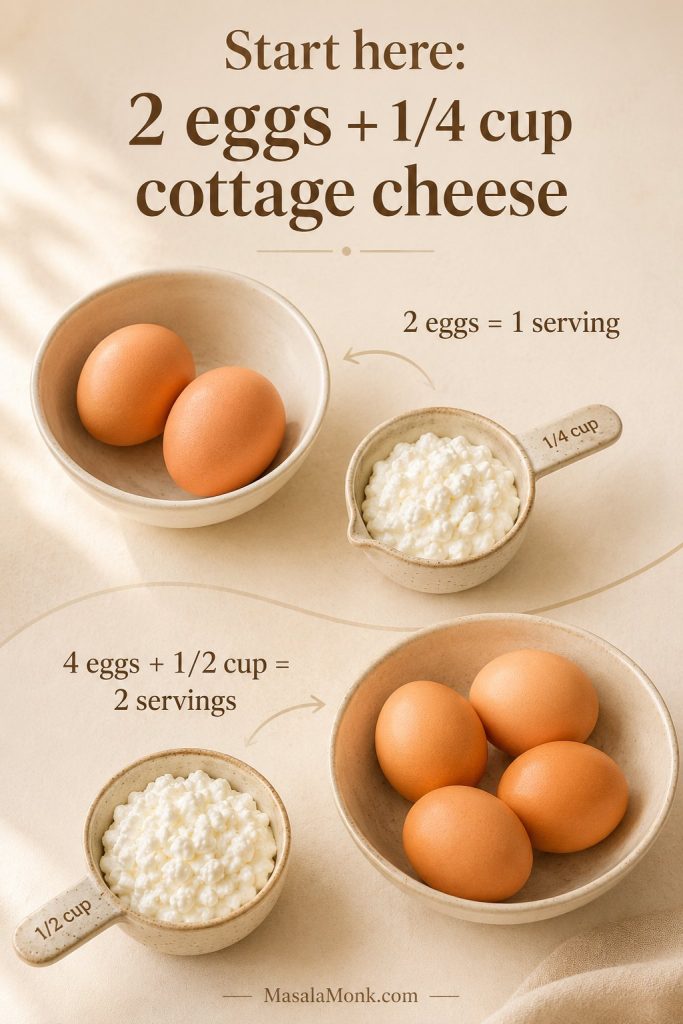
The best starting ratio is 1/4 cup cottage cheese for every 2 eggs. Small-curd 2% cottage cheese gives the most reliable texture, while full-fat cottage cheese tastes richer. If the eggs look loose in the pan, use less cottage cheese next time, drain very liquid cottage cheese, avoid high heat, and cook gently long enough for extra moisture to evaporate.

The full cottage cheese egg ratio guide below shows how to make the eggs subtler, creamier, or better suited to egg whites.

You do not need milk here. Cottage cheese already adds moisture and body, so milk can push the eggs toward watery instead of creamy.

If your last batch turned loose or watery, skip ahead to the watery cottage cheese egg fixes before you cook again.

At a glance: Use 4 large eggs, 1/2 cup / 110–120g cottage cheese, and 1 tablespoon / 14g butter for 2 servings. Cook in a nonstick skillet over medium-low heat for 4–5 minutes. Most reliable cottage cheese: small-curd 2% or full-fat. Texture goal: creamy, soft, and fully set, not runny.

Ratio guide showing 2 eggs with 1/4 cup cottage cheese and 4 eggs with 1/2 cup cottage cheese.
For the easiest cottage cheese egg ratio, start with 1/4 cup cottage cheese for every 2 large eggs. Then adjust slightly if your cottage cheese is extra thick or watery.

What the Texture Should Look Like

The goal is not a runny protein hack or a rubbery diet scramble. The best version should taste like soft scrambled eggs with a little extra creaminess, body, and staying power.

Done right, the eggs taste creamy and lightly savory, not aggressively cheesy. The curds soften into the scramble, the pepper gives it a little lift, and a handful of chives or scallions makes the whole plate feel fresher.

A good plate feels simple but a little upgraded: soft eggs, gentle creaminess from the cottage cheese, enough protein to hold you over, and a texture that still feels like breakfast instead of a food trend.

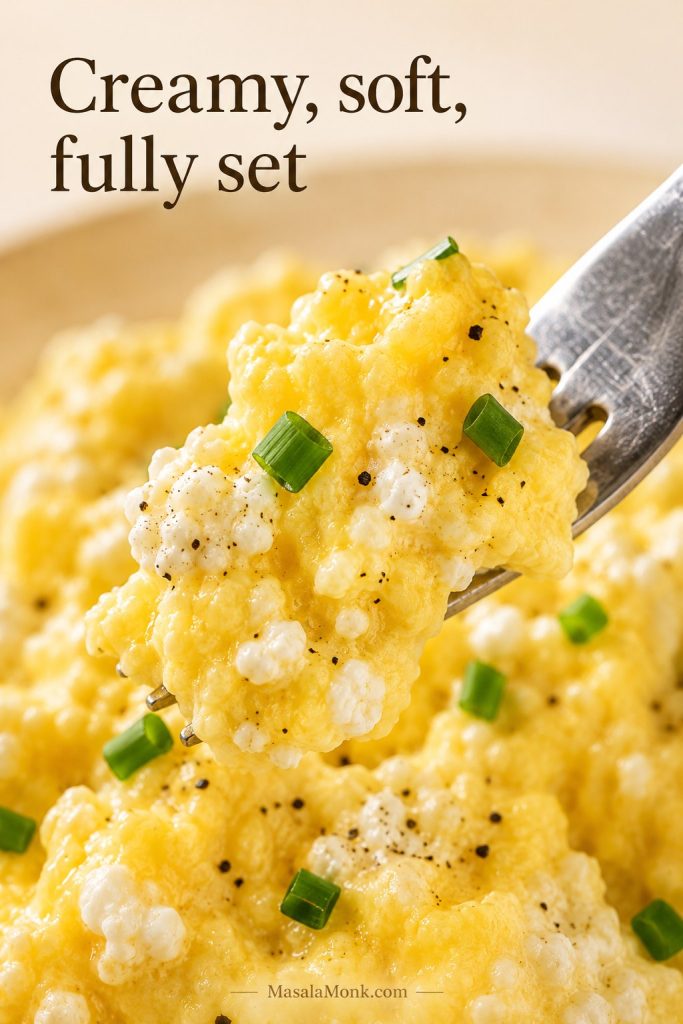
Close-up of creamy scrambled eggs with cottage cheese showing soft folds, chives, pepper, and no pooling liquid.
Look for soft folds that hold together on the fork. That texture means the eggs are creamy and set, rather than loose, wet, or overcooked.

Why Add Cottage Cheese to Scrambled Eggs?

Cottage cheese changes scrambled eggs in three useful ways: it adds protein, makes the eggs more satisfying, and gives them a creamy texture when cooked gently. It is also mild enough that the eggs still taste like eggs, especially if you use a balanced ratio and season them well.

More Protein Without Protein Powder

Eggs are already a strong breakfast ingredient, but cottage cheese makes them more filling. That is why cottage cheese eggs are popular with people looking for high-protein breakfasts, lighter brunch ideas, and quick post-workout meals.

The exact protein will depend on your eggs and cottage cheese brand. If you are tracking closely, use the nutrition label on your cottage cheese and a food database such as USDA FoodData Central.

For another breakfast built around everyday protein-rich ingredients, this protein oatmeal guide uses options like eggs, yogurt, cottage cheese, paneer, nuts, and seeds without relying only on protein powder.

Creamier Texture When Cooked Gently

Cottage cheese adds moisture and body to the eggs. With medium-low heat, the curds soften into the scramble and help the eggs stay tender. With high heat, the eggs can tighten too quickly and turn rubbery before the cottage cheese has a chance to settle into the mixture.

Mild Flavor, Easy Add-Ins

These eggs do not have to taste strongly of cottage cheese. If you use small-curd cottage cheese and whisk it in well, the flavor is mild, creamy, and lightly savory. Chives, scallions, black pepper, hot sauce, chili crisp, avocado, spinach, and toast all work well with the flavor.

Ingredients for Scrambled Eggs with Cottage Cheese

You only need a few ingredients, but each one affects the final texture. In a simple recipe like this, small choices matter: the cottage cheese style, pan heat, and amount of salt all change the result.

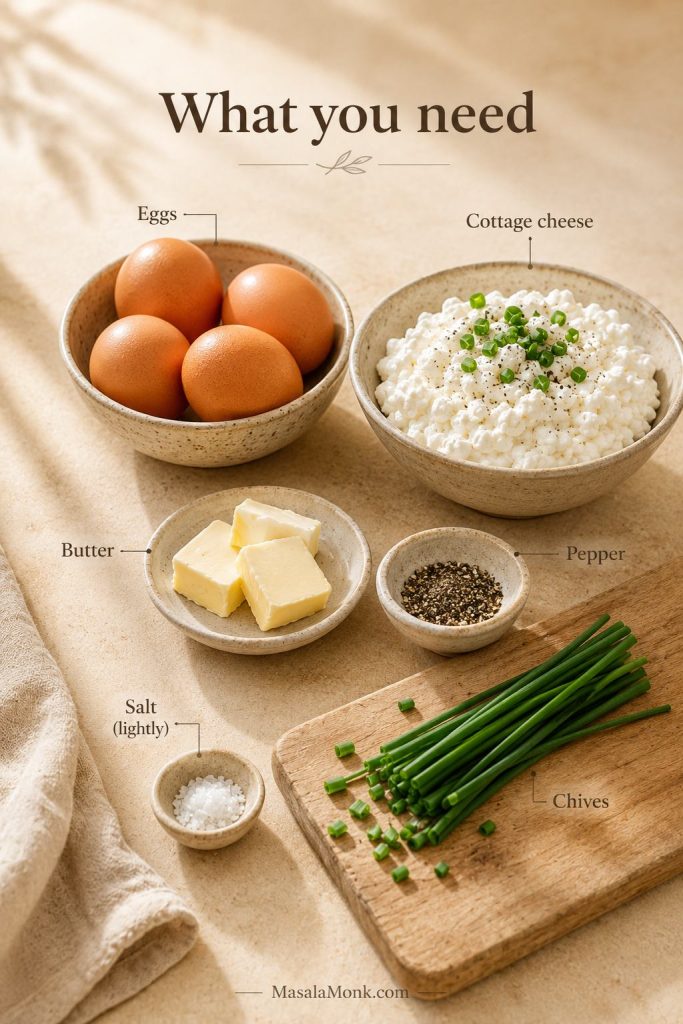
Ingredients for scrambled eggs with cottage cheese including eggs, cottage cheese, butter, pepper, salt, and chives.
Because this recipe uses only a few ingredients, each choice matters. Thick cottage cheese, light salt, black pepper, and fresh chives help the scramble taste balanced.

Eggs

Use large eggs. Four large eggs make two servings, while two large eggs plus 1/4 cup cottage cheese make a good single serving. Whole eggs give the best flavor, color, and structure. You can add egg whites for more protein, but an all-egg-white cottage cheese scramble is easier to overcook and can turn thin if the ratio is not controlled.

Cottage Cheese

Use 1/2 cup / about 4 oz / 110–120g cottage cheese for 4 eggs, or 1/4 cup / 55–60g cottage cheese for 2 eggs. Small-curd cottage cheese is the easiest choice because it blends into the eggs more naturally. Large-curd cottage cheese works, but the curds stay more visible.

For the most reliable texture, use 2% cottage cheese. Full-fat cottage cheese gives richer eggs. Fat-free cottage cheese can work, but it often contains more moisture, so it can make the eggs wetter if you use too much.

Butter, Oil, or Cooking Spray

Butter gives the richest flavor and helps the eggs cook into soft folds. Use 1 tablespoon / 1/2 oz / 14g butter for 4 eggs. Olive oil works well if you want something lighter; use 1–2 teaspoons / 5–10ml. Cooking spray is fine for a lower-calorie version, but use a truly nonstick pan and keep the heat gentle.

Salt, Pepper, and Herbs

Cottage cheese is already salty, so season carefully. Start with black pepper and only a tiny pinch of salt, then taste after cooking. Chives, scallions, dill, parsley, and cracked black pepper are especially good here.

Best Cottage Cheese for Scrambled Eggs

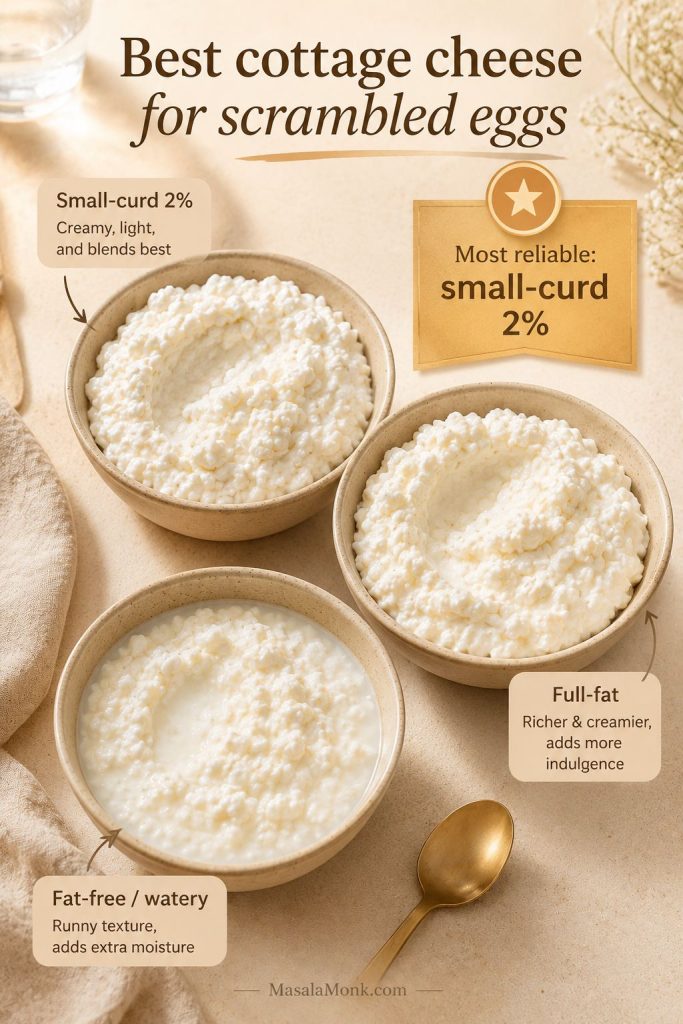
The most reliable cottage cheese for scrambled eggs is small-curd 2% cottage cheese. It is creamy enough to soften into the eggs but not so rich that the scramble feels heavy. It also tends to behave better in the pan than watery fat-free cottage cheese.

Three bowls comparing small-curd, full-fat, and watery fat-free cottage cheese for scrambled eggs.
For most batches, 2% small-curd cottage cheese is the safest starting point because it softens into the eggs more evenly, while watery cottage cheese can loosen the scramble.

Small-Curd vs Large-Curd Cottage Cheese

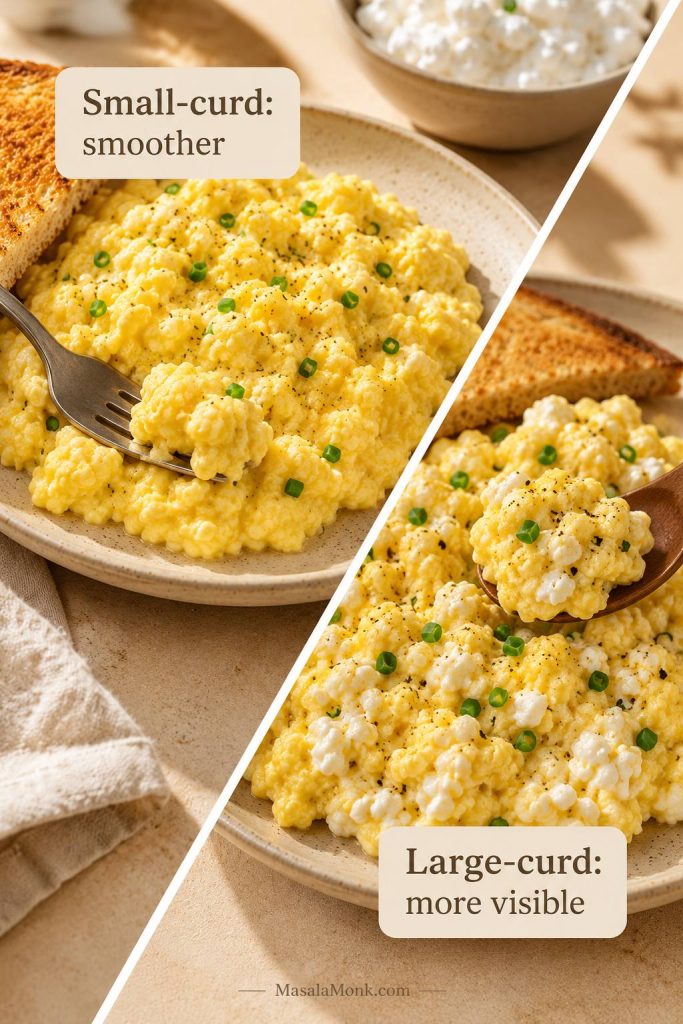
The smaller curd disperses more evenly and gives a softer texture. Large-curd cottage cheese is fine if you like visible curds, but it can make the eggs look more uneven.

Small-curd and large-curd cottage cheese scrambled eggs compared side by side.
A smaller curd gives smoother scrambled eggs, while large-curd cottage cheese keeps more visible texture. Choose the one that matches how much curd you want to notice.

If you are cooking for someone who is skeptical of cottage cheese, use small-curd cottage cheese or blend the eggs and cottage cheese together for a smoother scramble.

For the full texture breakdown, compare the whisk, blend, and fold methods.

2%, Full-Fat, or Fat-Free?

Cottage Cheese Type Result in Scrambled Eggs Best Use
2% Creamy, balanced, reliable Best everyday choice
Full-fat Richest and softest Best for extra-creamy eggs
Low-fat Can work well, depending on brand Good if it is thick, not watery
Fat-free More likely to release moisture Use less and cook gently

If your cottage cheese looks especially liquidy, spoon off a little of the excess before adding it to the eggs. Thick, creamy cottage cheese gives you a much easier path to a soft scramble.

Should You Blend the Cottage Cheese First?

Blend the cottage cheese with the eggs if you want a smooth texture with no visible curds. Do not blend if you like the soft, slightly cheesy texture of cottage cheese eggs. For most people, whisking small-curd cottage cheese directly into the eggs is enough.

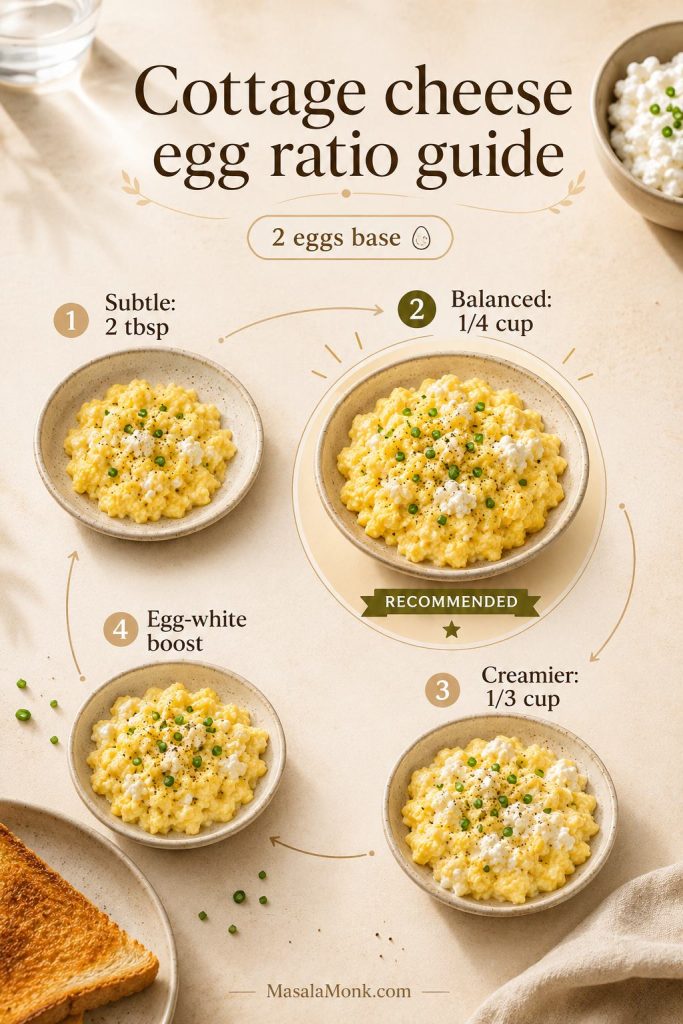
Scrambled Eggs with Cottage Cheese Ratio Guide

Start with the Balanced Ratio

The safest starting ratio is 1/4 cup cottage cheese for every 2 large eggs. Another way to think of it is about 1–2 tablespoons cottage cheese per egg, depending on how creamy or subtle you want the scramble.

If you are nervous about curds or wateriness, start with 2 tablespoons cottage cheese for 2 eggs. Then, if you love cottage cheese and want a creamier, more filling scramble, increase slightly without overloading the eggs.

Ratio Options by Texture

Style Eggs Cottage Cheese Metric Best For
Subtle / beginner 2 large eggs 2 tbsp 25–30g Less curdy, safer first try
Balanced default 2 large eggs 1/4 cup 55–60g Creamy, high-protein everyday eggs
Family batch 4 large eggs 1/2 cup / about 4 oz 110–120g Main recipe-card version
Extra creamy 2 large eggs 1/3 cup 75–80g More cottage-cheese-forward
Egg-white boosted 2 eggs + 1/4–1/3 cup egg whites 1/4 cup 60–80ml egg whites + 55–60g cottage cheese Higher-protein version
Cottage cheese scrambled eggs ratio guide showing subtle, balanced, extra creamy, and egg-white boosted versions.
The ratio changes the whole scramble. Start balanced, then go lighter for subtle cottage cheese flavor or creamier when you want a more filling breakfast.

What Testing Showed

After testing the whisked, blended, and folded versions, the tradeoff is simple: the whisked 2-eggs-to-1/4-cup cottage cheese ratio is the most reliable everyday balance. Blending makes the smoothest scramble, but it tastes a little less like classic soft eggs. Folding the cottage cheese in near the end gives the most visible curds and works only when the cottage cheese is thick, not watery.

For your first try, choose the balanced default. Once you know how your cottage cheese behaves in the pan, you can go lighter, smoother, or more cottage-cheese-forward next time.

Make this first: If this is your first time making scrambled eggs with cottage cheese, use 2 eggs, 1/4 cup / 55–60g cottage cheese, 1/2 tablespoon butter, black pepper, and medium-low heat. It is the safest balance of creamy, high-protein, and not too wet.

Once the ratio is set, use the gentle stovetop method to keep the eggs creamy instead of dry.

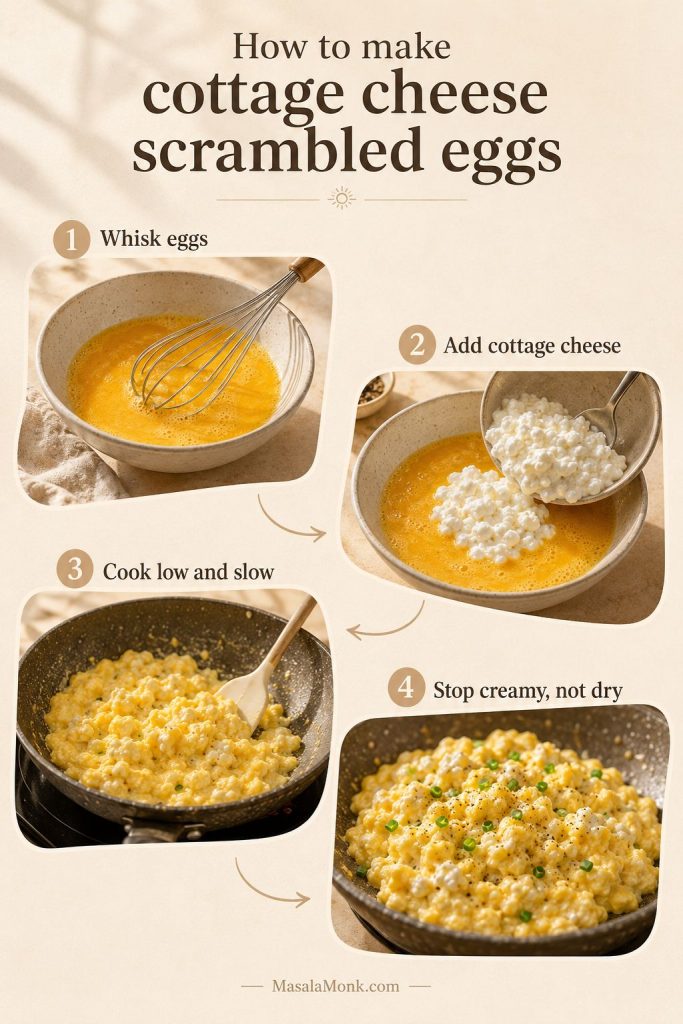
How to Make Scrambled Eggs with Cottage Cheese

The whole recipe comes down to gentle heat and patience. A few quiet minutes in the pan can turn the eggs into soft, creamy folds instead of dry curds or a loose scramble.

Step-by-step guide showing eggs being whisked, cottage cheese being added, eggs cooking gently, and the finished scramble.
The steps are simple, but the heat does the real work. Cook slowly so the eggs gather into soft folds instead of tightening into dry curds.

Step 1: Whisk the Eggs

Crack the eggs into a mixing bowl and whisk until the yolks and whites are fully combined. This helps the cottage cheese distribute evenly instead of sitting in pockets.

Step 2: Add the Cottage Cheese

Whisk in the cottage cheese, black pepper, and only a small pinch of salt. If you want smoother eggs, blend the eggs and cottage cheese for a few seconds instead of whisking by hand.

Step 3: Heat the Pan Gently

Warm a nonstick skillet over medium-low heat. For 2 eggs, an 8-inch skillet works well. For 4 eggs, use a 10-inch skillet. Add butter or oil and let it melt without browning.

Step 4: Cook Slowly Into Soft Folds

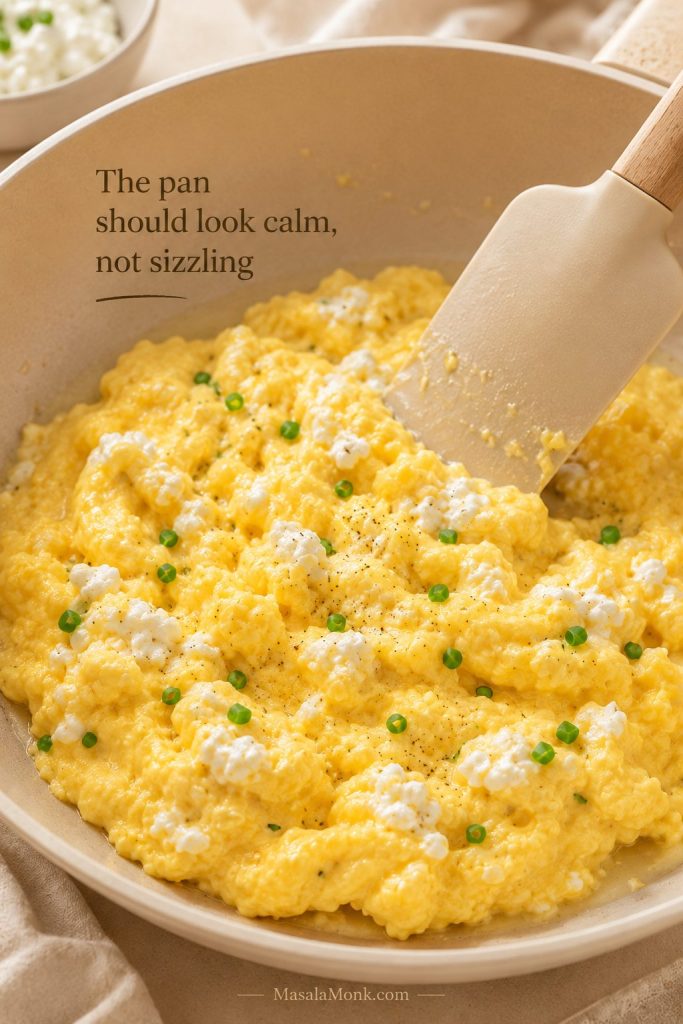
Pour in the egg mixture. Let the edges set for 10–20 seconds, then use a silicone spatula to slowly push the eggs from the outside of the pan toward the center. Keep moving gently so the eggs gather into soft, creamy folds instead of breaking into tiny dry curds. The pan should look calm, not sizzling.

Scrambled eggs with cottage cheese cooking gently in a nonstick pan with a silicone spatula.
A quiet pan is a good sign. When the eggs move slowly under the spatula, they have time to turn creamy before they dry out.

Step 5: Stop While Creamy, Not Runny

Remove the eggs from the heat when they are thickened, creamy, and set through. They will keep cooking slightly from residual heat, so do not wait until they look completely dry in the pan.

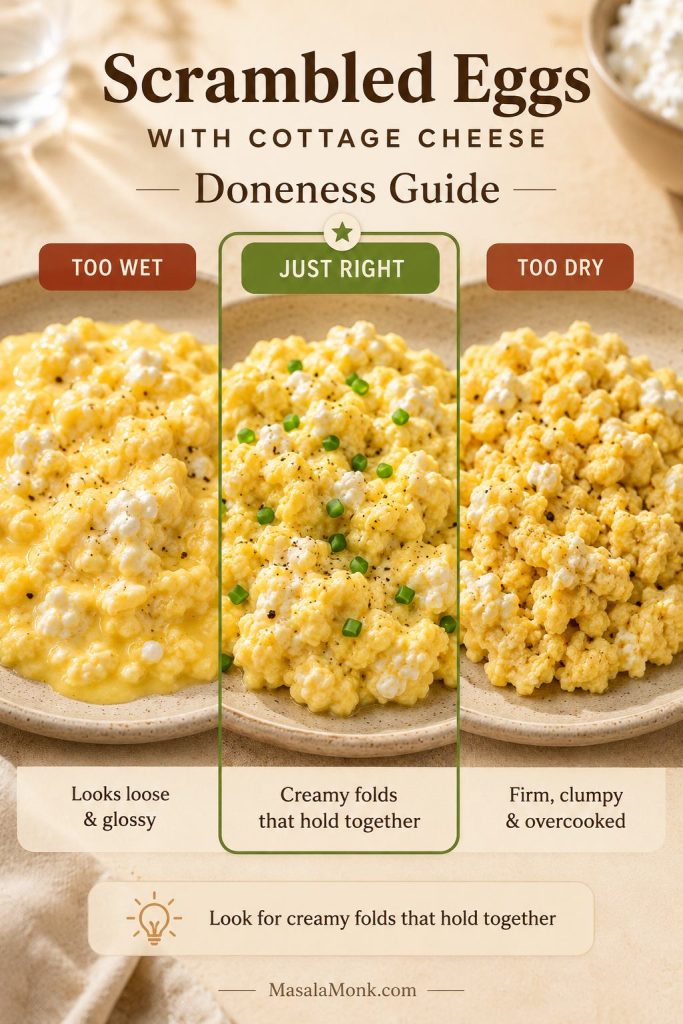
You will know they are ready when the eggs hold soft folds on the spatula, look creamy instead of shiny-wet, and slide onto the plate without liquid pooling behind them. If the eggs look glossy but hold together, they are usually ready; if liquid runs around them, give them a little more time over gentle heat.

Doneness guide for cottage cheese scrambled eggs showing too wet, just right, and too dry textures.
“Just right” is creamy but not runny. If the eggs still slide apart with liquid around them, keep them on gentle heat a little longer.

If the eggs still look shiny, separated, or loose, the troubleshooting section will help you fix the next batch.

For food safety, scrambled eggs should be cooked until they are not runny. The FDA’s egg safety guidance recommends cooking egg dishes thoroughly, especially when serving children, older adults, pregnant people, or anyone with a weakened immune system.

Whisk, Blend, or Fold? Three Texture Options

There is more than one way to add cottage cheese to scrambled eggs. The best method depends on whether you want the cottage cheese to disappear into the eggs or stay slightly visible.

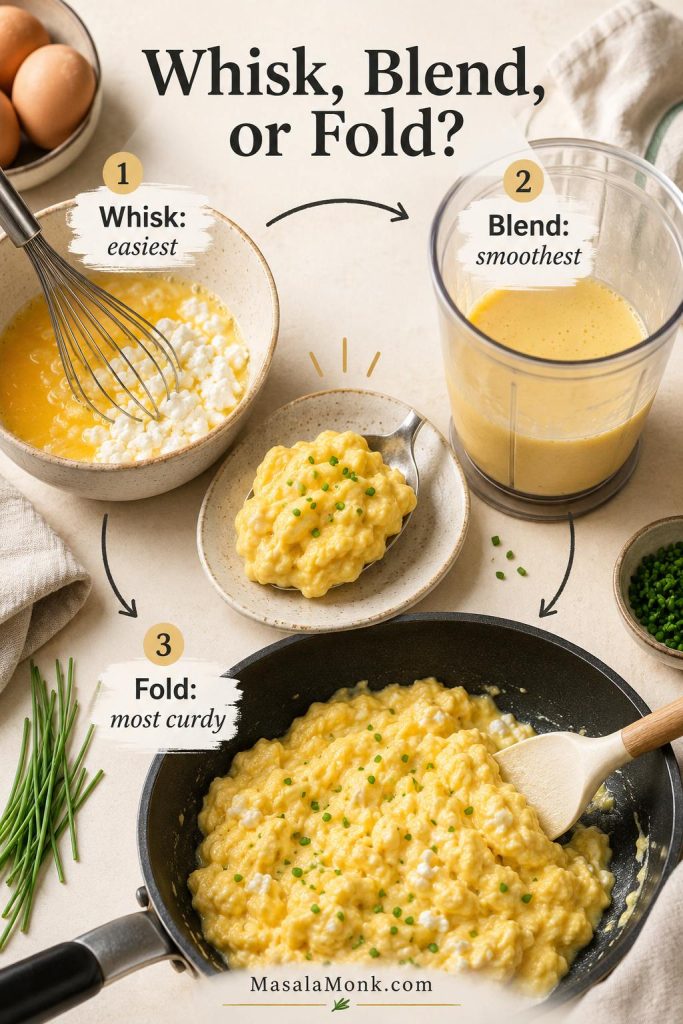
Method How to Do It Texture Best For
Whisk Whisk cottage cheese into raw eggs Soft, lightly curdy, fluffy Best everyday version
Blend Blend eggs and cottage cheese briefly Smooth and creamy Cottage-cheese skeptics
Fold Cook eggs first, then fold cottage cheese near the end More visible curds People who like cottage cheese texture
Whisk, blend, and fold methods for adding cottage cheese to scrambled eggs.
Whisking is the everyday method, blending makes the smoothest cottage cheese eggs, and folding gives the most noticeable curd texture.

Choose blended if visible curds bother you, whisked for the easiest weekday scramble, and folded only if you actually enjoy the cottage cheese texture.

Using egg whites changes the texture, so check the egg-white version before swapping out too many yolks.

When Should You Add the Cottage Cheese?

Add cottage cheese before cooking for the whisked or blended versions. Fold it in near the end only if you want a more visible cottage cheese texture and your cottage cheese is thick enough not to loosen the eggs.

Egg Whites with Cottage Cheese

Egg whites with cottage cheese are useful if you want a lighter, higher-protein scramble, but the ratio matters. Because they contain more water than yolks, they need a little more care in the pan. Use too many whites with too much cottage cheese, and the eggs can turn thin.

Best Egg-White Ratio

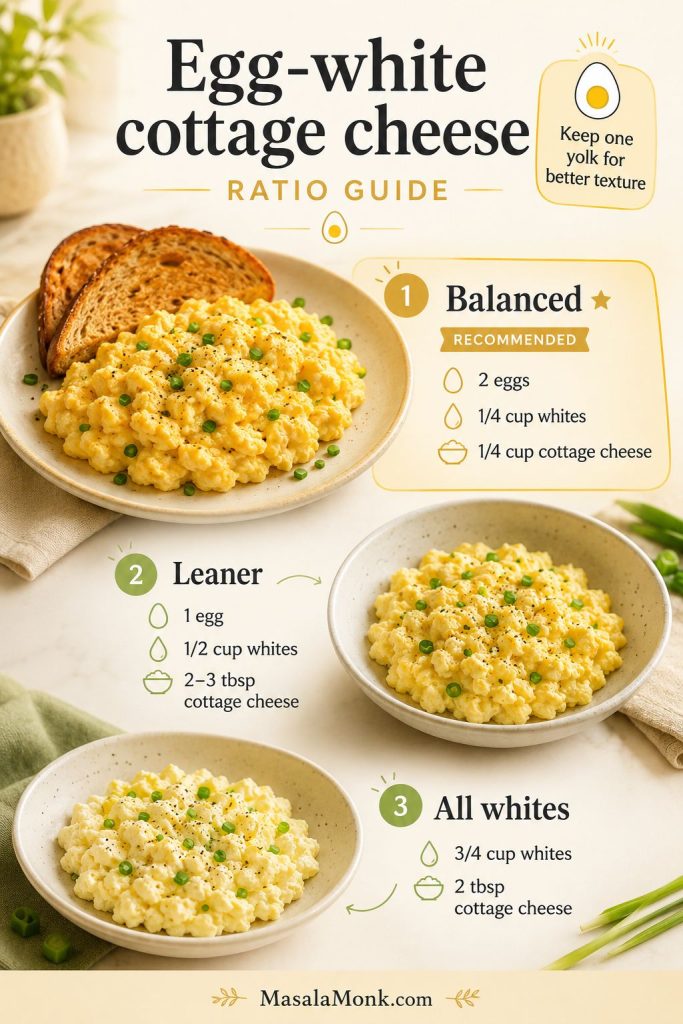
For the creamiest texture, keep at least some whole egg in the scramble. The yolk adds flavor, color, and a little structure, which helps the egg whites feel less flat.

Version Use This Ratio Texture
Balanced egg-white boost 2 eggs + 1/4 cup / 60ml egg whites + 1/4 cup / 55–60g cottage cheese Creamy, lighter, still flavorful
Leaner version 1 egg + 1/2 cup / 120ml egg whites + 2–3 tbsp cottage cheese Lighter, less rich, more delicate
All egg whites 3/4 cup / 180ml egg whites + 2 tbsp cottage cheese Leanest, but easiest to overcook or make watery
Egg-white cottage cheese scrambled eggs ratio guide with balanced, leaner, and all-egg-white versions.
Egg whites add protein, but they also add water. Keeping one yolk in the mix helps cottage cheese eggs stay creamy, structured, and less likely to turn thin.

If your egg-white scramble turns thin, the watery egg fixes explain how to adjust the cottage cheese and heat.

Lighter High-Protein Version

For a lighter plate, use 1 whole egg, 1/2 cup / 120ml egg whites, and 2–3 tablespoons cottage cheese. Serve it with spinach, tomatoes on the side, or avocado toast depending on whether you want a lower-calorie breakfast or a more filling meal. It is not a shortcut or a promise; it is simply a protein-rich breakfast that can fit into many eating styles depending on what you serve with it.

How to Keep Egg-White Cottage Cheese Eggs from Getting Watery

Use a thick cottage cheese, skip the milk, and cook over medium-low heat until the eggs are set through. If liquid starts pooling in the pan, keep the heat gentle and give the eggs a little more time. Do not crank the heat up to rush them; that usually makes the eggs rubbery before the moisture cooks off.

Macro-Friendly Add-Ins

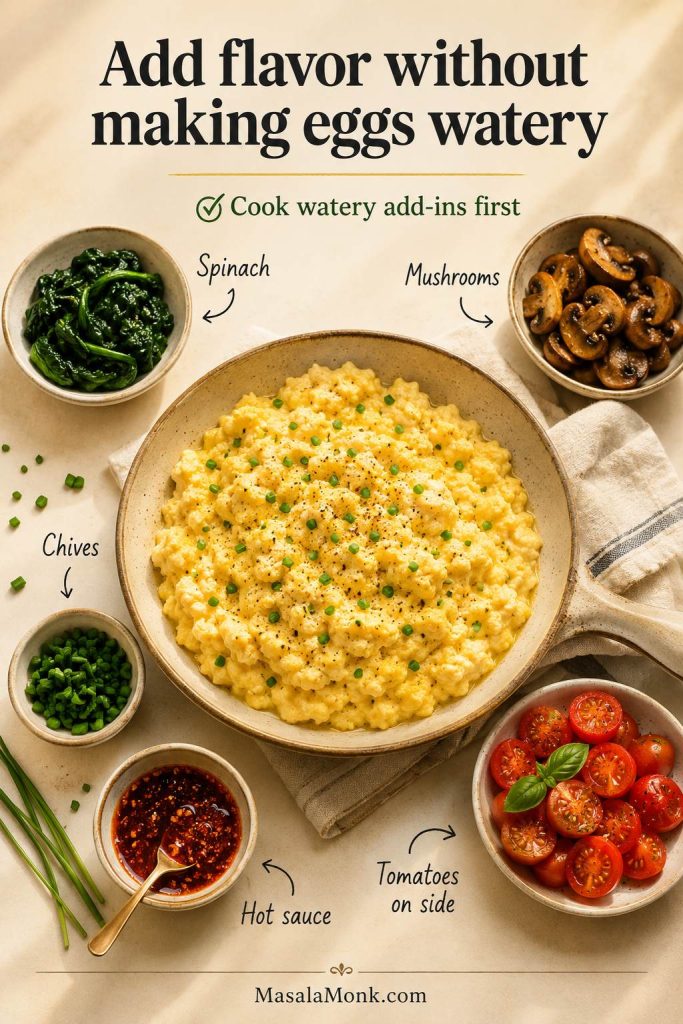
Spinach, mushrooms, scallions, tomatoes on the side, hot sauce, and herbs all work well. If you are adding mushrooms, peppers, or vegetables that release moisture, cook them first so they do not loosen the eggs.

Microwave Cottage Cheese Scrambled Eggs

The skillet version tastes best, but microwave cottage cheese eggs are useful for busy mornings, office breakfasts, and quick solo meals. The texture will be firmer than stovetop scrambled eggs, so cook in short bursts and stir often.

Mug Method for One

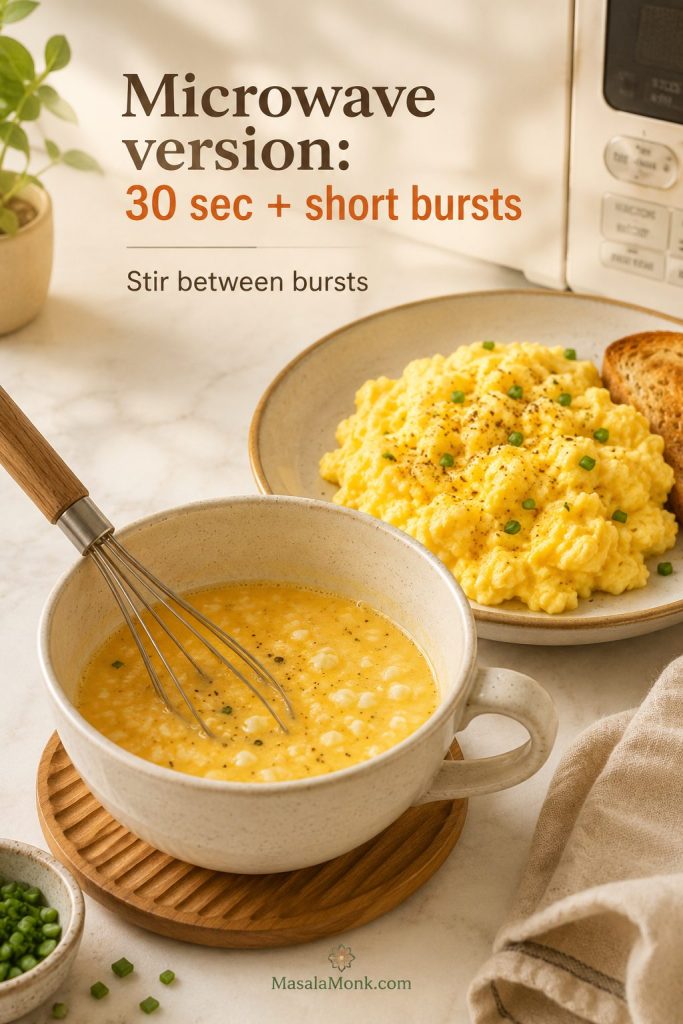
Whisk 1 large egg with 1 tablespoon / about 15g cottage cheese in a large microwave-safe mug. Add black pepper and a tiny pinch of salt if needed. Microwave for 30 seconds, stir, then microwave in 15–30 second bursts until the egg is just set through.

Microwave cottage cheese scrambled eggs made in a mug with a whisked egg mixture and a finished bowl of eggs.
For microwave cottage cheese eggs, short bursts are safer than one long cook. Stirring between rounds helps the center set without turning spongy.

Microwave Texture Tips

  • Use a bigger mug than you think you need.
  • Stir between bursts so the egg cooks evenly.
  • Microwave power varies, so treat the final 15–30 seconds as flexible.
  • Stop when the egg is just set, then let it stand for 20–30 seconds before eating.
  • Add herbs, hot sauce, or chives after cooking.
  • For 2 eggs, use a small microwave-safe bowl instead of a narrow mug.

Add-Ins and Serving Ideas

Scrambled eggs with cottage cheese are mild enough to go savory, spicy, herby, or brunch-style. Avoid adding raw vegetables that release a lot of water directly to the pan in large amounts. Instead, cook them first or serve them on the side.

Best Add-Ins for the Eggs

Add-In How to Use It Notes
Spinach Wilt before or during cooking Adds volume and color
Mushrooms Cook first Prevents loose eggs
Bell pepper Dice small and sauté first Good for veggie scrambles
Scallions or chives Add near the end Fresh, simple, and not watery
Tomatoes Serve on the side or add cooked Raw tomatoes can release water
Chili crisp or hot sauce Add after cooking Best for flavor contrast
Everything bagel seasoning Sprinkle after cooking Use lightly because it is salty
Add-ins for cottage cheese scrambled eggs including cooked spinach, mushrooms, chives, tomatoes, and hot sauce.
Add-ins work best after the moisture is under control. Cook mushrooms, spinach, and peppers first, then finish with herbs, hot sauce, or chili crisp.

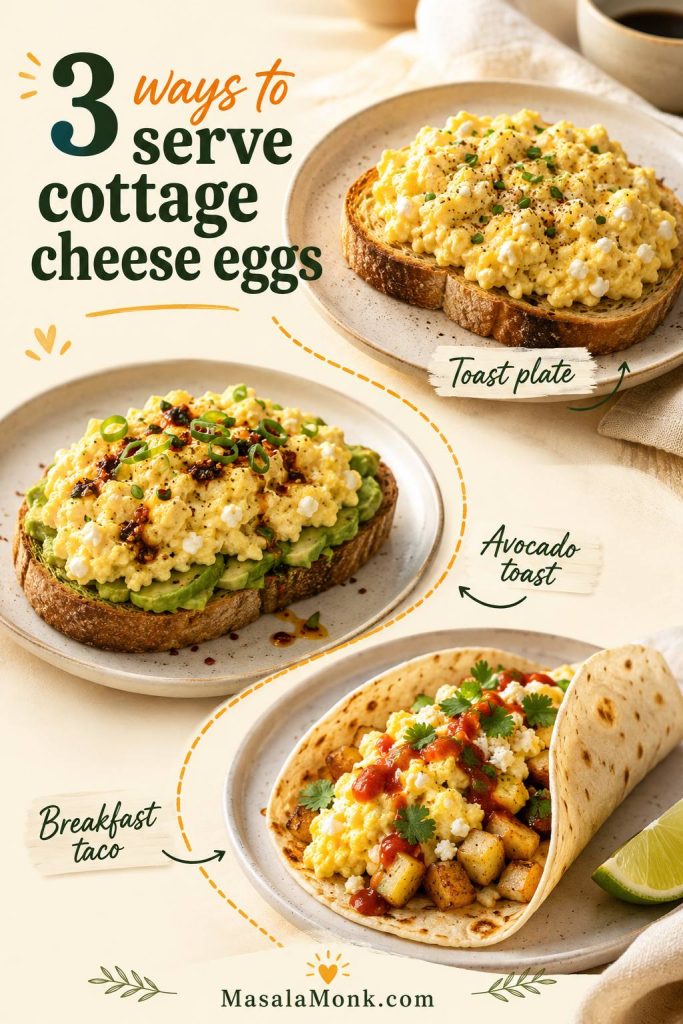
Three Easy Ways to Serve Them

  • Simple weekday plate: cottage cheese eggs, buttered toast, black pepper, and chives.
  • Avocado toast version: mashed avocado, creamy eggs, chili crisp, and scallions on sourdough.
  • Breakfast taco version: warm tortilla, cottage cheese eggs, potatoes, salsa, and hot sauce.
Three serving ideas for cottage cheese scrambled eggs with toast, avocado toast, and a breakfast taco.
Once the base scramble is right, it can go three ways: a simple toast plate, creamy avocado toast, or a breakfast taco with potatoes and salsa.

What to Serve with Cottage Cheese Eggs

  • Buttered sourdough toast
  • Avocado toast
  • Breakfast tacos
  • Roasted potatoes or air fryer hash browns
  • Sautéed spinach or mushrooms
  • Fresh tomatoes
  • Fruit on the side
  • Hot sauce, chili crisp, or salsa

For the easiest plate, keep it simple: creamy eggs, crisp toast, something fresh, and something sharp or spicy. A little hot sauce, salsa, chili crisp, or black pepper keeps the cottage cheese from making the plate taste too mild.

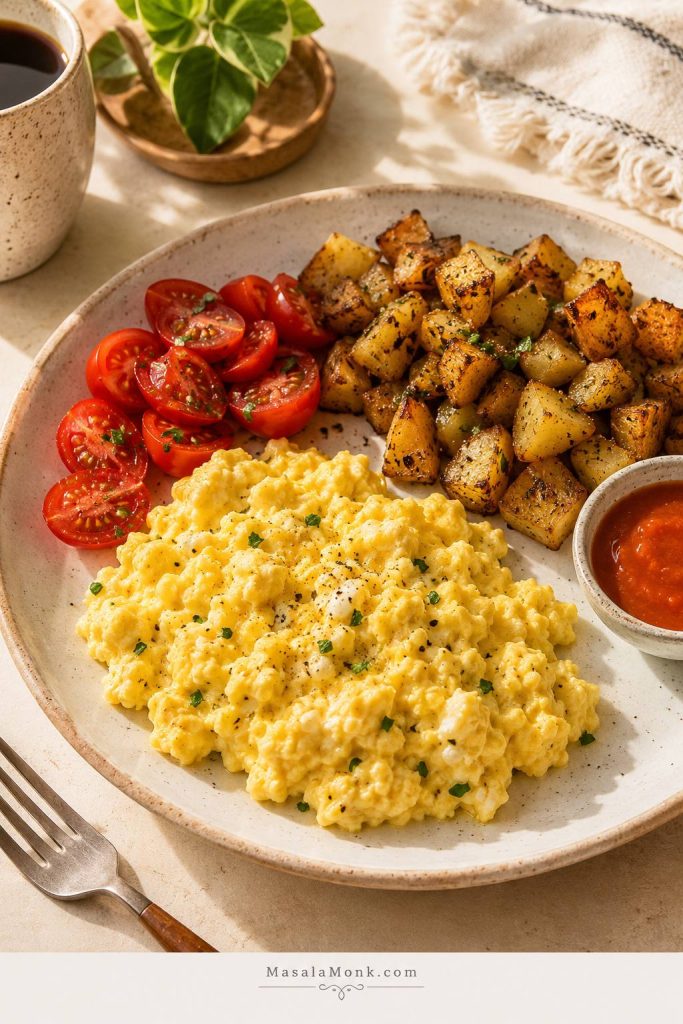
Cottage cheese scrambled eggs served with crispy potatoes, fresh tomatoes, and hot sauce.
A few sides make the eggs feel complete. Crisp potatoes add contrast, tomatoes add freshness, and hot sauce cuts through the creamy cottage cheese.

If you want to turn the eggs into a handheld breakfast, tuck them into a tortilla with potatoes, peppers, salsa, or avocado. This breakfast burrito recipe has more ideas for building a filling wrap without making it soggy.

How to Fix Watery or Loose Cottage Cheese Eggs

If your first batch is not perfect, do not write off the recipe. Cottage cheese brands vary a lot, and one small ratio or heat adjustment usually fixes it.

This is the section to read if you tried cottage cheese eggs once and wondered why everyone else seemed to be getting a creamy scramble while yours looked loose, shiny, or separated.

If your eggs tasted good but looked loose, shiny, or a little separated, the recipe probably does not need to be abandoned. It usually just needs less liquid, thicker cottage cheese, or gentler heat.

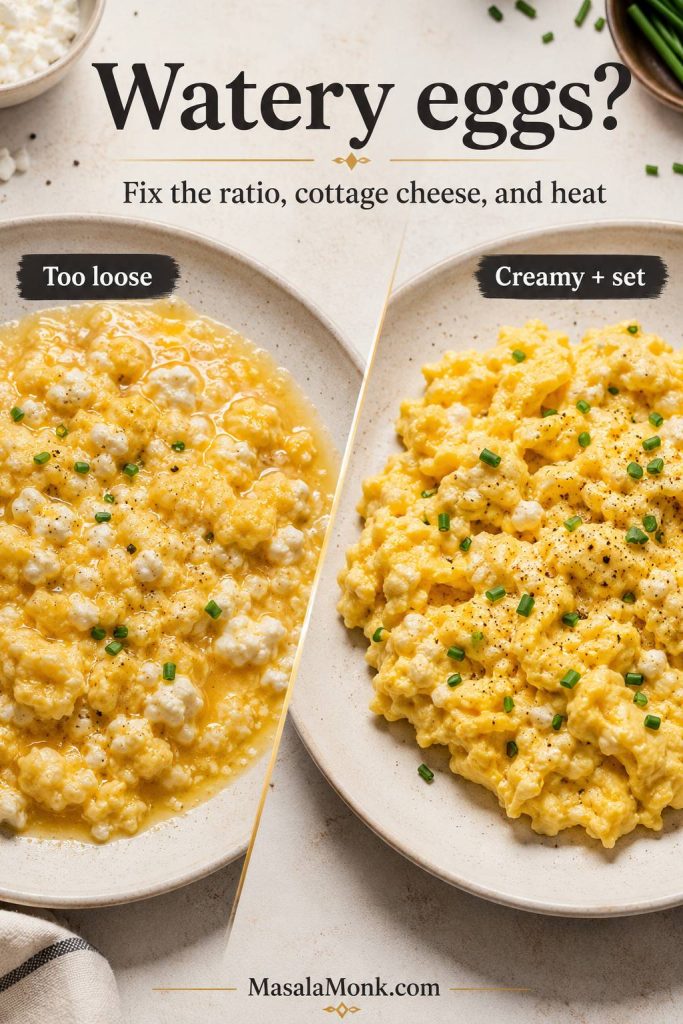
Watery cottage cheese scrambled eggs compared with creamy set eggs in a troubleshooting guide.
Watery cottage cheese eggs usually come from too much liquid, high heat, or a loose cottage cheese brand. Fix those first before changing the whole recipe.

Why Cottage Cheese Eggs Turn Watery

  • Too much cottage cheese
  • Very liquid cottage cheese
  • Watery fat-free or low-fat cottage cheese
  • Heat that was too high
  • Not enough gentle cooking time
  • Raw mushrooms, tomatoes, or peppers
  • Too many egg whites
  • Added milk

Troubleshooting Watery Cottage Cheese Eggs

What Happened Most Likely Cause Next Batch Fix
Eggs tasted good but looked loose Too much liquid in the cottage cheese Drain the cottage cheese or use 2 tbsp per 2 eggs
Eggs turned rubbery and wet Heat was too high Use medium-low heat and cook a little longer
Eggs looked separated Curds released moisture before the eggs set Whisk better, use thicker cottage cheese, and stir gently
Egg-white version turned thin Too much water from whites plus cottage cheese Keep one yolk or reduce cottage cheese to 2 tbsp
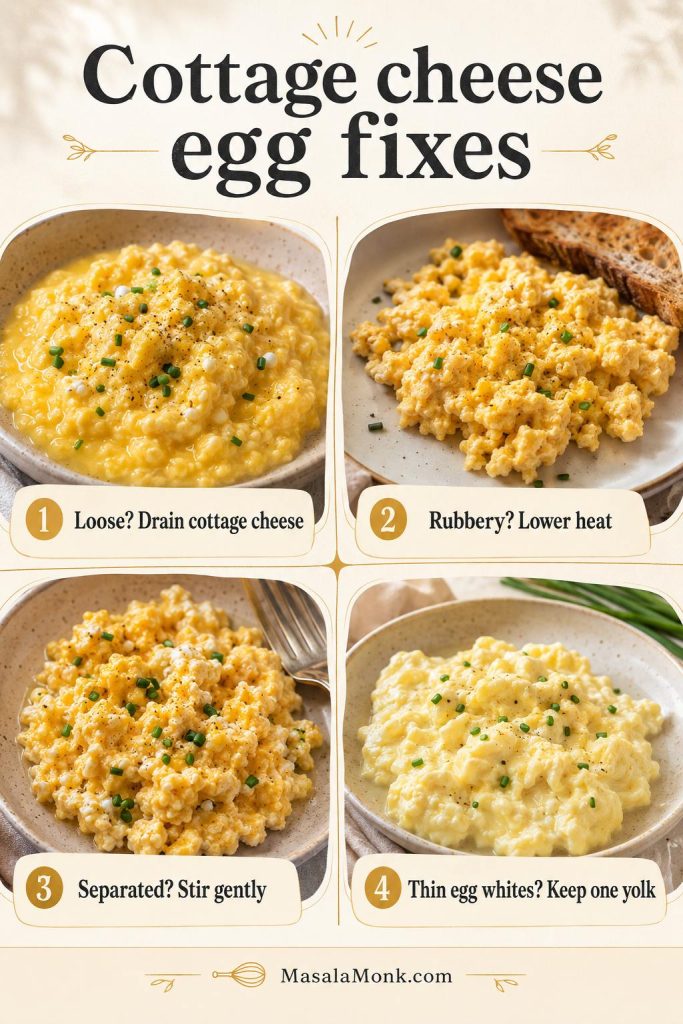
Diagnostic guide showing fixes for loose, rubbery, separated, and thin egg-white cottage cheese eggs.
Use the pan clues to fix the next batch: drain liquidy cottage cheese, lower the heat, stir gently, or keep one yolk when using egg whites.

Fixes Before Cooking

Problem to Prevent What to Do
Cottage cheese looks liquidy Spoon off excess liquid or use slightly less cottage cheese
You dislike curds Blend the cottage cheese with the eggs
You want less moisture Use 2 tbsp cottage cheese per 2 eggs
Using vegetables Cook moisture-heavy vegetables first
Using egg whites Keep at least one yolk or cook gently a little longer

Fixes While Cooking

What You See Fix
Liquid pooling in the pan Keep cooking gently and fold slowly until the extra moisture evaporates
Eggs setting too fast Lower the heat or remove the pan briefly
Curds separating Stir less aggressively and use lower heat
Eggs getting rubbery Pull from the heat sooner next time and use medium-low heat

What Not to Do

  • Skip the milk; cottage cheese already brings moisture.
  • Avoid high heat, which can make the eggs tighten before the moisture cooks off.
  • Do not start with an extra-heavy cottage cheese ratio on your first try.
  • Cook mushrooms, tomatoes, or peppers first if you are adding more than a small handful.
  • Once soft folds form, stir gently instead of aggressively breaking the eggs apart.

Once the ratio and heat are right, the recipe is simple: whisk, cook gently, stop while creamy, and serve while the eggs are still soft and warm.

Scrambled Eggs with Cottage Cheese Recipe

Soft, creamy scrambled eggs with cottage cheese for a protein-rich breakfast that feels cozy, filling, and ready in about 10 minutes.

Prep Time5 minutes
Cook Time4–5 minutes
Total Time10 minutes
Yield2 servings

Approximate nutrition: One serving, made with 2 large eggs, 1/4 cup cottage cheese, and 1/2 tablespoon butter, is usually around 220–270 calories with about 18–22g protein. Exact numbers depend on your cottage cheese brand and cooking fat. Because cottage cheese brands vary widely in protein, sodium, and moisture, treat these numbers as an estimate unless you calculate with your exact label.

Equipment

  • Mixing bowl
  • Whisk or fork
  • 10-inch nonstick skillet
  • Silicone spatula

Ingredients

  • 4 large eggs
  • 1/2 cup cottage cheese, about 4 oz / 110–120g, preferably small-curd 2% or full-fat
  • 1 tablespoon butter, about 1/2 oz / 14g, or 1–2 teaspoons / 5–10ml olive oil
  • 1/8 teaspoon fine salt, optional
  • Black pepper, to taste
  • 1 tablespoon chopped chives or scallions, optional

Method

  1. Crack the eggs into a mixing bowl and whisk until the yolks and whites are fully combined.
  2. Whisk in the cottage cheese, black pepper, and a tiny pinch of salt if using.
  3. Place a nonstick skillet over medium-low heat. Add the butter or oil and let it melt without browning.
  4. Pour in the egg mixture and let the edges begin to set for 10–20 seconds.
  5. Use a silicone spatula to slowly push the eggs from the outside of the pan toward the center, forming soft folds. The pan should look calm, not sizzling.
  6. Keep cooking gently until the eggs are thickened, creamy, and set through. If liquid runs around the eggs, give them another minute over gentle heat.
  7. Remove from the heat, sprinkle with chives or scallions if using, and serve immediately.

Notes

  • Blend the cottage cheese with the eggs first for a smoother texture.
  • Use 2 tablespoons cottage cheese per 2 eggs if you want less cottage cheese texture.
  • For an egg-white boosted version, use 2 eggs, 1/4 cup / 60ml egg whites, and 1/4 cup / 55–60g cottage cheese.
  • Salt lightly because cottage cheese is already salty.
  • Use medium-low heat. High heat can make the eggs rubbery.
  • Do not add milk; cottage cheese already adds moisture.
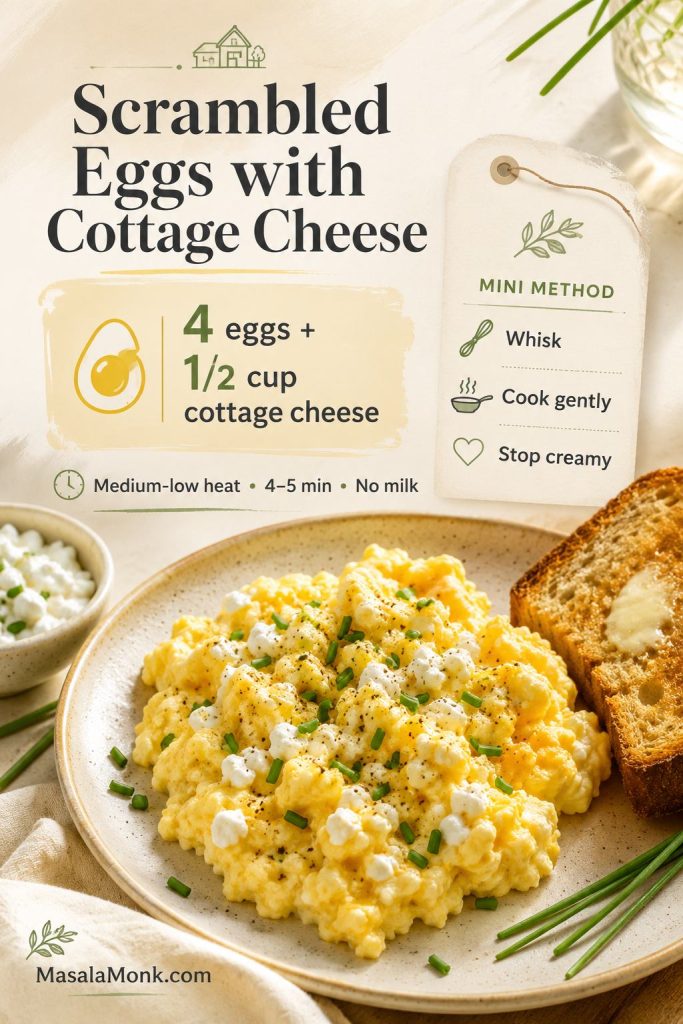
Saveable recipe card for scrambled eggs with cottage cheese showing the main ratio, cooking time, and method notes.
This saveable version keeps the formula simple: four eggs, half a cup of cottage cheese, medium-low heat, and no milk for a creamy two-serving scramble.

Once you make it once, adjust the ratio to match your cottage cheese and your pan. Some brands melt in softly, some release more liquid, and some taste saltier than others. The recipe gets easier after the first batch.

Storage and Reheating

These are absolutely best right from the pan, so treat leftovers as a backup breakfast rather than the main plan. Still, if you have extra, they can work if you cool and reheat them gently.

For the freshest texture, make the main recipe card version right before serving.

How Long Do They Keep?

Store leftover cottage cheese scrambled eggs in an airtight container in the refrigerator for up to 2 days. Let them cool before closing the container so steam does not create extra moisture.

How to Reheat Without Making Them Rubbery

Reheat in the microwave at reduced power in 15–30 second bursts, stirring gently between bursts. Stop as soon as the eggs are warm. You can also reheat them in a nonstick skillet over low heat.

For a freezer-friendly breakfast instead of fresh scrambled eggs, use the same soft-cooked egg logic in meal prep breakfast burritos, where the eggs need to stay tender without making the tortilla soggy.

Can You Freeze Cottage Cheese Scrambled Eggs?

I would not freeze them. Eggs and cottage cheese can both release moisture after thawing, so the texture usually suffers. For a better make-ahead breakfast, try egg muffins or a sliceable frittata instead.

When you need breakfast for a table instead of one skillet, a breakfast casserole with hash browns is a better make-ahead option than stovetop scrambled eggs.

Final Serving Texture Cue

Before you leave the recipe, remember the main visual cue: the eggs should look creamy, softly folded, and set enough to hold together on the plate.

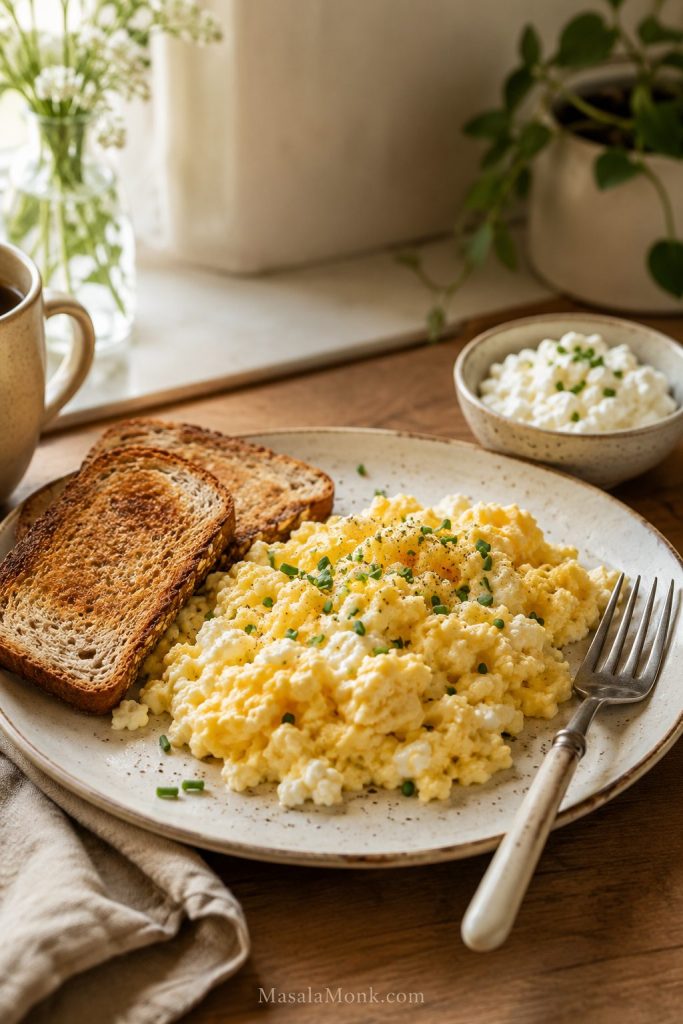
Final serving of scrambled eggs with cottage cheese with toast, a fork, cottage cheese, and a warm breakfast table setting.
A good cottage cheese scramble should feel warm and familiar, with enough protein and creaminess to make breakfast last longer than plain eggs.

FAQs About Scrambled Eggs with Cottage Cheese

What does cottage cheese do to scrambled eggs?

Cottage cheese adds protein, creaminess, and a mild savory flavor. When cooked gently, it softens into the eggs and makes them more filling without needing milk or cream.

Do scrambled eggs with cottage cheese taste like cottage cheese?

They taste creamy, lightly savory, and only a little tangy. With the balanced ratio, the eggs still taste like eggs; the cottage cheese mostly adds body and richness.

Is it better to blend cottage cheese into eggs?

Blend it if you want smooth eggs with no visible curds. This is the best choice for anyone who likes the protein boost but does not want the cottage cheese texture. Whisk it in if you like a soft, lightly curdy scramble.

Why did my cottage cheese scrambled eggs turn watery?

They probably had too much cottage cheese, a very liquidy brand, too many egg whites, raw watery vegetables, milk, or not enough gentle cooking time. Use 1/4 cup cottage cheese per 2 eggs, choose a thicker cottage cheese, and cook over medium-low heat until the eggs are set through.

What type of cottage cheese works best?

Small-curd 2% cottage cheese is the most reliable everyday choice. Full-fat cottage cheese gives richer eggs. Fat-free cottage cheese can work, but it is more likely to release moisture.

Should I add milk to cottage cheese scrambled eggs?

Skip the milk here. Cottage cheese already brings moisture and body, and adding milk can push the scramble from creamy into loose or wet.

Are cottage cheese eggs good for a high-protein breakfast?

They are a strong high-protein breakfast, especially if you use the balanced ratio of eggs plus cottage cheese instead of stretching the scramble with milk. The exact protein depends on your egg size and cottage cheese label.

Do egg whites work with cottage cheese?

Egg whites work, but the best texture usually comes from keeping at least one whole egg in the mixture. The yolk adds flavor, color, and structure, so the scramble feels creamy instead of thin.

Can I make cottage cheese scrambled eggs in the microwave?

Yes. For one serving, whisk 1 large egg with 1 tablespoon cottage cheese in a large microwave-safe mug. Microwave for 30 seconds, stir, then cook in 15–30 second bursts until set. Let it stand briefly before eating so the center finishes without becoming spongy.

What is the best ratio of cottage cheese to eggs?

The best balanced ratio is 1/4 cup cottage cheese for every 2 large eggs. Use 2 tablespoons for a subtler version, or up to 1/3 cup if you want a richer cottage-cheese-forward scramble.

Can I use boiled eggs with cottage cheese instead?

Yes, but that becomes a different kind of meal. Boiled eggs with cottage cheese work as a quick snack plate, while chopped boiled eggs mixed with blended cottage cheese become a high-protein cottage cheese egg salad.

Back to top

Posted on 7 Comments

10 Low Carb Chia Pudding Recipes for Weight Loss (Keto, High-Protein, Dairy-Free)

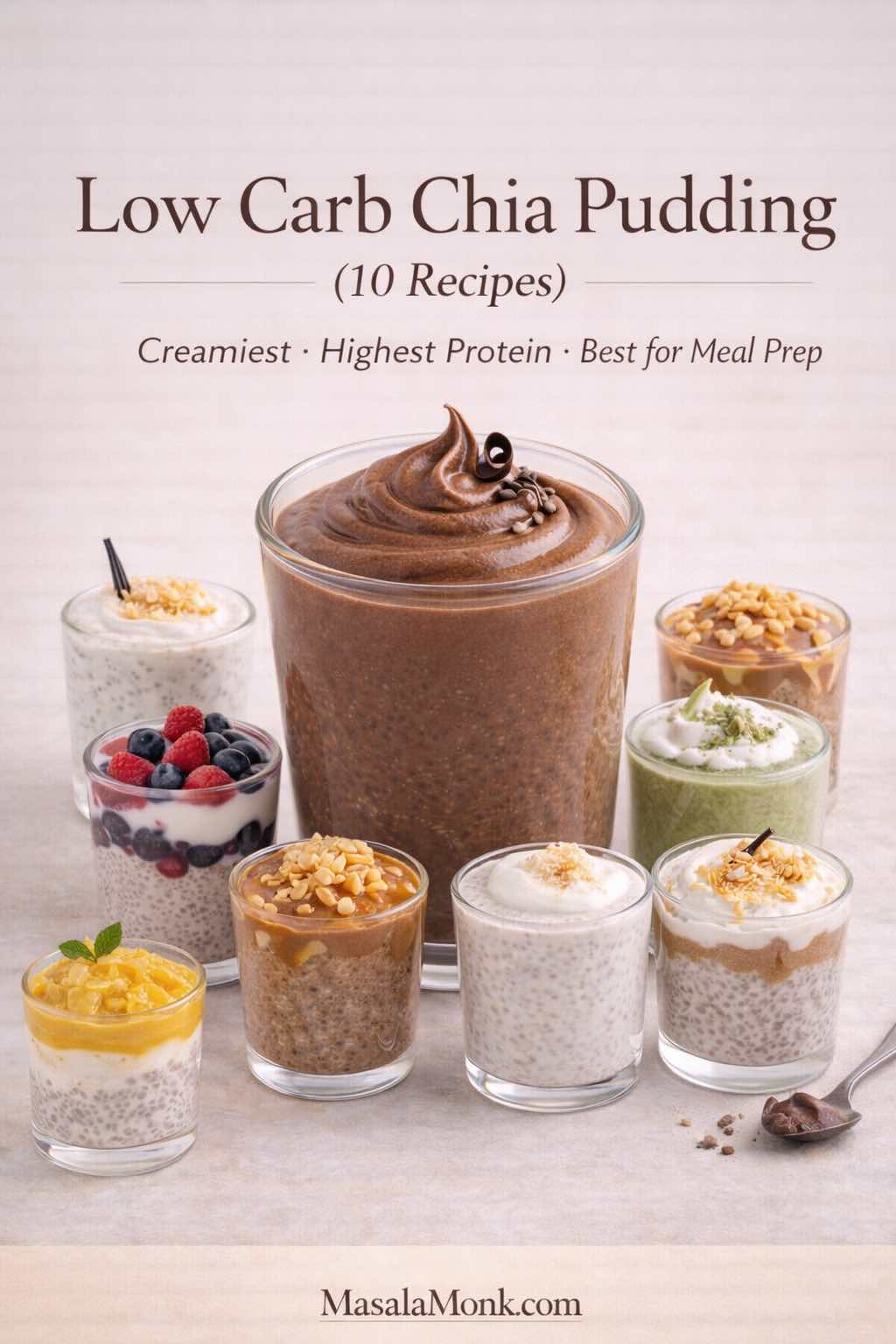
Cover image showing a premium glass jar of low carb chia pudding with a smooth whipped topping on a warm-cream seamless background. Editorial food photography style for “Low Carb Chia Pudding” featuring 10 recipes including keto, high protein, dairy-free, and blended options, with MasalaMonk.com branding.

Chia pudding has a way of sneaking into your routine and then refusing to leave. At first, it feels like a clever trick—stir a few spoonfuls of tiny seeds into milk, refrigerate, and wake up to a spoonable pudding. Before long, though, you realize a simple jar of low carb chia pudding can be more than a trend: it’s a dependable breakfast that doesn’t demand morning effort, a snack that travels well, and a dessert-like bowl that still fits a lighter day.

Why chia pudding works as breakfast, snack, and “healthy dessert”

What makes it especially useful is how easily you can shape it around your cravings. Some mornings you’ll want something light and clean—pudding with almond milk, a little vanilla, and berries. Other times, you’ll prefer a thick, creamy version that leans on Greek yogurt and tastes closer to cheesecake filling. And when your sweet tooth shows up, chocolate chia pudding, cacao chia pudding, or chocolate peanut butter chia seed pudding can feel genuinely comforting without tipping into a sugar spiral.

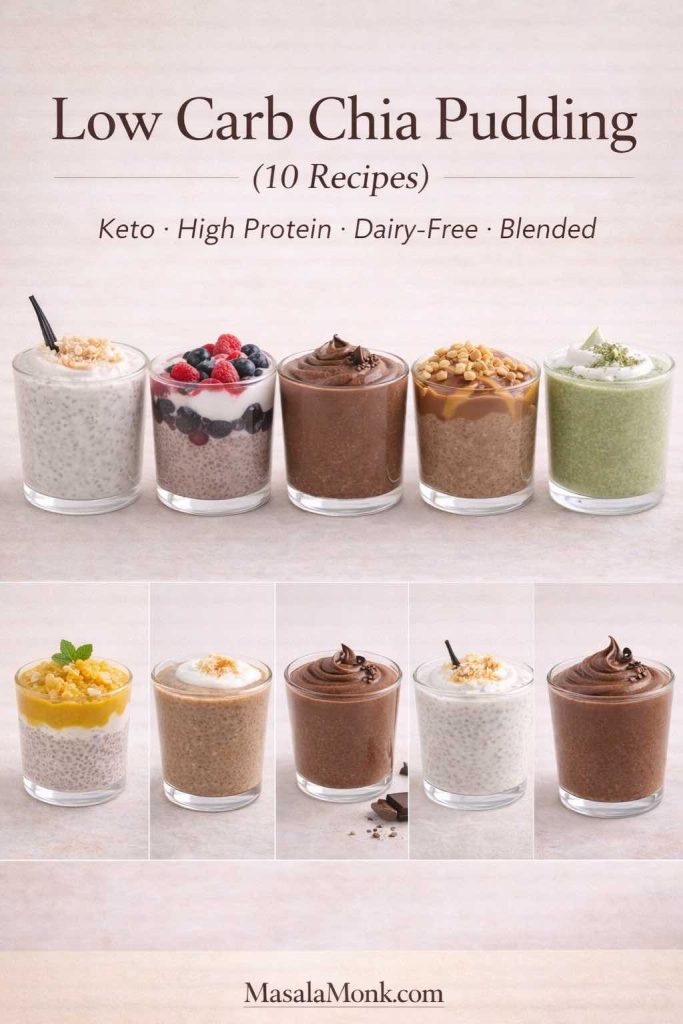
Collage-style image showing ten low carb chia pudding cups in a clean grid with the heading “Low Carb Chia Pudding (10 Recipes)” and the line “Keto • High Protein • Dairy-Free • Blended.” Features a variety of flavors including vanilla, berry, chocolate, peanut butter, matcha, mango, and mousse, with MasalaMonk.com in the footer.
All 10 low carb chia pudding recipes featured in this post at a glance—creamy keto cups, high protein Greek yogurt jars, dairy-free options, fruit layers, and blended mousse for a smooth pudding texture.

Equally important, chia pudding adapts to different eating styles without forcing you into one “right” way. If you’re leaning keto, coconut milk makes a rich keto pudding base while sweetness stays minimal. If you’re aiming for a paleo-friendly bowl, you can skip dairy and still get a creamy texture with coconut milk or almond milk plus nut butter. Meanwhile, if you’re chasing a higher-protein breakfast, chia pudding with protein powder—or a low carb chia pudding with Greek yogurt—turns the jar into something that feels like a real meal.

If you want a deeper foundation on how chia fits into weight-loss habits—portions, consistency, and simple ways to keep it effortless—this companion guide is worth a read: The Ultimate Guide to Chia Pudding for Weight Loss.

Now, before we jump into the ten best variations, let’s lock in the base. Once you get the ratio and texture right, every flavor becomes easier, smoother, and more repeatable.

Also Read: Garlic & Paprika Cabbage Rolls (Keto-Friendly Recipes) – 5 Bold Savory Twists


Low Carb Chia Pudding for Weight Loss: Why It Works So Well

For weight loss, the best breakfasts explain themselves later—when you realize you didn’t spend the whole morning thinking about snacks. That’s exactly where low carb chia pudding shines: it’s simple, satisfying, and surprisingly good at keeping your appetite calm between meals.

Why chia pudding keeps you full longer

Chia helps in a very practical way: when it hydrates, it turns your milk into a thick, spoonable gel. Because of that texture, you naturally eat more slowly, and the jar tends to feel more substantial than it looks—especially compared to breakfasts that disappear in three bites.

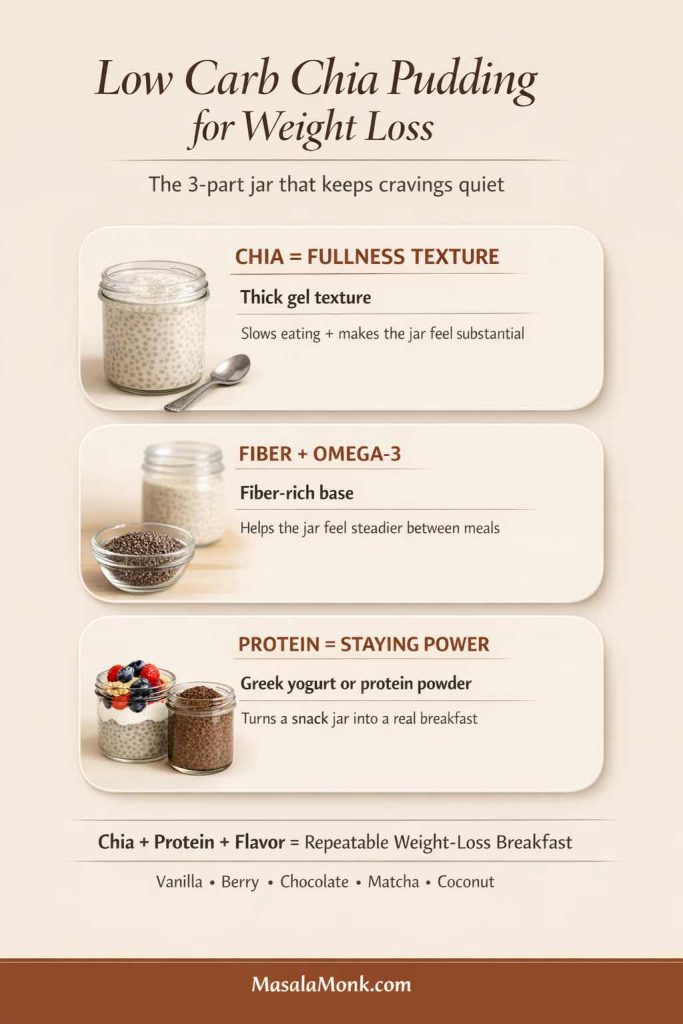
Infographic titled “Low Carb Chia Pudding for Weight Loss” explaining why it works: chia creates thick gel texture that slows eating, chia provides fiber + omega-3, and adding protein (Greek yogurt or protein powder) boosts staying power. Includes takeaway “Chia + Protein + Flavor = repeatable weight-loss breakfast” and MasalaMonk.com in the footer.
Why low carb chia pudding works so well: the gel texture slows eating, fiber helps the jar feel steadier between meals, and protein (Greek yogurt or protein powder) is the upgrade that turns it into a true breakfast—not just a snack.

At the same time, chia is naturally fiber-rich and contains omega-3 fats, which is part of why it’s such a popular base for a steady “grab-and-go” breakfast. If you want a clean, evidence-based overview, Harvard’s Nutrition Source has a helpful summary on chia seeds nutrition (fiber + omega-3). Then, if you like checking calories, macros, or serving-size details, you can cross-reference with the USDA chia seed nutrition data.

The real upgrade is protein

Still, satisfaction isn’t only about chia. Protein is the piece that makes a jar feel like a meal—which is why “pudding and Greek yogurt,” “chia seed and Greek yogurt pudding,” and “chia pudding with protein powder” are such common staples. When your breakfast includes a solid protein anchor, it tends to feel steadier and more complete, so you’re less likely to start grazing out of habit.

Three-step infographic showing how to build a low carb chia pudding that keeps you full. Step 1: start with chia + milk (almond or coconut). Step 2: add protein (Greek yogurt or protein powder). Step 3: flavor it smart (cocoa, berries, matcha, cinnamon). Includes note “Meal prep 2–3 jars → cravings stay quieter” and MasalaMonk.com in the footer.
Use this quick builder to make low carb chia pudding feel “meal-level”: start with chia + milk, add protein (Greek yogurt or protein powder), then flavor it with cocoa, berries, matcha, or cinnamon. Prep 2–3 jars at once and you’ve got a simple routine that stays satisfying all week.

If your mornings often end with cravings, switching to a high protein & low carb chia pudding is one of the easiest upgrades: keep the chia base, then build in protein with Greek yogurt (thick and creamy) or protein powder (especially in chocolate versions). For a broader framework that pairs perfectly with a chia routine, this guide is a strong companion: how to eat 100 grams of protein a day.

So yes—chia helps. Even better, the best results usually come from the combination: chia for texture and fiber, protein for staying power, and flavor choices you genuinely look forward to eating.

Also Read: Eggless Yorkshire Pudding (No Milk) Recipe


Low Carb Chia Pudding Base Recipe (Perfect Ratio, No Clumps)

Everything starts here. Whether you’re making keto chia pudding, chia pudding paleo, dairy free chia pudding, or a blended chia pudding mousse, the base method stays the same.

The basic chia pudding ratio (and how to adjust it)

For a classic, spoonable base:

  • 3 tablespoons chia seeds (about 36–40 g)
  • 1 cup / 240 ml liquid (almond milk, coconut milk, dairy milk, oat milk, etc.)
  • A pinch of salt
  • Optional: ½ teaspoon vanilla
  • Optional: sweetener to taste
Infographic showing the low carb chia pudding base ratio: 3 tbsp chia seeds + 1 cup milk (240 ml), with add-ins (pinch of salt, optional vanilla, optional sweetener). It also shows how to adjust thickness: 2½ tbsp per cup for a lighter thinner set, or 3 tbsp plus richer milk for a thicker custardy set. Includes “Best chill: 2 hours (overnight best)” and MasalaMonk.com footer.
Here’s the dependable low carb chia pudding base ratio: 3 tablespoons chia to 1 cup milk (240 ml). Use 2½ tablespoons for a lighter set, or keep 3 tablespoons and switch to a richer milk (like canned coconut milk) for a thicker, custardy chia pudding—then chill at least 2 hours (overnight is best).

That ratio gives you a thick, pudding-like texture—great for low carb chia pudding cups, a chia pudding glass, or a single serve chia pudding jar. If you prefer it thinner, drop to 2½ tablespoons chia per cup of liquid. Conversely, if you like a dense, custardy texture, keep 3 tablespoons and use a richer liquid like canned coconut milk.

The mixing pattern that prevents clumps

This is the method that makes the difference between “silky” and “why is it lumpy?”

  1. Add chia seeds to the liquid, plus salt and vanilla (and sweetener, if using).
  2. Whisk vigorously for 20–30 seconds.
  3. Let it sit for 10 minutes.
  4. Whisk again, thoroughly.
  5. Cover and refrigerate at least 2 hours; overnight is even better.

That second whisk is the hinge. It’s the moment when the seeds have started to hydrate but haven’t fully set yet, which means you can break up clumps before they lock in.

Step-by-step infographic titled “No-Clumps Chia Pudding Method” showing four steps: 1) whisk 20–30 seconds, 2) rest 10 minutes, 3) whisk again to break clumps, and 4) chill 2 hours (overnight best). Includes a bowl-and-whisk visual sequence, a jar chilling in the fridge, and the note “The second whisk is the hinge,” with MasalaMonk.com in the footer.
If your chia pudding turns lumpy, this is the fix: whisk well, rest 10 minutes, then whisk again before chilling. That second whisk breaks clumps right when the seeds start hydrating—so your low carb chia pudding sets smooth, thick, and spoonable instead of bumpy.

Quick chia pudding vs “instant” chia pudding

Chia needs time to hydrate, so it’s never truly instant in the way instant oats are. Still, you can make a quick low carb chia seed pudding when you’re pressed for time.

Use the same ratio, whisk well, do the 10-minute stir, and refrigerate for 30–45 minutes. It will be softer than overnight, yet it’s still spoonable—especially if you make it as chia pudding with yogurt or add protein powder.

Why soaking matters

Chia expands dramatically when it absorbs liquid. Because of that, it’s best eaten soaked rather than dry. If you want the reason in plain terms, this clinical case report shows what can happen when dry chia is swallowed without enough liquid: why chia should be soaked first.

Also Read: Crock Pot Chicken Breast Recipes: 10 Easy Slow Cooker Dinners (Juicy Every Time)


Choosing Your Liquid: Almond Milk, Coconut Milk, Oat Milk, and More

Liquid is the secret “ingredient” that decides whether your pudding tastes light, rich, tropical, or dairy-creamy. It’s also the easiest lever to pull depending on whether you’re going for keto pudding, paleo chia seed pudding, or a more classic breakfast pudding recipe.

Infographic titled “Choosing Your Liquid for Chia Pudding” showing four options with texture notes and best uses: almond milk (light + neutral), canned coconut milk (thickest + richest), oat milk (creamy + familiar, not low carb), and coconut water (light + refreshing) with a tip to add Greek yogurt or coconut cream. Includes “Your easiest upgrade: choose the liquid first” and MasalaMonk.com in the footer.
Your chia pudding texture is mostly decided by the liquid. Almond milk keeps it light and versatile, canned coconut milk makes the richest pudding-like set, oat milk gives a classic creamy breakfast feel (not low carb), and coconut water stays light and fruit-friendly—especially with a spoon of Greek yogurt or coconut cream.

Pudding with almond milk (clean, light, versatile)

Chia pudding with almond milk is a classic because it’s neutral and easy to customize. It’s also a natural base for low carb chia pudding and many keto-friendly variations. If you want a dedicated keto version built around almond milk, this is a strong reference recipe: keto chia pudding with almond milk.

Coconut milk for chia pudding (thickest texture, richest feel)

If you want your chia pudding to taste like real pudding, use canned coconut milk. It’s also a favorite for keto chia pudding coconut milk versions because the fat content naturally boosts satisfaction. For a paleo chia seed pudding approach, coconut milk is equally useful.

A small detail helps a lot here: canned coconut milk varies. Some are thin; others are thick. If yours pours like cream, whisk in a little water so it hydrates evenly. That way you avoid dense, under-hydrated pockets.

Oat milk chia pudding (not keto, but creamy and familiar)

Oat milk makes a gentle, classic pudding flavor. It’s not low carb, so it’s best as an optional variation for non-keto readers who still want a healthy breakfast pudding.

Chia pudding with coconut water (light, refreshing, fruit-friendly)

Coconut water makes a lighter gel. It’s lovely with mango, citrus, and berries; however, it won’t feel as creamy. For a richer texture, add a spoon of Greek yogurt or a spoon of coconut cream before serving.

Also Read: Mozzarella Sticks Recipe (Air Fryer, Oven, or Fried): String Cheese, Shredded Cheese, and Every Crunchy Variation


Homemade vs Premade Chia Pudding (Cups, Mixes, and Convenience Options)

Sometimes you want the easiest option. That’s why premade chia pudding and premade chia seed pudding cups have become common grab-and-go items. A chia pudding cup can be a decent choice, especially if it keeps your day from derailing into ultra-processed snacks.

Infographic titled “Buying Premade Chia Pudding Cups” with a checklist: low added sugar, protein that fits breakfast, short ingredient list, real fats (not fillers), and texture you’ll enjoy. Photoreal scene shows unbranded chia pudding cups on a smooth counter with a spoon and a small bowl of chia seeds, plus the line “A good cup beats a random snack” and MasalaMonk.com in the footer.
If you’re buying premade chia pudding cups, a quick label check makes all the difference: keep added sugar low, choose a protein amount that works for breakfast, aim for a short ingredient list, and skip filler-heavy cups. Most importantly, pick a texture you’ll actually enjoy—because the best chia pudding cup is the one you’ll happily grab again.

If you’re choosing store-bought chia seed pudding cups, prioritize:

  • low or no added sugar,
  • a protein amount that makes sense for breakfast (if you want it to act like breakfast),
  • a short ingredient list,
  • and a texture you actually enjoy.

If you prefer to keep things homemade but fast, a chia pudding mix can work too. Some mixes are simply chia plus flavoring; others include sweeteners and thickeners. Even then, the most repeatable path is often a simple base batch plus flavor add-ins—cocoa, cinnamon, matcha, vanilla, fruit—so you can make multiple chia seed pudding cups in one go.
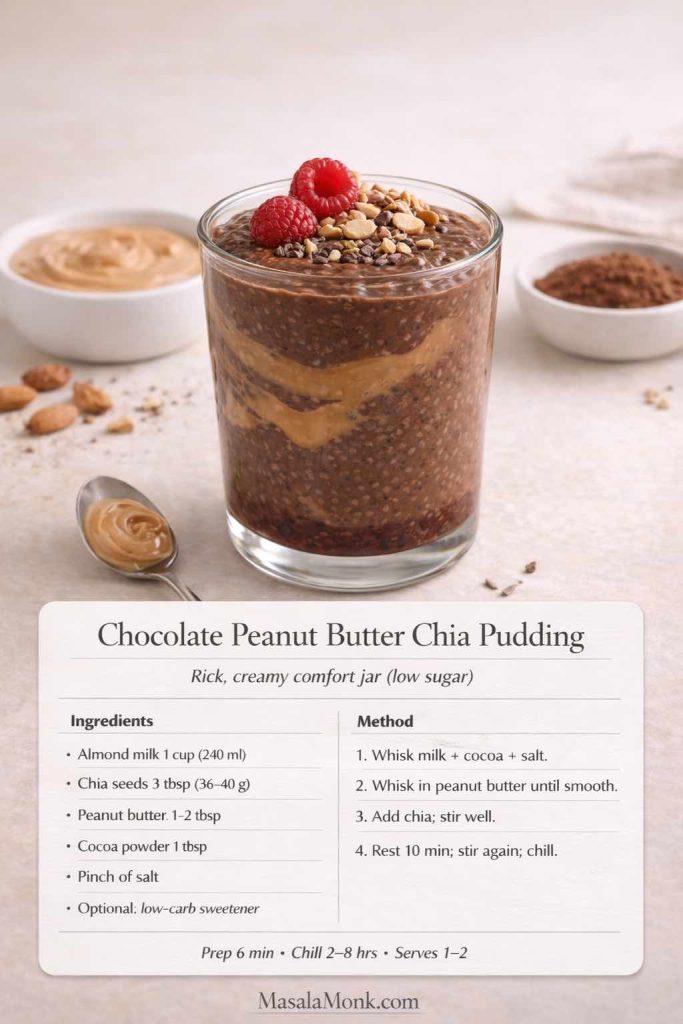
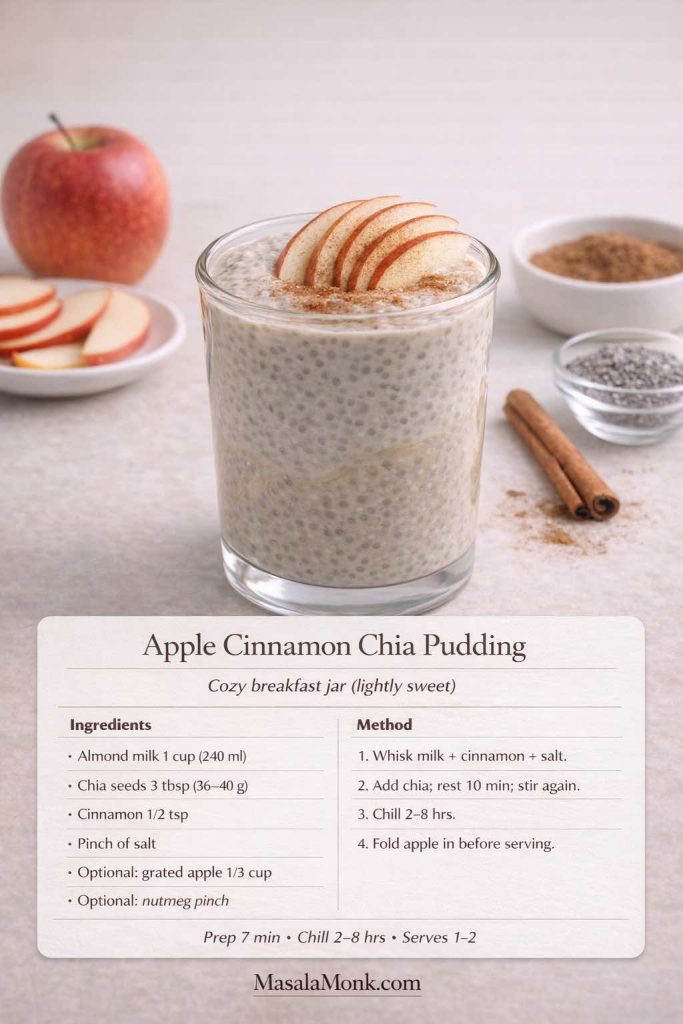
Also Read: Sourdough Starter Recipe: Make, Feed, Store & Fix Your Starter (Beginner Guide)


High Protein Chia Pudding: Greek Yogurt, Protein Powder, and Collagen

When people talk about protein chia pudding, they usually mean one of three styles:

  1. chia pudding with Greek yogurt
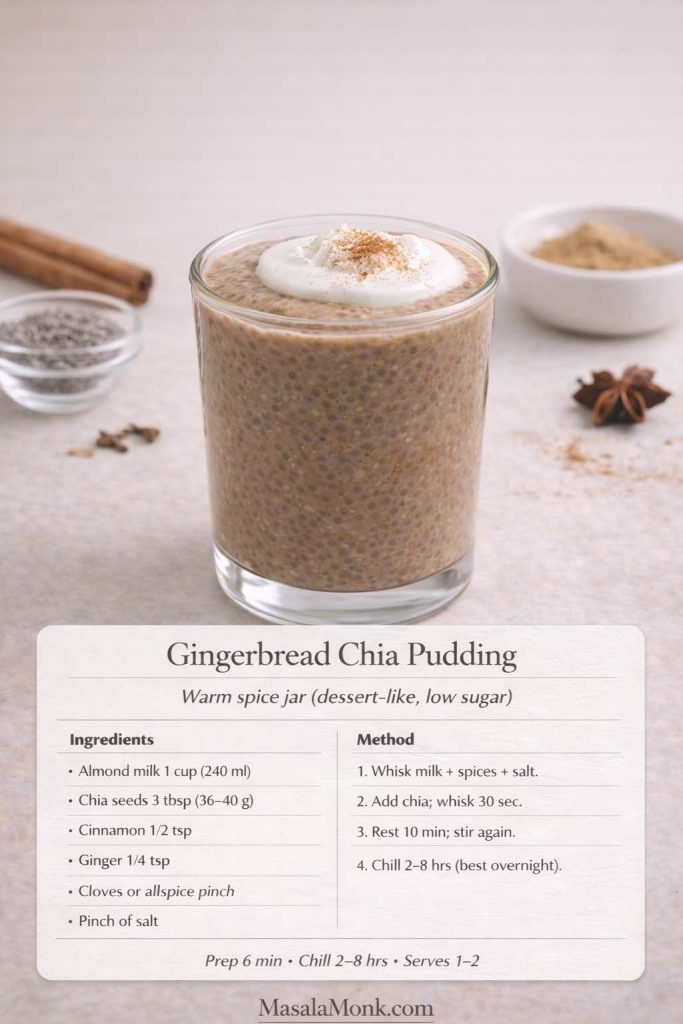
  2. chia pudding with protein powder
  3. chia collagen add-ins (often paired with yogurt)
Infographic titled “High Protein Chia Pudding (3 Easy Ways)” showing three options with photoreal jars: Greek yogurt (thicker instantly, tangy + creamy), protein powder (boosts protein + flavor with tip to mix into liquid first), and collagen peptides (dissolves easily, neutral taste; adds protein not thickness). Includes the line “Choose one—or combine yogurt + collagen” and MasalaMonk.com in the footer.
When you want high protein chia pudding, you’ve got three reliable routes: Greek yogurt for instant thickness and a creamy tang, protein powder for a bigger protein boost (best mixed into the liquid first so it stays smooth), or collagen peptides for an easy add-in that dissolves fast without changing flavor. Pick one—or combine yogurt + collagen for the most “meal-level” jar.
Step-by-step infographic titled “How to Mix Protein Powder (No Chalk)” showing three steps for smooth protein chia pudding: 1) whisk protein powder into the liquid first, 2) add chia seeds and whisk again, 3) rest 10 minutes, whisk, then chill. Includes the takeaway “Always dissolve first—then seed” and MasalaMonk.com in the footer.
The easiest way to avoid chalky protein chia pudding is to dissolve protein powder in the liquid first, then add chia and whisk again. After a 10-minute rest, give it one more whisk before chilling—this keeps the jar smooth, thick, and spoonable instead of gritty.

Greek yogurt thickens pudding instantly and adds a tang that makes chocolate, berries, vanilla, and peanut butter taste richer. Protein powder boosts protein and flavor, but it can turn chalky if it isn’t mixed properly. Collagen peptides dissolve easily and tend to be neutral, although they don’t thicken the same way chia does.

If you like a measured, realistic overview of collagen claims, this one is balanced: what collagen supplements can (and can’t) do.

If you want a complementary “drinkable breakfast” option that fits the same protein-forward routine, this is a natural companion: Greek yogurt shake recipes for a protein-packed breakfast.


10 Low Carb Chia Pudding Recipes (Keto, Paleo, Protein, Blended, Fruit)

Each recipe below makes 1–2 servings depending on appetite. For meal prep, multiply ingredients, then portion into chia pudding cups or jars. Meanwhile, if you’re building variety without extra work, make two or three bases at once: one almond milk jar, one coconut milk jar, and one Greek yogurt jar. That way, you’re never stuck eating the same flavor five days in a row.

Goal-based chooser graphic for low carb chia pudding with a hero jar at the top and four labeled choices: “Highest Protein – Greek Yogurt Parfait,” “Chocolate Cravings – Chocolate Protein Jar,” “Keto & Extra Creamy – Coconut Milk Keto Cup,” and “Hate Chia Texture? – Blended Chocolate Mousse.” Clean editorial layout with MasalaMonk.com in the footer.
Not sure which jar to make first? Start with your goal: highest protein, chocolate cravings, extra-creamy keto, or blended mousse if you don’t like chia texture—then jump into the matching recipe below.

1) Keto Chia Pudding with Almond Milk (Vanilla Base That Never Fails)

This is the everyday low carb chia pudding that works as breakfast, snack, or a simple dessert. It’s also the best “starter” jar because it takes flavors well.

Ingredients (1–2 servings)

  • 3 tablespoons chia seeds
  • 1 cup unsweetened almond milk
  • ½ teaspoon vanilla extract
  • Pinch of salt
  • Optional sweetener: monk fruit/erythritol/stevia, to taste
Recipe card image of keto vanilla almond milk chia pudding in a glass topped with raspberries and sliced almonds, with ingredients and steps for a low carb chia pudding base. Includes chia-to-milk ratio, quick stir method, and prep/chill times, styled as a meal-prep friendly high-protein breakfast.
This keto vanilla almond milk chia pudding is the “base jar” you’ll use all week—creamy, low carb, and easy to meal prep. Make it overnight for the smoothest texture, then customize it after training with Greek yogurt or a scoop of protein powder, or keep it simple with berries and nuts for a quick fitness-friendly breakfast that actually satisfies.

Method

  1. In a bowl or jar, whisk almond milk, vanilla, salt, and sweetener (if using).
  2. Stir in chia seeds and whisk vigorously for 20–30 seconds.
  3. Let it rest 10 minutes, then whisk again until no clumps remain.
  4. Cover and refrigerate 2 hours or overnight.

Flavor variations

  • Add ½ teaspoon cinnamon for a warm “vanilla-cinnamon pudding” base.
  • Add a tablespoon of shredded coconut for coconut puddings recipes energy without needing extra sweetness.
  • Stir in 1–2 tablespoons of Greek yogurt right before serving for a creamier finish.

Toppings that keep it low carb
Chopped nuts, cacao nibs, a small handful of berries, or a spoon of nut butter.

If you want a dedicated keto version with extra detail, this internal recipe fits perfectly: keto chia pudding with almond milk.


2) Chia Pudding with Greek Yogurt (High Protein, Ultra Creamy)

If you like pudding with Greek yogurt, this version can feel like cheesecake in a jar. It also adapts well: vanilla, chocolate, berry, citrus, even coffee flavors.

Ingredients (1–2 servings)

  • ¾ cup Greek yogurt (plain works best)
  • 3 tablespoons chia seeds
  • 2–4 tablespoons water or almond milk (to loosen)
  • ½ teaspoon vanilla
  • Pinch of salt
  • Optional sweetener, to taste
Recipe card image of high-protein Greek yogurt chia pudding in a glass with a berry compote layer, topped with strawberries, blueberries, chopped nuts, and a light nut-butter drizzle. The card lists ingredients and steps for a thick chia pudding with Greek yogurt, including the stir-twice method and chill time, styled as a meal-prep breakfast cup.
This high-protein Greek yogurt chia pudding is the thick, creamy option when you want a breakfast that holds you steady—especially after a workout. The berry layer makes it feel like a parfait, while the chia-to-yogurt base keeps it filling and meal-prep friendly. Make two cups at once and rotate toppings through the week for an easy high protein chia pudding routine.

Method

  1. Whisk Greek yogurt, vanilla, salt, and 2 tablespoons water (or almond milk) until smooth.
  2. Stir in chia seeds and mix thoroughly.
  3. Rest 10 minutes, then stir again to redistribute the seeds evenly.
  4. Refrigerate at least 2 hours.

Texture tuning

  • Too thick? Add a splash of water or almond milk and stir.
  • Too thin? Add 1 tablespoon chia, stir, and chill 30–60 minutes.

Toppings that make it feel like dessert
Berries, chopped nuts, cocoa powder dusted on top, or a spoon of peanut butter.

If you want a similar high-protein breakfast base that isn’t yogurt, this link fits naturally as an alternative: cottage cheese for breakfast.


3) Chocolate Protein Chia Pudding (Protein Powder + Cocoa)

This jar is for the days you want pudding chia chocolate flavor without the “diet” vibe. Done right, it tastes like a rich chocolate pudding.

Ingredients (1–2 servings)

  • 1 cup unsweetened almond milk (or dairy milk)
  • 1 scoop protein powder (chocolate, or vanilla plus cocoa)
  • 2 tablespoons cocoa powder or cacao powder
  • 3 tablespoons chia seeds
  • Pinch of salt
  • Optional sweetener, to taste
  • Optional: 1 tablespoon Greek yogurt (for extra creaminess)
Recipe card image of chocolate protein chia pudding in a clear glass topped with raspberries, cacao nibs, and dark chocolate. The card shows ingredients and steps for a low carb chia pudding made with almond milk, cocoa powder, and chocolate protein powder, including the stir-twice method and chill time, styled as a dessert-like high-protein snack or breakfast.
When cravings hit, this chocolate protein chia pudding is the “dessert that behaves.” Cocoa and a scoop of protein turn a simple jar into a rich, low sugar treat that still fits a low carb day—perfect after training, as an afternoon snack, or whenever you want something chocolatey that keeps you satisfied.

Method

  1. Whisk almond milk, protein powder, cocoa/cacao, salt, and sweetener until completely smooth.
  2. Stir in chia seeds and whisk again.
  3. Rest 10 minutes; whisk a second time to prevent clumps.
  4. Refrigerate overnight for the best set.

How to keep it smooth
If your protein powder tends to clump, whisk it into a small amount of milk first to make a smooth paste, then add the rest of the milk.

Topping ideas
A spoon of whipped Greek yogurt, crushed nuts, cacao nibs, or a few berries.

Also Read: How to make No-Bake Banana Pudding: No Oven Required Recipe


4) Chocolate Peanut Butter Chia Seed Pudding (Classic, Comforting, Satisfying)

This is the jar that feels like a treat. Chocolate and peanut butter do most of the work, so you can keep sweetness low and still love it.

Ingredients (1–2 servings)

  • 1 cup almond milk (or dairy milk)
  • 3 tablespoons chia seeds
  • 1–2 tablespoons peanut butter
  • 1 tablespoon cocoa powder
  • Pinch of salt
  • Optional sweetener
Recipe card image of chocolate peanut butter chia pudding in a clear glass with a peanut butter swirl, topped with raspberries, chopped peanuts, and cacao nibs. The card lists ingredients and steps for a low carb chia pudding made with almond milk, cocoa powder, chia seeds, and peanut butter, including the stir-rest-stir method and chill time, with MasalaMonk.com in the footer.
Chocolate peanut butter chia pudding is the comfort-jar that still plays nicely with a low carb day—rich cocoa flavor, a creamy peanut butter swirl, and a thick spoonable set that’s perfect for cravings. Prep it the night before, then top with berries and nuts for a keto-friendly dessert vibe that also works as a high-protein snack.

Method

  1. Whisk milk, cocoa, salt, and sweetener until smooth.
  2. Whisk in peanut butter until fully dissolved.
  3. Stir in chia seeds, rest 10 minutes, stir again, then refrigerate.

Make it even better
Add a tiny splash of vanilla, or a pinch of cinnamon. Surprisingly, cinnamon makes chocolate taste deeper.

Topping ideas
Strawberries, raspberries, chopped roasted nuts, or a light sprinkle of shredded coconut.

Also Read: Chicken Adobo — Step-by-Step Recipe — Classic Filipino Adobong Manok


5) Matcha Chia Pudding (Green Tea Latte Style)

Matcha and chia seeds are a surprisingly good match. The flavor is clean and slightly bitter, which is exactly why a touch of vanilla and a pinch of salt can make it taste more rounded.

Ingredients (1–2 servings)

  • 1 cup almond milk (or a light coconut milk beverage)
  • 3 tablespoons chia seeds
  • 1–2 teaspoons matcha powder
  • ½ teaspoon vanilla
  • Pinch of salt
  • Optional sweetener
Recipe card image of matcha chia pudding in a clear glass with a creamy pale green set, topped with a kiwi slice, pistachio pieces, and a small dollop of yogurt. The card lists ingredients and steps for a green tea latte style chia seed pudding made with almond milk, matcha, vanilla, and chia seeds, including the stir-rest-stir method and chill time, with MasalaMonk.com in the footer.
This matcha chia pudding tastes like a green tea latte in a jar—fresh, creamy, and surprisingly satisfying. It’s a great low carb breakfast when you want something lighter than chocolate but still crave a dessert-style texture. Prep it overnight, then top with fruit and nuts for a café-style chia pudding cup that’s easy to meal prep and fun to switch up.

Method

  1. Sift matcha into the milk (or whisk it in slowly) until smooth.
  2. Add vanilla, salt, and sweetener if using.
  3. Stir in chia, rest 10 minutes, stir again, then refrigerate.

How to avoid matcha clumps
If matcha is stubborn, whisk it with 1–2 tablespoons warm water first to create a smooth paste, then whisk that into the milk.

Caffeine note
If you’re sensitive to caffeine, keep matcha closer to 1 teaspoon and enjoy earlier in the day. For general guidance, Mayo Clinic’s overview is useful: daily caffeine guidance.

If you like matcha as part of a calmer routine, this supportive read fits naturally: tea and cortisol.


6) Mango Chia Pudding (Bright, Tropical, Meal Prep Friendly)

Mango chia pudding tastes like a dessert jar, yet you can keep it controlled by using a smaller mango portion and leaning on lime and salt to amplify flavor.

Ingredients (1–2 servings)

  • 1 cup almond milk or coconut milk beverage
  • 3 tablespoons chia seeds
  • ⅓ cup mango puree (or finely diced mango)
  • Pinch of salt
  • Optional: squeeze of lime
Recipe card image of mango chia pudding in a clear glass with a bright mango puree base and a creamy chia pudding layer on top, garnished with a lime slice and mango cubes. The card lists ingredients and steps for a layered chia seed pudding made with almond milk, chia seeds, mango puree, and optional lime, including chill time and servings, with MasalaMonk.com in the footer.
This mango chia pudding is the “sunrise cup” that makes meal prep feel like dessert—sweet-tropical flavor, a creamy chia layer, and a bright mango base finished with a squeeze of lime. It’s perfect when you want a lighter low carb chia pudding that still feels fun, especially as a grab-and-go breakfast or a mid-afternoon snack.

Method

  1. Make a plain chia base with milk, chia, and salt.
  2. Chill until set.
  3. Fold in mango puree right before eating, or layer mango at the bottom of your cup and spoon chia on top.

How to keep it low carb
Use mango as a flavor accent rather than the entire bowl. You’ll still get the tropical hit, especially with lime.

More mango inspiration
These fit beautifully as follow-ons: How to Make Mango Chia Pudding: 5 Creative Ideas and Chia Pudding for Lunch: 5 Ways to Add More Mango to It.


7) Apple Cinnamon Chia Pudding (Cozy, Filling, Great for Breakfast)

Apple cinnamon chia pudding is comfort in a jar. Depending on how strict your carbs are, you can either use a small amount of apple or skip it and let cinnamon do the heavy lifting.

Ingredients (1–2 servings)

  • 1 cup unsweetened almond milk
  • 3 tablespoons chia seeds
  • ½ teaspoon cinnamon
  • Pinch of salt
  • Optional: ⅓ cup grated apple
  • Optional: pinch of nutmeg
Recipe card image of apple cinnamon chia pudding in a clear glass, topped with a thin apple fan and a light cinnamon dusting. The card shows ingredients and step-by-step method for a low carb chia pudding made with almond milk, chia seeds, cinnamon, salt, and optional grated apple, plus prep and chill time, with MasalaMonk.com in the footer.
Apple cinnamon chia pudding is the cozy breakfast jar that feels like dessert without being heavy—creamy chia, warm spice, and a bright apple finish. Prep it the night before, then fold in grated apple right before eating for the freshest flavor and a thick, spoonable low carb chia pudding you’ll want on repeat.

Method

  1. Whisk milk, cinnamon, salt, and nutmeg if using.
  2. Stir in chia, rest 10 minutes, stir again, then chill.
  3. Fold in grated apple right before serving (it stays fresher that way).

Keto-friendly variation
Skip apple. Add chopped pecans and a drop of vanilla instead for a low carb cinnamon-pecan pudding.

Also Read: Sweetened Condensed Milk Fudge: 10 Easy Recipes


8) Gingerbread Chia Pudding (Warm Spices, Dessert Energy)

This gingerbread chia pudding is perfect when you want something cozy without needing a baked dessert. It also fits nicely under a broader “anti inflammatory” vibe because of the warming spices—without turning into a medical lecture.

Ingredients (1–2 servings)

  • 1 cup almond milk or coconut milk beverage
  • 3 tablespoons chia seeds
  • ½ teaspoon cinnamon
  • ¼ teaspoon ginger
  • Pinch of cloves or allspice
  • Pinch of salt
  • Optional sweetener
Recipe card image of gingerbread chia pudding in a clear glass, topped with a dollop of yogurt and a light cinnamon sprinkle. The card shows ingredients and steps for a warm-spice chia seed pudding made with almond milk, chia seeds, cinnamon, ginger, cloves or allspice, and salt, including the stir-rest-stir method and chill time, with MasalaMonk.com in the footer.
This gingerbread chia pudding brings cozy dessert flavor to a simple low carb chia pudding routine—warm spices, creamy texture, and a thick set that’s perfect for meal prep. Make it overnight, then finish with a spoon of yogurt (or coconut cream) for a rich, satisfying breakfast cup that feels like a treat.

Method

  1. Whisk spices, salt, and sweetener into the milk.
  2. Stir in chia, rest 10 minutes, stir again, then refrigerate.
  3. Serve with crushed nuts or a spoon of yogurt.

Dessert bridge
If you want more warm-spice keto dessert ideas, this fits naturally: keto vegan dessert recipes with ginger.


9) Keto Chia Pudding with Coconut Milk (Ultra Creamy)

This is the thickest, most “real pudding” keto chia pudding option. If you’ve ever felt chia was too watery, this changes everything.

Ingredients (1–2 servings)

  • 3 tablespoons chia seeds
  • ¾ cup canned coconut milk
  • ¼ cup water (adjust to pourable)
  • Pinch of salt
  • ½ teaspoon vanilla
  • Optional sweetener
Recipe card image of coconut milk keto chia pudding in a clear glass with a creamy white set, topped with toasted coconut flakes and a vanilla bean. The card shows ingredients and step-by-step method using canned coconut milk, water, chia seeds, vanilla, and salt, plus prep and chill time for a thick low carb chia pudding, with MasalaMonk.com in the footer.
If you want the thickest, most dessert-like low carb chia pudding, this coconut milk keto chia pudding is the one. Canned coconut milk gives it that rich, spoonable set, while vanilla and toasted coconut make it feel like a treat you’d pay for. Prep it overnight, then add berries or chopped nuts for a simple, satisfying breakfast cup.

Method

  1. Whisk coconut milk, water, vanilla, salt, and sweetener until smooth.
  2. Stir in chia, rest 10 minutes, stir again, then refrigerate.

Texture tip
If it sets extremely thick overnight, loosen with a splash of water before serving and stir well.

If you love mango + coconut together, this is a nice complementary read: mango with coconut milk.


10) Blended Chia Pudding (Smooth Chocolate Mousse)

Blended chia pudding is for anyone who dislikes the “seed” texture. Once blended, it becomes silky—almost like a classic pudding cup.

Ingredients (1–2 servings)

  • 1 cup almond milk (or dairy milk)
  • 3 tablespoons chia seeds
  • 1–2 tablespoons cocoa powder or cacao powder
  • Pinch of salt
  • Optional sweetener
  • Optional: 1 tablespoon peanut butter or 2 tablespoons Greek yogurt
Recipe card image of blended chocolate chia mousse in a clear glass with a piped swirl top, garnished with a dark chocolate curl and cacao nibs. The card lists ingredients and steps for a smooth blended chia pudding made with almond milk, chia seeds, cocoa or cacao, salt, and optional sweetener or Greek yogurt, plus prep and chill time, with MasalaMonk.com in the footer.
If you love chocolate but don’t love the texture of chia seeds, this blended chocolate chia mousse is your best jar. You get the same thick, satisfying low carb chia pudding base, then a quick blend turns it silky and spoonable—more like a classic pudding cup. Keep it simple with cocoa and almond milk, or stir in a little Greek yogurt for an even creamier, high-protein finish.

Method

  1. Make a standard chocolate chia pudding and refrigerate until set (2+ hours).
  2. Blend until completely smooth and glossy.
  3. Chill 10–15 minutes so it thickens again.

Why it’s worth doing
This is one of the best ways to create a creamy chia pudding texture without the “frog egg” feel. It’s also a smart method for protein powder: blend it in after setting to avoid chalky pockets.

Also Read: Sourdough Recipe: 10 Easy Bread Bakes (Loaves, Rolls & Bagels)


Making Chia Pudding Easy to Keep Up With (Meal Prep + Storage)

If you’re making chia seed pudding cups for the week, a simple rhythm helps:

  • Make a plain base batch in a bowl so you can whisk clumps out easily.
  • Portion into jars or cups.
  • Flavor them in two or three different directions so you don’t get bored.
  • Add fresh toppings right before eating.
Infographic titled “Chia Pudding Meal Prep (3–4 Day System)” showing three jar flavors (vanilla, chocolate, berry) and four steps: whisk a plain base in a bowl, portion into 3–4 jars, flavor 2–3 ways (cocoa/cinnamon/matcha), and add toppings right before eating for best texture and crunch. Includes storage note “Best texture: 3–4 days, refrigerated” and tip to keep berries separate until serving, with MasalaMonk.com in the footer.
This is the easiest chia pudding routine to stick with: whisk one plain base, portion into 3–4 jars, flavor a few different ways (vanilla, chocolate, berry), and add toppings right before eating so the texture stays thick and fresh. For meal prep, most jars taste best within 3–4 days—especially if you keep berries separate until serving.

For storage time, most people prefer the taste and texture within three to four days. And for general refrigerated leftovers guidance, USDA FSIS is the standard reference: leftovers food-safety storage times.

One subtle trick: if you’re using fruit, especially berries, keep it separate until serving. That way your “chia pudding cups” don’t turn watery, and the flavors stay bright.

Also Read: Peanut Butter Fudge: Recipes & Guide (8 Methods + Easy Variations)


A simple note on keto and chia

Chia can fit into many keto and low carb patterns because it’s easy to portion and pairs well with higher-fat liquids like coconut milk. That’s part of why keto chia seed pudding recipe variations are so common—especially when combined with Greek yogurt or protein powder. If you want a deeper internal explainer focused on chia and keto specifically, this is a natural follow-on: Chia Seeds and the Ketogenic Diet.


The best way to make chia pudding taste like something you crave

A lot of people try chia once, don’t love it, and assume they’re not a “chia person.” Most of the time, it’s not the chia. It’s the flavor balance.

Here’s what tends to make a jar of low carb chia pudding feel genuinely delicious:

  • A pinch of salt, always
  • Vanilla or cinnamon to round out the flavor
  • Cocoa powder when you want depth
  • Something creamy (Greek yogurt, coconut milk, or a spoon of nut butter)
  • A topping that adds contrast—berries, chopped nuts, cacao nibs
Infographic titled “Make Chia Pudding Taste Craveable” showing a central jar of chia pudding with callouts for flavor balance: pinch of salt, vanilla or cinnamon, cocoa powder, something creamy (Greek yogurt/coconut milk/nut butter), and a contrast topping (berries/nuts/cacao nibs). Bottom note suggests starting with two jars: vanilla almond milk and Greek yogurt high-protein. MasalaMonk.com is in the footer.
If low carb chia pudding tastes “meh,” it’s usually not the chia—it’s the balance. Start with a pinch of salt, add vanilla or cinnamon, bring depth with cocoa powder, then make it creamy with Greek yogurt, coconut milk, or a spoon of nut butter. Finish with a contrast topping like berries, chopped nuts, or cacao nibs, and the jar suddenly feels like a treat you’ll actually crave.

Once you dial that in, low carb chia pudding becomes less of a “health chore” and more of a flexible treat you can keep in rotation. Some weeks you’ll lean into matcha and coconut milk. Other weeks you’ll be in a chocolate peanut butter phase. Then, when you want brightness, mango or berries bring everything to life.

If you make one of these this week, start with two jars: one vanilla almond milk base and one high-protein Greek yogurt version. That way you get variety immediately—light and clean on one side, thick and filling on the other—without creating extra work.

And if you want even more structure for turning chia into a consistent weight-loss habit, revisit the companion guide here: chia pudding for weight loss tips, benefits, and recipes.


FAQs

1) What’s the best low carb chia pudding ratio?

A reliable starting point is 3 tablespoons chia seeds to 1 cup liquid for a thick, spoonable chia seed pudding. If you prefer a lighter texture, use 2½ tablespoons per cup. Conversely, if you want a denser keto pudding feel, keep 3 tablespoons and choose a richer liquid like coconut milk.

2) How long does chia pudding need in the fridge?

Most jars set well in 2–3 hours, although overnight chia pudding usually turns out smoother and more consistent. If you’re meal-prepping chia seed pudding cups, overnight is often the easiest path because the texture stabilizes by morning.

3) Why is my chia seed pudding watery or runny?

Typically, runny chia pudding comes from one of three things: too much liquid, not enough time, or not stirring twice early on. Add 1 teaspoon chia at a time, stir, then refrigerate 30–60 minutes. Also, do a second stir around the 10-minute mark to prevent clumps and uneven hydration.

4) Why did my chia pudding turn too thick?

This happens when chia absorbs more than expected—especially with thick liquids like canned coconut milk. To fix it, stir in a splash of water, almond milk, or coconut milk until it loosens into a creamy chia pudding consistency.

5) Can I make instant chia pudding or quick chia pudding?

You can make a quick chia pudding by whisking thoroughly, stirring again after 10 minutes, and chilling 30–45 minutes. Even so, the best chia pudding texture usually comes from a longer chill. If time is tight, adding Greek yogurt can help it feel thicker sooner.

6) Is chia pudding keto-friendly?

Chia seeds can fit many keto approaches because they’re portionable and pair well with higher-fat liquids. For keto chia pudding, use unsweetened almond milk or coconut milk, keep sweeteners minimal, and choose toppings like nuts, cacao nibs, or unsweetened coconut.

7) What are the best chia seeds for keto or low carb chia pudding?

Both black and white chia seeds work similarly for chia seed pudding low carb recipes. What matters more is freshness and how you store them. If the seeds smell stale or oily, the pudding can taste “off,” even if your recipe is perfect.

8) Can I make chia pudding with almond milk?

Yes—chia pudding with almond milk is one of the most common bases because the flavor is neutral and the texture sets reliably. For extra creaminess, add a spoon of Greek yogurt, coconut cream, or nut butter once it’s set.

9) Can I make chia pudding with coconut milk?

Absolutely. Chia pudding coconut milk versions are often the creamiest and feel closest to a traditional pudding. If you’re using canned coconut milk, thin it slightly with water so the chia hydrates evenly.

10) Can I make chia pudding with oat milk?

Yes, chia pudding with oat milk is popular because it tastes mild and comforting. However, oat milk is not typically low carb, so it’s better for a general “healthy pudding” routine rather than a strict keto plan.

11) Can I make chia pudding with yogurt instead of milk?

You can, and it’s a great way to create a high protein chia pudding. For chia pudding with yogurt no milk, whisk yogurt with a little water to loosen it, then stir in chia. The result is thick, tangy, and very filling.

12) What’s the difference between chia pudding with Greek yogurt vs regular yogurt?

Greek yogurt is thicker and higher in protein, so chia pudding Greek yogurt versions tend to set firmer and feel more like a meal. Regular yogurt can work too, although you may need a bit more chia or a longer chill to reach the same texture.

13) Can I add protein powder to chia pudding?

Yes—chia pudding with protein powder is an easy way to boost protein. For the smoothest result, dissolve the protein powder into the milk first, then add chia. If you add powder directly to a set pudding, it can clump.

14) How do I make chocolate chia protein pudding taste better?

Use cocoa or cacao plus a pinch of salt to deepen the flavor. Then, choose a chocolate protein powder you actually enjoy. A small spoon of peanut butter or Greek yogurt can also make chocolate protein chia pudding taste richer and less “thin.”

15) Can I make blended chia pudding?

Yes. Blended chia pudding is ideal if you dislike the texture of whole chia seeds. First, let the pudding set; afterward, blend until smooth. You’ll get a creamy chia pudding that feels like mousse, especially with cocoa or nut butter.

16) Can I grind or blend chia seeds before soaking?

You can, but it changes the texture quickly and may thicken faster. Ground chia pudding tends to set more like a gel. If you prefer a smoother mouthfeel, blending after soaking often tastes better than blending dry seeds first.

17) What’s the best way to sweeten chia pudding without sugar?

Many people keep it simple with vanilla, cinnamon, cocoa, or fruit. If you want sweetener, choose an option you tolerate well and use a small amount. Often, adding a spoon of peanut butter or coconut milk richness reduces how much sweetness you need.

18) Is chia pudding paleo?

Chia pudding paleo versions usually use almond milk, coconut milk, or coconut water instead of dairy. For a richer bowl, add nut butter, coconut cream, or fruit. If you use yogurt, choose a version that matches your approach.

19) What is anti inflammatory chia pudding?

In practice, it’s chia pudding flavored with ingredients often used in “anti-inflammatory” eating patterns—ginger, cinnamon, cacao, berries, and sometimes turmeric. A ginger chia pudding or gingerbread chia pudding can fit this style while still tasting like dessert.

20) Can I add collagen to chia pudding?

Yes. Chia collagen add-ins are usually easiest because collagen peptides dissolve smoothly. Since collagen doesn’t thicken much, you’ll still rely on chia (and optionally yogurt) for the pudding texture.

21) What toppings work best for chia pudding for weight loss?

For a more weight-loss friendly bowl, focus on toppings that add texture without a big sugar hit: nuts, seeds, unsweetened coconut, cacao nibs, and a measured amount of berries. If you want fruit-forward flavors like mango chia pudding, keep the portion modest and balance it with protein.

22) How do I make strawberry chia seed pudding or berry chia pudding?

Make a plain base first, then fold in mashed strawberries or mixed berries after it sets. Alternatively, layer berries at the bottom of the cup for a “chia pudding with strawberries” effect. If you add watery fruit too early, the pudding can loosen.

23) How do I make mango chia pudding without making it too sweet?

Use mango as a flavor accent: a few tablespoons of puree can be enough. Add lime and a pinch of salt to amplify the tropical flavor, then keep the base unsweetened so the mango stands out naturally.

24) How do I make apple cinnamon chia pudding taste like dessert?

Use cinnamon, vanilla, and a pinch of salt as the backbone. If you’re not strict keto, a small amount of grated apple adds aroma and sweetness. Otherwise, chopped pecans plus cinnamon can mimic an apple-pie vibe without the fruit.

25) How long does chia seed pudding last, and can I meal prep it?

Chia pudding is popular for meal prep because it holds well in the fridge. Many people prep single serve chia pudding cups for several days at a time. For the best texture, keep toppings separate and stir before eating.

26) Why does my chia pudding taste bland?

Usually it needs salt, vanilla, or a stronger flavor base. Cocoa, matcha, cinnamon, and nut butter all make a big difference. Also, richer liquids—like coconut milk—often improve flavor even when sweetness is minimal.

27) What’s the easiest 3 ingredient chia pudding?

A classic 3 ingredient chia pudding is chia seeds + almond milk + vanilla (or chia + coconut milk + cocoa). If you want it sweeter, add a fourth ingredient: your preferred sweetener or a small amount of fruit.

28) Can I make chia seed pudding with regular milk or whole milk?

Yes. Chia seed pudding with milk (including whole milk) sets well and tastes creamy. If your goal is low carb chia pudding, watch the carbs from dairy milk and adjust based on your overall plan.

29) What’s better: chia pudding in a jar, glass, or cups?

Any container works. Chia pudding cups are great for grab-and-go; a chia pudding glass looks nice for serving; a jar is convenient for shaking and stirring. What matters most is leaving enough room to stir well before it sets.

30) Are premade chia pudding cups worth it?

They can be convenient, especially when you need a ready-to-eat snack. Still, homemade lets you control sweetness, protein, and texture. If you like the convenience of premade chia pudding, you can mimic it by prepping chia seed pudding cups in advance with two or three flavors.

Posted on 2 Comments

Keto pancakes that actually taste like pancakes

Photo-realistic magazine-style cover of fluffy keto pancakes stacked with berries and butter, syrup being poured, text overlay “Keto Pancakes” and “Fluffy • Low-Carb • Sugar-Free,” MasalaMonk.com in footer.

Keto pancakes have a way of testing patience. You mix a batter that looks promising, you flip with confidence, and then—somehow—you end up with something that feels like an egg patty wearing a pancake costume. Even worse, the next attempt might taste fine but crumble the moment you slide a spatula underneath. After a few tries, it’s tempting to decide that low carb pancakes are doomed to be disappointing.

Fortunately, that’s not how it has to go. With a handful of reliable principles, keto friendly pancakes can be fluffy, tender, and genuinely comforting. Moreover, once you’ve mastered a base, you can branch into gluten free keto pancakes, sugar free keto pancakes, keto protein pancakes, low glycemic pancakes, and even frozen keto pancakes that reheat like they were cooked minutes ago. Better yet, the same core batter can become a keto pancake and waffle mix, a keto waffle mix, or a thin crepe keto style breakfast when you want something lighter.

So, rather than chasing perfection with a single rigid formula, this post gives you a framework: a set of batters you can trust, plus variations that keep breakfast interesting without adding stress. Along the way, you’ll get specific ingredient ratios, pan cues, storage steps, and topping ideas—because texture is only half the joy. Meanwhile, flavor is what makes you come back for a second stack.


Keto pancakes vs low carb pancakes: what changes in the batter

Traditional pancakes work so well because wheat flour does a lot of invisible labor. It hydrates predictably, builds structure, and traps air so your batter rises into a familiar, soft crumb. In contrast, keto pancakes swap wheat flour for ingredients that behave differently:

  • Almond flour creates tenderness, yet it doesn’t build gluten.
  • Coconut flour absorbs liquid aggressively, so a small measuring mistake can swing the batter from silky to paste-like.
  • Eggs provide lift and strength, but too many eggs can turn pancakes rubbery or egg-forward.
  • Sugar-free sweeteners often brown fast, so the outside can darken before the inside sets.
  • Dairy (or creamy substitutes) becomes the texture “insurance policy,” keeping the bite soft instead of dry.
Close-up of keto pancake batter falling in a thick ribbon from a spoon into a bowl, showing the ideal batter consistency for fluffy low carb pancakes.
Use the ribbon test before you cook: if the batter streams thickly for about 2–3 seconds and then slowly melts back into the bowl, you’re set for fluffy keto pancakes that flip cleanly.

Consequently, keto pancake batter succeeds when you build structure deliberately and protect moisture from the start. Rather than trying to mimic a wheat pancake exactly, you’re building a pancake that wants to work on these ingredients. Once you accept that shift, the results improve quickly.

Also Read: Healthy Tuna Salad – 10 Easy Recipes (Avocado, Mediterranean, No Mayo & More)


Low glycemic pancakes: a practical way to think about it

“Low glycemic pancakes” can mean different things to different people. Still, the goal is usually the same: breakfast that feels steady and satisfying rather than spiky and crashy. To make the phrase useful, it helps to understand glycemic index and glycemic load, because they describe related but different ideas. For a quick explanation, this guide on glycemic index vs glycemic load makes the distinction approachable. Likewise, Harvard Health offers a clear overview of glycemic index and glycemic load.

In everyday cooking, low glycemic pancakes often come down to three simple levers:

  1. Keep the base low in starch (almond flour and coconut flour help).
  2. Add protein and fat (eggs, cottage cheese, yogurt, nut butter).
  3. Choose toppings with intention, because toppings can change the entire impact.
Low glycemic pancake plate with keto pancakes topped with butter, served with Greek yogurt, nut butter, and berries, showing a balanced low carb pancake topping guide.
To keep keto pancakes more low glycemic, build the plate with protein and fat—pair pancakes with Greek yogurt, add a spoon of nut butter, and keep fruit to a small handful of berries.

If you enjoy having a quick reference list, MasalaMonk’s low GI foods list PDF can be a handy bookmark. On the research side, the International Tables of Glycemic Index and Glycemic Load is a widely cited reference. However, you don’t need to memorize tables to make better pancakes; you just need to build a balanced plate around them.

Also Read: Benefits of Nuts and Seeds – Protein-Packed Superfoods


Keto pancakes: the texture rules that make everything easier

Before diving into multiple batters, lock in these rules. In fact, they’re the reason the recipes below stay fluffy instead of fragile.

Cook keto pancakes on gentler heat than you expect

Medium-low heat gives the center time to set. Meanwhile, the outside browns gradually rather than racing ahead.

Keto pancake cooking on a skillet with an infrared thermometer showing 325°F, demonstrating medium-low heat for fluffy low carb pancakes.
If your keto pancakes brown too fast or stay gummy inside, lower the heat—around the low-to-mid 300s°F helps the center set gently while the outside turns golden.

Give keto pancake batter a short rest

Resting helps almond flour hydrate and coconut flour thicken. As a result, the batter spreads more evenly and flips more cleanly.

Make smaller keto pancakes for better structure

Silver-dollar pancakes flip easily and cook evenly. Conversely, oversized pancakes tend to tear or undercook in the middle.

Flip once, later than your instincts suggest

Wait until the surface looks less glossy and the edges look set. Then flip confidently and leave the second side alone.

Keto pancake in a skillet with a spatula sliding underneath, showing the flip cue with set edges and small bubbles on top for fluffy low carb pancakes.
For fluffy keto pancakes, wait until the edges look set and the surface turns matte with small bubbles—then slide the spatula in and flip once for an even, golden finish.

Build moisture into keto pancakes, not just on top

Moisture is what keeps low carb pancakes from tasting dry. Yogurt, cottage cheese, cream cheese, or coconut milk can all help. Additionally, these ingredients make pancakes reheat better later.

If you use dairy-heavy batters, it’s helpful to understand how carbs vary across cheeses. MasalaMonk’s overview of carbs in cheese for a keto diet is a useful companion when you’re choosing between cream cheese, cottage cheese, and other options.

Also Read: Creamy Cauliflower Soup—Keto-Friendly, Ultra-Comforting (Vegan Option)


Keto pancakes almond flour: the classic, fluffy foundation

If you want the most “normal” pancake feel, almond flour is usually the best starting point. It’s naturally gluten-free, it tastes pleasant without bitterness, and it creates a tender crumb when handled gently. Moreover, almond flour keto pancakes adapt easily into sugar free keto pancakes, low carb protein pancakes, or a keto pancake mix you can prep in advance.

Close-up of almond flour keto pancakes torn open to show a fluffy crumb with melting butter, plus text tips to rest batter 5 minutes, cook medium-low, and flip once.
Almond flour pancakes turn out lightest when the batter rests briefly and the pan stays on medium-low—those two steps help the center cook through so you get a fluffy crumb instead of a dry, crumbly bite.

Almond flour keto pancakes (simple, reliable)

Ingredients (makes 10–12 small pancakes)

  • 1 cup almond flour
  • 2 eggs
  • 1½ teaspoons baking powder
  • ¼ teaspoon salt
  • ⅓ cup thick Greek yogurt (or sour cream)
  • ¼ cup unsweetened milk (add a splash more if needed)
  • Optional: vanilla, cinnamon, sweetener to taste

Method

  1. Mix almond flour, baking powder, and salt in a bowl.
  2. In a second bowl, whisk eggs and yogurt until smooth; then add milk and vanilla if using.
  3. Combine wet into dry. Stir until thick but spoonable.
  4. Rest 5 minutes. If the batter tightens too much, loosen with a tablespoon of milk.
  5. Cook on medium-low heat in small rounds. Flip once the edges look set and the top is less glossy.

Why this works
The yogurt adds moisture and softness. Meanwhile, baking powder provides lift so the pancakes don’t cook dense.

Easy variations

  • Add cinnamon and vanilla for a cozy “classic diner” profile.
  • Stir in lemon zest for brightness.
  • Add a spoon of pumpkin purée for seasonal warmth.

If you’d like a deeper set of almond flour variations to play with, MasalaMonk’s almond flour pancakes guide is a helpful companion. Additionally, if you’re curious about almond flour in a blood-sugar context, this article on almond flour and blood sugar adds extra perspective.


Keto pancakes 3 ingredients: minimalist recipe that still taste good

Minimal recipes can be satisfying, provided each ingredient has a clear job. However, “three ingredients” can go wrong if the result becomes too egg-forward. Accordingly, these versions aim for simplicity without sacrificing texture.

3 ingredient almond flour pancakes

  • 1 cup almond flour
  • 2 eggs
  • 1½ teaspoons baking powder

Mix, rest briefly, then cook on medium-low heat in small pancakes. For better flavor, a pinch of salt helps a lot—even if you keep everything else minimal.

3 ingredient cream cheese keto pancakes

  • 2 eggs
  • 3 tablespoons cream cheese
  • 2 tablespoons almond flour

Blend or whisk smooth, rest a few minutes, then cook gently. This is richer and closer to dessert pancakes.

3 ingredient cottage cheese keto pancakes

  • 2 eggs
  • ½ cup cottage cheese
  • ¼ cup almond flour

Blend the cottage cheese and eggs first, then stir in almond flour. These reheat well and feel satisfying.

Notably, these minimalist pancakes cover a lot of everyday needs: quick mornings, fewer measuring cups, and an easy base for sugar free keto pancakes when you want something lightly sweet.

Also Read: Keto Chia Pudding Recipe with Almond Milk


Cottage cheese keto pancakes: high protein, soft texture, and great reheating

When people want keto protein pancakes, they often look for “more protein” without relying on powders. Cottage cheese delivers that in a naturally creamy way, and it improves texture at the same time. In other words, it solves two problems at once: protein and tenderness.

Guide card showing cottage cheese keto pancakes with a cut-open fluffy stack and step-by-step instructions to blend cottage cheese and eggs, stir in almond flour and baking powder, rest, then cook on medium-low.
Blending cottage cheese with eggs creates a smooth, high-protein batter that cooks up tender—rest the mix for 5 minutes, keep the heat low, and you’ll get fluffy keto protein pancakes that also reheat well for meal prep.

Cottage cheese keto pancakes (high protein, fluffy)

Ingredients (makes 8–10 pancakes)

  • ½ cup cottage cheese (blended smooth for best texture)
  • 2 eggs
  • ½ cup almond flour
  • 1 teaspoon baking powder
  • Pinch of salt
  • Optional: vanilla, cinnamon, sweetener

Method

  1. Blend cottage cheese and eggs until smooth.
  2. Stir in almond flour, baking powder, and salt.
  3. Rest 5 minutes.
  4. Cook on medium-low heat in small rounds.
  5. Flip once and finish gently.

Why these are so forgiving
Cottage cheese adds moisture and structure, so the pancakes are less likely to crumble. Furthermore, they tend to stay soft even after refrigeration.

For more ways to use cottage cheese at breakfast, MasalaMonk’s cottage cheese for breakfast pairs naturally here, and is a recommended read.

Also Read: Innovate Your Keto Breakfast: 5 Pine Nut, Pomegranate Seed, and Pea Protein Shake Recipes for Meal Replacement


Cream cheese keto pancakes: rich, tender, ultra-low carb leaning

Cream cheese pancakes occupy a special niche. They’re comforting, they feel indulgent, and they often satisfy the same craving that people associate with “no carb pancakes,” even though most real foods have at least trace carbs. Regardless, this style can be very low carb while still feeling pancake-like.

Cream cheese keto pancakes on a plate with a bite missing to show a tender interior, topped with butter and a light dusting, with text tips to blend smooth, cook low, and flip gently.
Cream cheese keto pancakes cook best on low heat—blend the batter until silky, flip gently once the edges set, and you’ll get thin, tender pancakes that feel rich without needing a heavy syrup pour.

Cream cheese keto pancakes (rich and tender)

Ingredients (makes 6–8 small pancakes)

  • 2 eggs
  • 3 tablespoons cream cheese (softened)
  • 2 tablespoons almond flour (or 1 tablespoon coconut flour)
  • ½ teaspoon baking powder
  • Pinch of salt
  • Optional: vanilla, sweetener

Method

  1. Whisk eggs and cream cheese until smooth (a blender makes this effortless).
  2. Add flour, baking powder, and salt; stir to combine.
  3. Rest 3 minutes.
  4. Cook on medium-low heat in small pancakes.
  5. Flip once and keep the second side brief.

Flavor direction
These shine with butter and cinnamon. Alternatively, they work beautifully with savory toppings, especially when you skip sweetener in the batter.

Also Read: 5 Irresistible Keto Strawberry Low-Carb Desserts Ideas


Coconut flour keto pancakes: light, delicate, and best in small batches

Coconut flour is powerful. Because it absorbs liquid rapidly, you need less than you expect, plus a longer rest. Consequently, coconut flour keto pancakes do best when cooked small and patiently.

Guide card showing coconut flour keto pancakes with small pancakes and batter prep, explaining to rest 10 minutes, batter thickens fast, and add liquid 1 tablespoon at a time for fluffy low carb pancakes.
Coconut flour drinks up liquid quickly, so the batter thickens as it rests—wait 10 minutes, then adjust with 1 tablespoon of liquid at a time and cook smaller pancakes for easier flips and a lighter texture.

Coconut flour keto pancakes (light, low carb)

Ingredients (makes 6–8 small pancakes)

  • 2 eggs
  • 2 tablespoons coconut flour
  • ¼ cup unsweetened milk or unsweetened coconut milk
  • 1 teaspoon baking powder
  • Pinch of salt
  • Optional: vanilla, cinnamon, sweetener

Method

  1. Whisk eggs and milk together.
  2. Stir in coconut flour, baking powder, and salt.
  3. Rest 7–10 minutes.
  4. If the batter becomes too thick, add milk a tablespoon at a time.
  5. Cook on medium-low heat, making smaller pancakes.

If you enjoy using coconut milk in batters, MasalaMonk’s overview of coconut milk nutrition and glycemic impact is a useful blog post.

Also Read: How to make Coconut Milk at Home


Low carb crepes: a crepe keto style breakfast that feels totally different

Sometimes the problem isn’t pancakes—it’s repetition. In that case, a thin crepe can reset the whole experience. Moreover, you can make low carb crepes using ingredients you already use for keto pancakes.

Low carb crepe batter being swirled in a pan with a wooden spreader, with tips for thin batter and quick cooking to make keto crepes.
For crepe-style keto breakfasts, keep the batter thin and swirl fast—cook each side briefly so the crepes stay flexible for sweet or savory fillings without tearing.

Low carb crepes (thin and flexible)

Ingredients (makes 6–8 crepes)

  • 2 eggs
  • ¼ cup cottage cheese or cream cheese
  • 2 tablespoons almond flour
  • ½ cup unsweetened milk (adjust as needed)
  • Pinch of salt
  • Optional: vanilla, sweetener

Method

  1. Blend everything until smooth.
  2. Rest 5 minutes.
  3. Heat a pan on medium-low and lightly grease it.
  4. Pour a small amount of batter and swirl quickly.
  5. Cook briefly, flip, then cook the other side for a short time.

Sweet direction
Fill with yogurt and cinnamon, then add a small handful of berries.

Savory direction
Use eggs, spinach, and cheese, then fold like a wrap.

Thus, you get a low carb crepe option that feels fresh without learning a whole new ingredient set.

Also Read: 5 Keto-Friendly Salami Dishes That Promote Weight Loss


Sugar free keto pancakes: sweeteners, flavor balance, and clean taste

Sugar free keto pancakes are easiest when you treat sweetness as background rather than a spotlight. Vanilla, cinnamon, and a pinch of salt do a surprising amount of work. Meanwhile, sweetener can be used lightly, simply to round out the flavor.

It’s also helpful to understand why sugar-free labels can confuse people. Sugar alcohols show up in many sugar-free products, and they can affect people differently. The American Diabetes Association’s overview of sugar alcohols is straightforward. For a broad reference on sweeteners used in foods, the FDA’s page on aspartame and other sweeteners provides a general overview.

If you’d like a comparison that reads like a calm explainer rather than a debate, MasalaMonk’s stevia vs aspartame is an easy reading recommendation. Additionally, for anyone specifically wondering about keto compatibility, MasalaMonk’s aspartame and ketosis addresses that directly.

Use the same keto pancake base to switch up breakfast: go sweet with cinnamon and yogurt plus berries, or go savory with an egg and herbs for a filling low carb option that doesn’t rely on syrup.
Split guide image of keto pancakes topped two ways: sweet with cinnamon and berries, and savory with a fried egg and herbs, showing low carb pancake topping ideas.

A flavor-first approach to sugar free keto pancakes

  • Add vanilla and cinnamon before you add more sweetener.
  • Use salt intentionally; it enhances perceived sweetness.
  • Choose toppings that bring aroma, such as cinnamon butter, rather than relying entirely on syrup.

Ultimately, sugar free keto pancakes taste best when the batter has character even before toppings arrive.

Also Read: 5 Facts about Besan (Chickpea Flour) and Its Place in the Keto Diet


Keto pancake mix: a dry mix that makes mornings effortless

A homemade keto pancake mix gives you the convenience of “mix” mornings without handing over control of ingredients. Besides, it’s the simplest way to create consistent keto pancake batter on busy days. Furthermore, the same dry mix can become a keto pancake and waffle mix with a small adjustment in liquid.

DIY keto pancake mix in a jar with a scoop of dry mix and overlay instructions for pancakes and waffles, showing a homemade low carb pancake and waffle mix.
Keep a jar of DIY keto pancake mix on hand for fast breakfasts—stir in an egg and liquid for pancakes, or use slightly less liquid to turn the same mix into a crisp keto waffle batter.

Keto pancake mix (dry)

Makes: about 6 servings

Dry ingredients

  • 2 cups almond flour
  • ⅓ cup coconut flour
  • 2 tablespoons baking powder
  • 1 teaspoon salt
  • Optional: sweetener and cinnamon

To make keto pancake batter (per serving)

  • ⅓ cup dry mix
  • 1 egg
  • ¼ cup unsweetened milk (add gradually)
  • Optional: 1 tablespoon yogurt or melted butter for tenderness

Method

  1. Mix dry ingredients thoroughly and store in a jar.
  2. For batter, combine one portion of dry mix with egg and milk.
  3. Rest 5 minutes.
  4. Cook on medium-low heat in small pancakes.

To make keto waffle mix batter
Use slightly less milk so the batter stays thicker; then cook in a waffle iron.

If you want a related “homemade pancake mix” read that feels like a natural continuation, MasalaMonk’s post on blueberry pancakes and homemade pancake mix fits neatly here—especially if you sometimes cook for people who aren’t eating low carb.

Also Read: Navigating Beans on the Keto Diet: Which Varieties Are Suitable?


Keto waffle mix: crisp edges, soft centers, and a better topping experience

Waffles do something pancakes can’t: they hold toppings in little pockets. Accordingly, a keto waffle mix moment can feel more indulgent even with the same ingredients. Most keto pancake batter can become waffle batter; you just make it slightly thicker and add a bit of fat for crispness.

Split guide image showing keto pancake and waffle mix made from the same dry mix—pancakes with normal batter on one side and waffles with slightly thicker batter on the other.
One DIY keto pancake and waffle mix can cover both breakfasts—use a pourable batter for fluffy pancakes, then reduce the liquid slightly to get a thicker batter that bakes up crisp in a waffle iron.

Simple keto waffle batter adjustments

  • Reduce liquid slightly compared to pancake batter.
  • Add a teaspoon of melted butter or oil to help crisp and release.
  • Let the waffle iron fully preheat.

If you want a dairy-free reference point for waffle technique, MasalaMonk’s post waffle recipe without milk is a useful reading link without derailing the focus.


Chaffles and waffle-style rounds: the crisp alternative when you want something different

Chaffles aren’t pancakes, yet they often satisfy the same craving: warm, round, and topped with something delicious. Moreover, they bring crispness that’s hard to achieve with flour-based keto pancakes.

Chaffles guide card showing crisp keto chaffles made in a waffle iron with one egg and cheese, with sweet topping (butter and berries) and savory topping (fried egg).
Chaffles are the quickest crisp alternative to keto pancakes—use one egg and cheese as the base, then top sweet with butter and berries or go savory with an egg for a fast low carb breakfast.

Basic chaffle (sweet or savory)

Ingredients

  • 1 egg
  • ½ cup shredded cheese
  • Optional: vanilla and sweetener for sweet chaffles
  • Optional: pinch of baking powder for extra lift

Method

  1. Preheat a waffle iron.
  2. Mix egg and cheese (plus optional flavorings).
  3. Cook until golden and crisp.

Savory direction
Add herbs and serve with eggs.

Sweet direction
Use cinnamon and a sugar-free syrup.

For a playful savory angle that still fits a low carb breakfast, MasalaMonk’s mustard on keto can be linked naturally alongside savory topping ideas.

Also Read: 5 Irresistible Keto Strawberry Low-Carb Desserts Ideas


Frozen keto pancakes: how to freeze and reheat without rubberiness

Frozen keto pancakes can be genuinely excellent, provided you freeze them correctly. The enemy is steam: if you freeze warm pancakes, that steam becomes ice, and then the pancakes reheat soggy. Therefore, the cooling step is non-negotiable.

How to freeze keto pancakes properly

  1. Cool pancakes completely on a rack or plate.
  2. Freeze in a single layer on a tray for 30–60 minutes.
  3. Stack with parchment between layers and store in a sealed container or freezer bag.
Step-by-step photo showing how to freeze keto pancakes: cool fully on a rack, flash-freeze on a tray for 30 minutes, then stack with parchment in a container for easy reheating.
Frozen keto pancakes reheat best when you cool them completely, flash-freeze in a single layer, then stack with parchment—this prevents sticking and keeps low carb pancakes fluffy instead of soggy.

How to reheat keto pancakes so they taste fresh

  • Toaster: best for thinner pancakes and crepes; crisp edges, quick timing.
  • Pan: low heat with a little butter; cover briefly to warm the center.
  • Air fryer: quick crisping with minimal effort.
Reheat frozen keto pancakes based on the texture you want: the toaster crisps the edges, a skillet keeps them soft and buttery, and the air fryer warms them quickly without turning them soggy.

For food safety guidance on reheating cooked foods, FoodSafety.gov provides charts on safe minimum internal temperatures. While pancakes aren’t as risky as some leftovers, it’s still useful to have a sensible reference.

Also Read: How to Keto – 5 Ways Butter Chicken can be Made Keto-Friendly


Keto pumpkin pancakes: cozy flavor without heavy batter

Pumpkin can make keto pancakes feel like a treat. Still, too much pumpkin can make the batter heavy, so the trick is restraint. Additionally, spices do most of the “pumpkin pie” magic, so you don’t need a large amount of purée.

Keto pumpkin pancakes (almond flour base)

Ingredients

  • Almond flour keto pancake batter (from earlier)
  • ¼ cup pumpkin purée
  • 1–2 teaspoons cinnamon or pumpkin spice
  • Optional: extra vanilla

Method

  1. Stir pumpkin and spices into the finished batter.
  2. Rest 5 minutes.
  3. Cook on medium-low, making small pancakes and giving them a little extra time on the first side.

This gives you warm, fragrant pancakes without sacrificing fluff.

Also Read: Keto Bread Delights: Satisfy Your Carb Cravings with Low-Carb Creations That Are Baked to Perfection!


Chocolate chip style keto pancakes: dessert feel, breakfast structure

Chocolate chip pancakes are comfort food. You can keep that vibe by using sugar-free chips or a chopped low-sugar chocolate, and then keeping the batter lightly sweet rather than heavily sweet. Notably, the best trick is adding chips after you pour the batter so they don’t sink and burn.

Chocolate chip style method

  1. Make almond flour keto pancakes batter.
  2. Pour pancakes onto the pan.
  3. Sprinkle chips on top before flipping.

As a result, you get the look and taste people love, while the texture stays pancake-like instead of dense.

Also Read: Innovate Your Vegan Keto Breakfast: 5 Pistachio and Sunflower Seed Smoothie Recipes for Meal Replacement


Blueberry-style keto pancakes: bright flavor without turning the batter watery

Fresh berries add brightness, but they also add moisture. Consequently, it helps to use smaller berries or to add them carefully.

Blueberry-style approach

  • Fold a small handful of blueberries into the batter right before cooking.
  • Alternatively, sprinkle berries onto each pancake after pouring batter into the pan.

Either method keeps the batter stable while adding that classic burst of flavor. If you want a more traditional blueberry pancake read (especially for non-keto mornings), MasalaMonk’s blueberry pancakes post is a natural read to suggest.


Savory keto pancakes: brunch energy without sweeteners

Sweet pancakes are great—until you’re not in the mood. That’s where savory keto pancakes can feel like a reset. Moreover, savory pancakes often pair beautifully with cheese-based batters and chaffles.

Savory directions that work well

  • Skip sweetener and vanilla.
  • Add black pepper, herbs, or garlic powder.
  • Use cheddar or mozzarella in the batter (especially for chaffles).
  • Top with eggs, spinach, avocado, or a dollop of sour cream.

Surprisingly, savory toppings can make keto pancakes feel more filling and less like “diet dessert.”

Also Read: Chia Seed Delights: 5 Energizing Breakfast Meal Replacement Ideas for a Keto Start


Toppings for keto pancakes: sugar-free, low carb, and genuinely satisfying

A pancake is a canvas. However, toppings can also turn a reasonable pancake into something that feels heavy or overly sweet. Accordingly, it helps to choose toppings that complement the batter rather than overpower it.

Butter and cinnamon

Simple, fragrant, and classic. Add a tiny pinch of salt and it tastes even more “pancake shop.”

Yogurt cream

Thick Greek yogurt plus vanilla and cinnamon creates a creamy topping that adds protein. In addition, it pairs beautifully with coconut flour keto pancakes.

Nut butter drizzle

Almond butter or peanut butter adds richness and helps keep the meal satisfying longer.

Berry strategy

A small handful of berries adds freshness without turning the whole plate into sugar.

Savory finishing

If you lean savory, mustard can be a surprisingly good accent with egg-and-cheese flavors; MasalaMonk’s keto mustard guide is a fun read in that direction.

Also Read: Flaxseed Powerhouse: 5 Keto Lunch Meal Replacement Shakes to Boost Your Day


Keto pancakes troubleshooting: how to fix the most common problems

Even a great recipe can have an off day. Fortunately, most keto pancake issues come from a short list of causes.

Keto pancakes are eggy

  • Add vanilla and cinnamon.
  • Add a spoon of yogurt or cottage cheese for balance.
  • Reduce heat so the outside doesn’t “set” too fast.

Low carb pancakes are dry

  • Add moisture to the batter: yogurt, cottage cheese, cream cheese, or coconut milk.
  • Avoid overcooking; medium-low heat is the fix.
  • Use a little more fat in the pan for tenderness.

Gluten free keto pancakes crumble

  • Rest the batter longer.
  • Make smaller pancakes.
  • Add a binder-like ingredient such as yogurt or a bit more egg.

Keto pancake batter is too thick

  • Add liquid a tablespoon at a time.
  • Rest, then re-check thickness; coconut flour especially changes as it sits.
Split image showing keto pancake batter that is too thick versus too thin, with tips to add 1 tablespoon liquid or rest 5 minutes for the right low carb pancake batter consistency.
Keto pancake batter changes as it sits—especially with coconut flour. If it’s too thick, loosen it with 1 tablespoon liquid at a time; if it’s too thin, give it 5 minutes to rest so it thickens naturally.

Keto pancakes brown too fast

  • Lower heat.
  • Reduce sweetener slightly if you used a lot.
  • Cook smaller pancakes so the center sets more easily.

Once you know these fixes, you can confidently experiment without fear of wasting a morning.

Also Read: Brazil Nut Bliss: 5 Rich and Creamy Dinner Meal Replacement Shakes for a Keto Feast


Keto pancakes and label-reading: a calm approach to carbs and fiber

Even if you cook most of your batter from scratch, you’ll still encounter packaged ingredients: sweeteners, chocolate chips, dairy products, or syrups. In that case, being able to scan a label quickly is helpful.

The FDA’s guide on how to understand and use the Nutrition Facts label is a useful refresher. Additionally, if fiber matters to how you interpret carbs, the FDA’s Q&A on dietary fiber clarifies how fiber is defined for labeling.

Rather than overthinking every gram, focus on the big picture: a batter you tolerate, a topping strategy that feels good, and a portion that fits your day.

Also Read: Fiber in Food


Keto pancakes for different mornings: quick, cozy, and meal-prep friendly

Not every morning wants the same pancake. Sometimes you want quick pancakes that cook fast. Other times you want a cozy stack that feels like a weekend. Meanwhile, on busy weeks, you might want keto pancakes frozen and ready to toast.

Quick weekday keto pancakes

  • Use a simple almond flour batter.
  • Keep pancakes small so they cook quickly.
  • Choose a simple topping like butter and cinnamon.

Weekend keto pancakes with extra comfort

  • Use yogurt in the batter for softness.
  • Add pumpkin spice or chocolate chip style add-ins.
  • Pair with a savory side like eggs for balance.

Meal prep keto pancakes

  • Choose cottage cheese keto pancakes for better reheating.
  • Freeze pancakes in single layers first.
  • Reheat in a toaster or pan depending on thickness.

As a result, keto pancakes stop being a one-off experiment and become a repeatable breakfast.

Also Read: Keto Mocktails: 10 Low-Carb Recipes for Guilt-Free Happy Hour Indulgence


Keto protein pancakes beyond powders: a satisfying breakfast rhythm

Protein powders can work, but they aren’t required. Cottage cheese, yogurt, and eggs already provide plenty of protein—and they improve texture at the same time. Consequently, keto protein pancakes can feel like real food rather than a supplement in pancake form.

If you like a broader “high-protein breakfast” direction beyond pancakes, MasalaMonk’s high protein oatmeal guide can be a useful alternative for mixed households, especially on days when you want something warm and spoonable.


A gentle word on “zero carb pancakes” and “no carb pancakes”

It’s understandable to want no carb pancakes. Still, real food rarely behaves in absolutes, because eggs and dairy contain small amounts of carbohydrate. Rather than chasing an exact label, it tends to work better to chase outcomes: pancakes that taste good, feel satisfying, and fit your routine.

Cream cheese keto pancakes and chaffles often satisfy the same craving that people associate with “no carb,” while still tasting genuinely enjoyable. Therefore, you can meet the spirit of that goal without forcing a misleading promise.

Also Read: Garlic Bread Reimagined: Elevating the Classic with a Keto Twist and Irresistible Variations!


Bringing it all together: keto pancakes that stay in your life

Once you stop expecting keto pancakes to behave exactly like wheat pancakes, things get easier. Almond flour keto pancakes give you classic comfort. Coconut flour keto pancakes offer a lighter bite. Cottage cheese keto pancakes deliver high-protein softness and excellent reheating. Cream cheese keto pancakes bring rich, ultra-low carb leaning indulgence. Low carb crepes change the format entirely when you want a reset. Meanwhile, a homemade keto pancake mix keeps busy mornings simple, and frozen keto pancakes turn meal prep into a real advantage.

In the end, keto pancakes don’t need to be a compromise. Instead, they can be a reliable, repeatable breakfast—warm, satisfying, and flexible enough to match whatever kind of morning you’re having.

Also Read: Healthy Oat Protein Bars – 5 Easy No Sugar Recipes for Snacks

FAQs

1) Are keto pancakes actually low carb, or do they still have carbs?

Keto pancakes are typically low carb compared with traditional pancakes because they replace wheat flour with ingredients like almond flour, coconut flour, eggs, and dairy. Even so, they usually aren’t truly “no carb pancakes,” since eggs and many dairy ingredients have small amounts of carbs. Instead of aiming for perfection, it’s more realistic to think in terms of low carb pancakes that fit your daily carb target.

2) What’s the difference between keto pancakes and low carb pancakes?

Keto pancakes are usually designed to stay within ketogenic macros, which generally means fewer carbs and a higher fat profile. Low carb pancakes can be broader—they might still use ingredients like oats or other higher-carb items in smaller amounts. Consequently, two recipes can both be “low carb,” yet only one might feel truly keto friendly.

3) Are keto pancakes gluten free by default?

Often, yes. Many gluten free keto pancakes rely on almond flour or coconut flour, which contain no gluten. However, if you use any packaged ingredients, it’s still worth checking labels to ensure they’re gluten free, especially with baking powder, flavorings, and add-ins.

4) Can I make sugar free keto pancakes that still taste sweet?

Absolutely. Sugar free keto pancakes can taste balanced when you lean on vanilla, cinnamon, and a pinch of salt to round out flavor. Then, if needed, add a keto-friendly sweetener to taste rather than dumping it in. As a result, the pancakes feel naturally sweet instead of aggressively sweet.

5) Why do my keto pancakes taste eggy?

That usually happens when eggs provide most of the structure without enough moisture or flavor support. To smooth that out, add a creamy ingredient like yogurt, cottage cheese, or cream cheese, plus vanilla and cinnamon. Additionally, keep the heat lower—overcooking can amplify the eggy note.

6) Why are my low carb pancakes dry or crumbly?

Dryness often comes from too much flour substitute, not enough moisture, or cooking on heat that’s too high. Almond flour and coconut flour behave differently than wheat flour, so the batter needs built-in moisture. If your pancakes are crumbling, try smaller pancakes, a short batter rest, and slightly more liquid or dairy.

7) What’s the best keto pancake mix: homemade or store-bought?

Homemade keto pancake mix gives you control over sweetness, texture, and ingredients, which can help you fine-tune results. Store-bought mixes are convenient, though they vary widely. Either way, a short batter rest and medium-low heat are still the biggest factors for good pancakes.

8) How do I make a keto pancake mix recipe that also works as a keto waffle mix?

Use a dry mix based on almond flour and a smaller amount of coconut flour plus leavening. When you turn it into batter, keep waffle batter a bit thicker than pancake batter and add a touch of fat for crispness. That way, a single keto pancake and waffle mix approach can cover both breakfasts.

9) Are there any truly zero carb pancakes?

In practice, “zero carb pancakes” are rare because eggs and dairy typically contain trace carbs. What most people mean is ultra-low carb pancakes. If you want the closest feel, cream cheese keto pancakes or cheese-and-egg waffle-style options tend to match that goal more closely than flour-based pancakes.

10) How do I make no carb pancakes without flour?

If you’re avoiding flour entirely, your best bet is a batter built around eggs and a creamy binder like cream cheese or cottage cheese. You can keep them thin like a crepe keto style breakfast, or cook them as small pancakes. Keep expectations realistic: you’ll get something delicious, but it won’t behave exactly like a wheat pancake.

11) Which is better for keto pancakes: almond flour or coconut flour?

Almond flour usually produces a softer, more classic pancake crumb. Coconut flour can be lighter, yet it’s more absorbent and can turn dense if the batter isn’t balanced. If you’re new to keto pancakes with almond flour, almond flour is often the easier starting point. Meanwhile, coconut flour keto pancake recipes reward patience and careful liquid adjustments.

12) Can I make keto pancakes with cottage cheese and almond flour?

Yes, cottage cheese almond flour pancakes are a great option, especially if you want keto protein pancakes without using powders. When you blend cottage cheese smooth, the batter cooks up tender and reheats well, which makes it ideal for meal prep.

13) Are keto protein pancakes always made with protein powder?

Not necessarily. Keto protein pancakes can get protein from eggs, cottage cheese, Greek yogurt, or even certain cheeses. In many cases, those options taste more like “real” pancakes and avoid the chalky texture some protein powders create.

14) How can I make high protein low carb pancakes recipe-style without changing the taste too much?

Start with a base you already like, then increase protein by swapping part of the liquid for Greek yogurt or adding blended cottage cheese. Next, keep sweetener light and rely on flavorings like vanilla and cinnamon. This approach lifts protein while keeping the pancake flavor familiar.

15) What’s the best way to make frozen keto pancakes for the week?

First, cool pancakes completely. Then freeze them in a single layer before stacking. After that, store them tightly sealed to avoid freezer burn. For reheating, a toaster works well for thinner pancakes, while a pan on low heat helps thicker pancakes warm through without drying out.

16) Why do my keto pancakes fall apart when I flip them?

Usually, the batter is too wet, the pancakes are too large, or the first side hasn’t set long enough. Try resting the batter longer, cooking smaller pancakes, and waiting until the edges look firm before flipping. In addition, lowering the heat often helps the center set before you turn them.

17) Can I make keto pancakes 3 ingredients and still get fluffy results?

Yes, although fluffiness depends on which three ingredients you pick. For example, almond flour + eggs + baking powder often yields a good texture. If you choose ingredients that don’t provide lift, the pancakes can turn flat. Therefore, baking powder (or another leavening) is the easiest way to keep 3 ingredient low carb pancakes from feeling dense.

18) How do I make keto pancake batter in advance?

You can mix dry ingredients ahead as a keto pancake powder (dry mix) and store it in a jar. Then, when you’re ready to cook, add eggs and liquid and rest the batter briefly. If you want to refrigerate mixed batter, it can work, yet it may thicken; so you’ll often need a small splash of liquid before cooking.

19) Are low glycemic pancakes the same thing as keto pancakes?

They can overlap, but they aren’t identical. Keto pancakes are typically very low in carbs, which often supports a low glycemic approach. Still, low glycemic pancakes are more about the blood sugar response of the meal, including toppings and portion size. Accordingly, even keto friendly pancakes can become less “low glycemic” if the toppings add a lot of sugar.

20) Can I make low carb crepes instead of pancakes?

Definitely. Low carb crepes are a great alternative when you want something thin and flexible. You can take a keto pancake batter and thin it with extra liquid, then cook it quickly in a wide pan. This crepe keto approach also works nicely for savory fillings.

21) Are there low carb pancakes that are also low calorie?

There can be. To make low calorie low carb pancakes, use higher-protein, lower-fat ingredients like Greek yogurt, reduce added fats, and keep portion sizes modest. That said, many people find keto pancakes more satisfying because of fat, so it’s about choosing the balance that fits you.

22) Can I make keto pancakes without dairy?

Yes. You can swap yogurt and milk for unsweetened coconut milk or another unsweetened non-dairy option. The key is maintaining moisture. If the batter gets dry, add a bit more liquid or a dairy-free creamy ingredient so the pancakes don’t turn crumbly.

23) Why do my sugar free pancakes brown too fast?

Many sugar-free sweeteners caramelize or brown differently than sugar. Also, almond flour browns quickly. To fix it, lower the heat, cook smaller pancakes, and use less sweetener in the batter—then add sweetness with toppings if needed.

24) What are the best toppings for keto friendly pancakes?

Butter and cinnamon are classic. Nut butters add richness and staying power. Greek yogurt can serve as a creamy topping, especially for keto protein pancakes. If you prefer fruit, small portions of berries often fit better than higher-sugar options. For a savory twist, eggs, cheese, and herbs can turn keto pancakes into a brunch-style plate.

25) Can I make pancakes that are both keto and “no sugar” for everyday breakfasts?

Yes—sugar free keto pancakes are very doable as an everyday option. Begin with a consistent base batter, keep sweetener minimal, and rotate flavors using cinnamon, vanilla, citrus zest, or cocoa. Over time, this keeps keto breakfast pancake routines from feeling repetitive while still staying low carb.

Posted on 4 Comments

How to Make Pineapple Chia Pudding: A Refreshing Low-Carb Breakfast Option

LOW-CARB PINEAPPLE CHIA PUDDING

Are you tired of the same old eggs or overnight oats for breakfast? Do you crave something light, refreshing, and tropical, but still want to keep your carbs in check? Look no further—pineapple chia pudding is about to become your new favorite!


Why Pineapple Chia Pudding?

Chia pudding is a superstar in the world of healthy breakfasts. With just a handful of ingredients, you get a creamy, satisfying dish that’s loaded with fiber, healthy fats, and protein. When you add pineapple into the mix, you get a burst of sunshine in every bite—tart, sweet, and absolutely invigorating.

But here’s the kicker: most tropical puddings are loaded with sugar or carb-heavy ingredients. This version keeps carbs to a minimum while maximizing flavor, texture, and satiety.


What Makes This Breakfast Low-Carb and Healthy?

  • Chia Seeds: Nearly all carbs in chia seeds are fiber, which doesn’t spike blood sugar and helps you stay full longer. Chia is also a source of omega-3 fats and plant-based protein.
  • Pineapple: Used sparingly for flavor and nutrition—just enough for a sweet, tangy pop without going overboard on sugar.
  • Unsweetened Non-Dairy Milk: Almond or coconut milk keeps things creamy and super low in carbs compared to dairy milk or fruit juice.
  • Natural Sweeteners: Swap out honey or maple syrup for monk fruit, erythritol, or stevia for a guilt-free treat.

Ingredients: What You’ll Need

Let’s break down everything you’ll need to whip up a perfect low-carb pineapple chia pudding:

IngredientWhy Use It?Carb Impact
Chia seeds (3 tbsp)Thickens, fiber, protein, omega-3s~2-3g net per serving
Unsweetened almond/coconut milk (3/4 cup)Creamy, low-cal, low-carb~1g net per serving
Fresh/frozen pineapple (2-3 tbsp)Tangy, tropical flavor~3-4g net per serving
Monk fruit/stevia/erythritolAdds sweetness, no sugar0g
Lime juice (optional)Brightness, balances flavorsNegligible
Vanilla extract (optional)Depth, classic pudding flavorNegligible
Unsweetened coconut flakes (optional)Texture, more tropical vibesMinimal
Greek yogurt (optional, topping)Creaminess, protein boostCheck label for carbs

PINEAPPLE CHIA
PUDDING
PINEAPPLE CHIA PUDDING

Step-by-Step Guide: From Ingredients to Bowl

1. Prep the Pineapple

  • Use fresh or frozen pineapple, but keep the serving to about 2–3 tablespoons per portion. Dice it small, or better yet, blend it with a little of your chosen milk for a smooth “pineapple milk.” This gives every bite a burst of flavor without overloading on carbs.

2. Mix the Chia Pudding

  • In a jar or bowl, add:
    • 3 tablespoons chia seeds
    • 3/4 cup unsweetened almond or coconut milk
    • 1/2 teaspoon vanilla extract
    • 1–2 teaspoons low-carb sweetener (to taste)
    • Optional: juice from half a lime for zing
  • Stir vigorously. Wait 5 minutes, stir again to break up clumps.

3. Let It Set

  • Cover the container and refrigerate for at least 2 hours (overnight is best). Chia seeds absorb the liquid and become thick, creating a pudding texture.
  • Pro Tip: For an ultra-smooth, quick version, blend everything (including chia) before chilling. This gives a silky “Dole Whip” vibe, as seen in new 2025 recipe trends.

4. Assemble and Top

  • Before serving, give your pudding a stir.
  • Top with your diced/blended pineapple and sprinkle with unsweetened coconut flakes. A dollop of Greek yogurt makes it extra creamy and satisfying.
  • Want to get fancy? Garnish with a mint leaf or a wedge of lime!

How to Keep It Low-Carb (And Delicious!)

  • Watch your pineapple portion. Pineapple is higher in sugar than berries, so moderation is key.
  • Always use unsweetened milks and yogurts. Sweetened versions can double or triple your carb count.
  • Sweeten smartly. A few drops of monk fruit or stevia goes a long way!
  • Protein boost: Add a scoop of your favorite low-carb protein powder, or swirl in Greek yogurt for extra staying power.
  • Make it your own: Add a hint of cinnamon, lime zest, or even a few toasted pumpkin seeds for crunch.

Meal Prep & Storage Tips

  • Batch-friendly: Make a few jars at once; pudding keeps in the fridge for up to 4 days.
  • Travel-ready: Perfect for grab-and-go breakfasts or snacks.
  • Add fruit just before eating to keep it fresh and vibrant.
  • Texture: If pudding is too thick after chilling, just stir in a splash more milk.

Nutrition Facts (Approximate per serving)

  • Calories: 120–160
  • Net carbs: 6–8g (with 3 Tbsp pineapple and low-carb sweetener)
  • Protein: 3–5g
  • Fiber: 5–7g
  • Fat: 5–7g

(Exact numbers will depend on your ingredients and serving sizes—always check labels if you’re carb counting strictly.)


Why Pineapple Chia Pudding Works—And Why You’ll Love It

  • Hydrating and filling: Chia seeds soak up liquid, so you get a sense of fullness that lasts.
  • Gut-friendly: The fiber helps keep your digestion on track.
  • Vegan, dairy-free, and gluten-free: Works for most diets!
  • Versatile: Easily swap in strawberries, mango, or kiwi for variety—or try a coconut‑lime version for a twist.

Common Questions & Troubleshooting

Q: My pudding isn’t thick! What happened?
A: You may need to add a bit more chia, or let it chill longer. Sometimes different brands of chia absorb liquid differently.

Q: Can I use canned pineapple?
A: Fresh or frozen is best—canned often has added sugar. If using canned, look for “in juice, not syrup” and rinse well.

Q: Is this really filling?
A: Yes! The combination of fiber, fat, and a little protein will keep you satisfied for hours.


Variations to Try

  1. Piña Colada Chia Pudding: Use coconut milk, pineapple, and a drop of coconut extract.
  2. Green Power: Add a handful of baby spinach to the blender for a boost (you won’t taste it!).
  3. Berry-Pineapple Swirl: Mix in a tablespoon of chopped strawberries or raspberries.
  4. Spicy Tropic: Add a pinch of cayenne for a fun kick!

Final Thoughts: Your Low-Carb Breakfast Upgrade

With just a few minutes of prep and a handful of pantry staples, you can wake up to a breakfast that’s bright, satisfying, and actually good for you. Pineapple chia pudding is endlessly adaptable—try it for a week, and you’ll never get bored.

Ready to try it? Let me know your favorite twists—or if you need help adapting this for keto, vegan, or nut-free diets! And don’t forget to tag your pudding pics #TropicalChia on Instagram so we can cheer you on.


Printable Recipe Card

Pineapple Chia Pudding (Low-Carb)

  • 3 tbsp chia seeds
  • 3/4 cup unsweetened almond or coconut milk
  • 2–3 tbsp diced pineapple
  • Sweetener (monk fruit/stevia), to taste
  • 1/2 tsp vanilla extract (optional)
  • 1 tsp lime juice (optional)

Directions:

  1. Blend or stir all ingredients except chia, then mix in chia seeds.
  2. Stir well, chill 2+ hours or overnight.
  3. Top with pineapple & coconut before serving. Enjoy!

Try this once, and you’ll see why pineapple chia pudding is the low-carb breakfast that delivers on taste, nutrition, and pure tropical joy—all in one bowl!

10 FAQs for Pineapple Chia Pudding (Low-Carb)

1. Can I use canned pineapple instead of fresh or frozen?
Yes, but choose pineapple canned in its own juice (not syrup) and drain/rinse well. Be aware canned pineapple is often slightly higher in sugar than fresh or frozen.


2. How can I make my chia pudding creamier?
Use full-fat coconut milk or a spoonful of Greek yogurt. Blending the pudding before chilling also results in a smoother, silkier texture.


3. Is this recipe suitable for keto diets?
With careful portioning (1-2 tablespoons pineapple) and zero-carb sweetener, you can keep net carbs low enough for most keto plans. Substitute even lower-carb berries if stricter keto compliance is needed.


4. How long does chia pudding keep in the fridge?
It keeps well for up to 4 days. Store in an airtight container and add fresh toppings just before serving for the best texture and flavor.


5. Why isn’t my chia pudding thickening properly?
Either not enough chia seeds were used, the milk ratio was off, or the pudding needs more time. Stir well after the first 10 minutes, and if it’s still runny after several hours, add an extra teaspoon of chia and let it sit longer.


6. Can I meal-prep pineapple chia pudding for the week?
Yes! Portion individual servings into jars for grab-and-go breakfasts. Add pineapple and toppings the day you plan to eat them for maximum freshness.


7. Are there nut-free options for the milk?
Absolutely. Use unsweetened coconut milk (carton or canned) or oat milk (if carbs are not a concern). Hemp milk is also a low-carb, nut-free alternative.


8. Is pineapple chia pudding suitable for kids?
Yes! It’s a fun, nutritious, and naturally sweet breakfast or snack for children. Consider using less sweetener if your child already enjoys fruit as-is.


9. Can I freeze chia pudding?
You can, but the texture may change upon thawing (it can get a bit watery). Freezing in popsicle molds is a great summer treat option!


10. How do I add more protein to this recipe?
Stir in a scoop of protein powder, use Greek yogurt, or add a layer of cottage cheese. You can also top with chopped nuts or seeds for a protein boost.