Posted on 1 Comment

Healthy Homemade Granola Bars Recipe

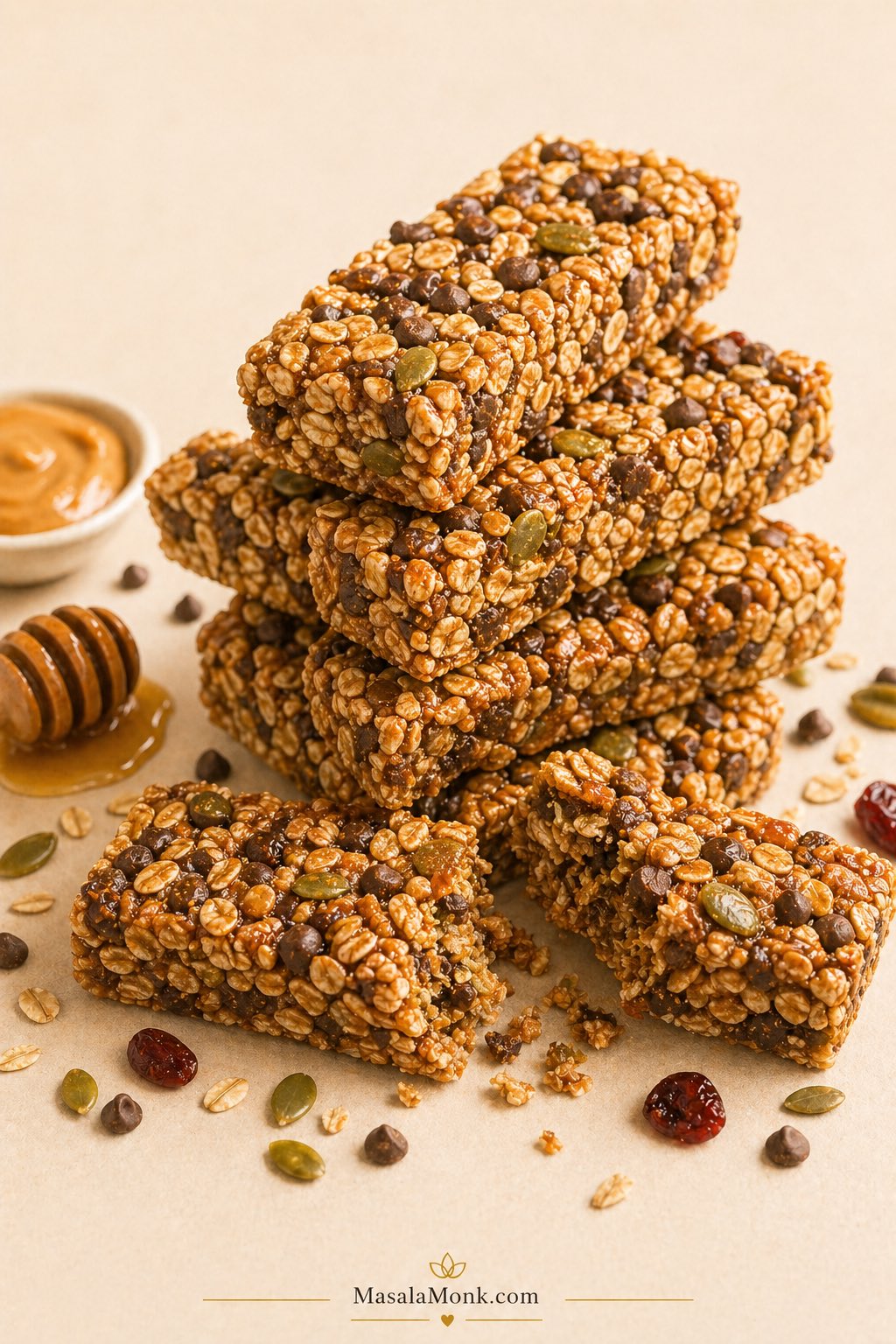
Stack of chewy homemade granola bars with oats, seeds, chocolate chips, honey, and nut butter on a warm neutral surface.

A good healthy homemade granola bars recipe should give you bars that are chewy, sturdy, lightly sweet, and easy to pack without crumbling into oat clusters. This version starts with a simple no-bake base of oats, nut butter, a sticky sweetener, salt, and mix-ins. Once that base works, you can adjust it for peanut butter, chocolate chip, protein, low-sugar, gluten-free, vegan, nut-free, cereal-style, or baked flapjack-style bars.

The best part is that these healthy homemade granola bars can fit the way you actually snack. Keep them simple for lunchboxes, add protein powder for a more filling post-workout bar, use sunflower seed butter for a nut-free lunchbox option, or bake the mixture briefly when you want a crunchier texture. Once you know how the oat-binder-sweetener formula works, homemade granola bars become much easier to customize.

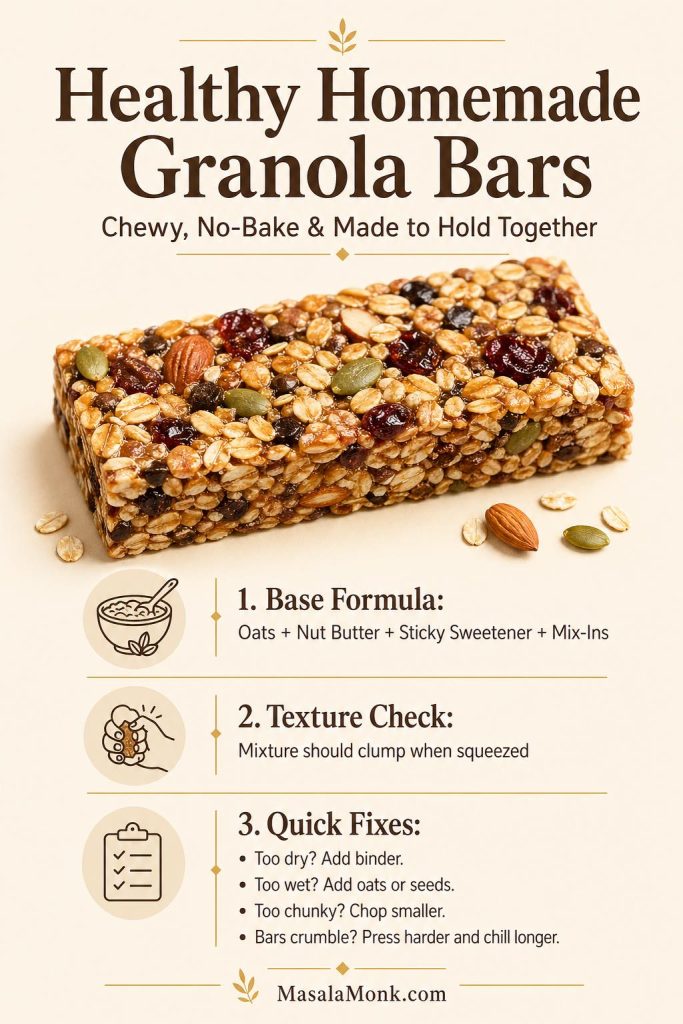
Summary guide for healthy homemade granola bars showing the base formula, texture check, and quick fixes for dry, wet, chunky, or crumbly bars.
If a reader only remembers three things, it should be these: use a balanced base formula, make sure the mixture clumps when squeezed, and fix problems before chilling by adjusting binder, oats, seeds, or mix-in size.

If this is your first batch, start with the basic chewy no-bake version. Do not try to make the bars protein-rich, vegan, low-sugar, crunchy, and nut-free all at once. Instead, make one reliable batch first, learn how the mixture should feel before pressing, and then use the variations to change the flavor, sweetness, texture, or diet fit.

Healthy Homemade Granola Bars Guide

Start with the chewy no-bake base, then use the guides below to make the bars firmer, softer, crunchier, lower in sugar, higher in protein, vegan, gluten-free, nut-free, cereal-style, or flapjack-style.

Quick Answer: Healthy Homemade Granola Bars Recipe

To make chewy, healthy homemade granola bars, mix rolled oats with creamy nut butter or seed butter, a sticky sweetener such as honey, brown rice syrup, or date paste, a little salt, and small mix-ins. Then, press the mixture very firmly into a lined pan, chill until set, and slice it into bars.

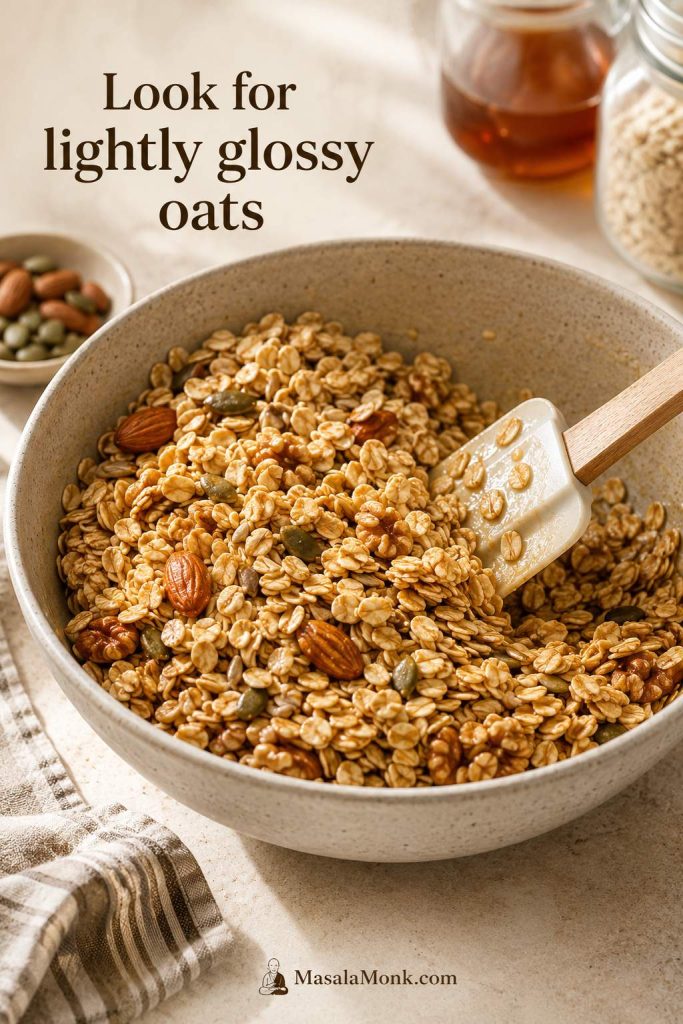
The bars hold together best when the mixture looks sticky and slightly glossy before it goes into the pan. However, if it looks dusty, it will probably slice dusty. If it feels wet and loose, add more oats, seeds, or ground flaxseed. In the end, the goal is a dense mixture that clumps when squeezed in your hand.

In this recipe, the homemade oat mixture turns into chewy granola-style bars once it is pressed firmly and chilled. That texture cue matters more than any single mix-in, especially if you want a healthier bar that still slices cleanly.

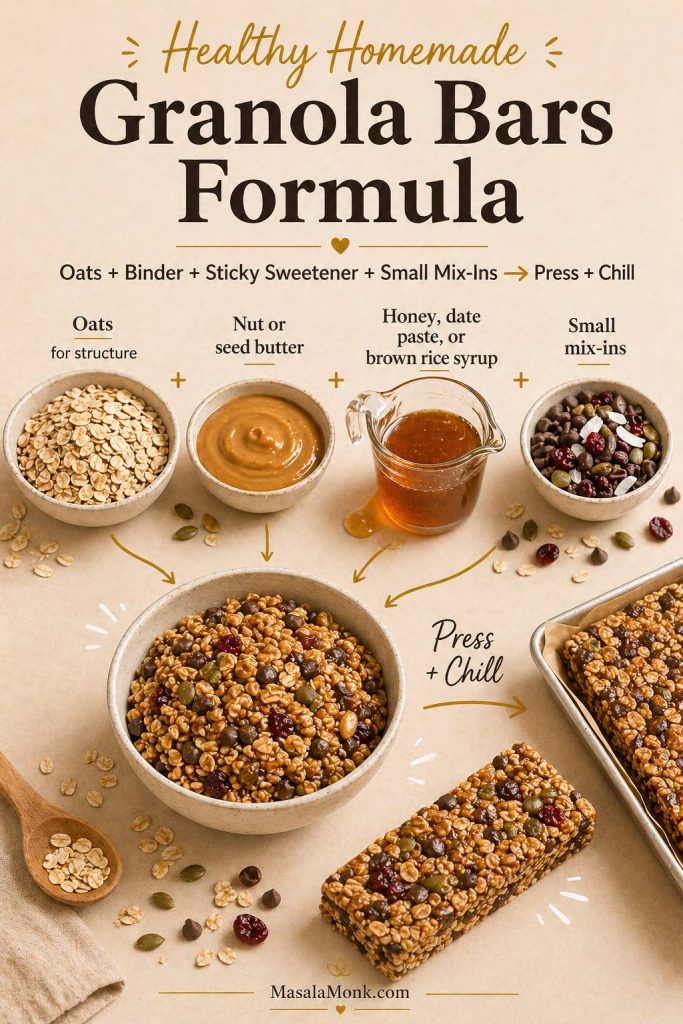
Formula guide showing oats, nut butter, sticky sweetener, small mix-ins, pressing, chilling, and finished homemade granola bars.
In short, the formula is simple: oats give structure, nut or seed butter adds richness, sticky sweetener helps the bars hold, and small mix-ins add flavor without breaking the slab.
At a glance: These are chewy no-bake granola bars made with rolled oats, creamy peanut butter or seed butter, honey or date paste, seeds, and mini chocolate chips. You need about 15 minutes of hands-on time, then the bars chill until firm. For the most reliable first batch, use peanut butter and honey, press the mixture firmly, and chill before slicing.

Why Make Granola Bars at Home?

Making granola bars at home gives you more control over sweetness, texture, binder choice, and mix-ins. That matters because the same basic oat mixture can become a chewy snack bar, a firmer lunchbox bar, a lower-sugar seed bar, a vegan date bar, or a protein-focused bar once you know how to adjust the formula.

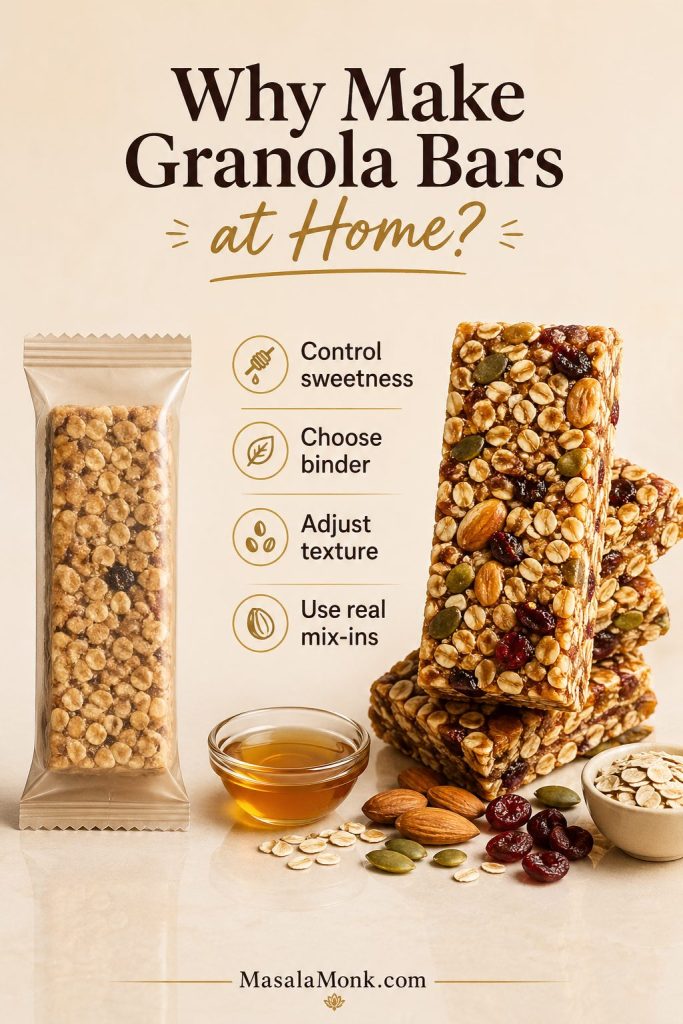
Guide image explaining why to make granola bars at home, highlighting control over sweetness, binder choice, texture adjustment, and real mix-ins.
One of the biggest advantages of making granola bars at home is control. You decide how sweet they are, what binder to use, how chewy or firm they feel, and which real mix-ins actually go into the batch.

5-Ingredient Homemade Granola Bars

When you want the simplest possible version, use this 5-ingredient formula. It is the easiest way to make homemade granola bars without turning the recipe into a project.

Because this recipe keeps the bars homemade, you can control the granola-style base, the binder, and the final sweetness without relying on a packaged snack bar.

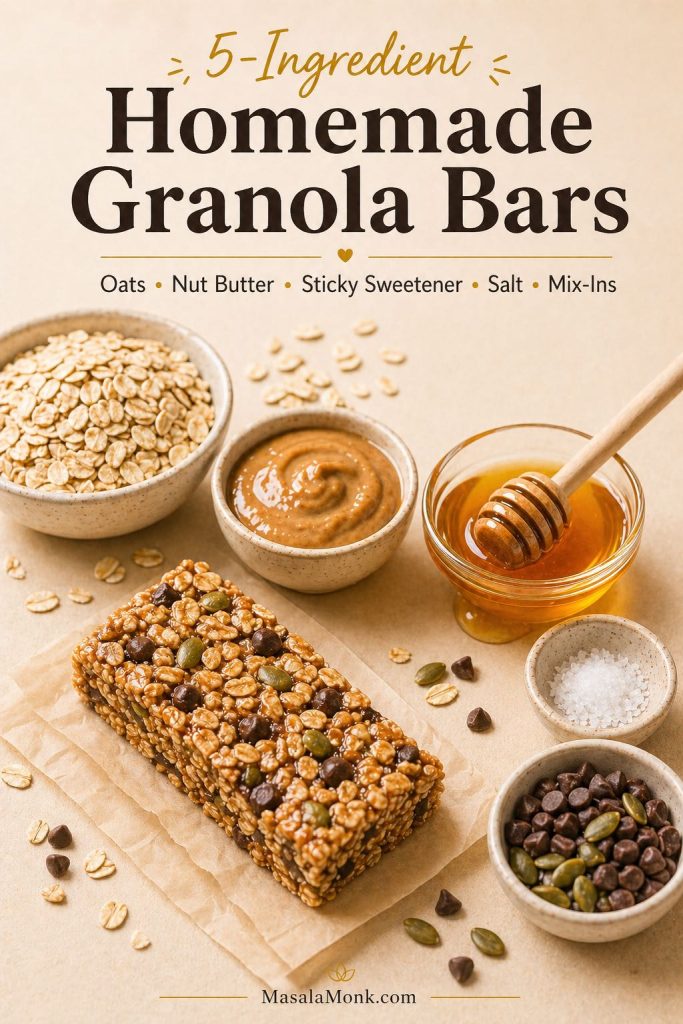
Five ingredients for homemade granola bars: oats, nut butter, honey, salt, mix-ins, and one finished granola bar.
Because this version starts with only five ingredients, it is the easiest place to learn how the oat mixture should look before you move into protein, vegan, nut-free, or low-sugar bars.
  • Oats for structure and chew
  • Peanut butter or sunflower seed butter for richness and binding
  • Honey, brown rice syrup, or date paste for stickiness
  • Salt for balance
  • Mini chocolate chips, seeds, raisins, or chopped nuts for flavor

If you are making these for older kids, start with oats, peanut butter, honey, salt, and mini chocolate chips. For a nut-free version, use sunflower seed butter and seeds instead. When you want a less sweet batch, use seeds or chopped nuts as the fifth ingredient instead of chocolate or dried fruit.

For a lighter, crispier bar, replace 1/2 to 1 cup of the oats with puffed rice cereal, crisp rice cereal, or crisp oat cereal. Since cereal is lighter than oats, keep the sticky binder strong so the bars hold together.

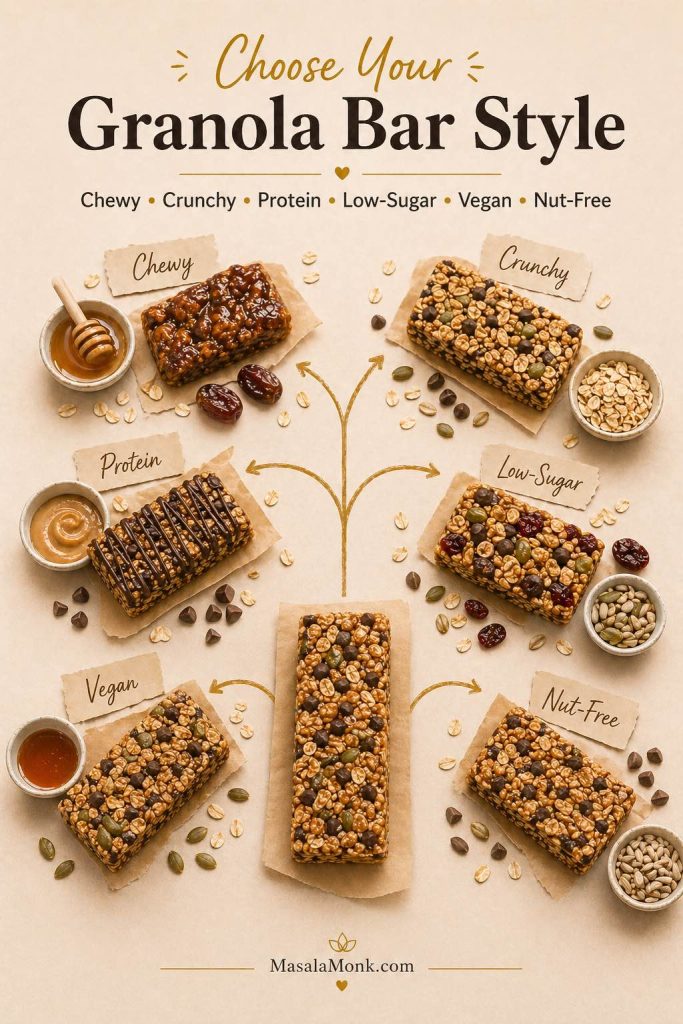
Choose Your Granola Bar Style

This recipe works because homemade granola bars do not all need the same texture. A lunchbox bar, breakfast bar, protein bar, cereal bar, and crunchy bar each need slightly different handling.

Granola bar style guide showing chewy, crunchy, protein, low-sugar, vegan, and nut-free homemade granola bar options.
Once the base recipe works, you can steer the same homemade granola bar formula toward chewy, crunchy, protein-rich, low-sugar, vegan, or nut-free versions.
You Want Best Version to Make What to Remember
Easiest first batch Chewy no-bake granola bars Use peanut butter and honey, then press hard and chill fully.
Bars that hold together best Honey or brown rice syrup + nut butter Brown rice syrup is especially sticky; honey is easier to find.
Prepared granola version Ready-made granola + sticky binder Crush large clusters first and use less added sweetener if the granola is already sweet.
Nut-free lunchbox option Sunflower seed butter + seeds Skip nuts and use pumpkin seeds, sunflower seeds, sesame, coconut, or mini chocolate chips.
Higher-protein bars Protein granola bars Start with a small amount of protein powder so the bars do not turn chalky.
Less sweet bars Seed-heavy bars with less dried fruit and chocolate Do not remove all sticky binder, or the bars will crumble.
Crunchy granola bars Toasted and briefly baked bars Cool completely before slicing; crunchy bars firm as they cool.
Cereal bars Oats + puffed rice or crisp cereal Use a strong binder and press firmly because cereal is lighter than oats.
Vegan granola bars Date paste or brown rice syrup bars Maple syrup can work, but it usually needs extra support from nut butter or flax.
Soft breakfast bars Oat bars with banana or applesauce These are softer and more breakfast-like than classic granola bars.
Flapjack-style oat bars Baked granola bar variation Use the crunchy baked method, but keep the sweetener measured for a lighter bar.

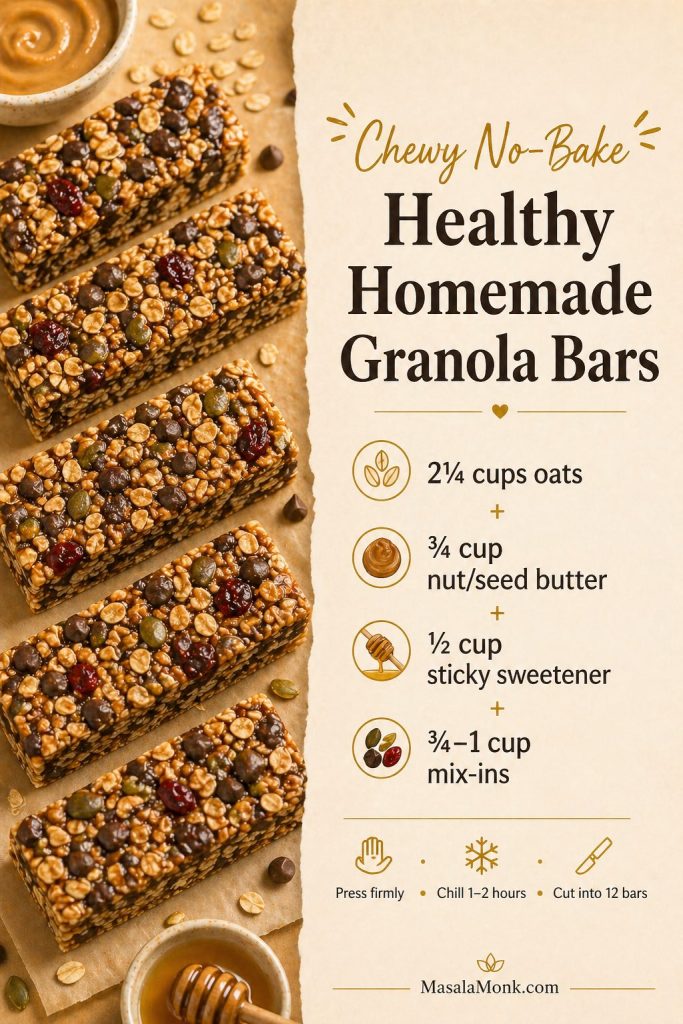
Recipe Card: Chewy No-Bake Healthy Homemade Granola Bars

Tip: Use your browser’s print option to save this recipe card, or screenshot it if you want to keep the basic formula on your phone.

Saveable recipe card for chewy no-bake homemade granola bars with oats, nut or seed butter, sticky sweetener, mix-ins, pressing, chilling, and slicing notes.
Use this base ratio as your starting point, then adjust the binder, sweetener, and mix-ins depending on whether you want softer bars, firmer lunchbox bars, or a more protein-focused batch.
Before you start: For the easiest chewy bars, use peanut butter and honey. If you have a kitchen scale, weigh the oats, nut butter, and sweetener for the most consistent texture. For vegan bars, use brown rice syrup or date paste instead of honey.

Chewy No-Bake Healthy Homemade Granola Bars Recipe

These healthy homemade granola bars are chewy, no-bake, easy to customize, and made with oats, nut butter, honey or date paste, seeds, and mini chocolate chips. Start with the base recipe, then use the variations below to change the flavor, texture, sweetness, or diet fit.

Yield12 bars
Prep Time15 minutes
Binder Warming2 minutes
Chill Time1 to 2 hours
Total TimeAbout 1 1/2 to 2 1/2 hours

Ingredients for Chewy Homemade Granola Bars

  • 2 1/4 cups rolled oats or old-fashioned oats, about 200 g / 7 oz
  • 3/4 cup creamy peanut butter, almond butter, sunflower seed butter, or tahini, about 190–205 g / 6.7–7.2 oz
  • 1/2 cup honey, brown rice syrup, or thick date paste, about 160–170 g / 5.6–6 oz / 120 ml
  • 1 teaspoon vanilla extract, 5 ml
  • 1/2 teaspoon cinnamon, optional
  • 1/2 teaspoon fine salt, about 3 g, or less if your nut butter is salted
  • 1/3 cup pumpkin seeds or sunflower seeds, about 45–55 g / 1.6–2 oz
  • 1/3 cup chopped nuts, chopped dried fruit, or extra seeds, about 40–55 g / 1.4–2 oz
  • 1/3 cup mini chocolate chips, about 55–60 g / 2 oz, optional
  • 1 to 2 tablespoons ground flaxseed or chia seeds, about 7–18 g, optional

Instructions for Homemade Granola Bars

  1. Line an 8-inch / 20 cm square pan with parchment paper, leaving overhang on two sides. For thinner bars, use a 9-inch / 23 cm square pan. For thicker bars, use a 9 x 5-inch / 23 x 13 cm loaf pan or press the mixture into only part of a larger pan.
  2. In a small saucepan over low heat, warm the nut butter and honey until smooth and pourable. Then, stir in vanilla, cinnamon, and salt. Do not boil for the basic no-bake version.
  3. In a large bowl, mix the oats, seeds, chopped nuts or dried fruit, and flaxseed or chia seeds if using.
  4. Pour the warm binder over the oat mixture. Stir thoroughly until every oat and mix-in is coated. At this point, the mixture should feel sticky and dense, not dry or dusty.
  5. Let the mixture cool for 3 to 5 minutes, then fold in the mini chocolate chips.
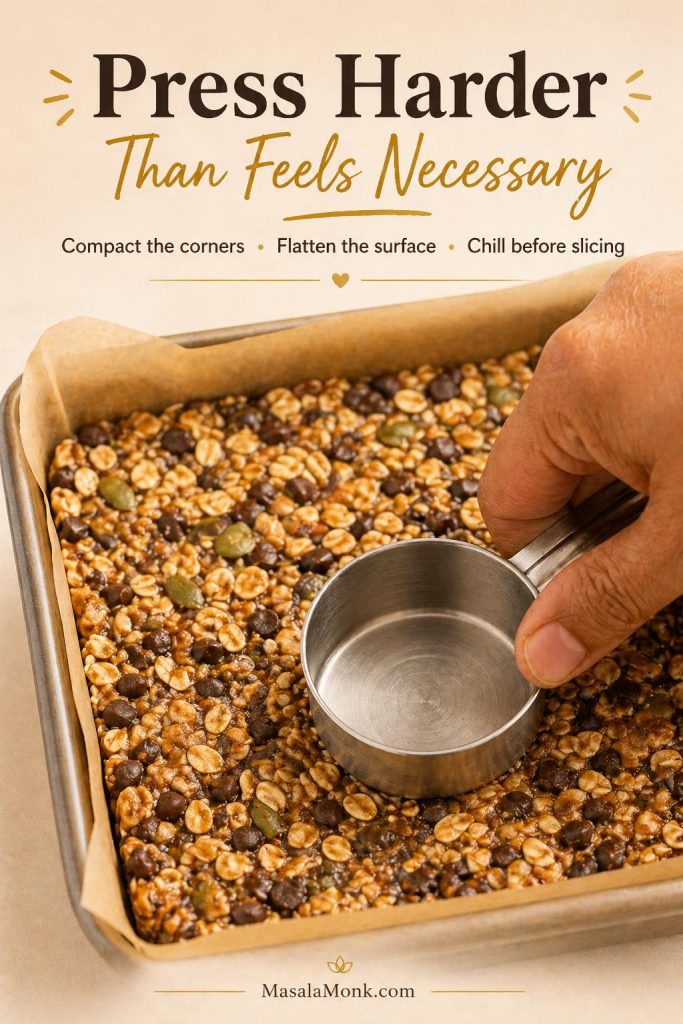
  6. Transfer to the lined pan. Cover with parchment and press very firmly into an even layer. Use the bottom of a measuring cup to compact the mixture into the corners.
  7. Chill for at least 1 hour, or 2 hours for firmer bars. Before slicing, the center should feel firm when pressed.
  8. Lift out of the pan and slice into 12 bars. Store chilled for the firmest texture.

Recipe Notes for Homemade Granola Bars

  • The mixture should look sticky and dense before pressing. If dry oats collect at the bottom of the bowl, add 1 tablespoon more nut butter or honey before pressing.
  • When the mixture crumbles before pressing, add more nut butter or honey. If it feels wet and sticky, add more oats, seeds, or ground flaxseed.
  • Use brown rice syrup or thick honey instead of thin maple syrup when you want firmer bars.
  • Vegan granola bars work best with brown rice syrup or date paste.
  • Nut-free bars need sunflower seed butter or tahini, plus seeds instead of nuts.
  • Gluten-free bars need certified gluten-free oats and checked labels on all mix-ins.
  • Protein granola bars work best when you replace 1/4 cup oats with protein powder and add 1 to 2 extra tablespoons nut butter if the mixture feels dry.
  • For a lighter crisp texture, replace 1/2 to 1 cup of the oats with puffed rice cereal, crisp rice cereal, or crisp oat cereal.
  • Bars made with ready-made granola need about 2 1/2 cups prepared granola in place of the oats, with less sweetener if the granola is already sweet.
  • A warm lunchbox needs a firmer binder, so use brown rice syrup or a short-cooked honey binder and pack with an ice pack.
  • Do not use honey in bars for children under 12 months old. Use date paste or another suitable sweetener instead.

Nutrition Estimate for Homemade Granola Bars

Nutrition will vary depending on the nut butter, sweetener, seeds, chocolate, dried fruit, and protein powder you use. As a rough estimate, one of 12 bars from the basic peanut butter and honey version will usually fall in the range of 180 to 230 calories, with most of the energy coming from oats, nut butter, seeds, and sweetener. For a lighter bar, cut the slab into 16 smaller squares.

How to Cut Homemade Granola Bars

Cut the slab into 12 rectangles when you want regular snack bars. For smaller lunchbox portions, slice it into 16 squares. Bite-size freezer snacks work well as 24 mini bars. In general, thicker bars hold together better, while thinner bars feel lighter and chill faster.

Texture Notes for Chewy Homemade Granola Bars

For the most reliable first batch, use peanut butter and honey because both help the oats stick together. Brown rice syrup makes firmer bars, especially if you need them to hold up longer outside the fridge. Maple syrup tastes good, but it usually makes softer, more fragile bars unless you add extra nut butter or ground flaxseed.

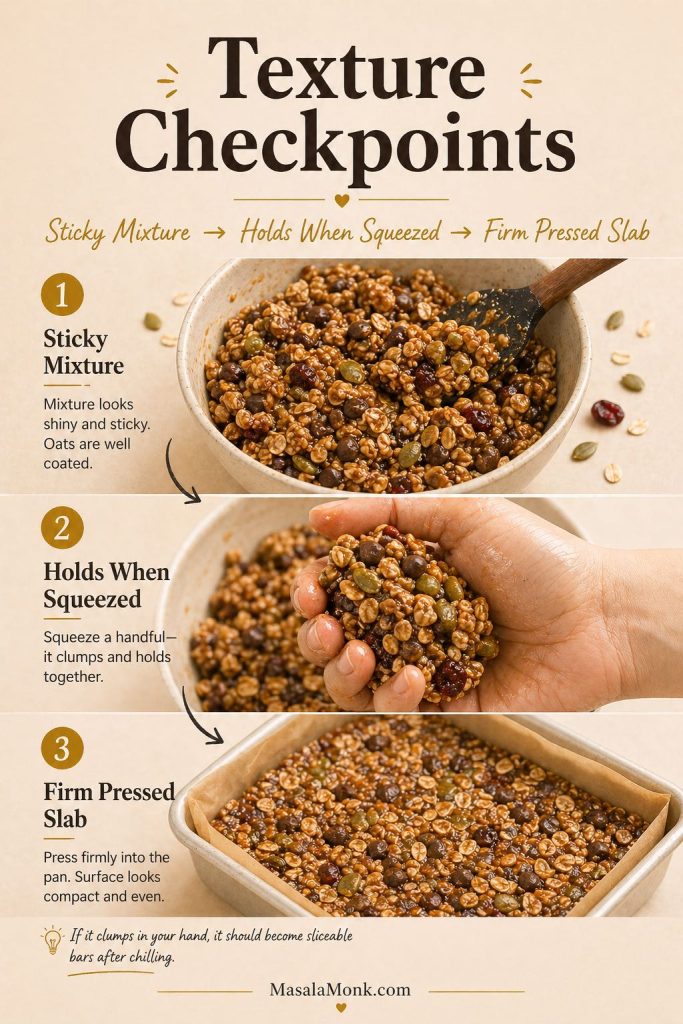
Texture checkpoint guide showing sticky granola bar mixture, a hand-squeezed cluster, and a firm pressed slab in a pan.
Before chilling, the mixture should look sticky, clump when squeezed, and press into a compact slab; otherwise, the bars may crumble when sliced.

The mixture should feel sticky before it goes into the pan. If dry oats are still sitting at the bottom of the bowl, do not press yet. Instead, add another spoonful of nut butter or honey, stir again, and test a small handful. Once it clumps when squeezed, it is ready to press.

Texture checkpoints: Before pressing, the mixture should look sticky, dense, and slightly glossy. After pressing, the slab should feel compact and flat, not loose or bumpy. After chilling, the center should feel firm when pressed. If the knife smears, chill longer. If the slab cracks sharply, let it sit for 5 minutes before slicing.

Best Pan Size for Homemade Granola Bars

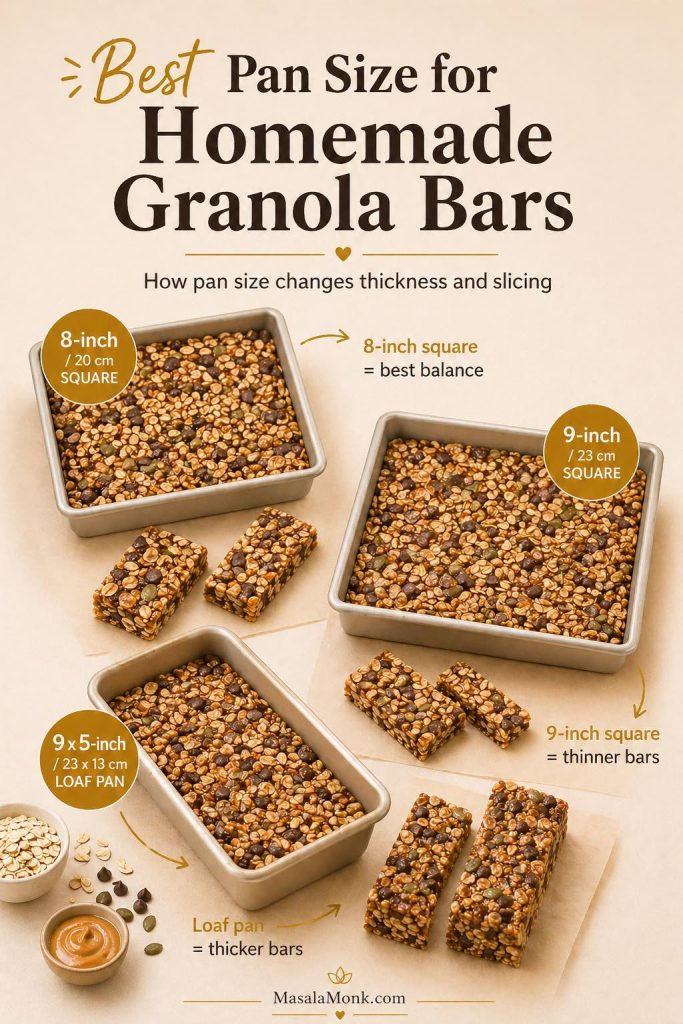
An 8-inch / 20 cm square pan gives the best balance of thickness, chilling time, and clean slicing. A 9-inch / 23 cm square pan makes thinner bars that chill faster, but they can break more easily if the mixture is not pressed firmly. A 9 x 5-inch / 23 x 13 cm loaf pan makes thicker bars that hold together well, although the yield will be smaller.

Comparison guide showing homemade granola bars in an 8-inch square pan, 9-inch square pan, and 9x5-inch loaf pan, with notes about thickness and slicing.
Pan size changes the thickness of homemade granola bars more than most people expect. An 8-inch square pan usually gives the best balance, whereas a 9-inch square makes thinner bars and a loaf pan gives a thicker, taller bar.

Whatever pan you use, press the mixture into a tight, even layer before chilling. Otherwise, the slab may look set on top but crumble when sliced.

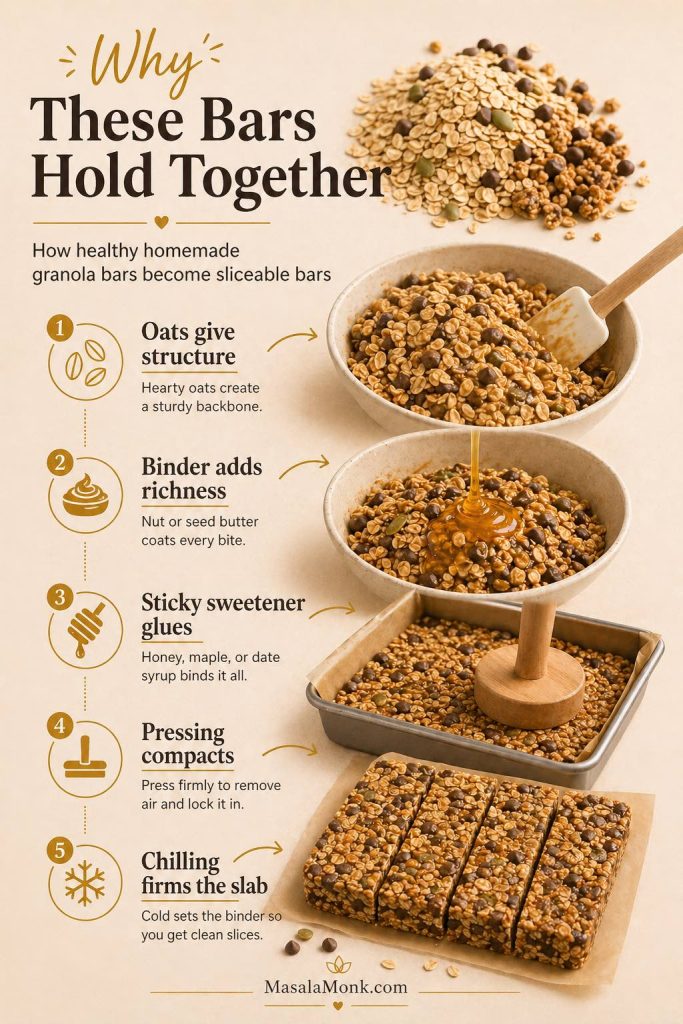
Why These Healthy Homemade Granola Bars Work

Granola bars are simple, but they can fail in frustrating ways. Sometimes they taste good but crumble as soon as you cut them. At other times, they are so sticky that they feel unfinished. Occasionally, they become hard because the binder was cooked too long.

These bars work because the oats, binder, sweetener, and mix-ins are balanced before anything goes into the pan. First, the oats give chew and structure. Then, the nut butter or seed butter adds richness and helps glue the mixture together. Meanwhile, the sticky sweetener holds the dry ingredients in place. Because small mix-ins spread through the bars instead of creating big break points, the slab cuts more cleanly. Finally, firm pressing and proper chilling turn the mixture into sliceable bars.

Guide showing how oats, binder, sticky sweetener, pressing, and chilling help homemade granola bars hold together and slice cleanly.
In other words, bars hold together because each part has a job: oats build structure, binder adds cohesion, sticky sweetener locks things in, pressing compacts the slab, and chilling firms everything up for cleaner slices.

Oats are also a strong base for a filling snack because they are a whole grain and contain beta-glucan, the main soluble fiber in oats. Harvard’s Nutrition Source notes that beta-glucan has been studied for slowing digestion and increasing satiety, which is one reason oats work so well in breakfasts and snacks. Read Harvard’s guide to oats and beta-glucan here.

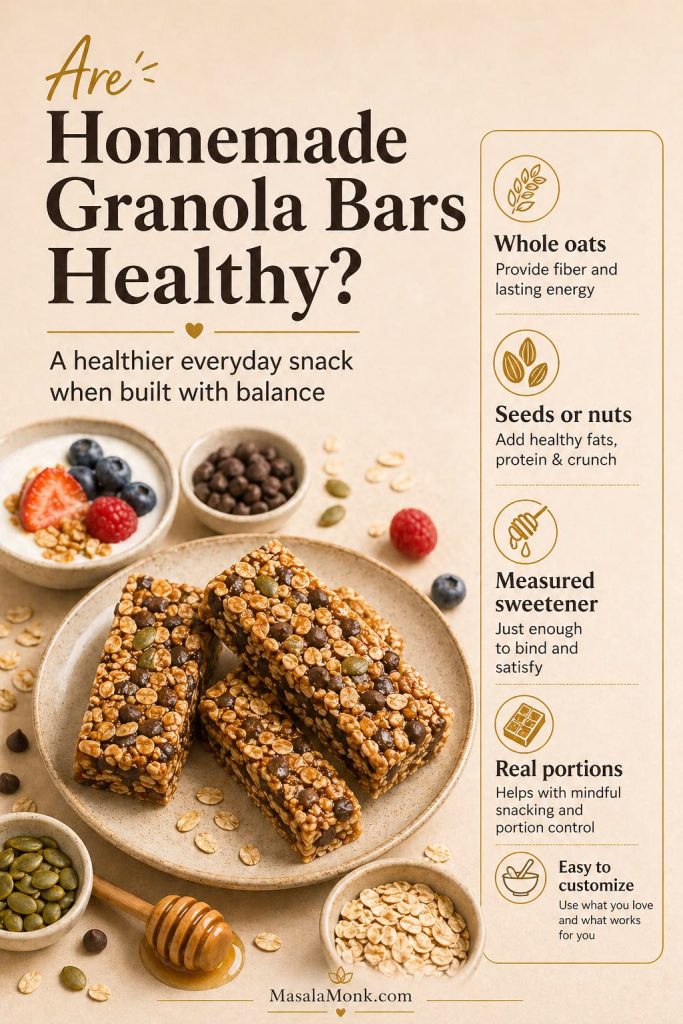
Are Homemade Granola Bars Healthy?

Homemade granola bars can be a healthier everyday snack, especially when you build them around oats, nuts, seeds, and a measured amount of sweetener. Still, homemade does not automatically mean sugar-free, low-calorie, or high-protein. The real benefit is that you decide what goes in and how sweet, filling, or protein-rich the bars should be.

Plate of homemade granola bars with oats, seeds, chocolate chips, berries, and yogurt, alongside notes about why balanced homemade granola bars can be a healthier snack.
Homemade granola bars can be a healthier snack when they are built with balance. For example, whole oats, nuts or seeds, measured sweetener, and sensible portions make them easier to fit into everyday eating.

For a more balanced homemade granola bar, start with whole oats, a moderate amount of nut or seed butter, seeds for texture, a sticky sweetener used with restraint, and enough salt to make the flavors taste complete. If the bar is meant to replace breakfast, consider protein and fiber. However, if it is meant to be a small snack, keep the portion size realistic.

In practice, a healthy homemade granola bars recipe should not depend only on removing sugar. It should also help the bars stay satisfying, easy to portion, and sturdy enough to eat without falling apart.

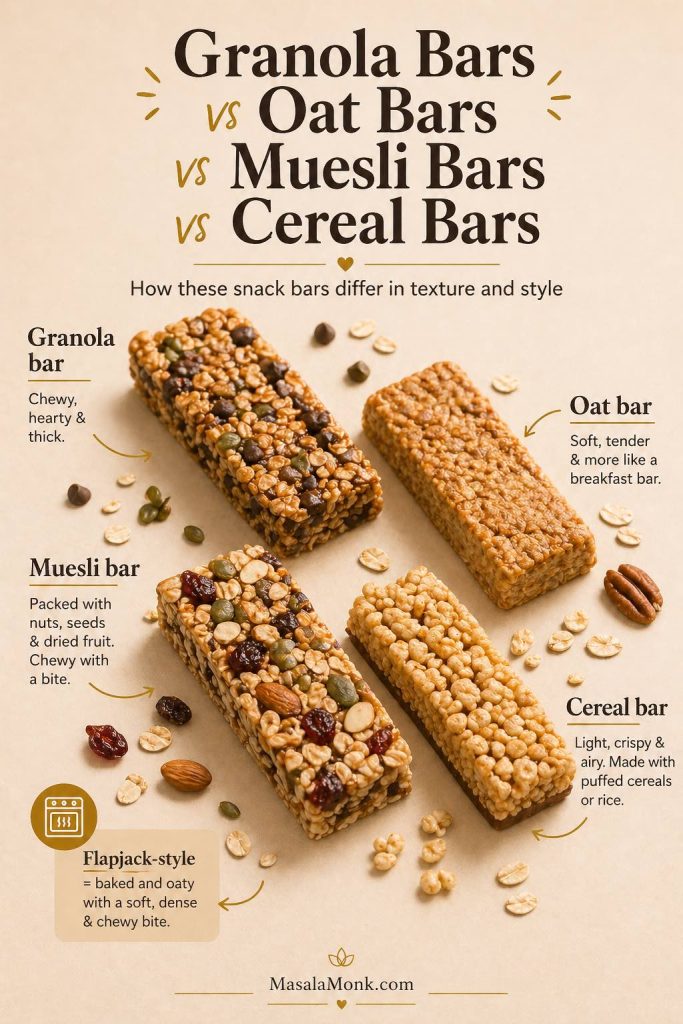
Granola Bars vs Oat Bars vs Muesli Bars vs Cereal Bars

These names overlap, but they are not always used the same way. Knowing the difference helps you choose the right style instead of forcing one recipe to do everything.

Comparison image showing a granola bar, oat bar, muesli bar, and cereal bar, with notes on texture, ingredients, and style differences.
Although these snack bars often get grouped together, they are not exactly the same. Granola bars are usually chewier and chunkier, oat bars are softer, muesli bars lean more toward nuts and dried fruit, and cereal bars are lighter and crispier.
Bar Type What It Usually Means Best For
Granola bars Oat-based bars with nuts, seeds, dried fruit, chocolate, and a sticky binder. Classic snack bars, lunchboxes, road trips, meal prep.
Oat bars Often softer, more breakfast-like, and sometimes made with banana, applesauce, or baked oatmeal-style mixtures. Breakfast, kids’ snacks, softer meal-prep bars.
Muesli bars A common name in some regions for oat, nut, seed, and dried fruit bars. Chewy oat bars with fruit, nuts, and seeds.
Cereal bars Bars made with puffed rice, toasted cereal, oat cereal, or similar breakfast cereals. Quick no-bake lunchbox bars and kid-friendly snacks.
Protein bars Bars built around extra protein from protein powder, nuts, seeds, dairy, soy, or other protein-rich ingredients. Post-workout snacks, higher-protein breakfasts, gym bags.
Flapjacks In UK-style usage, usually baked oat bars made with oats, fat, sugar, and syrup. People who want a firmer baked oat bar texture.

For this recipe, rolled oats or old-fashioned oats are the best starting point because they give homemade granola-style bars visible texture and chew. If you are still deciding which oats to use, MasalaMonk’s guide to oats, types, nutrition, and differences explains rolled oats, quick oats, instant oats, and steel-cut oats in more detail.

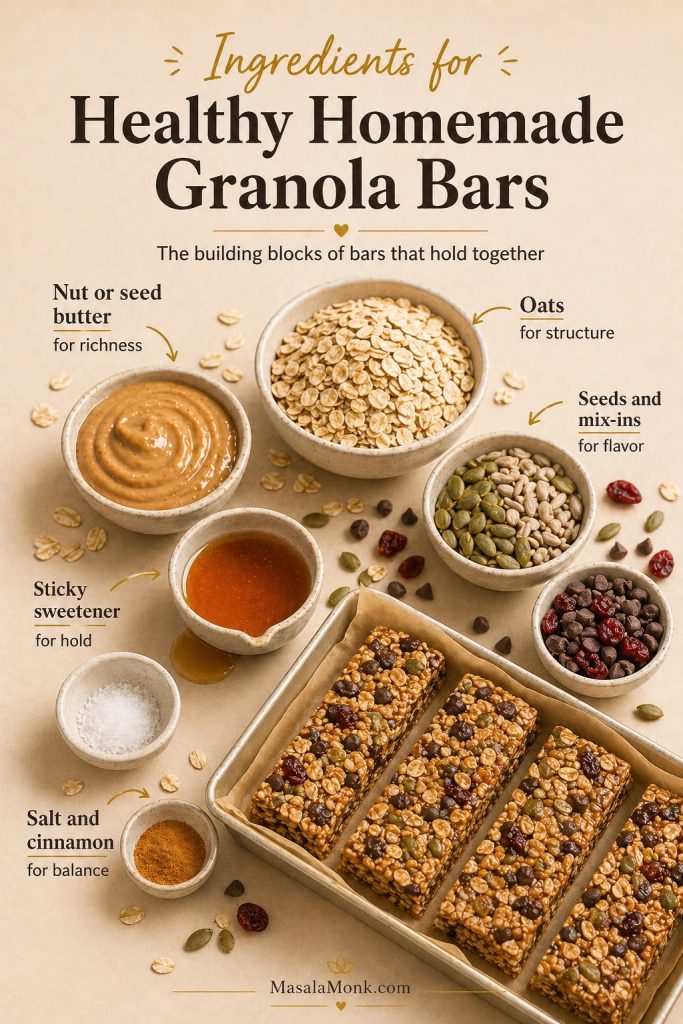
Ingredients for Healthy Homemade Granola Bars

This recipe uses simple homemade granola bar ingredients, but each one has a job. Once you understand what each ingredient does, it becomes much easier to make substitutions without ending up with crumbly, sticky, or dry bars.

Ingredient guide for healthy homemade granola bars showing oats, nut or seed butter, sticky sweetener, seeds, mix-ins, salt, cinnamon, and sliced bars in a pan.
Before you start, it helps to see the building blocks clearly. Oats provide structure, nut or seed butter adds richness, sticky sweetener helps with hold, and mix-ins bring flavor, texture, and variety.

Rolled Oats or Old-Fashioned Oats

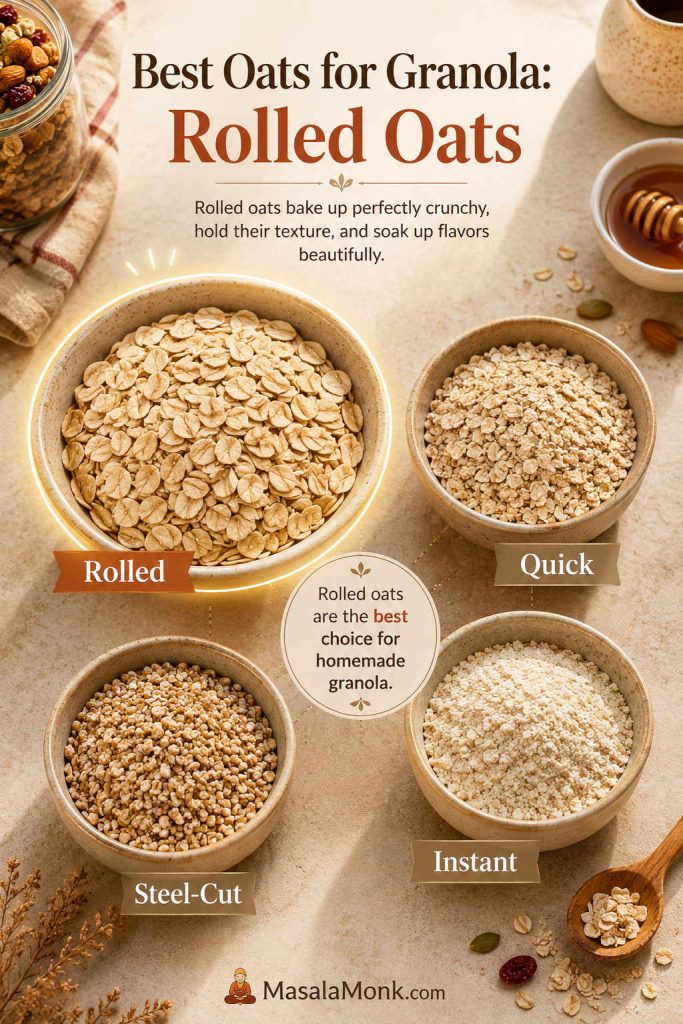
Rolled oats are the best all-purpose choice for chewy granola bars. They are flat enough to bind into the mixture, but they still keep enough texture to feel hearty. Old-fashioned oats and rolled oats are usually the same thing, so either label works here. MasalaMonk has a full guide on substituting old-fashioned oats for rolled oats if you want the details.

Quick oats can work when you want softer bars, although the texture will be less defined. On the other hand, steel-cut oats are not ideal for this no-bake recipe because they stay too hard and do not bind well unless they are cooked or processed first.

Nut Butter or Seed Butter

Creamy peanut butter is the easiest binder for a first batch because it is thick, flavorful, and sticky. Almond butter, cashew butter, sunflower seed butter, pumpkin seed butter, and tahini can also work. If you use natural nut butter, stir it very well before measuring, since separated oil can make some parts of the bars greasy while other parts stay dry.

For peanut butter granola bars, use creamy peanut butter. For nut-free granola bars, use sunflower seed butter or tahini. If you want full control over salt, sweetness, and texture, you can also make peanut butter at home and use it as the binder.

Sticky Sweetener and Best Binders

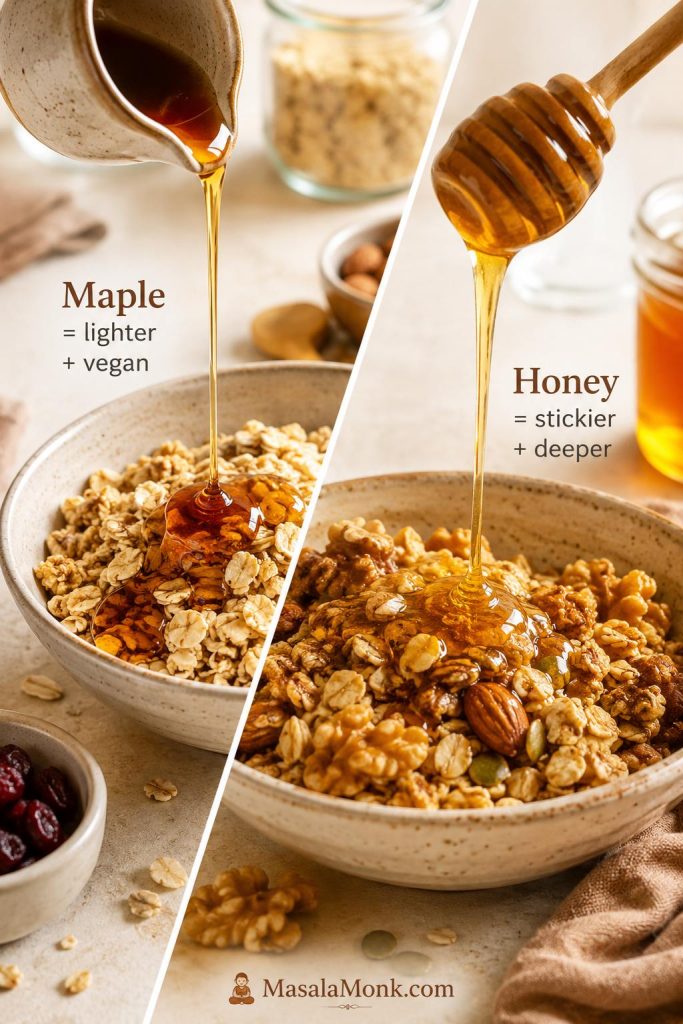
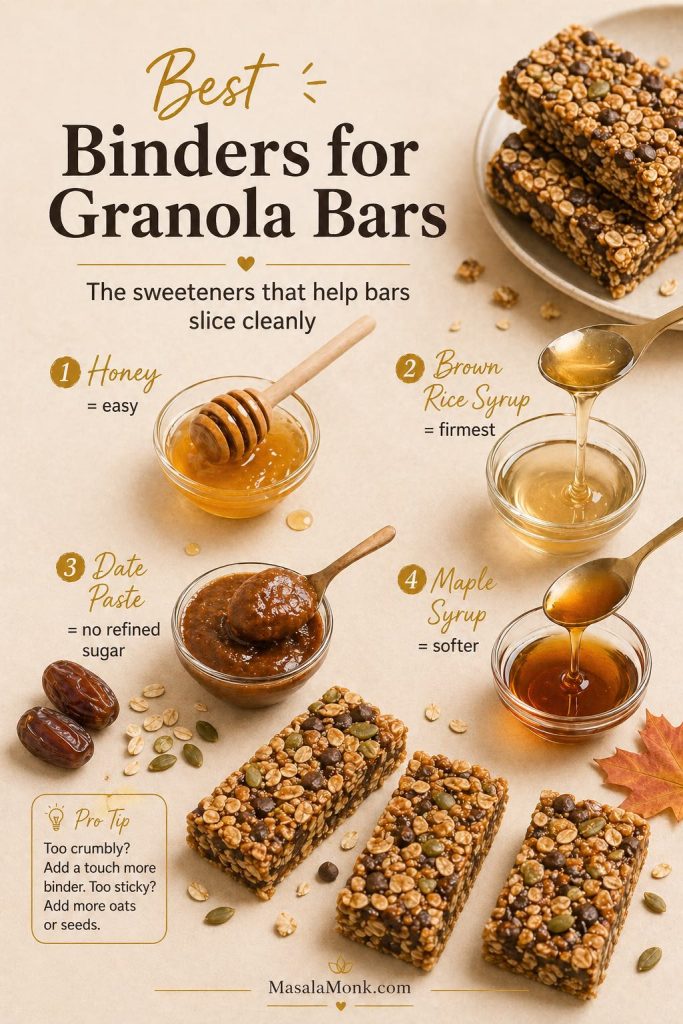
A sticky sweetener turns oats and mix-ins into bars instead of loose granola. Honey is the easiest choice for chewy no-bake granola bars. Brown rice syrup is even stickier and can help bars hold together more firmly. Date paste works well for a no-refined-sugar version. Maple syrup tastes good, but it is thinner and less sticky, so bars made only with maple syrup can be more fragile unless you adjust the formula.

Binder comparison guide for granola bars showing honey, brown rice syrup, date paste, and maple syrup, with notes on firmness, sweetness, and texture.
Choosing the right binder changes how your granola bars feel and slice. Honey is easy to use, brown rice syrup gives the firmest hold, date paste avoids refined sugar, and maple syrup usually makes a softer bar.

For vegan granola bars, brown rice syrup and date paste usually give a better hold than maple syrup alone. If you use maple syrup, add extra nut butter, ground flaxseed, or a slightly longer chill time. Also, if you are making bars for a baby under 12 months old, do not use honey; the CDC advises against giving honey to children younger than 12 months because of infant botulism risk. Read the CDC guidance here.

The binder is where most granola bars succeed or fail. Use this quick guide when you are choosing between honey, maple syrup, date paste, brown rice syrup, peanut butter, tahini, or seed butter.

Binder Goal Best Choice Why It Works
Best first batch Peanut butter + honey Easy, sticky, familiar, and reliable.
Firmest vegan bars Seed butter + brown rice syrup Brown rice syrup is thick and sticky, so it holds better than thin maple syrup.
No-refined-sugar bars Nut butter + date paste Thick, sweet, and caramel-like, though still naturally sweet.
Flapjack-style bars Honey or golden syrup + butter or nut butter Gives a firmer baked oat-bar texture.
No-peanut-butter bars Almond butter, cashew butter, tahini, or sunflower seed butter Useful for allergies, taste preference, and lunchbox planning.
Lunchbox-firm bars Brown rice syrup or short-cooked honey binder Helps bars hold up better outside the fridge.

Nuts, Seeds, Dried Fruit, and Chocolate

Mix-ins make homemade granola bars more interesting, but they can also make the bars break apart. Large almonds, whole cashews, big chunks of dates, and oversized chocolate chips create weak spots in the slab. Therefore, chop nuts and dried fruit before mixing, and use mini chocolate chips when possible.

Good mix-ins include pumpkin seeds, sunflower seeds, chia seeds, flaxseed meal, sesame seeds, chopped nuts, shredded coconut, dried cranberries, raisins, dates, mini chocolate chips, cacao nibs, and a pinch of cinnamon. In general, smaller pieces make cleaner bars because they compress more evenly into the oat mixture.

Salt, Vanilla, and Cinnamon

Do not skip the salt. A small amount keeps the bars from tasting flat and makes the nut butter, oats, and sweetener taste more complete. Vanilla adds warmth, while cinnamon gives the bars a breakfast-like flavor. You can also use cardamom, ginger, cocoa powder, orange zest, or espresso powder in specific variations.

Optional Protein Powder

Protein powder can turn this into a homemade protein granola bars recipe, but it changes the texture quickly. Whey protein usually blends more smoothly than many plant proteins. Meanwhile, plant protein powders often absorb more moisture and can make bars dry or chalky. Start small, then add more nut butter or a splash of milk if the mixture feels dry before pressing.

For a more protein-focused oat recipe, MasalaMonk already has healthy oat protein bars. If you want to understand protein powder in oats more deeply, this protein oatmeal guide explains whey, plant protein, yogurt, egg whites, paneer, tofu, and other ways to raise protein in oat-based meals.

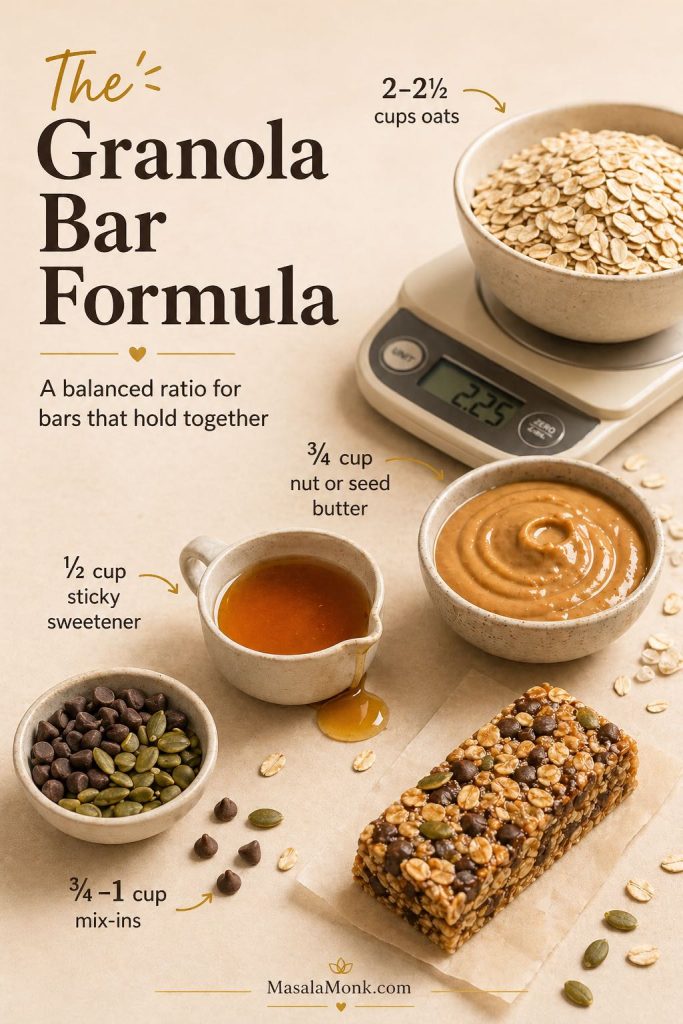
The Simple Formula Behind Homemade Granola Bars

Think of this recipe as a balance between dry structure and sticky glue. The oats and mix-ins give the bars body, while the nut butter and sweetener hold everything together. If either side gets too heavy, the texture suffers.

Formula guide for homemade granola bars showing oats, nut or seed butter, sticky sweetener, mix-ins, and a finished bar.
Once you understand the base formula, homemade granola bars become much easier to adjust. The oats build structure, while the binder and sticky sweetener help the mixture press into bars instead of crumbling apart.
Ingredient Type Starting Amount Purpose Best Choices
Oats 2 to 2 1/2 cups Structure and chew Rolled oats or old-fashioned oats
Nut or seed butter 3/4 cup Binder, richness, flavor Peanut butter, almond butter, sunflower seed butter, tahini
Sticky sweetener 1/2 cup Glue and sweetness Honey, brown rice syrup, date paste
Mix-ins 3/4 to 1 cup Flavor, crunch, chew Mini chips, seeds, chopped nuts, chopped dried fruit
Flavor boosters Small amounts Balance Salt, vanilla, cinnamon, cocoa, cardamom

As a rule, do not keep adding dry mix-ins just because they sound good. Too many seeds, nuts, dried fruit pieces, chocolate chips, or protein powder will overwhelm the binder. Ideally, the mixture should look compact and sticky before pressing, with no dry oats collecting at the bottom of the bowl.

Can You Make Granola Bars with Ready-Made Granola?

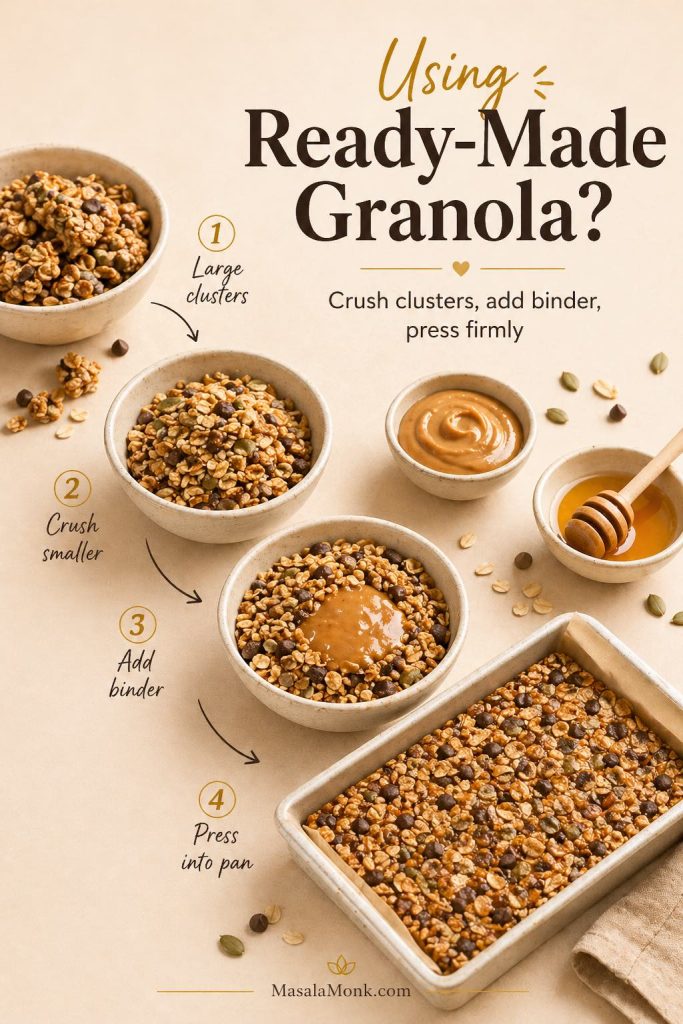
Yes, you can make granola bars with ready-made granola, but the texture depends on what is already in the granola. If your granola is very crunchy, very sweet, or full of large clusters, crush or pulse it lightly before mixing so the bars can compact properly. Large clusters taste good in a bowl, but they can make sliced bars break apart.

Because prepared granola is often already sweetened, use less added sweetener than the main recipe. As a starting point, use 2 1/2 cups granola, 1/2 cup creamy nut or seed butter, 1/3 cup honey or brown rice syrup, and 1/4 to 1/2 cup extra seeds, mini chocolate chips, or chopped dried fruit. After that, warm the binder, mix everything well, press very firmly into a lined pan, and chill before slicing.

Guide showing ready-made granola clusters being crushed smaller, mixed with binder, and pressed into a pan for granola bars.
Ready-made granola can work, but large clusters need to be broken down first. Then, add just enough binder and press the mixture firmly so it slices more like bars than loose clusters.

With ready-made granola, the recipe still works, but homemade-style bars need smaller clusters and a strong binder. Otherwise, the slab may taste good but crumble when sliced.

Texture tip: Granola bars made with ready-made granola work best when the granola pieces are small enough to compress. If the mixture looks like loose cereal even after adding the binder, crush the granola a little more or add another spoonful of nut butter.

How to Make Homemade Granola Bars Step by Step

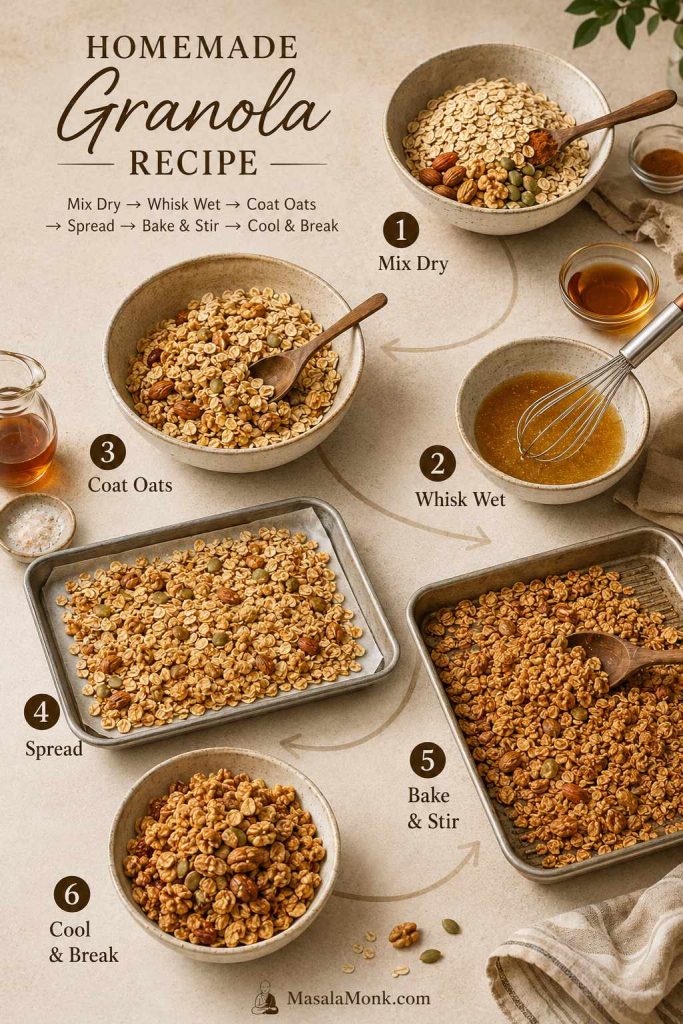
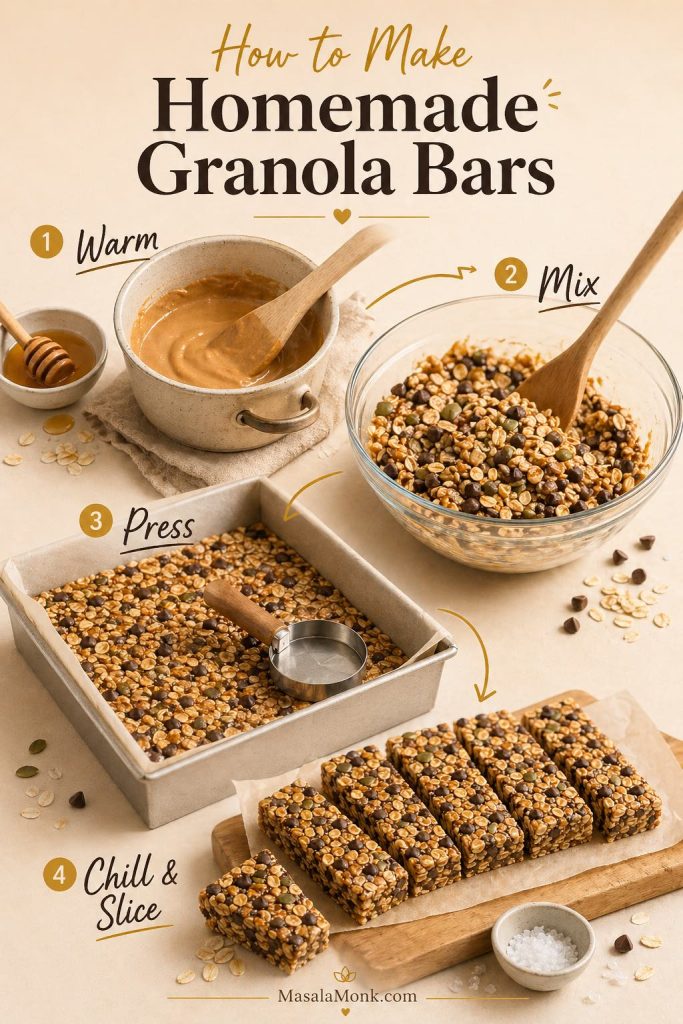
This step-by-step recipe shows how a homemade granola mixture becomes firm, sliceable bars after warming, mixing, pressing, chilling, and cutting.

Step-by-step guide showing homemade granola bars being warmed, mixed, pressed into a pan, chilled, and sliced.
The method is simple, although the order matters. Warm the binder first, mix until the oats are coated, press the slab firmly, and then chill before slicing for cleaner homemade granola bars.

1. Line the Pan

Line an 8-inch / 20 cm square pan with parchment paper, leaving some overhang on two sides. This makes it easier to lift the chilled slab out cleanly. For thinner bars, use a 9-inch / 23 cm square pan. For thicker bars, use a 9 x 5-inch / 23 x 13 cm loaf pan or press the mixture into only part of a larger pan.

2. Warm the Binder

Add the nut butter, honey or other sticky sweetener, vanilla, and salt to a small saucepan. Warm over low heat just until smooth and pourable. For the basic no-bake version, you are not trying to boil the mixture. Instead, you only want it loose enough to coat the oats evenly.

If you need firmer room-temperature bars, gently simmer honey for about 1 minute before mixing it with the nut butter. This creates a stickier binder, but it can also make the bars harder if cooked too long.

3. Mix the Oats and Dry Ingredients

In a large bowl, combine the rolled oats, seeds, chopped nuts, chopped dried fruit, cinnamon, and any protein powder or flaxseed meal. Keep chocolate chips aside until the binder has cooled slightly, especially if you want visible chips instead of melted chocolate streaks.

4. Combine Wet and Dry

Pour the warm binder over the oat mixture. Stir until every oat and mix-in is coated. Scrape the bottom and sides of the bowl so there are no dry pockets. The mixture should look sticky, dense, and slightly glossy. If it still looks dusty, add another spoonful of nut butter or honey.

5. Add Chocolate Chips Last

Let the mixture cool for a few minutes before folding in mini chocolate chips. Small chips work better than large chips because they spread through the bars evenly and do not create big break points. If the mixture is very warm, the chips will melt, which is fine for flavor but less tidy for slicing.

6. Press Harder Than Feels Necessary

Transfer the mixture to the lined pan. Cover the top with another piece of parchment paper and press down firmly with your hands, the bottom of a measuring cup, or a flat spatula. Push into the corners and flatten the surface. Then press again. This step is what turns a sticky oat mixture into actual bars.

Close-up of a measuring cup pressing homemade granola bar mixture firmly into a parchment-lined pan.
Pressing is where many granola bars succeed or fail. For better structure, compact the corners, flatten the surface, and remove air gaps before the slab goes into the fridge.

7. Chill Before Slicing

Chill for at least 1 hour, or 2 hours if your kitchen is warm. Do not judge the final texture while the slab is still soft. After chilling, lift the slab out using the parchment, then slice with a sharp knife. Press straight down instead of sawing back and forth.

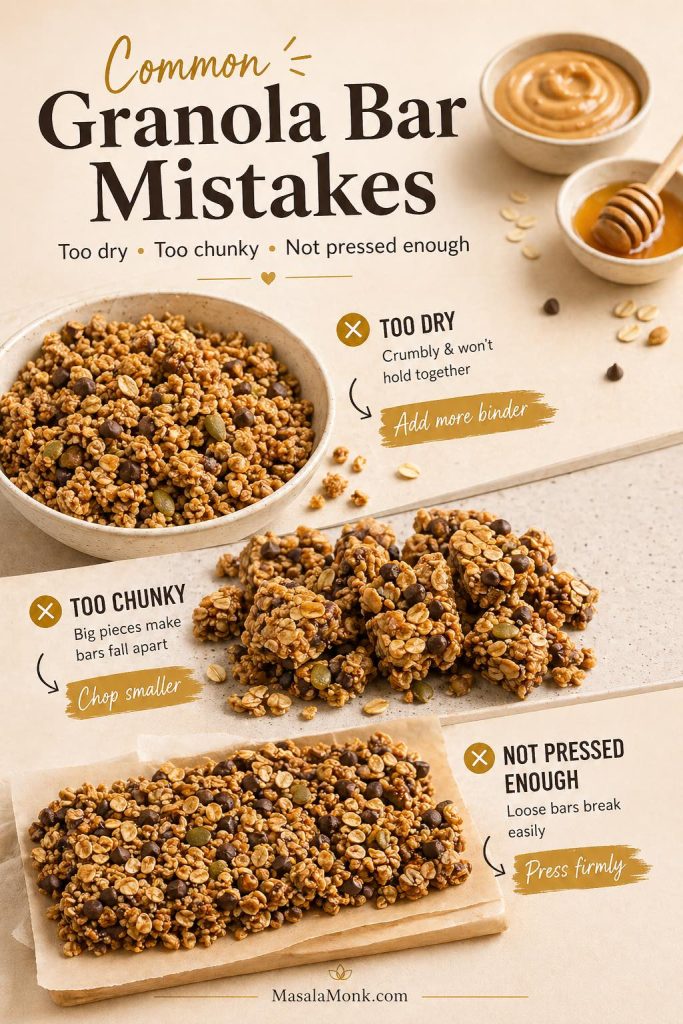
Common Mistakes When Making Homemade Granola Bars

Even a simple homemade granola bars recipe can fail when the mixture is too dry, too wet, too chunky, or not pressed firmly enough.

Common granola bar mistakes guide showing a dry mixture, chunky pieces, and a loose slab with fixes for each problem.
Most crumbly bars come from one of three issues: the mixture is too dry, the mix-ins are too large, or the slab was not pressed firmly enough. Fortunately, each problem is easy to fix before the next batch.
  • Avoid overloading the mix-ins. Too many nuts, seeds, dried fruit pieces, chocolate chips, or protein powder can overwhelm the binder.
  • Keep large chunks out of the mixture. Big almonds, dates, chocolate pieces, and granola clusters create weak spots.
  • Press harder than feels necessary. Otherwise, the mixture may stay loose instead of compacting into one slab.
  • Wait before slicing. No-bake granola bars need chilling time before they cut cleanly.
  • Keep some sticky sweetener in the recipe. Sweetener is part of the structure, not just the flavor.
  • Let protein bars rest before judging texture. Protein powder absorbs moisture as the mixture sits.

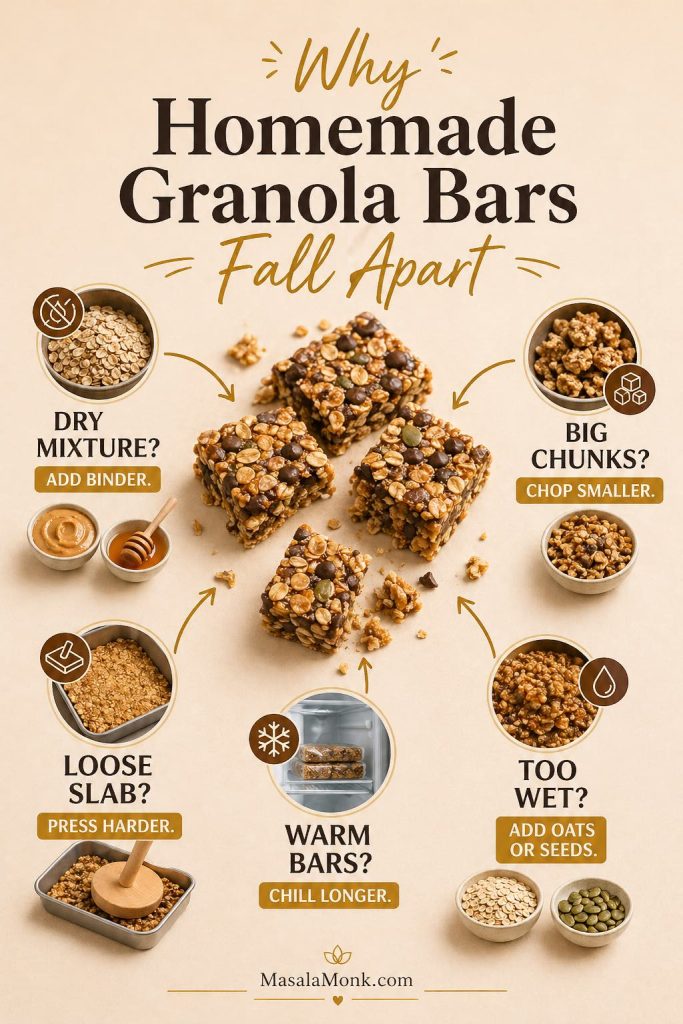
Why Homemade Granola Bars Fall Apart

If homemade granola bars fail, they usually fail here. The recipe may taste good, but the slab slices into crumbs. Fortunately, the fix is rarely complicated: use enough sticky binder, chop the mix-ins smaller, press harder than feels necessary, and chill the slab until it is genuinely firm.

Troubleshooting guide showing why homemade granola bars fall apart, including dry mixture, big chunks, loose slab, warm bars, and wet mixture fixes.
When homemade granola bars fall apart, do not guess blindly. Instead, check the texture: add binder if the mixture is dry, chop large chunks smaller, press harder, chill longer, or add oats and seeds if the mixture is too wet.

The Hand-Squeeze Test

Before pressing the mixture into the pan, squeeze a spoonful in your hand. A good mixture should hold together like a sticky cluster after a firm squeeze. When it falls apart immediately, add a little more nut butter, honey, date paste, or brown rice syrup. When it smears and feels wet, balance it with more oats, seeds, or ground flaxseed.

What to Adjust Before Pressing

Crumbly bars usually need more sticky binder, even when the homemade granola mixture looks well mixed. That is why the hand-squeeze test is so useful before everything goes into the pan. Once the mixture clumps in your hand, press it firmly into the pan instead of adding more dry mix-ins.

Clean Slicing Cues

Before slicing, press the center of the slab gently. A firm center means the bars are ready to cut. Deep dents mean they need more chilling time. Smearing on the knife usually means the bars are too warm or too wet, while sharp cracking can mean the mixture is too dry or too cold.

Quick Troubleshooting Guide

Problem Most Likely Cause Best Fix
Crumbles when sliced Not enough sticky binder Add 1 to 2 tablespoons more nut butter, honey, date paste, or brown rice syrup next time.
Breaks around nuts or fruit Mix-ins are too large Chop nuts and dried fruit smaller before mixing.
Falls apart after chilling Mixture was not pressed firmly enough Cover with parchment and press hard with a measuring cup before chilling.
Sticky and messy texture Too much wet binder or not enough dry structure Add more oats, seeds, shredded coconut, or ground flaxseed.
Too hard after setting Binder was cooked too long or too much syrup was used Warm only until smooth for chewy no-bake bars. Avoid over-boiling.
Softens in a lunchbox No-bake bars are warmer than ideal Pack with an ice pack, use brown rice syrup, or make the firmer cooked-binder version.
Chocolate melts into the mixture Binder was too hot when chips were added Cool the mixture for a few minutes, then add mini chocolate chips.
Slab cracks when cut Mixture is too dry or too cold Let it sit for 5 minutes before slicing, and add slightly more binder next time.
Knife smears through the bars Bars are too warm or too wet Chill longer, then slice with a sharp knife. Add more oats next time if needed.

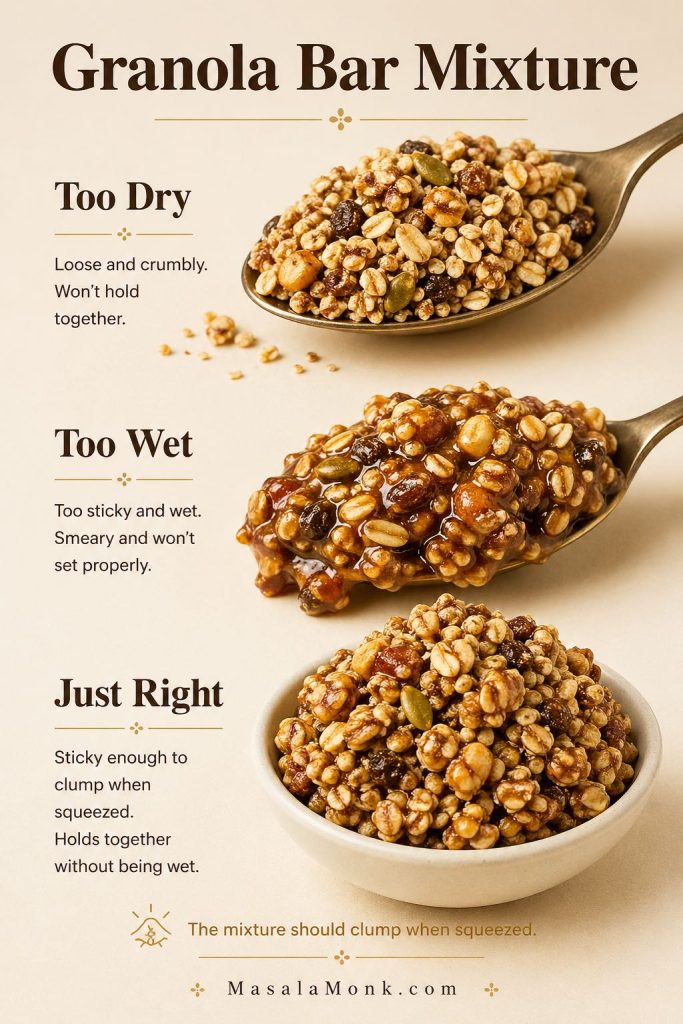
Granola Bar Mixture: Too Dry, Too Wet, or Just Right

Texture guide showing granola bar mixture that is too dry, too wet, and just right, with the note that the mixture should clump when squeezed.
Before you ever press the mixture into the pan, texture tells you whether the bars are likely to work. The mixture should look cohesive and slightly sticky, and it should clump when squeezed instead of scattering or smearing.

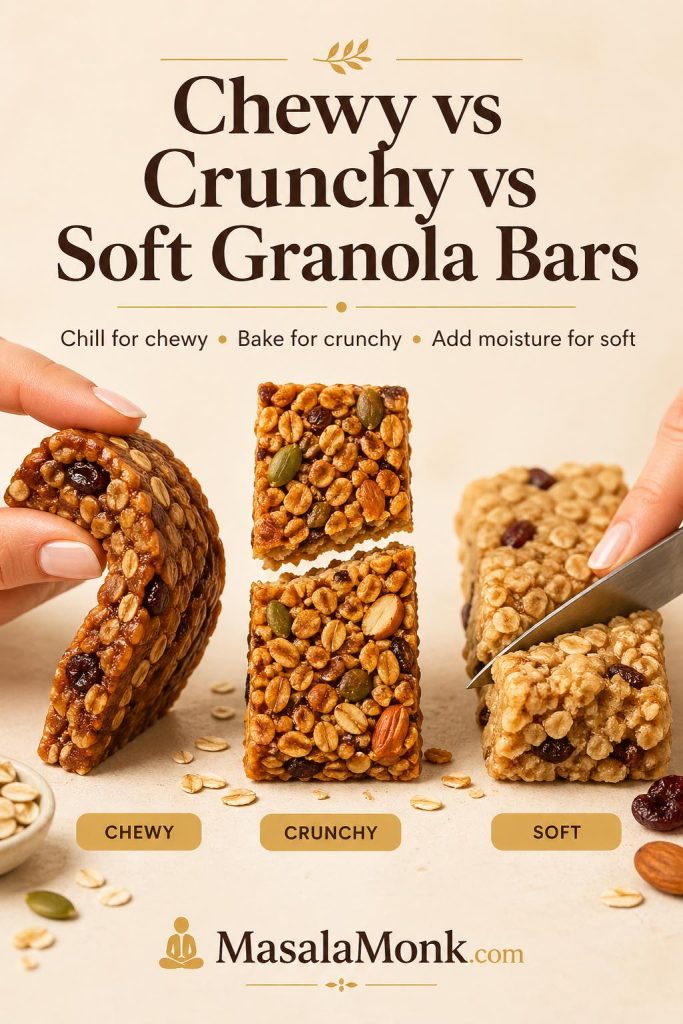
Chewy vs Crunchy vs Soft Granola Bars

This homemade recipe can make chewy, crunchy, or soft granola bars depending on how you handle the binder, oats, baking, and chilling.

Comparison image showing chewy, crunchy, and soft granola bars, with notes that chilling makes chewy bars, baking makes crunchy bars, and added moisture makes soft bars.
Texture changes the whole experience of a homemade granola bar. For example, chilling helps create a chewier bite, baking makes bars crisper, and a slightly moister mix gives you a softer, more tender bar.
Texture How to Get It Best For
Chewy no-bake bars Use nut butter + sticky sweetener, press firmly, and chill. Classic homemade granola bars, lunchbox snacks, freezer snacks.
Crunchy granola bars Toast the oats and nuts first, use slightly less wet binder, then bake briefly and cool fully. People who prefer crisp edges and toasted flavor.
Soft breakfast oat bars Add mashed banana, applesauce, yogurt, egg, or flax egg and bake like oatmeal bars. Breakfast, toddlers, softer snack bars, meal prep.
Firm travel bars Use brown rice syrup or a short cooked honey binder and keep mix-ins small. Road trips, office snacks, gym bags, warmer weather.

For Chewy Granola Bars

Use the main no-bake recipe. Keep the oats mostly whole, use creamy nut butter, choose a sticky sweetener, and chill fully. Chewy bars are the best first version because they are easy, flexible, and forgiving.

For Crunchy Granola Bars

For crunchy granola bars, toast the oats, nuts, and seeds at 325°F / 165°C until fragrant, then use slightly less wet binder than the chewy no-bake version. Press the mixture firmly into a parchment-lined pan and bake at 300°F / 150°C for 15 to 20 minutes, until the edges look lightly golden. Let the slab cool completely before slicing. If you cut while warm, the bars may bend or crumble instead of snapping cleanly.

Extra crispness comes from replacing 1/2 to 1 cup of the oats with puffed rice cereal, crisp rice cereal, or crisp oat cereal. Brown rice syrup gives a firmer bite than maple syrup because it is thicker and stickier.

For Soft Breakfast Oat Bars

Use more moisture and a baking method. Add mashed banana, applesauce, yogurt, or a flax egg to the oats. The result will be closer to oatmeal breakfast bars than classic granola bars. If you want a spoonable make-ahead breakfast instead of a sliced bar, MasalaMonk’s high protein overnight oats are a better fit.

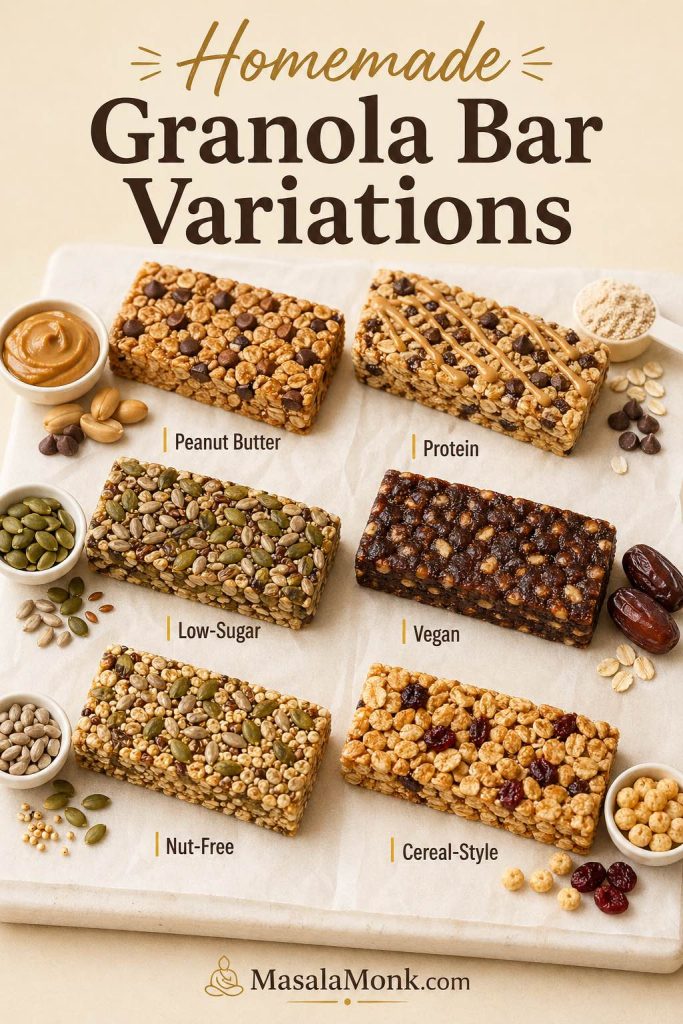
Recipe Variations for Homemade Granola Bars

Once the basic healthy homemade granola bars recipe works, the variations become much easier. Keep the oat-binder balance in mind, and change one or two things at a time.

Guide showing six homemade granola bar variations: peanut butter, protein, low-sugar, vegan, nut-free, and cereal-style.
Once the base recipe works, it becomes much easier to branch out. From peanut butter and protein bars to lower-sugar, nut-free, and cereal-style versions, these variations help readers adapt homemade granola bars to different needs.

Peanut Butter Granola Bars

Peanut butter is the easiest flavor to start with because it binds well, tastes familiar, and makes the bars feel richer without extra steps. Use creamy peanut butter with honey, then add mini chocolate chips, chopped roasted peanuts, or a pinch of cinnamon. If your peanut butter is very thick, warm it gently before mixing so it coats the oats instead of clumping.

To make the peanut flavor stronger, use roasted peanut butter and add chopped peanuts as part of the mix-ins. A softer bar needs finely chopped peanuts and slightly more peanut butter. When the bars need to hold up better in a lunchbox, choose honey or brown rice syrup rather than maple syrup.

Chocolate Chip Granola Bars

Mini chocolate chips are better than large chips because they spread evenly through the bars and do not create big gaps. Let the oat mixture cool for a few minutes before adding them. If you add chocolate while the binder is very hot, the chips will melt into the mixture instead of staying visible.

For a more chocolate-forward bar, stir 1 tablespoon cocoa powder into the warm binder before adding the oats. For a less sweet version, use cacao nibs or chopped dark chocolate instead of regular chocolate chips.

Protein Granola Bars

Protein granola bars need a little more care because protein powder absorbs moisture. Start by replacing 1/4 cup oats with protein powder. Then, mix the bars and check the texture before pressing. If the mixture feels dry, add 1 to 2 tablespoons more nut butter or a small splash of milk.

Protein granola bars shown with oats, protein powder, nut butter, seeds, and stacked finished bars.
Protein granola bars usually work best when only part of the oats is replaced. In other words, add enough protein powder to boost nutrition, but keep enough binder so the bars stay chewy instead of dry and crumbly.

Whey protein usually blends more smoothly, while many plant protein powders make the mixture thicker and drier. Do not expect a homemade protein granola bar to feel exactly like a store-bought protein bar. The best homemade version should still taste like oats, nut butter, and real mix-ins, with extra protein added carefully.

For a simple protein version, use 2 cups oats, 1/4 cup protein powder, 3/4 cup peanut butter or almond butter, 1/2 cup honey or brown rice syrup, 1/3 cup seeds, and 1/3 cup mini chocolate chips. If the mixture feels stiff before pressing, add 1 tablespoon milk or extra nut butter at a time until it clumps when squeezed.

Low-Sugar Granola Bars

For lower-sugar granola bars, the goal is not to remove every sweet ingredient. Instead, keep the sticky binder measured, use fewer dried fruits and chocolate chips, and build more of the texture from oats, seeds, nuts, coconut, cacao nibs, or chopped dark chocolate.

Lower-sugar granola bars made with oats, seeds, measured sweetener, nut butter, and a date paste option.
Lower-sugar granola bars do not need to taste flat. Instead, leaning on seeds, oats, nut or seed butter, and carefully measured sweetener helps keep the bars satisfying while cutting back on overall sweetness.

For a lower-sugar batch, use more seeds and nuts, reduce dried fruit and chocolate, and keep the sticky binder measured. If you want a no-refined-sugar version, use date paste. For flavor without extra syrup, try cinnamon, vanilla, cocoa, orange zest, toasted coconut, or a small pinch of salt.

EatingWell’s dietitian guidance on granola bars recommends looking at added sugar, fiber, protein, whole grains, and recognizable whole-food ingredients when deciding whether a granola bar is a healthy choice. Read their granola bar health guide here.

Gluten-Free Granola Bars

For gluten-free granola bars, start with certified gluten-free oats and then check the smaller ingredients too, especially chocolate chips, protein powder, cereal-style mix-ins, and flavorings. As long as the oats and add-ins are gluten-free, the base recipe can be gluten-free too.

Gluten-Free and Vegan Granola Bar Swaps

Swap guide for gluten-free and vegan granola bars showing regular oats changed to certified gluten-free oats, honey to date paste or brown rice syrup, peanut butter to seed butter, and milk chocolate chips to dairy-free chips.
If you need gluten-free or vegan granola bars, the easiest approach is to swap one ingredient at a time. Certified gluten-free oats, plant-based binders, seed butter, and dairy-free chocolate chips usually get you close to the original texture without rebuilding the whole recipe.

Vegan Granola Bars

For vegan granola bars, choose brown rice syrup, date paste, or maple syrup instead of honey. Brown rice syrup gives the firmest result, while date paste adds softer caramel-like sweetness. Also check that your chocolate chips are dairy-free if needed.

Nut-Free Granola Bars

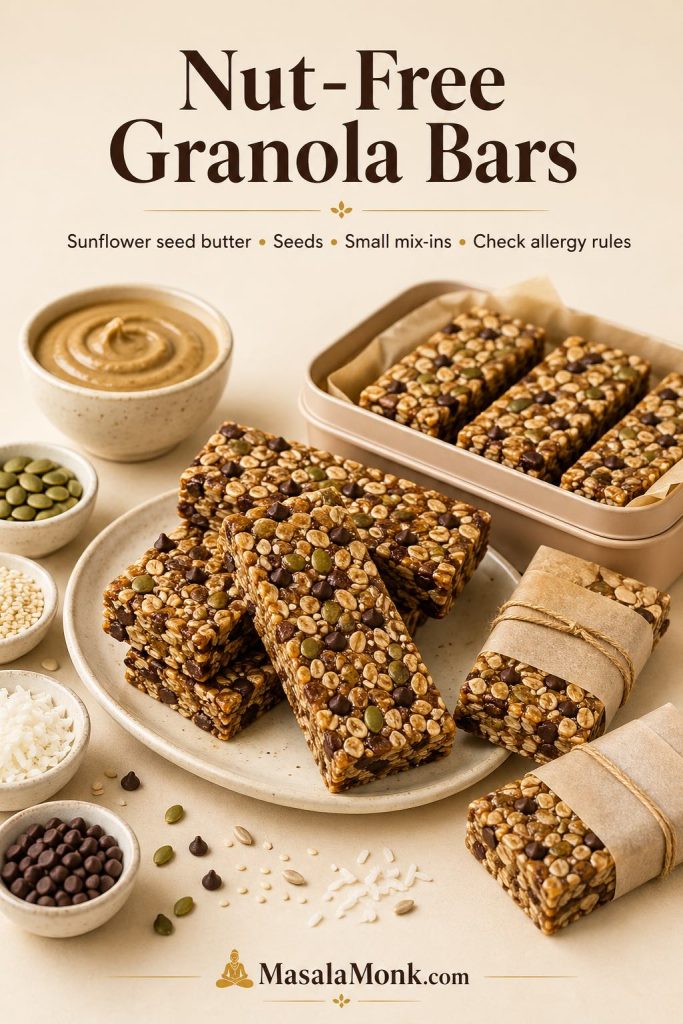
For nut-free granola bars, start with sunflower seed butter, pumpkin seed butter, or tahini instead of nut butter. Then, replace nuts with pumpkin seeds, sunflower seeds, sesame seeds, chia seeds, flaxseed, dried fruit, coconut, or chocolate chips. This can be useful for lunchboxes, depending on allergy rules where the bars will be eaten.

Nut-free granola bars made with seed butter, seeds, small mix-ins, and packed bars for storage or lunchboxes.
Nut-free granola bars can still be rich, sturdy, and flavorful. For best texture, use seed butter, keep the mix-ins fairly small, and check school or allergy rules if the bars are meant for lunchboxes or sharing.

Sunflower seed butter is one of the easiest nut-free binders, and sunflower seeds also work well as crunchy mix-ins. For the best texture, keep the seeds small, use a sticky binder, and press the mixture firmly before chilling.

Muesli-Style Granola Bars

For muesli-style bars, use oats, chopped almonds, pumpkin seeds, sunflower seeds, raisins, dried cranberries, chopped dates, and a little coconut. Because fruit-and-nut bars can become chunky, keep everything chopped small and press the mixture especially firmly.

Breakfast Granola Bars

For breakfast bars, keep the chocolate light and build the flavor around oats, seeds, nut butter, cinnamon, dried fruit, and maybe protein powder. If you want something softer and more filling, use the soft oat bar variation with mashed banana or applesauce.

Date Granola Bars

Blend soft dates with a splash of warm water to make a thick date paste, then use it as part or all of the sticky sweetener. Date paste gives the bars caramel-like sweetness and helps avoid refined sugar. Even so, dates are still sweet, so balance them with salt, seeds, and unsweetened nut butter.

No-Peanut-Butter Granola Bars

If you do not want peanut butter, use almond butter, cashew butter, sunflower seed butter, tahini, or pumpkin seed butter. Almond butter gives a mild flavor, cashew butter makes the bars softer and creamier, sunflower seed butter works well for nut-free bars, and tahini gives a slightly earthy flavor that pairs well with honey, sesame, dates, and dark chocolate.

Cereal Bar Variation

For a lighter, crispier cereal bar, replace 1 cup of the oats with puffed rice cereal, toasted oat cereal, or another crisp breakfast cereal. Keep the binder sticky, because cereal is lighter than oats and can fall apart if the mixture is too dry. For chocolate chip cereal bars, use mini chocolate chips and press the mixture especially firmly before chilling.

For a stronger cereal-bar texture, use half oats and half crisp cereal. However, if you want the bars to taste more like classic granola bars, keep more oats than cereal.

No-Bake Oat Bars

If you want softer no-bake oat bars instead of classic granola bars, use quick oats for part of the oats and add a softer ingredient such as mashed banana, applesauce, or date paste. The bars will be less crisp and less granola-like, but they will feel more like breakfast bars. This is a good direction for kids, softer snacks, and make-ahead breakfasts.

For a simple no-bake oatmeal bar, use 1 cup rolled oats, 1 cup quick oats, 3/4 cup peanut butter or sunflower seed butter, 1/2 cup date paste or honey, and 1/2 cup small mix-ins. Press firmly and chill before slicing.

Healthy Granola Flapjack Variation

If you know flapjacks as baked oat bars, this recipe can move in that direction too. Use the crunchy baked variation, press the mixture into a lined tin, and bake until the edges look lightly golden. Traditional flapjacks are usually richer and sweeter because they often use butter, sugar, and syrup. This version stays closer to a healthy granola bar because it uses oats, nut or seed butter, measured sweetener, seeds, and dried fruit.

For a more flapjack-like texture, use slightly more binder and bake the slab until it looks set at the edges but still a little soft in the center. Let it cool completely before slicing, because baked oat bars firm up as they rest.

Best Mix-Ins for Homemade Granola Bars

The best mix-ins depend on what you want from the bar. Crunchy batches work well with pumpkin seeds, sunflower seeds, sesame seeds, chopped almonds, cacao nibs, or toasted coconut. Chewier batches are better with raisins, chopped dates, dried cranberries, dried apricots, figs, or dried blueberries.

Guide image showing the best mix-ins for homemade granola bars, grouped by crunchy, chewy, protein, lower-sugar, and kid-friendly options, including pumpkin seeds, sunflower seeds, chopped almonds, cacao nibs, raisins, chopped dates, dried cranberries, apricots, hemp seeds, peanuts, protein powder, coconut, mini chocolate chips, and dried banana chips.
The best mix-ins do more than add flavor. They also shape the texture, sweetness, chew, and nutrition of your homemade granola bars, so choosing them with a purpose helps the bars taste better and hold together more reliably.

To add more protein, use hemp seeds, pumpkin seeds, peanuts, almonds, protein powder, or extra peanut butter. Meanwhile, kid-friendly bars work best when the flavor stays familiar, so try peanut butter, mini chocolate chips, cinnamon, vanilla, raisins, or dried banana chips. If you want a lower-sugar feel, lean on seeds, nuts, unsweetened coconut, cinnamon, cacao nibs, or chopped dark chocolate instead of large amounts of dried fruit.

Whatever you add, keep the pieces small. Although that sounds like a minor detail, small mix-ins make a huge difference. They help the slab compress tightly and slice cleanly.

How to Store and Freeze Homemade Granola Bars

No-bake homemade granola bars are firmest when stored cold. Once sliced, place parchment between layers so the bars do not stick together. Therefore, if your kitchen is warm, the fridge is the safest place for clean, chewy bars.

Storage guide for homemade granola bars showing fridge storage for up to 1 week, freezer storage for up to 2 months, and packing chilled bars for lunchboxes.
Homemade granola bars usually keep best when chilled and stored with a little separation between layers. Refrigeration helps preserve texture for the week, while freezing is the better option if you want to make a larger batch ahead.

For lunchboxes, this recipe makes homemade granola bars that slice more cleanly when chilled first. If the room is warm, pack them with an ice pack or use the firmer binder variation.

Fridge-firm vs lunchbox-firm: Most no-bake granola bars are best from the fridge. If you need bars that hold up longer at room temperature, use brown rice syrup or a short-cooked honey binder, keep mix-ins small, press very firmly, and chill before packing.

Make-Ahead Plan

For weekly meal prep, make the bars the night before you need them. Chill the whole slab overnight, then slice in the morning. After that, wrap individual bars in parchment and store them in an airtight container in the fridge or freezer. This gives the cleanest slices and the firmest texture.

Storage Method How Long Best For
Room temperature 1 to 2 days, only if firm enough Short-term snacking, cool kitchens, firmer cooked-binder bars.
Refrigerator Up to 1 week Best texture for chewy no-bake bars.
Freezer Up to 2 months Meal prep, lunchbox planning, batch cooking.
Lunchbox Same day Pack with parchment. Use an ice pack if the weather is warm.

To freeze, wrap bars individually or layer them with parchment in an airtight container. Thaw in the fridge or let a frozen bar sit at room temperature for a few minutes before eating. Frozen bars are especially useful in hot weather because they soften gradually instead of falling apart immediately.

As with any homemade snack, store the bars in a clean airtight container and discard them if they smell off, look moldy, or become unusually wet or sticky during storage.

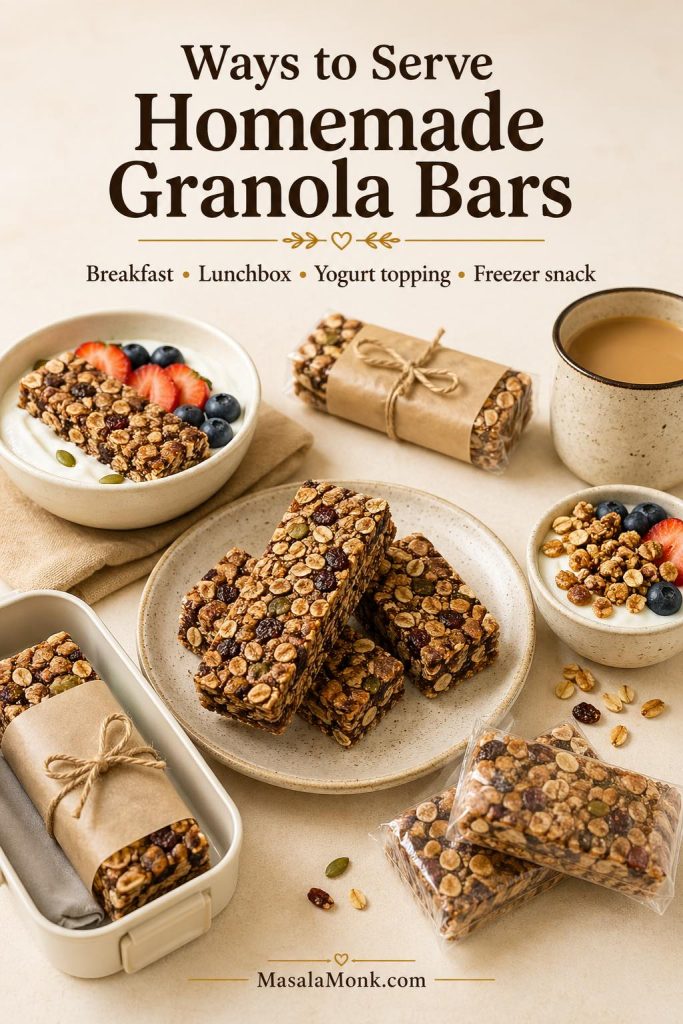
How to Serve Homemade Granola Bars

Homemade granola bars are useful at several points in the day. For example, you can serve one with tea or coffee, pack one in a lunchbox, crumble one over yogurt, eat one before a workout, or keep a few in the freezer for rushed mornings.

Serving ideas for homemade granola bars, including breakfast with yogurt and fruit, lunchbox packing, yogurt topping, and freezer snack use.
Homemade granola bars are more versatile than just grab-and-go snacks. They can double as breakfast with yogurt and fruit, work well in lunchboxes, and even be broken up as a topping when you want a little crunch.

For a more complete breakfast, pair a bar with fruit, yogurt, eggs, cottage cheese, paneer, milk, or a smoothie. The bar gives you oats and energy; the extra protein or fruit makes the meal feel more complete.

FAQs About Healthy Homemade Granola Bars

Why do homemade granola bars fall apart?

Homemade granola bars usually fall apart because they do not have enough sticky binder, the mix-ins are too large, the mixture was not pressed firmly enough, or the bars were sliced before chilling. Use enough nut butter and sticky sweetener, chop large nuts and dried fruit, press hard, and chill fully.

What is the best binder for homemade granola bars?

A combination of creamy nut butter and honey is the easiest binder for chewy granola bars. Brown rice syrup is even stickier and works well for firm or vegan bars. Date paste is useful for no-refined-sugar bars. Maple syrup tastes good, but it is thinner and usually needs extra support from nut butter, flaxseed, or longer chilling.

Can I make granola bars without peanut butter?

Absolutely. Almond butter, cashew butter, sunflower seed butter, pumpkin seed butter, and tahini can all work. For a nut-free version, sunflower seed butter and tahini are usually the easiest swaps.

Can I use quick oats instead of rolled oats?

You can, although the texture will be softer and less defined. Rolled oats give a chewier, more classic granola bar texture, while quick oats make the bars more compact and softer for kids.

Can I use maple syrup instead of honey?

You can, but maple syrup is usually less sticky than honey or brown rice syrup. If you use maple syrup, add extra nut butter, ground flaxseed, or date paste to help the bars hold together. Chill the bars longer before slicing.

How do I make vegan granola bars?

For vegan granola bars, choose brown rice syrup, date paste, or maple syrup instead of honey. Brown rice syrup gives the firmest result, while date paste adds softer caramel-like sweetness. Also check that your chocolate chips are dairy-free if needed.

How do I make gluten-free granola bars?

Start with certified gluten-free oats, then check the labels on your chocolate chips, protein powder, cereal mix-ins, and flavorings. As long as the oats and add-ins are gluten-free, the base recipe can be gluten-free too.

How do I make nut-free granola bars?

Start with sunflower seed butter, pumpkin seed butter, or tahini instead of nut butter. Then, replace nuts with pumpkin seeds, sunflower seeds, sesame seeds, coconut, dried fruit, or chocolate chips. Depending on allergy rules where the bars will be eaten, this can be a useful lunchbox direction.

Can I add protein powder to granola bars?

Yes, but start small. Replace 1/4 cup oats with protein powder. If the mixture becomes dry or chalky, add more nut butter or a splash of milk. Plant protein powders usually absorb more moisture than whey protein.

How do I make crunchy or crispy granola bars?

Toast the oats, nuts, and seeds first, then press the mixture into a pan and bake it briefly at a low temperature. Let the slab cool completely before slicing. For a lighter crisp texture, replace part of the oats with puffed rice cereal or crisp rice cereal.

How long do homemade granola bars last?

Chewy no-bake granola bars keep best in the fridge for about 1 week. They can be frozen for up to 2 months. At room temperature, they are best eaten within a day or two unless you make a firmer cooked-binder version.

Can I freeze homemade granola bars?

Freezing works well. First, wrap bars individually or layer them with parchment in an airtight container. After that, freeze them for up to 2 months. To serve, thaw in the fridge or let a frozen bar sit at room temperature for a few minutes before eating.

Are homemade granola bars good for breakfast?

They can be, especially if they include oats, nut or seed butter, seeds, and a moderate amount of sweetener. To make breakfast more complete, pair a granola bar with fruit, yogurt, milk, eggs, cottage cheese, paneer, or another protein source.

What is the difference between granola bars and oat bars?

Granola bars are usually chewy or crunchy snack bars made with oats, nuts, seeds, dried fruit, and a sticky binder. Oat bars can be softer and more breakfast-like, especially when made with banana, applesauce, yogurt, or a baked oatmeal-style base.

Can I make granola bars with dates instead of honey?

Yes. Blend soft dates with a small amount of warm water to make a thick paste, then use it as the sticky sweetener. Date paste gives the bars a caramel-like flavor and helps avoid refined sugar, but it still adds sweetness.

Can I make granola bars with ready-made granola?

Prepared granola can work well. As a starting point, use about 2 1/2 cups prepared granola, 1/2 cup creamy nut or seed butter, and 1/3 cup honey, brown rice syrup, or date paste. Since prepared granola is often already sweetened, start with less added sweetener than you would use for plain oats.

Are granola bars the same as flapjacks?

They overlap, especially in UK-style usage. A British flapjack is usually a baked oat bar made with oats, fat, sugar, and syrup, while granola bars are often made with oats, nuts, seeds, dried fruit, and a sticky binder. This recipe is closer to a healthy homemade granola bar, but the baked variation can work like a lighter flapjack-style oat bar.

Can I add crisp rice cereal or puffed rice to granola bars?

Yes. Replace 1/2 to 1 cup of the oats with crisp rice cereal, puffed rice, crisp oat cereal, or another light breakfast cereal. This makes the bars lighter and crispier. Because cereal is less dense than oats, keep the binder sticky and press the mixture firmly before chilling.

What is the best sweetener for granola bars that hold together?

Honey and brown rice syrup are the easiest sweeteners for granola bars that hold together. Brown rice syrup is especially sticky and works well for firm or vegan bars. Date paste is useful for no-refined-sugar bars. Maple syrup tastes good, but it is thinner and usually needs extra nut butter, flaxseed, or longer chilling.

If you try this healthy homemade granola bars recipe, leave a comment with the binder, sweetener, and mix-ins you used. That helps other readers choose their own chewy, crunchy, protein, nut-free, or low-sugar version.

Back to top

Posted on Leave a comment

Homemade Ketchup Recipe

Thick glossy homemade ketchup in a bowl with a spoon, fresh tomatoes, and tomato paste nearby.

A good homemade ketchup recipe should taste bright, tangy, lightly sweet, deeply tomato-forward, and smooth enough for dipping, spreading, spooning, or squeezing. It should be thicker than tomato sauce, sharper than tomato chutney, and balanced enough for fries, burgers, sandwiches, wraps, pakoras, grilled snacks, and quick dipping sauces. You can also use it as a simple meatloaf glaze or a base for burger sauce.

This homemade tomato ketchup gives you the full fresh tomato method first: ripe tomatoes cooked down with onion, garlic, vinegar, sweetener, salt, mustard, and warm spices until glossy and thick. Then, because real kitchens are not always full of perfect summer tomatoes, you also get a quick tomato paste ketchup recipe, a sugar-free option, texture fixes, storage guidance, and clear canning notes.

In many kitchens, especially in India, this would simply be called a tomato ketchup recipe or homemade tomato sauce. Here, though, the goal is classic ketchup texture: smooth, glossy, thick, tangy-sweet, and easy to dip.

Most importantly, this is a recipe about control. Once you understand the tomato-to-vinegar-to-sweetener balance, you can make ketchup sweeter, tangier, smoother, thicker, spicier, lower in sugar, or closer to bottled ketchup without guessing. That way, the same base can work for fries, burgers, wraps, snacks, and quick sauces without needing a separate recipe every time.

For that reason, the recipe below does not force one version on every kitchen. Instead, it shows you when fresh tomatoes are worth the longer simmer and when tomato paste is the smarter shortcut.

At-a-glance guide summarizing homemade ketchup options, flavor target, texture goal, and storage guidance.
If you want the short version first, this guide shows the key homemade ketchup decisions: which method to choose, how it should taste, and how to store it safely.

Before you start: choose the version based on your tomatoes. If they are ripe and flavorful, use the fresh tomato method. However, if they are watery or bland, use the tomato paste shortcut instead. That way, you get a thick, balanced ketchup without fighting the ingredients.

Quick Answer: The Best Homemade Ketchup Recipe Ratio

Fresh Tomato Ketchup Ratio

To make homemade ketchup with fresh tomatoes, first cook ripe tomatoes with onion and garlic until soft. Next, blend them smooth and strain them for a finer texture. From there, simmer the tomato puree with vinegar, sugar or jaggery, salt, mustard powder, and warm spices until thick and glossy.

Tomato Paste Ketchup Ratio

For a faster version, whisk tomato paste with water, vinegar, sweetener, salt, onion powder, garlic powder, mustard powder, and a tiny pinch of warm spice. Then, simmer it for 5–8 minutes. Compared with the fresh tomato version, tomato paste ketchup is quicker, smoother, and more predictable, although it tastes less seasonal.

As a starting point, use the fresh tomato ratio when flavor matters most and the tomato paste ratio when speed and smoothness matter more.
Version Quick Ratio Best For
Fresh tomato ketchup 1 kg tomatoes + 75–90 ml vinegar + 50–75 g sweetener + 8–10 g salt Ripe summer tomatoes, fresh flavor, and from-scratch ketchup
Tomato paste ketchup 170 g tomato paste + 120–150 ml water + 45 ml vinegar + 20–35 g sweetener Quick ketchup, smooth texture, burgers, fries, and weeknight meals
Ratio guide comparing homemade ketchup made with fresh tomatoes and ketchup made with tomato paste.
Use the fresh tomato ratio when flavor matters most, and the tomato paste ratio when speed, smoothness, and consistency matter more.
That is why this ketchup recipe gives you two practical paths: a fresh tomato version for deeper flavor and a quick tomato paste version for speed.

Because this ketchup recipe is homemade, you can adjust the vinegar, sweetener, salt, and spices near the end instead of being locked into one fixed bottled flavor.

How the Ketchup Should Taste

Flavor target: good ketchup should taste tomato-rich first, then tangy, lightly sweet, salty enough to pop, and only gently spiced. If you can clearly taste cinnamon, clove, or allspice, the warm spice is too strong.

That flexibility is what makes a homemade ketchup recipe useful: the method gives you a starting point, but the final balance comes from tasting and adjusting.

The finished ketchup should taste tomato-rich, tangy-sweet, savory, and gently spiced in the background. When it tastes like plain tomato sauce, it needs more vinegar, sweetener, salt, mustard, or a tiny pinch of warm spice. However, when it tastes like chutney, the warm spices or sweetener are probably too strong.

Which Homemade Ketchup Version Should You Make?

Before you start cooking, decide what problem you are solving. Fresh tomatoes give the best homemade flavor when they are ripe, while tomato paste gives better control when the tomatoes are watery, pale, or out of season.

The easiest way to choose is to look at your tomatoes, your time, and how you plan to store the ketchup. When the tomatoes are ripe and red, fresh tomatoes give the best homemade flavor. On the other hand, when the tomatoes are watery, pale, or out of season, tomato paste gives the fastest, smoothest, most predictable result. If you are reducing sugar, however, the ketchup needs a little more balancing so it still tastes like ketchup instead of plain tomato sauce.

Decision guide showing when to make homemade ketchup with fresh tomatoes and when to use tomato paste.
Fresh tomatoes are best when they are ripe and flavorful, while tomato paste is the smarter shortcut when you want faster, smoother, more predictable ketchup.

In other words, the best homemade version is not always the longest ketchup recipe. It is the version that fits your tomatoes, your time, and the way you want to serve it.

Situation Best Version Why It Works
Ripe summer tomatoes Fresh tomato ketchup This gives the best flavor and the most homemade character.
Watery, pale, or bland tomatoes Tomato paste ketchup The paste gives more predictable color, body, and flavor.
Ketchup needed in about 10 minutes Quick tomato paste ketchup recipe No long reduction is needed.
Lower-sugar ketchup Sugar-free ketchup option This lets you control the sweetener while keeping the sauce balanced.
Pantry-stable jars Tested canning recipe only A flexible fridge ketchup should not be canned casually.

Why This Recipe Works

This recipe works because it treats ketchup as a balance problem, not just a tomato puree. The tomatoes soften first so their flavor turns rounded, the mixture is blended and strained for texture, and the seasoned puree reduces slowly until the vinegar, sweetener, salt, mustard, and spices taste like one glossy sauce.

The fresh tomato version gives deeper homemade flavor, while the tomato paste version gives speed and consistency. Together, they cover both real kitchen situations: good ripe tomatoes and the nights when you need a quick ketchup for fries, burgers, wraps, or snacks. Because both versions use the same sweet-acid-salt logic, you can adjust them in the same way near the end.

Homemade Ketchup Ingredients: Tomatoes, Vinegar, Sugar, Salt and Spices

Ketchup tastes simple, but it depends on balance. Tomatoes give the sauce body, while vinegar adds the sharp tang. Sweetener rounds the acidity, and salt makes the tomato flavor pop. Finally, onion, garlic, mustard, and warm spices turn cooked tomato into ketchup instead of plain tomato sauce.

Because the sauce reduces as it cooks, the balance of vinegar, salt, and sweetener becomes more concentrated near the end. Therefore, it is better to start slightly cautious and adjust after the sauce thickens.

What Is Ketchup Made Of?

Ketchup is usually made from tomatoes or tomato paste, vinegar, sugar or another sweetener, salt, onion, garlic, mustard, and warm spices. The main ingredient is tomato, but the familiar ketchup flavor comes from the balance of tomato, vinegar, sweetness, salt, and spice.

Compared with many bottled ketchup ingredients lists, homemade ketchup gives you more control. You can choose fresh tomatoes or tomato paste, adjust the sugar, use 5% acidity vinegar, control the salt, and keep the spice level gentle.

Ingredients for homemade ketchup including tomatoes, vinegar, sweetener, salt, onion, garlic, mustard powder, and warm spices.
Homemade ketchup gets its classic flavor from balance: tomatoes for body, vinegar for tang, sweetener for roundness, salt for depth, and spices for warmth.

Tomatoes and Vinegar

Tomatoes give the ketchup body, color, and fresh flavor. Meanwhile, vinegar gives the sauce its sharp ketchup tang. For this small-batch fridge version, apple cider vinegar gives a rounder flavor, while white vinegar tastes cleaner and sharper.

Sweetener, Salt and Spices

Sweetener balances tomato acidity, salt sharpens the flavor, and spices make the sauce taste like ketchup instead of plain tomato sauce. In this ketchup recipe, the homemade flavor comes from restraint: mustard powder, cinnamon, and a tiny pinch of clove or allspice are enough. Too much warm spice can push the sauce toward chutney.

Once you understand what each ingredient does, the recipe becomes easier to adjust. The table below shows the fresh tomato amounts first because that version depends most on balance and reduction.

Measurement note: metric weights are more accurate for tomatoes, onion, sweetener, and salt. The US cup and spoon measures are included for convenience, but final yield can vary because tomatoes contain different amounts of water.

Fresh Tomato Ketchup Ingredient Amounts

Ingredient Amount for Fresh Tomato Ketchup Why It Matters
Ripe red tomatoes 1 kg / 2.2 lb Tomatoes form the body, color, and main flavor. Roma, plum, San Marzano-style, or other meaty tomatoes reduce faster and taste richer.
Onion 80–100 g / 3–3.5 oz / 1 small onion Onion builds a savory base and helps the ketchup taste rounded.
Garlic 8–12 g / 2–3 cloves Garlic deepens the flavor. Use less if you want a cleaner bottled-style ketchup.
5% acidity vinegar 75–90 ml / 5–6 tbsp Vinegar gives ketchup its sharp tang. Apple cider vinegar tastes rounder; white vinegar tastes cleaner and sharper.
Sugar, jaggery, or brown sugar 50–75 g / 1.75–2.6 oz / about ¼–⅓ cup packed Sweetener balances tomato acidity and keeps the sauce from tasting like sour tomato puree.
Fine salt 8–10 g / about 1½ tsp Salt sharpens the tomato flavor. Add it carefully because reduction concentrates the sauce.
Mustard powder 1–2 g / ½–1 tsp Mustard powder brings the classic ketchup sharpness without making the sauce taste mustardy.
Cinnamon Pinch to ⅛ tsp A small amount adds warmth. Too much can push the ketchup toward chutney.
Clove or allspice Tiny pinch / 1/16 tsp or less This gives the familiar background spice, but it becomes overpowering quickly.
Cayenne or chili powder Optional, ⅛–¼ tsp Use this for mild heat without turning the ketchup into hot sauce.

How Much Sugar Is in This Homemade Ketchup?

This ketchup recipe uses 50–75 g added sugar, jaggery, or brown sugar for a homemade batch that finishes at about 2–2½ cups. That works out to roughly 1.25–2.3 g added sweetener per tablespoon, depending on your final yield and how much sweetener you use.

For a less sweet ketchup, start with 50 g sweetener and adjust only after the sauce has reduced. Because reduction concentrates flavor, the ketchup may taste sweeter and saltier near the end than it did at the start. Still, do not remove all sweetness unless you want a sharper tomato-sauce-style condiment. Instead, reduce the sweetener gradually and taste again after the ketchup cools.

It is also useful when you want a no-corn-syrup ketchup and prefer to choose the sweetener yourself. For a lighter or more controlled version, homemade ketchup lets you adjust the sugar, salt, and vinegar instead of relying on a fixed bottled formula.

Use 5% acidity vinegar for this recipe, especially when you are also reading the canning section. For regular fridge ketchup, apple cider vinegar, white vinegar, or a mix of the two all work. Apple cider vinegar gives a slightly fruitier ketchup; by contrast, white vinegar gives a cleaner, sharper ketchup.

Important: this flexible recipe is for fridge and freezer storage. If you want shelf-stable canned ketchup, use a tested canning formula and do not casually change vinegar, tomato, onion, vegetable, jar, or processing-time ratios.

Homemade Ketchup Recipe with Fresh Tomatoes

This is the main ketchup-from-scratch version to make when tomatoes are ripe, red, and flavorful. In practice, it starts with 1 kg / 2.2 lb fresh tomatoes and reduces into about 500–600 g / 17.5–21 oz / 2–2½ cups of ketchup, depending on the tomato variety and how thick you cook it.

The method is simple, even though the simmer takes time: soften the tomatoes, blend, strain if needed, season, then reduce until the sauce turns glossy and spoonable.

Step-by-step guide showing how to make homemade ketchup with fresh tomatoes by softening, blending, straining, seasoning, and reducing.
The fresh tomato method is simple: soften the tomatoes, blend them smooth, strain if needed, season, and reduce until the ketchup turns glossy and spoonable.

Best Tomatoes for Homemade Ketchup

The best tomatoes for homemade ketchup are meaty, ripe, and deeply red. For example, Roma, plum, San Marzano-style, and other paste tomatoes are ideal because they have more flesh and less water. Regular round tomatoes also work; however, they usually take longer to reduce. In addition, cherry tomatoes can make a sweet ketchup, although they are often seedier and may need straining.

Homemade ketchup may look slightly darker or softer red than bottled ketchup, especially if you use brown sugar, jaggery, apple cider vinegar, or long cooking. For the brightest color, use ripe red paste tomatoes, white vinegar, white sugar, and gentle heat.

Guide to tomato types for homemade ketchup, including Roma tomatoes, plum tomatoes, San Marzano-style tomatoes, round tomatoes, cherry tomatoes, and pale tomatoes.
Meaty, ripe, deeply red tomatoes make the best homemade ketchup because they reduce faster, taste richer, and give the sauce better color.
Tomato Type How It Works in Ketchup Adjustment
Roma / plum tomatoes Best balance of flesh, flavor, and low water Follow the main formula.
San Marzano-style tomatoes Excellent for smooth, rich ketchup Use the recipe as written.
Regular round tomatoes Good flavor but often watery Give them extra simmering time in a wide pan.
Cherry tomatoes Sweet and bright but more skins/seeds Blend thoroughly, then strain for a smoother finish.
Pale or underripe tomatoes Sharper, less sweet, less red Increase the sweetener slightly or switch to tomato paste.

Step 1: Cook the Tomatoes, Onion, and Garlic

Wash and roughly chop 1 kg / 2.2 lb ripe tomatoes. Then, add them to a wide heavy-bottomed pan with 80–100 g chopped onion and 2–3 garlic cloves. Once everything is in the pan, cover and cook over medium-low heat for 15–20 minutes, until the tomatoes collapse, release their juices, and soften completely.

At this stage, do not add the vinegar, sugar, or salt yet. Starting with just the tomatoes, onion, and garlic lets the vegetables soften evenly before the final reduction.

Step 2: Blend and Strain

After the tomatoes soften, blend the mixture until smooth. An immersion blender is easiest, but a countertop blender gives a finer texture. When using a countertop blender, work in batches and let steam escape safely.

Texture Goal What to Do
Rustic homemade ketchup Blend only, leaving a little skin and seed texture.
Smooth ketchup Pass the blended mixture through a coarse sieve.
Bottled-style ketchup Use a food mill or fine sieve, then blend again after reducing.

For a smoother finish, strain the puree before the final reduction. If you are new to reducing fresh tomatoes, MasalaMonk’s guide to tomato sauce from fresh tomatoes is useful because it explains the food mill method, the no-food-mill path, and why tomato reduction changes texture.

Step 3: Add Vinegar, Sweetener, Salt, and Spices

From there, return the blended and strained tomato puree to the pan. Add:

  • 75–90 ml / 5–6 tbsp 5% acidity vinegar
  • 50–75 g sugar, brown sugar, or jaggery
  • 8–10 g fine salt, or about 1½ tsp
  • ½–1 tsp mustard powder
  • Pinch to ⅛ tsp cinnamon
  • Tiny pinch clove or allspice
  • Optional ⅛–¼ tsp cayenne or chili powder

Start with the lower amount of sugar and vinegar when your tomatoes are already sweet and flavorful. If the tomatoes taste flat, watery, or very acidic, use the higher amount instead. Either way, taste again near the end because the flavor changes as the ketchup reduces.

Step 4: Simmer Until Thick and Glossy

Simmer the ketchup uncovered over low to medium-low heat for 45–70 minutes after blending and seasoning, stirring more often as it thickens. The total cook time is usually 60–90 minutes including the first tomato-softening stage, but watery tomatoes can take longer.

The pan should show small, steady bubbles, not an aggressive boil. Near the end of cooking, the ketchup can catch on the bottom quickly, so use a splatter screen when needed and stir more often as it thickens. Instead of rushing the heat, give the sauce time to reduce slowly; that way, it stays brighter, smoother, and less bitter.

Heat cue: keep the ketchup at a gentle simmer with small, steady bubbles, not a rolling boil. If the sauce spits aggressively, darkens quickly, or sticks to the bottom, lower the heat and stir more often. Gentle reduction gives you brighter flavor, smoother texture, and better color.

Stage Approximate Amount Visual Cue
Fresh chopped tomatoes 1 kg / 2.2 lb Chunky, raw, watery
After softening and blending About 900 ml–1.1 L Loose tomato puree
After straining About 750–950 ml Smoother but still thin
Final ketchup About 500–600 g / 2–2½ cups Glossy, thick, spoonable

Step 5: Test the Thickness

Rather than relying only on time, use the texture as your guide. Because tomatoes vary so much, the exact cook time can shift from batch to batch. Near the end of cooking, check the ketchup with one or more of these doneness tests:

Test What You Should See
Spoon mound test The ketchup should mound slightly on a spoon instead of running off like tomato juice.
Trail test Drag a spatula through the pan; the trail should close slowly, not immediately flood back.
Cold plate test Drop a little ketchup on a chilled plate. After 30 seconds, it should hold shape instead of spreading into a watery puddle.

When in doubt, stop slightly before it looks perfect because ketchup thickens as it cools.

Step 6: Taste and Adjust

Once the ketchup is thick, taste it before you store it. A flat flavor usually needs a little salt first. When the sauce tastes too sweet, add vinegar 1 teaspoon at a time. If the flavor leans too sour, balance it with sweetener in small amounts. When it tastes like plain tomato sauce instead of ketchup, add vinegar, sweetener, salt, mustard, and a very tiny pinch of clove or cinnamon until the flavor tastes rounded.

Do not worry if the ketchup tastes slightly sharp while hot. After cooling, the vinegar softens, the sweetness feels rounder, and the texture becomes thicker.

Step 7: Cool and Store

Before you store it, let the ketchup cool fully. Then, transfer it to a clean glass jar. Refrigerate and use within 2 weeks for best quality, or freeze for longer storage.

For the best flavor, chill the ketchup for at least 2 hours before serving. While it is hot, freshly cooked ketchup can taste sharper than expected. After cooling, the sweetness, acidity, salt, and spices settle into a rounder flavor.

Quick Tomato Paste Ketchup: How to Make Ketchup from Tomato Paste

When fresh tomatoes are weak or you need ketchup quickly, tomato paste is the better starting point. Because it has already been cooked down, this version thickens in minutes, needs less guesswork, and gives you a smoother, more predictable ketchup. It is not as fresh-tasting as the fresh tomato version, but it is much faster.

A standard 6 oz / 170 g can of tomato paste is the easiest starting point for this shortcut. If your paste is very thick or double-concentrated, start with the higher amount of water and adjust after simmering.

Step-by-step guide showing how to make ketchup from tomato paste with water, vinegar, sweetener, salt, onion powder, garlic powder, mustard, and warm spice.
Tomato paste ketchup is the fast route: whisk the ingredients smooth, simmer for a few minutes, cool, and adjust the thickness or tang before serving.
Detail Spec
Yield About 300–350 g / 10.5–12 oz / 1¼–1½ cups
Prep time 3 minutes
Cook time 5–8 minutes
Total time 8–12 minutes
Best for Fries, burgers, sandwiches, dips, and weeknight meals

Tomato Paste Ketchup Ingredients

Ingredient Metric US / Imperial
Tomato paste 170 g 6 oz can
Water 120–150 ml ½–⅔ cup
5% acidity vinegar 45 ml 3 tbsp
Sugar, honey, jaggery, or maple syrup 20–35 g 1½–2½ tbsp
Fine salt 4–5 g About ¾ tsp
Onion powder ½ tsp
Garlic powder ¼–½ tsp
Mustard powder ¼–½ tsp
Cinnamon, clove, or allspice Tiny pinch

How to Make Ketchup from Tomato Paste

  1. Add tomato paste, water, vinegar, sweetener, salt, onion powder, garlic powder, mustard powder, and spices to a small saucepan.
  2. Whisk until the mixture is completely smooth.
  3. Simmer over low heat for 5–8 minutes, stirring often.
  4. If it is too thick, add more water 1 tablespoon at a time.
  5. For more tang, add vinegar 1 teaspoon at a time.
  6. Cool before judging the final thickness.

Best use: tomato paste ketchup is the easiest version for burgers, fries, sandwiches, wraps, and quick mayo-ketchup sauce. It is not as fresh-tasting as the fresh tomato version, but it is smoother and faster.

Sugar-Free, No-Sugar and Keto Homemade Ketchup Option

Classic ketchup needs sweetness to balance tomato acidity. Without any sweetness, the sauce will not taste like familiar bottled ketchup. Instead, it will taste sharper, more acidic, and more like seasoned tomato sauce. However, you still have several good options depending on what “sugar-free” means for you.

This section is for readers looking for ketchup without sugar, no-sugar tomato ketchup, zero-sugar ketchup, or a lower-carb ketchup option. The key point is that ketchup still needs sweetness for balance, so the best sugar-free version uses a low-carb sweetener instead of removing sweetness completely.

Guide comparing no refined sugar, keto low-carb, and no-sweetener options for homemade ketchup.
Ketchup still needs some sweetness for balance, so the best sugar-free version replaces sweetness thoughtfully instead of removing it completely.

Once the basic ketchup tastes balanced, you can lower the sugar more safely. The important thing is to replace sweetness thoughtfully instead of removing it all at once.

Sweetener Options for Sugar-Free Ketchup

Version What to Use Flavor Result
No refined sugar Dates, raisins, apple, jaggery, honey, or maple syrup Still rounded and ketchup-like, but not strictly sugar-free
Keto / low-carb Allulose, monk fruit, or a tiny amount of stevia Closest low-carb option, especially with tomato paste ketchup
No sweetener Skip sweetener Sharper, tangier, more like tomato sauce than ketchup

How to Adjust the Sweetness

In the fresh tomato recipe, replace the 50–75 g sugar with 40–60 g chopped dates or raisins and blend very thoroughly. For keto ketchup, the tomato paste version is easier because it is already thick and consistent. Start with 1–2 tablespoons allulose or monk fruit sweetener, then adjust after simmering.

The best sugar-free ketchup still tastes slightly sweet. If you remove sweetness completely, the sauce becomes tangy tomato sauce, not classic ketchup.

If you are building low-carb burger plates or bowls, this sugar-free ketchup variation fits better than sugary bottled sauces. MasalaMonk’s keto hamburger recipes also explain why ketchup-heavy sauces can become a hidden carb trap.

Fresh Tomato Ketchup vs Tomato Paste Ketchup

Neither version is automatically better. Instead, the right choice depends on your tomatoes and your timing. When tomatoes are ripe and flavorful, fresh tomato ketchup gives the best flavor. By contrast, tomato paste ketchup works better when you want speed, smoothness, and consistency.

In short, the best homemade ketchup recipe for you depends on whether you care more about fresh tomato flavor, speed, smoothness, or consistency.

Need Fresh Tomato Ketchup Tomato Paste Ketchup
Fresh flavor Best when tomatoes are ripe and sweet Good, although less fresh
Speed Slower because it needs reduction Fastest option because paste is already concentrated
Texture Smooth only after careful straining Usually smooth and consistent
Predictability Depends on the tomatoes More predictable because the base is concentrated
Summer tomatoes Ideal choice when tomatoes are in season Useful when fresh tomatoes are weak
Beginner-friendliness Good, although slower Easiest because it skips long reduction
Canning suitability Only with a tested canning recipe Only with a tested canning recipe

How to Make Homemade Ketchup Smooth and Thick

In practice, the two biggest homemade ketchup problems are texture and thickness. Because fresh tomatoes contain a lot of water, ketchup needs reduction. If you stop too early, it tastes like thin tomato sauce. However, if you cook it too hard or too long, it can scorch, darken, or become pasty. Therefore, the goal is slow reduction, not aggressive boiling.

The texture goal is glossy and spoonable, not watery like tomato puree and not stiff like tomato paste.

Texture guide for homemade ketchup showing a spoon mound test, slow-closing trail test, and chilled plate test.
Good homemade ketchup should look glossy, mound slightly on a spoon, leave a slow-closing trail in the pan, and hold shape on a chilled plate.

Use a Wide Pan

A wide pan helps water evaporate faster. By contrast, a tall narrow pot traps steam and makes the ketchup take longer to thicken. For a 1 kg tomato batch, a 26–30 cm / 10–12 inch wide pan is ideal.

Strain for a Smoother Finish

Tomato skins and seeds can make homemade ketchup feel rough. For a smoother finish, blend the softened tomatoes, then pass them through a sieve or food mill before the final reduction.

Reduce Slowly

Keep the ketchup at a gentle simmer. As it thickens, stir more often and scrape the bottom of the pan. The sauce should look glossy, not dry or scorched.

Cool Before Judging Thickness

Hot ketchup looks thinner than cooled ketchup. Therefore, stop when it is slightly looser than your ideal final texture, then let it cool before deciding whether it needs more reduction.

Texture reminder: after cooling, ketchup becomes thicker and smoother. Because of that, stop a little early rather than reducing it until it looks perfect in the hot pan.

How to Fix Homemade Ketchup

Homemade ketchup is easy to adjust when you know what is wrong. First, decide whether the problem is texture, flavor, or color. Then, make small changes and taste again after the ketchup cools slightly on a spoon.

Troubleshooting guide for homemade ketchup showing fixes for ketchup that is too thin, too thick, too sour, too sweet, too salty, bland, spicy, or rough.
Most homemade ketchup problems are easy to fix once you know whether the issue is texture, acidity, sweetness, salt, or spice.

Texture Fixes

Problem Likely Cause Fix
Runny or thin Watery tomatoes or not enough reduction Simmer uncovered in a wide pan until the ketchup thickens and the extra water cooks off.
Stiff or pasty Over-reduced sauce or too much tomato paste Loosen it with water, tomato juice, or vinegar 1 tablespoon at a time.
Rough or seedy Skins or seeds remain Blend longer, then strain through a sieve or food mill for a smoother texture.

Flavor and Color Fixes

Problem Likely Cause Fix
Sharp or sour Too much vinegar or underripe tomatoes Add sugar, jaggery, honey, dates, or raisins in small amounts until the acidity tastes rounded.
Overly sweet Too much sweetener Add vinegar 1 teaspoon at a time. Afterward, add a small pinch of salt or mustard powder if the flavor still feels flat.
Salty or harsh Salt added early or sauce reduced too far Dilute the flavor with unsalted tomato paste, tomato puree, or a little water, then simmer briefly.
Flat or bland Not enough salt, vinegar, or spice Start with salt. Then add vinegar, mustard powder, or warm spice in small amounts.
Too spicy Too much cayenne or chili Round out the heat with tomato paste and a little sweetener.
Brown or dull Overcooking, burning, dark sugar, or dull tomatoes Next time, use ripe red tomatoes, lower the heat, stir more often, and avoid scorching.
Tomato-sauce flavor Missing ketchup’s sweet-acid-spice balance Build ketchup flavor with vinegar, sweetener, salt, mustard powder, and a tiny pinch of clove or cinnamon.

How to Store Homemade Ketchup

After the ketchup tastes right, storage matters as much as flavor. This is especially true for small-batch homemade ketchup because it does not have commercial stabilizers or a tested shelf-stable process.

Store it in a clean glass jar, use a clean spoon, and keep it refrigerated. After serving, return the jar to the fridge rather than leaving it on the counter.

Storage guide for homemade ketchup showing fridge storage, freezer storage, and tested canning safety information.
This small-batch ketchup is best treated as a fridge or freezer condiment unless you follow a tested canning recipe exactly.

Fridge, Freezer and Room Temperature Storage

Storage Method Recommendation
Fridge For best quality, use within 2 weeks.
Freezer For longer storage, freeze for 4–6 months in small portions.
Room temperature Only keep ketchup at room temperature when it has been properly canned with a tested recipe.
After thawing After thawing, stir well; if watery, simmer briefly to bring the texture back.
Jar hygiene Because homemade ketchup has no commercial stabilizers, use clean jars and clean spoons every time.

Can You Can Homemade Ketchup?

Think of this recipe as a fridge ketchup, not a pantry ketchup. You can freeze it safely, but do not treat it like a shelf-stable jarred product unless you follow a tested canning recipe.

For that reason, this flexible MasalaMonk ketchup recipe is not a shelf-stable canning formula.

For canning ketchup, use a tested canning formula from a reliable source such as the National Center for Home Food Preservation tomato ketchup recipe. Do not casually reduce vinegar, increase tomatoes, add extra onion, add extra vegetables, change jar size, change headspace, or shorten processing time.

For context, the NCHFP tomato ketchup formula is a large tested batch using 24 lb ripe tomatoes, 3 cups chopped onions, 3 cups 5% acidity cider vinegar, sugar, salt, and whole spices, with a yield of 6–7 pints. That is a different type of recipe from this flexible small-batch fridge ketchup.

Canning safety note: fridge ketchup is flexible. Canning ketchup is not. For shelf-stable jars, follow a tested recipe exactly, use vinegar with 5% acidity, and process jars according to the tested time for your altitude.

Healthy Canning’s quick ketchup guidance explains the same principle clearly: sweetness, salt, and dry spices are more flexible, but vinegar and low-acid vegetable ratios should not be casually changed in a water-bath canning recipe. If you want a pantry-stable ketchup, use tested canning instructions instead of adapting this small-batch fridge recipe.

Homemade Catsup vs Ketchup: Are They the Same?

Catsup and ketchup usually refer to the same sweet-tangy tomato condiment. “Ketchup” is the dominant modern spelling, but some readers still search for homemade catsup, homemade tomato catsup, or a recipe for tomato catsup.

If you came here looking for catsup, you are in the right place. The spelling changes, but the method is the same: tomatoes are reduced with vinegar, sweetener, salt, mustard, and spices until the sauce becomes thick, glossy, tangy, and balanced.

Close-up of thick glossy homemade ketchup in a bowl with a spoon, with fries in the background.
Homemade ketchup should look smooth, glossy, and spoonable, with enough body to coat fries and burgers without tasting heavy.

Ways to Use Homemade Ketchup

Homemade ketchup is more than a dip for fries. Once you have a jar in the fridge, it becomes a quick base for sauces, glazes, spreads, marinades, and snack plates. For everyday meals, that means one batch can cover burgers, wraps, fries, bowls, and quick dipping sauces.

Guide showing ways to use homemade ketchup with fries, burgers, mayo-ketchup sauce, meatloaf glaze, barbecue sauce, pakoras, wraps, and rice bowls.
A jar of homemade ketchup can do much more than dip fries — it also works in burger sauce, glazes, barbecue-style sauces, and snack platters.
Use How to Use the Ketchup
Fries Pair chilled ketchup with hot crispy homemade French fries.
Burgers Use it on burger buns or fold it into mayo for a creamy burger sauce.
Mayo ketchup sauce Stir 2 parts mayo with 1 part ketchup for a quick fry sauce. MasalaMonk’s homemade mayonnaise guide already covers mayo-ketchup sauce as a useful variation.
Meatloaf glaze Blend ketchup with brown sugar or honey and a splash of vinegar, then brush it over meatloaf.
BBQ sauce base Turn it into a quick barbecue-style sauce with vinegar, brown sugar, smoked paprika, black pepper, and Worcestershire-style seasoning.
Pakoras and snacks Serve it as a tangy-sweet dip when chutney feels too sharp.
Wraps and sandwiches Add a thin layer inside grilled cheese, paneer rolls, tofu wraps, or egg sandwiches.
Rice bowls Spoon it into spicy tomato rice, fried rice-style bowls, or quick sauce bases.

For a fruitier, hotter homemade sauce, try MasalaMonk’s mango habanero sauce. For a sharper fruit-and-mustard dip, try the mango mustard sauce. Both fit naturally into the same homemade sauce and condiment family.

Recipe recap board for homemade ketchup showing fresh tomato and tomato paste versions with a short method summary.
This quick visual recap summarizes both homemade ketchup routes, while the full recipe card below gives the detailed method and ingredient options.

Before you jump to the recipe card: choose the fresh tomato version when tomatoes are ripe and flavorful. However, choose the tomato paste shortcut when you want a faster, smoother, more predictable ketchup. Either way, taste again after cooling because ketchup thickens and mellows in the fridge.

Homemade Ketchup Recipe with Fresh Tomatoes or Tomato Paste

A smooth, tangy homemade ketchup made with ripe fresh tomatoes, vinegar, sweetener, salt, onion, garlic, mustard, and warm spices. This small-batch recipe includes a tomato paste shortcut, sugar-free notes, storage guidance, and texture fixes.

Prep Time15 minutes
Cook Time60–90 minutes
Total Time1 hr 15 min–1 hr 45 min
Yield500–600 g / 2–2½ cups

Equipment

  • Wide heavy-bottomed pan or Dutch oven
  • Immersion blender or countertop blender
  • Sieve or food mill, optional but recommended
  • Spatula
  • Clean glass jar

Ingredients

  • 1 kg / 2.2 lb ripe red tomatoes, roughly chopped
  • 80–100 g / 3–3.5 oz onion, chopped
  • 2–3 garlic cloves, about 8–12 g
  • 75–90 ml / 5–6 tbsp 5% acidity vinegar, apple cider or white vinegar
  • 50–75 g / about ¼–⅓ cup packed brown sugar, jaggery, or sugar
  • 8–10 g fine salt, about 1½ tsp
  • ½–1 tsp mustard powder
  • Pinch to ⅛ tsp ground cinnamon
  • Tiny pinch ground clove or allspice, 1/16 tsp or less
  • Optional: ⅛–¼ tsp cayenne or chili powder
  • Optional: ¼ tsp black pepper

Method

  1. Prep the tomatoes. Wash and roughly chop the tomatoes. Chop the onion and garlic.
  2. Soften. Place the tomatoes, onion, and garlic in a wide pot. Cover and cook over medium-low heat for 15–20 minutes, until the tomatoes collapse and release their juices.
  3. Blend. Blend the mixture until smooth with an immersion blender or countertop blender.
  4. Strain, optional. For smoother ketchup, pass the blended mixture through a sieve or food mill. For rustic ketchup, skip this step.
  5. Season. Return the tomato puree to the pot. Stir in vinegar, sweetener, salt, mustard powder, cinnamon, clove or allspice, and optional cayenne or black pepper.
  6. Reduce. Simmer uncovered over low to medium-low heat for 45–70 minutes. Stir more often as the ketchup thickens so it does not catch on the bottom.
  7. Test. Check that the ketchup mounds slightly on a spoon, leaves a slow-closing trail in the pan, and holds shape on a chilled plate.
  8. Adjust. Taste before storing. Add sweetener if sour, vinegar if sweet, salt if flat, or water if too thick.
  9. Cool and store. Cool the ketchup, transfer it to a clean jar, and refrigerate. Use within 2 weeks for best quality.
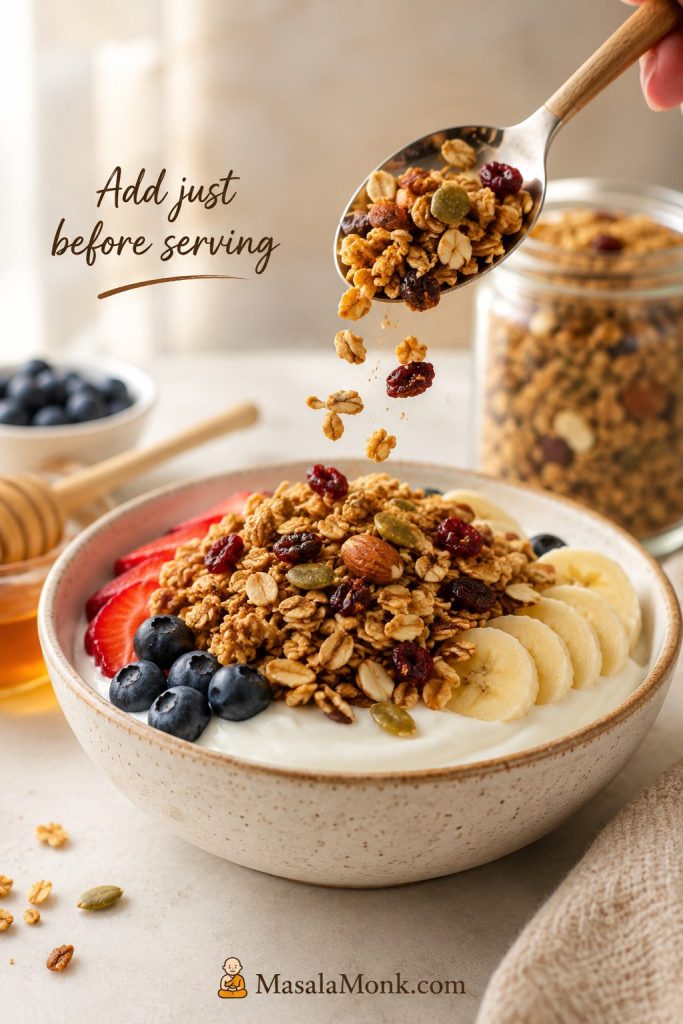
Quick Tomato Paste Option

Whisk together 170 g / 6 oz tomato paste, 120–150 ml / ½–⅔ cup water, 45 ml / 3 tbsp vinegar, 20–35 g sweetener, 4–5 g salt, ½ tsp onion powder, ¼–½ tsp garlic powder, ¼–½ tsp mustard powder, and a tiny pinch of cinnamon or clove. Simmer 5–8 minutes, then cool.

Notes

  • For faster thickening and better color, use ripe, meaty tomatoes.
  • A 26–30 cm / 10–12 inch pan works best for a 1 kg tomato batch because it evaporates water faster.
  • Ketchup thickens as it cools, so stop reducing slightly before it looks perfect.
  • For the best flavor, chill the ketchup for at least 2 hours before serving.
  • If you want a smoother bottled-style finish, strain the tomato mixture before the final reduction.
  • If using a countertop blender, blend hot tomatoes in batches and vent the lid so steam can escape safely.
  • Reduction concentrates flavor, so add salt carefully.
  • When doubling the recipe, use a wider pan or expect a longer reduction time. A double batch will not thicken in the same time.
  • For a lower-sugar or sugar-free variation, use allulose, monk fruit, dates, or raisins.
  • This homemade ketchup recipe is flexible for fridge and freezer storage, but it should not be used as a canning formula. For shelf-stable jars, follow a tested canning recipe exactly.

FAQs About Homemade Ketchup

How do I make homemade ketchup from fresh tomatoes?

Fresh tomatoes make excellent homemade ketchup when they are ripe, red, and flavorful. To make it, cook them with onion and garlic, then blend, strain if needed, and reduce with vinegar, sweetener, salt, mustard, and spices until thick.

How do I make ketchup from tomato paste?

Tomato paste ketchup is the fastest version because the tomato base is already concentrated. To make it, whisk tomato paste with water, vinegar, sweetener, salt, onion powder, garlic powder, mustard powder, and a tiny pinch of spice. Then simmer for 5–8 minutes.

Why is my homemade ketchup too thin?

Thin ketchup usually means the tomatoes were watery or the sauce has not reduced enough. To fix it, simmer the ketchup uncovered in a wide pan and stir often as it thickens. The sauce is ready when it mounds slightly on a spoon and holds shape on a chilled plate.

Why does my ketchup taste too sour?

Too much vinegar, underripe tomatoes, or not enough sweetener can make ketchup taste sour. To balance it, gradually add sugar, jaggery, honey, dates, raisins, or a low-carb sweetener until the acidity tastes rounded.

Why does my homemade ketchup taste like tomato sauce?

Your ketchup can taste like tomato sauce when it does not have enough sweet-acid-spice balance. To fix that, add a little vinegar for tang, sweetener for roundness, salt for depth, mustard powder for sharpness, and a tiny pinch of clove, cinnamon, or allspice for classic ketchup flavor. After that, chill it briefly and taste again.

Is homemade ketchup good without sugar?

You can make homemade ketchup without refined sugar, but the flavor changes. For a no-refined-sugar version, use dates, raisins, apple, honey, maple, or jaggery. Meanwhile, keto ketchup works better with allulose, monk fruit, or a very small amount of stevia. Without any sweetener, however, the sauce will taste more like tangy tomato sauce than classic ketchup.

How long does homemade ketchup last?

This small-batch fridge ketchup is best within 2 weeks. For that reason, keep it refrigerated in a clean jar and use a clean spoon. For longer storage, freeze it in small portions for 4–6 months. After thawing, stir before serving.

Does homemade ketchup freeze well?

Freezing works well for homemade ketchup. After cooling, use small containers or ice cube trays. Then, after thawing, stir well. If it separates or turns watery, simmer it briefly to bring the texture back.

Is this homemade ketchup recipe safe for canning?

Do not can this flexible recipe as written. Instead, use it for fridge and freezer storage. For shelf-stable canning, use a tested ketchup canning recipe from a reliable source and follow the vinegar, jar size, headspace, and processing-time instructions exactly.

Is catsup the same as ketchup?

Usually, yes. Catsup and ketchup are alternate names for the same sweet-tangy tomato condiment. Today, ketchup is the more common spelling; however, homemade catsup and homemade tomato catsup usually refer to the same type of recipe.

What makes this a homemade ketchup recipe instead of tomato sauce?

A homemade ketchup recipe uses tomato, vinegar, sweetener, salt, mustard, and warm spices in a tighter balance than tomato sauce. As a result, the finished ketchup tastes tangy-sweet, glossy, concentrated, and dip-friendly.

What is ketchup made of?

Ketchup is usually made from tomatoes, vinegar, sugar or another sweetener, salt, onion or onion powder, garlic or garlic powder, mustard, and warm spices. For homemade ketchup, cinnamon, clove, allspice, or celery seed should stay in the background rather than dominate the sauce. Otherwise, the ketchup can start tasting like chutney instead of a classic dip.

Back to top

Posted on Leave a comment

Gluten Free Sourdough Bread Recipe

Gluten free sourdough bread recipe loaf in a pan with sliced crumb visible.

A good gluten free sourdough bread recipe should give you a loaf that feels properly baked, slices cleanly, and tastes like real bread rather than a compromise. This version is built as a loaf-pan, psyllium-supported, custom-blend method because that is the most dependable way to get structure, flavor, and repeatable home results without asking the dough to behave like a dramatic free-form boule.

Gluten free sourdough can still be frustrating, though. Some loaves bake up dense, some stay gummy in the middle, and some look promising right until you cut into them too early. So this guide does more than hand you a formula. It shows you what the dough should look like, how to judge the starter, when to move forward, and what to fix if the loaf falls short.

If your culture still feels unpredictable, pause and strengthen that first with the sourdough starter guide before you bake a full loaf. A better starter solves more problems than most flour tweaks ever will.

Quick Answers for This Gluten Free Sourdough Bread Recipe

Best default route: custom flour blend, active starter, loaf pan. This is the safest place to start.

Best pan: an 8½ x 4½-inch loaf pan. It gives the most forgiving path to a well-set loaf.

Main proof cue: bake when the loaf looks modestly puffy and lighter than before, not dramatically doubled.

Main bake cue: the loaf should reach about 205°F to 210°F internally and look fully set, not pale and soft.

Expected dough feel: soft, sticky, cohesive, and more like a sculptable paste than kneadable wheat dough.

Biggest mistake: misreading a soft dough as “wrong” or slicing too early and blaming the recipe for a crumb that has not finished setting.

Also Read: Sourdough Focaccia Recipe

Who This Loaf Is For

  • Best for: readers making their first serious gluten free sourdough loaf and wanting a dependable pan bread for toast, sandwiches, and everyday slicing.
  • Best for: bakers who want visible dough cues, practical proofing guidance, and a method that prioritises consistency over drama.
  • Less ideal for: anyone chasing a lofty free-form artisan boule on the first try. This method is built around reliability first.

Tested direction: this loaf is written for an 8½ x 4½-inch metal loaf pan, whole psyllium husk, and a 100% hydration gluten free starter, with room-temperature fermentation in a normal home oven.

What Kind of Gluten Free Sourdough Bread to Expect

This loaf is meant to give you bread that feels genuinely useful at the table: a crust that looks properly baked, a crumb that stays moist without turning pasty, and slices sturdy enough for toast, sandwiches, or simple buttered bread. The sourness is usually present but not aggressively sharp, especially if your starter is healthy but your fermentation stays moderate.

It also helps to set one expectation early. This is not wheat dough, and it is not trying to behave like wheat dough. The loaf usually rises more modestly, the dough stays softer, and the best texture often shows up only after the bread has cooled completely. In many kitchens, day-two slices toast especially well.

Finished gluten free sourdough loaf with a moist crumb, clean slices, and a toasted slice, showing the everyday texture and use this bread is meant to have.
This gluten free sourdough is meant to bake up with a moist, properly set crumb and slices that work well for toast or everyday sandwiches, so this image shows the kind of loaf you should expect rather than a dramatic wheat-style boule.

Why Gluten Free Sourdough Bread Behaves Differently

In wheat sourdough, gluten gives the dough much of its stretch, gas-holding power, and structural resilience. Once fermentation begins, that network helps the loaf expand and keep shape. Gluten free dough does not have that advantage, so the bread has to build structure another way.

That does not mean a good rise is impossible. It means the loaf depends more heavily on flour balance, hydration, starter activity, binder support, proofing, and bake setup. As a result, gluten free bread tends to reveal mistakes faster. If the starter is weak, the dough is too tight, the hydration is too high for the blend, or the loaf is underbaked, the crumb usually tells on you.

That is why it should not be judged against wheat-dough cues. The dough often looks softer. The rise can be subtler. The shaping is gentler. The success markers are different.

For readers who want a quick refresher on the bigger picture, MasalaMonk’s what gluten is explainer makes the rest of this loaf easier to understand.

Structure comes from hydration, fermentation, and binders

Once gluten is out of the picture, hydration starts doing far more than people expect. Water is not just there to bring the dough together. It helps the flours absorb fully, supports fermentation, activates psyllium, and shapes the final crumb.

Fermentation matters just as much. A lively starter does more than add tang. It lightens the dough, brings internal aeration, and gives the loaf a better chance of baking into something open enough to feel like bread rather than a dense substitute.

Then there is the binder. In this loaf, psyllium husk is the quiet structural engine. When hydrated properly, it creates a gel that helps hold water, improves cohesion, and supports gas retention. It does not recreate gluten, yet it does give the dough enough internal support to rise and set more convincingly.

Gluten free dough should not feel like wheat dough

This is one of the most important mindset shifts in the whole recipe. Gluten free sourdough dough often feels softer, stickier, and more paste-like than wheat dough. That can be completely normal.

The best mental model is this: think sticky, sculptable paste rather than kneadable wheat dough. After mixing, it should not run like batter, yet it should not feel firm enough to knead confidently either. This is exactly where many readers panic and start adding flour they did not need.

The opposite mistake happens too. Some readers assume a very loose dough must be right because gluten free dough is “supposed to be wet,” and they end up with more hydration than the flour system can hold. So the goal is not to force this dough into a wheat template. The goal is to learn what it looks like when it is on track, then trust those cues.

What success looks like

A successful loaf is not defined by one dramatic sign. It is a combination of smaller, more dependable ones.

Before baking, the dough should look more aerated and lighter than it did after mixing. It may not double dramatically, and that is fine. After baking, the loaf should feel set rather than damp and heavy. The crumb should be moist but not wet, tender but not fragile, and structured enough to slice without tearing into paste. Finally, the flavor should have real development. Even a mild loaf should taste deeper than a fast yeast bread made from the same flour.

That is the standard here: not “good for gluten free,” but genuinely good bread.

Also Read: Easy English Scone Recipe

Choose the Right Flour Path for Gluten Free Sourdough Bread

Gluten free sourdough recipes vary widely because they often start from very different flour systems. Some use a 1:1 blend for convenience. Others build a custom blend for control. Both routes can work. They simply reward different priorities.

Comparison guide for gluten free sourdough bread showing 1:1 flour blend versus custom blend, with the 1:1 route framed as easier to start and the custom blend framed as offering more control.
Choosing between a 1:1 blend and a custom mix changes how predictable your dough feels, so this side-by-side guide helps you decide whether you want maximum convenience or better control before you start baking.

Route A: Use a 1:1 blend for convenience

A 1:1 gluten free flour blend is the easier place to start. It cuts down the shopping list, simplifies measuring, and gets you to mixing faster. For some readers, that simplicity matters enough to make it the right choice.

Even so, convenience comes with trade-offs. One 1:1 blend may absorb water beautifully. Another may turn gummy with the same hydration. Some contain gums already. Others lean starch-heavy and stay pale or under-set unless everything else is dialed in. The first thing that usually shifts is hydration and handling, which is why a dough made with one blend can feel noticeably different from the same formula made with another.

Route B: Use a custom blend for more control

A custom blend asks more from you at the start, yet it gives more control in return. You can decide how much whole-grain body, softness, absorbency, and starch support the loaf gets instead of inheriting a generic mix with unknown priorities.

That matters in sourdough because fermentation interacts with each flour differently. One flour may add flavor but weigh the loaf down when overused. Another can make the dough feel stronger. Others tighten more during resting than readers expect. A custom blend turns those variables into recipe decisions instead of accidental surprises.

Which route this recipe uses

This recipe uses a custom blend as the default because it produces a more dependable, brand-agnostic result. It also makes the dough cues easier to teach. When I tell you what the dough should feel like after mixing, after resting, or after proofing, those cues mean more when the flour system is built deliberately rather than borrowed from an unknown premade blend.

That does not mean you cannot adapt this loaf to a 1:1 blend later. It means the cleanest way to learn the method is to make it once as written in a loaf pan, then adjust from there once you understand how the dough should behave.

Also Read: White Russian Recipe: 7 Variants to Try, From Classic to Frozen

Ingredients That Matter Most in Gluten Free Sourdough Bread

In a strong gluten free sourdough loaf, some ingredients build structure, some drive fermentation, and some only refine the final result. Knowing which is which makes substitutions much safer.

Ingredient roles card for gluten free sourdough bread showing how brown rice flour, sorghum flour, tapioca starch, potato starch, psyllium husk, starter, water, salt, olive oil, and optional honey or maple syrup support the loaf.
A good loaf comes from balance: the whole-grain flours build body, the starches lighten the crumb, psyllium holds moisture, and the starter brings the lift and tang that make the bread feel alive.

The flour blend

This loaf uses brown rice flour, sorghum flour, tapioca starch, and potato starch.

Brown rice flour gives dependable everyday structure without pushing the flavor too dark. Sorghum adds more character and helps the bread taste like bread instead of starch. Tapioca starch adds flexibility and tenderness, which helps keep the crumb from feeling rigid once cooled. Potato starch softens the blend further and supports a lighter eating texture.
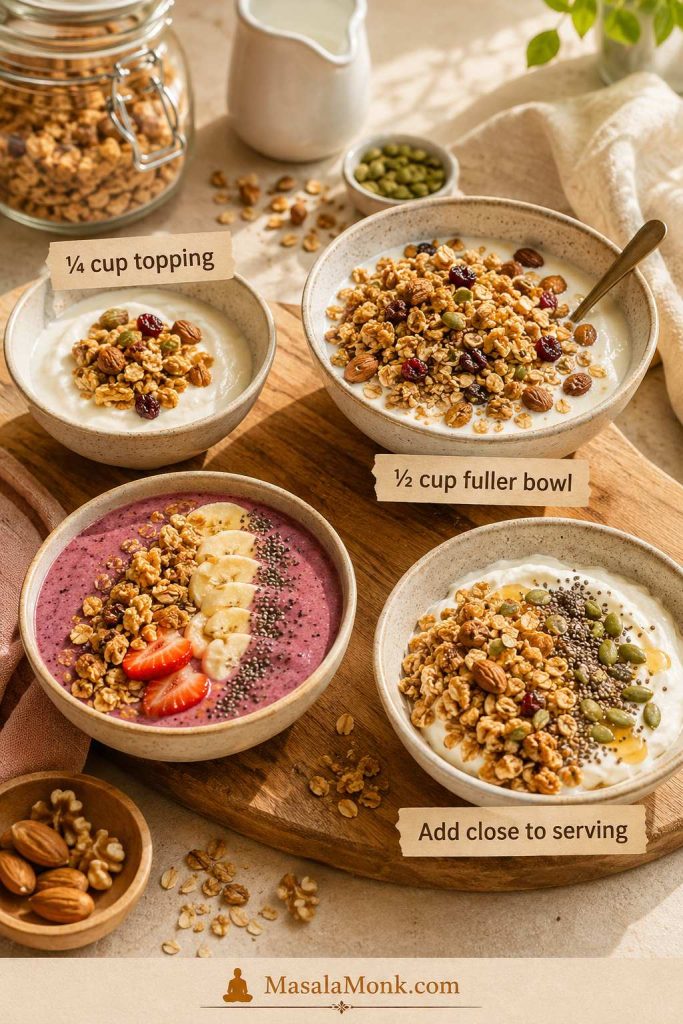
The ratio matters. Too much whole-grain flour and the loaf can turn heavy. Too much starch and the crumb can become too soft or stay under-set in the middle. The point of this blend is balance: enough body to taste satisfying, enough lightness to avoid density, and enough structure to slice well.
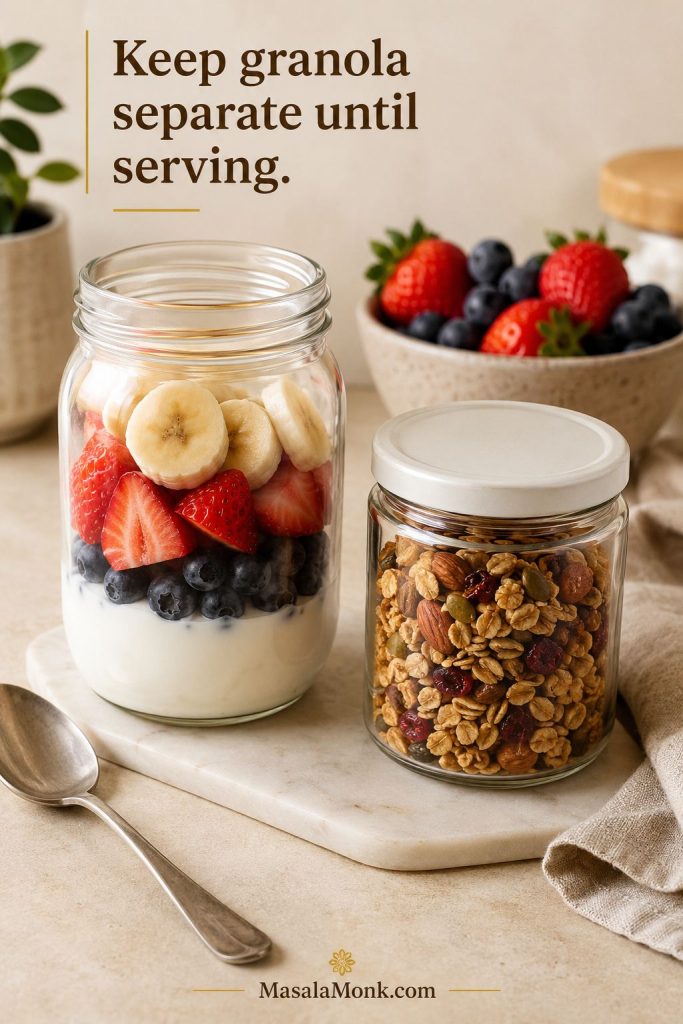
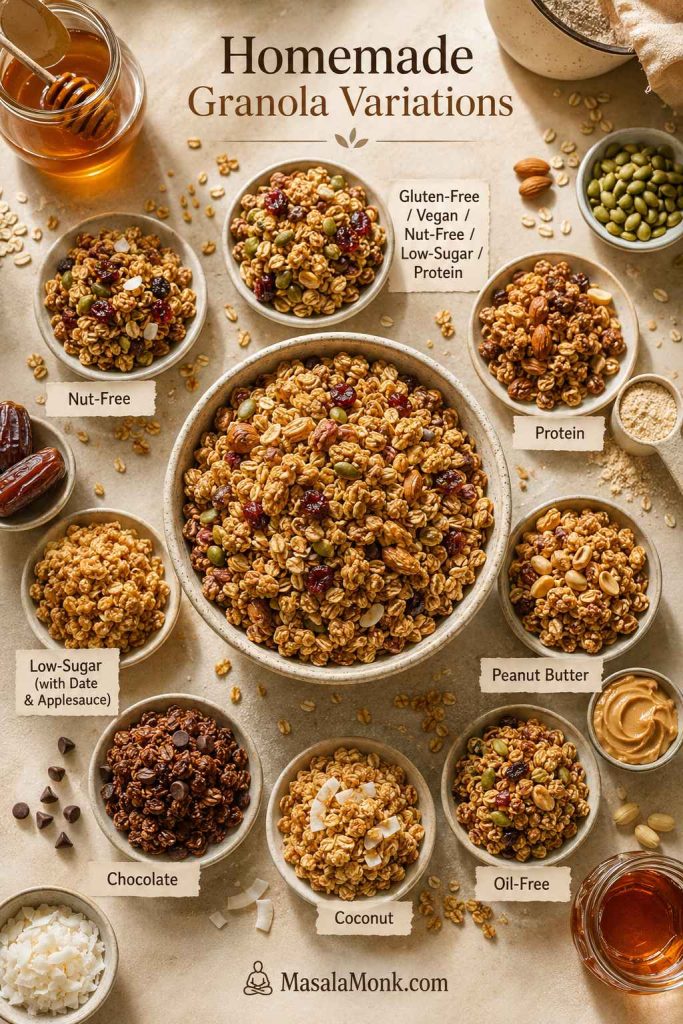
The starter behind a good loaf

The starter is both the flavor engine and the lift source. In gluten free sourdough, that matters even more because the dough has fewer structural advantages to hide a weak culture.

A strong starter helps lighten the dough, deepen the flavor, and create the internal activity that keeps the loaf from baking into a compact block. A sluggish starter often leaves readers adjusting proof times, flour amounts, and oven settings when the real problem was the culture from the start.

For this loaf, use an active 100 percent hydration gluten free starter that has clearly risen after feeding, shows bubbles throughout the jar, and smells pleasantly sour rather than harsh. If your culture still feels inconsistent, go back to the sourdough starter guide before changing the bread formula.

Hydration

Hydration shapes nearly everything here. It influences how the flours absorb, how psyllium sets, how fermentation moves through the dough, and whether the crumb bakes up moist or gummy.

Because gluten free flour systems vary so much, hydration is never one-size-fits-all. It also changes during resting. A dough that seems slightly soft right after mixing can become far better behaved after the flours and psyllium absorb water fully. On the other hand, a dough that already feels very stiff at mixing usually tightens more as it rests.

That is why this recipe includes a deliberate short rest before you judge the dough too harshly.

Psyllium husk

Psyllium is the structural key in this formula. Once hydrated, it helps the dough hold water, improves cohesion, supports gas retention, and makes the finished loaf much easier to slice cleanly.

Without enough binder support, a loaf may ferment and still spread too much, collapse, or cool into a crumb that feels wet and fragile. With a good psyllium gel, the dough behaves with much more confidence.

Because psyllium quality varies, color can vary too. Some brands produce a slightly darker or faintly purple-gray crumb. That can look strange the first time, but it does not automatically mean the loaf failed.

Salt and optional additions

Salt does more than season the loaf. It sharpens flavor and helps keep fermentation balanced. Without enough salt, the bread can taste dull even when the starter is healthy. Too much, on the other hand, can make the dough feel tighter and less balanced.

A little olive oil softens the crumb slightly and rounds out the eating texture. A small amount of honey or maple syrup can help with browning and add a little flavor depth. These are fine-tuning ingredients, though, not rescue ingredients. They only help once the flour, starter, hydration, and binder are already doing their jobs.

Also Read: Mango Sorbet Recipe: Healthy & Plant Based Dessert

Gluten Free Sourdough Bread Formula and Why It Works

This loaf is built around a simple but deliberate balance: enough whole-grain flour to taste like bread, enough starch to keep the crumb from turning heavy, and enough psyllium support to hold that hydration together in a loaf pan.

The full measured ingredient list appears in the recipe card, but the logic matters here just as much as the numbers. Brown rice flour gives dependable structure, sorghum brings more flavor, tapioca and potato starch keep the crumb lighter, and psyllium helps the dough hold moisture and slice cleanly once baked.

The water level is generous because gluten free sourdough needs more moisture than many readers expect, yet it is still restrained enough to work reliably in a loaf pan. That pan matters too. A free-form loaf or Dutch oven can work later, but the loaf pan is the smartest route when consistency is the priority.

Why this recipe is written in grams

This recipe is written in grams because gluten free flour blends vary too much by volume for cups to stay dependable. Measuring by weight gives you a far better shot at repeating the same dough texture, the same fermentation behavior, and the same loaf structure next time.

Equipment That Improves Your Gluten Free Sourdough Bread Results

You do not need a professional bakery setup to make good gluten free sourdough, but a few tools genuinely improve consistency.

A digital scale is essential, not optional. Gluten free flours vary too much by volume for cups to stay dependable. An 8½ x 4½-inch loaf pan is the most forgiving format for most readers because it supports the dough during proofing and baking. A Dutch oven can work, yet it asks more from the dough and from your handling. If your goal is a repeatable first success, the loaf pan is the smarter default.

Comparison guide showing loaf pan route versus free-form route for gluten free sourdough bread, with the loaf pan framed as more supportive and forgiving for beginners.
A loaf pan gives gluten free sourdough more support during proofing and baking, so this comparison helps show why it is the more reliable first choice before you move on to a less forgiving free-form loaf.

A sturdy spatula or dough whisk helps with mixing. A bowl scraper makes transfer neater. Most importantly, an instant-read thermometer gives you a much clearer finish line than crust color alone. Gluten free loaves can look done before the center has fully set, so temperature is one of the best protections against gumminess.

Essential tools guide for gluten free sourdough bread showing a digital scale, 8½ x 4½-inch loaf pan, instant-read thermometer, dough whisk, and bowl scraper.
Gluten free sourdough gets much easier to repeat when you rely on a scale, a loaf pan, and an instant-read thermometer, because those three tools do more for consistent mixing, proofing, and doneness than extra gear ever will.

Also Read: Protein Ice Cream Recipe: 10 Creamy Homemade Recipes

Starter Readiness for Gluten Free Sourdough Bread

“Use an active starter” sounds straightforward until you realize how loosely that phrase gets used. For this loaf, active needs to mean something visible.

Active gluten free sourdough starter in a glass jar with visible bubbles and rise.
A starter like this should look clearly risen and bubbly through the jar, because visible activity matters more than guessing whether it is “probably ready.”

What an active starter should look like

A ready starter should look aerated throughout the jar, not just bubbly on top. After feeding, it should rise clearly enough that you do not have to guess whether anything happened. If your starter usually doubles, great. If it does not fully double but reliably rises, loosens, and fills with bubbles after feeding, that can still be enough. What matters most is clear activity, not dramatic performance.

Visually, you want a jar that looks clearly lifted, bubbly through the middle rather than just foamy at the top, and still strong rather than flat or separated. If the top has fully collapsed and the starter looks slack, refresh it before baking.

A sourdough starter is a live culture of wild yeast and lactic acid bacteria, so visible rise, bubbles, and recovery after feeding matter more than starter myths or wishful thinking.

The best times to use it

There are three especially useful starter states to understand here.

Guide showing peak, just-past-peak, and not-ready gluten free sourdough starter in glass jars.
A gluten free starter can look active, usable, or still too weak within a fairly short window, so reading the jar correctly is often what separates a lively loaf from a disappointing one.
  • At peak: the starter has risen clearly, still looks domed or almost domed, and feels lively throughout. This is the easiest and safest state to use.
  • Just past peak: the starter still looks active and aerated, but the top may be starting to flatten slightly rather than sit high and rounded. This can still work very well, especially if it remains strong and bubbly.
  • Straight from the fridge: sometimes workable if the culture was strong before refrigeration, but far less dependable if there is any sign of weakness. When in doubt, refresh it first.

When your starter is not ready yet

What should make you stop? Weak bubbling, sluggish recovery after feeding, a starter that separates badly, or a culture that smells more harsh than pleasantly sour. In those cases, the problem is rarely the bread formula. The culture simply is not ready yet.

Also Read: Homemade Mango Ice Cream Recipe

Timing Framework: What This Process Usually Looks Like

Times vary by starter strength, room temperature, and flour behavior, so use these as orientation points rather than strict rules.

Timing framework guide for gluten free sourdough bread showing mix dough, rest, bulk ferment, pan and smooth, final proof, bake, and cool completely.
A good gluten free sourdough loaf gets easier to manage when you can see the full rhythm of the bake, so this timeline helps you plan the day from mixing and proofing through baking and full cooling.

Warm kitchen: roughly 26°C to 28°C / 79°F to 82°F

If your kitchen runs warm, bulk fermentation may move along in about 3 hours, and the final proof may be ready in roughly 1 hour. Watch the dough closely so it does not overproof.

Moderate kitchen: roughly 22°C to 24°C / 72°F to 75°F

In a moderate room, bulk fermentation often lands around 4 to 5 hours, with a final proof of about 1 to 2 hours.

Cooler kitchen: roughly 18°C to 20°C / 64°F to 68°F

If your room runs cool, bulk fermentation may need 5 to 6 hours or even a bit more, and the final proof may take closer to 2 hours.

Optional overnight route

For a slightly more developed flavor, you can refrigerate the shaped loaf after a modest room-temperature start to the final proof, then bake the next day once it no longer feels cold and inert. This is best used after you have already made the loaf once and understand what the dough looks like when it is on track.

Also Read: Cookie Pie Recipe: 10 Best Flavors, Fillings and Variations

Ingredients for This Gluten Free Sourdough Bread Recipe

Before you start mixing, gather everything first. This loaf uses a custom flour blend, active starter, psyllium husk, water, salt, olive oil, and an optional small amount of honey or maple syrup. For the full recipe card with yield, timing, and notes, you can also jump to the recipe card here.

One-glance formula snapshot

  • Pan: 8½ x 4½-inch loaf pan
  • Starter: active gluten free starter at 100% hydration
  • Expected dough feel: soft, sticky, cohesive, and smoothable
  • Bake target: 205°F to 210°F internal temperature
  • Proof target: modestly puffy and lighter than before, not dramatically doubled
  • Cooling minimum: 3 to 4 hours before slicing
Labeled ingredients for gluten free sourdough bread including brown rice flour, sorghum flour, tapioca starch, potato starch, psyllium husk, starter, salt, water, olive oil, and honey.
This loaf works best when the flour blend, psyllium, starter, and hydration are treated as a system, which is why getting the ingredients lined up correctly matters before you start mixing.
  • 150 g active gluten free sourdough starter, 100% hydration
  • 220 g brown rice flour
  • 120 g sorghum flour
  • 80 g tapioca starch
  • 40 g potato starch
  • 14 g whole psyllium husk
  • 10 g fine sea salt
  • 430 g warm water
  • 15 g olive oil
  • 10 g honey or maple syrup, optional

How to Make Gluten Free Sourdough Bread Step by Step

Step 1: Make the psyllium gel

Whisk the warm water and psyllium husk together in a medium bowl. Leave it for 2 to 3 minutes until it thickens into a gel.

Psyllium husk gel for gluten free sourdough bread thickened in a bowl before mixing
Psyllium should look thickened, cloudy, and easy to whisk through at this stage, because that hydrated gel is what helps the dough hold water and bake into a loaf that slices more cleanly.

This step does more than hydrate the binder. It helps distribute psyllium evenly through the dough, which improves cohesion and reduces the chance of dry patches later.

The gel should look thickened but still stirrable. It should not look watery, yet it should not feel like a solid rubber mass either.

Step 2: Mix the dough

In a large bowl, whisk together the brown rice flour, sorghum flour, tapioca starch, potato starch, and salt. Add the psyllium gel, active starter, olive oil, and optional honey or maple syrup. Mix thoroughly until no dry pockets remain.

At this stage, the dough should look sticky, soft, and cohesive. Think thick, supple paste leaning toward very soft dough rather than anything you would knead like wheat bread. It should hold together, but it should not feel firm.

Gluten free sourdough dough after mixing in a bowl with soft sticky texture.
Right after mixing, the dough should look soft, sticky, and cohesive, so this is the stage where adding extra flour too quickly usually does more harm than good.

If it resists mixing and feels stubbornly tight, it is probably too stiff already. If it pours or sloshes like batter, it has likely gone too far in the wet direction.

Step 3: Rest the dough

Cover the bowl and leave the dough for 15 to 20 minutes. This short rest gives the flours and psyllium time to absorb water more fully before you judge the texture.

After resting, the dough should feel smoother, more organised, and slightly stronger. It should still be soft, but it should no longer feel shapeless. This is often the point where readers realise the dough was not “wrong” after all; it simply needed time to hydrate.

Gluten free sourdough dough after resting in a bowl with smoother more settled texture.
After the short rest, the dough should still look soft, but it should feel more settled and slightly better organised than it did right after mixing.

If it becomes dramatically tighter than expected, add a small splash of water. If it still looks unusually loose, continue with the loaf-pan format and note that the blend may need slight adjustment next time.

Step 4: Bulk ferment

Leave the dough covered at room temperature until it looks visibly aerated and somewhat lighter. In many kitchens this takes 3 to 5 hours, but room temperature and starter strength matter more than the clock.

You are not waiting for dramatic doubling. Instead, look for a dough that seems about 50 to 75 percent more lively rather than massively larger. It should look puffier, hold a bit more internal air, and feel less heavy than when it started.

Gluten free sourdough dough after bulk fermentation looking lighter and more aerated in a bowl.
After bulk fermentation, the dough should look a little lighter and more aerated, but not dramatically doubled the way wheat dough often does.

If the dough still looks almost exactly the same several hours later, the starter is usually the first thing to question.

Step 5: Transfer to the pan

Scrape the dough into a parchment-lined or well-greased loaf pan. Smooth the top with wet fingers or a spatula. Add seeds on top here if you want them.

Gluten free sourdough dough smoothed into a loaf pan before final proof.
Once the dough is in the pan, it should still look soft and hydrated, but the pan gives it the support that makes this loaf much easier to handle well.

This is not a dramatic shaping step. You are guiding the dough into place and preserving whatever lightness fermentation created. Gluten free sourdough rewards calm handling more than aggressive shaping.

The dough should smooth willingly, even if it remains soft. It should not fight you like stiff dough, and it should not look like it has no internal support at all.

Step 6: Final proof

Cover the pan and let the loaf proof until it looks slightly expanded, a little airy, and visibly lighter than when it first went into the pan. In many kitchens this takes about 1 to 2 hours.

What does ready look like? The loaf should seem modestly puffed, not dramatically tall. The surface should look a little more alive, and if you gently touch it, it should not feel dense and immovable. What you are chasing here is a loaf that looks ready, not maxed out.

Proofed gluten free sourdough loaf in a loaf pan ready to bake.
A properly proofed loaf should look lightly puffed and a little more alive, not dramatically doubled or fragile.

Bake now if: the loaf looks modestly puffed, lighter than before, and softly aerated without seeming fragile.

Wait longer if: it still looks dense, heavy, flat, or almost unchanged from when it first went into the pan.

You have probably gone too far if: it starts looking fragile, overexpanded, or slightly unstable, as though it might sink rather than hold itself.

Step 7: Bake

While the loaf proofs, preheat the oven to 230°C / 445°F.

Bake the loaf for 20 minutes at 230°C / 445°F. Then lower the oven to 210°C / 410°F and bake for another 35 to 45 minutes, until the crust is deep golden and the internal temperature reaches about 96°C to 99°C / 205°F to 210°F.

Freshly baked gluten free sourdough loaf in a metal loaf pan with deep golden crust.
A fully baked loaf should look well set and deeply golden in the pan, because crust color and internal temperature together tell you much more than color alone.

If the top darkens too quickly, tent it loosely with foil during the second part of the bake.

The loaf should look fully set when done, not pale and soft. It should also feel lighter than a wet, underbaked loaf of the same size. When you tap the top gently, it should feel firm rather than damp and delicate.

Step 8: Cool completely

Leave the loaf in the pan for about 10 minutes, then move it to a rack and cool completely, ideally for at least 3 to 4 hours.

Gluten free sourdough loaf cooling on a wire rack after baking.
Cooling is part of the bake, so letting the loaf rest fully on a rack helps the crumb finish setting before you slice into it.
Crumb guide for gluten free sourdough bread comparing a properly set loaf, a gummy underbaked loaf, and a dense tight loaf.
A good gluten free sourdough crumb should look moist and tender rather than wet or tight, so this side-by-side guide helps you tell the difference between a properly set loaf, a gummy center, and a denser result.

This is not a fussy extra step. Cooling is part of the bake. Slice too early and even a properly baked loaf can seem falsely gummy because the crumb has not finished setting.

Fully cooled gluten free sourdough bread sliced to show a moist tender crumb.
Once the loaf has cooled fully, the crumb should look moist, tender, and properly set, with slices that hold together cleanly instead of turning gummy or pasty.

Also Read: Punjabi Mutton Bhuna – Amritsari Village-Style Gosht Recipe

What Gluten Free Sourdough Bread Dough Should Look Like at Every Stage

Timing helps, yet appearance and feel matter more.
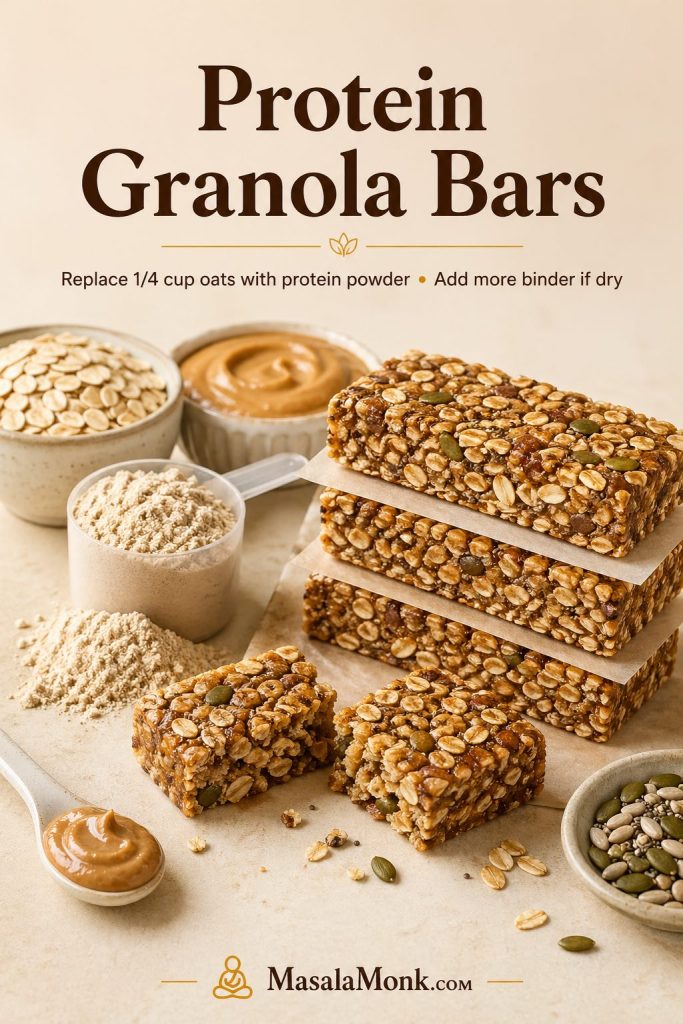
Visual guide showing gluten free sourdough dough from mixing through ready-to-bake stage.
Gluten free sourdough usually changes more through texture, structure, and slight puffing than through dramatic rise, which is why these stage cues are more useful than the clock.
  • After mixing: the dough should look fully hydrated, sticky, and cohesive. It should not have dry flour pockets. It should not pour like cake batter either.
  • After the short rest: the dough should feel smoother, slightly stronger, and more organised. It should still be soft, but less sloppy than it looked at first.
  • During bulk fermentation: look for dough that seems lighter, more aerated, and a little puffy rather than one that is simply sitting in the bowl unchanged.
  • Ready to proof in the pan: after transfer, the surface should smooth out easily. The dough should still be soft, yet it should not look like it has no internal support at all.
  • Ready to bake: the loaf should look modestly expanded and clearly lighter than before. Think “puffy and ready,” not “maxed out and fragile.”
  • Fully baked and fully cooled: the crust should feel set. The loaf should not feel suspiciously heavy for its size. When sliced, the crumb should look moist and tender, not wet and sticky.

How to Tell If Gluten Free Sourdough Bread Needs More Proofing

Proofing is where many loaves succeed or fail, so it helps to separate the three most common states clearly.

Proofing guide for gluten free sourdough bread showing underproofed, ready-to-bake, and overproofed dough in loaf pans.
Gluten free sourdough is usually ready when the loaf looks modestly puffed and lighter than before, so this side-by-side guide helps you avoid baking too early or waiting until the dough turns fragile.
  • Underproofed: the dough still looks dense, heavy, and only faintly active. It may bake into a loaf with a tight crumb and weak lift.
  • Properly proofed: the loaf looks modestly puffy, lighter than before, and softly aerated without seeming fragile. This is the target.
  • Overproofed: the loaf starts to look too delicate, overexpanded, or a little unstable. It may sink, spread, or lose structure in the oven.

When in doubt, remember that gluten free sourdough usually rewards restraint. You are not waiting for an enormous rise. You are looking for a loaf that seems clearly more alive than before, but still stable.

Also Read: Peach Cobbler with Canned Peaches (Dessert Recipe)

Troubleshooting by Symptom

Most gluten free sourdough problems come back to a few repeated causes: weak starter, mismatched hydration, unbalanced flour, overproofing, underbaking, or slicing too soon.

Troubleshooting card for dense gummy collapsed pale wet and stiff gluten free sourdough bread.
Most problems come back to starter strength, hydration, proofing, or bake time, so reading the symptom correctly is usually the fastest way to fix the next loaf.

Why is my loaf dense?

Most likely cause: weak starter, dough that was too stiff, or fermentation that never got far enough.

What you likely saw before baking: the dough barely changed during bulk fermentation and still looked heavy when it went into the pan.

How to confirm it: the crumb came out tight and heavy without much internal openness.

What to change next time: strengthen the starter first, then check whether the dough tightened too much during resting. If it did, increase hydration slightly.

Why is the center gummy?

Most likely cause: underbaking, too much hydration for the chosen flour system, or slicing too early.

What you likely saw before baking: the loaf may have looked fine in the oven and browned reasonably well, but it still felt heavier than it should for its size.

How to confirm it: the center still felt wet, sticky, or pasty even after cooling.

What to change next time: trust the thermometer, extend the bake if needed, and cool the loaf fully before slicing. If the problem persists, reduce hydration slightly or revisit flour absorption.

Why did the loaf spread or collapse?

Most likely cause: overproofing, excessive hydration, or weak binder support.

What you likely saw before baking: the loaf looked puffy but also a little fragile, overinflated, or unstable in the pan.

How to confirm it: it sank or spread instead of holding shape in the oven.

What to change next time: shorten the final proof slightly, keep the loaf pan as the default format, and check whether the dough looked too loose even after resting.

Why is the crust pale or underbaked?

Most likely cause: insufficient bake time or weak preheating.

What you likely saw before baking: the loaf entered the oven looking fine, but the oven itself may not have been thoroughly heated or the bake may have been cut short once the top gained some colour.

How to confirm it: the loaf colours slowly, the crust stays soft, or the bottom feels under-set even when the top looks done.

What to change next time: preheat more thoroughly, keep the loaf in longer, and use the thermometer rather than crust color alone.

Why is the dough too wet?

Most likely cause: flour variability or slightly excessive hydration.

What you likely saw before baking: even after the short rest, the dough still looked unusually loose and hard to smooth into the pan cleanly.

How to confirm it: the dough feels overly slack rather than soft and cohesive.

What to change next time: reduce water slightly next time, or revisit whether a flour swap changed how the blend absorbs moisture.

Why is the dough too stiff?

Most likely cause: too little water, overly absorbent flour, or too much binder.

What you likely saw before baking: the dough felt stubbornly tight early on and became even tighter during resting instead of smoothing out.

How to confirm it: it resists mixing, smoothing, and expansion more than it should.

What to change next time: increase hydration a little, and avoid adding extra flour just because the dough does not feel like wheat dough.

Why is the flavor not sour enough?

Most likely cause: a mild starter or a fermentation schedule that moved too quickly.

What you likely saw before baking: the dough rose reasonably well, but fermentation stayed efficient rather than especially long or flavour-building.

How to confirm it: the loaf performs reasonably well but tastes gentler than you wanted.

What to change next time: extend fermentation modestly where appropriate or use the optional overnight route once you know the dough well.

Why does the crumb look purple or gray?

Most likely cause: psyllium color reaction rather than a failed loaf.

What you likely saw before baking: nothing especially alarming in the dough itself, but the final crumb later showed an odd tint.

How to confirm it: the structure and taste are otherwise fine, but the crumb carries an unusual hue.

What to change next time: try a different psyllium brand if the appearance bothers you.

Also Read: Avocado Chocolate Mousse Recipe

Substitutions: What Is Usually Safe and What Is Risky

Once a loaf works, it is tempting to start swapping ingredients casually. Some changes are manageable. Others can change structure, hydration, or proofing enough to make the dough feel like an entirely different recipe.

Guide to safe swaps and risky changes in gluten free sourdough bread showing usually safe changes, caution swaps, and riskier changes like changing psyllium, removing starches, or adding extra flour.
Not every gluten free sourdough swap carries the same risk, so this guide helps you separate small flexible changes from the ones that can quickly alter hydration, structure, and the feel of the loaf.
  • Usually safer: swapping honey for maple syrup, adding seeds on top, or making small flavor additions that do not change the dough’s structure much.
  • Use caution: replacing the custom blend with a 1:1 blend. This can work, but hydration may need adjustment and blends with added gums may handle differently.
  • Riskier: changing psyllium casually, removing starches wholesale, or adding extra flour just to make the dough feel more familiar.
  • Best first-bake rule: make the loaf once as written in the loaf pan, then experiment after you know what the dough should look like.

If you do adapt the flour route later, change one variable at a time. That makes it much easier to tell whether the difference came from flour absorption, starter behavior, proofing, or bake time.

How to Store and Freeze Gluten Free Sourdough Bread

Gluten free sourdough changes noticeably over time, so storage matters more than many readers expect.

Storage guide for gluten free sourdough bread showing room-temperature storage, freezing sliced bread, and toasting for best texture.
Gluten free sourdough usually keeps best when you treat it in stages: short room-temperature storage for immediate use, sliced freezing for longer holding, and toasting later to bring the crumb back to its best texture.

The loaf is often at its best once fully cool and settled, then again the next day when sliced and toasted. Store it wrapped at room temperature for short-term use if your kitchen is cool and dry. For longer holding, sliced freezing is the better option.

Freeze slices individually or with parchment between them so you can toast only what you need. Toasting or reheating slices usually restores the texture more effectively than letting the loaf sit on the counter for days. In many kitchens, this is where it tastes most convincing.

Also Read: Mango Margarita Recipe (Frozen or On the Rocks)

Variations That Make Sense

Once the base loaf works, small changes can make it more useful without rewriting the whole method.

Variation guide for gluten free sourdough bread showing a seeded loaf, a softer sandwich loaf, and a more earthy loaf.
Once the base gluten free sourdough loaf is working well, you can take it in a few practical directions by adding seeds for more texture, leaning softer for everyday sandwich slices, or going a little darker for a more earthy grain-forward loaf.

A seeded version adds texture and extra flavor to the crust. A softer sandwich-style loaf can be encouraged with a bit more oil and a gentler baking finish. For a more earthy whole-grain direction, adjust the darker flours thoughtfully rather than replacing the starches wholesale.

Once your starter is reliable, sourdough pizza dough is also an excellent next bake. Sourdough English muffins make another good follow-up when you want a different texture payoff without leaving the sourdough rhythm behind.

Frequently Asked Questions About Gluten Free Sourdough Bread

Can I make this without psyllium husk?

Not without rebuilding the formula. Psyllium is doing real structural work here, so removing it changes cohesion, hydration, and final texture all at once.

Can I use a 1:1 flour blend?

Yes, though hydration may need adjustment and the dough may behave differently depending on the blend. Some premade mixes also contain gums, which changes handling.

Can I use starter straight from the fridge?

Sometimes. A very healthy starter can still perform well after refrigeration, but refreshing it first is the safer choice when consistency matters.

Why didn’t my loaf double in size?

Because gluten free sourdough often does not need dramatic doubling to work well. Look for visible aeration and moderate expansion instead of a huge rise.

Why is it gummy even though it looks done?

The loaf may still be underbaked, or it may have been sliced too early. In this category, crust color alone is not enough. Internal temperature and full cooling matter.

Is sourdough bread gluten free?

Regular wheat sourdough is not automatically gluten free just because it ferments longer. For anyone managing celiac disease or a medically necessary gluten-free diet, this loaf needs to be made entirely with gluten free ingredients and handled carefully to avoid cross-contact. Packaged ingredients labeled gluten free and careful kitchen handling both matter.

Also Read: Falafel Recipe: Crispy Homemade, Air Fryer and Baked Falafel

Gluten Free Sourdough Bread Recipe Card

Gluten Free Sourdough Bread Recipe

Yield: 1 medium loaf
Prep time: about 20 minutes active work
Bulk fermentation: about 3 to 5 hours in many kitchens
Final proof: about 1 to 2 hours
Bake time: about 55 to 65 minutes
Cooling time: at least 3 to 4 hours

Tested format: 8½ x 4½-inch metal loaf pan, whole psyllium husk, active 100% hydration gluten free starter.

Ingredients

  • 150 g active gluten free sourdough starter, 100% hydration
  • 220 g brown rice flour
  • 120 g sorghum flour
  • 80 g tapioca starch
  • 40 g potato starch
  • 14 g whole psyllium husk
  • 10 g fine sea salt
  • 430 g warm water
  • 15 g olive oil
  • 10 g honey or maple syrup, optional

Method

  1. Whisk the warm water and psyllium husk together and let it thicken into a gel.
  2. Mix the flours, starches, and salt in a large bowl.
  3. Add the psyllium gel, starter, oil, and optional sweetener. Mix until no dry patches remain.
  4. Rest the dough for 15 to 20 minutes.
  5. Bulk ferment until visibly aerated and somewhat lighter, usually 3 to 5 hours.
  6. Transfer the dough to a prepared loaf pan and smooth the top.
  7. Proof until slightly expanded and modestly puffy, usually 1 to 2 hours.
  8. Bake at 230°C / 445°F for 20 minutes, then at 210°C / 410°F for 35 to 45 minutes more, until the loaf reaches about 96°C to 99°C / 205°F to 210°F internally.
  9. Cool completely before slicing.

Notes

  • A loaf pan is the most reliable format for this recipe.
  • This recipe is written in grams for consistency and easier troubleshooting.
  • Let the dough rest before deciding it is too wet or too stiff.
  • When the loaf seems unusually sluggish, fix the starter before changing the entire formula.
  • The loaf is ready to bake when it looks modestly puffy and lighter than before, not dramatically doubled.
  • The bread is fully baked when the crust looks set and the center reaches about 205°F to 210°F.

Final Notes for Making the Best Gluten Free Sourdough Bread

The best loaves usually come down to three things.

  • Use a genuinely ready starter.
  • Judge the dough by its own cues instead of by wheat expectations.
  • Bake and cool the loaf fully before slicing.

Once that rhythm is in place, this gluten free sourdough bread recipe becomes much less intimidating and much more repeatable. The next natural step is either strengthening your culture with the sourdough starter guide or branching into another starter bake such as sourdough pizza dough, Sourdough English muffins, or the broader sourdough bread recipes collection.

Posted on 7 Comments

Falafel Recipe: Crispy Homemade, Air Fryer and Baked Falafel

Close-up falafel recipe cover image showing one broken-open crispy falafel with a golden crust, vivid green herby interior, and tahini sauce on a dark background.

There are some foods that feel bigger than the sum of their ingredients. Falafel is one of them. At a glance, a falafel recipe seems humble enough: chickpeas, herbs, onion, garlic, spices, and a little patience. Yet when everything comes together properly, the result is far more memorable than that short ingredient list suggests. A really good falafel has a crisp, deeply golden shell, a tender green center, and the kind of savoury, herb-packed character that makes one bite lead to another before you have even reached for the sauce.

That contrast is exactly why a proper falafel recipe deserves more than a quick set of instructions. It helps to understand what falafel is, why some versions turn light while others become heavy, why soaked dried chickpeas behave differently from canned chickpeas, and how the cooking method changes the final texture. Once those pieces fall into place, making falafel at home becomes less mysterious and much more rewarding.

Why a homemade falafel recipe can feel intimidating at first

For many home cooks, falafel falls into that frustrating category of dishes they happily order but hesitate to make themselves. One person worries about dealing with hot oil, while another is put off by the fear of a dense or crumbly result. Quite often, the concern is that the mixture will turn bland, fall apart in the pan, or end up pasty rather than light. There is also the lingering question of method: does an authentic falafel recipe really need deep frying, or can air fryer falafel and baked falafel still be crisp, satisfying, and fully worth making?

Then again, the hesitation does not only come from technique. Plenty of people also wonder whether a chickpea falafel recipe made with canned chickpeas can ever be as good as one made with soaked dried chickpeas. Others are unsure about the herbs, the spices, or the right sauce to serve alongside the final plate. Once all those questions pile up, a dish that sounds simple in theory can start feeling strangely complicated in practice.

A great falafel recipe is easier to understand once the biggest choices are clear from the start. This opening guide highlights the best base for strong texture, the coarse mixture that keeps falafel light instead of dense, the three main cooking routes, and the simple plate elements that make the final meal feel complete. It works as a quick visual roadmap for the rest of the post while still showing the crisp shell, green center, and contrast that make homemade falafel worth getting right.

What this falafel recipe guide covers

This guide brings all of that together in one place. It begins with the classic foundations, moves through the ingredient choices that matter most, explains how to make falafel from scratch, and then walks through fried, air fryer, and baked options with the kind of detail that helps in a real kitchen. Along the way, it also makes room for serving ideas, falafel sauces, pita and wrap combinations, bowl variations, canned chickpea options, make-ahead advice, and the troubleshooting that turns a frustrating first attempt into a dependable homemade meal.

Falafel is widely understood as a Middle Eastern dish made from chickpeas, fava beans, or both, shaped and cooked until crisp, and often served with pita, salad, and tahini. It is also often linked to Egypt in origin discussions, although it now belongs to a much broader and richly shared regional story. If you enjoy food history, both Britannica’s overview of falafel and its notes on daily life and cuisine in Egypt give helpful background without getting in the way of dinner.

Why falafel becomes a repeat recipe

Still, what matters most here is what happens on the plate. Whether you want an easy falafel recipe for a weekday lunch, a more traditional homemade falafel for a weekend spread, a healthy falafel option for meal prep, or a crisp falafel wrap with sauce and salad, the fundamentals remain the same. Start with the right base. Build in enough herbs and seasoning. Respect the texture. Choose the cooking method that suits the meal in front of you.

Once you do that, falafel stops feeling like a specialty and starts feeling like one of the smartest things you can cook with chickpeas.

Also Read: Mango Margarita Recipe (Frozen or On the Rocks)


What Is Falafel and What Makes a Good Falafel Recipe

Falafel is often described in a sentence or two, but it becomes much easier to appreciate once you think of it not as a single rigid recipe but as a family of preparations built around legumes, herbs, aromatics, and spice. The basic idea is straightforward: chickpeas or fava beans are combined with onion, garlic, parsley, cilantro, cumin, coriander, salt, and sometimes other seasonings, then shaped into balls or patties and cooked until crisp outside and tender inside.

Falafel quality guide showing what makes great falafel, including a crisp shell, tender green center, bold herb-forward seasoning, and flexible serving options.
Great falafel is built on contrast. The shell should be crisp and deeply golden rather than oily, the center should stay tender and green instead of turning dense, and the seasoning should feel lively enough that the chickpeas, herbs, and spices all register clearly in each bite. A guide like this helps readers understand what they are aiming for before they move deeper into the ingredient, texture, and cooking-method sections of the post.

What makes a good falafel recipe so satisfying

Still, that basic definition does not fully explain why falafel has such lasting appeal. At its best, it is earthy without feeling heavy, fragrant without becoming overpowering, and substantial without tipping into stodgy territory. Just as importantly, it slips easily into different kinds of meals. One day it becomes lunch tucked into pita, while on another it lands in a grain bowl, joins a mezze-style spread, or turns into a quick snack with tahini sauce on the side. Depending on how you serve it, falafel can feel firmly traditional or pleasantly flexible.

A good falafel recipe is also built around contrast. The shell should be crisp rather than oily. The center should be tender and herb-flecked rather than pasty. The chickpeas should still feel like chickpeas, yet the mixture should be processed enough to hold together with confidence. In other words, the pleasure of falafel comes not from one single element but from the way texture, aroma, seasoning, and serving all work together.

Chickpeas, fava beans, and authentic falafel variation

Because falafel has spread so widely across kitchens, restaurants, and home tables, there is more than one accepted version. Some cooks build an authentic falafel recipe around chickpeas. Others lean toward fava beans. Some make small balls. Others prefer patties. Some stay very close to a classic seasoning profile, while others add chillies, sesame seeds, or regional twists. What ties these approaches together is the pursuit of that unmistakable texture: crisp shell, soft center, lively flavour.

That broader view matters because people often search for falafel as though there is only one correct version. In reality, there is a core identity, but there is also room for regional nuance. A chickpea falafel recipe may be the most familiar style in many kitchens, whereas a broad bean falafel recipe may feel more connected to Egyptian tradition. Both belong to the wider falafel story.

Why homemade falafel can surprise you

That is also why homemade falafel can be such a surprise if your main reference point is dry takeaway falafel. When it is fresh and properly seasoned, it tastes greener, brighter, warmer, and more alive. The herbs are more pronounced. The crust is more delicate. The interior has more nuance. In other words, a good homemade falafel recipe does not simply recreate something familiar. It can completely change how you think about the dish.

Also Read: Sourdough Pizza Dough Recipe (Crispy Crust & Easy Pizza Base)


Falafel Recipe Ingredients: What Falafel Is Made Of

At its heart, falafel relies on a handful of ingredients that each play a distinct role. The list is not long, yet the balance is everything.

Dark luxe falafel ingredient guide showing dried chickpeas, parsley, cilantro, onion, garlic, cumin, coriander, black pepper, chickpea flour, and a broken falafel with green center under the heading What Is Falafel Made Of.
This falafel ingredient guide shows how a great falafel recipe is built: dried chickpeas for structure, parsley and cilantro for the fresh green center, onion and garlic for savoury depth, and cumin, coriander, and black pepper for warm spice. It also highlights chickpea flour as an optional helper when the mixture needs a little extra support. Use this card to quickly understand what gives homemade falafel its crisp exterior, flavorful interior, and distinctive texture before moving into the step-by-step method.

The best chickpeas for a falafel recipe

Chickpeas are the base most people have in mind when they picture falafel. They bring body, earthy flavour, and enough structure to create the right interior once processed properly. For a traditional falafel recipe, dried chickpeas are soaked and used raw rather than boiled first. That step matters more than it may seem, because their firmness affects both texture and how the mixture holds together.

A chickpea falafel recipe made this way usually has the most satisfying interior. The chickpeas stay structured, the mixture remains textured, and the final falafel cooks into something crisp outside and tender inside. By contrast, softer cooked chickpeas move much more quickly toward a paste.

The aromatics

Onion and garlic build the savoury backbone. Without them, the mixture can taste flat and timid. They also contribute a little moisture, which is helpful in moderation and troublesome in excess. That is one reason why the exact balance of onion, garlic, and herbs matters so much.

Too much onion can loosen the mixture more than you expect, especially if the onion is watery. Too little garlic, meanwhile, can leave the final falafel feeling mild rather than warmly savoury. The aim is not sharpness for its own sake, but depth.

The herbs that lift a homemade falafel recipe

Parsley and cilantro are not decorative extras. They are central to the flavour and appearance of falafel. They create that fresh, green interior that sets a truly good falafel apart from a beige, dense one. If you have ever bitten into a falafel that felt oddly dull, the herb ratio was often part of the problem.

Parsley brings clean freshness, while cilantro adds brightness and a slightly sharper herbal note. If you prefer less cilantro, it is usually better to replace it with more parsley than to reduce the herbs overall. Otherwise, the mixture can lose the lively quality that makes falafel feel fresh rather than heavy.

The spices behind an authentic falafel recipe

Cumin and coriander are the classic pair. Cumin adds warmth and depth, while coriander lifts the flavour and keeps the mixture from leaning too heavily into earthiness alone. Black pepper appears often. So does a little chilli in some kitchens. Beyond that, there is room for modest variation, though it is usually wiser to perfect the fundamentals before adding too many extra notes.

The salt

Salt is not a background player here. Since falafel contains chickpeas, herbs, onion, and garlic, it needs enough seasoning to prevent all that wholesome goodness from becoming merely worthy. One of the most common issues with a homemade falafel recipe is not texture but blandness, and that often begins with under-seasoning the raw mixture.

The optional helpers

Some recipes include chickpea flour, a little plain flour, or baking powder. These are not always necessary, especially when the mixture is well balanced and the chickpeas have been handled correctly. Still, they can be useful in specific contexts, particularly for baked falafel, air fryer falafel, or mixtures that feel slightly too loose after processing.

For a gluten free falafel recipe, chickpea flour is especially useful because it helps bind without changing the character of the mixture too much. Baking powder, on the other hand, is best seen as a small supporting detail rather than the secret to success.

Also Read: Balti Paneer Gravy (Restaurant-Style, Creamy + Bold Recipe)


What Makes This Homemade Falafel Recipe So Good for Texture and Flavor

The difference between average falafel and memorable falafel is rarely about extravagance. More often, it comes down to texture, balance, and timing.

A strong falafel recipe should deliver contrast at every stage. The first bite should meet a crisp exterior rather than a soft, oily shell. The interior should feel tender and almost fluffy, yet still have enough texture to remind you it came from soaked chickpeas and herbs, not from a smooth purée. The seasoning should taste warm and rounded rather than harsh or flat. The herbs should be present enough to brighten each bite without turning the whole mixture grassy.

The difference between average falafel and memorable falafel usually comes down to a few details that are easy to overlook. A softer shell, denser center, and flatter flavor often come from rushed processing, weak herb balance, or timing that is just slightly off, while great falafel keeps its contrast: crisp outside, tender green center, and seasoning that feels lively instead of dull. Seeing those differences side by side makes it much easier to understand what you are actually aiming for before you cook the next batch.

This is exactly where rushed methods tend to disappoint. Over-process the chickpeas and the mixture quickly turns pasty instead of textured. Treat canned chickpeas the same way as soaked dried chickpeas and the finished falafel often comes out denser than you hoped. Skimp on the herbs and the center loses the freshness that makes falafel so distinctive. Meanwhile, if the oil temperature is off, the exterior may brown too fast or soak up more oil than it should.

Writers who focus closely on texture, such as Serious Eats, and cooks who emphasize practical home technique, such as The Mediterranean Dish, return to these same points again and again for good reason. They are not small details. They are the difference between falafel you politely finish and falafel you start planning to make again before the meal is over.

Also Read: Mojito Recipe (Classic) + Ratios, Pitcher, Mocktail & Easy Variations


Ingredients for This Homemade Falafel Recipe

Here is a balanced ingredient list for a classic chickpea falafel that works beautifully as a base recipe.

Ingredients

  • 1 1/2 cups dried chickpeas
  • 1 small onion, roughly chopped
  • 4 to 6 garlic cloves
  • 1 packed cup parsley leaves and tender stems
  • 1/2 to 1 cup cilantro leaves and tender stems
  • 2 teaspoons ground cumin
  • 1 teaspoon ground coriander
  • 1/2 to 1 teaspoon black pepper
  • 1 1/2 to 2 teaspoons salt
  • 1 to 2 tablespoons chickpea flour, only if needed
  • 1 teaspoon baking powder, optional
  • neutral oil for frying, or a little oil for brushing in air fryer and baked methods
A clear ingredient card makes homemade falafel easier to save, shop for, and cook without scrolling back and forth through the whole post. This classic base starts with dried chickpeas, onion, garlic, parsley, cilantro, cumin, coriander, black pepper, and salt, while chickpea flour and baking powder stay in the optional-helper category for batches that need a little support. Seeing the full list in one place is especially useful before soaking chickpeas or setting up your prep station.

A few ingredient notes

For a greener and fresher falafel, add a little more parsley to the mixture. Anyone who does not love cilantro can scale it back and replace that volume with extra parsley rather than leaving the herbs unbalanced. A touch of chilli can also be introduced for heat, although the classic flavour profile leans far more on cumin and coriander than on spice alone.

For a gluten free falafel recipe, chickpea flour is the simplest binder when needed. Since chickpeas themselves are naturally gluten free, the key is simply to avoid unnecessary additions that introduce gluten.

This is also naturally very close to a vegan falafel recipe. The mixture itself relies on chickpeas, herbs, aromatics, and spices, so the falafel can easily remain vegan as long as the sauces and sides you choose do the same.

Also Read: Paloma Recipe: 12 Paloma Cocktail Drinks


Dried Chickpeas vs Canned Chickpeas for a Falafel Recipe

This question sits at the center of nearly every serious falafel conversation, and rightly so. The choice between dried chickpeas and canned chickpeas changes the texture, the handling, and often the final method.

Dark luxe falafel comparison guide showing dried chickpeas versus canned chickpeas for falafel, with notes on best texture, fastest shortcut, and how each option affects the final falafel result.
This falafel comparison card shows why dried chickpeas usually make the best falafel recipe, while canned chickpeas work as a faster shortcut. Soaked dried chickpeas give homemade falafel a firmer mixture, a lighter interior, and a more classic crisp result. Canned chickpeas, by contrast, are softer and wetter, so they tend to produce a denser falafel unless the mixture is handled carefully. Use this guide to choose the right base before moving into the method, especially if you are deciding between authentic falafel texture and weeknight convenience.

Why dried chickpeas make the best falafel recipe

For a traditional or authentic falafel recipe, dried chickpeas are soaked in water until they swell, then drained and processed raw. They have enough firmness to create a mixture that stays textured rather than turning creamy. They also behave better in hot oil because they are not already fully cooked and softened.

That is why many respected falafel recipes insist on dried chickpeas and warn against canned chickpeas for the classic version. Both The Mediterranean Dish and Serious Eats make this point clearly, and once you have seen the difference in the food processor, it becomes obvious.

Can canned chickpeas work in a falafel recipe?

Yes, canned chickpea falafel can work. It simply behaves differently. Canned chickpeas are already cooked and much softer, so they are more likely to become mushy when processed. That can make it harder to form balls that stay light inside. The resulting falafel may still taste good, but it usually has a denser, less open texture.

When to use canned chickpeas anyway

There are moments when convenience matters more than orthodoxy. If you need an easy falafel recipe on a weekday and did not soak dried chickpeas ahead of time, canned chickpeas can still get dinner on the table. In that case, it helps to pulse very carefully, dry the chickpeas thoroughly, use a modest amount of binder if needed, and lean toward flatter patties for baking or air frying.

The honest difference

If you are chasing the best falafel recipe you can make at home, dried chickpeas are worth it. If you are chasing speed and flexibility, canned chickpeas remain an option. The key is knowing that these are not interchangeable choices with identical results. They are two related but different paths.

Also Read: Air Fryer Donuts Recipe (2 Ways): Glazed Homemade Donuts + Biscuit Donuts


How to Soak Dried Chickpeas for the Best Falafel Recipe

Soaking chickpeas is easy, though it does require a little foresight.

Place the dried chickpeas in a large bowl and cover them generously with cold water. They need far more room than you might expect because they expand as they absorb liquid. Leave them overnight, or for roughly 18 to 24 hours if your kitchen is cool and your timing allows. Then drain them well.

Dark luxe falafel prep guide showing before soaking and after soaking chickpeas for falafel, with a warning not to use chickpeas that feel soft like cooked chickpeas.
This soaked chickpea guide shows the texture you want before making falafel from scratch. Properly soaked chickpeas for a falafel recipe should look plump, hydrated, and larger than before, yet still feel firm rather than soft like cooked chickpeas. That difference matters because the right chickpea texture helps the falafel mixture stay structured, shape well, and cook into a crisp outside with a tender green center instead of turning mushy.

What you are looking for is this: the chickpeas should be larger and hydrated, but still firm. They should not resemble boiled chickpeas, and they definitely should not be soft enough to mash between your fingers with almost no effort. That firmer state is what helps create the right falafel texture later.

Once drained, it helps to let them sit in a colander for a few minutes so extra moisture can run off. Too much lingering water can loosen the mixture more than necessary.

Also Read: Tapas Recipe With a Twist: 5 Indian-Inspired Small Plates


Chickpea Falafel Recipe vs Broad Bean Falafel

Although chickpea falafel is the version many readers will be searching for, it is worth noting that falafel is not limited to chickpeas alone. In some traditions, especially those tied more closely to Egypt, falafel may be made with fava beans or broad beans instead. That version can taste slightly different and may have a softer, more delicate character depending on the recipe.

Falafel is not limited to one exact formula, which is why chickpea falafel and broad bean falafel are both worth understanding. Chickpea falafel is the version many home cooks recognize most easily, while broad bean falafel is often more closely tied to Egyptian tradition and can have a slightly softer, more delicate character. Seeing the legumes and the finished falafel side by side makes the distinction clearer and helps explain why falafel can feel familiar in one kitchen and slightly different in another.

For that reason, when people search for an Egyptian falafel recipe or a broad bean falafel recipe, they are often looking for a related but not identical dish. Chickpea falafel tends to be the most familiar version in many home kitchens, and it is also the easiest one to build a broad guide around. Even so, knowing that fava bean falafel exists adds useful context. It reminds us that falafel has regional breadth and a longer story than one single formula can capture.

Also Read: Air Fryer Salmon Recipe (Time, Temp, and Tips for Perfect Fillets)


How to Make Falafel from Scratch: Step-by-Step Falafel Recipe

Making falafel at home becomes much less intimidating once you see that the steps are logical and manageable.

Dark luxe step-by-step falafel guide showing soaked chickpeas, pulsed falafel mixture, shaped falafel balls, and cooked falafel with green center under the title How to Make Falafel from Scratch.
This step-by-step falafel guide shows the full flow of a homemade falafel recipe, from soaked chickpeas and the freshly pulsed herb mixture to shaped falafel and the final crisp, golden result. Use it as a quick visual roadmap before diving into the full method, especially if you are making falafel from scratch for the first time and want to understand how the texture should look at each stage.

Step 1: Prepare the ingredients

Drain the soaked chickpeas. Roughly chop the onion if it is large. Peel the garlic. Wash and dry the herbs. Gather the spices and salt. This is not a fussy recipe, but having everything ready makes it easier to stop processing at the right moment rather than scrambling for ingredients while the food processor is running.

Getting everything ready before the food processor starts makes the rest of the falafel recipe much smoother. Drained chickpeas, chopped onion, peeled garlic, washed herbs, and measured spices let you stop at the right texture instead of scrambling for ingredients halfway through. It is a simple prep step, but it makes the mixture easier to control and the method far less messy.

Step 2: Process the mixture

Add the chickpeas, onion, garlic, parsley, cilantro, cumin, coriander, salt, and pepper to a food processor. Pulse in short bursts. Scrape down the bowl as needed. The goal is a coarse, even mixture that holds together when pressed but still shows texture.

Dark luxe Falafel Recipe Step 2 guide comparing three food processor textures for falafel mixture: too coarse, just right, and too smooth
The texture of the falafel mixture matters more than most people expect. After pulsing, it should look evenly mixed and hold together when pressed, but still keep a nubbly chickpea-and-herb texture. Stay too coarse and the falafel can fall apart. Go too smooth and it starts turning dense and pasty instead of giving you the light, textured center that makes homemade falafel so satisfying.

Step 3: Check the texture

Take a small amount of the mixture in your palm and press it gently. A mixture that holds together under light pressure is usually in good shape. On the other hand, if it crumbles straight away, it needs a little more pulsing. Should it feel wetter than expected, add a small spoonful of chickpea flour and pulse again briefly until the texture looks more cooperative.

Dark luxe Falafel Recipe Step 3 guide showing falafel mixture pressed in hand, with a crumbly comparison and note that a little chickpea flour can help if the mixture does not hold together.
Before shaping the falafel, press a small amount of the mixture in your hand. It should hold together without feeling wet or turning into paste. If it crumbles too easily, the mixture may need a little more pulsing or a small amount of chickpea flour to help it bind. This quick hand test makes the next steps far easier and helps prevent falafel that falls apart during cooking.

Step 4: Rest the mixture

Cover and chill the processed mixture for at least 30 minutes. This resting time helps in two ways. First, it firms the mixture and makes shaping easier. Second, it gives the flavors a moment to settle together.

Falafel Recipe Step 4 guide showing falafel mixture resting in a covered bowl in the fridge, with notes that chilling firms the mixture and makes shaping easier
A short rest in the fridge gives the falafel mixture time to firm up before shaping. That small pause makes the mixture easier to handle, helps it feel more cohesive in the hand, and reduces the chances of frustration in the next step. It is one of those quiet details that makes homemade falafel feel much more manageable.

Step 5: Shape the falafel

Use your hands, a spoon, or a falafel scoop if you have one. Small balls are traditional and beautiful when fried. Slightly flattened patties are particularly useful for baked falafel and air fryer falafel, since they brown more evenly and are easier to turn.

Shape affects how falafel cooks. Balls are the more classic choice and work especially well for frying, while flatter patties brown more evenly in the oven or air fryer and are easier to turn without breaking. Picking the shape that matches your cooking method makes the recipe more predictable and helps you get better texture with less guesswork.

Step 6: Cook by your chosen method

From here, you can fry, air fry, or bake. Each route has its own appeal, and none of them are difficult once the mixture is right.

Cooking method changes the final character of falafel more than most people expect. Frying gives the deepest crust and the most classic result, air frying offers a lighter route with good browning, and baking is especially practical for batch cooking and meal prep. Choosing the method that matches the meal you want makes the whole recipe feel more intentional and helps set the right expectations before you move into the detailed method sections below.

Also Read: Masterclass in Chai: How to Make the Perfect Masala Chai (Recipe)


Fried Falafel Recipe: How to Make Crispy Falafel

For many cooks, fried falafel remains the benchmark. There is a reason for that. Hot oil creates a crust that is difficult for any other method to match. The shell becomes deeply crisp, the center stays tender, and the whole thing tastes unmistakably falafel in the way many people first fell in love with it.

How to fry falafel

Fill a deep pan or pot with enough neutral oil to allow the falafel to cook without touching the bottom too aggressively. Heat the oil until it is hot but not smoking. If the oil is too cool, the falafel may absorb excess oil and feel greasy. If it is too hot, the exterior will brown too quickly.

Lower a few pieces in at a time. Avoid crowding the pan, since that can drop the temperature and make the batch less crisp. Let them cook until evenly golden brown, then remove and drain on paper towels or a wire rack.

Fried falafel method guide showing falafel frying in hot oil, cooked in small batches, with a deep golden crust and moist green center.
Fried falafel stays the benchmark because hot oil creates the strongest contrast between a crisp shell and a tender center. The most important cues are simple but easy to miss: heat the oil properly without letting it smoke, fry only a few pieces at a time so the temperature does not drop, and cook until the crust turns deeply golden rather than pale. A method card like this is useful because it shows both the process and the finish readers should be looking for when they want truly classic falafel.

What fried falafel should look like

The outside should be dark golden and crisp, not pale. The inside should be cooked through but still moist and green-flecked. If you split one open and it looks smooth or pasty, the mixture was likely processed too far or the chickpeas were not ideal for the method.

Why people keep coming back to fried falafel

Because it is hard to beat. Fried falafel offers the strongest crust and the clearest contrast between crisp exterior and tender middle. For a weekend lunch, a dinner spread, or any time you want the most classic version, it remains the method that most fully expresses what falafel can be.

Also Read: Crock Pot Pork Chops and Sauerkraut (No Dry Chops Recipe)


Air Fryer Falafel Recipe

Air fryer falafel occupies a very useful place in a modern kitchen. It gives you a lighter option, avoids a pot of oil, and still creates browning and texture when done well. It is not identical to fried falafel, but it can be genuinely satisfying rather than a compromise made with resignation.

Why air fryer falafel works

The circulating heat of the air fryer encourages the exterior to dry and color while keeping the inside relatively tender. A light brushing or spraying of oil helps enormously here. Without a little exterior fat, the surface can dry before it crisps.

Air fryer falafel works best when the shape and cooking style match the method. Slightly flatter patties brown more evenly than thick balls, a light coating of oil helps the surface crisp instead of drying out, and enough space in the basket keeps the hot air moving properly around each piece. A guide like this is useful because it shows the difference between merely cooked falafel and air fryer falafel that is browned outside, tender inside, and worth making again.

How to shape air fryer falafel

Slightly flattened patties often work best because they expose more surface area and cook more evenly. Small balls can also work, although they may need turning and a little more attention.

How to cook falafel in an air fryer without drying it out

Preheat the air fryer if your model allows it. Arrange the falafel in a single layer with space between each piece. Cook until the surface is browned and the falafel feels set, turning once if needed. Since every air fryer behaves a little differently, it helps to watch the first batch closely rather than trusting one exact minute count.

How to keep air fryer falafel from drying out

There are several ways. Use enough herbs so the interior stays lively. Do not over-process the mixture. Do not make the patties too small. Lightly oil the exterior. Most importantly, stop cooking as soon as they are crisp rather than pushing for a darker shade at the expense of tenderness.

Why air fryer falafel is worth making

It fits beautifully into healthy falafel meals, lunch bowls, quick pita wraps, and meal prep routines. If you like this lighter direction, it pairs naturally with high-protein vegetarian meal prep ideas and plant-based protein meal prep inspiration, where chickpeas already play a valuable role.

Also Read: Keto Mocktails: 10 Low Carb, Sugar Free Recipes


Baked Falafel Recipe

Baked falafel is sometimes dismissed too quickly, usually because people expect it to behave exactly like fried falafel. It does not. Still, when approached on its own terms, it can be delicious, practical, and surprisingly satisfying.

What a baked falafel recipe does well

Baked falafel has several practical advantages. Larger batches are much easier to manage in the oven, and the process is notably less messy than frying. It also suits make-ahead cooking particularly well. Better still, baked falafel reheats nicely, which makes it a strong option for lunchboxes, grain bowls, and easy weeknight wraps.

Baked falafel works best when the shape, tray setup, and expectations all match the method. Flatter patties brown more evenly than thick balls, a lightly oiled tray and brushed tops help build better color, and turning partway through makes the finished falafel feel more balanced on both sides. A card like this is worth saving because it shows how baked falafel can stay practical, flavorful, and meal-prep-friendly without pretending to be the same as deep-fried falafel.

How to bake falafel so it stays crisp and tender

Use a hot oven. Place the falafel on a lightly oiled tray or parchment. Brush or spray the tops with a little oil. Patties rather than thick balls usually bake more evenly. Turn them partway through so both sides color well.

What baked falafel tastes like

The crust is gentler, and the overall result is slightly drier than deep-fried falafel, though not unpleasantly so when the mixture itself is well balanced. In fact, baked falafel often shines most when served with generous sauces, crunchy vegetables, and warm bread or grains.

When a baked falafel recipe is the smart choice

When you want a healthy falafel recipe, when you are feeding more people at once, or when you want leftovers that hold up well the next day. It may not be the purest expression of the dish, yet it is one of the most practical.

Also Read: Slow Cooker Pork Tenderloin (Crock Pot Recipe) — 3 Easy Ways


How to Make Falafel with Canned Chickpeas

Since many cooks still want a canned chickpea falafel option, it is worth setting out a practical approach.

Use 2 cans of chickpeas, drained and dried very thoroughly. Reduce the onion slightly if you know yours is especially watery. Pulse carefully, because canned chickpeas go from chunky to mushy fast. Use chickpea flour a little more readily than you would in the dried-chickpea version. Prefer patties rather than balls. Then cook in the oven or air fryer rather than expecting the mixture to behave exactly like traditional fried falafel.

Canned chickpea falafel guide showing how to dry canned chickpeas well, use less watery onion, pulse gently, add chickpea flour if needed, and choose patties for oven or air fryer cooking.
Canned chickpeas can still make a workable falafel, but they need gentler handling than soaked dried chickpeas. Drying them thoroughly, keeping watery onion in check, pulsing carefully, and using chickpea flour sooner all help prevent the mixture from turning soft and pasty. Leaning toward patties and choosing the oven or air fryer usually gives the most reliable shortcut version when you want falafel without the overnight soak.

Tips for canned chickpea falafel

Dry the chickpeas as thoroughly as you can. Pat them dry with a clean towel if needed. Do not over-process. Chill the mixture before shaping. Use a binder sooner rather than later if the mix seems soft. Keep expectations honest and shape for the method rather than for tradition.

Why canned chickpea falafel turns mushy

Because the chickpeas are already cooked. They are softer, more hydrated, and easier to turn into paste. Once that happens, the interior loses the airy, crumbly quality that makes falafel feel so good. The goal, therefore, is not to make canned chickpeas behave like dried ones. The goal is to get the best possible shortcut version from the ingredient you have.

Will it be identical to an authentic falafel recipe made with soaked dried chickpeas? No. Can it still be tasty, crisp in places, and absolutely worth eating in a pita with salad and sauce? Certainly.

Also Read: Keto Hot Chocolate Recipe (Sugar-Free Hot Cocoa) + Best Homemade Mix


Why Falafel Falls Apart and How to Fix It

This is one of the classic falafel frustrations, and it nearly always comes down to structure and moisture.

When falafel falls apart, the problem is usually not random. Most batches fail because the mixture is too wet, too coarse to bind, not rested long enough, made with chickpeas that are too soft, or fried before the oil is properly hot. Catching the real cause early makes the fix much easier, whether that means draining better, pulsing a little more, chilling the mixture, switching to soaked dried chickpeas, or waiting for the oil to come up to temperature.

The mixture may be too wet

Extra water from poorly drained chickpeas, very watery onion, or excessive herbs can all loosen the mixture. If the mix feels sticky and sloppy rather than cohesive, it needs help. A spoonful of chickpea flour can make a real difference.

The mixture may be too coarse

If the ingredients have not been pulsed enough, they may not bind. Falafel should not be puréed, but it does need enough processing for the particles to catch and hold together when pressed.

The mixture may need rest

Resting the mixture in the fridge gives it time to firm up. If shaping feels difficult, a half-hour of chilling often improves things.

The chickpeas may be the issue

Canned chickpeas are more prone to creating a softer mix that struggles in hot oil. That is one reason why so many cooks prefer dried chickpeas for a true homemade falafel recipe.

The oil may be part of the problem

If you are frying, oil that is not hot enough can weaken the structure before the exterior sets. Consequently, the falafel may seem as though it lacks binding when the real issue is that the crust never had a chance to form quickly enough.

Also Read: Dirty Martini Recipe (Classic, Extra Dirty, No Vermouth, Spicy, Blue Cheese, Tequila + Batched)


How to Keep Falafel from Turning Mushy

Mushy falafel is usually a sign that the mixture lost too much structure before it ever reached the pan or oven.

One common culprit is over-processing. Once chickpeas become a smooth paste, the interior tends to lose that delicate, crumbly quality. Another frequent cause is over-reliance on canned chickpeas. Since they are already cooked, they are easier to reduce to something dense and creamy.

Falafel troubleshooting guide explaining why falafel turns mushy, including over-processed mixture, canned chickpeas, too much moisture, and not enough resting time, with a fix for each problem.
Mushy falafel usually starts before the mixture ever reaches the pan, oven, or air fryer. The most common causes are processing the mixture too far, using chickpeas that are too soft, letting too much moisture from onion or herbs loosen the mix, or skipping the resting time that helps it firm up. Fixing those early texture problems is what gives falafel its crisp exterior and tender, structured center instead of a soft, dense interior.

Too much onion can also play a role, as can insufficient resting time. In some cases, falafel that looks mushy after cooking was not actually undercooked; it was simply too wet and too smooth going in.

The simplest prevention is this: start with soaked dried chickpeas, pulse rather than blend, drain everything well, and chill the mixture before shaping.

Also Read: Fish and Chips Reimagined: 5 Indian Twists (Recipe + Method)


How to Build More Flavor into a Homemade Falafel Recipe

Even when the texture is right, falafel can disappoint if it tastes muted. Fortunately, that is one of the easiest problems to fix.

Falafel can be technically correct and still taste flat, which is why flavor-building matters as much as texture. More herbs give the center a fresher, livelier character, confident seasoning keeps chickpeas from tasting dull, and the raw mixture should already smell aromatic before it ever gets cooked. Once the falafel reaches the plate, sauce, salad, pickles, and bread are not extras so much as the final layer that makes the whole meal feel balanced, bright, and complete.

Use enough herbs

A pale falafel interior often points to not enough parsley and cilantro. The herbs do not merely add freshness. They shape the identity of the dish.

Season assertively

Chickpeas are mild. Onion and herbs mellow as they cook. Salt, cumin, coriander, and garlic all need to be generous enough to remain clear in the finished falafel.

Smell the raw mixture carefully

You cannot eat it in the same carefree way you might taste a dressing, but you can smell it and assess the seasoning in that sense. Does it smell aromatic and warm? Or does it smell mostly like wet chickpeas? Your nose gives a useful clue.

Think about the whole plate

Falafel often sits alongside tahini, yogurt sauce, salad, pickles, hummus, and bread. The main falafel mixture should therefore be flavourful in its own right, but it does not need to carry the entire meal alone. Balance across the plate matters.

Also Read: Ravioli Recipe Reinvented: 5 Indian-Inspired Twists on the Italian Classic


Best Falafel Sauce Ideas for Wraps, Bowls, and Pita

Falafel without sauce can still be good. And then falafel with the right sauce becomes a complete meal.

The right sauce changes falafel from good to complete. Tahini brings the classic nutty, lemony richness that most people expect, yogurt sauce adds cool creaminess, cucumber yogurt sauce feels especially fresh in wraps and summer plates, and a spicy sauce gives the whole meal more edge. Choosing the sauce that matches the kind of falafel plate you want is one of the easiest ways to make the recipe feel more personal and more satisfying.

Tahini sauce for falafel

This is the classic partner for falafel. Tahini mixed with lemon juice, garlic, water, and salt creates a sauce that is creamy yet bright. Its slight bitterness and richness work beautifully against the crisp shell and herb-forward center.

Yogurt sauce for falafel

A cool yogurt sauce offers a different kind of balance. It softens the warmth of cumin and coriander and pairs especially well with pita, salad, and crunchy vegetables. A cucumber-based version is even better on warm days. That is one reason why this Greek tzatziki sauce guide fits so naturally alongside falafel.

Cucumber yogurt sauce for falafel

If you want something especially fresh, a cucumber yogurt sauce is hard to beat. It brings coolness, moisture, and tang, all of which make it excellent for wraps and summer platters.

Creamy dairy-free options

If you want something richer without dairy, a tahini-forward mayo or a vegan herb sauce can be excellent. For readers who enjoy that style, the ideas in these vegan mayo variations can be adapted into very good sandwich and wrap sauces.

Spicy sauces

Falafel also welcomes heat. Harissa, chilli sauce, or a spicy yogurt dressing can shift the whole plate in a livelier direction. The warmth of the falafel base gives these sauces something solid to lean against.

Also Read: Croquettes Recipe: One Master Method + 10 Popular Variations


How to Serve Falafel in Pita, Wraps, Bowls, and Platters

One of falafel’s greatest strengths is how easily it slides into different meals. A batch made in the afternoon can become lunch, dinner, and leftovers the next day without feeling repetitive.

Falafel serving guide showing four ways to serve falafel: stuffed pita, wrap, grain or salad bowl, and mezze-style platter with hummus, vegetables, and dips.
Falafel becomes far more versatile once you stop thinking of it as only a pita filling. It works just as well tucked into a wrap, layered over grains or greens in a bowl, or spread across a platter with hummus, salad, bread, and dips for a more generous meal. Seeing the four main serving directions side by side makes it easier to choose the version that fits your mood, your meal, and how much time you want to spend assembling the plate.

Falafel in pita bread

This is the classic arrangement for good reason. Warm pita, falafel, chopped tomato, cucumber, onion, herbs, tahini sauce, and perhaps a few pickles create a balance of crisp, creamy, bright, and warm. It feels complete in a way that many simple sandwiches do not.

Falafel wrap ideas

Wraps offer a slightly more flexible version of the same idea. Flatbread, lavash, or even tortillas can work if you are using what you have. Layer in lettuce, crunchy vegetables, sauce, and perhaps a spoonful of hummus. If you enjoy this lunch-friendly direction, plant-based sandwich inspiration and chickpea meal prep ideas make useful companions.

Falafel bowls for lunch or meal prep

For a lighter or more meal-prep-friendly route, serve falafel over rice, bulgur, couscous, quinoa, or greens. Add chopped vegetables, pickles, hummus, and sauce. A bowl can feel hearty or fresh depending on what you add, and it is an excellent home for air fryer falafel or baked falafel. If you like this format, this vegan bowl idea shows how satisfying sauce-and-grain bowls can be even outside a Mediterranean flavour profile.

Falafel platter

There is also something especially inviting about serving falafel as part of a broader spread. Place it alongside hummus, chopped salad, pickled onions, olives, warm bread, yogurt sauce, and a few herbs. Suddenly a simple chickpea preparation becomes the center of a table. That broader serving style connects naturally with your own guide to what to eat with hummus, which includes pairings that can sit comfortably beside falafel as well.

Falafel with playful twists

Once the classic version is secure, it can also be fun to explore other directions. Your post on falafel with Indian twists opens up a more inventive path without losing the core appeal of the dish.

Also Read: How to Make a Flax Egg (Recipe & Ratio for Vegan Baking)


Falafel and Hummus: One of the Best Pairings

This pairing deserves special mention because it is one of the most satisfying ways to serve falafel. Falafel brings crispness, warmth, and structure. Hummus brings creaminess, earthiness, and a soft counterpoint. Add pickles, lemon, chopped salad, and bread, and suddenly the plate has everything it needs.

Falafel and hummus work so well together because each one brings what the other lacks. Falafel adds crispness, warmth, and structure, while hummus adds creaminess, richness, and a softer counterpoint that makes the whole plate feel more complete. Add bread, salad, olives, or something tangy on the side, and the pairing turns into one of the easiest ways to build a generous, deeply satisfying falafel meal.

What makes falafel and hummus work so well is contrast. One is crisp, the other smooth. One is herb-forward, the other mellow. And then one is hot, the other can be room temperature or cool. Together, they make each other better.

That is also why this pairing works across formats. It can be part of a platter, spread inside a wrap, spooned into a bowl, or layered into pita bread. It feels generous, complete, and deeply comforting without being complicated.

Also Read: Pork Tenderloin in Oven (Juicy, Easy, 350°F or 400°F) Recipe


Drinks That Pair Well with Falafel

Falafel is rich enough to appreciate something fresh and cooling on the side. Since the plate often includes tahini, hummus, bread, salad, and spice, a drink with brightness and lift feels especially welcome.

Falafel drink pairing guide showing jal jeera, mint lemon cooler, and cucumber-herb drink to serve with falafel.
Falafel feels best with drinks that refresh the plate instead of weighing it down. Jal jeera brings tang, mint, and spice that echo the meal beautifully, a mint lemon cooler adds brightness and lift, and a cucumber-herb drink keeps everything feeling crisp and cooling. Pairings like these work especially well with tahini, hummus, salad, and warm bread because they cut through richness without fighting the flavors on the plate.

A minty, tangy option like jal jeera works surprisingly well, particularly in hot weather. Its cumin, mint, and citrus notes echo some of the aromatic qualities in the meal without competing with them. For a more playful summer table, a chilled mint-forward mocktail can also fit, though falafel rarely needs anything too sweet beside it.

In general, the most natural drink pairings are refreshing rather than rich. Think lemon, herbs, mint, cucumber, and cooling acidity rather than cream-heavy beverages.

Also Read: 19 Essential Kitchen Tools That Make Cooking Easier


Is Falafel Healthy? Fried vs Air Fryer vs Baked Falafel

Falafel occupies an interesting space in the kitchen because it can feel both hearty and wholesome at the same time. Much of that comes from its base. Chickpeas are a legume, and legumes are valued for protein, fiber, folate, iron, and other useful nutrients. If you enjoy reading more about the nutritional side of ingredients, both USDA FoodData Central and the NIH Office of Dietary Supplements glossary offer broad, reliable context around foods like chickpeas and legumes.

Falafel can fit into very different kinds of meals depending on how it is cooked and what it is served with. Fried falafel gives the deepest crust and the most classic result, air fryer falafel feels lighter while still browning well, and baked falafel is especially practical for batch cooking and meal prep. The method changes the feel of the plate, but balance still depends on the sauces, vegetables, and sides that come with it.

That said, whether falafel feels especially light or more indulgent depends on the method and the company it keeps.

Fried falafel is richer. Air fryer falafel and baked falafel are lighter. A pita packed with sauce can feel very different from a bowl of greens, chopped vegetables, and tahini. A platter with hummus, pickles, salad, and warm bread can be both nourishing and abundant.

The better way to think about healthy falafel is not by trying to strip it of pleasure. Instead, think in terms of balance. Use plenty of herbs. Do not under-season the mixture. Choose the method that fits your needs. Pair it with vegetables and sauces that add freshness rather than heaviness alone.

Why this is naturally a vegan falafel recipe

The falafel itself is usually vegan, because it is built from chickpeas, herbs, spices, onion, and garlic. The main thing to watch is what you serve with it. Tahini sauce keeps the whole meal vegan. Yogurt sauce, naturally, does not. Accordingly, vegan falafel is often less about changing the falafel itself and more about choosing the right accompaniments.

Why falafel is often gluten free

Falafel can also be gluten free, provided the binder and accompaniments cooperate. Chickpeas, herbs, and spices are naturally gluten free. If a recipe needs help holding together, chickpea flour is usually the easiest gluten free option. The falafel itself may be gluten free even when the pita is not.

Also Read: How to Cook Tortellini (Fresh, Frozen, Dried) + Easy Dinner Ideas


Falafel Recipe Variations: Green, Spicy, Mini, and Breakfast Falafel

Once the base technique feels familiar, falafel becomes an invitation to explore.

Falafel variations guide showing four styles of falafel: green falafel, spicy falafel, mini falafel, and breakfast falafel, with a simple change and result for each one.
Once the base falafel recipe feels familiar, small changes can take it in very different directions. More parsley and cilantro create a greener, fresher version, chilli or harissa adds heat, smaller balls make falafel more platter-friendly, and serving it with eggs and yogurt turns it into a savory brunch plate. Seeing the variation, the tweak, and the payoff together makes it much easier to decide which version fits the mood of the meal.

Green falafel

Increase the herb ratio for a brighter, more vivid interior. This version feels particularly fresh in wraps and bowls.

Spicy falafel

Add green chilli, red chilli flakes, or a little harissa to the mixture or the accompanying sauce. The chickpeas soften the heat nicely.

Mini falafel

Shape smaller balls for platters, snack boards, or party spreads. These are especially useful if you want falafel as part of a larger mezze table.

Falafel pockets

Stuff pita pockets with chopped salad, tahini, and smaller falafel pieces. This works well for packed lunches because the filling stays more contained.

Breakfast falafel

While not a traditional breakfast dish everywhere, falafel can be excellent in the morning with eggs, chopped tomatoes, yogurt sauce, herbs, and warm bread. The savory, spiced character suits a relaxed brunch surprisingly well.

Falafel and hummus

This pairing deserves mention again because it is so satisfying. Falafel with hummus, pickles, vegetables, and bread offers creamy, crisp, tangy, and earthy elements all in one plate. If you want more ideas in that direction, the pairings in what to eat with hummus make an easy extension.

Also Read: Steel Cut Oats vs Rolled Oats: Nutrition, Taste, Cooking & More


How to Make Falafel for Meal Prep

Falafel is one of the smartest foods to batch once you know the fundamentals.

Falafel becomes much more useful once you treat it as a meal prep base instead of a one-time recipe. The mixture can be made ahead and chilled, shaped falafel can be frozen for later, cooked falafel stores well in the fridge, and the oven or air fryer is the best way to bring back texture when it is time to eat. That flexibility is part of what makes homemade falafel such a smart repeat recipe for wraps, bowls, and quick lunches through the week.

Prepare the mixture ahead

The raw mixture can be made and chilled in advance, which makes shaping and cooking much easier the next day. This is especially helpful if you are using dried chickpeas and want to spread the work out.

Shape and freeze

You can shape falafel and freeze it on a tray before transferring it to a container. Later, you can fry, bake, or air fry smaller portions without starting from scratch.

Cook and store

Cooked falafel keeps well in the fridge for a few days. It is excellent for quick lunches when tucked into wraps or bowls with fresh vegetables and a sauce.

Reheat the right way

The oven or air fryer is the best route for reviving texture. The microwave softens the crust, which is not ideal unless speed matters more than crispness.

Build flexible meals around it

This is where falafel becomes especially useful. One batch can become pita sandwiches one day, bowls the next, and a snack plate later in the week. Because the base is so adaptable, meal prep rarely feels repetitive.

Also Read: How to make No-Bake Banana Pudding: No Oven Required Recipe


Homemade Falafel Recipe

Yield

About 18 to 24 falafel, depending on size

Prep time

25 minutes active time, plus soaking and chilling

Cook time

Varies by method

Ingredients for this Falafel Recipe

  • 1 1/2 cups dried chickpeas
  • 1 small onion, roughly chopped
  • 4 to 6 garlic cloves
  • 1 packed cup parsley
  • 1/2 to 1 cup cilantro
  • 2 teaspoons ground cumin
  • 1 teaspoon ground coriander
  • 1/2 to 1 teaspoon black pepper
  • 1 1/2 to 2 teaspoons salt
  • 1 to 2 tablespoons chickpea flour if needed
  • 1 teaspoon baking powder, optional
  • neutral oil for frying, or a little oil for brushing
Homemade falafel recipe card showing yield, prep time, ingredient list, and quick method with finished falafel, tahini, pita, pickles, and a green center.
This homemade falafel recipe card brings the core recipe into one saveable reference: yield, prep notes, ingredient list, and a compact method, all paired with the crisp shell and tender green center the post is aiming for. It is especially useful once you are ready to cook, because it turns a long guide into a quicker working version you can pin, screenshot, or revisit without hunting through every section again.

Step-by-Step Method for this Falafel Recipe

  1. Soak the dried chickpeas in plenty of water overnight or up to 24 hours. Drain well.
  2. Add the chickpeas, onion, garlic, parsley, cilantro, cumin, coriander, salt, and pepper to a food processor.
  3. Pulse until the mixture is finely chopped and holds together when pressed, but do not purée it.
  4. If needed, add chickpea flour to help bind. Pulse briefly again.
  5. Chill the mixture for at least 30 minutes.
  6. Shape into balls or patties.
  7. Fry in hot oil until deeply golden, or cook in an air fryer or hot oven until crisp and cooked through.
  8. Serve hot with tahini sauce, yogurt sauce, pita, salad, and pickles.

Also Read: Sourdough Recipe: 10 Easy Bread Bakes (Loaves, Rolls & Bagels)


A Few Serving Menus Built Around the Falafel Recipe

Sometimes the easiest way to picture a recipe is to see how it can shape a full meal.

Falafel meal ideas guide showing four ways to turn falafel into a full meal: weekday lunch, office lunch, dinner platter, and summer spread.
One of the best things about falafel is how easily one batch can turn into very different meals. It can stay simple for a quick weekday lunch, become a packed office bowl or box, expand into a generous dinner platter, or shift into a lighter summer spread with wraps and cooling sides. Seeing those menu directions together makes the recipe feel more flexible, more practical, and easier to use in real life.

A simple weekday lunch

Air fryer falafel, chopped cucumber and tomato, tahini sauce, and warm pita.

A make-ahead office lunch

Baked falafel, greens, grains, pickled onions, hummus, and yogurt sauce packed separately.

A relaxed dinner platter

Fried falafel, warm bread, chopped salad, hummus, tahini, tzatziki, olives, and herbs.

A summer spread

Falafel wraps, crunchy slaw, yogurt sauce, herbs, and a cooling glass of jal jeera.

A creative vegetarian dinner

Classic falafel served alongside one of your Indian-inspired falafel variations for contrast and conversation.

Also Read: Baked Jalapeño Poppers (Oven) — Time, Temp & Bacon Tips


The Small Decisions That Improve a Falafel Recipe the Most

Once you have made falafel a few times, you begin to notice that the biggest improvements often come from surprisingly small adjustments.

Falafel tips guide highlighting small decisions that improve a falafel recipe, including drying chickpeas well, using enough herbs, avoiding over-processing, chilling before shaping, matching shape to cooking method, and serving warm with sauce.
The biggest improvements in falafel usually come from details that seem minor at first. Drying the chickpeas properly, using enough herbs, stopping the food processor at the right moment, chilling before shaping, and matching the shape to the cooking method all make a noticeable difference to texture and flavor. A guide like this is useful because it turns scattered tips into a short set of choices that can quietly improve every future batch.

Drying the chickpeas well matters.
Using enough herbs matters.
Stopping the food processor a little earlier matters.
Chilling the mixture matters.
Choosing patties for the oven and balls for frying matters.
Serving the falafel while still warm matters.
Adding enough sauce and crunch on the plate matters.

These are not glamorous insights, yet they are what turn a decent falafel recipe into one that becomes part of your regular cooking rhythm.

It is also worth saying that confidence changes the result. The first time, you may second-guess the texture, the seasoning, or the shape. The second time, you will already know more. The third time, you will make small decisions more naturally. Falafel rewards repetition in a very tangible way.
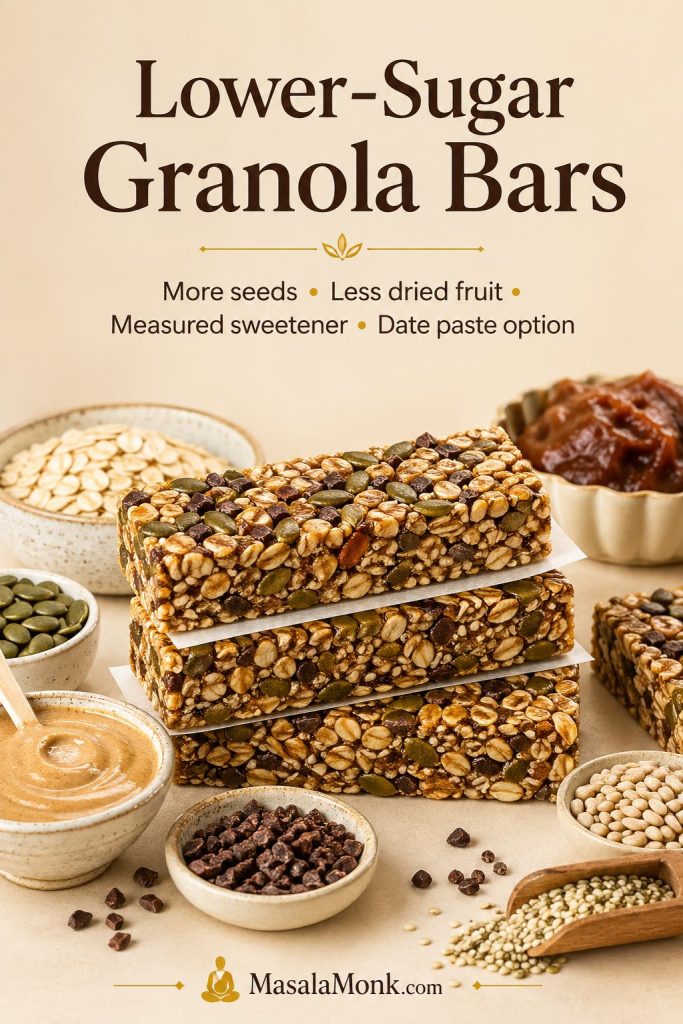
Also Read: Macaroni & Cheese Recipe: Creamy Stovetop, Baked & Southern


Falafel Recipe and the Pleasure of Repetition

Some recipes are enjoyable once and then forgotten. Falafel rarely belongs to that category. It tends to become more useful the more often you make it. The first time, you are learning the texture. The second time, you are refining the seasoning. The third time, you are already deciding whether the batch should become pita sandwiches, bowls, or a platter for friends.

That repeatability is part of what makes falafel so lovable. It adapts easily without losing the qualities that make it recognisable in the first place. A batch can become a quick lunch, a casual dinner, or the centerpiece of a table meant for sharing. On some days it leans more traditional; on others it takes on a slightly more flexible role. You can fry it for maximum crispness, air fry it for convenience, or bake it for meal prep, yet the heart of the dish remains the same: chickpeas, herbs, aromatics, spice, and that irresistible contrast between crust and center.

A good falafel recipe, then, is not only about one successful meal. It is about opening the door to many meals that follow naturally from the same set of ingredients.

Also Read: Blueberry Pancakes (6 Recipes) + Homemade Pancake Mix


A Final Word on Falafel Recipe

Falafel rewards care, though it does not demand fussiness. If you soak dried chickpeas, pulse the mixture to the right texture, season with confidence, and choose a cooking method that suits the meal you want, you are already most of the way there.

A good falafel recipe gets much easier once the biggest decisions are clear. Start with soaked dried chickpeas, aim for a coarse mixture instead of a paste, adjust quickly if the mix is crumbly or too wet, and match the shape to the cooking method for better results. Once the texture is right, the final meal becomes easy to build with the right sauce and serving format, which is why a guide like this works well as a quick reference before making falafel again.

From there, the process stops feeling like effort and starts feeling like pleasure. One meal might see the falafel tucked into pita with salad and tahini, while the next turns it into a bowl with grains and pickles. It can sit beside tzatziki, pair beautifully with hummus, or anchor a fuller spread of sauces, vegetables, and bread. Some batches are worth keeping classic, whereas others invite a spicier, greener, or more playful variation the next time around.

What matters most is that the falafel feels alive. Crisp outside. Tender inside. Fragrant with herbs. Warm with spice. Worth making again.

And once you have that, you do not simply have a homemade falafel recipe. You have one of the most versatile, satisfying, and generous chickpea dishes a home kitchen can offer.

Also Read: Iced Coffee: 15 Drink Recipes—Latte, Cold Brew, Frappe & More


Falafel Recipe FAQs

1. What is falafel made of?

Falafel is usually made from chickpeas or fava beans, along with onion, garlic, parsley, cilantro, cumin, coriander, salt, and pepper. In many homemade versions, chickpeas are the main base, especially in a classic chickpea falafel recipe. Some variations also use a little chickpea flour or baking powder to improve texture. Although the ingredient list is fairly simple, the balance of herbs, aromatics, and seasoning is what gives falafel its distinct flavor.

2. What is falafel, exactly?

Falafel is a savory Middle Eastern dish made by grinding soaked legumes with herbs, aromatics, and spices, then shaping the mixture into balls or patties and cooking it until crisp outside and tender inside. It is often served in pita, wraps, bowls, or on a platter with salad and sauce. As a result, falafel can work as a snack, lunch, or full meal depending on how it is served.

3. How do you make falafel from scratch?

To make falafel from scratch, start by soaking dried chickpeas until they are plump but still firm. After that, pulse them with onion, garlic, herbs, and spices until the mixture is finely chopped and holds together when pressed. Then chill the mixture, shape it, and fry, bake, or air fry it. The key is to pulse rather than puree, because that keeps the texture light instead of pasty.

4. Do you need dried chickpeas for an authentic falafel recipe?

Traditionally, yes. An authentic falafel recipe is usually made with dried chickpeas that have been soaked but not boiled. That method creates a mixture with better texture and structure, which helps the falafel stay crisp outside and tender inside. By contrast, canned chickpeas are much softer, so they tend to produce a denser result.

5. Can you make falafel with canned chickpeas?

Yes, you can make falafel with canned chickpeas, though the texture will be different. Since canned chickpeas are already cooked, they are softer and wetter than soaked dried chickpeas. Because of that, canned chickpea falafel can turn mushy or dense if the mixture is over-processed. Even so, it can still work well for a quicker homemade falafel, especially in baked or air fryer versions.

6. Why does falafel fall apart?

Falafel usually falls apart when the mixture is too wet, too coarse, or not rested long enough before cooking. Occasionally, canned chickpeas are the reason, since they create a softer mixture that may struggle to hold shape. In other cases, the issue is simply that the ingredients were not pulsed enough. Chilling the mixture and adding a small amount of chickpea flour, if needed, often helps.

7. Why is my falafel mushy instead of crisp?

Mushy falafel usually happens when the chickpeas are too soft, the mixture is too wet, or the food processor turns everything into a paste. Canned chickpeas can cause this more easily than soaked dried chickpeas. Likewise, overcrowding an air fryer or baking tray can prevent the exterior from crisping properly. For better results, keep the mixture textured, drain ingredients well, and give each piece enough space while cooking.

8. How do you make falafel crispy?

For crisp falafel, start with the right texture in the mixture. It should be finely chopped and cohesive, not smooth. Then chill it before shaping. Fried falafel usually gives the crispiest shell, although air fryer falafel can also turn out very well if lightly oiled and spaced properly. In the oven, shaping flatter patties instead of thick balls helps create more surface area for browning.

9. Is air fryer falafel good?

Yes, air fryer falafel can be very good when made carefully. While it does not have exactly the same crust as deep-fried falafel, it still develops a nicely browned exterior and keeps the inside tender. For many home cooks, air fryer falafel is the best balance between convenience, lighter cooking, and satisfying texture. It is especially useful for weeknight dinners and meal prep.

10. How do you cook falafel in an air fryer?

To cook falafel in an air fryer, shape the mixture into small patties or compact balls, lightly oil the outside, and arrange them in a single layer with space between each piece. Then cook until browned and crisp, turning if your air fryer needs it. Since machines vary, it is best to check the first batch closely. Generally, air fryer falafel works best when the basket is not crowded and the falafel is not too thick.

11. Is baked falafel worth making?

Absolutely. Baked falafel does not taste exactly like fried falafel, yet it can still be delicious. It is particularly useful for larger batches, meal prep, and lighter meals. Moreover, baked falafel reheats well and works beautifully in bowls, wraps, and lunchboxes. A hot oven, a lightly oiled surface, and flatter patties all help improve the final texture.

12. Is falafel healthy?

Falafel can be part of a healthy meal, especially when made with plenty of herbs and served with vegetables, hummus, yogurt sauce, or tahini. Chickpeas bring fiber and plant-based protein, which makes falafel filling and satisfying. Naturally, fried falafel is richer than baked or air fried falafel, so the cooking method changes the overall feel of the meal. Even then, falafel can still fit easily into balanced vegetarian eating.

13. Is falafel vegan?

Most classic falafel recipes are vegan because they are made from chickpeas or fava beans, herbs, spices, and aromatics. That said, it is always worth checking the binder or sauce being served alongside it. The falafel itself is often vegan, whereas yogurt sauce or certain accompaniments may not be.

14. Is falafel gluten free?

Falafel can be gluten free, though it depends on the recipe. Chickpeas, herbs, and spices are naturally gluten free, but some recipes use flour as a binder. If you want gluten free falafel, chickpea flour is one of the easiest alternatives. Accordingly, it is always a good idea to check the ingredients if you are cooking for someone who avoids gluten.

15. What sauce goes best with falafel?

Tahini sauce is the classic choice for falafel. Its creamy, nutty, lemony flavor pairs beautifully with the crisp shell and herb-filled center. Still, falafel also works very well with yogurt sauce, tzatziki, spicy sauces, or even a creamy garlic dressing. The best option depends on whether you want the meal to feel more classic, cooling, or bold.

16. What do you serve with falafel?

Falafel goes well with pita, wraps, chopped salad, hummus, tahini sauce, pickles, yogurt sauce, slaw, and grain bowls. It can be the centerpiece of a simple lunch or part of a larger mezze-style spread. Depending on the occasion, you can serve it in pita bread, over rice or couscous, or alongside fresh vegetables and dips.

17. Can falafel be made ahead of time?

Yes, falafel is excellent for make-ahead cooking. You can prepare the mixture in advance and chill it until you are ready to shape and cook it. Alternatively, you can shape the falafel and freeze it for later. Cooked falafel also stores well, which makes it useful for quick lunches and easy dinners throughout the week.

18. Can you freeze falafel?

Yes, falafel freezes very well. In fact, one of the best ways to do it is to freeze the shaped, uncooked falafel first on a tray, then transfer it to a container once firm. That way, you can cook only as much as you need later. Cooked falafel can also be frozen, though freshly cooked falafel usually gives the best texture.

19. How do you reheat falafel so it stays crisp?

The best way to reheat falafel is in the oven or air fryer. That helps the outside crisp up again instead of turning soft. A microwave will warm it quickly, but it usually softens the crust. Therefore, if texture matters, the oven or air fryer is the better choice.

20. What is the difference between falafel balls and falafel patties?

Falafel balls are more traditional and are especially popular for frying. Falafel patties, on the other hand, are often easier for baking and air frying because they cook more evenly and expose more surface area to heat. The flavor is essentially the same, but the shape can affect the texture and the method that works best.

21. Can you make easy falafel at home without deep frying?

Yes, easy falafel can absolutely be made at home without deep frying. Air fryer falafel and baked falafel are both practical options, especially for home cooks who want less mess and lighter cooking. The most important thing is getting the mixture right first. Once that is in place, the cooking method becomes much easier to adapt.

22. What makes the best falafel recipe?

The best falafel recipe starts with the right chickpeas, plenty of fresh herbs, enough seasoning, and the right texture in the mixture. It should hold together well, cook up crisp outside, and stay tender inside. Beyond that, the best falafel recipe is the one that suits how you want to eat it, whether that means a traditional fried version, a homemade baked falafel, or a lighter air fryer falafel for everyday meals.

23. What is the difference between falafel and hummus?

Falafel and hummus both often begin with chickpeas, yet they become very different foods. Hummus is a smooth dip or spread, whereas falafel is a shaped mixture that is cooked until crisp. They are often served together because their textures contrast so well.

24. Can I use falafel in a wrap instead of pita?

Absolutely. Falafel works beautifully in wraps. In fact, wraps can be easier to eat than stuffed pita pockets because the filling stays more contained. Add lettuce, chopped vegetables, sauce, and hummus if you like, then roll everything tightly.

25. What herbs are best in a falafel recipe?

Parsley and cilantro are the classic herb combination. Parsley keeps the mixture fresh and green, while cilantro adds brightness and a slightly sharper edge. If you dislike cilantro, extra parsley is usually the best substitute rather than skipping herbs altogether.

26. Why is my falafel bland?

Falafel usually tastes bland when the mixture is under-seasoned or under-herbed. Chickpeas are mild, so they need enough salt, garlic, cumin, coriander, and fresh herbs to feel alive once cooked. Bland falafel is often not a structural problem at all. It is simply a seasoning problem.

27. Can I make mini falafel for a party?

Yes, mini falafel is excellent for platters and party food. Smaller pieces work especially well on mezze boards with hummus, tahini, pickles, olives, chopped salad, and warm bread. They also make it easier for guests to sample more than one sauce.

28. What is the best oil for frying falafel?

A neutral oil with a suitable frying profile works best. You want an oil that lets the herbs, spices, and chickpeas speak for themselves rather than adding a strong flavor of its own.

29. Can falafel be part of a vegetarian meal prep plan?

Very easily. Falafel is one of the best vegetarian meal prep options because it holds well, reheats nicely in the oven or air fryer, and works in wraps, bowls, and platter-style lunches. It is filling, flexible, and easy to pair with vegetables, sauces, and grains.

30. Why does homemade falafel become a repeat recipe?

Because once you understand the texture and the method, it pays you back in many forms. One batch can become a quick lunch, a casual dinner, a platter for guests, or several meal-prep boxes across the week. It is deeply versatile, satisfying, and far more generous than its ingredient list first suggests.

Posted on 7 Comments

Chicken Pesto Pasta (Easy Base Recipe + Creamy, One-Pot, Baked & More)

Dark, luxe magazine-style cover showing chicken pesto pasta on a black plate with basil, parmesan, and pine nuts, with text overlay “Chicken Pesto Pasta” and “Easy base recipe + creamy, one-pot, baked & more,” plus MasalaMonk.com footer.

Some dinners earn a permanent spot in your rotation because they’re both effortless and deeply satisfying. Chicken pesto pasta is exactly that kind of meal. It’s bright without feeling “light,” comforting without being heavy, and flexible enough to match whatever’s in your fridge—mushrooms you need to use up, a handful of tomatoes getting soft, leftover grilled chicken, or a craving for something creamy and cozy.

Even better, once you understand one dependable base method, everything else becomes a variation you can steer with tiny choices. Want a weeknight sprint? Make the fast version with a quick sauté and a splash of starchy water. Prefer a richer plate? Turn it creamy with a gentle swirl of dairy (or a lighter trick that still feels lush). Need fewer dishes? A one-pan finish gives you the same restaurant-style gloss with less mess. Feeding a crowd? A baked version becomes a bubbling, golden pasta bake with almost no extra effort.

So instead of treating each version like a different recipe, this guide gives you one reliable foundation—then shows you how to pivot into the best version for the mood you’re in.


Chicken Pesto Pasta (Easy Base Recipe)

This is the anchor—the version you’ll make on repeat. Whether you’re using basil pesto from the store or pulling a jar of homemade pesto from the fridge, the method stays the same. Nail this once, and every other variation becomes a simple, confident detour rather than a whole new recipe.

If you want pesto that tastes vivid and fresh, homemade is worth it whenever you have ten minutes. MasalaMonk’s guide to classic basil pesto sauce plus easy variations is a handy starting point, especially when you want to change the personality of the sauce without changing dinner. If you’re aiming for a dairy-free approach, this fresh basil vegan pesto gives you a bold base that still feels lush.

And if you’re the kind of cook who likes understanding ingredients a little more deeply, it’s surprisingly useful to know what Parmesan brings to a dish beyond “salty cheese.” MasalaMonk’s Parmesan guide and varieties helps you pick the right style and use it well—especially when you’re finishing a sauce.

Four-step Chicken Pesto Pasta base method infographic showing: cook pasta and reserve pasta water, sear chicken until golden, toss pasta with pesto and pasta water until glossy, then finish with parmesan and basil; MasalaMonk.com footer.
Chicken pesto pasta, made simple: follow this 4-step base method (pasta water + pesto = glossy sauce) and you’ll be able to turn the same foundation into creamy, one-pot, baked, mushroom, or tomato variations without starting from scratch.

Base Recipe Card: Chicken Pesto Pasta (Serves 4)

Time: 25–35 minutes
Best for: weeknights, meal prep, “I want something comforting but not heavy” nights

Ingredients

  • 400 g pasta (penne, linguine, spaghetti, fettuccine—choose what you love)
  • 450–500 g chicken breast or chicken thighs, cut into bite-size pieces
  • 2–3 tablespoons olive oil
  • 3–4 garlic cloves, finely chopped (optional, but excellent)
  • ½ cup pesto, plus more to taste
  • ½ cup reserved pasta water, plus more as needed
  • ¼–½ cup grated Parmesan (optional, but helps everything cling)
  • Black pepper
  • Lemon wedge (optional, but often perfect)
  • Chili flakes (optional)
Chicken pesto pasta recipe card showing a bowl of pesto-coated penne with browned chicken, pesto ramekin, and lemon wedge, plus an ingredient list, step-by-step method, and pro tips for glossy sauce using reserved pasta water and low heat.
This Chicken Pesto Pasta “easy base recipe” card is your quick, no-scroll guide: ingredients, simple steps, and the three small moves that make it taste restaurant-level—brown the chicken, keep pesto on low heat, and use reserved pasta water to turn it glossy and clingy. Save it for busy nights, then scroll for creamy, one-pan, one-pot, baked, mushroom, and tomato variations.

The one move that changes everything

Keep pesto bright. It tastes best when it’s warmed gently, not cooked aggressively. In other words, pesto goes in at the end, on low heat.

How to cook chicken for pesto pasta (juicy, browned, not dry)

Start with a simple truth: if the chicken is dry, the whole bowl feels dry—no matter how good the pesto is. Fortunately, the fix is straightforward, and it’s more about timing than fancy technique.

Infographic titled “Juicy Chicken for Pesto Pasta” showing three steps to keep chicken tender: brown chicken in a single layer, cook in two batches if needed, and remove as soon as cooked before adding back at the end. Includes a do/don’t box about avoiding steaming or crowding the pan and a note to cook chicken to 165°F internal.
Dry chicken can make even great pesto pasta feel disappointing—this quick guide fixes it. Brown chicken in a single layer (so it sears instead of steaming), cook in batches if the pan feels crowded, and pull it as soon as it’s cooked through—then add it back only at the end so it stays juicy. Save this technique card for chicken pesto pasta, creamy versions, and pasta salad meal prep, and scroll the post for the full base recipe plus one-pan, one-pot, baked, mushroom, tomato, grilled, and BBQ variations.
  1. Pat the chicken dry. This sounds minor, yet it’s the difference between browning and steaming. Dry surface browns; wet surface turns pale and watery.
  2. Season lightly. Pesto is often salty, so go easy with salt at first. Add black pepper generously.
  3. Brown, don’t crowd. Heat a large skillet until it’s properly hot, then add olive oil. Spread the chicken in a single layer. If the pan looks crowded, cook in two batches. That small bit of patience pays off because you’ll get color, and color equals flavor.
  4. Pull it early rather than late. As soon as the pieces are cooked through, move them to a plate. They’ll get a gentle warm-up later, and that’s how they stay tender instead of turning tough.

For a clear safety reference, chicken should reach a safe internal temperature of 165°F / 74°C. If you like referring to an authoritative standard, the USDA’s Safe Minimum Internal Temperature Chart is the one many cooks rely on.

How to make chicken pesto pasta (base method)

  1. Cook the pasta. Bring a large pot of water to a boil and salt it well. Cook pasta until al dente. Before draining, scoop out ½ cup of pasta water and keep it nearby.
  2. Build flavor in the pan. While the pasta cooks, brown the chicken as described above. Once it’s done, remove it to a plate. If you’re using garlic, add it to the same pan for about 20–30 seconds—just until fragrant.
  3. Combine pasta + chicken. Add drained pasta to the skillet, followed by the chicken and any juices on the plate (those juices are flavor).
  4. Add pesto, then loosen with pasta water. Turn the heat low. Stir in pesto, then immediately add a splash of pasta water and toss. Keep adding small splashes as you toss until the sauce turns glossy and clings to every bite.
  5. Finish with Parmesan if using. Sprinkle in Parmesan and toss again. If it thickens too much, add another spoonful of pasta water.
  6. Taste and adjust. A squeeze of lemon can brighten everything if the pesto tastes heavy. Chili flakes wake up the bowl. Black pepper almost always helps.

That pasta-water step is not optional if you want the sauce to behave. It’s what keeps pesto chicken pasta from turning into oily noodles with green streaks. For those who enjoy technique writing, Serious Eats explains the logic beautifully in The Right Way to Sauce Pasta—and once you “get it,” you’ll use the same idea in countless dishes.

Side-by-side infographic showing pesto pasta sauce texture: left panel “oily/separated” pesto on noodles and right panel “glossy/clings” pesto coating pasta, with instruction to add pasta water 1–2 tablespoons at a time and toss on low heat; MasalaMonk.com footer.
If your chicken pesto pasta looks oily instead of silky, this is the fix: add reserved pasta water a tablespoon at a time and toss on low heat until the pesto turns glossy and clings to the noodles—no extra cream needed.
Step-by-step infographic showing how to make pesto coat pasta without turning oily: add pesto on low heat, splash in reserved pasta water while tossing, and stop when the sauce looks glossy and clings. Includes a simple do-and-don’t list, plus photos of pesto pasta in a pan and on a spoon.
If your pesto pasta ever turns into oily noodles with green streaks, this is the fix. Keep the heat low, stir pesto in gently, then add reserved pasta water splash-by-splash while you toss until the sauce turns glossy and clings to every bite. Use the quick “cling test” on a fork to know when to stop. Save this technique card—you’ll use it for chicken pesto pasta, creamy versions, and even pasta salad.

Simple swaps that keep it delicious

Even a “basic” pesto chicken pasta becomes more interesting when you know what swaps play nicely:

  • Chicken thighs stay tender and forgiving, which makes them ideal for quick pasta on busy nights.
  • A small spoon of butter added at the end can soften sharp edges if your pesto is very garlicky.
  • Extra Parmesan helps emulsify if your pesto is oily.
  • A squeeze of lemon balances rich pesto, especially when you turn it creamy.

Easy Chicken Pesto Pasta (Weeknight Fast)

There are nights when you want dinner to land quickly without losing its charm. This version is the fast route—minimal fuss, still full flavor, and it proves that “easy” doesn’t have to mean “meh.”

Recipe card for “Easy Chicken Pesto Pasta — Weeknight Fast (20–25 minutes)” showing a bowl of pesto penne topped with sliced chicken, plus a fast-version ingredients list, quick method steps (reserve pasta water, sear thin chicken, toss pesto on low heat until glossy), three speed moves, and a pro tip to toss with pasta water so the sauce clings instead of turning oily.
Need dinner fast without sacrificing flavor? This easy chicken pesto pasta recipe card is built for weeknights: thin-slice the chicken so it sears in minutes, cook penne or fusilli for reliable sauce cling, then finish everything in one skillet with pesto on low heat and a splash of reserved pasta water until glossy. The “3 speed moves” keep it effortless, but the real upgrade is the toss—so it tastes cohesive, not “assembled.” Save this for busy nights and scroll for creamy options, one-pan/one-pot methods, baked pasta, and the mushroom/tomato twists.

Recipe Card: Weeknight Fast Version (Serves 4)

Time: 20–25 minutes
Best for: busy nights, “I need dinner now,” last-minute guests

Do these three things to make it faster:

  • Slice chicken thinly so it cooks quickly.
  • Choose a pasta shape that cooks evenly and holds sauce well (penne, fusilli).
  • Skip extra add-ins and let pesto + pasta water do the heavy lifting.

Even then, don’t rush the finish. Tossing pasta and sauce together until glossy is what makes an easy bowl feel like something you’d happily serve to company—because it tastes cohesive, not “assembled.”


Creamy Chicken Pesto Pasta (Three Ways)

Some evenings are calling for something richer. The creamy version is still bright and herbal, yet it has that soft, comforting body that makes everyone go quiet after the first bite. Importantly, “creamy” doesn’t have to mean heavy—so you can choose your lane.

Creamy chicken pesto pasta infographic comparing 3 methods—heavy cream, cream cheese, and Greek yogurt—with amounts, when to add each one, and tips to prevent splitting, plus a bowl of pesto chicken pasta and “low heat, no boil” guidance.
Want creamy chicken pesto pasta without guesswork? This “3 ways” guide shows the exact amounts and timing for heavy cream (classic), cream cheese (stable), or Greek yogurt (lighter—stir in off heat). Keep the heat low, add dairy last, and use a splash of pasta water so the sauce turns silky instead of splitting. Save this for cozy nights, then scroll for one-pan, one-pot, baked, mushroom, and tomato variations.

Recipe Card: Creamy Chicken Pesto Pasta (Core Method)

Start with the base recipe. Once pasta and chicken are in the pan and pesto is added, choose one of these creamy paths:

1) Chicken pesto pasta with cream (classic)

  • Add ¼ cup heavy cream (or cooking cream).
  • Add a small splash of pasta water.
  • Toss gently over low heat for about a minute, just until silky.

Key point: Keep the heat gentle. Pesto tastes freshest when it isn’t cooked hard, and cream behaves best when it’s warmed rather than boiled.

2) Creamy without heavy cream (lighter but still lush)

If you want creamy texture without leaning hard on cream, these options work beautifully:

  • Greek yogurt (bright and light): Remove the pan from heat. Add a splash of pasta water first (so the pan cools slightly), then stir in 2–3 tablespoons yogurt until smooth.
  • Cream cheese (cozy and stable): Stir 1–2 tablespoons cream cheese into warm pasta water first, then toss it through. This is especially good with penne or “noodlier” shapes.
  • Milk + Parmesan (simple and classic): Add a small splash of milk, then use Parmesan as your thickener while you toss until glossy.

Each version still tastes unmistakably like pesto chicken pasta—just softer around the edges.

3) Chicken pesto Alfredo pasta (comfort-forward)

If you love the idea of pesto Alfredo, treat it as a direction rather than a separate universe. Use the creamy method above, then increase Parmesan slightly and finish with a tiny knob of butter. Suddenly you’re in the territory of pesto Alfredo without turning dinner into a long project.

If you want to explore creamy pasta beyond this dish, MasalaMonk’s Alfredo twists make a fun companion read—especially if you enjoy playing with flavors.


One Pan Chicken Pesto Pasta (Skillet Style)

One-pan pesto chicken pasta is the version you make when you want the “real” result with fewer steps and less cleanup. It’s not a totally different dish—it’s the same idea, just streamlined.

One-pan chicken pesto pasta recipe card showing a skillet of pesto-coated pasta with browned chicken, Parmesan, basil, pesto ramekin, and lemon wedge, plus an ingredient list, step-by-step skillet method, and pro tips to use reserved pasta water and keep pesto on low heat for a glossy sauce.
This one-pan chicken pesto pasta recipe card is the fastest way to get a glossy, restaurant-style bowl with minimal cleanup. Boil pasta al dente, brown the chicken (don’t crowd the pan), then toss everything together in the skillet with pesto on low heat and reserved pasta water splash-by-splash until it clings. Save this for busy nights—and scroll for the one-pot version, creamy options, baked pasta, and add-ins like mushrooms and tomatoes.

Recipe Card: One-Pan Finish (Serves 4)

How it works:

  • Boil pasta in a pot as usual (because it’s faster and more reliable).
  • Brown chicken in the skillet.
  • Add drained pasta directly to the chicken pan.
  • Stir in pesto on low heat, then finish with pasta water right there.

Because the skillet still holds those browned chicken bits, the flavor is deeper than you’d expect from such a simple method. Additionally, it’s the easiest way to control sauce texture because everything is already in one hot, wide surface where tossing is natural.


One Pot Chicken Pesto Pasta (Minimal Dishes, Big Reward)

One-pot pesto chicken pasta is a different style altogether. It’s not “pasta + sauce,” it’s a single-simmer approach where the cooking liquid turns into sauce. Done well, it tastes like a clever shortcut; done poorly, it can turn sticky. The good news? A few small rules keep it perfect.

One-pot chicken pesto pasta recipe card showing a wide pot of pesto-coated pasta with browned chicken, Parmesan, basil, and a pesto ramekin, plus ingredients, step-by-step one-pot simmer instructions, and pro tips to stir often, add pesto at the end on low heat, and loosen the sauce with a splash of water if needed.
This one-pot chicken pesto pasta recipe card is for nights when you want big flavor with minimal dishes. Brown the chicken, simmer pasta in just enough water or light stock until it turns saucy, then add pesto at the end on low heat so it stays bright. Stir often, stop at al dente, and loosen with a splash of water if the sauce tightens. Save this for weeknights—and scroll for creamy options, baked pesto pasta, mushroom and tomato add-ins, plus storage and reheating tips.

Recipe Card: One-Pot Method (Serves 4)

  1. Brown chicken in a wide pot or deep skillet. Remove it if you want more control, or leave it in for maximum convenience.
  2. Add garlic (optional) for 20–30 seconds.
  3. Add pasta and enough water (or light stock) to just cover.
  4. Simmer, stirring often, until pasta is al dente and the liquid is reduced.
  5. Turn heat down low, then stir pesto in at the end.
  6. Loosen with a splash of water until glossy.
  7. Add chicken back (if removed), then finish with Parmesan if you like.

Why it works: The starch that normally goes down the drain stays in the pot, which helps everything cling.

Top-down one-pot chicken pesto pasta infographic showing a pot of pesto pasta with chicken and basil, with callouts for liquid ratio (about 3 cups broth or water per 8 oz pasta), adding chicken early, stirring pesto in at the end on low heat, and finishing with pasta water plus parmesan; MasalaMonk.com footer.
One-pot chicken pesto pasta made foolproof: follow this simple ratio and timing—add chicken early, stir pesto in at the end on low heat, and finish with a splash of pasta water plus parmesan for a glossy sauce that coats every noodle.

One-pot creamy pesto chicken pasta

Once pesto is stirred in, add one of these:

  • 2–4 tablespoons cream, or
  • a spoon of cream cheese, or
  • Greek yogurt off heat (with a splash of water first)

Then toss until silky. That’s how the one-pot creamy version becomes something you’ll crave—not just a shortcut.


Chicken Pesto Pasta with Mushrooms (Deep, Savory, Balanced)

Mushrooms are the easiest way to make this pasta taste more “restaurant” without making it complicated. They add depth and make the pesto feel rounder, almost like the dish has been simmering longer than it has.

Chicken pesto pasta with mushrooms recipe card showing a skillet of pesto-coated penne with browned chicken, sautéed mushrooms, Parmesan, and basil, plus an ingredient list, step-by-step method, and pro tips to brown mushrooms in a single layer, avoid stirring early, and season after browning.
This chicken pesto pasta with mushrooms recipe card is the “restaurant-depth” upgrade—without extra work. The key is browning mushrooms in a single layer first (don’t stir early), then tossing everything with pesto on low heat and a splash of reserved pasta water so the sauce clings instead of turning oily. Save this for cozy weeknights, then scroll for the tomato version, grilled chicken option, pasta bake, creamy variations, and the one-pan/one-pot methods.

Recipe Card: Mushroom Add-In (Serves 4)

The essential rule: Don’t steam mushrooms. Brown them.

  • Heat the pan properly.
  • Add mushrooms and let them sit until they pick up color.
  • Only then stir. Once they’re browned, they taste nutty and savory rather than watery.

From there, the flow stays familiar:

  • Brown chicken (or brown it first and set aside).
  • Cook pasta.
  • Toss together with pesto and pasta water.

If you want a cozier bowl, this version transforms beautifully into a creamy mushroom pesto chicken pasta with a small splash of cream—no separate recipe required.


Chicken Tomato Pesto Pasta (Bright and Slightly Jammy)

Tomato and pesto can be magic together if you keep the balance right. Tomatoes bring sweetness and acidity, pesto brings richness and salt. When the two meet in the pan, you get a sauce that feels bright, not heavy.

Chicken tomato pesto pasta recipe card showing a bowl of pesto-coated penne with browned chicken and blistered cherry tomatoes, plus a clear ingredient list, step-by-step instructions, and pro tips to blister tomatoes until they burst, add pesto at the end on low heat, and balance the sauce with lemon or Parmesan.
This chicken tomato pesto pasta recipe card is the bright, slightly jammy twist that makes pesto feel lighter and fresher. Blister cherry tomatoes until they burst, brown the chicken, then toss everything with pesto on low heat and reserved pasta water so the sauce turns glossy and clings. If the flavor needs balance, lemon brightens while Parmesan rounds it out. Save this for weeknights—then scroll for creamy options, one-pan and one-pot methods, the baked pesto pasta version, and the mushroom variation.

Recipe Card: Tomato Options

Option 1: Blistered cherry tomatoes (best flavor, easiest)
After browning the chicken, add cherry tomatoes to the same pan. Let them blister until they burst and soften. Then add pasta, pesto (on low heat), and pasta water.

Option 2: A little canned tomato (use as an accent)
If you’re using canned, think “accent,” not “marinara.” A few spoonfuls of crushed tomato simmered briefly is enough. Then turn the heat low before adding pesto so basil stays bright.

Balancing tomato + pesto

  • If it tastes flat, lemon helps.
  • If it tastes too sharp, Parmesan rounds it out.
  • If it tastes too salty, more pasta water (and an extra handful of pasta or veg) fixes it quickly.

If you’d like another dinner idea that leans into the same flavor family, MasalaMonk’s tortellini cooking guide includes a pesto direction with tomatoes that adapts easily to this style.


Grilled Chicken Pesto Pasta (Smoky, Fast, Summery)

When grilling is already happening—or you have leftover grilled chicken—this becomes one of the best “second dinners” you can make. It tastes like you planned it, even if it was born from leftovers.

Grilled chicken pesto pasta recipe card showing a bowl of pesto-coated linguine topped with sliced grilled chicken, basil, and Parmesan, with a pesto ramekin and lemon wedges beside it. The card includes ingredients, quick steps to warm leftover grilled chicken gently, toss pesto with reserved pasta water on low heat until glossy, and pro tips to avoid overcooking the chicken.
This grilled chicken pesto pasta recipe card is the perfect “second dinner” when you already have leftover grilled chicken. Cook pasta al dente, warm the chicken gently (don’t re-grill it), then toss everything with pesto on low heat and reserved pasta water until the sauce turns glossy and clings. Finish with lemon, black pepper, and fresh Parmesan for a bright, smoky bowl that tastes like summer—even on a weeknight. Save this for busy nights, then scroll for creamy options, one-pan/one-pot methods, the baked pasta version, plus mushroom and tomato twists.

Recipe Card: Leftover Grilled Chicken Version

  • Cook pasta.
  • Make the sauce in the skillet with pesto + pasta water on low heat.
  • Add sliced grilled chicken at the end and warm it gently.

Because grilled chicken already has smoke and char, keep the rest simple: lemon, black pepper, and a glossy toss. The result tastes like summer even on a random Tuesday.


BBQ Chicken Pesto Pasta (Sweet-Smoky Twist)

BBQ chicken pesto pasta sounds unusual until you remember that pesto loves sweet tomato notes and smoky flavors. The trick is keeping barbecue as a supporting actor—more glaze than sauce—so the pesto still tastes like pesto.

BBQ chicken pesto pasta recipe card showing a bowl of pesto-coated noodles topped with BBQ-glazed chicken, basil, Parmesan, a pesto ramekin, and lemon wedges. The card lists ingredients, 4 quick steps, and pro tips to use only 1–2 tablespoons BBQ sauce, add pesto at the end on low heat, and use reserved pasta water for a glossy sauce.
This BBQ chicken pesto pasta recipe card is a sweet-smoky twist that still tastes like pesto—not barbecue pasta. The trick is restraint: coat the chicken with just 1–2 tablespoons BBQ sauce, then toss everything with pesto on low heat and reserved pasta water until glossy. Finish with lemon, black pepper, and Parmesan to keep the bowl bright and balanced. Save this for weeknights when you want something different, then scroll for the base recipe, creamy options, one-pan and one-pot methods, the baked pesto pasta version, plus mushroom, tomato, grilled, and pasta-salad variations.

Recipe Card: BBQ Twist (Serves 4)

  • Toss cooked chicken lightly with 1–2 tablespoons barbecue sauce.
  • Add it to pasta and pesto at the end.
  • Use pasta water to keep everything cohesive and glossy.

The result is a sweet-smoky bowl that’s surprisingly addictive, especially with penne or fusilli.


Baked Chicken Pesto Pasta (Pasta Bake)

When you want a dish that feels generous—something you can spoon into bowls and watch people go back for seconds—baked chicken pesto pasta delivers. It’s also one of the easiest ways to make dinner feel like an event without extra work.

Baked chicken pesto pasta recipe card showing a white baking dish of pesto pasta with browned chicken, melted cheese, Parmesan, and basil, plus ingredients, oven temperature, bake time, step-by-step instructions, and “moisture insurance” tips to keep the pasta bake juicy and saucy.
This baked chicken pesto pasta recipe card is your no-fail pasta bake guide: keep the pasta slightly underdone, mix in enough sauce so it stays juicy, then bake until bubbly and lightly golden. The “moisture insurance” tips (cover first, don’t overbake, stir in a spoon of pesto after baking) make the top taste fresh instead of dull. Save this for cozy dinners, then scroll for the base method, creamy options, one-pan and one-pot versions, plus mushroom and tomato variations.

Recipe Card: Baked Pesto Chicken Pasta (Serves 6–8)

Time: 40–55 minutes
Oven: 200°C / 400°F

  1. Make the base chicken pesto pasta, but keep it slightly saucier than usual. That means extra pasta water and, if you like, a small splash of cream.
  2. Stir in cheese: mozzarella for melt, Parmesan for flavor.
  3. Transfer to a baking dish.
  4. Bake until bubbling and lightly golden.

Because pesto can lose its brightness under high heat, reserve a tablespoon of pesto and stir it in right after baking. That simple move makes the whole dish taste fresher instantly.

If you want extra baked-pasta technique—make-ahead tricks, moisture management, and how to keep a bake from turning dry—MasalaMonk’s baked ziti variations are a surprisingly relevant reference even when you’re not making ziti.


Best Pasta Shapes for Chicken Pesto Pasta

Pasta shape isn’t just aesthetics. It changes how sauce clings, how bites feel, and whether the dish reads “light and glossy” or “thick and cozy.” Once you notice this, you start choosing shapes with intention.

Infographic titled “Best Pasta Shapes for Chicken Pesto Pasta” showing six options—penne, fusilli, linguine, spaghetti, fettuccine, and angel hair—with notes on which is best for weeknights, creamy sauce, baked pasta, or one-pot methods, plus quick tips for sauce cling and using extra pasta water.
Not all pasta shapes behave the same with pesto. This cheat sheet shows the best pasta for chicken pesto pasta—whether you want a glossy one-pan bowl, a true one-pot method, or a creamier, cozier finish. Penne and fusilli grab sauce, linguine and spaghetti feel sleek, fettuccine shines in creamy versions, and angel hair needs extra pasta water to avoid clumping. Save this for later, then scroll for the base recipe card, creamy options, one-pan and one-pot methods, baked pasta, and add-ins like mushrooms and tomatoes.

Penne (weeknight MVP)

Penne holds pesto in the tubes, which makes it ideal for pesto penne chicken pasta. It also holds up well to baking, so if you’re making a pasta bake, penne is a safe bet.

Linguine (silky and polished)

Linguine makes the sauce feel sleek. It’s especially good when you’re chasing that glossy finish and want the pesto to coat each strand evenly.

Spaghetti (simple and fast)

Spaghetti shines when you keep it clean—pesto, chicken, pasta water, Parmesan. It’s also a great “starter” shape because it shows off the base method without distractions.

Fettuccine (best for creamy)

Fettuccine is at its best when the sauce is slightly thicker. That’s why it feels so satisfying in creamy versions.

Angel hair (quick cook notes)

Angel hair cooks quickly, which makes it tempting on busy nights. However, it clumps if you don’t toss immediately with enough pasta water. Go generous with water and keep tossing until glossy.


Chicken Pesto Noodles (When You Want Comfort in a Bowl)

Sometimes you’re not craving “pasta” in the classic sense—you’re craving noodles and sauce. Chicken pesto noodles are perfect for that, especially with egg noodles or a thinner pasta shape.

Recipe card for “Chicken Pesto Noodles — Comfort Bowl (cozy, not heavy)” showing a bowl of pesto-coated egg noodles topped with sliced chicken, basil, Parmesan, and lemon wedges, plus ingredients and quick steps to warm chicken gently, add pesto on low heat, and splash hot water or reserved pasta water until the noodles turn silky, then finish with lemon and black pepper.
Craving comfort without the heaviness? This chicken pesto noodles recipe card keeps it cozy and bright: start with egg noodles (or thin pasta), use a little less pesto, and loosen everything with hot water (or reserved pasta water) until silky. Warm the chicken gently, keep the heat low once pesto goes in, then finish with lemon + black pepper (and Parmesan if you want). Save this for quick dinners and scroll the post for the weeknight-fast pasta card, creamy options, one-pan/one-pot methods, baked pasta, plus mushroom and tomato twists.

Recipe Card: Noodle-Style Bowl

To keep it from feeling heavy:

  • Use a little less pesto than usual.
  • Add extra hot water (or reserved pasta water if you’re using pasta).
  • Finish with lemon and pepper.

That combination makes the bowl feel bright again, even when the noodles are cozy.


Basil Pasta Chicken (A Fresh Finish That Changes Everything)

Even if your pesto is basil-based, an extra handful of basil at the end can make the dish smell brand-new. This isn’t a different recipe; it’s the same pasta, simply finished with fresh basil ribbons and, if you like, a tiny drizzle of olive oil.

It’s a small flourish, yet it makes the bowl feel intentional—like you planned it, even if you didn’t.


Healthy Chicken Pesto Pasta (Without Losing What Makes It Great)

“Healthy” is easiest to sustain when it still tastes indulgent. Fortunately, you can make this dish lighter and more balanced without stripping away what makes it comforting.

Healthy chicken pesto pasta bowl builder infographic showing a pesto chicken pasta bowl with zucchini and spinach, plus a “Build Your Bowl” plate formula (½ veggies, ¼ pasta, ¼ chicken), a list of best vegetable add-ins (asparagus, spinach, zucchini, broccoli, peppers), higher-protein pasta swaps (lentil, chickpea), and a flavor finish tip (lemon, black pepper, optional Parmesan) with a pasta-water pro tip.
Want healthy chicken pesto pasta that still tastes satisfying? Use this bowl-builder: fill half your bowl with veggies, then add pasta and chicken for balance. The quick add-ins (asparagus, spinach, zucchini, broccoli, peppers) boost volume without dulling pesto, while lentil or chickpea pasta adds extra protein and fiber. Finish with lemon + black pepper (and a little Parmesan if you want), then use reserved pasta water to keep the pesto glossy—not oily. Save this for meal-prep nights and scroll the post for the base recipe, creamy options, one-pan/one-pot methods, baked pasta, and mushroom/tomato twists.

Healthy upgrades that actually stick

  • Add vegetables for volume: asparagus, spinach, zucchini, peppers, broccoli.
  • Choose chicken breast if you want leaner protein, but cook it carefully so it stays tender.
  • Use pesto confidently, then stretch it with pasta water and brightness (lemon, pepper).
  • Finish with a smaller amount of Parmesan rather than removing it entirely—flavor helps you stay satisfied.

If you want a simple portion strategy that still feels generous, build the bowl like this: half vegetables, a quarter pasta, a quarter chicken—then sauce everything with pesto + pasta water so it tastes cohesive.

Asparagus (easy add-in)

Asparagus is made for pesto. Add chopped asparagus to boiling pasta water during the last 2–3 minutes. Drain, then toss into the base recipe. The asparagus stays vibrant, and the bowl feels lighter without feeling “diet.”

Higher-protein pasta swaps

If you want extra protein and fiber, lentil pasta is a strong option. MasalaMonk’s lentil pasta guide goes deeper into how it behaves and what to pair it with, which is helpful when you’re experimenting.


The Small Moves That Make This Pasta Outstanding

A great pasta dish isn’t about complicated ingredients. It’s about a few small moves that keep everything balanced, especially when pesto is involved.

Infographic titled “The Small Moves That Make Pesto Pasta Outstanding” with three technique panels: keep pesto bright by adding it at the end on low heat, make the sauce cling by using reserved pasta water splash-by-splash until glossy, and balance salt and richness by tasting late and adjusting with lemon, Parmesan, or more water and vegetables. Includes a quick fixes strip at the bottom and MasalaMonk.com.
These are the small moves that make chicken pesto pasta taste restaurant-level. Add pesto at the end and keep the heat low so it stays bright. Use reserved pasta water splash-by-splash while tossing until the sauce turns glossy and clings (not oily). Then taste late—pesto is salty—and balance fast with lemon for freshness, Parmesan for roundness, or a little more water + veg if it’s too salty. Save this technique card for every pesto pasta you make, then scroll the post for the fast, creamy, one-pan, one-pot, baked, mushroom, tomato, grilled, BBQ, and pasta-salad versions.

Keep pesto bright

Pesto tastes best when it’s warmed gently rather than cooked hard. So, whether you’re making a clean spaghetti version or a creamy bowl, stir in pesto at the end and keep the heat low.

Make the sauce cling

Pasta water isn’t a garnish—it’s structure. Add it gradually while tossing until the pesto becomes a silky coating. That’s how the sauce goes from “thin” to “glossy.”

Balance salt and richness

Because pesto can be salty, taste late and adjust carefully. If it’s too salty, loosen with water and add a handful of vegetables. If it feels heavy, lemon fixes it fast. And if it tastes sharp, Parmesan softens it.


Chicken Pesto Pasta Salad (A Cold Version That Actually Works)

Even though this post focuses on hot versions, chicken pesto pasta salad deserves a spot because it’s one of the smartest ways to turn leftovers into tomorrow’s lunch. Better still, it’s genuinely delicious when you build it the right way.

Chicken pesto pasta salad recipe card showing a bowl of cold pesto pasta with grilled chicken pieces, cucumber, cherry tomatoes, basil, Parmesan shavings, a pesto ramekin, and lemon wedges, plus ingredients, step-by-step instructions to rinse pasta and toss with pesto first, and meal-prep tips like using crunchy vegetables and adding Parmesan only when serving.
This chicken pesto pasta salad recipe card is the meal-prep version that actually stays good. Rinse and drain the pasta, toss it with pesto first, then add chicken and crunchy veg like cucumber, bell pepper, and celery so the salad stays fresh—not soggy. Chill for the best flavor, then finish with lemon, black pepper, and Parmesan right before serving (it keeps the texture better). Save this for quick lunches, and scroll the post for the hot base recipe, creamy options, one-pan and one-pot methods, the baked pasta version, plus mushroom and tomato twists.

Recipe Card: Pesto Pasta Salad with Chicken

  • Cook pasta, then rinse briefly under cool water and drain well.
  • Toss pasta with pesto first, then add chicken.
  • Add crunchy vegetables like cucumber, bell pepper, or celery.
  • Finish with lemon and pepper.
  • Add Parmesan right before serving.

Because cold pasta absorbs sauce, you’ll often want a little extra pesto or a drizzle of olive oil plus lemon to keep it lively.

If you plan to meal prep, it’s useful to keep safe storage windows in mind. FoodSafety.gov’s Cold Food Storage Charts is a strong reference, especially when you’re storing mixed dishes.


Storage and Reheating (So It Still Tastes Like Pesto)

Chicken pesto pasta tends to thicken in the fridge. The good news is the fix is easy, and you can bring back the glossy texture without turning the chicken rubbery.

Infographic titled “How to Store & Reheat Chicken Pesto Pasta (So It Stays Glossy)” showing storage steps, fridge time (3–4 days), the best skillet reheat method with added water or milk for creamy versions, quick fixes for dry or oily sauce, and do/don’t tips like avoiding boiling pesto and microwaving on high.
Leftover chicken pesto pasta doesn’t have to taste dry or clumpy. This quick guide shows how to store it properly, then reheat it in a skillet with a splash of water (or milk if creamy) until the sauce turns glossy again. Use the “fix it fast” tips if it looks oily, tastes flat, or starts to split—then finish with lemon and black pepper (or a tiny spoon of pesto) to bring everything back to life. Save this for meal prep nights, and scroll for the base recipe, creamy options, one-pan/one-pot methods, baked pasta, and mushroom/tomato variations.

How to reheat without ruining it

  • Reheat gently in a skillet (low to medium-low).
  • Add a splash of water (or milk if it’s creamy).
  • Toss until glossy again.
  • If it tastes muted, add a tiny spoon of pesto or a squeeze of lemon at the end.

For general leftovers safety guidance, the USDA’s Leftovers and Food Safety page is a trustworthy reference worth bookmarking.


Pesto Storage (If You Make It in Batches)

If you start making pesto at home, you’ll quickly realize the real joy is batch-making and freezing portions. When pesto is ready in the freezer, dinner becomes a toss-and-go situation.

Step-by-step infographic titled “Pesto Storage: Freeze in Cubes” showing pesto spooned into an ice cube tray, frozen until solid, popped into a container, and added to hot pasta. Includes a pro tip that a thin layer of olive oil on top can help protect pesto color, and the footer MasalaMonk.com.
Make pesto once, then make weeknight chicken pesto pasta in minutes. This “freeze pesto in cubes” guide shows the easiest method: spoon pesto into an ice tray, freeze until solid, then store cubes in a container so you can grab 1–2 cubes per serving anytime. It’s the simplest way to keep pesto tasting fresh without wasting basil, and the optional olive-oil tip helps protect color. Save this for meal prep—then use those cubes for the base chicken pesto pasta recipe, creamy versions, one-pan/one-pot methods, pasta salad, and more.
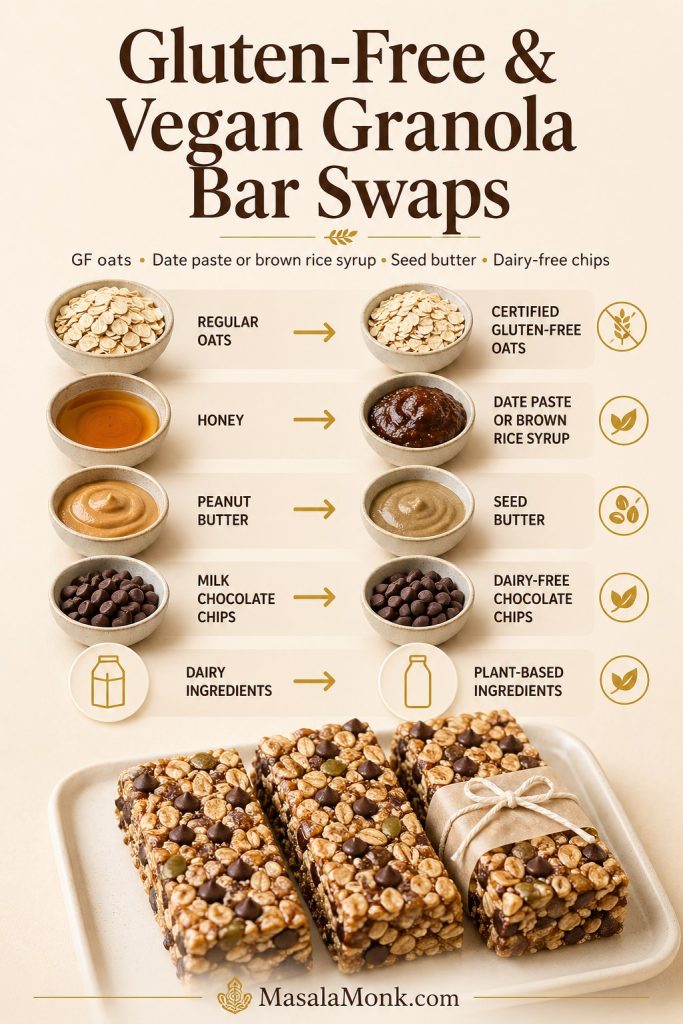
For specific guidance on freezing pesto safely, the National Center for Home Food Preservation’s page on freezing pesto is excellent—especially if you like freezing pesto in cubes, then transferring them to a container once solid.


A Few Delicious Next Steps (If You Want More Ideas)

If you’re in a pesto mood and want to keep the momentum going:


Closing thought

Chicken pesto pasta is the kind of recipe that rewards you every time you make it. Once you’ve cooked it a couple of ways—maybe the fast version on a rushed weeknight, the creamy version on a cozy evening, and a baked one when friends come over—you’ll notice something: it stops being “a recipe” and becomes a flexible dinner you can steer on instinct.

So start with the base. Then pick a direction. A handful of mushrooms, a few tomatoes, a splash of cream, or a one-pot shortcut can take you somewhere new—while still tasting unmistakably like pesto, chicken, and comfort in a bowl.
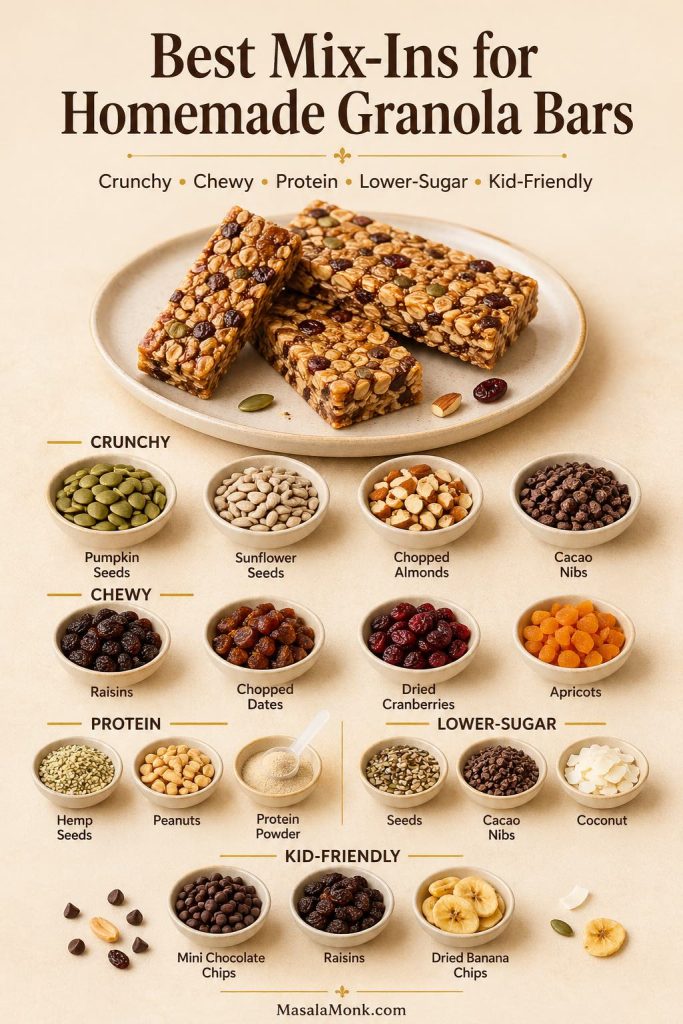
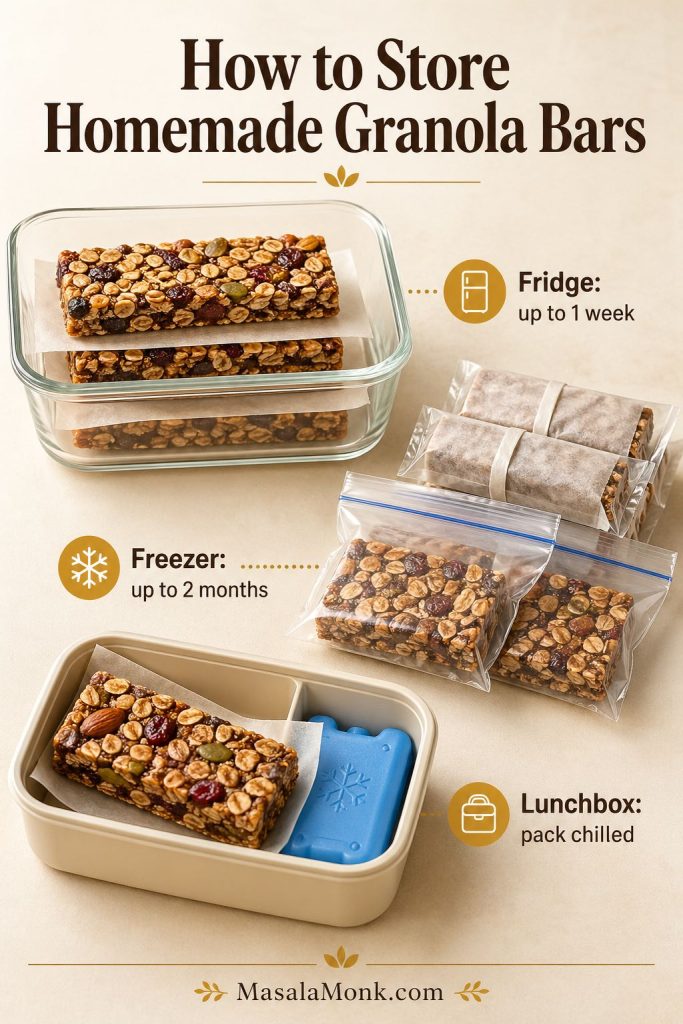
Closing summary infographic titled “Closing Thought: Make It Once, Then Make It Yours” showing a bowl of chicken pesto pasta and a “pick a direction” grid with six variations: Weeknight Fast, Creamy & Cozy, One-Pan Skillet, One-Pot Shortcut, Mushrooms (Savory Depth), and Tomatoes (Bright & Jammy). Includes a closing line about choosing mushrooms, tomatoes, a splash of cream, or a one-pot shortcut, with MasalaMonk.com at the bottom.
Chicken pesto pasta is the kind of dinner that gets better the more you make it—because once you learn the base, you can steer it on instinct. Use this “choose your path” guide to match the mood: go Weeknight Fast, turn it Creamy & Cozy, keep it One-Pan Skillet, simplify with a One-Pot Shortcut, or pivot into Mushrooms for savory depth or Tomatoes for a bright, jammy finish. Save this as your quick decision map, then scroll the post for the full base method and every variation in detail.

Chicken Pesto Pasta FAQs

1) How do I keep chicken juicy?

Pat it dry, cook it in a hot pan without crowding, and pull it as soon as it’s cooked through. Then add it back at the end so it warms up without overcooking.

2) What’s the best way to cook chicken breast so it doesn’t dry out?

Slice it thinner (or butterfly it), then cook quickly over medium-high heat. Because breast cooks fast, pulling it a minute early and letting carryover heat finish it prevents dryness.

3) Why does my pesto sauce look oily instead of coating the pasta?

This usually happens when there isn’t enough starchy water in the pan. Add reserved pasta water a splash at a time while tossing until the sauce turns glossy and clings. Also, keep the heat gentle once pesto goes in.

4) Which pasta shapes work best here?

Penne and fusilli grab sauce easily and hold up well to mix-ins. Linguine and spaghetti give a silkier feel. If you’re making a creamier version, fettuccine is especially satisfying.

5) How can I make this in under 25 minutes?

Use a fast-cooking pasta, cut chicken smaller, and cook both at the same time. Once the pasta drains, toss everything with pesto and a splash of reserved water right in the skillet for a quick finish.

6) Can I make a creamy version without heavy cream?

Yes. Stir in Greek yogurt off heat (with a splash of water first), add a spoon of cream cheese melted with pasta water, or use a small splash of milk plus Parmesan for body.

7) How do I keep a creamy sauce from splitting?

Lower the heat before adding dairy and avoid boiling once it’s in the pan. If using yogurt, add it off heat. If it starts to look grainy, add a little more pasta water and toss gently to bring it back together.

8) What’s the difference between one-pan and one-pot versions?

One-pan usually means pasta is boiled separately, then tossed in a skillet with chicken and pesto. One-pot means pasta simmers in the same pot as the chicken so the cooking liquid becomes part of the sauce.

9) How do I avoid gummy pasta in the one-pot method?

Stir often, keep enough liquid so the pasta can move freely, and stop cooking as soon as it reaches al dente. Then add pesto at the end and loosen with a splash of water if needed.

10) How do I cook mushrooms so they don’t turn watery?

Start with a hot pan, spread mushrooms out, and let them brown before stirring. Once they’ve released moisture and picked up color, they’ll taste deeper and won’t dilute the sauce.

11) What’s the easiest way to add tomatoes without making it too acidic?

Blister cherry tomatoes until they burst for natural sweetness. If using canned tomatoes, keep the amount small and simmer briefly before adding pesto at the end on low heat.

12) Can I turn it into a baked pasta dish?

Absolutely. Make the skillet version slightly saucier, mix in cheese, then bake until bubbling and lightly golden. For extra freshness, stir in a spoon of pesto right after baking.

13) How do I keep a pasta bake from drying out?

Add extra pasta water before baking and include enough cheese or a small splash of cream. If your oven runs hot, cover for part of the bake time, then uncover briefly to brown.

14) Can I use leftover grilled chicken?

Definitely. Slice it and warm it gently at the end. Since it’s already cooked, it only needs a brief heat-through to stay tender.

15) Does a BBQ twist work with pesto?

It can, as long as you use barbecue sauce lightly. Think of it as a glaze on the chicken, then combine with pesto and pasta water so the flavors stay balanced.

16) How do I store and reheat leftovers so it still tastes fresh?

Store in a sealed container in the fridge. Reheat gently with a splash of water (or milk for creamy versions), then finish with black pepper and a squeeze of lemon if it tastes muted.

17) Why does pesto sometimes taste bitter?

Bitterness can come from old basil, too much raw garlic, or overheating. Add pesto on low heat and avoid boiling it. If it still tastes sharp, Parmesan and a touch of lemon balance it quickly.

18) What should I serve on the side?

Go simple: a crisp salad, roasted vegetables, sautéed greens, or garlic bread. If your pasta is creamy, something bright and lemony on the side pairs especially well.